
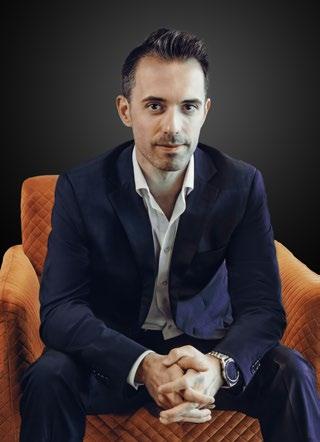



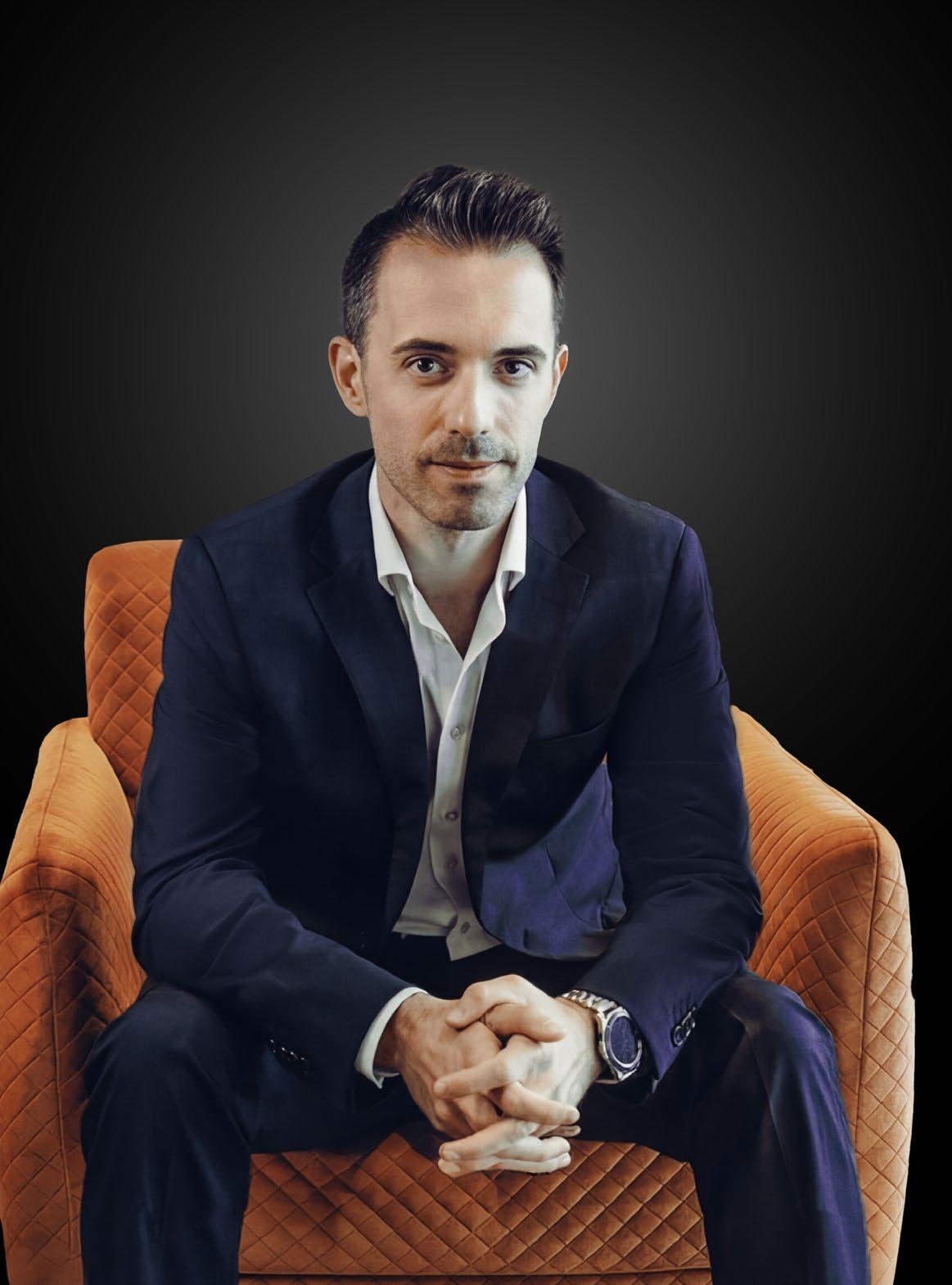
Tomaso Rodriguez turned Talabat into a $10 billion company.
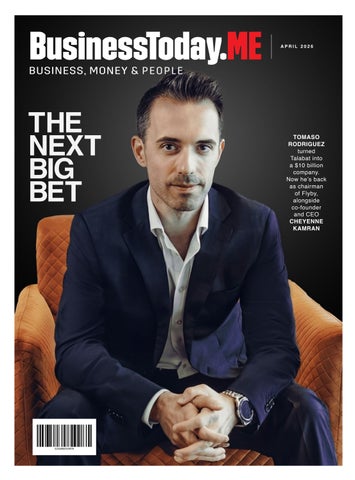
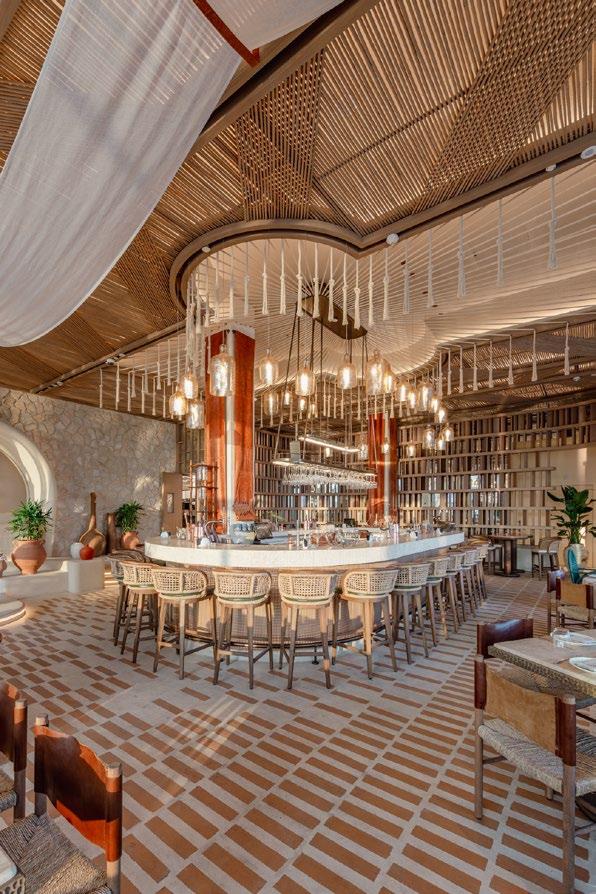
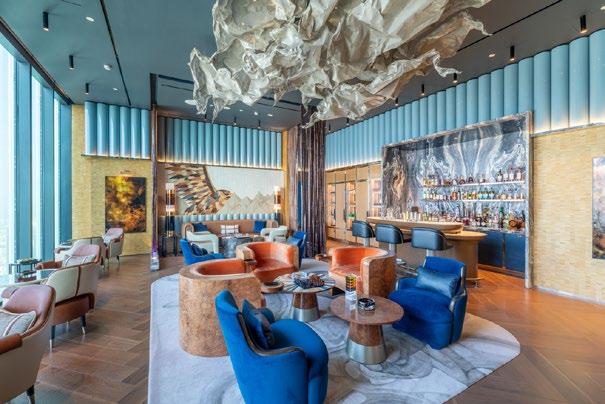
Step into a world of opulence when you book a Suite at Raffles Doha.
Experience the added luxury of QAR 750 credit to spend on dining in the hotel, and QAR 500 towards any Spa treatment.
Children aged 12 and below are welcome to indulge in the enchantment of complimentary dining.
Rates startng from QAR 3,500 per night
For reservatons, please call +974 4030 7100 or email reservatons.doha@raffles.com



CEO WISSAM YOUNANE | wissam@bncpublishing.net
Managing Director RABIH NAJM | rabih@bncpublishing.net
Group Publishing Director JOAQUIM D'COSTA | jo@bncpublishing.net
Editor AYA ZHANG | aya@bncpublishing.net
Digital Reporter REEBA ASGHAR | reeba@bncpublishing.net
Business Development Director ANDY SOULAHIAN | andy.soulahian@bncpublishing.net
Commercial Director ANDREA MOCAY | andrea@bncpublishing.net
Creative Lead CHRISTIAN HARB | chriss@bncpublishing.net
Junior Art Director IKA WAHYUNI
Marketing Executive AARON JOSHUA SINANBAM | aj@bncpublishing.net
Videographer EDUARDO BUENAGUA HARTON OTLANG JOEL AMPARO
Contributors
ALHARITH ALATAWI GHADY RAYESS
KATIE GODFREY RIMA MRAD
VIJAY VALECHA
subscriptions@bncpublishing.net
PO Box 502511 Dubai, United Arab Emirates P +971 4 4200 506 | F +971 4 4200 196
For all commercial enquiries, contact jo@bncpublishing.net T +971 50 440 2706
All rights reserved © 2025. The opinions expressed are solely those of the contributors. Business Today Middle East and its afliated publications in the MENA region are exclusively licensed to BNC Publishing. No part of this magazine may be copied, reproduced, or transmitted in any form or by any means without prior written consent from the publisher. Printed by United Printing and Publishing | upp.ae
Images used in Business Today Middle East are credited when necessary. Attributed use of copyrighted images with permission. All images not credited courtesy Shutterstock.
BIZTODAYME
@BIZTODAYME
BUSINESS TODAY MIDDLE EAST
BIZTODAYME
BIZTODAYME
BUSINESSTODAY.ME

BEGA pole-top luminaires with Dark Sky technology direct the light in a highly efficient manner only where it is required. Light pollution of the night sky is avoided. bega.com/darksky
There is a familiar rhythm to the way we describe progress. Growth. Innovation. Transformation. The words are not wrong, but they are often repeated to the point where they begin to feel distant from the reality they are meant to capture.
Putting this edition of Business Today Middle East together offered a different perspective. The people in these pages are not preoccupied with how things sound. Their attention is on whether things hold, whether they move, whether they last. It is a quieter approach, but a far more exacting one.
No two paths look the same. Some are building in conditions that shift by the day. Others are moving at a
pace they did not anticipate. There are those who have chosen to step back, to reconsider, or to undo decisions that once felt certain. The process is rarely tidy. It resists easy framing. Yet it carries a kind of clarity that polished narratives often miss.
What ties these stories together is not a single idea, but a shared discipline. Progress here does not announce itself. It takes shape gradually, in moments that are easy to overlook. It is driven by individuals who remain committed to the work itself, even when it stretches longer than expected or demands more than planned.
Not everything unfolds in view. Some of the most defning work happens away from it.

Aya Zhang Editor aya@bncpublishing.net


Require formwork and scaffolding? Check out Doka’s extensive list of products and systems, which now includes scaffolding for a variety of applications. At Doka, our philosophy is to provide a broad range of services under one umbrella based on a growing demand for single-source solutions that adhere to the highest standards.
/DokaMEA /company/doka-middle-east-africa /doka_mea
meaapmarketing@doka.com | www.doka-me.com

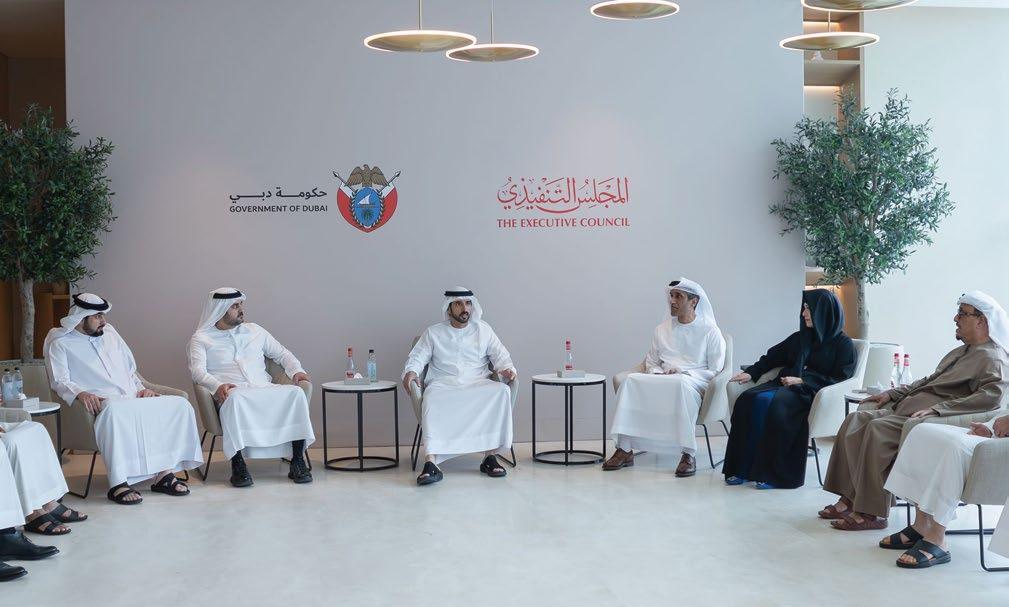
DURING DUBAI EXECUTIVE COUNCIL MEETING
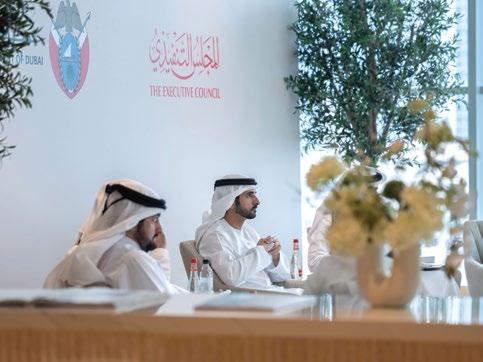
H.H. Sheikh Hamdan bin Mohammed bin Rashid Al Maktoum approved a series of initiatives during a Dubai Executive Council meeting aimed at supporting economic growth, empowering society, and improving workforce conditions. The Council endorsed an AED 1 billion package of economic incentives to be implemented from 1 April 2026 over three to six months, including fee deferrals, support for the tourism sector, extended customs grace periods, and streamlined residency procedures. bai’s economic er ormance was also re iewed with GDP growing 6.4% in Q4 2025 and 5.4% for the full year to reach AED 937 billion, alongside approval of an updated methodology for measuring economic activity.
Additional initiatives include the Virtual Warehouses programme to facilitate temporary imports and s reng hen bai’s osi ion in he global ar marke the Dubai Empowerment Strategy to support Emirati em lo men and nancial s abili and a eal h and Safety Strategy targeting full compliance and access o essen ial ser ices in workers’ accommoda ions b hese meas res re ec bai’s ongoing commitment to economic resilience, social development, and global competitiveness.
Qashio has launched “Qashio For You”, an initiative in collaboration with Dubai Chambers to support small and medium-sized enterprises (SMEs) across Dubai with over AED 10 million in nancial relie and incen i es n il June 2026. The programme offers bene s s ch as ero se ees deferred payments to ease cash ow and rewards incl ding o 75,000 Qashio points redeemable
for Skywards Miles, Jumeirah ONE points, or cashback. Alongside financial support, participating businesses will gain access to educational webinars and resources focused on financial resilience, cost optimisation, and growth strategies, reinforcing s’ cri ical role in bai’s economy and supporting their stability during ongoing market pressures.
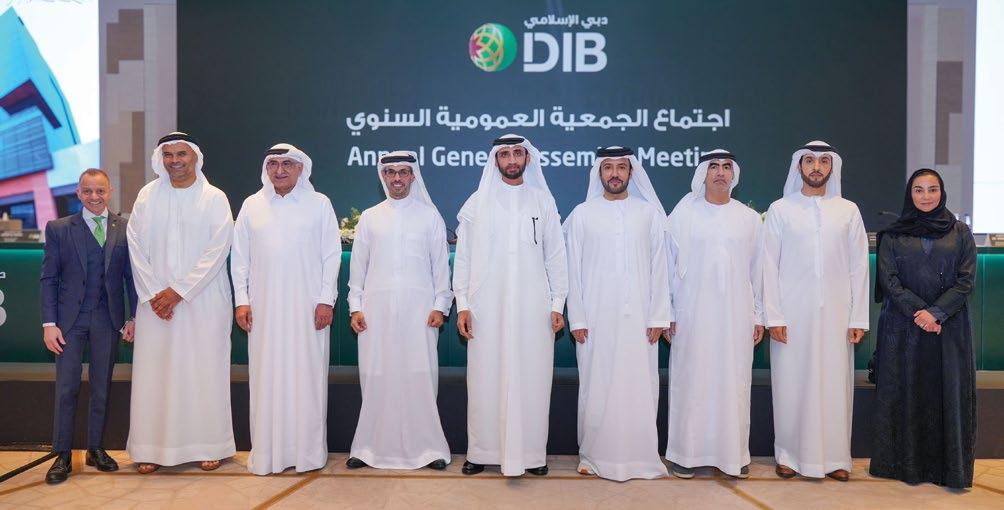
bai slamic ank a ro ed i s nancial res l s and a cash di idend o ls er share a i s nn al eneral ssembl re ec ing con in ed earnings resilience and disciplined growth. The bank reported operating re en es o billion and re a ro o DIB SHAREHOLDERS APPROVE AED 2.53 BILLION CASH DIVIDEND AT ANNUAL GENERAL ASSEMBLY
billion, with total assets rising 21% to AED 416 billion, net nancing asse s o billion and c s omer deposits increasing 29% to AED 320 billion. Asset quality im ro ed wi h he non er orming nancing ra io a and cost of risk contained at 14 basis points. Shareholders also approved key governance matters, while the bank highlighted ongoing strategic progress, including regional e ansion s s ainable nance ini ia i es and i s osi ion as one o he world’s leading s k k bookr nners
STRATEGIC FUNDING
Emirates NBD has successfully closed billion in long erm nancing incl ding a billion e ear sustainability-linked syndicated loan and a million e ear Club Commodity Murabaha term facility, making it one of the largest syndicated borrowings in the GCC. The SLL was oversubscribed more han wo old achie ing he bank’s tightest-ever pricing for a syndicated loan and demonstrating strong global investor confidence. The Club Commodity Murabaha facility, arranged through Emirates Islamic, also secured highly competitive ricing he nancing s reng hens li idi di ersi es nding so rces and s or s mira es N ’s strategic growth. Participants included 15 international banks, with Bank of America, BNP Paribas, DBS, and Emirates NBD Capital serving as coordinators and book-runners.

I TES IN OO ’S
2PointZero Group participated in the Series G preferred e i nancing o nc a leading cons mer heal h and wellness technology platform. WHOOP, headquartered in Boston, offers subscription-based wearables for continuous health monitoring, personalized coaching, and data-driven insights to users in over 200 countries. he in es men s reng hens oin ero ro ’s wellness vertical and aligns with its focus on high-growth, scalable businesses with strong brand equity and recurring revenue. WHOOP has a growing presence in the UAE, active since 2017 following Expo 2020 Dubai, and is expanding globally. Its recent innovations include the WHOOP 5.0 and MG wearable devices and the Advanced Labs programme in partnership with Unilabs, offering 65-biomarker blood testing.


Radisson Hotel Group has reached over 100 hotels in Africa, including properties in operation and under development, with Radisson Blu anchoring the legacy footprint and Radisson emerging as the fastest-growing brand. Over the past 12 months, the Group signed 15 new hotels totaling around 2,500 rooms, including entries into the Democratic Republic of Congo and Zimbabwe. Key focus markets include Morocco, South Africa, and Nigeria, while expansion continues across city, resort, and conversion-based properties.
Notable upcoming openings include Radisson Blu Kinshasa, Radisson Harare, Park Inn Victoria Falls, Radisson Collection Lagos Atlantic, and new properties in Casablanca, Rabat, Marrakech, mhlanga and imbabwe’s ca i al arare er the past five years, the Group has prioritized conversions, adding almost 3,000 rooms, supporting rapid scale while maintaining brand standards. With presence in more than 30 African countries, Radisson blends deep market focus with selective entry into new destinations to meet rising demand for business, leisure, and nature-led travel experiences.
Snowflake has appointed Michel Nader as General Manager for the Middle East, Turkey and Africa (META), where he will lead regional strategy, operations, and customer growth while driving adoption of the com an ’s a a lo d Nader brings more than 25 years of enterprise technology experience across META and Eastern Europe, most recently serving as Senior Regional Director at Dell Technologies, with previous leadership roles at EMC and Hewlett Packard Enterprise. In his new role, he will focus on accelerating AI adoption, expanding partnerships, and helping organisations modernise data infrastructure and translate digital and national AI strategies into measurable business outcomes across the region.


man’s real es a e sec or recorded i s highes e er property sale at AED 185 million, highlighting the emira e’s growing in es men a eal he lo loca ed in Al Amerah, is designated for both residential and commercial use, offering opportunities for mixed-use de elo men s he record ransac ion re ec s s s ained market growth, rising trading values, and strong investor con dence dri en b modern in ras r c re in es or friendly initiatives, and a favorable legal framework.
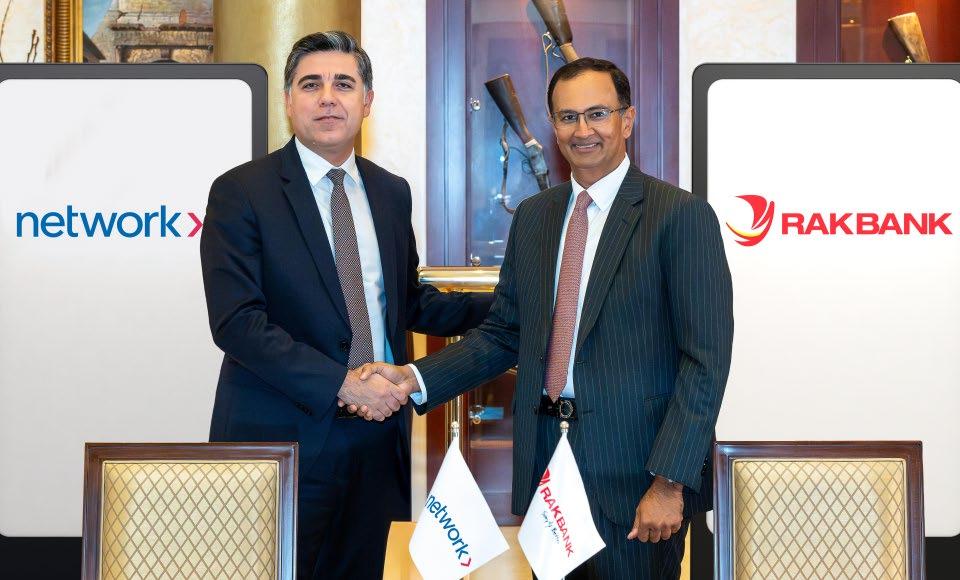
RAKBANK and Network International have successfully closed their strategic partnership following Central Bank of the UAE approvals. Under the deal, Network will provide ad anced a men sol ions o N ’s and corporate customers, supporting digital commerce growth in as l haimah and rein orcing he ’s igi al
Economy Strategy. The partnership will deliver innovative value-added services, enhance payment capabilities, and ensure a seamless transition for existing merchants. N main ains one o he banking sec or’s strongest capital and liquidity positions, supporting its strategy as a digital bank with a human touch.
Companies have invested heavily in AI and digital tools, yet productivity gains remain elusive. The real barrier isn’t technology, it’s execution.
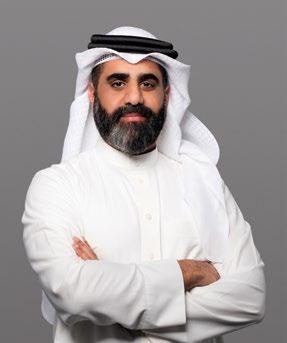
BY ALHARITH ALATAWI
Across boardrooms in the Middle East, the conversation has moved beyond whether organisations should adopt AI. The real question is why so many digital transformation programmes still struggle to deliver measurable productivity gains at scale.
Most organisations have already invested in the visible layers of transformation, new platforms, dashboards, copilots, and collaboration tools, but have not solved the hidden bottleneck: execution across real enterprise systems.
Globally, employees spend an enormous share of their day on coordina ion sana’s research has found that around 60% of time is spent on “work about work,” tasks like chasing updates, attending unnecessary meetings, and
switching between tools, rather than skilled output. Although AI usage is increasing, organisations still lack a clear plan to translate individual productivity into bottom-line impact.
In Qatar, for example, the conditions to break this execution bottleneck are strong. Digital investments are projected to grow from USD 1.65 billion in 2022 to USD 5.7 billion in re ec ing grow h o more than 245% over four years. These figures depend on implementation inside real work ows in sec ors ha de ne na ional com e i i eness s ch as government services, finance, logistics, energy, and healthcare.
This is why policy direction ma ers a ar’s o rogram is focused on improving government
efficiency and modernising public sector services in line with the Digital Agenda 2030, supporting end-toend AI adoption through targeted investment, skills development, dedicated implementation support, and impact assessment. In parallel, the Qatar Investment Authority (QIA) has la nched ai a na ional ar i cial intelligence company aimed at building resilient digital ecosystems that support innovation and economic diversification in line with Qatar National Vision 2030.
Most AI deployments today behave like productivity accessories. They help draft, summarise, or recommend, but they do not reliably execute endto-end work across the systems where value is created. Execution is where productivity is either unlocked or lost.
Consider how work actually moves inside an enterprise. A single “simple” outcome, such as onboarding a customer or closing a procurement request, often requires dozens of steps across CRM, ERP, HR systems, email, ticketing, approvals, and documentation. Even with modern
software, humans still spend time transferring context between systems, chasing signatures, re-entering data, and reconciling inconsistencies.
This is why the next productivity leap will not come from more tools layered on o he same work ows will come rom redesigning work ows aro nd autonomous AI execution.
Autonomous AI teams represent a shift from AI as a helper to AI as an executing part of the workforce. Instead of asking employees to do the “glue work” between systems, autonomous AI teams can be deployed to carry o m l i s e work ows across real enterprise platforms, with clear go ernance a di abili and de ned human oversight for exceptions.
A recent Microsoft survey shows that 81% of business leaders anticipate AI agents will be moderately to extensively embedded in o heir organisa ions’ strategies in the coming months. What can that look like in practice?
This means deploying AI teams ha can manage com le e work ows across enterprise systems, from opening cases and retrieving customer history to validating eligibility, drafting responses, updating records, and triggering follow-up actions. It also includes handling operational processes such as invoice processing, contract validation, approval routing, anomaly detection, and compliance-ready reporting. By automating these end-to-end activities, organisations can achieve consistent, high-speed execution
even during demand spikes, without being limited by manual capacity.
Some organisations are already piloting “autonomous AI teams” or de ned work ows and ha ra supports enterprises in operationalising this model by deploying AI teams that work within approved access controls and keep actions auditable across systems, helping teams reduce manual coordination while maintaining governance.
As AI begins to execute work, governance becomes the foundation. The region has strengthened national data protection frameworks to support responsible AI deployment. In Qatar, data protection laws set out rigorous procedures that organisations must follow when processing personal data, while the recently implemented Saudi Arabia Personal Data Protection Law regulates how businesses collect, use, store, and safeguard personal information.
For organisations, this means autonomous AI cannot be deployed without oversight. It must be implemented with role-based access, clear decision boundaries, audit trails, and human escalation pathways, especially for sensitive domains such as nance and ci i en ser ices
The next phase of digital transformation is centred on rethinking how work is structured. The future of work is
no longer about separating human resources from digital resources. Instead, it is about integrating them into a single operational model.
Across the Middle East, ambition and investment in digital transformation are already well established. Governments and enterprises have committed signi can reso rces o inno a ion and infrastructure. However, many organisations continue to rely heavily on manual coordination within complex enterprise systems.
To unlock the full economic potential of AI, the region must move beyond using it primarily as an assistive technology. The focus must shift toward deploying AI as an operational work orce ha can e ec e work ows end to end, safely at scale.
In the coming years, the competitive advantage will belong to organisations that treat execution as a design problem and deploy autonomous AI teams to eliminate friction across the work ows ha ma er mos
As geopolitical tensions reshape global markets, UAE equities are under pressure. But beneath the volatility, fundamentals remain resilient, creating selective opportunities for investors willing to look beyond the noise.
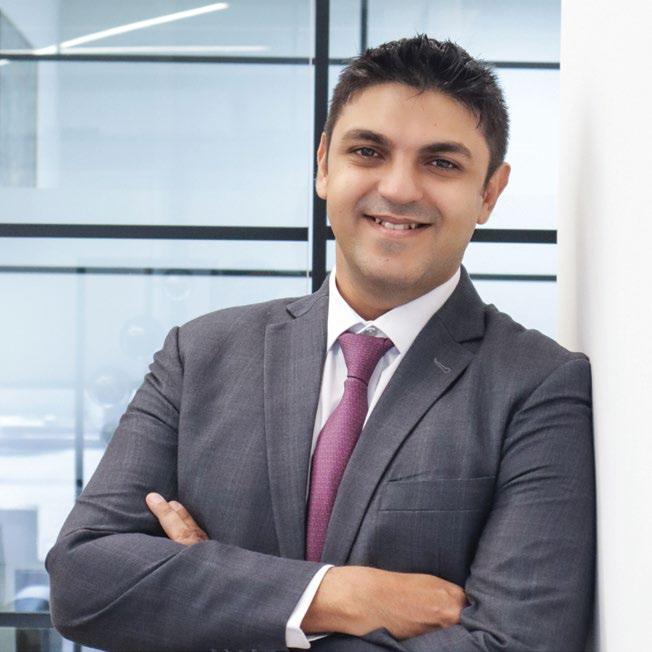
BY VIJAY VALECHA
The Middle East conflict has altered the investment landscape in 2026 in ways that are hard to ignore. Uncertainty remains elevated, di lomac hasn’ gained meaning l rac ion and he risk o r her escala ion canno be r led o i h he rai o orm clos re kee ing oil prices above $100 per barrel and in a ion concerns rml back on he able he odds o a ra e c ha e fallen sharply. Against that backdrop, in es ors aren’ si ing s ill he ’re reshaping their portfolios, trying to protect against the volatility while also s a ing aler o he o or ni ies ha corrections like this one tend to create. lobal e i ies ha e sold o since the war began, and UAE stocks have ollowed ho gh no or reasons ha hold nder scr in he General Index has dropped by more han and he eneral nde b more han since he con ic escala ed mo es ha re ec he classic in es or ins inc o sell rs and ask es ions la er he nderl ing ndamen als howe er ell a di eren s or he ’re more resilien han he rice ac ion s gges s and he ’re likely to reassert themselves once the d s begins o se le

or in es ors he c rren environment is presenting two distinct o or ni ies he rs is high di idend UAE stocks that are now offering yields re io sl na ailable si mon hs ago he second is ndamen all s rong large ca names rading a meaning l disco n s o wha an air assessmen o heir b sinesses wo ld s i Nei her o or ni comes wi ho near erm ncer ain ha ’s he na re o he momen b history is consistent on this point: the in es ors who b ild e os re d ring eriods o ma im m ear rarel regre it when conditions normalise.
The real estate names make the o or ni i e clear maar o ers a strong 8.7% dividend yield and nearl side o anal s arge s Aldar, backed by its leading position in b habi’s o lan marke o ers ro ghl o en ial side ro er ies s ands o e en more wi h nearl side s or ed b he coming nn esor a long erm ca al s ha remains in ac des i e he c rren backdro
Beyond real estate, the case or selec i e e os re in banking elecoms and energ is e all compelling. UAE bank stocks have s ered do ble digi losses since
he war began on ebr ar a sello ha isn’ en irel irra ional gi en he hi s o a ia ion logis ics o rism and rade he nancial s s em has held he en ral ank s e ed in wi h i s larges li idi s or ackage since he andemic rein orcing con dence in he s s em It highlighted that banks are sitting on nearl billion in li idi incl ding o er billion in reser es a s bs an ial c shion ha signi can l lowers he risk o an credit stress. That strength is showing in bond marke s oo inancial sector bonds have seen price declines o onl hro gh he con ic compared to 3–5% for real estate bonds n elecoms e is s r c rall better positioned than most to weather he disr ion wi h million o i s million s bscribers o side he a re en e base ha is broadl ins la ed rom single co n r risk he ncer ain hasn’ disa eared or in es ors willing o look si to twelve months ahead, these dislocations have a way of looking ob io s in hindsigh
Against this backdrop, investor positioning is beginning to diverge more clearl hile some remain ca io s and riori ise ca i al
preservation, others are selectively increasing e os re o ake ad an age o c rren disloca ions
Conservative Investors
These types of investors are more risk a erse re er o ha e high cash osi ions and wo ld wai or marke stabilisation before entering into new positions. They also prefer safer e i and ed income alloca ion like high dividend yield UAE stocks and Sovereign Bonds. Gold can also be a grea o or ni or s ch in es ors

Gold: o ar gold has allen aro nd rom i s re con ic le els his migh seem s r rising a rs glance given that geopolitical tensions typically increase demand for sa e ha en ins r men s owe er gold’s beha io r is in line wi h how he recio s me al has er ormed his oricall d ring eriods o war marke dis ress and ncer ain ha is beca se in es ors icall end o li ida e gold osi ions o co er losses in other riskier asset classes amid he broader risk o sen imen in the markets. However, historical analysis reveals that gold tends to rebo nd s rongl once he si a ion s abilises making i an o or ne ime to invest in gold right now.
UAE Sovereign Bonds:
Sovereign UAE bonds offer conservative investors a combination o high credi ali and s rong ields backed b a scall s r l s so ereign wi h aro nd rillion in so ereign weal h asse s r her he dirham’s eg since elimina es c rrenc risk en irel
Aggressive Investors
These investors take on more risk and are expected to capitalise on UAE stocks that have declined the mos recen l he co ld also bene rom in es ing in high ield cor ora e bonds, and high beta metals like Silver, la in m and alladi m which are a hedge agains rising in a ion risk
High-Yield Corporate Bonds:
UAE real estate bonds are pricing at stressed levels driven by regional geo oli ical ncer ain no ndamen al credi de eriora ion s s ch an in eres ing o or ni has o ened or in es ors who are willing o olera e shor erm ola ili wi h ields o on denomina ed real es a e bonds backed b one o he world’s mos ac i e ro er marke s he li idi a mos iss ers remains ade a e and ann al bond re a men obliga ions look good n il erage ields on in es men grade real es a e seniors are already clearly above US and ro ean eers
High Beta Metals: ommodi ies ha e emerged as a er o lar asse class in recent years. Investors are increasingly exploring the possibility of holding commodities as a good di ersi ca ion be oreo er s r c ral demand and s l ac ors ha e also resen ed com elling o or ni ies in his asse class or ins ance sil er’s
recent sharp correction appears more like a shor erm macro dri en rese han a breakdown in ndamen als crea ing a com elling se or a rebo nd he nderl ing demand s or remains s rong s or ed b s r c ral grow h across solar s in ras r c re and ower grids he same ime s l remains constrained, with the market heading in o a si h consec i e ann al de ci while hina’s aggressi e im or s and export controls are tightening global a ailabili r her he nomina ion o e in arsh as he new ed chair has also added a tailwind for commodities. Historically, he has
been iewed as da a de enden and sligh l hawkish b his recen s ance appears more dovish and aligned with r m ’s re erence or lower in eres ra es bene ing me als he c rren en ironmen is de ined b ncer ain b also by a divergence between marke sen imen and nderl ing ndamen als hile rice ac ion re ec s ca ion he resilience across ke sec ors s gges s a more s able ic re benea h he s r ace he a h orward is nlikel o be linear b he dis inc ion be ween shor erm ola ili and longer erm osi ioning is becoming increasingly important.

How regional tensions are prompting UAE businesses to revisit Force Majeure clauses and contractual obligations.
BY RIMA MRAD
Recent geopolitical developments in the UAE and the wider Gulf region have prompted businesses operating across the GCC to take a closer look at the resilience of their contractual frameworks. While the tensions linked to the Iran-USsrael con ic ha e drawn a en ion to potential impacts on aviation routes, logistics networks and cross border commercial activity, the region continues to operate as a major hub for investment, trade and project development. In this context, the situation has naturally renewed interest in the concept of Force Majeure and the extent to which such events may affect contractual obligations.
Many companies are reviewing existing agreements and, in some cases, considering adjustments to Force Majeure provisions in newly negotiated contracts in order to account for potential disruptions. While such reviews are common, it remains important to recall that Force Majeure is a narrowly interpreted legal principle under UAE law and cannot be invoked as a general mechanism to avoid contractual performance. Its a lica ion is go erned b s eci c legal conditions and remains subject to careful judicial scrutiny.
Force majeure is a well established concept in civil law systems. It generally refers to an event that is external to the parties, unforeseeable at the time of contracting, and unavoidable in its consequences, such that it renders the performance of a contractual obligation impossible.
Under UAE law, the doctrine of force majeure was embedded in the Civil Code (Federal Law No. 5 of 1985) (the “Old Law”), which has now been repealed and replaced by the new Civil Transactions Law (Federal Decree-Law No. 25 of 2025) (the “New Law”), due to enter into force on 1 June 2026. While he New aw modernises he ’s civil law framework, it largely preserves the existing treatment of force majeure and exceptional circumstances.
Under the Old Law, these doctrines were reflected primarily in Articles 273 and 249, which distinguished between situations where contractual performance becomes impossible and those where performance remains possible but excessively onerous. The New Law, notably through Articles 236 and 249, maintains the same conceptual a roach con rming ha orce ma e re remains grounded in the notion of objective impossibility of performance resulting from circumstances beyond he ar ies’ con rol

In practice, UAE courts require a clear causal link between the alleged force majeure event and the impossibility of performance, meaning that the event must constitute the decisive factor preventing the contractual obligation from being l lled here er ormance remains possible but becomes excessively burdensome due to exceptional public circumstances, Article 249 allows courts or arbitral tribunals to adjust the obligation to a reasonable level in order to restore the contractual balance. As a result, although the New Law reinforces the importance of contractual autonomy, courts will

continue to retain broad discretion when assessing whether the conditions o orce a e re are sa is ed
Importantly, the concept of Force Majeure exists independently of contractual drafting. As it is embedded in the Civil Code, it may be invoked even where a contract does not expressly include a Force Majeure clause, provided the legal conditions are met. Its application will again de end on he s eci c ac al circumstances of each case and remain s b ec o he co r ’s discre ion
In the current regional environment, businesses are increasingly assessing whether geopolitical developments
may affect the performance of their contractual obligations. While certain sectors may face operational challenges, particularly those dependent on international transportation routes, supply chains, personnel mobility or cross border logistics, the potential impact extends to a broader range of contractual engagements, including long term commercial arrangements, investment transactions and project delivery commitments. As a result, contractual counterparties are paying closer attention to transaction timelines, delivery obligations and the allocation of risk within their agreements.
This has led some parties to consider e anding he con rac al de ni ion of Force Majeure, occasionally incorporating broad references to geopolitical instability or security risks. hile ar ies remain ree o de ne Force Majeure events contractually, the drafting of such provisions requires careful consideration. Overly broad or vague definitions may create uncertainty regarding their enforceability. In practice, courts will generally examine whether the event in question constitutes a genuine impediment to performance rather than a mere commercial inconvenience or increase in costs.
Force Majeure should therefore not be understood as a catch all mechanism for contractual non performance. Even where contracts contain express Force Majeure clauses, courts typically examine whether the event was genuinely unforeseeable, whether it was beyond the control of the parties, whether it directly prevented the performance of the obligation and whether the party invoking the clause took reasonable steps to mitigate its impact. Past experience demonstrates that courts and arbitral tribunals tend to approach such assessments in a careful and ac s eci c manner
The experience of the COVID-19 pandemic illustrates this approach. Although the pandemic was widely recognised as an extraordinary global event, courts nevertheless evaluated Force Majeure claims on a case by case basis oc sing on he s eci c contractual obligations involved and the actual impact of the disruption on performance. A similar analytical framework may apply in the present context. While regional developments ma in ence o era ional condi ions in certain sectors, the existence of geopolitical tensions alone does not automatically constitute Force
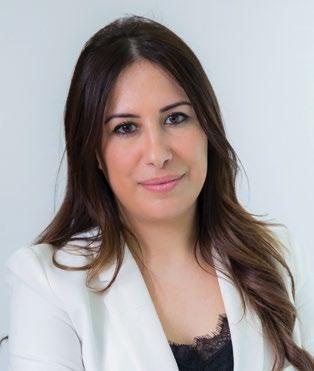
Mrad, Partner, BSA LAW

Majeure. Each situation must therefore be assessed individually in light of the contractual provisions and the factual impact of the event on performance. Against this legal backdrop, careful contractual drafting remains essential. Businesses should ensure that Force Majeure clauses are tailored to the operational realities of their sector and clearly identify the events that may trigger the mechanism. Contracts should also address the duration of a potential Force Majeure situation, the adjustments that may apply to contractual obligations during that period and the solutions available if the disruption continues for an extended time. In practice, agreements may provide for temporary suspension of certain obligations, adjustments of delivery timelines, partial performance of supply commitments or temporary modi ca ions o a men s r c res Equally important is the obligation of the affected party to take reasonable measures to mitigate the consequences of the disruption. This may include exploring alternative suppliers, adapting logistics arrangements or implementing operational contingency plans. In addition, most contracts require
the affected party to notify its contractual counterparties within a specified timeframe if Force Majeure is invoked. Compliance wi h s ch no i ca ion re iremen s is essential, as failure to follow the agreed procedure may prevent the party from relying on the clause.
Periods of geopolitical evolution often encourage businesses to revisit contractual frameworks and ensure that risk allocation mechanisms remain aligned with operational realities. The current regional environment therefore offers an opportunity for companies to re iew heir agreemen s con rm ha Force Majeure clauses are clearly drafted and ensure that contractual obligations remain appropriately structured.
Ultimately, the real challenge rarely lies in invoking the concept of Force Majeure itself, but in understanding the legal conditions governing its application. When agreements are carefully drafted and supported by proactive communication between contractual partners, businesses are well positioned to navigate evolving circumstances while preserving the continuity and stability of their commercial relationships.




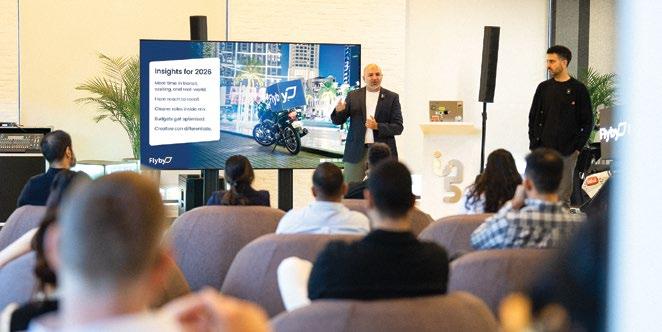
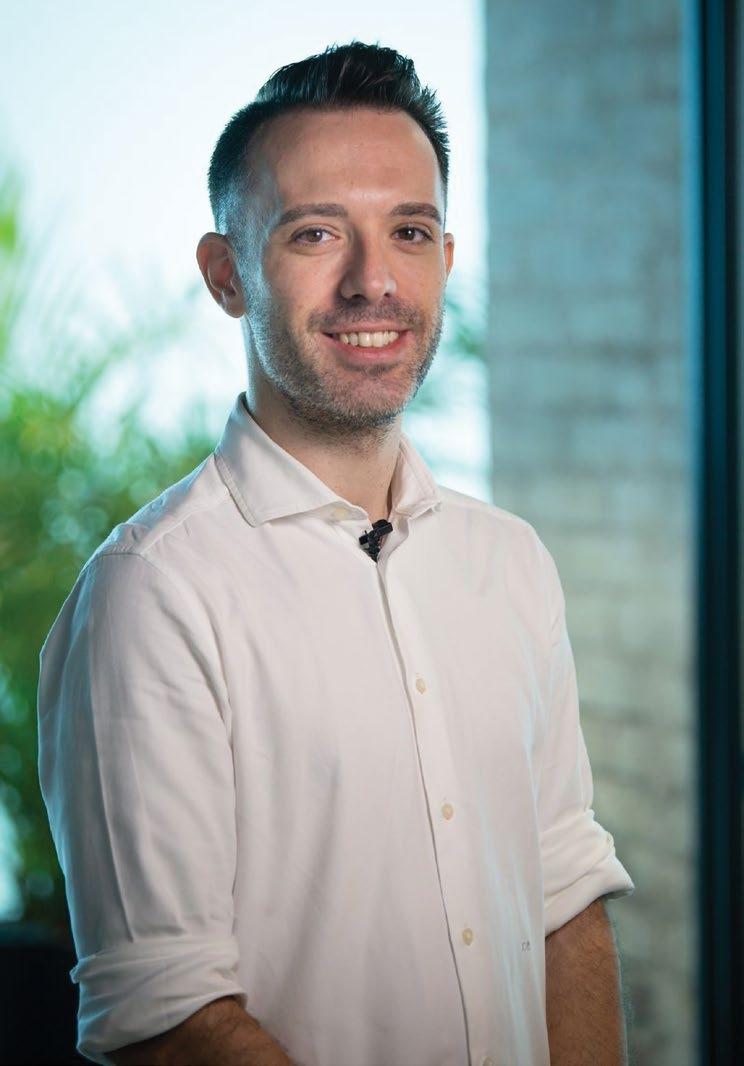
Tomaso Rodriguez turned Talabat into a $10 billion company. As Flyby’s new chairman, he’s partnering with cofounder and CEO Cheyenne Kamran on the platform turning every delivery rider into a moving billboard.
BY AYA ZHANG
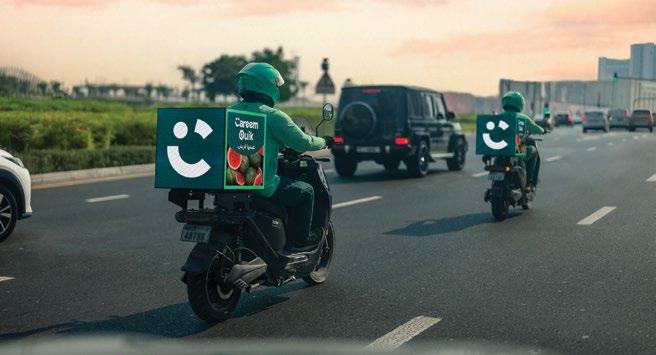
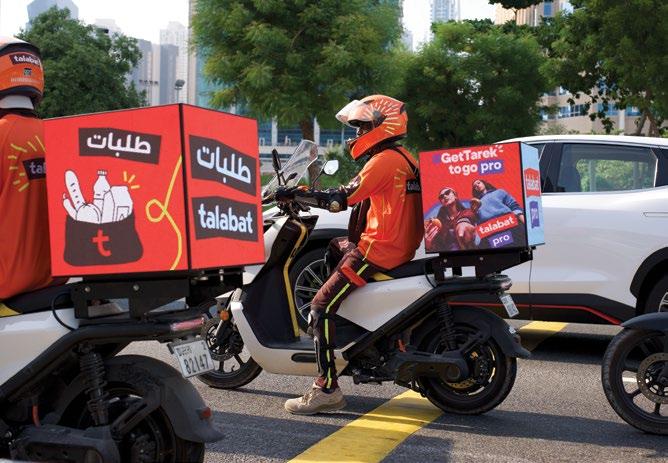
On a warm Tuesday evening in Dubai, a rider from Careem wea es hro gh he ra c o Jumeirah, a glowing smart bo s ra ed o he back o his bike n i a real ime ad er isemen or ed ll lses across he dis la he crea i e da ed remo el in real ime rom a cam aign dashboard kilome res awa No billboard No screen on a b ilding s he las mile reimagined
This is what Flyby has built, and it is no longer an e erimen he ad ech s ar has now r n more han cam aigns in alone logging o er million im ressions across plus neighbourhoods in Dubai, with operations e ending in o b habi and nich co n s ’ r al ed ll o orola es ern nion and abasco among i s ad er isers and blicis and ango among i s agenc ar ners s ne work is in egra ed wi h noon alaba areem and eli eroo nd now he man who ook one o hose deli er gian s blic a a billion al a ion in he larges global ech o is ing his name and credibili behind i
The chairman sends a signal Tomaso Rodriguez spent six years as CEO of Talabat, growing the business more than ninefold before orches ra ing i s ecember on he bai inancial arke he lis ing raised billion and was o ers bscribed b do ble digi s e s e ed down in No ember ollowing a lanned leadershi transition — and his next move landed a l b n he world o earl s age s ar s a chairman a oin men o his calibre nc ions less like a board anno ncemen and more like a marke signal odrig e is no lending his name o an idea e is backing a li e re en e genera ing b siness wi h a clear ra ec or and he knows he di erence be er han mos was looking a where he mos in eres ing echnolog and b siness model con ergence was ha ening and where here was a real chance o b ild some hing a a massi e scale odrig e said l b si s a he in ersec ion o d ech mobili and smar ci in ras r c re hen go in o he rod c and me he eam i was a b ild’ wan ed o be ar o
For Rodriguez, the opportunity today mirrors what early advertisers o nd on ns agram and oogle a new medium, with outsized returns or hose willing o mo e rs he first ones experimenting with a new medium are usually the ones bene ing he mos rom i he sa s his is one o he mos com elling echnological lea s in he ind s r and i ’s an e ci ing momen o be ar o a eam rede ning a whole ca egor he deli er ee is he la orm he rider is he channel
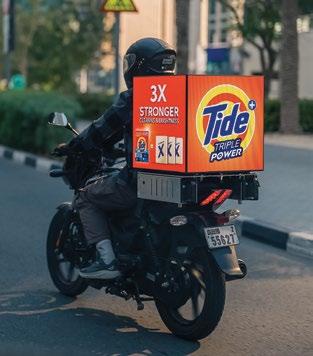
Building a category from scratch he enne amran l b ’s co founder and CEO, has been b ilding his rom he gro nd The hardest part, he says, is b ilding he ca egor i sel here’s no e is ing no roc remen a h no media lan or wha we do o ’re de lo ing new echnolog ha ’s going o ra el h ndreds o kilome ers a da e er da and
BY THE NUMBERS
$10.1B
Talabat IPO valuation — the largest global tech IPO of 2024, led by Rodriguez
37M+
Impressions logged by Flyby in 2025 across its active network
95+
Campaigns run in 2025, spanning brands from L’Oréal to Western Union
40+
Neighbourhoods active in Dubai alone
10,000
Smart boxes targeted by with f e e r roadmap to 50,000
3
Markets already operational: Dubai, Abu Dhabi, Munich
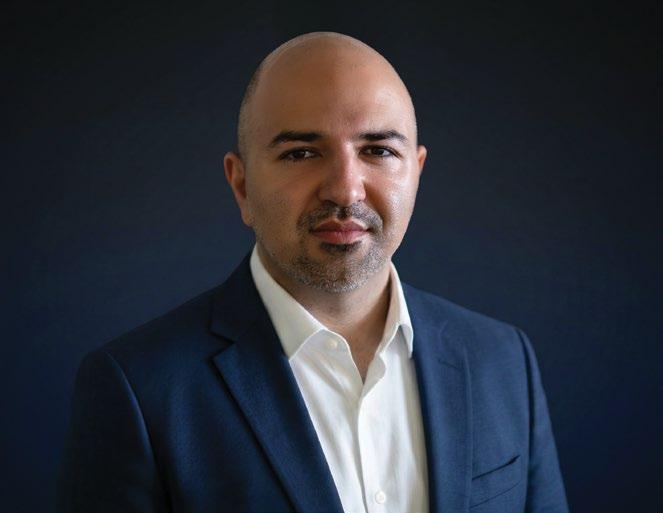
We don’t own the rider. We own the medium, and we enable the ecosystem to monetise and improve road safety. he enne amran


o ’re crea ing he marke aro nd i a he same ime he earl ilo s across nich Abu Dhabi, and Dubai were as m ch abo rod c disco er as marke alida ion iders sha ed he hardware real world condi ions re ned he dis la echnolog and clien eedback reb il he so ware la er n he ad er ising side we learned wha clien s ac all need in erms o ea res and re or ing amran sa s
The advertiser proposition is now well es ablished rands can en er wi h b dge s rom o and e er cam aign comes wi h ll re or ing he h er arge ing he sched ling and he abili o da e crea i es instantly gives advertisers tools and results that traditional OOH can’ deli er he sa s n ecos s em con rol he is e all clear l b works across a com le web o aggrega ors lee o era ors agencies and regulators — but deliberately s a s in i s lane e don’ own he ee e don’ own he rider e own he medi m and we enable he ecos s em o mone ise and im ro e road sa e
The ambition is to build the infrastructure layer for last-mile delivery, not just in the GCC, but globally.
The scale question
l b ’s eries is imminen and he ca i al will go o one hing bo es he com an ’s roadma arge s smar deli er bo es b wi h a e ear ision o across he and ro e ha scale he ne work becomes some hing qualitatively different — a media channel ha also genera es a rich real ime iew o rban mobili across en ire ci ies crea ing al e across ad er ising logis ics and smar ci in ras r c re
Rodriguez, having navigated the com le i o scaling alaba across eigh marke s and million ac i e c s omers is direc abo wha ma ers mos in a ne work e ec s b siness ore smar deli er boxes means more visibility, more da a more ad er iser con dence he sa s o don’ hi densi in o r core marke s as eno gh o lose he com o nding ad an age amran echoes his and is candid about the operational pressure points ahead oda some elemen s o ee managemen so ware da es and cam aign de lo men s ill ha e man al o ch oin s he sa s ha works a bo es doesn’ work a he s s em has o manage i sel as he ne work grows
The answer, Kamran says, is a oma ion he l b or al he de ice managemen s s em he o er he air da es all o i has o r n a onomo sl
A platform, not a product ha makes l b s r c rall in eres ing and s ra egicall ambitious — is how deliberately it
has been b il no o own e er hing l b does no own he lee does no em lo he rider owns the medium, and it enables the ecos s em aro nd i he em a ion is o r o con rol e er hing amran sa s e don’ e ar ner wi h agencies and aggrega ors and we le each ar o he ecos s em do wha i does bes Flyby plugs in at the points where we crea e he mos al e or odrig e he s ra egic logic is amiliar e has seen wha i looks like when a la orm reaches cri ical mass when he ne work e ec s kick in when he da a com o nds and when he b siness becomes some hing ha is gen inel di c l o re lica e e is clear on wha i will ake o
ge here o ha e o reach cri ical mass he sa s nd o ha e o ri le down on sales earl os com anies in his s ace oc s on de lo men rs and commercial rac ion second l b is b ilding bo h in arallel he ee agreemen s are in lace he reg la or clearances are sec red he commercial in ras r c re agenc rela ionshi s direc ad er iser partnerships, aggregator integrations is being b il now no a er scale alaba was once in a li e ime and ha s or has been old odrig e sa s his isn’ abo re ea ing ha ’s abo b ilding and scaling he ne business, and growing Flyby into the bigges ersion o wha i can be he ambi ion is o b ild he de ning media in ras r c re la er or las mile deli er no s in he b globall

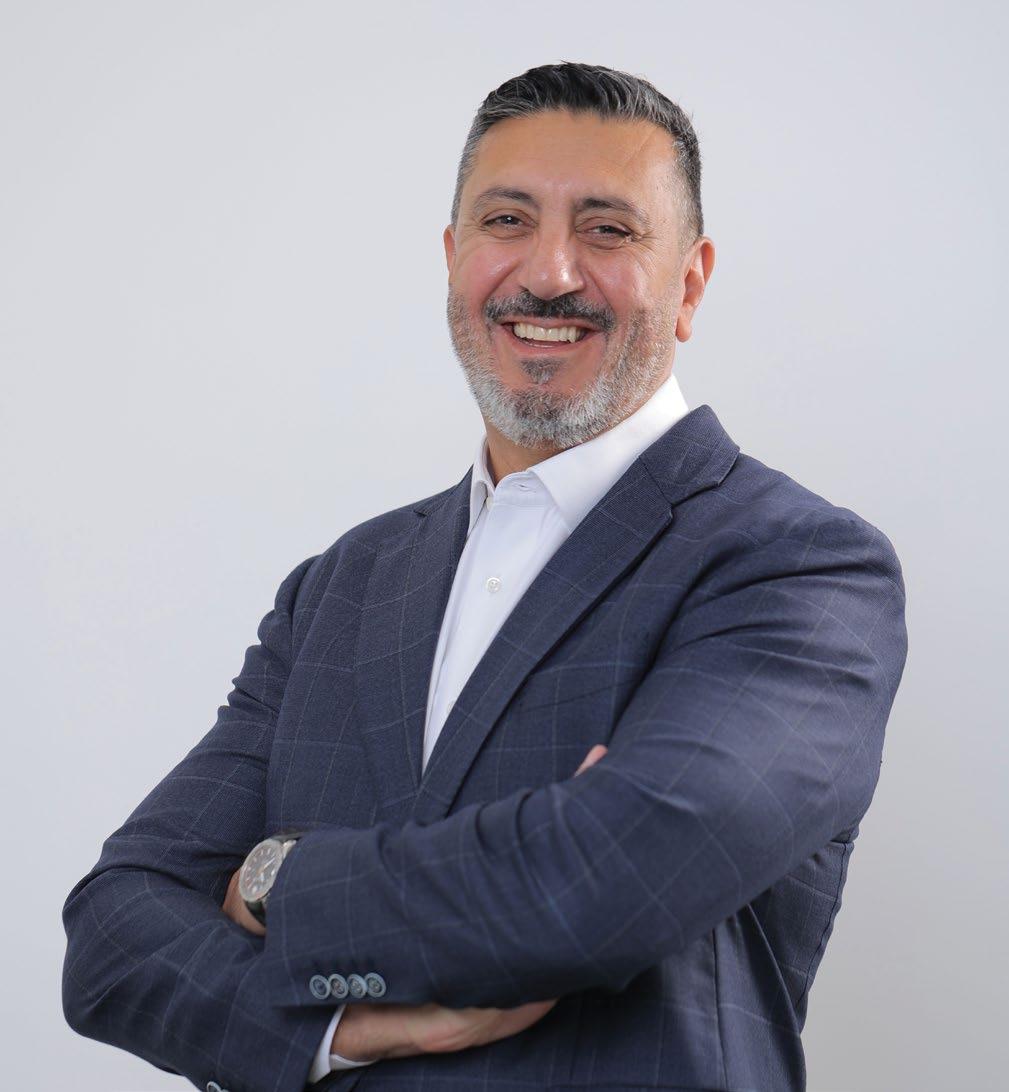
Amit Somani, CEO of Sama X, explains how Starlink is turning satellite connectivity into critical infrastructure for Gulf economies.
BY AYA ZHANG

Even in a region wired wi h bre and some laces remain digi all in isible eser s o shore la orms and remo e comm ni ies ace ersis en connec i i ga s ha can slow grow h risk e cienc and limi inno a ion mi omani is re hinking wha i means o be online sing sa elli e echnolog o make high s eed in erne as bi i o s as elec rici n he iddle as he ne hase o digi al rans orma ion ma de end less on cables and owers and more on wha ’s orbi ing abo e
WHERE DO YOU SEE THE BIGGEST CONNECTIVITY GAPS IN THE MIDDLE EAST TODAY, AND HOW CAN THEY REALISTICALLY BE CLOSED?
he iddle as aries grea l when i comes o connec i i ga s based on si e and ma ri o heir elecoms ne works hile i is ob io s ha
he mos signi ican connec i i ga s ersis in remo e o shore and in ras r c re limi ed areas s ch as deser s r ral comm ni ies ind s rial si es and mari ime en ironmen s e en in rban or semi rban areas connec i i iss es are o en aced ha can easil be o ercome b sa elli e al erna i es iber connec i i
de ends on ndersea cables ne works de end on seamless backha l all o which can become conges ed or e en c com le el when he ne ec ed ha ens esilience is inheren l b il in o he arlink s s em wi h m l i le sa elli es in iew a an oin in ime n com arison geos a ionar sa elli e links are anchored o a single sa elli e o en wi h a ro rie ar ne work la er which makes i e remel di c l o migra e o ano her sa elli e in he e en o a ail re in s ace enabling seamless reliable co erage across nderser ed areas sa elli e ne works can s reng hen na ional digi al resilience and hel economies across he region accelera e heir digi al rans orma ion agendas
HOW IS LOW EARTH ORBIT TECHNOLOGY, THROUGH PLATFORMS LIKE STARLINK, CHANGING THE ECONOMICS OF CONNECTIVITY FOR BUSINESSES?
o om line he economics ha e com le el shi ed rom re io s genera ions o sa elli e connec i i o erings and arlink o ers remi m connec i i ali a ordabili and ease o se when com ared o older echnologies

he ease o se sho ld no be nderes ima ed No onl are he ser erminals m ch more a ordable he are also sim le o ins all and mo e aro nd making arlink a m ch be er al erna i e com ared o more com le sa elli e based o erings rom o her com anies echnolog is resha ing b siness connec i i b remo ing he radi ional cos barriers ied o h sical ne works ns ead o wai ing or bre lines or in es ing in com le in ras r c re com anies can access high s eed low la enc in erne ins an l wi h be er economics his shi enables as er de lo men redic able cos s and reliable ser ice across loca ions where radi ional ro iders s r ggle
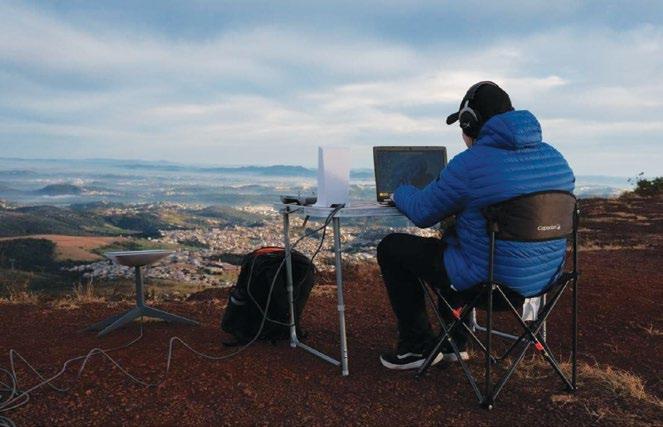
also s reng hens b siness con in i i h de endable rimar or back connec i i organisa ions a oid cos l down ime and sa eg ard rod c i i es eciall in sec ors where nin err ed digi al access is mission cri ical s ch as heal hcare ed ca ion research and emergenc ser ice a enc being so low is ano her clear bene arlink la enc is as low as milliseconds com ared o o aro nd milliseconds or geos a ionar al erna i es a enc signi can l im ac s en er rises b a ec ing ser e erience rod c i i and l ima el ro i abili or ins ance high la enc can hinder online ransac ions red ce he acc rac o rades in inancial marke s and nega i el im ac real ime a lica ions like ideo con erencing n ind s rial se ings low la enc is cr cial or a lica ions like real ime con rol and a oma ion where e en minor dela s can ha e serio s conse ences
WHAT INDUSTRIES IN THE REGION STAND TO BENEFIT
THE MOST FROM RELIABLE HIGH SPEED CONNECTIVITY IN REMOTE OR HARD-TO-REACH ENVIRONMENTS?
e eral ind s ries s and o gain signi ican l rom high s eed sa elli e connec i i es eciall hose o era ing in challenging or geogra hicall dis ersed
en ironmen s ec ors s ch as oil and gas o shore and mari ime ee s and remo e ind s rial o era ions rel hea il on s able comm nica ions or sa e rod c i i and real ime da a access
ri ical blic sec or ser ices incl ding hos i als schools research ins i ions and emergenc res onse eams also bene rom nin err ed digi al access ens ring essen ial o era ions con in e smoo hl e en when erres rial ne works all shor oge her hese ind s ries gain a s rong o nda ion or con in i digi al rans orma ion and im ro ed ser ice deli er across he region
HOW DO YOU SEE SATELLITE NETWORKS RESHAPING THE COMPETITIVE LANDSCAPE FOR TRADITIONAL TELECOM OPERATORS IN THE COMING YEARS?
a elli e connec i i is o ening new erri ories or digi al ser ices s reng hening b siness con in i and s or ing cri ical sec ors s ch as energ mari ime heal hcare ed ca ion and emergenc res onse areas where radi ional o era ors o en ace high de lo men cos s or logis ical challenges a her han com e ing head o head wi h mobile ne works sa elli e ne works are resha ing he marke b lling co erage ga s enabling be er and chea er cell lar backha l enabling h brid sol ions and gi ing o era ors new wa s o deli er reliable ser ice across wider geogra hies his shi l ima el accelera es na ional digi al rans orma ion and raises he o erall s andard o connec i i across he region
WHAT ROLE WILL CONNECTIVITY PLAY IN ENABLING THE NEXT PHASE OF DIGITAL TRANSFORMATION ACROSS THE GULF ECONOMIES?
onnec i i will l ima el de ine how ar and how as l economies can ad ance in heir ne cha er o
digi al rans orma ion s he region shes oward smar er ind s ries more resilien na ional s s ems and ll digi al blic ser ices he real di eren ia or will be he abili o s a seamlessl connec ed ha once de ended on h sical in ras r c re will now be enabled b bi i o s high er ormance ne works ha em ower rogress wi ho geogra hic limi s
n ha sense ad anced sa elli e connec i i doesn’ s close co erage ga s i nlocks o or ni gi es na ions con dence ha heir digi al ambi ions can scale in line wi h heir social and economic ambi ions onnec i i is he o nda ion on which re inno a ions can be b il i is no s an enabler o rans orma ion i ’s he ca al s or he ne era o grow h
he reali is ha mos eo le do no go in o b siness solel or nancial gain hile income is o co rse im or an he dee er dri ers are s all e ibili reedom and he ability to take control of how time is s en e wi ho conscio s decisions as the business grows, the outcome can look very different. hen income becomes direc l ied o ersonal o and e er hing relies on one individual to function, s e ing awa is no longer an o ion without everything coming to a halt. At this stage, it becomes essential to a se and reconnec wi h he original intention behind starting the business. ha was he goal ore ime wi h family, greater autonomy, financial sec ri or sim l a be er ali o li e hen his wh is orgo en i is easy to fall into a cycle of constant doing where da s are s en reac ing rather than leading.
One of the most common contributors to feeling overworked is a lack of clear boundaries. In an effort o ro ide a grea ser ice and kee clien s ha man b siness owners make themselves available at all times.

Katie Godfrey, Business Strategist, Podcaster and Best selling Author e o he ools
essages are answered ins an l work s ills in o e enings and he line be ween ersonal and ro essional life becomes increasingly blurred. hile his ma eel like good c s omer service, it often leads to burnout and diminishing returns.
o ndaries when im lemen ed correctly, do not create distance; they create clarity. They allow clients and eams o nders and e ec a ions s ch as working ho rs and res onse imes while also ro ec ing he b siness owner’s energ and oc s hen here is s ace o swi ch o the quality of work delivered during working ho rs im ro es signi can l Energy is no longer diluted across cons an in err ions and decisions can be made with greater clarity and intention.
Alongside boundaries, time management becomes a crucial factor in regaining control. It is not sim l abo being organised b about being deliberate with how ime is alloca ed an b siness owners o era e in a cons an s a e o busyness, moving from task to task without a clear structure, which often res l s in eeling rod c i e wi ho making meaning l rogress
Creating structure within the week, whether through time blocking, dedica ing s eci ic da s o cer ain tasks, or defining clear start and nish imes allows or grea er oc s and e cienc s as im or an l i ens res ha ersonal riori ies s ch as e ercise social ime and ro essional de elo men are no con in all shed aside hese are no l ries b essen ial com onen s of maintaining the energy required to run a business effectively.
However, there is a natural limit to wha one erson can achie e alone No ma er how dri en or ca able a em ing o do e er hing ine i abl leads o e ha s ion and s agna ion Building a team is often the turning oin be ween a b siness ha relies entirely on its owner and one that has he ca aci o grow his does
no sim l mean hiring eo le but leading them effectively. Clear s s ems raining and e ec a ions are wha enable a eam o o era e con iden l and consis en l hen individuals understand their roles and res onsibili ies he become an e ension o he b siness con rib ing not only to the workload but also to its grow h and ro abili is a his oin ha o will see the business change. Instead of being solel de enden on he owner’s ime it starts to function as a collective effort, where income can be generated wi ho cons an ersonal in his crea es he s ace or he b siness owner o s e back rom da o da asks and oc s on higher le el ac i i ies ha dri e long erm grow h orking on he b siness ra her han solel in i is where r e ownershi begins his incl des re ning s s ems e loring new re en e s reams strengthening the brand, and making strategic decisions that move the b siness orward re ires s e ing out of the comfort zone of being busy and in o a osi ion o leadershi o en ask work s o ed tomorrow, would the business continue o genera e income he answer is no hen here is an o or ni o b ild something more sustainable, whether hro gh eam de elo men s s ems or income streams that are not directly tied to time.
Ultimately, the transition from feeling overworked to genuinely owning both time and income is not about doing more, but about doing things differently. It requires a shift in mindset, from reacting to leading, rom doing e er hing ersonall o b ilding s or and rom rading ime for money to creating a business that works beyond individual effort. The goal of starting a business was never to be busy. It was to create something ha ro ides bo h nancial reward and ersonal reedom i h he righ s r c re bo ndaries and s or in lace ha o come is no onl ossible b en irel wi hin reach

John Stevens, CEO of Chestertons MENA, reveals how global investors are learning to pick their real estate battles in the UAE and Saudi Arabia.
BY AYA ZHANG
HOW DO YOU SEE THE REAL ESTATE INVESTMENT LANDSCAPE IN THE UAE AND SAUDI ARABIA EVOLVING AS THESE MARKETS MATURE AND ATTRACT A MORE SOPHISTICATED CLASS OF GLOBAL INVESTORS?
As the UAE and Saudi Arabia mature, we are seeing a clear transition from transaction-led growth to strategy-driven institutionally aligned investment.
he remains he region’s mos established and transparent real estate market, having already gone through multiple cycles of institutionalisation. ha ma ri is now re ec ed in more disciplined capital behaviour, stronger governance expectations, and a greater focus on income durability and asset quality rather than shortterm momentum.

Saudi Arabia, in particular, is at an im or an in ec ion oin he grad al opening of the market to foreign ownership, albeit still regulated, combined with Vision 2030-led development and broader economic di ersi ca ion ini ia i es is widening he investor base and increasing the need for structured, on-the-ground advisory. What differentiates this phase of market maturity is that capital is becoming more selective. Investors are no longer pursuing exposure for growth alone, but are increasingly focused on governance, long-term fundamentals, and execution capability. Across both markets, we are seeing a convergence toward institutional behaviour, where local insight must be paired with global standards. Advisory quality and disciplined delivery now carry as much weight as the opportunity itself.
John Stevens, CEO of Chestertons MENA

WHAT ARE THE MOST IMPORTANT STRUCTURAL SHIFTS YOU ARE OBSERVING IN HOW INVESTORS EVALUATE REAL ESTATE OPPORTUNITIES IN THE MENA REGION TODAY COMPARED TO PREVIOUS MARKET CYCLES?
Investor behaviour today is markedly more analytical and risk-aware than in earlier cycles. There is far less reliance on headline yields or market momentum, and a much stronger focus on what actually underpins
performance over time.
In the UAE, where longer data histories and clearer regulatory frameworks are in place, investors are applying more rigorous underwriting standards, a shift that is now starting o be re ec ed more widel across the region. Investors are now looking closely at asset quality, income durability, tenant covenant strength, and lease structures, alongside a far deeper assessment of governance, regulatory clarity, capital controls, and exit visibility. There is also a growing
As the UAE and Saudi Arabia mature, we are seeing a clear transition from transaction-led growth to strategy-driven institutionally aligned investment.
expectation that real estate should be managed as an operating business, not simply traded as an asset. Environmental and sustainability considerations are increasingly embedded into decision-making, particularly among institutional capital, and are now viewed as drivers of resilience and value rather than compliance obligations.
Overall, the market has become more disciplined. Capital is still available, but it is more patient, more selective, and far more focused on execution risk and downside protection than in the past. This re ec s a broader ins i ionalisa ion of the market, where investment committees and capital partners are applying global benchmarks to regional opportunities.
CHESTERTONS IS EMPHASISING A MORE INTEGRATED, DATADRIVEN ADVISORY APPROACH. HOW IS DATA CHANGING THE WAY REAL ESTATE DECISIONS ARE MADE AT THE INSTITUTIONAL AND HIGH-NETWORTH LEVEL?
Data is now central to how sophisticated investors approach real estate. Decisions are no longer driven primarily by sentiment or relationships, but by real-time intelligence, scenario analysis, and portfolio-level performance assessment.
In the UAE, increased market transparency and data availability have already transformed how institutional investors assess risk and capital allocation. In Saudi Arabia, improving data quality is starting to drive a similar shift. At both the institutional and high-net-worth level, investors are increasingly using data to understand risk, stresstest assumptions, and compare opportunities across markets and asset classes. This allows for much more precise capital allocation and, importantly, better downside management.
At Chestertons, this has reinforced the move toward a fully integrated advisory model. By aligning research, valuation, and transactional insight, we provide a “single source of truth” across the investment lifecycle. Data does not replace experience or dgmen b i signi can l enhances transparency, reduces uncertainty, and supports more informed decisionmaking. Increasingly, it is also enabling clients to move faster with greater conviction, which is critical in competitive markets.
Despite the progress made across the region, there are still areas where expectations and reality do not always align. This is most evident around data consistency, reporting standards, and transparency at both the asset and developer level, particularly in emerging or rapidly evolving segments.
While the UAE has made meaningful progress in institutionalising governance and reporting standards, execution risk remains a consideration across the region, especially on largescale or complex developments where delivery timelines, cost control, and operational readiness can materially impact IRR. In some cases, there is still a disconnect between projected returns and the management intensity, governance, and operational discipline required to deliver them.
As global capital becomes more active in the region, expectations are increasingly shaped by mature international markets. Closing these gaps will be critical to sustaining long-term investor confidence and maintaining momentum.
MARKETS
MORE COMPETITIVE, WHAT DIFFERENTIATES A REAL ESTATE ADVISORY FIRM IN DELIVERING LONG-TERM VALUE BEYOND TRADITIONAL BROKERAGE SERVICES?
In a more competitive environment, differentiation comes from depth rather

than volume. Investors are no longer looking for transactional support alone; they are looking for longterm partners who understand both the local market and the standards expected by global institutional capital. In the UAE, where the market is increasingly crowded, value is added by firms that can navigate complex regulatory frameworks and provide cross-border connectivity.
True value is delivered through integrated, end-to-end advisory. This means moving beyond “the deal” to support clients not just at the point of acquisition, but throughout asset management and ultimately at exit. or a rm like hes er ons wi h more than 220 years of heritage, true differentiation lies in becoming a strategic partner rather than a mere intermediary. Credibility is built on consistent delivery, disciplined advice, and alignment with client objectives over the long term. That level of alignment is increasingly what sophisticated investors value most.
HOW IMPORTANT IS THE ROLE OF CROSS-BORDER CAPITAL IN SHAPING REAL ESTATE STRATEGIES IN THE UAE AND SAUDI ARABIA, AND WHAT TRENDS ARE YOU SEEING IN INVESTOR ORIGIN AND BEHAVIOR?
ross border ca i al is he de ning force for the next decade.
While the UAE has long been a global cross-border hub, we are seeing a shift in behaviour from purely private wealth toward more structured ins i ional and amil o ce in ows from Europe, Asia, and North America.
In Saudi Arabia, cross-border in eres is la ing a de ning role in shaping real estate strategy. What has changed is the sophistication of the entry strategy; there is a clear move
Data does not replace experience or judgment, but enhances transparency, reduces uncertainty, and supports more informed decisionmaking.
away from opportunistic, short-term investment toward more structured, partnership-driven strategies. Investors are placing greater emphasis on local relationships, operational expertise, and alignment with national development objectives. This is why Chestertons is aligning its structure to meet these needs, including our intent to relocate our global headquarters to Saudi Arabia o be er ser e his cross border in his osi ioning re ec s o r iew ha
proximity to capital and clients will be a key differentiator in the next phase of market evolution.
WHAT DO YOU BELIEVE WILL DEFINE A TRULY RESILIENT AND HIGHPERFORMING REAL ESTATE MARKET IN MENA OVER THE
Over the next decade, resilience will be de ned less b headline grow h and more by the successful balance of scale and sustainability. The strongest markets will be those that combine regulatory transparency with consistent governance, supported by reliable data and professional asset management standards. Central to long erm resilience is a marke ’s capacity to innovate, ensuring a competitive edge that is supported by a robust and transparent Ease of Doing Business environment.
The UAE already demonstrates many of these characteristics, while Saudi Arabia is progressing rapidly oward hem conomic di ersi ca ion will remain a critical driver of real demand, while sustainability and technology will play an increasingly central role in how assets are designed, operated, and managed. This includes not only energy e cienc and green b ildings b also the intelligent use of data and technology to enhance performance over time.
Ultimately, high-performing markets will be those that can deliver stable, risk-adjusted returns across cycles, underpinned by discipline, transparency, and long-term thinking. Those markets that successfully institutionalise these principles will be best positioned to attract and retain global capital. Both the UAE and Saudi Arabia are progressing along this path, albeit at different stages of maturity.



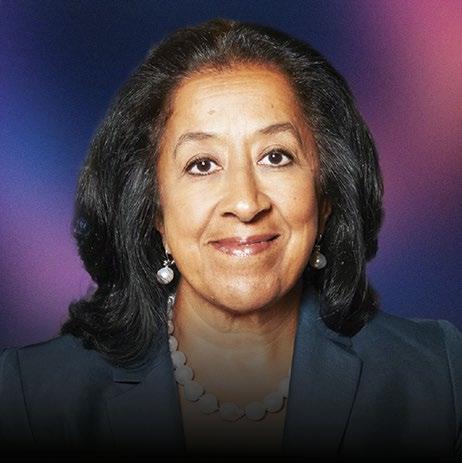
a di rabia’s rans orma ion nder ision has rod ced some hing ha wo ld ha e been n hinkable a genera ion ago a cohor o women a he er o o nance di lomac media echnolog and in erna ional go ernance emale labo r orce ar ici a ion has risen rom o o er s r assing he original ision arge ahead o sched le he en women on his lis re resen some hing be ond s a is ics he are he ioneers who b il he a h and who are s ill walking i

Few fg res in S di siness histor rr the weight th t n n does She eg n her reer t the n in n ing om n in t time when women in S di or or te e dershi were irt nhe rd of nd s ent the fo owing fo r de des iet resh ing wh t w s ossi e She ser ed s for o er e rs efore ste ing into the h irm nshi of he n ro s or or te o rd n she e me h ir of S di ww nk S one of the kingdom s most signif nt fn n i instit tions She w s so the frst wom n to oin the o rd of S di isted om n n to er she w s ointed o h ir of the S S di siness o n i ongside iti ne r ser re e ting her end ring ro e s the ridge etween S di nd g o siness
n ho ds ositions on n m er of g o d isor odies in ding k nk nk of meri k t ong ong h nges nd e ring nd ot nergies She so ser es s Senior d isor to h th m o se nd is rt of the o o rd of d isors t the o n i on oreign e tions ongside this she is tr stee of oth nd the or d onomi or m mem er of the si siness o n i nd o rd dire tor t em sek r st s hi nthro si i n e er hi nthro i work in des e ding the S im n S n o nd tion s resident nd h iring f n r sed org nis tion wide re ognised s the frst ent re hi nthro initi ti e in the r wor d n is not mere tr i er She is the st nd rd g inst whi h S di women in siness ontin e to e me s red
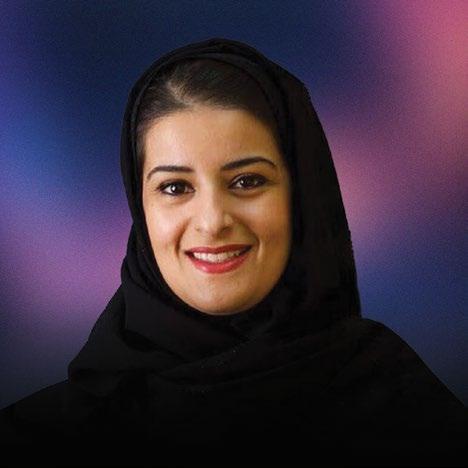
Sr h S h imi h s e ome one of the defning fg res of S di r i s fn n i tr nsform tion o er ting t the interse tion of it m rkets or or te go ern n e nd n tion e onomi str teg n n r she w s ointed h ir erson of tion Shi ing om n of S di r i where she now o ersees the str tegi dire tion of one of the region s e ding ogisti s nd tr ns ort tion gro s s it e nds g o in ine with ision
She is est known s h ir of S di d w ro sin e where she o ers w eriod of m rket tr nsform tion in ding g o inde in sion nd the ndm rk of S di r m o d w h s sin e e o ed into f integr ted m rket infr str t re tform r ier in her reer S h imi ser ed s of S it former it from to where she ed the frm s tr nsform tion into one of the region s e ding sset m n gers nd in estment nks signif nt e nding its ssets nder m n gement nd instit tion re h
e ond her e e ti e ro es she ser es s h ir of rd s fn n i d isor siness in nd ho ds o rd ositions t st nd S di r i n ir ines ross these ro es S h imi ontin es to sh e the str tegi nd instit tion fr meworks nder inning S di r i s e onomi di ersif tion e tending her in en e we e ond it m rkets

When rin ess eem int nd r
S d w s ointed S di r i s m ss dor to the nited St tes in e r r she m de histor s the frst wom n in the kingdom s histor to ser e s m ss dor She h s he d the ro e ontin o s sin e re resenting
S di r i thro gh two S dministr tions nd d n ing the ingdom s e onomi t r nd di om ti initi ti es
efore di om her reer w s rooted in the ri te se tor nd i d o She ser ed s of f ntern tion r e i ho s i dh from to where she ommissioned one of the kingdom s frst st dies on work e rriers for women nd o ened its frst in off e hi d re entre She ter ed women s ff irs t the S di ener S orts thorit nd e me the frst wom n to e d m ti s ort feder tion in the kingdom er m ss dori ro e e tends e ond i ter re tions She is mem er of the ntern tion m i ommittee nd ser es on m ti e ommissions in ding those for gender e it di ersit nd in sion
rin ess eem s n ongoing ro e in fostering S di r i s intern tion rtnershi s nd initi ti es

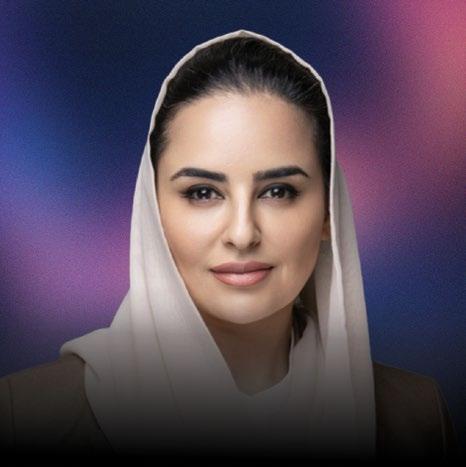
Heem h h ho ds tit e th t is oth histori nd onse enti she is the fo nding Se ret r ener of the igit oo er tion rg nis tion nd the frst S di wom n to e d n intern tion org nis tion ointed in nd re ointed in for se ond fo r e r term she e ds m ti ter od dedi ted e si e to digit e onomi oo er tion whi h h s grown from f e fo nding mem er st tes to si teen n tions re resenting o er tri ion in om ined nd more th n mi ion eo e
efore oining the her reer in ded senior ro es t i rosoft nd t the S di inistr of oreign ff irs where she ed its e ser i es initi ti e She ter ser ed s of the tion igit r nsform tion nit e ding the ingdom s n tion digit str teg nd initi ti es s h s the S di odes rogr mme whi h tr ined more th n mi ion eo e in digit ski s She is so the fo nder of omen S rk non roft th t h s tr ined more th n women in the te hno og ind str sin e its in e tion in
n r h she re ei ed the e hno og i om w rd t he ontgomer S mmit re ognition of her work i ding new instit tion from the gro nd in one of the most om e ren s in g o go ern n e She so sits on the o rd of S di tion nk
SECRETARY-GENERAL, DIGITAL COOPERATION ORGANISATION
Whi e her sister n h s
sh ed the n ro s resen e in the idd e st th m n h s s ent fo r de des i ding its g o in estment rm from ew ork s nd resident of n meri she o ersees the gro s orth nd So th meri n in estment ortfo io n she e me the frst S di wom n to oin the o rd of m or S i om n hermo e tron or or tion mi estone th t re eded ision ne r three de des
She h s ser ed s dire tor of org n St n e nd w s ointed to the o rd of rookfe d sset n gement in n r th m o er tes rge w from the i e e t her in en e on S di r i s intern tion in estment st nding is ong est ished nd signif nt

Jom n r shid w s ointed of S di ese r h nd edi ro in to er e oming the frst wom n to e d the kingdom s rgest integr ted medi gro nder her e dershi S whi h re hes o er mi ion eo e wor dwide thro gh tit es in ding sh r ws t nd r ews h s ndergone om rehensi e digit tr nsform tion forged g o rtnershi s with oom erg edi rner ros is o er he nde endent nd i o rd nd grown its re en es signif nt n she w s ointed h irwom n of the ed Se ntern tion i m o nd tion o erseeing one of the region s most rominent t r tforms S re orted re en es of mi ion in the frst three rters of nd h d tot ssets of i ion She so ser es on the o rds of rg m n estment om n nd ing S d ni ersit r shid is the e rest e ression of wh t S di r i s t r m itions ook ike when e o er tor is gi en the m nd te to e e te them
&
Dr m S im n is ioneering
S di siness e der nd d o te for in si e e onomi de e o ment She is o owner nd o rd em er of o o o dings di ersifed f mi siness nd ser es on the o rds of ingdom o ding om n ed Se ntern tion nd the ntern tion h m er of ommer e e ti e o rd in ris n she e me one of the frst women e e ted to the edd h h m er of ommer e nd nd str ter ser ing s its i e h ir nd e ding the h di h int h w i ed enter to s ort S di sinesswomen m h s re resented the ri te se tor t intern tion for ms s h s the ntern tion o r rg nis tion nd the romoting gender e it nd workfor e rti i tion n she m de histor s one of the frst fem e m ni i o n i mem ers in S di r i resigning short there fter in rotest of renewed gender segreg tion ertifed o rd dire tor nd str tegi d isor she so mentors the ne t gener tion of e ders nd n es her reer with r ising fo r hi dren
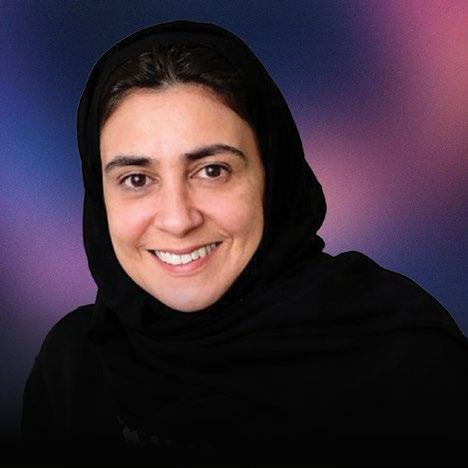
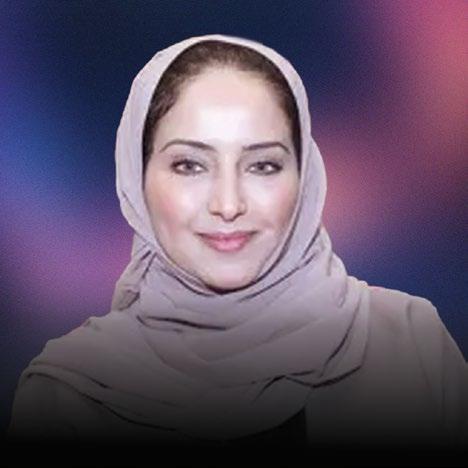
Bsm h m n ho ds distin tion th t is e s to nderst te she is the frst n tion nd the frst wom n to ho d region e dershi osition t the nited tions or d o rism rg nis tion She h s ser ed s egion ire tor for the idd e st sin e m king her one of the most senior S di women in intern tion instit tion go ern n e er reer s ns o er e rs t the S di ommission for o rism nd tion erit ge where she i t dee e ertise in destin tion de e o ment nd to rism o i She so est ished the or d o rism dem in S di r i in oo er tion with the n the or d nk re ognised her s one of the region s o ngest s t moment when S di r i is st king signif nt e onomi m ition on to rism from the ed Se ro e t to iri h te her ro e t the intern tion od th t sets g o to rism st nd rds es her t ni e im ort nt interse tion of n tion str teg nd m ti ter in en e
REGIONAL DIRECTOR, MIDDLE EAST, UN WORLD TOURISM ORGANISATION

GOVERNANCE
PUBLIC
Rni sh r m de histor in when she e me the frst fem e of S m in n i ro one of S di r i s rgest nks er ointment w s ndm rk moment in S di or or te go ern n e sign t the time of how i k the kingdom s fn n i se tor w s e o ing n e r r she mo ed to the i n estment nd s e d of om i n e o ern n e nd Senior d isor er ro e es her t the he rt of one of the kingdom s most im ort nt e onomi instit tions the i n estment nd whi h h s grown to m n ge ssets e eeding tri ion She sits on the o rds of st the S di d w ro the tion enter for erform n e e s rement the S di S e ommission nd the S di o o eder tion er tr e tor from ioneering nk to senior d isor t re e ts the ro der stor of S di women mo ing from re king indi id rriers to sh ing s stemi ones
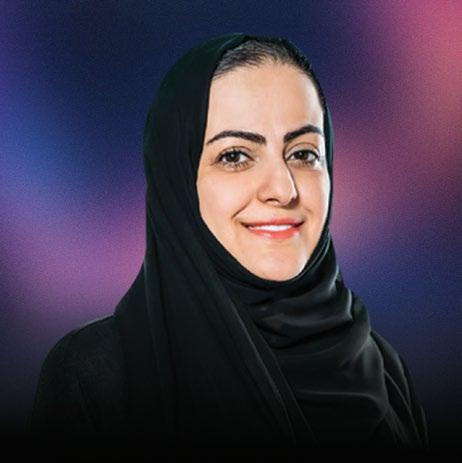
En i h wi eg n her reer t i d nk in er e rs she worked her w thro gh e er e e of the instit tion or or te nking o er tions of o er tions of or or te nking efore e oming hief er ting ff er in one of the most senior e e ti e ro es he d wom n in S di nking n r h she w s ointed hief m n it ff er o erseeing the eo e str teg of one of the kingdom s m or fn n i instit tions ring her ten re i d nk n hed the frst entre in the S di nking se tor o or ted with S o on the i d nk S nde nd osted net roft of i ion in the frst nine months of er stor i t entire within one instit tion ross ne r three de des of onsistent d n ement is different kind of S di s ess stor ot ioneer ointment t ersisten e


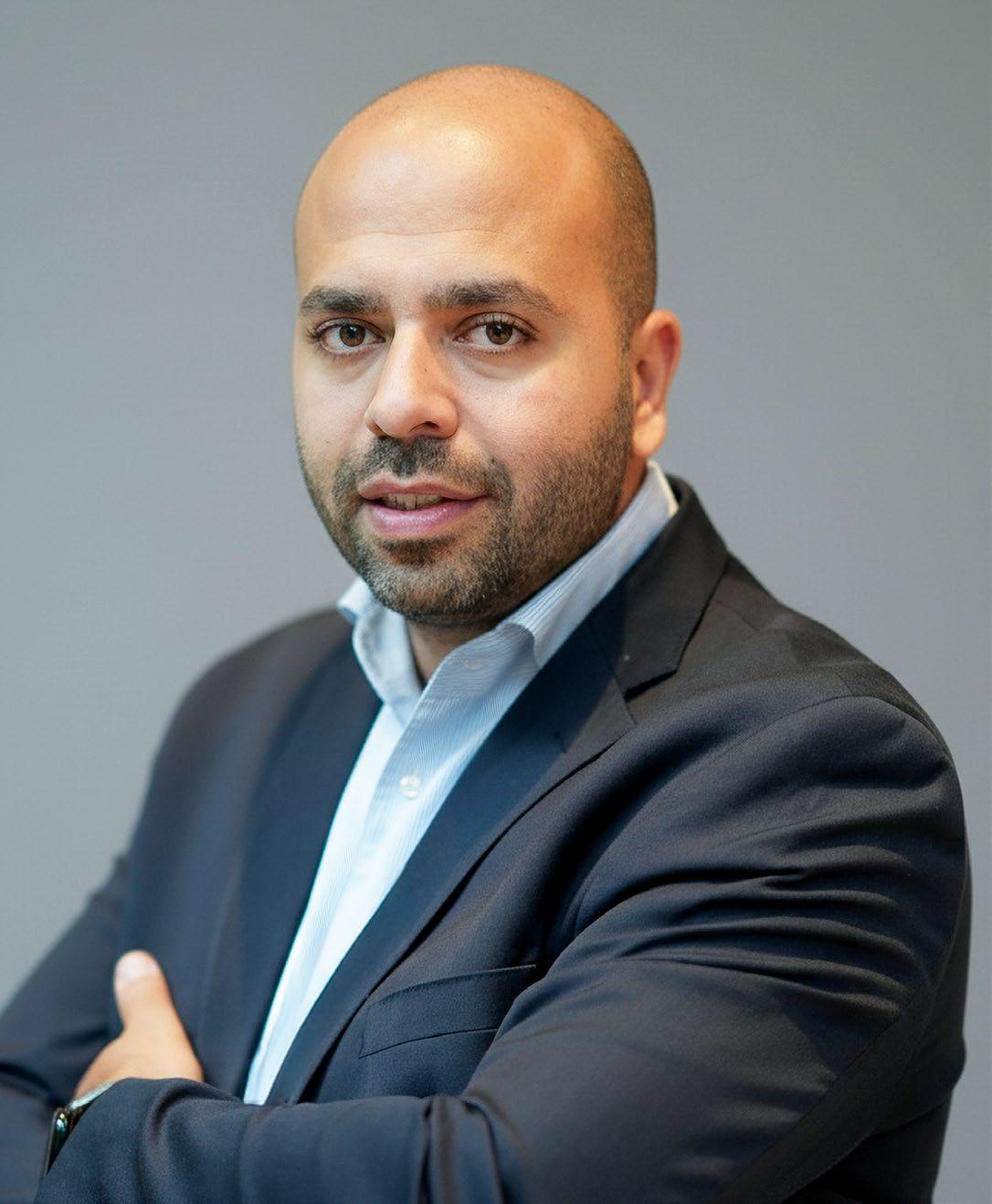
Hesham Abd El Hakim, Acting CEO of Camelicious, is leading the transformation of a centuries-old tradition into a modern global camel milk business.
BY AYA ZHANG
CAMELICIOUS RUNS THE OR D’S R EST CAMEL DAIRY FARM WITH NEARLY 7,000 CAMELS. HOW DID THE BRAND EVOLVE FROM A NICHE IDEA INTO O E I BUSINESS?
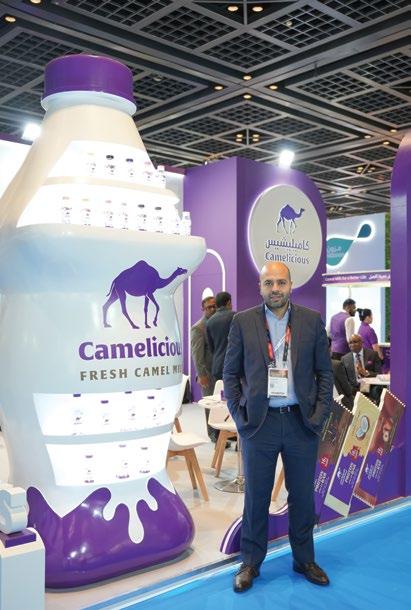
Camel milk has been part of Middle Eastern life for centuries, deeply connec ed o he region’s c l re and heritage. Camelicious was founded in 2006 as part of Emirates Industry for Camel Milk & Products with a clear vision: to transform a traditional regional product into a modern, worldclass dairy brand.
Inspired by the vision of His Highness Sheikh Mohammed Bin Rashid Al Maktoum, the goal was not simply to produce camel milk, but to build a globally recognised UAE food innovation story. Over the years we have invested heavily in advanced farming technology, research and world-class production standards to ensure camel milk could be produced consistently and safely at scale.
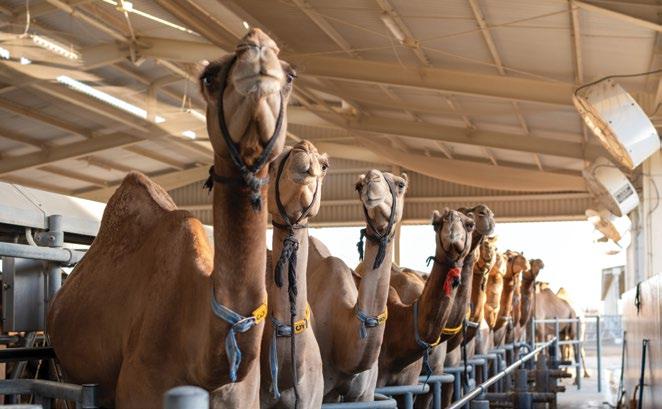
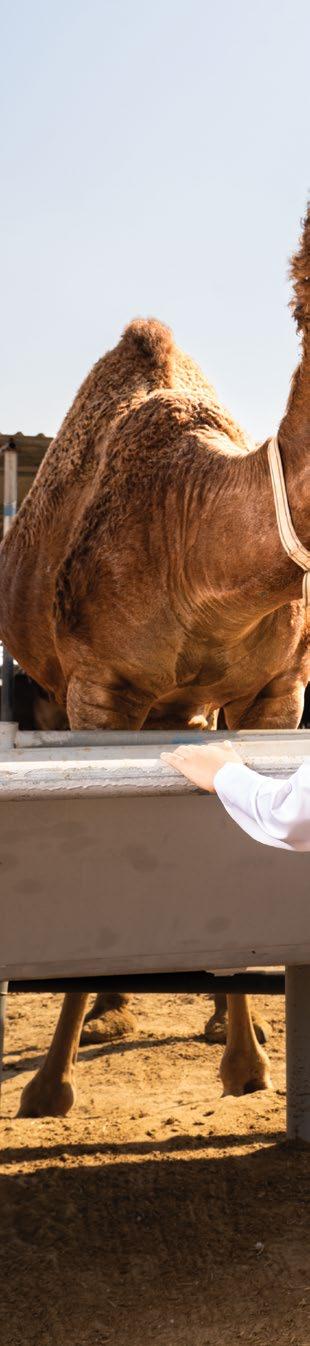
Today Camelicious operates the largest and most advanced camel dairy farm in the world in Dubai, home to nearly 7,000 camels and producing approximately three million litres of milk annually.
By combining traditional knowledge with modern dairy science, Camelicious has helped move camel milk from a niche regional product into the global conversation around wellness, nutrition and alternative dairy.
Camel milk production is fundamentally different from conventional dairy. Camels produce signi can l less milk han cows and require specialised care and farming expertise. Developing a system capable of maintaining high animal welfare standards while managing thousands of camels was one of the early operational challenges.
At the same time, there was also the challenge of building awareness. Outside the Middle East, camel milk was relatively unknown to many consumers. Introducing it to international markets required
education as much as production — helping people understand its n ri ional bene s heri age and he quality standards behind it.
Scaling the category meant investing not only in farming and production, but also in research, product development and consumer awareness. Over time those investments have helped Camelicious build credibility and trust in markets both regionally and internationally.
T OR E I IO S
My focus is on continuing to build Camelicious as a global brand, while preserving the heritage and authenticity that make camel milk truly unique.
There are three key priorities guiding our next phase of growth.
irs i ’s abo em owering more consumers to discover camel milk, he ’s original s er ood hro gh initiatives like our farm tours and our promise of farm to table in 48 hours, we want to bring people closer to the source, build trust and make camel milk part of everyday life - not just a niche product, but a daily ritual.
Second, innovation remains at the heart of our strategy. We are continuously developing new products and formats that make camel milk more accessible, relevant and appealing to modern consumers, from functional offerings to convenient, onthe-go formats.
And third, international expansion. As global demand for alternative dairy and functional nutrition accelerates, we see a strong opportunity to position camel milk on the world stage, proudly rooted in the UAE, but built for global consumers.
Ultimately, Camelicious represents more han a rod c ’s a s or of how the UAE can take a deeply rooted tradition and transform it into a future-forward, globally relevant food category through innovation, research and responsible farming.
CONSUMER DEMAND FOR ALTERNATIVE AND FUNCTIONAL D IR ROD TS IS RISIN WORLDWIDE. HOW IS
E I IO S OSITIONIN
E I IN T IS O TREND?
Camel milk naturally aligns with many of the trends shaping global food and wellness today. Consumers are increasingly looking for natural, functional foods that support balanced nutrition and overall wellbeing.
amel milk con ains a rich ro le of vitamins, minerals and easily digestible proteins, and many cons mers nd i gen ler on diges ion compared with traditional dairy products. As awareness around
gut health, immunity and naturally functional nutrition continues to grow, camel milk is gaining recognition as a valuable alternative dairy option.
Our role at Camelicious is to position camel milk not as a novelty, but as a credible, high-quality dairy product that fits naturally within modern lifestyles.
T E R ND S E NDED INTO ROD TS I E CHOCOLATE AND ICE CREAM. HOW IMPORTANT IS DIVERSIFICATION TO YOUR ON TER STR TE
i ersi ca ion la s a er im or an role in helping camel milk reach a wider audience. While fresh camel milk remains at the heart of our brand, developing new product formats allows consumers to experience camel milk in ways that heir e er da li es

Products such as flavored milk, ice cream and chocolate allow us to introduce camel milk to new consumers who may be discovering it for the rs ime hese orma s make the ingredient more accessible and enjoyable, particularly in international markets where consumers may be less familiar with camel dairy.
l ima el di ersi ca ion hel s us build the category. It allows camel milk to move beyond a single product and become a broader dairy offering that appeals to different tastes, lifestyles and markets.
OO IN E D ERE DO YOU SEE CAMELICIOUS AND THE CAMEL DAIRY INDUSTRY IN T E NE T DE DE I believe the camel dairy industry is only just at the beginning to realise its global potential. As consumers continue to explore alternative dairy products and seek more natural sources of functional nutrition, camel milk is increasingly gaining recognition internationally.
Over the next decade we expect to see greater awareness of the n ri ional bene s o camel milk increased investment in research and production, and expansion into new markets around the world. Camelicious intends to remain at the forefront of that growth. Our goal is to continue leading innovation in camel dairy while maintaining the highest standards of quality, responsible farming and product development.
In many ways Camelicious represents the future of how traditional products can evolve into global food innovations — combining heritage, science and modern consumer demand in a way that respects the past while building the future.

Mohammed Alkhotani, Senior Vice President and General Manager, Middle East at Salesforce, explains why AI adoption in the UAE is strong but turning ambition into real business impact depends on data, systems, and execution.
BY AYA ZHANG

UAE MARKETERS TRUST AI MORE THAN THEIR GLOBAL PEERS, BUT ARE THEY OVERESTIMATING THEIR READINESS?
The UAE market is not overestimating its ambition, it is moving with intent. There is a clear and justified con dence in re ec ed in how quickly organisations are embracing
it and embedding it into customer engagement. That level of trust is, in itself, a competitive advantage.
What we are seeing now is a natural transition from adoption to operational maturity. While many organisations have accelerated the deployment of AI capabilities, the focus is increasingly shifting to the foundations that allow those capabilities to deliver consistently and at scale.
This is less about readiness in absolute terms, and more about alignment, bringing together data, systems, and teams to fully unlock the value of AI.
The next phase for the market is about converting momentum into measurable impact, ensuring that AI is not just present in the experience, but driving outcomes in a way that is connected, scalable, and sustainable.
are embedding AI into decision-making rocesses work ows and c s omer journeys. They are measuring success in commercial terms, whether that is con ersion re en ion or e cienc
In that sense, effective AI is not a layer. It is an operating model. It changes how organisations plan, execute, and evaluate marketing altogether.
In the short term, most organisations have taken a layering approach. It is pragmatic and allows for rapid deployment. It also enables early proof points, which are important in building internal momentum.
IF DATA IS THE BIGGEST BOTTLENECK, WHY ARE SO MANY ORGANISATIONS STILL STRUGGLING TO FIX IT?
Data bottlenecks are rarely a technology issue in isolation, they are structural and organisational. Most organisations have built up data across multiple systems over time, each designed or a s eci c nc ion The challenge is not the absence of data, but the absence of cohesion. Bringing that together requires crossfunctional alignment, sustained investment, and, increasingly, a clearer de ni ion o ownershi and accountability.
There has also been a tendency to view data primarily as an enabler, rather than a strategic asset. In an AIdriven environment, that distinction becomes critical.. AI is only as effective as the data it can access, trust, and act upon.
What we are seeing now is the shift of attention at the leadership level.
Data is increasingly being recognised as central to growth, experience, and trust. Organisations that move decisively to unify and operationalise their data will be the ones that fully unlock the value of AI, translating insight into action in a way that is consistent, scalable, and measurable.
DOES EFFECTIVE AI IN MARKETING ACTUALLY LOOK LIKE TODAY BEYOND PILOTS AND HYPE?
Effective AI is no longer defined by experimentation or isolated use cases is de ned b in egra ion and impact.
At its most effective, AI enables organisations to move from static campaigns to dynamic, continuous engagement. It allows brands to respond in context, anticipate needs, and optimise interactions in real time. This is a fundamental shift from segment-based marketing to individual-level relevance.
The real differentiator, however, is not the presence of AI tools, but how they are orchestrated across the organisation. Leading organisations

However, layering has inherent limitations. If the underlying systems remain fragmented, AI will amplify inconsistency rather than resolve it. Over time, this becomes a constraint on both scale and quality.
What we are now beginning to see is a transition. More organisations are recognising that to fully realise the value of AI, they need to redesign elements of the customer journey and the supporting architecture. This includes how data is structured, how teams collaborate, and how decisions are made.
The long-term advantage will go to those who design for AI natively, rather than those who continue to re ro i in o legac en ironmen s
The leading sectors share a common characteristic. They are directly linking AI adoption to measurable business outcomes.
The financial services sector is a clear frontrunner. The sector operates in a highly competitive and regulated environment, which creates both the incentive and the discipline to use AI effectively. This is visible in areas such as personalised engagement, risk management, and o era ional e cienc
Retail and ecommerce are also advancing rapidly, driven by the need to optimise conversion and customer experience at scale. These sec ors bene rom high ol mes o customer data and a strong focus on real-time interaction.
The public sector in the UAE is a leading force in this space. With a clear strategic mandate

around digital transformation and innovation, AI is being embedded into service delivery, enabling more proactive, efficient, and citizencentric experiences at scale.
What these sectors have in common is not just early adoption, but clarity of purpose, using AI to sol e s eci c high al e roblems and embedding it into core operations rather than treating it as a standalone capability.
THAT SUCCEED WITH AI FROM THOSE THAT FALL BEHIND OVER THE NEXT TWO
he de ning ac or will be e ec ion discipline. First, data maturity will be cri ical rganisa ions wi h a ni ed trusted data foundation will have a structural advantage in deploying and scaling AI.
Second, operational integration will matter more than strategy alone. The ability to embed AI into da o da work ows align eams aro nd i and con in o sl re ne i s application will differentiate leaders from those who remain in pilot phases.
Third, trust will become a competitive differentiator. As AI becomes more embedded in customer interactions, organisations will need to demonstrate transparency, accountability, and responsible data use.
Finally, mindset will play a decisive role. The organisations that succeed will treat AI as a transformation of their operating model, not as an incremental enhancement. They will invest accordingly, build the right capabilities, and remain focused on outcomes rather than activity.
Over the next two years, AI will move from advantage to expectation. The organisations that lead will be those that translate capability into consistent, measurable value.

With 60 per cent of Dubai residents
projected to hit $5.71 billion by 2029, standing still is no longer an option for
Dbai has ra idl emerged as one o he world’s n ech h bs d e o i s ad anced digi al in ras r c re and s or i e reg la or en ironmen a rac ing signi can in es men and he ne genera ion o en re rene rs or e am le bai has s eci call oc sed on de elo ing nancial ones incl ding he bai n erna ional inancial en re which o ers s or i e meas res s ch BY
GHADY RAYESS

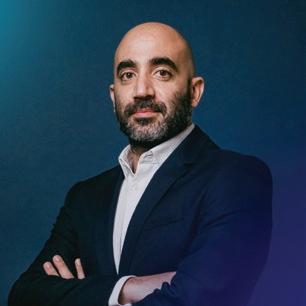
Ghady Rayess Co-Founder and anaging irec or a
as the Golden Visa for entrepreneurs o hel es ablish new rms as ar o i s ro b siness en ironmen s an increasing n mber o nancial ro iders ha e commi ed o ackling legac banking challenges in he region he has ickl become a owerho se o inno a ion where next-generation solutions are being widel ado ed across n echs banks b sinesses and end users. Digitalisation has transformed how nancial ins i ions ser e heir c s omers s reamlining rocesses ha were once ime cons ming and edio s allowing more eo le han e er o access essen ial banking ser ices and manage heir nances rom an where a an ime oreo er as reg la or clari aro nd ir al asse s con in es o e ol e in he incl ding oc sed rameworks in he and o her inancial ones ins i ions are exploring regulated digital asset sol ions his incl des r o s od alle s and s ablecoin in ras r c re ha can s or bo h retail and institutional demand. ec re com lian c s od models and okenisa ion ca abili ies are becoming essen ial elemen s o a modern nancial ecos s em n his en ironmen where echnolog and inno a ion are hri ing cons mers increasingl ha e ele a ed e ec a ions ar ic larl sa digi all dri en o nger cons mers who e ec accessible ins an ser ices ccording to the latest Health hori s a is ics er cen o bai residen s are nder and i ’s i al ha nancial com anies mee he e ec a ions o his demogra hic or end o end on demand ser ices and a men e eriences o grow a rac and re ain c s omers
hese cons mer rends are being seen globall and widel across he iddle as o kee wi h he demands o modern cons mers acc s omed o ra id change nancial ser ice ro iders need o o er smoo h onboarding ins an digi al ser ices real ime ca abili ies and highl ersonalised da a dri en rod c s or e am le a we recen l ar nered wi h eNo a e a s bsidiar o e inance n es men ro a leading ro ider o inno a i e digi al a men sol ions o la nch g ’s rs whi e label mobile a lica ion arge ed a ni ersi s den s who e ec smar engaging inancial e eriences ha seamlessl in o heir dail li es o r eams ailored he a and ado ed a lean mobile rs a roach o kee sers engaged inancial ins i ions m s grade their operating models to meet the needs of younger generations and main ain a com e i i e edge starting with adopting fully digital banking archi ec res ha s or end o end c s omer o rne s rom digi al onboarding and core banking integration to real-time payments and digital asset management. For e am le as cons mer beha io r increasingl shi s owards digi al a men me hods here is a growing demand for robust digital ser ices s ch as ard as a er ice aa which enables b sinesses to seamlessly issue and manage ir al and h sical cards hro gh a clo d based la orm hese cards are a as sa e and e ec i e wa o dis erse a men s manage e enses and carr o a range o a men ser ices ddi ionall and ad anced anal ics are now core enablers o ne genera ion digi al banking la orms owering ersonalisa ion risk insigh s and ric ionless e eriences in echs and banks need to explore how to safely deploy this echnolog o ro ide he da a dri en
ersonalised ser ice c s omers ha e come o e ec o be s ccess l in a modern digi al socie nancial ser ices need o be ailored o he s eci c needs o di eren c s omer gro s o ers a sol ion o his as achine earning algori hms can anal se as amo n s o da a o redic cons mer beha io r allowing nancial ins i ions o deli er a more ailored c s omised e erience based on ni e ser re erences and beha io rs im lemen ed correc l his dri en ersonalisa ion will enhance c s omer sa is ac ion and im ro e o erall o era ional e cienc n emerging rend ha all nancial institutions should also be aware of is embedded nance in which nancial ser ices are seamlessl in egra ed in o non inancial la orms his crea es a more ric ionless c s omer o rne or e am le b in egra ing ad anced a men s s ems direc l in o re ailers’ ser ice o erings a smoo her as er and more reliable checko rocess is ens red where a arie o a men me hods and c rrencies can be accommoda ed ddi ional ea res can also be embedded in o a b siness’s closed loo mobile walle a digi al a men s s em designed or cons mer se wi hin a s eci c brand or merchan ne work embedding ea res s ch as ins an re nds lo al rewards and ersonalised o ers re ailers and o her b sinesses can ro ide c s omers wi h a seamless all in one a men and rewards e erience s reng hening engagement and retention. longside embedded inance okenisa ion and digi al walle in ero erabili are gaining rac ion across he region ons mers increasingl e ec seamless

connec i i wi h hird ar walle s and con ac less ecos s ems re iring nancial ins i ions o ado sec re okenisa ion rameworks ha s or global ro isioning s andards
i h nancial ser ices embedded in o s aces where cons mers alread sho work la and in es cons mers can checko seamlessl and access ser ices s ch as ins rance and credi ins an l in he e ac momen he need hem or e am le ollowing he e ansion o e commerce he Now a a er N marke in he is e eriencing ra id grow h his a men me hod allows c s omers o immedia el nance rchases a checko and a hem back in ed ins almen s o er ime bai is he rimar h b o N ac i i acco n ing or nearl er cen o ransac ion ol me in he er he ne wo o o r ears he N landsca e in he region is e ec ed o become more com e i i e his e ol ion will likel res l in more inno a i e and di ersi ed N o erings
mbedded nance has also made ar nershi s essen ial or e am le banks are increasingl o ering anking as a er ice aa a inancial echnolog sol ion ha le s non bank b sinesses direc l o er ser ices radi ionall res ric ed
o licensed banks ar nershi s be ween banks and agile n echs are also becoming increasingl common wi h banks le eraging hird ar e er ise o enhance heir ser ices and in egra e new ea res s ch as N his collabora i e model is also expanding into digital asset ser ices where banks and n echs are working oge her o in rod ce com lian c s od sol ions and s ablecoin based se lemen models wi hin reg la ed rameworks he ’s in ech marke is ro ec ed o grow o billion b and er cen o cons mers now se digi al rs bank acco n s lacing he region among he world’s mos ad anced n ech ecos s ems ooking ahead nancial ser ices will con in e o e ol e as he digi al econom accelera es digi al banking ca abili ies ma re and reg la ed digi al asse s become more in egra ed in o mains ream nancial in ras r c re o remain com e i i e banks n echs and b sinesses m s embrace con in o s inno a ion c ing edge sol ions and new o or ni ies in a ra idl changing digi al landsca e is onl hro gh res onding o marke change ha organisa ions can s a ahead o new echnologies rends and ser ices









































































Chery’s TIGGO 8 CSH doesn’t ask you to

There is a particular kind of freedom that comes with a full tank and an open road. The TIGGO 8 CSH, he la es addi ion o her ’s growing hybrid lineup, takes that feeling and extends it — to the tune of 1,200 kilometres on a full tank and a fully charged battery. For the driver who moves between cities, clients, and commitments without wanting to stop, that number means something. Chery UAE, represented in the country by AW Rostamani Group, has launched the TIGGO 8 CSH as part of its expanding Super Hybrid lineup. It is a car built around a simple but compelling premise: that you should not have to compromise on er ormance o dri e e cien l or sacri ce com or o dri e smar
At the heart of the TIGGO 8 CSH is her ’s i h genera ion h brid platform, the CSH — short for Chery Super Hybrid. The name is deliberate. The platform is built around three principles: Super Range, Super Power, and Super Quiet. Together, he de ne a dri ing e erience ha feels as capable on a highway sprint as i does na iga ing he s o s ar rh hm o ci ra c
The numbers are worth pausing on. Fuel consumption sits at just 1.9L per 100 km under WLTC standards a g re ha wo ld ha e seemed unlikely in a vehicle of this size just a few years ago. A 1.5TGDI engine works alongside a stepless Super Hybrid DHT transmission, achieving
o mechanical e cienc generating 141 hp and 215 Nm of peak torque. For those moments when the road opens up, the TIGGO 8 CSH moves from 0 to 100 km/h in 8.5 seconds. And when conditions allow, it can cover up to 90 km on pure electric power alone — silently, smoothly, without a drop of fuel.
The platform has been tested across 30 countries, in environments ranging rom e reme hea o high speed highway driving. For UAE drivers who know what Gulf summers demand of a vehicle, that detail is not a footnote — it is a reassurance.
Step back and the TIGGO 8 CSH makes its presence felt immediately. Signature LED headlights sit
alongside automatic LED daytime running lights, framing a standout diamond grille that anchors the front ascia wi h ie con dence ll width LED taillights stretch across the rear while bold inch allo wheels complete a silhouette that feels considered rather than overworked. Sculpted side character lines run the length of the body, giving the car a sense of motion even when it is standing still.
It is the kind of exterior design that works in the underground parking of a business hotel as well as it does pulling up to a weekend destination.
Inside, where the detail lives Open the door and the cabin sets its tone immediately. Available in Black or Brown in erior nishes he offers a level of refinement that feels deliberate at every touchpoint.
l i colo r ambien ligh ing and an illuminated pedal allow drivers to set the atmosphere for the journey ahead, while acoustic glass in both the front and rear windows keeps the outside world exactly where it belongs.


Comfort has been thought through care ll he dri er’s sea o ers o wa elec ric ad s men wi h memory, heating, and ventilation functions built in. The front passenger sea mirrors m ch o his wi h wa electric adjustment, ensuring that whoever is in the car is catered for, not just the person behind the wheel. A panoramic sunroof draws natural light into the cabin, and the interior has been designed to offer generous space for both passengers and l ggage wi ho sacri cing he sense o re nemen ha de nes he res o the car.
or hose who s end signi can time behind the wheel, the TIGGO 8 CSH understands that connectivity is not optional. Eight speakers provide a rich audio backdrop for any
o rne inch cen ral con rol display anchors the dashboard, with seamless wired and wireless Apple CarPlay and Android Auto integration keeping drivers connected to navigation, music, and applications without distraction. A 50W wireless mobile charger means phones stay powered throughout — no cables, no interruptions.
The TIGGO 8 CSH offers three driving modes — ECO, NORMAL, and gi ing dri ers he e ibili to adapt to the road rather than the other way around. Whether the riori is e cienc on a long cross emirate drive or responsiveness on a as mo ing highwa he car ad s s accordingly.
Safety has been given equal weight. Up to 8 airbags provide comprehensive protection for all occupants, and a 540° HD panoramic camera ensures
complete visibility around the vehicle. A full suite of intelligent driver assistance features — including Adaptive Cruise Control, Autonomous Emergency Braking, Forward Collision Warning, Blind Spot Detection, Lane Departure Prevention, and Integrated Cruise Assist — works quietly in the background to support confident, aware driving.
A new chapter for Chery in the UAE Zaher Sabbagh, Director of Chery UAE, framed the launch plainly. “This model brings together intelligent h brid echnolog re ned design and the level of protection and connectivity ha oda ’s dri ers e ec he said “Introducing the TIGGO 8 CSH to the UAE market marks a necessary step toward meeting the demands of a new genera ion o mobili
It is a considered statement for a considered car. The TIGGO 8 CSH is not chasing headlines with a single s ando s eci ca ion is making a broader argument — that hybrid technology has matured to the oin where e cienc er ormance comfort, and design can all occupy the same vehicle without tension.
The TIGGO 8 CSH is available now across Chery showrooms in the UAE.

From the shores of Mauritius to the ancient streets of Italy, these destinations offer the kind of reset the season calls for.


Milan, Florence and Rome each offer a different version of Italy, and Portrait Hotels has built a ro er in each ha re ec s i s ci wi ho mimicking it. The collection takes a suite-led, residential approach to luxury — fewer rooms, more considered design, service that feels personal rather than procedural.
In Milan, 10_11 Bar | Giardino | Ristorante offers a setting for unhurried lunches and relaxed evenings, with curated menus that shift with the season. Florence moves to its own cultural rhythm, wi h he ci ’s his oric s ree s and ar ins i ions best experienced slowly, from a base that feels like a home rather than a hotel. Rome, as ever, rewards those willing to wander — Portrait Roma offers an in ima e re rea rom which he ci ’s galleries piazzas and open-air moments are all within reach. For the business traveller extending a trip, or the discerning leisure traveller who wants Italy without the crowds, Portrait Hotels offers a quietly compelling proposition.
Few destinations balance ease and elegance quite like Mauritius, and LUX* Resorts & Hotels has built its reputation on exactly that tension. The collection spans six distinct properties across the island — from the contemporary LUX* Grand Baie and the beachfront LUX* Belle Mare, to the retroinspired LUX* Grand Gaube, the nature-led LUX* Le Morne, the intimate SALT of Palmar and the vibrant Tamassa Bel Ombre. Each property has its own character, but all share the same philosophy: luxury that feels lived-in rather than performative. Days here unfold between beachside dining, wellness rituals, spa treatments and movement sessions, with evenings bringing live music and cultural performances by the sea. For those travelling with family, the properties offer creative workshops and activities across age groups. For those travelling without, the resorts offer something rarer — genuine quiet.

he ed ea is one o he region’s mos signi can emerging des ina ions and s ring is among the best times to experience it. Set along a di rabia’s wes coas where deser sea and mountains converge, the destination is home to a growing collection of world-class resorts — among them Six Senses Southern Dunes, St. Regis Red Sea Resort, Nujuma a Ritz-Carlton Reserve, and Desert Rock, alongside the developing Shura Island.
What sets The Red Sea apart is the breadth of what it offers beyond the resort gates.
ala ea brings g es s in o he des ina ion’s vibrant coral reefs, WAMA leads water-based experiences along the coast, and Akun offers stargazing and guided desert exploration that reframes the landscape entirely. Wellness is woven throughout, with nature-led treatments and spaces designed around rest and restoration.
For those looking for a spring escape that feels genuinely different — expansive, unhurried and rooted in an extraordinary natural setting — The Red Sea is worth serious consideration.


For those who prefer to stay closer to home this spring, One&Only The Palm offers a compelling case for the staycation done properly. Set within the tranquil surroundings of Palm Jumeirah, the resort brings together beachfront living, exceptional dining and considered wellness in a setting that manages to feel removed from the city while remaining entirely within it.
Dining is a particular strength. STAY by Yannick Alléno delivers refined French cuisine through elegant multi-course menus, while ZEST offers a more relaxed setting with live cooking stations, seasonal menus and family-friendly programming. For a premium waterfront experience, 101 Dining Lounge & Marina focuses on seafood in a setting that makes the most of its marina views.
Away from the table, the Guerlain Spa offers a 90-minute seasonal ritual combining a ersonalised acial re e olog and ll spa access, while the Palm Paradise pool and beach day package provides access o he resor ’s acili ies wi h redeemable dining credit. Cabana experiences are also available for those looking to make a full day of it.
All four destinations offer something distinct, but share a common quality — the kind o e erience ha s i es he ime away. Spring, with its particular quality of light and pace, is the right moment to book.
Magda Butrym’s debut eyewear line is a natural next step for a brand that has always understood that true style lives in the details.



Magda Butrym has long understood that the most compelling fashion statements are made in the details. With the launch of its debut eyewear line, the brand extends that philosophy into a new category, and does so with the same deliberate precision that has de ned i s read o wear since he beginning Conceived as a natural continuation of the Spring/Summer 2026 collection, the e ewear is no an a er ho gh is a nishing touch designed with the same hand as the silhouettes it accompanies, translating the brand’s signa re balance o sens ali s reng h and modern romance in o a new eld of design.
The line comprises three carefully considered shapes, each expressing a distinct a i de while remaining rml roo ed in he ho se’s aes he ic codes ailable in dark brown black and clear beige he rames are designed o work bo h as a com lemen o he ll ring mmer look and as a s rong s andalone s a emen on den eminine and in en ional he e ewear re ec s e ac l how Magda Butrym approaches dressing. For a brand that has built its identity around the idea that femininity can be both powerful and re ned e ewear is a logical ne s e The frames say what the clothes have always said. They just say it differently.





Sit your best.