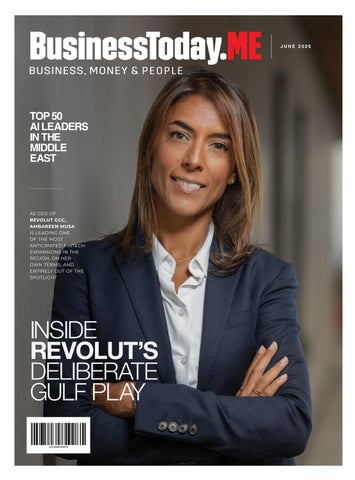
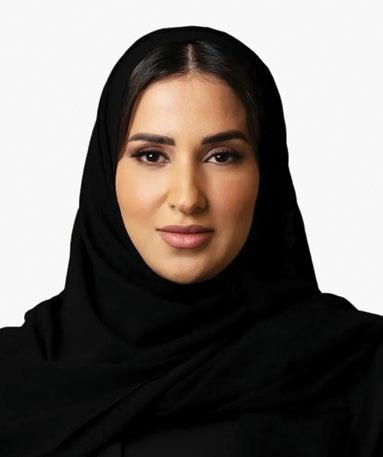
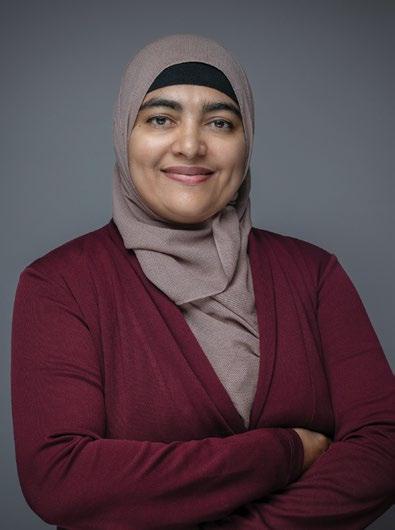
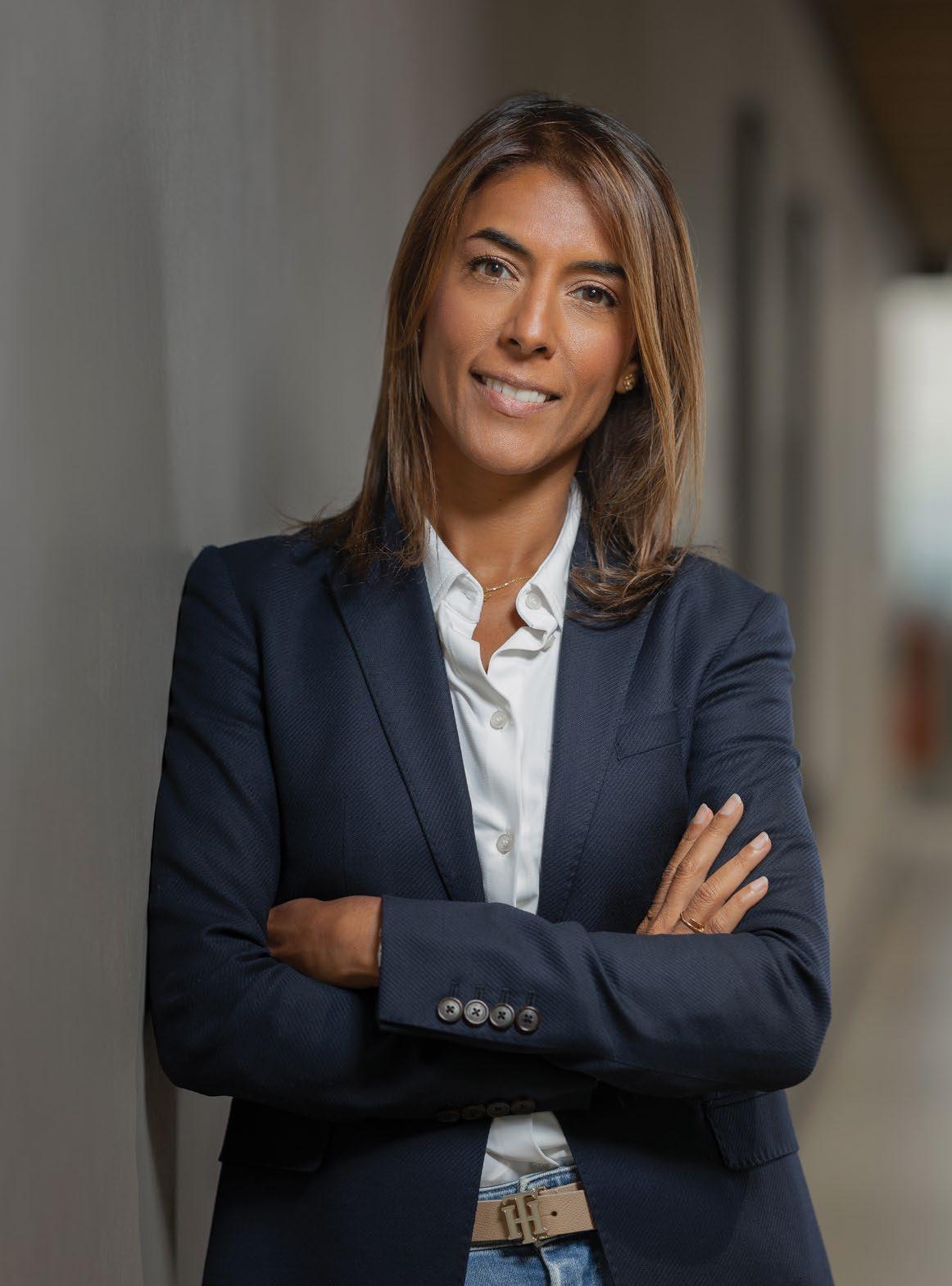
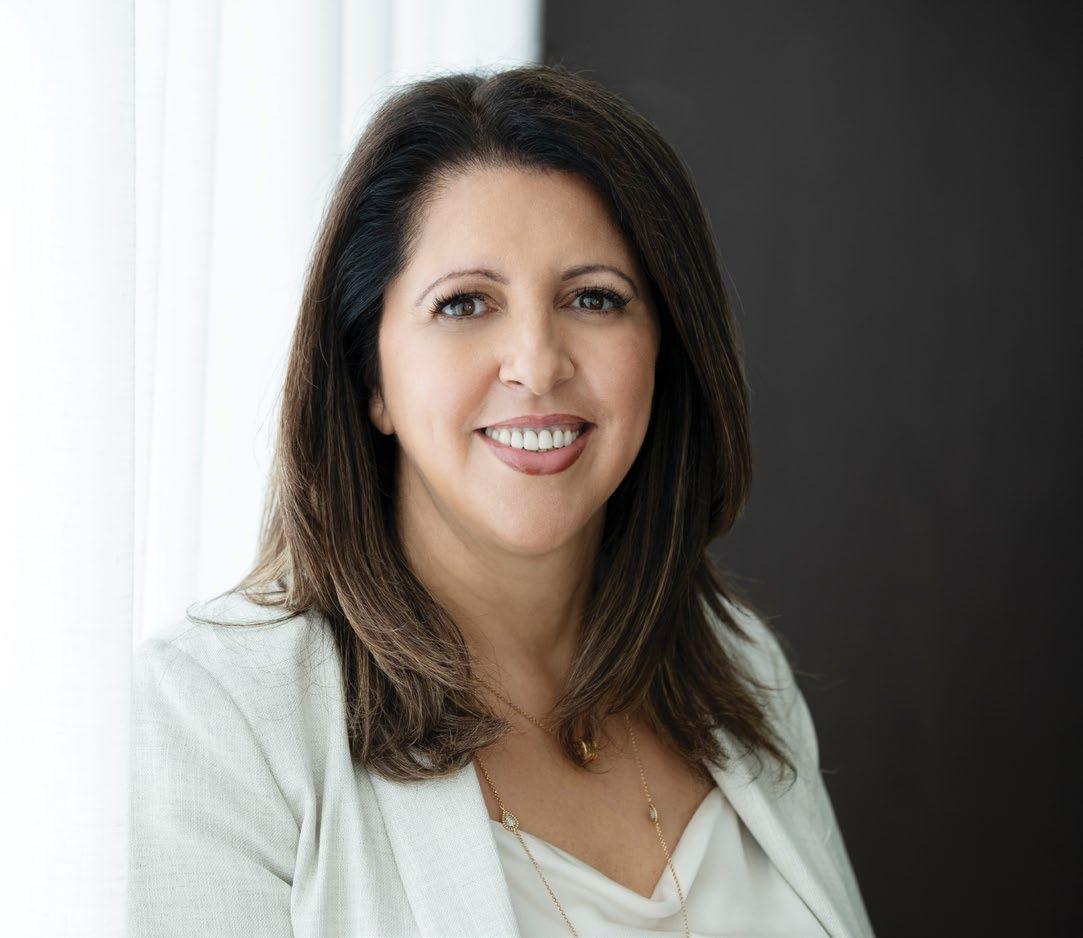
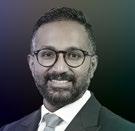
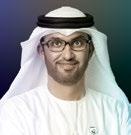
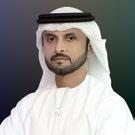
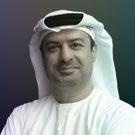
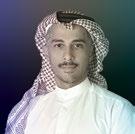
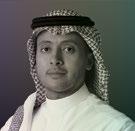
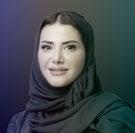
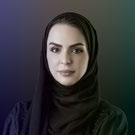
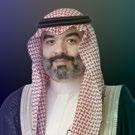
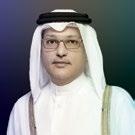
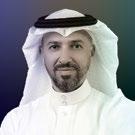
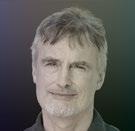
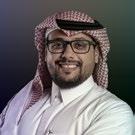
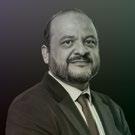
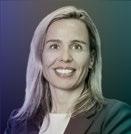
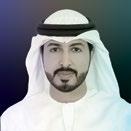
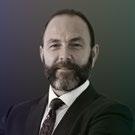
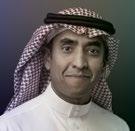
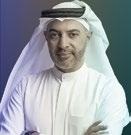
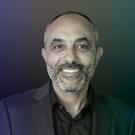
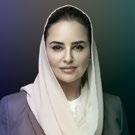
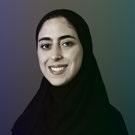
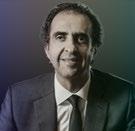
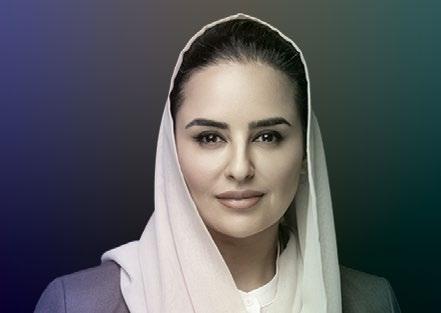
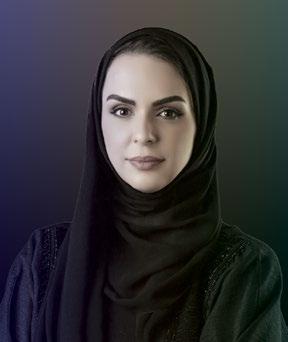
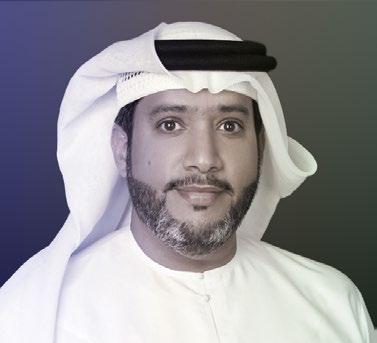
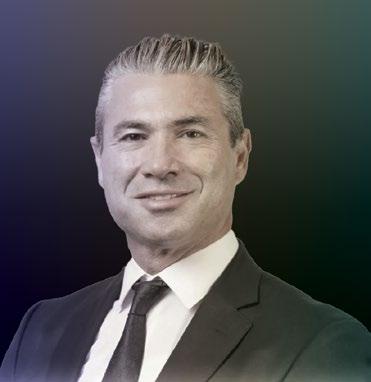
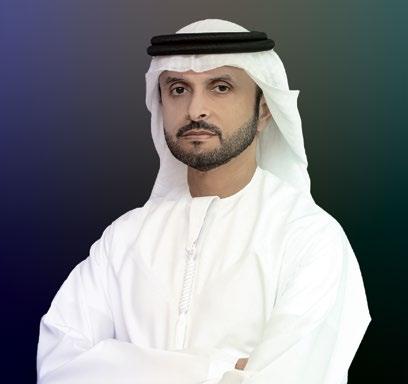
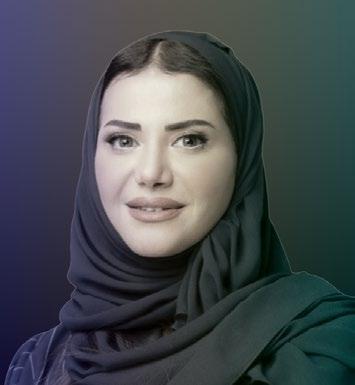
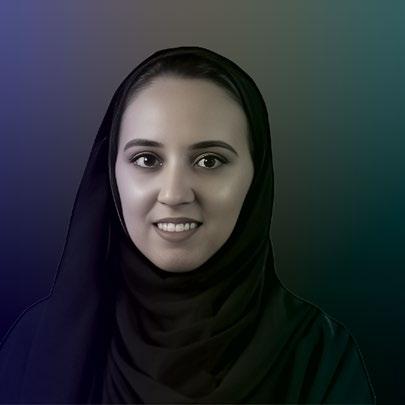
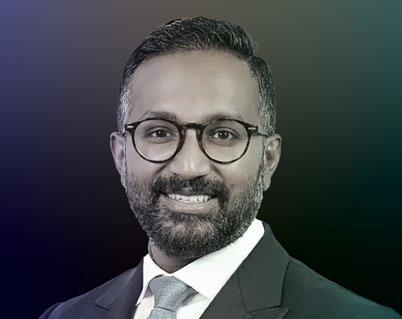
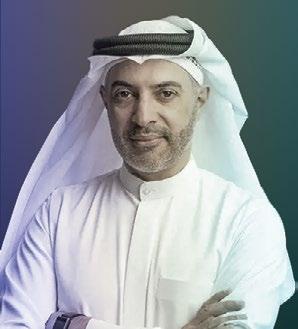
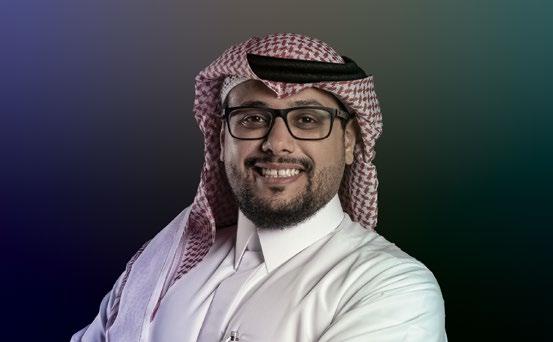
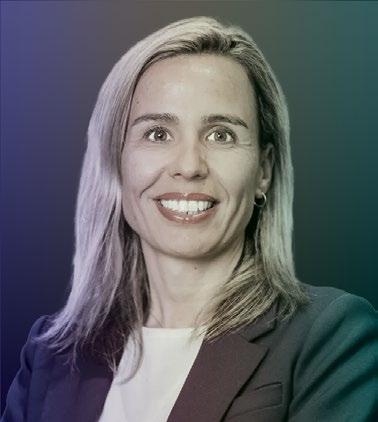
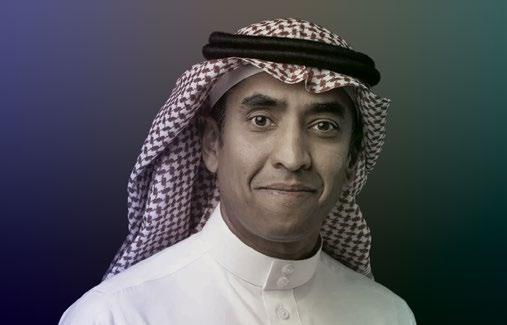
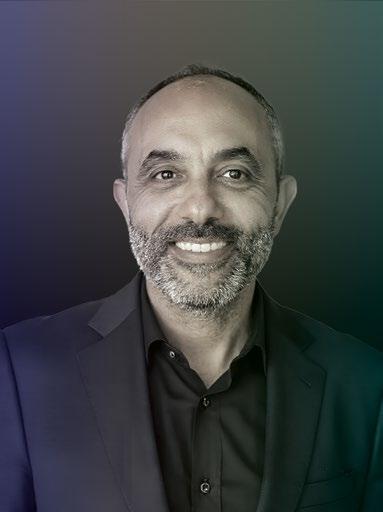
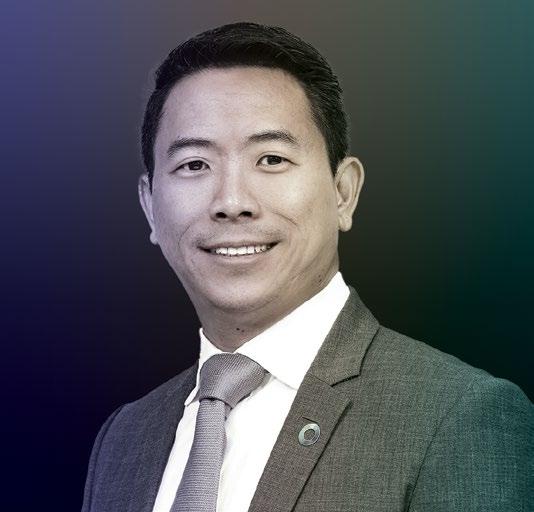
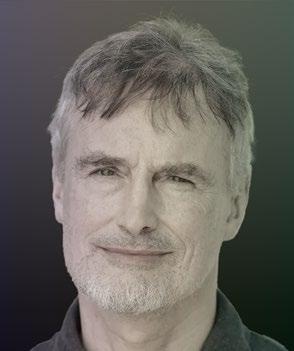
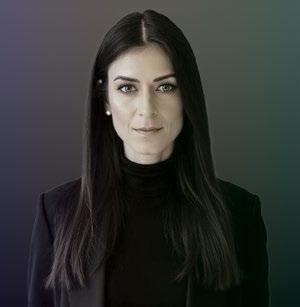
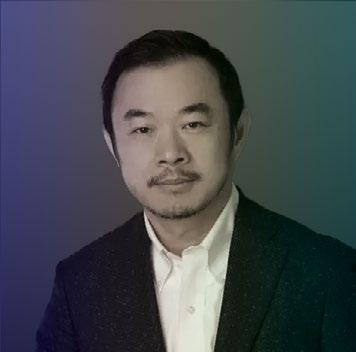
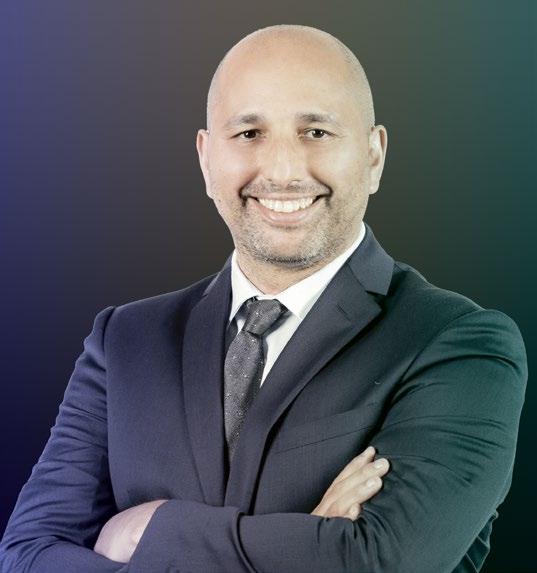
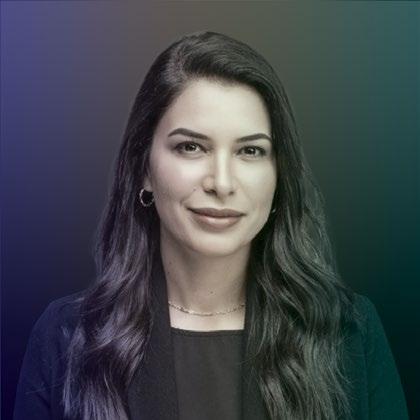
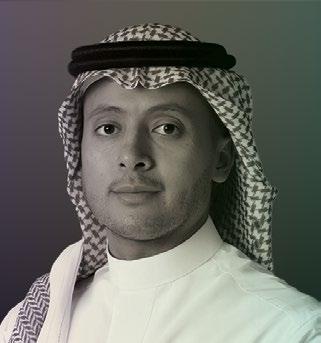
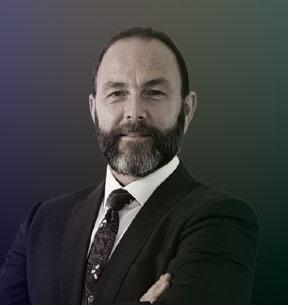
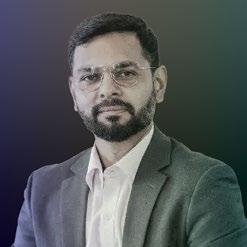
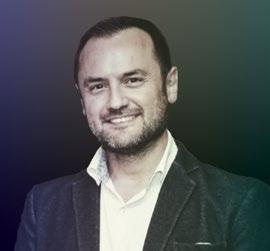
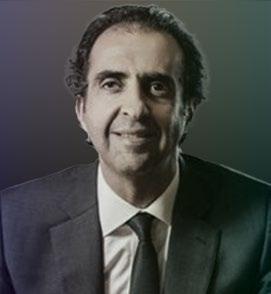
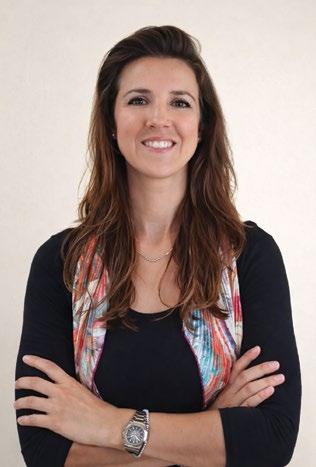
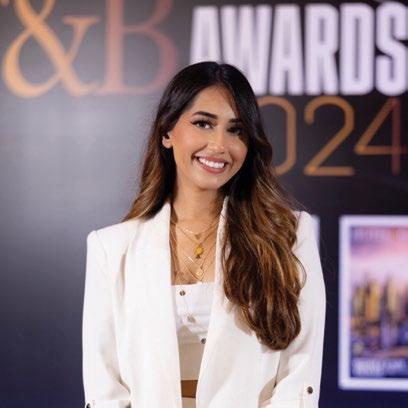
AS CEO OF REVOLUT GCC, AMBAREEN MUSA IS LEADING ONE OF THE MOST ANTICIPATED FINTECH EXPANSIONS IN THE REGION, ON HER OWN TERMS, AND ENTIRELY OUT OF THE SPOTLIGHT
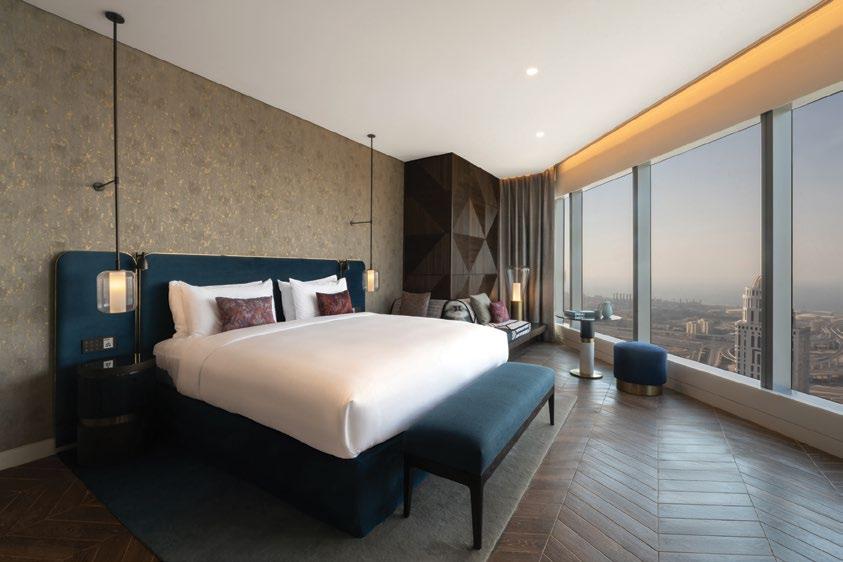
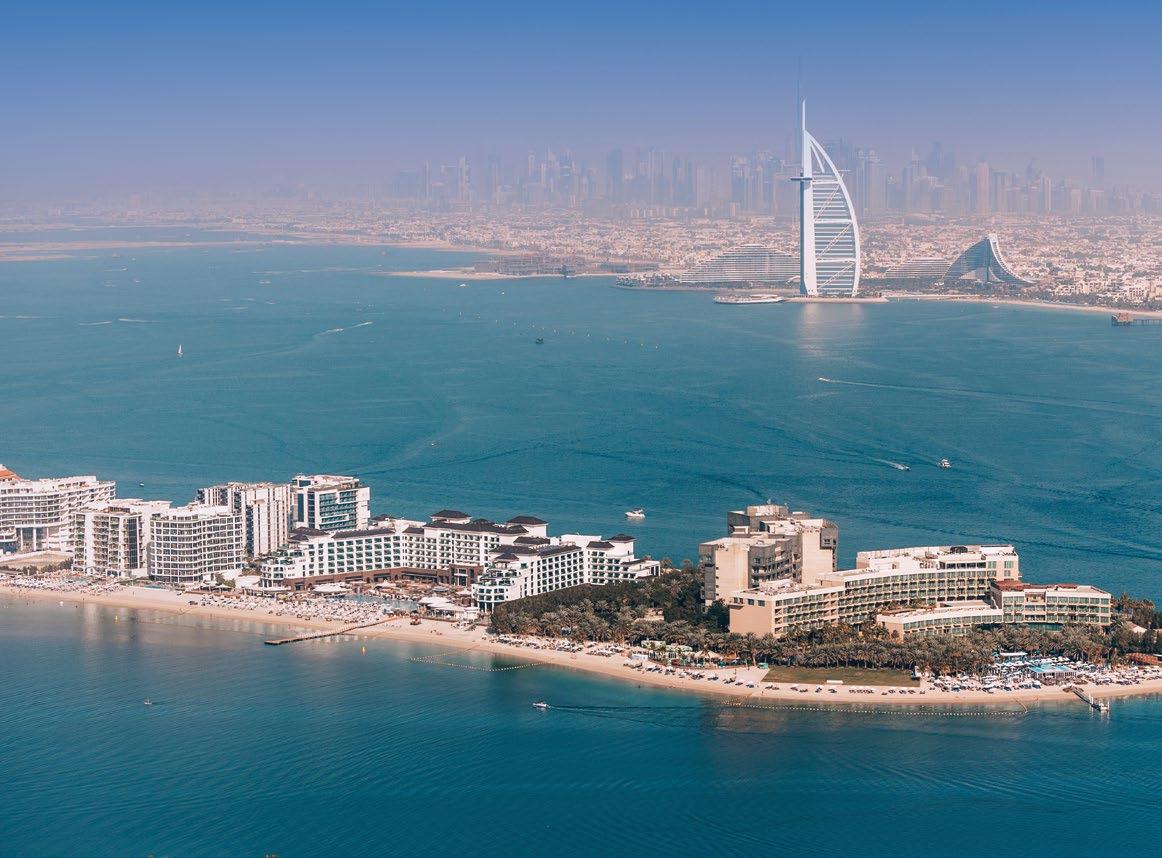
When space and setting matter.
A villa experience shaped by nature and a calm coastal environment. Thoughtful dining venues and well-appointed wellness facilities support both focused days and relaxed moments, creating a stay that feels balanced and complete.
Villa stays starting from AED 3,750.
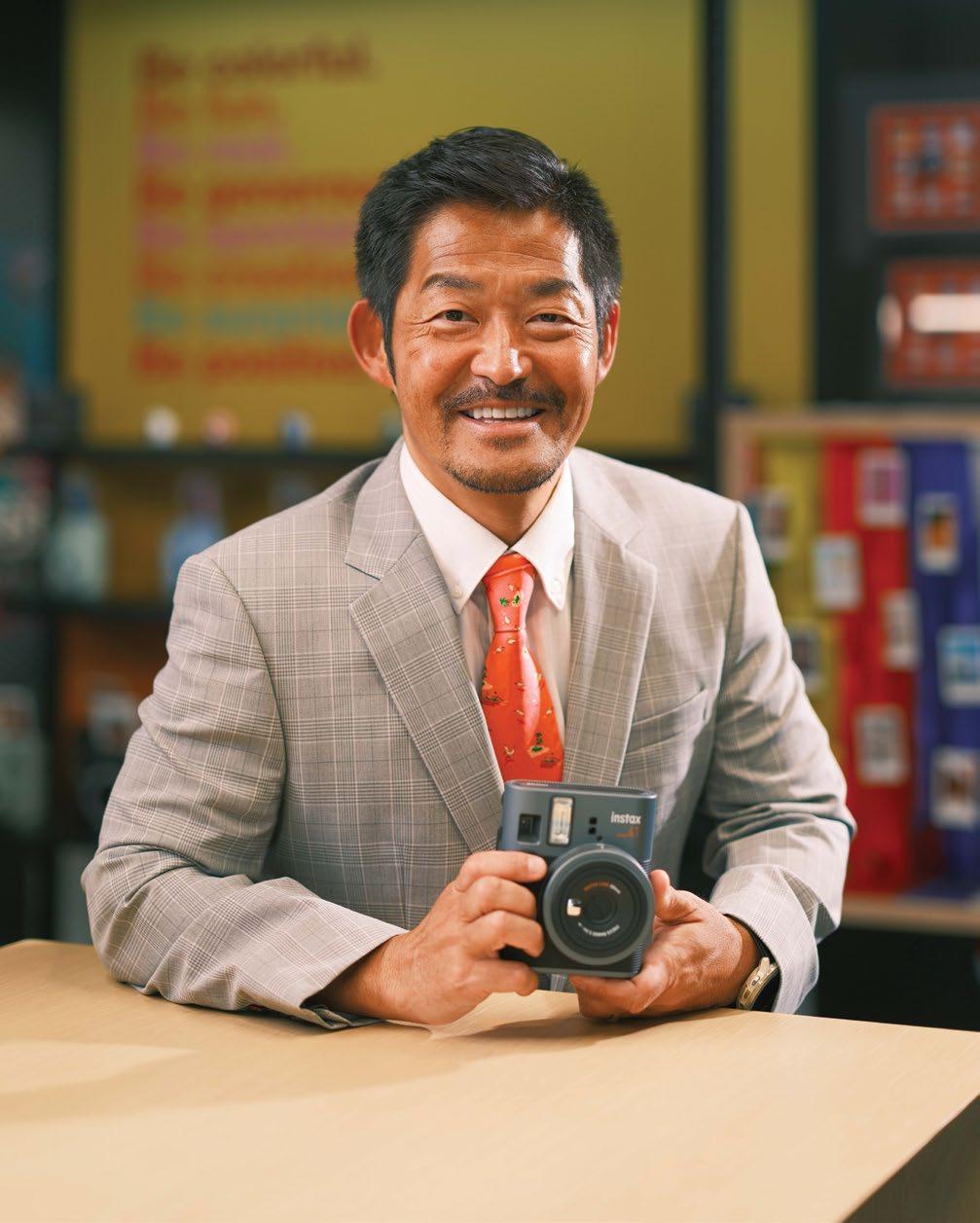
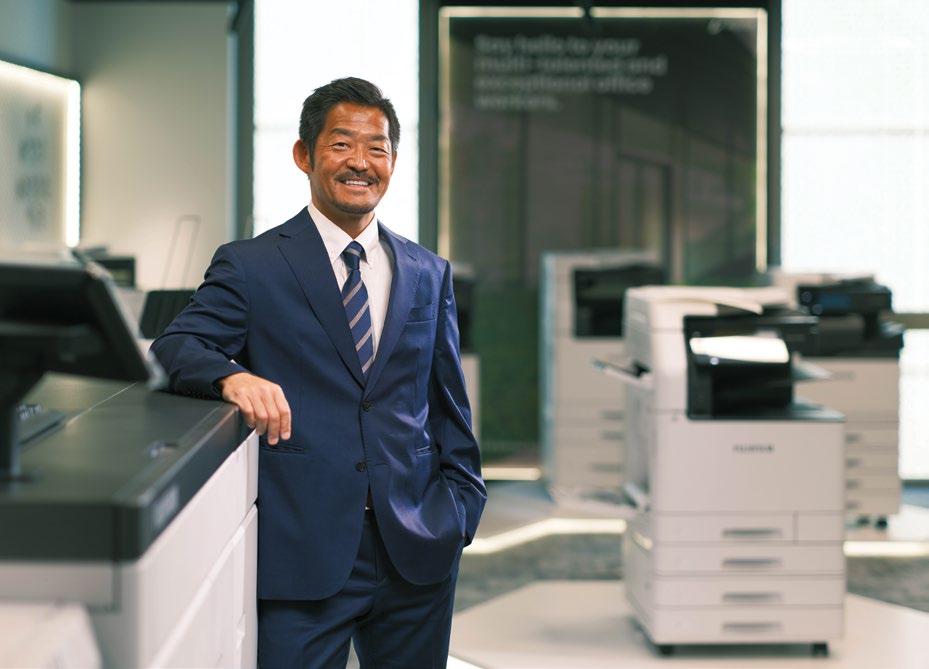
Fujifilm’s
Shanghai
CEO WISSAM YOUNANE | wissam@bncpublishing.net
Managing Director RABIH NAJM | rabih@bncpublishing.net
Group Publishing Director JOAQUIM D'COSTA | jo@bncpublishing.net
Editor AYA ZHANG | aya@bncpublishing.net
Digital Reporter REEBA ASGHAR | reeba@bncpublishing.net
Business Development Director ANDY SOULAHIAN | andy.soulahian@bncpublishing.net
Commercial Director ANDREA MOCAY | andrea@bncpublishing.net
Country Manager - KSA Amjad Fakhouri | amjad@bncpublishing.net
Creative Lead CHRISTIAN HARB | chriss@bncpublishing.net
BEGA pole-top luminaires with Dark Sky technology direct the light in a highly efficient manner only where it is required. Light pollution of the night sky is avoided. bega.com/darksky
NOT YET
The Middle East is living through something genuinely unprecedented right now. Not just in scale, though the scale is staggering, but in the quality of thinking behind it. The people on these pages are not riding a wave. They are making one. And spending weeks inside their world, understanding what drives them, what they are building and why, reminded me of something I think we all need reminding of from time to time. We do not know as much as we think we do. The moment we forget
that is the moment we stop growing. The people on these pages, some of the most impressive I have come across, carry their knowledge with a kind of lightness. They are serious about what they do, but they are never finished. Almost never certain. Always looking at what comes next.
I hope this issue does to you what it did to me. I hope it makes you curious, makes you think, and maybe makes you question something you were sure about.
That, for me, is always worth the pages.
Aya Zhang Editor
aya@bncpublishing.net
Xiaoyue (Aya) Zhang xiaoyuezhangg
One-stop-shop
Require formwork and scaffolding? Check out Doka’s extensive list of products and systems, which now includes scaffolding for a variety of applications. At Doka, our philosophy is to provide a broad range of services under one umbrella based on a growing demand for single-source solutions that adhere to the highest standards.
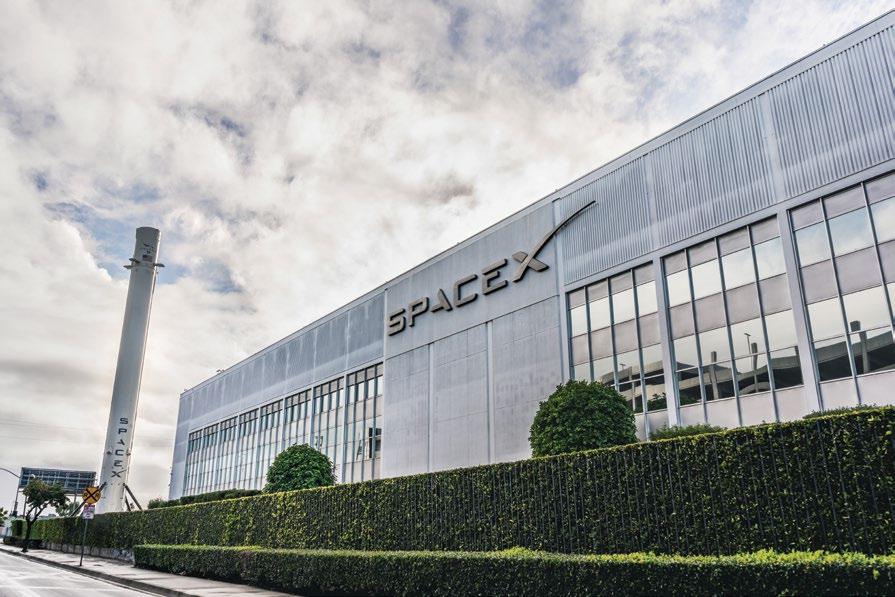
SpaceX has announced plans to go public later this month, aiming to raise up to $75 billion in what could become the largest stock market listing in history.
The aerospace company, formally known as Space Exploration Technologies Corp, intends to offer 555.6 million shares at $135 per share, valuing the company at approximately $1.77 trillion upon listing.
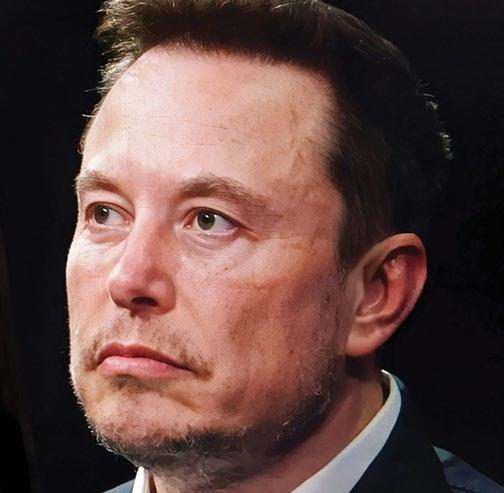
Despite the scale of the offering, CEO Elon Musk will not sell any of his personal shares as part of the IPO and is expected to retain an estimated 82.4 per cent voting majority, maintaining strategic control of the company post-listing.
The IPO marks a significant milestone for SpaceX as it expands its presence in satellite communications, space launch services and long-term interplanetary development.
DUBAI’S DIEZ POSTS RECORD AED 491 BILLION IN NON-OIL TRADE
The Dubai Integrated Economic Zones Authority recorded total non-oil trade of approximately AED 491 billion in 2025, its strongest performance to date and fifth consecutive year of growth. Total trade value rose 46 per cent compared to 2024 and has grown fourfold since 2020.
DIEZ increased its contribution to Dubai’s non-oil trade to 16 per cent as the emirate’s overall external trade exceeded AED 3 trillion. Trade volumes rose 50 per cent to
reach 667,800 tonnes, indicating that growth was driven by genuine increases in commercial activity rather than pricing effects.
The machinery, electrical equipment and electronics segment accounted for more than 70 per cent of total trade, growing 42 per cent, while precious stones, metals and pearls posted a 71 per cent increase. China remained DIEZ’s largest trading partner at 28.7 per cent of total trade, followed by Saudi Arabia and India.
SAUDI VENTURE CAPITAL APPOINTS NORA ALSARHAN AS CEO
Saudi Venture Capital has announced the appointment of Nora Alsarhan as Chief Executive Officer, following a Board of Directors resolution issued on 3 June 2026. She is set to formally assume the role on 1 July 2026.
Alsarhan joined SVC in June 2019 and has held several senior positions, most recently serving as Deputy CEO and Chief Investment Officer, where she led the company’s investment strategy, oversaw strategic planning and governed institutional performance.
The appointment forms part of a structured leadership succession plan aimed at ensuring continuity while supporting the company’s growth within Saudi Arabia’s private capital ecosystem.
The Board expressed its appreciation to outgoing CEO Dr. Nabeel Koshak, crediting his leadership since 2019 with establishing SVC’s operations and strengthening its position as a market maker in Saudi Arabia’s venture capital landscape. He will continue to serve as a Board member.
SVC has invested in more than 65 funds across venture capital, private equity, venture debt and private credit, supporting over 1,000 startups and SMEs. Saudi Arabia has ranked as the top venture capital market in the region for three consecutive years as of 2025, with venture capital investment growing 26-fold since 2018.
PRINCE KHALED BIN ALWALEED ON CITIES, AI AND THE FUTURE OF CAPITAL AT SXSW LONDON
HRH Prince Khaled bin Alwaleed bin Talal Al Saud, Executive Vice Chairman of Arada and founder and CEO of KBW Ventures, appeared at SXSW London 2026 for a fireside chat titled “A Future Worth Building,” addressing urban development, artificial intelligence and the future of investment.
On Arada, Prince Khaled discussed the developer’s expanding portfolio of more than 55,000 homes across the UAE, the United Kingdom and Australia, with sales rising by nearly 200 per cent in the previous year. He highlighted Arada’s UK expansion, including the majority stake in the £2.5 billion Thameside West development at the Royal Docks in London, scheduled to break ground in 2027 and set to become one of the largest new neighbourhoods planned for the capital.
On investment, he reflected on more than a decade of KBW Ventures, which has backed over 100 companies across fintech, health AI, frontier technology, energy and transportation.
Prince Khaled also spoke about his role as President of the Saudi Sports for All Federation, noting that the proportion of Saudis meeting recommended activity levels has risen from 13 per cent to close to 60 per cent over the past seven years.
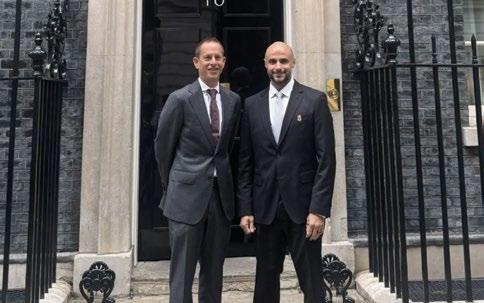
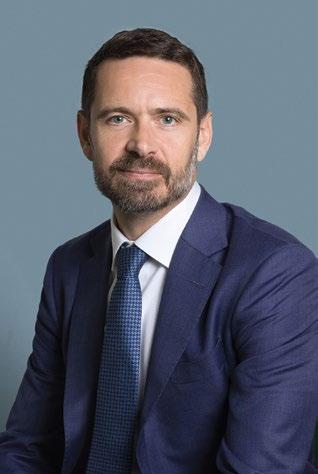
Prior to his SXSW appearance, Prince Khaled and Arada London CEO Jonathan Seal concluded a meeting at 10 Downing Street, reflecting strengthening commercial ties between the United Kingdom and the Gulf.
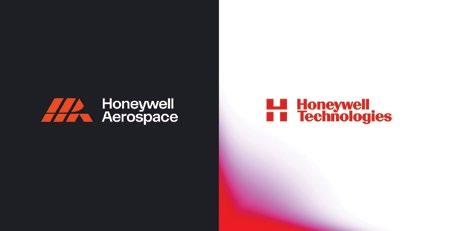
HONEYWELL ANNOUNCES NEW BRAND IDENTITIES FOR AUTOMATION AND AEROSPACE BUSINESSES
Honeywell has announced the brand identities for its two soon-to-be independent businesses ahead of the spin-off of its aerospace division on 29 June 2026.
The automation business will be known as Honeywell Technologies and will continue trading on the Nasdaq under the ticker HON. It will focus on leading the industrial world’s transition from automation to autonomy, offering mission-critical technologies, solutions and software.
The spun-off aerospace business will trade under the ticker HONA as Honeywell Aerospace, positioning itself as one of the largest publicly traded pure-play aerospace suppliers, with a focus on electrification and autonomous flight.
Honeywell’s current brand value is estimated at $18 billion, built over 140 years. Both companies will draw on that legacy while pursuing independent growth strategies. Further details will be shared at upcoming investor days for each business.
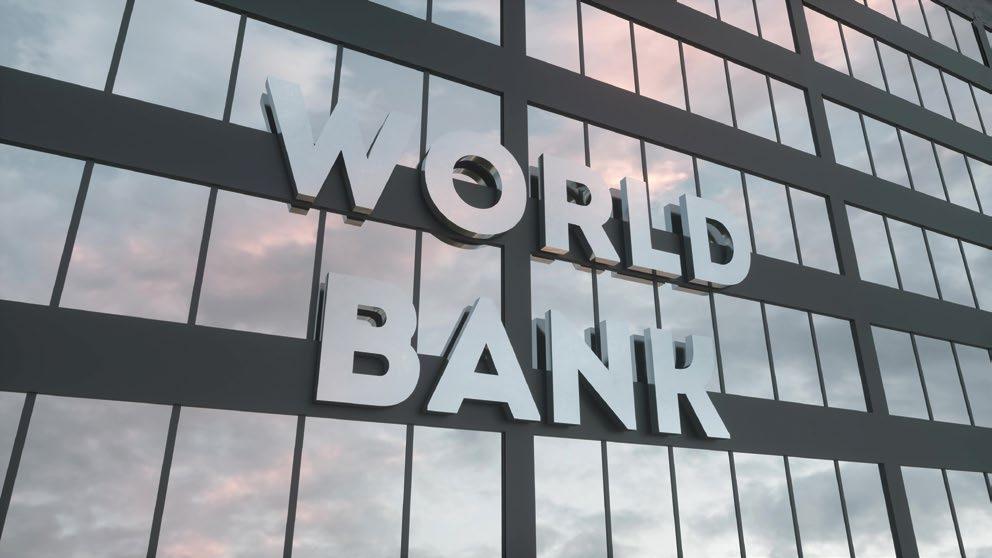
WORLD BANK APPROVES $900 MILLION TO REBUILD IRAQ’S ROAD NETWORK
The World Bank has approved a USD 900 million project to improve road infrastructure across Iraq, supporting the country’s economic transport corridors and long-term growth agenda.
Road transport accounts for more than 90 per cent of Iraq’s total transport volume, yet much of the network suffers from deterioration, climatic damage and road safety hazards — factors that have hindered trade, access to services and economic activity across the country.
The project is expected to benefit approximately 7.9 million citizens across multiple regions, from Baghdad to the Kurdistan Region and along border corridors with Jordan, Syria and Turkey. Improvements are projected to reduce travel times and transport costs, increase freight efficiency, ease congestion and support economic diversification across sectors including tourism, agriculture, health and manufacturing.
The World Bank noted that road construction and rehabilitation also represent a significant source of employment, contributing to job creation and broader economic activity in the country.
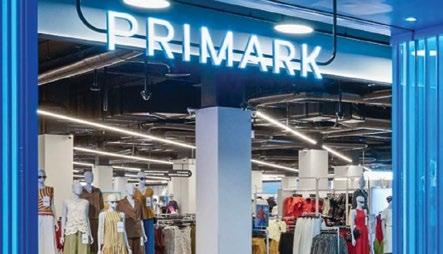
PRIMARK’S GCC ROLL-OUT: THREE DUBAI STORES IN EIGHT WEEKS WITH QATAR AND BAHRAIN TO FOLLOW
Primark has executed its fastest initial market rollout outside of Europe since entering the UAE in partnership with Alshaya Group. The Irish fashion retailer opened its first UAE location at The Dubai Mall on 26 March 2026, followed by a second store at City Centre Mirdif on 9 April and a third at Mall of the Emirates in May — three stores across two months.
The flagship Dubai Mall store spans 60,000 square feet, employs approximately 600 staff and carries womenswear, menswear, childrenswear, home and beauty ranges alongside licensed collaborations with Disney, the NBA and the NFL. Opening-day queues stretched 500 metres along the mall’s retail corridors.
Later in 2026, Primark has confirmed openings at City Centre Bahrain and Doha Festival City in Qatar, bringing its total international markets to 21. The GCC footprint is expected to span four markets, with Saudi Arabia potentially following in subsequent phases.
For Alshaya Group, the Primark partnership adds a value-tier anchor to a portfolio weighted toward mid-market and premium categories. In the UAE, where VAT stands at 5 per cent compared to more than 20 per cent in its core UK and European markets, Primark’s price advantage to consumers is particularly pronounced.
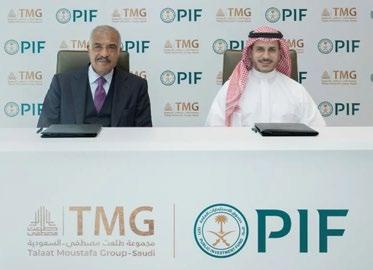
Saudi Arabia’s Public Investment Fund and Talaat Moustafa Group Saudi for Real Estate Development have signed a non-binding Memorandum of Understanding to explore cooperation on mixed-use real estate developments across the Kingdom.
The partnership will evaluate opportunities across residential, commercial, hospitality and retail sectors. It is expected to accelerate project execution and enhance value generation across PIF’s development portfolio, while
encouraging participation from other investors in future project phases.
The agreement aligns with PIF’s Urban Development and Livability Ecosystem and its broader 2026–2030 strategy, which includes a national target of increasing homeownership among Saudi citizens to 70 per cent by 2030.
TMG is a diversified real estate and tourism group with nearly 55 years of experience delivering large-scale integrated cities, communities, hotels and resort destinations across Egypt.
QATARI DIAR COMPLETES GBP 1 BILLION SOUTHBANK PLACE DEVELOPMENT IN LONDON
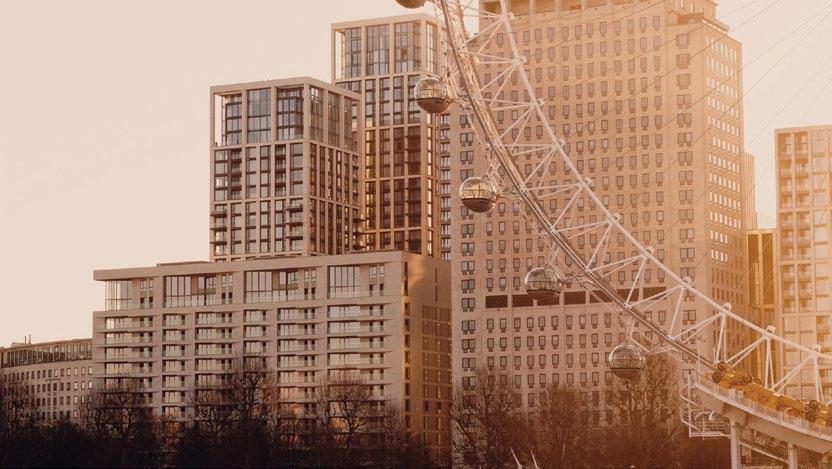
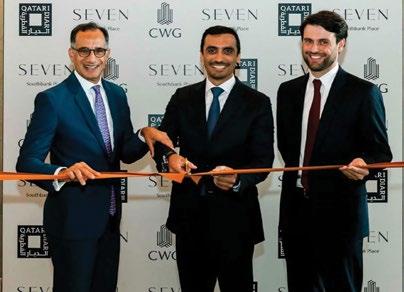
Qatari Diar has marked the completion of Southbank Place in central London with the official opening of SEVEN, the final building in the GBP 1 billion mixed-use development delivered in partnership with Canary Wharf Group.
The milestone concludes a project more than a decade in the making. SEVEN comprises 92 lateral apartments and penthouses designed by Stanton Williams, with interiors by Albion Nord. Many apartments face the River Thames, with views of the London Eye, Houses of Parliament and Big Ben.
Speaking at the ribbon-cutting ceremony, Sheikh Hamad bin Talal Al-Thani, CEO of Qatari Diar, said the completion marks the culmination of a redevelopment journey that has reshaped one of London’s most distinguished riverside destinations.
Southbank Place is located on a 5.25-acre site surrounding the Shell Tower, with direct access to Waterloo Station and within walking distance of the Royal Festival Hall, the National Theatre and central London landmarks.
SAR 112 BILLION AND COUNTING: INSIDE SAUDI ARABIA’S Q1 REAL ESTATE SURGE
According to CBRE, despite moderating GDP growth and a residential rent freeze, Saudi Arabia’s property market opened 2026 with renewed momentum — as FDI soared, office space ran dry, and Vision 2030 pushed forward.
Matthew Green, Head of Research at CBRE
CBRE Middle East, a global leader in commercial real estate, released its Q1 2026 Saudi Arabia Real Estate Market Review, highlighting a market defined by strategic recalibration, steady structural demand drivers, and continued investor confidence despite a more complex regional economic backdrop.
Saudi Arabia’s macroeconomic environment in early 2026 reflects a period of adjustment, shaped by external pressures and evolving domestic policies. Real GDP growth moderated to 2.8% year-on-year in Q1, with full year forecasts for 2026 revised to 1.9%, due to the significant reduction in oil production and exports and softer non-oil expansion.
Inflation remains stable at 1.8%, while foreign direct investment saw strong momentum, rising 90% year-onyear in Q4 2025, signaling confidence in the Kingdom’s long-term prospects. Fiscal policy remains expansionary, supporting major infrastructure investment alongside ongoing capital market reforms aimed at enhancing liquidity and investor access. Against this backdrop, the real estate sector continues to demonstrate strength. Transaction values reached SAR 112 billion in Q1 2026, up 6.8% year-onyear, supported by improved financing conditions and stronger access to capital. At the same time, regulatory reforms, including foreign ownership measures and increased market transparency are strengthening institutional participation and aligning the sector with global standards.
The development pipeline is also evolving, with a gradual shift from construction led growth to delivery and long-term asset management. Major projects continue to advance, with Riyadh remaining the focal point of activity. Strategic repositioning is evident across flagship developments,
including NEOM’s growing focus on AI and data infrastructure, alongside continued progress in projects such as Diriyah and Jeddah Tower. This sustained pipeline, backed by public and private investment, reinforces the Kingdom’s long-term Vision 2030 ambitions.
The Office market remains fundamentally undersupplied, particularly for prime spaces, with Grade A occupancy levels remaining at close to full capacity. Demand continues to be driven by the Regional Headquarters (RHQ) program, attracting hundreds of international firms to establish a physical office presence in the capital. While new supply is expected to moderate rental growth in the longer term, structural demand continues to exceed availability. Across other markets such as Jeddah and Dammam, office performance remains stable, although a clear divergence is emerging between modern Grade A assets and
MENA
older stock, with occupiers increasingly prioritizing quality, flexibility, and digital infrastructure.
The Residential sector continues to see robust activity, supported by a growing population, governmentbacked housing initiatives and expanding mortgage penetration. However, ongoing supply deliveries across major cities are contributing to a more balanced market environment. Accordingly, residential rental rates in Riyadh softened by 2.1% year-on-year in March 2026, marking a shift toward more sustainable pricing across the capital. This softening underscores the impact of the September 2025 regulatory reset (5-Year Rent Freeze), which brought the cycle of sustained rental growth to an end. Under REGA’s new mandate, rents for existing leases are fixed at their September 2025 levels, while new-to-market inventory must align with the last recorded value on the Ejar platform. This regulatory shift provides a stabilised
baseline for both existing tenancies and new inventory, effectively cooling speculative spikes.
The Retail sector continues to demonstrate a marked shift towards digital commerce, a trend further accentuated by recent events, with impacts on consumer movements and spending trends. Electronic payments accounted for 85% of total retail payments in 2025, demonstrating accelerated digital adoption. Domestic consumption, particularly in F&B and fashion, remains strong and helps stabilise the sector, offsetting fluctuations in international tourism. New retail supply is increasingly integrated into mixed-use masterplans, with developers prioritising F&B outlets as key footfall drivers. Major projects like The Avenues Riyadh, Westfield Jeddah, and Westfield Riyadh are set to open soon, adding significant space. Despite market shifts, rents for super regional and regional malls have remained stable, with landlords
generally maintaining rates and not widely offering concessions. The focus for successful retail centers is now on creating walkable, communitycentric spaces that prioritise wellness, luxury, and digital features.
Hospitality market performance reflects the impact of restrictions on international leisure movements and regional business travel, with yearto-date (YTD) declines in occupancy and RevPAR versus Q1 last year. The biggest impact has been felt in Riyadh and Dammam, although Jeddah and Mekkah remain in positive territory across all metrics YTD, reflecting the positive impact of religious tourism demand. However, amidst sustained government support, the future supply pipeline continues to grow, with thousands of new keys under development across primary and secondary cities, with the hospitality sector remaining as a central pillar in Saudi Arabia’s ambition to attract 150 million annual visitors by 2030.
Industrial & Logistics continues to emerge as a key pillar of economic diversification. Demand for Grade A warehousing remains strong amidst supply constraints, driving rental growth across major hubs such as Riyadh and Jeddah. Strategic infrastructure projects, including logistics corridors and integrated supply chain developments, are further enhancing the Kingdom’s position as a regional trade and distribution hub. Despite operational challenges linked to global supply chain disruptions, long-term fundamentals remain highly positive, supported by e-commerce growth and industrial expansion.
Matthew Green, Head of Research at CBRE MENA, comments: “Saudi Arabia’s real estate landscape continues to evolve at pace, responding to recent regulatory changes and shifting demand patterns. This is resulting in a growing divergence in sector level performance.”
IS THE MIDDLE EAST AT A TURNING POINT FOR RESEARCHDRIVEN INVESTING?
The region has long been defined by the scale of its capital. Now, says Dr. Ralf Seiz of Finreon Ltd, the focus is shifting to how that capital is deployed — and quantitative, researchdriven investing may be the next frontier.
BY DR. RALF SEIZ
For many years, the Middle East has been associated with scale in capital markets: sovereign wealth, family offices, strategic state investors, and an increasingly sophisticated private wealth segment. Today, however, the defining question is no longer whether capital is available. It is whether capital is being deployed with the same level of scientific precision, discipline, and innovation that characterises the world’s leading investment centres.
In our view, the answer is increasingly yes. The region appears to be approaching a turning point for quantitative, research-driven investing.
This shift is not accidental. It is the natural result of three structural developments: the institutionalisation
of capital, the search for differentiated return sources, and the growing importance of risk management in a more uncertain world.
CAPITAL IS BECOMING MORE INSTITUTIONAL
As wealth grows and mandates become larger, investment processes must evolve. What works for smaller pools of capital or concentrated decision-making structures does not always scale efficiently. Large institutions need repeatable frameworks, transparency, governance, and measurable outcomes. That is precisely where quantitative investing has a structural advantage.
Quantitative strategies rely on rules, evidence, and robust implementation
rather than ad hoc decision-making. They can be stress-tested, monitored, and refined systematically. For institutions that must manage multigenerational wealth or strategic national assets, this matters enormously.
Across the Gulf region, we observe increasing sophistication in asset allocation, manager selection, and portfolio construction. Investors are asking sharper questions: What drives returns? Which risks are intentional and which are accidental? How can portfolios remain resilient across changing market regimes? Those are relevant questions.
THE END OF THE TRADITIONAL 60/40 COMFORT ZONE
For decades, many investors globally benefited from a relatively forgiving environment: falling interest rates, strong equity markets, and abundant liquidity. Traditional balanced portfolios often worked well. That era has changed.
Higher inflation uncertainty, geopolitical fragmentation, and more volatile interest-rate cycles have challenged static portfolio models. Diversification can no longer be assumed; it must be engineered.
This is one reason why the Middle East may be especially well positioned to embrace research-driven investing now. Many regional allocators are not burdened by legacy thinking. They can leapfrog older frameworks and adopt modern portfolio construction techniques directly.
This includes dynamic risk management, alternative premia, factor diversification, volatility harvesting, regime-aware allocation models using modern AI techniques among others.
At Finreon Ltd, this philosophy has shaped our work since inception. Founded in 2009 as a spin-off from the University of St.Gallen,
Finreon was built on the idea of translating academic research into practical investment solutions for institutional clients. The firm describes itself as a think tank for asset management solutions and combines academic insights with real-world implementation expertise.
WHY THE MIDDLE EAST COULD MOVE FASTER
The Middle East often combines three attractive advantages: First, strategic time horizons. Many investors can think in decades rather than quarters. Second, openness to innovation. New technologies like artificial intelligence methods and modern investment frameworks are often assessed pragmatically rather than ideologically. Third, speed of execution. When conviction is high, implementation can be faster than in many mature markets.
This combination is powerful. It means the region can become not only a user of global quant solutions, but also a creator of next-generation investment models.
HUMAN JUDGMENT STILL MATTERS
A turning point for quantitative investing does not mean replacing people with machines. The best outcomes come from combining rigorous models with experienced judgment. Data can identify patterns, improve consistency, and reduce behavioural bias. Humans still define objectives, constraints, ethics, and strategic context.
That is especially true in a region where relationships, trust, and longterm partnerships remain essential.
Successful quant investing in the Middle East will therefore not be imported blindly. It will be adapted locally—aligned with regulatory frameworks, and the strategic priorities of regional investors.
THE WAY FORWARD
In our view, yes, the Middle East is at a turning point for quantitative, research-driven investing.
The ingredients are now in place: scale, sophistication, ambition, and urgency. Investors increasingly understand that future returns will not come simply from owning markets, but from constructing portfolios intelligently.
The winners of the next decade are likely to be those who combine regional vision with global best practice; those who treat investment as a discipline rather than a prediction exercise; and those willing to use science, data, and innovation to improve outcomes.
For firms like Finreon Ltd, whose mission has long been to build bridges between academic finance and practical investing, this is an exciting moment. That is the true sign of a market reaching maturity.
Dr. Ralf Seiz, CEO of Finreon Ltd and Lecturer at University of St.Gallen
WHY THE GULF’S NEXT GENERATION MUST BE EDUCATED FOR VOLATILITY
The UAE’s economic rise was built on confidence. But as Dr. Zakiya Abdul Samad of Heriot-Watt University Dubai argues, the next generation of professionals needs more than ambition — they need to be fluent in risk, resilience, and the forces that can shift markets overnight.
BY DR. ZAKIYA ABDUL SAMAD
The Gulf’s greatest economic vulnerability may no longer be oil dependency. It may be “confidence dependency”. That is not a statement of weakness. It is a recognition of how far the UAE and the wider Gulf have come. Confidence is what brings tourists, investors, entrepreneurs, students, banks, airlines, technology firms and global talent into the region. It is what allows a young graduate to believe that a finance degree, a fintech idea, a logistics internship, or a hospitality career can become part of a serious future.
But confidence, like capital, can move quickly. It can be built over decades and tested in days…as we see now.
The UAE entered this period from a position of remarkable strength. Dubai International Airport welcomed 95.2 million guests in 2025, its highest annual traffic ever and the
highest international passenger traffic recorded by any airport. UAE hotel revenues reached
AED 49.21 billion in 2025, with occupancy at 79.3 per cent and room capacity rising to 217,000. The country’s non-oil foreign trade reached approximately
AED 3.8 trillion in 2025, recording 27 per cent growth over 2024.
These are not just national achievements. They are the career landscape of a generation… Every hotel room supports work in hospitality, events, marketing, analytics and management. Every airport passenger sustains aviation, retail, tourism and logistics. Every trade flow depends on shipping, insurance, compliance, banking and supply chain decisions. Every financial transaction depends on trust. For young professionals, the UAE economy is not an abstract macroeconomic story. It is where their internships, first jobs, startups, promotions and professional identities are formed.
That is why recent disruptions matter. Reuters reported that Dubai Airports had to scale up operations after UAE airspace restrictions were lifted, following a period in which DXB handled 18.6 million passengers in Q1 2026, down from 23.4 million a year earlier. During the affected period, Dubai International and Al Maktoum International still managed more than six million passengers, with 32,000 aircraft movements and 213,000 tonnes of cargo.
This is, importantly, a story of resilience. But it is also a reminder that even world-class systems operate within a wider environment they do not fully control. For young people, the lesson is not anxiety. It is awareness.
When confidence weakens, the effect does not remain in policy papers or market commentary. It
confidence, liquidity and systemic trust has only part of the picture.
The UAE’s fintech story makes this especially relevant.
UAE fintech startups attracted around USD 265 million in 2024, about one-third of national startup funding, and the local fintech market is projected to grow from USD 3.16 billion in 2024 to USD 5.71 billion by 2029. This is precisely why young professionals entering fintech and banking need more than enthusiasm for innovation. They need to understand the financial system on which innovation depends.
reaches the workplace. Employers may delay hiring. Investors may postpone funding rounds. Banks may reassess credit risk. Airlines may adjust capacity. Hotels may revise forecasts. Logistics firms may absorb higher costs. Fintech companies may face tighter compliance checks, payment frictions, cyber threats and more cautious capital.
This is why I believe the Gulf’s next generation must be educated not only for opportunity, but for volatility. We have rightly encouraged young people to be innovative, entrepreneurial and digitally skilled. But technical competence alone is no longer sufficient. A finance graduate who can build a valuation model but cannot interpret risk is only partly prepared.
A fintech founder who understands digital payments but not compliance, cyber resilience, regulation and cross-border payment risk is vulnerable. A banking professional who understands products but not
I would call this geopolitical economic literacy: the ability to understand how global events translate into market signals, business decisions, regulatory pressures and career opportunities. It does not require every young professional to become a political analyst, but it does require them to see that finance, technology, energy, logistics, tourism and regulation are now deeply connected.
Universities and employers have a responsibility here. Career readiness cannot mean CV workshops and technical certificates alone; finance, fintech, banking and entrepreneurship education must now include risk, regulation, cyber resilience, trust, financial stability and business continuity.
There is a positive message in this. Volatility does not reduce the Gulf’s promise; it clarifies the kind of talent the region now needs. The future will still belong to ambitious young people, but ambition must now be matched with judgement. Confidence helped build the Gulf’s current success; resilience will determine who is ready to lead its next chapter.
Dr. Zakiya Abdul Samad, SFHEA, Assistant Professor at Heriot-Watt University Dubai
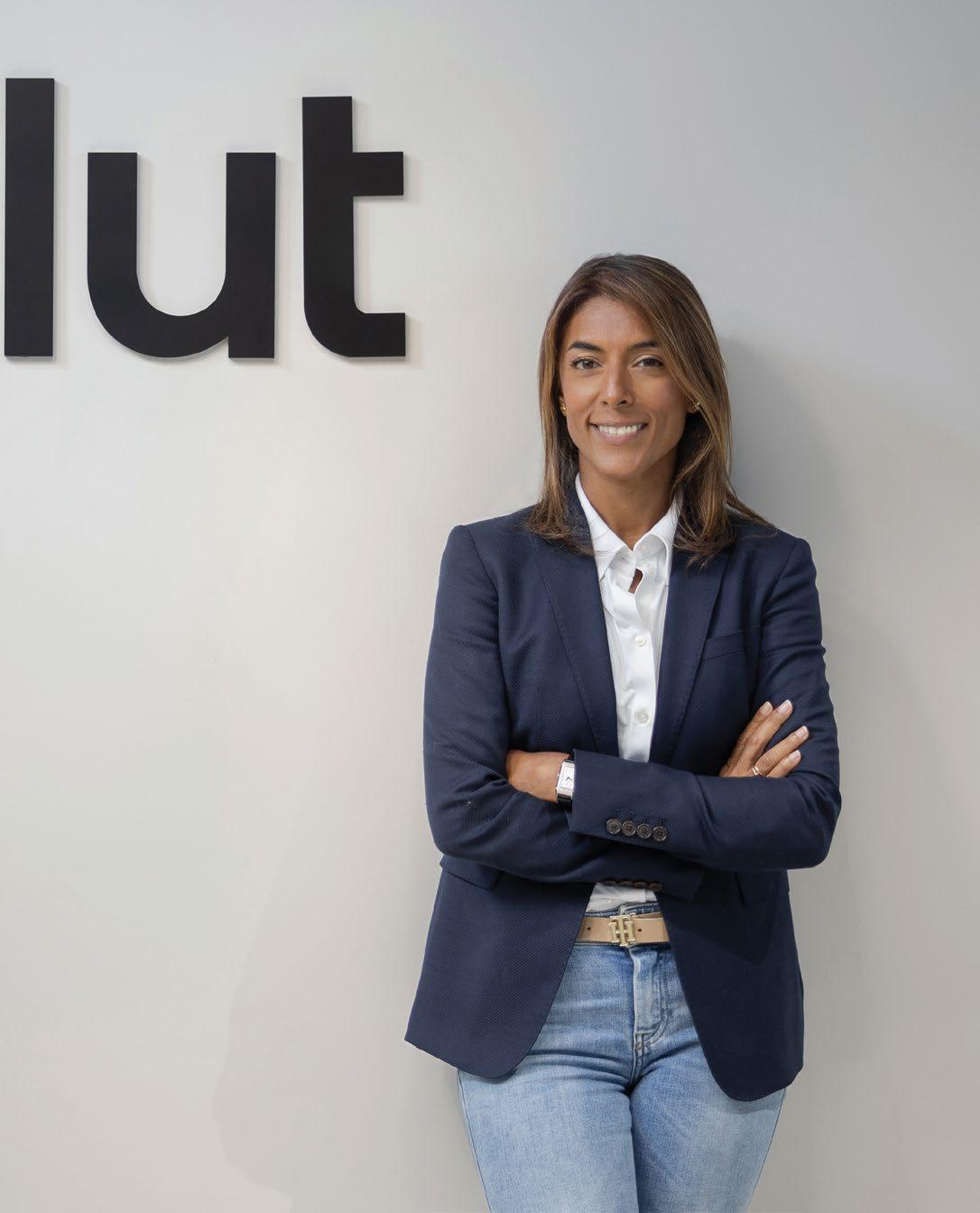
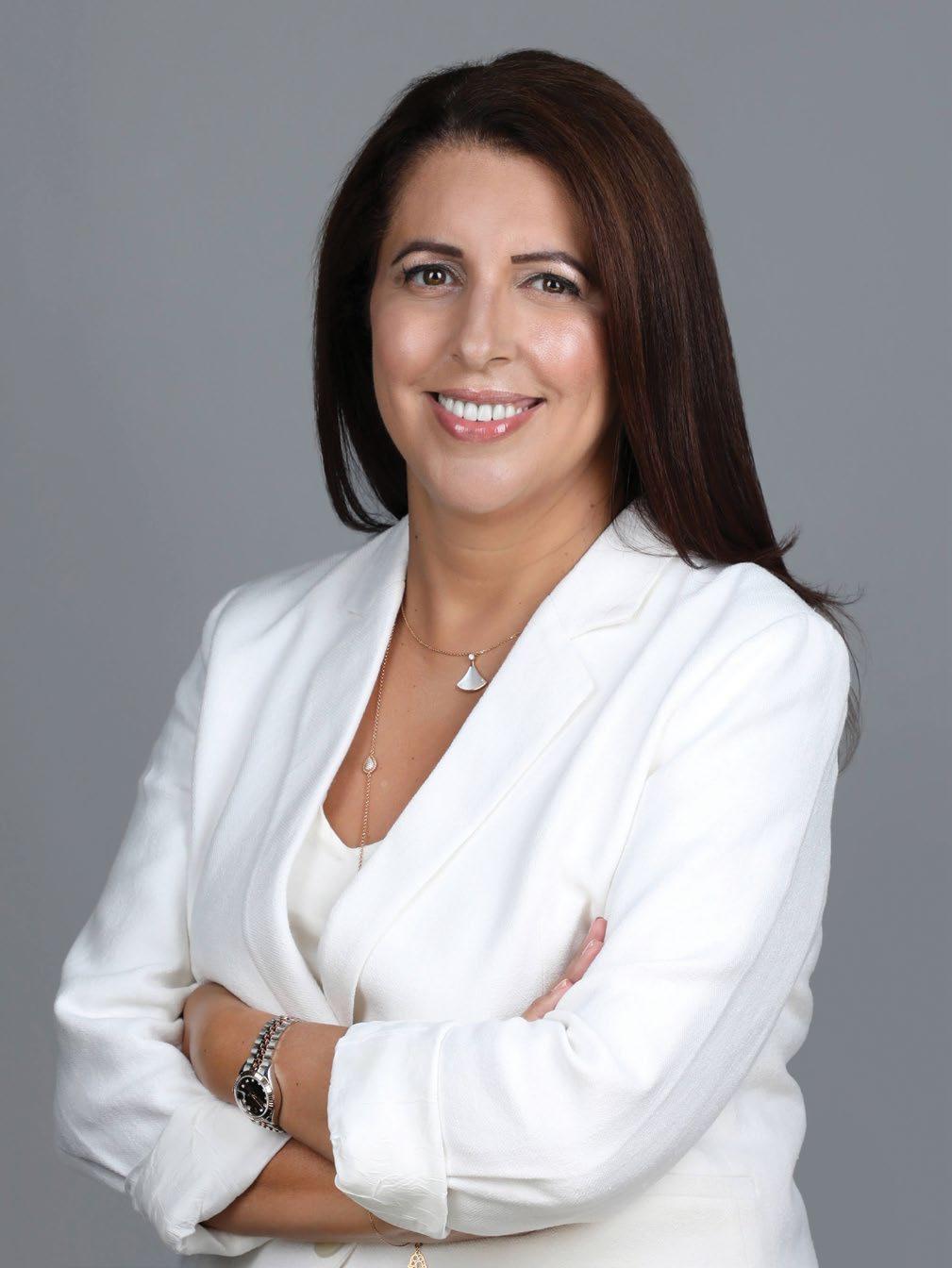
AMBAREEN MUSA:
INSIDE REVOLUT’S DELIBERATE GULF PLAY
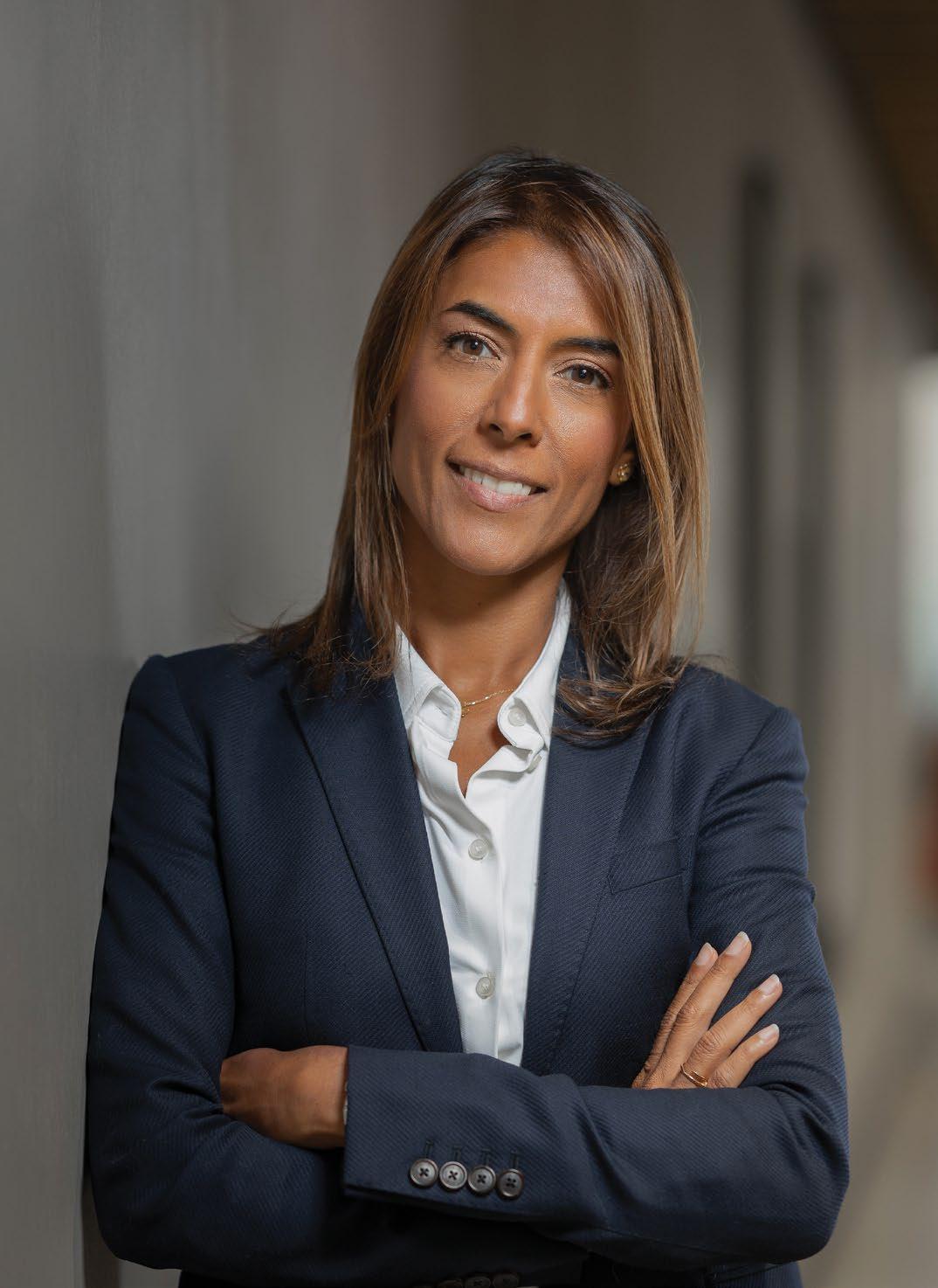
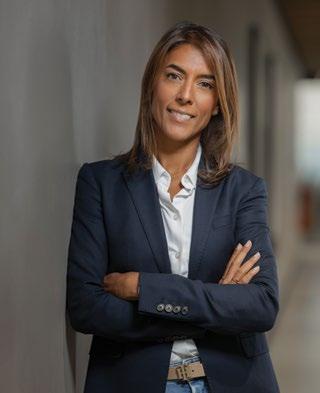
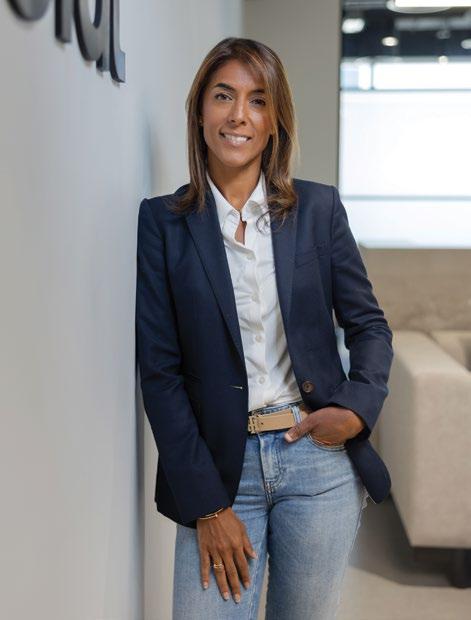
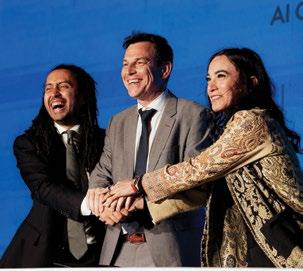
As CEO of Revolut GCC, Ambareen Musa is leading one of the most anticipated fintech expansions in the region, on her own terms, and entirely out of the spotlight.
BY AYA ZHANG
N THE FOUNDATIONS
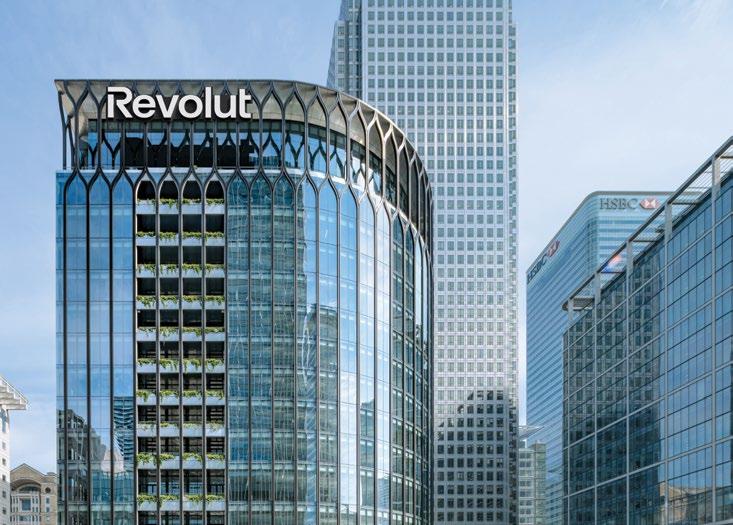
Revolut has spent the last decade changing the way Europe thinks about money. Seventy million people later, a $45 billion valuation, and a product that has redefined what a financial app can be — the company is now setting its sights on the Gulf.
Leading that expansion is Ambareen Musa, a CEO who knows this region well enough to understand that arriving with noise is far less powerful than arriving with something that actually works.
“When you are building in financial services, especially in a market like the UAE, the real focus is on foundations,” she says. “That means working closely with regulators, building the right governance structures, investing in infrastructure, hiring the right talent and deeply understanding the local market
before anything is publicly visible.”
For Musa, that approach reflects the reality of financial services in the UAE. This is a market that rewards innovation, but it also expects evidence. New entrants are judged less by launch announcements than by the strength of the foundations beneath them.
A PERSONAL VIEW OF A SYSTEM GAP
Long before Revolut, long before the GCC mandate, there was a frustration that Musa carried throughout the roles she had held. It is something you keep seeing in the way ordinary people relate to their own money.
“Financial confidence still feels out of reach for far too many people, regardless of income level or background,” she says. “A lot of people are navigating major financial decisions without feeling fully informed or in control, and I think the industry has a real responsibility to change that.”
In the UAE, it takes on a particular weight. The country’s population is one of the most internationally mobile anywhere on earth, and for most residents, managing money extends far beyond a single economy. Salaries earned here rarely stay here — they cross borders, support families and move through systems that might never be designed to talk to each other. The financial tools most people rely on for all of that have not always kept pace with how their lives actually work.
Photography: Joel Amparo & Eduardo Buenga
“Technology gives us the ability to simplify finance in a way that was not possible before,” she says, “whether that is helping people better understand their spending, manage money across borders more easily, build healthier financial habits or access tools that genuinely improve their day-to-day lives.”
That is the gap Revolut was built for. And the UAE, Musa will tell you, is where closing it matters most.
WHAT THE REGION TEACHES YOU
Musa is not arriving in the Gulf as an outsider. She has built here, advised here, and watched the region’s financial landscape move through several cycles of ambition, disruption and reinvention. When she talks about what the Middle East has given her that no other market could, her answer reflects years spent building and operating within the region’s financial ecosystem.
“The Middle East has taught me that some of the strongest financial ecosystems are built when innovation, regulation and established institutions evolve together with a shared ambition to improve customer experiences,” she says.
What makes this region different, in her experience, is something that takes time to fully appreciate. It is not the scale of the opportunity or the pace of infrastructure development. It is the collective orientation toward progress — a maturity across institutions, regulators and consumers that creates an environment where ambition is met with genuine readiness rather than resistance. That, she says, is what makes the Gulf genuinely compelling to build within.
“Success here is not just about technology or scale,” she says. “It is about understanding how people actually live, especially in such an international market where customers manage financial lives across borders every day.”
ON LEADING THROUGH A MOMENT LIKE THIS
The landscape Musa is navigating would give most leaders pause. Artificial intelligence is reshaping financial products faster than most organisations can absorb. Consumer expectations are accelerating in the same direction. The competition in the GCC includes not just the region’s most established financial institutions but a growing number of global players who have identified exactly the same opportunity.
“I think moments like this require leaders to be both ambitious and disciplined at the same time,” she says. “Trust matters more than speed alone. That means staying focused on long-term credibility, close regulatory relationships and operational excellence, even when external attention accelerates.”
WE DO NOT SEE THIS AS A STORY OF REPLACING EXISTING INSTITUTIONS.
Clarity matters to her as much as ambition — not the kind that comes from having every answer, but the kind that comes from being honest about direction and purpose. “Teams move faster when they understand not only what you are building, but why you are building it.” And she is candid about the limits of certainty in a world changing this quickly. “The pace of technological and consumer change is so significant that no leader can operate with a fixed mindset anymore. The best organisations are the ones constantly learning, adapting and staying close to their customers.”
Underlying many of Musa’s observations is a recurring theme: trust. While much of the conversation around fintech focuses on speed, innovation and new technology, financial services operate under a different set of expectations. Products can evolve quickly. Trust rarely does.
That reality becomes particularly relevant in periods of rapid technological change. As artificial intelligence reshapes customer experiences and competition intensifies across the sector, institutions are increasingly challenged to balance innovation with reliability. For leaders operating in financial services, growth and credibility are not separate priorities; they have to develop together.
THE CASE FOR REVOLUT IN THE GULF
When Musa makes the case for Revolut in the UAE, she does not reach for disruption language.
“We do not see this as a story of replacing existing institutions. We see it as contributing to an ecosystem that is already driving innovation at a global level.”
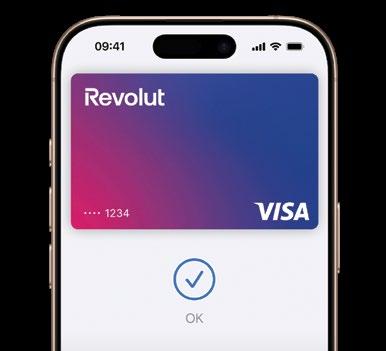
The product argument is a straightforward one at its core. Revolut brings together payments, global spending, currency exchange, transfers and lifestyle services in a single platform. In a market where the average resident is managing financial obligations across multiple countries simultaneously, that integration is not a feature — it sits at the heart of what Revolut offers here. “Many residents manage financial lives across multiple countries,
currencies and time zones,” she says. “That creates demand for financial services that feel global from day one, rather than nationally limited.”
Revolut’s ambition is to be a top three financial app in every market it enters. In the GCC, Musa is measured about what earning that position actually requires. Not aggressive pricing, not a high-profile debut, but the kind of sustained relevance that comes from genuinely improving how people manage their financial lives. “If customers feel that Revolut genuinely simplifies and improves the way they manage their financial lives, growth follows naturally from that.”
DOING THE WORK NOBODY SEES
Much of Revolut’s work in the UAE has taken place outside public view. With its licence application still in process, the focus has been on building the structures required to operate in a highly regulated market rather than generating visibility.
That reflects a broader reality across financial services. Customers often experience only the final product, while the most consequential work happens much earlier — in governance frameworks, regulatory engagement, infrastructure investment and operational preparation.
I THINK MOMENTS LIKE THIS REQUIRE LEADERS TO BE BOTH AMBITIOUS AND DISCIPLINED AT THE SAME TIME. TRUST MATTERS MORE THAN SPEED ALONE.
These are rarely the most visible parts of growth, but they are often the most important.
“It has been one of the most interesting and rewarding building phases of my career because so much of the work happens long before customers ever see the product,” she says.
“You are not just introducing a product. You are becoming part of a broader financial ecosystem that is evolving very quickly. That requires patience, discipline and a long-term mindset throughout the entire building process.”
When UAE customers eventually open the Revolut app for the first time, she has a precise and personal sense of what she wants that moment to feel like. Not dazzled by the brand or impressed by the design but simply understood. “I want them to feel that managing their financial life has suddenly become much more seamless. The goal is for people to open the app and feel that their financial world is working together in one place, in a way that feels smooth, modern and genuinely helpful to their everyday lives.”
WHAT SHE ACTUALLY WANTS TO LEAVE BEHIND
Beneath the commercial ambition and the product roadmap, there is something quieter and more personal driving Ambareen Musa — a sense of purpose that has less to do with market rankings and everything to do with what she has always believed the industry owes the people it serves.
“I would like the legacy to be bigger than a company launch
FINANCIAL CONFIDENCE STILL
FEELS OUT OF REACH FOR FAR TOO MANY PEOPLE, REGARDLESS OF INCOME LEVEL OR BACKGROUND.
or market expansion,” she says. “I hope we contribute to building a financial ecosystem that is more accessible, more transparent and more globally connected for the next generation.”
Financial literacy sits close to the heart of that hope — not as a corporate programme, but as a conviction that has run through her entire career and shows no sign of softening. “One of the things I have observed throughout my career is that financial literacy still feels intimidating for many people, regardless of income level or background. If we can help simplify finance and make people feel more in control of their money, that has a very real societal impact.”
And beyond Revolut, beyond the GCC launch, she holds a wider hope for the region itself — one that speaks to something she clearly feels deeply. “I would love to see more regional talent entering fintech and technology leadership roles over time. The Middle East has incredible ambition and creativity, and I think we are only beginning to see the scale of what can emerge from this region.”
Revolut has not launched in the UAE yet. When it does, the groundwork will already have been done — carefully, patiently and almost entirely out of sight. The governance structures, regulatory engagement and operational foundations that precede a launch rarely attract attention, yet they often determine what follows. Everything visible comes after.
*Revolut’s UAE licence is pending at the time of publication.
THE MISSING LAYER IN MODERN HEALTHCARE
Healthcare systems are extraordinarily good at treating illness. What happens after is a different story.
BY DR. CRAIG COOK
Modern healthcare systems are extraordinarily good at treating illness. They are considerably less structured when it comes to what follows.
Globally, health expenditure continues to rise, with the World Health Organization estimating that countries spend trillions annually on healthcare delivery. Yet a disproportionate share of that investment remains concentrated in the diagnostic and intervention phase of care. The period after treatment, when individuals are working to rebuild function, independence, and quality of life, receives far less structural attention, far less dedicated resources, and far less accountability for outcomes.
This is not a criticism of clinical excellence. It is an observation about system design. Healthcare, as it has largely evolved, was built to diagnose and treat, and it does that remarkably well. What it has not yet fully built is the infrastructure to ensure that treatment meaningfully translates into recovery. That gap, quiet yet persistent, represents one of the most consequential inefficiencies in modern healthcare.
A SYSTEM BUILT FOR THE ACUTE MOMENT
Healthcare, as it has historically been structured, is optimised for intervention. The pathway is familiar: something goes wrong, a person seeks care, a diagnosis is made,
and treatment is delivered. That model performs well for what it was designed to do. But it was never truly designed to answer the question of what happens next.
Discharge marks the end of the clinical episode. It rarely marks the end of the individual’s journey. Someone recovering from a stroke, a musculoskeletal injury, or major surgery often still has a long road ahead. Their ability to regain function, return to independence, and restore quality of life depends enormously on the structured support, or lack of it, that follows after leaving hospital.
The evidence increasingly points in one direction. Where structured recovery programmes have been introduced, supported by coordinated
care teams, clear ownership, and consistent follow-through, outcomes improve measurably. Yet across many healthcare systems, the postdischarge period remains the least invested part of the care journey, often under-resourced, fragmented across providers, and largely left to the individual to navigate without meaningful guidance.
THE UAE’S NEXT FRONTIER
The UAE’s healthcare landscape is at an important inflection point. The nation has made sustained and significant investments in healthcare infrastructure, technology, and workforce capability. The quality of acute care available in the UAE now benchmarks strongly against
many of the world’s most advanced healthcare systems.
But the next frontier is not simply building more hospitals or expanding access to treatment. It is building what comes after.
Across more mature healthcare markets, there is growing recognition that the true measure of a healthcare system is not defined solely by the quality of its hospitals, but by the quality of the long-term outcomes those hospitals ultimately help create. Outcomes measured not at discharge, but months later, in how fully individuals have returned to their lives, their work, and their independence.
The UAE, with its ambition to lead on health as a national priority, its sustained investment in innovation, and its ability to move with unusual speed, is exceptionally well positioned to redefine what modern recovery infrastructure can look like. The question is not whether recovery belongs within the UAE’s healthcare strategy. It clearly does. The question is how quickly it becomes a formal priority.
WHAT IT WOULD ACTUALLY TAKE
Treating recovery as a formal extension of healthcare delivery is not a vague aspiration. It has practical and implementable dimensions.
It means structured, evidence-based recovery programmes that begin at the point of discharge, not weeks later when momentum has already been lost. It means integrated care teams, where rehabilitation specialists, clinicians, therapists, and performance experts work in coordination rather than in disconnected systems that rarely communicate effectively.
It means outcome tracking that extends beyond the hospital stay, monitoring functional progress against meaningful milestones over weeks and months, not simply whether treatment itself was completed. And it means funding and commissioning models
that reward sustained outcomes and quality of life improvements, rather than episodic interventions alone.
None of this requires reinventing healthcare. It requires extending it with the same rigour, investment, accountability, and strategic focus already applied to acute care.
Healthcare systems are not indifferent to recovery. Most clinicians care deeply about what happens to individuals after treatment. The challenge is structural. Systems naturally evolve around the incentives and pressures they face, and historically those incentives have prioritised intervention over rehabilitation.
That logic is beginning to shift, driven by more informed individuals, payers focused on long-term value, and governments increasingly defining healthcare success in terms of sustained wellbeing rather than simply the absence of disease.
The question is no longer whether recovery deserves a place at the centre of healthcare. The evidence already answers that. The real question is which healthcare systems will move first to build it into the fabric of care itself.
Dr. Craig Cook, CEO, The Brain and Performance Centre, A DP World Company
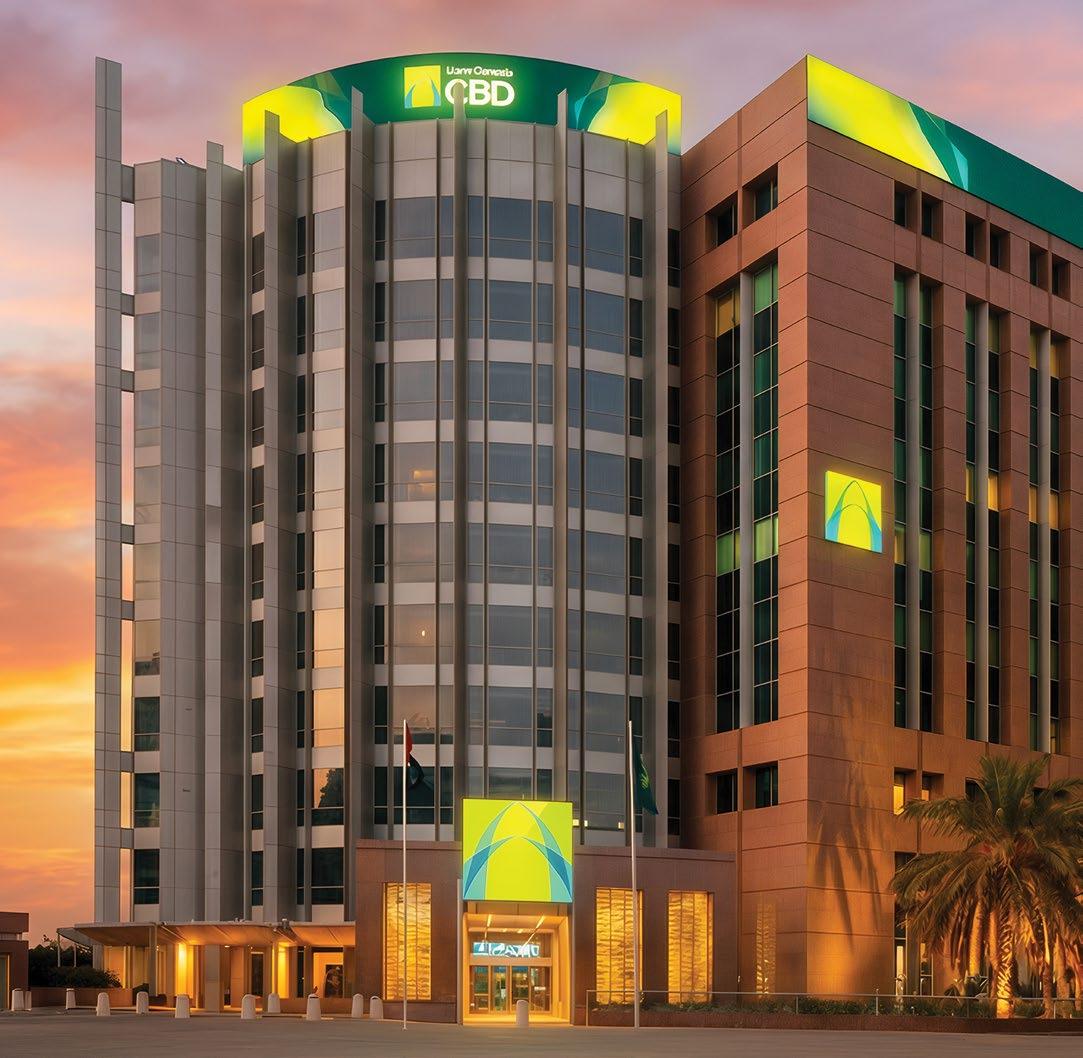
CBD’S CFO ON GROWTH, DISCIPLINE, AND BANKING THROUGH UNCERTAINTY
With AED 830 million in net profit and loans crossing AED 100 billion, Commercial Bank of Dubai is growing through uncertainty.
BY AYA ZHANG
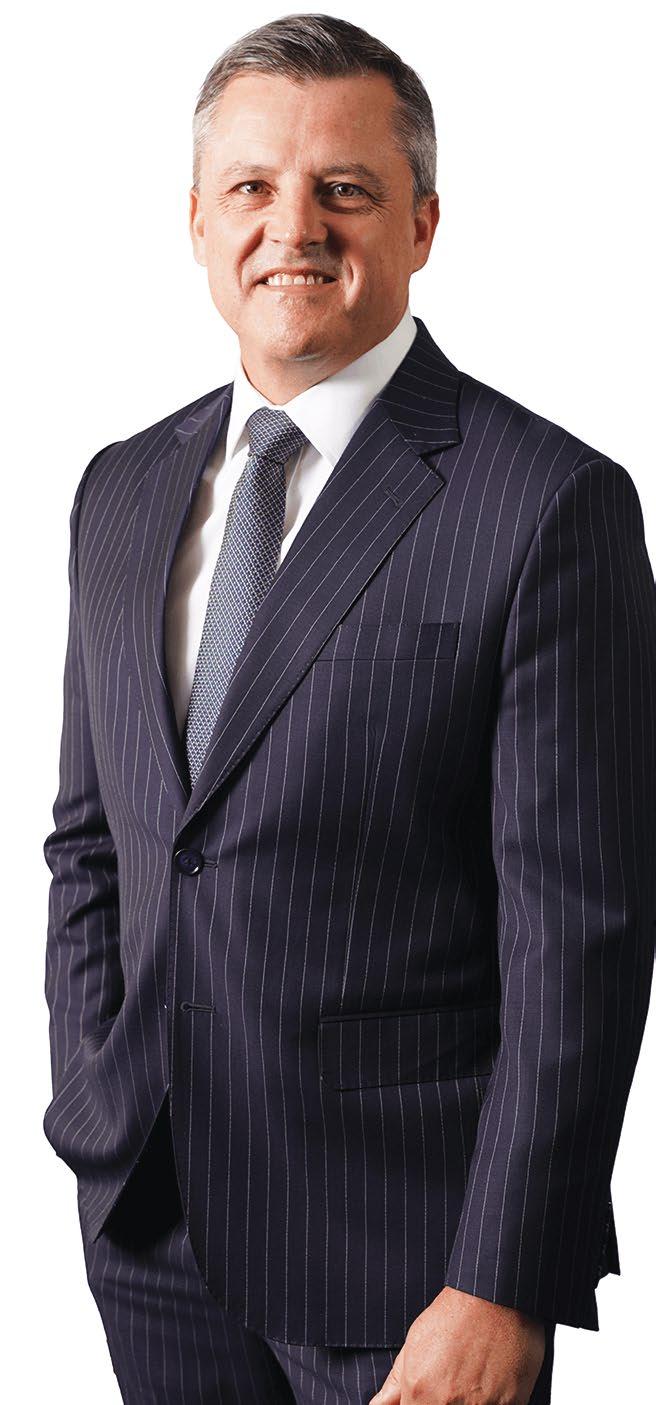
Commercial Bank of Dubai posted a net profit of AED 830 million in Q1 2026, a result that would be notable in any environment, let alone one shaped by regional conflict, rising provisioning costs, and a geopolitical backdrop that rattled markets across the Gulf. For CFO Darren Clarke, the numbers are not a lucky outcome but the product of deliberate choices: building buffers during periods of strength, investing in technology while keeping costs tighter than almost any peer in the industry, and crossing AED 100 billion in net loans without compromising on asset quality. We sat down with Clarke to understand how CBD is navigating uncertainty, and what it is building for next.
CBD HAS DELIVERED A NET PROFIT OF AED 830 MILLION IN Q1 2026 WHILE NAVIGATING HEIGHTENED REGIONAL UNCERTAINTY. AS CFO, HOW DO YOU MAINTAIN THAT LEVEL OF FINANCIAL DISCIPLINE AND CONSISTENCY WHEN THE EXTERNAL ENVIRONMENT IS ANYTHING BUT PREDICTABLE? A diversified loan book, a stable deposit franchise with CASA at 51% of total deposits, and capital ratios well above regulatory minimums. When those foundations are in place, the business can absorb volatility without changing course.
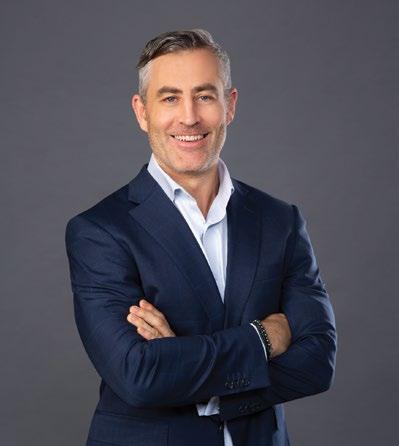
Darren Clarke, Chief Financial Officer of Commercial Bank of Dubai
DISCIPLINE IN THIS CONTEXT MEANS CONTINUING TO LEND, CONTINUING TO INVEST, AND CONTINUING TO PROVISION CONSERVATIVELY, ALL
AT THE SAME TIME.
In Q1 2026, we grew operating income 6.2% to AED 1.456 billion and operating profit 6.4% to AED 1.065 billion. At the same time, we chose to increase provisioning, raising our IFRS 9 downside scenario weight from 30% to 40% in response to the regional conflict. Net impairment charges rose 68% to AED 152 million. That was a deliberate decision to build buffers during a period of strength. Discipline in this context means continuing to lend, continuing to invest, and continuing to provision conservatively, all at the same time. The quarterly result is the output of that approach.
CROSSING AED 100 BILLION IN NET LOANS IS A LANDMARK MILESTONE FOR ANY BANK. WHAT DOES THAT NUMBER REPRESENT BEYOND THE BALANCE SHEET, AND WHAT DOES IT TELL US ABOUT THE CONFIDENCE THAT BUSINESSES AND INDIVIDUALS IN THE UAE ARE PLACING IN CBD RIGHT NOW?
Crossing AED 100 billion is a milestone, but the more relevant point is that we are growing responsibly and backing our customers through a complex environment. Lending activity was robust in the first two months of the year, moderating in March as the market adjusted to geopolitical developments. But the pipeline remains healthy.
Net loans at AED 102.1 billion represent real economic activity. Behind that number are corporations expanding, SMEs investing in their operations, and individuals buying homes and building their futures. Gross loans grew 4.1% year-on-year to AED 106.4 billion, with origination strong across institutional, corporate and personal banking segments.
What it reflects about confidence is important. Customer deposits grew 10% year-on-year to AED 109.6 billion. Clients are choosing CBD both to borrow and to place their money. The loan-to-deposit ratio at 93.1% shows that growth is funded sustainably, not through wholesale reliance.
CBD’S COST-TO-INCOME RATIO OF 26.90% POSITIONS IT AMONG THE BEST IN THE INDUSTRY, AND YET YOU ARE SIMULTANEOUSLY INVESTING HEAVILY IN DIGITISATION, TECHNOLOGY, AND TALENT. HOW DO YOU STRIKE THAT BALANCE BETWEEN DISCIPLINED COST MANAGEMENT AND THE INVESTMENT NEEDED TO STAY AHEAD?
By ensuring revenue grows faster than costs. Operating income was up 6.2% while operating expenses rose 5.8%. That positive gap is what allows us to invest and maintain efficiency at the same time.
Within the expense base, we are selective. Staff costs increased to AED 201 million, reflecting targeted hiring in technology, compliance and businessfacing roles. General and administrative expenses were virtually flat at AED 158 million. Depreciation rose 65% to AED 32 million as capitalised technology investments came online. So the increase is concentrated in areas that drive future capability, not in overhead. We do not manage a specific costto-income target in isolation. We manage for a return on investment. If a dirham spent on technology generates a multiple in income or saves cost downstream, we will deploy it. At 26.90%, the ratio speaks for itself. The priority is sustaining that discipline while continuing to build for the future.
CBD WAS THE FIRST BANK IN THE UAE TO FULLY ACTIVATE OPEN FINANCE AT SCALE. THAT IS A BOLD MOVE THAT CARRIES BOTH OPPORTUNITY AND RISK. WHAT WAS THE STRATEGIC THINKING BEHIND THAT DECISION, AND WHAT DO YOU BELIEVE IT WILL UNLOCK FOR THE BANK AND ITS CUSTOMERS OVER THE NEXT FEW YEARS?
The thinking was straightforward. Open Finance is the direction the industry is heading, and being early gives us a structural advantage. CBD activated Open Finance at scale because we believe that giving customers control over their financial data, and enabling them to share it securely across providers, deepens trust and strengthens relationships. It does not weaken them.
WE DO NOT SET A FIXED TECHNOLOGY BUDGET AND LEAVE IT UNTOUCHED FOR THE YEAR. WE REASSESS CONTINUOUSLY BASED ON WHAT IS DELIVERING RESULTS AND WHERE THE MARKET IS MOVING.
From a business perspective, Open Finance creates new revenue pathways. It allows us to offer more personalised products, improve credit decisioning through richer data, and embed CBD’s services into broader digital ecosystems. It also positions us as a preferred partner for fintechs and third-party providers who need a bank with open, modern infrastructure.
The recognition by Global Brands Magazine for Excellence in Digital Banking Transformation validates the approach. But the real measure will be in customer adoption, product innovation and the commercial returns that follow over the next two to three years. We are confident in the direction.
THE UAE’S FINANCIAL SECTOR IS UNDERGOING A PROFOUND TRANSFORMATION, FROM DIGITAL CURRENCIES TO OPEN FINANCE TO AI-DRIVEN BANKING. AS THE PERSON RESPONSIBLE FOR THE FINANCIAL HEALTH OF THE INSTITUTION, HOW ARE YOU THINKING ABOUT INVESTMENT ALLOCATION IN AN ENVIRONMENT WHERE THE TECHNOLOGY LANDSCAPE IS SHIFTING SO RAPIDLY?
The way I think about it is in layers. There are investments in core infrastructure that are non-negotiable: cybersecurity, regulatory technology, core banking modernisation. These protect the franchise and ensure compliance. Then there are growth investments: digital channels, Open Finance, AI-driven analytics, and payment innovation such as AE Coin, Aani and the Central Bank Digital Currency. These expand the revenue base. And then there are exploratory investments where we are testing, learning and building optionality.
The allocation across those layers is dynamic. We do not set a fixed technology budget and leave it untouched for the year. We reassess continuously based on what is delivering results and where the market is moving. The 65% increase in depreciation and amortisation this quarter, from AED 20 million to AED 32 million, gives you a sense of the investment cycle we are in. Capital is being deployed and assets are coming into service.
What keeps this financially sound is the revenue backdrop. With operating income growing 6.2% and a costto-income ratio at 26.90%, we have the capacity to invest at pace without compromising returns.
CBD’S NON-PERFORMING LOAN RATIO IMPROVED SIGNIFICANTLY YEAR ON YEAR, REFLECTING STRONG ASSET QUALITY EVEN IN A COMPLEX REGIONAL ENVIRONMENT. WHAT DOES PRUDENT RISK MANAGEMENT ACTUALLY LOOK LIKE IN PRACTICE AT CBD, AND HOW HAS YOUR APPROACH EVOLVED GIVEN THE CURRENT GEOPOLITICAL AND ECONOMIC CLIMATE?
In practice, it starts with identification. We have mapped the sectors most exposed to the current environment: hospitality, commercial real estate, contracting, manufacturing, trade and retail. Our Credit and Business teams run enhanced reviews across those portfolios on an ongoing basis, engaging with borrowers before stress materialises rather than after.
Our IFRS 9 governance has also evolved. The IFRS 9 Committee adjusted the macroeconomic scenario weights this quarter, placing greater emphasis on the downside. We have added approval layers for facility disbursements and tightened underwriting for new-to-bank clients in vulnerable sectors. For SME clients facing short-term cash flow pressures, we have supported them through deferrals and restructuring, in line with CBUAE guidance.
The output is in the numbers: NPL ratio at 3.55%, among the lowest in the Bank’s history, down 74 basis points year-on-year. Coverage at 104.72%, and 146% including collateral on Stage 3 loans. Total allowances across the portfolio stand at AED 4.66 billion. We are conservatively provisioned and actively managing risk across every segment.
“THE GULF HAS A UNIQUE ADVANTAGE”
Amel Chadli has led Schneider Electric across three continents and broken barriers in a male-dominated industry. She tells Business Today Middle East why the Gulf’s greatest advantage is its ability to move fast.
BY AYA ZHANG
Amel Chadli, President of Gulf Cluster, Schneider Electric
YOU’VE
LED SCHNEIDER ELECTRIC ACROSS EUROPE, AFRICA, AND NOW THE GULF. WHAT HAS THAT JOURNEY TAUGHT YOU ABOUT LEADING IN DIVERSE MARKETS?
Leading across Europe, Africa, and now the Gulf has taught me that there is no universal leadership playbookcontext matters deeply. Each market brings different realities, whether that’s regulatory complexity in Europe, access and affordability challenges in parts of Africa, or the Gulf’s ambition to scale innovation at speed.
At Schneider Electric, I’ve seen firsthand that the most sustainable results come when global expertise is paired with strong local leadership. In Africa, for example, we focused on building local teams, partnerships, and capabilities alongside deploying technology - an approach that strengthened resilience and long-term impact. That same principle applies in the Gulf today: listen first, empower local talent, and design solutions that are relevant, scalable, and built to last.
AS PRESIDENT OF THE GULF CLUSTER, WHERE DO YOU SEE THE MOST SIGNIFICANT OPPORTUNITIES FOR ENERGY TRANSFORMATION IN THE REGION RIGHT NOW?
The biggest opportunities for energy transformation in the Gulf right now sit at the intersection of electrification, digitalisation, and efficiency. As demand grows - from cities, industry, data centers, and cooling - the priority is no longer just adding capacity, but making the system smarter, cleaner, and more resilient.
We see particularly strong momentum in three areas: grid modernisation to integrate renewables at scale, digital energy management for buildings and industry, and decentralised solutions that improve efficiency closer to where energy is consumed. At Schneider
Electric, we’re already working across the region to turn this into reality - for example, supporting utilities and large infrastructure projects with digital grid and energy management technologies that reduce losses, improve reliability, and cut emissions.
The Gulf has a unique advantage: clear national visions, strong investment capacity, and the ambition to move fast. If technology, policy, and execution continue to align, the region can move from being an energy producer to a global leader in energy efficiency and intelligent, low-carbon systems.
At Schneider Electric, we see this every day. Digital platforms, AI, and real-time data allow customers to optimise energy use, reduce emissions, and improve resilience across buildings, industries, grids, and data centers. As an energy technology leader, we bring these capabilities together - helping customers move from disconnected assets to intelligent, interoperable systems.
ENERGY AND DIGITALISATION
ARE NO LONGER
SEPARATE CONVERSATIONS
— THEY ARE NOW INSEPARABLE.
In the Gulf, this convergence is especially powerful. Rapid urban development, ambitious net-zero targets, and rising digital demand mean the region cannot afford inefficiencies. By embedding digital intelligence into energy infrastructure - from smart buildings to modernised grids - the Gulf region has an opportunity to consume energy more sustainably while setting a global benchmark for efficient, futureready systems.
AS ONE OF THE FEW WOMEN AT THE TOP OF THE ENERGY SECTOR IN THIS REGION, WHAT DOES IT TAKE TO LEAD AND WHAT NEEDS TO CHANGE TO BRING MORE WOMEN THROUGH?
Leadership in the energy sector starts with credibility, curiosity, and resilience - delivering results in complex environments while staying true to who you are. But leadership today is also about creating pathways for others to follow, especially in sectors that are transforming as fast as energy.
SCHNEIDER ELECTRIC SITS AT THE INTERSECTION OF ENERGY AND DIGITALISATION. HOW ARE THOSE TWO FORCES RESHAPING THE INDUSTRY?
Energy and digitalisation are no longer separate conversations - they are now inseparable. As energy systems become more decentralised, electrified, and complex, digital technologies are what make them visible, controllable, and efficient.
At Schneider Electric, we’ve been very intentional about this. Initiatives such as our FEM in STEM programme are designed to attract, develop, and retain more women in technical and leadership roles, while our more recent AED100 million commitment launched to shape next-generation talent in the UAE reflects our belief that long-term change starts early - by expanding access to STEM skills and learning opportunities for young people everywhere.
In the Gulf, the energy transition is moving at a remarkable speed, driven by national visions and largescale investment. To sustain that momentum, we need to broaden the leadership pipeline. That means visible role models, inclusive workplaces, and practical support for women and young people to enter and progress in engineering, digital, and energy careers. When women are part of shaping energy systems, the outcomes are more resilient, innovative, and fit for the future the region is building.
GEOPOLITICAL AND ECONOMIC PRESSURES ARE RESHAPING GLOBAL ENERGY PRIORITIES. HOW IS SCHNEIDER ELECTRIC NAVIGATING THAT LANDSCAPE IN THE GULF?
Geopolitical and economic pressures are reinforcing one clear priority in the Gulf: energy systems must be more resilient, efficient, and increasingly local. For Schneider Electric, navigating this landscape means helping customers reduce exposure to volatility by improving efficiency, digitising operations, and strengthening local capability.
In the Gulf, we are working closely with utilities, infrastructure developers, and industries to modernise grids, optimise energy use, and integrate digital intelligence across critical assets -improving reliability while lowering costs and emissions. At the same time, we continue to localise expertise and value chains to support long-term resilience.
The region’s advantage lies in its ability to align policy, capital, and technology at speed. By focusing on energy efficiency, digitalisation, and local partnerships, the Gulf is actively reshaping its energy future – instead of reactively responding to global pressures.
WHEN WOMEN ARE PART OF SHAPING ENERGY SYSTEMS, THE OUTCOMES ARE MORE RESILIENT, INNOVATIVE, AND FIT FOR THE FUTURE THE REGION IS BUILDING.
WHAT DID SCHNEIDER ELECTRIC SHOWCASE AT MAKE IT IN THE EMIRATES THIS YEAR, AND WHY IS THIS PLATFORM IMPORTANT FOR THE COMPANY?
At Make It In The Emirates 2026 earlier last month, Schneider Electric, together with its joint venture TAQANA Energy Solutions, a partnership between Schneider Electric and the Arab Development Establishment (ADE), showcased a portfolio focused on locally manufactured electrification solutions and digital innovation designed to strengthen the UAE’s industrial resilience. Schneider Electric and TAQANA highlighted locally manufactured electrical and energymanagement solutions produced at TAQANA’s Abu Dhabi facility (ICAD). These solutions are designed to support industrial facilities, critical infrastructure, utilities and energyintensive sectors while advancing incountry value (ICV) and supply-chain security. A key focus was digital-twin innovation, demonstrating how AIenabled, sensor-driven and softwaredefined systems can improve asset
visibility and performance, optimise energy efficiency and reliability, and enable predictive maintenance across industrial sites. Practical applications for UAE industries scaling under Operation 300bn helped reinforce Schneider Electric’s leadership at the intersection of electrification and digitalization.
WHAT IS THE SINGLE BIGGEST THING SCHNEIDER ELECTRIC WANTS TO ACHIEVE IN THE GULF IN THE NEXT FIVE YEARS?
Over the next five years, our biggest ambition in the Gulf is to help turn energy efficiency and digitalisation into the region’s strongest growth advantage. As demand rises across infrastructure, industry, transport, and data centers, the priority is not just to add energy, but to use it far more intelligently.
We are doing this by modernising grids, digitising energy use across buildings and industry, and localising advanced manufacturing and skills. Whether it’s deploying AI-enabled digital grid platforms, expanding
‘made-in-region’ production capacity, or supporting national net-zero and industrialisation agendas, our focus is clear: deliver resilient, efficient, and future-ready energy systems that support the Gulf’s long-term competitiveness.
We’ve entered a new phase of industrial expansion in the UAE and the wider Middle East, driven by a shift toward autonomous, AI-powered production that enables highly efficient industrial operations with minimal human intervention.
WHERE SAUDI ARABIA’S ENTREPRENEURS ARE PLACING THEIR BETS
New data from Sovereign PPG Corporate Services reveals that business formation in the Kingdom is no longer broad-based — it is clustering around a tight set of Vision 2030 priorities, and the pattern tells a compelling story about where the smart money is going.
Saudi Arabia has long signalled where it wants its economy to go. What is becoming increasingly clear is that the private sector is listening.
New analysis from Sovereign PPG Corporate Services, based on client activity tracked over the past 12 months, shows that 83.67% of new company registrations in the Kingdom are now concentrated in just seven sectors — all of them closely aligned with the economic diversification agenda at the heart of Vision 2030. It is a striking figure, and one that points to a market entering a more deliberate, policyshaped phase of growth.
The data tells a clear story about where confidence is highest. Technology leads the pack, with IT, software, and technology accounting for 22.73% of new formations — spanning cybersecurity, cloud services, and software publishing. Management consultancy follows at 15.27%, with financial services and fintech close behind at 16.68%. Legal and professional services, construction and contracting, industrial and manufacturing, and healthcare round out the top seven.
But the technology story runs deeper than the headline number suggests. According to James Elliot-Square, Commercial Director for Saudi Arabia at Sovereign PPG Corporate Services, more than a third of businesses registered under other sector classifications listed some form of tech, AI, or automation as a complementary business activity. “Although the direct number of tech businesses accounted for 22.73%, the actual number was way higher,” he notes. In practice, that means technology is not just a sector — it is becoming the connective tissue running through much of the Kingdom’s new business activity.
The pattern reflects something broader than organic market demand. Saudi Arabia’s regulatory environment has been actively recalibrated to attract investment and encourage private sector participation in priority industries. That recalibration is showing up in the numbers. The Kingdom issued 188 new industrial licences in March alone, representing investments exceeding SAR 1.8 billion — a sign that manufacturing and industrial development are not just policy talking points but areas of live, scaled activity.
James Elliot-Square, Commercial Director Sovereign PPG
For Elliot-Square, the shift signals a maturation in how businesses are approaching the Saudi market. “We’re not seeing a slowdown in business formation, but a clear shift toward sectors aligned with Saudi Arabia’s economic transformation agenda,” he says. “The market is becoming more targeted, with new business activity increasingly shaped by national priorities and regulatory frameworks.”
That targeting has implications for how companies thinking about entering or expanding in Saudi Arabia should frame their strategies. The data suggests that alignment with Vision 2030 is no longer simply a positioning advantage — it is increasingly the condition under which new business activity is being organised. Sectors outside the priority cluster are not disappearing, but they are attracting a proportionally smaller share of new formation activity as capital, talent, and regulatory attention flow toward the areas the Kingdom has defined as strategic.
What the Sovereign PPG data ultimately captures is a market in transition — not from slow to fast, but from broad to focused. Saudi Arabia is not just open for business. It is open for specific kinds of business, in specific sectors, at a specific moment in a long-term national transformation. For companies that understand that distinction, the opportunity is considerable. For those that don’t, the window may be narrower than it looks.
BEDEIR RIZK ON BUILDING THE NEXT GENERATION OF URBAN DESTINATIONS
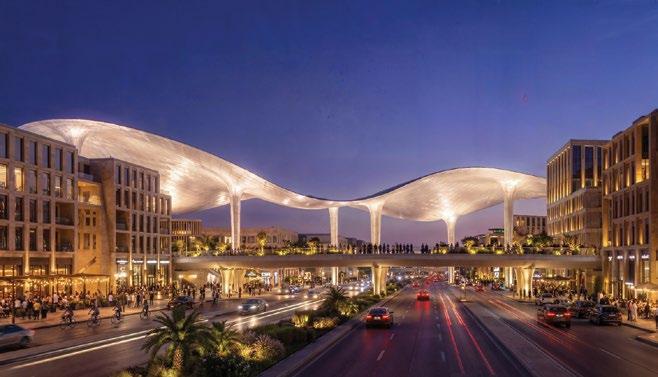
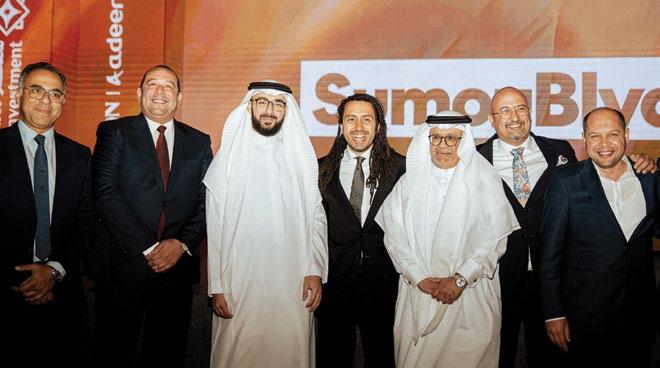
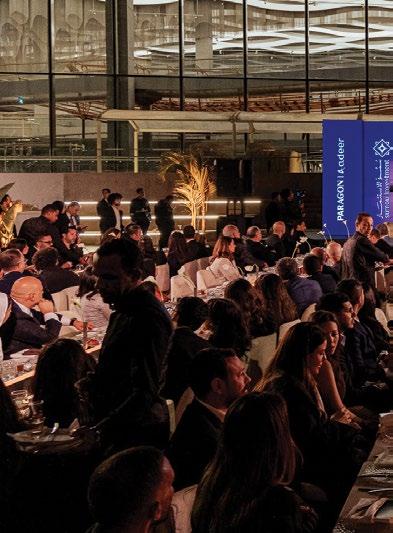
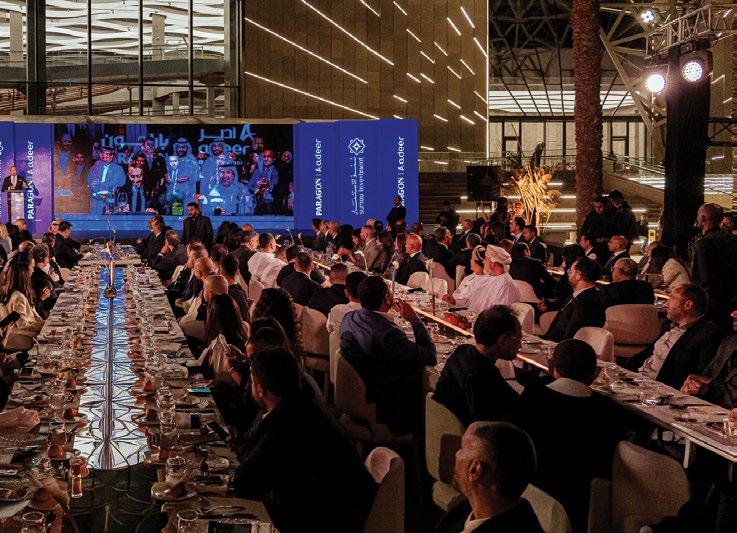
With SUMOU Boulevard, an EGP 70 billion mixed-use development in Cairo, Bedeir Rizk, CEO of PARAGON–ADEER, is proving that Saudi capital and Egyptian execution can build something neither could have delivered alone.
BY AYA ZHANG
When Saudi institutional capital meets Egyptian urban instinct, something interesting happens. That, at least, is the bet behind PARAGON–ADEER — a joint venture that has brought together Adeer International, the global investments arm of Sumou Holding, and Cairo-based PARAGON Developments to build SUMOU Boulevard, a EGP 70 billion mixed-use destination
anchored by an AI campus, international hospitality brands, and a four-year commitment to nurturing 100 startups. At the helm is Bedeir Rizk — former investment banker, tech entrepreneur, and a CEO who thinks about cities the way a founder thinks about products. We sat down with him to understand the partnership, the project, and why he believes the biggest failure in large-scale development is making people wait for a destination to arrive.
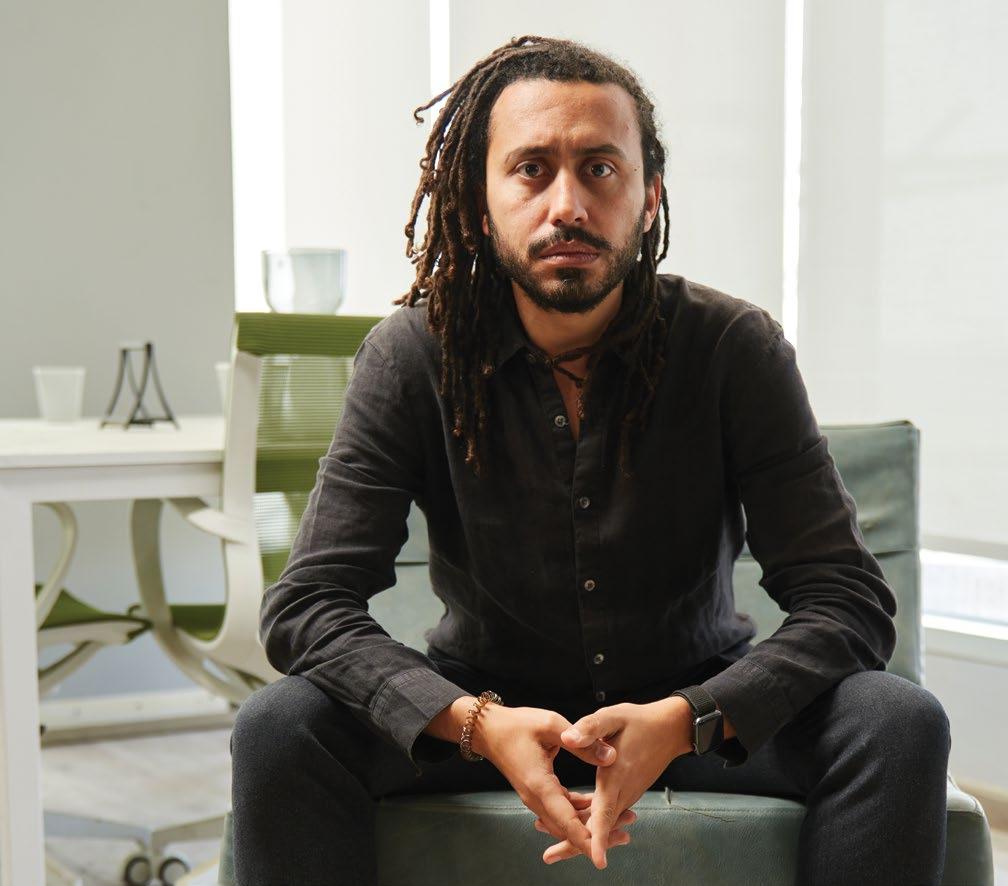
Bedeir Rizk, CEO of PARAGON–ADEER
HOW DID THE PARAGON–ADEER PARTNERSHIP COME TOGETHER, AND WHAT CAN IT ACHIEVE THAT NEITHER COMPANY COULD HAVE DONE ALONE?
The partnership came together around a very clear gap we saw in the market. On one side, Adeer International, the global investments arm of Sumou Holding, brings strong institutional capital and the long-term investment discipline that Sumou has built its reputation on in Saudi Arabia. On the other hand, PARAGON Developments has deep local market understanding, execution capability, and cultural insight in Egypt.
What we realised early on is that neither of those elements alone is enough to deliver the next generation of urban developments. You need both, structured, long-horizon capital and a developer who understands how the city actually functions on the ground.
Our vision for PARAGON–ADEER was to build a platform that brings those two together in a genuinely scalable way, not just for one project, but as a repeatable model for future developments across Egypt and the region.
WHAT MADE EGYPT THE RIGHT MARKET FOR SUMOU’S FIRST MOVE IN, AND WHY NOW?
Egypt today sits at a meaningful inflection point. The fundamentals are strong: population growth, urban expansion, and sustained demand, but there is also a clear need for a new generation of urban environments that match how the country is actually changing.
From an investment perspective, that combination creates a compelling long-term opportunity. But timing is equally important. We are seeing a convergence of factors right now: regulatory progress, infrastructure delivery, a tourism sector that is entering one of its strongest chapters in decades, and growing regional capital
flows into Egypt, which together make this the right moment to enter at scale. The opening of the Grand Egyptian Museum and the broader repositioning of Egypt as a global cultural and tourism destination are not incidental to a project like SUMOU Boulevard. They expand the addressable market for hospitality, retail, and mixed-use environments in ways that directly inform how we have shaped the development.
For Sumou Investments, this is a strategic anchor in the Egyptian market through Adeer International, and a longterm commitment to how the country’s cities will evolve. A figure of EGP 70 billion is not a short-term move; it reflects that conviction.
LARGE-SCALE DEVELOPMENTS
OFTEN FEEL INCOMPLETE UNTIL FUTURE PHASES ARRIVE. HOW ARE YOU ENSURING SUMOU BOULEVARD DELIVERS FROM DAY ONE?
This is something we have been very intentional about from the beginning, because it speaks to one of the most common failures in large-scale development. A lot of master-planned projects are designed around an aspirational long-term vision, and the early phases end up functioning as a kind of waiting room, under-activated, under-populated, and dependent on
WE ARE NOT BUILDING TOWARDS A COMPLETE VISION OVER TIME. WE ARE DELIVERING A SEQUENCE OF FULLY OPERATIONAL ENVIRONMENTS, EACH ONE WORKING ON ITS OWN TERMS WHILE CONTRIBUTING TO THE LARGER ECOSYSTEM.
later phases to deliver the experience that was promised on day one. We were determined that SUMOU Boulevard would not operate that way. From the outset, our approach has been to anchor the development
with real, operational components rather than future placeholders. The AI Campus is the clearest example. It is not positioned as a later-phase addition or a symbolic gesture toward innovation; it is being built into the first phase of the project, with clearly defined partners and programmes already in place. Through our agreements with Plug and Play, Schneider Electric, and Orange Egypt, we are not just introducing infrastructure but an active ecosystem. The AI 100 programme creates an immediate pipeline of startups operating within the campus from the early stages, which means the destination has genuine economic activity from day one, rather than waiting for occupancy to build over time.
The same logic applies to hospitality. Our partnerships with two internationally established operators in the development and launch immediately establish SUMOU Boulevard as a destination, not just for residents and tenants, but for visitors, business travellers, and the broader Cairo audience. Hospitality, when it is properly integrated, is one of the most effective tools for activating a mixed-use environment because it brings continuous footfall, evening activity, and a sense of place that is very difficult to create artificially.
In parallel, we are structuring the rollout of the branded residential, office, and retail components so that each phase is independently functional. That means activating key retail and F&B from the earliest stages, bringing in office tenants whose presence reinforces the campus environment, and ensuring the public realm, the streets, the open spaces, and the pedestrian network are fully usable and properly programmed from the start. The public realm is often the most under-invested element of large developments in this region, and we have approached it as core infrastructure rather than landscaping.
REAL ESTATE ON ITS OWN CAN CREATE INFRASTRUCTURE, BUT
IT DOES NOT CREATE
RELEVANCE.
The underlying philosophy is straightforward: we are not building towards a complete vision over time. We are delivering a sequence of fully operational environments, each one working on its own terms while contributing to the larger ecosystem. By the time SUMOU Boulevard is fully realised, the destination will not have arrived; it will have been there from the beginning.
WHAT
WAS THE THINKING BEHIND EMBEDDING AN AI CAMPUS AT THE HEART OF THE PROJECT, AND HOW DID THE PARTNERSHIPS WITH PLUG AND PLAY, SCHNEIDER ELECTRIC, AND ORANGE EGYPT COME TOGETHER?
For us, embedding an innovation layer into the development was not an add-on; it was fundamental to the concept.
If you look at how cities are evolving globally, the most dynamic environments are the ones where innovation, business, and everyday life intersect. We wanted SUMOU
Boulevard to operate within that same logic. The AI Campus is the anchor for that, a platform where startups, corporates, and technology partners can coexist within the same ecosystem.
The partnerships followed naturally from that vision. Plug and Play brings a global network and a proven startup platform. Schneider Electric brings deep expertise in infrastructure, energy, and smart systems. Orange Egypt contributes to connectivity and digital enablement. Each partner plays a specific role, but together
they allow us to build a functioning innovation ecosystem rather than a symbolic tech component.
THE AI 100 PROGRAMME COMMITS TO NURTURING 100 STARTUPS OVER FOUR YEARS. HOW DOES THAT SHAPE THE LONG-TERM IDENTITY OF THE DESTINATION?
The AI 100 programme is one of the most important elements of the longterm strategy.
Real estate on its own can create infrastructure, but it does not create relevance. Relevance comes from the people, companies, and ideas that occupy that infrastructure. By committing to developing 100 startups over four years, we are effectively seeding the ecosystem with the kind of activity that gives the project its identity. These companies will not just operate within the campus; they will shape how the entire destination evolves over time.
In that sense, it is less about supporting startups in isolation and more about building a community that will define the long-term character of SUMOU Boulevard.
WHAT
ARE THE BIGGEST CHALLENGES IN DELIVERING A PROJECT OF THIS COMPLEXITY ACROSS TWO MARKETS?
The biggest challenge in a project like this is not scale in itself. It is integration.
You are bringing together multiple asset classes, multiple stakeholders, and multiple timelines into one cohesive system. If those elements are not aligned, the project can easily fragment. Our focus has been on maintaining alignment across design, development, operations, and partnerships. That requires a very disciplined approach to planning, but also the flexibility to adapt as conditions evolve.
Operating across two markets adds another layer: different regulatory environments, different expectations, different ways of working. But we see that as a strength as much as a challenge, because it forces us to build a more robust and adaptable model.
WHERE DOES PARAGON–ADEER GO FROM HERE?
What this partnership shows is that cross-border real estate investment in the region is evolving. It is moving beyond capital deployment into something more structured and collaborative.
We are seeing a clear shift towards partnerships that combine capital, expertise, and execution in a more integrated way. That is what allows projects to scale, but also to deliver more complex, future-ready environments.
For SUMOU Boulevard by PARAGON–ADEER, is the first proof point of that model. The ambition is to build on this and expand into other developments, both within Egypt and potentially across the region. Ultimately, we see this as the beginning of a platform, not a one-off project, focused on creating the next generation of urban destinations.
FUJIFILM’S SHIN TAGAWA ON WHY THE MIDDLE EAST IS THE RIGHT MARKET AT THE RIGHT TIME
Best known for cameras and film, Fujifilm has quietly become one of the region’s most serious enterprise technology players. Managing Director Shin Tagawa explains how the company is helping the Middle East’s most regulated sectors navigate the shift to a secure, sustainable digital future.
BY AYA ZHANG
HOW FUJIFILM
REWROTE ITS OWN STORY
Fujifilm’s success in the Middle East and Africa has been driven by its ability to continuously innovate while remaining focused on creating value for customers and society. While many people still associate Fujifilm with photography, today it is a diversified technology company with strong positions across healthcare, business innovation, professional imaging, and consumer products such as Instax.
Its growth is not a story of moving from one business to another. It is a story of continuous evolution and diversification. Today, healthcare represents one of its largest and fastest-growing businesses globally and regionally. In the Middle East and Africa, the company supports healthcare providers through diagnostic imaging, healthcare IT, AIenabled technologies, endoscopy, ultrasound, IVD, and more recently, preventive healthcare initiatives such as NURA.
At the same time, its Business Innovation division continues to help organisations modernise workplaces through secure document management and digital workflow solutions, while its Imaging division remains highly relevant as demand for visual storytelling and content creation continues to grow.
The continued success of brands such as Instax among younger generations, alongside the strong adoption of its professional camera systems by photographers and content creators, demonstrates how Fujifilm continues to connect with customers across multiple industries and generations.
Ultimately, its success has been built on innovation, trusted partnerships, and its ability to adapt to changing market needs while staying true to its purpose of giving the world more smiles.
THE LAST LINE OF DEFENCE BETWEEN PAPER AND THE CLOUD
Highly regulated sectors require airtight governance, and Fujifilm addresses this by embedding zerotrust security frameworks directly into its hardware and software ecosystems. In practical terms, its technology acts as a secure bridge between the physical page and the digital cloud.
Its Apeos multifunction series features robust, multi-layered data encryption, secure user authentication, and automated audit trails. This ensures that sensitive financial data, patient records, or government documents cannot be intercepted or accessed by unauthorised personnel. Furthermore, its digital workflow solutions automate document routing, ensuring that data is encrypted both at rest and in transit, thereby helping organisations seamlessly comply with stringent local data protection laws.
WHERE VISION 2030 MEETS ENTERPRISE INNOVATION
The UAE and Saudi Arabia are global benchmarks for rapid digital transformation. Driven by visionary frameworks like UAE Strategy for Government Services and Saudi Vision 2030, both nations are actively moving toward hyper-connected, paperless, and highly secure digital economies.
This regulatory push creates an immediate and immense demand for sophisticated enterprise infrastructure. Organisations in these markets are not looking for incremental upgrades, they are looking for comprehensive digital transformation partners. By anchoring Fujifilm’s regional investments here, it aligns well with government mandates for smart cities, cloud adoption, and robust cybersecurity, making the UAE and KSA the ideal launchpads for the company’s latest enterprise innovations.
OUR GROWTH IS NOT A STORY OF MOVING FROM ONE BUSINESS TO ANOTHER. IT IS A STORY OF CONTINUOUS EVOLUTION AND DIVERSIFICATION.
WE
THE CIO AND THE CSO WALK INTO A MEETING. FUJIFILM HAS THE ANSWER.
Globally, Fujifilm is deeply committed to achieving net-zero CO2 emissions from its own operations by 2040, alongside an aggressive target to reduce emissions across its entire product lifecycle by 50% by 2030.
Sustainability and security are designed into the core DNA of its products, not treated as afterthought add-ons. Fujifilm differentiates itself by making sustainability commercially viable for its clients. Its Apeos
VIEW OUR DISTRIBUTORS AND PARTNERS NOT MERELY AS TRANSACTIONAL CHANNELS, BUT AS AN ABSOLUTE EXTENSION OF THE FUJIFILM FAMILY.
Multifunction Printing hardware utilises proprietary low-temperature fusing toner, which drastically lowers power consumption during operation, directly contributing to an energyefficient office environment. When paired with its enterprise-grade data security protocols, this provides corporate procurement teams with a dual-benefit solution — a choice that simultaneously satisfies the CIO’s risk management requirements and the Chief Sustainability Officer’s ESG mandates.
SAME STANDARDS, DIFFERENT TIME ZONES
Consistency across borders is achieved through a rigorous, centralised partner governance framework combined with localised enablement. Fujifilm views its distributors and partners not merely as transactional channels, but as an extension of the Fujifilm family.
To maintain its stringent standards of quality, the company provides continuous, direct technical training and strict service-level agreement monitoring. Partners are equipped with the same tools, technical knowledge, and support systems that its internal teams use. This ensures that whether an enterprise client interacts with a Fujifilm solution in Dubai, Riyadh, Muscat, or Cairo, they receive the same reliability, expert technical support, and customer experience that defines the brand globally.
WHO RUNS AI IN THE MIDDLE EAST?
Business Today Middle East’s
definitive list of the leaders building, funding, governing and deploying artificial intelligence across the region.
For decades, the Gulf’s influence was measured in barrels, pipelines, and sovereign wealth. Today, it is increasingly measured in compute, data, and intelligence.
The shift became impossible to ignore in 2026.
As global technology leaders converged on Riyadh and Abu Dhabi, the region emerged not merely as a customer of artificial intelligence but as one of its most ambitious architects. Saudi Arabia accelerated its sovereign AI ambitions through HUMAIN and a wave of partnerships with the world’s leading technology companies. In the UAE, Stargate UAE announced plans for one of the largest AI infrastructure developments ever undertaken outside the United States, positioning the country at the centre of the global race for computing power.
Yet the Middle East’s AI story is not fundamentally about data centres, chips, or billion-dollar investments. It is about people.
Across the UAE, Saudi Arabia, Qatar, and Bahrain, a new generation of leaders is reshaping how nations govern, businesses compete, capital is allocated, and innovation is created. They are ministers writing national AI strategies, researchers building frontier models, founders solving regional challenges with machine intelligence, investors deploying capital at unprecedented scale, and executives transforming entire industries through AI adoption.
The Business Today AI 50 is our annual list of the individuals driving the Middle East’s AI transformation. Every person featured here shares one defining characteristic: artificial intelligence is central to their mandate. They are the leaders building, funding, governing and deploying the technologies that will shape the region’s future.
As the global AI race intensifies, the region is no longer watching from the sidelines. It is building the infrastructure, institutions, and talent that will define the next chapter of the intelligence economy.
H.E. OMAR SULTAN AL OLAMA
MINISTER OF STATE FOR ARTIFICIAL INTELLIGENCE, DIGITAL ECONOMY AND REMOTE WORK APPLICATIONS, UAE
One of the most recognisable figures in global AI policy, H.E. OMAR SULTAN AL OLAMA was appointed the world's first Minister of State for Artificial Intelligence in 2017 — a milestone that signalled the UAE's intent to lead, not follow, in the race toward an AI-powered future. In 2020, his mandate expanded to encompass the digital economy and remote work applications, reflecting the growing intersection of these fields.
At the heart of his work is a clear ambition: to position the UAE as a global reference point for AI adoption, digital economic growth, and future-ready governance. His office leads the implementation of the UAE National Artificial Intelligence Strategy and the UAE Digital Economy Strategy, with the goal of establishing the country as a global hub for innovation in AI and robotics.
Beyond his ministerial role, Al Olama serves as Managing Director of the World Government Summit, Chairman of the Dubai Chamber of Digital Economy, and Deputy Managing Director and Board Trustee of the Dubai Future Foundation — a combination of roles that places him at the centre of the UAE's broader vision for the future.
H.E. KHALDOON KHALIFA AL MUBARAK
MANAGING DIRECTOR AND GROUP CEO, MUBADALA INVESTMENT COMPANY; CHAIRMAN, MBZUAI BOARD OF TRUSTEES
As Managing Director and Group CEO of Mubadala, the $385 billion sovereign investment firm, H.E. KHALDOON KHALIFA AL MUBARAK is a founding member and Secretary General of the Artificial Intelligence and Advanced Technology Council, Vice Chairman of MGX and a board member of G42. In February 2025, he was appointed Chair of the Board of Trustees of the Mohamed bin Zayed University of Artificial Intelligence, the first university dedicated entirely to the advancement of science through AI.
H.E. DR. SULTAN AL JABER
UAE MINISTER OF INDUSTRY AND ADVANCED TECHNOLOGY; CEO, ADNOC; COP28 PRESIDENT Few leaders in the region carry a mandate as far-reaching as H.E. DR. SULTAN AL JABER. As Minister of Industry and Advanced Technology, he has helped grow the UAE’s industrial sector into the second-largest contributor to non-oil GDP, valued at AED 205 billion in 2024. As CEO of ADNOC since 2016, he has transformed one of the world’s major energy companies, embedding AI and advanced technology at the core of its operations while introducing it to global capital markets for the first time.
On the world stage, his COP28 presidency delivered the UAE Consensus, a landmark climate agreement coordinated across more than 200 countries and widely regarded as the most ambitious outcome since the Paris Agreement. The presidency mobilised over $85 billion in new climate financing commitments and launched ALTERRA, the world’s largest private fund dedicated to catalysing climate investment. He also serves as the UAE’s Special Envoy for Climate Change, a role he has held since 2020 and previously from 2010 to 2016.
Beyond his ministerial and diplomatic roles, Dr. Al Jaber founded Masdar in 2006 and continues to serve as its Chairman, and chairs the Board of Trustees of Mohamed bin Zayed University of Artificial Intelligence, the world’s first graduate-level AI research university.
H.E. DEEMAH ALYAHYA
SECRETARY-GENERAL, DIGITAL COOPERATION ORGANISATION (DCO)
H.E. DEEMAH ALYAHYA made history as the founding Secretary-General of the Digital Cooperation Organisation, and the first Saudi woman to lead an international organisation. Since her appointment in 2021 and reappointment in May 2025, she has grown the DCO from five founding member states to sixteen nations representing over $3.5 trillion in combined GDP and more than 800 million people — building a multilateral institution dedicated to digital and AI economic cooperation from the ground up.
Before the DCO, she led Saudi Arabia’s National Digital Transformation Unit and drove the Saudi Codes programme, training more than 1.2 million people in digital skills. She also founded Women Spark, which has trained over 26,000 women in technology since 2013. In March 2026, she received the Technology Diplomacy Award at The Montgomery Summit.
H.E. PROF. ABDULLAH ALGHAMDI
PRESIDENT, SAUDI DATA AND AI AUTHORITY (SDAIA)
As the founder and President of the Saudi Data and AI Authority, H.E. PROF. ABDULLAH BIN SHARAF ALGHAMDI sits at the heart of Saudi Arabia’s national AI agenda. SDAIA is the Kingdom’s primary authority for data and artificial intelligence, responsible for driving the country’s AI strategy and positioning Saudi Arabia as a global leader in the field.
With over 30 years of experience in information technology, Alghamdi has led some of the Kingdom’s most consequential digital initiatives. Beyond founding SDAIA, he established the Saudi Federation for Cybersecurity, Programming and Drones, and previously served as Director of the National Information Center. He has held senior roles across multiple government entities, including the Royal Court and the Ministry of Education.
H.E. ENG. ABDULLAH ALSWAHA
MINISTER OF COMMUNICATIONS
AND INFORMATION TECHNOLOGY, SAUDI ARABIA
As Saudi Arabia’s Minister of Communications and Information Technology since 2017, H.E. ENG. ABDULLAH ALSWAHA has been one of the most consequential architects of the Kingdom’s digital and AI transformation. Under his leadership, the ministry has driven the country’s rise as a global technology hub, underpinning Vision 2030’s ambitions across digital infrastructure, AI adoption and the broader knowledge economy.
Before his ministerial appointment, Alswaha served as Saudi Arabia’s Chief Digital Officer, leading national digitisation efforts including a digital identity scheme and open data initiatives, and prior to that as CEO of Cisco Saudi Arabia. He also founded Ubieva, a social entrepreneurship incubator that launched the first mobile health app in the Middle East.
Beyond his ministerial role, he chairs the Communications, Space and Technology Commission, the Digital Government Authority, the Saudi Space Agency and NEO Space Group, and sits on the boards of NEOM, Alat and HUMAIN — placing him at the centre of the Kingdom’s most strategically significant AI and technology ventures.
H.E. MOHAMMED BIN ALI BIN MOHAMMED AL MANNAI
MINISTER OF COMMUNICATIONS AND INFORMATION TECHNOLOGY, QATAR
As Qatar’s Minister of Communications and Information Technology, H.E. MOHAMMED AL MANNAI leads the country’s digital transformation agenda in alignment with Qatar National Vision 2030. His ministry oversees the development of digital infrastructure, regulation of the communications and technology sector, and the implementation of Qatar’s Digital Agenda 2030 — all of which encompass the country’s growing AI priorities.
A seasoned ICT leader, Al Mannai previously served as President of the Communications Regulatory Authority and CEO of the Qatar National Broadband Network, and held senior positions at Ooredoo Qatar.
H.E. ENG. AMAL ABDULRAHIM
CHIEF AI AND INNOVATION OFFICER; ASSISTANT UNDERSECRETARY, MINISTRY OF CLIMATE CHANGE AND ENVIRONMENT, UAE
As Chief AI and Innovation Officer at the UAE Ministry of Climate Change and Environment, H.E. ENG. AMAL ABDULRAHIM leads digital transformation and operational efficiency initiatives in support of the country’s climate and sustainability goals. Her work sits at a consequential intersection — applying AI to one of the most urgent policy agendas of our time.
Her broader career spans the Ministry of Education, where she drove the Innovation Strategy 2030 and Higher Education Strategy 2031, the Prime Minister’s Office, where she contributed to the 50-Year Government Performance Roadmap, and Dubai Municipality, where she focused on quality management and strategic planning. She also contributed to COP28.
DR. MARWAN ALZAROUNI
CEO OF AI, DUBAI DEPARTMENT OF ECONOMY AND TOURISM; CEO, DUBAI BLOCKCHAIN CENTRE
DR. MARWAN ALZAROUNI holds dual mandates that sit at the intersection of government strategy and frontier technology. As CEO of AI at Dubai’s Department of Economy and Tourism, he leads the city’s AI initiatives under Dubai’s Universal Blueprint for Artificial Intelligence — the strategic framework positioning Dubai as a global leader in AI implementation. Simultaneously, as CEO of the Dubai Blockchain Centre, he oversees one of the region’s most active platforms for blockchain education, industry collaboration and digital economy development.
With over two decades of experience spanning information security, digital forensics, blockchain and AI, he was a founding member of both the Dubai Electronic Security Centre and the Artificial Intelligence Ethical Committee.
TAREQ AMIN
CEO, HUMAIN
Few appointments in 2025 signalled the region’s AI ambitions as clearly as TAREQ AMIN’s appointment as CEO of HUMAIN, a full-stack AI company owned by Saudi Arabia’s Public Investment Fund and chaired by Crown Prince Mohammed bin Salman. Under his leadership, HUMAIN is building what it aims to be the region’s defining AI company, delivering AI-native platforms across infrastructure, cloud, data and models, and applications.
Amin brings a rare depth of experience to the role. Before HUMAIN, he served as CEO of Aramco Digital, driving digital transformation across the Kingdom. Prior to that, he launched Rakuten Symphony in 2021, a platform converging IT and telecom networks for operators worldwide, and simultaneously served as CEO of Rakuten Mobile in Japan. Earlier in his career, he contributed to the transformation of India’s mobile industry at Reliance Jio and held senior roles at Huawei and T-Mobile.
SAEED AL FALASI
EXECUTIVE DIRECTOR, DUBAI CENTRE OF ARTIFICIAL INTELLIGENCE, DUBAI FUTURE FOUNDATION
As Executive Director of the Dubai Centre of Artificial Intelligence at Dubai Future Foundation, SAEED AL FALASI leads efforts to help government entities adopt AI in ways that improve public services at scale. He also directs Dubai Future Accelerators and Area 2071, where global companies collaborate with the government on real-world AI pilots.
With two decades of experience spanning AI, government, tourism and private enterprise, Al Falasi brings a rare understanding of how to translate AI strategy into practical, lasting outcomes across complex public sector environments.
H.E. FAISAL AL BANNAI
CHAIRMAN, EDGE GROUP; ADVISOR TO THE UAE PRESIDENT FOR STRATEGIC RESEARCH AND ADVANCED TECHNOLOGY AFFAIRS; SECRETARY GENERAL, ADVANCED TECHNOLOGY RESEARCH COUNCIL (ATRC)
H.E. FAISAL AL BANNAI occupies a rare position at the intersection of defence technology, advanced research and national innovation strategy. As Chairman of EDGE Group, one of the world’s leading advanced technology and defence organisations, and Secretary General of the Advanced Technology Research Council, he plays a central role in shaping Abu Dhabi’s knowledge economy across academia, the public sector and private enterprise.
In April 2024, he was appointed Advisor to the UAE President for Strategic Research and Advanced Technology Affairs, with the rank of Minister — a recognition of the breadth and significance of his contribution to the UAE’s technological transformation. He is also a member of the Artificial Intelligence and Advanced Technology Council, reinforcing his influence over the country’s AI agenda at the highest level.
His entrepreneurial credentials are equally compelling. Al Bannai founded Axiom Telecom, which grew into the largest distributor of mobile devices in the Middle East with an annual turnover of $2.5 billion — a venture that established him as one of the region’s most consequential technology entrepreneurs long before his public sector roles.
LT. COL. DR. ESSA ALMUTAWA
CHIEF AI OFFICER, DUBAI CIVIL DEFENCE
As Chief AI Officer at Dubai Civil Defence, LT. COL. DR. ESSA ALMUTAWA has established a strategic framework for AI integration across one of the UAE’s most critical public safety organisations, fostering a culture that prioritises and accelerates AI adoption throughout the institution. His work sits at the intersection of technology and public safety, an increasingly important frontier for AI deployment in the region.
H.E. MATAR SAEED ALHEMEIRI
CHIEF EXECUTIVE, DIGITAL DUBAI GOVERNMENT ESTABLISHMENT
As Chief Executive of the Digital Dubai Government Establishment, H.E. MATAR SAEED ALHEMEIRI leads one of the region’s most ambitious digital transformation mandates — overseeing the digital infrastructure, shared government services and data centres that underpin the daily experience of millions in Dubai.
With over 20 years in government service, AlHemeiri has been instrumental in digitising public services and city experiences at scale. Before assuming his current role in 2023, he served as Assistant CEO of the Smart Dubai Government Establishment, overseeing shared government services and the city’s core digital infrastructure.
MOHAMMED ALI ALQAED
CHIEF EXECUTIVE, INFORMATION AND EGOVERNMENT
AUTHORITY (IGA), BAHRAIN As Chief Executive of Bahrain’s Information and eGovernment Authority, MOHAMMED ALI ALQAED has driven the Kingdom’s digital government transformation for nearly two decades. In December 2025, the iGA announced plans to integrate Amazon Bedrock into the government AWS cloud to support generative AI development across public services — a significant milestone in Bahrain’s AI agenda.
DR. LAMYA ALOMAIR
EXECUTIVE EXPERT AND ADVISOR, TECHNOLOGY FORESIGHT AND DIGITAL ECONOMY, MINISTRY OF COMMUNICATIONS AND INFORMATION TECHNOLOGY, SAUDI ARABIA
DR. LAMYA ALOMAIR brings over two decades of experience at the intersection of artificial intelligence, healthcare technology and national digital strategy. Currently advising the Saudi Ministry of Communications and Information Technology on technology foresight and the digital economy, she has contributed to national AI and bioinformatics strategy development through multiple government committees. She previously led AI and Bioinformatics at King Abdullah International Medical Research Center, where she applied AI to healthcare delivery and clinical decision-making. One of the first Saudi women to obtain a Computer Science degree from King Saud University, she holds a PhD in Bioinformatics and Computational Biology from George Mason University.
AHMED KHALIFA AL HOUQANI
CHIEF AI OFFICER, UAE GENERAL CIVIL AVIATION AUTHORITY (GCAA)
As Chief AI Officer at the UAE General Civil Aviation Authority, AHMED KHALIFA AL HOUQANI leads national efforts to embed artificial intelligence into the core of aviation systems, from air traffic control to infrastructure intelligence. With a background in IT leadership, AI strategy and digital transformation, his work spans optimising operations, ensuring compliance and deploying AIdriven planning tools across government systems.
JOSEPH NADI
CHIEF AI AND TECHNOLOGY OFFICER, ABU DHABI TAMM
As Chief AI and Technology Officer at Abu Dhabi TAMM, JOSEPH NADI is leading the transformation of Abu Dhabi’s government services platform into an AI-native, agentic ecosystem — redefining how citizens, residents and businesses interact with government. With deep expertise in data and AI across the public sector, he previously served as Chief Data Architect for the Abu Dhabi Government, establishing the governance framework for a governmentwide data transformation initiative.
His broader career spans senior leadership roles at Core42, Microsoft, Oracle, Avanade and KPMG, delivering data and AI programmes across the Middle East and Africa. He holds an MBA with honours from IE Business School.
ABDULLA HAMAD AL-MISNAD
CHAIRMAN, QAI
ABDULLA AL MISNAD is Chairman of Qai, Qatar’s national artificial intelligence company and a subsidiary of the Qatar Investment Authority (QIA). Qai was launched to build and operate AI infrastructure and systems in Qatar and globally, supporting the country’s shift toward a knowledgebased economy under Qatar National Vision 2030.
The company develops secure, scalable AI capabilities, provides access to high-performance computing, and works with research institutions and policymakers to accelerate responsible AI adoption and strengthen Qatar’s innovation ecosystem.
LATIFA ALSHEHHI CHIEF AI OFFICER, UAE MINISTRY OF INVESTMENT
As Chief AI Officer at the UAE Ministry of Investment, LATIFA ALSHEHHI architects data and AI strategies that position the UAE as a global investment destination. Her decade-long career across government entities includes leading data-driven transformation at the Roads and Transport Authority, where she developed AI ethics frameworks and data governance programmes that directly impacted urban mobility and infrastructure planning, and serving as Head of Smart Data at the Federal Competitiveness and Statistics Centre, where she played a founding role in establishing the UN Global Platform for Big Data and Data Science in the MENA region.
She championed the UAE Open Data Portal and the Emirates Data Network, and serves as the youngest member of the United Nations Committee of Experts in Big Data and Data Science.
AHMAD O. AL-KHOWAITER
EXECUTIVE VICE PRESIDENT TECHNOLOGY AND INNOVATION, ARAMCO
As Executive Vice President of Technology and Innovation at Aramco, AHMAD AL-KHOWAITER oversees one of the most ambitious industrial AI programmes in the world. Aramco has developed the energy industry’s first industrial Large Language Model, operates some of the Middle East’s most powerful supercomputers, and has identified over 400 AI use cases being scaled across its global operations. In 2024 alone, the company generated $4 billion in technology realised value, with approximately half driven by AI solutions.
A 40-year Aramco veteran with degrees from King Fahd University, the University of California and MIT Sloan, AlKhowaiter has been a leading voice on the intersection of AI and energy — most recently speaking at the 2025 Adopt AI International Summit in Paris, where he outlined Aramco’s vision for industrial AI leadership and announced the opening of a new Aramco Ventures office in France.
OLAYAN ALWETAID
GROUP CEO, STC GROUP
As GCEO of stc Group since 2021, OLAYAN ALWETAID has led the Kingdom’s largest telecom operator into AI and digital infrastructure at scale. stc’s data centre subsidiary center3 formed a joint venture with HUMAIN to build 1GW of AI data centre infrastructure in Saudi Arabia, designed to support large language models and mission-critical AI workloads. With $41 billion in assets and $15.4 billion in revenue in the first nine months of 2025, stc is among the region’s most influential digital enablers.
MOHAMMAD ALOMAIR CEO, ELM
As CEO of Elm, MOHAMMAD ALOMAIR oversees some of Saudi Arabia’s most widely used digital platforms, including Absher, Nusuk and Muqeem. Under his leadership, AI has become central to Elm’s strategy — including a partnership with the Saudi Company for Artificial Intelligence to develop public sector AI applications and the deployment of Nuha, Elm’s Arabic-language AI assistant. Since taking the helm in 2024, he has also led Elm’s $907 million acquisition of Thiqah Business Services, with revenues growing 26.1% to $1.8 billion in the first nine months of 2025.
TALAL AL KAISSI
CEO, CORE42; ACTING GROUP CHIEF GLOBAL AFFAIRS OFFICER, G42
As CEO of Core42 and Acting Group Chief Global Affairs Officer at G42, TALAL AL KAISSI sits at the intersection of AI infrastructure, sovereign cloud and global government engagement. At Core42, he previously structured landmark partnerships including the strategic collaboration with Microsoft, aligning commercial scale with sovereign requirements and positioning G42 and Core42 as credible global partners in AI infrastructure.
Earlier as CEO of G42 Cloud, he established the platform as the UAE’s National Sovereign Cloud provider, enabling digital transformation across government and regulated sectors and laying the foundation for sovereign cloud and AI services now scaled globally. His broader career spans the UAE Space Agency, nine years at the UAE Embassy in Washington DC as Senior Advisor for Commercial Affairs, and a central role in negotiations with NASA supporting the Emirates Mars Mission.
PENG XIAO GROUP
CEO, G42
As Group CEO of G42, PENG XIAO leads one of the most strategically significant AI companies in the world, overseeing its business and product strategy across a broad portfolio of industry verticals. Under his leadership, G42 has grown into a global force in artificial intelligence, forging high-profile international partnerships and positioning the UAE as a serious player in the race to shape AI’s future.
Before joining G42, Peng spent a decade at MicroStrategy as Senior Executive Vice President, Chief Technology Officer and Chief Information Officer, building deep expertise in enterprise software and technology leadership. He also serves as a board member of Mohamed bin Zayed University of Artificial Intelligence (MBZUAI), the world’s first graduate-level AI research university, reinforcing his commitment to advancing the region’s AI ecosystem beyond the commercial sphere.
ASHISH KOSHY
CEO, INCEPTION
As CEO of Inception, G42’s applied AI subsidiary, ASHISH KOSHY leads one of Abu Dhabi’s most significant enterprise AI companies, delivering applied AI solutions across national companies and government entities. At Make it in the Emirates 2026, he unveiled Inception’s latest direction — the concept of the agentic employee — positioning intelligent autonomous systems as central to the UAE’s vision of expanding AI across government operations.
AHMED YAHIA AL IDRISSI
MANAGING DIRECTOR AND CEO, MGX
As CEO of MGX, AHMED YAHIA AL IDRISSI leads a technology investment company focused on accelerating the development and adoption of AI and advanced technologies in the UAE and globally. He serves as Chairman of MGX’s Investment Committee, which is mandated to develop investment policies, establish guidelines and approve all proposed projects in line with the company’s strategy.
Before MGX, he served as CEO of Private Equity at Mubadala, overseeing investments across technology, healthcare, energy and financial services, and was previously a Partner at McKinsey and Company, where he co-led the Principal Investor practice and served as Managing Partner of the Abu Dhabi office. He holds an MSc from MIT and an Engineer’s degree from Ecole Centrale Paris, both with highest honours.
CHIARA MARCATI
CHIEF AI ADVISORY AND BUSINESS OFFICER, AI71
With two decades as a Partner at McKinsey and Company, where she led QuantumBlack — the firm’s specialist AI division — across the Europe, Middle East and Africa region, CHIARA MARCATi brings deep hands-on experience in generative AI deployment, advanced analytics strategy and AIdriven transformation at scale. She holds an MSc in Telecommunication Engineering, summa cum laude, from the University of Pisa and an MBA from HEC Paris.
ABDULLAH ASIRI
FOUNDER AND CEO, LUCIDYA
ABDULLAH ASIRI founded Lucidya in 2016, building one of the earliest AI SaaS companies in the Middle East into the region's leading customer experience platform. Its latest offering — CX AI Agents that resolve customer cases end-toend without human intervention — is trained on billions of regional CX interactions accumulated over a decade. Asiri holds an MSc in Computer Science with a specialisation in AI from KAUST.
DR. MOHAMMED ALHUSSEIN
FOUNDER AND CEO, MOZN
DR. MOHAMMED ALHUSSEIN founded Mozn in 2017 and has built it into one of Saudi Arabia’s most recognised homegrown AI companies. At the heart of its offering is FOCAL, an end-to-end financial crime management platform built on agentic AI that automates data integration, accelerates risk-scoring and streamlines alert triage for financial institutions across the region.
A PhD holder in Information Security from George Mason University, Alhussein previously served as an Assistant Professor at King Saud University and brings deep technical foundations to his entrepreneurial work.
ELIE HABIB
CO-FOUNDER AND CEO, ANGHAMI
ELIE HABIB built World Monitor in a single day in January 2026 as a personal learning exercise. Ten days later, it had 400,000 users in a week. During the Iran escalation, it reached 490,000 visitors in a single day across 174 countries — establishing itself, in the words of its users, as a Bloomberg Terminal for geopolitics.
The platform’s power lies in its AI architecture. Every incoming article passes through three sequential classification layers, culminating in an LLM that refines categorisation in real time. A convergence algorithm simultaneously triangulates eight independent signal types — from military flight patterns and naval movements to internet outages and satellite-detected fires — surfacing only what multiple independent sources corroborate. No human editors. No paywalls during active conflict. Just signal distillation at a scale that previously required significant enterprise infrastructure.
For Habib, World Monitor is less a product than a proof of concept. “AI closes the gap,” he says. “A single person can now build a platform that does much of what expensive systems do.” Beyond World Monitor, he remains CEO of Anghami, the Middle East’s leading music streaming platform, which he co-founded and grew into a regional institution before its Nasdaq listing.
THOMAS PRAMOTEDHAM
CEO, PRESIGHT
Since taking the helm at Presight in 2022, THOMAS PRAMOTEDHAM has led the company to a successful ADX listing and surpassed AED 3 billion in revenue in 2025, representing 36.9% year-on-year growth across 19 countries in the Middle East, Central Asia and Africa. Under his leadership, Presight has established itself as a leading applied AI company, translating advanced artificial intelligence into practical, scalable outcomes across industries.
A principled advocate for responsible technology, Pramotedham sits on the boards of AIQ, the ADNOCPresight energy AI joint venture, and the Samruk Kazyna-Presight Joint Venture, a partnership with Kazakhstan’s $70 billion sovereign wealth fund. Prior to Presight, he held leadership roles at G42 and served as CEO of Esri Singapore, contributing to Singapore’s Smart Nation programme.
PROFESSOR JÜRGEN SCHMIDHUBER
CO-CHAIR, CENTER OF EXCELLENCE FOR GENERATIVE AI, KAUST
Few researchers can claim to have shaped the foundations of modern AI as fundamentally as Professor JÜRGEN SCHMIDHUBER. His lab developed Long Short-Term Memory, the most cited AI of the 20th century, and his early work laid the groundwork for Generative Adversarial Networks, the linear Transformer principles behind ChatGPT, and neural network distillation methods that underpin efficient training of models including DeepSeek.
The New York Times once captured his influence with a simple headline: “When AI Matures, It May Call Jürgen Schmidhuber ‘Dad.’”
Now Co-Chair of the Center of Excellence for Generative AI at KAUST, Schmidhuber leads research spanning healthcare, drug design, natural language processing and robotics, while contributing to AI education and advising governments on AI strategy. He has authored over 400 peer-reviewed papers and co-founded multiple AI companies.
DR. NAJWA AARAJ
CEO, TECHNOLOGY INNOVATION INSTITUTE (TII)
A Princeton-trained cryptographer with a PhD earned with the Highest Distinction, DR. NAJWA AARAJ leads the Technology Innovation Institute, the applied research pillar of Abu Dhabi's Advanced Technology Research Council. With over 18 years of global experience spanning cybersecurity, autonomous robotics and AI, she has previously held senior roles at DarkMatter, IBM T.J. Watson Security Research and Intel Security Research Group. She holds patents in applied cryptography and machine learning-based IoT protection, serves as Adjunct Professor at MBZUAI, and was recognised at the Arab Woman Awards 2021 in partnership with the United Nations.
PROFESSOR ERIC XING
PRESIDENT, MOHAMED BIN ZAYED UNIVERSITY OF ARTIFICIAL INTELLIGENCE (MBZUAI)
As the first President of MBZUAI, the first university dedicated entirely to the advancement of science through AI, PROFESSOR ERIC XING has led the university’s extraordinary growth in fundamental AI research while assembling a world-class faculty. Under his leadership, partnerships have been established with IBM, Carnegie Mellon University, École Polytechnique, the Weizmann Institute of Science and others, and a state-of-the-art supercomputing centre optimised for distributed AI computation has been built.
A world-leading computer scientist with more than 400 research papers cited over 44,000 times, Xing previously served as a Professor of Computer Science at Carnegie Mellon University and founded Petuum Inc., recognised as a World Economic Forum Technology Pioneer in 2018.
PROF. MÉROUANE DEBBAH
PROFESSOR, KHALIFA UNIVERSITY; FOUNDING SENIOR DIRECTOR, KU DIGITAL FUTURE INSTITUTE
PROF. MÉROUANE DEBBAH'S work led to the development of NOOR, the largest Arabic language model at time of release, Falcon LLM, the top-ranked open source large language model at time of release, and the Falcon Foundation — collectively positioning the UAE as a global leader in generative AI. In 2024, he pioneered TelecomGPT, the first large language model tailored for the telecom domain. An IEEE Fellow with over 50 best paper awards and 100 patents, he is one of the most decorated AI researchers working in the region today. He holds over 100 patents, has received more than 50 IEEE best paper awards, and is an IEEE Fellow, WWRF Fellow, Eurasip Fellow and AAIA Fellow.
DR. AHMED SERAG
CHIEF AI OFFICER, WEILL CORNELL MEDICINE QATAR
DR. AHMED SERAG brings nearly two decades of AI expertise to his role directing the AI Innovation Lab at Weill Cornell Medicine Qatar, where he leads research in healthcare AI and its practical application. Before joining Weill Cornell, he served as Vice President and Global Director of Data Science and AI at Novartis, driving datadriven innovation at one of the world's largest pharmaceutical companies, and previously advanced AI algorithm development at Philips. He holds a PhD from Imperial College London and is a prolific author, keynote speaker and advisor on AI innovation and its ethical application.
DENA ALMANSOORI
GROUP CHIEF TECHNOLOGY AND INNOVATION OFFICER, ADNOC
DENA ALMANSOORI brings over two decades of experience across technology, AI and human capital to her role as Group Chief Technology and Innovation Officer at ADNOC, where she leads AI and technology strategy across the organisation. Her mandate encompasses integrating AI, IoT, robotics, data and advanced analytics to reimagine how energy is discovered, produced and delivered.
Before joining ADNOC, she served e& as Group Chief AI and Data Officer and Chief Human Resources Officer, establishing herself as one of the region’s foremost AI leaders. She holds an MBA from the University of Strathclyde, an MSc in Petroleum Engineering from Heriot-Watt University, and has completed an AI and Business Strategy programme at MIT Sloan. She serves on the World Economic Forum’s AI Governance Alliance and the MBZUAI Statistics and Data Science Advisory Board.
MOZA AL FUTTAIM
CHIEF AI OFFICER, AL-FUTTAIM GROUP
As the first Chief AI Officer at Al-Futtaim Group, one of Dubai’s most prominent family business conglomerates, MOZA AL FUTTAIM leads the group’s AI strategy across a diverse portfolio spanning automotive, financial services, retail, real estate and health. Reporting directly to Vice Chairman and CEO Omar Al Futtaim, her mandate focuses on leveraging AI to enhance operational efficiency, elevate customer experiences and accelerate business growth while fostering a culture of AI adoption and learning across the organisation.
ZACHARY BAMBACH
CHIEF AI OFFICER, PUBLICIS GROUPE MIDDLE EAST
When Publicis Groupe Middle East created the role of Chief AI Officer earlier this year, ZACHARY BAMBACH was the clear choice to fill it. His mandate spans the Groupe’s full regional operation — embedding AI across creative, media, data and technology to deliver faster, more measurable outcomes for clients, with a clear emphasis on practical impact over experimentation. Bambach brings more than a decade of experience in AI, marketing and business transformation across Publicis Groupe and Epsilon, including a central role in deploying MRCL, the Groupe’s proprietary AI platform, across client work and regional operations.
XI LIANG
CHIEF AI OFFICER, MASHREQ
As Chief AI Officer at Mashreq, XI LIANG leads the bank’s enterprise-wide AI strategy and execution, developing agentic AI platforms, establishing governed AI capabilities and delivering production-grade use cases across retail, corporate, risk and operations. Her mandate is concrete and measurable — translating AI investment into revenue growth, cost efficiency and improved customer experience while maintaining strong governance and responsible adoption.
Before joining Mashreq, she served as Head of Data and AI Products at Judo Bank, where she built the bank’s data and AI platform from the ground up. Her broader career spans McKinsey, where she led data and AI transformations for global organisations, IBM, where she contributed to enterprise AI research and secured multiple patents, and Endeavour Group, where she scaled data science capabilities across the business.
FARES AKKAD REGIONAL DIRECTOR, META MEA
FARES AKKAD leads Meta's business across the Middle East and Africa, overseeing commercial growth, policy engagement and AI expansion across more than 70 markets. Most significantly for the region's AI landscape, he led the rollout of Meta AI across Saudi Arabia, the UAE, Egypt, Jordan and Iraq — built natively into Facebook, Instagram and WhatsApp with full Arabic language support, marking one of the most consequential AI product launches in the Arab world.
With over 20 years of experience spanning strategy, media and technology, Akkad previously scaled Shahid into the world's largest Arabic VOD platform at MBC Group, and built his early career at Booz and Company, BCG and KPMG across media, technology and telecommunications.
ABDULLA ALJAZIRI
CHIEF AI OFFICER, DUBAI ELECTRICITY AND WATER AUTHORITY (DEWA)
As Chief AI Officer at Dubai Electricity and Water Authority, ABDULLA ALJAZIRI leads AI integration across one of Dubai’s most critical public infrastructure organisations, serving over 1.2 million customers. Under his leadership, DEWA has deployed Azure OpenAI Services to enhance customer experience and operational efficiency. Most recently, DEWA announced plans to deploy the world’s first AI-powered virtual engineer for its power network in June 2026.
AlJaziri previously served as Director and Senior Manager in DEWA’s Digital Disruption Department, building deep institutional knowledge of how AI can transform utility operations at scale.
DIMITRIS LIOULIAS
CHIEF STRATEGY AND AI OFFICER, DU
As Chief Strategy and AI Officer at du, one of the UAE’s leading telecoms operators, DIMITRIS LIOULIAS holds a dual mandate covering both the company’s overall strategic direction and its AI agenda. On the AI side, he oversees coordinated efforts to deliver internal operational benefits through AI while preparing du to offer AI services to the market.
He brings extensive experience across corporate strategy, digital transformation and mergers and acquisitions, having previously served as Vice President of Corporate Strategy at stc and Executive Director of Adjacencies at Ooredoo Group, as well as senior roles at Delta Partners and Orange Netherlands.
ANDREW KVÅLSETH GROUP
CEO, BEYON
Since taking the helm at Beyon in August 2024, ANDREW KVÅLSETH has led one of the region's most deliberate telecoms-to-technology transformations. Under his leadership, Beyon launched Bahrain's first AIready Sovereign HyperCloud, powered by Oracle Alloy and supporting over 200 AI services while keeping all government data within the Kingdom. The group has also deployed Orryx AI, an AI-driven cybersecurity platform that moves security from human-dependent models to machine-speed resilience. With $3.4 billion in total assets and operations across Bahrain, Jordan, the Maldives and the Channel Islands, Beyon now positions itself as an AI-driven technology group with connectivity as its foundation. Kvålseth previously held senior roles at Schibsted, Ooredoo and Telenor Group.
BADER ALMADI
VICE PRESIDENT, CISCO SAUDI ARABIA
As Vice President of Cisco Saudi Arabia, BADER ALMADI leads the company’s strategy and commercial operations in the Kingdom, with a specific mandate to build critical AI infrastructure across priority industries including financial services, energy, and entertainment. Cisco’s commitment to Saudi Arabia’s AI future includes a landmark 1GW joint venture with AMD and HUMAIN, alongside national-scale digital infrastructure programmes under the Country Digital Acceleration initiative. Almadi brings over 20 years of technology leadership experience, including his previous role as Managing Director of Google Cloud Saudi Arabia, where he launched Google Cloud in the Kingdom in 2023. He has advised the Ministry of Communications and Information Technology on international partnerships and represented Saudi Arabia at the G20 Digital Economy Taskforce.
CANER CANAK
DAVID MEADS
SENIOR VICE PRESIDENT, CISCO MIDDLE EAST, AFRICA, TÜRKIYE, ROMANIA AND CIS
As Senior Vice President overseeing Cisco’s operations across 80 markets, DAVID MEADS leads one of the region’s most active participants in AI infrastructure development. Under his leadership, Cisco joined the Stargate UAE consortium alongside G42, OpenAI, Oracle, NVIDIA and SoftBank Group to build a 1GW AI data centre in Abu Dhabi, with 200MW expected in the near term. Separately, Cisco, AMD and HUMAIN announced plans for a joint venture targeting 1GW of AI infrastructure development in Saudi Arabia by 2030.
With over three decades at Cisco, including a decade leading the company’s business across the Middle East and Africa, Meads oversees the Country Digital Acceleration programmes across the UAE and Saudi Arabia, positioning Cisco as a foundational partner in both countries’ AI ambitions.
GROUP DIRECTOR, ARTIFICIAL INTELLIGENCE,
OOREDOO GROUP
As Group Director for AI, Data and Analytics at Ooredoo Group, CANER CANAK leads enterprise AI strategy across nine operating countries and more than 150 million subscribers, spanning generative AI, agentic AI, computer vision and data monetisation. His work has delivered multi-million-dollar revenue and cost-efficiency uplift across the group, including in-house AI products that replaced external vendors and opened new B2B revenue lines across retail, banking and healthcare. He brings over 17 years of enterprise AI experience, previously leading AI transformations at Turkcell.
MANISH VAIDYA
HEAD OF AI, DEPARTMENT OF CULTURE AND
TOURISM, ABU DHABI
As Head of AI at the Department of Culture and Tourism Abu Dhabi, MANISH VAIDYA established the region’s first Big Tech-inspired AI Factory from the ground up, defining the strategy, building the team and operationalising AI products within the first year. The resulting portfolio of AI solutions has been recognised with more than ten international awards.
With over 15 years of experience across data science, applied AI and consulting spanning banking, fintech, travel and tourism, Vaidya holds an MSc in Business Analytics from Imperial College London and has completed the Leadership Journey Programme at INSEAD Abu Dhabi.
NAIM
YAZBECK PRESIDENT, MICROSOFT MIDDLE EAST AND AFRICA
As President of Microsoft Middle East and Africa, NAIM YAZBECK leads the company’s full portfolio of products and services across the region, with a mandate centred on empowering governments and businesses to harness AI for economic diversification and innovation. He spearheaded the landmark strategic partnership between Microsoft and G42, one of the most consequential AI infrastructure collaborations in the region, aimed at accelerating the adoption of cloud and AI technologies across the Middle East and Africa.
With over 25 years of experience in the ICT sector, Yazbeck has held several leadership roles at Microsoft since joining in 2009, most recently as General Manager for Microsoft UAE before his promotion to regional president in July 2025.
DELVING INTO THE PSYCHOLOGY OF LUXURY PROPERTY BUYERS
The psychology behind a luxury property purchase runs far deeper than square footage or yield projections. Status, legacy, belonging and identity all play a role, and understanding them changes everything.
BY FELICIA AGMYREN
For almost two decades, I’ve been involved in Abu Dhabi’s real estate sector, and over that time, I’ve seen the growth in demand from more discerning buyers seeking ever-more luxurious properties.
So it’s worth taking the time to understand the psychology that drives luxury property investment, and understanding that certainly helps steer investors towards the right purchasing decision.
I believe, in terms of the UAE’s luxury property market, the decision to buy is rarely driven by square footage alone. Behind every waterfront villa, branded residence or private penthouse lies a more complex set of motivations: status, security, legacy, belonging, privacy and the desire to turn success into something visible and permanent.
The psychology of the luxury buyer is more nuanced than mere displays of wealth. For high-net-worth individuals, a home is not simply an asset or address. It’s a statement of identity, a refuge from public life, a family anchor, a global mobility tool and, increasingly, a reflection of values.
And in a market as international, culturally diverse and ambitious as the UAE, understanding why people buy may be just as important as understanding what they buy.
COMMON TRAITS OF LUXURY PROPERTY INVESTORS
Given that we live firmly ensconced in the information age, most HNWI investors arrive well informed. They’ve read the market reports, know the comparable transactions, and they’re testing you as much
Felicia Agmyren, Founder & Managing Partner, REX Real Estate
as listening to you. They simply want your input, advice, and confidentiality.
And while any purchase decision is often steered by emotion (status, legacy, lifestyle), there’s a need for a rational architecture to justify it; things like yield projections, capital appreciation data and portfolio logic remain important.
Many are entrepreneurs or C-suite level people. I’ve seen that they identify opportunity through gut instinct refined by experience, not spreadsheets alone.
WHAT THEY’RE LOOKING FOR
Exclusivity, of course, matters. Limited supply, (penthouses, unique designs, for example) or a building or community that not everyone can enter holds appeal for this client segment.
Effortless living is key. Investors seek infrastructure that makes everything smooth and easy, from 24/7 concierge services to reliable maintenance and building management.
Another non-negotiable is having a view and abundant light, alongside architecture designed for greater privacy: private elevators, discreet parking and high boundary walls, for example.
Interestingly, despite seeing a certain desire for privacy and withdrawal, community is a pull for luxury investors. Many seek the likes of a private members’ club within the community, along with proximity to other high-net-worth individuals.
THE PSYCHOLOGY BEHIND IT ALL
That last point about community opens the door to a deeper understanding of the psychology behind luxury property purchase. I believe the key to it all is a sense of “identity anchoring”.
What I mean is that in a world of increasingly liquid assets and global mobility, property is the one thing that says I am here, I have arrived, this is mine. There seems to be a strong desire to purchase something permanent and stable in a world of flux.
And particularly among UHNW buyers from the Gulf, South Asia and Europe, property is viewed as generational wealth made tangible; something to transfer to children.
While luxury buyers rarely admit status as a driver, address, building name, and district all function as social signals within their peer group.
It’s an “if you know, you know” kind of thing, and that’s why we’ve seen the inexorable rise of branded residences. It’s a subtle wink (or a not-so-subtle statement sometimes), to those “in the know”.
HOW TO FIND THE RIGHT PROPERTY
Given my research into the psychology of luxury buyers, the first conversation is always 80% listening on my part. I take the opportunity to examine what investors say they want, against what they actually need. Often the stated preference (a three-bed on a high floor for example) masks a deeper priority (privacy, proximity to a school, or a specific view corridor).
Luxury buyers are busy people. We know that much. A curated shortlist, over volume, is always appreciated.
And I always anticipate their due diligence, by preparing service charge breakdowns, the developer’s track record, rental yield benchmarks, and exit liquidity data, for example, before they ask.
Of course, after almost two decades in this market, my connections often allow me to share off market listings, which means showing potential investors things they have not been shown before.
Ultimately, the luxury property market is still shaped by human need. While buyers may speak in the language of yield, location, views and capital appreciation, beneath those considerations lie the deeper questions: Where do I feel safe? What does success look like now? What am I building for my family? How do I want the world to see me?
For the UAE, this is where the opportunity lies. The country has already proved it can deliver scale, spectacle and architectural ambition.
But the next phase of luxury will depend on something more subtle: the ability to understand the emotional, psychological and lifestyle drivers behind each purchase.
In a market where the world’s most mobile buyers have more choice than ever, the properties that stand apart will be those that offer not just prestige, but meaning, belonging and a life people can imagine growing into.
FERRARI GOES ELECTRIC: INTRODUCING THE LUCE
When Ferrari unveiled the Luce in Rome on May 25, 2026, it did more than launch a new model. It opened one of the most significant debates in the brand’s history.
There are moments in the history of great luxury brands when evolution is not enough. The brand has to make a leap.
For Ferrari, that leap has arrived in the form of the Luce — the marque’s first fully electric car and one of the most debated models ever to come out of Maranello.
Unveiled in Rome on May 25, 2026, the Luce marks the beginning of a new chapter. Its name means light in Italian, and that symbolism is deliberate. This is not simply Ferrari entering the electric vehicle market. It is Ferrari attempting to redefine what an electric performance car can feel like when created through the lens of Italian design, exclusivity, engineering, and emotion.
The Middle East has always been one of Ferrari’s most passionate markets. The region’s ultra-high-networth buyers are among the brand’s most loyal and most demanding customers — people who do not simply buy Ferraris, but live with them, collect them, and care deeply about what the brand represents. In a market where the sound of a V12 engine is part of the ownership experience, the Luce arrives as both a provocation and a promise.
On paper, it is every bit a modern Ferrari. Four electric motors, one per wheel, delivering more than 1,000 horsepower. A 0–100 km/h time of around 2.5 seconds. A top speed above 310 km/h. The battery pack is reported at 122 kWh, supported by an 800-volt architecture and fast-charging capability of up to 350 kW, with Ferrari stating the car will offer more than
500 km of range. The performance credentials are beyond question.
But the true challenge was never just acceleration. Electric performance is no longer rare. What is rare is making an electric car feel alive.
Ferrari appears to understand this. Rather than creating an artificial engine soundtrack, the Luce uses a system that amplifies natural vibrations from the electric powertrain. Ferrari is not trying to make the Luce sound like a V12. It is trying to give electricity its own Ferrari voice. That distinction matters enormously — especially in a region where the theatre of a Ferrari is as valued as its speed.
The Luce is also visually bold, developed with input from Jony Ive, Marc Newson, and LoveFrom. Its design has already sparked
passionate debate, with some praising its futuristic form and others questioning whether it looks Ferrari enough. That response was probably inevitable. Any electric Ferrari was always going to be judged not only as a car, but as a statement about the future of the brand.
Perhaps the most radical thing about the Luce is not that it is electric, but that it is practical. Ferrari’s first five-seater, it represents a significant shift in how the brand thinks about space and usability. Expected to be priced at around €550,000, with deliveries beginning in the fourth quarter of 2026, the Luce is positioned exactly where Ferrari wants to be: exclusive, expensive, scarce, and emotionally charged.
The car’s unveiling triggered debate, criticism, and concern among traditional loyalists.
Former Ferrari chairman Luca di Montezemolo and Italian politician Matteo Salvini were among those who publicly criticised the model. Ferrari CEO Benedetto Vigna has defended it, emphasising that the Luce will not replace Ferrari’s combustion or hybrid models but expand the brand’s universe.
That is the crucial point. The Luce is not the end of Ferrari as we know it. It is an addition — and for a region that has always embraced Ferrari at its most extreme, it may prove to be one of the most intriguing additions yet.
Ferrari is saying that electricity does not have to mean silence, sameness, or compromise. It can mean a new kind of performance. A new kind of design. A new kind of emotion.
Whether the Middle East agrees will be one of the most fascinating automotive stories of 2026.
THE SCENT ECONOMY: INSIDE THE UAE’S BOOMING PERFUME MARKET
The UAE fragrance market runs on its own logic. Scent here is not an accessory to lifestyle. It is part of how lifestyle is built. Inside one of the world’s most distinctive perfume economies.
BY AMAL FARUK SALIK
In the UAE, perfume is not a finishing touch. It is identity infrastructure. It sits alongside fashion, watches and jewellery as a core luxury category — not an accessory to lifestyle, but a foundation of how lifestyle is constructed. What is emerging is what can best be described as a scent economy: a market where heritage fragrance houses, global luxury brands and niche perfumers compete on the same level, shaped by wealth, gifting culture and identity-driven consumption. Understanding it requires looking beyond the bottles.
HERITAGE IS NOT PRESERVED — IT IS ACTIVELY CONSUMED
The UAE fragrance market is rooted in tradition, but heritage here is not symbolic. It is functional and embedded in daily life. Oud, musk, amber and rose-based compositions are not heritage
categories in a marketing sense — they are everyday luxury staples, purchased frequently, layered deliberately, and reapplied throughout the day as a matter of routine.
Regional fragrance houses like Ajmal Perfumes and Arabian Oud have built their dominance by understanding this behavioural reality. Their presence across Dubai Mall and Mall of the Emirates reflects a demand that is rhythmic rather than occasional — high-frequency purchasing built around sensory habit rather than seasonal gifting alone.
Global brands have had to adapt to this intensity. Houses like Dior and Chanel have introduced stronger concentrations and Middle East-exclusive editions tailored to longevity and projection. The UAE does not simply consume global fragrance trends — it reshapes them.
FRAGRANCE AS A PRIMARY LUXURY CATEGORY
Unlike some global markets where fragrance serves as an entry point into luxury, the UAE positions it at the centre. Perfume carries the same cultural weight as watches, handbags and fine jewellery, and three structural factors explain why.
The first is purchasing power and demographic diversity. The UAE’s consumer base combines highincome nationals and expatriates, creating scale across both premium and ultra-premium segments. The second is gifting culture. Perfume is one of the most consistent luxury gifts during Ramadan, Eid, weddings and corporate occasions. Brands
like Rasasi have built entire product ecosystems around gifting formats and seasonal bundles designed specifically for these moments. The third is retail experience. In luxury department stores, fragrance is not a transactional purchase — it is guided, with scent profiling and layered consultations as standard. What sets UAE consumers apart is how strategic their approach is. Fragrance is rarely singular. It is curated — different scents for different times, moods and settings, built like a wardrobe rather than a collection.
NICHE PERFUMERY AND THE DIGITAL DISCOVERY REVOLUTION
The most significant recent shift in the UAE fragrance market is the rise of niche perfumery — and it is not primarily about price. It is about intent.
Fragrance has moved from logodriven recognition to scent-led identity. Consumers are increasingly
choosing fragrances that differentiate them rather than identify them with a recognisable brand. Houses like Maison Francis Kurkdjian, Le Labo and Amouage have gained traction because they prioritise composition and storytelling over mass familiarity.
At the same time, digital discovery has transformed purchasing behaviour. TikTok fragrance reviews, Instagram scent communities and influencer-led breakdowns now shape decisions before consumers enter a store. Blind buying — purchasing a fragrance without smelling it first — is increasingly normal, particularly among younger audiences.
This has accelerated niche growth while forcing traditional players to rethink narrative, packaging and digital presence. Even retailers are adapting, with virtual consultations, fragrance profiling tools and personalised recommendation systems that track customer preferences over time. Discovery is no longer retailled. It is algorithm-led.
The UAE fragrance market does not behave like a standard beauty category. It is not seasonal, entry-level or purely aesthetic. It exists inside social rituals, gifting systems, daily grooming habits and personal expression — and that depth of integration is precisely why the scent economy here continues to expand, not through disruption, but through repetition, ritual and identity.
GAMING
FROM PASSION TO PROFESSION:
DUBAI’S GAMING INDUSTRY GROWS UP
Once dismissed as a pastime, gaming is now one of the fastest-growing industries in the world. Dubai is not just watching that growth, it is actively positioning itself at the centre of it.
The students who turned up to the inaugural Dubai Esports and Games Festival’s Education and Gaming Summit earlier this month were not there to play. They were there to find jobs.
That distinction matters. It signals something significant about where the gaming industry in the UAE has arrived and where Dubai intends to take it. For a generation that grew up with controllers in hand, the conversation has shifted from hobby to career, from entertainment to economy.
The one-day summit, which brought together students and graduates aged 16 and over alongside industry experts, recruiters and university representatives, was part of the wider Dubai Esports and Games Festival running from 22 May to 7 June 2026. Its presence within a citywide programme of competitions, experiences and industry events was deliberate. Dubai is not treating gaming as a fringe cultural activity. It is treating it as infrastructure.
The summit’s format reflected that ambition. Alongside CV clinics and internship placements, attendees heard from representatives of DMCC, Bandai Namco, Tencent’s Level Infinite, Pixel Perfect MENA and TikTok LIVE — a roster that signals the scale of commercial interest now surrounding the regional gaming ecosystem. Practical workshops covered AI in game development and hands-on experience in designing playable experiences, giving students a sense of the technical and creative skills the industry actually demands.
For those shaping the region’s education pipeline, the moment feels significant. “Gaming has become one of the most powerful creative mediums through which young people communicate and engage with the world,” said Iyad Alsabouni, Assistant Professor of Game Design at the American University in Dubai.
“Education plays an important role in helping students move beyond being consumers of games to becoming thoughtful creators of meaningful interactive experiences.”
That shift — from consumer to creator — is at the heart of what Dubai is building. The emirate has long understood that attracting global industries requires more than infrastructure. It requires talent. And talent requires education, pathways and the kind of visible industry presence that tells a young person
their ambitions are taken seriously here.
The University of Wollongong in Dubai has positioned itself as a collegiate esports hub, supporting students across playing, media and operations roles. SAE University College Dubai, which has been building creative technology talent in the UAE for over two decades, sees events like the Education and Gaming Summit as essential connective tissue between classroom and industry. “Events such as this are vital in connecting education with industry, fostering collaboration, and ensuring the region’s gaming and esports ecosystem continues to grow and thrive,” said Anna Tookey, Head of Games at SAE.
The commercial opportunity behind all of this is significant. The Middle East and North Africa gaming market
is among the fastest-growing in the world, driven by a young, digitally native population, high smartphone penetration and rising disposable income. Dubai, with its infrastructure, regulatory environment and appetite for positioning itself at the frontier of emerging industries, is well placed to capture a meaningful share of that growth.
What the Education and Gaming Summit demonstrated is that the foundations are already being laid — not just in arenas and festivals, but in universities, career offices and the conversations happening between students and recruiters in spaces designed specifically for that purpose.
Gaming in Dubai is no longer just something people do. It is becoming something people build, study, and stake their careers on. That is what an economy looks like.
Doing our part for a better world
Follow our progress
go into it, and what happens to it at the end of a long, useful life.