




Main Contractor | Design & Build | CSA Contractor | Fit-Out



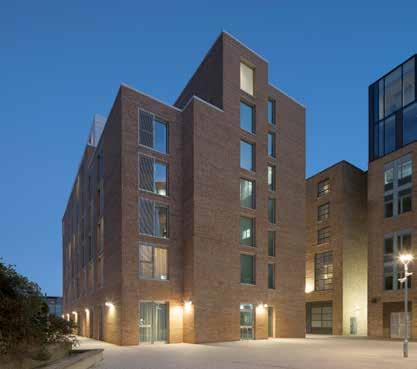

Buckley House, Maynooth University
Coleman Court Student Accommodation, Cork Woodlands Grove, Blackrock, Dublin
Hilton Hotel Extension, Charlemont, Dublin





5 AECOM 2026 Review: ‘Readiness’ is the key to unlocking Ireland’s potential 5 Tender activity surges as builders prepare for a busier 2026 7 Rising tide: 2025 housing supply jumps 20% amid persistent demand
NDP Sectoral Investment Plan (2026–2030)
9 Contractors to lead derelict-to-social housing drive in expanded Buy & Renew Scheme 9 Jones Engineering returns to iWish, reinforcing its commitment to women in STEM
Dublin’s College Green
Sisk commences OPW Building at Limerick’s Opera Square
Kingspan ramping up manufacturing capacity
14 Rowan announces senior and graduate appointments
14 ZeroOne appoints Stephen Byrne as COO
15 Elliott Group launches dedicated mission-critical division
15 Chadwicks appoints Eimear O’Reilly as HR Director
17 2025 Market Review and 2026 Outlook – Darragh Hogan, Milestone Advisory
18 Guaranteed Irish: Showcasing the value of local collaboration in construction –Bríd O’Connell, CEO, Guaranteed Irish
24 Meehan Green celebrates 10 years and a global future with KEO – Nellie Reid, Director, Meehan Green
30 “The transition to offsite manufacturing is no longer an ‘option’ - it is the only way forward” – Paul Tierney, CEO, MMC Ireland
32 Vision Contracting completes the landmark Globe Logistics Park in Naas
38 Construct Innovate programmes tackling barriers to wider MMC adoption for housing
41 Real-life engineering: How Glanua is bridging the skills gap
42 Rooted in sustainability: ITFMA AGM highlights the power of timber 42 Kirby announces fourth intake for college bursary scheme for women
43 2026 Octabuild Builders Merchant Excellence Awards officially launched
43 Wind Energy Ireland launches roadmap to Irish ‘electrostate’ at 2026 Annual Conference
44 Building cleaner and smarter: How AI can help Ireland hit net zero, and reskill the workforce to do it – Paul Lynch continues his AI in Construction series
48 The value of relationships far outweighs the satisfaction of being proven right – Lynsey Flanagan
50 SEAI Business Energy Upgrades Scheme: The retrofit application process simplified – Eamonn Sheils, SEAI Programme Manager for Commercial Retrofit
52 The CO2 Performance Ladder’s growing impact on Ireland’s construction sector – Marianne Ibrahim, Programme Manager, IGBC
54 Sisk secures seat as Sustainable Development Goal (SDG) Champions
54 Pipelife sets industry milestone with first Irish-made pipe EPDs
conversations slowing down your construction projects?
Minimise risks, reduce rework, and eliminate time wastage with custom dashboards that work for you.
Trimble
Trimble_official
TrimbleCorporate
TrimbleCorpNews DISCOVER MORE




PUBLISHER
Foundation Media Ltd
1 Northumberland Place, Dún Laoghaire, Co Dublin.
Tel: +353 (0)1 677 3157
EDITOR
Robbie Cousins robbie@foundationmedia.ie
DESIGN
Joanne Birmingham
CONTRIBUTORS
Marianne Ibrahim, Lynsey Flanagan, Darragh Hogan, Paul Lynch, Eamonn Sheils, Colm McHugh
PRINTER
WG Baird Ltd
ADVERTISING SALES
Joe Connolly
joe@foundationmedai.ie
Tel: +353 (0)86 396 6158
ADVERTISING AND PROMOTIONAL OPPORTUNITIES
To advertise in Irish Construction News or on www.constructionnews.ie, or to request a ratecard or details of promotional opportunities, contact Joe Connolly at joe@foundationmedia.ie
CONNECT WITH US ON SOCIAL MEDIA Twitter: @constructionnews.ie
Linkedin: Constructionnews.ie Facebook: Constructionnews.ie
SIGN UP FOR OUR E-NEWSLETTER
To get the latest news, articles and offers related to the Irish construction industry to your inbox sign up to our free e-newsletter at www.constructionnews.ie
ISSN 3088-6562 Vol 06 No 01
© All contents copyright Foundation Media Ltd
While every effort has been made to ensure that the information contained in this publication is correct, the publisher cannot not accept responsibility for any errors, omissions or discrepancies. Views expressed in this publication are not necessarily those of the publisher.
photocopying) or digital without the prior consent of the publisher.

To mark International Women’s Day on 08 March 2026, in this issue of Irish Construction News, I am delighted to feature just some of the women who are shaping the future of the Irish construction industry.
Whether advocating for policy shifts to deliver critical infrastructure and housing, showcasing Irish talent internationally, or leveraging their unique skills to help modernise the industry, their work and the work of many others is building a more inclusive, resilient, and innovative industry for everyone.
The latest Central Statistics Office (CSO) figures for 2025, which offer a significant boost for the industry. Ireland’s construction sector delivered 36,284 new homes—a 20.4% increase on 2024 and the highest output since the data series began in 2011. A “superquarter” in Q4 saw nearly 12,000 units completed, and while the total remains shy of some government targets, the double-digit growth suggests that planning reforms and state subsidies are yielding tangible results. Notably, apartment completions soared by nearly 39%, reflecting a major shift in Irish urban living.
However, scaling to meet future demand requires more than traditional methods. As Paul Tierney, CEO of MMC Ireland, emphasises, the transition to Modern Methods of Construction (MMC) is no longer an “option” but the only way forward to address our infrastructure needs. Supporting this transition, Construct Innovate is actively tackling systemic barriers through programmes like “STANDARDIZE” for Light Gauge Steel and a crucial study into 60-year façade durability. These initiatives are designed to streamline certification, lower costs, and align Irish standards with international best practices.
Sustainability also continues to evolve from a certification goal to a fundamental business strategy. The acquisition of Meehan Green by KEO marks a proud milestone, transforming an Irish boutique firm into a global platform for European expansion under the leadership of Nellie Reid. On the domestic front, the SEAI’s Business Energy Upgrades Scheme (BEUS) is simplifying commercial retrofitting for SMEs. Programme Manager Eamonn Sheils highlights a user-friendly application portal that estimates grant values with minimal data input, removing the hurdles often associated with larger tailored grants.
Our sector’s success rests on supporting the local ecosystem. Guaranteed Irish, led by Bríd O’Connell, carries the “Supporting business that supports Ireland” mandate. For building contractors, the “Guaranteed Irish House” initiative provides a one-stop shop for local procurement, showcasing a robust supply chain where every element of a build can be sourced from reliable, high-tech Irish members.
By combining record output with innovative techniques and a steadfast commitment to Irish talent, our industry is building a more resilient and sustainable future for 2026 and beyond.
Finally, Paul Lynch continues his essential series on leveraging AI for tangible value in Irish construction.
Catch all the latest industry news and expert commentary. Don’t miss out—scan the QR code to subscribe to our free e-newsletter!
Robbie Cousins
Scan to subscribe to free e-newsletter

CPAS is a construction industry specific pension provider. Whether you are an employer seeking to provide benefits for your employees or planning your own retirement, CPAS has the right solution for you.


Our dedicated team are here to support you, whether you are starting your business, growing your business, or planning for your future. For







The Irish construction sector enters 2026 at a crossroads.
While the industry is buoyed by record public funding and a proactive legislative environment, the gap between “wellfunded” plans and “shovels in the ground” remains a significant hurdle.
In its 51st Ireland Annual Review, AECOM identifies “readiness” as the critical enabler for transforming Ireland’s ambitious infrastructure pipeline into reality. The report forecasts 4% growth in construction output volume for 2026, alongside a stabilised tender price inflation rate of 3%.
Despite the government’s ‘Accelerating Infrastructure’ action plan released in December 2025, deep-rooted structural constraints persist. AECOM defines readiness as “strategic preparation”—the alignment of internal capabilities (skills, governance, and systems) with external factors like procurement strategy and pipeline certainty.
John O’Regan, Director and Country Lead for AECOM Ireland, emphasises that while the foundations are solid, the “delivery ecosystem” is under strain. “2026 must be a year of delivery readiness if the Republic of Ireland is to meet its social and economic goals,” O’Regan asserts. “Strong public finances provide the foundation, but readiness provides the capability to deliver consistently.”
The residential sector remains the industry’s primary engine, yet it continues to underperform. Despite a €5.2bn allocation in Budget 2026, completions are expected to fall well below national demand.
AECOM points to a “vicious cycle” where gaps in water, energy, and transport infrastructure impede the conversion of planning permissions into homes.
Furthermore, the report warns of “report fatigue”. Continued delays in major projects risk alienating international contractors and
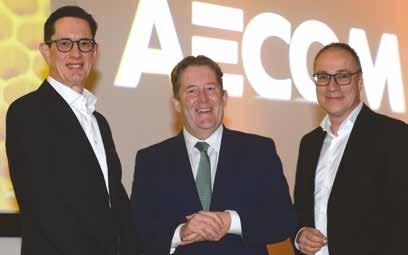
(L to r): Richard Whitehead, AECOM CEO for Europe and India; Darragh O’Brien, Minister for Transport and Minister Climate, Environment and Energy; and John O’Regan, Director and Country Lead for the Republic of Ireland at AECOM at the launch of the AECOM 2026 Review.
may drive domestic firms to seek more predictable opportunities abroad.
While geopolitical instability continues to weigh on private investor confidence, the domestic outlook is one of cautious optimism.
AECOM concludes that the industry’s resilience, supported by the new Accelerating Infrastructure Taskforce, can overcome current bottlenecks. However, the transition from “funded” to “delivered” will ultimately depend on how quickly agencies can build the internal capacity to manage complex, sequential approval processes and judicial reviews.
For the Irish construction industry, 2026 is not just about the volume of work—it is about being ready to execute it.
The Irish construction sector began 2026 on a muted note, as the latest AIB Construction Purchasing Managers’ Index (PMI) highlighted a ninth consecutive month of contraction. However, while headline activity remains soft, a significant uptick in new orders and business confidence suggests the industry may be nearing a turning point.
The January PMI reading reached 48.6, a marginal improvement from December’s 48.4 but still below the critical 50.0 “breakeven” mark.
According to John Fahey, Senior Economist at AIB, the weakness remains broad-based.
The residential sector continues to face headwinds, extending its period of decline to nine months with the pace of contraction actually worsening in January. This follows a 2025 calendar year that saw a record 36,284 home completions—a 20.4% year-on-year increase driven by a surge in apartments—yet still fell short of the
government’s revised target of 41,000 units.
Commercial construction emerged as the best-performing sub-sector as the pace of decline eased, while civil engineering remained the weakest overall, despite a slight moderation in its rate of contraction.
Despite the headline dip, the survey’s leading indicators offer a more “encouraging” outlook. The New Orders Index expanded for the second month running, hitting its fastest growth rate since March 2025.
Reflecting this forward-looking momentum:
• Job Creation: Staffing levels rose for the third consecutive month.
• Purchasing: Input buying increased as firms prepared for upcoming pipelines.
• Tender Activity: Respondents noted a rise in available tenders for the year ahead.
The road to recovery remains hampered by logistical and inflationary pressures. Suppliers’ delivery times lengthened again in January, and input costs rose at a faster clip than at the end of 2025, with copper cited as a primary driver of price hikes. Additionally, a reliance on sub-contractors led to a sharp decrease in their availability, resulting in rapidly increasing rates.
Despite current constraints, sentiment is at its highest level in a year. Over 34% of firms expect an increase in activity over the next 12 months, compared to just 10% who remain pessimistic. As the industry looks toward the 300,000-home target for 2030, the focus for 2026 will be translating this renewed optimism into boots on the ground.

Go Green Ireland is the Irish division of Go Green Ltd, an established waste management and recycling specialist founded in 2000.
Launched into Ireland in 2023, we bring 20+ years of proven industry expertise to deliver compliant, cost-effective and sustainable waste solutions; backed by smart reporting, strong supply chain management and nationwide capability.
From skip and container provision to consolidated waste services, we help customers improve recycling performance, control costs, and stay audit-ready with clear data and dependable service.
Contact Us
t: 01 968 4105
e: contact@go-green.ie
w: go-green.ie

• Dedicated Account Manager
• Nationwide Coverage
• LEED Reporting / BREEAM
• FOC Portal Reporting
• Next-day Service
• ESG Strategy Support
• One Invoice & One Payment Term
• Total Waste Management Benefits
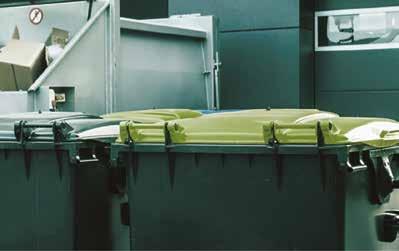
Ireland’s construction sector delivered a total of 36,284 new homes in 2025, — a 20.4% increase on 2024. According to the latest New Dwelling Completions report from the CSO, this marks the highest output since the data series began in 2011.
The year ended on a high note, with a “super-quarter” in Q4 seeing nearly 12,000 units completed. While the total fell shy of the government’s 41,000-unit target, the double-digit growth suggests that planning reforms and state subsidies are finally yielding results.
The data highlights a major shift in Irish urban living. Apartment completions soared by nearly 39%, with 12,047 units delivered. Unsurprisingly, Dublin remains the epicentre of this high-density growth; nearly 80% of all new apartments were built in the capital. Meanwhile, scheme dwellings (housing estates) remain the backbone of the market, accounting for over 18,300 units.
While the figures are a cause for optimism, the geographic concentration remains stark.
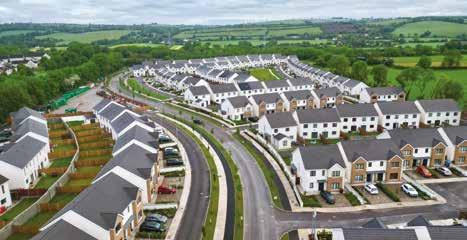
Dublin and the mid-east accounted for over half of all national completions. Local hotspots like Clondalkin led the way, but rural areas saw more modest gains.
Industry experts remain cautious. While 36,000 units is a “post-crash” record, many economists argue that Ireland requires between 50,000 and 60,000 homes annually

The death has occurred of Professor Dr Nael Bunni at the age of 85. Prof Bunni was a pre-eminent figure in international arbitration and civil engineering, and spoke about his distinguished career in an interview for Irish Construction News in 2022.
Dr Bunni was a Chartered Engineer and a Chartered Arbitrator. He was widely regarded as one of the global industry’s most trusted voices in dispute resolution, serving as a mediator, conciliator, and adjudicator in high-stakes construction cases
He was also a past president of the Association of Consulting Engineers of Ireland (1987-88), and past president of the Chartered Institute of Arbitrators (2000-01).
to keep pace with population growth and pent-up demand. As we move into 2026, the focus shifts from simply “breaking records” to ensuring that supply is affordable and distributed across the entire country. For now, however, the 2025 data offers a rare glimmer of hope: the cranes are moving, and the houses are finally following.
Minister for Education and Youth Hildegarde Naughton has announced a €7.55bn capital investment plan for the Education and Youth sectors from 2026 to 2030. The funding prioritises expanding school capacity, modernising facilities, and supporting special education needs (SEN).
Key Allocations:
• €5bn: Project rollouts, including 300 ongoing constructions and 105 new projects starting in 2026/27 to deliver 57,000 total school places.
• €2.25bn: Maintenance, ICT grants, and climate action schemes.
• €4m annually: Doubled funding for youth services. The plan introduces certainty for Minor Works and ICT grants with fixed annual payment windows and schedules a new PE Hall programme for 2029.

With increasing focus on improving the public transport system in Ireland, construction output will continue to rise to meet this need. To ensure projects such as Dart+, MetroLink and Project 2040 are completed safely and efficiently, contractors need to be working with experienced temporary works professionals. WAYNE FISHER, International Business Development Director at MH International, explores this further.
The transport sector can present a variety of challenges to contractors, whether carrying out everyday maintenance or major infrastructure refurbishments. At the forefront is the need for safety. Highways and railways can be complex projects to work on, with disruptions to travel needing to be carefully managed and the safety of site teams absolutely critical.
With projects often having rigid time constraints and pre-agreed possession windows, which aren’t always the same as the work window, speed is also crucial. As a result, it’s vital that any equipment required for maintenance or upgrade works is deployed promptly, is right first time and then able to be removed quickly.
Often described as enabling works, temporary works are needed to facilitate the safe and efficient delivery of the permanent. Despite this, they can still often be seen as an ‘add-on’, brought in at a later stage of a project.
As an experienced temporary works specialist, MH International regularly sees the value of early communication, where temporary works are considered at an earlier stage of the project sequence. This approach is especially important within the transport sector. While not always possible on reactive and emergency projects, for planned maintenance and upgrades it can be invaluable.
When you have time to discuss, explore and collaborate, the end-result is always far better for everyone.
Lightweight shoring is one of our most commonly used pieces of temporary works equipment for the rail sector and, as with any groundworks project, is essential to make the trench safe for site teams to access. As its name suggests, lightweight shoring equipment is easy to handle, manoeuvre and install, aiding with speed and efficiency. Most solutions can be installed either by hand or by RRVs, negating the need for large plant machinery. This is essential, as getting large equipment trackside can be a challenge,
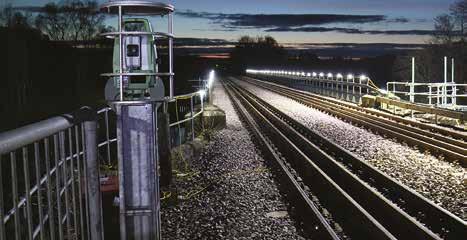
especially when you consider that some aspects of the rail network run through rural and remote parts of the country.
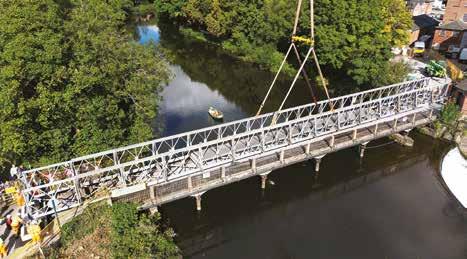
For highways projects, temporary bridging is a popular solution, keeping traffic moving that may be diverted away from major worksites, helping to manage disruption. Given the remote nature of some infrastructure, temporary bridging can also be invaluable in facilitating safe access to rural locations for vehicles, materials and plant. Available in a variety of pedestrian and vehicular formats, these modular solutions can be designed and built bespoke to suit the individual project requirements.
At MH International, we are a trusted temporary works partner. We’re committed
to product innovation, regularly improving and expanding our product portfolio, including lightweight shoring and temporary bridging equipment. Our experienced engineering team uses the latest digital technology and BIM modelling to create accurate designs that are constructible in the 3D environment before you reach site.
Plus, our new Ireland depot (located in Portlaoise) and dedicated Irish support team makes it even easier to benefit from our high-quality service.
For more information, visit https:// mh.international/ or scan the QR code

The Department of Housing has significantly expanded the Buy and Renew scheme, opening a new delivery channel by allowing building contractors to directly acquire and refurbish vacant, derelict properties for social housing. Moving beyond its original scope, which was restricted to local authorities and approved housing bodies (AHBs) since 2016, the scheme now enables private contractors to lead the remediation process. To participate, builders must secure a prior agreement with a local authority or AHB to purchase the homes upon completion.
Reflecting a tighter focus on Ireland’s most problematic building stock, eligibility criteria now require properties to be both vacant and derelict. This ensures the scheme targets structures that would likely be ignored by private owners using the Vacant Property Refurbishment Grant. The department anticipates a surge in available units ahead of the 2027 Derelict Property Tax, which is expected to flush more idle stock into the pipeline.
Housing Minister James Browne noted that this contractorled pathway will revitalise urban communities while supporting local tradespeople.
With 960 homes already restored through the original initiative, this expansion aims to accelerate the delivery of high-quality social units by leveraging the agility of the private construction sector to tackle long-term dereliction.
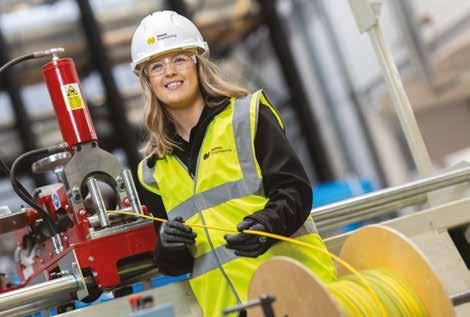
Jones Engineering returned to the iWish Showcase Event for the second consecutive year, continuing its commitment to inspiring young women to consider careers in science, technology, engineering and mathematics (STEM). The event took place at the RDS in Dublin, bringing together thousands of students, educators and industry leaders from across the country.
Building on its successful participation last year, Jones Engineering once again hosted an interactive stand designed to give students a hands-on insight into the real-world impact of engineering. Visitors had the opportunity to learn more about the company’s wideranging projects and its apprenticeship and graduate programmes, which support earlycareer talent at every stage.
As one of Ireland’s leading engineering companies, Jones Engineering places a strong emphasis on diversity, inclusion and long-term skills development. Its continued involvement in iWish reflects a broader ambition to address skills shortages in the sector while encouraging more young women to see engineering as a viable, rewarding and future-focused career path.
Carmel Walsh, Chief People Officer at Jones Engineering, said, “Returning to iWish for a second year is incredibly important
to us. Events like this give us the chance to speak directly to young women at a pivotal moment, demystify what engineering looks like today, and show that there is space for them in this industry. We want students to see that engineering is creative, collaborative, impactful, and that there are clear pathways for them to build fulfilling careers with companies like Jones.”
Jones Engineering currently employs
more than 300 apprentices and 150 graduate engineers across Ireland and continues to invest heavily in training, education and partnerships with third-level institutions. Through initiatives such as dedicated training facilities and targeted programmes to support women in engineering, the company is actively working to build a more representative workforce for the future.
Dublin City Council has unveiled the pre-planning design for ‘Grow College Green’, a flagship initiative intended to breathe new life into the historic heart of the capital. This project marks a significant evolution in urban planning for the city, moving away from a noisy, traffic-heavy thoroughfare toward a world-class destination designed specifically for people. The vision is to create a space that serves as a vibrant civic spine, where residents and visitors can work, shop, and celebrate, or simply find a necessary moment of calm and connection amidst the urban rush. This updated design
Dublin City Council’s pre-planning design for College Green.

is the direct result of an intensive engagement process that began in August 2024, incorporating feedback from over 2,800 written submissions and more than a hundred in-person sessions. These interactions, which included vital consultations with Disabled Persons Organisations, have ensured that the final space is truly inclusive, legible, and accessible for everyone.
Lord Mayor of Dublin, Councillor Ray McAdam, has championed the project as a celebration of both the city’s deep history and its evolving future. By working in partnership with the National Transport Authority, the council aims to deliver a high-quality public realm that balances daily functionality with the capacity for major cultural events. The transformation will replace current congestion with greener edges, nature-based drainage solutions, and climateresilient planting. Beyond the environmental benefits, the design restores the architectural dignity of the area by opening up clear views of landmark buildings like Trinity College and the Bank of Ireland, reinstating a sense of arrival and identity that has long been obscured.
Richard Shakespeare, Chief Executive, Dublin City Council, emphasised that the project will fundamentally transform how people experience the city centre. With wider pedestrian routes and dedicated cycle paths, the design prioritises safety and ease of movement while supporting Dublin’s broader climate goals. As the council moves toward a formal planning submission later this year, they are seeking final public input to refine these designs further. Dubliners, commuters, and businesses are encouraged to share their views via the Engage.ie platform. The consultation remains open until March 11, 2026, offering a final opportunity for the public to help shape a space that will serve the city for decades to come.
Dublin Port has launched a critical five-week, €2.5m emergency repair programme to reinforce the Great South Wall. This 230-year-old sentinel, a blend of vital marine infrastructure and a cherished public landmark, suffered significant damage during Storm Bram—the fifth-strongest storm ever recorded on the Irish Sea.
The wall is much more than a scenic 5km stroll. Built between 1720 and 1795, it performs a dual role:
• Trade protection: It shelters the shipping channel for vessels carrying 1.7 million passengers and €165bn in trade annually.
• Natural maintenance: Working with the North Bull Wall, it creates a tidal scouring effect that prevents the River Liffey from silting up, maintaining the depths required for modern shipping. Modern climate pressures are testing this 18th-century marvel. Increased wave heights and frequent severe storms have displaced the “rock armour” designed to protect the structure. To combat this, Dublin Port is utilising high-tech solutions, including laser scanning and 3D modelling, to monitor structural movement with precision.
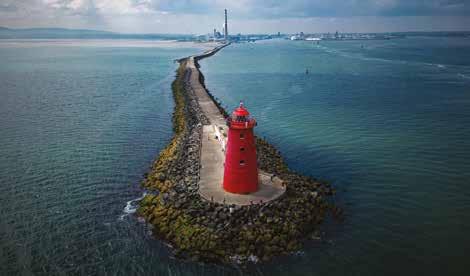
The current works, managed by Murphy, involve replacing displaced rock at the roundhead near the iconic Poolbeg Lighthouse using stone sourced from Arklow. This is the first phase of a broader plan to integrate climate resilience into the Port’s Masterplan.
While works are ongoing, A 100-metre section near Poolbeg Lighthouse is closed to
the public. Due to worsening weather, the wall was closed four times in 2025 and has already seen multiple shutdowns in early 2026.
Dublin Port urges visitors to wear sturdy footwear, respect safety cordons, and help preserve this national monument by taking litter home.
For years, small and mid-size contractors have viewed project management tools as luxuries, either too expensive or too disruptive for anyone without a dedicated IT department. Now, Trimble’s ProjectSight solution changes this, placing powerful yet user-friendly project management into the hands of everyone.
A cloud-based solution for construction project and field management, the launch of ProjectSight underpins Trimble’s strategy to empower construction professionals of any size with connected data and workflows, ensuring that ‘powerful’ doesn’t mean ‘inaccessible’.
Enabling the capture, organisation and sharing of critical project information (including documents, drawings, requests for information, submittals and photos and videos), as well as 2D and 3D project visualisation and unlimited free collaborators, ProjectSight supports contractors to scale effortlessly from easy-to-adopt standard site management through to customisable project control, all in one budget-friendly subscription.
Powered by Trimble Connect, ProjectSight serves as your central source of project truth. By balancing standard construction processes and easy onboarding with custom configurations and advanced workflows, it offers teams the management tools needed to get the job done.
Improve the collaboration between office and site, with integrated 2D and 3D project visualisation. All teams, including those on site, get real-time access to approved drawings, BIM models and photos.
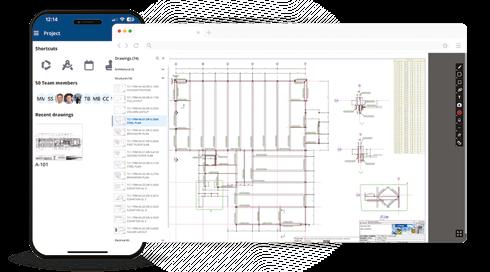
With unlimited free collaborators within one license, ProjectSight encourages buy-in from the wider supply chain and encourages business growth.
Minimise risks, reduce rework and eliminate time wastage. Project leads can stay in control via project dashboards and precise real-time communication, while site teams have all job details available at their fingertips with the cloud-connected and offline mobile app.
Ensure quality project delivery by providing all stakeholders with the latest information needed to complete the job right, first time. Onsite workers can meet quality benchmarks with standard and custom checklists, while assigned tasks create traceable accountability for everyone and digital snag lists facilitate proactive issue resolution.
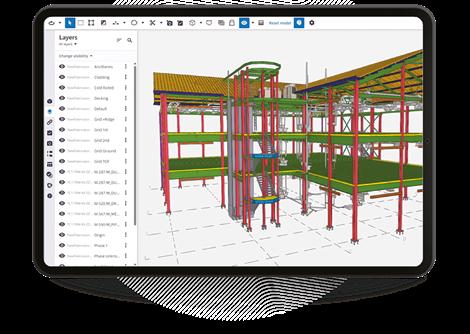

Getting started with ProjectSight is easy. Setup takes minutes (not days) thanks to centralised digital document organisation, while the in-app assisted onboarding ensures teams can quickly adopt the platform.
Speaking about the launch, Matt Ramage, Category Leader at Trimble said: “Some contractors have viewed powerful construction management tools as unaffordable or complicated. We’re challenging that perception in a very real way by presenting a simple and intuitive way for every business to experience the benefits of digital project and site management, all within a single solution. ProjectSight empowers construction businesses of any size to do their job faster, better and more easily from day one.”
Discover ProjectSight, here: https://bit.ly/projectsight
Sisk has been appointed as the main contractor for the Office of Public Works’ (OPW) new 14-storey landmark office building at Opera Square in the heart of Limerick city.
The project marks a significant milestone in the wider Limerick Twenty Thirty (LTT) programme, which is transforming the city and region’s economic and urban landscape. Once complete, the building will stand as Limerick’s and the mid-west’s tallest, overlooking the Abbey river from Bank Place.
The OPW has engaged LTT to deliver the development, reflecting strong confidence in LTT’s proven track record, including recent delivery of the site-wide basement works and the One Opera Square building. Sisk will construct the building’s shell and core, including structure, façades, roof, and primary building services.
The 30-month construction programme will employ up to 300 people on site and will deliver 100,000 sq ft of high-quality office accommodation. Designed to meet the Nearly Zero Energy Building (NZEB) standard, the development will operate entirely on renewable energy sources, supporting the state’s energy-efficiency and emissions-reduction goals.
Once operational, the building will serve as a major hub for government departments in the mid-west, consolidating up to 1,500 civil servants, 950 at any one time under a hybrid working model, into a modern, digitally enabled workspace. The project will also help reduce the number of buildings in the OPW’s portfolio while supporting the regeneration of Limerick’s city centre.
Leanne Broderick, Managing Director, Regional Building, Sisk, commented, “Having recently completed the One Opera Square building, we are looking forward to partnering with LTT again to deliver the OPW building. As we commence works on site, our local
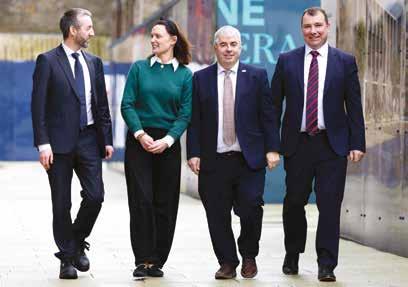
(L to r): Enda Power, Interim CEO, Limerick Twenty Thirty; Leanne Broderick, Managing Director, Regional Building, Sisk; Minister of State for the Office of Public Works (OPW) Kevin
and
knowledge and collaborative approach will be central to delivering this project successfully.”
Local leaders welcomed the project’s progress. Príomh Chomhairleoir, Cllr Catherine Slattery, highlighted the positive impact on the city centre, noting that the development will bring renewed activity, investment, and footfall to Limerick. LTT Chair
James Collins emphasised the significance of delivering one of the most ambitious elements of the Opera Square masterplan and acknowledged the OPW’s confidence in LTT and its partners.
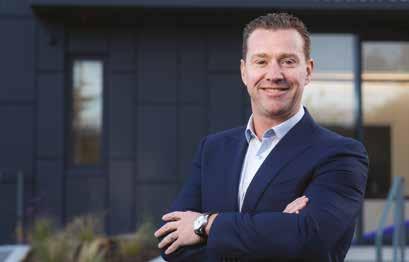
Kingspan reported record-breaking results for 2025, with revenue climbing 7% to €9.2bn despite a “jumbled” global construction landscape. Kingspan CEO Gene Murtagh attributed the success to “extraordinary demand” for data centre infrastructure, prompting a major expansion of manufacturing capacity across the US, the Middle East, and Asia.
The group’s financial metrics remained robust, with EBITDA rising 7% to €1.22bn and trading profit reaching €955m, up 5% year on year. Kingspan maintained a healthy trading margin of 10.4%.
Acquisitions played a pivotal role, contributing 8% to sales growth and 6% to trading profit.
Throughout 2025, Kingspan committed €751.9m to strategic investments. This capital was split between €325.8m for organic development and €426.1m for acquisitions. Key deals included taking full ownership of Nordic Waterproofing, increasing its stake in Steico to 61%, and acquiring Mercor’s ventilation and daylighting business.
Segment performance reflected a shifting global economy. The Advnsys division, which handles data centre technology, saw revenue rise by 12%. It entered 2026 with an order backlog up 24% in value, with year-to-date intake doubling compared to the previous year. Meanwhile, the Insulated Building Envelopes segment grew by 6%.
Regionally, performance was mixed. The US tech sector and Latin America showed significant strength, while continental Europe remained steady. Activity in Britain was weaker, though it showed signs of recovery in the second half of the year.
Murtagh highlighted the company’s “Planet Passionate” sustainability programme, now in its sixth year, as a core pillar of its strategy.
A company statement said, “The performance of Kingspan in this backdrop demonstrates the robustness and breadth of the group.”
Looking ahead, Gene Murtagh expressed confidence in the company’s trajectory. To meet surging global demand, Kingspan is aggressively scaling its production footprint.
“We anticipate our foreseeable future growth to exceed that of recent years,” Murtagh concluded, signalling a period of accelerated expansion.
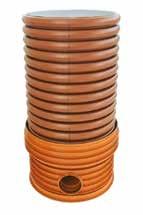
Our new Pipelife Integrity manholes and chambers offer strength, durability and resistance to abrasion and high temperatures, ensuring a reliable long service life. Thanks to their lightweight material they are very easy to install without the use of heavy machines, and provide an ideal solution for sewage and stormwater applications in various ground and water conditions.
Our Pipelife Integrity manholes offer a wide range of connections to the base and riser rings. In practice, engineers can design their ideal manhole. Water tightness is also guaranteed with rubber sealing rings, even if groundwater levels are higher.

FLEXIBLE & WATER TIGHT INSTALLATIONS
LIFETIME 50+ YEARS
EXTREMELY ROBUST
NO SCALING OR EROSION
100% RECYCLABLE
SWEPT DIRECTIONAL FLOW


Rowan, the multi-disciplinary consultancy specialising in environmental, sustainability and forensic engineering services, has announced details of several new appointments across its environmental and sustainability team, reflecting the company’s continued growth and expansion.
Michelle O’Donnell has been appointed Environmental and Sustainability Director. She brings over 15 years of global leadership experience across the scientific, government, regulatory, education, and professional services sectors, with significant experience as an environmental consultant and director in both Australia and Ireland. A specialist in water quality, public health, and integrated water management, she will lead Rowan’s environmental team in supporting clients to achieve their organisational goals and meet regulatory requirements.
Paola Rodolfi has joined Rowan as a Senior EIA Consultant. She has more than 12 years’ experience in environmental consultancy, with specific expertise in Environmental Impact Assessment (EIA), Appropriate Assessment (AA) screening, and the preparation of a wide range of environmental reports.
Sam Tengwa has been appointed as Graduate Sustainability Consultant as part of the Rowan UCD Graduate Development Programme. She has over 10 years’ experience in water management and the

circular economy, with key expertise in mine water management, water conservation, energy and decarbonisation assessments across scope 1, 2 and 3 emissions, product life cycle assessments (LCA), process engineering, and circular economy strategies.
Róisín O’Brien has been appointed Environmental Intern and is gaining experience across a broad range of environmental sectors within the business.
Commenting on the appointments, Tom Rowan, founder and Managing Director of Rowan, said: “These appointments reflect Rowan’s continued growth and the
increasing demand for our environmental and sustainability expertise. We are committed to investing in talented people at every stage of their careers, from senior leadership to graduate and intern level, while maintaining our vision of delivering excellence with a sense of humour. Following these appointments, our team now represents five nationalities — Ireland, the UK, Italy, South Africa and the USA — and is 47% female, which reflects the diverse perspectives and expertise we believe are essential to delivering the best outcomes for our clients.”
ZeroOne’s Stephen Byrne, COO; Donal Dunlop, CCO; and Conor McGinn, CEO.
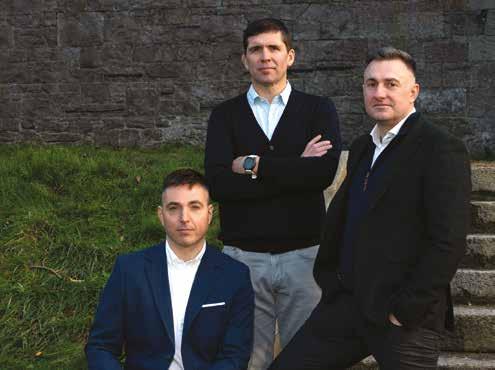
ZeroOne, a specialist MEP consultancy dedicated exclusively to the data centre industry, has announced the appointment of Stephen Byrne as Chief Operating Officer (COO). Stephen Byrne is widely recognised as one of Europe’s leading electrical engineers in the data centre sector. With 20 years of industry experience and over 1,500 MW of data centre projects designed, he has worked extensively with hyperscalers, colocation providers, and general contractors. He has a proven track record of developing industry-leading teams in the sector.
His appointment as COO marks a significant milestone in ZeroOne’s growth trajectory. He joins co-founders CEO Conor McGinn and CCO Donal Dunlop, who bring a unique blend of engineering expertise and business strategy to the company.
Speaking on his appointment, Stephen said: “I’m delighted to be joining ZeroOne at such a pivotal stage in its growth. The company has a clear vision and a strong technical foundation, and I look forward to working with Conor, Donal and the wider team to scale our MEP design and deliverycapability.”
Elliott Group launches dedicated mission-critical division, strengthening leadership team to meet growing demand across Ireland and the
Elliott Group, one of Ireland and the UK’s leading construction companies, has announced the formal launch of its dedicated Mission Critical Division, marking a significant strategic milestone as the business continues to expand its presence in the data centre, energy, and mission-critical infrastructure sectors.
A new Elliott Group division consolidates the group’s extensive live project experience in mission-critical delivery. It is led by a strengthened senior leadership team with the appointment of Willie Loughnane as Construction Director, Simon Clarke as MEP Director, and Ben Shepherd as Technical Director. Together, they will head the dedicated Mission Critical Division, which currently has a highly experienced, multidisciplinary team delivering major mission-critical projects across Dublin. The division has the capability and capacity to support continued growth across both Ireland and the UK.
Elliott Group has been active in the mission critical sector for many years, delivering complex, large-scale facilities for global operators. The formal establishment of the Mission Critical Division demonstrates both the scale of the Group’s existing portfolio and the increasing market demand for contractors with proven technical depth, safety performance, and delivery certainty.
Willie Loughnane brings over two decades of experience delivering large-scale data centre and energy infrastructure projects, including hyperscale and campus developments exceeding 375MW of IT capacity, alongside more than 400MW of power generation and energy infrastructure, incorporating major generation plants and extensive 110kV substation and grid interface works. His background in fast-track delivery, EPC governance and multidisciplinary coordination reinforces Elliott Group’s ability to deliver certainty on programme, cost and quality in highly regulated environments.
Ben Shepherd adds significant preconstruction and design leadership expertise, having shaped the early technical strategy for multiple hyperscale data centre campuses and high-voltage energy projects across Ireland, the UK and Europe. His experience spans early contractor engagement, PCSA delivery models, HV infrastructure, modularisation and cross-border regulatory compliance, ensuring complex mission-critical projects are robustly defined, de-risked and positioned for successful delivery from the earliest stages.
Simon Clarke completes the leadership team with more than 20 years of experience leading the delivery of mission-critical MEP systems for data centre and energy projects exceeding 375MW, alongside major power generation and 110kV/MV substation programmes across Ireland, the UK and mainland Europe. With a strong electrical engineering background and deep expertise in commissioning, operational readiness and live-environment delivery, Simon provides critical oversight of the systems that sit at the core of

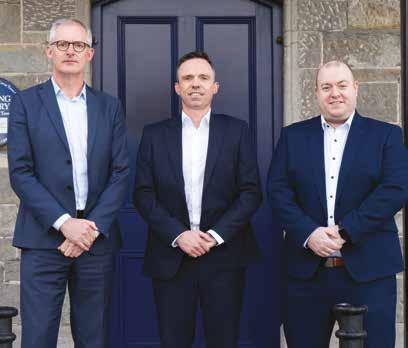
mission-critical assets.
Commenting on the launch, Darragh Elliott, CEO (ROI) and Noel Elliott, CEO (UK), Elliott Group, said, “Mission critical construction demands absolute clarity, technical depth and a relentless focus on safety and programme certainty. While we have been delivering in this space for many years, the formation of a dedicated Mission Critical Division led by Willie, Simon and Ben reflects both the scale of our current workload and our long-term commitment to the sector. Their combined expertise significantly strengthens an already highly capable team and positions Elliott Group to support the next phase of growth for our clients across Ireland and the UK.”
The Mission Critical Division is supported by Elliott Group’s wider organisational strength, including in-house preconstruction, BIM Level 2 certified digital delivery, procurement, HSEQ and commissioning expertise, alongside a dedicated Aftercare team providing structured post-handover support. Backed by nearly a century of construction heritage, this integrated approach enables Elliott Group to manage the full lifecycle of complex mission-critical projects, from early technical strategy and risk management through to construction, commissioning and ongoing operational support.
With multiple live mission-critical projects underway in Dublin, Elliott Group’s new division provides clients with a dedicated, sectorfocused team built around experience, leadership and quality.
Chadwicks Group, has announced the appointment of Eimear O’Reilly as HR Director of Chadwicks Group. As HR Director for Chadwicks Group, and as a member of the organisation’s Senior Leadership Team, she will lead the company’s people strategy.
Most recently, O’Reilly served as HR Director with Allied Universal, following a successful five-and-a-half-year tenure with Hilti Fastening Systems. Throughout her career, she has delivered significant
achievements in organisational development, talent management, employee engagement and change leadership.
Speaking on the appointment, Patrick Atkinson, CEO, Chadwicks Group, said, “We are delighted to welcome Eimear to the senior leadership team at Chadwicks Group. Her deep experience across HR, organisational development and people management will play a crucial role as we continue to invest in our colleagues and shape the future of the business.”
You build projects, lead teams and hit deadlines. Sorting out pensions, savings, investments and protection rarely makes it to the top of the list.
That’s where we help.
We work with construction professionals every day, taking the important financial jobs off the long finger and explaining the options in plain English.
So you can focus on what matters.
Start the conversation.
No jargon. Just facts.


If 2025 taught investors anything, it’s that structural shifts—like the AI revolution—can often outrun geopolitical turbulence. DARRAGH HOGAN, Financial Services Consultant,
Milestone Advisory, explores the key themes that shaped 2025, from the rally in precious metals to rising government debt, and provides a strategic outlook for the year ahead.
2025 was a year defined by turbulence, transformation, and resilience.
Global markets navigated one of the most complex environments in recent decades, shaped by geopolitical uncertainty, trade disruption, technological acceleration, and shifting monetary policy. Early in the year, escalating trade tensions and a dramatic rise in US tariffs (levels not seen since the 1930s) triggered a sharp selloff in April and one of the most volatile weeks in modern stock market history. Yet, in a testament to market adaptability, global equities ultimately closed the year up 6.8% in euro terms, highlighting the resilience of risk assets despite persistent macroeconomic headwinds.
December summed up the contradictions of the year - optimism surrounding artificial intelligence (AI), concerns over rising government debt, and questions around the sustainability of equity valuations all coexisted. International equities, particularly emerging markets, delivered stronger performance than US markets. While the US Federal Reserve delivered a widely expected rate cut, uncertainty remained around the path of policy into 2026.
Trade tensions dominated the early part of the year. The imposition of reciprocal tariffs by the US on approximately 90 countries on 02 April ignited market turmoil and sparked a sequence of retaliatory measures. Although subsequent negotiations and trade agreements brought partial stabilisation, uncertainty around global supply chains and trade policy remained a persistent risk factor throughout 2025.
The AI revolution
AI remained the defining structural theme for global markets. Growth sectors such as Information Technology and Communication Services delivered strong performance, supported by aggressive capital expenditure and robust earnings growth. While concerns emerged late in the year regarding potential overinvestment and valuation excess, AI continued to justify premium pricing and drove markets to record highs, reinforcing its role as a long-term growth rather than a short-term trend.
The US dollar weakened considerably against the euro in the first half of the year, starting near parity and declining as confidence in US policy stability softened. For European investors, this currency move materially reduced returns on US assets.
Government bond markets experienced renewed volatility in 2025 as long-term yields rose across major economies amid widening fiscal deficits. In response, investment managers maintained overweight positions in government bonds while prioritising high-quality credit over lower-rated debt
Gold emerged as a standout performer in 2025, driven by geopolitical uncertainty, central bank diversification away from foreign currencies, and shifting interest rate expectations. Silver also rallied strongly, supported by industrial demand and supply constraints. Multi-asset portfolios with strategic gold allocations benefitted materially, reinforcing the role of precious metals as portfolio stabilisers in uncertain environments.
The outlook for 2026 is best described as cautiously optimistic. Consensus forecasts point to global growth in the region of 2.8% - 3.3%, supported by resilient US consumption, AI-led investment, and fiscal stimulus across several regions. Inflation is expected to stabilise near central bank targets, though sticky core inflation may limit the pace of rate cuts. The Federal Reserve is expected to continue easing, the ECB may remain on hold, and Japan could see modest tightening.
bull market case
• Successful AI monetisation supports earnings growth and equity valuations
• Inflation stabilises and consumer confidence improves
• Trade tensions continue to ease through new agreements
• Eurozone growth accelerates via infrastructure and fiscal investment

The bear market case
• Politicisation of central banking undermines policy credibility
• AI-driven overinvestment leads to capital misallocation
• Trade tensions re-emerge and disrupt global growth
• Fiscal stimulus fails to meet expectations
• Persistent geopolitical risks destabilise markets
For 2026, the fundamental backdrop remains supportive, but risks are elevated. High equity valuations, concentration in mega-cap technology, government debt dynamics, and geopolitical uncertainty all require disciplined risk management. Markets will continue to reward long-term discipline over short-term speculation. While volatility is likely to persist, opportunities remain abundant for investors who navigate the landscape with structure, diversification, and strategic clarity.
At Milestone Advisory, we are committed to providing tailored financial guidance to help clients achieve long-term financial objectives in an evolving global economy.
For more information, contact: Darragh Hogan
Milestone Advisory
Email: darragh@milestoneadvisory.ie


From the iconic “G” on the shop window to a strategic powerhouse for a national supply chain, Guaranteed Irish is redefining what it means to support local. CEO Bríd O’Connell speaks with ROBBIE COUSINS about Guaranteed Irish House, the critical need for planning reform, and why the organisation’s mandate is focused on “Supporting business that supports Ireland” – and is the key to unlocking greater construction sector opportunities at pace.
For over 50 years, the iconic “G” symbol has served as Ireland’s premier hallmark of trust and local commitment. Established in 1974, Guaranteed Irish is a national nonprofit champion of indigenous and multinational companies that prove their value in Ireland through three unwavering pillars: Jobs, Community, and Provenance.
While the brand evokes a deep sense of nostalgia for older generations, it has successfully evolved into a modern beacon of ethical reliability. Today, in Ireland, conscious consumers view the “G” as a gold standard for corporate social responsibility, signalling a business’s genuine dedication to the local ecosystem.
Under the leadership of CEO Bríd O’Connell, Guaranteed Irish is spearheading a movement that places “Irishness” in a business sense and societal gain at the heart of commercial operations. By leveraging the resilience and talent of local supply chains, the organisation continues to drive sustainable growth across all sectors.
Guaranteed Irish’s mission has expanded far beyond simple
labelling. Key recent initiatives include:
• Guaranteed Irish House: A trusted ecosystem of licenced businesses in the construction sector, supporting each other in their supply chain. This includes a national directory of businesses in Ireland supplying the construction sector, while supporting local jobs and communities. It is a one-stop shop for procurement and specifiers to create awareness of opportunities to use local, reliable resources, and it uniquely includes all elements of the supply chain required for a building, from raw materials to final furnishings, all of which can be sourced locally from Guaranteed Irish members.
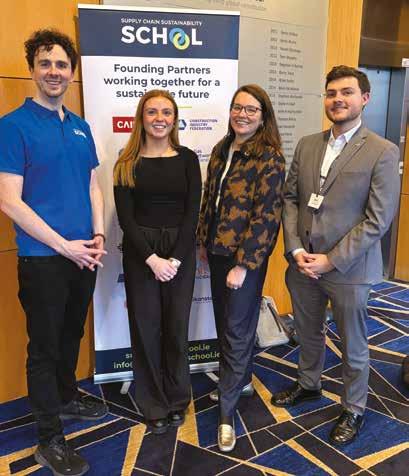
• Strategic collaboration: Demonstrating its commitment to industry standards, Guaranteed Irish collaborated with KPMG to develop a ‘Sustainability Roadmap’ for businesses. It also recently partnered with the Supply Chain Sustainability School and their members to support shared learning and progress on sustainability across the industry. They recently co-hosted a high-impact webinar on procurement, sustainability, and local collaboration in the construction sector.
• Celebrating Excellence: The momentum of its combined sectoral reach culminates each March with the Guaranteed Irish Awards, which honour businesses that are innovating within their sectors, creating jobs and fostering community development across the nation.
Bríd O’Connell and her team have redefined what the Guaranteed Irish support means in the current economic climate. “Our tagline, ‘Supporting business that supports Ireland’, is clear; it’s what we do.”
She adds that this focus reflects a reciprocal relationship in which the organisation supports businesses that, in turn, sustain the Irish economy, its international reputation, and local employment levels. This shift also represents a move toward radical transparency and clarity.
She comments, “By focusing on businesses that pay their taxes in Ireland and keep their intellectual property at home, Guaranteed Irish is creating a league of companies that are genuinely invested in the nation’s success. It is not just about a logo on a window anymore; it is a licence that signals a deep-seated commitment to a supply chain that begins and ends on Irish soil.”
Bríd O’Connell explains that Guaranteed Irish’s flagship initiative for the construction sector, Guaranteed Irish House, was born from a simple yet ambitious challenge: Could a house be built entirely using businesses based in Ireland?
“The answer was, of course,” Bríd O’Connell responds. “A resounding yes, but the project revealed a fragmented industry where planners, developers, and suppliers were often operating in silos (a reflection of the disjointed outputs). The Guaranteed Irish House ecosystem is designed to serve as a comprehensive network and listing of construction members—from developers and contractors to those handling design and planning, and subcontractors and providers of products such as interior finishes. It brings together the full construction supply chain and creates opportunities to discuss key barriers to development and innovation.”
She continues, “The true magic happens when these diverse players are brought together in the same room. While it may not be immediately obvious why a developer needs to converse with a craft furniture maker, both are essential components of the end goal for the consumer. By fostering these connections, we encourage members to buy from each other, ensuring that if quality and price are competitive, the contract stays in Ireland.
This collective approach has turned a simple list of businesses
into a robust, self-sustaining community that is actively winning business for its members.”
Guaranteed Irish House has a diverse cross-section of member companies that have joined the network to date, including Ballymore and Evara, BAM Ireland, IPUT, Kingspan Insulation, Roadstone, Kilsaran, Cork Builders Providers, Pipelife, CRH, and Tower Security, among many others.
Despite the internal strength of the Irish construction sector, external frustrations remain a significant hurdle. O’Connell speaks candidly about the “frustrating” reality in which highly skilled Irish workers are sent abroad on Monday mornings to build data centres in Germany and the Nordic countries, returning home on Friday evenings.
“While the construction industry’s success overseas is fantastic, it has to be acknowledged that this is all happening at a time when the services that are being exported to build data centres and other mission-critical projects could be employed at home if the right conditions were in place to enable these contractors and companies to keep money and talent circulating within the Irish economy. And a central part of the solutions is addressing the planning and energy constraints that are making it impossible to execute essential projects at home.”
Consequently, a major part of Bríd O’Connell’s role involves engaging with the government to adopt a more agile and faster approach to achieving infrastructure delivery.
Welcoming the national report, ‘Accelerating InfrastructureReport and Action Plan’, produced by the government in December 2025, Guaranteed Irish is pushing for better planning, improved infrastructure zones, and a supply chain that isn’t throttled by bureaucratic delays. By acting as a collective voice, Guaranteed Irish allows our members to push for the pace required to meet Ireland’s housing and infrastructure needs. With a partnership that includes The Supply Chain Sustainability School, the objective is
that, as innovation and pace pick up, sustainability remains part of the solution.
Bríd O’Connell adds that this is a golden age for Irish construction.
“Irish companies are being sought to carry out work on innovative projects across the world, and policymakers at home are missing out by not moving quickly enough to make it viable for our homegrown construction supply chain to deliver the schools, roads, and homes that the country requires.”
In an era of global volatility and shifting tariffs, the value of a trusted local partner has never been higher.
Bríd O’Connell points to a striking statistic: “Seventy-six per cent of Guaranteed Irish members have reported an increase in their bottom line after communicating they are Guaranteed Irish licence holders on their tenders and pitches.”
She shares the story of one small business that struggled for years to win a major contract. “By simply leading their next pitch with the Guaranteed Irish logo, they secured the business. The client’s reasoning was simple: the licence provided a level of ‘comfort’ and trust that the supplier was local and reliable.”
Sustainability has also become a non-negotiable pillar of the modern values of Guaranteed Irish.
The ‘Guaranteed Irish Sustainability Roadmap’, a collaboration between Guaranteed Irish head of sustainability, Clémence Jamet, and KPMG, serves as a comprehensive guide for businesses looking to embed Environmental, Social, and Governance (ESG) principles into their core operations. By blending KPMG’s global strategic expertise with a deep understanding of the unique challenges faced by Irish enterprises, the initiative provides a practical framework for organisations regardless of where they are on their journey.
O’Connell comments, “The Roadmap is built on the conviction that sustainable practices do more than just satisfy global regulatory standards; they actively strengthen local communities and safeguard quality jobs. It systematically transitions businesses through three distinct phases, moving from foundational efforts toward a position of genuine industry leadership. This strategic
approach ensures that sustainability remains a core driver of longterm operational success and community well-being rather than just a checklist item.”
Bríd O’Connell adds that for companies that earn the Guaranteed Irish licence, sustainability is not just a “box-ticking” exercise but a genuine economic asset.
Through partnerships with businesses such as KPMG in developing the Navigating Sustainability Roadmap, Guaranteed Irish is helping smaller businesses navigate the complex transition to a green economy.
She explains, “By showcasing case studies of successful transitions in the Roadmap, we are showing that small and medium enterprises that have earned the Guaranteed Irish licence are acting responsibly, and actually helping them win business.”
Looking to the short- and medium-term future, Bríd O’Connell says that for Irish construction to expand and put the necessary resources in place, there needs to be further changes in government policy.
“We want the entire construction spectrum, from sole traders to global giants, to be part of the Guaranteed Irish organisation. We all need each other. We don’t just support business sectors; we provide the B2B trust necessary to grow domestically and scale internationally with confidence. When Irish building contractors and engineering firms compete for major global projects, carrying the national symbol of Trust coming from Ireland, renowned for its work ethic, skilled workforce and craftsmanship, it isn’t just about branding—it’s a powerful asset that reinforces Ireland’s reputation for world-class project delivery.”
Guaranteed Irish is also laser-focused on delivering career development opportunities for the next generation. Bríd O’Connell believes that Guaranteed Irish House can be a vital tool in repositioning apprenticeships and skilled trades in a more positive light.
“Given the current deficit in housing and infrastructure, as well as the absolute need to deliver a comprehensive retrofitting programme, there is enough work in the Irish construction sector to last for the next 50 years plus. By rewarding firms for creating a ‘foundation of trust’, Guaranteed Irish is ensuring that this work will be carried out by businesses that are truly committed to Ireland’s future.”
Bríd O’Connell and her team are already looking to the future, and, more immediately, their “asks” from government are clear: “Tax reform to protect family-owned businesses, incentives for the entrepreneurial sector, and a public procurement process that finally recognises the immense value of supporting businesses that support Ireland.
“Our goal is simple. We need to build an Ireland that is sustainable, self-reliant, and proud of its homegrown capabilities. To this end, Guaranteed Irish and Guaranteed Irish House are ideally placed to represent the interests of the Irish construction and the broader built environment sector, with a sector-wide network of businesses focused on growing operations, creating jobs and supporting local communities.”
Guaranteed Irish has transitioned from a nostalgic hallmark of the past into a vital architect of Ireland’s economic future. By championing the ‘Supporting business that supports Ireland’ mandate, it is bridging the gap between traditional heritage and modern, high-tech sustainability. Through strategic initiatives like Guaranteed Irish House and a rigorous focus on ESG, it is proving that local commitment is not just an ethical choice, but a significant commercial asset that drives the bottom line.
Sport Ireland Campus, Blanchardstown, Dublin 15th & 16th April 2026
Key Stakeholders Responsible for Delivering a Sustainable Construction Industry in Ireland
4,500+ VISITORS 200+ EXHIBITORS 100+ SPEAKERS

KEY THEMES
• Data Centres & Critical Infrastructure
• Installers - Building, Plumbing & Electrical
• Modern Methods of Construction
• Infrastructure
• Architecture, Design & Fitout
• Lean Construction
• Innovation & Sustainability



www.nationalconstructionsummit.ie

The Grant Aerona R290 GET AHEAD WITH THE
- Designed for the UK & Irish Climate
- Innovative Technology
- Exceptional Performance
- Ultra-Low Noise Levels
- Outputs from 4kW – 16kW


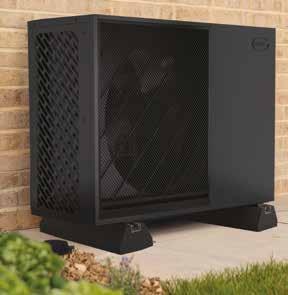
The Grant Aerona R290 air source heat pump has once again been recognised for excellence in sustainable heating innovation as it was awarded ‘Heat Pump of the Year’ at Ireland’s Plumbing & Heating Awards 2025.
The judging panel for awards praised the bespoke design of the Aerona R290 and its ability to address the high moisture levels of the Irish climate. They also recognised the significant investment made by Grant into the development of the Aerona R290 heat pump.
Additionally, the judges were impressed by the aesthetically pleasing appearance of the heat pump, its ease of connection with only two cables, and the wide range of models with outputs from 4kW to 16kW available, which enables the Aerona R290 to suit most properties.
Commenting on the award, Barry Gorman, National Renewables Sales Manager, who accepted the award on behalf of the company said; “We are absolutely delighted that the Aerona R290
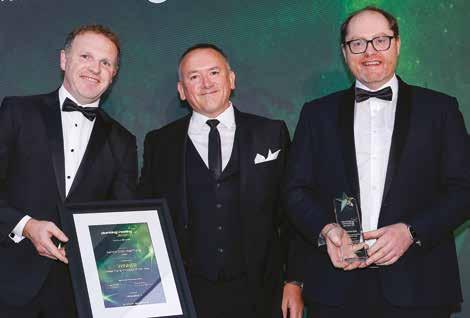
Pictured (l-r); William Comerford, Grant Technical Sales Representative; Glenn Clabby, Thermoparts (Award Sponsor); and Barry Gorman, National Renewables Sales Manager, Grant.
has been awarded Heat Pump of the Year at the Plumbing and Heating Awards. The positive response that this next generation heat pump has received since its launch has been amazing and it is great to see it getting this recognition. Designed specifically for the Irish and UK climate, the Aerona R290 really is proving itself to be in another league of innovation and efficiency.”
The Grant Aerona R290 was recognised for its Outstanding Innovation at the Plumbing and Heating Awards 2024. The judging panel was so impressed by the heat pump range, that a new award was created in recognition of its outstanding innovation and described it as ‘redefining heating innovation and sustainability’ and setting ‘a new benchmark for low carbon heating solutions.
This latest recognition marks another milestone for Grant, underscoring the company’s dedication to developing forward-thinking, low carbon heating technologies for homes throughout Ireland.

Learn more about the Grant Aerona R290 heat pump and Grant’s innovative product range on grant.ie.
Follow Grant on LinkedIn @ GrantEngineeringULC, Facebook @ GrantIRL, and Instagram @grant_irl. You can also subscribe to Grant on YouTube @ GrantEngineeringIE.
KEY FEATURES OF THE GRANT AERONA R290 HEAT PUMP RANGE:
INNOVATIVE DESIGN
• Designed for the Irish & UK Climate
• Environmentally friendly R290 refrigerant
• Ultra-low noise levels recognised by Quiet Mark
• Modern styling and colourway
• Rated at -5°C air temperature and 55°C water flow temperature
• Five models with outputs from 4kW - 16kW
• Remote monitoring and management with the Aerona Smart Controller
PEACE OF MIND
• Designed by Grant to suit many types of property
• Design and onsite technical support
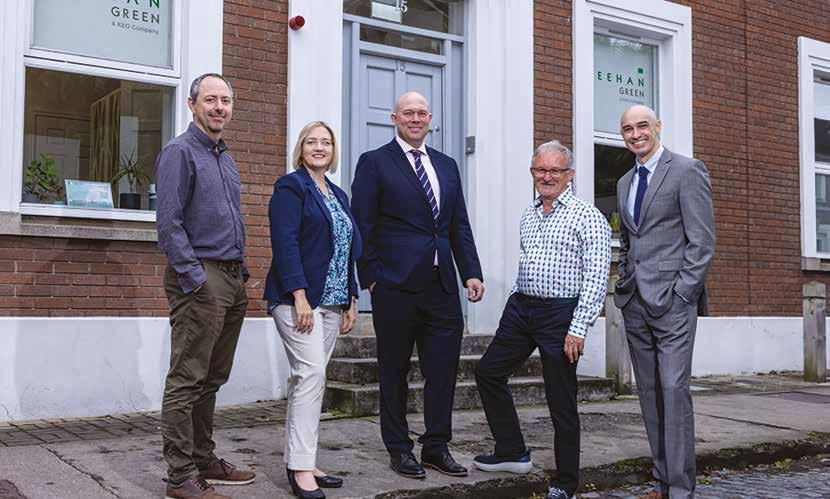
While celebrating a decade of Irish sustainability leadership, Meehan Green’s acquisition by KEO marks a bold new chapter. ROBBIE COUSINS speaks to the team behind the deal that is transforming a local success story into a high-octane launchpad for European expansion.
Ten years of Meehan Green culminated in a celebratory night at Angelina’s Restaurant in Dublin in February, with a mood of high-octane anticipation. The occasion marked a defining milestone. In June 2025, the boutique sustainability firm that helped reshape Ireland’s green building landscape officially became part of KEO’s Sustainability, Environment, and Waste Management division, transforming a local success story into a global platform.
The significance of that next chapter was underscored by the presence of KEO COO and Partner Greg Karpinski, who flew in from Dubai to toast the firm’s expanding European mission.
Central to the acquisition and the seamless integration of operations were Nellie Reid, Director of Meehan Green, Christian Millar, KEO’s Managing Director of Sustainability, Environment, and Waste Management and João Sales, Director, KEO Europe. Their shared vision laid the groundwork for a partnership designed to scale Irish expertise across international markets.
For Nellie Reid, the journey from a four-person start-up to a pivotal European hub within a global consultancy has been defined by a relentless focus on the horizon — a journey she began alongside fellow founding partners Martin Meehan, Cathal Heneghan and Pablo Jimeno.
To understand the weight of this acquisition, one must look back to 2016, When Meehan, Reid, Henaghan and Jimeno founded Meehan Green, the Irish construction landscape was in flux. While developers were increasingly interested in ‘building green,’ the technical expertise required to navigate international certification standards was surprisingly scarce.
Nellie Reid had relocated to Ireland from the United States in recent years, bringing with her a wealth of experience in sustainable design as a Leadership in Energy and Environmental Design (LEED) Fellow and WELL-accredited professional. She quickly identified a significant
vacuum in the local market. At the time, Irish projects requiring high-level green certification were often forced to outsource the work to specialists in the UK, mainland Europe, and even the US.
The ambition for Meehan Green was clear: To provide home-grown, expert leadership in sustainability. For 10 years, the firm did exactly that, building a reputation for excellence that saw them partner with the biggest names in Irish development. Their portfolio grew to include landmark projects, including more recently The Frame at 76 Lower Baggot Street for Irish Life, and the regeneration of The Bakery—the former Treasury Building—for Google. From the ambitious Opera Square in Limerick to complex fitouts like NWQ for A&L Goodbody, Meehan Green became the go-to partner for those looking to validate their environmental credentials in Ireland.
As the firm approached its tenth year, the conversation around sustainability began to
shift. The market had matured. No longer was a LEED Gold or BREEAM Excellent rating the final destination for a developer; it had become the baseline.
Nellie Reid explains, “In recent years, clients were starting to look beyond the certification of individual assets and grapple with the broader, more complex challenges of the climate emergency.
“We observed this shift first-hand. Our clients, many of whom were multinational organisations with massive global footprints, began asking tougher questions. They were no longer just looking for a certificate for a single building; they wanted comprehensive decarbonisation plans for their international portfolios. They needed to understand the circular economy, to measure biodiversity net gain, and to conduct rigorous climate risk and vulnerability assessments across entire property portfolios.”
For a firm of 15 people, this posed a scale challenge.
She continues, “While the expertise was there, the sheer volume of data and the global nature of the requests were stretching our business model to its limit. And, we found ourselves at a crossroads.”
At this time, Martin Meehan was making his own plans, preparing for retirement and a well-earned exit from the business. So, the responsibility of scaling the firm rested on Nellie Reid’s shoulders. Balancing the management of a growing business with the needs of three small children, Nellie realised that scaling independently was not the optimal path. The search began for a partner who shared Meehan Green values but possessed the global infrastructure to take the firm to the next level.
Enter KEO. As one of the world’s leading fully integrated consultancies, KEO had established a formidable reputation,

particularly in the Middle East, where, amongst many other things, they were pioneers in sustainability and waste management. However, their strategic plan called for a deeper penetration into the European market.
KEO’s COO and Partner Greg Karpinski and Christian Millar, KEO’s Managing Director of Sustainability, Environment, and Waste Management, began surveying the European landscape for a suitable second entry point.
Ireland, with its English-speaking workforce, EU membership, and robust economy, was a natural choice. More importantly, in Meehan Green, KEO found a mirror image of their own commitment to sustainability leadership.
Greg Karpinski explains, “What truly attracted us was the calibre of the people. Meehan Green isn’t just a brand with a stellar reputation; it’s a collective of exceptionally high-quality professionals who have spent a decade building a remarkable business.”
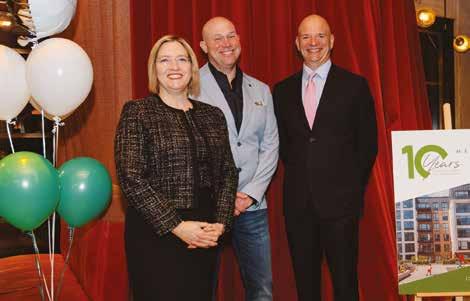
Greg continues, “As we plotted KEO’s evolution, sustainability, and ESG services were at the absolute top of our priority list. We also wanted to find an organisation that aligned with us culturally, because delivering world-class professional services is ultimately about the harmony of the people involved.
“After extensive collaboration between our teams, we formalised a relationship that was a success from day one and continues to go from strength to strength.”
Christian Millar adds, “The synergies were immediate. Both firms viewed green certification as a dominant service line and a gateway to deeper sustainability consulting. For KEO, Meehan Green was the perfect vehicle—a highly respected, agile firm that could be bolstered with additional resources to serve as a launchpad for broader European expansion.”
For Nellie Reid, the timing was also perfect. KEO provided the ‘bolt-on’ value that Meehan Green had been seeking to satisfy the evolving demands of its clients.
Since the acquisition in June, the impact has been felt almost immediately. The ‘Meehan Green, a KEO Company’ brand has already begun winning bids that would have been out of reach for a smaller organisation. The expanded community has allowed the Dublin office to offer a suite of services that previously resided only in KEO’s global hubs.
Two of the most significant areas of growth have been in waste management strategy and ESG advisory services. By leveraging KEO’s deep expertise, the Irish team is now assisting a number of public and private sector clients in revamping their entire waste infrastructure and approach to ESG frameworks. This is particularly relevant in the context of the EU taxonomy, where rigorous reporting on environmental impact is now a mandatory requirement for many large organisations.
The ability to offer decarbonisation planning and ESG framework alignment has transformed client relationships. Clients who previously trusted Meehan Green for their experience with building certification can now look to them to manage the sustainability of portfolios spanning millions of square feet across multiple continents. With KEO’s global resource pool, Nellie Reid and her team can now say “yes” to these global mandates with confidence.
While the acquisition brings KEO’s global scale to Ireland, the relationship is firmly reciprocal.
Christian Millar is quick to point out that the Irish market holds specific expertise that is of immense value to the Middle East, particularly in the realms of pharmaceuticals and data centres.
“Ireland has long been a global hub for data centre delivery, a sector that is still in its infancy in many parts of the Middle East. As global tech giants look to establish a presence in that region, Meehan Green’s experience working with data centre clients in Ireland and across Europe becomes a critical asset. The Irish context of data centre efficiency and cooling can now be exported back through the KEO network.”
Furthermore, the acquisition creates a unique value proposition for talent. In a competitive hiring market, the new structure allows staff in Dublin or Portugal to work on iconic international projects in Dubai or Saudi Arabia without relocating. This diversity of work makes the firm an employer of choice, offering the stability of a global giant with the culture and agility of a specialist consultancy.
Greg Karpinski is very clear about his ambitions for the business. He comments, “Our ambitions for this venture are significant. Within five years, I expect to see 600 people working on KEO projects across Europe. This is a serious undertaking, and we have partnered with the right people to capture what is a gargantuan market opportunity. The demand for world-class expertise in the environmental sustainability space is only going to accelerate, and we intend to be the firm leading that charge for our clients and partners.”
Another fascinating area of synergy lies in energy infrastructure. KEO has extensive experience in the Middle East with district cooling — a vital component of urban planning in warmer climates. In Ireland, the conversation is shifting toward district heating and waste-to-energy projects as the country seeks to decarbonise its national grid.
By combining KEO’s experience in large-scale energy and waste infrastructure with Meehan Green’s local knowledge of the Irish regulatory and environmental landscape, the firm is uniquely positioned to lead on the next generation of Irish infrastructure projects. This crosspollination of technical knowledge is precisely what Nellie Reid envisioned when she sought a partner. It allows the firm to move from being a consultant on a building to being a consultant on the very systems that power our cities.
Earlier that day, Greg Karpinski and João Sales, Director, KEO Europe, led an annual Town Hall meeting in Dublin for the Irish- and European-based staff. Colleagues from the UK, Portugal, Dubai, and Ireland gathered to align their visions for the future. For Nellie Reid, a pioneer in green building in Ireland, being part of this broader community is yet another exciting development.
Looking ahead five years, the goal is
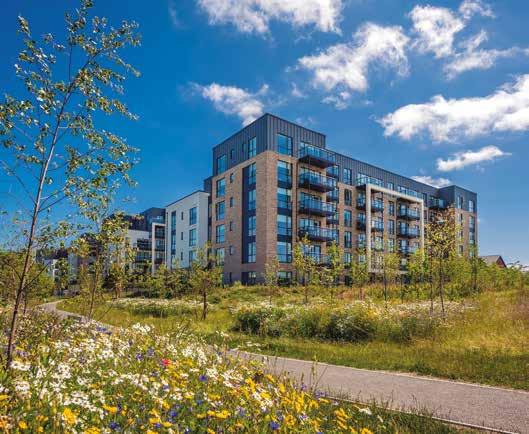
for Meehan Green to be the predominant player in the Irish sustainability consultancy market, but with a footprint that extends far beyond the island. The plan is to continue using the Dublin office as a hub for European expansion, along with existing offices in Spain, Portugal and the UK, moving into new territories while maintaining the boutique, high-trust relationships that came to define the firm’s first 10 years.
The ambition is to be more than just a consultancy; the aim is to be a driver of the transition to a low-carbon economy. Whether it is through biodiversity preservation on the roof garden of a Niche Living co-living location in Dun Laoghaire for Bartra Capital, or complex sustainability strategies for biotech giants at IDA business parks across Ireland, the firm is now equipped to handle the scale of the climate challenge.
Meehan Green was also one of the first consultancies in Ireland to offer Embodied Carbon Life-Cycle Assessments (LCA), Home Performance Index (HPI) and WELL consultancy services.
It continues to stay ahead of the curve and maintain its position as a thought leader through continuous involvement with the IGBC, USGBC, GBCI, IWBI, RIAI, SCSI, and IBEC, as well as developing university course curricula and delivering lectures and public speaking engagements.
As Meehan Green celebrates its tenth anniversary in 2026, the story is one of successful evolution. It began with Nellie Reid and Martin Meehan identifying a gap in the market and has culminated in a strategic union that places an Irish firm at the heart of the global sustainability powerhouse that is KEO.
Martin Meehan’s legacy of integrity and technical excellence remains the foundation of the company. However, under the KEO umbrella, and with Nellie Reid’s continued leadership, the firm is pivoting toward a future where “green” is not just a certification, but a fundamental way of doing business across the globe.
The party in Dublin was a celebration of 10 years of hard work, but the real excitement was for the decade to come. For Meehan Green, the journey is just beginning. With the resources of KEO and the passion of Nellie’s highly-skilled team, they are ready to show the world that sustainability expertise has no boundaries. The transition from a local specialist to a global leader is complete, and the impact of Meehan Green and KEO Europe is only just starting to be felt.
To learn more, visit www.meehangreen.ie
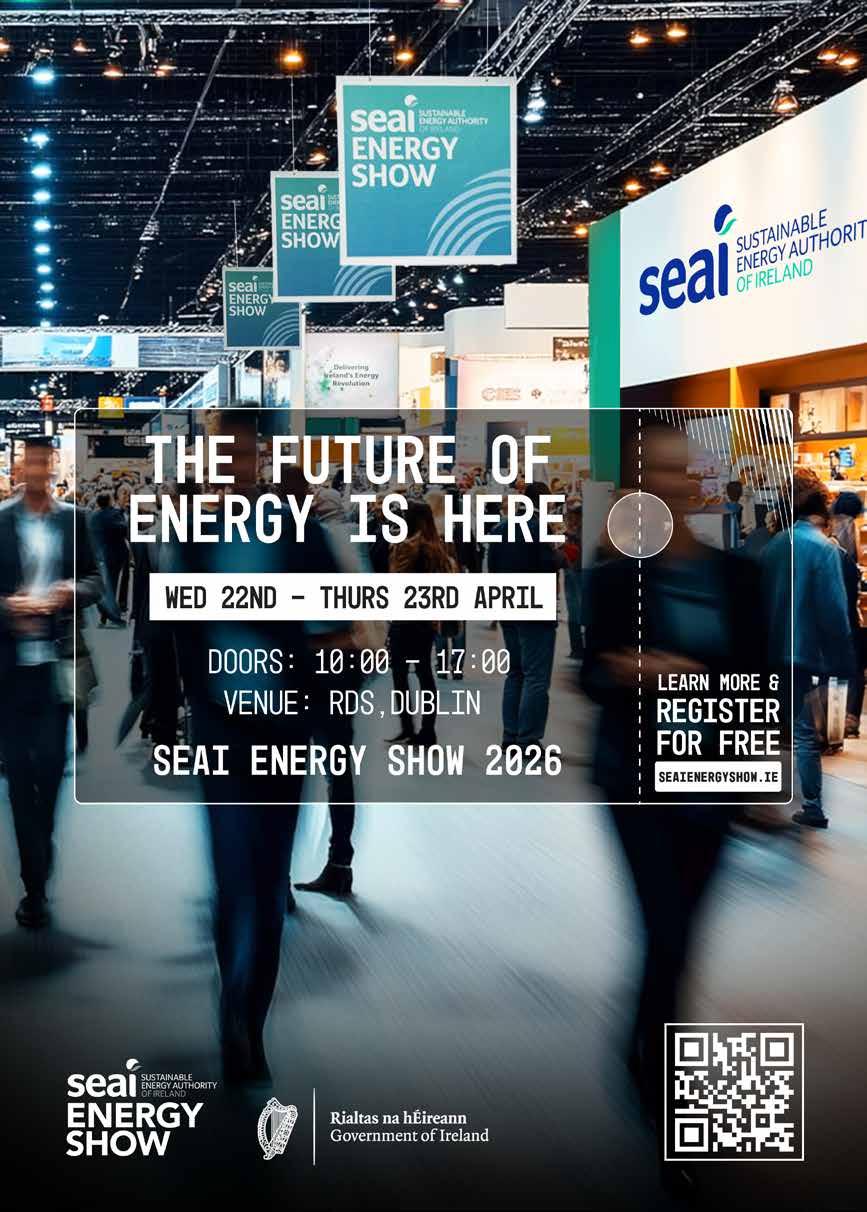
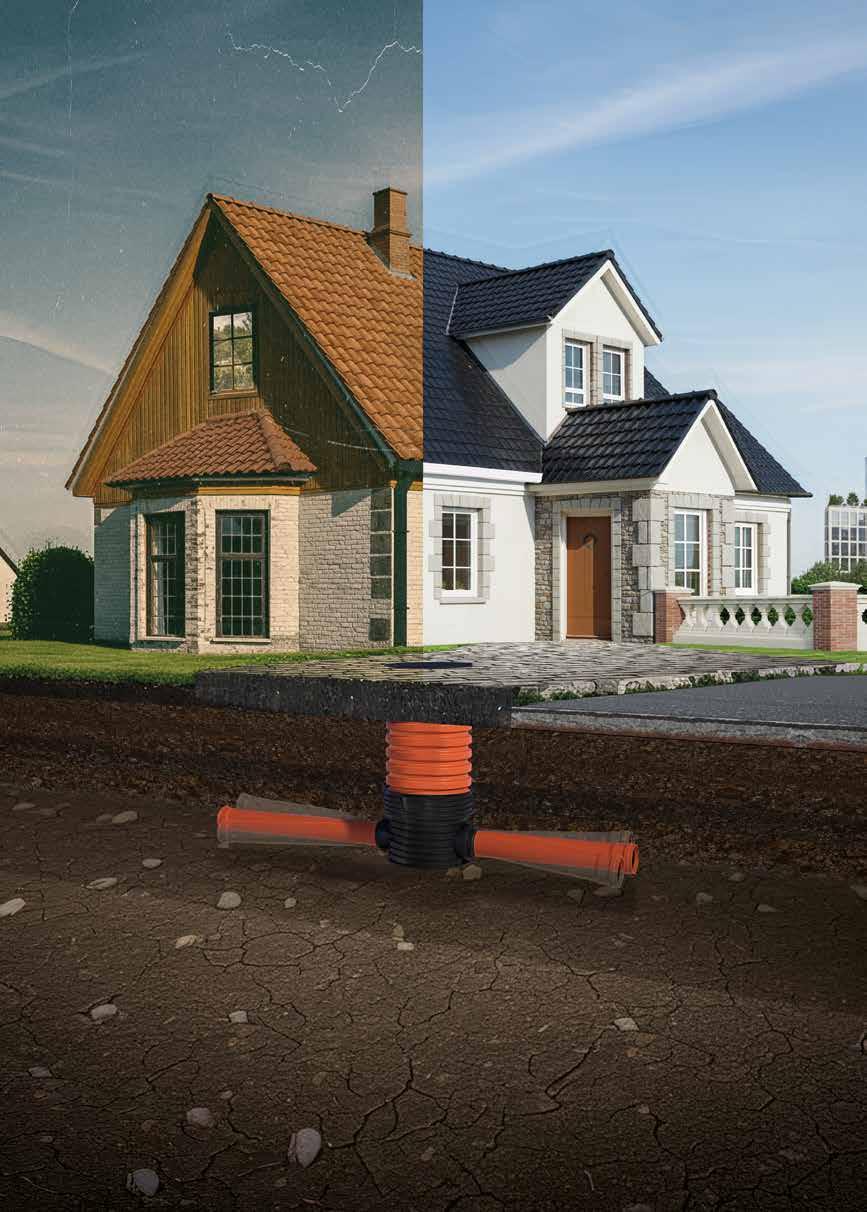

Wavin Ireland has launched an enhanced version of its Tegra 600 Inspection Chamber Range for gravity sewer systems, expanding its foul water drainage portfolio for the Irish market. Independently certified to EN13598-2, the Tegra 600 meets Irish Building Regulations Part H and is Uisce Éireann approved for wastewater networks.
Built to last, with a lifespan of up to 100 years, the new Tegra 600 comprises a durable chamber base, a shaft and secure seal. It provides access for the inspection, maintenance and cleaning of below-ground drainage networks - an essential function for keeping cities safe from flooding, protecting public health and ensuring the reliability of critical infrastructure.
The launch follows a wider ‘reinvention’ of the Tegra range, with Wavin highlighting a stronger focus on circularity and lowcarbon design while building on more than 40 years of proven performance in inspection chamber technology.
To support quicker and more flexible installations, the chambers’ pipe sockets
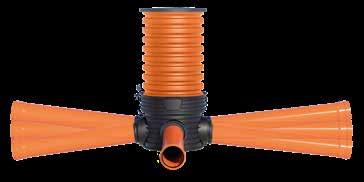
now allow for 10° of movement in all directions, a significant upgrade from the previous 7.5°. This improvement provides greater joint flexibility during installation, making it easier to accommodate slight on site misalignments. An enhanced chamber base shaft socket features a chamfered, easy push-fit design that reduces push-in force for shaft insertion, improving installation speed and efficiency.
As part of the improved range, chamber bases also feature integrated benching with a 15° gradient and swept channels, helping to prevent debris build up within the chamber. A newly designed flat, double reinforced base plate improves stability and long-term durability.
The enhanced range includes seven flow profiles and 27 base variants for maximum installation flexibility including a new 180° base option with 110mm sockets. Designed for flexibility on site, the product is compatible with Wavin sewer smoothwall pipes in 110mm, 160mm, 200mm, 250mm and 315mm diameters and features a cutto-length shaft, plus adaptors, covers and concrete biscuit.
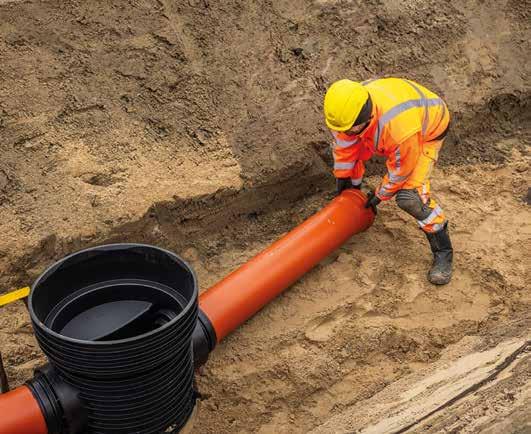
The Tegra 600 supports sustainability targets without compromising strength or performance. Bases are manufactured from up to 76% recycled polypropylene, and produced with 50% less energy, cutting its carbon footprint by 45-70% depending on the configuration. It is also 100% recyclable at end of life, and it is manufactured in facilities powered by 100% renewable energy.
Declan Conlon, Sales Director, Wavin Ireland, said: ‘The new Tegra 600 delivers a market leading, standards led, sustainable solution for contractors and specifiers. Customer feedback has led to product innovations like increased joint movement and a reinforced base, so installers can expect an easier, faster and more reliable solution. With a lifespan of up to 100 years, Tegra 600 is a durable inspection chamber built to stand the test of time.’
For more information, visit wavin.com/ie.
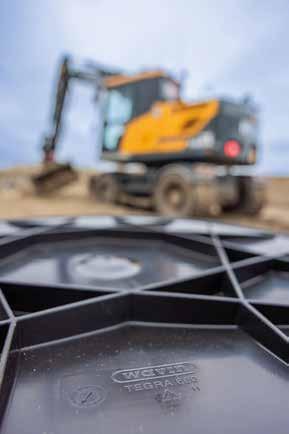
“The
Paul Tierney, CEO, MMC Ireland, speaks with ROBBIE COUSINS about the group’s rapid growth, why its upcoming national conference is a must-attend event for industry stakeholders, and the systemic barriers, from certification bottlenecks to procurement policy, that the industry must overcome to meet the demands of 2026 and beyond.
The Irish construction landscape is at a critical juncture. Faced with a persistent housing crisis and ambitious climate targets, the industry is increasingly looking toward Modern Methods of Construction (MMC) as the definitive solution. At the heart of this transition is MMC Ireland, an industry body dedicated to mainstreaming offsite and other innovative building techniques.
Now in its fourth year, the MMC Ireland National Conference has become a barometer for the sector’s health. Paul Tierney, who joined the organisation just weeks before its first conference in 2023, has watched the event evolve from a modest gathering of 150 people and 18 exhibitors to a sold-out industry staple.
He comments, “Thankfully, it’s grown every year. This year, exhibition space and sponsorship have been sold out since before Christmas. We have over 40 top-class exhibitors, all experts in their respective MMC field.”
So why is the conference such a key event?
The surge in interest in the MMC Ireland National Conference is reflected in the number of delegates, which doubled from 150 to 300 last year, and we are approaching 400 this year. However, for Tierney, success isn’t just about the quantity of attendees; it is about the quality of the discourse. MMC
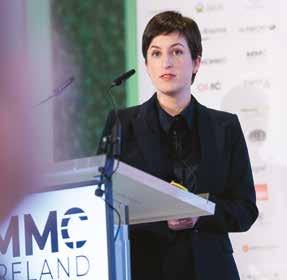
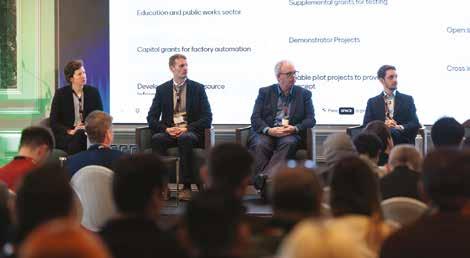
Ireland has implemented a strict ban on “sales presentations”. Instead, speakers have been asked to focus on innovation and education.
“What I’m absolutely against is sales presentations. Speakers have to come with something new and innovative, providing new insights for audiences,” he explains.
The rigorous selection process is overseen by an event committee comprising board members and working group chairs who identify key advocates and experts across Ireland, the UK, and Europe.
Feedback from previous years has led to a shift in the conference format. The 2026 event is a high-impact one-day main event, followed by an excellent networking event for all delegates, speakers and exhibitors. The conference is preceded by a “pre-day” featuring:
• Factory Tours: Visits to member manufacturing facilities within an hour of the venue.
• Speed Networking: A relaxed, fun, evening event for members to connect before the formal sessions begin. This approach ensures that delegates get the opportunity to attend a live factory tour demonstrating the best of MMC the day before the conference, followed by a high-quality one-day event. MMC Ireland, in association with its industry partner, MMC Accelerate, has scheduled a further six factory tours this year.
A recurring theme within the sector has been frustration surrounding the National Standards Authority of Ireland (NSAI) certification process.
For many manufacturers, the journey to obtaining an Agrément certificate is a twoto three-year process that stifles the very innovation it is meant to regulate.
However, Paul Tierney understands and empathises with the under-resourced NSAI, with a small number of highly professional people trying to get offsite manufacturers through the process as quickly as possible.
However, he points out that there have been significant improvements in the process and the new MMC Toolkit launched by the NSAI is certainly a step forward. “Already in 2026, we are starting to see some of the backlog of Agrément Certs being issued.”
There is further cause for optimism. The government’s latest “Delivering Homes” report uses the word ‘overhaul’ in relation to the NSAI. While the exact definition of this overhaul remains to be seen, Paul Tierney expects it to involve more resources, further collaboration and better alignment with industry needs.
Paul Tierney welcomes the recent major STANDARDIZE breakthrough from Construct Innovate.
“In the Irish construction landscape,
timber frame dwellings must adhere to the IS 440:2009 Timber Frame Dwellings standard. At the same time, all other off-site systems are required to undergo a comprehensive NSAI Agrément certification that evaluates every specific layer of a system’s material composition.”
MMC have proven effective at accelerating project delivery and enhancing environmental performance by lowering embodied carbon and minimising waste. To further this progress, the STANDARDIZE initiative is focused on developing openaccess design templates for Light Gauge Steel (LGS) systems that ensure full compliance with Building Regulations.
“This is a fantastic initiative, the only one of its type in Europe,” he says. “This project aims to create standardised solutions that could eventually open up the market without the constant need for individual Agrément certifications. This model is expected to migrate from 2D panelised systems to 3D volumetric solutions, providing a ‘revolutionary’ shift in how projects are delivered.”
Perhaps the most significant barrier to a sustainable MMC industry is the current public procurement model. Historically, tenders have been awarded based on the “Most Economically Advantageous Tender” (MEAT), which in practice often defaults to the lowest upfront cost.
To combat this, MMC Ireland is collaborating with the Construction Industry Federation (CIF), Engineers Ireland, the Society of Chartered Surveyors Ireland (SCSI), and the Royal Institute of the Architects of Ireland (RIAI).
Together, these bodies are authoring an MMC Public Procurement Policy Paper. The goal is to encourage the government to evaluate tenders based on Whole Life Costs and Carbon Footprints rather than just the initial capital expenditure.
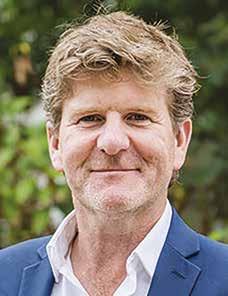
“Once we start looking at carbon costs and whole-life costs, we become a sustainable purchaser of our infrastructure,” Paul Tierney argues. “Failing to make this shift could result in billions of euros in environmental fines as Ireland tracks toward its 2030 targets.”
The push for MMC is not just about efficiency; it is a necessity driven by a shrinking workforce.
Paul Tierney highlights a sobering statistic from the UK, which shares a similar demographic profile to Ireland: for every seven people leaving the construction industry, only one is joining.
“Unless we embrace manufacturing and new ways to build, we’re going to run into a roadblock where we just don’t have the people to build what we need,” he warns.
This is where the BIM (Building Information Modelling) gap becomes critical.
He expresses his surprise at how far Ireland has lagged behind the UK in BIM adoption. “While the UK mandated BIM Level 2 for government contracts in
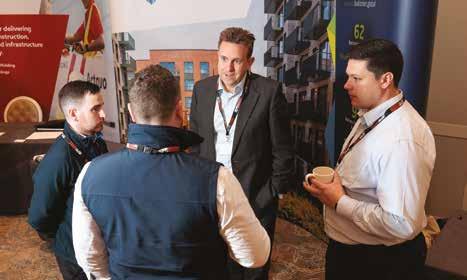
2016, Ireland has only now moved toward mandatory implementation. Catching up is essential for SMEs to remain competitive and for MMC to become ‘mainstream construction’ rather than a niche sector.”
When asked what success would look like for the MMC sector in five years, Paul Tierney points to the government’s recent target of 25% of social and affordable housing should be built using MMC.
“In five years, I’d like that number to be more than 50%,” he says. “Success would mean that the MMC label is no longer necessary because these methods have simply been incorporated and adopted into how we build schools, homes, and hospitals.”
He continues, “The progress is already visible. Last year’s government accelerated delivery programme saw 1,500 social and affordable homes across 36 sites commissioned to be built using MMC. With all these homes currently on-site or in contract, the industry will have a proven template for scaling.”
MMC Ireland is no longer just an advocacy group; it is a central pillar in the government’s strategy to solve the housing crisis, build the increasing number of schools and hospitals we need and to meet our sustainability goals. By addressing the “meat and potatoes” issues of certification, procurement, and standardisation, Paul Tierney and the MMC Ireland board are laying the groundwork for a more resilient, digital, and sustainable Irish construction industry.
As the industry prepares for the upcoming MMC Ireland National Conference, the message from Paul Tierney is clear: “The transition to increased adoption of offsite manufacturing is no longer an ‘option’ - it is critical if we are to have any chance in meeting our country’s infrastructure needs.”
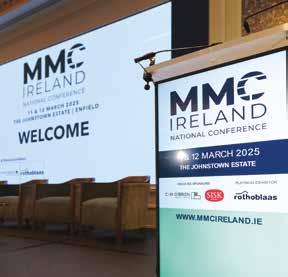
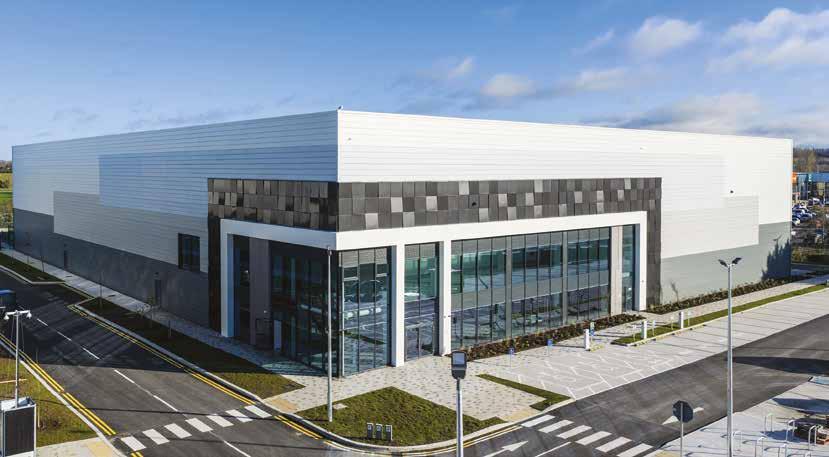
Vision Contracting has completed Globe Logistics Park in Naas, Co Kildare, for Red Rock Logistics. The flagship 191,092-sq ft. development has achieved the prestigious LEED Gold certification. Acting as the Design & Build main contractor, Vision Contracting managed complex civil engineering and infrastructure upgrades to create a highperformance industrial hub that sets a new benchmark for quality and operational efficiency.
Delivered by Vision Contracting for Red Rock Logistics, Globe Logistics Park in Naas, Co Kildare, achieved the prestigious LEED Gold certification. Spanning approximately 17,753 sq metres (191,092 sq feet) across two detached units, Globe Logistics Park demonstrates that large-scale industrial infrastructure can be delivered with high efficiency, minimal environmental impact, and superior longterm operational performance.
Situated on the north side of Monread Road, the development occupies a prime position within one of Ireland’s most critical logistics corridors. Its proximity to
Junction 9 on the M7 motorway provides unparalleled connectivity to Dublin, Cork, and Limerick, making it a vital hub for national supply chains.
However, the construction of the park involved far more than the erection of two warehouses. Vision Contracting, acting as the Design & Build main contractor, undertook significant civil engineering works to integrate the park into the existing urban and industrial fabric. This included a major road infrastructure upgrade, specifically the widening of Monread Road. By creating dedicated access and egress lanes, the project ensures that the anticipated high volume of heavy goods vehicle (HGV) traffic can be managed safely without compromising the local
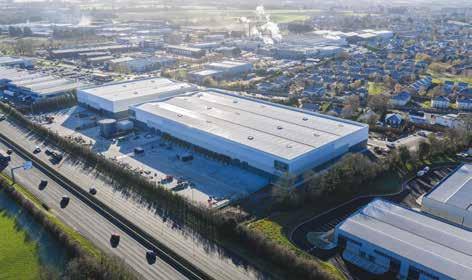
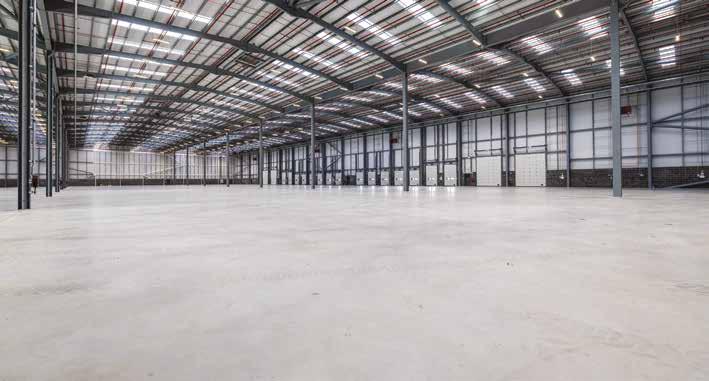
road network’s capacity. These works were essential to future-proof the site’s accessibility and were executed while maintaining traffic flow on one of Naas’s busiest arterial routes.
The defining characteristic of Globe Logistics Park is its commitment to sustainability. At a time when Environmental, Social, and Governance (ESG) criteria are paramount for institutional investors and global tenants, achieving LEED Gold certification was a non-negotiable objective from the project’s inception.
Vision Contracting implemented a “Fabric First” approach to ensure the buildings’ thermal envelopes exceeded standard building regulations. By utilising highperformance cladding and advanced glazing systems, the project significantly reduces the energy required for heating and cooling. Internally, the use of lowenergy LED lighting with motion and daylight sensors further optimises energy consumption.
Water management was a critical component of the LEED Gold strategy. The project incorporates integrated Sustainable Urban Drainage Systems (SUDS) to manage surface water runoff. These systems, which include attenuation tanks and permeable surfaces, mimic natural drainage patterns to prevent the local sewer network from
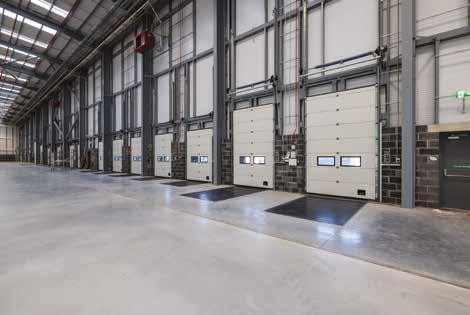
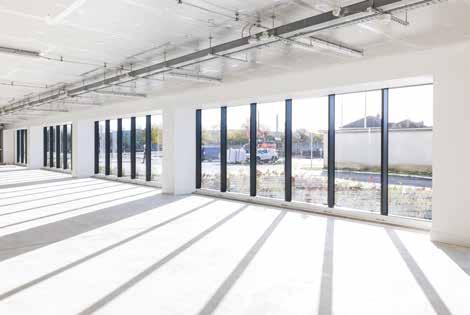
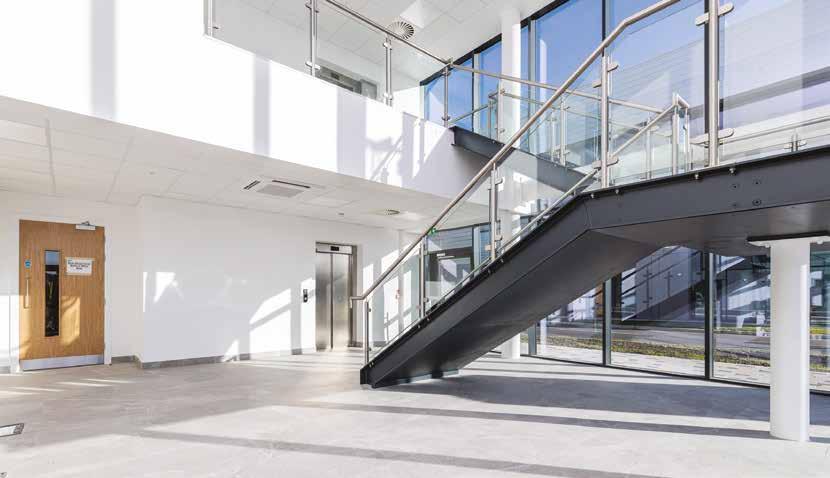
being overwhelmed during heavy rainfall, thereby enhancing the site’s flood resilience. Inside the units, low-flow water fixtures were installed to reduce potable water consumption by a significant margin compared to baseline buildings.
Moving beyond the built structure, the development prioritised the local ecosystem. The landscaping strategy moved away from traditional aesthetic planting in favour of biodiversity-led initiatives. This included using native Irish plant species, creating pollinator-friendly habitats, and installing bird nesting boxes. These measures ensure that the logistics park contributes to the local ecological network, providing a sanctuary for local wildlife
within an industrial setting.
Key structural components were fabricated off site where possible. By manufacturing these components off site, the project team could achieve tighter tolerances, directly contributing to the buildings’ exceptional airtightness—a key metric for energy efficiency.
And if the challenges listed above were not enough for the Vision Contracting team, the project was located adjacent to existing, operational logistics facilities, just off the M7 motorway on the outskirts of Naas. So delivering this major construction project
in a live environment required meticulous planning and a proactive approach to safety and logistics.
With constant HGV movements from neighbouring businesses, managing the arrival of construction plant and materials was complex. Vision Contracting implemented a robust traffic management plan that segregated construction traffic from public and industrial traffic. This included dedicated access routes and timed deliveries to avoid peak operational hours for the surrounding businesses.
As the Project Supervisor Construction Stage (PSCS), Vision Contracting was responsible for the health and safety of everyone on site and for protecting the public. This required constant communication with local authorities, businesses, and road users. Phased sequencing of the works ensured that the widening of Monread Road and the utility connections were carried out with minimal disruption to the existing infrastructure.
The project addresses the “Social” aspect of ESG by encouraging sustainable travel for the future workforce. The park features a high number of electric vehicle (EV) charging points to support the transition to low-carbon transport. Furthermore, ample secure bicycle parking and shower facilities were included in the design to encourage staff to commute via active travel modes. By locating the park within reach of Naas
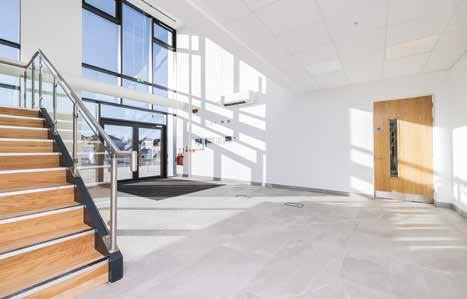
town centre and local transport links, the development supports local employment while minimising the carbon footprint associated with commuting.
Completed in late September 2025, Globe Logistics Park stands as a testament to what can be achieved through a collaborative Design & Build approach. By integrating MMC, renewable energy, and biodiversity measures, Vision Contracting and Red Rock Logistics have created an asset that
is both environmentally responsible and commercially viable.
Speaking about the project, David Carroll of Red Rock Logistics stated, “It was a pleasure working with Vision Contracting and their Design Team to bring our vision for Globe Logistics Park to life. Their early engagement was instrumental in transforming an underutilised landholding into a modern logistics park delivered efficiently on budget and on programme.”
Vision Contracting Director Colm Fehily is also delighted with the outcome of the project. He
ARCHITECTURAL AND ENGINEERING
SPECIFICATIONS: UNITS A1 AND A2
The development comprises two distinct, high-specification units designed to meet the rigorous demands of modern logistics operators. Both units were built with a focus on volume, flexibility, and load-bearing capacity.
Unit A1 provides a total floor area of 5,291 sq metres (56,952 sq feet), which includes 533 sq metres (5,737 sq feet) of Grade A office space. From a construction perspective, the unit features a 12-metre clear internal height, allowing for maximum pallet density and the installation of advanced
Project Name: Globe Logistics Park
Location: Monread Road, Naas, Co
Kildare.
Contract Type: Design & Build
Total Development Area: 17,753 sq metres (191,092 sq feet)
Sustainability Rating: LEED Gold
Certified BER Rating: A2
Completion Date: 30 September 2025
Client: Red Rock Logistics
Main Contractor & PSCS: Vision
Contracting
Architect: JSA Architects
Mechanical & Electrical Engineering
Consultant: Axiseng
Civil & Structural Engineer: Muphy Mason O’Sullivan
Fire Safety Consultant: ORS
commented, “The goal from the outset was to transform this strategic site into a future-proofed industrial hub for our valued client Red Rock Logistics. Managing the construction within a live environment while coordinating offsite fabrication and sustainable drainage systems while seamlessly integrating major infrastructure upgrades required meticulous planning and coordination by our site team and design consultants. We are proud to have delivered Unit A1 and A2 on programme and on budget, while achieving LEED Gold & BER A2.”
For the construction industry, this project serves as a blueprint. It proves that the “logistics sheds” of the past can be transformed into high-performance, green-certified assets that meet the world’s most stringent sustainability standards. As Ireland continues to expand its logistics capacity to meet the needs of a globalised economy, the Globe Logistics Park will remain a benchmark for quality, innovation, and environmental integrity.
automated racking systems. The loading infrastructure is robust, comprising six dock levellers and two ground-level roller doors, ensuring a seamless flow of goods.
As the larger of the two facilities, Unit A2 spans 12,462 sq metres (134,140 sq feet) with 986 sq metres (10,613 sq feet) of integrated office accommodation. Mirroring the 12-metre clear internal height of its counterpart, Unit A2 is designed for high-throughput operations. It features 15 dock levellers and four ground-level roller doors. The structural design of the floor slabs in both units was engineered to support the heavy point loads required by contemporary logistics machinery and high-bay storage.

As sustainability expectations rise across Ireland’s built environment, waste management is no longer a back-ofhouse necessity, it’s a measurable part of project performance. From traceability to diversion targets, the right partner can protect compliance and strengthen environmental outcomes.
Go Green Ireland launched into the Republic of Ireland in 2023, building on the wider Go Green group’s experience (established 2000, turnover €70m) to deliver practical, data-led waste solutions that support contractors, developers, and facilities’ teams across the country.
Go Green Ireland provides end-to-end waste management services designed around three priorities:
• Sustainability performance
• Compliance confidence
• Operational reliability
Whether supporting a single site or a multi-location portfolio, our approach is built on clear processes, consistent documentation, and transparent reporting.
We help clients move beyond “waste removed” to measured sustainability outcomes, with practical support that improves performance on live sites:
• Segregation reviews to reduce contamination and maximise recycling potential.
• Waste minimisation advice aligned to the realities of construction, fit-out and operations.
• Diversion-focused routing that prioritises recovery options where appropriate.
• Evidence-led reporting to support ESG frameworks.
Sustainability isn’t a statement, it’s a dataset. Our reporting is designed to show what, when, and where, and to make that information easy to access.
For teams working towards BREEAM and LEED requirements, Go Green Ireland supports the evidence trail by providing clear documentation and reporting outputs that help demonstrate:
• Waste streams and movements
• Collection frequency and service records
• Diversion/recovery performance (where applicable)
• Auditable documentation to support project submissions.
Just as importantly, we work with site teams to make the process practical — helping ensure the right containers, signage and segregation guidance are in place to support performance from day one.
Compliance is strongest when it’s designed into the service. Our focus is on the fundamentals:
• Clear duty of care documentation
• Traceability and audit readiness
• Consistent processes across sites.
Support during compliance checks and client audits for project teams, that translates into fewer surprises, clearer records, and a service that stands up to scrutiny.
One partner offering total waste management. Go Green Ireland is your one partner providing total waste management across:
• Skip & Roll-off Hire
• Hazardous Waste
• Caged Vehicles
• Construction Waste
• Trade Waste
• Recycling
This means fewer interfaces, clearer accountability, and more consistent reporting across the full waste profile. Services are designed around local supply chains, utilising local suppliers to reduce unnecessary mileage, improve responsiveness, and support regional capability. We support clients across the Republic of Ireland with reliable collections and scalable resourcing, helping teams standardise their waste approach across multiple locations, from city-centre projects to regional sites.
Go Green Ireland provides reporting that helps clients understand performance and identify improvement opportunities, including:
• Summary dashboards and site-level outputs
• Waste stream breakdowns and trend visibility
• Documentation access to support internal governance
• Portfolio reporting for multi-site clients.
The goal is simple: make waste data useful — for project reviews, ESG reporting, client updates, and certification evidence packs.
“Expanding into ROI has been about more than geography, it’s about bringing dependable and proven service to customers. With the backing of Go Green Ltd’s experience and infrastructure, Go Green Ireland has been able to grow quickly while maintaining the continuity and quality our customers expect.”
George Hilliard, Division Manager – Go Green Ireland
Performance on paper only matters if it works on the ground. As part of our service, site inspections can be arranged to support:

• Container positioning and segregation set-up
• Contamination reduction
• Signage and practical on-site guidance
• Identification of improvement actions and quick wins.
This on-site visibility helps keep teams aligned, improves outcomes, and supports smoother project delivery.
Abargrove Ltd t/a Events & Hospitality Services
Waste Collection, Management & Recycling
Appointed via competitive tender, Go Green Ireland delivers waste collection, management and recycling for Abargrove Ltd t/a Events & Hospitality Services (EHS) across 8 sites nationwide, supporting catering operations at Greyhound Racing Ireland stadia. Services cover general waste, DMR, food waste and mixed glass, with lockable bins and a dedicated Account Manager. We also drive continuous improvement to cut carbon impact, increase recycling, standardise food waste processes, and progress a stadium-wide waste management approach.
Mainline Utilities
Total Waste Management
Go Green supports Mainline Utilities across 10 sites nationwide, delivering a fully managed service for skips, wheeled bins, hazardous waste and grab hire to meet varying operational and project demands. Our national model combines compliant duty-of-care controls with responsive collections, helping Mainline simplify supplier management and maintain consistent environmental oversight across multiple locations.
As John Connelly, SHEQ Director, comments:
“Sustainability is a key focus for Mainline, and we recently participated in ESB’s and Business in the Community Ireland’s Climate Action Programme for SMEs. In partnering with Go Green, Mainline has successfully been able to implement a national strategy of corporate governance in assisting with environmental targets.”
Contact Us
George Hilliard, Division Manager – Go Green Ireland
t: 01 968 4105 e:ghillard@go-green.ie w: go-green.ie
Modern Methods of Construction hold the key to accelerating Ireland’s housing delivery, yet regulatory and durability hurdles remain. COLM MCHUGH, Centre Manager, Construct Innovate, outlines two Centre transformative research projects—STANDARDIZE and a new durability study—designed to break down these barriers by streamlining certification for Light Gauge Steel and aligning façade standards with international best practices.
Two ongoing Construct Innovate research projects aim to boost Modern Methods of Construction (MMC) adoption for housing by addressing critical barriers: the 60-year durability requirement for façades and the development of a complete set of building regulation-compliant standards.
Construct Innovate, Ireland’s National Construction Technology Centre, has two new programmes that aim to address some of the barriers faced by MMC methodologies for housing in Ireland. One will look to present alternative solutions that will address the requirement for a
60-year design life of external cladding on houses based on best international practice. The other will create a set of standardised residential construction details for Light Gauge Steel (LGS) panelised systems that will comply with Irish Building Regulations. These construction details will be similar to existing Part L acceptable construction details or supplementary guidance to the technical guidance documents. The construction details will enable wider adoption of MMC and the potential for significantly less testing and lower costs to navigate NSAI Agrément certification for building systems.
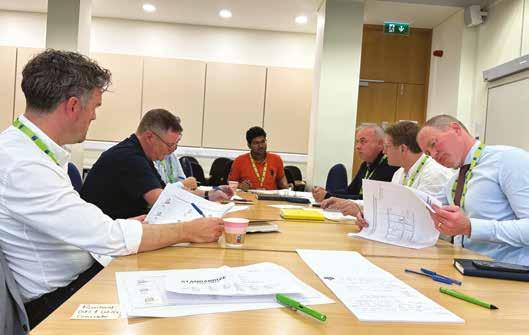
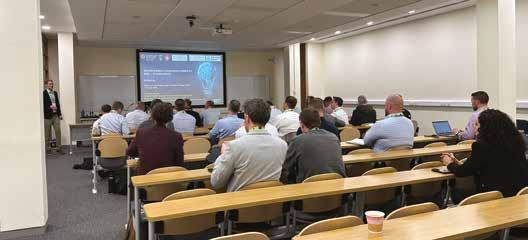

When completed, the programmes will create opportunities for a broader mix of MMC systems.
The Department of Housing, Local Government & Heritage require a guaranteed 60-year design life of external cladding, which is more stringent than other jurisdictions.
Dr Daniel McCrum, Associate Professor, UCD, will be the Project Lead on Construct Innovate’s certification and durability of innovative building systems project, in collaboration with Construct Innovate industry members, Glenveagh and Cairn Homes.
They will be looking to better understand Ireland’s approach to building façade durability, how other countries view it, and how to align Irish requirements with the best standard of international practice to bring innovative systems to market. With funding approval for this work in place, the project commenced in late 2025.
STANDARDIZE: CREATION OF OPEN-ACCESS AND BUILDING REGULATION-COMPLIANT STANDARDISED CONSTRUCTION
Funded by the Department of Enterprise Trade and Employment, Construct Innovate’s ‘STANDARDIZE: Creation of open-access and Building Regulationcompliant standardised construction details for residential MMC’ project aims to support continuity of residential MMC from design through to construction. This project was brought to Construct Innovate by the Department of Housing, Local Government and Heritage.
STANDARDIZE is led by Dr McCrum and co-led by Dr Magda Hajdukiewicz, CoDirector of Construct Innovate, University of Galway, and Dr Eoin King, Programme Director, Mechanical Engineering,
University of Galway. This project will:
• Identify industry needs for standardised construction details for MMC
• Identify the standard construction details and performance requirements for one type of MMC. Based on industry engagement over the course of 2025, in September, Light Gauge Steel (LGS) was chosen as the system of focus as part of this project. Since then, the project has brought together manufacturers, contractors, designers, building control, representative bodies, etc from LGS category 2 MMC to understand the existing construction details common to Agrément certificates and how they can be shared
• Based on a gap analysis from the existing NSAI Agrément certificates, the project consortium will experimentally test the required details according to EN standards
• Produce open source standardised construction details for LGS similar to supplementary Guidance to TGDs or ACDs
Currently, all off-site construction systems in Ireland, except for timber frame, which is compliant with ISO 440 Timber Frame Dwellings, undergo a rigorous NSAI Agrément certification process. Certification is granted based on the exact material composition and build-up of the system, from the innermost to the outermost layer.
MMC has been shown to speed up delivery, reduce waste, reduce embodied carbon, whilst improving sustainability and circularity. STANDARDIZE aims to create open-access, Building-Regulationcompliant standardised design details for one type of residential MMC, namely LGS.
Having selected LGS as the system of focus for this project, the collection and mapping of existing Agrément common junctions, build-ups, etc, has begun and will continue through 2026, before an initial set of details is arrived at that meet building regulations and can be produced by manufacturers. These details will be converted into acceptable construction details that will include standard construction junctions: Wall to floor, wall to ceiling, party wall, etc, and the key junctions in a typical residential construction design. This process will highlight what additional details are missing and needed to create a more comprehensive set of construction details.
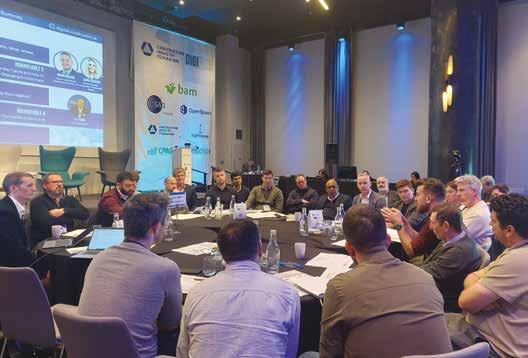
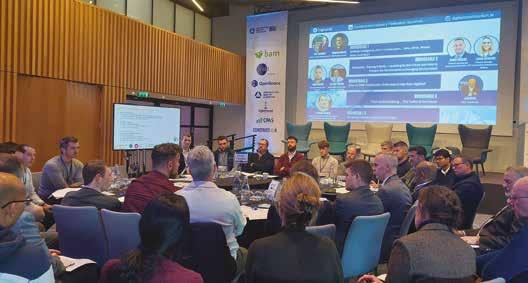
The next, and more complex, stage will be testing and verification of the additional missing details to demonstrate compliance with Irish Building Regulations. This will include testing and modelling structure, fire, thermal, acoustic, and durability performance of standardised details/ build-ups. The test results and standardised construction details will then be made open source to support the wider adoption of LGS MMC in the Irish construction sector.
The NSAI will in the near future start a technical committee on LGS residential construction and will be looking for experts to join this committee.
The sector will be at the heart of this process, with a series of industry workshops to follow the completion of work on the standard details. Early workshops have garnered significant interest and input from MMC manufacturers, who understand the challenges better than anyone. The LGS sector has shown significant interest in
using this project as a stepping stone to develop an Irish standard for LGS MMC residential construction, similar to the one that exists for timber frame.
A successful outcome will be viewed as one where there is a thriving off-site manufacturing sector that is contributing significantly across the board to meeting Ireland’s housing targets, creating highskilled jobs, and building homes that are energy-efficient and sustainable and a future where developers, regulators, and the public have complete confidence in the quality and safety of these systems.
To learn more about the latest work being carried out by Construct Innovate, Ireland’s National Research Centre for Construction Technology and Innovation, visit https://constructinnovate.ie/ Or scan the QR code

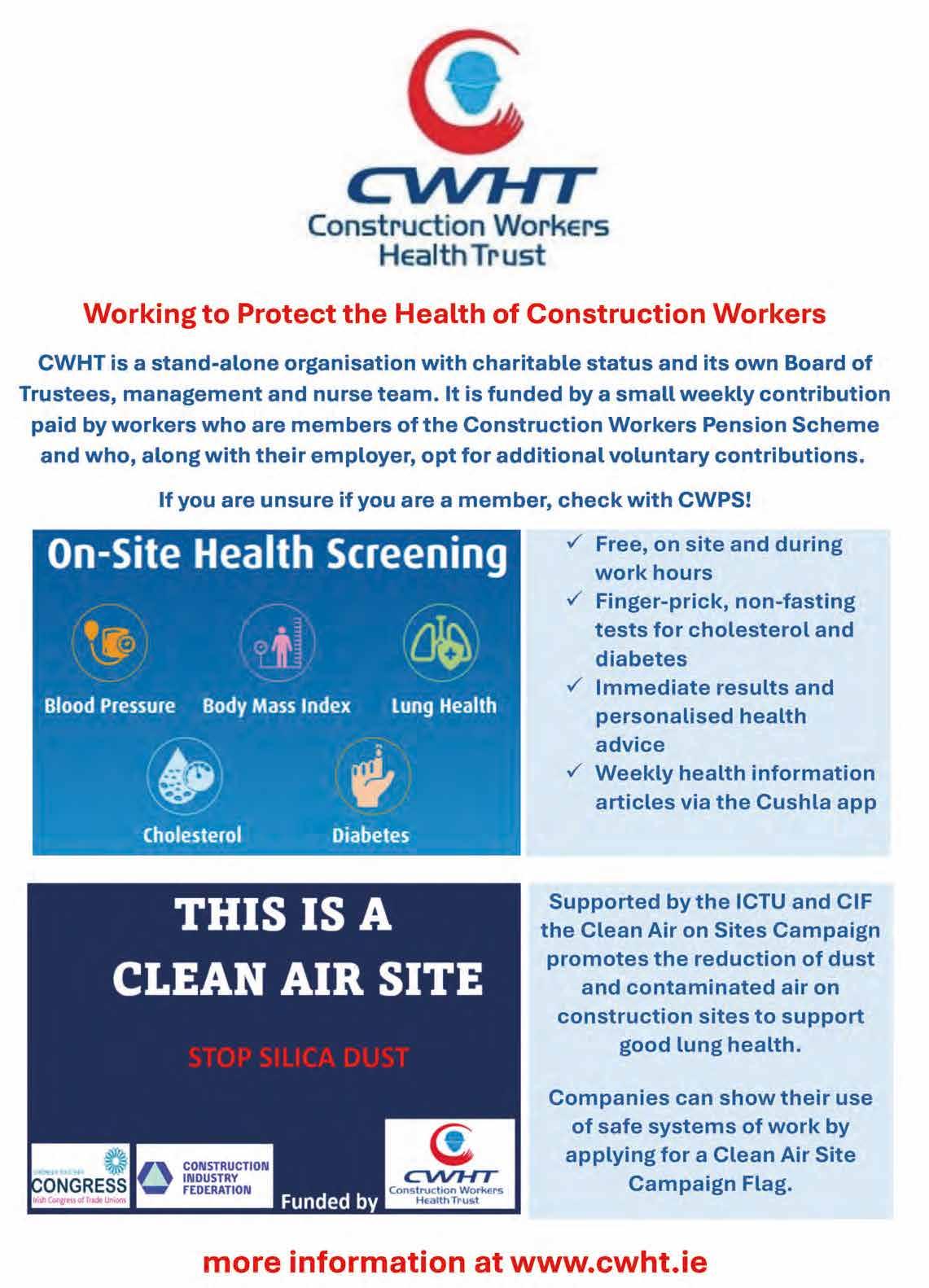
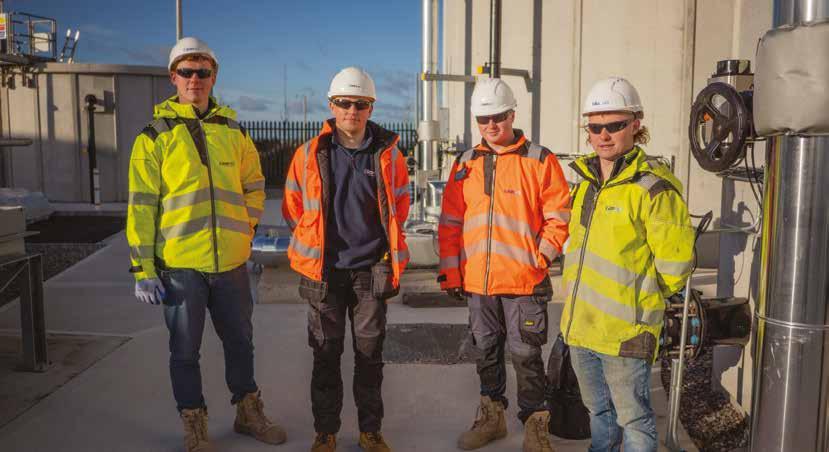
For those looking to bypass the traditional four-year lecture hall grind in favour of a dynamic, handson career, Glanua’s apprenticeship programme offers a compelling alternative.
As a leader in water and wastewater engineering, Glanua is actively bridging the gap between academic theory and industry practice, providing a unique launchpad for the next generation of engineers and tradespeople.
Glanua Contracts Manager Brian Hayes comments, “If a traditional classroom route isn’t for you, a practical on-the-job environment might be. If I were to go back to when I decided to go to college, I think the apprenticeship programme would have suited me better than the traditional method I went. It gives an opportunity to people who may not be as strong academically in the traditional sense, but can learn from observing and working with people, using their hands and learning from real-life experience.”
The Glanua Apprenticeship Programme is designed for individuals who thrive in a physical, problem-solving environment and want to earn while they learn.
The hallmark of the Glanua experience is its incredible variety and balance. Apprentices aren’t just stuck in an office or confined to a single site; they experience a hybrid model that mixes intensive study with real-world application. Depending on the specific path chosen, such as civil engineering, electrical instrumentation, or utility traineeships, the schedule often alternates between blocks of college learning and several months of full-time site work.
For others, the “four days on site, one day in college” model ensures that the theory learned in the classroom is immediately reinforced by practical tasks the very next day.
The scope of work is vast and technical. An electrical apprentice might find themselves commissioning flow meters and level sensors one day, and handling complex panel wiring or motor installations the next. Civil engineering apprentices dive into everything from concrete work to reinstatement, often completing technical projects and case studies based on their livesite experiences. This immersive approach ensures that by the time an apprentice qualifies, they possess a level of site fluency that traditional graduates often lack. They understand the “workings of a site” from day
one, rather than having to start from scratch after graduation.
Earning while they learn, gaining on-the-job experience and building a successful career, Glanua apprentices are thriving across civil engineering, electrical and instrumentation, mechanical fitting and utilities, gaining hands-on experience on live water and wastewater projects from day one.
Beyond the technical skills, Glanua fosters a culture of mentorship and support. Apprentices are integrated into professional teams where communication is key, learning to collaborate with subcontractors and senior engineers in a positive, encouraging atmosphere. The company is also a strong advocate for diversity, specifically encouraging more women to enter the engineering sector.
Brian Hayes concludes, “I would encourage young women to take up this opportunity. Some of the best engineers in Glanua are women. I would be encouraging anyone curious to follow through and get in touch with us.”
To learn more, visit https:// glanua.com/aboutglanua/currentvacancies-2025/ or scan the QR code to watch the video

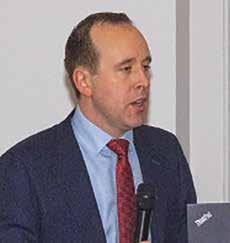
The Irish Timber Frame Manufacturers Association (ITFMA) held its Annual General Meeting on Thursday, 22 January at the Osprey Hotel in Naas.
With over 80 stakeholders in attendance—representing 24 manufacturers and more than 30 supply-chain partners— the atmosphere was one of great optimism. From insulation specialists to membrane providers, the entire ecosystem of timber construction was under one roof, focused on a singular goal: scaling responsibly to meet the nation’s housing needs.
The meeting was addressed by John
Cummins TD, Minister of State at the Department of Housing, Local Government & Heritage. His address wasn’t just a courtesy; it was a reinforcement of policy. Minister Cummins highlighted the work of the Timber in Construction Steering Group, positioning timber frame as the essential “low-carbon solution” required to hit Ireland’s aggressive climate and housing targets.
Fergus McMahon, Commercial Director at Cairn PLC, further echoed this sentiment. He emphasised that the future of Irish housing delivery relies on three pillars: sustainability, ESG (Environmental, Social, and Governance) alignment, and the ability to scale together.
The ITFMA welcomed six new members, bringing its total to 24 manufacturers. However, it’s the market share data that truly tells the story.
In just a couple of
years, the timber frame market share in Ireland has surged from 23% in 2023 to a commanding 36%. This leap isn’t just a statistic; it’s a clear signal that developers and regulators are looking for faster, greener, and more efficient off-site methods.
Commenting on the event, ITFMA Chair Sean Fox noted that the association provides the “credible, evidence-based platform needed to support this growth. As the industry matures, the ITFMA’s role in maintaining technical standards and engaging with regulators will be the bedrock upon which Ireland’s next generation of housing is built.”
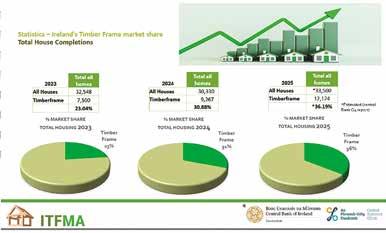
Kirby Group Engineering has announced the recipients of its third-level bursary awards, as part of the company’s ongoing drive to promote diversity and inclusion in the engineering sector. Six female students have been selected this year, as the programme goes from strength to strength.
Now in its fourth year, Kirby’s bursary programme is open to women studying Electrical, Mechanical, or Building Services Engineering at third-level institutions across Ireland and South Africa. Having come through a rigorous selection process conducted by Kirby’s Talent Acquisition team, the six recipients will receive:
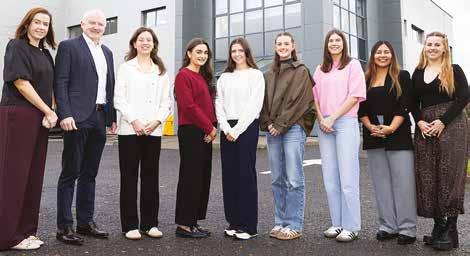
• A full scholarship to cover the coming academic year
• Paid professional placements on Kirby’s local and international projects
• Mentorship from senior engineers
• Opportunities to gain highly valuable industry insights
This year’s winning students are Aisling Costelloe from Ennis; Meadhbh Hurley from Limerick; Caoimhe Flynn from Kilcolgan; Emilia Hildebrandt from Tipperary; Sarah Coyle from Belmullet; and Emma Prestage from Cape Town, South Africa.
Kirby’s Chief Operations Officer, John Grogan, believes the bursary programme is an extremely worthwhile investment. “Initiatives such as this play an important role in demonstrating the benefits of careers in engineering and construction and, more importantly, ensuring those messages reach as wide an audience as possible. The bursary programme is a symbol of Kirby’s commitment to promoting diversity and, above all, our identity as a people-first organisation.”
Octabuild has officially launched the 2026 all-island Builders Merchant Excellence Awards, with builders’ merchants across the island invited to enter.
One of the most respected programmes in the sector, the Octabuild Awards celebrate excellence within the builders’ merchant trade, recognising businesses and individuals who set high standards in operational performance, customer service, people development, and innovation.
Octabuild’s members, leading Irish manufacturers – Bostik, Etex Ireland, Glennon Brothers, Grant Engineering, Gyproc, Irish Cement and Kingspan Insulation.
Speaking at the launch, Mike Glennon, Chairperson, Octabuild, said, “The Octabuild Awards are your awards and are designed to showcase what’s best in our industry. They remain a cornerstone of our engagement with the merchant sector.”
Three new awards have been introduced for 2026:
• Unsung Hero Award, recognising behind-the-scenes contribution;
• Sustainable Business Excellence Award, celebrating meaningful environmental
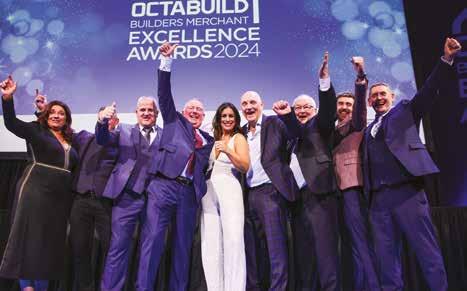
action; and
• Digital Excellence Award, recognising progress in digital capability and innovation.
The judging panel has also been refreshed for 2026, bringing together Phil Derby, Steve Collinge, Brian McIntyre and Lorraine Higgins, whose combined expertise spans merchant operations, business strategy,
sustainability and digital transformation. Entries close on 31 March 2026, with winners to be announced at an Awards ceremony at a gala event in The Round Room at the Mansion House, Dublin on Thursday, 01 October 2026.
Full details available at www.octabuild.ie/awards
Ireland’s wind energy industry launched its new 2026-2030 Strategy, Delivering Energy Independence, Powering Growth,
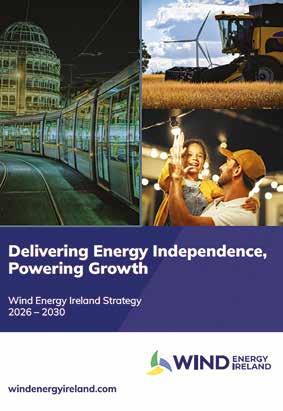
setting out a clear and ambitious plan to transform Ireland into one of Europe’s first true ‘electrostates’ — a country powered by secure, affordable and home-grown clean electricity.
The strategy was launched at the organisation’s annual conference in the Clayton Burlington Hotel in Dublin, which also featured contributions from Minister for Climate, Energy and the Environment Darragh O’Brien TD and EirGrid CEO Cathal Marley.
The strategy outlines how Ireland’s world-class wind resources can be deployed at scale to strengthen energy independence, protect consumers from volatile fossil fuel markets and drive sustainable economic growth in every region of the country.
Two key deliverables underpin this roadmap: building wind farms – on and offshore – faster, and at the best possible value for Irish consumers, and accelerating the transition to a resilient, electrified
economy by growing clean electricity demand in the heat, transport and industrial sectors.
The strategy is structured around five strategic goals:
• Delivering wind power at scale by removing grid, planning and regulatory bottlenecks;
• Growing clean energy demand through electrification, storage and flexibility;
• Telling Ireland’s clean energy story to build public trust and support;
• Making the industry ready by developing a skilled, adaptable, world-class workforce and enabling emerging technologies through targeted research;
• Leading Ireland’s clean energy future through strong, agile and influential sector leadership.
Visit https:// windenergyireland. com or scan the QR code to download the roadmap



Building cleaner and smarter: How AI can help Ireland hit net zero, and reskill the workforce to do it
To hit net-zero targets, Ireland’s construction industry must move beyond marginal gains. By integrating AI into design, procurement, and upskilling, firms can turn climate mandates into competitive advantages. PAUL LYNCH, CEO, 8020 Consulting, outlines a practical 90day playbook for leaders to bridge the adoption gap and build a cleaner, smarter Ireland.
Walk onto any site in Ireland today, and you can feel the clear sense of momentum. With sustained housing demand and growing public capital investment, there is a steady commitment to meeting our national goals and advancing our climate objectives. To this end, the legal guardrails are unambiguous: Ireland must cut greenhouse gas emissions by 51% by 2030 and reach climate neutrality by 2050—a trajectory governed by carbon budgets that tighten meaningfully from 2026–2030 onward. In this context, construction—responsible for roughly 37%–40% of emissions when operational and embodied carbon are considered—cannot merely improve at the margins; it has to transform. And increasingly, that transformation is being enabled by artificial intelligence (AI).
The good news is that the tools to do this are here. What’s needed now is focused adoption: AI for carbon tracking and design optimisation; AI for smarter procurement and material choices;
AI for site logistics and operational performance. In parallel, we must upskill the workforce—rapidly—so that humans and machines can deliver lower-carbon, higher-productivity projects at scale.
AI & SUSTAINABILITY IN CONSTRUCTION: FROM WHOLE LIFE CARBON TO MATERIAL OPTIMISATION
WHOLE LIFE CARBON: MEASURE EARLY, DESIGN BETTER
The construction and engineering sector is moving, sometimes reluctantly, towards whole-life carbon (WLC) limits, as required by the EU Energy Performance of Buildings Directive, by 2030 at the latest. Irish industry bodies are urging earlier clarity to avoid paralysis by uncertainty. AI shortens the distance between “We should measure” and “We’ve designed the lowest carbon option that meets budget” by automating lifecycle assessments and surfacing the carbon-cost-performance trade-offs at the concept stage, not after
tender.
In practice, AI-enabled BIM and digital twins allow teams to test thousands of permutations in minutes: structure, envelope, systems, orientation, and sourcing choices. International exemplars show that when you embed AI-driven optimisation in design, energy use can be cut significantly and sustainability targets achieved without schedule creep—proof that “green” and “efficient” can be the same design decision.
Embodied carbon—from cement, steel, transport, and construction processes— remains the sector’s stubborn core. AI helps in three practical ways:
1. Selecting lower carbon materials (eg, timber, recycled content, bio-based products) when they meet structural and regulatory constraints—evaluated automatically against cost, lead times, and carbon intensity.
2. Forecasting and right-sizing orders to minimise waste via predictive analytics on quantities, sequencing, and supplier performance. Reported outcomes include material waste reductions of ~25% on projects that actively use AI to tune logistics and site operations.
3. Innovating in high-impact mixes: Recent work using machine learning to tune concrete formulations has demonstrated strength gains with lower CO₂, a striking signal that performance and decarbonisation need not be a trade-off.
“Evidence from Irish and global employers is strikingly consistent: the biggest ‘winners’ aren’t the most technical, but the most adaptable”
Volatility in commodity prices and shipping has punished margins in recent years. AI smooths those shocks by triangulating historic cost data, live market signals, and supplier reliability to predict spikes, flag constraints, and suggest resilient alternatives, including lower carbon options that meet public procurement criteria. For Ireland, where sustainability criteria are increasingly embedded in public tenders, this is a dual

win: lower risk and a clearer path to ESG compliance.
Budget 2026 stepped up state investment in energy upgrades and climate action, while the carbon tax continues to escalate, pricing in the externalities that sustainable design aims to engineer out. Coupled with the sector’s own call via the Irish Green Building Council (IGBC) for earlier WLC limits, updated Technical Guidance Documents (TGDs), and SME support, the direction of travel is unmistakable: measure, disclose, reduce. AI is the fastest practical route to do all three at once.
1. A single source of carbon truth
Best-in-class teams now consolidate product EPDs, supplier data, and modelled WLC into a single, governed dataset, alongside cost and programme, surfaced in dashboards embedded in design and procurement workflows. This is less about creating a new silo and more about letting every decision “see” the carbon impact before it becomes irreversible.
2. Design to target, not design then check
Rather than modelling after a preferred solution emerges, AI-driven generative design sets carbon, cost, and code constraints upfront and evolves options within those boundaries. Teams then pick the optimal “frontier” design that balances all constraints. This reverses the old pattern where carbon was discovered late and value-engineered away.
4. Dynamic procurement and logistics
Procurement engines ingest market signals to lock in lower carbon substitutes early, while logistics AI sequences deliveries to reduce idling and on-site waste. On large programmes, this can materially cut embodied and operational emissions—even before the building opens.
5. Digit a l twin for commissioning and operations
Once built, digital twins fed by IoT create a closed loop between design intent and operational reality, squeezing out energy waste, informing the next scheme’s assumptions, and accelerating the sector’s learning curve.
THE
Ireland’s AI job market has doubled since
2023, and construction will increasingly compete for that talent as digital twins, generative design, and predictive analytics go from pilot to platform. Yet most productivity gains in 2025–26 came not from hiring data scientists, but from equipping existing teams with AI tools they can trust and use daily. In Ireland, 43% of workers report using AI, though only one in 10 do so every day—an adoption gap that represents the largest untapped productivity lever in the industry.
Expect growth in hybrid roles that blend trade, engineering, and data literacy:
• Digital twin managers: Orchestrate model to field data, close performance gaps, and harvest operational insights for design feedback
• AI integration specialists: Stitch together scheduling, cost, safety, and WLC analytics into usable site dashboards
• Embodied carbon analysts and sustainable procurement leads: Translate WLC targets into practical supplier and material choices.
On the trades side, MMC 2.0 and platformbased construction increase demand for technicians who can read digital models, calibrate sensors, and quality-assure offsite assemblies. Traditional craft remains indispensable—but now augmented by digital workflows rather than parallel to them.
Evidence from Irish and global employers is strikingly consistent: the biggest ‘winners’ aren’t the most technical, but the most adaptable, those who combine AI fluency with critical thinking, creativity, and sound judgment. Organisations that invested in skills-based hiring and broad upskilling are already outpacing peers on productivity and revenue per employee.
Ireland’s technology leaders have urged the government to deploy National Training Fund surpluses into large-scale AI reskilling, with a focus on just transition and competitiveness. For construction, that means practical, modular training: AI for site planning, AI for carbon & compliance, AI for MMC quality, and AI for safety & logistics. The return will be measurable: Faster programmes, fewer defects, lower energy bills, and stronger tender positions on sustainability criteria.
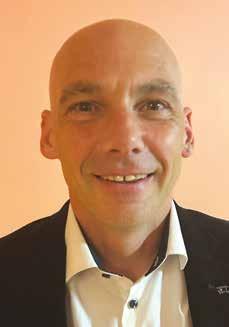
1. Pick one carbon critical workflow and automate it
Start with embodied carbon take-offs linked to your BIM model and material schedule. Automate the comparison of three low-carbon options for your top five material packages (structure, envelope, internal walls, MEP, finishes). Bake the result into your procurement specifications and tender clarifications.
• Aim: 5%–10% embodied carbon reduction on first pass.
2. Start up a “carbon + cost” dashboard Combine your cost plan with EPDs and supplier emissions data into a single dashboard that updates with design changes. Treat
Paul Lynch is the CEO at 8020 Consulting, where he advises business leaders on digital transformation and the strategic adoption of artificial intelligence. With a background in offsite construction, Paul brings a practical, data-driven approach to helping organisations navigate disruption, comply with evolving regulations, and capture measurable value from emerging technologies. He has a particular focus on AI in highly regulated sectors, including construction, where he works with clients to build sustainable capability and competitive advantage.
To learn more, visit www.8020consulting.ie or email Paul Lynch at paul@8020consulting.ie
carbon like a line item you can’t ignore— because soon, you won’t be allowed to.
• Aim: shared visibility for design, QS, and procurement from Stage 2 onward.
3. Pilot a digital twin on commissioning Pick one asset nearing handover. Connect meters, BMS, and key plant to a lightweight twin; run AI-assisted tuning for the first 12 weeks. Feed learnings back to designers.
• Aim: 10–20% reduction in operational energy vs baseline.
4. Upskill two cohorts, not one Run short, role-specific sprints:
– Design/Pre-con: generative design basics, WLC targets, and MMC interface.
– Site/Delivery: AI-assisted logistics, quality capture, and waste minimisation.
• Aim: >30 staff using at least one AI tool weekly within 60–90 days.
The IGBC’s 2025 insights are clear: Industry willingness is high, but SMEs need support, regulations need to better enable low-carbon materials, and earlier WLC limits would catalyse consistent action. Public investment via Budget 2026 adds fuel to the transition, but delivery will hinge on capability—the everyday habits of project teams, backed by data, using tools that make the right choice the easy choice. Ireland’s carbon budgets tighten in the 2026–2030 period; misses are costly, financially and reputationally. AI does not substitute for leadership, but it amplifies it: turning ambition into a schedule of quantifiable reductions, package by package, site by site.
It is tempting to see AI as another tech buzzword. But on Irish sites in 2026, it’s becoming something else: the connective tissue between design intent, procurement discipline, site execution, and sustainable operation. It helps you measure earlier, waste less, deliver faster, and prove performance—the four pillars of competitive advantage in a sector facing labour constraints and climate accountability.
Most importantly, AI is a workforce strategy. It doesn’t replace craft; it elevates it—freeing people to focus on judgment, coordination, and problem solving while algorithms do the heavy lifting in analysis and optimisation. If we equip our people and insist on data-driven decisions, we can build the homes and infrastructure Ireland needs—cleaner, safer, faster—and do our part in meeting national climate goals.

Disputes rarely resolve themselves; they simply get more expensive. LYNSEY FLANAGAN breaks down the true cost of legal escalation in the construction sector, highlighting why early intervention and mediation offer a more proportionate, confidential, and relationshipfirst path to resolution.
Most disputes do not begin with a dramatic fallout or a single defining incident. More often, they start quietly and almost unnoticed.
A disagreement over scope, a delay that was not anticipated, an email that feels more formal than usual or a phone call that does not get returned. For those working in construction, property or development, this moment is familiar. What was once a collaborative working relationship begins to feel strained. Decisions slow down. Conversations become guarded. Frustrations build.
At this stage, many businesses still hope the issue will resolve itself. Others begin to consider legal options, often without fully appreciating the wider impact that route can have on time, cost, relationships and the long-term health of the business.
This is also the point where many do not realise that alternatives still exist.
Pressure is a constant in construction and other fast-moving commercial sectors. Tight programmes, financial constraints, multiple stakeholders and contractual obligations all compete for attention. In that environment, communication is often the first thing to suffer.
Conversations that once happened on the phone move to email. Messages become shorter or more formal, responses slow and/ or additional people are copied into correspondence to protect a position rather than resolve issues.
Gradually, trust begins to erode.
In many disputes, the original issue is not what ultimately causes escalation. Instead, it is the breakdown in communication around that issue. Once communication deteriorates, even relatively minor
problems can become entrenched, making resolution far more difficult and costly.
Most experienced professionals can identify the moment when a project or commercial relationship moves from being challenging to being at risk.
Common indicators include:
• Increasingly formal correspondence
• Direct conversations being avoided
• Positions hardening rather than discussions progressing
• The suggestion that legal advisers become involved
This is a critical moment. Once matters move down a legal route, the nature of the dispute often changes. Communication becomes filtered, positions become fixed. Control over timing, cost and outcome is reduced.
While legal action is sometimes necessary, it is not always the most effective first step, particularly when the dispute is still developing and working relationships remain salvageable.
One of the most underestimated aspects of disputes is their true cost.
Legal fees are only one element. There is also the time spent preparing documentation, managing correspondence and attending meetings. Senior management’s attention is diverted away from running the business. Projects slow down. Cashflow uncertainty increases.
In many cases, the cost of pursuing a dispute legally can exceed the value of the original issue. What begins as a manageable disagreement can quickly turn into a significant financial burden,

“The cost of pursuing a dispute legally can exceed the value of the original issue.”
placing strain on both operations and people.
For businesses operating on tight margins, this level of disruption can have lasting consequences well beyond the dispute itself.
Industries such as construction, property and hospitality are relationship-driven. Reputations are built over years and can be damaged far more quickly than many realise.
When disputes escalate into formal legal action, the impact is rarely contained to the parties involved. Relationships with subcontractors, suppliers, clients and partners can be affected, even where a business believes it is acting reasonably.
Once a company becomes associated with ongoing disputes, the likelihood of repeat work, referrals or future collaboration often diminishes, regardless of the eventual outcome.
Mediation offers a way to address issues privately and constructively, reducing the risk of reputational damage and helping businesses protect both their commercial interests and their standing within the industry.
Mediation is sometimes misunderstood as a last resort or a softer option. In practice, it is a structured and commercially focused process that allows parties to regain control of a situation before it escalates further.
Rather than imposing an outcome, mediation creates a framework where issues can be explored, misunderstandings clarified, and solutions discussed in a confidential environment. Decisions remain with the people closest to the situation, rather than being determined externally at a much later stage.
For many businesses, mediation is not about conceding a position. It is about finding a way forward that allows projects or operations to continue, costs to be contained, and relationships to be preserved.
In relationship-driven industries, how a dispute is handled often matters as much as how it is resolved.
Trust, reputation and long-term collaboration are central to securing repeat work and referrals. When disputes are managed constructively, there is a far greater likelihood that parties will continue working together or recommend one another in the future.
Legal disputes, even when resolved, can leave lasting damage. Mediation allows businesses to resolve issues without burning bridges, protecting not only the immediate matter but also future opportunities.
For many organisations, the value of ongoing relationships far outweighs the satisfaction of being proven right.
Timing plays a crucial role in whether a dispute can be resolved efficiently.
Early mediation, before positions become entrenched and communication fully breaks down, provides the greatest scope for resolution. At this stage, options remain open, costs are lower, and relationships are more likely to be repaired.
Early warning signs that intervention may be needed include:
• Repeated misunderstandings
• Strained or inconsistent communication
• Increasing formality in correspondence
• Growing frustration within teams or on site
These indicators are often present well before legal action is considered. Recognising them early can significantly influence the outcome.
Choosing mediation is not about avoiding difficult conversations or responsibility. It is a commercial decision aimed at protecting the business.
By addressing issues early, mediation can help:
• Contain and reduce costs
• Minimise disruption to projects and operations
• Preserve working relationships
• Protect reputation
• Maintain focus on delivery rather than dispute
For many organisations, mediation is not simply an alternative to legal action. It is a way to prevent disputes from becoming defining events that damage the business in the long term.
Most people reading this will either be dealing with a situation like this now or know someone who is.
Disputes rarely resolve themselves. Left unaddressed, they tend to escalate, often quietly at first and then very quickly. The earlier issues are acknowledged and addressed, the more options remain available.
Mediation provides a practical and proportionate way to manage problems before they spiral into something far more damaging. In industries under increasing pressure, the ability to resolve disputes constructively may be one of the most valuable tools a business can have.
Lynsey Flanagan is a mediator specialising in dispute resolution and conflict management within the construction, property and development sectors. With a background in construction, property development, engineering and HR, she works with businesses to resolve issues early, protect relationships and minimise disruption. Lynsey also works with organisations across hospitality and other commercial sectors where communication, reputation and continuity are critical. She is based in Dublin and works internationally.
Getting a grant offer shouldn’t be a hurdle. EAMONN SHEILS, SEAI Programme Manager for Commercial Retrofit, continues his series of articles on the SEAI Business Energy Upgrades Scheme (BEUS), explaining how a simplified application process is making it easier for SMEs to access grants to support their premises’ retrofit.
In our first article on the new SEAI Business Energy Grant, we provided an overview of the Business Energy Upgrades Scheme (BEUS) and outlined its goal: To remove some of the processes of larger tailored grants that may not be suitable for SMEs with smaller buildings or retrofit projects who want to access grant funding.
Central to achieving this goal was providing a quick, easy application process for businesses, where time is a precious commodity.
In this article, we will provide a brief overview of this process to further demonstrate how fast and user-friendly the application really is across all nine measures on the scheme.
The portal is designed, as far as possible, to minimise the level of detail required for an applicant to obtain their grant offer.
For the Heat Pumps, Air Handling Unit and Pump measures, the portal goes so far
as to estimate the system capacity simply from the following inputs:
• Select from Drop-down: Building Type
• Input: Total Floor Area
• Select from Drop-down: System Served by new plant (eg Heating, Hot Water, etc)
• Select from Drop-down: Technology (eg, VRF, Air-to-Water, etc)
This allows a building owner to complete an application with basic details they will possess, aside from perhaps the System Served and Technology.
For example, in the case of the Heat Pump measures, the portal estimates a kilowatt capacity for the heat pump based on the building, total floor area and system served.
Using this result, in combination with the selected technology, a grant value is presented in the draft application along with the assumed estimated kilowatt capacity. You can also apply for FCU/ radiator and pipework replacements as part of this measure.
There is no requirement under the
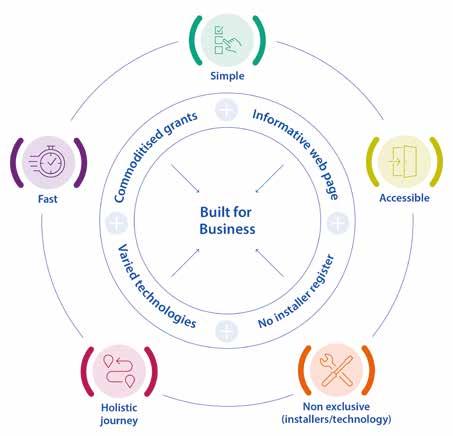
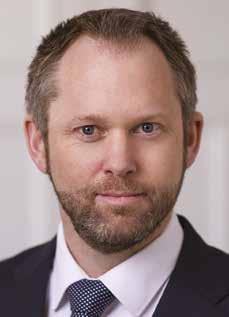
Eamonn Sheils, Programme Manager for Commercial Retrofit, SEAI.
scheme to notify SEAI of the actual system details at this point. In addition, once the application is submitted, there is no need to contact SEAI until the project is completed and the Applicant is submitting their request for payment.
To ensure the Applicant has all these details and can complete their application in one short visit to the application portal, there is a Pre-Application Form on the dedicated webpage for each measure that mirrors exactly what will be requested on the portal.
The remaining measures (Solar Thermal, BMS Controls, Fabric Roof and Fabric Wall and Design Assistance), which cannot necessarily be estimated on building type and floor area, use a mixture of drop list selections and free text inputs. In all cases, the number of inputs is kept as simple and limited as possible.
The BMS Optimisation is a flat rate of €2,000 and only requires a minimum of three systems from a list that is controlled by the existing BMS.
The automatic generation of grant values allows the Applicant to try several options across all measures to obtain a grant value for same without fully submitting an application.
Another unique aspect of the BEUS
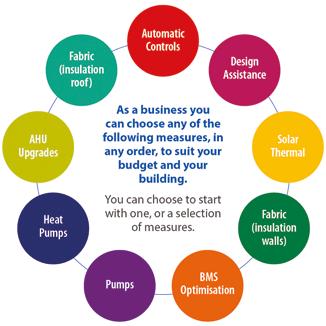
application portal is the Applicant’s ability to select their own contractor (ie, not on the SEAI register).
Under each measure, while the Applicant is asked to select the contractor completing the works from a drop-down list, they may enter the name and contact details of the contractor they plan to use.
In order to maintain a level of monitoring on supply chain quality, for the Applicant to be paid on completion of their works, the contractor and their associated Installer(s) will need to be registered under the scheme. However, as noted, this does not need to be completed until the Applicant is ready to submit their request for payment.
If the Applicant decides to change their contractor, registered or unregistered, after they have submitted their application, this is not an issue, once, at the time of request for payment, the final contractor appointed is registered for the associated measure(s).
Once the Applicant is ready to submit their application, they simply fill in their bank details, review and agree to the Terms and Conditions of the Scheme.
The Applicant will also be asked to confirm which form of State Aid they wish to apply for the grant under. The Applicant can select either ‘De-Minimis’ or ‘General Block Exemption Regulation’ (GBER). Applicants should understand their funding options to maximise aid while staying compliant. Full details are in the Application Guide.
• De-Minimis: Capped at €300,000 over three years. No energy efficiency uplift proof required; ideal for small works like pump installations.
• GBER: No funding limit, but requires a 10% (single measure) or 25% (multiple measures) energy improvement. Proof is usually waived for heat pumps.
• Strategy: Use GBER whenever eligible
to preserve the De-Minimis budget for smaller projects such as a pump installation.
To ensure the Applicant has all these details and can complete their application in one short visit to the application portal, there is a Pre-Application Form on the dedicated webpage for each measure that mirrors exactly what will be requested on the portal.
The Applicant’s contractor, using this form, can advise which measure options to choose. The form also includes details of the completion documentation as well as the required professional qualifications of the Contractor and Installer. Using this form in conjunction with the Company Information Form of the related measure(s) ensures all parties are aware of their responsibilities to comply with the scheme requirements.
Once the project has been completed and all required documentation is prepared by the contractor, the Applicant simply returns to the related application within the portal.
The applied details on each measure page will now be frozen, and an upload section of the required documents (as outlined in the Pre Application Form) is listed at the bottom of the page.
The Applicant can simply drag and drop the relevant documentation and photographs into the relevant sections and click submit.
Once all data has been reviewed and deemed compliant, the project may be selected for an on-site inspection. After successful completion of the inspection phase, the project is moved to Accounts for payment.
At the payment stage, if the actual installed capacity is lower than the estimated size or provided details, the grant value can be adjusted by SEAI. If the installed capacity is higher, the grant value will not increase.
The second aspect that can impact the final payment from
the initial grant value is the fact that the scheme cannot fund more than 30% of the associated costs of the project.
As a result, at the payment stage, the final grant will be the lowest of the three values below:
• Initial offer in the portal
• Adjusted value due to a lower than estimated or input metrics on the application
• 30% of the direct project costs for the measure.
Note: SEAI advises applicants that it is often easier to make separate applications for each measure, so that when an individual measure is completed, they can submit that particular measure for payment. If all measures are within one application, all the documentation must be input before submitting for payment for a group application.
This scheme will not succeed without the supply chain. The simple nature of the process means there are very limited input requirements for support or input from a design team or contractor, but they are a vital element to its success. We hope you can take some time to review the scheme and that you will consider promoting and encouraging your clients to engage with it for suitable projects.
For more details
Email: businessupgrades@seai.ie Rapid Approval Grants website: www.seai.ie/grants/businessgrants/rapidapproval
Easy Wins Campaign: www.seai.ie/easywins
SEAI Application Portal: https://mgen.seai.ie/
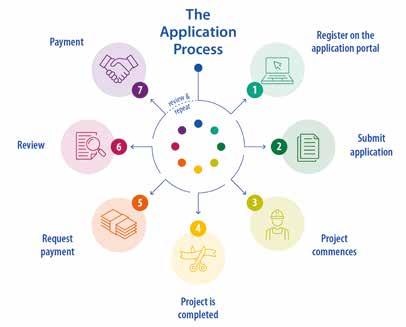
With public bodies accounting for up to 12% of Ireland’s GDP, the power of the purse is one of our most potent tools for climate action. MARIANNE IBRAHIM, Programme Manager at the Irish Green Building Council, explores how the CO2 Performance Ladder is transforming the construction landscape—moving decarbonisation from a voluntary commitment to a verified competitive advantage in public procurement.
In recent years, the construction sector in Ireland has increasingly started implementing solutions to address climate change not only through regulation or corporate commitments, but also through public procurement. Irish public bodies account for 10%-12% of Ireland’s gross domestic product (GDP). This level of spending power means that procurement is one of the most powerful levers for accelerating decarbonisation.
Since its introduction in 2023 by the Irish Green Building Council (IGBC), the CO2 Performance Ladder has quickly gained traction among contractors, suppliers, and public authorities in Ireland. The Ladder is not merely a certification scheme, but a practical tool for embedding decarbonisation into everyday decisionmaking and, crucially, into the procurement processes.
In April of 2024, the Irish government published ‘Buying Greener: Green Public Procurement Strategy and Action Plan 2024-2027’, reinforcing that environmental considerations must be built into public tenders. Green public procurement (GPP) is defined in this document as:
“A process whereby public bodies seek to procure goods, services and works with a
reduced environmental impact throughout their life cycle when compared to goods, services and works with the same primary function that would otherwise be procured.”
Of course, embedding GPP is not always straightforward. Contracting authorities, particularly local authorities with limited staff and resources, may find GPP requirements complex and timeconsuming. The CO2 Performance Ladder is a tool intended to streamline this process by offering a user-friendly, independently verified framework that helps public bodies implement GPP more easily while ensuring the credibility of CO2 reduction claims.
The CO2 Performance Ladder was developed in the Netherlands in 2009 and is now used by more than 300 contracting authorities across Europe. The Ladder is recognised by the OECD, the World Economic Forum, and the IPCC as a best-practice tool for sustainable public procurement. The strength of the CO2 Performance Ladder lies in its dual function – it is both a carbon and energy management system, as well as a procurement instrument.
As a carbon and energy management system, the Ladder requires companies to measure, report, and continually

Marianne Ibrahim, Programme Manager, Irish Green Building Council.
reduce their emissions. As a procurement instrument, the Ladder enables contracting authorities to reward tenderers who can demonstrate commitment and progress on reducing carbon.
This combination is innovative in the Irish context. Instead of relying on selfreported sustainability claims or individual product standards, the Ladder verifies company-wide climate ambition and performance through an independently assessed certification system. Certified
organisations may then gain a competitive advantage in public tenders, motivating suppliers to invest in meaningful carbon reduction.
Research from the University of Applied Science Utrecht indicates that organisations certified on the Ladder reduce emissions twice as fast as the industry average. This is crucial in a sector under increasing regulatory and societal pressure to decarbonise.
The IGBC conducted a pilot project between 2023 and 2025 to assess the feasibility of implementing the CO2 Performance Ladder in Ireland. Delivered in collaboration with SKAO (the Dutch organisation owning and managing the Ladder), the pilot focused on building the public sector capacity to embed the Ladder as a GPP tool and giving the required support to their contractors/ organisations to adopt it as a carbon and energy management system in their projects/organisations and testing its application across a range of construction and infrastructure related tenders.
Following the success of the pilot and given the Irish market’s readiness to adopt the Ladder, IGBC has secured funding from Construct Innovate to upscale the Ladder implementation in Ireland for the period 2026–2027. This next phase will concentrate on further strengthening capacity within public procurers and their contractors to support broader adoption of the Ladder. Momentum is building. More public procurers are expressing serious interest in utilising the Ladder in their tenders. Additionally, Transport Infrastructure Ireland (TII) is rolling out the Ladder on their high-speed pavement rehabilitation schemes and additional frameworks over the next four years.
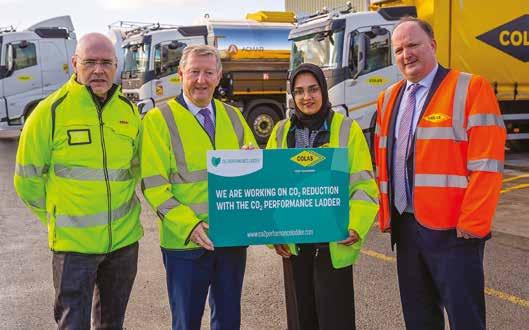
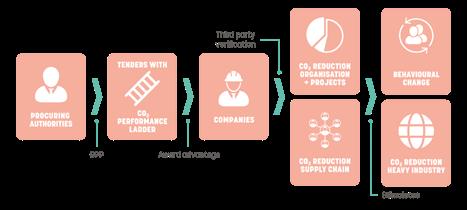
Several organisations within Ireland’s construction sector have already begun adopting the Ladder as a comprehensive carbon and energy management system, while also recognising its value in enhancing their competitiveness in public tendering processes.
As of early 2026, three companies in Ireland are already certified on the Ladder. Roadstone has been the first Irish organisation to achieve Level 5 certification, the highest on the Ladder. This reflects their effort not just to reduce emissions within their own operations, but to actively engage with the entire value chain to create a real impact in achieving climate targets.
Through company-wide certification, Jons Civil Engineering has aligned the Ladder with its internal roadmap towards net zero by 2050, using the system as a framework to strengthen data quality and establish actionable reduction pathways. Finally, Colas JV is applying the Ladder across its projects, illustrating the tool’s relevance for large-scale public infrastructure delivery, particularly where transparent carbon management is essential
for collaborative project governance. These early adopters report improved data quality, stronger internal decisionmaking, and enhanced collaboration across their supply chains.
Green public procurement is often perceived as a cost burden. The CO2 Performance Ladder challenges this assumption by rewarding companies that reduce emissions with tangible tender advantages, reducing operational costs, particularly energy consumption, and shifting the burden of proof for contractors’ claims away from procuring authorities, through the independent third-party verification, ensuring a more transparent and reliable assessment process. By linking environmental ambition directly to competitive advantage, the Ladder contributes to a more balanced understanding of cost, risk, and long-term value in construction procurement.
If you are a company or a public procurer interested in knowing more about starting your journey towards decarbonisation with the Ladder, get in touch with Marianne Ibrahim at marianne@igcb.ie
Sisk has been appointed as one of Ireland’s new Sustainable Development Goal (SDG) Champions for the 2025–2027 programme, which was announced at the end of 2025 by Minister for Climate, Energy and the Environment Darragh O’Brien.
The Sisk sustainability team will be joined by 19 other organisations selected from across Ireland to help drive national progress toward the UN Sustainable Development Goals over the next 18 months.
This year’s appointments bring the total number of SDG Champions in Ireland to 74, reflecting strong national momentum behind the 2030 Agenda. More than 90 organisations applied for the programme, demonstrating widespread engagement across public, private, community and voluntary sectors.
As an SDG Champion, Sisk will work to raise awareness of the goals, showcase practical action through sustainable construction and innovation, and collaborate with fellow champions and SDG Ambassadors to support Ireland’s progress.
Working with the Department of Climate, Energy and the Environment, in this role, Sisk will continue to advocate for a fairer, safer, and more sustainable future for all.
Anthony Burrowes, Social Value Manager, Sisk, commented, “We are honoured to take on this role, considering that the construction sector has a vital responsibility in shaping a more sustainable future. As a company, we are committed to reducing environmental impact, supporting communities, creating inclusive workplaces and embedding responsible practices across our operations, supply chain and partnerships.”
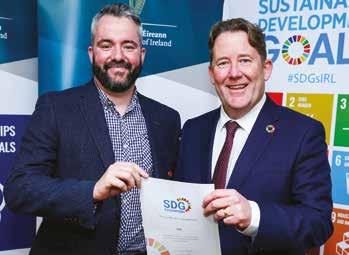
Anthony Burrowes, Social Value Manager, Sisk; and Darragh O’Brien, Minister for Transport, Climate, Environment, and Energy.
The Minister for Climate, Energy and the Environment, Darragh O’Brien, said, “The world faces huge challenges in achieving the SDGs, with only 18% of the goals currently on track globally. However, this year, as we mark the 70th anniversary of Ireland’s membership of the United Nations, we are committed to achieving the vision and ambition of Agenda 2030, a roadmap for a fairer, safer, more prosperous, and sustainable world. In fulfilling the ambition of the SDGs, we have made considerable progress, but more is needed, and faster, from all stakeholders – locally, nationally and internationally.”
Pipelife Ireland has gained Environmental Product Declarations (EPDs) for its Qual-Pex Plus+ ‘Easy Lay’ pipe range – making them the first Irish-made pipes to have independently verified embodied carbon data.
A high-performance, multi-purpose piping system, Qual-Pex Plus+ is engineered for the reliable distribution of hot and cold water, central heating, and underfloor heating. It is designed to last for a building’s whole life – thereby reducing the building’s whole-life carbon impact.
Pipelife’s decision to obtain EPDs for all seven sizes of its QualPex Plus+ pipe range comes as larger developers and public bodies face obligations to calculate and reduce the embodied carbon of buildings, with the rest of the industry set to follow imminently as new EU rules take hold.
Conor Manning, Managing Director, Pipelife Ireland, said, “Securing EPDs for our entire Qual-Pex Plus+ pipe range reflects our commitment to supporting developers and public bodies as they work to measure and reduce the embodied carbon of buildings. It ensures that Pipelife continues to stand firmly behind our customers as embodied-carbon reporting becomes a compulsory requirement across the industry under new EU directives.”
Irish Green Building Council chief executive Pat Barry congratulated Pipelife. He said, “It is fantastic to see leadership in Irish manufacturers reacting to the imperatives of the EPBD and producing the data that will be needed in the coming years through the production of verified EPD. It is particularly exciting to see data for components used in building services, as this is one of the
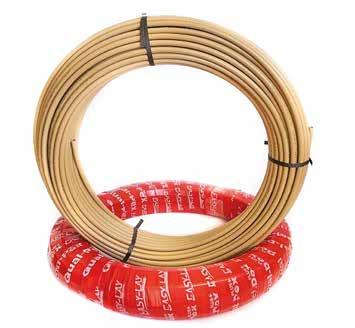
largest data gaps in whole life carbon assessment, and we need more manufacturers to provide this data.”
The Qual-Pex Plus+ EPDs include a 50-year reference service life. Ireland’s whole-life carbon calculation methodology sets a reference study period of 50 years for each building – meaning calculations done with Qual-Pex Plus+ will avoid projected emissions from replacement pipes.
Irish modular manufacturing company
Procon Modular has acquired a majority shareholding in Healthmatic Ireland and Healthmatic Modular UK, bringing together complementary strengths in 3D volumetric modular construction.
The acquisition unites Procon’s proven track record in delivering large-scale modular projects across Ireland with Healthmatic Modular’s established UK manufacturing operation and market presence. Healthmatic Modular operates from a 60,000-sq-foot factory in Knighton, serving the UK market with volumetric modular buildings, while Healthmatic Ireland is the leading provider of public access facilities and services in Ireland.
Eoin Daly, Managing Director, Procon, said, “This acquisition strengthens our technical capability in volumetric modular construction and gives us an established platform in the UK market. Healthmatic has built an excellent reputation for quality delivery, and combining this with Procon’s experience in complex modular projects creates significant opportunities for both organisations.”
Healthmatic Ireland has specialised in high-quality public access facilities, including toilets, Changing Places, and associated infrastructure management services, enabling public bodies to improve service quality while reducing

costs. Healthmatic Modular’s UK factory provides proven manufacturing capability in volumetric construction, supported by an established client base and strong delivery track record.
Piers Dibben, Managing Director, Healthmatic, said, “Partnering with Procon provides access to their depth of experience in modular construction and opens up opportunities for growth that would not have been possible independently. Their commitment to quality and programme
delivery aligns perfectly with how we have built Healthmatic, and I am excited about what we can achieve together.”
The combined operation will leverage Procon’s expertise in programme management and quality systems alongside Healthmatic’s UK market knowledge and manufacturing infrastructure. This positions the group to pursue larger and more complex volumetric modular projects across both the UK and Irish markets, particularly in public infrastructure and facilities.
Temporary works supplier MH International has expanded its operations with the opening of an Irish depot in Portlaoise. The move represents a major investment and underlines its long-term commitment to supporting the Irish construction and infrastructure sectors.
The expansion comes in response to sustained business growth across the region and increasing demand for specialist temporary works solutions. By establishing a strong physical presence in Ireland, MH International aims to deliver an even greater quality of service to both new and existing customers.
To maintain a first-class service to its customers, MH International has also appointed a dedicated ‘on the ground’ sales and support team. The new depot will serve as a central hub for the company’s comprehensive portfolio of temporary works solutions, ranging from propping and jacking to groundworks and temporary bridging. Customers will also benefit from MH International’s end-to-end service offering, spanning in-house design, supply, installation and real-time monitoring.
Speaking about the investment, John Breen, Managing Director, MH International, said, “This is an extremely exciting time, both for everyone at MH International and the industry. While we already have a strong presence in the Irish market, the opening of a dedicated depot marks the start of a new chapter. Led by Wayne Fisher, our International Business Development Director, we hope it is one that will enable us to elevate our service levels and forge stronger relationships with our customers, existing and new.”
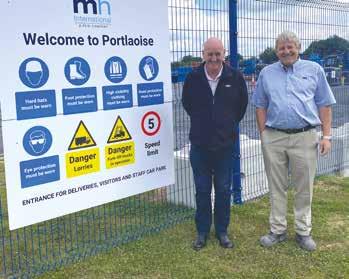
The depot has created new jobs locally and is expected to play a key role in supporting major Irish building and infrastructure projects over the coming years.
With a focus on engineering and service excellence, MH International provides engineered, bespoke temporary works solutions across the civil infrastructure, residential, commercial, health and technology sectors on a global basis.
Glanua has been appointed as GRUNDFOS Authorised Service Partner for Ireland.
GRUNDFOS, headquartered in Denmark, is the world’s largest manufacturer of pumps and a global leader in energy-efficient water solutions for residential, commercial, industrial and municipal applications. Being recognised by such a respected industry pioneer is a significant milestone for Glanua and a testament to the technical excellence and commitment of its teams.
As an Authorised Service Partner, Glanua will now deliver certified repair, maintenance, diagnostics, performance testing and emergency support for GRUNDFOS products, ensuring all work meets the manufacturer’s rigorous standards. This includes access to parts, specialist tools and factory-approved methodologies, guaranteeing reliability, efficiency and the protection of client warranties.
Ross Sullivan, Senior Asset Manager, Glanua, commented, “We are thrilled to work alongside GRUNDFOS, a renowned global leader in pump technology. This collaboration
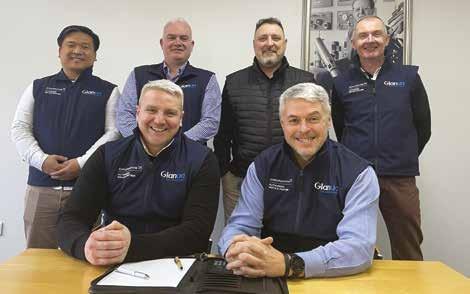
allows us to further enhance the service we provide to our clients while aligning with our commitment to innovation, energy efficiency and long-term asset performance.”
James Wright, Service Sales Development Manager, GRUNDFOS, said, “We look
forward to working closely with the Grundfos Water Utilities UK & Ireland team and continuing to support customers with fast, dependable, manufacturer-approved service, keeping critical systems operating safely and efficiently.”
Daikin Ireland’s cutting edge VRV 5 climate control system is at the heart of the recently retrofitted headquarters of John Sisk & Son in Citywest Business Campus, delivering exceptional energy efficiency, comfort and sustainability credentials for Ireland’s leading building contractor.
Sisk’s decision to retrofit an existing building – rather than construct a new one –was a deliberate showcase of its sustainability ethos. The transformation, carried out by over 150 Sisk staff and supply chain partners, boosted the building’s BER from D2 to A3, with Daikin’s VRV 5 system playing a pivotal
role in achieving that leap.
Tom Grant, Director of Assets and Internal Services, Sisk, commented, “The heating and cooling of the building was a very important consideration in terms of offering a more comfortable working environment for staff and clients alike. From a sustainability point of view, the Daikin VRV was a good solution for us.”
Specified by design consultants Axiseng, the VRV 5 was chosen for its low carbon, high efficiency performance and flexibility. “One of the main considerations was the need for a solution that would help us achieve an A rating,” explained Richard
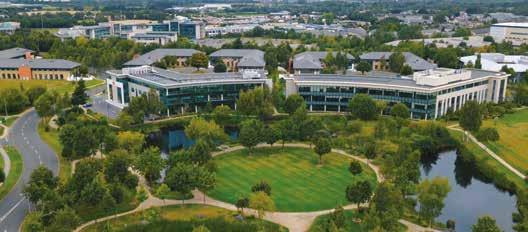
Vaughan, Senior Associate at Axiseng. “We also needed a heat recovery solution for one of the spaces in the building and the VRV 5 offers that flexibility.”
Daikin Ireland’s DX Manager Liam Kirwan highlighted the system’s environmental advantages: “By moving to R 32 refrigerant, we’re reducing CO2 levels and enhancing the building’s energy performance, all while providing a comfortable environment for staff. The VRV 5 is the gold standard of the air conditioning industry.”
Installation was carried out by trusted Daikin partner Kelly RAC, whose Technical Sales Manager Gavin O’Reilly praised the system’s adaptability: “With this building, you have all different orientations – south facing spaces needing cooling and north facing offices needing heating – and the VRV 5 can run both simultaneously on the same system.”
For the 200 plus occupants of Sisk’s HQ, the result is a comfortable, future proofed workplace that reflects the company’s brand and values. Tom Grant concluded, “It’s important to have a headquarters that really demonstrates the brand and shows the industry what we can deliver. It meets all our needs.”












sisk.com
