




















Taking ight at the Museum of Pell City

A Visit to Otter Creek


Seeing the Lake with Sarah Elizabeth
See inside for more!


February 2026

























Salesmen:






























































































ith spring still several weeks away, indoor activities remain the primary order of the day around the lake. I spend a good portion of my indoor time reading, and I’d like to o er a recommendation if you’re looking for something to add to your or your children’s reading lists.

















It’s a six-book graphic novel series written by my friend Bobby Nash, a proli c writer based in Georgia. Crimes in Time features the art of Lelo Alves illustrating Bobby’s words as they spin historical mystery stories related to signi cant events of the 19th, 20th, and 21st centuries.
“These six books combine my love of action-packed crime ction and history,” Bobby said. “It was fun to mix the two together. I enjoyed diving into the research on each and then working the characters into that history. I hope you’ll enjoy the results.”
Here’s a summary of each volume.




• Great Chicago Fire: In 1871, petty thief Timothy Shannon is released from jail near Chicago, Illinois. He dodges a police o cer who is tailing him, then joins a poker game in Mrs. O’Leary’s barn to get the money he needs for his next caper. Somehow, a re starts and quickly spreads across Chicago. Can Shannon evade the police and escape the burning city?



• Sinking of the Titanic: In 1912, Casey Scanlan, Sean O’Helan, and Seamus Holt rob a bank of cash and gold. Scanlan has secretly booked passage on the RMS Titanic. He ditches his partners, then boards the ship. O’Helan shows up and confronts Scanlan. When the ship hits the iceberg, O’Helan grabs the cash and runs. Scanlan can’t carry the heavy gold. Can Scanlan leave the gold behind, or will greed seal his fate?
• Bombing of Pearl Harbor: In 1941, U.S. Navy sailor Jack Colvin is stationed at Pearl Harbor in Hawaii. While holiday shopping, he has his pocket picked and is then abducted by a gang. While he’s attempting to escape the gang’s wrath, the naval base is attacked. Can Colvin escape his captors and get back to his ship?



Orleans to transfer a convict to a new prison. When Hurricane Katrina hits the city, a wall of water slams into their car, rolling it over. Reece is knocked out and the convict escapes. Can Reece navigate through the ooded, storm wrecked city and catch the escaped prisoner?

• Mount St. Helens Eruption: Former US Army pilot Major Thomas Deeks worked to end smuggling in South America. Fast forward to 1980 and he has changed sides and ies for a smuggling operation. Deeks is ying near Mount St. Helens in Washington State when the volcano erupts. He crashes the plane, losing the smuggler’s plane and his product. Can Deeks escape the devastation and the smuggler’s revenge?
• Hurricane Katrina: In 2005, U.S. Marshal Bill Reece is in New

• NYC Blackout of 1977: Four friends had moved to New York City from Atlanta, hoping to make it big. But things hadn’t worked out and they are moving home. As they are leaving the city on a hot July night in 1977, the lights go out suddenly. Can they avoid the crime and violence and get to safety?




The series is published by ABDO Books under their Magic Wagon imprint. Box sets and individual copies are available from such retailers as Amazon, Barnes and Noble, and Books-A-Million, as well as Bobby’s website, www.bobbynash.com. He encourages local libraries to consider adding the series to their shelves. “I’m proud of these books and want them to get out there in as many places as possible.”
I especially enjoyed NYC Blackout of 1977. Not long ago, I read a fascinating non ction account of those chaotic 48 hours, and Bobby’s historical ction take on the event was equally fascinating.
And I hope you’ll enjoy this issue of Lakeside Living. A lakeside love story, a throwback to last summer, and a visit to nearby Otter Creek are among the entertaining and informative features waiting for you this month. As always, thank you for joining us.






This month, let’s talk about trolling for creek channel crappie. The topic of choice for early spring always seems to be the white and black crappie. Marked by its beautiful striations of checkered colors, it is arguably the most sought-after game sh on the Coosa River.
And for good reason. Their beauty is not the only characteristic of the sh, as they are an excellent eating and tasty game sh. Use these simple tips to help you reel some in.
When it comes to locating crappie in February, it can be quite simple. Creek channels will be your best friends this time of year. Crappie will migrate to creek channels in response to feeding and prepping for the spawn. This time of year is known as the pre-spawn, and it’s my favorite time of year because these hungry sh will be eating









aggressively. If you nd the right creek channel, you can really load up the boat.










Major creeks are present throughout all of the Coosa River impoundments. My favorite creeks for trolling on Logan Martin are Rabbit Branch and Clear Creek. These two major creeks will host large numbers of crappie this month. The most important factor for trolling will be speed and the depth of the sh. Typically, I like to start with a speed of 2 mph or so.







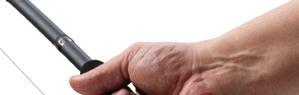
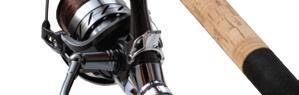










Adjusting your jig sizes will determine how far in the water column your presentations are. ⅛-ounce jigs will drag deeper, and the lighter you go, the shallower the jig will be in the water column. I really like to use 1/16and ⅛-ounce jig sizes and adjust my trolling motor speed accordingly. Once you catch a couple of sh, make mental notes of the speed and size of the jig. This will keep you in the game to constantly catching sh in whatever depth zone that the sh are present in.
of reel or rod, for the most part. I particularly like to use light applications, like 6-pound or 8-pound test lines and a medium-tomedium-light rod setup. Live bait, such as minnows, work well. I like to nose hook the minnow during trolling applications. Predominately, I will use a ⅛- or 1/16-ounce jig when trolling. There are a multitude of crappie jigs on the market. Use whatever you’re most con dent in. I like a boot-tailed jig, but some prefer the curly-tail or straight-tail. Again, use what you have con dence in, and continuously mix up baits. Keep your bait colors simple. I really love junebug and shad-colored baits this type of year.




As always, happy shing this month, and I hope that you all have a sharp llet knife!





My bait choice is always simple when it comes to crappie shing. For trolling, you can use any type
Tight Lines & Strong Hooksets,
C.J. KNIGHT










































Written by MICHELLE LOVE
Photography by SUSAN WEATHINGTON
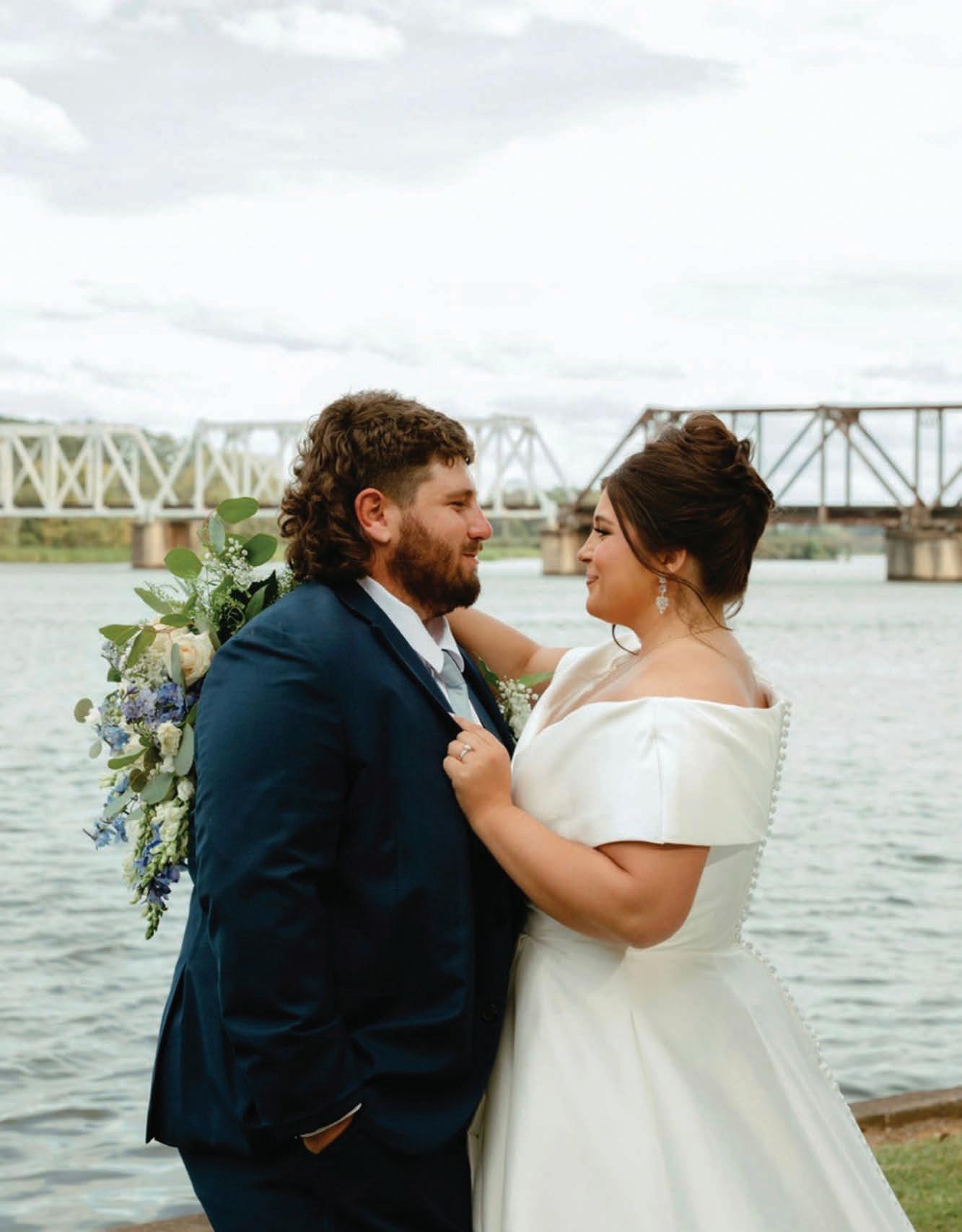
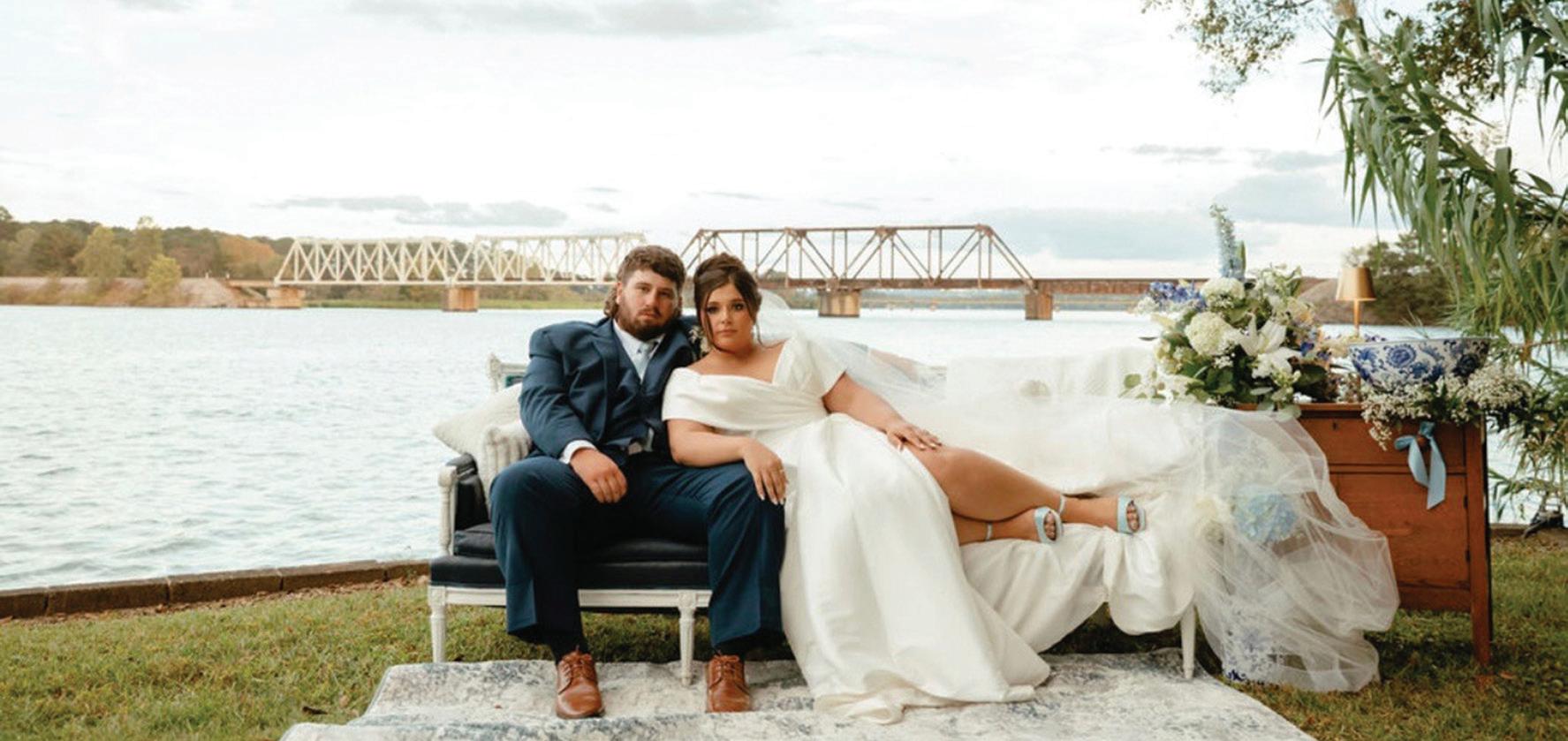
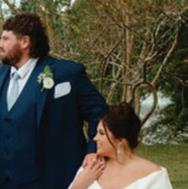
There are few people who can say they have a special, personal connection with their wedding venue, and Lauryn Freeman is one of those people.
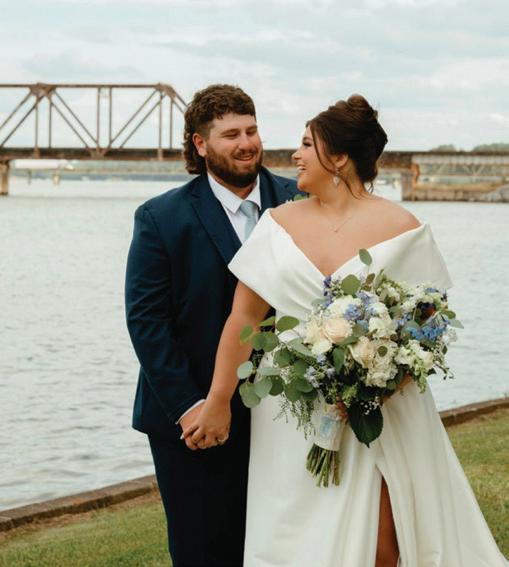
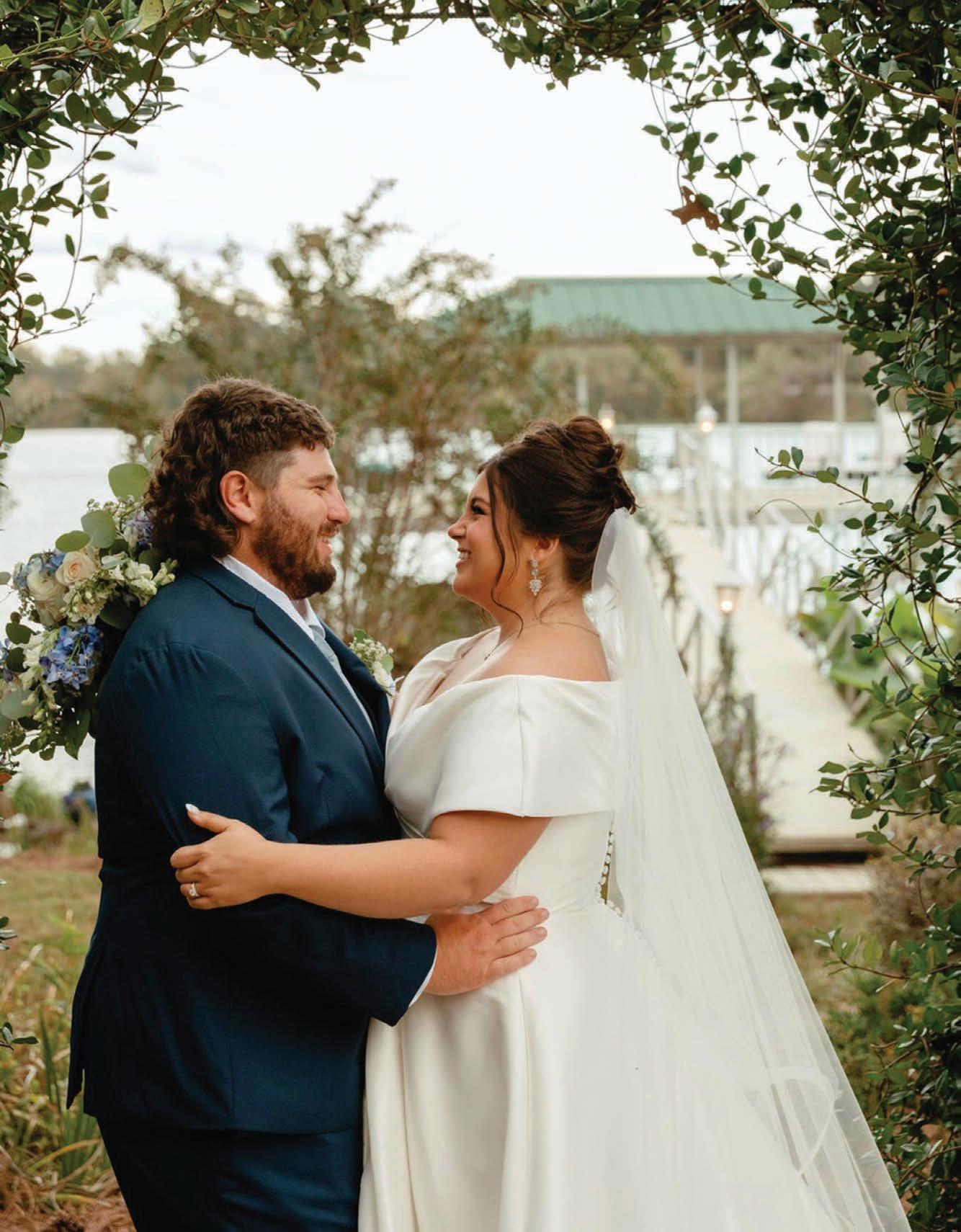
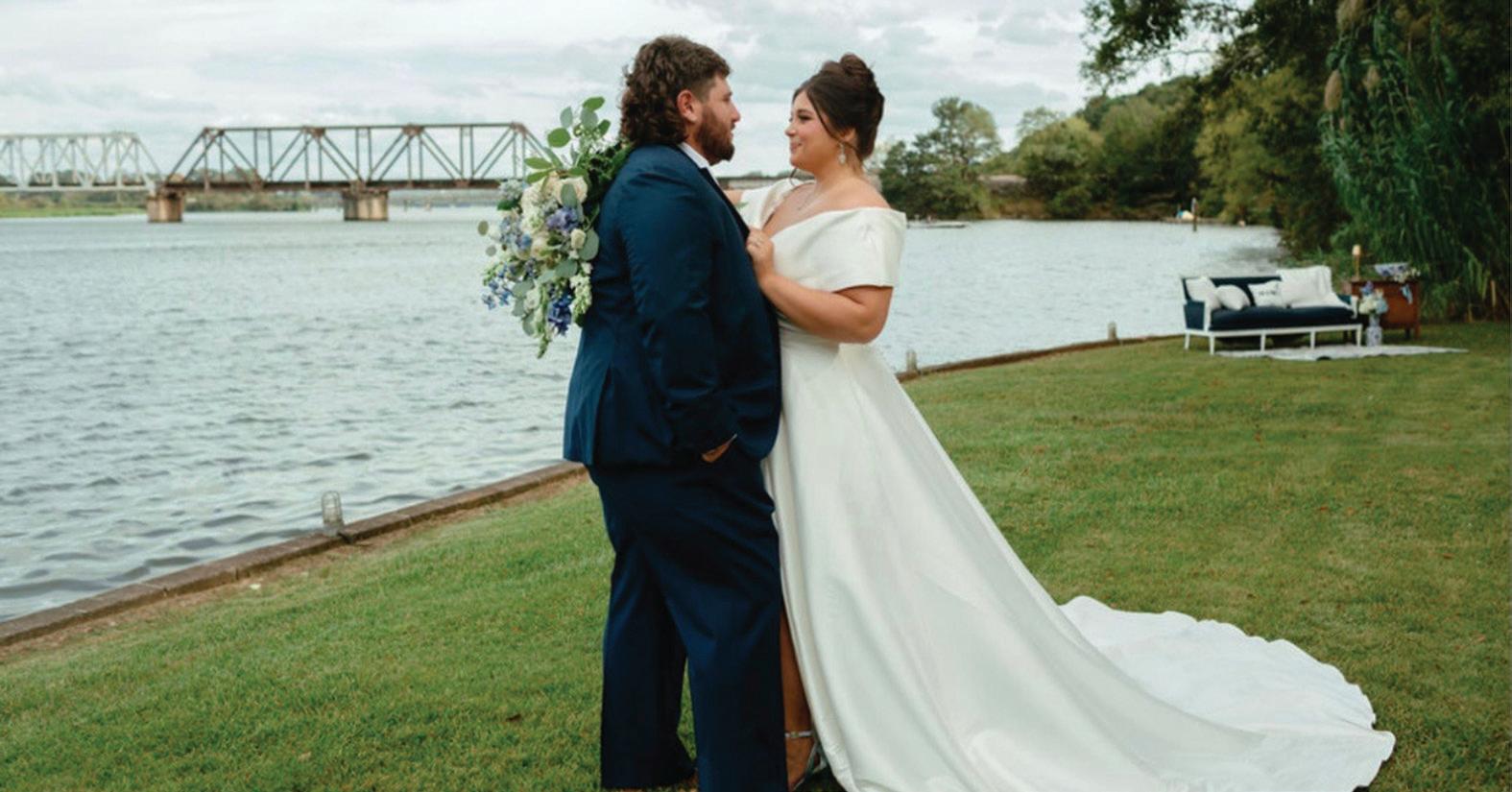
Freeman and her husband JonDavid were married in October at The Historic Bukacek House overlooking Logan Martin Lake, and Freeman’s familial history with the house is as rich in memories as the house itself.
The house was built in 1872 and owned by Roxanne Bukacek, whose






great-grandparents lived in the house for years. Bukacek and her husband restored the house to keep her family’s memories alive. “My father was born in this house in one of the upstairs bedrooms,” she said in an interview several years ago. “It’s real special.”
Lauryn’s grandmother and Bukacek were best friends for 75 years, until Bukacek passed away in May 2025. It’s because of their friendship that Freeman and her family were able to enjoy the Riverside property like their own home away from home. They attended birthdays, anniversaries, and other important milestone events on the property for years. Freeman’s mother, Kari Flippo, said her wedding in 1995 was the rst to be held on the property, and after Bukacek’s passing, Lauryn’s will probably be the last.

Choosing where to get married was never a question, it’s always been Lauryn’s dream of hers to get married at the Riverside property.
“I feel like it was always decided I was going to get married there,” she said. “I grew up going to all Easters, birthday parties, all kinds of family functions, so it was kind of a no-brainer of, ‘Oh yeah, that’s where I’m going to get married,’ because I’ve always loved Riverside. It’s central to everyone, and it’s a beautiful piece of property that means a lot to my family and myself. It was honestly an honor. I would not change a thing. Everything went perfectly. It was literally the most perfect day.”











“
Going into the wedding, I told myself I wanted to remember every single moment and every single thing that happened, so right before I walked down the aisle, I had no nerves and was so excited to marry the love of my life.
”
--Lauryn
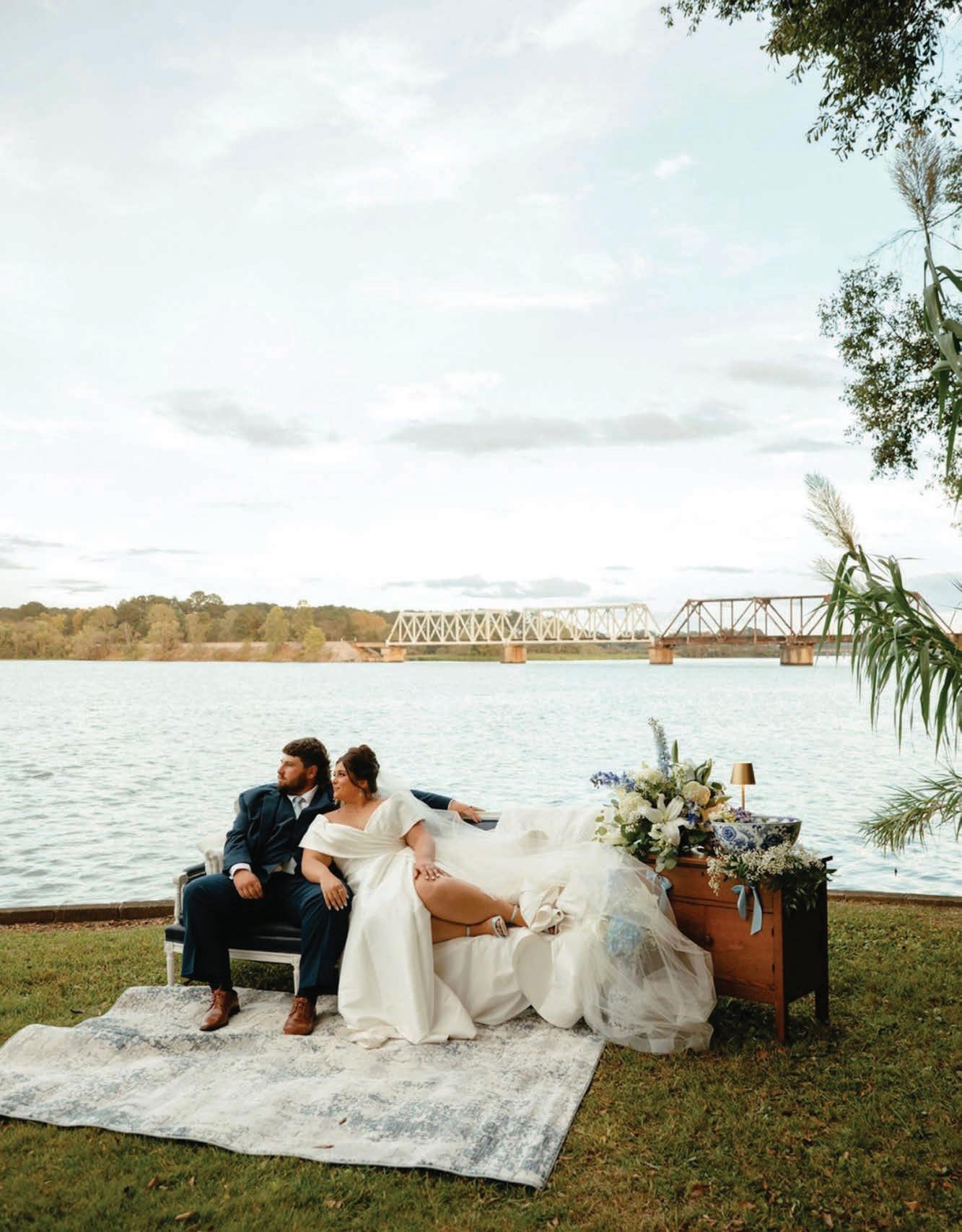




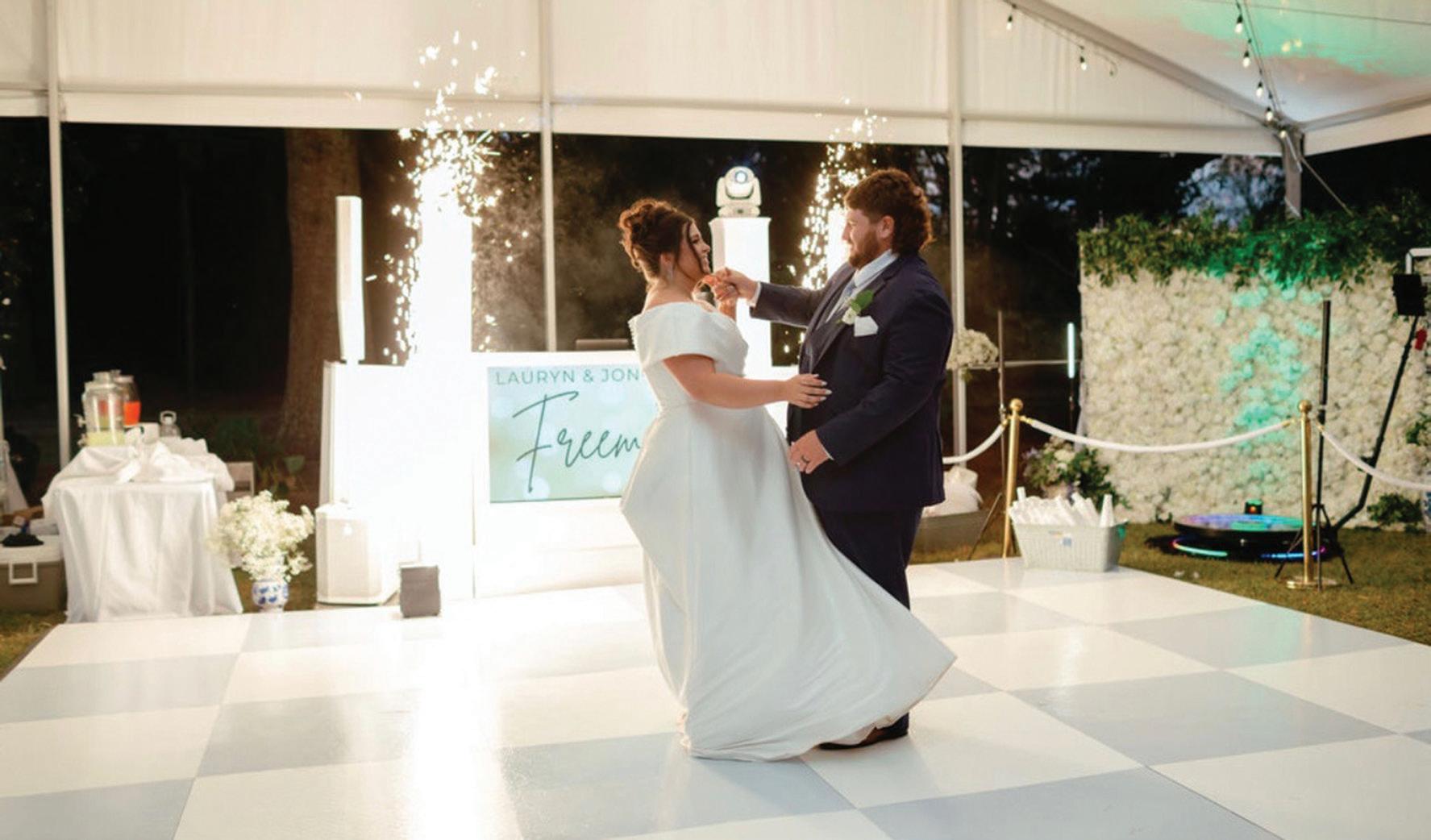
“It’s such a small, quaint town, and I don’t think she would have chosen to get married anywhere other than right there because it’s all she’s ever known,” Kari said, adding that the house has always been an interest to people looking for a wedding venue because of its stunning location. Her daughter’s wedding was a full house because everyone was so excited to see a beautiful life event take place at such a beautiful location.
“We had 300 chairs at the wedding, and every chair was full because nobody wanted to miss it,” she said. “It was really well attended, and I think it was probably the best night of my life. We had such an amazing crew.”
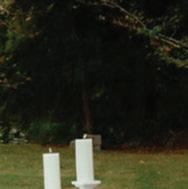
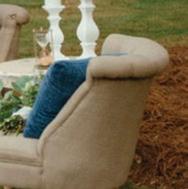
While the lake was the ultimate backdrop for the event, Lauryn and her wedding planning crew also worked to incorporate her favorite color – blue –throughout the wedding space. Chinoiserie vases adorned the tables, and blue accents were placed throughout the area to make the colors pop.
“My mom and I spent a year collecting chinoiserie vases from antique stores and little boutiques, and my wedding planner
made it all come to life,” Lauryn said. “She was wonderful. We really didn’t need that much decoration, though, because the property is already so beautiful.”
Kari said they sat down with their wedding planner roughly a week after the engagement and worked to form what she calls “the dream team.” Both Kari and Lauryn said the wedding could not have been pulled o without the help of their




wedding planning crew, especially wedding planner Angel Roberts Phillips with Roots and Wings Planning and Florals.
Lauren and Jon-Davids’ team of vendors also included photographer Susan Weathington; videographer Carson Bruce with CB Weddings; DJ Chad Ellis with Ellis Entertainment; Anita Lewis with PMX 360 Entertainment, photobooth; Owens Brothers, rentals; Heavens Gold Cakes;







“
Now I’ve gotten married there, and down the road we’ll have kids, and it just means so much to show them, ‘Right there that’s where we got married. ”
-- Lauryn





















Lisa Perez and team, hair and makeup; Jacks of Pell City, food; and Say It In Lights, marquee letters.
“It was kind of surreal,” Kari said. “I think everyone thinks about weddings being so hectic because there’s so much to get done and so much to do, and I really just felt like it was going to be 90 to nothing, but I did nothing except spend the day with Lauryn and family. Our whole team of people took over. It was fantastic, so we just had the best day. It could not have been more perfect.”
“Right before I walked down the aisle, I was honestly at so much ease,” Lauryn said. “I had been looking forward to it for so long. Going into the wedding, I told myself I wanted to remember every single moment and every single thing that happened, so right before I walked down the aisle, I had no nerves and was so excited to marry the love of my life. I remember everything that was said at the ceremony, every single person I talked to at the reception. I remember everything. That’s probably my advice to any bride – do not let the little things stress you out and take in every moment to remember.”
Planners also made full use of the lakeside setting.
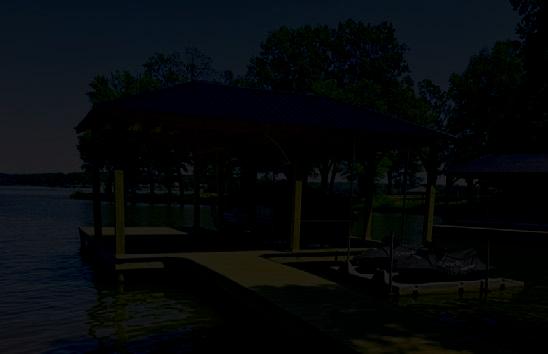
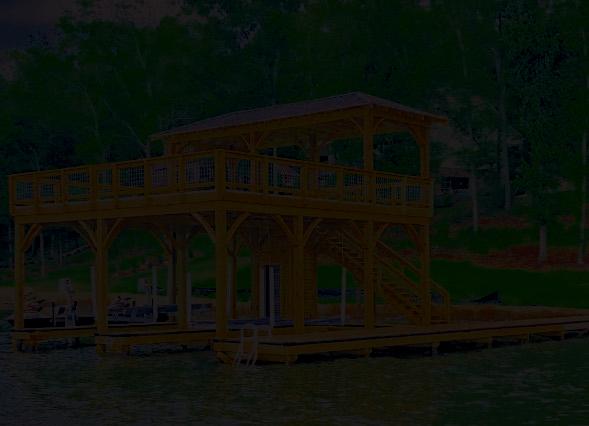
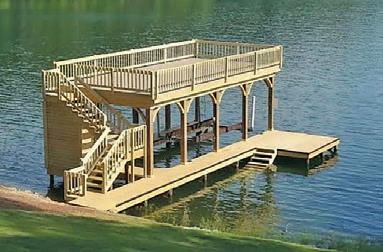
“On Miss Roxanne’s property there’s an absolutely beautiful double decker pier,
and so I wanted to incorporate seating up there so people could go up there and enjoy all the scenery. Almost every major event in my life has revolved around that property and it’s just really cool.”
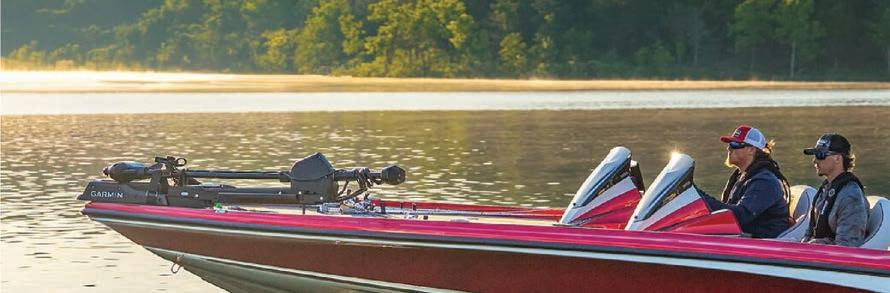
As Jon-David is a lover of the outdoors, he had one request: that he and his bride could ride o into the sunset on their bass boat in front of a cheering and waving crowd, which is exactly what they did.
“It means a lot to have our wedding at the house,” he said. “The view of the river is amazing, and the Highway 78 bridge and the train bridge are historic marks on this river, so it was cool to have those in our wedding shots and for people who see photos of our wedding and know exactly where it’s at.”
Their dedication to the property continues to this day as the newlyweds still live on the property, about 100 yards from where they got married. Having their lives connected to such a space is not lost on the couple, as they both expressed their gratitude for being able to have their wedding there.
Kari expressed her own gratitude toward Roxanne Bukacek and her family for allowing the wedding to take place there.
“I am so appreciative of Roxanne,” she said. “She isn’t with us anymore,
but Roxanne was so excited about the wedding, and it breaks my heart she wasn’t there that day. She was obviously there in spirit, but her husband Tom let us have the wedding there, and her sister Arabella was so thoughtful and so gracious to let Lauryn have the wedding of her dreams there. I really appreciate them for allowing us to use their homestead there to have the wedding.”
Thinking about the future, both JonDavid and Lauryn said they’re looking forward to having their family experience the same kind of special moments the property has provided so many times before.
“I’ve spent my whole life on this river,” Jon-David said. “From February to August, I’m out there shing or riding the pontoon. I love the water and look forward to my future family enjoying the same things I did.”
“Growing up, we’ve done everything on it,” Lauryn said. “Now I’ve gotten married there, and down the road we’ll have kids, and it just means so much to show them, ‘Right there that’s where we got married, that’s where we had birthday parties.’
It’s just so fun to think how I’ll be able to celebrate my kids’ birthdays there or celebrate more holidays there. It’s just fun now that Jon-David can be part of it all.”














Written and photographed by DR. SARAH ELIZABETH
MOREMAN
asing my Darth Vader into a parking spot atop the hill next to the Birmingham Sailing Club’s clubhouse, which is now familiar by this third visit, I shift into park and reach for my Android resting in its case on the dashboard. Unlike the previous Saturday, when people bustled about enjoying oysters, shrimp, corn, and potatoes spread across red-and-white gingham-covered tables, it is quiet. Only one of the Reich brothers is outside, operating his leaf blower. I check the clubhouse doors; inside, it is empty.



Pulling my phone from my jacket’s side pocket, I text Amy Sides.
Sides.
“I am here,” I type.
“Hold on. I will be there in a minute,” she replies.
I step outside to take in the surrounding nature, the quiet broken only by the dull roar of the leaf blower. I walk down the incline of the parking lot and soon spot a silvery SUV approaching. Instinctively, I know it is her. I smile and wave. We shake hands as I introduce myself. “Sarah Elizabeth. Nice to meet you.”
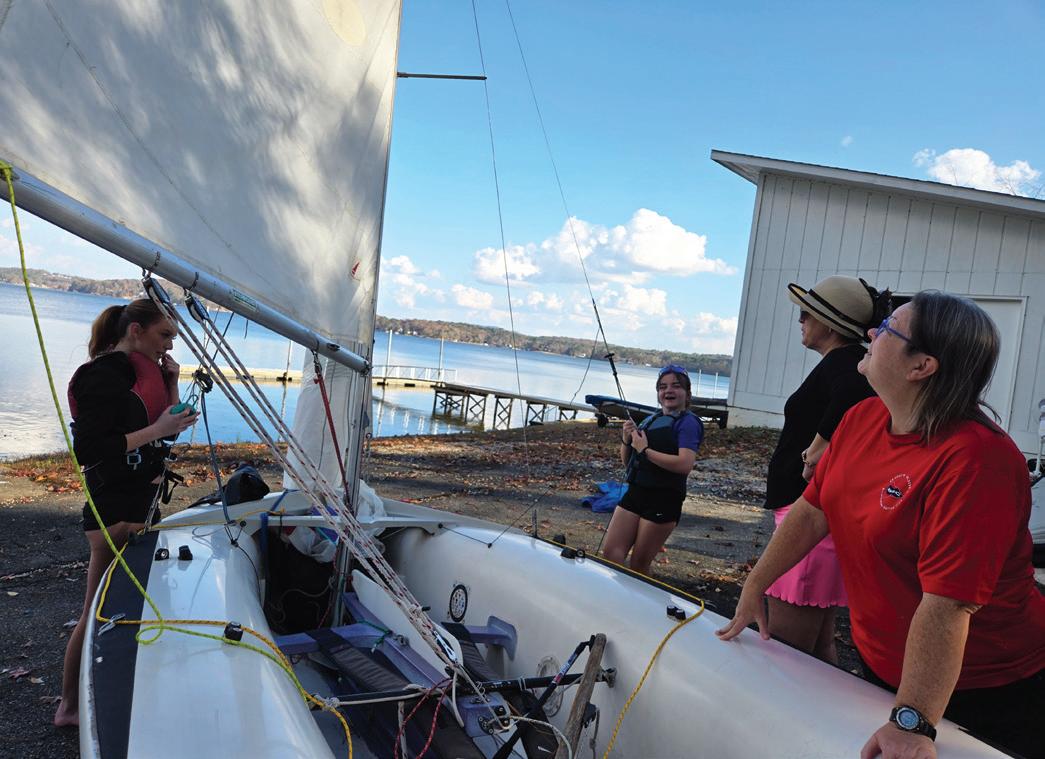
“Amy.” She smiles before continuing. “I’ve been working with the juniors down the hill. We are trying to teach them to y one of the sails, the third sail on a sailboat. It is their rst

time using it, so we are making sure all the parts are accounted for. They are preparing for a regatta in February, just north of Miami. It is huge, over 180 boats registered, but they cap it at 165. The juniors are on the waitlist. We are almost done, and we are hoping someone changes plans so they can go. Today’s practice is intensive, and they are learning as much as possible. That is what I am up to.”
I ask how long the practice will last. She says they will be there until 3 p.m.
“There are several parts to today’s practice,” she explains. “Right now, they are on land. We have the boat on a dolly, so we can move it around. It is not like sailing on the water or even bobbing around yet. We stand beside it on land while a kid is in the boat, practicing with the di erent controls. That is phase one, learning how to use it on land.” She gestures toward where she had driven from before continuing, “I have another parent down there working with them now.
“My other plan while we are talking
is that they need to come up with a budget for how much it will cost to get them there. They have to pay to be in the regatta. They have to bring a
boat – either charter, borrow, or rent one. There are coaches to pay for help, lodging, food, gas, all of that. How much will it cost to go to this regatta? Then




we are going to do some fundraising, like people do for Olympic campaigns or the America’s Cup. If we can raise some money, it will help them go.
“Their job is to work on the budget, maybe brainstorm some fundraising ideas, and put together a practice schedule. One of them is a high school senior, the other is a junior, and they are very busy. I do not want the schedule to come from me; they need to put it together and say, ‘This is when we commit to practicing.’ Earlier this week, we planned to practice today, and my daughter said, ‘Oh, my friend invited me to the Alabama game this Saturday with her family.’ I thought, ‘Are we doing this sailboat race or not? You have to decide to commit.’
“They have to commit to the regatta by putting together their budget and working on their fundraising, instead of having parents do it for them. Otherwise, the girls would not have much commitment to the regatta. That is phase two. While we are talking and while they have some lunch. Then, I plan for us to rig the boat and go out to sail for a little bit, hopefully practicing what they learned on land today. If not, at least they get time in the boat. The sun sets at 4:30, and there is only so much time and attention they can give to learning new things and doing everything. I gure around three, they will probably be ready to stop.”
“That sounds great,” I say.
“Okay, perfect. That is my plan for the day.”
“Okay, we could talk about nature journaling, if you do not mind.” I turn to face the clubhouse, and she walks over to her vehicle.
“Yes. Let me grab the journals. I have some in the car. While we are talking and the girls are working with the other parent, a third parent should be showing up in 15 to 30 minutes. She plans to help them with fundraising and get them focused on that. I do not know how much time you have to hang out.” She looks at me, pausing for my answer.
“I am prepared to be here for everything you mentioned, both the conversation about nature journaling
and the sailing,” I assure her, feeling as though I have been given the privilege to observe more than one skill set put into practice. I have a soft spot for individuals who blend two distinct passions or skills to serve and educate others for the betterment of a community.
I watch as she places each of her journals carefully on top of the other, almost reverently. The sunlight seems to spotlight her, making her glow. I think to myself, she could not have sat in a better position. It is her moment to shine.
I ask how she got involved with
nature journaling. She begins to explain that the foundation for her interest began when she was homeschooling her two daughters. I incline slightly forward, trying to catch more of the sunshine that falls on her, since I feel a bit chilled in the shade.
“Charlotte Mason?” I interrupt, making sure I have the name right as I scribble it in my lined notebook. She nods and repeats, “Charlotte Mason. There are di erent educational philosophies, and she is one of them. She was an educator around the turn of the 20th century in England. One of her main ideas about education was to get
kids out in nature. And I am a biologist. I thought to myself, ‘Oh, I like that idea.’”
I lean back in my chair and reiterate, “So, Charlotte Mason at the turn of the 20th century in England. You were saying her philosophy inspired you with nature journaling?”
“Yes. Through nature study, we learn to observe closely. We look, and when we put things in a nature journal, it is like retelling what we observed in nature. Her philosophy emphasized a lot of retelling. If you read a chapter of a book, you retell what you read. By retelling, you absorb it and make it your own.”
I watch her face brighten even more, beyond the sun, with the passion emerging from within her. It is like watching a yellow Dahlia bloom as she speaks.
“And if you think about Sherlock Holmes and how

he noticed so many details, he told Watson, ‘I am not smarter than the average person, but I notice things.’ Nature journaling helps us slow down and spend time in nature, which has many health bene ts. It helps us notice more of what is going on around us.”
She describes how her students tell her they had not noticed many things until they started nature journaling, observing details they would have otherwise overlooked. She clearly loves teaching this, emphasizing her joy in spending time in nature.
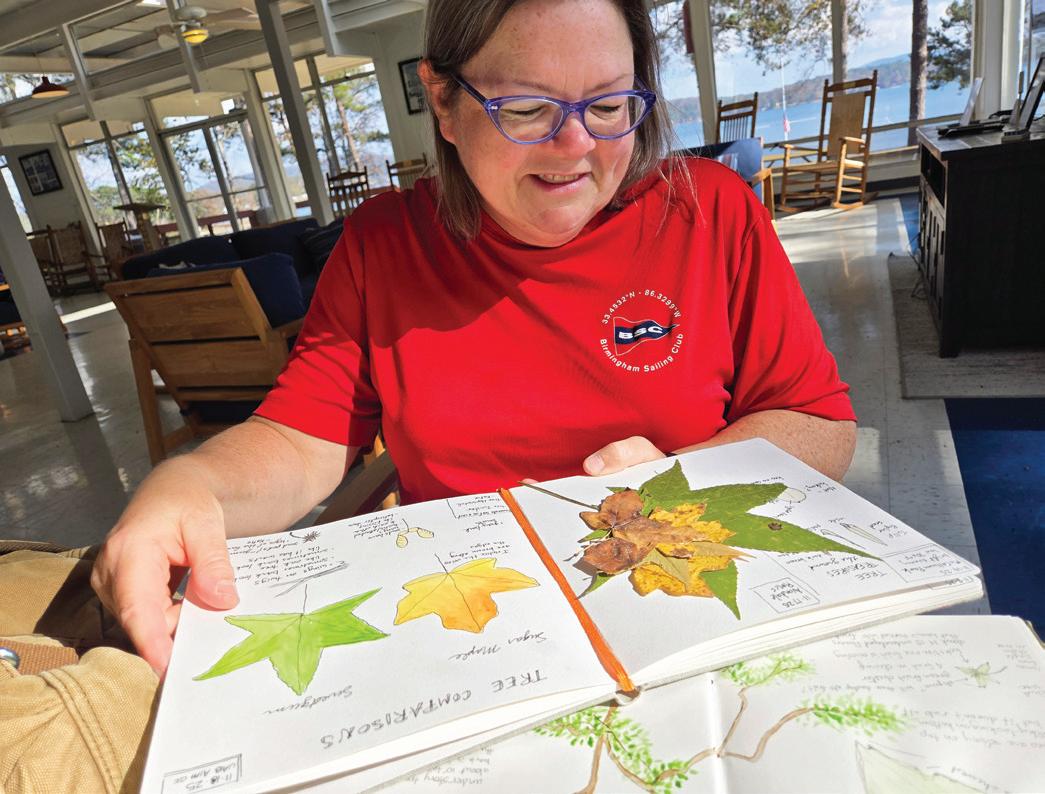
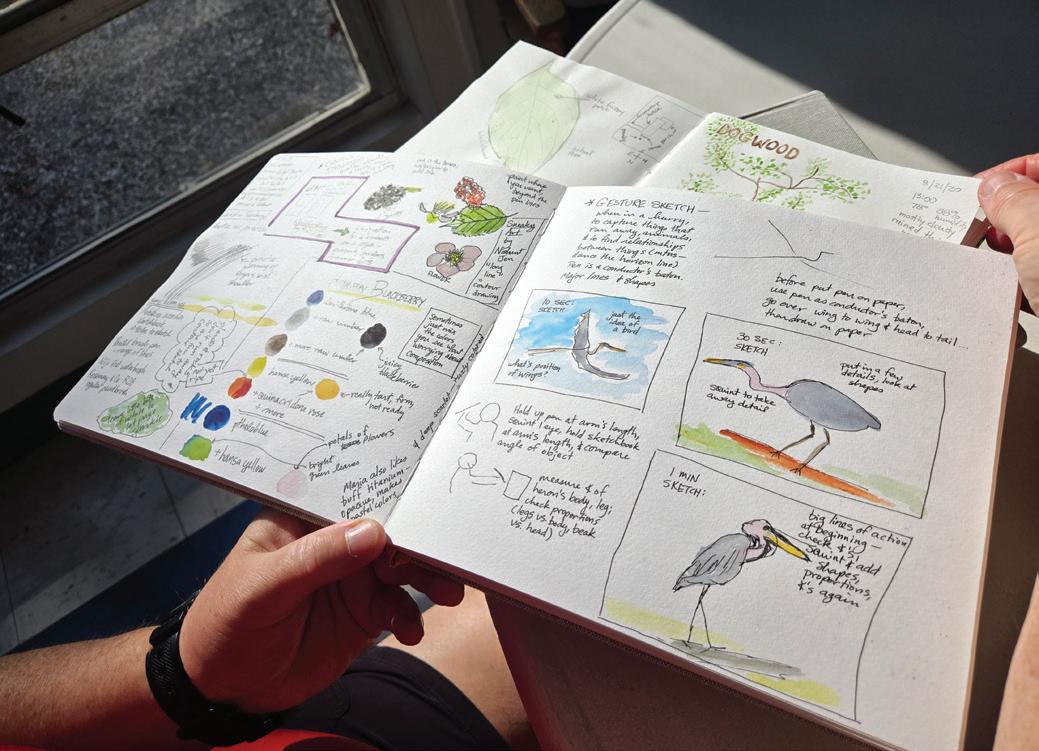
“I love spending time in nature, and I love how it becomes a written record of things I have seen, spent time with, and observed. I tell my students it is not about making a beautiful picture to hang on the wall. It is not about the end product, but about the process of drawing,
Anderswasdiagnosedwith araregenetic conditionthatwas a ectinghisimmunehealth andsignificantlyimpactinghisoverall development.His doctorsdeterminedhisbest treatmentoption wasa bonemarrowtransplant, andluckilyAnders foundhismatchand received his transplant.NowAndersis reachingnew developmental milestonesand is startingto get back to beinga normal kid.
We ar eh ereinyourneighborhood at Pedi at ric sE ast. To scheduleanappointment at eitherthe Tr ussvilleorDeerfoot locationsvisi tw ww.pediatricseast.org

which helps you look more closely and notice details. For example, you can look at a leaf and say, ‘That is a pretty leaf.’ But if you start drawing it, you notice the edges have tiny teeth, or a hole right there. You wonder what happened. Or the veins on the leaf, the pattern they form, is di erent from other leaves you have seen. These are things you may not notice until you start drawing because you have to put them down on paper.”
She makes motions with her hands as if she is holding a small leaf with its serrated edges. My heartbeat quickens as I sit forward, attentive to what she will say next, feeling connected and excited, because what she has said resonates deeply with my own teaching philosophy about writing.
“The point of nature journaling is not the end product. Really, anyone who can hold a pencil can nature journal. You do not have to be an artist. I certainly am not. I am not trained in art, but it is something I have grown to enjoy. The more I nature journal, the more satis ed I am with the sketches I put in my journal. A sketch is just a reminder of what you have seen. You do not have to be a scientist to nature journal either.”
Amy puts it quite poignantly: “Making up things, making up words, is completely valid when we are nature journaling. I tell my students, Look, this book is for you. It is for you to remember what you saw in nature. You do not have to spell things correctly. No one is coming behind you with a red pen to correct it. You do not even have to use full sentences if you only want to write a few words or phrases. Through nature journaling, I have let go of perfectionism and learned to embrace my mistakes and be okay with them.”
Inwardly, I smile at the mention of a red pen, because I use red pens to jot positive, constructive comments in the margins of my students’ writing, guiding them to use feedback to grow and to express their own voices. I feel even more connected to what Amy is describing because her philosophy aligns closely with my teaching approach. She emphasizes that grammar or spelling should not slow down the
observational thinking process, which parallels my strategy with writing prompts.
“What you are saying, I totally agree with. I have been teaching for twenty years at the college level. I teach English composition at Je erson State Community College. I make my students write a lot. I give writing prompts and speci cally tell them not to worry about grammar, punctuation, or spelling. Write everything out. Let the thoughts ow onto paper or the screen. I want them to experience the ow of their thoughts, how writing gets easier the more they simply let go and let the pen

move across the paper, or the keys on the keyboard make words appear on the screen. Get those ideas out of your head. Do not stop the train of thought. Let it go full steam.”
Amy shares how she has been encouraged to teach nature journaling at libraries and gardens. She has been teaching at several libraries in the Birmingham area and also o ers classes at Aldridge Gardens in Hoover, “which is lovely because I can o er those for free.”
Later, after our Saturday at the clubhouse, I checked the UAB campus email newsletter to stay informed about my employer institution and saw that
Amy Sides’ nature journaling classes are o ered through the UAB Center for the Arts as homeschool or after-school sessions for young students. I remember Amy telling me that she also works with UAB Arts and Medicine for patient support groups, in addition to leading sessions at homeschool conferences, libraries, gardens, retirement homes, senior groups, and public spaces throughout the Greater Birmingham area. She was even invited to lead a nature journaling event at an annual meeting of medical librarians.
When Amy talks about how the more she struggles to be creative, the more creative she can be. She explains, “It’s like a muscle. The more you use it, the stronger it gets. I feel that’s the same with drawing, with observing, with creativity. When I was a kid, a lot of people thought that we were born with as much creativity as we were ever going to have. Either we are creative or we are not. I think many people believe that talent alone matters, but you can improve any skill through practice. Same with sailing or any sport when it comes to practice. The more you practice, the better you get. Art and creativity are no di erent.”
I re ect for a moment and say, “You know, I am so glad we did not grow up with the technology and social media that exist today. You and I were blessed to grow up focused on building our creative skills without such distractions.”
She agrees. “We grew up in the ’70s and ’80s, and our parents would lock us outside to play every Saturday. We would even drink from the hose. We stayed outside until it was time to come
in. I never wanted to come in. Being outside was so much more fun.” I smile wistfully, remembering the days when I did not want to go inside after playing outdoors all day. It has been a long time since I experienced a day spent entirely outside.
Amy encourages movement, asking questions, and cultivating curiosity. As a biologist, she is fascinated by how the world works, particularly in ecology, where plants, animals, and even fungi interact. She nds that one question often leads to ten more. Asking questions is enjoyable, and there is no need to Google answers immediately. The process nurtures a sense of wonder, allowing one to observe, ask, and record carefully. Documenting observations in a journal solidi es knowledge in a way
that quick online searches or eld guides cannot. She emphasizes the importance of personal discovery, concluding, “One of Charlotte Mason’s philosophies is that to know about anything, whether it’s history or science or reading, we have to thusly: dig for ourselves is the knowledge that will stay with us.”
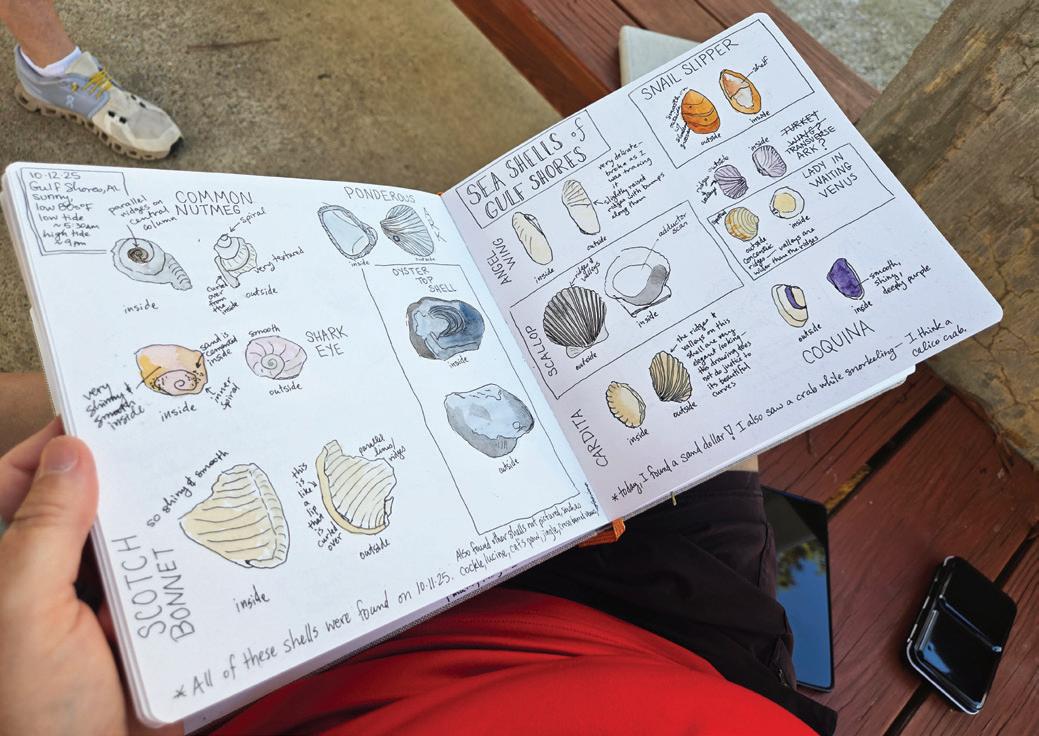
We head outside as Amy says she needs to check on the junior sailors’ progress with their sailing lesson. She gives me her journals to browse through while she talks with the girls. Slowly taking a seat on the porch ledge, I open the rst journal, one her husband made for her, and admire the thoughtfulness of Amy’s observations in watercolor and ink. The pages depict everything from branches with pinecones to spiders, birds, and squirrels.







Amy returns, and the conversation shifts to how her love of biology and sailing developed, which leads to meeting her husband, Je rey Sides. Amy, a native Louisianian, learned to sail during summers in Connecticut with her uncle, who raced on weekends while she attended sailing camp during the day. At 15, encouraged by her uncle, she called the Shreveport Yacht Club to o er her help as crew. The manager was impressed with her skills, and she began racing regularly through high school.
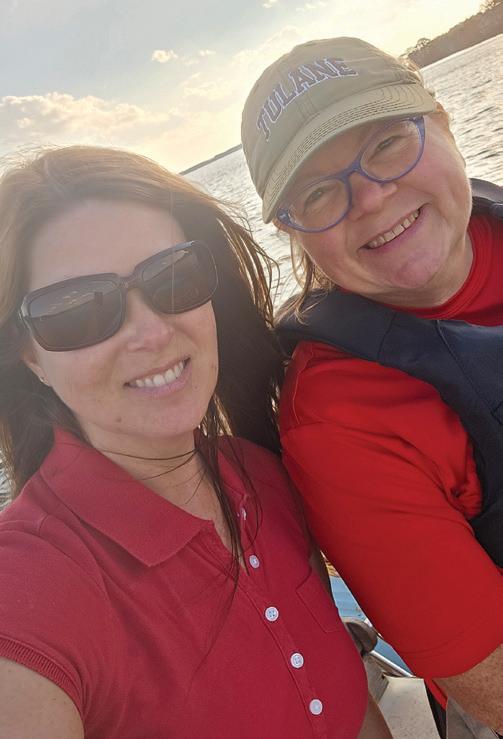
Sailing in uenced Amy’s college choice, Tulane, where she met her future husband. Their shared passion for biology brought them together. She smiles and says, “He was not a sailor before I met him. I taught Je rey to sail, and his favorite part is cruising, not racing. Sometimes we rent a large boat, maybe thirty or forty feet, on the Gulf Coast and sail in Florida or Lower Alabama. We’ve sailed with my uncle in Connecticut, Massachusetts, near Long Island, and Martha’s Vineyard.”
I ask if she knew about sailing clubs at the time. She explains that the phone book was her main source of information since the internet was still new. I tease her that if she had known about Tuscaloosa’s sailing club, they might not have moved to Birmingham. She laughs and continues, sharing how they moved to Birmingham in 2002, and she found an ad in a magazine for the Leukemia Cup. Excited to discover the Birmingham Sailing Club, she and Je rey came out to check it out and became members.
I appreciate the love in her storytelling and the quiet of the clubhouse today, so di erent from my last visits. Amy explains that tomorrow is race day. I ask if there is a race every Sunday.
“Yes, except when we have a big Saturday race, like last weekend’s Oyster Roast. People arrive early and stay all day. When we have those events, we skip the Sunday race so everyone can take care of other things. Sometimes we have whole weekends of events, like the Leukemia Cup or junior regattas such as the Rock, Paper, Scissors Regatta. Charlie helped with that. There is even a slip-
and-slide down the hill with hay bales at the bottom. In December, we take a short break because everyone is busy with the holidays.”
She talks about how nice it is to have a place to leave their boat with the mast up, without having to pack it up every time they want to sail. Lowering the mast is one reason why sailing requires commitment.
“Like nature journaling, being out on the water is very relaxing and soothing. Sailing soothes my soul. It can also be exciting, depending on the wind. When there is a gentle breeze, it is calm and peaceful. When the wind is strong and you are racing, it becomes fast-paced and physically demanding. Either way, it is fun.”
Glancing at her wristwatch, Amy says she has time to do some nature journaling before we join her daughter Anna and Rushton Robinson to complete their sailing lesson. While she journals, I ask how she became involved with coaching kids for junior regattas. She explains that as her children grew older, she began helping with the junior program for a few years before the head of the program told her it was her turn to lead. With her collegiate experience teaching others how to sail during her college summers, she found the work far more engaging than
ipping burgers and well aligned with the life she wanted. She even took a class on how to teach sailing. She taught sailing in New Orleans, Shreveport, and Fairhope. When she worked as an environmental educator, she also taught through programs such as the Cahaba River Society’s canoe sessions, guiding groups of schoolchildren as they learned to navigate the river while observing wildlife. She spent time at the Alabama Museum of Natural History in Tuscaloosa while Je rey worked on his PhD.
The more she shares, the more I see how her experiences meld together in a natural progression that led to her nature journaling classes. She applies the same principles she used when teaching sailing and environmental education. I brighten when she mentions the Girl Scouts, since I earned my Gold Award during my senior year of high school. I listen attentively as she describes how the Girl Scouts learn to nature journal their own experiences.
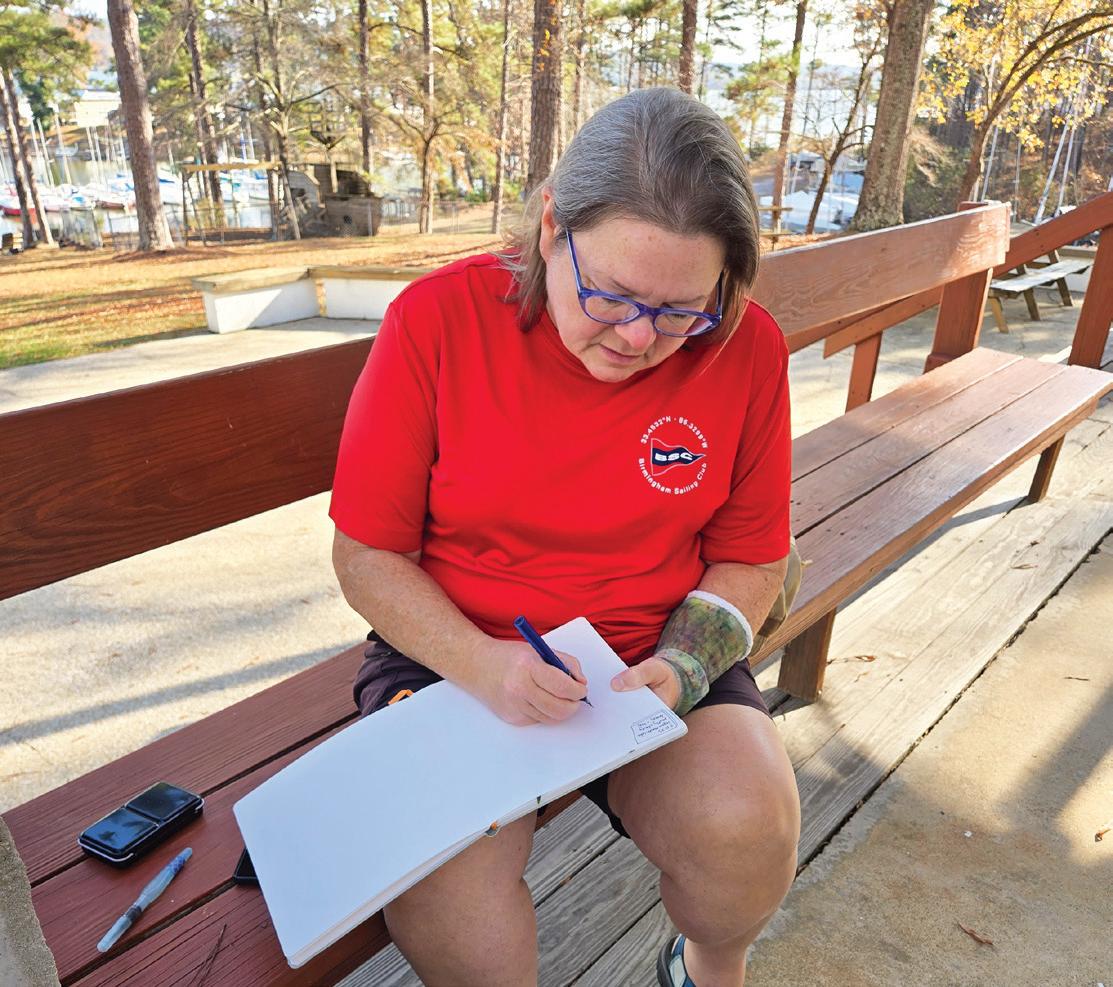
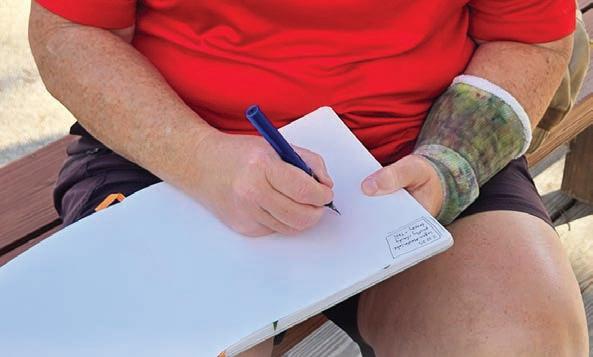
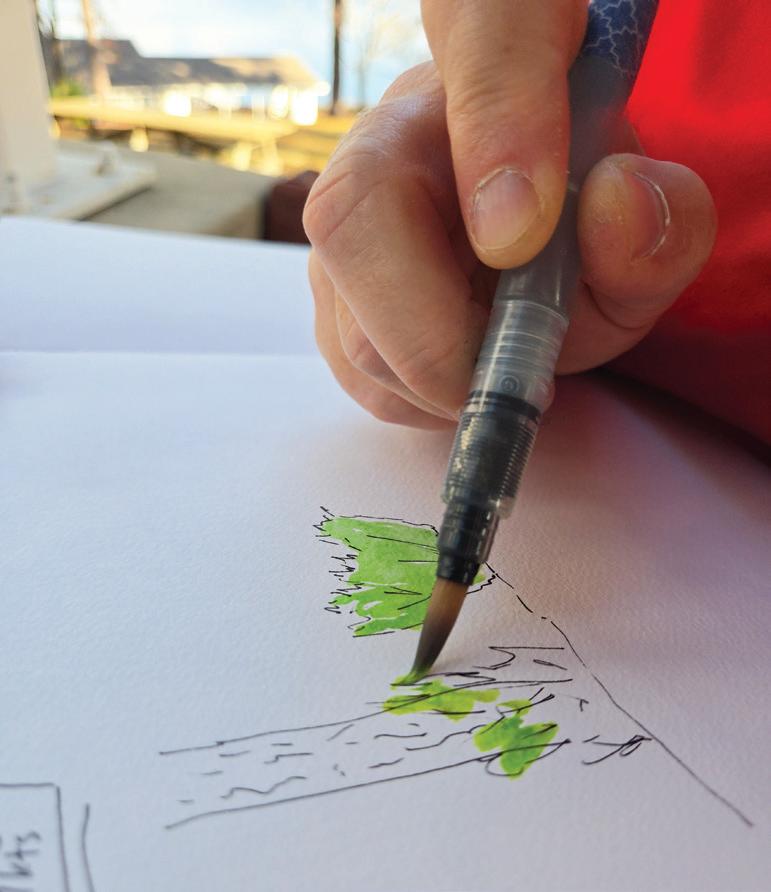
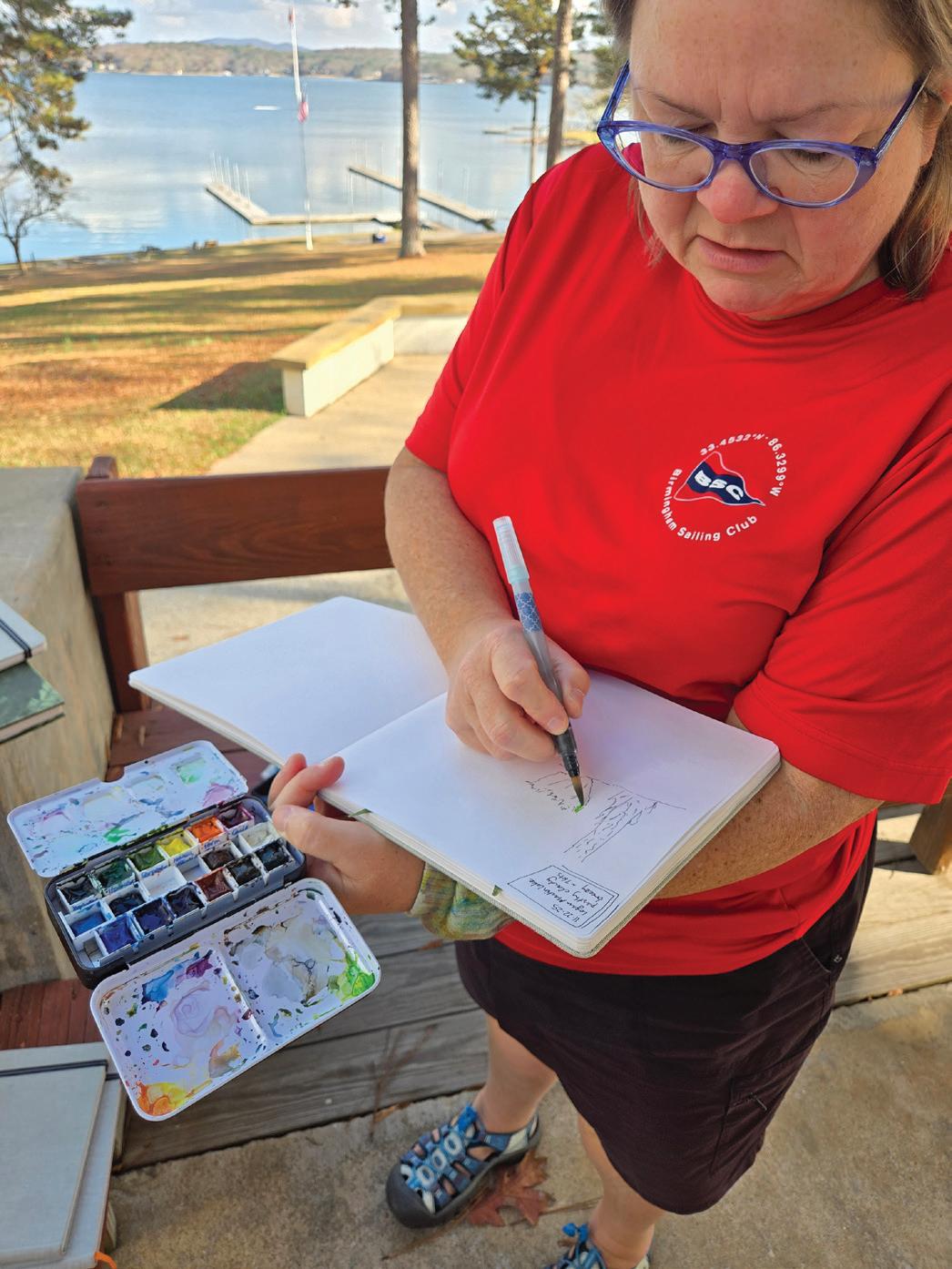
Amy pulls on the wrist cover she uses while watercolor painting in her journal. She says that nature journaling requires the use of the ve senses, except perhaps taste. The other four senses help describe the moment and the observation. She explains how the wrist cover, fashioned from a sock, supports her process. “This is my sock when I







paint. I have this paintbrush which has water in it. I do not need an extra bowl of water. When I want to switch colors and have pigment in my bristles, I squeeze a little water out before wiping it on the sock, and then I can change the colors.”
I notice that Amy is standing rather than sitting as she nature journals, so I ask if she would like to sit.
“I like to stand up, because there is not always a place to sit when you are in nature. I can easily use my paints and loosely ll in things,” she explains.
A girl wearing a blue shirt walks over to ask a few questions. After responding, Amy turns to me and asks if I am from Auburn. When I nod, she brightens. “That is excellent. My daughter is applying to Auburn for the ight program. She wants to be a pilot, a ghter pilot.”
I indicate the girl in the blue shirt who is walking back into the clubhouse. Amy nods. “Yes, the one in the blue shirt. She is my high school senior. She is also applying to the Air Force Academy.” I share my enthusiasm and tell her about my family history in the Air Force, including my uncle Bill who taught ghter pilots and later retired as a Colonel.
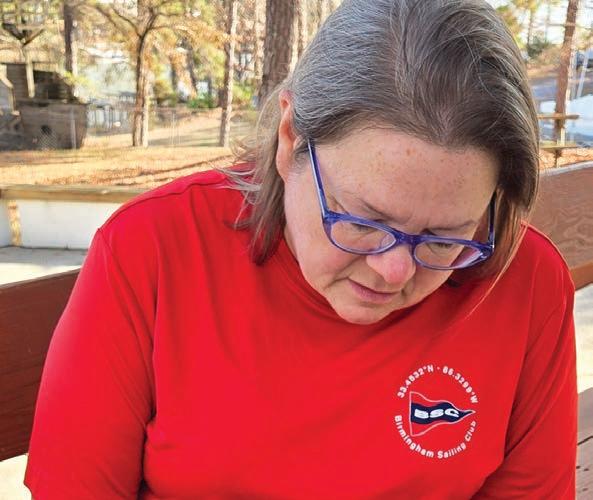
Our conversation tapers o as I take photographs documenting Amy nature journaling. When she nishes, I notice that she focused on a tree far in front of her. She shows me her work before closing the journal.
“Are y’all ready to sail?” she asks, directing the question to me as well as to the two girls who join us on the porch.
We make our way down the hill to the smaller building that houses the equipment for the junior program. I listen as Amy instructs her daughter Anna and Anna’s sailing partner, Rushton Robinson, a high school junior.
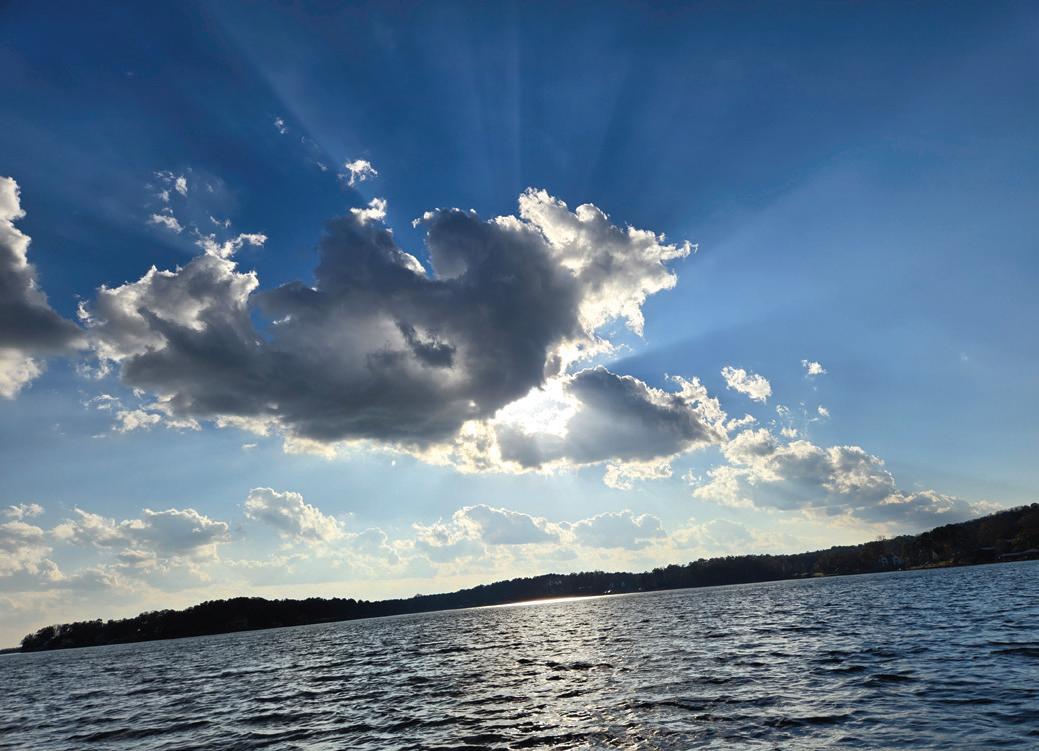
Anna and Rushton begin rigging the boat. Amy turns to me and comments on the sky. “I love watching these clouds go by. Nice and pu y. So the girls will take this boat, and we will follow behind them in a motorboat. You can be with me in the motorboat. Also, Charlie will be sailing too.”
She reassures me that it is ne to leave my hearing devices in while we are on the water, since I ask whether I should remove them. I want to hear everything as I experience the sailing lesson that Amy is giving to her daughter and to Rushton. I do decide to remove my old Sperrys, though. I had forgotten to swap them for a pair with better traction, and it is easier for me to go barefoot than to wear shoes that might slip.
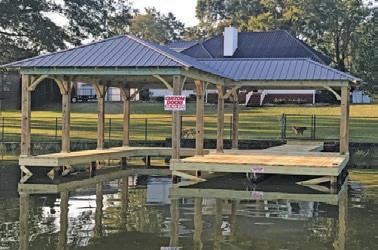
I spot Charlie Andrews preparing his boat and walk to the end of the pier to say hello. He asks about my friend Felecia, wanting to know how she is doing after falling into the water the weekend before when he gave us a ride on his trimaran. I tell him she is doing well and thank him for asking.
The wind is picking up, and Charlie looks out across the water. He points out the texture on the surface and explains how to watch the wind. “You see the di erence in the water where it is darker? That is windy. Completely di erent texture. When I go out, watch where I am going, where I will move slowly until I reach that textured part. My sails will start to ll with wind right there.” He points to the darker patch and continues, “If that comes closer to us, you will feel it when it hits. I am about to launch. When I do, watch my sails.
When I hit the texture, they will come out. It’s about balance, similar to riding a horse.”
I thank him for teaching me more about sailing before saying, “See you later.”
As I turn to head back toward Amy and the girls, he calls out that I should watch for the moment the wind hits his sail. I answer, “Certainly!” with a smile as I walk away, barefoot.
When I rejoin Amy, the girls are already out on the water. We watch them catching up to Charlie’s boat, and Amy says, “I told the girls to listen to Charlie, since I was Charlie’s coach too.”
Once we reach the other pier to get into the motorboat, Amy e ortlessly brings us alongside the two sailboats in no time. While I busy myself taking photographs with my phone, I listen to her calling out instructions to the girls: “Ease your sail and slow down. What I want you to do is tack on the starboard sail for about thirty seconds, then head down toward the A-frame house and put up the spinnaker. Look to the right. There is a little hook on the deck, at the base of the shroud. Yes, exactly. Put the guy under the hook. All right. Push the pole forward. Perfect.”
The sun is generous in staying high in the sky, to give us more time out on the water. I watch as Amy guides the girls





across the water, with Charlie on the outskirts ready to assist. After a while, Amy and I relax into conversation while the two sailboats sail across the lake. Amy shares how adults can take sailing lessons. She says, “Sailing classes for adults are o ered in the spring and fall, and you use boats that the club owns. Sometimes we also do private lessons. For example, if you want to learn to sail, I could teach you, and you could learn more about di erent boats before you bought one. Or, you know, you could just buy a boat and learn by doing.”
I ponder her words about sailing lessons before telling her the horror stories of how my father taught me to drive. Imagine teaching a person with hearing impairment how to drive a stick shift. A good driver should keep his or her eyes on the road, and yet I had to look over to lipread instructions. Amy listens with a thoughtful expression before sharing that she has a cousin who is deaf. She says that she and I can gure out a communication system that will t sailing lessons for me. I smile, thanking her for the idea. I then share more of my own experiences growing up as a hearing-impaired individual with her, while the motorboat drifts gently. The peacefulness of the lake helps me relax, a welcome break from being in constant work mode.
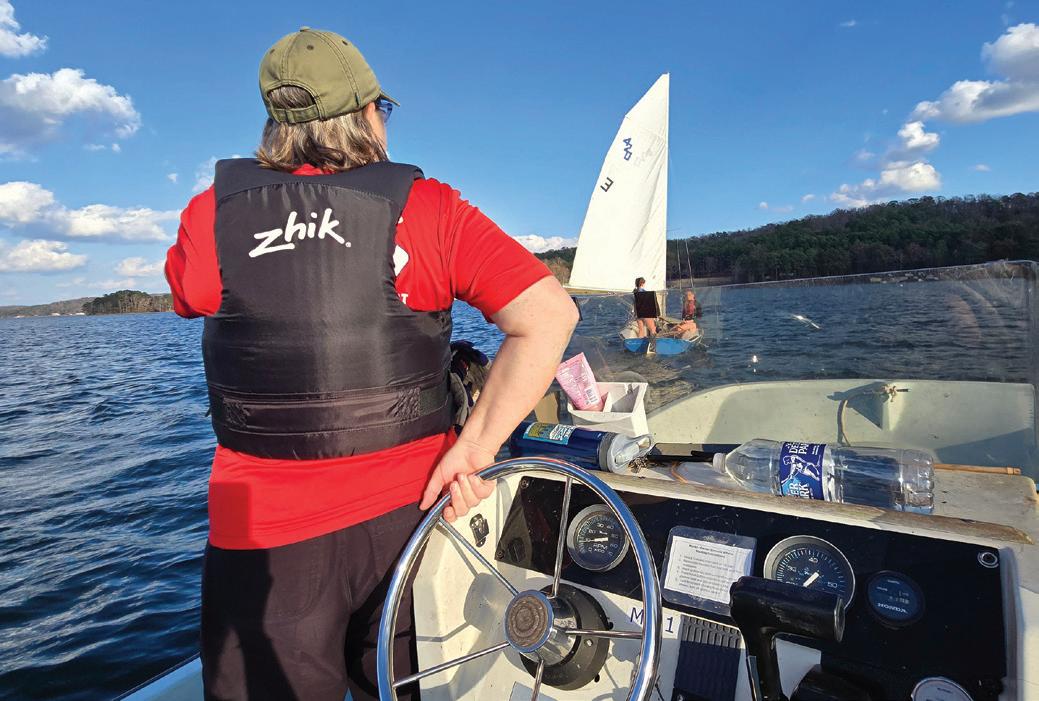
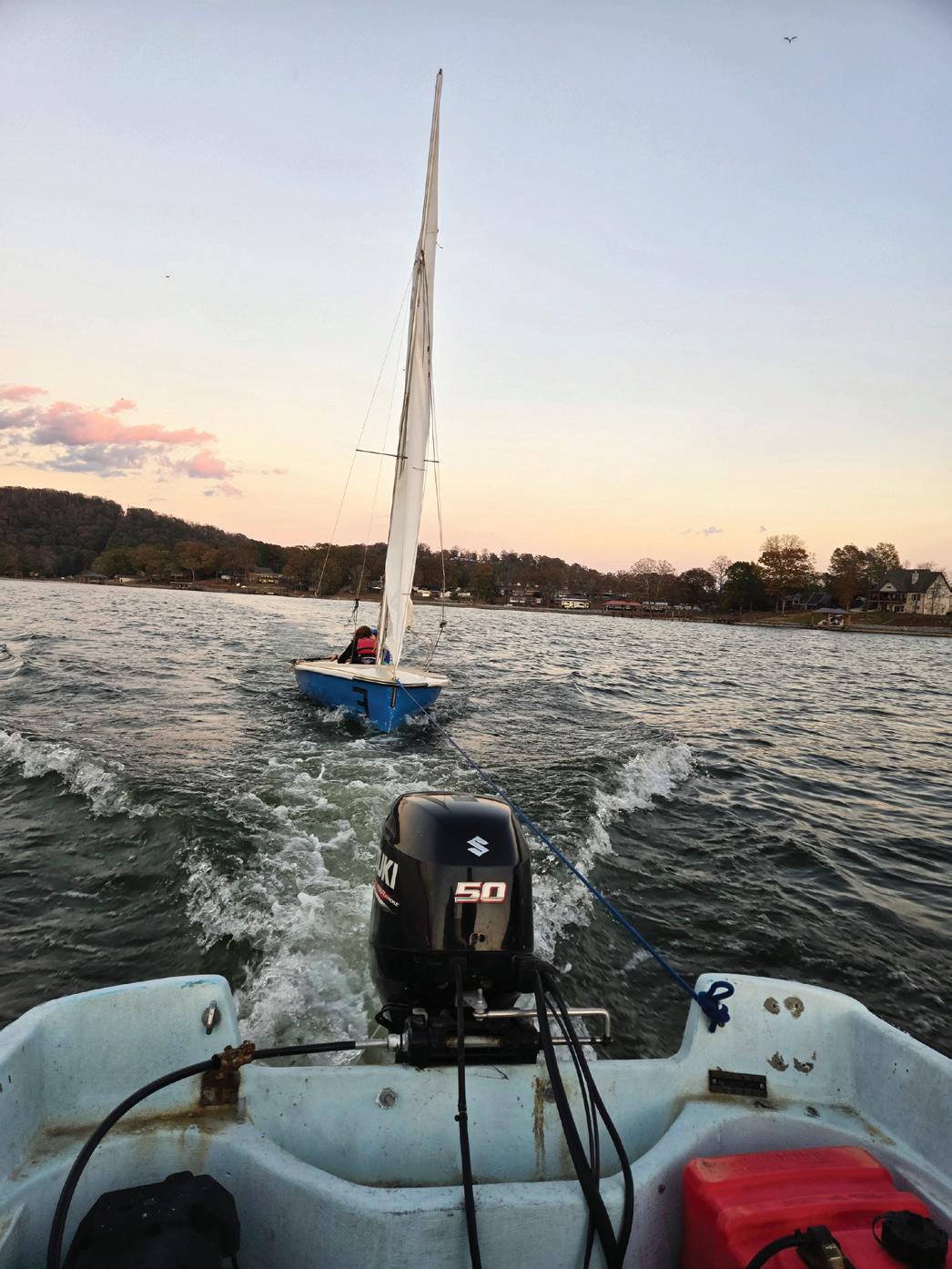
As we pass Charlie in his boat, he mentions that the girls have gone to the diner for a hamburger. On the way, Amy explains that the girls cannot sail directly into the wind because the sails will lie at. They have to sail about 45 degrees o the wind to catch it. She adds that we will need to tow the girls and their boat back to the BSC clubhouse pier.
In Clear Creek Harbor, we nd the girls eating on a patio overlooking the water. We wave as Amy secures the motorboat to the dock and then brings
the girls’ sailboat behind it, ready to tow. Once they nish, they hop into their boat. Amy starts the motorboat, and we glide back onto the water just in time to watch the sun sink into blazing oranges and reds, darkening the sky.
I smile, thinking about Amy’s love for nature and how she embodies it through teaching, sailing, and nature journaling. I consider taking up both activities myself as I watch the golden-red sliver of the sun peter into the dark horizon while towing the girls and their boat back.













Community and friendship are the real prizes of annual Logan Martin event
Editor’s Note: Although the winter of 2025-26 has been rather mild – at least so far – many Logan Martin habitués are eager for warmer weather to return to local shores. I know I am. So to help tide us over until the events season resumes in May, let’s take a look back at one of the lake’s most popular annual events, the Riverside Poker Run, which Lakeside Living contributor Sarah Elizabeth Moreman attended for the second time last summer.
Written and photographed by DR. SARAH
ELIZABETH MOREMAN
Iread the directions from the text on my phone to con rm, then place the device in its holder and lean forward to awaken the V8 engine of my beloved Darth Vader. Sunlight glints across the hood as I guide the SUV out of Birmingham, toward I-20 and the road back to Riverside. Another day on the water awaits, this time with the Williams. The summer before, Rory Cochran graciously captained his boat for my friends and me. Now I cruise along, savoring this rare escape from the relentless busyness that de nes my life.
I once believed I understood busy, but now I make the most of these quiet intervals, breathing in the summer air, rich with the scent of mimosas.
As I drive over the interstate bridge, the sun sparkles on the re ective waters. I cannot help but smile as my heart feels lighter. I do not know why, because I do not know the people I will be spending time with in close quarters on a boat for hours, other than Tucker Webb, our photographer.
I remember the landmarks of Riverside as I crest over the railroad tracks, passing the Landing and then Rory’s house before reaching Jimmy Pollard’s place. After gliding down the curve of the driveway, I shift the vehicle into park and look up to see someone coming to greet me. Climbing out of my




vehicle, I thank him for meeting me and for showing me to the boat.
As we weave around multiple parked cars in his driveway and circle his house, he mentions that he has been losing his hearing. I nod, relating to the moments he describes, the familiar territory of hearing impairment. His words pull me back to memories of time spent with each of my grandmothers before their passing, how they were frustrated by the loss of fully taking in their surroundings. I can only chuckle at the memory of them saying how they wished they had learned to lipread when they were younger.
As the dock comes into view, I turn to him and ask if I may go inside to freshen up. He nods and gestures toward the basement. After thanking him, I step inside, taking in the thoughtful organization of Mr. Pollard’s basement. For some reason, I have always been fascinated by how people arrange their basements or attics, as if these spaces hold secrets or hidden treasure chests of what they consider valuable, tucked carefully away. Sentimentality lingers in these spaces, and I feel the family’s love as I nish freshening up and make my way back outside to the dock.
As I near the black-topped pontoon, I wave to two girls shaking bright ribbons while the captain extends a hand to help me aboard. He introduces
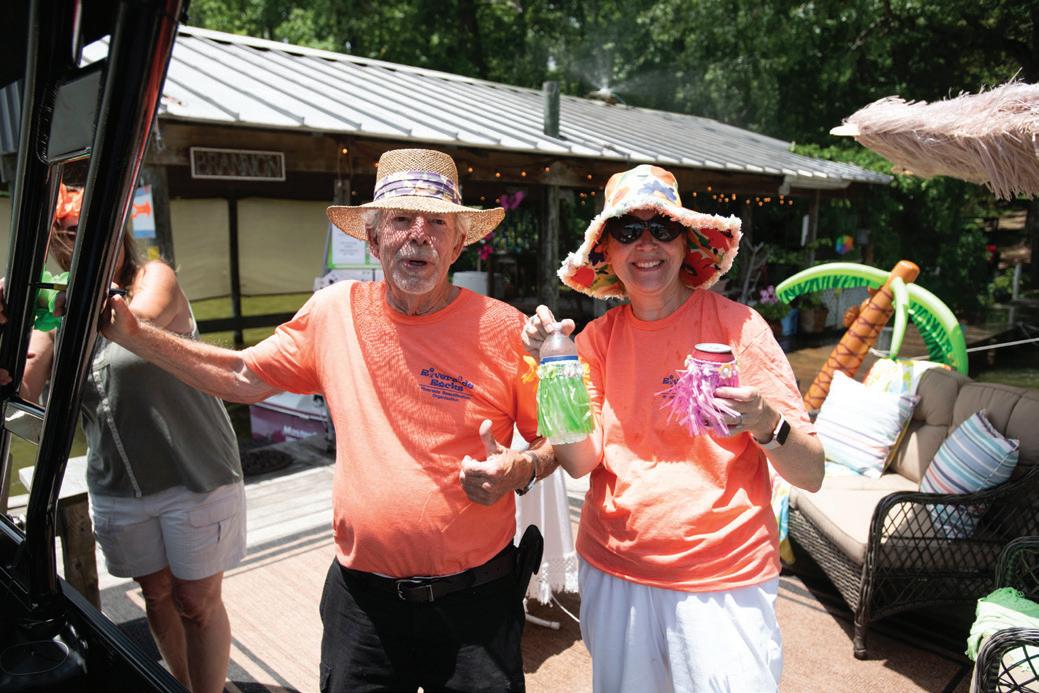
himself as Mike and sweeps an arm in welcome. His wife smiles and invites me to help myself to the cooler, mentioning that she used to bartend and introducing herself as Tracy. When she hears I requested pineapple in my drink for the day, she immediately slips into bartending mode, considering combinations that would feel both pleasing and tting for a day on the water. Touched by her enthusiasm, I thank her softly for her thoughtfulness and reach for the o erings before settling into the seat in front of the captain’s chair.
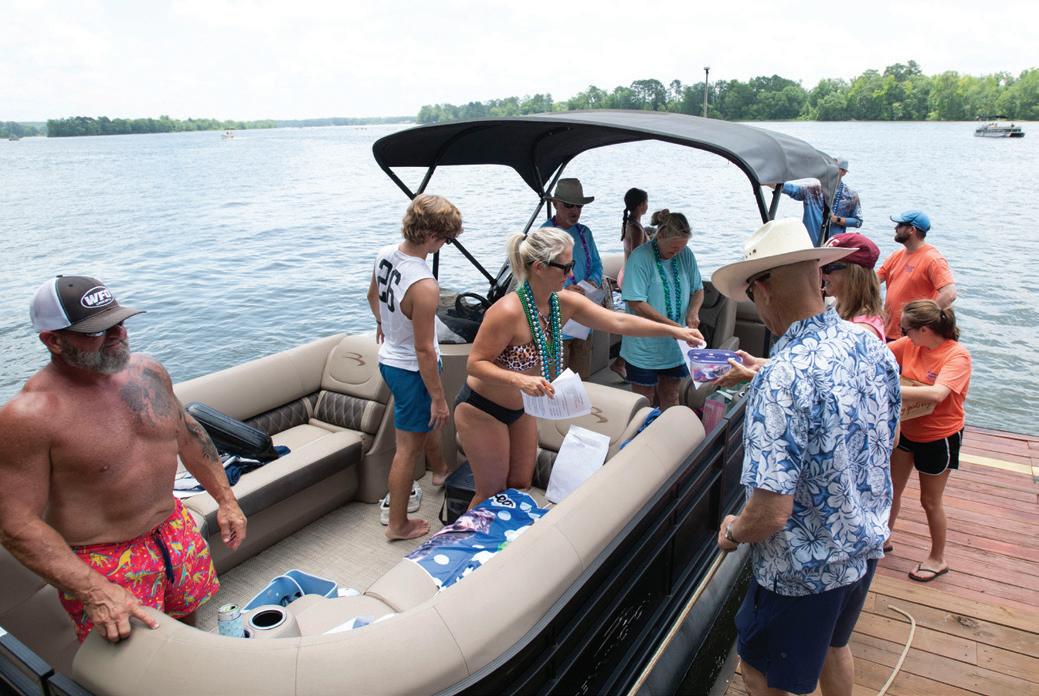
I notice another couple nestled in the back of the pontoon, shaded beneath its canopy. I smile as Tracy tells me their names, Chris and Karen King, with Chris being her cousin. Then I realize Tucker still has not arrived. Frowning, I pull out my phone to check for a message, but there is nothing. I tap out, “Where’s Tucker?” and put the phone away. Exactly at that moment, I spot a golf cart easing down the grassy hill. Mr. Pollard is driving Tucker to the dock. I wave as Tucker thanks him for the short ride from the driveway. Seeing two heavy cameras wrapped around Tucker’s neck, a icker of nervousness hits me. I hope he does not drop the expensive equipment in the water. I hold my breath until he nally joins us on the pontoon.
After exchanging introductions, Tracy asks about Tucker, and soon we discover a shared connection with Jacksonville State University. She proudly shows o her Yeti cup emblazoned with the JSU emblem. Tucker laughs as he shares anecdotes from his JSU days, and I chime in, mentioning that I worked there from 2005 to 2007. We share smiles of mutual understanding and appreciation for the beautiful university.
Mike eases the pontoon away from the dock, signaling the start of our Poker Run. Tracy leans toward Tucker and me as we sit across from each other at the front of the boat. She asks if we know
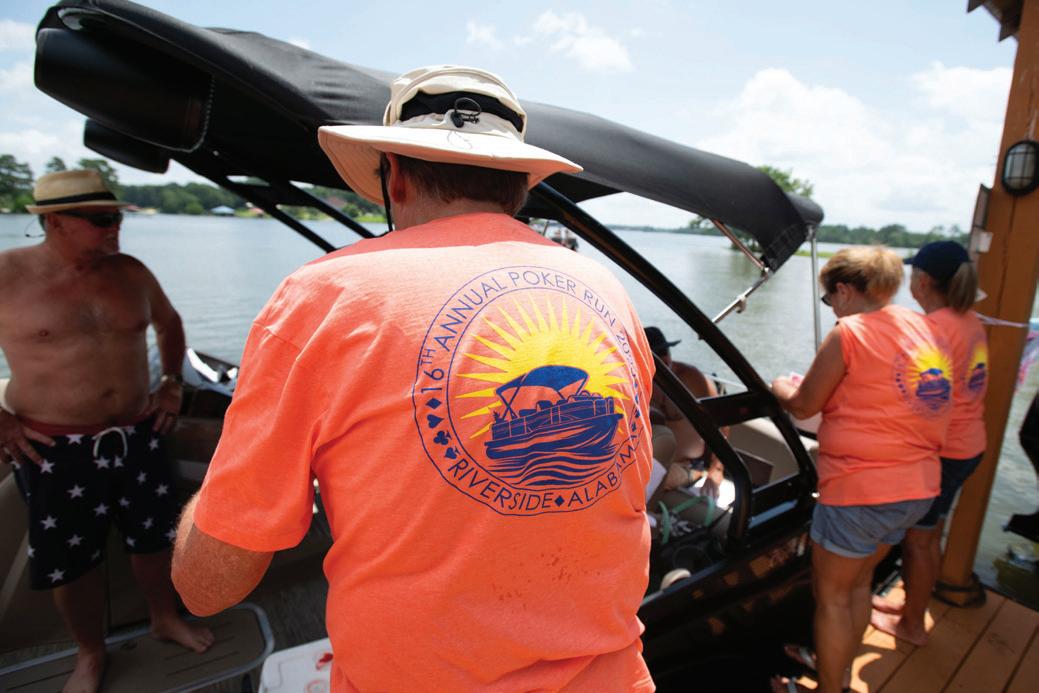
how the game works. It has been a year for me, so I admit I need a refresher. She dives into an explanation of the rules while Mike steers us toward the main channel. We nod along and begin rummaging through our packets, each labeled with our names in bold scrawl. My number is 16, and I laugh quietly. It is the 16th annual Poker Run. Did the organizer, Julie Pounders, choose that number for me on purpose, simply so I would notice the connection?
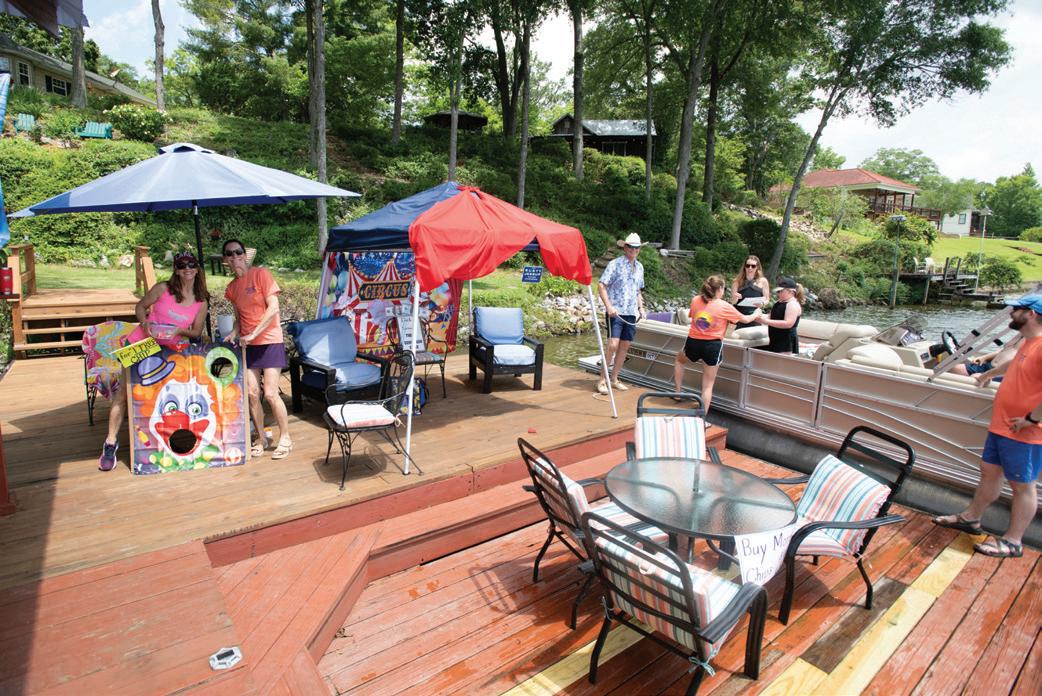
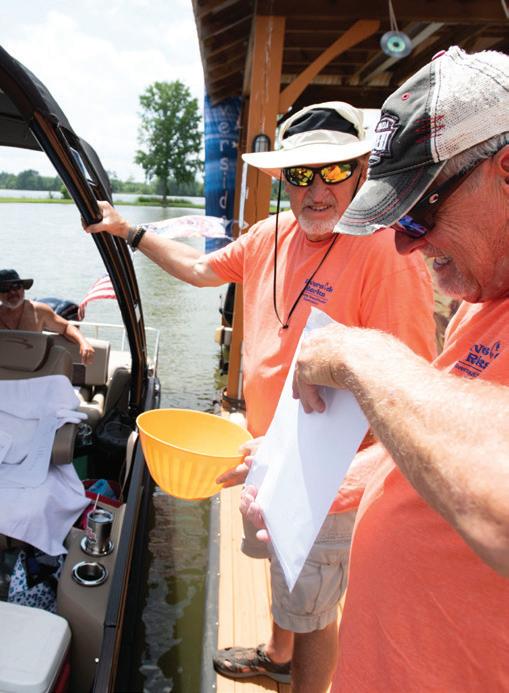
Eight docks make up the run, including the Landing and the Mystery Dock. Flags mark each location, paired with whatever theme the hosts have chosen. Members of the Poker Run committee wear bright orange shirts to signal their role and lend credibility to this fundraising ride.
I silently count the poker chips and cards in my packet, feeling the ridges of a white chip between my ngers as I listen to the soft murmur of conversation around me. I recall that we do not have to visit the docks in any particular order, only that we use our numbers to draw a card at each stop. For more chances to win, we can purchase extra cards. We can also choose which dock to bid one or more chips on for the prize drawings.
Glancing through the list of items o ered, I pick out a few that catch my eye: cash, a Riverside staycation, and a
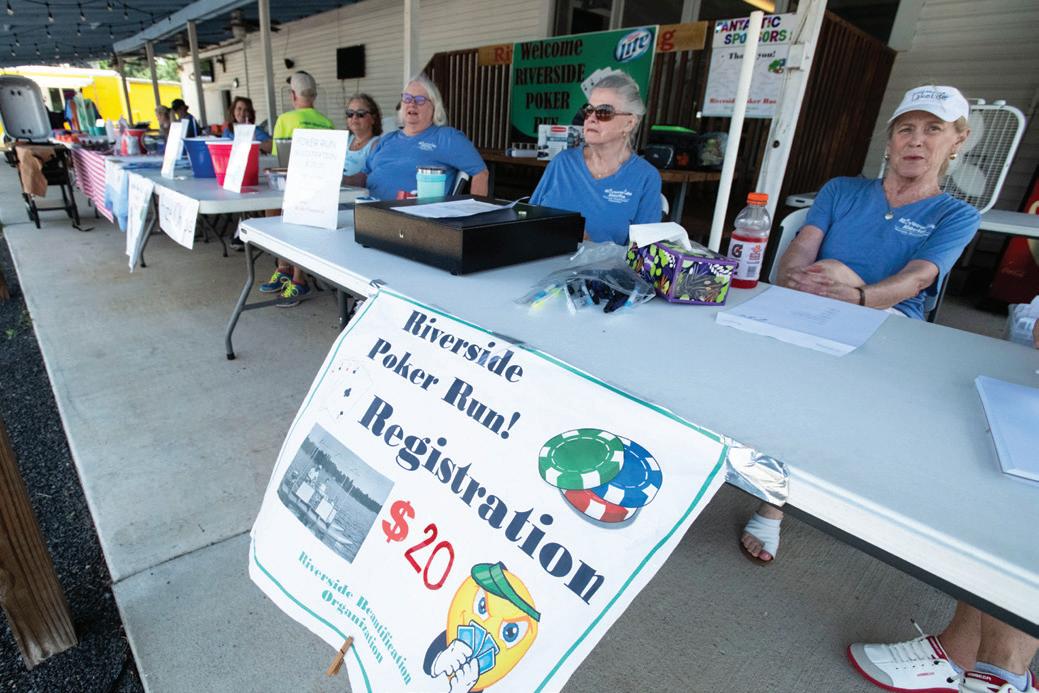
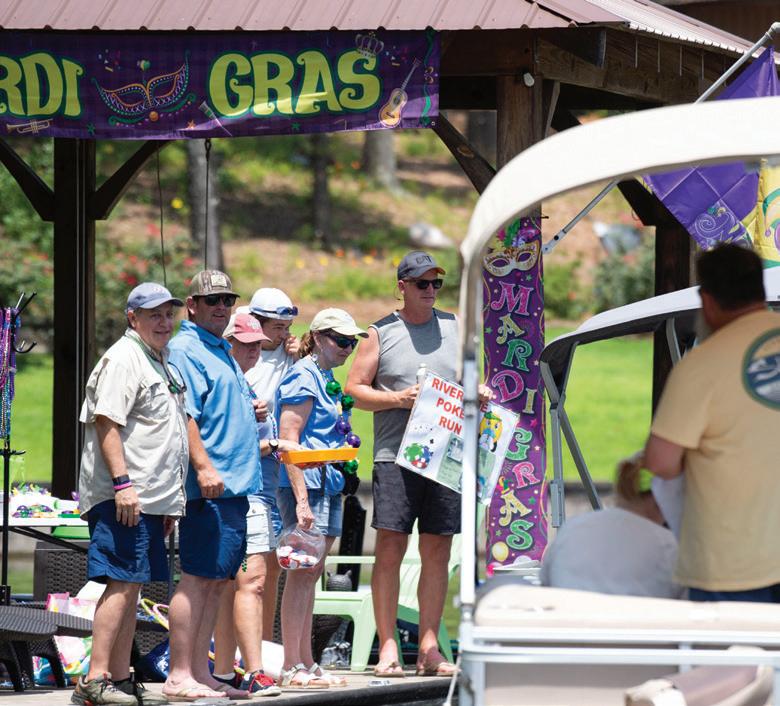
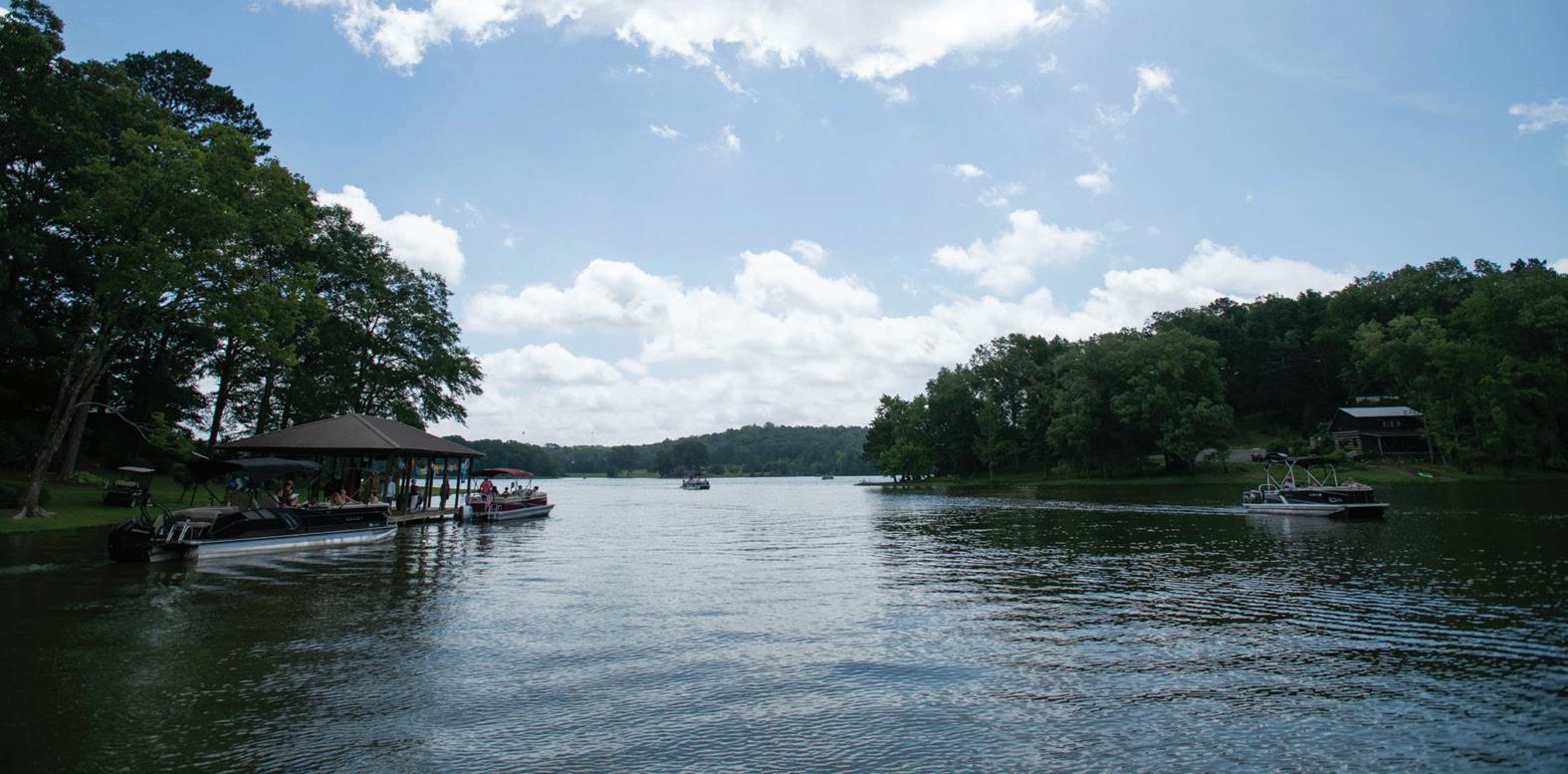
Yeti cooler. The participating docks boast playful names such as Carnival, Luau, Fiesta, Bubbles, Flower Power, and Mardi Gras, with Rock n’ Roll reserved for the Mystery Dock. Now that we understand the rules, a comfortable silence settles over us as Mike steers the boat across the shimmering water, pointing out landmarks and narrating their history as we glide forward.
Distinctive concrete walls rise in a series of locks, part of the dam project built by the Alabama Power Company. I listen as Mike explains how boats once passed through in stages before I
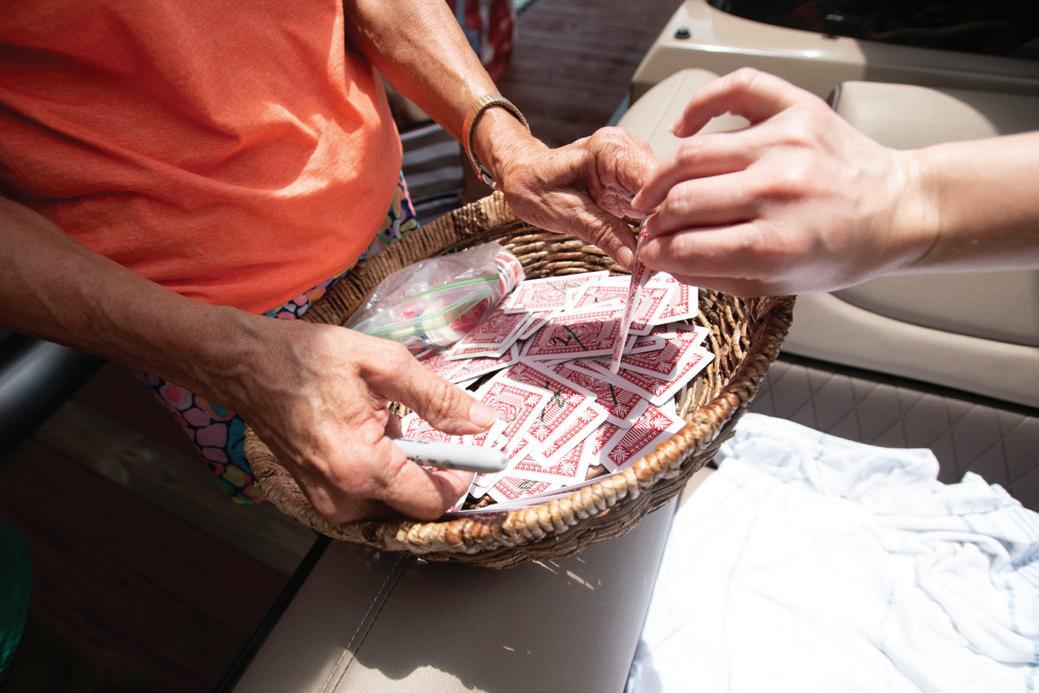
interject, “Like the Panama Canal with the locks?” He and Tracy nod, and I ask a few more questions before my attention drifts back to the feel of the wind as Mike steers the boat toward the rst few docks of the day.
One dock greets us with jello shots, mine a bright blue raspberry. At rst, I struggle to pry the sticky, alcoholinfused sweetness from its tiny plastic cup. The next shot is orange, and I let the sun warm it just enough to loosen its hold before tasting it. As I sample these treats, talk turns to buying extra cards for the Mystery Dock. I sigh, a gesture of metaphorical empty pockets since I have no cash with me. They o er to barter for one of my cards, but after seeing what my hand holds, they laugh and wave o the deal. I have nothing worth trading.
We continue on to the next dock, hosted by Mayor Rusty Jessup and his wife Sandra, who celebrated their ftieth wedding anniversary not long before, on April 20. Later, I learn that the mayor was recently elected vice president of the Alabama League of Municipalities, an organization that has endured for nearly 90 years. Both he and his wife are proud JSU alumni.
After dropping our assigned numbered cards onto the tray at the dock and exchanging a few niceties with Mayor Jessup’s hosting committee, Mike pulls the pontoon away in search of the
next participating dock. Music frames our ride as we glide beneath a sky thick with clouds, a welcome shield from the harsh sun. I feel the slick smoothness of the pontoon slicing through the water, the sensation soothing me as the sun peeks from behind the clouds, its rays poking at my exposed skin. The verdant sweep of trees lining the lake never fails to take my breath away.
We pass an old, grandfathered houseboat, and curiosity surges within me. I long to explore this rarity, now a relic since the Alabama Power Company ended the practice. I raise my voice over Prince’s vocals to ask about the houseboat, and Tracy signals for Mike to lower the music. The sleuth in me cannot resist letting my questions spill out, and to my relieved delight, the couple answers each one with enthusiasm and detail.
My questions taper o as we glide past a house that catches Tracy’s eye. She admires its shade of teal blue, and I agree it looks like the perfect lake house. Passing it, I recognize the area where, last year, a dock was transformed into a festive blend of Halloween, Thanksgiving, and Christmas. The image of red and white striped stockings has lingered in my memory, and it returns as we pull up to that same dock, albeit draped in a di erent theme, this time Fiesta.
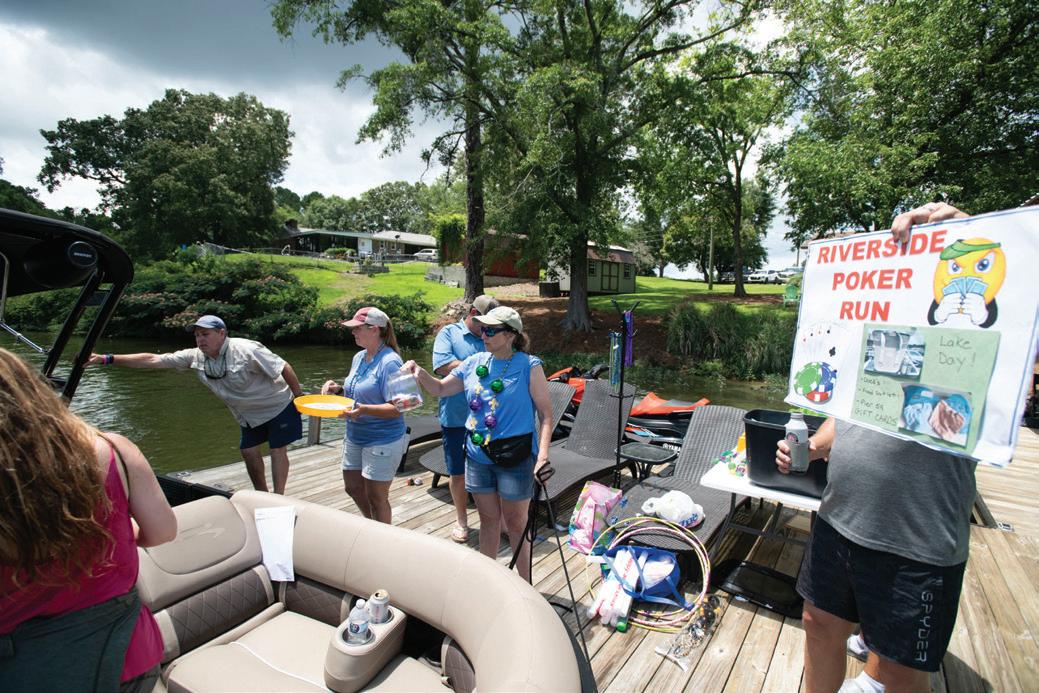
I greet the hosting team, sharing what I remembered, before my attention shifts to an intriguing invention perched on top of their boathouse. It is a handmade fountain rigged with a garden hose, spraying a cooling mist that drifts through the air like a gossamer veil. I ask Tucker to snap a few pictures of this cool creation before inquiring about it. The dock hostess smiles and says her husband, drawing on his engineering background, came up with the idea.
After drawing our cards for the poker game, we wave goodbye to the dock hosts and speed across the water
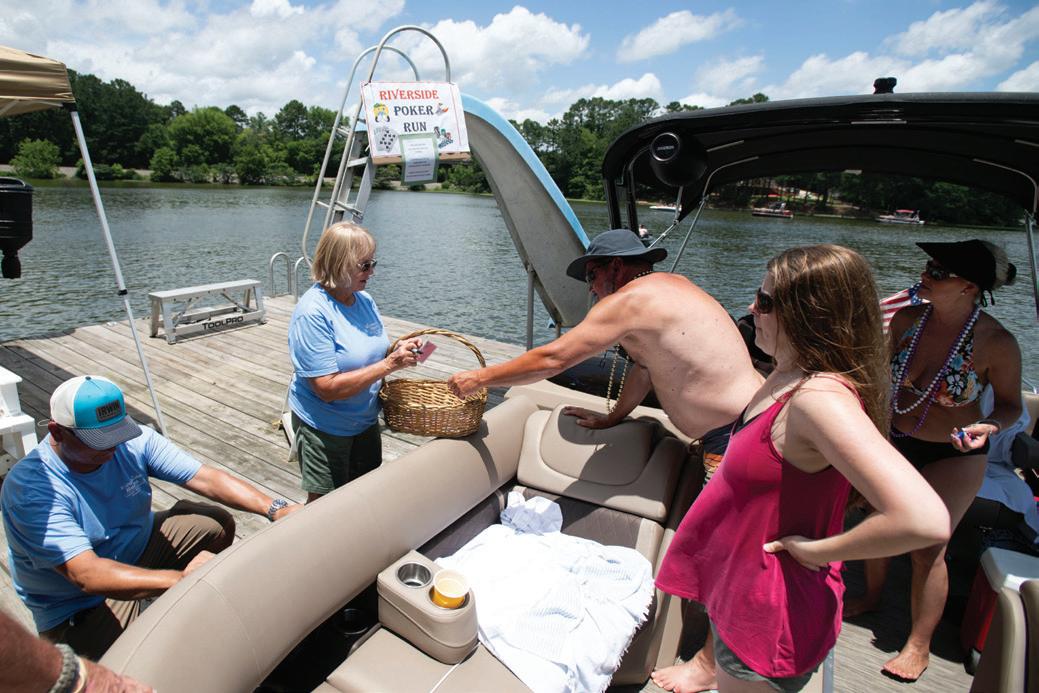
toward the next stop, the Bubbles Dock. To my surprise, the Williams and Kings immediately drop a generous handful of chips into the receptacle, hoping to win prizes that include a gas blower, an oil change, a large steak dinner at Copperhead Cattle Company, and more. I watch as others chat in an easy-going manner common among residents of any small town, albeit a river town.
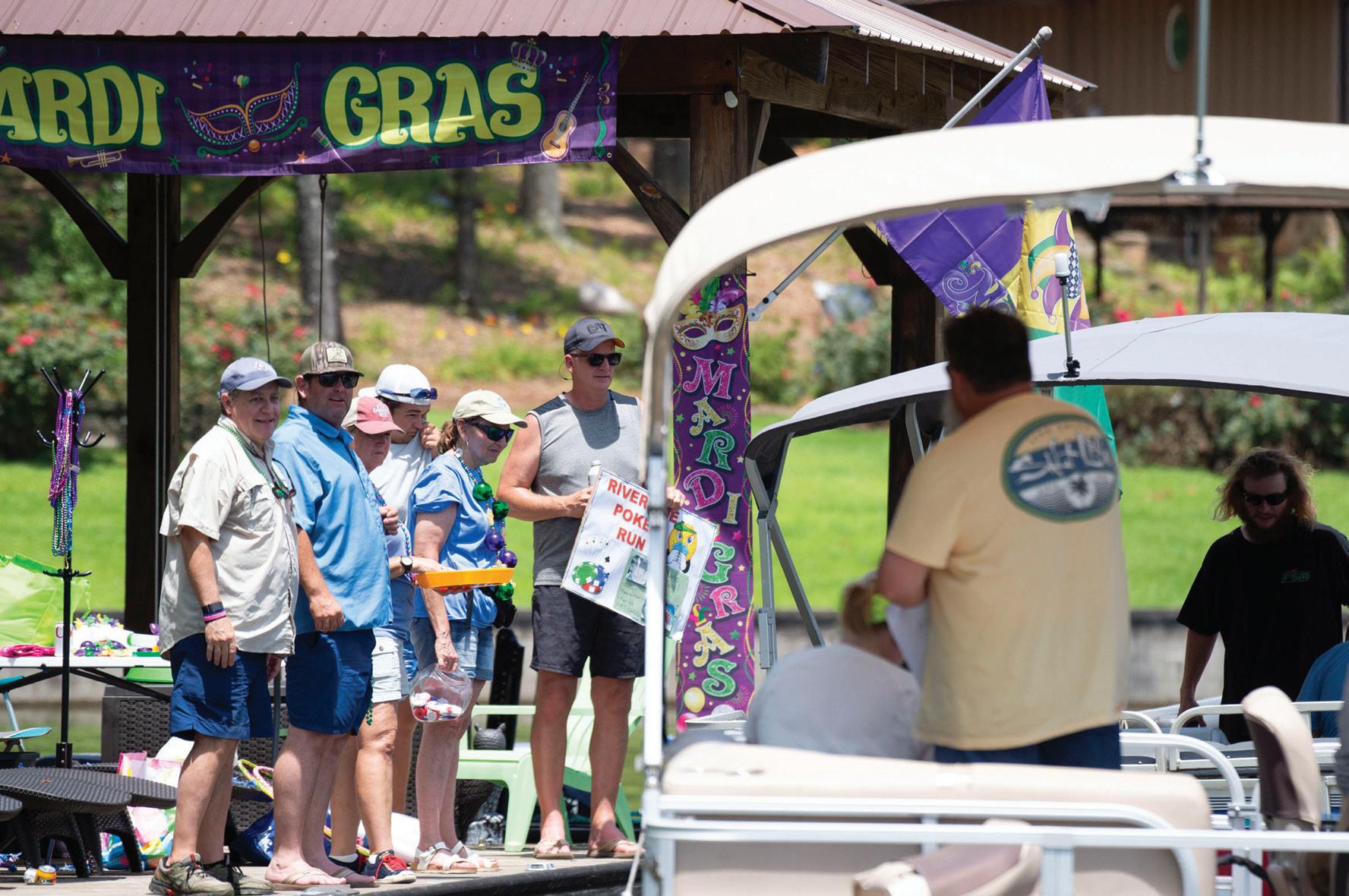
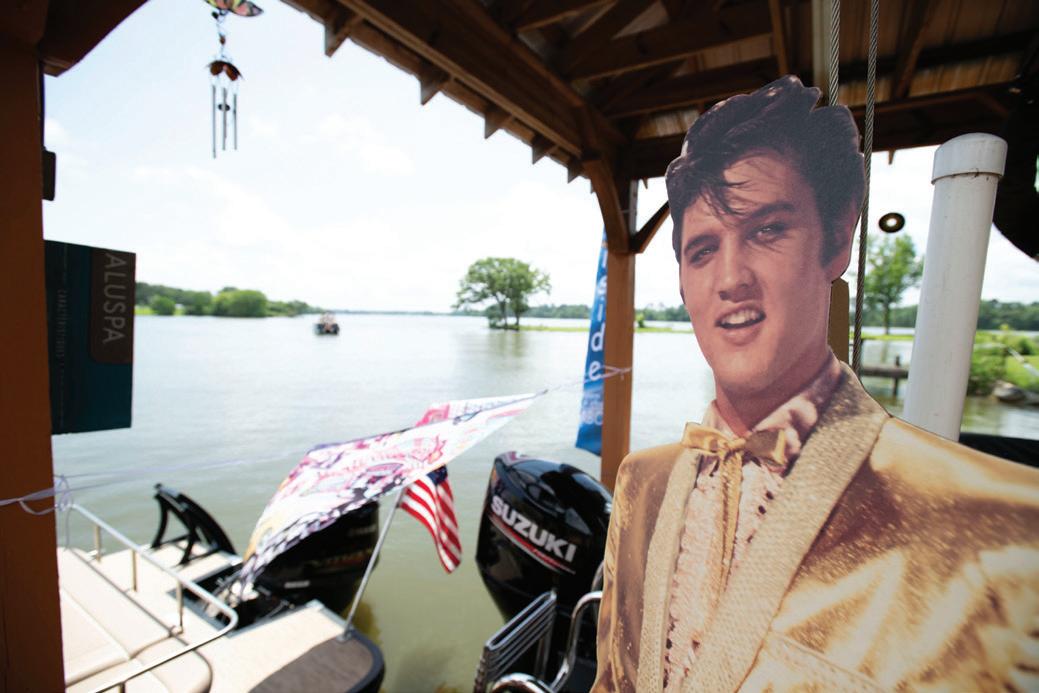
We pull away, and I glance back at the houseboat as we pass it once more. Mike guides the pontoon beneath a series of three bridges arching over the water, and I know we are heading toward Rory Cochran’s dock, the Mardi Gras stop. I laugh and wave at Rory, who greets me with a smile and a hug before draping three strands of Mardi Gras beads in their trademark colors of gold, purple, and green around my neck. It is fun to see someone again at the same event, yet in a di erent role. We wave as Mike turns the pontoon back toward our starting point, this time to the Williams’ dock, marking the end of our Riverside boat run.
There is something about hopping from dock to dock that speaks to camaraderie, to that good old Southern hospitality that threads through each gathering. As we travel across the water, I take in the quiet stretches between conversations, the vastness of the lake giving me perspective. Tucker captures
these moments with his camera, and every so often, I sneak in a few candid shots of him at work so he will have images for his portfolio. Many of my photographer friends never think to include themselves in the story since they are always behind the lens.
When we reach Mr. Pollard’s dock again, Tucker says his goodbyes and leaves with his heavy cameras. Mike then navigates the pontoon two docks down to his own. During the ride, I learn that Mr. Pollard is Tracy’s father, and that the Williams moved into the house two doors down after living in Florida for nearly twenty- ve years. Tracy explains that they left because Florida had become too crowded, and they longed for the close-knit feel of a small town where community still matters.
Mike eases the pontoon into its spot at their gray-painted boathouse, and we make our way up to their home, still under renovation but showing impressive progress. Understanding now why I parked at Mr. Pollard’s place since the Williams’ driveway is under construction, a metal grid framing the red mud that we Alabamians know so well, part of a months-long project transforming both the house and backyard into a haven for their three beloved dogs.
As we step inside, Mike mentions that Tracy has a passion for rescues and
that they also have ten cats, a few of them feral. I turn to Tracy, listening as she talks about the ones she has saved, including Bonnie Blue and Phoebe. After having lived in the veterinary world for over two decades, I still carry the instinct to listen with the passion of a pastor’s wife; or, in my case, a former veterinarian’s wife. The impulse to a rm pet owners is ingrained in me, and I nd myself settling into the familiar rhythm of a world where rivers, beloved pets, and friendships intertwine.
When Tracy invites me to stay and continue being part of their group even
after Tucker has left, I nod with glad acceptance, appreciating the quiet sense of belonging. Soon after, we pile into Mike’s large white truck for the ride back to our vehicles parked at Mr. Pollard’s driveway. I follow them along the curving, tree-lined road to the Landing, where crowds gather to turn in their packets, full of hope for winning a dock prize.
After parking Darth Vader, I cross the road to join the group. When our packets are nally collected, Tracy invites me to grab another drink from the cooler in their truck. As I sip, I ask her more about her time at JSU, her move to south Florida, and how she met Mike. With every detail she shares about how she and Mike chose to move to this particular town, I gain deeper insight into Riverside and the deep sense of community cherished by families like the Williams, Cochrans, and Pollards.
Tracy’s voice brightens as she describes how the men gather at the Landing, this very spot where we now stand, every morning at ve, except Sundays, for co ee and breakfast, with her father, Mr. Pollard, often cooking the meal himself.
While Mayor Jessup and the Riverside Poker Run committee draw poker chips and call out numbers, I listen as Tracy shares more stories of their close-knit circle and their travels, the most recent
being a trip to the Dominican Republic the previous January with the mayor and Sandra.
Curious, I lean toward Mike to learn his side of the story. He tells me about his move to south Florida, where he met Tracy, and how his life began in Indiana as the second oldest of ve children. Wanting to stay close to a brother in the military, he followed opportunities south, where his welding career expanded to military projects before he ended his professional life with Pepsi-
owned Tropicana. His story pauses when his phone rings, and he answers brie y before returning to share a smile and a photo: his three grandchildren during a recent Target trip with their father, Mike’s son, treating them to a day of shopping.
I smile back as he slips his phone into his pocket, and the mayor’s voice booms through the microphone, each number crisp and clear: “Six.” “Seven.” “Nine.” Then, “One-seventy-four!” I look up in time to see Karen walking up the
ramp to collect her prize: a Yeti cooler bag. I let out a cheer of congratulations, thrilled that out of a crowd of nearly a thousand, someone I spent the entire day with walks away a winner.
Even though I win nothing, the peace and gladness in my heart as I hug my new friends goodbye feel like the true prizes. I am pleased to have returned for another poker run, where I have gained more than cards or chips. I have found friendship in the close-knit community of Riverside.
Ad va ntage Mor tg age, one-time, no refinance ra te reduction. Buy your home with confidence. Current rates as low as 4.31%APR





*APR = Annual Percen mor loan. To receive an Advan The Advan primary residences only. The refinance of existing AODFCU mor H OUT. (2) Members are responsible for monitoring AODFCU’s rates and deciding when t ex re ct AODFCU and request the ra (c bankruptcy pr re credit score at the time of application (risk-based pricing). The in Ad Member’s qualifying credit score at the time of the original loan or, the Member ma elect for AODFCU to obtain a new tri-merged residential mor age credit report at the time of the request for reduction of rate to be determined if Member qualifies for a bet qualifying credit score has impr d to a higher tier for pricing since the original credit re t (whether qualifying score is higher OR lo re the remaining principal and in te balance, maturity dat fo subject to credit appr withdrawn without notice. Cer
Written by LOYD MCINTOSH
Photography by BOB CRISP
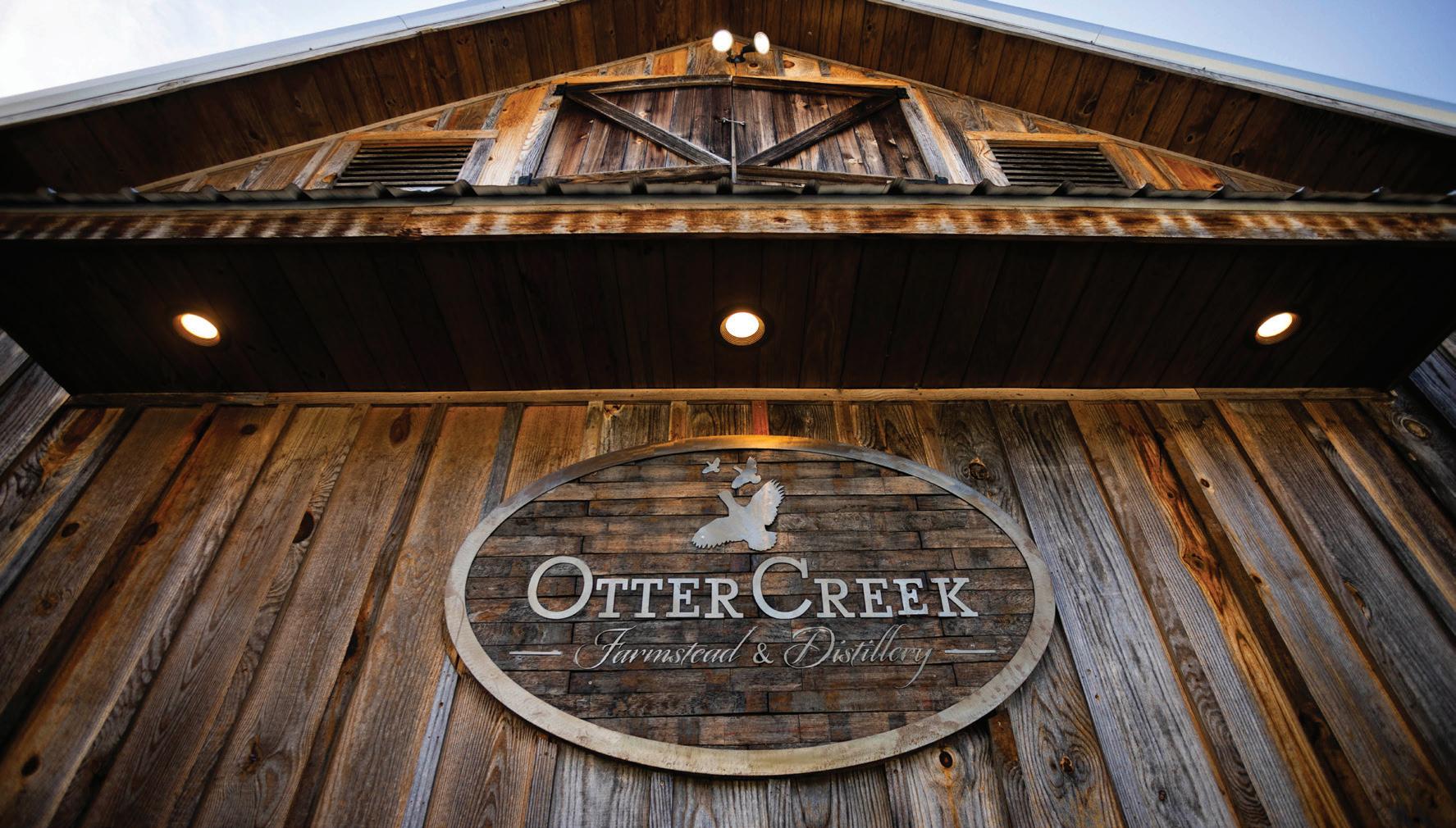
Frank Brown is driving around Otter Creek Farmstead and Distillery on a golf cart. It’s late in the afternoon, more than two months away from the start of quail hunting season — the most anticipated date on the calendar.
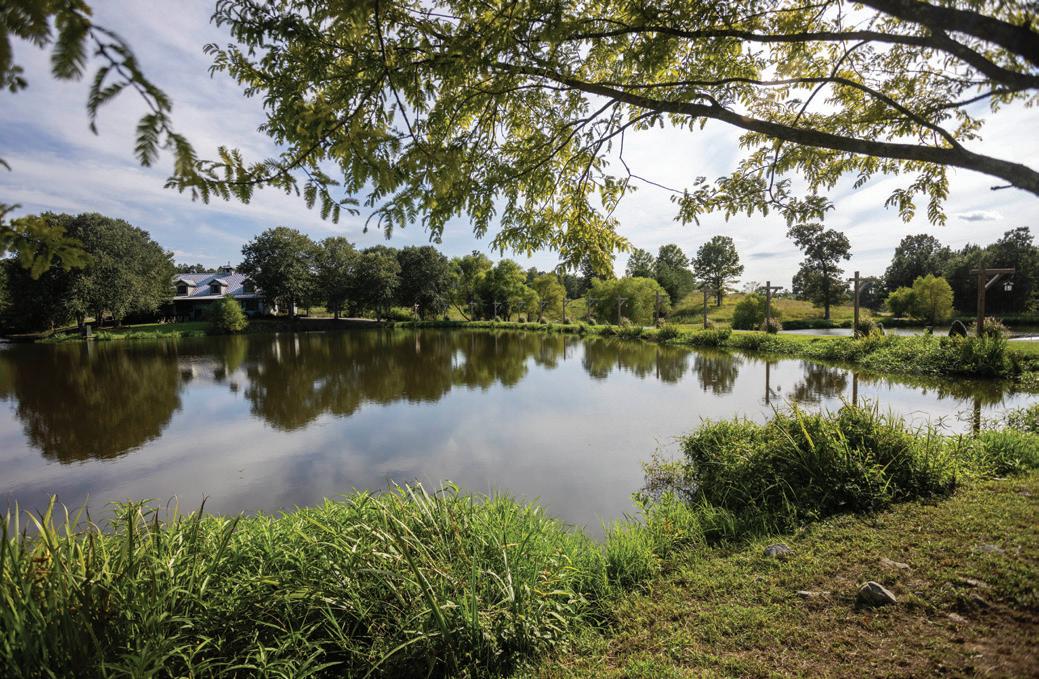
Around every bend, over every hill, and through every thicket, it’s clear why Otter Creek is one of the nation’s premier wing shooting and special event venues. Nestled in the foothills of the Appalachians, the property has been meticulously prepared by Brown for the upcoming season, even as the weather has been less than cooperative this summer.
“It’s been very di cult to get the grounds looking right with all the rain we’ve had,” Brown says. “Keeping up with the weeds has been unbelievable.”
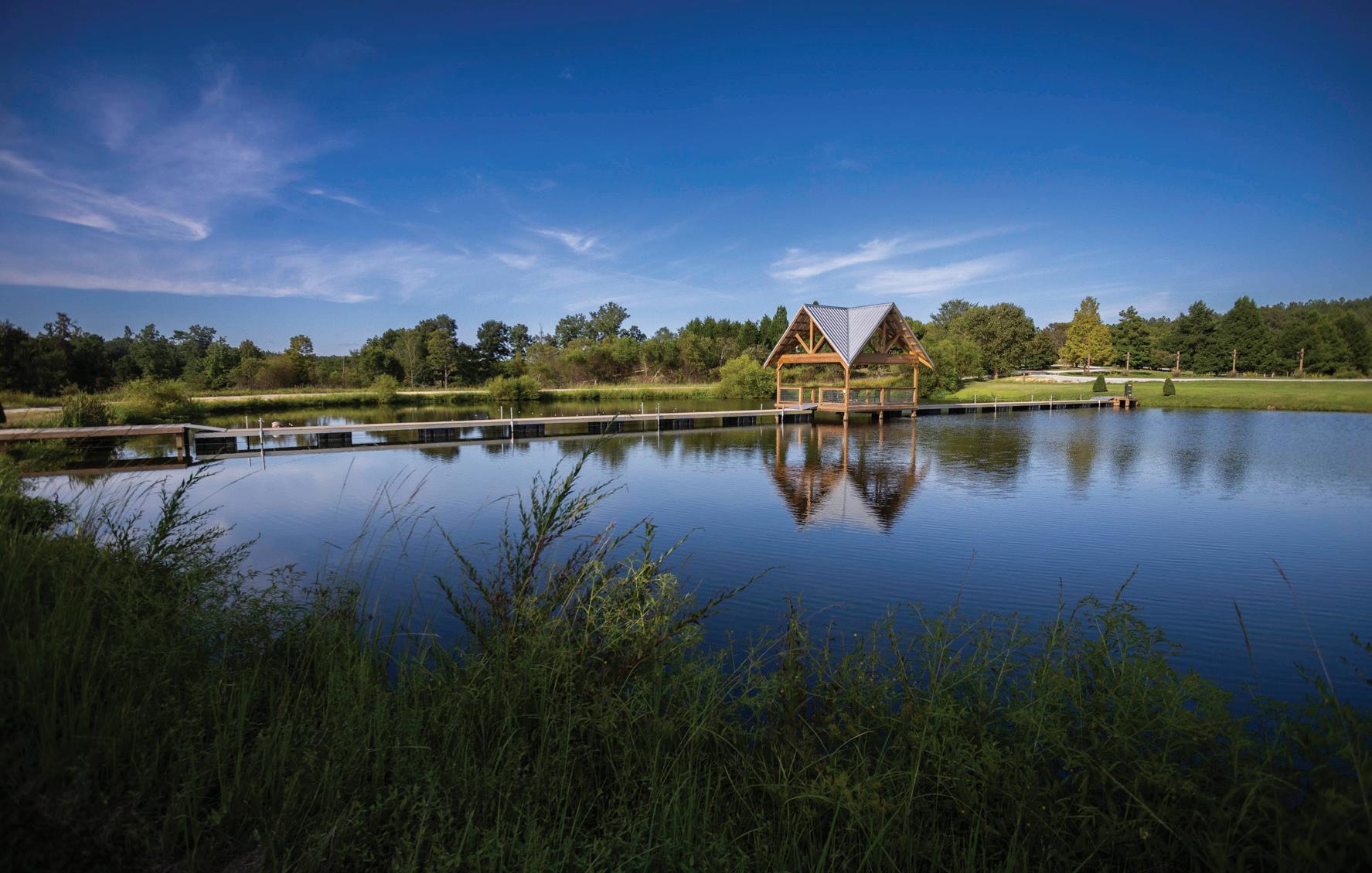
Looking out over the rolling hills with the sun starting to set, one wonders what could possibly be done to make Otter Creek’s 1,200 acres look more presentable than it already is to this outside observer. But that’s the magic and appeal of Otter Creek. Every second of the experience is planned and executed to the smallest detail.
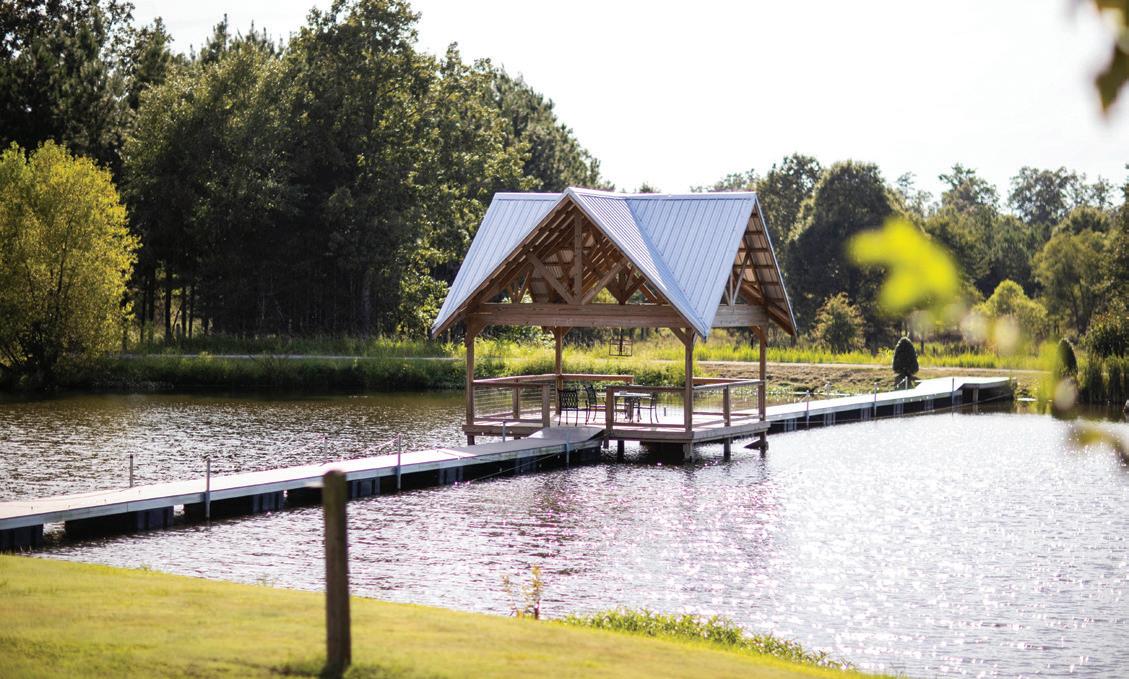
As we continue to tour, Brown points out several new amenities, including one currently under construction: an outdoor dining experience that he was excited to debut during the 2025 hunting season. “This is what we call “Table by the Lake.”
We’re building an outdoor kitchen that will have a commercial oven, a really nice grill, and a griddle, and we’ll be able to do private dinners by the lake.”
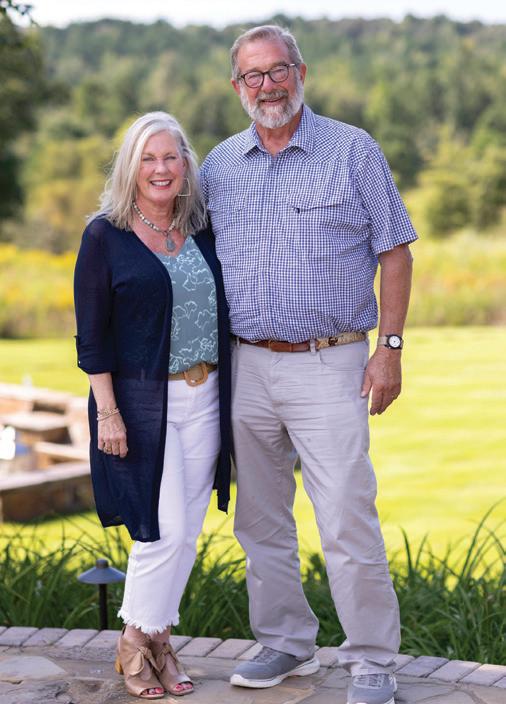
Otter Creek’s beginnings can be traced to 80 acres of land in Ohatchee owned by Frank and Jane Brown. Frank, a wellrespected and successful entrepreneur and Gadsden native, discovered a love for wing
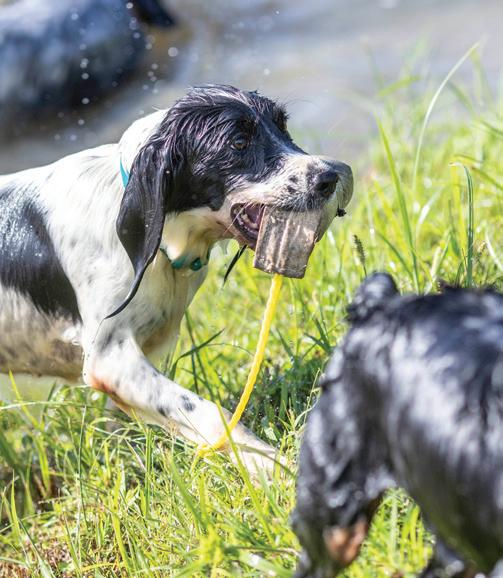
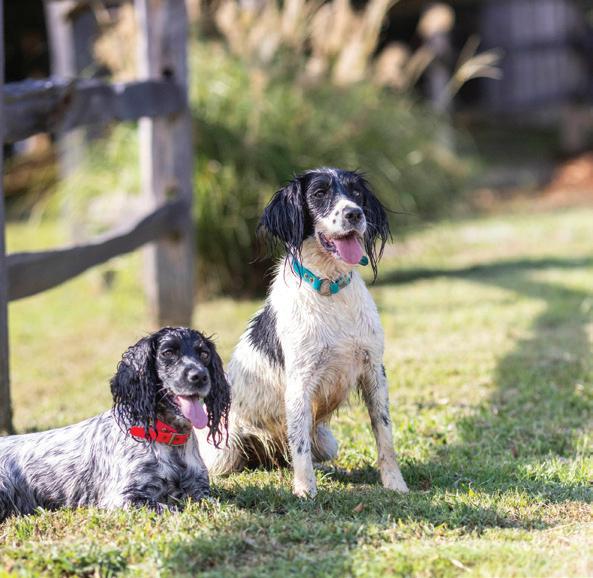
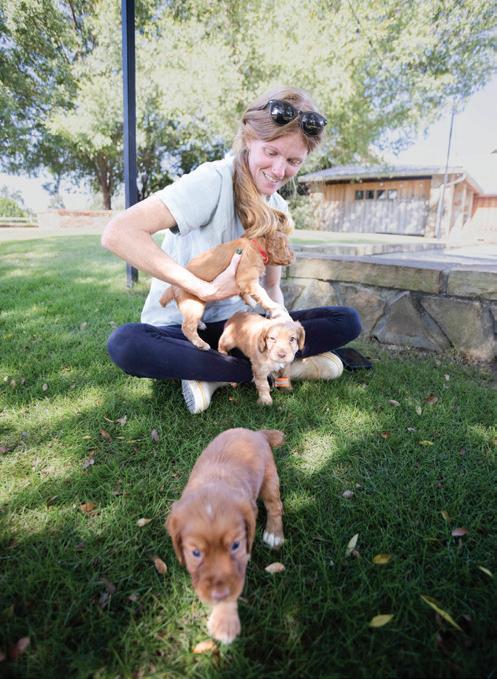
shooting after acquiring an English cocker spaniel named Merlin from a breeder in North Dakota.
The Browns built a house on the land, which was mostly used as a weekend getaway. Then, on April 27, 2011, a tornado destroyed more than 2,000 hardwoods on the property. While surveying the damage with his trusty companion, Merlin, Brown recognized that the tornado’s path created an ideal habitat for quail. Add in a short-lived retirement after selling his tax consultation company — which darn near drove his wife bonkers — and the idea for an upscale hunting and adventure lodge was born.
“It just kind of grew,” Brown says. “I sold my company and after about two months, my wife looked at me and said, ‘Hey, I married you for better or for worse — but not for lunch at home every day.’ So I gured I’d better nd something to do.”
Brown’s rst step was converting approximately 200 acres of the property for quail hunting. “At rst, Jane and I were doing everything out of our house,” Brown
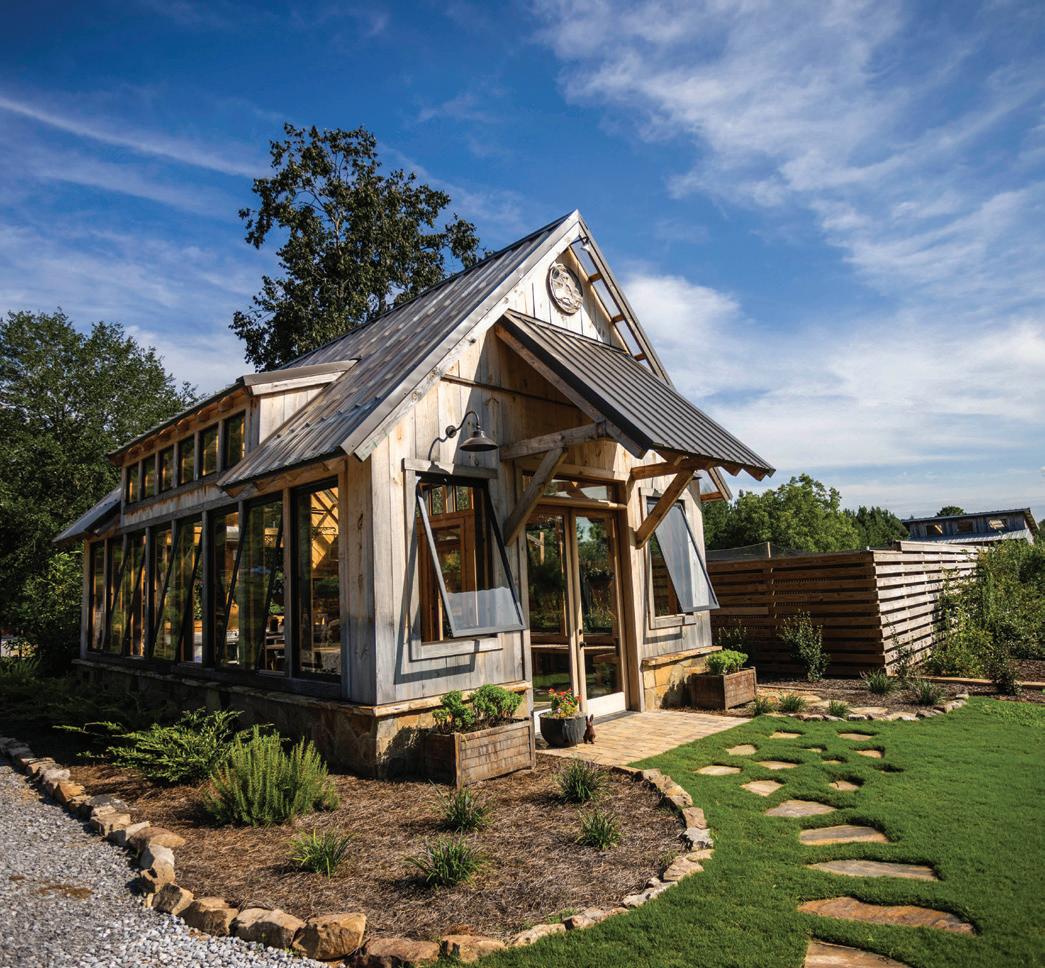

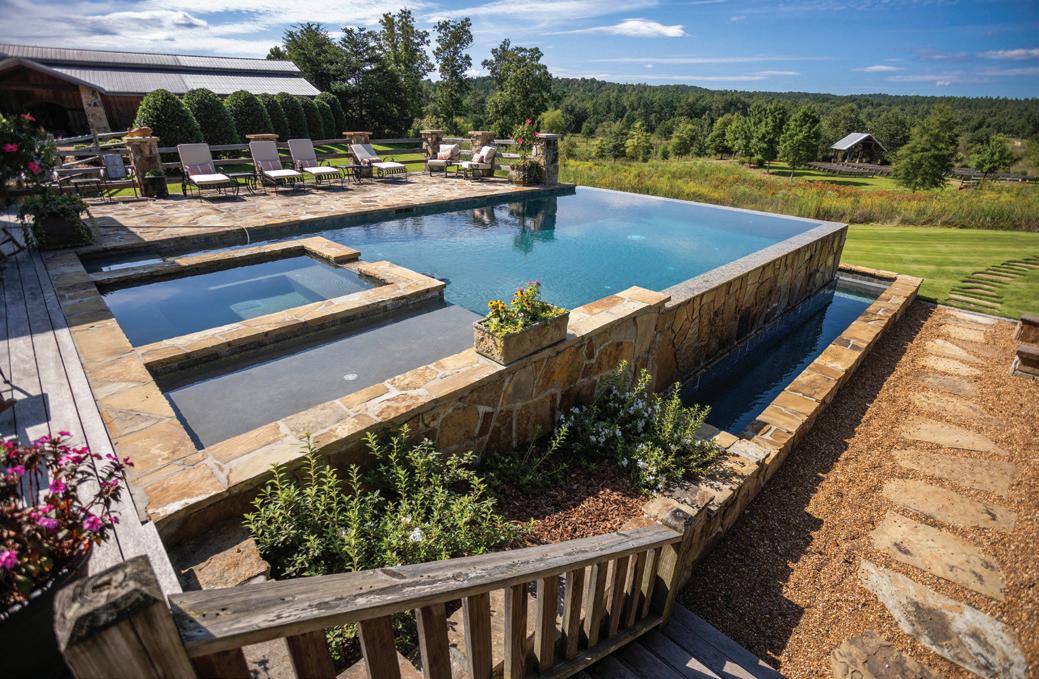
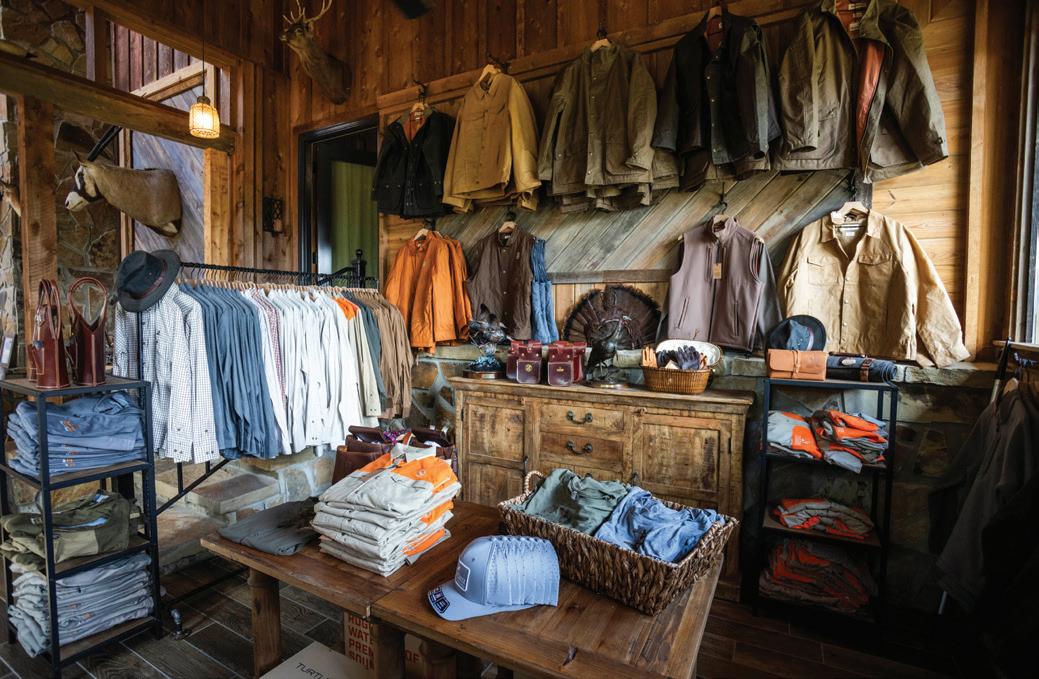
says. But word of Otter Creek quickly spread, and Brown began to expand Otter Creek’s amenities. The property now o ers a destination wedding venue, culinary experiences including wine dinners, a bed-and-breakfast with an in nity pool, a hunting dog breeding program led by kennel and training director Brittany Formby, and ve distinct venues for corporate events. Among them is Big Oak Lodge, the former home of Brodie and Kelly Croyle, a gift from the Big Oak Ranch.
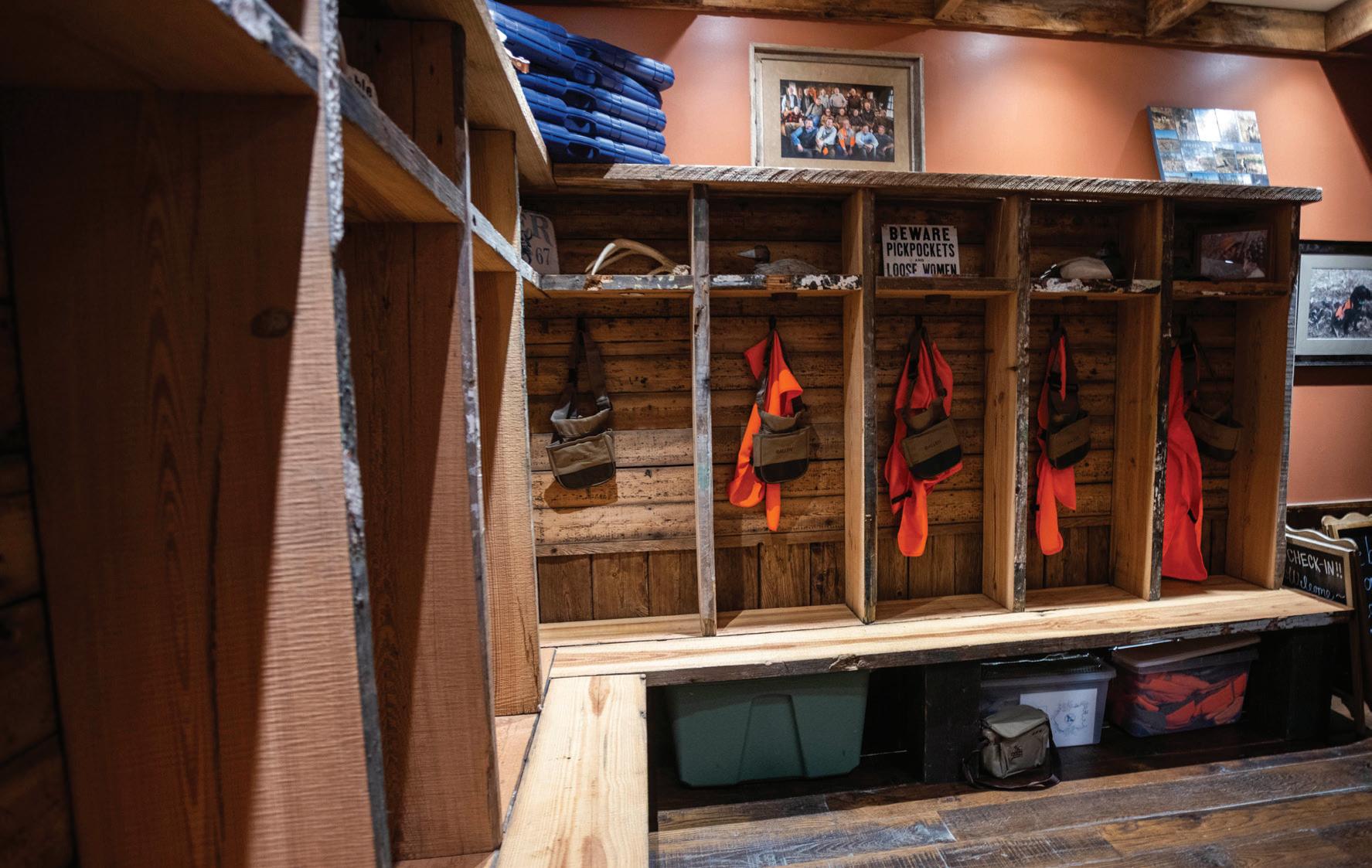
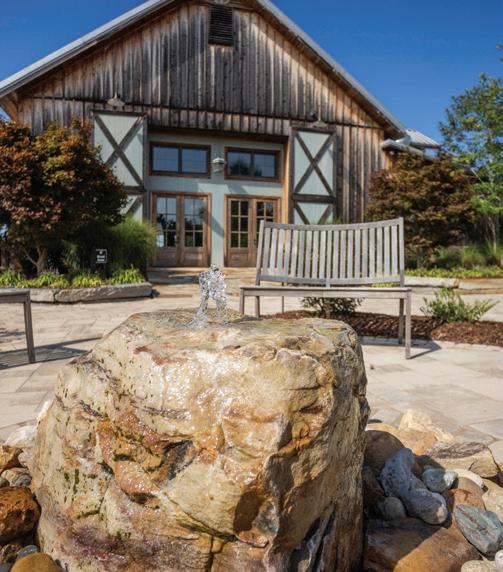
Otter Creek’s architecture and landscaping blend perfectly with the surroundings, with natural stone paths and an array of outdoor seating to take in the spectacular views. Inside every building is the earthy, sweet scent of wood, which can instantly transport you from the realities of everyday life to the wonders of nature, even if you’re surrounded by opulent leather sofas and 3,500 bottles of some of the world’s nest wines.
Otter Creek’s amenities are luxurious and ever-expanding, but the real draw is the wing shooting. The lodge’s reputation caught the attention of Donald Trump Jr., who visited Otter Creek in October 2017.
“He’s a very good hunter,” Brown says emphatically.
Otter Creek has recently added to its name. It is now Otter Creek Farmstead and Distillery. A Scotch drinker and a wine a cionado — especially for the wines of California’s Napa Valley — Brown has taken
the plunge into distilling.
He has put the distillery in the hands of James Snell, the son of a neighboring landowner who sold his property to help expand the farmstead. Snell brings with him a bit of unconventional, shall we say, o -the-grid experience in whiskey-making.
Snell, whose Southern drawl is as smooth as the whiskey aging in the distillery’s oak barrels, got his start by brewing his own beer and wine as a hobby. He learned the ins and outs of distilling from a character among his group of shing buddies known only as “Uncle.” Snell says Uncle was known to bring a mason jar of some new concoction to an annual shing trip each fall.
“He would have a wine that didn’t quite turn out right, and he’d distill it o and make a distilled liquor of some sort,” Snell explains. “You never knew what he was bringing.” Snell nally asked Uncle to show him his technique and, before he knew it, he was in a redneck Twilight Zone.
“We’re in town, next to a school, in the backyard with a homemade sh cooker and a pressure-cooking pot, and I’m thinking ‘I’m going to jail,’” admits Snell.
Over the years, Snell experimented — ahem, allegedly experimented — with his own lunar sparkle, including a bourbonstyle whiskey he aged in oak barrels. After sharing a batch with Brown, the pair decided it was time to go legit.

The process to become fully licensed took seven years; the distillery is now up and running, lling barrels with approximately 30 gallons of whiskey every week. Made of 100 percent corn, Otter Creek whiskey is aging in smaller ve-gallon barrels (a typical whiskey barrel is 53 gallons), with additional oak spirals inserted into the barrels. This process creates more wood contact with the whiskey and, therefore, more avor.
Otter Creek whiskey doesn’t follow the strict guidelines to be o cially labeled as bourbon. Choosing the moniker “Alabama whiskey,” Snell says the nal product will be a bourbon-style whiskey with an oaky pro le similar to Woodford Reserve Double Oaked bourbon.
While the distribution plan is still being nalized, the bulk of Otter Creek whiskey will be o ered to guests of the lodge, who can purchase a ve-gallon barrel that will be lled and aged for one year. After aging, the whiskey will be bottled for guests to retrieve upon further visits.
To learn more about Otter Creek Farmstead and Distillery, visit ottercreekfarmstead.com.
Written by LOYD MCINTOSH
Photography by BOB CRISP
Flying isn’t exactly in my blood.
The rst time I ew was the fall of 1991, when I was a 19-year-old sophomore at UAB. I was a member of the soccer team, and we ew into O’Hare Airport in Chicago – the world’s busiest airport at the time – to start a fourgame road trip to play DePaul, Marquette,
St. Louis, and Central Michigan.
The ight home – my second time on a plane – was my rst experience with the frustrations of air travel: rushing to make the plane on time, delays, a canceled ight, switching airlines, stretching out the oor to catch a nap, playing a pick-up game in a corridor with a hacky sack, landing in Birmingham well after midnight, and nding out our luggage didn’t make the ight.
Despite the craziness, there was something thrilling about that rst ight experience – the feeling of being pushed back into my seat as the plane lifted o , the rumble of the engines, ying through clouds to see only an expanse of cottony whiteness through the window, and the stomach-churning anxiety of landing in total darkness.
Thirty-plus years later, I’m still fascinated by the experience, but one experience I know I’ll never know is the
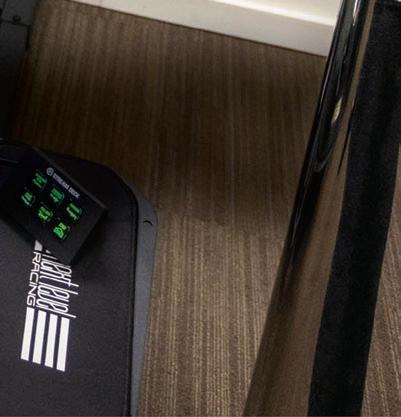
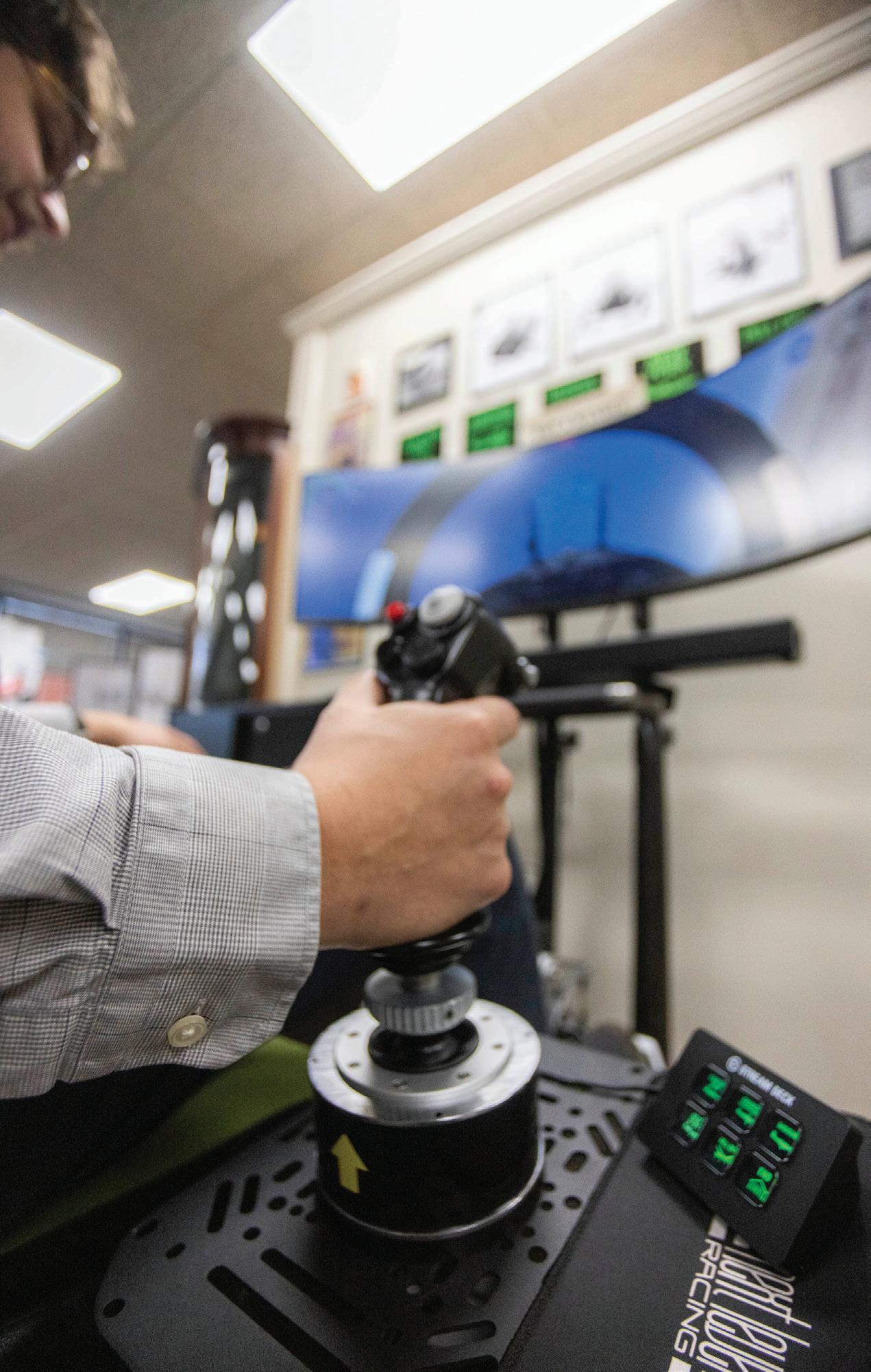
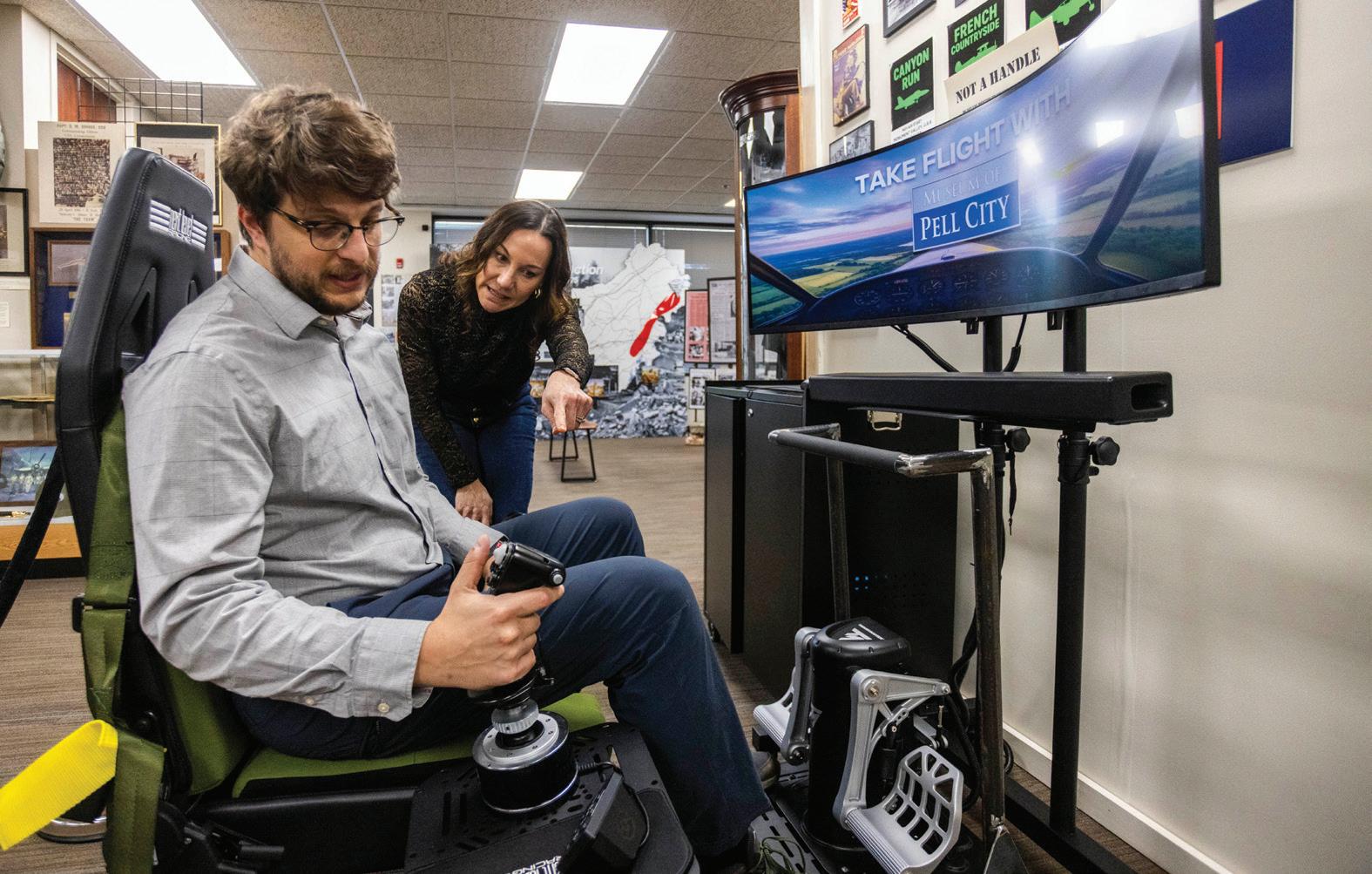
feeling of piloting a jet, or any plane for that matter. Fortunately, the new ight simulator at the Museum of Pell City provides a close-enough facsimile, without the danger or the need for Dramamine.
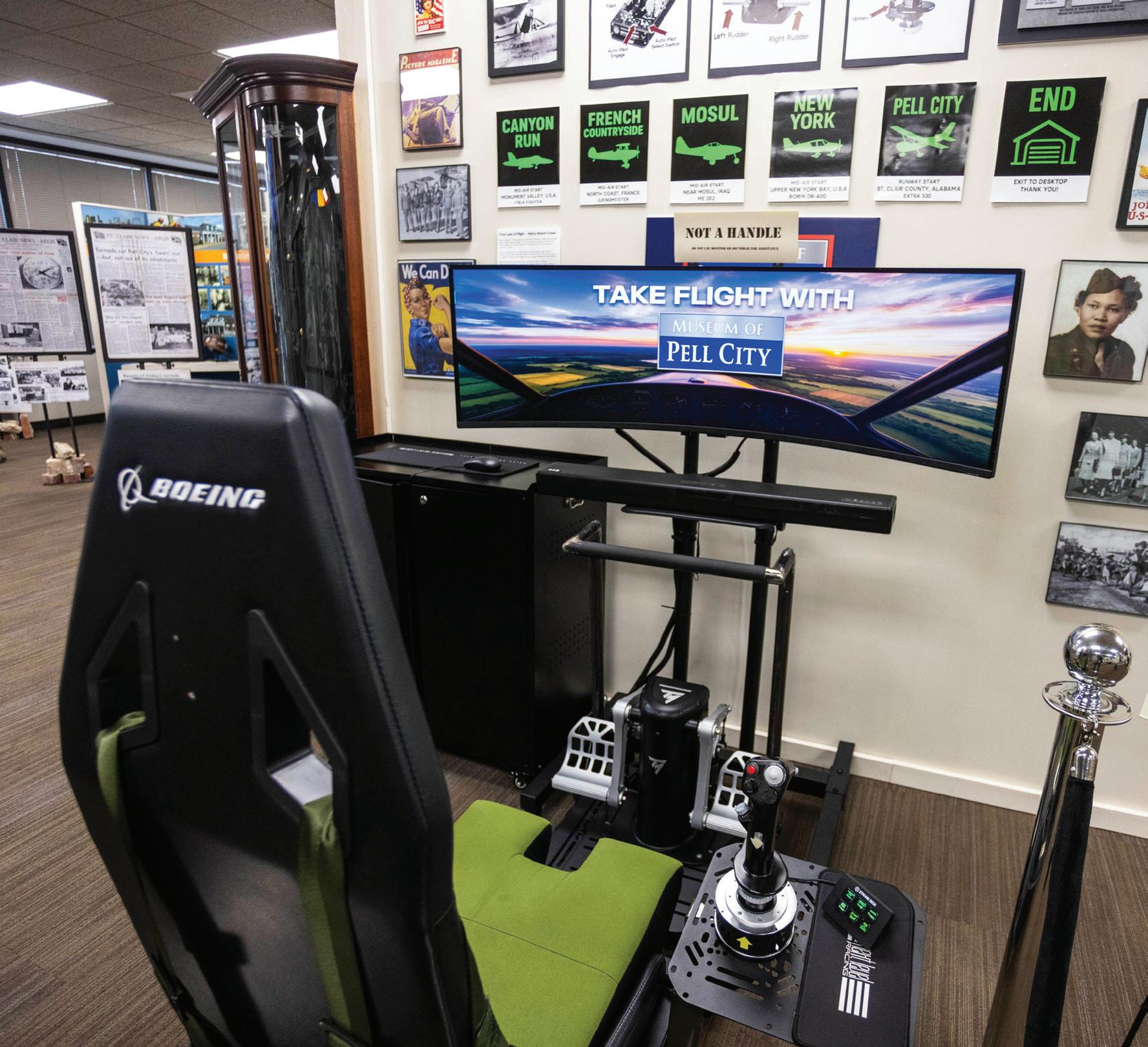
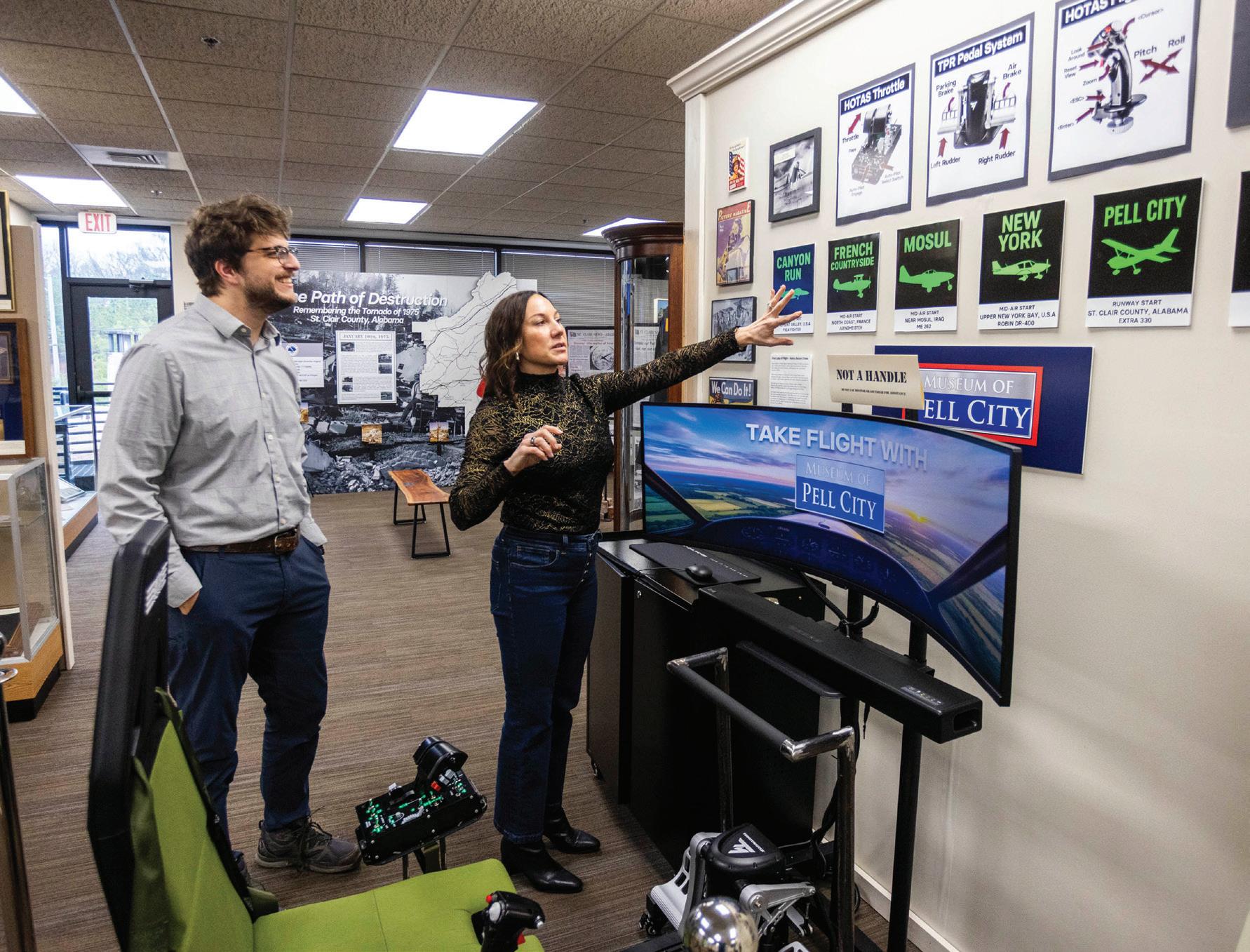
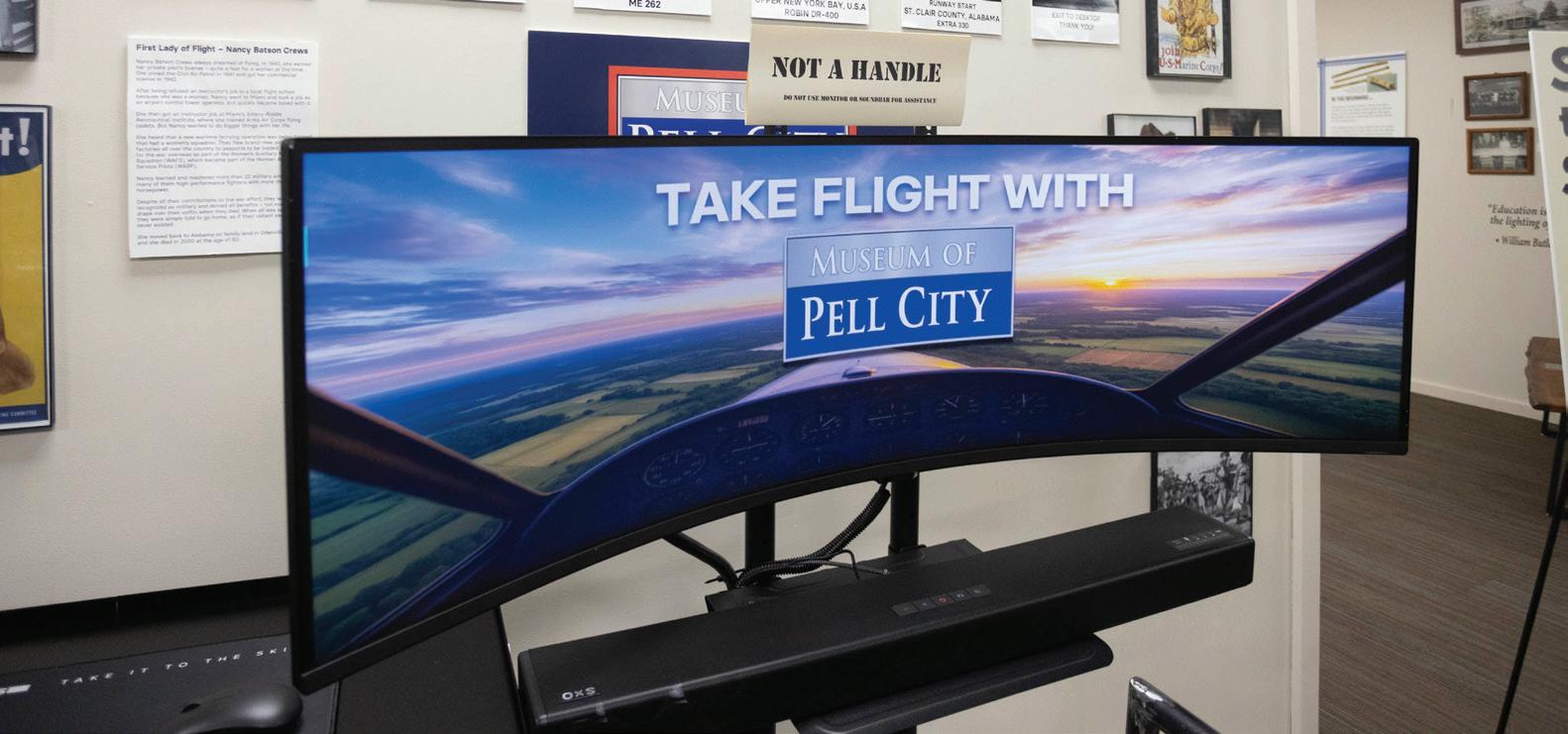
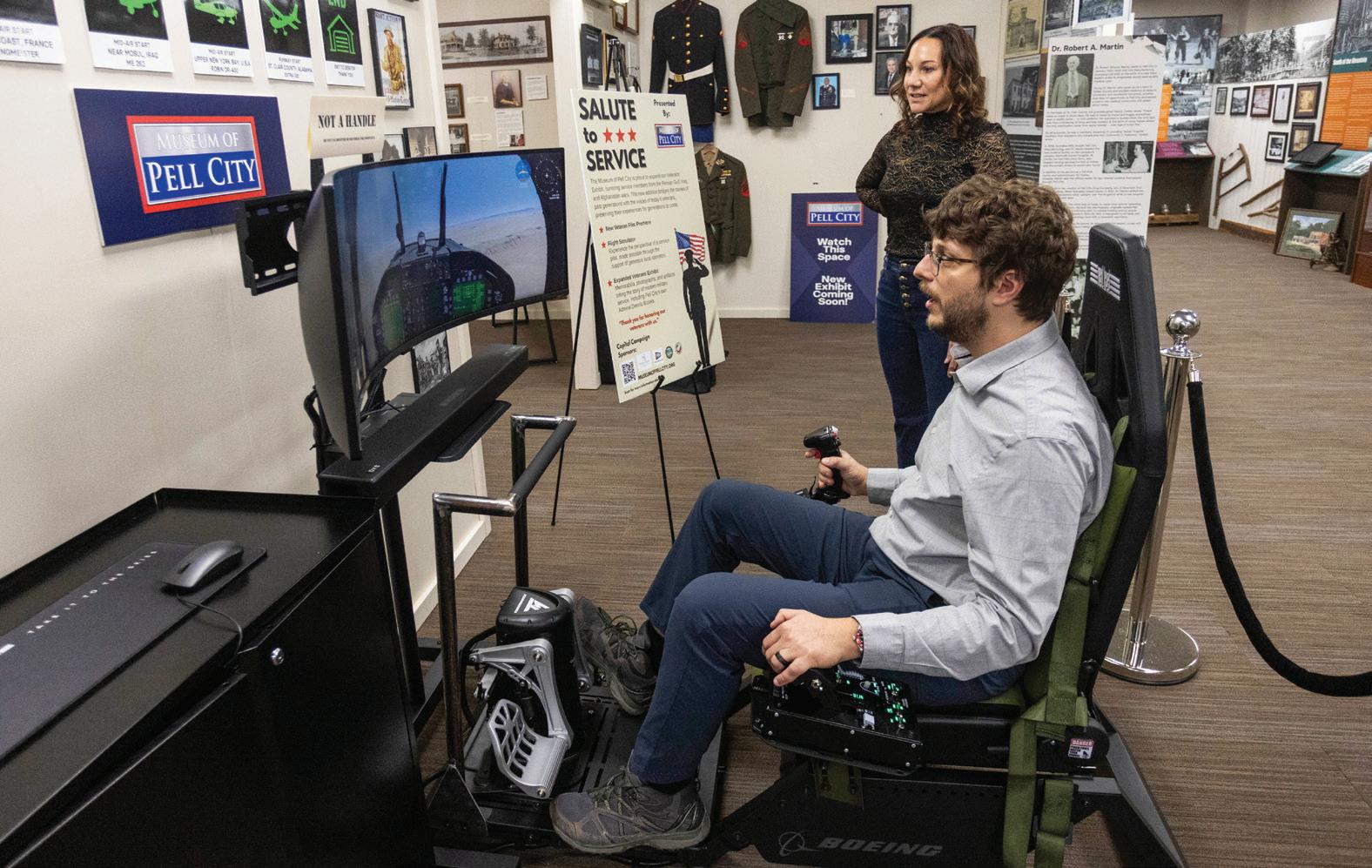
Created as part of the Museum of Pell City’s Veterans Exhibit, the ight simulator gives visitors a hands-on experience of military and civilian aviation. The ight simulator was made possible through a partnership with the Pell City Airport Authority, local pilots, and other community supporters, who raised more than $6,000 in just two days.
Among the major contributors are the late Pell City Circuit Judge Bill Hereford, the St. Clair County Airport Authority, Elmer and Glenda Harris, INPAC, Calvin
Smith, Donnie and Ellen Todd, Dream Home Inspections, and Gilreath Printing, along with a grant from the United Way of Central Alabama. With funding secured, museum curator Jeremy Gossett led the e ort to turn the idea into a fully realized, immersive exhibit.
“We wanted to create an exhibit that would bring visitors closer to the experience of military aviation,” explains Erica Grieve, the museum’s coordinator. “The ight simulator lets people step into a pilot’s world, even if just for a moment, and helps them appreciate the skill and courage of those who serve.”
Now one of the museum’s most popular attractions, the simulator allows curious visitors and would-be pilots to experience
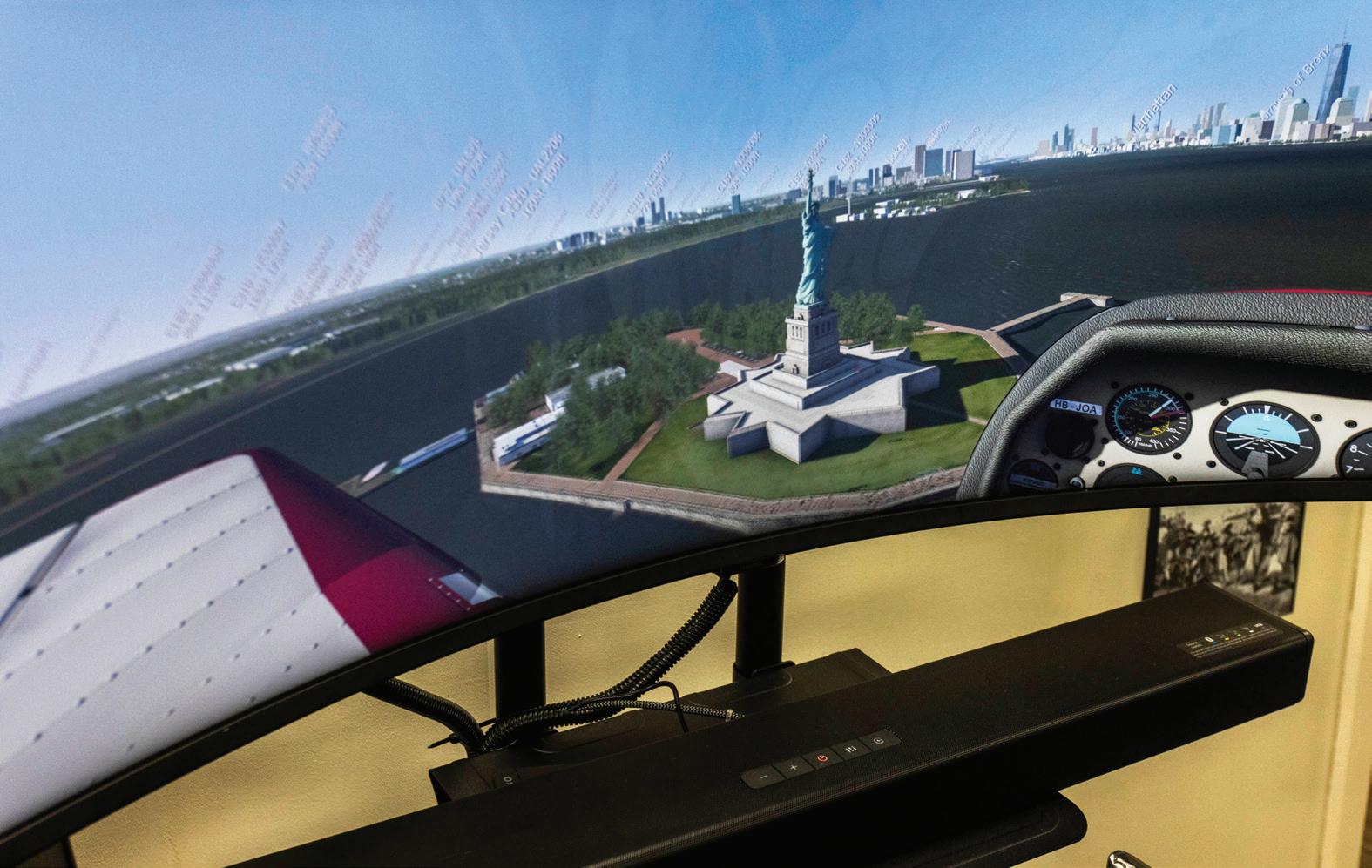
ve pre-programmed ights. For instance, you take leisurely ights over the French countryside in a Bücker Bü 133 Jungmeister (a single-engine biplane developed in the 1930s) or over the Statue of Liberty on your way to Manhattan in a Robin DR-400 monoplane.
If you’re interested in a more modern military experience, you can y near Mosul, Iraq, in a Messerschmitt ME 262, or do a training run over the desert landscape of Monument Valley, Arizona, in a McDonnell Douglas F/A-18 Hornet.
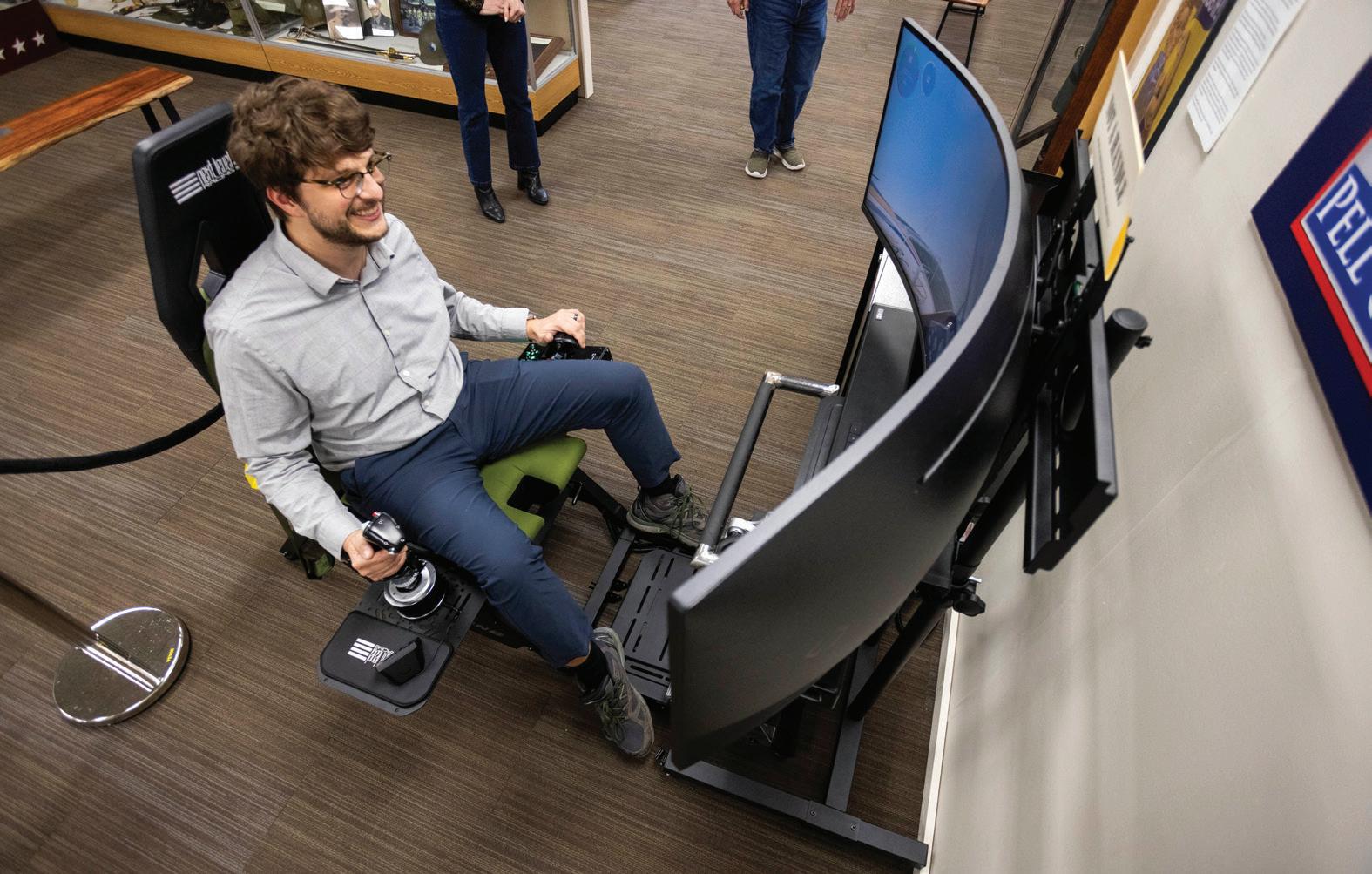
All of these are in-air experiences, meaning the pilot of the virtual experience only has to handle the airplane in ight. Once you’re seated in the pilot’s chair, you look straight ahead at the display on a








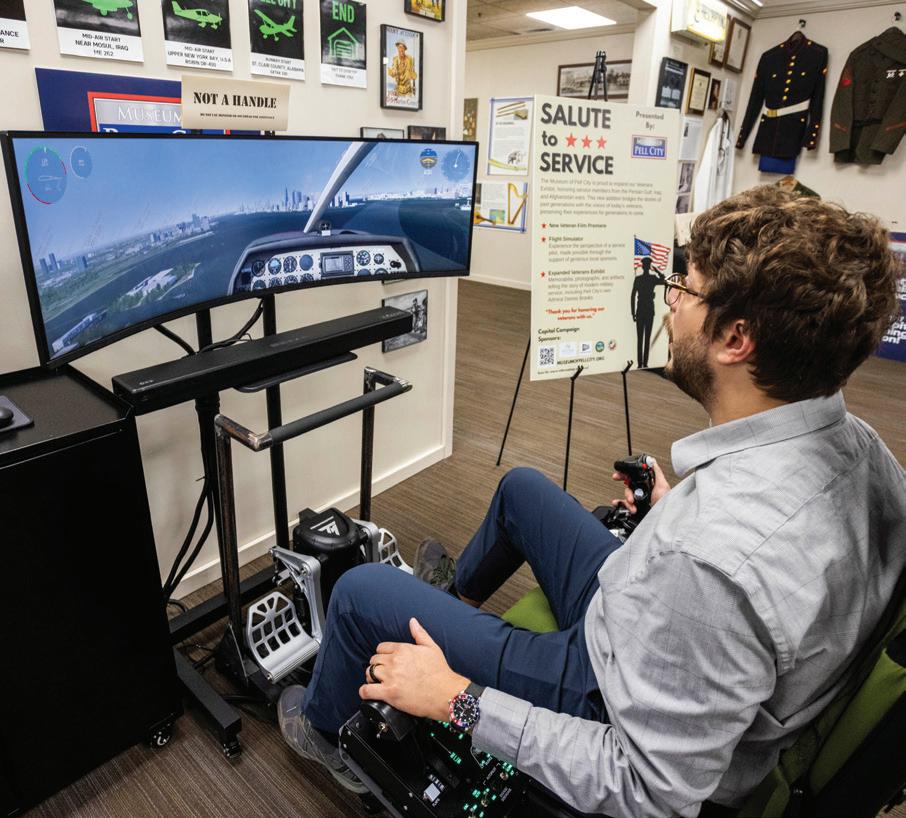
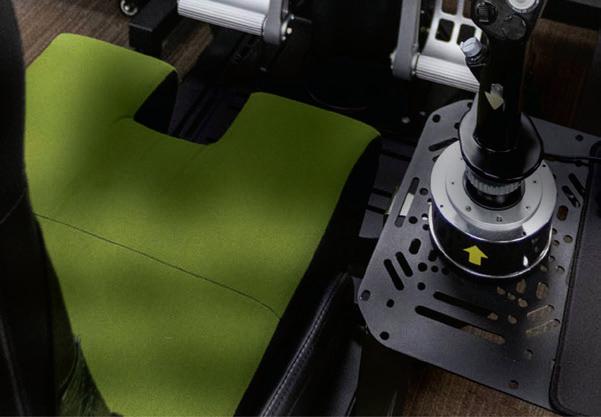
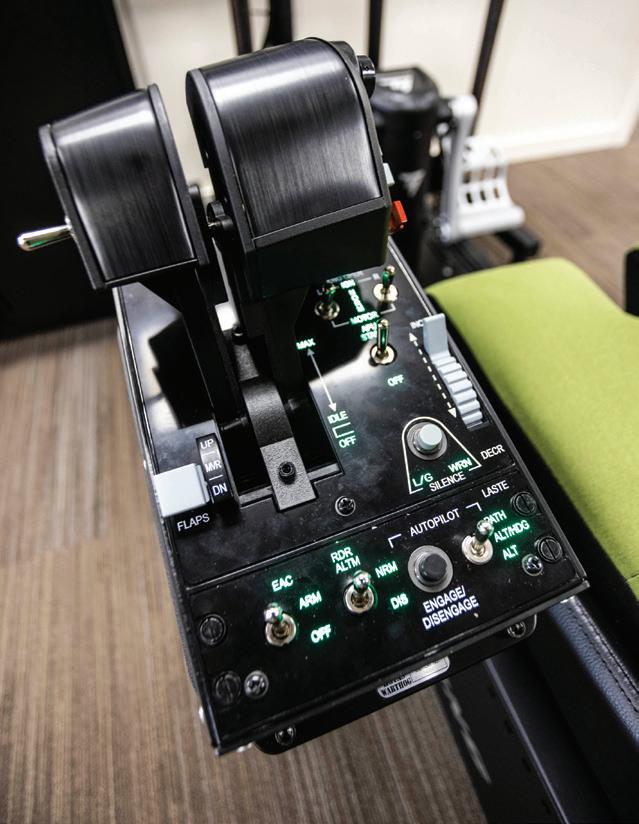
large, curved screen monitor. The plane’s hand controls are on either side of the pilot, and the foot pedals are near the oor, allowing the pilot to control the rudder and push the plane right or left.
The joystick on the right rolls the plane left or right and controls the pitch up or down. The experience is quite realistic and takes a minute to learn to control the plane. A somewhat clumsy goofus, I spent
much of my time learning to coordinate my movements, but soon got the hang of it, steering the plane directly over the Statue of Liberty, then turning the plane 180 degrees and heading back toward Manhattan and the Empire State Building.
After several minutes of ying over the Big Apple and checking out some of the other experiences, I started experimenting a little. I ipped the plane over, did barrel
rolls, pitched the plane up to climb high above the scenery below, and dropped my altitude to buzz right over the trees of the north coast of France.
The nal experience allows the pilot to take o and land from the Pell City Airport. This takes some practice. Using the controller on the left to throttle the engines, the trick is to increase speed while controlling the plane’s direction and
pitch to take o at the right time.
On my rst try, I spastically ran the plane o the runway into the trees before I ever got the aircraft o the ground. Finally, I took o successfully and ew over my neighborhood near the airport, over downtown Pell City, and eventually buzzed over Logan Martin.
It is possible to crash the plane; however, before you hit the ground, the screen goes black, prompting the pilot to go back ten seconds, start over, or choose a di erent experience.
Designed for adults and children, the ight simulator is a lot of fun. However, it also serves as an educational tool and a tribute to military aviators. Grieve says the museum hopes the exhibit will inspire future pilots and deepen appreciation for those who have served, and continue to serve, our country.
“Watching children and adults light up when they take o for the rst time is one of my favorite parts of this exhibit,” she says. “It’s not only fun — it’s meaningful. It connects people to aviation, to service, and to the stories we’re preserving here.”
Learn more at museumofpellcity.org.




















DR. SARAH ELIZABETH MOREMAN
Photographed by TIM BADGWELL
Bustling through the crisp air, a large spiral-bound notebook nestling in my arms, I hurry to cross the road to a local lakeside café. Late as always, I think to myself as I wave at my friend, who has already gotten us a table inside. Selene stands up as I rush over. We quickly hug before sitting down, and I slide my notebook to the side.
“Thanks for getting us the view.” I smile while looking past the clear pane, spotting a bald eagle swooping midair over the water, its sharp talons holding a large stick. The raptor must have grabbed the branch out of the water, judging by the liquid dripping from it. Once it ies over the canopy of trees across the lake, my eyes slide away to meet my friend’s.
Letting out a laugh, I say, “Sorry. I was distracted by that eagle. Tell me what happened the other day.”
“I’m pregnant!” Selene announces, and I let out congratulations before asking how she found out. She gives the typical answer that I hear from many relatives and friends, which is doing two takehome tests before seeing a doctor to get con rmation. I would never know what it is like to be pregnant, because I am
now past the mid-part of my forties. I would always be curious and fascinated by what being pregnant would be like, especially the nesting stage.
It is the nesting stage that seems to be the most fun, where the mother-to-be gets to be ultra-creative, imagining the cozy snuggles and rst steps framed
against speci c colors and designs in the nursery. The baby’s name becomes art on the wall, accompanied by cute motifs in the pattern or linens, I muse as I look around the dark greenwalled interior of the café, complete with wood square bistro tables. Thankfully, there is no background music playing; only soft whisperings from other patrons at their respective tables, along with the clatter and ringing from the kitchen at the back of the intimate dining room.
A particular mirror-framed black-and-white picture of a large stick nest with several unhatched eggs hangs on the wall across the room. The bulky nest is perched high in the trees, which may belong to a bald eagle or an osprey. The style of that photography is reminiscent of Ansel Adams, and I probably would suggest that style to my friend.
After the server has asked for our orders and walked away, I listen as Selene talks about how she will get ready for her newborn. At certain parts of the conversation, I interject with some “cool aunt” wisdom, thanks to my siblings having blessed me with 11 niblings.
The server returns to place two glasses lled with sparkling water and slices of lime, quietly informing us that our pasta and salad will be ready soon. I nod thanks as my stomach growls, the aromatic scents of garlic, tomato sauce, and basil reaching my olfactory senses.
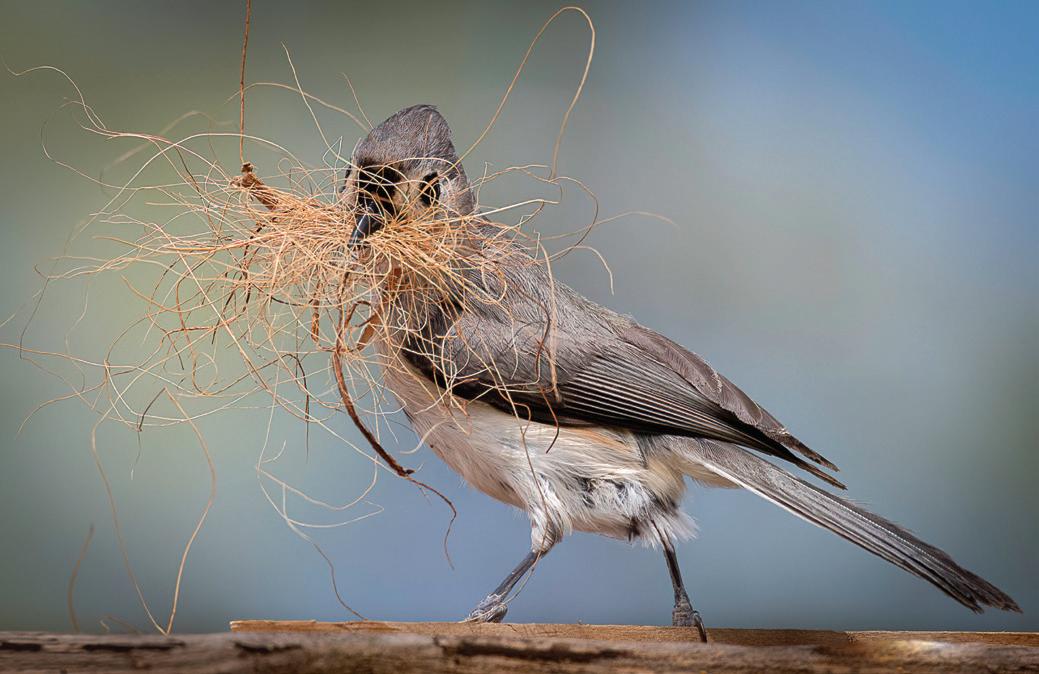
“Oh, look at those mockingbirds! They look lovely.” Selene points out at the two long-tailed, upright small birds. I peer through the window, to nd a pair of northern mockingbirds perching on the wooden rail fence. They are holding some dried grass in their small slightly curved beaks.
“I wonder where they would nest.” My friend leans closer, her forehead touching the glass pane to get a better look. I scan the surrounding bare crepe myrtle trees for the trunks and spot some sort of nest. “See over there?” I point in that direction. One of the mockingbirds hops o the wooden rail fence, apping its wings toward the nest, con rming my presumption.
We are still watching the mockingbirds when I feel the bump of our table as the server sets down our plates of steaming hot pasta and salad. She picks up the transparent green glass carafe to replenish our limed sparkling water before slipping away to check on another table.
After a quick blessing over the food, we dig in, savoring the meaty pasta sauce. I see another bird ying across the lake, again carrying some sort of a branch. This time, an osprey. I sit up straighter, remembering how I learned about hookbilled ospreys with their spicules. Every time I see an osprey, I think of my Uncle Frank, who passed away a few years ago. He was the uncle who believed in bringing all of the family and childhood friends together for a gathering at Grammy’s for any occasion and holiday. While our family is strong about traditions, he was among the most determined to keep them alive; such determination as strong as the gripping spicules of an osprey.
Seeing all these birds carry some sort of stick or grass, signaling that it is nesting season, I ponder as I twirl the pasta around the fork before taking a bite. Once sated from the
pasta, I lean back in my Windsor dining armchair, letting out a sigh. I smile at Selene, who is also nished. We then resume our conversation. I ask if she and her husband have already started a list of baby names. She laughs and says that if it is a girl, it would be Wren. If a boy, then Jay.
Long after the server has taken away our plates and picked up our check, Selene and I remain, content to pass the afternoon by. I can feel the air grow even colder outside as people enter or leave the café, the door letting in brisk winds. The sky is now darkening into a jewel tone of blue as Selene and I reluctantly stand to leave.
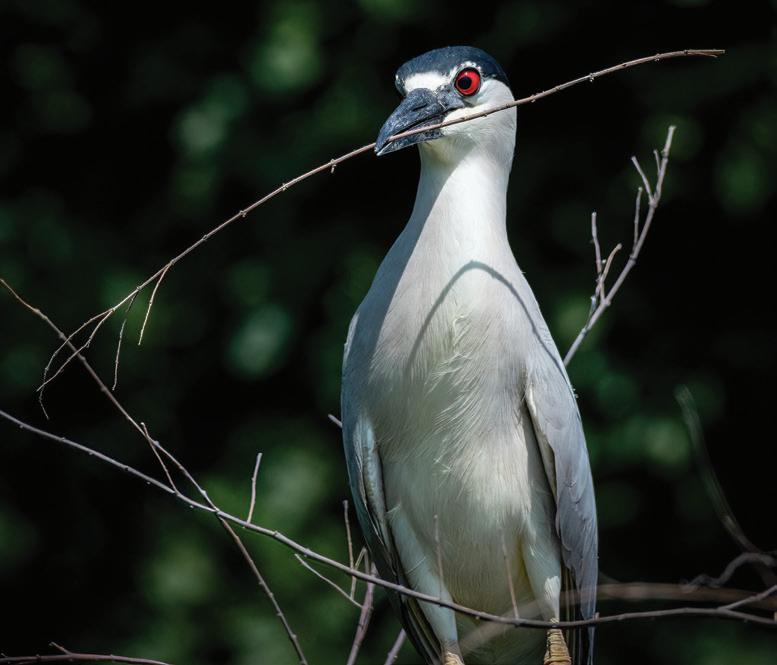
When we step outside, I hear a choking squawking sound that draws my attention up a longleaf pine tree. Startled to see the redness of the bird’s eyes, I almost do not notice a thin twig hanging from its mouth. Of course, it is nesting, as I gure the bird to be black-crowned night heron.
Nesting, whether by birds or mothers-to-be, prepares a home, a safe haven for the young. Not only that, nesting is a way of organizing chaos in preparation for the next stage of life. In a sense, nesting is forming space for family and traditions through structuring and creating with items, whether sticks or wren-themed baby rattles.







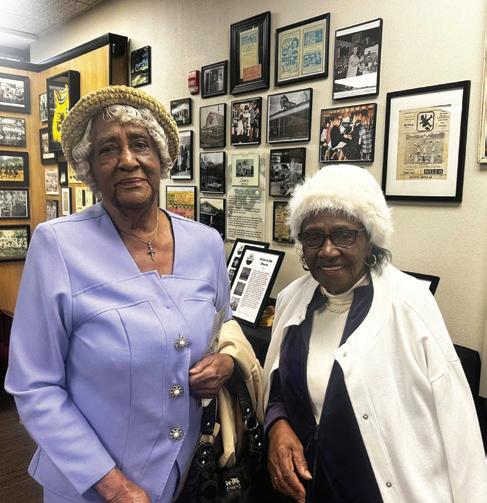
Breaking Barriers III, honoring the legacy of early Black educators in Pell City, opens at the Museum of Pell City at 11 a.m. For more details, visit museumofpellcity.org.
The International Motorsports Hall of Fame hosts this indoor trade show from 10 a.m.-4

p.m. Vendors, food trucks, live music, and children’s entertainment will be inside the Fox Sports Dome o ering local products and services, clothing items for the entire family, food, collectibles, new and vintage items, antiques, art, and more. Admission is $5, with children ages 12 and younger admitted free. For more details, visit the event’s Facebook page.

Sylacauga Parks and Recreation hosts this Valentine-themed class taught by Sally Fowler of Sally’s Sugar Cookies at 6 p.m. at the J. Craig Smith Community Center. The 1.5-hour workshop welcomes participants of all ages and experience levels to enjoy a relaxed, festive evening of creativity. Registration includes six cookies, icing bags, sprinkles, a take-home box, and other supplies. Registration is $35 per person, with a discounted rate of $25 for children ages 12 and younger. Reservations must be made by February 5, either in person at the community center, online at Sylacauga.Recdesk.com, or by calling 256-249-8561.
Bene ting the Masie Knight Memorial Scholarship Fund for students in south Talladega County, this event begins at 6 p.m. at 8240 McGowans Ferry Road in Sylacauga. For full details, call 205-217-8062.


The International Motorsports Hall of Fame hosts Alabama’s largest Mardi Gras party north of Mobile, with festivities beginning at 6 p.m. Tickets are $120 for singles, $240 for couples, and $960 for tables of 8. The gala is preceded by a Mardi Gras parade through downtown Talladega at 11 a.m. Feb. 7, featuring oats, marching bands, antique cars, and Shriners Comedy Units. A Mardi Gras Showcase: Visit with Royalty reception is scheduled for 5 p.m. February 5 at Heritage Hall in Talladega, organized in collaboration with the Mobile Carnival Museum and the Alabama State Council on the Arts. For more information about any of the events, call Lauren Deal at the Ritz Theatre at 256-315-0000.










HOURSFOR DELI
B eakfa t: Mon. -F i. 5a.m.-10a.m.
Lunch: Mon.-F i. 10: 5a.m.-7: 0p.m.
B eakfa tSatu day : 5 a.m. -10:30 a.m. tu d y Lun h: 11 a.m.-2p.m.































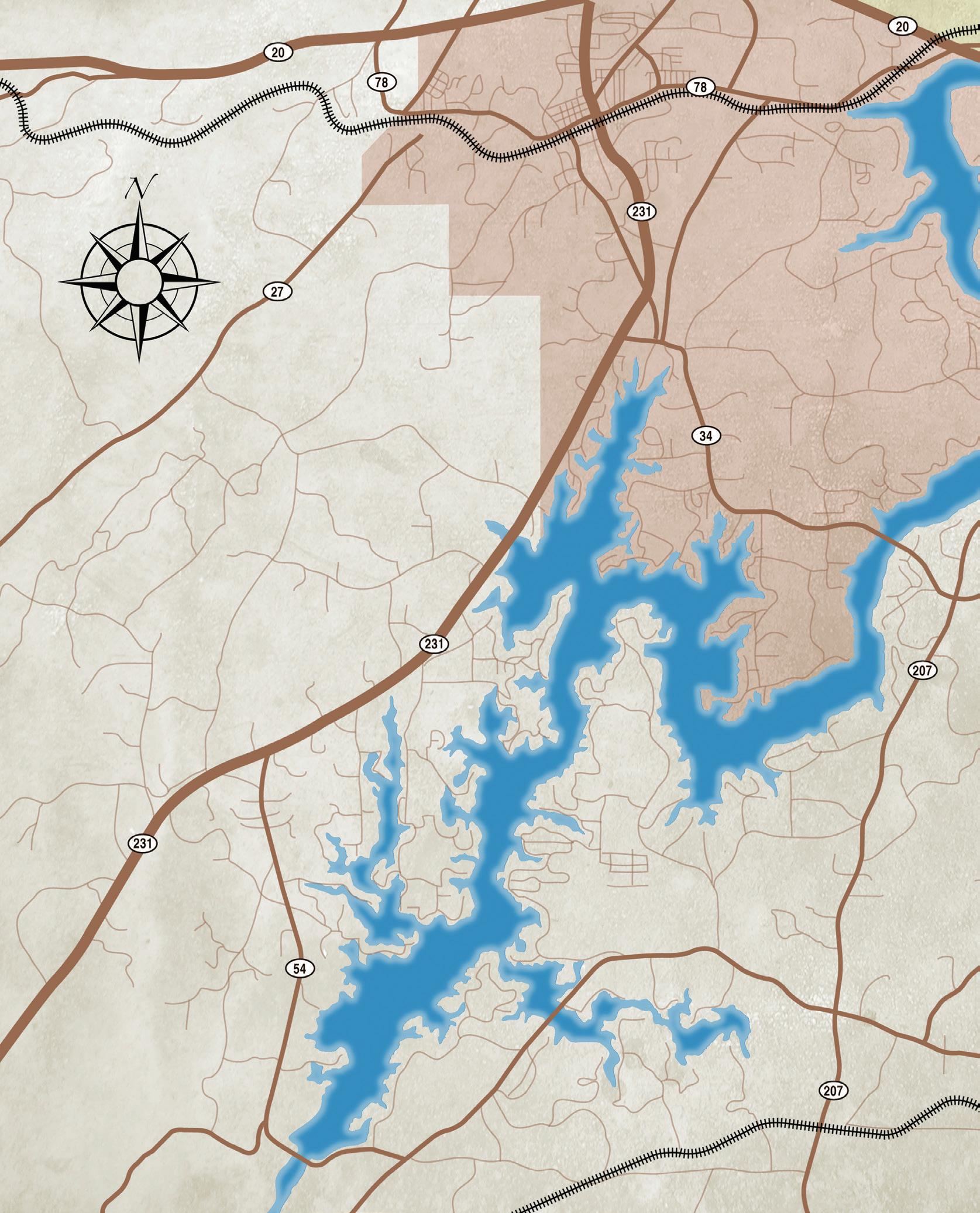

































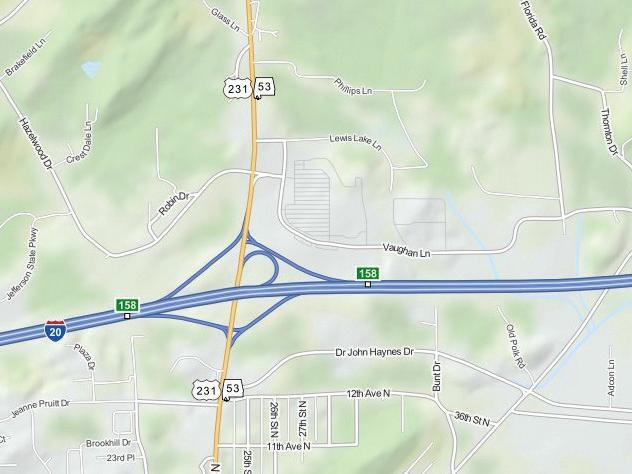
A Lakeside Living guide to
1 – Poor House Branch Marina
2 – Aztecas Mexican
3 – Jade East
4 – Triple G’s
5 – Jimmy’s Country Store
6 – Maya’s Mexican
7 – Pell City Steak House
8 – Oishi Asian Restaurant



9 – Coosa Cafe & Creamery


10 – Daylight Donuts


A – Logan Martin Dam
B – Lakeside Park
C – Stemley Bridge
D – St. Clair Airport
E – Mays Bend
F – Choccolocco Creek
G – Dye Creek

H – Blue Eye Creek 3













1822PLEASANT RIDGEDRIVE SYLACAUG A, AL 4BD, 4BTH $329,900
Beautifulupdated 4bedroom,31/2bath inoneof Sylacauga’s mostsoughtaf terneighborhoods! MLS#21436536
























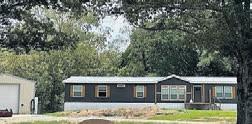

























































































































Stunning,fully remodeled2-storyhome with approx.3,912±sq ft,o ering4BR/3BA plus a nishedbasement, situatedon1 acrejustminutesfromHonda, Talladega Superspeedway,andLincoln’s shopping& dining. UpdatesincludeNEWHVAC, water heater, ooring,paint, kitchen,andmuch more—move-in ready!


Comeseethis cozy 2-bedroom,1-bathroom home locatedjustminutesfromLogan Martin Lake,Pell City,and25minutes to Honda.Enjoy the convenienceofa brand-newrefrigerator andstove, plusthebonusof afencedbackyard, multiplestoragebuildings,and adetached2-car carport. Thebestpartistheprice!



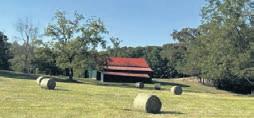
WelcomeHome.Imagine waking to birdsong,sipping yourmorning co eeon thewraparoundlanai,and watchingthesun rise over your own ve-acreparadise Thisisn’t just ahouse—it’s a feeling.Abeautifullycrafted custommodernfarmhouse featuring 4bedroomsand 2.5bathroomssitson5+ peacefulacres












Thisimpressive4BR/4BA barndominiumo ers5,160±sqft ofbeautifullydesignedliving space, blendingrusticcharm withmodern luxury.Thespaciousprimarysuite features aprivatestudy,his &her walkinclosets,river-rockshower,clawfoot tub,dualvanities,andprivate water closet.Theopen-concept living area showcasesa oor-to-ceiling stone/ woodgas replace.


Charming3BR/2BA one-levelhomein thehighlysought-afterOliverCrossing subdivisioninthe Leeds/Moodyarea. Zoned forLeedsschoolswithSt. Clair County taxes,o eringboth convenienceand value Features aspaciousfamily roomwith vaulted ceilingand cozywood-burning replace.


InvestmentOpportunity! Rightin theheartofLincoln—just behind Jack’s—sitsthisspacious 4-bedroom (or ex-room)homewith 2bathroomsand over 2,500 squarefeetoflivingspace on 5citylots.Cityapproved zoning for LightBusiness!



This4BR/2BA four-sided brickhomeo ers beautifulviewsofLogan MartinLake andislocatedinthedesirable BellBrook subdivision.Thediningareafeatures cathedral ceilings,while thefamily room includes acozygas replace.The eat-in kitchen comescompletewithallappliances




Whereelsecanyou nd a4-bed,2-bath homeonapprox. 1acreonLoganMartin Lake forunder$280,000? Thisspacious ~2,200sq ft homeo ersincredible value and room to spreadout!You’rejuststeps from your ownpiers—perfect forboating, swimming, and shing

Welcome to thisstunning Southerncharmestate, o ering 5+bedroomsand4.5bathswithover 6,000square feet ofbeautifullydesigned living space. Nestled onmorethan17unrestrictedacres, this remarkablehome features aclassicwraparoundporchand asereneprivatelake,creating the perfectblend of elegance, space, andpeaceful countryliving.





Thisprivate,gated6BR/3.5BAhomesitson 11secludedacresando ers alifestyleof comfortandprivacy. Eachbedroomfeatures itsownprivate balcony,creatinga personal retreatforeveryone.Thegeothermal system providesenergye ciencyand lower summerutilitycosts.Enjoy outdoorliving withaningroundpoolandcovereddecks



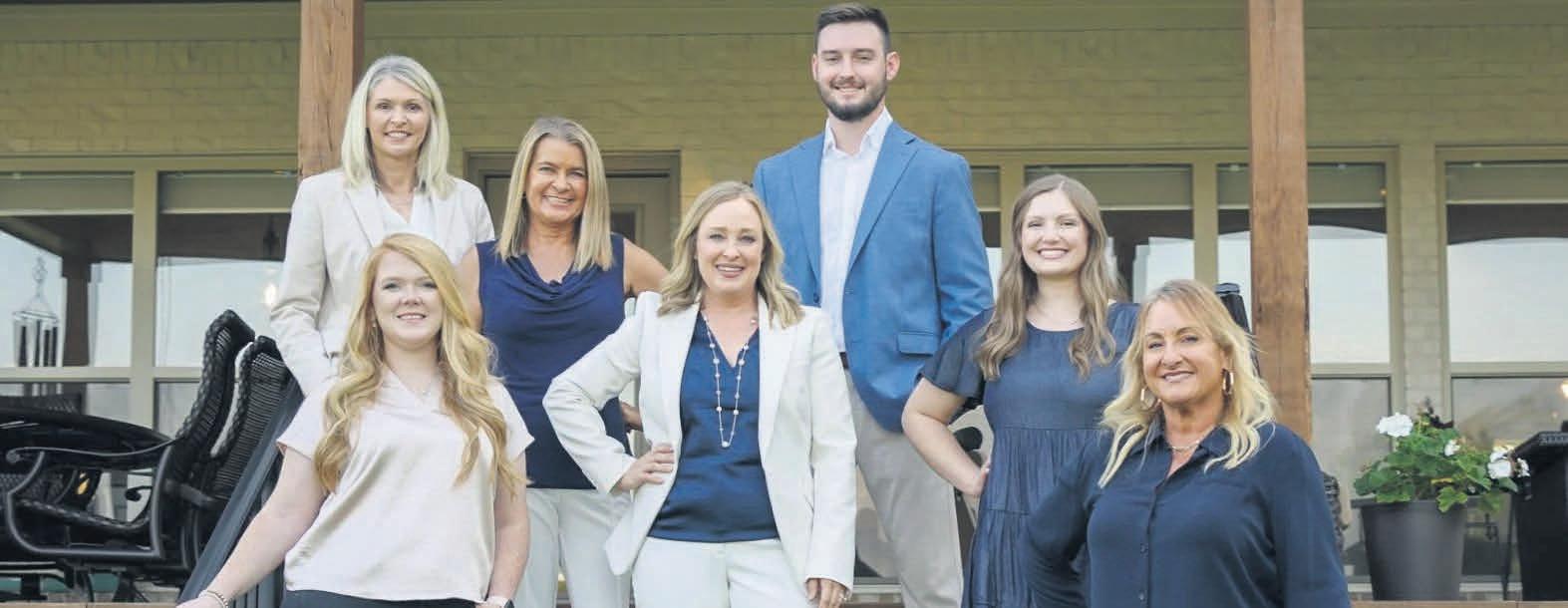





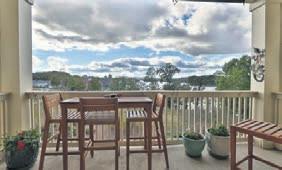

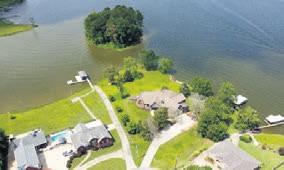
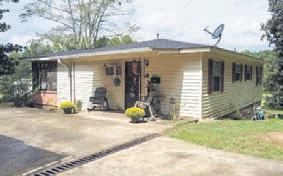

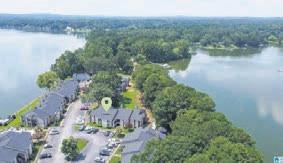

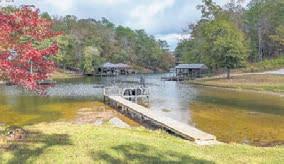

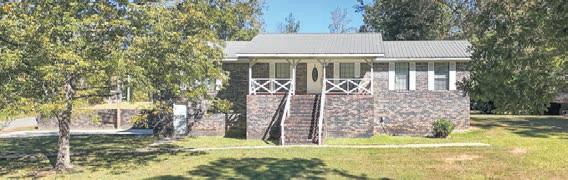
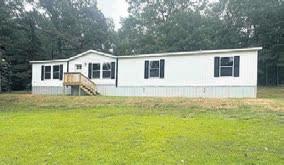


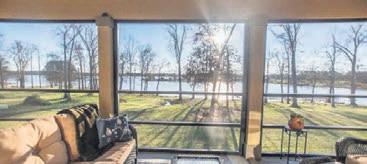


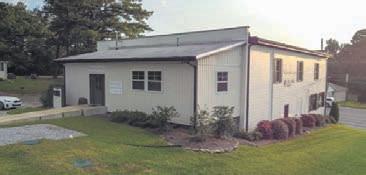
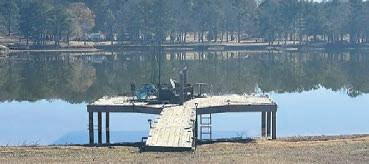
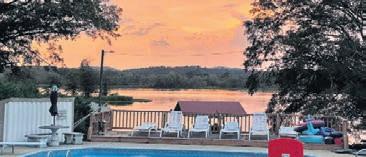
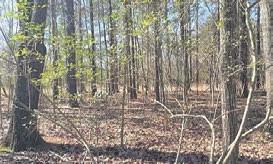
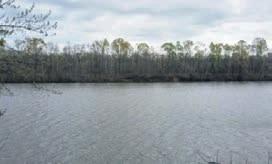
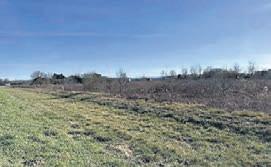



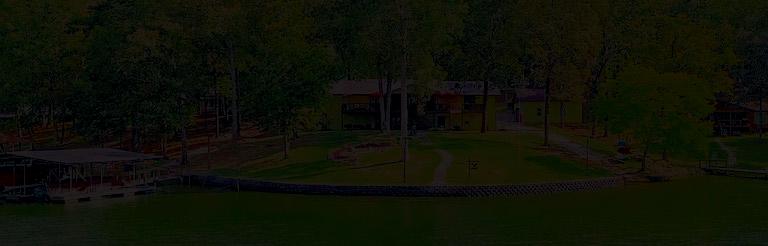

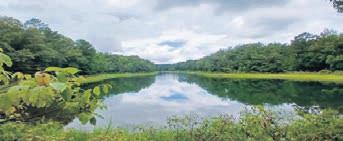










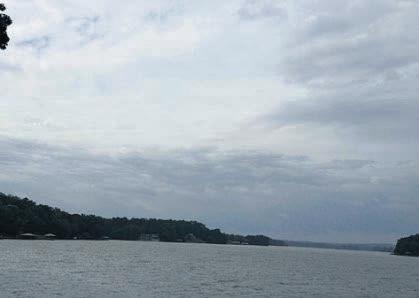










































































ebruary is here, and it’s carrying its familiar theme. Love is front and center, woven into store displays, restaurant menus, and social feeds. We’re encouraged to celebrate partners, friendships, and family relationships in visible, outward ways. Those expressions matter. They bring warmth and connection. But February also o ers another opportunity that’s easy to overlook: a chance to practice self-love. Self-love isn’t about indulgence or retreating from the people who matter to you. Instead, it’s about tending to the relationship you have with yourself so you can show up fully for your family, your neighbors, and your community. In a close-knit lake community where life often revolves around togetherness, selflove can be the steady foundation that keeps everything else in balance.
At its core, self-love is simple. It’s being kind to yourself. It’s paying attention to what you need and honoring it without feeling guilty. It shows up in small, everyday ways like allowing yourself rest after a long week, setting and protecting boundaries around your time, or choosing moments of quiet when life feels especially full. These choices don’t take anything away from others. In fact, I’d argue they make relationships stronger. Self-love also means practicing self-trust. Trusting your instincts. Trusting that you don’t have to compare your pace, your home, or your life to anyone else’s. In communities where people know one another well, it can be tempting to measure yourself against what you see around you. Self-love reminds you that your path doesn’t need to look like anyone else’s to be meaningful.






Self-love also has a ripple e ect. When we take care of ourselves, we give others permission to do the same. Children notice how we handle stress and rest. Friends pick up on whether we extend ourselves with resentment or intention. Even in small, everyday moments, the way we care for ourselves sets a tone. Choosing balance, patience, and grace bene ts you and shapes the environment around you.
February is a good time to check in with yourself. Are you giving yourself the same patience and understanding you o er others? Are you making room for the things that help you feel grounded, whether that’s a walk by the water, an evening with friends, a shared meal at home, or a few quiet minutes before the day begins?
Self-love is not something you achieve once and move on from. It’s a daily practice that evolves with the seasons of life. Some days it looks like motivation and movement. Other days it looks like rest and re ection. Both are necessary. Both matter.
When you take care of yourself, you bring your best energy into your home, your friendships, and your community. February may highlight love in its most visible forms, but the quieter work of self-love is just as important.
This month, let February be a reminder to care for yourself with the same intention as you do in caring for others. That kind of love is steady, lasting, and deeply rooted, much like life by the lake itself.
A native of Talladega County and current resident of Pell City, Cherith Glover Fluker is a freelance writer and the author of Secret Birmingham. She’s at work on her second book.




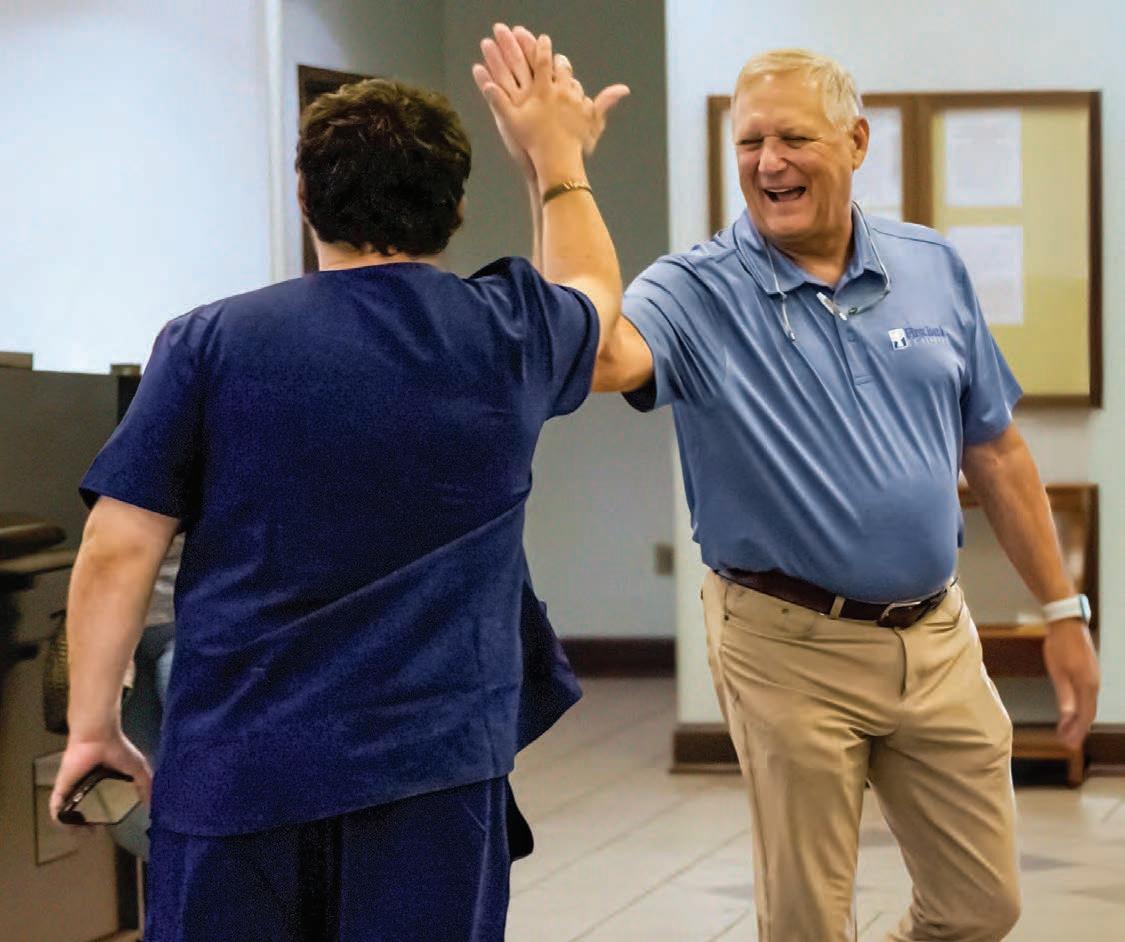
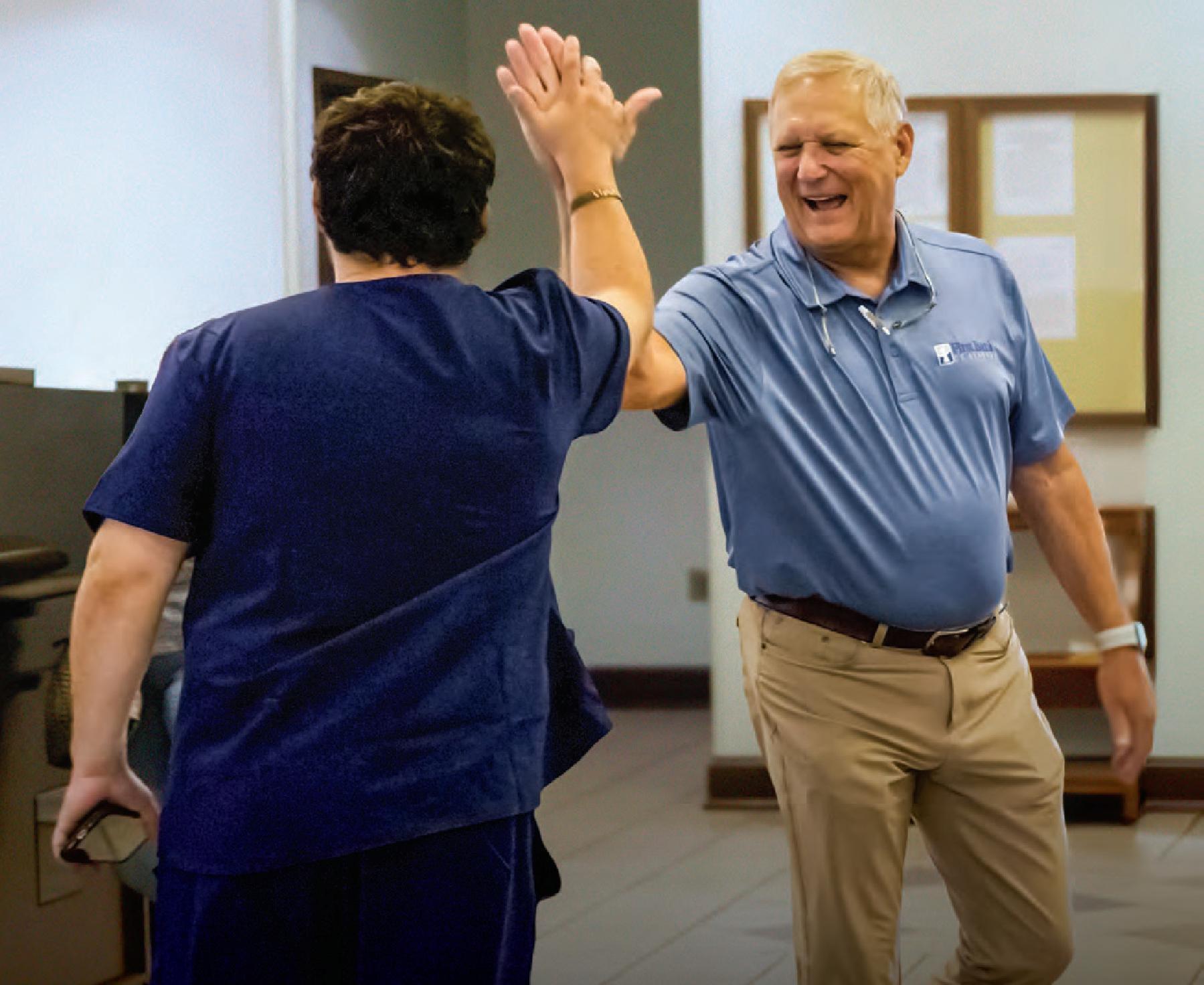


Weknowtheseroads.Weknowwheretogetthebestbarbecueandwho’llfixyourtireona Sunday.Weknowourneighborsbecausewe’rerightherebesideyou.That’swhybanking withusfeelsdifferent.It’slocal,it’sfriendly,anditcomeswith awholelotofheart.Afterall, we’refromhere.Andwe’reproudofit.
|