LAKESIDE Living
u A Garden for All Seasons
u Solitude Among the Sunflowers
u The Ice Cream Man on the Lake
See inside for more!
AUGUST 2026
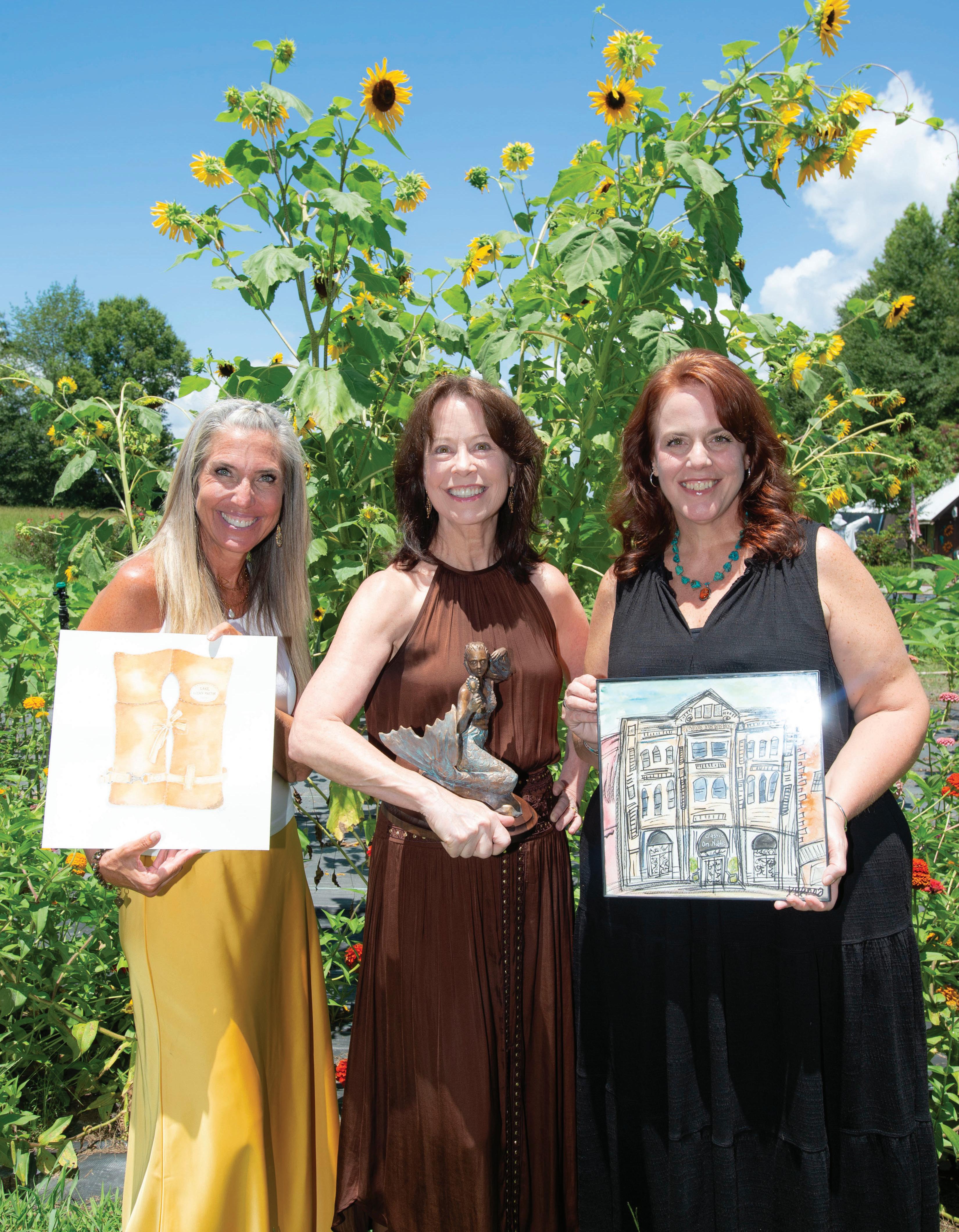
THE ART OF Jennifer Page, Cindy Free, and Michelle McGrady









u A Garden for All Seasons
u Solitude Among the Sunflowers
u The Ice Cream Man on the Lake
See inside for more!
AUGUST 2026
THE ART OF Jennifer Page, Cindy Free, and Michelle McGrady
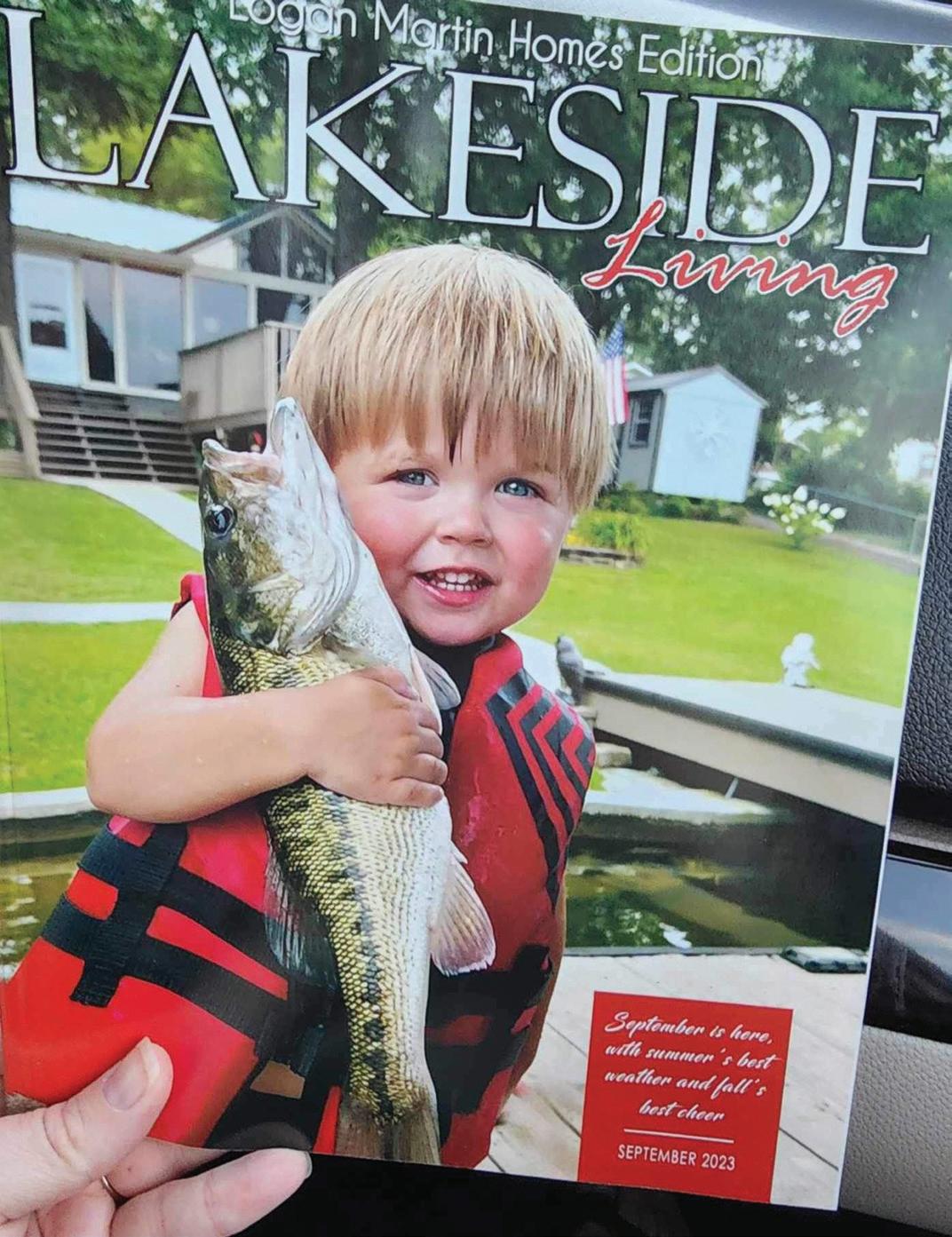
“Oh, my heart,” Kayla Pellowski said, reflecting on the cover of Lakeside Living’s September, 2023 issue. “This picture hits hard. Can’t believe how big he has gotten.”
In the photograph is her son Ward, snapped on a Treadwell Island pier, wearing a life jacket and hugging a fish he’d helped extract from Logan Martin Lake. Kayla allowed us to publish the photo, taken when Ward was two years old, and she’s kept in touch with Lakeside Living.

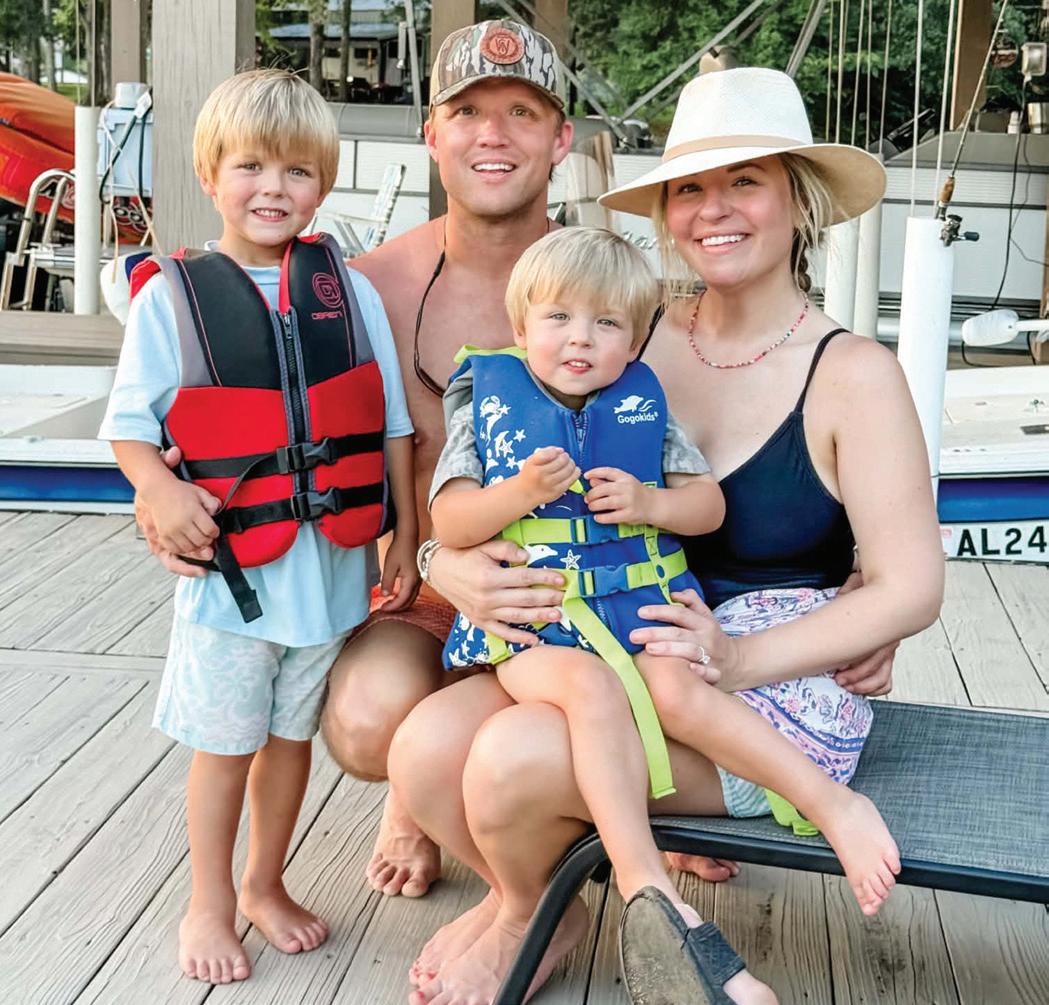
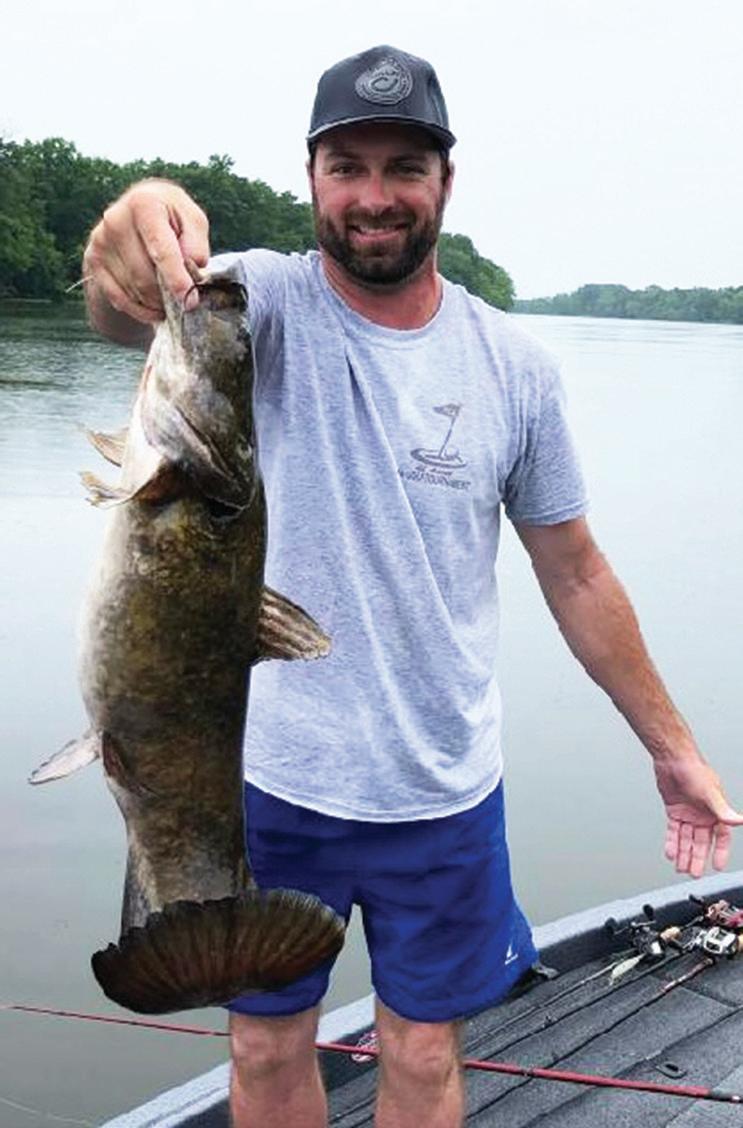
I was pleased to receive an update about the Pellowski family earlier this summer, when Kayla sent us a new photo of Ward – now age 5 – proudly displaying his his first flathead catfish. “He’s grown, and our fish size has grown,” his mom said.
She also included a photo of Ward’s brother Reid, “our newest dude. He just turned 3, and he’s just as obsessed with fishing as his brother is.” One of his brothers, anyway. Ward and Reid have an older brother, Luke (age 10) who prefers tubing to fishing.
Lakeside Living is grateful to loyal readers such as the Pellowski family. It is such support that enables us to continue telling the stories of Logan Martin Lake. We hope that you will enjoy the stories featured in this issue, in which you’ll get to meet the talented artists Jennifer Page, Michelle McGrady, and Cindy Free, visit Pell City’s Gateway Community Garden, and take a look back at the Riverside Poker Run.
Thank you for making Lakeside Living a regular part of your lives.




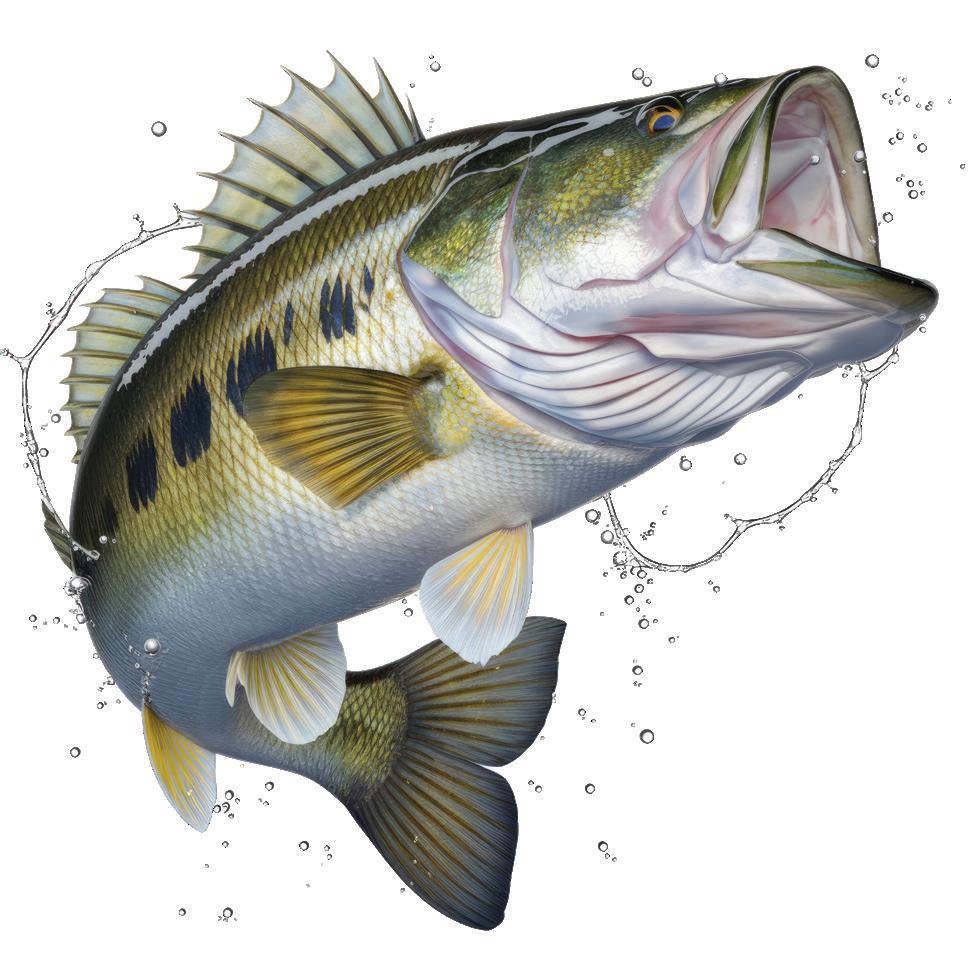
The month of August is typically brutally hot here in central Alabama. With temps soaring near or over 100 degrees, it’s always wise to avoid the daytime heat. Fishing at night and using limb lines can quickly become your new favorite fishing method in mid-to-late summer. Using limb lines is a relatively old form of fishing. Known for its maintenance-free aspects, limb line fishing can be fun, easy, and great for catching several species of game fish. On the Coosa River, you can expect to predominately catch flathead and blue catfish. The occasional gar or bass could be tricked as well. This simple method of fishing has brought results for many years.
My favorite fish to catch is the flathead. Marked by their dark brown spotted complexion, the flathead is a fun fighting catfish that feeds heavily at night. For bait, bluegill bream is my go-to. These
small panfish can be caught with live crickets, fly rods, or ultra-light spinning tackle. Bluegill is a delicious meal for a big flathead catfish.
Picking a limb to hang the line on can also be quite simple. Try to pick limbs that have girth and can withstand a large thrashing fish. I always try to target banks on the deepest side of the river in August. These banks will usually be the undercut banks where current hits the land – they’re great areas to target. Keep your gear simple. I like to use a small circle hook #1,#2,#3 sizes and heavy-duty trot line or braid. My favorite bait is a live bream. Hook the bream in the back behind the dorsal fin and let the bream free swim on the line. This method is tried and proven. The sight of a bobbing limb line can surely excite anyone. It is also a great fishing method for kids. The good thing about nighttime limb lining is you can always come back in the morning to check your lines.
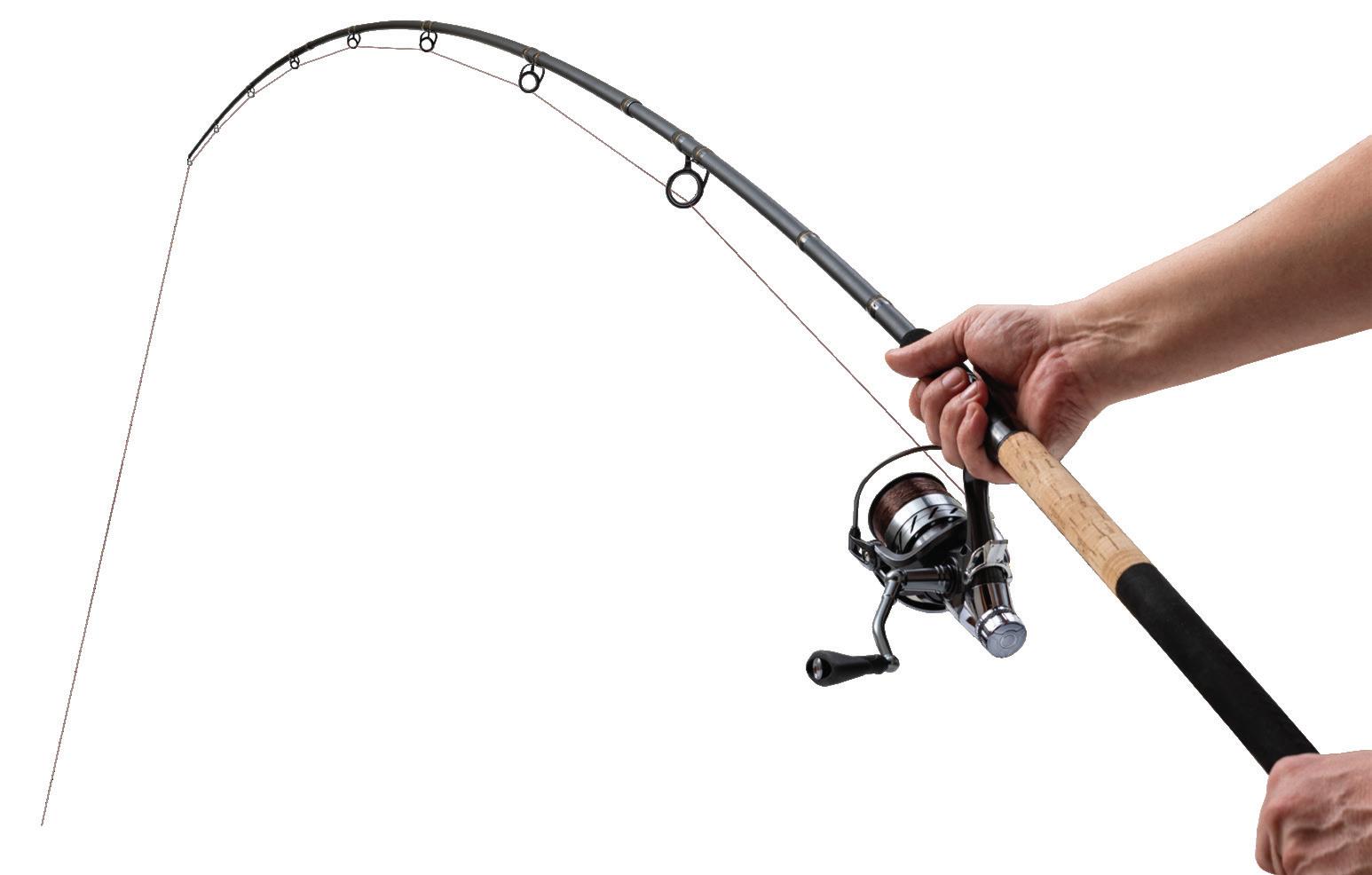
fishing in the month of August. No sunscreen is needed at night.
Tight Lines & Strong Hooksets,
C.J. KNIGHT

Beat the heat and try out limb





Watercolor paintings celebrate the past and present on Logan Martin Lake
Written by BUDDY ROBERTS
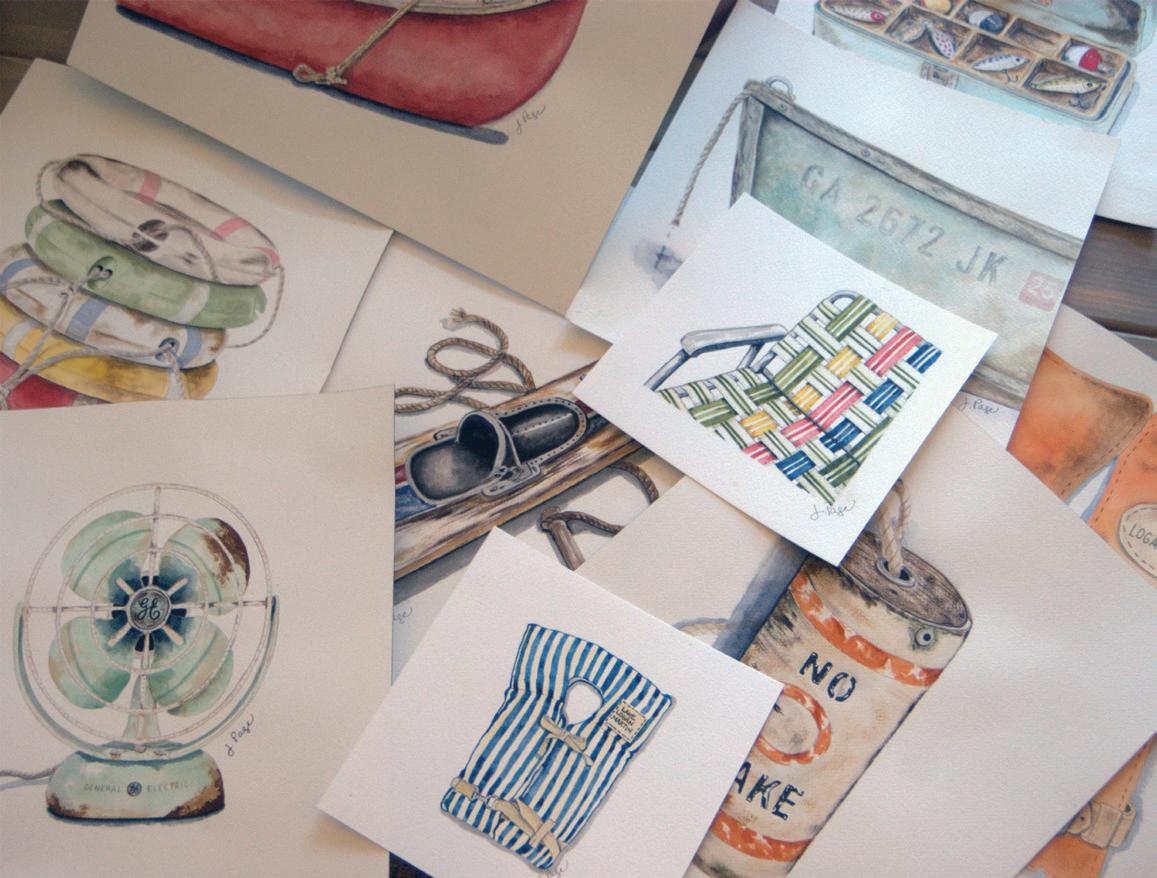
Nostalgic images created to conjure memories of Southern summers and weekends at the lake cover
Jennifer Page’s coffee table.
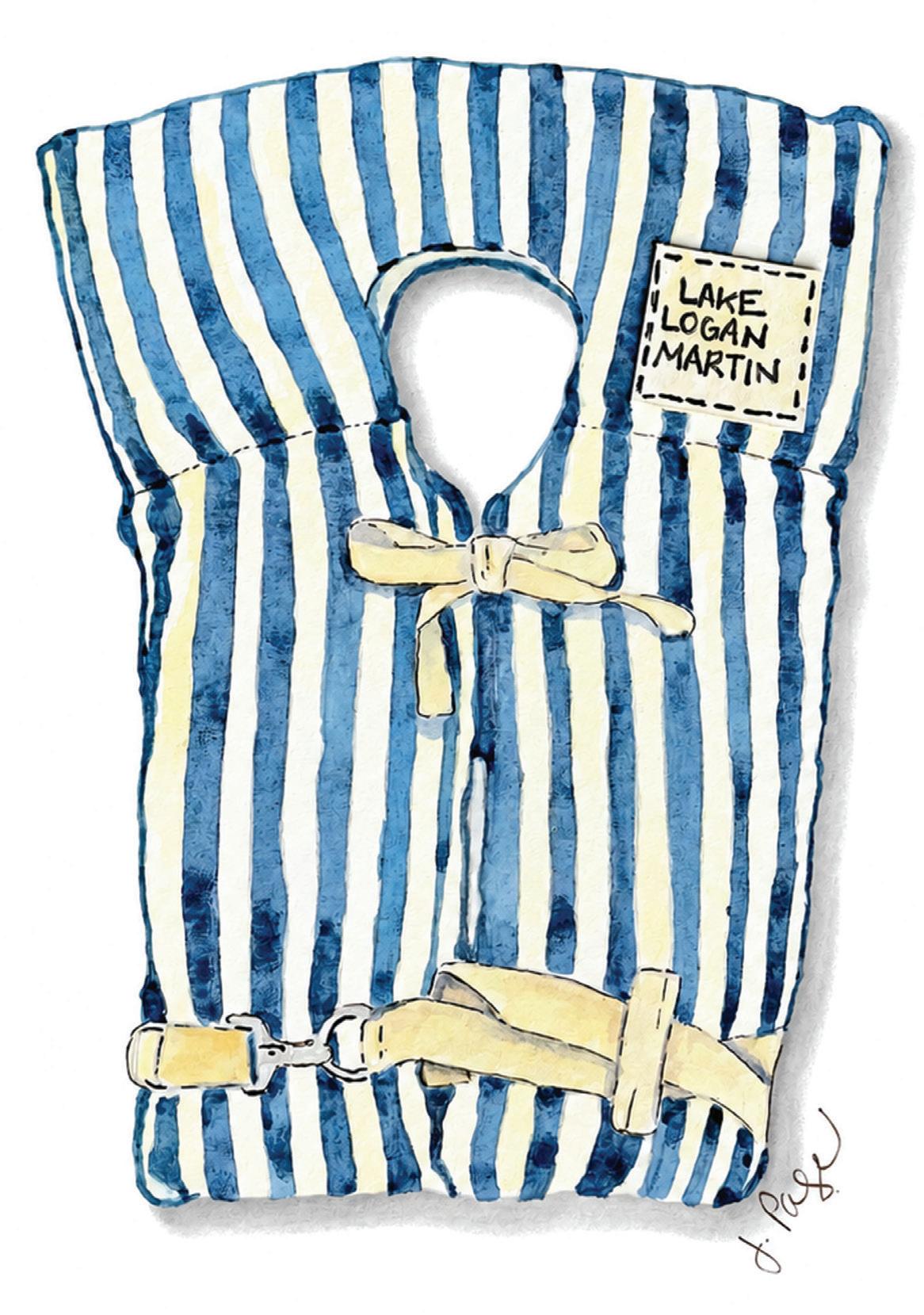
A striped life jacket with emblazoned with ‘Logan Martin Lake.’
A vintage General Electric fan.
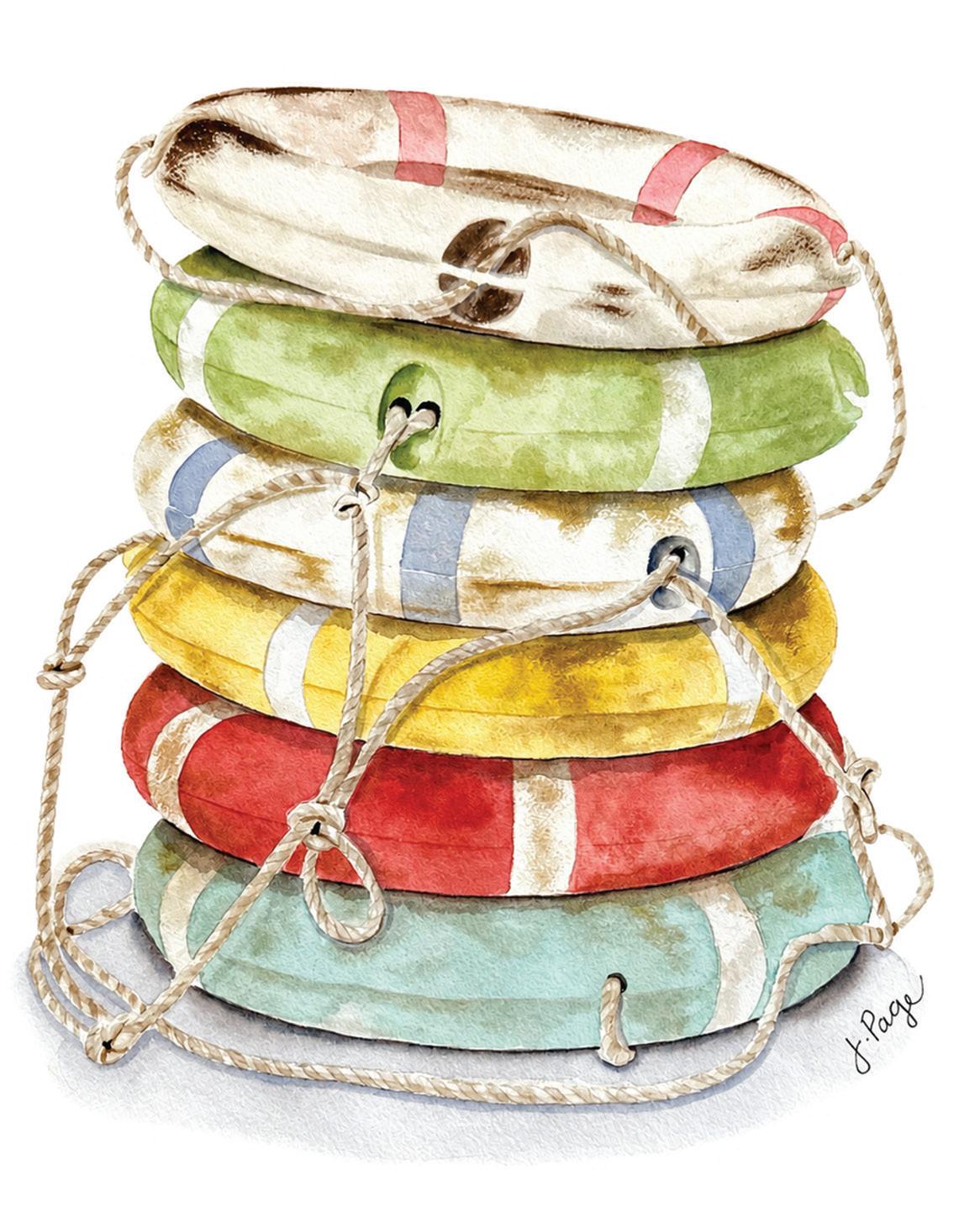
A stack of life preservers.
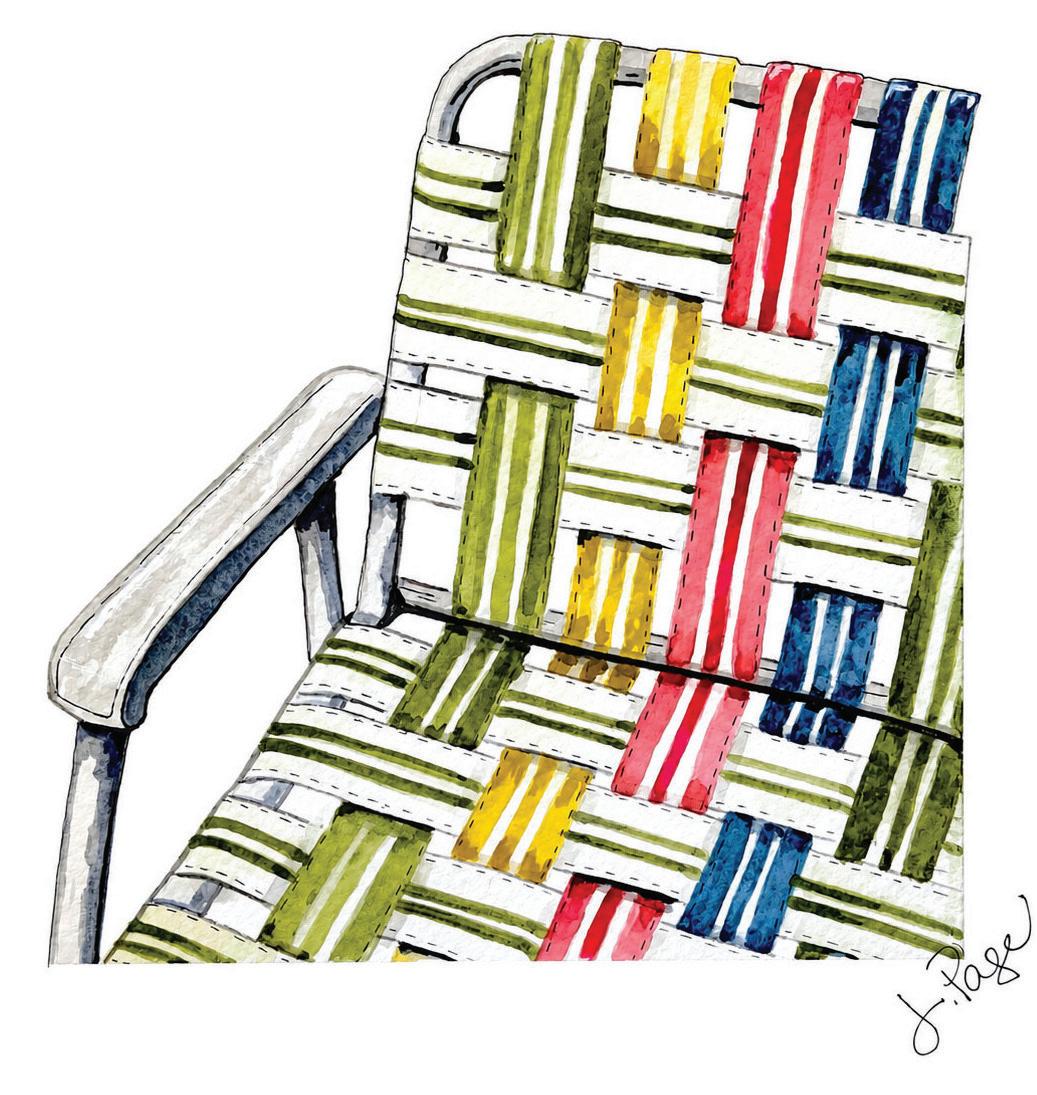
A colorfully webbed Midcentury aluminum folding lawn chair such as was once found in many an Alabama backyard.
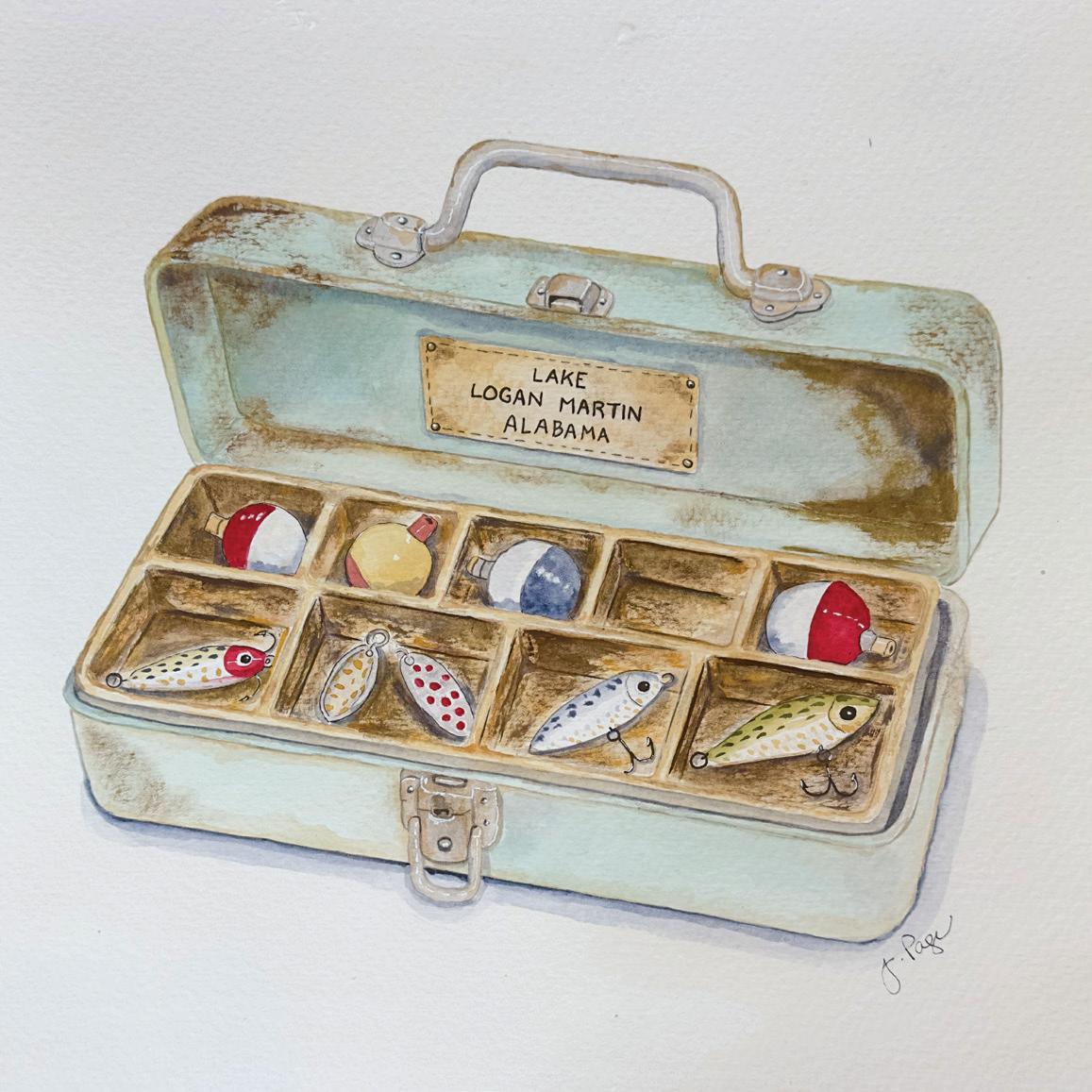
A tackle box.
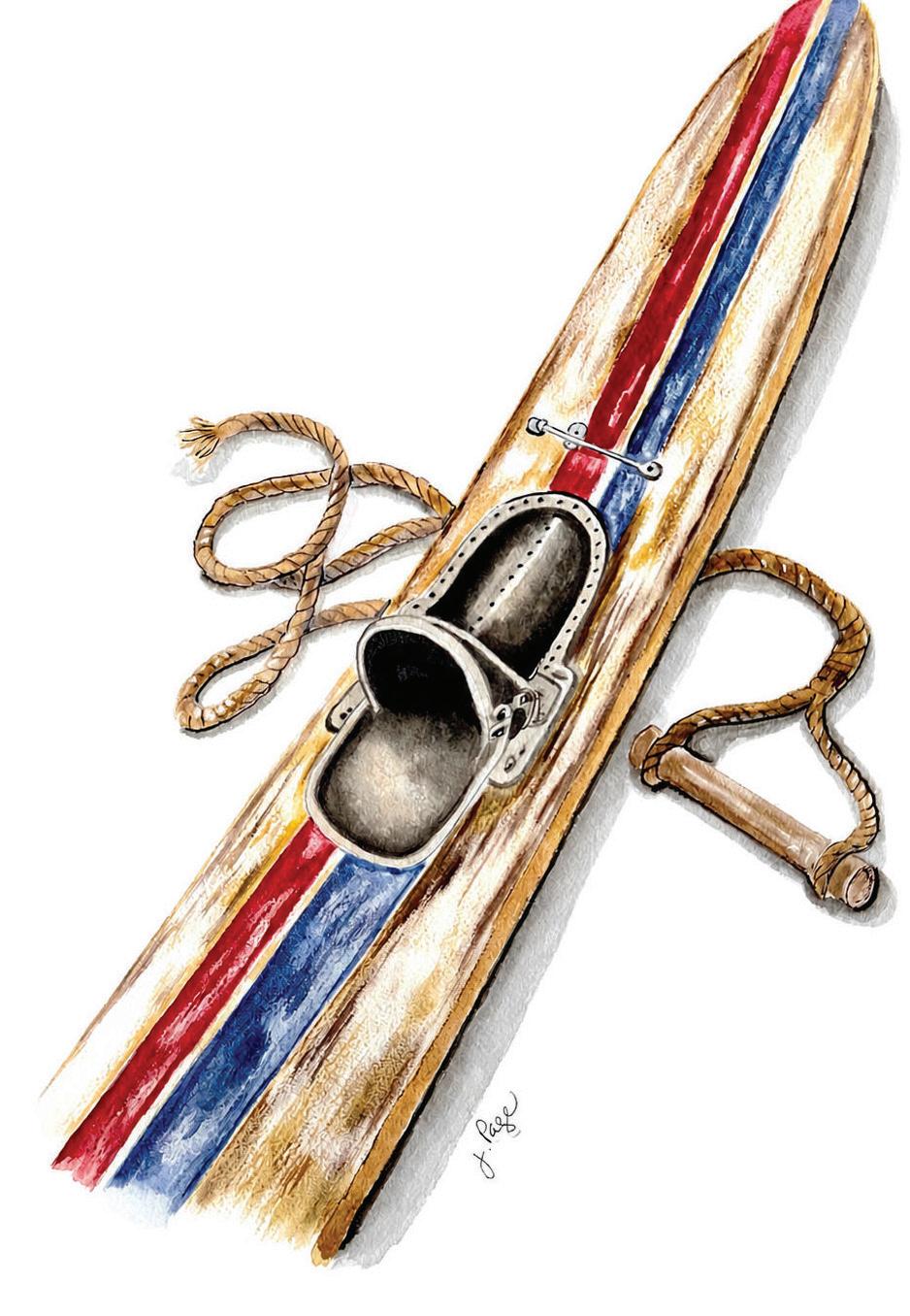
A single water ski.
“As I was painting each one of these, I was looking for things that evoked a memory for me or some kind of emotion,” she says. “I don’t want to paint a rock or a turtle, because that doesn’t mean
anything to me necessarily.”
She gestures toward a framed watercolor painting of a blue heron on the wall opposite. “The herons are different. I love the
herons. I think they’re beautiful. I love how you can drive around in the boat and see them like perched on people’s docks.”
Looking back at the coffee table and indicating one of the pieces there, she adds, “And then these life jackets. They’re just kind of a throwback to camping and summer camp and weekends at the lake.” She smiles as she points out the electric fan. “This one, immediately when I see this, I think, ‘Luke, I am your father’ – you know, how kids would speak into the fans so it messes up their voice to sound like Darth Vader.”
A self-taught artist who finds inspiration in the serenity of her home on Logan Martin Lake, Jennifer created the small watercolor paintings as entries in The Lake Series, not every individual piece has its own name yet.
“I’ve been playing around with meaningful phrases that could apply to each one, so I probably will name all of them. There’s not necessarily a story behind each one. In some cases, there are, and in others, there’s more of an idea. Like the tackle box. That signifies hope. I don’t think it’s about the activity as much as what it represents. I’m more drawn to the nostalgia of it and its connection to the water and the memories that it evokes.”
That’s why she debated excluding the vintage fan painting from the series.
“I went round and round about whether or not I should paint the fan, because I kept thinking that it’s not really a lake thing. Then the idea made me think about a weekend at a cabin by the lake without air conditioning and you’re laying in bed, and it’s
hot, and the fan is on, and you can hear the crickets chirping. It’s probably one of my favorite pieces now.”
She enjoys the painting’s nostalgia factor too, even if she can’t explain its appeal.

“I wish I knew the answer to why nostalgia means so much. Maybe it’s just that as you get older, you think more and more about the past, and it becomes sweeter the further away you are from those earlier days. It’s a tie back to a different time in life, maybe when things were simpler. It’s not that I’m opposed to today. I love technology, but I the past just kind of represents a deep breath, a slow pace, and the disconnection of a different time.”
Even Jennifer’s beginnings as an artist have taken on a nostalgic aspect.
“So crazy story,” she recalls. “When Covid hit and we were all locked in our houses, I was sitting on the sofa one day, and I decided I would just open up YouTube and see what it was all about. My kids were always on YouTube looking at stuff, but I had never paid any attention to it before. It started feeding me these videos about abstract painting. It captured my interest, and I started painting abstracts. I just kind of fell into watercolor and stayed there, but it all started because Covid forced me to find something new to do.”
Jennifer pauses when asked if abstracts are easier than realistic watercolors.
“Abstracts aren’t as easy as people think they might be,” she says. “Just because it looks like nothing doesn’t mean it really is nothing. I still like abstracts, but I keep finding myself more and more and more being drawn to real-life subjects that kind of tell a story. Abstracts can be interesting because you can look at and imagine whatever you want it to be, but I like painting something that makes people remember something or feel something. That’s
why I love the whole lake series, because it just takes you back.”
Beginning her new chapter as an artist coincided with her family’s decision to leave the hubbub of Homewood for the tranquility of Logan Martin Lake.
“My husband’s parents lived on a lake outside of Auburn – not Martin, but a smaller lake called Lake Harding – and the kids always wanted to go to my husband’s parents’ place, because they had the water. So my husband and I decided that we were going to be on a lake when we got to the empty nesters, because we want our kids to come back and bring their friends and the grandkids. We started looking in the middle of my youngest son’s senior year and found this house and just kind of fell in love with it. Actually, before he graduated, he had to commute for an hour for one semester, but he didn’t complain, because he liked coming home to the lake.”
Adjusting to the slower pace of lake life wasn’t much of a problem.
“Really, it was very easy for me. I’m more of an introvert. I don’t have to get out and be entertained. The hardest thing is just not being able to walk out your door and go to a restaurant or something like that. But it’s nice to go on vacation and look forward to going home. And I love it that people love to come out here and visit us. When you’re on the lake, it’s not hard to get company to come stay for the weekend.”
“Trust in the Lord with all your hear tand lean not on your ownunderstanding; in all your ways submittohim and he will make your paths straight.”~ Proverbs 3:5-6
rthisisthe love of God, that we keep hiscommandments. And hiscommandmentsare notburdensome.~1John5:3
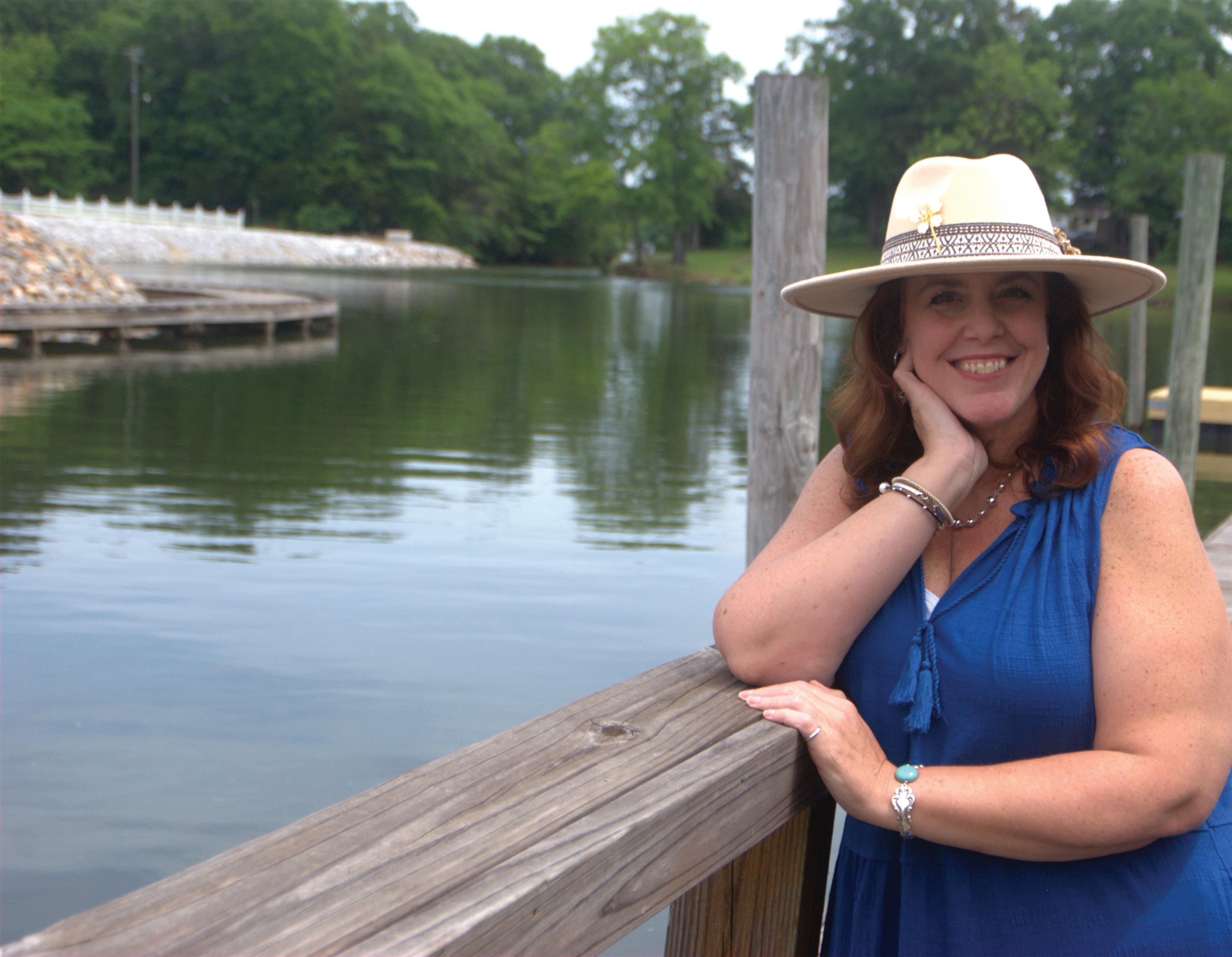
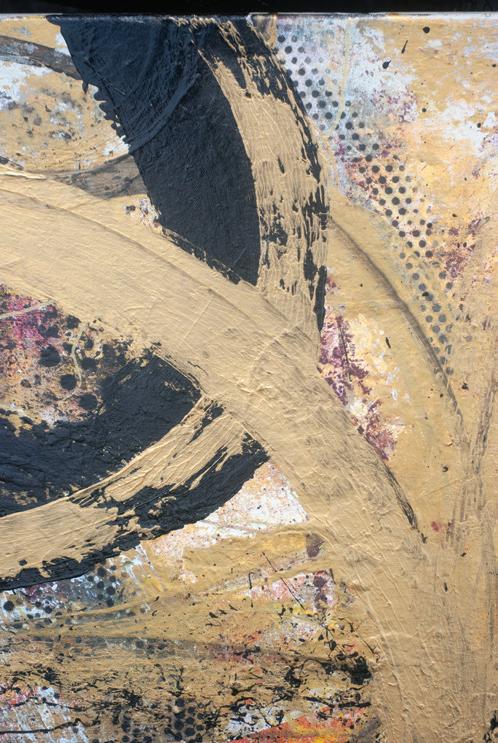
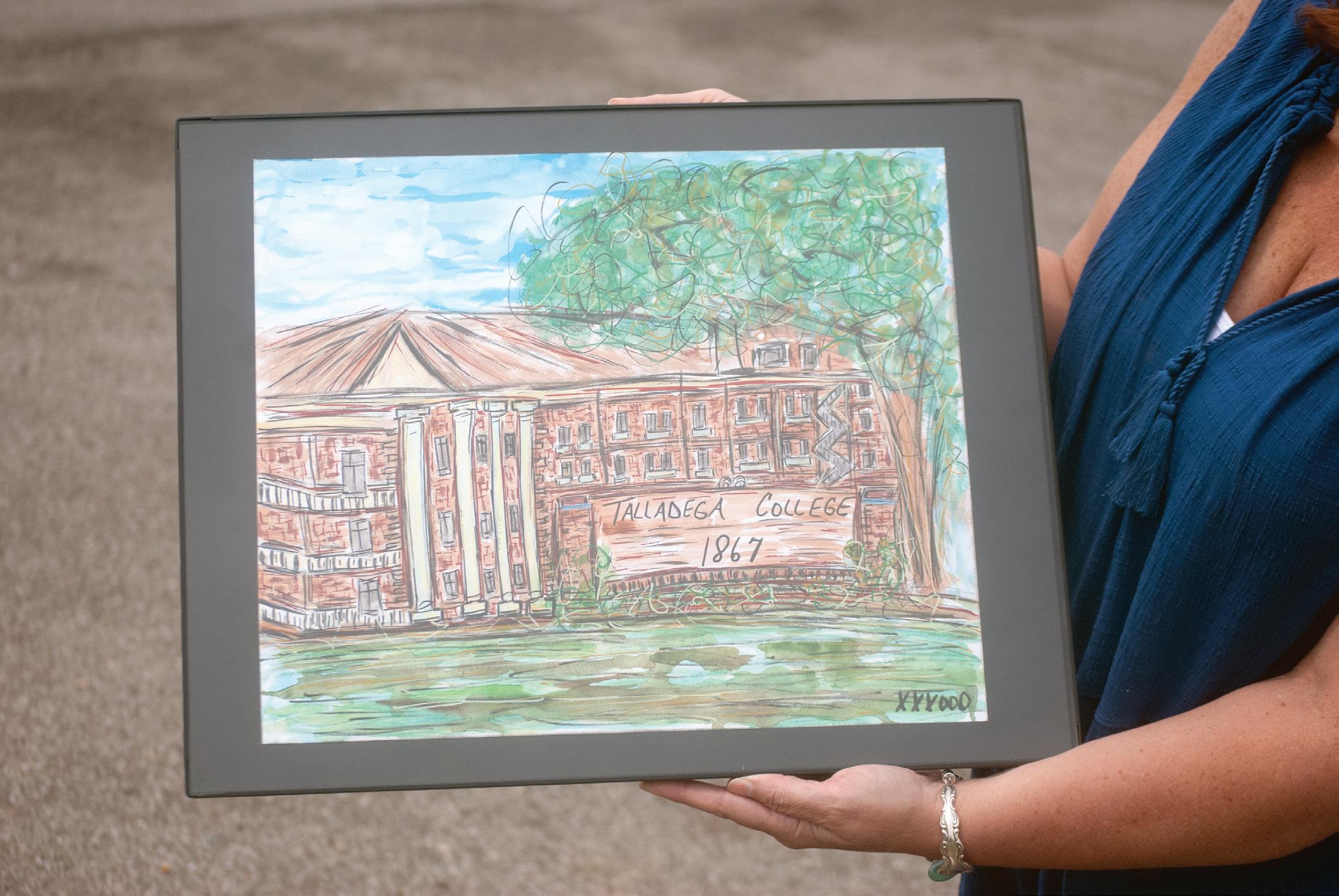
Michelle McGrady paints the stories of buildings in Talladega County and beyond
Written by and Photographed by BUDDY ROBERTS
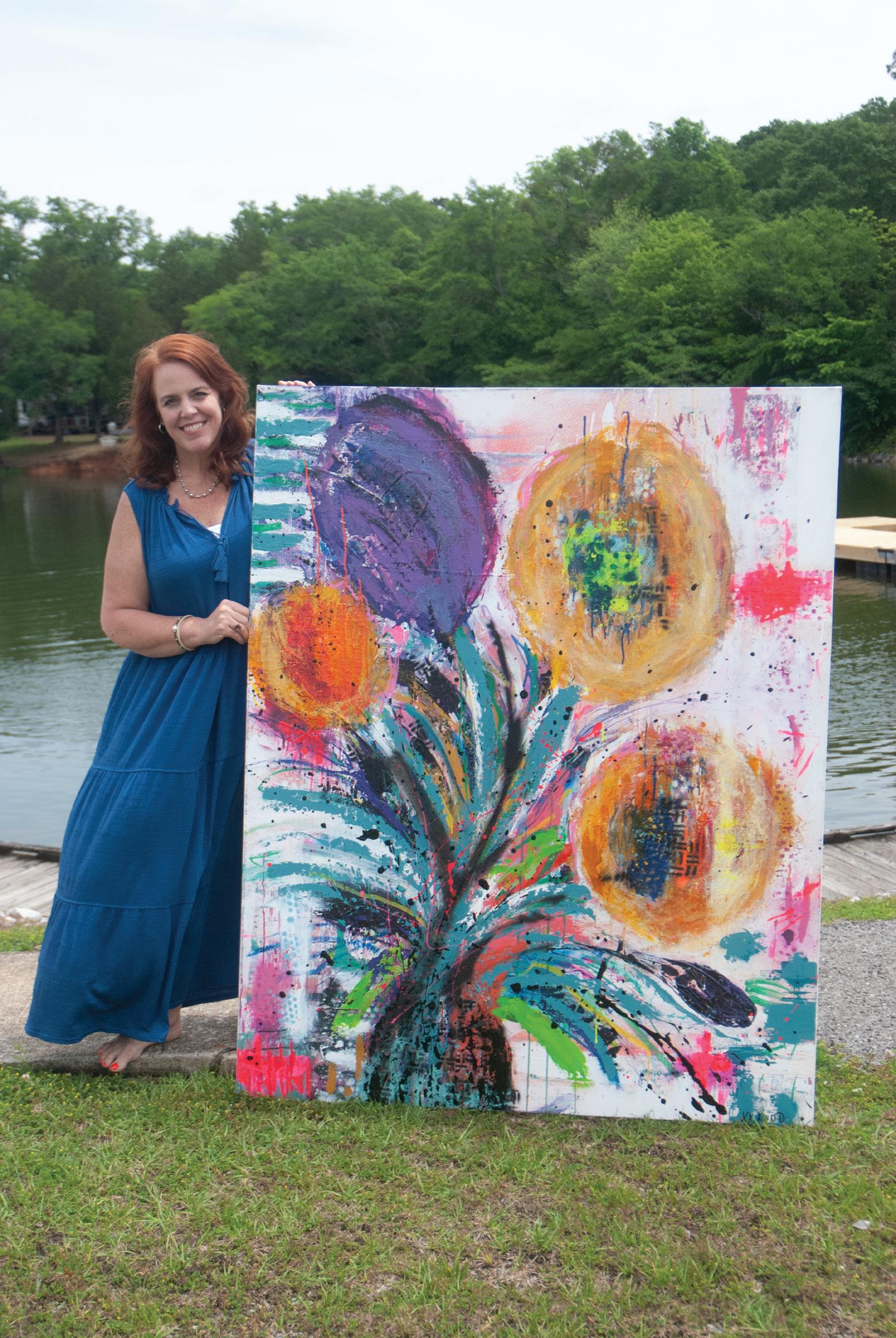
It isn’t difficult to see the realism in Michelle McGrady’s art, but strict verisimilitude isn’t what she’s going for.
“My art has been described as ‘whimsical,’” she says during a morning spent displaying her paintings at Riverside Landing, “and I’ll take that. I want people to feel happy and joyful when they see it.”
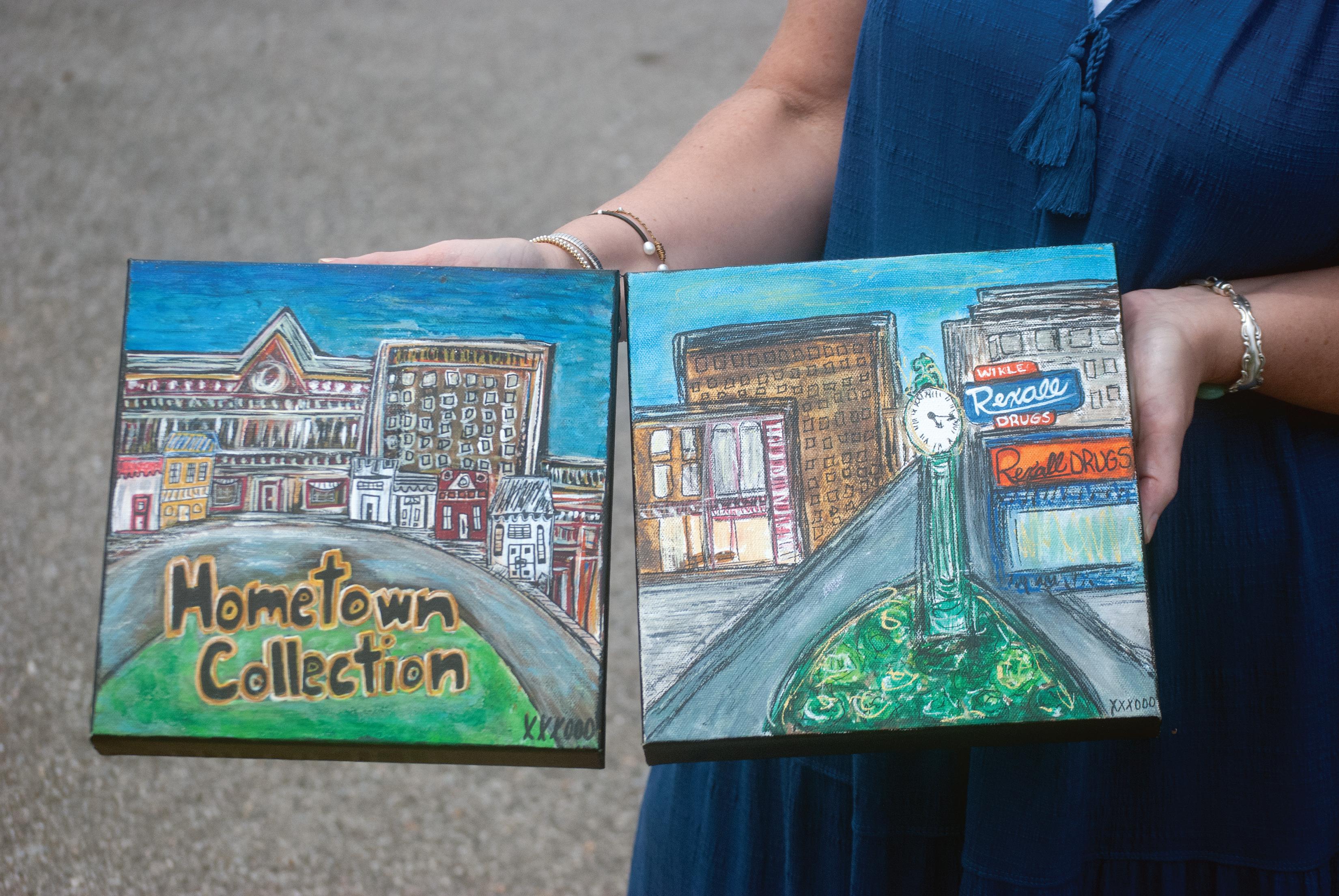
Her bold abstracts and charming depictions of local landmarks – The Hometown Series – succeed in evoking those feelings, with the former style eventually leading to the latter.
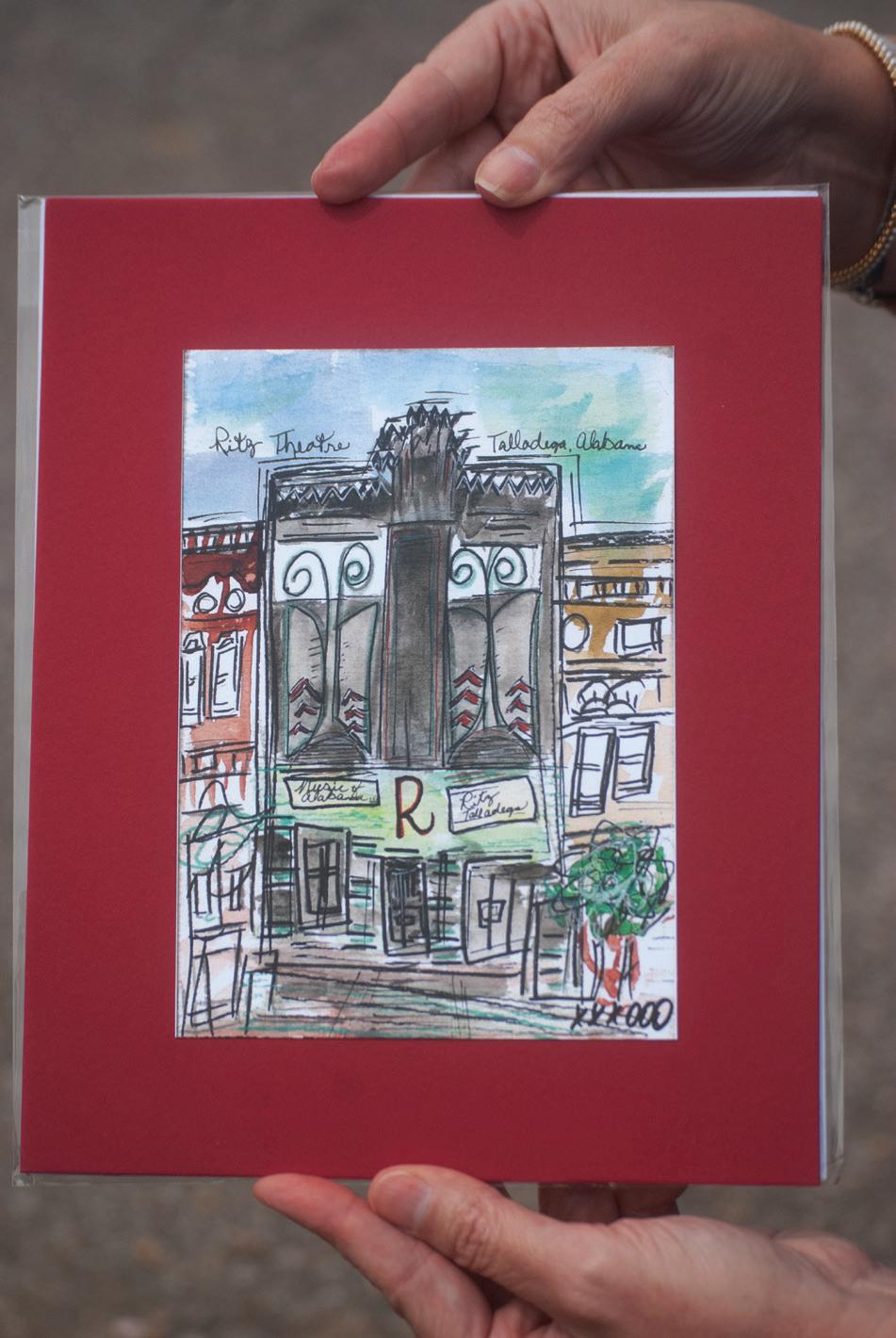
“I was doing abstracts and florals, and then one evening, I just drew downtown Noble Street in Anniston. And I thought, ‘Well, gosh, this looks pretty good.’ So I just went right on and kept drawing local buildings. It branched out to other areas like Talladega and Oxford and Blue Ridge, Georgia. I named it The
Hometown Series because it can always be added to, and no matter where you live, you’re going to have historical buildings and homes that you can relate to.”
Each building and home, she believes, has its own story, which she seeks to capture in her art.
“If they could talk, they would tell a story. I’ve even had some people say, when they’ve seen a drawing I’ve done of a business that’s been in their family for generation after generation, ‘You didn’t just paint a building. You painted part of our family.’”
Talladega entries in Michelle’s Hometown Series include historic homes in the Silk Stocking District and many of the buildings on The Square.
“I’ve done most all of the downtown area in Talladega – the courthouse, the Bottling Works, all of that area in the square. And I’ve just finished the Isbel bank building.” Talladega College and the Talladega Superspeedway are also depicted in the series. “I enjoy looking up the historical facts on the buildings. I feel that it helps to know the history. Each piece is a representation of a site, but not an exact representation. I don’t do any measuring or try to draw to scale. I just get a piece of paper and start sketching.”


Michelle, a retired teacher who holds a master’s degree in reading education, describes herself as a “completely self-taught” artist.
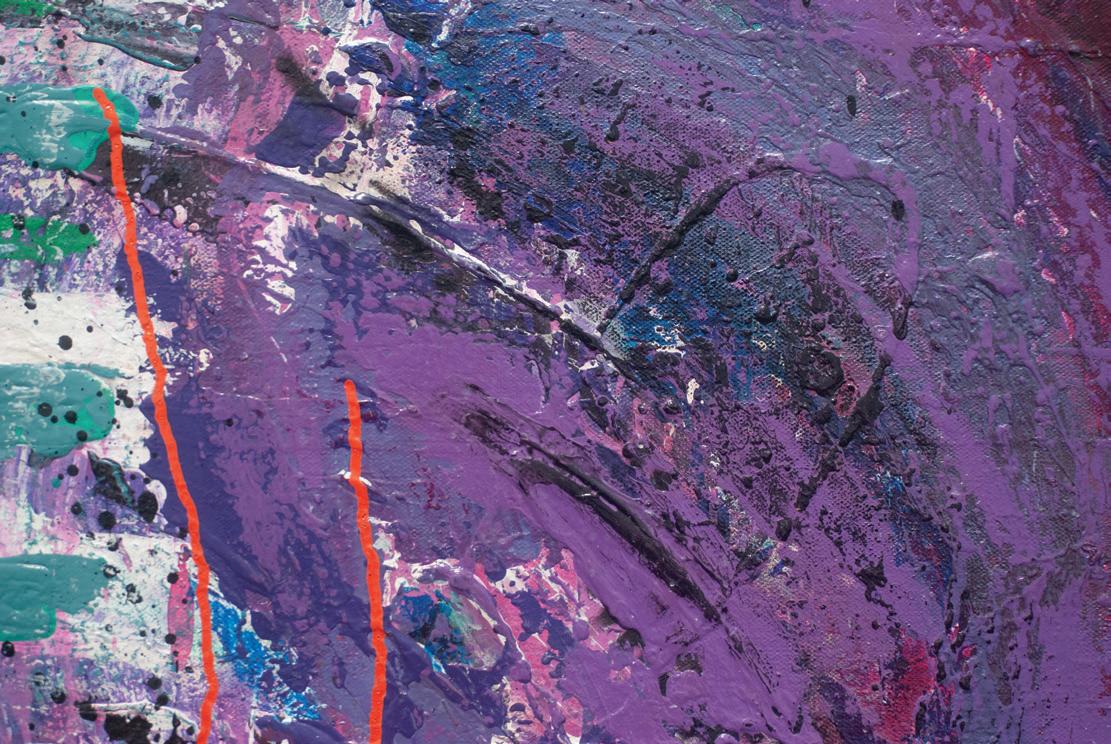
“My style has developed over years of trial and error, just kind of honing in on different types of mixed media and what they do. I use acrylics, watercolors, markers, house paints, spray paints –there’s really no limit as far as what I’ll experiment. I’ve even used black tar before. I still like to experiment, and I still like mixed media.”
Mixed media, she says, is conducive to experimentation because it allows an artist to work without limitations.
“People say oil and water don’t mix. But I don’t know about that. I’ve made it work before – it gives you a bubble effect on a canvas. An artist should be free to work as they choose. I took a class not too long ago, and I was using my fingers to paint, and and the teacher said, ‘We do not use our fingers to paint.’ And I thought to myself, ‘This is not the class for me,’ because I felt like my hands were being tied. How can you tell someone how they should create?”
Texture is also important to Michelle’s work, and unlike many artists, she doesn’t mind if someone touches her paintings.
“If I am somewhere looking at art. I will always touch it. It was once wet, and now it’s not, and you can feel it. Texture adds an extra dimension to a painting. I was doing an art show once, and I had a girl come up to me, and she was blind. She was a student
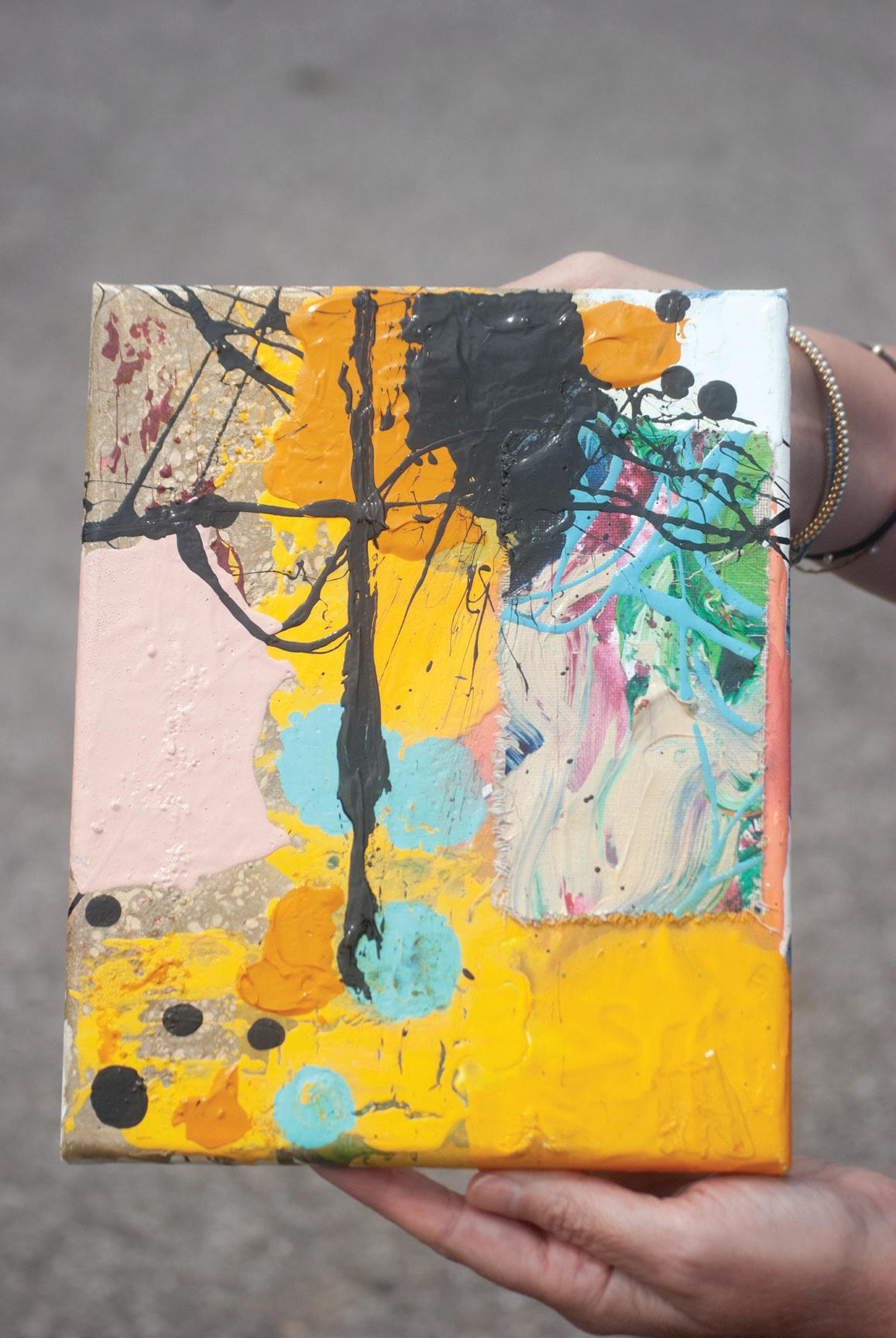































at Alabama School for the Blind. And she said, ‘My mom said your art is pretty,’ and I said, ‘Well, I want you to come over here, and I want you to feel this.’ In one piece of my art, I had mixed tea grounds and coffee grounds in with the paint, which made it very texturized, very bumpy. She could feel that, and she said to me, ‘It’s like reading braille.’
“That was powerful. A lot of people will say, ‘Don’t touch the art,’ but I am not that way. I want you to touch the art. I want you to run your fingers over it, because it’s always going to have some kind of texture to it. Even if it’s on paper, it will have texture to it.”
Like many artists, Michelle says she relies on self-motivation and inspiration when she’s working.
“It’s a little of both. I’ll sit down and start on a painting, and then I may not return to it for days or weeks. Then the inspiration hits. Sometimes I’ll be sleeping, and then I’ll wake up and think about it, and then I’ll get up and go do it. Sometimes I have to give myself a little break from what I’ve started, and then poof, it just all pops together. Inspiration just kind of hits, and you have to go with it when it does.”




























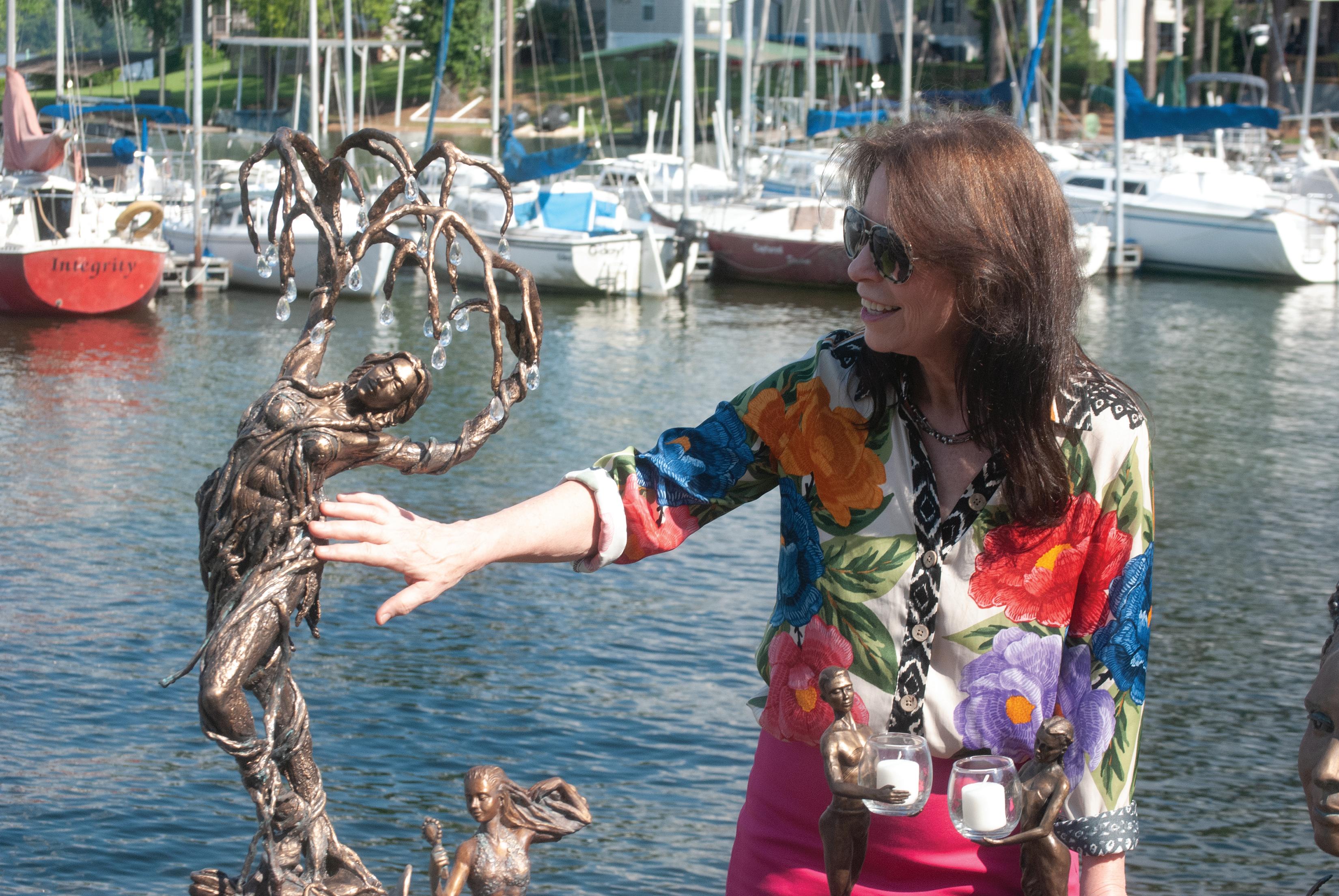
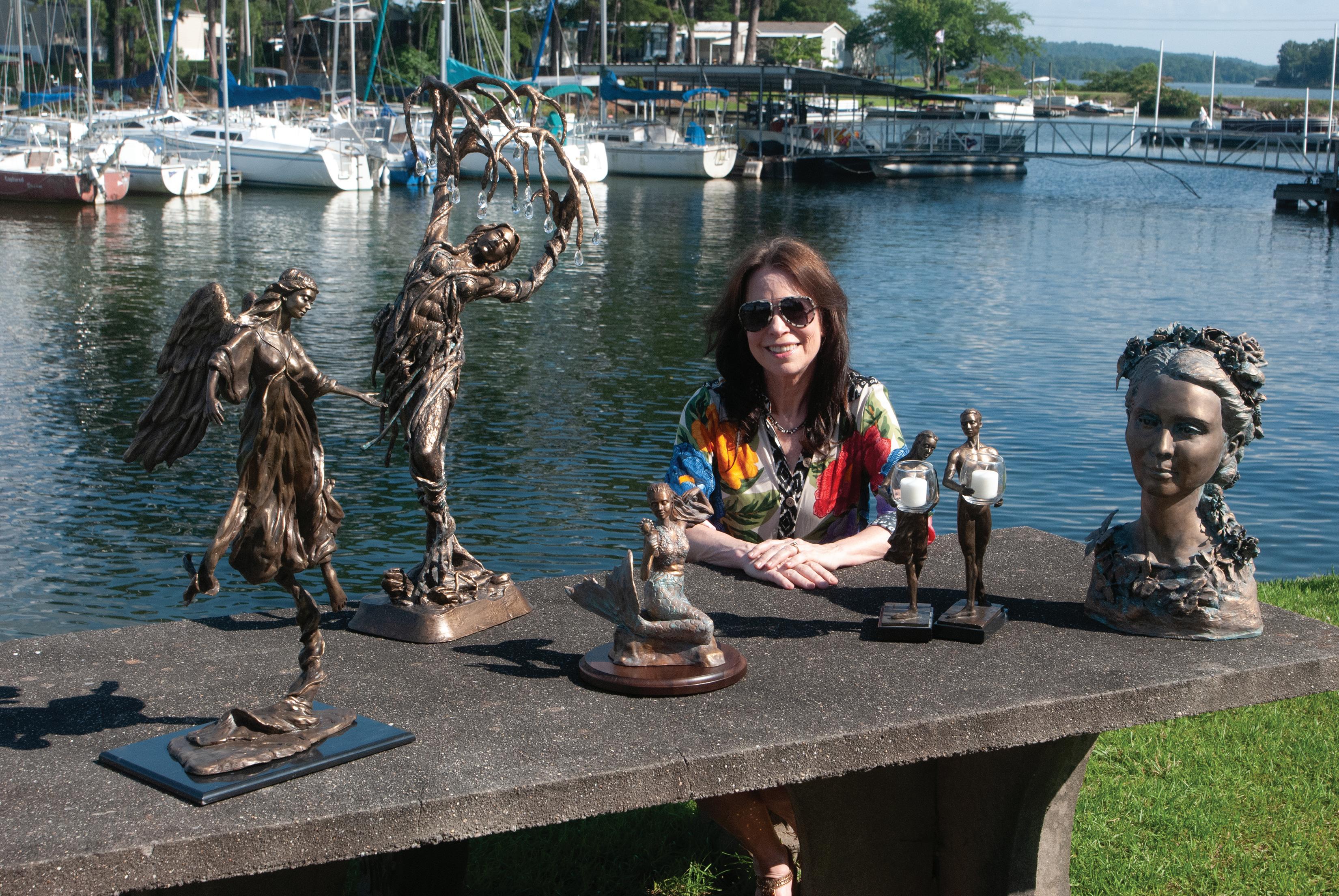
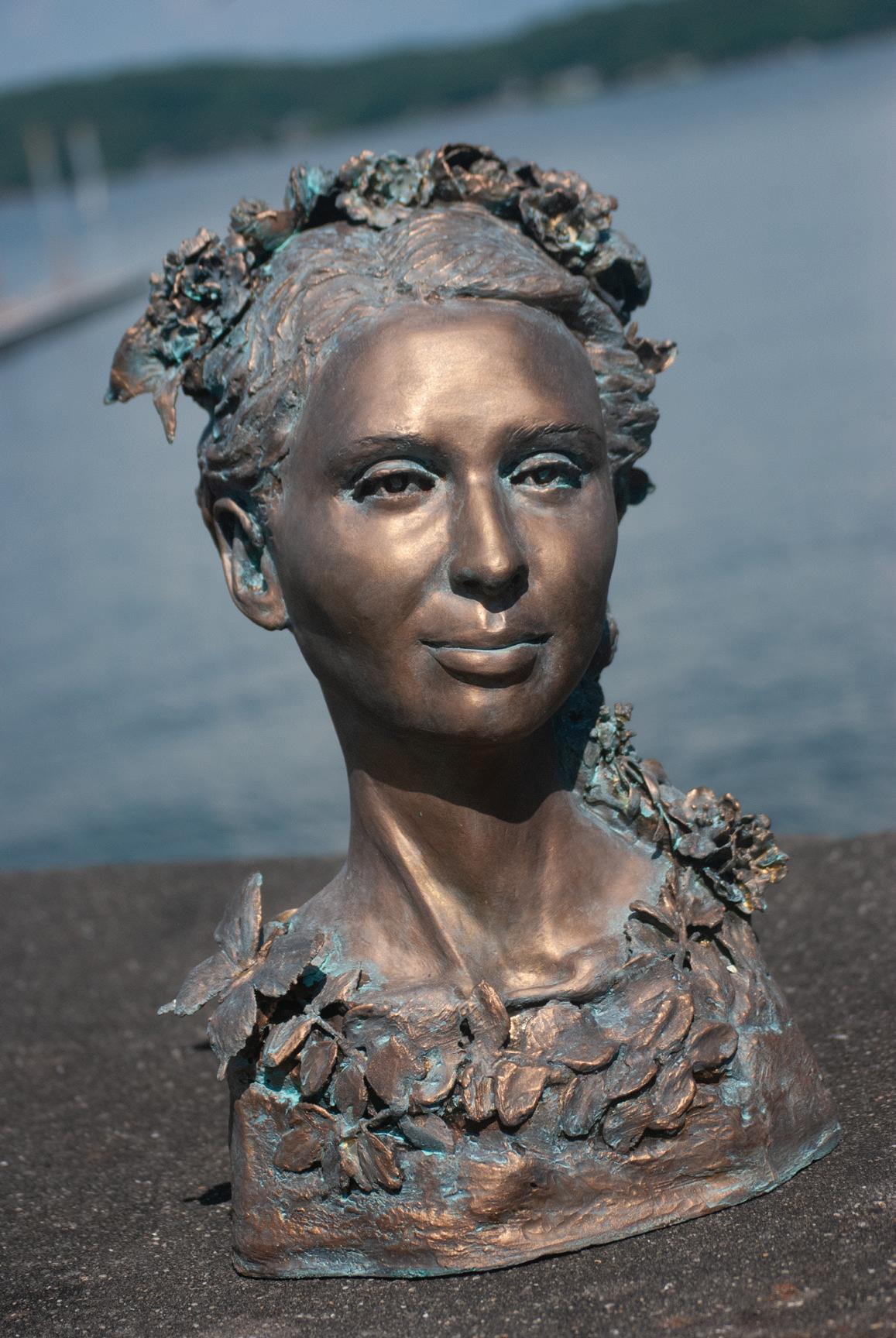
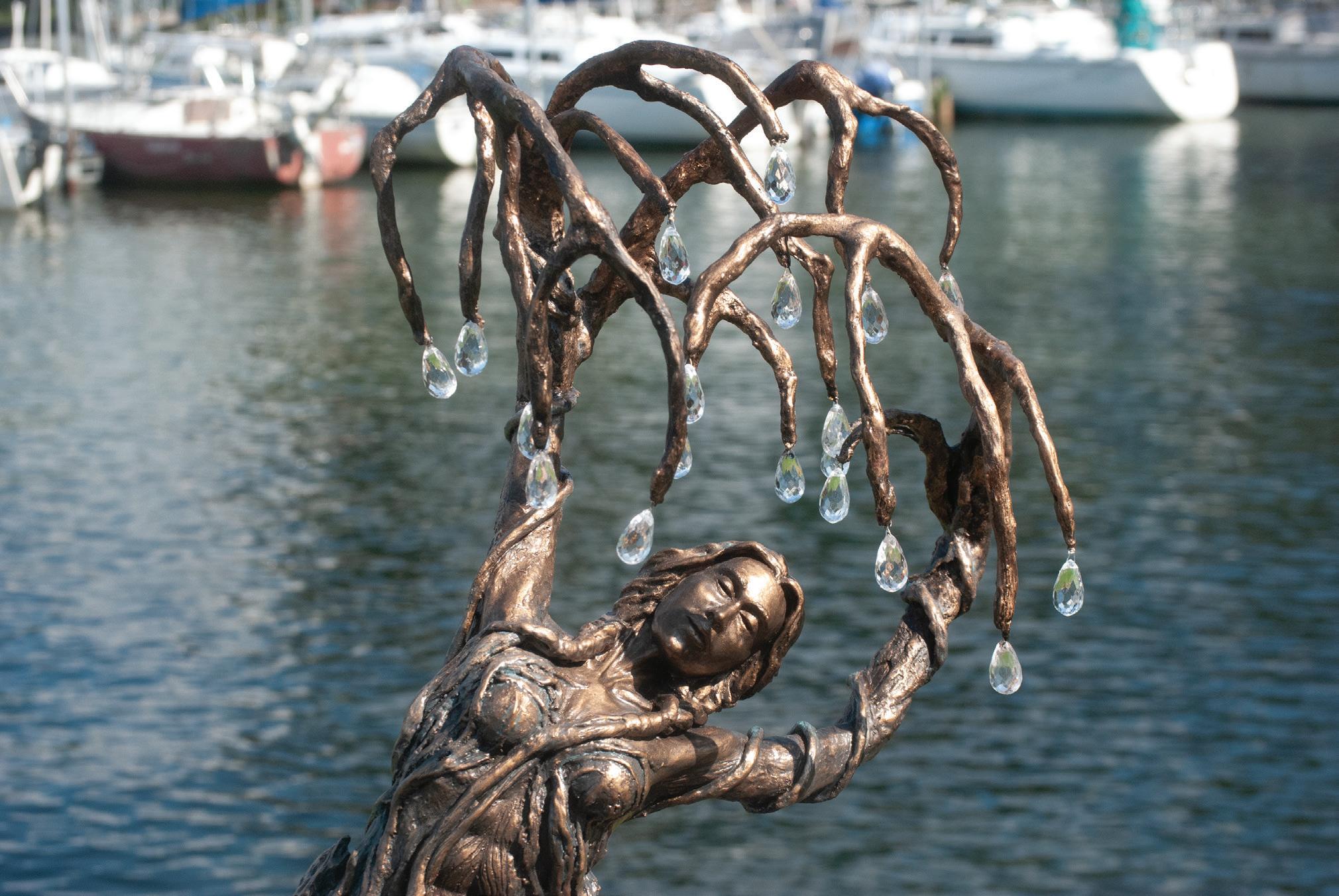
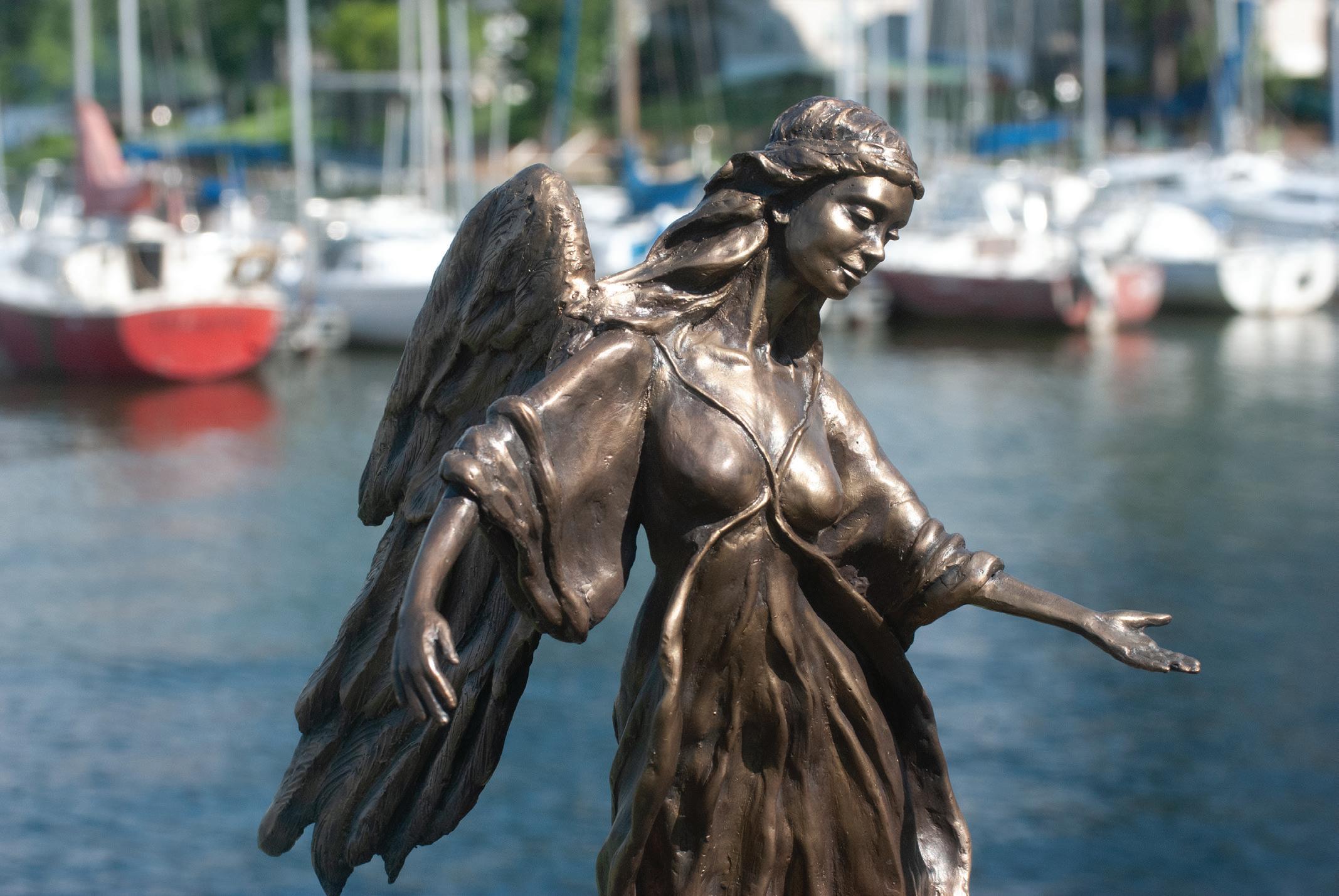
Artist Cindy Free creates sculptures rooted in romantic realism
Written by and Photographed by BUDDY ROBERTS
Cindy Free smiles often while talking about her art.
“Are you familiar with the lost wax method of making a bronze?” she asks.
“I am not,” I reply. “Sculpture fascinates me, but I know very little about the process.”
There’s the smile. “Well, I can tell you all about it,” she says
And she proceeds to, with the precise, specialized knowledge of a skilled artisan who thoroughly understands a technical process yet can explain it simply for the benefit of an interested yet uninformed audience.
Cindy describes each step of the process methodically but not ploddingly: building an armature, adding the plasticine clay, molding the sculpture, pouring the hydrostone, casting the figure, pouring the liquid bronze.
“...So once it’s thick enough,” she concludes, “then it’s fired at 2,000 degrees to harden the ceramic shell so that it is strong enough to receive liquid lava bronze. But, of course, remember what was in there was wax, so when you harden the ceramic shell, the wax melts out, and that’s why this style of making

bronze is called the lost wax method.”
“A very involved process,” I observe.
The smile is back, friendly and infectious.
“They’ve been doing it for thousands of years, and it’s a beautiful process. It is the reason for the beauty of the bronze. It’s hand-made, one part at a time, by the artisan. It cannot be manufactured.”
A process that’s the same today as it was in antiquity. “Do you feel a connection to the history?” I ask.
“I feel privileged,” Cindy says, the smile reflective now. “I feel very privileged, and I know that I’m very lucky to have the Birmingham Sculpture Foundry here, because this type of creation is not done everywhere, and it is unique people that will invest their lives in understanding every part of the process, becoming specialized in every part of it, and keeping this art form going. It is not something you can learn in a book. I had to learn the different stages from other artists, and the best skills that I’ve received, the most knowledge that actually makes sense, came from my mentors here. They support my learning, and that’s the way artisans have learned – from one another through the years. You just have to get in there and do it.”
A native of Ohio, Cindy has done exactly that since childhood. Her mother founded the Canton Ballet, and after moving to Birmingham, Cindy began performing with the original
Birmingham Ballet when she was 13. “I didn’t get very far with it, but after college I circled back around to the dance world. The Birmingham Ballet – the one I was part of as a child – had folded in 1979, and I wanted to start something new.”
So she did, and for 29 years served as founder and artistic and executive director of the new Birmingham Ballet. “It was when that ended in 2020 that I circled into sculpture. I guess the segue was all those years training dancers, molding and shaping their bodies, placing their arm and adjusting it, analyzing what I was seeing and what I wanted it to look like and how to articulate it that prepared me for what I do now as a figure sculptor.”
It was during a vacation at the beach that Cindy’s talent for sculpting came to the fore.
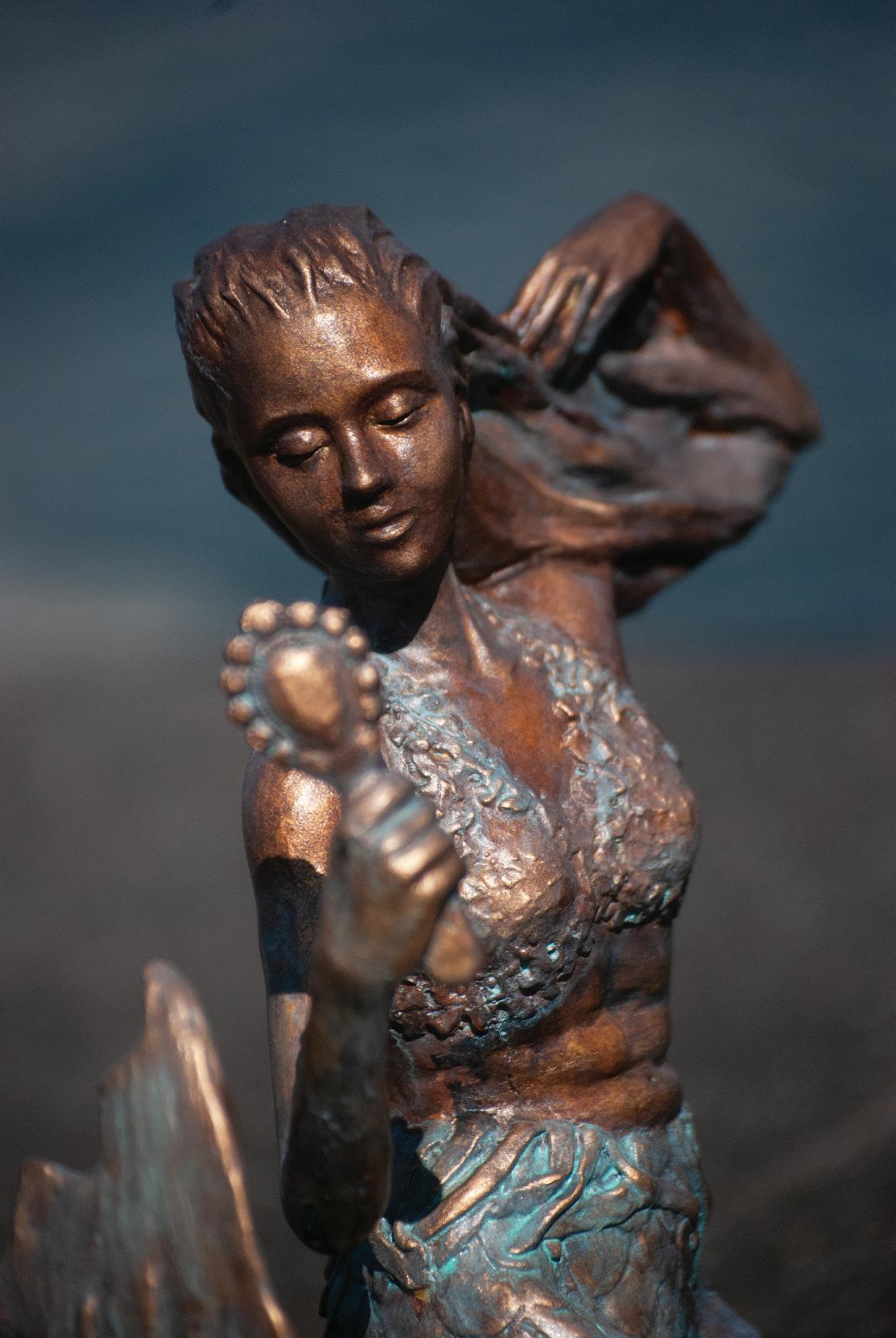
“I got bored one day,” she recalls. “I needed something to do, so I watched my husband, who loved to sculpt in the sand. He would sculpt sharks and monsters and dragons – all kinds of sea creatures – and then one day he sculpted a mermaid. I asked him to teach me how, and I started sculpting mermaids in the sand. From then on, every time I went to the beach, I would sculpt a mermaid a day. I would start out with the mother, and then I’d make a baby mermaid, and then I’d make the father, and then I’d make the youth, so if we were there for a week, there’d be at least four, maybe seven mermaids on the beach if they didn’t get washed away.”
Since sand isn’t a permanent medium, “very often they did get washed away with the tide and people would come and ask me, ‘Doesn’t it bother you that it’s going to get washed away?’ And I’d say, ‘No, because it’s temporary art.’ I just didn’t like it when people would come along stomp them out. It it just got washed away
naturally, that was okay. My family and friends who would be at the beach with us would say to me, ‘You really need to get some clay and make things that don’t wash away with the tides.’”
She was initially dismissive of the suggestion, but “I had achieved all my goals – and more – in the ballet world, and I felt ready for a change. At Christmas four years ago, my husband gave me a gift to go to Atlanta to a sculpture workshop at a studio there, and that was the beginning.”
Cindy describes herself as “mostly self-taught,” although she cites as influences and mentors such artists as Brian Booth Craig, Nelson Grice, Kevin Chambers, and John Stewart Jackson, and Joe McCreary of the Birmingham Sculpture Factory. Each sculptor, she believes, must develop the skills and techniques required of the work, but more than that is necessary to create art.
“Creating art comes from someplace deeper than our own brains. It’s very meditative, and it feels as though your best work is coming more from your spirit than your mind. It’s your spirit that allows you to see what you need to capture that will be here for thousands of years after you go. A bronze is not going to just disappear. A bronze is alive. It breathes in a room. It doesn’t just occupy space. It calls to you. It speaks to you. It has a soul, not in the sense of our human souls, but it has an energy that came from the artist who worked on it.”
She’s smiling again.
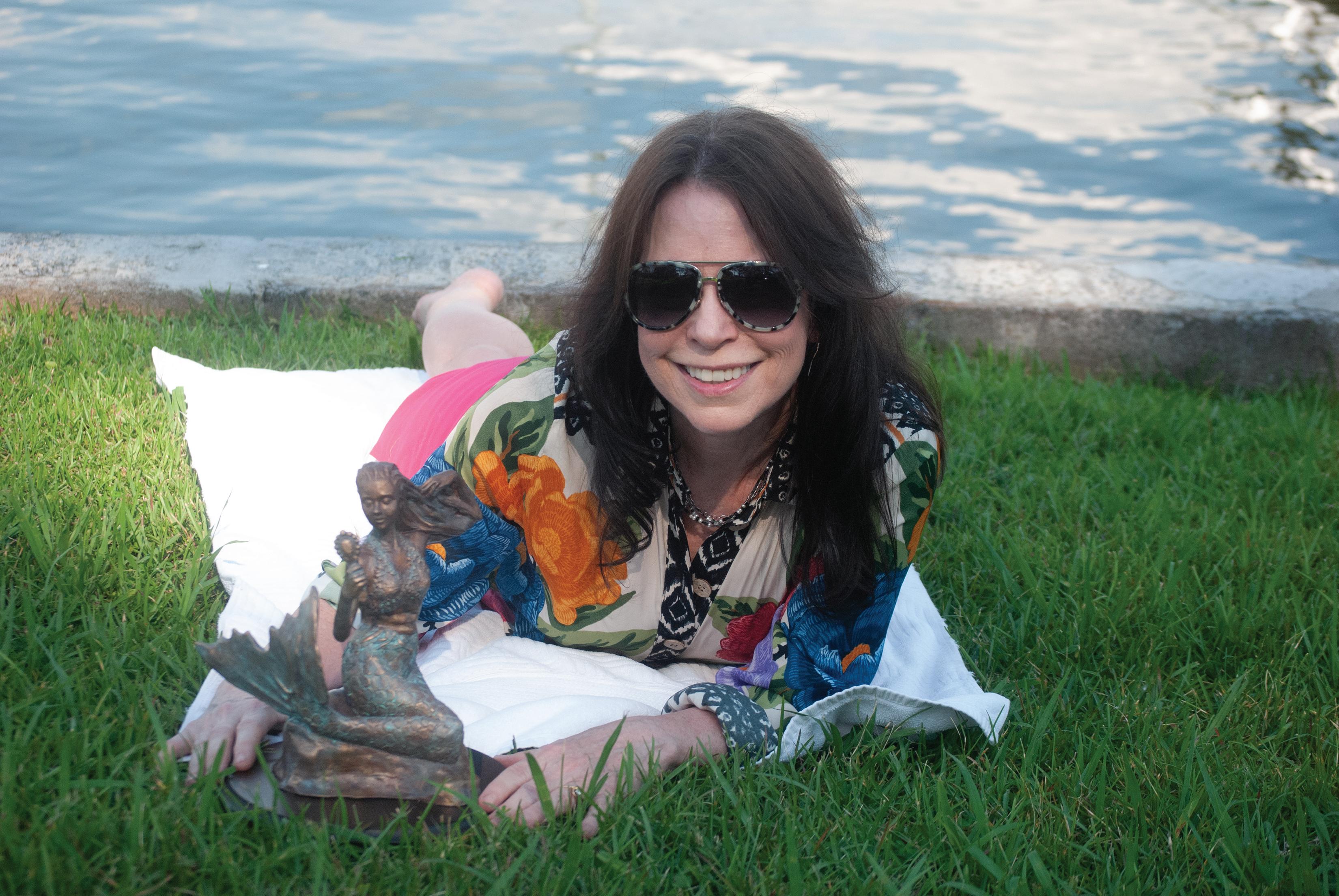
“We all create in our different ways, but I’ve been surprised to find out how many people, as they mature, move into some type of creativity, whether they had it in their youth or not. I think it’s just part of being human, part of our connection to God, our source. God is creative. Therefore we are. We all create in different ways, and art touches us in different ways.”
She turns to look at the vista of Logan Martin Lake behind her.
“It’s like the lake. Water touches us. When you’re by the water, you feel a connection to it. That’s the same zone art hits you in.”






Written
by LACI BRASWELL
Photographed by TUCKER WEBB
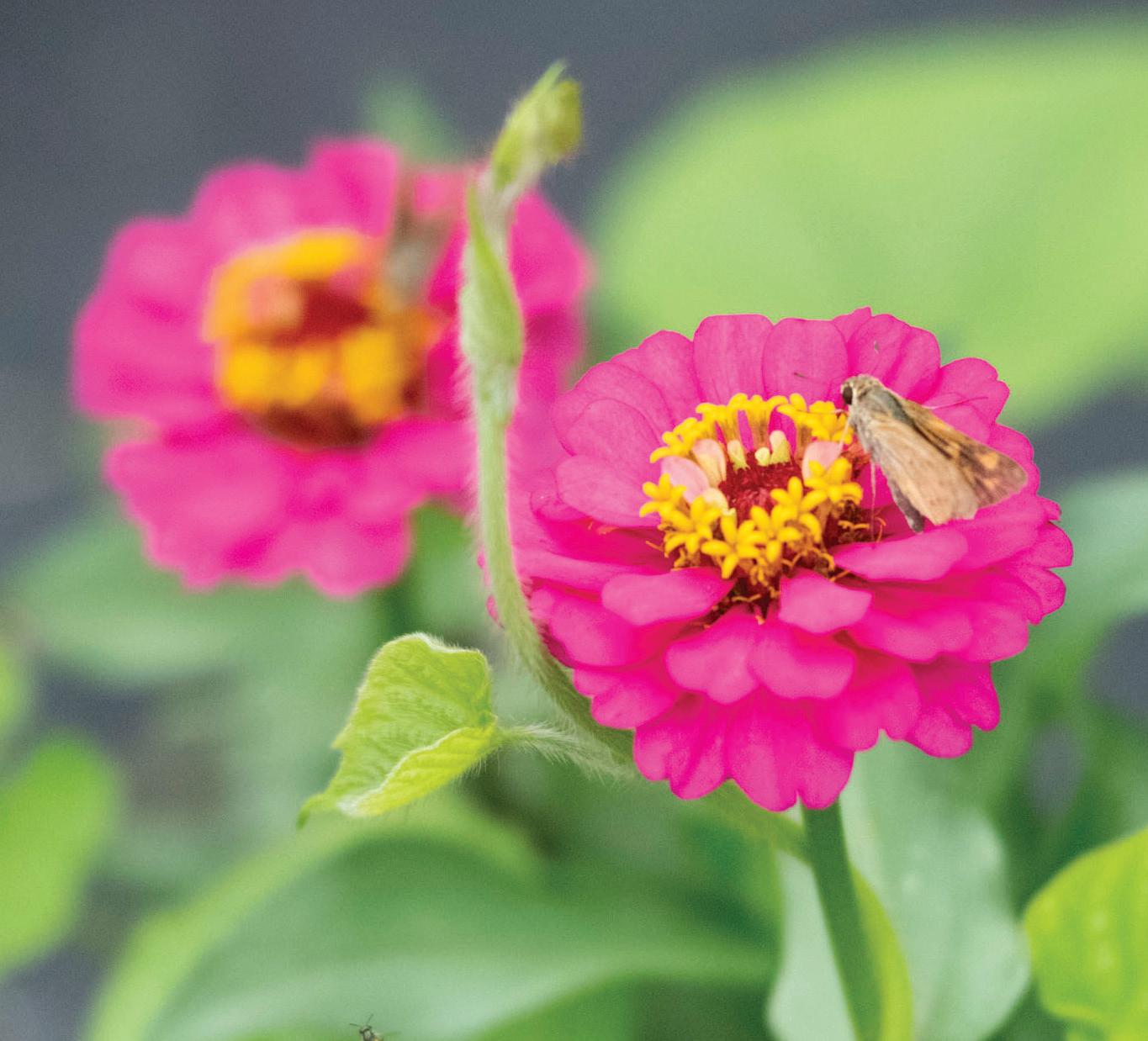
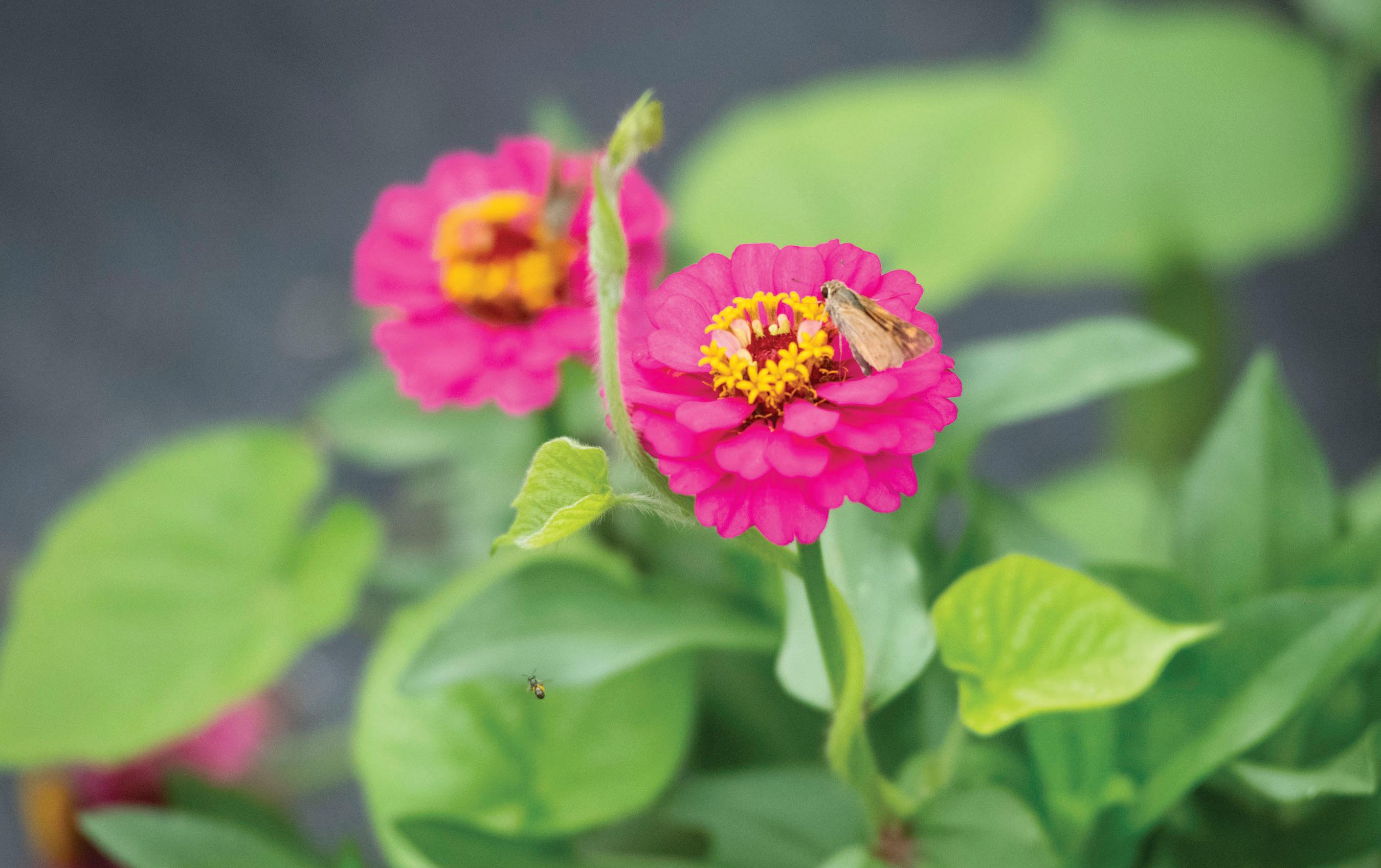
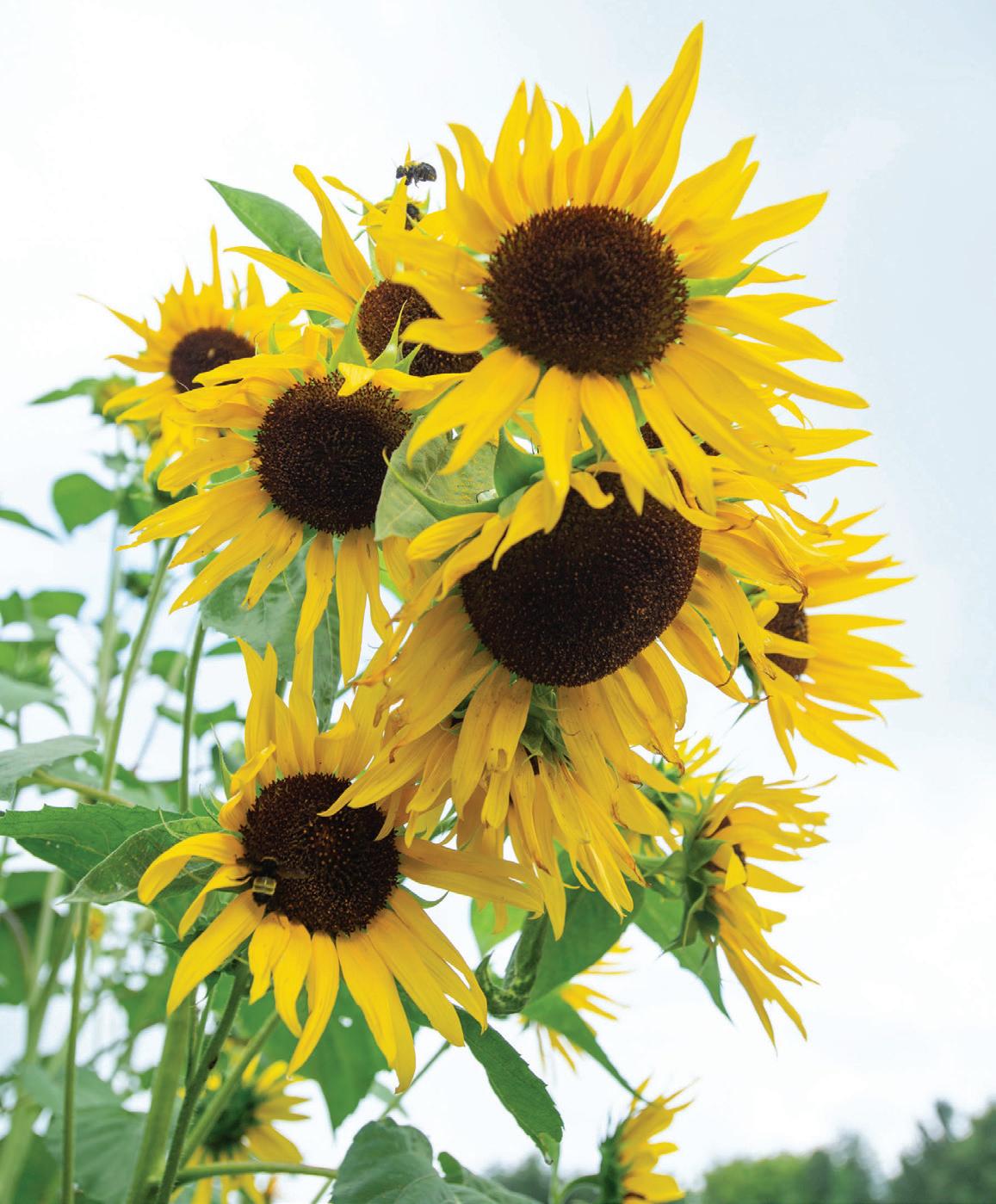
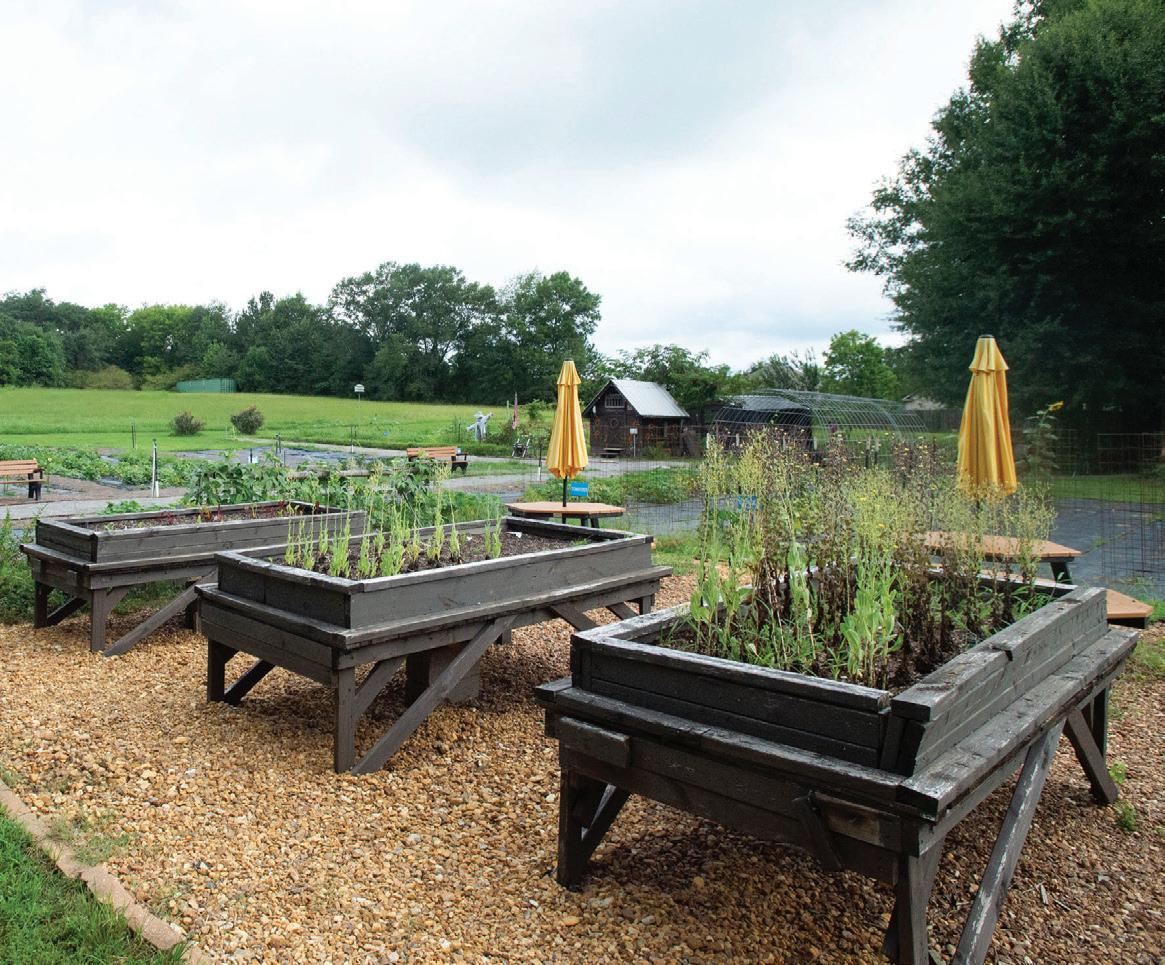
Across from St. Simon’s Episcopal Church, rows of ripening vegetables, fragrant herbs, and towering sunflowers welcome visitors to the Pell City Gateway Community Garden.
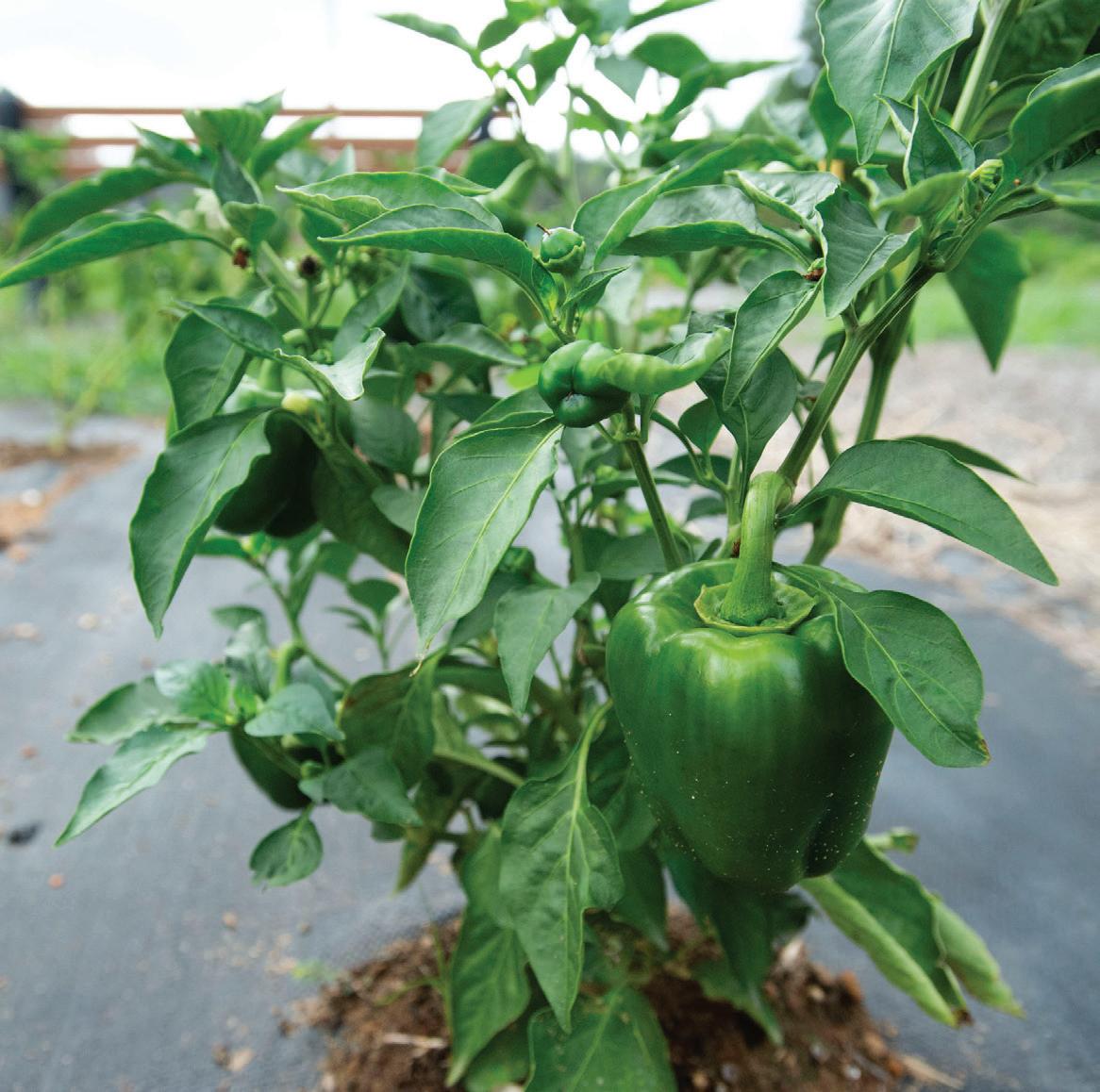
During the height of summer, volunteers can often be found harvesting cucumbers, squash, peppers, and melons while tending a space that has become much more than a community garden.
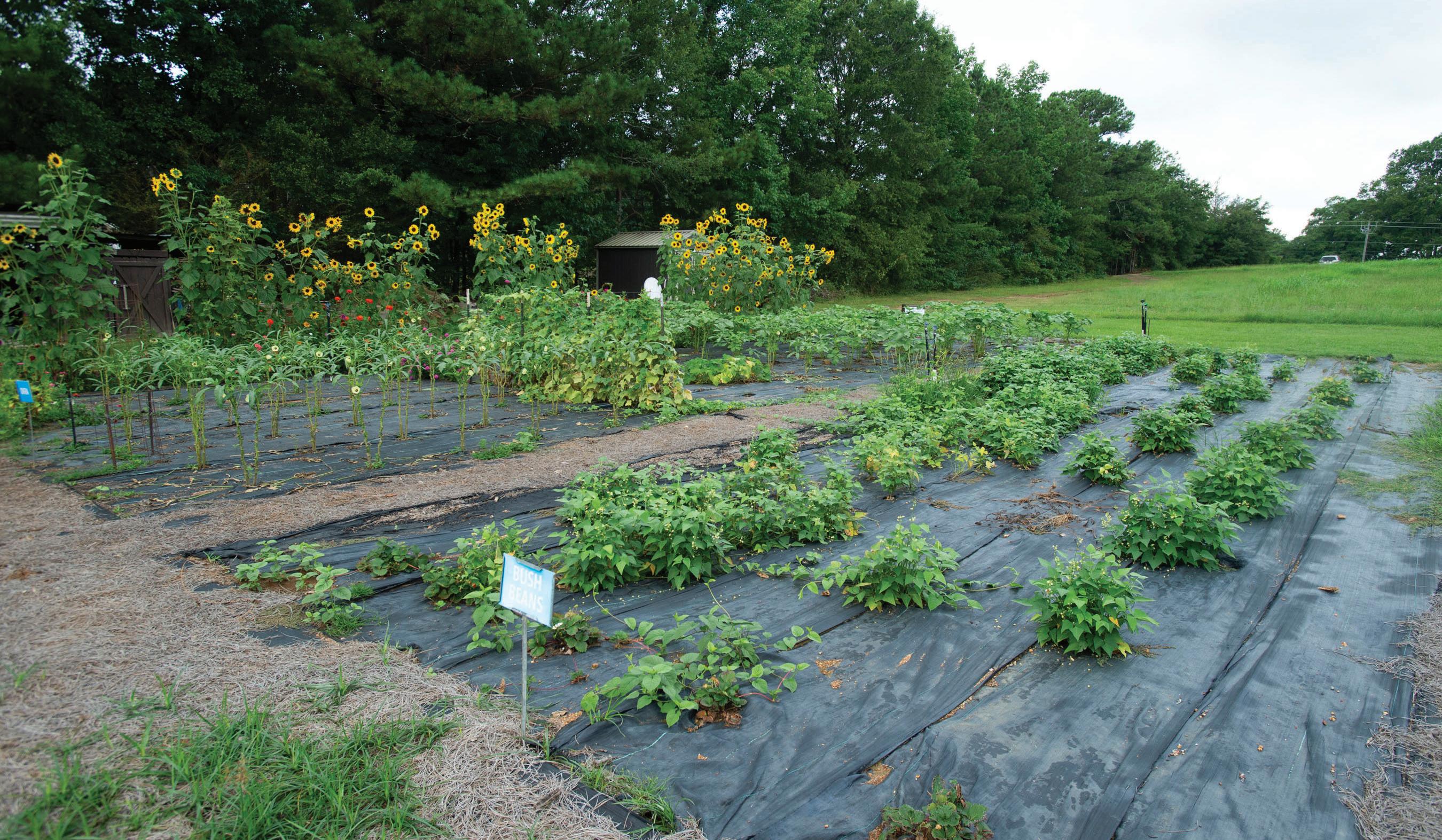
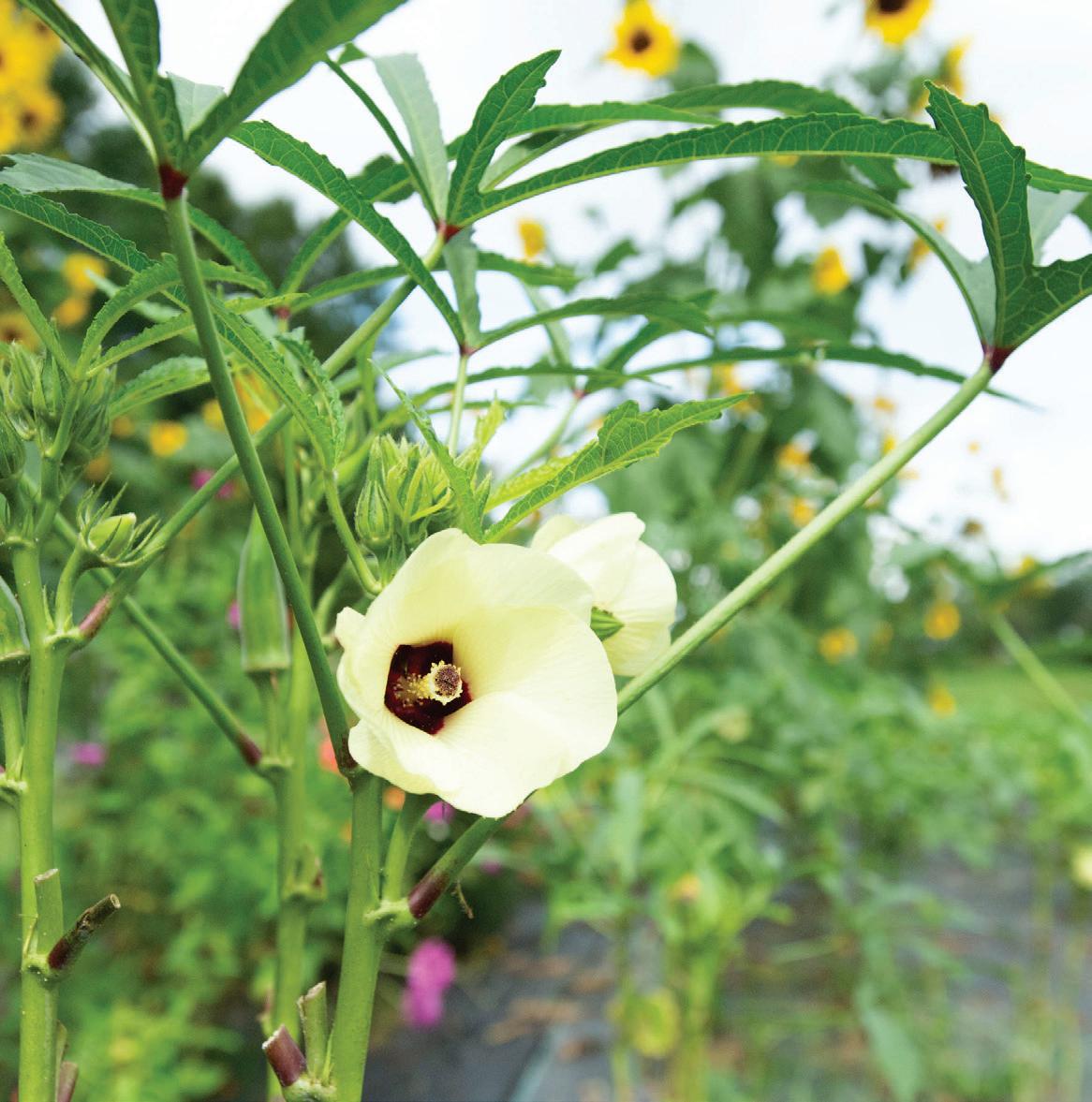
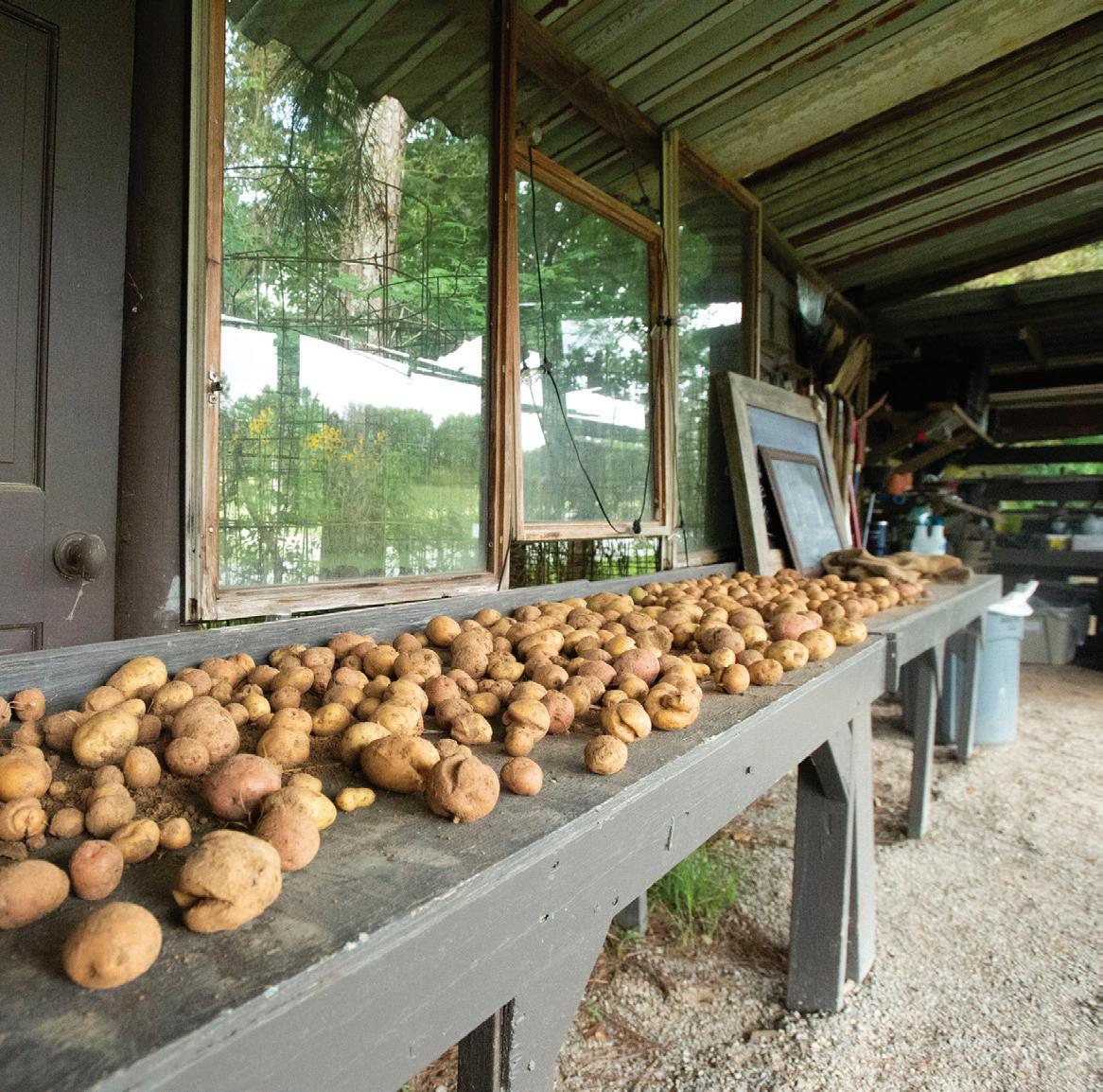
According to executive director Renee Lilly, summer is one of the garden’s busiest and most rewarding seasons. “We are in the harvesting season of cucumbers, squash, bush beans, okra, peppers, melons, and potatoes,” she said.
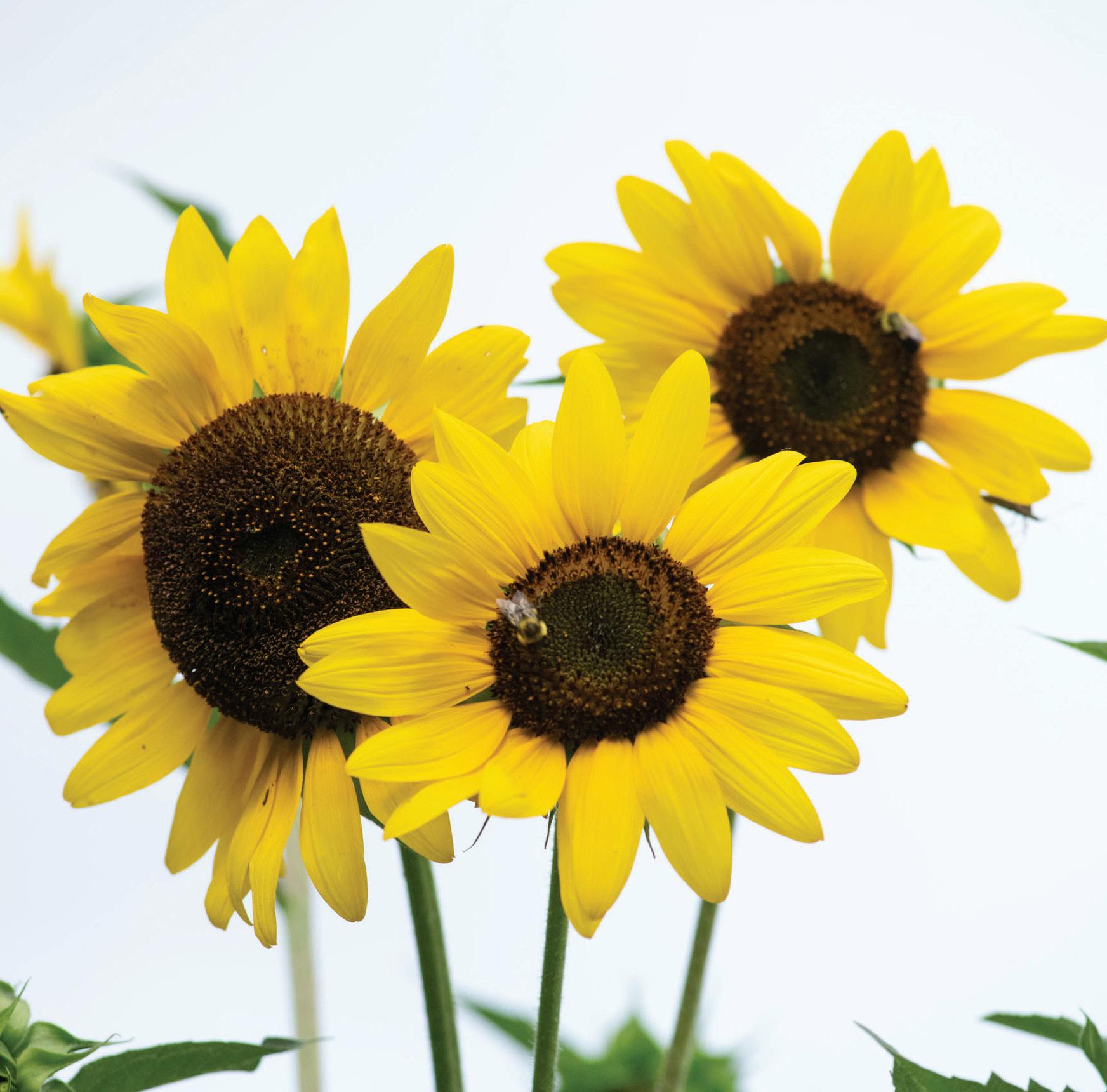
Flowers and herbs also flourish throughout the garden, while bright sunflowers have become one of its signature sights during the summer months.
While the harvest draws many visitors, the garden’s purpose extends well beyond what grows in its beds. Its mission, Lilly said, is simple: “To provide body and soul nourishment through cooperative community gardening.”
That mission has guided the Pell City Gateway Community Garden since 2014, when a group of downtown business owners came together with a vision of creating a shared space where neighbors could grow food, build relationships, and give back to the community.
The project first took root on the former Avondale Mills property before relocating to its current home across from St. Simon’s Episcopal Church. “We’ve grown so much,” Lilly said.
Today, the garden thrives because of a dedicated group of volunteers who plant, weed, water, and harvest throughout the growing season. “But,” the director added, “we also need to have a strong group of people out here that’s going to farm and take care of this beautiful place.”
The harvest, however, doesn’t stay within the garden’s grounds for long. Fresh fruits and vegetables are regularly distributed to local food pantries and the Pell City Senior Center, extending the garden’s impact throughout the community.
“We introduce our grown food to the local food pantries and to the senior center,” Lilly said. “They’re always so excited to get it.”
Since the garden was established, volunteers estimate they have donated nearly 30,000 pounds of fresh fruits and vegetables. Because of its outreach and mission, garden officials ask visitors to only admire the blooms and crops.
While feeding the community remains central to its work, the garden was also intentionally designed as a place of peace and restoration. It is part of the Open Spaces, Sacred Places network, a national initiative recognizing outdoor spaces created for reflection, healing and renewal. Through the Community Foundation of Northeast Alabama, the Pell City garden recently received grant funding to help maintain its designation as a healing and restorative garden.
Each Nature Sacred garden includes a handcrafted wooden bench and a journal where visitors are encouraged to pause, reflect and leave their thoughts behind. Lilly said those quiet moments are every bit as important as the garden’s role in producing food. “I encourage people to come out here and bring their lunch. You can sit here and enjoy this beautiful environment.”
Visitors don’t have to be experienced gardeners to feel right at home. Throughout the year, the garden hosts volunteer workdays, educational Skills Days, and seasonal activities designed to welcome both seasoned gardeners and those who simply want to learn.
Lilly said introducing young people to gardening continues to be one of the organization’s highest priorities. The garden’s Junior Fire Souls program, part of the Nature Sacred initiative, encourages youth involvement, and scholarships are available through the program.
“We want people to understand where their food comes from and how growing your own can help with food insecurity,” Lilly said. “Even just being outside, moving your body and working in the soil -- it’s good for your health.”
As the organization looks ahead, volunteers are preparing for the garden’s annual November fundraiser, which continues to grow each year. The event features a chance to win a freezer stocked with a quarter of a cow and a quarter of a hog, along
with additional door prizes that help support the garden’s ongoing mission.
The nonprofit 501(c)3 organization also plans to apply for an Alabama Power grant to build a pavilion that would provide additional space for educational programs, volunteer gatherings and community events.
The Pell City Gateway Community Garden is located at 3705 Mays Bend Road. Volunteer meetings are held every third Monday at St. Simon’s Episcopal Church. Volunteer workdays are typically held on Saturday mornings, with dates announced through the garden’s Facebook page and email list.
For more information or to get involved, contact Lilly at 205533-5594 or follow the Pell City Gateway Community Garden on Facebook.

MONDAY -T HUR SDAY 7AM-4PM•FRIDAY7AM-2PM


WH OI NS PI RE THE NEX TG ENE RA TI ON
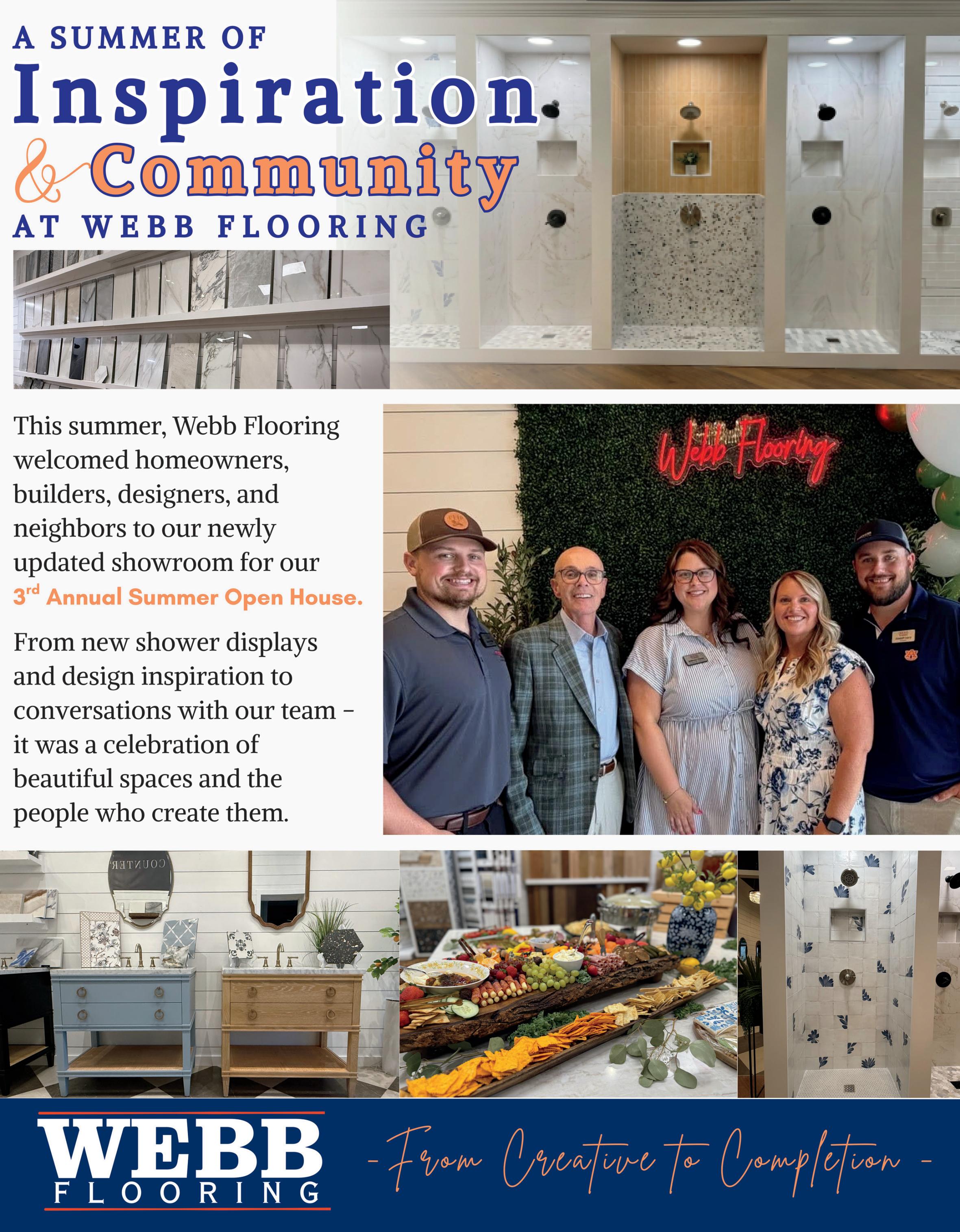
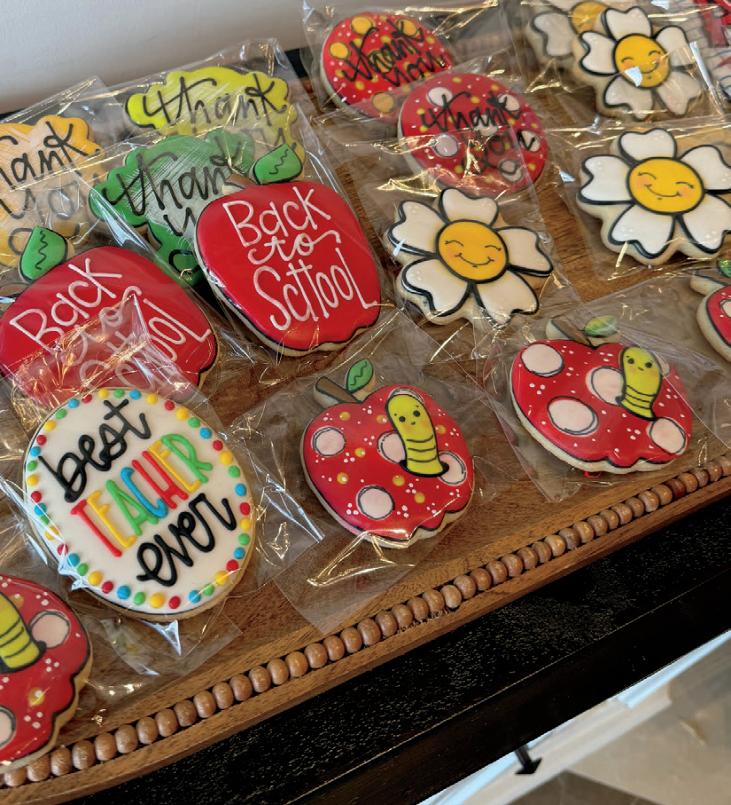
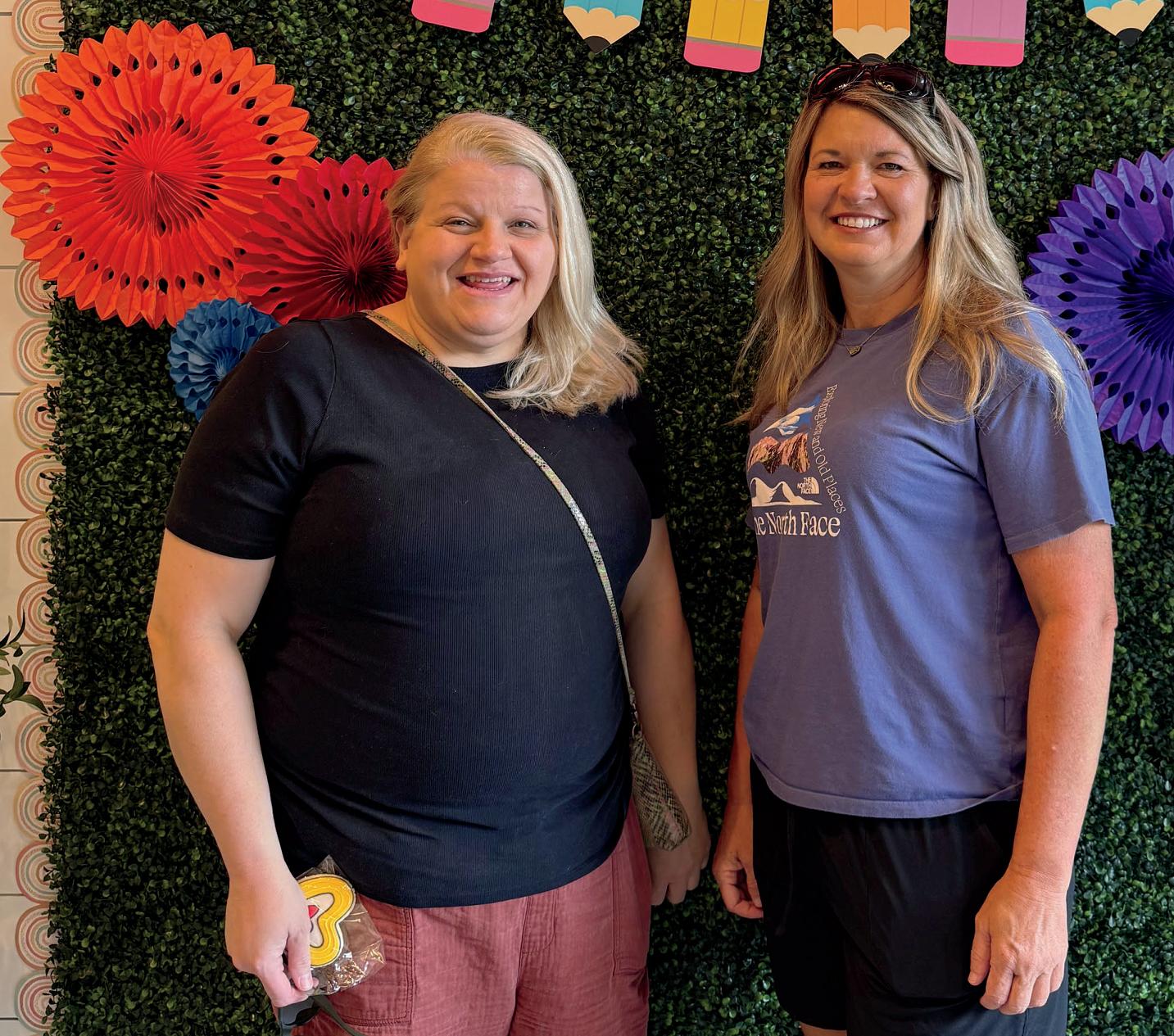
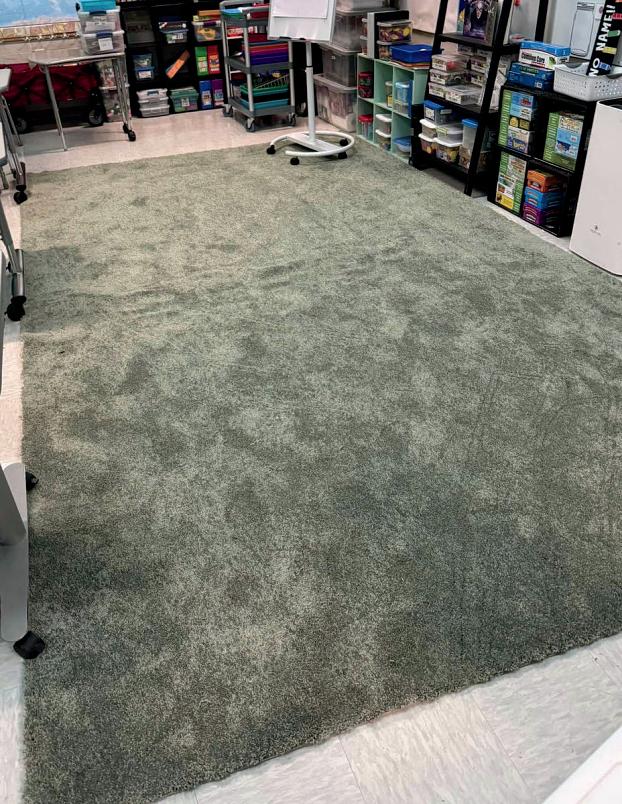
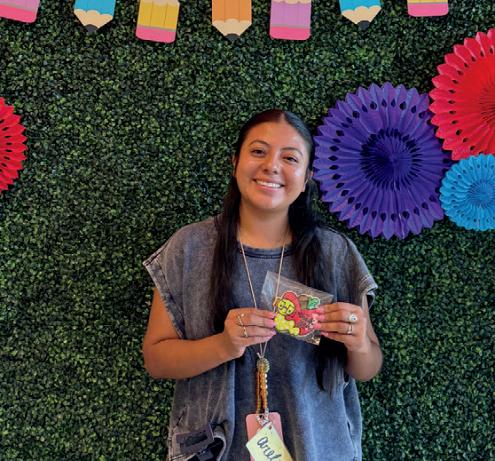
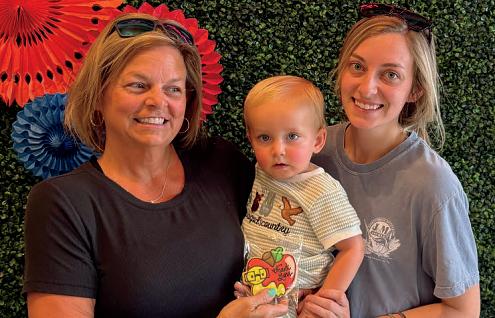
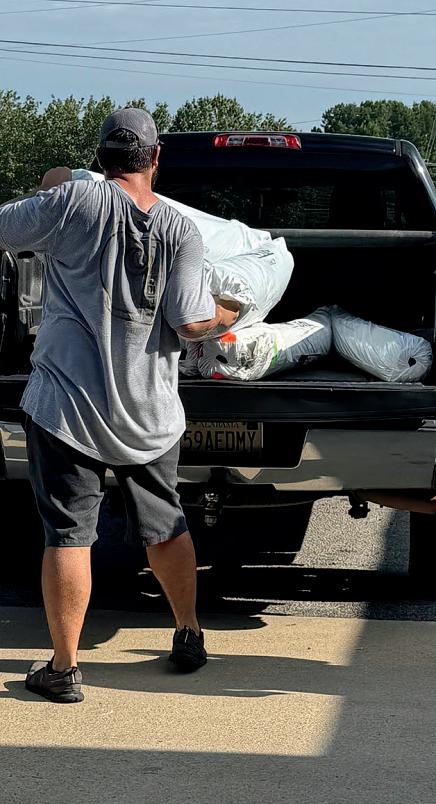
Our 2AnnualTeacher Carpet Remnant Giveaway wasone of the highlights of our summer. Seeing educators leave with flooring theycan use to create welcoming classrooms reminds us whyweloveserving this community. nd
Written by MADELINE KLINE
Photography by SETH MCWILLIAMS
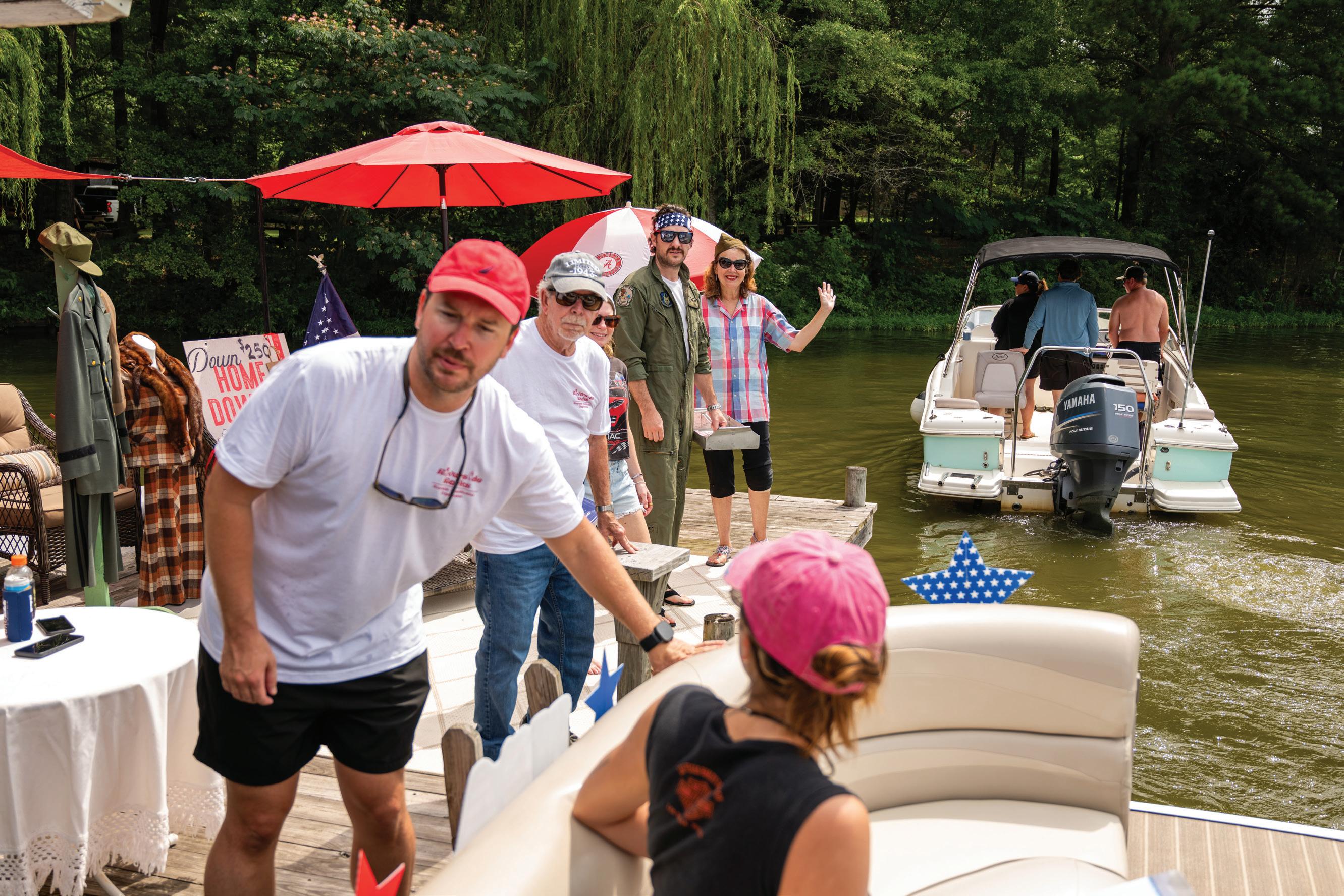
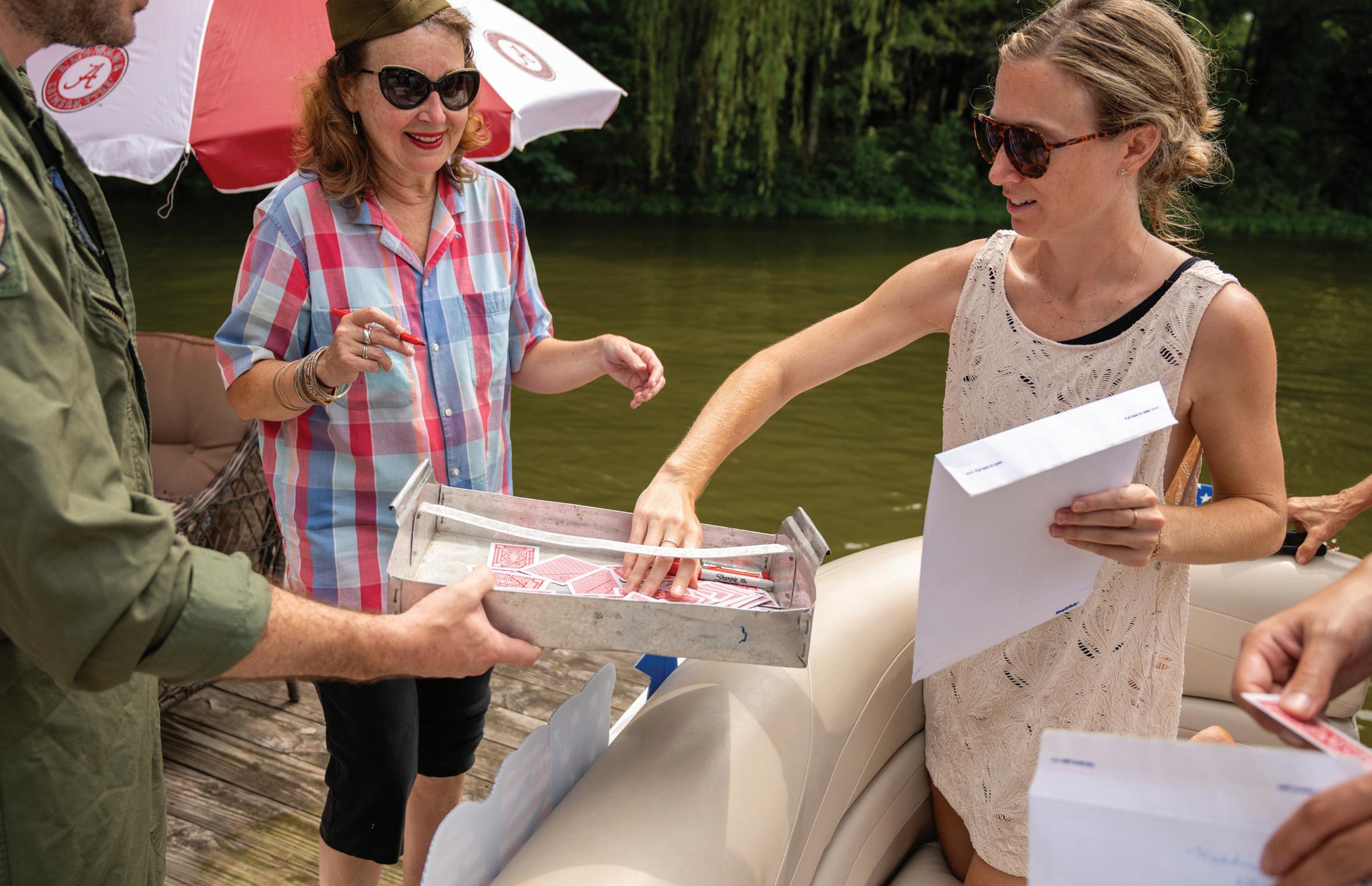
For almost two decades, the Riverside Beautification Organization has hosted a dockside poker run. It takes place every Saturday before Father’s day and has become one of the most beloved events on Logan Martin Lake.
The goal is to build a winning hand from cards collected while visiting participating docks and entering your chips for such terrific prizes as a stay at a condo at the beach or tickets to a Barons baseball game.
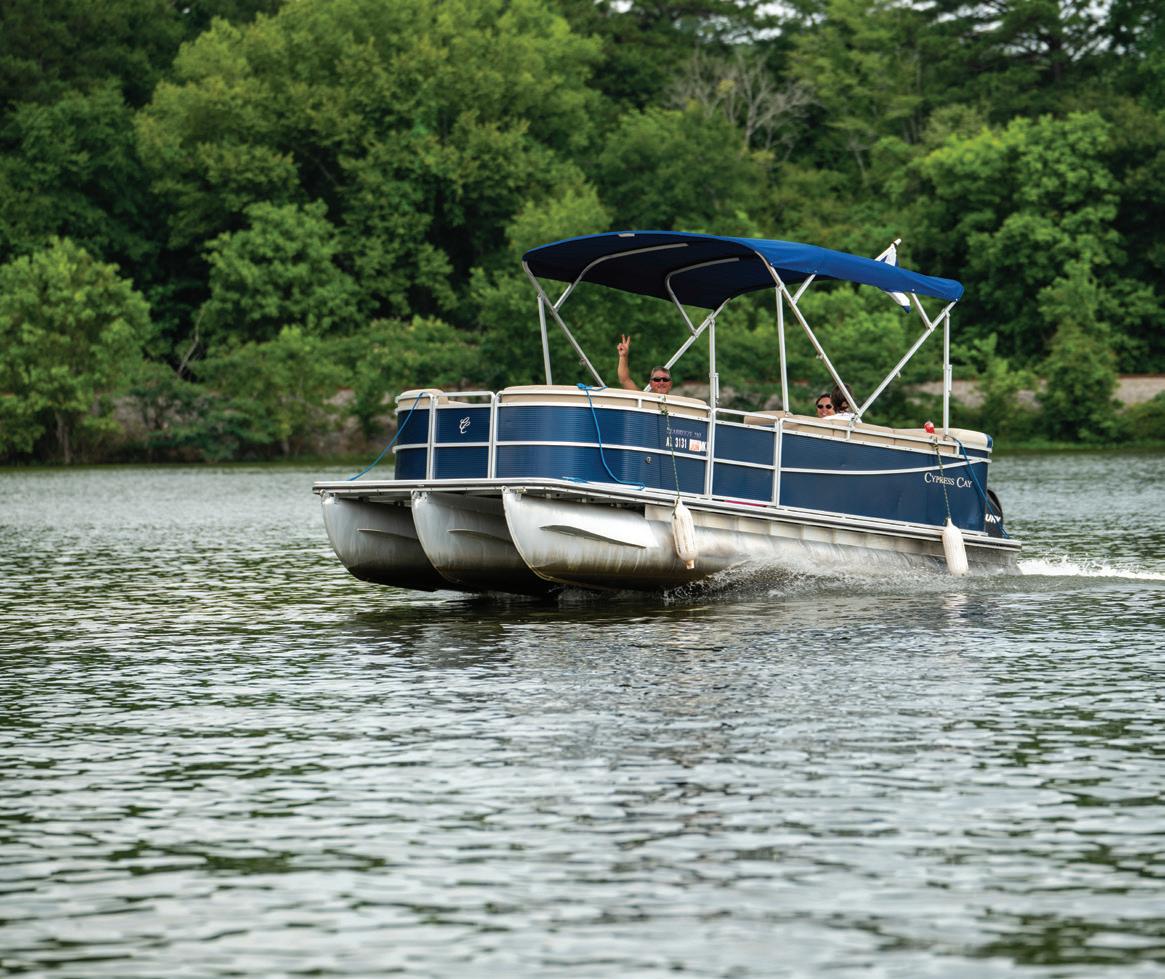
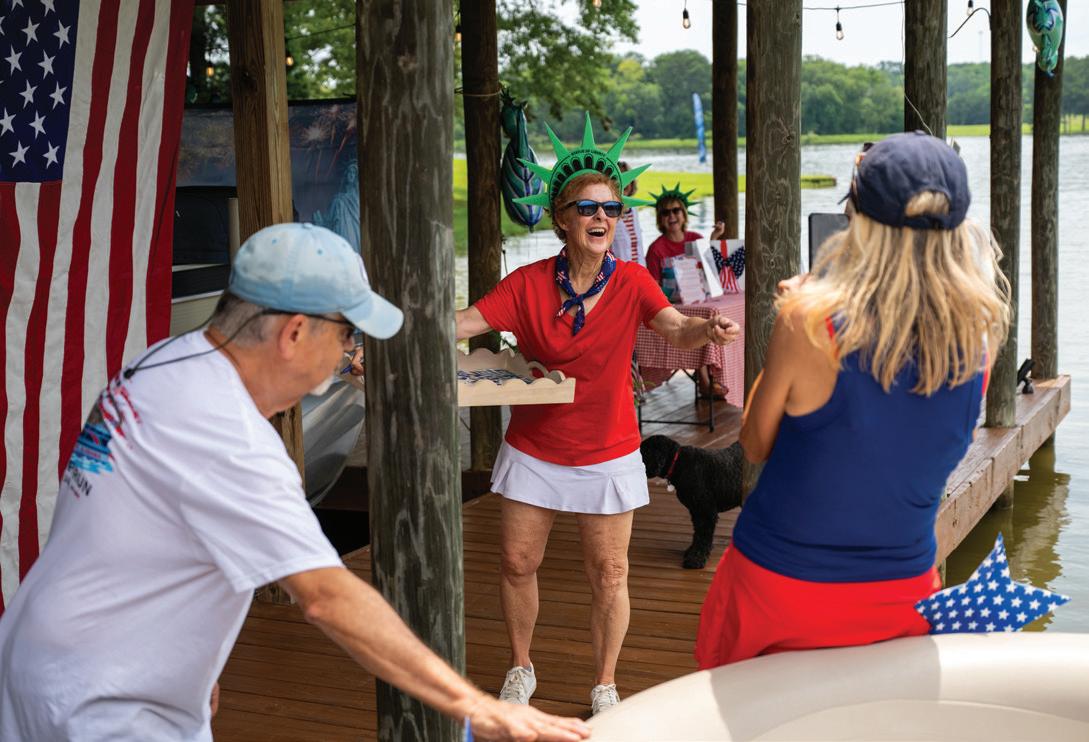
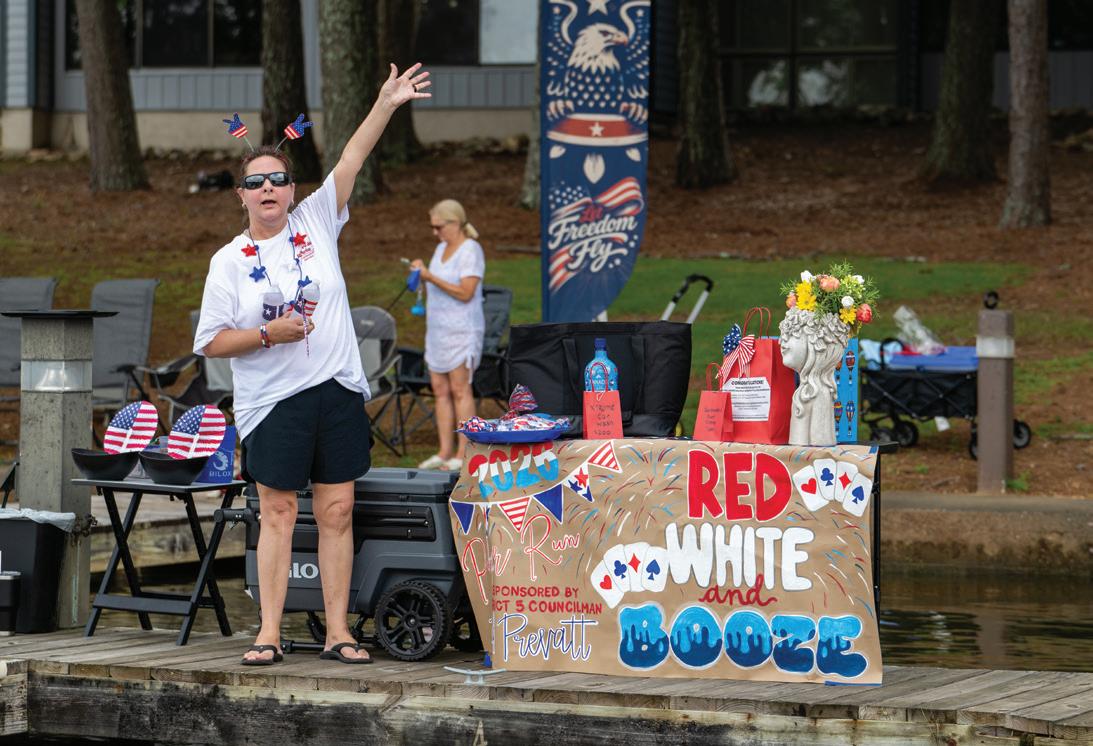
While cruising around the lake during the game, you will frequently run into neighbors and community members, all participating or working to make the day a success. This year, there were seven participating docks, each around
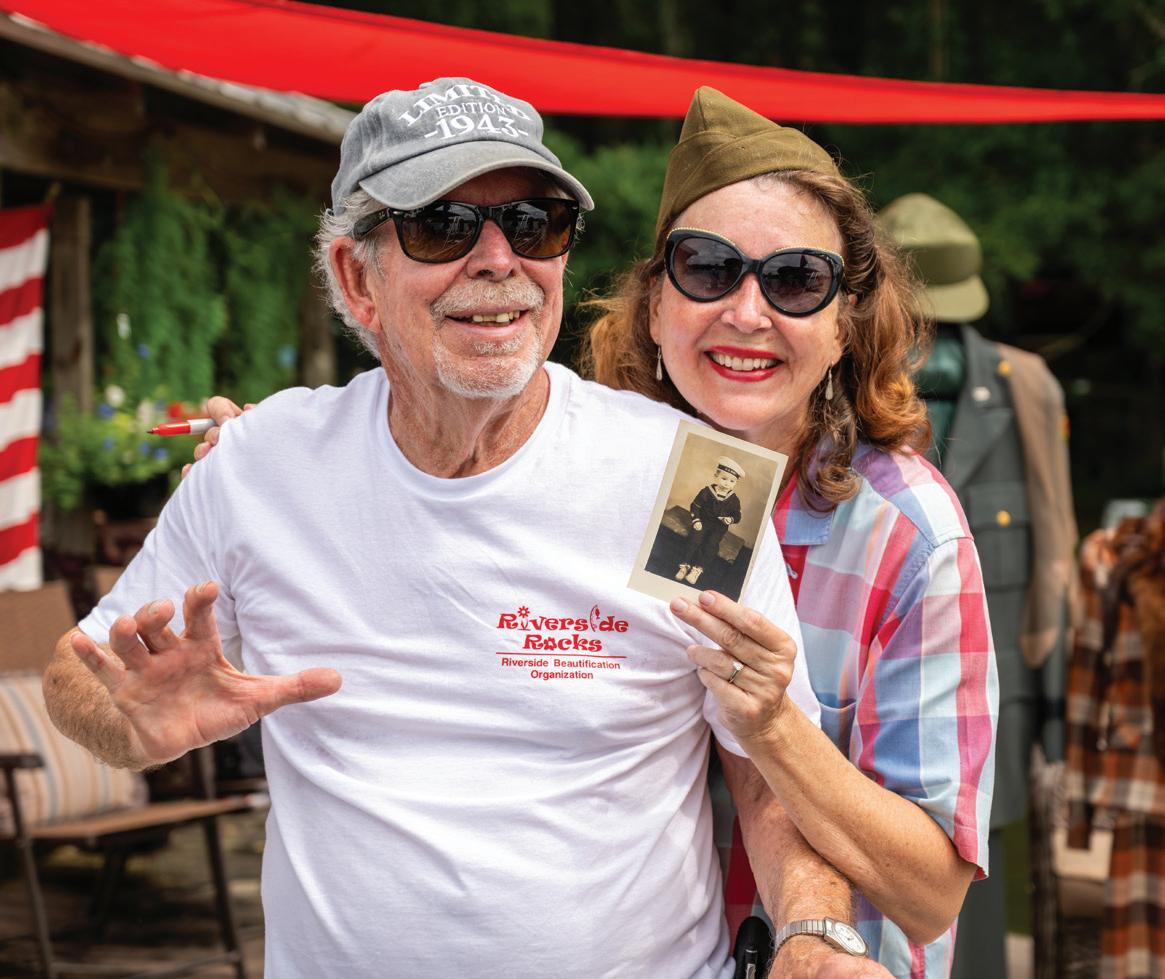
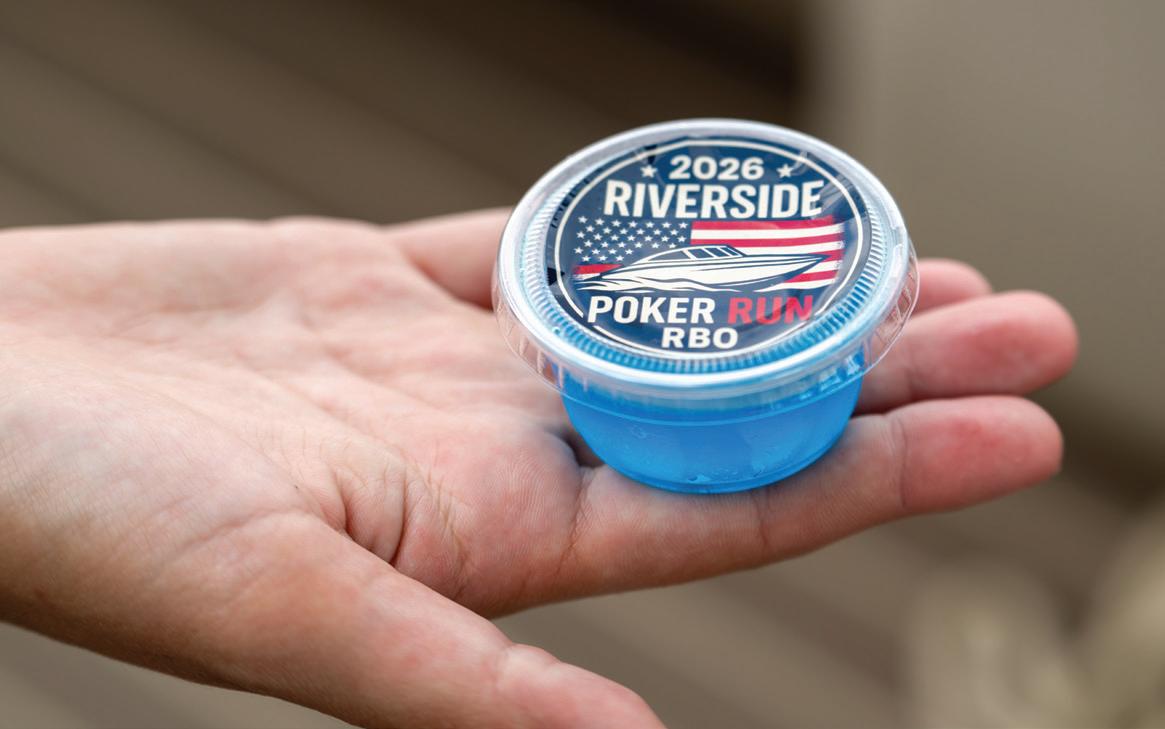
Independence Day and America’s 250th. Each dock boasted fun gift bags and goodies for every passerby.
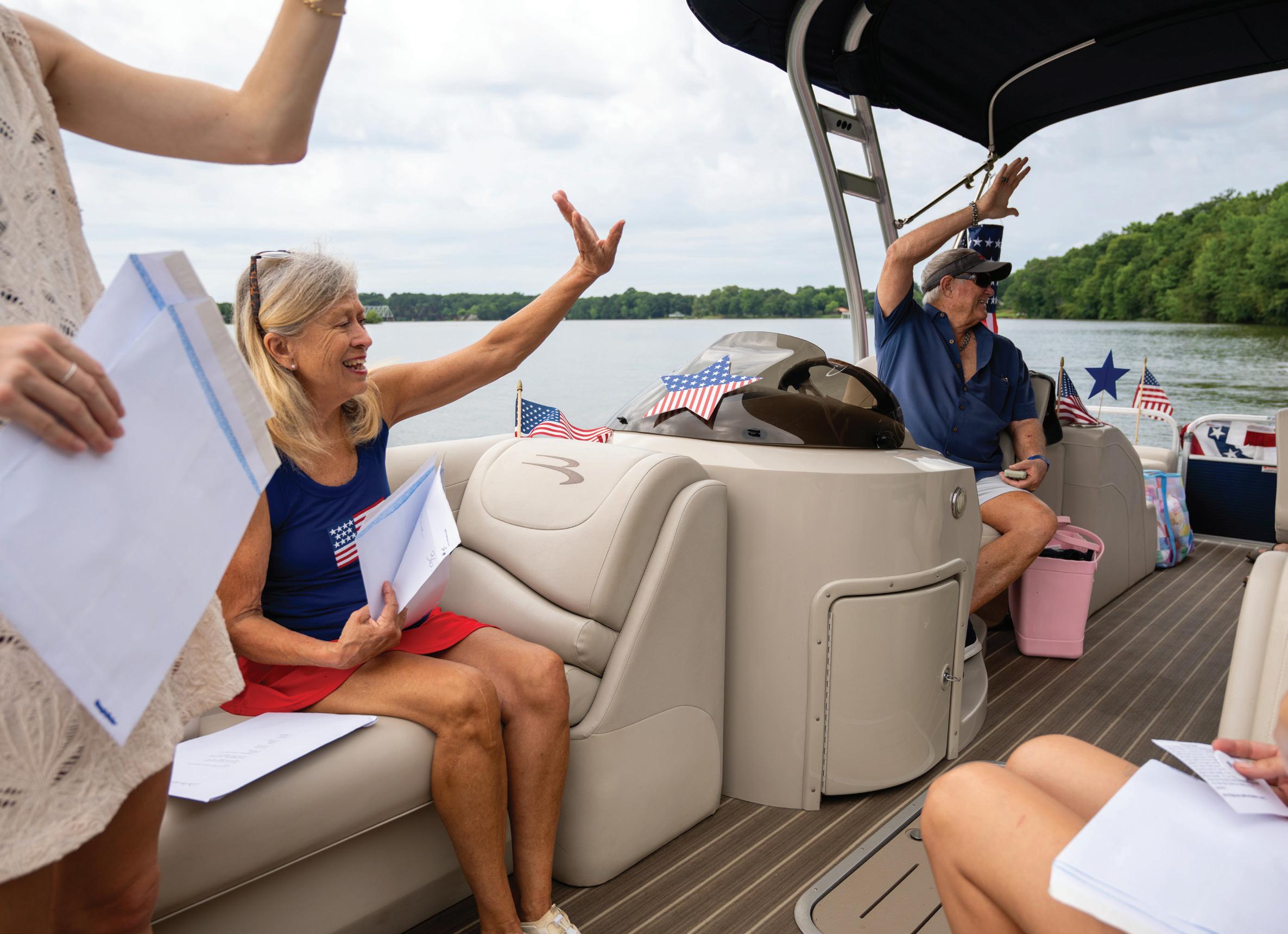
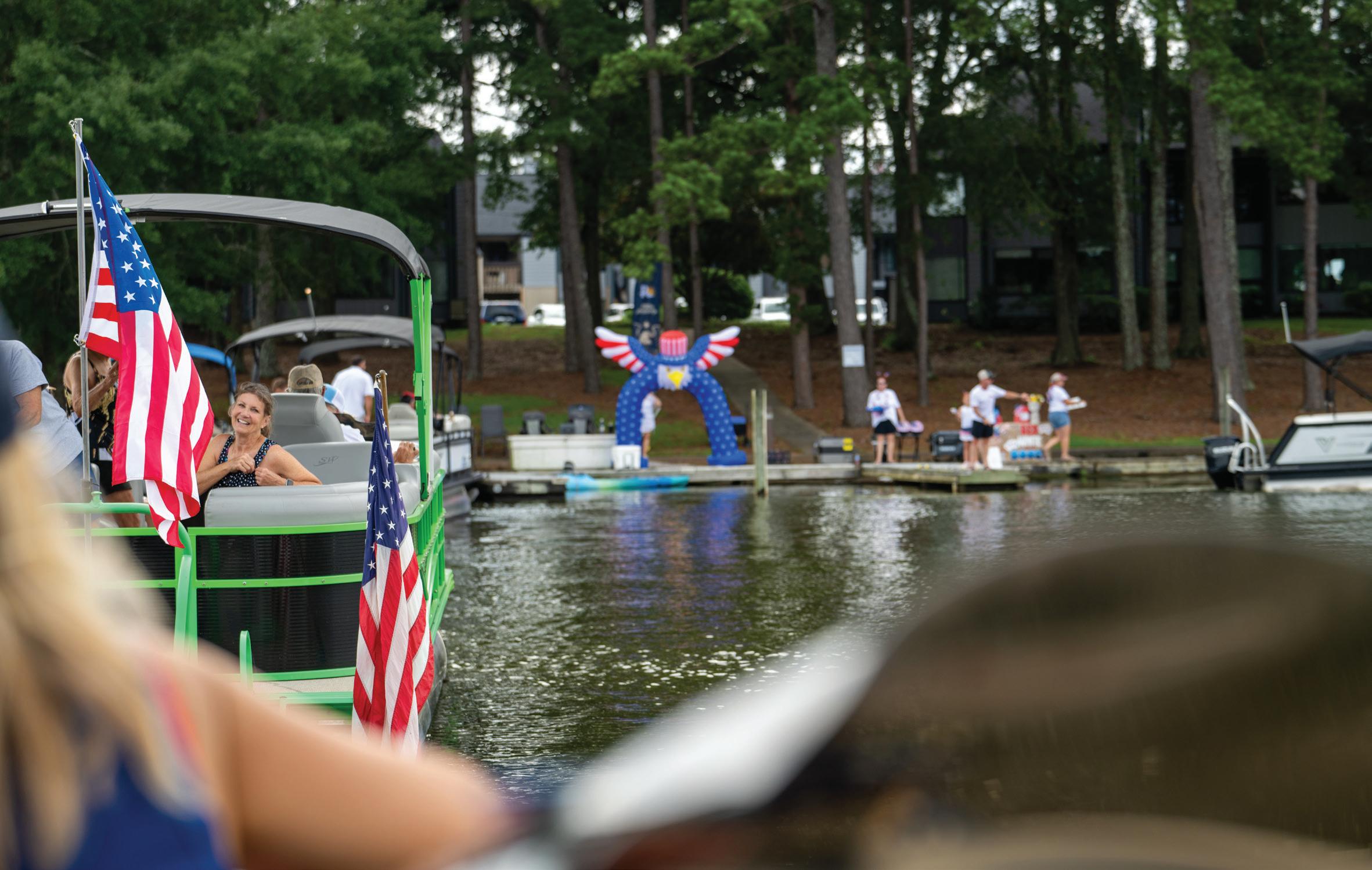
Since it was my first time participating in the event, I was surprised to see that lines each dock began to form well before noon. I was honored to join Mayor Rusty Jessup and his family on their boat and enjoying noticing how folks were waving to each other all morning and early afternoon.
While we made our rounds, they mayor gave an impressive history lesson about the lake, about Broken Arrow Creek and the native settlements and where to find good arrowheads, about Blue Eye Baptist Church, and about how local history since the Civil War. We also listened to some jazz and classic country as we cruised around. The weather was absolutely perfect, balmy and sunny without roasting anyone alive.

After visiting all the docks, all the participants – of which there were record-breaking 350 – gathered back at Riverside Landing. Buck’s Barbeque and Bait boasted impressive polish dogs on the grill, and local boiled peanuts were sold by the quart. I got the dill pickle flavor, which definitely lived provided that briny and fresh flavor. A bit
Anders was diagnosedwith araregenetic conditionthat was affectinghis immunehealth and significantly impacting his overall development. Hisdoctorsdeterminedhis best treatmentoptionwas abonemarrowtransplant, and luckilyAnders foundhis matchand received his transplant. NowAnders is reaching new developmentalmilestones andisstarting to get back to beinganormal kid
Childr ens AL •org
We are her ei ny ou rn ei gh bo rhood at Pedia trics East . To sch edule an ap pointme nt at ei the rt he Tr ussville or Dee rf oot loc at ions visit www .pedi at ricse ast. org
of afternoon rain moved in, but it did not discourage folks from eating and browsing the tables set up by the Riverside Beautification Organization.
If you missed the Riverside Poker Run this year, keep an eye out for more of the events thrown by the Beautification Organization. It organizes community events at Christmas, as well as the annual Community Soup Supper. And just before Easter, it organizes the Spring Market. All of these









events are meant to build up the community and pay for new signage, park maintenance, and landscaping in Riverside, and even help to refurbish shorelines on the lake. The organization is a powerful force of good for the city, and its members guarantee a good time while they’re at it.



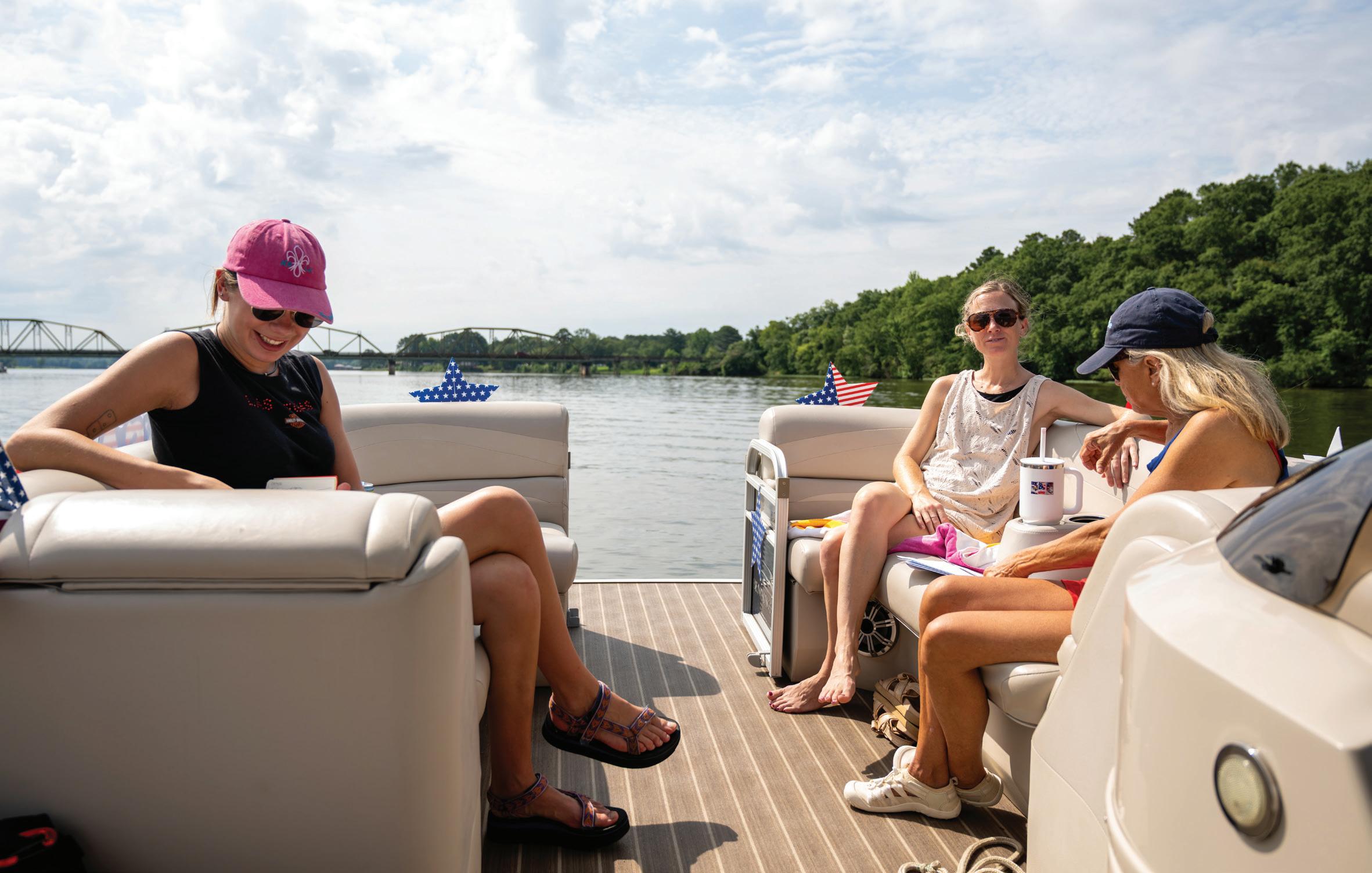



Written by BUDDY ROBERTS
Photography by TUCKER WEBB
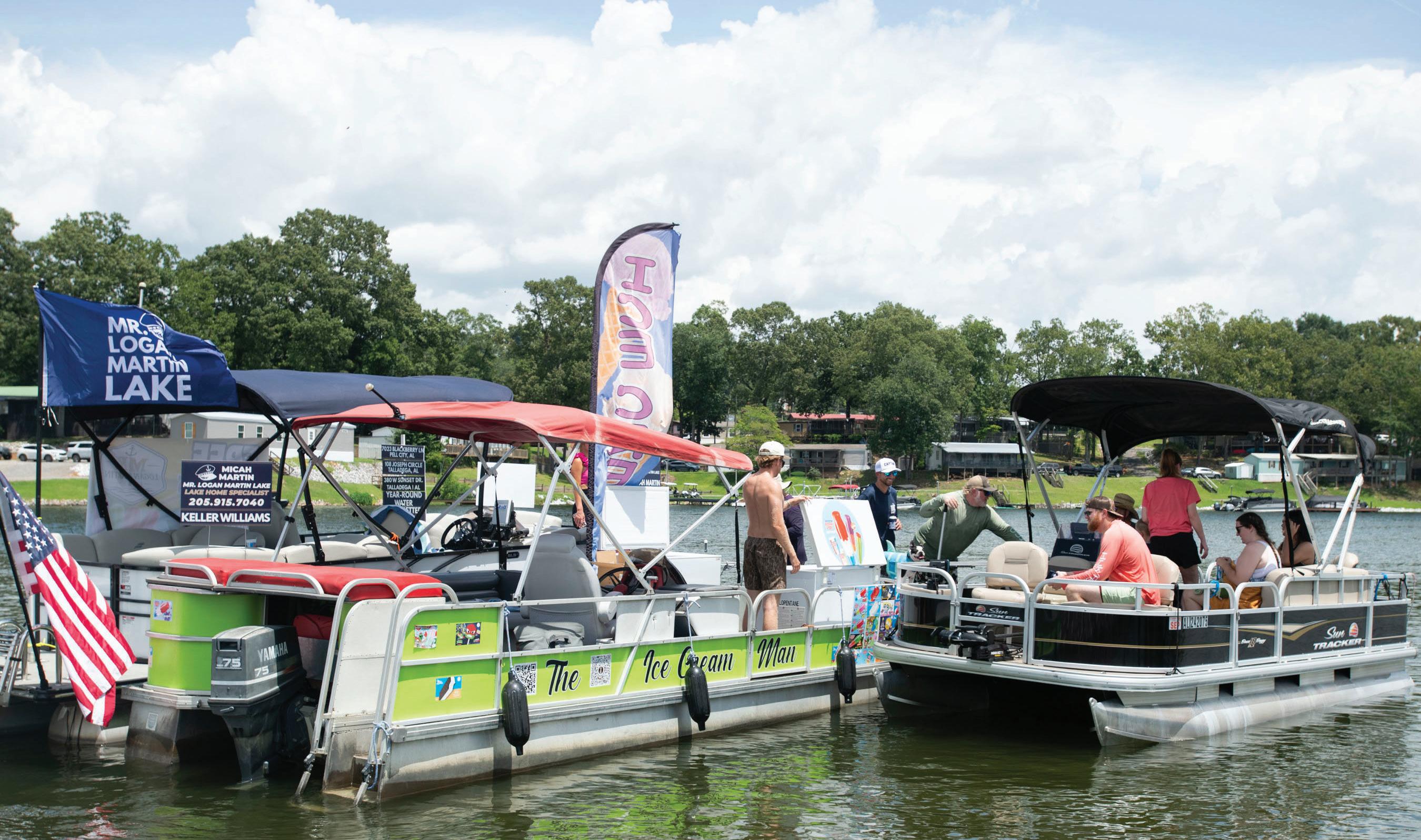
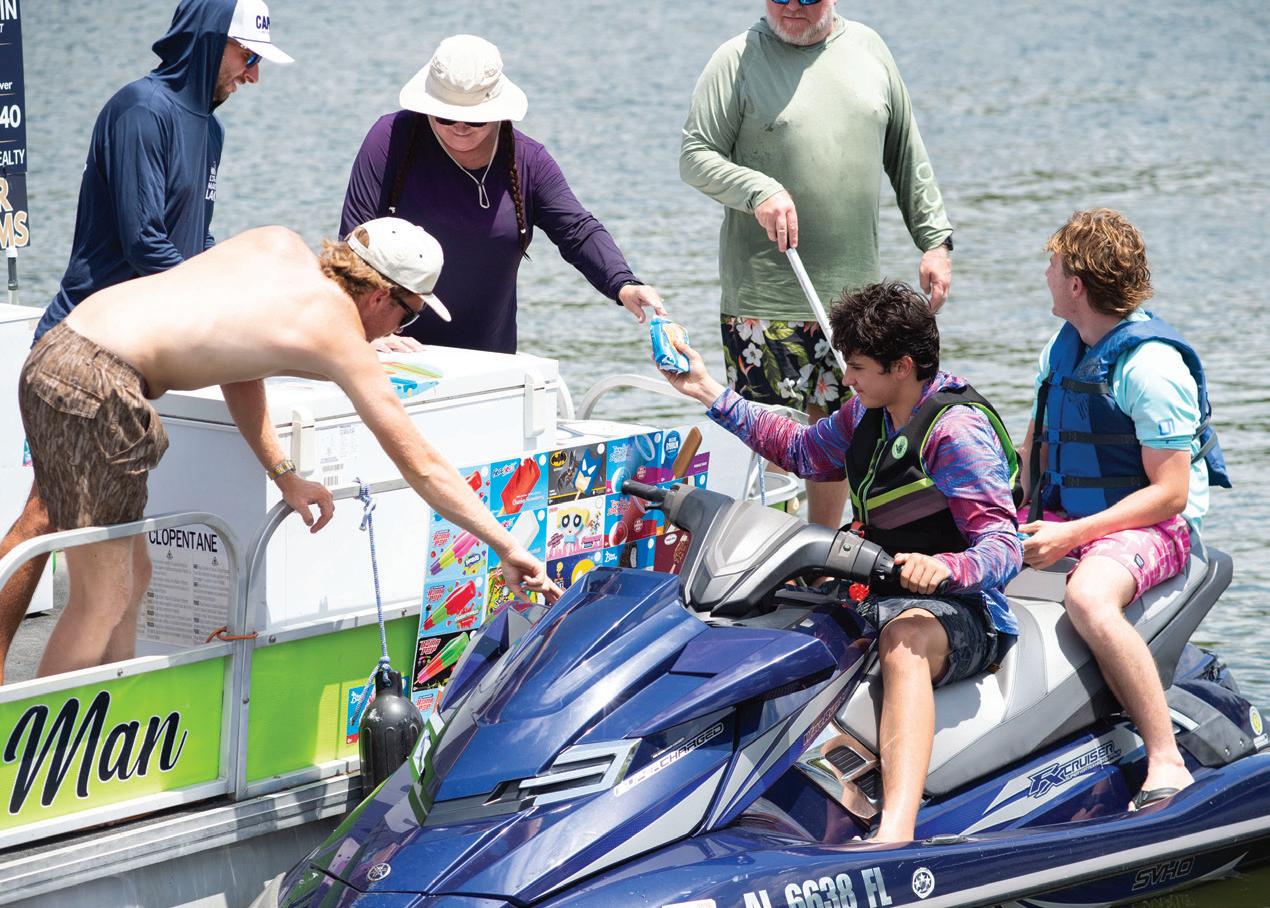
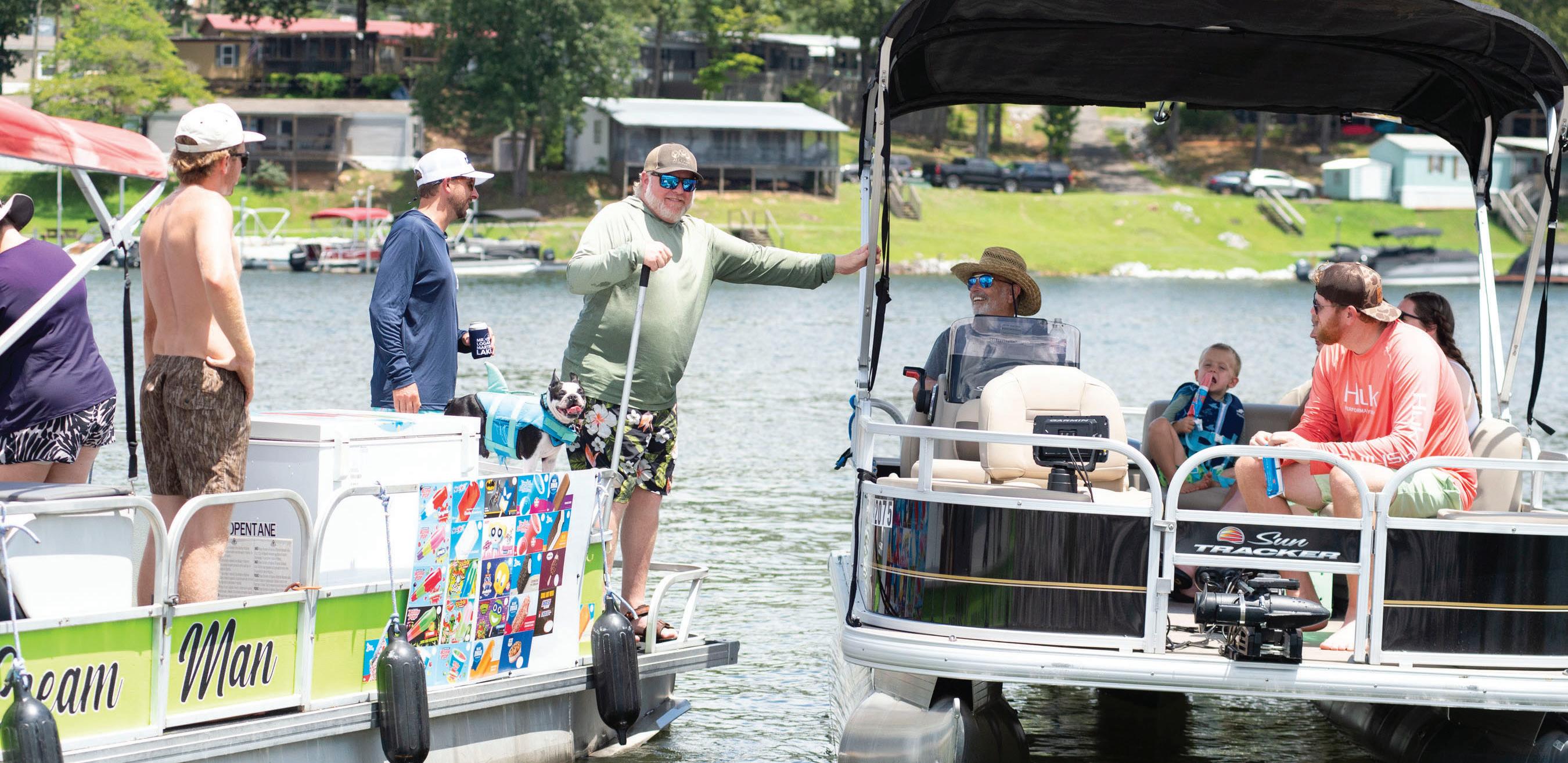
Keith O’Neal’s green pontoon is one of the most popular sights on Logan Martin.
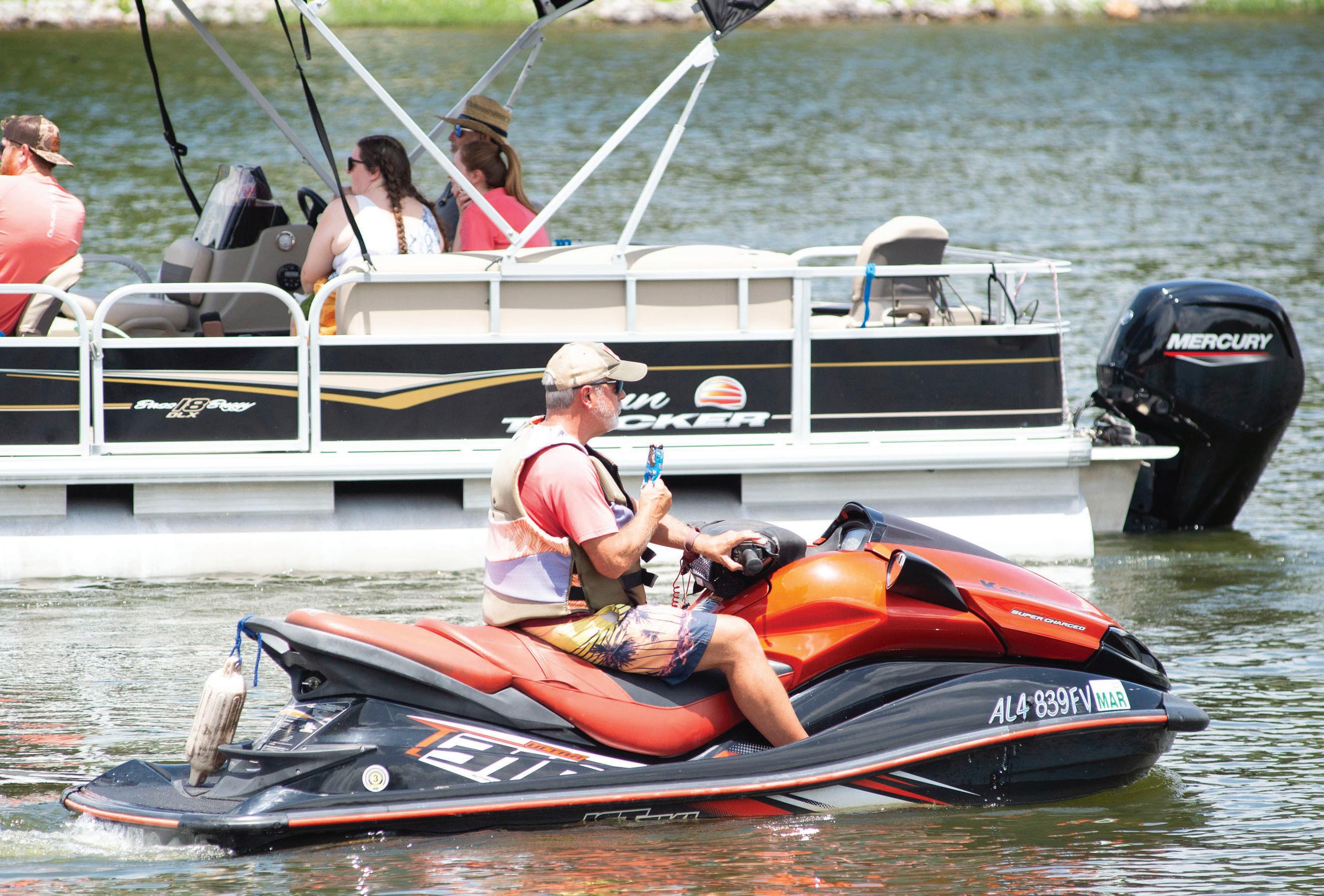
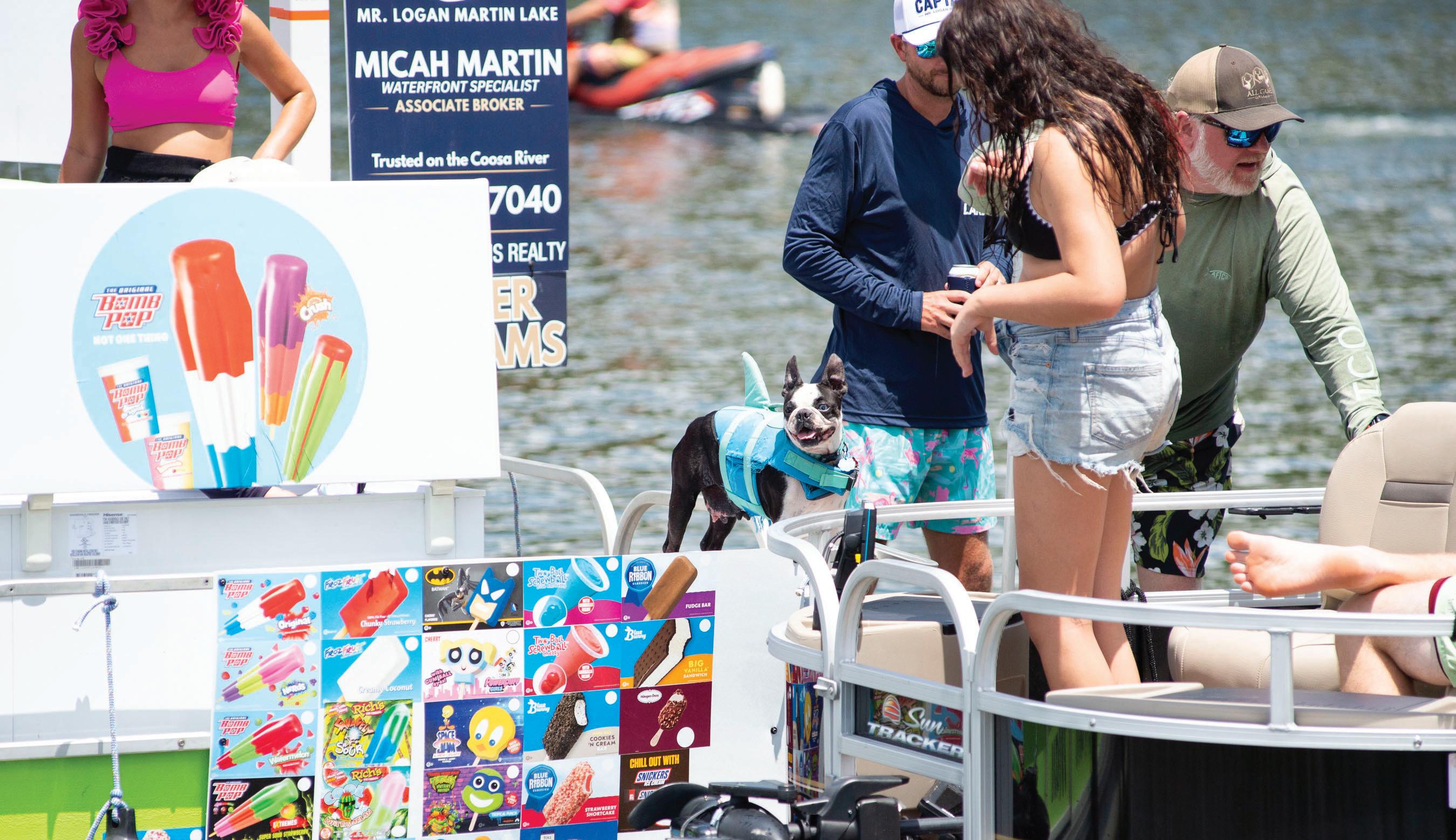
This is the sixth summer it has cruised the lake on weekends as a purveyor of frozen treats produced by Bomb Pops, ice cream sandwiches, fudge and orange cream bars, and host of other frozen treats produced by Blue Ribbon, Blue Bunny, Toll House, and Häagen-Dazs.
“This is a fun job,” Keith says. “If I could do it as a full-time job, I wouldn’t do anything else. When we’re on the water, we’re just doing the same thing everyone else is doing on the lake. We just have ice cream freezers on our boat.”
On a Tuesday morning in late July, while caring for the other businesses that occupy his weekdays, Keith described how and when The Ice Cream Man operates, discussed the most rewarding aspect of the endeavor, and identified the boat’s most popular products.
Times and seasons: The Ice Cream Man is on the lake on weekends between May and September, weather permitting.
“We have been out on the water as early as 10 a.m. and as late as sunset, but typically, we’re on the water by 11 or 12 and gone by 6. That seems to be the window when people are receptive to buying ice cream. We usually sail from Memorial Day weekend until Labor Day weekend. If there are a couple of hot weekends after Labor Day, we’ll stay out into midSeptember, but we don’t stay on the water long after football season starts.”
Inclement weather: “Rain has affected us a lot this year. One Sunday, we were on our way to the lake and had checked

the radar an hour before. The whole state was clear. By the time we got to Lincoln, the sky was black, and there was a torrential downpour on the water that was not in the forecast. Our business is very weather-dependant.”
Why is the boat green? “There’s not a real reason for it, other than that you don’t see lime green boats cruising the lake. We’re visible from a long way away on the water. And there are ice cream boats on other lakes that are yellow and pink, so we didn’t want to be duplicating or copying them.”
A family business: Keith is partners in the ice cream boat with his son Colin. Keith’s wife Elaine and their daughter Sarah (“when she’s home from Mobile”) frequently work on the boat, sometimes accompanied by friends of Colin and Sarah. “It may not be the same crew every weekend, but there’s always some combination of me, my wife, my son and daughter and
their friends on the boat.”
Why is the business called The Ice Cream Man instead of the Ice Cream Boat? “I get asked that all the time. Since we’re on the lake, people think The Ice Cream Boat would be a more fitting name. But when we were kids and the ice cream truck came around, my wife and I didn’t call it the ice cream truck. We called it the ice cream man. So we named this – our fun job – after what we called it when we were growing up.”
Something else The Ice Cream Man crew often hears: “‘I had no idea there’s an ice cream boat on the lake.’ Or, ‘I can’t believe there’s an ice cream boat on the lake. This is the best thing ever!’ We hear that every weekend. We’ve been out here for six years, but the lake is 44 miles long, and we can’t be everywhere. We try to schedule the season out so that we’re able to hit each part of the lake a couple of times a year.”


How to find the ice cream boat: “Every day we’re going to be out, we post on our Facebook page the area of the water we’ll be one. The Ice Cream Man on the Lake is our Facebook page, so you can follow us there.”
The ice cream: “We have 25 varieties. The original Bomb Pop – the red, white, and blue one – is the most popular. That, strawberry shortcake, and cookies and cream make up our top three.”
The best part of being The Ice Cream Man: “When we’re 100 yards away and kids on the shore see us, come down to the dock, and start waving us over. A couple of weeks ago, one girl came out doing cartwheels down the yard toward the pier. It’s the weekend and we’re on the lake, and everybody is in a good mood, so we’re always getting to see happy people.”




Written by DR. SARAH ELIZABETH MOREMAN
Photographed by TUCKER WEBB
Iwalk barefoot along the banks of the lake, moving through the heat-relieving shadows of the forest as the brilliant sun presses down. We are well into the thickness of summer now, with the whispers of school starting growing louder. It is the time of year when I have to remind myself to pause, to step away from the never-ending grind of university orientations and the incoming freshmen whose anxious questions are both expected and unexpected. It is also the time when I have to write more reminders to be gentle with myself, to make space for family and friends, to make space for such creativity as writing a book.
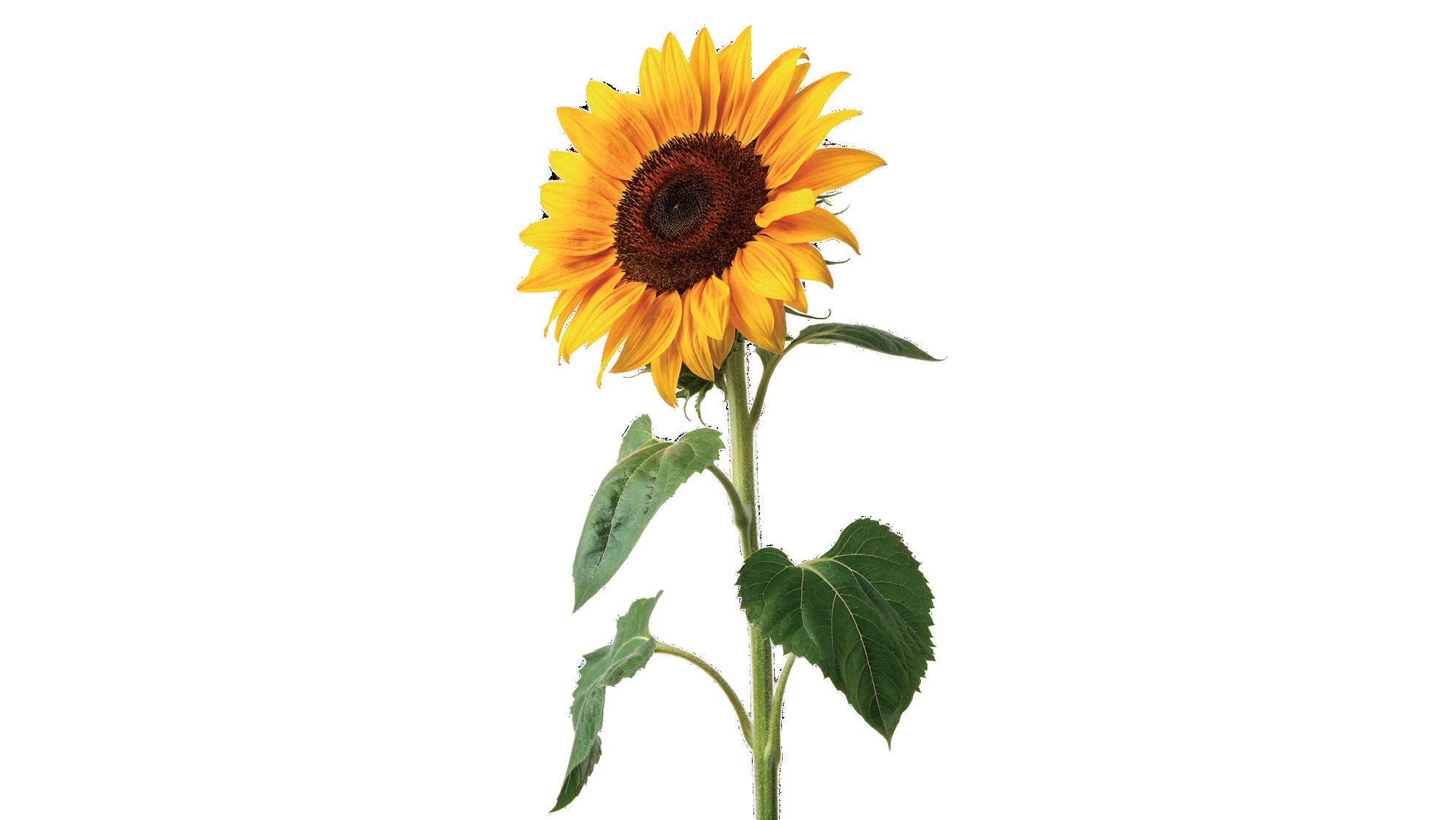
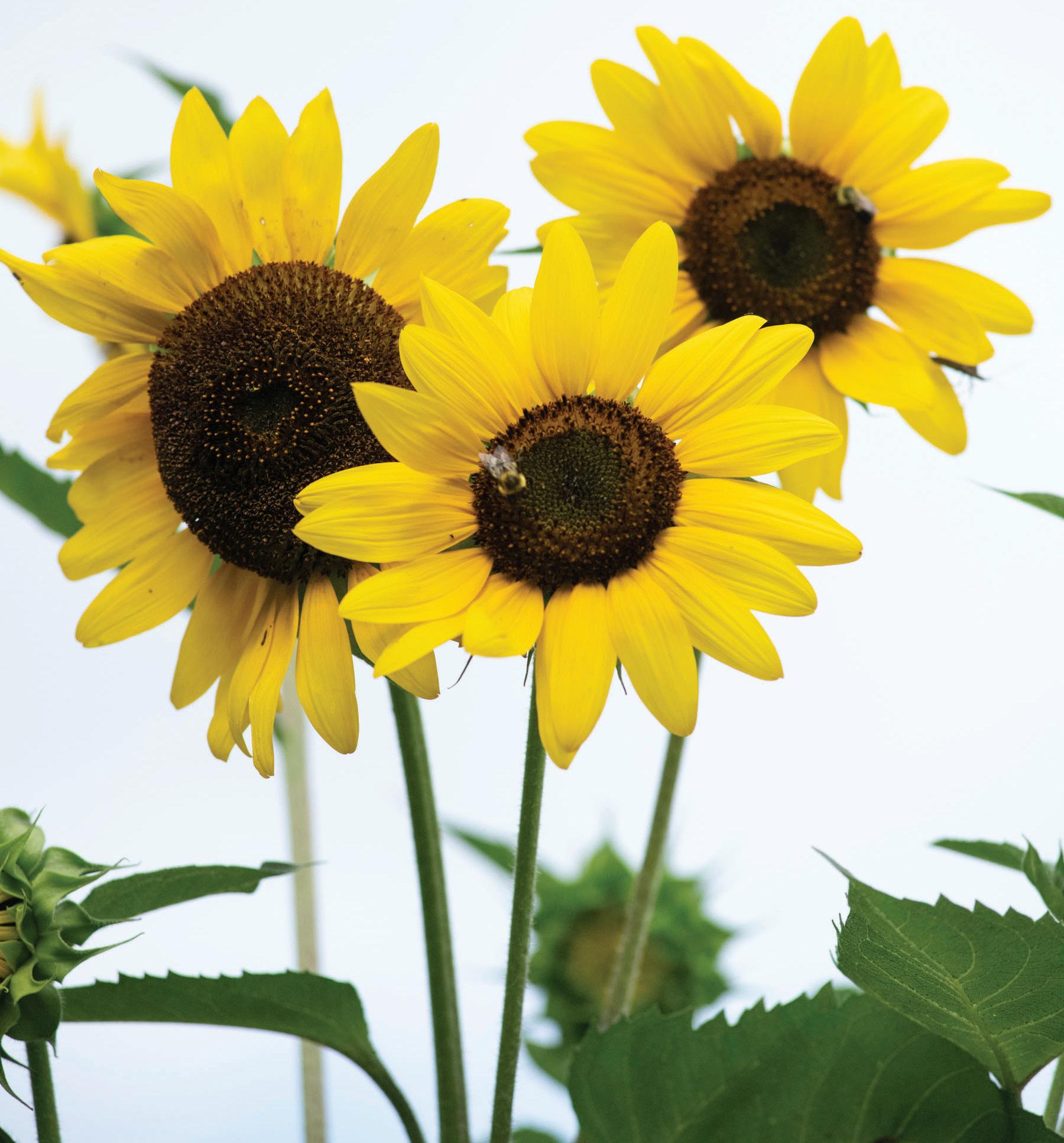
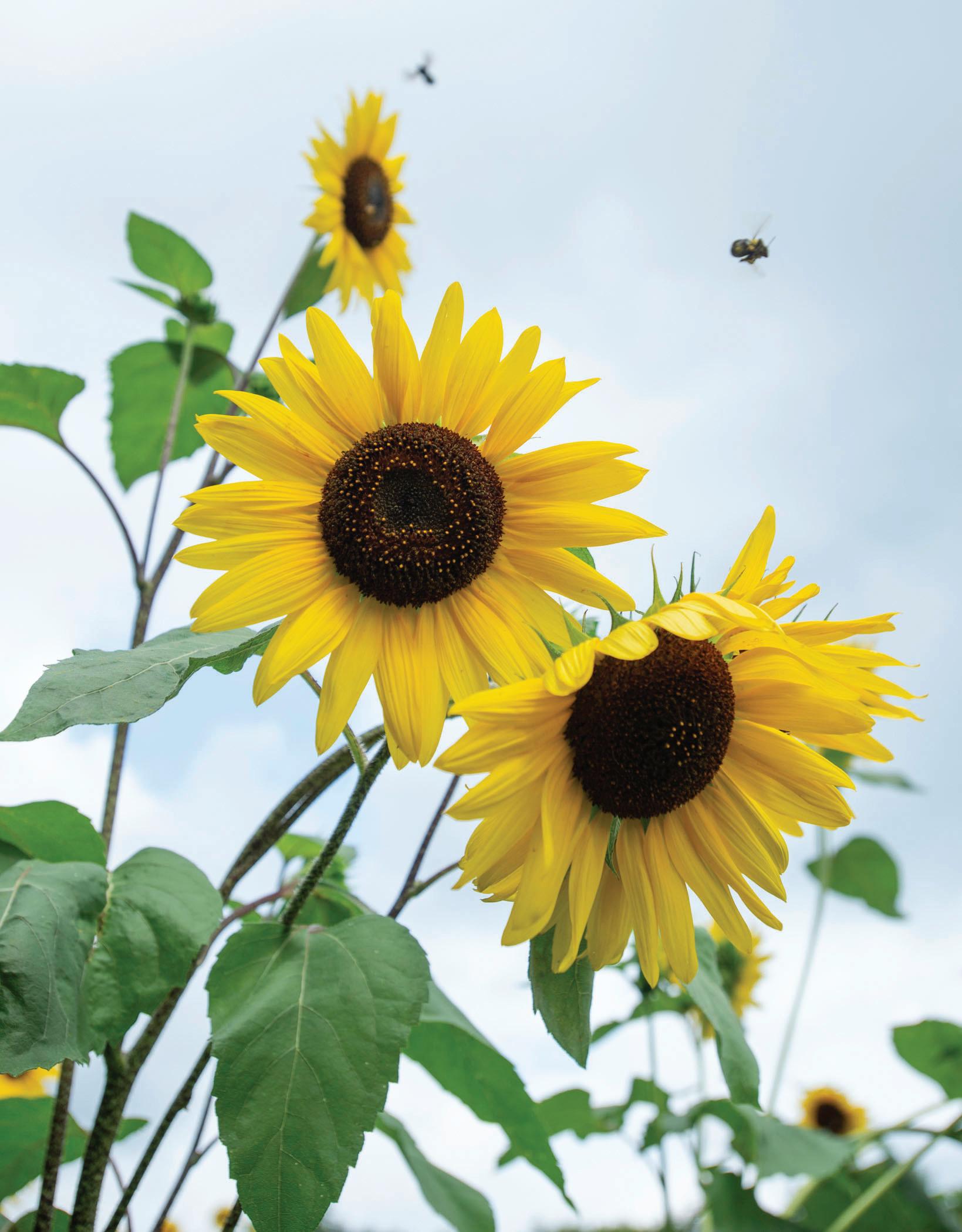
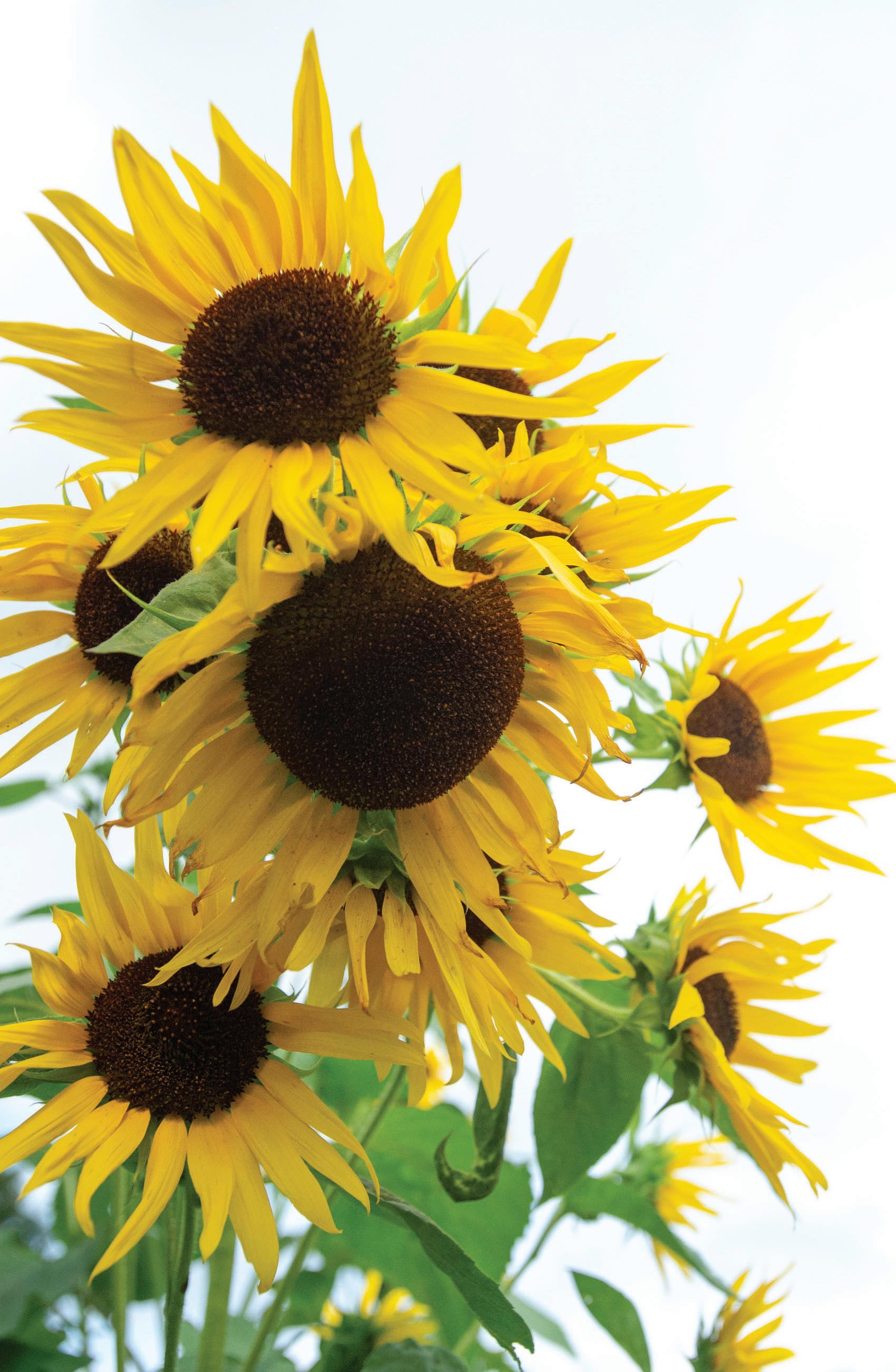
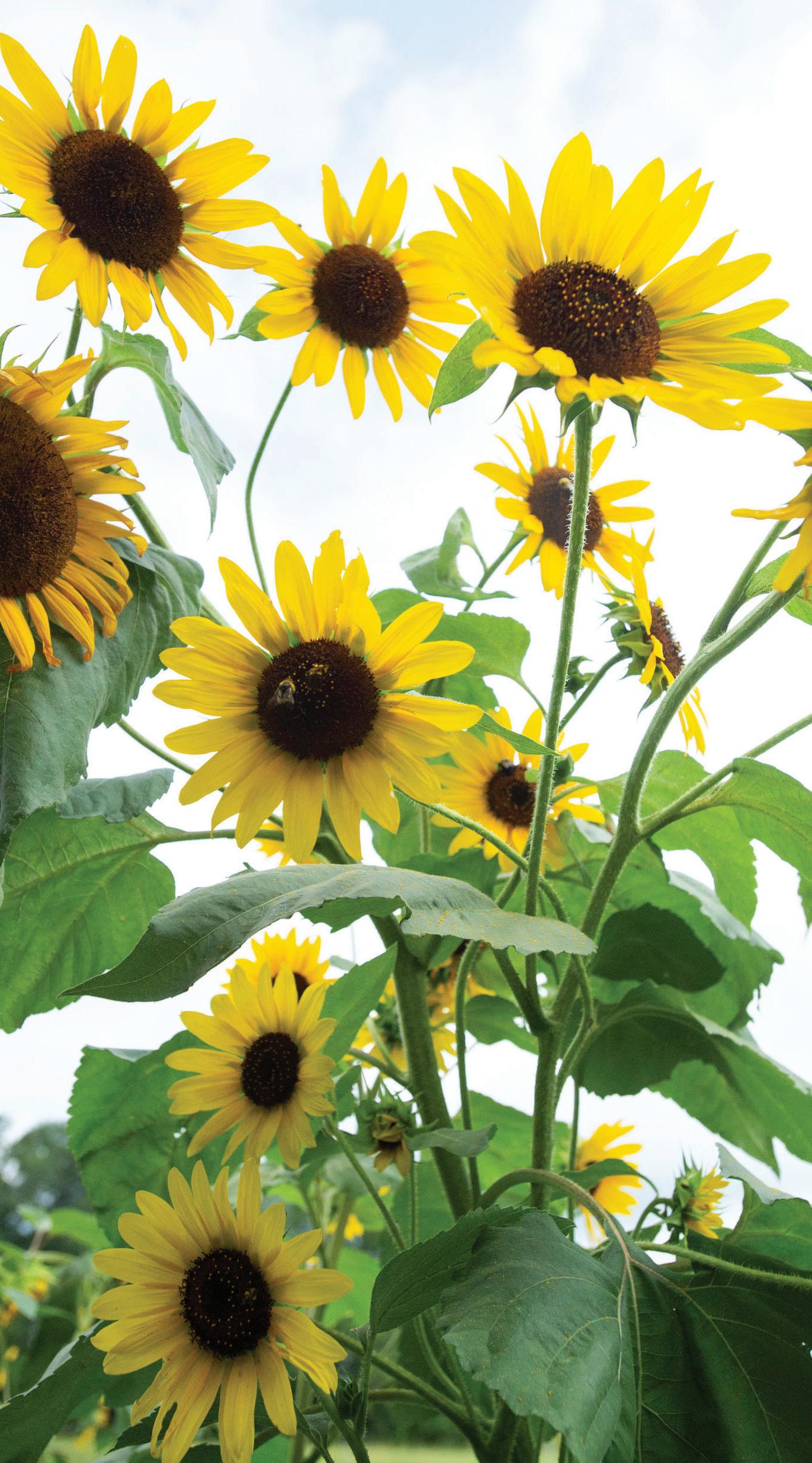
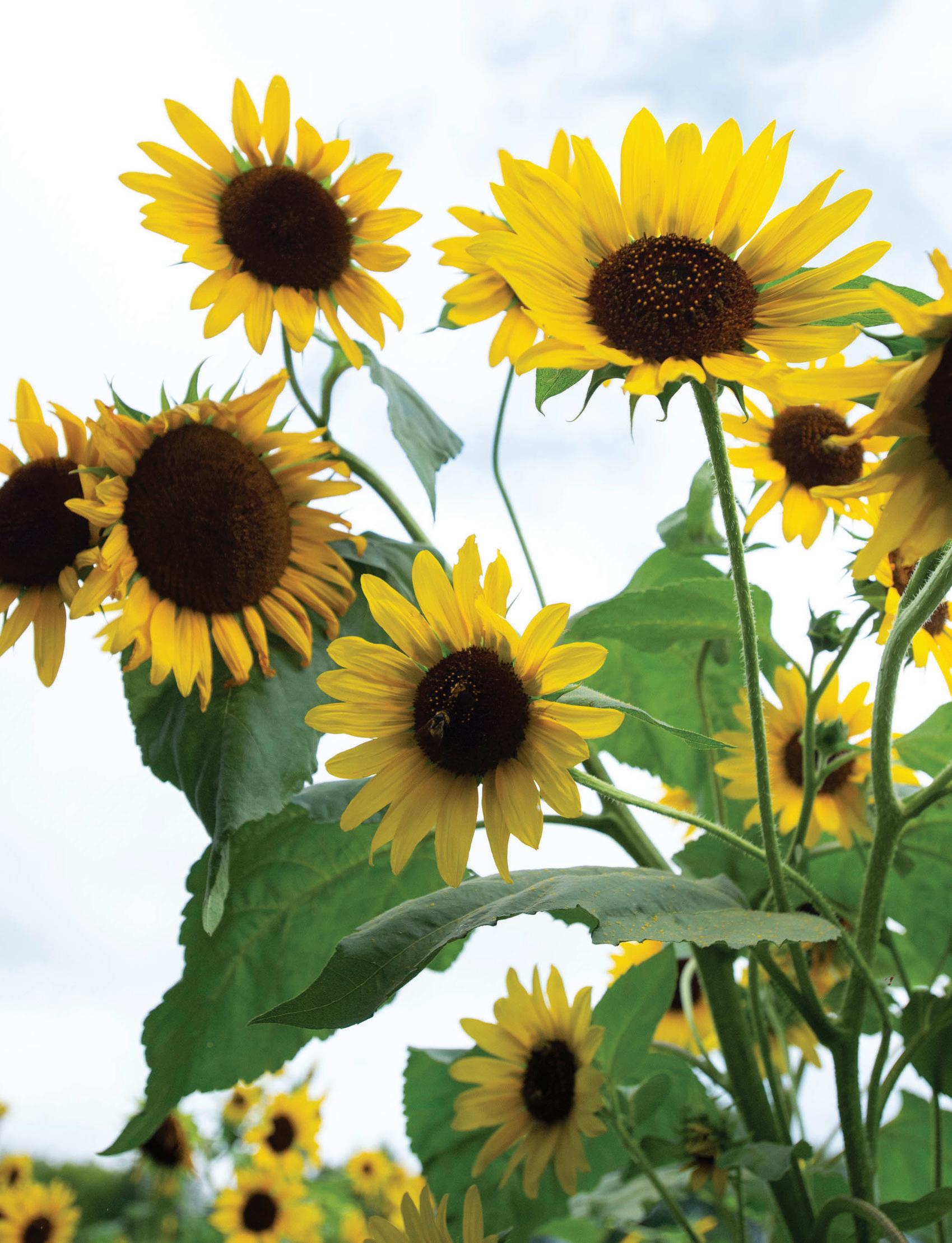
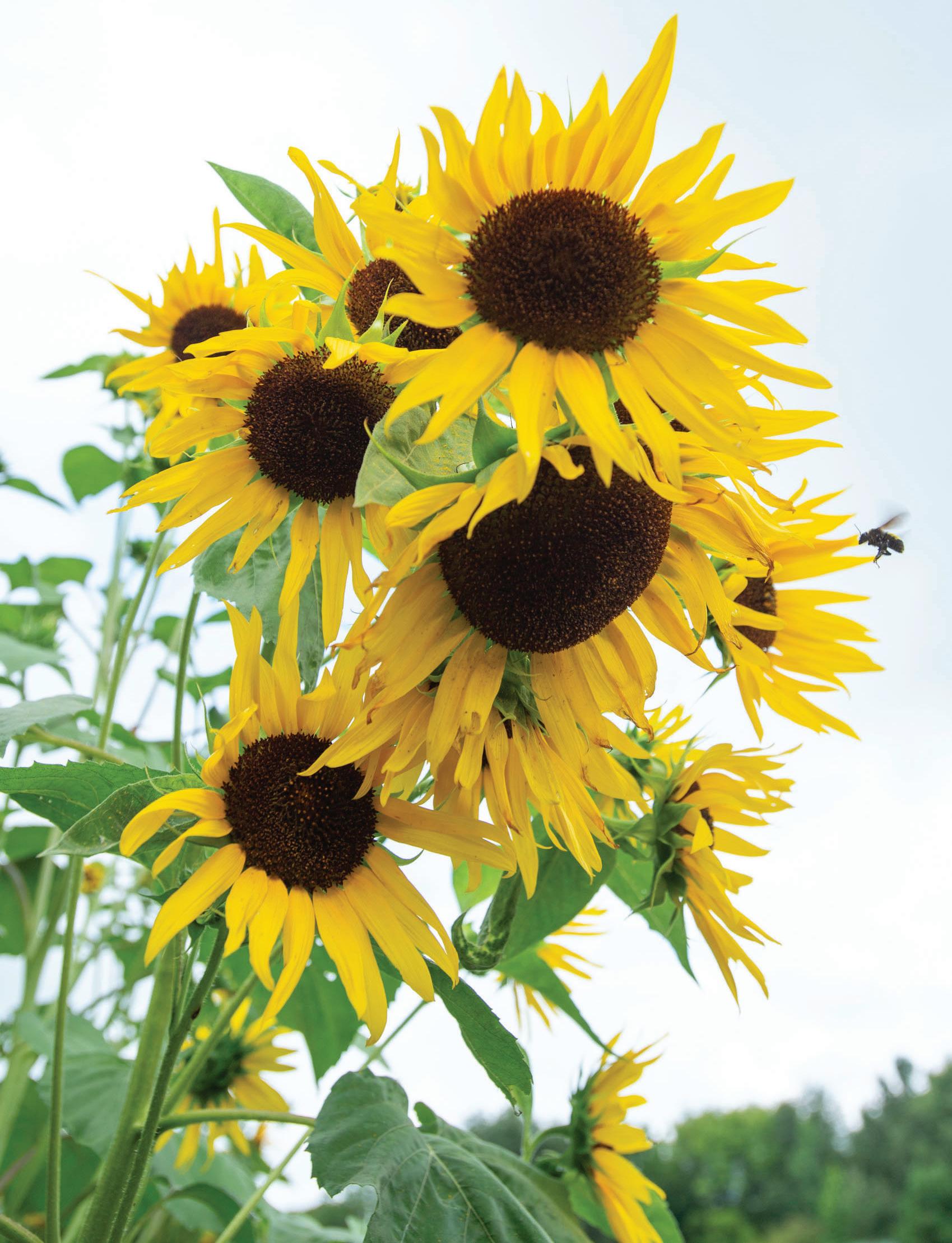
The daylight lingers long into the evening, letting my circadian rhythm stretch out so I can stay up late with a novel, claiming a small staycation for myself. Deep in thought about the latest novel I am reading, I almost miss the sunflowers that grow wild in abundance nestling in the gap of the

forest.
Seeing these wild sunflowers pulls me back to a memory from a long time ago when I visited Grammy. “Who planted these sunflowers?” I stared at the vibrant yellow petals and towering stalks of the flowers lining halfway down one side of Grammy’s one-acre garden. They rose mighty tall, hanging over my head, reaching practically six or seven feet. “Anna.” Grammy responded in her trademarked, intentional speaking manner reserved only for me. I hummed at her response as I thought about my youngest Bradley cousin digging into the soil with sunflower seeds. Grammy continued, “She also grew sunflowers in Illinois.” That was where her parents, my uncle and aunt, still live.
Continuing in that thread of reminiscing about the sunflowers AnnaSmith planted (I call her AnnaSmith because there are too many Annas in my life), I recall asking my cousin why she chose sunflowers. Her responses were typical, along the lines of them being pretty in yellow and that they were her favorite.
Over the years, whenever I think of sunflowers, I think about how they are my baby cousin’s favorite and how they vividly bring out the Bradley stubbornness that she and I inherited. The sunflower conveys resilience, loyalty, and endurance. We are quick to uplift others, yet we hold firmly to our beliefs about what is right and what is wrong. We are fiercely loyal, much like sunflowers that stubbornly lift their faces toward the sun.
Still standing in front of the wild sunflowers out here at the lake, my thoughts drift to a recent memory from a week ago, when I stopped by Grammy’s house. With Grammy gone, AnnaSmith, her husband, stepson, and their twin babies now living there, the physical character of the late-1800s house is gradually changing, yet too quick for my stubborn sentimentalism. Built of heart pine wood by my great-great-grandfather and his brother, the house is entering a new era.
With a focus on updating the house to meet code regulations, including wiring and all that jazz, many things have already changed. Lowered ceilings have been removed to reveal the kitchen’s original beaded woodwork. The retro brown cabinets and white Formica have been replaced with white ones and matte black pearl granite countertops. Even the vintage pink rose wallpaper, which I cried over when my cousin thoughtfully warned me ahead of time what she planned to do, is gone. The wallpaper had been peeling awfully badly. AnnaSmith’s husband had the foresight to save large sheets of the wallpaper to give to those of us who wanted a piece of history that centered that room and its en suite bathroom with its clawfoot tub originally built as a clinic. Our forefather was the only doctor in the county at the time.
The updates serve to keep the house standing strong as our legacy, and while the garden waits to be tended once the renovations are complete for the new generation. The
house, in a way, is our garden of sunflowers, a house of joy, unspoken love through firm guidance of keeping strong in our faith. Until then, I will remind my solantophile cousin to plant sunflower seeds throughout that actual one-acre garden, literally bringing back joy to reflect a new era that honors the legacy of our beloved departed ones.
What is more is that the renovations equal to the sunflower’s wonderful trait of absorbing toxins, extracting harmful substances from the soil such as faulty, outdated wiring and plumbing and subsequently purify for continuance of our everlasting legacy, honoring the memories of not only Grammy, but also the long generations of Bradley and Botsford.
As legacies go, one sunflower is not enough. We are not meant to be alone in our struggles. Thus, we gift the other person two sunflowers, an unspoken message of strength found in companionship. During the day, the sunflowers pursue the sun. When the evening falls, the sunflowers turn toward one another, sharing each other’s brightness. They serve as natural reminders to lift our eyes to the Son for faith and hope. When despair finds us, we turn
to one another for the tangible strength to endure the shadows until morning brings back the Son. The sunflowers in their steadfastness reflect the command of the sun, and so does the Son calls us to trust in His provision of everlasting peace and joy.
As sunflowers heliotropically face the sun, Helen Keller’s words capture their essence: “Keep your face to the sunshine and you cannot see the shadows. It’s what sunflowers do.”
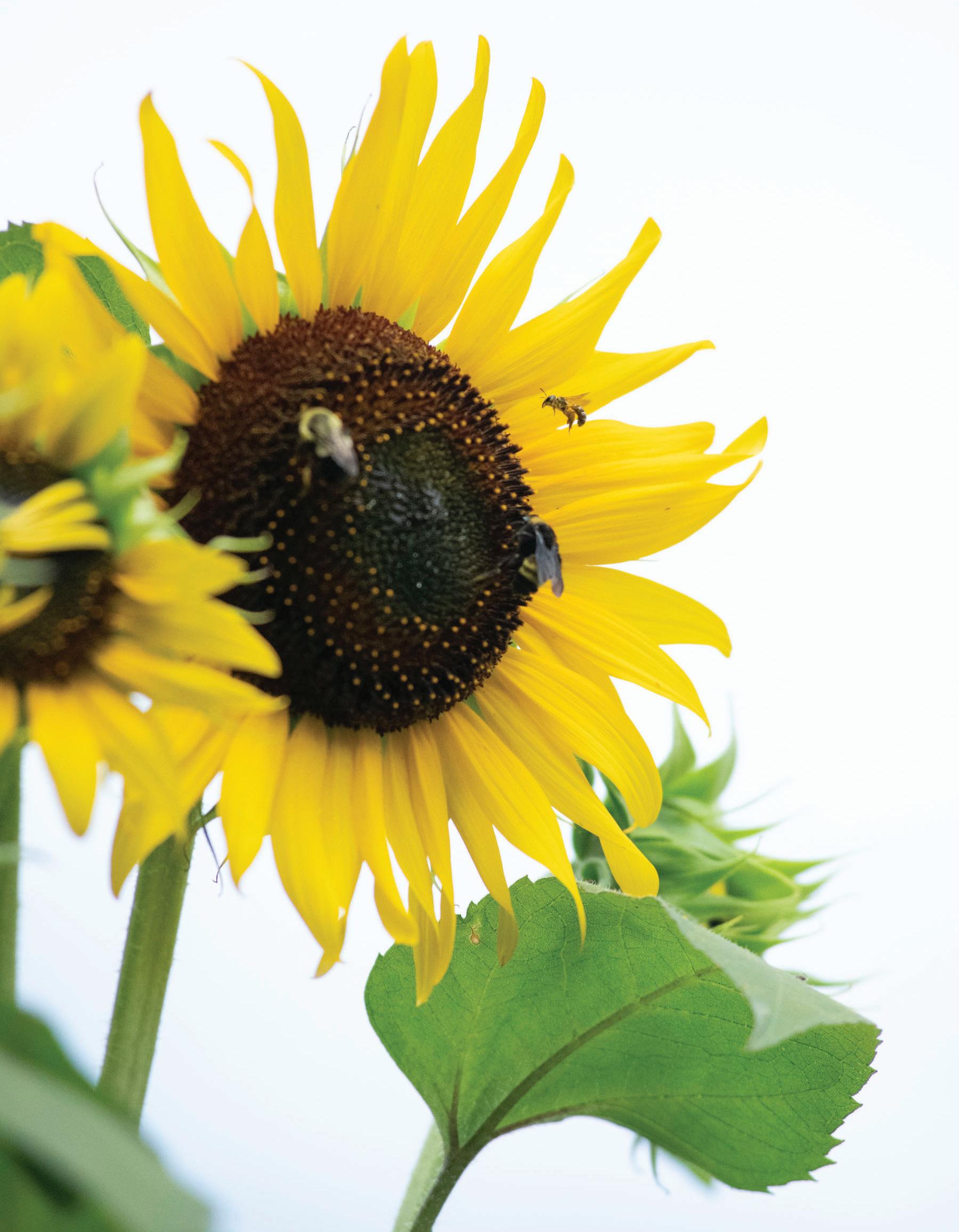
A buzzing sound draws me from my reverie as my eyes refocus on a bumblebee hovering over a wild sunflower before landing on its brown nectar-rich bed surrounded by vibrant yellow petals. I smile as I step away from the shadows of the surrounding trees that gently embrace the wild sunflowers, returning to the lake house where my family is gathered.

Hosted by Talladega’s Historic Ritz Theatre, this 14th annual event begins at 5 p.m. at the International Motorsports Hall of Fame. Billed as the biggest end-ofsummer part in east Alabama, tickets are $100 each, which includes admission for two guests, all-you-can-eat Gulf shrimp, summer buffet and homemade desserts, two complimentary beers, wines, or mixed drinks, and entry in the contest to win $10,000. Non-alcoholic beverages and non-seafood options will be available. Only 300 tickets are available, with all proceeds benefiting The Ritz’ arts education programs. For more information or to order tickets, call 256-315-0000.
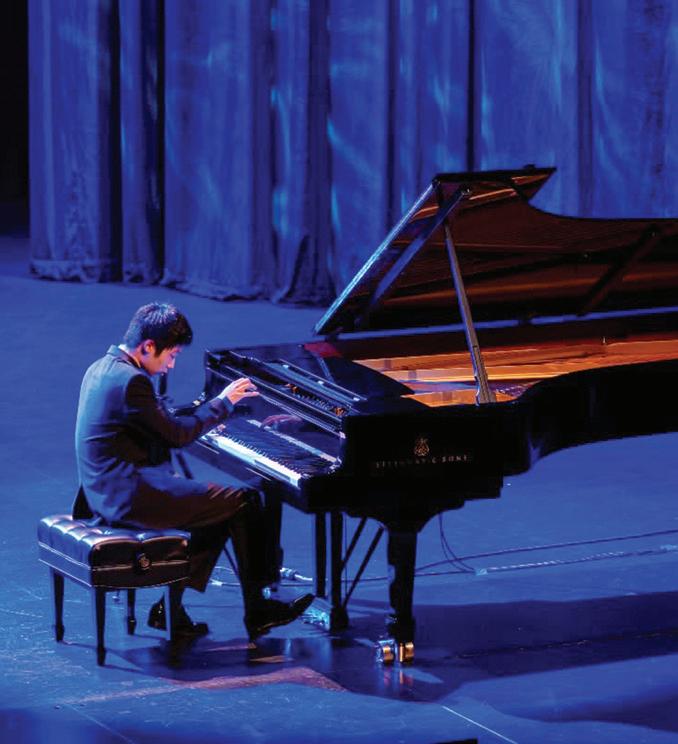
Three extraordinary pianists. One unforgettable evening. The gold medalists of the 2025 Rubato International Piano Competition return to the Oxford Performing Arts Center for a dazzling showcase of classical and jazz piano. After rising to the top of an international field, these remarkable young artists reunite for a night that celebrates the talent, artistry, and excitement at the heart of Rubato. The concert begins at 7 p.m. Tickets are $20 for adults and $10 for students. To order visits, visit oxfordpac.org


Presented by Ragland Toys for Kidz at The Venue on 20th (10 20th Street, Pell City), this murder mystery evening provides dinner, drinks, and an interactive crimesolving experience. Elvis impersonator Aiden Joiner will entertain during cocktail time and dinner. Tickets are $100 per person, including dinner, drinks, and entertainment. Proceeds benefit Ragland Toys for Kidz to help local families during the holiday season. For more information or to purchase tickets, call Angel Phillips at 205- 238-8695, Laura Kohler at 205-516-8984 or Teresa Arnold at 205-4057298.
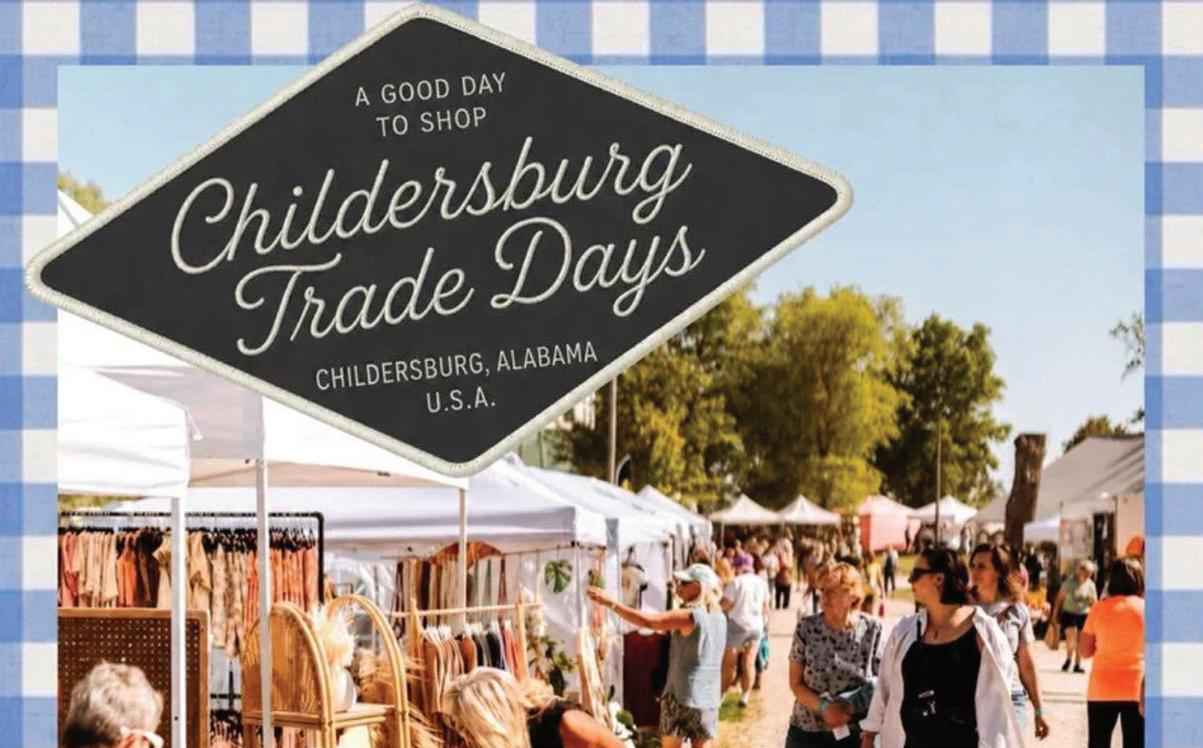
John W. Cox Stadium (4th Avenue SE) hosts this full day of shopping with local vendors, unique finds, community spirit, and small-town charm. Handcrafted goods, boutique treasures, and tasty treats will be available during what will be a fun day out with family and friends. The event is organized by the Childersburg Chamber of Commerce.






















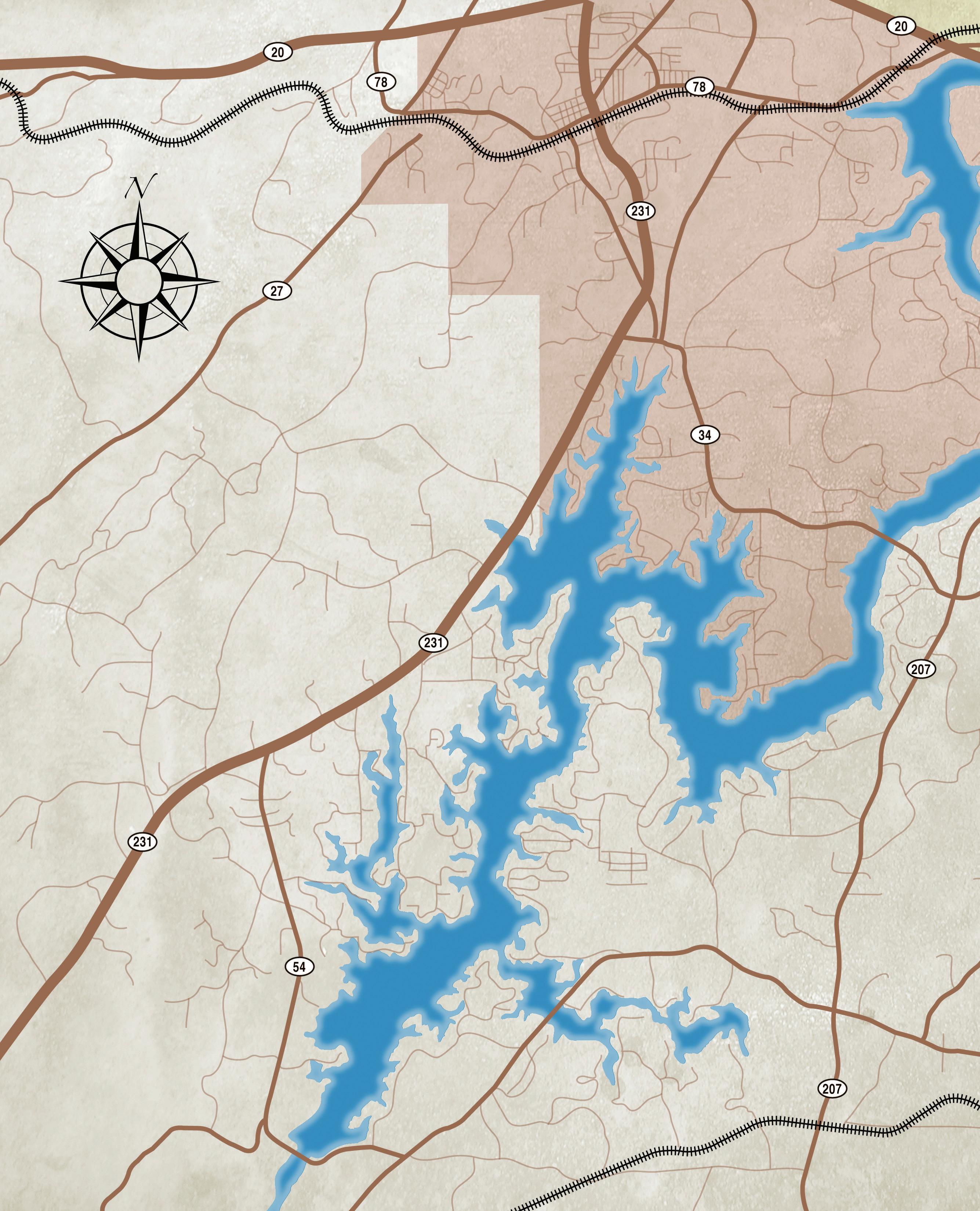



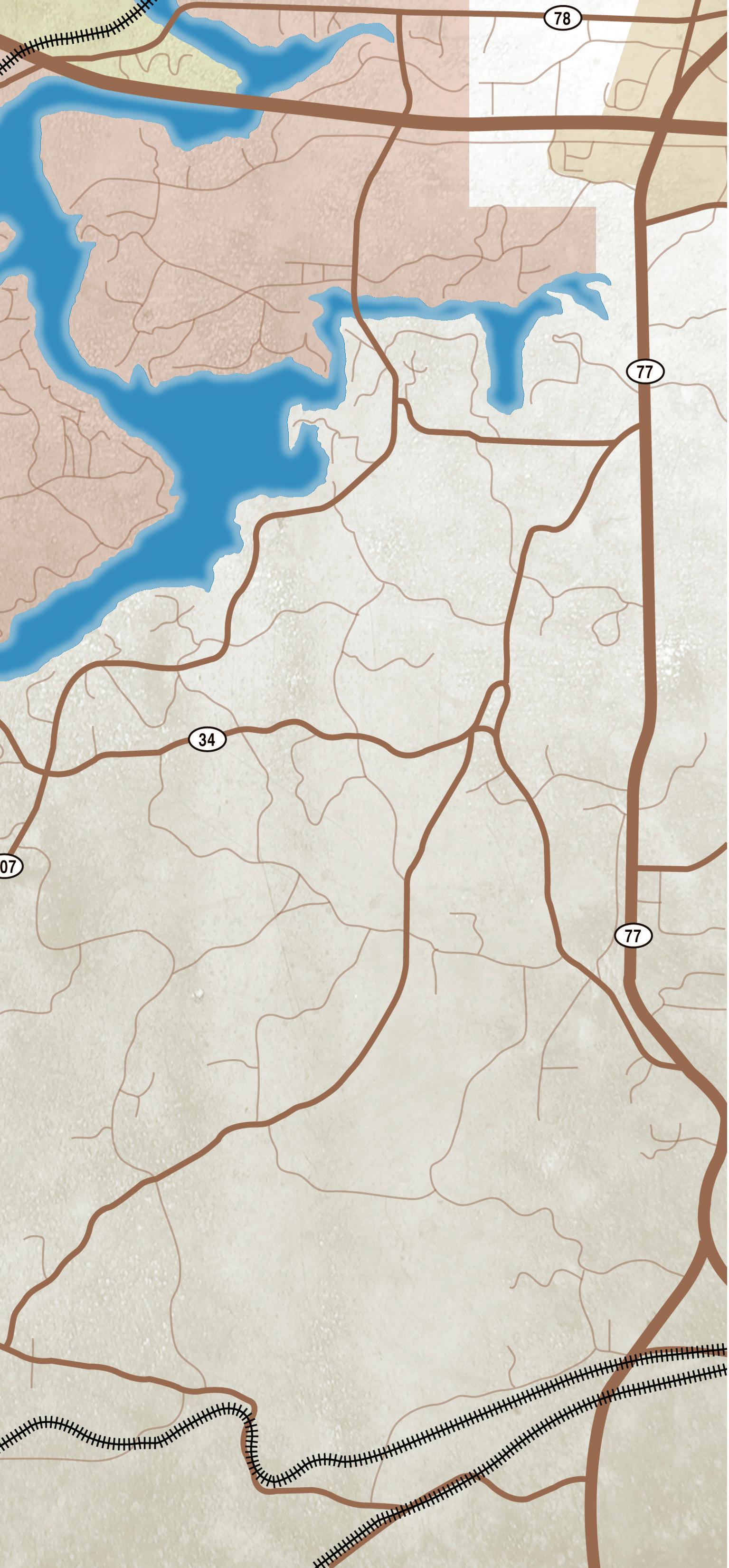
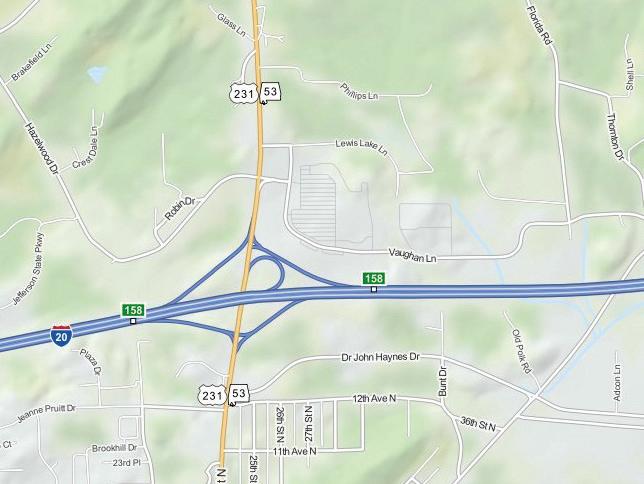
A Lakeside Living guide to
1 – Poor House Branch Marina
2 – Aztecas Mexican
3 – Jade East
4 – Triple G’s
5 – Jimmy’s Country Store
6 – Pell City Steak House
7 – Oishi Asian Restaurant
8 – Coosa Cafe & Creamery
9 – Daylight Donuts
A – Logan Martin Dam
B – Lakeside Park
C – Stemley Bridge
D – St. Clair Airport
E – Mays Bend
F – Choccolocco Creek
G – Dye Creek
H – Blue Eye Creek
2 1

3
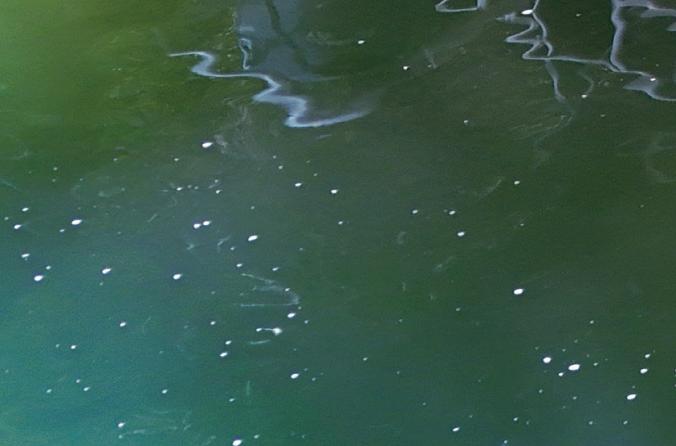

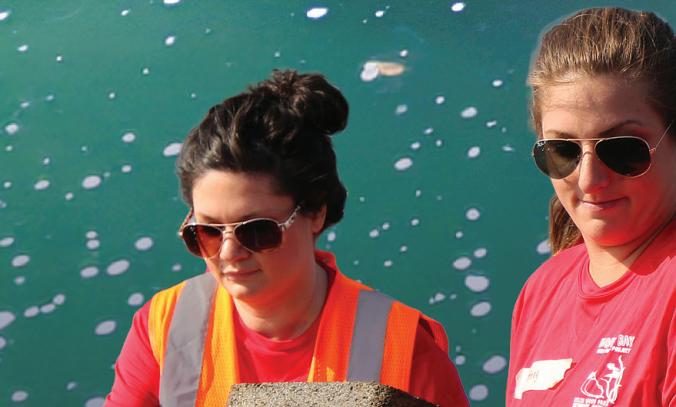


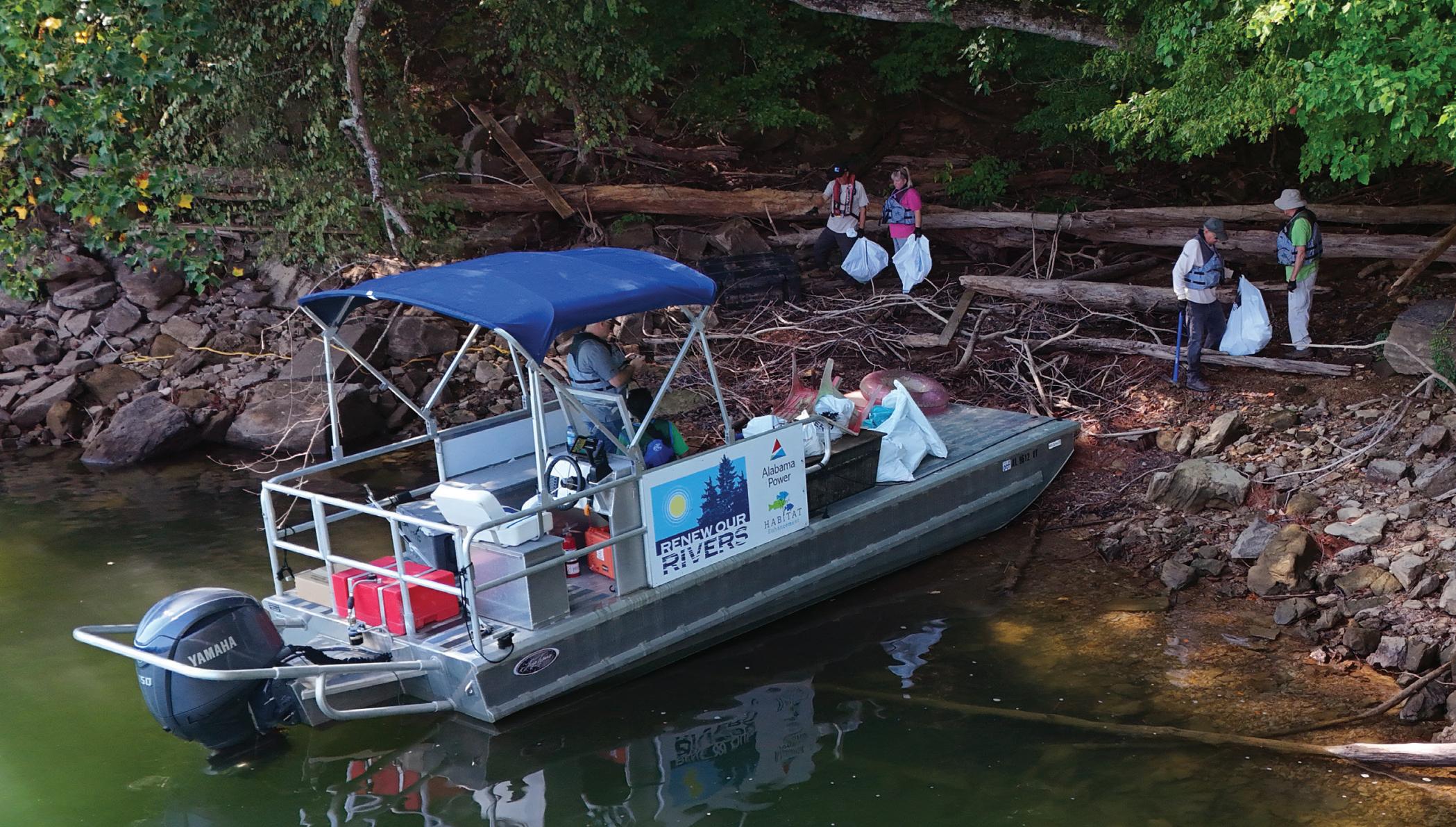
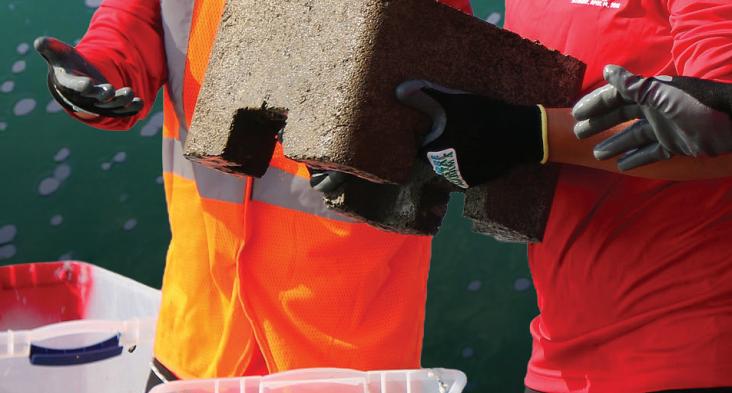
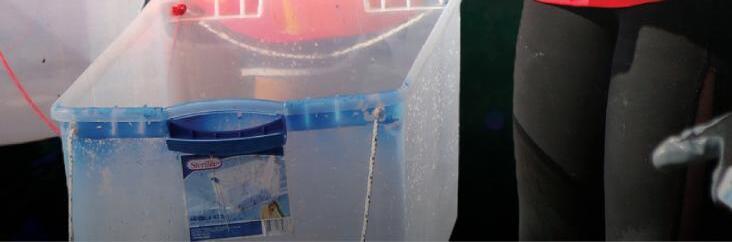
Through RenewOur Rivers, volunteersacrossAlabama have helped remove morethan 13.5 million pounds of trash from lakes andwaterways. What beganasa simple cleanup efforthas grownintoone of the nation’s largest river cleanups, bringing together morethan 104,000 people who careabout protecting the placesthatmakeAlabama special.
It’sareminder thatcaring forthe placesweloveissomething we can all be part of –and anyone is welcome to join the effort.










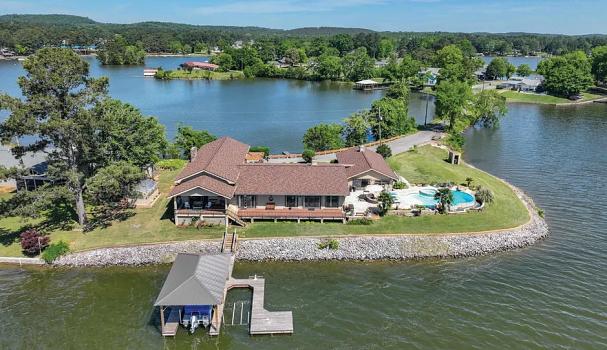
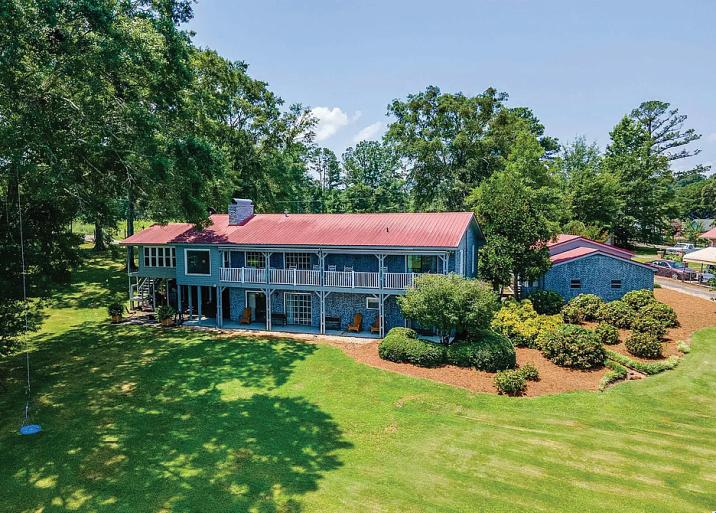

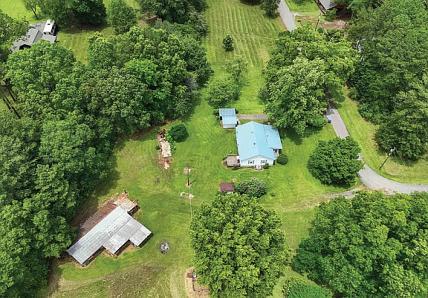

























































































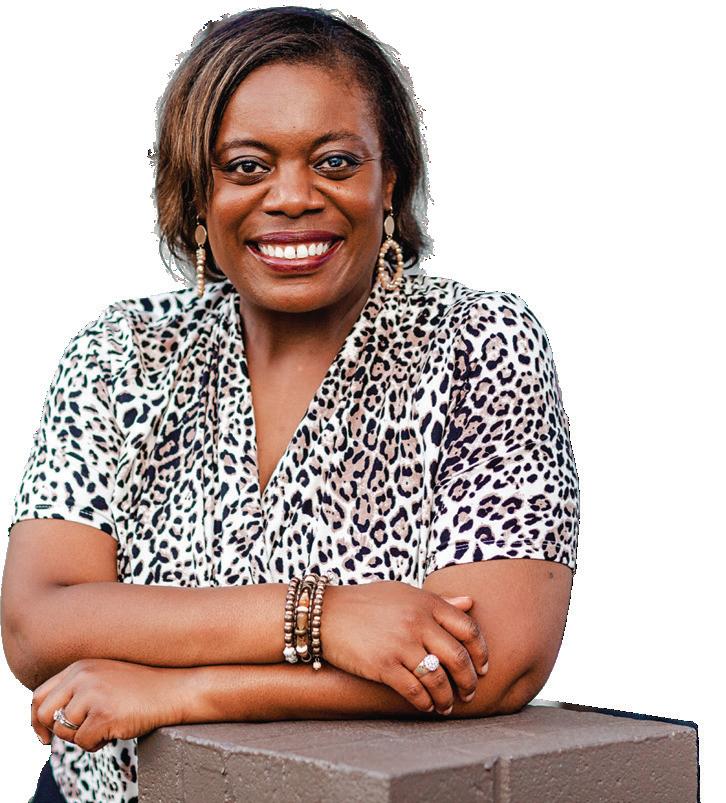
It’s hard to believe it’s already August. Just as we’ve gotten used to the rhythm of summer, it’s starting to slip right through our fingers. But before the school buses start rolling and the calendar flips toward fall, there’s still time to soak up everything our corner of Alabama has to offer. The best part is you don’t have to go far to find an incredible experience. I’ve learned that some of my favorite summer memories haven’t come from elaborate vacations. They’ve come from simple afternoons spent exploring places close to home.
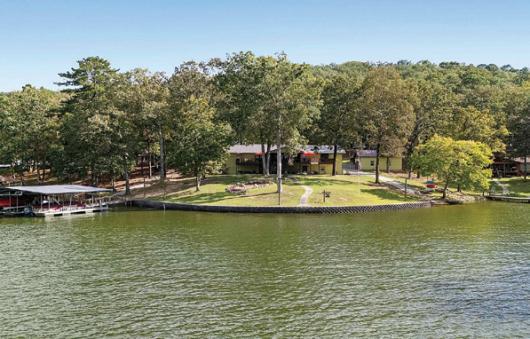
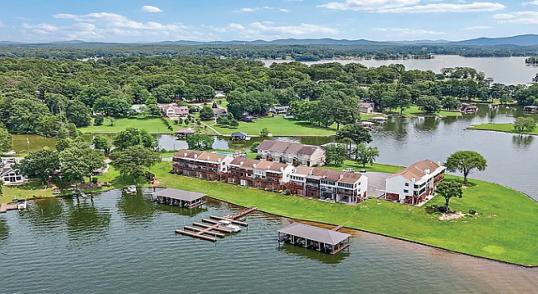
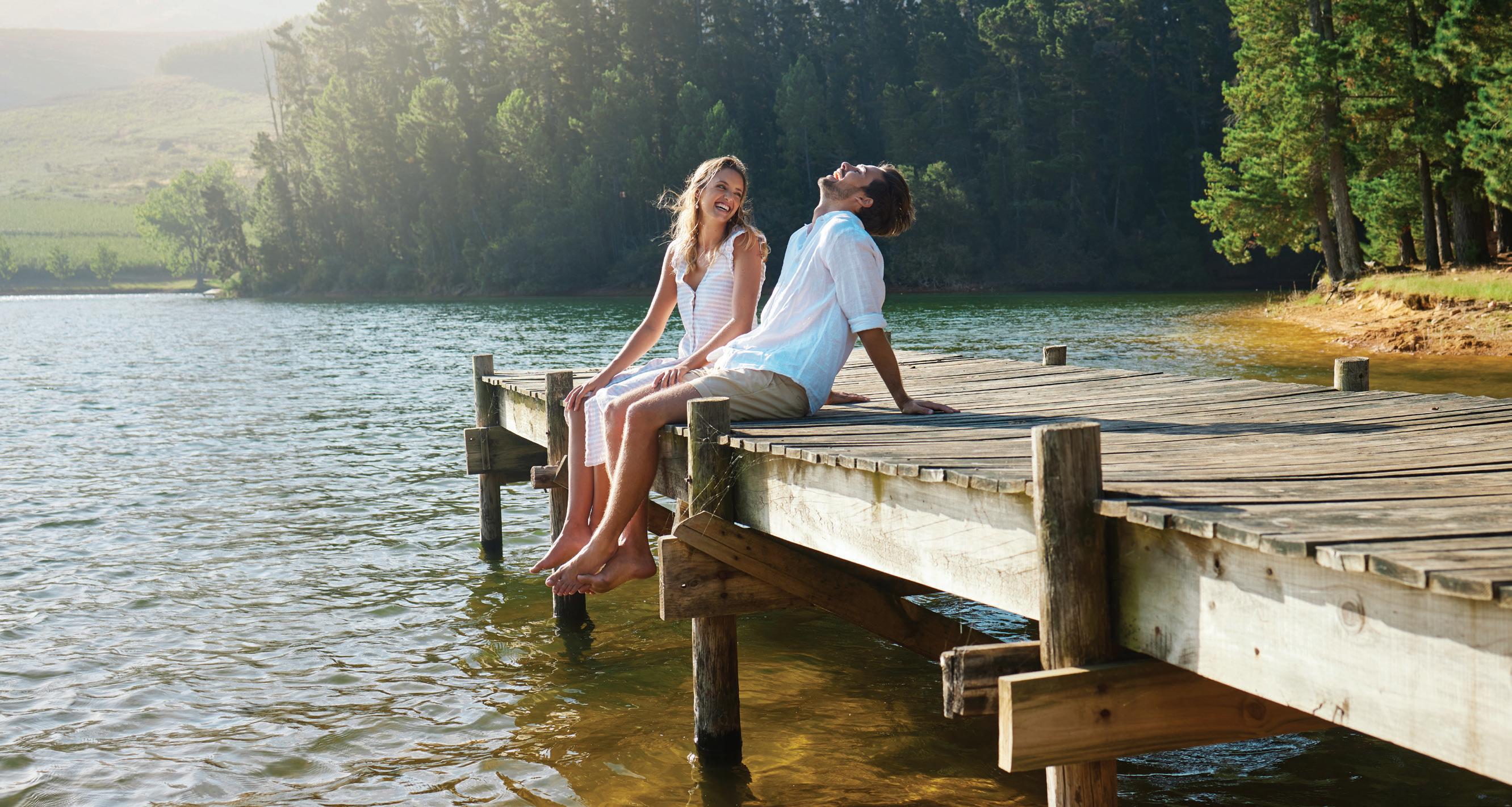
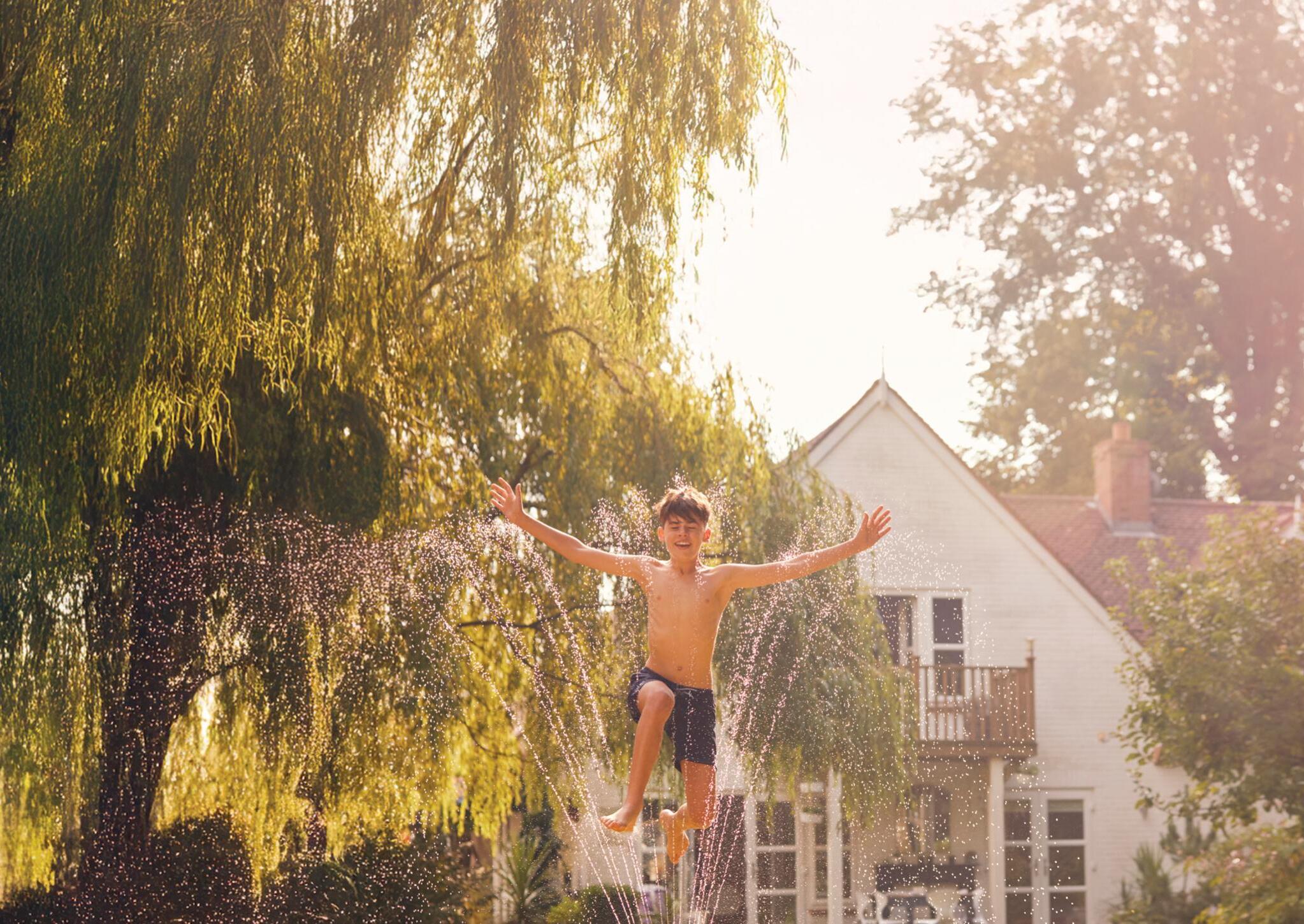
There are just enough warm days left for a few more boat outings on Logan Martin Lake. And there’s time yet for a few more relaxing afternoons on a lakeside beach. Spending the last stretch of summer on the water feels different. Maybe it’s because you know it’s numbered. Whatever the reason, there’s still a great family outing waiting for you right here in our own backyard.
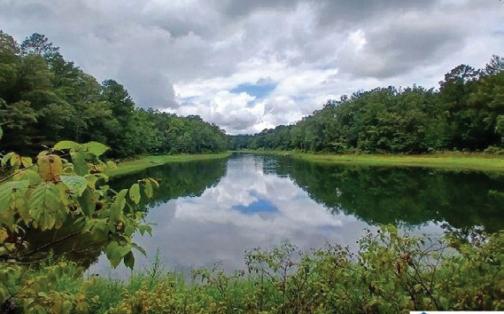
If you prefer solid ground, Big Canoe Creek Nature Preserve in Springville is a great nearby option. Miles of hiking trails wind through the woods, and if you’d rather cover ground on horseback, there are trails suited for that, too. Too often, we take for granted how much beauty sits just past our back doors.
From there, it’s a short drive to Horse Pens 40 in Ashville, where ancient sandstone boulders rise up out of the mountaintop like something out of another world. People come from all over to boulder and climb here, but you don’t have to be an athlete to appreciate the formations. You can simply wander among them and let the magnitude humble you a little.
And if boulders and racetracks strike you as having more in common than you’d think, you’re onto something. In Lincoln, the
International Motorsports Hall of Fame pays tribute to the drivers and machines that helped shape our region’s identity. It’s a good reminder that this part of Alabama is stitched together with speed and horsepower just as much as it is with lake water and pine trees.
Underground, Majestic Caverns in Childersburg offers a cool escape from the heat, quite literally. The cave holds steady at 60 degrees no matter what’s happening outside. Walking through those chambers, past formations that have been growing since long before any of us arrived, puts a whole different kind of scale into perspective. It’s a nice complement to the towering boulders and mountain views found elsewhere on this list.
If it’s elevation you’re after, Cheaha State Park delivers. It’s Alabama’s oldest state park and the state’s highest point, all in one stop. Standing atop Cheaha Mountain, looking out over the ridgelines fading into blue distance, quiets your mind, if only for a moment.
And no last-days-of-summer tour would be complete without a sweet treat. A stop for ice cream at Blue Bell Creameries in Sylacauga is the perfect way to cap off any of these adventures, whether you’ve spent the day on the water, in the woods, or somewhere in between.
However you decide to spend these final weeks of summer, I hope you spend them outside, close to home, and paying attention to the beauty that surrounds us. You don’t have to travel far to have great experiences and create lasting memories. Sometimes the best ones are hiding in plain sight, right in our own backyard.







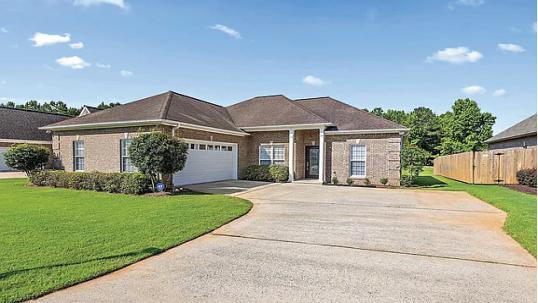
Buying ahome is one of life’s biggest milestones, andwhether it’syourveryfirstplace or the home you’vealways dreamed of,we’re heretohelp make it happen. At First BankofAlabama, ourlocalexperts guide youevery stepofthe waywith competitive rates,personalized service, andacommitment to making your dreama reality. Startyourjourney home with First Bankof Alabamabecauseevery greatstory begins with afirst.