Where the money is moving in Adria
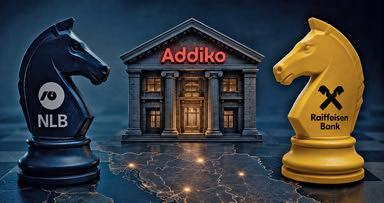
The battle for Addiko
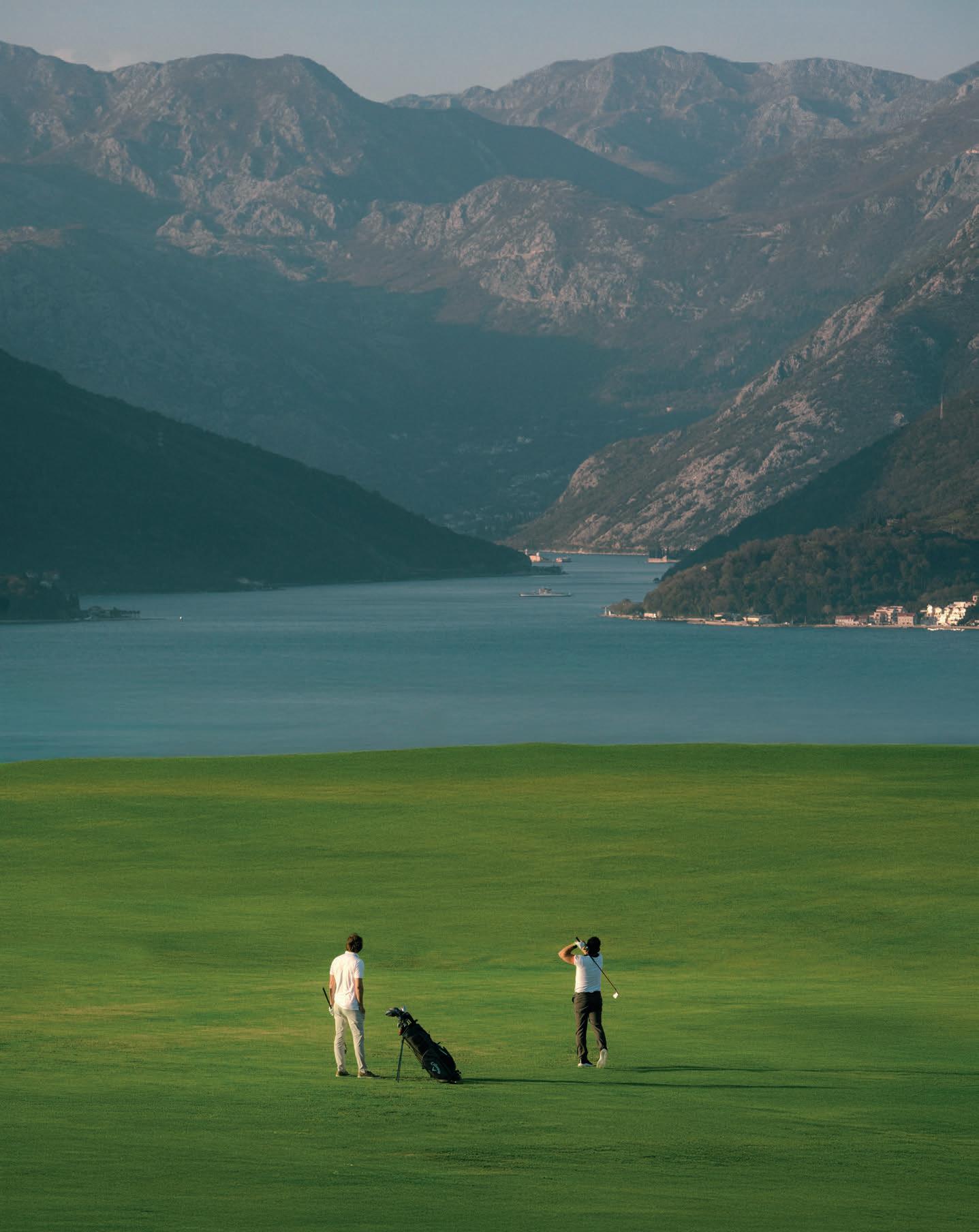
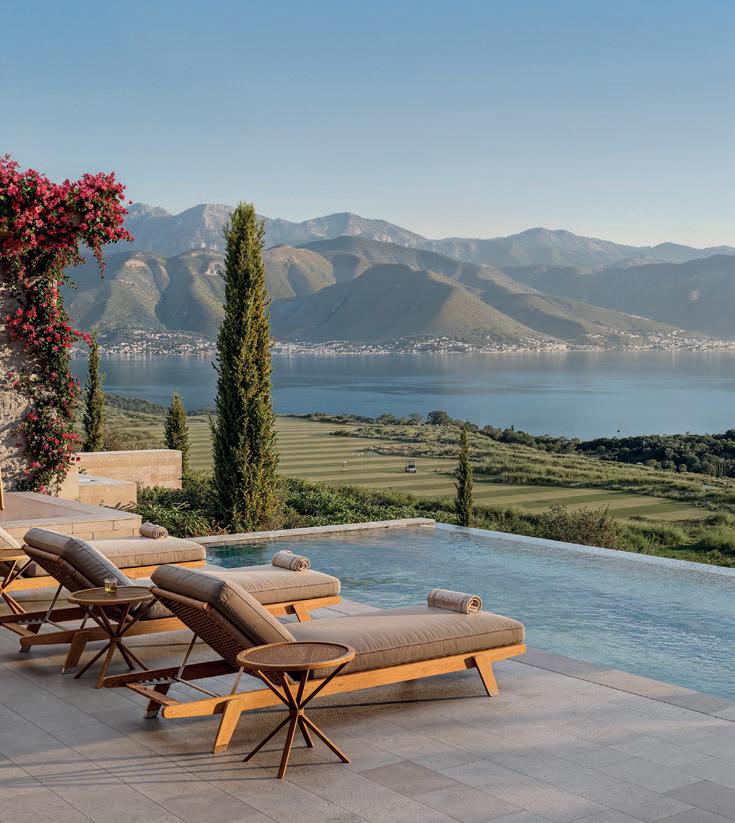
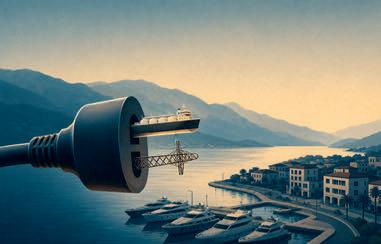
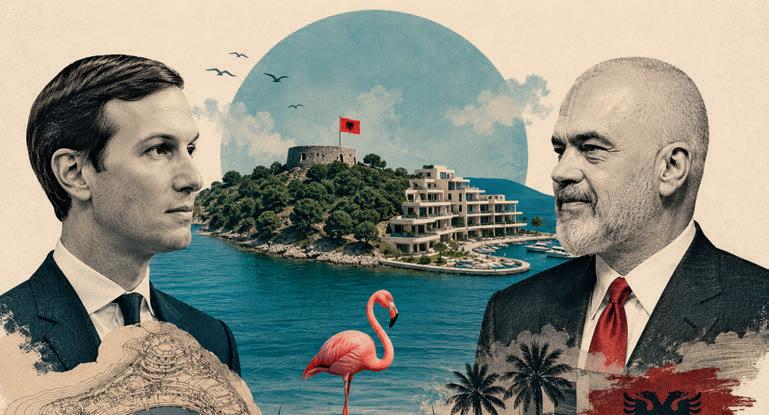
Kushner, Rama and the resort
Where the money is moving in Adria
The battle for Addiko
Kushner, Rama and the resort
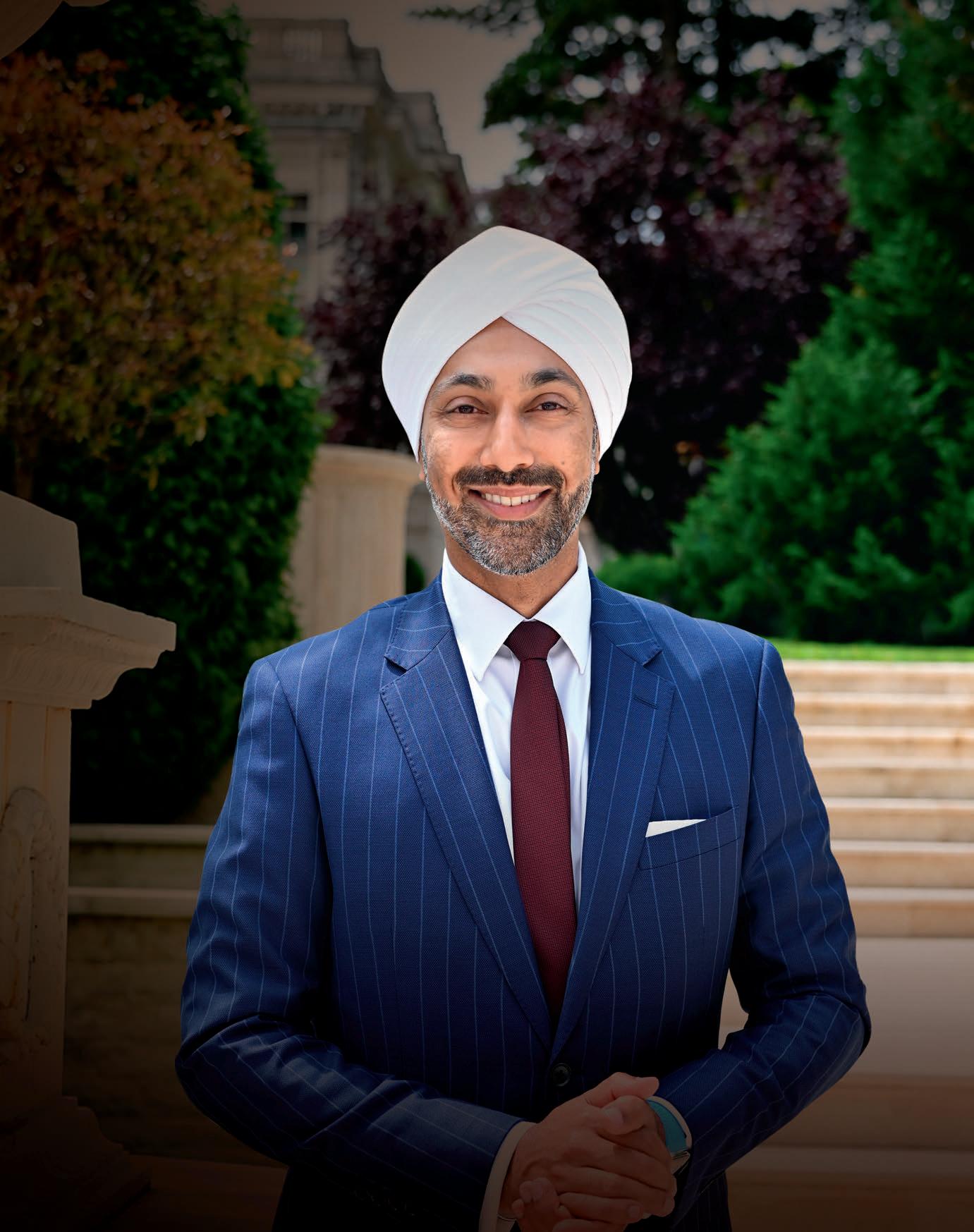
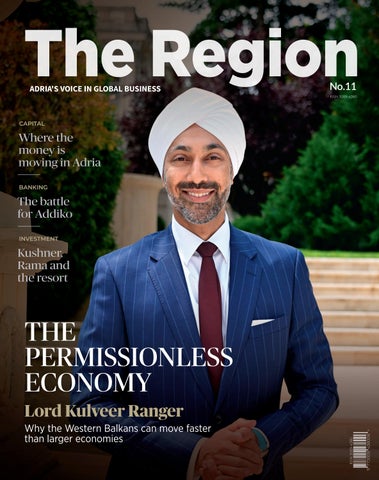
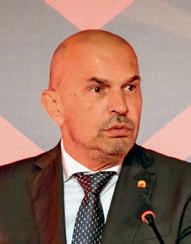
Lord Kulveer Ranger
Why the Western Balkans can move faster than larger economies
CEO & EDITOR-IN-CHIEF: Ana Novčić a.novcic@connectingregion.com
COO: Ivana Jovanović i.jovanovic@connectingregion.com
DESIGN: Branislav Ninković
COMMUNICATIONS DIRECTOR: Neda Lukić n.lukic@connectingregion.com
CONTRIBUTORS:
Ljubica Gojgić, Ivana Babić, Marko Nikolić, Milica Uvalić, Adriano Milovan, Armin Zeba, Dejan Azeski, Geri Kolgega, Idro Seferi, Andrijana Tešović, Branimir Jovanović, Zoran Panović, Milan Igrutinović, Maja Vukadinović, Mila Jović, Novica Mihajlović
TRANSLATION & EDITING: Marija Jurić
PHOTOS: Zoran Petrović, Shutterstock
SALES DIRECTOR: Maja Subotić m.subotic@connectingregion.com
ADVERTISING: Biljana Dević b.devic@connectingregion.com Vesna Vukajlović v.vukajlovic@connectingregion.com
SUBSCRIPTIONS: Svetlana Petrović subscribe@connectingregion.com
FINANCE: finance@aim.rs
PRINTING: Zlatna knjiga
Connecting the Regionis published by: alliance international media d.o.o. Resavska 1/III, 11111 Belgrade 17, Serbia PAK 125806, Serbia
Phone: +(381 11) 2450 508 E-mail: info@connectingregion.com www.connectingregion.com www.aim.rs All rights reserved alliance international media 2026
3009-4380 9 773009 438006 >
As part of the AIM publishing family, The Region builds on the legacy of Magazine’s 23 years of excellence The views expressed in this publication are those of the presenter. They do not necessary reflect the views of the publisher

Connecting the Region is quarterly publication Page 8
CONNECTING the Region / editor in chief Ana Novčić.2023, no. 1- . - Belgrade : Alliance international media, 2023- (Subotica : Rotografika).29,5 cm
Tromesečno.
ISSN 3009-4380 = Connecting the Region COBISS.SR-ID 130142473

Pages 10–13 I The Conversation The stories, debates and ideas everybody is talking about across Adria.
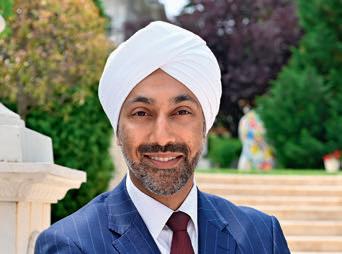
Pages 24–28 I Lord Kulveer Ranger House of Lords / BSCC We Don't Need Another Silicon Valley.
Pages 18–23 I Regional Pulse The news, numbers and developments shaping the region.
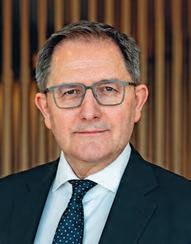
Pages 14–17 I Grzegorz Zielinski EBRD The Next Test Is Delivery.
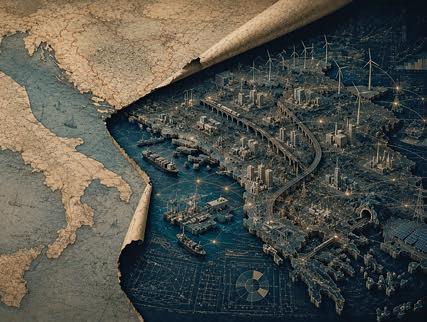
Pages 30–33 I Who Finances Adria? The New Geography of Power.
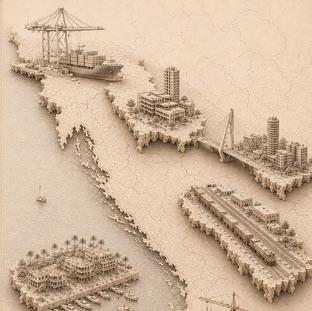
Pages 34–36 I The New Capital Map of Adria Following the movement of capital across the region.
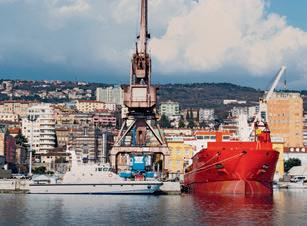
Page 39 I Croatia Following the Money.
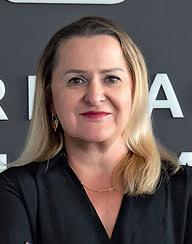
Pages 40–42 I Ivana Gažić Zagreb Stock Exchange Capital Markets and Economic Growth.
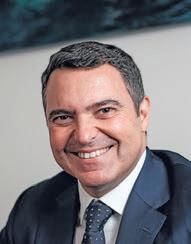
44–45 I
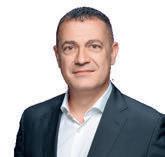

Page 52–53 I Big Question Branko Mitrović, One Crna Gora / MFIC Tomo Ricov, Weekend Festival
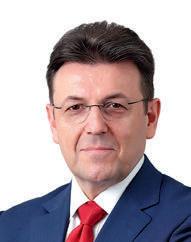
Pages 46–47 I Luka Burilović Croatian Chamber of Economy Croatia's Competitive Advantage.
Pages 48–50 I Slađana Ćosić European Investment Bank Financing Croatia's Transformation.


Pages 54–55 I The Visibility Economy Why Reputation Has Become a Business Asset.
Pages 56–57 I Jelena Sretenović Mastercard Turns Data Into Direction for Montenegro Tourism
Pages
Pages 64–65 I Željko
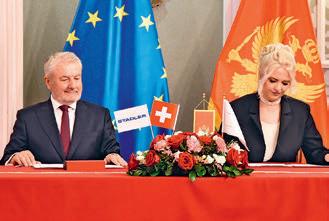
Building the Future of Rail Mobility.
Page
Managing Growth Sustainably.
Pages
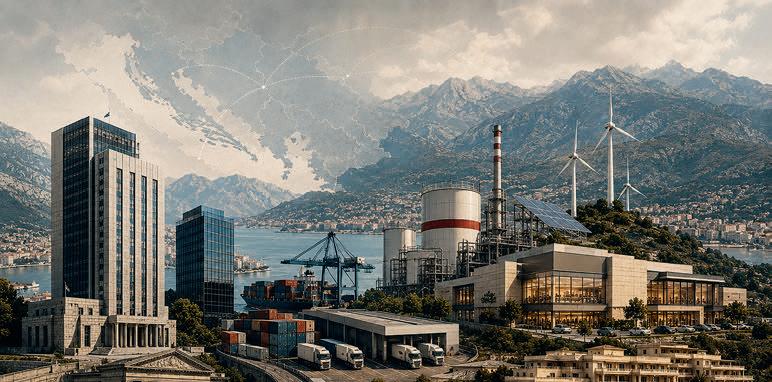
Pages 70–71 I Companies Moving Capital Across Adria The Businesses Expanding Beyond Borders.

Pages 72–73 I Katherine Haataja Operosa Building Culture Without Borders.
Pages 74–75 I Tijana Stanimirović Magioni Fine Jewelry When Luxury Becomes Personal
Page 76 I World Cup 2026 Why Adria Keeps Producing Football Giants.
Pages 78–81 I Croatia's Sound Factory The Story Behind Croatia's Musical Influence.

Pages 82–83 I Creators Domagoj Sever & Ana Grzunov.

Pages 84–85 I From Parisian Salons to Global Empires The Rise of Luxury Fashion.
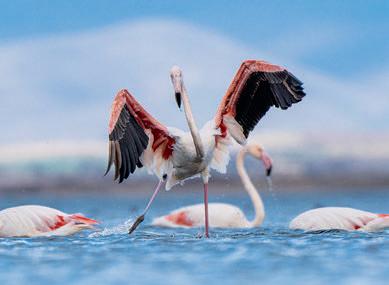
Pages 86–89 I WildScope Where Flamingos Paint the Lagoon Pink.

Pages 90–91 I Lesser Known Tales The Forgotten Railway.
Pages 92–95 I Corporate Moves Leadership appointments across Adria
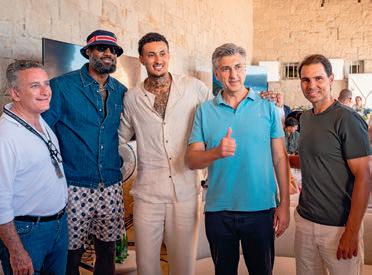
Pages 96–100 I Who Was in the Room Where connections happened

Page 102 I Roast Duffy, Irish Stand-Up.
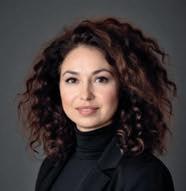
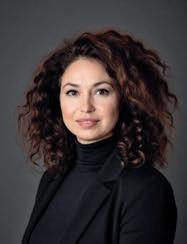
Ana Novčić Editor-in-Chief The Region
There was a time when geography seemed to decide everything.
COUNTRIES BLESSED WITH ACCESS TO the sea prospered. Trade routes determined fortunes. Natural resources created empires. If you wanted to understand where wealth would emerge, all you needed was a map.
Today, that map looks very different. The most valuable company in the world does not depend on oil fields. Some of the fastest-growing businesses own no factories. A startup founded in Ljubljana, Belgrade or Tirana can sell its products globally from day one. Capital moves across continents in seconds. Talent logs in from almost anywhere.
And yet, geography still matters. Not in the way we often think.
Over the past decade, I have attended countless conferences, investment forums and business gatherings across the region. Whenever the conversation turns to attracting capital, someone inevitably points to geography. We are told that the Western Balkans sits at the crossroads of Europe. That we are strategically positioned between East and West. That we are a bridge connecting markets.
All of that is true. But geography alone has never convinced an investor to sign a cheque. Confidence has. Capital has always been less interested in where a country is than in where it is going.
Investors look for predictability. Entrepreneurs look for opportunity. Talented people look for environments where their ambitions can grow. The countries that attract capital most successfully are often not those with the best location, but those that create the greatest sense of momentum.
This is where the story of our region becomes particularly interesting.
For years, discussions about the Western Balkans were dominated by what the region lacked. Smaller markets. Limited capital. Demographic challenges. Slow reforms. Endless comparisons with larger European economies.
Yet some of the most dynamic companies emerging today were built precisely because their founders understood the advantages of being smaller. They move faster. They adapt quicker. They operate across borders naturally because no single domestic market is large enough.
In many ways, necessity has become a competitive advantage. The same principle increasingly applies to countries.
The winners of the next decade may not be those with the largest populations or the biggest budgets. They may be those capable of creating ecosystems where ideas, talent and capital can meet with the least friction. That is a different kind of geography. It cannot be measured in kilometres.
It is measured in trust. Trust in institutions. Trust in rules. Trust that investments will be protected. Trust that talented young people will choose to build their future at home rather than somewhere else.
In the end, capital is remarkably human. It seeks certainty when the world feels uncertain. It seeks ambition where others see limitations. And increasingly, it seeks places that understand that geography is no longer destiny.
The most important map for our region may therefore be the one we have yet to draw. Not a map of borders, but a map of opportunity. Because in the twenty-first century, the geography of capital is ultimately the geography of confidence. •

TIME
Every person gets the same 24 hours in a day. A billionaire. A student. A president. A factory worker. Almost everything else in modern life can be multiplied, accelerated or scaled. Time cannot. Perhaps that is why so many conversations eventually return to the same subject: time

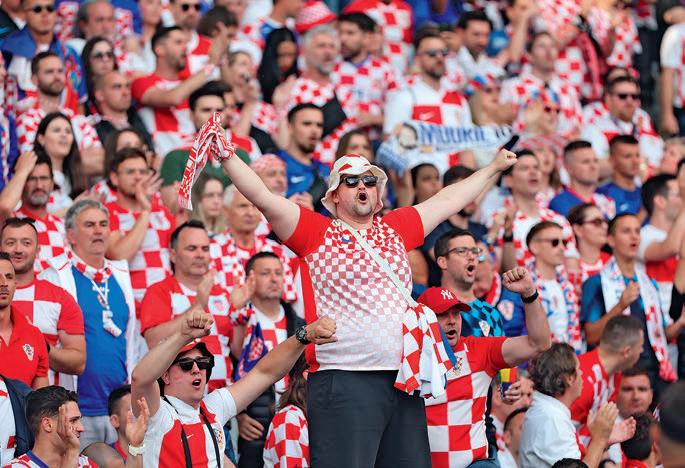
Croatia and Bosnia and Herzegovina remain at the centre of regional attention, but every World Cup eventually becomes a debate about everyone else's chances too. From Argentina and Brazil to England, France and Spain, few topics currently generate more predictions, arguments and second-guessing across Adria.
What began as a banking acquisition has become one of the region's most closely watched corporate contests. Competing bids, regulatory scrutiny and crossborder ambitions have turned Addiko into a test case for the future shape of regional banking.
Pioneer of North Macedonia's digital economy, co-founder of Grouper, former finance minister and Forbes 30 Under 30 honouree, Nina Angelovska Stankov has published her first book, Nothing by Chance.
Part memoir and part entrepreneurial journey, it explores the decisions, setbacks and lessons that shaped her path from startup founder to one of the region's most recognisable business leaders.

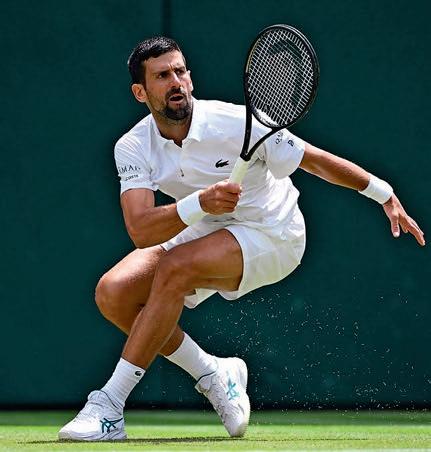
As Wimbledon gets underway, Novak Djokovic returns to the tournament where he has enjoyed some of the greatest moments of his career. With seven Wimbledon titles already to his name, he remains one of the few players capable of winning a Grand Slam at 39. Across Adria, the question is familiar: can Novak surprise everyone one more time?
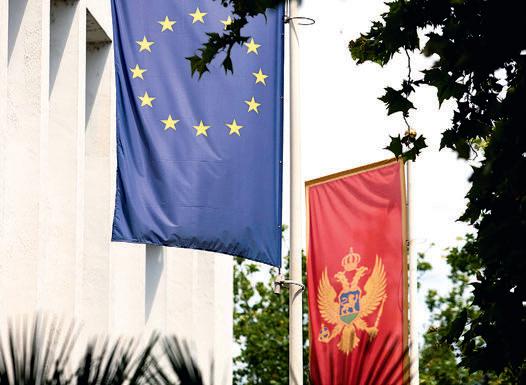
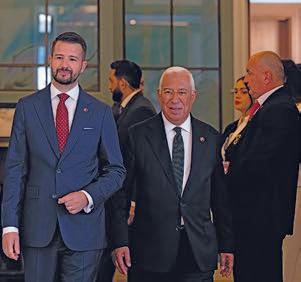
Can Montenegro become the European Union's next member state before the end of the decade? With 16 chapters already provisionally closed—nearly halfway through the accession process—the country has more momentum than at any point in recent years. What once sounded like a distant ambition is increasingly becoming a practical question for investors, businesses and policymakers across the region.
From hotel rates and beach clubs to restaurant bills and apartment prices, the cost of summer around the Adriatic has become one of the season's most discussed topics.

The world's best chefs usually work in Paris, London, New York or Tokyo. Ana Roš chose Kobarid. From a small town in the Soča Valley, she turned Hiša Franko into one of the most celebrated restaurants in the world, earning three Michelin stars and attracting guests from every continent. In doing so, she achieved something few chefs ever manage: making the destination as famous as the restaurant itself.
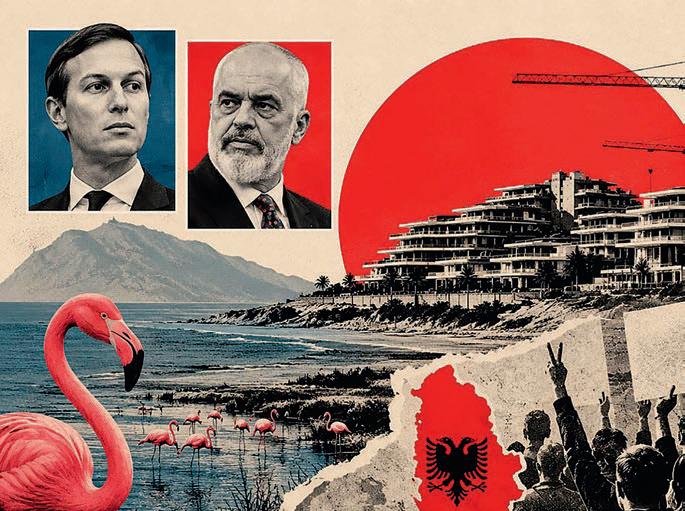
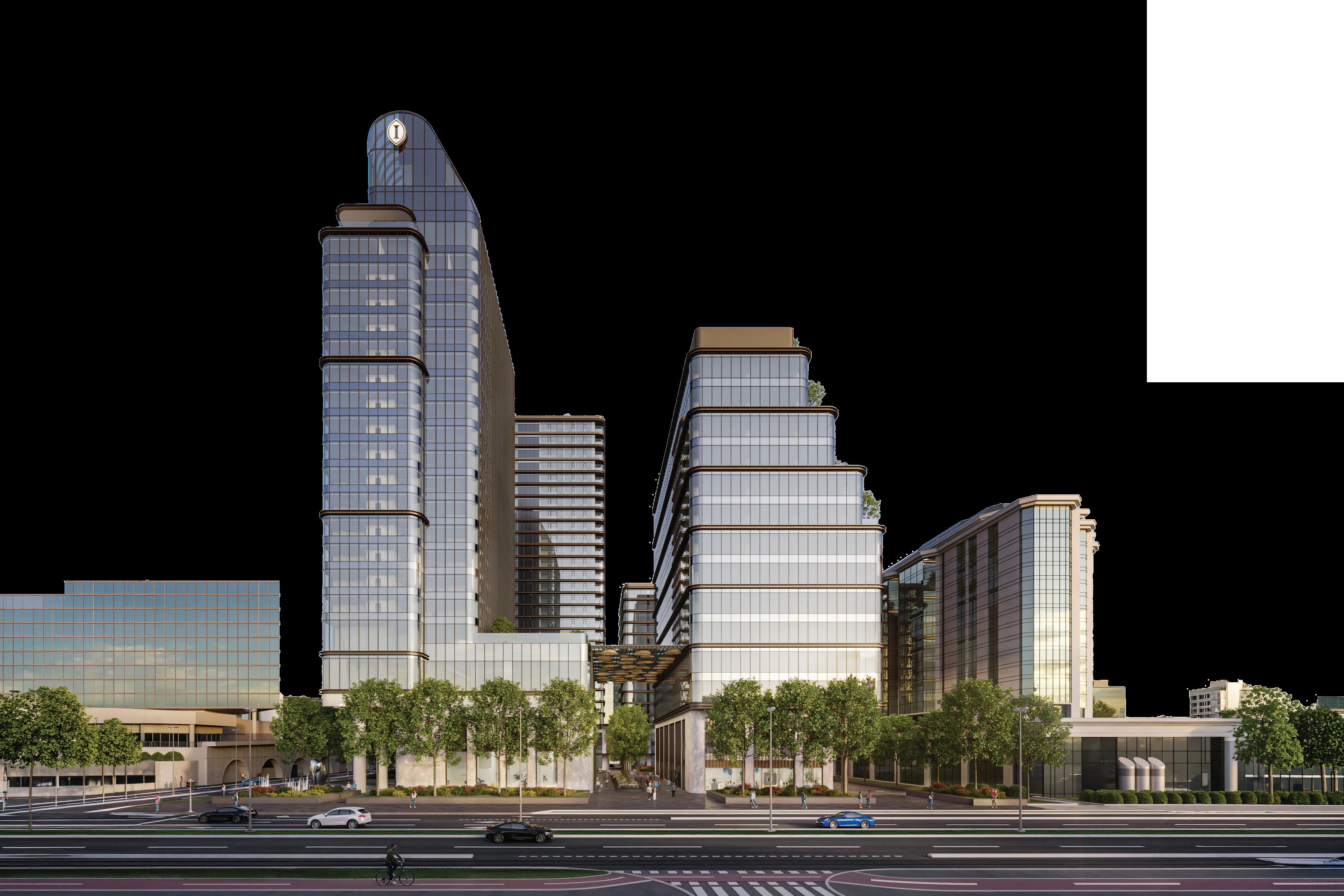
What began as a luxury tourism project has become one of the Adriatic's most debated developments. Backed by Jared Kushner's investment group and supported by Albanian Prime Minister Edi Rama, plans for Sazan Island have sparked discussions about investment, tourism, environmental protection and the future direction of Albania's coastline. Few projects have generated as much attention across the region this year.
As Europe prepares to spend hundreds of billions of euros on defence, companies across the continent are racing to secure a place in future supply chains. The question for Adria is whether regional manufacturers can capture part of that investment wave—or whether the opportunity will pass to larger industrial economies.
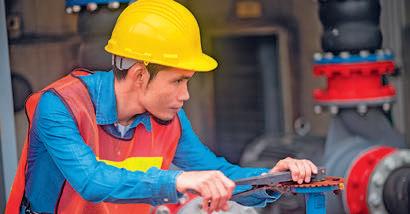
From Croatia and Slovenia to Serbia and Montenegro, employers are increasingly relying on workers from Nepal, India, the Philippines and Egypt as labour shortages become harder to ignore. Demographics, emigration and economic growth are reshaping the region's workforce faster than many expected.
In one of his first major interviews since becoming EBRD Managing Director for South-Eastern Europe, Grzegorz Zielinski discusses investment, competitiveness, energy transition and why the region's future will be defined less by ambition and more by execution.
South-Eastern Europe is entering a decisive period.
As Europe searches for new sources of growth, strengthens its energy security and accelerates the transition to a more competitive and sustainable economy, the region finds itself increasingly at the centre of major economic and geopolitical shifts. Yet while opportunities are expanding, so too is the pressure to deliver.
Few people have a broader perspective on that challenge than Grzegorz Zielinski . Recently appointed Managing Director for South-Eastern Europe at the European Bank for Reconstruction and Development (EBRD), he oversees a diverse region that spans both the Western Balkans and several European Union member states, each moving at a different pace but facing many of the same ques-
tions: how to attract investment, strengthen competitiveness, modernise infrastructure and accelerate economic transformation.
In this exclusive interview with The Region, Zielinski argues that South-Eastern Europe's strategic relevance is no longer in question. The real challenge, he says, is turning ambition into execution and ensuring that opportunities are translated into lasting economic weight.
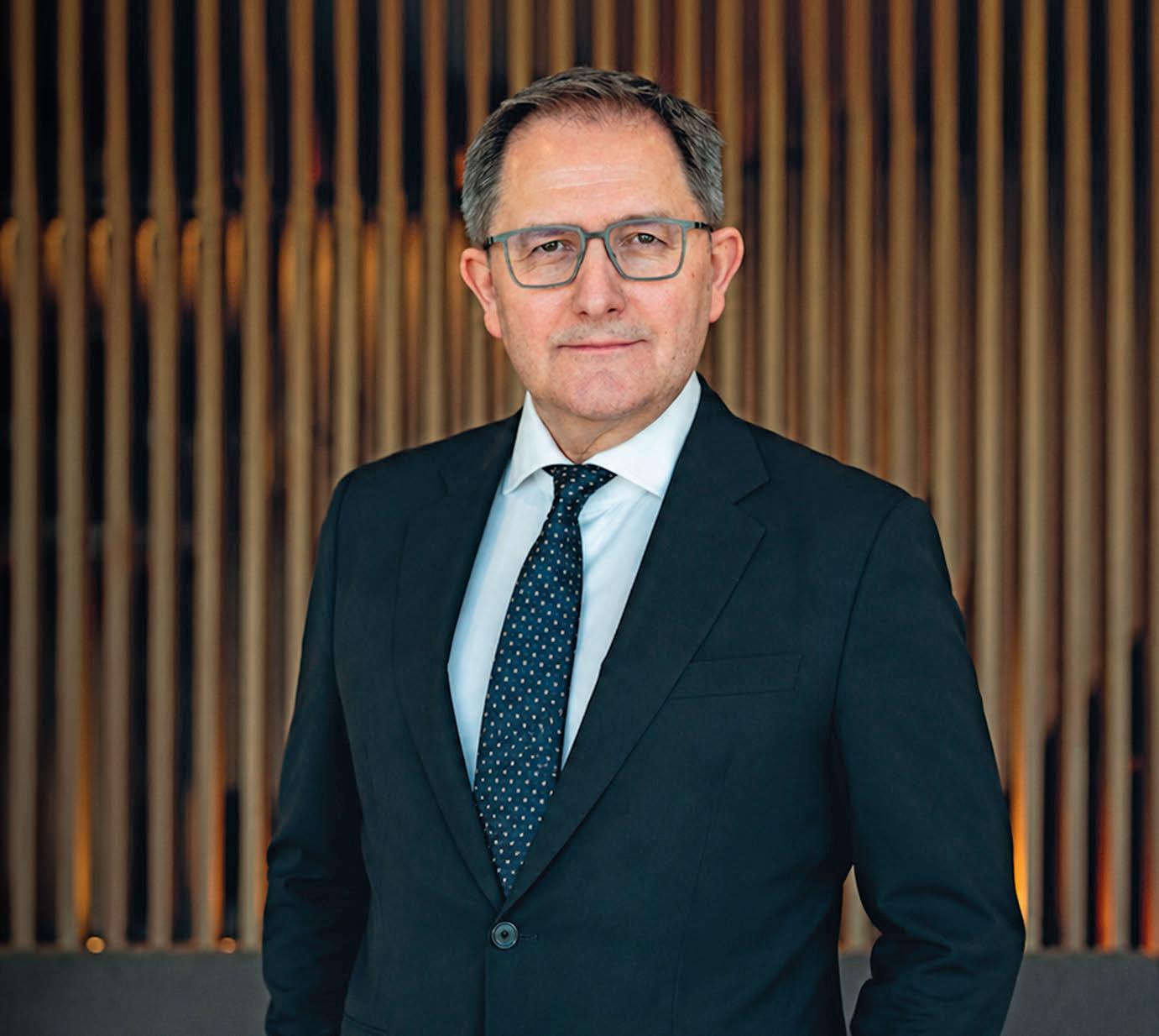
You have worked across some of Europe's most ambitious energy and infrastructure transformations. Looking at South-Eastern Europe today, do you see a region approaching strategic relevance or one still struggling to convert potential into real economic weight?
South Eastern Europe is already strategically relevant, not only from an energy perspective, but as a region that sits at the intersection of
"The gap is therefore not about relevance, but about speed and consistency of delivery."
Europe's key economic priorities, from infrastructure and connectivity to competitiveness, resilience and green transition. Its importance is therefore both economic and geopolitical, and increasingly recognised as such.
What is often underestimated, however, is the internal diversity of the region. Within the EBRD context, we cover both the Western Balkans and the EU member states
such as Romania, Bulgaria and Greece, which differ significantly in scale, market depth and institutional maturity. Larger EU economies increasingly operate at a different level, with greater capacity to absorb investment and deploy more complex, market-based instruments across sectors, from transport and urban infrastructure to financial markets and industrial and energy transition.
The gap is therefore not about relevance, but about speed and consistency of delivery. In the Western Balkans in particular, progress is visible, but implementation and regulatory alignment still lag.
The role of the EBRD is to bridge that gap, supporting institutional strengthening where needed, but equally helping to scale investment and crowd in private capital. The region's strategic importance is established; the priority now is to translate that into sustained economic weight.
The countries you will oversee are moving at very different political and economic speeds. In a region where reform fatigue is increasingly visible, what matters more today for long-term investors: political stability, institutional credibility or market opportunity?
Political stability, institutional credibility and market opportunity are not substitutes; they are interdependent pillars.
Market opportunity may attract initial interest, particularly in larger economies, but without credible institutions and predictable rules, it cannot translate into sustained investments. At the same time, stability on its own is not sufficient if markets remain shallow or overly state-driven.
In practice, what matters most for investors is the absence of a weak link. In some markets, the binding constraint is institutional credibility, in others, it is policy consistency or insufficiently developed market mechanisms.
This is where differences across the region become more pronounced. In more advanced markets, the focus is increasingly on deepening capital markets and enabling more sophisticated, market-driven structures, including PPPs or bank-
GRZEGORZ ZIELINSKI Managing Director
"The next phase is not about redefining strategies, but about consistent, large-scale implementation."
able merchant risk. In others, the priority remains more foundational.
Our role at the EBRD is to address these gaps in a targeted way, strengthening institutions where needed, while also structuring bankable, investable projects. Investors ultimately respond to coherence and predictability, not isolated strengths.
South-Eastern Europe speaks often about green transition and energy independence, yet many economies in the region still face infrastructure gaps and slow implementation. Where do you believe the region is genuinely progressing, and where is it still falling behind?
Grzegorz Zielinski was appointed Managing Director for South-Eastern Europe at the European Bank for Reconstruction and Development in 2026. He oversees the Bank's operations across the Western Balkans as well as several EU member states in the region, focusing on investment, infrastructure, energy transition, competitiveness and private sector development.
There is clear and tangible progress across the region, particularly where policy commitment is sustained. This is most visible in renewable energy, energy efficiency and, in more advanced EU markets, in increasingly complex transition pathways.
At the same time, the transition is broadening beyond infrastructure alone; it is equally about how effectively companies adapt, how financial systems mobilise capital and how regulatory frameworks enable private participation.
The main constraint, however, remains implementation. While ambition is no longer in question, delivery is still uneven, with gaps in project preparation and permitting, regulatory predictability and the systematic engagement of the private sector. Bridging this gap between strong ambition and consistent execution is where the real opportunity lies, and where institutions like the EBRD can play a catalytic role.
The region rarely lacks strategies, conferences or announced investment plans. From your experience inside the EBRD, what usually separates projects that genuinely transform economies from those that remain trapped in presentations and political speeches?
The key distinction is not ambition, but economic credibility, readiness for execution, and full and unwavering commitment of project sponsors, from both the private and public sectors.
Projects that move forward share a simple foundation: they are eco-
At its core, the principle is straightforward: projects that are economically sound and supported by credible frameworks and delivery capacity move forward. Those are the projects that genuinely transform economies through scale-up.
South-Eastern Europe has spent decades being described as "a region with potential." What would need to happen over the next five
"Investors ultimately respond to coherence and predictability, not isolated strengths."
nomically sound, well prepared and realistically deliverable. They respond to real demand and can attract financing, are supported by credible feasibility work and clear regulations, and sit with institutions capable of implementing them.
By contrast, projects that remain at the level of announcements typically fall short on preparation or implementation. The ambition is there, but the fundamentals are not.
What ultimately distinguishes transformative projects is their wider, systemic impact. It is not a matter of delivering single investments, but about setting standards, crowding in private investment and creating models that can be replicated.
policy consistency and institutional credibility to reduce uncertainty and sustain reform momentum; scaling up investment delivery, particularly in energy transition and environmental and transport infrastructure; and deepening the role of private capital, moving beyond public funding towards more market-based solutions.
While the external environment is becoming increasingly complex,
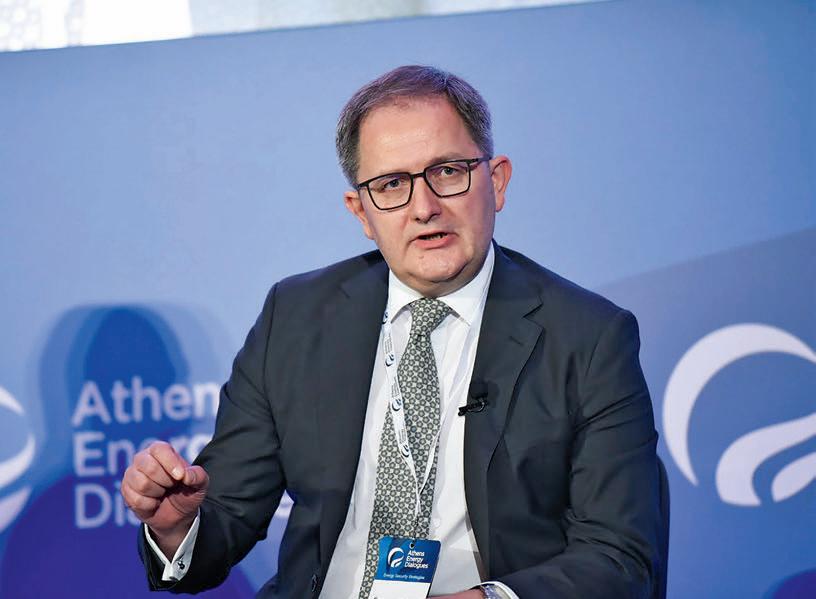
years for the region to stop being viewed as Europe's future opportunity and start being seen as one of its serious economic engines?
The region has already demonstrated that transformation is possible; many economies have fundamentally changed over the past decades. The next phase is not about redefining strategies, but about consistent, large-scale implementation.
In EBRD's experience, success now hinges on three priorities:
this only reinforces the need for focus and discipline. By continuing reforms, strengthening resilience and enhancing competitiveness, the region is well-positioned to accelerate its trajectory.
The foundations are already there. With sustained effort and strong partnerships, South Eastern Europe has a clear path to move beyond the narrative of "potential" and establish itself as a recognised and credible driver of sustained and innovative European growth.
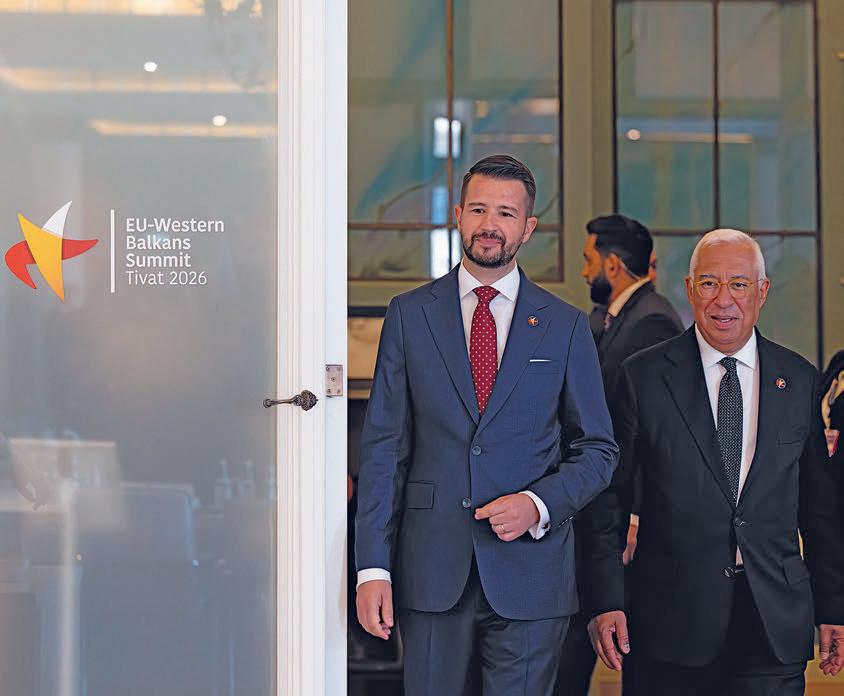
Montenegro closed two more EU accession chapters in June — Chapter 2, on the freedom of movement for workers, and Chapter 28, on consumer and health protection. The move brought the number of provisionally closed chapters to 16 out of 33.
This is not a symbolic detail. Chapter 2 matters because it brings Montenegro closer to the rules governing access to the EU labour market. Chapter 28 matters because it aligns standards affecting consumers, health systems, product safety and market confidence. In March, Montenegro had also provisionally closed Chapter 21, covering trans-European networks. Together, these steps strengthen the sense that Montenegro is no longer only negotiating membership, but entering the practical architecture of accession. For investors, that changes the lens. A small market begins to look different when it is being priced as a future EU market.
The European Commission released €158.9 million under the Reform and Growth Facility for the Western Balkans, making €49 million available to Albania, €44.2 million to Montenegro and €65.7 million to North Macedonia. The amounts are not transformational on their own, but the mechanism is.
The Growth Plan links money directly to reform performance, which means the region is entering a more disciplined phase of EU integration. Governments can no longer treat Brussels funding as a political headline. Access to capital will increasingly depend on whether reforms are delivered, documented and translated into bankable projects. For business, this matters because the money is designed to unlock infrastructure, energy, digitalisation and private-sector competitiveness. The region’s next investment cycle will be shaped not only by appetite, but by execution.
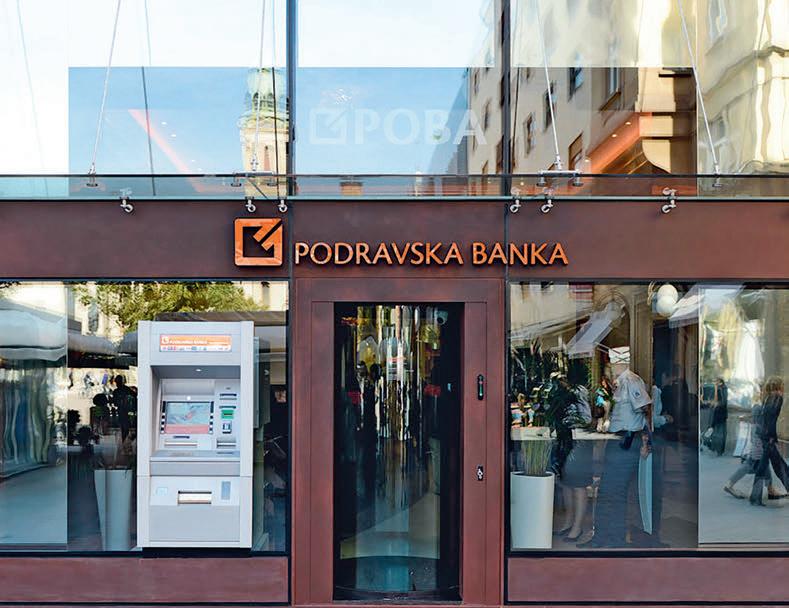
AIK Group’s agreement to acquire 91.75% of Croatia’s Podravska Banka is another signal that regional banking consolidation is accelerating. The deal covers 613,567 shares, at €68.7851 per share, and would give AIK Group control of a Croatian lender with an established local base. More importantly, it would expand the group’s presence into a second eurozone market.
That makes the transaction bigger than a corporate acquisition. It shows how banking groups from the region are no longer thinking only defensively or domestically. They are using consolidation to build cross-border scale, eurozone exposure and stronger regional platforms.
Serbia’s negotiations with Hungary’s MOL over NIS moved into a critical phase in June. MOL signed a shareholders’ agreement with the Serbian government regarding the future governance of NIS, while talks continued over the acquisition of the Russian-held stake. Serbia currently owns 29.9% of NIS, while Russian shareholders hold the majority. Under the discussed arrangement, Serbia would acquire an additional 5% stake if the transaction receives the necessary approvals. The issue is not only ownership. NIS operates Serbia’s only oil refinery, in Pančevo, with a maximum annual capacity of 4.8 million tonnes. Any disruption would immediately become an economic and political problem.
That is why NIS has become a regional stress test: how to protect energy supply, reduce sanctions exposure and keep strategic infrastructure functioning in a more volatile geopolitical environment.
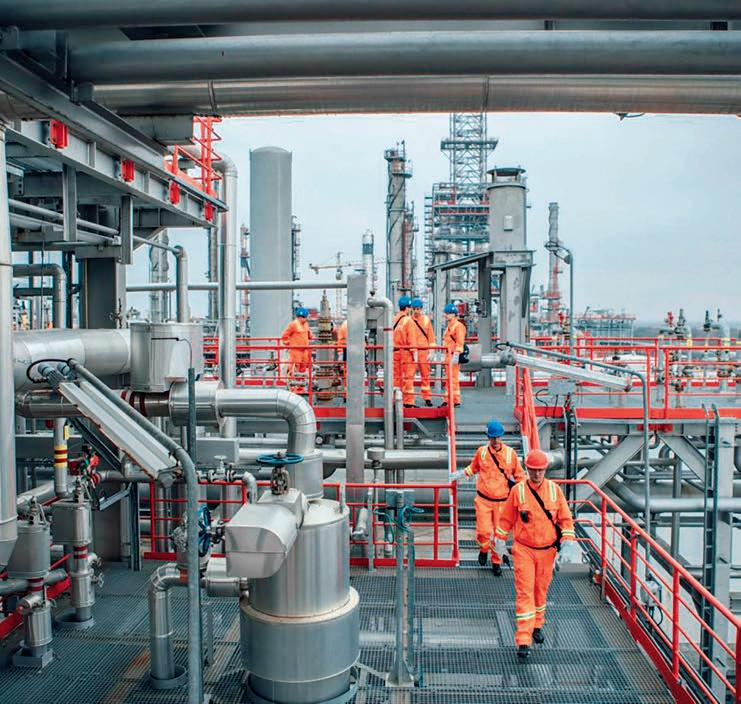
Croatia is still growing above the EU average, but the pace is moderating. The European Commission forecasts real GDP growth of 2.7% in 2026, down from 3.4% in 2025, and 2.5% in 2027.
That still puts Croatia among the stronger economies in the wider region. But the easy post-accession and post-pandemic momentum is fading.
The next question is whether Croatia can move from growth driven by consumption, tourism, construction and EU funds to a deeper model based on productivity, exports, capital markets and higher-value investment. For investors, Croatia remains attractive. For policymakers, the task is harder: turning stability into competitiveness.
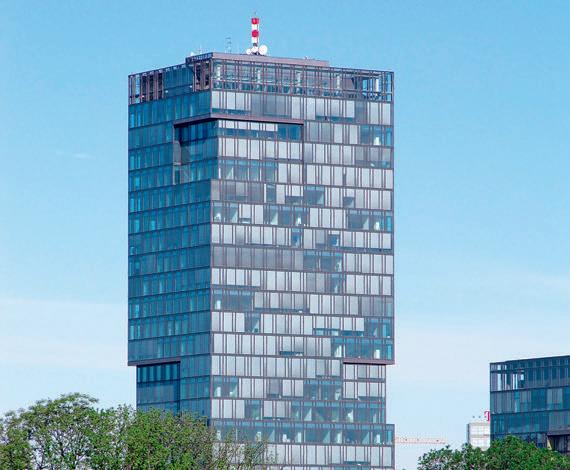
Kosovo* received €61.8 million in EU pre-financing under the Growth Plan, equal to 7% of the €882.6 million available to the country until the end of 2027.
The money is tied to Kosovo’s Reform Agenda and to infrastructure projects under the Western Balkans Investment Framework. That makes it both an opportunity and a test.
Kosovo has one of the region’s youngest economies and significant growth potential, but capital needs institutional clarity. Reform funding can help accelerate infrastructure, green transition, digitalisation and human capital. Yet missed deadlines would mean delayed money and lost momentum.
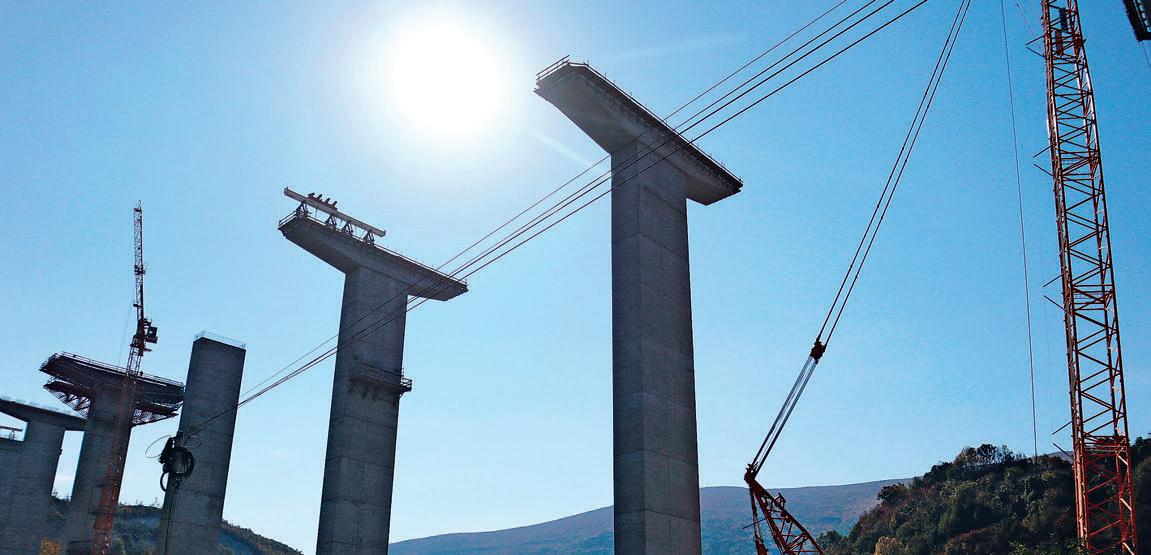
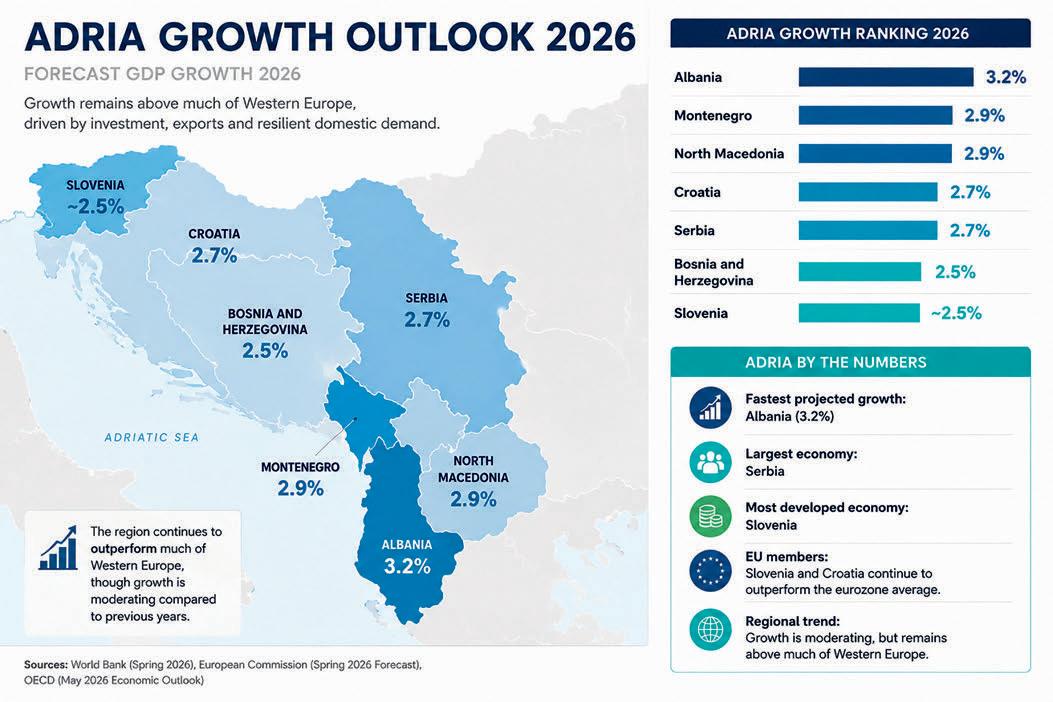
The World Bank expects growth in the Western Balkans to reach 2.8% in 2026, down from earlier projections, before rising to 3.2% in 2027. The EBRD’s June outlook also points to a modest rebound, with growth expected to pick up to 2.9% in 2026 and 3.5% in 2027.
The numbers tell a careful story. The region is growing, but not fast enough to close the development gap quickly. Infrastructure investment, exports and EU-backed funding are supporting the outlook, while inflation, energy costs and global uncertainty continue to limit speed.
This is the real pulse of the region in June 2026: capital is available, integration is advancing and consolidation is accelerating. But the next phase will reward countries and companies that can execute, not those that merely remain promising.
EBRD Supports SME Digitalisation in Bosnia and Herzegovina
The EBRD extended a €10 million facility to UniCredit Bank Mostar under the EU-backed Go Digital programme, supporting investments in digitalisation, automation and green technologies among small and medium-sized enterprises.
Albania Expands Solar Capacity
Albania continues to strengthen its renewable energy pipeline, with new solar developments reinforcing the country's ambition to become a regional exporter of clean electricity.
Croatia Attracts Logistics Investment
Growing nearshoring activity and rising trade volumes are increasing demand for modern logistics infrastructure across Croatia, particularly around Zagreb and key transport corridors.
One of the region's longest-running beverage partnerships is coming to an end. Radenska, the Slovenian producer behind one of the most recognisable mineral water brands in Southeast Europe, will lose its licence to bottle and distribute PepsiCo products at the end of 2026.
For decades, Pepsi, 7UP and Mirinda formed an important part of Radenska's production and distribution portfolio. The arrangement helped strengthen the company's position in Slovenia while supporting manufacturing activity and employment in Radenci.
The decision raises questions that extend beyond a single company.
At a time when regional manufacturers are facing rising competition, changing consumer preferences and growing pressure to modernise production, the loss of a major international licence highlights the vulnerability of business models built around external brands.
The development also comes as Radenska's owner, Czech beverage group Kofola, continues to reshape its regional strategy. While neither side has indicated immediate disruption to production, the an-
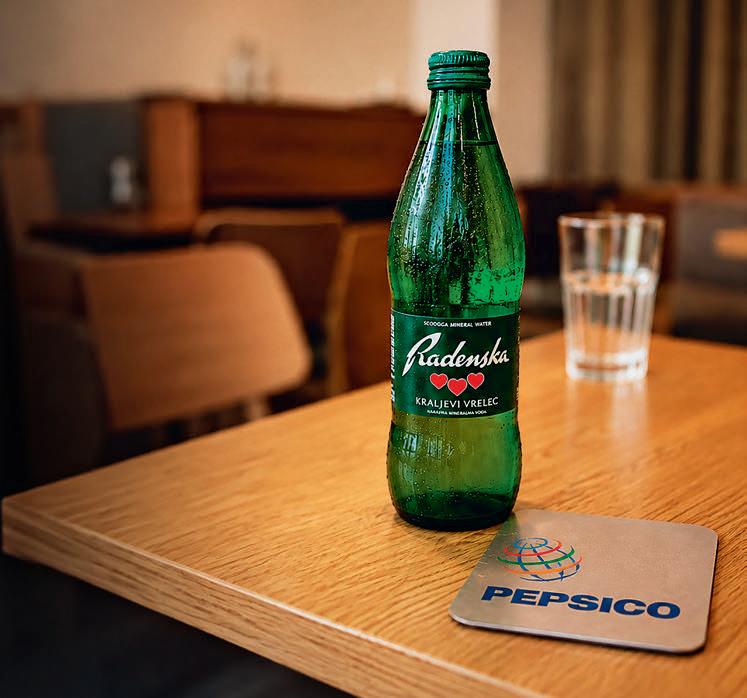
nouncement has prompted speculation regarding future investment plans, employment levels and the long-term role of Radenci as a regional beverage hub.
For Slovenia, the story serves as a re-
Montenegro Receives €44.2 Million Under EU Growth Plan
minder that even the most established industrial partnerships are not permanent. In a more competitive European market, historical relationships matter less than strategic priorities.
The latest disbursement under the Reform and Growth Facility supports infrastructure, competitiveness and public administration reforms linked to the country's EU accession process.
North Macedonia Secures €65.7 Million Growth
The largest allocation in the latest package will support reforms designed to strengthen competitiveness, connectivity and private-sector development.
Renewable Energy Pipeline Expands Across the Western Balkans
Solar, wind and battery-storage projects continue to dominate new investment announcements across the region as governments accelerate energy-transition targets.
Transport Corridors Remain an Investment Priority Road, rail and port upgrades supported by the EIB, EBRD and EU institutions remain among the largest public-investment programmes currently underway across Southeast Europe.
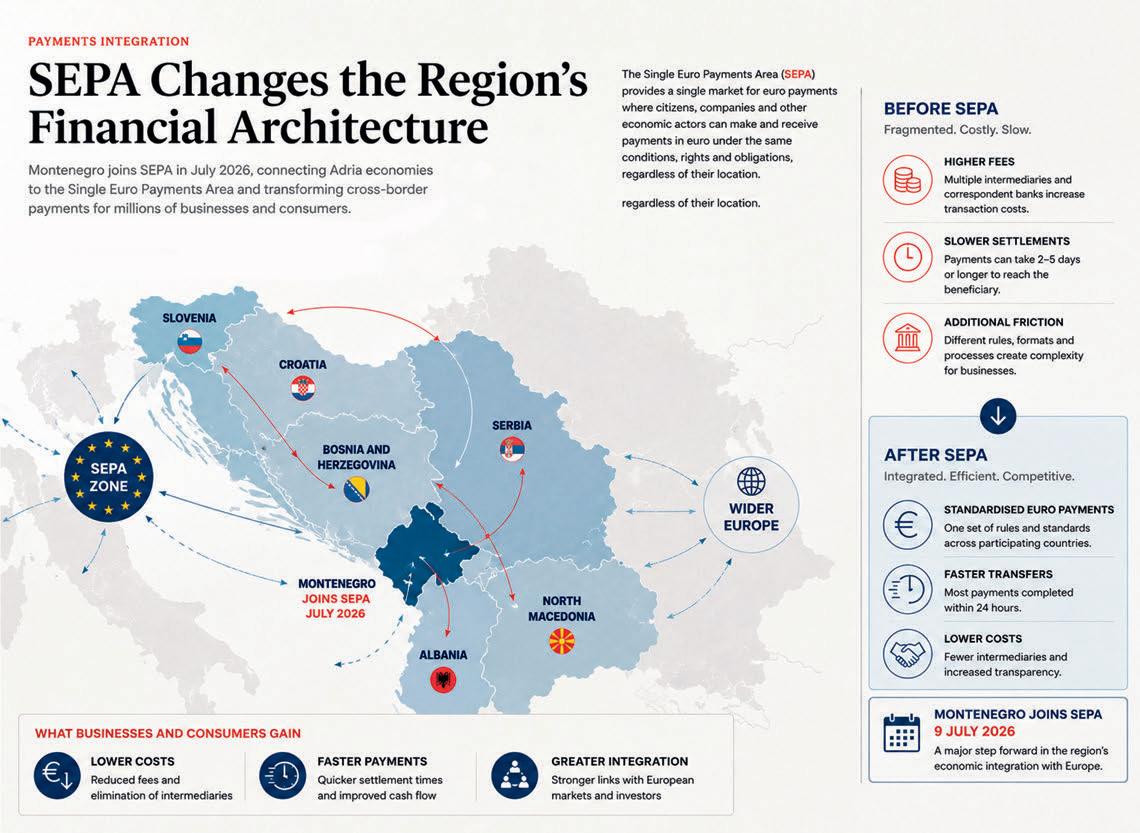
For years, businesses across the Western Balkans have faced a hidden cost of doing business with Europe: moving money. A payment from Podgorica to Vienna or from Belgrade to Berlin often meant higher fees, longer processing times and additional administrative complexity compared to transactions within the European Union. That is beginning to change.
On 9 July 2026, Montenegro officially joins the Single Euro Payments Area (SEPA), becoming one of the first Western Balkan economies to integrate into Europe's common payment system before achieving full EU membership. The move allows consumers and businesses to send and receive euro payments un-
der the same conditions applied across much of Europe.
For companies operating across borders, the significance extends far beyond banking convenience.
Lower transaction costs improve competitiveness for exporters. Faster settlement times strengthen cash-flow management. Greater payment predictability reduces friction for investors evaluating regional projects. For small and medium-sized enterprises, often operating with limited liquidity, even modest reductions in payment costs can have a measurable impact.
The development is part of a broader trend that is quietly reshaping the region's
economic architecture. Rather than waiting for accession, Brussels is increasingly integrating Western Balkan economies into selected European systems ahead of membership.
For investors, the message is clear: economic integration is moving faster than political integration. The immediate effects may not attract headlines, but over time they could prove more significant than many of the political debates that dominate regional discourse. Infrastructure can be built. Laws can be amended. But modern economies ultimately depend on the efficient movement of capital. SEPA makes that movement easier.
Lord Kulveer Ranger on AI, talent, investment and why the Western Balkans must stop trying to compete on everyone else's terms
By Ana Novčić
Artificial intelligence is transforming industries, redrawing competitive advantages and forcing governments to rethink how economies grow. At the same time, geopolitical tensions, shifting trade relationships and the race for talent are reshaping the global business landscape.
For smaller economies, the challenge is particularly acute. How do they remain relevant in a world increasingly dominated by technological superpowers? And can regions such as the Western Balkans build prosperity without simply trying to replicate models developed elsewhere?
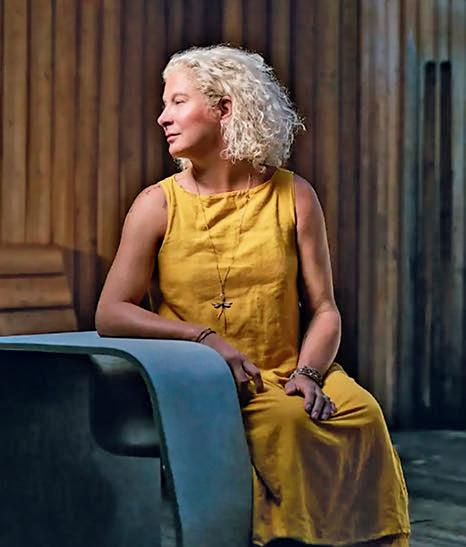
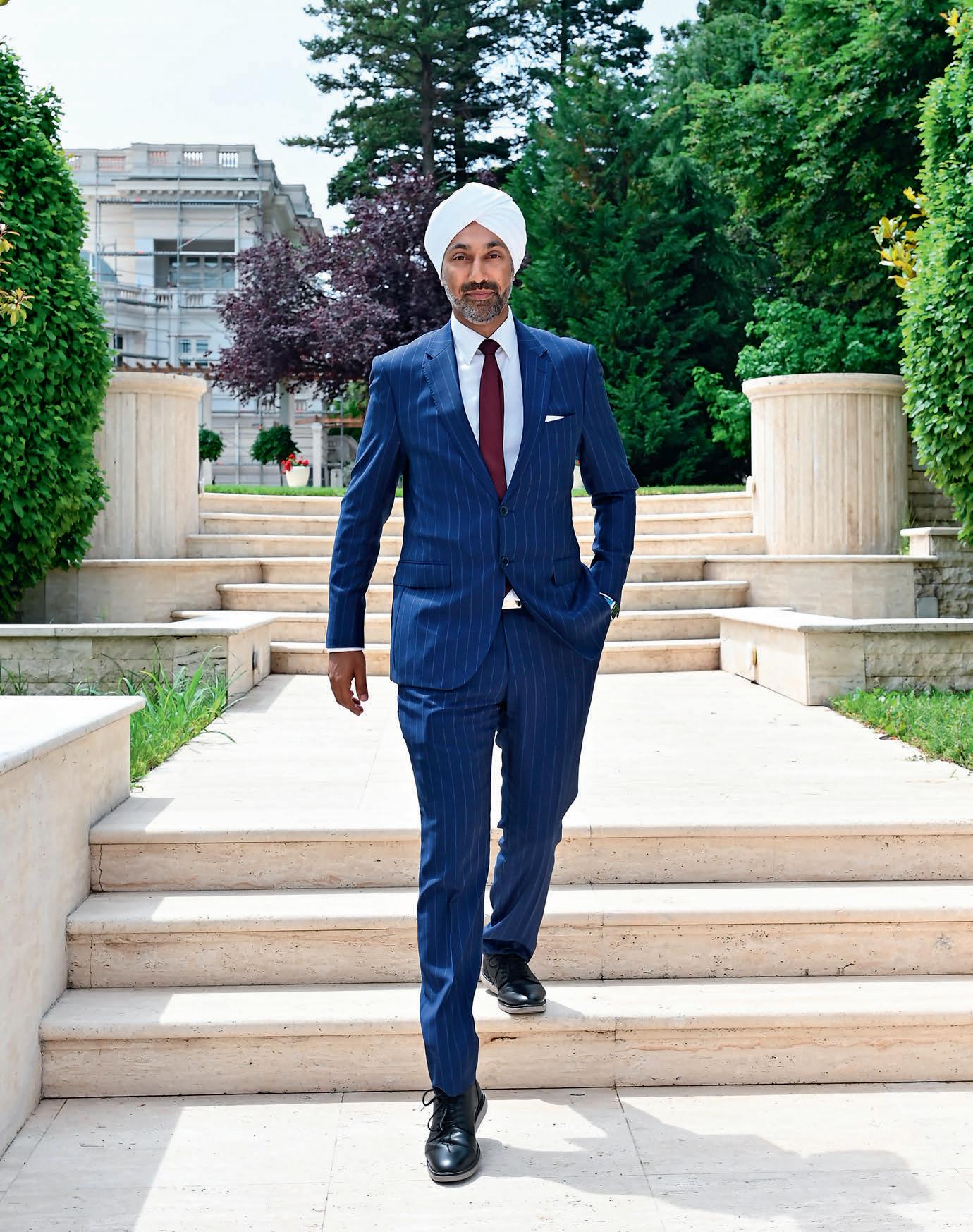
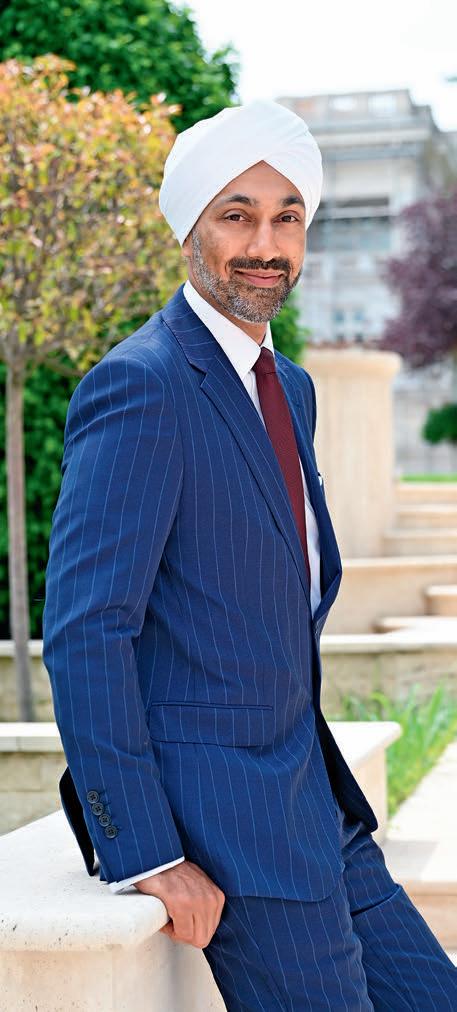
Few people are better positioned to reflect on those questions than Lord Kulveer Ranger. A Member of the UK House of Lords, technology strategist, investor and Chairman of the British-Serbian Chamber of Commerce, Ranger has spent much of his career working at the intersection of technology, policy and business. He played a key role in shaping London's digital agenda during the emergence of the city's technology ecosystem and today advises companies, institutions and governments on innovation, digital transformation and the future economy.
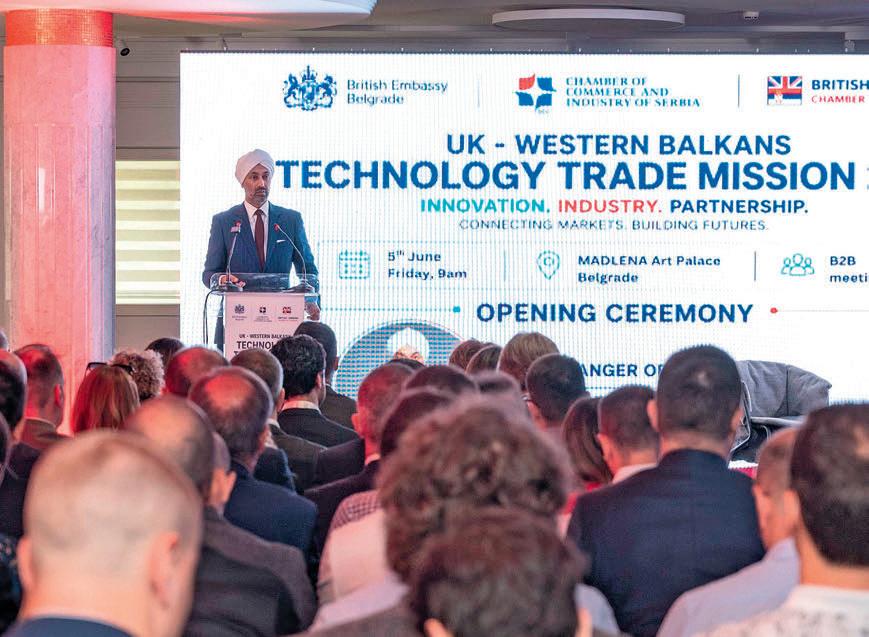
We met in Belgrade during the UK–Western Balkans Technology Trade Mis-
sion, which brought together British companies, investors and policymakers with business leaders from across the region. While the mission focused on technology and trade, the conversation quickly expanded into broader questions about competitiveness, artificial intelligence, talent, investment and the choices facing the Western Balkans in the decade ahead.
His central message was clear: the region should stop measuring itself against larger economies and start building on its own strengths.
In an era defined by rapid technological change, Ranger argues that success will not belong to those who try to imitate Silicon Valley, but to those who understand their advantages, invest in talent and develop a clear sense of purpose.
The challenge, he suggests, is no longer catching up. It is deciding where to lead.
As artificial intelligence reshapes industries and nations compete for talent, investment and influence, smaller economies face a critical question: how do they remain relevant in a world increasingly dominated by technological superpowers?
Lord Kulveer Ranger believes the answer is not to imitate larger econo -
mies, but to identify and develop unique strengths. Speaking to The Region during the UK–Western Balkans Technology Trade Mission in Belgrade, the Member of the UK House of Lords, technology strategist and President of the British-Serbian Chamber of Commerce discusses competitiveness, innovation, talent, investment and the future role of the Western Balkans in a rapidly changing world.
The UK–Western Balkans Technology Trade Mission brings together technology companies, investors, policymakers and business leaders to explore new partnerships across the region. At a time when technology, artificial intelligence and competitiveness are reshaping economies everywhere, why does the relationship between the UK and the Western Balkans matter more now than it did five or ten years ago?
The world has changed dramatically over the past decade. We have seen Brexit, disruption to globalisation, rising geopolitical tensions and, regrettably, war. These developments have made relationships between nation-states more important, both economically and politically.
The Western Balkans occupies a strategically important position between East and West. That gives the region influence, but it also means it is influenced by developments on both sides. Economic relationships, trade and investment therefore matter more than ever.
Serbia is looking westward, but trade, business and investment are essential catalysts for that journey. The UK recognised that when it signed a Free Trade Agreement with Serbia, and we are already seeing growing commercial engagement between our two countries.
For the UK, strengthening ties with Serbia and the wider region is not simply about increasing trade volumes. It is about building long-term partnerships in sectors that will shape future growth. Technology is one of those sectors, and there is enormous potential to bring together innovation and expertise from both sides.
Europe is increasingly concerned about falling behind the United States and China in technology. Is that concern justified?
“The Western Balkans does not have to compete on the same terms as larger economies. It needs to leverage its uniqueness and its talent”
It is probably a bit of both. From a UK perspective, however, I do not see it purely as a European question. I see it as a question of competitiveness.
The UK is smaller than the United States or China, yet it has often managed to punch above its weight. The same principle applies to Serbia and the Western Balkans. The challenge is not to match the scale of larger economies, but to leverage what you have and compete intelligently.
There will always be concern when larger economies move faster, attract investment earlier and capture the first wave of value created by new technologies. The response, however, should not simply be to build barriers.
At this critical moment, as we lay the foundations for an AI-driven economy that could shape the next twenty years, we need the right balance between enabling innovation and regulating it. The EU AI Act, for example, has prompted debate about whether regulation may unintentionally affect investment and innovation. We should be focused on creating environments that attract entrepreneurs, capital and new ideas while ensuring that innovation develops responsibly.
AI is creating enormous opportunities, but also widening the gap between economies that build technology and those that simply use it.
Do you see the Western Balkans becoming a creator of technology or primarily a consumer of technologies developed elsewhere?
I think that is a false choice. Of course, we will all be consumers of technology, but we can also be creators.
The question is not whether we can replicate what larger economies are doing. The question is where we can create value ourselves.
We do not have to create like the bigger nations. Instead, we should identify areas where we have genuine strengths, focus on specific sectors and specialisations, leverage our uniqueness and leverage our talent.
That requires industrial strategies, investment strategies and education systems that support those choices. Governments also need to listen carefully to industry and investors because they are often thinking several years ahead. Policymakers need to understand what they can do to facilitate investment and help industries grow rather than seeing opportunities move elsewhere.
Many countries in the region speak about becoming innovation hubs. What separates those that will succeed from those that will simply continue talking about it?
Leadership and execution.
I was fortunate to help establish London's first digital office at a time when the city's technology ecosystem was beginning to take shape. We created policies that supported entrepreneurs, helped businesses scale, attracted investment and encouraged major companies to become part of the ecosystem. What followed was not simply growth in London. Across the UK we saw technology clusters emerge in places such as Manchester, Newcastle, the West Midlands and Yorkshire. These ecosystems developed because policymakers, entrepreneurs, investors and industry worked together.
Innovation ecosystems do not emerge by accident. Clusters can become powerful engines of growth, but only when they are deliberately built and continuously supported. When that happens, you create jobs, investment, ideas and innovation.
The Western Balkans has produced remarkable engineering and entrepreneurial talent, yet many of its brightest people still leave. What needs to change for this region to become a place where talent chooses to build, scale and stay?
People often assume that talent follows money alone. In my experience, that is not true.
There will always be opportunities elsewhere and the grass can often appear greener somewhere else. But quality of life matters. Infrastructure matters. Healthcare matters. Education matters. Housing matters.
There is also something important about home, about belonging and about giving back to the place you come from. Younger generations increasingly value those things. Many talented people today do not necessarily want to move to another country, adapt to a different culture or learn a new language if they can build successful careers from where they are.
Technology increasingly allows people to work across borders without leaving home. That creates an opportunity for countries to retain talent if they can offer both opportunity and quality of life. People do not only chase money. They chase quality of life.
As Chairman of the British-Serbian Chamber of Commerce, you speak with business leaders, investors and institutions on both sides. What is the biggest misconception British companies still have about this region — and what is the biggest misconception regional companies have about the UK?
One misconception British businesses still have is that they underestimate how
much progress Serbia and the wider region have already made, particularly in technology, entrepreneurship and innovation.
Many are surprised by the sophistication of the ecosystem they find when they arrive here. Serbia has already been supporting international markets, including the UK, for years through technology services, innovation and business partnerships. That often changes perceptions very quickly.
On the other hand, regional businesses sometimes assume that entering the UK market is straightforward. The UK is a tremendous opportunity, but it is also a complex market.
Earlier today I spoke with an entrepreneur from the region who has built a successful business and was frustrated by how difficult it was to establish the right connections and support network in the UK. Businesses need guidance, relationships and local knowledge. That is one of the important roles organisations such as the British-Serbian Chamber of Commerce can play.
If you were advising governments across the Western Balkans on one decision that would most improve long-term competitiveness, what would it be?
If I had to choose one priority, it would be investing in young people. Invest in skills. Invest in education. Invest in academic institutions and ensure they re-
Before AI became the dominant technology story of the decade, Lord Kulveer Ranger was involved in shaping London's approach to digital innovation during Boris Johnson's mayoralty.
As Director of Environment and Digital London, he worked on policies aimed at strengthening the city's technology ecosystem and supporting collaboration between businesses, investors, universities and government.
Over the following years, technology and innovation hubs expanded across several UK regions, including Manchester, Newcastle, the West Midlands and Yorkshire.
Drawing on that experience, Ranger argues that smaller economies should focus on developing areas of comparative strength rather than attempting to replicate larger technology centres. In his view, competitiveness depends less on size than on the ability to connect talent, capital and ideas around clear strategic priorities.
main connected to the needs of industry.
I do not mean everyone has to become a programmer. Economies need a broad range of capabilities and professions. But maintaining a strong pipeline of talent is what ultimately drives growth, investment and innovation.
I would add one more point: focus. Countries need to understand what they want to be known for. They need to communicate that vision clearly and align policies around it. Having a clear identity and a clear strategy matters.
International investors often describe the region as promising, but “potential” can become a polite word for unfinished work. What would convince serious investors that the Western Balkans is no longer just a region of potential, but a region of execution?
The right kind of public investment is always important because it acts as a signal to private investors.
When governments demonstrate commitment through policy, infrastructure and investment, private capital is more likely to follow.
"Invest in young people. Invest in skills. That is what drives growth, investment and innovation."
Beyond that, investors look for stability and leadership. That is true in the Western Balkans and it is true everywhere else in the world.
Long-term investment decisions are made when businesses see political stability, clear direction and leadership that inspires confidence.
Potential becomes execution when investors see consistency between ambition, policy and delivery.
You have worked across technology, policy, communications and investment. Which technological shift do you believe leaders in this region are still underestimating?
Everyone talks about artificial intelligence, and rightly so. AI will transform industries ranging from manufacturing and retail to healthcare and lifestyle services.
But one area that deserves much more attention is the transformation of money itself.
Digital assets, tokenisation, stablecoins and programmable financial systems are evolving rapidly. The entire digital asset ecosystem is beginning to reshape how businesses transact, how services are delivered and how value moves through economies.
What makes this particularly interesting is how it will combine with AI. As we move toward more autonomous systems and agentic AI, traditional financial infrastructure may no longer be sufficient for many of the new use cases that emerge.
We are already seeing significant movement in areas such as stablecoins and digital asset platforms. Policymakers, financial institutions and businesses around the world are rethinking their approach.
This is not a distant future. It is already happening, and it is moving quickly. The challenge is ensuring that countries understand the pace of change and position themselves accordingly.
If we were having this conversation again in 2035, what headline about the Western Balkans would convince you that the region had truly succeeded?
Success may not look the way we imagine today.
For me, success would mean that technological change and economic growth have translated into better lives for people. That they have greater opportunities, higher living standards and access to services that improve their quality of life.
Success would mean that innovation has created prosperity, that new technologies have empowered people rather than excluded them, and that individuals feel they have ownership over their future.
Ultimately, if the changes we are experiencing today result in a more prosperous region, stronger opportunities and a better quality of life for its citizens, then I would consider that a success.
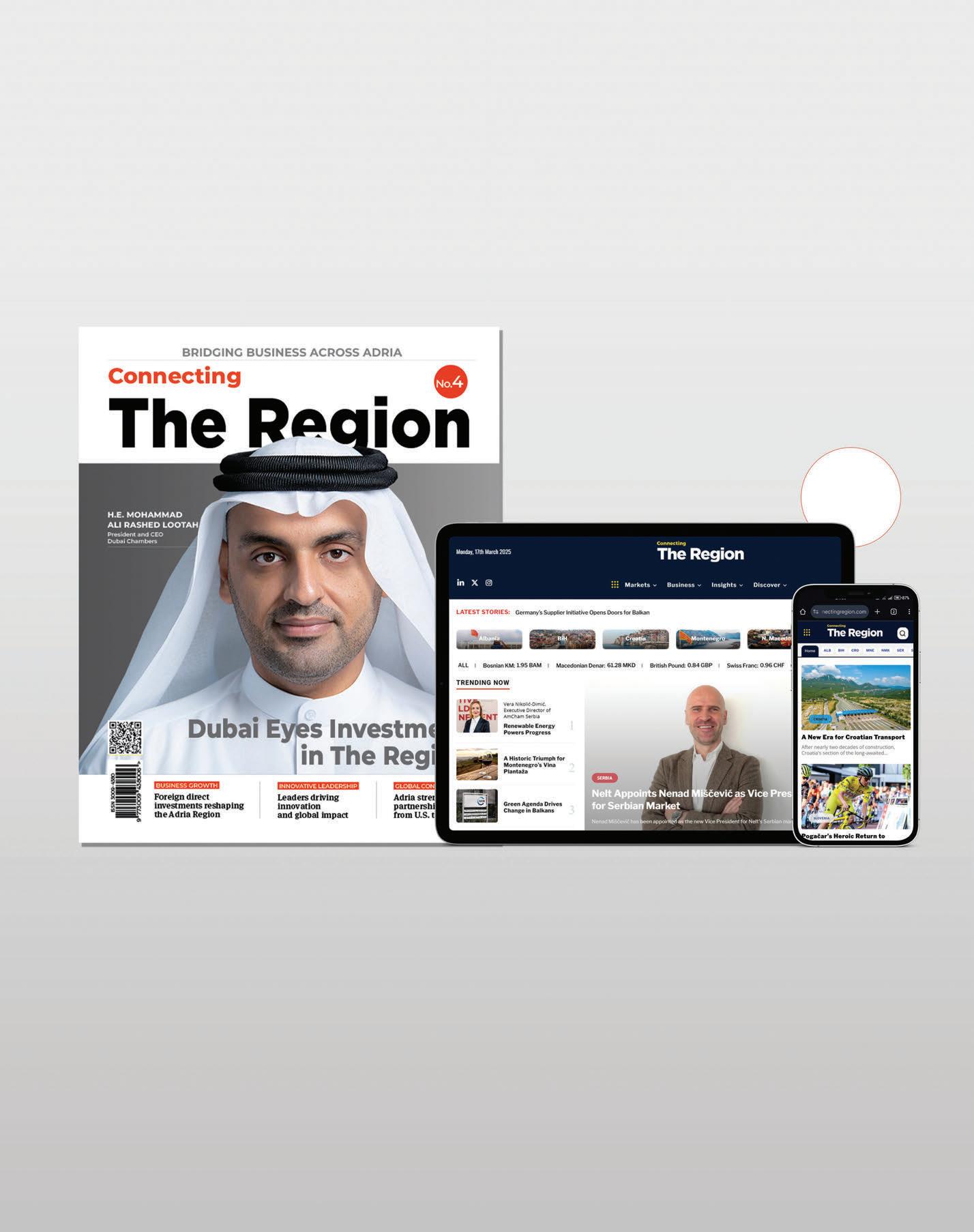
The Region is where ideas, perspectives, and ambitions from across the Adria region come together. From industry leaders to bold innovators, we bring you the stories that drive change and shape the future. Stay connected to the pulse of business, progress, and the people making an impact. 82€

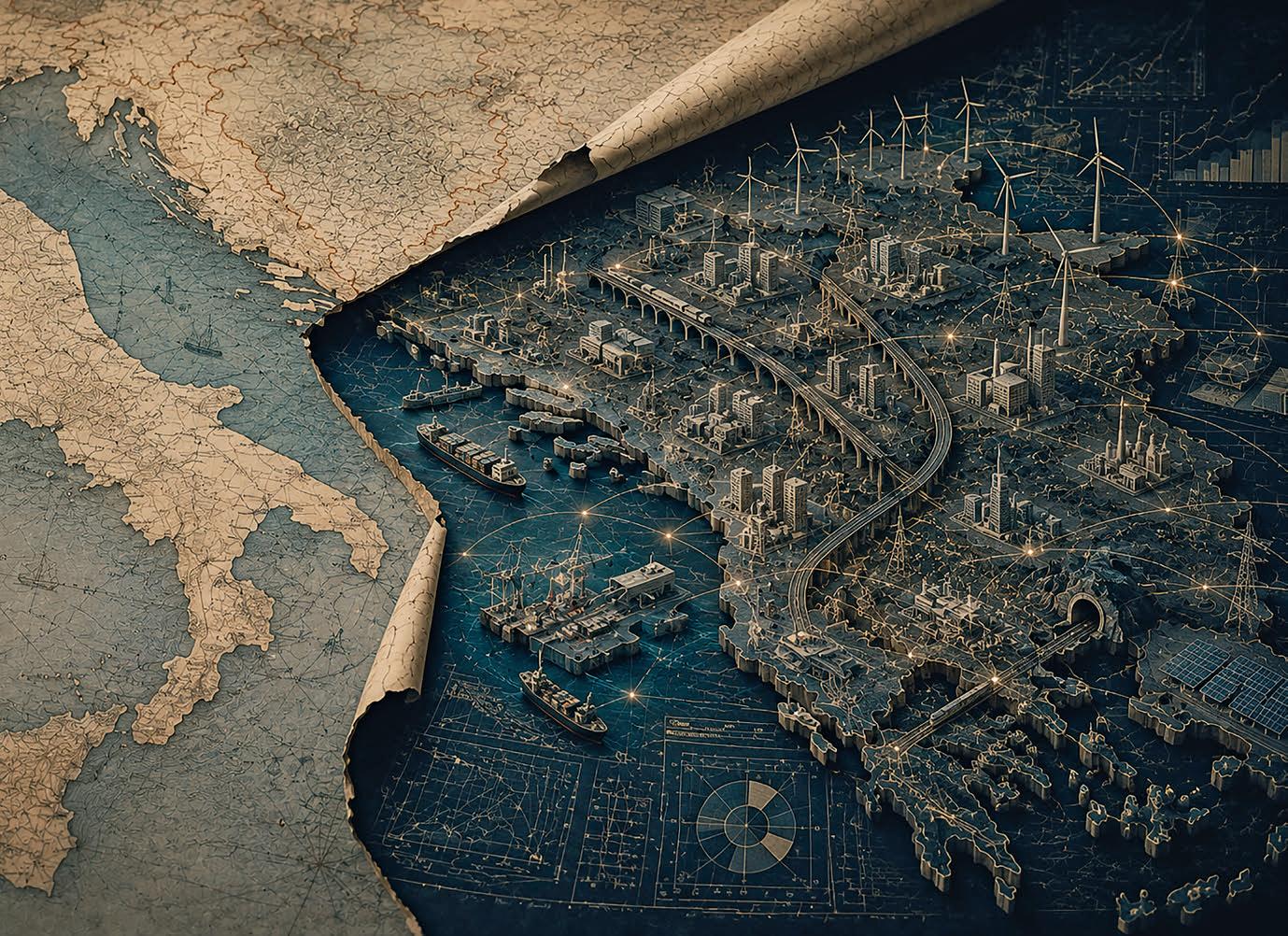
Governments still dominate headlines. Investors increasingly determine outcomes. Across Adria, the balance of influence is quietly shifting from politics to capital.
For much of the past three decades, the story of Adria was told through politics. Elections changed governments. Summits produced declarations. Ministers announced strategies. National debates revolved around European integration, reforms, geopolitical alignments and economic promises. Political leaders dominated the conversation because they appeared to control the
direction of change.
Yet beneath the surface, another force was steadily becoming more important.
The roads being built, the ports being expanded, the factories being opened and the energy systems being modernised all depended on one thing: access to capital. Ambition alone was never enough. Every major project required financing, and financing increasingly came from institutions and investors operating far beyond national borders.
Today, many of the decisions that will shape the future of Adria are made not only in government
offices but also in investment committees, development banks, sovereign wealth funds and corporate boardrooms. A new railway corridor, a wind farm, a technology campus or a tourism development may be announced by politicians, but before construction begins somebody must decide whether the project deserves financing. Increasingly, that decision determines which visions become reality and which remain little more than headlines.
The region's political map has changed remarkably little over the past decade. Its map of economic influence has not.
The shift did not happen overnight. In the years that followed the transition from socialist economies and the political turbulence of the 1990s, governments naturally occupied centre stage. States were rebuilding institutions, privatising industries and redefining their place within Europe. Political leadership mattered enormously because governments were responsible for creating the foundations of modern market economies.
As those foundations strengthened, however, a different reality emerged. The scale of investment required to modernise infrastructure, transform energy systems, improve connectivity and support economic growth far exceeded what national budgets could provide. No country in Adria possessed the financial resources necessary to fund all of its ambitions independently.
That reality fundamentally altered the relationship between politics and development. Governments could identify priorities and propose projects, but capital increasingly determined which initiatives moved forward. Over time, influence followed financing. Institutions capable of funding major infrastructure projects acquired a growing role in shaping economic priorities, while investors became increasingly important participants in the region's development story.
This is one reason why conversations about growth today often focus on investment flows rather than
government spending. The projects that attract financing move ahead. Those that fail to attract confidence frequently remain on paper.
Much has been written about the political influence of the European Union in Southeast Europe. Far less attention has been paid to its financial influence, despite the fact that it may ultimately prove even more significant.
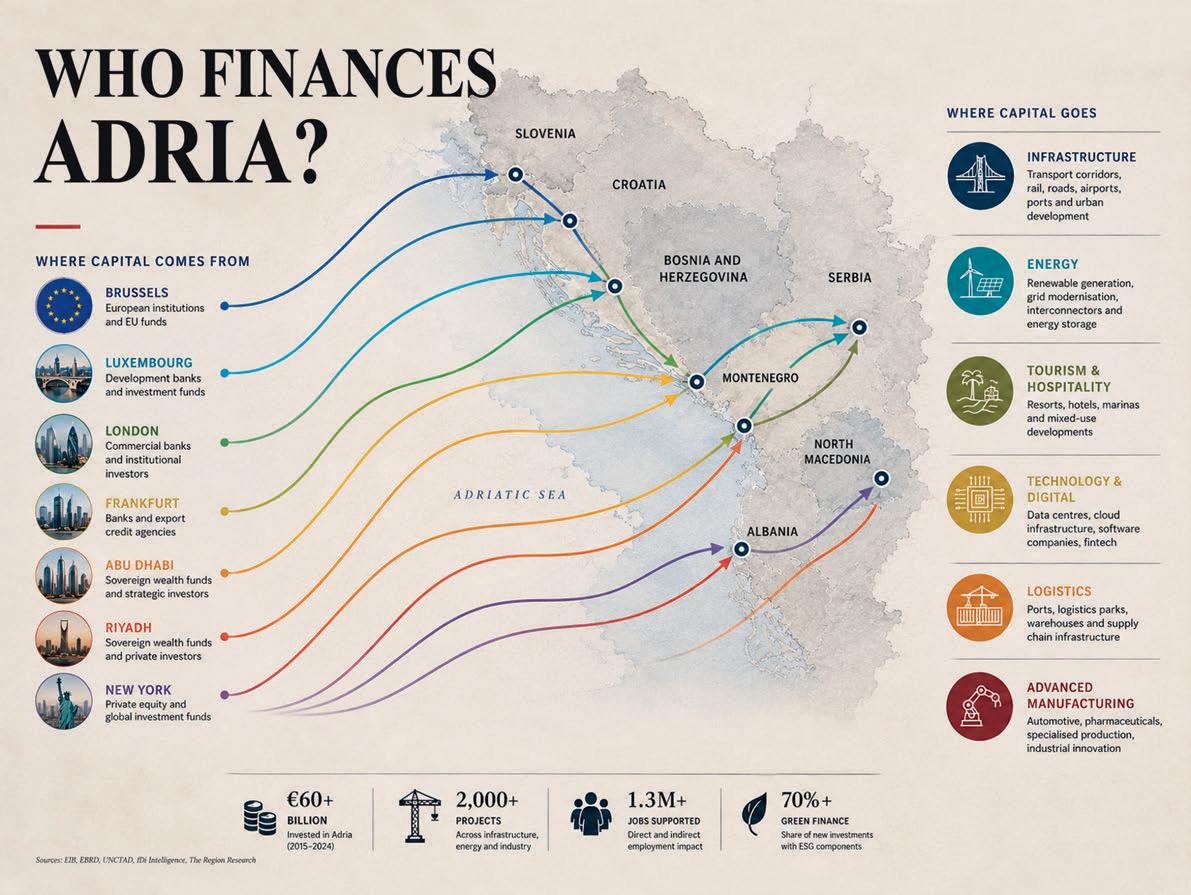
European institutions (EIB, EBRD, EU funds)
Commercial banks
Foreign direct investors
Sovereign wealth funds
Private equity and investment funds
Multilateral lenders
Domestic capital markets
Takeaway: Development finance still dominates major projects, but private capital is gaining influence.
For more than two decades, European institutions have helped finance the infrastructure that underpins economic development across the region. Roads, railways, energy networks, water systems, ports and digital infrastructure have all benefited from European-backed financing. In practical terms, institutions
such as the European Investment Bank and the European Bank for Reconstruction and Development have become permanent architects of regional transformation.
Their influence extends beyond lending. By determining which projects meet international standards, which reforms unlock financing and which sectors receive strategic support, they help shape the direction of development itself. The impact is rarely dramatic or immediate, yet it is profound. A modernised railway can alter trade patterns for generations. A new transmission line can strengthen energy security for an entire country. A port expansion can redefine the economic prospects of a region.
Political influence often changes with elections. Infrastructure financed and built today can shape economic realities for decades.
The competition taking place across Adria today looks very different from the one that defined previous decades.
For years, governments focused on political milestones, diplomatic recognition and progress towards European integration. While those objectives remain important, an equally significant competition has emerged. Countries are increasingly competing for investment.
The race is visible across multiple sectors. Cities seek to attract technology companies and innovation hubs. Governments com -
pete for manufacturing projects, logistics centres and renewable energy investments. Ports position themselves as gateways for regional trade, while tourism destinations seek international investors capable of supporting ambitious developments.
In this environment, success depends less on rhetoric and more on credibility. Investors have little interest in political slogans. They pay at-
tention to execution. They want to know whether permits can be obtained efficiently, whether regulations are predictable, whether contracts are respected and whether infrastructure can be delivered on time. These practical considerations often matter far more than grand announcements.
As global competition for investment intensifies, the ability to inspire confidence may become one of the
most important economic assets a country can possess.
One of the most important developments of the past decade has been the growing presence of investors from the Gulf. Capital originating in the United Arab Emirates, Saudi Arabia and Qatar has become increasingly visible throughout South-
east Europe, particularly in tourism, real estate, aviation and large-scale development projects.
The significance of this trend extends beyond the individual investments themselves. Gulf investors frequently approach opportunities with longer time horizons and greater appetite for large-scale developments than many traditional financial institutions. Their objectives often combine commercial returns with broader strategic considerations, allowing them to pursue projects that others might consider too complex or too ambitious.
For governments seeking transformational investments, this can be highly attractive. For the region as a whole, it signals something equally important: Adria is increasingly viewed through a global rather than purely European lens.
The arrival of Gulf capital reflects growing international confidence in the region's long-term potential. Investors with global options are choosing to allocate resources here because they see opportunity. That may be one of the strongest endorsements any economy can receive.
The coming decade is unlikely to be defined by a shortage of capital. Around the world, enormous pools of investment are searching for opportunities in infrastructure, renewable energy, advanced manufacturing, digital networks, artificial intelligence and logistics. The question is not whether investment capital exists. The question is where it will flow.
For Adria, attracting a greater share of those flows will require more than favourable geography or competitive labour costs. It will require credibility, institutional capacity and the ability to execute projects efficiently. Countries capable of creating stable and predictable environments will attract disproportionate levels of investment. Those that fail to do so may find capital looking elsewhere.
This may be the most important economic reality facing the region today. The challenge is no longer attracting attention. The challenge is converting attention into investment and investment into long-term growth.
Political leaders will continue to shape public debate. They will negotiate agreements, attend sum -
"Governments can announce projects. Capital decides which ones get built."
mits and announce national priorities. Their role remains essential. Yet beneath those visible layers of decision-making, a quieter force is reshaping the region.
The factories being built, the energy systems being modernised, the ports being expanded and the technologies being deployed all depend on capital allocation. Investors may not appear on election ballots and development banks rarely
dominate headlines, yet their decisions increasingly influence which regions grow fastest, which industries expand and which opportuni-
Renewable Energy
Solar, wind and grid modernisation.
Tourism & Hospitality
Luxury resorts, marinas and mixed-use developments.
Technology
Data centres, software companies and digital infrastructure.
Logistics
Ports, warehouses and transport corridors.
Advanced Manufacturing Automotive, pharmaceuticals and specialised production.
Takeaway: Capital is increasingly flowing into sectors linked to Europe's energy, digital and supply-chain priorities.
ties emerge.
For much of history, geography defined economic destiny. Countries prospered because of their location, natural resources or access to trade routes. In the twenty-first century, another factor may matter just as much: the ability to attract capital. That is the new geography of power. And it is where the next chapter of Adria's economic story will be written.
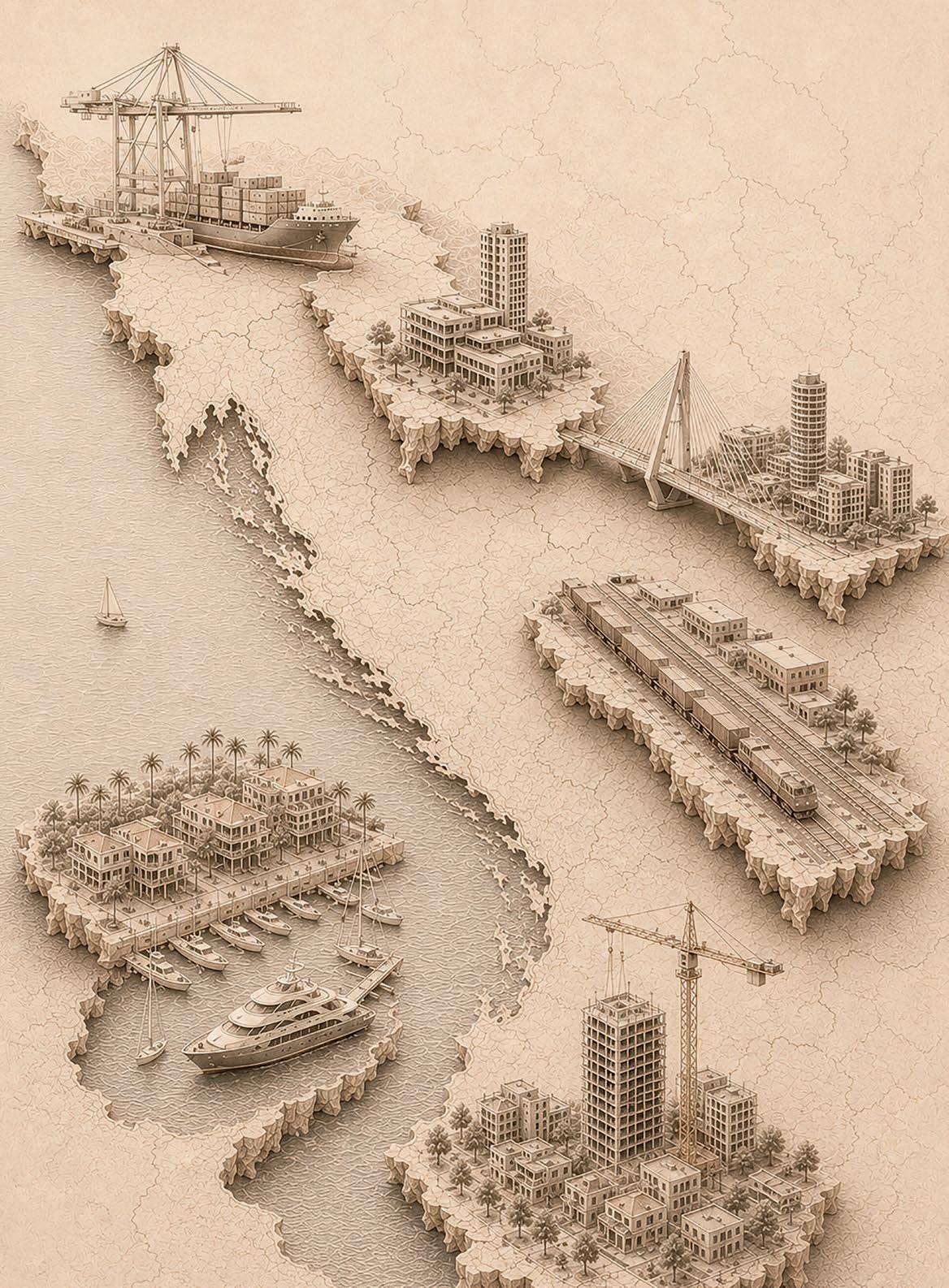
in Adria followed a simple logic. Capital flowed to national capitals, major decisions were made there, and economic influence largely mirrored political influence. Today, that relationship is beginning to loosen. Across the region, investment, talent and opportunity are increasingly concentrating in places that hold little political power but growing economic significance. A new map is emerging—and it may prove more important than the one hanging on government walls.
The easiest way to understand a region is to look at its map.
Borders reveal nations. Capitals reveal political power. Roads, ports and railways reveal how countries connect to one another. For generations, those maps also revealed where economic influence resided. If one wanted to understand the economic geography of Adria, it was usually enough to look at the capitals. Zagreb dominated Croatia's corporate landscape. Belgrade concentrated Serbia's financial and business activity. Ljubljana, Sarajevo, Skopje, Podgorica and Tirana played similar roles within their respective economies.
Political power and economic power largely occupied the same space.
That relationship is now beginning to change.
The shift is not dramatic enough to make headlines, nor sudden enough to
be noticed from one year to the next. Yet viewed over a decade, it becomes increasingly visible. Some of the region's most important economic stories are no longer unfolding where political power resides. They are emerging in ports, university cities, logistics hubs and coastal centres that would once have been considered secondary players.
For the first time in modern history, some of the region's most strategically important assets are not located in capitals at all.
This is not a story about the decline of capitals. Far from it. Belgrade, Zagreb and Ljubljana remain dominant economic centres and will continue to be so for years to come. Rather, it is a story about the rise of alternative centres of gravity—places whose influence is growing because they offer something increasingly valuable in the modern economy: talent, connectivity, specialisation or quality of life.
The clearest example may be found in Tirana.
Not long ago, Albania occupied only a modest place in regional investment conversations. Today, the country's capital is attracting unprecedented international attention. Luxury hotel brands are arriving. International developers are investing. New infrastructure projects are reshaping connectivity. Most importantly, perceptions have changed. Investors often move not where opportunity al -
ready exists, but where they believe opportunity is being created. Tirana has become a case study in how quickly a city can reposition itself when confidence begins to attract capital and capital begins to attract more confidence.
A different dynamic is visible in Novi Sad.
Unlike many successful cities throughout history, Novi Sad's growing importance is not primarily the result of geography. It stems from people. Over the past decade, the city has quietly strengthened its reputation as a centre for technology, engineering and innovation. Its universities, talent base and growing ecosystem of technology companies have transformed it into one of the region's most interesting examples of a knowledge-driven economy. The lesson extends far beyond Serbia. In an era when human capital increasingly determines competitiveness, cities capable of attracting skilled people often outperform those with larger populations or greater political influence.
Further south, Tivat tells a story about reinvention.
Few places in Southeast Europe have undergone such a dramatic transformation within a single generation. The development of Porto Montenegro changed more than a waterfront. It altered international perceptions of Montenegro itself. Investors pay close attention to successful examples. When
a project demonstrates that international capital can create value, others follow. Tivat's significance lies not merely in luxury tourism but in its ability to serve as proof that ambitious projects can reshape entire local economies. What was once a relatively quiet coastal town is now discussed alongside some of the Mediterranean's most recognisable destinations.
The same principle applies in a very different way to Koper.
Ports rarely generate public attention, yet history repeatedly demonstrates that logistics hubs often exert influence far beyond their size. As Europe seeks more resilient supply chains and more efficient trade corridors, the strategic importance of maritime gateways continues to increase. Koper's role is not defined by population, architecture or political importance. It is defined by connectivity. Every container moving through its port strengthens its relevance within a much larger European economic system. In many respects, Koper demonstrates how infrastructure can create influence more effectively than administration.
Rijeka represents another dimension of the story. Like many European industrial centres, it faces the challenge of translating historical strengths into future opportunities. Its maritime heritage remains a valuable asset, but the cities that prosper in the coming decades will be those capable of combining tradition with adaptation. Rijeka's future will likely depend on how effectively it integrates logistics, innovation, sustainability and new industries into an identity shaped by generations of industrial activity. The city illustrates a broad-
er truth about modern economic development: the most successful places are rarely those that abandon their past, but those that find new uses for it.
Taken individually, these cities appear to tell very different stories. Collectively, however, they reveal a larger pattern. Economic influence is becoming more specialised. Rather than competing to dominate every sector, cities are increasingly succeeding by becoming indispensable within a specific one. Some are emerging as logistics gateways. Others are becoming centres of innovation, tourism, advanced manufacturing or specialised services. The result is a regional economy that is more interconnected and, in some respects, less dependent on traditional hierarchies.
Several forces are driving this transformation.
The first is talent. For generations, people largely moved to where jobs existed. Today, companies increasingly move to where talented people choose to live. Quality of life, educational opportunities, international connectivity and digital infrastructure have become economic factors rather than social amenities. Cities capable of attracting ambitious professionals gain advantages that compound over time.
The second force is connectivity Roads, railways and ports remain essential, but the definition of connectivity has expanded. Digital networks, data infrastructure and energy corridors now play equally important roles. Cities that connect efficiently to larger regional and international systems position themselves to capture opportunities that would once have flowed elsewhere.
The third force is specialisation. In
the twentieth century, economic success often depended on scale. In the twenty-first, it increasingly depends on focus. Cities no longer need to become everything to everyone. They need to become exceptionally good at something that matters.
These forces are not unique to Adria. Similar patterns can be observed throughout Europe and beyond. Yet they may prove particularly significant in a region historically shaped by centralisation. Smaller countries often assume that economic influence must concentrate in a single dominant city. The emerging evidence suggests otherwise.
The map of 2035 is unlikely to resemble the map of 2005.
The capitals will remain powerful, but they will increasingly share the stage with a wider network of cities whose influence derives not from government institutions but from their ability to create value. Some will succeed because they attract talent. Others because they connect markets. Some because they reinvent themselves. A few because they recognise opportunities before their competitors do.
Every generation inherits a map and assumes it is permanent. History suggests otherwise.
The most consequential changes often occur gradually, long before they become obvious. By the time new centres of influence are widely recognised, they have usually been shaping the future for years.
Across Adria, that process is already underway. The new capital map is not replacing the old one. It is expanding it. And in doing so, it is changing the geography of opportunity across the region.
Whether you're launching a bold campaign, amplifying your brand’s voice, or reaching decision-makers across Southeast Europe — Region Agency delivers visibility that moves the needle.
Born from The Region magazine, we offer a trusted platform that connects your message to the people shaping the future of the Adria region — and beyond.
WHAT WE OFFER:
• High-impact visibility in The Region magazine
• Strategic digital placements across our website and newsletter
• Tailored promotion through exclusive business events
• A credible editorial environment that elevates your brand
Portonovi is just one of the many who trust us. Let your story be seen, heard — and remembered.
BE SEEN. BE KNOWN. BE PART OF THE REGION.
business@region-agency.com region-agency.com
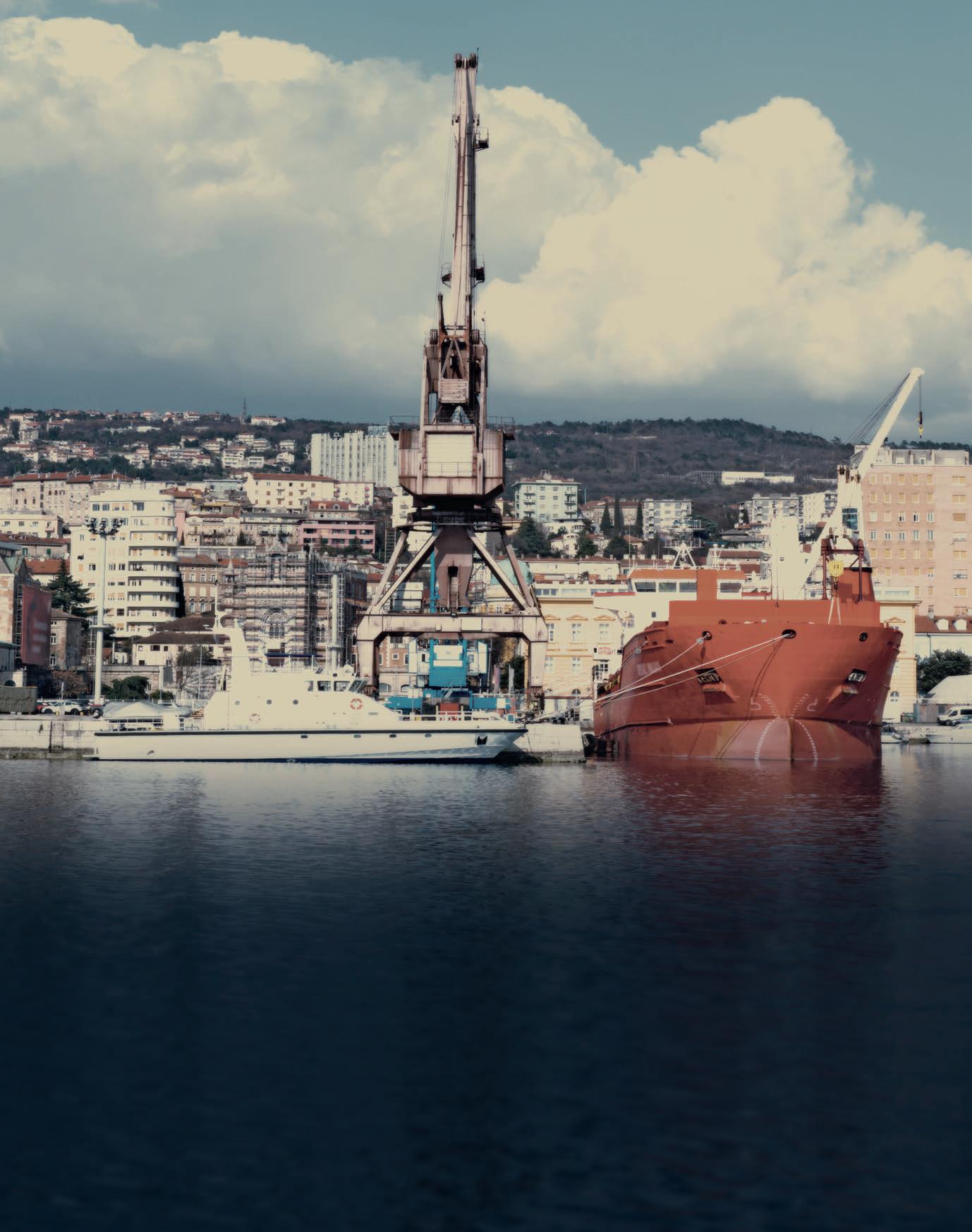
Croatia has money, liquidity and access to European capital. So why does its stock market still feel small?
Ivana Gažić President of the Management Board Zagreb Stock Exchange
Croatia’s financial system is not short of capital. Pension funds now manage billions in longterm assets, banks remain highly liquid, and European funding continues to flow steadily into the economy. On paper, the conditions for a stronger equity market appear to be in place.
Yet the Zagreb Stock Exchange still feels modest compared to larger Central European markets. Liquidity remains relatively shallow, retail participation limited, and many of the region’s most ambitious companies continue to favour private ownership, bank financing or strategic partnerships over public listings.
The contrast becomes even more visible when compared with exchanges such as Warsaw or Vienna, which spent years building broader investor cultures, attracting larger listings and positioning themselves more aggressively before international capital. Much of the Adria region, by comparison, still operates within a more conservative financial instinct — one where debt often feels safer than dilution, ownership is guarded carefully, and transparency is frequently viewed as obligation before opportunity.
That mindset has shaped not only Croatia’s market, but much of the wider regional investment landscape.
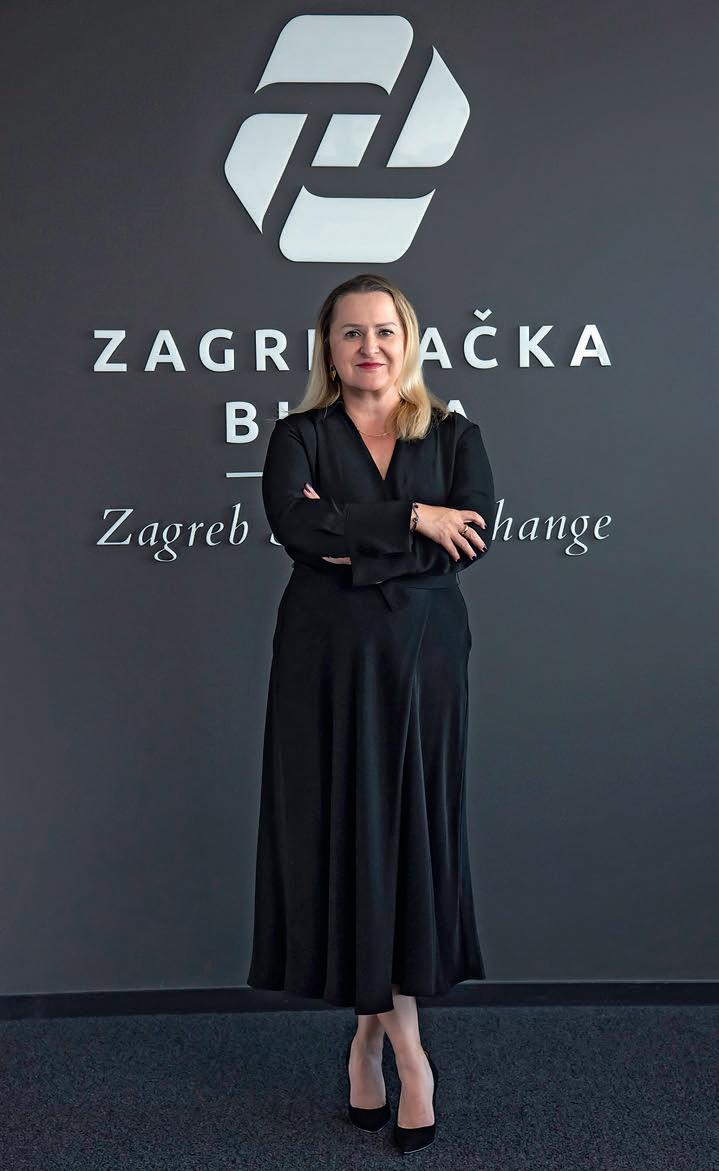
Capital increasingly moves across borders, yet investor psychology often does not. Exchanges cooperate technically, infrastructure improves, and integration advances operationally, but markets themselves still tend to behave nationally.
For Ivana Gažić, President of the Management Board of the Zagreb Stock Exchange, the central challenge is therefore not simply financial. It is structural, cultural and generational at the same time. In conversation with The Region, she discusses why many companies still avoid public listings, whether pension funds stabilise the market at
ly family-owned or closely held businesses, this shift is still viewed as a major structural change rather than simply another financing option.
Retail investor participation also remains relatively low. Although financial literacy and digital access to markets have improved, equity investing is still not deeply embedded in household behaviour. Savings continue to be concentrated in deposits and real estate, limiting the depth of the domestic investor base.
The result is a market that still appears shallow in liquidity and depth, despite the capital available within
“The most realistic outcome is a networked regional market rather than a single market.”
the expense of dynamism, and why the future of Adria’s capital markets may depend less on liquidity itself than on a broader willingness to rethink control, transparency and regional scale.
EQUITY
Croatia has access to capital, from EU funds to institutional investors, yet its stock market remains relatively shallow. Where does the disconnect come from?
The disconnect is not primarily about a lack of capital, but about how capital is allocated and how companies perceive equity financing. Croatia has a strong banking tradition and a conservative corporate financing culture where debt remains the dominant source of funding.
Equity markets require a different mindset: openness, transparency and a willingness to share ownership and decision-making with external investors. For many companies, particular-
the broader financial system.
“The constraint is not the absence of money, but the channels, incentives and institutional preferences that determine how that capital is transformed into equity market activity.”
While regional companies continue to expand internationally, relatively few choose public listings as their primary growth strategy, often relying instead on bank financing, private ownership structures or strategic partnerships.
Many Croatian companies still avoid public listings. Is this a question of market structure, regulation, or a deeper reluctance toward transparency and shared ownership?
Listing requires scale, governance readiness and a willingness to accept market discipline. Many Croatian companies are family-owned or closely held, where retaining control remains a priority.
From a regulatory perspective, listing requirements are not prohibitive, but compliance and reporting obligations are still perceived as burdensome. However, the deeper issue is reluctance toward transparency and external scrutiny, which remains characteristic of many emerging markets. Public markets require a shift from ownership control to shared governance and accountability.
At the same time, positive developments are emerging. Last year, Croatia had three IPOs whose value surpassed some prominent global markets, and all three were oversubscribed. We have also invested heavily in education around investor relations and helped create professionals capable of communicating more confidently with investors and the market.
“Public markets require a shift from ownership control to shared governance and accountability.”
Zagreb Stock Exchange owns Ljubljana Stock Exchange. What has that integration actually changed, and what still has not happened that should have?
The integration has primarily delivered operational consolidation, cost efficiencies and improved coordination in market infrastructure and listing frameworks. It has also strengthened regional visibility and enabled better alignment of certain trading and post-trading processes. However, what has not fully materialised is a truly integrated liquidity pool and investor base. Cross-border investing is still perceived as “foreign” rather than domestic within the group structure, while liquidity itself remains fragmented.
The next step should be deeper harmonisation of product offerings, a more unified issuer strategy and simpler investor access across the region.
The fragmentation Gažić describes remains visible across much of the region. While capital increasingly moves across borders, investor psychology often still does not. Exchanges cooperate technically, but markets continue to behave nationally.
If you look at the region today, is a truly integrated Adria capital market realistic, or are national markets likely to remain fragmented?
Full integration in the sense of a single unified market is unlikely in the near term due to regulatory sovereignty, taxation differences and national institutional frameworks.
However, a functionally integrated Adria market is realistic and already partially underway. That means harmonised trading access, shared infrastructure, cross-listings and improved investor mobility, even if legal entities and exchanges remain separate.
The most realistic outcome is a networked regional market rather than a single market — one where fragmentation is gradually reduced through interoperability rather than formal unification.
Pension funds play a dominant role in Croatia’s financial system. Do they provide stability at the cost of dynamism, and how does that shape the development of the equity market?
Pension funds are a critical stabilising force within the Croatian capital market. They provide long-term capital, reduce volatility and ensure a consistent domestic institutional investor base.
At the same time, their size and investment mandates naturally lead toward more conservative allocation strategies focused on liquidity, dividend yield and lower-risk profiles.
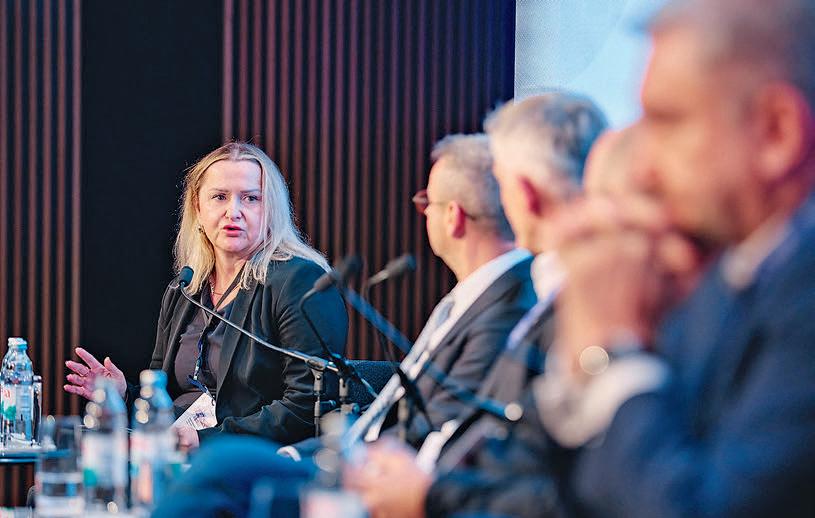
The broader challenge for the region may ultimately have less to do with liquidity than confidence itself. Capital exists across the Adria market. The question is whether enough companies are prepared to exchange control for scale — and whether regional investors are finally ready to think beyond national borders.
That can limit the development of higher-risk growth capital within the domestic equity market.
In that sense, stability is high, but dynamism is somewhat constrained. The challenge is not the role pension funds play, but ensuring a broader ecosystem of investors capable of complementing that stability with greater market ambition and growth-oriented capital.
If a major Croatian company were deciding today whether to list in Zagreb, Vienna, or elsewhere, what would be the strongest argument for keeping that listing at home?
The strongest argument is market proximity combined with institution-
al understanding.
Listing domestically means better alignment with local investors, analysts and media, as well as stronger visibility among retail and institutional investors who understand the company’s operating environment. It also contributes directly to the development of the local capital market ecosystem.
From a practical standpoint, Zagreb Stock Exchange offers lower listing complexity, strong regulatory familiarity and growing regional integration, which increasingly reduces the need to go abroad for visibility or liquidity. Ultimately, the strongest argument for listing at home is not only financial — it is strategic positioning within the domestic and regional economic narrative.
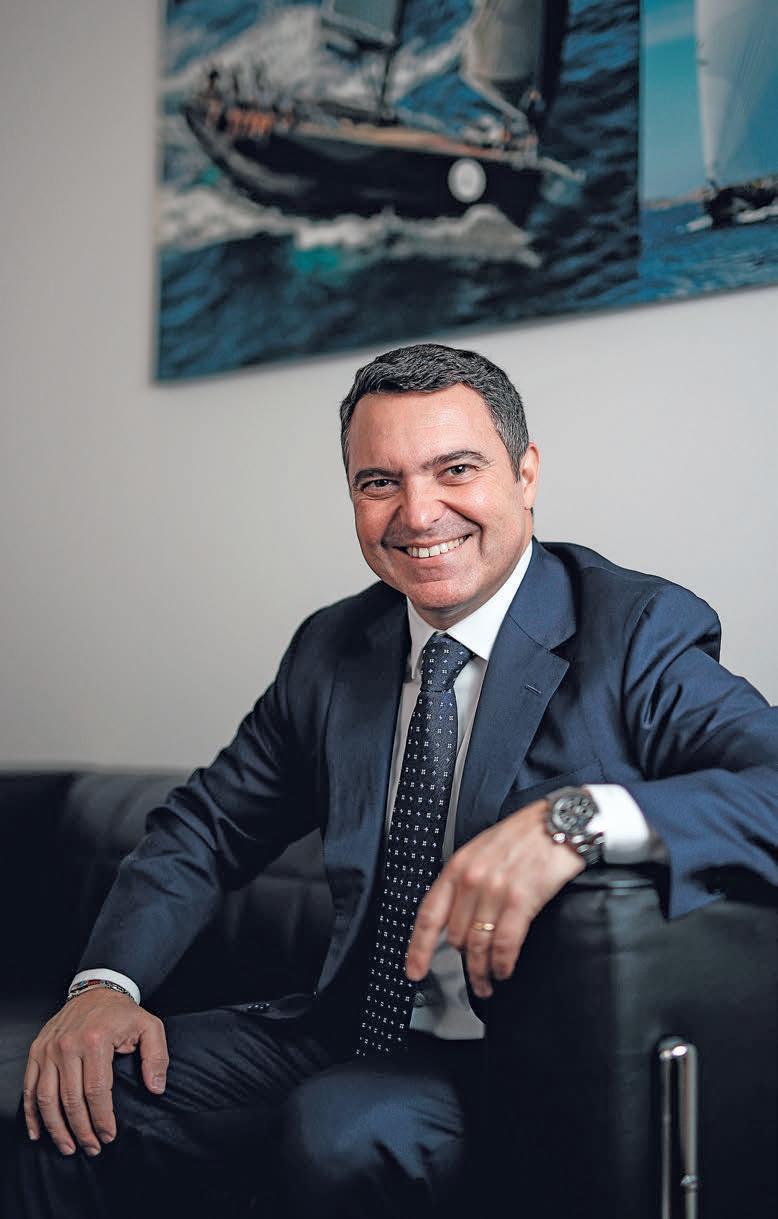
Stability brought investors to Croatia. Speed—and diversification—will determine who stays.
As Croatia strengthens its position within the European investment landscape, the conversation is shifting from access to execution. EU membership, Schengen entry, and steady macro signals have elevated the country’s visibility—but for investors on the ground, the next phase is more demanding.
Burak Baykan, President of the Foreign Investors Council Croatia and Regional Director for Southeast Europe at Doğuş Group, operates at the intersection of capital, policy, and delivery. His message is measured, but clear: Croatia is stable, attractive—and still not fast enough.
Croatia has positioned itself as one of the more stable investment environments in the region. What are investors still quietly concerned about?
After Croatia’s entry into the European Union and the Schengen Area, the country has attracted significant attention from investors. The government has implemented a range of reforms to improve the business environment, and fiscal stability— supported by infrastructure investment— has been recognised.
At the same time, concerns remain around the speed and efficiency of administration. For investors, timelines are often as important as conditions.
There is also a broader structural question. Croatia’s economy remains closely tied to tourism and hospitality, while a significant share of growth is driven by European Union funds. This raises concerns about the sustainability of long-term growth if diversification does not accelerate.
From your vantage point at the Foreign Investors Council, where is Croatia outper-
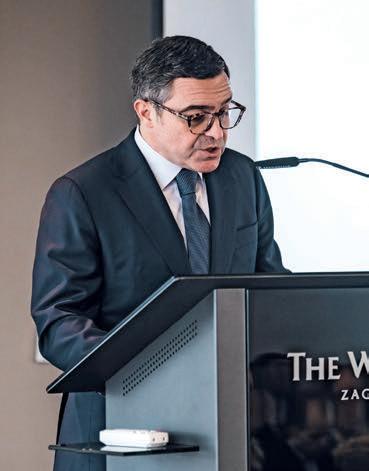
STRENGTH
EU membership, Schengen access, and macro stability continue to anchor investor confidence.
PRESSURE POINT
Administrative speed remains a key constraint in project execution.
STRUCTURAL RISK
Growth tied to EU funds raises questions about long-term sustainability.
DEPENDENCY
Tourism remains dominant, with diversification still in progress.
SHIFT
Rising interest from IT, energy, and logistics signals a broader investment base.
COMPETITION
Croatia is not only competing for capital—but increasingly for skilled talent.
Speed of administration remains the real bottleneck. Growth driven by EU funds raises questions about long-term sustainability.
forming—and where is it falling behind in ways that matter to capital?
Croatia benefits from strong geographic positioning and a reputation as a safe and stable country, which makes it particularly competitive in tourism. There is still room to elevate the quality and structure of that offer further.
However, the more important question is diversification. To remain competitive, Croatia must expand beyond its core sectors and develop industries that generate long-term value.
This is closely linked to workforce dynamics. Attracting capital increasingly means attracting talent—and Croatia is competing not only for investment, but for people.
EU membership has been Croatia’s biggest structural advantage. What’s the next catalyst that could define its investment story?
Croatia’s ongoing accession process to the OECD is an important step, and it has already driven reforms aimed at strengthening the business environment.
Looking ahead, competitiveness will be the defining factor. This is also a priority highlighted by the European Commission. Sustained growth will depend on how effectively Croatia can improve productivity, efficiency, and its overall investment framework.
Many economies in the region are chasing the same investors. Where can Croatia build an edge that isn’t easily replicated?
Croatia’s strongest advantage remains its location and accessibility. Within a sixhour drive, it reaches a market of nearly 200 million people. Combined with its coastline, natural assets, and gastronomy, this creates
a powerful tourism proposition.
In real estate, Croatia has already established itself as a preferred destination for second homes. Improvements in infrastructure and connectivity are also strengthening its role in logistics.
In energy, regional connectivity is a key advantage. The opportunity now is not only to attract capital—but to position these advantages more strategically and consistently.
How has the profile of foreign investors changed in recent years?
We are seeing gradual diversification. Investment interest is no longer concentrated solely in tourism.
There is increasing attention from sectors such as IT, energy, and logistics. If this interest translates into realised projects, it could significantly reshape the structure of the Croatian economy.
This would have wider implications— from stronger export performance to more balanced demographic trends.
If you had the government’s full attention for one hour, what would you prioritise immediately?
The priority would be administrative efficiency
This means not only accelerating processes, but also building stronger institutional support for large-scale investors. Dedicated structures that guide and facilitate complex investments can make a meaningful difference.
Where such mechanisms already exist, they should be further strengthened. In a competitive environment, speed and clarity are often decisive factors.
Croatia’s economy is diversifying faster than its reputation suggests but business leaders warn that productivity, infrastructure and institutional speed may determine whether that momentum lasts.
Croatia’s economy is becoming harder to stereotype.
Behind the coastline, tourism numbers and seasonal headlines, a quieter transformation is taking shape — driven by industrial exports, AI companies, defence manufacturing and a growing race for productivity.
But business leaders are also warning that the country risks losing momentum to slow administration, labour pressures and delayed infrastructure projects.
For Luka Burilović, President of the Croatian Chamber of Economy, the real challenge is no longer attracting attention — but turning opportunity into long-term competitiveness.
Croatia is often viewed through the prism of tourism, but beneath that image, which sectors are currently outperforming expectations?
The strongest growth today comes from higher value-added industries — industrial manufacturing, technology, energy, pharmaceuticals and digital services. Croatia’s export structure is gradually changing, moving beyond traditional sectors toward more sophisticated products and services.
One of the clearest examples is IT. Croatian companies are increasingly developing their own solutions in artificial intelligence, cybersecurity, fintech and industrial digitalisation, while competing successfully on global markets.
Defence manufacturing is also gaining importance. Croatian companies have shown they can compete through quality,
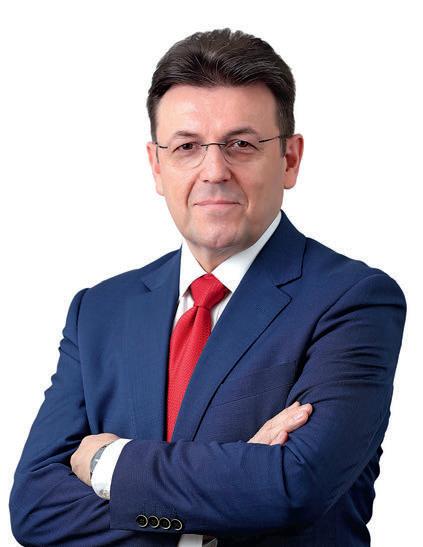
innovation and flexibility, with many already integrated into European and NATO supply chains.
At the same time, companies producing transformers, energy equipment and specialised industrial solutions are performing strongly across European and international markets.
I also see major potential in nearshoring and supply chain diversification. If railway corridors and intermodal infrastructure are modernised, the Port of Rijeka could become an important logistics alternative for cargo flows toward Central Europe.
From your perspective, what has genuinely improved in everyday business operations over the past few years?
Companies today are far more adaptable. They make decisions faster, are more
open to digital transformation and increasingly invest in process optimisation, even under difficult conditions.
What was once reserved for large corporations is now being adopted by medium-sized and smaller companies as well, including practical applications of artificial intelligence in daily operations.
The biggest shift, however, is mindset. Croatian businesses think more strategically and long term than before, especially regarding the green and digital transition. These are no longer abstract strategies — they have become part of operational business reality.
There has also been a visible improvement in supply chain management and risk monitoring, giving companies greater resilience and flexibility.
At the same time, employers increasingly understand that competitiveness depends not only on technology or pricing, but also on their ability to retain quality employees. More companies are investing in salaries, benefits, flexible working models and internal communication.
What currently gives Croatian companies the greatest sense of optimism?
Croatia’s continued international integration, particularly the expected accession to the OECD, is a major source of confidence.
When we compare today’s position with the period after the global financial crisis, the difference is substantial. EU membership, Schengen and the eurozone have significantly strengthened both economic resilience and financing conditions.
This is visible through Croatia’s historically high credit rating and far more favourable financing environment than in previous decades. Currency instability is no longer a dominant concern for companies, allowing them to focus more on real competitiveness.
And when conversations become more candid, which concerns come up most often?
Administrative inefficiency remains one of the biggest frustrations. Companies increasingly feel institutions still do not fully understand how valuable time is in business.
Delayed and inconsistent decisions often result in missed opportunities or abandoned investments.
There is also growing concern about the balance between the public and private sectors. Strong wage growth in public administration has made it increasingly dif-
“Time is a non-renewable resource. ”
ficult for many private companies to compete for labour while remaining profitable.
Beyond labour shortages, business leaders are even more concerned about productivity and the availability of relevant skills. Many also speak openly about long-term uncertainty created by geopolitical instability and slower decision-making processes.
Where is Croatia still losing competitive advantage today?
Primarily in the speed of administrative procedures, especially for large infrastructure and energy projects.
Despite strong investor interest, projects often become trapped between institutions, which extends timelines and increases costs. Strategic projects still move too slowly.
Croatia is also lagging in the development of key energy infrastructure, par-
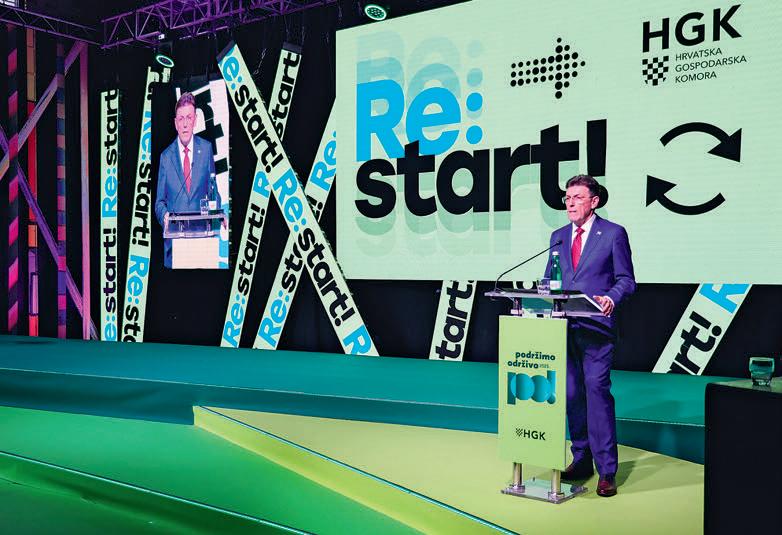
ticularly electricity networks and battery systems needed for the green transition.
The investment momentum exists. The challenge is turning that momentum into concrete projects quickly enough to create long-term competitive advantage.
If you had to identify one structural issue Croatia must solve to become a consistently competitive economy, what would it be?
Productivity. Long-term competitiveness cannot be built primarily on low costs. Croatia needs a stronger shift toward technology, innovation, digital transformation and higher value-added products and services.
That also requires a much closer connection between education and the real needs of the economy, with a stronger focus on lifelong learning and technological adaptation.
People do not all need to become IT experts, but they do need to understand how new technologies work and how to apply them in their own industries.
The faster Croatia connects education, business and innovation, the easier it will be to transform potential into lasting competitiveness.
GDP Growth (2025)
~3.2%
Croatia continues to outperform much of the eurozone in economic growth.
Credit Rating
A / A3
Croatia currently holds its strongest sovereign ratings in modern history.
Eurozone Member
Since 2023
Euro adoption removed currency risk for businesses and investors.
IT Industry
€2+ billion in annual exports
Technology services are becoming one of Croatia’s fastest-growing export sectors.
Tourism Share of GDP
~20%
Tourism remains dominant — but Croatia is gradually diversifying into higher-value industries.
Port of Rijeka
520,000+ TEU container traffic
Rijeka is increasingly positioning itself as a logistics gateway for Central Europe.
Administrative Delay
3.5 years
How long businesses waited for a key electricity connection fee framework needed for energy projects.
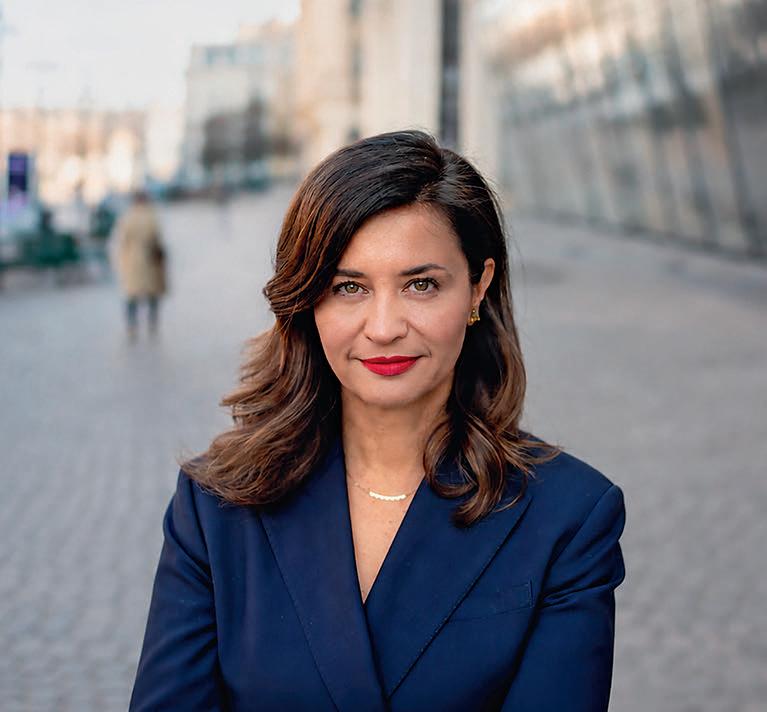
SLAĐANA ĆOSIĆ Head of the European Investment Bank (EIB) Group Office in Croatia
Croatia has no shortage of capital. The challenge is turning ambition into investment-ready projects.
Slađana Ćosić, Head of the European Investment Bank Group Office in Croatia, explains where momentum is building, why execution matters more than funding, and what will determine the country’s ability to attract long-term investment.
For years, the conversation around development in Croatia has focused on access to funding. Yet as European capital becomes increasingly available through a combination of EU instruments, national programmes and development finance, the question is no longer where the money will come from. The question is whether projects are ready to absorb it.
That shift is reshaping the role of the European Investment Bank. Once primarily associated with large infrastructure projects, the EIB today positions itself as Europe’s climate bank, directing capital towards energy transition, sustainable transport, urban development and longterm competitiveness.
From Zagreb and Split to rail modernisation and renewable energy projects, Croatia is increasingly part of that transformation. But attracting investment is no longer simply a matter of securing funding. Execution, preparation and project quality have become decisive factors.
According to Slađana Ćosić, Head of the EIB Group Office in Croatia, countries that consistently move projects from concept to implementation will be the ones that attract the largest share of long-term capital in the decade ahead.
The European Investment Bank has repositioned itself as the EU’s climate bank. What has that changed on the ground in Croatia and which types of projects are being funded today that would not have been financed five years ago?
It has fundamentally changed how we invest in Croatia’s future. We have moved from funding isolated assets to enabling
systemic change across key sectors of the country’s green transition.
As part of the EIB’s climate agenda, we prioritise projects that help decarbonise the economy and strengthen long-term sustainability, from renewable energy and energy efficiency to cleaner public transport. This has opened the door to investments that would have been significantly more difficult to finance just a few years ago.
One example is the €400 million loan we signed last year as part of a broader €900 million framework to modernise Croatia’s rail network and rolling stock. It represents the largest public-sector investment we have supported in the coun-
"The limiting factor isn't money; it's the number of fully investment-ready projects."
try. We have also launched direct financing for cities such as Zagreb and Split to support public transport decarbonisation, building renovation and urban infrastructure upgrades.
Today we are financing climate-friendly investments ranging from low-carbon transport and energy-efficient housing to modern green infrastructure. Ultimately, these projects translate into cleaner air, lower energy costs and more sustainable growth.
Croatia has no shortage of access to European funding. Where is the strongest momentum today and which sectors still lack a credible pipeline of projects?
Momentum is strongest in clean energy, transport modernisation, investment in small and medium-sized businesses and sustainable urban development, including housing.
Over the past few years, EIB activity in Croatia has reached record levels. Much of that growth has been concentrated in greener transport solutions, low-carbon cities and support for companies of all sizes, from innovative start-ups to major public enterprises.
What is changing is that investment is moving beyond core infrastructure towards projects that directly improve competitiveness and quality of life. The next stage will involve scaling up support for innovation, venture capital and emerging sectors such as security and defence technologies.
The limiting factor, however, is not funding.
The limiting factor is the number of fully investment-ready projects.
Even when financing is available, progress can slow if projects remain stuck in permitting processes or lack sufficient preparation. Areas such as affordable housing and complex climate-adaptation infrastructure would benefit from stronger project design and implementation capacity.
Our role is not only to provide financing but also to help transform ambitious ideas into bankable projects.
Energy transition has become one of Europe’s defining investment priorities. Is Croatia ahead of the curve in developing bankable energy projects or still catching up?
Croatia is making solid progress, but it is still catching up with Europe’s leading markets.
The country has established a clear direction when it comes to renewables and decarbonisation and we are seeing an increasingly robust pipeline of clean-energy projects emerge.
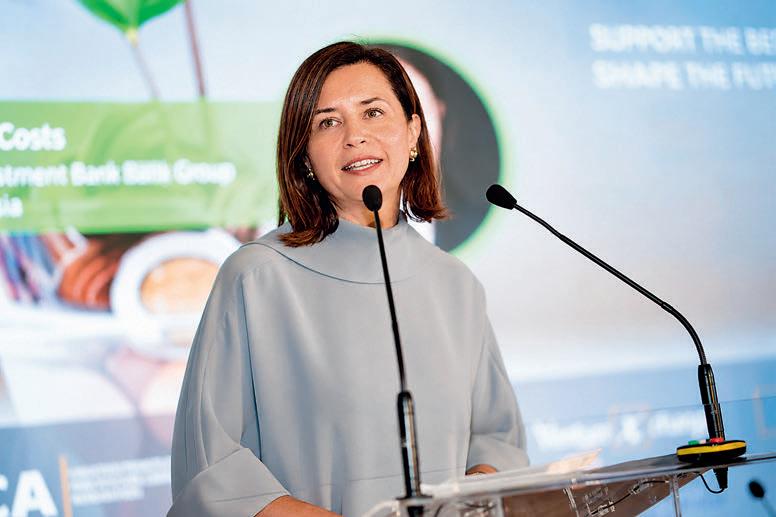
Recently, the EIB financed €30 million for a renewable energy expansion project with HEP and provided €207 million to the City of Zagreb to support solar energy deployment, affordable housing and electric public transport. These are tangible examples of a transition that is gaining momentum.
The next challenge will be modernising energy grids, strengthening storage capacity and improving overall system flexibility. These investments are essential if Croatia is to integrate larger volumes of renewable energy while maintaining resilience and energy security.
That is where development finance institutions can play a particularly important role, not only by providing capital but by helping prepare complex projects that can attract additional investors.
In many markets, projects fail not because of a lack of capital but because they are not investment-ready. When projects in Croatia fall short, where do they most often break down: strategy, structure or execution?
In most cases, the problem is not the vision. Croatian projects generally begin with strong strategic ideas. The challenge tends
to emerge later, in the details of project structuring and implementation planning.
Financial models are not always sufficiently developed, governance arrangements may require additional work and procurement frameworks can sometimes remain incomplete. These are often the issues that prevent otherwise promising projects from moving forward.
The encouraging part is that these problems are solvable. Alongside financing, we provide advisory support that helps project promoters strengthen planning, navigate procedures and improve implementation capacity.
When those foundations are in place, strong ideas are far more likely to be delivered on time and on budget.
As competition for capital intensifies across Europe, stability alone is no longer enough. What will ultimately determine whether Croatia attracts a larger share of long-term investment?
The key factor will be Croatia’s ability to consistently generate a strong pipeline of high-quality projects.
Many countries offer stability. What attracts long-term capital is a steady flow of credible investment opportunities sup-
ported by strong execution.
Croatia already possesses important advantages. It is part of the euro area, has access to significant European funding and enjoys considerable renewable energy potential. The challenge is to translate those advantages into a continuous stream of projects that can move efficiently from concept to implementation.
If Croatia can repeatedly demonstrate that ambitious plans become real projects, investors will respond.
The objective is to close the gap between ideas and execution by streamlining procedures, strengthening local capacity and maintaining high project standards. Countries that do this successfully will attract more investment and accelerate their long-term development.
The appointment of Marko Primorac as Vice-President has given Croatia greater visibility within the European Investment Bank. Does that visibility translate into influence or do funding decisions remain entirely independent of national context?
Funding decisions at the EIB remain firmly merit-based. Projects are assessed according to their quality, impact and alignment with European priorities, not according to national quotas or political considerations.
The appointment of a Croatian Vice-President does not alter those principles.
At the same time, Marko Primorac’s appointment is significant for both Croatia and the EIB. Greater visibility helps ensure that national priorities are clearly understood within the broader European context and strengthens Croatia’s presence within senior-level discussions.
Visibility can improve understanding and engagement.
What it does not change is the way projects are assessed. Ultimately, financing continues to follow project quality and long-term impact.
MANY WILL SAY THAT CAPITAL OVER THE NEXT FIVE years will flow into IT, green energy and infrastructure. And they will be right. But that is also the most obvious answer.
From my perspective, particularly through the lens of the Foreign Investors Council, the largest amounts of capital in the Adria region will not flow primarily into specific sectors, but into well-functioning ecosystems.
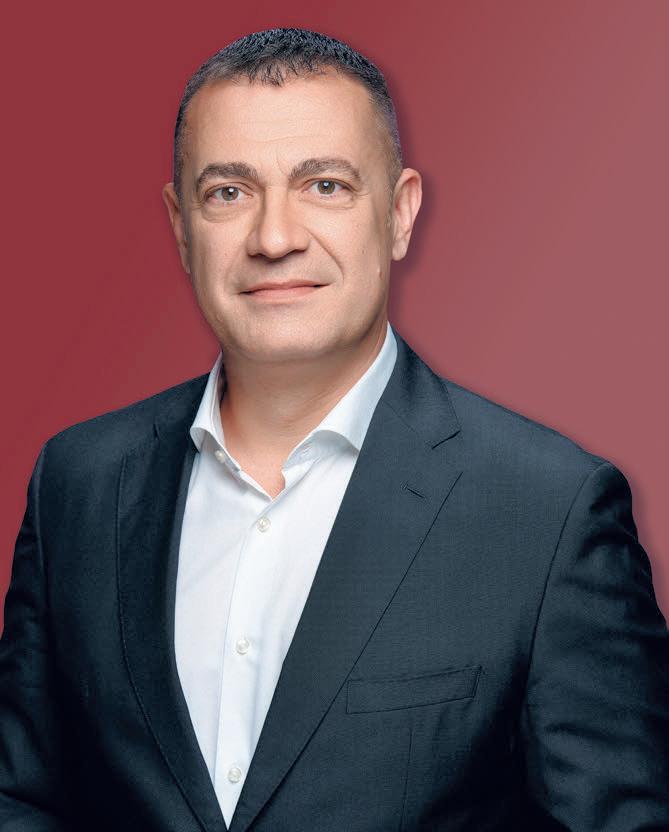
Capital today is more expensive, more cautious and more selective than ever. Investors no longer chase high returns blindly. They avoid unpredictability. That is why investment will increasingly gravitate towards places with a strong rule of law, efficient administration and consistent implementation of ESG standards. ESG is no longer a matter of reputation or corporate image. It has become a prerequisite for access to serious institutional capital. When it comes to the economy, the winners will not be individual sectors but those able to combine technology with traditional industries. That is where the greatest value is being created. At the same time, geopolitical shifts are bringing supply chains closer to Europe through nearshoring, creating a historic opportunity for the Adria region.
I therefore expect strong investment in smart logistics, modern energy networks and digital optimisation of resources, because without modern infrastructure there can be neither a successful green transition nor long-term competitiveness. Ultimately, capital follows people. At a time when the region is losing skilled professionals, the greatest advantage will belong to companies and countries capable of attracting, developing and retaining talent. Capital has always gone where innovation meets stability and where ambition has room to grow.
BRANKO MITROVIĆ
CEO One Crna Gora President of the MFIC
We asked two business leaders who see the region from very different perspectives. One argues that capital will increasingly flow towards stable and predictable ecosystems. The other believes the winners will be places that combine innovation, sustainability and quality of life.
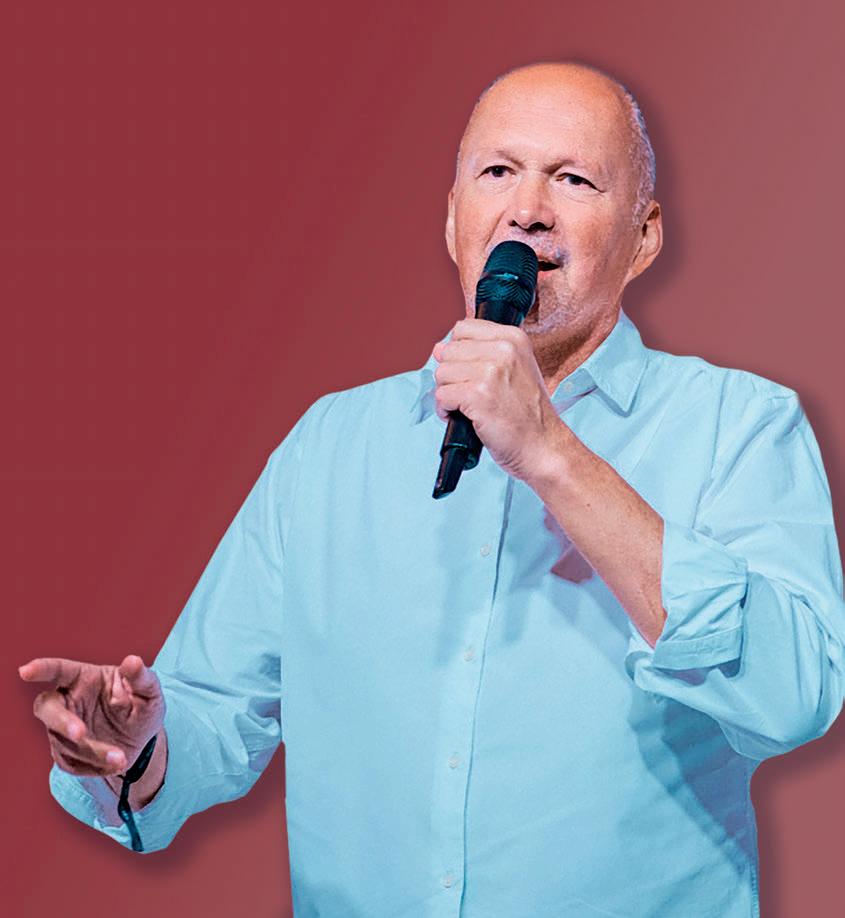
TOMO RICOV Director of Pepermint, Founder of the Weekend Media Festival
I BELIEVE THAT OVER THE NEXT FIVE YEARS THE LARGEST amounts of capital in the Adria region will flow into projects that connect sustainability, technology and quality of life. It is becoming increasingly clear that future competitiveness will not depend solely on economic growth, but on the ability of cities, destinations and communities to become more resilient, inclusive and attractive places to live and work.
I see particularly strong investment potential in energy, the green transition, new technologies and the next generation of tourism. However, the greatest long-term value will not come from infrastructure or technology alone. It will come from our ability to connect them with people, local identity and authentic experiences.
The Adria region occupies a unique position. Within a relatively small area, it combines natural resources, creativity, culture, sport and a strong entrepreneurial spirit. That is why I believe the greatest success will belong to projects that create lasting value for communities rather than simply delivering short-term financial returns.
Investors today increasingly seek places with a clear vision of development, a high quality of life and the ability to attract talent. The future belongs to those who understand that sustainability is not a cost but a growth strategy, and that creativity, innovation and quality of life have become development resources just as important as capital and infrastructure.
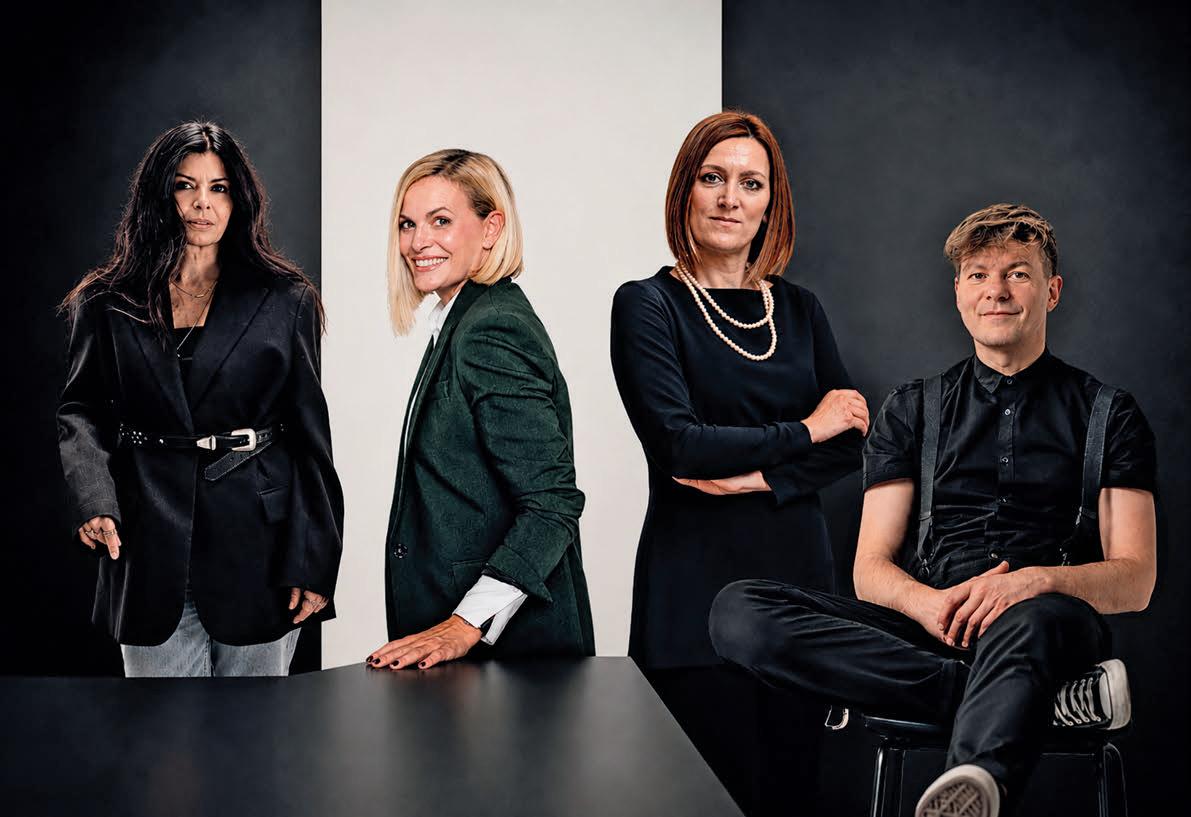
CROATIA IS NO LONGER JUST A BACKDROP
NEVENA RENDELI VEJZOVIĆ CEO, Primetime Komunikacije

For Nevena Rendeli Vejzović, one of Croatia’s most underappreciated strengths lies in the growing intersection between business, events and creative industries.
While Croatia is globally recognised as a tourism destination, she believes the country increasingly functions as a regional plat-
form for ideas, networking and contemporary cultural-business exchange. Projects such as Weekend, Women’s Weekend and Sunset Sports Festival, she says, demonstrate how Croatia is building visibility not only through hospitality, but through relevance.
“These events extend the season, attract returning audiences and position Croatia as a dynamic and intellectually open destination,” she says.
In her view, Croatia’s greatest opportunity lies in shifting from the image of a beautiful setting to that of a place where meaningful regional conversations, industries and collaborations actually happen.
From technology and industry to events and innovation, Croatian communicators say the country’s global image still captures only part of the story
“Hrvatska nije samo lijepa kulisa, već sadržajno bogat prostor susreta, razmjene i inspiracije,” she says.
LANA BEDEKOVIĆ ROSANDIĆ Managing Partner, Alert

As digital communication becomes increasingly saturated, Lana Bedeković Rosandić believes physical experiences and direct human interaction are regaining strategic importance.
“We see growing demand for offline activities and events — not only from regional companies, but increasingly from international players as well,” she says.
She also points to Croatia’s growing visibility in technology and innovation, particularly through companies such as Rimac, alongside the continued transformation of the tourism sector toward more premium experiences and high-end hospitality investments.
According to Bedeković Rosandić, these shifts are reshaping not only tourism, but also sectors connected to hospitality, services and lifestyle. In an era dominated by digital noise, she argues, countries capable of combining innovation with authentic experiences may ultimately hold the strongest long-term positioning advantage.
DAVOR BRUKETA Owner and Chief Creative Director, BRUKETA&
Davor Bruketa believes Croatia’s biggest communications gap is not tied to economic performance, but to how inconsistently that performance is translated into international perception.
“The problem lies not in the content, but in the absence of a clear positioning upon which a compelling narrative can be developed.” he says.
While Croatia remains strongly associated with sun and sea, Bruketa points to a growing industrial and technological ecosys-
tem that receives far less global attention than it deserves. Companies such as Rimac and Infobip, he argues, have already demonstrated that Croatia can compete at the highest international level in sectors ranging from advanced mobility to communications technology.
He also highlights companies such as DOK-ING and Orqa, whose technologies increasingly intersect with strategic industries including defence, robotics and security, as well as major infrastructure projects such as the recently announced Pantheon AI data centre investment in Topusko.
For Bruketa, Croatia’s challenge is no longer proving that capability exists. The challenge is building a coherent international narrative around it.
CROATIA HAS A STRONGER STORY THAN IT COMMUNICATES
Managing Director, Grayling CEE region
Croatia is still most strongly recognised through tourism, which is understandable given the sector’s importance to the economy. But the country’s business identity is far broader than the image it most often projects internationally.
Industry today accounts for roughly the same share of GDP as the wider impact of tourism, yet it remains far less visible in global perception. Companies such as Infobip, Rimac Group, Končar, Podravka and DOK-ING demonstrate that Croatia possesses the knowledge, industrial capacity and innovation potential to compete internationally while increasingly positioning itself as an important business player within Central and Eastern Europe.
According to Trslić Štambak, the challenge is not visibility itself, but the narrowness of the narrative. “Croatia has a much stronger story than it communicates,” she says, pointing to the need for a more ambitious and strategically connected international positioning.
Tourism, she argues, should remain part of Croatia’s identity — but not its only identity. The real opportunity lies in connecting the country’s global appeal with its technological, industrial and investment relevance.
Longer stays, richer experiences, higher value: how data is rewriting Montenegro’s tourism playbook
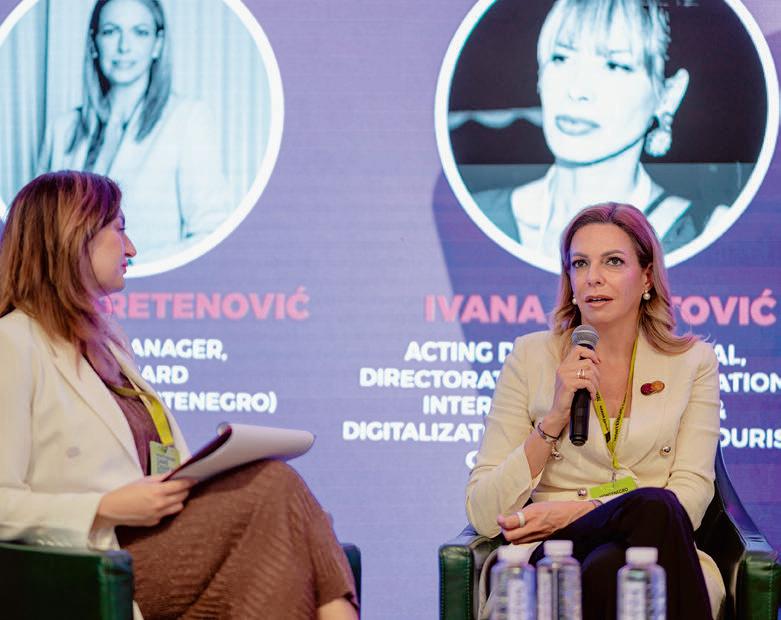
Speaking on the main stage of the Game Changer Montenegro Festival in Tivat, Jelena Sretenović, Country Manager for Serbia, Bosnia and Herzegovina and Montenegro at Mastercard, set out a simple but powerful idea: the future of Montenegro’s tourism will be written with data. Sharing the panel "Swipe Right on Montenegro: How Data & Technology Are Matching International Travelers to Their Dream Destination" with Ivana Bulatović of the Ministry of Tourism of Montenegro, Jovan Ristić of the Tourist Organization of Kotor and Marko Cus of Cable Car Kotor, she presented the headline
findings of Mastercard’s latest Tourism Insights study for Montenegro.
"Today, thanks to the data and insights at our disposal, we have a much clearer understanding of who visits Montenegro and what they expect from their journeys. Travel has changed, and the traveler has changed with it - we see it in the data every day. Across Europe, people are choosing experiences over things, and they are looking for value, authenticity and effortless convenience. The destinations that win will be the ones that truly understand their travelers and act on it", stressed Jelena Sretenović at the panel.
Montenegro is at an inflection pointmoving from a seasonal coastal favorite toward a premium, year-round destination competing with the best of the Mediterranean. Drawing on anonymized and aggregated transaction data, as well as insights from the Mastercard Economics Institute, the latest Mastercard Tourism Insights study offers a detailed view of international visitor spending patterns across Montenegro. The analysis covers the full year 2025 and spans 11 key source markets, with insights into destinations including Budva, Kotor and Herceg Novi, as well as inland locations such as Žabljak and Kolašin.
Sretenović pointed out that growth is no longer about more arrivals; instead, it is about understanding travelers better: longer stays, richer experiences, higher value. "The data insights do not just describe our visitors," she said. "They tell us exactly which lever to pull in each market - whether the opportunity is to bring more of them, or to help them stay longer and spend more."
At the heart of the findings are three source markets: the Netherlands, Poland and France. All three are growing steadily in both visits and spend, and all three stay longer than the average visitor, yet each accounts for barely 2-3% of total visits. "They already love Montenegro," Sretenović noted. "There are simply too few of them - and that is exactly why they are the corridors where every euro invested delivers the greatest return."
The three behave differently, and the data insights are precise about each. The Netherlands records the longest stays in the entire study and an 18% rise in spend in a year, yet holds just 3% of visits - so every additional, higher-value Dutch visitor translates directly into more spend. Poland is growing in visits with above-average stays but lower spend per card, so the opportunity is to enrich the visit: more experiences, more reasons to spend, more days. And France offers the biggest volume upside of all - above-average stays and spend up 14%, but only 2% of visits, so every new visitor moves the needle. Beyond the focus corridors, the data insights point to a clear roadmap for the season ahead:
A clear traveler profile. Montenegro’s typical visitor is a couple aged 35-44, with families close behind - almost entirely leisure-driven, and naturally inclined to travel in September, spring and over long weekends, making them the natural extenders of the season.
A shift in behavior. Restaurants have overtaken hotels as the No. 1 spend category - a clear signal that gastronomy and experiences are now the key drivers of value.
A premium engine. The Bay of Kotor leads all regions in year-over-year spend growth, with Herceg Novi delivering the longest stays and the highest spend per card, and Kotor and Herceg Novi serving as natural off-peak anchors.
A reputation to build on. Overall tourist satisfaction stands at an excellent 92.4 out of 100 and rising, with the perception of security at 96.3 - a strong platform for year-round storytelling.
The research is not an end in itself. Developed in partnership with the National Tourism Organization of Montenegro, Mastercard is translating these insights directly into a cross-border mar-
keting campaign designed to attract the right travelers, extend the season beyond its two-month summer peak, and position Montenegro, and especially Boka Kotorska and Kotor, as a flagship destination.
The campaign targets the two main outbound corridors the data insights flagged as highest-potential - the Netherlands and Poland - supported by the key regional markets of Serbia and Bosnia and Herzegovina. At its heart is a curated set of exclusive benefits and Priceless Experiences - Mastercard's way of turning data into real, unforgettable moments. The destination's standout experiences - from the Kotor Cable Car and the Kotor Art festival to premium gastronomy at Trattoria Rosmarino, a “JRE-Jeunes Restaurateurs” member in Perast - anchor the campaign on the ground, bringing it to life through carefully selected moments designed for Mastercard cardholders.
"Everything we do is based on data and insights. Our research doesn’t sit in a drawer, it is the plan," Sretenović said. "We have proof this model works: in Croatia, our cross-border campaign with the national tourist board generated 8.1 million impressions and over 300,000 clicks in a single summer. Monte-
negro is now in the same position and with the data insights we have, we can be even more targeted and effective."
And this is not a plan for some distant season: as the panel takes the stage, that very campaign is already live across the region - reaching travelers in the focus corridors and ready to welcome them the moment they arrive in Montenegro from July.
“Montenegro stands out for its exceptional diversity of natural beauty, rich cultural heritage, and authentic experiences that leave a lasting impression on visitors. We are therefore pleased that, through our partnership with Mastercard, we will be able to further showcase these values to international guests and inspire them to discover their next unforgettable story in Montenegro “- stated PhD Ana Tripković Marković, Director of NTO Montenegro.
As the panel closed, Sretenović framed the year ahead in a single line: "Decide with data, not with assumptions. Montenegro has everything it takes, and Mastercard will be there as a partner every step of the way."
BY MARKO NIKOLIĆ
FOR YEARS, EUROPEAN INTEGRATION IN the Western Balkans felt like a process permanently stuck between ambition and postponement. Negotiations advanced, governments changed, reforms were announced, and yet membership always seemed to remain somewhere beyond the horizon.
This month, Montenegro crossed an important threshold.
At the Intergovernmental Conference in Luxembourg on 15 June, the country provisionally closed two additional negotiating chapters: Chapter 2 on the Free Movement of Workers and Chapter 28 on Consumer and Health Protection. The move brought the total number of provisionally closed chapters to sixteen out of thirty-three, making Montenegro by far the most advanced candidate country in the European Union's enlargement process.
On paper, that may look like another technical step in a long negotiation. In reality, it signals something much larger.
Only a year ago, the key question was whether Montenegro could regain momentum after years of slow progress. Today, the conversation in Brussels has shifted to a different issue: how and when Montenegro could become the European Union's next member state.
The clearest indication came in April when EU member states formally launched work on drafting Montenegro's Accession Treaty. This is not a symbolic exercise. The treaty is the legal document every future member signs before joining the Union. Brussels would not be investing political capital and administrative resources into drafting such a document if membership remained a distant or hypothetical possibility.
For much of the past decade, enlargement was overshadowed by Brexit, migration pressures, the pandemic and internal political disputes. Today, geopolitical realities have pushed enlargement back to the centre of the European agenda. The war in Ukraine, growing competition for influence in Southeast Europe and concerns about long-term regional stability have convinced many European leaders that leaving the Western Balkans in a permanent waiting room is no longer a sustainable strategy.
This is precisely why Montenegro matters.
With a population of roughly 630,000, Montenegro would be one of the European Union's smallest member states. Eco-
The most difficult chapters remain open. Competition Policy (Chapter 8), Customs Union (Chapter 29), Environment and Climate Change (Chapter 27), as well as the rule-of-law chapters that ultimately determine the credibility of the entire process, still require substantial work. Corruption, judicial independence and institutional effectiveness remain the areas most closely watched by Brussels.
Prime Minister Milojko Spajić's government continues to target the end of 2026 for closing all negotiating chapters and 2028 for full membership. It is an ambitious timetable, but no longer an unrealistic one. Even European Enlargement Commissioner Marta Kos has publicly stated that completing negotiations by the end of 2026 is achievable if the current pace of reforms is maintained.
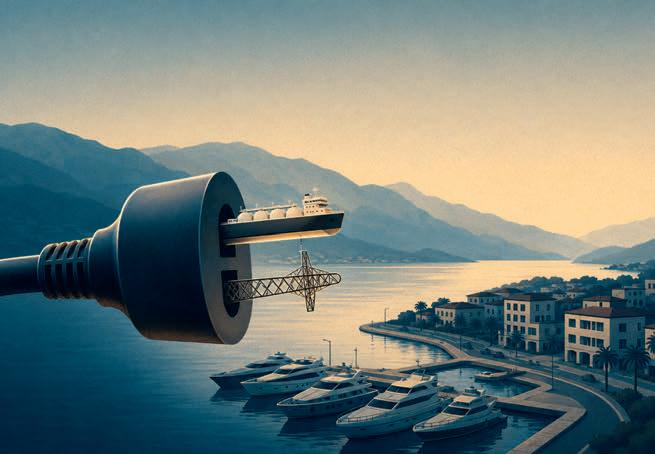
The significance of this moment extends beyond Montenegro.
For the first time in many years, the Western Balkans have before them a real accession case rather than a theoretical one. If Montenegro reaches the finish line, it will demonstrate that reforms are still rewarded and that membership remains attainable. If it stalls, scepticism across the region will deepen overnight.
The change reflects a broader shift inside the European Union itself.
nomically, its accession would have only a limited impact on the Union. Politically, however, it could have enormous significance. After Croatia's entry in 2013, Europe has spent more than a decade promising that enlargement remains alive. Montenegro now has an opportunity to become the first concrete proof that those promises still carry weight.
Yet celebration would be premature.
That is why the story unfolding in Podgorica is no longer only about Montenegro. It is becoming a test of whether the European Union can still transform promises into policy and aspirations into membership.
After years of waiting, both sides are finally approaching the moment when they must prove it.
Albania's planned luxury resort developments is about more than one project. It reflects a question every Adriatic country is increasingly being forced to answer: how much development can paradise absorb before it ceases to be paradise?
On a clear day, the waters around Sazan Island are almost impossibly blue. For decades, the island sat largely outside the attention of international investors, a former military zone overlooking one of the Mediterranean's least developed coastlines. Today, it stands at the centre of a debate that extends far beyond Albania.
The proposed luxury tourism developments linked to Jared Kushner on Sazan Island and near Zvërnec have sparked passionate arguments about environmental protection, investment, transparency and national priorities. Supporters see a once-in-a-generation opportunity to accelerate development and attract global capital. Critics fear the irreversible transformation of a fragile coastal landscape.
Yet the significance of the story lies not in the personalities involved. The real story is what the debate reveals about the future of the Adriatic.
For decades, governments across the region focused on attracting international investors. Tourism strategies were built around visibility, infrastructure and access. The challenge was straightforward: convince the world to come. Today, that challenge has changed. The Adriatic is no longer waiting to be discovered. In many respects, it already has been.
International hotel groups are expanding across the coastline. Luxury real estate developers are arriving in growing numbers. Investors who once focused primarily on established Mediterranean destinations are increasingly looking east, drawn by a combination of natural beauty, improving infrastructure and markets that still offer room for growth.
Success, however, creates its own dilemmas.
BY MILA JOVIĆ
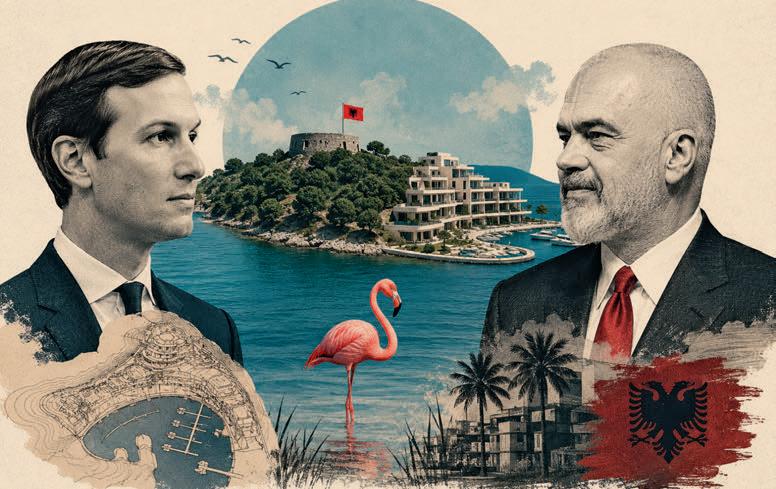
The debate is already playing out across the region. Dubrovnik continues to wrestle with the pressures that accompany global popularity. Montenegro regularly finds itself balancing new tourism developments against concerns over environmental preservation and the character of its coastline. Albania, still earlier in its tourism transformation, is seeking to attract the kind of investment that neighbouring countries welcomed years ago. The circumstances differ, but the underlying question is becoming remarkably similar: how much development is enough, and where should the line be drawn between economic opportunity and preservation?
The answer matters because tourism is no longer simply one sector among many. For much of the Adriatic region, it has become a central engine of growth, investment and international visibility. Large-scale projects bring obvious benefits. They create jobs, generate tax revenues, improve infrastructure and attract international attention. Luxury tourism, in particular, offers the promise of higher-value visitors and lower dependence on volume alone.
Yet luxury tourism ultimately depends on something that cannot be engineered by investors, architects or marketing cam-
paigns: authenticity. Investors are not coming to the Adriatic because it resembles every other Mediterranean coastline. They are coming because it does not.
The region's greatest competitive advantage remains its landscapes, heritage, culture and sense of place. These are the assets that distinguish it in an increasingly crowded global market. Once compromised, they are extraordinarily difficult to restore.
That is why the Albanian debate resonates far beyond Albania itself. At its core, it is not a dispute about a single investor or a single project. It is a conversation about what kind of development the region wants, where it should take place and what limits should exist when economic ambition meets environmental responsibility.
The most successful destinations of the next decade will not be those that choose between development and preservation. They will be those capable of achieving both.
For years, the Western Balkans asked how to attract the world's attention. That question has largely been answered. As investors arrive in growing numbers, the region faces a more difficult challenge: deciding not simply what it wants to build, but what it wants to remain.
NLB is prepared to pay €37 per share for Addiko. RBI is offering €26.50. Yet Addiko's management supports the lower bid. Behind the takeover battle lies a much bigger question: who will shape the future of banking in Adria?
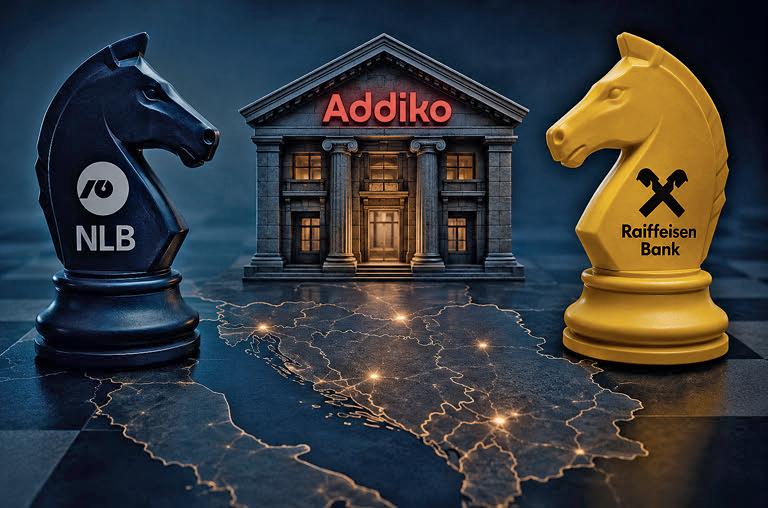
Adifference of €10.50 per share would normally settle a takeover battle. Instead, it has become one of the most intriguing corporate stories in Southeast Europe.
Over recent months, Slovenia's NLB and Austria's Raiffeisen Bank International (RBI) have been competing for control of Addiko Bank, the Vienna-listed lender operating across five markets of the former Yugoslavia. RBI's offer stands at €26.50 per share. NLB entered the race with €29, subsequently raised its bid to €33.50 and has now announced plans to increase it further to €37 per share. Yet despite the substantially higher valuation, Addiko's management has publicly recommended RBI's offer, arguing that certainty of execution and regulatory considerations may ultimately outweigh price alone.
That recommendation transformed what might have been a routine acquisition into a debate about the future structure of banking in the region. Addiko is not
among Europe's largest banks and does not dominate any single market. Its importance lies in something far more difficult to replicate: geography. The bank operates in Slovenia, Croatia, Bosnia and Herzegovina, Serbia and Montenegro, making it one of the few financial institutions with a footprint spanning almost the entire former Yugoslav space. At a time when investors increasingly view Adria as a connected economic region rather than a collection of individual markets, that network has become strategically valuable.
The significance extends well beyond banking. Over the past decade, business has been integrating faster than politics. Slovenian companies expand into Serbia, Croatian firms invest in Bosnia and Herzegovina, while Serbian businesses continue acquiring companies across the region. Supply chains, labour markets and investment flows increasingly cross borders, creating an economic geography that
looks far more integrated than the political map. Banks inevitably follow that reality.
For NLB, Addiko represents an opportunity to strengthen a strategy that has been developing for years: building a banking group capable of serving clients across much of the former Yugoslav region through a single platform. Acquiring Addiko would significantly reinforce its position, particularly in Croatia. For RBI, the logic is equally compelling. The Austrian group has spent decades building one of the strongest banking networks in Central and Southeast Europe, and losing Addiko would mean allowing a direct competitor to strengthen its position across a region that remains strategically important for future growth.
The timing is hardly accidental. Across Adria, banking consolidation is accelerating as regulatory requirements, digital transformation costs, cybersecurity demands and investments in artificial intelligence continue to grow. Scale is increasingly becoming a competitive advantage. The number of banks continues to decline while larger institutions expand their reach through acquisitions, gradually transforming a fragmented landscape into one dominated by fewer, stronger and increasingly regional players.
That makes Addiko one of the last strategically important pieces on the board. The winner will acquire more than branches, deposits and customers. It will gain access to a network spanning five economies at a moment when regional business integration is becoming one of Southeast Europe's defining economic stories. The battle for Addiko is therefore not really about €26.50 or €37. It is about who will control the banking platform that most closely reflects the economic geography of modern Adria.






“Companies that want serious growth today must think regionally.”
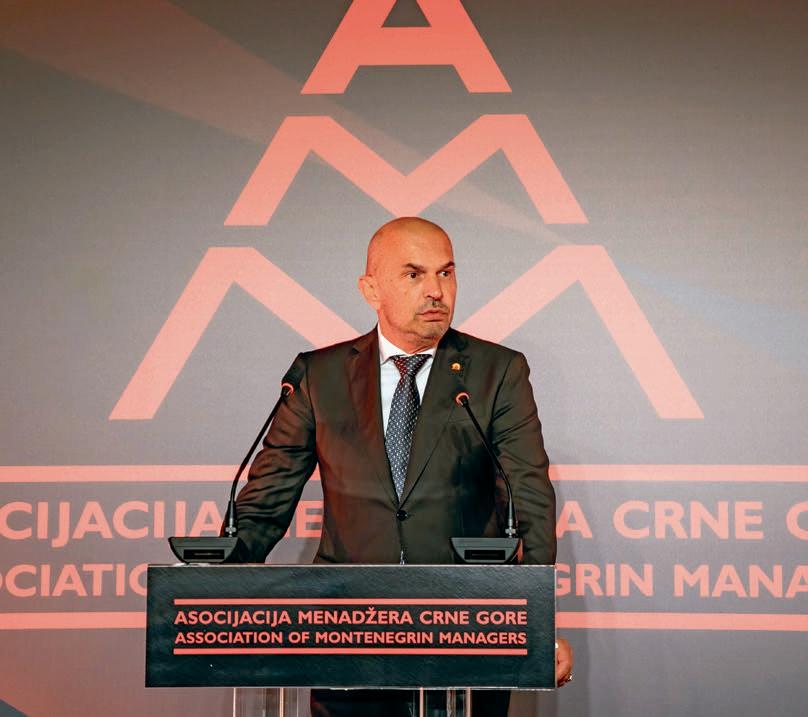
As the business world adapts to the rapid development of artificial intelligence, digital transformation and profound shifts in the labour market, the role of business leaders across the region is undergoing a fundamental transformation. As one of Montenegro’s most influential business organisations, the Association of Managers of Montenegro (AMM) has in recent years increasingly focused on leadership, innovation, ESG standards,
digital transformation and the future of work, actively contributing to the development of a modern business environment.
In an interview with The Region, AMM President Budimir Raičković discusses a new generation of leaders, the importance of regional business expansion and the reasons why small markets can no longer afford to think within their own borders.
AMM is today one of the most relevant business platforms in Montenegro and the region, opening key discussions about the future of business through numerous initiatives, events and partnerships. In recent years, you have further intensified activities around topics such as artificial intelligence, ESG standards, leadership and the future of work. How is the role of managers in the region changing today?
The role of managers is changing faster than ever before. In the past, it was enough to deliver strong business results and maintain a stable company. Today, much more is expected from leaders — they must understand technology, adapt to changes in the labour market, know how to retain talented people and lead companies in a responsible and sustainable way. This is precisely why AMM has devoted increasing attention to these issues in recent years. Artificial intel-
ligence, ESG standards, digital transformation and the future of work are no longer topics of the future — they are the reality of today. If the business community does not start discussing them in time, we risk falling behind the region, Europe and the wider world.
Today, AMM brings together serious companies and leaders who want to exchange knowledge, experience and ideas that can improve the business environment. I believe that the responsibility of a leadership organisation is not only to celebrate success, but also to address the challenges that lie ahead.
For companies from Montenegro, is regional expansion today primarily a matter of ambition, or is it increasingly becoming a question of longterm sustainability and survival?
I believe it is both. Regional expansion is certainly a sign of ambition and strength, but for a small economy such as Montenegro’s, it is increasingly becoming a matter of long-term sustainability.
Companies that want serious growth today must think regionally. What encourages me is that we are seeing more and more domestic companies with the knowledge, quality and confidence to compete beyond Montenegro’s borders.
It is important to view the region as a space for cooperation, not only competition. Small markets have their limitations when viewed individually, but when connected they can create much greater development potential. Through stronger regional integration, we can create more opportunities for investment, innovation and more substantial economic growth.
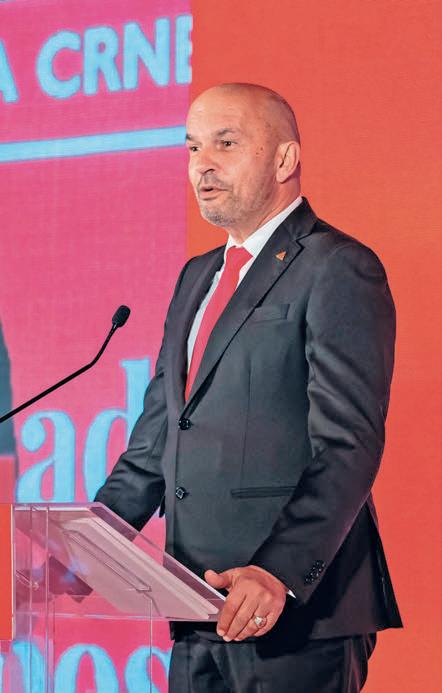
It is important to view the region as a space for cooperation, not only competition.
AMM today brings together a broad spectrum of leaders — from large corporate systems to young entrepreneurs, innovators and the technology community. Is a new generation of business leaders emerging in Montenegro with a different understanding of business, success and leadership?
Absolutely. I believe that a new generation of business leaders is emerging in Montenegro with a more
modern, open and courageous approach to business.
These individuals invest heavily in knowledge, innovation, technology and employee development. At the same time, they think regionally and internationally far more naturally than previous generations.
What particularly encourages me is the new energy and modern business culture being brought by young entrepreneurs and professionals from the IT and technology sectors. They are often more willing to take risks, make decisions faster and are far less attached to outdated business models and hierarchies. That is a very positive signal for the future of Montenegro’s economy.
As one of the initiators of regional cooperation among management organisations back in 2016, how do you view business cooperation in Southeast Europe today?
I am convinced that the business community can become one of the key drivers of stronger regional connectivity across the Western Balkans and beyond. Business naturally seeks cooperation and the integration of markets, people and ideas.
As early as 2016, there was a clear awareness that the region needed stronger cooperation through business organisations and that managers had an important role to play in that process. Today, that may be more important than ever.
Southeast Europe possesses significant potential, but to fully unlock it we need greater mutual trust, more joint initiatives and stronger regional partnerships. I believe business leaders can play a major role in creating a more modern, connected and competitive region.
As Europe returns to rail, Stadler's Željko Davidović explains why modern railway networks are becoming critical to competitiveness, sustainability and regional growth.
Based in Switzerland for the past 35 years, Željko Davidović has built a career at the forefront of Europe's railway industry. Today, as Sales Director for Central and Eastern Europe at Stadler Rail, he is helping shape the next generation of rail transport across the region.. Today, as Sales Director Central and Eastern Europe at Stadler Rail, he is helping shape the future of rail transport across the region.
Montenegro recently became the 50th country in which Stadler trains will operate following the signing of a €30 million agreement for three new FLIRT electric trains. Yet for Davidović, the significance of rail extends far beyond rolling stock. In this interview, he discusses why railways are once again at the centre of Europe's transport strategy, what the Adria region can learn from the Swiss model, and how modern rail networks can drive economic growth, investment and regional integration.
Over the past two decades, rail appeared to lose ground to road and air transport. Today, however, Europe is once again investing heavily in railway infrastructure. What has driven this shift?
In recent years, it has become clear that sustainable economic development and climate goals cannot be achieved without a strong railway system. Rail transport consumes significantly less energy, produces lower CO₂ emissions and uses space more efficiently than road and air transport. At the same time, growing urbanisation, increasing congestion and rising mobility needs require capacities that only modern railways can provide. As a result, Europe is experiencing
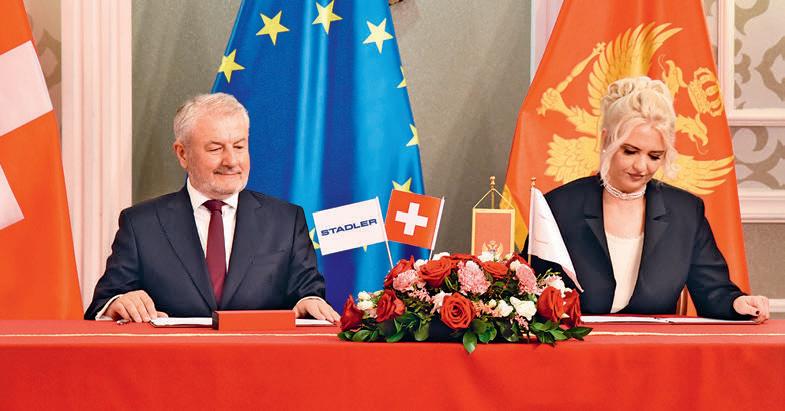
its largest railway investment cycle in decades. Rail is once again establishing itself as the backbone of a sustainable and competitive transport system.
You have lived and worked in Switzerland for 35 years, in a country often considered a benchmark for public transport. Which lessons from the Swiss model would you most like to see applied across the Adria region?
The most important lesson is not technology, but long-term planning. In Switzerland, rail is not viewed as a cost, but as a strategic investment in economic development, quality of life and regional connectivity. The passenger is always at the centre of the system. That means reliable timetables, seamless integration between different modes of transport and infrastructure planned decades in advance. Switzerland has demonstrated that consistent investment and a clear strategy create public trust in transport systems. The countries of our region have tremendous potential
to improve mobility and competitiveness by adopting a similar approach.
Regional economic integration is often discussed, yet physical connectivity remains a challenge. How important are modern railways in creating a truly integrated regional market?
Efficient railways are fundamental to any integrated market. People, goods, knowledge and investment move faster when supported by quality infrastructure. Modern rail corridors reduce travel times, increase productivity and stimulate the development of new business zones. The Western Balkans occupies a strategic position between Central Europe and the Mediterranean, but its full potential will only be realised when rail connections become faster, more reliable and better interconnected. In the era of a common regional market, railways are not merely transport infrastructure; they are a prerequisite for economic integration.
Montenegro has recently become the
50th country in which Stadler trains will operate. What does this investment say about the direction in which railway systems in the region are moving?
We are extremely proud that Montenegro has become the 50th country in the world to operate Stadler trains. It demonstrates that even smaller markets are investing in modern solutions that improve reliability, safety and passenger comfort. For Montenegro's citizens, this means better public transport, while for the country it represents another step towards European mobility standards.
More importantly, investments like this reflect a growing commitment across the region to modernise railway systems and make them more competitive with other modes of transport. I believe this project will encourage further development of the rail sector and reinforce the role of railways in the sustainable economic and social development of Montenegro.
Many of Europe's most successful cities and industrial centres developed along railway corridors. Should countries in our region view rail investment primarily as a transport project or as an economic strategy?
First and foremost, as an economic strategy. Experience across Europe shows that quality railway infrastructure attracts investment, increases property values, supports industrial development and creates jobs.
A strong example from our region is the high-speed railway between Belgrade and Novi Sad. With journey times reduced to around 30 minutes, Novi Sad has become a significantly more attractive place to live. Demand for property has increased, as have property values. At the same time, business districts in Belgrade, particularly New Belgrade as one of the region's leading business and technology hubs, have gained access to a much larger pool of skilled professionals who can now commute daily from Novi Sad. Previously, the same journey could take up to three hours.
When modern railways connect cities, they effectively create a single labour market. They increase economic competitive-
ness and open new development opportunities for entire regions. Rail investment should therefore be viewed as an investment in long-term economic growth, not merely as a transport project.
Technology is transforming almost every industry. How do you think the rail travel experience will look ten years from now?
While certain trends are visible, predicting the future with precision has become increasingly difficult, particularly given the transformative impact of artificial intelligence. What is already clear is the direction of travel. Rail journeys will become more digital, more personalised and more comfortable. Passengers will expect seamless reliability, punctuality and simplicity. Digital plat-
tainability will remain a key driver as passengers increasingly choose rail because of its lower environmental impact.
Looking ahead to the next decade, what will define success for the railway sector in Central and Eastern Europe?
Success will be measured by the degree to which railway systems become integrated into the wider European transport network and their ability to compete effectively with other forms of transport. This requires modern infrastructure, higher speeds, reliable services and full interoperability between national systems.
One of the most important trends will be the development of pan-European corridors linking the Baltic, Adriatic and Black Seas.
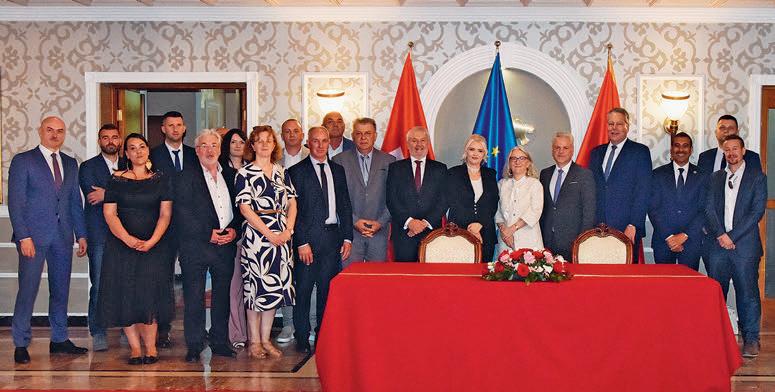
forms will enable complete door-to-door travel planning across multiple modes of transport through a single application and ticketing system.
Comfort standards will continue to rise. Stable internet connectivity, the ability to work while travelling, quieter cabins and more flexible interior layouts will become standard rather than premium features. Rail travel will increasingly be viewed as productive time rather than time lost in transit.
Artificial intelligence and advanced analytics will also improve traffic management, predictive maintenance and real-time capacity optimisation, increasing efficiency and reducing delays. At the same time, sus-
Modernisation, electrification and advanced signalling systems will improve safety, efficiency and capacity throughout the region.
For the business community, this will create significant opportunities through logistics hubs, intermodal terminals and industrial zones located along railway corridors. Companies that recognise these developments early will benefit from faster, more reliable and more sustainable supply chains.
Ultimately, success will come when rail is no longer viewed as an alternative, but as the first choice — for both passenger and freight transport. That would represent a major gain not only for the sector, but for the economy and society as a whole.

As Montenegro moves closer to European environmental standards, Deponija Podgorica is proving that waste can be more than a challenge—it can become a source of materials, energy and long-term economic value.
Most people never think about where their waste ends up. Aleksandar Božović thinks about what it could become. Winner of the Association of Managers of Montenegro’s prestigious “Manager of the Year” award in the category of state-owned enterprises, Božović is leading the transformation of Deponija d.o.o. Podgorica into one of Montenegro’s most important environmental systems. Serving 10 municipalities and more than half of the country’s population, the company has evolved into a modern waste management centre built on the principles of circular economy and sustainable development.
Under your leadership, Deponija has evolved into one of Montenegro’s most important environmental systems, a transformation recently recognised with the Manager of the Year award from the Association of Managers of Montenegro. What is your vision of modern waste management, and how are you aligning it with the European standards Montenegro is striving to achieve?
My vision of modern waste management is based on an efficient, sustainable and technologically advanced system that views waste as a resource rather than a problem. The key lies in applying modern technologies, increasing recycling and using resources responsibly while aligning with European standards. EU standards provide a clear roadmap towards greater environmental aware-
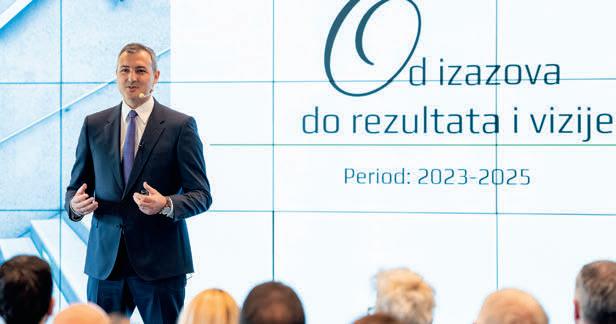
ness and responsibility towards society. That is why it is important to build a system that is both economically and environmentally sustainable. I see the “Manager of the Year” award as recognition of the collective efforts and achievements of our entire team, which has contributed to the development and modernisation of waste management in Montenegro.
Waste management is one of the key criteria on the road to EU membership. Which projects or innovations would you highlight as proof that Montenegro is already building infrastructure in line with leading European practices?
Over the past period, Deponija has implemented a number of strategic projects aimed at improving waste management. Among them is the acquisition of a tyre shredder, which has enabled the first systematic solution for tyre disposal in Montenegro. We have also completed studies for future facilities involving biogas energy production, construction waste treatment, waste-to-energy concepts and the automation of
our recycling centre. These projects represent important steps towards modern technologies, higher recycling rates and energy recovery in line with European practices.
Deponija is establishing an increasing number of international partnerships, from cooperation with Germany to participation in the Japan–Montenegro Business Forum. How do these collaborations strengthen Montenegro’s environmental profile and open the door to new investments?
Participation in international forums, such as the Japan–Montenegro Business Forum, confirms that the municipal sector has significant investment potential. Through partnerships and the promotion of our projects, Deponija is strengthening its role in circular economy and energy-related initiatives, contributing to Montenegro’s environmental reputation while creating opportunities for new investments.
Your company also plays an important role in educating citizens and raising environmental aware-
ness. What do you consider your greatest achievement in this area, and how does it contribute to Montenegro’s image as a country committed to a greener future?
Educating citizens, particularly young people, is one of the key pillars of our work. Through site visits, workshops and cooperation with educational institutions, we introduce children and students to the importance of waste separation and recycling. The most important result is the gradual change in habits and attitudes, which strengthens environmental culture in the long term and contributes to Montenegro’s image as a country committed to a sustainable future.
Montenegro is increasingly recognised as a country moving steadily towards Europe. What role do you see for Deponija in that process, and what message would you send to European partners about Montenegro’s potential in sustainable development?
Sustainable development requires economic diversification, and alongside tourism and energy, circular economy should become an important pillar of growth. It transforms waste from a problem into a resource and a development opportunity. Through an integrated system, it is possible to clean the environment, generate energy and return valuable materials to productive use. The goal is not simply profit, but the creation of a long-term sustainable system that delivers value for future generations.
From a production facility in Subotica to more than 20 international markets, Goodwill Pharma is building its growth strategy on manufacturing, innovation and long-term partnerships across Southeast Europe.
As Goodwill Pharma continues to expand its presence across Southeast Europe and international markets, export growth, manufacturing excellence and portfolio development remain at the centre of its strategy. In this interview, Gordan Maksović, Marketing & Sales Director for Western Balkans, discusses how the company has evolved from a local operation into one of the Group’s key development, production and export hubs, the significance of its expanding manufacturing capabilities in Serbia, and where he sees the next opportunities for growth in an increasingly competitive pharmaceutical industry.
Goodwill Pharma has grown into a regional player present in more than 20 markets. What were the key steps in that journey and where do you see the greatest opportunities for future growth
Our growth has been built on long-term partnerships, regulatory expertise and a clearly defined internationalisation strategy.
Over the past 14 years, we have established a strong presence in Bosnia and Herzegovina, Montenegro, Croatia, North Macedonia and Albania. Through various partnership models, we now distribute our products in more than 20 international markets.
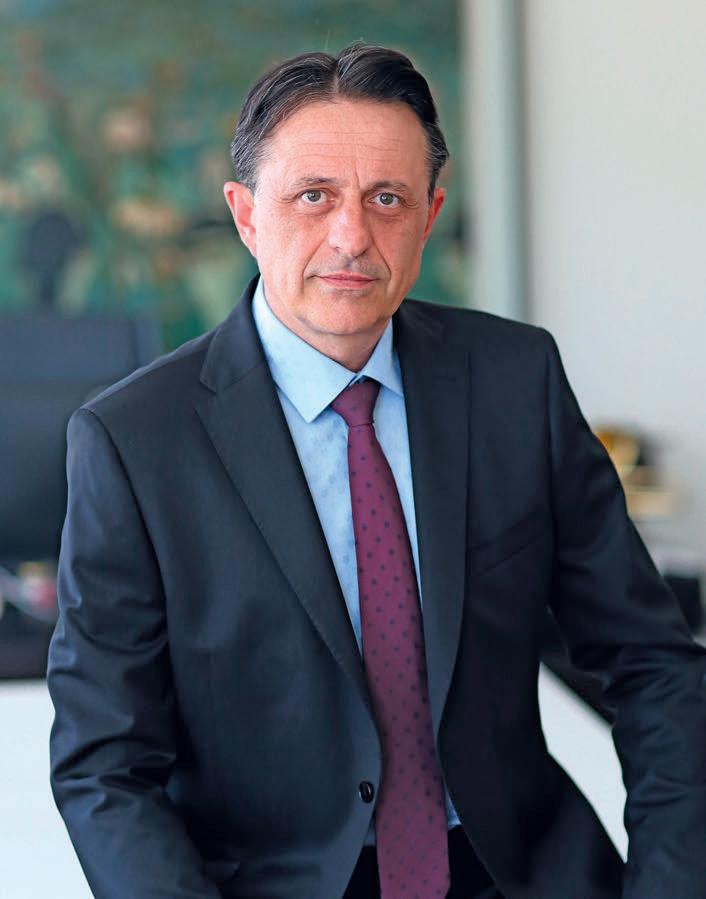
A particularly important element of our success has been the development of our own local teams and representative offices across the region. This allows us to stay close to our partners, healthcare profes-
sionals and the specific needs of each market.
At the same time, we continuously invest in employee development through professional education, international projects and knowl -
edge exchange within the Group. We believe that people remain the most important driver of sustainable growth and innovation.
Another key pillar of our strategy is a diversified portfolio that includes pharmaceuticals, medical devices and dietary supplements. We are particularly proud of being a pharmaceutical manufacturer, which reflects a high level of expertise, quality and regulatory compliance.
Today, we operate a manufacturing facility in Subotica with an annual capacity of 15 million units, supported by laboratories for physico-chemical and microbiological testing. This provides a strong foundation for the continued expansion of our export activities.
Looking ahead, we see the greatest growth opportunities in strengthening exports through new international partnerships and expanding our portfolio in neurology, gastroenterology, reproductive health and musculoskeletal care.
The pharmaceutical industry in Central and Eastern Europe is becoming increasingly competitive. What differentiates Goodwill Pharma when entering new markets?
Our advantage lies in a partnership-driven approach based on trust, transparency and long-term cooperation.
We combine the flexibility of a regional company with the standards of an international pharmaceutical organisation, providing partners with regulatory and professional support throughout the entire product lifecycle.
One of the key elements of our competitiveness is a diversified portfolio of pharmaceuticals, medi-
cal devices and dietary supplements covering multiple therapeutic areas, all developed and manufactured in accordance with the highest quality standards.
Goodwill Pharma expanded its GMP authorisations this year. How does this development strengthen the company’s position on international markets?
The planned expansion of our GMP authorisations confirms our commitment to the highest quality standards and further alignment with European regulatory requirements.
It strengthens the confidence of international partners while creating new opportunities for export growth, licensing partnerships and broader international expansion.
Innovation has become one of the defining themes in healthcare. How do you balance the development of new products with rapidly changing market needs?
Innovation is not only about developing new products. It is equally about improving existing solutions and creating additional value for patients and healthcare systems.
Our greatest strength is our people. Our expert teams and dedicated R&D department combine scientific knowledge, regulatory expertise and market insight.
This combination of knowledge, experience and agility allows us to respond quickly to market developments and create products that meet evolving therapeutic needs.
What role do you see pharmaceutical companies playing over the next decade?
Healthcare systems are facing major challenges, including ageing populations, rising treatment costs and an increasing focus on prevention.
In this environment, pharmaceutical companies will play an important role in developing accessible, high-quality and sustainable healthcare solutions.
Headquartered in Hungary
Operating in Serbia since 2003
Products distributed in more than 20 international markets
Manufacturing facility in Subotica
Annual production capacity of 15 million units
Own physico-chemical and microbiological testing laboratories
Portfolio includes pharmaceuticals, medical devices and dietary supplements
Strategic focus on neurology, gastroenterology, reproductive health and musculoskeletal care
Our ambition is for Goodwill Pharma to be recognised as one of the leading pharmaceutical companies originating from Central and Southeast Europe, built on science, innovation, quality and strong export capabilities.
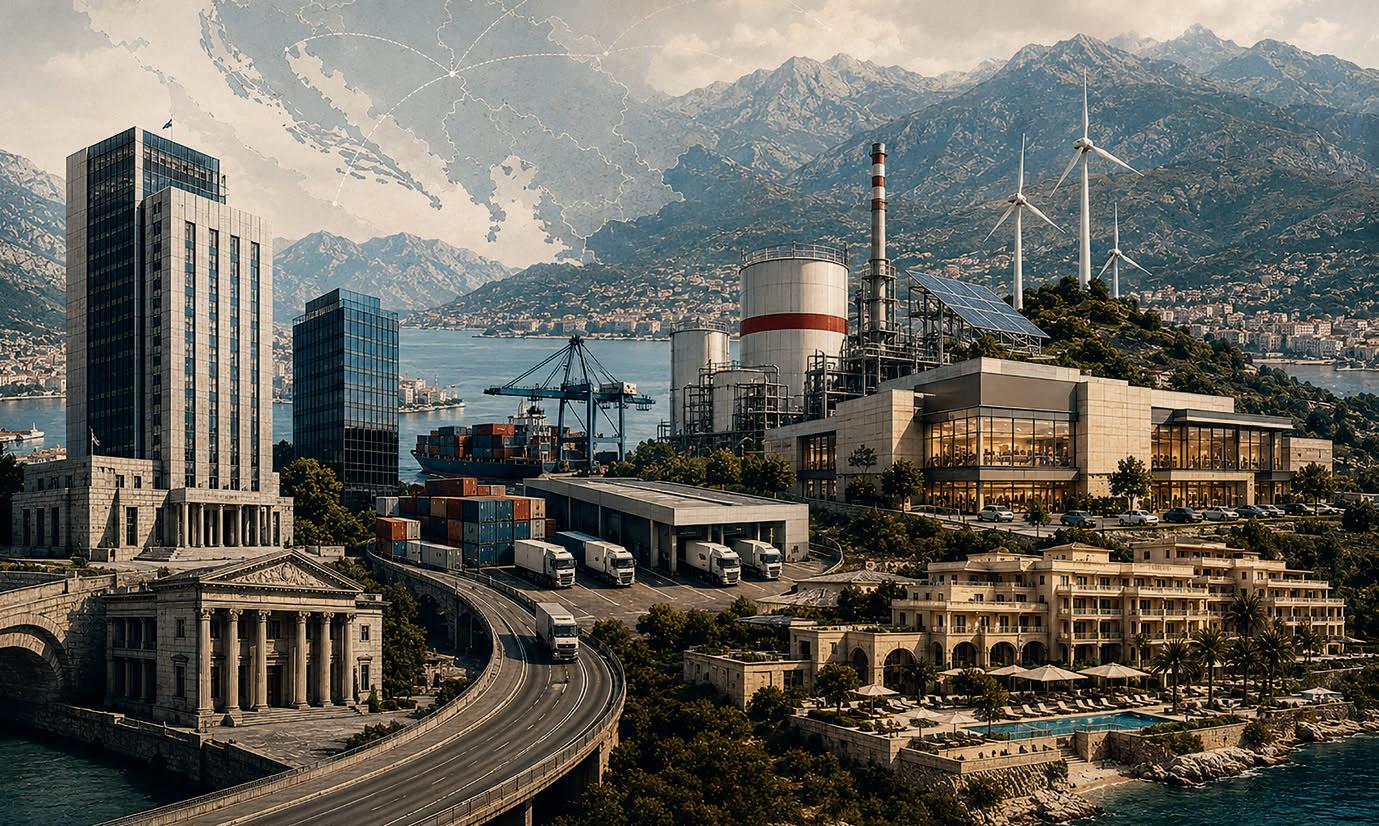
By Marko Nikolić
For much of the past three decades, the story of investment in Southeast Europe was written by foreign capital. Austrian banks, German manufacturers and international investors helped reshape the region's economies. Today, a different story is emerging. A growing number of companies headquartered within Adria are expanding beyond their home markets, acquiring competitors, financing projects and building regional platforms that increasingly move capital across borders. The result is a quieter but potentially more important transformation: the rise of a genuinely regional business economy.
When economists discuss regional integration, they usually focus on politics. They analyse EU accession, common markets, customs procedures and regulatory alignment. Yet some of the most impor-
tant integration is happening elsewhere— in boardrooms, acquisition negotiations and investment committees. It happens when a Slovenian bank competes to acquire a lender operating across five regional markets, when Serbian capital purchases a Croatian financial institution, or when an Albanian company expands beyond its domestic market. In other words, integration happens when capital starts behaving regionally.
For years, the economies of Adria were connected through trade, tourism and shared history, but investment often remained largely national. Companies typically grew within domestic markets before eventually attracting foreign buyers or investors. Today, some of the region's most ambitious businesses are pursuing a different path. Instead of viewing national borders as defining their market, they increasingly see Southeast Europe as a single economic space stretching from Lju-
bljana to Tirana and from Zagreb to Skopje. The shift remains gradual, but its significance should not be underestimated. Regions become economically integrated not when politicians declare them integrated, but when businesses begin allocating capital across borders as naturally as they do within them. Increasingly, that is exactly what is happening.
Nowhere is this transformation more visible than in banking. The ongoing battle for Addiko Bank has become one of the clearest illustrations of the region's changing financial landscape. Addiko operates across Croatia, Slovenia, Bosnia and Herzegovina, Serbia and Montenegro, making it one of the few genuinely regional banking platforms still available for acquisition. What may appear to outsiders as a conventional takeover battle is, in reality,
a contest over future influence in Southeast Europe's financial system.
Slovenia's NLB Group has spent years building one of the region's most extensive banking networks and sees further consolidation as a natural next step. At the same time, Serbia's AIK Group has emerged as one of the region's most ambitious banking investors. Its acquisition of a 91.75 per cent stake in Croatia's Podravska banka represented more than a routine transaction. It marked the expansion of Serbian capital deeper into the European Union while strengthening a banking group that now operates across multiple markets. These developments matter because banks do far more than hold deposits and issue loans. They determine where capital goes. They finance industrial expansion, renewable-energy projects, tourism developments and business growth. As regional banking groups become larger and more interconnected, capital itself becomes more mobile, reinforcing the economic ties that bind the region together.
Outside finance, a growing number of companies are following a similar path. Atlantic Grupa has become one of the strongest examples of what a regional champion looks like. The Croatian consumer-goods company generated revenues of €1.19 billion in 2025 while continuing to expand across Southeast Europe. Its success rests on a simple principle: scale comes not from dominating one market but from connecting many of them. Its distribution network, acquisitions and portfolio of well-known brands increasingly operate across borders, reflecting a business model that treats the region as a single commercial space.
Together, companies such as Atlantic Grupa, Petrol, MK Group and BALFIN are creating something larger than corporate growth. They are helping build the commercial architecture of a more integrated regional economy, one in which scale, efficiency and investment increasingly transcend national borders.
The same trend is visible in sectors ranging from tourism and real estate to renewable energy. MK Group has become one of the region's most active investors, pursuing projects across multiple markets and sectors.
east Europe as a region defined primarily by dependency. Increasingly, some of the most important investment decisions affecting Adria are being made not in Frankfurt, London or Vienna, but in Ljubljana, Zagreb, Belgrade and Tirana.
CompanyHome MarketRegional Footprint
NLB GroupSlovenia 6+ SEE markets
AIK GroupSerbia Serbia, Slovenia, Croatia
Atlantic GrupaCroatia Entire Adria region
Petrol Slovenia 4 regional markets
MK GroupSerbia Serbia, Croatia, Slovenia
BALFIN Albania Albania, Kosovo*, North Macedonia
Its recent investments include approximately €20 million in tourism developments in Croatia and Slovenia, while the company continues pursuing a renewable-energy portfolio targeted to reach one gigawatt of capacity. The significance of these investments lies not only in their size but also in what they represent: capital generated in one market increasingly being deployed in another.
For decades, companies from smaller Southeast European economies were expected to remain local players. Increasingly, they are proving otherwise. Whether in banking, retail, energy or tourism, ambitious firms are discovering that their most natural growth opportunities often lie just beyond their national borders.
At the same time, regional businesses become natural advocates for integration. Companies operating across several markets benefit from better infrastructure, regulatory alignment and easier movement of goods, people and capital. In many cases, businesses become advocates for cooperation long before politicians do. The result is a form of practical integration driven not by declarations but by commercial necessity.
Perhaps most importantly, the emergence of regional champions challenges long-standing perceptions of South -
The answer reveals a region entering a new phase of economic maturity. Successful companies are no longer defined by national borders but by their ability to compete, acquire and invest across an increasingly connected market. The geography of capital is changing, and for the first time in decades a growing share of that capital is coming from within the region itself.
BY THE NUMBERS
€1.19bn
Atlantic Grupa revenue in 2025
595
Petrol service stations across Southeast Europe
91.75%
Stake acquired by AIK Group in Croatia's Podravska banka
1GW
Renewable energy portfolio targeted by MK Group 5 Markets
Addiko's core banking footprint at the centre of the current takeover battle
20 Million
Approximate population of the integrated Adria market
Twenty years after founding Operosa and thirteen years after bringing the festival to Montenegro, Katherine Haataja reflects on building institutions, nurturing talent and creating an international cultural platform where none previously existed
When Finnish mezzo-soprano Katherine Haataja arrived in Montenegro, she discovered a country rich in cultural heritage but without a national opera and with few opportunities to experience opera on a regular basis. Rather than seeing an obstacle, she saw an opportunity.
Over the past thirteen years, Operosa Montenegro Opera Festival has become one of the country's most distinctive cultural events, bringing internationally acclaimed artists to Herceg Novi while creating opportunities for young performers from Montenegro and across the region. We spoke with Haataja about the journey so far and why investing in young talent remains central to Operosa's mission.
You founded Operosa twenty years ago and brought the festival to Montenegro more than a decade ago. Looking back, what convinced you that a country better known for its coastline than its opera tradition could become a home for an international festival?
Opera is the original European art form par excellence. It encompasses music, theatre, fine arts and dance, and is deeply embedded in the cultural roots of every European country. When I arrived in Montenegro and learned that, despite its rich cultural heritage, there was no national opera and no regular opera per-
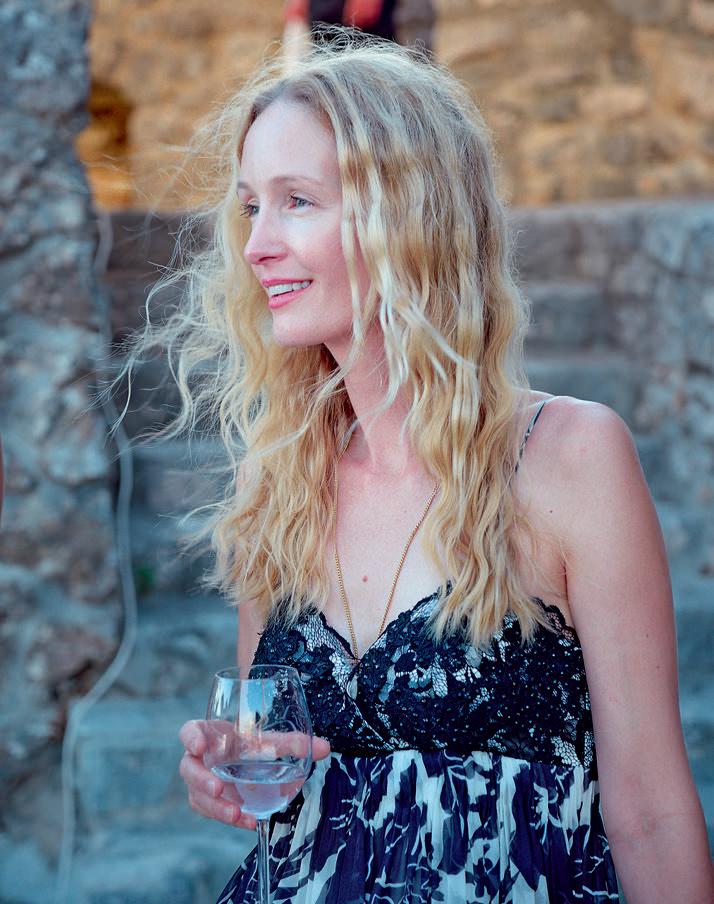
formances, I felt compelled to put my knowledge and passion to work. I was born into a family of composers and writers connected to cultural life in Finland and Sweden since the mid-1800s. My own career has evolved from professional singer to
producer, entrepreneur, designer and pedagogue. I believe it was this journey that allowed me to recognise the possibilities of creating an international opera festival in Montenegro. The decisive moment came when I discovered the Kanli Kula and Forte
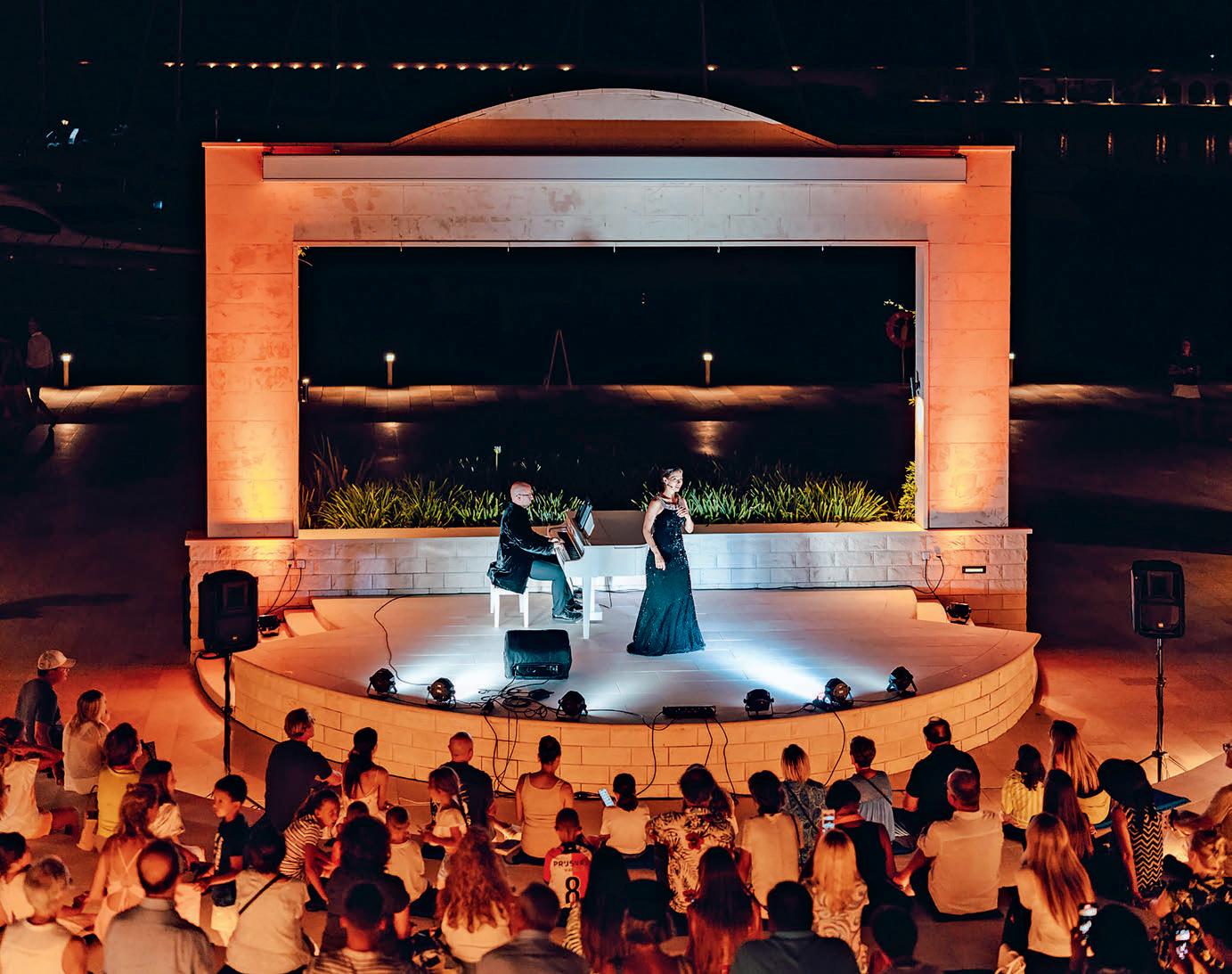
Mare fortresses overlooking the Adriatic Sea in Herceg Novi. Combined with the town's rich cultural tradition, they provided the perfect setting. Today, after thirteen years, Herceg Novi has become Montenegro's opera town. Welcoming artists such as Joyce DiDonato demonstrates the level of international recognition Operosa has achieved.
Operosa has consistently focused on developing young talent while also attracting internationally recognised artists. Why is investing in emerging performers so important to the future of classical music?
Like any art form, opera needs to be nurtured, developed and kept relevant for future audiences. Montenegro has extraordinary artistic talent, but opportunities in opera remain limited. In the absence of a national opera house and dedicated opera studies, Operosa has made it its mission to help develop that talent.
This year, in cooperation with the Music Academy in Cetinje, we are launching the Operosa Summer Opera Academy. Students from around the world will work alongside Montenegrin singers, musicians and designers under the guidance of international mentors. Together they will create and
perform Donizetti's L'elisir d'amore as part of the festival programme. Investing in young artists is also essential for developing future audiences. When young people see their peers on stage, they become more engaged with the art form itself. That is how cultural ecosystems grow and endure.
Katherine Haataja discusses cultural tourism, attracting younger audiences, regional cooperation, leadership lessons and the future of Operosa in the complete interview at connectingregion.com
Magioni Fine Jewellery is built on the belief that the most valuable pieces are not those that attract attention, but those that carry meaning
In recent years, luxury has increasingly shifted away from status and towards self-expression. How is this transformation reshaping the world of fine jewellery, and what are today’s clients seeking from brands such as Magioni?
Luxury today is becoming less about being seen and more about being felt. In the world of fine jewellery, that shift is unmistakable. People are no longer searching only for a beautiful piece or something instantly recognised as a status symbol. They are looking for meaning—something personal that speaks their language.
Perhaps the greatest luxury of our time is inner freedom: freedom from desires, negative thoughts, other people’s expectations and the constant need for external validation. Material luxury still exists, but it is no longer enough unless it is accompanied by mental, emotional and spiritual freedom.
Those who truly understand luxury are increasingly drawn to quiet luxury. It is not jewellery defined by logos, advertising or trends, but something rare, intimate and deeply personal. Every individual is already authentic; the real question is whether we recognise and embrace that authenticity. That is why a Magioni piece is never just an ornament. It can be a symbol, a talisman, a memory or a personal signature.
Luxury is changing. For Tijana Stanimirović, Director of Magioni Fine Jewellery, jewellery is not simply an accessory but a reflection of identity. In this conversation with The Region, she discusses the rise of quiet luxury, the philosophy behind Magioni and why the most valuable pieces are often those that speak only to the person wearing them.
Magioni has built a distinctive identity through collections rich in symbolism and storytelling. How does a Magioni creation come to life, from the first spark of inspiration to the finished piece?
Every Magioni creation begins with a feeling. The idea usually comes later, as a form given to something already deeply experienced.
For me, jewellery begins with an inner experience, a person, a symbol or a life story carrying a particular energy. That starting point may be connected to an ancestor, a creator, someone who shaped our lives or a relationship that left a lasting mark.
In a world more connected than ever, genuine connection is becoming increasingly rare. In the effort to connect with others, we often lose touch with ourselves. A Magioni piece is meant to be a reminder of our own essence and of the people who truly matter to us.
Creation is a way of transforming inner energy into form, symbol and an object that carries a personal story. Only then come the materials, the gemstones and the craftsmanship. Noble metals and exceptional stones are a given. They are not the beginning of the story, but its natural continuation.
In an age of mass production and global trends, how difficult is it to preserve
authenticity and craftsmanship? Do you see Magioni as a regional brand, or as a house capable of earning its place among internationally recognised luxury names?
Preserving authenticity is one of the greatest challenges in a world where everything is consumed quickly, replicated and produced in vast quantities. Yet that is precisely what luxury means to me. Luxury cannot be created instantly. It requires time, knowledge, dedication, craftsmanship and truth.
Behind Magioni stands a team involved in creativity, design, production, finishing, communication and marketing. These are people who share not only professional standards, but also a similar ethic, sense of responsibility and philosophy of life. The energy of those who create an object always becomes part of it.
I do not see Magioni through geographical borders. My ambition is not to connect Magioni to the world geographically, but emotionally and spiritually.
Our jewellery is not created merely to be seen—it is created to be felt. What matters are the people who share a similar outlook and a desire to connect with something deeper through the objects they choose to wear. Jewellery with a soul always finds its way to those for whom it was created.
Where heritage meets rarity. Magioni is a destination for unique, heritage-inspired jewellery — crafted in gold, diamonds, and meaning.
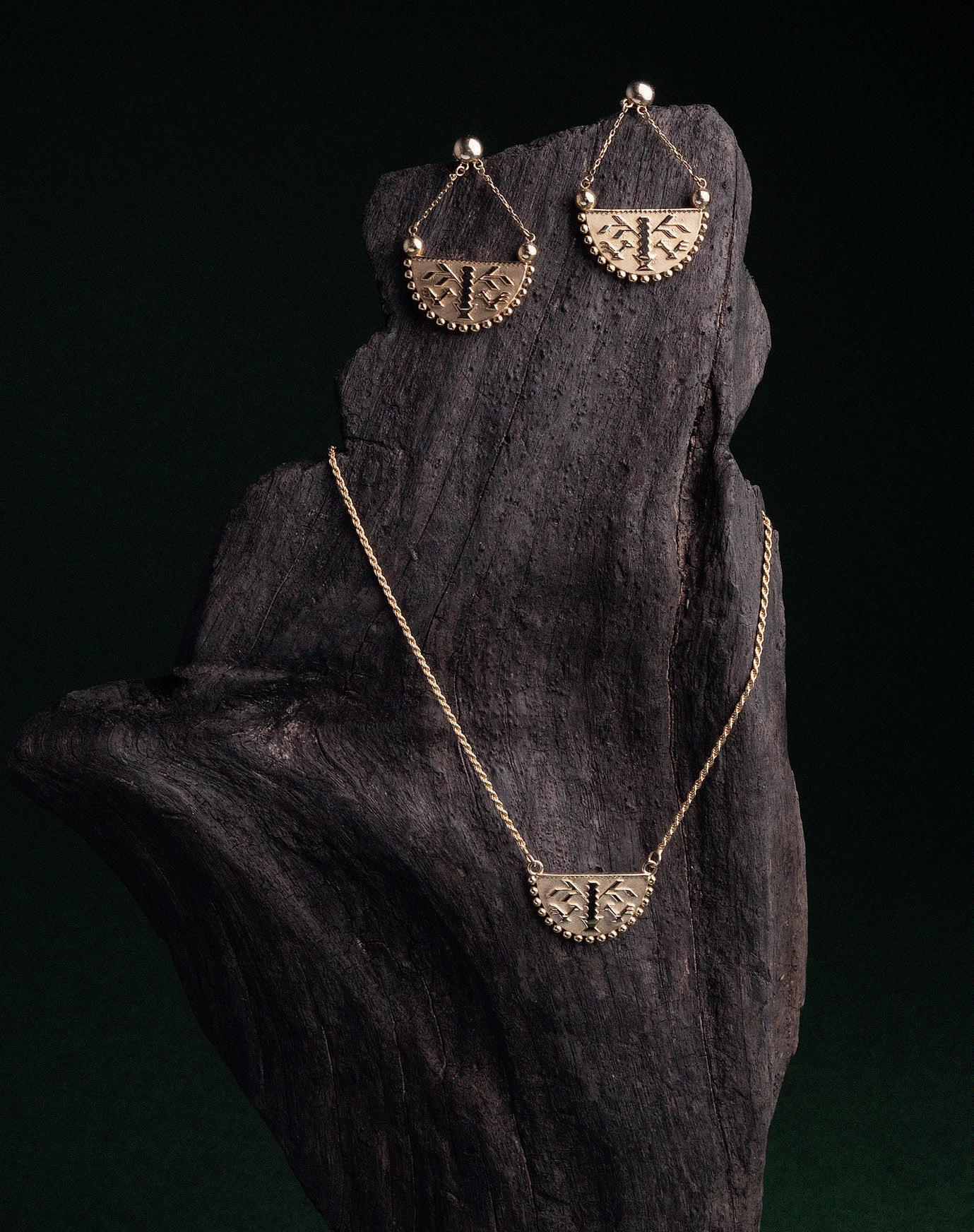

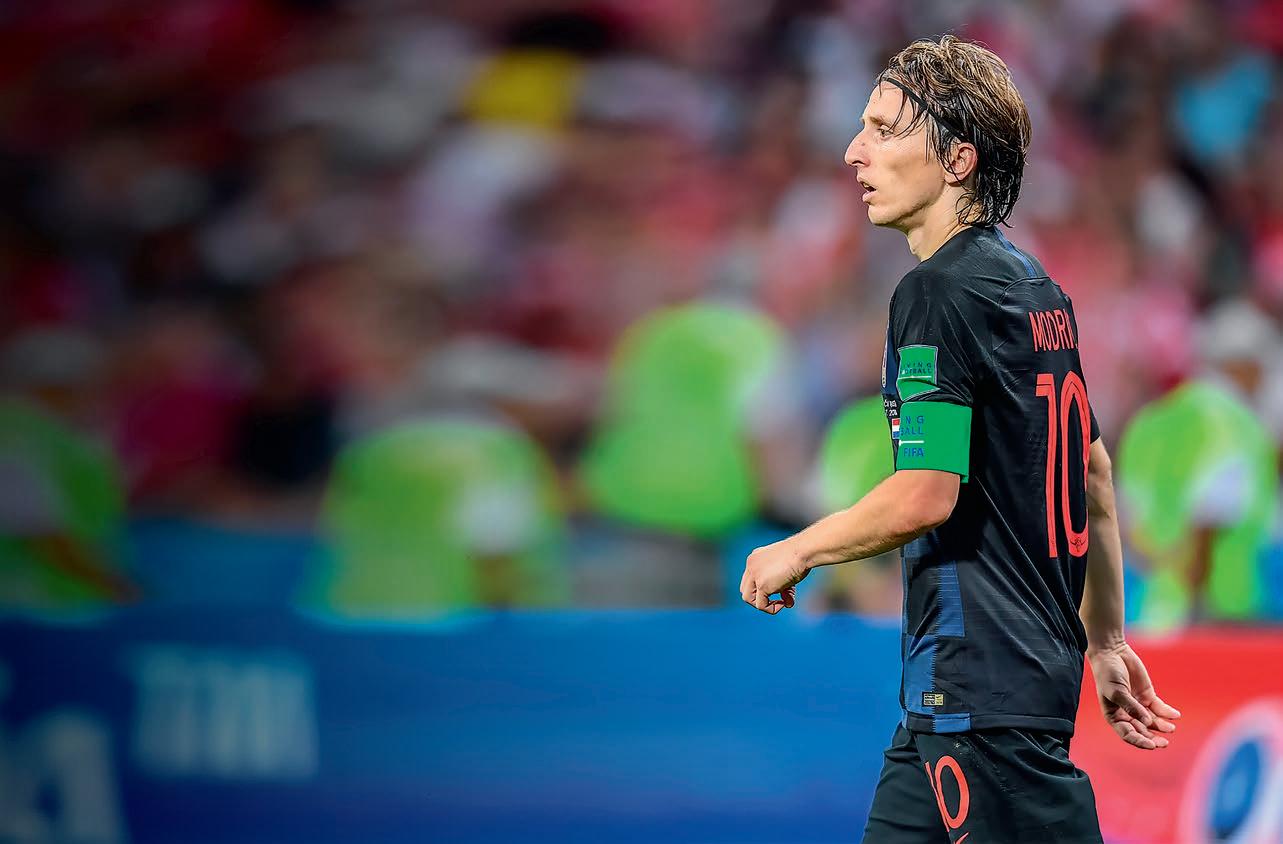
A region with fewer people than London has produced World Cup finalists, global stars and generations of elite footballers. The question is no longer whether it belongs on football's biggest stage. It is why it keeps returning
EVERY FOUR YEARS, THE WORLD Cup reminds the world of football's established powers. Brazil. Germany. Argentina. France. And then there is our region.
The seven countries stretching from the Alps to the Adriatic and the Balkans are home to fewer than 20 million people. Yet few parts of the world have produced a richer football legacy relative to their size.
This year's World Cup features Croatia and Bosnia and Herzegovina. Before them came Yugoslavia, one of the most respected football nations of the twentieth century. The flags have changed. The production line of talent has not.
The record speaks for itself. Yugoslavia reached the semi-finals of the inaugural World Cup in 1930 and again in 1962. Croatia finished third in 1998, reached the final in 2018 and returned to the podium in 2022. Serbia has qualified for multiple World Cups as an independent nation, while Slovenia and Bosnia and Herzegovina have also reached football's biggest stage.
WORLD CUP MOMENTS 1930
Yugoslavia reaches the semi-finals of the first World Cup 1962
Another semi-final appearance confirms Yugoslavia among football's elite 1998
Independent Croatia finishes third in France 2018
Croatia reaches the World Cup final 2022
Croatia defeats Brazil and wins bronze 2026
Croatia and Bosnia and Herzegovina represent the region on football's biggest
Yet statistics alone do not explain the phenomenon. Across the region, football became part of everyday life long before modern academies and billion-euro transfer markets. Generations
grew up playing in streets, schoolyards and neighbourhood pitches, creating a culture that rewarded creativity, technical skill and resilience.
From Dragan Džajić and Safet Sušić to Dejan Savićević, Robert Prosinečki, Davor Šuker, Nemanja Vidić, Edin Džeko and Luka Modrić, the region has repeatedly produced players capable of shaping entire eras of the game. Its influence extends beyond players. Coaches from the region have worked across Europe, while local clubs continue to develop talent sought by the world's biggest teams. For decades, football has been one of the region's most successful exports.
That is why the World Cup remains such a powerful moment. It is a reminder that influence is not always measured by population, territory or economic size.
Nearly a century after Yugoslavia first stepped onto the World Cup stage, the lesson remains the same: In football, this region has never thought of itself as small.







JER TI TO ZASLUŽUJEŠ.

For nearly a century, Croatia has been producing something that travels more easily than goods, survives political upheaval and reaches audiences far beyond its borders. From Oliver Dragojević to Baby Lasagna, from Jugoton to streaming platforms, Croatian music has become one of the country's most enduring exports. The question is not how Croatia produced a few successful artists. The question is how a country of fewer than four million people became the soundtrack of an entire region.
On a warm evening somewhere between Ljubljana and Skopje, there is a good chance that a crowd is singing a Croatian song.
It may be Oliver Dragojević. It may be Parni Valjak. It may be a song written by Arsen Dedić or recorded decades ago in a Zagreb studio. Increasingly, it may be a younger artist such as Baby Lasagna or Jakov Jozinović. The names change, the platforms change and the generations change, yet one thing remains remarkably constant: Croatian music continues to travel.
For decades, Croatian artists have occupied a unique place in the cultural imagination of Southeast Europe. Their songs cross borders with an ease that politicians, diplomats and business leaders often envy. They are played at weddings, festivals, cafés and family gatherings throughout the region. Long af-

ter states disappeared and new borders emerged, the songs remained.
This was not an accident.
Croatia's musical influence was built over generations. Long before the modern music industry emerged, Zagreb had already developed the institutions that
helped shape a thriving cultural ecosystem. Radio stations, recording studios, music schools, broadcasters and eventually Jugoton created the infrastructure capable of discovering talent and bringing it to audiences far beyond Croatia's borders.
The result was more than commercial success. It was cultural influence.
From the New Wave movement that transformed Yugoslav rock to the enduring popularity of artists such as Oliver Dragojević, Gabi Novak, Arsen Dedić and Darko Rundek, Croatia consistently produced music that felt both local and universal. Mediterranean melodies, Central European influences and urban sophistication combined to create a sound that resonated across different generations and identities.
That legacy continues today.
The rise of Baby Lasagna demonstrated that artists from a small market can still capture international attention, while the regional popularity of Jakov Jozinović suggests that shared cultural references remain remarkably resilient. The platforms may be new, but the emotional geography remains familiar.
Few people understand that story better than Siniša Škarica. As one of the most influential editors in the history of Jugoton and Croatia Records, he witnessed the rise of the artists, institutions and movements that helped turn Croatia into the region's musical powerhouse.
His story is, in many ways, the story of how Croatia became the soundtrack of Southeast Europe.
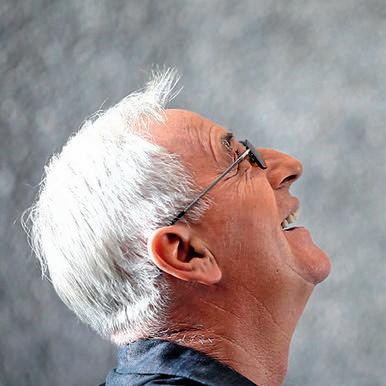
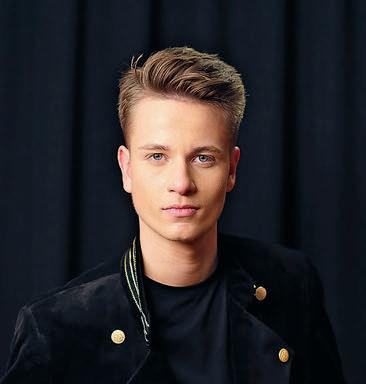
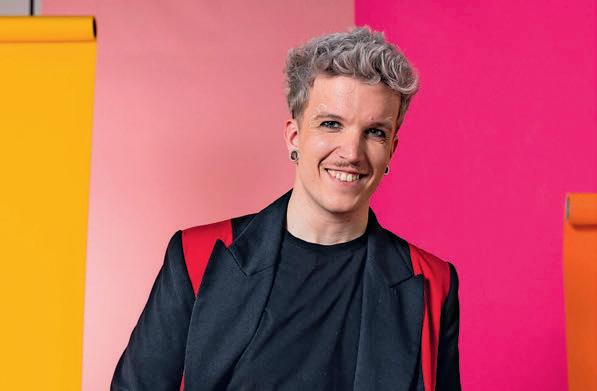

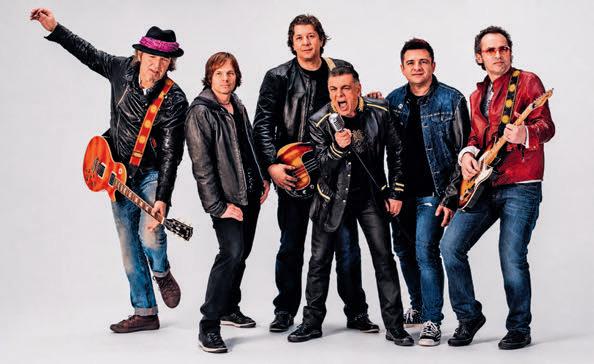
From Jugoton and the New Wave movement to Croatia Records and today's streaming era, few people have witnessed the evolution of Croatian music as closely as Siniša Škarica. In this conversation with The Region, he reflects on the institutions, artists and cultural forces that transformed a small country into one of the region's most influential musical centres.
For more than four decades, Siniša Škarica occupied a frontrow seat to one of the most remarkable cultural stories in Southeast Europe. As an editor at Jugoton and later Croatia Records, he worked with generations of artists whose songs crossed borders, survived political upheaval and became part of the shared cultural memory of millions.
Today, as Croatia celebrates a century of organised broadcasting and continues to produce artists who resonate across the region, Škarica believes the explanation lies not in a single genre, movement or performer, but in something built over generations.
Why has Croatian music remained so influential across the region?
People often assume this happened because of particular artists, but the real answer lies in history.
When we speak about Croatian music succeeding across the former Yugoslav space, we are speaking about a tradition that was supported by institutions and infrastructure for more than a century. This year we celebrate 100 years of Radio Zagreb, one of the earliest radio stations in Southeast Europe. Around the same time, Zagreb became home to Edison Bell Penkala, the first re-
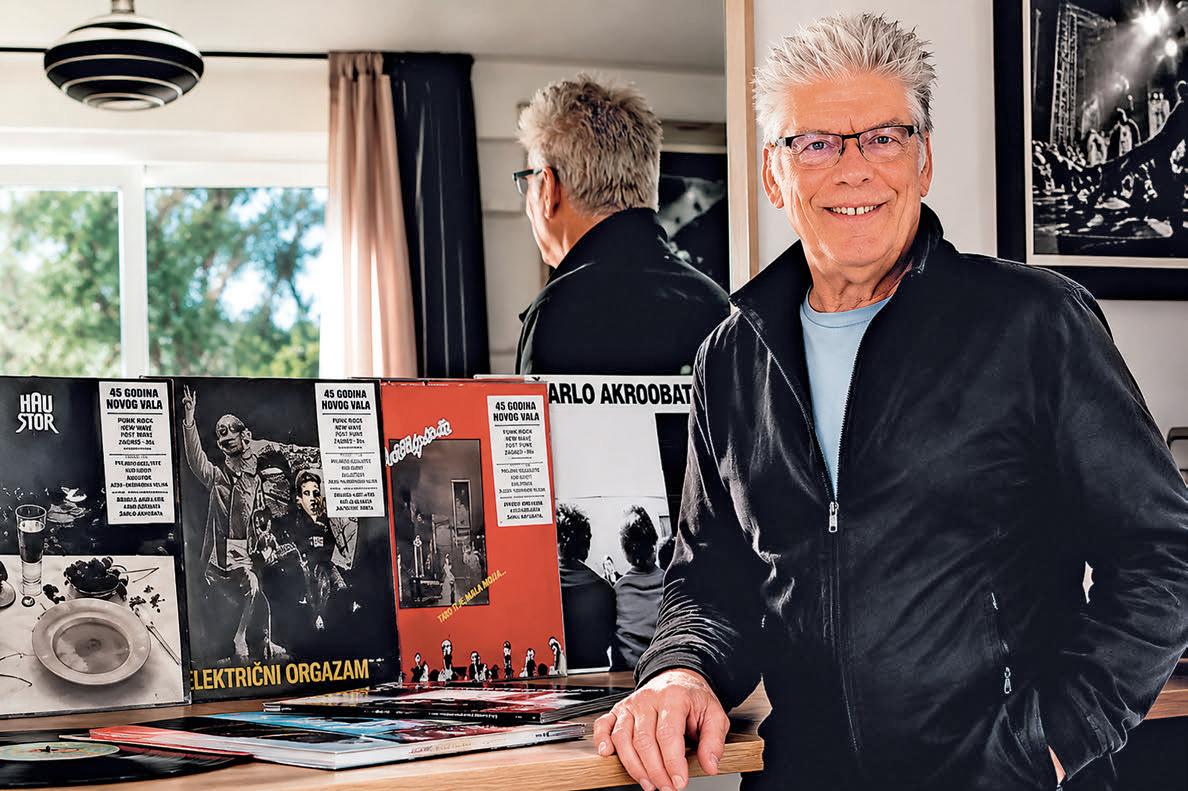
cord manufacturer in the Balkans. Later came Elektroton, which after nationalisation became Jugoton in 1947 and eventually Croatia Records in 1991. One of Yugoslavia's first television studios was also established in Zagreb.
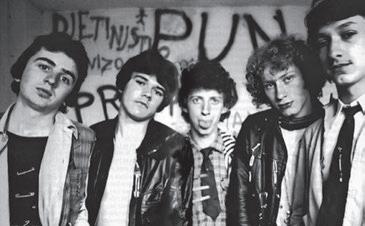
Musical tradition, culture and infrastructure developed side by side and often ahead of other parts of the region. That is the real answer to why Croatian music travelled so successfully.
You were one of the editors associated with the New Wave era. Did you realise at the time that something historic was happening?
No, it was not a single moment.
During the late 1970s we could already feel changes in the language of popular music, influenced by new developments in Britain and the United States, particularly punk and New Wave. Initially, these developments lived mainly in youth publications such as Polet and Džuboks. But for something to become a true cultural phenomenon, it needed radio, television, newspapers and, of course, the recording industry.
One of the earliest examples was Prljavo kazalište. They came to my office in Dubrava with recordings that were technically poor but artistically interesting. In 1978, those recordings became what is generally considered the first official punk record released in Yugoslavia.
Croatian music has always balanced Mediterranean, Central European and
regional influences. How important was that diversity?
It was essential.
The roots are very deep. You can see them in the work of composers such as Jakov Gotovac and Ivo Tijardović, in Mediterranean musical traditions, in the influence of Italian canzone, in the urban culture of Zagreb and later in the arrival of figures such as Đorđe Novković and the Sarajevo pop school.
Zagreb was not only a cultural centre but also an industrial and media centre. Different traditions met there and created a unique musical environment. That diversity became one of the main reasons Croatian music remained attractive to audiences throughout the region.
Despite political divisions and new borders, Croatian music continues to connect audiences. Why?
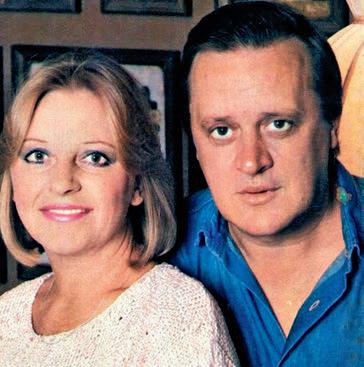
Because people's lives do not begin from zero when borders change.
Our cultural biographies do not disappear because political systems change. New states emerged, but people's lives continued. Younger generations inherit memories, songs and experiences from those who came before them.
In many ways, younger people often accept music from neighbouring countries
more easily than older generations because they carry fewer historical burdens.
You worked with artists such as Arsen Dedić, Gabi Novak, Darko Rundek, Aki Rahimovski, Oliver Dragojević and many others. Which relationships remain particularly meaningful?
There are many, but if I had to choose, I would mention Gabi Novak and Arsen Dedić.
Our relationship was professional, but it was also deeply personal. We spent time together not only in Zagreb but also in Šibenik. Each of them, in their own way, helped create the foundations of modern Croatian popular music and, by extension, the broader Yugoslav music scene.
Today's generation includes artists such as Jakov Jozinović, whose popularity extends across the region. How do you view this new era?
Jakov is a fascinating phenomenon.
For decades, artists built careers primarily around original songs or songs specifically written for them. Cover performers existed, but mostly on terraces, in clubs and dance halls. We had never really seen someone reach the very top by performing songs already made famous by others.
That is what makes Jakov unusual.
At the same time, I do not believe this will become a dominant trend. Every generation eventually seeks its own forms of expression. In recent decades that has included hip-hop, rap, trap and earlier dance music. Young audiences always look for something that belongs to them.
If you had to define Croatian pop-rock in a single sentence, what would it be?
A good melody, good lyrics, good chords, good groove and a good performance.
Some things never change.
Two voices, millions of impressions, and a shift in how Croatia is seen, visited, and lived
FOR YEARS, CROATIA HAS BEEN sold to the world in a familiar frame: sunlit coastlines, stone streets, a perfect week in July. It works—until it doesn’t. Because what drives repeat visits, long-term stays, and investment decisions is not a postcard. It is a lived experience.
A new generation of creators is quietly reshaping that experience—less through spectacle, more through credibility.
Domagoj Sever @domagojsever does not position Croatia as a destination. He treats it as a place that functions. Through photography that moves beyond the obvious, his focus lands on what tends to be overlooked: smaller towns, family-run businesses, and the kind of everyday economy that rarely makes it into tourism campaigns.
“I try to present Croatia as a year-round destination for living, working, and travelling—not just a summer postcard,” he says. “It matters to me to highlight small family businesses and farms because they represent the most authentic and valuable face of the country.”
The impact, he suggests, is measurable—but not in likes.
“When people tell me they visited a lesser-known place because of my content, supported a local business, or changed their perception of what Croatia can offer, that’s when I know the work has a real impact beyond the screen.”
It is a subtle but important shift: from visibility to behaviour. From inspiration to decision.

Ana Grzunov @travel.and.liv approaches the same landscape from a different angle—and with a sharper edge. Her content strips away the illusion of curated perfection and replaces it with something far more persuasive: reality.
“My content doesn’t sell postcards—it shows real life,” she says. “What it’s like to travel with children, live in a camper, or where locals actually eat.”
That realism builds trust—and trust converts.
“Because of that approach, people tell me they’ve booked smaller accommodations, visited places that aren’t obvious at first glance, or supported local pro -
ducers I’ve featured.”
Grzunov’s credibility does not end online. As the owner of three companies focused on family leisure, she embodies the very narrative she promotes: that Croatia is not just a place to visit, but a place to build.
“I’m also an example that with a good idea, you can invest, develop a business, and live well in Croatia,” she says. “Through direct messages and audience reactions, I see that people are starting to perceive Croatia as a place for life and work—not just a summer destination.”
What emerges from both perspectives is not a campaign, but a correction.
Croatia’s global image is still heavily
anchored in tourism—and more specifically, in seasonality. Yet the economic ambition is broader: to attract year-round visitors, remote workers, entrepreneurs, and long-term capital. The gap between those two realities is where creators are becoming unexpectedly influential.
They are not replacing institutions. They are doing something institutions often struggle to do: making the country feel real.
That means showing the off-season. The smaller towns. The businesses that do not have marketing budgets. The friction as well as the charm. In a digital environment saturated with polished messaging, that kind of honesty stands out— and travels.
It also carries economic consequences. A recommendation no longer drives traffic only to Dubrovnik or Split. It redirects attention toward inland regions, niche experiences, and local producers. It changes where money is spent—and who benefits from it. In that sense, creators are not just amplifying Croatia’s visibility. They are redistributing it.
There is, of course, a risk in relying too heavily on any single narrative—whether institutional or individual. But what Sever and Grzunov demonstrate is not uniformity. It is alignment.
Both point toward the same underlying repositioning: Croatia as a place of authenticity, quality, and viable opportunity. Not in theory, but in practice.
And that may be the more durable story. Because countries do not compete only on beauty. They compete on believability. And increasingly, that is being decided one post at a time.

By: Ivana Karalejic
Photo: Miamaya
Luxury fashion is often associated with beauty, craftsmanship and exclusivity.
Yet its greatest achievement may be something far more powerful: transforming clothing into a symbol of identity, status and aspiration.
Today, luxury fashion is a global industry worth hundreds of billions of euros. Its influence extends beyond wardrobes into culture, entertainment, architecture and business. Yet the foundations of this vast industry were laid in the salons of nineteenth-century Paris, where fashion first began its journey from craftsmanship to global power.
Most fashion historians trace the origins of modern luxury fashion to the mid-nineteenth century, when English-born designer Charles Frederick Worth established his fashion house in Paris.
Worth changed the role of the designer forever. Instead of simply producing garments according to a client’s wishes, he created his own collections and presented them to customers. For the first time, the designer became an author rather than a craftsman.
This innovation gave birth to haute couture and established a model that luxury fashion houses still follow today: creativity, exclusivity and a distinctive artistic vision.
If Worth created the modern designer, Christian Dior transformed fashion into a global business.
When Dior unveiled his first collection in 1947, Europe was still recovering from the hardships of World War II. His famous “New Look”, with its narrow waists and voluminous skirts, offered a dramatic contrast to years of austerity and rationing.
The collection caused a sensation. Critics viewed it as extravagant, but customers embraced it as a symbol of renewal and optimism.
Dior understood a lesson that remains central to luxury branding today: people rarely buy products alone. They buy sto-
ries, emotions and aspirations. Within a few years, his fashion house had expanded internationally and helped define the modern luxury brand.
Among the young talents who emerged from Dior’s atelier was Yves Saint Laurent, one of the most influential designers of the twentieth century.
After Dior’s death, Saint Laurent became creative director at only twenty-one years of age before launching his own label. His most famous creation, the women’s tuxedo known as “Le Smoking”, challenged social conventions and became a symbol of confidence, independence and modern femininity.
Luxury fashion had evolved beyond clothing. It had become a reflection of changing cultural values and social attitudes.
While Paris remained the centre of luxury fashion, influential brands emerged elsewhere in Europe.
One of the most notable examples is Loewe, founded in Madrid in 1846 as a col-


lective of leather artisans. Unlike many luxury houses that built their reputation through glamour, Loewe became known for exceptional craftsmanship and meticulous attention to detail. Its success demonstrated that quality itself could become a luxury.
Another important figure was Azzedine Alaïa, whose designs became renowned for their precision, elegance and timeless appeal. His commitment to quality over commercial pressure earned him a reputation as one of fashion’s true artisans.
By the end of the twentieth century, luxury fashion had entered a new era. Many his-

toric fashion houses became part of international groups managing portfolios of prestigious brands. Globalisation, digital media and expanding consumer markets transformed luxury from a collection of family businesses into a worldwide industry.
Today, luxury brands sell far more than clothing and accessories. They offer heritage, identity and belonging. A handbag or tailored jacket may be beautifully crafted, but its value often lies in the story and reputation behind it.
More than a century after Charles Frederick Worth revolutionised the role of the designer, luxury fashion continues to shape the way people express success, ambition and individuality.
Its lasting influence comes not only from exceptional craftsmanship or iconic designs, but from its ability to turn objects into symbols and brands into cultural institutions.
That is why the history of luxury fashion is not simply a story about clothing. It is a story about creativity, aspiration and the enduring power of desire.
Many of the brands that helped shape the history of luxury fashion, including Dior, Saint Laurent, Loewe and Alaïa, are available in Serbia through MiaMaya Gold in Galerija Belgrade, bringing some of the world’s most celebrated luxury houses to local customers.
Along Albania's southern coast, thousands of flamingos gather each year in the lagoons around Vlora and Narta. Most visitors come looking for beaches. Those who stop a little earlier discover one of Europe's most remarkable wildlife spectacles.

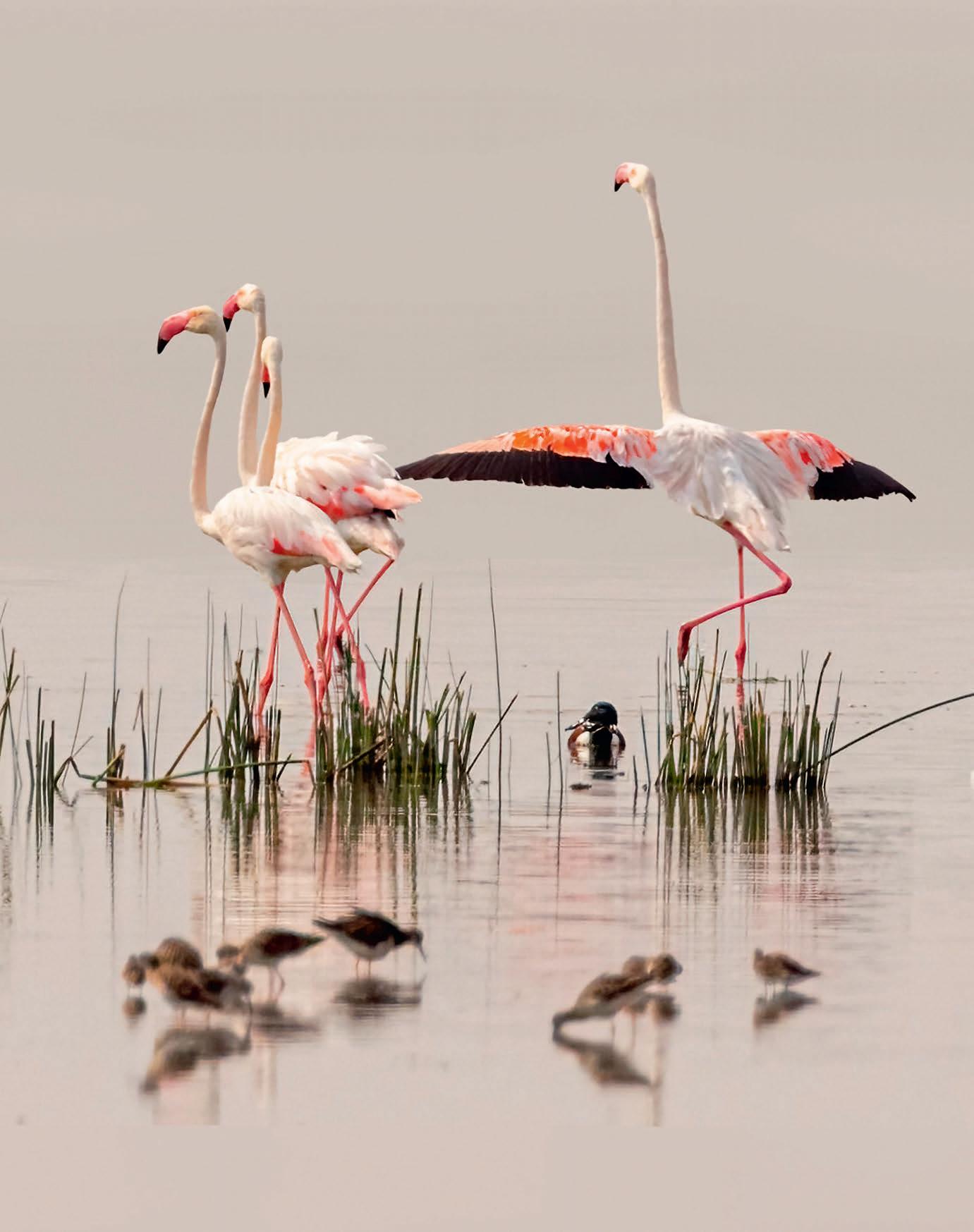
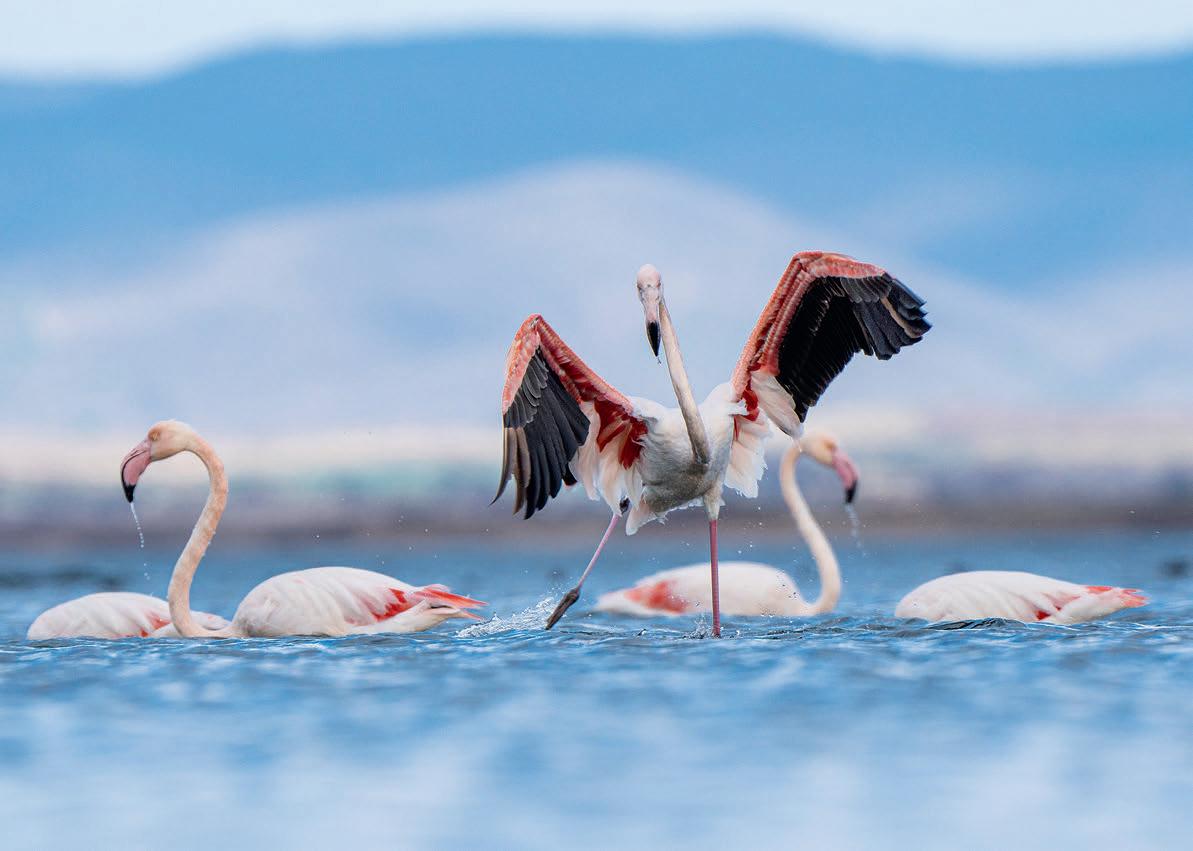
The first thing that surprises you is not the birds. It is the silence.
Just north of Vlora, where the Adriatic begins to blur into the Ionian Sea, the landscape suddenly changes. The roads become emptier. The hotels disappear. Salt flats stretch towards the horizon. The sea retreats into shallow lagoons. Everything feels wider, slower and somehow older.
Then a movement appears in the distance.
At first it looks like a pale pink line floating above the water. Only when you lift a pair of binoculars do individual shapes emerge. Hundreds become thousands. Flamingos.
For many travellers, flamingos belong to Africa, the Camargue in southern
France or the wetlands of Spain. Few expect to encounter them in Albania.
Yet the Narta Lagoon, part of a vast protected ecosystem near Vlora, has become one of the most important habitats for flamingos in the Adriatic region. During migration periods and winter months, their numbers can reach several thousand, transforming the shallow waters into a moving landscape of pink and white.
Standing on the edge of the lagoon at sunrise, it is easy to understand why they choose this place.
The water is calm and shallow. Small crustaceans and algae thrive in the saltrich environment. Long stretches of wetlands remain largely undisturbed. For flamingos, it is a sanctuary. For visitors, it feels almost unreal.
The birds move with surprising elegance. Groups drift across the lagoon like floating brushstrokes. Occasionally an entire flock lifts into the air at once, revealing flashes of black beneath their pink wings before circling back towards the water.
What makes the experience particularly memorable is its sense of discovery.
Unlike many famous wildlife destinations, there are no crowds gathered behind fences. No visitor centres filled with souvenir shops. No organised spectacle.
You simply arrive. A dirt road, a wooden observation point and an endless horizon.
Nature does the rest. Yet flamingos are only part of the story.
The lagoon forms one of Albania's most important wetland ecosystems, at-
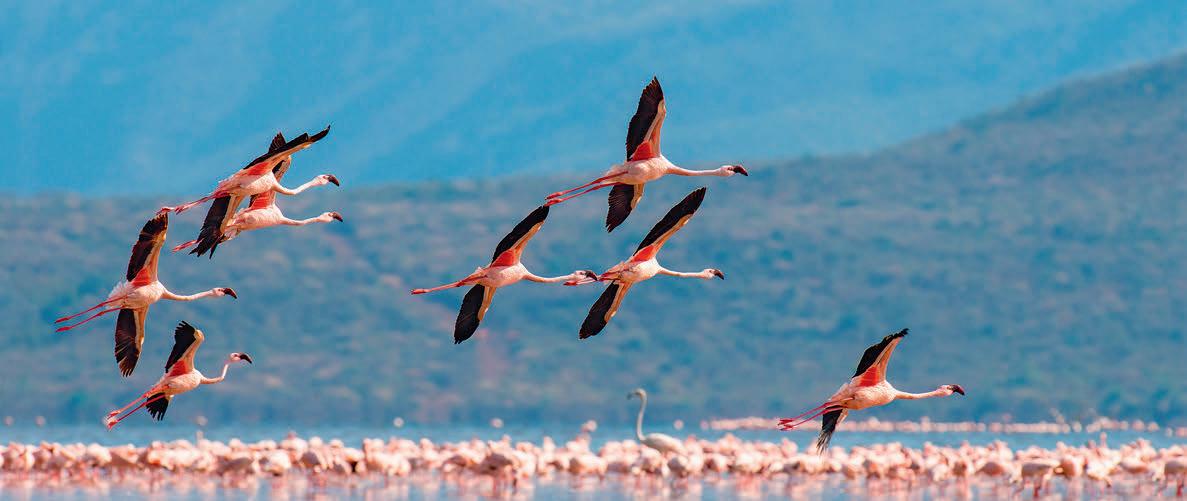
tracting more than two hundred bird species throughout the year. Pelicans, herons, egrets and numerous migratory birds use the area as a resting point along one of Europe's major migration routes.
Just offshore lies another surprise: the island of Zvernec.
Connected to the mainland by a long wooden footbridge that seems to float above the water, the tiny island is covered by a dense pine forest and crowned by a centuries-old Orthodox monastery. The transition from open lagoon to shaded woodland takes only minutes,
yet feels like entering a different world.
Locals often describe Zvernec as one of Albania's most peaceful places.
After spending an afternoon there, it is difficult to disagree.
The scent of pine mixes with sea air. Cicadas provide the soundtrack. The monastery's stone walls reflect centuries of history while flamingos continue their quiet performance across the water beyond.
Together, Narta and Zvernec reveal a side of Albania that rarely appears in travel brochures.
This is not the Albania of crowded beaches, luxury resorts or nightlife.
It is an Albania of wetlands, migration routes and landscapes that still belong primarily to nature.
As the sun begins to set, the lagoon changes colour once again. Gold turns to orange. The water becomes a mirror. Flamingos gather into distant clusters, their reflections stretching across the surface.
For a moment, the entire scene appears painted rather than real.
Then the birds move.
And the picture comes alive.
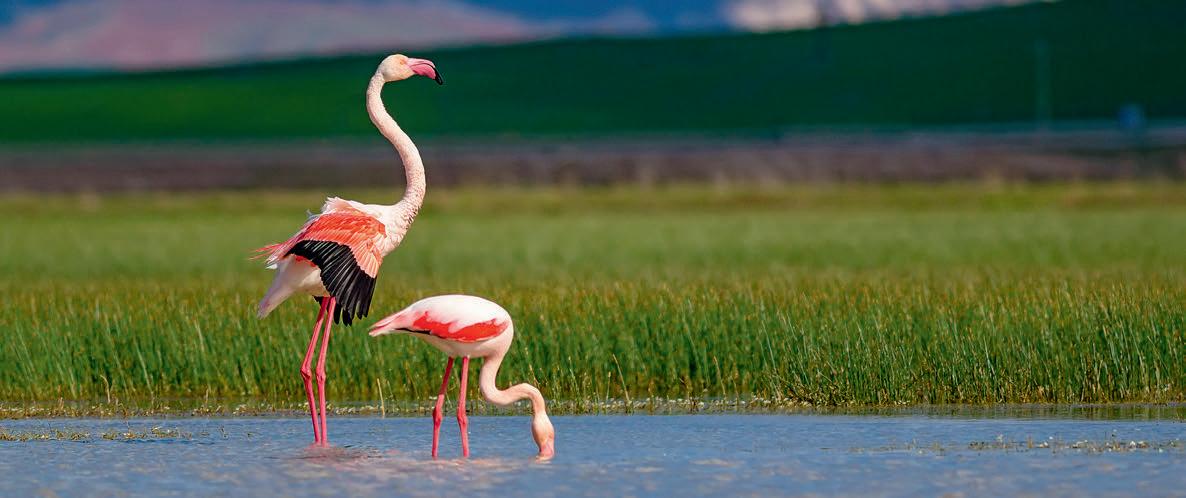

Long before highways, airports and digital networks, a narrow ribbon of steel transformed the Western Balkans. The Bosnian Railway did more than move passengers and freight. It changed the direction of trade, accelerated industrialisation and connected remote mountain towns to the economic heart of Europe.
Today, travellers crossing the Western Balkans often complain about slow roads, missing rail links and fragmented transport networks. Yet more than a century ago, one of the region's most ambitious infrastructure projects achieved something remarkable: it connected some of Europe's most inaccessible landscapes to one of the continent's most powerful economic centres.
The story begins not with trains, but with empire.
Following the occupation of Bosnia and Herzegovina in 1878, the Austro-Hungarian Empire faced a challenge. It had acquired a territory rich in forests, minerals and agricultural potential, but separated from its major markets by mountains, rivers and poor roads. Economic development required something more reliable than horse-drawn transport. It required a railway.
What followed was one of the most ambitious engineering efforts ever undertaken in the region.
Over the following decades, engineers carved hundreds of kilometres of narrow-gauge track through some of Europe's most difficult terrain. Bridges crossed deep valleys. Tunnels pierced mountain ranges. Railway stations appeared in towns that had previously existed at the edge of economic life.
The network eventually connected Sarajevo, Mostar, Višegrad, Banja Luka and numerous smaller communities to the wider imperial system stretching toward Vienna, Budapest and Central Europe.
For the first time in history, goods produced in Bosnia could reach major European markets quickly and predictably.
Forests became timber exports. Mines became industrial suppliers. Remote agricultural regions became participants in international trade.
The railway altered not only commerce but also perception. Places that had once seemed distant suddenly became

accessible. Journeys that previously required days could now be completed in hours. Merchants expanded their networks. Students travelled further. New ideas moved alongside passengers.
The transformation was so profound that many historians consider the railway one of the most important economic development projects in the region's modern history.
Yet perhaps the most fascinating aspect of the railway was its unexpected beauty.
Unlike modern high-speed lines designed for efficiency, the Bosnian narrow-gauge railway followed the contours of the landscape. Trains wound through canyons, climbed mountain slopes and crossed dramatic stone viaducts. Passengers were treated to views that today would attract tourists from around the world.
The most famous section became known as the Šargan route, where the railway navigated steep elevations through a series of loops, tunnels and curves so intricate that it became an engineering attraction in its own right.
For decades, the railway served as a lifeline connecting communities across the region.
Then came the age of the automobile.
By the mid-twentieth century, governments increasingly favoured roads over narrow-gauge railways. Trucks offered greater flexibility. Cars symbolised modernity. Maintaining mountain rail infrastructure became expensive. Gradually, sections of the network were closed. Tracks disappeared. Stations fell silent.
An infrastructure system that had once represented the future slowly became part of the past.
Today, only fragments remain. Tourist trains operate on restored sections. Old station buildings survive in some towns. Railway enthusiasts continue documenting forgotten routes hidden beneath forests and mountain vegetation. In places, stone bridges still stand as monuments to an era when engineering ambition overcame geographical barriers.
Yet the railway's true legacy extends far beyond surviving tracks.
Modern discussions about regional connectivity, trade corridors and economic integration often sound strikingly contemporary. But the central challenge remains the same as it was nearly 150 years ago: how can a region divided by geography become connected by infrastructure?
The builders of the Bosnian Railway understood something that remains true today. Economic development rarely begins with factories, offices or investment funds. It begins with connections.
Before businesses can grow, people, goods and ideas must be able to move.
The railway that once linked Sarajevo to Vienna may have largely disappeared, but the lesson it left behind remains remarkably relevant.
Infrastructure is never just about transport. It is about changing the map itself.
BY ANDRIJANA TEŠOVIĆ
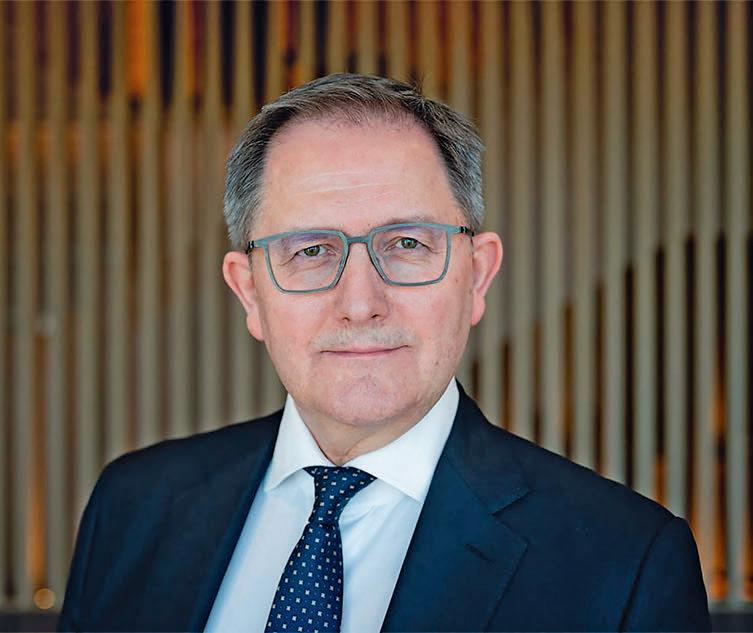
Montenegro’s Foreign Investors Council has appointed Branko Mitrović as its new chairman. Under his leadership, the organisation will continue to promote dialogue between international investors and public institutions, with a focus on improving the business environment and strengthening investor confidence.
The European Bank for Reconstruction and Development has appointed Grzegorz Zieliński as Managing Director for South-Eastern Europe. In his new role, he will oversee the bank’s operations across the region, supporting investment, infrastructure development and private-sector growth throughout the Western Balkans and neighbouring markets.
Visa has appointed Sergiy Martynchuk to lead its operations across 17 markets in Central and Eastern Europe. His role will focus on accelerating digital payment adoption, strengthening partnerships and supporting the company’s growth strategy across the region.
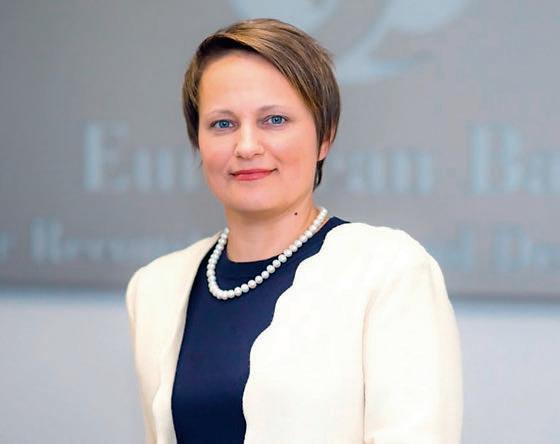
The European Bank for Reconstruction and Development has appointed Ekaterina Solovova as its new Head of Montenegro. She will oversee the EBRD’s activities in the country, supporting the implementation of investment projects and strengthening cooperation with both the public and private sectors in key areas of economic development.
Siemens Serbia has appointed Goran Milisavljević as its new General Manager, succeeding Medeja Lončar, who led the company until April 2026. A long-time Siemens executive, Milisavljević has spent nearly three decades with the company and most recently served as Head of Digital Industries, supporting digitalisation and industrial transformation across Serbia. Lončar will continue as General Manager for Slovenia and Croatia.
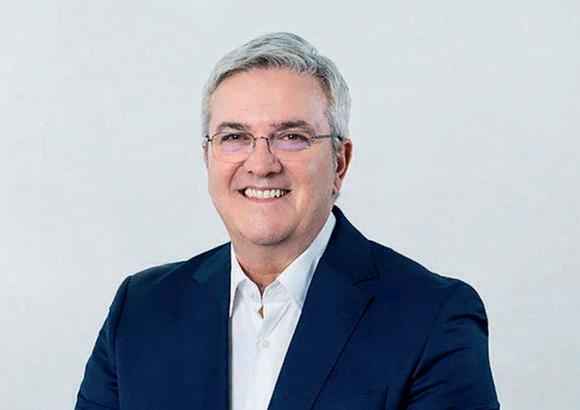
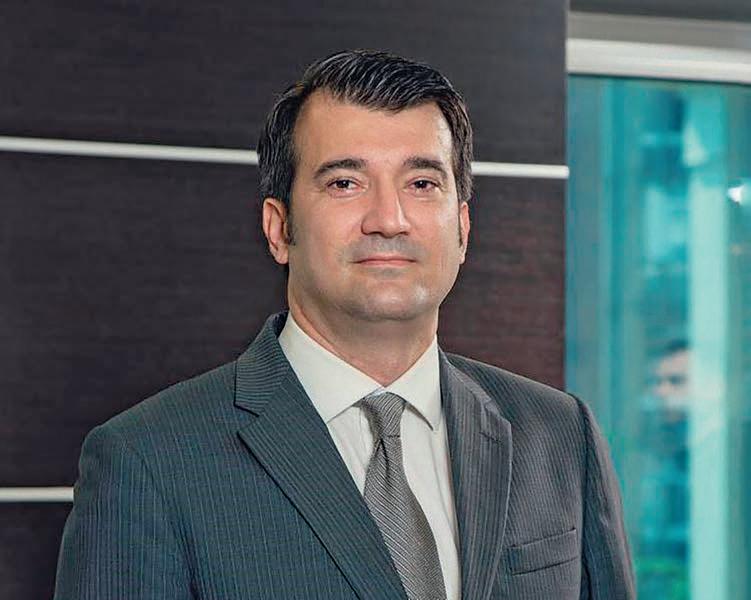
Montenegro’s newly established CFO Association has appointed Damir Ivaštinović as its first president, marking an important step in bringing together the country’s leading finance executives. The association aims to strengthen professional standards, financial leadership and corporate governance while helping businesses navigate an increasingly complex economic and technological environment.
OTP Bank Slovenia has named Nataša Šernc as Head of Brand and Communications. She will lead the bank’s branding and communications activities, supporting its efforts to strengthen market positioning and customer engagement in Slovenia.
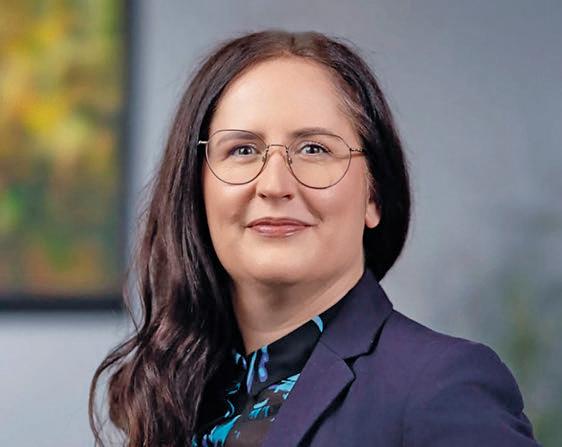
Francesco Ciancia has been appointed Chairman of the Supervisory Board of FCA Serbia. The appointment strengthens governance oversight at the Stellantis-owned company and is expected to support the continued development of Serbia’s automotive manufacturing sector within the group’s broader European strategy.
Perutnina Ptuj has appointed Petra Škrivarnik to its corporate communications team. The move reflects the company’s commitment to strengthening internal and external communications as it continues to expand its presence across regional and international markets.
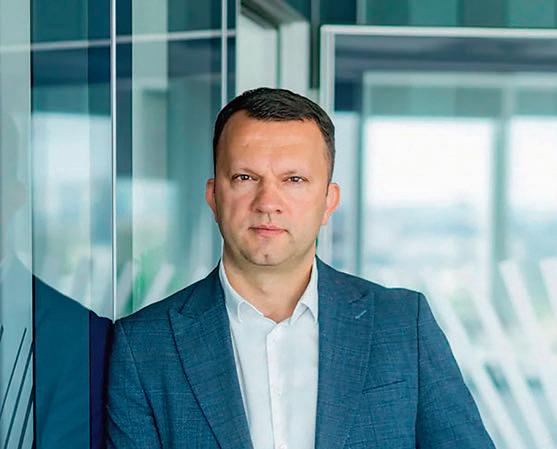
Procter & Gamble has appointed Dragan Brkljač as the new head of sales for Serbia and Southeast Europe. He will oversee commercial operations across key regional markets, supporting the company’s growth ambitions and market development initiatives.
Aman has appointed Kaya Onaran as General Manager of Aman Sveti Stefan, one of Montenegro’s most iconic luxury destinations. Having joined the group in 2023, Onaran previously led Amangalla in Sri Lanka and participated in Aman’s leadership development programme, ELEVATE. His appointment comes as Villa Miločer has reopened and Sveti Stefan prepares to welcome guests from 1 July.

Adriatic Luxury Hotels has appointed Philippe Burq as CEO and President of the Management Board. He succeeds Antun Jakobušić, who will remain on the Management Board overseeing Finance, Controlling and Procurement. Burq joins the company after more than a decade at McKinsey & Company, where he advised organisations on operational excellence, transformation and performance improvement across multiple industries.
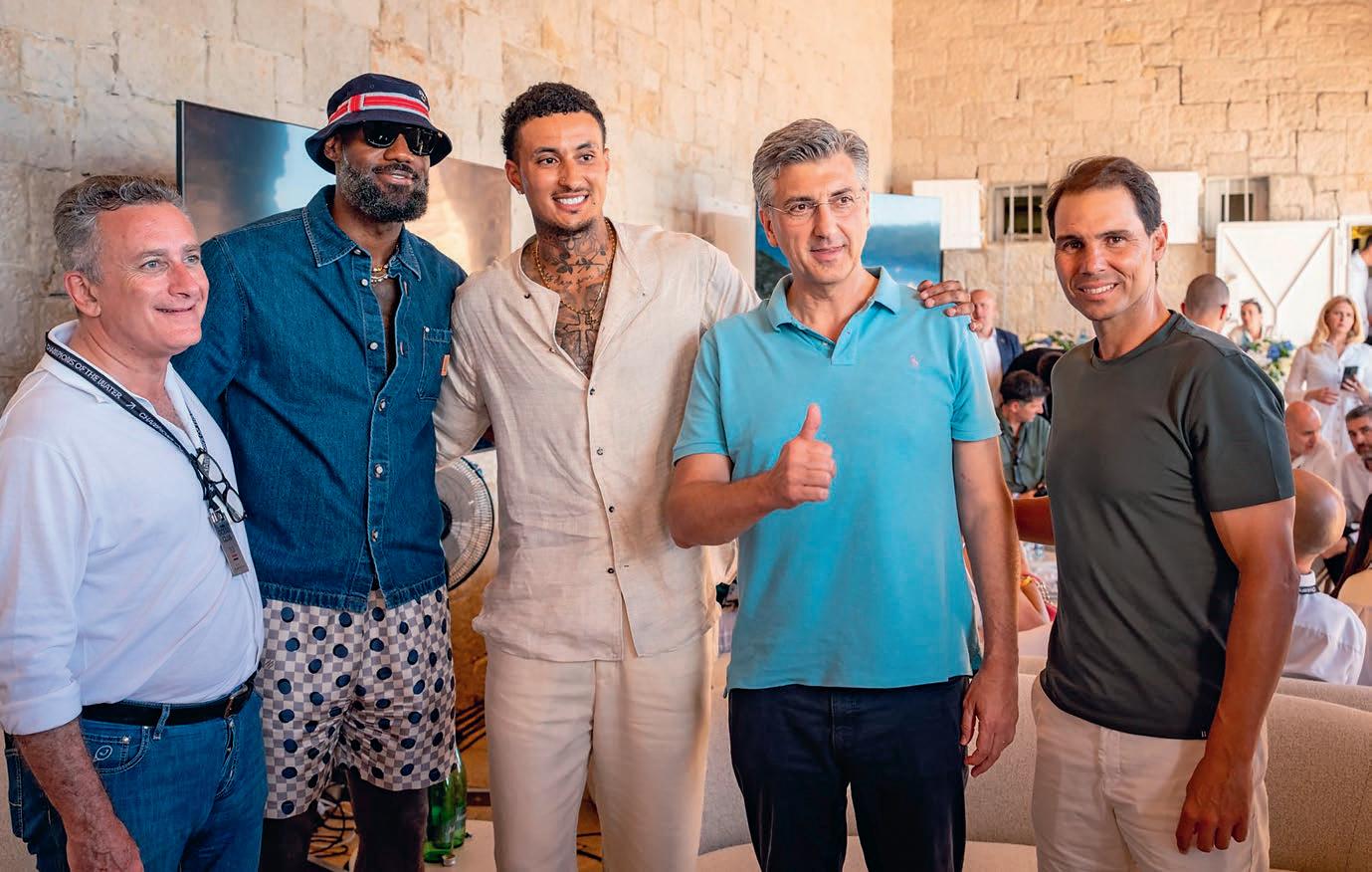
Dubrovnik hosted the world's first all-electric powerboat championship, turning the Adriatic into a showcase for sport, technology and sustainability. The race attracted international teams, investors, celebrities and global media attention. It also strengthened Croatia’s position as a destination capable of hosting premium international events.
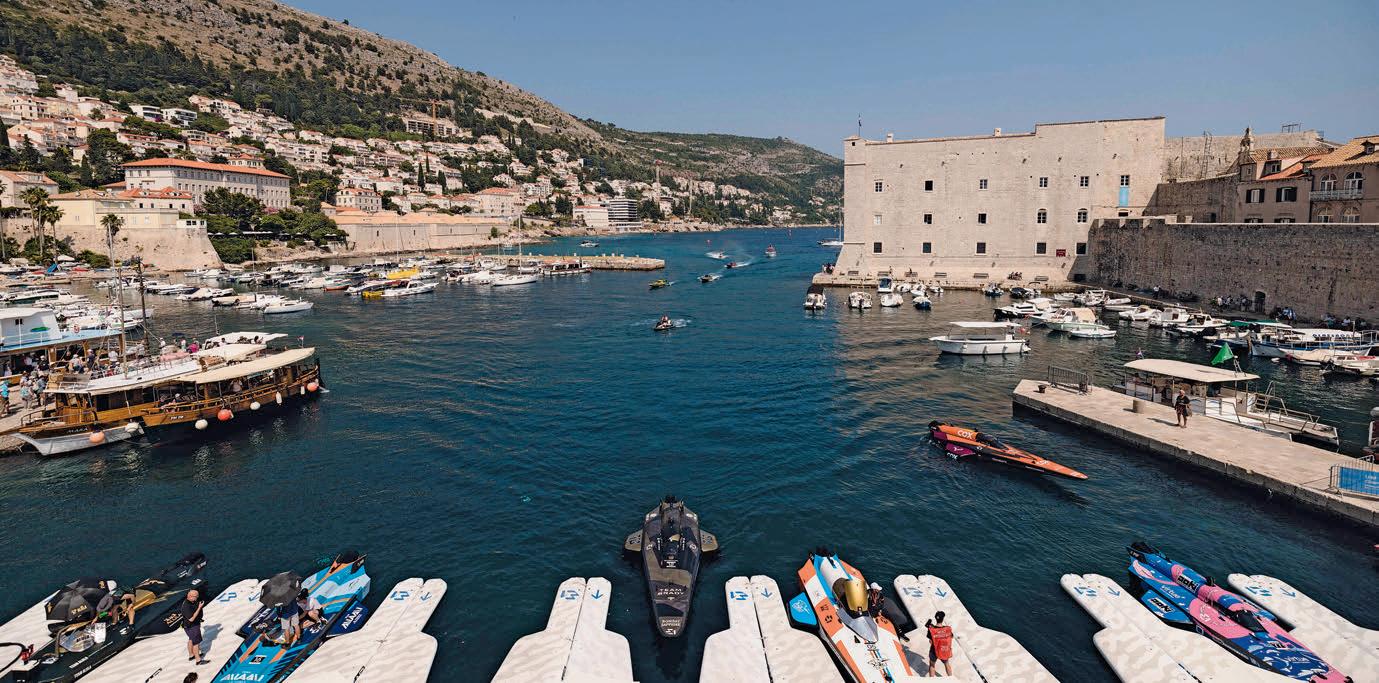
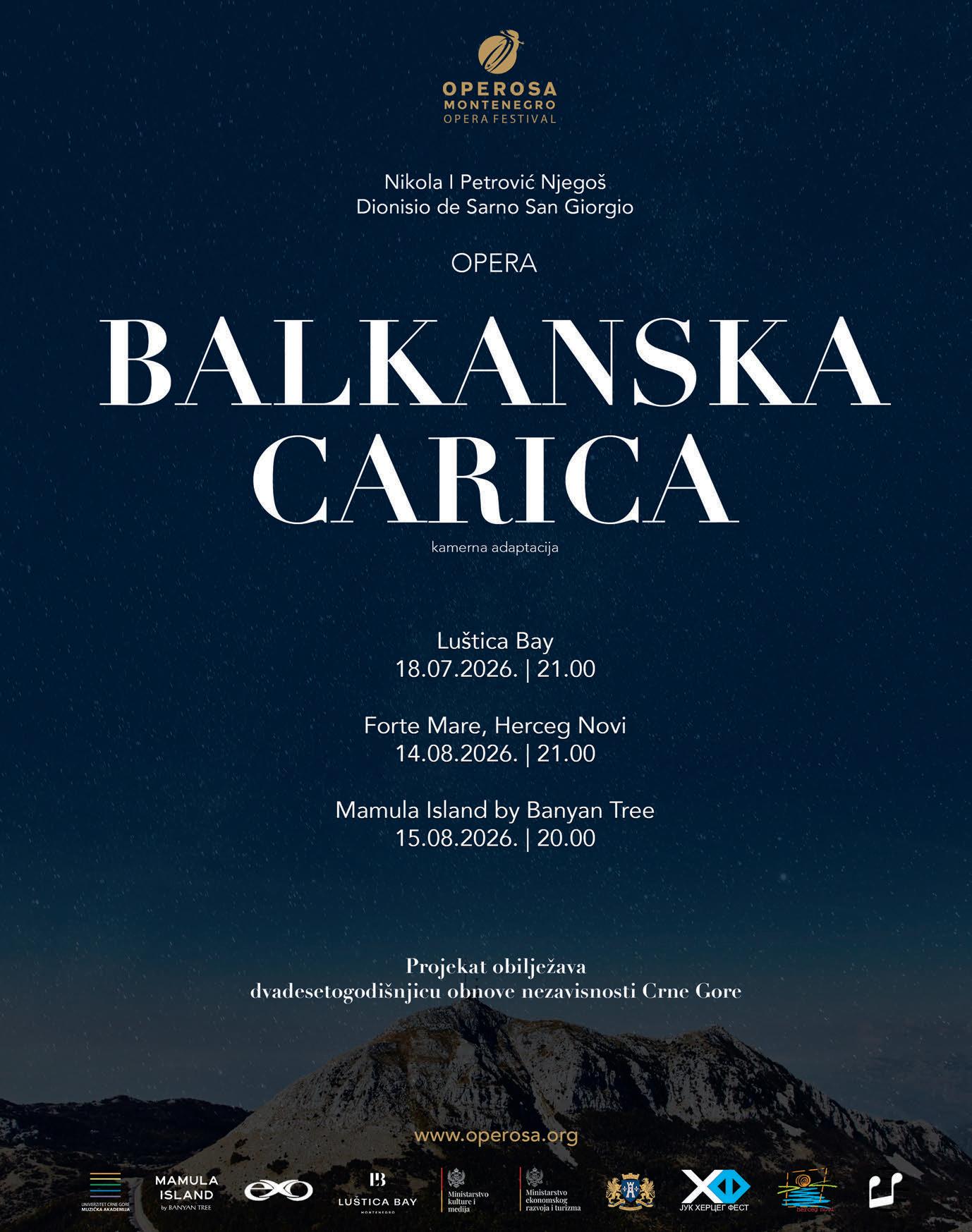
British technology companies and regional business leaders gathered to explore new partnerships in AI, digitalisation and innovation. The mission demonstrated growing British commercial interest in the region's technology sector. It also highlighted the Western Balkans' ambition to become more than a consumer of innovation.
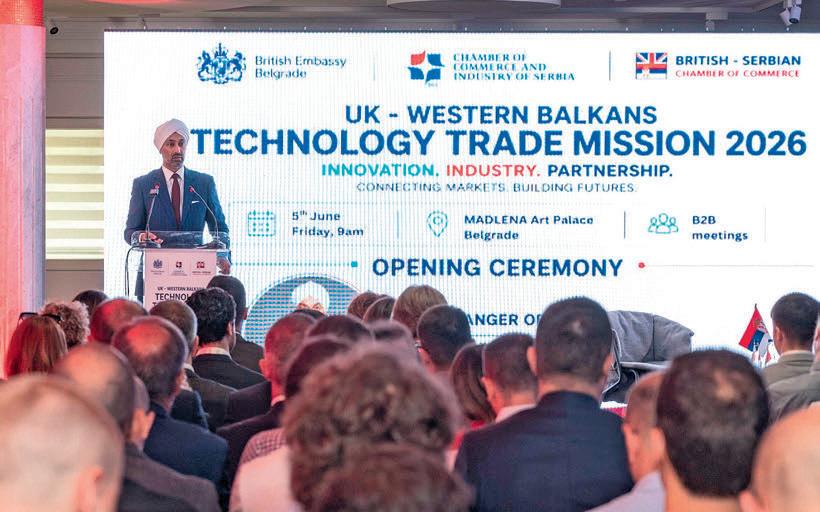
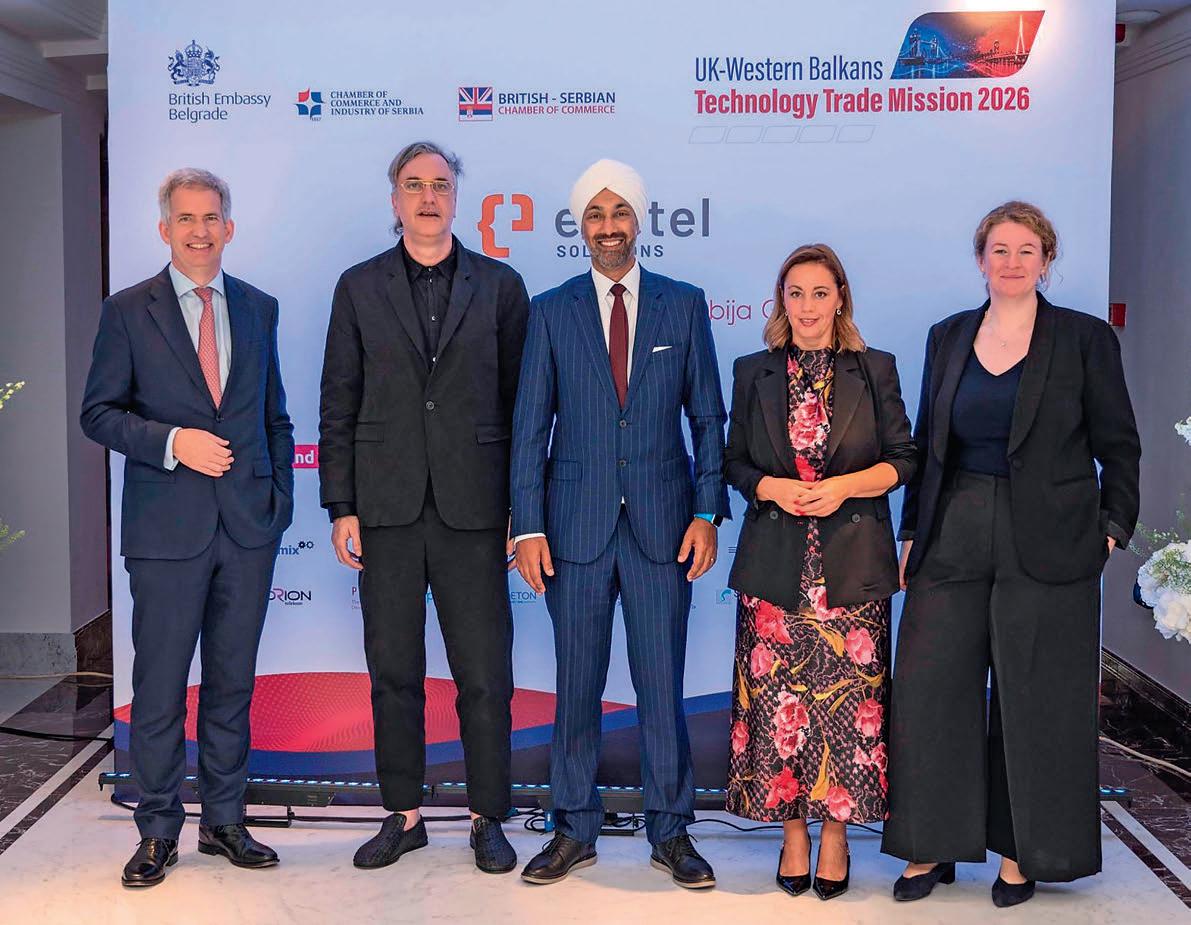
Business executives, diplomats and institutional leaders swapped conference halls for sailboats at the second MFIC Regatta. The event brought together Montenegro’s international business community in a more informal setting. Few networking events in the country attract such a concentrated group of investors and decision-makers.
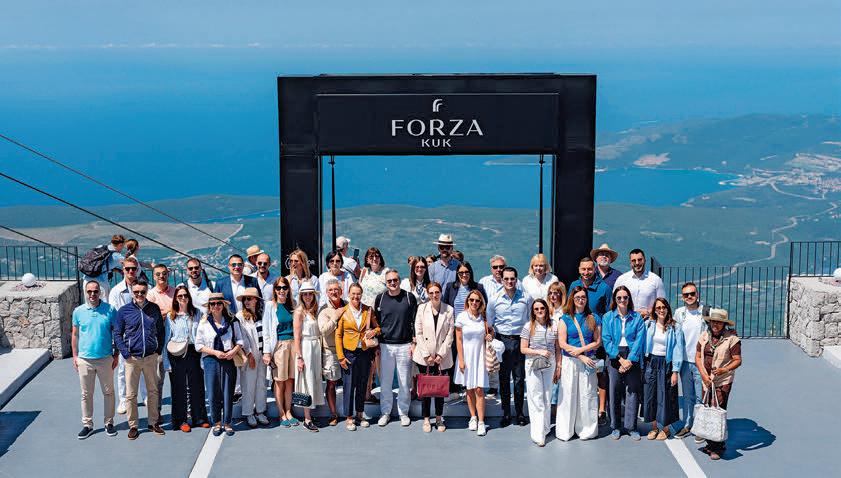
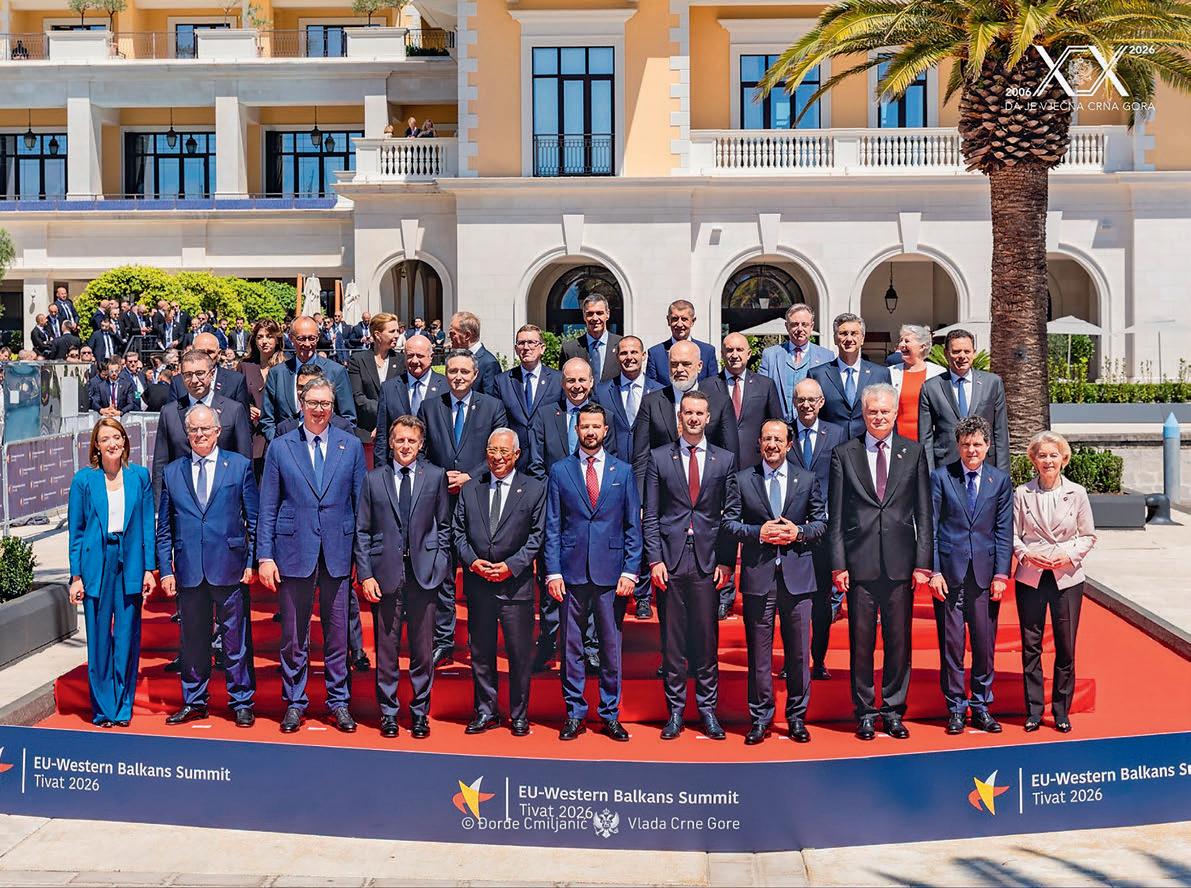
More than 30 European and Western Balkan leaders gathered in Tivat for the most important political meeting held in Montenegro in recent years. Among those present were Emmanuel Macron, Ursula von der Leyen, António Costa and the leaders of all six Western Balkan economies. The summit reinforced the message that enlargement has returned to the centre of Europe’s agenda.
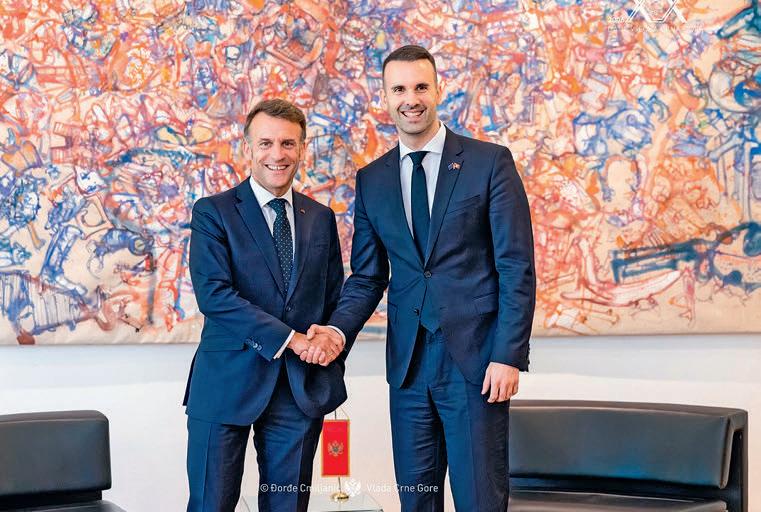
I REALISED I WAS GOOD AT ROAST BATTLES THE FIRST TIME A MAN I’D JUST INSULTED SHOOK MY HAND AFTERWARDS AND THANKED ME FOR IT.
That’s when it clicks — this isn’t normal behaviour.
But it is useful.
I don’t do roast battles to win. I do them to find out what people actually think of me, without the usual polite lies. It turns out strangers are very efficient at identifying your worst traits. They just need a microphone and permission.
being insulted on stage than from any serious conversation I’ve ever had. Which is either a great system, or a very worrying one.
The trick is specificity. If I can take someone apart in a way that only works on them, the audience stays with me. If my joke could be used on anyone, they switch off. Nobody came out for generic insults — they can get those at home.
There’s also a moment in every battle where it can go wrong. You push too far, or not far enough, and suddenly you’re not funny — you’re just a
just enough damage to be interesting, and just enough charm to be forgiven.
Recently, I tried that here, which is exactly as risky as it sounds. Two local comedians, their crowd, their language, their advantage.
I went anyway. They were sharp. Quick. Unnecessarily confident.
Which, to be fair, is exactly how I’d describe myself.
We traded insults for ten minutes. The audience laughed. Nobody left. Which, in this line of work, counts

The companies, investors and visionaries shaping the region's next decade.
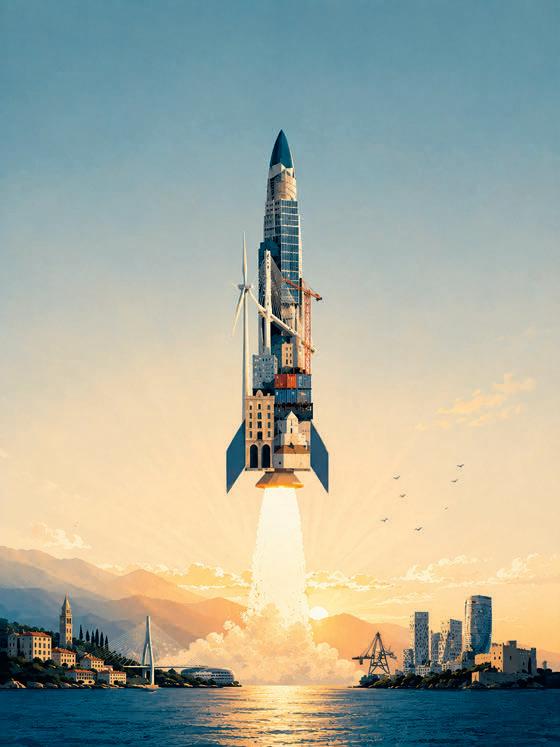
Want your company featured in The Region’s March edition? Secure your spot today with a premium feature, CEO interview, or advertisement package! Contact us at business@connectingregion.com
A decade ago, most of the region's biggest companies thought nationally. Today, many think regionally. Some are buying competitors. Some are entering new markets. Some are attracting international investors. Others are quietly building businesses that may look very different five years from now.
At the same time, banks are consolidating, new sources of capital are arriving, and industries that barely existed a generation ago are beginning to challenge established players. The names that dominate tomorrow's economy may not be the ones that dominate today. So who will own Adria?
Will it be family businesses that grew into regional champions? Global investors searching for new opportunities?
Technology companies expanding faster than traditional industries can adapt? Or a new generation of entrepreneurs building companies without regard for borders?
In our Autumn issue, The Region explores the forces reshaping economic influence across Southeast Europe and the people who are positioning themselves at the centre of it.
The future rarely announces itself. It usually arrives quietly, long before most people notice.