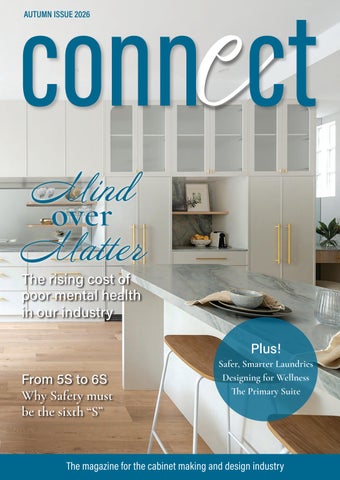
Mind over Matter
The rising cost of poor mental health in our industry From 5S to 6S Why Safety must be the sixth “S”

The rising cost of poor mental health in our industry From 5S to 6S Why Safety must be the sixth “S”

Welcome to issue 6 of Connect magazine!
As we kick off 2026, it’s time to don our PPE and dive into the important topic of workplace safety. As our major theme for this issue, we’ve canvassed a broad base of opinion and expertise to cover off on this in-depth subject.
The issue of mental health in the trades has been front-of-mind so we thought it was high time we investigate what it means to look after mental health in an industry that is predominantly male. I’m very grateful to the experts from a number of organisations who gave their time and specialist knowledge to help us work our way through this sometimessticky issue.
Meanwhile, writer Pam Kershaw looks at keeping safety current in the fast-moving cabinet making and joinery industry. Ben Fewtrell asks, “if your business was a machine, would you accept its performance?”, and challenges us to see our businesses through a “machine view." We also look at the argument for adding Safety as the sixth “S” in lean manufacturing and we hope all these articles spark conversations in your workplaces.
In the design world, writer Selina Zwolsman brings her experience and expertise to the topic of “Designing for Wellness” — a key element in creating a safe home. And Rob Ditessa delves into the area of laundry design with a specific focus on planning for a safe working area. Plus, Sarah Nolen from Birdblack Design shares her thoughts on how to design and craft a Primary Suite that will elevate everyday living for your clients.
And it doesn’t stop there! Look out for an update from the HIA Economics team, news about the AWISA/ACFA merger, gain insight into the new ACFA/KBDi logo, check out the great range of ACFA x KBDi member benefits, an update on new Federal Apprenticeship Incentives, and so much more!
Enjoy a range of industry updates from our biggest fans and supporters — our advertisers. These fantastic businesses and organisations don’t just support the magazine, they make an investment in the betterment of our industry overall and their support should be celebrated. Please show them all lots of love.
Enjoy!

Connect magazine is published by the Australian Cabinet & Furniture Association.
ABN 80 000 071 787
Publisher: Dean Brakell, CEO, ACFA
Editor: Melanie Gardener
Advertising Sales: Fiona Joynes
Art Director: Liza Jane Smith, liza@monava.com.au
Contributing Writers: Rob Ditessa, Pam Kershaw, Sarah Nolen, Selina Zwolsman, Ben Fewtrell, Dean Brakell, Glen Qi (HIA)
Printer: Neo Pty Ltd
Correspondence to: PO Box 157, Gosford NSW 2250
Front cover: Jenny Matek from Studio Jenka
Subscriptions: Connect magazine is produced as a hard-copy print publication as well as an online digital magazine. If you wish to subscribe please visit connectmagazine.com.au
@connectmagazineaus

@connect-magazine-aus

Copyright © Connect magazine
(Property of the Australian Cabinet and Furniture Association). All rights reserved. The magazine or any part thereof may not be copied or reproduced without written permission from the publisher. Any specifications and/or claims here within are those of the manufacturer and/or supplier.
Disclaimer: Statements by advertisers, expressed editorial opinion and/ or contributors’ comments are not necessarily representative of those of ACFA Ltd or its members unless expressly stated. The publisher and editor assume no responsibility for errors or omissions or any consequence of reliance on this publication.
The Australian Cabinet and Furniture Association Ltd is a trade association that represents the interests of the cabinet making, kitchen, design, joinery, furniture, fit-out, and other wood, timber, stone and panel processing industries. Membership and advertising enquiries are welcome.
6 Mind over Matter
The rising cost of poor mental health in our industry, and what employers can do to keep their staff (and themselves) safe. By Melanie Gardener
16 Designing for Wellness
How kitchens and bathrooms shape health, comfort and everyday wellbeing. By Selina Zwolsman

22 From 5S to 6S
In cabinet making and joinery, why safety must be the sixth “S." By Melanie Gardener
26 Putting Safety to Work
Keeping safety current in the fast-moving cabinet making and joinery industry. By Pam Kershaw
30 Safer, Smarter Laundries
Expert tips on how to make this vital room in the home safe as well as highly functional. By Rob Ditessa
38 The Machinery of Business
If your business was a machine, would you accept its performance? By Ben Fewtrell
42 The Primary Suite
Elevating everyday living for your clients with a focus creating an indulgent, private retreat. By Sarah Nolen
52 Product Update
Give your next project a lift with our editor’s pick of the latest kitchen, bathroom and interior products
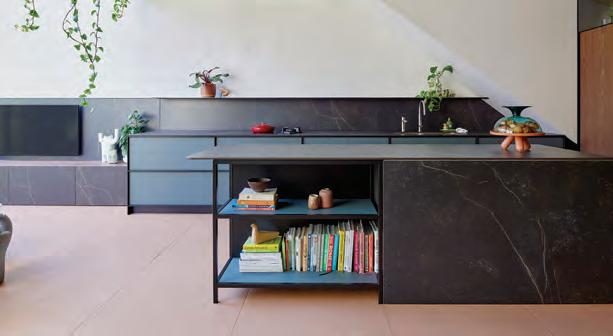
81 The Last Word: Machinery Doesn’t Cause Incidents — Complacency Does
Familiarity is exactly where risk can creep in. By
Dean Brakell
48 Introducing the New ACFA x KBDi Logo
A refreshed look and a shared direction
50 HIA Economics Update
If you can’t move, improve: Australia’s renovation story. By Glen Qi
51 New ACFA Chairperson
Meet Richard Curley of Debrich Custom Joinery, the new ACFA chairperson
61 AWISA/ACFA Merger
Members of the Australian Woodworking Industry Suppliers Association have formally voted in favour of a merger with ACFA
63 New Legal Advice Line
Business Plus and Premium Members have exclusive access to the ACFA Legal Advice Line, delivered in partnership with Easton Belle Lawyers
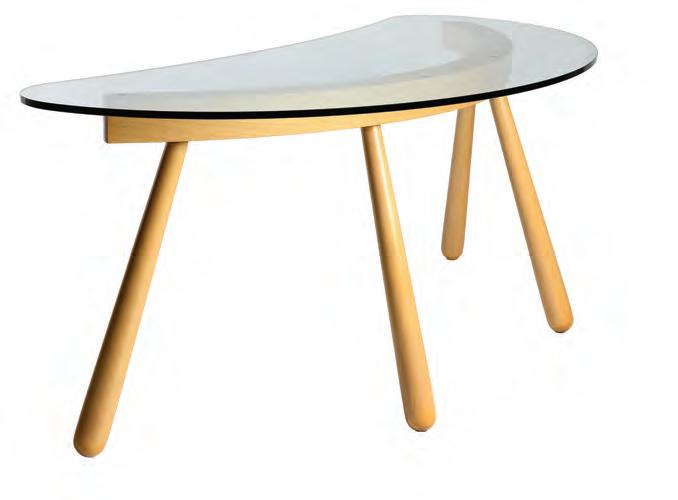
77 Court Decision on Salaries & Pay Arrangements
On 5 September 2025, the Federal Court handed down a decision against Woolworths and Coles that changes how employers across all industries can pay staff on salaries
79 Silica Worker Register
NSW employer obligations to register your workers
80 New Federal Apprenticeship Incentives
In good news for cabinet making and wood trades, new federal apprenticeship incentives provide up to $10,000 for apprentices
54 Specification Destination
The highly anticipated Austaron Surfaces Queensland showroom has officially opened in Brendale
56 Elevating Fabrication
Why joiners are turning to polytec’s Xenolith
58 Effortless Movement
New possibilities and sophisticated solutions with REVEGO from Blum
60 Planit Academy
Join the ecosystem where users become champions
62 Hettich Sydney Experience Centre
Hettich Australia has officially opened its Destination Experience Centre at Waterloo Design Centre
64 Introducing Blackbox
Häfele’s immersive new innovation hub for intelligent design
66 Understated Elegance
This stunning space uses Cav’art Designer Stone’s Verde Tempest quartzite to create a sophisticated calm
68 Finista® Edge
Faster cabinet production, smarter installation, and better value for every cabinet project
70 The Most Disliked Process in Kitchen & Bathroom Renovations
And why it’s costing businesses more than they realise
72 Introducing Grass Group
Movement systems that bring furniture to life
74 Kaeser Compact Aircenter
Space-saving, energy-efficient compressed air production
75 Meet Your New Go-To Site for Cabinet Makers
Cabinetrylabels.com.au brings together the products cabinet makers rely on with straightforward categories, practical info, and a layout built for speed
76 Exedra Gravity
Effortless movement for seamless cabinetry from Nover Australia
78 Concelo® entro™ Expands to Include Blum Merivobox
Concelo entro is now available for both Blum Legrabox C height and Blum Merivobox E height drawers
82 Index

The rising cost of poor mental health in our industry, and what employers can do to keep their staff (and themselves) safe
By Melanie Gardener
Whether you’re building kitchens, crafting bespoke furniture, or managing production schedules in a busy joinery shop, one thing is true across our industry: your work demands skill, precision and stamina. But behind the hours spent cutting, joining, sanding, lifting, installing and problem-solving, there’s another challenge many in the industry quietly face — poor mental health.
While conversations about mental wellbeing have become more visible in other sectors, the timber trades have traditionally relied on a “just get on with it” mindset. With deadlines tightening, costs rising, and many smaller businesses and workshops carrying significant pressure, mental health is no longer a personal issue — it’s becoming an industry-wide priority.
“From ACFA’s perspective, mental health is increasingly recognised as a core workplace safety issue, particularly in trade-based industries where physical demands, long hours and business pressures are part of everyday work. While ACFA is not a mental health service provider, industry bodies play an important role in helping normalise conversations about wellbeing and ensuring employers know where to turn for appropriate support,” says Monique Penton, HR manager for ACFA (the publisher of this magazine).
ACFA CEO Dean Brakell adds, “For many small and medium businesses, knowing how to respond when someone is struggling can be just as challenging as the issue itself. By raising awareness, reducing stigma and guiding employers and workers toward trusted external resources, such as medical professionals, counselling services and government
support programs, industry associations can help guide workplaces toward healthier, safer and more sustainable outcomes.”
The cabinet making and furniture industry has its own set of stressors. Some are obvious; others chip away slowly over years.
Relentless deadlines & perfection-driven work: Many, or all, jobs are bespoke, and every client expects a flawless (and on-time) finish. The pressure to meet tight deadlines and work millimetre-perfect can create ongoing stress, especially during peak periods.
Physical demands that affect mental fatigue: Long days on the tools, late-night or weekend installs, repetitive movements, and handling heavy or expensive materials all contribute to physical strain. When the body is exhausted, mental health often declines alongside it.
Financial & business stress: For business owners, subcontractors and freelancers, cashflow worries, price increases in or limited stock of materials and hardware, equipment breakdowns or maintenance, and delayed payments are constant stressors that can spill into home life. Finding and keeping qualified staff is also a key pressure point.
Working alone: Many cabinet makers, furniture makers and designers work solo or in very small teams — sometimes for entire days or weeks. Without coworkers to share frustrations or brainstorm solutions, isolation can quickly amplify stress.
Environmental pressures: Workshops are demanding environments: loud machinery, dust, hazards, tight spaces, and clients expecting instant (and constant) communication. Over time, these factors create sustained mental tension.
A male-dominated trade with its own cultural challenges
A significant factor influencing mental health in the industry is the workforce itself. Cabinet making, joinery and furniture design are still overwhelmingly male-dominated trades, even with the recent influx of females into the industry. This brings unique cultural and gender pressures.
For many men in the trade, the expectation to be tough, capable, stoic, and unfazed — no matter the workload — creates barriers to seeking help.
Common challenges include:
• Reluctance to speak up: Many men feel pressure to handle stress alone.
• Fear of appearing weak: Workshop culture often rewards stoicism and a show of “toughness."
• Pressure to provide: Financial responsibility adds emotional strain.
• Generational attitudes: Older tradespeople learned to “push through”, and that mindset is still often passed on to apprentices.
• Self-silencing: Instead of acknowledging stress, many internalise or deny it.
This cultural backdrop can affect entire workplaces, not just individuals. When vulnerability is seen as a flaw, it becomes difficult for management or workers to ask for help, check in with each other, or admit when they’re struggling. That silence can impact performance, morale, and safety.
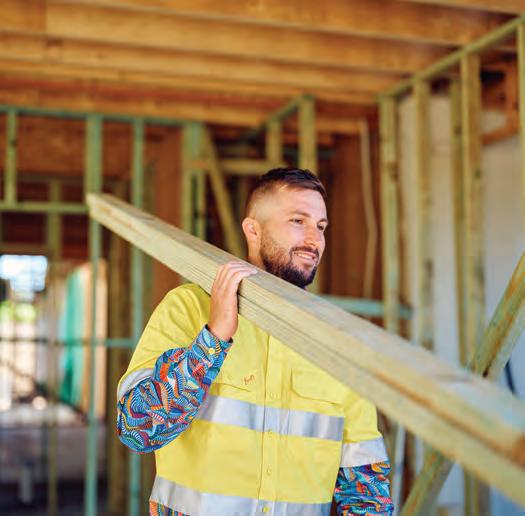
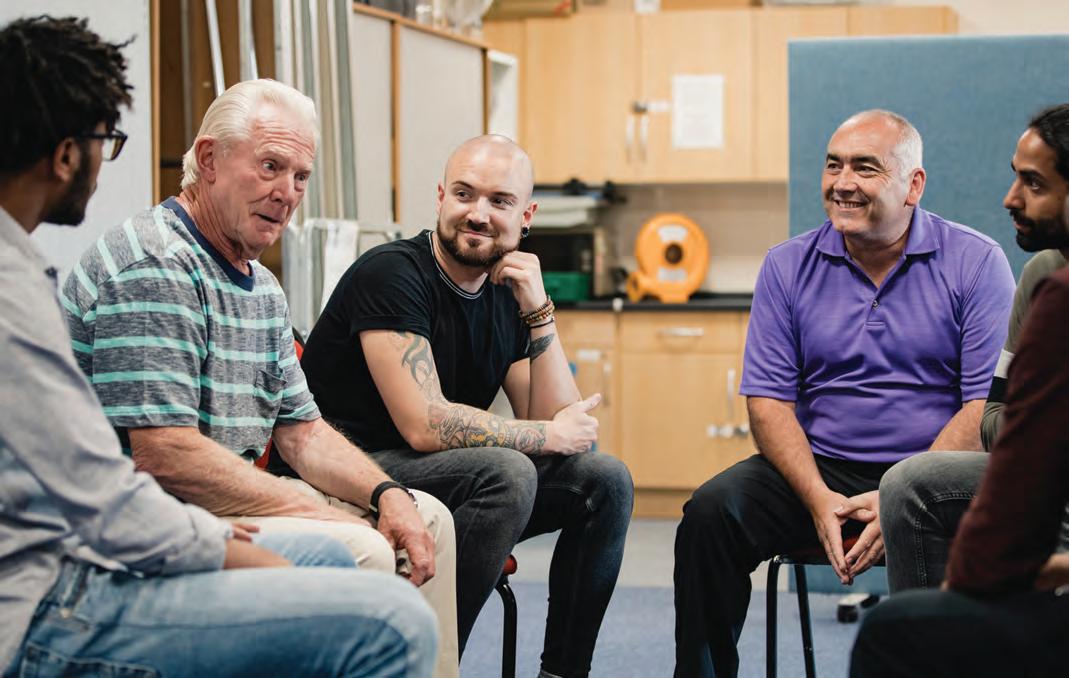
Encouraging open conversations, without judgment or stigma, is becoming essential for modern, safe, sustainable workshop culture.
Mentoring Men is a national mentoring movement designed to create meaningful conversations through a model that seeks to meet men where they are at. Its recent Men Do Talk: Are We Listening? report, released in 2025, surveyed 2000 men aged 35-50, living in New South Wales, Victoria and the Australian Capital Territory with the results stratified by age, state/territory, remoteness and cultural identity to reflect national demographics.
In his Foreword, Mentoring Men CEO Filipe Gama e Silva pushed back at the idea that men don’t (or won’t) seek help saying that for too long this narrative has dominated the conversation. He says men are “not unreachable or unwilling. We’re quietly searching for connection, and more of us than you might think are open to it."
The report revealed that 31 per cent of respondents said their mental load was affecting their job performance with a quarter having taken time off work to cope with challenges; almost half the respondents reported dealing with ongoing stress or anxiety; and close to one-third felt uncertain about their direction in life. In its summary, the
report says that “life doesn’t fall apart all at once for many men. It unravels slowly [through] missed sleep, bottled emotions, strained relationships, and the quiet, invisible costs of carrying too much alone."
The report also highlighted the long-term problem of men’s fall-back position being to cope alone. “Despite the broad range of supports available, the default for many is to tough it out quietly, or to lean on informal networks rather than professional help,” the report states. It further opines that this does not reveal a lack of willingness on the part of men to seek help, rather it reveals our deep cultural conditioning around self-reliance, silence and stigma.
But the report also contained good news: men are not helpless and, when support aligns with real-life needs, it is likely to be actively sought. It concludes that “the appetite for peer-based, relatable support like mentoring is strong. The challenge isn’t convincing men of its value, it’s making the offer visible, relatable and easy to access."
Stress is part of most workplaces, but when it becomes chronic or unmanaged, mental health issues can develop.
Common problems in the trade include:
• Burnout from long hours and relentless expectations.
• Anxiety about workmanship, deadlines, or client satisfaction.
• Depression, often linked to isolation or ongoing stress.
• Sleep disruption, especially when juggling too many jobs at once.
• Difficulty concentrating, which becomes a major risk around machinery.
These issues don’t only affect individuals; they impact workshop safety, relationships, productivity, and retention. And because mental health challenges often build quietly, many tradespeople don’t realise they’re struggling until things reach breaking point.
Support in the industry: what exists and what’s missing
Peer support: Most support in the trade is informal and involves chatting to coworkers, business owners sharing challenges, or leaning on a colleague for advice. These conversations can be powerful but are generally inconsistent and often lack insight into what can be done to alleviate or manage the stress.
Employee Assistance Programs (EAPs): Larger joinery firms increasingly offer EAPs, giving workers confidential access to counselling. Small businesses may not have formal programs but we need more informed employers who are willing to engage with qualified, external resources.
Industry groups & training providers: Some industry groups run mental health initiatives, training modules or awareness campaigns, but uptake varies and awareness is still limited or stigmatised in many workshops.
Online communities: Maker groups, forums, and social media spaces allow tradespeople to connect, troubleshoot, and share struggles which can be helpful for isolated sole traders but often lack the ability to make meaningful long-term change.
The Man Cave is an Australian preventative mental health charity for teenage boys and young men which was established in 2014 in response to men’s growing needs around mental health, identity and connection. Its vision is for a world where men create generational, positive impact in their communities.
CEO Ben Vasiliou explains that the organisation provides evidence-informed programs, positive role models, and practical tools that help boys build emotional literacy, empathy, respect, and accountability. Importantly, he says, “we don’t tell

boys who to be. We create spaces where they can explore who they are, challenge outdated ideas about masculinity, and practice healthier ways of relating to themselves and others."
Ben sees trades environments as places with huge potential for change. “Young men in trades often face unique pressures, especially early in their careers. They’re learning a craft, trying to prove themselves, and often doing so in environments where traditional ideas of masculinity still exist,” he explains. “In our conversations with boys and young men, we regularly hear about stereotypes around needing to be tough, strong, and self-reliant at all times. In some cultures, talking about mental health has historically been seen as off-limits, which creates real barriers to speaking openly or reaching out for help."
But Ben points out that there are many positive aspects to working in trades. “We hear a lot about camaraderie, brotherhood, and the pride that comes from working hard alongside your mates. Those are real strengths and shouldn’t be dismissed,” he says.
“At the same time, young men also tell us there can be downsides when workplace cultures lack balance. Banter can go too far, people may lack the tools to express themselves during challenging times, and support structures aren’t always clear or accessible. Without that balance, even wellintentioned environments can become detrimental to mental health. Healthy workplaces are the ones
that keep the positives while actively addressing the risks,” Ben adds.
Top Blokes Foundation was established in 2006 by Melissa Abu-Gazaleah, 2017 EY Social Entrepreneur of the Year and 2016 NSW Young Australian of the Year. The foundation provides mental health programs through schools and workplaces that build resilience and empathy and promote wellbeing in young men. Growing up in a regional town, Melissa saw firsthand the overrepresentation of males in life-taking events, and the masking of mental health challenges with drugs, alcohol and self-harm. “I see our role at Top Blokes as early intervention,” she explains. “We know young men crave positive role models and we seek to facilitate that and create a space where young men learn healthy responses to challenging situations."
Melissa notes there may be a disconnect between the younger generation who are more open to sharing and older males who may be less comfortable with this approach. “We want men to feel safe to share if they are struggling without feeling that disclosure will be seen as a sign of weakness,” she elaborates. “There is a culture of ‘toughness’ often seen on worksites and in factories that can lead to a pressure to keep up that façade."
Daniel Allars, also from Top Blokes Foundation, says employers can’t be parents but, as a manager of staff, sometimes it’s vital to have those difficult conversations. “Research shows that when an employee is mentally well and feels supported, they
are more productive and a better staff member,” he says. “The cost to employ someone is extremely high so looking after your employees’ mental health is an investment in your business."
Breaking the stigma: toward a healthier workshop culture
Challenging stigma doesn’t mean changing what makes the trade great. It means building a culture where:
• It’s normal to talk about strain or stress.
• Workers check in with each other.
• Apprentices feel safe raising concerns.
• Leaders model openness rather than silence or stoicism.
• Mental health is recognised as part of workplace safety.
Simple changes such as regular check-ins, honest conversations, or acknowledging stress can dramatically reshape a workshop’s culture.
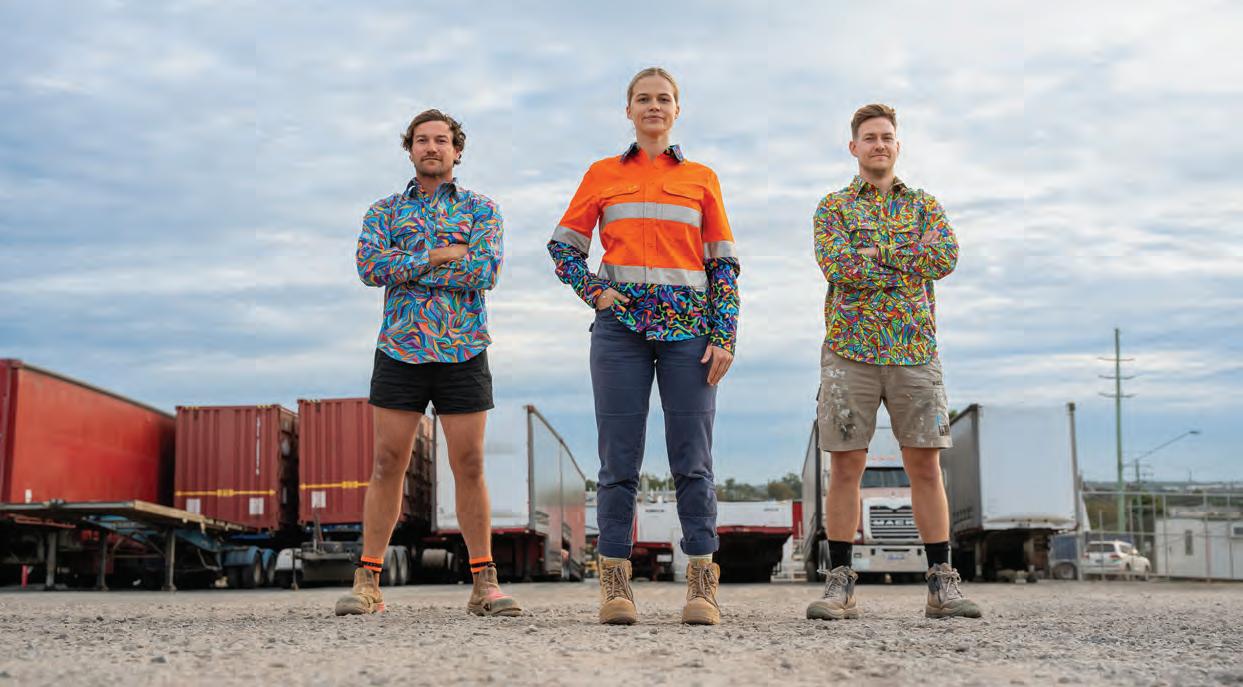
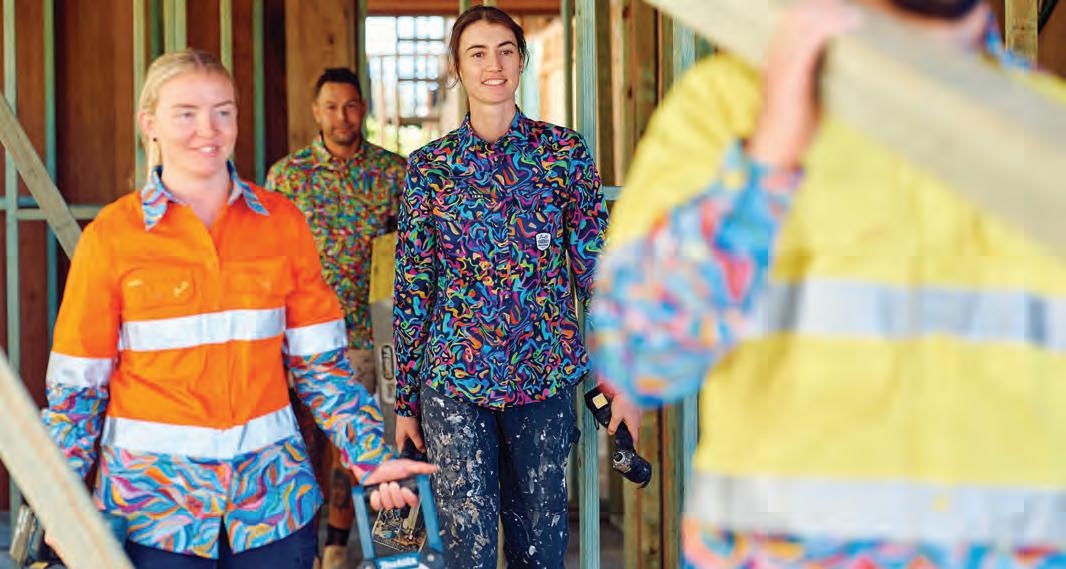
TradeMutt was founded in 2014 by Ed Ross and Dan Allen, both tradies who met on their first day of work for a new builder. The loss of one of Dan’s friends sparked an idea about how social enterprise could have a positive effect on conversations around mental health.
TradeMutt creates eye-catching workwear that is designed to be both practical and a conversation starter. TradeMutt’s constitution as an accredited social enterprise allocates 50 per cent of profits to

TIACS, a non-profit early intervention counselling service specifically designed for Australia’s blue collar community.
“There is a big misconception societally that men won’t talk,” says Ed. “We’ve found that they will talk, if they can find the right place to do it. Knowing that the help is there is our main issue." Ed explains that their goal is to get involved before there is a problem and that the model is designed to reduce barriers to utilisation. The counselling service is free via text or phone call, and users can speak to the same counsellor each time they access the service.
Ed adds that there are some great examples of those managing workplaces well and says that more employers should be looking to emulate what’s working. “It’s not an employee’s job to fix the workplace,” he says. “That must come from employers. Show faith in your employees and listen to what they have to say."
Ben Vasiliou from The Man Cave feels a strong starting point is fostering a workplace where authenticity is encouraged. “That often begins with leadership,” he says. “When leaders model healthy behaviour, share parts of their own story, and set clear expectations around respect, it shapes the entire culture."
He points out that employers can also normalise conversations about wellbeing, make support visible, and actively point young workers towards trusted services. “We need adult men to see themselves as a role models and mentors. Yes, teaching the craft and trade, sharing wisdom on the skill of the job is super important, but also show your whole self, share wisdom from your life and experiences, not just about the job, but about the world, your relationships, money etc. We need students of life and craft, not students of just a skill,” he adds.
Often young and impressionable, apprentices can be particularly susceptible to mental health struggles. Suddenly landed in an adult environment at a young age, apprentices are routinely challenged with adult expectations, conversations, banter and concepts that are sometimes well beyond their years.
Ed Ross from TradeMutt says that 10 per cent of callers to TIACS are apprentices and this shows

that it’s important to focus on the next generation, and particularly on how to encourage more females to enter the trades. He feels that employers are uniquely positioned to create positive apprenticeships. “Be considered about the time you are putting into them and be their support network. Guide them — don’t just leave them to figure it out on their own,” he adds. “Your goal is to make them feel empowered and confident enough to ask for help. Share with them what it was like for you as an apprentice and explain your own journey to business owner."
Daniel Allars from Top Blokes notes that the physical nature of trades work can contribute to an overwhelming feeling of not coping. “Young men come straight from school or TAFE and go into a setting where they can be consistently tired. We like to focus on healthy ways to keep your body going and what apprentices can do to keep themselves well,” he explains.
Melissa Abu-Gazaleah from Top Blokes adds that young male employees are at high risk for binge drinking and gambling, particularly if they are working away from home. “The transition to fulltime work can be incredibly challenging,” she says. “Longer workdays, less leave and a more adult environment where you are expected to conform can be very stressful. We need to look at how the workplace is setting up young men with a structure and a support network."
Ben Vasiliou from The Man Cave agrees that apprentices are often particularly vulnerable because they are still forming their sense of identity, purpose and belonging. “Many young men tell us they’re receiving conflicting messages about what it means to be a man, while also experiencing low levels of connection and clarity about where they fit. That combination can significantly impact mental health,” he says. “Workplaces that intentionally build belonging, provide mentorship, and recognise apprentices as people, not just workers, play a crucial role in supporting wellbeing and long-term engagement."
“From a training perspective, we’re seeing firsthand that apprentices are facing more complex pressures than ever before — both inside and outside the workplace,” says Kristy Archibald, ACFA training manager.
“In response to the increasing mental health and wellbeing challenges affecting apprentices, ACFA has introduced a dedicated student support mentor to work alongside trainers and assessors. This role focuses on early identification, regular check-ins, and the development of individualised mentoring and support plans tailored to each apprentice’s needs and learning stage,” she adds.
The mentor can assist apprentices to connect with suitable external support services. All sensitive or vulnerable information shared by apprentices is
managed with strict confidentiality and handled in line with privacy and professional standards.
In any sector where the workforce has been predominantly male for a long time, challenges will arise with the introduction of women into these workplaces. Employers in the trades sector have had to adjust and implement changes in workplace culture within factories and building sites to accommodate the increase of female tradespeople.
Daniel Allars from Top Blokes recognises that the rise of females in previously male-dominated workplaces creates a set of unique circumstances which require a particular approach. “It’s vital we work to empower all men to have the confidence to call out inappropriate behaviour and pull up a workmate if needed,” he says. “We focus on ‘upstander behaviour’ in our programs. This helps men check in on their own values and identify what is playing out in the workplace — unconsciously or covertly."
Ed Ross from TradeMutt feels it’s imperative that employers are open to staff feedback and actively implement strategies that make female staff feel empowered. “We want the sector to be more appealing to women across all trades. Often it’s simple things such as having a female toilet on site that’s not a portable toilet. But it’s also about a
mindset shift that focuses on the needs of the next generation,” he adds.
Ben Vasiliou from The Man Cave says it doesn’t need to be overcomplicated when finding out what female tradespeople need and want from a workplace. “Have the conversation. Listen to hear, not respond, and act on what women have to say,” he counsels. “Make sure you see the whole person, not just the gender. And respect them and see them as equals on site; not less than or different to the men." But most importantly he says workplaces need to be intentional about respect, behaviour and inclusion.
“You are the standards and values you walk past,” he adds.
The mental health of employees falls under “Psychosocial Hazards and Risks." A Person Conducting Business or Undertaking (PCBU) has a primary duty to make sure workers and other people are not exposed to psychosocial health and safety risks arising from the business or undertaking. This duty requires PCBUs to manage risks to psychosocial health and safety by eliminating or minimising exposure to psychosocial hazards as far as is reasonably practicable.
Workers also have a responsibility to take reasonable care of their own health and safety as

well as take care that their actions or behaviour do not adversely affect the health and safety of other persons.
Given that individuals will respond to stress and other triggers in different ways, this may mean that some workers are more susceptible to harm than others, particularly younger workers such as apprentices. Psychosocial risks in the workplace in our industry are defined broadly and can encompass workplace interactions such as bullying, harassment or conflict, how the work is designed and managed including workloads and unreasonable expectations, exposure to traumatic events such as an accident, hazardous or unsafe physical working environments, and many more.
SafeWork NSW, in its fact sheet Managing Psychosocial Risks in Construction, says “looking after the psychological wellbeing of your workers can improve engagement, productivity, morale and staff retention for your company, as well as reduce sick leave and workers compensation
claims." It’s important to note that employers who fail to adequately manage psychosocial hazards and risks in the workplace can face compliance notices and penalties.
SafeWork Australia, in its fact sheet Preventing Psychological Injury under Work Health & Safety Laws, points out that the least effective approach is to try to change the worker’s behavioural responses rather than address the inherent risks. Any health or wellbeing programs implemented in the workplace should be combined with higher order controls that also address the hazard or risk identified.
PCBUs are not expected to play a counselling role in their employee’s lives but can take a proactive role in linking up with third-party providers which have the resources, qualifications and expertise to navigate psychosocial hazards in the workplace. Having these systematic processes in place to manage hazards and risks helps PCBUs to meet their work health and safety responsibilities.

Under work health and safety laws, psychosocial hazards and risks are treated the same as physical hazards and risks.
When assessing psychosocial hazards in the workplace, employers can consider:
• Work demands and workload.
• How much control do workers have over how their work is organised?
• What support systems and processes are in place and are these accessible?
• Do workers understand their role and responsibilities, performance requirements and expectations?
• Change management and providing timely information and/or training as needed.
PCBUs are required to consider prevention and early intervention as well as support through recovery for any psychosocial injury. SafeWork Australia, in its fact sheet Work Related Psychological Health & Safety; a systematic approach to meeting your duties, lists prevention as identifying hazards and risks, assessment, implementation of effective control measures, creating safe systems and effective consultation with workers. Intervention includes reviewing methods and routine monitoring with action taken if deemed not effective, support for workers and providing aid for anyone with an increased risk of injury. Support includes access to treatment and rehabilitation, support for recovery at
work (RAW) or return to work (RTW), and further review of the effectiveness of control measures to reduce further harm.
As the industry continues to modernise, focusing on mental health isn’t just “nice to have”, it’s essential. Looking ahead, opportunities include:
• Embedding mental wellbeing into apprenticeship training.
• Stronger partnerships between trade groups and mental health organisations.
• Wider awareness campaigns targeting maledominated trades.
• Encouraging respected industry figures to speak openly about mental health.
Physically and mentally healthy workers build better businesses, safer environments and stronger industry futures.
Cabinet making, joinery and furniture design are industries built on hard-earned skill, creativity and dedication. Supporting mental health ensures that the people behind the tools, and the craftsmanship, can thrive long-term.
A mentally healthy trade is a safer, stronger and more sustainable one. And while the conversation is still growing, one message is clear: looking after the mind is now just as important as looking after the machinery, the materials and the craft itself. ■
ACFA website: members can download resources from ACFA’s Workplace Advice Team relevant for each state/territory, SafeWork Australia fact sheets, risk assessment tools, risk prevention plans, conversation guides and more.
Mentoring Men: mentoringmen.org.au
SafeWork Australia: safeworkaustralia.gov.au
The Man Cave: themancave.life
TradeMutt: trademutt.com
TIACS: tiacs.org
Top Blokes Foundation: topblokes.org.au
By Selina Zwolsman
The Australian Macquarie Dictionary defines wellness as ‘a state of physical and mental good health’. But this simply defined word carries much more weight in the world today. The #wellness hashtag is hugely popular, serving as a cornerstone of health and self-care content, with more than 45 million posts on Instagram and 1.6 billion views for #wellnesstok on TikTok. Driven by high interest in mental and physical health, it is a staple in the booming $4.5 trillion global wellness industry.
Outside of food and fitness, wellness has become a familiar term in design conversations, too. It’s often associated with soft, neutral palettes, spa-like bathrooms, and rooms abundant with indoor plants. But true wellness-led design runs deeper than visual cues. It is embedded in how a space functions, how it feels to move through, what it emits into the air, and how it supports the body and mind during everyday routines.
Nowhere is this more relevant than in kitchens and bathrooms. These are the most intensively used spaces in the home — places where we cook, clean, hydrate, groom, medicate and prepare for the day ahead. They are also spaces where ill-considered planning, poorly chosen materials or inadequate ventilation can quietly undermine comfort and health over time.
Designing for wellness means looking beyond surface-level aesthetics and considering how space planning, materials, light, colour, and air work together to support physical comfort, reduce stress, and create calmer, healthier indoor environments.
Wellness as a design outcome, not a style
Rather than being a particular ‘look’ or design style,
wellness can be understood as a set of five design outcomes:
• Flow: is the space intuitive, efficient and low friction?
• Comfort: is the space physically and visually comfortable? Has the potential for clutter been combatted?
• Safety: have the risks of slips, burns, glare and fatigue been minimised?
• Health: are indoor air quality and moisture control well managed, and have low-toxicity materials been used?
• Mental wellbeing: does the space facilitate calm, clarity and a sense of control?
When the above qualities are considered during the design stage, the outcomes are likely to be far more favourable from a wellness perspective. The following sections explore how these outcomes translate into practical design decisions.
Flow, comfort & safety: wellness begins with good space planning
Good space planning is one of the most underestimated wellness tools available to designers. Before finishes, fixtures or colour palettes are considered, the way a space supports movement and tasks will largely determine how it feels to use day after day.
Additionally, providing ample storage in your initial planning can help prevent or reduce future clutter. Clutter is a chronic, low-grade stressor that significantly impacts mental health by triggering elevated cortisol levels, anxiety, and feelings of overwhelm. A chaotic, messy home hinders focus, impairs sleep, reduces self-worth, and creates
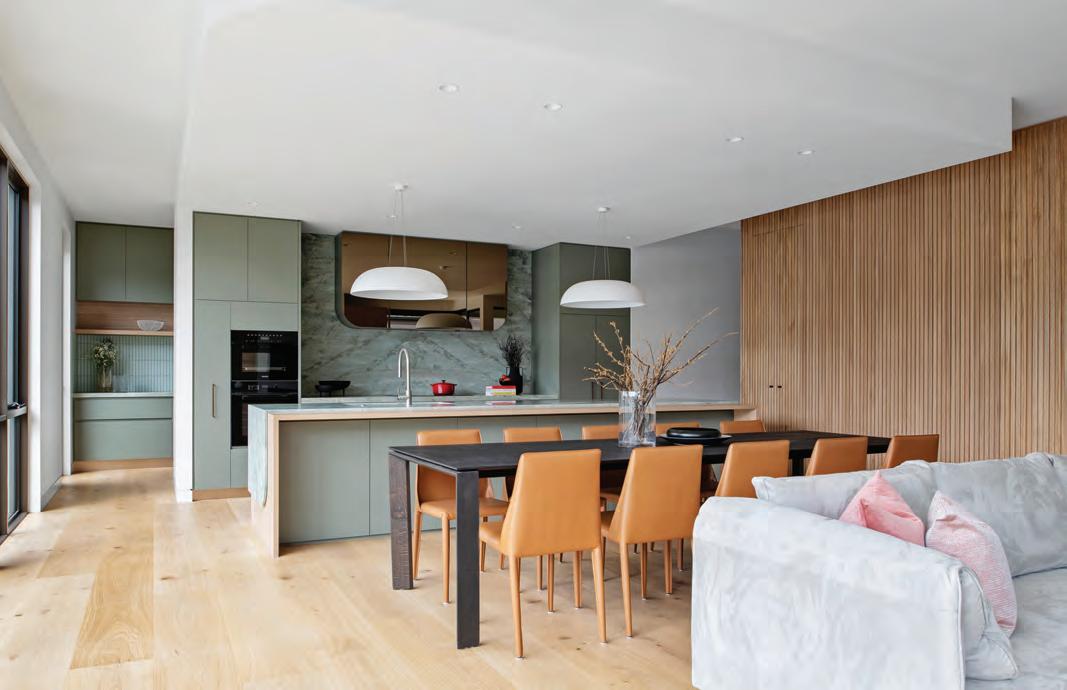
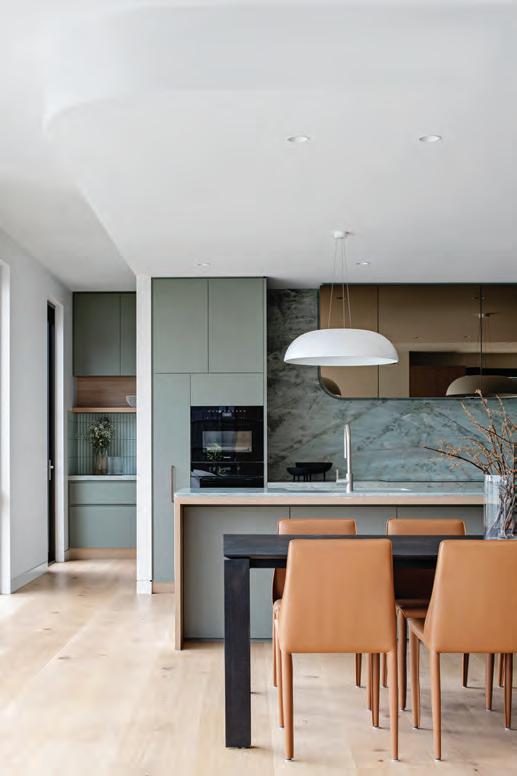
This award-winning kitchen, designed by Rina Cohen CKD Au (RCI Designs) is the epitome of wellness-led space planning and design. Rina meticulously detailed the various zones within the kitchen, ensuring functionality flows. The expansive sliding doors adjoining the kitchen invite natural light into the space, and the colour palette and thoughtful layering of textures reflect all the things we love about the great (and healing) outdoors.
a cycle of shame or depression that makes it difficult to start decluttering — none of which equals wellness.
Kitchens: reducing friction and fatigue
In kitchens, wellness-led space planning prioritises smooth workflow, reduced physical strain and improved safety.
Clear circulation paths are critical, particularly in busy households where multiple people use the kitchen at once. Pinch points around islands, refrigerators and ovens can quickly become sources of frustration and accidents. Generous, well-considered clearances allow people to pass comfortably without twisting, waiting or negotiating through hot zones.
Ergonomics also plays a key role. Frequently used items should be located between shoulder and knee height to minimise repetitive bending and reaching. Drawer-based storage, pull-out pantries and wall ovens reduce strain on backs and knees, particularly for ageing clients or those with mobility concerns.
Task zoning contributes not only to efficiency but also to mental calm. Separating preparation, cooking, cleaning and storage zones reduces crosstraffic and visual clutter, helping the kitchen feel ordered and manageable even during peak use.
In bathrooms, space planning directly affects comfort, safety and long-term usability.
Clear wet and dry zoning helps manage moisture and reduces slip risk, while also simplifying cleaning. Adequate circulation space supports ease of movement, particularly when towels, doors and cabinetry are in use simultaneously.
Wellness-informed bathroom design also considers dignity and daily rituals. Seating for grooming, accessible storage at the vanity, and thoughtful sightlines (with good tile planning) all contribute to a sense of comfort and autonomy.
Future-ready planning is increasingly important. Reinforced walls for potential grab rails, hobless shower options, and generous door clearances allow bathrooms to adapt as occupants’ needs change — supporting wellness not just now, but over time.
While space planning shapes physical comfort and safety, environmental factors within the home also play a critical role in long-term wellbeing.
As designers, we shape the environments where people spend most of their lives, making indoor air quality an essential consideration in residential planning. Poor air quality can contribute to a range of health concerns, from headaches and fatigue to more serious outcomes, including increased sensitivity to allergens and the worsening of asthma and other respiratory conditions. Thoughtful decisions about ventilation, material selection, and appliance specification can significantly reduce these risks and support healthier living environments for occupants.
Volatile organic compounds (VOCs) are carbonbased chemicals that evaporate into the air at room temperature. They’re commonly found in paints, varnishes, adhesives, synthetic textiles, cleaning products, furnishings and new building materials (such as particleboard and MDF). As materials age, VOC emissions typically decrease, though higher temperatures can accelerate off gassing. Exposure may contribute to eye, nose and throat irritation, headaches and other health concerns. Reducing VOC exposure begins with thoughtful product selection and good ventilation. Specify low- or zero-VOC paints, coatings, and adhesives; choose certified low-emission materials (such as GECA-certified or E1/E0-rated products), and ensure spaces are well ventilated after the installation of new finishes, joinery, or furnishings.
Dust mites can aggravate hay fever, asthma, nasal inflammation and eczema, so designing to minimise dust collection is wise. Minimise voids above hard-to-reach overhead or tall cabinets, where possible, and be wary of the heights and accessibility of open shelves. High open shelves can quickly accumulate dust, grease and debris that are not easily visible or easy to clean.
Mould releases microscopic spores that can become airborne and are easily inhaled. For occupants who are sensitive or allergic, exposure may cause irritation of the eyes, nose and skin, exacerbate asthma and other respiratory conditions, and, in some cases, contribute to more serious health concerns.
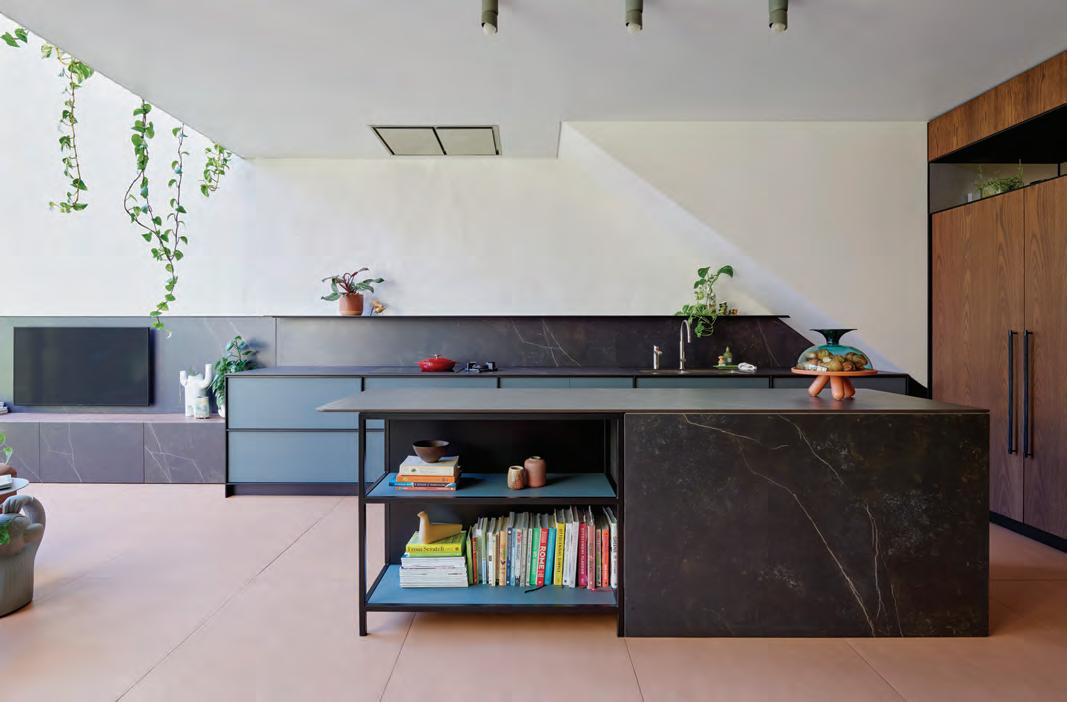
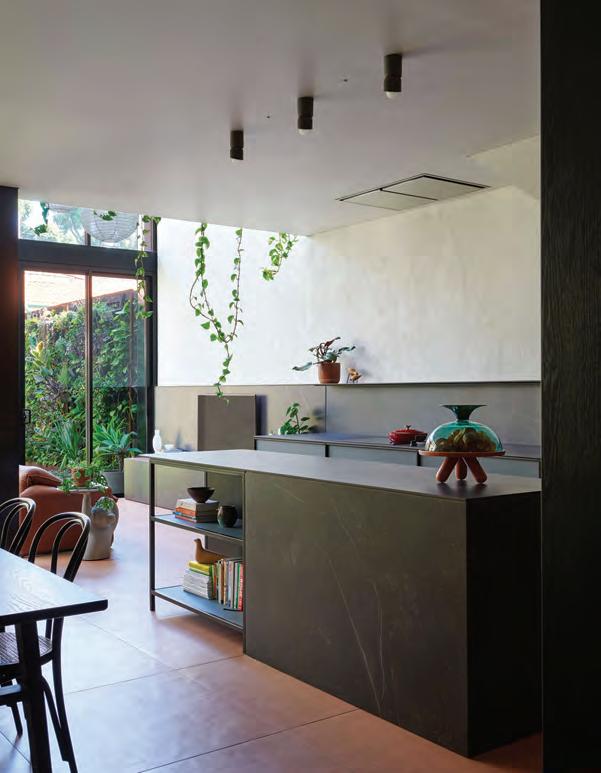
Research increasingly shows that exposure to daylight during the day, as well as the colours and dynamics of nature, strongly affects our mood, energy levels, comfort, sleep quality, and overall health and wellbeing. This stunning kitchen, designed by Studio Minosa, is beautifully and intentionally connected to natural light and the lush greenery outside.
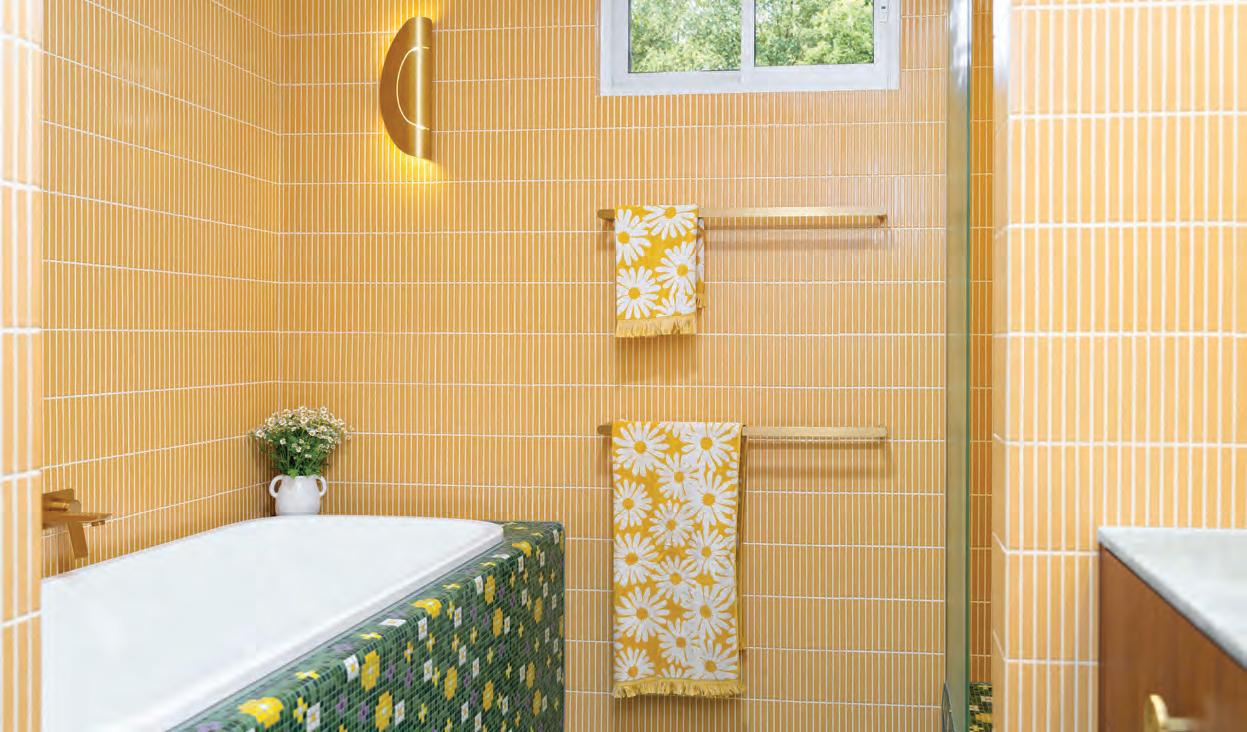
Melbourne designer, Carmel Wylie, created a virtual meadow in this beautiful bathroom. Colour expert, Karen Haller, describes yellow as ‘the colour of sunshine’ in ‘The Little Book of Colour’. She explains that yellow ‘has a relatively long wavelength and is emotionally stimulating, making us feel more confident, positive and optimistic’. Could there be a better way to get ready for a busy day ahead than in a bathroom like this?
Because mould thrives in damp, poorly ventilated environments, designers and building professionals play an important role in minimising conditions that allow it to develop.
Mould is most commonly found in bathrooms and other wet rooms, near indoor plants, and in
poorly ventilated spaces. Preventive strategies should therefore focus on both moisture control and effective building detailing, including:
• Appropriate waterproofing to bathrooms, laundries and other wet areas
• Repairing plumbing or roof leaks promptly
• Venting moisture-generating areas (kitchens, bathrooms, laundries) to the exterior using properly specified exhaust systems
Smoke and combustion products
Smoke and combustion by-products — including fine soot particles, ash, and gases such as nitrogen dioxide and carbon monoxide — can enter the home from fireplaces and heaters, gas cooking appliances, cooking fumes, tobacco smoke, bushfires, and vehicle exhaust from adjoining garages.
Because combustion particles are extremely fine, they readily enter buildings and penetrate deep into the lungs when inhaled. Exposure can irritate the eyes, nose and throat, worsen asthma and other respiratory conditions, and increase the risk of serious long-term health issues.
Good indoor air quality relies on careful design, specification and maintenance. Key strategies include ensuring adequate fresh air supply, venting combustion pollutants directly outdoors, maintaining flues and appliances, and sealing garages from living spaces.
Wellness-led material selection balances hygiene with sensory comfort. Surfaces should be easy to clean without requiring aggressive chemicals, reducing both maintenance burden and chemical exposure. In kitchens, benchtops and splashbacks that resist staining and bacterial growth support food safety and everyday convenience.
Slip resistance is another critical factor, particularly in bathrooms. Floors that provide confident footing when wet directly contribute to physical safety and peace of mind.
Access to daylight supports circadian rhythms and has been linked to better sleep quality and mood. In kitchens and bathrooms, daylight can also improve visual clarity and reduce reliance on artificial lighting during the day.
Where natural light is limited, layered electric lighting is essential. Ambient lighting provides general illumination, task lighting supports safe food preparation and grooming, and low-level night lighting improves safety during nocturnal use — particularly in bathrooms.
Too much light, on the other hand, can be damaging. Glare and harsh lighting can significantly affect mental health, causing stress, anxiety, and eye strain, and may trigger symptoms in conditions such as migraines or pattern glare. Increased light sensitivity (photophobia) is often linked to heightened anxiety and depression, so be wary of this when specifying bright white finishes or highly reflective surfaces.
Colour has a well-documented influence on perception and mood, but wellness-led colour

application avoids simplistic claims. Rather than prescribing certain hues as universally ‘calming’, designers can focus on how colour contributes to visual comfort, clarity and personal expression.
In kitchens, restrained palettes with a clear hierarchy reduce visual noise. High contrast can be energising, but excessive contrast — particularly between benchtops, cabinetry and floors — can heighten visual fatigue. Soft transitions and considered tonal variation help spaces feel cohesive and manageable.
In bathrooms, colour and contrast also support safety. Clearly defining planes — such as floors, walls and fixtures — improves depth perception, an important consideration for ageing eyes. This can be achieved subtly without sacrificing aesthetic intent.
Allowing for personal control is another wellness strategy. A calm, neutral base, layered with one or two easily changeable colour moments — such as paint, textiles or accessories — allows occupants to refresh their space without major disruption.
Designing for wellness does not require extravagant features or specialist products. It results from thoughtful, informed decisions made consistently across space planning, materials, air, light and colour.
For designers, this approach aligns naturally with best practice — creating spaces that are not only beautiful, but genuinely supportive of everyday life. When kitchens and bathrooms are designed to reduce effort, support comfort and protect health, wellness becomes an inherent quality of good design, rather than an added extra.
In the end, the most successful wellness-led interiors are those where occupants simply feel better — even if they never quite know why. ■
Selina Zwolsman CKD Au, CBD Au is a qualified interior designer and experienced writer specialising in design and building-related content. She produces technical and editorial content for industry and training organisations, and assists small to medium business owners with web and media copy, email marketing campaigns and more. Selina has shared many design-related presentations with trade and consumer audiences and loves to promote the work of Australia’s best designers and manufacturers. Contact Selina via her website at nicelysaid.com.au.
In cabinet making and joinery, why safety must be the sixth “S”
By Melanie Gardener
Walk through any cabinet making or joinery workshop in Australia and you’ll see lean thinking in action — whether it’s deliberate or not. Sheets are cut to nest, jobs are sequenced to minimise changeovers, hardware is kitted, and benches are cleared to keep production moving. In our industry, where margins are tight and deadlines are real, 5S has been the go-to method for “getting organised” and lifting productivity for a significant amount of time.
But woodworking environments also concentrate some of the most serious and predictable safety risks in manufacturing: high-energy plant (panel saws, spindle moulders, CNC routers), airborne wood dust, noise, solvents and finishes, manual handling of bulky boards, and vehicle-pedestrian interaction, sometimes in very tight spaces.
We are hearing from a growing number of lean practitioners who argue that 5S is not enough on its own. If you’re serious about workplace safety,
the next step is moving to 6S — adding Safety as an explicit sixth “S”, not as an assumed by-product.
In cabinet making and joinery, we see this not as a trendy add-on but as a practical way to align continuous improvement with your legal duties and the realities of the workshop.
The 5S Basics (and why they matter in cabinet making)
5S is a structured approach to workplace organisation and standardisation:
• Sort — remove what isn’t needed
• Set in Order — put everything in a defined place
• Shine — clean and inspect
• Standardise — make the best method the normal method
• Sustain — embed discipline so it sticks
Applied well, we know that 5S reduces “microwaste” (searching, walking, waiting), improves quality consistency, and makes abnormalities visible.
Yet in many workshops, safety is treated as a separate line item: it lives in inductions, MSDS/SDS
folders, and annual audits, while lean lives in production meetings, efficiency metrics, and takt time.
That split is where risk can grow.
“implied”
A tidy shop is not necessarily a safe shop.
Yes, 5S can reduce obvious hazards such as trip risks, clutter, and offcuts underfoot. But cabinet making and joinery involve hazards that don’t disappear just because the floor is swept:
• Plant hazards (unguarded blades, pinch points, kickback zones, entanglement)
• Exposure hazards (respirable wood dust, finishing fumes, noise)
• Design hazards (awkward lifting, repetitive sanding, poor material flow leading to rushed handling)
• Human factors (fatigue during peak install periods, newstarters on unfamiliar machinery)
If safety isn’t explicitly designed into the workflow, lean can unintentionally amplify risk by rewarding speed, throughput, and “keeping the line moving.”
This is also where local legal context matters. The current Work Health and Safety Act s19 specifies that a Person Conducting Business or Undertaking (PCBU) must ensure — so far as is reasonably practicable — the health and safety of workers while they are at work.
In other words: good intentions or the attitude of “we’ve always done it this way” do not replace systematic hazard control.
Adding Safety as the sixth “S” does something powerful: it makes safety a priority operational outcome, alongside delivery, quality, and cost.
In a cabinet making or joinery context, 6S helps shift safety from:
• compliance to daily work design
• reactive incident response to proactive risk removal
• separate safety paperwork to integrated standard work
It also makes it easier to demonstrate alignment with key Australian guidelines.
SafeWork in each state or territory publishes specific material for the timber products industry, including a guide sheet series for kitchen manufacturing and joinery that walks through hazards and controls across common workflow stages — from receiving and cutting through delivery and installation.
Where 5S focuses on “a place for everything”, 6S adds “a safe way for everything.”
The biggest misconception about 6S is that safety is a final checklist at the end of a 5S event. In a true 6S system, safety is threaded through every “S."
Sort: remove what creates risk
In cabinet making and joinery, “unnecessary” often includes the things people have normalised:
• Damaged push-sticks, missing guards, blunt blades
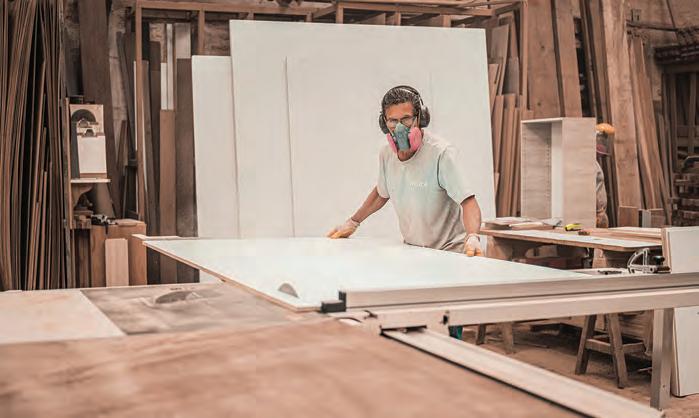
• Cords and leads that force awkward routing
• Offcuts and stored panels that create unstable stacks
• Unlabelled chemicals, old adhesives, mystery tins of finish
Sorting is also the moment to quarantine unsafe equipment until it’s repaired, because no amount of organisation compensates for missing or bypassed controls.

Set in Order: design for safe flow
Cabinet making has predictable movement patterns: sheet intake → breakdown → machining → assembly → sanding → finishing → dispatch → install.
A 6S “Set in Order” considers flow and risk:
• Pedestrian routes separated from forklifts and delivery zones
• Clear kickback and exclusion zones at saws and moulders
• Dedicated, ventilated finishing areas (not improvised in open workshop space)
• Storage heights that reduce overhead lifting and twisting
This is where lean layout work directly intersects with safe work design.
Shine: cleaning as inspection (especially for dust)
“Shine” isn’t a cosmetic exercise; it’s a built-in inspection routine.
In woodworking, it is also where you address one of the industry’s most underestimated hazards: wood dust. All dust-emitting machinery and equipment must be hooked up to a dust extraction system.
Routine cleaning paired with effective dust extraction can:
• Reduce respiratory exposure
• Improve visibility and housekeeping
• Lower slip risk on fine dust
• Prevent dust accumulation around motors, electrics, and machinery
Standardise: make safety controls part of standard work
Standard work is lean’s anchor, so safety controls must live inside it.
In a cabinet making or joinery workshop, this can include:
• Pre-start checks (guards, emergency stops, extraction functioning, forklifts)
• Tool change procedures and lock-out practices with PPE triggers that are task-based (not generic signage)
• Defined “go/no-go” criteria for machining (e.g. minimum component size before using jigs and push sticks)
Many 5S audits score tape lines and label quality but ignore whether controls are in place and used.
A 6S sustain routine includes checks such as:
• Are guards, jigs and push sticks being used as designed?
• Is extraction actually on for cutting and sanding operations?
• Are manual handling controls being followed (and still fit for purpose)?
• Are near-misses discussed and acted on?
Sustaining 6S means building safety into the daily management system, not treating it as a quarterly event.
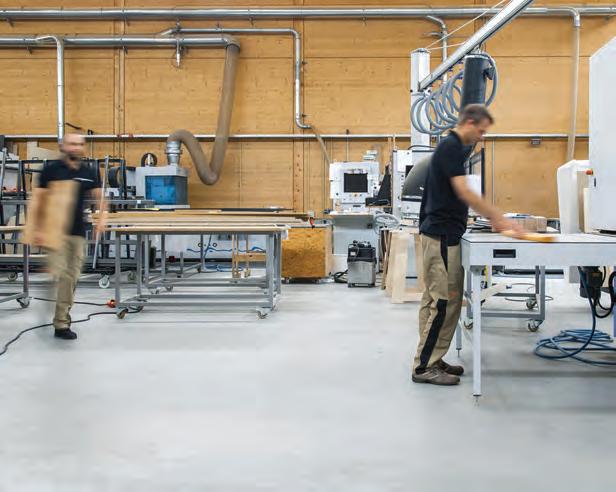
Safety: the sixth “S” that makes the system real
Safety as its own “S” creates explicit space for:
• Risk assessments as part of improvement work
• Ergonomic review of high-frequency tasks (board handling, repetitive sanding)
• Incident trend review (cuts, kickback nearmisses, slips, exposures)
• Training and competency checks for high-risk environments
It also connects directly to established guidance on musculoskeletal risk.
A practical 6S example: the “Sanding Station” transformation
Consider a typical sanding area: handheld sanders, pads, abrasives, ad-hoc benches, and a persistent haze of fine dust.
A 5S approach might improve tool placement and tidy the bench.
A 6S approach asks additional questions:
• Is dust captured at the source and maintained as part of standard work?
• Are noise levels and vibration exposures addressed through tool choice and rotation?
• Is the posture and bench height reducing bending and shoulder loading?
• Are consumables stored to avoid repeated reaching and twisting?
The productivity gains remain — including fewer steps, less searching, less rework — but now the station is also designed to reduce exposure and injury risk.
The business case: safer shops are more reliable shops
Cabinet making and joinery businesses win on reliability: consistent quality, predictable lead times, and the ability to meet install schedules without disruption.
Injuries and illnesses undermine all of that through:
• lost time and rework
• stoppages when a key operator is unavailable
• rushed make-goods and deadline pressure
• turnover and training burden
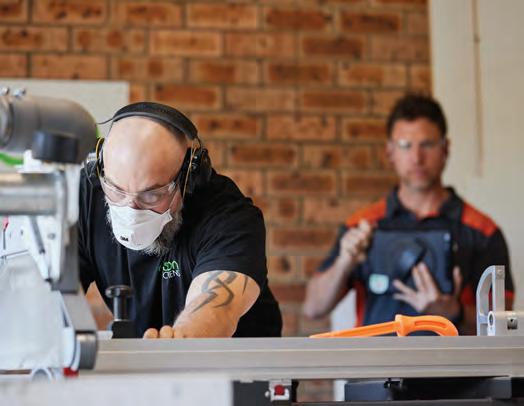
6S is not a “safety program” competing with production. It’s a way to stabilise production by removing the causes of downtime, many of which are safety-related.
Moving from 5S to 6S: a simple starting point
If you already run 5S, the transition is straightforward:
1. Update 5S audits to include safety-critical checks (guards, extraction, traffic routes, housekeeping standards for dust)
2. Integrate risk assessment into kaizen events and layout changes
3. Make safety part of standard work not just posters on the wall
4. Use the SafeWork Australia joinery guidance as a reference point for hazard controls across your workflow stages
5. Train leaders to ask the 6S question: “Is this improvement safer as well as faster?”
Lean was never meant to be “more output at any cost." Done properly, lean is about designing work so it is repeatable, visible, and continuously improving while respecting the people who do it.
In cabinet making and joinery, making Safety the sixth S is not optional. It’s the difference between a workshop that looks organised and one that is truly designed for performance.
Because the best shopfloor improvement is the one that delivers quality kitchens and joinery and sends every worker home healthy, every shift. ■
By Pam Kershaw
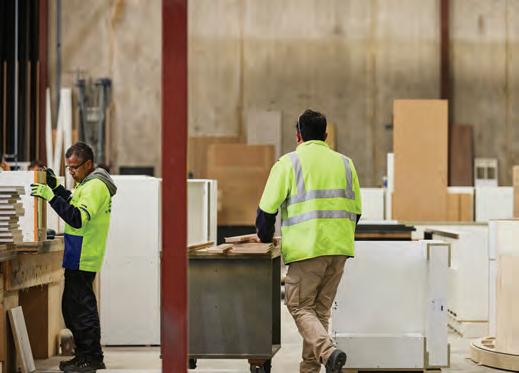
Australia’s work-related injury rate is significantly lower than the global average (3.5 per cent vs 12.1 per cent)1
And while most owners and managers in cabinet making and joinery do take safety seriously, the industry is fast-paced, deadline driven and often labour constrained.
Such pressures can result in accidents which, if serious, can inflict major financial and reputational damage on a business. If equipment and processes are being incorrectly used, injuries can result in significant time off work and can affect workers’ compensation premiums.
A recent prosecution shows how easily this can happen: a Queensland design and construction company was last year fined $90,000 plus costs after installation of a wall-mounted display cabinet that collapsed and injured two workers. The industrial court found that installation instructions were not provided in English for the fourth-year apprentice carrying out the installation, not all L-brackets provided were used to affix the cabinet, and the apprentice was unable to confirm the cabinet was properly secured.
In its Safety Guide for Joinery and Kitchen Manufacturing, SafeWork NSW highlights common workplace hazards and the average days off work per claim.
Manual handling and dust exposure produce the longest absences. Inadequate machine guarding can cause permanent damage to hands yet should be preventable because leading suppliers have a strong focus on safety.
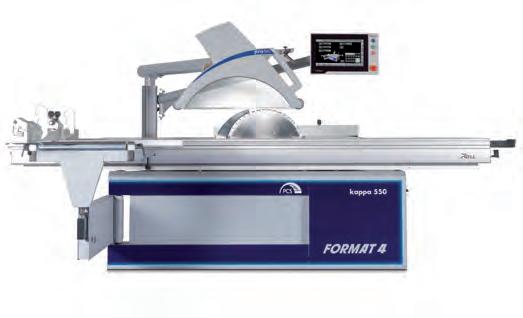
Con Badenhorst, director of woodworking machine supplier Felder Group Australia, recalls a serious accident with a client before PCS (Process Control Systems) were commonplace. (PCS is designed to prevent serious injuries by detecting human tissue near a saw blade and initiating a safety retraction in milliseconds.)
“The owner of the company was a highly experienced professional,” Con says. “He got just too close to the blade of the table saw, with the main blade making contact with his small finger and pulling his hand into the blade, twisting it and severing and mauling fingers. The blade was not projecting that high, but the damage was done in a split second.”
Surgery repaired the fingers as well as possible, but the loss of a knuckle, reduced circulation and loss of feeling and dexterity meant this incident cost the client dearly. He now operates a top line Felder Format4 Kappa550. While PCS-enabled machines used to cost around $80,000–$120,000, smaller machines can cost as little as $35,000 ex GST.
Con warns against buying cheap imported machines which are not compliant with CE or ISO standards. They may not have safety devices, or they may be easily disabled by staff.
Con notes that the ultimate cost of a serious industrial accident may include:
• Temporary closure of the business as the accident is investigated.
• Financial penalties.
• Increased workers’ compensation premiums.
• The loss of key staff and specialist skills.
• Loss of morale among remaining staff.
• Reputational damage with clients and potential new hires.
A recent innovation from SCM Group, supplier of woodworking machines and systems, is the ‘blade off’ safety system for circular saws on the L’invincibile si 3 and class si 400ep models.
“Dangerous situations often arise when operators modify or disable safety systems to speed up work,” says Boris Chernyshev, country manager/ CEO for SCM Group Australia. “The blade off system eliminates this temptation by making safety an integral part of the workflow, rather than an obstacle, maintaining both high quality and productivity.”
The system operates at high feed speeds of up to 2m/s and prevents accidental contact with the blade across the workpiece entrance and side areas. It automatically stops the program when it detects any part of the human body, including a gloved hand.
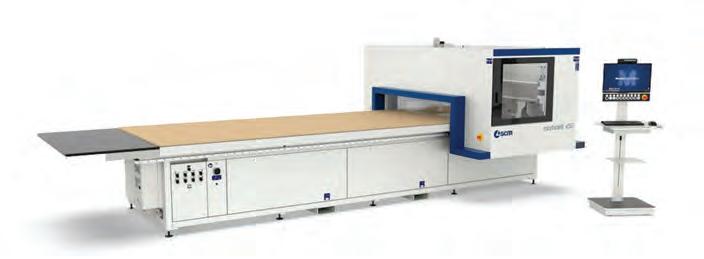
On CNC nesting machines, an intelligent bumper protection system detects human contact or obstacles and immediately stops the machine to prevent injury or damage.
Digital safety intelligence has been integrated into the IoT Solution and Control Room service.
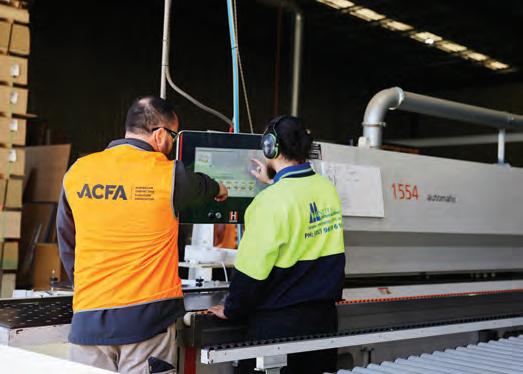
By enabling real-time machine monitoring and assisting operators to quickly identify anomalies and potential machine failures, it can improve safety conditions by more than 10 per cent.
Multicam Systems, distributors of CNC routing machinery, has focused on innovations around automation, ergonomics and reduced operator interaction with machinery.
Darren Faulkner, IT administration manager, says this includes automation of material handling and processing, automatic tool changing systems, integrated safety checks and improved machine guarding.
These features reduce the need to manually handle heavy or bulky materials and remove the need to manually handle cutting tools during normal operation. Automated systems perform safety checks before activation, and operator safety is improved through ongoing refinement of guarding and elimination of pinch points.
Distributors deliver comprehensive training to ensure staff understand how to operate machines, and regard customer feedback as a critical input to continuous improvement.
Beyond machine-level safety, training delivery itself is evolving.
Advances in augmented reality (AR) and wearable smart glasses such as Google Lens and RealWear are already enhancing training, remote expert support and hands-free instruction during maintenance and installation in some industries.
Wearable sensors and exoskeletons are also being trialled as a means of monitoring fatigue and reducing musculoskeletal injuries from manual handling.
“In our experience, most cabinet making and joinery businesses are genuinely committed to safety, and many already have solid systems in place,” says Monique Penton, ACFA’s HR manager. (ACFA is the publisher of this magazine). “Most owners in our sector take safety seriously, although we recognise it can be challenging to stay across changing regulations, keep documentation current and ensure apprentices and staff understand what is expected of them."
“Safety is a shared responsibility and we see our Workplace Advice team as an integral resource for members to help navigate these requirements, she adds.
Monique explains that ACFA’s safety-related enquiries tend to be about managing risk and injury once an issue has occurred, but the organisation is also proactive in providing clear and practical guidance which allows owners to make informed decisions without having to interpret complex legislation on their own.
“The businesses that tend to get the best safety outcomes are not necessarily the ones with the most paperwork, they’re the ones that build a culture where safe work is just part of the job, backed by good habits, clear expectations, and leaders who reinforce it every day,” she says.
Key focus areas to improve safety include:
• Training and refresher training
Not just induction, but regular short refreshers (toolbox talks and re-training on higher-risk tasks).
• Supervision and competency checks
Making sure everyone knows how to do the job safely, and that safe habits are being checked and reinforced over time (not just covered at induction).
• Documentation
Keeping Safe Work Method Statements and Standard Operating Procedures (SWMS/SOPs) practical and easy to follow, so they are used day-to-day, not just kept on file for compliance.
• Equipment maintenance and safety checks
Regular inspection and servicing of machinery, including guarding, dust extraction, blade condition and lock-out/tagout during maintenance.
• Strengthening safety culture and communication
Encouraging workers to speak up early, report hazards and near misses, and addressing unsafe shortcuts before they turn into incidents.
• Reducing manual handling risks through smarter workflow
Using mechanical aids where possible (trolleys, lifters, team lifts) and planning workflow to reduce double-handling and strain injuries.
Monique explains that workplace health and safety tend to sit differently within each business, and much of that comes down to size, structure and the nature of the work being carried out. “In a small or family-run cabinet making or joinery business, the owner usually wears many hats across finance, operations, sales, recruitment, and client management. Safety is still a legal duty; however, it can feel like one responsibility among many competing priorities,” she says.
In addition to access to ACFA’s Workplace Advice specialists, members can also download resources from the members' section of the website including Safe Work Method Statements (SWMS), Risk Assessment templates, various safety-related checklists and more.
Monique points out that workplace safety support is also available through each state’s Safety Regulator. Services differ from state to state but many offer education, tools and advisory services to assist businesses improve safety and prevent incidents, rather than only managing an incident
after it has occurred. These services can be very helpful in identifying what ‘best practice’ looks like in a practical sense.
For example, in Victoria, OHS Essentials is a free workplace safety consultation service delivered by independent occupational health and safety experts, providing practical, tailored advice to help businesses improve safety.
2. Preserve scene and notify regulators: eg WorkSafe.
In New South Wales, SafeWork NSW offers free advisory visits for eligible sole traders and small businesses with up to 50 full-time equivalent staff, with inspectors providing practical workplace safety advice and support to help meet health and safety obligations.
As services vary across Australia, businesses are encouraged to check with their local Safety Regulator to understand what support is available in their state.
For businesses unsure where to start, a structured risk review typically follows these steps.
1. Scope and register: log all factory and onsite tasks, then create a hazards register.
2. Identify hazards: including machines, manual handling, dust and respiratory risks, noise, slips/ trips, electrical, hazardous chemicals, vehicles and forklifts, work at height during installation.
3. Assess risk: (likelihood x consequence) and prioritise controls for high-severity hazards.
4. Eliminate where possible: eg redesign storage so heavy panels are handled with lifts, buy precut or CNC-prepared parts to remove manual cutting tasks.
5. Substitute, engineer or control: where elimination is not possible and establish SWMS for high-risk tasks.
6. Administrative and PPE controls: (see key safety areas above).
7. Record and review: create a register of controls with owners and review dates.
If a major accident does occur, immediate steps are:
1. Emergency response and medical attention: first aid and stabilise, call 000 if life-threatening.
3. Internal incident response: secure the area, note witnesses, collect equipment logs, take photographs, ensure support for workers.
4. Investigation and root cause analysis: identify immediate and systemic failures; implement corrective action.
5. Insurance and legal: notify your insurer and workers’ compensation agent as soon as practicable. For any notifiable incident, you must also notify your state or territory WHS regulator in accordance with legislative requirements.
In a deadline-driven industry, safety failures rarely stem from bad intentions — they happen when pressure, fatigue and familiarity collide. As recent prosecutions and injury data show, the consequences can be swift and costly. The good news is that most serious incidents are preventable. Regular training refreshers, clear procedures, wellmaintained equipment and smarter technology all play a role, but only if they are consistently applied.
For cabinet making and joinery businesses, keeping risk management current isn’t about compliance for its own sake — it’s about protecting people, safeguarding reputations and ensuring the business can keep operating tomorrow.
Safety doesn’t have to be complicated — but it does have to be kept front of mind. The businesses that get it right tend to treat safety as part of everyday work, not something that sits in a folder or only gets attention after an incident. By regularly checking in on training, reinforcing safe habits and taking advantage of newer, safer machinery and systems, businesses can reduce risk while maintaining productivity.
In a skilled trade built on experience and teamwork, investing in safety is ultimately an investment in people — and in the long-term strength of the business. ■
1Safe Work Australia
By Rob Ditessa
The laundry room is vitally important; as one witty sign in a laundry says, ‘Laundry today or naked tomorrow’. And, while the laundry can sometimes be the smallest room in a home, with some very clever planning and application of safe design principles, it can be a very functional and happy space. Frank Iaria from Mint Kitchen Group and Carmel Wylie from GIA Renovations, both experts in this space, tell Connect how they make that happen.
The laundry site was in a very bad condition, Frank remembers. “Basically, there was a lot of rot from continuous leaking of the washing machine that went undetected for a long time. By the time we got in there the floor was rotted out and the back of the wall and the plastering was all rotted out. We had to strip it all back, replace the sub-floor, some of the wall framing and, of course, re-plaster the whole area affected, as well as redo the plumbing and the electricals in the whole area,” he recalls.
“I’d say that between 25 per cent and 30 per cent of homes we go into have some sort of water
damage that we need to attend to, whether it be on the floor or in the walls,” Frank adds. Frank is one of the founders and design director at the Melbournebased Mint Kitchen Group. The company has been in business for 30 years and has won more than 100 industry awards.
Considering the same challenges, Carmel Wylie highlights the importance of safety and “being strategic” when approaching a project and its design. Carmel is the senior designer at GIA Renovations, which is also an award-winning renovation specialist based in Melbourne. Carmel says that in drawing on more than 20 years of industry experience, she approaches each space with insight, attention to detail and thoughtful consideration.
In planning a renovation, clients have wishes and ideas, and Carmel explains it is her role to achieve them through tailored advice and thoughtful solutions. “We do a lot of work in Melbourne, so we often need to create dedicated space for drying. That might include ceiling-mounted drying racks,
wall-mounted options and, increasingly, drying cupboards,” she says.
The addition of a mudroom space has become increasingly popular. This often incorporates hooks and storage for sports equipment, wet weather gear, school bags, pet items and shoes, creating a practical transition between the outdoors and the main living areas. “Integrating all of that within a laundry can be complex, especially when we also need to allow for cleaning products, along with equipment such as mops and vacuum cleaners,” she says.
Frank says that in explaining to clients what is possible and what is not possible with the current space they have, he also has to come up with solutions to appease them. Sometimes clients are open to extending into another room and creating more space, “but most of the time, they prefer to leave the room size as is, and just expect us to perform miracles for them, which we sometimes do and surprise ourselves how much we can achieve
with good thought-out and well-planned design,” he laughs.
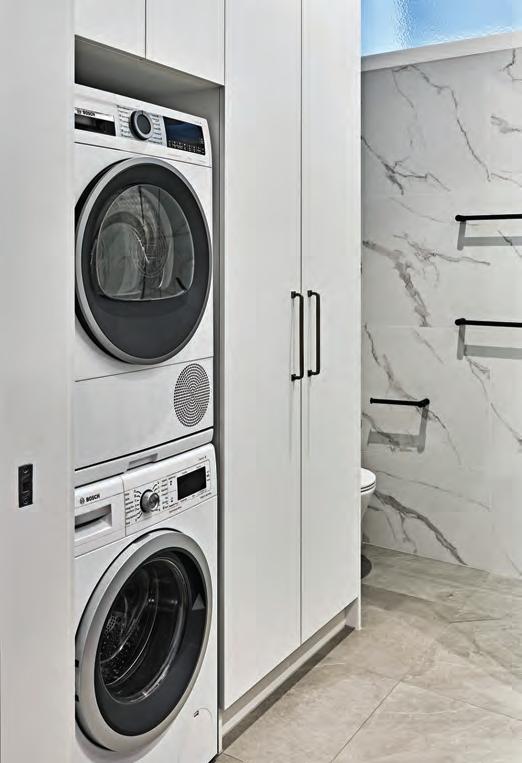
Creating vertical wall storage up to the ceiling, especially for putting away items for the long-term, is quite a typical solution for laundries, he notes, adding he is seeing a trend where clients want to raise their washing machine and dryer off the floor for easier access. Trying to get a washer and dryer side by side off the floor and still lay out enough room for a sink and bench space, can be quite a challenge, but stacking them offers a solution.
“The other trend that we have started to see lately is the drying cabinet. We sometimes try to fit them into a wardrobe, because often trying to fit them into the laundry is a bit of a challenge, considering that most people still want a washer and a dryer,” Frank says.
Carmel also says she has seen a growing interest, particularly in Victoria where the weather can be unpredictable, in “integrated drying solutions” that combine ceiling-mounted and wall-mounted drying racks alongside more advanced options
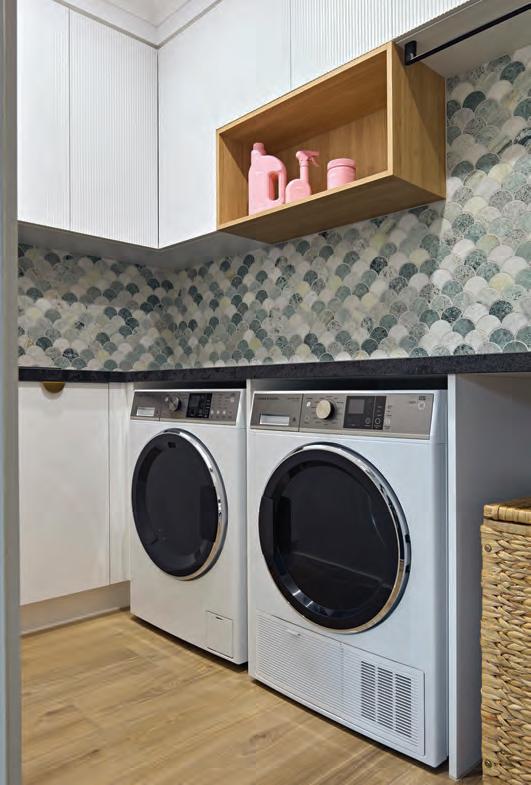
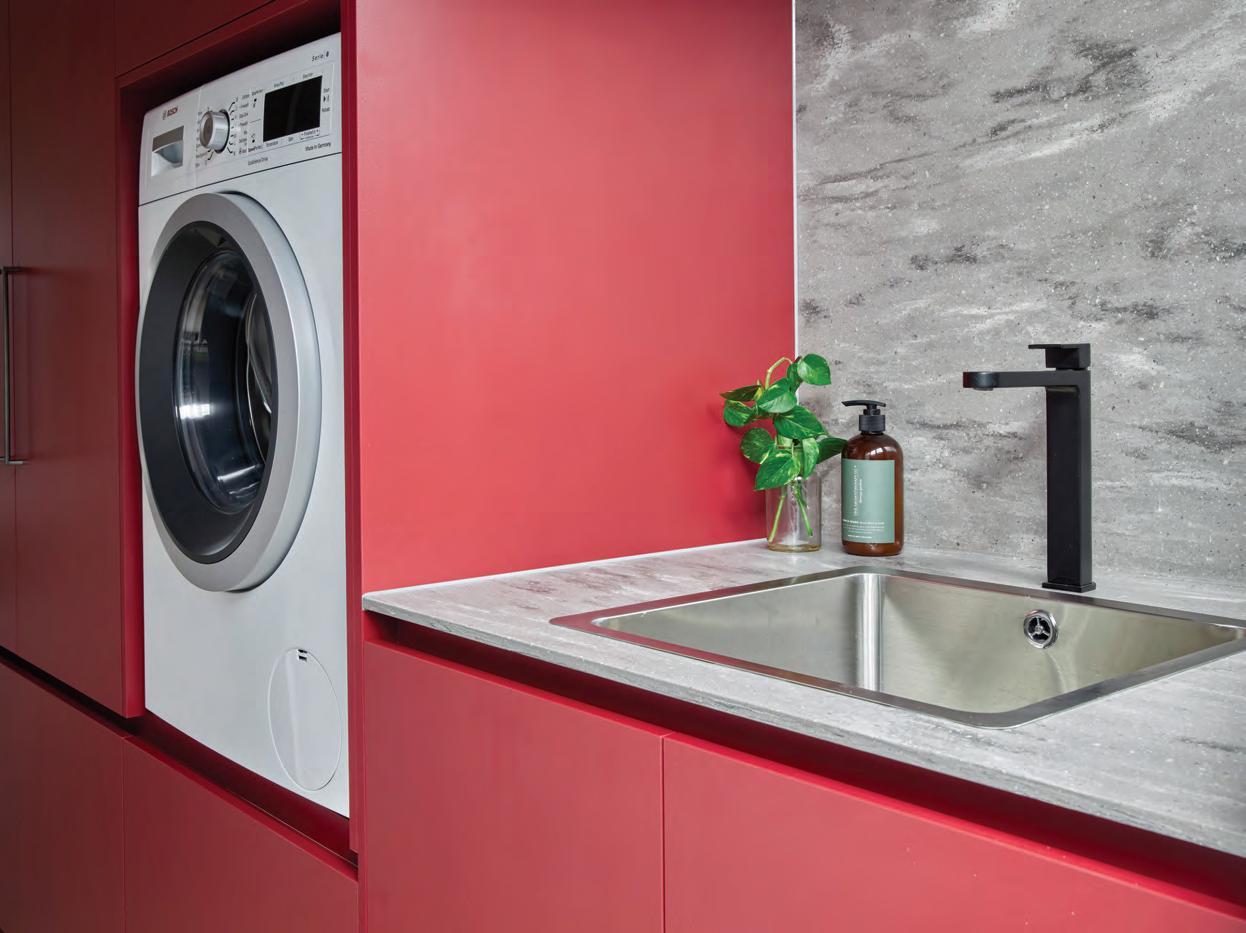
such as drying cupboards, and specialised appliances. “There are some really amazing appliances that essentially dry clean your clothes. A suit can come out immaculate, completely cleaned and steamed, and ready to wear,” she marvels.
Apart from trying to get more into a limited space, she says the main trend in laundry renovation is for people to be less conservative. “Our clients want their laundries to be a happy space and a little bit of fun,” Carmel says.
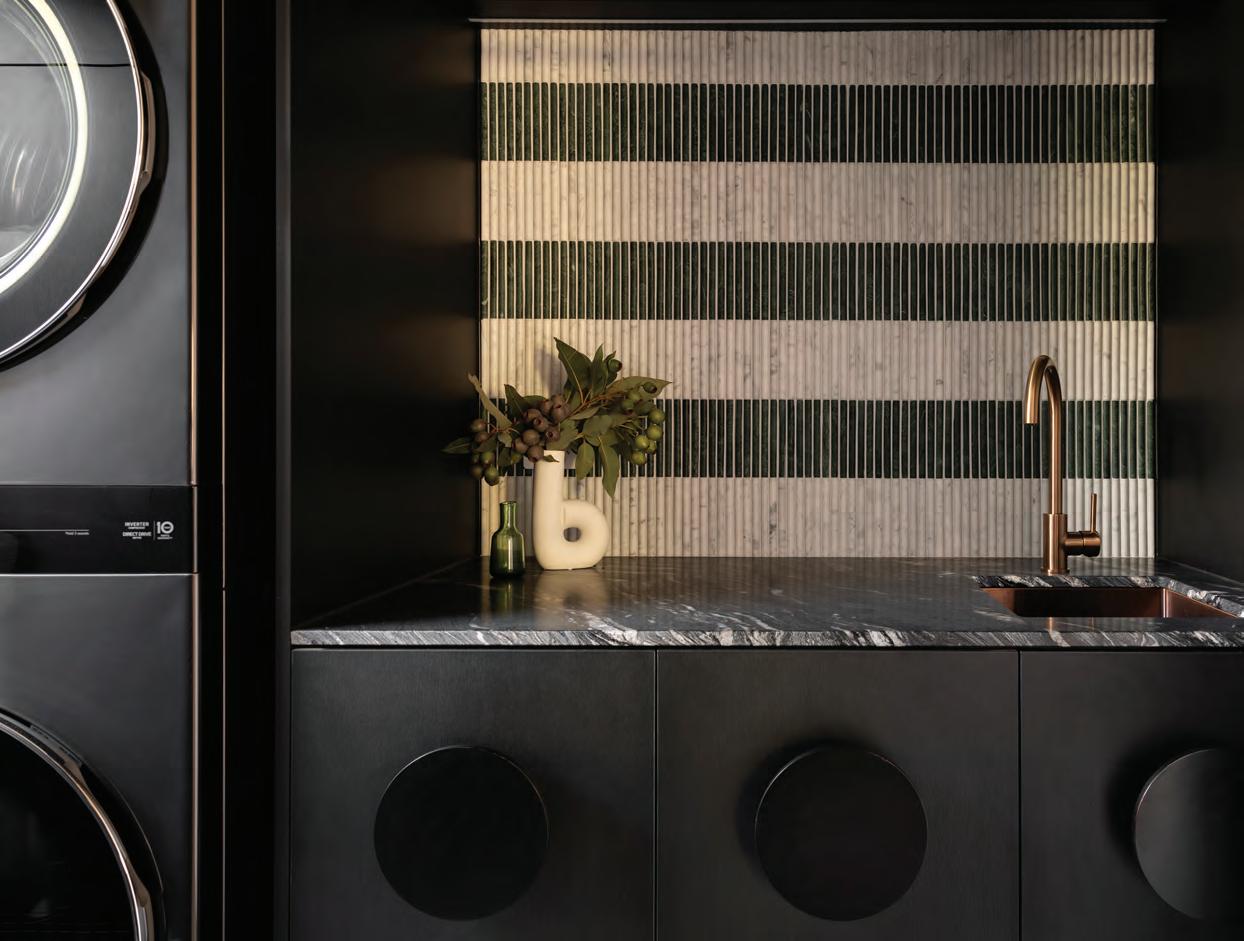
In selecting finishes, Carmel states she chooses for both durability and visual appeal. “Usually, the materials will be a laminate finish if you are bringing colour into the space, but we also do a lot of natural stone and tiles. Those are the finishes we tend to use most often,” she explains, adding that “the timber floor sometimes still extends into the laundry, but that would only be if it was an existing timber floor renovation, as current waterproofing requirements mean new timber flooring cannot be introduced in a laundry.”
Under the National Construction Code, Carmel notes, any new laundry now has to be waterproofed with a full membrane on the floor and up the walls behind the washing machine.
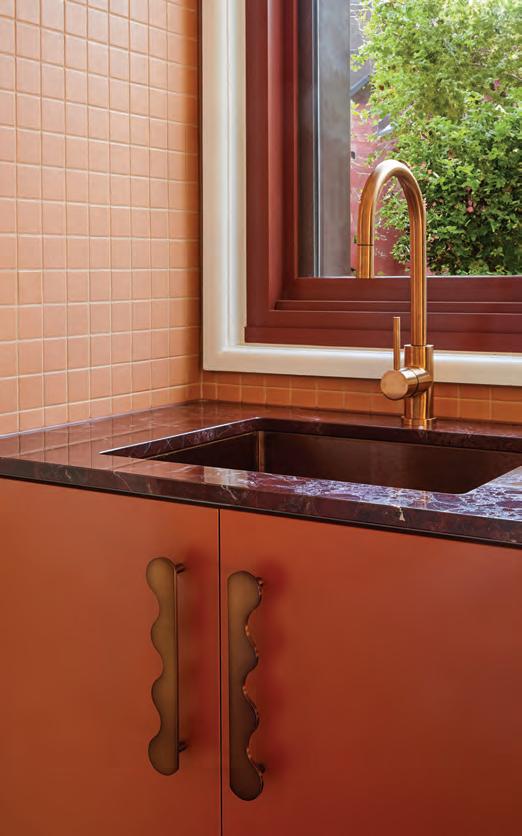
Ample hanging space, quality finishes, aesthetic combinations, beautiful handles and integrated elements such as using offcuts from the kitchen stone add value to the room, she points out, adding that a careful selection of handles is particularly important, as earlier styles sometimes had sharp edges or snagging hazards.
“There are so many now that are softer, curved or round, so the problems we used to see aren’t really an issue anymore. I love handles. They’re a really beautiful way to add detail to the joinery. They’re interchangeable, too. You can choose something a little more playful now, and then swap it out later if you want a new look,” she suggests.
Frank says that, especially in galley-style laundries where the passage is limited, “We’ll normally try to
go to a handle-less solution. We try to keep it as minimalistic as possible, and make it easy enough to move around in there.”
If the laundry is coming up near to the kitchen with a Shaker- or profiled-style door, he says clients will sometimes follow through with that profile. Most clients though “just stick with a flat laminate door just for simplicity and ease of cleaning,” he adds.
In making the laundry easy to work in, Frank aims to create a good workflow with the best placement of products. “It really depends on the size of the room. Some rooms are so small that you’re trying to cram everything in, but as much as we can, we’ll try and lay it out in a way that works well for the client. We’ve had requests for machines to be raised off the floor, just to make it easy, especially from older clients,” he details.
Echoing this thought, Carmel says that in one third of her renovations she is looking at workflows in terms of the height of the washing machine. “We’re raising up a lot of our washing machines and also providing a support for the washing basket for an easy transfer onto a benchtop,” she explains.
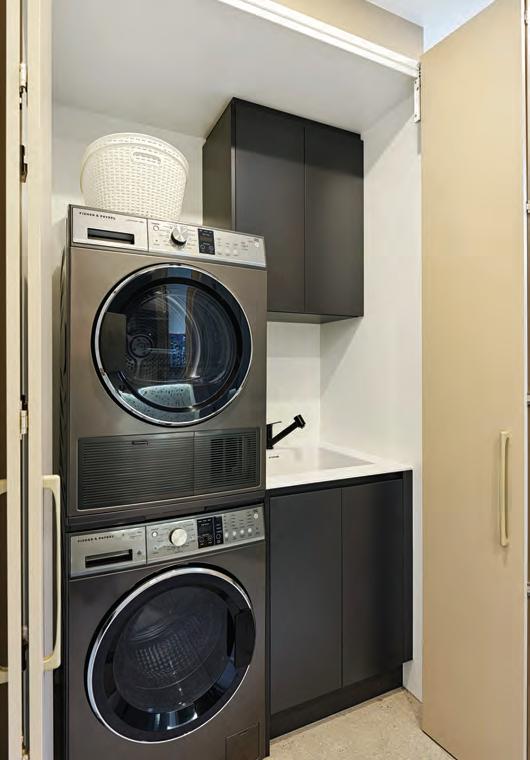
The National Construction Code stipulates the situations where a laundry sink is mandatory, and Carmel says that the laundry sink is removed in half of her renovations in Brunswick and terrace houses. If there is a bathroom nearby, clients would rather have the storage space or the bench space, with a plinth for the washing machine.
Where clients have a separate laundry, Frank says, he does not get requests to remove the sink although he will try to fit the smallest allowable size to save space. “And then, of course, people with pets will sometimes request a bigger sink if they’re looking at washing their pets, in there as well,” he laughs.
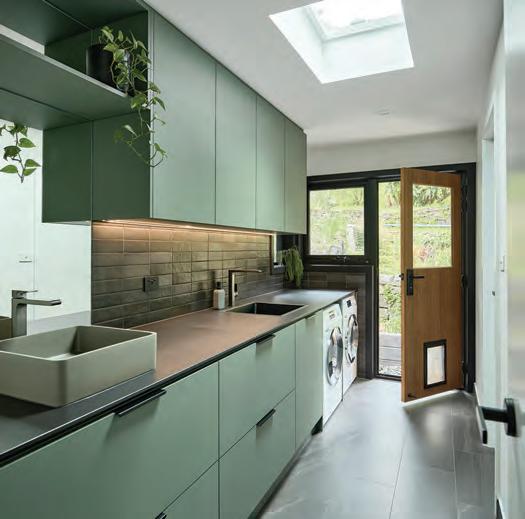
In most laundries he renovates, Frank finds the main complaint is lack of light — often only a single light bulb in a high-ceilinged room. “The whole place is quite dark and dingy. We make sure we get enough lighting to light up the space to make it feel comfortable to work in. We do lighting plans for the whole area that we renovate. Most of the time we’ll have overhead cabinets with strip lighting to throw light on the benchtop, then add some decent downlights in the ceiling as well, not to mention
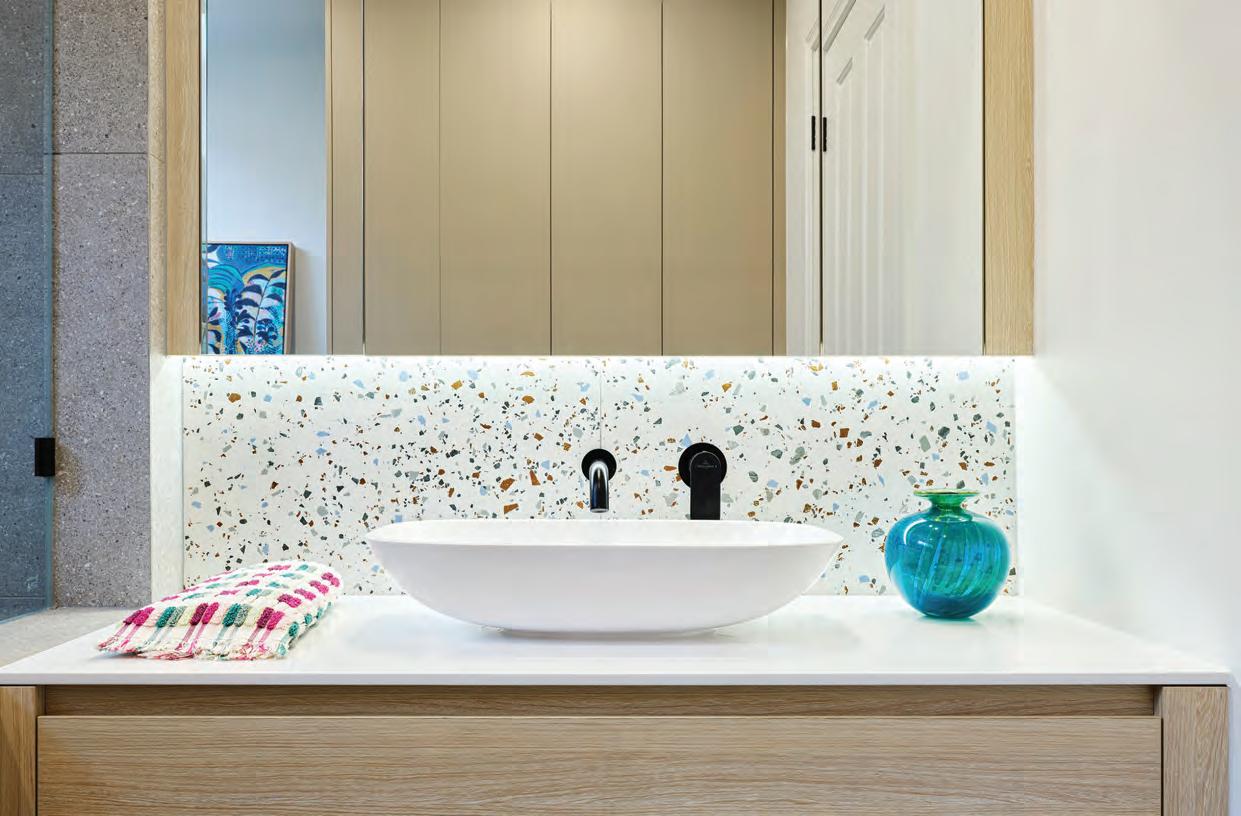
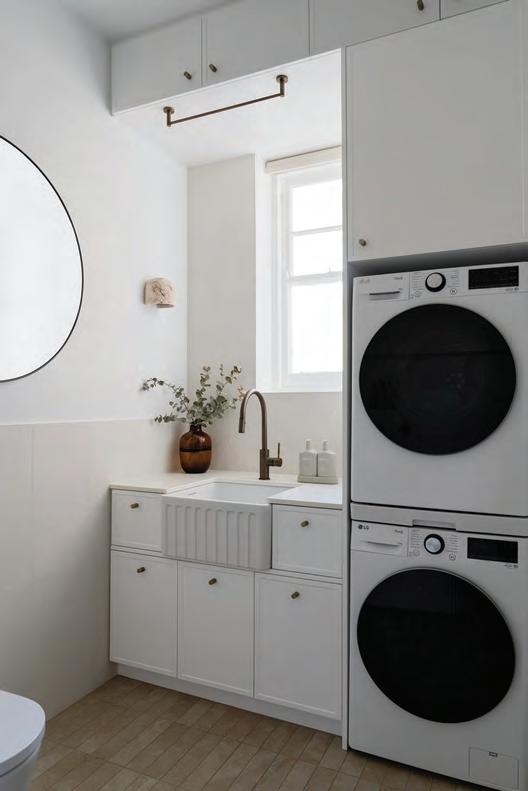
adding skylights whenever we can to ensure the space is quite well lit,” he explains.
He adds, “Where possible, it’s also important, due to condensation build up, to fit an externally ventilated fan in the room. Although most new dryers do not require this, we will still try to fit one in especially if there are no external windows to the room.”
Carmel also places strong emphasis on wellconsidered lighting. “LED strip lighting is really lovely in a line, and I use wall lights as well,” she says. “A sensor is useful, too, when your hands are full of washing, and you need to duck in quickly without reaching for the switch.”
Summing up, Frank says he encounters few problems with installations and successfully completing projects “if everything’s planned properly.” Emphasising safety, he says, “Laundries can be quite small areas, and in planning it’s important to stage the tradespeople out so they’re not all working on top of each other. This is important from a site safety point of view as well.”
And he cautions, “When things do go wrong, it’s important to communicate back with the client, so they are aware at all times what is happening, and to just get on the top of it is as best you can, and
make sure that the outcome is still the result that the client is after.”
Laundries are an area that Frank feels are sometimes treated as an afterthought. “If you design it right, you’ll be able to fit a lot of extra storage in there. I think it’s just a matter of spending time with a designer and going through what the possibilities are and being open to some suggestions,” he adds.
Summing up, Carmel says the successful delivery of a project relies heavily on thorough preparation. “There are a lot of meetings to make sure everything is organised. In fact, I’m about to go into one now, looking at the upcoming work and what needs to be finalised before construction can commence. We make sure designs are completely signed off before we get to that stage.”
There are three key elements in any construction process: cost, time and quality. When clients express concern about the inconvenience of how long a project may take, she explains that allowing for the right amount of time is what ensures the best outcome. “And clients are always happy with that,” she concludes. ■
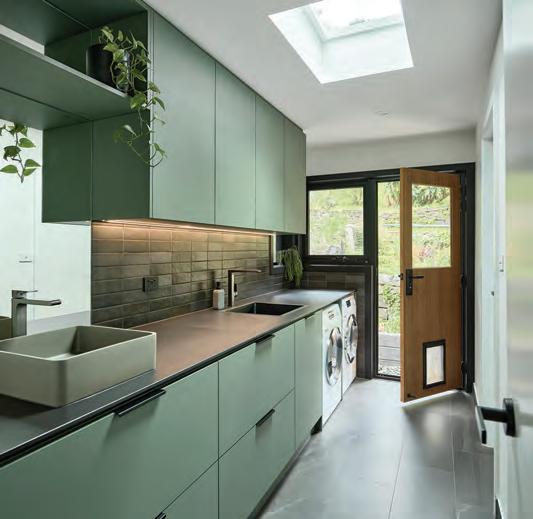
A recent blog by Selina Zwolsman, manager of Design and Communications, on the Kitchen and Bathroom Designers Institute of Australia (KBDi) website looks at the details of stacking appliances or elevating them. Selina’s blog states:
“Neither Volume Two nor Volume Three of the National Construction Code (NCC) contains provisions specifically addressing the installation of washing machines. Likewise, AS 4386:2018 Cabinetry in the built-in environment does not provide guidance on designing plinths for heavy, dynamic appliances. AS 3740 Waterproofing of domestic wet areas applies to the room’s floor and wall junctions, but makes no reference to elevated appliances.
In short, there are no mandatory construction or support requirements for washing machine plinths set out in the code; as a result, designers must refer directly to the appliance manufacturer’s installation instructions.”
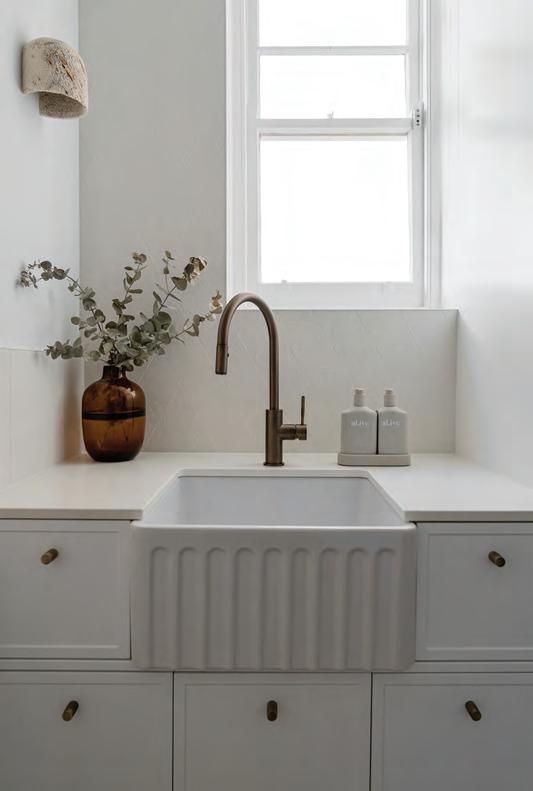
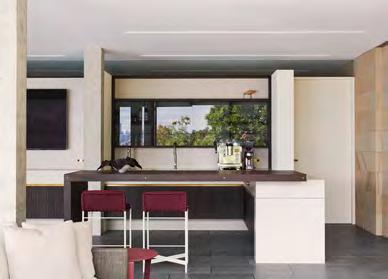
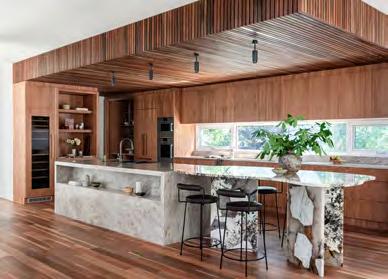
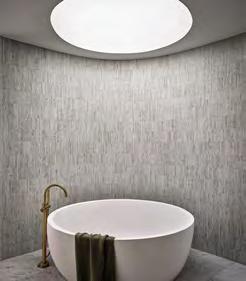
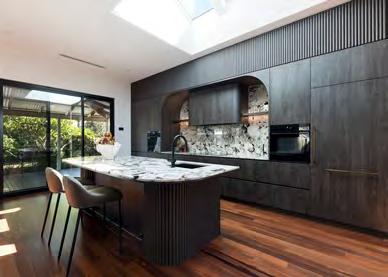
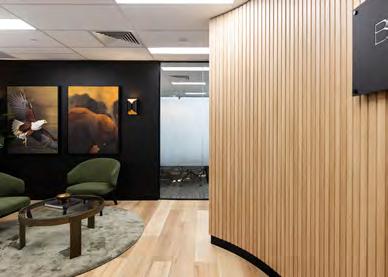
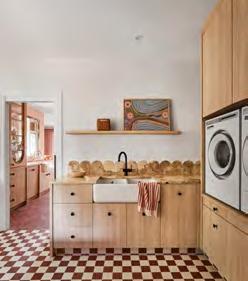
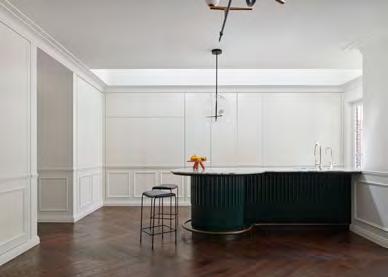
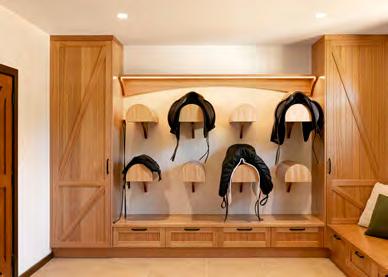


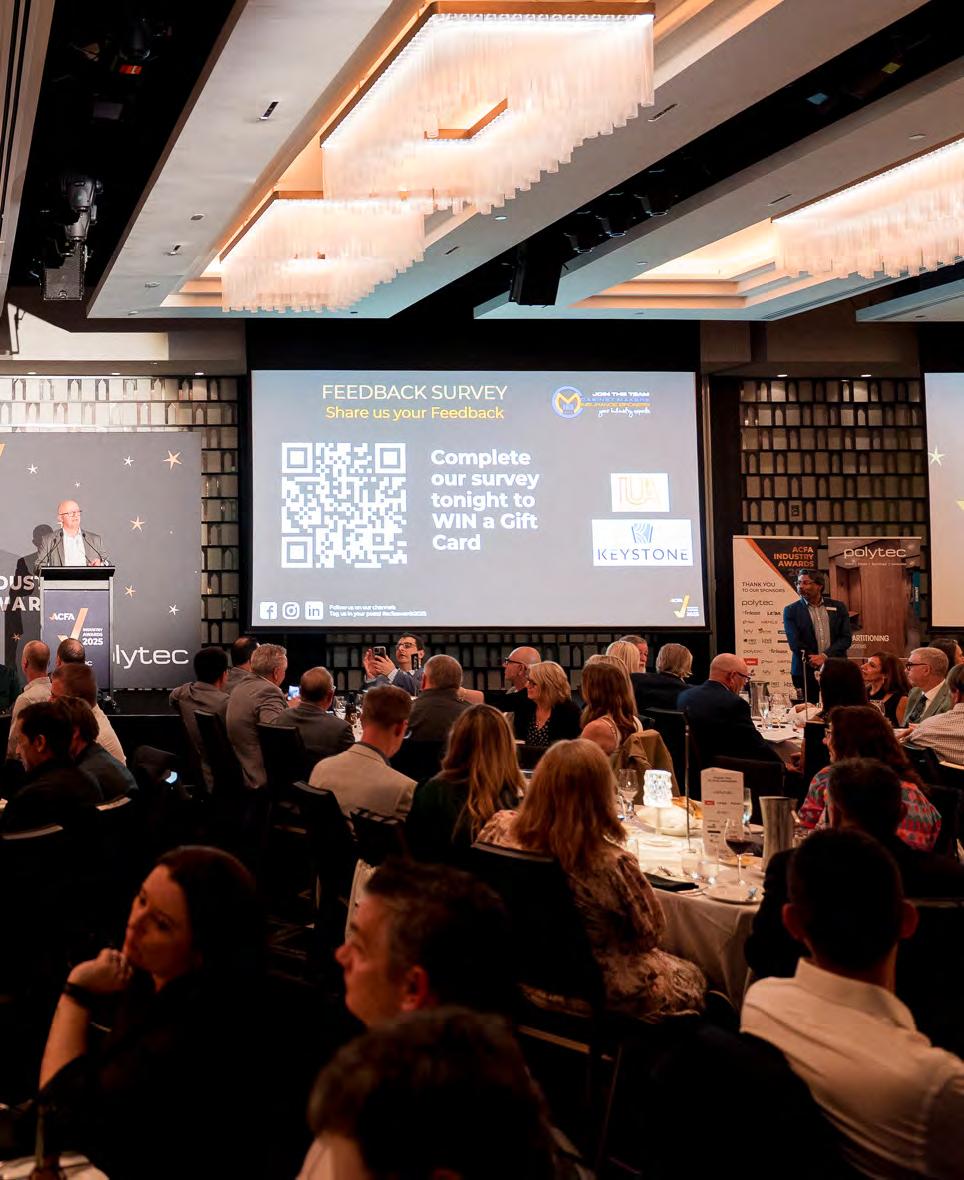



If your business was a machine, would you accept its performance?
By Ben Fewtrell
In a cabinet making or joinery business, machinery is easy to understand.
When a machine breaks down, falls behind or starts producing inconsistent results, the impact is immediate. Jobs slow down. Deadlines slip. Stress rises. Workarounds replace proper flow.
And if you bought a machine that didn’t perform as promised, you wouldn’t just accept it. You’d check the specifications. You’d question the setup. You’d call the supplier. You might even lodge a warranty claim or push for a fix, because the machine isn’t doing the job it was sold to do.
Yet when a business doesn’t perform the way it should, many owners take a very different
approach. They push harder. They work longer hours. They blame staff, workload or the market.
What often gets missed is that a business operates just like a production line. It’s a series of machines working in sequence, each feeding the next. When one machine underperforms, pressure doesn’t stay contained. It flows through the entire system.
Seeing your business through this “machine view” can change how you diagnose problems and manage performance.
Most businesses are structured around roles: owner, estimator, trades, administration, apprentice etc …
That structure shows who reports to whom, but it doesn’t explain why the business feels stretched, reactive or harder than it should.
A conveyor belt view is different. It focuses on flow, not hierarchy. Each machine has a clear purpose, defined inputs and expected outputs. When one machine fails, the entire line suffers, no matter how good the people are.
Let’s look at the four machines that make up a typical business production line.
The first machine exists to create a steady, predictable flow of suitable enquiries.
Not bursts of work followed by quiet patches. Not any job at any price. And not reliance on luck or word of mouth alone. When this machine is weak, the pressure shows up quickly. You may discount work to keep people busy, take on jobs that don’t fit your capability or margins, and panic when the phone goes quiet.
That pressure doesn’t stop at the front of the business. It pushes straight into quoting, production and cash flow.
Like any machine, this one should have performance measures. Simple KPIs might include enquiries per week, consistency of lead sources or cost per enquiry. The exact numbers matter less than the trend. Is the machine producing what it’s meant to produce?
Just as importantly, this machine needs an owner. Someone accountable for monitoring performance and adjusting early, not after the production line is already empty.
The conversion machine exists to turn enquiries into jobs at the average sale value the business needs to be profitable.
This machine isn’t about personality or persuasion. It’s about a clear, repeatable sales process that produces consistent results. Like any machine in the workshop, it should operate the same way each time and deliver predictable output.
When conversion isn’t working properly, the symptoms are often subtle. Quotes go out but don’t progress. Follow-up is inconsistent. Jobs are

approved, but the average sale value is lower than expected. The business stays busy, yet profitability remains under pressure.
If a physical machine produced inconsistent output, you wouldn’t blame the operator first. You’d look at how the machine is set up, what it’s being fed and whether it’s capable of delivering the required result. The same logic applies here.
A healthy conversion machine follows a defined step-by-step process from enquiry through to sale. Information is gathered consistently. Quotes are prepared and presented clearly. Follow-up happens as part of the system, not as an afterthought.
That process should be designed to support a target average sale value, not just maximise the number of jobs won. If the business needs a certain average sale value to cover costs and generate profit, the conversion machine must be built around that requirement.
What happens in the workshop feeds directly into this machine. When production is predictable and machines are reliable, quoting becomes clearer and more confident. When fulfilment is under pressure, uncertainty creeps in and conversion performance suffers.
KPIs such as quote-to-job conversion rate, average sale value and time from enquiry to approval give visibility into how this machine is performing. As with every other machine, accountability matters. Someone needs to own the conversion machine, monitor its performance and adjust when results drift.

The client fulfilment machine is where promises are kept.
This is where what was sold gets delivered, and where clients decide whether the experience matched their expectations. It’s not just about producing a quality product. It’s about delivering that quality consistently and right the first time.
When this machine is working well, clients feel confident, informed and looked after. Work flows smoothly through the workshop. Communication is clear. Timelines are met. The finished product is delivered as expected, without unnecessary delays or fixes.
A strong fulfilment machine minimises rework by getting quality right the first time. Every time a job has to be corrected, adjusted or remade, it costs time, money and goodwill. Rework also pushes pressure back into the system, disrupting other jobs and increasing stress for the team.
Fulfilment works best when it follows a clear and consistent process. Jobs are prepared properly before they hit the floor. Materials and information are ready. Tasks move through the workshop in the right order. Quality checks happen at the right points, not just at the end.
When fulfilment underperforms, it’s rarely because people don’t care. It’s usually because expectations weren’t clear, handovers were rushed or the process broke down between steps.
A healthy fulfilment machine is designed around the client experience and quality outcomes, not just speed. Turning up when you said you would.
Communicating changes early. Delivering a finished product that meets the agreed standard.
KPIs here might include on-time delivery, rework rates, number of variations, client feedback and repeat work. Like every other machine, fulfilment needs an owner. Someone accountable for ensuring work flows smoothly from start to finish and quality is maintained.
When this machine runs properly, clients don’t just receive a product. They receive an experience they trust and are happy to recommend.
The business machine keeps everything running in the background.
It doesn’t produce work or deliver finished products, but without it, none of the other machines operate smoothly. This machine looks after budgeting, people, systems and cash flow. Its job is to keep the business stable while the rest of the operation moves.
When it’s working well, wages are paid on time, suppliers are paid without stress and decisions are

made with clarity rather than urgency. People know what’s expected of them. Systems support the work instead of slowing it down.
Budgeting is a core function of this machine. Not a once-a-year exercise, but an ongoing process that turns guesswork into planning. HR also lives here. Hiring, onboarding, training, performance expectations and addressing issues early all sit within this machine. When HR is neglected, small problems grow quietly. When it’s managed well, people understand their role and what success looks like.
Systems are the connective tissue. Quoting, job tracking, scheduling and communication tools don’t need to be complex, but they do need to be consistent. When systems are unclear or ignored, work gets missed and frustration builds.
This machine is also responsible for paying the bills and managing cash flow. Knowing what’s coming in, what’s going out and when payments are due reduces stress across the entire operation.
KPIs might include cash flow position, budget versus actuals, staff utilisation, forward workload and overdue payables. These are the warning lights on the dashboard. As with every other machine, accountability matters. Someone needs to own the business machine and ensure the foundations are solid.
In a workshop, every major machine has an expected output and someone responsible for keeping it running properly. Businesses are no different.
When machines don’t have owners, problems get blamed on people, workload or bad luck instead of the system. When machines do have owners, performance is measured, issues are diagnosed and fixes are applied.
This view removes emotion. If a machine isn’t performing, you don’t take it personally. You investigate it. The same should apply when teams struggle. More often than not, it’s not a people problem. It’s a machine problem.
When business feels harder than it should, most owners ask the wrong question. They ask, “Who isn’t

performing?”. A far more useful question is “Which machine isn’t performing to spec, and who is responsible for fixing it?”.
Answer that, and the rest of the system starts to improve. Just like a well-run workshop should. ■
Max My Profit maxmyprofit.com.au
Ben Fewtrell is the co-founder and managing partner at MaxMyProfit. With more than 20 years of experience in business growth, Ben is also the co-creator of the "Business Exceleration™ Blueprint" and co-hosts the Max Your Business Podcast. He’s known for his dynamic presentations and effective business coaching, helping companies boost their sales and efficiency.
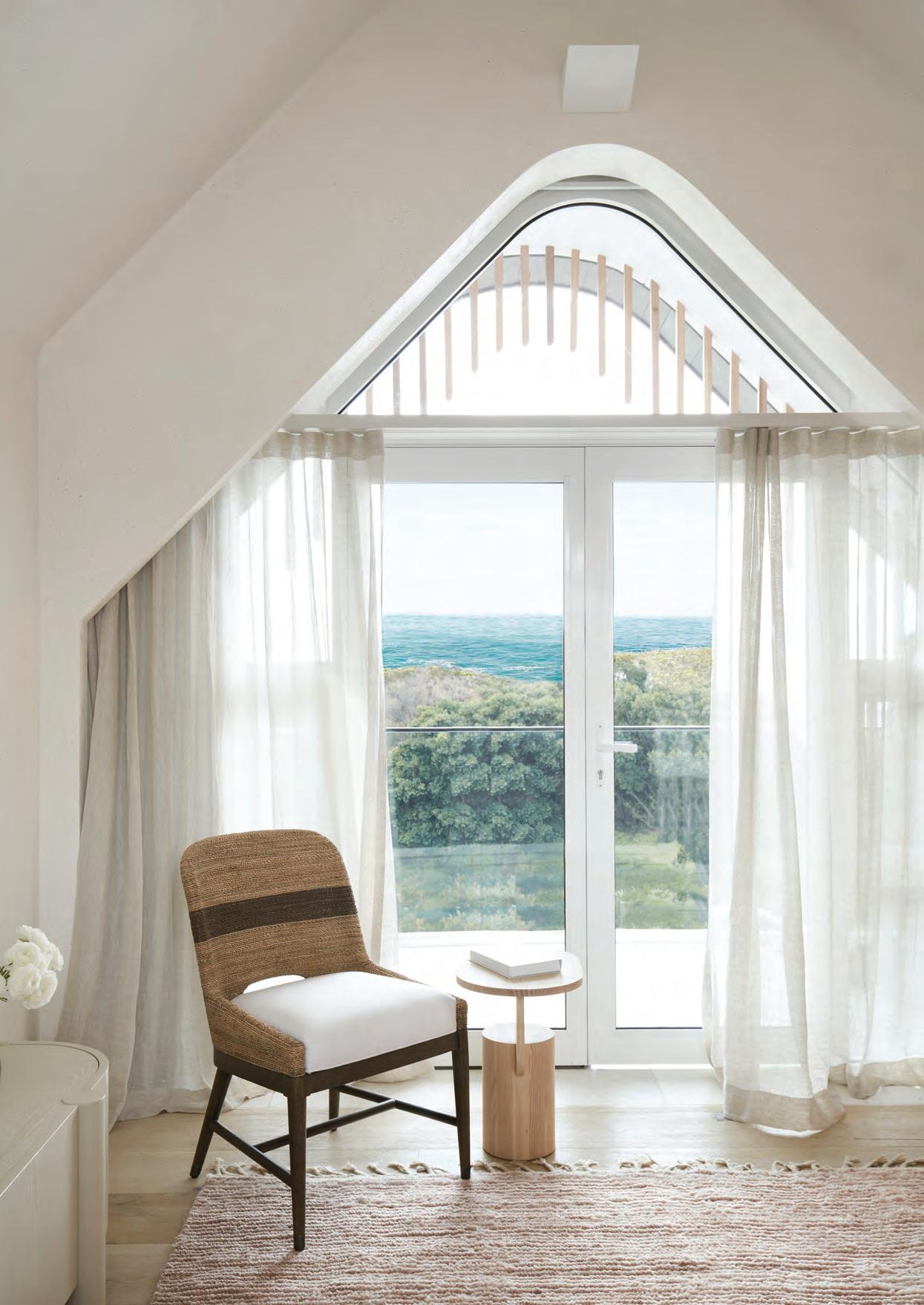
Elevating everyday living for your clients with a focus on creating an indulgent, private retreat
By Sarah Nolen
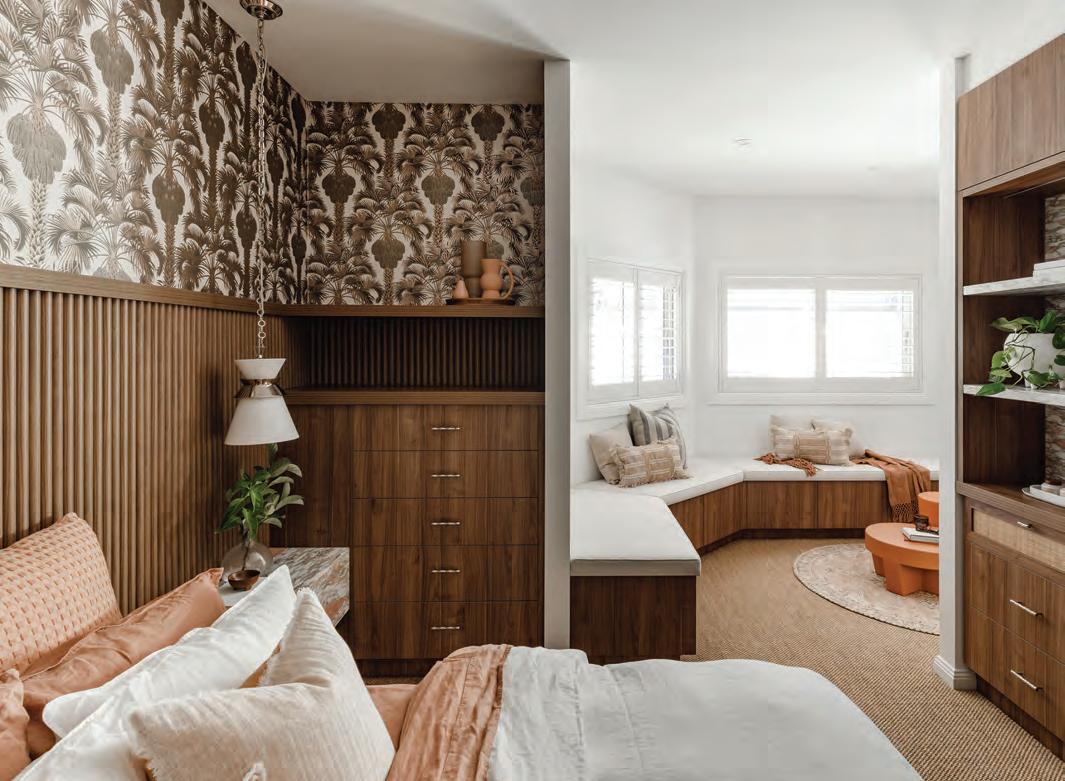
In more recent years, it has been said that the home should be a haven and a sanctuary, and nowhere is this more vital than in the Primary Suite. All too often, what’s marketed as a “Primary Suite” is little more than a bedroom with a small ensuite tacked on as an afterthought. But those in the industry see it differently.
The Primary Suite is an opportunity to craft a private retreat: a deeply personal, highly considered space that supports daily rituals and celebrates individuality. Every detail is curated to reflect your client’s lifestyle, their comforts, and their aspirations. Think hotel-level luxury, every single day. A true Primary Suite is more than a bedroom and an ensuite: it’s a cohesive series of spaces that work in harmony: custom robes, a dressing room, perhaps a cosy reading nook, even a discreet coffee station or mini bar. It’s a sanctuary designed to rejuvenate the body, calm the mind, and delight the senses.
The heart of any Primary Suite is the bedroom, and those of us in the industry should see it as so
much more than a place to sleep. This is where your clients start and end each day, so it should be the most soothing, restorative space in their home. As interior designers and joiners, we must design bedrooms to feel calm and cohesive, balancing function and beauty while ensuring every element works seamlessly together.
Thoughtful joinery is central to this approach. Incorporate elegant yet highly functional storage solutions: custom-built wardrobes, bedside tables, and concealed compartments that keep everyday clutter at bay. This not only enhances aesthetics but makes daily life effortless.
Lighting plays a pivotal role in shaping mood. Lighting should be soft and layered: ambient lighting for relaxation, with targeted task lighting for reading or preparing for the day. Dimmable fittings allow your clients to shift the atmosphere at will, from bright and energising to soft and serene, as they see fit.
Flooring, too, should be chosen with care. Whether it’s the warmth of natural timber or the plush
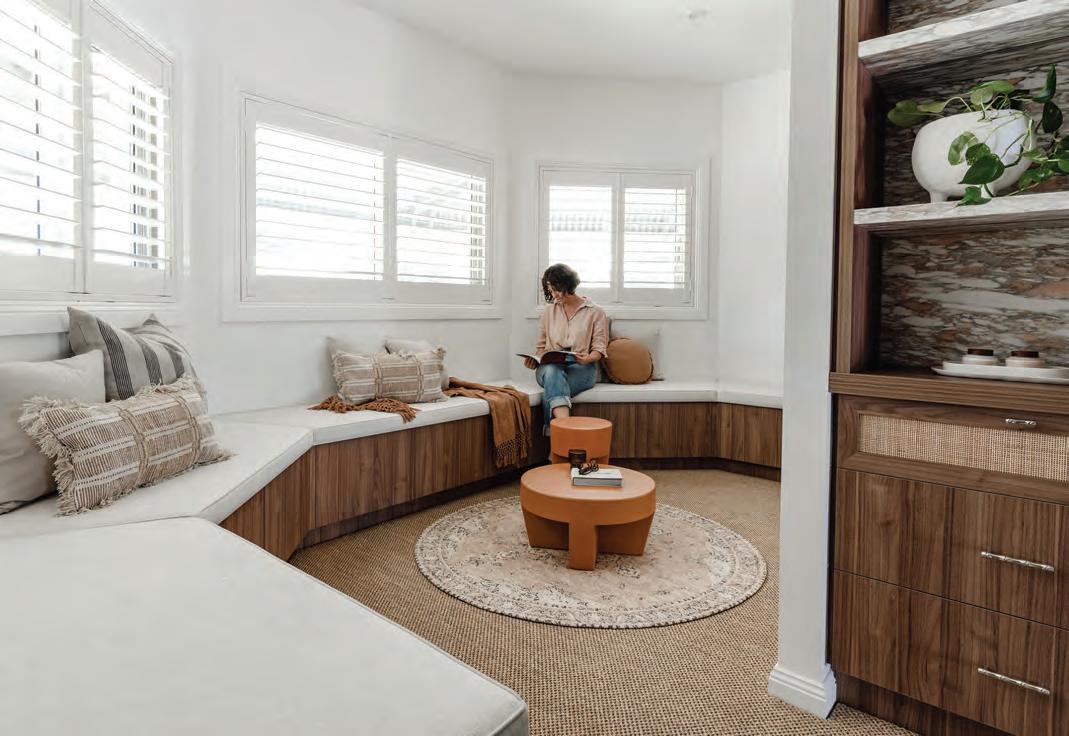
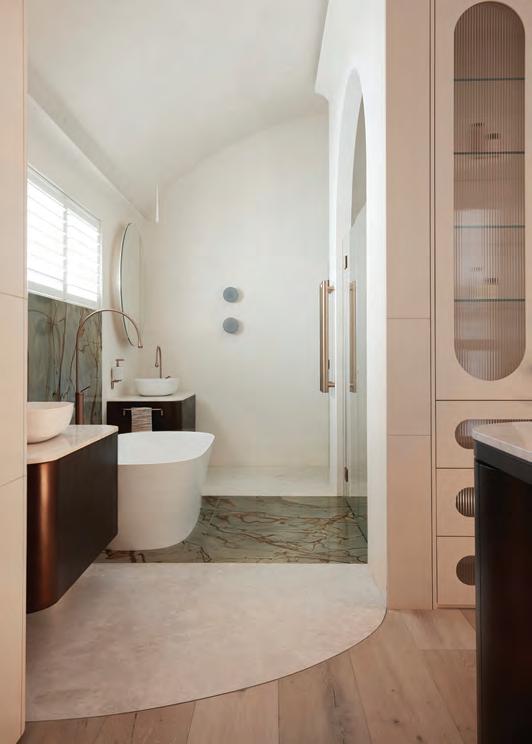
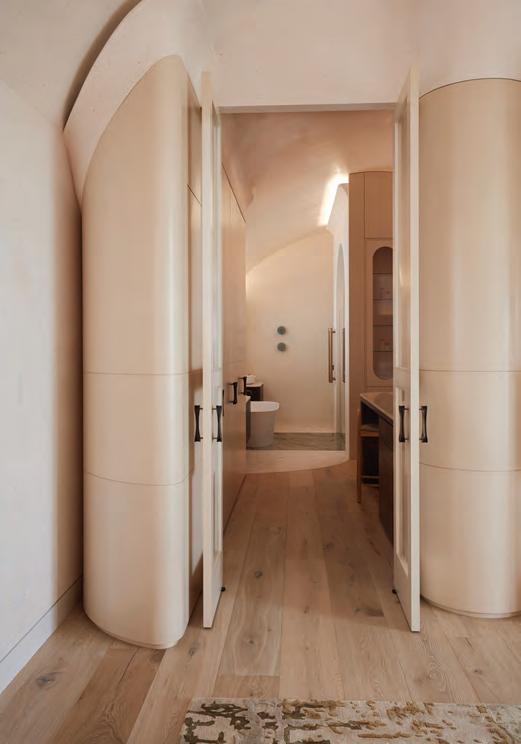
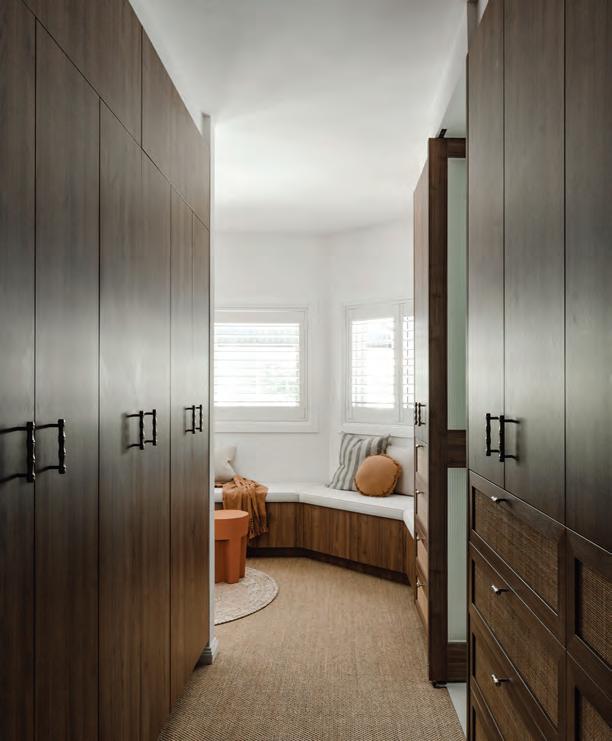
comfort of high-quality carpet, what’s underfoot shapes how the space feels and how your clients move through it.
And then there are the subtle yet powerful design details: the positioning of the bed to harness natural light and preserve privacy, the flow between bedroom, robe and ensuite, and the tactile textures that invite your client to unwind. When all these elements come together, the bedroom transcends mere functionality to become a true personal sanctuary; a place your client can’t wait to retreat to each day.
The custom robe: where everyday function meets indulgence
A custom robe is where organisation meets indulgence, and it can become a favourite space to design and create because it’s so personal. No two clients are the same, and neither are their wardrobes. Every robe project should start with an investigation of each individual client: their routines, their collections (be it shoes, handbags, accessories or statement pieces), and their preferred level of display versus concealment.
Once these specific needs are understood, it is possible to build the foundations: ample hanging space, well-organised drawers, dedicated shoe storage, and impeccable lighting. From there, elevate the experience with luxurious details: velvet-
lined jewellery drawers, glass-front cabinetry, a central island for accessories, or even a comfortable lounge chair if space allows. Integrated lighting makes everything glow while maintaining an understated elegance.
The end result is a robe that supports your client’s day-to-day yet feels like an indulgence every time they step inside: a perfectly tailored space that brings joy to the daily ritual of getting dressed.
For projects with the space, a dressing room is the ultimate everyday luxury. More than just storage, it’s a dedicated zone designed to make getting ready a beautiful, stress-free experience.
Let’s approach dressing rooms as personal boutiques, focusing on spatial flow and cohesion with the adjoining bedroom and ensuite. Full-length mirrors and layered lighting elevate the experience from routine to ritual.
In these spaces, practicality and beauty coexist. We often incorporate elegant finishes, tactile materials, and curated styling to make the room feel special. The result is an environment that inspires confidence each morning; a space designed not just for function, but for pleasure.
While larger zones offer structure and luxury, sometimes it’s the small, quiet moments that bring the most joy. A reading nook can be a transformative addition, turning an unused corner into a cherished escape.
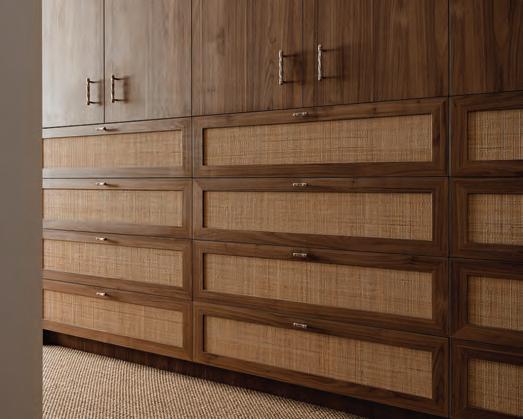
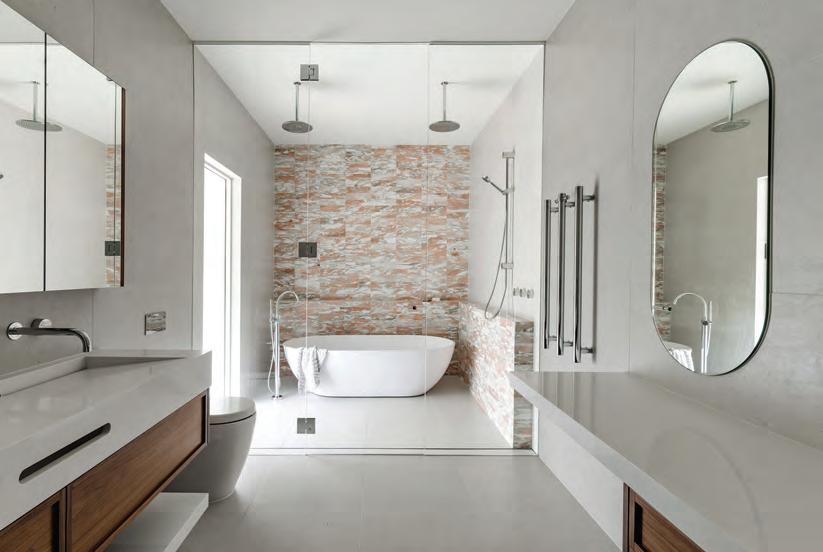
We should seek out naturally lit spots, often near a window, and build layers of comfort: soft seating, plump cushions, a warm throw, and ambient lighting for evening. Bespoke shelving or joinery nearby holds favourite books or styling pieces, adding character and personality. The result is an intimate corner that invites your client to pause, breathe, and recharge — a little daily retreat within a retreat.
Few things elevate daily living quite like having your own in-suite coffee station or mini bar. These additions bring an instant sense of lifestyle and personality, and when designed well, they integrate seamlessly with the surrounding cabinetry.
It’s imperative to craft these spaces with subtlety and cohesion in mind: concealed storage for appliances, finishes that harmonise with the broader palette, and discreet task lighting that enhances rather than overwhelms. Whether it’s the first espresso of the morning or a quiet evening glass of wine, these moments will feel all the more special when they’re part of a individualised personal haven.
The ensuite is the final, essential layer of the Primary Suite. It’s where your clients prepare for
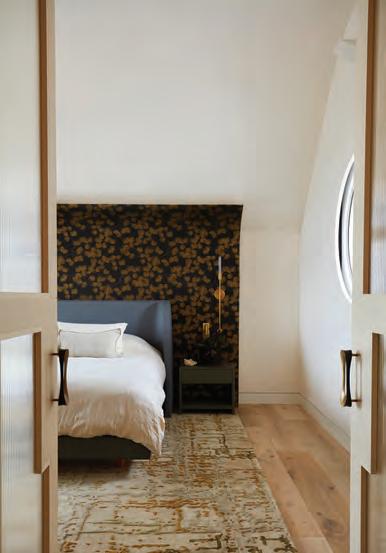
the day and unwind at night, so it should feel both highly functional and deeply luxurious.
Start with the essentials: a smart, ergonomic layout; generous storage; quality fittings; layered lighting; durable, easy-to-clean surfaces; and excellent ventilation. From there, add luxury touches: underfloor heating, double vanities, a freestanding bath for long soaks, and a generous walk-in shower with dual showerheads. Bespoke finishes such as natural stone, custom joinery, and integrated lighting bring sophistication, while thoughtful details such as heated towel bars or statement mirrors create a sense of everyday indulgence.
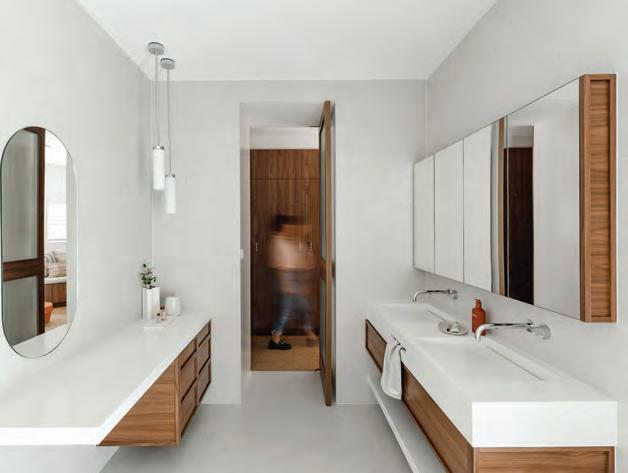
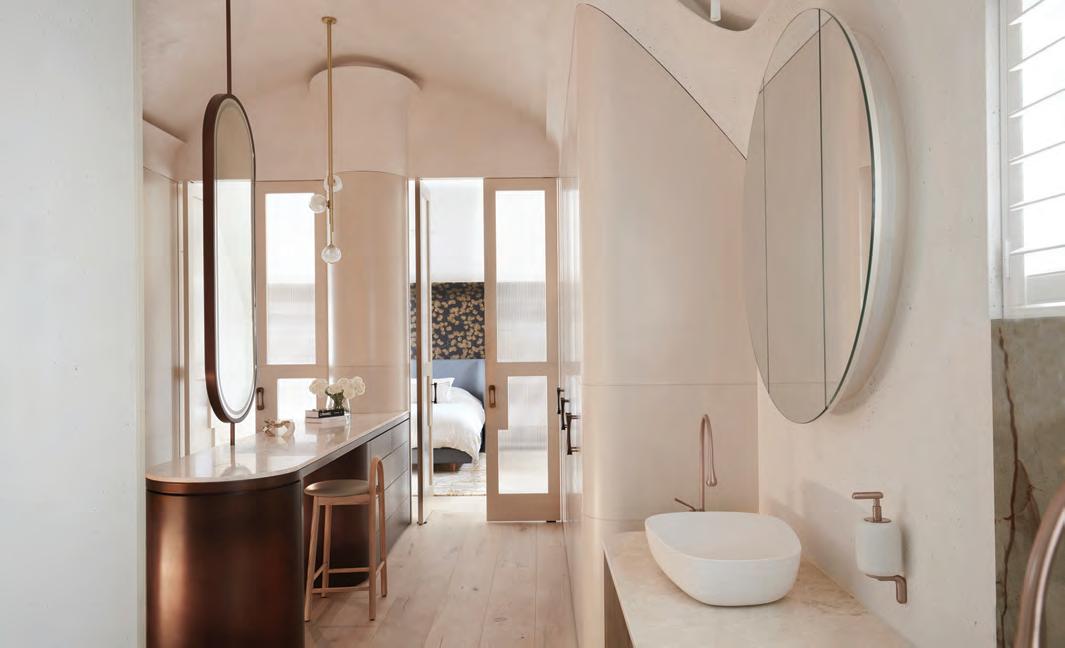
When designed with care, the ensuite transcends being “just a bathroom.” It becomes a private retreat within a retreat: the perfect finishing touch to the Primary Suite.
It’s important to see the Primary Suite as the heart of your client’s personal sanctuary. It’s not just a collection of rooms, but a cohesive, carefully orchestrated experience that supports how they live and who they are. Every element is considered, from the flow of spaces to the smallest detail, creating a seamless balance of beauty and practicality.
As interior designers and cabinet makers, our goal is always the same: to craft spaces that go far beyond function, spaces that nurture, restore, and delight. With thoughtful design and a touch of luxury, we can create Primary Suites that transform everyday living into something truly extraordinary. ■
HAI LANG RESIDENCE: WINNER Australian Bathroom of the Year, 2025
(Housing Industry Association)
Interior Design & Furniture Curation: Birdblack Design
Building Designer: JIH Building Design
Builder: Aspire Constructions
Shoot Stylist: Birdblack Design
Photographer: Prue Ruscoe
PARKLAND RESIDENCE: WINNER: Best Master Suites Australia 2023 (KBDi)
Interior Design: Birdblack Design
Builder: Pavilions
Shoot Stylist: Birdblack Design
Photographer: Better Together Photography Co

Sarah is the owner and founder of Birdblack Design. A qualified interior designer since 2006, Sarah has been taking dreams and turning them into realities for nearly two decades.
Launching Birdblack Design in 2014, Sarah desired to create a design studio that provided a new offering to the market, where function and beauty meet hand-in-hand. birdblackdesign.com.au

As ACFA and KBDi move forward together, our refreshed collaborative logo represents more than a visual update. It is a considered expression of a united industry — one that recognises the distinct roles of designers, manufacturers and cabinet makers and clearly articulates the value of collaboration across the full journey from concept to completion.
This new identity reflects a shared commitment to strengthening connections among design and manufacture, creativity and capability, and ideas and execution.
The alignment of ACFA and KBDi brings together two organisations with different — yet complementary — audiences. Designers shape ideas, intent and experience. Manufacturers and cabinet makers translate those ideas into precise, functional and beautifully crafted outcomes.
Rather than dissolving these identities, the collaborative logo was intended to respect each organisation’s history while establishing a confident, unified visual language for shared initiatives, including events, advocacy and industry communications.

The result is a logo system that signals partnership, not sameness. It reflects how our industry operates: distinct disciplines working together to deliver better outcomes.
Colour plays a powerful role in conveying identity, trust and intent. The collaborative palette was carefully structured to represent both organisations equally, while introducing unifying elements that enhance clarity and consistency across shared communications.
The orange and red hues retain ACFA’s bold, energetic character — closely associated with craftsmanship, manufacturing expertise and hands-on industry leadership. These colours continue to feature in ACFA-exclusive communications, including manufacturing-focused resources, education, events and partner activity.
The blue hues reflect KBDi’s established and trusted identity within the design community. Blue remains prominent across designer-facing communications, including awards programs, technical bulletins, professional development and accreditation.
At the centre sits mint — a soft, contemporary tone that bridges the two. Mint reduces contrast, creates
harmony and symbolises the collaborative space where designers and manufacturers work together. It represents shared initiatives, joint projects and a fresh, forward-looking industry mindset.
Supporting the full palette is ink blue — a strong, confident, corporate colour used as a grounding backdrop across joint communications. Ink blue provides visual consistency and authority, allowing collaborative logos to stand out clearly while working seamlessly with both individual brand identities.
This layered approach ensures each organisation retains visual familiarity, while shared communications feel deliberate, cohesive and unmistakably professional.
For both ACFA and KBDi members, the collaborative logo offers both symbolic and practical benefits.
Long-standing members will continue to see familiar brand cues that honour each organisation’s heritage and values. At the same time, joint initiatives are clearly unified, reinforcing a stronger collective presence across the industry.
Importantly, the logo system allows flexibility. Designers and manufacturers operate in different contexts, communicate with different audiences, and require different tools. This system supports distinction where needed without fragmentation.
The palette is also future-ready — modern, professional and scalable across digital platforms, print, signage, awards, education and events.
A visual expression of ‘from concept to completion’
At its core, this collaborative logo visually represents the journey our members undertake each day.
Great design relies on expert execution. Skilled manufacturing is elevated by thoughtful design. Neither exists in isolation.
The structure and balance of the logo reflect this relationship — two distinct identities connected by collaboration, working towards shared success.
As this identity continues to roll out across communications and initiatives, it serves as a visual reminder that when designers and
manufacturers align, the entire industry is stronger — from concept to completion.
While ‘Concept to Completion’ reflects the natural connection between design and manufacture, this companion line — ‘Stronger Together for Our Industry’ — speaks to the broader purpose behind the alignment of ACFA and KBDi. It reinforces the idea that when designers, cabinet makers, manufacturers, suppliers and partners operate with shared goals, the entire industry benefits through stronger advocacy, clearer professional standards, richer education pathways and more meaningful collaboration.
Together, the two taglines express both what we represent and why we are working more closely than ever before.
• ACFA and KBDi retain their core brand colours
• Each organisation continues to speak directly to its primary audience
• Legacy and recognition are preserved
• A shared visual language for joint initiatives
• Mint as a unifying colour representing collaboration
• Greater consistency across events, education and advocacy
What it represents
• Partnership, not sameness
• Respect for legacy with a future-focused outlook
• A stronger, more connected industry — from concept to completion ■

We are now in a unique cycle where renovations activity is booming despite economic conditions that would otherwise see activity contained.
With interest rates rising in February and potentially more to come, the impact on renovations is expected to be more muted than new home construction. The higher rates will constrain the marginal borrower, particularly for smaller projects, however the composition of renovation activity has shifted to larger and more ambitious projects. The volume of these projects is likely to remain elevated, especially if this turns out to be a much more modest hiking cycle than the first one.
The shift reflects a strong positive wealth effect. The pandemic caused house prices to surge, ballooning household equity, allowing for owner occupiers to use the equity to finance major renovations to their homes. On top of that, the pandemic normalised work from home, increasing the incentive for homeowners to take on much larger renovation projects.
The ongoing shortage of housing stock has further reinforced this trend. Reduced turnover of housing and a pipeline that is still in its recovery stages has reduced the number of suitable homes
By Glen Qi, HIA economist
available, while elevated transactional costs have made it less feasible to relocate. These constraints have pushed renovations into more of a necessity as much as by affordability.
While higher interest rates may slow future house price growth, they are unlikely to trigger a decline unless unemployment also rises. Owneroccupiers will still have capacity to renovate, having already realised significant equity gains in their primary residence.
Constraints on land supply and new housing stock remain, reinforcing the incentive to invest in existing homes. Despite potential hikes in interest rates, renovation activity is likely to remain elevated from 2027 to 2030 at broadly similar rates to earlier forecasts before the rate rise in February. Interest rate increases will have an effect, but they likely affect the timing and amplitude of the cycle, not its existence.
Australia recorded $13.9 billion in renovation activity in the September quarter 2025, up by 0.5 per cent from the previous quarter and 7.6 per cent higher than a year earlier. This is very nearly back to the highs of the pandemic, and the outlook for this trajectory is looking bright. ■
Housing Industry Association hia.com.au
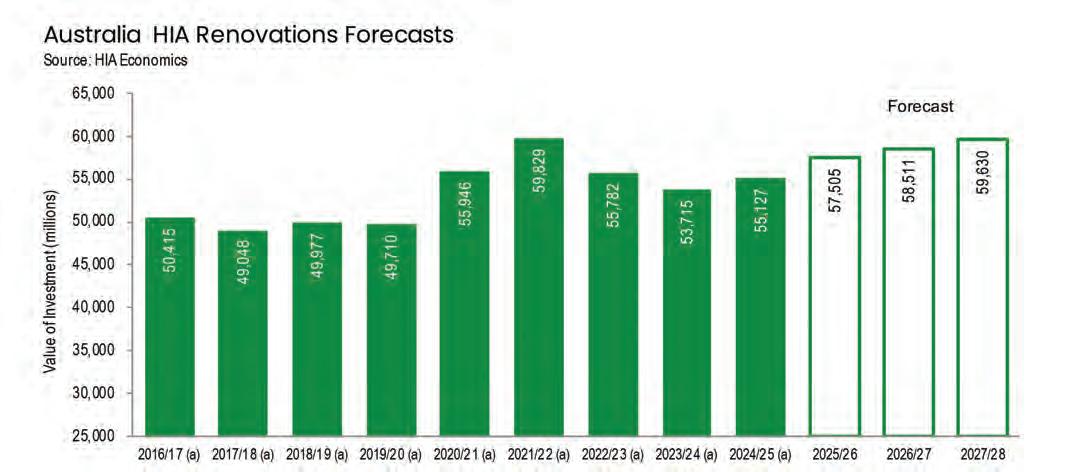

Richard joined the ACFA Board in 2021 and was appointed chairperson at the end of 2025 following the completion of the incumbent chair, Fred White’s, tenure.
With more than 30 years’ experience in the industry, Richard brings a deep understanding of both the technical and commercial realities of manufacturing and joinery. He founded Debrich Custom Joinery in 1994, building the business from the ground up into a respected specialist in highend residential joinery. Debrich had long been a member of the Furniture Industry Association of Australia (FIAA), which later became ACFA, and Richard actively utilised the business and workplace support services available to members.
Having seen first-hand the quality and value of the industry association’s work, Richard was pleased to be invited to join the Board and contribute his experience and perspective for the broader benefit of the industry.
Like many in the sector, Richard began his career as an apprentice, undertaking training in Shopfitting and Detailed Joinery at Granville TAFE and later North Sydney TAFE, after leaving school at
the age of 16. Upon completing his apprenticeship, he progressed through a range of roles including leading hand and factory manager, before ultimately establishing his own business.
Debrich Custom Joinery began in modest surroundings with Richard as the sole tradesperson. He recalls the hard work and personal sacrifice required to establish a business, while acknowledging that the industry landscape of the mid-1990s was very different. Starting with just a panel saw, drill press and edge bander, funded through personal savings after being unable to secure bank finance, Richard steadily grew the business.
Initially focused on shopfitting, Debrich later transitioned into high-end residential work, which remains its core speciality today. The company now employs 27 staff, including three apprentices. Richard is particularly committed to apprentice development, seeking individuals with genuine passion for the trade and ensuring they are supported within a cohesive workplace culture. Recognising how much the industry has evolved since his own apprenticeship, he places strong emphasis on nurturing young people and supporting them through the full four years of their training.
Richard is especially proud of the Board’s leadership through two significant mergers — with the Kitchen & Bathroom Designers Institute (KBDi) and the Australian Woodworking Industry Suppliers Association (AWISA). He views these mergers as a natural evolution, strengthening ACFA as a unified industry body that advocates for and supports all facets of the sector.
He is committed to increasing diversity and representation on the Board to reflect the breadth of the three industry groups now represented. Richard welcomes the contributions of Board members from KBDi and AWISA, noting that the mergers have introduced valuable expertise from the design and supplier sectors. He looks forward to ensuring these voices are heard and represented at Board level. ■
These microcement finishes were originally developed in Spain to meet Australian Standards and offer a fully waterproof, grout-free surface with no visible joins. cimentart.com.au
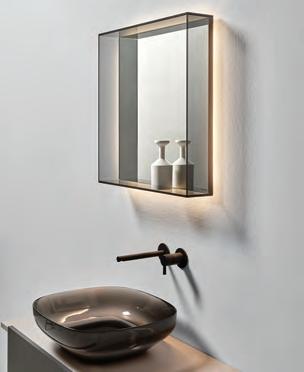
The ultimate social cooking appliance for any outdoor kitchen, Evo’s unique style captures attention while the highly functional design encourages participation. evogrills.com.au
Teca mirror from antoniolupi
Designed by AL Studio, Teca integrates seamlessly into any interior with its pure, essential form, clean lines, minimal thickness and sharp angles. antoniolupi.it/en
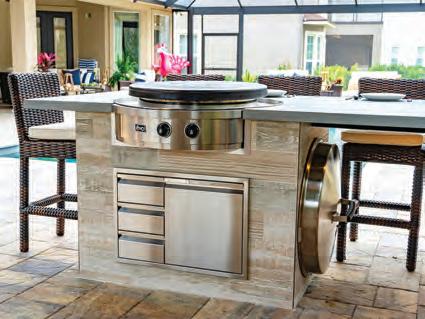
Give your next project a lift with our editor’s pick of the latest kitchen, bathroom and interior products
Designed by Karim Rashid, the Rook lamp features a mouth-blown glass technique which creates unique imperfections that tell the story of each piece. Available in Dark Amber, Smoked, Bronze and Peafowl Green glass. tonellidesign.it/en
Designed by Enzo Mari, the desk’s structure is a curved, layered beechwood plank and four sturdy but slender solid beechwood legs with a top in extra-
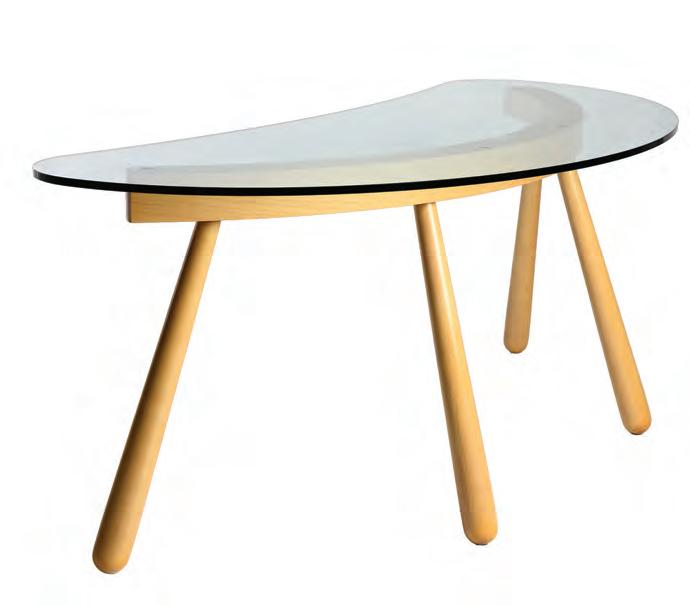
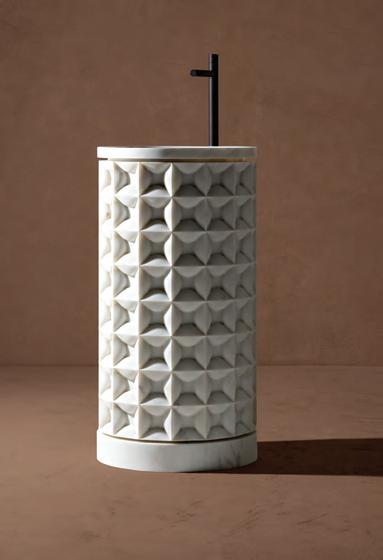
Dawn washbasin from Kreoo
Designed by Christophe Pillet, Dawn is a cylindrical block which is sculpted then chiselled by hand to create a contemporary texture on its outer profile, framed within two polished bands to emphasise the design.
kreoo.com/en
Agora from iGuzzini
This architectural spotlight, designed by Jean-Michel Wilmotte, has been awarded with the Compasso d’Oro International in recognition of its meticulous attention to both aesthetic and functional details.
iguzzini.com
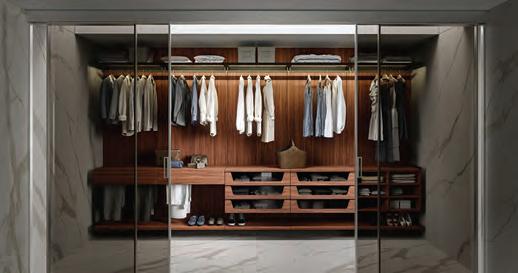
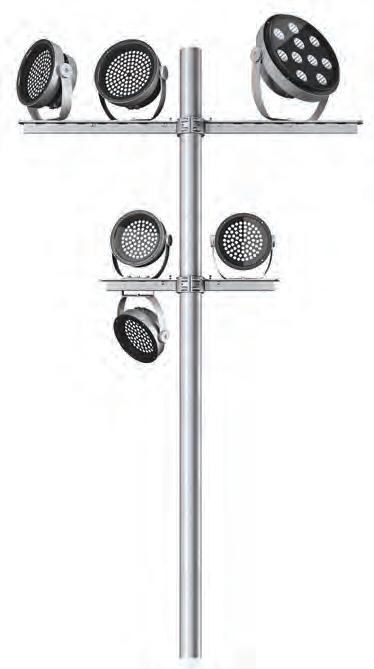
With its geometric and rigorous lines, Bright places emphasis on glass which transforms the wardrobe into a bold architectural element. The robe can be placed as a freestanding element or a wallmounted addition.
arancucine.it/en
Icona Collection from Icona Architetti Associati
A new collection of flooring and wall coverings that draws inspiration from Milanese architecture and design. The cement tiles are available in multiple variations across three categories — Luxury, Nature and Pop. iconaarchitetti.com/en
Infinity drawer handle from PullCast
Infinity is a family of handcrafted drawer pulls with an everlasting elegance for a timeless finish, perfect for cabinet drawers.
pullcast.eu
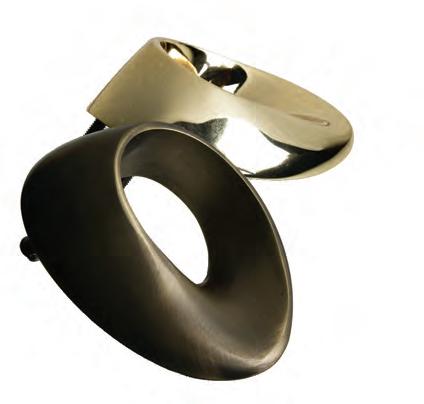
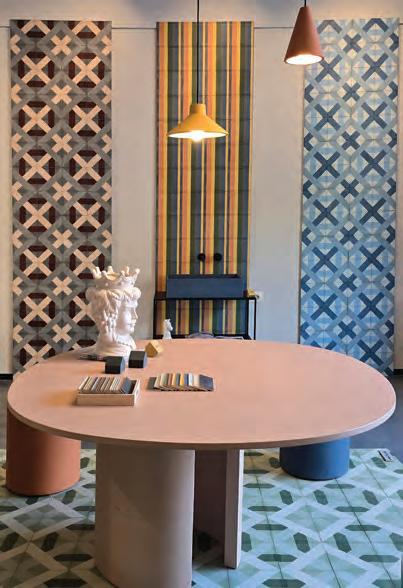
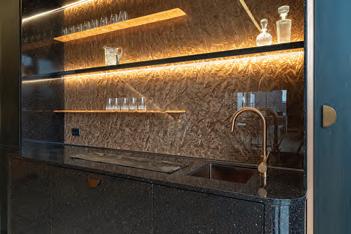
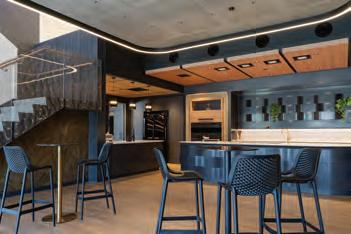
Queensland showroom has officially opened in Brendale
Austaron Surfaces’ new showroom delivers a purpose-built destination tailored to designers, specifiers and industry professionals seeking hands-on product engagement.
More than a conventional display space, the new showroom has been conceived as an immersive environment that demonstrates how Austaron’s portfolio can be resolved across both residential and commercial fitouts. From detailed joinery moments to expansive wall applications, the space showcases material performance, design flexibility and seamless integration in real-world contexts.
At the heart of the showroom is Staron® Solid Surfaces, presented across a series of applications that highlight its defining characteristic: seamless design. Designers and specifiers can explore its use in kitchens, bathrooms, wall cladding and custom furniture, gaining insight into how the material can transition effortlessly between horizontal and vertical planes. Marble- and stone-inspired décors within the Staron range introduce a new depth and tactility to solid surface specification, while its established track record in Australian projects since 2003 offers confidence in long-term durability and performance.
Extending the creative potential of Staron is the Mario Romano Walls collection. Featuring more than 40 intricately routed patterns — with customisation available — the range introduces sculptural surface articulation suited to walls, joinery and feature installations. Particularly effective in wet areas, these designs provide
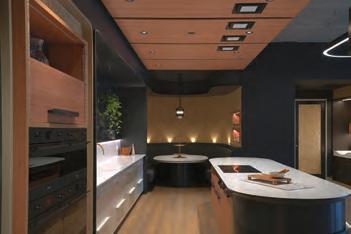
a high-impact yet practical solution for bathroom environments and hospitality settings alike.
For projects seeking statement-making finishes, Acrylic Couture® delivers decorative panels handcrafted in Italy. Designed to work in concert with lighting, each panel reads as a functional artwork — ideal for feature walls and high-end residential applications where materiality and ambience intersect.
The newest addition to the portfolio, Organoid® Natural Surfaces, introduces biophilic texture through the use of real natural materials. Suitable for walls, joinery and acoustic panels, the range offers designers a way to layer sensory depth into interior schemes, especially when paired with integrated lighting.
Rounding out the collection is Kaynemaile® RE/8 Mesh — a versatile solution for interior zoning, privacy and screening. Equally effective externally for solar protection and façade screening, it supports cohesive transitions between interior and exterior spaces.
Complemented by brands including Hettich and EGR Décor, the Brendale showroom positions itself as a collaborative hub for product education and specification support. With the Melbourne showroom established and Sydney’s Pyrmont showroom nearing completion — developed in collaboration with Schweigen, Luxe by Design, Tec LED and EGR — Austaron continues to expand its national footprint, offering the design community accessible, hands-on inspiration across multiple states. ■
Create unique living spaces with the exclusive offerings from Austaron Surfaces. The extensive range of products effortlessly blend aesthetics and practicality, enabling you to craft premium and distinctive interior spaces. Experience the difference that our high quality surfaces can make in your home.
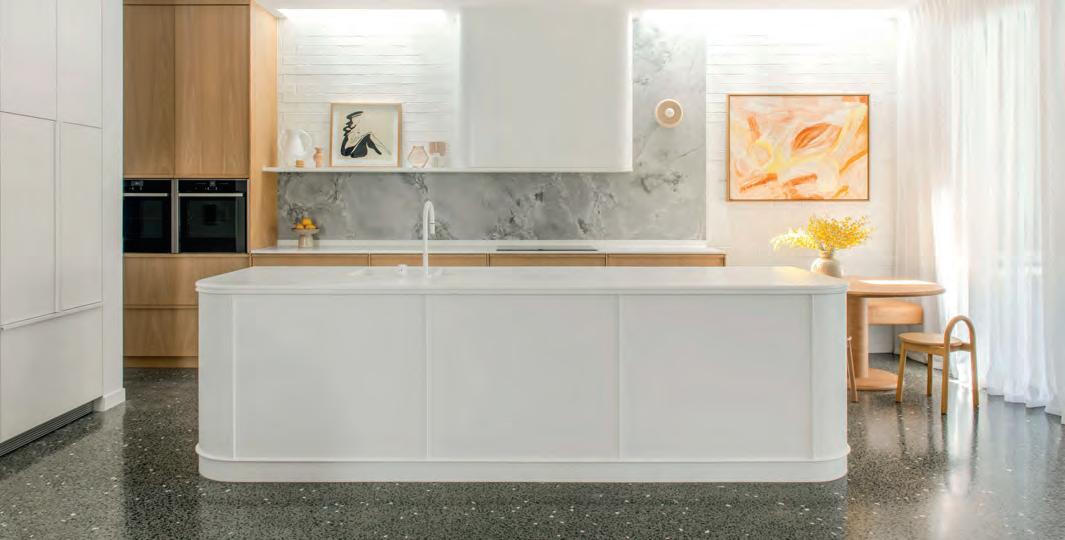
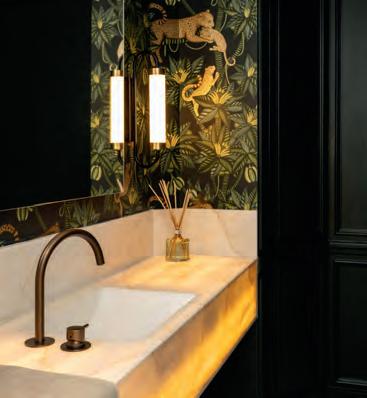
austaronsurfaces.com | sales@austaron.com.au
Across workshops and job sites, cabinet makers and joiners are seeking smarter, more efficient surface solutions for modern kitchens, wet areas and high-traffic zones across both residential and commercial applications. Xenolith from polytec is a highperformance surface designed for benchtops, café table tops, and wall lining applications.
Xenolith is a premium surface material that delivers a refined aesthetic with the durability required for everyday use. With consistent colour throughout and larger format slab sizes, cabinet makers can create expansive benchtop designs with fewer joins. By reducing the need for multiple seams, the original design intent is preserved, resulting in clean, uninterrupted surfaces that enhance the overall finish.
The practicality of the larger format provides greater flexibility when planning layouts, accommodating oversized islands and extended runs while maintaining a seamless result. Joins can also be positioned strategically, ensuring a consistent appearance across both horizontal and vertical applications.
Available in 5mm, 15mm and now 18mm, Xenolith delivers true versatility across residential and commercial projects. The new 18mm thickness creates a more substantial, premium presence for benchtops, vanities and café counters. The 15mm option remains a reliable choice for high-traffic kitchens, retail counters and covered alfresco areas. For splashbacks and wet area wall linings, the sleek 5mm profile provides a clean, finish that integrates seamlessly with adjoining benchtops and vanities, making it ideal for vertical applications.
Xenolith is impervious to water, resistant to stains and impact, and features Australian Certified Antibacterial properties, ideal for environments where hygiene is critical.
The colour palette spans stone-look marbles, industrial cements and solid whites, all in a smooth antibacterial finish, offering design flexibility without added maintenance.
Available in 3660mm x 1830mm sheets, with master sheets up to 4400mm x 1800mm, Xenolith supports larger spans across projects of any scale and supports a more efficient installation process. Because it can be measured from plans without the need for an on-site check measure, production can commence in line with the cabinetry schedule. With no edging required and fewer finishing steps, fabrication is streamlined, allowing the benchtop to be installed by the cabinet maker on the same day as the cabinetry.
Stocked and fabricated in Australia, Xenolith also supports shorter lead times and more reliable scheduling.
Backed by a 10-year warranty and a dedicated After Sales Service team, Xenolith provides confidence long after installation. For technical data, installation videos and document downloads, scan the QR code. ■

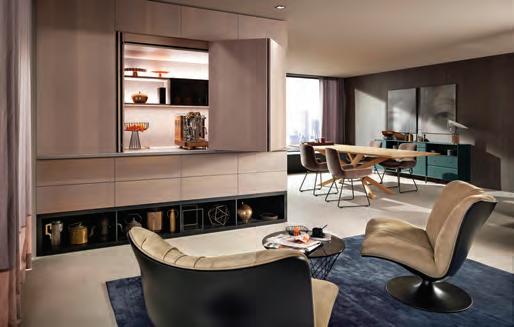
The REVEGO pocket system from Blum offers a refined solution for projects where clean lines, flexible spatial planning and a seamless user experience is a priority.
Whether you’re specifying a compact urban apartment, a multifunctional family kitchen or a luxury dressing room, REVEGO lets you resolve the tension between hidden function and visible form: doors that disappear into a narrow pocket, preserving uninterrupted surfaces and a restrained, coherent aesthetic.
Blum's REVEGO pocket systems use door fronts that seamlessly tuck away into a narrow cabinet, the pocket, so when closed you get a continuous, calm run of cabinetry, and when opened you reveal generous, usable workspace and storage. As homes increasingly merge kitchen, dining, living and work areas, REVEGO provides a practical, elegant way to make spaces multi-functional without compromising the visual simplicity designers and homeowners value.
Now available in front heights from 1130mm to 2980mm, REVEGO is offered in both double-door (duo) and single-door (uno) options that can be combined to met a variety of needs. This expanded range moves REVEGO beyond tall-unit applications into a system that can be specified across:
• worktop-mounted cabinets
• floor-to-ceiling furniture
• walk-in solutions such as dressing rooms and pantries
All configurations maintain a singular visual language, so you can detail across spaces without breaking the design narrative.
REVEGO excels at hiding functional zones behind flush fronts: think concealed workspaces, appliance garages, and hidden pantries. When closed, these pocket doors preserve a serene, uninterrupted façade and keep countertops visually clean. When open, they create wide, unobstructed openings that feel boutique and intentional, ideal for dressing rooms, wardrobe walls and lifestyle zones where both display and discretion matter.
The opening and closing experience is smooth and effortless thanks to Blum’s TIP-ON mechanical opening system. A gentle touch to the front releases the door, which then slides quietly into the pocket; a firm push initiates the opening action from inside the pocket. Built for longevity, REVEGO is rated for 20 years of use (approximately 40,000 cycles), delivering consistently reliable motion that complements the refined look.
In short, REVEGO brings together minimalist aesthetics, practical performance and long-term reliability. It’s a single, elegant system that helps designers and architects create clean, adaptable interiors where hidden function supports visible form. ■
Blum Australia blum.com/au/en/products/pocketsystems/ revego/overview
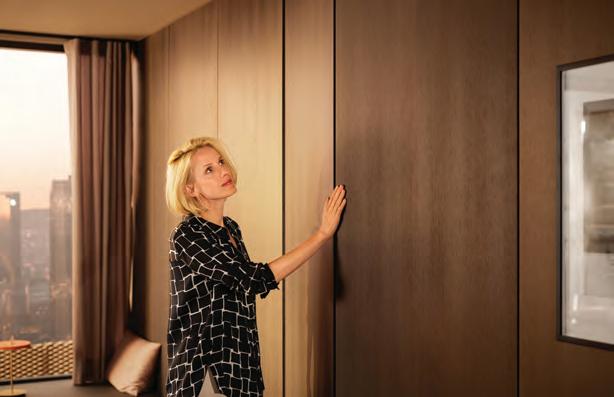
As an ACFA x KBDi member, you benefit from the combined strengths of two leading industry associations
ACFA (Australian Cabinet and Furniture Association) supports cabinet makers, joiners and furniture manufacturers. KBDi (Kitchen and Bathroom Designers Institute) supports kitchen and bathroom designers across Australia.
Membership brings a wealth of advantages from expert technical guidance to dedicated workplace support, all designed to help you and your business thrive.
Technical advice & bulletins
Access to expert technical support where you can send your questions via email for technical advice enquiries on Australian Standards or building codes that may apply to your project.
Industry-judged awards programs
Showcase your work and gain recognition through two prestigious award programs. The ACFA Industry Awards and the KBDi Design Awards each offer a variety of categories representing the breadth of our industry. As a member, you’re eligible to enter either or both putting your projects in front of the wider industry. All entries are evaluated by industry experts with a range of experience and backgrounds.
Unlimited workplace advice & support
Members can contact our team for general guidance on topics such as licensing, WHS obligations or business responsibilities. For more tailored workplace and employment advice such as understanding award classifications, interpreting wage rates or navigating employer obligations business-level members enjoy unlimited access to our Workplace Advice Team. Whether you're after clarity on pay entitlements or need template letters or guidance managing staff, our industry specific HR specialists are here to support you in a friendly, confidential and solution-focused way.
Networking opportunities
Stay connected with a vibrant community through regular industry events. ACFA x KBDi members are invited to KBDi Chapter events held across all states and territories, hosted at various showrooms and venues to keep you up-to-date on industry developments and new product releases. These
informal gatherings let you meet and mingle with fellow professionals and suppliers, forging valuable relationships in a friendly setting. Members also gain access to an annual industry conference and special events where expert speakers share insights across the many facets of our industry. These opportunities ensure you remain informed, engaged, and well-connected while continuously learning and growing your network.
Downloadable fact sheets & resources
Enjoy an extensive library of resources at your fingertips through the ACFA Member Portal. Hundreds of downloadable documents including fact sheets, guides and templates cover the topics that matter to your business. You’ll find up-to-date information on Fair Work legislation changes, practical checklists and template letters. Employer guides, wage rate snapshots along with other premium resources are available to eligible membership tiers. All members can access a broad range of standard content so, whatever challenge you're facing, there's likely a resource available which will save you time and offer peace of mind.
Discounted access to ACFA’s online learning hub
ACFA’s Learning Hub is a flexible online platform offering a growing range of short courses tailored to the needs of industry professionals, business managers, supervisors and employees alike. Courses cover Health and Safety, the National Construction Code, Business Management and more. These courses are designed to fit seamlessly into a busy schedule and are available to ACFA x KBDi members at a discounted member rate, with additional discounts available for Group Corporate members, making the Learning Hub an excellent resource for anyone looking to enhance their skills and stay up to date with industry expectations. New courses will continue to be added over time, supporting ongoing professional development across the sector. ■
Trades and manufacturing businesses: visit acfa.net.au
Design professionals: visit kbdi.org.au
Join the ecosystem where users become champions
For more than 40 years, Planit has been at the forefront of CAD/CAM innovation for the woodworking industry. The company has supported thousands of businesses on their journey from manual processes to fully digital manufacturing. One thing has remained true throughout this evolution: the real power of technology is unlocked only when people have the knowledge to use it confidently and creatively.
Australia has one of the strongest CABINET VISION communities, globally a testament to decades of innovation, training, and close partnerships across our industry.
But with that strength comes a responsibility: to continue lifting skills, standards, and success for every user. That’s why the Planit Academy was created: an initiative designed to multiply the capability, confidence, and career pathways of CABINET VISION users across Australia and beyond.
Every manufacturing business today needs its CABINET VISION Champion.
The design team leader, the production planning manager, the workflow strategist, the “go‑to” wizard who truly understands how to drive results from software and machinery. Traditionally, becoming that champion took years of trial, error, and informal learning.
Planit Australia believes that knowledge multiplies success. When you invest in the skills of your team, you don’t just improve how CABINET VISION is used, you transform how your entire business performs. Great users create great workflows. Great workflows create efficiency and efficiency delivers ROI straight to the bottom line.
Planit Academy exists to accelerate that journey. It’s the most comprehensive learning ecosystem ever built for CABINET VISION users, designed to develop champions at every level, from new starters to advanced operators.
Introducing the Planit Academy experience
Planit Academy is not a single platform. It’s a suite of
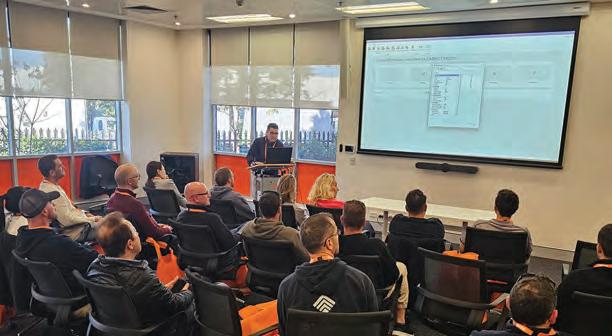
connected learning environments; each designed with a specific purpose and each powered by Planit’s Certified Product Solutions Experts.
xSkillSync: Australia’s first CABINET VISION user group — and the world’s most connected. xSkillSync brings users together in a live, interactive, camera‑on community where ideas flow, questions spark, and real world challenges are solved collaboratively. It’s the new home for CABINET VISION users who want to grow together.
xExperiences: These immersive, in‑person events bring together machinery suppliers, hardware partners, and industry leaders. Each event is themed around emerging technologies, workflow standards, and the future of smart manufacturing. Think of xExperiences as hands‑on innovation days — giving Planit customers exclusive access to insights, demonstrations, and face to face learning you can’t get anywhere else.
xTechTips: These short, sharp videos are designed for busy professionals who want immediate, actionable CABINET VISION wins. Clear, quick, and practical, xTechTips allows users to learn something valuable in just a few minutes — and apply it instantly in their daily workflow.
xTutor: Whether you’re a new user or a seasoned operator, xTutor provides structured, self‑paced learning modules that build skill, confidence, and knowledge step by step.
xWebinar: Stay ahead of the curve with topic based webinars featuring:
• Feature deep dives
• Upcoming release previews
• Workflow automation strategies
• Library building techniques
• Interactive Q&A with Planit experts ■
Planit Australia planitaustralia.com.au 1300 855 411
Members of the Australian Woodworking Industry Suppliers Association have formally voted in favour of a merger with ACFA


In mid 2025, following the completion of an industry wide survey where past exhibitors and attendees had the opportunity to share their feedback, the AWISA Board decided it would be best for the association to explore opportunities for the future. With this in mind, a number of meetings and negotiations took place with representatives from both AWISA and ACFA in relation to a merger.
The vote was held at an Extraordinary General Meeting on 15 January 2026, marking an important milestone for both organisations and the broader woodworking, manufacturing and supply sector.
This merger brings together two long standing industry bodies with a shared commitment to supporting businesses, strengthening advocacy, and building a more unified voice for our sector.
Richard Curley, chair of ACFA, said, “This is a very positive outcome for our industry. Bringing ACFA and AWISA together creates a stronger, more connected association that can better represent the interests of manufacturers, cabinet makers, designers and suppliers across Australia. We welcome AWISA members and look forward to working together.”
Kevin Bruce, chair of AWISA, said, “AWISA boasts a long and proud history, which both the board and its members are committed to preserving. Our members have decisively chosen a future path for their association, and the merger with ACFA offers the best opportunity to safeguard AWISA's contributions to the industry. This merger ensures that our members remain supported, represented, and connected within a larger national organisation that understands the challenges and opportunities facing our industry.”
Over the coming months, work will continue to integrate AWISA into ACFA in a planned and considered way. Members will be kept informed as transitional arrangements are finalised and as opportunities to engage with the merged organisation are rolled out.
As part of the merger, two AWISA directors will come across to sit on the ACFA Board and all AWISA members will receive an invitation to become ACFA members. A strategic plan will be developed at a meeting this month about the future of any shows. ■
ACFA
acfa.net.au/awisa-members-vote-to-mergewith-acfa 1300 342 248

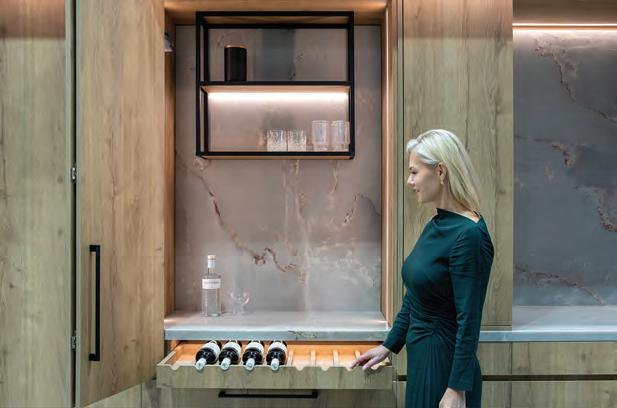
Hettich Australia has officially opened its Destination Experience Centre at Waterloo Design Centre
Hettich Australia has officially opened the doors to its new Sydney Destination Experience Centre, located within the Waterloo Design Centre, marking a significant new chapter in the brand’s engagement with Australia’s design and joinery community.
Created as a hands on, experience led environment, the Experience Centre invites kitchen and bathroom designers, cabinet makers, joiners, architects and builders to explore cabinetry hardware in context, not in isolation. Rather than a traditional product display, the space demonstrates how precision engineering, intelligent functionality and thoughtful design come together to elevate modern interiors across kitchens, wardrobes, living spaces and commercial applications.
The move to Waterloo positions Hettich at the heart of Sydney’s premium design precinct, alongside leading interior brands and specification partners. It reflects the company’s long term commitment to collaboration, technical excellence and active participation within the local design ecosystem.
Inside, visitors can experience the full spectrum of Hettich innovation. Highlights include the AvanTech YOU Illumination drawer system, the exceptional
precision of Actro 5D runners, the smooth kinematics of WingLine folding doors, and the modular flexibility of the Cadro framing system. Integrated lighting solutions and the new Interior Fittings range are woven throughout the displays, while FurnSpin takes centre stage, showcased across multiple kitchen applications to demonstrate its unique translatory rotational movement in real world use.
The Experience Centre unfolds as a series of immersive, residential inspired environments including kitchen pantries, wardrobes, outdoor kitchens and more. Each zone is designed to spark ideas and practical conversations, helping professionals visualise how hardware decisions shape both the aesthetics and performance of their projects.
Adding further depth to the experience, the space features products and surfaces from valued industry collaborators including Laminex, Cosentino, Fisher & Paykel, ABI Interiors, Austaron Surfaces and Quadro Concepts, creating a holistic, specification ready destination.
Hettich invites design professionals to book a guided Experience Centre visit and explore the full product offering online at designwithhettich.au/ showroom appointment
The Hettich Destination Experience Centre is located at Level 1, 110/197 Young Street, Waterloo NSW. ■
Hettich Australia designwithhettich.au/showroom-appointment designwithhettich.au
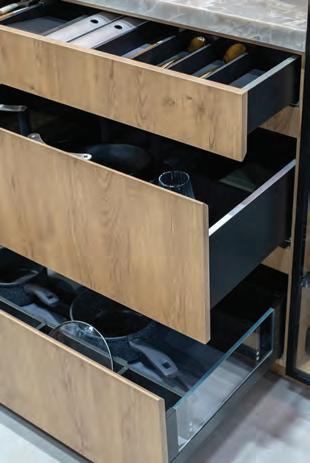
Business Plus and Premium Members have exclusive access to the ACFA Legal Advice Line, delivered in partnership with Easton Belle Lawyers
This initiative builds on ACFA’s existing unlimited workplace advice service, offering you tailored guidance on broader business matters that can protect your business.
For business plus & premium members:
Up to two x 30 minute free calls per member business, per financial year. Speak directly with a qualified solicitor for general advice and direction on common business issues such as:
• Contract disputes (with clients, suppliers, subcontractors)
• Terms and conditions or warranty compliance
• Consumer law obligations and unfair contract terms
• Intellectual property (trademark use and infringement)
• Leasing and commercial agreements
• Unfair dismissal and general protection claims
For premium members only:
In addition to the above, Premium Members will also receive:
• One complimentary document review per annum (choose either a review of your warranty terms and conditions or a review of a settlement agreement)
• Issuance of letters of demand on Easton Belle Lawyers letterhead, giving your claim stronger legal weight
Imagine chasing a client for weeks without payment. With this service, you could speak to a solicitor, understand your options, and have a letter of demand issued on Easton Belle Lawyers letterhead, giving your claim stronger legal weight.
Or, if you’re concerned about whether your warranty terms are compliant, you could use your complimentary document review to gain clarity and protect your business from disputes down the track. How it works
To make the process simple and seamless:
• Contact the ACFA Workplace Advice Team with your enquiry
• We will collect the background information and any relevant documents
• ACFA will forward the details to Easton Belle Lawyers, so it has all the information in hand before contacting you
• An Easton Belle representative will then be in touch to arrange your advice call
Running a trade or design business comes with challenges, from navigating contracts to protecting your reputation and getting paid on time. Having access to legal advice ensures you can act quickly, manage risks effectively, and protect the long term health of your business.
To make the most of this service, when you face a legal issue that needs professional advice, simply contact the ACFA Workplace Advice Team which will coordinate your call with Easton Belle Lawyers.
Additional services are available on a fee-forservice basis beyond the free calls. This service is only available to current financial members.
Easton Belle Lawyers is a boutique commercial law firm which offers premium legal services to its clients.
Easton Belle Lawyers works beyond the scope of standard legal work to ensure the highest level of success for its clients. It is an outcome driven firm that is passionate about the law.
Easton Belle Lawyers managing partner, Andrew Seaton, is known as one of the leading legal strategists in the industry, with expertise built from 35 years of experience in the legal industry, combined with a personalised approach to client relationships. Antoinette Vatani, partner, has 17 years of experience in the legal industry advising on corporate and commercial matters. ■
ACFA Workplace Advisory Team 1300 342 248 Membership@acfa.net.au
Häfele’s immersive new innovation hub for intelligent design
Häfele Australia has launched Blackbox, a next generation showroom and innovation hub designed to inspire the design and construction community with a new way of thinking about light, space and functionality. Located within Häfele’s Australian head office in Melbourne, the Blackbox is open by appointment only and marks the company’s first concept space of its kind in the southern hemisphere.
More than a traditional product display, the Blackbox is positioned as an immersive laboratory where furniture, architecture, lighting and digital connectivity come together to explore the future of living and working environments. The experience has been described as a “theatrical stage of possibilities” — a space where designers and makers can see, feel and test how intelligent systems can transform the way interiors perform.
Spanning more than 200 square metres, the hub showcases Häfele’s latest innovations in lighting for both furniture and rooms, with a focus on creating atmospheres that support emotion, productivity and wellbeing. From programmable lighting scenes to integrated illumination within cabinetry, the Blackbox demonstrates how lighting can shift from a functional add on to a defining design element.
For interior designers, builders and cabinet makers, the key takeaway is clear: smart, connected design is no longer optional — it’s becoming expected. The Blackbox brings this to life through interactive
demonstrations of modular furniture systems, spatial transformation concepts and smart home integration, helping professionals visualise how multi functional interiors can adapt to changing needs.
The applications are broad, with examples tailored to residential interiors, hotel rooms and commercial environments. Throughout the space, Häfele highlights solutions that maximise value in every square metre, offering ideas for compact footprints, flexible layouts and premium finishes enhanced through integrated technology.
Importantly, the Blackbox is not only a destination for inspiration — it is also a working space for collaboration. The hub doubles as a flexible workshop and event venue and is the new home of the Häfele Lighting Academy, supporting industry education through training programs, design workshops and professional sessions.
As a global leader in furniture fittings, architectural hardware and lighting solutions, Häfele continues to push the boundaries of functional beauty. With the Blackbox, the company is offering the industry a hands on environment to explore what comes next: interiors that are emotionally engaging, technologically adaptive and designed to evolve with the people who use them. ■
Häfele Australia Pty Ltd 1300 423 353 hafele.com.au
This stunning space uses Cav’art Designer Stone’s Verde Tempest quartzite to create a sophisticated calm
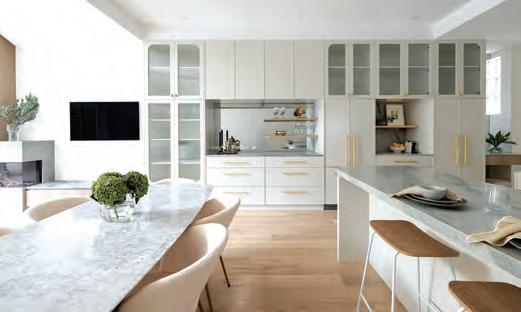
This kitchen, by Jenny Matek from Studio Jenka, showcases Verde Tempest quartzite from Cav’art Designer Stone to perfection. A study in refined, urban luxury, the compact space has been thoughtfully designed and the result is a room that feels expansive as well as intimate and functional.
Soft curves, custom detailing and layered lighting combine in a seamless balance of restrained refinement with a modern edge.
Taking centre stage is the eye catching Verde Tempest quartzite which has been used both horizontally and vertically for immediate aesthetic effect. Its soft tones and rippled veining draw the eye and add a touch of natural calm to this open plan layout. The character of the home has been carefully respected to ensure the kitchen and fireplace seamlessly integrate within the space, bringing both an old world charm and contemporary functionality.
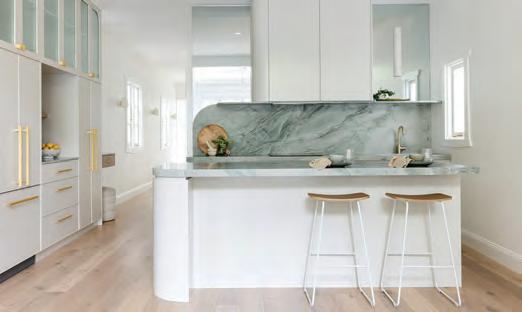
The layout of the kitchen was reconfigured to optimise space within the existing footprint. Bespoke joinery ensures extensive storage allocation that maximises every available centimetre while considering ergonomic requirements and the family’s lifestyle.
A convenient “drop zone” also features matching Verde Tempest quartzite for a cohesive design finish. Fluted glass elements introduce texture and enhance light flow, while the mirrored panels above the cooktop, and in the bar nook, create an expansive sense of openness.
Adjacent to the kitchen, a new fireplace was constructed and encased in matching Verde Tempest quartzite so it becomes the focal point of that area of the home. Integrated storage solutions provide functionality where it’s most needed.
“The large island was designed to be a meeting area between the kitchen and dining with its uninterrupted bench space so the choice of benchtop material was always going to be important,” says Jenny Matek of Studio Jenka.
“The existing fireplace, a dominant feature, was reimagined to enhance the new living area and provide a quiet luxury. The Verde Tempest quartzite was used here for maximum visual effect,” Jenny adds. ■
Photos: Sebastian Mrugalski
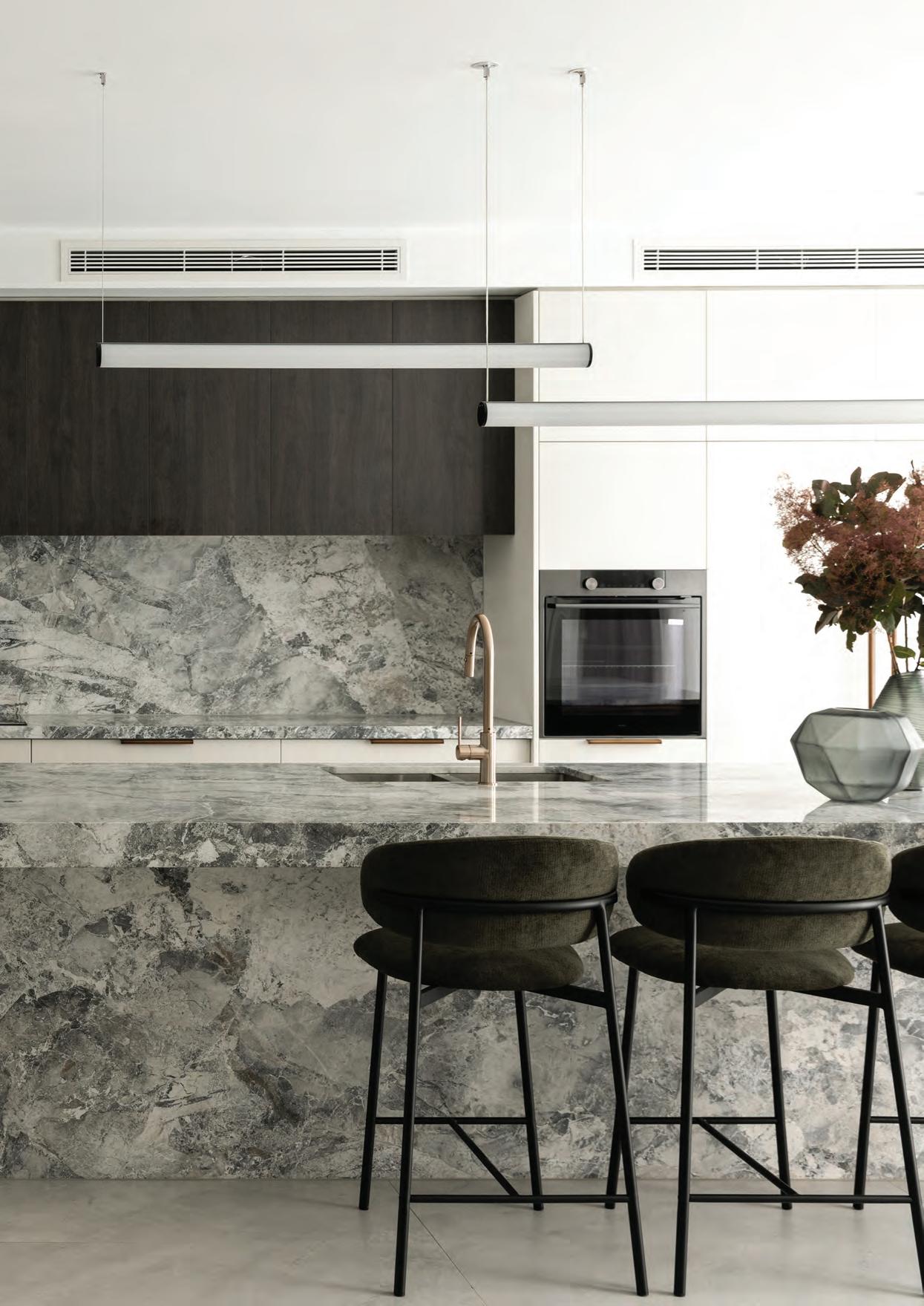
Faster cabinet production, smarter installation, and better value for every cabinet project
When cabinet makers are under pressure to deliver beautiful interiors faster, without compromising quality, every component matters. That’s exactly where Finista® Edge steps in. Developed as the next evolution in Finista drawer systems, Finista® Edge is designed for faster and easier cabinet production and installation, helping trades streamline workflows while delivering a quality result that consumers can see and feel.
Launched in September 2025, Finista® Edge is available from Lincoln Sentry in matt white or matt black, giving cabinet makers and designers a clean, contemporary solution that suits today’s modern kitchen, laundry, pantry and wardrobe designs. With a sleek, refined look and consistent detailing across the range, it’s a drawer system that supports both practical build efficiency and high end presentation.
Built for efficiency — made for cabinet makers
Finista® Edge is fast and easy to build, reducing manufacturing, assembly and installation time. This means fewer headaches on site, quicker fit offs, and a more consistent outcome across every project, whether it’s a single kitchen or a full home interior.
The system also includes 3D adjustment and a clever tilt adjustment located inside the drawer, rather than underneath. This makes fine tuning easier and faster during installation, helping achieve optimal running and smooth operation with minimal rework. Add to that a strong 40kg load capacity, and easy open plus soft close as
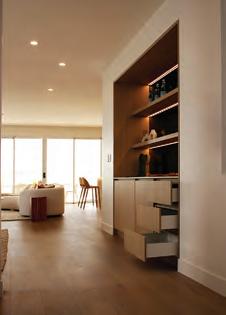
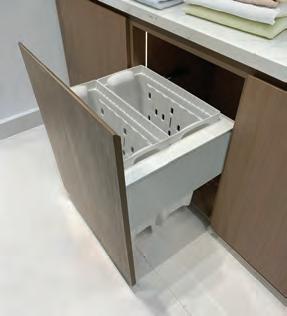
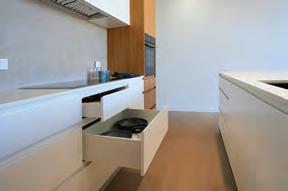
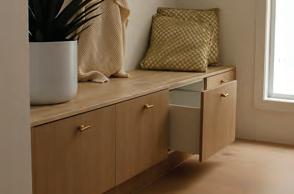
standard, and Finista® Edge becomes a drawer solution that performs as well as it looks.
Four drawer heights — 93mm, 126mm, 174mm and 238mm — and three inner drawer options offer flexibility across applications, while the streamlined 13mm side profile delivers a clean interior aesthetic that aligns with modern consumer expectations.
Finista® Edge is also supported by complementary solutions including the Finista® Edge Uni Bin and Uni H amper Laundry, both designed for quick assembly and seamless integration with the 174mm high Edge drawer.
For workshops focused on productivity, Finista® Edge integrates with popular CNC software programs including Cabmaster, Microvellum, Mozaik and Planit, supporting smoother workflows from design through to manufacturing. It’s another practical advantage that helps cabinet makers quote accurately, build efficiently, and deliver on time.
To make specification and customer consultation easier, Lincoln Sentry has also launched the new Finista website: finistamade.com.au.
More than a catalogue, it’s a practical resource for cabinet makers and clients to explore the full Finista range, view products in finished spaces, and collaborate on design decisions with confidence.
Backed by a 20 year replacement warranty*, Finista® Edge offers long term peace of mind that homeowners and designers value, making it easier for cabinet makers to confidently recommend.
*20-year replacement warranty for Finista drawers and cabinet hinges only ■
Lincoln Sentry 1800 551 919 finistamade.com.au lincolnsentry.com.au/c/finista
The new Finista® Edge drawer system enables more with enhanced functionality and aesthetics to suit modern spaces.
Designed for creating appealing, functional and durable spaces more efficiently, the new Finista® Edge drawer helps you achieve more with faster and easier cabinet production and installation* without compromising style, function or durability.
Finista® Edge is backed by a 20-Year replacement warranty**, giving you confidence and more peace of mind. * When compared to Finista® Swift Drawer System. ** See www.lincolnsentry.com.au for full Finista® Warranty terms and conditions Discover more at www.finistamade.com.au or place an order now at www.lincolnsentry.com.au
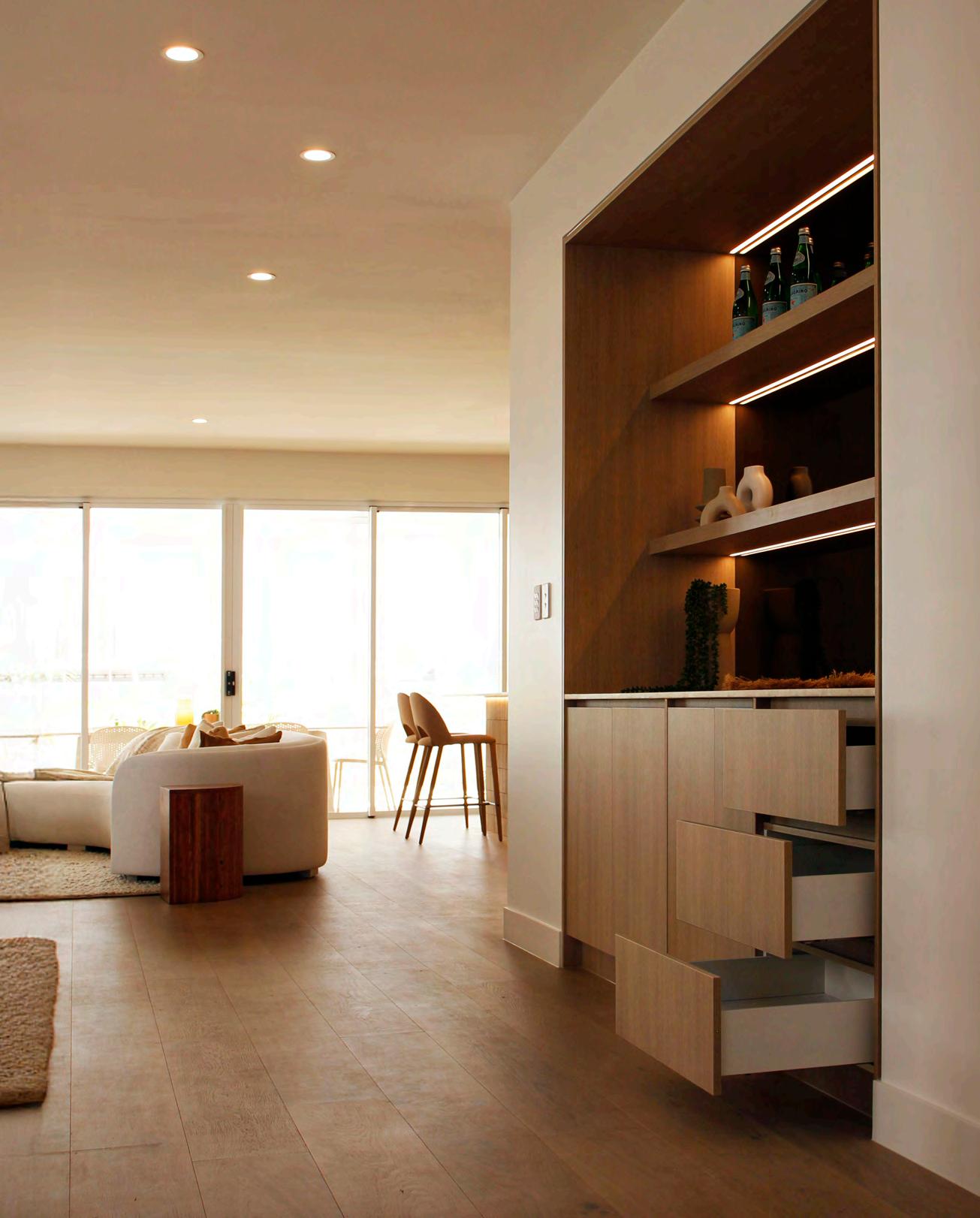
www.lincolnsentry.com.au
And why it’s costing businesses more than they realise
Ask anyone in the kitchen and bathroom industry what part of the job they enjoy the least, and the answer is almost universal: quoting.
It’s the task most often pushed to the end of the day, squeezed in between client meetings, site visits, and supplier calls. It’s also the point where stress peaks — because when quoting goes wrong, it goes very wrong.
The quoting problem no one likes to talk about
In many renovation businesses, quoting is still treated as an administrative chore rather than a core commercial process. As a result:
• Prices aren’t always up to date
• Items are missed under time pressure
• Costs are underestimated to “win the job”
• Margins quietly erode after contracts are signed
By the time a problem becomes visible, it’s usually too late — the quote is accepted, expectations are set, and the project is already underway.
The uncomfortable truth? Most quoting errors don’t come from lack of skill — they come from broken workflows.
Designers and sales consultants are often forced to re enter the same information multiple times:
• Client names
• Addresses
• Project details
• Design notes
Each manual hand off increases the risk of inconsistency, omissions, and errors. When combined with outdated price lists and rushed deadlines, quoting becomes reactive instead of controlled.
And yet, quoting is the single moment where profitability is locked in.
A smarter quoting workflow, built for renovation businesses
Ayrmont ARMS was designed specifically to address this industry pain point — not by adding complexity, but by removing friction.
Instead of treating quoting as a last minute task, Ayrmont ARMS embeds it into a structured, automated workflow:
• No duplication of effort
Client details flow seamlessly from lead to quote — no retyping, no inconsistencies.
• Up-to-date pricing and structured inputs
Quotes are built from controlled data, not memory or spreadsheets saved six months ago.
• Professional customer form presentations
Clear, consistent layouts improve client confidence and reduce follow up questions.
• Automated email templates and document handling
Quotes are issued promptly, professionally, and consistently — every time.
The result is not just faster quoting, but better quoting.
From “I hope this is right” to commercial confidence When quoting is systemised properly:
• Fewer items are missed
• Margins are protected
• Variations are reduced
• Teams work with confidence instead of pressure
Most importantly, business owners gain visibility into how quotes are built — and where profitability is won or lost.
Quoting shouldn’t be the weakest link
In an industry where materials, labour, and overheads continue to rise, relying on rushed, manual quoting processes is no longer sustainable.
Ayrmont ARMS doesn’t just make quoting easier — it makes it accountable, repeatable, and commercially sound.
Because in kitchen and bathroom renovations, the quality of the quote determines the quality of the outcome — for both the client and the business. ■
Ayrmont Technologies ayrmont.com.au
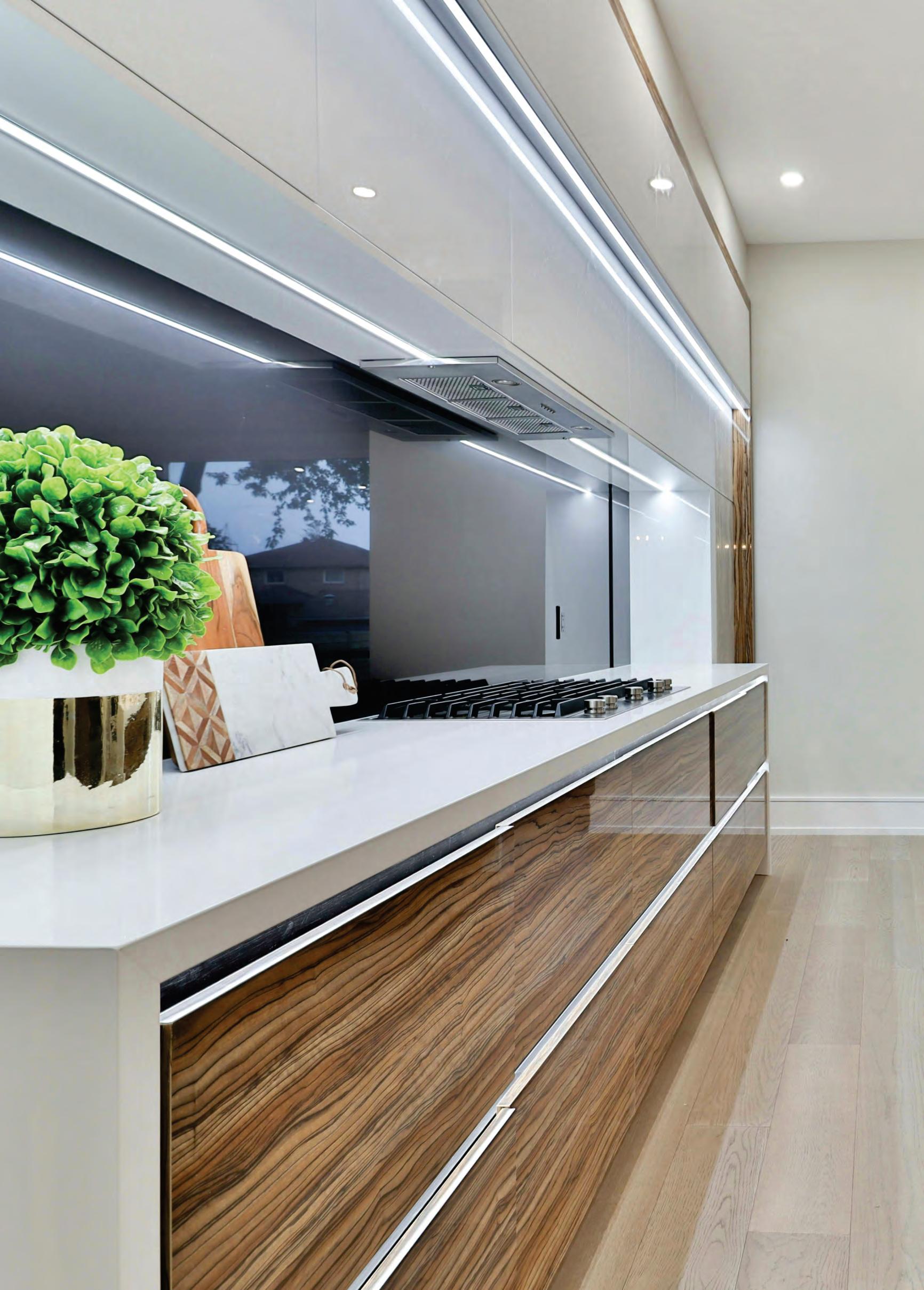
In today’s premium furniture market, the difference between a good cabinet and an exceptional one is often found in the details — how a drawer glides, how a door closes, and how seamlessly movement becomes part of the user experience. For cabinet makers, joiners and interior designers focused on quality, GRASS has built its reputation on exactly this: movement systems engineered to turn opening and closing furniture into something memorable.
With more than 75 years of expertise, GRASS has long been regarded as a pioneer in the furniture industry. Since 2004, the company has been part of the international Würth Group, operating independently under the GRASS brand. This backing supports GRASS’s global reach and manufacturing capability, while maintaining a clear focus on innovation and premium movement design.
The GRASS philosophy is grounded in supporting the individual design concepts that define leading furniture brands and creative craftspeople. As furniture, joinery and cabinetry design becomes more refined and customised, movement systems must do more than simply function. GRASS responds with a development approach that balances haptically appealing movement with functionality, ergonomics and innovation — ensuring that movement enhances the value of the overall furniture piece.
This commitment is evident across GRASS’s product portfolio, including drawer systems, slides and hinges. Designed to meet the demands of high end furniture and cabinet makers and internationally recognised designers, GRASS products are built to deliver long term performance with refined motion. The company’s
reputation has also been reinforced by numerous international design awards, including the German Design Award and the Red Dot Design Award — recognition that reflects both technical quality and design excellence.
GRASS is also truly international in scope, with more than 200 sales partners across 60 countries including Häfele in Australia. This global presence ensures the company is well positioned to support manufacturers and designers across diverse markets and project requirements.
Sustainability is another pillar of GRASS’s strategy. The company views environmental protection as essential to long term business success, with a focus on conserving resources and creating ecologically responsible production conditions. Since the end of 2010, the GRASS Group has been certified to ISO 14001 for environmental management systems, reflecting a structured and ongoing commitment to sustainable operations.
Importantly, sustainability at GRASS extends beyond manufacturing. Many GRASS drawer systems are almost 100 per cent recyclable and contain no hazardous materials or substances listed under REACH regulations. The company’s movement systems are also designed for durability — lasting the lifetime of the furniture and requiring minimal maintenance when properly cared for. ■
Häfele Australia Pty Ltd 1300 423 353 hafele.com.au
We bring furniture to life!
The all-new GRASS by Häfele catalogue is a comprehensive collection of Drawer systems, Concealed runners and Hinges for the Australian kitchen and furniture manufacturing industry and interior design markets.
Space-saving, energy-efficient compressed air production
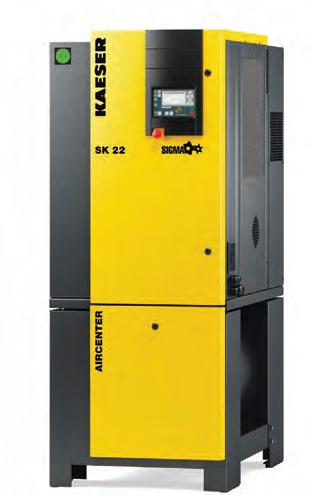
For many joiners, traditional piston compressors are simply too loud, produce too much moisture, and struggle to keep up with the constant demand of modern machinery.
Kaeser’s compact Aircenter range is designed specifically to solve these daily frustrations. By integrating a rotary screw compressor, refrigeration dryer, and air receiver into a single plug and play unit, Kaeser delivers industrial grade air in a minimal footprint of just 1m²; perfect for workshops where floor space is at a premium.
Because the Aircenter features an integrated dryer, it ensures dry air reaches spray guns. This eliminates the moisture in air lines that commonly causes orange peel in lacquer finishes, protecting the final product and reducing costly rework.
Consistent air delivery is absolutely vital; by delivering steady flow rates from 0.26 to 2.55m³/min at pressure options of 8, 11, or 15 bar, these German made units provide the reliable power needed.
While these compressors work hard, they will not dominate the workshop with noise. With sound damping enclosure panels in place and a patented premium efficiency dual flow fan, mechanical noise is reduced to a quiet background hum and safe enough for normal conversation. ■
KAESER Compressors Australia au.kaeser.com
All About Labels has spent years working directly with cabinet makers, and that insight drives every product the company creates. All About Labels understands the pressure of tight schedules, the need for clear identification, and the value of removable labels that simply do their job without fuss.
Its new, focused mini site — cabinetrylabels.com.au — brings together the products cabinet makers rely on with straightforward categories, practical info,
and a layout built for speed. It’s now quick and easy to find the right labels for your business.
Every label featured is a result of long term industry experience and ongoing feedback from real workshops. The mini site puts that knowledge in one focused place — giving you a simple way of ordering for the first time or reordering the products you love.
Once products are selected and you’re ready to finalise your order, checkout is completed securely through the main All About Labels website, keeping the process simple and familiar. Jump in and check it out! ■




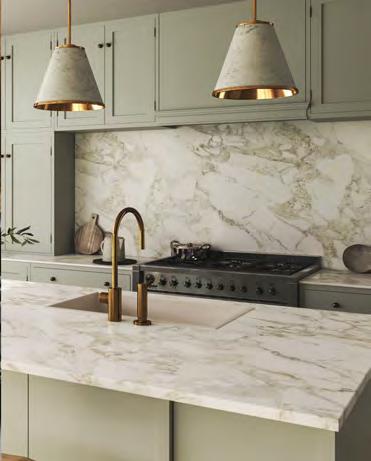

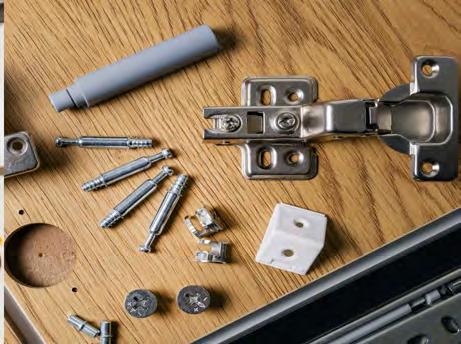




Premium pocket door system for modern cabinetry
Exedra Gravity is a premium pocket door system that allows doors to fully retract into the cabinet, delivering clean, uninterrupted spaces across a wide range of applications. Designed with precision engineering and smooth assisted motion, it combines refined aesthetics with dependable performance — ideal for today’s cabinetry.
Why Exedra Gravity
Exceptional height flexibility with door heights ranging from 1100mm to 3000mm (kit dependent), door widths ranging from 300mm to 900mm, and door thicknesses ranging from 14mm to 40mm.
Ideal for kitchens and pantries, wardrobes and storage, home offices, bar cabinets and laundries, Exedra Gravity supports doors up to 40kg.
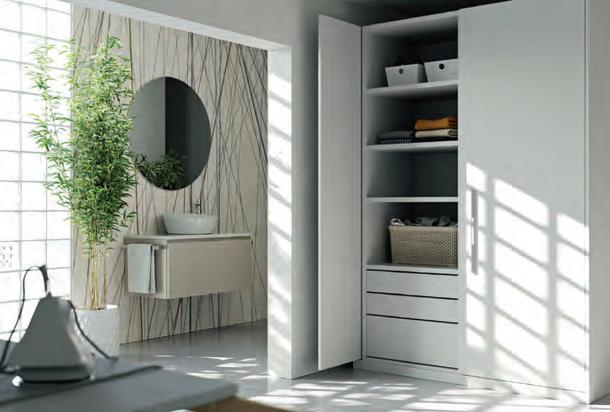
opens outward from within the cabinet thanks to light touch assisted opening.
Key Features
• Fully retracting pocket door system
• Smooth, assisted motion with balanced glide
• Compatible with a wide range of door materials
• Designed for seamless integration into cabinetry
• Straightforward installation with efficient access if needed
• Premium European engineering and finish ■
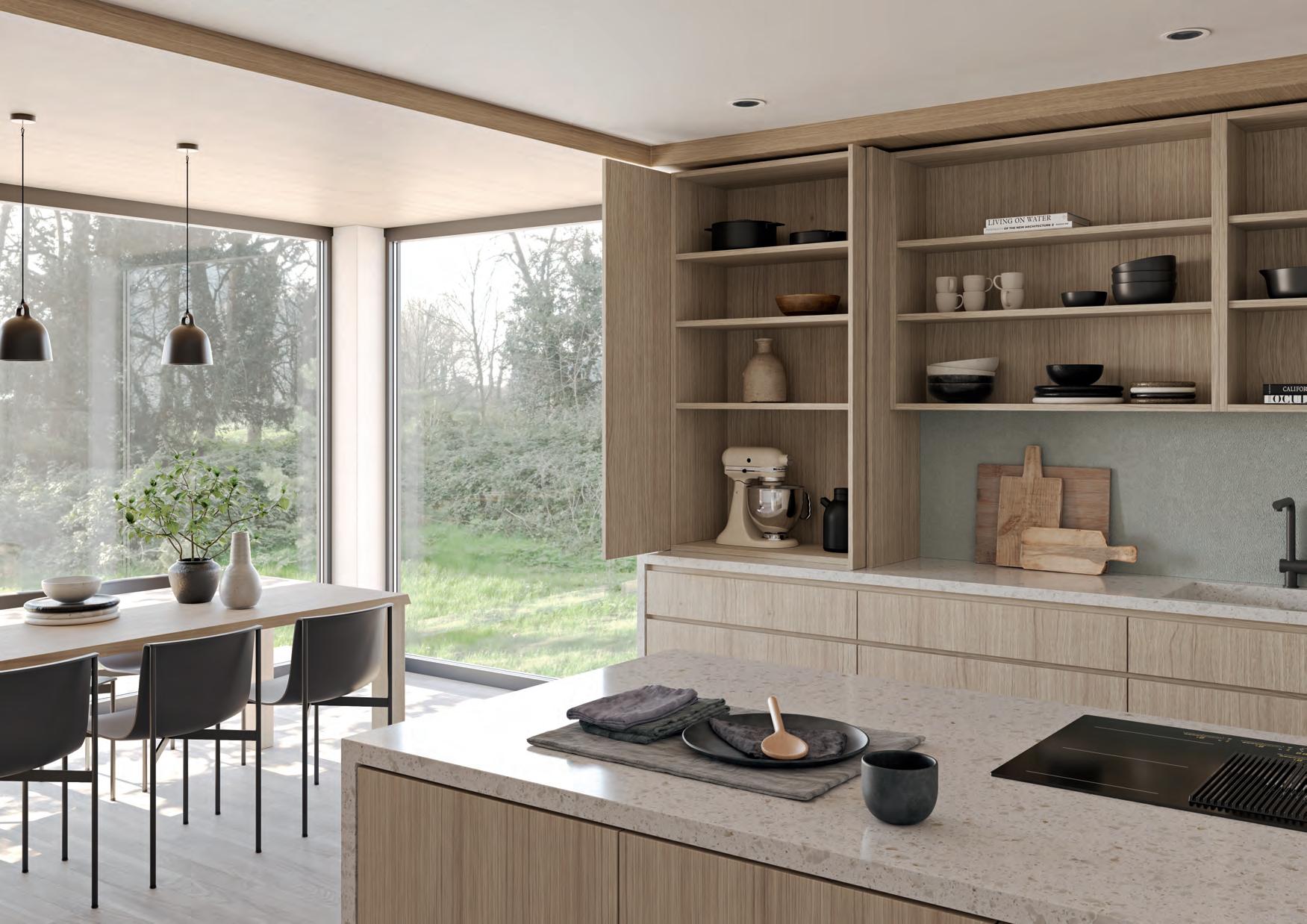


On 5 September 2025, the Federal Court handed down a decision against Woolworths and Coles that changes how employers across all industries can pay staff on salaries
The ruling makes clear that businesses can no longer rely on “averaging out” higher payments in some pay periods to cover shortfalls in others. Each pay cycle now stands on its own.
1. Every pay cycle must meet award obligations: Each weekly, fortnightly or monthly pay must fully cover all minimum entitlements for that period.
Example: If an employee works extra hours in December, their pay for that December pay cycle must include the correct penalty rates and loadings. You cannot rely on higher payments made earlier in the month or year to make up the difference if that pay cycle falls short.
2. Set-off clauses are limited: You can still include a clause in contracts saying a higher salary covers items such as overtime payments, weekend and public holiday penalties, shift allowance, vehicle allowance, travelling expense, penalty payments, annual leave loading, tool allowance, meal allowance, industry allowance and any other applicable allowance, but this can only apply within the same pay cycle.
Example: A higher salary in the same week can absorb weekend penalty rates, but it cannot cover penalties worked in a different week or month.
3. Annualised salaries under Modern Awards: Some Modern Awards allow you to pay an annualised salary instead of calculating penalties and allowances each pay period. This option can give more flexibility, but it only works if you meet all the Award requirements, which means:
• Stating in the contract which entitlements are covered (such as overtime, penalties or any other applicable allowances).
• Keeping accurate records of actual hours worked.
• Checking on a regular basis that the annual salary is still enough to cover all award entitlements.
• Confirm that your applicable award provides a clause that allows employers to use an annualised salary, as some trade based awards do not provide for this provision.
4. Stronger record-keeping is required: Employers must keep accurate, real time records of overtime, penalty rates and any applicable allowances. Roster data or clock on/clock off records alone are not enough. Records must show actual hours worked and what entitlements applied. If records are missing or incomplete, the law may assume the employee’s version is correct unless you can prove otherwise.
Salaries must be checked each pay cycle to ensure award entitlements are covered in full. Annualised salary options where allowed may be useful, but only if you meet the requirements under the relevant award.
Accurate and real time records of employee hours are essential, even if those entitlements are included in a higher salary.
If you are absorbing any allowances, penalty rates, loadings or overtime into an above award rate of pay, now is the time to:
1. Review your payroll practices.
2. Check if your salaries cover award entitlements each pay cycle.
3. Strengthen your record keeping systems.
Note: This guidance reflects the Federal Court decision delivered on 5 September 2025 (FWO v Woolworths; FWO v Coles). There is a possibility of an appeal, which may change the position in the future. For now, this is the law employers must comply with. ■
ACFA Workplace Advisory Team 1300 342 248 Membership@acfa.net.au
Following the successful introduction of Concelo® entro™ for Blum Legrabox, the market response has been overwhelmingly positive. Confirming that designers and cabinet makers alike value Concelo’s advanced waste management solution that pairs seamlessly with Blum’s world class drawer technology. Building on this momentum, Hideaway Bins is excited to announce the release of Concelo entro for Blum Merivobox.
Concelo entro brings together effortless cleanliness, controlled moisture and odours, and a smooth, precise closing motion. It's now available for both Blum Legrabox C height 550mm and Blum Merivobox E height 550mm drawers.
The high drawer sides provide exceptional stability, especially for tall drawer fronts, while the 550mm depth ensures easy access to rear buckets. With
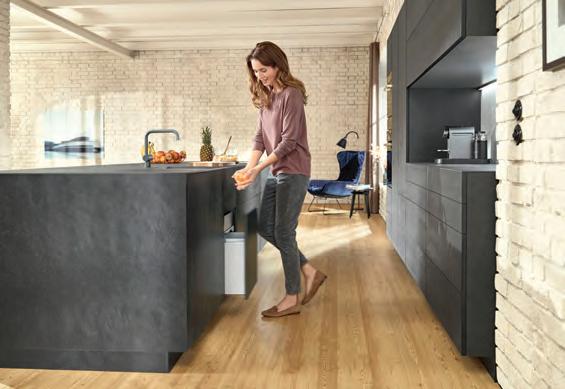
colour matched components in Silk White and Orion Grey, Concelo entro blends seamlessly into contemporary kitchen palettes, maintaining a cohesive and refined look.
Where Concelo entro truly shines is in its compatibility with Blum’s push to open technologies. A gentle nudge activates the drawer, while Concelo’s Active Lid lowers over the buckets as the drawer closes, trapping in odours and moisture without any manual handling. ■
Hideaway Bins hideawaybins.com.au/concelo-entro
Concelo entro is available exclusively through Hideaway Bins' distribution partner, Nover.
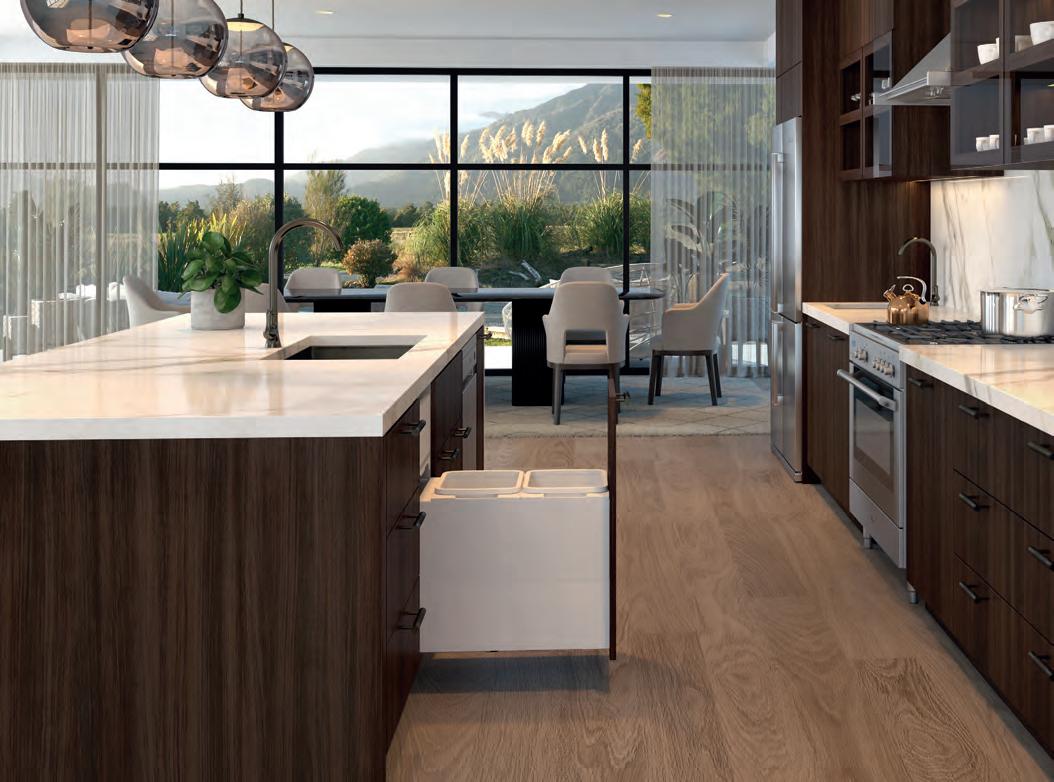
NSW employer obligations to register your workers
As an employer in NSW, you are now legally required to register any relevant worker undertaking high risk crystalline silica processing work under the Silica Worker Register, in accordance with NSW WHS legislation.
This digital register has been introduced by SafeWork NSW to help identify workers who may require ongoing health monitoring, ensuring early detection of silica related health conditions and promoting safer workplaces.
All workers engaged in high risk silica processing on or after 1 October 2025 must be registered. Workers who ceased high risk processing before 1 October 2025 do not need to be registered.
If a worker changes employers, the new employer must register them. Only one registration is required per employer, even if the worker changes job sites.
Workers must be registered within 28 days of starting high risk silica processing work. Registration is a one time notification per employer and does not need to be repeated unless:
• The worker changes employer
• The worker commences a new period of high risk work under a different PCBU
Crystalline silica is a hazardous substance that can cause silicosis, lung cancer, and other serious illnesses. The Silica Worker Register supports compliance with the Work Health and Safety Act 2011 (NSW) and the WHS Regulation 2017 (NSW). Health monitoring is a vital safeguard in reducing long term exposure risks.
To help you meet your obligations under NSW WHS Law, ACFA has available to members a number of
resources to assist in identifying and managing risks associated with crystalline silica, support compliance with your legal obligations, and promote safer, healthier workplace practices across the cabinet and furniture making industry. These resources include:
• Working with engineered stone inspection checklist
• Silica Risk Control Plan
• Work producing silica dust that is high risk fact sheet
• Assessing if the processing of silica is high risk template
• Managing the risk of respirable crystalline silica from engineered stone in the workplace fact sheet
• Plus other crystalline silica resources
Each state and territory has its own legislation and regulation system. Currently, requirements vary across each jurisdiction.
Queensland: Queensland operates a National Occupational Respiratory Disease Registry; however, this is a clinician led system where a physician registers a diagnosed respiratory disease in a patient. This differs from the NSW model, where employers are required to register workers who are undertaking work involving silica exposure.
Victoria: Victoria does not have a specific register for silica workers. Instead, it has implemented other comprehensive regulatory controls, including the prohibition of engineered stone and mandatory health monitoring for workers undertaking high risk crystalline silica work under the Occupational Health and Safety Regulations.
Other states and territories: Other jurisdictions, including the ACT, WA, SA, TAS and the NT, generally operate under the model WHS laws. These require health monitoring for workers engaged in high risk silica related tasks, but there is no indication of a standalone, dedicated silica worker register comparable to the NSW system. ■
ACFA Workplace Advisory Team 1300 342 248 Membership@acfa.net.au
New federal apprenticeship incentives provide up to $10,000 for apprentices
The Australian Government has confirmed significant support for apprentices and employers in priority trades, including cabinet making and allied wood trades.
If you are training, or planning to train, an apprentice in one of the recognised qualifications in our industry below, there is direct financial help available for both the apprentice and the business.
“Taking on an apprentice is a long term investment for cabinet making businesses, so these incentives help employers commit to training while giving apprentices confidence to stay in the trade. Cabinet makers are essential to finishing homes, which is why ACFA approached the Minister in February last year to have the trade recognised as part of Housing Construction Apprenticeship Incentive Program. It’s encouraging to see industry alignment on this issue, supported by stakeholders across both industry and workforce representatives, for the benefit of apprentices and the future workforce,” says Dean Brakell, ACFA CEO.
is
Under the Key Apprenticeship Program (KAP), Housing Construction Apprenticeship stream, eligible apprentices training towards an occupation on the Australian Apprenticeships Priority List and identified as a housing construction occupation can claim payments across their apprenticeship journey, up to a total of $10,000 for full time or $5000 for part time, with payments made at six, 12, 24 and 36 months, and at completion.
Eligibility rules can change so it is recommended to check all eligibility and detailed information with your Apprentice Connect Australia Provider (ACAP).
Recognised occupations and example qualifications relevant to cabinetmaking and wood trades include:
• Cabinet Maker MSF30322 Certificate III in Cabinet Making and Timber Technology
• Carpenter CPC30220 Certificate III in Carpentry
• Joiner CPC31920 Certificate III in Joinery
• Glazier MSF31422 Certificate III in Glass and Glazing
• Wood Machinist FWP31121 Certificate III in Wood Machining.
• Shopfitter CPC30120 Certificate III in Shopfitting
What apprentices can receive Key Apprenticeship Program, Housing Construction stream (KAP-HCA)
Up to $10,000 for full time apprentices, paid $2000 at each of six, 12, 24 and 36 months, plus $2000 at completion. Part time apprentices receive half these amounts.
Australian Apprentice Training Support Payment (alternative to Key Apprenticeship Program)
Where an apprentice is not on Key Apprenticeship Program, they may be eligible for the Training Support Payment, up to $5000 over the first two years, paid $1750 at six months, $1750 at 12 months, $750 at 18 months, $750 at 24 months. This payment cannot be received concurrently with the Key Apprenticeship Program payment.
What employers can receive
Priority Hiring Incentive
Up to $5000 for full time apprentices in eligible occupations, paid $2000 at six months and $3000 at 12 months. Part time rates are $1000 and $1500. Only one year’s worth of payments can be claimed for a single apprenticeship.
Key dates
For KAP eligibility, apprentices must have commenced or recommenced on or after 1 July 2025.
For Priority Hiring Incentive, employers must have commenced or recommenced apprentices on or after 1 July 2024.
To activate your claim, start with your Apprentice Connect Australia Provider. Make sure you take note of effective dates and time limits. ■
ACFA Training 1300 342 248 acfa.net.au/training RTO: 90432
By Dean Brakell
In most workshops, machinery is familiar. It’s used every day. It’s trusted. It’s part of the rhythm of work. And that familiarity is exactly where risk can creep in.
When incidents occur involving machinery, it’s rarely because the equipment is new, unusual or misunderstood. More often, it’s because the machine is very familiar — and attention has slowly drifted over time.
This isn’t about blame. It’s about recognising how easily complacency can become part of “the way we do things”.
Experience matters. Skilled operators understand their equipment, workflows and limitations better than anyone else. But experience can also create assumptions such as “I’ve done this a thousand times”, “I know where the risks are” and “Nothing’s ever gone wrong before”.
The reality is that many serious incidents involve experienced tradespeople — not because they lack skill, but because familiarity can dull awareness. Safe operation isn’t a one time achievement. It’s something that needs to be actively maintained and repeatable.
Workshops rarely stay static. Even when the machinery doesn’t change, other things do:
• workloads increase or tighten
• new staff or apprentices join
• production pressures shift
• shortcuts quietly become normalised
• scheduled maintenance gets deferred “just this once”
None of these changes feel dramatic in isolation. But together, they can alter how machinery is used day to day — often without anyone consciously noticing.
Practical ways to reduce complacency
You don’t need new paperwork or complex systems to address this. Small, practical habits make a real difference.
1. Watch the work, not just the procedure: Standard procedures matter but what actually happens on the floor matters more. Taking time to observe real workflows can expose informal practices that have crept in over time.
2. Refresh training before there’s a problem: Refresher conversations don’t need to be formal retraining sessions. A quick walkthrough, toolbox talk or reminder can reset expectations before complacency turns into an incident.
3. Treat maintenance as a safety control: Maintenance isn’t just about keeping machines running — it’s about keeping them predictable. Worn components, temporary fixes or delayed servicing can change how equipment behaves and how people interact with it. Ensure scheduled routine maintenance is completed and documented.
4. Question “we’ve always done it this way”: This phrase often signals a process that hasn’t been reviewed in a long time. Asking why something is done a certain way can uncover risks that no longer feel visible.
5. Intervene early and calmly: If you notice unsafe habits forming, address them early and constructively. Most people welcome clarity when it’s delivered respectfully.
6. Walk the talk: Leadership and setting the standard begins with you. If you use machines in an unsafe manner, or don’t wear the required personal protective equipment (PPE), what is that saying to your team?
Machinery safety isn’t only about guards, switches or signage. It’s shaped by:
• how work is paced and how expectations are communicated
• how comfortable people feel speaking up
• how seriously “near misses” are taken
• how standards are set and maintained
A strong safety culture doesn’t rely on constant warnings. It relies on steady attention, consistency and leadership by example.
Good machinery doesn’t make a workshop safe — and experienced operators don’t make one immune to risk. What keeps people safe is ongoing awareness, regular conversations and the willingness to challenge familiarity before it turns into complacency.
Those small, everyday actions are often what prevent the incidents that no one ever sees coming. ■
Company Name
ACFA x KBDi 36
All About Labels 75
Austaron Surfaces 54, 55
Ayrmont Technologies 70, 71
Blum Australia 2, 58
Cav’art Designer Stone 66, 67 Grass 72, 73
Häfele Australia 64, 65
Hettich Australia 62, OBC
HIA Economics 50
Hideaway Bins 78
Kaeser Compressors Australia 74
Lincoln Sentry 68, 69
Nover Australia 76
Planit Australia 60, IBC
Polytec 56, 57
Connect magazine will be published quarterly and distributed free to end users involved in the cabinet making, kitchen, design, furnishing and joinery industries. Every issue of Connect magazine brings you the most relevant and impactful stories from each sector of our industry. Our content is curated to keep you informed and be inspired. Summer Edition — Industry Awards & Design; Autumn Edition — Machinery & Safety; Winter Edition — Business Insights, the Economy and Finance; Spring Edition — Design Trends & Sustainability.
ACFA is a not for profit industry association with members situated all around Australia. ACFA, incorporated since June 1948, has a proud history of representing the needs of businesses in the sector. ACFA, formerly named the Furnishing Industry Association of Australia (FIAA), and the Cabinet Makers and Designers Association (CMDA) merged in 2018 and ACFA was born. In 2025 ACFA merged with the Kitchen & Bathroom Designers Institute (KBDi) and in 2026 with the Australian Woodworking Industry Suppliers Association (AWISA) to now represent businesses across all three sectors of the industry — design, machinery and manufacture — from concept to completion.
ACFA’s goal is to assist members in trade and commerce and to deliver high quality education, training, information and resources to those who
are involved in the cabinet making, joinery, interior design and renovating industries.
Membership can be located at our website: acfa.net.au/membership/
ACFA The Registered Training Organisation (RTO) RTO National Code: 90432
ACFA has been a Registered Training Organisation for more than 25 years. In that time, ACFA has served the needs of the furnishing, cabinet making and kitchen sector with structured, flexible, accredited, and nationally recognised trade training. ACFA exists purely for the industry — the organisation speaks as a united voice to the community, consumers and all levels of Government to ensure the best interests of the industry.
ACFA offers both accredited and non accredited training and more information can be found at: acfa.net.au/training/
Connect magazine is distributed free of charge to ACFA and KBDi members, subscribers, ACFA database, and client databases of major suppliers and partners of ACFA. To be added to the distribution list, please visit the Connect magazine website: connectmagazine.com.







We believe that knowledge multiplies success.
That’s why we’ve created Planit Academy. A powerful suite of learning platforms designed to elevate every user, from beginner to expert. Whether you’re looking to sharpen your skills, connect with peers, or explore the future of manufacturing, Planit Academy is your launchpad.

Scan to learn more