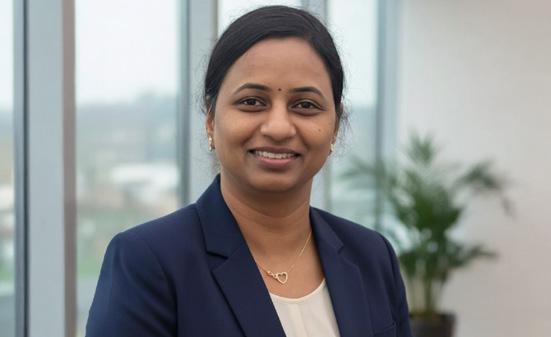
Durga Chavali Senior Manager, IT Application, Trinity Health
Mitch DeKoven Vice PresidentEvidence Generation, Precision AQ
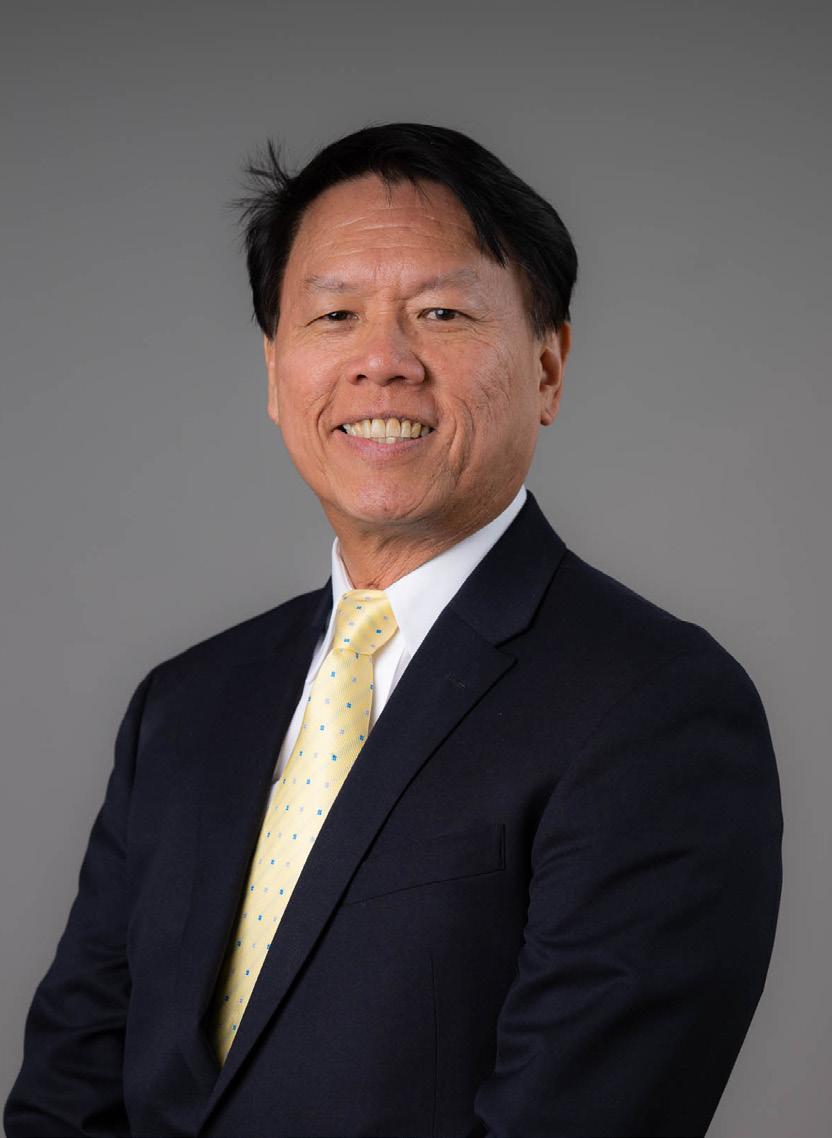
Patrick Chew
Vice President- AI & Data Science, AIT Worldwide Logistics
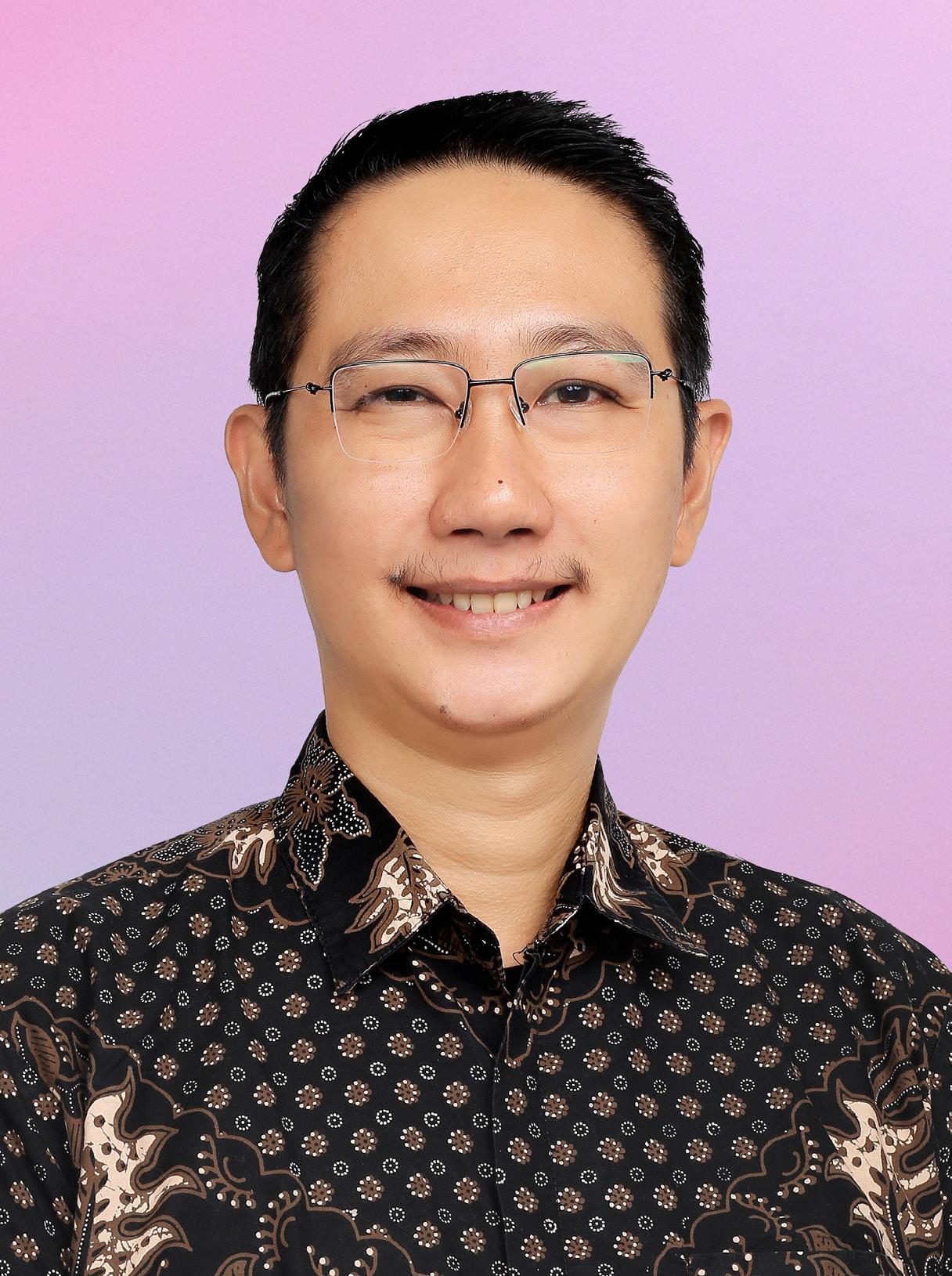
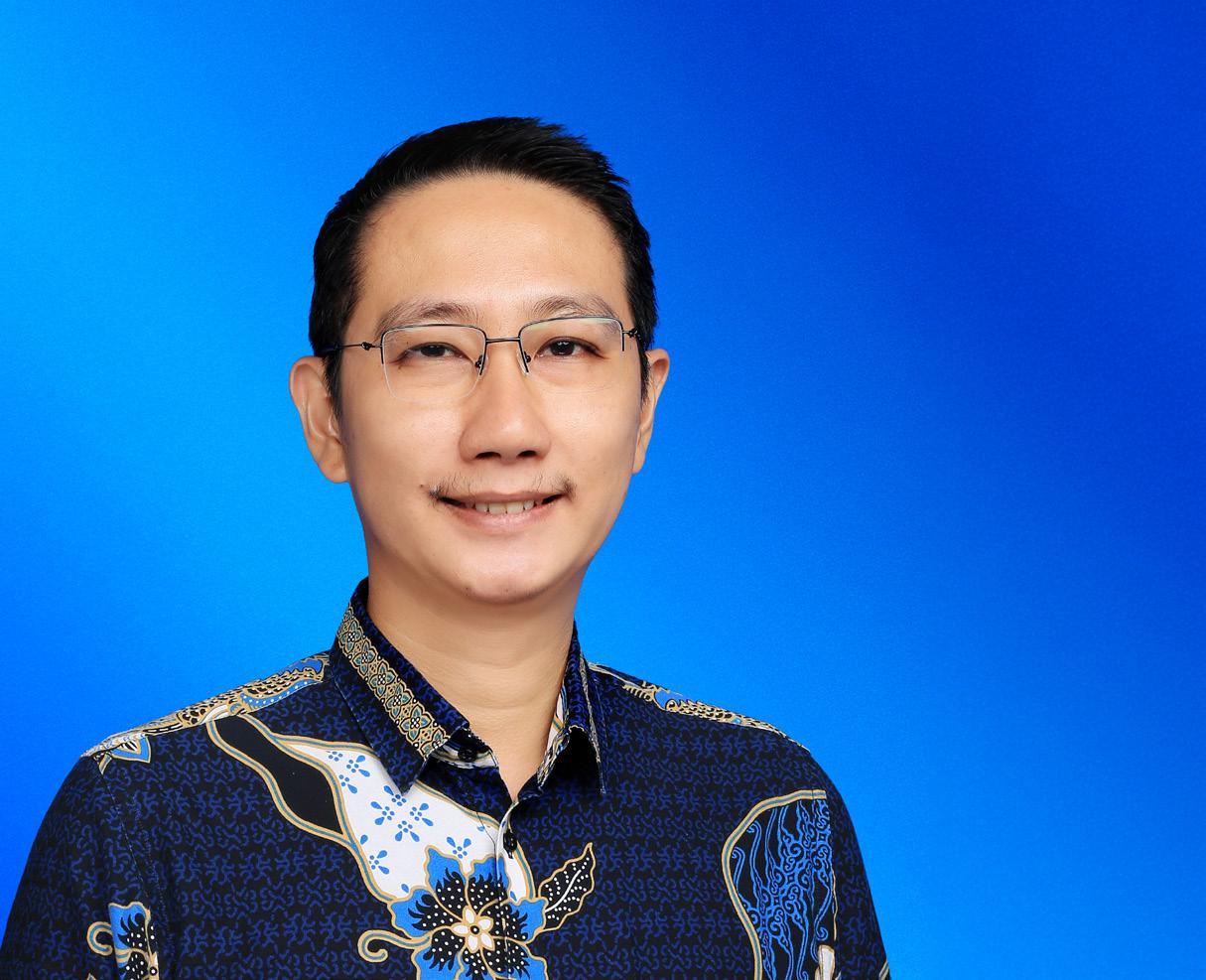
Juan Kanggrawan
Regional Digital & AI Expert (Asia Pacific), United Nations Development Programme
FEATURING INSIDE
Stephanie Liew Chief Information Security Officer, Asia Pacific, Middle East and Africa
Yevgeni Tsirulnik SVP, Grocery & General Merchandise, Toshiba Global Commerce Solutions
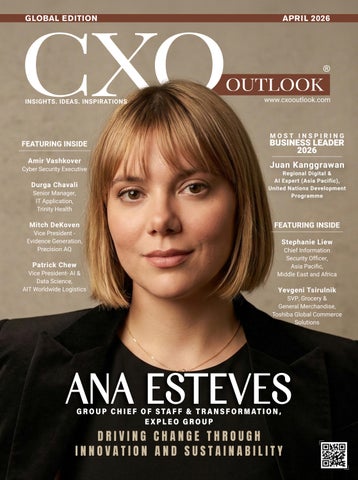
GROUP CHIEF OF STAFF & TRANSFORMATION, EXPLEO GROUP
DRIVING CHANGE THROUGH INNOVATION AND SUSTAINABILITY
Creative Consultants
Charlie Jameson
Louis Bernard
Managing Editor
Sarath Shyam
Branding & Marketing Partnerships
Jennifer Anderson
Monica Davis
Jessica Edword
Consultant Editors
Dr. John Andrews
Emma James
Andrew Scott
Sabrina Samson
Editorial Enquiry admin@cxooutlook.com
Naomi Wilson
Stanly Lui
Steve Hope
Keith Alexander
Anna Elza
Stephen Donnell
Susan Miller
Partnerships Enquiry admin@cxooutlook.com
CXO Outlook www.cxooutlook.com is a global knowledge sharing digital platform published by Connecta Innovation Private Limited. All rights reserved. The opinions expressed in the content and pictures provided are those of the authors. They do not purport to reflect the opinions or views of Connecta Innovation Private Limited or any of its members and we do not assume any responsibility. The publisher does not assume any responsibility for the advertisements, its content, pictures, and all representation of warranties made in such advertisements are those of the advertisers and not of the publisher. CXO Outlook www.cxooutlook.com is a Free Subscription and Free-to-read digital platform strictly not for sale and has to be strictly for internal private use only. Publisher does not assume any responsibility arising out of anyone modifying content and pictures, printing a copy of this digital platform in any format and in any country and all matters related to that.
Where Strategy Breaks and Leadership Begins
There is a quiet frustration that many leaders rarely admit out loud. The strategy is sound. The vision is clear. The presentations are compelling. And yet, somewhere between the boardroom and the front line, something slips. Execution falters. Momentum fades. Results fall short.
I have seen this pattern play out more often than most would like to acknowledge. In conversations with executives across industries, one theme keeps returning: strategy is rarely the problem. A recent industry insight suggests that nearly 70% of strategic initiatives fail not because of poor planning, but due to weak execution. That number should give us pause. It certainly has for me.
The truth is, execution is not a phase that follows strategy. It is the strategy, lived out in real time. It demands clarity, discipline, and above all, alignment across people who see the world differently and operate under constant pressure.
This is precisely why our cover story feels so timely.
In our conversation with Ana Esteves, Group Chief of Staff & Transformation at Expleo Group, we meet a leader who has built her career in that demanding space where ideas must prove themselves in action. With two decades of experience working alongside CEOs and
senior leadership teams, Ana brings a rare combination of analytical thinking and practical execution. What stands out is not just her ability to deliver results, but her belief that leadership is about bringing people together, creating clarity, and ensuring accountability without losing sight of the human side of transformation.
Beyond the cover story, this issue brings together a range of perspectives that challenge assumptions, spark new thinking, and reflect the realities of leading in complex environments. Each piece, in its own way, explores what it takes to turn intent into impact.
As you turn these pages, I invite you to reflect on a simple but powerful question: where, in your own work, does the gap between strategy and execution still exist? Because closing that gap is not just an operational task. It is where real leadership begins.
Enjoy Reading.
Sarath Shyam
GROUP CHIEF OF STAFF & TRANSFORMATION, EXPLEO GROUP
Regional Digital & AI Expert (Asia Pacific), United Nations Development Programme Juan Kanggrawan
Delivering Digital Solutions That Work for People Everywhere
IN MY VIEW
Transforming Retail through Intelligent Spaces
Yevgeni Tsirulnik, SVP, Grocery & General Merchandise, Toshiba Global Commerce Solutions
EXPERT OPINION
The Perimeter is Personal: A Battlefield Manual for 2026
38 Amir Vashkover, a Cyber Security Executive
56
You’re Deploying AI at Speed, But Weak Identity Governance Could Bring it Down
Stephanie Liew, Chief Information Security Officer, Asia Pacific, Middle East and Africa
LEADER'S INSIGHTS
32
Empowering Data-Driven Decision-Making in the AI Era
Patrick Chew, Vice President- AI & Data Science, AIT Worldwide Logistics
Durga Chavali, Senior Manager, IT Application, Trinity Health Leading with Purpose in Healthcare IT
44
52
Mitch DeKoven, Vice President - Evidence Generation, Precision AQ Transforming Healthcare with Data-Driven Insights
GROUP CHIEF OF STAFF & TRANSFORMATION, EXPLEO GROUP
DRIVING CHANGE THROUGH INNOVATION AND SUSTAINABILITY
Ana Esteves is Chief of Staff to the Group CEO and Chief of Transformation at Expleo. Ana brings 20 years of global experience leading large-scale transformation, performance improvement, and M&A across consulting and industry. She has worked closely with CEOs, ExCos, and senior leadership teams to translate strategy into measurable results, particularly in the context of portfolio transformation, operational complexity, and high stakeholder pressure. She is recognized for combining analytical rigor with pragmatic execution, and for aligning diverse teams around clear priorities and accountability. Ana has academic background in Economics, Management and International Business Law from Harvard University and University of London.
Recently, in an exclusive interview with CXO Outlook Magazine, Ana shared insights into her journey as a senior executive driving strategic initiatives and managing teams across multicultural environments. She emphasized the importance of diverse perspectives in shaping better decisions and believes leadership is about lifting others and creating opportunities. She also shared her personal hobbies and interests, future plans, words of wisdom, and much more. The following excerpts are taken from the interview.
As a senior executive, what sparked your interest in driving strategic initiatives and managing teams across multicultural environments?
Part of it comes from my personal story. I am Brazilian, with Portuguese and Italian roots. My parents are immigrants who arrived in Brazil looking for opportunity, and they come from a very modest background. They don’t speak English or have academic titles, but they always believed deeply in education and in working hard to build a better future.
From a young age, I always dreamed big and had my ambitions. At the same time, I knew that if I wanted to explore the world and build an international career, it would require a tremendous amount of work and determination. Along the way, I was fortunate to meet people who believed in me. I have mentors, sponsors, and leaders who opened doors and even supported opportunities for me to study abroad. Those experiences profoundly shaped my perspective of the world. They taught me two important things: first, that talent exists everywhere but opportunity does not always come equally; and second, that leadership is also about lifting others and creating opportunities for the next generations.
When I began working across Latin America, Europe, Asia, and the US, I realized how powerful diverse
In complex organizations, strategy alone is never enough, the real challenge is translating strategic ambition into execution
perspectives can be in shaping better decisions. That naturally led me toward roles involving strategy, transformation, and multicultural leadership. For me, working in international environments is not just part of my career, it reflects a journey that started long before my professional life.
What do you love the most about your current role?
What I enjoy most is the opportunity to operate at the intersection of strategy, leadership, and transformation at Expleo Group. Expleo has a very distinctive heritage: the company was built with a strong entrepreneurial DNA, deep engineering expertise, and long-standing client relationships across critical industries. There is a genuine culture of resilience and technical excellence, and that creates a powerful foundation for transformation.
In complex organizations, strategy alone is never enough, the real challenge is translating strategic ambition into execution. That means aligning leadership teams, clarifying governance, and ensuring that decisions move the organization forward. I find it particularly rewarding to bring clarity to complex environments. When leaders who were previously operating in silos begin to align around a shared understanding of priorities, roles, and responsibilities, you start to see real acceleration in performance.
What motivates me most is helping organizations move from complexity to alignment, and from alignment to sustainable results. For me, the true measure of success is not only what is achieved during the transformation itself, but what continues to deliver value years later. When an organization is still benefiting from the structures, discipline, and leadership mindset established during the transformation three years after it was completed, that is when you know the change was truly sustainable.
This kind of lasting impact is what makes me proud of my role.
As technology continues to disrupt industries, what emerging trends should leaders prioritize in business development?
Technology disruption is accelerating across industries, but one insight I find particularly relevant comes from The Advantage by Patrick Lencioni: the greatest competitive advantage today is not technology itself, but organizational health (clarity, alignment, and disciplined execution).
In that context, I believe leaders should prioritize three major trends:
(i) AI-driven decision making and automation. Artificial intelligence is transforming how organizations analyze data, manage risk, and design products and services. However, the real value emerges when organizations align strategy, data, and operating models so that these technologies are used consistently and responsibly.
(ii) The convergence of engineering, software, and digital platforms. Many industries are becoming deeply technology-enabled ecosystems. Business development leaders must therefore think beyond individual offerings and focus on integrated solutions that combine engineering expertise, software capabilities, and service models.
(iii) Organizational alignment around innovation. Technology initiatives often fail not because the technology is wrong, but because organizations are fragmented, the priorities are unclear, decision rights are ambiguous, and teams are not aligned around a common objective.
This is where leadership becomes critical. Leaders must create clarity around strategy, ensure teams are aligned on priorities, and build cultures where innovation and execution reinforce each other.
Technology may change quickly, but the organizations that succeed are those where people, strategy, and execution are consistently aligned.
What role should leaders play in addressing sustainability and social responsibility in business?
Leaders play a central role in ensuring that sustainability becomes part of the core strategy of the organization, embedded everywhere, rather than a separate initiative.
Sustainability is about long-term resilience; this means that organizations that integrate environmental and social considerations into their strategy are better positioned to manage risk and adapt to future market expectations. It requires operational discipline, clear metrics, accountability, and integration into day-to-day decision making. And, finally, being a leader is a privilege and a responsibility, we must create a culture of responsibility, where employees understand that business performance and societal impact are interconnected. Ultimately, responsible leadership is about ensuring that organizations create value not only for shareholders, but also for society and future generations.
What are the key skills required for future-ready business leaders, and how can organizations develop them?
Future-ready leaders will need a combination of strategic vision, adaptability, and strong human
Future-ready leaders will need a combination of strategic vision, adaptability, and strong human leadership skills
leadership skills. The Advantage resonates with our current context.
Three capabilities stand out: systems thinking (the ability to understand how different parts of an organization and its ecosystem interact), decision clarity and speed (in complex environments, leaders must balance thoughtful analysis with the ability to act decisively), and cultural intelligence and stakeholder management (organizations today operate across multiple markets, cultures, and regulatory environments and AI & Technology are reshaping our society). These skills are best
developed through experience, particularly through international exposure, crossfunctional roles, and participation in complex transformation initiatives.
What are some of your passions outside of work? What do you like to do in your time off?
I have always been very curious about the world. Traveling, discovering new cultures, and exchanging perspectives with people from different backgrounds is something I truly enjoy. Perhaps because of my personal journey,
I find it fascinating to see how different societies approach similar challenges in very different ways. Living in Paris has been particularly enriching in that sense, it offers constant exposure to art, history, and global conversations. Outside of that, I value spending time with family and friends and maintaining strong personal connections. I’ve recently started to practice Tai Chi and to deeper my studies in Yoga, and those moments provide balance and perspective.
What is your favorite quote?
One quote that resonates strongly with me is from Peter Drucker: “The best way to predict the future is to create it.”
For me, leadership is exactly about that, having the courage to shape the future rather than simply reacting to it.
Where do you see yourself in the next 5 years?
In the next 5 years, I see myself continuing to contribute to organizations undergoing strategic transformation and growth, and I would be pleased to lead a business. I am particularly motivated by environments where leaders need to navigate complexity, whether that involves scaling businesses, integrating acquisitions, or redefining operating models. My ambition is to continue working closely with executive leadership teams to help organizations align strategy, governance, and execution, and ultimately create sustainable long-term value.
What advice would you give to emerging leaders in business and finance?
I would offer three pieces of advice. First, dream big but be ready to work for it. Ambition is important, but sustained effort and discipline are what transform ambition into results that are sustainable.
Second, seek mentors and sponsors, no one builds a career alone. Throughout my journey, I was fortunate to have people who believed in my potential and helped me access opportunities I might not have reached on my own. Mentorship and sponsorship can be transformative.
Third, stay curious and open to learning. The business world is evolving rapidly, and the leaders who thrive are those who continuously expand their perspectives. And finally, once you reach positions of responsibility, remember to do the same for others: help create opportunities and open doors for the next generations of leaders.
MOST INSPIRING BUSINESS LEADER 2026
Juan Kanggrawan
REGIONAL DIGITAL & AI EXPERT (ASIA PACIFIC), UNITED NATIONS DEVELOPMENT PROGRAMME
DELIVERING DIGITAL SOLUTIONS THAT WORK FOR PEOPLE EVERYWHERE
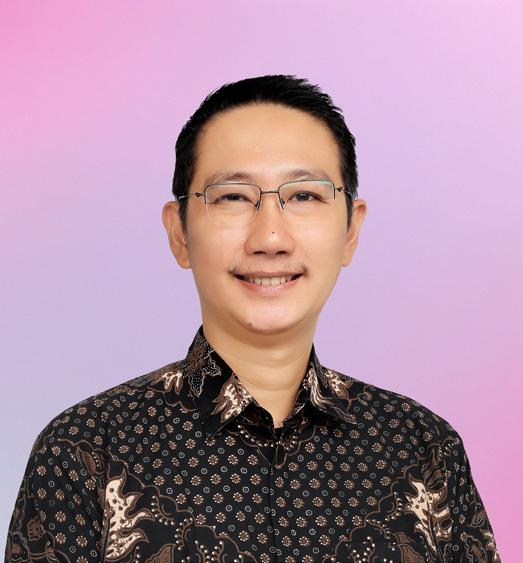
Digital transformation often looks neat on paper. In practice, it is messy, political, and deeply human. Few leaders understand this better than Juan Kanggrawan. His career has unfolded across environments where expectations shift quickly and consequences are real, from commercial performance and public accountability to regional development goals. Each setting has demanded a different definition of success, and a different kind of leadership.
Today, Juan serves as Regional Digital and AI Expert for Asia Pacific at the United Nations Development Programme (UNDP), working across more than fifty countries with widely different levels of digital maturity, institutional
capacity, and social priorities. The scale is vast, but his philosophy remains grounded. Digital and AI initiatives, he believes, earn their place only when they deliver tangible outcomes. “Impact is non-negotiable. What changes is how organizations define and measure it,” Juan says.
That conviction has been shaped by more than fifteen years across business, government, and technology leadership. In the private sector, Juan learned to view digital solutions through a performance-driven lens, where clarity, speed, and return on investment mattered. Technology was expected to solve specific problems and deliver measurable value. “In business, the question was always very direct. What problem are we solving, and how does it create value?”
JUAN KANGGRAWAN, REGIONAL DIGITAL & AI EXPERT (ASIA PACIFIC), UNITED NATIONS DEVELOPMENT PROGRAMME
he shares. The experience sharpened his strategic discipline and reinforced the importance of execution.
His transition into the public sector marked a clear shift. Leading data and digital products for smart cities and government technology in Indonesia, Juan began designing systems not for customers, but for citizens. The emphasis moved from profit to trust, access, and everyday usability at scale. “In government, the priority changes. You are designing for millions of people with very different needs. The goal is impact you can feel in daily life,” he explains. That period deepened his belief that technology must be built around context, inclusion, and long-term public value.
At the United Nations, those lessons converge. Juan now operates at a regional level, where digital and AI strategies must align with development goals, policy realities, and local conditions across Asia Pacific. Whether advising governments, shaping AI policy, or guiding digital programs, one principle remains constant. Technology is a means, not the destination. It is this steady focus on practical impact, paired with a clear-eyed understanding of organizational priorities, that defines Juan’s leadership, and sets the foundation for a journey driven by ideas, responsibility, and results that endure.
From Ideas to Outcomes at Scale
When Juan stepped into his role as Regional Digital and AI Expert for Asia Pacific at the UNDP, his priorities were clear from the outset. Scale mattered, but only if it was matched with practicality. Rather than beginning with theory or ideal-state models, his focus was on what
Juan now operates at a regional level, where digital and AI strategies must align with development goals, policy realities, and local conditions across Asia Pacific
could be implemented quickly and responsibly across diverse country contexts. The work started on the ground, alongside country offices, identifying use cases where digital and AI tools could solve real problems and deliver visible results.
That approach led to applications across agriculture, transportation, urban planning, healthcare, and education, sectors where time, access, and efficiency often determine outcomes. For Juan, human-centered digital transformation is inseparable from impact. AI, in his view, is an accelerator, not the end goal. “Digital transformation only matters if it changes how organisations actually work. It should improve processes, products, and most importantly, the way people think about and use technology,” he says.
His career offers several examples where that philosophy translated into measurable outcomes.
In the private sector, Juan points to his work with Traveloka, where limited personalization across key offerings was constraining customer engagement and revenue growth. By deploying a Google-based recommendation AI solution, the platform enabled more tailored suggestions across hotels, destinations, lifestyle options, and flight routes. Within three months, the results were clear. Net revenue improved by 20 percent, while new customer acquisition increased by 15 percent in selected cities. The lesson, Juan notes, was not about sophistication, but relevance. The technology worked because it addressed a specific business problem with precision.
In the public sector, his leadership at Jakarta Smart City focused on extracting value from unstructured data, particularly CCTV feeds and citizen-submitted images. By applying video
and image detection methods, both neural and non-neural, the system could identify traffic type, direction, speed, and risk patterns in real time. This enabled automatic responses through citizen reporting apps, supported proactive traffic alerts, and helped authorities respond faster to congestion and unsafe driving. It was a practical example of how AI could improve daily urban life without overcomplicating systems.
A similar mindset guided his work with Indonesia’s Ministry of Education, Culture, Research, and Technology. Administrative teams were overwhelmed by document-heavy workflows that slowed decision-making. By introducing OCR-based tools to detect images and relevant text, documents could be classified, summarized, and routed automatically. Processing time dropped from three to four hours to around thirty minutes, freeing teams to focus on higher-value tasks. “Efficiency is not about working faster. It is about removing friction so people can do better work,” Juan shares.
At the policy level, Juan played a key role in shaping Indonesia’s National AI Strategy alongside the Ministry of Communication and Digital Affairs. His work spanned defining strategic priorities, supporting public sector use cases, conducting impact assessments, and helping initiatives move from pilots into formal policy. The result was a national blueprint grounded in public consultation and aligned across priority domains, proof that digital ambition can translate into policy when anchored in clarity and collaboration.
Governing Innovation with Purpose
At UNDP, Juan approaches innovation with a clear sense of boundaries. Speed matters, but
responsibility matters more. The first step, he explains, is understanding the policy landscape so teams know what is appropriate, permissible, and aligned with public trust. From there, experimentation can happen, but in controlled, low-risk environments. This often means testing AI and cloud platforms using non-sensitive data before considering broader deployment. “Innovation works best when people know the limits. Clarity creates confidence, and confidence enables progress,” Juan says.
Practicality is a recurring theme in his leadership. Juan actively encourages the use of open-source platforms and cost-effective tools, especially in countries where digital infrastructure and budgets are limited. Rather than defaulting to large, expensive global technologies, his teams focus on solutions that can be maintained locally and scaled sustainably. The goal is not technological dependency, but long-term capability.
Inclusion sits at the center of that thinking. Juan sees digital inclusion not as a technical checkbox, but as a lever for reducing inequality.
At the policy level, Juan played a key role in shaping Indonesia ’ s National AI Strategy alongside the Ministry of Communication and Digital Affairs
Access to digital tools, he argues, is foundational to education, economic participation, and civic engagement. AI, when applied thoughtfully, can help lower barriers through real-time translation, conversational interfaces, and language accessibility. These tools expand who can learn, communicate, and participate. “Access changes everything. Without it, digital transformation only benefits a few,” he notes.
Measuring inclusion, in his view, requires looking beyond ambition to hard signals. Device availability, internet quality, and affordability
all matter. So does the cost of broadband and hardware relative to income levels. Without addressing these fundamentals, even the most advanced AI systems risk widening existing gaps.
Drawing from years of policy and implementation work, Juan points to a common mistake governments make when adopting AI. Trying to be perfect from the start. Or attempting to build everything from scratch. His advice is straightforward. Learn from what already exists. Start small. Use policy sandboxes to
test, adapt, and refine before scaling. These controlled environments allow governments to move forward with confidence rather than caution alone.
When Purpose Shapes Progress
Looking ahead, Juan is clear about what success in digital development across Asia Pacific should look like. It will not be defined by how quickly new technologies are adopted, but by whether they solve real problems. For him, progress comes into focus when digital initiatives deliver practical results across sectors and when those solutions make sense in local contexts. “Technology should not exist for its own sake. Success is when it works on the ground, for the people it is meant to serve,” Juan says.
He sees encouraging momentum when countries invest not just in tools, but in ecosystems. That means nurturing local
technology leaders who understand both the technical possibilities and the social realities of their communities. These leaders, Juan believes, are best positioned to translate digital capabilities into solutions that address everyday challenges, whether in cities or rural areas, whether at national scale or community level.
Indonesia stands out as one such example. Juan points to the country’s long-term vision under Golden Indonesia 2045, supported by a national AI roadmap that balances ambition with structure. The roadmap focuses on building a robust AI ecosystem, defining clear development priorities, and securing sustainable financing, all underpinned by ethical guidance and regulation. A planned open, cross-sector sandbox platform is designed to encourage experimentation while maintaining accountability. It reflects an understanding that innovation thrives when it is guided, not rushed.
Rather than defaulting to large, expensive global technologies, Juan's teams focus on solutions that can be maintained locally and scaled sustainably
Malaysia offers another compelling case. The country’s push toward becoming an AI Nation has moved beyond intent into execution. Juan highlights developments such as locally built AI chips, large-scale AI infrastructure investments, and the growing application of AI across agriculture, healthcare, and manufacturing. The impact is already visible. Chatbots have shortened sales cycles, AI tools are supporting early detection of oral cancer, and public sector adoption is gaining pace. “What excites me is seeing results. Not pilots that stay pilots, but systems that actually change how work gets done,” Juan notes.
Across these examples, one insight remains constant. No single organisation can deliver digital transformation alone. Juan is emphatic about the role of collaboration in complex ecosystems. Governments bring policy direction and scale, the private sector contributes speed and innovation, and civil society ensures inclusion and accountability. Meaningful progress, he believes, depends on the willingness of each to contribute their strengths without trying to dominate the whole. Multistakeholder partnerships, in this sense, are not optional. They are foundational to building trust, driving adoption, and shaping the future of AI in a way that is shared and sustainable.
Leadership Grounded in Purpose and Humility
At a personal level, Juan’s approach to leadership is guided by problem solving and humility. When faced with complex ethical questions or competing social priorities, he returns to first principles. What is the purpose of the organisation, and how can technology
help fulfill it responsibly? The answers, he believes, are rarely found in extremes, but in thoughtful, practical choices. “You have to stay grounded,” Juan says. “Listen carefully, stay open-minded, and focus on solutions that make a real difference.”
This way of thinking has been influenced by leaders he has worked with across his career.
From the Ministry of Education, Culture, Research, and Technology, he draws inspiration from Suharti Sutar, whose calm judgment and stability stood out in moments of complexity.
At Jakarta Smart City, Yudhistira Nugraha left a lasting impression through a leadership style defined by thoughtfulness, humility, and a steady commitment to innovation. His time at Traveloka reinforced similar values, where Doan Lingga’s approach to data leadership emphasized problem solving, careful listening, and respect for diverse perspectives.
These experiences come together in how Juan approaches his role today. He values dialogue over directive, learning over certainty. For him, leadership in digital and AI is not about having all the answers, but about creating the conditions where better answers can emerge.
When he considers the legacy, he hopes to leave behind, Juan’s ambition is simple and quietly powerful. He wants to be remembered as someone who delivered digital solutions that worked, solutions that strengthened systems, supported institutions, and benefited citizens across different geographies. From major urban centers to remote communities, his measure of success is impact that lasts. It is a fitting close to a career defined not by titles or trends, but by a consistent commitment to purpose, people, and progress.
Transforming Retail through Intelligent Spaces
Yevgeni Tsirulnik, SVP, Grocery & General Merchandise, Toshiba Global Commerce Solutions
Hi Yevgeni. The intersection of retail and technology is where innovation happens - What emerging tech trend excites you the most for the future of retail?
What excites me most right now is the combination of generative and agentic AI with the growing network of signals that exist inside a modern store. Cameras observe activity, sensors detect products and movement, and many other technologies continuously
generate signals about what is happening in the environment. Individually those signals do not mean much. But when they are brought together through modern platforms and interpreted with generative AI, they can be transformed into meaningful events. The system can sanitize the data, remove or protect any personal information, and understand the signals in context.
The important part is that all of this can happen in near real time, exactly when it matters most. Instead of analyzing data hours
Yevgeni Tsirulnik is Senior Vice President of Grocery and General Merchandise at Toshiba Global Commerce Solutions. He leads innovation and commercialization of advanced retail technologies, including AI-driven automation, computer vision, and edge computing solutions. Yevgeni has played a key role in developing modern commerce platforms and intelligent store technologies that improve operational efficiency, reduce shrink, and enhance the customer experience. He holds several patents in retail automation and trust-based checkout systems and is a contributing author to the Forbes Technology Council. His work focuses on transforming physical retail into intelligent, data-driven environments that operate with greater insight, speed, and adaptability. Recently, in an exclusive interview with CXO Outlook Magazine, Yevgeni shared insights into the future of retail, highlighting the intersection of technology and physical spaces. He emphasized the importance of combining generative and agentic AI with signals from modern stores to create intelligent, responsive environments that enhance customer experience. Looking ahead, Yevgeni believes physical retail spaces will evolve to become more connected, intelligent, and purposeful, focusing on removing friction and improving personalization. He also advised emerging retail tech entrepreneurs to focus on solving real problems and being patient. The following excerpts are taken from the interview.
E-commerce changed customer expectations. People now expect speed, convenience, personalization, and consistency
or days later, the system can understand what is happening in the moment and respond immediately.
At that point, the store becomes far more intelligent. The right information can appear on a shopper’s phone, on a digital display in the aisle, on a smart shelf label, or on other in-store screens. The goal is not to overwhelm people with advertising but to present something relevant that the shopper actually finds useful in that moment.
When done well, the technology almost disappears. The store simply feels more aware and more helpful, and the experience becomes smoother for both customers and store associates.
With the rise of e-commerce, brick-andmortar stores are adapting - What’s your take on the future of physical retail spaces?
I believe physical retail spaces will become more intelligent, more connected, and more purposeful. The store is not going away. But it does need to evolve beyond being just a place where a transaction happens. E-commerce changed customer expectations. People now expect speed, convenience, personalization, and consistency. The future of physical retail is about bringing those expectations into the store while still preserving what only a physical environment can offer, which is human interaction, discovery, immediacy, and experience.
When work becomes something people genuinely enjoy doing, not just something they have to do, that is when high-performance teams really form
In the future, stores will operate much more like intelligent platforms. They will combine digital touchpoints, AI-driven insights, sensors, computer vision, and connected devices to better understand what is happening in the environment and respond in near real time. That can improve everything from checkout and promotions to inventory awareness, associate productivity, and loss prevention.
But the goal is not to fill the store with technology for the sake of technology. The goal is to remove friction and make the experience more natural, more helpful, and more relevant for the customer. The best physical retail spaces will feel easier, faster, and more personalized, while still keeping the trust and human connection that make in-store shopping valuable.
Building high-performance teams is a hallmark of your leadership - What’s your secret to motivating and retaining top talent?
For me, it starts with giving talented people something meaningful to build and then trusting
them with real ownership. Strong people do not want to feel like they are simply executing tasks. They want to know their ideas matter, that their judgment is respected, and that they can influence the outcome. But the deeper goal I always have is to create an environment where work and passion start to overlap. The best teams are formed when people feel about their work the same way they feel about a hobby they love. You enjoy doing it. You think about it even outside of work. It energizes you, rather than draining you. When people feel that way, the quality of the outcome changes dramatically. Clarity also matters. People perform better when they understand the mission and what success looks like. When teams know why something matters, they naturally push harder and collaborate more effectively.
In the end, retention usually comes down to culture. People stay where they feel trusted, challenged, and part of a team that is building something important together. When work becomes something people genuinely enjoy doing, not just something they have to do, that is when high-performance teams really form.
Your entrepreneurial spirit is evident in your achievements - If you weren’t in retail tech, what industry would you love to disrupt?
If I were not working in retail technology, education would probably be the space I would want to challenge. Education has incredible people and institutions, but many of the systems around learning have not evolved at the same pace as technology. In many ways, the world is changing faster than traditional education systems are able to adapt.
AI and adaptive learning systems create an opportunity to rethink that model. They can
personalize education in ways that were never possible before. Every student learns differently, yet most education systems still follow a onesize-fits-all structure that was designed decades ago.
At the same time, AI will change the kinds of skills that truly matter. Students will not just need to memorize information. They will need to learn how to work with AI, guide it, question it, and use it as a powerful tool to solve problems. The next generation will need to become extremely capable operators of AI systems.
That shift will require changes in what schools focus on. Critical thinking, creativity, problem framing, and the ability to collaborate with intelligent systems will become much more important. If education can adapt to that reality, it could dramatically improve how people develop skills and prepare for the future.
If you could have dinner with any historical figure, who would it be and why?
Great questions and makes me feel like if I had a choice, I would choose two figures combined. If I had the chance, I would choose Leonardo da Vinci and Nikola Tesla.
Leonardo fascinates me because of how he observed the world. He did not separate art, science, or engineering. For him, it was one continuous system. His notebooks show a mind that was constantly connecting ideas that most people would treat as unrelated. I would love to understand how he trained himself to see patterns that others simply overlooked.
Tesla, on the other hand, represents pure engineering imagination. He could visualize entire systems in his mind before building them. His work shaped the electrical infrastructure
that powers the modern world. Putting the two together would make for an incredible conversation. Leonardo represents deep observation of nature and human systems, while Tesla represents the ability to turn bold ideas into real infrastructure. That combination is where many breakthroughs happen.
What’s something on your bucket list that you’re excited to tackle soon?
There are so many of them, yet one thing I am excited to do in the near future is spend more time exploring remote places with my family. Patagonia is high on that list. I enjoy environments where you feel completely disconnected from daily noise and surrounded by nature.
It gives you perspective. Some of the best ideas come when you step away from constant meetings and screens for a while.
What advice would you give to someone looking to start their own retail tech venture?
The biggest mistake new founders make is starting with technology instead of starting with the real problem. Retailers do not buy technology. They buy solutions to overcome operational pain points or to satisfy customers.
My advice, spend time inside stores. Talk to associates. Watch how customers move through the environment. Once you understand the problem deeply, then build technology that removes friction or saves time. The other important point is patience. Retail is a large industry and adoption cycles are slower than many founders expect. The companies that succeed are the ones that stay close to customers and keep improving their solution over time.
Wa n t t o S e l l o r fi n d
I nve s t o rs f o r yo u r
B u s i n e s s ?
Empowering Data-Driven Decision-Making in the AI Era
Patrick Chew, Vice President- AI & Data Science, AIT Worldwide Logistics
Hi Patrick. As data-driven decisionmaking becomes increasingly crucial, what emerging trends should leaders prioritize in Data Strategy and Analytics?
Three priorities stand out as organizations navigate the rapidly evolving landscape of Data Strategy, Analytics, and AI.
First, leaders must prioritize building an AI-ready data foundation. 5 years ago, many organizations were focused on developing
their data governance pillars so as to have a reliable and consistent data foundation. We got distracted when AI came on the horizon. After 3 years of chasing, we realize we still need to come back to building our data foundation that’s pivotal in reducing the hallucination after feeding data into our AI layer. The objective is not perfection, but reliability, consistency, and accessibility of data across the organization. Strong data foundations enable organizations to generate trustworthy insights and make
As AI adoption accelerates, the ability to supply highquality, well-governed data into AI and analytics ecosystems will increasingly determine how effectively organizations can leverage these technologies
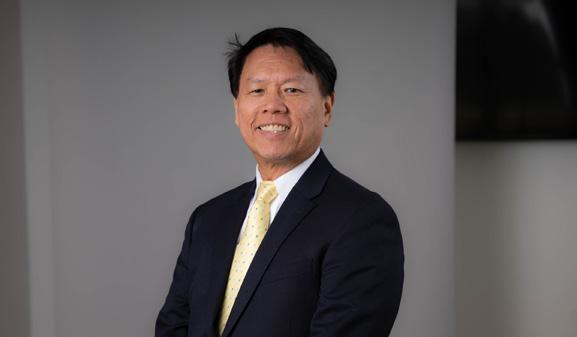
Over the past 25 years, Patrick Chew has held senior data strategy and enablement roles, guiding F500 companies in making data-driven decisions at operational, tactical, and strategic levels. He has led major data initiatives at American Medical Association, ABN AMRO, Kellogg, and Caterpillar, and consulted across sectors including finance, manufacturing, consumer goods, insurance, and utilities at EY and Slalom. Patrick specializes in data strategy, emerging technologies, AI governance, data science, data management, business intelligence, analytics, and blockchain. He frequently speaks at industry events and serves on three advisory boards. Currently, he is the VP of AI & Data Science at AIT Worldwide Logistics, overseeing Enterprise Data Strategy across three key areas: Data Governance, AI & Data Science, and Business Intelligence & Analytics (BI&A).
Recently, in an exclusive interview with CXO Outlook Magazine, Patrick shared insights into the emerging trends in Data Strategy and Analytics, emphasizing the importance of building an AI-ready data foundation, strengthening accountability through clear data ownership, and prioritizing outcome-driven analytics. He stressed the need for leaders to balance technical expertise with business acumen, understanding the organization’s operations and challenges to drive effective technology solutions. He also highlighted the key skills required for futureready data professionals, including AI awareness, emotional intelligence, creativity, and critical thinking, and advised organizations to invest in structured programs and training to develop these skills. The following excerpts are taken from the interview.
confident decisions. As AI adoption accelerates, the ability to supply high-quality, well-governed data into AI and analytics ecosystems will increasingly determine how effectively organizations can leverage these technologies.
Second, organizations must strengthen accountability through clear data ownership and product thinking. Treating data as a product with defined owners, stewardship, and lifecycle management ensures that critical data assets are actively managed and continuously improved. Without clear ownership, data initiatives often lose momentum, quality deteriorates, and accountability becomes diffuse. Establishing domain ownership and data product responsibility is therefore becoming a key structural shift in modern data strategies to support AI endeavors.
Third, analytics strategies must remain firmly outcome-driven. Data and analytics initiatives should begin with a clear understanding of the business problems they aim to solve and the measurable value they intend to create and adopt. By anchoring analytics investments to defined business outcomes, organizations avoid activity-driven initiatives and instead focus on delivering tangible impact and strategic decision support. Essentially, asking “how can the data enable you?” while validating that against what problem(s) is solved with the appropriate data and actions taken.
Beyond these strategic pillars, we are also seeing significant shifts in how analytics capabilities are delivered. One of the most notable trends is the transition from traditional dashboards toward AI-augmented decision systems that surface insights and recommended actions automatically. This must be incorporated with HITL (humanin-the-loop) processes. Generative AI tools are increasingly capable of producing analytical outputs and presentation layers without heavy reliance
While technical expertise is valuable, the true differentiators are those who understand the business and then apply technology to make operations more effective, efficient, and value driven
on traditional BI development workflows. This evolution raises important questions about how analytics teams should evolve— potentially shifting emphasis from traditional report development toward deeper analytical, modeling, and decision science capabilities.
At the same time, real-time data ingestion and operational analytics are becoming far more prevalent. The distinction between traditional batch ETL and real-time data pipelines is narrowing as organizations seek faster insights and more responsive decision environments. Complementing this shift are AI-driven semantic layers and conversational analytics, enabling business users to interact with data more intuitively through natural language interfaces powered by generative AI.
Taken together, these developments signal a broader transformation: organizations are moving from static reporting environments toward AI-enabled, real-time decision ecosystems where trusted data, clear ownership, and outcome-driven analytics form the foundation for sustained competitive advantage. Speed, and accuracy with enriched insights is an important starting step to differentiate yourself from others.
How can leaders balance technical expertise with business acumen in data-driven decision-making?
It is essential to deeply understand what your organization does whether it produces goods, manufactures products, consults, or delivers services and how data flows across those operations. Technology, after all, is only an enabler. While technical expertise is valuable, the true differentiators are those who understand the business and then apply technology to make
operations more effective, efficient, and value driven.
The key to maintaining this balance is staying closely connected to operational realities or where the issues are. That is where the real challenges emerge and where you gain firsthand insight into how the organization function. By immersing yourself in these operational environments, you begin to understand not only the processes but also the underlying problems that need solving.
I remember when I was tasked in setting up networks and routers to improve our college’s administrative efficiency. On my first day, instead of immediately focusing on the technical setup, I asked to spend time with the mail operations team. I wanted to understand the challenges they were facing before thinking about potential solutions. Without that context, any technical solution would have been empirical and at best based on assumptions rather than real needs faced in their daily operations.
Ultimately, the more deeply you understand the business its operations, problems, and constraints the clearer and more effective your technology solutions will become. One key item to remember given this AI era is constantly being aware to rewire oneself – learning new thinking patterns with an eye to acquire new skills (as simple as Prompting) is by augmenting your critical thinking further by using AI as a collaborator without outsourcing your thinking entirely). In other words, use AI daily to your advantage without completely relying on it where you lose your cognitive ability. You are the original intelligence! You need to know where that line is. As Peter Drucker said, the greatest danger in times of turbulence is not the turbulence, it is to act with yesterday’s logic.
What are the key skills required for future-ready data professionals, and how can organizations develop them?
Three years ago, I spoke at an event when AI was just beginning to emerge on the horizon. At that time, much of the discussion centered around whether AI was simply another technology hype cycle. Today, that question has been largely answered. AI is no longer optional—it is becoming embedded in nearly every aspect of how we work and live.
In one form or another, AI permeates many facets of our professional and personal environments. Organizations that fail to adopt and leverage AI risk falling behind. As the saying goes, AI may not replace your job, but your competitor who uses AI will. This makes it increasingly important for individuals to develop a strong AI aptitude to continue growing their careers, capabilities, and expertise so that you become a skilled-powered individual not just a job as that’s the new currency in the working world.
We are rapidly moving into an AI-augmented world, and those who do not adapt risk becoming obsolete as each wave of technology reshapes the workforce. To remain relevant, individuals must build a combination of AI awareness and human-centered capabilities including emotional intelligence, creativity, critical thinking, and strong evaluative judgment. Equally important is maintaining intellectual curiosity, particularly the ability to ask the right questions and challenge assumptions.
From an organizational perspective, leaders must actively support their workforce in closing AI knowledge and skills gaps. This means investing in structured programs, training, education, and clear AI roadmaps
that help employees transition from being simply AI-aware to becoming AI-enabled and AI-capable contributors. When organizations build a workforce that understands how to work alongside AI, leveraging data, insights, and intelligent tools they create a powerful competitive advantage.
Organizations that move early in developing this AI skilled-powered capability will differentiate themselves from peers that are still struggling to operationalize their AI initiatives. Ultimately, these AI-augmented skills and insights translate into stronger customer experiences, deeper relationships, and more meaningful partnerships with clients. Regardless of whether we operate in consulting, corporate environments, or nonprofit sectors, the customer must remain at the center of everything we do.
At the organizational level, it is equally important to encourage employees to become skill-powered individuals and learn beyond internal boundaries. Organizations should foster open knowledge ecosystems where talent can engage with broader communities of practice, industry networks, and emerging technology forums. Exposure to diverse perspectives and shared learning accelerates innovation and ensures that organizations remain aligned with the rapidly evolving AI landscape.
At the individual level, this also requires strengthening key leadership capabilities, critical thinking, emotional intelligence, and thought leadership. This means being able to connect data to processes, ownership, solutioning with good understanding of the business problem(s) and measurable outcomes, rather than simply focusing on activities. Decisions should be grounded in evidence and insight, not assumptions or guess work.
Exposure to diverse perspectives and shared learning accelerates innovation and ensures that organizations remain aligned with the rapidly evolving AI landscape
What's the role of emotional intelligence in leadership and team management?
Along with critical thinking, I believe emotional intelligence will enable us to be better leaders not just to manage tasks, strategy or outcomes but also along with people & relationships management adapting with full awareness of its culture and other surrounding nuance that’s essential to be true drivers of individual and team performance to enable organization success. Technologies in whatever waves come and go while some stayed are easy to manage. People are always tough ones as there are so many components, chemistry and behaviors involved. Unique in some sense yet challenging in many ways. Hence the song by James Taylor “Up on the roof” is one that helps me to relax after another day of turbulence dealing with people. I just go up the roof and let the sky and its billion stars take me away.
What's the best trip you've ever taken, and where would you love to travel next?
Able to capture and feel the presence of the Aurora Borealis in Tromso, Norway at its fullest
when it was dancing away right in front of your face. Hiking Mount Fuji. It’s both challenging and aspirational.
What's something on your bucket list that you're excited to tackle soon?
Definitely watching the wildebeest migration between Tanzania’s Serengeti National Park and Kenya’s Maasai Mara National Reserve and observing all the wild animals, from the plains of Serengeti to Okavango Delta in Botswana. Nature has so much to learn, connect and appreciate. That is always close to my heart.
What advice would you give to emerging leaders in data science and analytics?
Be self-aware. As I have always stated – “Know what you’re good at, find the joy in doing it and assess constantly by asking - how can I contribute in solving the problem that’s in front of me?”
Disclaimer: All the contents are of my own writing, and opinion. They also do not reflect or represent AIT Worldwide logistics in anyway as again it is solely based on my personal view, opinion, experience and thought leadership.
IThe Perimeter is Personal: A Battlefield Manual for 2026
Amir Vashkover, a Cyber Security Executive
n the modern theater of operations, the most dangerous misconception is that the war is fought in the data center. For decades, we treated cybersecurity as a corporate fortress problem withthick walls, deep moats, and a directive “command and control” center.
But as we move deeper into 2026, the frontline has shifted. It has moved from the office to the home, from the server to the smartphone, and from the professional persona to the private individual.
To survive this shift, we must look beyond traditional IT models and look toward the disciplines of endurance and structural engineering.
Whether you are navigating a serious knee injury sustained in a skiing accident just weeks before a marathon or leading a diverse organization of technical professionals through a global transition, the principles of the battlefield remain the same: success is not about
the “heroic save”; it is about the architecture of resilience.
The Strategic Map: Planning & Prevention
Every successful engagement begins with an honest assessment of “System Constraints.”
In my professional life, I have always viewed security as a utility, something that should be as invisible and reliable as the electricity in your walls. However, a utility only functions if the infrastructure is designed to handle the load.
When a skiing accident left my knee compromised only six weeks before my marathon peak, the instinctive response would have been to stop. The “Architectural” response, however, was to map the constraint. I had to account for a “Stability Budget.” I knew I had a congenitally short Achilles tendon, which is a structural technical debt that I couldn’t “fix” but had to optimize for to protect the injured joint.
Amir Vashkover is a global cybersecurity leader with 25 years of experience navigating the intersection of technical engineering and business strategy. Currently heading Data Security at Philips, Amir drives the architecture for secure digital transformation and GenAI adoption. As a retired Lieutenant Colonel, his leadership style is defined by missioncritical discipline and a facilitative approach to complex problemsolving. Beyond the office, Amir is a competitive triathlete and marathon runner who applies the same datadriven focus to his aerobic limits as he does to securing the digital perimeter. When not on the run, he can be found exploring the world on his motorcycle or volunteering as an EMT with the Red Cross.
We often spend millions on “shiny” tools while ignoring the “short Achilles” of our digital lives: our personal identities
In cybersecurity, this is the Prevention Phase. We often spend millions on “shiny” tools while ignoring the “short Achilles” of our digital lives: our personal identities. The individual is now the softest entry point into the hardest corporations.
Prevention is about building the “Guardrails.”
I didn’t just “hope” my knee would hold; I engineered a “Sleeve Protocol” I utilized data to define my desired pace, ensuring I didn’t overdraw from my physical “Stability Budget.” In a professional leadership context, this means moving away from the “Drowsy Driving” model where we blame the employee for a momentary lapse in judgment. Instead, we must design
the “Highway” (the system) with guardrails that prevent a single mistake from becoming a fatal crash. As I often say: “Security isn’t about stopping the movement; it’s about the common sense required to keep the movement safe.”
The War of Attrition: Training & Monitoring
If the Map is about the “Base,” the Grind is about the “Signal.” In engineering, we learn that the goal is to extract the relevant information from the noise. In the middle of a 42.2 km race, or while guiding a large scale group of professionals through highstakes technical projects, the “noise” is deafening.
When an individual’s private data is compromised, the “Contingency” isn’t just a technical patch; it’s a human recovery
Focus is the primary currency of the Grind. During my recovery, I utilized a “Step Loading” protocol. This wasn’t about a single glorious workout; it was about the daily, disciplined monitoring of “micro stiffness.” If I ignored a dull ache on Tuesday, I wouldn’t be standing on the start line on Sunday.
This mirrors the Monitoring Phase of cybersecurity. The battlefield of 2026 is a war of attrition. Attackers don’t always “blow the door down”; they look for the “micro stiffness” in your digital posture, a reused password, an unpatched home IoT device, or a family member’s social media footprint.
Monitoring is the bridge between the plan and the execution. When I lead my teams, I am not looking to “Command” every movement; I am looking to “Filter” the noise so they can focus on the “Frequency” that matters. Beyond the work’s environment, this means providing individuals with the tools to monitor their own “Digital Signal”. We must move from a state of “Constant Alert” to a state of “Calm Awareness”. You don’t run a marathon by staring at your watch every second; you run it by being in tune with your internal sensors while trusting the pace you set during the grind.
The Fog of War: Execution & Contingency
The third pillar of the battlefield is where the “Snap” happens. In the theater of engagement, this is the moment of contact. In running, it is the moment at Kilometer 35 when the adrenaline fades and the structural weaknesses are laid bare.
When my knee gave way during training, the mission didn’t end; it changed. This is the Contingency Phase. Most organizations and individuals fail here because they lack a
The “individual” is no longer a bystander in the corporate war; the individual is the battlefield
“Recovery Debt” plan. They assume that if the prevention fails, the war is lost.
I argue the opposite. The “Snap” is where the most profound leadership occurs. My approach to my own injury was to move from the goal of a specific time to the strategic goal of staying in the race. In the 2026 cyber landscape, we must accept that breaches are a “known system constraint”.
The B2CISO mission is built for this “Fog of War.” When an individual’s private data is compromised, the “Contingency” isn’t just a technical patch; it’s a human recovery. It’s about having the “Sleeve” ready to stabilize the joint so the journey can continue. We must move away from the “Blame Culture” and toward a “Resilience Culture.” If a leader’s family office is hit, the question isn’t “Who let this happen?” but “How quickly can we stabilize and reengage?”
Success in the Fog of War is determined by how much “Snap” you have left in your legs—or your systems—when the unexpected happens. It is the ability to pivot from a rigid defense to a resilient, strategic recovery.
The Architecture of the Finish Line
When we interconnect these elements—The Map, The Grind, and The Engagement—we arrive at a singular truth: Cybersecurity, like a
marathon, is a battle against the “Cost of Staying in Business.”
The “individual” is no longer a bystander in the corporate war; the individual is the battlefield. By applying the B2CISO concept, we are essentially giving the “Individual” the same “Sleeve” and “Guardrails” that I used to finish my marathon.
We must view our digital lives through a three–fold lens:
1. Prevention (The Map): Building the structural “Base” with common sense and technical “Guardrails.”
2. Monitoring (The Grind): The disciplined “Focus” to distinguish the signal of a threat from the noise of the world.
3. Contingency (The Engagement): The determination to “Stay in the Race” through resilient recovery when the “Snap” occurs.
Whether I am leading a global organization through a digital transformation or training through a structural injury for a 42.2 km finish, the motto remains the same: Excel through the architecture of your resilience, not just the strength of your stride.
The perimeter is no longer a line on a map; the perimeter is you. Secure the individual, and you secure the future.
Leading with Purpose in Healthcare IT
Durga Chavali, Senior Manager, IT Application, Trinity Health
Hi Durga. With nearly two decades of executive leadership in healthcare IT, you’ve directed enterprise-scale modernization initiatives - what sparked your passion for bridging technical innovation with ethical governance?
My passion for integrating innovation with ethical governance was shaped in the early years of my career, when I saw firsthand how technology, despite its promise, could unintentionally widen care gaps. Working
closely with clinicians, I observed that even well-designed systems could create friction when they failed to account for the realities of patient interactions, clinical workflows, or the emotional weight of healthcare decisions. Those experiences taught me that innovation alone is never enough; it must be grounded in empathy, responsibility, and a deep respect for the people it serves.
As I advanced into leadership roles, I became increasingly aware of the profound influence that enterprise-level decisions have
My work today is rooted in ensuring that every digital advancement, whether AI, interoperability, or automation, aligns with the core values of trust, transparency, and patient-centered care
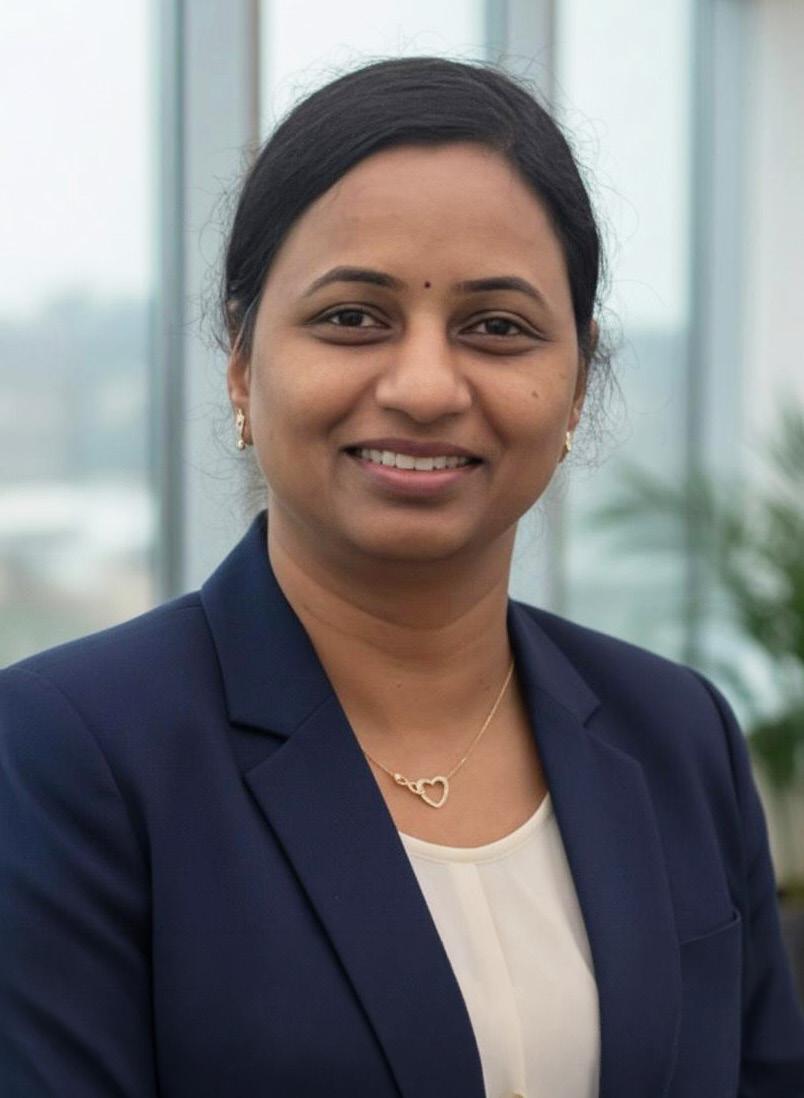
Mrs. Durga Prasanna Chavali is an award-winning healthcare technology executive with nearly two decades of leadership driving large-scale digital transformation across major U.S. health systems. As Senior Manager of IT Applications at Trinity Health, she has spearheaded enterprise modernization initiatives that have significantly advanced clinical efficiency, data governance, and patient-centered innovation. Her contributions have earned her multiple industry recognitions, including leadership awards for digital transformation excellence and features in national platforms highlighting top Women in Tech. She is also a distinguished fellow and active contributor to professional organizations focused on healthcare innovation, data ethics, and women’s leadership in STEM. Widely respected for her strategic vision, advocacy, and impact, Mrs. Chavali continues to shape the future of healthcare IT with integrity, purpose, and transformative influence.
Recently, in an exclusive interview with CXO Outlook Magazine, Durga shared insights into her passion for bridging technical innovation with ethical governance, driven by her early experiences in healthcare IT. She emphasized the importance of empathy, responsibility, and human-centered design in driving innovation, highlighting the role of diversity and inclusion in shaping equitable digital ecosystems. She also shared her personal hobbies and interests, future plans, words of wisdom, and much more. The following excerpts are taken from the interview.
on patient outcomes, data privacy, and health equity. The rapid acceleration of digital transformation in healthcare brought extraordinary opportunities, but also heightened risks of algorithmic bias, data misuse, and unintended consequences of automation. I realized that leaders in healthcare IT must not only champion modernization but also safeguard the ethical principles that define our industry.
This intersection of innovation and governance became my calling. I am driven by the belief that technology should elevate human dignity, not compromise it. My work today is rooted in ensuring that every digital advancement, whether AI, interoperability, or automation, aligns with the core values of trust, transparency, and patient-centered care.
What do you love the most about your current role?
As a Senior Manager overseeing enterprise applications, I have the privilege of shaping digital ecosystems that directly impact the experiences of patients, clinicians, and operational teams across a large healthcare network. Every decision, whether it involves modernizing legacy systems, optimizing workflows, or introducing new technologies, has a tangible impact on how care is delivered and how people feel when interacting with our systems.
I thrive in environments where complexity meets purpose. Healthcare IT is uniquely challenging because it requires balancing innovation with safety, speed with accuracy, and efficiency with compassion. My role allows me to bring together diverse teams of clinical leaders, technologists, data experts, and operational stakeholders to co-create solutions that are both visionary and grounded in real-world needs. That collaborative energy is incredibly fulfilling. What also inspires me is the opportunity to mentor emerging leaders and cultivate a culture of
What inspires me is not the technology itself, but the potential it holds to reduce clinician burnout, improve diagnostic accuracy, and personalize care in ways we could only imagine a decade ago
continuous improvement. I enjoy helping teams see beyond the immediate task and understand the broader impact of their work. Knowing that I can help build a more resilient, equitable, and patient-centered healthcare system motivates me every day.
As healthcare IT continues to evolve, what emerging trend excites you most, and why?
The trend that excites me most is the integration of AI-driven intelligence into everyday clinical and operational workflows. We are moving beyond theoretical use cases toward a reality in which predictive analytics, ambient clinical documentation, and real-time decision support can fundamentally reshape the care experience. What inspires me is not the technology itself, but the potential it holds to reduce clinician burnout, improve diagnostic accuracy, and personalize care in ways we could only imagine a decade ago.
For example, AI can help identify patient deterioration earlier, streamline administrative tasks that consume valuable clinician time, and uncover insights from vast datasets that would be impossible for humans to process alone. When implemented responsibly, AI becomes a silent partner, enhancing human judgment rather than replacing it. This shift has the power to restore the human connection in healthcare by giving clinicians more time to focus on what matters most: their patients.
However, what excites me equally is the growing emphasis on responsible AI. The industry is beginning to recognize that innovation must be paired with transparency, fairness, and governance. This alignment of technological advancement with ethical stewardship is where
I see the greatest opportunity for long-term transformation. It’s a future where technology amplifies compassion, equity, and trust.
What
role should healthcare organizations play in fostering innovation and entrepreneurship in AI and
digital health?
Healthcare organizations must embrace a dual role: catalysts for innovation and guardians of ethical responsibility. As stewards of patient trust and vast repositories of clinical data, health systems are uniquely positioned to shape the future of AI and digital health. They should create environments where innovators, both internal and external, can collaborate with clinicians, test new ideas, and refine solutions in real-world settings.
This means investing in innovation hubs, forming strategic partnerships with startups and academic institutions, and empowering interdisciplinary teams to experiment without fear of failure. Healthcare organizations should also champion open standards, interoperability, and data transparency to ensure that innovation benefits the entire ecosystem, not just isolated pockets.
At the same time, organizations must uphold rigorous governance frameworks that prioritize patient safety, privacy, and equity. They should lead the industry in establishing ethical guidelines for AI, evaluating algorithms for bias, and ensuring that digital tools enhance, not hinder, clinical workflows. By balancing innovation with accountability, healthcare organizations can accelerate progress while maintaining the integrity of care.
Ultimately, the most forward-thinking organizations will be those that view innovation
not as a project, but as a cultural mindset—one that encourages curiosity, collaboration, and continuous improvement.
Innovation in healthcare IT cannot thrive when it is treated as a one-time initiative or a standalone technology deployment. The organizations that will lead the future of healthcare are those that embed innovation into their cultural DNA, where every individual, regardless of role, feels empowered to question assumptions, explore new ideas, and contribute to meaningful transformation. When innovation becomes a mindset rather than a milestone, it shifts from being the responsibility of a single team to becoming a shared organizational value.
In my experience, the most impactful advancements emerge when curiosity is encouraged and experimentation is normalized. Healthcare is a complex, rapidly evolving environment, and the challenges we face, ranging from clinician burnout to interoperability gaps to the ethical use of AI, require diverse perspectives and crossfunctional collaboration. When teams feel psychologically safe to propose new approaches, challenge outdated processes, and learn from failure, the organization becomes more agile, resilient, and future-ready.
Continuous improvement is equally essential. Innovation is not a destination; it is an ongoing journey that requires constant reflection, adaptation, and refinement. Forwardthinking organizations invest in learning, cultivate digital literacy, and create structures that support iterative progress. They understand that the best ideas often come from those closest to the work clinicians, analysts, frontline staff and they build mechanisms to elevate those insights into enterprise-level strategy.
Ultimately, a culture of innovation is what enables healthcare organizations to anticipate change rather than react to it. It empowers them to design technology that is not only advanced but also ethical, equitable, and deeply aligned with the mission of improving patient care. This cultural mindset is what will distinguish the leaders of tomorrow from those who struggle to keep pace with the accelerating demands of the industry.
Your advocacy for Women in Tech has made a significant impact - what’s the role of diversity and inclusion in driving innovation in healthcare IT?
Diversity and inclusion are not simply organizational values; they are strategic drivers of innovation, especially in a field as complex and consequential as healthcare IT. When we talk about transforming care delivery, improving patient outcomes, or designing equitable digital ecosystems, we are fundamentally talking about solving human problems. Those problems cannot be solved effectively when the teams building the solutions reflect only a narrow slice of the population they serve. Healthcare touches every demographic, every community, and every lived experience. Our technology must do the same.
My advocacy for Women in Tech is rooted in the belief that representation shapes outcomes. When women and underrepresented groups participate in decision-making, we see more intuitive designs, more inclusive workflows, and more equitable data models. Diverse teams challenge assumptions that might otherwise go unquestioned. They bring perspectives that illuminate blind spots, especially in areas like AI bias, patient engagement, and accessibility. In healthcare IT, where the stakes involve patient
safety and trust, these perspectives are not optional; they are essential.
Inclusion also fuels a culture of psychological safety, where individuals feel empowered to contribute bold ideas, question the status quo, and take risks that lead to breakthrough innovation. It strengthens collaboration, accelerates problemsolving, and fosters resilience in the face of rapid technological change.
Ultimately, diversity and inclusion are catalysts for building healthcare systems that are not only technologically advanced but also compassionate, equitable, and reflective of the communities we serve. My commitment to this work is both personal and professional because I have seen how transformative it is when every voice has the opportunity to shape the future of healthcare.
What skills will be most critical for healthcare IT professionals in the next decade?
The next decade will redefine what it means to be a healthcare IT professional. Technical
expertise will remain essential, but it will no longer be sufficient on its own. The most successful professionals will be those who can integrate deep technological fluency with strategic thinking, ethical judgment, and a profound understanding of clinical realities. As AI, automation, and interoperability reshape the industry, the ability to interpret data responsibly and translate insights into meaningful action will become a core competency. Professionals will need to understand not only how systems work, but how they influence patient outcomes, clinician workflows, and organizational strategy.
Equally important will be skills in change leadership. Healthcare is undergoing a cultural transformation, and technology is at the center of that shift. IT professionals must be able to guide teams through ambiguity, communicate complex concepts in accessible ways, and build trust across multidisciplinary groups. Emotional intelligence, empathy, and collaboration will be as critical as technical acumen.
Cybersecurity awareness will also be indispensable. As digital ecosystems expand, so do vulnerabilities. Professionals must be vigilant stewards of patient data, ensuring that innovation never compromises privacy or safety. Ultimately, the leaders of the future will be those who can balance innovation with responsibility and who understand that technology is most powerful when it amplifies human care.
Are there any particular books, articles, or resources that have significantly influenced your thinking or approach?
My thinking has been shaped by a wide range of resources that explore the intersection of technology, ethics, leadership, and human behavior. I am drawn to works that challenge
My biggest goal is to continue shaping the future of healthcare through responsible, scalable, and human-centered innovation
conventional assumptions and encourage leaders to think beyond the immediate horizon. Books that examine responsible innovation, digital transformation, and organizational culture have been particularly influential, reinforcing the idea that technology must always serve a broader purpose.
I also find tremendous value in research on behavioral science and systems thinking. These perspectives help me understand how people interact with technology, how decisions ripple across complex environments, and how leaders can create conditions for sustainable change. Articles that explore the ethical implications of AI, the future of digital health, and the evolving role of data in society continually shape my approach to governance and strategy.
Beyond formal resources, I am inspired by thought leaders who emphasize empathy, resilience, and human-centered design. Their work reminds me that healthcare is fundamentally about people, and that technology must enhance, not replace, the human connection. These influences collectively guide my leadership philosophy: innovate boldly,
govern responsibly, and always keep the patient at the center.
What are some of your passions outside of work? What do you like to do in your time off?
Outside of work, I am deeply committed to activities that bring balance, joy, and perspective into my life. Spending time with my family is my greatest source of fulfillment. They keep me grounded, remind me of what truly matters, and inspire me to approach my work with renewed purpose. I also enjoy exploring new places, whether through travel or simply discovering hidden gems in my own community. These experiences broaden my worldview and spark creativity.
I am passionate about mentoring, particularly supporting women and young professionals entering STEM fields through platforms such as IEEE and ACM. Guiding others as they navigate their careers is incredibly rewarding, and it allows me to give back to a community that has shaped my own journey. Mentorship is not just about sharing knowledge; it’s about
empowering others to see their potential and helping them build the confidence to pursue it.
In my personal time, I also enjoy activities that allow me to reflect and recharge. Whether it’s reading, engaging in creative hobbies, or spending time outdoors, these moments help me maintain clarity and resilience. My recent read of Emotional Intelligence by Daniel Goleman reminds me that leadership is most effective when it is balanced, intentional, and rooted in a strong sense of self.
What is your biggest goal? Where do you see yourself in 5 years from now?
My biggest goal is to continue shaping the future of healthcare through responsible, scalable, and human-centered innovation. I am driven by the belief that technology can transform care delivery when it is implemented thoughtfully and ethically. Over the next five years, I envision myself expanding my influence beyond organizational boundaries, contributing to national conversations on digital health, leading transformative initiatives, and helping shape standards for responsible AI and data governance.
I aspire to take on roles that allow me to drive strategy at a broader level, whether through executive leadership, advisory positions, or crossindustry collaborations. I see myself championing initiatives that improve interoperability, reduce clinician burden, and enhance patient experience across diverse populations. I also hope to continue mentoring emerging leaders, particularly women in technology, to ensure that the next generation of innovators is equipped to lead with integrity and vision.
Ultimately, I want to be a catalyst for meaningful change, someone who not only advances technology but also elevates the values
that define healthcare: compassion, equity, and trust. My goal is to leave a lasting impact on the industry by helping build smarter, safer, and more humane systems.
What advice would you give to emerging leaders in healthcare IT who want to drive change?
My advice to emerging leaders is to lead with purpose, curiosity, and courage. Healthcare IT is one of the most impactful fields you can be part of, but it is also one of the most complex. To drive meaningful change, you must stay grounded in the realities of clinical care and deeply understand the people you serve: patients, clinicians, and operational teams. Listen actively, observe thoughtfully, and never lose sight of the human experience behind every workflow and data point.
Embrace innovation but pair it with ethical responsibility. Technology moves quickly, but trust is built slowly. Always consider the longterm implications of your decisions, especially when working with AI, automation, and sensitive data. Be transparent, ask difficult questions, and advocate for governance frameworks that protect equity and safety.
Cultivate resilience. Transformational change rarely happens in a straight line. You will encounter resistance, setbacks, and moments of uncertainty. What matters is your ability to stay focused on the mission and adapt with grace.
Finally, invest in relationships. Collaboration is the heartbeat of healthcare. Build bridges across disciplines, seek diverse perspectives, and create environments where people feel empowered to contribute. Leadership is not about having all the answers—it’s about creating the conditions for collective success.
Transforming Healthcare with Data-Driven Insights
Mitch DeKoven, Vice President - Evidence Generation, Precision AQ
Hi Mitch. As a Practice Leader in health economics and outcomes research, what do you enjoy most about driving value in the life sciences industry?
I’m fortunate to be able to work at the intersection of science, strategy, and human impact. In this position, I can contribute to decisions that improve health outcomes and strengthen the value story associated with innovative therapies. This energizes me by connecting scientific rigor with practical decision-making, specifically helping life science manufacturers understand not just whether a therapy works, but how, for
whom, and why it matters in real clinical settings.
As the life sciences industry continues to evolve, what emerging trends should leaders prioritize in health economics and outcomes research?
I tend to agree with the International Society of Pharmacoeconomics and Outcomes Research’s (ISPOR) recently released Top 10 HEOR Trends Report. A few trends stand out to me in particular. Certainly, no one can ignore the role the rapid integration of advanced technologies (e.g., AI, digital health, predictive analytics) is playing
Value development strategies are most impactful when clinical, commercial, market access, medical affairs and HEOR teams are aligned from the outset
Mitch DeKoven is Vice President of Evidence Generation at Precision AQ. He has over two decades of experience in Health Economics and Outcomes Research, having served in leadership and management roles at IQVIA, ValueMedics, UBC, CHPS, and the Johns Hopkins Health System. Mr. DeKoven has published over 60 peer-reviewed manuscripts and sits on the editorial advisory boards of several leading healthcare journals. He earned a Master of Health Services Administration (MHSA) from the University of Michigan School of Public Health and a BA in Spanish from Washington University in St. Louis.
Recently, in an exclusive interview with CXO Outlook Magazine, Mitch shared insights into his passion for driving value in the life sciences industry. He emphasized the importance of working at the intersection of science, strategy, and human impact, contributing to decisions that improve health outcomes and strengthen the value story of innovative therapies. Mitch also emphasized the importance of scientific expertise, strategic thinking, and communication skills for future-ready health economics and outcomes research professionals. The following excerpts are taken from the interview.
in enhancing evidence generation. Second, there continues to be an increasing volume, diversity and availability of real-world data for decision-making. Who can ignore the growing importance of incorporating health equity and access into future research? Lastly, political, legal and regulatory changes across the globe are reshaping how value must be demonstrated and communicated. The theme of the recent US Access Forum 2026 meeting captured this best: “Think Locally, Act Globally.”
What are the key considerations for organisations when developing value development strategies, and how can they ensure effective execution?
Collaboration, collaboration, collaboration. Value development strategies are most impactful when clinical, commercial, market access, medical affairs and HEOR teams are aligned from the outset. This ensures that value is communicated in a way that resonates with each stakeholder, be it a payer, clinician, patient or policymaker.
Effective execution is dependent upon strong accountability, investments in tools and analytics and measuring what matters (e.g., KPI).
What are the key skills required for future-ready health economics and outcomes research professionals, and how can organisations develop these skills?
It is an exciting time to enter the workforce as a health economics and outcomes research professional. Success is dependent upon a combination of scientific expertise and curiosity, strategic thinking, and superb communication. Such professionals must be able to confidently work with large, diverse global real-world datasets and always be willing to learn. Ideally, this should be paired with a strong grounding in methodological rigor. What sets apart one professional from another in this space is the ability to translate complex analyses into compelling value narratives that resonate with decision-makers.
Organizations play a key role in preparing the next generation of health economics and outcomes research professionals
Organizations play a key role in preparing the next generation of health economics and outcomes research professionals. Talent development programs, encouraging interdisciplinary teams, fostering a culture of curiosity and methodological excellence and ensuring skills map to future needs are at the top of the list.
If you could have dinner with any historical figure, who would it be and why?
Ever since I did a book report on Franklin Delano Roosevelt (FDR) back in elementary school, I have always wondered what it would be like to have dinner with him. The ability to learn from a communicator of his caliber would be extremely valuable. He had a knack for his approachable manner and his ability to put people immediately at ease. FDR was able to communicate issues in a style that ordinary people could connect with. He was thoughtful, strategic, and emotionally intelligent. Altogether, his style would be one
to emulate and go a long way in helping to communicate the value of a therapy.
What’s something on your bucket list that you’re excited to tackle soon?
One bucket list experience I’m excited to tackle is playing a full round at Pebble Beach Golf Links. It is one of the most iconic courses in the world where the scenery, history, and challenge all come together in a way few other places can match. For me, golf has always been as much about the experience as the score. Playing Pebble Beach feels like the ultimate celebration of all those elements at once and would be a moment I’d truly savor.
What advice would you give to organisations looking to demonstrate value and communicate it effectively to stakeholders in the life sciences industry?
It is important to recognize that the process for determining, demonstrating, and communicating value in today’s life sciences landscape requires a more holistic, stakeholder-centered approach than what was used in the past. First, organizations should invest early in the development of a coordinated evidence plan that captures a unified story told through multiple data streams. Such a plan should revolve around a patient-centered value story, recognizing that different stakeholders define value differently. The importance of transparent methodological rigor remains, with a focus on clear communication. This should all be executed under the purview of a cross-functional team that is committed to measuring the impact of its efforts over time as demonstrating and communicating value is a continuous endeavor over the lifecycle of the therapy.
You’re Deploying AI at Speed, But Weak Identity Governance Could Bring it Down
Stephanie Liew, Chief Information Security Officer, Asia Pacific, Middle East and Africa
You approved the use case. Nobody approved the identity behind it.
I have seen this gap across 57 markets. Leaders point to the use cases. Chatbots. Automated workflows. AI-driven engagement. The ambition is clear. The governance often is not.
Does Anyone Own Your AI Credentials?
Your AI systems hold credentials nobody is reviewing. That is your exposure.
Every AI system that touches your data, APIs, or connected systems needs an identity. A service account. An API key. An OAuth token. That identity determines what the system can reach. Most of the time, it gets created once, handed to a team, and forgotten. Teams change. Vendors update connections. Use cases expand. The identity stays.
Machine identities now outnumber human identities by more than 80 to 1. Forty-two percent hold sensitive or privileged access. Both figures are from CyberArk’s 2025 research. Third-party AI vendors add to this risk. They introduce identities you did not create and may not see, but you are still accountable for them.
If you cannot count the non-human identities in your environment today, your AI governance has a gap.
The Pattern I See Across Every Market
An AI system goes live. The team sets up credentials, grants access, and moves on. Months later, the use case changes. A vendor adds a connector. Someone leaves. Nobody removes the original credentials. No named owner. No review date.
Stephanie Liew is a global cybersecurity and technology risk executive with more than 20 years of experience across Big Four consulting, global banking, and FMCG. She drives strategic growth through digital governance, building the structures, accountability, and clarity that allow organisations to scale AI and technology with confidence. She built the APMEA cybersecurity function at British American Tobacco across 57 markets, led second-line technology risk oversight at Standard Chartered Bank, and spent a decade advising FTSE 100 companies at KPMG. She chairs regional conferences, serves on cybersecurity advisory boards, and leads the Women-in-Tech Wisdom Council at the ASEAN CXO Association.
If you cannot count the non-human identities in your environment today, your AI governance has a gap
The identity outlives the purpose. I call this governance drift. It is the most common control failure I see across APMEA.
Governance drift is not a theoretical risk. In 2025, Marks and Spencer suspended online orders for 46 days after attackers gained access through a third-party contractor. Jaguar Land Rover suffered a 6 weeks production shutdown, costing an estimated £1.9 billion. The lesson is this: weak visibility over supplier access turns a control gap into a business crisis.
ANCHOR Controls for AI Identity Governance
ANCHOR is a control architecture for AI identity governance. Six stages. Three groups. One accountability system.
Most governance frameworks focus on model behaviour. ANCHOR focuses on the identities that let AI systems act inside your enterprise.
Establish control. Anchor ownership and access first.
1. Assign: Give every identity a named owner, a clear purpose, a system boundary, and a review date. No identity without an owner.
2. Narrow: Cut access to the minimum needed. Remove excess permissions, long-lived tokens, and unused tool-calling rights.
Authorise trust. Set rules and confirm the workload is who it claims to be.
3. Control: Define what the identity can do, what needs human sign-off, what risk level applies, and what policy checks must run before any action.
4. Hold: Verify the workload behind the credential is the one you expect. Use standards such as SPIFFE and tools such as SPIRE to make that check rigorous. Sustain discipline. Keep governance running after go-live.
5. Observe: Two numbers matter: how fast your machine-to-human ratio is growing, and how
quickly your team reviews non-human access. Log activity, approvals, access changes, and review outcomes to track both.
6. Retire: Plan the ending from day one. When a system retires, its credentials go with it. When an identity becomes stale or unexplained, shut it down.
ANCHOR is not a tool. It is an accountability system. It stops governance drift before it becomes a breach.
ANCHOR was built for AI, but the same six stages apply to every non-human identity in your environment: service accounts, automation credentials, RPA bots, and CI/CD pipelines.
When Governance Drift Hits a Regulated Market
A bank in Malaysia and Indonesia launches an AI credit workflow. It sets up service identities for customer records, credit data, and outbound notifications.
A vendor adds a connector. Nobody updates the access model. The bank now has overlapping credentials, unclear ownership, and no clean record of which identity touched which data.
The model runs. The governance does not.
BNM RMiT sets the baseline for control design, audit trails, and third-party risk. Indonesia’s OJK issued AI governance requirements for banks in April 2025, mandating audit trails, human oversight for credit decisions, and accountability for algorithmic actions. MAS FEAT requires fairness, ethics, accountability, and transparency in AI. All three ask the same question: can you trace what an identity did? If not, you cannot defend the control.
Regulators follow the data. The trail leads to service identities, the access they held, and who reviewed them. If you cannot reconstruct that quickly, your position will not hold.
Ask this in your next leadership meeting: which of our AI systems can access sensitive data, what can they do, and who reviewed them last quarter?
egulators are moving. Waiting for a regional standard before acting is not a strategy.
In March 2026, Malaysia launched the MYAI Standards platform, covering more than 80 international AI standards. The government has committed to clear progress within 12 months under the Malaysia AI Action Plan 2026–2030. Across ASEAN, standards are uneven. The Philippines has clear rules on automated decisions. Other markets are still catching up.
One Question. Sixty Seconds.
Ask this in your next leadership meeting: which of our AI systems can access sensitive data, what can they do, and who reviewed them last quarter?
If the answer takes days and still comes back incomplete, you have your gap. Not a technology gap. A control design gap.
ANCHOR gives you a way to close it. The organisations that get this right build accountability in before the risk arrives. They do not find the gap through a breach, a regulatory inquiry, or a service account nobody remembered creating.
If you do not govern the identity, you do not govern the AI.