There was a time when leadership was all about depth. You chose a path, went deep, and stayed there. That approach worked well in a world that moved at a predictable pace. Today, things are different. Problems are no longer simple or isolated. Strategy spills into execution. Technology shapes decisions. Operations influence outcomes. Everything is connected, whether we like it or not.
Lately, I’ve been noticing something interesting in conversations with leaders. The ones making real progress are not those who know everything about one area. They are the ones who can connect ideas across different spaces. One recent report suggested that more than 70 percent of executives now see cross-functional thinking as essential for leadership. That feels less like a trend and more like a necessity.
This is where a new kind of leadership is taking shape.
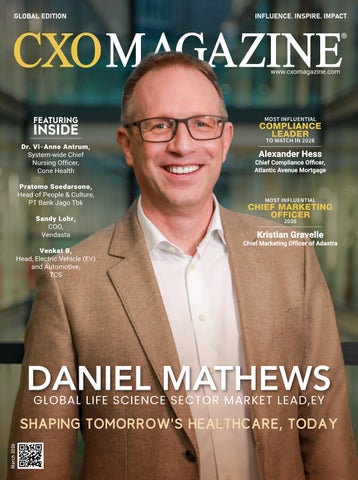
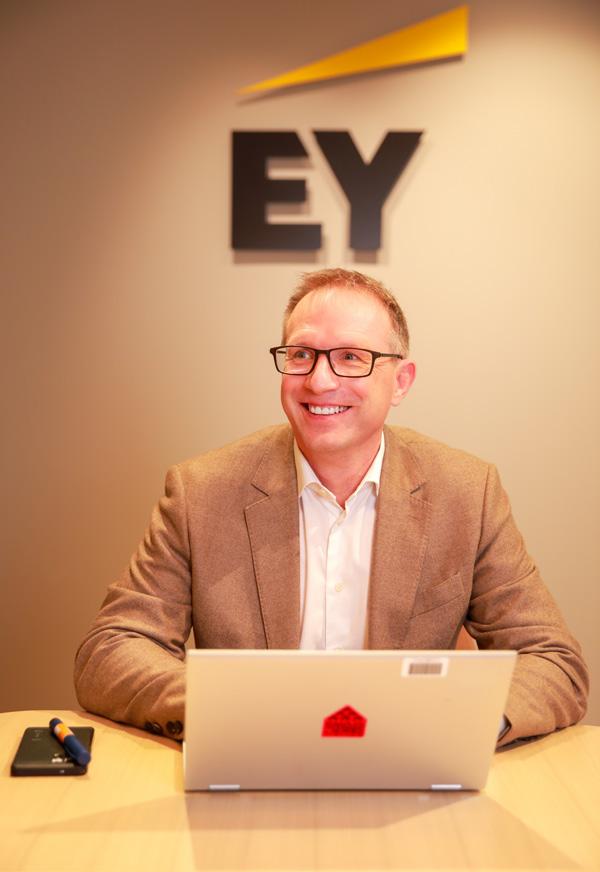
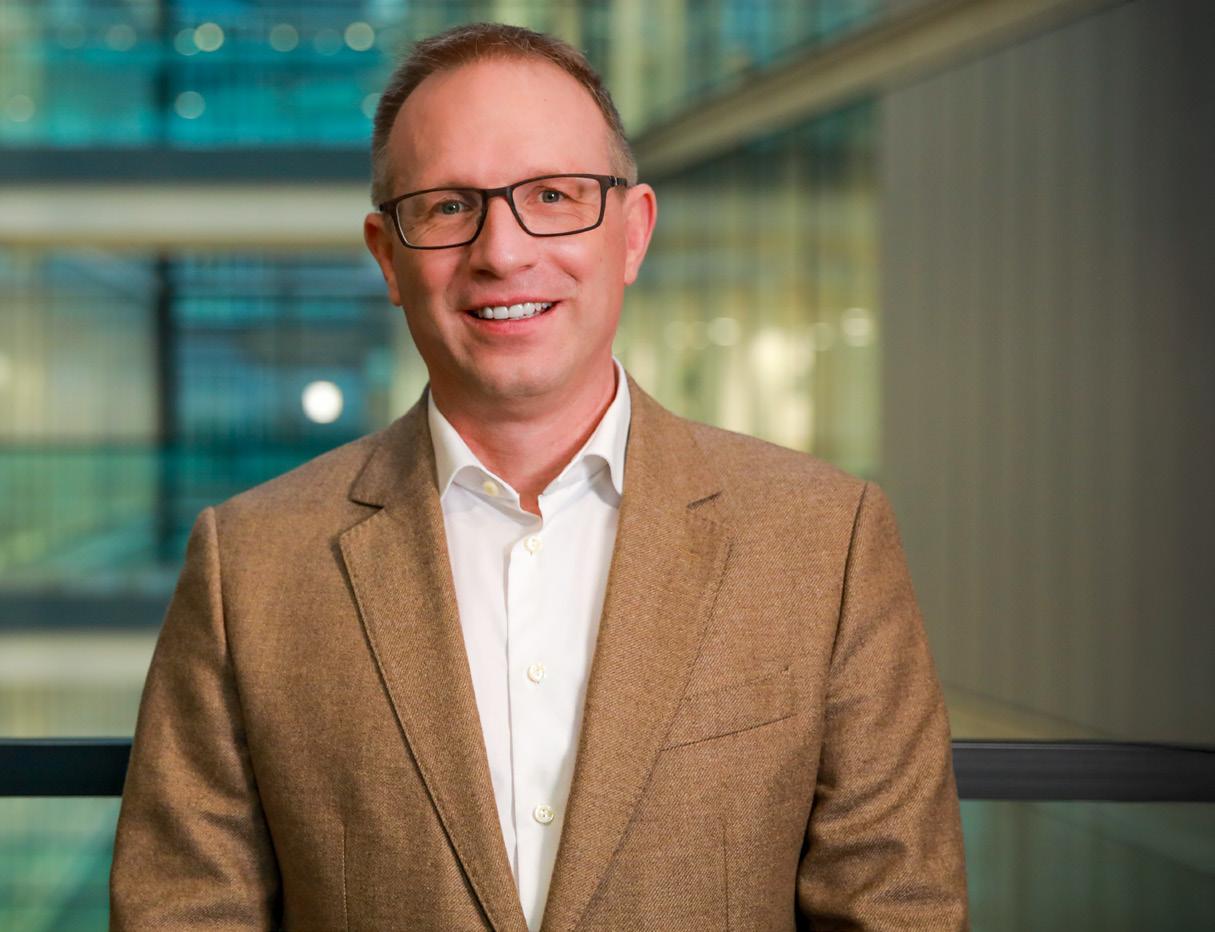
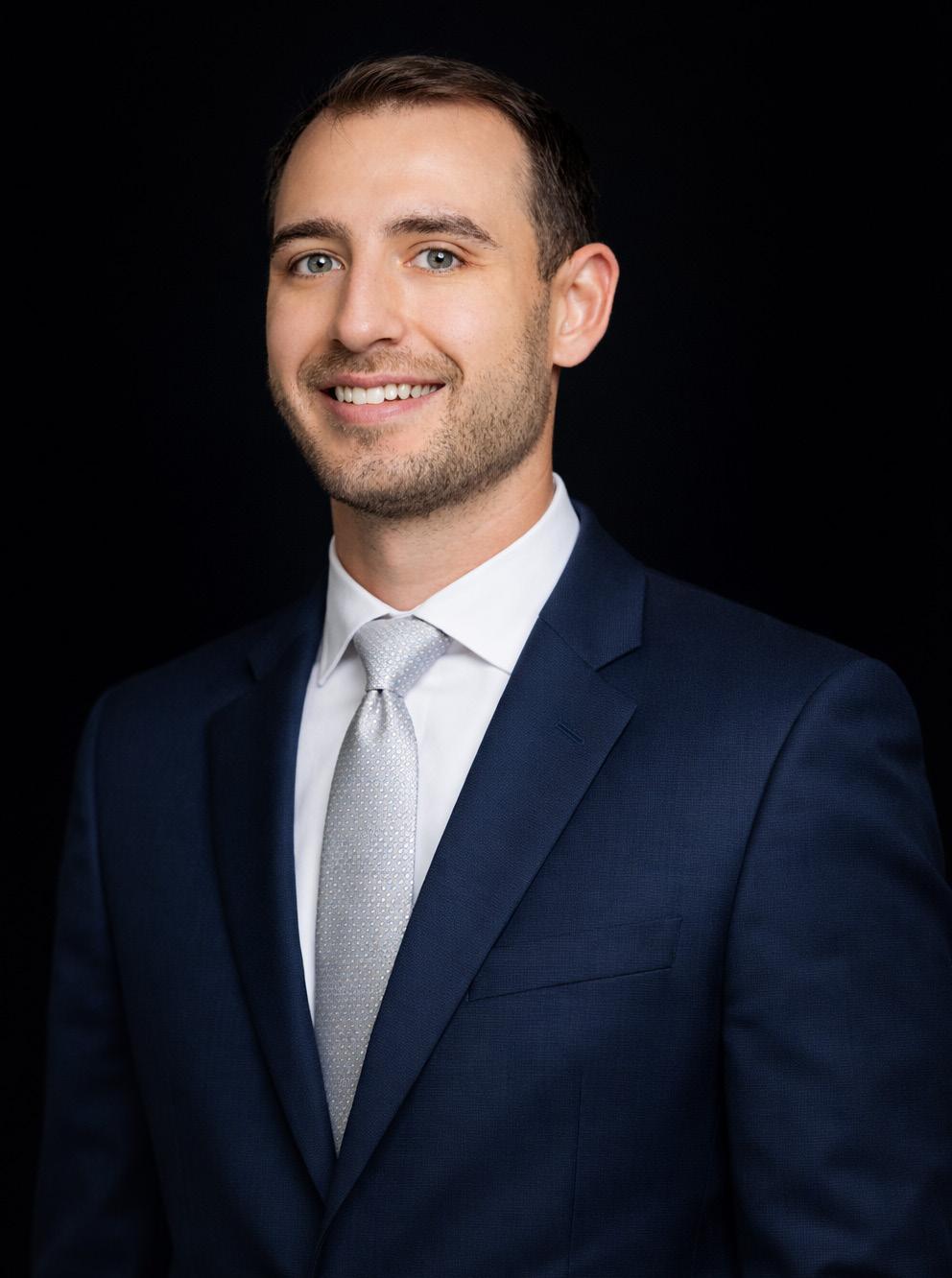
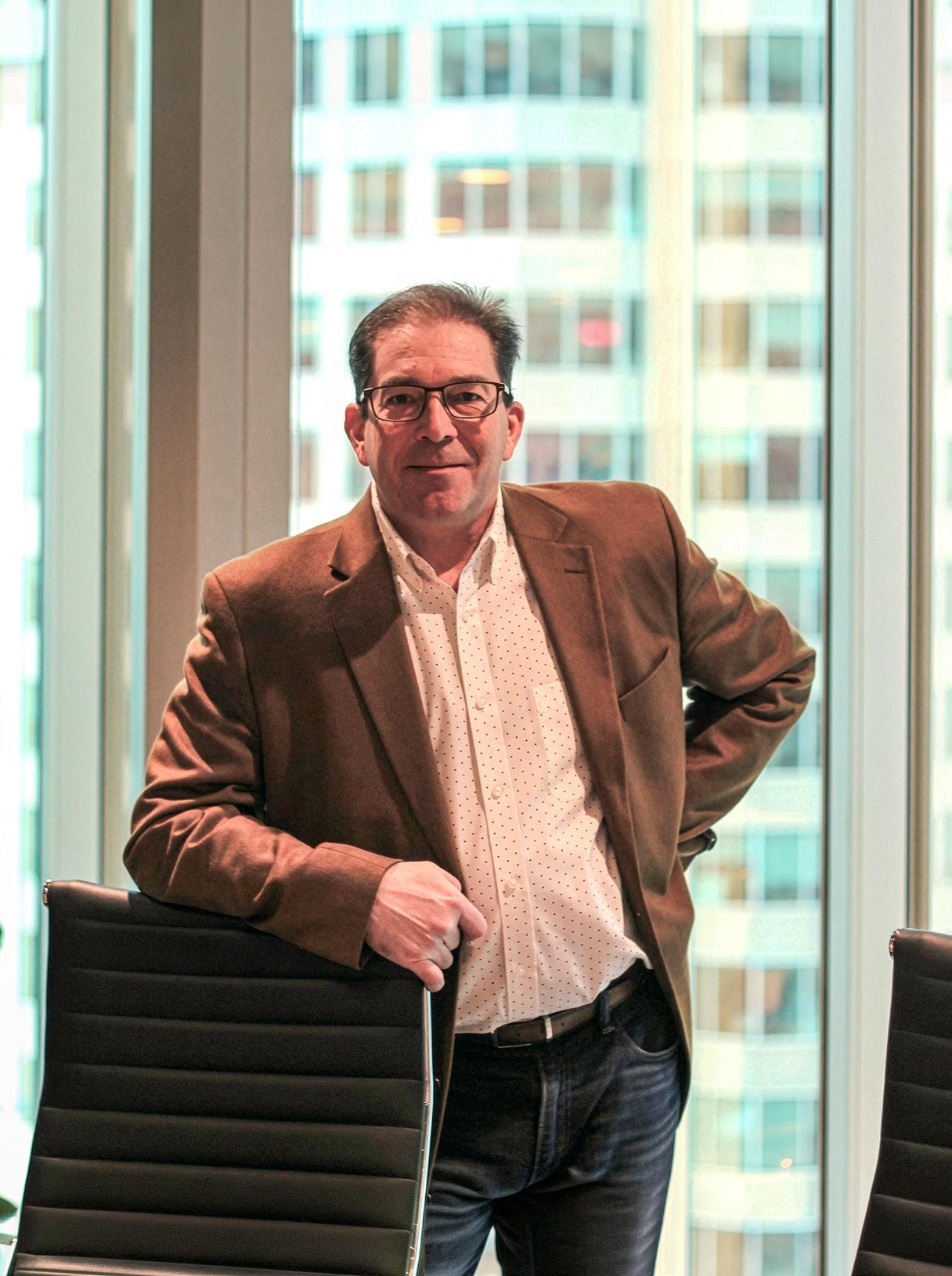
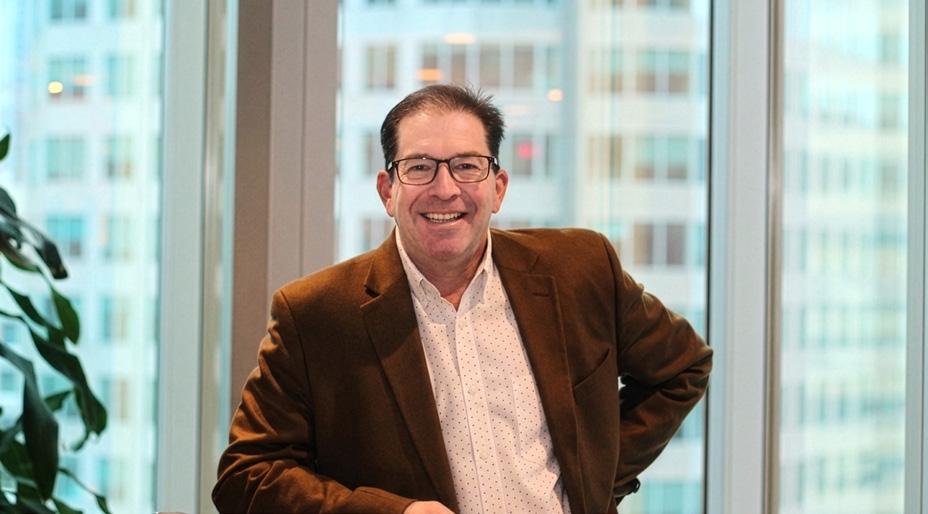
Our cover story this month brings this idea to life. Daniel Mathews, Global Life Science Sector Market Lead at EY, represents a leader who does not stay within defined roles. He moves comfortably between strategy, technology, and operations, solving complex challenges that do not fit into neat boxes. His journey is also deeply personal. Being diagnosed with Type 1 diabetes at a young age gave him a clear sense of purpose early on. It shaped his drive to turn innovation into something meaningful and practical. What stands out is his ability to stay grounded while working at a global scale.
Alongside this, the issue brings together a mix of perspectives on leadership, innovation, and the changing nature of work. Each piece adds a different angle, offering insights that are both practical and thought-provoking.
As you read through this issue, one idea may stay with you. The future will not be led by specialists alone or generalists alone. It will be led by those who can bring different worlds together and make sense of complexity without losing clarity
That is where leadership is headed. And it is already here.
Enjoy Reading.
Sarath Shyam
COMPLIANCE LEADER
CHIEF MARKETING OFFICER
22 Alexander Hess, Chief Compliance Officer, Atlantic Avenue Mortgage
Establishing Trust Through Mortgage Compliance
34
Kristian Gravelle, Chief Marketing Officer of Adastra
Building Trusted Insights Through Data and AI
16
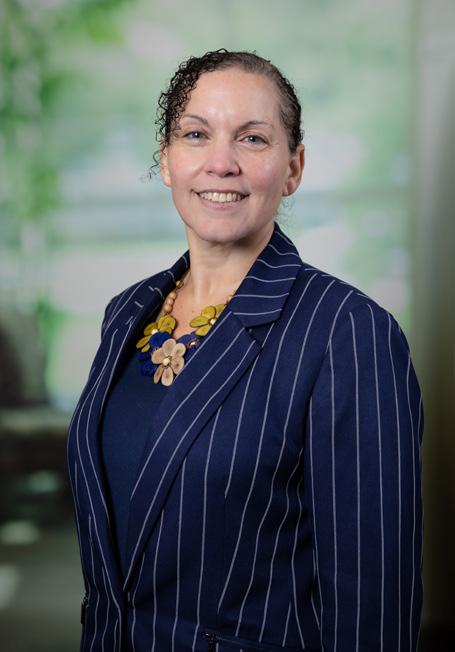
Dr. Vi-Anne Antrum, System-wide Chief Nursing Officer, Cone Health
Advancing Nursing as a Driving Force in Healthcare
INTERVIEW
30 Sandy Lohr, COO, Vendasta
Connecting Strategy to Real Impact
44 Pratomo Soedarsono, Head of People & Culture, PT Bank Jago Tbk
Shaping the Future of Work with Design Thinking
52 Venkat B, Head, Electric Vehicle (EV) and Automotive, TCS
Leading Transformation in Electric Mobility
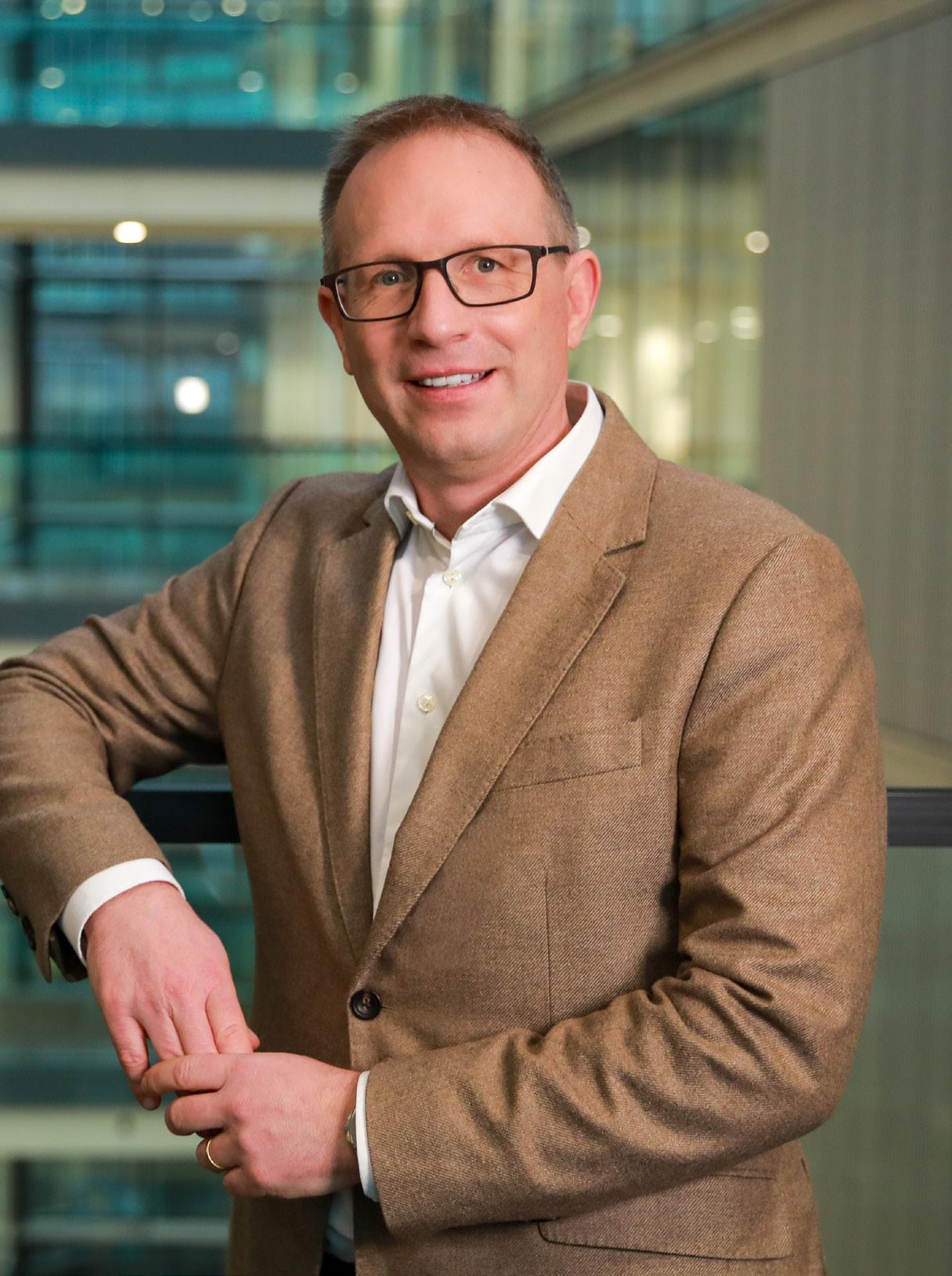
DANIEL MATHEWS
GLOBAL LIFE SCIENCE SECTOR MARKET LEAD, EY
SHAPING TOMORROW'S HEALTHCARE, TODAY
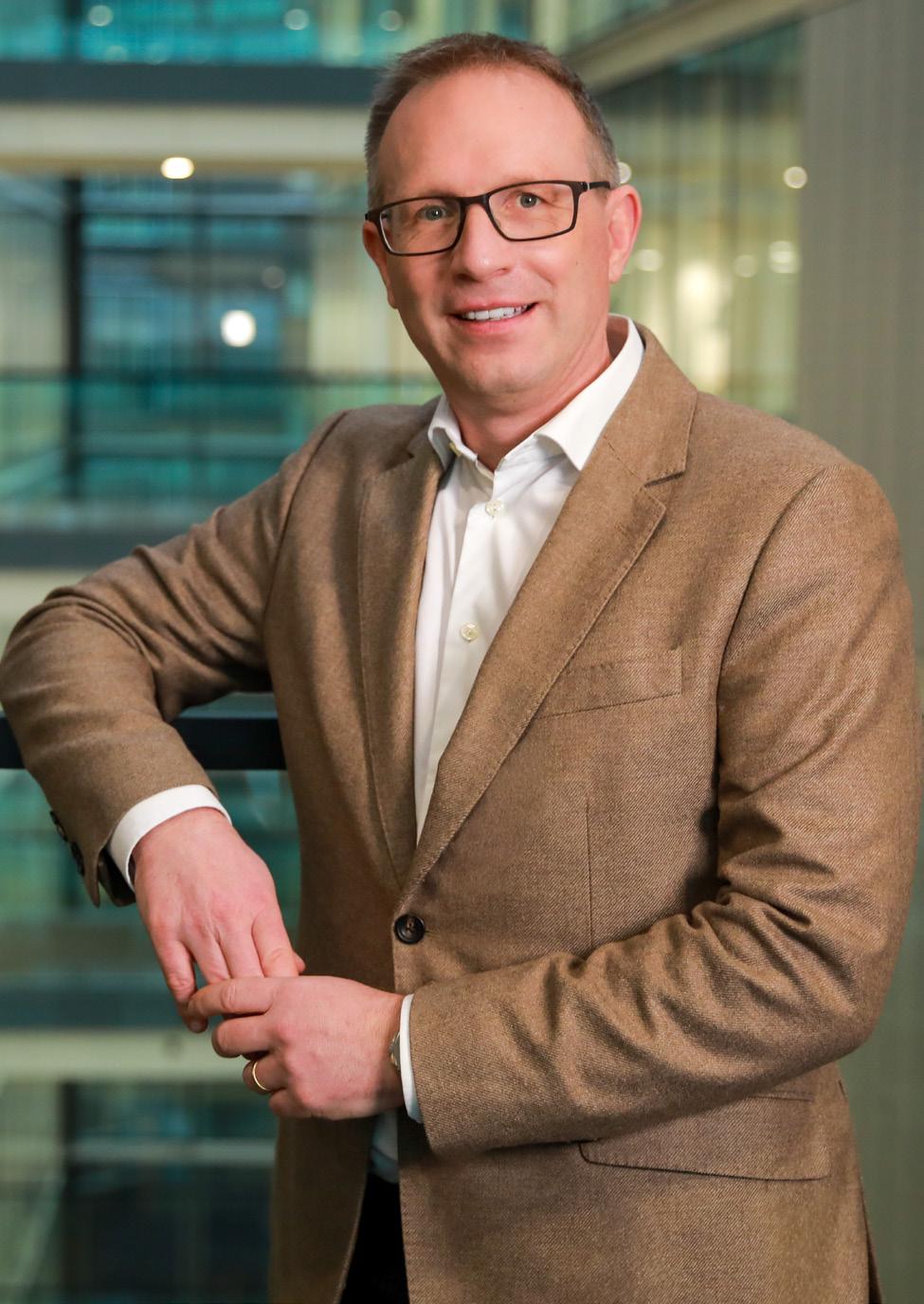
Daniel Mathews leads EY’s Global Life Science practice, which has over 38,000 people and is recognised as a Market Leader in Life Sciences consulting; is the number 1 Big 4 firm for M&A transaction advice; and is the practice leader in auditing Fortune Global 500 and Forbes Global 2000 Life Sciences companies. He is also a trustee with Whizz-Kidz, supporting children’s mobility. Daniel holds a BSc (1st Class Hons) in Physical Geography and a Masters (Dist.) in Computer & Information systems.
Recently, in an exclusive interview with CXO Magazine, Daniel shared insights into his journey, sparked by being diagnosed with Type 1 diabetes at age 7, fueling his passion for turning innovation into real-world impact. He loves the variability of his role, bridging strategy, tech, and operations to solve complex client challenges. He also shared his personal hobbies and interests, future plans, words of wisdom, and much more. The following excerpts are taken from the interview.
Hi Daniel. What sparked your interest in the life sciences sector, and how has your career evolved over the years?
I was diagnosed with Type 1 diabetes at the age of 7 – long before digital monitoring, widespread awareness, or many of the everyday conveniences that we now take for grantedlike sugar free drinks! So, from an early age I understood that my life depended on scientists turning insulin into a reliable, scalable and accessible product. That personal connection has evolved into a fascination with how innovation makes it into the real world.
I’ve certainly learnt that healthcare does not suffer from a lack of ideas but instead struggles to turn complexity into sustained value. That
challenge of turning ingenuity into impact is what has defined my career from industry roles at Glaxo, NHS and through Accenture and now at EY.
My daily injections are a constant reminder of the power of Life Sciences but also the challenges of bringing innovations quickly to market.
What do you love the most about your current role?
Variability. There is no such thing as a typical week.
Life sciences operates in a unique tension: rapid scientific and technology change being deployed into systems that demand patience,
rigour and trust, while regulations shift, therapies emerge and macro-economics intervene. Clients want answers quickly, yet the decisions we take carry long term consequences.
What I particularly value about my role at EY is the ability to bring together different perspectives at scale — strategy, technology, operations, tax and risk — around a single client challenge. That means a lot of my time is spent talking to people – which for those that know me – I love!
How do you see the life sciences sector evolving in the next 5-10 years, and what opportunities do you think will emerge?
I won’t predict the future as the great fun of life is that the unexpected always happens. What we can see clearly, however are several thresholds that the sector is about to cross.
Value will be redefined - Health systems will no longer buy molecules, they will buy real
world outcomes. Life Science companies and Health payers will both need to restructure their financial models.
Growth will geographically decouple from innovation. Scientific leadership, commercial growth and capital deployment decisions will no longer sit in the same geographies. Leadership teams will have to embrace fundamentally redesigned operating models.
Pipelines will become externally assembled: The era of the lone blockbuster is ending. The defining therapies of the future will be co-created, co-owned and co-launched. Companies will have to develop collaboration and partnership muscle.
Capacity not science becomes the major growth constraint. From radiopharmaceuticals to biologics to compute, scaling will collide with real world limits in manufacturing, logistics and talent. The successful companies will invest now and position infrastructure as a strategic capability.
Over the next decade we will see AI reshape how drugs are discovered, developed and delivered but not through a single breakthrough moment, but through thousands of better decisions being made every day
Enterprise control will quickly reassert itself as a priority. As technology replacement, launch intensity and regulatory scrutiny peak simultaneously, flawless execution becomes the biggest determinant of market capitalisation.
What role do you see artificial intelligence and machine learning playing in the life sciences sector?
AI and ML will be profoundly important for a sector that is essentially data driven, but not in the way the headlines often suggest. Life sciences has an extraordinary wealth of data, alongside an extraordinary problem with
fragmentation, accessibility and structure. Until that Achilles’ heel is addressed AI will be limited to solving specific use cases. The simpler promise of automation simply hasn’t materialised, if we consider that in the last 2 decades the industry’s headcount has increased by 33% - with the biggest increase in personnel over the last 6 years found in R&D.
AI is exceptional at pattern recognition, simulation and speed of analysis but it doesn’t replace curiosity, judgement or serendipity – all of which have driven the big breakthroughs.
Over the next decade we will see AI reshape how drugs are discovered, developed and
I joined EY because of its purpose “Building a Better Working World” – and this isn’t a slogan, it genuinely defines what we do
delivered but not through a single breakthrough moment, but through thousands of better decisions being made every day.
Can you share a book, podcast, or resource that has inspired you recently?
The film that I’m recommending to everyone at the moment is the “Thinking Game” which follows Demis Hassabis and his DeepMind team trying to create Artificial General Intelligence. Its an incredible insight into one of the brightest minds and someone that is driven by improving humanity not just commercial gain. And after the film read Novacene by James Lovelock –
another great mind of our time and he wrote this when he was 100. He has reframed AI as the next evolutionary intelligence and argues that super-intelligent system could protect our planet better than humans.
If you could travel anywhere in the world, where would you go and why?
I’m a mountain person – I can’t lie still on a lounger (I burn and can’t stay still for long enough). I love going to the Dolomites – you can be walking; hiking or skiing and will always have an amazing view and even better have great food.
Don’t settle into a single silo - use every opportunity possible to work across the whole Life Science value chain and always challenge the preconceived norms
What’s one thing you’re passionate about outside of work?
I live for adventure travelling and exploring different countries; but when I’m not doing that, I’m trying to find the next amazing song on Spotify or heading to a music venue. I have very eclectic tastes – in the last few months I’ve been lucky to see live Pulp, Anna Lapwood, Gizmo Variallas, Cara Rose and Sigur Ros – AI certainly can’t work out the musical connection!
What is your biggest goal? Where do you see yourself in 5 years from now?
I joined EY because of its purpose “Building a Better Working World” – and this isn’t a slogan, it genuinely defines what we do. Given the breadth of resources at EY, I feel privileged that we can make investments into catalysts that help move the industry forward. Most recently I was with a client where we have deployed EY’s Health Outcome Platform to help patients get novel oncology treatments – when you can see the data that you’ve helped keep people alive through a new reimbursement model that the payer, pharmaceutical company and the patient are delighted with, you know that your time has been well spent.
I’m hoping that over the next 5 years that we can continue to challenge the industry so that we do genuinely have a better working world.
What advice would you give to someone just starting out in their career in the life sciences sector?
Don’t settle into a single silo - use every opportunity possible to work across the whole Life Science value chain and always challenge the preconceived norms. The opportunity in Life Sciences is to breakdown silos and re-imagine how processes can be done.
Advancing Nursing as a Driving Force in Healthcare
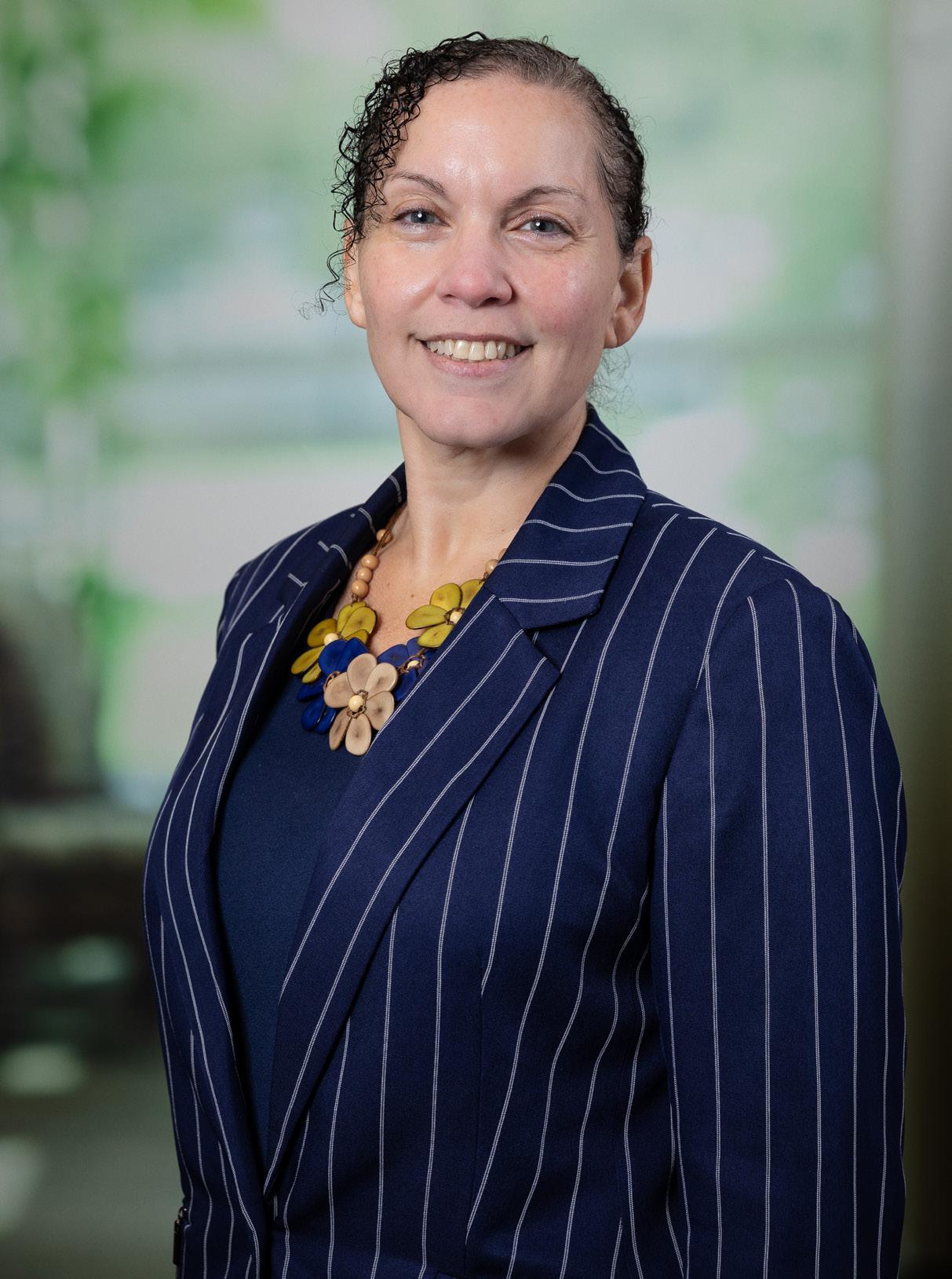
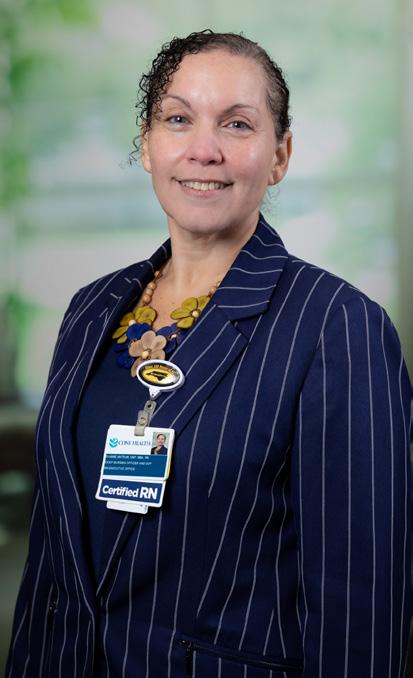
Dr. Vi-Anne Antrum is a System-wide Chief Nursing Officer and healthcare executive with extensive experience leading large, complex organizations. Known for her strategic leadership and commitment to excellence, she specializes in nursing infrastructure, workforce development, quality, and enterprise transformation. Vi-Anne is deeply passionate about advancing the role of nurses as key drivers of healthcare performance and outcomes. She is a respected mentor, thought leader and advocate for human-centered, highreliability care.
Recently, in an exclusive interview with CXO Magazine, Vi-Anne shared insights into her career journey, leadership philosophy, and vision for healthcare. She believes technology will transform healthcare by enabling personalized care and reducing burdens on frontline teams, and stresses the importance of patient-centered care in driving outcomes. She also shared her personal hobbies and interests, future plans, words of wisdom, and much more. The following excerpts are taken from the interview.
Dr. Vi-Anne Antrum
System-wide Chief Nursing Officer, Cone Health
Hi Vi-Anne. Can you walk us through your career journey and how you developed your expertise in nursing and healthcare leadership?
My career has been guided by service and shaped by a deep belief that nursing is both a profession and an operating system for healthcare. I began my career at the bedside, where I learned early that clinical excellence alone is not enough to transform outcomes unless it is paired with leadership, systems thinking, and accountability. Over time, I moved into progressive leadership roles that allowed me to expand my influence and impact—from managing teams and service lines to leading at a system level. Each role reinforced the importance of understanding how care delivery, workforce strategy, quality, finance, culture and purpose intersect. I intentionally sought opportunities that
stretched me beyond traditional nursing roles, which helped me develop a strong enterprise perspective. Today, my experience reflects years of leading through complexity, aligning nursing strategy with organizational priorities, ensuring that clinicians are positioned not just as caregivers, but as architects of high-performing health systems.
What do you love the most about your current role?
I love being able to shape strategy that touches patients, families, nurses, and interdisciplinary teams across the entire organization. As System-wide Chief Nursing Officer, I can influence care and serve at scale. I am deeply fulfilled by building strong nursing infrastructures, developing leaders with courage and compassion, and ensuring that nurses
When care is designed around the human experience including the needs, values, and preferences of patients and families, trust is strengthened, adherence improves, and outcomes follow
are empowered to practice at the top of their license. I am passionate about removing barriers that make care harder and shaping systems that both honor excellence and empathy. Seeing my fellow humans succeed brings me joy!
How do you think technology will continue to shape healthcare delivery in the next 5-10 years?
Technology will continue to transform healthcare in powerful ways, and its success will ultimately be measured by how well it serves people. We should see it enable earlier intervention, better care coordination, and more personalized care while helping reduce the cognitive and administrative burden placed on frontline teams. From an executive lens, I view my role as ensuring that technology enhances human connection rather than replacing it. The most meaningful innovations will be those that give nurses and other caregivers more time with patients, strengthen safety, and support people in delivering deeply compassionate and efficient care.
What's the importance of patientcentered care in driving healthcare outcomes?
When care is designed around the human experience including the needs, values, and preferences of patients and families, trust is strengthened, adherence improves, and outcomes follow. Human-centered care requires us to listen deeply, communicate clearly, and coordinate seamlessly across settings. Quality and experience are not separate goals but intertwined together. Every person brings a unique story, values,
and perspective to the table that challenges us to make sure people feel cared for with responsiveness, respect, and inclusion in the care delivery decision-making partnership.
How do you stay current with industry trends and best practices in nursing and healthcare leadership?
Staying current requires intentionality. I remain connected to my profession, my peers, and the frontline. I engage in professional organizations and leadership communities that foster dialogue and shared learning. I also listen and learn from nurses, physicians, patients, and interdisciplinary partners with curiosity and humility, understanding that they ae closest to the work. Staying current is not just about evidence and knowledge; it’s about staying present and responsive in a constantly evolving healthcare landscape.
What's a favorite quote or mantra that guides your approach to life and work?
One guiding principle that resonates with me is the idea that leadership is about impact. I believe that how we show up—especially in moments of challenge—defines our legacy. This mindset keeps me focused on purpose, accountability, and service, even in complex and high-pressure environments.
Can you share a book, podcast, or resource that has inspired you recently?
The most inspirational book I draw great strength, clarity, and purpose from is the Bible. Additionally, I am consistently inspired by leadership literature that challenges
conventional thinking and emphasizes selfawareness, adaptability, and courage.
What are some of your passions outside of work? What do you like to do in your time off?
Outside of work, faith is my foundation. I am passionate about leadership development, mentorship, and community engagement. I value time spent reflecting, learning, and investing in the relationships that matter most to me. I enjoy experiences that allow me to recharge and gain perspective, whether it’s traveling, engaging in creative pursuits, working out, or spending time with family and friends. These things create space to renew both energy and purpose.
What is your biggest goal? Where do you see yourself in 5 years from now?
My biggest professional goal is to continue expanding my impact while helping redefine how nursing leadership is viewed and
leveraged in healthcare. In five years, I see myself broadening my influence contributing to transformation at the highest levels. I am committed to building sustainable organizations, developing future leaders, and ensuring that nursing is a driving force in shaping the future of healthcare.
What advice would you give to someone looking to build a career in nursing and healthcare leadership?
My advice is to be intentional about your growth and courageous in your aspirations. Seek out experiences that broaden your perspective beyond your current role, and never underestimate the value of operational, financial, and strategic knowledge. Build strong relationships, remain grounded in purpose, and stay open to feedback. Most importantly, remember that leadership is about service. When you lead with integrity, curiosity, and accountability, opportunities will follow!
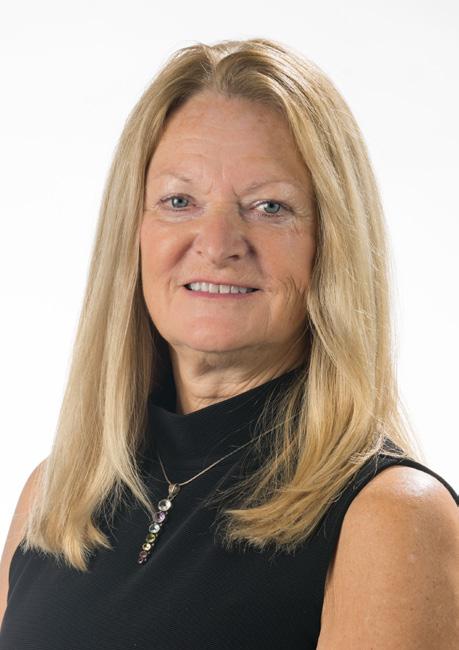
Alexander Hess Chief Compliance Officer, Atlantic Avenue Mortgage
Establishing Trust Through Mortgage Compliance
In the mortgage industry, compliance is rarely the most visible function inside an organization. Yet it quietly determines whether growth holds together or begins to unravel. Regulations are complex, markets move quickly, and the margin for error is small. The leaders who oversee compliance carry a responsibility that extends far beyond checking rules. They help create the discipline that allows lenders to grow while protecting borrowers and maintaining trust in the system.
Alexander Hess understands this responsibility well. His path into compliance leadership did not begin in a regulatory office. It began inside the daily mechanics of mortgage production and operations, where he saw firsthand how small gaps in process could ripple into larger problems. His early proximity to the business solidified a unique stance on modern
compliance. “Most problems are not caused by bad intent. They are caused by unclear expectations, inconsistent processes, and gaps in documentation or communication,” Hess explains. This perspective ultimately drew him toward compliance as a career focus.
For Hess, the field offered a practical way to bring clarity and structure to an industry where complexity is unavoidable. When compliance works as it should, it removes friction from operations, protects the borrower, and strengthens the organization at the same time. This perspective became especially relevant when he stepped into the role of Chief Compliance Officer at Atlantic Avenue Mortgage. The brokerage was expanding rapidly across multiple states, and the pace of growth called for a compliance structure that could keep up with the company’s ambitions.
“Stepping into the Chief Compliance Officer role was compelling because the company was growing quickly and needed a compliance program built for scale. Not just to check the box, but to support expansion, strengthen execution, and build a culture where doing things the right way is the standard,” he says. Today, Hess leads enterprise-wide compliance for the multi-state brokerage, ensuring the company’s operations align with regulations such as TRID, RESPA, ECOA, the SAFE Act, and a complex network of state requirements. Working closely with executive leadership, he develops risk management frameworks, integrates compliance technology into operational workflows, and establishes
governance standards that help the organization maintain consistency as it expands.
Hess views compliance not as a hurdle to progress, but as the very framework that empowers a business to scale with certainty.
“In a fast-growing brokerage, compliance is the infrastructure that keeps growth stable. It is the framework that allows teams to move quickly without creating unnecessary risk,” he notes.
At its best, he believes, compliance creates clarity across the organization. Marketing practices become more disciplined, borrower communication more consistent, licensing more structured, and disclosures more transparent. Strong vendor oversight and rigorous quality control reinforce those foundations.
“When those fundamentals are in place, the organization can grow with confidence because the business is repeatable, defensible, and consistent across markets,” Hess says. This practical, systems-driven view of compliance defines Hess’s leadership today, making structure and accountability the core drivers of organizational growth and borrower support.
Building Trust in a Complex Mortgage Landscape
Reverse mortgages often come with hesitation. Many borrowers approach the process carefully, sometimes after hearing conflicting advice from friends, family, or the internet. Hess does not try to overcome that skepticism with persuasion. He
deals with it through clarity. “My compliance philosophy is that borrower confidence is earned through transparency. Being accurate, avoiding exaggerated promises, and making sure the borrower understands what is happening and why,” Hess says.
Inside Atlantic Avenue Mortgage, that principle shows up in very practical ways. Loan officers are trained to speak plainly. Conversations are documented carefully. Every step of the loan process is explained so borrowers know what comes next and why it matters. “When a borrower feels informed rather than persuaded, trust increases naturally. That trust is what sustains the relationship,” Hess shares.
For Hess, compliance is not a separate function sitting outside the business. It influences how the company earns credibility with borrowers, lending partners, and regulators. When the rules are clear and followed consistently, fewer files need corrections and fewer borrowers feel confused about their loans. He adds, “I look at compliance as a trust engine. The mortgage business runs on credibility with consumers, partners, and regulators.”
That thinking changes how his team measures success. Hess explains, “So instead of measuring compliance by what it costs, we measure it by what it enables. Cleaner files, stronger partner relationships, fewer complaints, and a more consistent borrower experience.”
Borrower questions often reveal where improvements are needed. Hess and his team study call recordings, file reviews, and postclose feedback to identify patterns. If borrowers repeatedly misunderstand a step in the process, the team assumes the explanation needs to improve.
One example involved how borrowers interpreted the closing stage when refinancing an existing reverse mortgage. Many assumed the process ended at closing. They did not always realize the timing involved in paying off the previous loan and releasing new funds. “When we see patterns of confusion, it tells us our process may be technically correct but not communicated clearly enough,” he says.
Atlantic Avenue Mortgage responded with simple adjustments. Loan officers now set clearer expectations before closing. Borrowers receive better explanations of payoff timing and disbursement steps. Teams also follow up after closing to confirm borrowers understand what happens next.
“Reverse mortgage compliance requires an extra level of discipline because the product is complex and the consumer base often approaches it with caution,” Hess says. At Atlantic Avenue Mortgage, that discipline centers on two practical rules. Speak plainly and stay consistent. Borrowers receive clear explanations of benefits and limitations. Loan officers follow the same communication standards across the company. Documentation confirms that borrowers understand the decision they are making.
The result is simple but powerful. Borrowers feel informed. Regulators see consistency. And the company earns the kind of trust that keeps relationships intact long after the loan closes.
Designing Compliance That Supports Growth
Many companies treat compliance and innovation as opposing forces. Hess does not see it that way. In his view, the key is to think about compliance before a new process is launched, not after. When Atlantic Avenue Mortgage improves a process or introduces a new workflow, the first step is simple. Define what a compliant outcome looks like. From there, the team builds training and monitoring around that goal. This avoids a common problem in the industry.
Companies move quickly to roll out a new process, only to discover later that the risks were not fully considered. Fixing those mistakes can mean reworking files, retraining staff, or even reversing decisions. “If you build the guardrails upfront, teams can move faster inside them,” Hess opines.
Mortgage regulations continue to tighten, particularly in areas such as marketing and lead
generation. Hess expects regulators to look more closely at how lenders oversee thirdparty partners and how messages reach borrowers across digital channels. Data protection is also becoming harder to ignore. He explains, “Privacy, cybersecurity, and data governance are becoming more central to mortgage compliance. Both regulators and consumers are becoming less tolerant of gaps.”
Another shift is how regulators evaluate compliance programs. Written policies alone no longer satisfy examiners. Lenders now have to prove that their controls work in everyday operations. “There will be continued movement toward proof based compliance. Less emphasis on whether a policy exists and more emphasis on whether the company can demonstrate monitoring, training effectiveness, corrective action, and consistent execution,” Hess says.
Looking ahead, Hess wants Atlantic Avenue Mortgage to earn a reputation that goes beyond loan volume or market share
Inside Atlantic Avenue Mortgage, that expectation translates into routine discipline. The company maintains structured policies and procedures. Staff participate in regular training that can be audited. Quality control reviews feed directly into coaching. Technology supports those efforts. Systems track licensing requirements, record customer complaints, monitor marketing content, and flag issues that require followup. These tools reduce manual tracking and help the company maintain consistency across teams. “The goal is to reduce manual tracking, increase consistency across teams, and make compliance easier to execute and easier to prove,” Hess shares.
Looking ahead, Hess wants Atlantic Avenue Mortgage to earn a reputation that
goes beyond loan volume or market share. He wants borrowers and partners to know exactly what they will experience when they work with the firm. “In five years, I want Atlantic Avenue Mortgage to be known as a firm that operates with professionalism and clarity. Where borrowers feel respected and informed, and partners view us as consistent and dependable,” Hess explains.
For Hess, trust grows from behavior, not branding. He states, “Trust should be earned through how we behave, not how we market.” Companies that operate this way often gain an advantage over time. Borrowers return. Partners stay. Regulators see consistency. And the business grows without sacrificing credibility.
Turning Compliance Insight into Everyday Practice
Staying current in mortgage compliance requires constant attention. New guidance, enforcement actions, and policy updates appear throughout the year. Hess keeps a close watch on these developments. He regularly reviews regulator updates, enforcement trends, and investor guidance. Industry discussions also provide signals about where regulators may focus next.
But information alone does not improve operations. The real work begins when those updates reach the people who originate and process loans. “I focus on turning updates into clear guidance, practical training, and process changes that originators and operations teams can apply immediately,” Hess says.
At Atlantic Avenue Mortgage, training sessions are followed by monitoring and coaching. Managers review files and
conversations to confirm that staff apply the new rules consistently. “Alignment comes from repetition, monitoring, and coaching. Not from sending people a link and hoping it sticks,” Hess states.
When difficult decisions arise, Hess relies on a simple test. He elaborates, “My philosophy is that compliance decisions should be grounded in integrity and consistency. If we cannot explain a decision clearly to a borrower, a regulator, or a partner, we should not be doing it.” He also looks for practical solutions when compliance intersects with production. The goal is to protect the company without slowing operations unnecessarily. “When decisions affect production, I aim to provide a path forward that protects the company while still enabling the business to operate efficiently,” he adds.
One lesson has defined how Hess designs compliance programs. “Most serious risk does not come from one dramatic mistake. It builds from small inconsistencies that become patterns,” Hess says. A vague phrase in a sales script. Incomplete documentation. A shortcut that seems harmless during a busy week. When repeated across large loan volumes, these small issues can grow into serious compliance exposure.
That is why Hess focuses on simple standards, practical tools, and early monitoring. When teams can follow clear rules and managers review work regularly, small issues are corrected before they spread. It is not the most visible part of leadership. Yet in a business where trust and precision determine long-term success, those quiet systems often make the greatest difference.
Connecting Strategy to Real Impact
Sandy Lohr is Chief Operating Officer at Vendasta and former CEO of MatchCraft, which was acquired by Vendasta in 2022. She’s focused on the long-term health of the local business ecosystem, shaping Vendasta’s strategy and aligning culture, organizational design, metrics, and operations to deliver. Outside work, she’s a dog lover, amateur angler, a golfer wanna-be-morethan-a-hacker, and an active nonprofit supporter.
Recently, in an exclusive interview with CXO Magazine, Sandy shared insights into her transition into the digital advertising space, driven by the industry's shift from print to digital. Sandy sees the digital advertising landscape evolving with AI handling planning and production, emphasizing privacy and first-party data. She also shared her personal hobbies and interests, future plans, words of wisdom, and much more. The following excerpts are taken from the interview.
Sandy Lohr COO, Vendasta
Brands that treat privacy as part of customer experience, not a legal checkbox, will earn more durable growth
Hi Sandy. How did you transition into the digital advertising space?
I started in traditional media and learned the business from the ground up, working in advertising leadership roles as the industry shifted from print-first to digital-first. That shift became my career focus. I moved deeper into digital through a NYC based media company, Advance Publications. Advance had regional markets across the US and we focused on local businesses. I transitioned from client side to vendor side. Moved to adtech SaaS at MatchCraft, where we helped partners sell and fulfill search, social, and display at scale. That experience made the next step at Vendasta a natural one, because the mission is still the same: help local businesses win, while giving partners a model that works economically.
What do you love the most about your current role?
As COO, I get to connect strategy to the real work: culture, organizational design, metrics, and operating rhythm. I also get to stay close to the customers we serve, because when you listen to partners and local businesses , you keep a pulse on what’s changing in the market..
How do you see the digital advertising landscape evolving in 5 years?
In five years — heck in the next 12 months — the “expert” barrier disappears. AI will handle the heavy lifting of planning and production, collapsing the time between “idea” and “launch.” All of our jobs will be different. We will be managing AI employees that do the work.
The real battleground will be the results. As we lose traditional tracking signals like cookies, we have to get better at modeling outcomes based on first-party data. The solutions that dominate in 2030 will be the ones that can look a business owner in the eye and prove value instantly, without the friction of complex analytics.
What's the role of privacy in digital advertising's future?
Privacy is the price of admission. This isn't just a compliance issue; it's a fundamental shift in how business is conducted on the global landscape. With varying regulations across markets and industries, the entire sector is rapidly moving toward principles of "consent, transparency, and data minimization" in response to global consumer and regulatory expectations. This pressure is forcing advertisers to build trust, collect first-party data responsibly, and use privacy-safe approaches for targeting and measurement. Brands that treat privacy as part of customer experience, not a legal checkbox, will earn more durable growth.
Can you share a book, podcast, or resource that has inspired you recently?
Brad Feld’s book, Give First, has been top of mind for me. The core idea is simple: lead with generosity, with no expectation of return. Mentorship is a passion of mine. Feld argues that true mentorship is a peer relationship, not a hierarchical transfer of wisdom from "master" to "student." Brad is also one of our most influential board members at Vendasta, so it’s meaningful to see these principles reinforced not only in a book, but in how he shows up.
What are some of your passions outside of work? What do you like to do in your time off?
Outside of work, my priorities are my family and I cherish getting to spend time with them. I’m a dog lover and I love fishing. I’m a wannabe-more-than-a-hacker golfer in progress. I also care about community work, and have
spent time supporting nonprofits and giving back when and where I can be of service.
How do you stay updated with rapid tech changes in digital advertising?
I use AI to find relevant content, provide summaries and forward daily. I also stay close to the people closest to the change: our partners. One constant even with AI is ROI for the local business. That comes down to leads that convert to sales. We now have AI employees that actually do the selling for the local business. The only person in the customer journey is the service provider. The lead, sale, payment is all automated through AI. That creates true value, and it makes that business very sticky.
What is your biggest goal? Where do you see yourself in 5 years from now?
I’m still laughing at this question. I can’t bother to think that far ahead. Life changes rapidly and I’ve learned that you have to deal with the day-to-day. I can tell you that it will include more personal travel than work travel, my self-driving car will be part of my daily life, I’ll have a single digit handicap, and will be a proud angler. How’s that for dreaming?
What advice would you give to aspiring leaders in digital advertising?
Get close to the customer and stay there. Learn how to connect creative, targeting, and measurement to actual business outcomes. In terms of leadership, be agile and embrace constant change. Always learn. Listen. Be direct, be accountable, and be curious, because the tools will change every quarter — earn trust and drive results.
Kristian Gravelle Chief Marketing Officer of Adastra
Building Trusted Insights Through Data and AI
There are leaders who discover data late in their careers, and there are those who are drawn to it from the start. Kristian Gravelle belongs firmly to the latter. Long before he stepped into boardrooms and global marketing strategy sessions, he was the student who gravitated toward numbers and patterns. He recalls, “I have always liked data. It’s why my first love at school was Sciences and Mathematics. For me, there is something magical about solving a complex problem, studying the data until the pattern appears and the pieces click into place.”
That early fascination evolved into something more strategic. For Gravelle, data is energy waiting to be unlocked, not a static asset
stored in systems. When he first encountered the concept of data democratization, it struck a chord. He saw it not as a technical framework, but as a cultural shift. A way to make people curious about data, rather than intimidated by it. He explains data democratization in practical terms. How long it takes to access information. How easy is it to retrieve. Whether employees understand what they are looking at and if they trust the data. “If you can’t access the data, you need in a timely manner, trust it, and understand what it is, then you don’t work in an environment that democratizes data,” he says plainly. In his view, an insight-driven organization ensures that trusted, understandable data reaches people when they need it, so decisions are grounded in
clarity rather than assumption. Roadblocks to data are not minor inefficiencies. They are lost potential.
The stakes are even higher in an era defined by artificial intelligence. Gravelle is clear on this point. AI may dominate headlines, but without disciplined data governance and broad access to reliable information, its promise remains theoretical. Organizations that invest in strong data democratization programs are building the foundation that makes AI practical and valuable. The rest risk chasing tools without substance.
That conviction made his move to Adastra a natural fit. By the time he joined, his affinity for data governance was well established. What resonated was the alignment between personal passion and corporate mission. Adastra’s core competency lies in helping organizations structure, govern, and activate their data assets.
“When you have an overlap between your passion and the company’s mission, then you know that you are in the right spot,” he shares. For Gravelle, the appeal was straightforward. If an organization can help people get closer to their data and extract real value from it, that is meaningful work.
As Chief Marketing Officer of Adastra, he views his mandate through a disciplined lens. Industry context may shift, but the essence of the role does not. “The role of CMO really doesn’t change if you are in a consulting organization or a CPG organization,” he says. The title carries three enduring responsibilities. Custodian of the brand. Leader of the marketing organization. Business executive accountable for results.
Marketing Technology stacks may differ from one sector to another, yet Gravelle’s philosophy remains constant. A CMO must
Working closely with key technology partners, Adastra stays informed about innovation pipelines and upcoming capabilities
be fiscally responsible, invest in programs that generate measurable value, inspire and develop teams, and serve as the authentic voice of the customer. Marketing, at its core, is about creating the right inspiration points and enabling go-tomarket strategies that accelerate growth. Tools evolve. The mandate endures.
Inside Adastra, that mandate is reinforced by culture. One of the company’s most effective practices is its internal knowledge-sharing sessions. Teams present new client deliveries and emerging technologies. They unpack how complex use cases were solved. The result is a shared sense of possibility. Gravelle describes it as a culture of asking what is possible, then moving quickly to apply those lessons internally. Leadership, in this context, is not about guarding expertise, but about amplifying and sharing it across the organization.
Working closely with key technology partners, Adastra stays informed about innovation pipelines and upcoming capabilities. For Gravelle, that proximity to emerging applications is not a marketing advantage alone. It is a responsibility. When you operate at the intersection of data, governance, and advanced analytics, you are helping define how organizations make decisions.
Building the Foundation Before the Future
In its early years, Adastra focused on solving business intelligence and data warehousing challenges. Organizations needed clearer reporting, better visualization, and structured repositories for growing volumes of information. As demand matured, so did Adastra’s capabilities. Data quality and governance became central to its approach. Over time, the pattern became clear. The company was not simply delivering technical solutions. It was building the foundational elements of data democratization long before the term became fashionable.
As storage and compute technologies evolved, the mission remained steady. Data stayed at the core. Gravelle often reflects on an internal infographic the company developed several years ago. At its center sat the customer. Surrounding that customer was the data they created, acquired, and manipulated. The competencies Adastra provided formed the enabling layer that allowed organizations to access and use that data effectively. The illustration captured something simple yet powerful. “Organizations that engage with us
still have the same underlying need, to access, understand and leverage data to make better decisions,” Gravelle explains,
The tools have evolved. The need has not. Today, that evolution increasingly centers on AI. Clients frequently approach Adastra with well-defined use cases. They want optimization engines, intelligent document access, or improved customer experiences. On paper, the vision is clear. In practice, the foundation often is not. “When we start working on the use case, we discover that there are inherent data issues. The data is not ready for the use case, or the data environment doesn’t allow for the execution of the use case,” Gravelle says candidly.
It is not a matter of ambition. Most executive teams understand that data is critical to differentiation. The challenge lies in investment and prioritization. Too many organizations postpone the less visible work of strengthening their data environments. Technical debt accumulates quietly. Data quality issues compound. When the moment arrives to deploy AI at scale, the cracks show.
Gravelle does not dismiss the frustration leaders feel in those moments. It can be deflating to pause innovation plans in order to address infrastructure. Yet he views this discipline as a mark of maturity. The organizations that move fastest in the long run are those that clarify the business problem first and align data strategy to solve it. “The organizations that are ahead of the pack have really spent the time crystallizing what their business problem is and how data will enable them to solve it,” he notes.
That clarity changes everything. Adastra often facilitates working sessions to help clients define that starting point. Those who embrace the process tend to reach their desired state faster. The second differentiator is equally straightforward. Data must
Beyond customer intake scenarios, Adastra has also developed a proprietary AI optimization platform. Its applications span workforce scheduling, manufacturing line efficiency, warehouse shipment flows, container loading, and delivery route planning
be high quality, well understood, and accessible. When it is not, progress slows, costs rise, and error rates increase. When it is, momentum builds.
The practical impact of this approach becomes visible in real-world deployments. In one recent engagement, Adastra partnered with an organization providing services for newcomers to Canada. The challenge was operational and human at once. Visitors to the client’s website struggled to identify the correct language assessment or employment service for their needs. Staff was managing long waitlists through manual triage and one-to-one scheduling.
The GenAI solution implemented by Adastra reshaped that experience. Visitors gained a clear, self-service pathway to the right assessment. Simultaneous evaluations replaced manual queues. Staff shifted their focus from routine questions to higher-value exceptions. Wait times fell. Operating costs improved. Clients received faster, more consistent answers. It was not innovation for spectacle. It was innovation that made daily work smoother and more humane.
Beyond customer intake scenarios, Adastra has also developed a proprietary AI optimization platform. Its applications span workforce scheduling, manufacturing line efficiency, warehouse shipment flows, container loading, and delivery route planning. The outcomes are tangible. Reduced environmental footprint. Lower waste. Improved profitability. In many cases, gains were achieved without reducing headcount. Efficiency, in this context, meant smarter orchestration rather than workforce cuts.
A recent engagement with a global beverage company illustrates the broader transformation. The organization relied heavily on IT for reporting and struggled to respond to fastmoving market signals. Adastra modernized their data platform, strengthened data quality, and introduced self-service analytics across marketing, sales, supply chain, and finance.
The day-to-day rhythm changed. Teams moved from requesting manual reports to accessing on-demand insights. Demand planners produced forecasts they could trust. Marketing and sales teams leveraged an AI assistant to refine product and promotion strategies. Meetings shifted from debating whose numbers were correct to deciding what action to take. Cycle times shortened. Operating costs declined as data pipelines became simpler and more reliable.
For Gravelle, these examples reinforce a consistent theme. Technology alone does not create advantage. Structure, clarity, and disciplined execution do. AI may accelerate performance, but only when the groundwork is solid.
Leadership in Practice, Trust in Action
Behind Gravelle’s strategic clarity lies a career shaped by mentorship. “I was very fortunate to have great mentors throughout my career,” he shares. Each new role, he explains, has been approached as a classroom. A place to study business drivers, leadership styles, marketing dynamics, and the subtleties of listening. The learning was never passive. It was deliberate.
Some of those formative lessons took root early at Rothmans, Benson & Hedges, where Andre Nel expanded Gravelle’s view
of marketing beyond campaigns and metrics. The experience exposed him to the broader mechanics of business and the realities of managing people. Later, at Kraft Foods, his education deepened. There, he came to appreciate the complexity of human behavior, not only from a customer perspective, but within organizations themselves. Leaders such as Doug Pritchard and Janine Keogh left a lasting mark.
To this day, Gravelle draws on those lessons. “At the core of any leadership situation, you deal with people. How we work with each other, how we interact, and how we lead defines us as leaders,” he says. Strategy, in his view, is necessary but insufficient. A leader may design the most elegant plan in the market, but without followership or trust, that plan can fracture an organization rather than strengthen it. He adds, “You can be the best strategist out there, but if you can’t create followership and lead those around you, you may leave behind a train wreck.”
That belief shapes how he defines modern marketing leadership. It is not only about brand positioning or demand generation. It is about inspiring teams and delighting customers through insights that are grounded in reality. The discipline of understanding behavior remains central. Data has expanded access to signals and patterns, but it has not replaced judgment.
As marketing becomes more data-driven and automated, Gravelle sees the role evolving into a careful balance of analytical rigor and human storytelling. “The principles are the same as they ever were,” he notes. Insight must anchor the narrative. What has changed is the speed and volume of information available. Leaders can now access vast data sets in real time. The risk,
however, is paralysis. “We can easily get buried under the mountain of data,” he admits.
The antidote is discipline. Data must clarify, not confuse. It should illuminate customer needs, map where individuals are in their journey, and bring tension points to the surface to create opportunity. That is where creativity and human judgment come into play. Insight informs. Judgment refines. Storytelling connects. The art and science of marketing remain inseparable.
Gravelle also understands that transformation requires courage. Many organizations hesitate to embark on large-scale change because past projects have exceeded budgets or failed to deliver promised value. Skepticism is earned when expectations are not aligned from the start.
For him, trust begins with transparency. Clear alignment on goals. Honest conversations about what must be addressed before progress can be made. “There are often additional data issues that need to be addressed before we can work on the use case. It is our job to outline this at the onset, before the project starts.” That candor may slow the initial momentum of a project, but it strengthens its ultimate outcome. Clients know where they stand. Risks are surfaced early. Value is demonstrated step by step.
Trust is reinforced through results. Adastra provides its customers with platforms to share their stories and outcomes. Gravelle is proud of the work his teams deliver, yet he is clear about where credit belongs. “In the end, it is all about our customers’ successes,” he says. When prospective clients see peers achieving measurable gains, the foundation of credibility forms naturally.
During delivery, that trust is maintained through continuous feedback. Goals are
revisited. Progress is measured. Adjustments are made when necessary. The relationship becomes a partnership rather than a transaction.
Pragmatism in an Age of Acceleration
Looking ahead, Gravelle remains unequivocal about one thing. Analytical competence will not lose relevance. If anything, it will become more essential. “From a business management perspective, analytical competencies will always be needed,” he says. The tools will evolve. Access to data will become faster. Signals will surface earlier. The competitive edge will belong to those who know how to interpret them.
Yet Gravelle does not equate progress with automation alone. For him, the true test of leadership lies in how organizations combine insight with judgment. From a marketing standpoint, he offers a simple reminder. Do not lose sight of the customer. Understand what
drives them. Walk alongside them throughout their journey. Data may illuminate behavior, but empathy explains it.
Artificial intelligence, in his view, is a powerful accelerator. It enables deeper exploration of trends and faster execution of initiatives. It can streamline delivery and surface patterns that might otherwise remain hidden. But he is careful to position it correctly. “AI is definitely a great tool to accelerate delivery and get you part of the way there,” he notes. It is not the destination.
The discipline must begin earlier. Leaders must invest time defining the problem they are trying to solve before introducing technology into the equation. Clear intent precedes effective implementation. Without it, even the most advanced capabilities risk becoming expensive distractions.
Gravelle is equally firm about the enduring value of human capability. “Human cognitive
For marketing and business leaders navigating constant change, Gravelle's advice is refreshingly grounded: stay pragmatic
capabilities, creativity, emotional intelligence, and final decisions will continue to be made by us,” he emphasizes. Technology may process at scale, but it does not replace critical reasoning. It does not assume accountability. It does not interpret nuance in the same way a seasoned leader can.
He frames technology in pragmatic terms. It is a means, not an end. “You should leverage tools to help you achieve your goals, but technology is just a tool,” he says. The responsibility to question, to reason, and to think independently remains firmly with leadership. In a world saturated with dashboards and predictive models, critical thinking becomes a differentiator.
For marketing and business leaders navigating constant change, his advice is refreshingly grounded. Stay pragmatic. Start with the business problem. Understand it
deeply. Only then evaluate whether a new capability deserves investment. “As a society we are pressured to continuously adopt the new shiny object,” he observes. The pressure is real. The pace is relentless. Curiosity about emerging innovations is necessary. Blind adoption is not.
A clear, well-grounded understanding of the business challenge places leaders in a stronger position. It enables them to assess what a new technology must actually accomplish, rather than being captivated by what it promises in theory.
In Gravelle’s perspective, the future of leadership will not be defined by who adopts technology first. It will be defined by who applies it wisely. Analytical rigor, customer understanding, disciplined thinking, and human judgment form the constant. AI enhances them. It does not replace them.
Wa n t t o S e l l o r fi n d
I nve s t o rs f o r yo u r
B u s i n e s s ?
Shaping the Future of Work with Design Thinking
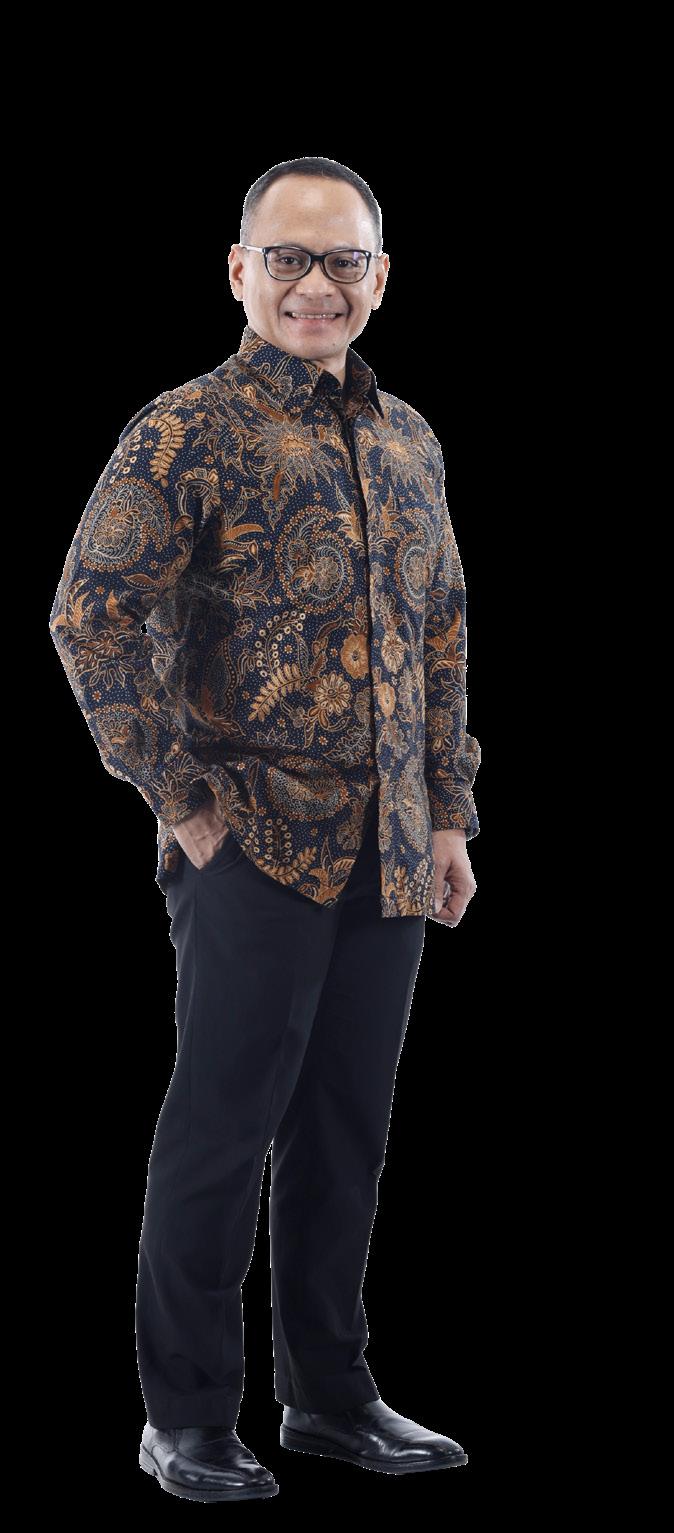
Pratomo Soedarsono is a people and organizational design leader with experience spanning architecture, management, research, consulting, and banking. Trained in architecture, he developed a foundation in design thinking, creative problem-solving, and human experience. He later pursued postgraduate studies in management with a focus on finance, giving him a full business perspective on strategy, performance, and risk. As Head of People & Culture at Bank Jago, he works on how teams are structured, how performance and learning operate in daily work, and how people systems function in a fast-moving, regulated environment. He has led multiple large-scale transformations and integrations, including merger and acquisition programs involving global banks and large local institutions. A lifelong runner and cyclist, his leadership approach is shaped by coaching, discipline, and building systems that support sustainable performance under pressure.
Recently, in an exclusive interview with CXO Magazine, Pratomo shared insights into his unique career journey that led him to shape HR transformations. With a foundation in architecture and management, Pratomo applies design thinking to people systems, focusing on structure, performance, and growth. He sees HR evolving toward system design, leveraging tech and AI to enable human judgment. He also shared his personal hobbies and interests, future plans, words of wisdom, and much more. The following excerpts are taken from the interview.
Head of People & Culture, PT Bank Jago Tbk
Pratomo Soedarsono
The future of HR is not about launching more initiatives, frameworks, or campaigns, but about shaping how work actually happens every day
Hi Pratomo. Can you walk us through your career journey that led you to shape HR transformations across multiple organizations?
My career did not start in HR. I studied architecture, where I learned creative problemsolving, design thinking, and how physical space shapes human behavior, flow, and experience. That way of thinking stayed with me as I moved into research and consulting, where I developed a more analytical lens—working with data, frameworks, and different industries to understand how organizations really operate.
Postgraduate studies in management gave me a full business perspective, connecting strategy, structure, and execution. When I later moved into banking—particularly in highly regulated environments and large-scale integrations— everything came together. I began to see organizations as designed systems, much like buildings, shaping how people decide, collaborate, and perform under pressure.
My leadership style has been deeply shaped by sport. As a long-time runner and cyclist, I’m familiar with the balance between speed and endurance, the discipline of training cycles, and the role of coaching in sustained performance. Those experiences taught me that performance improves through clarity of focus, frequent feedback, and trust built over time. Combined with formal training in strengths-based coaching and large-scale agile principles, this perspective informs how I design teams, develop leaders, and build systems where people can perform consistently under real conditions.
Across multiple transformations and integrations, HR became the place where design thinking, systems discipline, and human behavior meet. My focus has been on designing organizational systems that actually work—how teams are structured, how decisions are made, how performance is managed, and how people grow over time.
What's the most fulfilling part of your current role?
The most fulfilling part of my role is the rare freedom to think, experiment, and build— combined with the responsibility to make it work at scale. Opportunities to help build a digital bank from the ground up don’t come often, especially in a regulated environment. Being trusted to design how work actually happens— rather than inheriting legacy systems—has been both challenging and deeply rewarding.
At Bank Jago, I see my role as creating clarity where confusion would normally exist. When systems are designed well, people stop guessing what matters, how they will be evaluated, or how they can grow. That clarity
frees up energy for meaningful work and better decisions.
What makes it most rewarding is watching teams grow in their own way. People develop differently, based on their unique strengths and combinations—and when the environment allows that, teams become more confident and capable. Over time, they rely less on direction and more on shared ownership, judgment, and collaboration. Performance improves not because people are pushed harder, but because the system enables them to move forward, learn, and manage themselves with purpose.
How do you see HR evolving in the next 5-10 years?
HR will shift away from being programdriven and toward system design. The future of HR is not about launching more initiatives, frameworks, or campaigns, but about shaping how work actually happens every day.
Technology and AI will increasingly take over repetitive, administrative, and analytical tasks. That’s not a threat to HR—it’s a reset. It frees humans to focus on what machines can’t do well (yet): judgment, wisdom, design, and decision-making under real conditions.
The real value of HR will lie in designing organizational space for humans—clarity of focus, rhythm of execution, trust in decisions, and support that shows up when pressure is real. HR leaders will need a deep understanding of operations, human behavior, and how systems interact, not just policies or tools.
Those who can design coherent human systems—rather than manage isolated programs—will define the next decade of the profession.
What's the biggest opportunity for HR to add value in the future?
The biggest opportunity for HR is helping organizations perform sustainably under real pressure. Many companies can grow fast. Far fewer can build systems that allow people to perform well over time without burning out, losing trust, or drifting into chaos.
As work becomes faster, more complex, and increasingly augmented by technology and AI, the risk isn’t lack of talent or effort— it’s fragmentation. Too many priorities, delayed feedback, opaque decisions, and systems that look good on paper but fail in daily execution. This is where HR can create disproportionate value.
HR adds value by designing environments where people are clear on what matters, receive feedback in real time, and trust that decisions are grounded in evidence rather than opinion. When clarity, rhythm, trust, and support are intentionally designed into the system, performance stops being heroic or accidental. It becomes repeatable.
In that context, HR moves beyond support or compliance. It becomes a strategic craft— designing how people, teams, and systems work together so organizations can move fast, stay coherent, and remain human at the same time.
How do you give back to the HR community?
I try to give back by sharing practical experience, not abstract theory. Over the years, I’ve had the opportunity to speak regularly with university partners as a guest lecturer, engage with students who are just entering the world
of work, and participate in public HR forums and conferences. In those settings, I focus less on “best practices” and more on what HR looks like in real conditions—under regulation, time pressure, and competing priorities.
I also write consistently about HR concepts, organizational design, performance, rewards, and the realities of transformation. Writing helps me reflect on what I’ve learned over more than two decades in HR—what worked, what failed, and what only became clear in hindsight. Many of those reflections come directly from lived experience: integrations, cultural shifts, system redesigns, and moments where leadership decisions mattered more than frameworks.
At the core, I believe the HR community grows when we are honest about constraints, trade-offs, and mistakes, not just successes. My intention is to contribute perspectives that help other HR leaders think more clearly about designing systems that actually work in their own organizations—especially in complex, regulated, and fast-changing environments.
Can you share a book, podcast, or resource that has inspired you recently?
I’m inspired less by specific HR titles and more by disciplines that sharpen how I think about systems and performance. My learning tends to start outside management literature and move inward.
Sports is the strongest influence. Sports science has shaped how I think about performance under pressure, recovery, feedback loops, and coaching over time. It’s where my intuition about rhythm, endurance, and sustainable performance comes from.
Learn how to learn. The world is moving faster every year, and the only sustainable advantage is the ability to stay relevant—by learning, unlearning, and relearning continuously
Technology comes next—not as tools, but as systems. I pay attention to how technology changes decision-making speed, learning curves, and work patterns. This is especially relevant as AI takes over repetitive tasks and forces humans to focus on judgment and design.
Design and architecture remain core lenses for me. They taught me how structure, constraints, and flow shape behavior— whether in physical space or organizational space. Business, organization, and leadership frameworks help me translate those ideas into scalable execution.
Inspiration, for me, rarely comes from one book or podcast. It comes from connecting ideas across these domains and applying them to real organizational problems. That synthesis is where the most useful insights emerge.
How do you stay updated with the latest trends in HR and people management?
I stay current by staying close to the work, not just the discourse.
Trends matter, but context matters more. I pay attention to what’s changing in technology, regulation, and business models, then observe how those shifts actually show up in day-to-day work: how decisions are made, where friction appears, and what breaks under pressure.
I also learn continuously from experimentation. Building and deploying systems—whether in recognition, performance, organization, development, or AI-enabled workflows—forces you to confront what works in reality versus what sounds good on paper. That feedback loop is far more valuable than following trends passively.
Finally, teaching, writing, and speaking keep me sharp. When you have to explain ideas clearly to students, peers, or leaders, you quickly find out whether your thinking is still relevant or needs to evolve.
What are some of your passions outside of work? What do you like to do in your time off?
Sport has been a lifelong part of my life. I’ve been cycling since I was four years old and
running since elementary school, and over time I’ve explored many different types of sport. Endurance training taught me discipline, recovery, feedback, and rhythm. You don’t improve by pushing all the time—you improve through cycles of effort, rest, coaching, and reflection. Many of my views on performance management and leadership come directly from these experiences.
I’m also deeply interested in games and game design. Playing across different genres made me appreciate how systems, incentives, feedback loops, and progression shape behavior. That thinking later influenced how I approached gamified career paths and learning journeys at Bank Jago—using design to make growth visible, motivating, and fair.
Formula 1 brings these interests together. It combines speed, technology, teamwork, and precision under extreme pressure. It’s a powerful reminder that performance is never about a single star—it’s about systems, roles, timing, and trust working together when the stakes are high.
What is your biggest goal? Where do you see yourself in 5 years from now?
My goal is to keep designing systems that help people perform well under real conditions— especially as work becomes faster, more complex, and more human-machine blended.
In the next five years, I want to continue deepening my work at the intersection of organizational design, leadership, and technology. That includes building environments where AI handles the mechanics, while humans focus on judgment, learning, and meaning.
I’m less focused on titles and more on impact. If, five years from now, I’ve helped organizations grow without losing coherence, helped leaders lead with clarity and trust, and helped teams do their best work without burning out, that would be success to me.
Ultimately, I see my role as a designer of how work works—creating conditions where people, systems, and technology move forward together.
What piece of advice would you give to aspiring professionals from your industry?
Learn how to learn. The world is moving faster every year, and the only sustainable advantage is the ability to stay relevant—by learning, unlearning, and relearning continuously.
Early in your career, credentials matter, but over time skills and attitude matter more. Focus on building a can-do mindset: curiosity, initiative, and openness to feedback. Treat your career as a marathon, not a sprint. Pace yourself, build endurance, and don’t panic when progress feels slow. Skill trends will keep changing, so adaptability matters more than mastering any single tool.
For those entering HR specifically, don’t see it as a collection of programs. Treat it as a design discipline. Understand the business deeply, observe how work actually happens, and design systems that help people perform in real conditions, not just on slides.
Be patient and humble. The best professionals are not the loudest ones, but those who consistently create environments where others can grow, contribute, and succeed.
Leading Transformation in Electric Mobility
Venkat B is a strategic growth executive who has spent 22+ years at the forefront of mobility, technology, and sustainable innovation. From building advanced engineering programs to steering major OEMs and EV disruptors toward electrification and AI-powered ecosystems, he has consistently led organizations into the next era of transformation. His career reflects a passion for innovation, global impact, and purposedriven leadership. He is dedicated to helping industries transition responsibly into the future—through visionary partnerships, disruptive thinking, and technology that elevate both business and society.
Recently, in an exclusive interview with CXO Magazine, Venkat shared insights into his career journey, leadership philosophy, and vision for the future of mobility. He believes the EV industry is at an inflection point, redefining mobility through software and creating new opportunities for growth. He also shared his dream travel destination, future plans, words of wisdom, and much more. The following excerpts are taken from the interview.
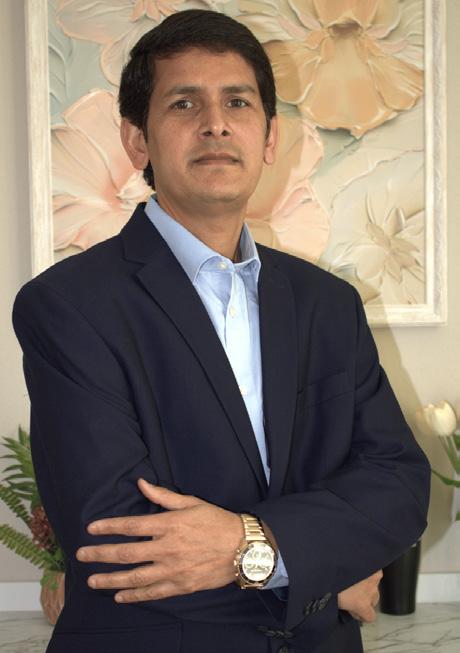
Venkat B Head, Electric Vehicle (EV) and Automotive, TCS
Hi Venkat. Can you walk us through your career journey and what led you to become a strategic growth leader in the tech industry?
My career journey has been shaped by a strong technical foundation, a passion for transformation, and a deep interest in how technology drives business growth. I started my career over twenty-two years ago as a software engineer, which gave me hands-on experience with emerging technologies and a strong understanding of how systems are built. Early on, I realized that my real passion was not just writing code, but solving bigger business problems and driving change at scale.
That realization led me into program and delivery management roles, where I managed global teams and executed complex, multimillion-dollar programs across industries like Hi-Tech, Energy, and Travel & Hospitality. Those experiences taught me how to lead large teams, manage risk, deliver outcomes, and think strategically across end-to-end business value chains.
A major inflection point came in 2016 when I moved to the United States and took on a senior leadership role with full ownership for the Automotive, Mobility, and Manufacturing industries. This allowed me to merge my technology background with business strategy. I focused on building deep CXO relationships, opening new logos—including major OEMs and EV startups—and scaling the business through innovative solutions across Autonomous technologies, Software-Defined Vehicles (SDV), Batteries, eMobility, R&D, Engineering, Sustainability, and AI.
My curiosity and passion for emerging technology trends have been consistent drivers
in my career. As industries shifted toward electrification, software-defined architectures, and AI-driven platforms, I leaned into those areas early. I also strengthened my leadership capabilities with certifications like PMP, ITIL, and Scrum Master, which helped me lead highperforming global teams and deliver measurable business impact.
What truly led me to become a strategic growth leader was a combination of continuous learning, taking on challenging new roles, and staying ahead of innovation cycles. I’ve always believed that technology is a catalyst for business transformation—and that belief has guided me to focus on building strategic partnerships, shaping new business models, and driving growth at the intersection of mobility, sustainability, and digital innovation.
Today, I see myself not just as a technology leader, but as a business transformation partner—helping organizations accelerate their shift to the future through electrification, AI, and software-driven platforms. That blend of technical depth, strategic thinking, and industry foresight is what ultimately shaped my journey into a strategic growth leadership role.
What do you love the most about your current role?
Throughout my career, I’ve consistently embraced emerging technologies as they entered the industry—learning them quickly and applying them to solve real-world challenges. This continuous learning mindset pushed me to explore new skills and stay aligned with evolving technology trends.
After reading about Tesla’s groundbreaking role in accelerating the shift toward electrification and software-defined vehicles,
I became inspired to pivot into the mobility space—an industry undergoing massive global transformation. I began working in the EV domain and eventually took on the EV business head role, where I have been responsible for driving growth and expanding our presence in this rapidly evolving sector.
In this role, I’ve partnered closely with greenfield and startup clients to help them build in-house capabilities for critical technologies, reduce dependencies on Tier 1 suppliers, and scale robust software organizations. It has been incredibly rewarding to blend strategy and execution to enable long-term success for our clients.
I’m energized by the opportunity to continue shaping the future of mobility through innovations in electrification, software platforms, and AI-driven solutions.
Can you share your thoughts on the current state of electric vehicles, and what impact you think they'll have on the industry?
The electric vehicle industry is at an inflection point. Over the last decade, EVs have evolved from early-adopter technology into a central
pillar of global mobility strategy. We are now moving from experimentation to true industrial scale. Battery costs are declining, charging infrastructure is expanding, and regulatory commitments toward net-zero are accelerating adoption worldwide. At the same time, consumer expectations around performance, software experience, and total cost of ownership are pushing OEMs to rethink their entire operating and product models.
In many ways, EVs are redefining the industry more through software than hardware. The shift toward software-defined vehicles is enabling continuous OTA upgrades, new service-based revenue models, and a fundamentally different approach to lifecycle management. This transformation is compelling OEMs to build strong in-house software competencies, own critical IP, and reduce reliance on traditional Tier 1 suppliers.
If we zoom out, this moment fits into a much bigger historical pattern. Over the past 250 years, the world has moved through long waves of innovation—from the Industrial Revolution to steam power, electrification, mass production, digital computing, and now sustainability technology. EVs, energy
The electric vehicle industry is at an inflection point. Over the last decade, EVs have evolved from early‑adopter technology into a central pillar of global mobility strategy
integration, and software-defined mobility are key drivers of what many describe as the sixth wave of innovation—centered around sustainability, clean energy, and intelligent systems. I feel fortunate to be contributing during this wave, as it represents not just a technological shift but a fundamental reimagining of how industries grow responsibly.
The broader ecosystem is being reshaped as well— battery supply chains, energy and utility partnerships, fleet electrification, mobility services, and AI-driven platforms for safety, analytics, and autonomous capabilities. This transition is creating space for new players, from greenfield OEMs to EV startups, to challenge incumbents and redefine the competitive landscape. It’s also enabling cross-industry collaboration between automotive, energy, cloud, and digital services.
Overall, EVs are more than a product transition— they are a catalyst for the complete transformation of mobility. The companies that lead this next era will be the ones that combine deep software expertise, scalable technology platforms, and the ability to innovate at the intersection of electrification, energy, and AI.
How do you think AI and digital innovations will shape the future of business, and what opportunities do you see for growth?
AI and digital innovation are fundamentally reshaping how businesses operate, compete, and grow. We’re moving from a world where digital was an enabler to a world where digital is becoming the core of business strategy. AI—especially generative AI—is accelerating this shift by transforming productivity, decisionmaking, customer experience, and innovation across every industry.
Operationally, AI is driving step-change efficiency.
Intelligent automation, predictive analytics, and AI-augmented workflows are reducing cycle times,
We’re moving from a world where digital was an enabler to a world where digital is becoming the core of business strategy
improving quality, and enabling real-time decision-making. Companies can now run leaner operations and redirect talent toward highervalue work. This creates immediate opportunities in supply chain optimization, field service automation, predictive maintenance, and software development productivity.
From a customer and product standpoint, AI is redefining value creation.
We’re seeing personalized experiences at scale, AI-powered design and engineering, and new digital services that extend the life and revenue potential of products. For industries like mobility, manufacturing, and energy, the shift to softwaredefined platforms—enhanced by AI—opens new recurring revenue streams such as connected services, analytics, digital twins, fleet intelligence, and autonomous capabilities.
Strategically, AI is blurring industry boundaries and creating entirely new ecosystems.
Businesses that combine data, software, and AI will unlock new profit pools—especially where energy, mobility, and digital converge. For example, EV and battery intelligence, energy management, sustainability analytics, and AIdriven R&D are all emerging growth areas. Companies that build strong digital platforms and own critical IP will take a leadership position in this next wave.
I see the biggest opportunities in three areas:
1. AI-enabled productivity transformation – redesigning operating models, not just automating tasks.
2. New digital products and services –creating recurring revenue beyond the core product.
3. Data and ecosystem partnerships – collaborating across industries to unlock new value pools around energy transition, sustainability, and intelligent connected systems. Ultimately, the future belongs to companies that can combine AI, data, and digital platforms to create faster innovation cycles, deeper customer insight, and more resilient, scalable businesses. My focus is on helping organizations unlock that transformation and convert technology into sustainable growth.
What's a book or resource that has had a significant impact on your thinking recently?
One resource that has had a significant impact on my thinking recently is The Innovator’s Dilemma by Clayton Christensen. What stood out to me is how clearly it explains the pattern of disruptive innovation—why successful companies often struggle to adopt new technologies, and how leaders can prevent that trap by building the right culture, operating models, and investment frameworks.
In the context of today’s rapid shifts—AI, electrification, software-defined products, and sustainability—Christensen’s principles feel more relevant than ever. It reinforced for me the importance of balancing core business execution with parallel innovation engines that can explore new markets, new digital models, and new technologies without being constrained by legacy structures.
Beyond books, I also follow McKinsey, BCG, and World Economic Forum insights, especially on AI, mobility, and the energy transition. These have helped me think more holistically about how industries are converging and how leaders can architect long-term, sustainable growth.
How do you stay current with global events and trends outside of the tech industry?
I stay current with global events and crossindustry trends by being intentional about the sources I follow and the experiences I seek out.
As a leader, I believe it’s important to understand not just what’s happening in technology, but also how geopolitics, economics, sustainability, and societal shifts shape business strategy.
I rely on a mix of global publications such as The Economist, Financial Times, and Harvard Business Review for macroeconomic and geopolitical context. This helps me understand how regulatory changes, global trade dynamics, and economic cycles impact industries and supply chains.
I complement this with insights from leading think-tanks like the World Economic Forum, IMF, and McKinsey Global Institute, which provide data-driven perspectives on global risks, demographic shifts, energy transition, and sustainability.
I also make it a priority to stay connected to industry innovation by actively participating in
global events such as CES, the Detroit Auto Show, MOVE, Battery Tech, and Autonomous Technology summits. These forums give me firsthand exposure to emerging technologies, new business models, and how different regions are shaping the future of mobility, energy, and digital ecosystems.
Additionally, I stay informed through conversations with clients, partners, and executives across regions. These discussions offer real-world insight into local market conditions, cultural trends, regulatory environments, and new strategic priorities.
Together, this combination of global analysis, industry immersion, and executive dialogues enables me to stay well-rounded and anticipate trends early—so I can make strategic decisions that reflect both current realities and future opportunities.
If you could travel anywhere in the world, where would you go and why?
If I could travel anywhere in the world, I would choose Japan. It’s a place that beautifully blends tradition, innovation, and discipline—
The future belongs to companies that can combine AI, data, and digital platforms to create faster innovation cycles, deeper customer insight, and more resilient, scalable businesses
qualities that I admire both personally and professionally.
Japan’s culture of continuous improvement (kaizen), attention to detail, and respect for craftsmanship has always inspired me. Whether it’s in automotive engineering, manufacturing, or consumer technology, their commitment to excellence is world-class. I would love to spend time exploring how these principles translate into everyday life and business practices.
Beyond the professional inspiration, Japan offers a rich cultural experience—from the calm of Kyoto’s temples to the energy of Tokyo’s tech-driven lifestyle. It’s a destination where you can learn, reflect, and immerse yourself in a completely different way of thinking.
For me, travel is about gaining perspective, and Japan represents a unique intersection of culture, innovation, and heritage—something that deeply resonates with my own values and interests.
What is your biggest goal? Where do you see yourself in 5 years from now?
My biggest goal is to lead large-scale transformation that creates meaningful impact—both for businesses and for the industries they operate in. Over the past few years, I’ve become deeply passionate about the convergence of mobility, sustainability, technology, and AI, and I see tremendous opportunity to steer organizations through this next wave of disruption. My north star is to build high-performing teams, shape longterm strategy, and create growth platforms that combine electrification, software, and digital ecosystems.
In the next five years, I see myself stepping into an even broader executive leadership
role—overseeing a global business at scale, and helping an organization lead in the future of mobility and sustainable technology. I want to be at the forefront of shaping how industries evolve, how digital and AI unlock new business models, and how companies build resilient, innovative cultures.
At the same time, I’m committed to continuing my own growth—expanding my global exposure, deepening my expertise in AIenabled business transformation, and investing in next-generation leaders around me. Long term, I aspire to be a trusted industry voice who contributes not just to organizational success, but to broader ecosystem progress in mobility, energy transition, and sustainable innovation. Ultimately, my goal is to make a meaningful contribution to the sixth wave of innovation— where sustainability, software-defined systems, and AI reshape how companies operate and how society moves forward. In five years, I want to look back and see that I played a real role in shaping that future.
What advice would you give to someone just starting out in their career, and looking to make an impact in the tech industry?
My advice to someone starting out in their career—and wanting to make an impact in the tech industry—is to build three things early: a learning mindset, adaptability, and courage.
First, stay relentlessly curious. Technology changes faster than any single role or skill. What matters is not knowing everything, but being willing to learn continuously. If you build the habit of exploring new tools, new ideas, and new
My advice to someone starting out in their career— and wanting to make an impact in the tech industry— is to build three things early: a learning mindset, adaptability, and courage
problems, you will always stay relevant—no matter how the industry evolves.
Second, focus on solving real problems, not just mastering technologies. Tech is only valuable when it creates impact. Early in your career, look for opportunities to understand customer needs, business challenges, and why something matters—not just how it works. People who can connect technology to outcomes grow much faster.
Third, embrace change and take smart risks.
Some of the biggest opportunities in tech come from stepping into new domains—whether that’s AI, cloud, mobility, sustainability, or software platforms. Don’t be afraid to stretch yourself or take on roles that push you outside your comfort zone. That’s where growth happens.
Fourth, surround yourself with mentors and communities.
Learn from people who have walked ahead of you. Their experience will save you years of trial and error. At the same time, build relationships with peers—tech careers are built through networks as much as skills.
Finally, act with integrity, curiosity, and ownership.
Leaders notice people who take initiative, follow through, and bring positive energy. If you show up as someone who can be trusted to learn, deliver, and adapt, you will open doors faster than you expect.
If you stay curious, stay humble, and stay hungry, you’ll not only build a great career— you’ll create real impact in the tech industry.