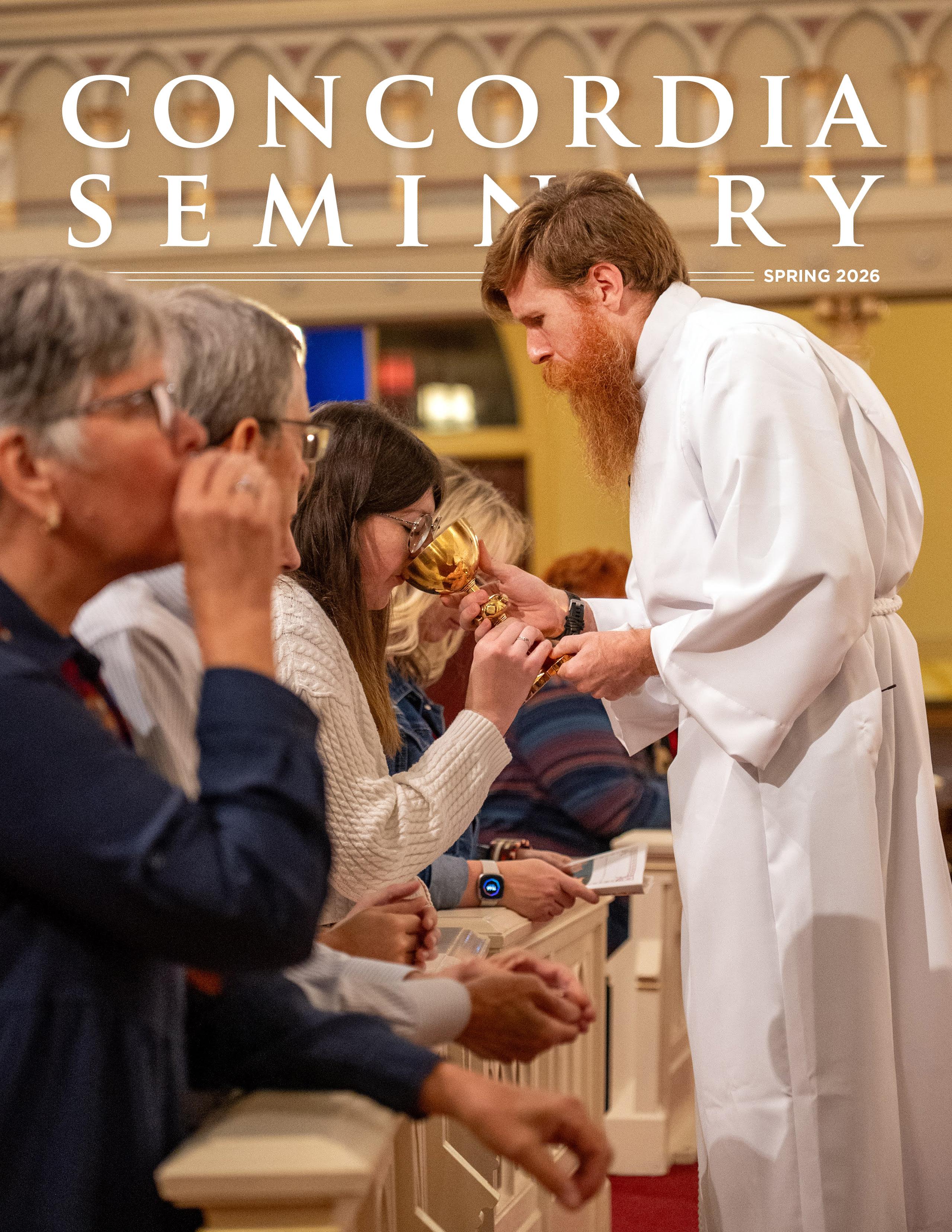
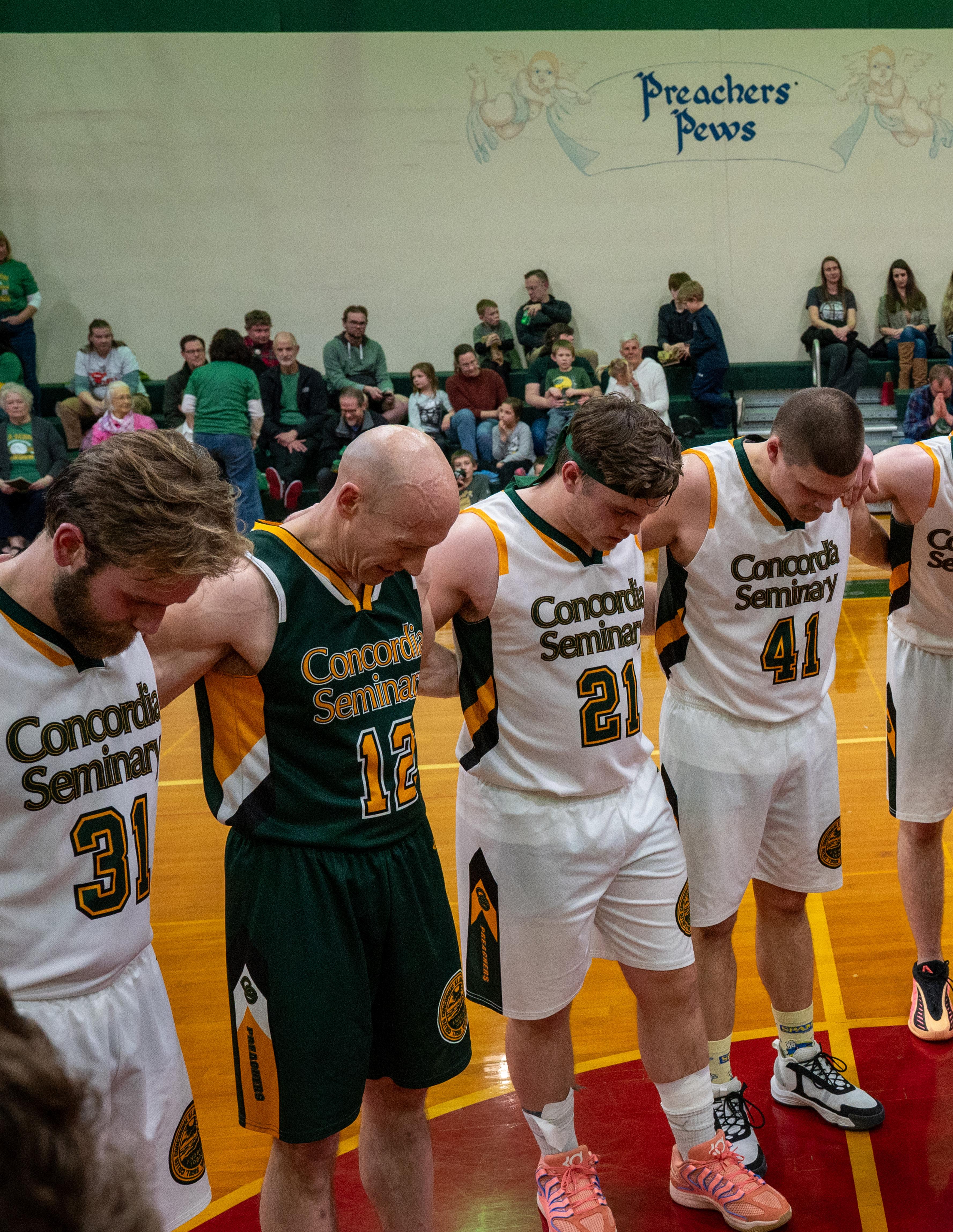
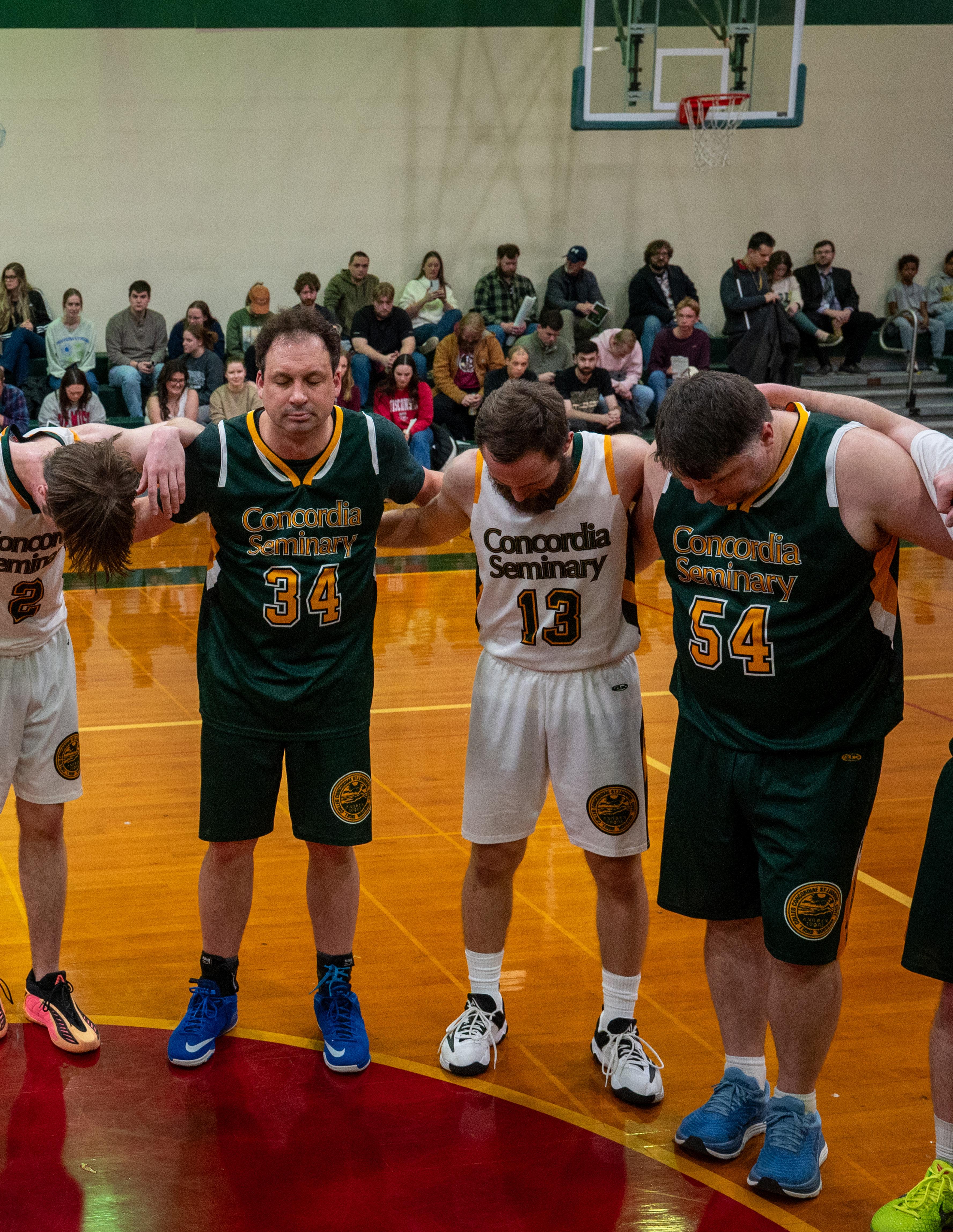
Alumni and current Preachers join in prayer before tip-off at the start of this year’s alumni “Old School Showdown” basketball games, Feb. 6, 2026, in the Pederson Field House. Photo: Sid Hastings
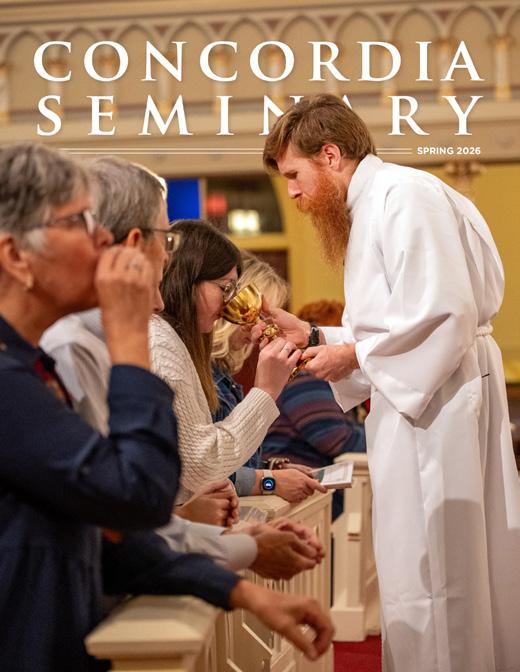
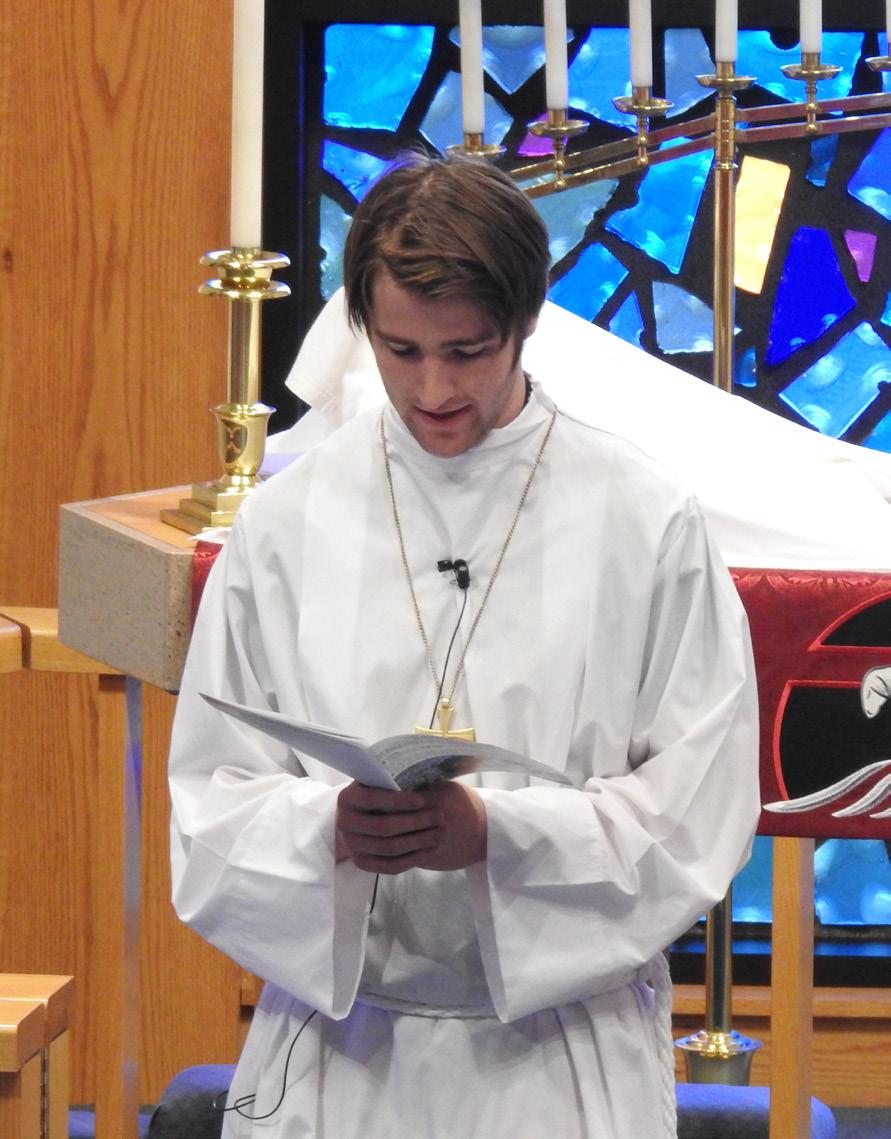
M.Div. student Zachary Eshelman assists with Holy Communion at his fieldwork church Holy Cross Lutheran Church, St. Louis, Mo.
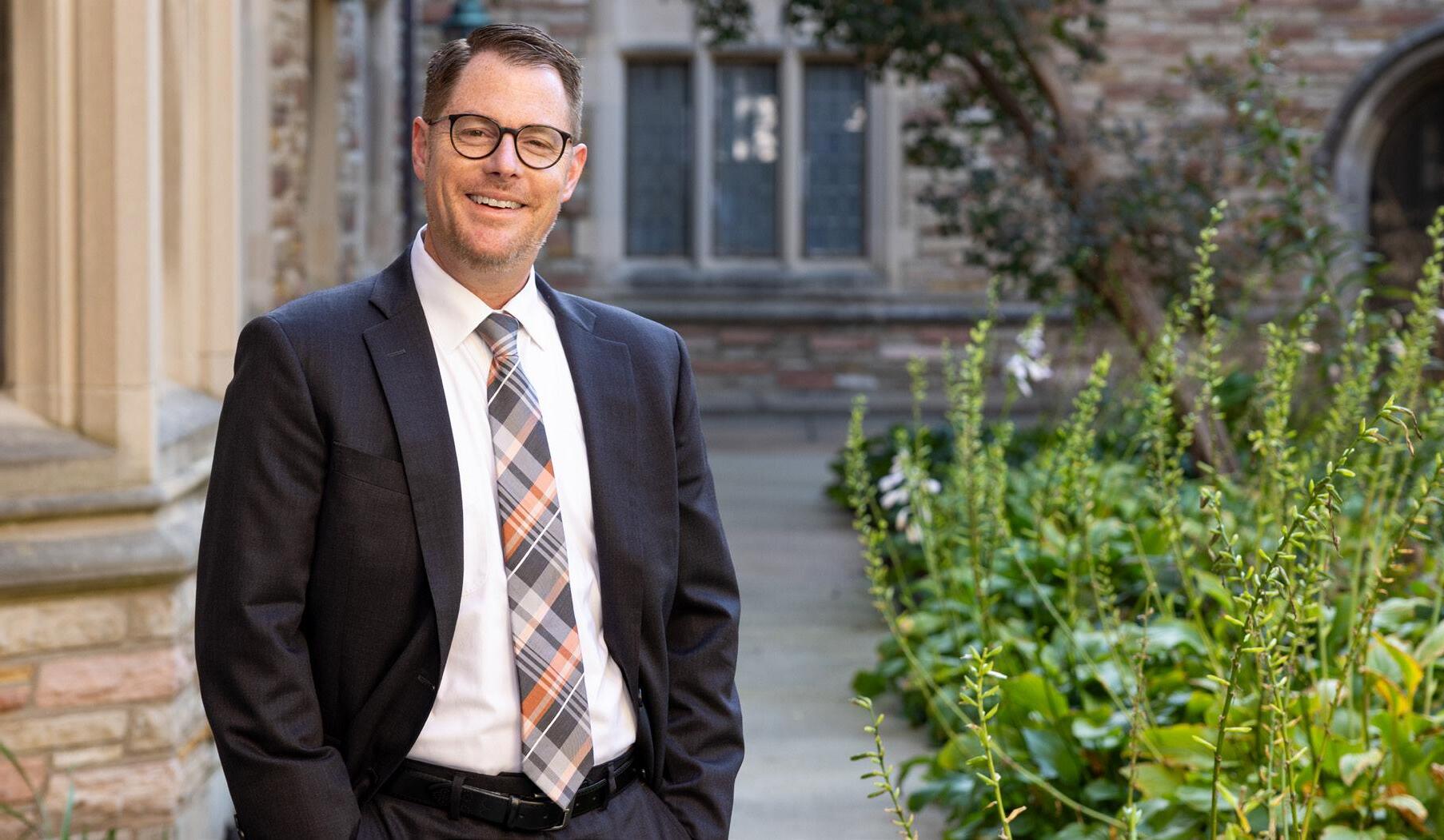
Dear Friends,
The Lord is shaping servants, and we at Concordia Seminary are so glad to be a part of that beautiful work.
EXECUTIVE
Vicki Biggs
Vicki Biggs
MANAGING
Ken Ohlemeyer
MANAGING
ART DIRECTOR
Beth Hasek
DESIGNER
Courtney Koll
Jayna Rollings DESIGNERS Michelle Poneleit
WRITERS
Our Lord Jesus Himself “came not to be served but to serve, and to give his life as a ransom for many” (Matt. 20:28 ESV). All who are baptized into Christ are called, likewise, to live in self-giving service and love. At the Seminary, we prepare Christians for a particular kind of service: service as pastors, missionaries and deaconesses for the church.
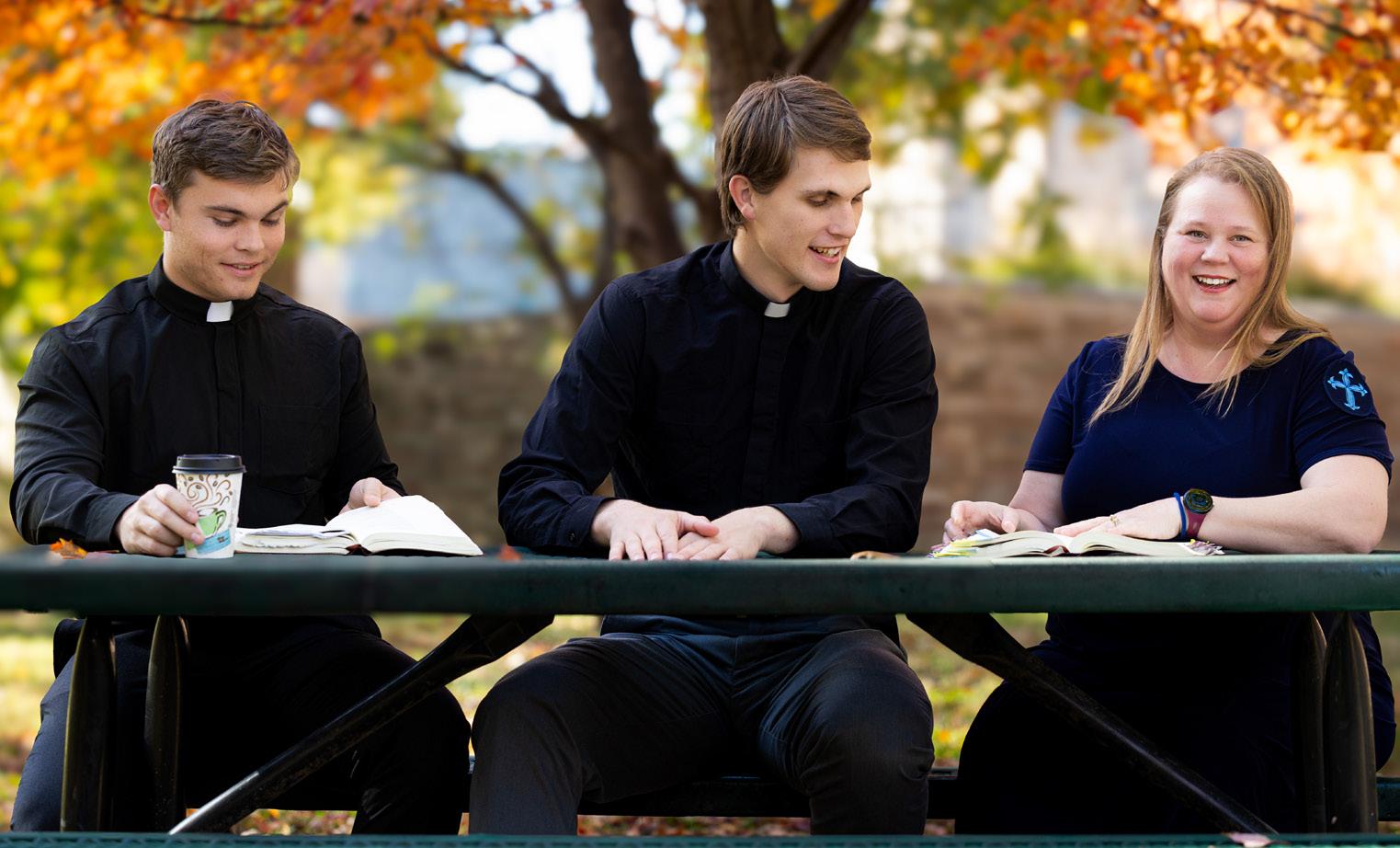
Our students come to us with servants’ hearts, already shaped by their Lord’s mercy and loving example. During their time at the Seminary, we seek to nurture their sense of servanthood, feeding richly on the Word of God in chapel and in classroom and giving them many opportunities for service in Christ’s name on campus and in local congregations.
Jayna Rollings
Vicki Biggs
Maya Brenningmeyer
Dr. Richard Marrs
WRITERS
Marissa Nania
We rejoice in the varied gifts God has granted our students for such service. What makes them capable? What makes them ready? Is it the array of natural gifts and aptitudes God formed in them from birth? Or is it the training, teaching and examples they experience along the way through life? Is it nature or nurture? The answer is both, of course, all under the renewing grace of God’s Spirit through His Word.
Sarah Maney Daniel Mattson
Ohlemeyer
Lisa Mills
Travis Scholl
PHOTOGRAPHERS
Joe Deverian
PHOTOGRAPHERS
Kati Gaschler
By God’s grace, even our weaknesses and trials are used by our Lord for His glory. As He reminded St. Paul: “My grace is sufficient for you, for my power is made perfect in weakness” (2 Cor. 12:9 ESV). And as St. Paul reminds us: God “comforts us in all our affliction, so that we may be able to comfort those who are in any affliction, with the comfort with which we ourselves are comforted by God” (2 Cor. 1:4 ESV).
Jill Gray
Jill Gray
Sid Hastings
Sid Hastings Marissa Nania
Courtney Koll
Ana Nebeker
Sarah Maney
Ken Ohlemeyer
Michelle Poneleit
Tyler Simmons
Harold Rau

At Concordia Seminary, we thank God for the high privilege of shaping future church workers for holy service in Christ’s name. Through their service, we pray that the Lord would reveal His salvation and eternal promises to many, many sinners. “As each has received a gift, use it to serve one another, as good stewards of God’s varied grace” (1 Pet. 4:10 ESV).
And then for work to do for Thee, Which shall so sweet a service be That angels well might envy me, Christ crucified, I come. (LSB 560, st. 4)
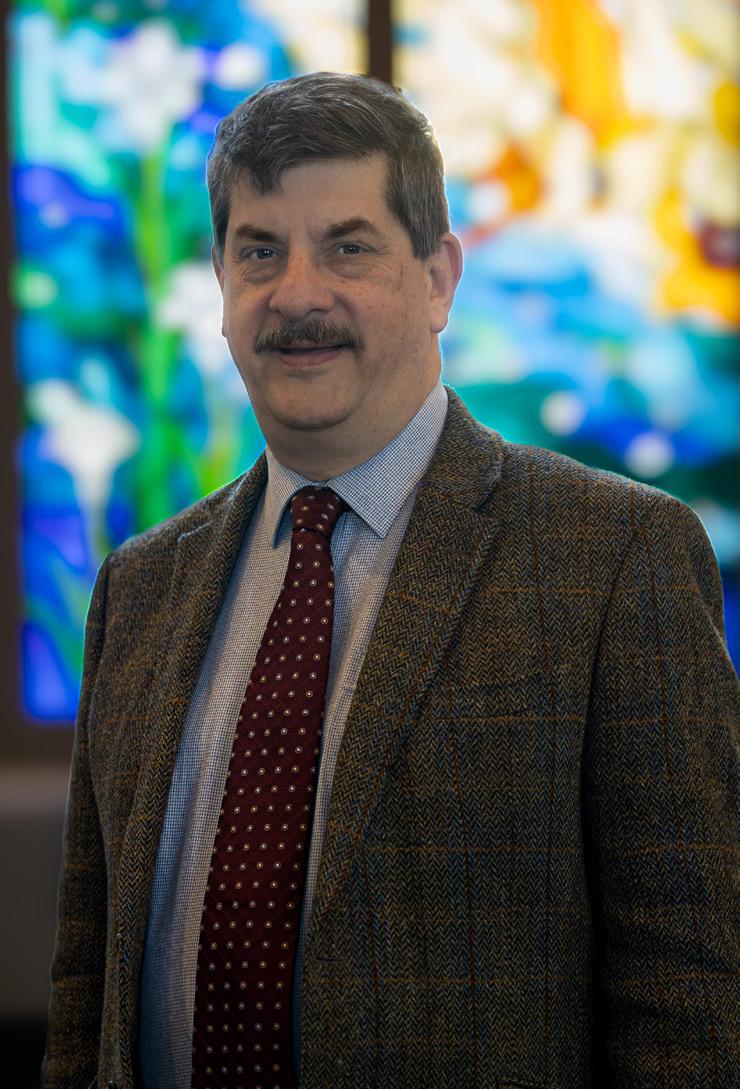
In Christ’s love, Dr. Thomas J. Egger, President
Concordia Seminary serves church and world by providing theological education and leadership centered in the Gospel of our Lord Jesus Christ for the formation of pastors, missionaries, deaconesses, scholars and leaders in the name of The Lutheran Church— Missouri Synod.
To be added to the mailing list, or to receive the magazine electronically, address correspondence to: Concordia Seminary magazine, Concordia Seminary, 801 Seminary Place, St. Louis, MO 63105; call 800-822-5287; or email magazine@csl.edu. Congregations may request copies in bulk for distribution within their churches.
Copyright © May 2026, Concordia Seminary, 801 Seminary Place, St. Louis, MO 63105. All rights reserved. No part of this publication may be reproduced without the prior written permission of Concordia Seminary.

“As each has received a gift, use it to serve one another, as good stewards of God’s varied grace” (1 Peter 4:10 ESV).
BY DR. RICHARD MARRS
All medium- to large-size organizations use the various gifts and skills of their members. For example, the military uses people with a wide variety of skills. Tank commanders have different skills than Infantry men and women. Pilots have different skills than plane mechanics. Enlisted men have different skills than officers. Sailors have different skills than helicopter pilots, who have different skills than cooks and supply officers and drone operators. But the armed forces could not operate effectively without combining the skills of all its individual members.
The same holds true in a business or corporation. The skills required of a salesperson are different from those of an engineer, which are different from those of a truck driver or the CEO, but the corporation could not operate efficiently and effectively without combining the skills of all its individual members.
I have been teaching at Concordia Seminary for 20 years, and for eight of those years I was the director of the Master of Divinity and Resident Alternate Route programs. I also have taught courses in the Deaconess, Specific Ministry Pastor (SMP), Ethnic Immigrant Institute of Theology (EIIT), Specific Ministry Pastor to General Pastor Certification (GPC), Cross-cultural Ministry Center (CMC) and Graduate School programs. Some 2,000 students have gone through these various programs in that time, and all
of them had varied gifts. While I cannot claim to have known every student in every program, I have gotten to know most of them rather well.
Some of these students have been gifted in preaching; some have been gifted at serving in other ways. Some have become more scholarly theologians, using their gifts in Greek and Hebrew, or their skills in history or doctrine, to teach and guide others in the faith. Others have skills in other languages and can translate and preach to people from other cultures. Some have special levels of emotional intelligence and social skills and can empathize and spiritually care for those who are suffering in specific ways. Some are skillful writers, some have artistic skills, others are natural leaders … I could go on and on about the diversity of gifts among our former and current students.

CONTINUED ON PAGE 8 >
1. Your gifts aren’t random They’re given by God on purpose, for a purpose.
2. Different doesn’t mean less Every role matters. Every gift serves the whole church.
3.
It’s all about Christ Our gifts are used to serve others and glorify Him.
Too often we humans consider our gifts — our skills — from only our individual, human perspective. But the Apostle Peter, in this article’s theme verse, rightly declares that our gifts are not actually our own, formed by us, but they are gifts we have received from above us, from God Himself. As Martin Luther says in the First Article of the Apostles’ Creed, “I believe that God has made me and all creatures. He has given me my body and soul, eyes, ears, and all my members, my reason and all my senses and still takes care of them.”
God has chosen to give each of us unique bodies, unique reasoning and personalities, unique senses — and then He has chosen to take care of those bodies and gifts for His purposes. We are His workmanship, created in Christ Jesus for good works, which God prepared in advance for us to do (Eph. 2:10).
“THE GREATEST GIFT THAT GOD HAS BLESSED EACH OF US WITH IS THE FAITH WE HAVE IN OUR LORD JESUS CHRIST.”
The purpose of a military force is to protect its citizens from attack, while a corporation aims to provide services or products and generate profit. The collective skills of the individuals in those organizations come together to protect and serve or to make and sell a widget.
What is the purpose of the gifts of those who serve in Christ’s church, both laity and professional church workers? The Apostle Peter explains that in the Scriptures surrounding I Peter 4:10. “The end of all things is at hand; therefore be self-controlled and sober-minded for the sake of your prayers … whoever speaks, as one who speaks oracles of God; whoever serves, as one who serves by the strength that God supplies — in order that in everything God may be glorified through Jesus Christ. To him belong glory and dominion forever and ever. Amen” (1 Peter 4:7,11 ESV). Peter mentions only two specific gifts here in his letter. Paul expands and enumerates many other gifts in his letter to the Romans (Rom. 12:3-7) and his first letter to the Corinthians (I Cor. 12). Paul emphasizes that we are one body with many members.
The greatest gift that God has blessed each of us with is the faith we have in our Lord Jesus Christ. The Son of God the Father came down from heaven. “Christ suffered in the flesh” (1 Peter 4:1 ESV) on His
cross for us, and then conquered death through His resurrection, to grant us eternal life with Him when He returns (and Peter says “the end of all things is at hand” [1 Peter 4:7 ESV], so we live our lives now assuming that His return is near).
The Holy Spirit used the gifts He gave to earlier generations of Christians, to our spiritual parents and grandparents, to bring us to our baptismal regeneration, and to hear from God’s Word, and to receive His body and blood in the Sacrament, to bless us all with the gift of faith and forgiveness and eternal life in Christ.
For many years, it has been my pleasure to reacquaint with former students now serving as pastors, deaconesses and missionaries. I often ask them “How is the match between your gifts and the needs of the congregation (or other organization) that you serve?” Most of them tell me wonderful stories of the positive matches between their gifts and the people whom God has called them to serve.
Secular organizations, like the military and corporations, expend considerable time and energy to place the right people with the right skills in the right positions. They have Human Resources (HR) departments to hire and deploy those with the gifts the organizations needs to function.
It is comforting to know that ultimately, in the church, the Triune God is the One who has given us the “varied grace” of all our gifts. God is the One who, in His wisdom, places our graduates in their first calls, and then continues, through the congregations and other calling agencies of The Lutheran Church—Missouri Synod, to place His servants in their various locations, so that we can be good stewards of the gifts that we have received from Him by His varied grace.
I am so thankful to know that God is the perfect CEO and flawless HR director who oversees the gifts that He has given to each of us. May we continue to prayerfully ask Him to bring new students with new gifts to Concordia Seminary, so that a new generation of pastors and deaconesses can go out into the church with the gifts they have received, to serve His church by grace, through those gifts. To Jesus Christ be the glory and dominion forever and ever. Amen.
Dr. Richard Marrs is a senior professor of practical theology at Concordia Seminary, St. Louis.
Planned giving is a way to integrate your personal, financial and estate planning goals. The right planned gift may provide you with tax and income benefits while helping Concordia Seminary, St. Louis further our mission of preparing church leaders. Here are some of the most common planned gifts you can make:
Your will or trust may include a gift of a specific asset, a dollar amount or a percentage of your estate to our ministry.
These plans can provide you with lifetime income while also leaving a charitable gift to the Seminary.
You can establish an endowment at the Seminary that provides everlasting support for our mission while also creating a lasting legacy of your generosity.
THERE ARE MANY WAYS YOU MAY BENEFIT FROM PLANNED GIVING. CONTACT US:
PHONE 800-822-5287
ENVELOPE plannedgiving@csl.edu
BY VICKI BIGGS
BY VICKI BIGGS

“IT’S HARD TO CHOOSE JUST ONE THING.”
That was Provost Dr. Ron Mudge’s reply when asked what is the most promising aspect of the newly launched Timothy Project, a broadly scoped initiative seeking to strengthen the future of the church as its objectives of recruiting, evangelism and continuing education are implemented.
Concordia Seminary launched The Timothy Project earlier this year in collaboration with Concordia Theological Seminary, Fort Wayne, Ind., Concordia Seminary’s sister seminary in serving to prepare pastors, missionaries, deaconesses and other leaders for service to congregations and other ministries of The Lutheran Church—Missouri Synod (LCMS).
“It is indeed hard to choose the most exciting possible outcome, but this would be at the top of the list: Through The Timothy Project, the whole sum of skills and habits of the LCMS will be at work serving the Lord in His mission,” says Mudge, who also is providing leadership oversight of the project.
“This project recognizes that people from a wide variety of backgrounds are shaped for the Lord’s service. He’s worked in them, prepared them, given them gifts, helped them develop habits. Each person has a unique background and variety of skills that helps them to serve the church well — everyone brings something that can be implemented for the sake of the Gospel. And ultimately, the Lord will use our graduates to take the Good News of salvation by grace through faith in Jesus to people at home and around the world.”
The three primary objectives of The Timothy Project include:
1. Recruitment of future pastors and deaconesses
The Timothy Project will expand the combined recruitment efforts of Concordia Seminary and Concordia Theological Seminary. The seminaries’ admissions teams will increase their work together under the theme “We are Your Seminaries” to engage more prospective students at events nationwide and through on-campus visits.

Focus also will be on growing a coordinated, grassroots recruitment network, including an expanded “Army of Volunteers” comprising individuals who are prepared to connect with prospective students on a local level where seminary staff cannot always be present, and intensifying the “Called to Serve” program, whereby representatives from the seminaries speak at host congregations or schools to prospective students.
“The Timothy Project is a bold response to the church’s need for pastoral and diaconal leadership for the 21st century,” says Mudge. “Our approach includes plans with Concordia Theological Seminary to expand joint recruiting efforts nationwide as well as plans for even greater collaboration with the Concordia University System, the LCMS “Set Apart to Serve” initiative and other strategic entity partnerships, such as LCMS campus ministries, in support of these increased recruiting priorities.”
Mudge exclaims, “I am eager to see the evangelized become evangelizers! Seeing those who step up and
CONTINUED ON PAGE 12 >
The Timothy Project is intended to provide young pastors for the church, like Timothy who was a protégé of Paul. Paul reminded young Timothy that God “desires all people to be saved and to come to the knowledge of the truth” (1 Tim. 2:4 ESV). This project is centered on the key goal of identifying, encouraging, preparing and supporting church leaders who will carry the Gospel bodly into congregations and communities at home and around the globe.
step out to invite others to come to the Seminary to study to become pastors and deaconesses is exhilarating. The Lord wants all people to be saved. Together, and intentionally through The Timothy Project, we’re working to accomplish so much!”
2. Enhanced pre-seminary, seminary and postseminary education
Focus will be on developing shared online learning platforms between Concordia Seminary and Concordia Theological Seminary, innovative curricula in biblical languages and theology, and leadership and administration programs.
“Our pre-seminary resources will offer prospective students a taste of theology and the biblical languages,” says Mudge, explaining the goal is
As part of its grant award for The Timothy Project, Lilly Endowment Inc. will match new endowment gifts for student support and every gift given will be matched dollarfor-dollar up to the first $5 million raised. Friends and supporters may contribute to The Timothy Project Endowment Fund or establish their own named student support endowment (minimum $25,000) in support of the project. This is an extraordinary opportunity to double the impact of gifts that will help to sustain the ongoing goals of the project.
to whet their appetites for pastoral or diaconal formation and aid in preparing them for success in their studies.
“Also, as this project brings about opportunities to enhance seminary curricula, we are putting more focus on better preparing our students for church revitalization and for leading their congregations in evangelistic outreach,” says Mudge.
Post-seminary ongoing continuing education offerings will focus on developing leadership and administrative skills for serving the Lord’s work in the field.
3. Expanded multiethnic and deaconess ministry
The Timothy Project will strengthen existing initiatives like the Center for Hispanic Studies and the Ethnic Immigrant Institute of Theology by redesigning curricular offerings, adding additional confessional Lutheran Spanish-language resources and strengthening the vicarage program to give vicars even more practical experience.
Also as part of this project, emphasis will be placed on deepening the understanding across the church of the role of deaconesses and enhancing the coordination of the pre-deaconess and deaconess studies programs at the church’s institutions.
As The Timothy Project gets underway, Mudge says he is particularly optimistic about better preparing graduates for church revitalization and evangelistic outreach. “That’s about the Lord’s desire that all be saved. We’re preparing our graduates to do what the Lords wants — to take the Gospel to all people so the Holy Spirit may bring them to faith.”
Collaboration is at the core of The Timothy Project. Alongside Concordia Seminary and Concordia Theological Seminary, key partners include the LCMS Offices of National Mission and International Mission, the LCMS “Set Apart to Serve” initiative, LCMS districts, the Concordia University System and ethnic ministry organizations.
“The Lord has given the LCMS lots of resources, especially human resources, and the more we can work together the better. That’s good for the church and that’s good for the world,” says Mudge. “Both Concordia Seminary and Concordia Theological
“THE
— DR. RON MUDGE

Seminary have excellent theologians who have great depth of pastoral experience and many connections across the church. We want to deepen those relationships and amplify the key messages of The Timothy Project and its objectives — to enhance recruiting, outreach and continuing education to give our graduates the tools they need to serve our Lord in this changing world.”
As Mudge described the kick-off of The Timothy Project, he says the planning and collaboration among key partners already has skyrocketed. “The project has been a catalyst to people talking together. Meetings with LCMS district presidents have been held. The deaconess program directors from both seminaries have met and are working with the program director at Concordia University Chicago. In fact, 30 people from both seminaries came together for the project launch meeting earlier this spring. There has been and will continue to be a great idea exchange taking place.”
The Timothy Project is being funded in part through a grant awarded by Lilly Endowment Inc. this past November as part of its Pathways for Tomorrow Initiative. This initiative is designed to help theological schools across the U.S. and Canada as they prioritize and respond to the most pressing challenges they face as they prepare ministry leaders for Christian congregations now and into the future.
By design, this is a large-scale collaboration to strengthen the recruitment, formation and long-term support of pastors and deaconess in the LCMS. “We are grateful to Lilly Endowment Inc. for its support, as it will help both us and our sister seminary to deepen our collaboration especially as we launch The Timothy Project and seek to recruit more students and better equip our graduates to serve faithfully as pastors and deaconesses.”
Vicki Biggs is senior vice president, Seminary Advancement and chief communications officer at Concordia Seminary, St. Louis.
CONCORDIA
BY MAYA BRENNINGMEYER
When asked what age he decided he wanted to serve in pastoral ministry, Dr. Stephen Pietsch, dean of Theological Research and Publication, has a surprising answer. Growing up in Australia, Pietsch was profoundly influenced by his home congregation’s pastor: “I’ve wanted to be a pastor from a very young age, since I was seven or eight years old,” says Pietsch. “The pastor I had as a child was a very gentle pastoral man who was very good to our family, particularly after the death of our mother.”
Inspired by the care and compassion shown to him at that pivotal moment in his life, and after attending Lutheran secondary school where he was mentored by pastors who fostered his desire to serve within the church, Pietsch left to attend Luther Seminary (now Australian Lutheran College) in Adelaide, Australia, at 17. Seven years later, he graduated with a bachelor’s degree in theology and was ordained within the Lutheran Church of Australia (LCA) in 1988.
Leaving the seminary with a love for theology, Pietch thought, “maybe God wants me to be a seminary professor.” But not yet. “The church needed me to get out there and be a pastor. And that is what I did — and I am glad I did.
His first five years as a parish pastor proved to be a challenge, with Pietsch overcoming a series of unique obstacles. “I had a whole lot of stuff to handle by myself as an inexperienced associate pastor. My senior pastor became sick and then died, and it was pretty tricky,” he says. “But then I went on to my second parish, and things became a lot better. I was enjoying parish ministry greatly and found a lot of fulfillment in it.” Settling into this new position, he later became vice president of his district and increasingly active within the wider church scene. “Then one day, the seminary in Adelaide (ALC) called me and said, ‘We think you should come back and be a professor here,’ so back I went, and began teaching as a professor,” he says.
During his time teaching at ALC, Pietsch completed a Master of Ministry and a Ph.D., focusing on Luther’s care for people with depression, studying Luther’s Table Talk and his pastoral letters. “I loved teaching as much as I loved parish ministry,” he says.
The time came for Pietsch to leave ALC, following the institution’s change of theological direction in 2022. With two advanced degrees and professional teaching experience under his belt, he found himself wondering “where next?” God had it covered. He was called to serve for five months as interim pastor at Bethlehem Lutheran, his home church in Adelaide, before receiving a call from Concordia Seminary, to teach as a professor again. It was a quick turnaround: “I received and accepted the call in May, and I arrived in July,” he reflects.
Since coming to Concordia Seminary, Pietsch has had to adjust to colder, wetter weather as well as high summer humidity. He and his wife, Coralie, also have had to adjust to living away from their adult children in Australia and continue acculturating to U.S. society. He has found it challenging but also delightful to learn and grow as a teacher in a new context, matching his teaching approach to the Seminary’s large student body. “The seminary in Australia that I came from has much smaller numbers than this Seminary’s nearly 650 students,” he says. “With larger classes, you need to teach differently — more structured and animated.”
Recently, he also has taken on the role of dean of Theological Research and Publication. “I am inheriting the responsibility from Dr. Kevin Golden, who had things well sorted out and has been very helpful in my learning of the new position,” Pietsch says. “The staff who now work under my oversight are very able and committed professionals who do a great job and are very supportive team players. So,
while it is like ‘learning to fly the plane while flying the plane,’ it has been a good transition, and I feel I will get up to speed with it just fine.” He highly recommends that readers look at the Seminary’s Continuing Education and Concordia Theology resources available to the public. “Our Prof Insights and Lay Bible Institutes seminars and our “Tangible: Theology Learned and Lived” and “Lectionary Kick-start” podcasts and all the additional materials put out through Concordia Theology are incredibly high quality. We will be continuing to
“JOY IS NOT EVERYTHING GOING RIGHT; IT’S BEING ABLE TO FIND PEACE AND COMFORT WHEN EVERYTHING IS GOING WRONG.”
— DR. STEPHEN PIETSCH
work on these to make them even better, and I am always happy to receive suggestions and feedback!”
Something that has followed Pietsch, from his days as a student to his time as a parish pastor and professor in Australia and now in the U.S., is his interest in Martin Luther’s theology and practice of soul care. His main research interest is how Luther approached caring for those who were suffering. “Luther offered an in-depth teaching and spiritual counsel that has largely been lost in the modern era but is now being rediscovered,” says Pietsch.
He approaches this research by diving deeper into Luther’s letters and teachings to uncover some of this lost guidance. He wrote, “Of Good
Comfort: Martin Luther’s Letters to the Depressed and their Significance for Pastoral Care Today” (ATF Press, 2016) based on his doctoral research thesis centered around Luther’s perspectives on pastoral theology and psychology. Currently, he plans on doing significant work over the summer on his second book, which focuses more widely on Luther’s practice of soul care for those suffering and distressed. A lesson from this research that has served as a guiding light for Pietsch’s approach to ministry is Luther’s theology of joy. “It’s fantastic,” he says. “Joy is not everything going right; it’s being able to find peace and comfort when everything is going wrong. That peace and comfort is a gift of God through the work of the Holy Spirit in your life.”
To end the interview, Pietsch shares some of his favorite parts of teaching at the Seminary. “One of the things I love about life here is daily chapel,” he says. “I think it is a key formative element in the training of pastors.” Along the same lines, Pietsch is a great supporter of residential pastoral formation, believing that face-to-face engagement is an indispensable feature of preparation for ministry. He is excited for the seminarians preparing to receive their calls and graduate this spring. “I really enjoy Call Day and Commencement,” he says. “It’s very exciting to see pastors and deaconesses called and going out into ministry.”
He has some words of wisdom for these upcoming graduates: “Read the Bible for your own edification, not just for writing sermons; remember that the calling of husband and father is just as important as your calling as a pastor,” and finally, “Echoing the words of C.F.W. Walther, you should regard the place you are sent to serve as the most wonderful and beautiful place on earth. Try to ‘fall in love’ with the place and the people Christ has given you.”
cultivated in her heart — a continual return to Christ and His promises. Newman also reflects on the pattern of formation she experienced throughout her studies.
“‘Formation’ can sometimes sound like a buzzword,” she says. “But at the Seminary it is real. Semester after semester we are immersed in Luther’s Oratio, Meditatio and Tentatio: prayer, meditation and trial. Through that pattern, the Lord strengthens faith and deepens our understanding of His grace, which then flows outward in love toward our neighbor.”
These experiences have shaped Newman not only as a student but also as a servant of Christ’s church.
Newman’s path toward deaconess ministry began when she was serving as a full-time foster parent. Seeking time for prayer and reflection, she attended a silent retreat for women.
BY MARISSA NANIA
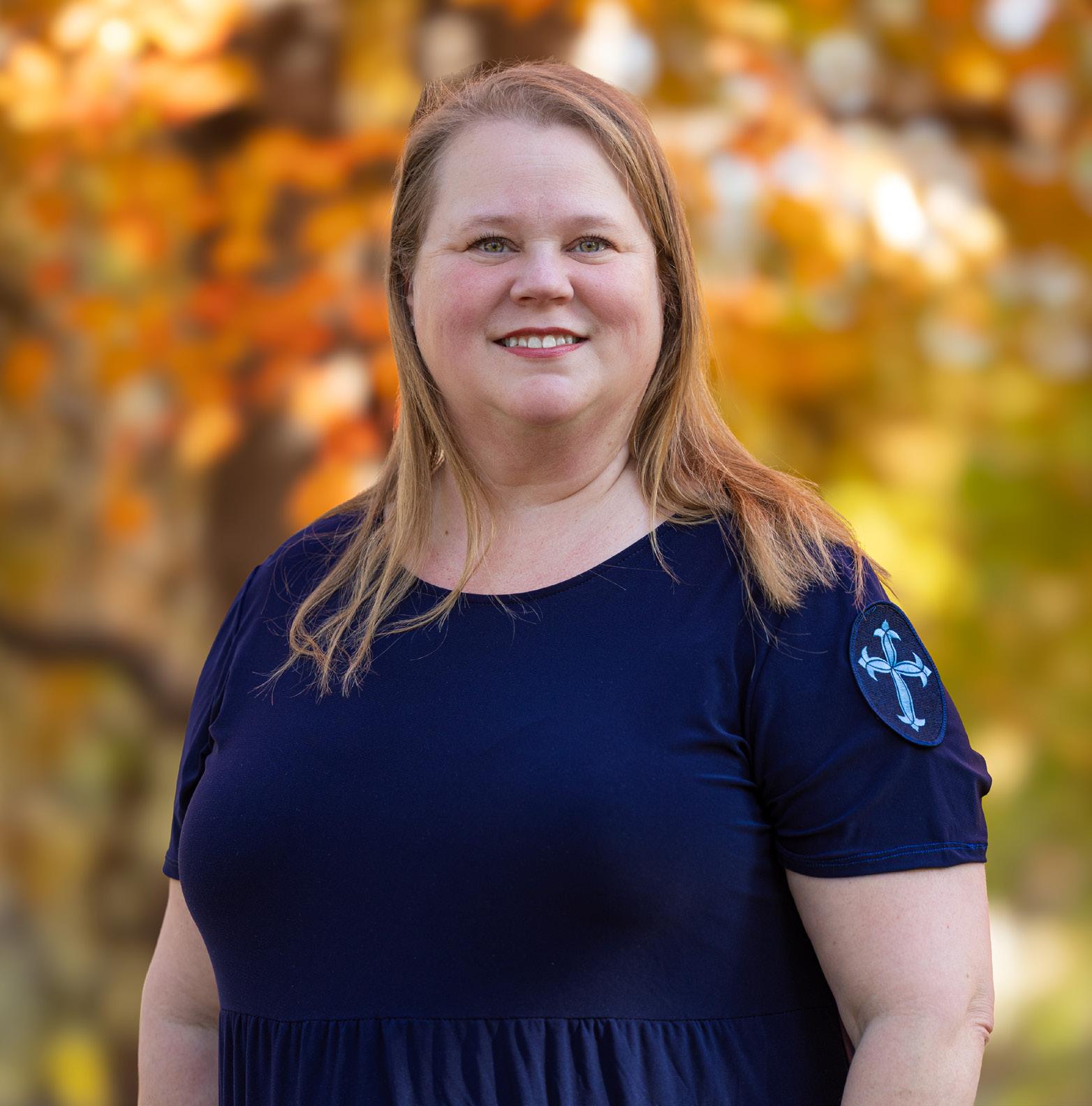
When second-year student Cathy Newman first began considering deaconess ministry, she did not imagine how profoundly that journey would shape her life, faith, vocation and care for others. Today, she reflects on how Concordia Seminary has prepared her for service in the church through rigorous study, Christian community and hands-on ministry.
“My time at Concordia Seminary has shaped me through trials, tears and spiritual warfare,” Newman says. “The Lord sustained me through Christian
community at the Seminary, especially through the gift of my deaconess sisters.”
While academic formation is an essential part of preparation for ministry, Newman says the rhythms of Seminary life — especially daily chapel — have left the deepest impression. “There were days when chapel felt like one more thing on a long list,” she says. “Yet I know I will miss daily chapel most of all. It centers me in Christ and fills me with His Word.”
She often recalls a phrase attributed to Katie Luther: “I will cling to Christ like a burr to a dress.” That image, Newman says, captures what chapel life has
While meditating on Gal. 2:19–20 during the retreat, she sensed the Lord leading her in a new direction focused on teaching and sharing the Gospel. “I surrendered to trusting God and asked Him to guide me about what was next for my family and me,” Newman says.
Conversations with several pastors and mentors helped confirm that sense of direction, including discussions with Pastors Paul Ernewein and Charles Truax, along with Dr. Gillian Bond, who at the time served as director of the Seminary’s Deaconess Studies program.
Together with her husband, Chip, Newman made the decision to relocate more than 600 miles so they could follow God’s direction for their lives. “We packed up and moved to St. Louis to begin this journey,” she says. “The community at the Seminary and at our Resident Field Education (RFE) congregation has helped us adjust to living away from family, home, church and friends.”
Newman says the Seminary’s coursework has continued to equip her with practical tools for teaching and caring for others.
Dr. Samuel Eatherton, kantor and assistant professor of Practical Theology, taught the course “Teaching the Faith” that helped her develop skills for catechesis and classroom instruction. She also learned the “Hook–Book–Look–Took” method for preparing Bible studies, a tool she believes will serve her well in future ministry.
Even stepping outside her comfort zone to take vocal lessons has played a role in her preparation. “I am grateful to my coach, Katie Vann, for her patience and extraordinary talent in helping me learn to sing with confidence,” Newman says.
Another formative experience came when she visited the Dominican Republic and spent time with individuals living with severe disabilities. “Even without speaking the same language, I could bring spiritual care,” she says. “The Gospel transcends barriers.”
For Newman, visiting residents in care facilities and private homes has become one of the most meaningful parts of her formation, offering companionship and the comfort of Christ’s Word.
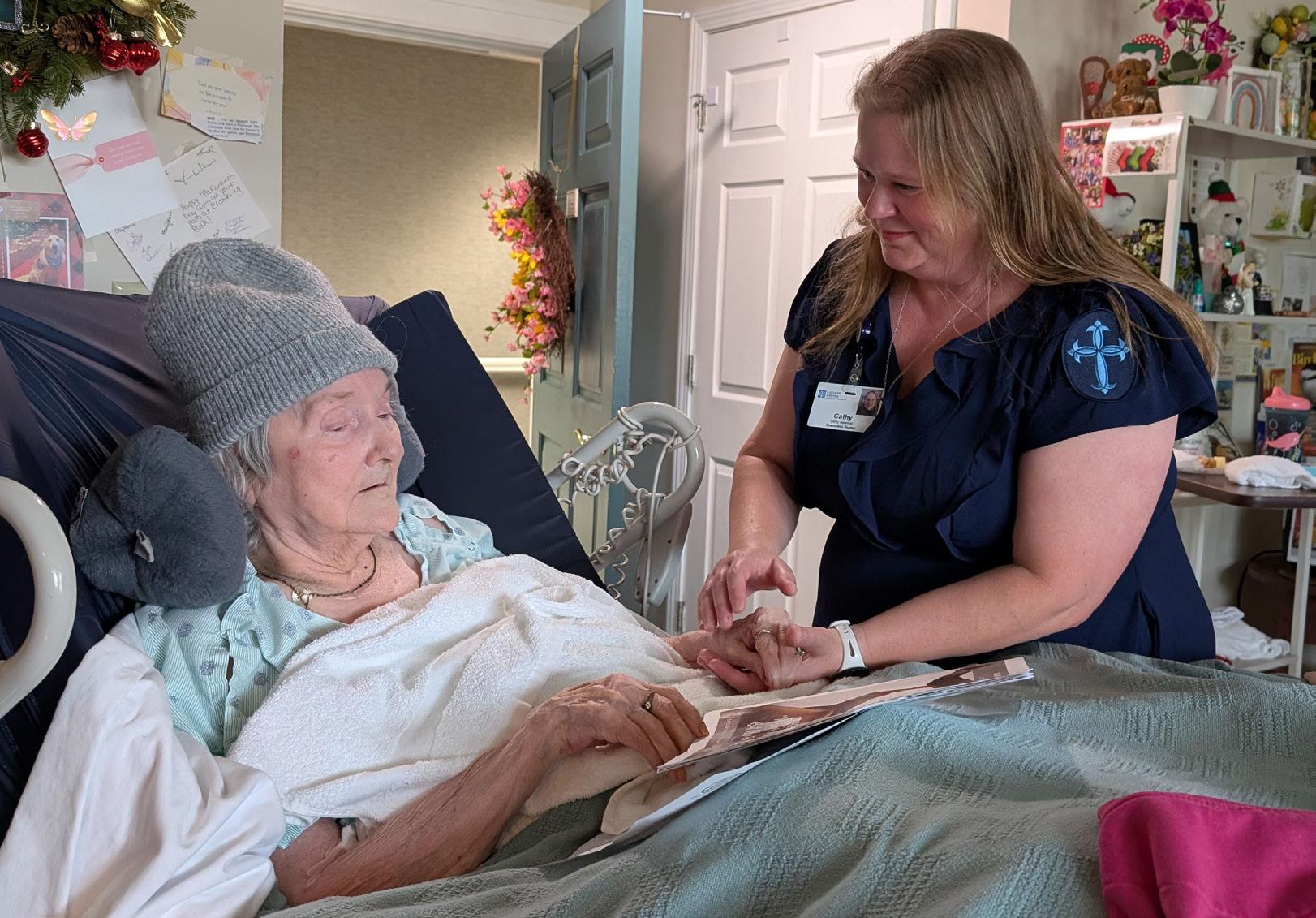
Taking the “Lutheran Visitation Education” course proved to be a significant part of her preparation. Through it, she began visiting residents at EverTrue Laclede Groves, St. Louis, Mo. “The transition from being primarily a physical caregiver in my earlier life to becoming a spiritual caregiver has been profound,” Newman says. “I often wish I had then the spiritual training I have now.”
Today, she approaches each visit prayerfully. “A typical visit begins with prayer before and after,” she says. “I do not always know what conversations I will encounter, but I want to make sure Christ is always at the center.”
One encounter in a memory care unit remains especially meaningful to her. As she and another deaconess student were leaving, a resident stopped them and began expressing worry about children she remembered from her past. Using the active listening skills she learned in class, Newman listened carefully and then prayed with the woman.
“I cannot even remember exactly what I said,” Newman recalls. “But the Holy Spirit was comforting her. When we finished praying, she thanked me and said, ‘I will remember what you said.’”
Over time, Newman says she has learned that faithful care does not depend on having the perfect words prepared. “The visit is not about my performance but about Christ at work through His Word,” she says. “The Holy Spirit is faithful, even when I feel inadequate.”
As Newman looks ahead to future ministry, she feels especially drawn
to serving older adults and those in care facilities. During her visits at EverTrue Laclede Groves, she has come to treasure time spent with residents such as Pauline Ostermeyer.
In their time together, Newman might help her eat breakfast, read Scripture or spend time in prayer and conversation. “My heart is for serving communities with the aged,” she says.
In these simple moments of care, Newman sees the essence of her vocation. “Most of the time our conversations revolve around reminding Pauline that she is not forgotten,” Newman says. “She is a baptized and precious child of God.”
For Newman, that simple proclamation reflects the heart of deaconess ministry. “For any growth I have experienced,” she says, “I give all glory to God, who works through weak and willing servants for the comfort of His people.”
Editor’s note: Following the submission of this piece, we learned with sadness that Pauline Ostermeyer died March 19, 2026. Our prayers are with her loved ones.
Marissa Nania is a communications specialist at Concordia Seminary, St. Louis.
BY KEN OHLEMEYER
Dr. Stephen Krenz (D.Min. ’13, M.Div. ’94) grew up about 40 miles south of the Canadian border in Kramer, N.D., a small farming community with a few hundred residents. One of the nearest big towns, Milnot, was still an hour’s drive away. His family raised small grains, mostly barley, wheat and sunflowers. His father served as a church elder. His mother played the organ. Church life, in one form or another, was always shaping his experiences.
His farming roots influenced Krenz in ways he fondly recalls. “You learn a work ethic on the farm,” Krenz says. “And you learn to trust God, because the rain comes when it comes.” His father was good at practical day-to-day business at church, while his mother, he says, was “the theologian, the thinker” in the family and both helped influence him. However, it was his high school pastor, Dr. Jim Gimbel (M.Div. ’85), who first suggested that Krenz consider the ministry.
“Initially, I didn’t think that was really an option, because I have no pastors in my family,” Krenz says. “I didn’t think I could be that spiritual all the time.”
With encouragement from his family and Gimbel, the idea took root. He enrolled in the pre-seminary program at Concordia University St. Paul, in St. Paul, Minn., then headed to Concordia Seminary, where he earned his Master of Divinity in 1994.
Now, 31 years later, Krenz is the pastor at St. Paul’s Lutheran Church in Columbia, Ill., which he calls “a really typical LCMS kind of congregation, size-wise.” Over the past three decades, he has moved from a mission startup in central Missouri to an established Illinois parish to his current suburban church. He has built his ministry the same way he logs his running miles: one step at a time.
Krenz delayed his first call and spent a year in clinical pastoral education: three months at Deaconess Hospital and nine months at EverTrue Laclede Groves, a senior living community, both in St. Louis, Mo. It was during this time that he met his wife, Lisa, a Lutheran school teacher. They married the next year.
His first call was to Grace Lutheran in Holts Summit, Mo., a mission congregation that was only three years old when he arrived as its first full-time pastor in 1995. Krenz remembers feeling uncertain at times, especially with his wife and now two young children. “I may have to get another job here,” he told Lisa. “We’ll see if this startup is going to really pull it off.” It did and it was a growing experience for Krenz. During his nearly seven years there, the congregation doubled in size and built its first church building.
In 2002, Krenz moved to Trinity Lutheran in Hoffman, Ill., an established congregation with more than 150 years of history and its own school. He was there for nearly 17 years, long enough to see his children, Joel and Anna, grow up attending Trinity Lutheran School. Krenz also helped launch Christ Our Rock Lutheran High School in Centralia, Ill. Then, with his children grown and he and Lisa empty-nesters, Krenz felt called to something new. He has been sole pastor at St. Paul’s since 2018.
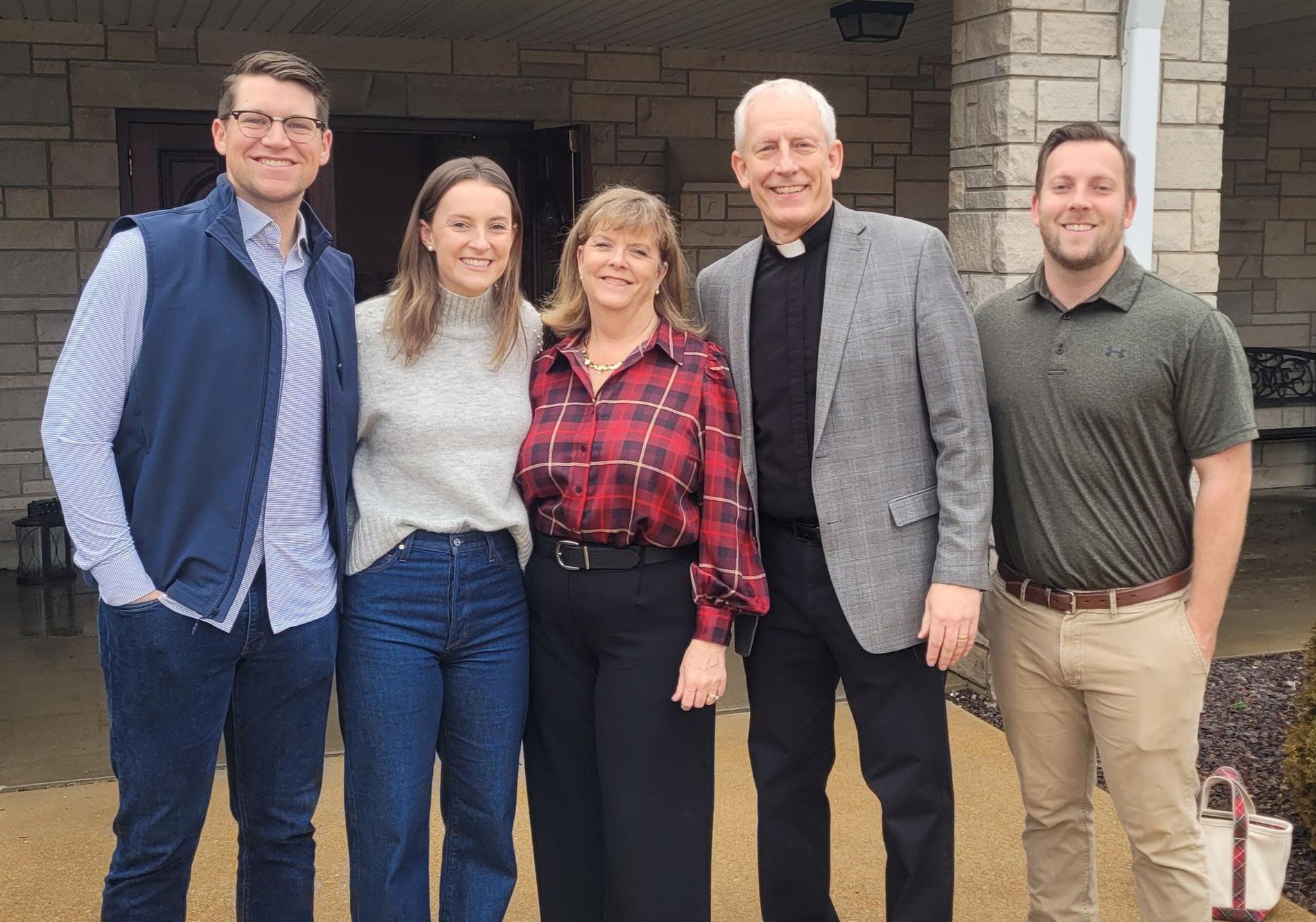
While at the Seminary, Krenz served his field work at Unity Lutheran Church, a predominately African American congregation in East St. Louis, Ill. As a

white student from rural North Dakota, Krenz stood out. Still, he joined the choir and helped lead summer programs for neighborhood children.
“I felt connected and enjoyed it, even though I stood out,” he says. “It was a great experience for me.” What struck him most, beyond the cultural difference, was the shared Lutheran liturgy. “The Lutheran service that we held there was similar to what we do in other places,” he says. “The theology stays the same and Unity is where I preached my first sermon and led Bible classes.”
That experience stays with him now as a field work supervisor. St. Paul’s has hosted
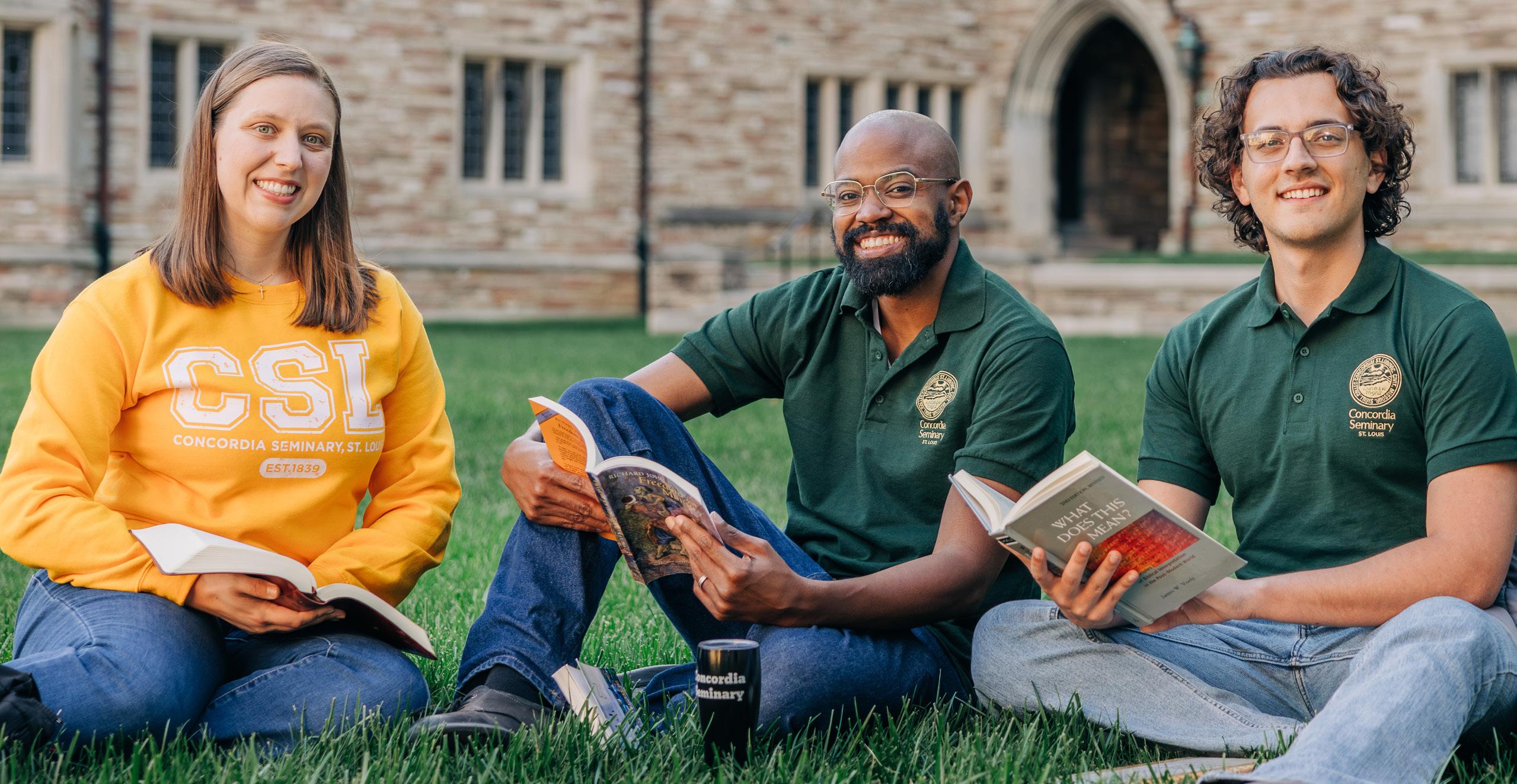
seminarian students for years, and Krenz has worked with seven since he arrived in Columbia. Right now, two first-year students from the Seminary, Austin Kudray and Josh Gillespie, are assigned to the congregation.
The first months as a field worker at St. Paul’s are deliberate and measured. Students observe worship, learn the basics of liturgy, then gradually take on prayers, adult Bible classes, shut-in visits
Krenz remains humble about his role. “I just see myself as one cog among many,” he says. “They’re going to have vicarage supervisors, they’re going to have seminary professors, they have their own home pastor. I’m just one person.”
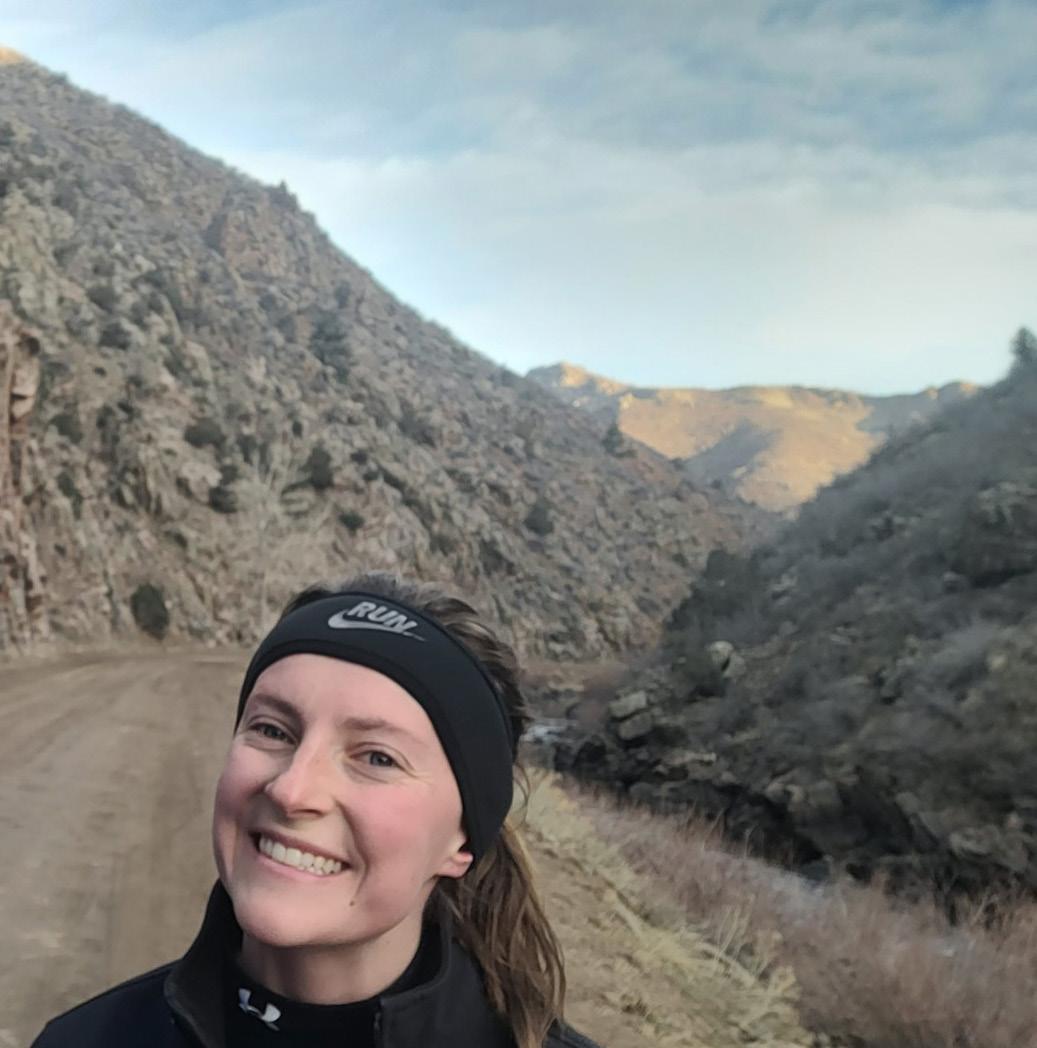
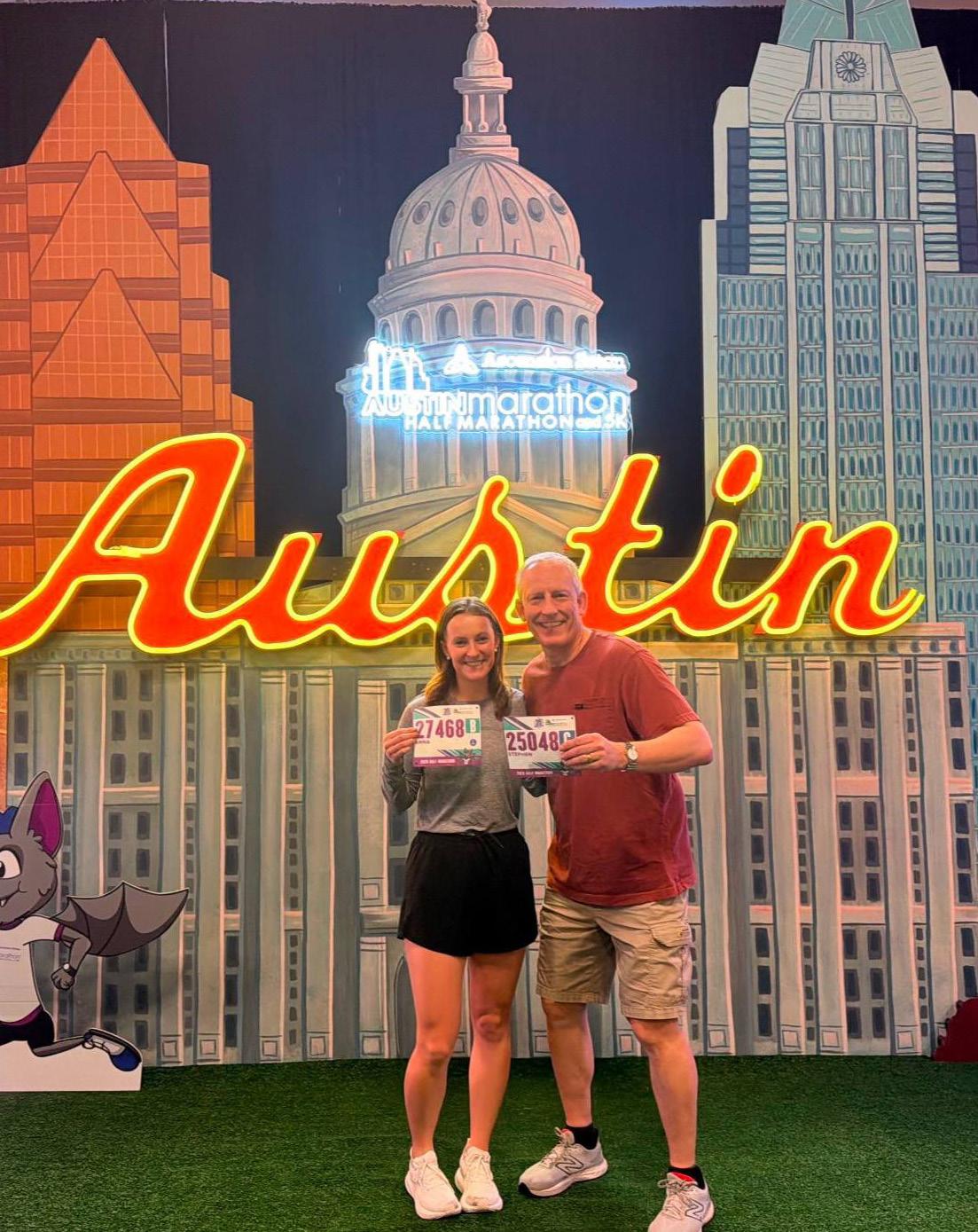
To stay in shape, Krenz runs 25 to 30 miles each week, a habit he started in Hoffman when he realized he could remember his congregation members’ names better after a morning run before Sunday service. Now, running is as much a part of his day as preparing sermons and is a ready metaphor for ministry.
and congregational meetings. Recently Kudray and Gillespie led their first adult Bible classes. “They both did a great job,” Krenz says. “They’re well-received because they’ve got all this knowledge and they just want to share it.” His usual reminder: pace yourself.
His wife, Lisa, now an editor of curriculum resources at Concordia Publishing House, is involved as well. The couple welcomes students into their home, hosting Sunday lunches and casual conversations. “Lisa wants to give them an example of, ‘Hey, you can do this,’” Krenz says. “This can work for a spouse and everybody can still have their life.”
“You’re just looking more long-term,” he says of the marathon mindset. “The issues you face in churches, which may seem overwhelming at first, you realize, ‘Well, this will look different in six months.’ It’s about putting one step in front of the other.”
His advice for new pastors, drawn from 31 years of experience: build trust before making changes, visit people in their homes while there is still time, and keep studying the Word. “If you love the Scriptures, you love God’s Word and you love people, you’re going to be fine.”
After three decades, Krenz says he is still learning — still working to become a better preacher, still lacing up his running shoes every morning. “A lot of what you do in ministry,” he says, “is just putting one foot in front of the other.”
Ken Ohlemeyer is the executive director, communications at Concordia Seminary, St. Louis
BY MARISSA NANIA
For Jim Lewis, the gifts God has entrusted to him have a clear purpose: to be used in service to Christ and His church. “The Lord has given us everything that we have,” Lewis says. “Each of us is responsible for being good stewards of how we use those gifts.”
Through his ongoing support of Concordia Seminary, Lewis is putting this conviction into action, helping to ensure that future pastors and deaconesses are formed to serve congregations and other ministries across the country and around the world.
Born in Lansing, Mich., and raised in nearby East Lansing and Okemos,
Lewis grew up in a family shaped by both professional excellence and active service. His father, a mechanical engineer, contributed to major automotive innovations while his mother devoted herself to community organizations throughout the region.
After graduating from Okemos High School, Lewis pursued a Bachelor of Science in Pharmacy from Ferris State University, Big Rapids, Mich., and became a licensed pharmacist in 1974. He served in community and long-term care pharmacy settings before making a pivotal decision that would shape the course of his career.
“After considerable self-reflection,” he says, “I made the decision to pursue a career in the pharmaceutical industry. This was probably the most important decision of my professional
life.” Lewis went on to serve in a range of sales and marketing roles with DuPont Pharmaceuticals, as well as in the biotechnology field with Roche and Genentech. Throughout his career, he contributed to teams advancing treatments for cardiovascular, neurologic and infectious diseases.
Although Lewis had supported both Concordia Seminary, St. Louis and Concordia Theological Seminary, Fort Wayne, Ind., for many years, his understanding of the church’s needs grew through a personal connection.
A conversation with a family member, a graduate of Concordia Seminary, opened his eyes to a growing challenge: the needs of congregations are outpacing the number of pastors being raised up.
“Most Lutherans are not aware of this
“This is the best investment that I ... could ever make. It helps ensure that we have pastors and deaconesses to serve the church now and in the future.
—Jim Lewis ”
imbalance,” Lewis says. “You realize it when your congregation needs to call a pastor and there is no one readily available.”
Having served as president of a congregation in Newark, Del., that unexpectedly lost its pastor, Lewis saw firsthand the impact of that shortage. Congregations without a pastor often struggle to maintain stability and growth. He also came to understand the financial reality facing the seminaries. “I was surprised to learn that about 90% of the seminaries’ support comes from members and donors,” he says. To fulfill the Great Commission, Lewis believes the church must invest intentionally in forming future church workers.
For Lewis, supporting Concordia Seminary is not simply charitable giving; it is a direct investment in the future of the church. He emphasizes that pastoral and diaconal ministry is deeply personal and relational, a “high touch” vocation requiring spiritual, emotional and intellectual formation.
While technology may assist that work, it cannot replace it.
At the same time, he recognizes the importance of strengthening the Seminary’s capacity to form future church workers. Many campus facilities are several decades old and require renewal to support the next generation of students. Given these realities, Lewis chooses to give in a way that allows the Seminary to respond where the need is greatest. “The seminaries have a much better understanding of where they need to invest,” he says. “I trust them to use the resources where they are most needed.”
Supporting Concordia Seminary is both a responsibility and an opportunity to serve in a lasting way. Having seen firsthand the need for pastors and the challenges
congregations face without them, Lewis encourages others to recognize the importance of investing in the formation of those preparing for ministry.
With most of the Seminary’s funding coming from donors, he views faithful giving as an essential part of sustaining that work — strengthening congregations and helping prepare future church workers to serve where they are needed most.
“This is the best investment that I or any other member of the church could ever make. It helps ensure that we have pastors and deaconesses to serve the church now and in the future, for our children and grandchildren.”
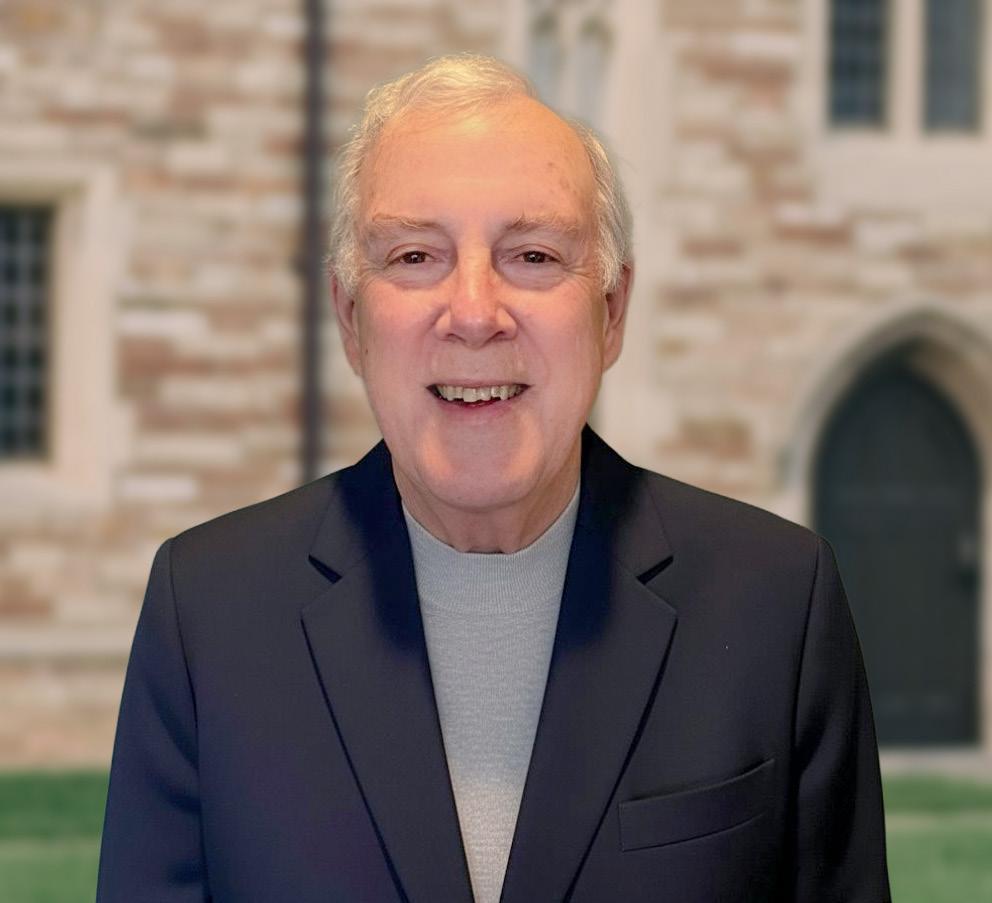
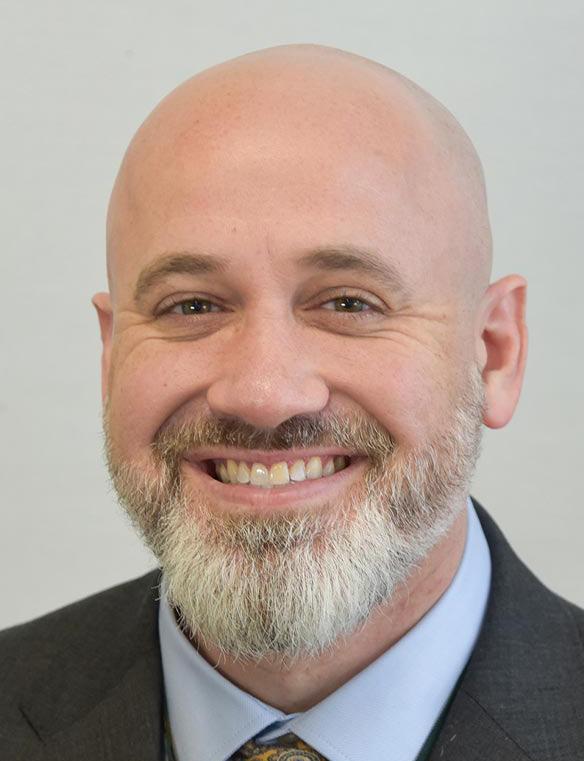
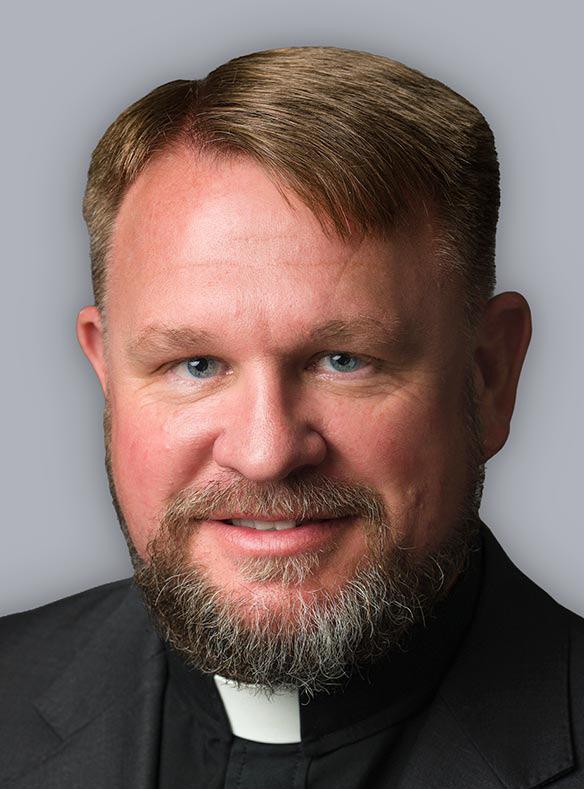
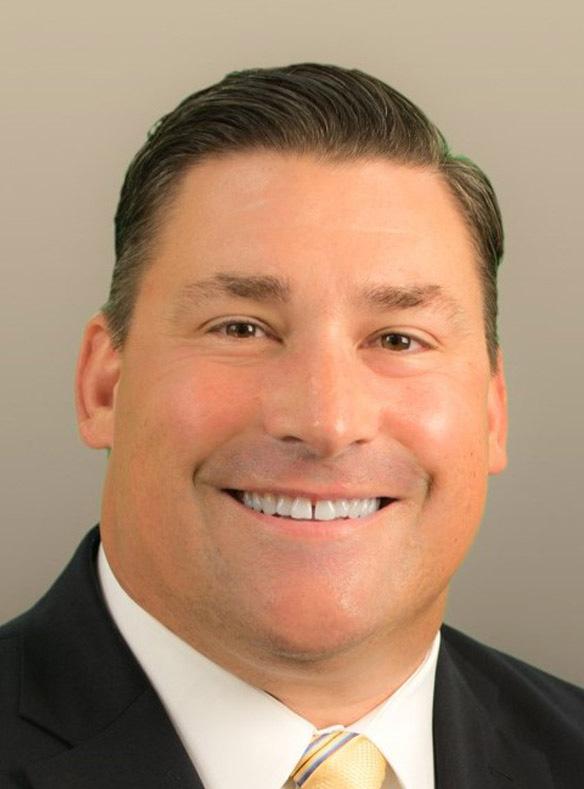
Three new members were recently added to the Seminary’s Board of Regents. The Lutheran Church—Missouri Synod appointed Rev. Ryan Wendt, LCMS Montana District president and associate pastor at Christ the King Evangelical Lutheran Church in Billings, Mont., as the Council of Presidents representative for an initial three-year term. The board appointed Dr. Peter Elliott, pastor at Messiah Lutheran Church in Seattle, Wash., and Troy Prehar, a med-tech industry leader from Dripping Springs, Texas, each to six-year terms. Seminary President Dr. Thomas J. Egger welcomed the appointees, saying the new members bring “further breadth of expertise and perspective” to the board. Under LCMS bylaws, the Board of Regents may include up to 13 members, drawn from ordained ministers, commissioned members, lay members and board appointees.
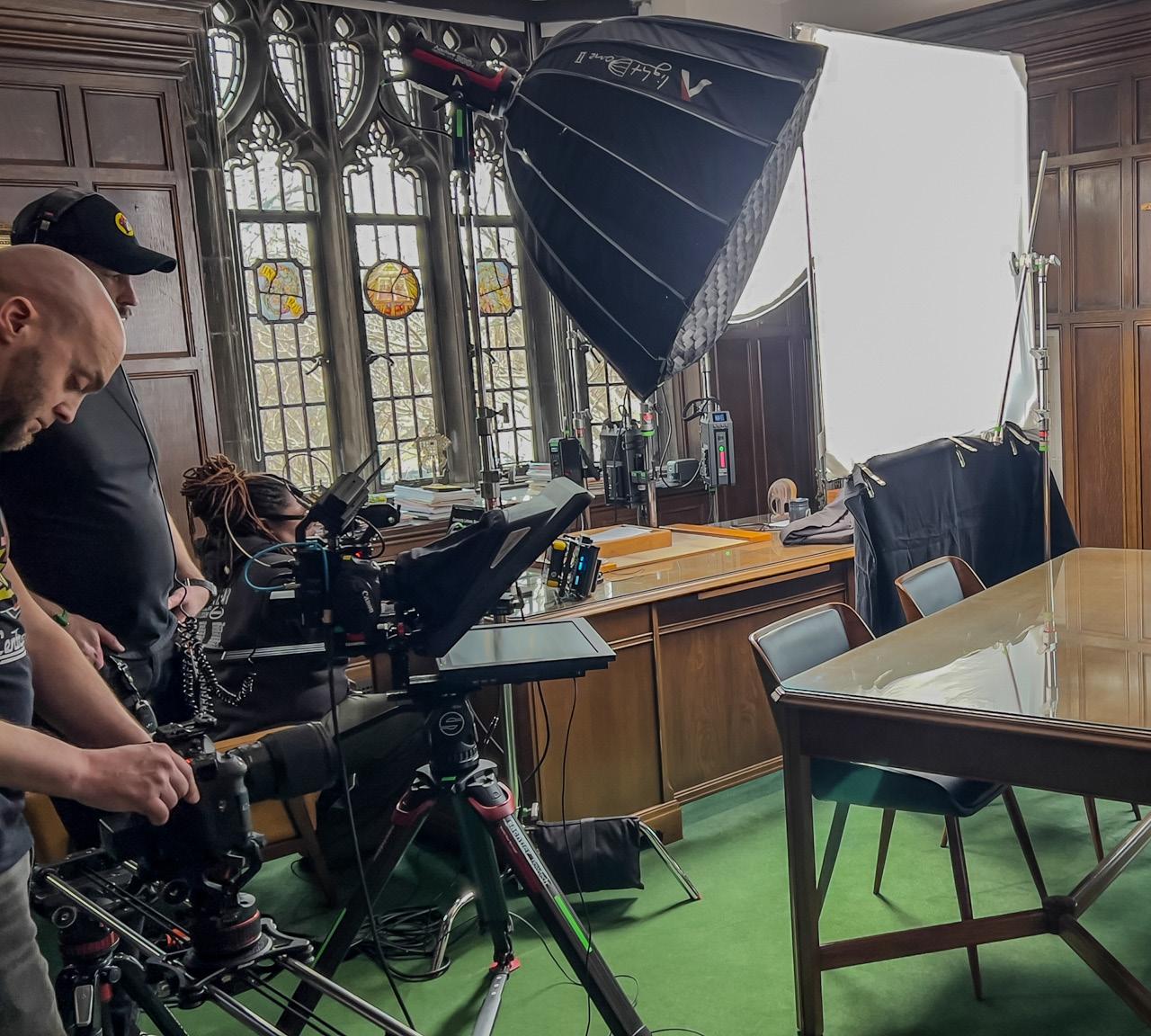
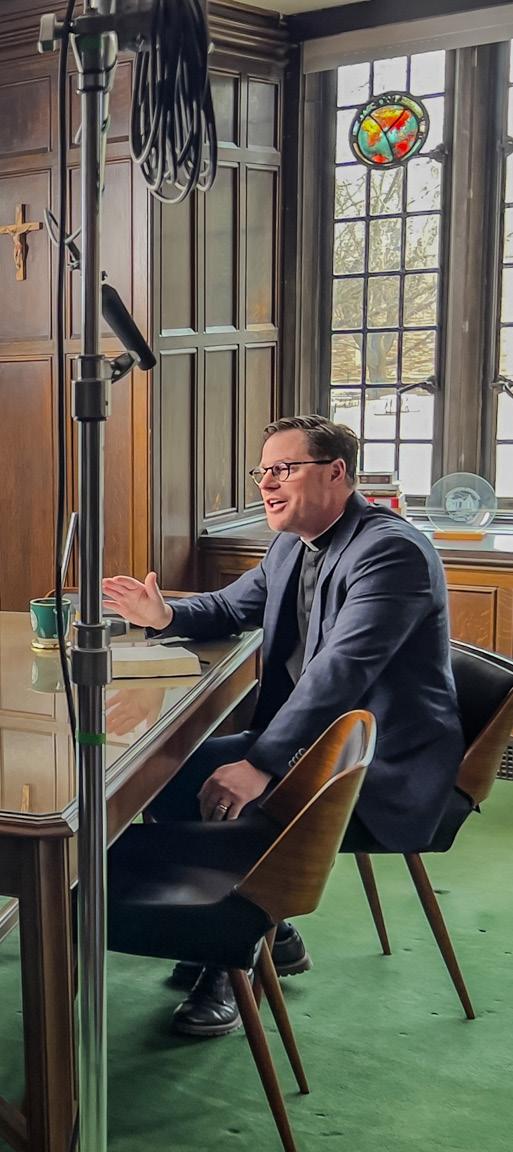
“Light from Above,” a new short-format video series hosted by President Dr. Thomas J. Egger, debuted in March. The series, named in reference to the Seminary’s motto, offers viewers a glimpse into campus life as the Seminary carries out its mission to prepare pastors, missionaries and deaconesses. The videos are intended to inform and engage Seminary friends and supporters, including alumni, donors, prospective students and ministry partners. Topics will touch on Seminary life, the church’s work in the world, and reflections on God’s Word. “These short videos will aim to be an open window — a chance to see what’s happening at the Seminary,” Egger said. Viewers are invited to submit questions or suggest topics at presidentsvideo@csl.edu. The series is available at youtube.com/ConcordiaSeminary.
The video crew films Dr. Egger for an upcoming “Light from Above” episode. Photo: Ken Ohlemeyer
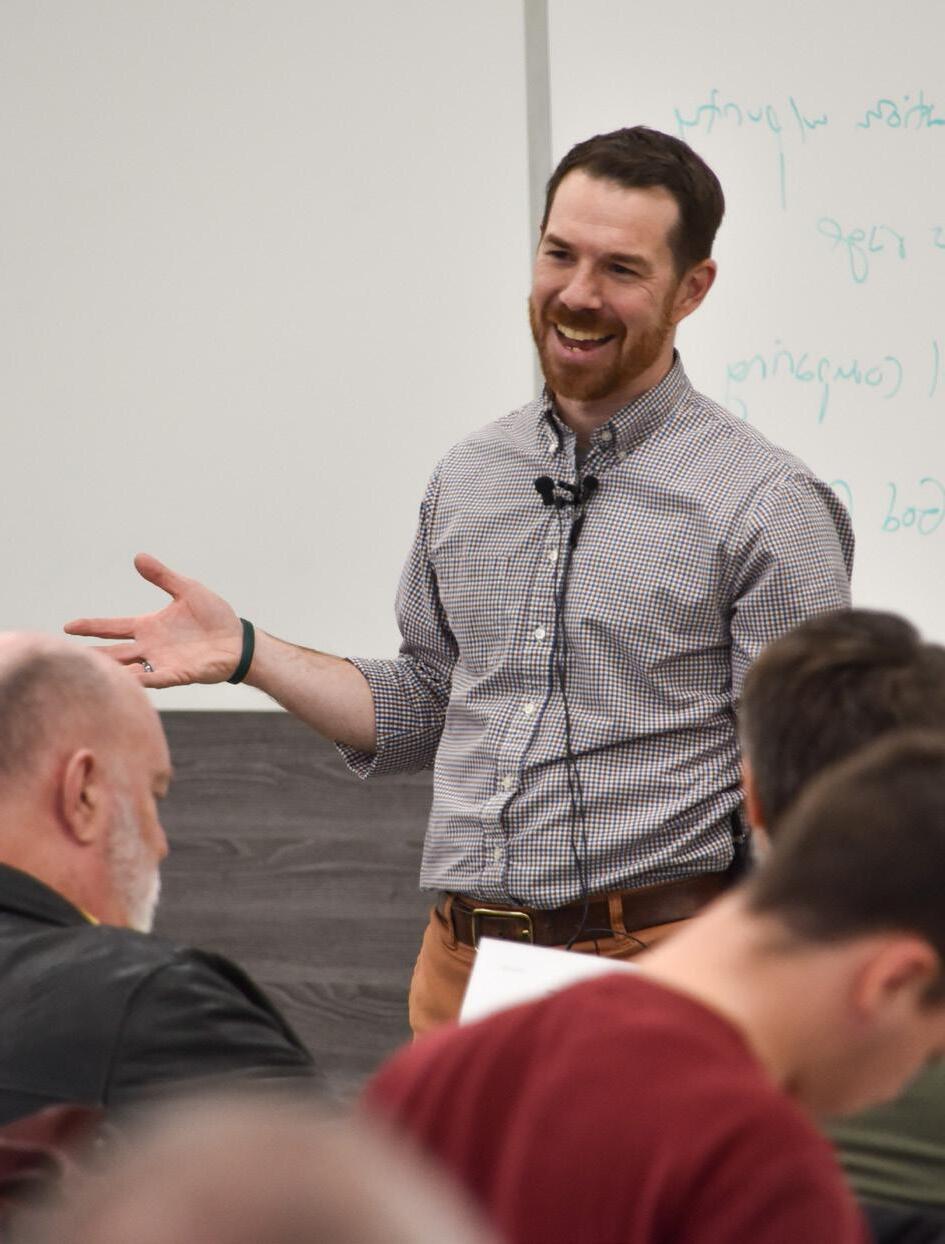
The Lay Bible Institute (LBI) wrapped its 2025-26 series with a Feb. 7 workshop led by Dr. Ryan Tinetti on Christian vocation and everyday faithfulness. Tinetti encouraged participants to embrace lives shaped by humility and identity in God rather than cultural measures of success. The Lay Bible Institute is offered three times a year and provides accessible, Scripture-centered instruction to equip laity for faithful living in home, church and community. To view the 2026-27 series line up, visit csl.edu/lbi.
Dr. Ryan Tinetti leads the Feb. 7 Lay Bible Institute workshop. Photo: Ken Ohlemeyer
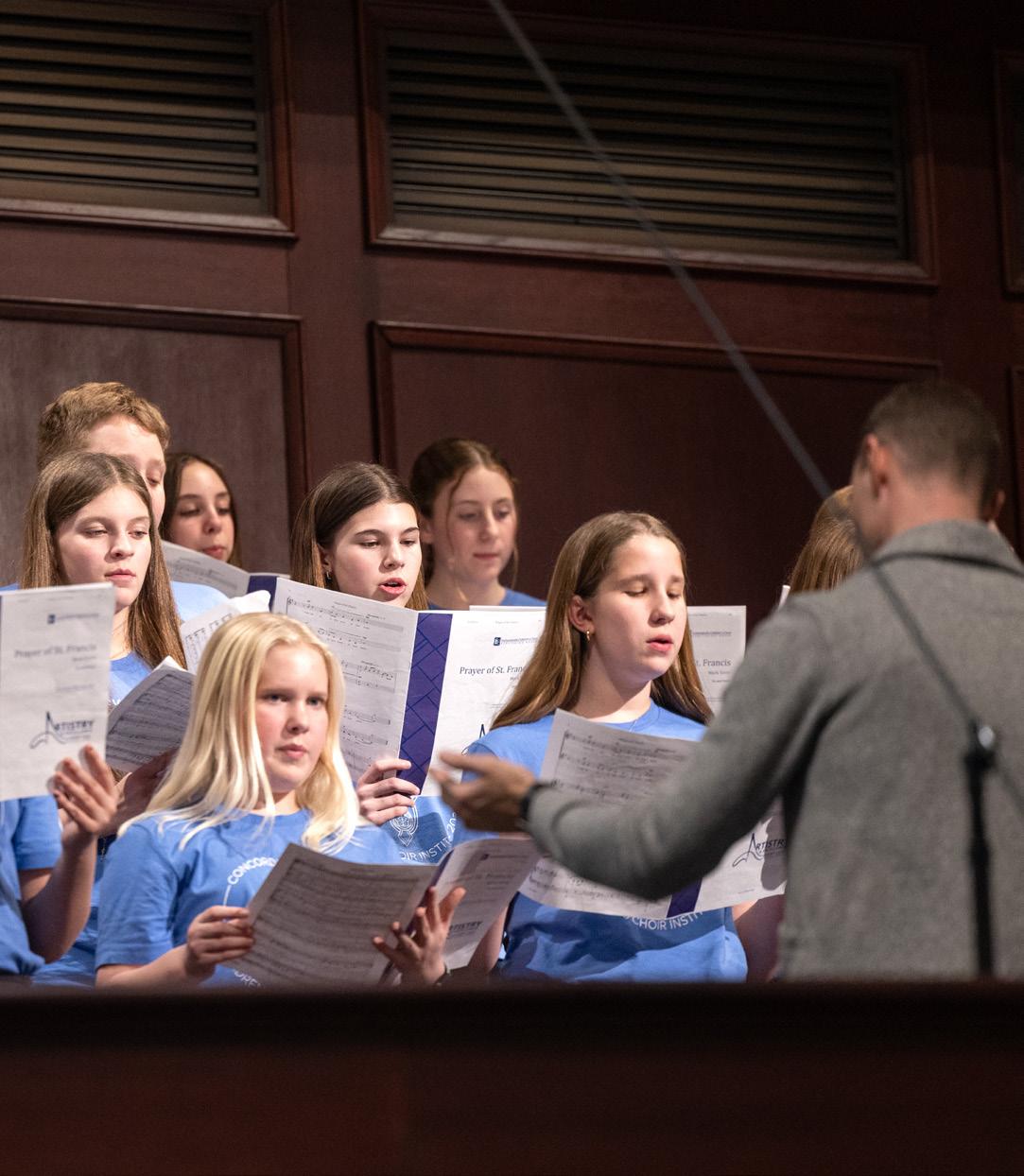
The Seminary’s first Children’s Choir Institute, held Feb. 6-7 on campus, hosted 75 children from four area Lutheran church choirs. The children received instruction from Joshua Pedde, executive artistic director of the Indianapolis Children’s Choir. The event featured an evening prayer service Feb. 6 in the Chapel of St. Timothy and St. Titus. Before the service, the children spent the day learning new vocal techniques, rehearsing the evening’s program and participating in fun activities on campus. On Feb. 7, Pedde led a workshop for regional choir directors focused on developing children’s vocal and worship leadership skills. The two-day event was part of the Seminary’s Nurturing Children Through Worship and Prayer Initiative, which aims to support congregations in forming young musicians for participation in church life.
Joshua Pedde conducts the Children’s Choir Festival Feb. 6 in the Chapel of St. Timothy and St. Titus. Photo: Jill Gray
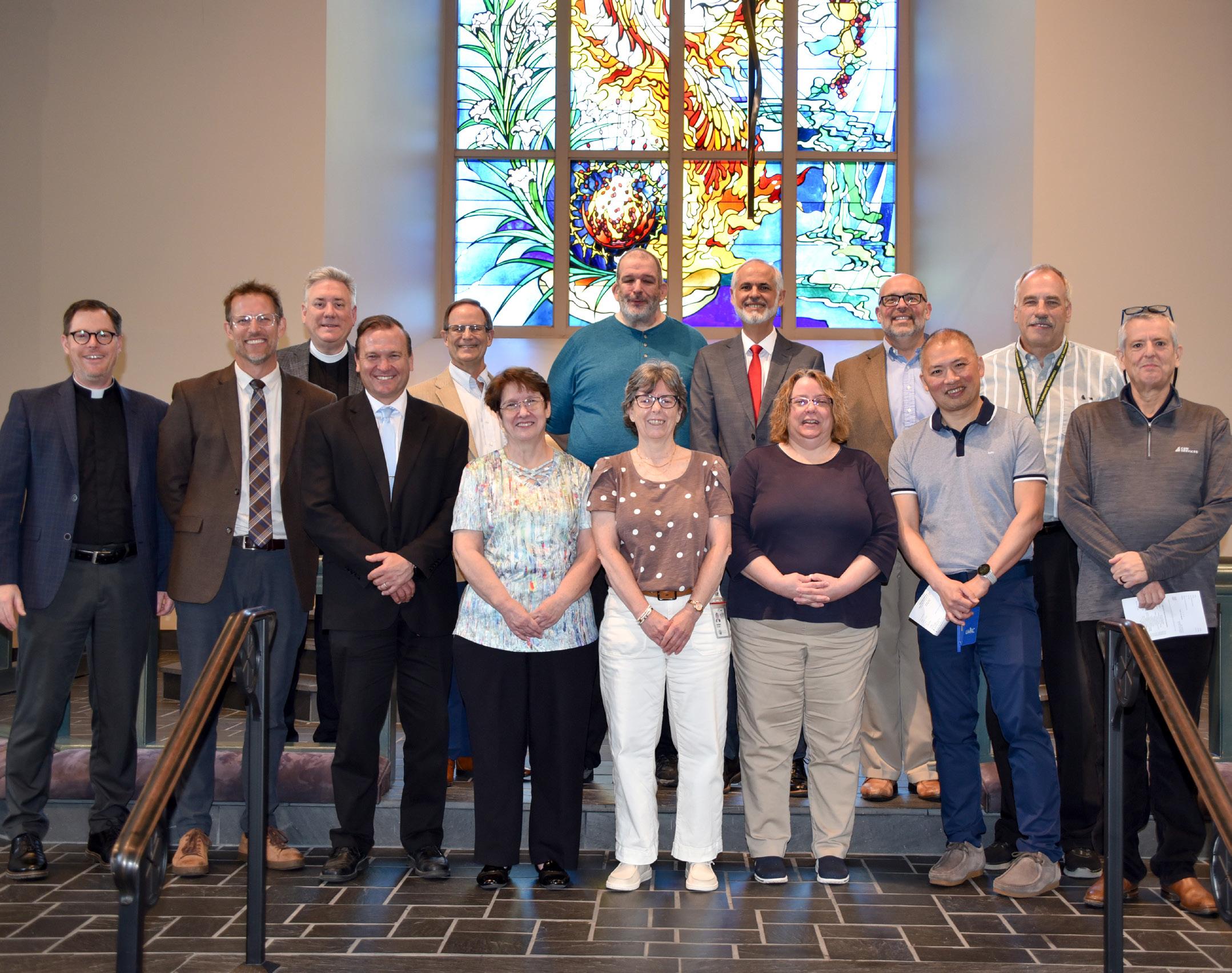
Fifteen faculty and staff members were honored for a combined 240 years of service to Concordia Seminary, St. Louis, during the April 17 chapel service, followed by a reception in Koburg Hall. President Dr. Thomas J. Egger gave thanks for their dedication, noting the wide range of gifts they bring to the Seminary’s life and mission. “From Deb Roediger, who has served on the Seminary staff for 50 years, to Professors Golden, Prieto and Vieker, who have been with us for just five years each but bring with them a wealth of previous ministry experience — and every name in between — we have been blessed by these colleagues, and we honor and congratulate them today.” After the names were read, the congregation applauded in gratitude for their faithful service and lasting contributions to the Seminary community.
Faculty and staff recognized in Chapel on April 17, 2026, include front row (l-r), Dr. Egger, Dr. Peter Nafzger, Chad Cattoor, Maria Hines, Deb Roediger, Sarah Kassel, Pei Chen, Martin Hague; back row (l-r), Dr. Jon Vieker, Dr. Mart Thompson, Eric Stancliff, Dr. Ely Prieto, Dr. Kevin Golden, Michael Broberg. Photo: Ken Ohlemeyer
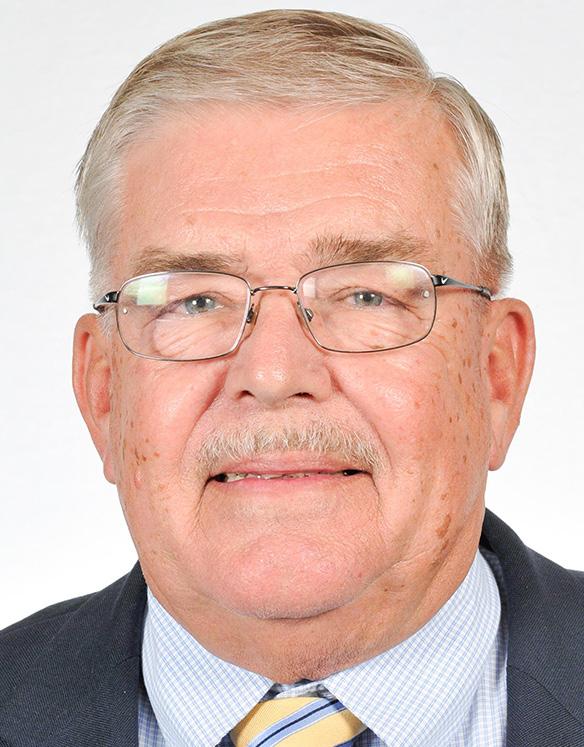
Dr. David Wollenburg, emeritus professor at Concordia Seminary, fell asleep in Jesus April 12, 2026.Wollenburg retired in 2009 after serving as a professor of Practical Theology and leading key ministry programs. “Dr. David Wollenburg was a dedicated churchman with a rich record of varied service,” said Seminary President Dr. Thomas J. Egger. “I recall with gratitude his frequent words of encouragement when I was a young faculty member, and I know he was an example and encouragement to many others, most especially students in our distance programs and those preparing for military chaplaincy.”
Dr. David Wollenburg
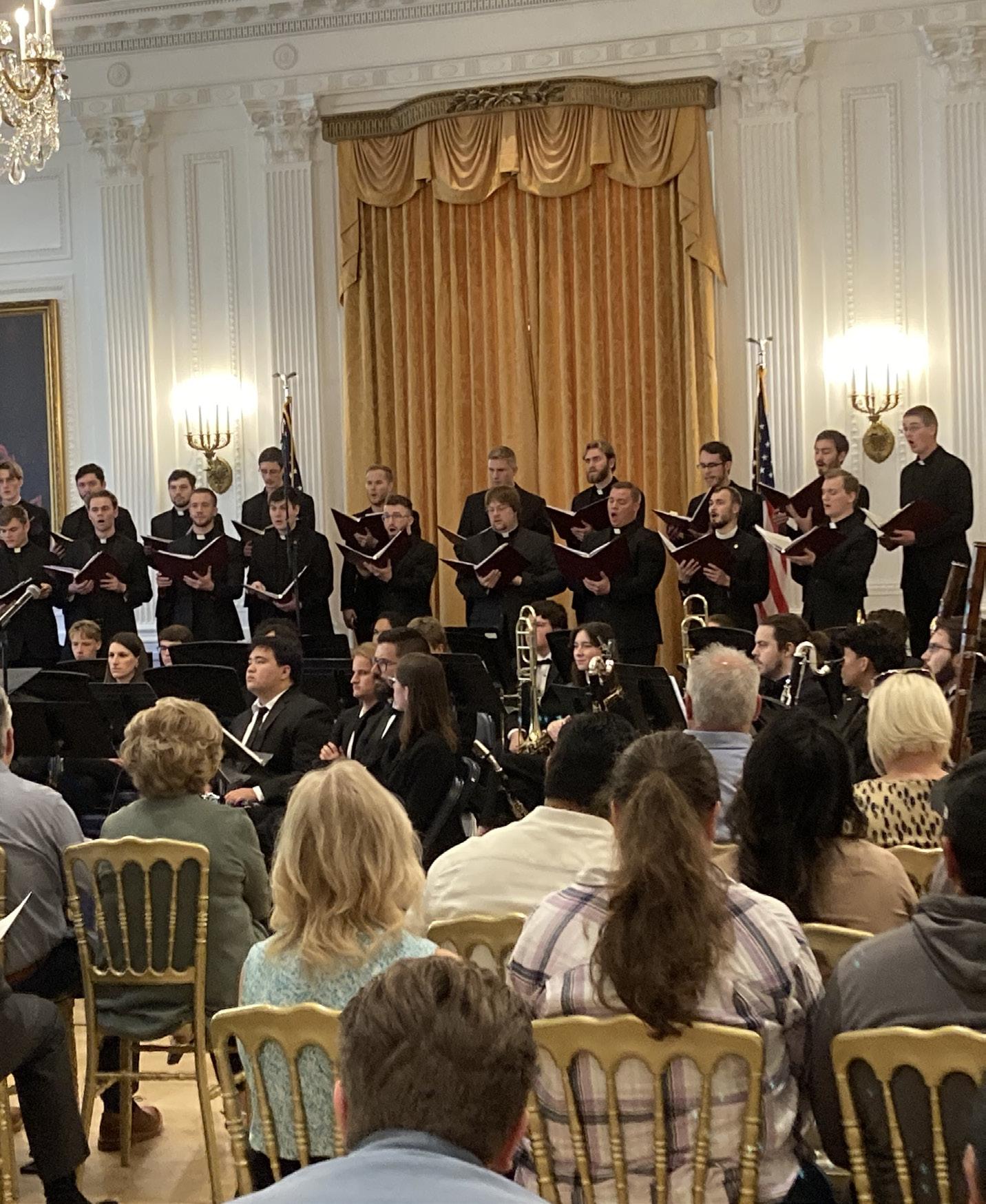
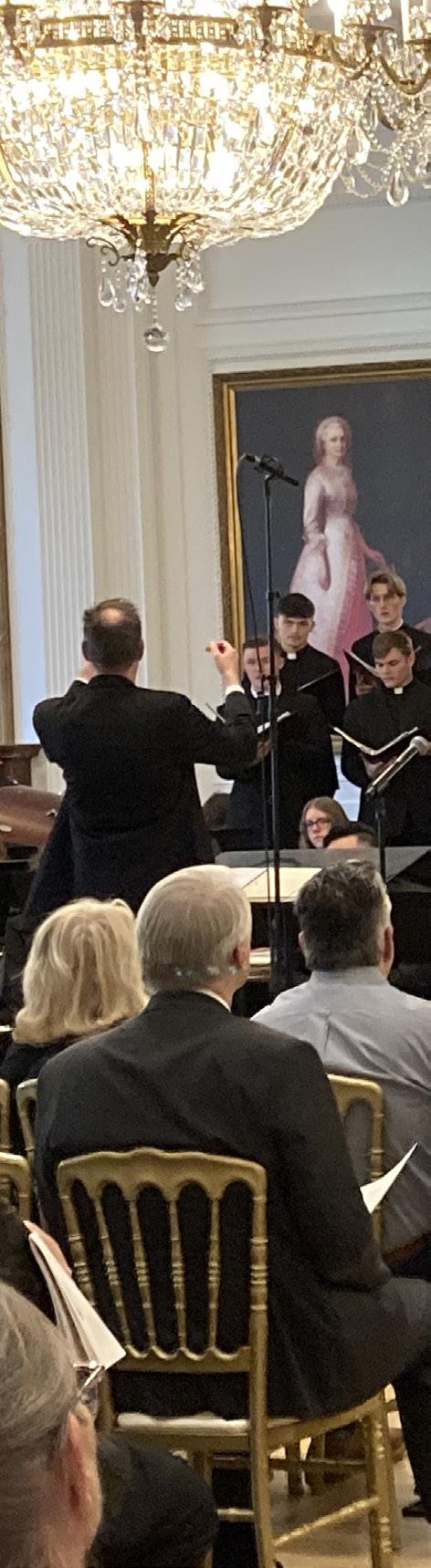
Laudamus, the Seminary’s select men’s choir, closed its spring 2026 tour with a concert March 26 at the Chapel of St. Timothy and St. Titus on campus. The hometown performance capped performances March 14-16 throughout Southern California, including the Richard Nixon Presidential Library, before returning to St. Louis. The tour theme, “Lamb of God, Who Takes Away the Sin of the World,” was drawn from the Gospel of John and reflected the Lenten season. A highlight was a setting of the Agnus Dei composed by second-year seminarian Joshua Fields, one of the choir’s members. Presented within the order of Evening Prayer, the concert also included congregational singing.
Laudamus choir members perform at the Nixon Library on March 15, 2026, joined by the Concordia University Irvine, Irvine, Calif., Wind Orchestra and Choir. Photo: Joe Deverian
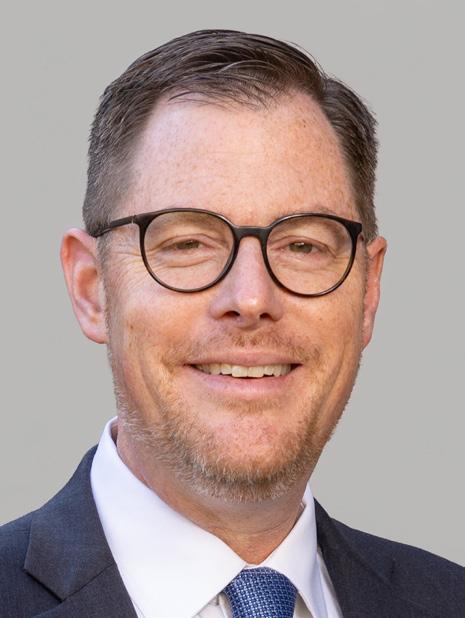
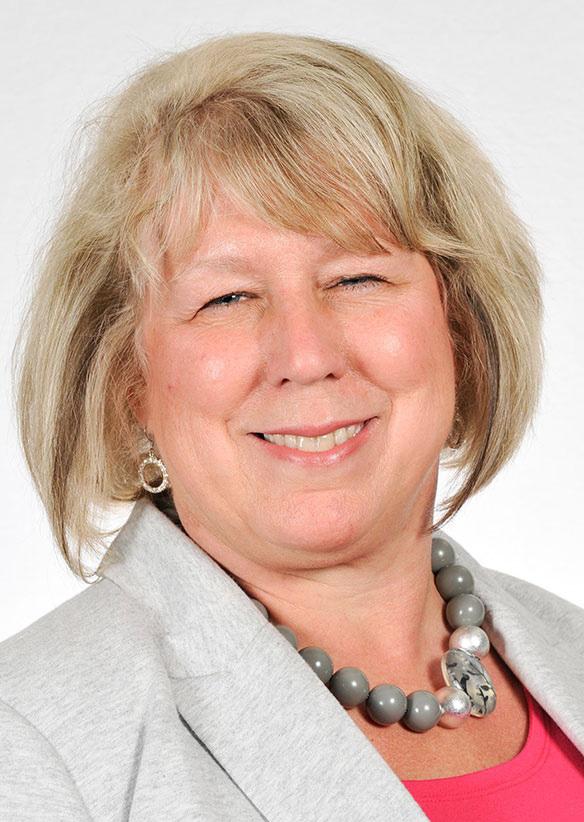
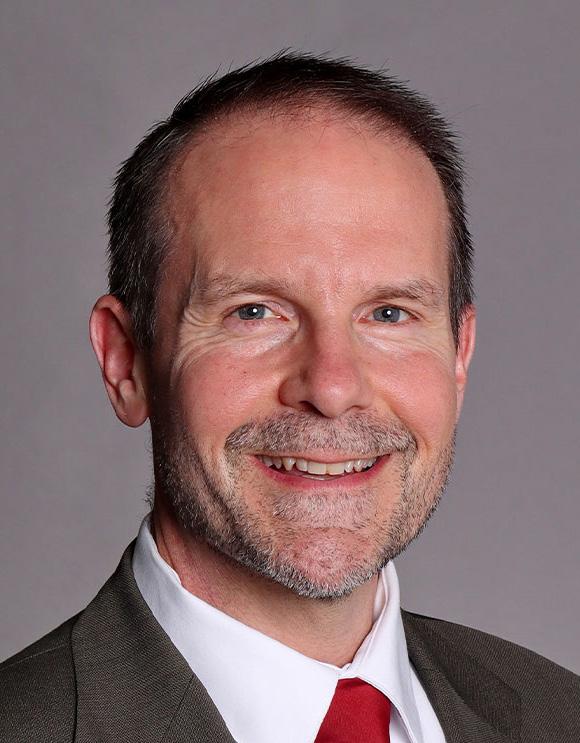
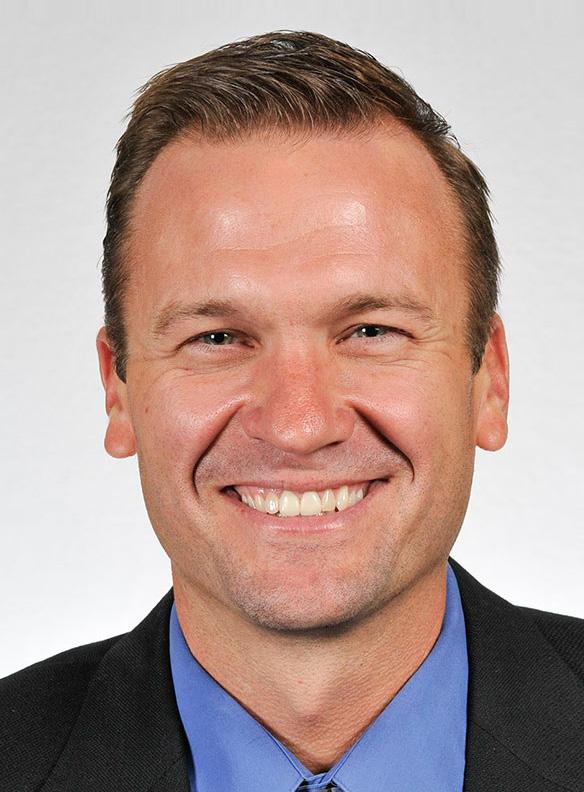
A new President’s Cabinet was established effective Jan. 1, after the Board of Regents approved the plan at its November 2025 meeting. The cabinet includes President Dr. Thomas J. Egger, Provost Dr. Ronald Mudge, Senior Vice President Chad Cattoor and Senior Vice President Vicki Biggs. The new structure is designed to improve coordination among the academic and operational divisions and to help set direction, strategy and policy. Michael Louis, formerly executive vice president and chief operating officer, became assistant to the president for strategic asset management and stepped away from daily operations. “Concordia Seminary is blessed to have these gifted individuals serving our community. The creation of the President’s Cabinet will allow President Egger and these leaders to more effectively and efficiently carry out the mission of the Seminary. We pray that God bless them and their work,” said Rev. Max Mons, chairman of the Board of Regents.
The President’s Cabinet includes (clockwise from top left) Dr. Thomas J. Egger, Dr. Ronald Mudge, Chad Cattoor and Vicki Biggs.
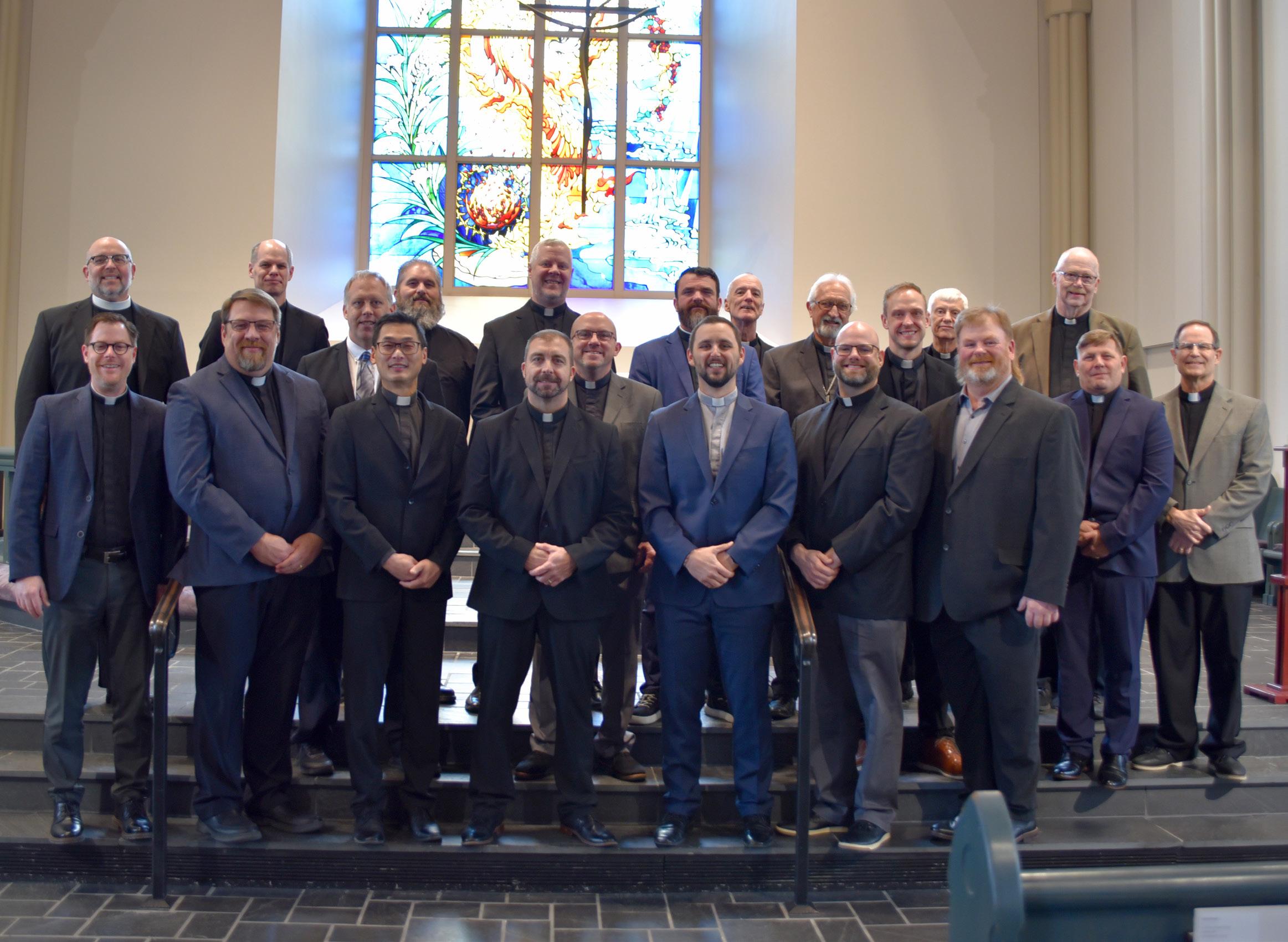

During the Jan. 16 chapel service on campus, 40 students were recognized for their completion of intensive courses and calls to ministry. Students represented the Specific Ministry Pastor (SMP), Cross-cultural Ministry Center (CMC), Ethnic Immigrant Institute of Theology (EIIT) and Online Deaconess Studies (ODS) programs. Placement Director Rev. Timothy Scharr said 18 SMP students, one CMC student and four EIIT students received calls into pastoral ministry, while one ODS student received a call into diaconal ministry. The SMP Program provides a four-year curriculum in ministry settings where candidates continue to serve following certification, call and ordination. The EIIT Program prepares leaders for service in immigrant and ethnic communities, and ODS equips women for diaconal service. The Seminary celebrates calls throughout the year although its primary Call Day is held annually in April.
SMP Program students were recognized during chapel Jan. 16, 2026, for their assignments of calls and presentation of theological diplomas. Photo: Ken Ohlemeyer
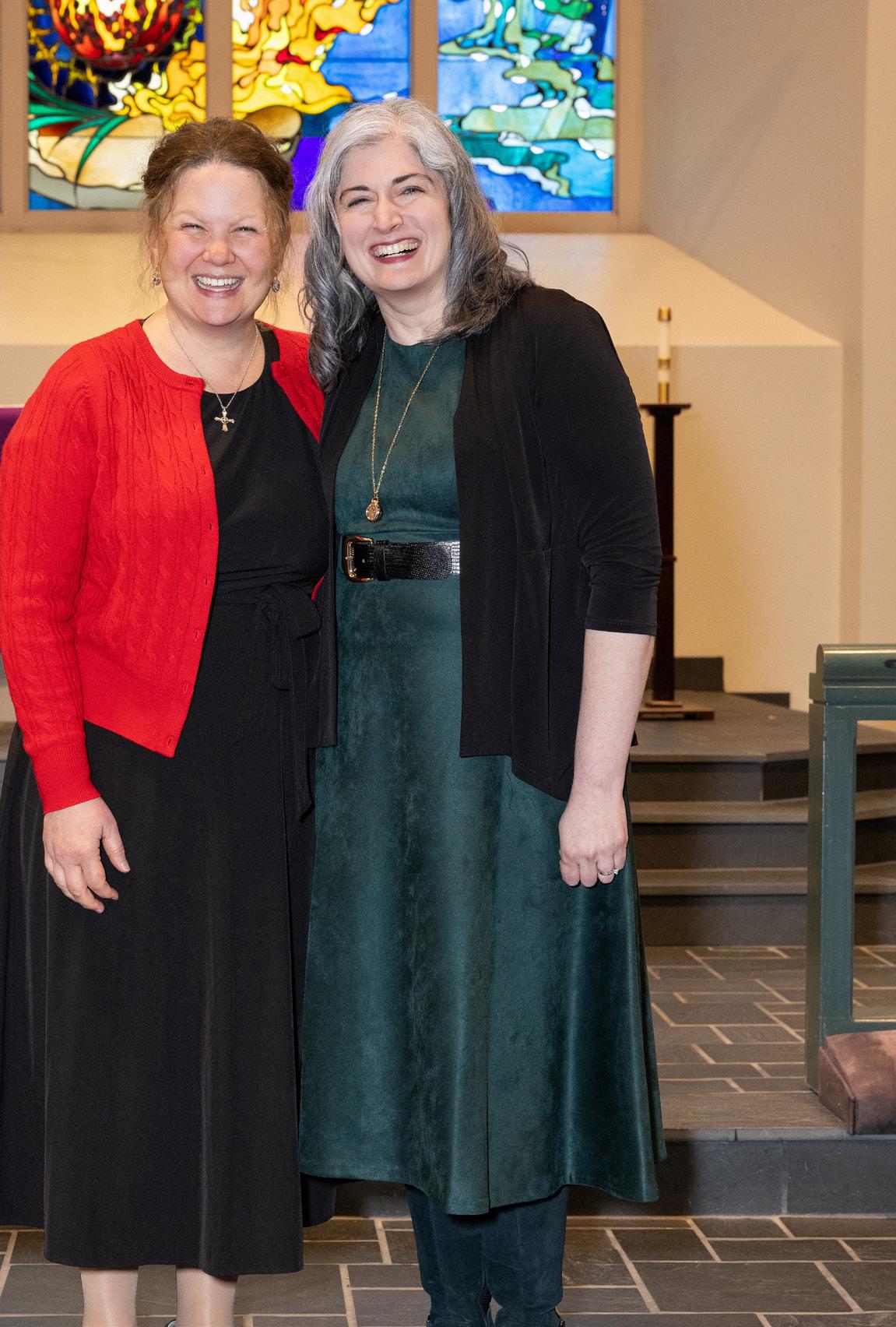
The fifth annual Prevallet Hymn Writing Workshop was held Feb. 28 on campus for aspiring and published hymn writers, translators and students, offering a day of instruction and collaboration. Participants received coaching from presenters Dr. Lisa Clark of Concordia Publishing House, author Katie Schuermann, and Dr. Jon Vieker, dean of Chapel. Vieker said, “We are honored this year to learn from two women who are established Lutheran hymn writers and authors.” The event concluded with a March 1 hymn festival, “The Only Son From Heaven,” held in the campus chapel and featuring the works of Clark and Schuermann. The annual workshop continues to support the development of hymnody within the church.
Katie Schuermann (left) and Lisa Clark after the March 1 “The Only Son From Heaven” hymn festival featuring their works. Photo: Jill Gray
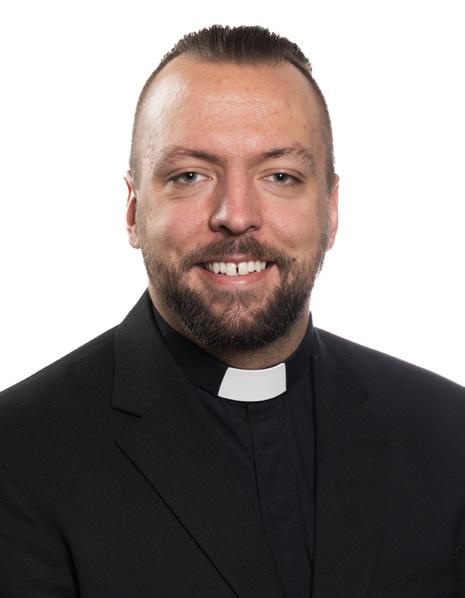
Rev. Jarod Fenske, a 2023 graduate of Concordia Seminary, St. Louis, has been selected for the 2026 Fellowships at Auschwitz for the Study of Professional Ethics (FASPE) Clergy and Religious Leaders Program. One of 14 international participants, Fenske will travel to Germany and Poland this summer for a two-week seminar exploring ethical failures of clergy and other professionals during the Holocaust. Fenske, associate pastor at Peace Lutheran Ministries in Antigo, Wis., is the seventh seminarian to receive the fellowship. Dr. Joel C. Elowsky praised Fenske’s selection, noting he will represent Concordia Seminary and its tradition well.
Rev. Jarod Fenske
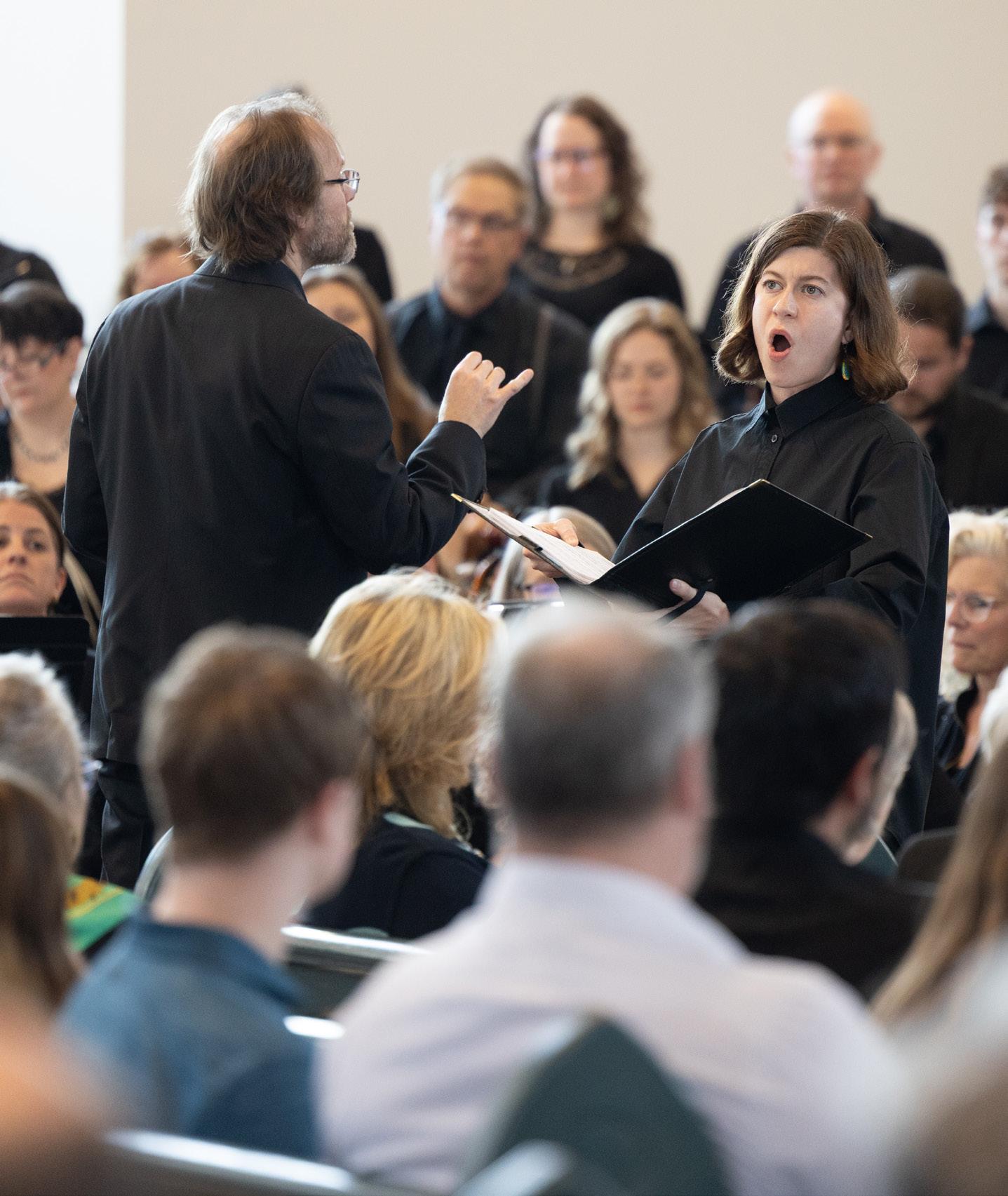
The American Kantorei performed J.S. Bach’s St. John Passion Version II (1725) on Palm Sunday, March 29, in the Chapel of St. Timothy and St. Titus. Under the direction of Dr. Maurice Boyer, the Kantorei’s chorus, soloists and orchestra, joined by the Concordia Seminary Children’s Choir, presented the Gospel of St. John’s account of Jesus’ crucifixion with hymn stanzas and commentary. The 1725 version differed from the 1724 score the Kantorei performed in 2024. This performance featured a new opening chorus, replacement arias and an expanded closing chorale to reflect Bach’s evolving composition. “The music of Bach’s St. John Passion so beautifully tells the story of Holy Week and invites us again to consider our Lord’s suffering and death on our behalf,” said Dr. Jon Vieker, dean of Chapel. The free performance, part of the Seminary’s annual Music Series, drew a capacity crowd.
The American Kantorei perform the “St. John Passion” March 29. Photo: Jill Gray
Faculty led in-depth study on contemporary topics that influence the practice of ministry and worship. Bringing the Seminary to you!
Register 2 weeks prior to each workshop
laptopcsl.edu/resources/ continuing-education/ workshop-series/
Explore various forms of creative writing: blog, sermon or devotion, story, nonfiction, drama, poetry and podcast.
Register by July 13, 2026
laptop csl.edu/faith-andwriting-workshop-2026/

June-November 2026

July 28-30, 2026
A fun opportunity for high school men and women entering grades nine through 12 to explore God’s guidance and direction for them.
Register by May 31, 2026
laptop csl.edu/vocatiohigh-school
‘Who’s Child is THIS?’ Spiritual Formation Through Worship This workshop will explore how music, coupled with the Word of God, has engaged and formed hearts and minds for good.
Register by July 27, 2026
laptop csl.edu/lbi
June 20-26, 2026

Aug. 8, 2026