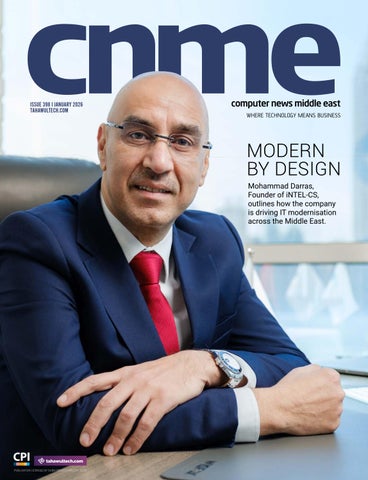
MODERN BY DESIGN
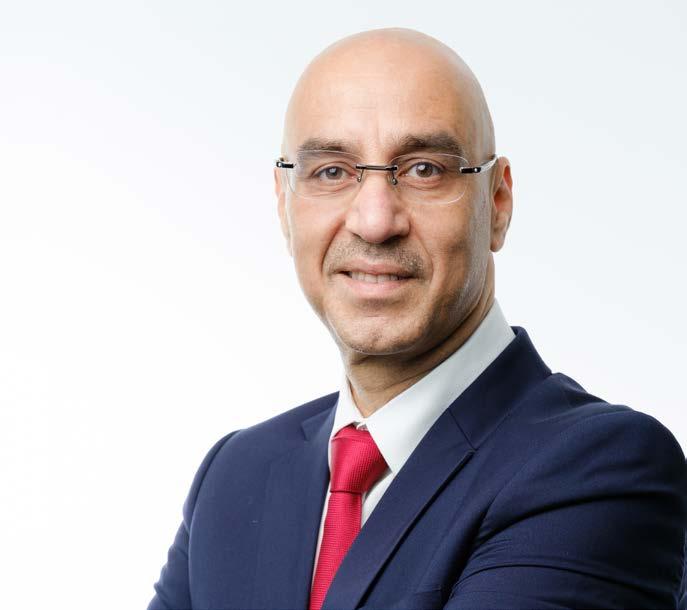
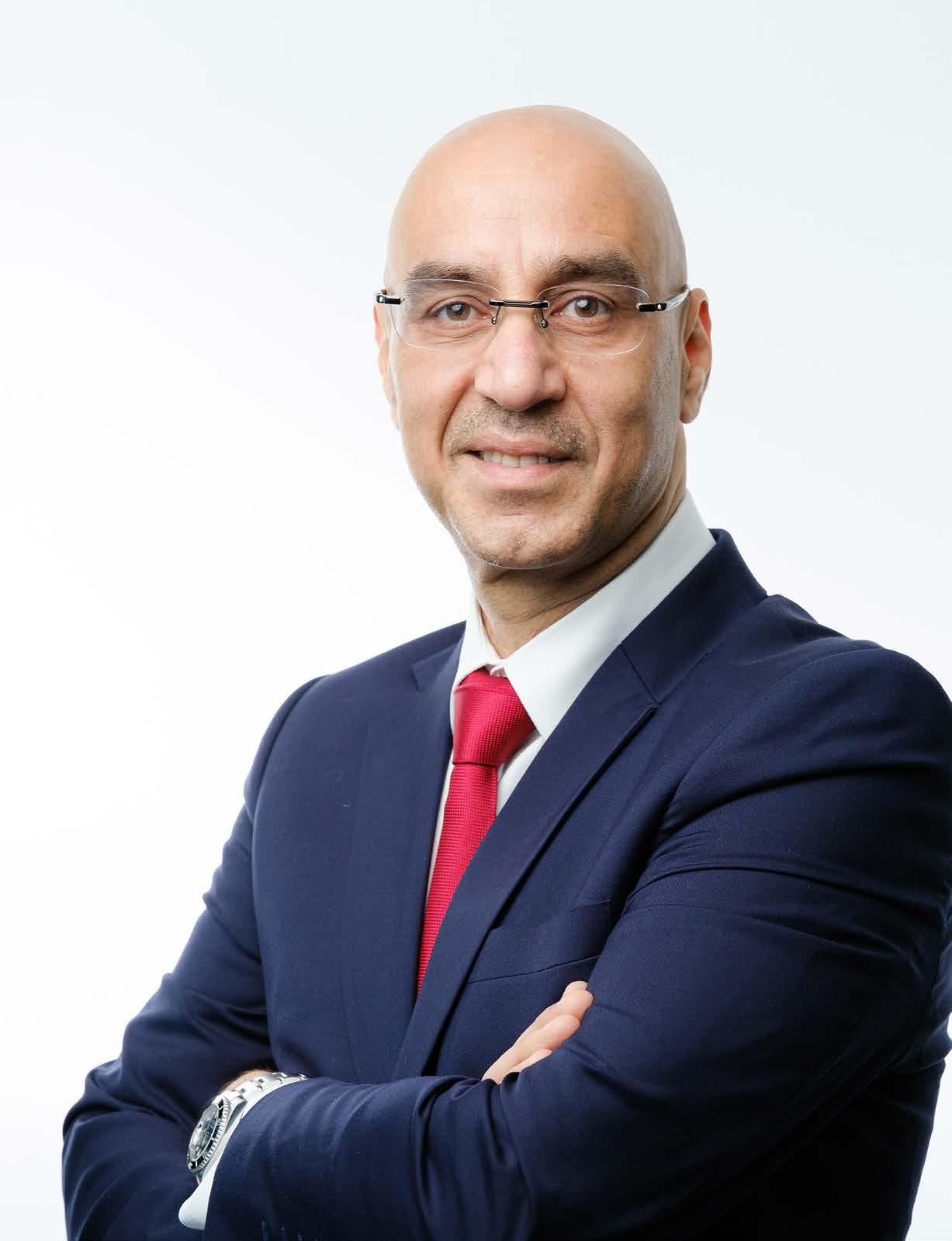
Mohammad Darras, Founder of iNTEL-CS, outlines how the company is driving IT modernisation across the Middle East.


E-mail: mark.forker@ cpimediagroup.com
BEATING THE BLUES
Out of all the months in the calendar, January is the month that certainly divides public opinion. You either loathe it or love it.
There are primarily two camps of thought regarding January.
There are those, who view it as an opportunity to hit the reset button, after a fortnight of overindulgence over the festive period.
They set new goals and targets, be it professionally, or personally, in relation to their physical fitness.
There is a pep in their step, and they approach the year ahead with a renewed sense of optimism and energy.
There are those who simply dread the return to the grind and can become irritated by the zest on display from their colleagues, and who simply just can’t wait for the New Year resolutions to fade into the rear-view mirror, and for February to arrive.
However, for those of us that work in the technology sector, January is always an exciting month.
In the first edition of 2026, we have got some great prediction features.
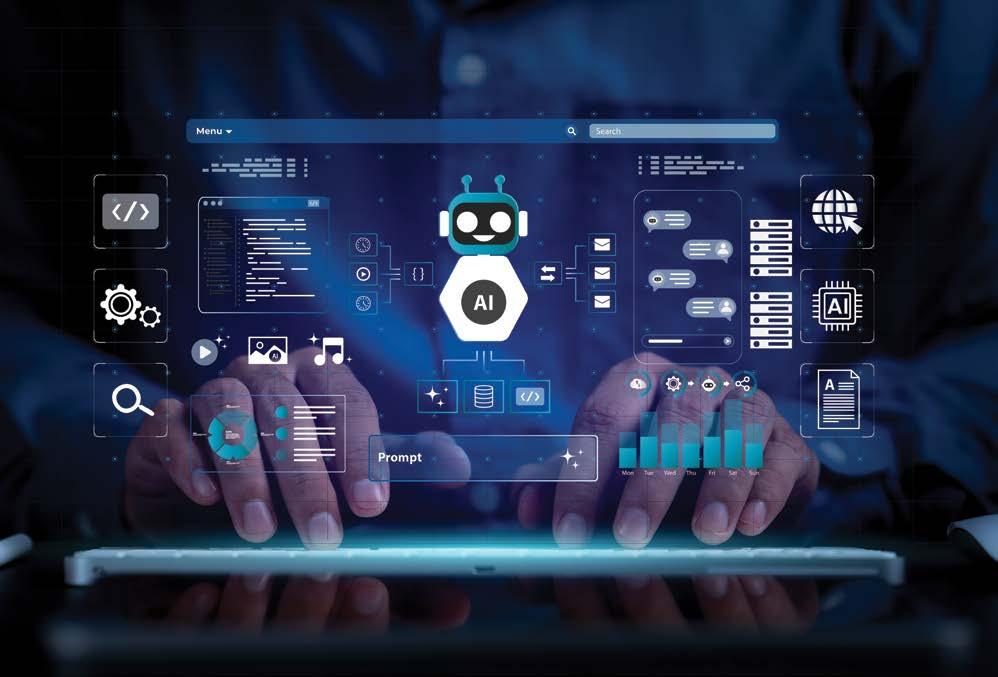
John Roese, Global Chief Technology Officer and Chief AI Officer at Dell Technologies, believes that 2026 will be the year that the ‘AI story’ really starts to pick up speed. He has declared that AI will reengineer the entire fabric of enterprise and industry and will drive new ways of operating and innovating at a pace that was ‘unimaginable’ just 12 months ago.
On the front cover of January’s edition of CNME is Mohammad Darras, Founder of iNTEL-CS. Darras is a hugely respected figure within the IT sector across the Middle East.
In a stellar career, he has worked for companies such as Avaya, Cisco and VMware to name a few.
However, he decided it was time to go it alone, and he formed iNTEL-CS in 2023.
The company has positioned itself as the partner of choice for enterprises looking to modernise their IT operations.
Despite still being in its infancy as a company, iNTEL-CS have brokered a strategic partnership with AWS, that has validated their business model.
That business model is one that fuses cloud innovation and cyber resiliency.
“We are not a traditional IT company that simply migrates into the cloud. Our entire business approach consists of being cloud native, agile and innovation driven. We promote a concept of cloud innovation that is married with cyber resiliency.”
It is a wide-ranging discussion, and well worth a read.
We also have a great interview with Khalid Aljamed, General Manager of Middle East, Turkey, and Africa at Submer.
The company that is headquartered in Spain, is a specialist in datacentre cooling solutions and is growing across the Gulf region.
It has pivoted into the advisory services space when it comes to AI datacentres and has established a regional subsidiary in Saudi Arabia, to capitalise further on the opportunities emerging within the sector across the Kingdom.
We also spoke with Lothar Renner, VP of Cisco Security EMEA, who discussed the recent findings of their AI Index report, which discovered that the demand to consume AI in Saudi Arabia is considerably higher than the global average.
However, Renner did warn that many businesses are guilty of putting security secondary when pursuing their AI aspirations and stressed that security simply must be paramount when it comes to deploying AI technologies.
We also spoke to Somya Kapoor, CEO of IFS Loops, at the IFS Industrial X Unleashed event in New York City.
IFS acquired her company TheLoops back in July 2025.
She outlined how the entity is operating now under the IFS umbrella and said that their platform is helping major industrial players make AI actionable in their day-to-day operations.
In addition to that interview with Kapoor, there is coverage from the event itself featuring IFS CEO Mark Moffat, and Mohamed Kande, Global Chairman of PwC.
There are also great interviews with SAP, Aryaka and Genetec for you to enjoy, and an excellent op-ed from Michael Cade from Veeam.
We hope you enjoy the first edition of CNME for 2026.
Mark Forker Editor

CNME rounds up the biggest regional and global developments in enterprise technology, which includes the news that Starlink is providing free internet services in Venezuela following the US-led coup of its President Nicolas Maduro, Meta has postponed the launch of its AI glasses - and Grok AI continues to facing growing pressure from regulators over its indecent image generation capabilities.
CPI Dominic De Sousa (1959-2015)
Kausar Syed kausar.syed@cpimediagroup.com Sales
Sabita Miranda sabita.miranda@cpimediagroup.com
10
14
18
32
Khalid Aljamed, General Manager, Middle East, Turkey and Africa, at Submer, outlines how the company is focusing on advisory and consultancy services as demands for AI datacentres grow across the Gulf region.
Som ya Kapoor, CEO of IFS Loops, highlights how the company is enabling large industrial players to make AI actionable at scale.
Lothar Renner, VP of Cisco Security EMEA, has warned that amidst the rush to deploy AI technologies at scale, the question of security cannot be a secondary item on the agenda for enterprises.
Sergio Maccotta, SVP, Middle East and Africa, at SAP, explains how AI Agents are fundamentally reshaping traditional ERP practices.
36 Andrew Elvish, Vice President of Marketing at Genetec, stressed the importance of 'physical security' and encouraged those seeking to adopt AI into their systems to be sceptical of the technology.
Mark Forker mark.forker@cpimediagroup.com
Daniel Shepherd daniel.shepherd@cpimediagroup.com




AMD showcases new chip advancements at CES
Lisa Su, CEO, at Advanced Micro Devices (AMD) recently showcased a number of the company's AI chips at the CES trade show in Las Vegas. This portfolio included its advanced MI455 AI processors, which are core components in the data centre server racks that the company sells to firms like ChatGPT maker OpenAI.
Su also unveiled the MI440X, a version of the MI400 series chip designed for on-premise use at businesses. The so-called enterprise version is designed to fit into infrastructure that is not specifically designed for AI clusters. The MI440X is a version of an earlier chip that the U.S. plans to use in a supercomputer.

At the event, OpenAI President Greg Brockman joined Su on stage and said chip advancements were critical to OpenAI's vast computing needs.
Looking to the future needs of companies like OpenAI, Su previewed the MI500 and said it offered 1,000 times the performance of an older version of the processor. The company said the chips would launch in 2027.
Investors look to finalise deals over TikTok U.S. transfer

ByteDance, the China-based company behind TikTok, is reportedly signed binding deals with investors led by Oracle to transfer control of its U.S operations, as part of efforts designed to help it avoid a ban in America.
Bloomberg reported investors including Oracle, private equity player Silver Lake and Abu Dhabi investment company MGX will take an 80.1 per cent stake in a new TikTok USDS joint venture, while ByteDance will retain 19.9 per cent.
The news outlet reported it had seen an internal memo from TikTok CEO Shou Chew, who revealed the deals had been signed and the transactions
were expected to close on 22 January 2026. Chew apparently added “there’s more work to be done before then”.
Should the deals close, TikTok will operate as an independent US joint venture, controlling data, content moderation and algorithm security, Chew added. It will be governed by a new seven-member US majority board of directors.
The deal is significant, potentially ending years of uncertainty around the future of TikTok in the US.
President Donald Trump first began a campaign to have the social media app banned in 2020 due to security concerns given its Chinese ownership.
In September 2025, Trump signed an executive order to split off TikTok from ByteDance, allowing US investors to hold a majority stake in the new entity.
CNBC reported at the time the trio of companies that have now been named as investors would take a 15 per cent stake each in the entity. Chinese regulators have, however, not confirmed they will sign off on the deals, added Bloomberg.
Starlink offers free internet service to people in Venezuela
People in Venezuela will be offered free broadband internet services by Starlink, an offer which lasts until the 3rd of February. This move comes as the country grapples with political upheaval and infrastructure disruptions following recent US military action.
The Elon Musk-owned satellite broadband provider said the initiative is “ensuring continued connectivity” for people in Venezuela. Free service credits are being automatically applied to both active and inactive accounts, allowing existing users to remain online or reactivate paused services without charge.
While Venezuela remains listed as “coming soon” on Starlink’s availability
map, the company confirmed that users with existing hardware can access the service via a roaming plan.
The move follows US airstrikes and a ground operation that led to the arrest of former Venezuelan leader Nicolas Maduro on 3 January, causing power and internet outages in parts of Caracas and surrounding states, CNBC reported.
Grok AI faces controversy over indecent image generation
X, the social media platform owned by Elon Musk, is facing demands from regulators to address the spread of sexualised images of people across the social media platform, generated ondemand by its in-built AI tool Grok.
Reuters reported the European Commission (EC) described the sharing of images of undressed women and children across X as unlawful and appalling, adding to concerns raised from politicians across the world.
The issue relates to users asking the chatbot on X to alter real images to create
a sexualised situation without consent. Reuters reported X previously described the functionality as “spicy mode”.
EC representative Thomas Regnier declared it is “very aware” X was offering the mode. “This is not spicy. This is illegal. This is appalling. This is disgusting. This is how we see it and this has no place in Europe”.
UK regulator Ofcom also hit out at X over the issue, demanding the social media company explain how Grok is able to produce such images of people and whether it was legally failing to protect its users.
Under the UK’s Online Safety Act, Ofcom said it is illegal to create or share intimate or sexually explicit images of people without their consent, a regulation which also covers AI deepfakes.
Online companies are expected to take the necessary steps to counter such images and remove them as quickly as possible under the law.
Regulators in India, France and Malaysia have also raised concerns over the content.
Meta delays global launch of AI glasses

Meta Platforms has postponed the international release of its latest RayBan branded AI spectacles which were originally scheduled for an early 2026. The company attributed this delay to limited stock and a higher demand in the U.S. where the wearable device is already available.
The Meta Ray-Ban Display model launched in its home market during September 2025. At the time, the company expected to release the device in the UK, Canada, France and Italy early this year.
However, in a product update released at CES 2026 on the 6th January, Meta Platforms noted the “first-of-its-kind product” had “extremely limited inventory”, with waiting lists for the spectacles extending well into this year.
“We’ll continue to focus on fulfilling orders in the US while we re-evaluate our approach to international availability,” it added.
Memory component price increase to continue in 2026
Counterpoint Research has warned that memory prices are likely to jump by between 40 per cent and 50 per cent in the current quarter, after rising by a similar range in the final fiscal quarter of 2025.
DRAM and NAND prices are then expected to continue to increase in Q2, by 20 per cent. The price of 64GB Registered Dual In Line Memory Module (RDIMM) rose from $255 in Q3 2025 to $450 in Q4 and is expected to reach $700 by March.
The research outfit declared supplier leverage is at an all-time high, driven by “an insatiable demand” for AI and server capacity. It added the supply for older tech “is evaporating” as Samsung and SK Hynix, and even Chinese players such as CXMT, pivot production to high-margin server DDR5, or fifthgeneration double data rate SDRAM.
DRAM production is predicted to grow 24 per cent year-onyear in 2026. While capex also is increasing, Counterpoint noted it will take time to meet demand.

Boston Dynamics Atlas robot draws business interest

At CES 2026 Boston Dynamics discussed the latest iteration of its human-like Atlas robots. This robotics product then went on to draw the interest of South Korean conglomerate Hyundai and Google DeepMind.
Evaluation models of the updated Atlas were revealed during Hyundai Motor Group’s media briefing at the US-based event. The company separately detailed an intention to up
its use of the robots at domestic and US vehicle manufacturing facilities by 2028.
Boston Dynamics intends to commence production of its latest Atlas robots immediately and stated its order book for 2026 is full. CEO Robert Playter said the latest model is its best yet and predicted it would significantly change industries. The latest Atlas delivers on the company’s long-standing target of providing “useful robots”, he said.
Boston Dynamics explained Atlas is configured for industrial tasks including material handling and order fulfilment. It has self-learning capabilities, the ability to lift items weighing up to 50kg and can change its own batteries.
Atlas offers 56-degrees of freedom, features fully rotational joints and provides a reach of 2.3m. Operating temperatures span -20deg C to 40deg C.
Nvidia H200 chips get approved for import to China
According to a report via the South China Morning Post, the American government has officially approved the sale of Nvidia’s second-most-advanced AI processor to Chinese companies. The only stipulation from the U.S. is that the chipmaker is required to certify there is no domestic shortage of H200 chips.
The Commerce Department is tasked with reviewing applications for the export of the chips to China on a caseby-case basis.
The newspaper, citing the Department of Commerce’s Bureau of Industry and Security, noted shipments of the chip to China can account for no more than 50 per cent of the total made for the US market.
Meanwhile, China clarified its stance on H200 imports, setting new conditions for companies
wanting to buy the chips, with approval granted only under special circumstances.
Google and Apple enter into a multiyear AI deal
iPhone-developer Apple has recently entered into a multiyear deal to use Google's Gemini AI models across its devices and as part of a major Siri upgrade later due out later in 2026.

Following Australia's landmark social media ban, the country's eSafety Commissioner declared that data from social media companies indicate they are taking meaningful measures to prevent under-16s from using their platforms. The data showed that the platforms deleted around 4.7 million underage accounts in the first half of December 2025.
eSafety Commissioner Julie Inman Grant noted in a statement she was “very pleased with these preliminary results,” adding its regulatory guidance and engagement with the platforms is already delivering significant outcomes.
She suggested that while some positive changes are clearly evident, some “longer-term normative changes and related positive impacts” on Australian children and families may take years to fully manifest.
Inman Grant explained Australia is at
The two companies stated the next generation of Apple Foundation Models will tap into Google’s Gemini models and cloud technology to power future Apple Intelligence features, “including the very beginning of the journey, and it is evident platforms are taking different approaches based on their individual
a more personalised Siri coming this year”.
Apple fell behind rivals such as Google and Samsung in implementing AI across its iPhones and other devices. It struggled to develop inhouse AI expertise, which ultimately led it to seek partnerships with players such as Google and OpenAI.
Roger Entner, founder and analyst at Recon Analytics, told Mobile World Live “Apple Intelligence today has the intelligence of an actual apple”.
He noted the partnership with Google buys Apple some time to build its own cutting-edge models if it chooses to do so. “It is too early to tell if Apple will use this time to actually build their own successful models, completely depend on third party models, or if it follows Samsung in a hybrid approach”.
4.7 million child social media accounts banned in Australia
circumstances, resulting in variations in the data and outcomes currently surfaced.

Submer
A PARTNER YOU CAN TRUST
CNME Editor Mark Forker, spoke to Khalid Aljamed, General Manager, Middle East, Turkey, and Africa at Submer, to learn how the company have positioned themselves as a trusted advisor and partner to several enterprises and government entities, who are attempting to capitalise on the burgeoning opportunities that are emerging in the AI datacentre ecosystem across the Middle East region.
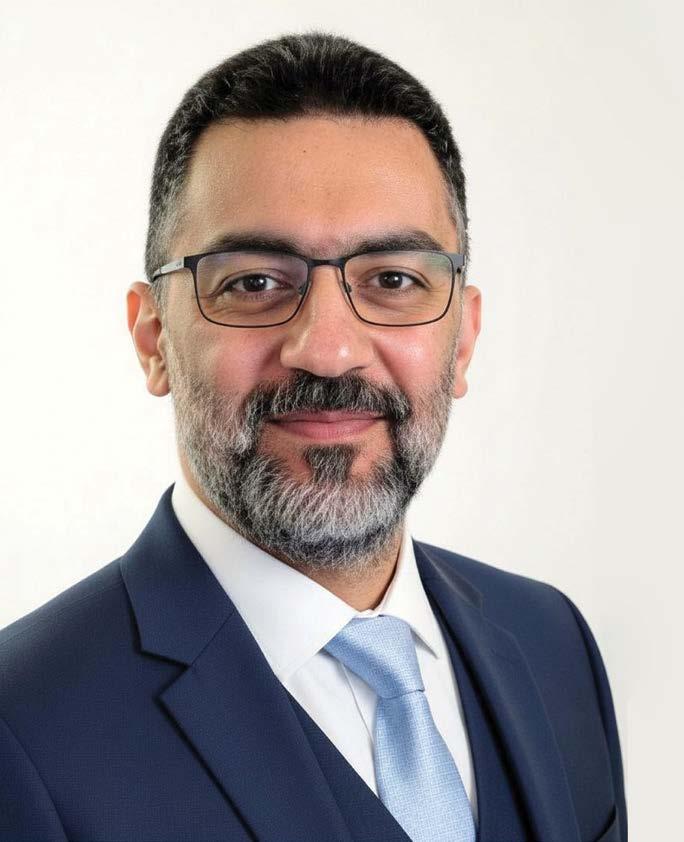
Khalid Aljamed has spent the last two decades driving digital transformation across the telecommunications, cybersecurity, and datacentre infrastructure space.
In a decorated career to date, Aljamed has consistently demonstrated his ability to drive, lead, and execute on large-scale initiatives with national operators, global technology leaders, and government-backed megaprojects.
He has worked for companies such as AlcatelLucent and Nozomi Networks in the KSA, but he is perhaps best-known in the IT ecosystem across the Middle East for his time at Cisco, where he spent 12 years.
In July 2025, Aljamed made the move to Submer, a Spanish-headquartered datacentre solution provider that specialize in nextgeneration cooling and automation for energyintensive datacentres, now needed more than ever, amidst the rise of AI-driven datacentres.
In a candid conversation, the charismatic Aljamed articulates what he feels makes them standout from a marketplace, in which he concedes contains a lot of different players.
Aljamed kickstarted the conversation by highlighting the importance of the decision by Submer in October 2025, to establish a subsidiary in Saudi Arabia for its MEA-Turkey operations.
Aljamed outlined that there was a combination of factors that drove the decision, but ultimately stressed the need for a ‘local presence’ when referring to Submer establishing a subsidiary in Saudi Arabia for its MEATurkey operations.
“I think for context it is important to highlight how a whole host of international players are investing heavily into the datacentre space in a bid to capitalize on the vast opportunities that are emerging within that ecosystem. Our decision to establish a regional subsidiary was a strategic one that was driven by our CEO and key investors. It is quite evident that there is huge transformation underway in the KSA and the UAE, and to varying degrees in other parts of the Middle East. Undoubtedly, there is a huge appetite to consume and deploy AI and cloud technologies in the KSA and the UAE, and we feel it is fundamentally important for us to be physically on the ground,” said Aljamed.
Aljamed added that his team was a fusion of local talent
and experts that have been at Submer from Day 1, and that by having a base locally enabled them to accelerate their growth across the region.
“It allows us to operate at speed and meet the scale that is required following the announcements of mega projects like Stargate in the UAE. We need a local presence, and you need local teams on the ground for rapid deployment. It also helps to have international experience, and this is why
“As a company Submer has evolved over the years. Traditionally, we focused heavily in crypto and cooling, but we have now pivoted towards what comes before the cooling element. We noticed a gap in the market, and what we are trying to deliver to this market is advisory services on AI datacentres, and it is quite a unique offering. We have conversations internally with the customers in relation to the design and build of
What we are trying to project to our customers is that we are not trying to sell you a product or a service, we are here for the long-term. We want to be their partner, and we want to take them on that end-to-end journey to where they need to get to in the AI datacentre space.”
what I am building is a mix of local talent in both the KSA and UAE, combined with experts from Spain, where the company is headquartered to really scale out and drive growth right across the Middle East, Africa and Turkey marketplaces,” said Aljamed.
Since its inception in 2015, Submer has established itself as an innovative datacentre solution provider, but as Aljamed pointed out, the company has undergone its own transformation in relation to their business model.
Submer are still focused on creating solutions that scale smarter, run cleaner, and cost less, but they have pivoted towards consultancy and advisory services.
these AI datacentres. We work very closely with local governments, sovereign funds and global hyper-scalers like AWS and Microsoft to try and build the ecosystem that is required to deliver these AI datacentres at scale,” said Aljamed.
Aljamed highlighted how the strong alliances they have forged with some of the world’s leading players in the AI space have solidified their position with many of their customers.
“Our relationships with leading players from the AI movement, such as Nvidia and AMD, have accelerated at phenomenal speed over the last 6-12 months. They are at the heart of the transformation in the datacentre space
and having that joint relationship with them puts us in a very comfortable position when we then start having conversations with prospective and existing customers,” said Aljamed.
Aljamed stressed his belief that more education around the AI datacentre ecosystem is needed, and highlighted how datacentres are attracting what previously would be seen as unconventional players.
“Look, when it comes to AI datacentres, it is important for people to understand and consider the three major components in that process. You have one element that is technology-based, the other side is focused on the land, and the final piece of the jigsaw is the energy demands. That is why so many companies, that were traditionally seen as real estate players are now making moves into this marketplace. At the same time, you’ve got a lot of traditional energy players entering the datacentre space too,” said Aljamed.
Remaining on the topic of energy demands, one of the biggest bones of contention and discontent around the entire AI datacentre hype, is the sheer energy that is required to run these AI Gigafactories, which will have enormous GPU models and compute power.
Aljamed then pointed to research that emerged from a recent report that demonstrate just how much energy bandwidth will be directed towards AI.
“We commissioned a report

that found that by the end of 2025, almost half of all datacentres globally will be powered by AI systems. Over the last 30-40 years there has been so many datacentres constructed for governments, banks and large enterprises, but now in the space of just 2 years, almost half of that power will now be consumed by AI. At the end of the day, the more complex the compute is the more energyintensive it becomes, and that’s why so much emphasis is being put on developing more capable GPUs,” said Aljamed.
Aljamed also said that by 2030, AI globally from an energy consumption
perspective would be the equivalent of the entire consumption of Japan’s power.
He firmly believes that one of the ways to address this is to radically improve the efficiency of cooling systems.
“We must increase efficacy when it comes to cooling systems, whether that be direct to the chip, or immersive, improving its overall efficiency will play a major role in tackling the energy-intensity of AI demands. For example, if I take an existing datacentre that has legacy and I convert it to an AI-datacentre, although it is around 100x the compute capability, it would
We must increase efficacy when it comes to cooling systems, whether that be direct to the chip, or immersive, improving its overall efficiency will play a major role in tackling the energyintensity of AI demands.”
be 30% of the footprint, due to the way modern systems are now designed to be compact. However, another factor comes from the fact that with legacy datacentres we used to use air—cooling, but as we all know air-cooling is very energy-intensive, whereas liquid-cooling gives you a much smaller footprint. AI datacentres are exclusively greenfield, but when it comes to government entities who are interested in building an AI-driven data-lake for security, healthcare, and education in those cases they are brownfield. However, the industry across the board hasn’t really nailed down the brownfield migration piece, but I do believe that it is the next big wave,” said Aljamed.
The scale and volume of investments in the datacentre space is unprecedented, but as Aljamed points out that scramble to get a piece of the pie, has inevitably led to market saturation.
However, Aljamed is predicting that 2026 will be the year that we see the market become much leaner as a direct consequence of businesses adopting an acquisition strategy.
“There is huge demand across the datacentre industry for advisory and consultancy services, driven by a number of reasons, one of them is driven by the huge shortage that exists when it comes to memory and storage components, and then politically, we’ve seen visits to the UAE from the United States, and they’ve been trying to get approvals on
different chipsets from the likes of AMD and Nvidia, so it’s a complex state of play. However, the investment appetite in datacentres is incredible. Huge investments in the datacentre ecosystem are being made in Europe, North America and of course, the Middle East. You have this fusion of landowners, investors, technology providers, and construction players all trying to come together to figure out what the best course of action is. We have seen this cycle before in security with SOCs, so if you ask me, I feel there is far too many companies in this space. I believe that over the next 12-24 months we will see a lot more consolidation and mergers and acquisitions happen and that will ultimately strengthen the market even further,” said Aljamed.
Aljamed reinforced the importance of building strong alliances with the leading players at the center of this movement.
Submer have those relationships, but Aljamed reemphasized the need to remain agile due to the fastpaced and at times volatile nature of the market.
In terms of what differentiates Submer in a market that we have already alluded to is at saturation point. Aljamed pointed to the diversity and broad range of skills within their organization.
“For us to standout, and bring value to the region, we focus heavily on building teams packed with skilled
individuals that come from different backgrounds, and a prime example of that is one of our Chief Engineers, who has a PhD in Thermodynamics. I had a 12-year career at Cisco prior to joining Submer, and we have other people from consultancies like McKinsey, so we have a broad range of skillsets running right through the entire organization,” said Aljamed.
He brought a brilliant conversation to its conclusion by declaring that Submer wants to be an end-to-end partner for its customers who are embarking on this seismic transformation towards AI datacentres.
“What we are trying to project to our customers is that we are not trying to sell you a product or a service, we are here for the long-term. We want to be their partner, and we want to take them on that end-to-end journey to where they need to get to in the AI datacentre space, or as the trendy people call them AI Gigafactories. Whether our journey with them starts with consulting, advisory services, brokering, design and build phase, all the way to the IT integrations, it is all done with a view to being an end-to-end partner with them on that journey. That relationship doesn’t stop when the datacentre becomes operational, we need to determine how we optimize it, future proof it, and tomorrow if they want to upgrade it then we are there with them throughout the entire lifecycle,” said Aljamed.
PUTTING AI INTO ACTION
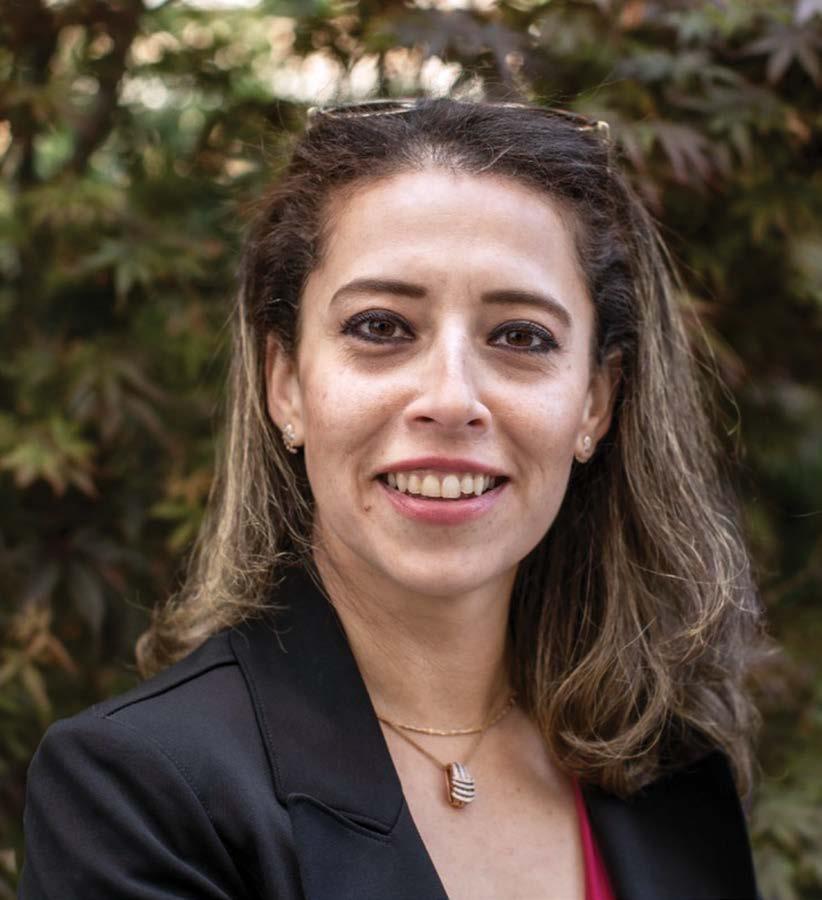
CNME Editor Mark Forker secured an exclusive interview with Somya Kapoor, CEO of IFS Loops, during Industrial X Unleashed, hosted by IFS in New York City last month. In a candid exchange, Kapoor highlighted the factors that attracted IFS to acquire her company, how the IFS Loops platform is enabling industrial players to make AI actionable at scale – and what the concept of Industrial AI Applied means to her.
Somya Kapoor is the current CEO of IFS Loops.
Kapoor co-founded TheLoops in 2020, and the company was acquired by Industrial AI software leader IFS in June 2025, for a fee that was undisclosed publicly.
At the time of the acquisition, IFS CEO Mark Moffat, declared that TheLoops would enable them to provide a platform to customers that makes Industrial AI, agentic, actionable, and available at scale.
Kapoor has enjoyed a remarkable career to date, one that began with SAP back in 2005.
She then joined ServiceNow, but her entrepreneurial itch grew stronger as the years elapsed, and in 2017, she became a Founding Team Member and Chief Product Officer of Agentic AI player Aisera.
Then as aforementioned above in July 2020, just a few months into a global pandemic, she co-founded TheLoops.
Many technology companies adopt what can be described as an ‘acquisition strategy’.
However, the challenges and complexities that exist when it comes to absorbing a company have been welldocumented.
During Industrial X Unleashed in New York City, CNME sat down with Kapoor to learn more about the acquisition and its role within the overarching IFS business structure.
Kapoor kickstarted the conversation by highlighting how the powers that are be at IFS were giving her the autonomy to protect the culture they had fostered at TheLoops.
“I think that retaining what we do, and not compromising on what made us so unique was hugely important to us from an acquisition
standpoint. Mark and Darren gave us huge confidence that they wanted to protect our culture, and they wanted to harness that Silicon Valley energy and edge. They wanted IFS to leverage the speed and agility of what we could deliver,” said Kapoor.
Kapoor believes another key factor that attracted IFS towards acquiring TheLoops was the fact that they truly understood what enterprise grade really meant.
“We’re not just straight out of college and launching a new tech startup. My cofounder and I had worked for major technology companies throughout our respective careers. I had worked for ServiceNow and SAP, whilst my co-founder has been at Splunk, EMC and VMware. We weren’t the cool kids of Silicon Valley, we come from
I think that retaining what we do, and not compromising on what made us so unique was hugely important to us from an acquisition standpoint.”
an enterprise grade background, and we have extensive experiences of working with enterprise grade customers like Zscaler, so that gave a lot of assurances to IFS. IFS have sort of kept us functioning as a startup as a business unit under the umbrella of IFS. We bring that agility and speed, and we’ve retained the culture that enabled us to be a success in the first place,” said Kapoor.
When it comes to AI, ultimately, it’s all about outcomes and
driving business value for the customers that deploy the technology.
Kapoor revealed that they had an agentic application on TheLoops platform prior to the acquisition by IFS, but that it was more leaning towards the CX side of things. She stressed the complexities that come with deploying AI and highlighted the need for there to be a total mindset shift.
“Our agentic application was focused on CX, now is that a mission-critical application? Well, it certainly is for several B2B tech companies. When you bring AI into the marketplace, you need to determine how you’re going to deploy it. You can’t just give customers a product and then leave them to it, you need to be handson when it comes to helping customers deploy AI into their environment. At the end of the day, it’s not just the technology. Technology is just 40% of what AI delivers, the other 60% is the change management aspect of it. To unleash the potential of AI and get the results you want, there must be a total reset in terms of mindset,” said Kapoor.
Kapoor outlined how they are giving their customers digital workers as templates as a foundation to launch their agentic AI journey.
“Look, there are countless examples of where you see this attitude of my boss has told me to deploy AI, but there are no conversations being had on what projects should be selected, and what to do with the technology. We’re giving customers digital workers as a template. They are out of the box depending on where your data is, these agents might deliver 20% in terms of productivity, but it’s important to be conscious of the fact that these agents are self-learning. They will get to 60%, or 80% in terms of productivity,” said Kapoor.
However, many analysts have expressed concerns

over how much access should be given to an agent from a security perspective.
Many organisations have deployed agents in an environment that isn’t controlled, and inevitably there has been an increase in AI-security related incidents.
Kapoor explained that IFS Loops has guardrails in place when it comes to deployment agents across the enterprise.
“Every agent in our IFS Loops platform has a supervisor agent. Essentially, what that means is you have an exact audit trail of what the agent responded to, and where it left. You can implement guardrails on the supervisor agent to circumvent any issues that may arise when an agent doesn’t know how to respond
to a certain query or problem. You can tell it to not upload anything and just send you a notification, in which the supervisor can help the agent understand. We’ve put guardrails in place, and
As the old adage goes, there is no point adopting technology just for the sake of it.
Kapoor highlighted some of the positive outcomes that IFS Loops has yielded for their customers.
Technology is just 40% of what AI delivers, the other 60% is the change management aspect of it. To unleash the potential of AI and get the results you want, there must be a total reset in terms of mindset.”
we’ll keep adding more. It’s easy to build agents in the environment, but Claude just released a new model, and so did OpenAI and DeepSeek, so it is a battleground, and you’ve got to be adaptive and agile to ensure that you are deploying agents responsibly,” said Kapoor.
“There are many examples we could provide of where we have driven huge business value for customers. From a supplier order management standpoint, it’s all about how many POs you’re processing per-month, and we are now doing 5,000 per-month. From an inventory replenisher
perspective it’s all about how many parts are we able to replenish in real-time?
Traditionally, this process consisted of each part being manually uploaded into the IFS Cloud, but that was taking 4-5 days. We looked at it and said we could do this in 1-day. That’s a huge difference and a monumental reduction in cost.
Kapoor then expanded on the mission-critical aspect of what they can deliver through the deployment of digital workers on their platform.
“Traditionally, if a part goes down at 3AM, your field technician is not on site so they can’t call the supply chain manager until 7AM in the morning, so you’re running 4 hours of runtime. That is a huge loss of money. The power of digital workers is that you don’t need to lose 4 hours of runtime, the digital worker can flag the issue and resolve the problem immediately, and all that can be factored into what tasks you want the agent to perform. The availability of these digital workers in mission-critical environments will generate huge savings for businesses,” said Kapoor.
There were several megapartnerships announced during Industrial X Unleashed, and one of them was with Anthropic.
IFS CEO Mark Moffat described the partnership with Anthropic as a ‘worldfirst’.
Kapoor echoed the sentiments expressed by Moffat and said in the current climate going it alone was not a practical approach.
“I think this AI world is all about ecosystems of partnerships. We all agree that we can't build everything inhouse. We can’t do it on our own. The other component of the partnership approach that generates huge value is the fact that it opens doors to new use-cases, where traditionally IFS wouldn’t have been in that marketplace. The partnership with Anthropic can help us expand our ecosystem and help our customers get a lot more of these AI capabilities that they’re not traditionally used to,” said Kapoor.
There has been a swathe of major investment in AI that has resulted in stocks skyrocketing on Wall Street. However, amidst all the AI hype, there are still fears that many of the major tech layoffs we’ve seen over the last few months has been as a direct result of investment in AI.
Kapoor conceded that jobs will undoubtedly be lost because of AI, but she believes that it will be a force for good in the long-term, and that it is designed to empower people to be more efficient and productive.
“I think the fear around AI comes from some of the commentary that has been very one-sided and has insisted that AI is coming for your job. This is an industrial revolution, just like the internet. When the internet emerged, did it take away jobs? It probably took away manual paper-entry jobs, but it has also created thousands of new jobs and changed the way we do business. We’re at the same inflexion point
with AI. What I am seeing in Silicon Valley everyday is that the world is changing, and it is real. AI is going to give you a competitive advantage, it’s going to make people more efficient and will increase productivity, there is just no getting away from that. If you want to remain relevant in business, then you can’t resist it. Now, don’t get me wrong, jobs will be lost, but it will create a lot more jobs than the ones it will replace. At the end of the day, when it comes to deploying digital workers, you need to train supervisors to manage those workers, so I certainly don’t subscribe to the negativity and doom and gloom narrative being peddled by some around AI,” said Kapoor.
Kapoor concluded a fascinating interview, by providing me with her definition of what Industrial AI Applied really means.
“Industrial AI Applied is all about intelligent automation. It's about looking at your business processes and recognising that you’re no longer limited with the boundaries of data being in one system. It’s the data across multiple systems; you’ve got the lens to look across the whole supply chain. How can I make that supply chain more efficient and more productive? How can I drive greater efficiency? It enables you to do more with less, and at the end of the day if you don’t then someone else will, and they will gain that competitive advantage,” said Kapoor.
RUSH HOUR
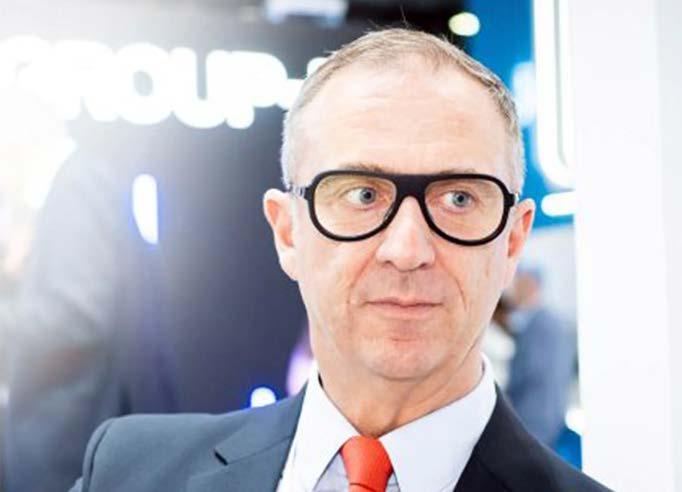
CNME Editor Mark Forker sat down with Lothar Renner, Vice President of Cisco Security EMEA, for the first time since GISEC in May, to examine in more detail some of the findings that emerged from their Cisco Cybersecurity Readiness Index and AI Index reports, why there is such an insatiable demand to consume AI across the Middle East compared to other markets globally - and why the rush to adopt AI needs to be tempered with the realisation that it needs to be done securely.
Lothar Renner is one of the most respected thought leaders in the IT industry globally.
He has spent 25 years at the US technology giant, and few are better placed to comment on the current state of the cybersecurity landscape across the Middle East region.
Renner delivered a keynote presentation on the Executive Summit Stage during Black Hat MEA in Riyadh, at the beginning of this month.
He began our conversation by highlighting the sheer demand to use AI across the Gulf region, but particularly in the Kingdom of Saudi Arabia.
"We produced our annual Cisco Cybersecurity Readiness Index and our AI Index, and what became evident from the results is that there is a phenomenal appetite to use AI in Saudi Arabia, and it is much higher than the global average. That demand for AI is reflected across the entire Middle East region, but it is particularly pertinent in both the UAE and the KSA. They don't just want to adopt AI at scale, they want to be leaders in AI, they
want to be pioneers, and a great example of that is Abu Dhabi's aspirations to be the world's first fully AI-native government. Governments across the Gulf really do see AI as a key advantage, whereas other nations in different markets are much more resistant and cautious, but in the Middle East, nations have gone all in on AI," said Renner.
The appetite to adopt AI is understandable, because if
it is utilised and harnessed effectively then it can have a profound impact on your business.
However, a hugely worrying security statistic from one of Cisco's reports showed a spike in AI security incidents in parallel to the increase in adoption of AI across the KSA.
"The excitement and hype around AI is palpable, but without trying to be negative, a worrying trend that emerged in our Cybersecurity
Readiness Index was that 85% of respondents from the KSA had an AI-related incident in the last 12 months. On the one side you have the excitement, and then on the other side you see the risk. In the KSA they are still allowed to use their own devices, which is higher than the figure globally. At Cisco, I can bring my own device, but that device must be managed by the company. What I highlighted during my presentation was the need to control and secure the communication between the employees and public GenAI applications. Employees are using GenAI to enhance their productivity and boost their creativity, but they are using it without fully understanding that they are exposing proprietary data in the GenAI application. It's a huge issue, you have to control the data that employees are putting in when accessing GenAI tools, and it is something organisations have to get on top off right away," said Renner.
Agentic AI has dominated the AI conversation over the last 12 months, but Renner stressed the need for organisations to better control their work environment.
"I think it's become quite evident that bad actors have the capability to weaponise AI. In the past when a company disclosed some of their vulnerabilities you could count the number of weeks until the first attack happened, but now with AI that's down to minutes. At Cisco, we believe in the power of AI, and we see tenfold productivity gains, but you need to control your environment more than ever before. It's critical organisations control their environments in order to unleash the power of AI. Agentic AI has emerged massively over the last 12
months, but when AI agents speak to each other how do you make sure that there is no bad actor interfering in that? The security attack surface has expanded radically into new areas, and agentic AI, and AI agents must be secured in the same way as we secure machine-tomachine communication, or application security," said Renner.
Renner believes that organisations must classify AI agents as digital employees, in a bid to counteract growing security concerns about the deployment of agents across the enterprise.
"The productivity gains that AI agents are providing is immense, and it's only going to grow. However, when it comes to the question of access, I think it's imperative that organisations view AI agents as employees, and not just as a technology. Cybersecurity vendors really have to find ways to ensure they are protecting their AI agents. At Cisco, we have introduced products that are designed to secure AI agents. I don't see how regulations from a government perspective would help the situation, instead I think the focus needs to be on determining how AI is going to help your business. What is it that you want AI to help you with? I think it's more of a cultural shift that is required within organisations. At the
end of the day, Agentic AI is here to stay, so you need to treat AI agents as digital employees, and there might be AI agents that you can't control because you might be using them from external sources, but you need to control the communications flow," said Renner.
Cisco has claimed that its broad portfolio of products has positioned the company to be somewhat of a pioneer when it comes to the cybersecurity space.
"At the end of the day everybody has to access applications, whether they are hosted in a datacentre, whether its a SaaS application, or whether it's in relation to the AI piece where organisations are trying to control the LLM models that you have. It's all about access, but it's complex and there are a lot of moving parts. At Cisco, we recognised that we needed to unify all of this. We needed to unify all of this and bring it together so we achieve unified visibility, unified management, and ultimately a unified policy. We centralised everything and we created a unified policy engine. We have moved away from the concept of islands of enforcements that are isolated. We have gone beyond Cisco, we know our customers have multivendor environments, so we needed to provide a multi-vendor environment to support our customers. I
There is a phenomenal appetite to use AI in Saudi Arabia, and it is much higher than the global average.”

think this approach is the key differentiator that Cisco has in the market, and why we have in many ways redefined cybersecurity," said Renner.
The complexity of absorbing a company following an acquisition has been well documented.
However, many analysts have been quick to point to Cisco's acquisition of Splunk as a prime example of a what a good acquisition looks like.
Renner believes the acquisition of Splunk has greatly broadened their security offering, and reiterated the importance of providing customers with choice.
"When we acquired Splunk it was known for its core strength, but it was also known for its openness and multi-environment. Cisco communicated very clearly at the start of the acquisition that it was not changing the way Splunk integrates with other vendors, because we don't see the other security vendors as enemies. We believe that we need to jointly
fight together to stop the bad actors. We wanted to integrate Splunk much deeper into the Cisco portfolio whether that was in security or networking. However, despite our desire to embed Splunk much deeper into our products, we still wanted to give customers the choice to choose what they want to integrate with Splunk. We wanted a native integration far beyond what existed before we acquired Splunk, and we have achieved that," said Renner.
Renner concluded a typically engaging and informative exchange by highlighting how many organisations are guilty of thinking multi-factor authentication are bullet proof, and he conceded that identitybased attacks continue to head in an upward trajectory.
"The threat landscape is always changing and evolving,
but the classical malware that we had for years and the ransomware attacks has declined significantly, now does that mean it's over, or is it just a moment in time, it's hard to predict. However, what is evident that identity-based attacks are on the rise, and with AI now in the mix it has become even more nuanced. The other thing we have seen is that more and more customers have rolled out multi-factor authentication and are under the impression that once they roll that out they are secure, but that's not the case. In my opinion MFA implementations are not good enough. So, whilst the threat landscape is always evolving, I believe that identity-based attacks are going to continue to grow exponentially, and issues around MFA implementations will increase," said Renner.
At Cisco, we have introduced products that are designed to secure AI agents.”





Aryaka
AT YOUR SERVICE
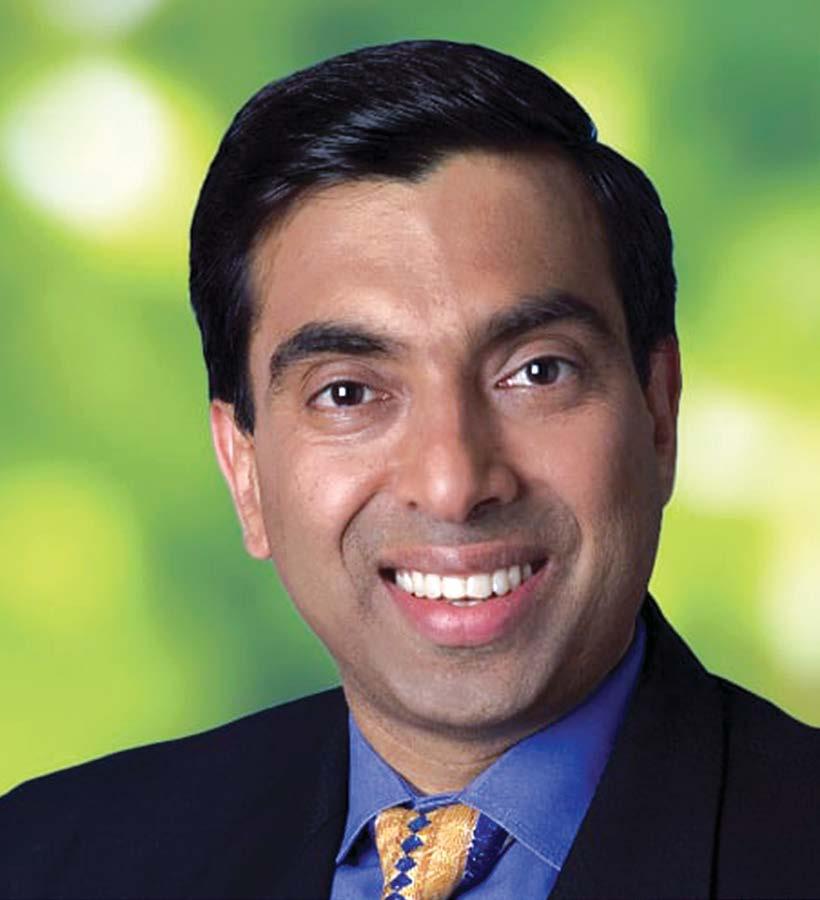
CNME Editor Mark Forker sat down with Shailesh Shukla, Chairman and CEO, of Aryaka, to learn more about his vision for the company, how they differentiate themselves from other players in the market – and the impact their Unified SASE as-a-service product will yield for the businesses that adopt the technology.
Shailesh Shukla is a veteran of the IT industry and has enjoyed quite a remarkable journey to date.
Shukla was the General Manager and Vice-President of Google Cloud until 2022 - and played a key role in both building and scaling their billion-dollar cloud networking business.
Prior to that he held senior leadership positions at Cisco and Juniper Networks.
Shukla moved out to Silicon Valley in 2003 and hasn’t looked back ever since.
It’s almost seen as a rite of passage when you live and work in The Valley to embrace the startup ecosystem, and Shukla did just that.
However, now he is dancing to the beat of his own drum as the Chairman and CEO of Aryaka.
Aryaka has been described by some analysts as a pioneer in cloud networking and security and has now pivoted successfully into the AI space.
In a candid conversation with CNME, Shukla kickstarted proceedings by providing a broader overview on the current state of play in the market.
“I think across the broader industry it has become
evidently clear that hybrid compute is here to stay. What has also become very clear is the fact that the global workforce is hybrid, and that’s not going to change. However, we know that hybrid workers can be anywhere in the world, but they access and they need that access to be both reliable and secure, and that many businesses have struggled with delivering that for their employees working remotely,” said Shukla.
According to Shukla, the environment of complexity has increased ten-fold due to the added layer of AI, particularly from a security perspective.
“We live in a new world, and it is a world where AI sits front and centre. It’s complex. Your LLM may be residing in Silicon Valley, but some of your users may be operating from Brazil, India or Europe, so basically users are everywhere and your data assets are all over the place. Essentially, what this creates is complexity because the
variability in performance and reliability is going to be hugely challenging from a security perspective. The reality is that if AI is useful to us in terms of improving the security of your assets, then it is equally the case that bad actors are going to use the same tools to utilise and launch sophisticated cyberattacks,” said Shukla.
Shukla said that when you consider all the factors above, it was obvious that the market needed something different.
“There was a need in the marketplace for a company, or a kind of architecture that simplifies everything at a global level, and something that has security layered on top, and contains the ability to distinguish between different types of traffic to apply certain policies. These factors led to the inception of Aryaka, and ultimately, we were a pioneer in abstracting away the global network and making it available as-aservice,” said Shukla.
Shukla added that at
We are seeing incredible traction in the market right now because of our story and our products.”
the time of the company’s foundation nobody in the industry was talking about network-as-a-service.
“What we did was build our own global network infrastructure, built our own networks of points of presence, which meant that when you entered the Aryaka network it was like entering a local area network, and that allowed us as I already mentioned to create
infrastructure that could abstract away the complexity of the global network. Then as we know, the world evolved and there was a clear shift towards SD-WAN, and again, we were able to deliver this as-a-service,” said Shukla.
Shukla then explained the factors that led to the creation of Aryaka 3.0.
“In 2018, there was an evident shift towards a convergence between network
and security. If you have users all over the world then it’s practical for you to want to secure everything at the same time, as opposed to moving everything to the point of presence. That’s why we launched Aryaka 3.0 as part of our unified SASE as-a-service offering. SASE is an industryterm, which stands for secure access services edge, and it merges networking and security together, and we make that available to enterprises to consume, and it is totally unique in the industry,” said Shukla.
Shukla expanded on what makes Aryaka 3.0 so unique compared to other players in what is an ultra-competitive marketplace.
“We are unique because of what exactly it is that we offer, which is unification. SASE-as-service, each word is important. It’s unified, it is truly unified because it is on this converged OnePASS architecture, you take in the traffic and open it up and apply all the policies for network optimisation, reliability and security. You define one policy and implement it and our OnePASS architecture makes it all very simple for enterprises. It is an important differentiator for us, because we can go to an enterprise and say we can offer you a truly unified SASE as-a-service, with all the components you require. That is powerful because most enterprises quite naturally want to focus on their own core business, and they don’t want to worry about global networking
security, they want to pay someone else to do that for them, and that’s where Aryaka comes to play,” said Shukla.
Aryaka was founded in 2009, so they are not a new market entrant, but it’s fair to say the company’s growth trajectory has gone in the right direction since Shukla joined the company, initially as Chairman in 2023, but especially since assuming responsibilities as the CEO of the company.
He was keen to highlight their rich tradition and culture of innovation, which Shukla says is in the DNA of Aryaka.
“I think that the philosophy of the company from its inception, and certainly from what I inherited it’s quite clear there is a culture to build things, we are the innovators of this industry. We have industry domain experience, and we understand the direction the market is headed, and how customers are evolving. You need to understand where the pain points are,” said Shukla.
Shukla provided an example of some of the pain points where customers had come to Aryaka seeking help and a resolution.
“When I first joined Aryaka, the adoption and democratisation of AI was starting to gather traction, and a lot of CIOs and CISOs were coming to us and saying a lot of our employees are using different Gen AI tools, but I don’t know who is using what, and this created this concept of what we called Shadow AI. They were asking

for help, but one had a trail of thought that said I want to harness the efficiency and productivity of AI, so let’s adopt all different forms of AI to increase that productivity, whereas the other trail of thought was saying hold on, this is great, but it’s creating all this data leakage, we are leaving the back door open, and all the proprietary data is being leaked, so let’s stop all AI usage, but you can’t live
between those two extremes,” said Shukla.
So, what was the solution that Aryaka provided?
“We quickly recognised that we carry all the traffic, so that gives us great visibility to understand what is happening on the network. I can tell our customers who is using what and when. We developed the capabilities to tackle that challenge of Shadow AI with a three-step
Aryaka were a pioneer in abstracting away the global network and making it available as-a-service.”

approach. The first was based on giving users the visibility through our observability capability. Secondly, we gave them control where they can find that middle ground between wanting to deploy AI to enhance efficiency, but also do it in a way where they are not leaking data and leaving themselves exposed or vulnerable to an attack. Finally, to increase the efficacy of the LLM model you need to infuse it with company proprietary information, and that is called RAG (Retrieval-Augmented Generation). However, the
moment you have the AI model to consume your company’s proprietary information then the response can lead to leakage of sensitive information. What our customers wanted was to be given the ability to find if any of their data was being leaked. We can give them visibility and control and help them prevent, and that’s a powerful example of how we can help customers overcome their business pain points,” said Shukla.
The word of 2025 was agentic.
Over the last 12 months, most of the discussion in the enterprise world has been on the role of agentic AI.
There are many in the world of cybersecurity that see it as the perfect remedy for alert fatigue in a sector that has a major skills shortage.
However, that has been countered by the stark reality that AI agents can be a huge security risk if the proper guardrails are not put in place.
Shukla stressed the importance controlling the ‘access’ given to agents and fostering a safe environment where enterprises can capitalise on the benefits of AI agents without compromising on the security of their business.
Shukla was adamant that agentic AI is here to stay.
“Look the fact of the matter is if you want humans to be more productive and efficient then you’re going to have to require AI agents to do a lot of work and do a lot of the heavy lifting manual work that previously bogged
workers down. Agentic AI is going nowhere, and in fact, it’s only going to get bigger as we move forward. It is crucial that there is some level of access control when it comes to the deployment of agentic AI, and an acute understanding of the risks that are associated with that. Our approach to the question of agentic AI is to adopt a Zero Trust approach. Trust no one and only allow the traffic on your infrastructure and on your network that is well understood, whether it’s human, or agentic. You need to link the client and network side together and have them interlinked, so you have end-to-end zero trust, and that’s our approach and philosophy,” said Shukla. Shukla concluded a wonderful exchange, by stressing how the company has an unwavering commitment to simplify things for their customers, and that approach is resonating with the marketplace.
“We believe in simplicity, and we are passionate about simplifying challenges for our customers. We don’t want to bamboozle them and confuse them when they deploy our technology. We want to simplify the entire process and experience for them. We are seeing incredible traction in the market right now because of our story and our products, and we are growing massively right across the Middle East, because that notion of simplicity,” said Shukla.
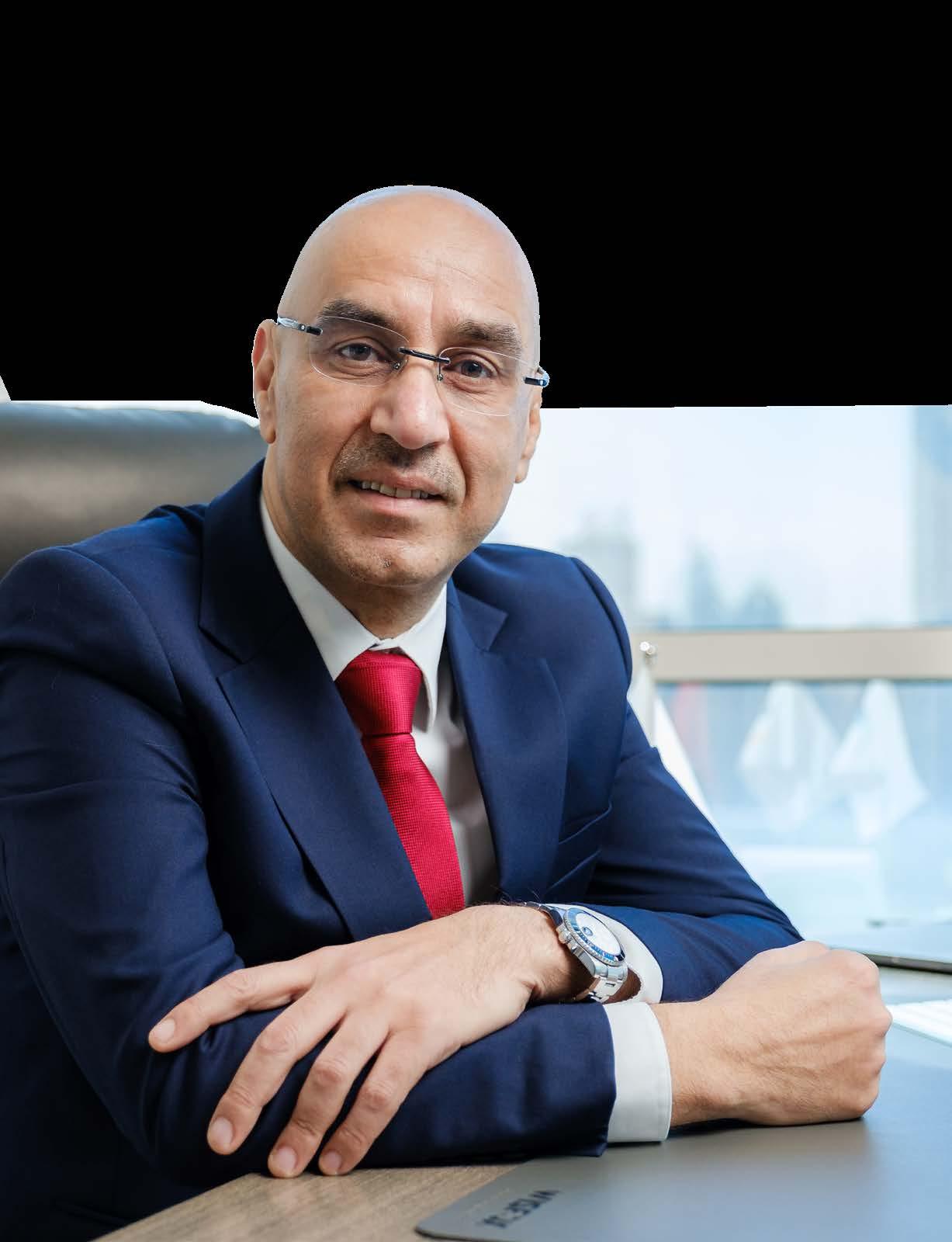
MODERN BY DESIGN
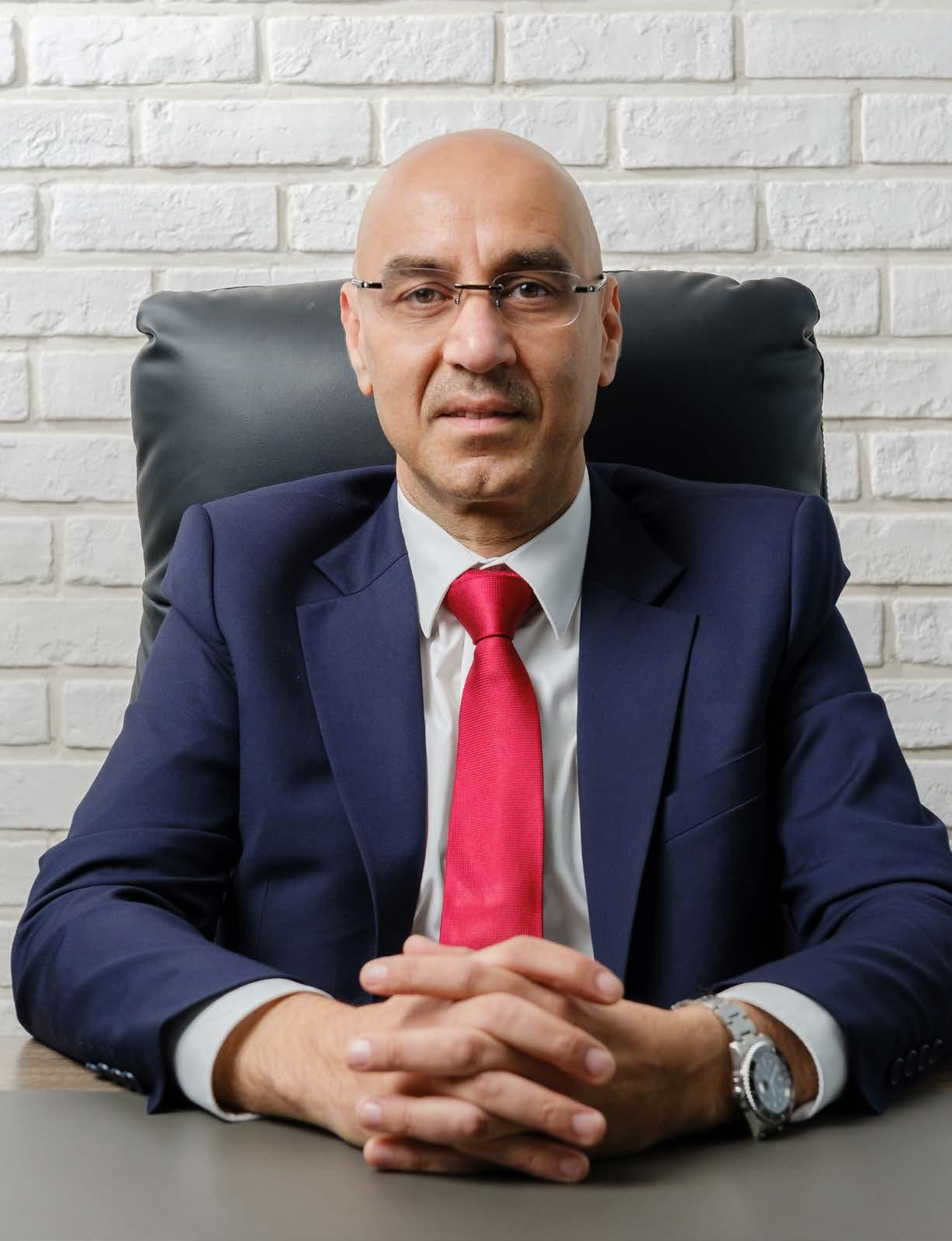
CNME Editor Mark Forker sat down with Mohammad Darras, Founder and Managing Director of iNTEL-CS, in a bid to find out how the company has become the ‘partner of choice’ for enterprises looking to modernise their IT operations in the AI era.
Mohammad Darras is one of the most respected and revered business leaders in the Middle East technology ecosystem.
In a decorated and highly distinguished career to date, Darras has worked for a whole host of technology companies such as Nortel/Avaya, Cisco, VMware, Forcepoint and Extreme Networks.
It has been claimed by many business leaders that we all in some way have an entrepreneurial spirit, but for most of us that spirit remains dormant throughout our career.
However, the entrepreneurial itch became too difficult not to scratch for Darras, and he decided it was time to go out on his own and establish his own business entity.
iNTEL-CS was founded in 2023, and its mission statement as a company was to help enterprises across the Middle East achieve IT modernisation.
iNTEL-CS promotes a concept of cloud innovation that is interwoven with cyber resiliency.
That is a potent
combination, and one that is required for businesses to thrive and survive in a market landscape that is becoming increasingly volatile and unpredictable.
Despite its relative infancy as a company, iNTEL-CS has resonated greatly with the market since its inception.
For many customers they have come a trusted partner for comprehensive IT modernisation.
Darras kickstarted our conversation by highlighting how the company he created was an unconventional one.
“We are not a traditional IT company that simply migrates into the cloud. Our entire business approach consists of being cloud native, agile and innovation driven. Today, we serve enterprises, SMEs and startups across the region in a bid to accelerate their modernization, improve their operational efficiency and ultimately help them adapt
to become ‘future ready’. Our focus has always been to leverage our advanced cloud and AI capabilities to help our customers scale and modernise their entire IT architectures and systems,” said Darras.
AI is the new, the now, and the future.
The sheer volume and scale of investment in AI globally is unprecedented.
Naturally, iNTEL-CS, like so many other companies have pivoted their business model towards AI.
However, it’s fair to say that many businesses have been guilty of ‘rushing in’ when it comes to adopting AI, and inevitable there has been a lot of failure when it comes to AI.
Darras stressed the need for enterprises to determine how they can use AI to really improve their business and not just adopt the technology without identifying a clear business outcome.
We are not a traditional IT company that simply migrates into the cloud. Our entire business approach consists of being cloud native, agile and innovation driven.”
“Undoubtedly, we are living in the era of AI, and understandably every organisation wants to harness and utilise the capabilities of AI to improve their business. Too many organisations have been guilty of getting sucked into the rush to deploy AI without properly figuring out what they want AI to achieve for them. You need to determine a clear outcome, and it must be done safely. At the end of the day, there are a lot of companies who claim they can do AI. Ultimately, you need to infuse AI into your day-to-day operations, whether that is through automation, increasing customer engagement, or accelerating your decisionmaking processes, it needs to be at the core of what you want to do, and where you want to go,” said Darras. In 2025, when it came to AI, the most used word in circulation was that of Agentic AI.
The column inches in most tech publications were filled by conversations around the deployment of AI Agents. Every company was scrambling to capitalise on the opportunities presented by Agentic AI, and again, iNTEL-CS was no different.
Darras explained the unique capabilities of its AI Agent Noor.
“Internally, we invented our own AI Agent called Noor. Noor has been specifically designed to help our customers accelerate their decision-making, provide them with a more holistic view of their data-driven insights,
and enhance the experiences they deliver to their end-users. We can do this by leveraging the power of intelligent automation. Ultimately, our goal is to simplify processes and move AI away from being a buzzword for companies into something that delivers tangible business outcomes and results,” said Darras.
Darras reinforced the viewpoint that when you are developing AI products like Noor, security needs to be embedded into it from the outset.
“Look, security is paramount when it comes to AI. It is critically important that businesses ensure
“When it comes to AI, regardless of the industry, many businesses are struggling in terms of they don’t know where to start. Many businesses contain a lot of unstructured data, some have manual systems, whilst others have legacy systems, so they really do struggle to connect things. On top of all that, they are really concerned, and rightly so, about security, compliance and protecting their overall investment in cloud. However, they have a desire to use AI to drive measurable outcomes, but they don’t want it to be complex, expensive, or prolonged. AI is all about good
Noor has been specifically designed to help our customers accelerate their decision-making, provide them with a more holistic view of their data-driven insights, and enhance the experiences they deliver to their end-users.”
that their AI deployment is ethical, secure, responsible, and meets governance standards and requirements. That has been our approach with the development and subsequent rollout of Noor. We are not using Open AI, we are customising AI for each specific company, for their own use and to ensure that their employees can use it responsibly,” said Darras.
When it comes to the deployment of AI Agents, a big talking point has been that of access, and how much access AI Agents should be given.
However, as Darras explains when it comes to AI the challenges are universal.
ideas, and they want to deploy those good ideas immediately, but as I said earlier, you need to have a detailed plan when it comes to AI,” said Darras.
Darras explained how iNTEL-CS helps their customers tackle those challenges head on.
“The first thing we do with our customers is sit down with them and determine what exactly the goal is when it comes to AI, and where they want to deploy AI. For example, we are working one of the biggest educational institutions here in the region. They were asking us to help them to deploy AI to help their students access material after school
hours, or during the school holidays. If they have a query or need help with something they can now use AI to get a response immediately, and it’s been a huge success. We are also working closely with a medical clinic who want to be available to their patients 24/7. If a patient needs to reschedule an appointment outside of opening hours, then we are deploying AI as a voice communicator to help them reschedule appointment, or even to book a new consultation, or even access the results of recent tests they have undertook. These are tangible AI use-cases and demonstrate the power of the technology if deployed correctly to overcome a clear challenge they are facing as a business,” said Darras.
Darras added that iNTELCS can provide their AI offering in 100 plus different languages and is available 24/7.
The dial of the conversation then shifted to the timeframe and process that is involved in terms of how long it takes for the deployment of AI Agents to go from the point of concept to execution.
“We customise solutions that are specific to each customer and meets their own unique requirements. On Day 1, we can create a demo for them and that enables them to understand the capability of the product and where they can potentially go with it. The next stage of the process will involve a series of sessions with them to clearly define the specific functions and requirements of the AI agent.
We customise the AI Agent based on the customer’s objectives. If the focus is on improving CX, we define the AI Agent’s functionality, responses, and actions in close collaboration with the customer. We educate the AI Agents through best practices that are based on how human agents would’ve handled traditional requests,” said Darras.
Darras acknowledged that there remains a lot of resistance to AI Agents, stressing the need to humanise the process, but also declared that AI Agents are getting smarter and more efficient all the time.
AI Agents, especially our AI Agent Noor,” said Darras.
As Darras pointed out at the beginning of our conversation their ability to customise and tailor solutions for companies is a huge market differentiator for the company.
However, he said another key component in the success of iNTEL-CS is the fact they are an AWS partner.
“We are an advanced partner for AWS, and that has been huge for us. We have had access to multiple use-cases and technologies and that access has enabled us to be very responsive
Our partnership with AWS has been a gamechanger. We get access to the frameworks needed to modernise customer workloads and the latest technologies available in the market."
“There is certainly resistance towards AI Agents. Typically, if you’re contacting a customer care team you’ve got a problem that needs to be resolved, and we have seen that many people want to speak to a human agent. However, I do think the tide is starting to turn when it comes to AI Agents, and that is driven primarily from the fact that the AI Agents are becoming more intelligent all the time. They are answering questions based on various kinds of information that is being fed to them. That is making AI Agents more responsive and accurate, and we have seen that people are more willing to engage with
and fast when dealing with our customers. We can go to our customers and adopt a consultancy role, so we do much more than just provide services, and that is a key differentiator for us. Undoubtedly, our partnership with AWS has been a gamechanger. The enablement we get from AWS allows us with the access to the frameworks that is needed to modernise customer workloads and the latest and greatest technologies that are available in the market.
That has helped us deploy our technologies and deliver success for our customers,” said Darras.

Darras concluded a brilliant conversation by discussing in forensic detail the processes they go through to really help their customers overcome their business challenges.
“We speak to our customers, and we intrinsically understand what their issue is. We then find the right solution for them, we don’t push our own solution, we build the right one for them that addressing the issue they are encountering. For example, if a customer has a concern in relation to whether they have the agility to transform their business, then we begin that process by mobilising and migrating them to the cloud. We modernise their application by making it more secure, increase their response time and they start looking at ways in which AI can help them achieve better business outcomes. In summary, we spend time with the customer, understand their business model and problem and then allocate the right technology to help them overcome that. We then achieve this state where the customer owns the solution and we deliver it. That approach is another one of the reasons we have enjoyed so much success since our inception as a company in 2023, and we are confident that we will continue to grow over the next 12 months,” said Darras.
FROM ANALYSIS TO EXECUTION
CNME Editor Mark Forker sat down with Sergio Maccotta, Senior Vice
President
at SAP Middle East and Africa - South, to learn more about why autonomous ERP has emerged as a major focus in SAP's AI strategy, and the role AI agents are playing in terms of changing traditional ERP business practices, and moving ERP systems from analysis to execution.
Autonomous ERP has become a major focus in SAP’s Business AI strategy. Why is this?
The shift is being driven by the maturity of enterprise AI, the availability of trusted business data, and growing demand from organisations for systems that can act in real time rather than simply analyse outcomes.
Over the past year, SAP has moved Business AI from insight generation into execution, introducing production-ready autonomous agents that can run complete business processes across finance, HR, procurement, and supply chain. This changes ERP from a system that records and reports activity into one that actively drives outcomes.
How does autonomous ERP differ from earlier uses of AI within enterprise software? The key difference is execution. Traditional AI helps users decide what to do next. Autonomous ERP allows intelligent agents to
interpret data, determine the appropriate action, and complete that action within a governed environment. These agents operate within defined parameters, with clear permissions and accountability, which enables organisations to move much closer to real-time operations without losing control.
Where do you see autonomous agents being applied most effectively within core business processes today?
The agents are purposebuilt for specific scenarios, including invoice matching, supplier onboarding, expense auditing, and dispute resolution. Each one is designed to operate within defined business workflows and uses reasoning capabilities to complete tasks
that would traditionally require manual intervention.
In the UAE and wider region, this is particularly relevant for organizations looking to scale automation across core functions while supporting growth and operational efficiency.
Are organisations already putting autonomous ERP capabilities into practice, and what early patterns are emerging?
Early use cases are encouraging. A global automotive supplier is using SAP Joule agents to autonomously resolve pricing discrepancies across procurement contracts.
In the telecom sector, an organisation is now handling a significant proportion of HR cases without initial human intervention.
Autonomous ERP allows intelligent agents to interpret data, determine the appropriate action, and complete that action within a governed environment.”

Within SAP itself, we are also piloting multi-agent collaboration, where different agents coordinate to complete complex tasks that span multiple functions.
As AI agents take on more responsibility within core business processes, how should organisations think about access, guardrails, and accountability? Do these agents need to be treated more like digital workers than traditional technology?
AI agents need to be treated as accountable actors within the enterprise, not as background automation. Each agent is designed for a specific business role, with clearly defined permissions, decision boundaries, and responsibilities. That clarity is what allows organisations to introduce autonomy without losing control.
Access should be granted on a least-privilege basis, aligned to the task the agent is expected to perform, much like role-based access for employees. Guardrails are embedded directly into workflows, so agents operate within approved processes, escalation paths, and compliance requirements.
Governance is managed through SAP LeanIX, giving organisations visibility into how agents behave and the ability to audit decisions using the same standards applied to human users.
This model is particularly important in regulated environments, including across the UAE and the wider
25 hour battery life on one charge*
Meet the EM45
Serious about work and simple to use
The Zebra EM45 Mobile Computer brings all the features your workers need in a consumer style they’ll love to use. It’s quick to deploy and built for retail, hospitality, transport, healthcare, and mobile workforces.
• The power of Zebra with sleek consumer ergonomics
• Unmatched productivity and flexibility for your frontline
• Personalised user experience and an intuitive interface
• Latest and fastest wireless connectivity: 5G and Wi-Fi 6E
• Processing power unlocks AI potential
• Simple to set up and manage with Zebra DNA enterprise software

*


region, where transparency and traceability are essential. Autonomy does not remove human oversight. It shifts people into supervisory and decision-making roles, where they manage intelligent agents and focus on highervalue, strategic work rather than repetitive execution.
What does the rise of autonomous agents change about the traditional role of ERP systems within an organisation?
Historically, ERP systems have acted as systems of record, capturing transactions and reporting on activity. Autonomous agents change that role fundamentally. The system becomes an active participant in shaping outcomes rather than simply documenting them. That shift expands what enterprises can achieve in terms of
speed, scale, and operational intelligence.
How does this evolution align with AI and automation priorities in the UAE and the wider Middle East? There is strong alignment. Markets such as the UAE continue to invest heavily in AI-ready infrastructure, cloud platforms, and large-scale automation. Autonomous ERP supports these ambitions by enabling end-to-end workflow automation without the need for extensive custom development. It complements national and enterprise strategies focused on efficiency, growth, and faster execution.
Looking ahead, how do you expect ERP systems to evolve as agentic AI becomes more established?
The next phase of ERP will move beyond supporting individual users. It will support coordinated teams of intelligent agents operating at machine speed and aligned with business KPIs.
That is the point at which Business AI becomes truly operational. SAP’s focus is on providing the platform that allows organisations to adopt these capabilities safely, with confidence and strong governance in place.
Historically, ERP systems have acted as systems of record, capturing transactions and reporting on activity. Autonomous agents change that role fundamentally.”
TIME TO GET PHYSICAL
In the midst of Intersec 2026, Daniel Shepherd, Editor for CPI Media Group, sat down with Andrew Elvish , Vice President of Marketing at Genetec Inc., to discuss the company’s strategic focus for the region. Andrew has over 14 years of experience with the company and has been witness to a lot of the changes within the Middle Eastern region over the years.
For years, CISOs were trying to make the topic of security a major priority at the boardroom level, but budgetary constraints always hampered their ability to do their job effectively, and there was a blissful ignorance towards security. Fast-forward to now, and there has been a complete shift when it comes to security. Can you provide us with your perspective on that shift, and how security has now become paramount for all organisations regardless of their industry?
For a very long time, physical security was seen as a cost of doing business. It was regarded much as one would think of plumbing, air conditioning or fire suppression, just another overhead. That impression lasted for a very long time, and I think it put physical security professionals in rather a poor light. They
were often cut or optimised to a point, but since the rise of IP based video surveillance in the early 2000s, slowly we’ve started to see video surveillance, access control, license plate recognition and alarms gain traction. People started understanding that there was more to this data than just a contingency in case something went wrong. This data revealed patterns about the business and how they operate in a physical space.
For example: How can airports make queues better? How can they keep people moving through the airport seamlessly? Having control of gates, access, and the ability to automatically create workflows to open up new security lines. All these elements will help move people more seamlessly and lead to a happier customer. As we all know with airports, happy customers
will go to duty free and spend more money.
Corporations run massive operations around the world. Think about oil, gas or large media companies. They have operations everywhere, and sometimes they need to be able to stand up operations quickly or take them down. They’re looking to suppliers of physical security and access control like Genetec to be able to design systems that are highly resilient, quick to deploy, and attached to what’s going on with their employees. Think about the badge you wear to work to open doors. Some companies use logical and physical access control to say it’s odd this particular employee is logging into his office workstation, but he hasn’t badged into the office. We should block his access to his computer. That’s an example of logical and physical access control working together.
We’re integrating HR systems into our Security Centre platform and using data visualisation tools like Power BI to gain clearer insight into how organisations operate. We get requests from physical security professionals to push physical security into their data lakes or the data warehouses within their companies.
This is a total mindset shift from the days of CCTV, pulling coaxial cable and having a matrix to switch camera views. This has been a huge change happening gradually over the last 20 years and it has

only accelerated since the pandemic. We do a security report every year called the State of the Physical Security Industry and what we saw last year is that IT and physical security are blending together. They now represent an almost indistinguishable group of very talented people who know about physical, IT and cyber security. What we do at Genetec is seen as a strategic function and investment for most businesses.
Can you outline in detail how the demand for physical security has evolved across the Middle East, and what factors are primarily driving that growth?
The Middle East is a great market to talk about demand. I would say ambition is the key word when you think about this market. There are very ambitious governments here that want to change up their perception on the world stage. They want to be hubs of business and tourism. They want to increase their tourism levels and attract workforce talent. They want to bring people into these spaces, and they want to do that by answering questions such as how can we design the best communities? How can we design the best cities? How can we have the best industrial base? In this region, we’ve seen investments in large-scale data centres such as airport retrofits, smart cities and projects like NEOM on the Red Sea. These are massive, geological scale projects, in addition to the obvious ones like natural resources. There’s a big push towards bringing hyperscale data centres in and that is what really underpins this market. They’re building for depth and longevity.
They are implementing unified security platforms at a higher rate than the rest of
the world. We see the demand for unified security, which is basically one platform that consolidates video surveillance, access control, ALPR, intercom and alarms. They choose from the best and they’re designing for the future. That’s what’s been driving a lot of the growth here, and you can see it on the show floor here at Intersec.
What areas are Genetec positioning its strategic focus in the region, and what business priorities are shaping your current roadmap?
Over the last eight months, we have seen a sudden change in the attitude towards the cloud, especially in places like Qatar and the United Arab Emirates. Whereas before there were real concerns about data sovereignty, data residency and which kind of data centres were available in the region. Now we’re starting to see investment in data centres happening.
The Middle Eastern end users are starting to ask for the benefits of the cloud, such as rapid updates, ease of system management and ease of access to the security data, but they want this without having to send any video files or access control to the cloud.
This isn’t a unique desire as there are many companies globally who don’t want their
I think the number one thing that any security end user should do when they hear about AI is to be sceptical.”
data to exist on the cloud, they just want to see it onsite for various reasons such as added hassle or expense.
What we are highlighting at this show is Cloudlink 210 and the whole range of Cloudlink appliance products. These are appliances that sit on premises with the customer and act as a bridge to the cloud. Now these bridges can just be used for redundancy purposes, but they can also be used as the place where all of your data resides, and the cloud just feeds into it. It acts as a more of a one-way discussion rather than pushing all your data into the cloud.
Can you explain the role AI and intelligent automation now play in physical security deployments, and how is Genetec leveraging these technologies? In addition to this question, many security practitioners view AI as a double-edged sword – what are the building blocks enterprises need to establish to ensure they are deploying AI both ethically and responsibly?
I think the number one thing that any security end user should do when they hear about AI is to be sceptical. I would wager that many of AI innovations that you hear about, not just in our industry, but broadly, exist only in press releases. Genetec takes a pragmatic view because we know, when we’re talking to large scale energy or tech companies, they want practical innovation that
helps them achieve their outcomes. My advice to your readers would be to really think about the outcome you’re trying to achieve. Artificial Intelligence is a tool, a means to an end, so what end are you trying to achieve? At Genetec, we spend a lot of time thinking about the ends that should matter to security professionals.
Here’s one example that we’re showing on the show floor here at Intersec and that’s investigations. Traditional investigations in the physical security space are complex, intricate and time consuming. When you’re trying to investigate something across access control, video surveillance, intercoms and ALPR, you’re trying to put together into a storyboard for an investigator which could take 12-15 hours to assemble from your systems. So that’s something AI would be good at, because computers are great at doing tasks where they just kind of sift through vast amounts of data. Using this we’ve cut complex investigations that could have taken 12 hours down to 15 minutes.
We can ask questions like, “when did an object appear in the frame” and “when did it leave the frame”, and have
the answer automatically by just pointing to the object and saying, “show me when it came in”, and “show me when it left”. Once you find the person who took the object, you can say, “now tell me where you’ve seen that person across all the cameras in this estate”. Once we determine the intruder we can take this footage, bundle it up, and submit it as evidence.
Now the AI isn’t making any conclusions, and this is what Intelligent Automation is all about, humans should be the ones to draw conclusions. AI can give you a hypothesis and a security operator could utilise it to help resolve an incident. This is true innovation that drives results and outcomes.
Another example is that we know security professionals are having trouble hiring security operators. It’s a very tough job market. There’s not a lot of people out there, so you have to try and find people who are good but maybe they don’t speak the language that you want them to speak. You can overcome this through a large language model. You could do it in any language you want, even with slang, and the system will understand it. It allows you to broaden your ability to bring new people into any role.
At Genetec, we’re an open platform, and that’s the reason why we tend to be the platform of choice for these large-scale projects, because we can attach so many different sensors into our system.”
How are Middle Eastern customers adopting cloud and hybrid models, and what opportunities do you see emerging from smartcity initiatives?
Hybrid has started to become a more viable option for security professionals operating in this market. They’re starting to see that they can design a hybrid system where the majority of the data stays local but can still be accessed from the cloud. I think in the Middle East, we’re getting the mindset that customers want a seamless, frictionless experience with their models and this can be achieved with a hybrid deployment.
In the smart city space these opportunities allow the customers access to a wealth of new tools. New types of analytic algorithms can be deployed across their cameras, new types of investigations could be achieved, and it could allow them to measure the usage of municipal installations like public parks. There’s a desire to have a very modern, IoT friendly network, which comes to life when you’re able to design it in a hybrid fashion. I think more people will get used to leveraging hybrid systems, or even full cloud systems once Amazon, Google and Microsoft start opening full data centres in the region.
What verticals or customer segments represent the strongest growth opportunities for Genetec in the Middle East over the next few years – and
what Genetec products are gaining the most traction in the region?
The verticals are indicative of large-scale infrastructure spending. We’ve seen a lot of investment in airport modernisation and building as these projects are hungry for unified network systems. Natural resource operations are typically highly distributed and lead into our perspective on a hub and spoke system. Your hub is on-premises, but all of your spokes, such as oil fields, are further away from the hub. The hybrid cloud resonates with these projects as a means to have the cloud directly based in the hub. When you look at smart city deployments, they want to provide a sense of safety. So Genetec’s tagline is to protect the everyday, because we believe if your day is a bit boring, it’s a good day. We see developments wanting to implement subtle, smart and well positioned security systems so that the citizens don’t feel like they’re being surveyed by an overbearing presence.
At Genetec, we’re an open platform, and that’s the reason why we tend to be the platform of choice for these large-scale projects, because we can attach so many different sensors into our system. All major camera manufacturers provide access control, but we can focus on sensors, such as vaping and private area sensors. At our booth at Intersec we’re showing a near-field radar, which can detect a human
presence but doesn’t use a camera, making it ideal for areas where you expect privacy such as changing rooms. Genetec follows privacy by design principles that resonate with a lot of customers.
We also have a very robust privacy protection system built onto our platform. If you want it, you could have fully blurred cameras so that you can basically see people, but they’re pixelated people. There are no specifics, just an understanding that there are two humans sitting in view of a camera. If a theft is reported, the police or the security team could unblur the footage and use it to determine if the act was recorded. This technology functions by recording two streams of footage, one of which is archived at a high resolution and the other that is pixelated for the monitors to keep an eye on. In certain jurisdictions you would require the approval of four separate people to unblur the footage to avoid instances of collusion or unreasonable unblurring of footage. We see this technology used a lot in spaces with high-networth individuals such as at fancy restaurants. In these environments you don’t want a security operator using their phone to record, for example, a movie star having an altercation, because these operators could potentially share the recordings with the media. This has been known to happen, and so our system protects against that scenario.
NEED FOR SPEED
John Roese , Global CTO and Chief AI Officer, Dell Technologies, has disclos ed his predictions for 2026, a year in which he believes AI will really start to pick up traction and accelerate at speed.
In 2023, we witnessed the Big Bang of technology – a year where AI ignited a new era of innovation and transformation. In 2025, GenAI went mainstream and agentic entered the scene. And most importantly, we saw real ROI start to emerge in major enterprises like Dell Technologies.
In 2026, the AI story picks up speed. We’ll see AI reengineer the entire fabric of enterprise and industry. It will drive new ways of operating, building and innovating at a scale and pace unimaginable just a year ago.
Understanding these changes is essential, because those who invest in resilient, adaptable foundations today and embrace collaborative ecosystems will be ready to navigate and lead through the rapid changes ahead.
A call to action: Governance frameworks for a fastmoving ecosystem
With the acceleration of AI development comes a degree of volatility. While we predict governance frameworks will eventually stabilize the ecosystem, the current reality is a call to action.
Right now, governance is the long pole in the tent—it’s a critical problem that isn’t
making good progress. The industry has rushed to put valuable AI tools like chatbots and agents into production, but we’ve done so without sufficient governance.
This is not just risky; it's unsustainable. By 2026, the demand for robust frameworks and private environments to ensure stability and control will be undeniable. Running models locally—on premises or in controlled AI factories—will become the norm to provide a stable foundation and insulate organizations from external disruptions.
But this is more than a prediction. It's an urgent appeal. We must focus more on real governance. Without it, we will end up with uncertainty that will slow the adoption of practical and valuable enterprise AI.
Our specific ask of both the public and private sector is to develop governance for the enterprise market
in collaboration with the actual enterprise market ecosystem (real enterprises and enterprise technology suppliers).
We cannot assume that governing public AI chatbots or AGI is the same as helping enterprises shape the real-world application of AI to their companies and processes.
Governance is not about slowing down innovation; it's about building the guardrails that allow us all to accelerate safely and sustainably.
Data management: The true backbone of AI innovation
The next great leap in AI won’t come just from more powerful algorithms. It will come from how we manage, enrich and utilize our data.
As AI systems become more complex, the quality and accessibility of the data they consume are paramount.
In 2026, AI data management and storage
In 2026, the AI story picks up speed. We’ll see AI reengineer the entire fabric of enterprise and industry. It will drive new ways of operating, building and innovating at a scale and pace unimaginable just a year ago.”
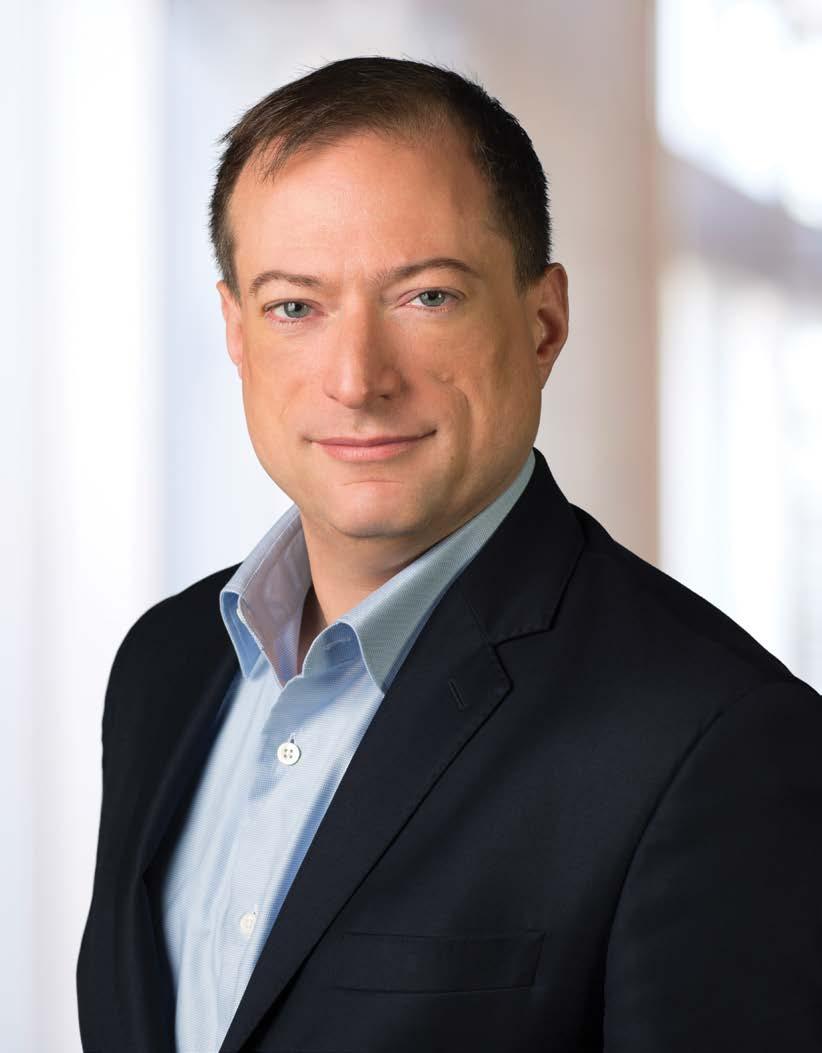
will emerge as the undisputed backbone of all AI innovation.
AI infrastructure is different than classic IT systems. It’s focused on accelerated compute, advanced AI aligned networking, new user interfaces and, importantly,
a new “knowledge layer” of data to fuel the AI outcomes.
Purpose-built AI data platforms will become essential, designed to integrate disparate data sources, protect new data artifacts and provide the
high-performance storage needed to support them. Partner ecosystems can help unlock the potential of these purpose-built platforms, with partners applying their expertise to integrate and optimize data management solutions for enterprise AI.
The ability to efficiently feed clean, organized and relevant data into AI models is critical. But as we enter the agentic age, this data will no longer be used solely to train large models. Instead, it will be a dynamic asset during inference, enabling the generation of real-time, evolving knowledge and intelligence. This underlying data layer is the launchpad for everything that comes next.
Agentic AI: The new operations continuity manager And what comes next is agentic AI. Agentic is evolving AI from a helpful assistant to an integral manager of longrunning, complex processes.
In fields like manufacturing and logistics, AI agents will not just assist workers; they will help coordinate them. Using rich, dynamic data streams, these agents will ensure continuity across shifts, optimize workflows in real time and create new levels of operational efficiency.
Imagine an AI agent scaling the capabilities of process managers on a factory floor, adjusting production schedules based on supply chain disruptions or guiding a new employee through a complex task. By positioning AI agents as intermediaries between a team's goals and
its workers, we can elevate team coordination across all sectors to levels never seen before.
These intelligent agents will become the nervous system of modern operations, ensuring resilience and progress. And like every other AI capability, they are powered by enterprise data creating unique knowledge and intelligence assets that must be appropriately stored and protected.
AI factories redefine resiliency and disaster recovery
As AI becomes embedded in core business functions, continuity becomes nonnegotiable.
AI infrastructure will evolve to prioritize operational resiliency, redefining what disaster recovery means in an AI-driven world. The focus shifts from simply backing up systems to ensuring AI capabilities remain functional, even if primary systems go offline. This involves protecting vectorized data and other unique AI artifacts, allowing the intelligence of the system to persist through any disruption.
Achieving this requires
innovation across the entire AI value chain – from data protection and cyber security companies to core AI technology providers. Collaborative ecosystems include governments, partners and at-scale AI innovators. They must work together to build resilient AI factories that bring together the tools and expertise needed to ensure continuity and safeguard critical capabilities in hybrid cloud environments.
Sovereign AI accelerates national enterprise infrastructure
AI is critical to national interests, and we're seeing the rapid rise of sovereign AI ecosystems. Nations are no longer just consumers of AI technology; they are actively building their own frameworks to drive local innovation and maintain digital autonomy.
This shift is reshaping AI infrastructure planning, with AI compute, data storage and management playing pivotal roles in safeguarding and localizing sensitive information.
Enterprises will increasingly adapt to these sovereign frameworks, scaling their operations within regional boundaries. By keeping data within national borders, governments can shape
public services such as healthcare, and enterprises can tap into domestic infrastructure while aligning business objectives with national industrial policies.
This creates localized innovation with direct impact on citizens and economies and represents a foundational change moving AI from a global concept to a powerful local reality.
Charting Your Course for 2026
As we look toward 2026, the AI revolution isn’t slowing down—it’s accelerating. What began as a Big Bang has reached light speed, and the lead organizations are the ones moving just as fast.
Success won't come from chasing every breakthrough. It will come from building infrastructure that can keep pace: resilient AI factories, sovereign frameworks, agentic systems that manage complex operations and collaborative ecosystems that turn innovation into real business impact. The tools and insights are here. What separates leaders from followers is the willingness to act now.
Leadership and action will define who reaps the real rewards. The future is hurtling toward us at light speed. The question is, are you ready?
The next great leap in AI won’t come just from more powerful algorithms. It will come from how we manage, enrich and utilize our data.”

05th March 2026
Dubai

9:00 AM to 1:00 PM
In alignment with International Women’s Day 2026, TahawulTech.com, organised by CPI, invites you to the Women in Technology Forum & Awards 2026 — a flagship platform dedicated to advancing leadership, inclusion, and impact across the technology ecosystem.
The forum brings together CEOs, technology decision-makers, innovators, policymakers, and trailblazers to explore how organisations that actively invest in women — through mentorship, leadership pathways, skills development, and visibility — gain stronger innovation, resilience, and long-term growth.
Whether you are a technology leader, changemaker, or organisation committed to shaping a more inclusive digital future, this forum offers a powerful space to contribute, connect, and lead.
We look forward to welcoming you to Dubai this March as we come together to Give to Gain.
OFFICIAL PUBLICATIONS

For more information about the event and nomination details, please visit the event website below :https://www.tahawultech.com/women-in-tech/2026/
Veeam
NO SILVER BULLET
Michael Cade, Global Field CTO, Veeam, has penned an op-ed that examines how data portability is the foundation of sovereign clouds, and has warned enterprises to understand that cloud sovereignty is not a silver bullet.
The rise of sovereign clouds has become inevitable as regulatory demands, and geopolitical pressures push enterprises to rethink where their data resides. Localised cloud environments are increasingly becoming essential, allowing organisations to keep their data within specific jurisdictions to meet compliance requirements, and provide risk mitigation.
But sovereign clouds can’t succeed without data portability, which is the ability to move data seamlessly between systems and locations. Today organisations shouldn’t wait to be pushed by regulations, they need to be ahead of the game.
Enterprises need to address the reality that moving data across hybrid environments is far from straightforward. It’s not just about relocating primary data, you also must keep it protected while considering associated datasets like backups and the information used in AI applications.
While some may need

to address the protection of Large Language Model (LLM) training data, many organisations are instead turning to RetrievalAugmented Generation (RAG) or AI agents to bring intelligence to their proprietary data without building models from scratch.
Either way, data sovereignty is a valid approach to the pressures facing organisations today, but the focus should always be on data resilience first, no matter where it’s stored.
It’s a familiar tale – the cloud will give businesses more options and flexibility, but to take advantage of these properly, they’ll need some joined up thinking.
Today’s forecast Regulators around the globe are driving organisations to look at their data differently, appearing at pace in response to increasing data globalisation as countries try to get a better grasp on their data. The European Union (EU) has been particularly stringent, introducing the comprehensive General

Data Protection Regulation (GDPR) that stipulates data sovereignty.
Under it, the laws of the country where data is stored or processed are now applicable to the data, regardless of where the data was originally collected. Special attention is also being paid to the chain of custody of data in the EU with both the NIS2 and DORA regulations demanding robust risk management for data, especially when held or handled by third parties.
As data, including highly sensitive and classified data, is being increasingly handled by these third parties, namely cloud providers, keeping it bound under privacy laws has become a priority for both organisations and
governments as their data moves across borders.
With this increased movement of data between countries, or even continents, global instability concerns have become unavoidable, especially for governments.
Some have already adopted sovereign clouds to protect their most sensitive data from potential malevolent access. And some have taken it one step further. With
But cloud sovereignty is not a silver bullet. For those utilising multinational cloud providers, there might be the option to stipulate where your data is ultimately stored and what countries’ laws it will be held under, but there is no guarantee that it will not change.”
cloud services completely reliant on data centre infrastructure, some governments have started to divest their interest in foreign cloud and data infrastructure, reinvesting instead in their own. This way, they can avoid storing their most sensitive data with foreign providers.
But cloud sovereignty is not a silver bullet. For those utilising multinational cloud providers, there might be the option to stipulate where your data is ultimately stored and what countries’ laws it will be held under, but there is no guarantee that it will not change.
The issue isn’t just solved by relocating the primary data. Sure, it needs to be protected, but what about all the related data?

Backups and Large Language
Model training data sets for example, all need to be carefully considered to meet data sovereignty – or alternatively, organisations can utilise RAG or AI agents to level up their data without having to deal with reams of AI training datasets in the first place.
FREEDOM OF MOVEMENT
But to do all of this, organisations need to ensure that data portability is enshrined in their data resilience planning. After all, there’s a fine line between protecting your data and inadvertently restricting it beyond the point of use.
If organisations are unable to ensure data portability, then moving to a hybrid cloud environment to take advantage of both sovereign clouds and localisation of data storage is a non-starter.
There are SaaS (Softwareas-a-Service) and DRaaS (Disaster Recovery-as-aService) providers that can simplify the process, but it’s not a task that can be completely offloaded to a third party. Organisations still need to take a handson approach, planning and managing it thoroughly to ensure data remains secure throughout the process. Otherwise, organisations will be unable to utilise sovereign clouds to adhere to the myriad data residency and sovereignty regulations.
It’s not without caveats though. For those larger, multinational organisations operating across countries
and continents, multiple cloud environments will be required to house multiple sovereign clouds.
But this also brings increased complexity for both the monitoring and management of data across jurisdictions. Not only will multiple cloud environments need to be considered, but also multiple sets of data regulations across countries. And, for those organisations that do get it right, the benefit of enhanced data resilience comes with the added risk of data fragmentation.
There’s no easy win, but what’s certain is that data portability will be an essential part of any solution that organisations settle on. Whichever approach is taken, being able to move data seamlessly across platforms and clouds will be a necessity as organisations wrestle with data sovereignty.
And, as regulations continue coming down the line, data portability will give organsations a head start on future compliance, allowing them to flex more easily to meet regulations, where less portable counterparts will struggle.
TYING DOWN THE CLOUD
Data globalisation is showing no signs of slowing, with information flows now their own form of trade, even generating their own economic value. And with global instability as an ever-present factor, data sovereignty will only move higher up the priority list. But
it’s not a task that can just be passed onto a third-party provider.
Although organisations may not fully realise it yet, data sovereignty and operational clarity are closely linked. To start securing your data, you need to know exactly where it’s stored and how.
Then, with this comprehensive understanding of your data landscape, you can pinpoint those operations or processes where data resilience might be lacking and tackle your data portability.
By reworking data resilience from the ground-up, organisations can cement security, compliance, and sovereignty into their operations, and actively manage them through risk assessments, compliance audits, and strategies that take into account multiple suppliers.
With this in place, organisations can start leveraging hybrid cloud environments effectively, perhaps storing the most sensitive data onpremises under precise data sovereignty regulations, while offloading less critical data to the cloud. But this can only be utilised by organisations that have prioritised data portability. Rather than waiting for regulations to enforce it, organisations need to be proactive to take advantage of the flexibility, longevity, and most importantly, security of the cloud.
THE X-FACTOR
CNME Editor Mark Forker was in attendance at Industrial X Unleashed, an inaugural event hosted by IFS, which took place in New York City. IFS CEO Mark Moffat announced several key new partnerships, which included a ‘world-first’ collaboration with Anthropic, whilst Mohamed Kande , Global Chairman of PwC, declared that the future is not coming, it is already here.
Moffat declared that IFS was leading a new movement called Industrial AI Applied. He also highlighted the critical need for AI to operate in context, and he said that in the current climate there is far too much AI out there without any context.
“Today, we’re setting a new course. Industrial AI Applied, but what does that mean? It means we’re moving from demos, brochures and marketing into as my son would call it IRL (in real-life) – AI that can orchestrate physical operations and supply chains in real-time. AI that can unleash a new 10x capacity for workforce perspective with their performance. However, more important than anything that operates in context, and operates with the knowledge of industry. There is so much AI that we see today, that doesn’t operate in context. PhD level math and intelligence mean nothing, unless it is applied into practical day-to-day operations,” said Moffat. Moffat referenced the investment cycle in AI, which has led to some analysts to
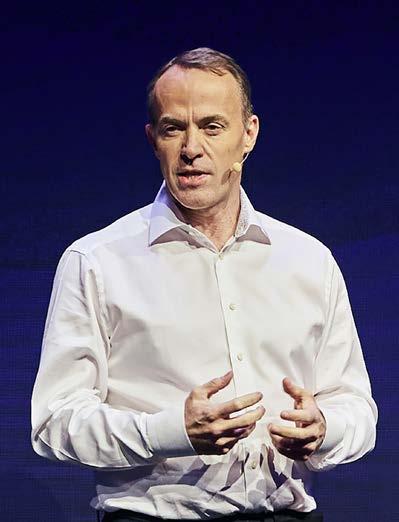
predict that AI is a bubble, that could burst at any stage.
As a chartered accountant by trade, Moffat likes to crunch numbers, and he provided those in attendance with an overview when
it comes to spending and investment in AI on a global scale.
“There are trillions of dollars flowing into this industry, and I spent some time trying to have a look at the numbers in play, and here’s my synthesis. $10 trillion has already been committed annually to rebuild the industrial world, that’s new plants, transmissions, supply chains and grids. There has been $7 trillion committed over the next 5 years to the build out of datacentres, and everything that goes with it. It is a huge amount of unfathomable money, and the thing that I learned last week, which is obvious to me, but I hadn’t really thought about it before is that this level of investment going in and these chip going in only have a lifecycle of 3-5 years, so this is just going to keep going,” said Moffat.
We have decades of building the muscle in asset-intensive and capital-intensive industries. However, no single company can do this by itself, and we recognise that, and that’s why we’re working with some of the best organisations on the planet.”
Moffat stated that other than IFS, nobody in the market is building the control and the intelligence layers that are going to be required.
“We’re focused on the practical application of this technology and bringing it into IRL, and that’s what IFS does. We have walked this road many times in the past with our customers, and we have decades of operational data, and we’ve been focused on our 6 core industries throughout our entire history. We understand the depth, issues, and the requirements of management teams and we know the workforces unbelievably intimately, which gives us the ability to translate all of this innovation into real-life,” said Moffat.
Moffat acknowledge that IFS is acutely aware of the fact, that given the industries
their customers operate in, there is no room for error, they simply have to get it right.
“We know how the physical world works, and today, we’re flipping the switch. This is all about acknowledging the hard truths too. This stuff that we’re talking about is really hard, taking legacy application environments and legacy infrastructure and moving it to a hard digital modern AI native world is difficult. The industries and the customers that we support run mission-critical operations, and there’s no room for error, we have got to get it right, we can’t get it wrong. Otherwise supply chains grind to a halt, aircraft is grounded, and ultimately there is risk to life,” said Moffat.
Moffat announced a series
of mega new partnerships that he believes can create a whole set of new capabilities in mission-critical operations.
He described the new partnership between IFS and Anthropic as a world-first.
“We have decades of building the muscle in asset-intensive and capitalintensive industries. However, no single company can do this by itself, and we recognise that, and that’s why we’re working with some of the best organisations on the planet, who are moving at the speed of technology. We can’t do it ourselves and that’s why we’re announcing a series of new partnership with the hottest brands. The first of the partnerships that we’re announcing today is a worldfirst. IFS is announcing a new partnership with Anthropic. This strategic partnership
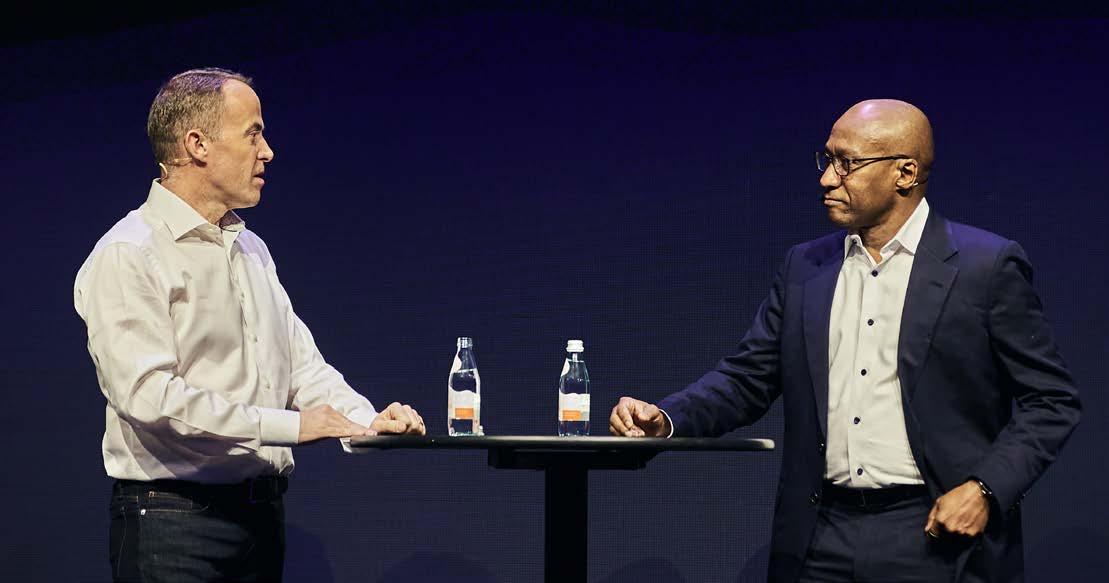
is all about bringing the phenomenal capabilities of Claude and Anthropic into the industrial world. Anthropic are phenomenal in the enterprise, and they are mindful of the massive opportunity that comes with AI, but also the risks, because remember when it comes to mission-critical operations it’s so important that we get it right. We’re so excited about it, but it’s not reselling Claude, or white labelling it, this is fundamentally about creating new capability and putting it into the hands of the workforces that we serve,” said Moffat.
Moffat also announced new game-changing partnerships with Siemens, Boston Dynamics and JIVA.
Moffat concluded a superbly engaging and energetic keynote, by reinforcing their commitment to ensuring that they turn these partnerships into something tangible and real for their customers.
“These new partnerships are Industrial X, that is what the X is all about, doing this together. It’s an alliance of progress and possibility. The objective now for us is to make it real and turn these partnerships into outcomes for our missioncritical customers. There are three principles that I think underpin our approach. The first is building with you. We love helping our customers to be amazing, personally I make sure that I spend over 50% of my time with customers. It is also important for us to think about how we can embed this technology directly
into workflows. Ultimately, Applied AI is different, it is in context. It is built for people doing the actual work on the ground, running a line, inspecting a sub-station and keeping people safe. Applied AI requires what we constantly refer to as first principle thinking,” said Moffat.
Next on stage was Mohamed Kande, Global Chairman of PwC.
H declared that the future is not coming, it is already here, during a fireside chat with IFS CEO Mark Moffat, during the IFS Industrial X Unleashed conference in New York City. During a session entitled;
$70 trillion dollars in infrastructure CAPEX has already been deployed or has been committed to being deployed over the next couple of years. The last time we witnessed so much capital being deployed was more than 25 years ago, and that was in the internet.”
Inside the Boardroom:
Leading through the AI Revolution, Kande in conversation with IFS CEO Mark Moffat, mapped out what he is seeing in boardrooms globally.
Kande stated that conversations around AI had pivoted away from driving efficiency and had been replaced by a desire to start doing things differently.
"I have the privilege in the job that I have to travel all over the world. I have been
across Europe, Asia, and many other continents, and I have reached the conclusion that over the last 12 months the conversation around AI has evolved. A year ago, it was all about driving efficiencies, and using AI for the back office, finance, HR and IT to do things better. Now the conversation has shifted, it is about doing things differently," said Kande.
Kande said that the sheer volume and scale of investments being made are in some cases unprecedented and said that the level of capital expenditure currently being poured into AI, has not been seen the late 90s.
"One of the key data points for us is around the capital that is currently being deployed into AI. $70 trillion dollars in infrastructure CAPEX has already been deployed or has been committed to being deployed over the next couple of years. The last time we witnessed so much capital being deployed was more than 25 years ago, and that was the internet. This is not capital venture investment; this is industrial investment. All the infrastructure that needs to be built for the future will need to incorporate AI. However, what has become clear to me is that the future is not coming, it is already here," said Kande.
Kande was then joined on stage by IFS CEO Mark Moffat, who referenced that Kande works with over 90% of Fortune500 companies, and asked him directly what is hearing in the boardroom
when it comes to the concept of Industrial AI.
Kande highlighted that there is mixed feelings being expressed in boardrooms globally when it comes to the topic of AI.
"It's very interesting to sit in a room, and see opposite feelings at the same time, and the two feelings are fear and excitement. The excitement stems from the opportunities when it comes to Industrial AI, and the fear is driven by the fear of missing out and not being fast enough. There is also the fear of making the wrong choices when it comes to this technology, because we know today when it comes to AI it's a matter of national security. The ability to have access to the right technologies at the right time is crucial," said Kane.
Kande said that the conversations in the
boardroom now on a global scale are very different to what they were 12 months ago.
"The question is now not about whether they should adopt AI, everybody knows that they have to, and that they need to move quickly," said Kande.
Considering that paradox of excitement and fear, Moffat pressed Kande on what sort of advice he gives to the C-suite when it comes to pursuing their AI aspirations and ambitions.
Kande assessment is frank, he believes leaders can't hold back.
My recommendation to a lot of the CEOs that I speak to is that they have to jump in. Don't look for the answers, look for the questions, and it's OK to make mistakes. Whoever isn't making mistakes these days, isn't trying hard enough. We can't
predict the future, but you have to try," said Kande.
Kande acknowledged that nobody can predict the future but said that the fear that previously existed with AI is no longer there in the boardrooms that he frequents worldwide.
"I think where the boards are today is the realisation that nobody can predict the future, therefore what are you left with? You need to make the future that you want to happen and as a result, we're seeing more investments from boards and CEOs. At the end of the day, nobody wants to be left behind, so speed is off the essence. However, the fear of artificial intelligence is gone, but the part where people are very careful with, especially when it comes to Industrial AI is the controls that you need to have around it," said Kande.