In the U.S., one year $24.95; two years $43.50; three years $55.00. Elsewhere add $5.00 per issue. Back issues are available for $5.00 per issue, plus shipping and handling. Subscriptions can be purchased online at lakeandhomemagazine.com/products LAKE & HOME MAGAZINE Published bimonthly by Compass Media | 126 S Vine St | Fergus Falls, MN 56537 Year 27, Issue 1 • January / February 2026
• jerry@lakeandhomemagazine.com
SUBSCRIPTIONS
From the Office
Happy New Year!
It’s time for fresh starts, including in our homes. Yes, spring cleaning is around the corner, but during January and February, we have a chance to get a head start on organizing and doing interior projects. As we spend most of our time indoors at this time of year, it’s also a wonderful opportunity to start building inspiration boards and planning for additional updates, remodels, exterior changes, and maybe even a custom build.
We have filled this issue with unique stories for you to peruse, including information on turning your home into a vacation rental.
Tips and ideas from seasoned experts help this topic unfold in ways that fuel you with information and inspiration. Additionally, we delve into subjects such as backsplashes and what’s on the New Year horizon in terms of trends, how to make your great room exceptional, on-trend cabinet hardware, options in dining tables and chairs, and pros/ cons of exterior stone.
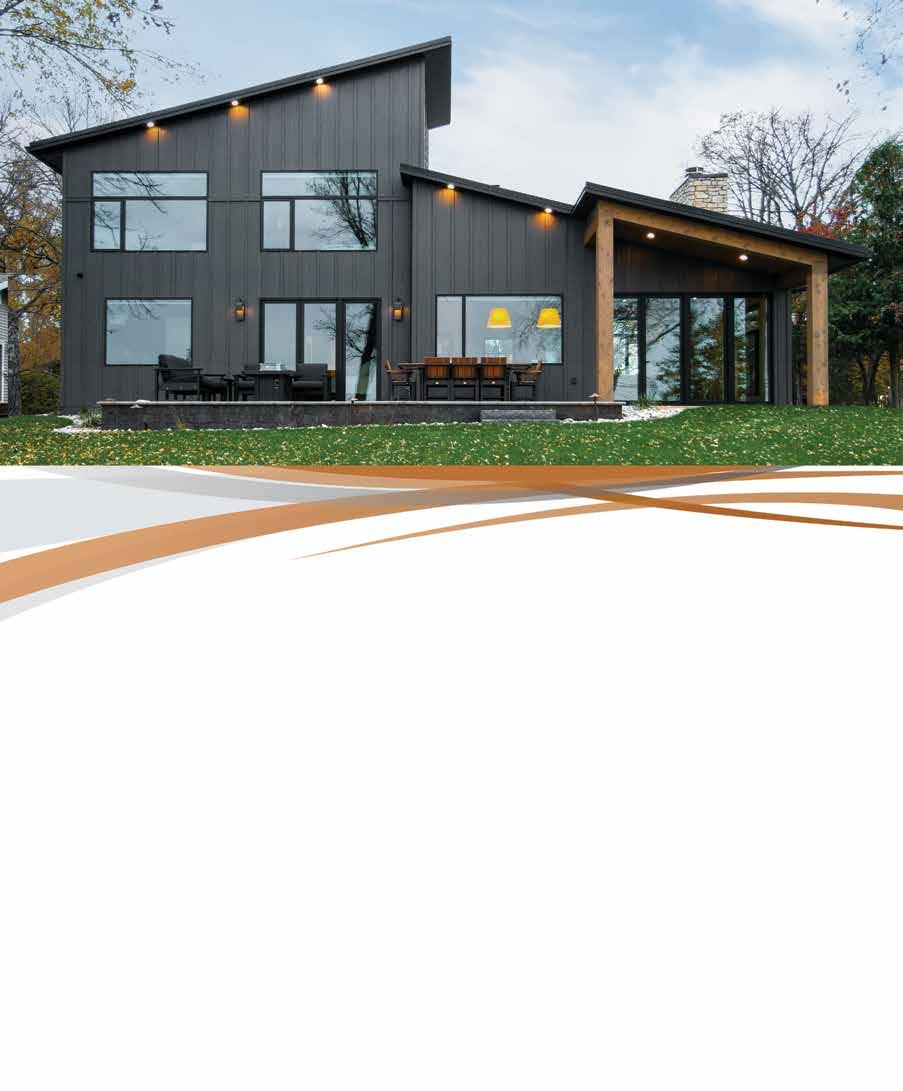
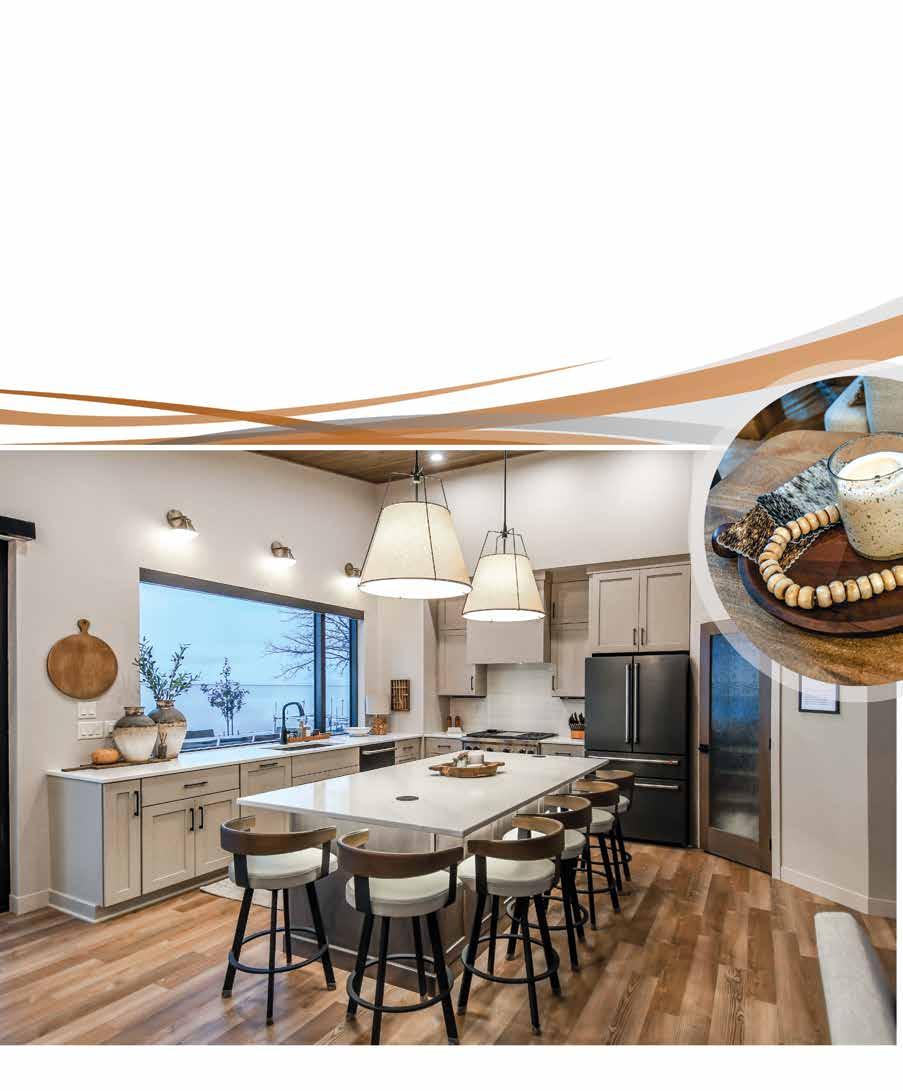
And don’t miss our two feature homes. They’re stunners! Each is unique in its design, and both display exceptional attention to detail and craftsmanship. They are testa-
ment to clear vision and working with pros who understand best routes when it comes to bringing ideas to life.
Enjoy this kickoff to 2026 and let us find ways to celebrate the winter months by focusing on the warmth and welcome of home. L&H
Best,
Dawn Duncan Managing Editor
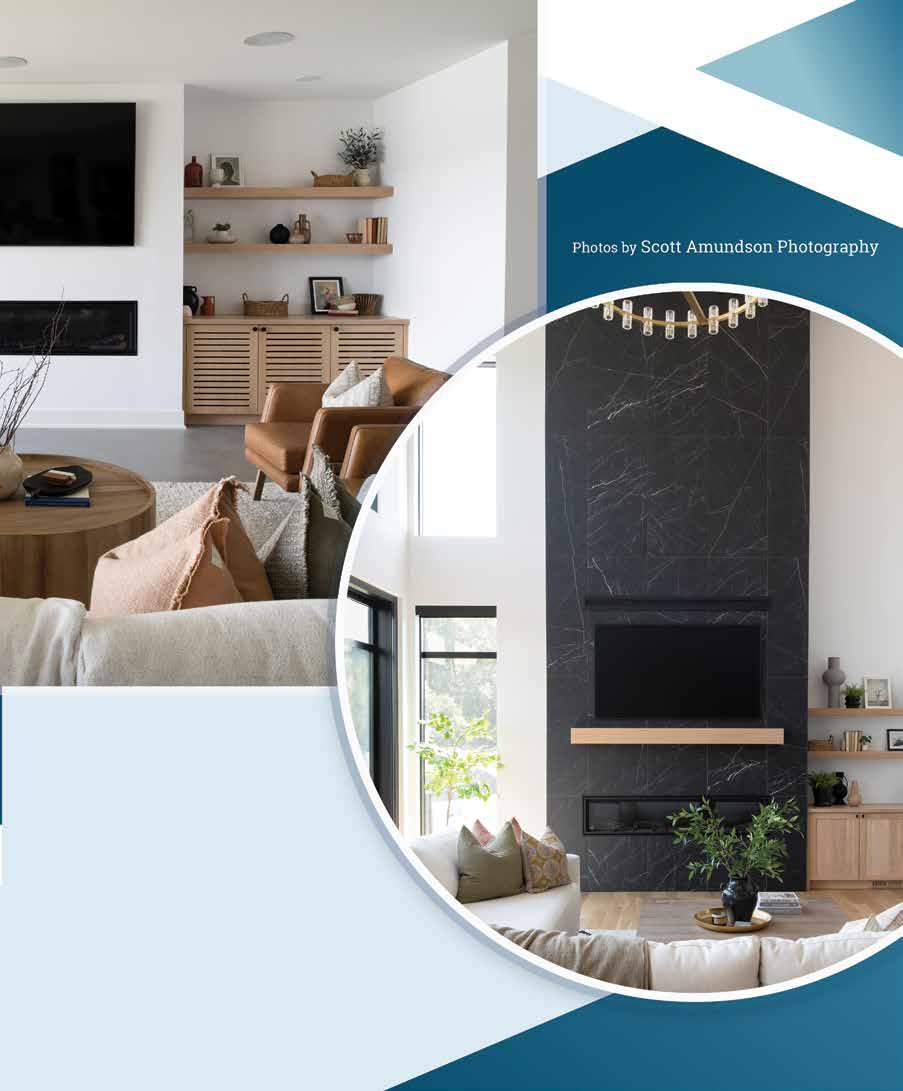
he great room is the ultimate hub where life naturally gathers in your house. It’s where your family enjoys morning coffee, it’s where family movie nights melt into weekend celebrations, and every day seems to unfold in the same warm, welcoming way. But with so much happening in one place, the challenge isn’t just filling the square footage. The real goal is to create a place where harmony can exist for both you and your family.
When it comes to making a great room fully functional, it goes far beyond choosing a sofa or arranging the seating. It’s all about understanding how you live in that space and how it supports your daily life rhythms.
How You Live
Day-to-Day
Before any drawings, layouts, or materials are selected, the real starting point is looking at how you actually live in this space. Jackson Strom of Strom Architecture in West Fargo said, “First off, I’d ask my clients: How are you living day to day in your great room? Is there a TV in there? Is it a place for reading? Coffee? Large gatherings? Or is it just a place for you and your spouse?”
A great room only succeeds when it supports your life. So, knowing your everyday rhythms will help when it comes to crafting a great room that will be comfortable and high-functioning.
Understanding the flow of your daily lifestyle is the foundation, but once that picture becomes clear, the designers and project managers are able to shift their attention to what naturally draws the eye.
The Focal Point: Fireplace, TV, Vaulted
Ceiling, or a View?
The room's focal point depends on what you and your family value in terms of activity. Some people might like having big game day parties in their great room where they watch the game on a big TV. Others may want a more intimate family-centric space that feels cozy and isn’t all about the TV, but instead more focus is drawing the eye to the view of the lake.
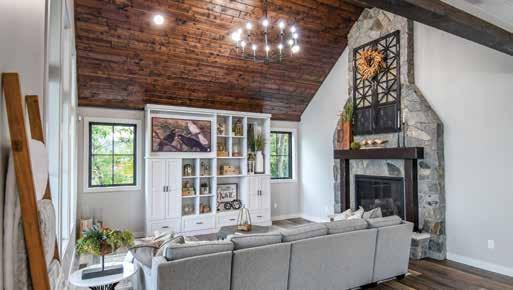
There are a few things that draw the eye in the great room: the fireplace, the TV, vaulted ceilings, and especially in many lake homes, the view.
For many homeowners, the fireplace is still the anchor. “A lot of times we’re considering the details around the fireplace,” said Strom. “What kind is it? Wood-burning or gas? And then from there, we figure out what the surround looks like and how to keep the TV from ending too high up on the wall.” With the rise of picture-frame TVs and improved fireplace venting, integrating both elements has become easier and more seamless than ever before.
But in lake and country homes, the view often wins when it comes to drawing the eye. “For lake homes, the focal point of the great room is typically the windows leading out to the lake,” said Kelli Weigscheid, architect and owner of Harmonious Architecture in Perham, MN. “The bigger the windows, the better. They connect the inside to the outside—and that’s what truly makes the great room great.”
Whether it’s a glowing hearth, a perfectly placed TV, a magnificent, vaulted ceiling, or a sweeping view of water and sky, choosing a focal point creates clarity and gives the entire room a sense of direction.
Open Concept Flow
In today’s homes, great rooms rarely standalone; they blend effortlessly with the kitchen, dining area, and even the entryway. That openness is intentional, and it’s reshaping how families gather and move through their homes.
“Historically, everyone always ended up in the kitchen,” said Mark Dobbelmann of Up Nort' Home and Cabin Care in Battle Lake, MN. “Now we’re seeing the kitchen and living space intersect so you can cook, prep, and still be part of the conversation. It’s all becoming one central gathering place. It’s nice because you can be working in the kitchen while still having conversations and interacting with friends and family. People are also integrating their entertainment and media
in those areas too. It’s really becoming that central gathering place in the home. A lot of the trends are leaning towards a very open concept.”
Instead of walls, furniture, cabinetry, and thoughtful layouts are being used to define each zone. Sofas and chairs mark conversational areas, islands double as casual dining, and open pathways ensure traffic flows naturally without cutting into usable spaces.
The result is a great room that feels connected, social, and easy to live in, where every corner works together as one harmonious whole.
Remodeling: Opening Walls
For homeowners updating an existing space, the biggest question is often the simplest: Can we open this up? And often, the answer is yes. “People get really nervous about removing walls because they assume everything is load bearing,” said Dobbelmann. “But most of the time, we can open those walls up and create that great room feel. We do that by using hidden beams up in the ceiling where we can hang trusses off or hang intersecting load bearing components to create that open great room concept. So, ninety percent of the time we’re able to open those walls up and sometimes if we can’t, then we try and open it up as much as we can.”
Even small structural changes can dramatically shift how a space feels—bringing in more light, more flow, and a sense of openness that transforms the way you live in your home. And once the layout is working beautifully, the final layer is all about comfort and style.
Bringing It All Together
A great room isn’t defined by its size or height or even its finishes. It’s defined by the life that happens inside it. When a space is thoughtfully planned around the way you live, anchored by a clear focal point, opened for connection, and layered for comfort with an enduring style, it becomes more than just a room. It becomes the place where everyday moments turn into lasting memories. And when a great room is designed with that purpose in mind, it truly lives up to its name… inviting, effortless, and great. L&H
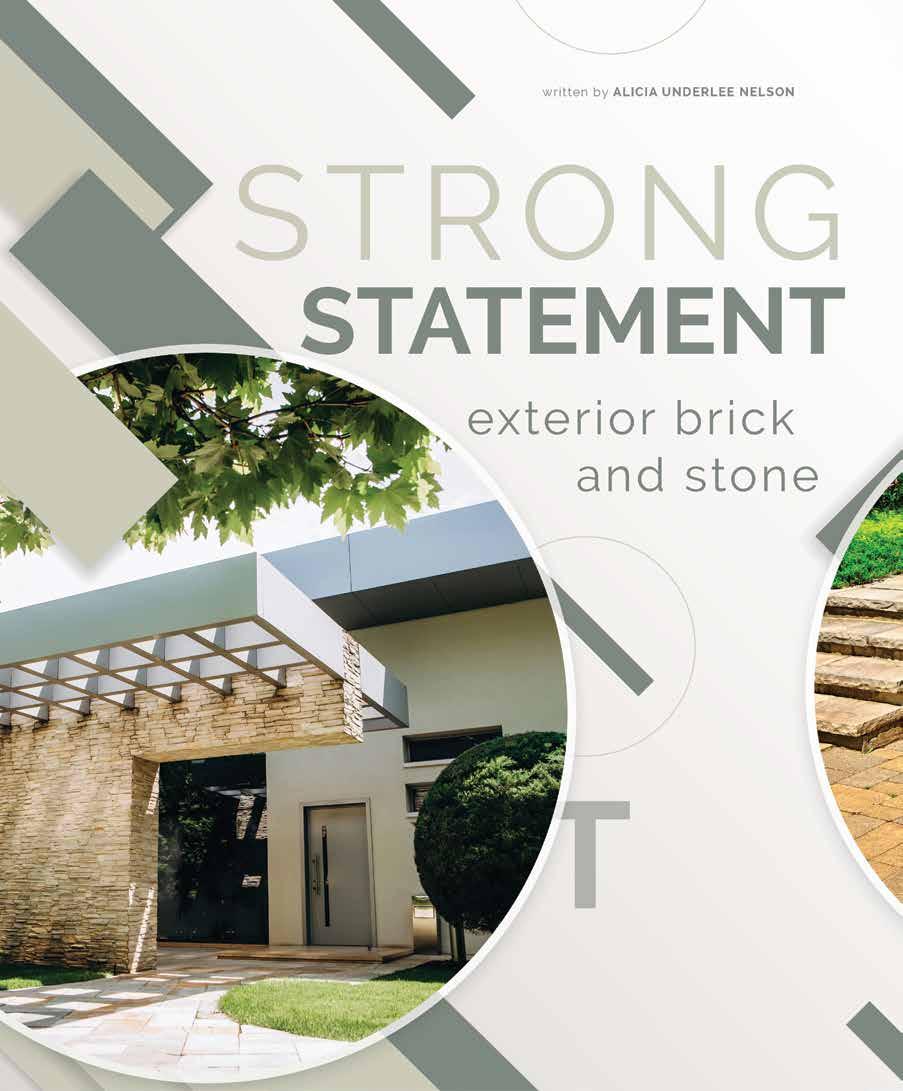
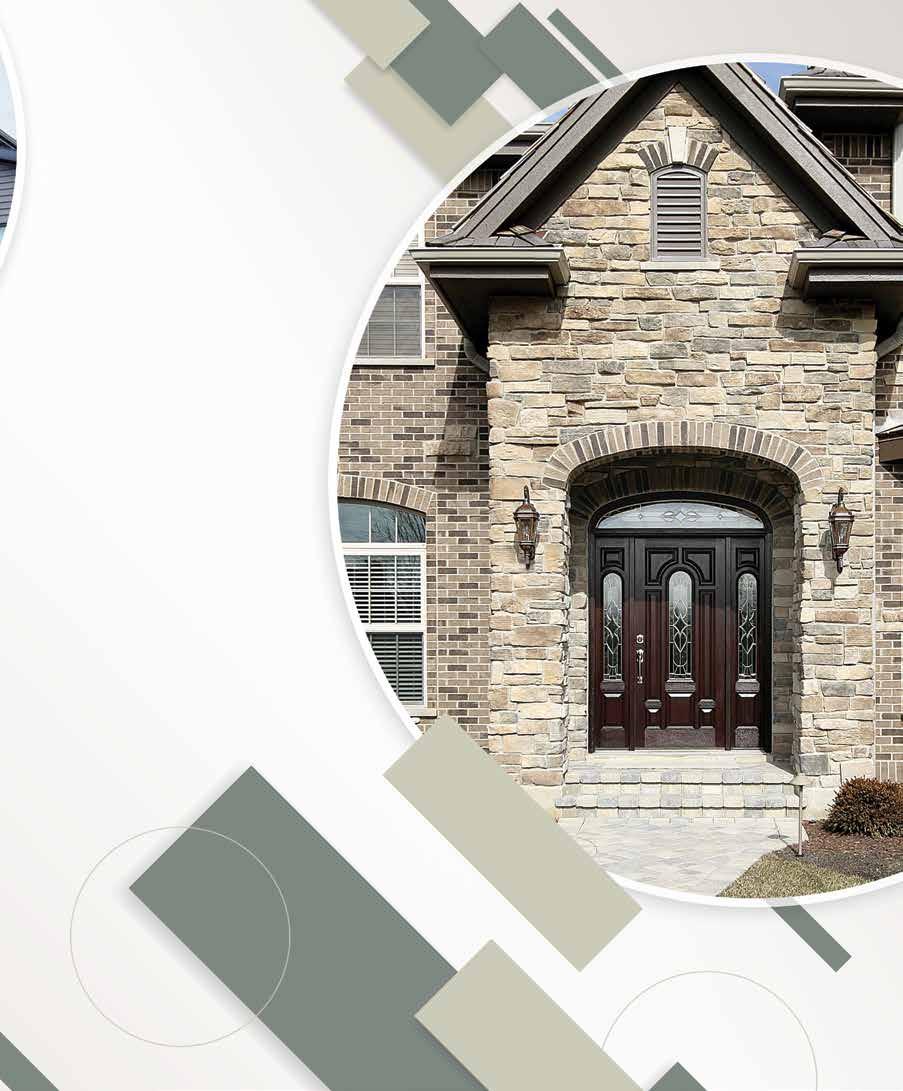
The grandeur of stone and brick give a home gravitas. They’re a nod to permanence and stability, a testament to good taste.
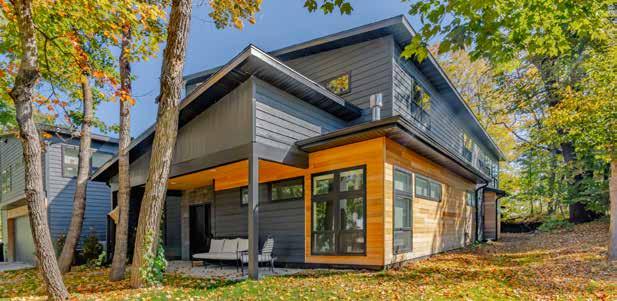
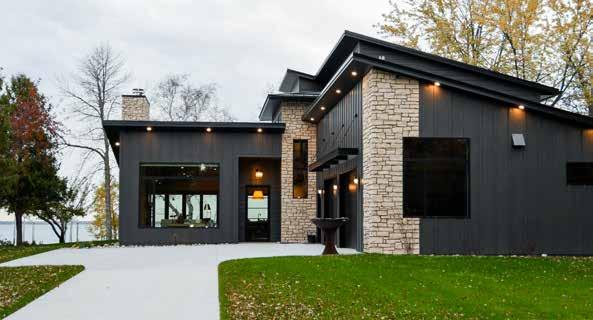
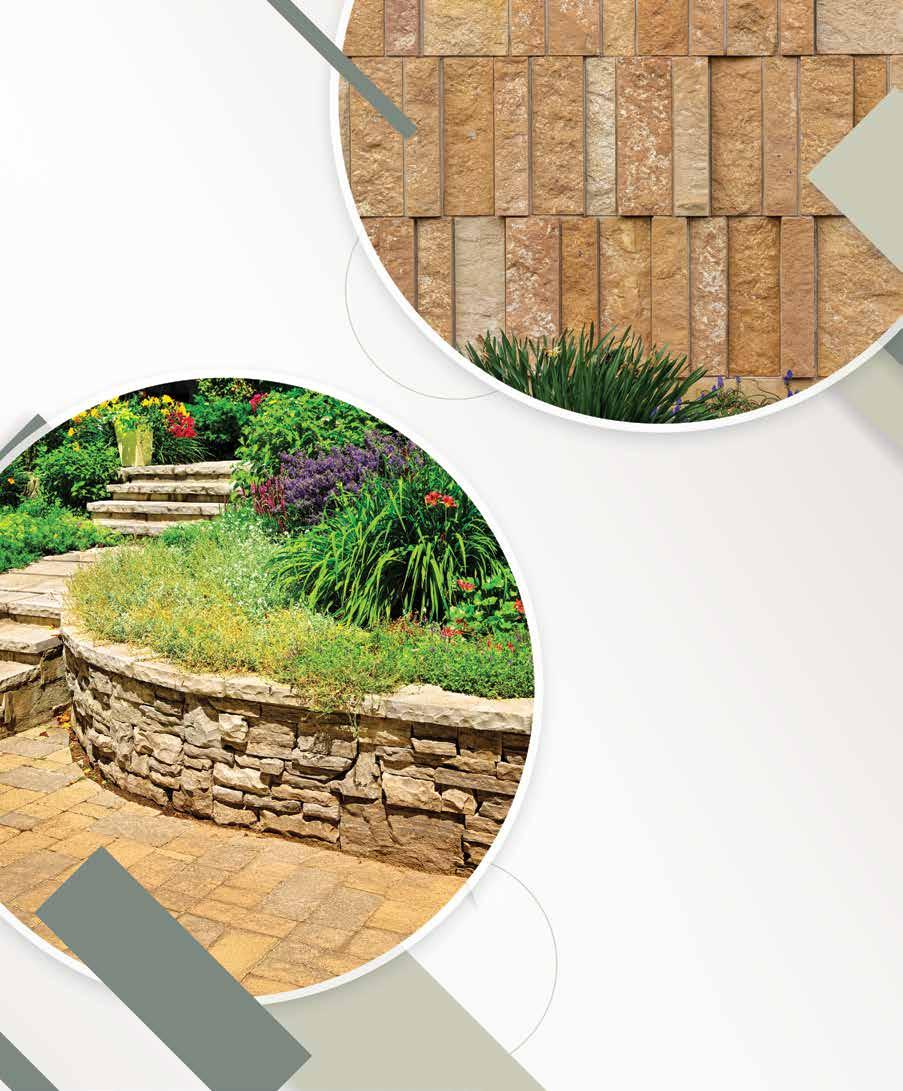
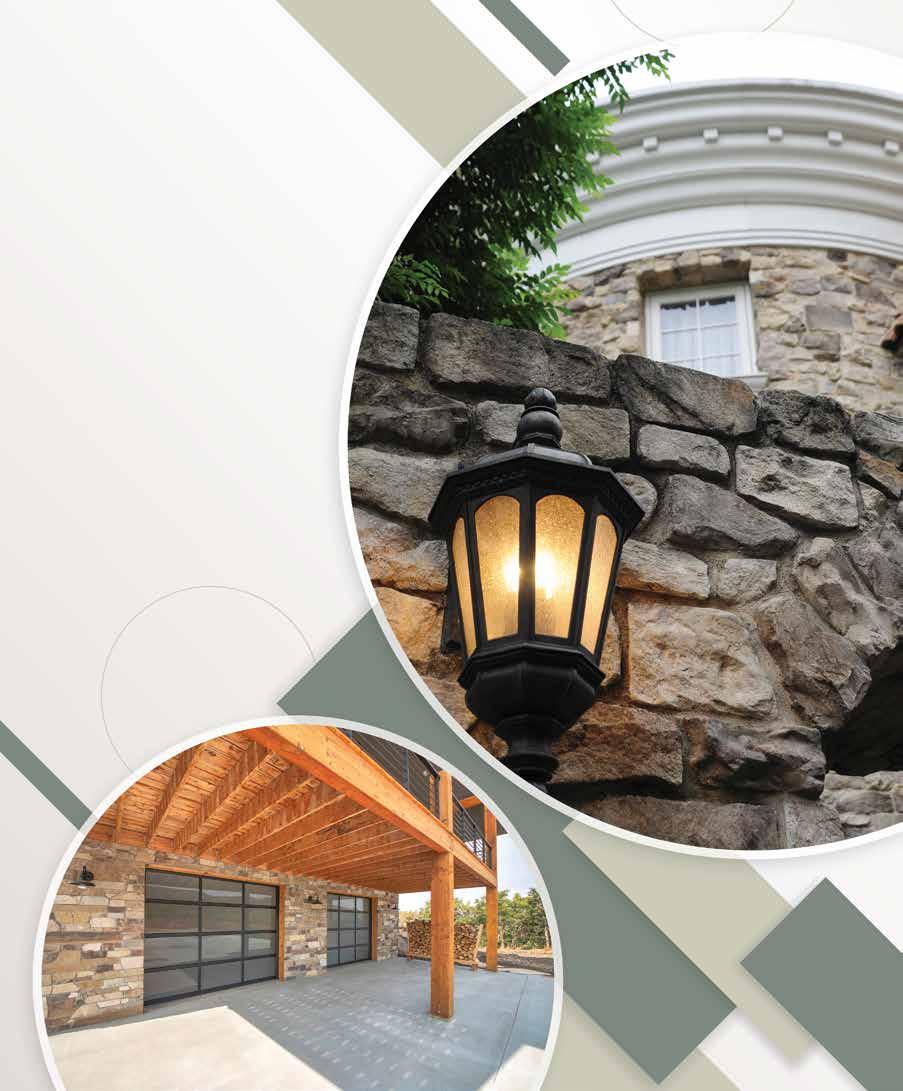
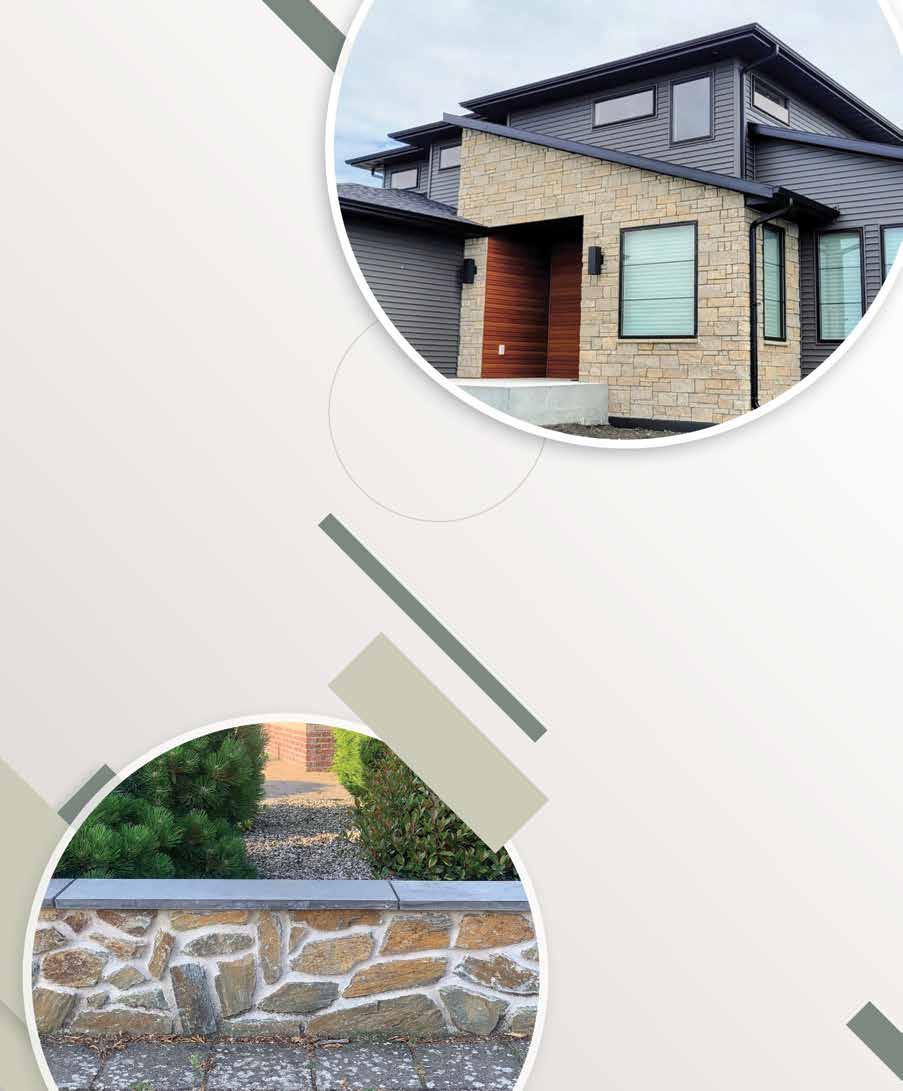
Installing a brick or stone façade, steps, patio or other accents offer a variety of benefits, depending on the material you choose. But selecting the right option requires preparation and planning.
NATURAL STONE
Several types of stone are well suited to the wild temperature swings and variable moisture levels in the Midwest. When selecting natural stone, there are two thicknesses to choose from, explains Matt Hunt, a residential sales expert at Hebron Brick Supply in West Fargo.
“You have either thin veneer or full bed stone,” Hunt explains. “There are lots of different natural stone options out there.”
LIMESTONE
Limestone is a pale sedimentary rock that’s popular in the region. It’s quarried in the Midwest, so builders here have been using it since European settlement. It’s still popular today.
PROS:
• Limestone’s range of soft, creamy tones — from pale buff and beige to tan and gray — work with many color schemes.
• Because limestone has been used for hundreds of years, it has historic charm.
• It’s easy to cut and work with limestone, making it a versatile stone.
• This is a low maintenance product.
CONS:
• Limestone is porous, so some varieties may be vulnerable to staining erosion and moisture from the normal freeze-thaw cycle. The experts will help you choose the strongest option.
• Some limestone is slippery when wet, so it’s not a great choice for steps and walkways.
• This is a very heavy material, which can make installation difficult and expensive. “But if it’s adhered properly, there’s no issues there,” Hunt adds.
MOUNTAIN STONE
This rugged stone is highly textured. The stone sold by Nordic Brick and Stone in Alexandria, MN and Nisswa, MN comes from the mountains of Montana. That location influences the range of mountain stone colors and its availability, explains Luke Aabel, who works the company’s sales department.
PROS:
• “It’s one of the few areas of the country where you can truly get that earthy chocolate brown,” he says. “So that would be a benefit.”
• Mountain stone is very low maintenance.
• “It’s a very hard stone,” Aabel adds. Its durability makes it a good choice for exteriors.
CONS:
• “A drawback is cost,” says Aabel. “It is typically more expensive out of that region due to a multitude of factors.”
• Availability is another concern. “They can only quarry so often, Aabel explains. “It gets harder to get it out of the mountain as seasons change.”
SANDSTONE
Sandstone is another popular sedimentary rock. It’s made of sand-size remnants of organic material (like fossils) as well as quartz and feldspar.
PROS:
• “A big benefit would be cost,” says Aabel. “It’s less expensive than mountain stone, competitive with limestone.”
• Sandstone’s textured appearance is attractive — and it also adds traction underfoot, so it’s a good option for walkways and steps.
• It’s available in several colors, including black and an array of grays that are popular at the moment.
CONS:
• Most sandstone colors are very warm, which can be an issue for cool-toned exteriors. “They can be too yellow or too rusty orange, unless you happen to have the perfect siding color,” says Aabel.
• Sandstone is also more porous and vulnerable to moisture than limestone, which could lead to cracking and staining. Experts test to make sure sandstone sold here will last.
• This material is also susceptible to damage from acidic compounds, including acid rain, ice melt, and lawn care applications. Sealing it properly will help protect it.
SUPPLY
GRANITE
Granite makes a strong, enduring statement. And it’s available in a variety of different looks, from round cobblestone-style rocks to sparkling slabs.
PROS:
• “There’s a quarry out of Minnesota that quarries field stone, a riprap-style rock,” explains Aabel. “Then they have a few different styles outside of that round, cobbled look. They have a split-face fieldstone that has more of a jagged look.”
• Granite is extremely durable.
• This material is also very low maintenance.
• Several colors are available, from blacks and grays to bright blues and greens.
• Granite looks high-end and expensive.
CONS:
• Granite looks expensive, because it is expensive. Quarrying, cutting, and transporting granite isn’t cheap.
• Installing granite may cost more because it’s harder to cut.
• This material is also very heavy. A professional will determine if your foundation is strong enough to support it.
PHOTO COURTESY OF HEBRON BRICK
FULL BED STONE
The experts can install the natural stone of your choice in two different ways. The first is full bed stone.
“Full bed stone is the way that it used to have to be done if you wanted natural stone,” said Aabel. “It’s a lot thicker, technically classified as three to six inches thick.”
PROS:
• “Durability wise, it’s probably a better option,” says Hunt. It’ll last a lifetime and beyond.
• This in natural stone in all its glory, with its color variations in full view.
• “You get a lot more thickness variation, a lot of texture difference,” adds Aabel. This means full bed stone looks great from the road and close up.
CONS:
• Since full bed stone is heavy, “your house foundation has to be planned for that in order to support the weight,” explains Aabel.
• Because it’s heavier, it’s more expensive to ship it in, increasing an already hefty price tag.
• “There’s not a ton of masons anymore who know how to lay full bed stone,” Aabel adds. Finding a skilled craftsperson to install it can increase the time and money spent on installation.
THIN VENEER STONE
“Thin veneer is basically stone cut thin so you don’t have to reinforce it,” explains Hunt. “It just adheres to the existing wall that’s there.”
PROS:
• It’s much lighter than full bed stone, so you can get a similar look without structural support.
• A variety of stone choices are available and each stone retains its unique benefits in this new, thinner form.
• “The thin veneer stone is less to ship than full bed,” says Hunt.
• It’s also quicker and more affordable to install.
• Most varieties are durable, even for the Midwest’s temperature swings. “There’s some softer sandstone products that are not quite as durable, but the veneer products that we sell up in this market are tolerant to our climates,” says Aabel.
CONS:
• “Thin veneer is typically an inch to inch and a half thick, so you don’t have a lot of in and out depth variation,” Aabel says. Texture lovers might opt for full bed stone.
• The material itself can be more expensive.
• It needs to be installed properly, or it can retain moisture between the stone and the wall.
FULL BRICK
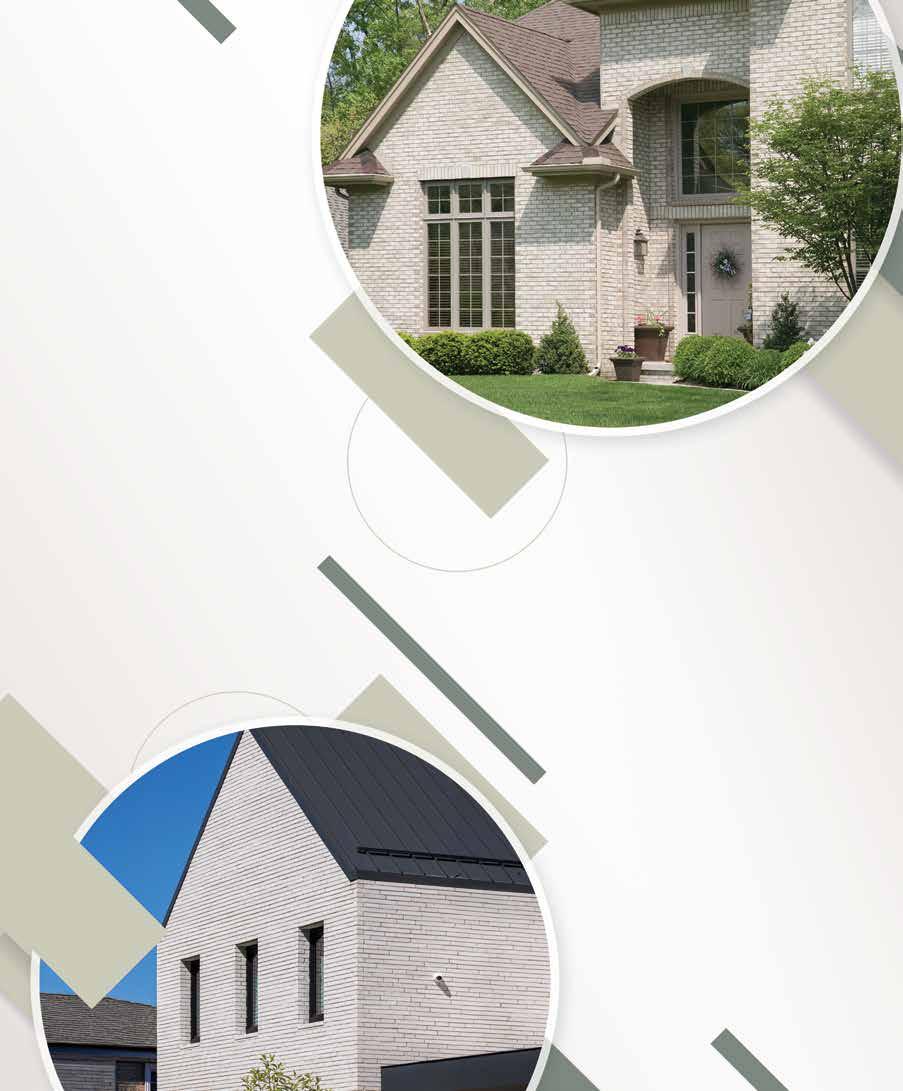
Clay bricks are classic. They’re made from natural clay and fired in a very hot kiln. When installed en masse, they offer similar benefits (and comparable thickness) to full bed stone.
PROS:
• Brick is very durable and resistant to weathering.
• “Full brick should be almost zero maintenance over time,” says Hunt.
• Brick is also surprisingly versatile. It can read as traditional or modern, depending on the color you choose.
• There are many colors available, from pale blond to trendy grays and even intriguing shades of blue. “The red brick is still obviously used,” says Hunt. “But it seems like the trends lately are a lighter colored brick, more whites.”
• Full brick is an affordable option.
CONS:
• Since brick is heavy, it requires structural support, just like full bed stone. “It does require a lot more planning and foresight initially,” admits Hunt.
• Brick can be expensive.
• Finding skilled bricklayers add to the installation cost.
THIN BRICK
“Thin brick is installed and manufactured almost like a thin veneer stone,” explains Hunt. Each brick typically measures between a half inch and an inch thick — much narrower than full brick.
PROS:
• Thin brick offers the look of full brick, but it’s much lighter, so it can be used without major structural modifications to a home.
• Because thin brick is lighter and thinner, it’s less expensive to install than full brick.
• It’s strong and durable.
• There are multiple options available. Hebron Brick fires clay bricks and cuts them down to the correct width, while other companies simply use thinner molds. “A lot of the stone companies actually will make a concrete product,” adds Hunt. “Then there’s other products out there that are kind of more like a tile, a glazed brick.”
CONS:
• The product itself can be more expensive per square foot.
• Thin brick requires skillful installation to avoid moisture problems.
TUMBLED BRICK
Tumbled brick and rumbled brick are essentially the same thing. They’re both new bricks that have a distressed look that mimics the look of reclaimed brick. (The difference in their names refers to the timing of the distressing process.)
PROS:
• “We’ve been seeing a lot of the tumbled brick,” says Hunt, adding that Hebron’s tumbled product sells well. “It’s very popular. “
• Tumbled brick offers the old world look of reclaimed brick with the structural integrity of new brick.
• This product looks old, but it’s much easier to source than reclaimed brick.
CONS:
• It takes extra time and energy to process these bricks, so that adds to the cost.
• This rustic look is trendy and not for everyone.
No matter which option you choose, stone and brick can give your home a timeless look. This is one decorative statement that will last for generations. L&H
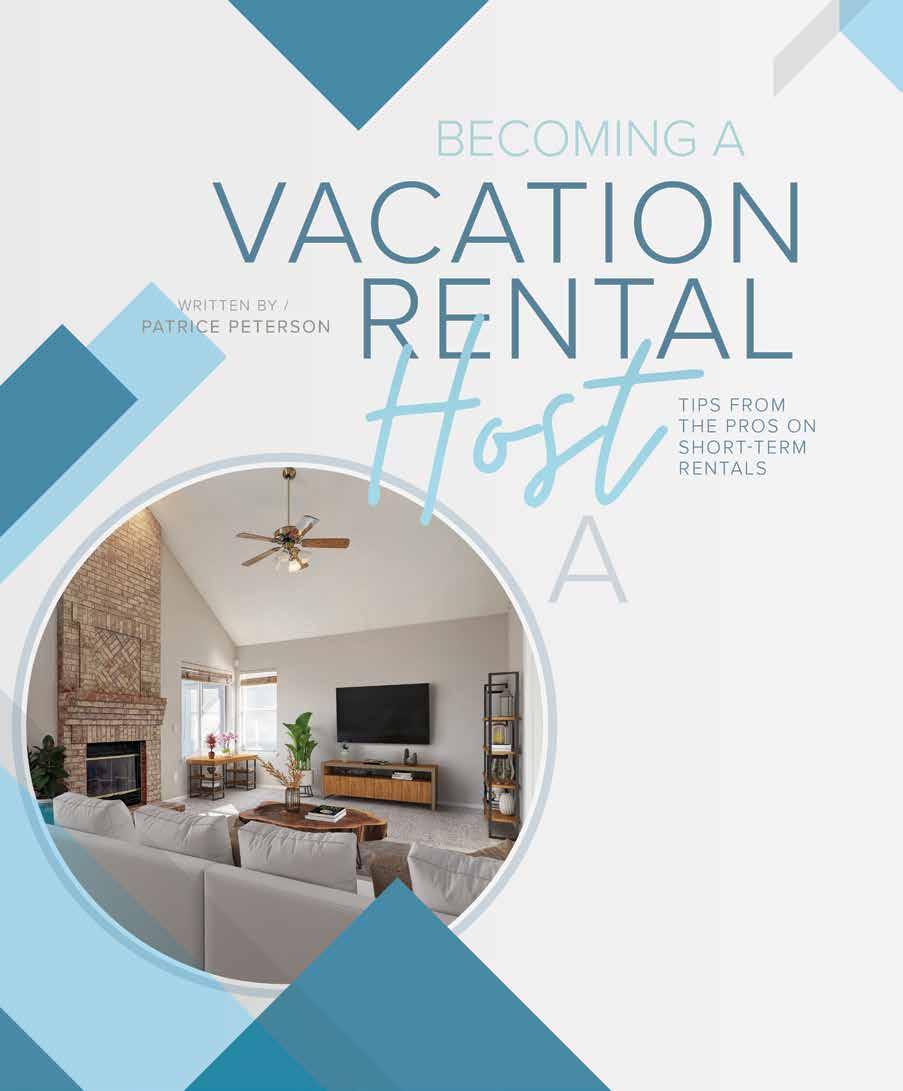
Airbnb & VRBO are both well-known, highly recognizable brands in the short-term vacation rental market.
For those who may not know, these companies offer user-friendly online platforms to help travelers find unique and affordable alternatives to traditional hotels and resorts. Their numbers have grown as the industry has grown, providing a path for property owners who are considering renting out a vacation home.
POTENTIAL INCOME
Erik Stewart is a real estate investor and Airbnb owner in the Fargo area.
“Both of these online travel agencies have gotten super popular for short-term rentals, and I think the industry is pretty stabilized, so the demand should continue to be there,” he says. “I started buying fixer-uppers when I was in college, and renting them out long term. I became interested in short-term rentals when Airbnb came in, and I saw the success and convenience it provided.”
IT BEGINS WITH LOCATION.
Erik Stewart
All payments, communication, and advertising are also included in the fees paid to those platforms, and they provide financial reporting and ways to improve the listing. There is no charge to the property owner until a booking is confirmed, so Erik, along with many others, lists his rental properties on both sites. Airbnb provides a broader variety of listings, including rooms within a house, while VRBO focuses on entire houses, mainly for vacation rentals.
For anyone who might be considering turning a home or lake property into a short-term rental, Erik emphasizes that it’s important to do the research. Although many of the properties he owns are in more of a “utility” market in the Fargo-Moorhead area, most of the start-up processes for vacation home rentals are similar.
LOCATION, LOCATION, LOCATION
“It begins with location,” says Erik. “Real estate is market-to-market, and it’s important to know the investment numbers in the area, but it’s also important to figure out the demand in that area. That includes researching the city or community regulations for things like occupancy limits, parking restrictions, and noise.”
As the short-term rental industry continues to grow, and seeps into established neighborhoods, these types of regulations may eventually evolve to meet community needs and set additional safety and zoning standards.
To be successful, a good location is vital –followed up with a good strategy for furnishing, cleaning, and maintaining the property.
Jory White, who is also based in the Fargo area, owns Guardian Property Management.
“I own some places myself, but primarily manage rental properties for others,” he says. “I’ve learned the ins and outs of Airbnb and VRBO, and much of my knowledge from landlocked Fargo contains the same basic concepts that can be applied to the lakes area. For the novice who wants to get into this, you need to know the costs. Once you purchase it and furnish it, you also have to figure out how much it is going to cost to operate this house every single month. Then you can decide on how to price it.”
FURNISHING AND DESIGNING A RENTAL
“I always tell the owners who come to me – If you have the oldest home possible, and execute the interior design well, you’ll do great on Airbnb,” says Jory. “Although each place can vary in design and usage, I have a shopping list prepared, from A-Z, for any new owners, even including links to retail stores.”
Everyone is concerned about budget, but there are some things he claims that owners should NOT “cheap out” on.
“Anything where the guest is elevated off the floor is included on that list and needs to be of high quality – like chairs and couches, but especially beds,” he explains. “If you contribute to a good sleeping arrangement/environment, you’ll get return business.”
For the kitchen, it’s important to be wellstocked, but you don’t have to “go crazy” by providing too many amenities, like several different types of coffee pots.
YOU DON’T NEED A KEURIG, PLUS A POUR-OVER ESPRESSO MACHINE. GIVE THEM OPTIONS, BUT KEEP THOSE OPTIONS LIMITED. Jory White
“You don’t need a Keurig, plus a pour-over espresso machine,” he says. “Give them options, but keep those options limited.”
For everything else in the kitchen, he says to try to anticipate all the plates, glasses, pans, utensils, and any other items that a renter might need.
After receiving feedback from renters his first year in the business, there are a couple items Jory always includes in the bedroom: room-darkening shades and some type of noise machine.
For lake homes, fun yard games are huge, and a firepit is great, as long as the wood is also provided.
“When you provide the wood along with the fire pit, that would be considered Level 3 of hosting,” he says. “Providing a fire pit, but not the wood or anything to start the fire, that would be an example of Level 1 hosting, which is where you DON’T want to be.”
“No one is perfect at cleaning, and we’ll gladly go out and fix something if it’s not right,” he adds. “One huge reason for our success is that we enjoy what we do.
Josh & Katy Ulrich
CLEANING IS THE KEY
Jory feels strongly about the cleaning aspect in a short-term rental.
“If you don’t round out your furnishings and design with a good cleaning experience, there’s no reason for you to stay in the market,” he says. “It’s so important to find and maintain a quality cleaning unit.”
There have been some hits and misses in that area along the way.
“I wanted to find people for a cleaning crew that I can link arms with and be in a partnership with, and that took a while,” he says. “I now have Ulrich and Company clean all of my properties, and I plan to continue using them for the foreseeable future.”
Josh and Katy Ulrich found a niche in the short-term rental market and started their own cleaning business last year.
“In an Airbnb, which is 90% centered around the cleanliness, we’re controlling the quality of the stay,” he maintains. “We continue some commercial cleaning, but we’ve developed a process for short-term rentals that’s very effective.”
With 17 trusted employees, Josh and Katy themselves both remain involved on a daily basis with every aspect of the business. Like Jory, they have a checklist. Cleaning an Airbnb has its own set of tasks, and is quite different from cleaning a residential home or business.
“It all kind of flows with that checklist,” Josh says. “That means going from double-checking cabinets and silverware, to making sure showers are scrubbed, stocking soaps, sponges, and dish soaps, then flipping over bedding, changing out pillows, comforters, and sheets. We take it seriously, including checking under beds and sinks to make sure that it’s clean…. every single time.”
If something gets missed, they handle it.
“No one is perfect at cleaning, and we’ll gladly go out and fix something if it’s not right,” he adds. “One huge reason for our success is that we enjoy what we do. We also own Scoop n Dough in Fargo, and for us, and our businesses, it’s all fun.”
MAINTAINING THE MOMENTUM
From a maintenance standpoint, it’s also important to keep the property in good condition. Erik says that to do it right, you should pay a good handyman, a good electrician, plumber and HVAC professional.
“If you’re handy yourself, you can do some of the things, but you’re going to need those contacts,” Erik explains. “You should plan for what can go wrong – even extra money for sewer issues.”
Trevor Nicklason is one of the owners of Nicklason Construction in Nevis, Minnesota, and the company has built several lake homes that were either designed for or later became vacation rentals. He says that planning for the septic system is one other aspect that needs to be considered – and factored into any and all aspects of set-up and maintenance.
“The county gets involved in the permitting for those kinds of rentals, so if you’re considering building or buying a lake home and renting it out, there are regulations on the septic system,” he says. “Even if you have five bedrooms and 10 beds, you have to base the occupancy on the septic system, and how many people it can accommodate, and that may have to be changed at some point, which is a major expense.”
LISTING IT
When building or renovating a vacation rental home, Trevor says he’s learned that including unique spaces can make a huge difference.
“I think it’s important to make that vacation home stand out – where someone looks at the listing and says, ‘I’ve never stayed in a place quite like this’.”
Photos can make a difference in capturing those unique spaces, and Jory stresses that you need professional photos taken to make sure your listing “pops off the page and grabs your guest’s eye that much quicker” without over-representing lighting, spaces, or the sizes of rooms.
A well-written description of the rental can also be the added touch that sets it apart from anything else in the same category. The final step, of course, is determining an accurate price to cover costs, yet competitive enough to gain bookings.
I think it’s important to make that vacation home stand out – where someone looks at the listing and says, ‘I’ve never stayed in a place quite like this’. Trevor Nicklason
A FAIL-SAFE PLAN
There’s so much to take in with all the moving pieces involved in running a successful vacation rental, and Jory admits that sometimes things can go wrong.
“During my very first experience managing an Airbnb, when the renters arrived and tried to get in the front door with the code I provided, the smart lock ‘died.’ They contacted Airbnb, but I never received that notification. With no way to get in, they booked another unit.”
Jory lost the listing, and ended up climbing in through a window to gain access. He decided he needed to be more prepared.
“Ever since then, all of my smart locks are backed up by a lock box with a key inside. One renter recently gave me feedback that he had to use it, but he didn’t need to contact me, because the back-up system worked.”
The information about keyless entry, along with everything else regarding the unit, is included in the online Guidebook he now provides to each of his guests. Doing your research is important, being prepared is important, making checklists is important, and “It’s always good to have a fail-safe plan.” L&H
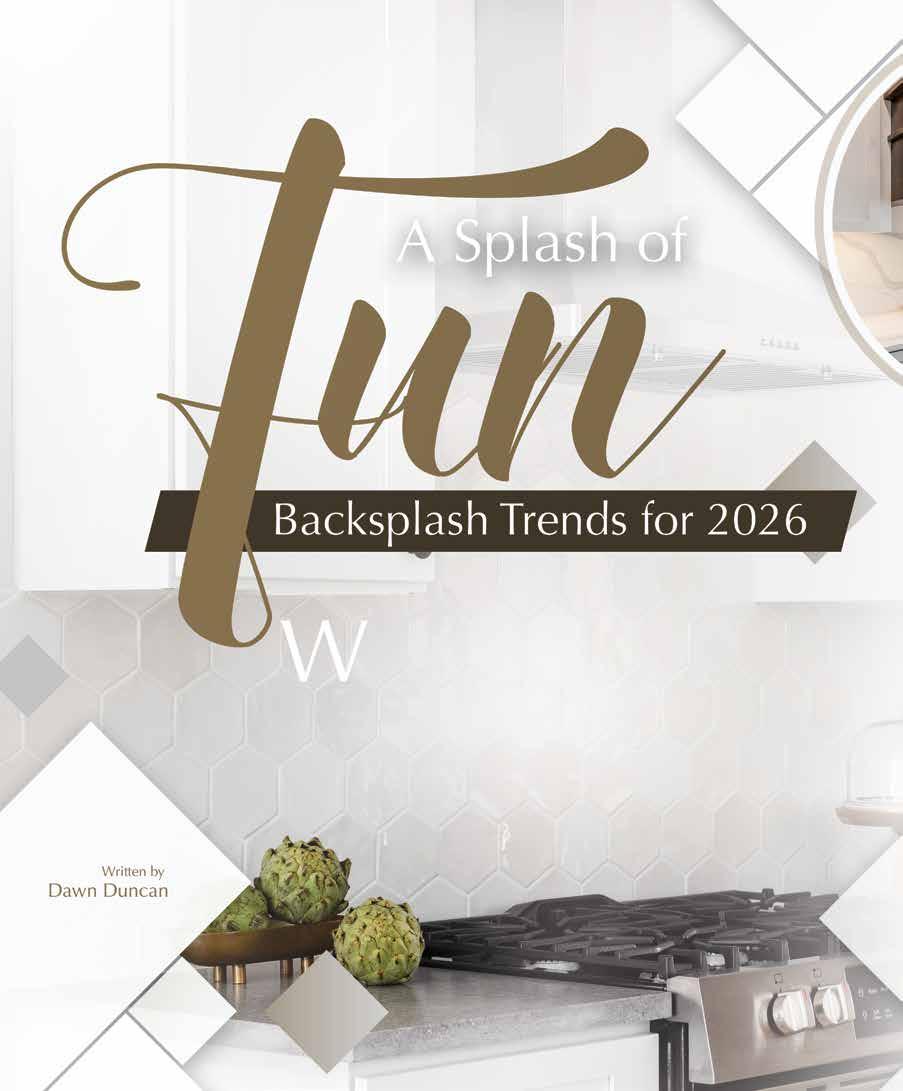
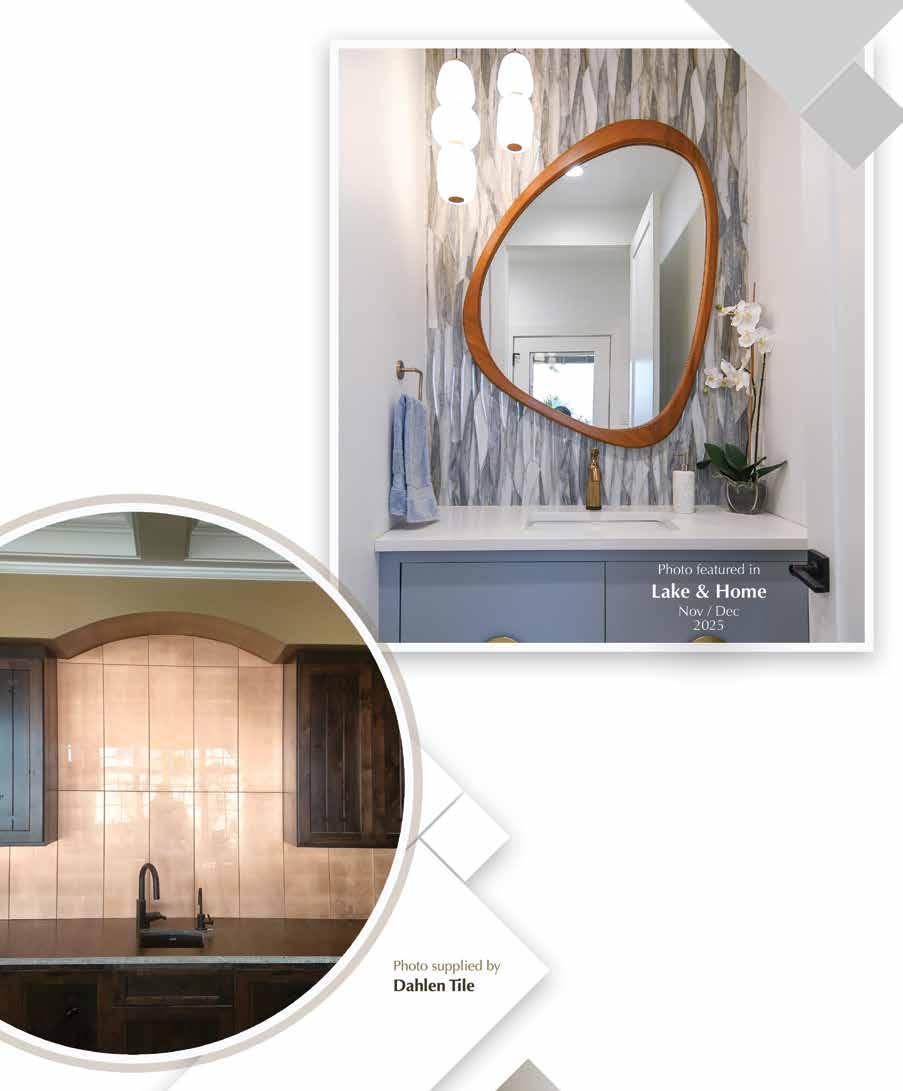
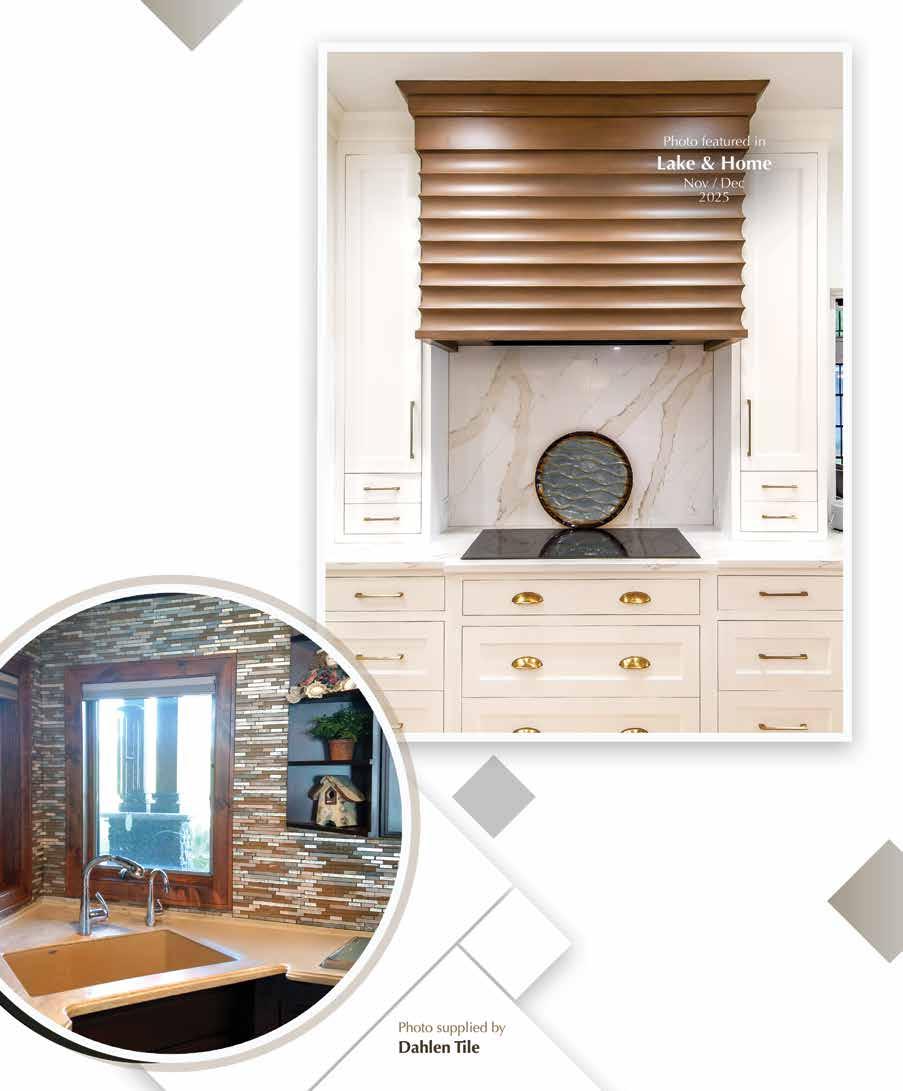
With the recent announcement of Pantone’s Color of the Year being “Cloud Dancer,” essentially a “bold white,” backsplashes are positioned to be a standout in the New Year. Nathan Dahlen, owner of Dahlen Tile in Dalton, MN, notes, “The traditional purpose of a backsplash is for protection of wet area such as a sink, counter, or cooking area above or behind a stove.” Given the prominent position of a backsplash in
a kitchen, the New Year is a perfect time to have some fun with this area of the room, whether the background of your kitchen is entirely neutral or enhanced with coordinating colors. What was once considered a merely functional aspect of the kitchen, designed to protect walls from moisture, heat, and stains, has stepped onto center stage. Backsplashes are not just utilitarian, they’re art.
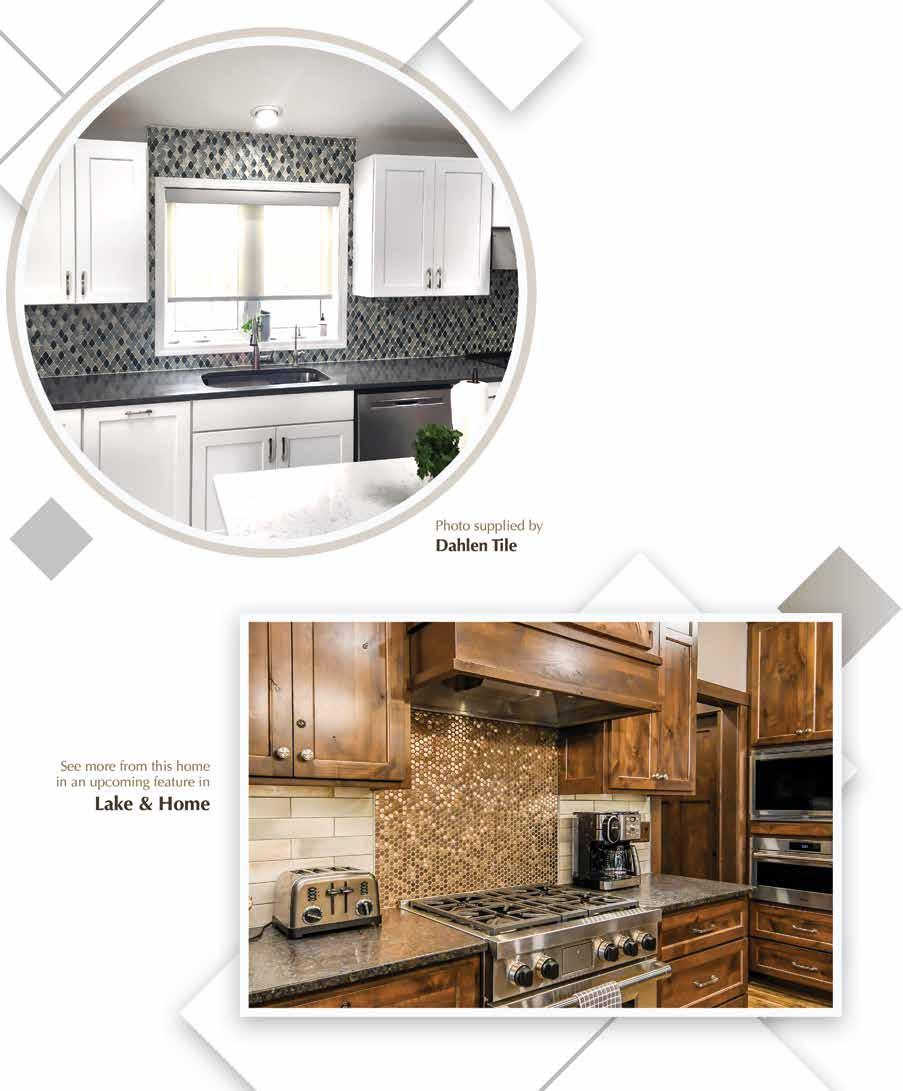
This year is an opportunity to add impact to the kitchen by incorporating trends that have been coming up periodically over the past few years. Dahlen comments that trends have advanced over the years where functionality and personal design preferences mix. Some may argue that a few of these have been around forever, leaning towards more eclectic and artisan-inspired homes. Now we are seeing multiple styles and eras of homes embrace the unique and personalized touch that a creatively designed backsplash can add.
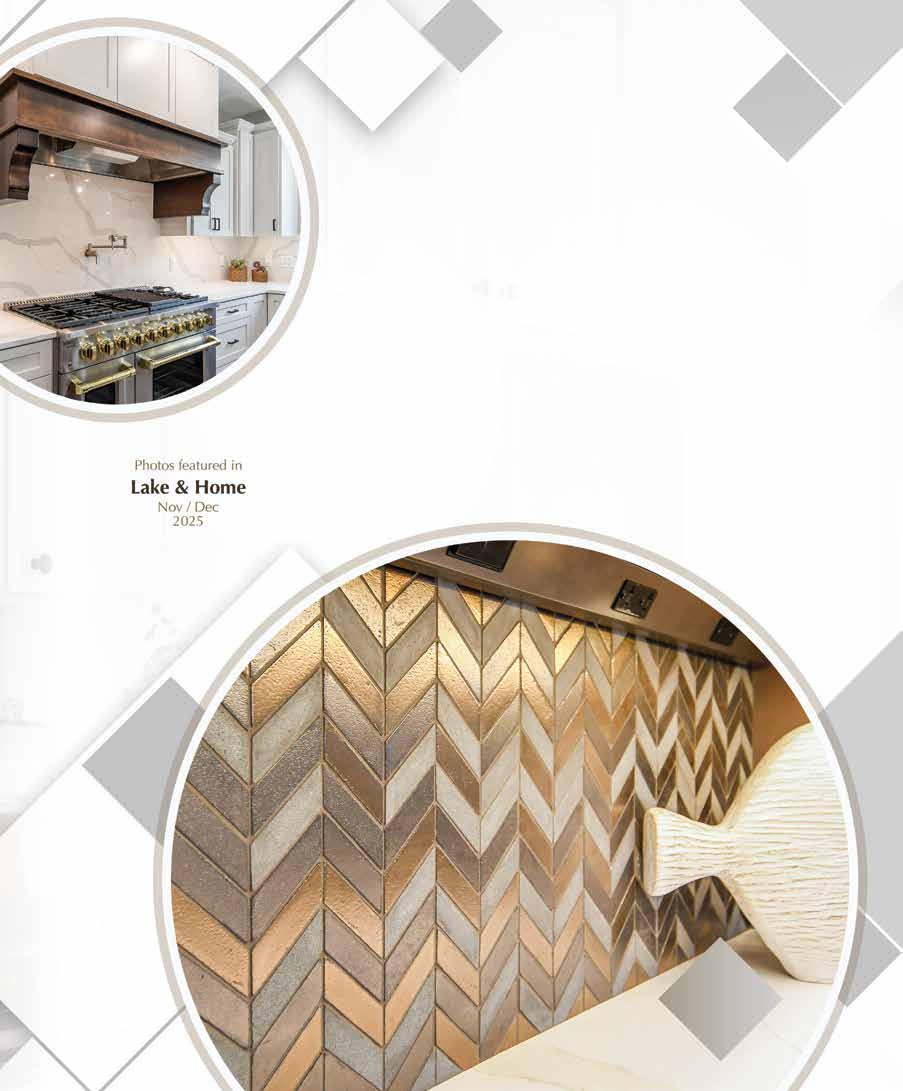
First, texture is a trend that’s building. “Choosing unique patterns of installation, textured or dimensional tile can add interest to your kitchen,” Dahlen states. When details that we normally would see on fabrics such as florals, stripes, and geometric shapes transition to hard surfaces, the look is not just visually appealing, it provides depth and dimension. Patterns inspire an illusion of movement, so the combination of these with sleek surroundings makes a major impact. And, these patterns can play well with other decorative accents throughout the space, including in the ever-popular open concept plans where colors, textures, and motifs tend to be consistent within the main living and cooking areas.
Don’t be afraid to coordinate different patterns; there are ways to bring patterns together and avoid “over matching” to create whimsy and an elevated look. This is one area where working with a designer or tile expert can be exceptionally beneficial, as they are accustomed to seeing the infinite array of products available on the market as well as in private artisan collections.
Another pattern that may not readily come to mind is plaid. A standard, traditional plaid or a more modern, brightened option is a way to create a backsplash that has several colors coming together in a highly organized fashion. Plaid is classic, it’s rich, and it stands out whether it’s in fashion or interiors. Plaid is structured and although complex, its arrangement is one that doesn’t look fussy or overdone. Homes that come alive with traditional inspiration look outstanding with plaid threaded into their design aesthetic, so consider this as a viable option for backsplashes.
“Some homeowners want a bold and dramatic look that sparks conversation. Others lean towards classic or neutral selections that allow timeless complementing with changing décor.”
Nathan Dahlen
Dahlen Tile
Color also comes into play when designing or selecting a backsplash. “Color selection can bring warmth or cool tones to a build or remodel that enhances the overall look a homeowner is going for,” says Dahlen. Although we do see color trends, not all homeowners go with these. If a person loves blue as their favorite color, it may show up in their home design/ décor, regardless of what’s at the top of the current trend list. If they dislike green and it’s the most popular color at the moment, chances are they’ll avoid including it.
“Trends vary by taste,” Dahlen comments. “Some homeowners want a bold and dramatic look that sparks conversation. Others lean towards classic or neutral selections that allow timeless complementing with changing décor.”
Artistic additions such as handpainted tiles in various motifs, from florals to contemporary designs are a conversation piece. Even when the same pattern is repeated throughout, tile by tile, no two are identical and that is what makes them appealing. Florals have had a glow up in recent years, moving away from dated styles of the 1990’s to new versions that look modern and classic at the same time.
Craftsmanship is always in style and a touch of romance and gentleness, especially in a usually “hardscape” room such as the kitchen is a way to soften the space where people gather and connect. There is great warmth in having hand painted, consciously created elements in your space and the backsplash is no exception. The collected feel of these tiles is one that is inviting.
Subtly takes on many forms in home design and in spaces that have tile and grout, going monochromatic is a way to achieve a clean, bold look. This is less of a trend and more of a mainstay (perhaps even a rule) that is seen year after year in the design/build world. All white kitchens made a comeback in recent years, but now the monochromatic look spans into the realm of color, too. Whether grout is matched specifically or not, pattern less tile will always hold a place in design for those seeking a very neutral, pulled together effect. Think beyond just white and go deeper into considering ivory, tans, blues, rich mauve, or green.
As with décor and fashion, mixed materials stand out and are still on trend. This is helpful if you’re struggling to choose between one look or another. Mix them. Stone and ceramic are a good example of two different materials that can pair well and offer the artistic impact and textural differentiation that makes a room “perfectly imperfect.” That is what brings life to a space and makes it uniquely your own. Metals, sleek surfaces, tile, wood; the ideas are rather endless when you take time to consider the unconventional mixing of materials.
Overall, 2026 offers a clean slate and a chance to rethink our spaces. Quality, creativity, and allure will come into play as designers, builders, and homeowners step outside of the mainstream options and move towards interesting and bold choices. Artisan details and creations will be the standout, and you may even want to create your own. Putting your individual stamp on your home is a beautiful way to leave a legacy and one that will be conversation piece as well. L&H
“Perfectly imperfect.” That is what brings life to a space and makes it uniquely your own.
Nathan Dahlen Dahlen Tile
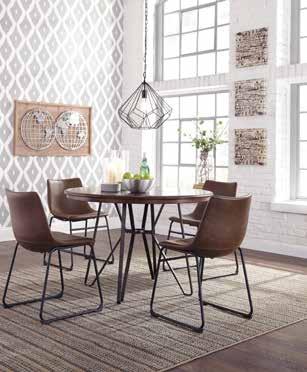
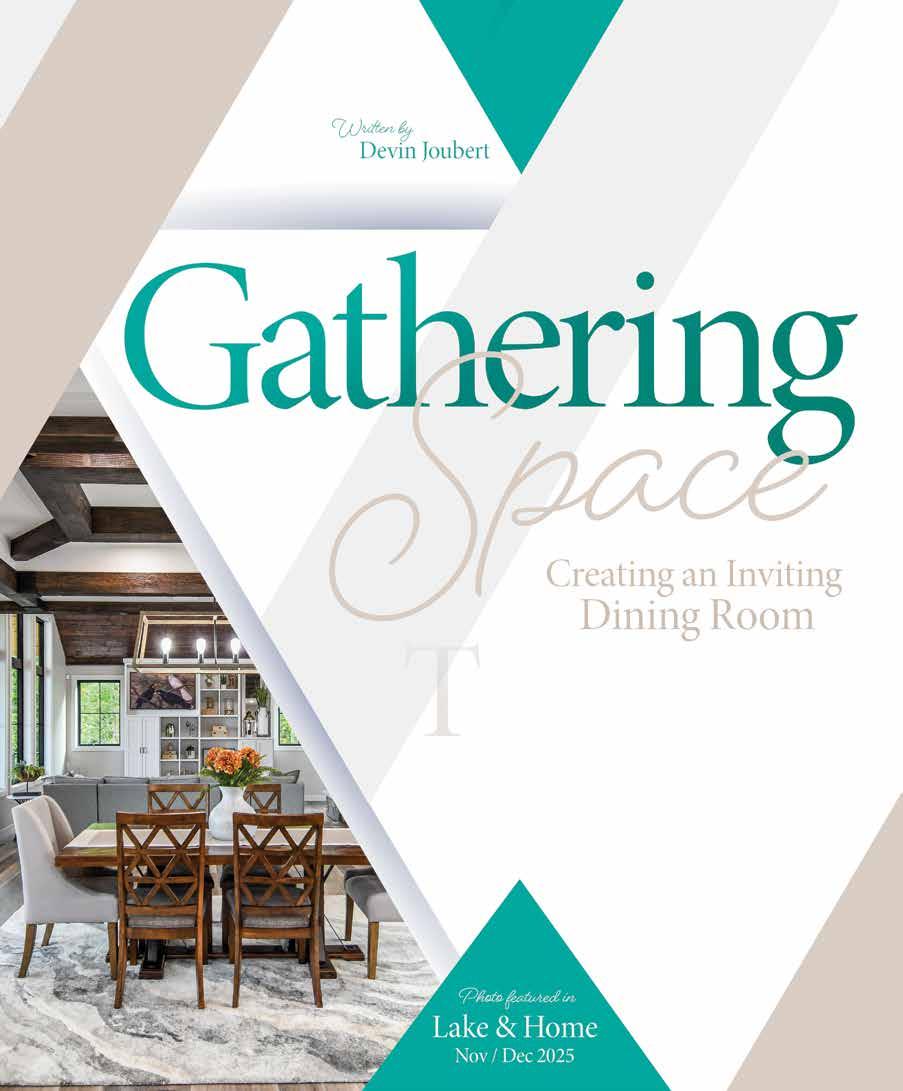
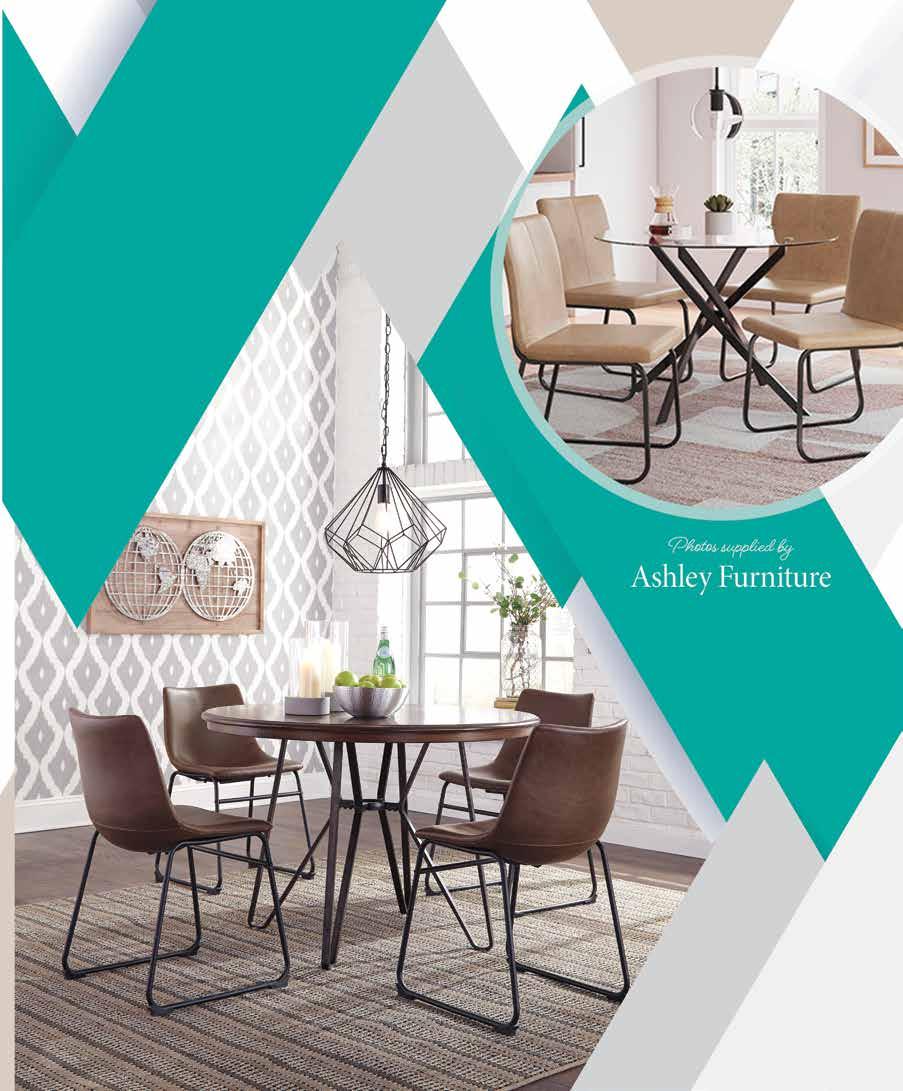
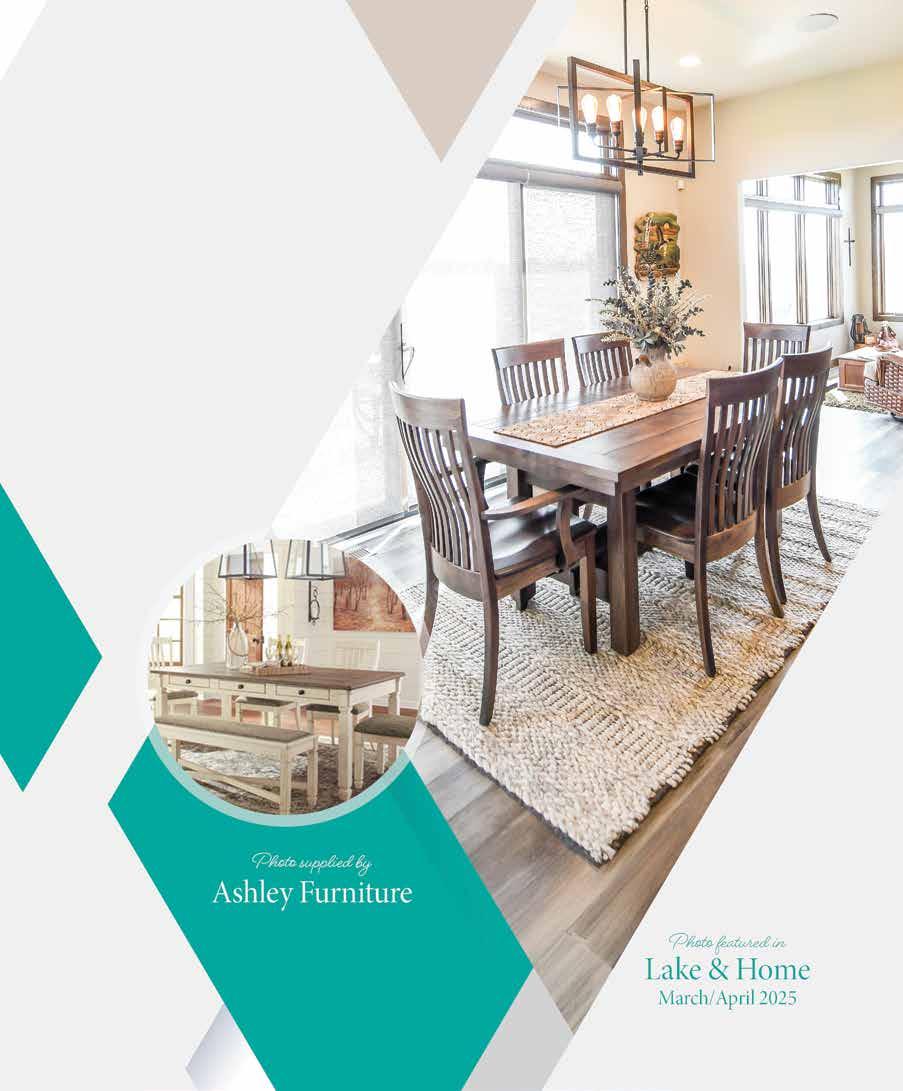
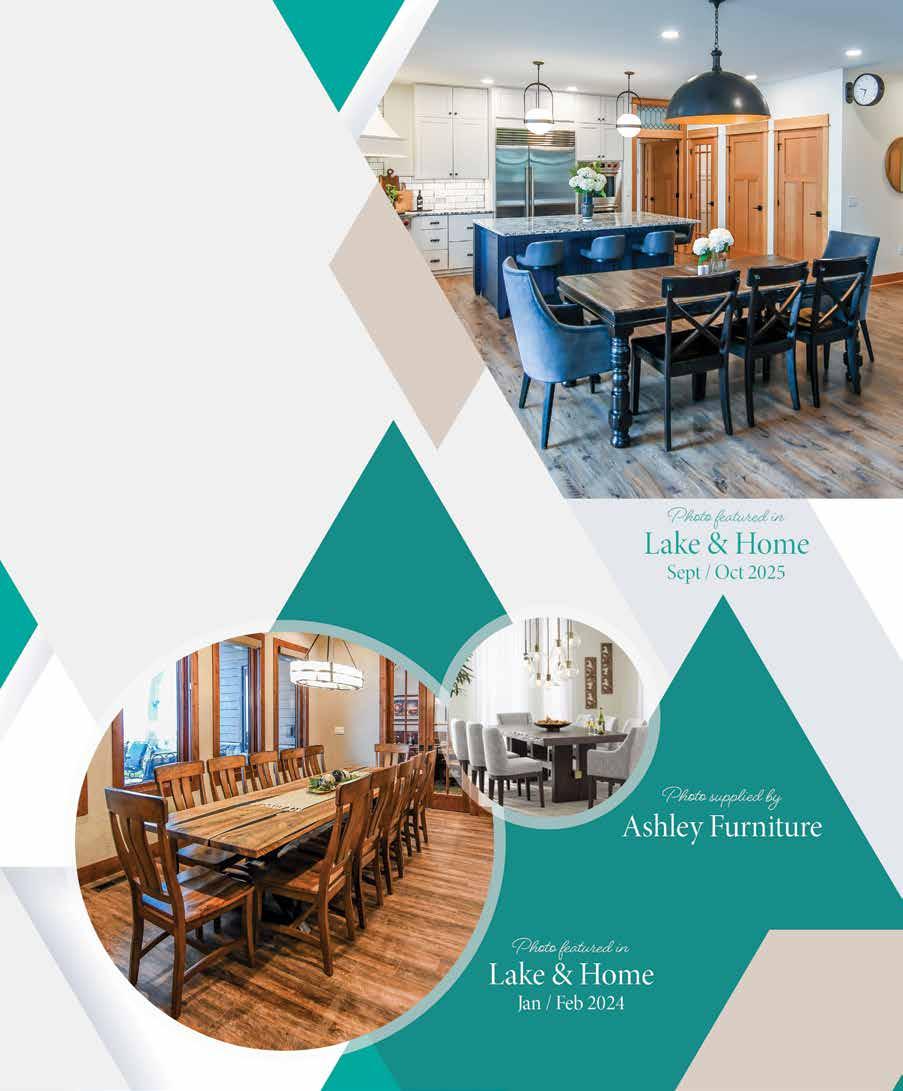
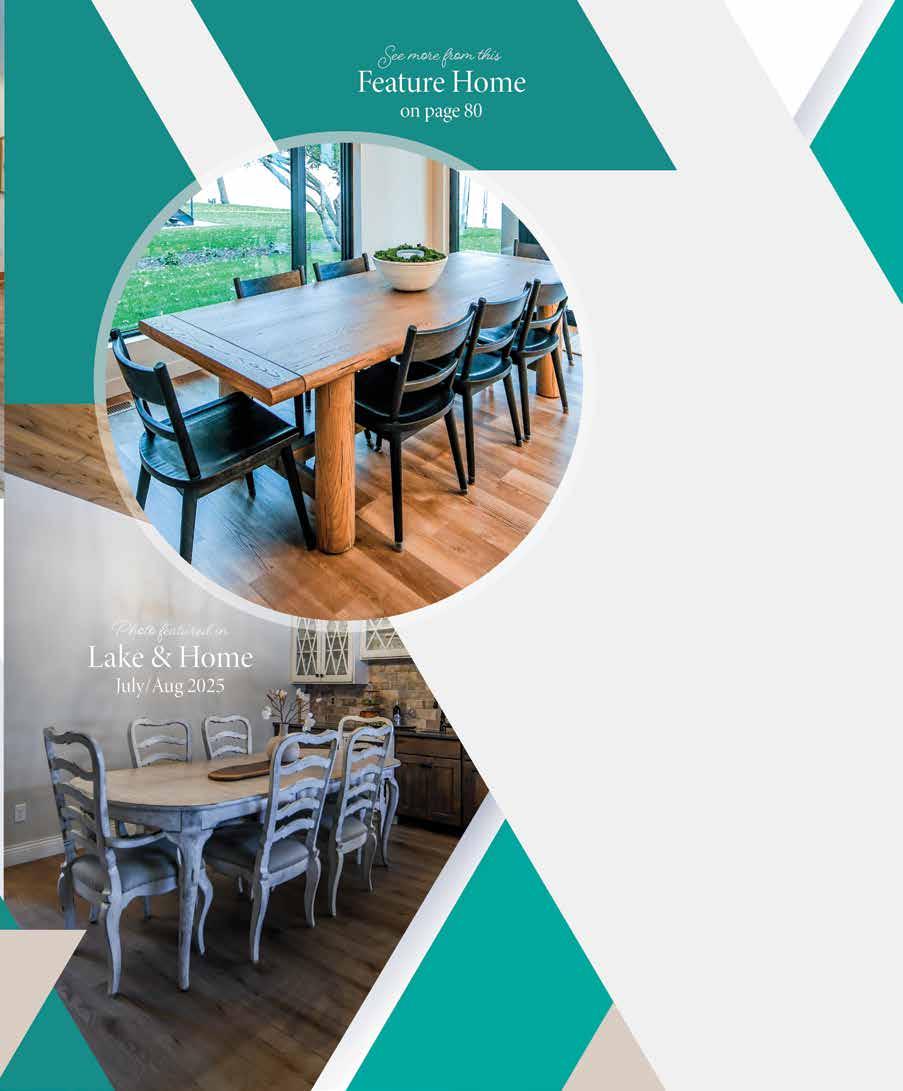
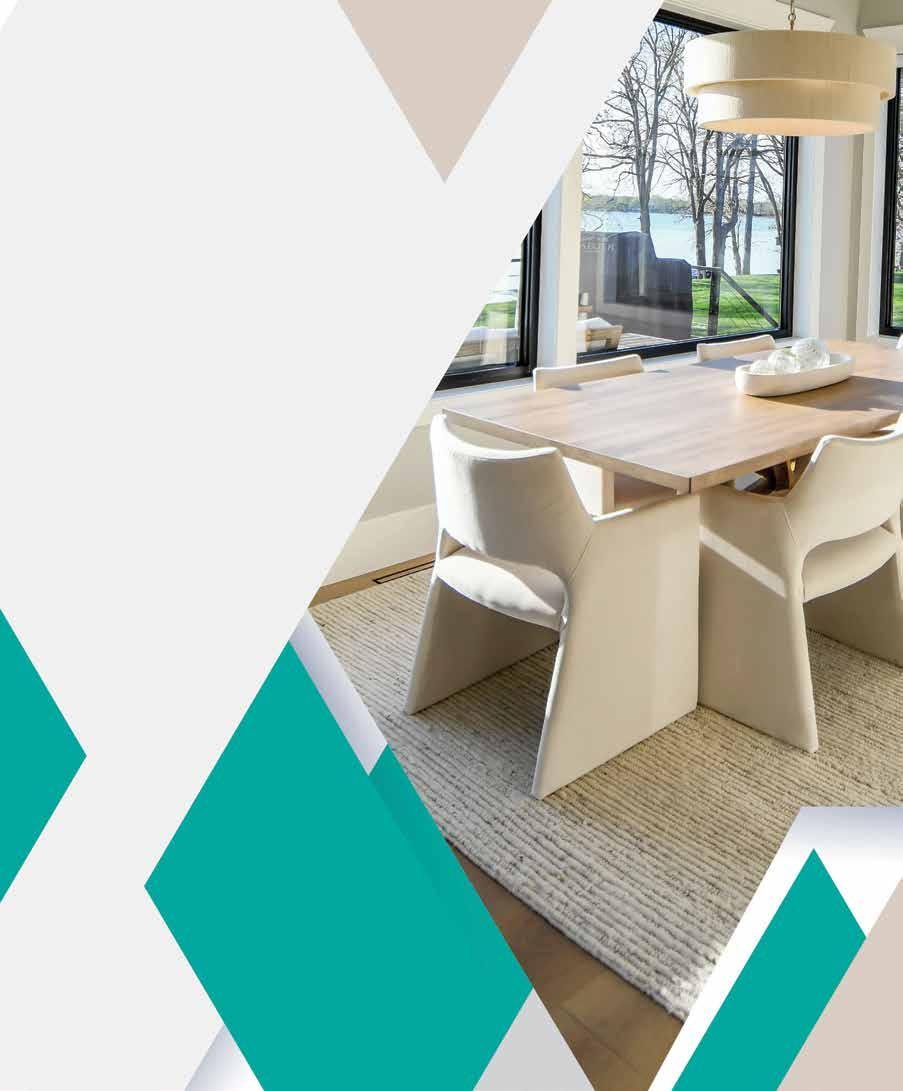
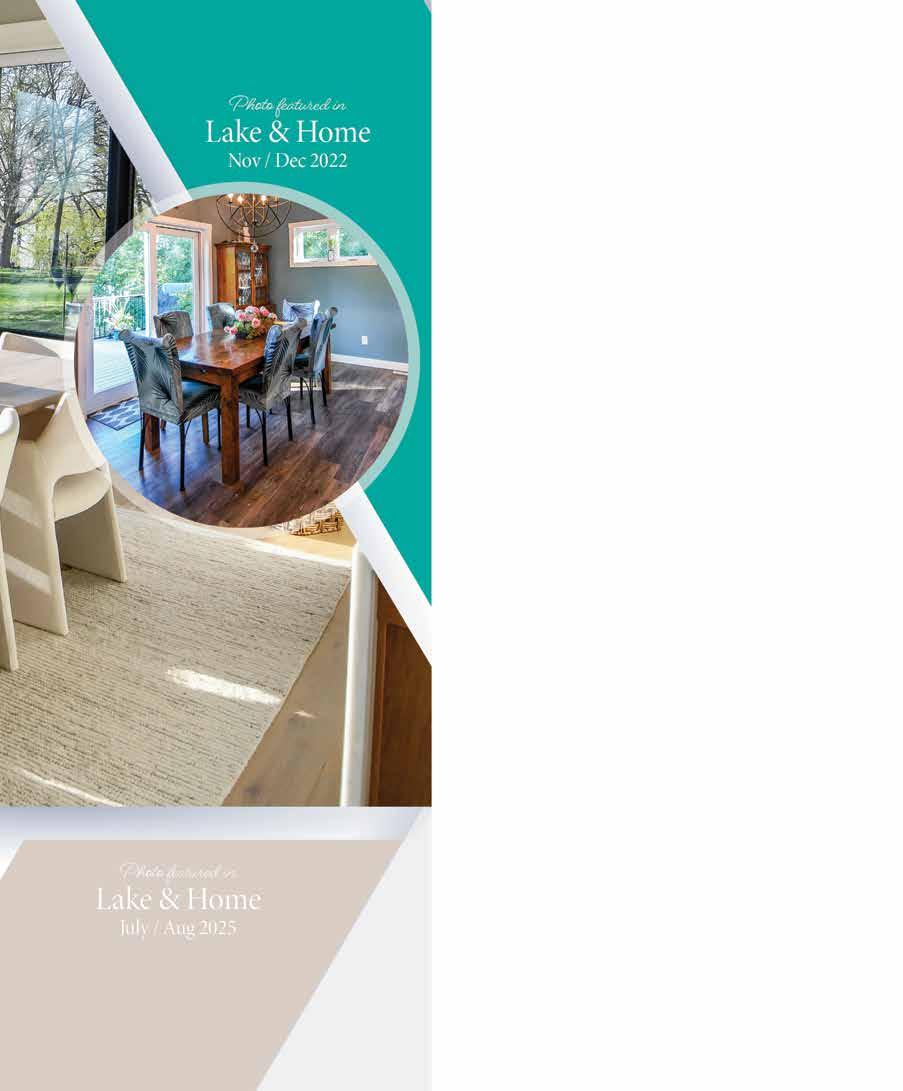
The dining room is a special place in your house. It’s where you celebrate birthdays, make memories, and where you enjoy everyday meals. The centerpiece of the space is your dining table and chairs.
Choosing the perfect combination of table and chairs can feel surprisingly complex, especially if you’re looking for something new. There are many shapes, materials, finishes, and sizes to choose from, just depending on the style you like. But it’s easy to feel overwhelmed by it all. Do you go for something modern or something warm and traditional? Do you want matching chairs or a variety of chairs and benches? Maybe a bold statement piece or something subtly timeless?
Current Trends in Dining Spaces
Other than just being where people eat, today’s dining rooms are evolving into multi-purpose spaces: where kids do homework, where everyone gathers, or maybe where you retreat to with your coffee and a good book at the end of a long day. You want to make sure your furniture is shifting to meet those needs.
That means you’ll want to make sure that the design and material work for your space. “We see people investing in timeless pieces but also designs that bring some personality and uniqueness to their space. For chairs, again, simple lines and many with performance upholstery. Comfort and function are key, without compromising on the beauty.” said Kris Sailer from Design Direction.
Some things you can watch out for when choosing your table and chairs:
• Many people are looking for tables and chairs that are created with sustainable materials such as eco-conscious woods, responsibly sourced finishes, and natural fibers. People want pieces that not only look beautiful but also reflect values that they appreciate
• Some love choosing a few different styles instead of just one kind. Some homeowners blend metal with wood; others choose to have mismatched chairs and a bench at their table. This mix brings dimension and character into the space, giving the dining room a collected feel.
• Comfort is non-negotiable. Whether it’s the ergonomics of a chair or the scale of a table, people want comfortable seating where they can linger. Think about something that’s ideal for long dinners, game nights, or remote-work mornings.
• “Don’t be afraid to make the investment in quality pieces, timeless in design but eclectic combinations versus “the dining set” mentality,” said Kris.
How to Know Your Style: Traditional, Modern, Farmhouse, & More
Choosing dining furniture becomes much easier once you know your personal style. Instead of trying to sort through every option out there it’s important to know what pieces feel like your personal style.
Here are a few different styles:
Traditional - Drawn to warm wooden tones, timeless detailing, and classic silhouettes? You might lean toward a traditional style. Traditional dining spaces also often feature rich finishes, elegant curves, and heirloom-quality craftsmanship.
Modern - This style favors clean lines, minimalism, and intentional simplicity. If you prefer sleek shapes, smooth surfaces, and a “less is more” approach you may have a modern style.
Farmhouse - This style is all about warmth and approachable charm. Think of rustic woods, soft neutrals, and a mix of textures that feel inviting and lived in.
Transitional - This works for you if you love having elements from both traditional and modern styles.
Eclectic - Maybe you gravitate toward pieces with character like mismatched chairs, vintage finds, bold colors then you’re likely drawn to an eclectic or a collected style. This approach embraces personality and storytelling.
How to Identify Your Style
Start by paying attention to what consistently catches your eye. You can also browse inspiration photos, visit showrooms, and even save favorite pieces on Pinterest and this will help you see the patterns in your style preferences.
What to Look for When Shopping in Stores
Since you know what you like and have a better understanding of your style, it’s time to go shopping or at least to go into showrooms and try out the tables and chairs. Shopping in person can help you make confident and informed decisions. Plus, seeing the furniture up close often reveals details that you can’t spot online.
Sit in the Chairs The only way to truly know if something is comfortable is to sit down and see. You’ll see if you like how the chairs feel compared to the table and the height. This way you’ll see if you like chairs with cushions, or not. When it comes to choosing cushions also keep in mind the colors in your house or whether you want something neutral.
Some people also like shopping for antique or second-hand furniture because of how it looks. “You’re going to want to feel if it’s rickety, because you don’t want to be sitting at the table and the legs crumble. You want to make sure it’s in good condition and that it’s still sturdy. Look for cracks too,” said Shari VerDorn from Fergus Home & Hardware.
Check the Scale of the Table
Table size and scale can also be tricky to judge in a large showroom. Pay attention to:
• Leg placement (Do the legs get in the way of the chairs?)
• Table width (Is there enough room for your serving dishes?)
• Chair spacing (Can you comfortably fit the number of seats you want?) Bring room measurements with you, including the walkway around the table so you can compare. A good rule of thumb is to aim at providing at least two feet per chair so each person has
enough room.
• Test extendable tables If you’re considering a table with leaves, try them in the store. Make sure they’re easy to insert and store, plus check whether the table remains stable when extended.
It All Comes Down to What You Love
Ultimately, the best dining spaces aren’t the ones filled with the perfect or most expensive pieces. They’re the ones filled with the people and moments that matter most to you and your family. Choose furniture that supports how you gather, how you celebrate, and how you slow down. When your dining room feels like you, it invites everyone else to feel at home too. L&H
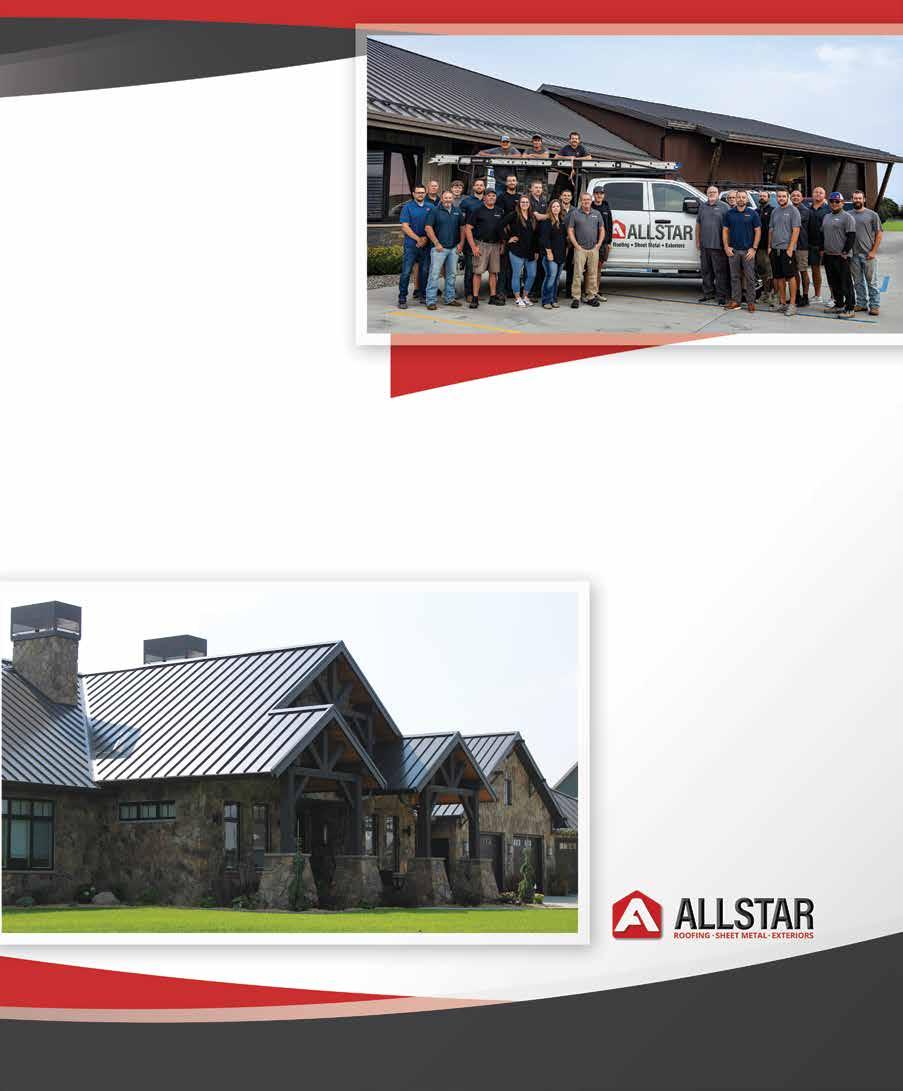
In this issue, Allstar Construction is in the spotlight. This company now has multiple locations spanning across the US in several states. Adam Olson, company president in Fargo, ND, provides details and insights about this established business.
Lake & Home: When was the company founded and who are the owners?
OLSON: Allstar Construction was originally founded in 1979 in Minneapolis, Minnesota and today is made up of several shareholders and partners.
LH: How many people are employed with the company?
OLSON: Allstar Construction is a platform company now that has 22 locations in 22 states and employs over 1,000 people. Regarding the Fargo/Minnesota group, we employ about 100 people.
LH: What services do you offer?
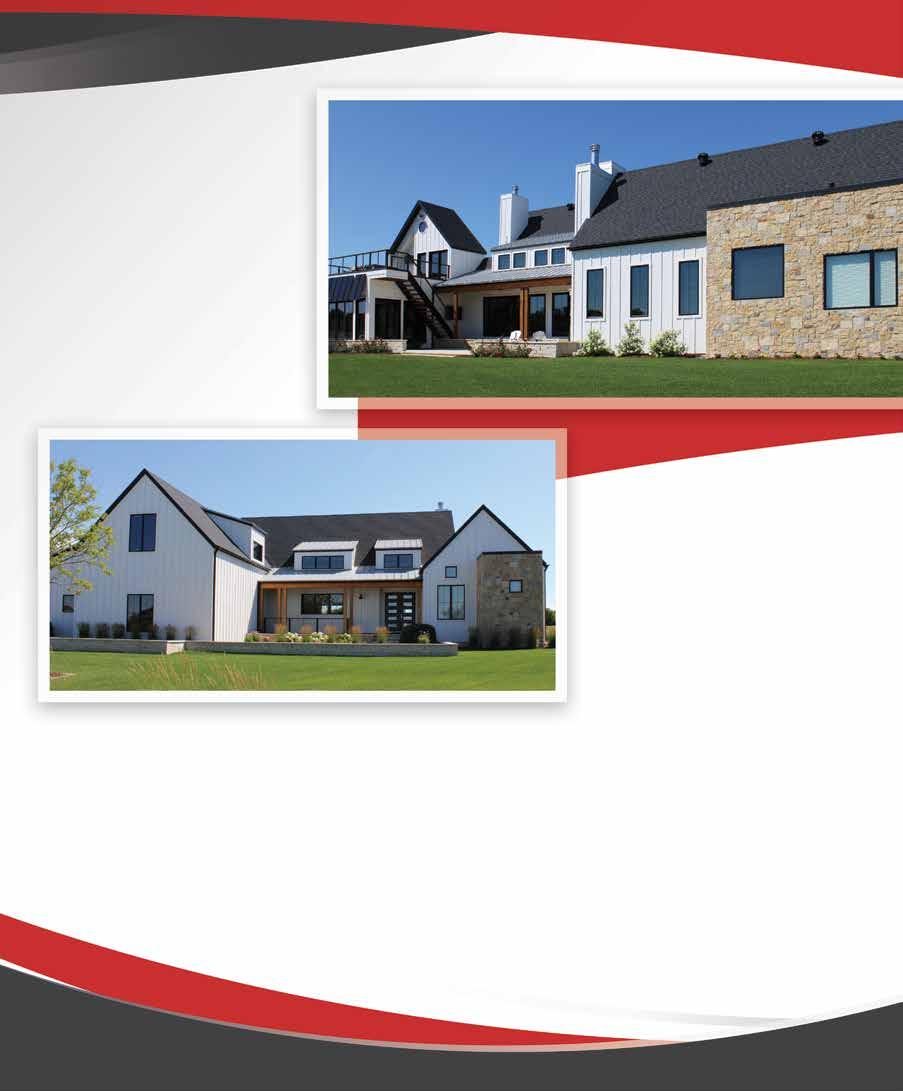
OLSON: Roofing, sheet metal, and custom exteriors; we do all exteriors minus stone or stucco. Essentially, roofing is our primary service. Custom siding is a secondary service, and exterior sheet metal and custom metal work are big parts of the business.
LH: What’s unique about providing roofing and siding services compared to other aspects of home construction?
OLSON: We get to work with a lot of unique homes and properties that require some out-of-the-box type of roofing systems, so that’s fun for us to do that custom, specialty work. We do a lot of custom copper metal work along with a lot of slate and tile work. We restore historic buildings, too. In restoring a building, we have to work through the Historical Society, and we have a lot of other specifications we need to comply with. It creates additional work but also leaves a little bit more reward of a finished product at the end.
LH: What are all the different materials you work with?
OLSON: All metals, asphalt, and shingle, and we also do lightweight composite roof systems. We also still do a lot of wood and cedar, and slate and clay tile. Every roof out there, we do. We’re certified with all the manufacturers of all these major products.
LH: What are the ideal circumstances to use each of these materials?
OLSON: The logistics and position of the building will have an impact on what will be the longest-lasting roof system. For example, we work with a lot of grain elevators. Because of all the combustible gases and material that will be inside of them,
they cannot have steel roofs—they would corrode. They have to use an asphalt system or a stainless copper material. We also do a lot of churches. Churches want longterm roofs, so we will generally go with a tile, slate, or long-lasting metal. If we do an indoor pool, we have to design a system that can withstand that high humidity and water vapor.
LH: You say your products are CertainTeed Certified. What does this mean for your clients?
OLSON: We actually make up one percent of all the contractors in the country that hold the CertainTeed Certified credential. Essentially, this means that the systems we install on your roof are going to come with a better warranty and peace of mind, knowing that it’s installed by a certified contractor using only approved products. There are warranties we can put on these properties and buildings that other contractors around the country can’t even offer.
LH: What are some of the new and innovative products that are starting to become available?
OLSON: The lightweight synthetic roof systems. They’re made of a PVC composite, and they can replicate old historic shake, slate, or standard shingles. Brava and Da Vinci are two of the manufacturers of these systems.
LH: What different types of projects do you do?
OLSON: In addition to the historical building renovations, we do a lot of high-end residential. Allstar Construction has put the roof on roughly half the houses around the Lake Minnetonka area—these are $20 to $50 mil-
lion dollar homes just to give you an idea. That’s the majority of our business. The other part of our business is all retail residential re-roofing. We are very diversified in the scale and size of one project to another, from very large multi-year projects to one-day projects. We do them both.
LH: Explain a little more about your process and how you work with clients.
OLSON: A big part of our business is relationships and delivering solutions for our clients, and builders and architects. We have a very experienced bench of strength in our team that goes deep into this type of work. In the industry we’re in, it’s all about having the right experience and the people in the right positions to handle their part of the project. Our account managers and sales reps are very in tune and understand how all this exterior product goes together, and they’re on the front end working with clients through the bidding process and the design process. They make sure that the products being de-
signed for the home are going to align and fit, not only with type of home, the style, and the conditions, but also with the elements. One thing that is very important in our business is using the right products for the right part of the country and the weather it will be exposed to regularly.
Then, we have a very experienced estimating team that we will run all these project plans through. They make sure we have accurate bidding for the scope of work and the price we are going to offer. Our production team then takes the hand-off. They are an extremely experienced group of people who have been in the building industry for most of their lives. That’s the main thing: always having the right experience in the right area of the job. L&H
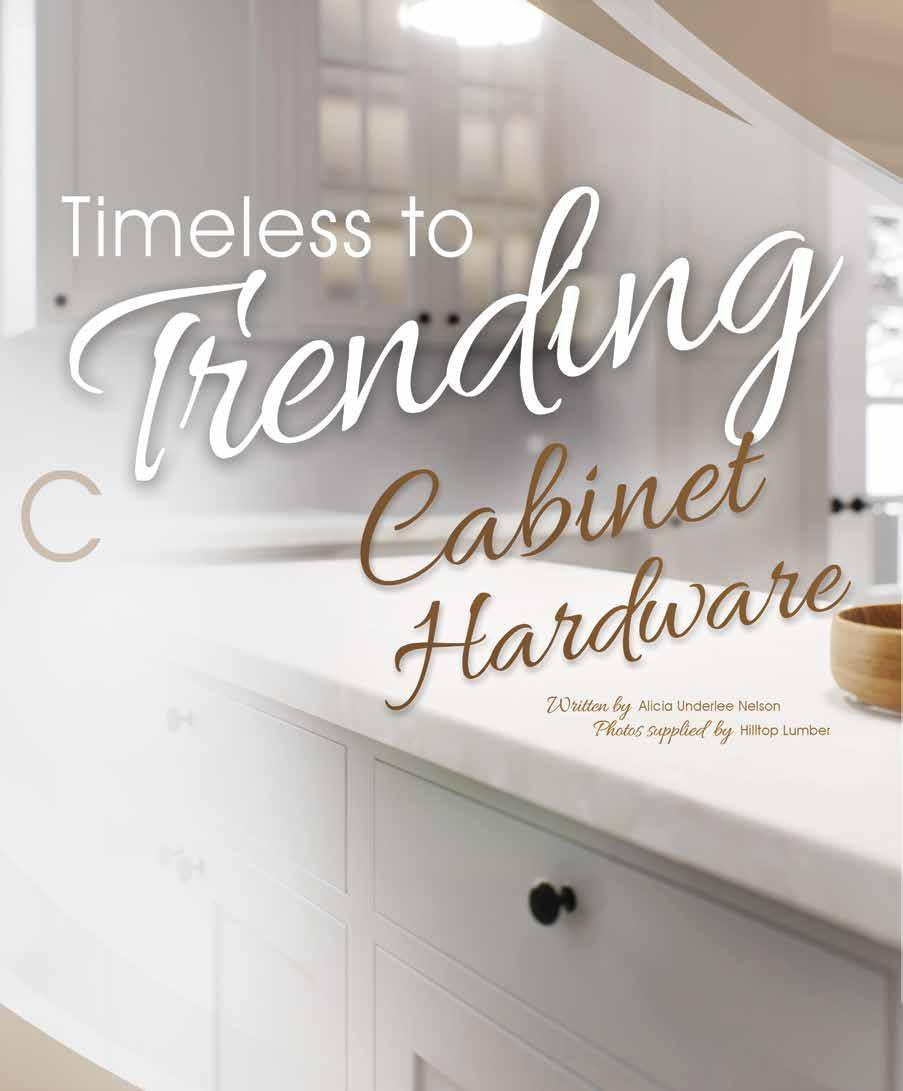
Cabinet hardware is a small detail that makes a big impact. The right choice should be both functional and beautiful, a standout accessory in the room.
“Cabinet hardware is the jewelry,” says Rosalyn Shelstad, interior designer at Hilltop Lumber in Alexandria, adding that there are many elements to consider other than aesthetics. “How does it feel in your hand?” How is its durability, cleanability, and sizing?”
Choosing the perfect cabinet hardware for your space can feel overwhelming. So we asked Rosalyn Shelstad and Tracy Jahnke, design specialist at Builders FirstSource in Detroit Lakes, MN, to walk us through some of the most popular shapes and materials in our region.
Select a Shape
The shape you choose influences the drawer or cabinet’s functionality and comfort. Some homeowners prefer hardware that blends in with other elements in the room. Others want it to stand out. There’s no right or wrong way to proceed, as long as your choice serves your style and the dexterity needs of your family and guests.
Pulls Sleek And Modern
Pulls are also called handles or bar pulls. They’re straight pieces of hardware in various materials that, when installed, create a long visual line.
Pros:
• “There are lots of shape options to choose from, from rectangular to a more tubular shape. “The tubular option, the rod, that’s going to be your more contemporary look,” explains Jahnke.
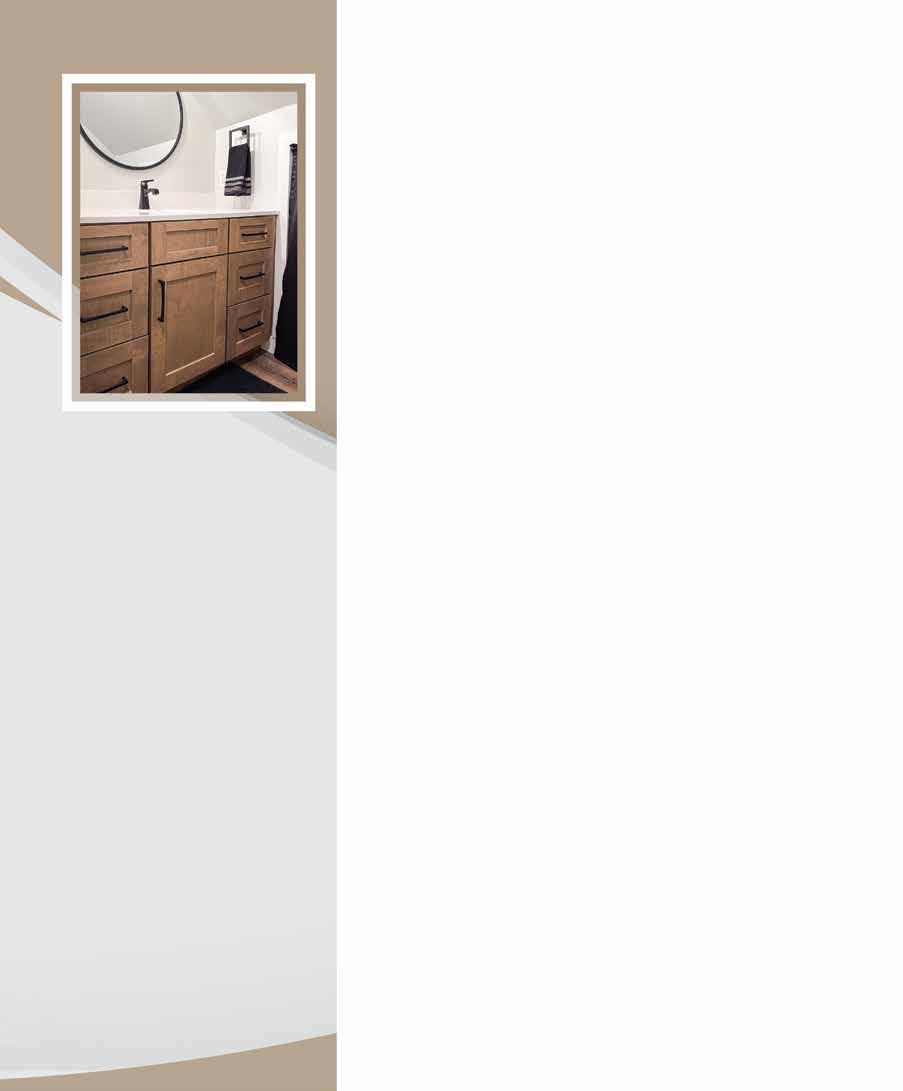
• Pulls are ergonomic, comfortable to use, and easy to grab, especially for people with dexterity concerns.
• They distribute the weight evenly, making them a good choice for heavier drawers and cabinets.
• Pulls appear clean, modern, and symmetrical, which works well with many interiors.
• They’re versatile; you can install pulls horizontally on drawers or vertically on cabinets.
• This type of hardware complements popular clean-lined cabinet options, including Shaker cabinets, slab cabinets, and full-overlay (or European-
style) cabinets. Since the face of these cabinets covers the entire frame, smaller fixtures look fussy against that unbroken line. Pulls preserve visual harmony.
• Speaking of visual harmony, some drawer pulls take continuity to the next level. “That tubular style is going to coordinate with some of the appliance handle styles,” says Jahnke. “So that would coordinate with the rest of the hardware in the kitchen.
Cons:
• Pulls can feel too modern for traditional or rustic interiors.
• They need to be level, so they can be tricky to install.
• Size and scale matter. If a pull too small or too dainty, the hardware may not function well. If it’s too large, it can look visually overwhelming.
• Pulls can snag loose clothing. Certain shapes are worse than others. “A lot of people look at the bar pull with the tail on the end, they think that they want it,” says Shelstad. “But I advise the not to. You’ll catch yourself all the time. There are other options.”
Knobs
Versatile and Classic
“The biggest question is always do we do knobs or pulls,” says Shelstad. There are many benefits to choosing knobs.
Pros:
• There are many shapes to choose from. Many people think of round knobs first, but there are interesting triangular, oval, hexagonal knobs too. You can also find novelty knobs that mimic items found in nature (like flowers and shells), human and animal figures, even objects or sculptural shapes.
• “Knobs are usually less expensive than a pull,” says Shelstad. This makes them a good choice for budget-conscious consumers.
• They complement traditional, rustic, cottage style, and transitional interiors.
• There are many finishes to choose from.
• Knobs work very well for smaller doors and look right at home on cabinets that resemble furniture.
• They’re very easy to install.
• Different types of knobs can be mixed and matched for an eclectic look that works with artistic, bohemian, or globally influenced interiors.
Cons:
• Knobs can be harder to grab, which make them less desirable for people who don’t have as much fine motor control in their hands.
• It’s harder to open a large door or heavy drawer with a knob.
• Knobs can also twist loose as time passes.
Square Clean and Minimal
Square cabinet hardware is trending. This buzzed-about shape is available in knobs and pulls, which gives homeowners options.
Pros:
• “One of the more popular styles is a square style for the clean aesthetic,” says Jahnke. She says that customers see it in design magazines and pin it to their Houzz and Pinterest boards, so they want to try it for themselves.
• Square knobs and pulls come in many different finishes.
• “One of the benefits to the square style is a clean line,” Jahnke adds. “The Shaker style cabinet door is still really prominent, so this hardware coordinates well with that door style.”
• Some homeowners report that square knobs are easier to grab, since there’s more surface area.
Cons:
• There’s a catch; square pulls and knobs can actually be much less ergonomic if they have sharp corners.
• Those corners can also snag clothing and even nick your hands, so opt for a smoother finish.
• Square hardware can look crooked and off-center if it’s not installed properly.
Mix & Match Increase Your Options
“I’ve done a lot of kitchens lately where you have the stacked look for the cabinets,” Jahnke says. “There’ll be a shorter cabinet on top and a taller door below it. In order for the look to not be overpowering, you select a knob of some sort for the shorter cabinets and a pull for the doors.”
Pros:
• Installing pulls on large drawers or appliance panels and smaller pulls on upper cabinets keeps the look balanced and cohesive.
• Two different types of cabinet hardware help break up the monotony of the room, especially in large spaces.
• Selecting the right type of hardware for the drawer, cabinet, or door helps the space function better.
Cons:
• It can be challenging to get the balance right, to choose the right size fixture, and to keep everything flowing.
• Preparation is key. Sketch everything out before you begin or consult a designer for best results
Materials
The material you choose influences more than just the look of your cabinet hardware. It also affects its durability, cleanability — even the feel of the knob of pull in your hand.
Matte Black
The Go-To
Black fixtures are here to stay. Our design experts say that matte black hardware has become a modern classic for several reasons.
Pros:
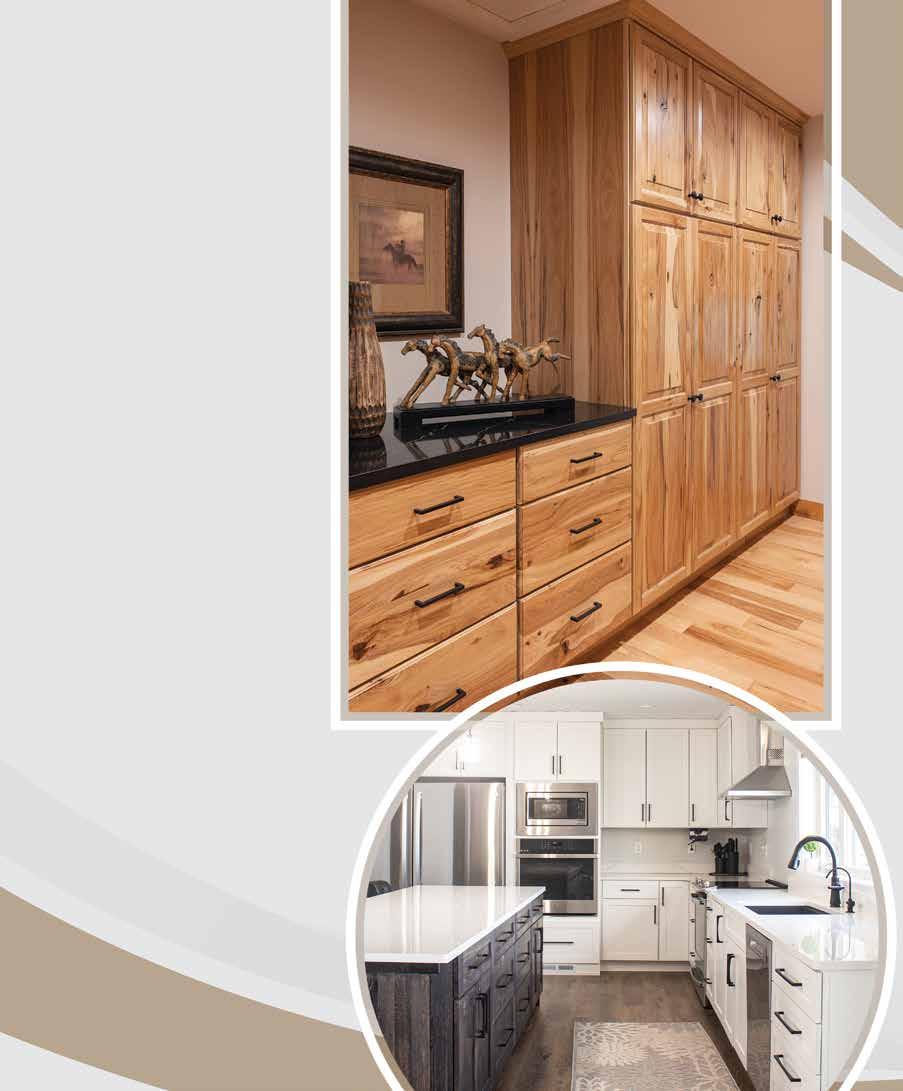
• “Black is particularly relevant right now,” says Jahnke. “It’s still in line with the farmhouse style trend.”
• Black feels timeless, so it works well in other interiors too, including industrial lofts and mid-century modern homes.
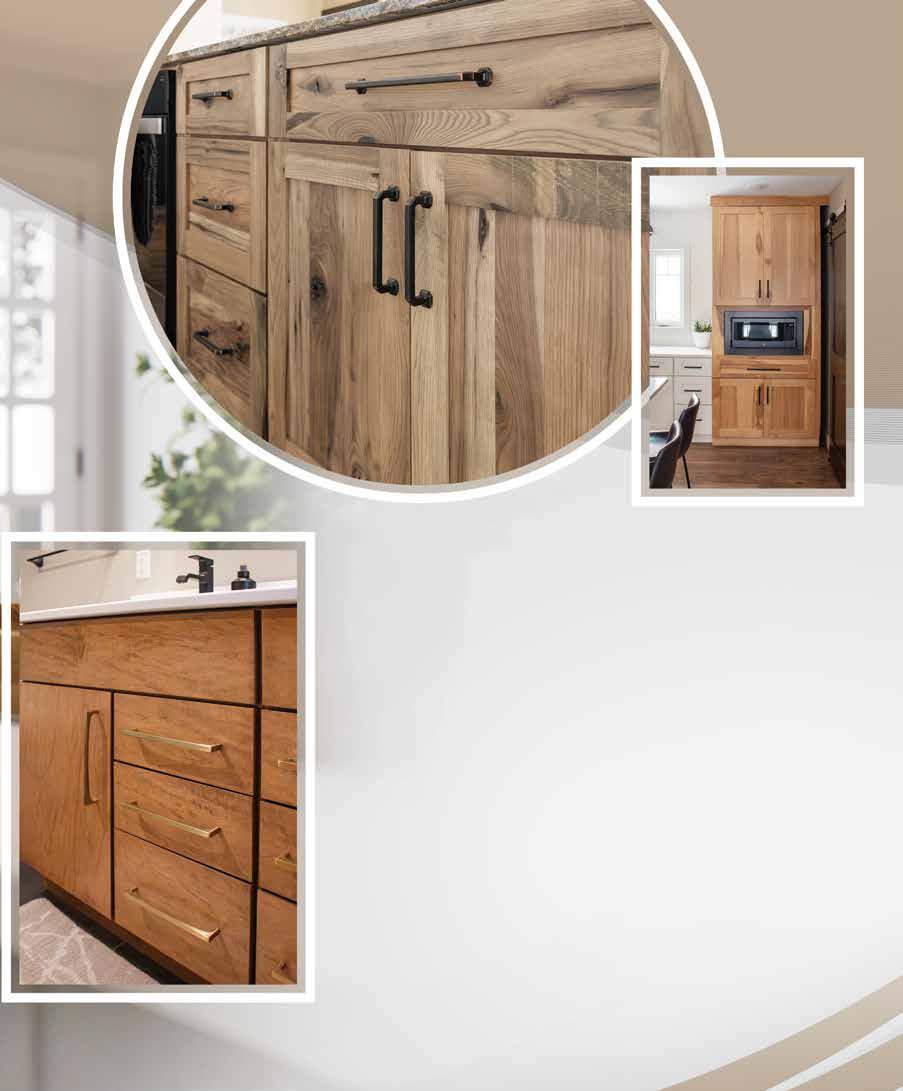
• “You can pair black with anything,” adds Shelstad. It looks good with light and dark cabinetry and complements both warm and cool toned wood.
• The dark color and textured finish hides smudges and fingerprints well.
Cons:
• Because black is so on-trend at the moment (and has been for a while) there’s a chance of overexposure.
• Black hardware can show scratches over time.
• Since black is so dark, there’s no contrast against very deep colored cabinets.
Brushed Brass An Updated Classic
This traditional material is back and it’s been reimagined for a new generation. It’s an intriguing alternative to black hardware.
Pros:
• The rich, warm tone of brass plays beautifully against wood cabinets and most painted cabinets.
• It looks expensive and luxurious, adding a high-end touch to a room.
• Brass is naturally antimicrobial, which makes it a good choice for households concerned about germs.
• The soft, matte material hides fingerprints and smudges nicely.
• This material develops a patina order time, which gives it a unique, organic feeling.
• It’s trending. “Brushed brass has always been a little popular, but now it’s really trendy,” says Shelstad. “People are seeing it, so people are liking it.”
Cons:
• Not everyone likes the patina that brushed brass acquires. And it can tarnish or darken quickly in humid spaces like bathrooms.
• To prevent this tarnishing, regular polishing is required unless it’s sealed.
• Brushed brass cabinet hardware is usually more expensive than other alternatives.
Stainless Steel Durable and Utilitarian
Stainless steel is a perennial favorite. It stands the test of time and works well in busy households.
Pros:
• Stainless steel hardware is durable and resists rust.
• It’s easy to clean and maintain.
• Because many modern appliances are made of stainless steel, choosing hardware made of the same material makes a kitchen appear seamless and cohesive.
• This material plays well in modern and contemporary kitchens, as well as in industrial interiors.
Cons:
• It can easily smudge.
• Stainless steel can look much more utilitarian than brass or even black fixtures, so it won’t work well in spaces that emphasize traditional styles or a cozy feeling.
• This is a cool-toned material, so it works better within a cool-toned color scheme.
Chrome Shiny and Sleek
Chrome is a high-drama alternative to stainless steel. Shelstad predicts we’ll be seeing more of it in the Midwest in the very near future.
Pros:
• Chrome is so shiny, it’s almost mirrorlike. It provides a sense of drama while preserving the clean lines that many homeowners love.
• It looks great in modern and minimalistic interiors where sleek lines are the goal.
• This material is also very resistant to moisture and corrosion, so it works well in humid environments like bathrooms and kitchens.
• Easy maintenance means this a good cabinet hardware choice for busy households.
Cons:
• It shows smudges and fingerprints easily because it’s so reflective.
• Chrome is vulnerable to scratches, both from use and from harsh cleaners.
• Like stainless steel, it’s cool-toned, so it doesn’t pair as well with warmer color palettes.
Bronze & OilRubbed Finishes
Old School Character
Oil-rubbed or aged bronze cabinet hardware provide eye-catching texture. It’s a material that has stood the test of time.
Pros:
• “Oil-rubbed or aged bronze is a little warmer,” says Shelstad. “So it works well against those very traditional brown tones.” It also pairs well with warm-toned woods, rich whites, and natural stone.
• Bronze is time-tested, so it evokes a sense of history and craftsmanship.
• They complement traditional, cozy, cottagestyle, and rustic homes perfectly.
• Bronze is durable and resists corrosion.
Cons:
• The color and finish can vary between batches, which some homeowners may find distracting.
• Bronze is usually more expensive than other options.
Updating cabinet hardware is an easy and cost-effective way to enhance the look of even the simplest kitchen, bathroom, or storage space. Incorporating a refresh here and there, such as with cabinetry, is an easy way to keep your home looking stylish and also ensuring maximum functionality. L&H
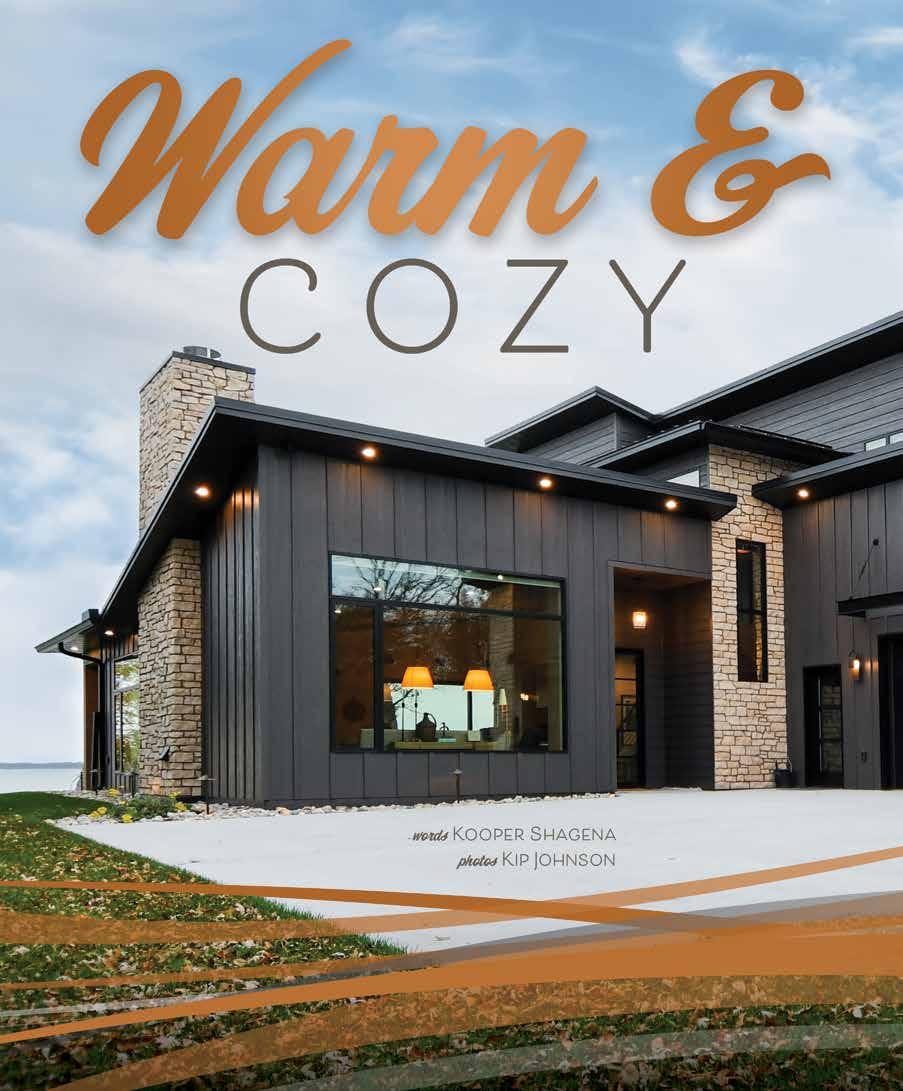
One arm is for hanging over the pontoon’s edge, getting sunburned, and the other is for pointing at the shoreline, saying “look at that one!” Admiring all the cabins and lake homes from the water never gets old, but it’s not too often that you jump out and meet the owners behind those great facades. That’s what homeowner Sonja did one summer day in 2021, and now she and her husband own their own custom home on Otter Tail Lake. Their story is full of these remarkable twists, turns, and unique circumstances that have led them to where they are today. To get to the very beginning, we must go back about 40 years and 300 miles.
In a small town in northwest Iowa, a young girl ran track, played basketball, and cheered for her high school’s wrestling team—she was a bit of a “tomboy” and found herself outdoors most of the time. Once school let out each summer, Sonja and her family would make the trip to Ottertail, Minnesota and stay at one of the resorts there. Many families had
traditions like this—including that of one particular wrestler all the way from a certain small town in Iowa.
“As children we both vacationed there,” Sonja says. “Different resorts, but we both vacationed on Otter Tail Lake.” This is a remarkable coincidence for any home-towners from hundreds of miles away but nothing short of extraordinary for two kids who would later celebrate 36 years of marriage together.
“Same school, same church, same hometown,” says Sonja. She and Dave have been together since she was 14 and he was 16, and now they’ve raised three kids of their own— all of whom are now married themselves. Blessed with 10 grandkids and awaiting the arrival of the 11th, Sonja and Dave knew they wanted to create something lasting that would bring their family together for many years, on the same lake that brought them together.
"We thought that Otter Tail Lake had a lot of meaning and purpose because we both made memories there with our families. We wanted to continue that legacy."
Sonja | Homeowner
“That’s why it was so meaningful when we were talking about a vacation/retirement home and building a legacy for our kids and grandkids. We thought that Otter Tail Lake had a lot of meaning and purpose because we both made memories there with our families. We wanted to continue that legacy.”
It must have been fate, because Sonja and Dave had only just begun to talk about a place like this when they found the perfect spot.
“On a Sunday afternoon we saw this lot that had a bunch of tall grass in it and stuff. We thought, ‘it doesn’t look like anyone’s been here.” Then the next day the neighbors called and said it’s for sale. It was just a thought, we weren’t really looking, but it just happened.”
The lot on Otter Tail Lake became theirs in 2021. Nestled in the overgrown grass was a small cabin of about 700 square feet with two bedrooms and one very small bathroom. They planned on keeping this little cabin at first and just fixing it up—starting with a good mowing session.
“We were hoping to renovate it, but we ran into problems,” says Sonja. “The water heater leaked and we replaced the sliding door— finding out that the frame was all rotted.” They tried their best to save it, but it just wasn’t meant to be.
“One thing led to another, and we decided just to tear down and start over.” Now, they were going to be first-time home builders. Tear-down of the original cabin started in the fall of 2023, and the new foundation was poured later that same winter.
"They just got a feel for what we were envisioning, and they took it from there."
Sonja | Homeowner speaking about hilltop Lumber
“We’re not from that area so we didn’t know where to even begin with the tear down,” Sonja says, remembering the overwhelming process and the pressure of getting started. “Whom do we get to tear it down? Where is the landfill? There was just so much research we had to do.” They had the foundation set then waited for the spring of 2024 for the first "sticks" to go up.
These sticks, the bones of the home, came from a local lumberyard: Hilltop Lumber in Ottertail. Before the actual build began, Sonja and Dave met with a professional architect from Hilltop Lumber to explain their goals for their new vacation home. This is the first step in the project process at Hilltop; have a brainstorming, conceptualizing session with the architect, and then work with the sales team to draft an accurate material estimate which is then shared with a potential contractor.
“We had a good vision already of what we wanted, so they sat down and listened to us,” Sonja says. “That was the biggest thing. They just got a feel for what we were envisioning, and they took it from there.” Communicating a concept can be difficult if you’re without an architecture or interior design background. You know how you want your home to feel and how you want to feel inside it, but trying to translate this into a floorplan that can be understood by builders and contractors can be intimidating. But Sonja and Dave persevered and trusted the professionals they chose.
April soon thawed into May, and the summer began; this is where the fateful pontoon ride comes into play. On that lazy cruise, Sonja pointed out a house on the shoreline, a house she could see herself and her family making memories in.
“So, we drove there and I knocked on the door. They invited me in and told me all about their build and their general contractor, who was Dave Erwin Construction.”
“Next thing you know,” says Dave Erwin, owner and founder of Dave Erwin Construction, “the customers contacted me to interview, and the rest is history.”
Sonja was actually welcomed into the home and given a tour that day, which sold her and her husband on Dave Erwin’s company’s craftsmanship, setting up a relationship that would eventually give them their dream home.
Dave Erwin Construction specializes in lakefront properties with a repertoire on Lake Melissa, Battle Lake, Detroit Lakes, Deer Lake, and more around the area. Lake properties in particular can offer specific challenges for prospective home builders, so choosing an experienced and well-reputed contractor is essential.
“Typically, suburban or city projects have a certified building inspector that inspects various stages of installation practices of the contractor,” Erwin says. “When you build out on a lake there is no certified building inspector to inspect whether the contractor is following code or installing to the level of quality required by the state. That’s why it’s important to make sure you’re hiring a builder who looks out for your best interests.”
Dave Erwin Construction has built their reputation on integrity and transparency which is apparent in their client testimonials. The team provides a detailed plan of the build from start to finish with a comprehensive list of scheduled milestones, involving the clients as much or as little as they’d prefer.
“We offer upscale construction services and unbeatable customer satisfaction. We take care of everything from the building permit to scheduling the installation and connection of your LP Gas Tank.”
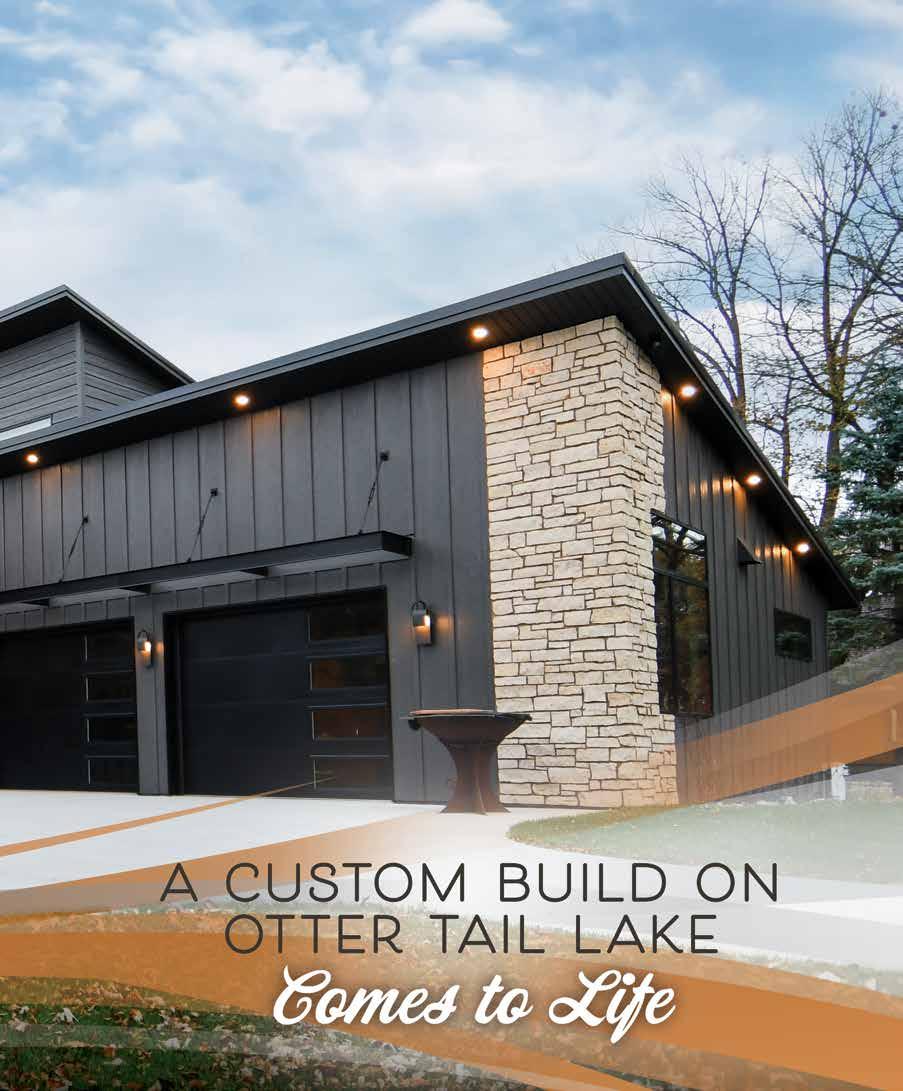
The driving concepts for the custom home are modern rustic style and open concept. The special details—Sonja and Dave’s personal requests—that make this home unique will be revealed as we continue on through this second-hand tour of the beautiful build.
Usually, and rightly so, the first detail that homeowners are proud to share is their square footage. With two complete levels and 2,700 square feet to this Otter Tail Lake Cabin, the home’s square footage is certainly not insignificant. But what Sonja and Dave paid special attention to is a form of square footage sometimes overlooked or taken for granted: the ceilings. They saw potential where some may have idly assumed a background (above ground?) of drywall and empty space.
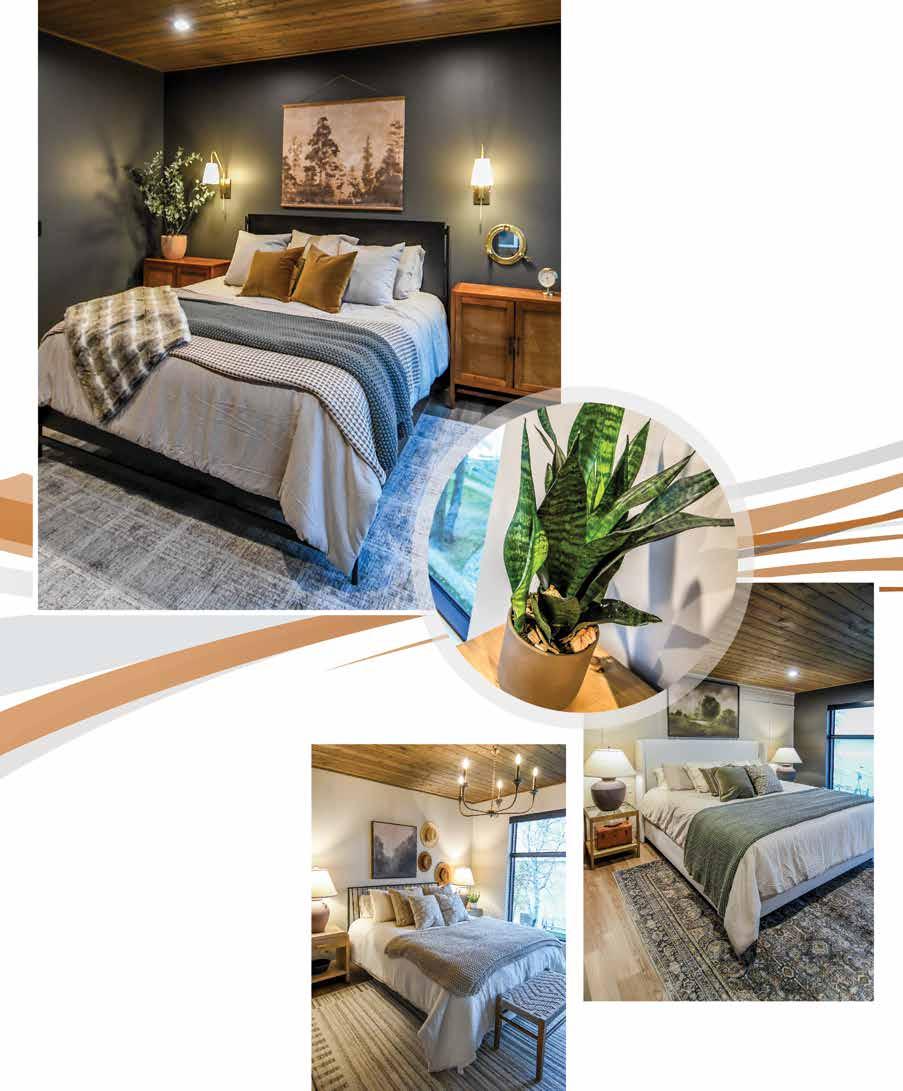
Ceilings of cedar run throughout the entire home. Above every bed, bathroom, sink, stove, living room, and staircase are rich planks of natural cedar shiplap—contributing to the air of warmth and authenticity that Sonja and Dave dreamed of, extending even to the garage!
This is another area of a home that can be taken for granted that the couple had specific aspirations for. The garage is large and comfortable with a full service “man cave” and grill station, all under the canopy of natural wood.
“We grill just about every night,” says Sonja, which makes the space much more than just a parking spot.
Back inside the main building there are three bedrooms and two and a half baths, with the primary bedroom suite on the main level and one very special bedroom upstairs.
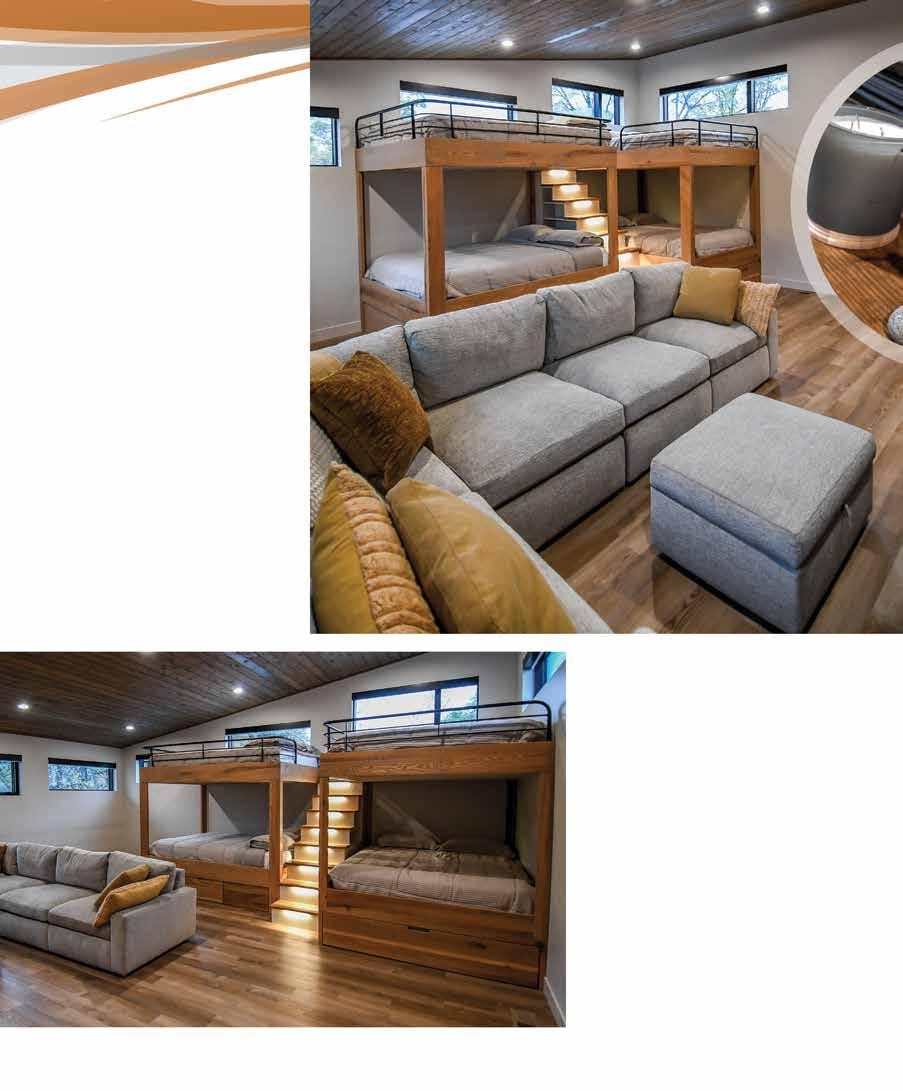
Sonja and Dave wanted to design a special space for the grandkids, where they could get up to their own hijinks and have sleepovers all together at the lake.
“We have a bonus room with custom-made bunkbeds,” says Sonja proudly. “It has five queens.” This translates to two top bunks, two bottom bunks, and one pull-out trundle—the makings of a well-rounded ecosystem of bunkbed culture for the colony of siblings and cousins to develop. Just imagine… will the high-prize locations be the upper or lower beds? Who will usurp whom? What games will they invent while the adults are fast asleep? All we can be sure of is that they will remember those nights, all together as kids in the family lake cabin, long into adulthood.
Sonja and Dave have clearly brought their own childhoods into the spirit of the home, of course with its location, but also with a large wood-burning stove in the heart of the living room that keeps them connected to their upbringings.
“I grew up with a wood burning stove as primary heat. Since we dated,” Sonja refers to those early days when she and Dave were teenagers together, “he was always at the house, so he started helping us cut wood. Our home has a wood burning stove as well because he loves to split wood; it’s good for his soul.”
Sonja and Dave agree that, although the stove is not their primary heat source for the entire house, its intimate warmth evokes a feeling of home and coziness as logs crackle and flames dance; bringing a touch of old-fashioned, analog comfort to the brand-new build.
They wanted to avoid the clinical or sterilized feeling that can seep in unintentionally to a new house. “Sometimes, if it’s modern, it’s so industrialized,” Sonja explains. “We both said we wanted it to be warm and inviting and cozy. When people come in, that’s the first thing they say.”
These warm and cozy aspirations were another reason that Sonja and Dave made the decision to tear down the original cabin and start over: they wanted to be able to visit the lake home in both summer and winter, and the first cabin was not equipped for four seasons. Now, they can be comfortable whether the lake is blue and the sun is sparkling off the ripples, or if it’s shining bright white with snow cover over five inches of ice.
No matter the weather, they wanted to be able to be at the lake—and to see it in all its beauty.
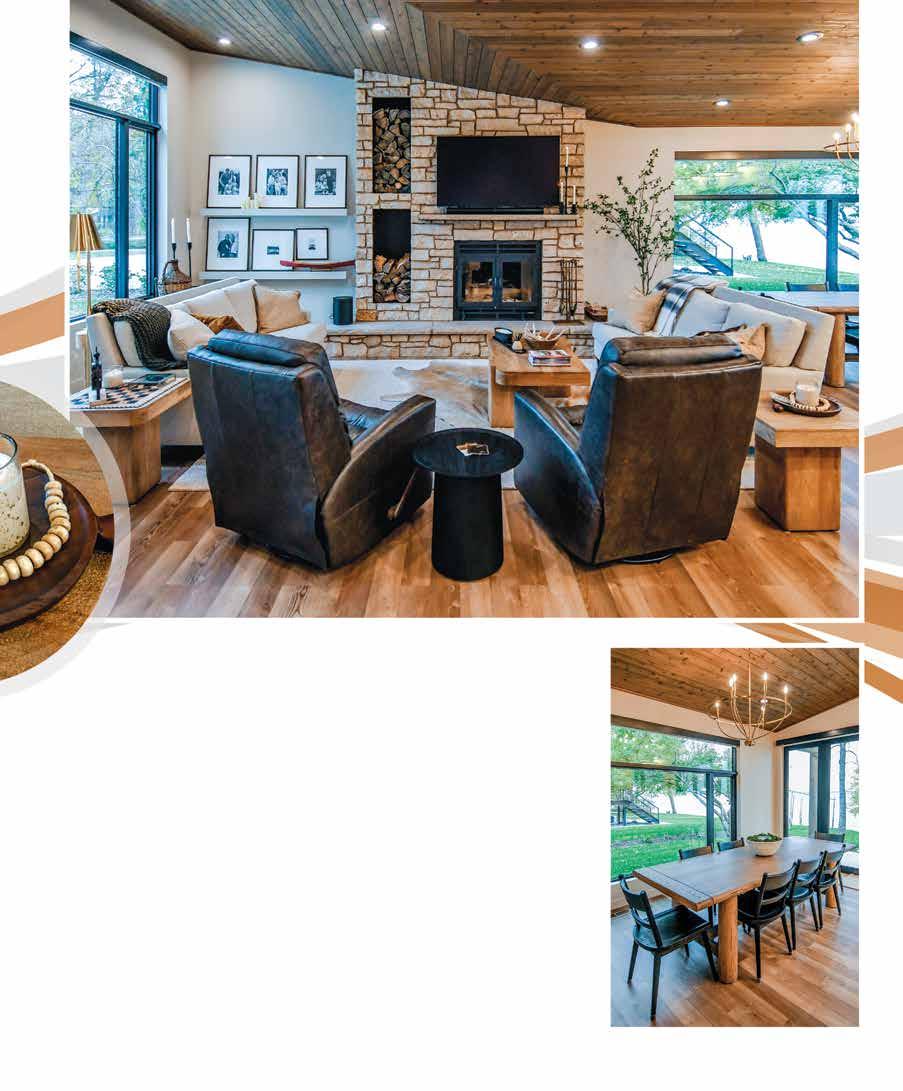
“We wanted to frame the lake views— and these are Marvin windows, they’re huge,” Sonja says. “When you walk in, the entire living room and kitchen are all windows.”
Dave Erwin Construction took on a challenge here.
“The installation of Marvin Modern Windows was the first install we ever performed,” Erwin says. “They are new and unique to Marvin Windows, and they require special attention to detail for the installation process. More labor intensive, but well worth the sleek look you achieve by incorporating them into your project.”
When all was said and done, the entire build was completed by the end of October 2024. Just a month after the last construction truck backed out of the driveway, Sonja and Dave had all their children and 10 grandchildren over to celebrate Thanksgiving in the new lake home. This is all really quite a feat when you learn that Sonja and Dave are only in their 50’s.
"Building a lake home is more than just constructing a structure. It’s creating a place where memories are made."
Sonja | Homeowner
“I wanted to get married young and have my children young because I didn’t have both my grandpas,” Sonja says soberly. “One was gone long before I was born and then the other one died when I was two years old. I never had any relationship with my grandparents. I wanted to have my kids young so that they would have something with their grandparents.”
Now, the entire family has a special place they can call their own and gather together.
Couldn't have done it without:
Dave Erwin Construction, Inc | BUILDER
View our ad on page 8,9
Hilltop Lumber | HOME DESIGN,BUILDING MATERIALS
View our ad on page 4,83
Tri County Foam | INSULATION
View our ad on page 89,110
Fergus Home & Hardware | COUNTERTOPS, CABINETS
View our ad on page 87
Plumbers, Inc. | HVAC, PLUMBING
Kavanagh Electric | ELECTRIC
Abbott Excavating | EXCAVATING
Lakeside Outdoor Solutions | LANDSCAPING
View our ad on page 83
Acucraft | FIREPLACE
View our ad on page 91
Jamie Vilnala | BLACKSMITH / IRONWORK
Nordic Brick | STONE WORK
View our ad on page 33
Ottertail Glass | SHOWER DOORS
View our ad on page 112
Danielson Design, Co. | CUSTOM BUNK BEDS
View our ad on page 91
“It’s truly a life dream of ours;” she says, “the legacy with our kids and grandkids for generations to come. Building a lake home is more than just constructing a structure. It’s creating a place where memories are made.”
As we get older, we begin to see more value in looking back rather than looking forward. For the up-and-coming generation, family lineage and time spent with those who raised you can serve as a guide, a reference for how to love and how to act.
Then, somewhere along the line, preservation becomes the goal and family history becomes identity. This cabin on Otter Tail Lake will forever be a pillar in the lives of these grandchildren; a life-long reference for what it means to be safe and happy. For Sonja and Dave, it is a monument to all the love that has happened in their lives to make them who they are, and all that they will leave behind. L&H
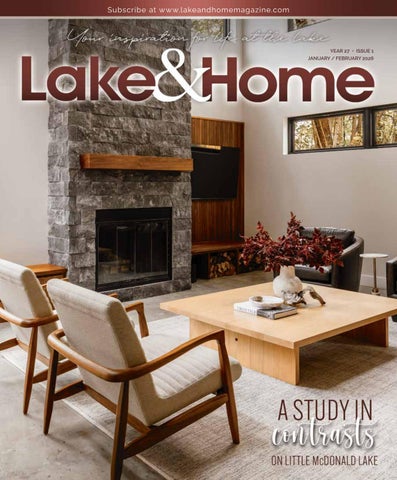
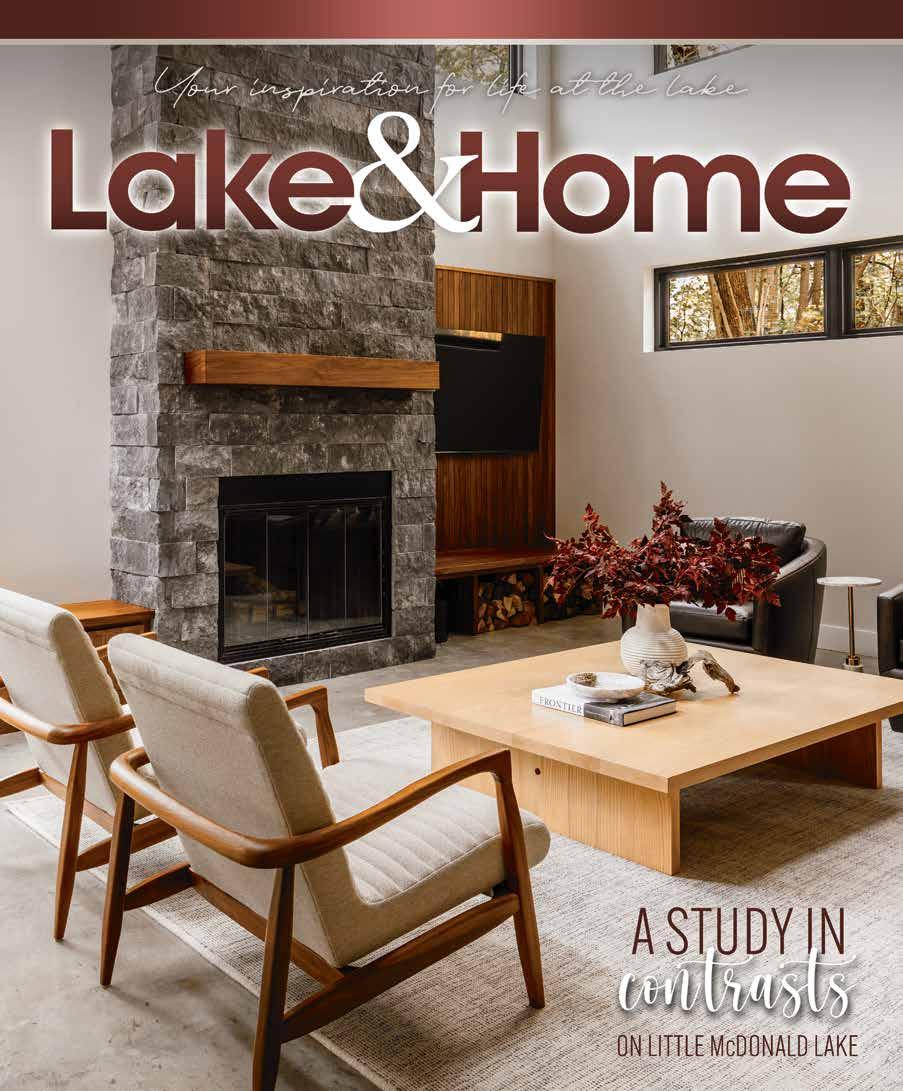
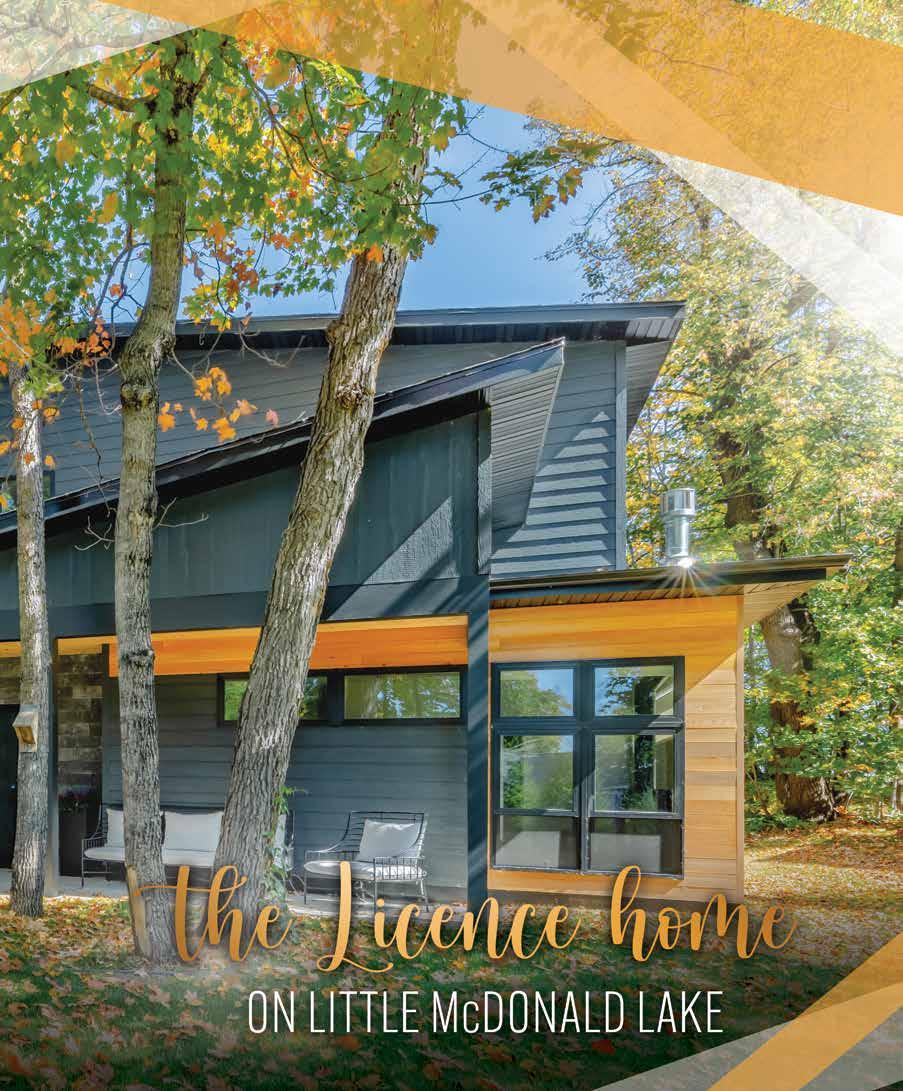
The Licence family home on Little McDonald Lake is a study in contrasts. The architecture is streamlined, but never sterile. The 5,100-square foot space is expansive, but also welcoming and homey, its neutral palette grounded in rich white, black, and charcoal. Accents of color and whimsy pull it together.
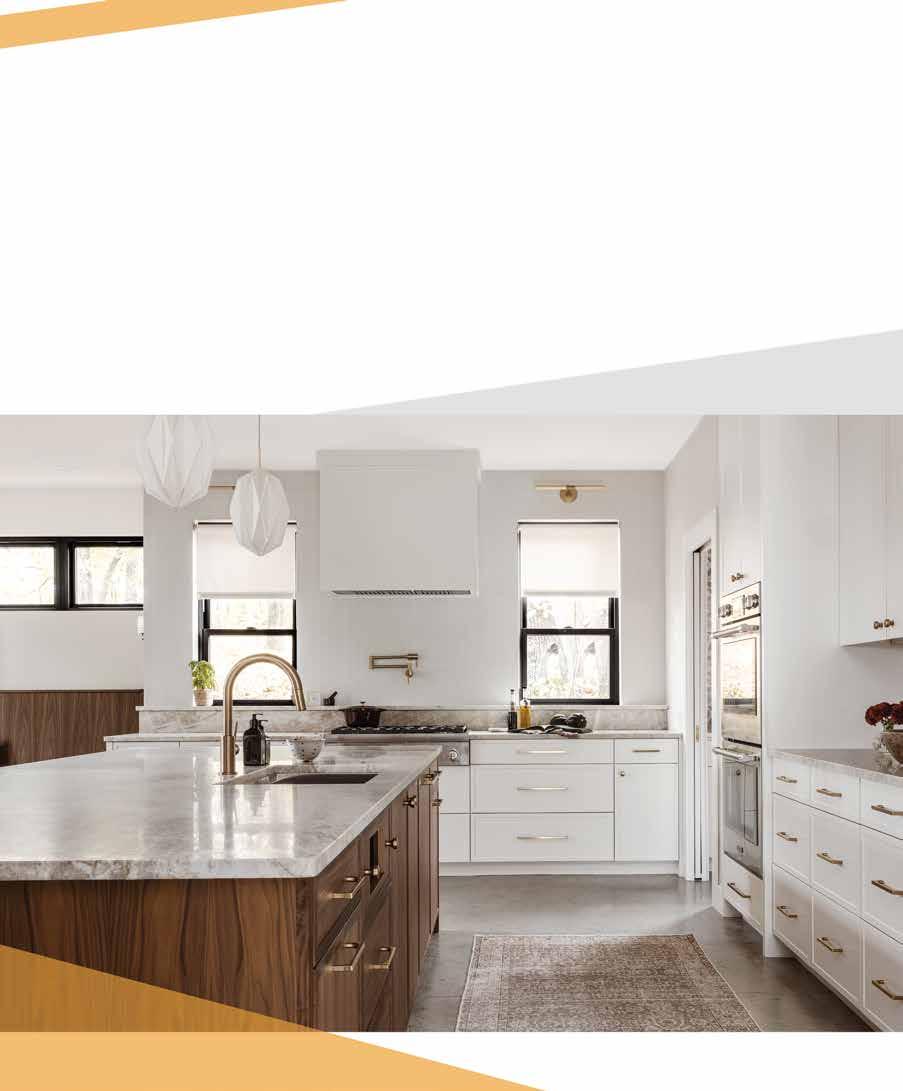
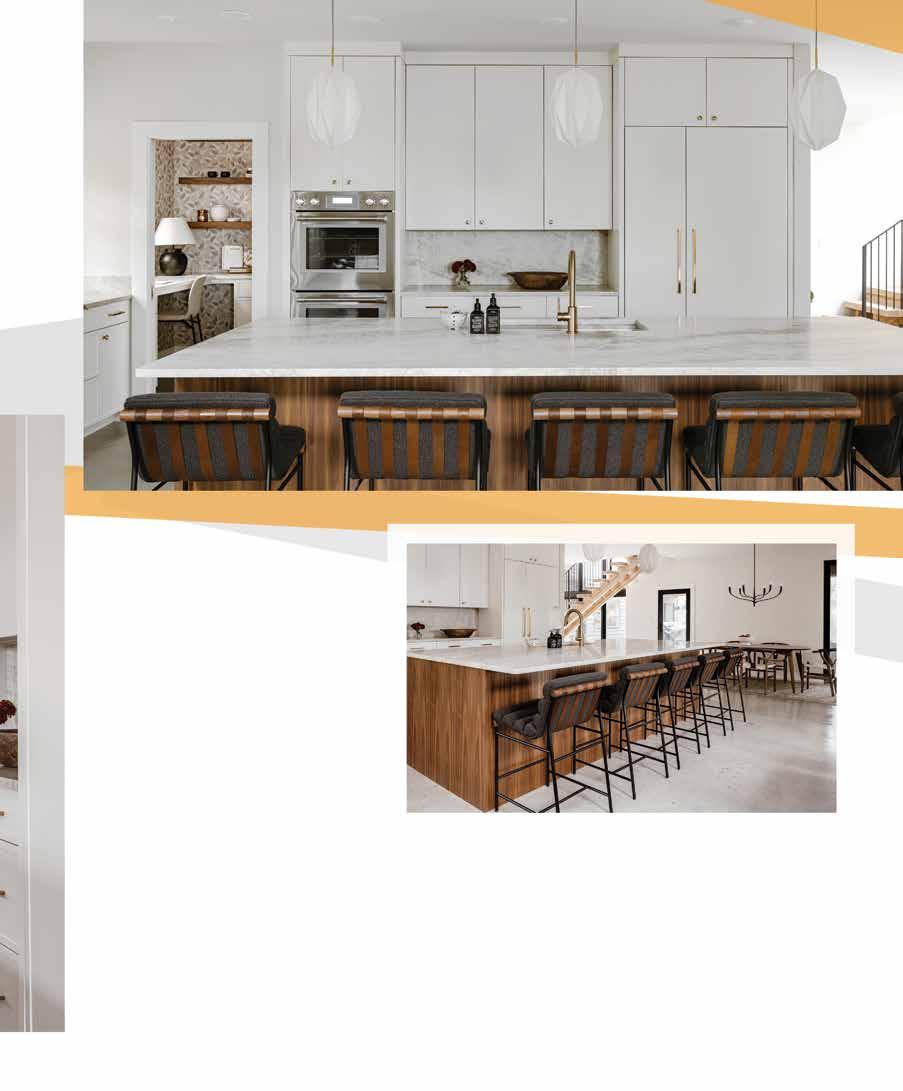
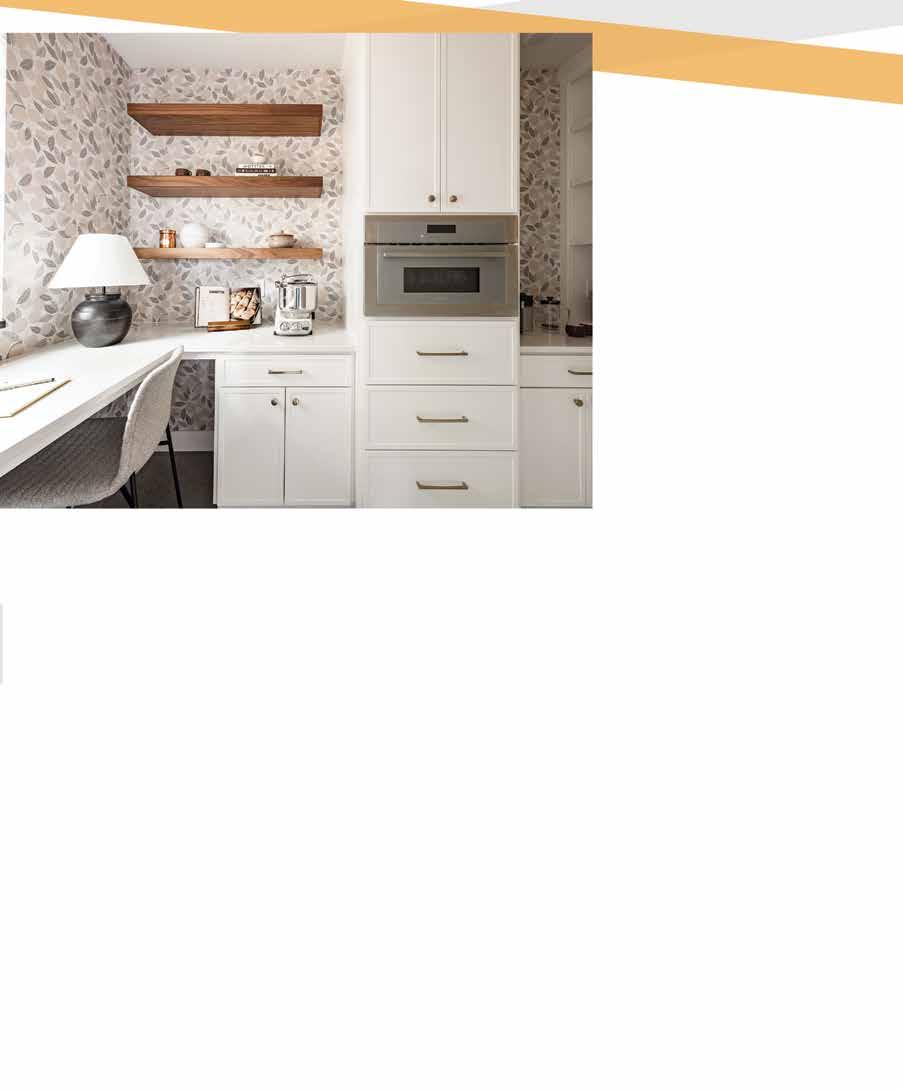
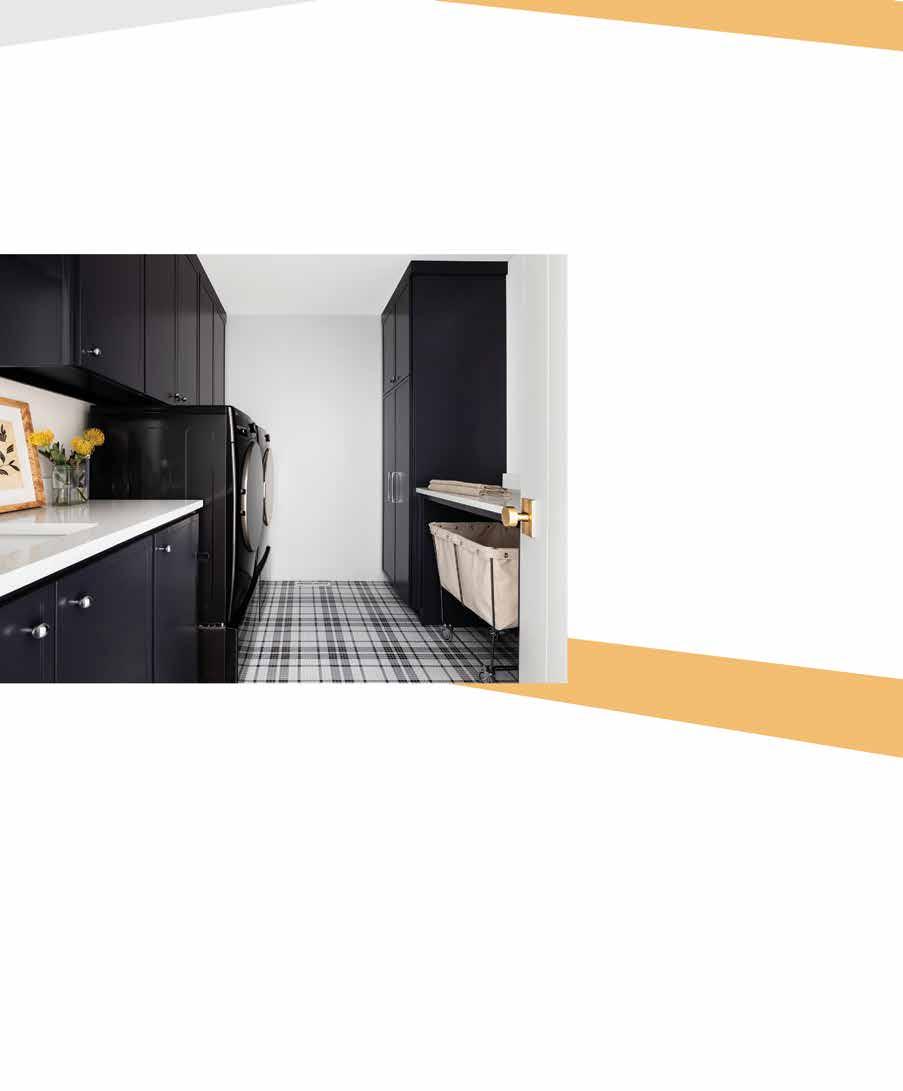
This distinct style is evident in every corner of the home. A light fixture that resembles a mound of bubbles greets guests the second they step in the front door. Brushed brass fixtures glow against creamy cabinets. Dried flowers add interest. Black and white tile installed by Interiors by Winkels in Perham, MN mimics a cheeky plaid. A cheerful school of fish swims in neat rows across the bathroom wallpaper.
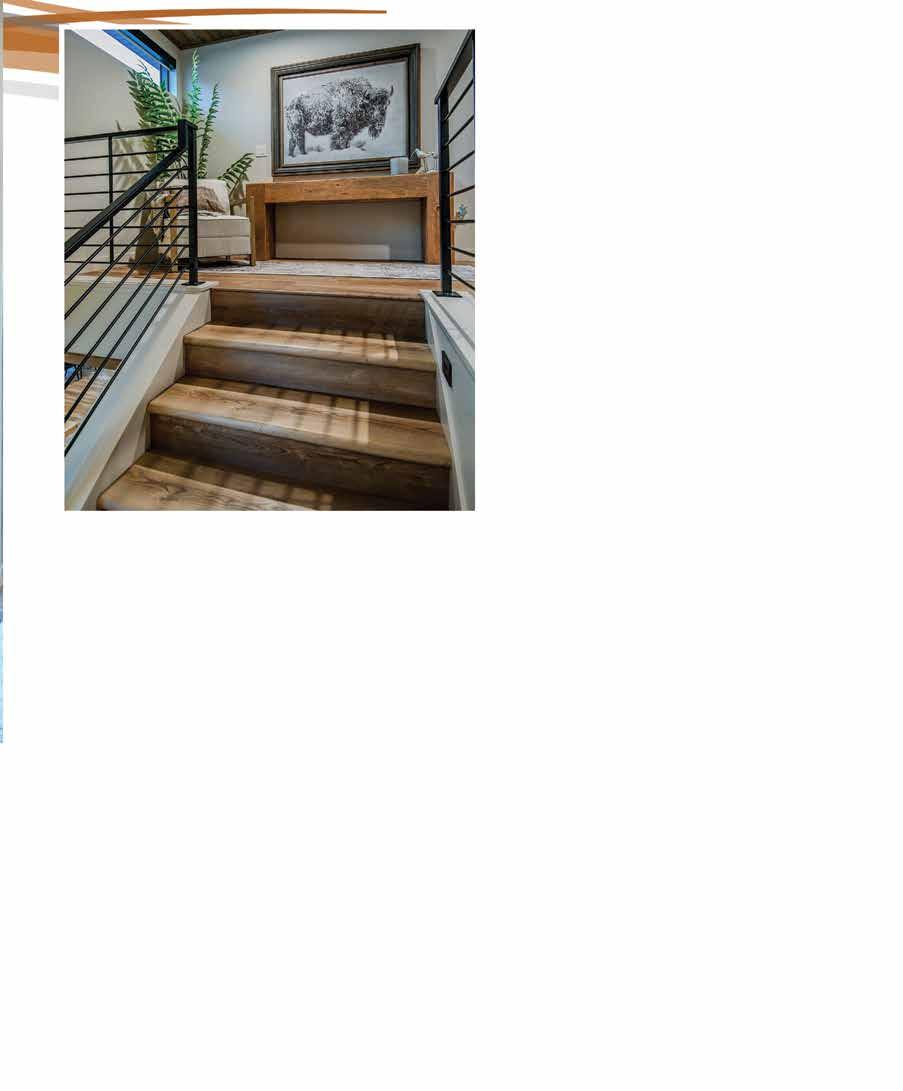
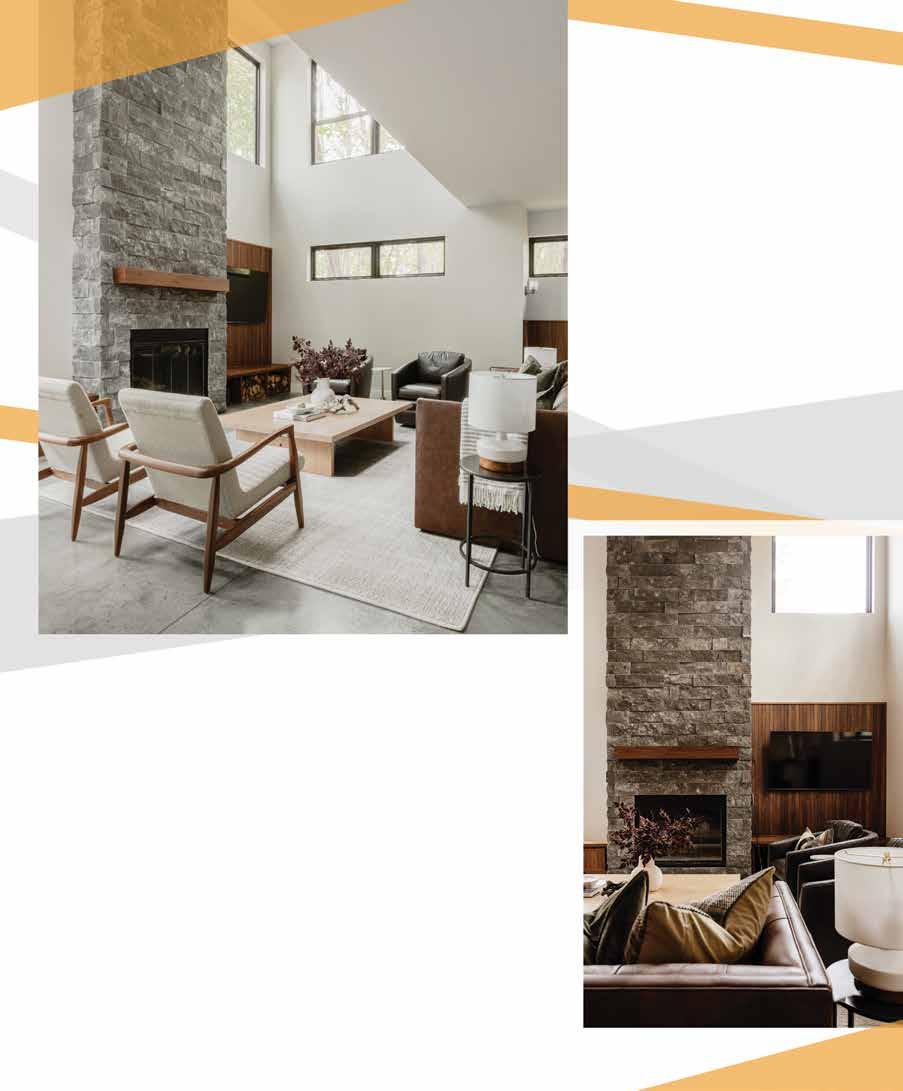
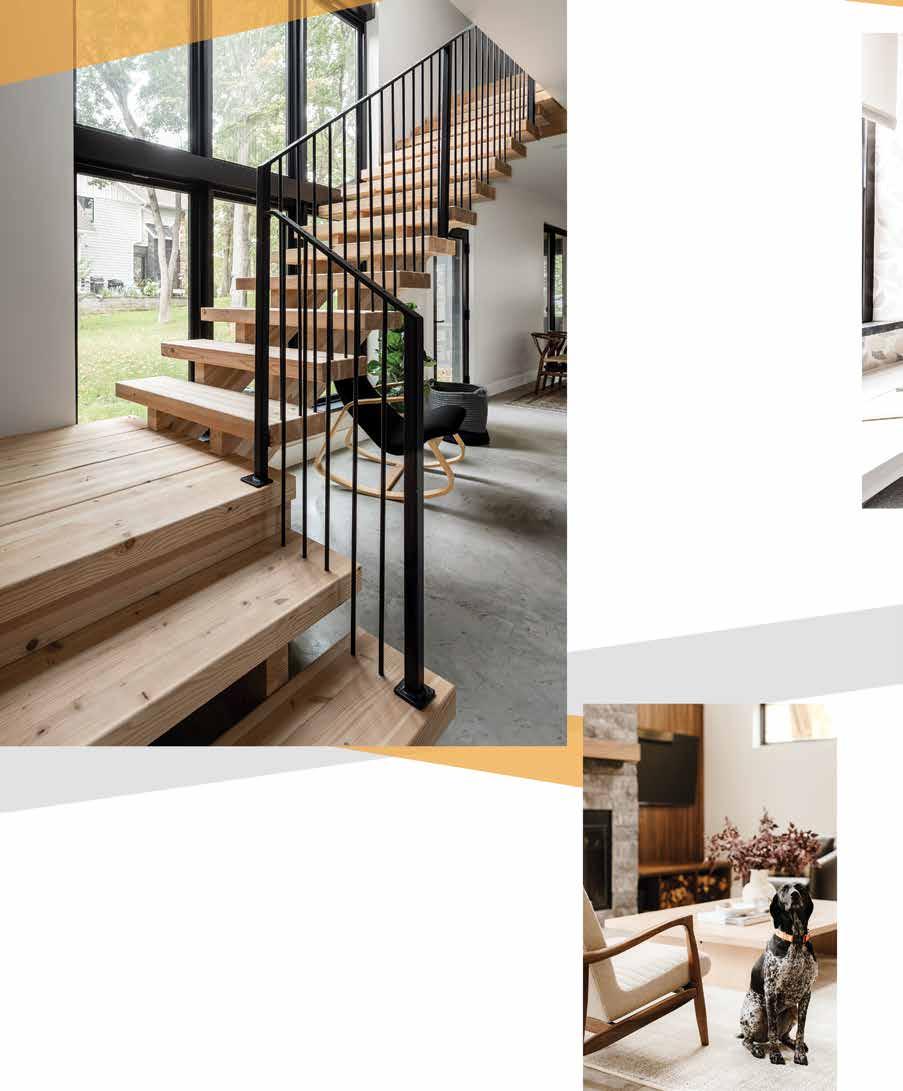
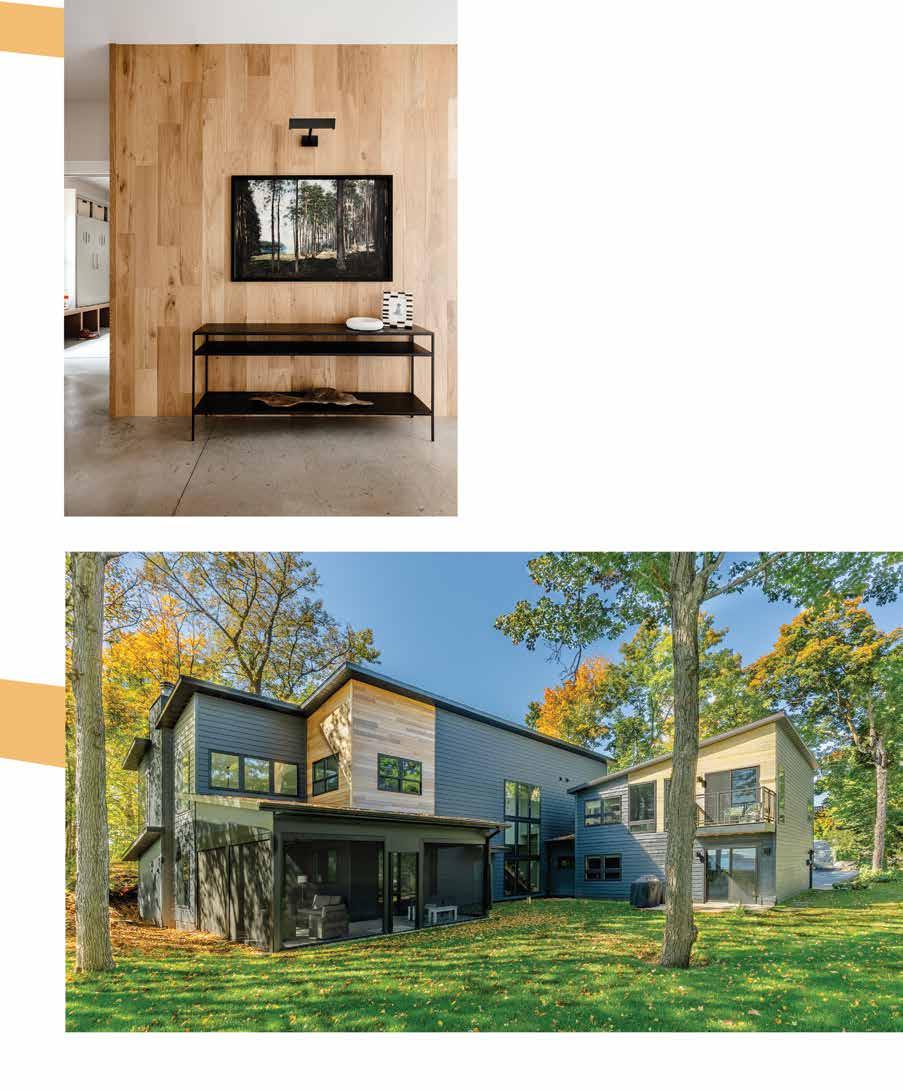
Rich walnut accents, distinctive Douglas fir stairs, and unique fireplace stone warm up more industrial features, like black Anderson Windows and heated concrete floors installed by Pettow Construction in Perham, MN. For homeowners Cass and Lisa Licence, this tension between materials found in nature and cutting-edge design is what makes things interesting.
“I love modern, but not contemporary,” explains Lisa Licence. “Those two get confused sometimes, but I feel like true modern brings in a lot of elements from the outside; that's where the walnut came from, lots of windows, the drywall returns versus molding, not being a fan of trim or anything that complicates the overall space. We like clean lines. We had concrete floors in a cabin that we did a while back, and just really loved
“I love modern, but not contemporary. Those two get confused sometimes, but I feel like true modern brings in a lot of elements from the outside.”
Lisa Licence homeowner
how it felt. It’s easy to maintain. It’s minimalistic, but it’s also warm.”
The six-bedroom, seven-bathroom home is warm, both literally and figuratively. Lisa and Cass live here with their sons, Jude and Remy, and their dog, Luna. Daughter Maeve comes home from college to spend time at the lake.
Moving here has been a homecoming for the whole family. The couple have been immersed in lake life their whole lives, so it made sense to make this their permanent residence when construction was completed in 2024.
“Lisa and I both grew up here, so we've always been big lake people: lots of boating, fishing, jet skiing, tubing, swimming, and then we flop to the snowmobiling and ice fishing and sledding in the winter,” says Cass Licence. “The boys like to fish, hunt and golf, so we do all those activities with them.”
When they’re not on the water, they’re watching the lake from the shore. Since they moved back home, the circle of chairs around their bonfires have gotten bigger; both Cass and Lisa’s parents live five miles away in either direction.
Proximity to family is a huge benefit of the move. The lake itself was also a draw.
“Little McDonald is rare in the clarity and the size,” says Cass. “It's a decent size lake with extremely clear water. Weeds are almost non-existent. We came from a lake where we were fighting with weeds and organic lake debris all the time. When the kids started to get a little bit older, we said we'd find something different. It's just a little nicer.”
The couple had built homes before and knew the direction that they wanted this house to take. Widseth in Perham, MN came on board as the architect. Miranda Brouwer of Evergreen Home was the interior designer.
“She knows us really well,” says Lisa. “She helped us with our Minneapolis home, and she knows our family. We didn't vary too much from a lot of her suggestions in terms of the wallpaper and the tile. She does such a great job. Everything was really thoughtful. I wanted it to feel minimal but also cozy.”
Big-D Residential Collection built the home. Known for commercial construction, the company recently expanded into high-end custom homes.
“We’ve been in the commercial space in this market for twelve or thirteen years, but this was one of our first projects in the residential space,” explains project director Jeff McKee. “It was exciting to work with a different group of architects and interior designers and to see the design that Widseth and Evergreen pulled together. The exterior is eye catching and the interiors make the house pop.”
“It was exciting to work with a different group of architects and interior designers and to see the design that Widseth and Evergreen pulled together. The exterior is eye catching and the interiors make the house pop.”
Jeff McKee
Big-D Residential Collection
Warm wood accents sing against dark siding installed by MS Construction. Guests enter through the front door or the garage. The latter passes through a mudroom featuring built-in lockers (constructed by the Woodshop of Avon) that maximize storage and reduce visual clutter. The company also handled all of the cabinetry in the home, including distinctive accents like built-in bench seating in the great room and front entry.
There’s a three-quarter bath next to the mudroom and a main floor laundry room convenient to the master suite that also serves as a drop point for piles of beach towels. This corridor also holds one of the house’s most loved gathering places: the sauna. Cass and Lisa say it’s done wonders for their family’s well-being.
“We like it for the health aspect,” says Cass. “When the kids are sick, everybody's in the sauna, getting steam. We all sleep a lot better. There’s a relaxation and an unwinding component to family sauna time.”
“In the wintertime, we jump outside in the snow after being in it,” adds Lisa. “We built it so there's a window in it looking out at the lake.”
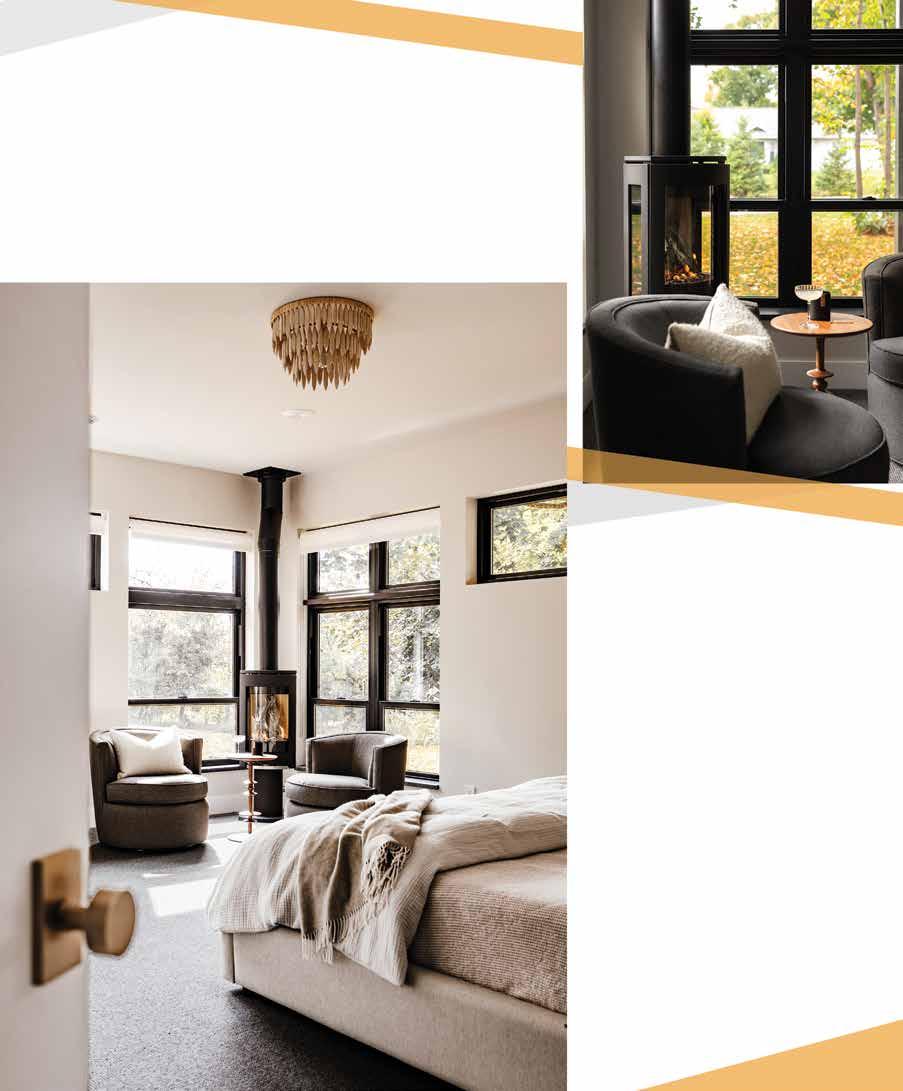
Windows invite the lake in at every turn. From the sauna hallway, you walk through a pocket door into the foyer. The main floor master suite offers varied views of the landscape. A freestanding Jøtul gas stove from Home & Hearth in Fargo, ND is nestled between a pair of barrel chairs in the bedroom, the perfect place for a tete a tete.
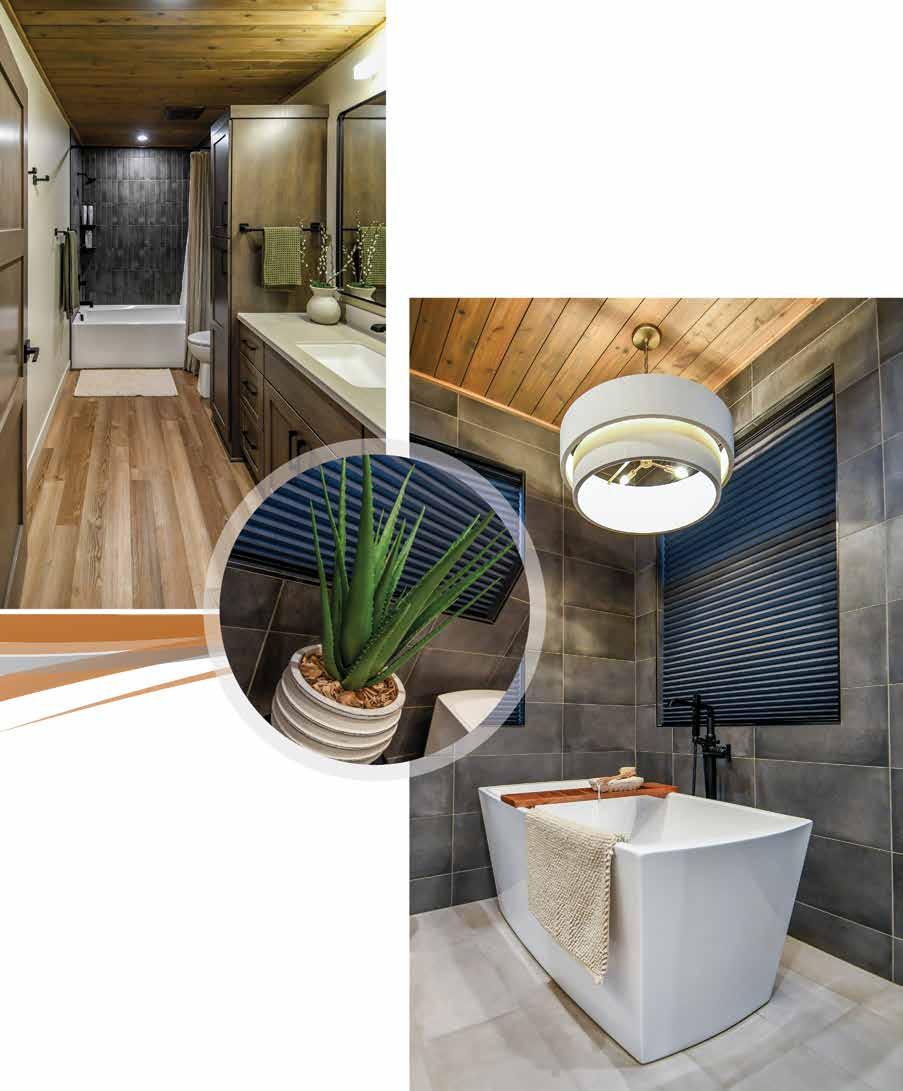
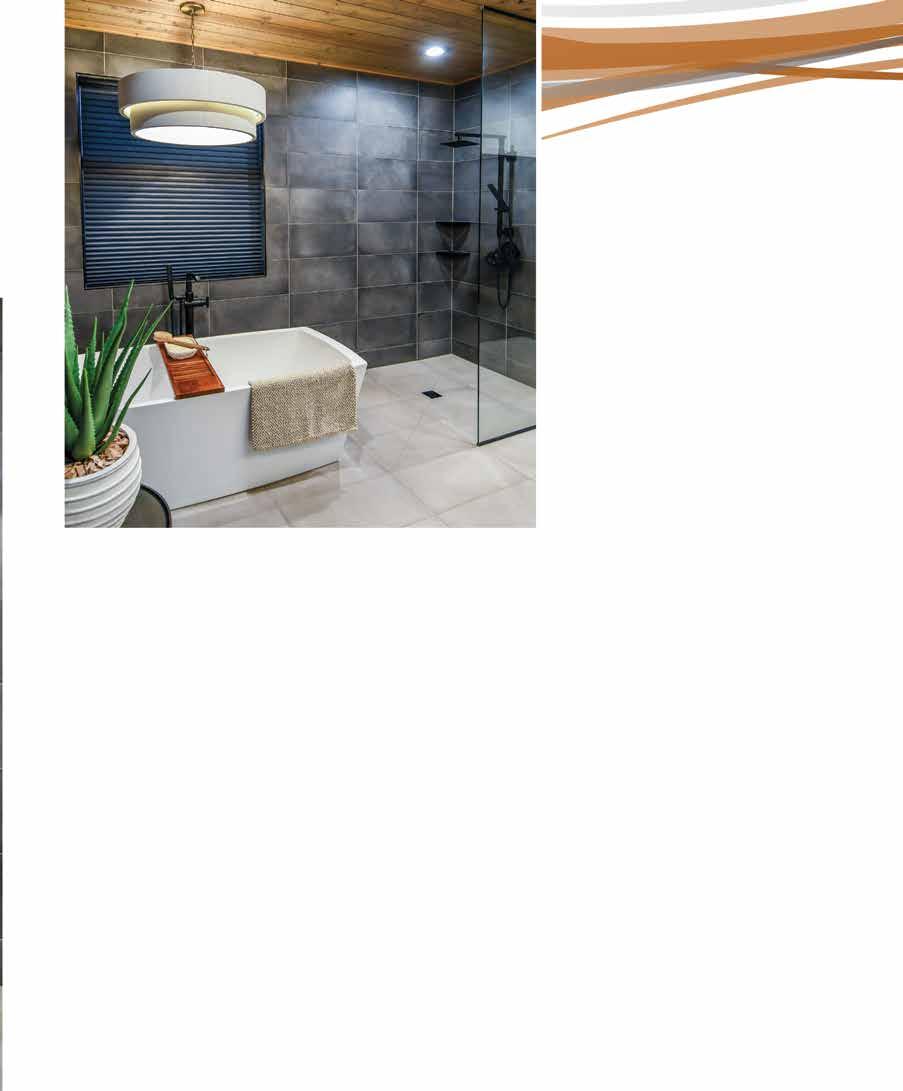
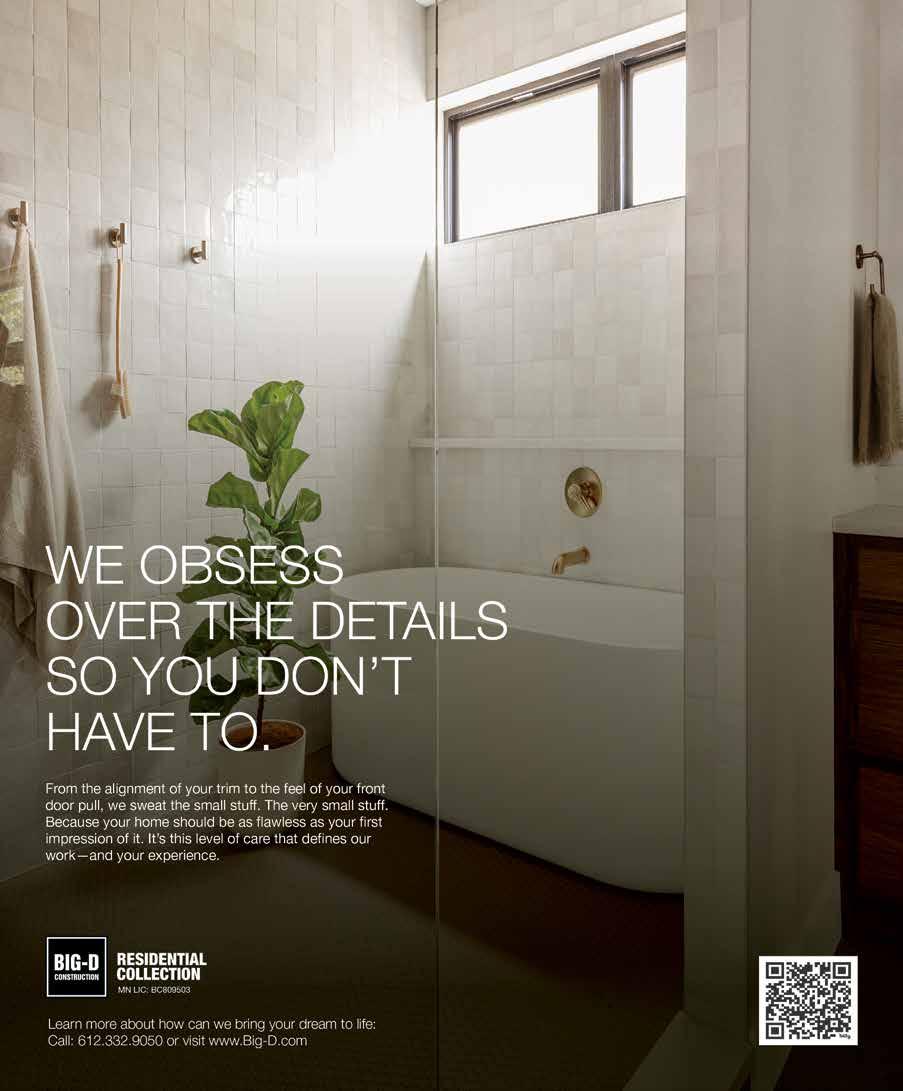
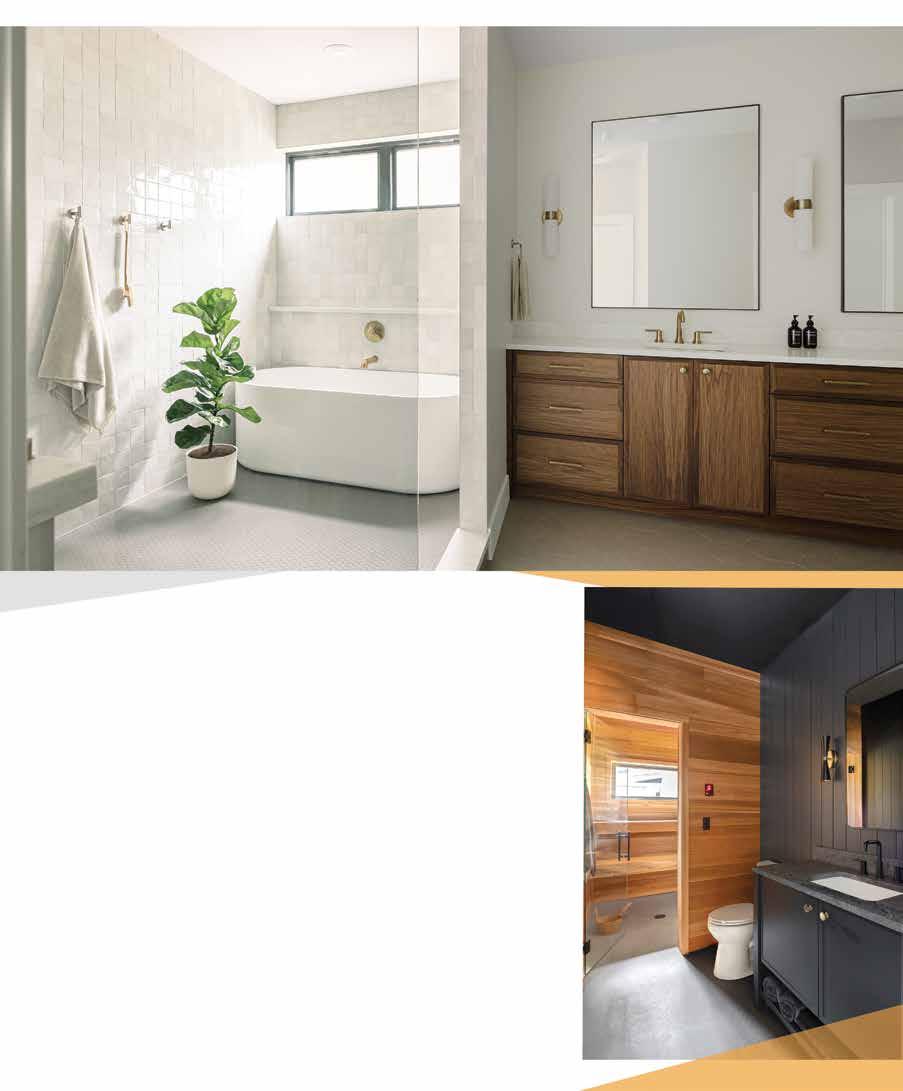
Shimmering, almost iridescent tile (another Interiors by Winkels project) complements the elegant soaking tub in the master bath. Transom windows invite natural light in but preserve the privacy of this sanctuary. The couple had a wet room in their Minneapolis house and wanted to repeat it in this home, both for its convenience and for its visual appeal.
“Cass and Lisa had a vision for what that was going to look like. And it really was kind of a collaboration on-site. It was a team effort to get that thing to come together.”
Jeff McKee Big-D Residential Collection
“The tile encompasses the entire shower and the tub sits in the tile basin,” explains Cass. “So you can jump out of the tub wet, and all that water runs to the drain.”
From the primary suite, it’s on to a storage room, a mechanical room, and a feminine power room with moody floral wallpaper and scalloped tulip lights. This powder room is busy during parties and gatherings, while a more classic powder room serves the sauna. (There’s also a shower nearby if folks want to clean up after jumping into the lake between sauna sessions.)
The dining room and kitchen open up into a welcoming great room. Here, more transom windows fill the space with light and tall vertical windows draw the eye outdoors. The tables and chairs are low-slung with a clean, mid-century vibe. The television nestles against a walnut accent wall above one of the room’s built-in window seats.
A stately wood burning fireplace anchors the room. The couple was looking for unconventional fireplace stone, but the search proved elusive. Lisa finally found and tracked down the perfect option after seeing it in, of all things, a Marvin Windows ad.
“It’s a Friesian™ Limestone form Orijin stone,” she says. “They take this huge slab of this regional limestone, and then they cut it with so much character and depth. We did that in the entry too, on the front, around the door.”
The stone was installed by Mike Malone out of New York Mills. Another one of the home’s statement pieces — the dramatic stairway — was more collaborative. Big-D took the lead. But the nature of the project meant that it took a village to take those stairs to the next level, both literally and figuratively.
“Cass and Lisa had a vision for what that was going to look like,” says Jeff. “And it really was kind of a collaboration on-site. It was a team effort to get that thing to come together.”
Because the product they used was heavy, the couple brought in several friends to help. And since the material is designed to be cut on-site, the result was unique to their space.
“The stairs are completely custom,” Cass explains. “You order the Douglas fir glulam custom from a lumber yard — and you need about four people to get them in the house to cut them — then you build the stair on what fits. We changed that two or three different iterations in the process.”
Lisa jokes that the whole room was busy double checking their figures because “you don’t cut twice.” But both Lisa and Cass say the extra effort was well worth it.
“Stairs can be very architectural, in my opinion,” Cass says. “They can be a real feature when they're done.”
Those dramatic stairs weren’t the only accents the couple wanted for this home. They had a list of features in mind, including an upstairs laundry room for the boys’ rooms, so no one has to lug laundry baskets up and down the stairs. Every bedroom boasts en suite facilities. A game room and a 400-squarefoot screen porch with motorized Phantom Screens are used in every season.
“We don't want any wasted space,” says Lisa. “It’s about functionality and how you move in the house.”
“No dead spaces, but no tight spaces,” Cass adds, expanding on their design philosophy.
“We shot for at least five feet between the perimeter of the kitchen and the island, just because you can get by without running into each other,” Lisa continues. “The dishwasher can be open and two people can go by each other. We just want you to feel like you can breathe.”
A sunny pantry with pretty floral wallpaper hides behind a pocket door, along with the microwave and a coffee station. Items are artfully displayed on floating shelves and there’s plenty of storage for more functional items. The couple also tucked a desk into the pantry, after realizing they liked having a concealed office space in their Minneapolis home. The refrigerator and the dishwasher in the kitchen are also hidden away behind walnut panels.
“I think it’s just calming to look at,” Lisa says. “It's not a bunch of mixed materials. I don't like busy. I like the sleek look.”
The kitchen is bright and calming. White cabinets blend seamlessly with the walls. Neat Roman shades allow soft light to filter into the room. When they’re pulled up, they disappear from view. A custom, built-in buffet (another Woodshop of Avon original) mimics the lines of that classic piece of furniture but updates it for this modern kitchen. Taja Mahal quartzite from B&D Granite Tops gleam.
“We threw a lot of curve balls — in terms of the size of the island and different workarounds and backsplashes — at them,” says Lisa, praising the Detroit Lakes, MN shop. “They did a great job.”
Like most homeowners, the couple had a very specific vision they wanted this house to embody and a list of features they wanted this home to contain. Lisa and Cass also brought their own expertise and experience
to the table. But they also trusted their general contractor — which was also Big-D Residential Collection — to keep them on track.
“We were pretty much dead on with the timeline, with no big hiccups, getting it done when we wanted it done,” says Lisa. “We were able to just pivot and find a Plan B quickly to keep us moving. So that was huge.”
A talented team of subcontractors added their expertise. Aho Seamless Gutters, Franklin Fence, and Leaf & Limb landscaping subtly transformed the lot. Ottertail Glass, Phillips Painting, Van Watermelon Plumbing, and MCI Drywall worked efficiently on the interior. Nash Well Drilling and Ruther Excavating’s work might be invisible, it but exemplifies the quality that the License home emphasizes. Cass added that All Seasons Mechanical
Couldn't have done it without:
Big-D Residential Collection | BUILDER
View our ad on page 97
Widseth | HOME DESIGN, SURVEY
View our ad on page 103
Evergreen | INTERIOR DESIGN, HOME DESIGN
Nash Well Drilling | WELL
Installed Building Solutions | INSULATION
Andy Pettow Construction | CONCRETE
B&D Granite Tops | COUNTERTOPS
All Seasons Heating & Air Conditioning | HVAC
View our ad on page 103, 110
Phillips Painting | PAINTING
Interiors by Winkels | FLOORING, TILE WORK
View our ad on page 107
VanWatermulen Plumbing | PLUMBING
MCI Drywall | DRYWALL
Ruther Excavating | EXCAVATING
Franklin Fence Co. | BUILDING MATERIALS
View our ad on page 105
All Inc. | APPLIANCES
Woodshop of Avon | CABINETS
View our ad on page 101, 110
was pivotal in helping them heat and cool the home in exactly the way they wanted.
“We did a bunch of redundancy in HVAC, where we have wood heat, gas fireplace, heated floors, and then a forced air for AC and heat also,” he says. “So you can kind of pick your poison for heating.”
Jeff McKee says Big-D is used to managing large commercial projects, so that expertise helped keep a building project this complex in motion. But he added that the homeowners’ decisiveness and pre-planning also helped keep the build on track.
“I know they spent a lot of time planning for this, which was nice,” he says. “By the time things got started, everything was ready to go and came together pretty efficiently.”
The Licence residence on Little McDonald Lake successfully blends old and new, seamlessly incorporating a beloved seasonal cabin into a gracious new home. It’s a study in contrasts: moody and bright, modern and traditional, open and cozy, welcoming and private. It’s as beautiful and complex and surprising as the people that live inside and designed with the long game in mind. This is one that is built to last. L&H
Lawn & Limb Landscaping | LANDSCAPING
Anderson Windows | WINDOWS
MS Construction | SIDING, FRAMING, TRIM
Aho Seamless Gutters | GUTTERS
View our ad on page 107
Lakes Hearth & Home Center | FIREPLACE
Ottertail Glass | SHOWER DOORS
View our ad on page 112
L LAKE GIFTS
www.thewilliamscompanystore.com | 101 West Main St Ottertail, MN | 218-367-3340
Open Every Day 9 - 5
Check out our Events on our Facebook & website at www.thewilliamscompanystore.com Visit us in Historic Downtown Ottertail, MN 101 West Main Street
Breakfast & Lunch Served All Day
Try one of our new breakfast & lunch menu items the next time you stop in.
All our orders are made to order! Call ahead to order supper. 218-367-3340
Visit Dot & Minnie’s in Perham for a true boutique experience. Explore a wide range of classic yet unique styles and a stunning collection of jewelry. Our designers include names such as Joseph Ribkoff, Sympli, Luukaa, Kozan, Bodil, Chalet, Fenini, Tulip, Cut Loose, Liverpool, Dear John, and many others. Need some shopping guidance? We love to help!
Shop our extensive website and follow us on Facebook for the latest in-stock styles.