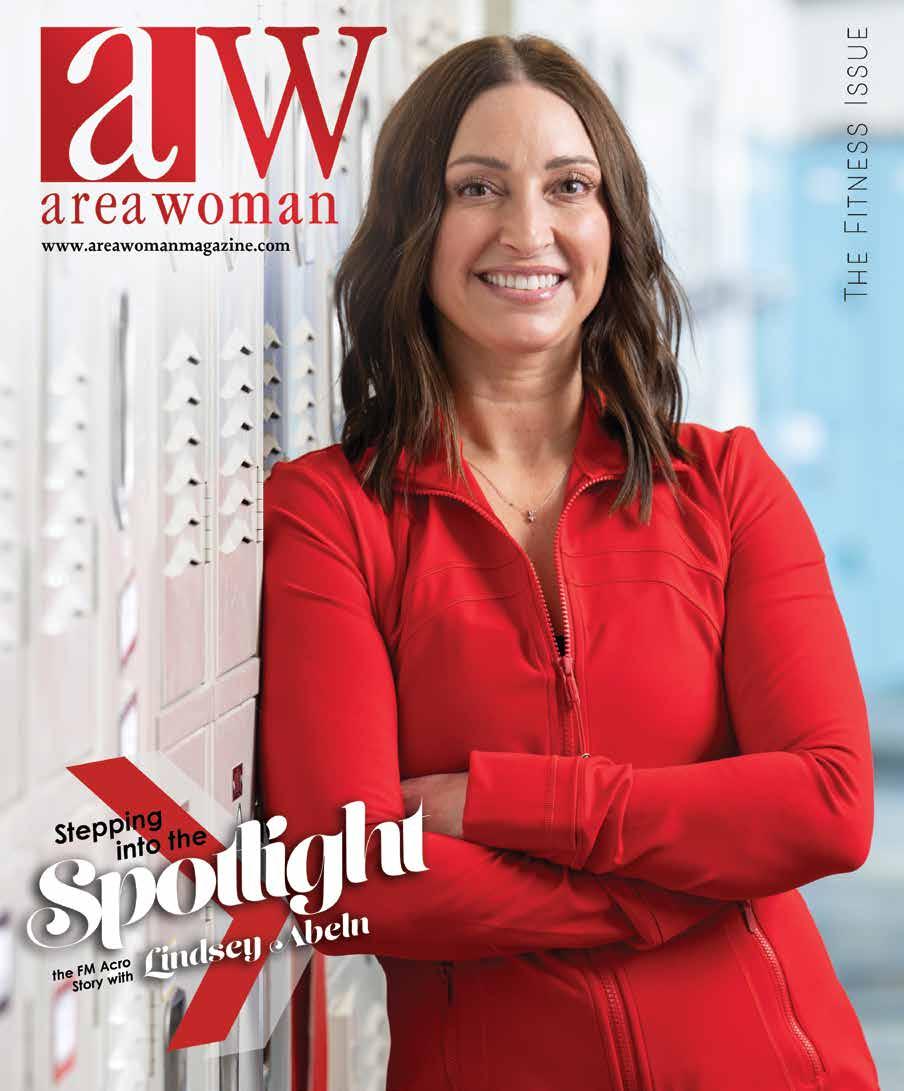


FM Acro Story with Lindsey Abeln by Devin
With Every Step Runday Events' Lindsay Botnen by Kooper Shagena
Serving Others
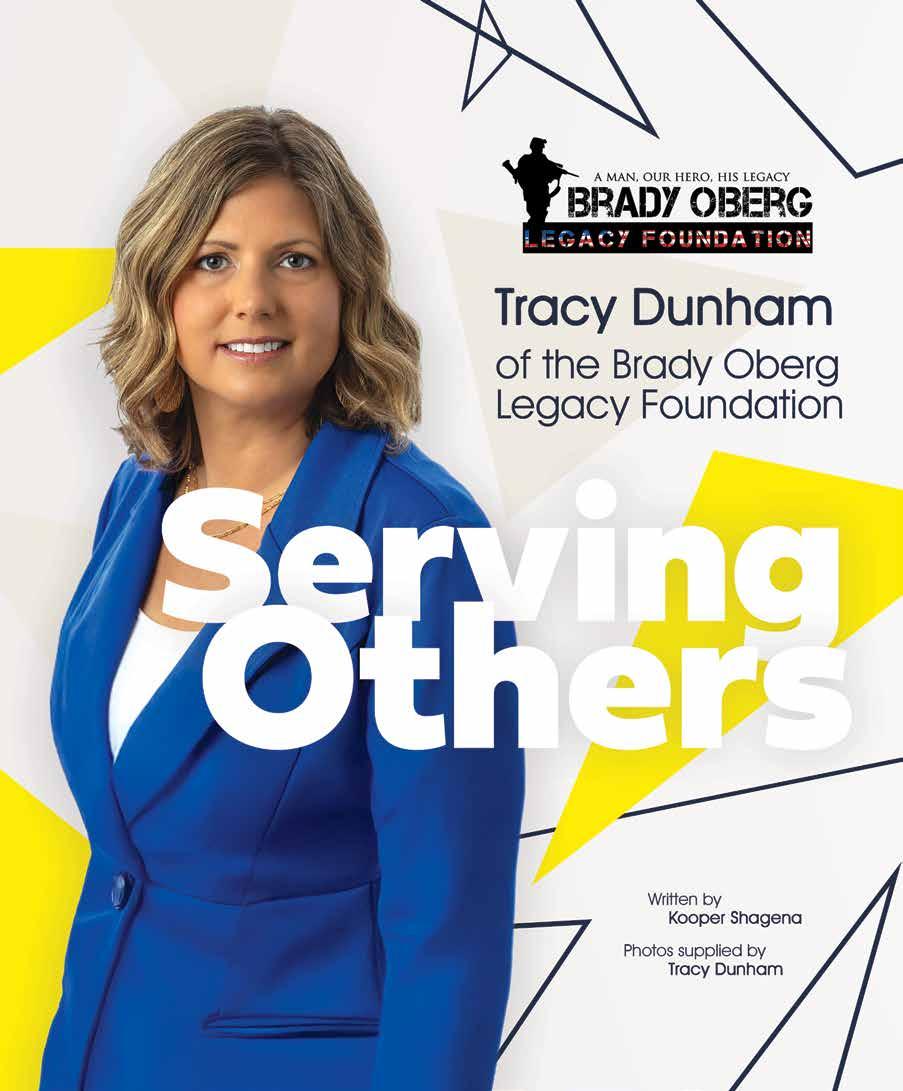
Dunham of the Brady Oberg Legacy Foundation by Kooper Shagena
Joubert



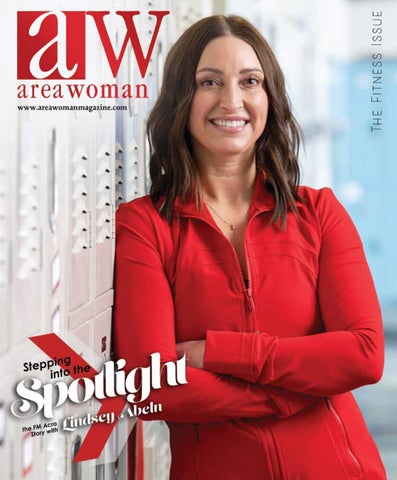
FM Acro Story with Lindsey Abeln by Devin
With Every Step Runday Events' Lindsay Botnen by Kooper Shagena
Serving Others
Dunham of the Brady Oberg Legacy Foundation by Kooper Shagena
With this, our annual health/fitness issue comes to life, and it is full of inspiration! Whether you’re a lifelong devotée of wellness or perhaps contemplating a health journey of your own, these pages are designed to ignite a spark inside of you and show you just a small sample of the talented and innovative women from the community who are dedicated to helping others succeed.
From coaches to nutritionists, an executive director of a non-profit organization, and several notable businesses, we’ve curated an array of stories to let our readers know that the FM area is rich with resources when it comes to getting to optimum health. We’ve also included a few easy, nutritious, on-the-go recipes that might become staples in your daily routine. We’re always in search of a better smoothie, a quick and simple breakfast bite, or ways to get nutrients in after a hard workout.
With the weather finally shifting out of the frigid Midwestern winter, it’s time to get outside and enjoy staying active while soaking in some long-awaited sunshine. Are you ready to explore new activities? Check out the many clubs and trainers in the area, find a workout buddy, and get moving. It starts with just one step in the right direction and you’re on the road to better health. Enjoy this issue, and here’s to good health, fun workouts, and of course SPRING. [ aw ]
Best,
Dawn Duncan Managing Editor
“THEY JUST LOOKED SO COOL, AND I WANTED TO BE COOL, TOO.”
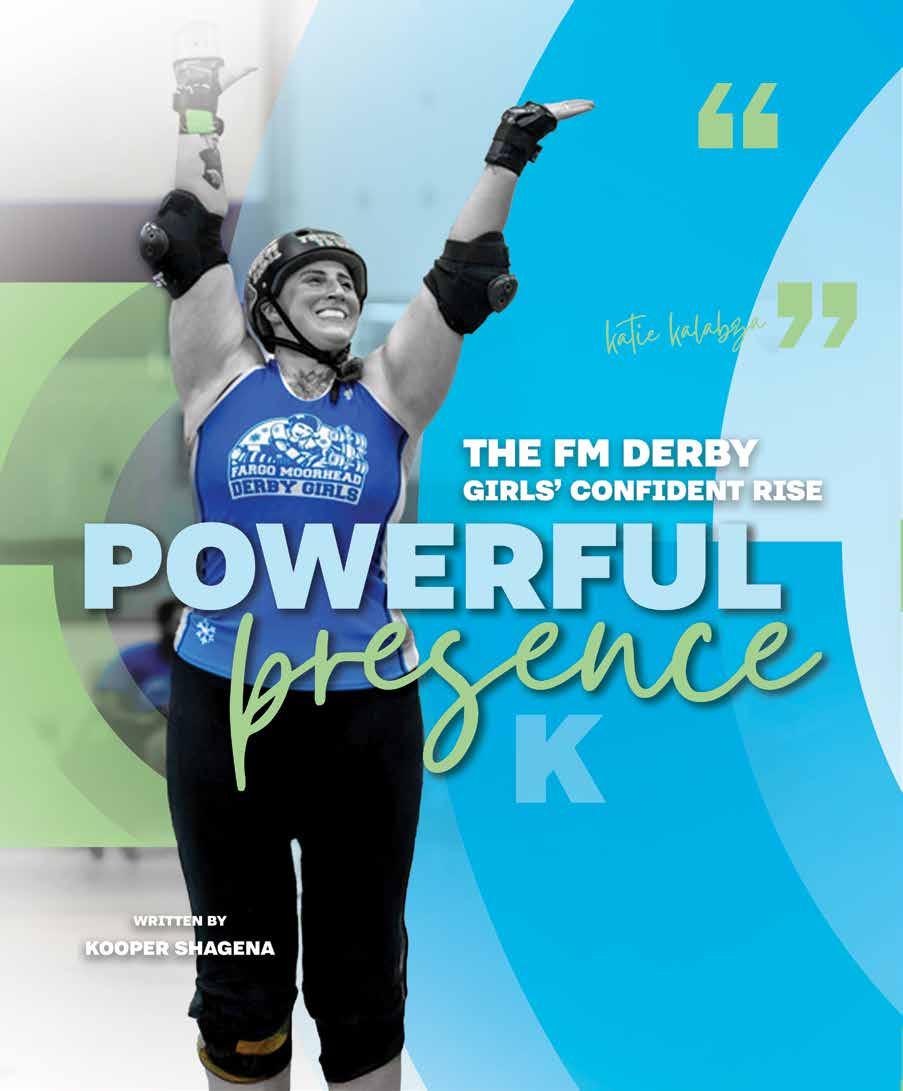
Katie Kalabza sat at the bar with her husband one night, bobbing gently to the music and fiddling with her straws. The TVs droned and billiard balls clacked; all was calm until through the doors came bursting a rowdy group of women with grins and flyers akimbo.
She found herself holding a flyer. It read: “Fargo Moorhead Derby Girls, member of the Women’s Flat Track Derby Association. Join us!”
“They just looked so cool,” she remembers thinking, “and I wanted to be cool, too.”
She says: “Next thing I know—and I am super introverted—I’m at Skateland by myself trying on roller skates when I hadn’t been on skates since middle school.”
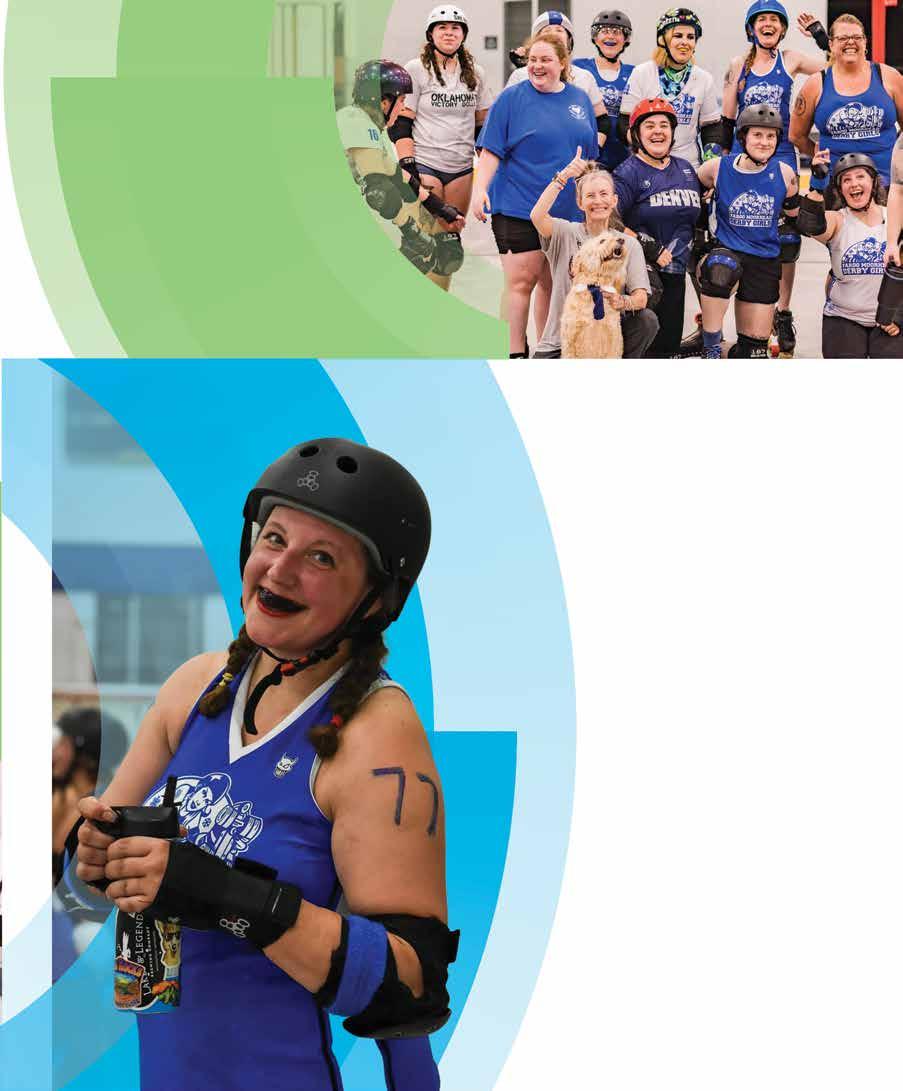
That was 15 years ago and Katie, henceforward referred to by her Derby name, ArtaChoker (Artie for short) has been a member of the FM Derby Girls ever since, taking a year off here and there to have kids. She had quite an auspicious start to her roller derby career back in the day, playing her very first bout in the Fargo Civic Center in the form of a game of Queen of the Rink. To win Queen of the Rink, you must be the last woman standing, literally. If you fall or are pushed out of bounds, you’re done.
“I kind of won by default, but I still won,” Artie says.
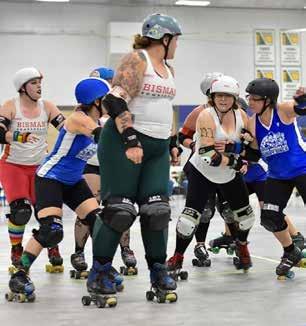
So, what does a regular roller derby bout look like? In essence, imagine a football game, but with women on a circular track, on roller skates, and sans ball. Instead of getting the pigskin into the end zone, the goal is to get one player, the jammer, around the track and past the other players as many times as possible in each jam, or two-minute period. Both teams’ jammers are on the track at the same time, too, meaning they can battle it out themselves sometimes.
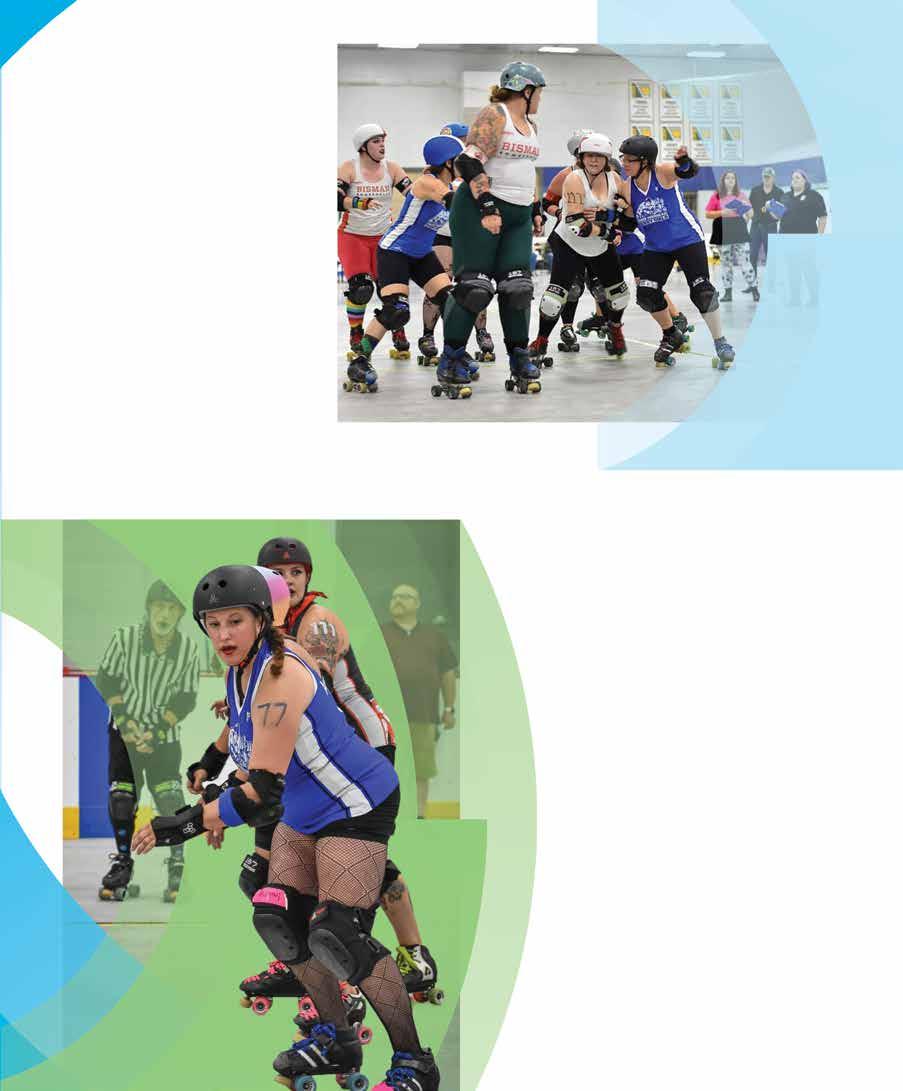
For a newer member, Elli Feiest, or more accurately, Thunder Trunch, her debut bout looked a little different.
“We got on the track and we’re like, ‘oh, how long have you been playing?’ and the girl says, ‘12 years.’ Oh,” says Trunchie, “this is not going to be good.”
And it wasn’t.
“We lost by over 200 points,” Trunchie says. “There was crying. There was frustration. But we had an amazing time.”
Before their first ever bout, all new skaters go through the starter program affectionately called “fresh meat”.
In which, Artie says, “we teach everyone how skate, how to fall properly, how to fall safely and all the rules and everything.”
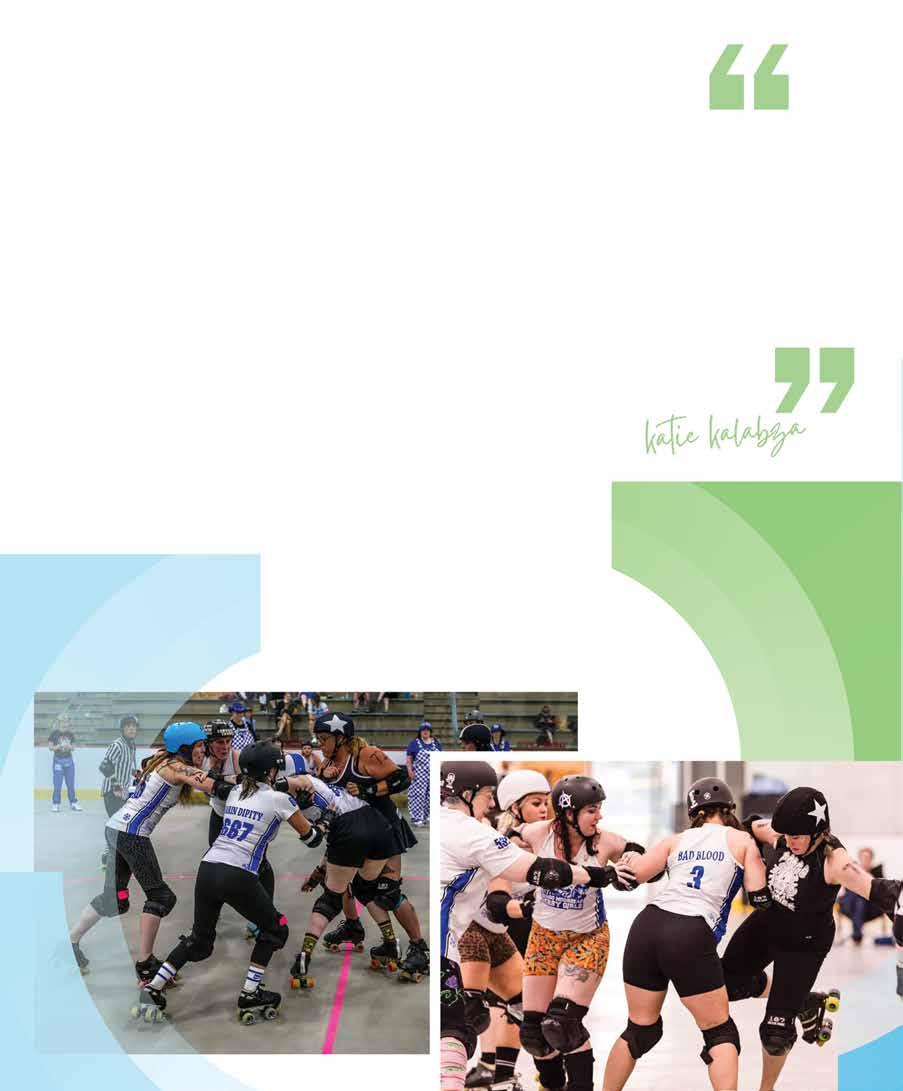
There is a plethora of rules not only regarding gameplay, but also how each skater is allowed to contact another in ways that keep them both safe from any (serious) harm. A skater may use their shoulders, their hips and their chest to block, but they cannot push with their hands or intentionally trip other skaters.
“You can’t throw an elbow,” Artie says, too. “That’s one of the biggest misconceptions.”
“Oh, that’d be so fun, though,” Trunchie remarks regretfully.
Just like football, it’s illegal to hold or exhibit unnecessary force; sportsmanlike conduct and safe contact are paramount in roller derby so that players can keep playing for many years.
Each two-minute jam starts with both teams fielding up to five players at once, made up of four blockers and one jammer, each. The jammers must escape the cluster of blockers, called the pack, to make their initial pass and begin scoring points; the jammers then score one point for each opposing player they pass on their paths around the rink.
The first jammer to escape the pack is then, for the duration of that jam, the lead jammer, which gives them the authority to call off the jam at any point before the two minutes are up, giving that team an advantage in possibly halting any momentum the opposing team may be building.
Another twist: that helmet cover with the star on it, worn by the jammers is called a panty… and they can pass their panty to a special blocker if they get stuck, making the panty-receiving blocker the new jammer for the rest of the jam. This blocker is called the pivot.
Artie and Trunchie are both blockers, but Artie plays pivot on occasion.
In addition to all that chaos within the rink, there is another world of chaos without: vendors, food stands, beer stands, merch stations and a kids’ corner.
“Beyond all the skaters, we have the refs, we have volunteers,” Artie says, “and there’s a penalty box if you get…naughty.”
“Which is always accidental!” Trunchie says. “There’s people running the scoreboard and announcers, there’s people doing concessions and merch and tickets; we have a 50-50 raffle, we have Chuck-a-Duck—it takes a village,” Artie says.
Being a nonprofit with 501(c)(3) status, the FMDG also does all their own organizing, planning and marketing. Finding teams to play and securing venues is their responsibility, as well. Artie and Trunchie and their FMDG ladies play home bouts at the John E. Carlson Coliseum in North Fargo when the ice is melted off the hockey rink in the spring and summer. Hockey arenas are the perfect size for hosting bouts, with enough room for the flat track and all the vendors.
You can’t throw an elbow. That’s one of the biggest misconceptions.
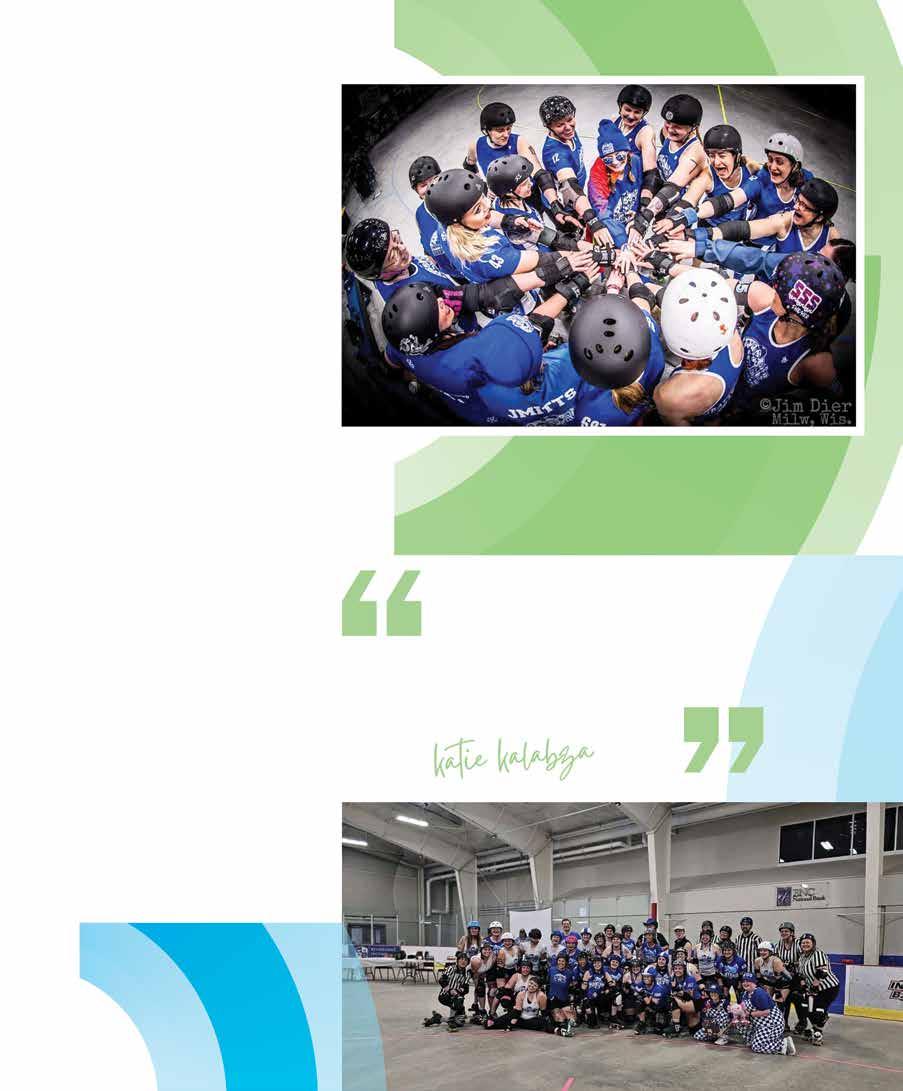
“My little fresh meat group,” Trunchie says, “our first official bout was in Madison, Wisconsin.” The 200-point massacre, if you remember. “We were supposed to play their team that was at our same level and…they lied.”
But she persevered and now gets to party with all the players after the bouts, home team and challengers alike.
“After a game, one of the cool things is—we’re all fighting hard, very competitive, and then we go out to an after party,” Artie says. “We’ll have pizza and do MVP awards.”
“Sometimes we leg wrestle,” says Trunchie, “or karaoke.”
There’s no doubt; they earn their after parties. The team practices for two hours twice a week, moving to two and a half hour practices once the season gets a little farther underway in midMarch. They do warm-ups, practice technical skills, collaterals, transitions and different types of blocking. There are breakout groups, then, where jammers and blockers will go spend time with their respective coaches, running drills and practicing technique. Practice concludes with a scrim scram, wherein the ladies will then divide up and play each other.
Artie and Trunchie agree that roller derby has changed as a sport since it first started; it’s become much more athletically focused, where it used to be more theatrical like WWE. Olympic speed skater Erin Jackson plays roller derby.
At the mention of endurance training, the ladies wince.
Endurance training consists of running (skating) sprints up and down across the wood, sometimes for seven minutes straight.
“Or you start laying down and you get up, sprint, come back and lay down, get up and sprint again,” groans Artie.
But the physical and mental challenge of roller derby has changed these ladies’ lives for the better.
“The whole confidence thing is huge; it gives me confidence,” Artie says.
“it’s so amazing what it does for confidence for women, I love it so much,” Trunchie agrees.
Usually, girls aren’t funneled into full contact sports from a young age like little boys are. The liberty to use their bodies as tools of strength and power is sometimes never granted to women, and it’s a lesson in personal power and the right to take up space, the right to channel healthy aggression and passion, that many have never gotten to learn.
“It’s so empowering, I love that word,” Trunchie says. “Just last season we had a girl who started— her name is RollerGhoster, we call her Ghostie— and when she first saw me on skates and realized she had to come up against me, she screamed and went the other direction. Now, this year, just one year into this sport, she is gung-ho and ready. Just fearless.”
“I want to be as confident in myself in the real world as I am in my roller derby life,” Artie says. “When I’m out there, I just have this aura around me like I can do it. It may be hard and I may fall down, but that’s okay.” [ aw ]
For information: fmderbygirls.com
“The whole confidence thing is huge; it gives me confidence.”

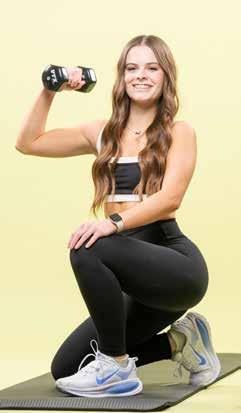
Exercise runs the gamut in terms of type and difficulty but starting with a few at home options that don’t require elaborate equipment or technique is great way to kickstart a lifestyle change. Here are five options to do at home; modify them as needed to suit your personal capabilities and build from there. The number one rule of success with fitness is consistency, so continue to do these three times a week to start and eventually add additional exercises to align with increased strength and ability. As always, consult your doctor before beginning any type of exercise regimen and note that all bodies are different; finding what suits your body and goals is key to long-term success. For all five exercises, start with two sets of 10 repetitions (reps) each.
Option: Use a dumbbell or kettlebell (start with a low weight, anywhere from 2 to 5 pounds and increase weight as you are able.)
Starting with body weight only, place feet shoulder-width apart. Now engage your core (midsection) muscles and lower your hips and back as if you are going to sit in a chair. Keep your chest upright. Heels should be grounded while you maintain a neutral spine and track knees over your toes. Avoid rounding your back or letting your knees cave in. Ensure feet stay on the ground and your gaze is forward, not looking down. Eventually add weight by holding a dumbbell or kettlebell to your chest (goblet squat).
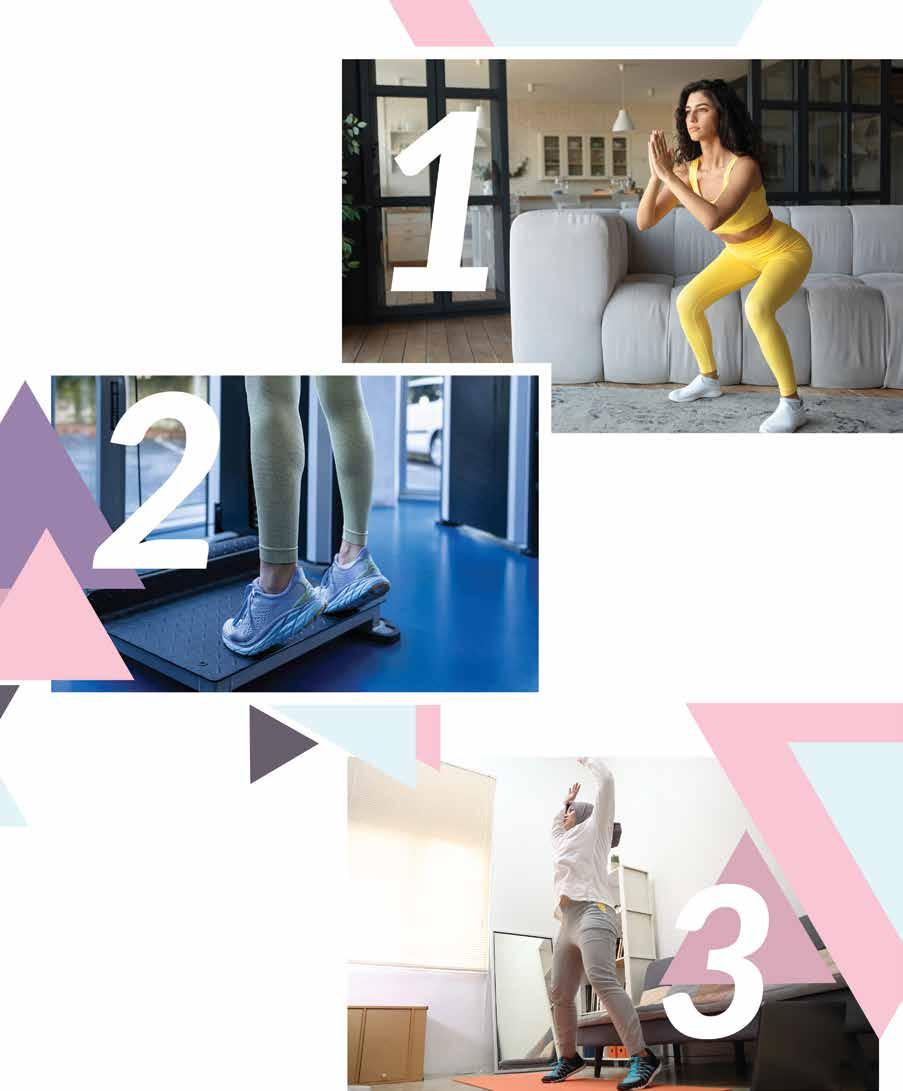
These are easy to do standing at your kitchen counter if you want to start with support or the assurance you will be supported if needed. Feet should be a few inches apart and body is straight, a slight bend in the knees. Raise and lower from flat foot stance to up on the toes. You may also add in raising up onto toes and holding for a count of 10 before lowering down.
This tried-and-true cardio option still works and is an easy way to jump into fitness. Start by doing 20 jumping jacks and if jumping isn’t working well for your body, try stepping out to the side while raising your arms overhead. Alternate right and left. Add the jumps when and if appropriate. Build up from 20 to 30 then to 40 and so on as you increase your strength and stamina.
This can be done sitting or standing. Keep your back straight while holding a dumbbell in each hand and raising your arms to look like a goalpost. With the dumbbells at your shoulders, holding with an overhand grip, make sure your thumbs are on the inside and knuckles face up. Raise the weights up, controlling the speed and exhaling. Pause for a second at the top, inhale and lower dumbbells to the shoulders.
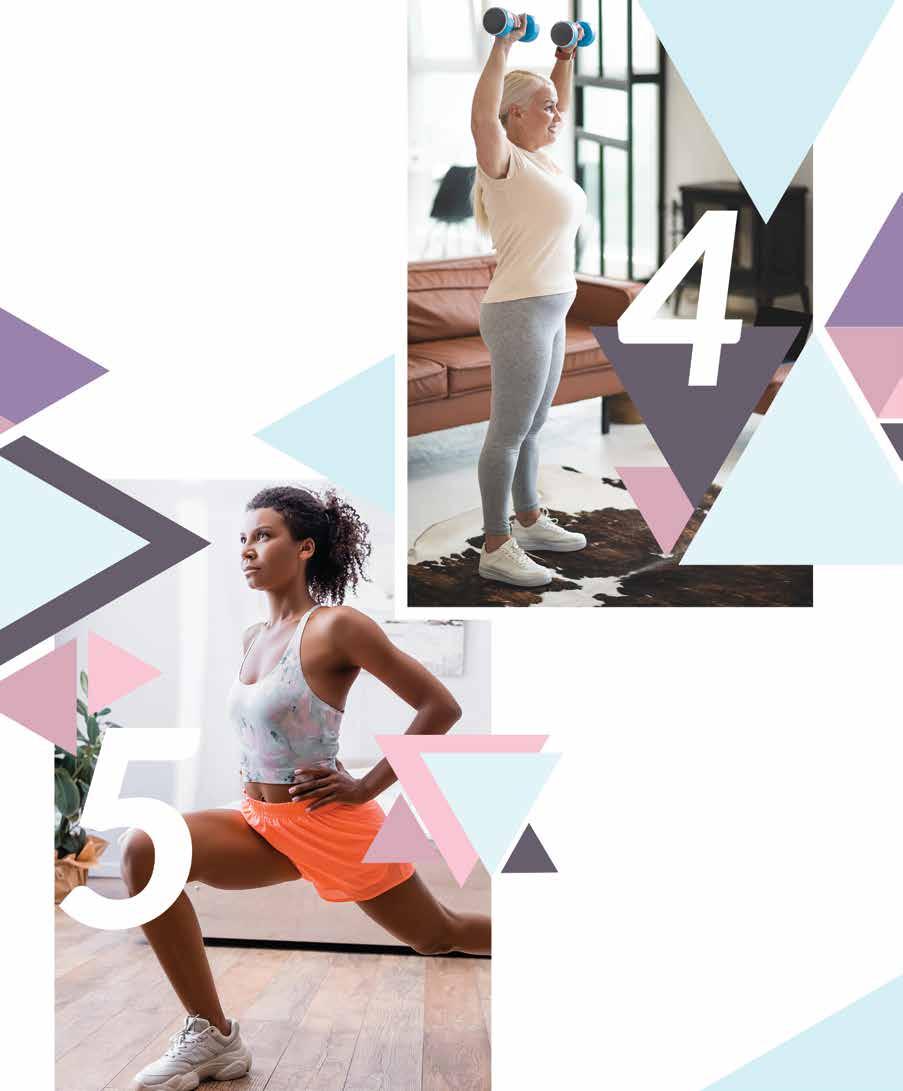
To start, bring one leg forward, bend, and straighten back leg. Raise and lower in this position and add weight to this exercise when ready. You can hold the weight up over your head, close to your chest, or with arm down. You may also hold the weight on top of the thigh. Switch legs after 10 reps and do two sets.
Tips: Rest in between sets for 30 to 60 seconds. Make sure you are hydrated by drinking eight, eight- ounce glasses of water per day. Ease into exercise rather than overdoing weights, reps, or cardio; good form and consistency, followed by recovery, will be the keys to success and avoiding injury. Track your progress in a notebook and jot notes about how you modify any exercises. [ aw ]
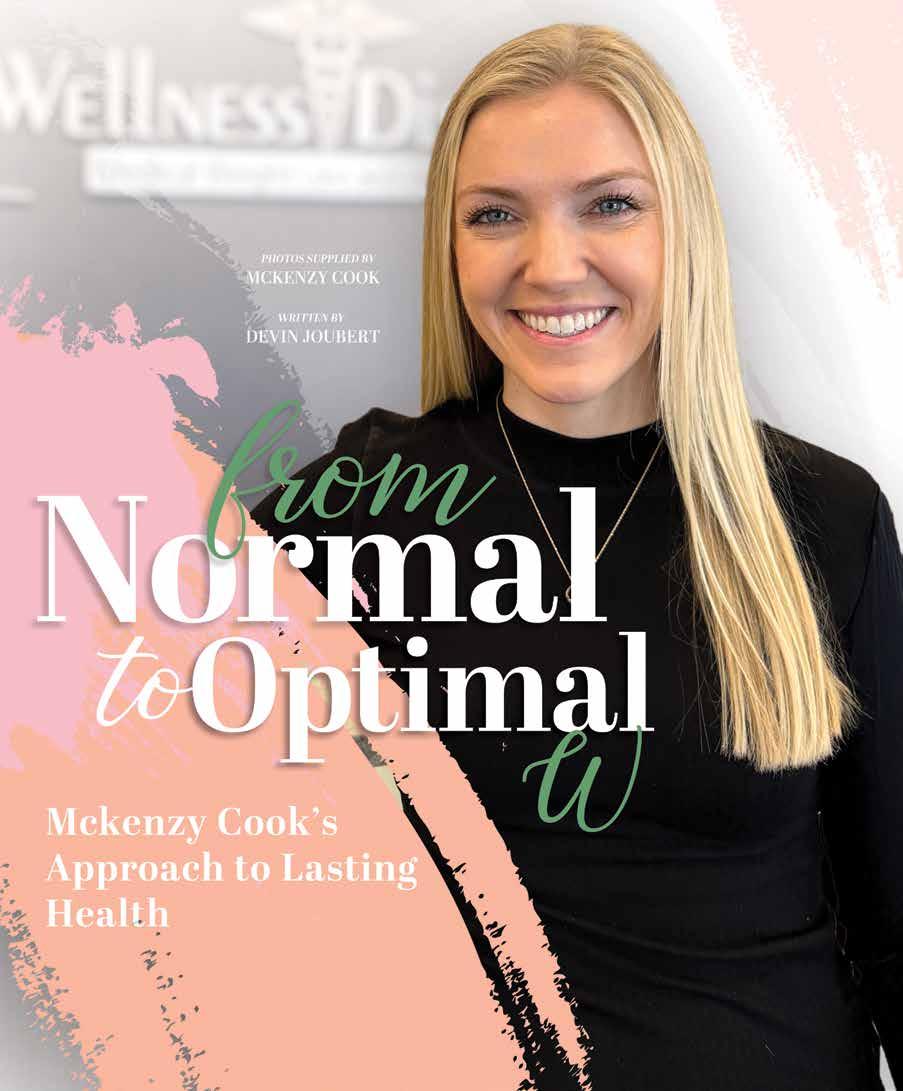
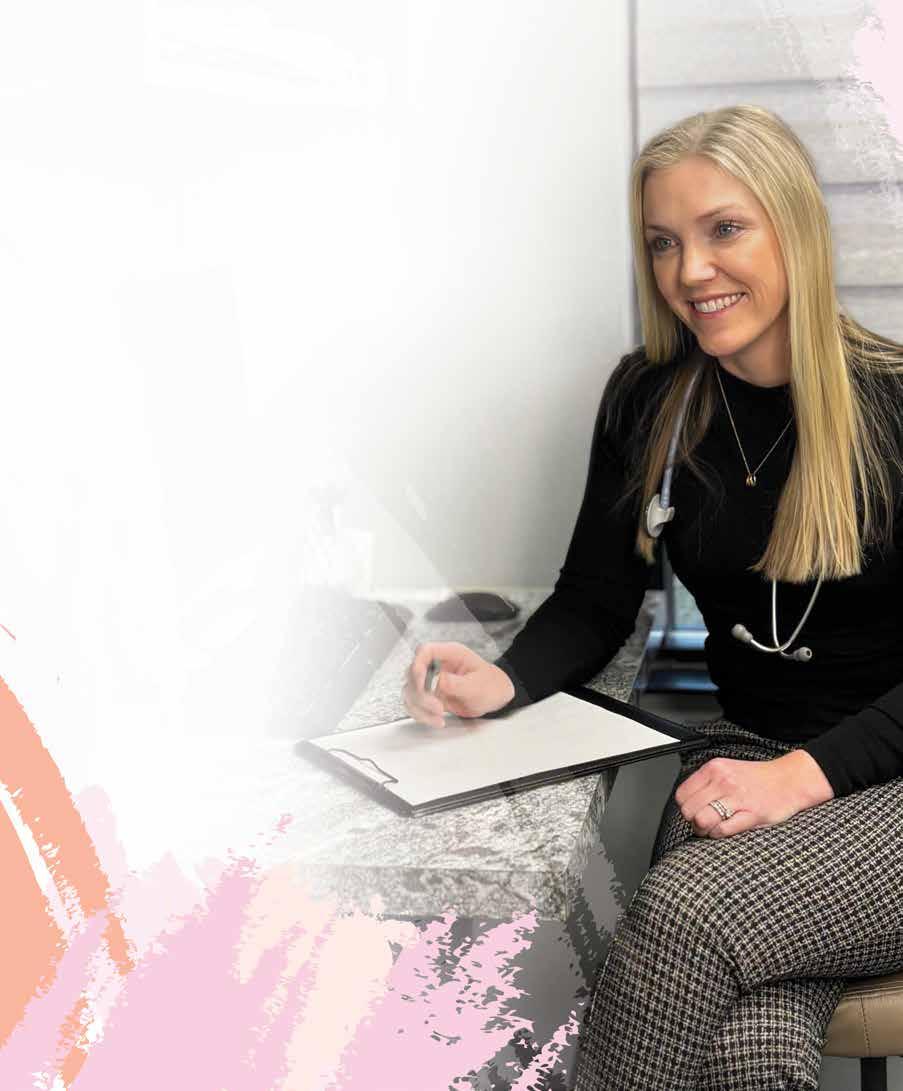
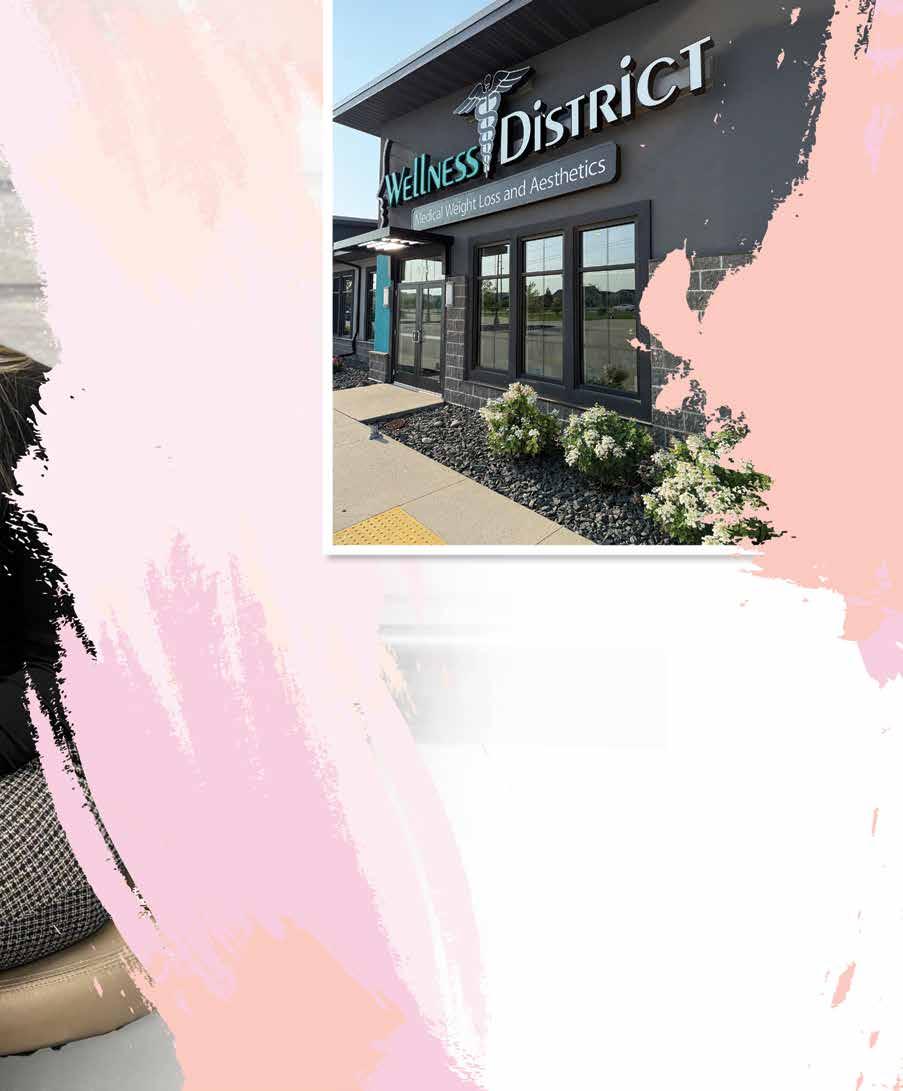
When it comes to lasting health, quick fixes aren’t part of the plan for Mckenzy Cook. As a full-time nurse practitioner at Wellness District Medical Weight Loss & Aesthetics in West Fargo, Mckenzy specializes in medical weight loss and thoughtful hormone support, helping teach men and women about preventing diseases through making healthy lifestyle changes so patients can feel their best from the inside out. With a compassionate approach rooted in evidence-based medicine, she looks beyond the number on the scale to address body composition, lab work, symptoms, and long-term goals to empower patients to move from simply “normal” to truly optimal.
Coming from a background in emergency medicine, Mckenzy often cared for patients during some of the most difficult moments of their lives. Those experiences gave her a firsthand look at how many serious health challenges develop over time and often go unaddressed until they become critical. “So, in that realm of healthcare, I saw patients, at their very lowest or in unfortunate conditions,” said Mckenzy. Seeing this pattern shaped her perspective on healthcare and sparked a passion for prevention.
When working with someone new, they do monthly appointments until the patient is in the maintenance phase. “I focus on a few important components of health, including medical weight loss, as well as hormone replacement and hormone support,” said Mckenzy.
She takes a compassionate, patient-centered approach to care for her patients, recognizing that no two people experience health challenges in the same way. Rather than relying on a one-sizefits-all solution, Mckenzy works closely with each patient to understand their unique symptoms,
lifestyle, medical history, and personal goals. By tailoring treatment plans for the individual, she aims to create a path that feels realistic and supportive for each person. At the core of her philosophy is a commitment to lasting results and to get there she helps patients focus on sustainable habits and long-term health improvements instead of quick fixes that often fail to address the root of the issue.
When a new patient comes in, they do an indepth health assessment, look at body composition scans, and order a full panel of labs. After looking through the results, she helps them make their next steps. “Then we come up with an individualized plan. My approach really focuses on keeping muscle and losing body fat,” said Mckenzy. “The whole process is physician monitored as well as evidence based. So, there's no guesswork. I love what I do because of those factors. I use the latest medical information. I'm always on top of my A-game with research. And then I use prescription medications when necessary.”
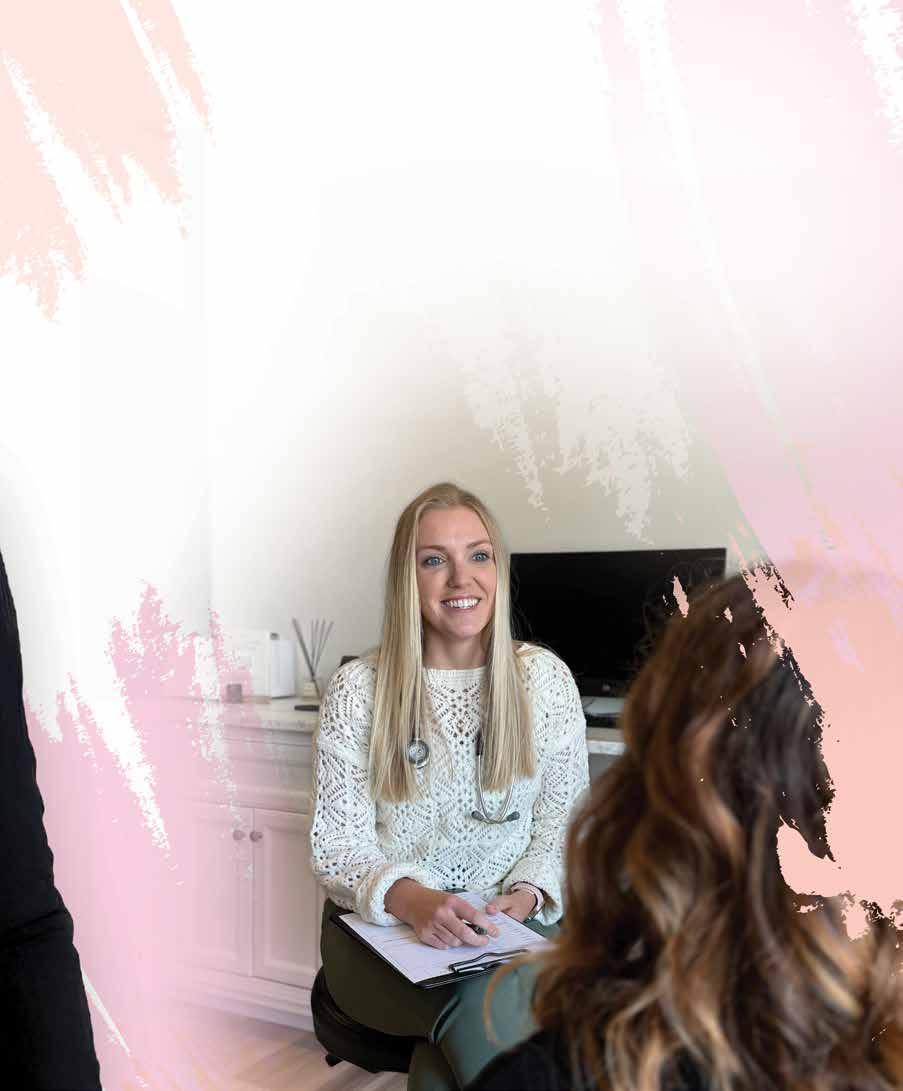
Then we come up with an individualized plan. My approach really focuses on keeping muscle and losing body fat.
Mckenzy Cook
Dietary work and nutrition are essential, because health in your whole body is connected to everything around you like what you eat, how you sleep, and more. “My approach is lower carb and adequate protein. Having body composition scans also helps us direct the specifics when it comes to figuring out everyone's calories,” said Mckenzy. “I find that to be a sustainable place for getting real results, but it’s also something that can be lived out long term, which is the goal. It’s good to not have an all or nothing mindset. I want this to be a sustainable approach for everyone. I don't want anyone to feel like an outlier with their family or partner in social situations. I want you to feel really interconnected and eat good, normal food.”
In healthcare, there is an important distinction between what is considered normal and what is truly optimal. Lab results or symptoms may fall within a “normal” range, but that doesn’t always mean a person feels their best or is functioning at their healthiest. While an optimal approach to care looks even deeper and considers how patients feel every day, it evaluates trends in their lab work, and addresses any underlying factors that may be holding them back from feeling energized, balanced, and well. By focusing on reaching optimal health rather than simply staying within normal limits, providers can help patients move beyond merely getting by and toward truly thriving.
The concept of “normal” in medicine is based on the broad population ranges. Those ranges often include a wide spectrum of people, many of whom may still be dealing with fatigue, inflammation, hormonal imbalance, or other underlying concerns. Because of this, a patient’s test result can fall into the normal range while they are still experiencing symptoms that impact their quality of life. Optimal numbers are typically a narrower target within that range. Looking at those optimal markers can help guide conversations between patients and providers about how to improve health rather than simply confirming that nothing is technically “wrong.”
“I want patients to come in if they have any symptoms like fatigue or brain fog or joint pain. And then we find their labs are normal. Sure, things might be normal, but if you don't feel your best, then I want to lean into that and be a part of the care team to get you feeling optimal,” said Mckenzy. “Like normal is not optimal. There is a difference.”
When patients start feeling stronger, thinking more clearly, and enjoying life again, that’s the most rewarding part of what I do.
Mckenzy Cook
With weight loss medications frequently making headlines, circulating through social media and Hollywood, many people are curious about what role these drugs play in improving one's health. While some medications like GLP-1s have sparked widespread conversation, they are only one piece of a much bigger picture. At Wellness District, Mckenzy emphasizes that lasting health rarely comes from a single solution. Instead, medications are viewed as supportive tools to use thoughtfully alongside nutrition, lifestyle changes, and personalized care to help patients reach their goals and sustainable results. “I want patients to experience the benefits of a healthier lifestyle through adequate nutrition and medications when deemed appropriate,” said Mckenzy. “I really focus on addressing insulin resistance. It’s really the foundation of what I do. My approach is to help you find a tailored and individualized approach that is sustainable for the
long haul. Medication is a tool and we use them as such, but we know they're not magic. I want patients to feel empowered in their decision making and I want them to know all of their options.”
For Mckenzy, the goal is never just weight loss, it’s helping people feel better in their bodies and confident in their health for the long run. By combining thoughtful medical care, individualized plans, and a focus on sustainable lifestyle changes, she aims to give patients the tools they need to thrive, not just for a few months, but for years to come. “I want people to feel heard, supported, and empowered in their health journey,” said Mckenzy. “When patients start feeling stronger, thinking more clearly, and enjoying life again, that’s the most rewarding part of what I do.” [ aw ]
For more information, contact: Fargo Wellness District
701-205-3088
435 32nd Ave. E., West Fargo, ND

It’s a common scenario: Your schedule is tight, you’re on the go, and you’re feeling hungry, maybe even stressed. This is that crucial moment where you have a choice to pick something healthy or not (or forego eating, which isn’t recommended as your body needs fuel). Luckily, there are several good options in the FM area where you can find nutritious, non-fussy meals to either enjoy in a restaurant environment or conveniently do takeout.
Luna is an award-winning spot known for its carefully curated wine and beer selection, along with scratch kitchen comfort foods. As opposed to just regular “American comfort fare,” Luna uses fresh, local, and organic ingredients, taking Midwestern tastes to new levels of everyday food. This is a great spot for all diners, including the kids, and it’s open morning through dinner. Chef Ryan Nitschke, a Fargo native, and owner/wine curator Nikki Berglund, serve up goodness day to night, perfect for the health conscious and/or indulgent diner. 1545 S. University Dr., Fargo, ND. Lunafargo.com
Check out Nautical Bowls if you’re seeking healthy, superfood-packed options that can align with any dietary needs, including glutenfree, soy-free, dairy-free, and plant-based. Using fresh and powerhouse-level ingredients in interesting combinations, this hot spot’s bowls are nutritious, satisfying, and unique. There are take out, delivery, and dine-in options. You won’t find artificial sweeteners, dyes, or flavors here, only all-natural, essential vitamin and nutrient filled deliciousness! Open 9 am to 7pm Monday through Sunday. 665 32nd Ave. E., Suite 106, West Fargo, ND. Nauticalbowls.com

(Formerly the Daily Dose)
Known for its “power teas”, No Limit Nutrition is a health-focused nutrition club. In addition, they serve protein shakes and healthy snacks and are a community-centered spot for wellness. Considered a supportive spot for those seeking good nutrition and support for their health journey, No Limit Nutrition offers vegan choices, teas, a kids’ corner, and several shakes, including those that taste like desserts. Open 7 am to 2 pm Monday through Friday. Closed Saturday and Sunday. 3223 13th Ave. S., Unit C, Fargo, ND. Facebook: No Limit Nutrition
Ninja Japanese Restaurant in West Fargo offers an array of authentic Japanese fare. Ramen, sushi, Donburi rice bowls, signature bowls, and the option to create your own combination bowl, Ninja is a local favorite for healthy and interesting food. Additional menu items include appetizers, soup and salad, and desserts. Open 11 am to 10 pm Monday through Thursday, 11 am to 10:30 pm Friday and Saturday, and 11 am to 9:30 pm Sunday. 816 24th Ave. E., West Fargo, ND. Ninjawfargo.com
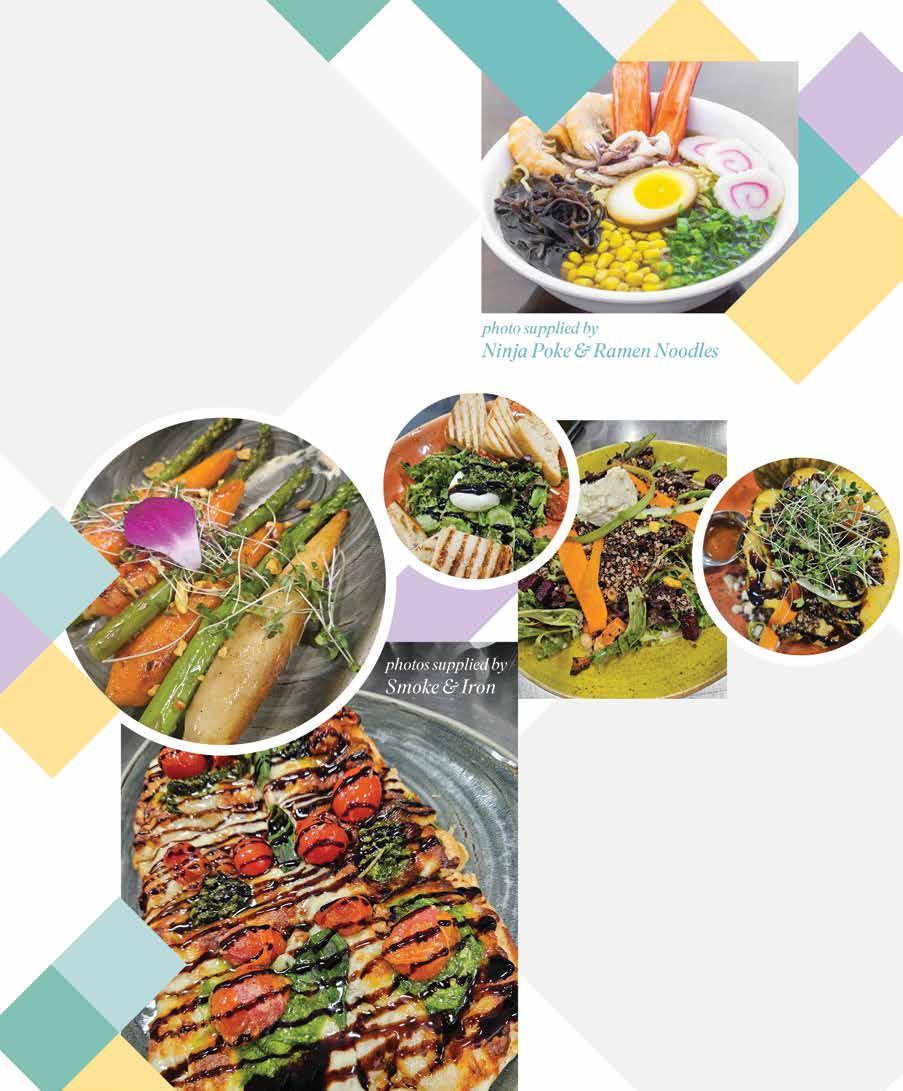
Fresh on the West Fargo scene, Smoke & Iron has already made its mark for offering quality ingredients and beautiful presentation, along with a variety-packed menu. Check out the healthy picks of Roast Carrot & Asparagus Platter as a starter, the amply filled Farmers Market Salad (add optional protein of choice), Roast Vegetable & Quinoa Stuffed Acorn Squash, Rainbow Trout Almondine, or many other nutrition-rich meals from their conscientiously created menu. Open 3-10 pm Monday through Saturday and 10 am to 8 pm Sunday. 621 32nd Ave. W., West Fargo, ND. Smokeandironnd.com

One of the biggest trends for 2026 is advanced wearable technology. Devices like smartwatches, rings, and biometric sensors are evolving far beyond step counting: they now track blood pressure, sleep quality, heart rate variability, recovery readiness, and even blood glucose levels — then turn complex data into actionable guidance.
These wearables are part of a broader shift toward data-driven fitness. Fitness tracking will increasingly help individuals make smarter decisions about workouts, recovery, and lifestyle habits rather than just logging activity.
Artificial intelligence is reshaping how people train. Rather than one-size-fits-all plans, AI-generated programs adapt in real time — adjusting workouts based on performance metrics, fatigue levels, and personal goals. This hyper-personalized approach is predicted to be a defining trend in fitness planning in 2026.
AI isn’t only analyzing data; it’s also being embedded into apps and equipment to help tailor training plans, improve form, and offer adaptive guidance — like a virtual coach in your pocket.
Rather than focusing on isolated workouts, hybrid fitness blends strength, cardio, mobility, and flexibility for more balanced results. These routines are efficient, versatile, and appeal to a broader range of fitness levels.
Functional training—movements that mimic real-life activities (like squats, lifts, and carries)— continues to grow, helping participants improve daily performance, muscular balance, and joint health.
Fitness in 2026 is less about intensity and more about sustainability. Low-impact workouts such as Pilates, barre, walking,yoga, and interval walking are trending because they reduce strain on joints while still improving strength and cardiovascular health.
These movements also tie into a rising focus on well-being and longevity, where the quality of motion and recovery is just as important as performance.
Fitness is shifting from solitary gym sessions to social, community-focused experiences. Running clubs, adult sports leagues like pickleball or padel, and group fitness events are becoming powerful motivators for consistency and enjoyment.
“Fitness for life” — not just a regimen — increasingly fits into daily routines, whether through walking classes, social sports, or hybrid digital-in-person memberships.
With populations aging worldwide, active aging programs are on the rise. Tailored workouts for older adults emphasize balance, strength, mobility, and independence — helping participants stay active longer with lower injury risk.
At the same time, inclusive fitness options are expanding to serve a wider range of body types, abilities, and health needs.
Recovery isn’t a luxury — it’s a training essential. Cold plunges, saunas, LED/red light therapy, guided stretching, mobility classes, and sleep-tracking tools extending beyond elite athletes to mainstream routines.
The understanding now is that optimal recovery improves adaptation, reduces injury risk, and enhances long-term fitness gains.

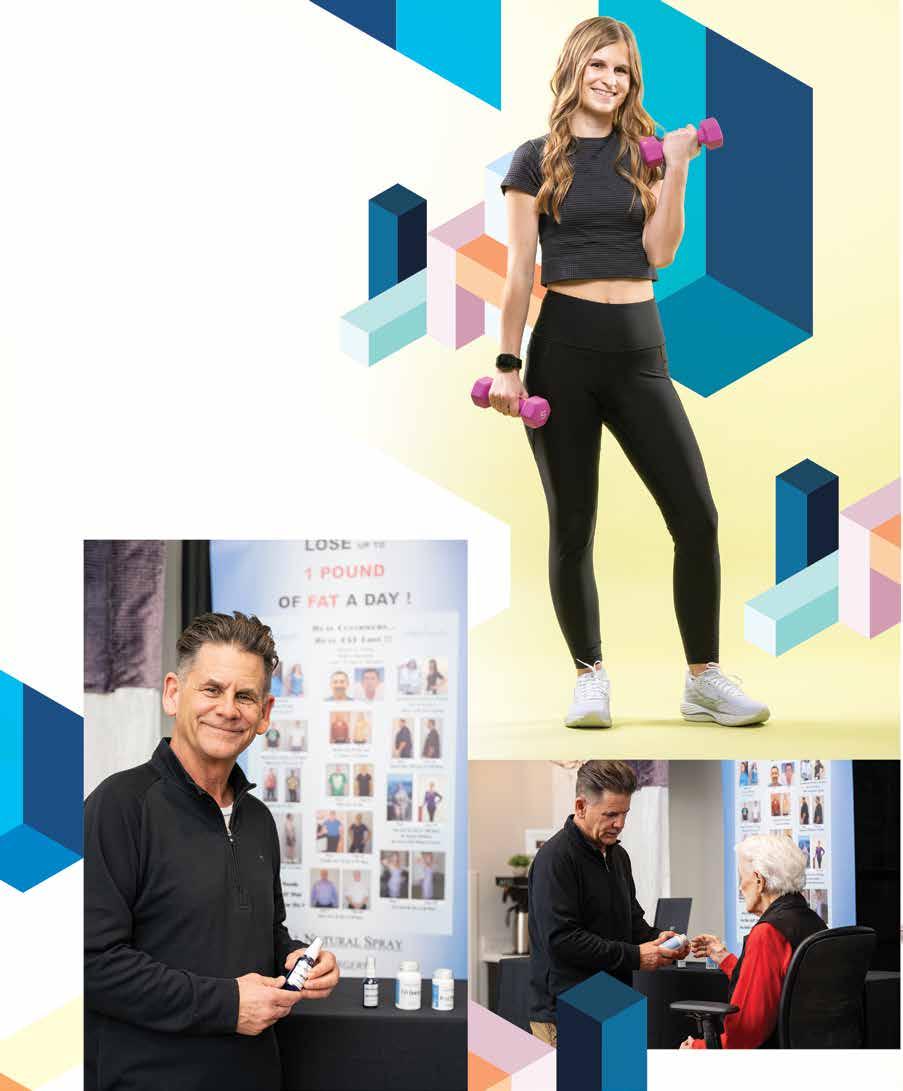
Nutrition trends in 2026 go hand in hand with fitness. Personalized nutrition plans, hydration sensors, electrolyte mixes, and functional foods aimed at performance and recovery are growing fast. Healthy Systems USA is a program that doesn’t require shots, just simple food plans that help your own system burn fat and give you energy. This program is a very fast way to lose the weight you want to lose. Healthy Systems gets you into the habit of eating healthy for your body. The supplements at Healthy systems USA are all natural helping you lose up to a pound of fat a day.
Fitness success is no longer just about movement — it’s also about fueling the body efficiently, intelligently and giving your body the nutrition your body needs.
Virtual reality (VR) and augmented reality (AR) workouts are moving into the mainstream, creating immersive fitness experiences that feel more like play than exercise. Treadmills and bikes can now transport users to scenic environments or gamified challenges, increasing engagement and motivation. Example some brands are Peloton and NordicTrack.
Gyms and fitness brands are embracing sustainability, from energy-generating cardio machines to eco-friendly studio design and materials. This trend reflects a broader cultural connection between personal health and planetary health. [ aw ]

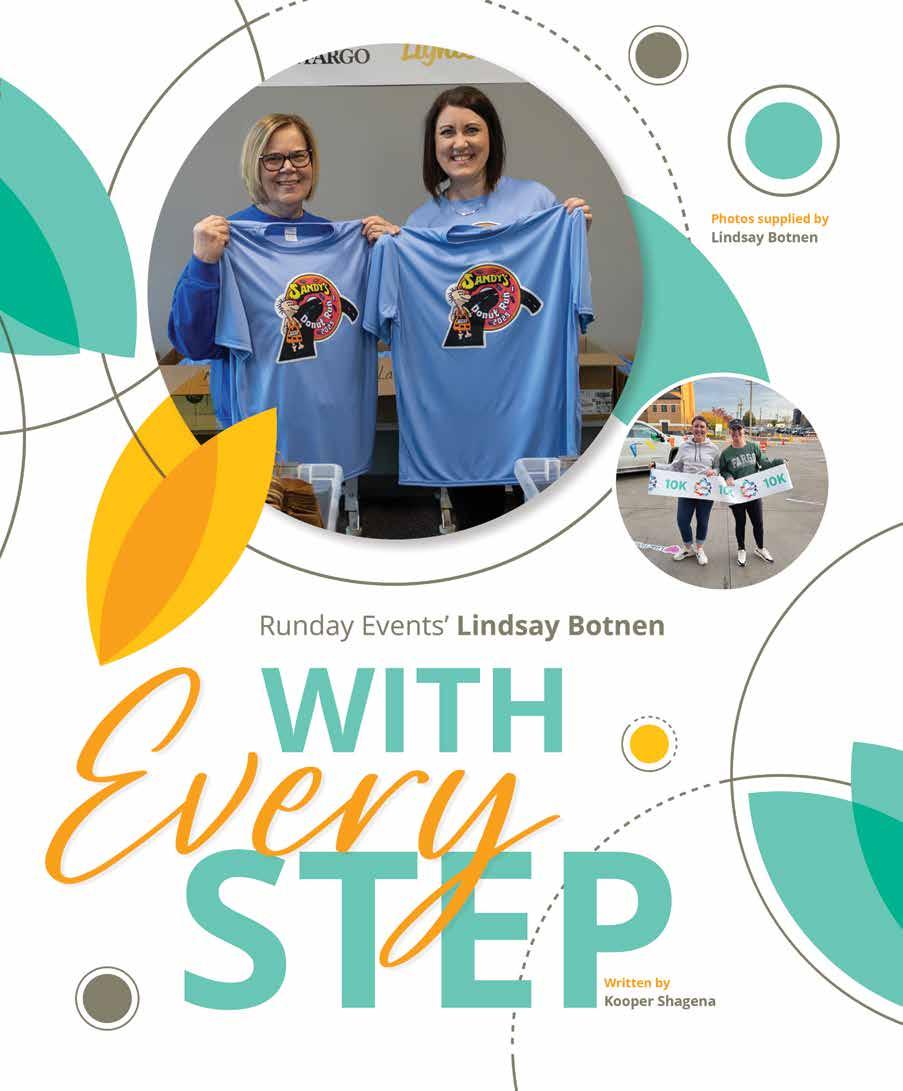
When Mark Knutson passed away in 2023, he left big shoes to fill as the owner and race director of the Essentia Health Fargo Marathon. He was the man behind the race for almost 20 years ever since the very first full Fargo Marathon in May of 2005. Having inspired more than 300,000 people to participate in the Fargo Marathon over his tenure as race director, one among Mark’s race day volunteers was particularly struck by his passion for running and the city of Fargo: his good friend James Botnen.
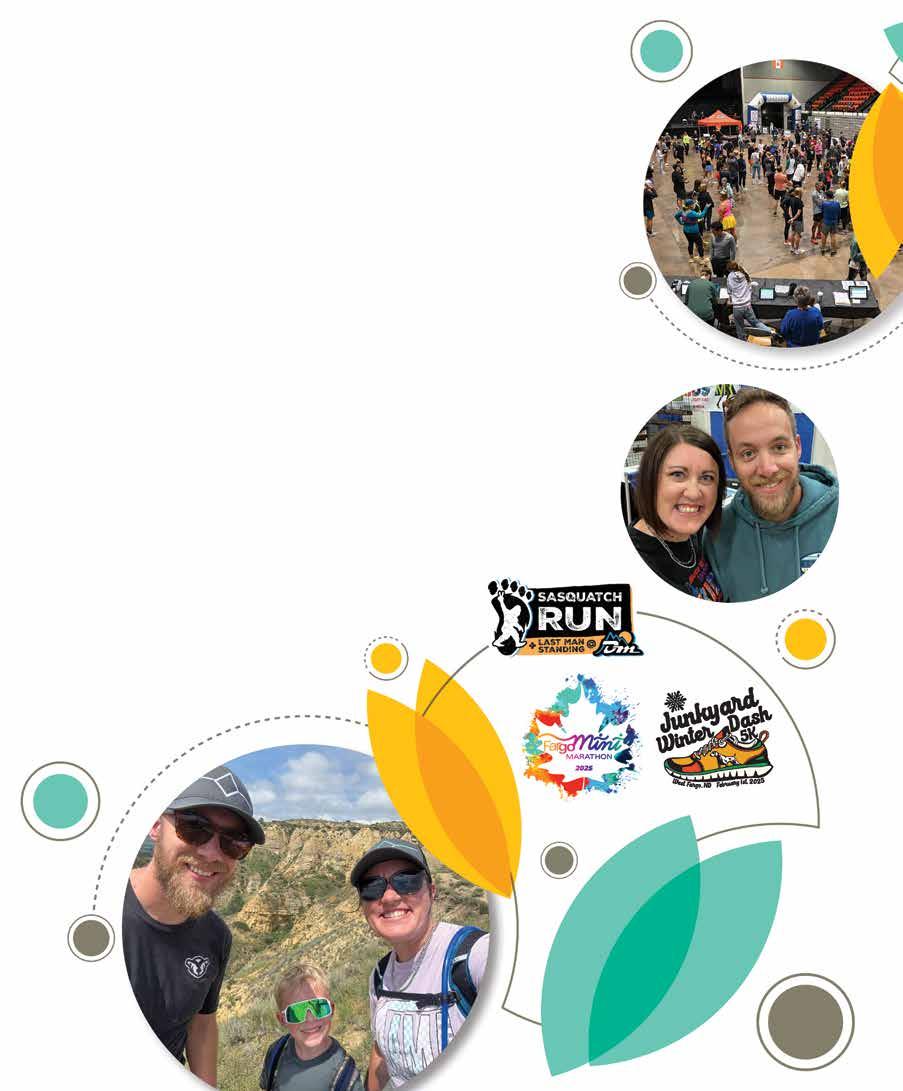
“James was never a runner,” Lindsey Botnen, James’s wife and assistant race director for Runday Events says, “until he volunteered for the Fargo Marathon one year and he was like, ‘if all these people can do it, I can do it.’” Then, after Mark’s passing, she says James “just felt a calling to continue on with Mark’s legacy.” He and Lindsey did this together via the creation of Runday Events, now the company that facilitates more than 12 local races in Fargo, Moorhead, and Detroit Lakes: 5ks, 10ks, half marathons, and fun runs.
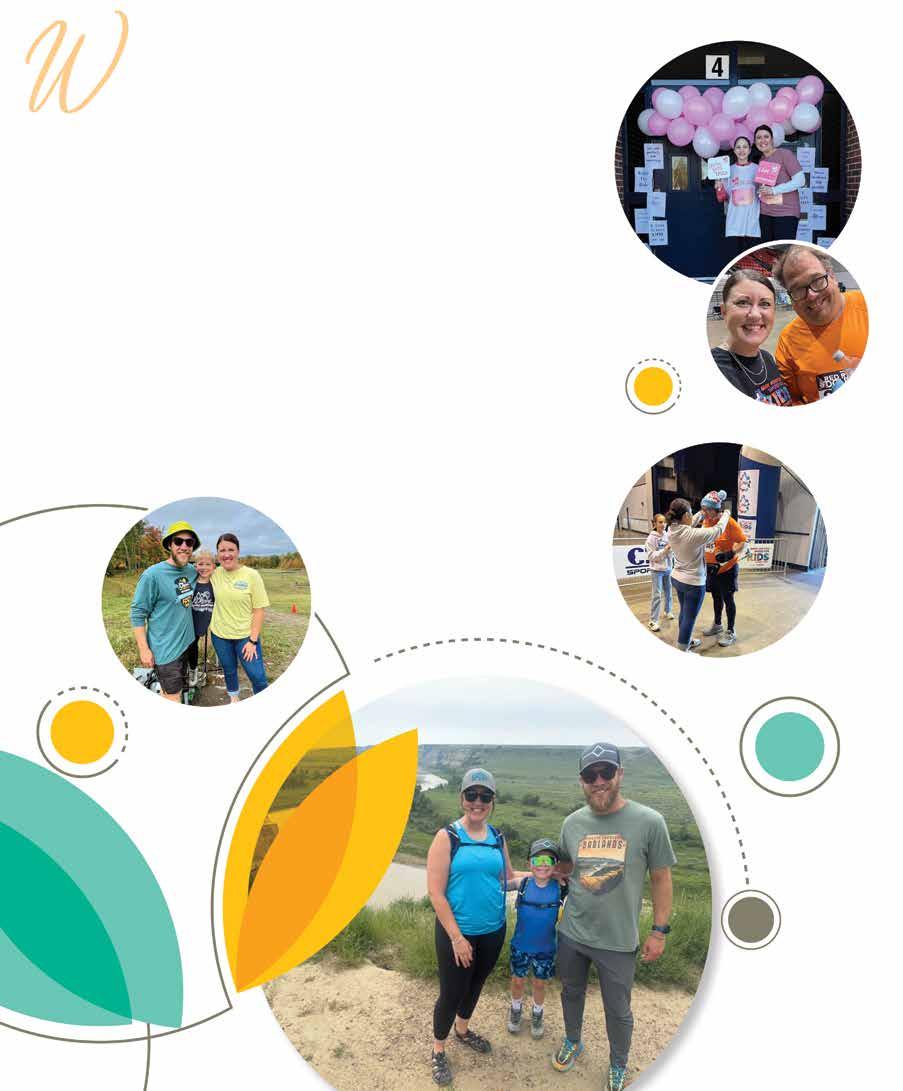
Lindsey isn’t a runner either. But as assistant race director, she is the face that the runners see, facilitating the events, handing out water and bananas, perpetuating the spirit of community that Mark envisioned for the city of Fargo.
“I get to see the runners more,” she says. “I get to interact with them more than James does because James is usually out on the course, making sure it’s cleared, making sure the timing is going well.” It is also her hands that put together every runner’s packet that they pick up prior to race day. She assembles the bibs with the runners’ numbers and tracking chips.
“Every runner who signs up,” she says, “they get a bib, pins, some sort of swag, whether it be a mug or a shirt. For Junkyard, we made custom neck gators, and the year before that they had bomber hats.” Everybody loves swag, but it really is more than that. Feeling the support of local businesses while alongside fellow community members reminds a person that we are all in it together after all, that people will appear from out of the woodwork just to uplift one another up, if we just make the jump to participate in events like these.
Getting outside and being fully present in these moments has shown Lindsey first-hand what this combination of exercise and togetherness does for people.
“Just seeing their faces when they’ve completed the race—and you get all sorts of shapes and sizes of people running at these events; we get walkers, everybody, and when they cross the finish line and get a medal… the self-accomplishment on their faces is incredible to watch.”
One runner is especially inspiring to Lindsey and the rest of the local running community.
“We have a runner whom we know very well,” she says. “His name is Arnie. Everyone knows Arnie around here, I feel like. He lives in Fergus Falls and he is not a fast runner, by any means. But he is out there running every single day.”
“He’s usually the last runner, but when he sees everybody still out there—James refuses to take down a course until the last runner is through— and just to see Arnie’s face, knowing that it’s all still up and that we’re cheering him on… it’s been very eye-opening and heartwarming for us to see it all.”
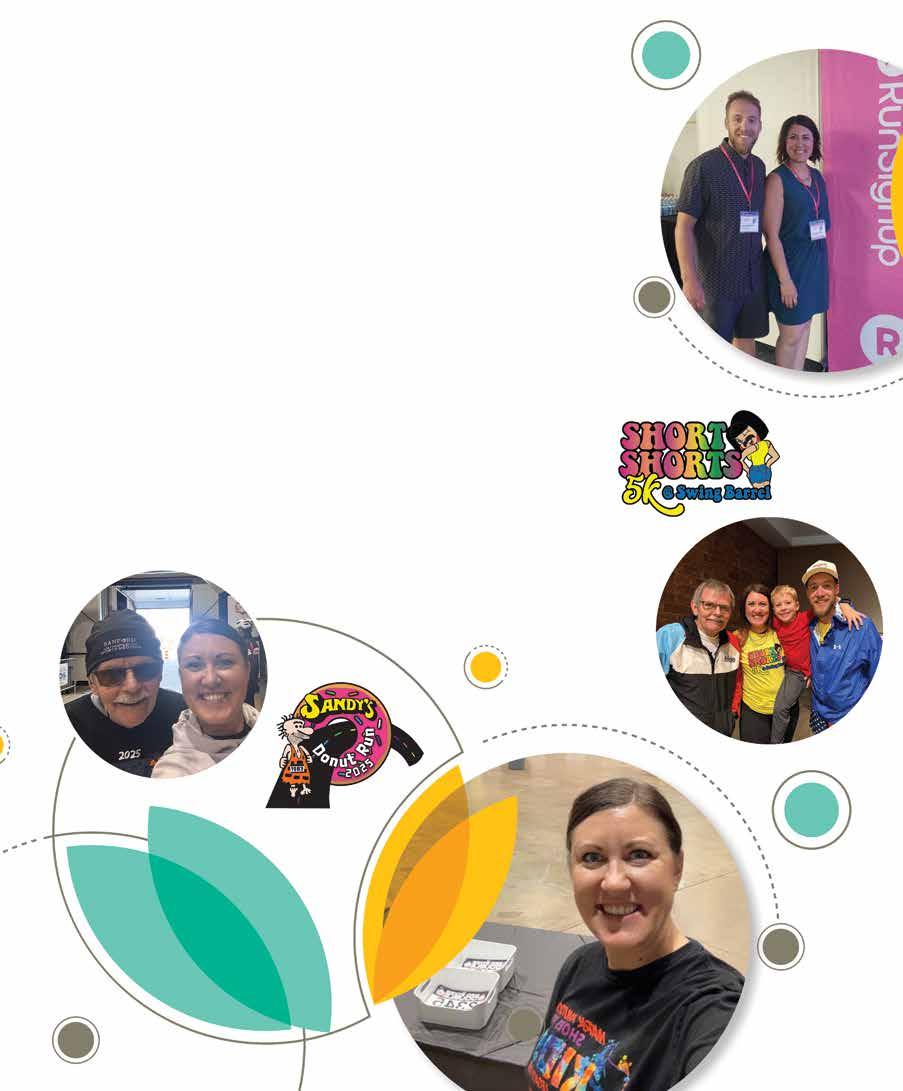
Running can be an intimidating world to step into, but it truly doesn’t need to feel that way. It’s everybody’s right to use their legs at whatever speed they like and to take up space on our sidewalks and parks; that’s what they’re there for. These routed races put on by Lindsey and James also bring runners through parts of the neighborhoods and city streets that may otherwise never be appreciated by car. Get on foot and enjoy your city!
“I used to love it and do it all the time in high school,” Lindsey says, “and I feel like that’s a lot of people’s journeys.” A varsity track athlete in high school, Lindsey was part of that “people who run” club for a long time, until she developed exercise-induced asthma that made it physically and emotionally hard for her to compete.
“I stopped running and just never got back into it.”
Until… she met James.
“We were pretty fresh into dating, and I think I wanted to impress him with doing a 5k,” she says. Doing anything for love, she started training a while beforehand and was feeling pretty good. Then the morning dawned on the day of the race and any bravado she had built up dissolved into panic.
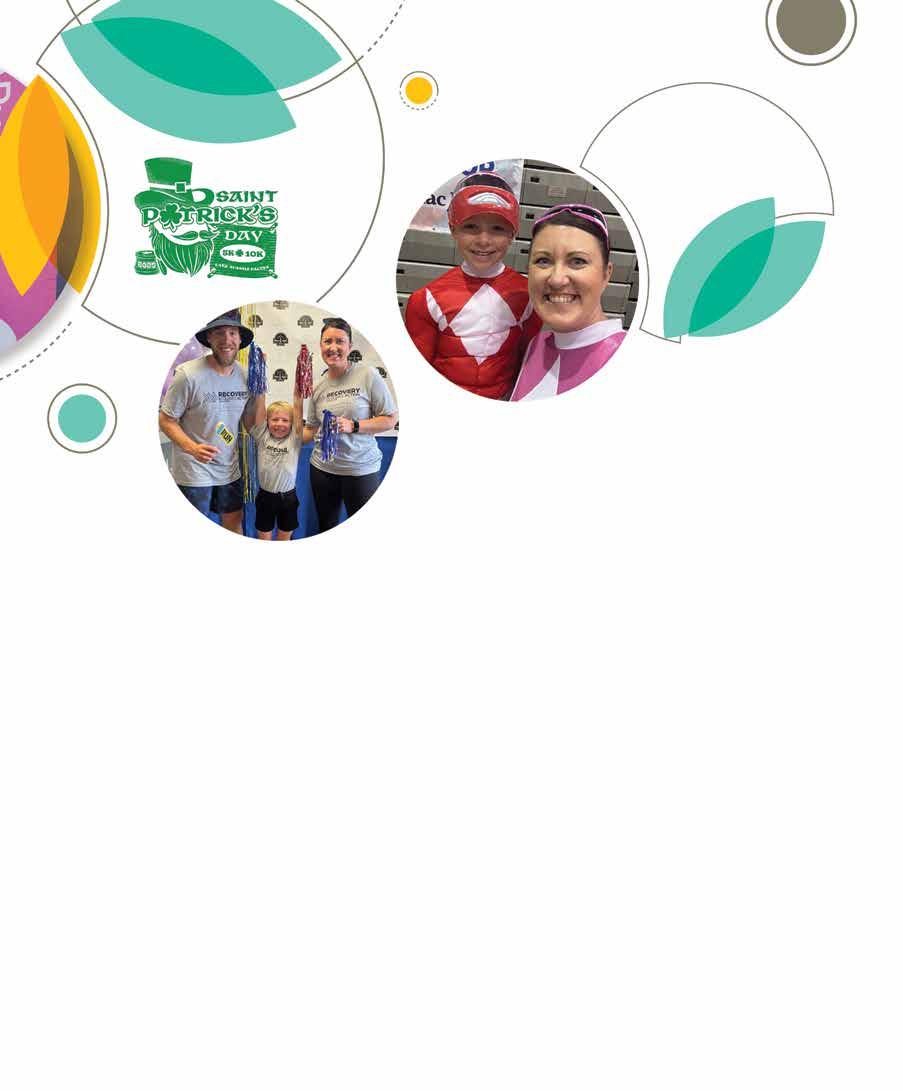
“I was a nervous wreck,” she says, “and my anxiety feelings from when I was in junior high and high school came flooding back to me.” To make matters worse, this 5k was at the Western Minnesota Steam Threshers Reunion grounds in Rollag, Minnesota.
“I have been going to WMSTR my entire life and I knew it was hilly; I don’t know what I was thinking making that my first 5k.”
Despite everything, the fear, the hills, the anxiety—she did it anyway. A man named Ralph Fiskness noticed her rising panic and helped her to steady herself at that starting line, getting her talking to distract from the fear. Both she and James ended up having family connections to Ralph and they all remain great friends today; Ralph does a lot of work for Runday Events and is even the family photographer for Lindsey and James’s son at all his races. Amid all that dread, looking up those towering hills in Rollag, the running community led Lindsey to a life-long friend.
“That was tough,” she says, “but I did it.” After all, it takes a lot more guts to do something you’re afraid of than something you’re not.
Life happens and priorities shift, sometimes drifting people far away from hobbies they used to love. Picking them up again can be hard, especially if they center around skill and exercise. A behemoth of a mindset to conquer is that sunk cost fallacy. I’m this far into an inactive lifestyle and unhealthy habits, so what’s the point in changing after all these years? I’ve wasted all this time, so I might as well waste the rest of it. But this is just a flawed thought pattern: a fallacy. There is always time, there is always a reason, and it’s never too late.
Lindsey also serves as a mentor for her Kindred chapter of BIO Girls, a nonprofit organization that helps young girls in grades 2nd through 6th navigate the complexities of girlhood, body image and overall wellness.
“It’s a program just helping girls in that age group with their confidence, how they can handle certain situations, their friendships, peer pressure; all the things that come along with being a girl.” They meet for 12 weeks and then, at the end of those 12 weeks, they run a 5k together. This year is going to be special because several of the BIO Girls groups from around the area (including Kindred) will be running the 5k together. In years past, Kindred organized their own 5k; Fargo has several different groups, there is one in Kindred, which Lindsey is a part of, and Moorhead and West Fargo have their own groups, too. There are groups that center around running, or yoga or, Lindsey says, there is one whose main activity is cross training.
Leading up to the 5k, the girls are asked to be accountable and to do two or three additional workouts at home (at their weekly large group meetings they always do some physical activity) and record them on sheets of paper. They fill out their sheets with the days and times and what activities they did and bring them to their mentors at the weekly meeting.
Lindsey says, “this year I asked our site director: ‘can I have one of these sheets?’ I need to be accountable as well; if we’re asking these girls to be, I need to be, too.”
Organized daily workouts aren’t really her style as they are her husband’s, but she absolutely lives an active lifestyle. Together, Lindsey, James and their seven-year-old son are always out walking or biking; they love hiking if they travel anywhere with some hills to speak of. And she is, of course, active on those long race days, “running around” and organizing things.
Being an integral part of Runday events has given her the courage and will to dip her toe back into the running world again, too. She has a 5k and a 10k under her belt already and is considering taking on a half-marathon with encouragement from her husband.

In fact, there is a special opportunity coming up for her next December.
“We both turn 40 this year,” she says, referring to herself and her husband, “and so does a friend of ours; he actually turns 40 on the weekend of the Hawaii marathon.”
The Honolulu Marathon is a beautiful and welcoming race on the island of O’ahu, Hawaii— there is no time limit and no qualifying time to be eligible for entry. The course opens at 5am with a fireworks display lighting the runners’ way in the dark, early Hawaiian morning, and they get to see 26.2 miles of beaches and parks, downtown Honolulu, and the Diamond Head volcano ridge. “It’s actually something I’ve been thinking about,” Lindsey says. “I have never in a million years thought I would run a marathon—and I won’t be running it, but I could walk it. I could jog it. It could take me 15 hours but to say that I did a full marathon… in Hawaii, of all places? It’s something that’s been on my mind a lot lately.”
No matter how slow she takes it, it will be hard. In fact, no amount of fireworks or scenic beaches can negate the fact that going 26.2 miles on foot is hard. But Lindsey, just like every other regular person out there, can do hard things. No matter how you get your steps in, exercise shows us how this is true for all of us. [ aw ]


“WE KNEW HE HAD IT,” TRACY SAYS, “BUT WE DIDN’T KNOW HOW BAD.” SHE HAS ASKED HERSELF: “WHY AS CLOSE FAMILY AND FRIENDS, DID WE NOT TALK ABOUT IT?”

It’s never going to be easy to talk about suicide. The health and fitness world is full of euphemisms to help ease the tension around sensitive subjects; “are you fueling yourself properly?” is code for “have you developed an eating disorder?” “Do you have thoughts of harming yourself?” is asking “are you considering suicide?”
Euphemisms aren’t a bad thing—it’s okay to be gentle, but it’s dangerous to be scared away from the true face of our problems or the problems of our loved ones; how can you ever overcome something if you never look it in the eye?
On August 6th, 2015, Brady Oberg took his own life. Brady was a 26-year-old Ulen, Minnesota native who served in Afghanistan on the front lines of Operation Enduring Freedom on a 12-month deployment. He came home and married his wife Katie, resumed his college courses, and was planning to buy a piece of land to build a house on and raise a family there.
“Brady was very open about his back pain or his knees aching,” Tracy Dunham, his sister, remembers, after he returned home from overseas. “But he did not talk about the nightmares.”
Brady was carrying more than anyone knew. He saw counselors but lamented that they just
“didn’t get it; they have never had to pull the trigger.” His family knew he wrestled with post-traumatic stress.
“We knew he had it,” Tracy says, “but we didn’t know how bad.” She has asked herself: “why as close family and friends, did we not talk about it?” She was able to choose, however, to channel the pain, frustration, and regret into something that helps save Brady’s brothers and sisters in arms; she started the Brady Oberg Legacy Foundation in 2016. The passion for her brother and other combat veterans was there, and she had professional experience to be the executive of a nonprofit, having been the director of operations at Haley’s Hope for more than four years before Brady’s passing.
With support from her mentor at Haley’s Hope, Kari Bucholz, and from her husband at home, she has now been able to make the Brady Oberg Legacy Foundation her full-time job, hiring employees and moving forward from an all-volunteer run program. Tracy and her team host adventures and retreats for combat veterans, providing them with outlets and community experiences as they deal with those hidden struggles.
“Shell shock” was the term used to describe the state in which soldiers would return home after exposure to constant bombardment and violence, coined after the first World War. Severe anxiety, tremors, mutism and nightmares would plague these men even as they slept at home in warm, safe beds. Post-traumatic Stress Disorder (PTSD) was extremely taboo up throughout the Vietnam and Korean wars; “they had been trained to do what they did, but we don’t train our veterans to come home and come back to civilian life,” Tracy says. “With our combat veterans having to be in that environment where their heightened awareness is always on, they’re always ready to do something, they’re always waiting to get into action. Then they come home and they’ve seen and done stuff that our human bodies aren’t supposed to be able to comprehend.”
And when nobody talks about it, it can be dangerous. Luckily, PTSD has begun to appear in the collective consciousness of veterans and civilians alike, even being illustrated in movies like “First Blood” and “American Sniper.”
Part of Tracy’s work is to continue spreading PTSD awareness and remove some of the taboo associated with it. Last year, she was hosting a golf tournament through the Foundation when a passerby approached her.
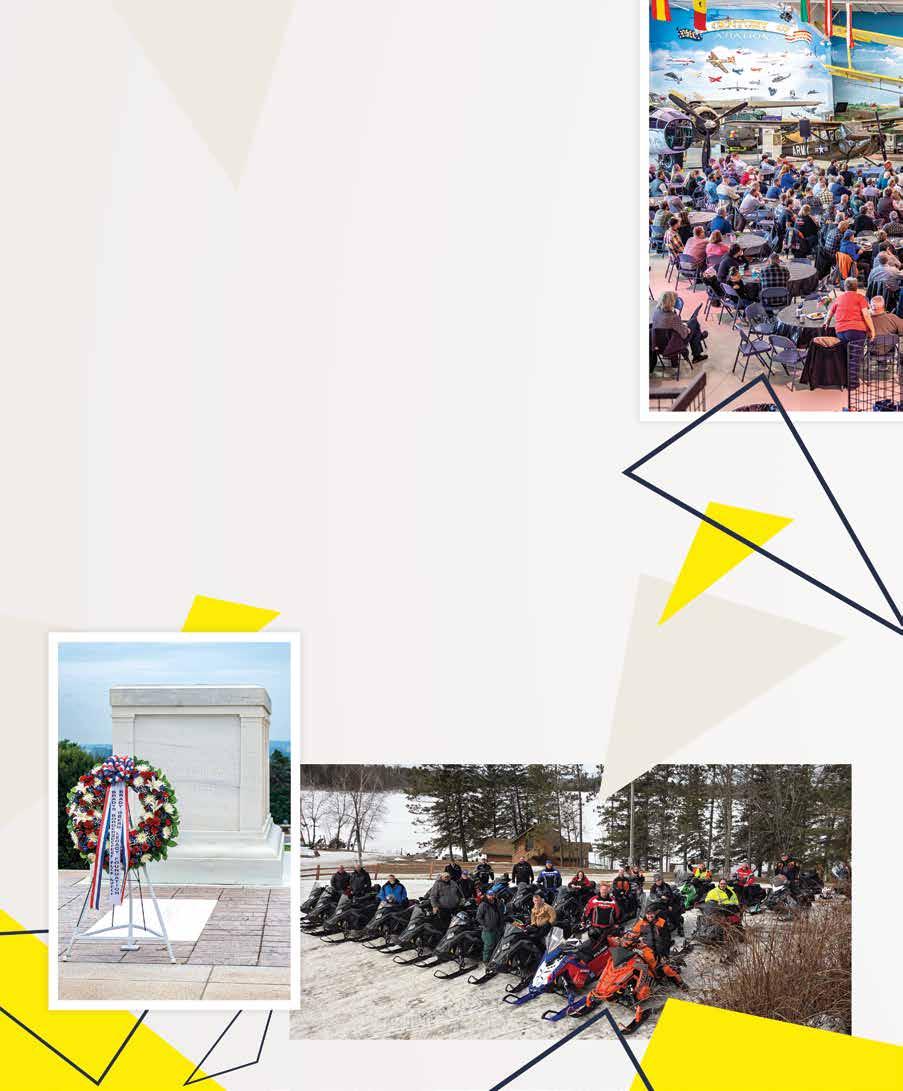
“He came to the golf course because he saw our banner that said, ‘combat PTSD’. He said, ‘I’m a Vietnam vet and I’ve had PTSD for 50 years, and this is the first time I’ve ever seen it on a banner.” Today, combat looks different, but these conversations remain just as important. For many service members, instead of being sent overseas for a year and engaging in military combat that way, drone piloting has become a huge category for the U.S. military.
“I was visiting with this guy,” Tracy says, “and that’s his job; he pilots a drone. During the day he has to do these things…and you can see an amazingly clear picture. Then, suddenly, after work you have to go home and you have to pick up the milk and get to a soccer game.”
Without time and space to process these heavy jobs, these service men and women can live a jarring and isolating life even though they may have families and friends and children.
“I feel, in the next 10-15 years, that combat PTSD isn’t going to be just deployment. It’s going to look a little different as we move forward,” Tracy says.
Like Brady did, combat veterans often feel that no one but other combat vets can truly understand what they went through and what they’ve brought home. That’s why Tracy created this space to be exclusively for combat vets, so that they might finally talk freely and be surrounded by the only people in the world who can understand what they’ve been through.

Most of the retreats are hunting and fishing, because that’s what Brady loved to do. This year, there are multiple pheasant hunting adventures booked for McCollum’s Hunting Preserve in Bijou, Minnesota, a muzzleloader deer hunt in Ulen, and several fishing excursions on lakes all throughout Minnesota. Golf tournaments and CrossFit groups are some of the most recent additions.
One fishing trip, at Castaway Club near Detroit Lakes, is exclusively for female combat veterans. It wasn’t until January of 2016 that all combat roles were officially open to women, but they had been authorized to fly in combat zones since 1993 and, of course, have served in medical aid and communications capacities since the first World War.
“Their PTSD can look the same as the men, but it’s a little but different too, with some of the stuff that women have had to deal with,” Tracy says, “so that’s been huge.” For example, women face an exponentially higher risk of sexual assault and rape when they serve in the military. The Department of Defense received 8,195 reports of sexual assault in 2024: that’s around 22 reported incidents every day.

“I’ve really enjoyed getting to know some of those combat ladies and hear their stories and how it’s affected their mental health over the years,” Tracy says.
The Foundation is also working on adding a Boundary Waters canoeing trip and a music-based adventure in the coming years: “so those veterans can tell their stories through music,” says Tracy. The Brady Oberg Legacy Foundation invests in the combat veterans of America through education as well, which is something Brady was passionate about. The Foundation offers scholarships for combat veterans going to school for counseling, so they can be that person for someone else; someone who really gets it.
It takes bravery to ask the hard questions, and it takes bravery to admit the answers to them. But difficult conversations tend to be the ones most worth having. Even Tracy, who has been working in her brother’s name for over 10 years, feels that tension and discomfort.
“Even several years after losing Brady I would get asked; ‘can you speak at this suicide prevention thing?’ and I’d think, ‘oh, my gosh. No, no I can’t do that.’ But if somebody would ask if I could talk about the Foundation, I’d say yes, absolutely.”
“So,” she says, “last year I decided that I needed to start talking more about the hard stuff; about mental health and why it matters.”
She says that breaching this gap is the most important thing you can do, for yourself and for others; to ask the hard questions and never give up. It might require tension and fights and awkwardness, but these things will always be better than the alternative.
“I know our veterans sometimes don’t like to talk about it but keep asking. I would have rather had him be mad at me for a short time than to have to go through that,” she says.
The value of community cannot be overstated either. Even if it’s awkward, even if it doesn’t go perfectly the first time, community is the lifeforce of humanity. It’s okay—ideal even—to need other people.
“Encourage them to find a group,” Tracy says, “whether it’s fitness or a motorcycle, whatever they like to do. Help them figure out what they need.” [ aw ] FOR INFORMATION: BradyObergLegacyFoundation.org
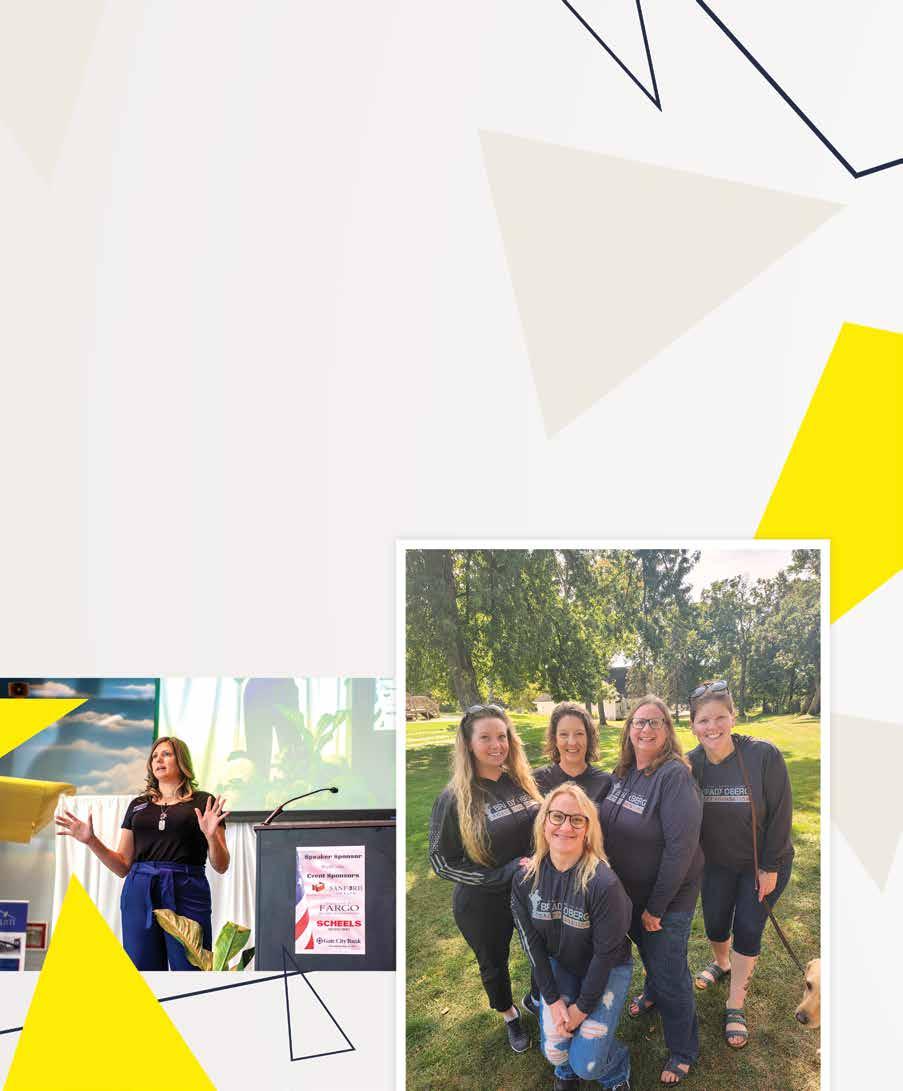
“LAST YEAR I DECIDED THAT I NEEDED TO START TALKING MORE ABOUT THE HARD STUFF; ABOUT MENTAL HEALTH AND WHY IT MATTERS.” TRACY OBERG
[ aw ]
1T - matcha powder
8oz - high-protein Greek yogurt (plain or vanilla; if using plain, add 1 tsp vanilla)
8oz - milk of choice
2tsp - cinnamon
1T - chia seeds
1T - hemp hearts
1 - banana, broken into pieces
1 - avocado, diced
Ice (as preferred)
Garnish: Strawberry
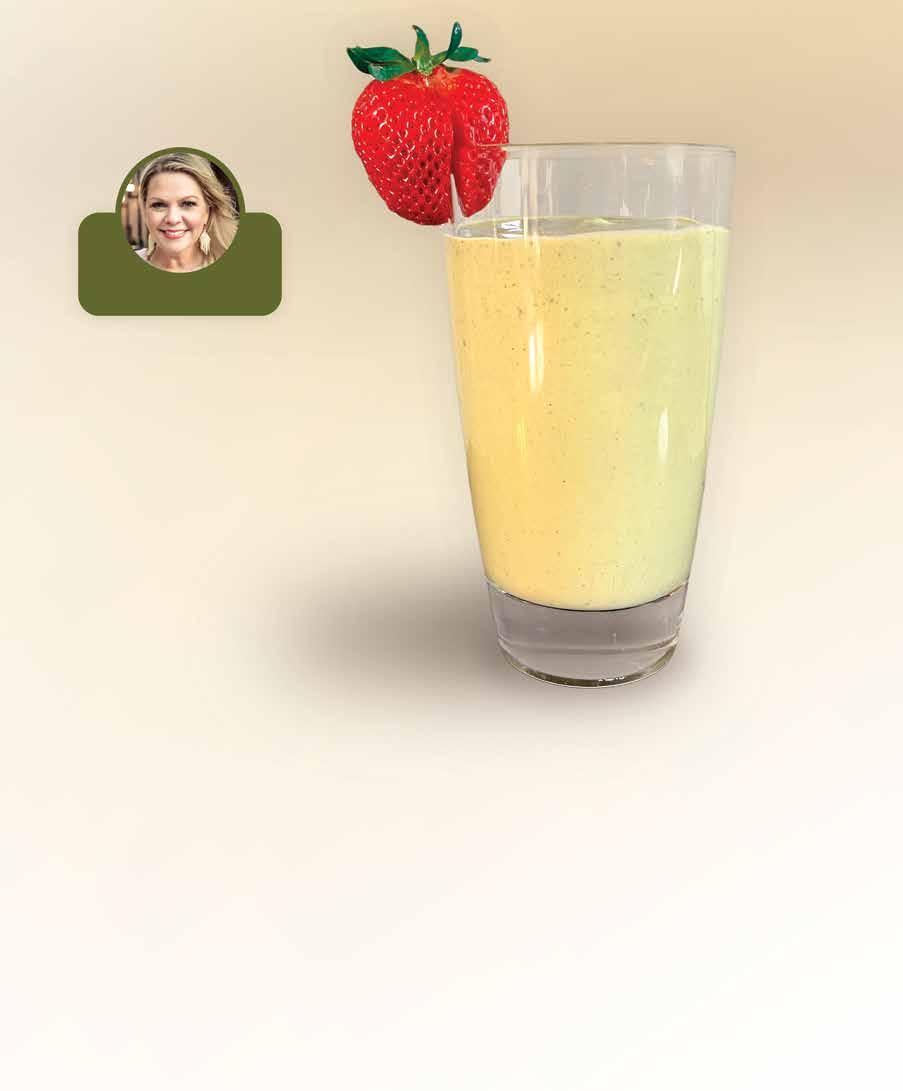
IIf you have yet to delve into the world of matcha, here’s your invitation! Japan produces the best matcha and in contrast to other green teas, the matcha tea bushes are covered for several days before harvest to produce higher chlorophyll levels.
This is where its vibrant green color comes from, and once the leaves are dried, they are ground into a fine powder. Matcha packs a nutritional punch as a super antioxidant with three times the amount of epigallocatechin gallate (EGCG), the signature antioxidant in green tea. This power smoothie has a mellow, creamy flavor and any type of milk or yogurt can be used.
Place all ingredients except garnish in blender and puree on high until creamy and smooth. Pour servings into tall glassware and garnish with a fresh
strawberry. This may also be placed in freezer-proof containers and frozen for future use or to eat as a treat. [ aw ]
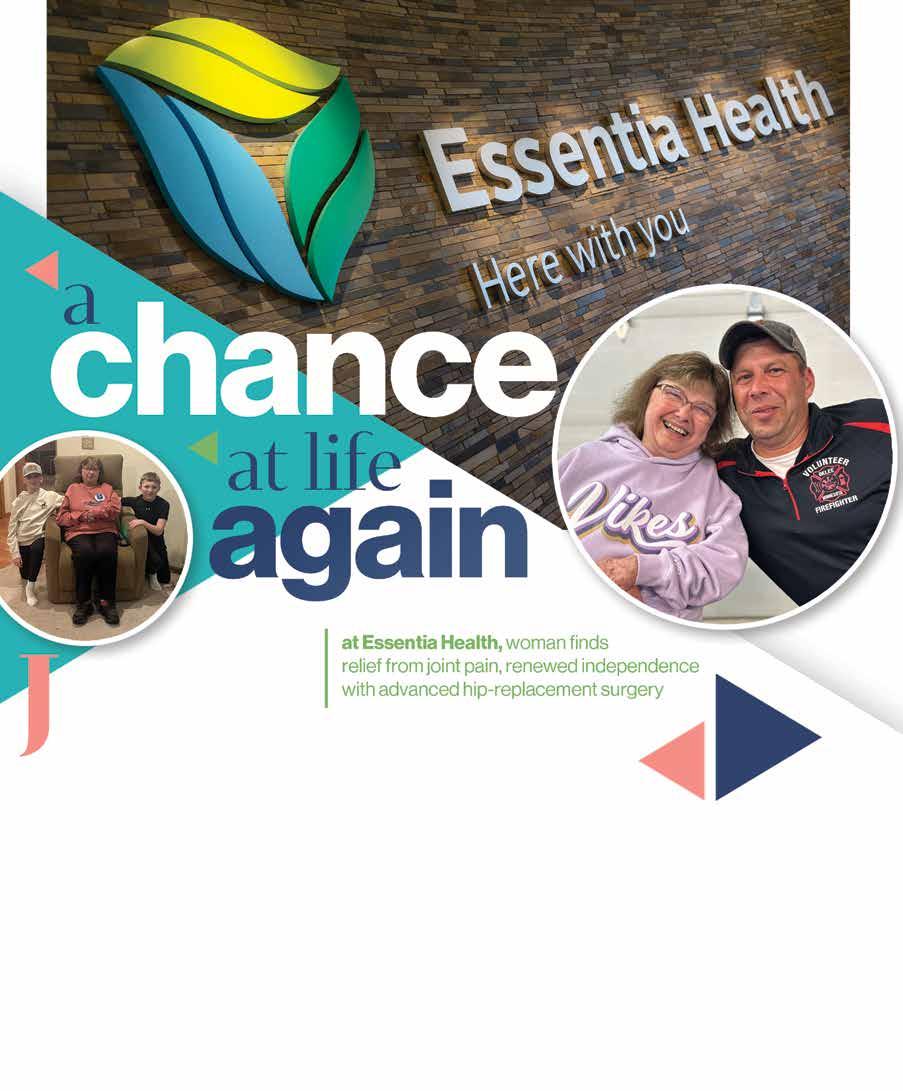
oint discomfort, and replacement, was nothing new to Sandy Lee. Diagnosed with a severe case of rheumatoid arthritis (RA) at just 14 years old, the 70-year-old Brooks, Minnesota, resident had spent a lifetime navigating chronic pain.
RA is an autoimmune disease that causes pain, swelling and stiffness in the lining of your joints. For Sandy, years of inflammation had led to joint deformity and advanced bone deterioration.
“It [the RA] would just go into a joint and destroy it right away,” explained Sandy, who, a year after her diagnosis, underwent surgery to remove the lining of her knees so she could walk again.
Since 1988, Sandy has had two knee replacements, a steel rod placed in her right wrist and a right hip replacement.
And about three years ago, her left hip began to bother her. Cortisone shots offered initial, temporary relief. However, Sandy’s pain progressively worsened, to the point that it was debilitating.
“Every time I moved, every time I sat in a chair, I was just in tears,” she explained. Sandy began using a walker to get around.
“I could tell every time she moved, her bones would crack,” added Gary, her husband of 50 years. “It was bone-on-bone.”
Sandy was referred to Dr. Nicholas O’Neill, an orthopedic surgeon at Essentia Health-Fargo. She admits she was nervous heading into her consultation and wondered if there was anything Dr. O’Neill could do to alleviate her pain.
“The first thing he said was, ‘I can do this,’ ” Sandy recalled.
Those four words gave her hope.
“The severity of Sandy's rheumatoid arthritis was pretty significant in terms of her overall ability and function,” explained Dr. O’Neill. “She had substantial bone loss in the pelvic area.”
“While her case was probably the worst I had seen in someone still healthy enough to undergo elective joint replacement, Sandy wanted to be
Dr. Nicholas O'Neill, DO Orthopedic Surgery, Orthopedics & Sports Medicine
functional,” he added. “She wanted to maintain independence.”
Surgery was scheduled for the end of October 2025. Given the complexity of Sandy’s case, Dr. O’Neill utilized the MAKO robotic system. This technology combines digital planning, computer technology and surgical techniques for more accurate and less invasive hip and knee replacements.
Computed tomography (CT) scans were taken to create a 3D model of Sandy’s hip. Dr. O’Neill used this to map out the exact size and position of the implant components, accounting for Sandy’s significant bone loss and considering if special implants would be needed.
“If I know exactly where everything is supposed to go before an incision is even made, that means less soft tissue dissection, which is often what causes the most pain,” explained Dr. O’Neill.
“I truly believe the MAKO robot made a significant impact on her overall outcome and why she’s doing so well,” he added.
Sandy noticed a difference.
“I had my right hip replaced 26 years ago, and the scar is almost a foot long,” she said. “After this surgery, my hip didn’t hurt at all; there was no
cracking. The pain I did feel was in my leg with muscles I hadn’t used for years. That’s what hurt.”
Since being cleared by Dr. O’Neill, Sandy continues to rebuild her strength with at-home exercises. She’s making slow but steady progress moving without her walker.
Gary has noticed a difference, too. “She’s a completely different gal after having the surgery — in a good way,” he said.
Sandy credits Gary and their two sons, Jeremy and Adam, for helping her through her recovery. With seven grandsons also nearby — all eager for Grandma to attend their games — she’s determined to stay active.
When asked what stood out most about her care, Sandy doesn’t hesitate. “If not for Dr. O’Neill, I wouldn’t have had a chance at life again,” she said. “He gave me my life back. I would recommend him to anybody.”
For those considering joint-replacement surgery, Dr. O’Neill explains it often comes down to quality of life. “If your joint pain is preventing you from doing the things you want to do and changing you as a person — and you’ve tried the non-surgical options you’re willing to try — then that’s when you know you’re ready,” he said.

The results have been life-changing for Sandy. Her quality of life has improved “probably 100 percent.”
“Don’t let anybody tell you that you’re too old for this surgery,” she adds “If I can do it, other people can do it. If you’re in pain, go for it. It takes the pain away.”
Dr. O’Neill agrees. “It’s been a one-eighty with Sandy,” he says. “To see someone in debilitating discomfort and three months later it’s like it never happened — that’s pretty cool.”
To learn more about orthopedic and joint replacement services at Essentia Health, visit EssentiaHealth.org
Making small changes can lead to big and lasting results in your health. Although any lifestyle change can feel overwhelming at times, starting with reasonable goals and easing into the new habits will help you sustain your new behaviors. Work on one of these at a time and feel the benefits as your health changes gradually. When we feel good and our energy increases, it becomes easier to uphold our lifestyle and fitness goals.
Too often, we put importance on everything except recovery for our mind and body. Yet it’s nearly impossible to thrive when we are deprived of rest. Our mind doesn’t function well when it’s tired and driving while sleepy is similar to driving while impaired by alcohol. Rest allows our muscles to recover from activity and daily movements, and our mind gets an opportunity to let go of stress. Weight management becomes easier when we get 7-8 hours of sleep per night as our cortisol (stress hormone) levels decrease.
The basic recipe for hydration is to drink eight, eightounce glasses of water per day. However, we must factor in activity level, temperature and climate, and personal needs. The recipe is just a starting point. If you are exercising, live in or are visiting a dry and/or high-altitude location, or simply have a high level of thirst, increasing your water intake is key. Hydration helps our mind and body; we manage stress better when hydrated, our joints and organs are lubricated, we flush out toxins effectively, and our hair, skin, and nails are healthier.
Tip: Hydrate first, then eat. We often think we are hungry when we are actually thirsty. Balancing hydration can help with sustaining good eating habits and portion control throughout the day.

Hate exercise? Start with just moving in some fashion. Add natural activity to your day in simple ways like parking farther away from buildings you will be going into, take the stairs instead of the elevator or escalator, track your steps with a fitness watch and app, and add some extra movement with a 20-minute walk---an easy one to start. These small changes add up over time and get your body comfortable with increased movement.
Yes, you can spend time counting calories, grams of protein, etc. but if that is overwhelming to you, you’re not alone. Cutting out the “extras” like sodas, juices, excess caffeine and alcohol (or just eliminating these entirely), condiments, and junk foods (high calorie and high fat snacks, processed foods, fast food) provides more of a clean slate to work from where you can still have treats and foods you love in moderation. Clear these off your menu and you have a lot more room to enjoy food. There are many apps to help track food consumption and nutrients if that is of interest (examples: Weight Watchers, Noom, Apple’s Food Tracker).

It’s nearly impossible to feel vibrant and healthy if our stress level isn’t under control. High stress can lead to obesity, heart issues, overeating, substance abuse, poor sleep, damaged relationships, poor work performance, overspending, and several more negative results. Finding a way to diminish stress is essential. Exercise, yoga, prayer, taking leisurely walks, going out into nature, playing with pets and engaging with family and friends, journaling, playing sports, creating art…. the options are many when it comes to ways to take stress down and increase vitality. Find something that fits for you and your lifestyle, time, and resources. It doesn’t have to be complicated, just consistent. [ aw ]
sealed container measuring cups and spoons spoon
⅓ C - Cold-fashioned oats (or muesli)
½ tsp - cinnamon
Dash of nutmeg
1 ½ T - chia seeds
1 T - peanut butter (or other nut butter of choice)
½ C - milk of choice
OR ⅓ C if a thinner/lighter consistency is desired
½ C to ¾ C - fruit of choice (recommended: blueberries, raspberries, diced strawberries, blackberries—combined)
Sweetener of choice (drizzle of maple syrup,honey, or agave nectar)
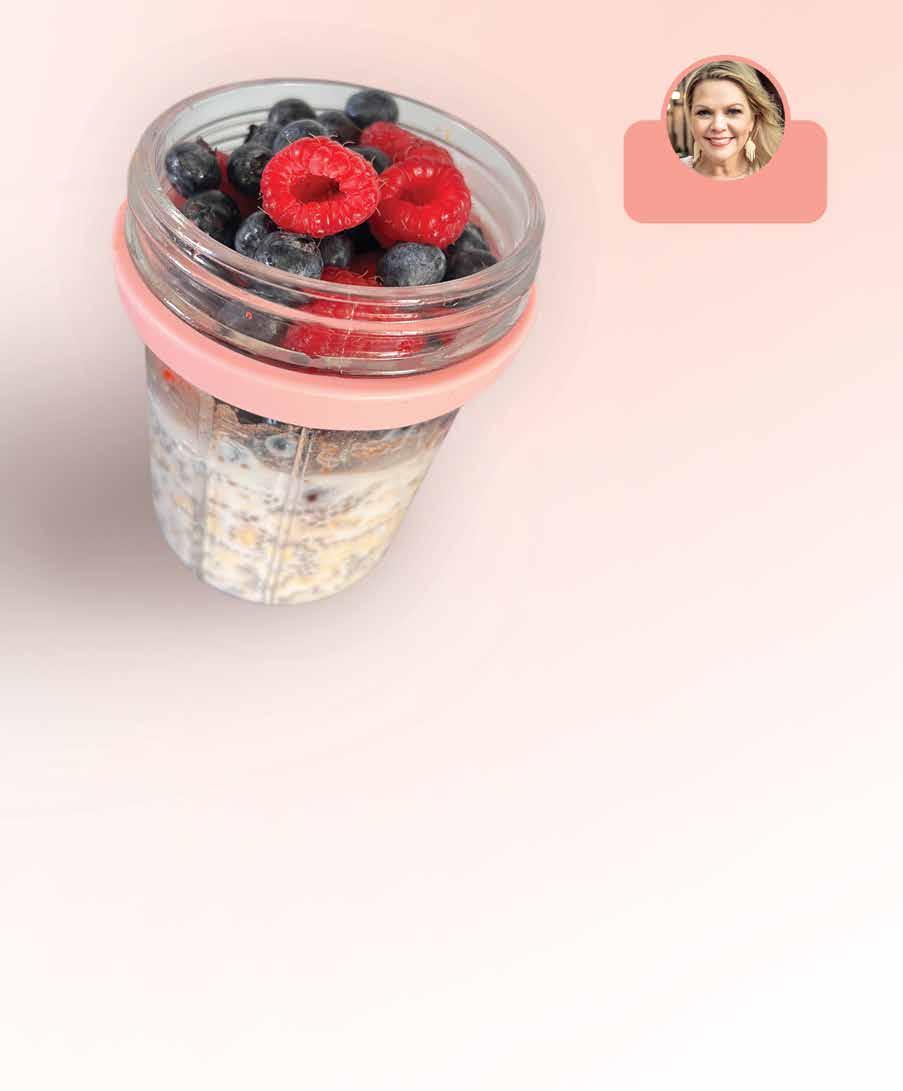
OOvernight oats are a good source of nutrients packed into a convenient, easy to make mini meal. There are countless ways to make them by altering what type of sweetener you add (if any; maple syrup, honey, and agave nectar are popular), the fruits you add, and what type of milk is used (dairy, dairy-free). In addition, nut butter (of choice) can be added if desired, which results in a creamier consistency and increased nutritional value (and calories). This is a baseline recipe that can be modified to taste.
In a container that can be tightly sealed (a Mason jar is perfect and there are also overnight oats-specific containers on the market, most of which have an attached spoon making it easily portable), combine the oats (or muesli), cinnamon, nutmeg, chia seeds, and peanut (nut) butter.
Add 2 T of the milk and stir well. Add the remainder of the milk and mix. Place lid on the jar, close tightly. Place the jar in the refrigerator overnight or for up to five days. When you are ready to serve, add the fruit and the drizzle of sweetener. Enjoy the dish chilled. [ aw ]


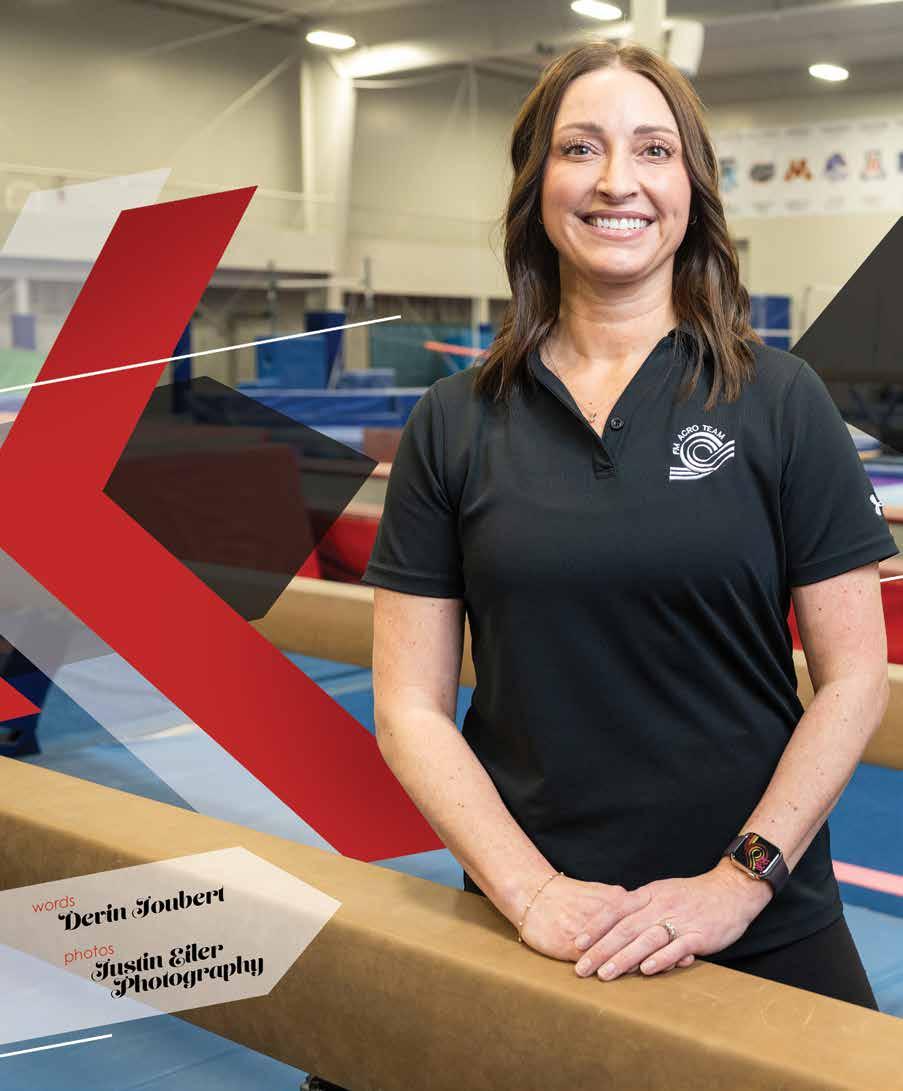
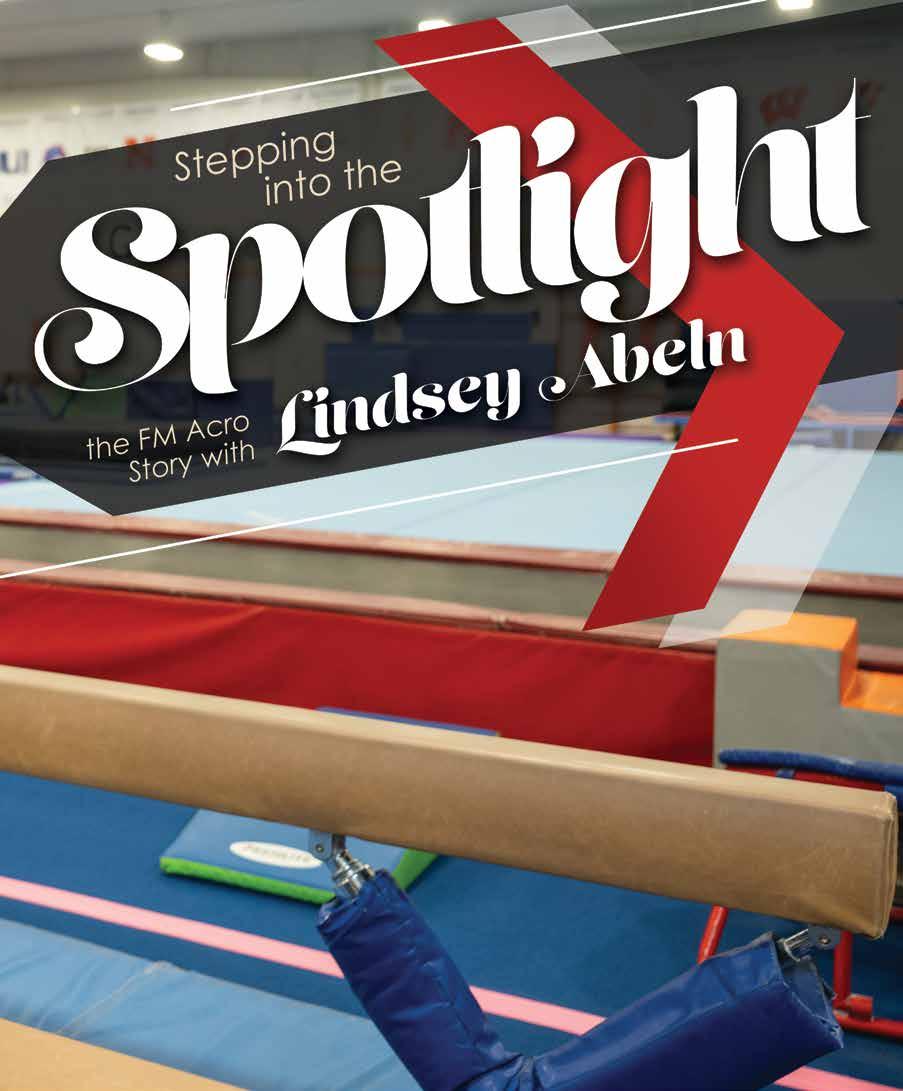
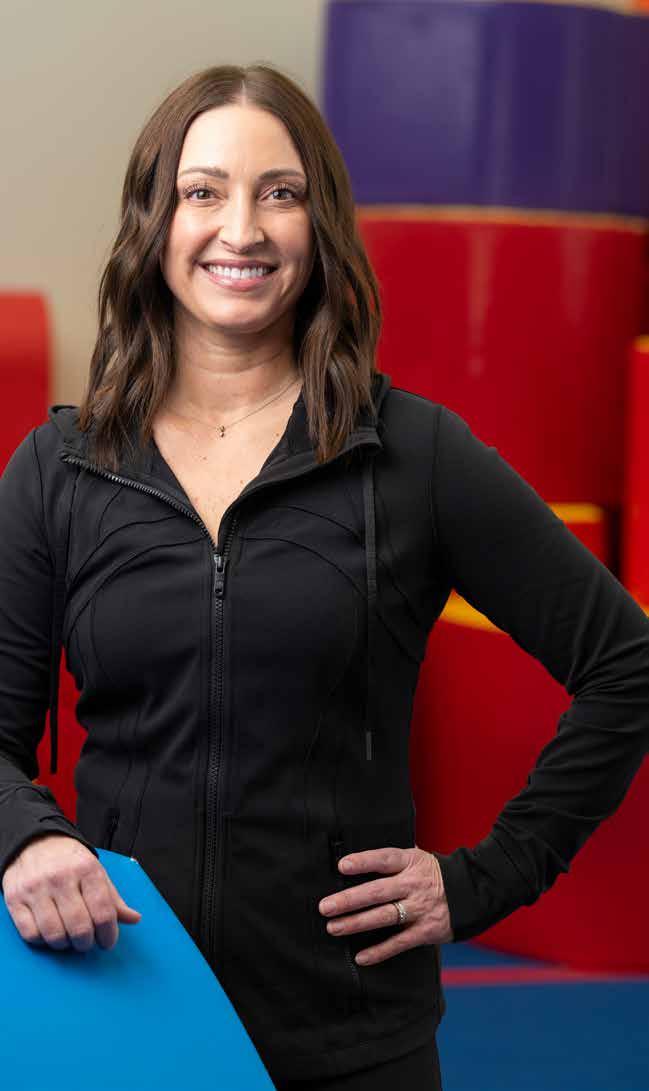
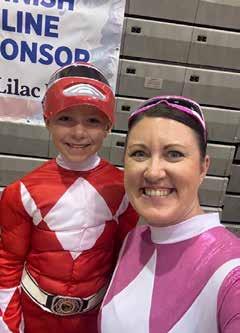
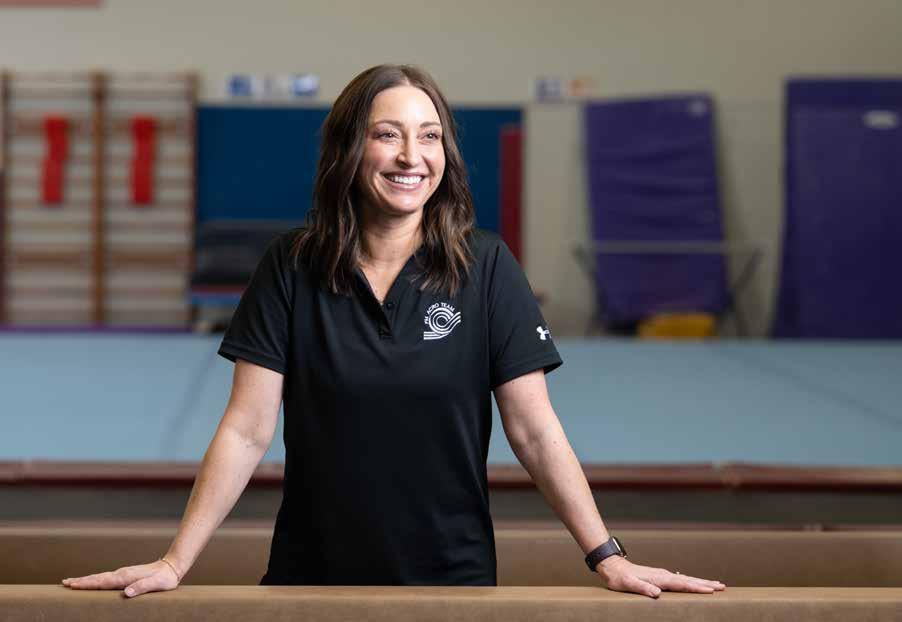
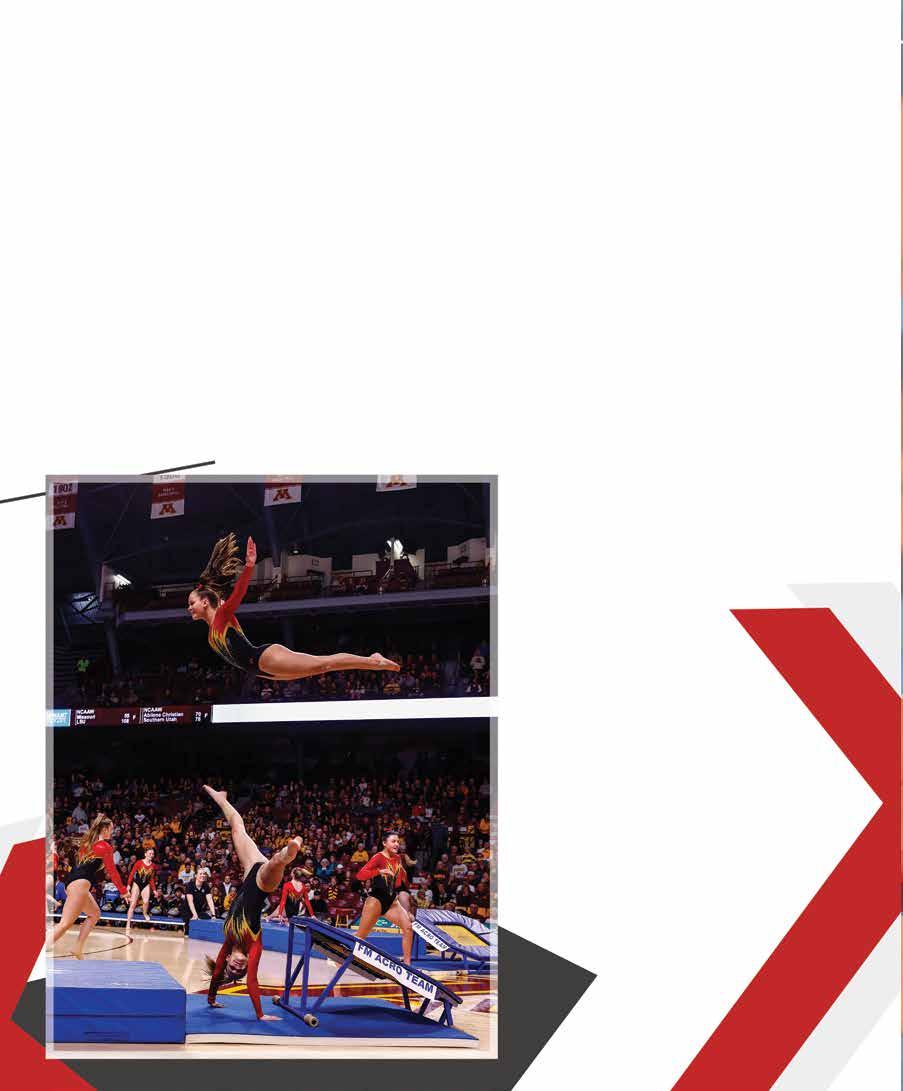
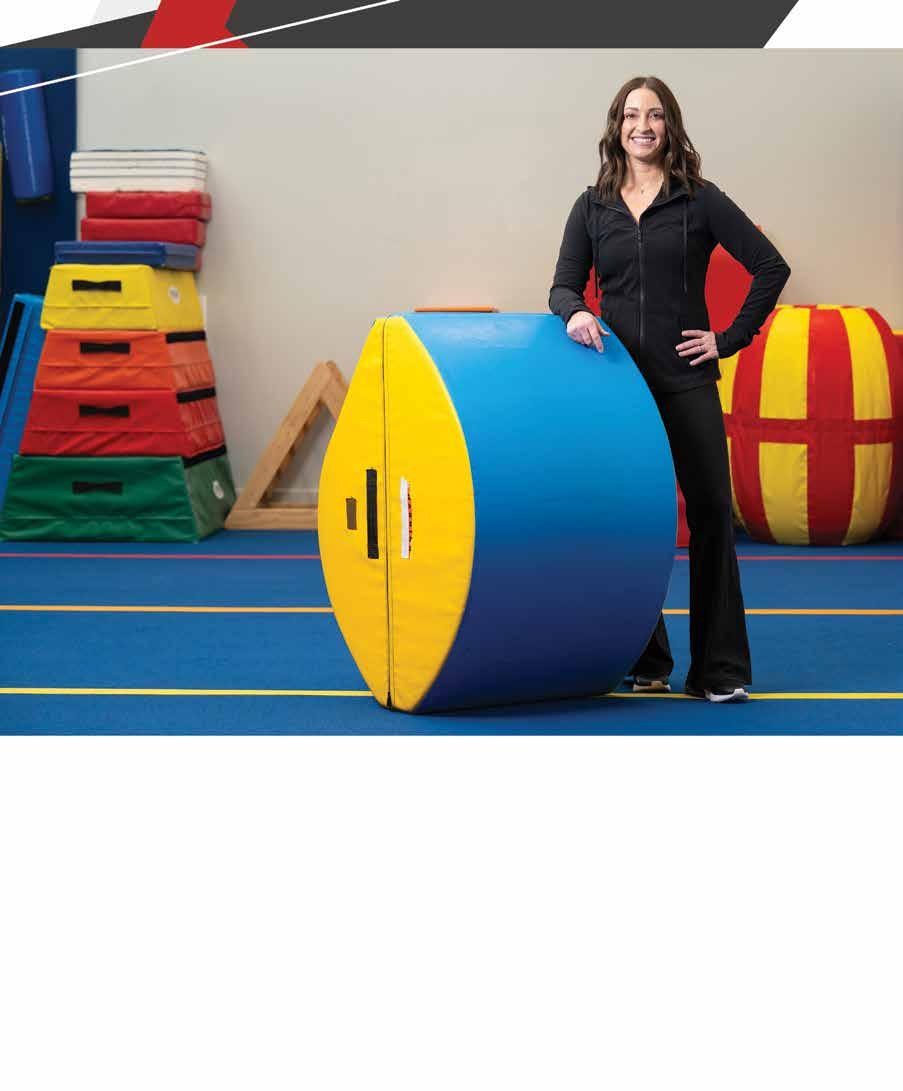
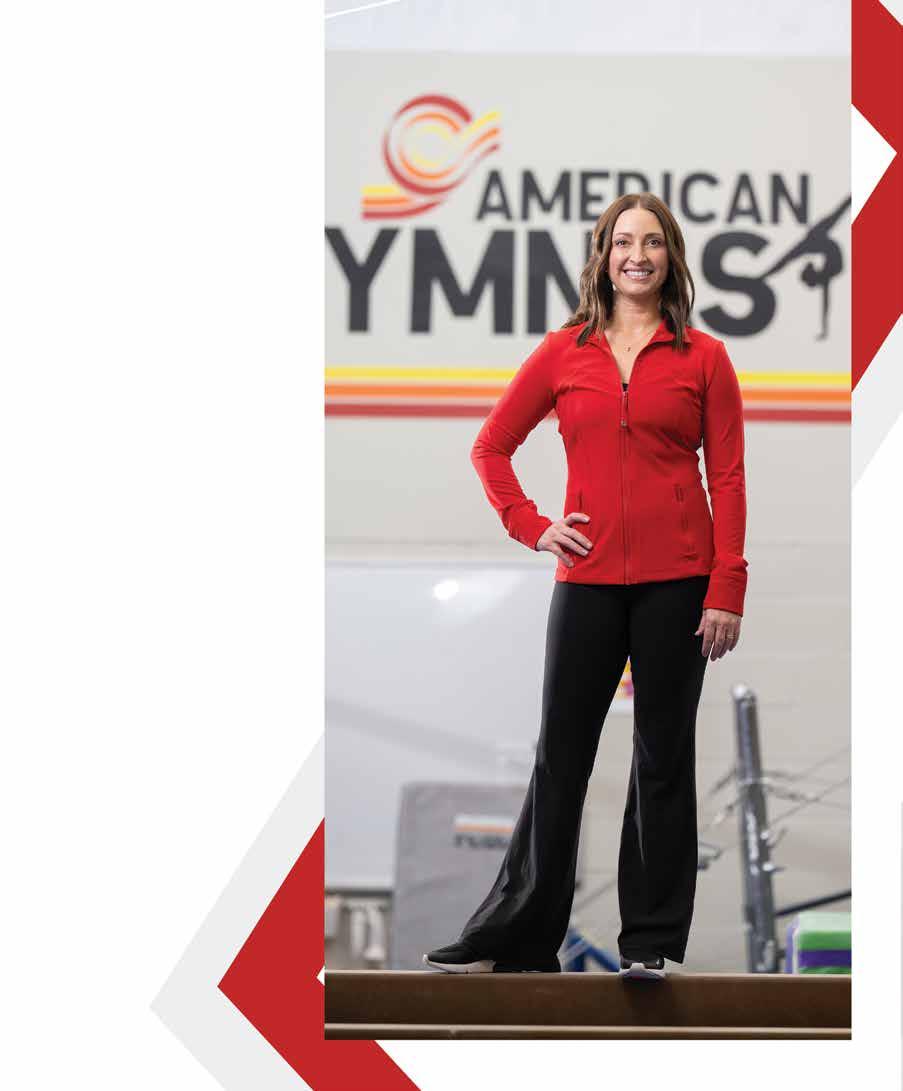
The music blares, the crowd buzzes, and a line of energetic gymnasts sprint onto the court as the lights shift. This local traveling team wouldn’t be the same without their coach, Lindsey Abeln who is always there smiling, counting beats under her breath, and watching months of practice unfold in a few electrifying minutes. She’s the director of the FM Acro program at American Gold Gymnastics where there are five energetic teams—Acro Tots, Micros, Lites, Acro 2, and the nationally traveling Acro 1. For Lindsey, Acro isn’t just about speed, sparkles, and standing ovations. It’s about spreading joy on and off the court. It’s about teamwork. And it’s about raising confident, kind young athletes who light up a gym and the world.
When Lindsey was 4-5 years old, her love for gymnastics sparked. She did gymnastics at the YMCA and while there, her gymnastics coach got asked to coach at American Gold Gymnastics. “She told my parents they should bring me there, so I ended up taking a recreational class at American Gold and one of my coaches suggested that I try out for the Acro team, so I did. There are annual tryouts each year for our teams,” said Lindsey. “I was put on a team at age seven, went all the way through the program and graduated. Then I started coaching my freshman year in college.”
Lindsey majored in exercise physiology and minored in coaching at NDSU. As she got her degree, she coached at night. “I coached all the classes as well as Acro. I was then asked to be the head coach for our developmental teams, which would
have been Tots, Micros, and the Lites as well.” said Lindsey. “I am currently the head coach of Micros, which is preschool to second grade. Then I’m also the head coach of the FM Acro team which is 5th12th graders this year.”
Each day, she’s coaching, but she’s also in charge of booking shows, planning trips for Acro 1, and coming up with the choreography for the performances. When the team travels, she also goes with them. “It’s so unique to work with different ages because the Micros team are the youngest team I coach. They are just fantastic. They're the ones who show up and they can't wait to tell you what they did at recess or what they had for lunch. Really the goal of that team is to learn to love gymnastics, having an outlet for getting their energy out, learning to take turns, learning how their body works and the names of your muscles, and having more awareness for their body and how to control it.”
The Micros do three performances a year, so they learn to get in front of people, to feel confident, and learn how to perform. Then if they love it, they'll continue to progress through the other teams and go on to perform around the country.
“
I was put on a team at age seven, went all the way through the program and graduated. Then I started coaching my freshman year in college.
~ Lindsey Abeln
“
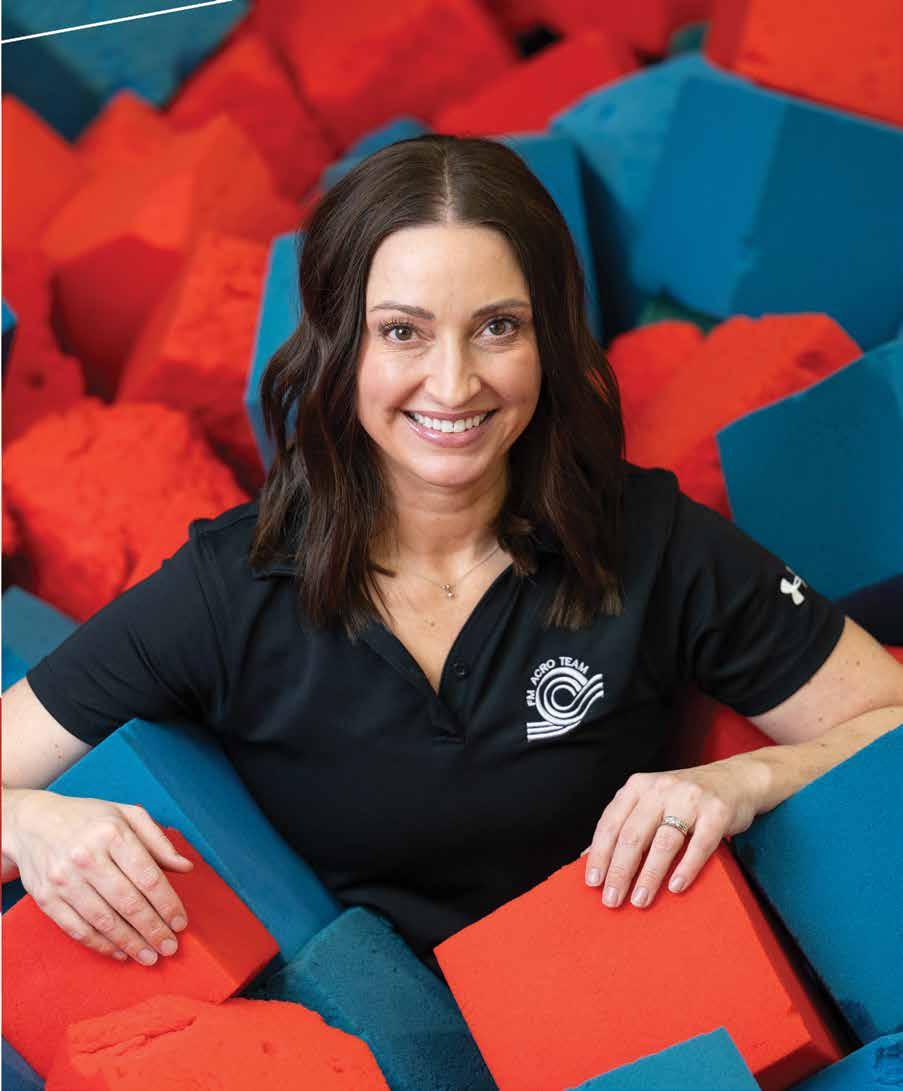
When asked what her favorite thing was about what she does she said, “I just noticed so often my favorite thing has nothing to do with the gymnastics side of it, which is kind of odd. But everywhere we go, I get comments on how well behaved my team is. Strangers say just how polite and kind they are. They are the girls who are just going to hold the door for you, they’re going to say thank you for anything you do for them,” said Lindsey. In the teams, they focus on that from a young age. “And that's a big part of the Acro program. And I think that's my favorite part. When people notice good things about our athletes other than just the gymnastics, it kind of makes you feel good to know people are noticing that kids can be great
human beings, and they can have manners and that you can hold them to a higher standard.”
She also shared a story about when they were in Iowa recently for the Iowa State performance and they were at their hotel eating continental breakfast. One of the coaches overheard the man who was setting out the food. He mentioned to another person that wasn’t a part of their group “You’ll have to stay and watch these girls come in and eat. They're the politest, most well-mannered group I've ever had. We had them last year too.”
It’s moments like that which mean just as much to Lindsey as an energetic fun routine. For her, the team isn’t only about lifts, tumbling passes, or
perfectly timed choreography, but it’s about character. The way the girls carry themselves off the mat matters just as much as how they perform on it. Those quiet, everyday interactions in hotel lobbies and restaurants become reflections of the program’s values just as clearly as any halftime show.
“I always make sure to tell the team, ‘Hey, this is what I heard today, you know, so it keeps them appreciating that and knowing what they're doing is making a difference. I don't want them to be an average sporting team, I want them to be above average, and I want people to notice the good that they're doing on and off the mat,” said Lindsey.
“ “ I want them to be above average, and I want people to notice the good that they're doing on and off the mat.
~ Lindsey Abeln
Lindsey has been married since 2008, and over the years her life has grown beautifully fuller, not just as a wife, but as a mom deeply involved in the sport she loves. Today, she’s the proud mother of two daughters in the Acro program, both following their own paths within it. “My oldest daughter is on the FM Acro team that travels, and my youngest is on Acro 2.” With a sophomore and a sixth grader, Lindsey finds herself in a season where she gets to watch both of her girls grow, not only in age and maturity, but in confidence and skill, each experiencing the sport in her own way while also sharing that same excitement that Lindsey has for it as well.
“My girls have grown up with me in this position. When her friends come over that are on the team, they come over to my house and I am mom. Then at gymnastics, I’m coach. And I think they do a very good job of differentiating that. I think the best part about all of this is I ended up
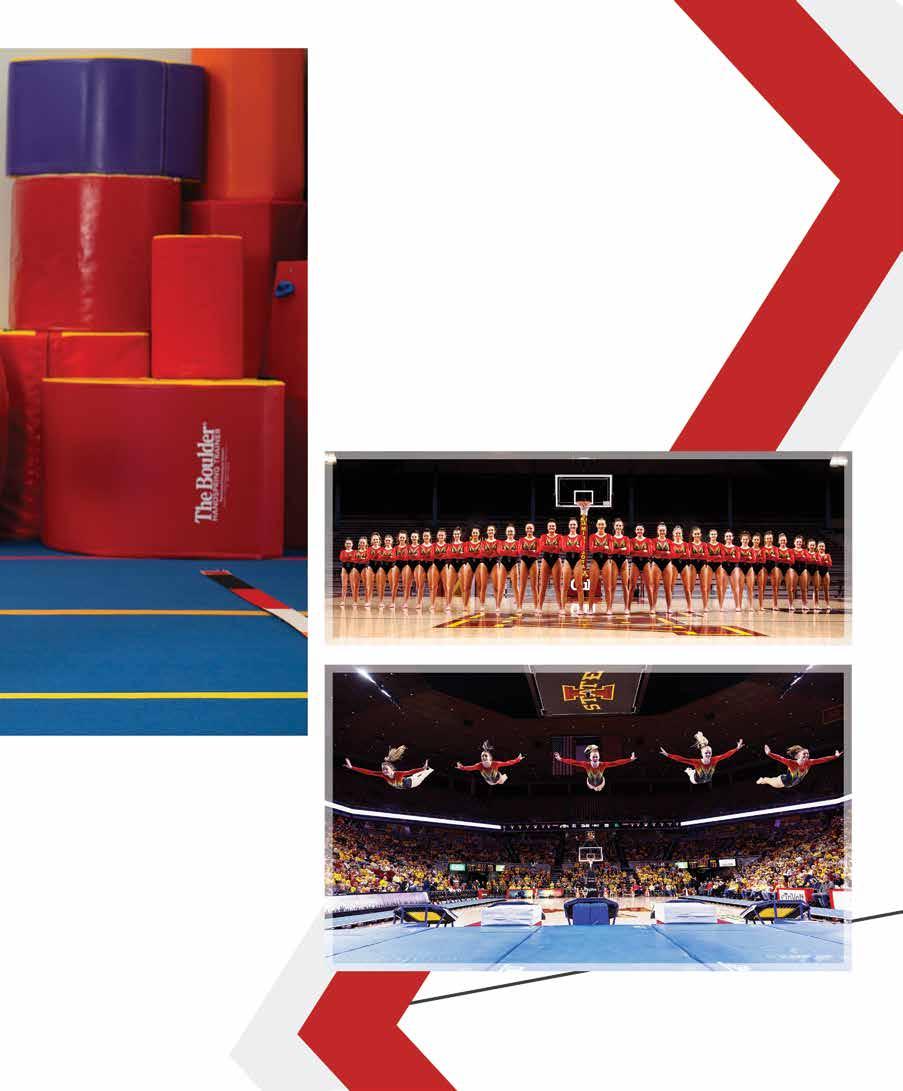
having two daughters who love the sport I loved growing up,” said Lindsey. “You know, at the end of the show when they put their arms up, they're just enjoying the crowd applauding them, we get standing ovations almost every single time and knowing that my daughters get to feel the same feeling. I love that.”
Together, the roles of wife, mom, and coach have intertwined, and they are deeply meaningful for Lindsey. She just loves sharing her childhood passion with her girls and other kids daily in carpools, practices, performances, and quiet moments at home. But the story of the FM Acro Team didn’t start with packed crowds and standing ovations. Like many strong programs, it began with something much smaller and far humbler.
The journey from a small after-school tumbling group to a nationally recognized performance team didn’t happen overnight.
“The program started in 1971. Jim Simle came to Fargo, and he was an elementary school teacher. He started an after-school tumbling program because there weren't as many options for girls. And so that tumbling program turned into a gymnastics team that also put on little shows. They started out doing shows for the Boy Scouts and eventually went on to perform at Fargo South half-time shows.” said Lindsey. “Then they moved on to performing at NDSU games and the University of Minnesota. Someone there saw the team and eventually the team ended up performing at the NBA All-Star games.” When Jim retired, Lindsey took over for him in 2010.
“
“ We get standing ovations almost every single time and knowing that my daughters get to feel the same feeling. I love that.
From those halftime performances and local showcases, the opportunities continued to grow for them. What started as a small community program steadily gained recognition, opening doors to larger venues and bigger stages year after year.
This year, they performed at the University of Minnesota for the 50th year in a row. They’ve already been to Kansas State, the NBA team, Oklahoma City Thunder, Iowa State University, and University of Wisconsin. Now, they’re kind of winding down since basketball season is ending, which brings their season to an ending point too. But they travel most weekends from December through to March, so they are pretty busy.
As the season wraps up and travel slows, the heart of the program remains the same as it was in those early after-school tumbling days, to give girls (some years they have had boys in the team too, but currently just have girls.) a place to grow, perform, and believe in themselves. While the stages may be bigger now, the mission hasn’t changed: creating opportunities for young performers to experience the pride, teamwork, and joy that come from working hard and stepping confidently into the spotlight.
~ Lindsey Abeln
For families who have watched the team perform and wondered how their own child might get started, American Gold Gymnastics offers a variety of opportunities to step onto the mat. Whether a child is simply looking to try something new, build confidence, or eventually pursue a more competitive path, there are options designed to meet athletes at every stage. There are recreational classes for ages 1-18 years old, at American Gold Gymnastics. Kids can go to those classes once a week or if kids want to take more classes they can take multiple classes.
“We also have a competitive program which is a USAG program where they compete bars, beam, floor, and vault. Another program that is like that is our Xcel program. The Acro program is a little bit different. We do go year-round; however, our athletes are able to compete in fall and spring sports at their schools.”
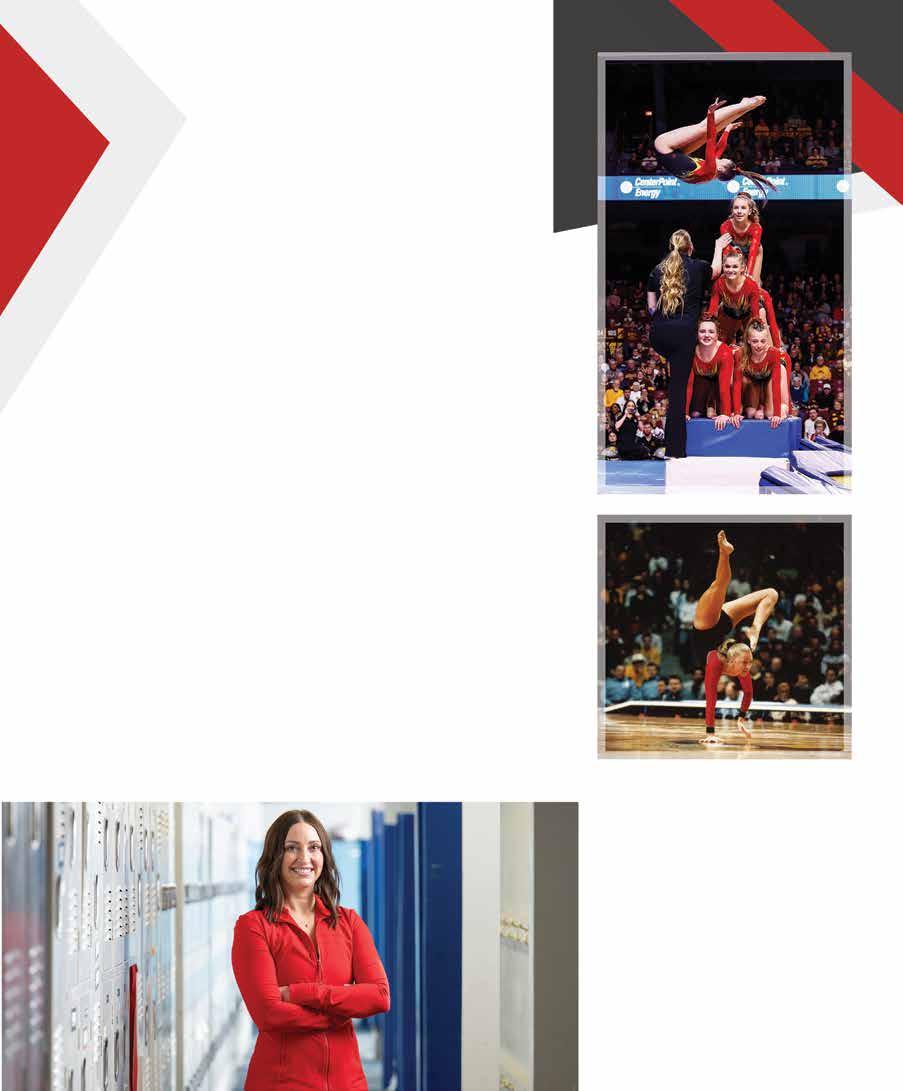
Beyond the performances, the standing ovations, and the team camaraderie, American Gold Gymnastics and the Acro Teams are a wonderful place where families can find the right fit for their own children, whether they’re just learning to tumble or dreaming of competition lights one day. The gym offers multiple pathways, allowing athletes to grow at their own pace while discovering where they thrive most. [ aw ]
For more information about how to get your kids involved in gymnastics you can go to their website: www.americangoldgymnastics.com
Come to the vendor & craft show and support small businesses. The show will be from 11-3 and lunch will be served from 11-1. It all takes place at the Fargo Masonic Center, 1405 3rd St N Fargo. If you want to be a vendor, send an email to fargomasoniccenter@ gmail.com
TIME: 11:00 a.m. - 3:00 p.m.
LOCATION: Fargo Masonic Center, 1405 3rd St N Fargo CONTACT: www.fargomasoniccenter.org, fargomasoniccenter@gmail.com
For more than 50 years, YWCA Women of the Year has highlighted inspiring leaders, mentors, and visionaries. This signature event, attended by over 800 people, carries a legacy of celebrating women whose passion, service, and achievements help shape the Fargo-Moorhead community. Join YWCA for an evening of empowerment and inspiration at YWCA Women of the Year 2026 presented by Sanford Health on Monday, April 20, 2026 at the Delta by Marriott in Fargo.
TIME: 5:30 p.m. Social, 6:30 p.m. Dinner and Program
LOCATION: Delta Hotels by Marriott Fargo, 1635 42nd Street South Fargo, ND 58103
CONTACT: ywcacassclay.org/womenoftheyear; woty@ywcacassclay.org; (701) 478-2243

FMBallet is thrilled to present a brand-new production of Snow White! Join Snow White on her enchanting journey as she escapes the Evil Queen, finds friendship with the Seven Dwarfs, and discovers the true power of courage, kindness, and love. With beautiful choreography, magical storytelling, and captivating performances, this family-friendly ballet brings the beloved fairy tale to life on stage. Perfect for audiences of all ages, Snow White is a sparkling addition to FMBallet’s season that promises to delight and inspire.
TIME: 2:00 p.m., 7:00 p.m.
LOCATION: The Fargo Theatre, 314 Broadway Fargo, North Dakota 58102
CONTACT: https://app.arts-people.com/index.php?ticketing=fmbnd
Mental Health Day in the Park – Hosted by NAMI Moorhead Join us for Mental Health Day in the Park, a community event designed to raise awareness about mental health and wellness in the Fargo-Moorhead area. Enjoy a day of reflection, connection, and support **with over 20 local mental health organizations**. Participate in activities, engage in important conversations, and learn more about the resources available in our community. Together, let’s foster understanding and build a stronger, more resilient community. Thank you to our sponsors: Moorhead Public Service, Fargo-Moorhead Community Theatre, Sanford & RDO
TIME: 10:00 a.m. - 2:00 p.m.
LOCATION: Viking Ship Park, 202 1st Ave N Moorhead, MN 56560
CONTACT: Email: namimoorhead@namimn.org Facebook Event Page: www.facebook.com/share/16AvNrC1Ug/

April 2 and May 7
SENSE OF PLACE
BOOK CLUB 11 am
Main Library
101 4th St. N. 701.241.1492
April 2 and 16, and May 7 and 21
BABY RHYME
TIME 10 am
Dr. James Carlson Library 2801 32nd Ave. S. 701.241.1495
April 4 and May 2
KINDERGARTEN
SUCCESS! STORYTIME
10 am Main Library 101 4th St. N.
701.241.1495
April 6 and May 4
COMMUNITY GAME
NIGHT AT NORTHPORT
5 to 7:30 pm Northport Library 2714 N. Broadway, Fargo, ND 701.476.4026
April 6, 13, 20, and 27; May 4, 11, and 18
MONDAY NIGHT MAGIC
5:30 to 7:30 pm Main Library 101 4th St. N. 701.241.1492
April 7 and May 5
JIGSAW PUZZLE SOCIAL AT CARLSON LIBRARY 5 pm
Dr. James Carlson Library 2801 32nd Ave. S. 701.476.5980
April 9 and May 14
DIVERSE PERSPECTIVES
BOOK CLUB
6:30 pm Main Library 101 4th St. N.
701.241.1492
April 10 and May 8
FREE FRIDAY MOVIE AT CARLSON LIBRARY 1 pm
Dr. James Carlson Library 2801 32nd Ave. S.
701.476.5980

April 11 and May 9
PAWS TO READ
10 am Main Library 101 4th St. N. 701.241.1495
April 11
DEFY GRAVI-TEA PARTY
11 am Main Library 101 4th St. N. 701.241.1495
April 18
VOLUNTEER FAIR
1 pm Main Library 101 4th St. N. 701.241.1492
April 21
PRAIRIE GARDEN WORKSHOP WITH UNITED PRAIRIE FOUNDATION
6 pm Main Library Fargo Public Library 101 4th St. N. 701.476.5977
April 22
EARTH DAY
CRAFTS 5:30 pm
Dr. James Carlson Library 2801 32nd Ave. S. 701.241.1495
April 28 and May 26
FAMILY READING RUMPUS
6 pm Main Library 101 4th St. N. 701.241.1495
May 9
CRAFT SUPPLY SWAP
11 am Main Library 101 4th St. N. 701.241.1492
May 18
SPRING PLANT SWAP 6 pm
Dr. James Carlson Library 2801 32nd Ave. S. 701.476.5980
Fargo Public Library events are free and open to the public. A complete schedule of upcoming events is available at all Fargo Public Library locations and on our website at : fargolibrary.org
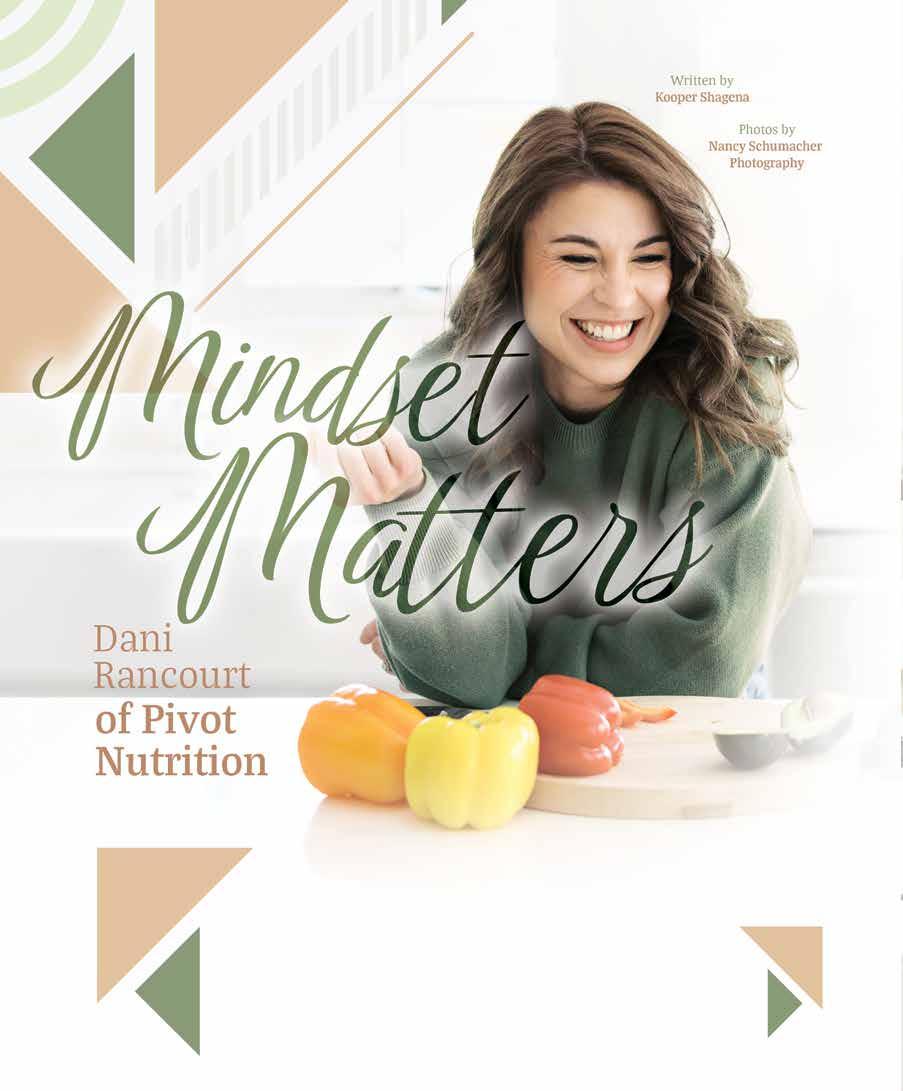
“So many people are doing a lot of the right things.” Dani Rancourt
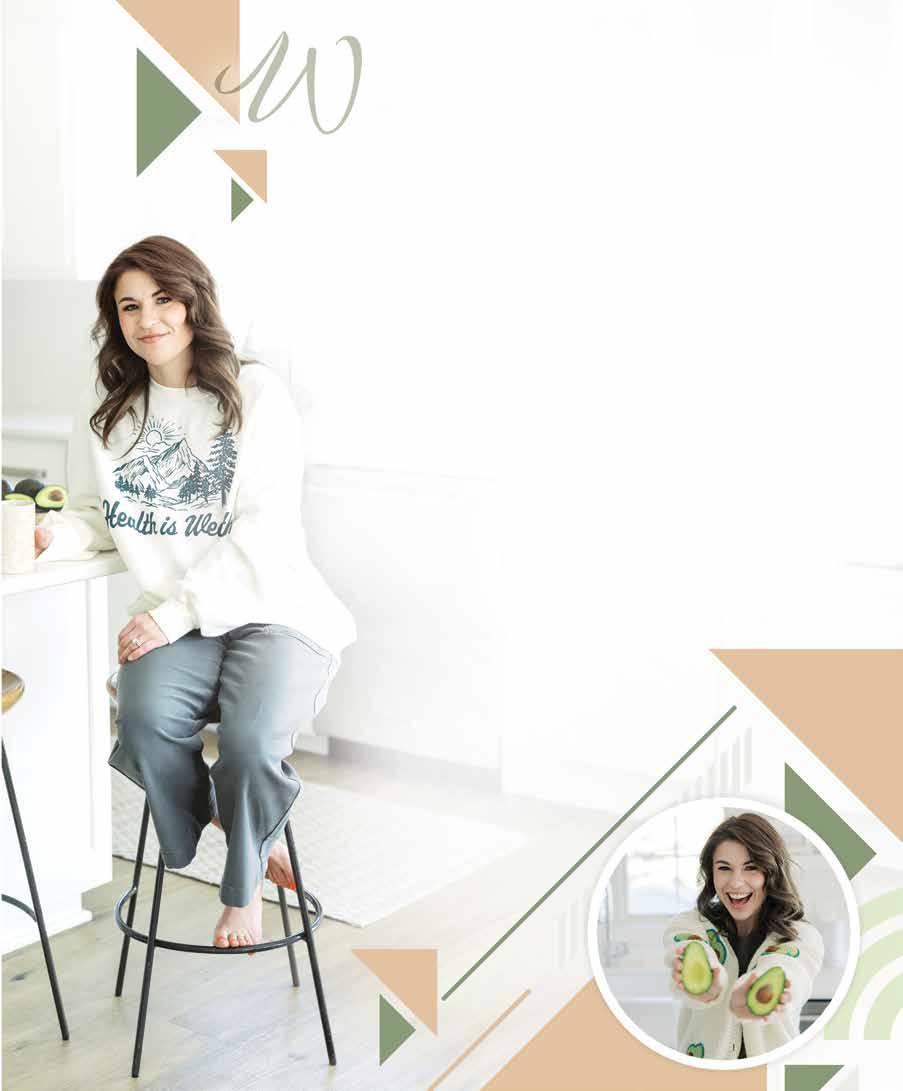
When it comes to healthy eating and weight loss, people usually have an idea of what they should be doing to have a balanced diet and lose weight. Protein and vegetables with every meal, drink water, exercise when you can. This is advice that everyone has heard before, and everyone can read a nutrition label (sometimes, to a fault).
This is what can be so frustrating for those who always feel stuck, even if they are doing the right things. Dani Rancourt, a Registered Dietician, Certified Sports Dietician, and Founder and CEO of Pivot Nutrition Coaching, explains how calorie counting and food tracking is so much more than just numbers.
“I’ll tell them on the discovery call,” she says, referring to the first consultation she has with her clients, “It’s not your nutrition, it’s your mindset. Because you don’t have a good relationship with food, you keep taking one step forward and two steps back.”
A former D1 hockey athlete and a mother, Dani has had her own colorful journey with nutrition. She knows what it’s like to fall victim to pernicious mindsets around food.
“I was stuck in this ‘carbs are bad’ mindset—and I believed it because I did lean out.” She remembers being in college, studying nutrition, and cutting carbs to lean out for hockey. Which worked, but, of course, not in the long run.
“I was stuck in this ‘carbs are bad’ mindset— and I believed it because I did lean out.”
Dani Rancourt
“I thought the only way I could stay lean was to cut carbs, but that led to an all-or-nothing where I would lose 20 pounds, gain it back, lose 20 pounds, and gain it back. That happened for four to five years. I’ve been there.”
The number one problem that women, especially those that have been trying to diet on and off for years of their lives, fall into is this all-or-nothing mindset that inevitably fails them sooner or later. Motivation hits a high and they set a militant regimen for themselves that may show them results in the beginning… until they can’t take the restrictive lifestyle any longer and abandon the idea altogether.
“The analogy I use for this,” Dani says, “is you sign up for a marathon. You’re at the start line and the gun goes off and you start sprinting as fast as you can. You are not going to cross the finish line. Sure,” she says, “you’re going to be ahead of everyone else; you’re winning the race, but you can’t sustain that intensity. It’s the same thing with nutrition and fitness.”
You can’t have a healthy metabolism on 1,100 calories a day, you can’t refuse every social event in fear that you’ll overeat, and you can’t just abandon your nutrition goals altogether, thinking, “to hell with it, I can’t do it” if you eat poorly for a day or even a week.
“That’s why dieticians say 80/20 because you’re better off being 80% perfect all the time rather than 100% perfect on and off,” Dani says, “and back to the marathon: it’s just about keeping a pace and that’s the same with nutrition. We’re not being perfect, we’re just consistent.”
She recently featured a client on her podcast that was a textbook example of an all-or-nothing dieter who was able to heal her relationship with food and see progress for the first time.
“She would starve herself Monday through Friday, eating roughly 1,100 to 1,200 calories—a sad sandwich that was just bread and turkey, a Premier protein shake and no carbs at dinner. It was just so depressing,” Dani says.
Then, every Friday, she would finally allow herself Door Dash, drinks and pizza, giving herself reprieve from the constant mental labor of calculating calories and fighting hunger.
Dani says, “She needed that mental break, and she just needed to binge. She would do that for like two years. Then I said, ‘this is not a nutrition problem, even though your nutrition needs some work, but if you fix this all-or-nothing, this restrictive mindset, it’s going to be awesome.’”

“Then,” Dani says, “she lost 25 pounds in six months, and we really didn’t change that much; we just focused on consistency over perfection.” In addition to weight loss, Dani helps people change their lives via transforming their mindset around food and body image, which can look different for every person.
Some clients, for example, don’t have visual access to the numbers of their calories and macronutrients so that they don’t fall into obsessive patterns. For some people, counting calories and macros only does a disservice to their overall wellbeing. For these clients, Dani’s program only asks that they send photos of the food they eat and she estimates and tracks the meals’ quantifiable information that way.
Mature adults in their 40’s and 50’s sometimes have GI issues stemming from disordered eating habits years ago, which, even if they have recovered and seen therapists to heal their relationship with food, sometimes makes them candidates for this calorie-blind approach that Dani has developed.
“There is just so much information out there that they’re getting their hands on, and then they obsess over it, That’s what leads to issues.”
Dani Rancourt

For her younger clients, like women and girls from middle school to college, there has evolved a new disordered eating trend perpetuated by social media: orthorexia. Orthorexia is described as an obsession with clean or healthy eating. Social media and the internet make it possible for anyone to consume (no pun intended) content that “explains” repeatedly how to count calories and macros. A huge faction of influencer content is titled “what I eat in a day”, which are videos often posted by women who are sporting “ideal” bodies videoing everything they ate that day—sometimes with calorie counts and macros shown.
“That’s really, really prominent right now,” Dani says. “It’s probably the most heartbreaking because I feel like, when I was in high school, I didn’t even know what my body looked like. We didn’t have social media, so we were so unaware. Versus now, they’re so hyperaware of everything. They know about calories and all this stuff. I didn’t even know what a calorie really was until I got my master’s degree.”
Anyone can scroll endlessly on TikTok and Instagram, watching what these people eat and how they work out. It takes a really fortified mind to be surrounded by content like that and still be able to pick and choose what could apply to you, figuring out how to use these influencers as inspiration without becoming obsessive and remembering to consider how much of their content isn’t entirely truthful.
“There is just so much information out there that they’re getting their hands on, and then they obsess over it,” Dani says. “That’s what leads to issues.” A delicate balance must be struck, to be sure; clean and healthy eating is a good thing… but not when it consumes your every waking thought.
“Many of these young girls,” she says, “their moms are reaching out to me because they go to their annual well-child pediatric checkup, and the doctor weighs them and they’re like, ‘your daughter lost 16 pounds in a year and suddenly she has no period—she hasn’t had a period in seven months.' Well, that's because they've been eating 900 calories a day for seven months because they watched a TikTok video promoting it."
Disordered eating can rear its head in many ways, and a dietician like Dani can help people do so much more than just lose weight. At least 50% of her work, she says, is that of a therapist and a mindset coach, because diet and fitness can be such a leviathan to mentally contend with. In an age where all the information in the world is available for free online, it’s important to remember the inestimable value of hiring real people, real professionals, like Dani, to design plans and programs that will never be one size fits all. [ aw ]
For information:
pivotnutritioncoaching.com