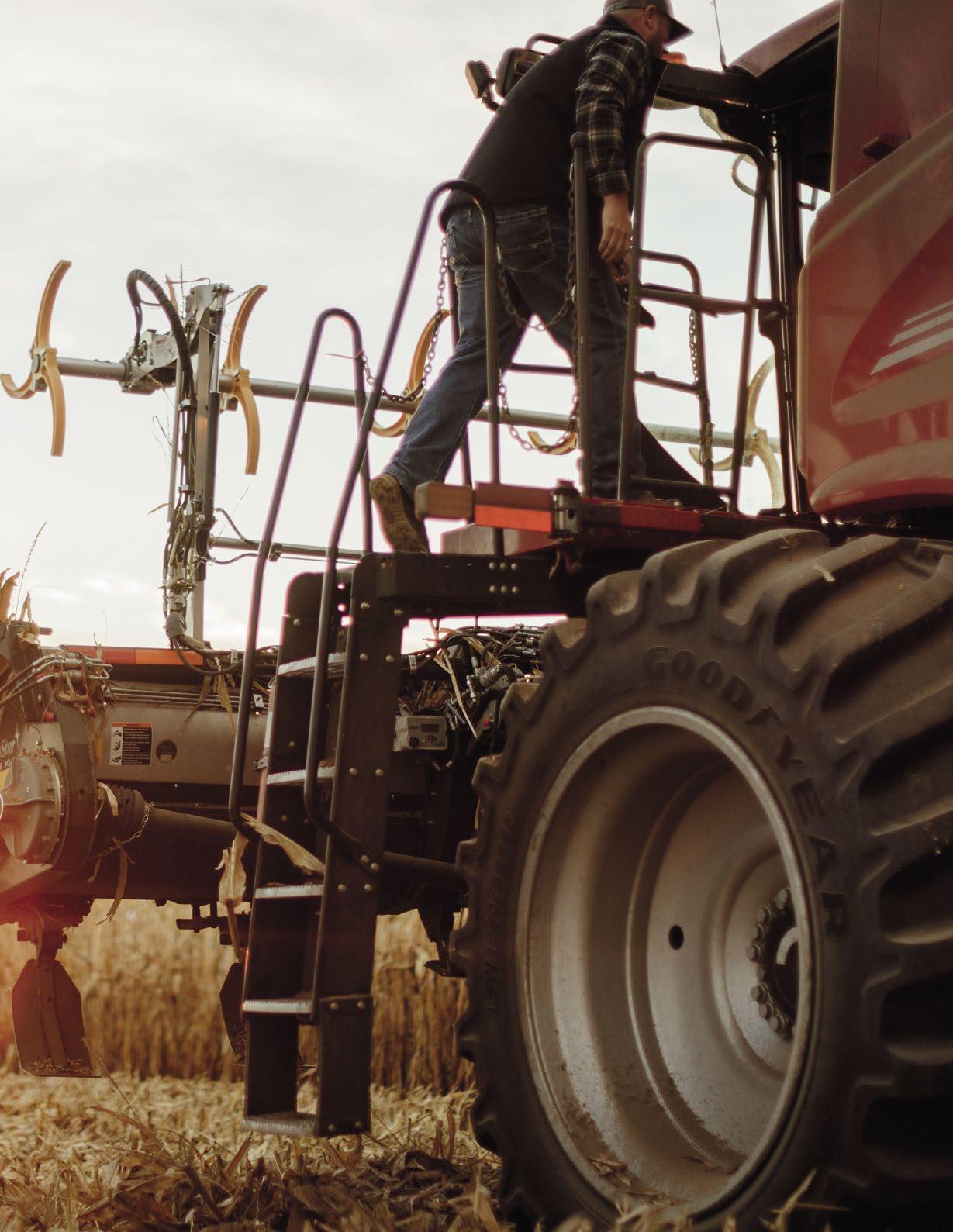
Whether you’re looking to kick back after the work is done or dive deep into year-end financials, Compeer Financial is here for you every step of the way. We are grateful to be your trusted partner and look forward to working together in the New Year.
WISHING YOU A WONDERFUL HOLIDAY SEASON
CULTIVATE
Volume 9, Issue 4 Winter 2025
EDITORIAL STAFF
Anna Vangsness, Editor
Annie Lauber, Contributing Writer
Valerie Brekke, Contributing Writer
Terri Poburka, Designer
DIRECTORS
Ashley Ahl Merrillan, Wis.
Rod Bosma Rushmore, Minn.
Ann Broome Austin, Texas
Allyn Buhrow Ashton, Ill.
Mark Cade Westby, Wis.
Dan Erickson Alden, Minn.
Larry Fischer Sleepy Eye, Minn.
Dale Holmgren N. Mankato, Minn.
Sarah Jansen Menasha, Wis.
Dave Peters Manteno, Ill.
Greg Pollesch Oshkosh, Wis.
Dan Scheider Freeport, Ill.
Tracy Travis Cambridge, Wis.
Kimberly Wedig Darlington, Wis.
Stephanie Wise Joliet, Ill.
Cultivate is a publication of Compeer Financial®, ACA. Compeer Financial exists to champion the hopes and dreams of rural America. This publication is copyrighted in its entirety. Cultivate is published by Compeer Financial, 2600 Jenny Wren Trail, PO Box 810, Sun Prairie, WI 53590.
Please send address changes to Compeer Financial, Attn: Cultivate Magazine, 2600 Jenny Wren Trail, PO Box 810, Sun Prairie, WI 53590 or call (844) 426-6733.
5 Driving Growth, Rooted in Family A Multi-Generation Operation Evolves from Local Fields to Global Markets
8 Herman Brothers Reel in Big Dreams
Illinois Family Transforms Abandoned Mines into a Beloved Outdoor Destination
12 Rooted in Resilience at Apple Creek Orchard
The Theis Family Turns a Bold Leap into a Thriving Orchard
16 Getting Started with Leasing
How Leasing Can Strengthen Cash Flow and Expand On-Farm Opportunities
18 2026 Crop Insurance Outlook
What You Need to Know About Key Crop Insurance Changes for 2026
20 Stay One Step Ahead
How to Shield Yourself from Fraud and Cybercriminals
4 CEO Message 14 Election Results 22 What’s New at Compeer?
Cultivate is brought to you by Compeer Financial. This publication’s name represents our cooperative’s commitment to growing long-term relationships with our member-owners and championing the hopes and dreams of rural America. Comments or suggestions for future editions can be sent to Compeer-CommunicationsTeam@compeer.com
STABILITY THROUGH SHIFTING SEASONS
You’ve likely heard the song “Turn! Turn! Turn!”, released by The Byrds in the mid-1960s. It centers on a simple truth: there’s a season for everything. A time to plant. A time to reap. A time to dance. A time to mourn. A time to gain. A time to lose. As 2025 comes to a close and we reflect on the past year, this song plays in my mind when I think about the challenges and opportunities we faced in agriculture.
While agriculture follows familiar rhythms every year — spring planting, fall harvest, winter planning — agriculture also moves through broader seasons. Seasons of strength when conditions support progress. Seasons that test every choice we make. Seasons that push us to adjust and stay steady.
Risk management sits at the center of these cycles, never falling out of season. It matters when conditions are strong and it matters even more when margins tighten. The most resilient operations watch their risk throughout the year, review their plans often and stay ready for shifts in the season.
2025 brought its share of challenges. Yet I’ve seen more optimism across agriculture than I expected. It’s been encouraging. A client recently told me he entered the growing season expecting a tougher outcome for his bottom line, especially given commodity prices. After running his year-end projections, he realized he would finish stronger than last year due to a mix of government payments and disciplined planning. His story is a good reminder that opportunity still appears in seasons of uncertainty, especially when you watch the numbers closely, stay proactive and take action early.
We’re following that same mindset within the cooperative. As the economy tightens, we’re preparing for the next season by raising capital, managing our own risk and strengthening our balance sheet to make sure we’re not only in a good position, but ready for any opportunities that surface. We expect the unexpected and plan for it. We encourage clients to do the same — plan ahead, stay nimble and look for opportunity even when the season feels uncertain.
We continue to stay engaged in Washington, D.C., sharing how current conditions affect producers and supporting efforts for producer assistance as tariff discussions evolve. If your projections point to tighter margins or limited cash flow, please reach out to your financial officer early. With enough time and clear communication, we can work together to keep flexibility in your operation.
Inside this issue you’ll meet the Custer family on page 5, who show how adaptability in times of unpredictability has created opportunity beyond their fields in west-central Wisconsin. On page 8, we feature the Herman brothers, who found a unique opportunity to expand beyond their Illinois fisheries thanks to an abandoned coal strip mine and their partnership with Compeer Financial. And on page 12, you’ll read about the Theis family, who began operating a Minnesota apple orchard as a second career. As we look ahead to the new year, you’ll find a 2026 crop insurance outlook on page 18, including key program changes.
As we turn to the holiday season and the new year, it’s a time to gather with family and friends. A time to take pride in what you’ve accomplished. A time to recognize the essential role you play in feeding and sustaining our world. From all of us at Compeer Financial, thank you for the trust you place in us and for your continued partnership, now and in every season.
Wishing you a year ahead filled with progress and possibility,
Jase Wagner President and CEO
Driving Growth,ROOTED IN FAMILY
CHIPPEWA FALLS, Wis. — At first glance, Custer Companies looks like a well-oiled operation of three interconnected businesses working seamlessly together across fields and markets. But behind the rows of grain bins and steady hum of trucks, what drives this Chippewa Falls, Wis., family business is something deeper: a shared belief in working hard and keeping family at the heart of every decision.
It all began with Custer Farms, a grain and crop operation. Over time, the family added Wheaton Grain, the merchandising side that buys, sells and moves grain across the country and around the world. Then came Chippewa Valley Grain Transport, a trucking division that solved a challenge the owners once faced themselves.
“The trucking company was essentially built on the fact that it was hard to find trucks when we needed them,” Doug Custer said. “If we couldn’t get the product where it needed to go, we weren’t going to be profitable. So, we decided to build our own solution.”
That solution has grown into a full-scale transport business with about 40 tractor-trailers hauling commodities nationwide.
A SPIRIT OF INNOVATION
Adaptability has always been part of the Custer DNA.
“In order to continue to grow and be profitable, you have to flex and do some things that other people aren’t willing to do,” Doug said.
Continued on page 6
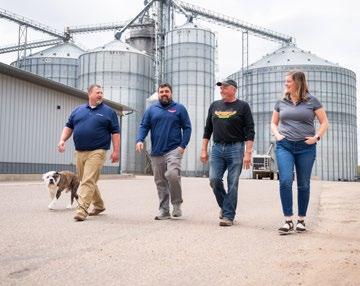
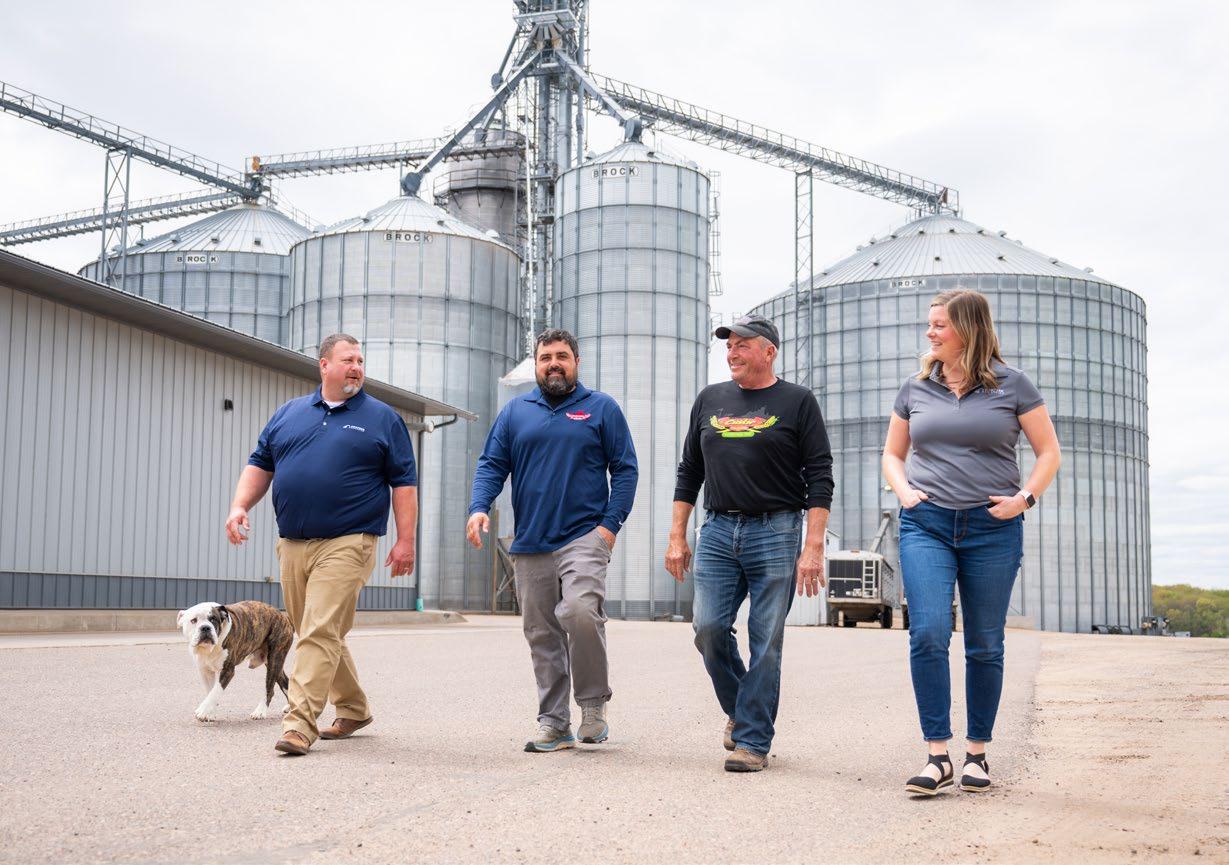
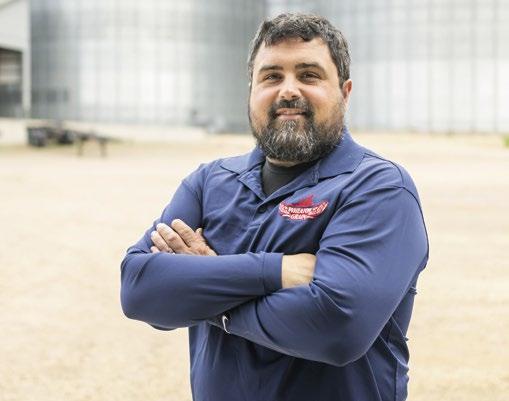
From left: Ty Rohloff, VP commercial finance; Darryl Custer; Ken Custer; and Ann Urbik, credit officer, walk together at the Custer family’s grain operation in Chippewa Falls, Wis.
“In order to continue to grow and be profitable, you have to flex and do some things that other people aren’t willing to do.” — Doug Custer
Continued from page 5
That mindset has guided the family through changing markets, unpredictable growing seasons and the ever-evolving demands of agriculture. The Custers’ ability to think differently opened doors beyond their fields.
“The growth was based on identifying profit centers like shipping internationally,” patriarch Ken Custer said. “My dream was to somehow be in international business.”
Through Wheaton Grain, the family exports Wisconsin-grown crops to partners abroad, expanding their reach to global markets. What started as a regional farm has evolved into a sophisticated operation balancing production, logistics and trade, with strong financial partnerships helping them take that leap.
A PARTNERSHIP THAT UNDERSTANDS AGRICULTURE
For the Custers, Compeer Financial has been more than a lender. It’s been a partner that understands the complexities of agriculture and the courage it takes to grow.
“The biggest thing that Compeer brought was the ag background,” Doug said. “Sometimes when you’re dealing with other financial institutions, just understanding the ebbs and flows can be difficult because it’s not always the right time to sell just because you need the money — and you can’t get in and out of the ag business where other businesses can.”
That deep understanding has allowed Compeer to tailor solutions that fit the Custers’ needs as their business evolved.
“We were able to get some long-term rates locked in with Compeer,” Doug said. “That has really helped our business and our cash flow, and overall the relationship has been very good.”
Compeer’s approach to partnership goes beyond traditional financing.
“One of the things that makes Compeer Financial unique is the knowledge of industry, the knowledge of credit, and the ability
to help be a partner as businesses want to scale — or when they have challenges,” said Ty Rohloff, VP commercial financing. “Compeer has a lot of tools available, unique ways to structure things and an appetite to learn new industries while really having a passion about the space.”
GROUNDED IN FAMILY VALUES
As the businesses grew, the family’s guiding principles remained unchanged. They often make decisions around the kitchen table, valuing each generation’s voice.
“What we’re looking at now and where we’re going with this operation depends on the next generation,” Ken said. “Doug and Darryl have to have that same opportunity I did.”
A LEGACY IN MOTION
From planting to harvesting, trading to trucking, every piece of the business is built on trust with customers, partners and each other. The Custers’ reputation for reliability and quality extends far beyond their hometown, yet their roots remain firmly planted in the Chippewa Valley.
“Sometimes in this business, it’s not just about the timing or the market,” Darryl Custer said. “It’s about staying disciplined, knowing when to move and when to hold back. Agriculture doesn’t run on the same calendar as everything else.”
For the Custers, Compeer’s support and understanding of that rhythm has made all the difference; allowing their legacy to keep growing one season at a time.
“I’ve had my kick at the can,” Ken said with a smile. “Now it’s their turn and their vision. They need to believe in it, make it work, make it happen.”
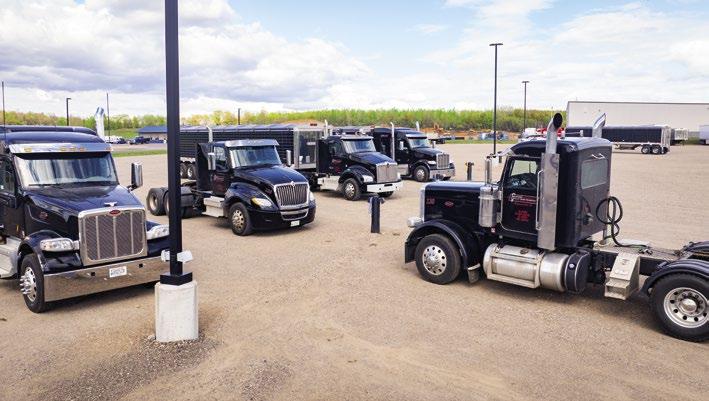
Below top, left to right: Tractor-trailers from Chippewa Valley Grain Transport line the lot at the Custer family’s operation.
Darryl Custer stands near the grain bins at the family’s business.
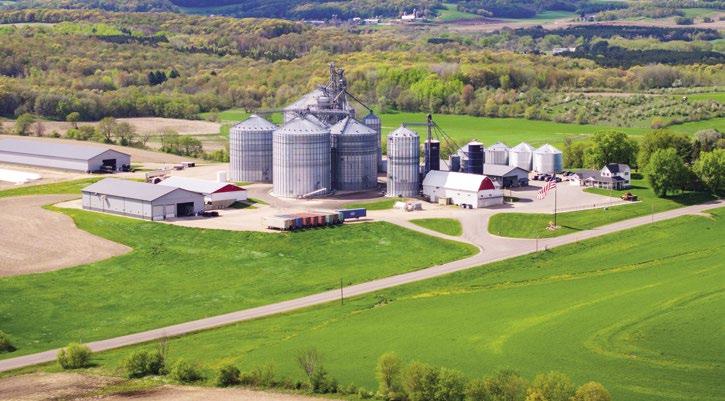
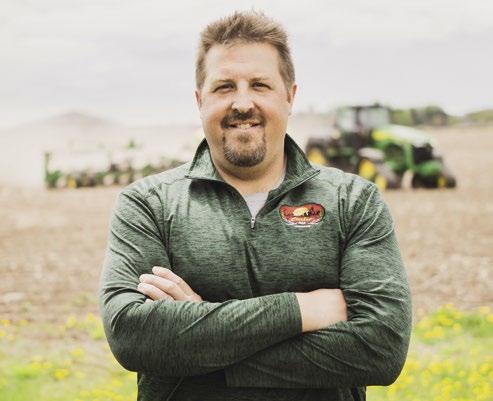
An aerial view of the Custer family’s grain, merchandising and transport businesses. Doug Custer stands in the field.
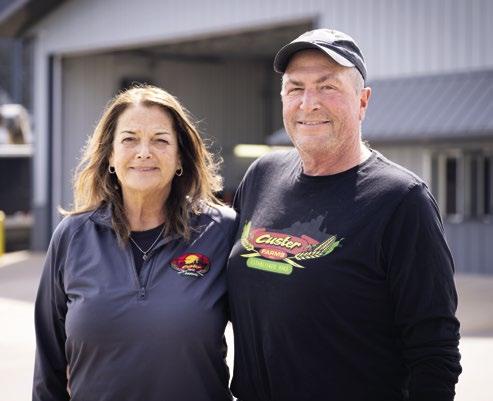
Below bottom, left to right: Debi and Ken Custer at the family’s operation.
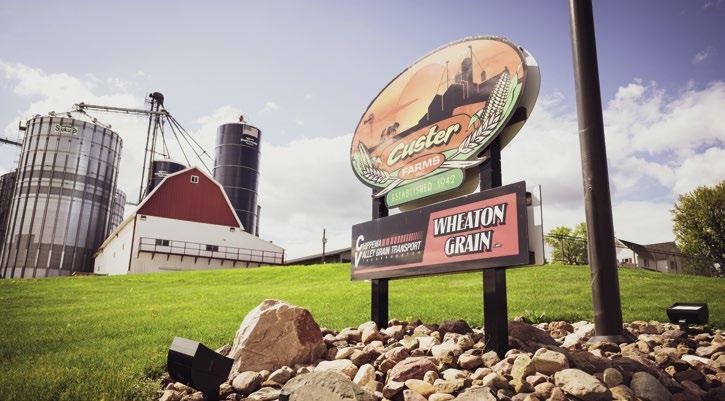
The Custer Companies sign marks the entrance to the grain, merchandising and transport businesses.
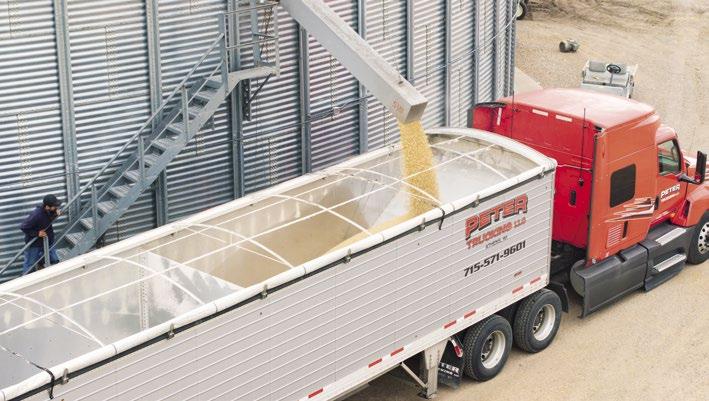
Sunny Custer and her daughter share a moment at the farm. Grain is loaded into a Custer Companies truck.
Herman Brothers Reel in BIG DREAMS
Illinois Family Transforms Abandoned Mines into a Beloved Outdoor Destination
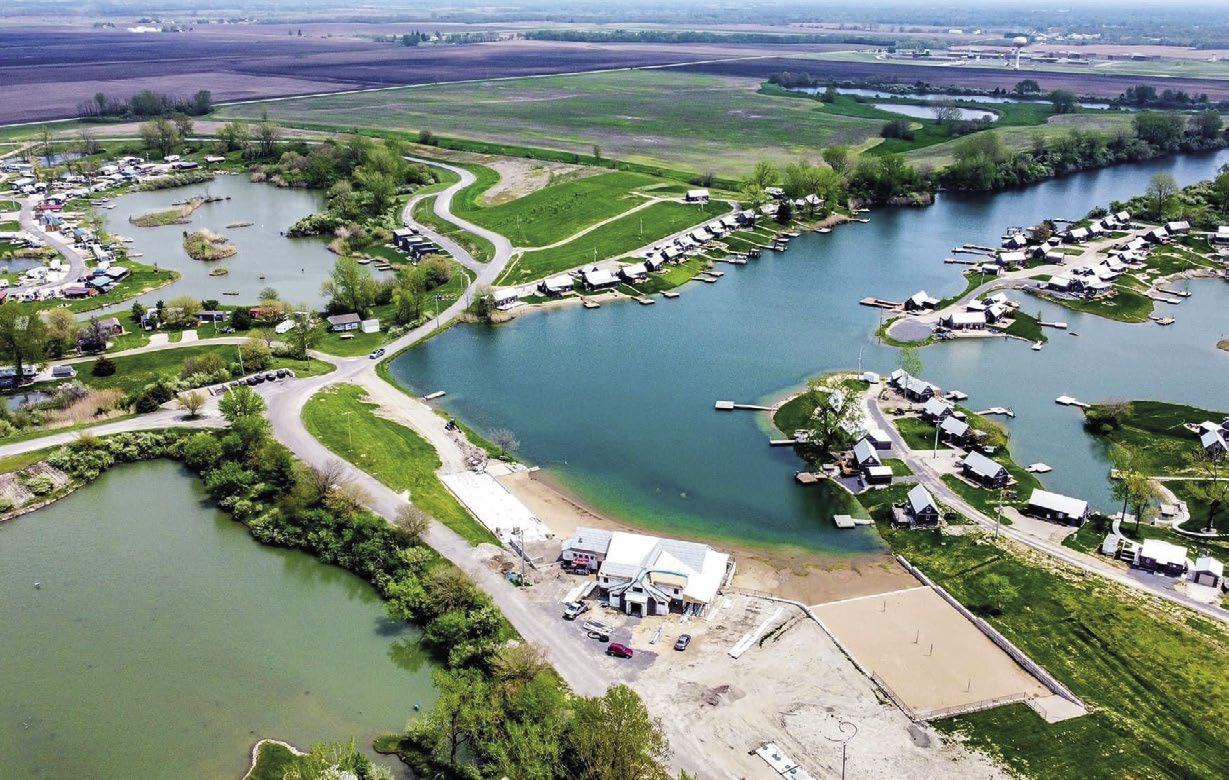
CANTON, Ill. — What once was an abandoned coal strip mine outside Canton is now a shimmering playground of 52 ponds, 600 camping sites and countless memories waiting to be made. Giant Goose Ranch, the 850-acre campground owned and operated by the Herman brothers, is a testament to a family’s vision — and their love for water.
“We love to create,” said Chad Herman, who leads construction for the family’s businesses. “When we saw these old mines, we saw potential. People are naturally drawn to water, and in Illinois, big lakes are rare. We set out to create a place where families could experience the outdoors.”
“When we saw these old mines, we saw potential. People are naturally drawn to water, and in Illinois, big lakes are rare. We set out to create a place where families could experience the outdoors.”
— Chad Herman
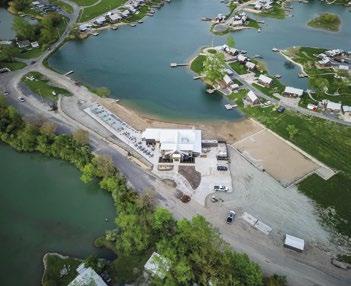
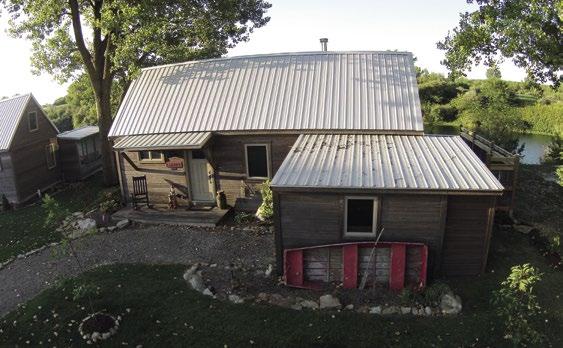
An aerial view of Giant Goose Ranch in Canton, Ill., shows the ponds, beaches and campsites that now fill the reclaimed strip mine.
FROM BUILDERS TO POND PIONEERS
The Herman story began with homes, not fish. Chad’s greatgrandfather launched a construction company in 1949, and for decades the family specialized in custom houses. But their passion for fishing pulled them in a new direction.
By 2007, brothers Chad, Justin and Nathan launched Herman Brothers Pond Management. What started as helping neighbors maintain their ponds grew into a major business stocking about $4 million in fish annually.
“We’ve got nine trucks on the road, delivering everything from hybrid bluegill to walleye — even stocking Chicago park lagoons and the Shedd Aquarium,” said Chad.
As the pond business boomed, they mastered lake building, docks and beaches. They consulted on campgrounds. Then they took the leap and developed their own destination.
THE GIANT GOOSE RANCH VISION
When the Hermans bought Giant Goose Ranch, it held 200 rundown campsites and a lot of potential. After more than a decade of construction, the property now features 150 cabins and 450 RV sites, with activities ranging from fishing to petting zoos to 10 miles of golf cart trails.
Seasonal campers make the ranch their second home, while weekend visitors rent cabins, pontoon boats and golf carts for a quick escape.
“Fishing is still number one,” said Justin. “But families also love feeding the goats, collecting eggs at the hobby farm or cruising the golf cart trails. Hearing about kids catching their first fish here never gets old.”
The ranch has transformed Canton’s economy.
“Local businesses call to see how busy our weekends will be so they can stock up,” said Justin. “We’re bringing in thousands of people every weekend.”
The brothers also host school field trips and tours to introduce kids to fish farming and the outdoors.
Continued on page 10
One of the cabins at Giant Goose Ranch sits along the water, part of the property’s network of 150 cabins and 450 RV sites.
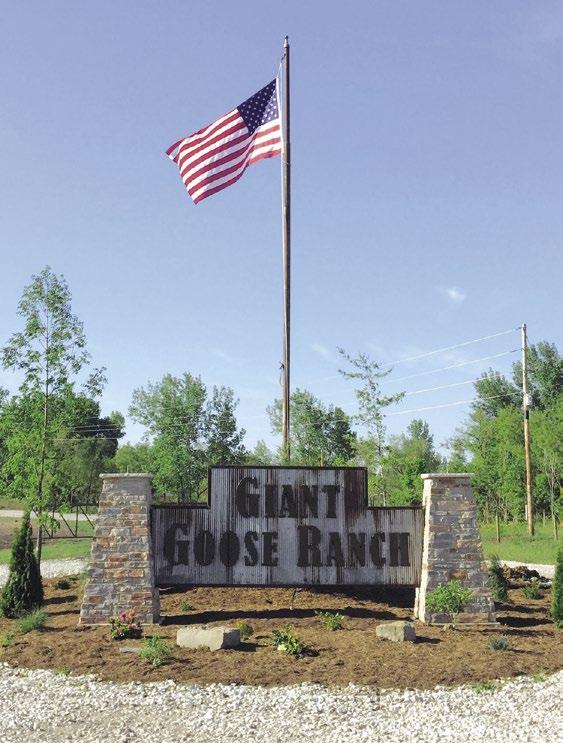
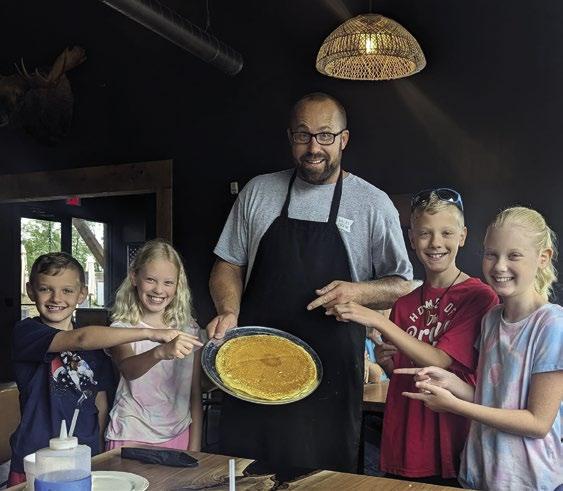
Right top to bottom: The entrance sign welcomes visitors to Giant Goose Ranch, the 850-acre outdoor destination built from former strip mines near Canton, Ill. Nate Herman helps young visitors make memories inside the campground’s restaurant.
FAMILY FIRST, ALWAYS
The Herman brothers’ success hinges on family. Two brothersin-law, Jared and Dave, head excavation. Nathan oversees fisheries. Justin manages the campgrounds. Chad drives construction. Wives, nieces, nephews and even the youngest kids pitch in — cleaning cabins, cooking in the restaurant or helping stock fish.
“We meet weekly to go over what needs to be done,” said Chad. “Teamwork is everything. And we make time for fun –like taking our 40-person crew fishing in Texas. We’re here to serve, to teach our kids that work is a blessing and to show that family businesses are the backbone of America.”
A PARTNER THAT UNDERSTOOD THE VISION
Financing a campground carved from a coal mine isn’t something most financial institutions touch. But Compeer Financial saw the potential, backed the vision and became a key partner in the Herman brothers’ growth.
“Traditional banks didn’t understand what we were doing,” said Justin. “Compeer came alongside us, understood our vision and gave us the capital to meet demand.”
Chad added: “They’ve been instrumental in our growth — knowledgeable, personable and willing to talk not just about business but also life.”
“Compeer came alongside us, understood our vision and gave us the capital to meet demand.”
— Justin Herman
ADVICE FOR ASPIRING ENTREPRENEURS
Drawing on years of trial and growth, the Herman brothers offer straightforward advice:
Expect mistakes. “There’s no handbook for what we do,” said Justin. “You learn by doing — and sometimes by doing it wrong first.”
Find your niche and focus. Early on, the brothers realized they couldn’t be everything to everyone. “We can’t physically manage every pond,” said Chad. “So we educate clients, sell them what they need and empower them to manage their own lakes.”
Build a team you trust. “Have each other’s backs,” said Chad. “Different seasons bring different demands — lean on your team.”
Serve your community. Whether hosting school tours or boosting the local economy, the Hermans believe entrepreneurship should give back.
Looking ahead, the family plans to shift from construction mode to refining operations and growing their fishery business, which continues to expand 20% to 25% annually. But even as they scale, their mission stays the same: Foster family bonds and give people a chance to experience the outdoors.
“We love seeing families make memories here,” said Justin. “When a kid catches their first fish or a grandparent teaches a grandchild to cast a line, that’s what it’s all about.”
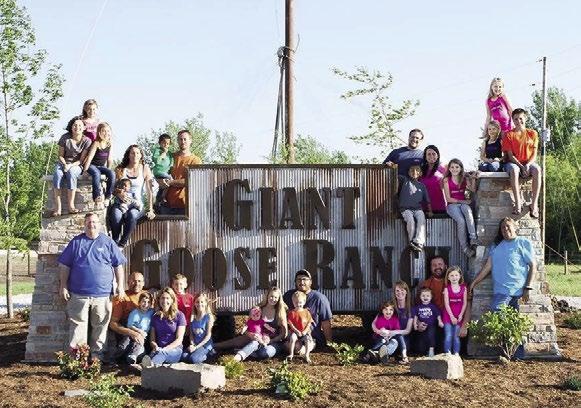
Above top: Members of the Herman family gather at the Giant Goose Ranch entrance sign, celebrating the outdoor destination they built together.
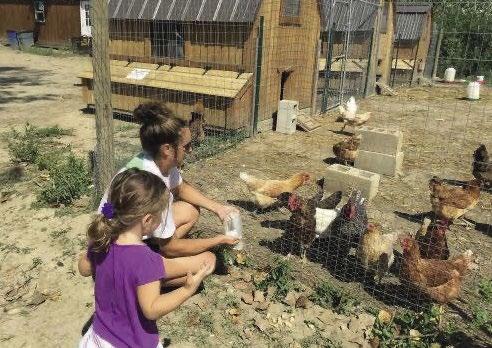
Above bottom: Young visitors feed chickens at the hobby farm area at Giant Goose Ranch.
Special Alert for Compeer Loan Clients
ACT NOW
PATRONAGE DIRECT DEPOSIT NOW REQUIRED
Enroll Now to Prevent Your Funds From Being Delayed in the August 2026 Patronage Distribution
As a valued member-owner, we want to make sure you don’t miss a single patronage payment. That’s why it’s critical to take action now: Compeer Financial will no longer issue paper checks for patronage payments.
Patronage direct deposit enrollment needs to be complete by July 1 for the August 2026 payout. Log In to MyCompeer
The fastest and easiest option! Visit your online MyCompeer account and select Patronage Payout Preferences from the Tools & Forms dropdown.
Request a secure digital form for patronage direct deposit authorization by calling us at (844) 426-6733. Our client care team is available Monday through Friday, 7:30 a.m. to 5 p.m.
Go to your local Compeer office and ask a team member for a patronage direct deposit authorization form. Fill out all fields and return it.
Once enrolled, you’ll receive an email alert when future patronage is deposited, and we’ll follow up with a confirmation letter for your records.
Not signed up for MyCompeer?
Get started today for secure 24/7 access to your accounts and documents, online loan applications, exclusive member-owner benefits and more. Visit compeer.com/mycompeer or scan the QR code to enroll >>
Rooted in Resilience at APPLE CREEK ORCHARD
FARIBAULT, Minn. — When Tami Theis first heard her husband, Kevin, suggest buying an apple orchard, her answer was simple.
“I said no for a good six months,” she noted. “We were already overextended. We own Majestic Gardens, a landscape company. One kid was in college, one had just graduated, and our youngest, who has Down syndrome, was still in school. I was ready for quieter days, not starting another business.”
But her husband’s dream didn’t fade.
“He kept asking me to go for drives, and somehow, we always ended up at that orchard,” Theis said.
Eventually, Kevin hitched up the side-by-side, and the couple explored the property together.
“It was gorgeous,” Theis said. “I finally told him ‘OK, but under two conditions: I write the business plan, and if we can get a financial institution to loan us the money, we’ll do it.’ I didn’t think they’d say yes.”
Thanks to a connection made through a realtor who introduced them to Compeer Financial, the Theis family became the owners of Apple Creek Orchard in 2020.
LEARNING BY DOING
Owning an orchard wasn’t part of the couple’s original plan.
“Nobody starts an apple farm at age 50,” Theis joked. “And certainly not when you don’t already own the land.”
But true to her entrepreneurial spirit, Theis leaned in and learned by taking classes, watching YouTube and taking seminars.
“We already knew how to run a business and manage a crop,” she said. “It was just a new crop.”
Today, Apple Creek Orchard stretches across 90 acres near Faribault, Minn., with 27 acres planted in apple trees — about 17,000 in total. The Theises are transitioning the operation from wholesale to a more sustainable model focused on their retail store, U-pick experience and on-site events.
“The previous owner sold wholesale to other orchards and didn’t find it too profitable,” Theis said. “We’re changing that. We want to build something that brings families together and offers experiences.”
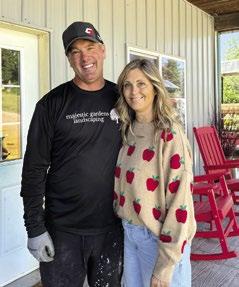
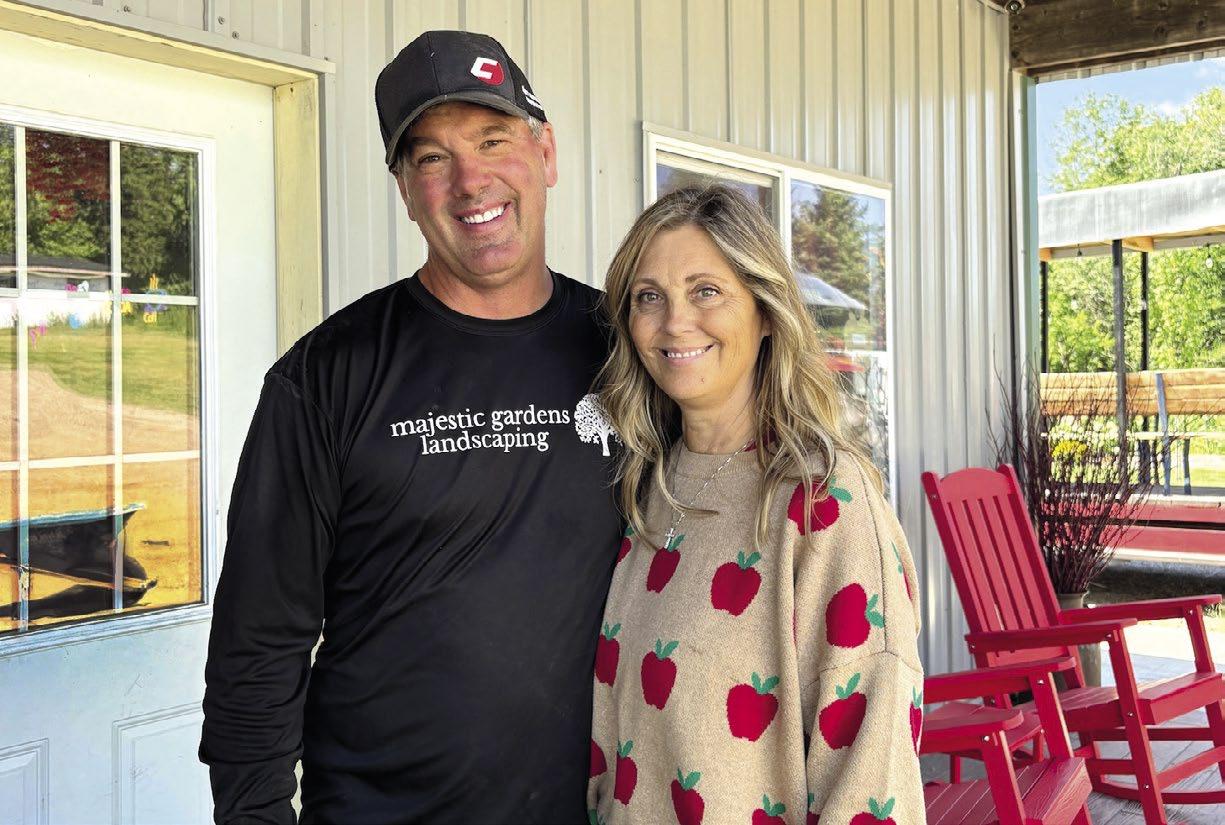
Above: Kevin and Tami Theis at Apple Creek Orchard in Faribault, Minn.
BRANCHING OUT THROUGH NEW OPPORTUNITIES
The experiences include a wedding and event venue, which is one of the main ways Apple Creek has diversified its income.
“When we bought the orchard, my business plan included a wedding space and retail store,” Theis said. “You can’t rely only on apples. Nothing happens overnight. But those events help make the whole thing work.”
The on-site event center hosts celebrations year-round, from weddings to graduation parties and community gatherings.
“We had 15 grad parties this past spring alone,” Theis said. “I’m a certified wedding planner, so sometimes brides ask me to help coordinate their day, too.”
Balancing the orchard, its annual events, the store and wedding business isn’t easy, especially during peak season, but Theis embraces the challenge.
“It’s busy, but it’s also beautiful,” she said. “We’re creating a place where people can make memories. That means something to us.”
FROM HAILSTORMS TO HOPE
Like many farmers, the Theises have learned that success often depends on weather.
“Last year, we had almost a 90% crop loss from hail,” Theis said. “There’s nothing you can do about it. We just had to hope Mother Nature was kinder the next year, which she was.”
That resilience is rooted in perspective.
“Our daughter is a cancer survivor,” she said. “When you go through something like that, you learn who you are in a crisis. You either rise above or you succumb to it. I learned to rise above.”
Her humor and honesty extend to customers, too.
“We’re building something we can do together and something that brings people joy.” — Tami Theis
“People always ask if we’re organic,” Theis said. “I tell them, unapologetically, no. You can’t keep an orchard this size clean of insects without spraying. The only way to do that organically is if it’s very small and you’re OK with really ugly fruit. Most people aren’t.”
FAMILY, COMMUNITY AND THE FUTURE
Running Apple Creek Orchard is a family affair. The adult children help on weekends and during festivals, while her husband oversees the trees and Theis manages the store, marketing and events.
“Whether they like it or not, the kids are involved,” she said, smiling. “I tell them that if they want to inherit it someday, they’ve got to put their sweat equity in now.”
Even with long days and unpredictable seasons, Theis wouldn’t trade it.
“Kevin calls this our retirement,” she said. “We’re building something we can do together and something that brings people joy. There will always be sleepless nights, but failure isn’t an option. We’ll make it work.”
For Theis, the orchard is more than a business. It’s a lesson in persistence, partnership and perspective.
“Every season brings challenges but also blessings,” she said. “You just keep going and appreciate the sweetness along the way.”
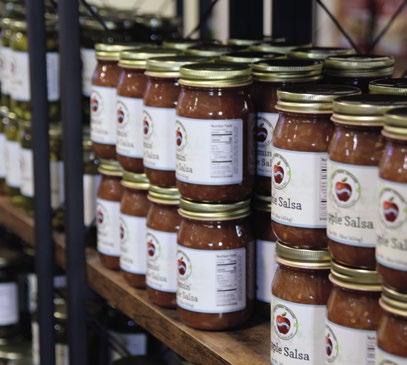
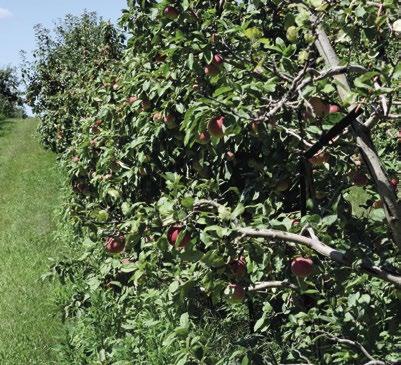
Top left to right: Jars of salsa and preserves line the shelves inside the Apple Creek Orchard retail store. Apples ripen on the trees at Apple Creek Orchard in Faribault, Minn. The gazebo serves as a backdrop for weddings and other on-site events.
ELECTION RESULTS
We are pleased to bring you the results of the Compeer Financial Board of Directors and Nominating Committee election. An independent third party tallied these outcomes on September 8, 2025.
BOARD OF DIRECTORS
Three individuals have secured seats on the Compeer Financial Board of Directors, each serving a four-year term. The newly elected directors are:
DANIEL ERICKSON Alden, Minn. | Region 1
Dan Erickson partners with his wife in their family farming operation in Alden, Minn. He has been self-employed on the farm since obtaining his general agriculture degree from South Dakota State University in 1999.
Dan serves on the Enterprise Risk, Corporate Giving and Legislative Affairs committees. He also serves on the AgriBank District Farm Credit Council. He was a regional representative from 2006-2017 for the Minnesota Corn Growers Association and was a past president and treasurer for the Freeborn County Corn and Soybean Growers Association. He is a department officer for the Alden Fire Department, and also partakes in Provide Pals, Alden 4-H, Sons of the American Legion and Crossroads Church.
Dan was elected in 2018, and his current term will expire in 2029.
KIMBERLY WEDIG Darlington, Wis. | Region 2
Kim Wedig and her husband, Joe, have dairy and cow-calf show cattle beef operation in Darlington, Wis. On the farm, Kim manages the financial records and marketing plans, along with calf care and employee relations.
Kim serves on Compeer Financial’s Compensation and Governance, Corporate Giving, and Young, Beginning and Small Farmer committees. She was a member of the Lafayette County Livestock Auction Committee and co-chaired and clerked the auction at the Lafayette County Fair. Kim and Joe have four adult children, three of whom have returned to work on the family farm.
Kim was elected in 2021, and her current term will expire in 2029.
STEPHANIE (GRIPP) WISE Joliet, Ill. | Region 3
Stephanie (Gripp) Wise is a corn, soybean and popcorn farmer and the fifth generation on her family’s farm in Joliet, Ill. She also is involved in crop protection product and fertilizer sales and owns a small grain and milling operation.
Stephanie serves on the Compensation and Governance, and Legislative Affairs committees.
She graduated from Augustana College with a bachelor’s degree in economics and business administration, and received an MBA from the University of Chicago.
Stephanie’s hobbies include antiquing, old building renovation, interior organization and decorating, and blogging. She and her husband Christopher reside in Joliet, Ill.
Stephanie was elected in 2015, and her current term will expire in 2029.
NOMINATING COMMITTEE
The Nominating Committee features 24 elected candidates, each serving a one-year term. These members represent three regions across Compeer’s territory.
REGION 1
Todd Boster
Ruth Buck
Rosanne Caughey (I)
David (Dave) Marquardt (I)
Ronald (Ron) Mohr (I)
Tami Nelson (I)
Julie Sievert (I)
Diane Stenzel (I)
REGION 2
Dorothy Anderson (I)
Marc Boettcher (I)
Mark Breunig (I)
Mackenzie Clark (I)
Steven Endres (I)
Carla Kastenschmidt (I)
Christina Meylor (I)
Brian Schaal (I)
REGION 3
Chad Bremmer (I)
Zachary Henkel (I)
Jenny Mennenga (I)
Kathy Reinhardt (I)
Lynn Stoller (I)
Jacob Streitmatter (I)
Cheryl Walsh
Jacob Zumwalt (I) (I) – Incumbent
LEARN MORE ABOUT SERVING ON THE BOARD
The Board of Directors, elected by member-owners, plays a crucial role in shaping Compeer’s business direction, overseeing operations and evaluating our performance.
ELECTION TIMELINE
January-February 2026: Member-owners express interest in a director position
Early April 2026: Nominating Committee conducts in-person interviews
August 2026: Annual meeting takes place
September and October 2026: Ballots mailed and collected; results announced
October 2026: New director terms begin
ELIGIBILITY
Any Compeer Financial voting stockholder with an outstanding loan balance, who is not a team member or agent of the association, may be eligible for election to the Board. Candidates are nominated based on geographic regions.
Learn more about the election process at compeer.com/boardcandidates.
Getting Started with LEASING
Your farm or agribusiness is unique, and your financial solutions should be too. That’s why Compeer Financial provides a variety of leasing solutions customizable to your needs. Common leasing options include equipment leases, like tractors, trucks, sprayers and more; facilities like beef/dairy/swine/poultry barns, horticulture buildings and crop storage; and agricultural fixtures like grain bins, farm buildings, irrigation and processing lines.
HOW DO LEASES WORK?
Under a lease, the lessor (like Compeer) grants the lessee (the client) the right to use an asset for a specific period of time for rental payments. The lessor maintains ownership of the asset. At the end of a specified lease term, the asset still has value, which is known as residual value. At the end of the lease, the client can pay the residual amount and buy out the asset. Lease payments are calculated based on the asset’s value minus the residual, often equaling lower payments than a loan.
WHAT HAPPENS WHEN YOU LEASE?
Let’s say you’re leasing a new fixture— a grain bin on your farm. Compeer fully finances the project, which will be constructed on land you own. You, your financial officer and your tax accountant will work closely to develop the terms of the lease like payments, collateral and timeline. After the grain bin is constructed, the lease will commence, and you will begin making rental payments. At the end of the lease, you’ll have the option to buy out the remaining value and fully own the grain bin.
WEIGHING THE BENEFITS
Tax benefits often weigh in leasing’s favor. Before entering a lease, talk to a trusted tax consultant about your specific situation. With a “true lease,” Compeer takes the depreciation as the owner of the asset. The lessee is able to write off lease payments as an operating expense and reduce taxable income. This accelerates your write-offs, creates stability in the write-off amount, manages tax liability and, in most cases, avoids the need for a mortgage or appraisal. A lease can align tax benefits with your personal financial goals because it offers flexibility, predictable deductions and potentially stronger cash flow outcomes.
Leasing offers another way to finance your operation without the upfront costs that come with a traditional loan. This frees up cash for other projects or makes a project feasible when there’s less cash to spare. Collateral flexibility is offered on most transactions, and a lease provides potential estate planning benefits to the client.
If you’re exploring new ways to manage equipment costs or improve cash flow, leasing may be a good option. Contact your financial officer or relationship manager to discuss what makes sense for your operation.
Thank you to April White, senior solutions analyst leasing, and James Hultgren, director leasing, for contributing to this article.
2026 CROP INSURANCE Outlook
Crop insurance is one of the most important tools you can use to protect your operation from unpredictable weather, volatile markets and rising input costs. As you prepare for the next crop year, take note of several program changes and market dynamics. With margins expected to be especially tight, maximizing coverage while balancing costs will be critical.
KEY CHANGES
The most significant update for 2026 is an increase in premium subsidies. The Supplemental Coverage Option (SCO), Enhanced Coverage Option (ECO) and Margin Coverage Option (MCO) now all carry an 80% subsidy — up from 65%. Optional Unit, Enterprise Unit and Basic Unit policies also received subsidy increases.
“In a tight-margin year like 2026, these changes give farmers room to protect more of their revenue while keeping premiums manageable,” said Cory Bruning, director of insurance at Compeer Financial.
A strong crop insurance plan should stabilize income, not guarantee a payment. Revenue protection policies cover losses when both yield and revenue fall below guarantees, offering protection from severe weather and market volatility. By reviewing your plan often, you’ll gain a clearer picture of how different options strengthen your risk management strategy
and stay informed about how policy changes may affect your coverage year to year.
COMPARING ECO AND MCO
With subsidies now at 80%, both ECO and MCO offer attractive options to extend protection up to the 95% coverage level.
ECO gives area-based coverage that supplements your base (individual) policy. It covers a band from 86% up to 90% or 95% of expected crop value.
MCO mirrors ECO’s structure, but the trigger and payout criteria differ, MCO triggers on margin shortfall (Revenue - Input costs).
“ECO is straightforward and widely used, while MCO is more tailored to managing input cost risk,” said Bruning. “That’s why it’s so important to sit down with your insurance officer to determine which approach best matches your operation.”
ECO and MCO offer added protection through lower deductibles, which can lead to more frequent indemnities. That added coverage typically comes with higher premiums than traditional policies. With subsidies increased, the return on investment looks more favorable. With stronger subsidies, ECO and MCO offer practical ways to extend coverage and manage risk, creating an important backdrop for how farmers evaluate Agriculture Risk Coverage (ARC) or Price Loss Coverage (PLC) in 2026.
INTERACTIONS WITH ARC AND PLC
Updates in the latest farm bill — referred to as the “One Big Beautiful Bill” — allow producers to elect ARC and PLC and still purchase SCO without penalty.
ARC and PLC provide county-based coverage at no premium cost but are limited to base acres and capped at 85%. By contrast, SCO and ECO apply to all planted acres and use seasonal price discovery.
MAKING TIMELY DECISIONS
Producers should not wait until March 15, the sales closing date, to finalize their decisions. Meeting with your insurance officer early in the year is the best way to build confidence in your plan.
“Make your insurance decision in January,” advised Bruning. “That gives you time to forward-sell grain with assurance your coverage will back you up. County-based policies may not pay indemnities until the following summer. Make sure you have enough working capital to start the next crop year before those payments are made.”
BOTTOM LINE FOR 2026
With higher subsidies, new flexibility in program elections and tighter operating margins, 2026 is the year to secure as much protection as possible.
“With inputs and commodity prices where they’re at, you’ll likely need your deductible to be as low as possible,” Bruning said.
1
Top Five TIPS FOR 2026
Take advantage of new subsidies. With subsidies now at 80% for SCO, ECO and MCO, 2026 is the year to maximize protection.
2
Balance individual and county coverage. Consider blending individual Revenue Protection with SCO or ECO to reach 95% coverage while keeping premiums manageable.
3
Don’t wait until March.
Make your crop insurance decisions in January. Even if markets shift slightly, you’ll have confidence to start forward selling grain.
4 Know your cash flow.
County-based policies often pay later. Make sure you have enough working capital to start the next crop year before indemnities arrive.
5
Lower your deductible. A 95% coverage level means just a 5% deductible — an important safeguard in a tight-margin year.
Stay One Step Ahead
HOW TO SHIELD YOURSELF FROM FRAUD AND CYBERCRIMINALS
Fraud is more prevalent and more challenging to spot than ever. It’s crucial to protect your operation and finances from cybercriminals. Unfortunately, simply locking the doors and limiting outside access are not enough. You need a strong cybersecurity protection and response plan for your critical computer infrastructure and information.
Over the past few years, businesses across all industries have reported an uptick in vendor impersonations and wire fraud attempts. Fraudsters impersonate a vendor, instruct clients to change wire destinations and ultimately steal their funds. They may also uncover email addresses to change wire address information. Check fraud, including the theft of checks and check washing, has also been on the rise, resulting in individuals losing thousands of dollars.
The following techniques can help safeguard your business against identity thieves, hackers and cybercriminals:
Create strong, unique passphrases for each account
Use different passwords for each account so a breach in one system does not compromise other accounts. Choosing unique and complex passphrases, rather than a simple password, makes it difficult for hackers to guess passphrases and ensures your accounts remain protected. A password manager, such as LastPass or Bitwarden, can help you securely manage passphrases.
Use multi-factor authentication
Use an authentication method that requires two or more verification factors, like a one-time PIN texted to your phone, in addition to a password.
Protect your accounts
Create separate bank and credit card accounts for your business and personal finances. This way, if hackers gain access to one account, they won’t have access to the other.
Protect yourself against phishing scams and identity theft
Always verify the sender of emails or phone calls before providing sensitive information. Never provide your passwords or passphrases to anyone. Download files, apps and plug-ins only from trusted sources, as malware can be disguised or hidden even in legitimate software.
Use protective controls and architecture
Properly configure and secure internet-facing network devices, disable unused or unnecessary network ports and protocols, encrypt network traffic, and disable unused network services and devices.
Provide employee training
If you have a large operation, provide annual security awareness training to employees and inform them how to report suspicious behavior.
Implementing these tips will help lessen the chance of hackers accessing your information. However, if you or your operation is a victim of a data breach, follow these steps to minimize the effects:
Contain the breach
Preserve evidence by disconnecting your internet connection, disabling remote access, maintaining firewall settings, installing legitimate pending security updates and changing all passwords.
Report the crime
Immediately contact your financial institution(s) and credit cardholders if you discover a fraudulent incident. Report the attack to the Internet Crime Complaint Center, which will forward the information to enforcement authorities. If you or your operation is the victim of a data breach, ransomware attack or network intrusion, contact the closest FBI field office or report it to tips.fbi.gov.
The good news is that you can never be too safe when it comes to protecting your hard-earned assets and business. Taking the necessary precautions to protect from fraud and, most importantly, staying aware of potential threats will help your operation stay secure.
Thank you to Andrew Geil, principal security analyst, for contributing to this article.
HOLIDAY HOURS
Compeer Financial will be closed in observance of the following holidays:
Christmas Eve: December 24 (closed starting at noon) Christmas: December 25
New Year’s Day: January 1
To reach the Contact Center, call (844) 426-6733.
SCHOLARSHIPS AVAILABLE FOR HIGH SCHOOL SENIORS
The Fund for Rural America, Compeer Financial’s corporate giving program, will offer 105 scholarships to students in 2026. Graduating high school seniors with an agriculture or rural background, or those planning to major in an agriculture-related field at a community college, university or technical school, are encouraged to apply during the application submission period, which opens December 15, 2025, and closes February 15, 2026. Each scholarship recipient will receive $2,000 for educational tuition expenses. All applicants will be notified of their status four to six weeks after the February 15 deadline. Students can find more information at compeer.com/scholarships
YEAR-END REMINDERS
Here are some essential year-end reminders to keep in mind as we approach the end of 2025:
Payment Instructions:
When making payments, ensure that you include all payment stubs (along with your check) for accuracy. Payments will be applied on the date and to the year in which they are received. Payments can be made at your local Compeer Financial office, through a Compeer Financial lockbox location or Online Banking.
Year-End Deadline:
Payments received at a Compeer Financial office or lockbox location after noon on December 31, 2025, will be considered as payments for the year 2026.
Mail Delivery Time:
Due to increased volume during this season, please allow at least two weeks for your payment to arrive by mail. Consider utilizing our digital tools to avoid potential mail delivery delays. You can also opt for an electronic funds transfer by reaching out to us at (844) 426-6733 or visiting compeer.com/online-banking
Interest Payments:
If you have funds in your account as of December 31, 2025, and you have a payment due on January 1, 2026, the interest portion of the installment will be paid in 2025, up to the available balance in your account. This ensures that you receive credit for paying interest in 2025. If you prefer not to use your Funds Held to cover the January 1, 2026, interest billing, please notify your Compeer Financial office or call us at (844) 426-6733 by December 26, 2025.
Year-End Electronic Funds Transfers:
If you use an electronic funds transfer for payment and need to cancel it, please inform us by 3 p.m. on December 29, 2025.
Online Banking Transactions:
For online banking users, please note the following deadlines:
• Loan payments and transfers submitted through Compeer Financial Online Banking before 4 p.m. on December 29, 2025, will be applied as directed in the online transaction.
• Standard ACH transactions submitted after 4 p.m. on December 29, 2025, will be posted to the loan on January 2, 2026. Please call (800) 705-6603 with any questions.
SAVE THE DATE for These Upcoming Events
Mark your calendars for future opportunities to expand your knowledge, network with industry peers and connect with experts. Visit compeer.com/events to learn more and register for the following events offered by Compeer Financial.
GroundBreakers Conference:
February 13-14 or February 20-21 (in-person)
GroundBreakers is an exclusive invitation-only opportunity to expand farm business knowledge and gain valuable insights on a variety of topics that can impact operational success. The GroundBreakers Conference features engaging, informative keynote speakers and educational breakout sessions that will send attendees home with actionable insights. Plus, the connections made with peers and industry experts often become valuable resources to guide their operation into the future.
Minnesota: February 13-14 | Omni Viking Lakes Hotel | Eagan, Minn.
Wisconsin: February 20-21 | Osthoff Resort | Elkhart Lake, Wis.
Webinars:
- Strengthening Your Roots: January 14 at 9 a.m.
- AgriMindset: January 21 at 1 p.m.
- AgriMindset: February 18 at 1 p.m.
PROTECT WHAT YOU PLANT
Build a plan tailored to your acres, breakeven and budget alongside your Compeer Financial team. Align your base coverage with endorsements like ECO and SCO, plus private products for stronger peace of mind.
Partner with your Compeer insurance officer before the MARCH 15 DEADLINE for spring-planted crops.
Looking for additional insights before making your 2026 elections?