
CULTIVATE
Thank
Join Us in Celebrating the Pork Industry
Your swine business depends on your dedication around the clock. We share in your passion and are honored to partner with hard-working pork producers, processors and others who drive the swine industry forward. As the swine sector evolves, we’re here to provide cutting-edge ag finance technology, innovative lending solutions and expert guidance to help your business thrive.

CULTIVATE
EDITORIAL STAFF
Anna Vangsness, Editor
Annie Lauber, Contributing Writer
Valerie Brekke, Contributing Writer
Terri Poburka, Designer
DIRECTORS
Ashley Ahl Merrillan, Wis.
Rod Bosma Rushmore, Minn.
Ann Broome Austin, Texas
Allyn Buhrow Ashton, Ill.
Mark Cade Westby, Wis.
Dan Erickson Alden, Minn.
Larry Fischer Sleepy Eye, Minn.
Dale Holmgren N. Mankato, Minn.
Sarah Jansen Menasha, Wis.
Dave Peters Manteno, Ill.
Greg Pollesch Oshkosh, Wis.
Dan Scheider Freeport, Ill.
Tracy Travis Cambridge, Wis.
Kimberly Wedig Darlington, Wis.
Stephanie Wise Joliet, Ill.
Cultivate is a publication of Compeer Financial®, ACA. Compeer Financial exists to champion the hopes and dreams of rural America. This publication is copyrighted in its entirety. Cultivate is published by Compeer Financial, 2600 Jenny Wren Trail, PO Box 810, Sun Prairie, WI 53590.
Please send address changes to Compeer Financial, Attn: Cultivate Magazine, 2600 Jenny Wren Trail, PO Box 810, Sun Prairie, WI 53590 or call (844) 426-6733.
Compeer Financial, ACA is an Equal Opportunity Employer, Lender and Provider. Equal Credit Opportunity Lender. Compeer Financial is a registered trademark of Compeer Financial, ACA. ©2025 All rights reserved.


16 What Is Benchmarking and Why Should You Use It?
Gain Valuable Insights Into How Your Farm Is Succeeding
20 From Data to Dirt
Dave Peters’ Journey in Farming and Financial Leadership
Cultivate is brought to you by Compeer Financial. This publication’s name represents our cooperative’s commitment to growing long-term relationships with our member-owners and championing the hopes and dreams of rural America. Comments or suggestions for future editions can be sent to Compeer-CommunicationsTeam@compeer.com
Where Grit Meets OPPORTUNITY
There’s something special about fall in the Upper Midwest. Fields are nearly ready for harvest, combines and grain trucks are tuned up and the leaves are starting to turn. One of my favorite parts of the season is high school football. On Friday nights, stadium lights flicker to life, pep bands add energy and local announcers’ voices carry across small towns as they call each play.
Whether it’s a Friday night rivalry, a Saturday college game or a Sunday afternoon gathering with friends and family watching the pros, football season has a way of bringing people together.
While the timing of football and harvest seasons overlap, the similarities run deeper. Both require preparation, teamwork, trust and a clear game plan. Both demand grit. And both offer many lessons that extend far beyond the sidelines.
At Compeer, we know that grit alone isn’t enough. Rising production costs, evolving trade policies, low commodity prices and other factors are squeezing margins. It’s a tough lineup. It takes a trusted team of people who know the game to help anticipate challenges, adjust the strategy and bring insights to the huddle when it matters most — whether it’s managing risk, navigating a major decision or preparing for what’s next.
Navigating today’s ag landscape also requires spotting potential and acting on it. Like in football, tough conditions can create unexpected openings. Challenging seasons often spark innovation, new ideas and fresh ways to move your operation forward. I encourage you to look for those openings — whether it’s a new production method, a more efficient process or diversifying your approach. This is where grit meets opportunity — the point where determination is matched with the right tools, resources, partners and timing to create lasting success. The opportunities are out there for those ready to seize them.
In this issue, you’ll meet producers who are doing just that. Page 6 features Rod Main, a sixth-generation farmer and lifelong educator who made a difference in and out of the classroom. On page 9, check out the Leisen family,
who turned a single acre of sweet corn into a thriving 30-acre operation. On page 12, learn about Josh Betcher, who has adopted climate-smart practices that improve the land while also positively impacting his yields.
We’re proud to be on the team with the clients featured in this issue — and also with you. One way we show up as a member of the team is through our patronage program, which returns a significant portion of our earnings to our member-owners. This year, that means $187 million in patronage payments, including our recent distribution in August. This winning play reflects Compeer’s strength and ongoing commitment to the people we serve.
“Challenging seasons often spark innovation, new ideas and fresh ways to move your operation forward. ”
As you head into harvest or to the next big game, know we’re right there with you. Cheering you on, helping you prepare and working alongside you to turn today’s challenges into tomorrow’s wins.
Every quarter. Every drive. Every season.

Jase Wagner President and CEO

Get your patronage payments faster and with less hassle!
ENROLL IN DIRECT DEPOSIT FOR PATRONAGE PAYMENTS
All patronage payments will be processed via direct deposit starting in August 2026. Get ahead of the curve and enroll today for Faster Payments. Greater Security. Less Hassle.
Plus — once enrolled, you’ll be automatically entered for the chance to direct a $1,500 donation from Compeer to a rural or agricultural organization or food bank of your choice!
How To Enroll
Enrolling in direct deposit is quick and easy. Choose the most convenient option for you:
Log in to MyCompeer
The fastest and easiest option! Visit your online MyCompeer account and select Patronage Payout Preferences from the Tools & Forms dropdown.
Not signed up for MyCompeer?
Get started today for secure 24/7 access to your accounts and documents, online loan applications, exclusive member-owner benefits and more. Visit compeer.com/mycompeer or scan the QR code to enroll.

Call Us Directly
Request a secure digital form for patronage direct deposit authorization by calling us at (844) 426-6733. Our client care team is available Monday through Friday, 7:30 a.m. to 5:00 p.m.
Visit Us In Person
Go to your local Compeer office and ask a team member for a patronage direct deposit authorization form. Fill out all fields, including bank account and routing number, and return it.
Important! Changes to your patronage preferences need to be made no later than one month prior to our patronage payouts (January 1 for February payout and July 1 for August payout). We cannot guarantee changes will be reflected if they’re made after these dates.
Harvest Lessons HOW ONE TEACHERFARMER CULTIVATES MORE THAN CROPS
ONEIDA, Ill. — As harvest begins and school doors swing open for another year, the pulse of fall in the Midwest beats steadily. Combines move across fields while lesson plans fill classrooms. For Rodney Main, a lifelong agriculture educator and sixth-generation farmer, this isn’t just a busy season. It’s his life.
FINDING HIS CALLING
Main knew early on that his path would be tied to agriculture. When he announced that he planned to farm full time after graduating from high school, his dad’s response was swift.
“He told me matter-of-factly, ‘Find something else to do and figure out how you’re going to pay for it,’” Main said, with a chuckle.
His dad’s answer shaped Main’s future and deepened his connection to agriculture. Inspired by his high school agriculture teacher, who embodied the kind of life he admired, Main realized teaching agriculture could let him pursue both passions.
A LIFE IN EDUCATION
Forty-one years into his teaching career — 30 of them at ROWVA High School — Main has built more than a curriculum. He’s built a community.
“I’ve been an agriculture teacher, FFA advisor and FFA dad to a lot of kids,” he said. “When I leave the farm and head into town, nearly every house I pass belongs to someone I’ve taught.”
Main’s teaching philosophy is grounded in hard work and full-circle connection. He has watched former students become agronomists, seed representatives and Compeer Financial team members.
“I buy my seed, fertilizer, everything from former students,” said Main. “My Compeer people are close friends. You can’t beat that.”
LESSONS BEYOND THE CLASSROOM
Aaron Leary, a financial officer at Compeer, student-taught under Main in 2003 and never forgot his mentor’s work ethic.
“He’d spend his prep period checking on guys in the field, eat lunch in his truck and then move equipment,” Leary said. “That’s pretty unique: being that good at farming and also an all-star in the classroom.”
INNOVATION AT HOME
The Main family farm, OT Farms (short for Optimum Tillage), traces its name to Main’s dad, a Korean War veteran and innovator.
“Dad was a tinkerer,” he said. “He came up with the idea of a chisel planter that caught the attention of JI Case. They started a division based on it.”
That legacy continues with Main’s son, Maddox, who’s preparing to become the seventh generation on the farm.
Continued on page 8
“That’s pretty unique: being that good at farming and also an all-star in the classroom.”
— Aaron Leary
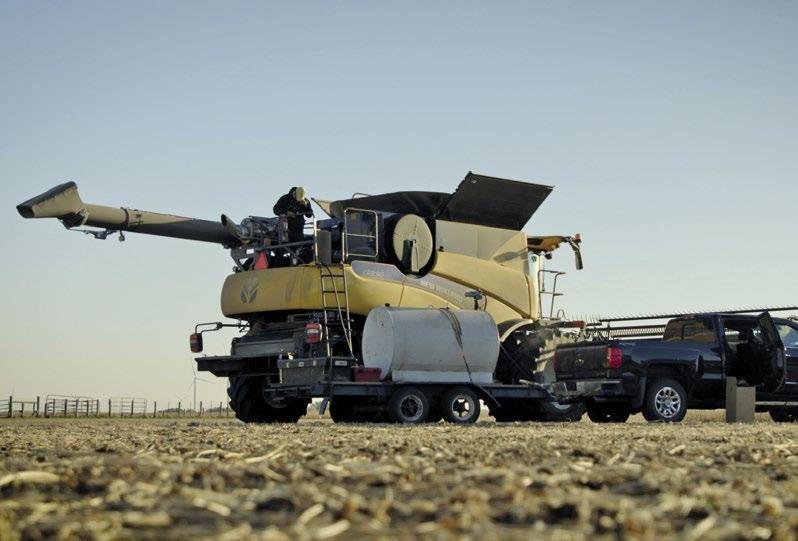
Below left to right: A combine readies for harvest on OT Farms near Oneida, Ill.
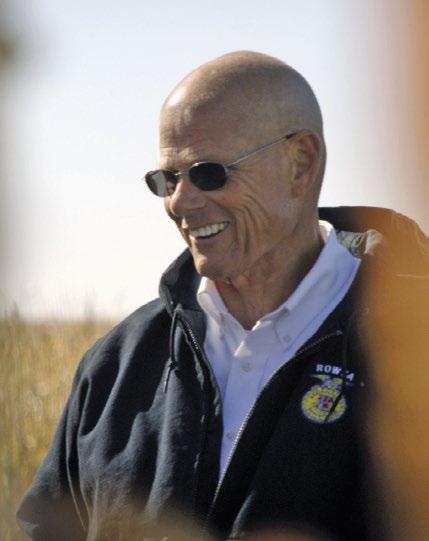
Rodney Main, longtime agriculture teacher and sixth-generation farmer, smiles as he reflects on his dual calling in farming and education.
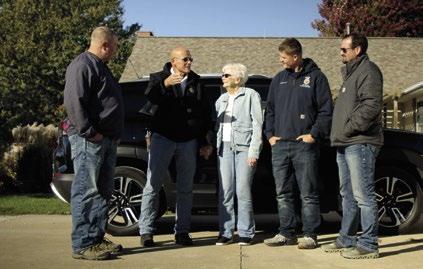
L-R: Shane Kaiser, Rodney Main, his mother, Marilyn Main, his son Maddox Main, and Aaron Leary visit outside of Main’s home.
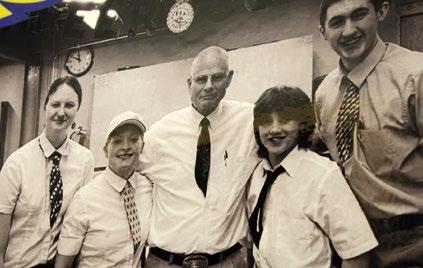
Main, center, is pictured with students from his agriculture program at ROWVA High School, where he taught for more than four decades.
“That’s what it’s all about — watching those kids grow up, raise their own kids right and be proud of where they came from.”
— Rod Main
Continued from page 7
THE NEXT GENERATION
“Growing up, I was all about 4-H, FFA and helping Dad with chores,” said Maddox, a 2025 ROWVA graduate. “Then I got to ride the tractor, and now I’m starting to run machinery and learning bigger responsibilities like how to work with financials and how things are set up with Compeer. I’m trying to learn what my dad does every day, so I know what I’ll need to do someday.”
Even with all the hands-on training, Maddox said he knows he has a lot to learn.
“I’ve got some big shoes to fill,” he said.
FULL-CIRCLE REWARDS
For Main, the most rewarding part of his life isn’t found in yields or awards but in moments at the county fair or a local store when a former student calls out, “Mr. Main?” and introduces their family.
“That’s what it’s all about,” he said. “Watching those kids grow up, raise their own kids right and be proud of where they came from.”
When harvest ends, Main will stand where he always has — between the classroom and the combine, preparing students and soil alike. Though he retired from teaching at the end of June, the impact continues to unfold every day. For him, the richest yield isn’t what’s pulled from the ground but the people he’s seen grow along the way.
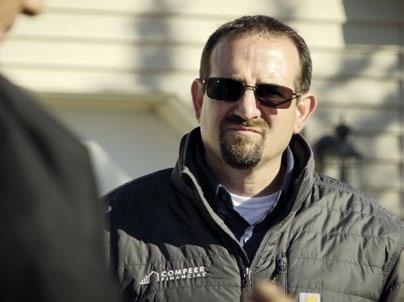
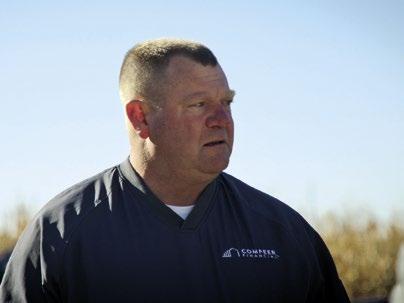
Right top to bottom: Aaron Leary, financial officer at Compeer.
Shane Kaiser, insurance officer at Compeer.
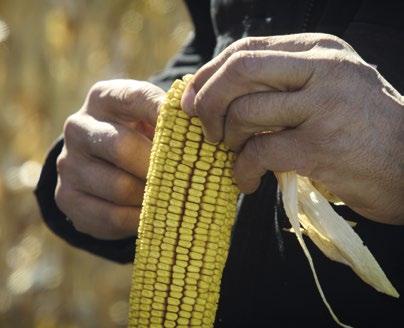
Rodney Main inspects an ear of corn during harvest.
A Harvest of HARD WORK AND HEART IN RIVER FALLS
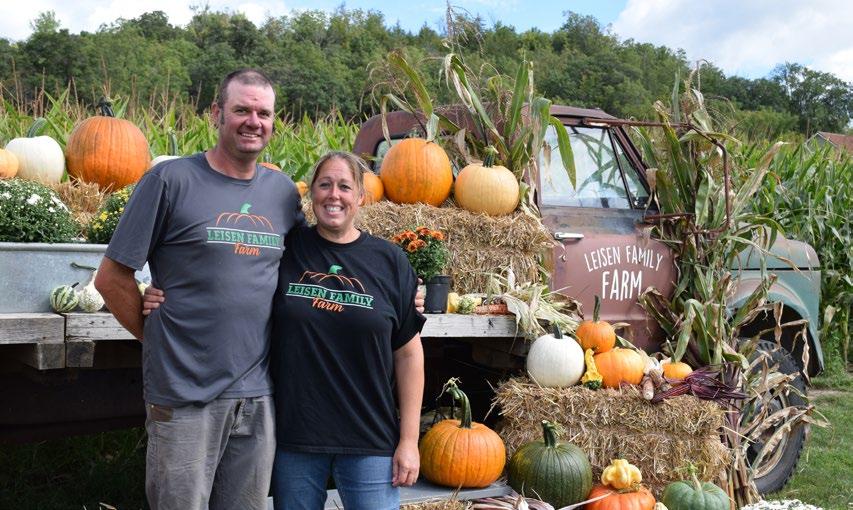
RIVER FALLS, Wis. — For Alanna and Josh Leisen, what started nearly two decades ago with a single acre of sweet corn has grown into a thriving seasonal farm that draws families back year after year — not just for the produce but for the sense of community it fosters.
The Leisens first planted sweet corn 18 years ago and have expanded their crop every year since.
FROM CORN TO PUMPKINS AND MORE
Their first acre of sweet corn quickly turned into 15 acres — and if they had planted 30 acres this year, they would have sold that, too. What used to last a week now sells out in a day or two.
They plant sweet corn in stages — every seven to 10 days — so they always have a fresh batch to offer customers. And when demand outpaced their ability to pick by hand, the Leisens invested in a sweet corn puller with help from Compeer Financial.
“It’s a one-row puller that grabs every ear,” Josh explained. “It’s expensive, but Compeer made it manageable for us. We pay the loan once a year, after the season. That’s huge for a small family farm.”
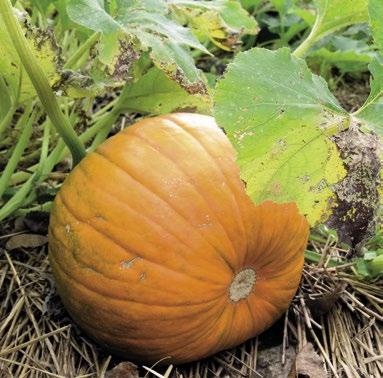
Pumpkins joined the picture about six years after the corn. Josh’s birthday falls on Halloween, so the couple figured they’d try their hand at pumpkins. A few vines eventually blossomed into 30 acres of pumpkins, along with watermelons, cantaloupe, squash, Indian corn, and rye for straw bales and cover crops.
Farming pumpkins has brought plenty of lessons, from battling weeds with cover crops to learning the differences between hundreds of pumpkin varieties. They’ve learned which seeds produce the thickest stems (best for carving) and how to tell when a pumpkin is perfectly ripe.
For the Leisens, it’s a mix of research, trial and error, and hardwon experience.
Continued on page 10
Continued from page 9
“The more expensive seeds pay off in the long run,” Alanna said. “You get a better yield and a better-quality product.”
What makes their operation stand out is how much they do by hand — with a lot of help from local youth. The Leisens employ up to 20 workers each season, many of whom come back year after year, even through college.
“We’ve had kids start with us at age 12, and they’re still here at age 22,” said Alanna with a smile.
In addition to non-family help, the Leisen’s children, Ryan (16) and Madilyn (13), are in step with their parents throughout planting and harvest season.
“They both work on the farm with us and help with everything,” Alanna said.
WELCOMING THE COMMUNITY
When harvest season arrives, the farm transforms into an annual destination for families. What began as a simple self-serve stand grew during the pandemic, when craft fairs were canceled. The Leisens opened the garage doors to start a craft barn — giving local artisans a space to sell and families a safe way to gather.
“It was crazy popular, and it’s just grown since then,” said Alanna.
Now, the farm is bustling each fall with a corn maze, petting zoo, bounce houses and rubber duck races; plus, food trucks and plenty of space for kids to run free. Families load up wheelbarrows with pumpkins of every shape and color. Prices stay affordable, with most pumpkins costing less than $6.
“The activities are free except for a few like the bounce house and gourd launching,” Alanna said. “We just want people to have a good time and buy pumpkins.”
FROM DAWN TILL DUSK
With so many moving parts, the work never really stops. Both Josh and Alanna work full-time jobs during the week. Josh runs a land-clearing business, and Alanna is a business analyst. They spend their evenings and weekends in the fields or welcoming guests.
“We pick pumpkins weeknights after work until it gets dark,” Alanna said. “Then we’re open all weekend.”
For the Leisens, what keeps them going through early mornings and late nights is simple: seeing families come back year after year.
“It’s so much fun watching kids run around here with wheelbarrows full of pumpkins,” Alanna said. “Some families come three or four times each season. That’s what it’s all about.”
Their window for selling is short — about 45 days — and every pumpkin is perishable. Come Nov. 1, leftover pumpkins get fed to animals or purchased by local deer hunters. Every year, the Leisens do their best to sell out. And every year, their farm grows a little more.
A THRIVING OPERATION
As they look ahead, the Leisens are planning new ways to care for the land to ensure the farm remains productive — like planting cover crops to manage weeds and rotating fields to keep the soil healthy. It’s not always easy, but for Josh and Alanna, it’s all about keeping the farm thriving for future generations.
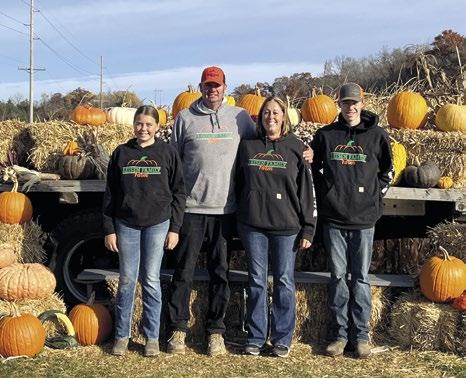
Opposite page left: Josh and Alanna Leisen own and operate Leisen Family Farm near River Falls, Wis.
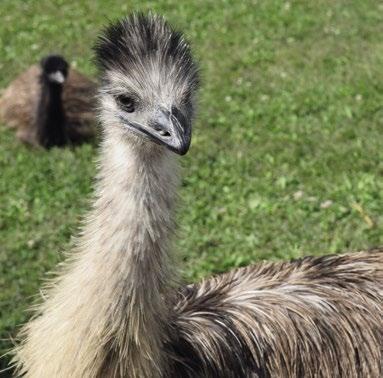
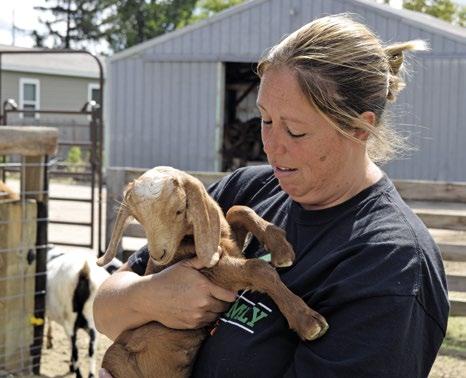
Opposite page right: Leisen Family Farm visitors can interact with emu, goats and more.
Above left: L-R: Madilyn, Josh, Alanna and Ryan Leisen.
Above right: Leisen Family Farm will open for the 2025 season in mid-September.


JB FARMS
PIONEERING
SUSTAINABILITY FOR FUTURE GENERATIONS
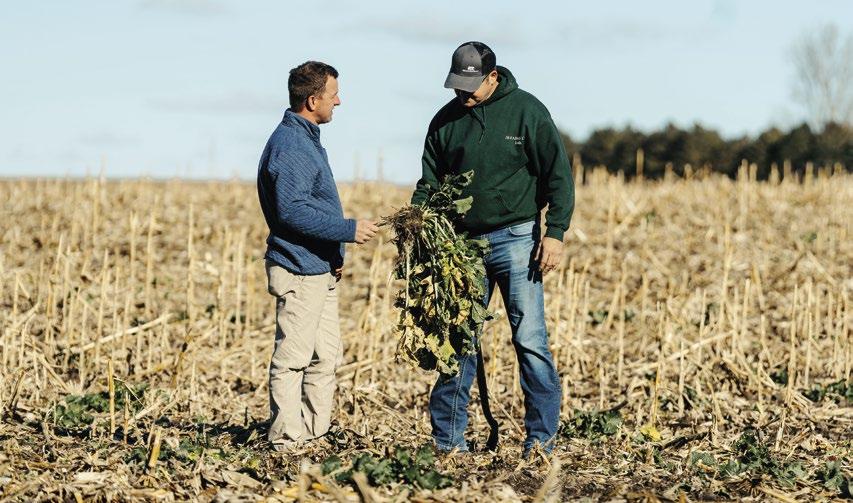
MAZEPPA, Minn.— For farmers looking to adopt climate-smart practices, the journey often comes with challenges — and hardwon rewards. Just ask Josh Betcher, who farms 450 acres in Mazeppa, Minn. On his fifth-generation family farm, JB Farms, Betcher and his family are showing how thoughtful changes today can build resilience for tomorrow.
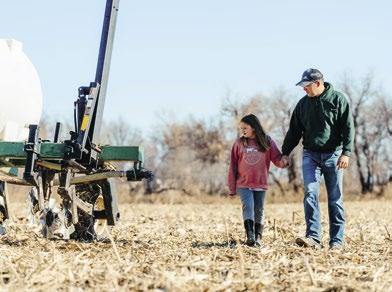
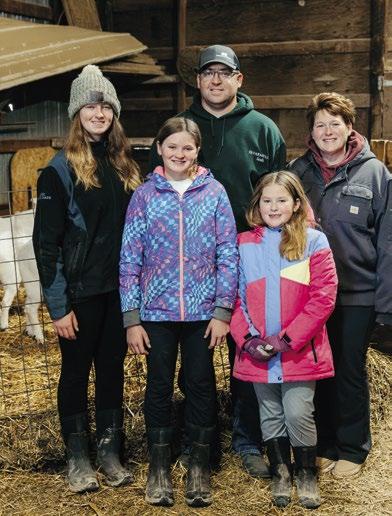
Betcher’s story, like so many in farming, is rooted in a deep connection to the land and a commitment to pass it on in better shape than he found it. He and his wife, Sara, have lived and worked on the home farm for more than 15 years. Alongside them are their three daughters, who have grown up feeding livestock, helping with chores and driving tractors during harvest.
“Our oldest daughter driving the tractor this year was a big step up,” said Betcher. “All three girls help with everything from vaccinations to birthing, and they’re involved with their 4-H projects showing goats.”
ADOPTING NEW METHODS
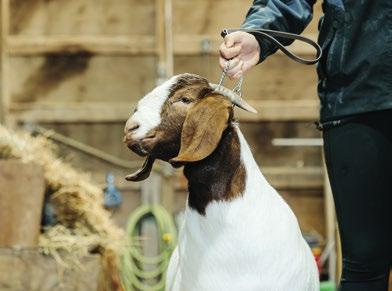
JB Farms is involved in more than row crops. The Betchers also manage a diverse livestock operation, including a 20-cow, calf-to-finish feedlot and 300 head of meat goats. But it was a tough season in 2013 that truly reshaped how they farm. A year of prevent plant — when wet fields made planting impossible — opened a window to experiment. Betcher used the downtime to test no-till, cover crops and other conservation-minded practices.
“It was like a free year to try something different,” he said.
What started as an experiment soon became the backbone of his operation.
Those changes paid off in 2023 when a drought left many farms with disappointing yields. At JB Farms, however, the cover crops and strip-till practices kept yields within 2% of the farm’s all-time
“Sustainability isn’t just about the land — it’s about making sure my kids have a future in farming. That’s my legacy.” — Josh Betcher
peak. The next year, heavy rains caused erosion and runoff across the region — but Betcher’s fields stayed intact.
“We didn’t have the runoff others did,” Betcher said. “Managing water is key.”
WEATHERING CHALLENGES
Adopting these new methods hasn’t been easy or inexpensive. Switching to strip-till and precision planting meant new technology and new equipment.
“Being able to afford the new practices on small acres is a challenge,” Betcher said.
Partnering with Compeer Financial was a big part of the solution. From his first beginning farmer loan to more recent investments in smart-farming tools, Betcher said Compeer has been a steady source of support.
“They’ve really been there for me through challenges and opportunities,” he said. “It’s one of the most stable relationships I’ve had in farming.”
Connecting with peers has also helped Betcher build confidence in the farm’s sustainability path. Through programs like the Minnesota Agriculture and Rural Leadership program and the local Soil and Water Conservation District office, he’s traded ideas and lessons learned with other farmers.
“Our sweet spot is trying something small-scale first and then scaling it up when it works,” he said.
Looking ahead, Betcher is working toward Agricultural Water Quality Certification, adding another layer to his conservation approach. His long-term goal is simple but powerful: to leave every acre better than he found it, ensuring JB Farms remains strong for the sixth generation and beyond.
“Sustainability isn’t just about the land,” he said. “It’s about making sure my kids have a future in farming. That’s my legacy.”
JB
Josh
Left: Compeer Financial Officer Mark Purfeerst (left) and client Josh Betcher discuss the benefits of sustainable farming.
Right top to bottom: Josh Betcher farms 450 acres on his fifth-generation family farm in Mazeppa, Minn.
Farms manages a diverse livestock operation, including 300 head of meat goats.
and Sara Betcher are pictured with their three daughters.
Prioritizing MENTAL HEALTH
Commitment to Farmer Well-Being
Farming is more than a profession — it’s a way of life that requires resilience, adaptability and unshakable commitment to the land and community. Behind that resilience, many farmers face intense, often silent battles with stress, anxiety and depression.
UNCERTAINTY IS THE NORM, AND THAT TAKES A TOLL
The pressures on farmers go beyond daily operational demands. There’s also the unpredictability of weather and the economy. Some also face isolation and the stress of continuing a multi-generational legacy.
According to statistics from the National Rural Health Association, farmers are more susceptible to serious mental health issues than the general population. This highlights the critical need for accessible resources to support those struggling in our rural communities.
RESOURCES WITHIN REACH
Compeer recognizes that mental wellness is just as important as financial stability when it comes to client success and rural vitality. That’s why we offer access to the TELUS Health One Assistance Program — a confidential, 24/7 resource for mental health and personal support.
The program provides:
• Free counseling via phone or video with licensed professionals
• Online self-help tools, articles and toolkits
• Support for stress, anxiety, grief, relationship challenges and more
• Guidance for work-life balance, parenting and caregiving
• A mobile app for easy access anytime, anywhere
These services are available at no cost to Compeer clients and their families, because accessing mental health support should never be out of reach. To learn more about the TELUS Health One Assistance Program and other exclusive wellness resources available to Compeer clients, visit compeer.com/ member-benefits
And don’t forget 988 — the national suicide and crisis lifeline — for 24/7 support via text, call or chat that is available to everyone.
SYSTEMWIDE SUPPORT THROUGH THE FARM CREDIT NETWORK
Compeer’s dedication to our clients’ and rural communities’ well-being is part of a larger, collective mission embraced across the Farm Credit System.
The Farm Credit Council actively supports numerous initiatives addressing farm stress and mental health across rural America:
• Farm Family Wellness Alliance: This alliance offers Together-all, a 24/7 peer-to-peer online support community with an agriculture-specific subgroup; and Personal Assistance Services, which provides free selfguided tools and one-on-one counseling.
• Rural Resilience Training: Developed in partnership with the American Farm Bureau, National Farmers Union and university Extensions, this free course helps farmers and their families recognize stress, communicate effectively and connect with mental health resources.
• AgriSafe’s FarmResponse Program: This specialized training for mental health professionals aims to improve care for producers and promote the AgriStress Provider Directory.
These resources are available nationwide and are designed to be easily accessible to residents of rural communities.
STRONG FARMS PREVAIL WITH STRONG SUPPORT
Mental health is not a luxury — it’s a foundation for clear decision making, strong relationships and long-term sustainability. In another year marked by market instability and compounding stressors, Compeer and the Farm Credit System stand behind America’s farmers with more than financing. We are here for you with compassion, connection and care.
If you or someone you know is struggling, remember: Seeking support is a sign of strength — and step forward to better health.
What Is BENCHMARKING
AND WHY SHOULD YOU USE IT?
Benchmarking is the process of comparing your farm’s financial performance against similar operations to evaluate where you stand. It helps you compare your farm to others in terms of key financial metrics and highlights areas where you can improve. By benchmarking your operation, you gain valuable insights into where your farm is succeeding and where adjustments may be necessary to achieve your financial goals.
BENCHMARKING YOUR FARM CAN HELP YOU:
• Identify strengths and weaknesses: By comparing financial ratios and performance indicators, you can pinpoint areas that need improvement and areas where you’re excelling.
• Set goals and track progress: Benchmarking provides measurable targets, enabling you to track progress toward achieving financial stability and growth.
• Make informed decisions: With a clear view of your financial position compared to others in the industry, you can make more data-driven decisions for your operation.
• Manage risks effectively: Understanding how your farm’s performance stacks up against others helps identify potential financial risks and steps to mitigate them.
TRACK YOUR PROGRESS: START WITH QUALITY FINANCIAL DATA
Before diving into benchmarking, ensure you have quality financial data to work with. Accurate data is crucial for meaningful comparisons. Essential financial documents to maintain include:
• Accurate year-end balance sheet: This overview of your farm’s assets, liabilities and equity at the end of the year will help you measure your farm’s overall financial health.
• Accrual-adjusted earnings statement: This statement accounts for revenue and expenses as they occur, rather than when cash transactions happen, giving you a clearer picture of your farm’s financial performance each crop year.
• Annual tracking of scope and production: Log your farm’s scope (acres and yields) to better track your production goals and the effect on profitability.
• Record family living expenses: Documenting family living expenses helps you understand the actual cost of supporting your household while managing your farm’s financial needs.
Having these key financial documents allows you to perform accurate and effective benchmarking annually.
Continued on page 18

Continued from page 16
DATA-DRIVEN INSIGHTS: ANALYZING STRENGTHS AND AREAS FOR IMPROVEMENT
Once you have quality data, it’s time to dig into the numbers. Here are some essential financial ratios to consider when benchmarking your farm:
WORKING CAPITAL TO ADJUSTED GROSS INCOME (AGI):
This ratio helps determine whether your farm has sufficient cash reserves to meet short-term obligations, such as paying bills and servicing debt. To calculate it:
Working capital = current assets – current liabilities
Working capital to AGI = working capital ÷ AGI
A 15% WC/AGI is recommended. That means working capital equals 15% of adjusted gross income, indicating the farm has adequate liquidity to cover expenses and invest in future opportunities.
EQUITY TO ASSET RATIO:
This ratio measures the financial stability of your operation by comparing your net worth to the value of your assets. To calculate it:
Equity to asset ratio = net worth ÷ total assets
A higher ratio suggests that your operation is less reliant on debt and is more financially solvent, which lowers financial risk.
CAPITAL DEBT REPAYMENT CAPACITY (CDRC):
This metric assesses your ability to repay debt, taking into account both farm and nonfarm income. It helps assess whether your operation can handle debt servicing without risking financial distress. To calculate it:
Capital capacity = net farm income + depreciation + interest on term loans + nonfarm income – family living
Capacity demands = scheduled principal and interest payments on term debt + working capital deficiency (if applicable) + capital asset replacement (if applicable)
Capital debt repayment capacity = capital capacity ÷ capital demands
Farms should aim for a target of greater than or equal to 115%.

This ratio measures your farm’s profitability after all expenses, including debt service, family living and taxes. To calculate it:
Margin after debt service = income – (loan payments + family living expenses + taxes)
Margin after debt service to AGI = margin after debt service ÷ AGI
A target margin of 10%-20% is considered healthy, meaning that after covering all essential expenses, you still have enough remaining to reinvest or save for future challenges.
Compeer Financial can help you with benchmarking your operation. Talk to your financial officer at Compeer about our Financial Peer Reports, where we use your operation’s data to identify competitive advantages, areas for improvement and establish your financial goals.
Elizabeth Kempel Senior Credit Officer Ag Lending

MARGIN AFTER DEBT SERVICE TO AGI:
GIVEAWAY
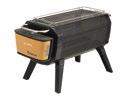
BioLite FirePit+ (21 prizes)
Portable Hammock With Stand (24 prizes)

Stanley 1.5qt Classic Vacuum Bottle (30 prizes)



From Data to Dirt
DAVE PETERS’ JOURNEY IN FARMING AND FINANCIAL LEADERSHIP
Dave Peters brings a unique blend of farming experience and technology expertise to his role on Compeer Financial’s Board of Directors. From his early days balancing information technology (IT) and agriculture to his current leadership in risk and giving, Peters shares insights shaped by family, service and a deep commitment to rural communities. Peters runs his family’s corn, wheat and soybean farm in Manteno, Ill.
QWhen did your farming legacy begin, and what impact has your tenure in farming had on you?
AI was working in the tech field, designing and implementing data networks for kindergarten through 12th-grade schools, when my father-in-law gave me a chance to be involved in the family farm. It was a great opportunity to spend more time at home with family, so we entered ag part time. In 1995, when my father-in-law passed away in a farm accident, I became a full-time farmer and continued my IT work. In 2008, we decided to concentrate solely on farming. With three children, one with special needs, we learned how important it was to prioritize time for family, farm and multiple responsibilities.
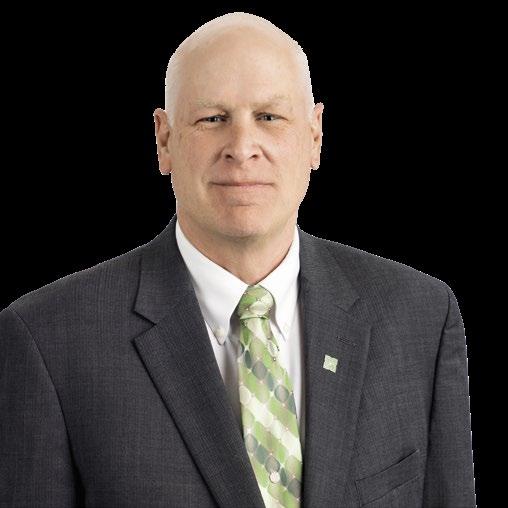
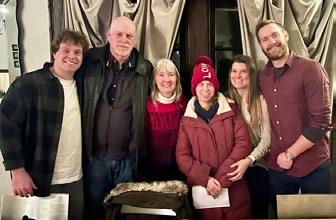
Dave Peters, second from left, is pictured with his son Dylan; wife, Janis; daughters Jocelyn and Katelyn; and son-in-law CJ Hawksford.
QWhat’s a key lesson from farming that has influenced your work in financial leadership?
AFinancial discipline and long-term planning really stand out. Tracking expenses, understanding profitability and making informed spending decisions all translate to the boardroom as we try to make the best decisions for our stakeholders.
QWhat do you see as the biggest financial challenges for farmers today, and how can they navigate them?
AThe biggest challenges on our farm are high input costs and declining commodity prices. Agriculture has technologies like GPS-guided equipment, drones and remote sensing that can be used to optimize input use. A movement to diversify revenue streams, like organic, specialty and directto-consumer type products, could help. Engaging in cost management, risk mitigation and diversified revenue streams will be important in the years ahead.
Q How does serving on the Corporate Giving Committee shape your perspective on the impact Compeer Financial can have beyond the farm, especially in rural communities?
AAs a local community fire trustee, I’m proud that Compeer’s Emergency Response Equipment Grant provides funding for rural fire and ambulance departments. Our General Use Grant has funded ag education, health care and food security projects and made a large impact in many rural communities. One of my favorite initiatives is funding 4-H and FFA, the future of agriculture.
QLooking ahead, what innovations or financial strategies will help farms and agribusinesses thrive in the next decade?
AOne of the subjects that intrigues me is how artificial intelligence (AI) will work in agriculture. Will it improve decision-making by forecasting weather patterns and pest outbreaks, and help with commodity marketing? Will it aid operations in data analytics like benchmarking or profitability metrics? Or will high costs, low adoption rates and limited rural bandwidth derail its implementation? AI strategies that focus on stabilizing income and profitable marketing will advance and should create opportunities for our member-owners.
Q
With your role on the Enterprise Risk Committee, what’s one financial risk farmers or agribusiness tend to overlook? What can they do to mitigate it?
AI think we tend to overlook the possibility of a cybersecurity threat. We tend to prioritize risks like weather, marketing and inputs. Cybersecurity hasn’t been a focus. However, there’s been increasing activity with the advent of precision farming, online banking and digital devices. Regular backups of business-critical data, strong password management and securing or isolating sensitive data like financial records can mitigate some risk.
Q
What’s one piece of advice you wish you’d received when you first started your involvement in boards and agriculture?
A There is no substitute for wisdom and experience. Be a listener.
............................................................... ..................
Whether discussing cybersecurity or the promise of AI, Peters offers a thoughtful perspective rooted in real-life experience. His journey reminds us that resilience, curiosity and long-term thinking remain at the heart of agriculture, and that taking time to listen is often the first step to meaningful leadership.
HOLIDAY HOURS
Compeer Financial will be closed in observance of the following holidays:
Thanksgiving: November 27 & 28*
Christmas Eve: December 24
(closed starting at noon)
Christmas: December 25
New Year’s Day: January 1
*For your convenience, our CONTACT CENTER will be open from 8 a.m. to 3 p.m., Friday, November 28.
To reach the Contact Center, call (844) 426-6733.
THRIVE WITH A COLLEGE INTERNSHIP
Compeer Financial is accepting internship applications for summer 2026. An internship with Compeer is a learning experience like no other. You’ll build connections and lifelong relationships while gaining on-the-job professional experience that prioritizes your individual growth.
Our interns enjoy a flexible, collaborative model and are empowered to make meaningful contributions during their time with Compeer.
See yourself thrive in an internship in areas like:
• Lending
• Appraisal
• Information Technology
• Corporate Finance
• Credit Underwriting
SHARE YOUR IDEAS IN COMPEER FINANCIAL’S ONLINE COMMUNITY
The Compeer Collective is an opportunity to connect, interact and share insights with other Compeer Financial clients and have a voice in the cooperative.

Through forums, surveys, polls and conversations, you can share knowledge, seek advice and discuss relevant topics with like-minded clients. Participants earn points that can be redeemed for gift cards!
Interested in joining?
Email jana.stangler@compeer.com
• Crop Insurance
• Human Resources
• Marketing and Events
• Tax and Accounting
• Legal
Whether you’re a college student or have a college student in your life, visit compeer.com/collegerelations for more details on internship opportunities.
2026 Photo Calendar
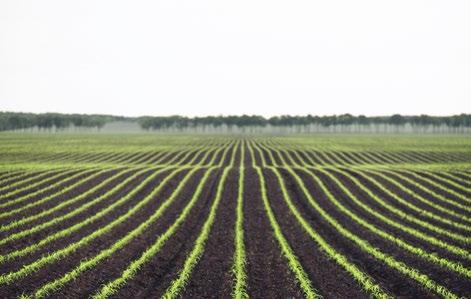
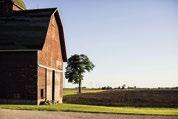
Thank you to those that participated in our 2026 Photo Calendar contest! We received more than 1,150 submissions portraying the sites and scenes of rural America.
The calendar, along with our winter edition of Cultivate, will be mailed to all Compeer Financial clients in early December.

COMPEER FINANCIAL RECOGNIZED AS A TOP WORKPLACE IN ILLINOIS, MINNESOTA AND WISCONSIN
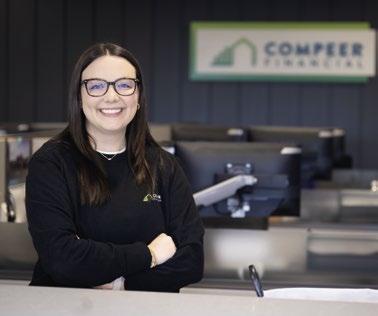
Compeer Financial has been recognized as the #2 Best Place to Work in Illinois in the large employer category for 2025 by the Daily Herald Suburban Business, as a Minnesota Top 200 Workplace in 2025 by the Star Tribune and as a 2025 Top Workplace by the Wisconsin State Journal.
The honor reflects the commitment of Compeer’s 1,500 team members who serve our clients each day.

SCHOLARSHIPS AVAILABLE FOR HIGH SCHOOL SENIORS

The Fund for Rural America, Compeer Financial’s corporate giving program, will offer 105 scholarships to students in 2026. Graduating high school seniors with an agriculture or rural background, or those planning to major in an agriculture-related field at a community college, university or technical school, are encouraged to apply.
The application submission period opens December 15, 2025, and closes February 15, 2026. Each scholarship recipient will receive $2,000 for tuition expenses. Applicants will be notified of their status six weeks after the February 15 deadline. Students can find more information at compeer.com/scholarships
Don’t Miss These UPCOMING EVENTS
Mark your calendar for opportunities to expand your knowledge, network with industry peers and connect with experts.

Visit compeer.com/events to learn more and register for the following events offered by Compeer Financial.
AgriMindset: Future of AI (September 17)
AgriMindset: Policy Update (October 15)
Benchmarking Dairy Today, Profiting in 2026 (November 5)
AgriMindset: Consumer Buying Trends (November 19)
GrainVantage (December 3)
AgriMindset: (December 17)