Powering Rural Success: A Complete Guide to Agricultural Fuel Oils UK
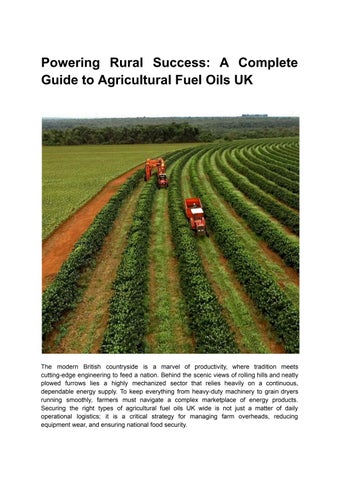
The modern British countryside is a marvel of productivity, where tradition meets cutting-edge engineering to feed a nation. Behind the scenic views of rolling hills and neatly plowed furrows lies a highly mechanized sector that relies heavily on a continuous, dependable energy supply. To keep everything from heavy-duty machinery to grain dryers running smoothly, farmers must navigate a complex marketplace of energy products. Securing the right types of agricultural fuel oils UK wide is not just a matter of daily operational logistics; it is a critical strategy for managing farm overheads, reducing equipment wear, and ensuring national food security.
Powering the Mechanical Workhorses of British Agriculture
When you picture the heart of any British farming operation, massive tractors, combines, and foragers immediately come to mind. These industrial beasts require massive amounts of energy to till tough soils, plant vast fields, and harvest crops within incredibly tight weather windows. For decades, the lifeblood of this heavy machinery has been specialized farm diesel, known for its reliability and high torque output under heavy loads. Managing this power requirement effectively means establishing a dependable relationship with a dedicated farm fuel supply partner. Because agricultural work is highly seasonal, fuel consumption spikes dramatically during spring drilling and autumn harvesting. During these peak periods, a sudden shortage can bring an entire operation to a standstill, costing thousands of pounds in delayed yields and spoiled crops. Progressive farms mitigate this risk by installing high-capacity storage tanks on-site, allowing them to ride out market fluctuations and supply chain disruptions smoothly.
Red Diesel Regulations and the Modern Fuel Landscape The regulatory landscape governing UK farming fuel has undergone significant transformations in recent years. Historically, the agricultural sector enjoyed widespread access to rebated gas oil, commonly known as red diesel due to its distinctive marker dye. While tax changes have shifted who can legally use this lower-tax fuel, the core requirement for a legal, reliable red diesel supply remains a priority for eligible agricultural operations, forestry managers, and horticultural businesses across the nation.
Understanding these legal boundaries is crucial for avoiding severe penalties. A reputable industrial oil supplier does more than just drop off a delivery; they provide vital guidance on compliance, ensuring that the fuel in your off-road vehicles meets current HMRC guidelines. Navigating these rules successfully allows farmers to focus on their primary job—maximizing yield while maintaining absolute legal compliance.
Maximizing Engine Longevity with Advanced Additives
Engine technology in the agricultural sector has advanced rapidly, with modern Tier 5 engines featuring highly sensitive common-rail fuel injection systems. While these innovations greatly reduce emissions and improve fuel economy, they are far more sensitive to fuel quality than older, purely mechanical engines. This is where the strategic use of premium farm fuel additives becomes essential for protecting expensive machinery investments.
Stored fuel is inherently vulnerable to contamination from moisture, which naturally condenses inside large storage tanks over time. This moisture creates an ideal breeding ground for microbial growth, often referred to in the industry as "the diesel bug." Left untreated, this sludge clogs fuel filters, corrodes fuel lines, and causes catastrophic engine failure mid-season. By utilizing specialized fuel stabilizers, biocides, and cetane boosters, operators can significantly extend the storage life of their bulk farm fuel, ensuring that every drop burns cleanly and efficiently, even after months of sitting idle in a tank.
Sustainable Alternatives and the Transition to Greener Energy
As the entirety of UK agriculture faces growing pressure to reduce its environmental footprint and align with net-zero carbon targets, alternative fuels are moving from the fringes to the mainstream. Among the most successful innovations in this space is HVO fuel (Hydrotreated Vegetable Oil). This paraffinic diesel replacement is manufactured from 100% renewable
waste materials, offering an immediate reduction in greenhouse gas emissions by up to 90% compared to conventional fossil diesel. One of the greatest operational advantages of HVO is its drop-in nature. It can be mixed directly with standard diesel or used as a complete replacement without requiring any modifications to existing tractor engines or farm storage infrastructure. Furthermore, HVO boasts excellent cold-weather performance and a much longer shelf life than traditional biodiesel mixtures, making it an incredibly attractive proposition for forward-thinking businesses looking to decarbonize their supply chains without sacrificing mechanical reliability.
Thermal Efficiency for Livestock and Crop Processing
While field machinery commands a lot of attention, a massive portion of the energy consumed across UK farms goes toward thermal applications. Livestock farming, particularly poultry and pig rearing, demands precise temperature control to ensure animal welfare and optimal growth rates. Similarly, arable farmers rely heavily on robust heating systems to power grain dryers, reducing moisture content to safe levels before crops are stored to prevent rot and mold. To meet these heavy thermal demands cost-effectively, many businesses utilize industrial heating oil (IHO), a fuel specifically blended for commercial boilers and drying units. IHO offers a highly efficient, high-heat-output alternative to standard burning oils, allowing farms to dry tons of grain rapidly during a damp harvest. Additionally, because many farmhouses and worker accommodations are completely disconnected from the national gas grid, there is a parallel reliance on standard domestic heating oil (Kerosene) and domestic diesel to
keep the human element of the farm safe, warm, and comfortable throughout the harsh winter months.
Strategic Purchasing and Bulk Storage Solutions
Because fuel represents one of the largest volatile expenses on an agricultural balance sheet, optimizing procurement is essential for financial survival. Purchasing bulk agricultural oil allows managers to leverage economies of scale, driving down the per-litre cost significantly compared to smaller, ad-hoc deliveries. However, buying in bulk requires a robust risk management strategy. Fuel prices fluctuate daily based on global oil markets, geopolitical events, and seasonal demand shifts. Savvy operators track these trends closely, working with an experienced supply partner to lock in fixed-price contracts or forward-buy their supplies during market dips. Investing in high-quality, bunded storage tanks equipped with digital telemetry systems further refines this process. These smart tanks monitor fuel levels in real time, automatically alerting the supplier when stock runs low to prevent sudden run-outs, while simultaneously providing robust security features to protect valuable fuel assets from theft.
Securing the Future of British Agricultural Productivity The resilience of UK farming relies completely on a secure, efficient, and well-managed energy supply chain. From the traditional reliance on a steady red diesel supply to the exciting adoption of renewable options like HVO fuel, the choices made regarding fuel procurement shape the profitability and sustainability of the entire farm.
By prioritizing fuel quality, leveraging advanced additives, and forming long-term partnerships with trusted bulk suppliers, British farmers can keep their fleets running efficiently through every seasonal challenge. Safeguarding these vital energy inputs ensures that the machinery keeps moving, the crops keep drying, and the agricultural sector continues to anchor the nation’s economy for generations to come.