Energising Rural Britain: Choosing a Reliable Agricultural Fuel Supplier
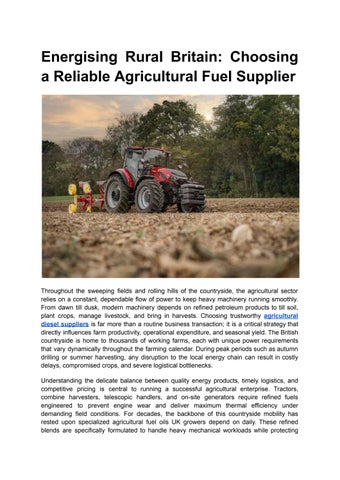
Throughout the sweeping fields and rolling hills of the countryside, the agricultural sector relies on a constant, dependable flow of power to keep heavy machinery running smoothly. From dawn till dusk, modern machinery depends on refined petroleum products to till soil, plant crops, manage livestock, and bring in harvests. Choosing trustworthy agricultural diesel suppliers is far more than a routine business transaction; it is a critical strategy that directly influences farm productivity, operational expenditure, and seasonal yield. The British countryside is home to thousands of working farms, each with unique power requirements that vary dynamically throughout the farming calendar. During peak periods such as autumn drilling or summer harvesting, any disruption to the local energy chain can result in costly delays, compromised crops, and severe logistical bottlenecks. Understanding the delicate balance between quality energy products, timely logistics, and competitive pricing is central to running a successful agricultural enterprise. Tractors, combine harvesters, telescopic handlers, and on-site generators require refined fuels engineered to prevent engine wear and deliver maximum thermal efficiency under demanding field conditions. For decades, the backbone of this countryside mobility has rested upon specialized agricultural fuel oils UK growers depend on daily. These refined blends are specifically formulated to handle heavy mechanical workloads while protecting
sophisticated modern engines from premature wear, water contamination, and fuel system clogging. When estate managers partner with reliable fuel partners, they secure peace of mind, knowing that high-volume drop-offs will arrive reliably regardless of weather conditions or remote location challenges. Furthermore, the broader landscape of energy distribution connects agrarian operations with adjacent sectors. The logistical infrastructure that transports off-road diesel to remote barns often intersects with networks handling industrial oil, commercial heating solutions, and residential power supplies. By maintaining robust relationships with established distributors, land management businesses ensure they remain resilient against sudden market fluctuations and global supply chain disruptions. In an era where efficiency and reliability dictate farm profitability, securing a steady and dependable energy partner remains one of the most vital choices a farm enterprise can make.
Navigating the Shifting Landscapes of Farm Off-Road Fuel
In recent years, regulatory changes and environmental policies have significantly reshaped how machinery power is bought, stored, and used. For generations, off-road machinery operated almost exclusively on marked gas oil, commonly known in the sector as red diesel. However, modern statutory updates have narrowed eligibility criteria, requiring land managers and commercial enterprises to examine their machinery usage and compliance standards very closely. Today, securing compliant red diesel delivery services requires clear communication with certified energy vendors who understand the legal distinctions governing agricultural activities versus commercial construction or private land management.
Proper selection of UK farming fuel is essential not only for remaining legally compliant but also for optimizing engine life and fuel efficiency. Heavy machinery fitted with advanced emissions systems and common-rail diesel engines requires high-grade fuel that meets strict purity benchmarks. Poorly refined or improperly stored liquid power can lead to blocked filters, injector failure, and unexpected downtime during key operational windows. Consequently, forward-thinking operators look beyond base unit costs, focusing instead on long-term fuel cleanliness, comprehensive batch testing, and proven delivery track records. To further safeguard engine health during temperature extremes, many growers now utilize specialized farm fuel additives. These advanced chemical treatments play a vital role in preventing fuel degradation during prolonged storage, inhibiting microbial growth commonly referred to as diesel bug, and lowering the cold filter plugging point during freezing winter months. When added to bulk storage tanks, high-performance additives stabilize the fuel, improve combustion efficiency, reduce exhaust smoke, and clean internal engine components. By combining premium gas oil with targeted additive treatments, farm businesses can preserve their high-value equipment assets while reducing maintenance costs over the lifespan of their fleet.
Pioneering Low-Carbon Pathways with Modern Renewable Diesel
As the agricultural sector faces increasing pressure to meet ambitious national net-zero targets, farm operators are actively seeking practical ways to reduce their carbon footprint without sacrificing mechanical power or operational efficiency. While electrification offers potential for light utility vehicles, heavy-duty machinery working deep in wet fields still demands the high torque and energy density that only liquid fuels provide. This realistic energy requirement has accelerated the adoption of hydrotreated vegetable oil, a premium renewable fuel that slashes net greenhouse gas emissions by up to ninety percent compared to traditional fossil diesel. The growing presence of dedicated HVO Fuel Suppliers UK wide is transforming how progressive farming businesses approach environmental sustainability. Unlike traditional first-generation biodiesel blends, hydrotreated vegetable oil is a synthesized drop-in paraffinic fuel that requires zero modifications to existing diesel engines or farm storage infrastructure. It exhibits exceptional cold-weather performance, extended storage stability, and cleaner burning characteristics that significantly reduce particulate matter and nitrogen oxide emissions. Working alongside a progressive HVO fuel supplier enables farm enterprises to lower their environmental impact immediately while maintaining total operational continuity within their entire tractor fleet. Adopting renewable energy sources also enhances the commercial appeal of farming enterprises within competitive food supply chains. Supermarkets, grain merchants, and consumer brands increasingly audit the scope three carbon emissions of their supply chain partners. Demonstrating the use of sustainable alternatives like hydrotreated vegetable oil gives forward-thinking agricultural businesses a clear competitive advantage. By aligning practical land management with eco-conscious fuel sourcing, farm businesses show that environmental stewardship and heavy-duty productivity can comfortably coexist.
Optimising Storage and Maximising Every Drop of On-Site Energy Managing an effective farm energy strategy extends well beyond selecting the right machinery fuel; it requires rigorous on-site storage management and asset protection. On many working estates, bulk storage tanks hold thousands of litres of high-value energy reserves to ensure seamless operation through intense work periods. Implementing robust fuel management protocols is vital to protect this inventory against environmental degradation, accidental spillage, and fuel theft. Modern bunded tanks, automated fluid monitoring systems, and secure dispensing stations have become standard infrastructure in modern UK farms. Proper storage protocols are equally important when managing other essential refined liquids in the rural property, including domestic oil supplies used for heating farmhouses, worker cottages, and administrative buildings. Water ingress, condensation, and sediment accumulation in storage tanks can rapidly compromise fuel purity, leading to burner lockouts or engine damage. Regular tank inspections, fuel filtering, and winterization routines ensure that stored energy assets remain in peak condition year-round. Modern telemetry systems allow both the farm operator and the energy distributor to track fuel levels in real time, triggering automatic top-ups before inventory reaches dangerously low levels.
By taking a holistic view of estate energy management, land managers can streamline logistical processes and lower overall procurement costs. Consolidating orders for off-road tractor fuel, vehicle lubricants, and domestic fuel delivery into synchronized delivery schedules reduces road tanker visits, lowers transport emissions, and unlocks volume discounts. Protecting stored liquid assets through smart monitoring and proactive maintenance ensures that every drop of fuel delivers maximum value to the farming enterprise.
Connecting Domestic and Commercial Power Networks in the UK
The rural energy distribution framework is an interconnected network that services farming enterprises, rural households, and regional commercial operations simultaneously. In many rural communities detached from the main gas grid, domestic heating oil serves as the primary source of thermal comfort during the colder months. Consequently, fuel distributors must balance the seasonal surge in residential heating demands with the time-critical fuel requirements of local commercial and agricultural operations. Understanding how domestic fuel blends, commercial heating fuels, and agricultural energy lines interact provides valuable context for rural business planning. The stability of local energy supply chains is anchored by broader market factors, including global crude refining capacities and UK domestic oil production output. While international market dynamics influence baseline wholesale costs, domestic distribution efficiency ultimately determines local fuel availability. A well-integrated distributor manages a diverse product fleet capable of delivering everything from standard industrial heating oil for grain drying facilities to specialized heating fuels for historic countryside homes. This multi-sector
versatility ensures that rural distribution networks remain financially viable and logistically agile throughout the year. Furthermore, commercial facilities operating alongside agrarian enterprises often rely on industrial oil products to power boilers, steam generators, and heavy processing plant equipment. The ability of regional suppliers to deliver high volumes of diverse petroleum products in complex geography highlights the strength of the national UK oil supply ecosystem. Whether providing bulk deliveries to large farming cooperatives or servicing isolated residential homes, a resilient distribution network underpins the economic health and comfort of rural communities.
Securing Uninterrupted Deliveries in All Agricultural Seasons
Sustaining a successful agricultural enterprise requires proactive planning in every season, particularly when managing critical energy supplies. The demand for tractor fuel follows the natural rhythm of the crop calendar, surging during spring cultivation and autumn harvest while tapering during quieter winter months. Establishing a flexible, highly communicative relationship with dependable agricultural diesel suppliers ensures that your enterprise receives priority service when local demand spikes in the region. To build long-term energy security, farm managers should consider several essential practices: ● Conduct seasonal fuel audits to forecast peak consumption periods accurately. ● Upgrade old single-skin storage units to modern, double-walled bunded tanks with integrated telemetry systems.
● Establish clear delivery access routes on the property capable of accommodating large multi-axle tank vehicles. ● Implement a structured maintenance schedule for tank filters, hoses, and fuel dispensing nozzles. ● Maintain a dedicated reserve of high-quality fuel additives to protect stored inventory from seasonal temperature shifts. Ultimately, the strength of your farm fuel management strategy directly reflects the quality and capability of your chosen distribution partners. By combining high-grade agricultural diesel, innovative renewable alternatives, and proactive storage management, agricultural enterprises can maintain high productivity, control operational overheads, and navigate future environmental standards with confidence. Securing a reliable, high-performing energy supply line remains the ultimate safeguard for keeping Britain's agricultural machinery moving forward.