The motoring magazine for SME fleets

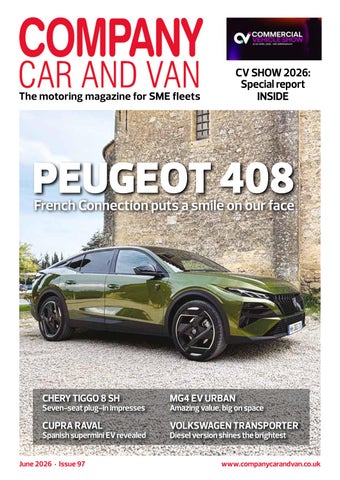
APRIL saw the NEC host the Commercial Vehicle Show, and CC&V was in attendance to bring you up to date with the van and pick-ups launched and on display.
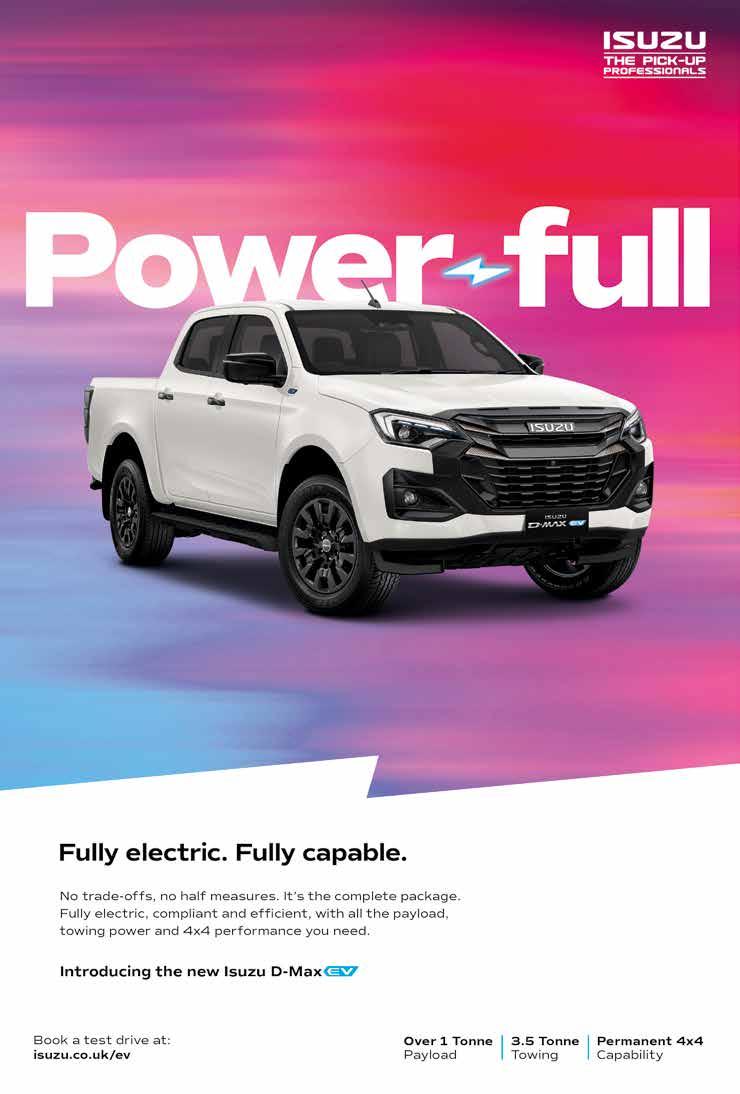
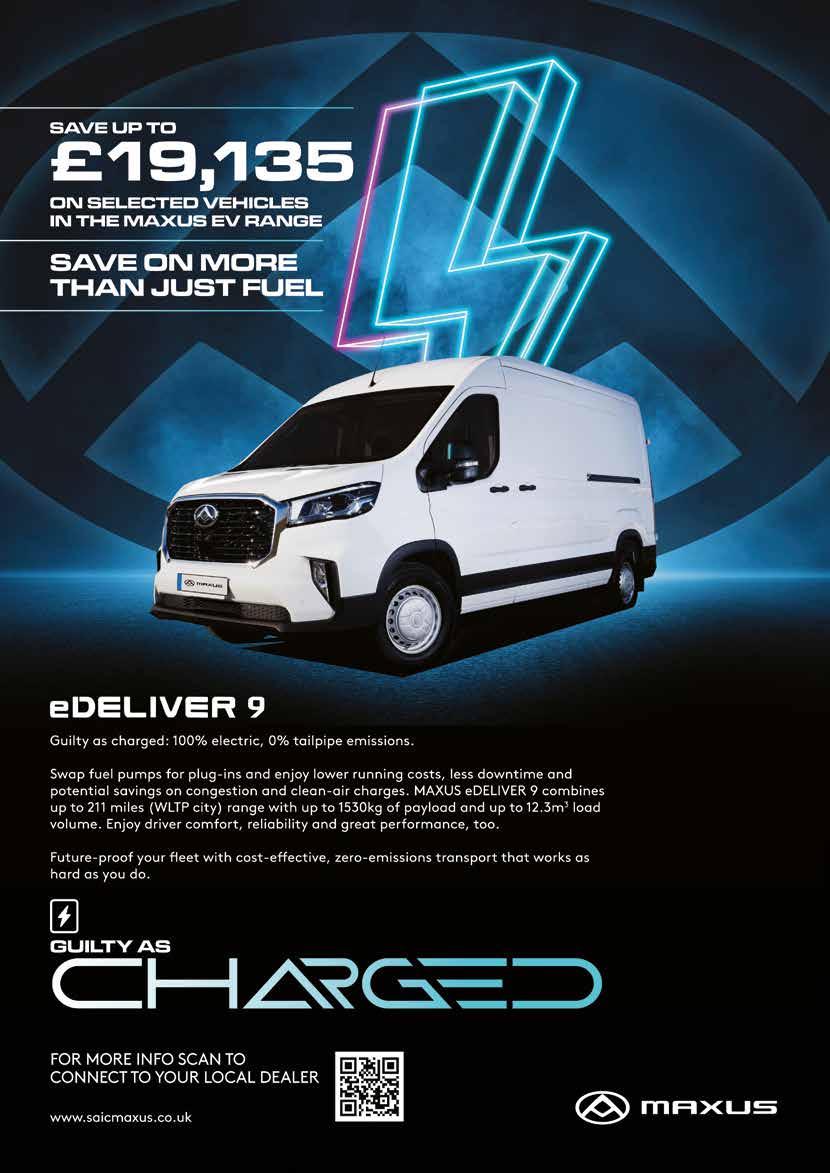
We have a special section inside which looks at, among others, the Ford Transit City, Renault Traffic E-Tech, Farizon V7E, Isuzu D-Max EV, KGM Musso, Kia PV5, Fiat TRIS, Iveco eJOLLY, Maxus eTERRON 9 and INEOS Grenadier. And we have Q & As with exhibitors KGM, INEOS, Renault, Isuzu and Stellantis Pro One. Turn to page 27 to read more
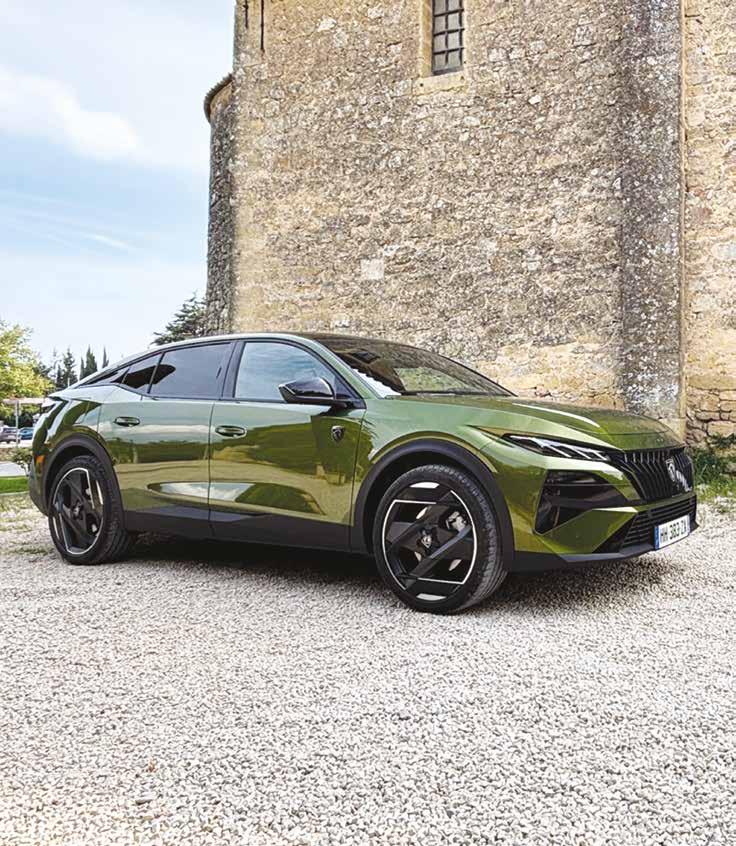
Away from the CV Show, we take a look at June’s cover star, the Peugeot 408, which has been updated and improved for 2026. With hybrid, plug-in and electric drivetrains, all bases are covered. We spent a hugely enjoyable day driving one of the better looking cars on sale today, and one that offers company car drivers something different to an SUV. We loved it in green, too.
Chery launched its Omoda and Jaecoo brands in 2024, and the Chery brand followed in 2025. Its sales success has been amazing and in April we stepped out in the Chery Tiggo 8 SH, a plug-in SUV, and discovered a user-friendly seven-seater at an exceptional price.
In the face of increased Chinese competition, MG has come out fighting with six new model launches in recent months. The cheapest and perhaps the most surprising is the MG4 Urban, which has oodles of practicality for an amazingly attractive asking price.
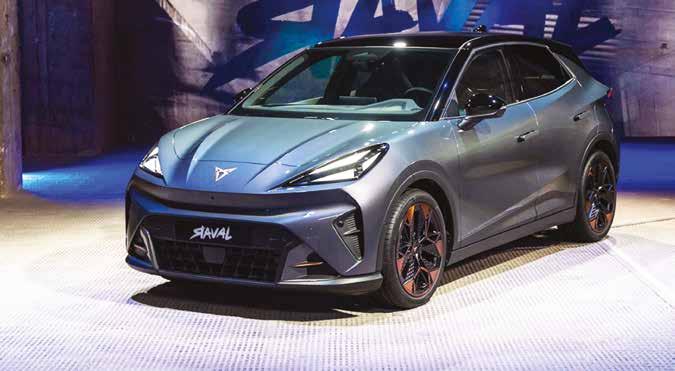
Cupra is the first Volkswagen brand to reveal its latest supermini EV, the Raval, which promises to be another winner for the Spanish brand. Read more on page 10.
Citroen’s e-C3 was our Car of the Year in 2025 and a new smaller battery version has arrived, the Urban. Small in range it might be
but it’s mighty good in the city, as we discovered in hustling, bustling Marseille.
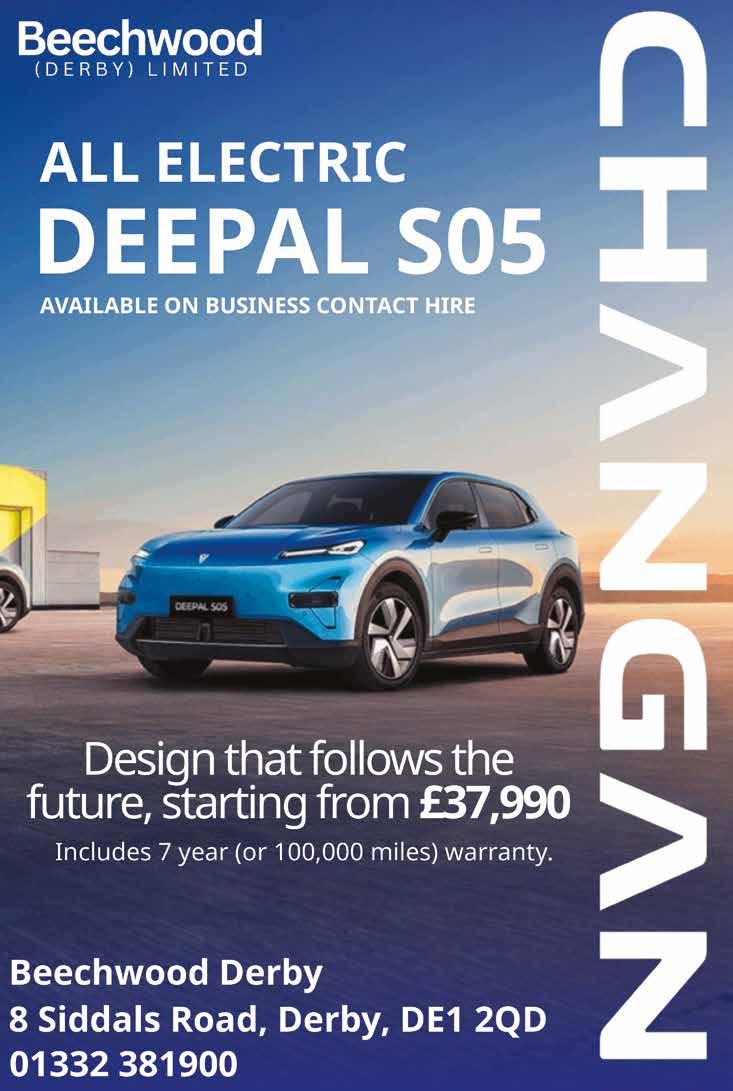
Changan is another new Chinese name and in this issue we have a first drive of the Deepal S05, the brand’s second electric model and one that we think will strike a chord with many user choosers and fleet managers.
Other new cars featured this month include our Executive Car of the Year, the updated XPENG G6 which has got even better; and the Vauxhall Frontera Electric, a hugely practical and well-priced family EV. In addition there’s the Mini Countryman Electric John Cooper Works, which ticks the BIK box while offering fleets plenty of space and loads of fun, and the Leapmotor C10 REEV, the brand’s first plug-in hybrid.
In other CV news we drive the Volkswagen Transporter diesel, which offers a lower list price, longer warranty and higher specs than many competitors. And find out why North West business Envirocare decided to take 40 Nissan vans from local dealer Chorley Group.
And we have news from our regulars Rolec for charging, Northgate on van rental, Vanaways for van leasing and Rivervale on salary sacrifice, all offering us their expertise to help you run your fleets more efficiently.
Andrew Walker, Editor and Publisher

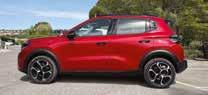
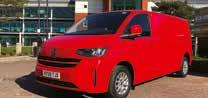
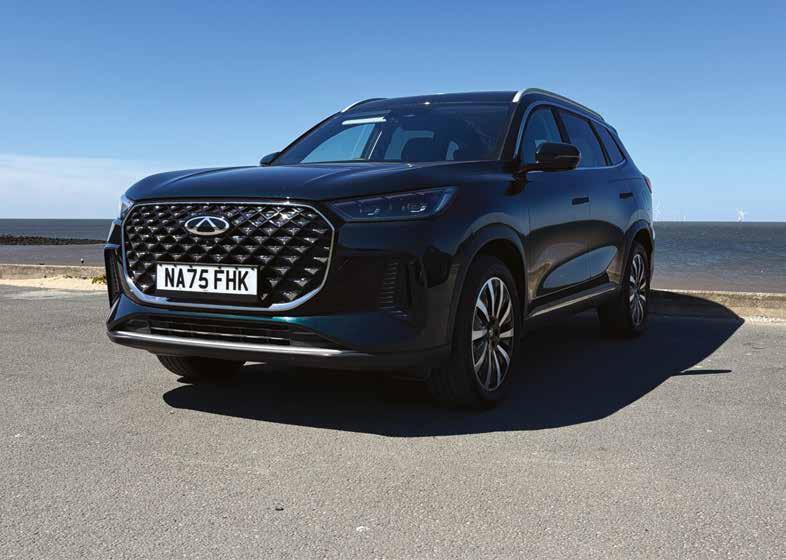
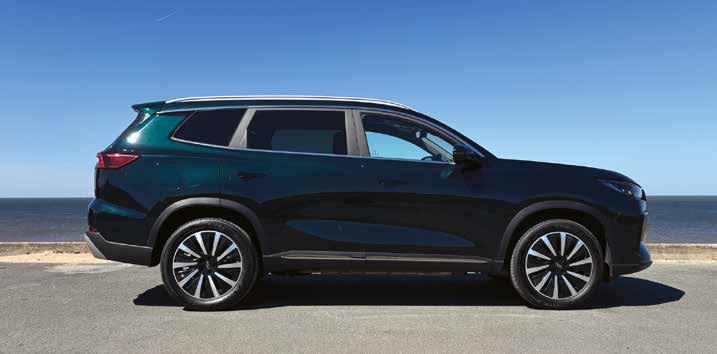
The Chery Tiggo 8 is the brand’s seven-seat option and is in effect a larger Tiggo 7. Using the same engines, a 147hp pure petrol or a 204hp plug-in hybrid, the latter is the version that company car drivers should consider, as it come with an EV range of 56 miles and BIK of 9%. Early May saw Andrew Walker spend some time in this version ....
Prices
You’ll pay from £28,545 for a petrol Tiggo 8 or £33,545 for a plug-in hybrid, both in Aspire trim. You’ll add £3,000 to the cost of both if you choose Summit spec.
Specifications
Standard equipment with the Aspire grade includes heated seats, a 15.6” centre console display, Apple CarPlay, Android Auto, dual-zone air conditioning, parking sensors, adaptive cruise control, a 540-degree camera set-up and a comprehensive suite of ADAS package.
Choose a Summit and this adds, ventilated seats, a heated steering wheel, a hands-free automatic tailgate, a head-up display, a panoramic sunroof, driver headrest speaker and multi-colour ambient lighting.
Warranty
All models come with CHERY’s comprehensive seven-year/100,000-mile
warranty, whichever comes first, with the Super Hybrid also coming with an eightyear/100,000-mile warranty on the battery. All models include free RAC roadside assistance for the first year which then renews with every dealer service in line with the Chery seven-year warranty.
A chrome-plated diamond design grille and LED and IQ lights adorn the front, with a kinked rear quarter window making the side more interesting . An on-trend full-width rear LED light band sits beneath the CHERY name, with a roof spoiler finishing the hatchback off at the rear. Our test model’s dark green paint was especially nice.
While it may be cheaper to buy than siblings from Jaecoo and Omoda, the 8’s interior is still pretty impressive. With artificial carbon inserts on the dash and some good quality textures and plastic finishes on the doors and seats and you’ll be forgiven for thinking we’re in 40K + territory here.
The Tiggo 8 central touchscreen with its Snapdragon processor responds exceptionally quickly to inputs, and connecting hands-free to Apple CarPlay was simple. The wireless charger on our Summit model was also helpful and large enough for bigger smart phones.
On-screen menus are intuitive and if you scroll up you’ll reveal short cut buttons
including those for the climate to alter the temperature. The climate screen then takes approximately 10 seconds to return to CarPlay and in our case Waze, which was a touch frustrating.
Better is that the touchscreen is plenty large enough to see the icons and apps clearly with the separate driver info-display screen illustrating your speed, driving range, EV/ battery range and revs.
The Tiggo 8 comes with either a 1.6-litre turbocharged four-cylinder engine and a seven-speed automatic transmission, while the Super Hybrid gets a 1.5-litre four-cylinder petrol engine and a 201bhp electric motor, fed by a 21kWh battery which uses a threespeed automatic gearbox.
The Super Hybrid’s claimed electric only range is 56 miles. Cleverly, when you set off in EV mode, which I always did, the car will tell you when the electric range is low and will suggest you switch to HEV mode. As far as charging goes it comes with a 40kW charging speed, so a 30-80% top-up on fast charger will take just 30 minutes. Plug in at home on a 7.4kWh charger like our own Rolec Evo and a full charge will take under 3 hours. V2L is also included.
Cabin space and practicality
We made good use of the large front door pockets and under armrest storage area which, along with the glove box, are of a good
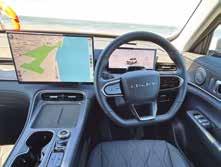
size. You also get a hidden storage area beneath the centre binnacle where the 12v socket is hidden, twin centre cup holders and an A and C USB input. A double wireless charger sits central with a large split opening armrest revealing cool storage beneath.
In the second row, the seats are quite upright and bench-like. You can increase or decrease legroom by sliding these back and forth as required. In the second row passengers get their own cupholders.
While a seven-seater, be aware that the two rear seats are small and anyone over 5ft 2” will struggle to get in and out of them. And with just 117 litres available in this mode, if you are driving and using seven seats, the boot is small. Better, though, is the 494 litres offered if you fold seats six and seven down and they do lie flat so the space is useful and easily accessed. However, the seven-seat Kia Sorento comes with 809 litres in this configuration, which is far bigger. Also, there aren’t any boot compartments nor any netting to keep things in place, nor space beneath to store the charging cable.
As with the Omoda and Jaecoo range in general, you sit quite high up in the Tiggo 8, giving you an excellent all-around view. The driver’s seat adjusts electrically and it’s easy to find a comfortable position, which will be remembered the next time you get in. Its extra length over the Tiggo 7 means it’s not as nimble, although feels identical in a straight line. The ride can seem firm at times, especially at low speed, but is otherwise pretty good. Also on the plus side, it’s longer length meant some speed bumps near the
beach where we photographed the car were handled extremely competently.
Both versions come with autonomous emergency braking, adaptive cruise control, rear cross-traffic braking, lane departure warning and blind spot monitoring. Summit doesn’t add any extra safety technology, but does include a 540-degree exterior camera.
As with many new cars you’ll want to consider turning some safety functions off, especially Driver Attention Warning which was by far the most annoying. Lane Keeping and Lane Departure illustrated some steering pull when we didn’t indicate to come back in after a overtaking manoeuvre, otherwise we’re pleased to say that like the Tiggo 7, it was nowhere near as intrusive as we had feared.
Driving modes
I played around with the central dial, toggling between Eco, Normal and Sport driving modes, but there really isn’t a discernible difference. Selecting Eco on the motorway was absolutely fine. The Tiggo cleverly tells you when petrol mode makes sense, ie, on faster roads.
We did notice that the electric motor can get a touch noisy as it strains to accelerate from 50-70mph, but it settles down quickly and is no better nor worse than plenty of other hybrids in that respect. This isn’t a fast car but the 8.5 second run to 62mph is plenty quick enough for most driving scenarios, with the brakes proving more than adequate.
As the Tiggo is in effect the cheapest Chery model we weren’t expecting too much, but the Tiggo 8, as with the 7, surprised us in a good way. You hit the M56 within a mile of where we live so I activated cruise control, sat back and that was pretty much it until I reached Wallasey.
We utilised wireless CarPlay for Waze and podcasts while the driver’s display kept me informed of the car’s range and my speed. Plenty of glass coupled to the high driving position gave me a great all-around view with only the Driver Attention Warning causing me
any grief – I disabled this for the return journey.
Any negatives? The cabin gets quite noisy at 70mph and I’ve already mentioned the slowness of the screen to return to the map when you adjust the temperature, but that really is it
Urban driving
The car starts itself when you push the brake and off you go in electric mode. Inside the cabin it’s quiet with noise only appearing if you push your foot hard down to accelerate. The all-around camera on the Summit model made parking easier although its length could be an issue for some. As for driving dynamics, this is a car built for comfort and practicality and as an upright SUV, it ticks those boxes, and is not going to excite you, like pretty much all other SUVs.
Pros
Seven seats is good news, as is BIK of 9%. A 550-mile range is also most welcome. Comfortable cabin with up to date safety and tech include. Summit is incredibly well kitted out.
Cons
Seats six and seven are small and difficult to access. Utilise these and the boot space becomes tiny. No space to store the charging cable. Driver Attention Warning can be very annoying so we’d suggest that you turn this off.
CC&V VERDICT
If you need seven seats then the Tiggo 8 is a bit of bargain. Just be aware that seats six and seven are only large enough for teenagers and younger passengers.
Quality wise it’s decent and while it is a touch bland to drive and to look at, it is arguably a better all rounder than the more expensive plug-ins from Omoda, Jaecoo and BYD.
CC&V RATING: N N N N

The UK Government’s £1 billion Depot Charging Scheme (DCS) is set to accelerate the electrification of commercial transport, with fleet operators now entering a pivotal phase where infrastructure delivery is becoming as important as vehicle procurement.
As electric HGVs, buses, coaches and delivery fleets scale, operational focus is moving toward the practical realities of depot-based EV charging, particularly the infrastructure required to support reliable, high-demand fleet operations.
For many operators, priorities now centre on grid capacity, installation timelines, and access to experienced delivery partners capable of meeting complex infrastructure requirements involving energy planning and electrical system design.
Fleet operators are progressing from early-stage trials and demonstration projects into full-scale electrification planning. However, depot environments introduce operational requirements that differ significantly from workplace or home charging, particularly where uptime and service continuity for logistics and public transport fleets are critical.
As a result, attention is shifting beyond vehicle implementation toward scalable depot charging infrastructure, and the partners required to enable it effectively.
Grid capacity and phased deployment evolution
A key consideration for operators is how grid connection availability aligns with fleet decarbonisation timelines. Where capacity does not match immediate rollout ambitions, organisations are adopting phased deployment approaches to optimise infrastructure delivery over time.
This is driving a structured process to load management, staged infrastructure expansion, and long-term site planning, with many organisations now moving to multiyear strategies rather than one-stage delivery approaches.
For fleet managers, this also represents an expansion of responsibility into energy infrastructure planning, reinforcing the importance of working with long-term delivery partners capable of supporting scalable, phased deployment models.
The growing importance of delivery partners
As demand increases, the role of the
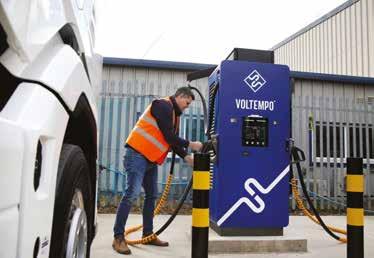
electrical contracting and infrastructure delivery sector is becoming central to successful fleet electrification outcomes. Depot-scale projects require a higher level of capability than standard EV charging installations, including integrated design input, familiarity with high-capacity electrical systems, and a detailed understanding of operational fleet requirements.
Rather than installation alone, contractors are now contributing across the full project lifecycle, from early-stage feasibility and system design through to grid co-ordination and phased deployment.
Within this context, companies such as Rolec are enabling an end-to-end approach to depot electrification, supporting fleet operators and contractors with technical expertise across the full project lifecycle.
This includes DC charging solutions from 40kW up to 1.6MW+ systems, alongside integration support to ensure scalability, resilience, and future-proofing.
The Depot Charging Scheme (DCS) forms part of the UK’s wider decarbonisation strategy and offers up to £1 million per depot electrification project. The first application window closes on 30 June 2026, with decisions expected by the end of September.
While the funding is expected to generate a significant pipeline of projects, it also introduces delivery timeline considerations for operators and infrastructure partners. Early engagement is increasingly important, particularly where grid upgrades or multi-site coordination is required.
Operators that engage early are better positioned to align their infrastructure approach with operational requirements and
Rolec continues to support fleet electrification projects through a broad AC and DC charging portfolio for commercial applications.
funding timelines, supporting smoother project delivery from planning through to implementation.
Technical readiness as an advantage
As depot electrification scales, success is increasingly defined by system design capability and long-term operational efficiency, rather than hardware selection alone.
Key considerations shaping project feasibility now include load balancing across mixed fleet types, integration of AC and high-power DC charging systems, site-wide energy management and software integration, scalability for future fleet expansion, and maintaining uptime in mission-critical environments.
Looking ahead: fleet transformation
Depot electrification is becoming a core pillar of fleet transition, requiring closer collaboration between operators, contractors, and specialist partners to deliver at scale.
As the sector moves from early adoption into structured rollout, organisations that engage early with experienced delivery partners and scalable infrastructure frameworks will be best placed to realise the full benefits of going electric.
Rolec continues to support fleet electrification projects through a broad AC and DC charging portfolio for commercial applications, supported by UK-based technical expertise, scalable solutions, and delivery capability aligned with evolving charging requirements.
Visit our website: www.rolecserv.com to explore our full product range, or speak to one of our experts: 01205 724754 or fleetcharging@rolecserv.co.uk
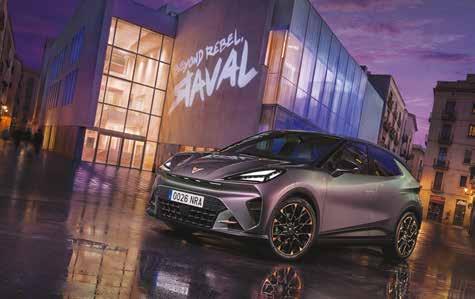
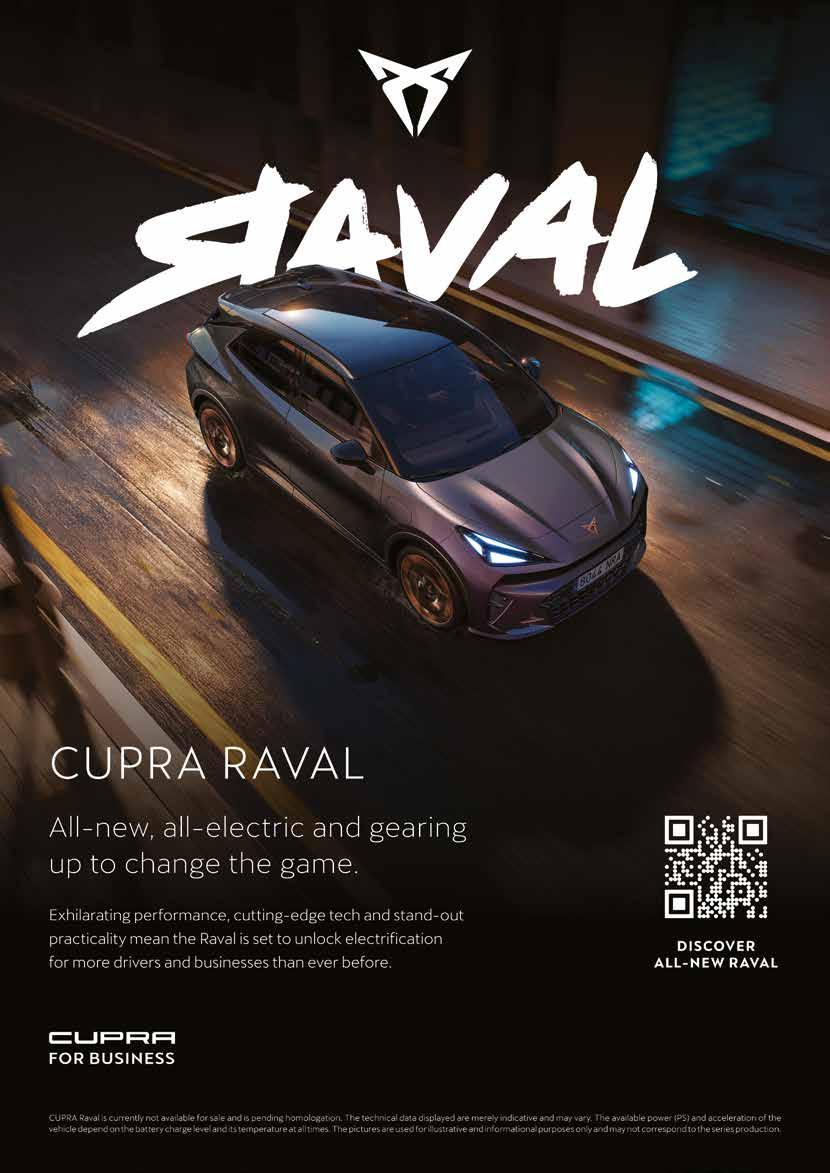
Pricing for highly anticipated urban electric car, the CUPRA Raval, starts from £23,785*
CUPRA has announced pricing of the all-new CUPRA Raval following its recent launch. Starting from £23,785 (OTR), the CUPRA Raval becomes the latest addition to the brand’s growing electric vehicle line-up, offering customers distinctive design, advanced technology and an engaging electric driving experience.
The highly anticipated CUPRA Raval has been designed to challenge convention, push boundaries, and form an emotional connection with the driver. Its striking design makes it one of the most stylish city cars on the market, boasting performance to match and at an accessible price point.
Arriving in the UK this summer the CUPRA Raval is available in Origin, V1, V2, and VZ specification and is based on the new MEB+ platform.
The Origin model comes equipped with a 37kWh battery with a power output of 115PS. The V1 and V2 trims will be available with a choice of 37kWh (135PS) or 52kWh (210PS) battery options, the latter boasting a range of around 280 miles and a charge time of just 23 minutes (10%-80%).
The CUPRA Raval VZ will exclusively be available with the 52kWh battery and will have a range of around 250 miles and power output of 225PS. The VZ also comes with a suite of impressive performance features including an electronic limited slip differential and Dynamic Chassis Control.
Marcus Gossen, Managing Director of SEAT
and CUPRA UK, said: “The CUPRA Raval marks a bold new chapter for the brand, and today’s pricing announcement is a pivotal moment in that story.
“The response since its unveiling has been extraordinary, and with a starting price of £23,785, it brings exciting electric performance within reach of more drivers than ever before. We’re proud to introduce the Raval to UK customers and confident it will challenge expectations and set a new benchmark in the segment.”
* Electric Car Grant (ECG) application has been submitted. The prices do not include any ECG reductions.
AT Rivervale, we offer both car and van leasing to suit whatever you need. Whether you are looking for a single van or managing a full fleet, we’re here to help make things easy.
Choosing the right commercial vehicle matters. The right set-up can save you money, improve how your business runs, and keep you on the road without the hassle.
That’s why our van offering is built to be flexible and straightforward. We give you access to a wide range of vans, great deals from our nationwide dealer network, and different funding options so you can choose what works best for your business.
Not every business needs a fleet manager. For sole traders, start-ups or companies requiring just one vehicle, we offer a straightforward and guided approach to finding the right van.
Our dedicated LCV specialist is available to support you through the entire process. This includes understanding how the vehicle will be used, recommending suitable makes and models, and helping you balance specification with budget. Instead of navigating a complex market alone, you get clear advice and tailored options that make the decision simple and efficient.
We aim to remove the uncertainty from the process, ensuring you get a van that is practical, reliable, and aligned with your operational needs from day one.
For organisations that require multiple vehicles, our fleet services department provides a more comprehensive solution. Whether you are building a new fleet or managing an existing one, our team of experienced fleet specialists is on hand to support you at every stage.
At Rivervale, we make fleet management simple, cost-effective, and scalable. With over 20 years’ experience, 8,000 vehicles under fleet management and 10,000+ vehicles on our fixed-cost maintenance plan. We support businesses of all sizes with end-to-end solutions that reduce costs, improve efficiency, and keep you compliant.
From vehicle sourcing to disposal, our fully managed service is backed by smart tools like the My Vehicle Manager app, giving you complete control over your fleet and drivers in one place.
One of the key strengths of our offering is
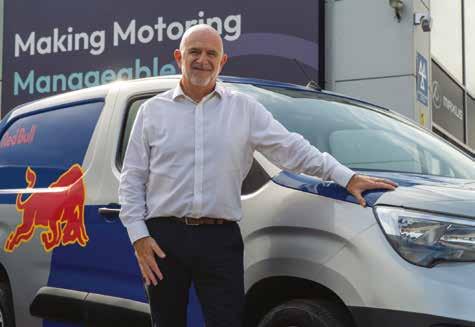
Vince Pemberton, chief executive officer, Rivervale
our extensive nationwide dealer partner network. This allows us to source vehicles from across the UK, giving you access to a wide selection of LCV options and competitive supply opportunities.
Working with multiple manufacturers and dealer partners means we can compare availability, pricing, and lead times to ensure you receive the best possible deal. This breadth of access helps us remain flexible and responsive.
“We aim to remove the uncertainty from the process, ensuring you get a van that is practical, reliable and aligned with your operational needs from day one...”
Alongside this, our in-house pricing team plays a critical role in ensuring value. Refining our pricing structures to keep our offers competitive. This dual approach - combining external relationships with internal expertise - ensures customers benefit from both choice and value.
We understand that businesses have different financial strategies and work environments. That’s why we don’t just offer contract hire; we provide a range of funding
options designed to give you greater control over how you acquire and manage your vehicles.
Alongside contract hire, we offer: Hire Purchase: Ideal for businesses looking to eventually own the vehicle outright, spreading the cost over an agreed term.
Finance Lease: A flexible option that allows businesses to retain use of the vehicle while benefiting from structured payments and potential resale value advantages.
These funding solutions allow you to choose an approach that aligns with your financial planning, whether you prioritise ownership, flexibility, or predictable monthly budgeting.
Our LCV specialist and fleet management team is in place to support businesses at every stage of their journey, from a single van requirement to a fully managed fleet operation. By combining specialist knowledge, strong supplier relationships, and flexible funding options, we provide a complete end-to-end solution.
Whether you’re just starting out or scaling an established fleet, our goal is to make the process as simple, efficient, and costeffective as possible. With dedicated specialists and nationwide reach, we ensure you always have the support you need to keep your business moving forward.
To find out more, or to speak to one of our commercial or fleet specialists, visit rivervale.co.uk

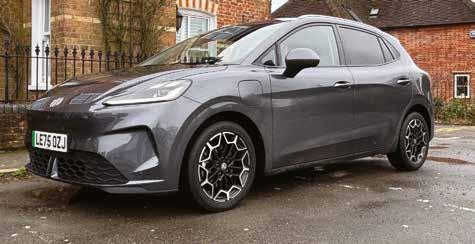
MG has updated the MG4 and alongside the familiar five door hatch, unveiled a new MG4 model, the Urban. It’s bigger all around and has been cleverly designed as well as priced competitively. Andrew Walker took a turn in one in the Chiltern Hills.
What is it?
A larger MG4 designed to be more practical and spacious. It comes with a 50 mm longer wheelbase, is 43 mm taller and 108 mm longer. There are two batteries available: A 43kWh unit and larger 54kWh. Specs are Comfort Standard Range Automatic, £23,495; the Comfort Long Range Automatic, £25,495; and the Premium Long Range Automatic, at £27,995.
Performance
Top speed across all versions is 99mph, with the 0-62mph dash taking 9.5 or 9.6 seconds.
Batteries and driving modes and regeneration
Standard Range comes with a 43kWh battery and 201 mile range or Long Range which comes with a 54kWh battery and a 258-mile range.
There are five driving modes – Normal, Sport, Comfort, Snow or Custom – and four regenerative braking modes, in Auto, 1, 2, or 3. As ever Eco offers the best economy and coupled to Level 3 which is one pedal mode will give you more miles. Sport with auto braking is the most fun and you’ll see your MG4 Urban’s feel sharper in this setting.
Charging
All versions offer 11kW AC charging which is good news, with DC charging of 82kW on Standard Range and 87kW on the Extended Range models. Charge up at home and the 0-100% times are 7.5 or 9 hours respectively. On public 150kW fast chargers a 10-80% top-up will take either 28 or 30 minutes.
Specifications
Standard on Comfort are a reversing camera, 16-inch wheels, a multifunction steering wheel, a four-speaker sound system and a manually adjusted drivers seat. Premium adds 17-inch wheels, a 360 degree camera, a wireless charger, six speakers, a six-way electrically adjusted driver’s seat, ambient lighting and heated front seats.
All versions feature MG Pilot, LED daytime running lights, black and grey fabric upholstery, automatic climate control, a heat pump, a multi-function steering wheel, V2L, Apple Car Play and Android Auto connectivity, keyless entry, a DAB radio, a seven-inch
Interior
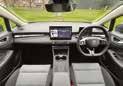
While it’s not especially exciting, the Urban’s interior design mirrors the layouts in the MGS5 and MGS6 SUVs that we drove in 2025. Grey and black dominate but the quality at this price point is pretty good and none of it is an eyesore or unpleasant.
Cabin practicality
Under armrest space, a low down floating area in the centre-dash and large door pockets offer plenty of useful storage. In the rear there’s a single USB. Despite its B-sector billing, MG has cleverly utilised the space on offer so you get plenty of space up front and in the rear three adults can just about sit alongside with plenty of room for their feet, so benefitting from the cars rear flat floor.
The rear seats fold flat which increases the boot space from a frankly enormous 577 litres to a very useful 1,364 litres. The boot floor lifts up to reveal a 98-litre storage space, large enough for a suitcase or two. Cabin storage is as you’d expect, over 30 litres, with large door pockets, a glove box, twin central cup holders, space under the floating console, twin USBs and a 12v socket. Rear passengers get a single USB and their own good-sized door pockets.
The Urban’s battery is a touch oldfashioned and this, coupled to the Urban’s more upright shape, means it’s not as good to drive as the smaller MGs.
However, its smallish dimensions means it is easy to park and the light steering makes it simple to handle in the city. In slow moving traffic the cabin is quiet.
On the open road the Urban will bump and roll a touch on poor road surfaces, again the
car’s shape and torsion beam rear suspension, which is not multi-link, is to blame, and the standard MG4 is much better. You are not throwing the Urban in and out of corners like the normal MG4, that’s for sure. Speed up on the motorway and you’ll notice both wind and road noise, a combination of the tyres and car shape the most likely reason. The lack of out and out power, with only 160PS offered on our test car, means acceleration is not EV quick, at 9.5 seconds for 62mph. Despite this the Urban will sit happily at motorway speed but be warned, it won’t accelerate much.
Very comfortable, good cabin design and instrumentation. Visibility is excellent, with plenty of glass all around. It’s a goldfish bowl on wheels.
Pros
Very practical, user-friendly cabin and on- trend tech. Plenty of boot space and the bonus of 11kW AC charging courtesy of a heat pump.
Cons
Unexciting to drive and vanilla exterior looks, both typical in its class.
CC&V VERDICT
We’re not putting a poster of the Urban on our wall, and it’s highly unlikely that anyone will notice you if you are driving one. But that’s not the point. It’s difficult to think of a better value for money EV that combines a modern, practical cabin with such an enormously useful boot. Impressive kit list and seven-year warranty make the case for the Urban as a family EV even stronger. Hats off to MG.
CC&V RATING: N N N N
THE shift to electric vehicles is accelerating, driven by government grants, new initiatives, and the growing need for businesses to act on sustainability.
The pressure on fleet operators to cut costs and reduce emissions is mounting. From working out which vehicles are truly suitable, to planning charging infrastructure and ensuring drivers feel confident behind the wheel, it isn’t a straightforward process.
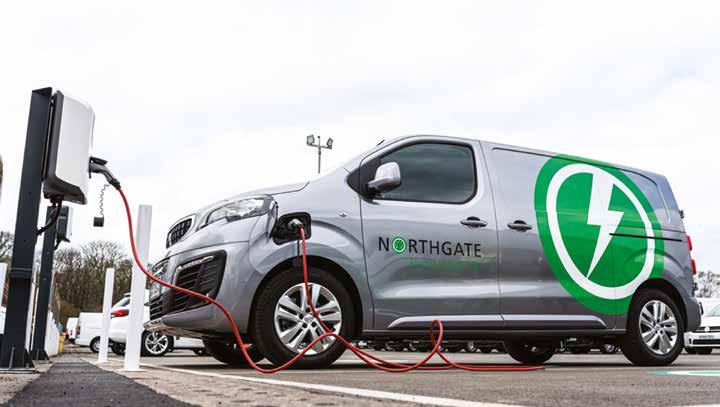
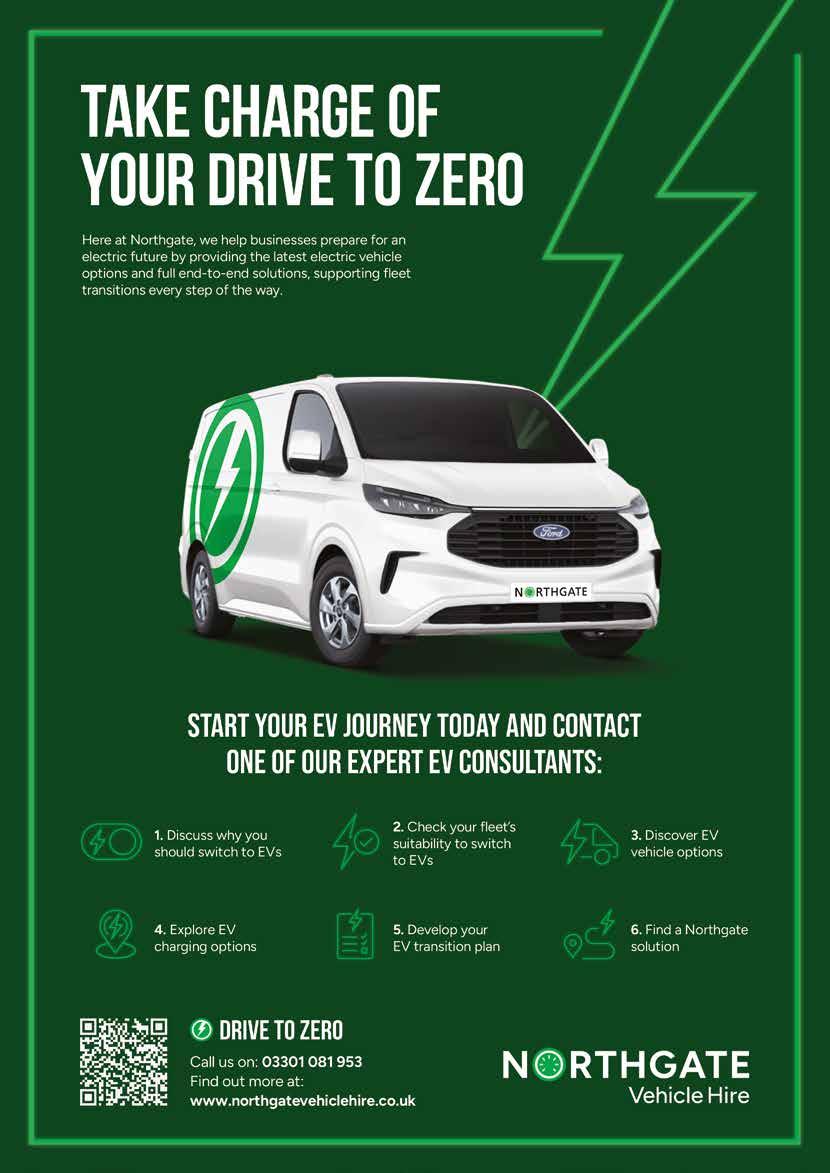
Northgate is helping fleets of all sizes tackle this challenge through its Drive to Zero initiative, which combines consultancy, smart tools, driver training and EV-ready hire solutions. That way, they can benefit from data-driven insights and dedicated expertise to give them confidence moving forward.
With Drive to Zero Consultancy, larger fleets can get access to dedicated support to build a clear, achievable electrification plan that balances operational needs with long-term sustainability goals. Northgate’s experts turn fleet data into actionable insights, offering tailored advice on strategy, cost modelling, infrastructure, compliance, and future planning. This provides a roadmap that removes uncertainty and builds a strong business case for change.
For smaller fleets, the Drive to Zero Hub is a smart tool that analyses fleet data to
highlight which vehicles are ready to go electric. It calculates running costs, estimates charging frequency, and maps out the nearest charge points, giving operators a practical, real-world view of how EVs will work day-to-day.
Additionally, Northgate works directly with drivers to understand their views on EV adoption, as well as their charging habits, ensuring the transition process works not only for businesses’ operational needs, but for their workforce.
new options with Micromobility
Electrification isn’t just about vans and cars. For businesses facing last-mile delivery pressures or navigating busy urban areas where large vans are inconvenient, Northgate also offers innovative micromobility solutions such as e-bikes and more. These can provide cost-effective and flexible alternatives, helping businesses stay agile while reducing emissions.
EV driver training to build confidence
Switching to electric is more than just changing vehicles. EV confidence, training and skills play a major part in a successful transition.
Northgate offers EV driver training for both drivers and fleet operators designed to boost safety, efficiency, and peace of mind behind the wheel. From understanding charging to
mastering regenerative braking, this training removes common barriers to adoption and helps fleets unlock the full potential of EVs from day one.
Keeping EV fleets mobile
Reducing vehicle downtime is crucial and Northgate hire packages include service and maintenance as standard. These are supported by Northgate’s nationwide network of workshops, which are strategically located and staffed by highly trained mechanics and specialist EV technicians.
EV transition made easy
By combining consultancy, data-led tools, training and nationwide support, Northgate’s Drive to Zero initiative helps fleets approach electrification with clarity and confidence. Whether managing a handful of vehicles or a large-scale operation, businesses can access practical solutions that make the EV transition simpler, more sustainable, and better suited to real-world needs.
For further information on how Northgate can support your Drive to Zero visit www.northgatevehiclehire.co.uk/ drive-to-zero
“Switching to electric is more than just changing vehicles. EV confidence, training and skills play a major part in a successful transition. Northgate offers EV driver training for both drivers and fleet operators that’s designed to boost safety, efficiency, and peace of mind behind the wheel.”
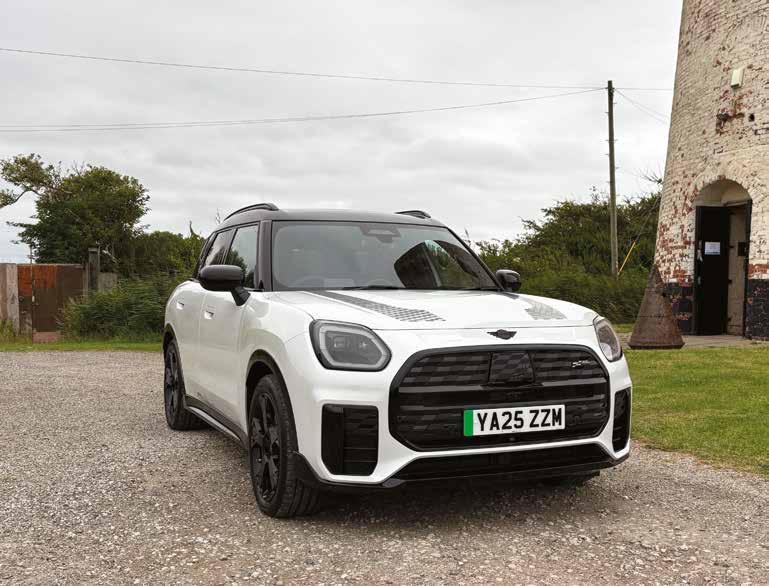
We drove the Countryman Electric 12 months ago and were pleasantly surprised at just how much fun it was. Mini obviously felt it wasn’t fun enough though, and has launched a John Cooper Works version to pep it up even more. Too much fun to handle? Andrew Walker spent a week in one recently to find out...
Tell me more?
John Cooper Works is in effect its own trim level within the Countryman range. It’s very well equipped with adaptive LED headlights, heated front seats, a head-up display, keyless start, Bluetooth, Apple CarPlay and Android Auto connectivity with SatNav.
Battery and performance
The Electric JCW Countryman is fitted with a usable 66.5kWh battery which offers 258hp and 340Nm of torque. Top speed is 124mph and 0-62mph takes just 5.9 seconds.
Mini’s engineers have developed an all-new electric boost function to further enhance power delivery, giving the driver an additional 20kW of electric motor power once John Cooper Works mode has been activated, using a rocker switch on the steering wheel.
The JCW suspension maximises handling, while high performance grip tyres come as
standard on all electric John Cooper Works models.
Range
When fully charged and on a warm day, the maximum driving range when we set off in the morning was 243 miles if you drive in Green mode. After a 90-mile journey that included a range of mixed road and motorways we returned with 126 miles remaining. Even in Green mode the temptation to play around with the JCW tuning is almost irresistible which probably accounts for my figures.
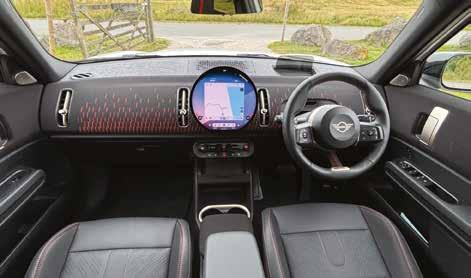
The interior features a textile inspired dashboard front which runs the width of the car and onto the door panels. Four slim vertical chrome air vents and the circular speedo infotainment screen are the only
instrumentation on the dash, with some neat toggle switches located underneath. These include the starter button, driving modes and gear lever. Beneath this on our JCW test car was a landscape phone charging pad, twin cup holders and a large armrest with storage underneath.
The interior door handles are vertical, chrome, narrow and very tactile and the front seat headrests feature a neat oval shaped hole.
The quality throughout is excellent and to keep up Mini’s green credentials, much of what’s used is from recycled textiles.
Of course a new MINI, in line with sister brand BMW, will add extras in packs to pimp your car up to the spec you want. Add a Sport Pack costing £3,700 and you’ll get sports stripes, a John Cooper Works steering wheel,
a black roof, sport brakes, sport seats, an Anthracite roof lining and Sport trim. The Level 3 pack at £5,300 comes with even more useful additions such as the panoramic glass sunroof, sun protection glass, electric memory sears, 22kW high speed charging, a Harman Kardon sound system, high-beam assist, Parking Assist Plus, Driving Assistant Professional and Mini SatNav.
The system fitted to the Countryman is called the Mini ‘Interaction Unit’ and it runs an Android-based System 9 operating software. This has been specifically designed to look and feel similar to a modern smartphone, so you can stream video and play games on it too. It also offers the Mini Experience Modes whereby you can configure different settings Core, Green, Go-Kart, Vibrant, Timeless, Balance and Personal. Only three though –Go-Kart, Core and Green – actually change the way the Countryman Electric drives, by either altering the levels of regenerative braking allowing for an increased range, lightening or tightening the steering. This is most noticeable in town and will increase or decrease accelerator response, something you’ll get hooked on in Go Kart mode.
The circular display is in keeping with Mini’s heritage, with the operating system, graphics and speed all very impressive. Now we’ve driven the new Mini on a number of occasions the set up and screen menus have become much easier to use, although a quicker way to turn off some safety features than going into a number of menus would have been appreciated. Having the climate controls on the screen is also a little distracting.
The elongated Countryman, even in electric format, offers a 460-litre boot, rising to 1,450 litres with the rear seats folded. The boot floor also has some useful hidden space beneath. with room for your cables. And better still the rear seats can be moved back and forth by as much as 13cm with the seat backs individually reclining in six positions by up to 12 degrees. This puts it firmly in the small family SUV sector as far as practicality goes.
Up front the door pockets are massive with smaller ones in the rear. On board you’ll find four USB C inputs, two in the front and two in the rear, a useful sized glove box, the aforementioned wireless charging pad, twin front cup holders and the armrest with storage beneath.
The Countryman also features Mini’s new Level 2 semi-autonomous driving tech. This includes Automatic Active Cruise Control with Steering and Lane Assistant, which allows drivers to take their hands off the steering wheel at up to speeds of 37mph.
As part of our test car’s extras, adaptive
LED headlights, High Beam Assist, Driving Assistant Professional and Parking Assist Plus are also included.
Up front there’s plenty of width to the car so you sit comfortably in the sports seats. In the rear two six-footers will be happy with the head and legroom with only the centre passenger a little squashed. Two rear USBs is good news for those sat in the back
Performance
With 494Nm the Countryman JCW will accelerate from 0-62mph in 5.6 seconds.
If you’re mainly charging at home, the Countryman Electric comes with a standard 7.4kW set-up, so a full charge from empty will take about nine hours. Or opt for the on-board 11kW charger that will reduce the time to six hours. You can also add as another option a 22kW AC system for faster charging away from home. We use a Rolec charger http://www.rolecserv.com/home-charging
The longer wheelbase brings with it a more comfortable, less fidgety ride than the Electric Cooper and Aceman. The addition of the battery and electric motors on the electric version, all 450 kgs of it, somehow makes the electric version just as much fun to drive as the petrol model, which is no mean feat. That’s not to say that the ride isn’t harsh over poor road surfaces, and the battery weight becomes much more noticeable.
We took it for a spin around north Cheshire where we have some surprisingly good roads between Manchester, Buxton and Stoke on Trent. It handles impressively and the extra weight makes it feel even more stable in and out of faster twists, turns and corners. The JCW tyres also add to the feeling of grip even on some gravel we encountered on our way down the Cat and Fiddle pass. Add in some summer rain and the JCW version performs incredibly well when driven quickly on B roads.
Our next trip was to the beach at Formby, where we took in the M56, M6 and M58. Motorway cruising and the Countryman Electric are made for each other. Select your speed, initiate cruise control and away you go. It’s smooth, quiet, refined and comfortable. And if you’re canny drive in Eco mode with the B regeneration on and you’ll take advantage in any stop-start traffic to add some range to your battery.
Talking of which, in town or urban situations the JCW version is just as impressive as the standard Electric Countryman, offering a safe and agreeable cabin where the speakers shine, the connectivity works well and hands-free calls don’t require raising your voice.
Pros
Roomy, comfortable and a fun to drive. Retro details are clever as well as useful. For company car drivers 3% BIK is a steal.
Cons
Hard suspension isn’t for all. As per usual with Mini, you have to pay more to get the extras you may want. Electric versions cost more than petrol versions.
The JCW Countryman Electric is great to drive and there’s fun to be had behind the wheel. However, it’s been sensibly mated to a comfortable and practical family car, offering decent interior space and a useful boot. Kudos too for the inclusion of the old-school central infotainment screen and toggle buttons, which really make the Countryman stand out. In effect the JCW frills don’t really add much more enjoyment than if you opt for the ALL4 model, but the added JCW trim certainly lifts the car higher than a standard electric Countryman.
CC&V RATING: N N N N
When Citroen told us that its entry level Urban ë-C3 Electric was fitted with just a 30kWh battery and came with a range of 130 -186 miles, one could be forgiven for thinking ‘why’? However, a 90-minute drive through the busy centre of Marseille and back showed Andrew Walker what this cheap EV could achieve...
Engine and battery
Combining a 113hp electric motor with a 30 kWh LFP battery, the Urban is wholly targeted at those who only want an EV for local journeys.
Model choice
As with the e-C3 range as whole you can select from PLUS or MAX, and it was the former we drove when in Provence.
Prices
PLUS costs £18,495 after the electric car grant, with higher specced MAX setting you back £22,295.
Specifications
Entry level PLUS comes with 17” alloys, roof rails, a two-tone roof, air-con, LED headlights, LED daytime running lights, electric windows, a 10.25” touchscreen, wireless smartphone connectivity, a six-speaker audio system, CarPlay and Android Auto and automatic intelligent beam headlights.
MAX adds SatNav, wireless smartphone charging, an electric parking brake, steering wheel audio telephone controls, automatic air-con and a leather effect steering wheel.
Safety
Both versions are fitted with driver, front passenger, front row side and rear curtain airbags, ABS, ESP, hill start assist, cruise control, a Citroen Safety Pack with videobased Active Safety Brake, Active Lane Departure Warning System, Speed limit recognition and recommendation.
Charging
The Urban only comes with a 7.4 kW charging speed, so that’s 20% to 80% in 2 hours 50 minutes. For the occasional longer journey, optional support for 30 kW CCS charging gives a rapid charge from 20% to 80% in just 36 minutes. If you need more you’ll need to look at the e-C3 Standard Range which offers 100kWh charging speeds.
Outside
At 1.57m high it is taller than its predecessor. Citroen’s Chevron logo dominates the grille, with a three-level lighting signature; one vertical and two horizontal lenses that look like blades. There’s an upright windscreen and a short bonnet. The rear comes with a horizontal gloss black strip that merges into
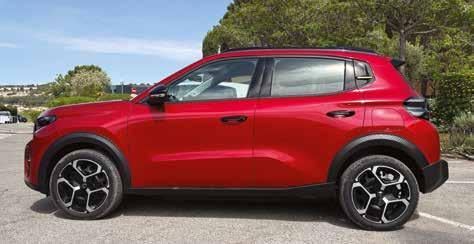
the rear corner lights. These match those on the front of the car, with the large Citroen Chevron logo in the centre.
Inside space
It’s clever. The boxy shape gives it a larger cabin than other Stellantis B sector models, with rear seat space the biggest benefactor. Three adults will fit in the rear, something you can’t say about rivals the Alfa Junior or Jeep Avenger, for example.
The large cabin means a smallish 310 litre boot. But this goes up to 1,188 litres if you fold the rear seats down. The cabin features a small glovebox, twin centre cup holders, under armrest storage and large door pockets.
Infotainment
Easy to use with clear graphics and connected promptly to CarPlay. Separate climate controls sit beneath which is more good news. No SatNav on PLUS versions, so we used an iPhone with Google Maps and it worked just fine.
It’s great fun to drive, feeling very much like a small petrol hatchback. It isn’t quick nor does it offer thrills, but its compact size and light steering make for entertaining driving nonetheless. Our test in Marseille definitely helped us appreciate how good this simple electric Citroen is to drive. Loads of glass gives you a great all-round view and there’s just enough power to nip in and out of the typically chaotic Mediterranean traffic.
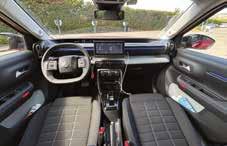
The Comfort seats really do soak up the jolts from the poor tarmac and extinguish the battery weight. Front leg and headroom are excellent. The only negative is that the front seats are short front to back, so don’t offer as much support for the longer legged.
The e-C3 handles just fine but don’t expect much engagement. It’s built for comfort and city driving, and does a splendid job. Go faster than 40mph and you will notice a touch of wind and road noise. At motorway speeds it’s louder still, but don’t let that put you off.
We had to traverse a series of narrow switchbacks up and over the Col de Sormiou and it didn’t skip a beat. It’s a really easy car to drive and I’m sure to live with, too. It won’t cost much to run or repair and after three hours behind the wheel and having travelled 60 miles, we still had 90 miles left in the battery, so not too shabby when it comes to accurate range either.
Pros
Great value for money. Cute looks coupled to a practical interior is a winner. Even entry level Plus is very well kitted out. The 30 kWh battery makes it fun to drive. The Citroen Comfort seats are worth their weight in gold.
Cons
Some generic Stellantis switchgear features. A 130-mile range is low and so is a 7.4kWh charging speed.
We’re used to long distance EV journeys, so questionned Citroen’s thinking on the ë-C3’s range. But our cynicism was put aside simply because the Urban fits so well in a city environment and is cute to boot. Our obsession with CarPlay means we’d probably want the MAX, but otherwise the PLUS is just fine. Unlocks electric motoring for people who drive only in the city. A Jean-Pierre Papin 4 out of 5 (if you know, you know!)
CC&V RATING: N N N N
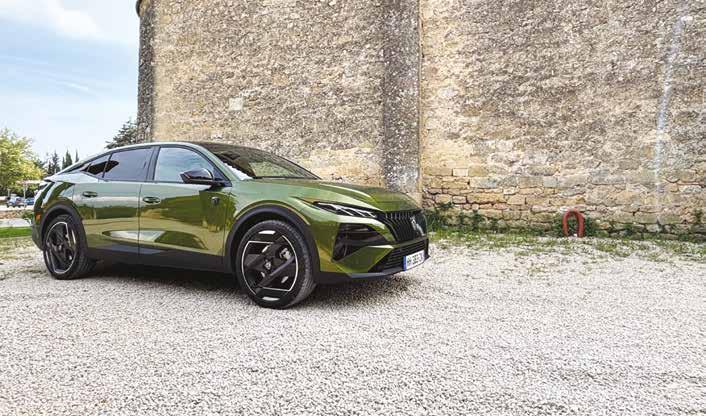
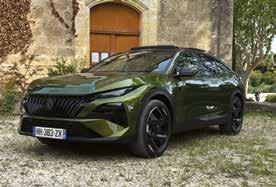
In a sea of SUVs, Peugeot and a few others are still making cars that are actually exciting to look at, and no more so than the Peugeot 408. It’s a car we’ve always liked, and a mid-life refresh and improved PHEV and EV versions now offer company car drivers even more reasons to consider one. Andrew Walker drove the range in sunny Marseille, and here’s how he got on.
What’s new?
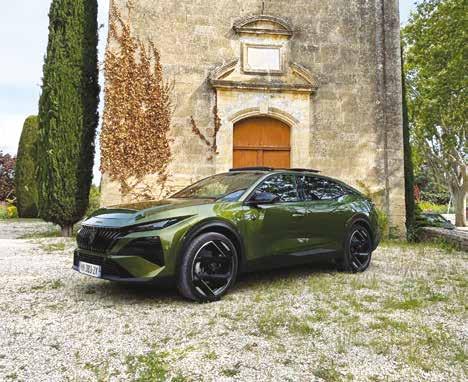
Key parts of the refresh outside include a new front grille, 3D Claw light signature, illuminated Peugeot logo, 19” diamond cut alloys, 3D claw lights and illuminated red PEUGEOT lettering across the rear light connector strip all subtly enhance the cars Fastback profile.
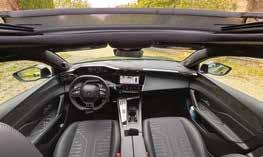
Inside, there’s a new digital instrument display and seat fabrics on Allure and GT and now offers Alcantara upholstery on GT Premium, with the introduction of a driver vigilance camera as standard across the range. It’s all tastefully implemented.
Powertrain and model choice
Three models are available. First up, a Hybrid 145 e-DSC6, an updated Plug-in Hybrid 240 e-DSC7 and an Electric 210 model with a 58kWh battery, all available across Allure, GT and GT Premium trims. While we hit the road in the Hybrid model, it’s the updated PHEV and EV models that offer company car drivers the most attractive proposition.
Plug-in Hybrid
The latest version utilises a 1.6L petrol engine combined with a 92kW electric motor offering a 240hp combined power output. A 7-speed auto electrified gearbox (e-DSC7) features with a 16.2kWh battery enabling 50 miles of zero emission driving, up from 40 miles on the previous model.
This version is powered by a useable 58kWh battery offering 210hp and 343 Nm of torque and achieves up to 283 miles of electric range. In addition, three levels of regenerative braking are available via the steering wheel mounted paddles.
Specs
Good across all models. Entry level Allure includes keyless entry, adaptive cruise control, rear parking sensors, a reversing camera, dual zone climate control, Peugeot I-Connect, wireless Mirror Screen and DAB. The plug-in model adds a 3.7kW on board charger with the EV coming with an 11kW on board charger and V2L connectivity. GT adds laminated front windows, Connected SatNav
and a grained leather steering wheel, while the GT-Line increases this with 20” alloys, Alcantara upholstery, three-stage heated front seats and a smart electric tailgate.
Hybrid prices start from £31,995, with the PHEV from £39,495 and the Electric from £34,195 (though £32,695 after ECG of £1,500).
Interior
Peugeot is very good at making its interiors feel more premium, and the 408 continues that trend. The dashboard top, front and the door panels are all nicely finished with some good soft touch plastics. The seats are a mix of leather effect with tri-material Alcantara; they are fully adjustable in the GT spec. Continued on page 26
Continued from page 24 Infotainment
Again, Peugeot is getting this right, too. There’s a 10” infotainment display as standard across the range and it comes with crisp, clear graphics with programmable buttons beneath it, which let you create shortcuts to your most-used screens. Apple Car Play and Android Auto can be accessed via your Smartphone and there’s a wireless charger that will take even the largest sized iPhone.
– Cabin
The front seats are comfortable as well as multi-adjustable. Storage comes in the form of a bin under the armrest with a split top, so the driver can access the storage without disturbing the passenger’s arm, a small cubby with the twin USB and 12v socket within, a wireless charger and twin cup holders. Front door pockets are generous and the glove box is slim. The only issue in the front is the Peugeot iCockpit steering wheel. Small it maybe which we like, but it can block the driver’s eyeline from reading the speedo, especially for taller drivers.
In the rear, legroom is excellent, but the sloping roof may challenge taller passengers. The 408 is also quite narrow so elbow-toelbow seating is likely with three in the rear. You also get roomy door bins, a central armrest with two cup holders and a loadthrough chute for longer items. Finally there are four USBs on board, two up front and two in the rear.
Even with the sloping rear window, the 408 comes with a generous 536 litres. However, if you choose the plug-in or electric versions, the batteries reduce this to 471 litres. There is space under the floor for your charging cable. Fold the rear seats down and space increases to 1,611 litres in the petrol and 1,545 litres in the hybrid/EV but the seats don’t fold completely flat.
Our test PHEV featured the Focal Premium HiFi so this removes another 30 litres from the hybrid. Clever touches include a lever to drop the seats, a couple of useful hooks, side nets to store items in and elasticated straps to hold objects in place.
Economy and performance
This version arguably hits the sweet spot for company car drivers, coming with CO2 emissions of between 52-69g/km and a combined economy of 93-123mpg. Top speed is 145mph and it comes with a 0-62mph time of 7.5 seconds. The Electric model has lower top peed speed of 99mph and a 0-62mph time of 7.6 seconds. Driving range is 283 miles.
Driving
We drove all three versions but our findings are based on the PHEV and Electric models as these are both company car friendly. A
cross-country route through Provence and up and around Aix then back to Marseille illustrated just how nice both are to drive.
Pull away in Electric mode and the 408 is quiet as a mouse. When the Hybrid mode kicks in there is just a quiet rumble as the system switches across. When you’re in Hybrid you can drive in Normal or Sport modes and can utilise the ‘B’ regeneration mode too, which increases regenerative braking. This slows you down without the need to use your brakes in certain situations, although coming to a full stop does require the brake pedal. As with other Stellantis PHEVs the 408 Plug-In Hybrid has an ‘e-Save’ function allowing for 6 miles, 12 miles or maximum save model a useful function.
The sleek profile of the 408 mean rear visibility isn’t great and you’ll be taking advantage of the built-in rear view camera. If you’re up for little fun, you can select Sport mode and the engine stays on for longer between the gear changes, making the 408 feel more responsive and driver friendly.
Electric
Better tarmac on the motorway really highlights just how smooth and comfortable the electric version is. Peugeot’s built-in Adaptive Cruise Control, part of the Driver Assist Pack, works extremely well and takes the headache out of motorway trips, with the simple Apple CarPlay connectivity and easily accessible wireless phone charger. On some quieter roads we tried out the brake regeneration and all three levels add just a bit more pull to the feel of the car, but the highest setting is not one-pedal.
We’d say that with its smaller battery and lower profile, it’s a nicer electric car to drive
than Peugeot’s e-3008 and e-5008, but of course falls as much as 150 miles shy of both’s largest battery ranges, which is the e-408’s only real issue.
What’s most attractive about the EV though is its price. In the revised 408 model range, the EV is only £1,500 more than the mild-hybrid petrol and is £4,500 cheaper than the plug-in hybrid.
Pros
Updates have made the 408 sleeker and even better to look at. A higher plug-in electric range of 50 miles is also good news. The EV is incredibly generously priced. One of the best looking cars you can get.
Cons
The Electric driving range may not be high enough for some. The plug-in is expensive. Smaller boot in PHEV and EV too.
Extremely attractive looking, and one that offers something just that little bit different to a boxy SUV. With just 8% BIK the plugin ticks the company car box and has a combined driving range of almost 500 miles. But don’t ignore the Electric 408. Despite a relatively average driving range of 283 miles, it’s 58kWh battery is small enough to make this far more enjoyable to drive than Peugeot’s electric SUVs as well as those from China and Korea. It’s also gorgeous to look at, especially in Flare Green metallic. If you don’t need a heavy, longrange EV, the lighter, sprightlier 408 electric is well worth your time.
CC&V RATING: N N N N

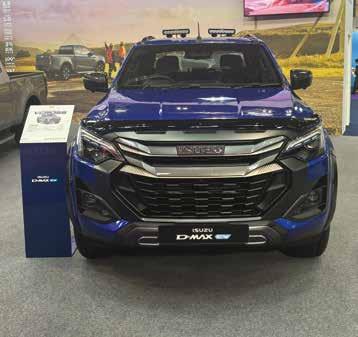
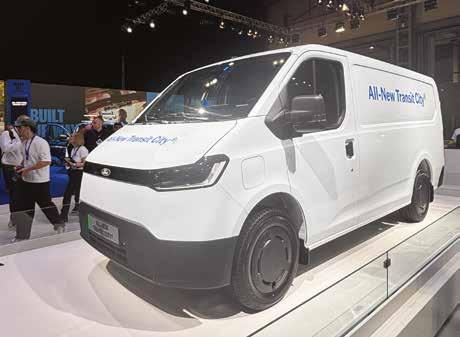
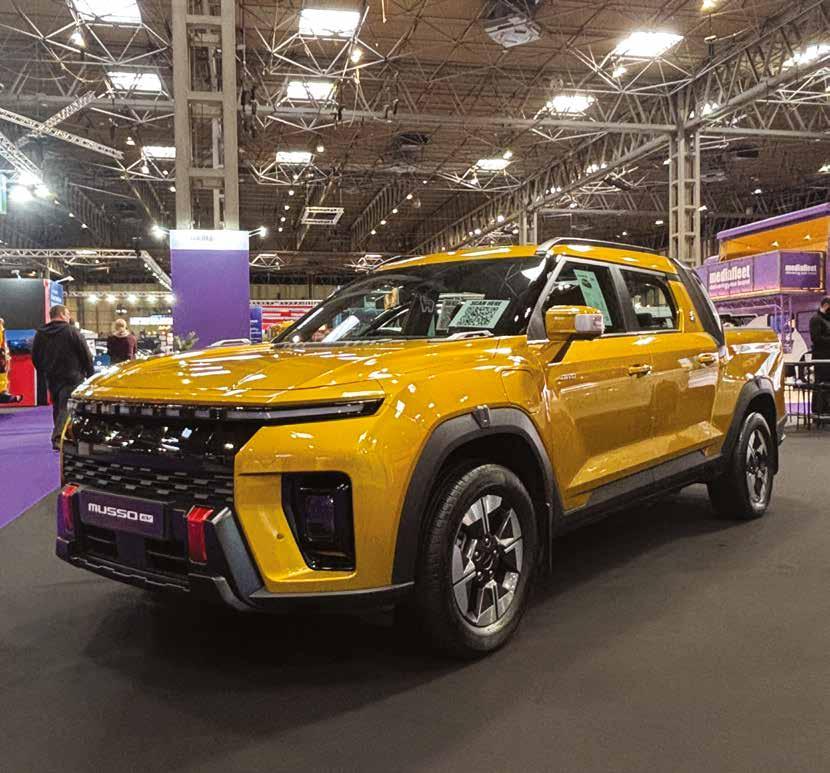
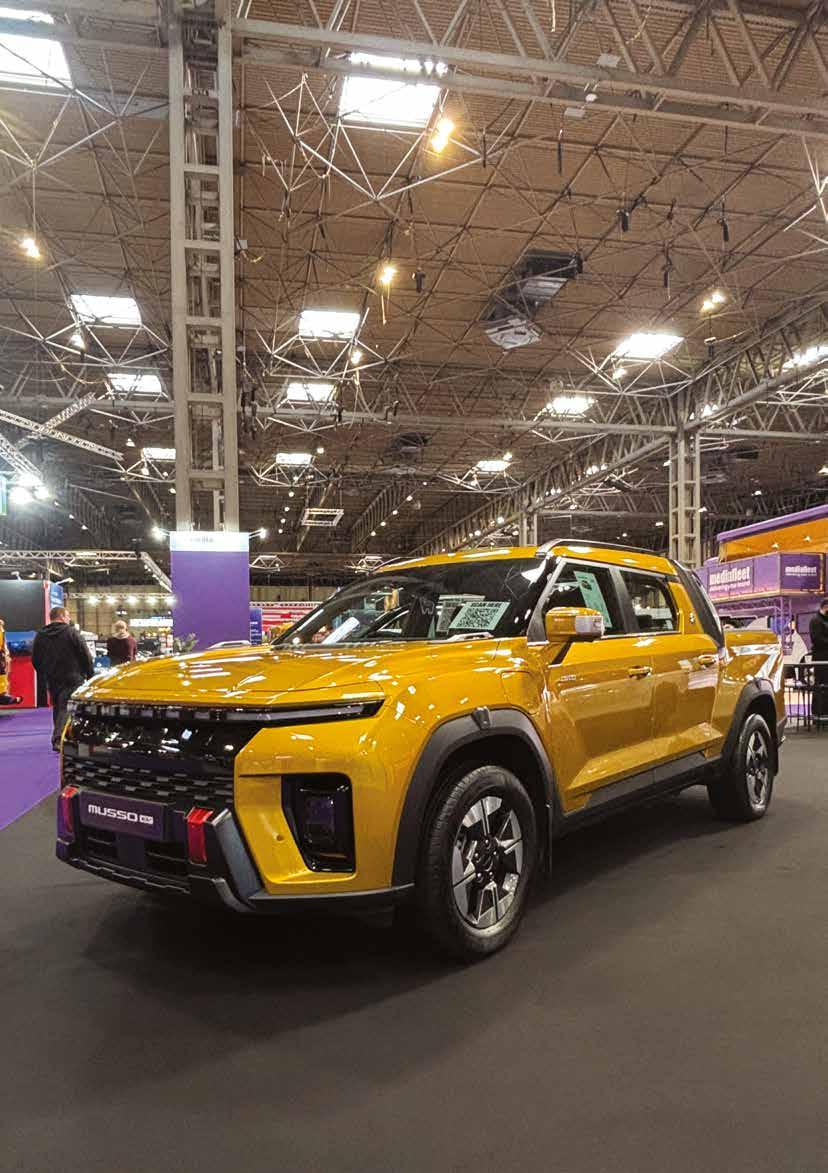

The 2026 CV Show, held at the NEC in late April, saw more than 15,000 movers and shakers from the commercial vehicle world attend over three days. Company Car & Van was there on Day 1 to meet, chat and see all of the new vehicles on display. Over the next few pages we speak with a number of key exhibitors, including KGM, INEOS, Renault, Isuzu and Stellantis, and spent time with, among others, Kia, Maxus, Ford, Iveco, Farizon and Renault Truck, all of whom had plenty to shout about. Here’s a brief outline of the Show highlights.
With one of the largest and arguably most eye-catching stands, thanks to a specially built off-road dirt track that ran around their exhibits, Maxus showed off its full range this year, with a key focus on its electric line-up: eDeliver 3/5/7/9, the eTERRON 9 pick-up and MIFA 9 MPV. They sat well with a diesel Deliver 7.
Visitors were able to transverse the special off-road track while learning more about the brand’s telematic and connected services as well as gaining an understanding of Maxus’s full end-to-end offering as the company introduces mobile servicing to its portfolio.
Kia
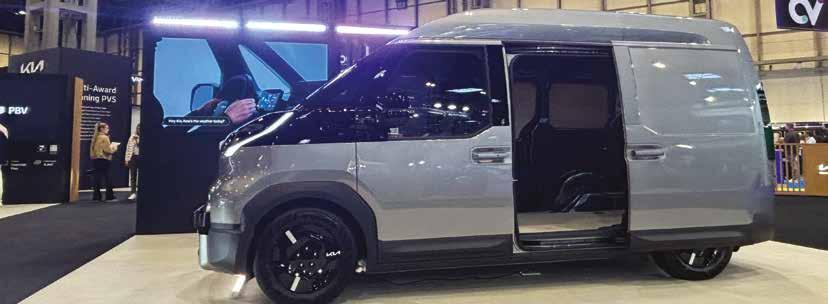
The 2025 Show saw Kia take a leap into the unknown when it launched the electric L2H1 PV5 van. It’s been a success with over 2,300 finding homes in Q1. This year Kia has consolidated the range by updating it with a three-seat option and composite bulkhead.
The big news, though, is two new Cargo variants, an L1H1 and L2H2 as well as announcing conversions partners for a range of refrigerated, tipper, and wheelchair accessible models.
L1H1 offers a cargo volume of four cubic metres and a payload of up to 800kg; the L2H2, 5.2 cubic metres of volume and up to 630kg of payload.
Choose from two batteries. A 51.5 kWh (Standard) or a 71.2 kWh (Long Range) providing WLTP ranges of 184 miles or 258 miles respectively with both supporting fast 150kW fast charging.
Renault
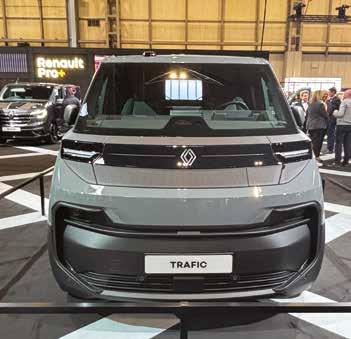
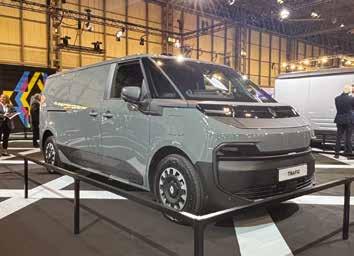
Highlights included a first glimpse of the all-new e-Trafic and Estafette concept vans alongside a new Trafic Graphite Edition a UK-exclusive special edition built on the existing Trafic platform. It’s a range topping highly specified model with black 17-inch alloys, a rear spoiler, side steps, Graphite Edition decals, a Slate Grey paint scheme, Adaptive Cruise Control and Blind Spot Warning.
It will be available as a short or longwheelbase panel van with a choice of manual and automatic transmissions, with prices starting at £37,500.
KGM
A show highlight was the brand’s new
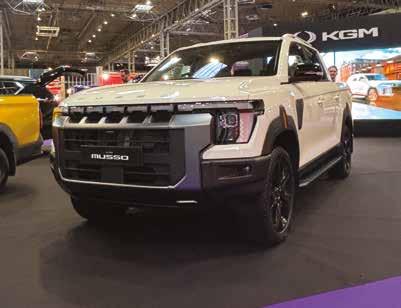
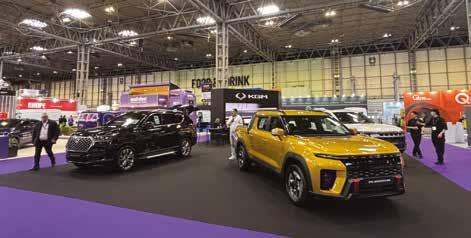
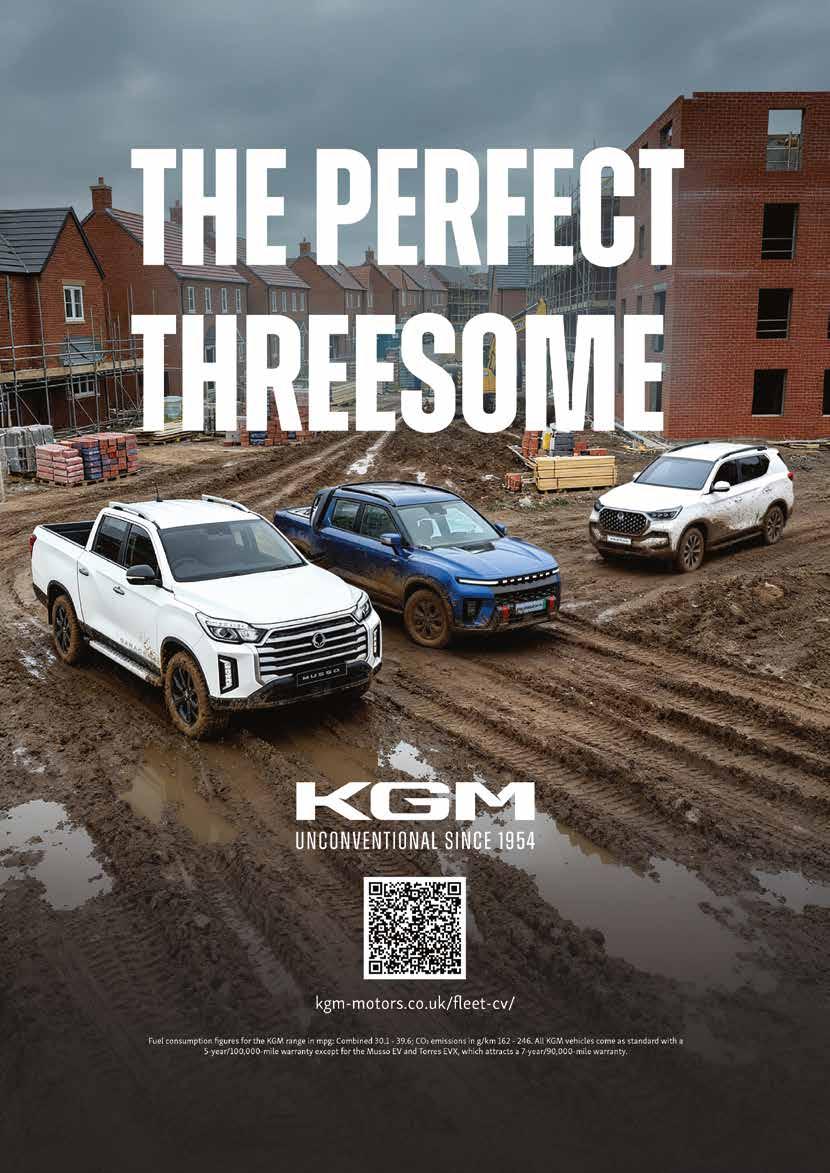
Musso EV and Rexton Commercial, alongside a first reveal of the updated Musso Rhino 2.2 diesel truck. Paired with a six-speed automatic transmission and selectable four-wheel drive as standard, the Rhino offers a towing capability of up to 3.5 tonnes, a payload of just over 1,000 kg, a limited-slip differential and Clear Sight Ground View technology.
The new Musso also features a refreshed front end and a higher driving position, an upgraded cabin with better materials and wireless smartphone integration.
Safety systems include Intelligent Adaptive Cruise Control, Intelligent Speed Warning and a 3D around-view monitoring system.
INEOS
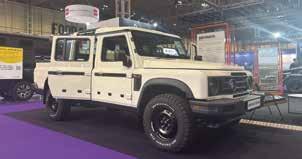
It was a welcome return for Ineos who displayed a Quartermaster Chassis Cab with self-recovery tipping dropside body and a two-seat Quartermaster pick-up featuring 850-litres of additional load space behind the front seats. This two-seat variant of the Quartermaster is currently sold in France, Benelux and Ireland, with INEOS assessing opportunities in the UK market.
Also, on display was the VAT-reclaimable
Grenadier Commercial and a pair of blue-light emergency vehicles, showcasing the adaptability of INEOS models for a broad range of real-world applications.
Isuzu
Isuzu used the show to launch the D-Max EV and a new 2.2-litre diesel engine version of the D-Max which replaces the 1.9-litre unit. This sees the introduction of a new eightspeed automatic transmission and six-speed manual option. Body styles on offer range through Single, Extended and Double Cab.
The entry-level Utility model is available as a Single or Extended Cab, with the DL20 specification exclusively as a Double Cab.
The DL40 can now be ordered as an Extended Cab and Double Cab, with range topper V-Cross offered as a Double Cab. The new diesels come with a five-year / 125,000-mile warranty, UK and EU roadside assistance, and will be available from July with prices starting from £33,495.00.
Ford
A vehicle-packed stand saw the Blue Oval launch two new models. The Transit City is a lower priced all-electric van with a 157-mile range, rapid charging, an 8.5 cubic metre load volume and 1,275kg payload. There’s one trim level and three sizes: L1H1, L1H2 and Chassis Cab. Expect to pay around £30,000.
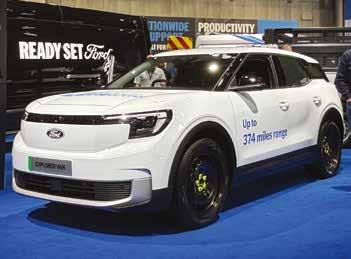
Also on display was the Explorer Van, a car-derived commercial with a 1.23 cubic metre load space, and a 650kg payload. Maximum driving range is 373 miles with both RWD and AWD versions available.
Stellantis Pro One
Stellantis showcased a model from each brand: a Vauxhall Vivaro Electric Double cab, a Peugeot Boxer Panel Van, a Fiat Professional Ducato Dropside and a Citroen Berlingo.
Also there was the Tris electric micro mobility tricycle. It’s designed specifically for urban last-mile deliveries, has a threewheeled ultralightweight design and a 56mile range. The model on display was a Cargo Box variant featuring a 2.25-cubic metre load space and capacity for two standard euro pallets and it’s currently being assessed for the UK market.
The highlight from Iveco was the reveal of two new electric panel vans based on the Stellantis platform. The eJolly is a Vivarosized van with two battery options – a 49kWh with a 140-mile range or a 75kWh offering a 218-mile range. Maximum payload is 1,175kg.
The larger Super eJolly is Ducato based and comes with a 110kWh battery and range of 260 miles, 1.4 tonne payload and up to 17
cubic metres of load space.
Both give Iveco a foot in the door for smaller electric van customers, with the eJolly introducing the medium panel van to the brand for the first time.
Farizon used the 2026 show to launch its new V7E medium-sized electric van. Joining the larger SV model, this provides a 6.95 cubic metre load volume, with a payload of up to 1,338kg. Available in a single body size, one high-spec trim level and the choice of a 50 kWh or a 67 kWh battery with a maximum 204 miles range.
Renault Truck
A Renault Truck Master Red Edition E-Tech three-way tipper, Master Red Edition Exclusive diesel and a Trafic Red Edition+ panel van, showcased the brand’s electric and diesel offerings.
Delivan
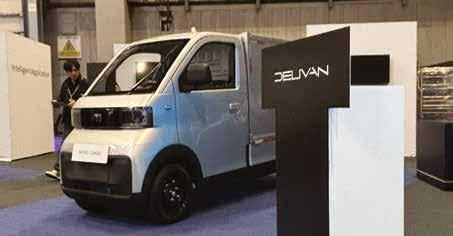
Chery Commercial Vehicle used the show to launch its Future Super Commercial Vehicle (FSCV) strategy. A line-up of Delivan concept vehicles included ‘micro-cargo’ and ‘robotcargo’ concept vehicles and a medium van.
Foton
Foton recently confirmed the appointment of International Motors (IM) as the official UK distributor for its C1 van. On display were short, and long wheelbase and high roof versions. Key features will include a 66.67 kWh battery for up to a 270-mile range, a 125kW electric motor, and a seven cubic metre cargo area.
Mellow Vans
MellowVans is a South African manufacturer of compact electric CVs. It announced its UK launch with the MellowVan, a purpose-built solution for last-mile deliveries. A 70-mile urban range and 2m cubed cargo space alongside lower energy, maintenance and insurance are its main USP.
CC&V caught up with Clive Messenger at the CV Show to hear more about KGM’s transformation from Ssangyong and the company’s plans for the UK
CC&V: You exhibited at the CV Show where one of the stars was your Musso EV. I’m sure you have high hopes for this electric pick-up, but can you tell us where you see it fitting into the pick-up sector, and what type of customers you expect to sell to?
Clive Messenger: First, we are quite unique as we actually don’t need to force EVs into the market. We had the opportunity to bring Musso EV to the UK early last year but decided against it as the electrification of a pick-up truck requires some compromises compared to the traditional diesel offering, be it towing, load capacity or range; one or more must be compromised.
However, we are now seeing the real impact of the Government’s very deliberate attack on the double cab pick-up market with huge changes to Benefit-in-Kind. The negative rhetoric around this has caused a negative view and the market is down more than 50% YTD.
But we have managed to bring a credible solution to the UK - a well-equipped, fully electric double cab pick-up which can carry 690kg, tow 2,300kg and deliver a range of around 250-miles. Most importantly utilising the plug-in-van grant, it’s priced at less than £40,000 including VAT- significantly better priced than any other electric pick-up, and most diesel versions too. So we can now offer electrification with no price premium which offers further savings for users; lower fuel costs and the lowest BIK for any pick-up; just £30 BIK pm for a 20% taxpayer.
Musso EV will be positioned alongside the award-winning diesel variants of Musso at similar prices, so giving the customers the full choice of what’s right for them. If the EV is right, then great, but if the diesel is best suited, we’ve got one, too.
We are already seeing a fantastic level of interest from larger fleet operators and SMEs: Musso EV is a logical solution for these users. There has also been a growing interest from retail/ lifestyle users, who traditionally purchased SUVs. Towing capabilities have diminished with Hybrid and EV SUVs, so the Musso EV, with a 2,300kg towing capacity, and a 250-mile range, is a great solution for those who tow caravans or horseboxes.
CC&V: You also showed your diesel Musso which offers customers a practical pick-up at an attractive price point. With more diesel

models joining the sector you’re launching a new version. Can you tell us anything about this yet, and when should we expect to see it in KGM showrooms?
CM: The new Musso Rhino arrives in June and on sale from July 1. It’s a special looking truck, a significant facelift based on the current Musso, with 75% of the exterior being new. Its appearance is far more striking and will certainly appeal to the traditional pick- up buyer. What’s noticeable is that both Musso EV and Musso Rhino adopt the same KGM design DNA as our new passenger cars. This is really important for a small brand like KGM; our vehicles need to stand out from the crowd and become recognisable as a KGM. Musso Rhino delivers this in droves.
While the exterior gains a major overhaul, there are many interior refinements such as a new infotainment system and physical buttons/ controls, important for commercial users. Underneath there are further technical refinements, particularly the suspension system, making it even more comfortable to drive.
Q3. The Rexton Commercial also had a CV Show outing. The car-to-van conversion sector is getting competitive. What does the Rexton CV offer customers that others don’t?
This is a simple one - value for money. Rexton Commercial is built from the passenger car which is one of very few traditional off-road 4x4 SUVs still in the market. Its powered by a 2.2l Turbo diesel engine through an 8-speed automatic transmission and can tow 3.5t with relative ease and load more than 700kg. The cabin provides all the driver comforts you could wish for in a commercial vehicle and it’s available for less than £35,000 ex VAT. It does everything some of the better-known brand’s offerings do, but at a fraction of the price.
And of course, as it has two seats, it is a viable alternative to a double-cab pickup where the user doesn’t use the second row and BIK is
important as it attracts the standard commercial vehicle BIK treatment.
Q4: Moving away from commercials you also have the five-door electric SUV, the Torres EVX, in your armoury. What are your ambitions for this Korean model with SME fleet and salary sacrificer customers?
The Torres EVX will appeal to many EV drivers. It’s a great size, really well specified, with loads of interior space for passengers and luggage. It utilises a BYD Blade technology battery and provides 293-mile range WLTP, but we are finding that in the real world it achieves north of 260 miles, which is perfect for most EV drivers. We are happy to provide Torres EVX because it’s the right car for the customer, not because it’s the very cheapest on the choice list.
Q5. The EVX is currently your only EV. Do you have plans for any others or indeed any plug-in hybrids and if so, when will they be available to UK customers?
In 2027 we will see the next wave of all new KGM products including a large SUV early next year, which will be PHEV, and most likely a new c-Segment SUV which is fully electric later in the year. By the end of next year, we will have an almost brand-new line-up of KGM models.
Q6: Finally, KGM is the new name for Ssangyong. Has the name change helped or hindered you and do you think customers are now more familiar with you than before?
We have never re-branded before, so it’s difficult to be certain whether the rebrand has worked well. What it has presented us is an opportunity to refresh and modernise our corporate identity for the brand and our dealer partners which has gone down very well. We are investing in marketing and brand awareness, inviting customers to ‘Escape Convention’.”
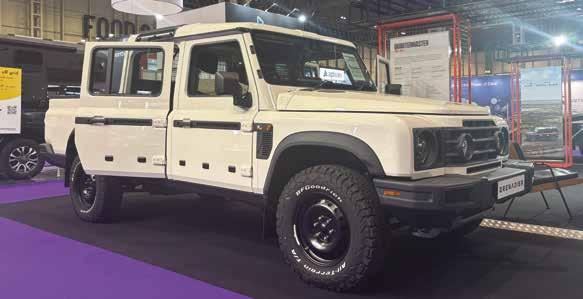

CC&V: INEOS exhibited at the CV Show again this year. How were your vehicles – a chassis cab dropside body, a two-seat commercial, a two-seat Quartermaster and a Blue Light vehicle – received?
Tony Lewis: It was very encouraging: we received a great response, especially for the two-seat Quartermaster. As with last year, the comments we get from visitors to our stand are that we are still the only brand manufacturing real commercial 4X4 vehicles that can handle extreme environments. The team received a significant number of enquiries from both retail and large fleet customers, which was really positive and what we hoped for.
CC&V: With the Grenadier chassis cab and dropside on display, is the conversions sector one that INEOS will be actively pursuing, and do you have conversion partners in place to produce these?
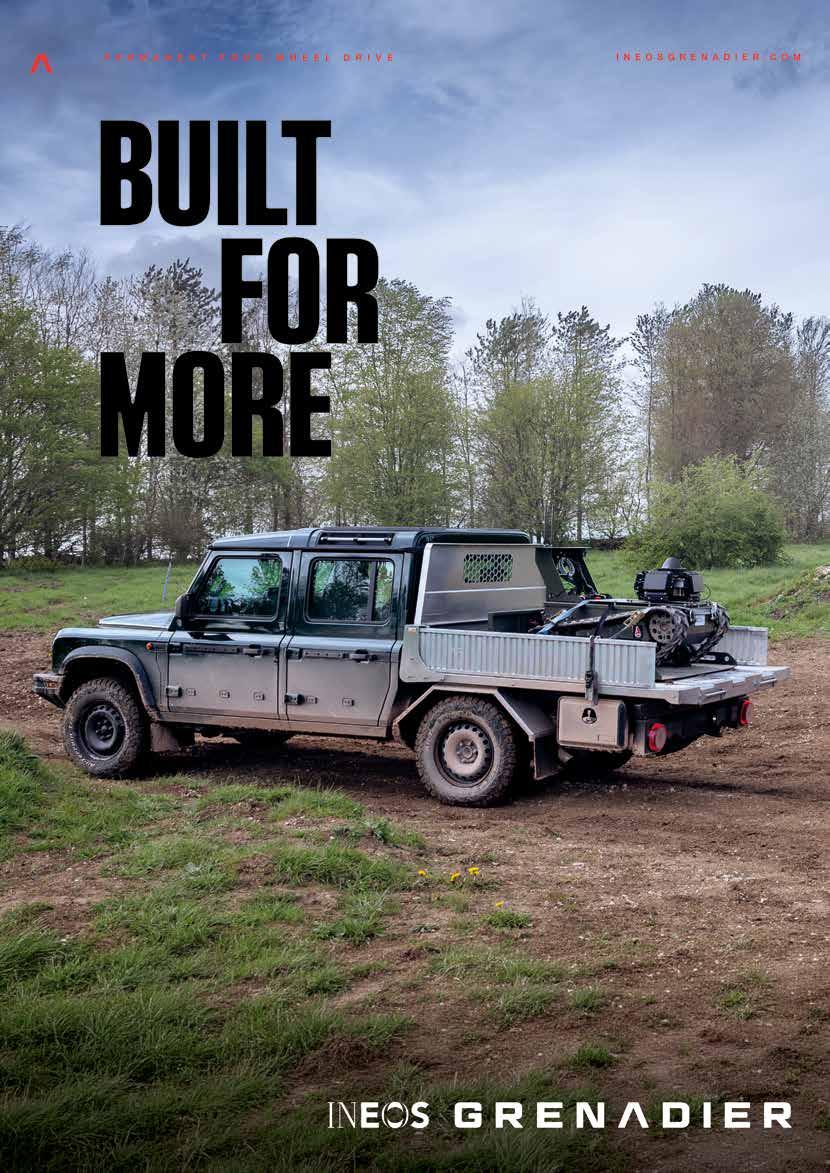
TL: Yes, last year we launched a converter programme to ensure all modified vehicles meet the INEOS standard. We currently have around 25 conversion partners interested in working with us, covering a whole range of adaptations from dropsides and tippers to significant military adaptations.
CC&V: One of your CV Show models was a two-seat Quartermaster which isn’t currently available in the UK. Do you think there’s enough interest going forward for this model to be added to your line-up?
TL: We are assessing the level of interest and that’s one of the reasons we exhibited it at the CV Show; to walk prospective
customers around the vehicle and see what potential operators think of it.
We know it is something that people are keen for us to bring to market, but we obviously need to be sure there would be enough demand to make the business case stack up. We saw a lot of interest at the show, and we’ll take that on board as we get closer to making a go / no-go decision. It is actually something already offered in France, BeNeLux and Ireland, where passenger vehicle taxation on the whole is high.
CC&V: Blue Light is a very specific category and your Grenadier at the Show plainly illustrated that INEOS can produce a vehicle for this sector. Are you already supplying Blue Light models around the UK, and who has taken them on board if you are?
TL: Yes, we currently supply a range of Blue Light vehicles around the UK, with more to follow. One of the major hurdles manufacturers must overcome on a volume basis is the Met Fleet vehicle test, and both the N1 Quartermaster and M1 Station Wagon have successfully completed this assessment conducted by the Metropolitan Police.
CC&V: We drove the Grenadier Commercial last year and came away impressed. With tax incentives for this kind of conversion has INEOS supplied many Commercials thus far, and to what kind of business?
TL: We made some significant changes to our commercial sales and support operations at the end of last year and started 2026 with a greater focus on our business centre programme through our dealer network. That
strategy yielded fast results in the first quarter of 2026 and we doubled the sales of the Grenadier Commercial.
Given the recent changes to taxation on double cab pick-ups, businesses see that two-seat commercial vehicles can offer a significant benefit, and our 4X4 proposition is unique and continues to attract a lot of positive interest.
CC&V: The fact that INEOS now offers several versions of the Grenadier illustrates that you are evolving and adding appeal to your products. Is this just the beginning of where INEOS are heading and will you be launching any new models in years to come that you can tell us about?
TL: Yes, we’ve learned a lot in just a few short years, and broadening the appeal and attracting a wider customer base is recognition that the Grenadier has enormous versatility that suits so many different use cases. That’s helping maintain a strong trajectory: our global sales were up 20% year-on-year in the first quarter of 2026, and we’ve now surpassed 35,000 vehicles on the road in over 50 countries.
I think that’s a significant achievement for a young, small-volume OEM in just three full years of sales.
In terms of launching new models, the plan for INEOS Automotive has always been for us to offer a family of vehicles. We announced the smaller electrified Fusilier model a few years ago, and that’s still in the pipeline, likely launching by 2028.
And there are plans for another two models to follow thereafter.

In
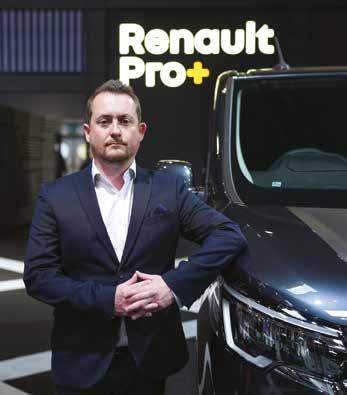
CC&V: Renault had an exciting CV Show, with your new Trafic E-Tech electric leading the way. Can you tell us when this model will be available to order and how it will complement your existing model offering?
Seb Brechon: New Trafic E-Tech electric is central to where Renault is heading in the UK LCV market. We’re planning to open order books later this year, with first deliveries following soon after.
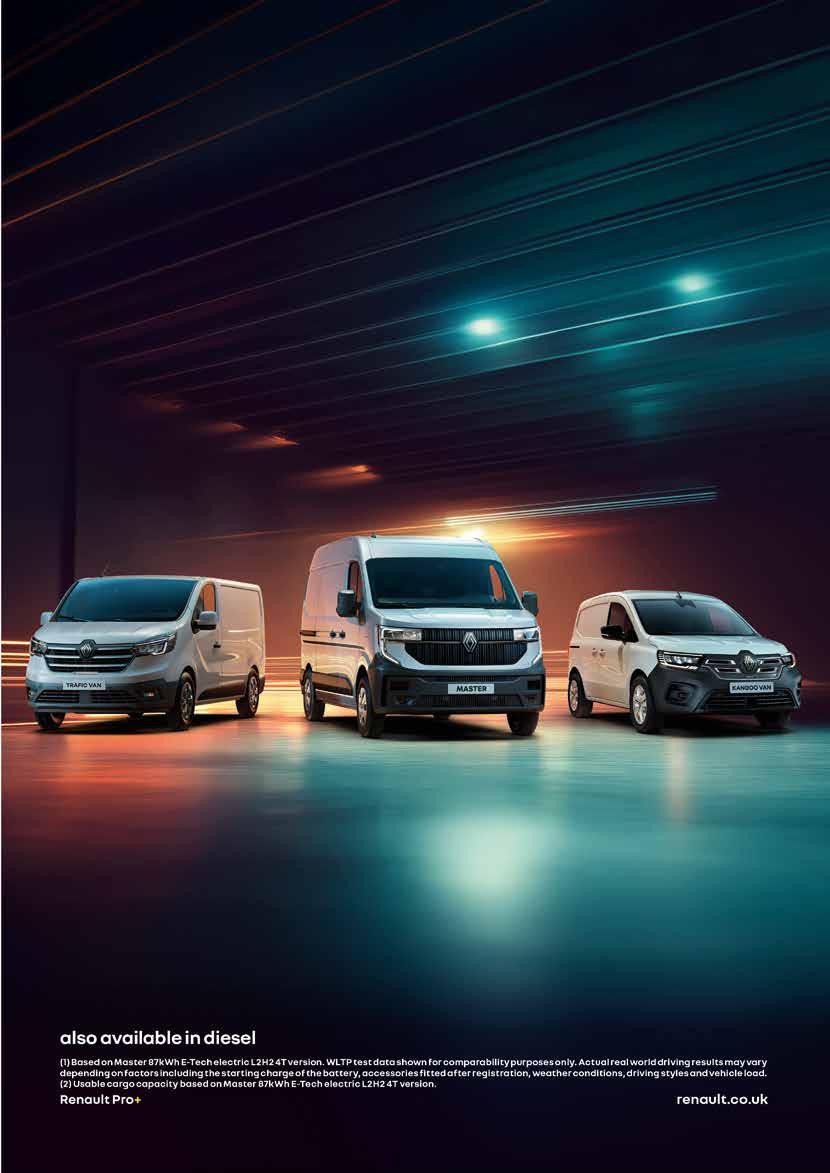
It fills an important gap for customers looking to electrify their fleets without stepping up to a large van. Positioned between Kangoo E-Tech electric and Master E-Tech electric, it gives operators a zeroemission option in the core medium van segment, while retaining the payload, load length and usability Trafic customers expect.
For many fleets, its 800V architecture allowing 80% charge in sub-20 minutes is a game-changer – we believe it will be the missing piece in making electrification genuinely workable.
CC&V: You also announced your Renault Master-based mobile servicing programme, specifically for fleets at this year’s Show, something that’s sure to appeal. Will the programme cover the whole of the UK and how are your Pro+ retailers involved?
Seb Brechon: The mobile servicing programme has been developed with fleet uptime firmly in mind. Our aim is for it to operate on a UK-wide basis, rolled out in phases to ensure consistency and quality of service. Pro+ retailers are integral to how it works. The technicians, vehicles and planning all sit within the Pro+ network, so customers still receive manufacturer-level expertise and genuine parts — but with servicing delivered directly to their site. It’s about reducing downtime without compromising standards.
CC&V: Your new high-specced Trafic Graphite Edition was also on display and certainly caught the eye. Its strong visual impression will attract those who want their van to stand out. What made you launch this Trafic and do you think it will sell well?
Seb Brechon: We know there’s a growing group of customers who want their van to make a statement as well as do a job. The Trafic Graphite Edition gives them something that looks distinctive straight from the factory, without needing aftermarket additions.
Past Graphite and sport-styled versions
have proven popular, particularly with owner-drivers and trade users, and reactions at the Show were very encouraging. We fully expect it to perform strongly alongside the rest of the Trafic range.
CC&V: There was also a focus on conversions. How important are conversions to Renault and is it a sector you expect to see growth in post 2026?
Seb Brechon: Conversions are hugely important to Renault. A large proportion of our LCV customers buy vehicles that need adapting for a specific role, so having factory-approved conversion partners is essential.
Our conversions give customers confidence around quality, warranty and compatibility, which matters even more as vehicles become increasingly complex. Looking beyond 2026, we certainly expect this area to grow –particularly specialist and electric-ready conversions as customer requirements continue to evolve.
CC&V: For the first time, you offered onsite test drives of your model range. How was this received and do you think you’ll be continuing with this at other events?
“The
Trafic E-Tech electric gives operators a zero emission option in the core medium van segment...”
Seb Brechon: The feedback was very positive. Giving people the chance to drive the vans immediately – especially our E-Tech models – added real value and helped move conversations beyond theory.
Wherever it’s practical to do so, we’d like to repeat the approach at future events. There’s no substitute for getting behind the wheel, particularly when customers are weighing up electric alongside more traditional options.
CC&V: Finally, the Renault Master has won a plethora of awards including our own Van of the Year and Large Van of the Year for 2026. With these wins has Renault seen a significant increase in Master sales and in particular the E-Tech electric version?
Seb Brechon: The award recognition has undoubtedly helped, particularly with fleets that value independent validation when making purchasing decisions. Interest in the new Master range has been very strong, and that includes the E-Tech electric version. Many operators are now moving beyond pilot schemes and into fuller EV adoption, and Master E-Tech electric is increasingly part of those conversations. The awards reinforce that it’s not just innovative, but a genuinely credible working vehicle.
Skylight Transport Limited, a leading UK logistics and delivery specialist, has strengthened its nationwide operations through a strategic partnership with Nexo Vehicle Solutions Ltd, supported by Vanaways’ fleet provision.
The collaboration highlights the critical role of reliable vehicles in scaling logistics operations, maintaining service excellence, and supporting high-volume last-mile delivery.
Skylight Transport, operating across the UK with major hubs in London and key regional centres, provides fast and flexible logistics solutions. Specialising in last-mile delivery, high-volume parcel distribution, and two-person home delivery of bulky or high-value goods, the company has earned a strong reputation for operational reliability and adaptability. Its longstanding partnerships with national logistics providers including, Amazon Logistics, DPD, and Yodel, demonstrate its capacity to handle complex and time-sensitive projects.
“Our growth over the past decade - from a single site with a small driver base to a multi-site operation with nearly 800 drivers - is a testament to our focus on quality, reliability, and customer satisfaction,” said Ali

Raza, Operations Director of Skylight Transport. “Reliable vehicles are the backbone of everything we do. Without them, we simply can’t deliver our services effectively.”
Nexo Vehicle Solutions, founded to supply and support Skylight Transport’s operational needs, provides a comprehensive range of vans, including electric options, tailored to meet the demands of high-volume logistics. Working closely with Vanaways, Nexo has facilitated a seamless vehicle sourcing process, enabling Skylight Transport to expand its fleet rapidly while maintaining high service standards.
“Fleet reliability is fundamental to scaling operations and meeting client expectations,” explained James Yeboah, Director of Nexo
Vehicle Solutions. “Providing dependable, well-maintained vehicles has allowed Skylight Transport to take on larger contracts and ensure timely deliveries nationwide.”
The partnership has already delivered tangible results, with nearly £2 million worth of commercial vehicles supplied to support Skylight Transport’s growth. Vanaways’ ability to provide flexible, quick-turnaround solutions has been crucial during peak periods and rapid expansion phases, reducing downtime and enhancing operational efficiency.
Liam Nicholas, Business Development Director at Vanaways, said: “Supporting Skylight and Nexo over the last three years has been rewarding. Their clarity of requirements and commitment to operational excellence makes collaboration straightforward. It’s a partnership built on trust, scale, and reliability.”
Looking ahead, Skylight Transport plans to continue expanding its fleet and nationwide logistics capacity, with Nexo and Vanaways playing a central role in its growth strategy. Together, the three companies exemplify a model of scalable, dependable logistics operations, combining cutting-edge fleet solutions with operational expertise.

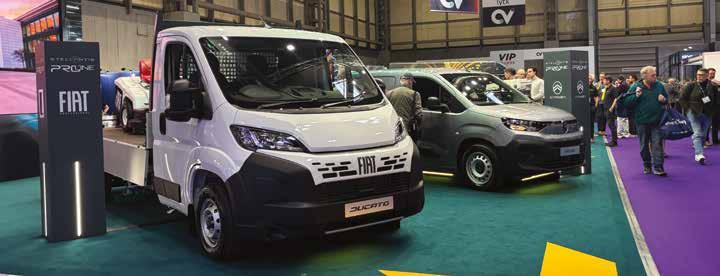
CC&V: Our readers will be familiar with the Stellantis LCV brands – Vauxhall, Citroën, Peugeot and Fiat Professional – but perhaps not Pro One. Can you tell us more about this umbrella name and what it actually covers?
Charles Martin: Pro One is our LCVdedicated business behind the scenes that provides the bedrock to our commercial vehicle activity.
Through our scale across Vauxhall, Citroën, Peugeot and Fiat Professional, we provide a comprehensive solution for the van buyer and user. We have 160 professional van centres, providing sales and, importantly, service, across the country, van customers are assured that the right solution is ready for them.
The benefit that a dedicated LCV Business Unit can bring in terms of support will be demonstrated by the launch of Pro One Next. This will be a data-led telematics solution, being rolled out initially for large scale LCV customers with our latest vehicles, where we will proactively manage, in real time, vehicle maintenance management.
CC&V: At this year’s CV Show you exhibited models from all of your brands. Traditionally, each one has tended to lean toward slightly different sectors, for example Citroen to small businesses, Peugeot to public sector fleet. Is this still the case or are all four brands targeting everybody in the CV sales sector?
CM: We have a dedicated network for each of our brands – Vauxhall, Citroen, Peugeot and Fiat Professional.
The specific brand focus continues and we have long-standing major fleet customers, including Police, NHS, Centrica and Royal Mail for example, that each have deep-rooted relationships and associations with our respective brands.
Building in Britain is a crucial differentiator for us. Our plant at Ellesmere Port in Cheshire
is the UK’s first and only volume EV-only manufacturing facility building.
CC&V: One of your CV Show models was a Ducato conversion. How important are conversions to Pro One and is this a sector you’re actively targeting?
A very important area for our customers is converted vehicles, and with our CustomFit programme we have trusted partners, experts in conversions, where we have not only approved the converter themselves but also the specific conversion.
This gives the customer a fullyhomologated vehicle, supplied directly by the factory with one invoice, covered by the reassurance of our manufacturer warranty and parts supply.
CC&V: Electric vans have been with us for a
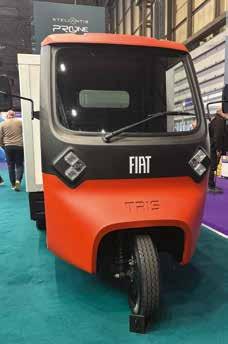
while now and you’ve recently added the Tris. Will Pro One continue to produce electric models and is this an area that you see growth from?
CM: TRIS certainly caused a stir on the stand! Prospective customers were keen to hear about this urban solution for zeroemission last mile delivery. It can carry a Euro pallet securely and all backed by our countrywide infrastructure.
CC&V: To save fleets money, cars converted to vans are proving popular and you have a number of these in group. Is this something you’ll be exploring with any up and coming Stellantis models?
We have just launched the Citroën e-C3 Van which offers practicality and value to professionals. With a 300kg payload, load volume of up to 1,220 litres and a 200 mile electric range, it makes the C3 Van ideal for city and suburban deliveries, with prices starting from under £20,000 with the Plug-In Van Grant.
CC&V: Finally, how was the CV Show for Pro One and was it a success for you ?
It was great to meet many of our valued existing customers plus meet new ones, to demonstrate what Vauxhall, Citroën, Peugeot and Fiat Professional have to offer.
Throughout the event, fleet sales managers and product experts were available on the stand to provide guidance on our full LCV range and discuss key industry topics, including the transition to electrified fleets. Visitors were able to explore different vehicle solutions and gain expert insight into selecting the right vehicle for their business needs.
The FIAT Tris certainly caused a stir on the Stellantis Pro One stand
Farizon used the CV Show to launch its new V7E medium sizes electric van.
Joining the company’s existing larger SV model the V7E provides a 6.95 cubic metre load volume with a payload of up to 1,338kg. At the rear there’s a low 500mm load lip height making access easy.
Inside the cabin, Farizon has made sure that both the driver and passengers get plenty of storage spaces for odds and ends, in what looks a neat, well designed and well constructed space.
The van is available with a single body size, one high spec trim, three paint finishes and the choice of a 50 kWh or a 67 kWh battery. The maximum range is 204 miles.
Perhaps crucially for CV owners, the V7E also comes with a five-year, 120,000 mile warranty, with prices starting at £28,000 + delivery VAT, ZEVG, VED and first registration.
To increase your confidence in the vehicle still further service &and repair is courtesy of the AA’s mobile network of technicians.
The Farizon dealer network is increasing rapidly. At the current time there are now Farizon dealers in Teesside, Buckinghamshire, Somerset, South Wales, Berkshire,
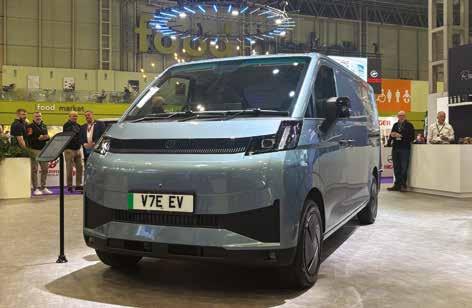
Oxfordshire, Derbyshire and London, with plans to grow the network still further.
The SV range also featured at the CV Show in several guises, with Farizon’s Kate McLaren announcing that the brand has listened to criticism of the SV’s cabin from this magazine and others, and has already updated it, adding adjustments to both the steering wheel and seats.
These will undoubtedly make the SV more comfortable for driver and passengers.
The SV line-up includes the option of a 67
kWh or an 83 kWh lithium iron phosphate (LFP) battery, with a 106 kWh nickel manganese cobalt (NMC) battery available for the L3 H3 model. All battery options feature advanced cell-to-pack technology, reducing weight while increasing battery capacity and body rigidity.
One efficient, all-electric powertrain will be available, featuring a permanent-magnet synchronous motor with an eight-layer, flat wire configuration which produces 170 kW (231 PS) of power and 336 Nm of torque.
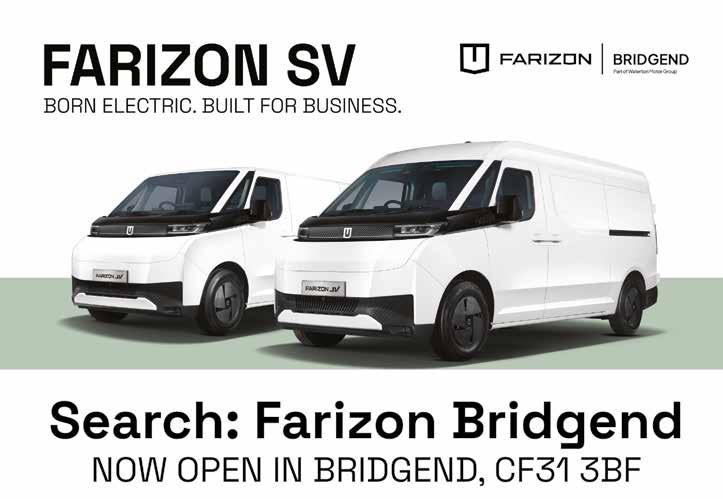
CC&V: It was a busy CV Show for Isuzu with the launch of D-Max EV and your new 2.2 diesel. How were both received and when will these models be available for customer orders?
Alan Able: It was great to be at the Commercial Vehicle Show again this year and showcase our latest products to the CV community, with both vehicles well received by those visiting our stand.
The New D-MAX 2.2 will be with our dealers in August, but we have started taking pre-orders in our showrooms from now. The D-MAX EV is also on sale now with vehicles at dealers nationwide, with test drives already underway.
CC&V: The D-Max EV is incredibly exciting, coming as it does with a one-tonne payload and 3.5-tonne towing capacity. You showed a right-hand drive version this year for the first time. It will appeal to many with its low BIK, but do you think it will sit comfortably alongside your diesel range?
AA: The D-MAX EV is the UK’s first fully

capable BEV pick-up with full-time 4WD, a 1-ton payload and the ability to tow 3.5 tons, all commercial attributes that our customers value.
The EV version provides an alternative zero-emissions powertrain and will be sold alongside our diesel version, giving our Isuzu customers a choice of product that best suits
their individual requirements and net zero targets. It looks, feels and performs like a traditional D-MAX, making it an easier transition for our drivers.
CC&V: We are big fans of the D-Max, believing it to be the best all-around pick-up because it caters for such broad a section of customers. How important are single cabs and conversions to Isuzu, as other pick-up brands don’t seem as interested in these sectors?
AA: The Isuzu D-MAX has always been recognised as an adaptable workhorse. The broad range of real-world uses that the D-MAX has been utilised for is very diverse, and we will continue to support the customers and businesses that rely on this aspect of the vehicle. We continue to operate our specialist vehicle conversion centre to produce bespoke-built vehicles and this remains a core part of our brand offering.
CC&V: You recently introduced a V-Cross Commercial. How has this sold and will this
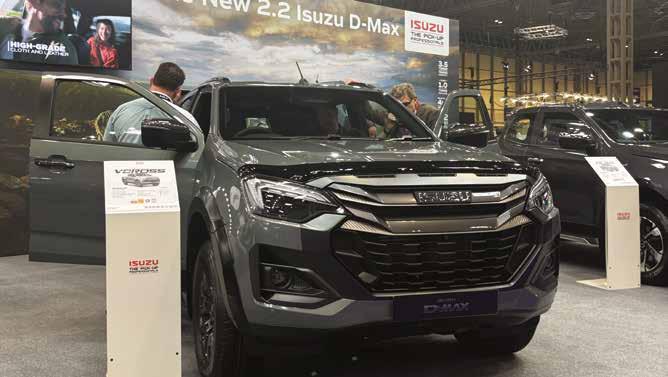
model be fitted with your latest 2.2 engine?
The V-Cross Commercial model was a resounding success, as a result of its practicality and tax-efficient configuration. As the V-Cross Commercial enjoys the flat-rate Benefit-in-Kind (BIK) and 100% Capital Allowance, the model saw sales and interest beyond expectations. In consideration of this
demand, Isuzu UK is exploring the possibility of a Commercial model for the incoming 2.2-litre model.
CC&V: The CV Show has finished, and overall it looked like a good one for Isuzu. Were you encouraged by your stand’s engagement with visitors?
The CV Show in Birmingham has been a central focus for us and marks the start of our show and events season. It is a great opportunity to preview our latest products to an informed and professional audience. It was another busy show year, and we were pleased with how people reacted to the new vehicles.

Volkswagen launched its new Transporter van in 2025. Based on the Ford Transit Custom, it is one of the fruits of the Ford/VW strategic partnership which has already delivered the Connect/Caddy and Ranger/Amarok combinations. With Transit Custom sales dwarfing those of the Transporter, Volkswagen has had to come out fighting, with the all-new Transporter launching at a lower list price, offering a longer warranty and coming with higher specs. A good move? Andrew Walker decided to find out...
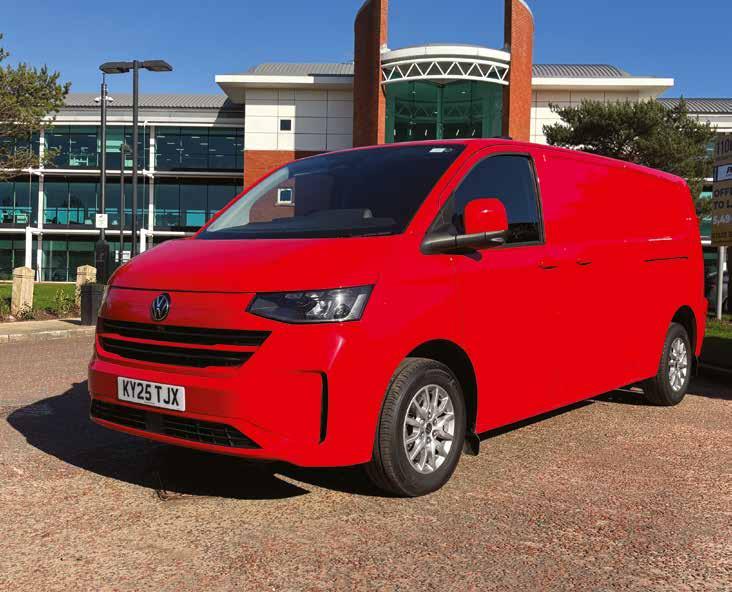
This is the seventh generation Transporter and it comes with an enlarged load or passenger compartment, a higher payload and increased efficiency.
From launch there’s a Panel Van, with Kombi, Shuttle and Double-Cab variants following later in 2025. All models are available with turbodiesel, plug-in hybrid and electric drives with the design and platform shared with Ford’s Transit Custom.
Looks-wise the front and nose are the main visual changes compared with Ford’s version of the van. The front grille takes influence from the T5. The upper edge of the headlights extends as a line into the side section above which sits a pronounced line that divides the upper and lower body, a feature that pays homage to the first generation Transporter. Customers can choose from a tailgate or wing rear doors. Otherwise it’s almost identical.
Drivetrains
First up, the TDI diesel, which comes with
three outputs: 81 kW (110 PS), 110 kW (150 PS) and 125 kW (170 PS). The 125 kW TDI is always combined with an 8-speed automatic gearbox, which is optionally available for the 110 kW TDI as an alternative to the 6-speed manual gearbox. The TDI models from 110 kW can be ordered with 4MOTION all-wheel drive. In 2026 a plug-in hybrid model will arrive which offers 171 kW (232 PS).
Volkswagen is offering three diesel models to UK customers: Commerce , Commerce Plus and Commerce Pro. All variants are available as either standard or long wheelbase.
Commerce comes with 16” steel wheels, LED headlights, rear wing doors, near side door, 12” driver’s display, 13” touchscreen, cruise control, rear parking sensors, keyless start and Wireless App Connect.
Commerce Plus adds body coloured bumpers, a leatherette steering wheel, front and rear parking sensors, a rear-view camera, keyless start with Safelock and an anti-theft alarm.
The range-topper Commerce Pro ups the ante with 16” alloys, a heated windscreen,
heated seats, wireless phone charging, auto air-con, Adaptive Cruise Control, Blind Spot Assist, extra USB ports and super-bright LED lights in the load area.
What’s new?
The panel van with standard wheelbase and normal roof, now offers a load compartment with a capacity of 5.8 m3 which is 0.3 m3 more than its predecessor. If you opt for the high roof and long wheelbase, the load capacity of the Transporter panel van increases to 9.0 m3 with the maximum payload up from 1.2 tonnes to 1.33 tonnes. Three Euro pallets now fit inside the Transporter long wheelbase and a useful addition for tradespeople is that electrical devices with a total power of 400 W up to 2,300 W (depending on model) can be operated via optional 230 V interfaces.
Standard equipment includes Autonomous Emergency Braking, Lane Assist, front and side curtain airbags, cruise control, rear parking sensors, Dynamic Road Sign Display and Front Collision Warning. As you step up
through the trims additional features include Intelligent Speed Assist, front and rear parking sensors, Adaptive Cruise Control and a rear-view camera are also included.
Safety feature notifications
The best news though is that unlike so many new vehicles, the Transporter’s safety features aren’t too intrusive. Two pushes on the steering wheel button turn off lane departure, while the speed recognition notification isn’t in any way annoying. The driver attention warning is a little off as I kept being told to take a break when I’d only been driving for 15 minutes.
Cabin
Climb aboard and the interior immediately smacks of quality. Yes, it’s almost identical to the inside of a Ford Transit Custom although VW has a different steering wheel and driver’s display. The electric handbrake is located between the centre air-vents and the gear selector is on the right steering wheel stalk, freeing up floor space meaning the driver can move across the cab for pavement exit and entry. If there are three in the cab, there’s decent legroom for the centre passenger as well and certainly more than in a number of competitors’ offerings.
Infotainment
We are a family of Volkswagen drivers so the touchscreen inputs and menus are straightforward coming as they do from the VW passenger range. There are some physical buttons for functions such as the heated windscreen, and these are located on a single section under the screen. Apple CarPlay and Android Auto are included as standard. We did connect an iPhone and it connected to CarPlay promptly allowing us to utilise Waze and listen to our favourite podcasts.
Cabin practicality
Up front there’s two USB inputs and a 12v socket in the centre dash and a clever pull down cup holder. The doors feature three different storage spaces, with a dash top open area in front of the driver as well. There’s a good sized glove box and even a dash top mounted closing box in front of the passenger. Our test cabin also had two more USB’s within the dash top open area. The far left passenger seat lifts up to reveal a really useful storage area and there’s also two fold down armrests.
Practicality
Payloads range from 767kg on the 150PS 2.o TDI 8 speed auto LWB Transporter, all the way up to 1238kg in the 170PS 2.0 TDI 8 speed auto SWB model. There’s a 1,400mm aperture for the back door with 1,932mm of space between the arches.
The load compartment length on the Standard wheelbase model is 2,602mm, whilst the extended wheelbase version offers
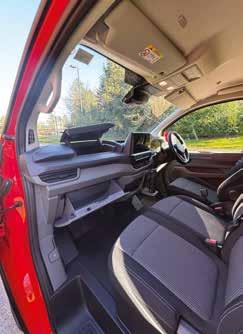
3,002mm. There’s also a hatch in the bulkhead which allows you to load long loads into the space under the front seat, adding another 448mm to the total.
The SWB offers 5.8 cubic metres of space increasing to 6.8 cubic metres for the LWB model. The rear doors open up to 90 or 180-degrees with a 1,400mm wide opening. All versions offer a braked towing capacity of 2,300kg and for now before a higher roof model is launched, all also come in under 2m high making the van car park-friendly.
Driving modes
The Transporter diesel is available with five Drive Modes; Normal, Eco, Sport, Slippery and Tow/Haul. These tailor throttle response, steering and gear-change behaviour, based on the outside environment and weather conditions.
The diesels will hit 62mph in 13.4 – 16.9 seconds dependent on model. Combined economy ranges from 31.4-40.9 mpg. Over our 250-mile week driving on a mixture of roads and in a warmish March we came away with a week’s average of 36.2mpg.
Prices
These start from £30,995 + vat for the T28 Panel Van Commerce SWB 110PS 2.0 litre TDI 6-speed manual, rising to £40,345 + vat for the T32 Panel Van Pro LWB 170PS 2.0 litre TDI 8-speed auto. These are competitive .
We were testing the auto and it’s an absolute doddle to drive. I had to keep pinching myself at just how quiet and smooth the diesel unit actually is.
Climb aboard and from the driver’s seat everything is easy to reach including the
touchscreen. Visibility is also good, although you will need to lean forward to look left on some occasions. The handy built-in reversing camera with parking lines makes reversing simple, especially on to our own tight driveway.
Driving locally is a pleasure. The Transporter is just so pleasant to be in and handle, it’s more like a large SUV than a panel van. On some local winding and undulating roads the van comes with exemplary handling and my fellow passengers felt they had enough legroom when we sat three abreast. You also get two fold down armrests, one on the right and the left of the driver so the middle passenger can use one as well, which really adds to the cabin comfort.
On a trip to the Wirral and back we engaged cruise control and comfortably overtook some slow moving traffic along the M56 and M53. At a constant 70mph the Transporter remains quiet but on . Cabin insulaton is very good and conversations can be had without shouting, even at higher speeds. The onboard safety is impressive and as we’ve already mentioned, can be tweaked via the touchscreen menu and steering wheel controls. That’s a big tick from us.
It’s very easy to connect your smart phone to CarPlay so if you prefer to utilise your own Apps such as Waze that’s simple too.
Having driven the electric Transporter we felt that the diesel especially in auto mode rides and handles more naturally than the electric Transporter, no surprise as it weighs as much as 400 kgs less than the electric model.
Any negatives? We were testing the van unladen so it got a bit noisy at 50 mph and above when we were driving over poor quality tarmac. It’s due in the main to the tyres but a busier load space would have dulled the noise down we reckon.
More practical than the outgoing T6. Auto drives beautifully. Classy user-friendly interior. Plenty of model choice. Better warranty than on the Ford.
Almost but not quite the same as a Ford Transit Custom.
Let’s address the elephant in the room, that the new Transporter is essentially a Ford Transit Custom. While this may upset some existing Volkswagen van customers, the simple truth is that by utilising a tried and tested platform and engines from Ford, VW has got themselves a much better, more practical panel van than they had before. We like it.
CC&V RATING: N N N N N
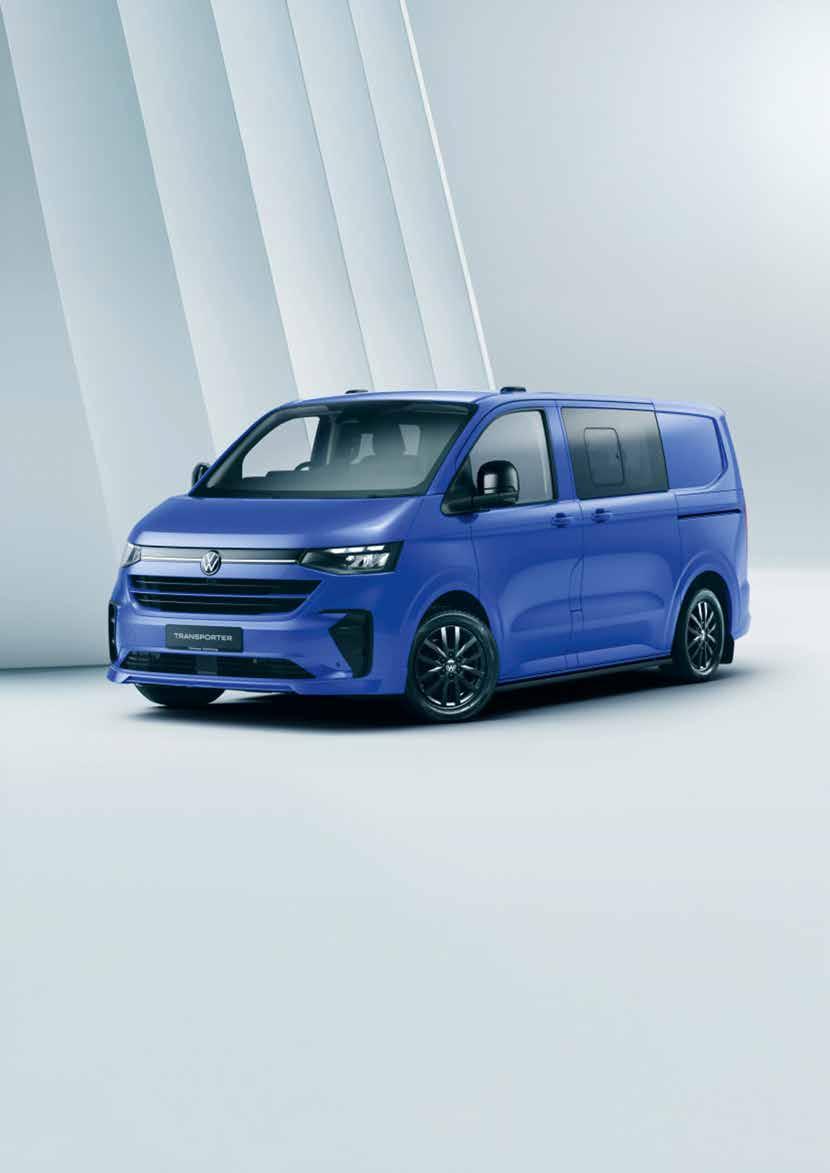

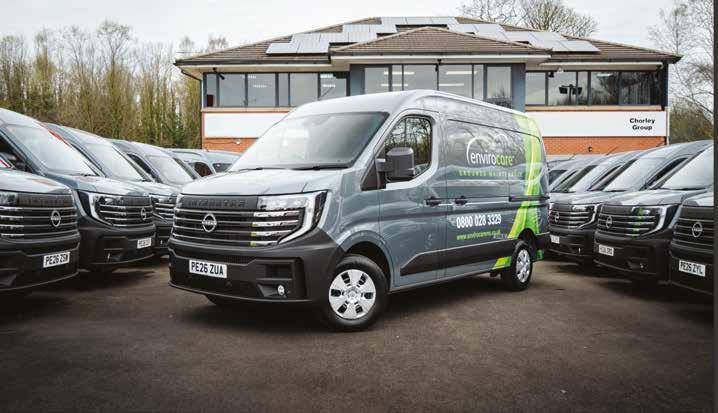
New fleet includes manufacturer’s popular Primastar and Interstar models.
Chorley Group delighted to be helping a fellow business based in the north west of England.
LCVs have been specially adapted to meet the needs of Envirocare Maintenance Solutions.
Chorley Group, based in the North West of England, has supplied 40 new Nissan vans to a busy gardening and grounds maintenance company.
The vehicles – a combination of Primastar and Interstar models, both panel vans and dropsides – have been acquired by Envirocare Maintenance Solutions.
The business offers a range of specialist allyear-round commercial gardening services principally designed to meet the needs of
customers in the commercial and utility sectors, such as business parks, medical establishments, care homes, hotels and restaurants.
The vans are now travelling the highways and byways of the UK and are settling well into their new roles. They have been fitted with integrated cameras, real-time tracking and predictive maintenance technology.
These are all features which will help the Envirocare team manage their schedules efficiently and look after their clients as effectively as possible – and eye-catching company livery adds the finishing touch to each vehicle.
Primastar is Nissan’s versatile and reliable mid-size LCV; while Interstar – recently crowned Large Van of the Year at the 2026 What Van? Awards – is its bigger sibling. Both are engineered to be dependable allies for businesses such as Envirocare who play such a crucial role in keeping the UK economy moving.
Craig Gilfoyle, Finance Manager at Leyland-based Envirocare Maintenance Solutions, said: ‘‘A big thank you to Chorley
Group for all their hard work in assisting us with our fleet upgrade.
‘‘Our new Nissan vans really do look great and they meet our needs perfectly. With spring having arrived, we of course have a very busy few months ahead and these fabulous new vehicles will help our operations enormously.’’
Robson Broomhead, Group Corporate Manager at Chorley Group, said: ‘‘We are pleased and proud that Envirocare Maintenance Solutions chose us when they decided to upgrade and update their fleet.
‘‘Although operating nationwide, Envirocare are rooted here in the North West – something we’re especially proud of as we continue supporting local businesses on their growth journeys. We thank the team for their custom and look forward to working together moving forward.’’
Chorley Group is a family-owned motor group with more than 35 years of experience supplying new and used cars, vans and Motability vehicles. The company operates six Nissan dealerships in locations such as Blackpool, Burnley, Wigan and Chorley.
“Primastar and its bigger sibling, the Interstar, are engineered to be dependable allies for businesses such as Envirocare which plays such a crucial role in keeping the UK economy moving. ”
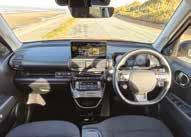
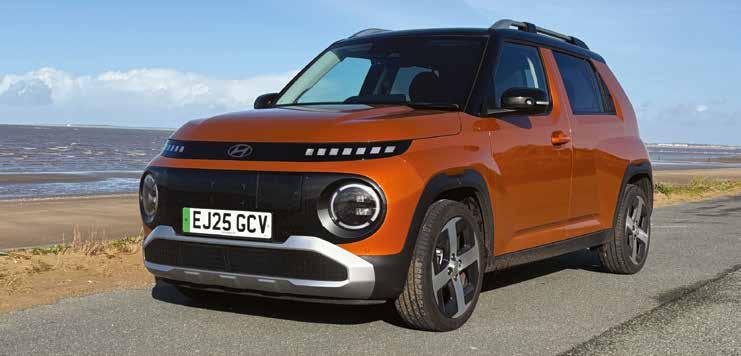
Small electric cars have finally started to arrive in numbers, and Hyundai’s entrant is the Inster, a five-door hatchback that certainly stands out in a crowd. Ours arrived finished in Sienna Orange with a black roof. Here’s what Andrew Walker found out...
Model choice
Entry level Inster 01 has either a 42kWh Standard Range battery or a 49kWh Long Range one. Inster 02 has only the larger battery, as is the Inster Cross.
Performance
Standard Range offers 96bhp for 0-62mph time of 11.7 seconds and a top speed of 87mph. Long Range is marginally quicker with 113bhp, reaching 62mph in 10.6 seconds with a top speed of 93mph. Cross is the same as Long Range but has 116bhp.
Specs
All versions are fitted with an 11kW on board charger. Inster 01 includes a 10.25” digital instrument cluster, the 10.25” touchscreen with SatNav, climate control, smart cruise with Stop and Go, battery heater and 15” alloys.
Inster 02 adds 17” alloy wheels, full LED projection headlamps and heated front seats. The Inster Cross is a lifestyle model with bumper cladding, roof rails, 17” alloy wheels.
Prices start from £23,505 to £28,755. Ranges are 203 miles for the 42kWh and 229 miles for the larger version. This dips to Inster Cross.
Exterior
Think small and boxy like a Suzuki Ignis and many Japanese kei cars. At the side you get black bulbous wheel arches and unique alloy cross designs in chrome.
At the front are large circular headlights with pixel square LEDs.
Plenty of normal switchgear to make navigating the instruments super-easy. The 10.25” touchscreen sits proudly aloft the centre dash, with two air vents beneath. Lower down you get a group of stand alone switches for volume, climate, the heated seats, parking camera and wireless charging pad. Short-cut buttons allows you to access screen functions as well Map, Nav, Radio, etc.
Don’t expect any tactile finishes, it’s mainly smooth, hard plastics finished in black.
Apple CarPlay and Android Auto are standard, as is the 10.25” touchscreen. The operating system is a couple of gens old, so you’ll need to connect your phone via a cable to connect to CarPlay or Android Auto.
The upright shape offers massive amounts of headroom and plenty of space. There’s a neat armrest that moves with the driver’s seat, as do the centre twin cup holders. A good sized glove box, a storage area above, a centre cubby, twin front USBs a single rear USB and a 12v socket are all on offer.
The sliding rear bench increases the boot space from 238 litres to 351 litres. It is a strictly a two-seater in the back.
Charging and range
Plug in overnight to full charge to 199 miles. The maximum charging speed is 85kW, or 73kW in the smaller-battery model, so a 10-80 % charge on a public fast charger will take just 30 minutes. Charge at home and the smaller batter takes six hours to fully recharge.
Driving
Acceleration to 62mph is slow, thanks to the electric drive train, but nippy urban driving
is possible and with the regeneration set on max, you can accelerate fast then let the car bring itself to a stop, all while adding some battery range.
Road noise is noticeable once you hit 40mph, as is wind noise, but neither are loud enough to spoil the experience. More than enough power on offer to keep up with traffic on the motorway.
Real world range
Real world driving saw us averaging 3.8 miles a kWh and our longest drive (90 miles) all on the motorway, saw us use up 110 miles of range, so we’d guess at a combined driving range of 170 miles for the Long Range model, 200 miles if driving just in town would be about right.
Pros
Distinct exterior makes it stand out in a crowd. Some incredible premium features such as autonomous driving and the i-Pedal are available. The interior is like a Tardis. Just 3% BIK.
Cons
We like its looks, some may not. Interior is a little plasticky. The ADAS housing on the windscreen is enormous.
A great small electric car and a worthy addition to the sector. Plenty to like. Premium safety and regen features, the exterior puts the ‘F’ in Funky and the cabin is cleverly designed and spacious. Interior finishes are a little cheap, and turning off driver warnings is a bit of a chore. But still one of the best small electric cars we’ve driven.
CC&V RATING: N N N N
For those of us old enough to remember the 80s, the Vauxhall Frontera was a chunky 4WD SUV based on an Isuzu. Powered by petrol and diesel engines, it disappeared in 2005 but was resurrected last year as a much more friendly and small family SUV. We popped down to the West Country to put the electric version through its paces...
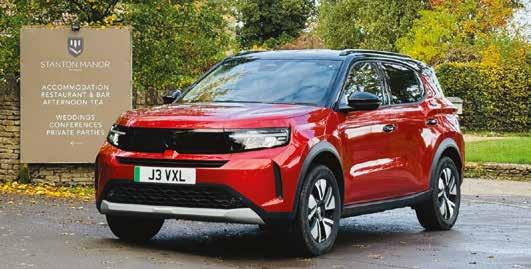
Tell me more?
The Frontera shares the Stellantis ‘Smart Car’ BEV-native platform with the Citroen C3 Aircross and Fiat Grande Panda. It’s developed for both electric and ICE drivetrains.
There are four FWD options. Two petrol engines, a 1.2-litre three-cylinder hybrid, offered with 99bhp or 134bhp, or two electric models, fitted with either a 44kWh or 54kWh battery and single electric motor with 111bhp.
Prices
The entry level Design EV costs £22,495 with the Electric Car Grant, with the higherspec GS starting at £24,495. In comparison the Frontera Hybrid is from £24,000.
Trims
Three are offered. Entry level Design comes with a 10” touchscreen, Apple CarPlay and Android Auto, LED headlights and 16” wheels . GS adds 17” alloys, front parking sensors, blind spot alert, dark silver skid plates, tinted rear windows and LED taillights. Ultimate includes high gloss black roof rails with a 240kg load capacity and heated seats, steering wheel and windscreen.
Exterior
Almost identical model to the Citroen C3 Aircross but with Vauxhall touches: Vizor grille, Intelli-LED headlights and curvy C pillar.
Interior
A little conservative compared with the C3 Aircross, with black, chrome and greys on the dash front, seat fabric and doors. Two 10” displays, one for the instruments and the other for the infotainment, are clear and easy to use. Nice to see some key functions are controlled by physical buttons, such as the cruise control and the infotainment. The seats feel tough and durable, with good finishes. There’s also an adjustable band on the centre
console that’s been cleverly designed to fit drinks containers of varying sizes. All in all it’s impressive at this price. Apple CarPlay and Android Auto are standard.
This is where the Frontera really shines, with the option of a third row of seats on GS and Ultimate hybrid versions. Two-way adjustable headrests and a ‘fold and tumble’ seat mechanism also provide easy access to the third row when fitted. Interior storage is up to 23 litres, while the 60:40 split secondrow seats and a two-level boot floor mean a capacity of 1,600 litres with the rear seats down, 460 litres when they’re in place.
Battery and range
There are two battery configurations: Standard Range 44 kWh battery with a claimed WLTP range of up to 188 miles, or the larger Extended Range 54 kWh battery with range of 249 miles. We would suggest this will be more like 240 miles in summer, 190 in winter. Charging from 20-80% in the smaller 44kWh version takes 26 minutes or 28 minutes for the 54kWh model. A 7.4kwh home charger will be four hours 10 minutes or 5 hours 5 minutes respectively.
Performance
The Frontera Electric takes 12.8 seconds to reach 62mph with a top speed of 87mph. The 54kWh Extended Range model takes 13
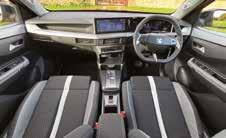
seconds to reach 62mph. With 111bhp and just 125Nm of torque these figures are hardly surprising although unlike many EVs, the electric Frontera doesn’t offer a low down acceleration which was a surprise.
Out and about
A doddle to drive but not exciting, though that’s not what it’s here for. It’s spacious and comfortable, head and legroom up-front are excellent and not bad in the back, and the cabin is bright and airy. Ride comfort is good, masking the worst aspects of battery weight and poor road surfaces. Excels in the city and cruises nicely on the motorway.
Pros
Amazing value for money, practical and user-friendly. Company car drivers will get a family-sized SUV with just 3% BIK.
Cons
The cabin and ride aren’t quite as good as on the C3 Aircross. Some lower down plastics and surface finishes feel cheap and cheerful. Does a great job of carrying five passengers and luggage but feels slow.
Like a top-notch defensive midfielder, the electric Frontera does everything that needs doing without making a song and dance about it. Spacious, comfortable, well equipped, practical and, perhaps best off all, an absolute bargain price-wise! Isn’t a thrill ride and not as funky as the C3 Aircross, but Vauxhall’s EV commitment is to be commended, as is the willingness to offer a practical EV at under £23,000. We’d pay more for the 54kWh GS at just under £30,000, but that’s still a steal.
CC&V RATING: N N N N N
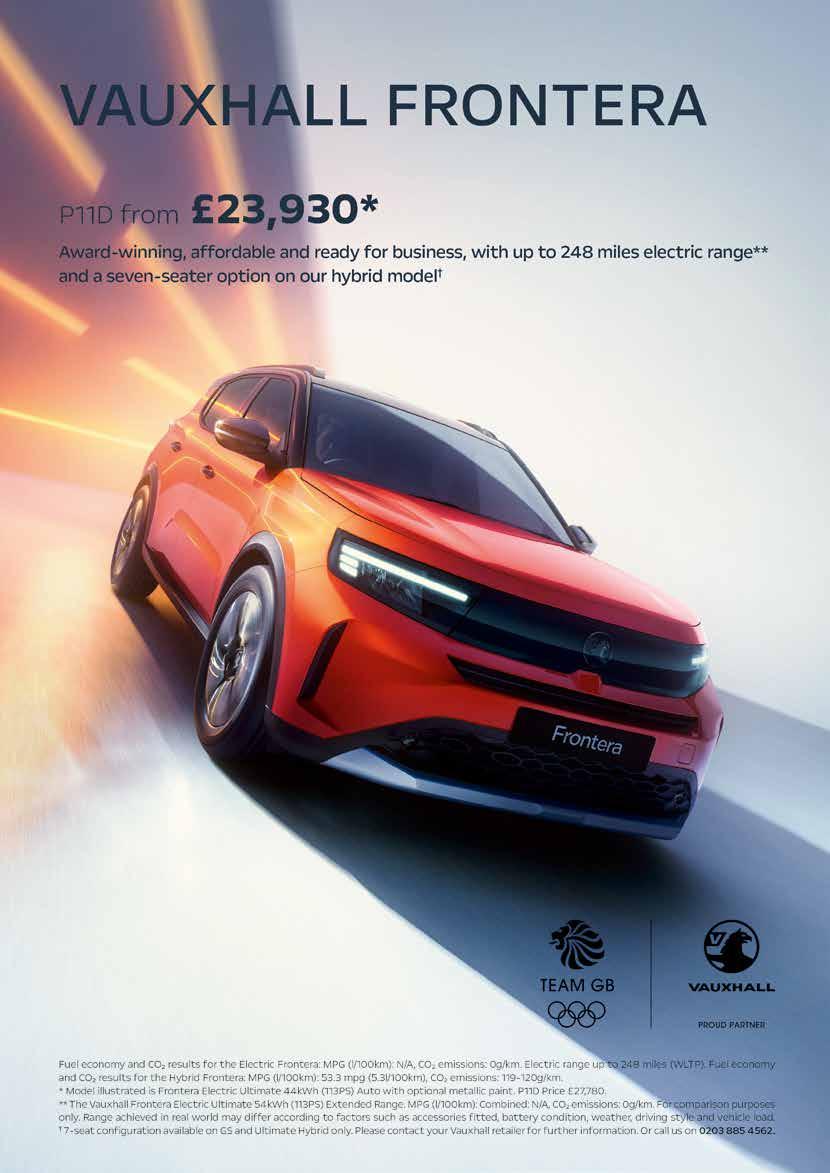
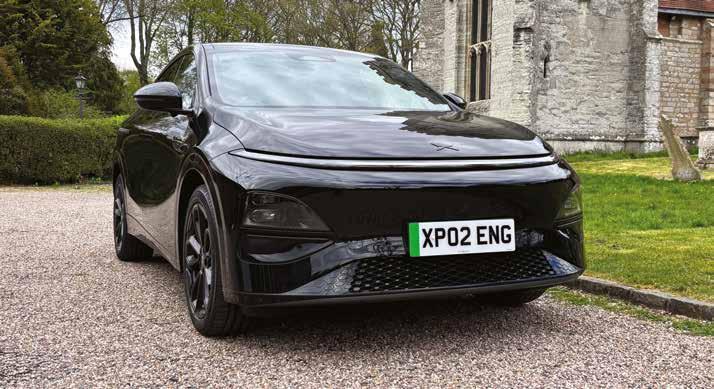
Chinese manufacturer XPENG launched its G6 model in 2025, with a G9 luxury MPV set to follow. It’s a Tesla competitor and we liked it enough to award it our Executive Car of the Year for 2026. As Chinese brands are apt to do, the G6 has already been updated and this new version arrived at Company Car Towers for us to test. Andrew Walker got behind the wheel...
What is it?
A five-door electric RWD SUV hatchback with smooth lines that features a slim bonnet front light strip with an X in the centre, a Porsch-esque narrow rear light strip, steep rear window and slim side windows with pop out door handles.
Exterior and other updates
Subtle, with a new full width LED light bar, less exterior black cladding and a high efficiency heat pump is now standard across all trims.
Model choice and Performance
Three versions are offered, a G6 RWD
Standard Range which comes with 280bhp and will accelerate from 0-62mph in 6.6 seconds.The G6 RWD Long Range which has 296bhp, is quicker to 0-62mph in 6.2 seconds and a range topping G6 Dual Motor AWD, which hits 62mph in just 4.1 seconds thanks to its crazy 470bhp. Top speed across all there is 124mph.
Prices
Pricing starts at £39,990 for the RWD Standard Range with the Long Range at £44,990 and the AWD Performance available for £49,990.
Interior upgrades
Updates from the Mk 1 include a new steering wheel that has just two button controls, a suede effect headliner, upgraded door panels and pillar finishes and a new ambient lighting system. Redesigned speaker covers, softer wireless charging panels now at 50w each and, on RWD Long Range and AWD Performance versions, an upgraded 9” digital inner rear view mirror now feature.
Displays and build quality
Almost all is controlled via the 15” central touchscreen. You also get a 10.2” information display in front of the driver which illustrates range, speed, tyre pressure, vehicles around
you and driving mode. The fonts used are quite small and as they’re plain black on a white background, can be a touch difficult to pick up in bright sunlight. Quality throughout is very good with a mix of soft plastics and tactile fabrics and synthetic leather for the seats. The steering wheel is an odd squared/ circular shape with just two spin wheels on the centre section that control the media, volume, cruise control when in use, the climate when not. The right side stalk is for the gears and pushing it all the way down engages cruise control. The left-hand stalk controls the wipers and lights.
Cabin practicality
Good news is the spacious cabin which offers excellent front head and legroom. The rear seats offer plenty of this as well and it is large enough to fit three adults in side by side. The large windscreen offers a great forward view, but both the narrow rear window and shallow side windows make parking a tad difficult, and you’ll need to utilise the side mirrors using the screen sub-menus and reversing camera on occasions. The steering wheel adjusts fore and aft and the electric seats offer a memory function and are heated, too.
Continued on page 54
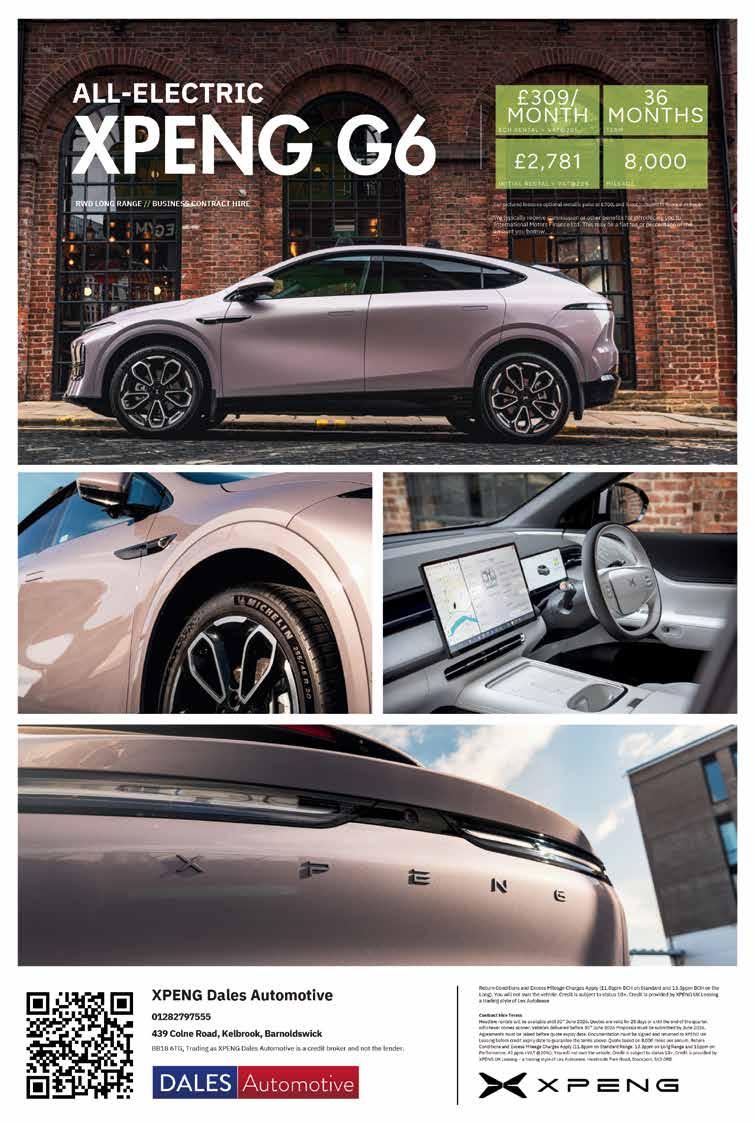
Continued from page 52
The boot comes with a light movable parcel shelf and 571 litres of space, so plenty of room for the heavy charging cable which can be stored in a bag. Fold down the rear seats and the space goes up to a whopping 1,374 litres .
Any Tesla customer will be familiar with the clutter-free set up with almost all functions going through the screen. SatNav, DAB, Apple CarPlay and Android Auto are all included. The Snapdragon processor makes the screen quick and responsive, although you’ll need a bit of time to get used to the menus. The XOS cockpit system has been upgraded too, so customers benefit from faster app responses, a smarter voice control with Hey XPENG now offering intelligent recommendations across four zones in the cabin.
batteries
The updated G6 will peak charge at a whopping 451 kW; that’s up from the previous 280 kW. Charging the battery on a public fast charger from 10 to 80% now takes just 12 minutes.
The battery size has been updated so it’s now slightly smaller. You can choose a 68.5 kWh battery with a 292-mile WLTP driving range or an 80.8 kWh battery with a 326-mile range in RWD Long Range or 316 miles in AWD Performance versions. At home on a 7.4kWh charger a full replenish of the larger battery will take approximately 11 hours.
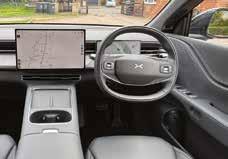
Just one specification so the goodies list is high and includes a panoramic roof, 15-inch infotainment system, 18-speakers, 20-inch wheels wrapped in Michelin Pilot Sport EV tyres, electrically adjusted memory and heated seats are all standard.
You can select from four driving modes. Eco, Standard, Sport or Individual and within each can adjust the power steering and braking between Comfort, Standard and Sport.
Regeneration levels can also be altered with Low, Medium High and XPedal the options, the latter offering almost one pedal driving. For the thrill of it when you’re in Sport mode there’s a Launch option which was great fun, unleashing the G6’s full potential. Despite the power on tap it’s an easy car to drive, quiet, refined and comfortable. Around town it was a relaxing car to be in and on a 200-mile motorway trip, one of the best cars I’ve driven
so far this year for striking the comfortrelaxed-fun balance.
As far as range goes the Performance gave us a 316-mile range.A 200-mile return trip saw us use up 208 miles of our range, with most of this at a constant 70mph. We’d surmise that 300 miles is doable.
Striking exterior, quality interior with plenty of space for five. Drives and handles exceptionally well. Competitively priced. Just 3% BIK.
The lack of physical buttons in the cabin to adjust simple things is a touch annoying but you do get used to it.
Excellent. More European friendly than most of its Chinese rivals. BYD, Omoda, Jaecoo, Geely and Changan are leading the Chinese charge but we reckon the XPENG is the best of the bunch so far, with the updates, especially to charging speed, making it an even stronger company car prospect. Would we choose one over a Tesla? We would and we’d be happy driving a G6 everyday as well, especially as the new Performance model offers such exhilarating acceleration.
CC&V RATING: N N N N N
Skywell is a relatively new name to many in the UK, though at CC&V we’ve been keeping a close eye on their progress for some time. We caught up with David Clark, the company’s General Manager in the UK, to find out a little more about its future plans
CC&V: We drove your first model, the BE11, in late 2024 and while it had a lot going for it, we didn’t think it was as good as it could be. What improvements have you made to it for 2026, and do you feel it can now compete with other Chinese electric cars?
David Clark: As a new brand launching a new product in to the UK, with little experience in markets outside of China, we gained valuable feedback upon launch in 2024. As a result of that feedback we tasked the product and engineering team in China with developing many of the features that journalists felt were absent from the initial model.
Therefore, the updated BE11 now includes a full suite of ADAS equipment - which has been developed by our engineers on UK roads, to ensure they meet our road standards, avoiding the harsh pulling or irritating warning chimes you often experience on new vehicles.
We have also improved interior comfortwith interior air particulate monitoring, front seat heating and ventilation, memory settings and lumbar adjustment as standard, to increase driver comfort - already one of the BE11’s strong suits. And finally, we have improved convenience - with a revised dash layout, larger screen option, and UK three-pin plug socket, additional USB and USB-C sockets; the new BE11 is now the full package.
CC&V: Your dealer network is growing, enabling the brand to be visible in more locations. How many dealers do you currently have and what number are you aiming for in total?
DC: We currently have 16 dealers - ranging from Barnsley in Yorkshire, to Exeter in Devon; and full coverage across South Wales. While we don’t have a specific number in mind, our goal is to achieve a network coverage for the majority to be within 40-minutes of their nearest Skywell dealer, and with coverage within the larger UK cities. In addition to our dealer network - which include sales and aftersales facilities - we will also have a dedicated Approved Repairer network, which will offer aftersales only facilities, making maintenance and repair facilities easier to locate.
CC&V: The BE11 is an electric C-sector SUV tapping in to the most popular car segment in the UK. What will be your next model and when will it be arriving on our shores?
DC: The next car to come from Skywell will be a sleek and stylish C-segment all electric
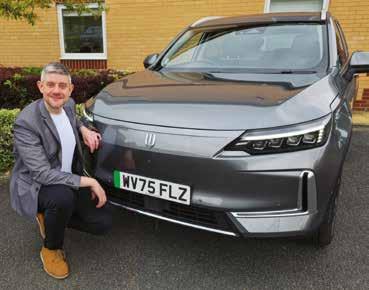
five-door hatchback. Unlike the BE11 which is available in one specification and powertrain, the Skywell Q is likely to be offered in varying trim levels, with differing specification and powertrain options to appeal to customers looking for a great value well-appointed hatchback, up to thrill seekers looking for an alternative to the established performance hot hatch brands.
In 2028 we should then see the release of the Skyhome saloon. This is currently a four-seat premium saloon at concept phase, but is a halo-model to sit at the top of the Skywell car range, featuring the latest tech, interior comfort and driver safety available from the Skyworth Group.
CC&V: Chinese cars are doing really well in the fleet and salary sacrifice sectors, so there should be no reason that Skywell can’t follow suit. Do you have a relationship with a leasing company and are your dealers primed to deal with fleet enquiries?
DC: Leasing deals on EVs certainly represent fantastic value for money, and the BE11 is no different. We have seen the BE11 as low as £207+VAT per month, which for a large C-sector EV offers incredible value. We are liaising with more funders now on the updated 2026 model, which should be live imminently. We have set up our dealer network on the relevant platforms to enable them to process new vehicle orders, and also just as important, receive subsequent service and maintenance bookings from leasing operators.
CC&V: When we met up in late 2024 Skywell talked about launching an electric van. When will this be happening and can you tell us anything about it?
The new Skywell van (named Hongtu in China - but not named for overseas export markets yet), is currently known by its platform name ‚‘233’.
“Skywell’s pillars are: space, value, comfort, safety and technology. We are powered by a real focus on driver comfort...”
David Clark
While its final UK RHD specifications are still being determined, the aim is to have the vehicle available in a range of body styles from L1H1 to L3H4, with up to a class leading 14 cm3 cargo area, a maximum 1,395kg payload and a maximum 101kWh LFP battery - which is being developed inhouse by Skyworth Group using CATL modules. They are also talks about chassis cab options and a range of tipper and drop-side bodies to accompany the van.
Skyworth has a solid history of building strong and dependable buses, coaches, HGVs and LCVs which have been on sale in their domestic market and across the Middle East and South American markets for over 20 years. We are aiming to launch the ‘233’ later this year, with deliveries likely to commence at the end of 2026, or early 2027.
CC&V: Finally, it’s been a good 12 months for Chinese car sales in the UK. Where would you like Skywell to be in two years time?
DC: While some Chinese brands in the UK have targeted large volume, they have largely done that with PHEV and petrol models. Skywell is more focused on scaling its global distributorship organically with a range of purely electric vehicle. In two years we should see a more developed range in the UK, including a three-car line up, across SUV (BE11), hatchback (Q) and executive saloon (Skyhome). Plus, we will have an electric van offering multiple body configurations.
With that breadth of product, we also broaden our appeal to a wider audience, to include younger families and hot hatch fans, commuters seeking comfort and connectivity, and multi-drop delivery and tradespeople.
Skywell’s pillars are: space, value, comfort, safety and technology. We are powered by progress, with a real focus on driver comfort, and if the advancements in the first 18 months are anything to go by, I’m excited to see what the next two years brings.
Leapmotor has added a new REEV motor to its large C10 SUV. In effect it’s a small battery coupled to a petrol engine and a range extender. Andrew Walker took to the roads around Bristol to see how it performs.
Tell me more?
The C10 REEV combines a 1.5-litre four-cylinder petrol engine with a 158kW (215hp) electric motor that drives the rear wheels and is powered by a 28.4kWh battery. The engine is not connected to the road wheels but instead drives a generator that keeps the battery in an optimum state of charge to power the electric motor.
Fuel economy, emissions and range
We’ve seen a similar set-up in the Geely built LEVC taxi, so this is pretty good at a WLTP of 706.2mpg with CO2 emissions of just 38g/km. Maximum driving range is 603 miles. We’d caution is that an economy figure that high is unlikely day to day, unless you are permanently using the electric range, so we’d suggest that 60mpg is a more likely scenario. Electric-only range is 90 miles.
Energy modes and charging
Accessed through a shortcut on the central touchscreen, you can select from one of five modes. There’s EV+, where the powertrain always prioritises the electric motor, and EV, which is the same but will see the range extender generator intervene when the battery charge falls under 9%.
Then you have Power+ where the range extender is always on, and Fuel, where you
get full EV driving when the battery is at over 80% charged wherein the generator kicks in. Finally there is Save, which allows drivers to customise the range extender starting point. It sounds more complicated than it actually is and over time, having chatted to LEVC cabbies, which features a similar system, you’ll find the ones that work best for you.
Drivers can choose from four regenerative braking settings including a ‘one pedal’ mode. There’s also a ‘freewheeling’ function designed to maximise energy efficiency and higher cruising speeds. Simply lift off the accelerator on flat or downhill sections, and the C10 automatically disengages its motor, allowing the car to use its momentum to maintain speed without using energy.
With a DC rapid charging rate of 65kW, the C10’s battery charge can be increased from 30% to 80% in just 18 minutes. And with an onboard 6.6kW charger, a full charge using a domestic charger takes 4.5 hours.
Driving modes
There are three, fairly standard: Eco, Sport and Standard. Plus you can customise the these with Robust, Smooth and Stable, again doing what they say on the tin. Furthermore the steering can be altered with a choice of Comfort, Sport or Standard.
Model choice and warranty
Priced from £36,500 the C10 REEV is only
available in one high-spec equipment grade
There is a four-year/60,000-mile warranty as standard, backed by an eight-year/ 100,000-mile battery warranty.
No keys, rather a keycard that you swipe on the driver side door mirror to gain entry. Once in it’s keyless-go, there’s dual-zone climate control, electric heated and cooled front seats, a heated steering wheel, wireless smartphone charger, rear parking sensors, a 360 degree all around camera, 12 speakers, panoramic sun roof, adaptive cruise control, 20” alloys and autonomous emergency braking. The Leapmotor App is also a pre-requisite.
The C10 is a very attractive amalgamation of the Porsche Macan at the back, with a full width light car and low number plate, clean sides with pop- out door handles and the Smart #1 at the front, with a narrow light band below the bonnet
The interior smacks of Tesla, so it’s clean and empty of controls, with almost all functions activated via the 14.6-inch touchscreen or the steering wheel scroll wheels. You also get a 10.25-inch instrument display, faux light grey leather upholstery and a full length sunroof.
Cabin practicality
A glove box, small front door pockets,
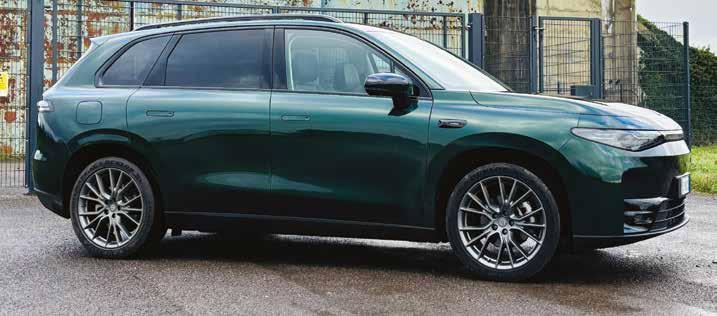
under armrest space, twin centre cup holders, a space beneath the floating centre binnacle where two hard to reach USB inputs are located. There are two rear USB Cs, front seat back storage and a rear fold down armrest. Leapmotor tell us that there’s actually 26 storage spaces. Passenger space is exceptional with plenty of front head and legroom which is matched in the back. Manual steering wheel adjustment and electric seats makes finding a comfortable driving position easy, with the C10 remembering your choice and saving it via the screen.
Boot space
The power set-up limits this to only 400 litres, small for a car of this size, but it rises to 1,375 litres with the rear seats folded flat.
Infotainment and functions
The screen controls almost all, so you’ll have to get used to accessing this every time you get into the car. It will let you personalise safety functions, which is always a bonus.
Safety
These are extensive but some can be a bit annoying, so turn several off before you get going.
Cruise control
You select cruise control by pushing the right side steering wheel stalk from Drive down one notch to engage it. To be fair to
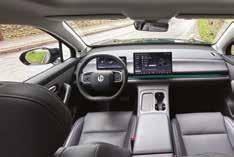
Leapmotor our two major gripes on the electric C10, which were obvious on the motorway, were a super-sensitive lane departure warning and slowing down too far from the vehicle in front in cruise control, seem to have been improved with a software update. That was good news on the REEV.
It’s really rather nice to drive. After you’ve turned off some of the over-zealous safety features it’s a quiet and comfortable motorway companion. We usually drive in ECO mode, and on the motorway it’s the logical choice. It does restrict the power, so Standard became our new favourite, offering a bit more enjoyment and extra steering weight. Talking of which the C10 REEV, like its EV cousin, is not bad to handle, with well adjusted steering offering true entry and exits from corners with no over or understeer. The smaller REEV battery makes this version less jerky and smoother over
poor road surfaces as well. With a 0-62mph time of 8.5 seconds it’s definitely not an exciting car to drive. But that’s really not the point: it’s large family SUV and handles like one.
Airy, spacious cabin, comfortable seats and clutter-free interior. It’s very competitively priced, comes well equipped and is a good looking car to boot.
No range anxiety and low BIK make it company car friendly.
Over-reliance on a touchscreen to access functions can be frustrating. The C10’s intrusive safety features can be annoying. Drives like a large SUV.
Why would you choose the REEV over a normal C10 EV? Range anxiety for one: there isn’t any, and with just 38g/km of CO2 emissions and BIK of 6% it’s attractive to company car drivers. If you don’t have a drive, haven’t got access to a home charger, live in a rural location or in a flat …. I could go on. Some have been sniffy about the REEV but it will work for plenty of people.
CC&V RATING: N N N N
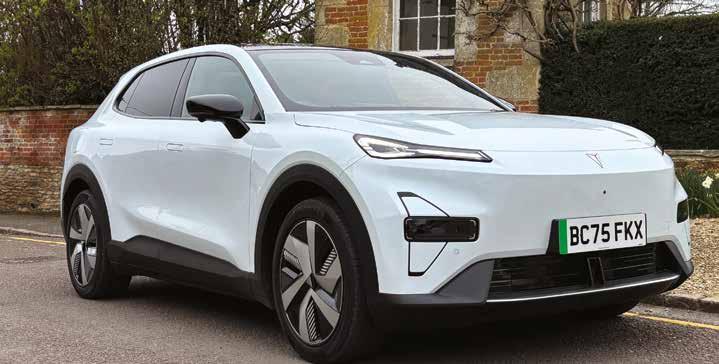
Changan is a large Chinese carmaker which has been making cars for over 40 years. Realising that Europe has the best car designers and engineers, it opened a design studio in Turin in 2001 and an engineering centre in Birmingham in 2010, giving it a strong base to attack the European market. Andrew Walker drove the larger S07 last year and it does what most new Chinese cars are doing, in offering amazing levels of equipment packaged inside an attractive exterior, all at a competitive price. Would the S05 follow suit? Read on to find out what he thought...
Model choice & prices
The Deepal S05 is C-SUV and comes in one spec and with two powertrains: rear wheel drive, which we tested, or all-wheel drive. The rear-wheel drive version delivers 268 hp and 290Nm of torque, while the all-wheel drive variant increases the output to 429 hp and 502Nm of torque. Rear-wheel drive is priced at £37,990, or all-wheel drive costs £39,990.
Drivetrain and performance
It’s electric and is powered by 68.8kWh Lithium Iron Phosphate (LFP) battery, so has major kerb appeal in the fleet sector. Maximum speed is 112 mph with a 0-62mph time of 7.5 seconds in the RWD or 5.5 seconds on board the AWD model.
Range and charging
The WLTP combined electric driving range is 303 miles for the rear-wheel drive version or 278 miles for the all-wheel drive model. Charging speeds are very good, with a maximum ultra-rapid charging rate of 200 kW, which should give owners a 30% to 80% charge in around 15 minutes. The S05 can also
charge at up to 11kW AC, so home charging speeds are excellent. We use a Rolec EVO charger (https://www.rolecserv.com/ ev-products/evo). It’s also fitted with V2L capability allowing owners to utilise the battery for a range of electrical items. A heat pump is also included.
The S05 sits quite squat on the road and from the back and the side is reminiscent of a Porsche Macan. No bad thing. High corner headlights and a flat front with a small roof spoiler and car-width light band finish off the hatchback.
Changan’s designers have cleverly increased the S05’s efficiency and range by adding a few design details to the exterior. Creating a drag co-efficient of just 0.25Cd has been achieved by adding an air intake grille at the front which can be closed while driving at high speeds to reduce wind resistance. Something new to me is the inclusion of low-drag sealed wheel covers and sealed headlights which also add to the range. Flush door handles, an aero-optimised rear spoiler,
a diffuser and streamlined side mirrors also aid the cause.
As with the larger S07, the S05’s interior is very nice indeed. Compared to similar Chinese cars , it sits at the top end of quality alongside the Geely EX5 and XPENG G60. Highlights include quality stitching detail on the seats and dash and the option of a black or orange – yes, orange but thankfully more terracotta than Fanta – vegan leather interiors. It also comes with a similarly sparse dashboard to the S07, and finishes are tactile soft-touch plastics. The dashboard top and front, doors and kit at eye line feel very nice. There is some cheaper stuff on the areas you can’t see as easily, namely the centre binnacle sides, door pockets and seat sides, but it’s definitely better quality than the big selling BYD ATTO 3 or Omoda 5.
Cabin practicality
You open the doors via handles neatly hidden on the door armrests. There’s a useful opening armrest and good sized glove box. Continued on page 60
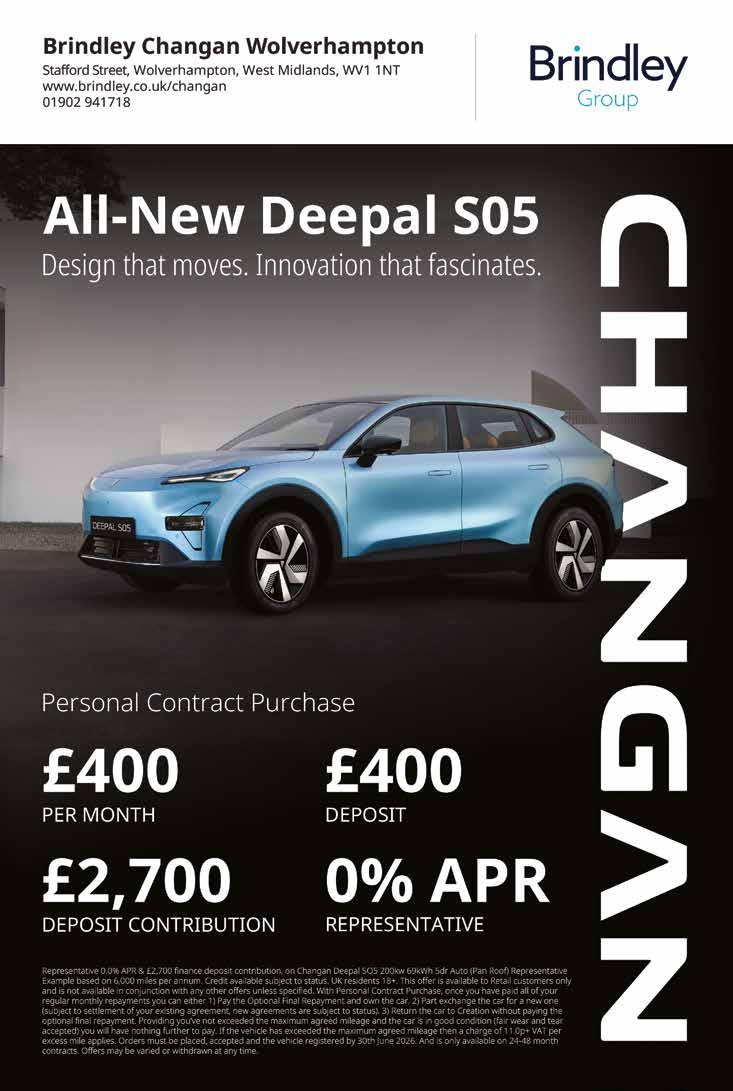
Continued from page 58
The touchscreen controls almost all, which means that you’ll need a week or two to get used to the menus and general controls. However, the Infotainment which is a Huawei system with a 15.4” screen, does have a few tricks up its sleeve, namely that it can be tilted towards the driver or front passenger for easier access.
And Changan has sensibly included a configurable short cut bar so you can at least adjust climate more easily.
Changan set our road route up on its Google-based system and to be fair to them it was glitch free. As we drive so many cars we find it much easier to utilise Apple CarPlay apps such as Waze which is familiar to us, and connecting wirelessly to CarPlay in the S05 was quick and simple.
Spec
The single model features alloys, LED headlights with automatic high beam, an electric tailgate, adaptive cruise control, dual-zone air conditioning and heated and ventilated front seats. Furthermore, both models come with an ‘anti-gravity’ front passenger seat that reclines, a 14-speaker audio system, 50W wireless phone charger, an external speaker. Pretty much everything is included save for a panoramic roof (£1,000) and a detachable tow bar (£600).
Comfort and boot
The car’s 4,598mm length doesn’t look massive to the naked eye, but it does come with a very spacious interior with loads of front and rear head and legroom. You also get a 492 litre boot, which increases to 1,250 litres with the rear seats folded, plus a really useful 159-litre frunk, which features a drainage hole enabling you to store dirty stuff in it, then wash it out after. Clever. A low load lip and 60:40 rear seats make the boot space easy to use with space under the float floor to store your charging cable.
Warranty
Seven-year/100,000-mile standard warranty, while the battery is covered by a separate eight-year/120,000-mile warranty.
Safety
The S05 comes with pretty much everything included: automatic emergency braking, lane departure warning, rear cross traffic alert and rear collision warning. The good news is that with one swipe of the screen you bring up the safety features list where you can easily turn off the ones that most annoy you.
Driving modes
Choose from Eco, Comfort, Sport or Custom selected which can be selected on the screen. Eco and Normal work just fine
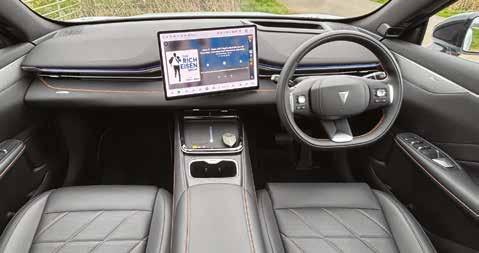
although the difference in the driving feel between the two is minimal. Sport mode though does make things tighter and the steering especially feels nicer and more precise. These also act as the de-facto regeneration tools, so Eco adds more weight to the braking, Normal less, and so on. None can be described as one-pedal but will add some extra miles if required.
We drove the RWD S05 on a circular route around the Cotswolds and then put it through its paces with a series of agility tests at the Cotswold Airport.
We headed off from Lechlade and the first thing you notice is that the S05 is nice and quiet and on decent tarmac it rides nicely. Gloucestershire council plainly look after its roads better than Oxfordshire because within a few miles of the drive, pot-holes and poor tarmac began to rear their ugly head. In effect, a good test for the S05 and one that it passed. The UK R&D centre has tailored the ride to UK roads so it’s not a soft as the S05 you’ll see in China. The firmer ride was noticeable when we did go over some bad stuff, but we didn’t find the ride too shabby.
All around vision is aided by the reversing cameras as the smallish rear window and rear headrests do limit the view backwards. We stopped to take pictures in a busy Burford and the S05 is very easy to park in tight spaces. Our test car featured the large panoramic roof which brings some welcome brightness into the black interior which was finished in black vegan leather.
While the driver’s seat adjustments are comprehensive you still sit a little higher than I personally like, again very much as you do in most of tje current crop of Chinese EVs, to accommodate the battery. The tilting screen is a really good idea, making the menus easier to reach.
Along the A40 we were able to drive a bit faster and at 60mph the ambience is noticeably interrupted by some road noise from the tyres. The steering is well balanced
and neither too light or too firm. The brakes though are a touch fussy – possibly a bit over sensitive On the motorway, we thought this is where it performed best. Select Adaptive Cruise Control and off you go in comfort.
On the runway we undertook a series of short slalom and sudden stops which illustrated the car’s agility. As the battery sits underneath the floorpan it feels very stable in and out of tight turns, with or without traction control. The brakes stop it in an instant and the reversing camera is extremely clear as we undertook a wobbly reversing manoeuvre. Overall it was impressive.
Extremely well kitted out. Excellent build quality and attention to detail. Handles better than most similarly priced electric cars, with loads of interior space. Company car friendly.
A little bland to look at. Competent on road manners but it’s not exciting. Range is adequate but not class-leading.
Not thrilling from a driving point of view but we doubt that this will stop UK customers from getting one. Offering one model with everything included is a canny way to grab customers’ attention, especially when the average British car buyer opts for a topspecced vehicle.
From a fleet perspective we think that Changan will do very well, with several major leasing companies interested, and talks with Sal Sac providers like Octopus and Tusker. Growing the dealer network is another smart move, with the likes of Brindley and Ancaster already signed-up.
Backed by a National Fleet Sales Manager in Richard Chamberlain and UK MD Nic Thomas, Changan is getting all its ducks in a row for a major push in the UK.
CC&V RATING: N N N N
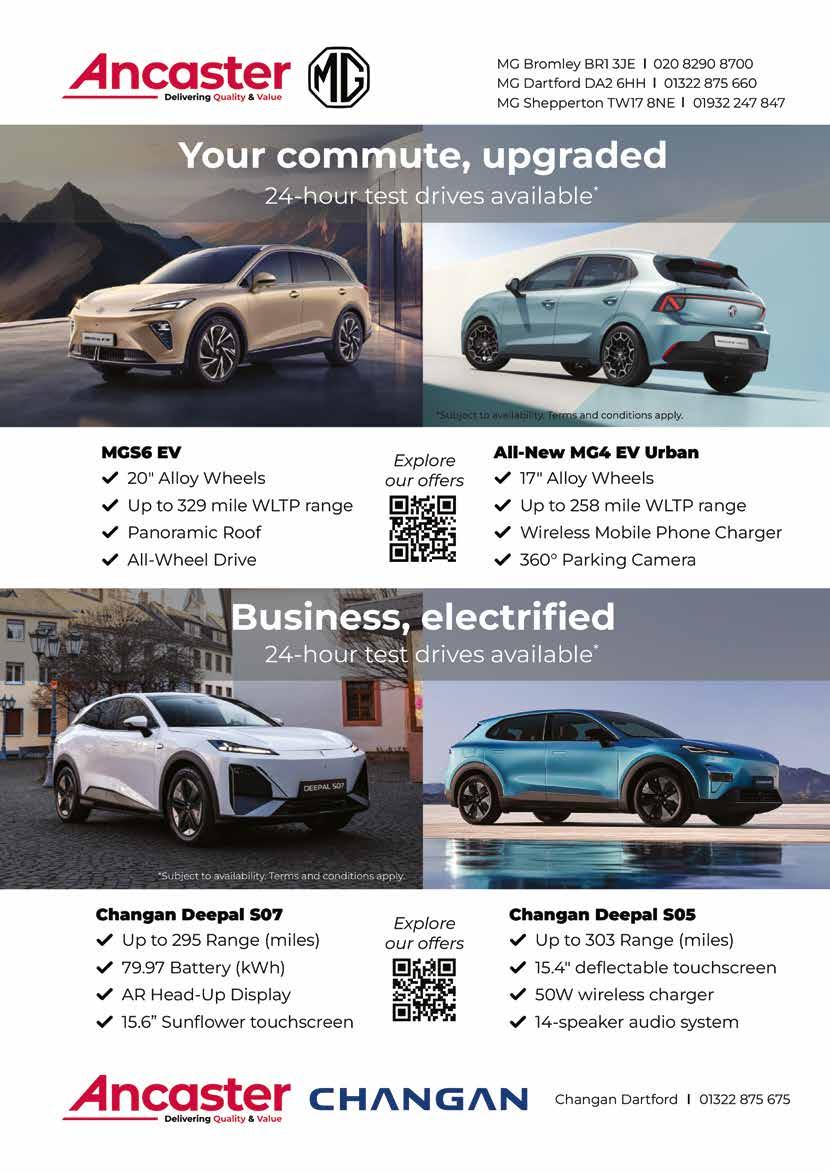
As the UK fleet market accelerates toward an electric-first future, Beechwood Derby Ltd is proud to announce that we are the new authorised Changan dealer for Derby — bringing intelligent design, efficiency, and advanced technology to business and company car drivers across the region.
Located in the heart of Derby, Beechwood Derby Ltd has long been a trusted name for retail and fleet customers alike.
With a strong focus on customer service, expert guidance, and a carefully selected portfolio of leading automotive brands, we continue to support businesses with vehicles that deliver reliability, performance, and long-term value.
Introducing Changan at Beechwood Derby
Alongside our established partnerships with Mazda and GWM, Changan represents an exciting step forward in our electric vehicle offering. Designed for efficiency, practicality, and advanced business-friendly technology, Changan’s electric SUVs provide fleet operators with compelling options for the transition to electrification.
Changan’s arrival comes at a pivotal moment for UK fleets. As businesses seek to reduce emissions, lower running costs, and meet sustainability targets, demand for electric vehicles continues to grow. Plug-in hybrid models are expected to join the range this summer, providing even greater flexibility for companies balancing daily urban driving with longer journeys.
Changan Deepal S05
The Changan Deepal S05 is a compact electric SUV built for versatility and efficiency.
Key highlights:
n Modern, stylish design with a wellappointed interior
n Advanced infotainment and intelligent driver assistance systems
n Smooth, refined driving experience for urban and regional use
n WLTP range of up to around 300 miles (depending on specification)
n DC rapid charging capability for convenient top-ups during the working day
n Competitive pricing and low running costs make it ideal for fleets
Changan Deepal S07
The Changan Deepal S07 offers a larger, premium alternative, perfect for executive fleets or longer journeys.
“Our
new showroom, coming soon in Derby, will provide a modern environment for businesses and company car drivers to explore the latest Changan models...”
Key highlights:
n Spacious, high-quality interior with advanced connectivity
n Comprehensive safety systems for confident driving
n WLTP range of up to around 350 miles
n DC rapid charging for efficient range recovery
n High specification and premium features, delivering strong value for businesses
Early international reviews highlight the Deepal range’s build quality, technology integration, and overall value, making them credible choices for fleets seeking reliable, innovative, and cost-effective electric vehicles.
Why Changan works for fleets and company car drivers
n Reduced running costs: Electric powertrains offer lower maintenance, fewer moving parts, and energy efficiency, helping fleets manage predictable budgets.
n Flexible, practical range: Both S05 and S07 provide ranges suitable for typical business use, with fast charging reducing downtime.
n Advanced technology: Intelligent driver assistance and infotainment systems enhance safety, comfort, and efficiency for daily operations.
n Sustainable fleet strategy: Changan vehicles help businesses to reduce their
carbon emissions and support environmental goals.
Experience Changan at Beechwood Derby
Our new showroom, coming soon in Derby, will provide a modern environment for businesses and company car drivers to explore the latest Changan models, experience the technology first-hand, and receive expert guidance. Beechwood Derby offers:
Corporate test drive programmes for fleet managers
n Whole-life cost comparisons to inform procurement decisions
n Dedicated business specialists to support fleet operations
n Flexible funding and leasing options
n Full aftersales support delivered with the expertise and trusted service Beechwood Derby is known for.
By combining trusted brands with forwardthinking manufacturers like Changan, Beechwood Derby Ltd is perfectly positioned to support the evolving needs of the UK fleet market.
As electrification continues to transform company car choices, we are ready to help businesses transition confidently, offering vehicles that deliver efficiency, performance, and real-world value.
For contact details, see the advertisement on the facing page.