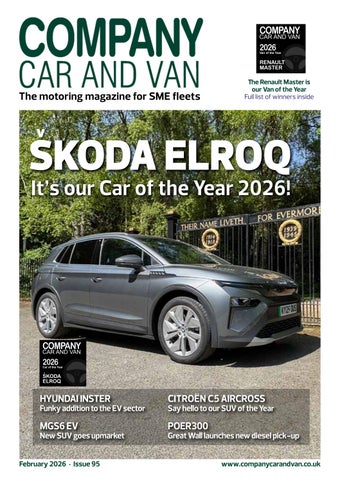
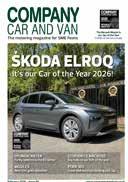
Our February issue opens with the 2026 Company Car & Van Awards. Electric and plug-in models dominate the list, while a number of our regular contributors cement their positions with wins in the non-vehicle supplier categories.
You can read all about our winners from page 4, with the Skoda Enyaq and Renault Master taking the top awards.
Cars
Beyond the awards we have a number of new models on review and in features.
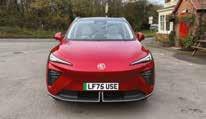
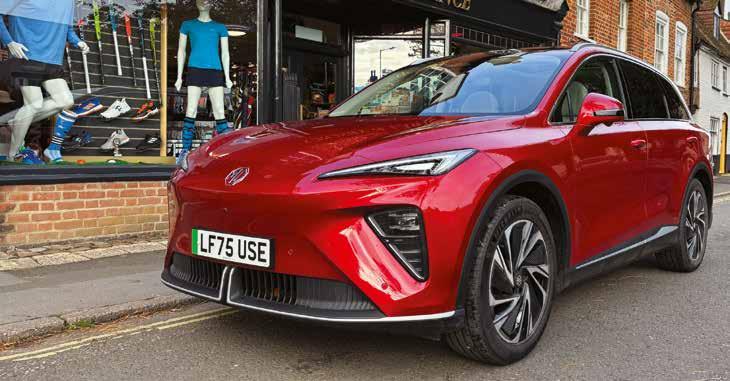
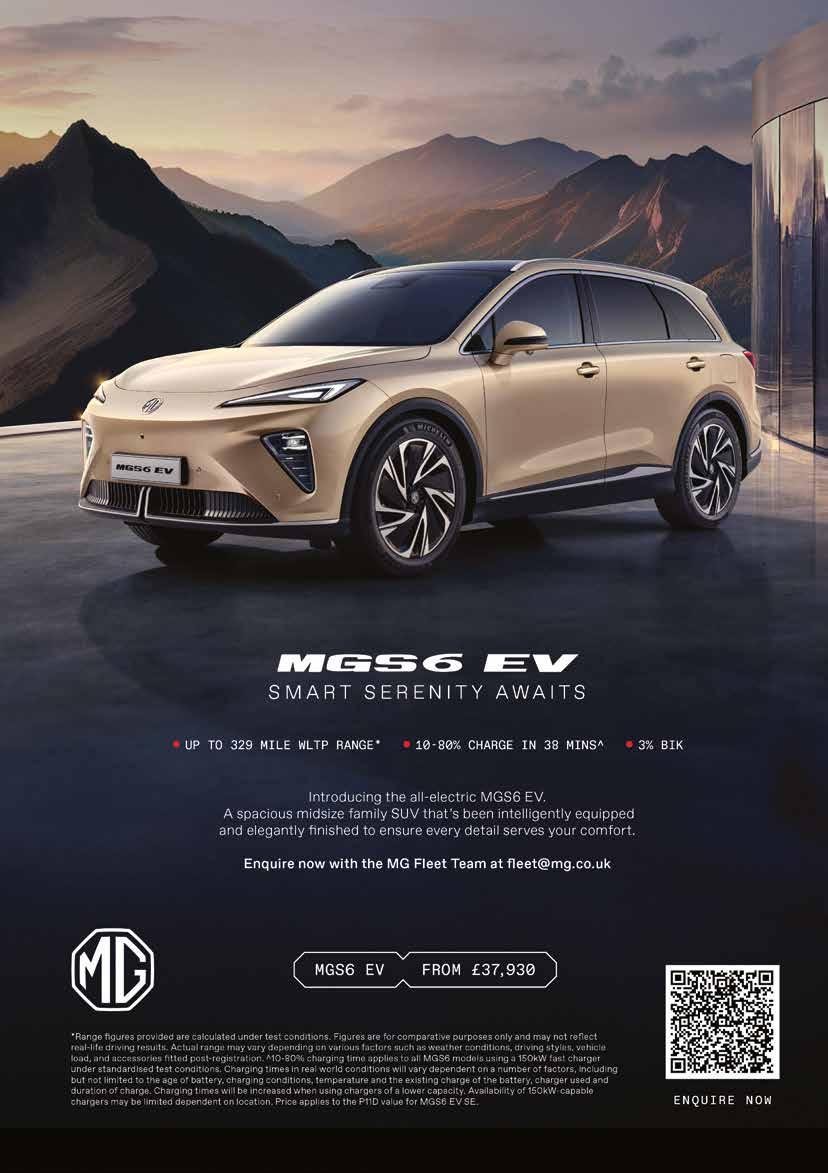
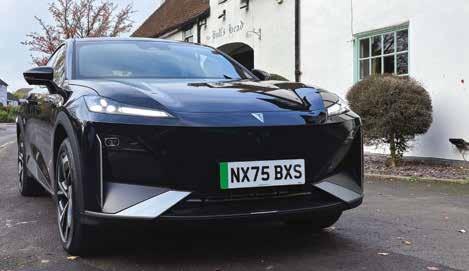
First-up is the new MGS6 EV, the brand’s latest electric SUV. It is another evolution in MG’s product as it faces up to stiff new Chinese competition in the company car sector.
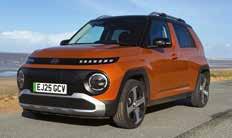
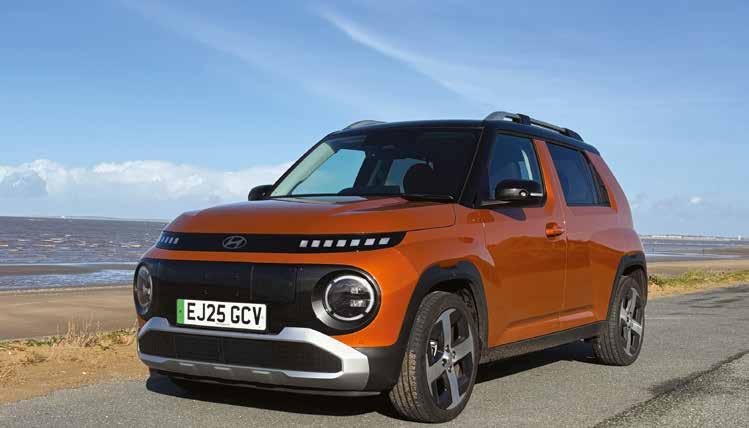
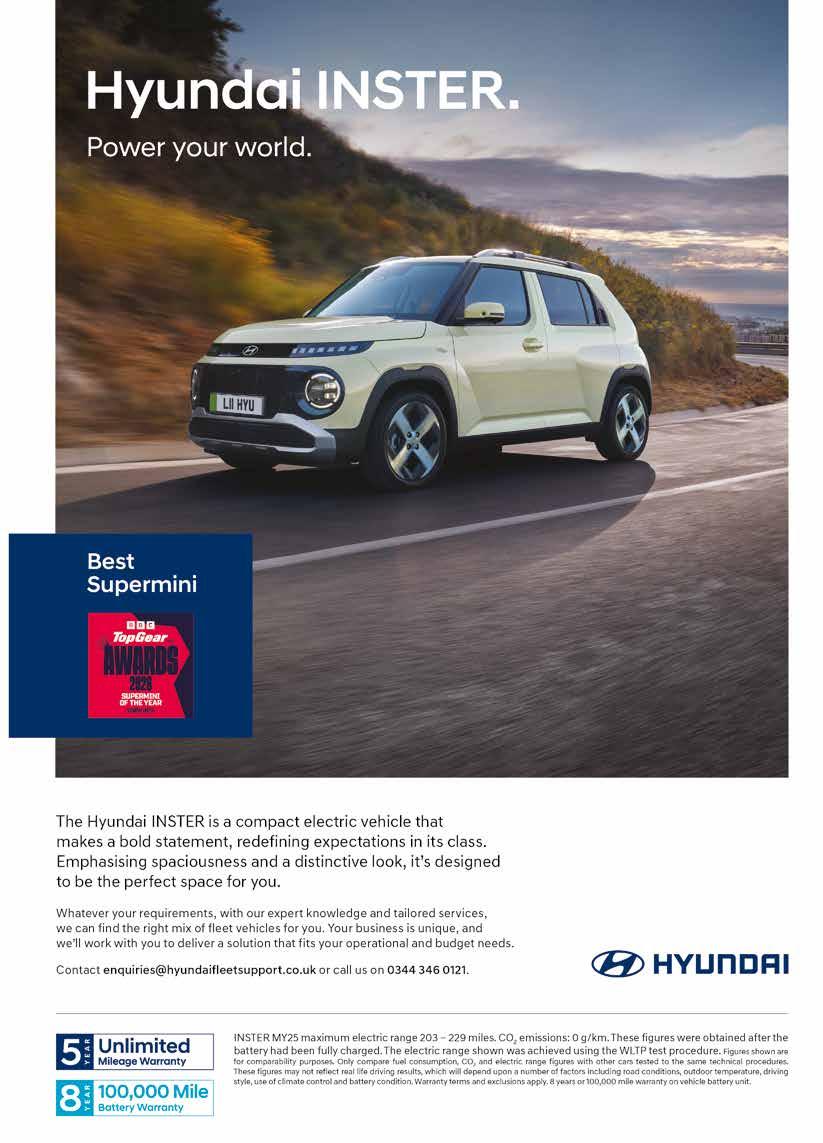
We then take a spin in the Hyundai Inster, the Korean brand’s new small electric model, and discovered a car that punches above its weight.
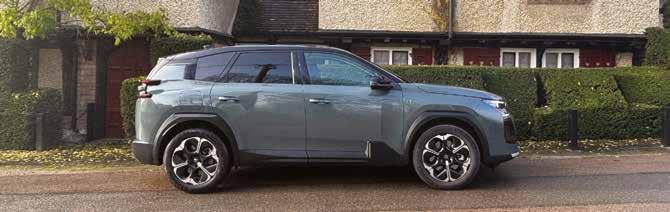
The Citroën C5 Aircross impressed us enough to win our SUV Car of the Year Award, and you can find out why on pages 26-28.
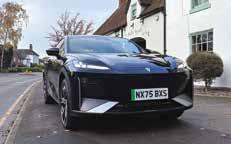
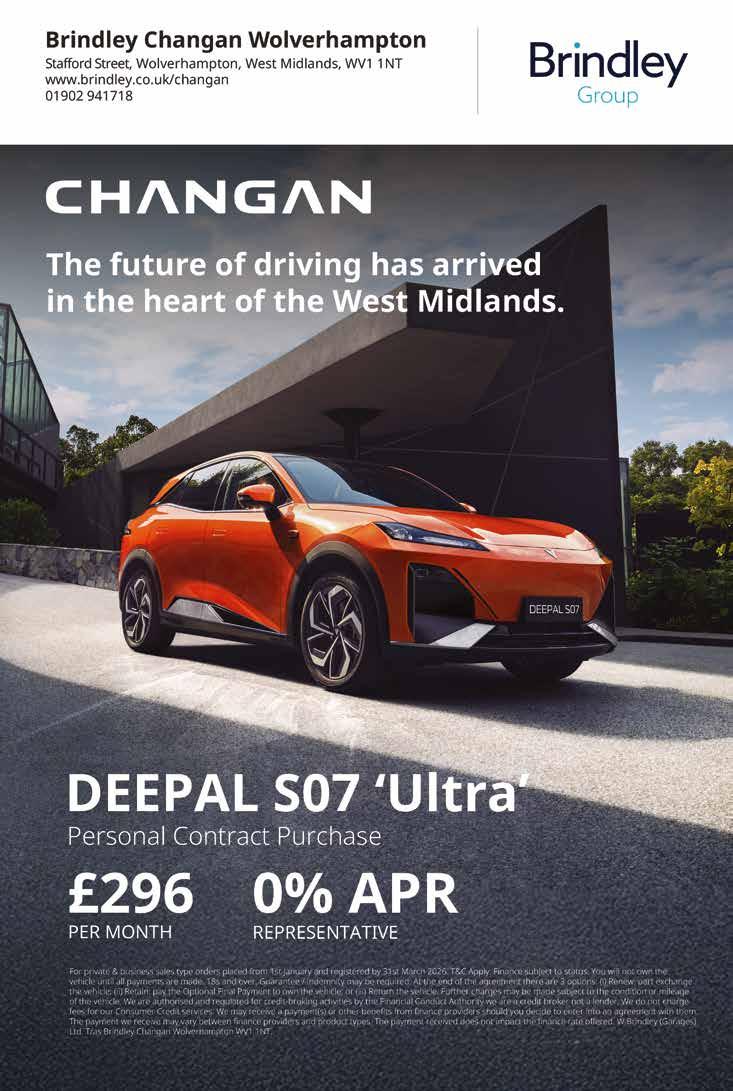
Changan is one of the new Chinese brands that’s looking for success in the UK corporate sector. Its first model, the Deepal 07, is a
Marketing
mid-sized SUV that firmly lays down their gauntlet. We tried one out in Birmingham recently.
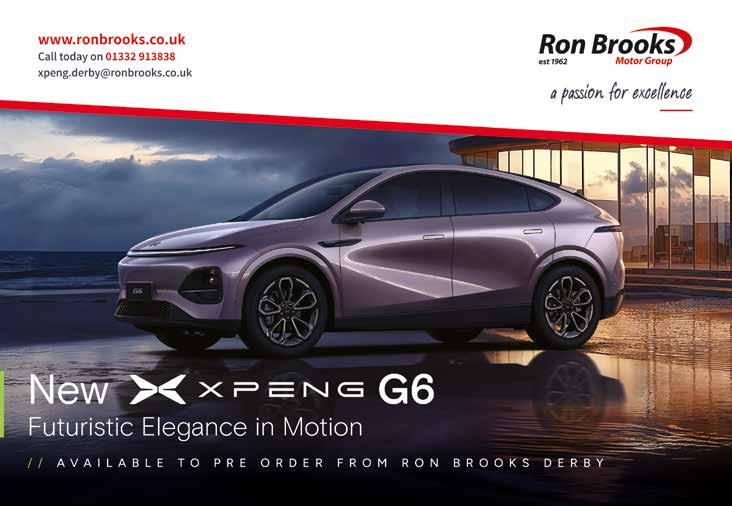
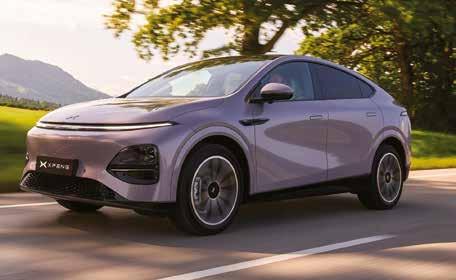
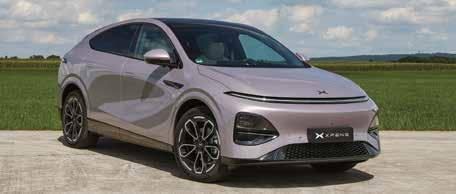
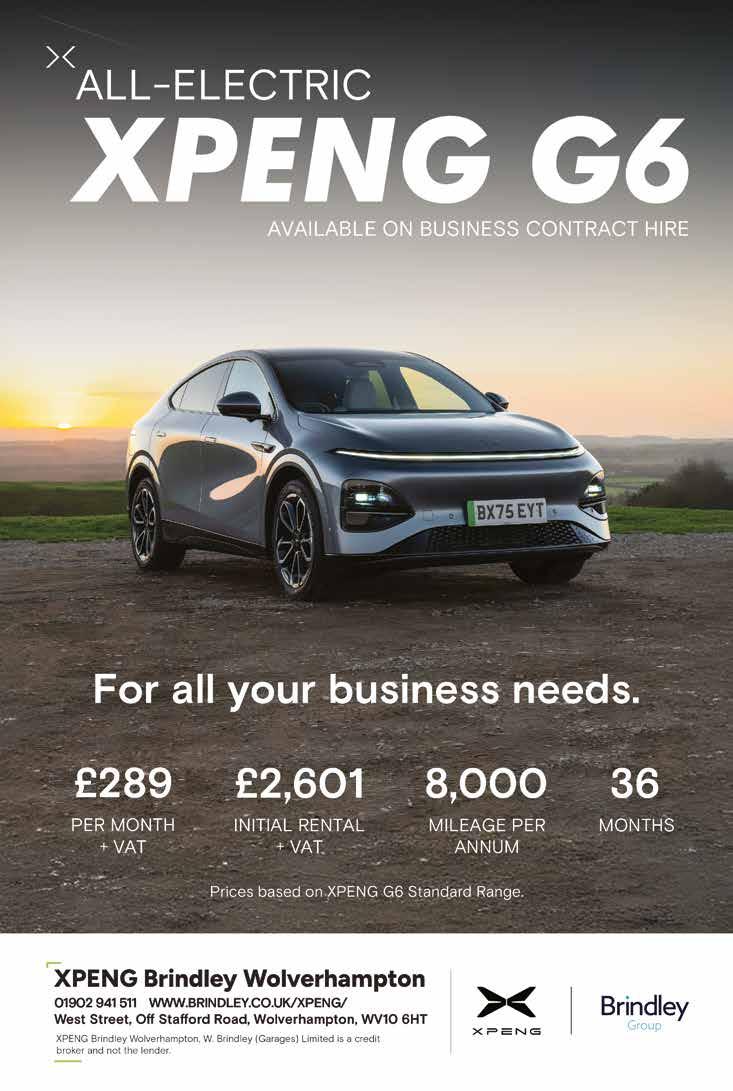
Our Executive Car of the Year was the XPENG G6. It has been updated and we give you all the facts and figures on the latest version, which we really like.
Commercials
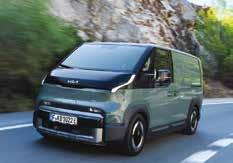
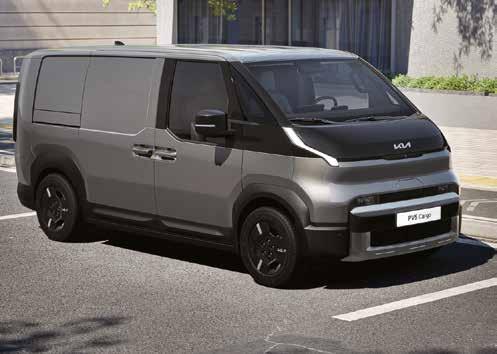
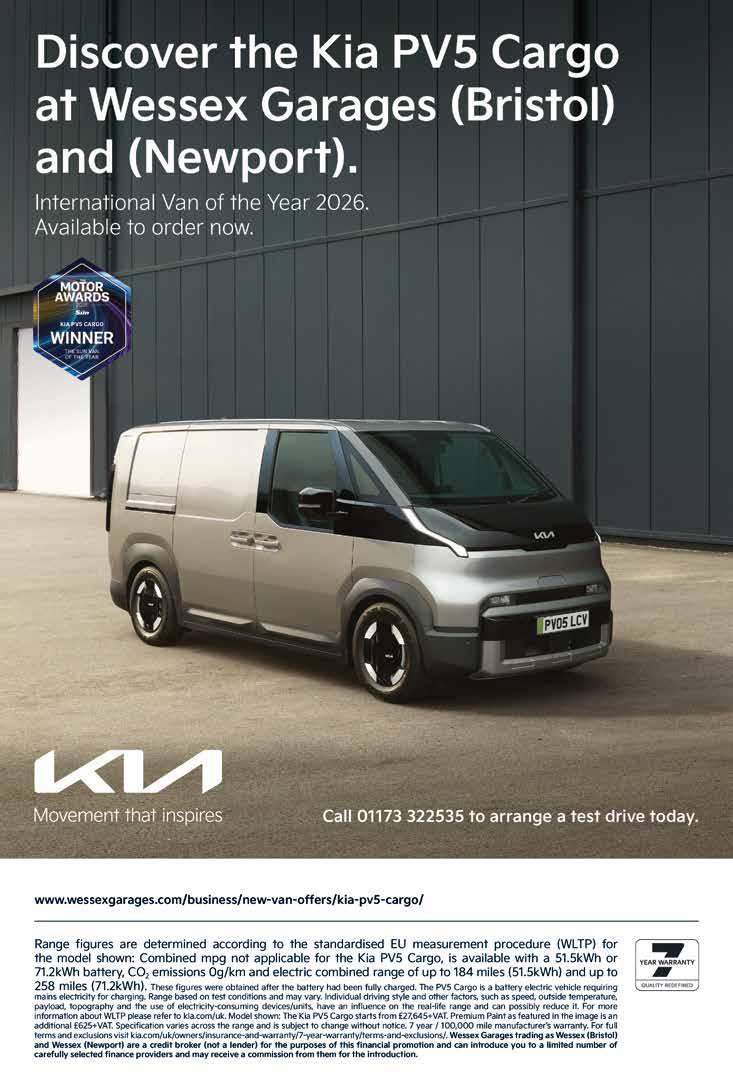
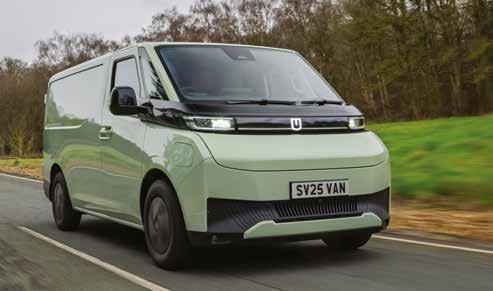
The new Kia PV5 electric van is winning awards across the world, including our Van to Watch 2026. We take a look at the Cargo version.
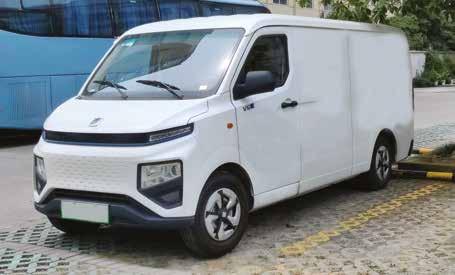
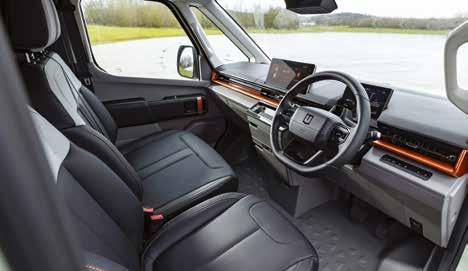
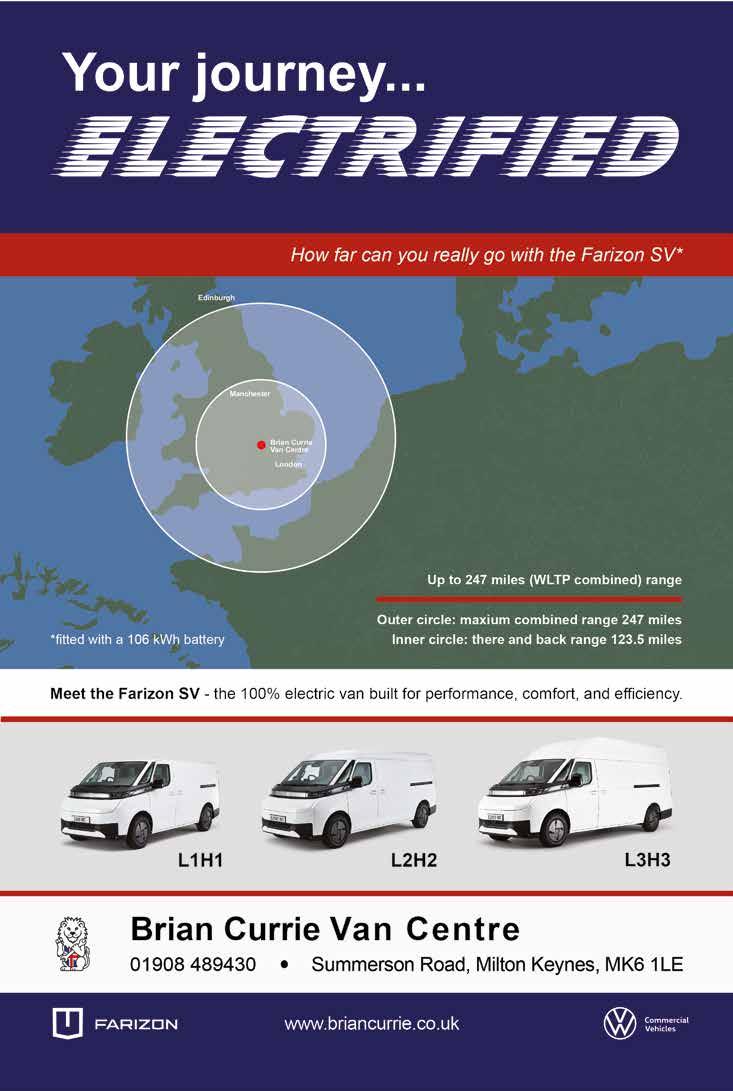
Farizon is a new name for electric vans and is busy establishing itself as a serious contender. We look at the model line-up inside, and hear from Brian Currie Motors.
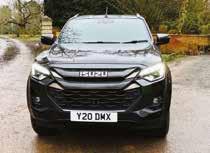
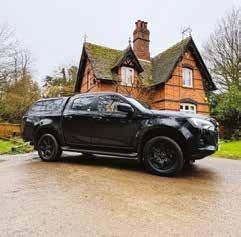
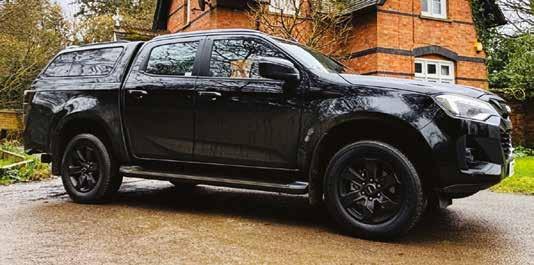
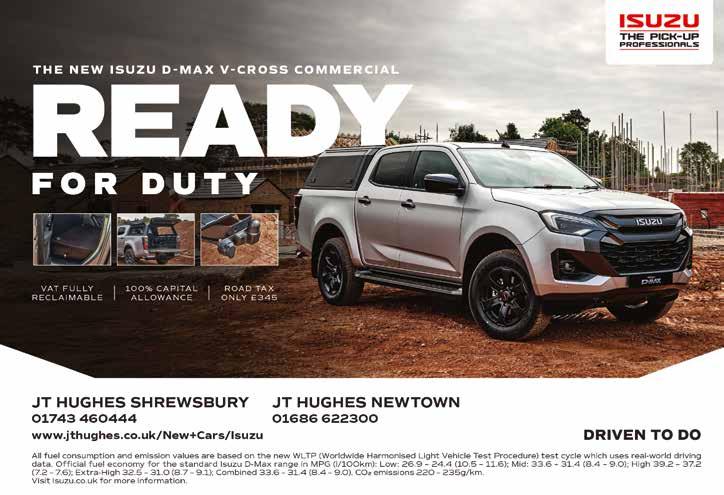
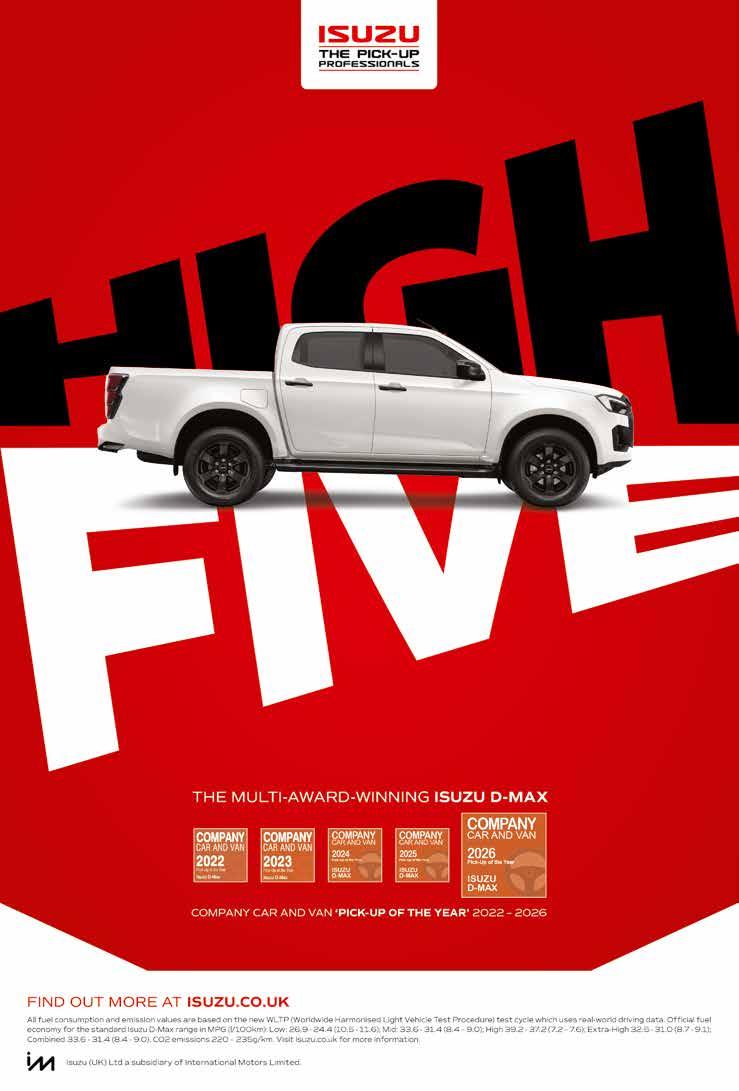
Our Pick-Up of the Year Award winners Isuzu also features this time and we review its range-topping V-Cross model.
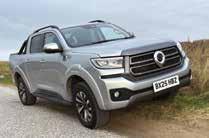
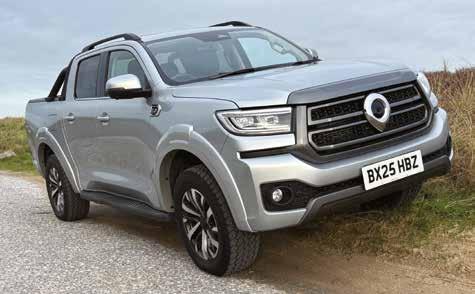
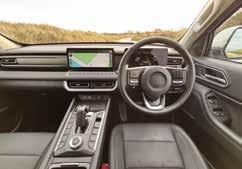
And from the same International Motors stable that also contains Great Wall, we drive the all-new POER300 pick-up, a new Chinese entrant to the sector and one that offers some serious competition to the established names.
Introducing the Company Car & Van Car of the Year:
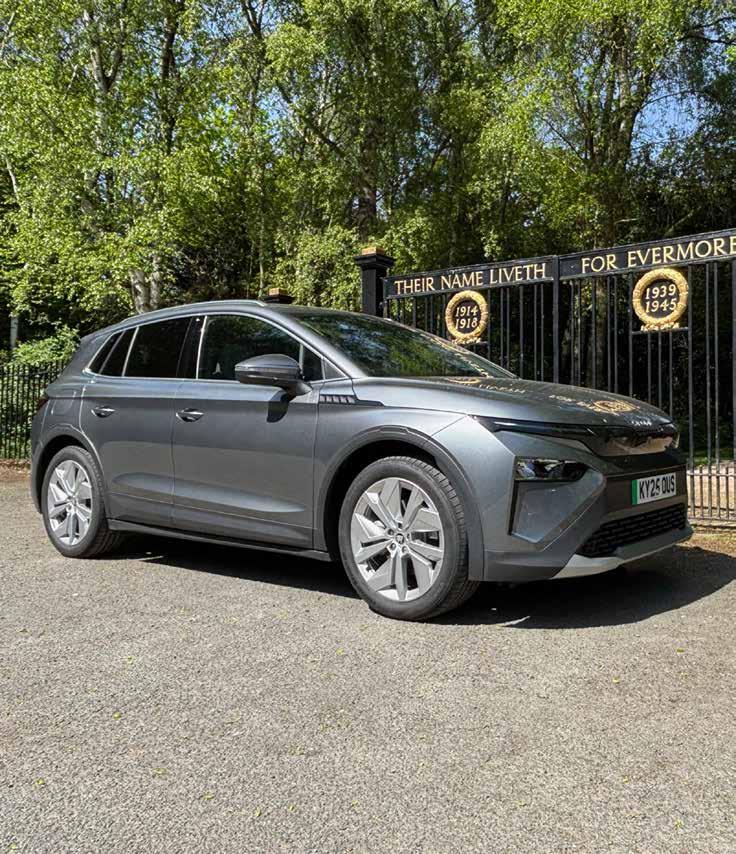
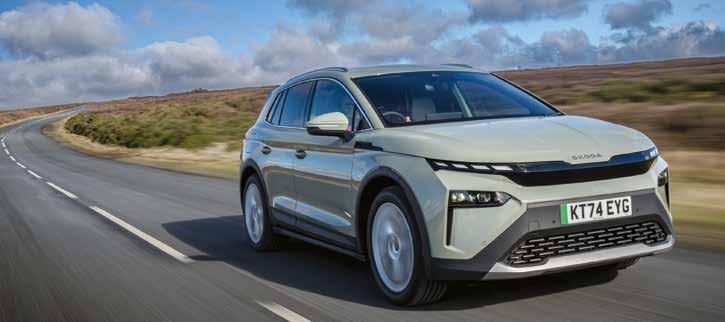
SKODA ELROQ
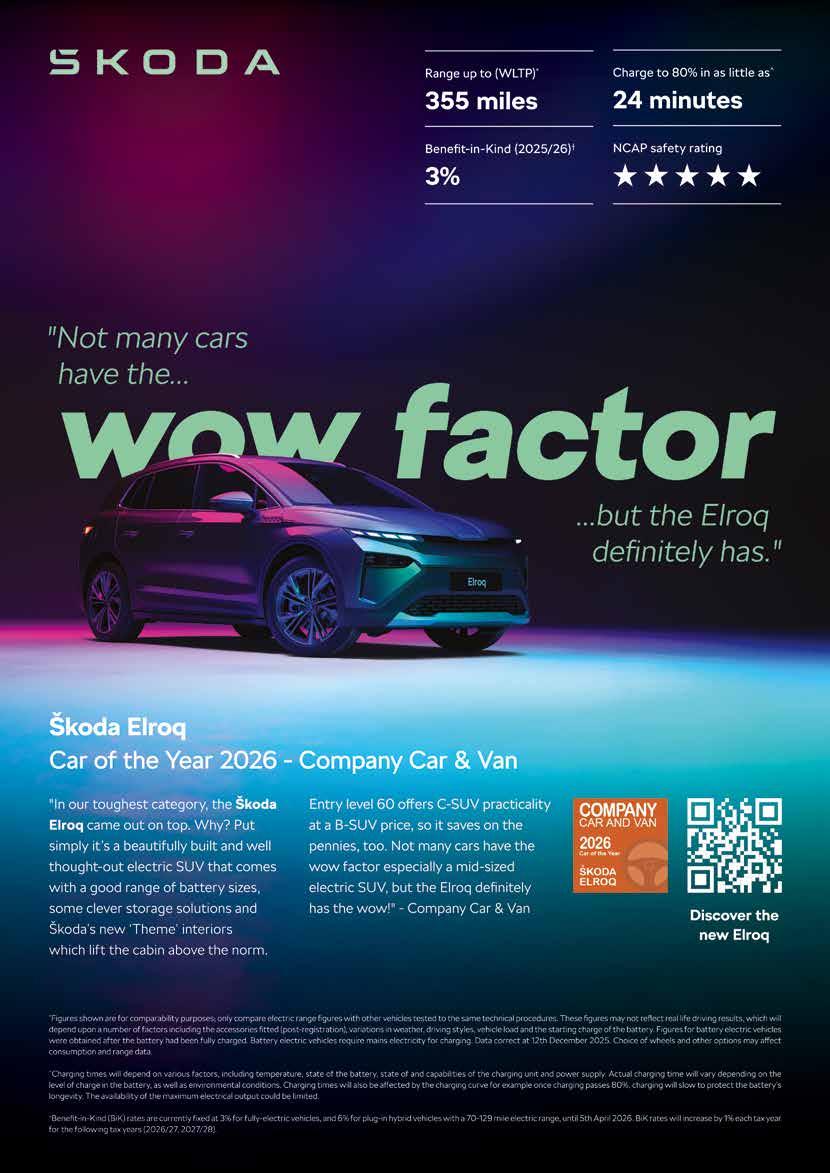
In our toughest category, the Skoda Elroq came out on top. Why? Put simply it’s a beautifully built and well thought-out electric SUV that comes with a good range of battery sizes, some clever storage solutions and Skoda’s new ‘Theme’ interiors which lift the cabin above the norm. Entry level 60 offers C-SUV practicality at a B-SUV price, so it saves on the pennies, too. Not many cars have the wow factor especially a mid-sized electric SUV, but the Elroq definitely has the wow!
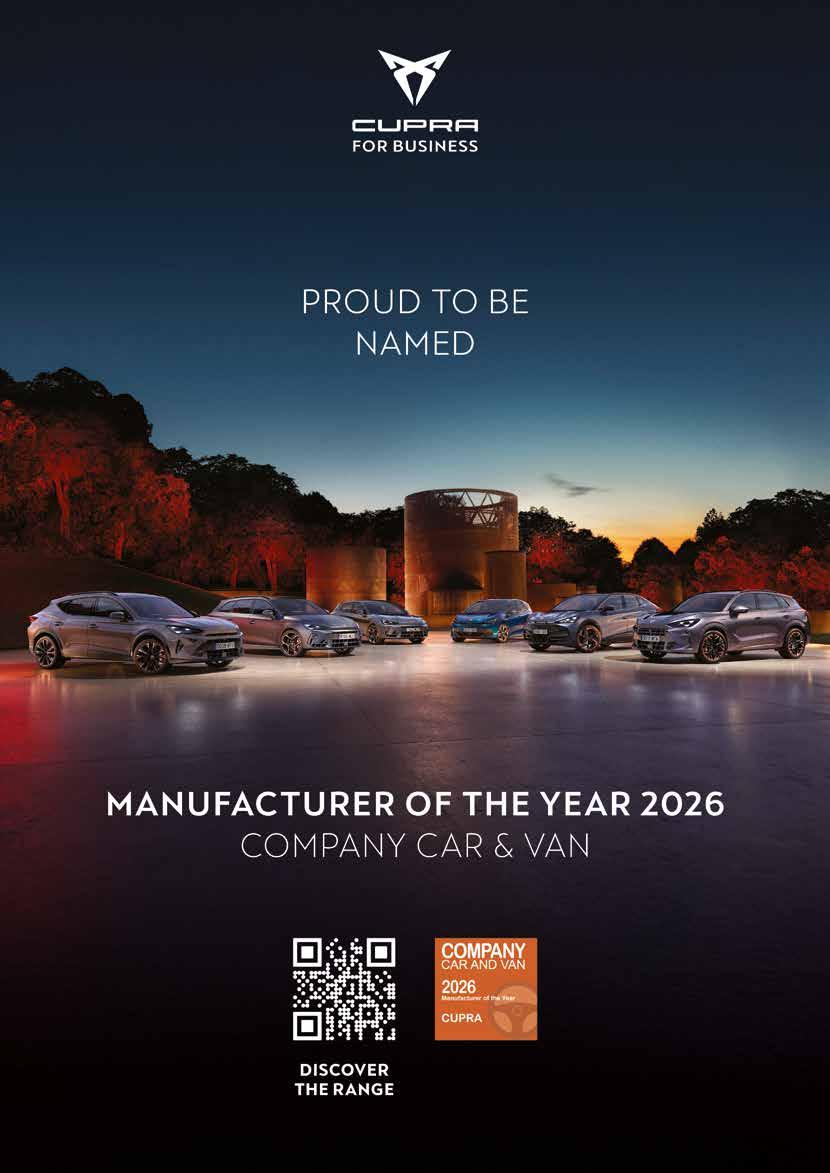
Manufacturer of the Year: CUPRA
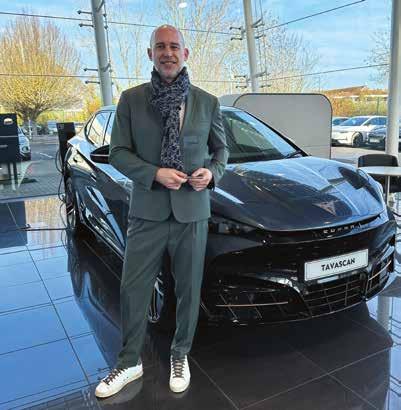
We’ve chosen CUPRA as our Manufacturer of the Year. Why? A combination of excellent marketing, a switched-on corporate dealer network and a triumvirate of fleet-friendly models in the Born, Tavascan and Terramar have fuelled its success, with fleet sales up 25% in 2025
“A switched-on corporate dealer network and a triumvirate of fleet-friendly models fuelled its success”
Marcus Gossen, Director of CUPRA UK with the CC&V Manufacturer of the Year trophy, with one of its fleet-friendly models, the Tavascan
A delighted Nick O’Neill, head of Fleet Sales at Skoda UK, with our Car of the Year award for the Elroq
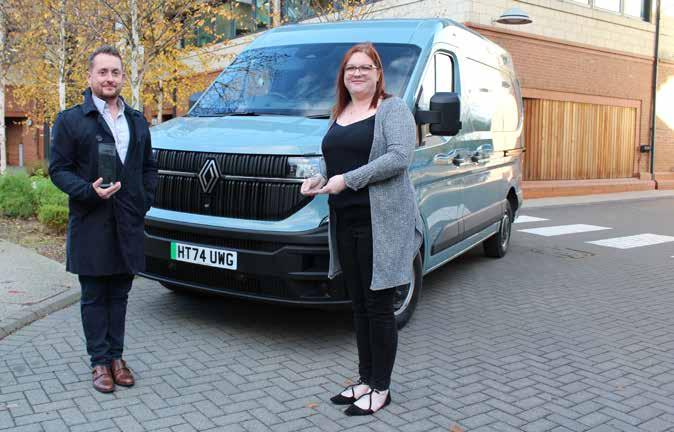
Van of the Year & Large Van of the Year: Renault Master
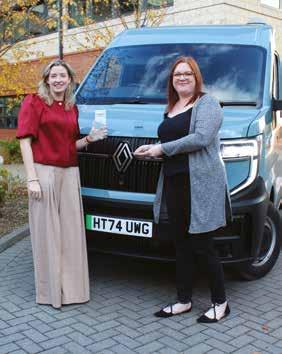
Van of the Year 2026 Renault Master
While we love the Master diesel, it’s the electric model that really shines. The E-Tech is light and easy to drive, comes very well equipped and offers plenty of safety features. It’s also comfortable in the cabin and offers an excellent payload. Most importantly, if you drive sensibly, a real world driving range of 220 miles is possible, enough perhaps to convince operators to go electric. The 2026 Van of the Year is the Renault Master.
Large Van of the Year. Renault Master
Retaining its title from 2025, the Renault Master is our Large Van of the Year. Offered with loadspaces of 11 to 14.8 cubic metres, with plenty of model options and with electric and diesel drivetrains there’s a Master for you. Inside, you get premium feel materials and plenty of useful cabin storage space. It also comes with excellent connectivity and up to 20 driver assistance systems, making it class-leading.
Inset, Rebecca with Charlotte Pearson, Assistant Product
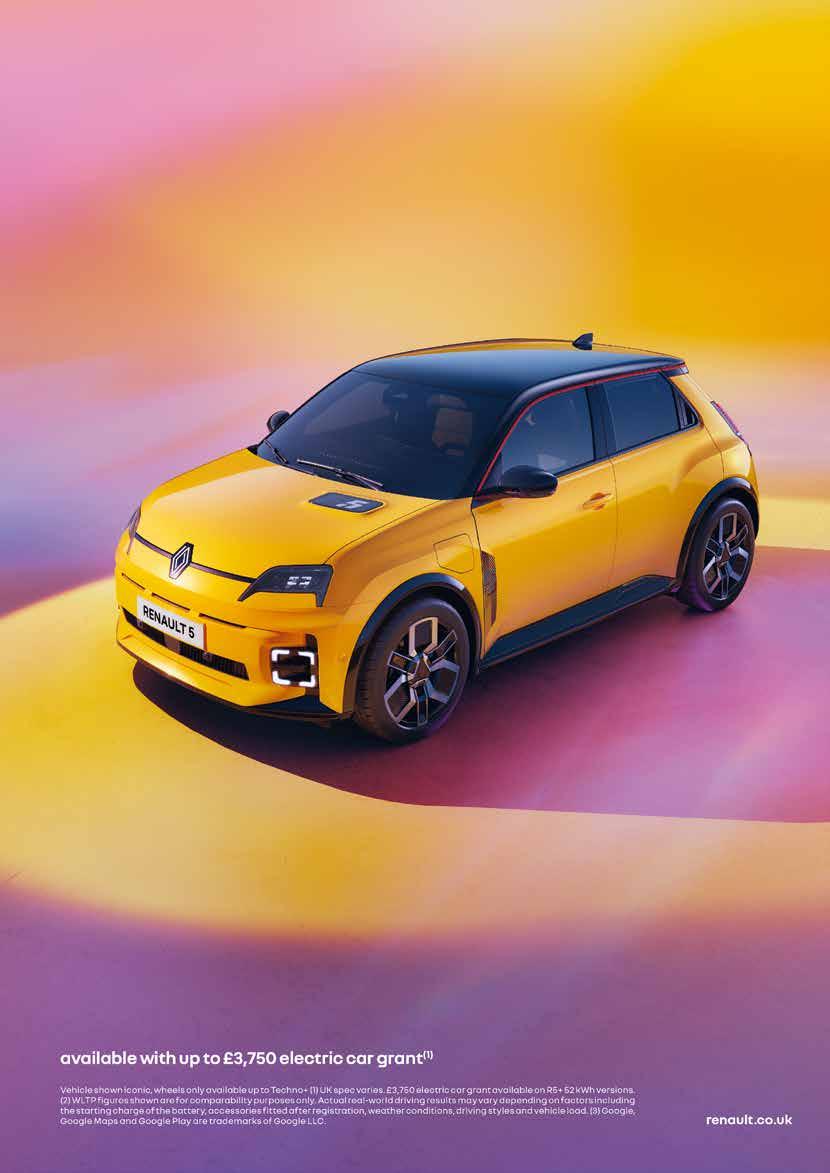
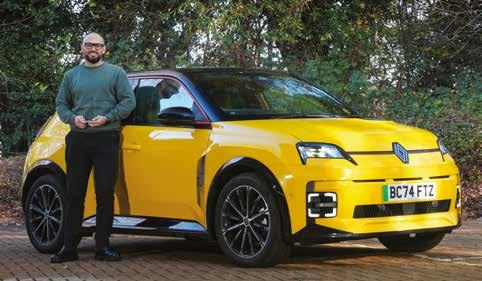
The Renault 5 is a small electric car with attitude. Retro-inspired looks are an unmitigated success while handling and driving are really very good. On board tech and safety is impressive and it’s priced competitively, with low BIK. We could go on – but you gert the picture. Perhaps our easiest decision this year: the Renault 5 is our Small Car of the Year.
Aidan
Small Car of the Year: Renault 5
Double top: Main photograph shows Seb Brechon, Head of LCV and Brand Performance at Renault, with Rebecca Hester, Product Manager PRO+ Commercial Vehicles and the Master’s Van of the Year award
Manager
Left,
Chesters, Product Manager Small Cars, Renault, with the striking 5
Van Leasing Company of the Year: Vanaways
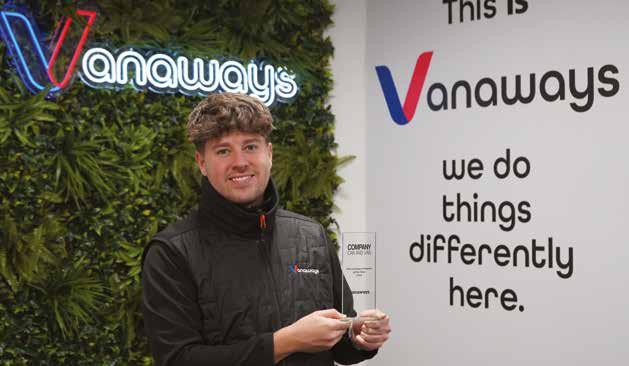
Vanaways offers a one-stop shop for LCV and pick-up leasing, something the sector has been crying out for. Thanks to knowledgable, helpful staff, leasing a van or pick-up has never been easier, and with free nationwide delivery everyone benefits. Congratulations to Vanaways, back to back winners of the Company Car & Va’s Van Leasing Company of the Year award.
“With helpful, knowledgeable staff, and free nationwide delivery, everyone benefits”
Lewis Wheatcroft, Marketing Manager at Vanaways, with our award
“If the Omoda E5 and Jaecoo 7 can be viewed as the proving ground for the Omoda 9, then Chery really does learn fast. This is its best vehicle by some way”
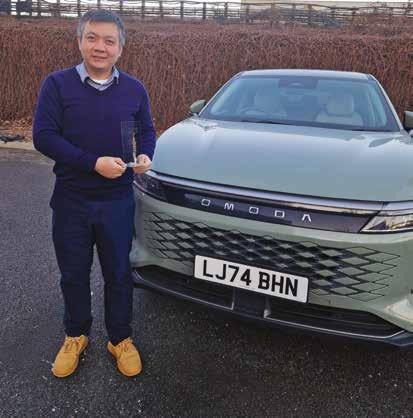
Plug-In Car of the Year: OMODA 9
If the Omoda E5 and Jaecoo 7 can be viewed as the proving ground for the Omoda 9, then Chery really does learn fast. This is its best vehicle by some way, offering both desirability and practicality in what is a very competitive sector. Furthermore, it comes incredibly well kitted out, looks and feels well made and as a bonus, drives and handles like a large European SUV should. Add in an electric driving range of 93 miles and you have every ingredient for company car success.
Victor Zhang, Managing Director of Omoda Jaecoo
“Company car drivers who need a large seven-seater will be blown away by the ride comfort and on-board tech
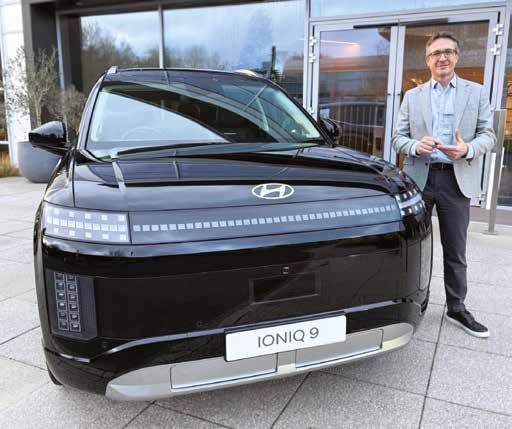
Large Car of the Year: Hyundai Ioniq 9
Hyundai’s electric IONIQ range delivers again. The 9 is a convincing large electric model that has a cavernous, practical interior that’s finished to a high level. Company car drivers who need a large seven-seater will be blown away by the ride comfort and on-board tech which make this large car so easy to drive. With its 385-mile range, the RWD model makes the most sense and it’s the cheapest option, too.
Ashley Andrew, President, Hyundai & Genesis UK with our award for Large Car of the Year
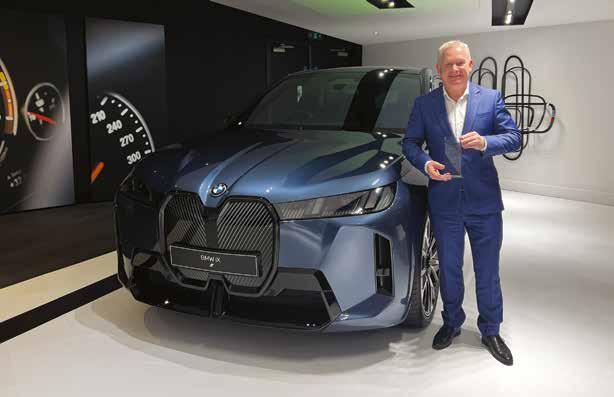
Premium Car of the Year: BMW iX
“The interior has
: and is now class-leading: ... and did we mention: that it is amazing to drive?”:
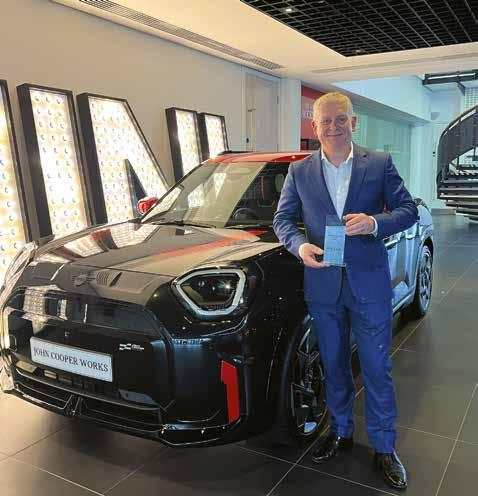
Andrew Jago, General Manager, Corporate Sales BMW Group UK, with the award for the BMW iX (right), and below, with our award for Fleet Manufacturer of the Year for BMW and MINI
been improved
Not one to stand still, BMW took a very good car in the iX and made it even better, simplifying the model line-up and tweaking it here and there to make it drive and handle even better than before. Moreover, the interior has been improved and is now class-leading. And did we mention that it’s amazing to drive? Our Premium Car of the Year is the BMW iX.
Fleet Manufacturer of the Year: BMW & MINI
Last year’s winners of this award haven’t stood still, rather they have introduced more electric models into the market while updating some of their others. Every company car sector is covered, from the Mini Cooper Electric to the updated BMW iX. We love these two best because their cars are always good to drive. As a result, BMW and MINI have cemented their position as the most forward-thinking premium brand across all car sizes.
A worthy winner of our Fleet Manufacturer of the Year.
“Last year’s winners of this award have not stood still... rather they have introduced more electric models while updating others...”
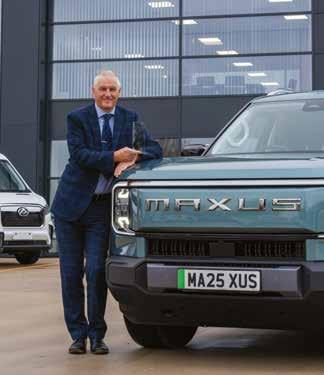
Electric Pick-Up of the Year: MAXUS eTERRON 9
In a sector where toughness and payload need to work alongside daily comfort, the MAXUS eTERRON 9 is a stand-out winner. Currently it’s the only electric pickup you can buy and while rival manufacturers will bring competition to the sector later this year, if you want an electric pick-up now that will do a job and save your business money, then the eTERRON 9 is just that.
“In a sector where toughness and payload need to work alongside daily comfort, the MAXUS eTERRON 9 is a stand-out winner”
Right, Steve Hunt, Managing Director, Harris MAXUS UK, with the ground-breaking eTERRON 9
Medium
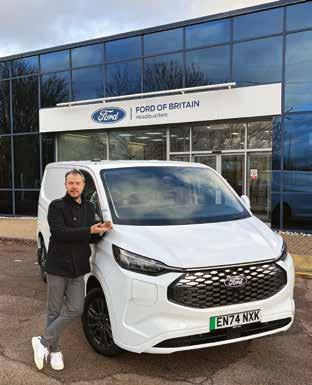
of the Year: Ford Transit Custom
We know just how much the business world loves the Transit Custom – and when you get to grips with one it’s easy to see why. It comes in a huge combination of body styles and trims and better still, you can choose from electric, diesel and plug-in hybrid powertrains so there’s a Custom for everyone. Comfortably our Medium Van of the Year 2026.
When Ford finally took the wraps of the latest Courier it was well worth the wait. Available with petrol, diesel and electric powertrains, all are excellent, as is the van itself. Useful loadspace, a clever cabin and overall good looks lift it above the competition. If you need a small van that will take two Euro pallets and drives very much like a small car, then the Courier Van ticks all the right boxes. Our Small Van of the Year is the Ford Transit Courier.
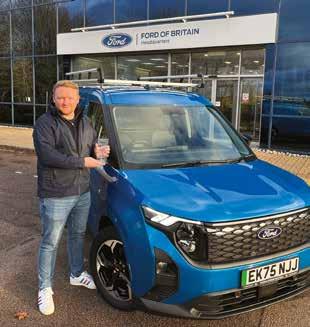
Right, James Brougham, product specialist, Courier, Connect and Ranger
EV Charging Company of the Year: Rolec
EV Charging Company of the Year: Rolec
The Rolec team, led by MD Frankie Mellon, have fitted hundreds of thousands of Rolec chargers for SMEs globally. Importantly, EV charging installers love the products as much as customers, and with new models coming on line all the time from the UK’s largest manufacturer and supplier of AC fast and DC rapid electric vehicle charging points, Rolec are the Company Car & Van EV Charging Company of the Year 2026.
Lexi Van Rensburg, Rolec’s Marketing Manager (left) with Lucy McMillan, Head of Brand & Design
Rolec has the expertise that educates
An emphasis on collaboration and capability-building reflects Rolec’s long-term view of industry growth, one built on competence, consistency, and confidence.
The EV industry is evolving at an unprecedented pace, and navigating this challenging landscape requires more than ambition; it demands expertise, partnerships, and foresights. Rolec has consistently demonstrated all three, establishing itself as a respected global innovator in EV charging solutions.
Expertise to educate
Central to Rolec’s approach is a commitment to knowledge transfer. The company goes beyond product supply, guiding fleet managers through every stage of the transition to electric vehicles.
Drawing on more than 35 years of manufacturing experience, Rolec engineers improved reliability into every generation of its products, underpinned by a strong focus on education.
By helping fleet managers understand vehicle usage patterns, journey demands, and charging requirements, Rolec simplifies planning and optimisation.
The company also supports fleet teams in evaluating benefits, budgets, and grants, identifying optimal charging locations, and ensuring staff and drivers are trained to operate
EV charging infrastructure proficiently.
By investing in the training of both current and future electrical contractors, Rolec enables nationwide installation partners to deploy infrastructure with best practice and at scale.
Innovation rooted in insight
Rolec’s development strategy is shaped by real-world feedback from installers, operators, fleet managers, and drivers. Over the past year, the company has delivered several significant product launches across both AC and DC charging, each designed with versatility, scalability, and durability.
Key additions include the enhanced UltraCharge DC rapid charging range, the HEX quad-outlet design, and EVO — widely selected for light commercial and home fleet charging applications. All solutions remain fully OCPP-compliant, ensuring seamless integration across more than 45 CPMS platforms.
The UltraCharge series exemplifies this approach. Engineered to support a broad spectrum of commercial environments, it offers power outputs from 40kW to 1.6MW+, alongside greater configurability to meet diverse site and fleet requirements.
“The EV industry is evolving at an unprecedented pace, and navigating this challenging landscape demands expertise, partnerships, and foresights. Rolec has all three ...”
Enhancements, including improved LCD displays and advanced cable-management systems, further strengthen its position as one of the most competitive and premium DC charging ranges available.
Global ambition, sustainable growth
Rolec remains committed to delivering high-quality, modular, and user-focused designs. Features such as remote diagnostics, adaptable mounting options, and flexible configurations enable faster rollout while maximising performance and return on investment.
Dependability at Rolec extends beyond hardware. The company continues to refine its internal processes, has doubled its support team, and maintains response times of under two minutes. Multi-level assistance, both on-site and remote, ensures installers have access to technical expertise, strengthening deployment efficiency and elevating the end-user experience.
As EV adoption accelerates, Rolec continues to thrive with a clear mission: sustainable growth, profitability, and the ongoing development of leading technologies for global markets, always evolving in line with the needs of fleet operators, commercial businesses, and public infrastructure providers.
The 2026 roadmap is clearly defined. With new solutions already in development, including the new UltraCharge 40 Dual, portable DC options, and further fleetfocused turnkey services — Rolec’s leadership trajectory is firmly in motion.
Rivervale’s flying high – ‘we put the customer first, every time’
RIVERVALE has a long-established history in the motor industry. It started life in 1957 as Endeavour, a small Ford garage in Brighton, and today it is a respected, family-orientated vehicle provider with a national reach.
Rivervale now has locations in Brighton, Eastbourne and Bicester, supporting customers across the UK with a wide range of motoring solutions. Our long-term vision is simple but ambitious: to become the UK’s most trusted name in motoring. We are extremely proud of our excellent Trustpilot rating, which reflects the care, professionalism and consistency our teams deliver every day.
From vehicle leasing and used car sales to servicing at our Bosch-approved service centre, Rivervale is dedicated to making motoring straightforward, transparent and stress-free.
‘Making Motoring Manageable’
Since 2001, Rivervale has lived by the promise of ‘Making Motoring Manageable’. We help individuals, businesses, schools and organisations get on the road with confidence by simplifying every stage of the journey. Whether we’re supplying vehicles through leasing or purchase, maintaining them throughout their lifecycle, or managing complex fleets, our focus is always on ease, value and reliability. As the motoring landscape continues to evolve, we constantly adapt our services to meet changing customer needs while maintainingthe same commitment to outstanding service.
Simplifying fleet management
Our My Vehicle Manager app is designed to make fleet management simple and
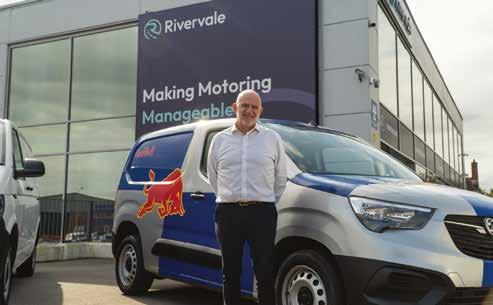
Here to help: Vince Pemberton outside Rivervale’s HQ
accessible. Customers can carry out inspection checks, access policy details, and book servicing or tyres quickly and easily, all in one place. We also support businesses with salary sacrifice car schemes, which provide significant financial benefits for both employers and employees.
While the term may sound complex, salary sacrifice is a smart investment that can reduce costs, support sustainability goals and improve employee satisfaction. Trusted by major brands such as Red Bull, Auto Windscreens and Acosta Europe, Rivervale manages fleets of all sizes with confidence and expertise.
Business or pleasure – We’ve got you covered Rivervale offers flexible business leasing
Leasing Company of the Year: Rivervale
Good things sometimes come in small packages, and while the big boys can be impersonal, not so Rivervale, which is fast becoming the go-to firm for smaller fleets and salary sacrificers. Competitive rates coupled to a hands-on approach is refreshing, to say the least the least. And they also offer some brilliant car and van video reviews to help you make up your mind.
In a sector that can be confusing, Rivervale is a shining light.
Duncan Stocks, Rivervale’s Group Sales Director (left), with Simon Fuller, Rivervale’s Commercial Director
for fleets ranging from a single vehicle to hundreds of cars and vans, alongside personal leasing with some of the most competitive offers in the UK. All our leasing options include free nationwide delivery for added convenience.
Business leasing can be highly taxefficient, allowing companies to reclaim VAT and running costs, while benefiting from low upfront payments, predictable monthly costs and new vehicles under warranty. Personal leasing, meanwhile, offers individuals a simple way to drive a new car without ownership or depreciation concerns, making it an attractive alternative to buying.
It also has a Minibus division which is one of the UK’s largest suppliers to schools, care, community groups and organisations.
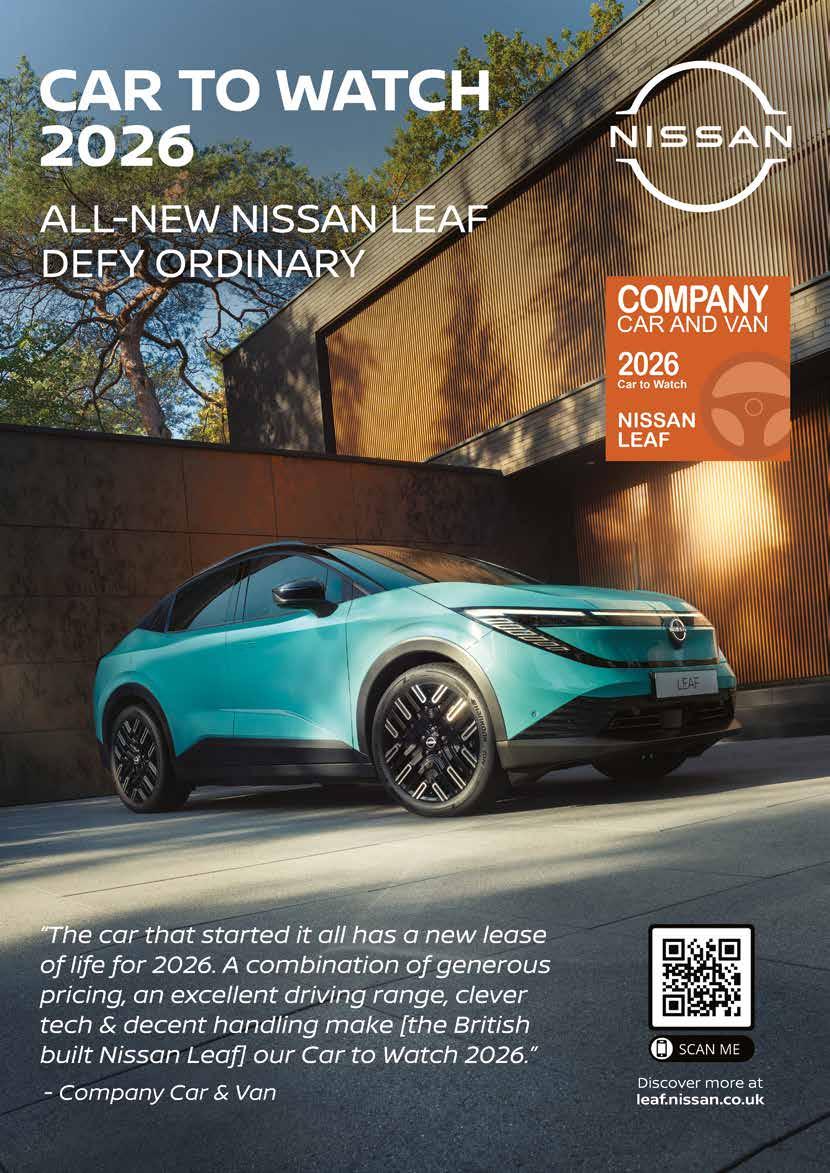
Car to Watch 2026: Nissan Leaf
The car that started the EV revolution as far as the UK is concerned has gained a new lease of life for 2026. The Britishbuilt Nissan Leaf arrives to find stiff competition, but while it may not rewrite the rulebook as it once did, a combination of generous pricing, clever tech and decent handling make it our Car to Watch 2026.
“The car that started the EV revolution has a new lease of life for 2026...”
Van to Watch: Kia PV5
Clever Kia has launched a small electric van into a sector that’s completely new to them and it would seem it’s hit it out of the park. Cute looks, a clever interior, competitive load space and a decent driving range tick all the right boxes. Most importantly it’s attractively priced which is where we believe it has an advantage. The Van to Watch this year is the Kia PV5.
Pick-Up of the Year: Isuzu D-Max
When a pick-up wins an award five years in a row, it must be doing something right, and the D-Max certainly does. It’s available as a single, extended or double cab model with a plethora of conversions to suit all customer needs. An allnew Commercial version further enhances the range’s VAT credentials, and there’s an electric D-Max arriving soon. Built to do the rough stuff while also tackling the urban jungle, once again our Pick-Up of the Year 2026 is the Isuzu D-Max.
Left, Paul Philpott, President & CEO, Kia UK with our award, and above, the exciting new Kia PV5
Alan Able of ISUZU UK: Five times a winner of our Pick-Up of the Year, with the D-Max
James Crisp, Senior Engineer at Nissan Technical Centre Europe, with our ‘One to Watch’ award for 2026
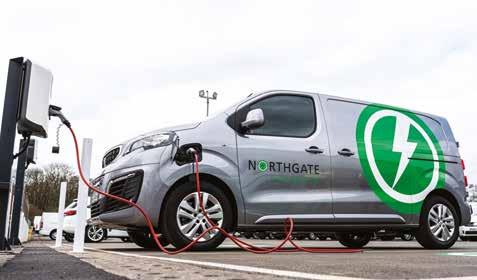
Rental Company of the Year: Northgate Vehicle Hire
Retaining the award it won last year, our congratulations go to Northgate Vehicle Hire for being our Rental Company of the Year. Its ’Drive to Zero’ proposition is industry leading and with a huge range of electric vans on offer, Northgate is a leading light in offering SMEs an electric option alongside ICE models. Add in its nationwide network of locations, telematics, service and maintenance options and user-friendly website, and it’s clear Northgate has got you covered.
Drive to Zero: How Northgate supports fleets on their EV journey
The shift to electric vehicles is accelerating, driven by government grants, new initiatives, and the growing need for businesses to act on sustainability requirements, as Environmental, Social and Governance (ESG) plays an ever more important role in tendering.
The pressure on fleet operators to cut costs and reduce emissions is mounting. From working out which vehicles are truly suitable, to planning charging infrastructure and ensuring drivers feel confident behind the wheel, it isn’t a straightforward process.
Northgate is helping fleets of all sizes tackle this challenge through its Drive to Zero initiative, which combines consultancy, smart tools, driver training and EV-ready hire solutions. That way, they can benefit from data-driven insights and dedicated expertise to give them confidence moving forward.
Expert Drive to Zero guidance for all fleet sizes
With Drive to Zero Consultancy, larger fleets can get access to dedicated support to build a clear, achievable electrification plan that balances operational needs with long-term sustainability goals.
Northgate’s experts turn fleet data into actionable insights, offering tailored advice on strategy, cost modelling, infrastructure, compliance, and future planning. This provides a roadmap that removes uncertainty and builds a strong business case for change.
For smaller fleets, the EV Suitability Checker analyses fleet data to highlight which vehicles are ready to go electric. It calculates running costs, estimates charging frequency, and maps out the nearest charge points, giving operators a practical, real-world view of how EVs will work day-to-day.
Additionally, Northgate works directly with drivers to understand their views on EV adoption, as well as their charging habits, ensuring the transition process works not only for businesses’ operational needs, but for their workforce.
EV driver training to build confidence
Switching to electric is more than just changing vehicles. EV Confidence, training and skills play a major part in a successful transition.
Northgate offers EV driver training for both drivers and fleet operators designed to boost safety, efficiency, and peace of mind behind the wheel. From understanding charging to mastering regenerative braking, this training removes common barriers to adoption and helps fleets unlock the full potential of EVs from day one.
Keeping EV fleets mobile
Reducing vehicle downtime is crucial and Northgate hire packages include service and maintenance as standard. These are supported by Northgate’s nationwide network of workshops, which are strategically located and staffed by highly trained mechanics and specialist EV technicians.
EV transition made easy
By combining consultancy, data-led tools, training and nationwide support, Northgate’s Drive to Zero initiative helps fleets approach electrification with clarity and confidence. Whether managing a handful of vehicles or a large-scale operation, businesses can access practical solutions that make the EV transition simpler, more sustainable, and better suited to real-world needs.
Neil McCrossan, Managing Director, Northgate Mobility Group - UK & Ireland
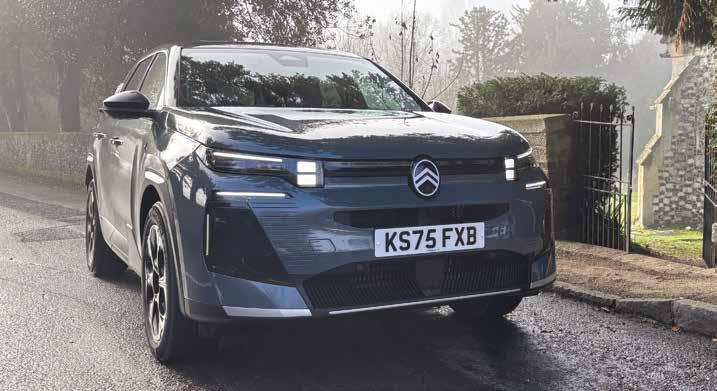
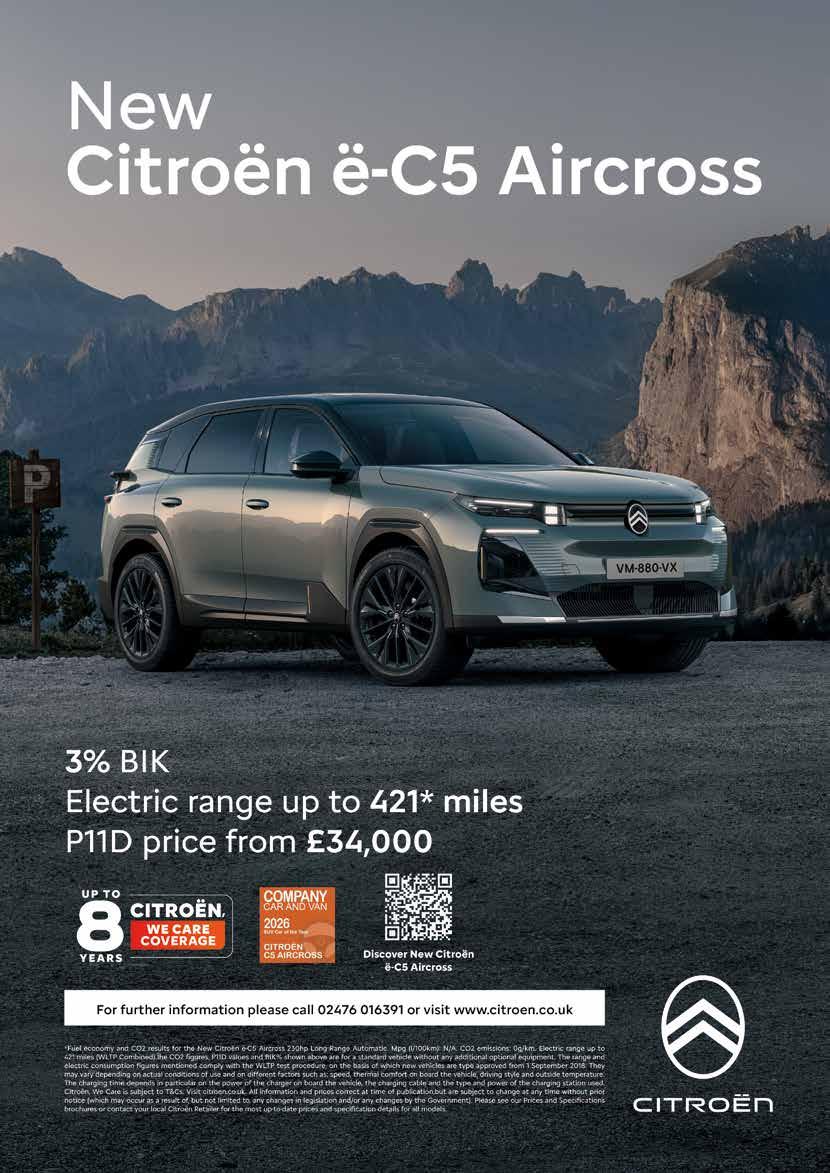
SUV Car of the Year: Citroën C5 Aircross
Citroën is on a roll and its all-new C5 Aircross demonstrates this best. Not only is it available with mild hybrid, plug-in hybrid and electric powertrains, it also manages to stand out in the overcrowded SUV sector with some clever design touches both inside and out. In the company car sector the electric model offers a 400+ mile driving range and it’s also brilliantly priced to compete with the new Chinese kids on the block.
We give you our SUV Car of the Year, the Citroën C5 Aircross.
Executive Car of the Year: XPENG G6
Having driven numerous Chinese EVs we reckon the G6 could be the best of the bunch. Not only is it European friendly, it’s competitively priced, looks fantastic and gives Tesla drivers a different model to consider. The executive sector is supercompetitive but the first XPENG model does a very good job against stiff competition. Our Executive Car of theYear is the XPENG G6.
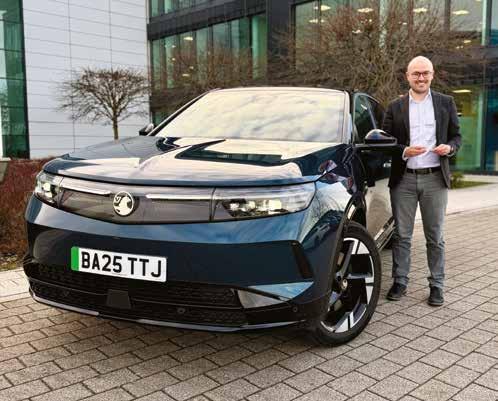
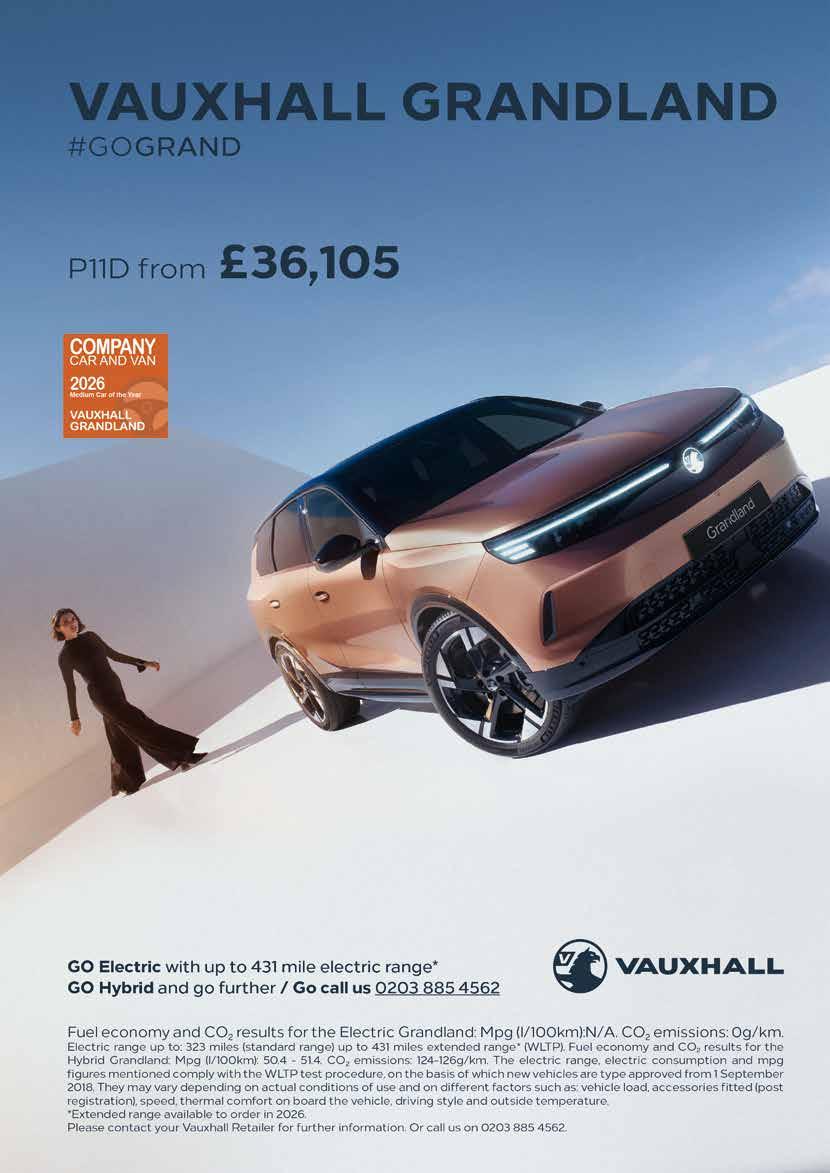
Medium Car of the Year: Vauxhall Grandland
For customers looking for a practical SUV that comes well equipped, with enough space on board for five and their luggage, the Grandland offers this in spades. Furthermore it’s priced right and with a 400mile range from the EV and PHEV versions, it also ticks the company car box. Probably the car that surprised us the most last year is our Medium Car of the Year.
Greg Taylor, Managing Director Citroën UK, with the C5 Aircross’s award
Receiving our award for the G6 are Mel Butcher, XPENG UK National Sales Manager and Elvis Cheng, XPENG General Manager, Northeastern Europe
Right, Phil Douglass, Vauxhall Marketing Director, with the ‘surprising’ Grandland, which ticks all the company car boxes
Citroën gets sharp as C5 Aircross looks to repel new competitors
Stellantis is fighting fire with fire as new cheaper Chinese vehicles arrive. It has sharpened its pencil with new models at seriously competitive prices. We popped down to the Chilterns to drive one such newcomer, the all-new Citroën C5 Aircross, a five-door SUV that’s been sprinkled with some magic pixie dust.
Tell me more
The C5 Aircross is Citroën’s largest model. It’s built on the familiar STLA-M platform shared with our Car of the Year for 2025, the Peugeot 3008.
Model choice
Citroën has all bases covered, with mild-hybrid, plug-in hybrid and electric models offered. A 1.2 PureTech hybrid comes with 142bhp. The 1.6 PHEV with 193bhp and the e-C5 electric version, with 73kWh and 210 bhp or 97kWh and 230bhp.
Specs and prices
Choose from three: You! Plus and Max. The entry level You! hybrid costs from £30,495, You! Electric from £32,565 and the plug-in hybrid, which comes only in Max trim, from £38,855. It’s worth noting that the electric versions qualify for the Government’s EV grants. The Long Range 97kWh versions get
the full £3,750 grant, while the Comfort has a £1,500 contribution.
Company car drivers
The hybrid comes with BIK of 30%, the plug-in 18%, so it’s the fleet-friendly electric version we’ll focus on as its BIK is 3% and as a result will be the biggest seller to SMEs.
Electric versions performance and range
Two batteries are being offered across all three trims. First, the Comfort 73kWh 210bhp version with a 0-62mph time of 8.9 seconds, a top speed of 106mph; that’s good for 322 miles. The Long Range version has a 97kWh battery and a 230bhp electric motor, which offers a combined range of up to 421 miles.
Charging
AC charging benefits from on-board 11kW capability, with rapid charging at a competitive 160kW, so a 10–80% charge will take around 30 minutes. Charging at home using a 7kW home charger and the e-C5 Aircross will fully charge in 12 hours for the Comfort battery or 16 hours on the Long range battery versions.
There’s a heat pump available for the car, but only in the top spec Max trim, perhaps an oversight by the brand.
Better news, though, is that Citroën is offering vehicle-to-load (V2L) charging on
the new e-C5 Aircross as standard. This means that you can use the car’s battery to charge other devices when you’re away from home, which is extremely useful.
Outside
Citroën has worked hard to make the C5 Aircross just that little bit different. So factor in some funky rear-wing light clusters, neat front rectangular LED daytime running lights and a blacked out rear quarter light. Large Citroën logos adorn both the front and rear with black cladding around the lower sills and wheel arches giving it a rugged feel.
Inside
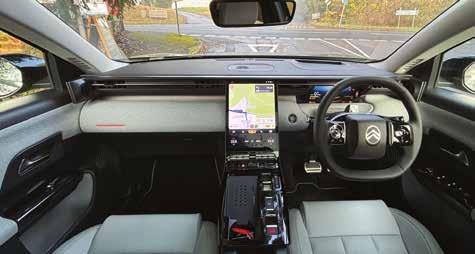
Fabric is used across much of the dashboard and doors, and it does a very good job of hiding the lower quality plastics just out of eyesight. There are some black gloss plastics around the centre console and centre binnacle which can be prone to finger marks. The large 13” tabloid touchscreen sits proudly in the middle, with the starter button alongside on what is a button-free dashboard. Most things are controlled on the screen with neat climate adjustment icons at its base, a centre wireless phone charger, two USBs, the button gear change, electric handbrake and drive mode switch.
Continued on page 28
Continued from page 26
Steering wheel controls for cruise control and infotainment are also offered with a 10” digital driver’s display clearly visible through the steering wheel. A hidden space in the middle features twin cup holders but they are awkward to reach. Better to utilise the large door pockets for drinks storage.
Infotainment
The top two-thirds of the screen are for the SatNav, media and phone connection, the bottom for climate. We connected Apple CarPlay, as many owners will. It was quick and easy to do with the screen graphics pleasingly bright and fast to load, and a useful volume wheel and on/off switch underneath. The dash speakers jut out from the dashboard ends, another interesting design detail.
Safety
Pretty much everything is standard on Plus trim, so you get adaptive cruise control, a driver monitoring system, lane keep assistance and traffic sign recognition. For an additional £1,100 – and standard on Max versions – you can add the Techno pack, with lane positioning assistance, lane change assistance, blind spot monitoring and rear cross-traffic alert.
Practicality
With 565 litres of boot space across the range there’s plenty of useful room for families and handy underfloor storage for
your charging cables. Up front the high roof and clutter-free dash mean there’s plenty of space with good seat and steering wheel adjustments.
The rear seats fold down in a 40/20/40 split and when up, you’ll have plenty of space for three adults to sit side by side. We should also mention Citroën’s Advanced Comfort and ‘Sofa Zen’ interior. The seats are supercomfortable and coupled to the suspension, offer a top-class ride. As mentioned you get two front USBs with two in the rear, massive front door pockets, a split opening armrest with space beneath and a decent glove box.
Driving
We tried both the PHEV and the EV and despite their heaviness, both handle well, highlighting Citroën’s comfortable ride. The electric version is perhaps stodgier through corners and comes with a touch of wallowing. Light steering helps redress the balance and the brakes need a proper push to come on, which we actually prefer.
In town the e-C5 is quietness personified. On board cameras and lots of glass make reversing and parking a cinch; the all-around view is first class.
Head out onto a winding, undulating road as we did and the car keeps its cool. Road and wind noise are nicely suppressed. We traversed a long single downhill road in the Chilterns dotted with pot-holes and the e-C5 didn’t skip a beat.
Admittedly when the road is clear this isn’t
a car full of thrills, more a sensible companion that won’t raise your heartbeat. On the motorway is perhaps where it shines brightest, however. Smooth acceleration, easy to set cruise control, great on-board safety and an easy to reach touchscreen make longer journeys easy rather than a chore. The seats are also extremely cosseting and among the best out there.
Driving modes and brake regeneration
Three driving modes are on offer: Normal, Eco and Sport. Eco works best on the motorway, Normal in town and Sport adds a touch of fun by tweaking the throttle and steering. A kick-down function means that even in Eco mode you can get power if required. There’s also a three-stage braking system that can be adjusted via steering wheel paddles. Each adds more brake regeneration to re-charge the battery although none are truly one-pedal. We found that the highest setting worked well when combined with Eco mode.
Pros
Practical, comfortable and eminently affordable family SUV. Some neat design touches, amazing suspension and a cabin that will take you to your happy place.
Cons
Both the plug-in and hybrid aren’t BIK friendly so in the fleet sector, it’s electric all the way.
CC&V VERDICT
With an influx of allegedly cheaper Chinese EVs landing pretty much all of the time, it’s good to know that customers can get an electric Citroen for less money than many of these AND it’s a far more complete car, too. Citroën has managed to make a family SUV far more interesting than the norm, while comfort and ride also lift the C5 Aircross above the competition. The downside is it isn’t an especially exciting car to drive, and the plug-in’s electric range is disappointing, so it’s the electric version if you’re a company car driver.
CC&V RATING: N N N N N
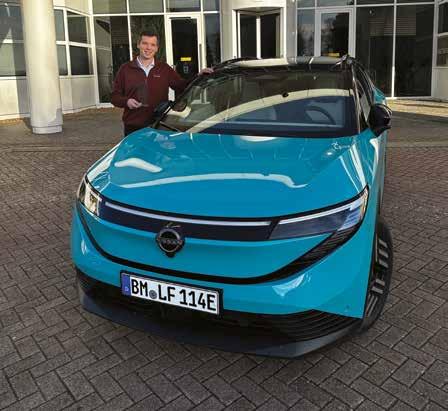
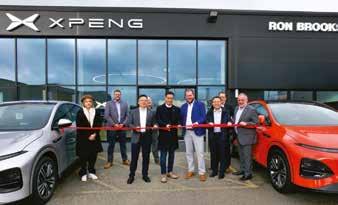
Ron Brooks celebrates official launch of flagship XPENG retailer
Ron Brooks Group proudly celebrated the official launch of its flagship XPENG retailer in Derby in late 2025, marking a major milestone in the group’s continued growth and commitment to the future of electric mobility.
The event welcomed distinguished guests from XPENG’s UK division, including representatives from the brand’s Chinese headquarters as well as senior leaders from IM Group, the official UK distributor for XPENG.
The celebration featured a ribbon-cutting ceremony and gift exchange, symbolising the beginning of what promises to be a strong and enduring partnership. Ron Brooks executives were pleased to welcome Elvis Cheng, Managing Director of XPENG Europe, Felix Hu, UK Country Manager, Jason Zong Managing Director of Network Department and Daisy Ren, Network Development Manager.
The newly unveiled flagship retailer represents a significant investment in both the XPENG brand and the local area in Derby, combining cutting-edge technology, exceptional design and a premium customer experience. The showroom showcases XPENG’s impressive range of intelligent electric vehicles, setting a new standard for innovation and sustainability in the UK automotive market.
Tom Slack, Chief Commercial Officer of Ron Brooks Group, commented: “We’re incredibly proud to officially open our flagship XPENG
retailer. The level of innovation and forwardthinking that XPENG brings to the EV market aligns perfectly with our values as a group.
“I was particularly pleased to welcome senior executives from XPENG HQ who chose our store and us as a partner to visit for their first UK dealer visit.
“We’ve invested heavily in creating a space that truly reflects the brand’s ambition and today’s event marks the start of a long and exciting partnership. We’re confident this collaboration will go from strength to strength.”
The launch event not only highlighted the strength of the partnership between Ron Brooks, XPENG and IM Group but also celebrated a shared commitment to
Ron Brooks executives and their distinguished guests from XPENG, including Elvis Cheng, Felix Hu, Jason Zong and Daisy Ren, cut the tape to officially open the new dealership
sustainable mobility, future-ready technology and exceptional customer service.
William Brown, Managing Directo, XPENG UK & IM Group, said: “We are pleased to welcome Ron Brooks Group to the XPENG UK family as we continue our expansion of retailers. Derby was a significant point for us, and it was essential to partner with an established and well-respected retailer.
“XPENG offers a premium EV experience, at a highly competitive price point, and provides its customers and drivers with vehicles that are formed in next-generation technology.
“The XPENG G6 is on sale now and we have many more exciting models to come, which I know the Ron Brooks Group will be eager to showcase to the customers in Derby”.
Updates to our Executive Car of the Year set to take XPENG G6 to the next level
XPENG UK has given the G6 a comprehensive upgrade for 2026 with significant enhancements across performance, design, technology, and efficiency.
The new G6 All-Wheel-Drive (AWD) Performance Black Edition will be available to UK drivers for the first time, delivering surefooted traction and searing performance. Equipped with dual motors, the AWD produces 358kW of power and 660Nm of torque, enabling the AWD model to accelerate from 0-62mph in just 4.13 seconds. Combined with XPENG’s sophisticated allwheel-drive system and advanced chassis tuning, the Performance derivative delivers exceptional handling, stability, and driving dynamics.
The Black Edition features 20-inch black sport alloy wheels, smoked black exterior trim, which includes mirrors, window surrounds, and black brake callipers, and creates a more stealthinspired premium appeal. Inside, drivers will find a grey-toned upholstery with a suede texture. It’s touches like this that really underscoring the model’s high-performance attitude.
Battery technology
The new XPENG G6 utilises a new state-ofthe-art 80.8kWh lithium iron phosphate (LFP) battery. The advanced cell chemistry eliminates precious metals like cobalt, nickel, and manganese, offering a more sustainable solution without compromising performance. The Next-Gen 5C battery, combined with XPENG’s Full-Domain 800V High-Voltage SiC Platform, enables industry-leading charging speeds with a peak power of 451kW and delivers a 30% increase in battery lifespan.
As a result of battery evolution, the new G6 can now potentially charge from 10% to 80% in just 12 minutes, making it the fastest-charging EV in its segment.
Engineered for the real world
XPENG has refined the new G6 with over 20,000 incremental developments. Enhancements have been made in many areas, including chassis and suspension tuning, steering dynamics, electric powertrain behaviour, battery management, and NVH (noise, vibration, and harshness) levels. The result is a more refined ride with exceptional stability, comfort, and vibration isolation, ideal for the challenging British roads.
The high-efficiency heat pump is now standard across all trims, preserving range efficiency during cold British winters. XPENG Heat Boost Technology warms the cabin efficiently without additional energy consumption, while the braking system ensures smooth control in both urban and motorway environments.
Futuristic elegance
The new XPENG G6 features exterior styling enhancements, with a new full-width 1942mm Starlight LED light bar with integrated turn signals, creating a distinctive road presence. Body-coloured wheel arches replace the previous black cladding for a more cohesive look, and the matt grey XPENG logo has been repositioned for a more sophisticated appearance. A new rear spoiler adds 5mm to the overall length and enhances the vehicle’s stance and aerodynamics, complemented by a cleaner rear diffuser. The G6 maintains an impressive 0.248 (Cd) drag coefficient and is available in fresh colour options, including Stellar Purple.
Nebula-inspired cabin architecture
Inside the New G6, new wood-grain dash trim adorns the cabin, with suede-effect ceiling material, and a fresh Dark Grey interior colour theme that creates a modern and luxurious atmosphere.
Practical enhancements include redesigned speaker covers, softer wireless charging panels (upgraded to 50W×2), and
updated materials on the A and B-pillars. RWD Long Range and AWD Performance models feature an upgraded 9-inch digital inner rear-view mirror, while new ambient lighting designs on the door panels and front dashboard enhance sophisticated visual appeal.
Front seats now feature heating, ventilation, and massage functions, while the rear seats continue to offer a 12-level recline function for exceptional comfort. Luggage capacity is retained at 571 litres in the boot (expanding to 1,374 litres with rear seats folded), and the large centre armrest box can accommodate up to five bottles. The XPENG New G6 remains a genuinely practical for active UK families.
The XOS cockpit system delivers noticeable improvements over the current model, with faster app response times, smarter voice recognition, and ultrasmooth UI transitions. The enhanced “Hey XPENG” voice assistant now offers intelligent recommendations across four zones of the cabin. Pricing is £39,990 OTR for the RWD Standard Range, £44,990 for the Long Range.
S6EV to continue MG success
MG has just launched its latest model, the MGS6 EV. Sitting between the MGS5 and new IM5 and IM6, MG is hoping to add to the 100,000 electric car sales it has had in the UK so far. We stepped out in a very cold Berkshire to discover a very driveable, practical proposition that’s more spacious than anything else in the class.
What is it?
A large C-sector electric SUV that aims to offer customers plenty of space and a decent driving range of 329 miles.
Model choice and prices
Three versions, all fitted with a 77kWh battery. Choose from SE Long Range, £37,995, the Trophy Long Range, £40,995 or the Trophy Dual Motor, at £43,995. Only the SE comes in under the government’s £40,000 luxury-car VED tax threshold.
Power and performance
The RWD single motor model produces 241bhp and 258lb ft of torque, for a nippy 7.3 second time to 62mph. The Dual Motor S6 delivers 356bhp and 398lb ft of torque for an impressive 5.1 second time from 0-62mph. Top speed is 124mph on all versions.
Inside
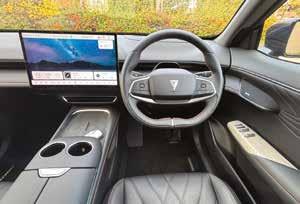
Fairly minimalist, with the Trophy coming with a beige and black dashboard, beige quilted seats and a dash of chrome here and there. It’s all nicely put together.
Practicality
Here the S6 scores highly with acres of space, especially in the rear. Three adults will easily fit on the rear bench and have great head, leg and foot room. Up front it’s tighter although the large glass windows all around and panoramic roof make the cabin feel light and airy. There’s also a large boot: 674 litres is no joke and despite the flat floor coming with no space beneath, you can store your charging
cables in the front 124-litre frunk.
Infotainment and controls
The 12.8” central screen feels small, but it is easy to reach from the driver’s seat and has bright clear graphics and a simple icon menu.
Equipment
SE comes with 19” wheels, heated front seats, a heated steering wheel, black cloth seats, dual-zone climate control and the dual screens. Trophy and Trophy Dual Motor add SatNav, 360-degree cameras, leather and suede-effect seats, a panoramic roof, ventilated front seats, an 11-speaker stereo. Even with 11 speakers we found the music play back very tinny and the adjustments and graphic equalizers didn’t seem to alter this.
Driving range
Single motor will travel 329 miles, the Dual Motor will do 300 miles. Our Trophy Single Motor saw us averaging 3.4 miles/kWh on a very cold November day, so we’d guess a real-world figure of 270 miles.
Charging
A 10-80% top-up on a rapid charger would take 38 minutes and a full charge at home from 0-100% would take 7.5 hours as the on board charger is only 7kW.
Driving
We decided to drive the Single Motor Trophy primarily because the Dual Motor model comes with a lower driving range. We were probably right in our choice as the standard
Trophy was more than competent on our test route, and a stand-out on the motorway.
There are five driving modes, Eco, Normal, Sport, Comfort and Snow, of which Normal mode makes the most sense. Each slightly adjusts the power released, steering sensitivity and tempers the accelerator pedal to lighter or heavier. We tried Sport and it tightens the steering and improves handling, while reducing your range.
What we can say is that MG’s engineers have done a good job of matching the S6 to British roads. Our Trophy glided along A and B roads with aplomb. MG’s Pilot system, which includes Active Emergency Braking, Blind Spot Detection, Adaptive Cruise Control and Lane Keeping Assistance is excellent.
Indeed, the electric MG SUV drives better than you’d expect, certainly in Single Motor format, and on our shortish motorway burst proved capable, quiet and comfortable. Forward, rear and side view are all very good.
Pros
Well equipped, spacious and comfortable. Handles well, and a lot of car for your money.
Cons
Charging speeds and range are only average for the sector. Infotainment is not as good as it could be. Interior and exterior are safe rather than interesting.
CC&V VERDICT: Choose the MGS6 if you need a large, comfortable, well appointed electric family car, and you won’t go far wrong. Arguably the best-built Chinese car for British roads yet.
CC&V RATING: N N N N
Watch out, Changan is a’coming
Coming at us faster than a cannonball is another Chinese car brand, this time it’s from Changan with its first UK model, the Deepal S07. We popped along to the Midlands HQ to take a look.
Tell me more?
Changan may be a name that’s gone under your radar but it’s actually a large Chinese carmaker that’s been making cars for over 40 years. Realising that Europe has the best car designers and engineers, it opened a design studio in Turin in 2001 and an engineering centre in Birmingham in 2010, giving it a strong base to attack the European market
Deepal S07 is its first UK launch: it’s a mid-sized SUV to compete with the Tesla Model 3 and BYD Sea Lion 7. It will appeal to the SUV-obsessed British customer, but it doesn’t stand out, looking like a combination of a Cupra, a Nissan and a Lexus.
Drivetrain and performance
It’s electric so will have kerb appeal in the fleet sector, courtesy of a 80kWh battery. This produces 218bhp for a 0-62mph time of 7.9 seconds – thought it feels sprightlier.
Range and charging
Claimed range is 295 miles, lower than you’d expect from a battery that size. Charging speed is just 90kWh so would take 48 minutes to go from 10-80% of range on a public fast charger, which isn’t competitive. Better news is that an on-board 11kW charger is included along with a heat pump.
Inside
Shames Tesla. Has a similarly sparse dashboard but soft touch plastics, fake wood and fake leather are definitely better than a Model 3. The dashboard top and front, the doors and all of the stuff at eyeline level feel very nice. Cheaper stuff is used on the areas
you can’t see as easily, such as the centre binnacle sides, door pockets and seat sides.
Cabin practicality
You open the doors by pushing tiny buttons on them. There’s a useful split opening armrest, good glove box, twin centre cup holders and hidden low down, two USB inputs with more storage in front.
Touchscreen is complicated but does have a few tricks up its sleeve, namely that it can be tilted towards the driver or front passenger for easier access. There’s also a heads-up display, and screen graphics are clear.
Spec and price
This is a strong suit: the single model comes for £39,900, and for that you get 19”alloys , LED headlights with automatic high beam, an electric tailgate, adaptive cruise control, dual-zone air conditioning and heated and ventilated front seats.
There is plenty of space all round, but the boot space is a bit average at 445 litres. The 125-litre frunk is plenty big enough to store charging cables and more.
Warranty
Seven-year/100,000-mile standard warranty.
Driving
Performed very much like an electric SUV should. Quiet and rides nicely, and all around vision is aided by the reversing cameras. Seat position is a little high for me, to make room for the battery a la Tesla.
Head out onto the open road and the S07 even with double glazed glass starts to get noisy. It’s the tyres mainly at fault here and as you increase speed you’ll notice this more. The steering is well balanced but over poor road surfaces, the car’s weight sends a vibration through to the steering wheel which
got a bit annoying.
There is little to choose between Eco and Normal modes, though the Sport mode makes things tighter and the steering more precise. None of the modes are ‘one-pedal’ but will add some extra miles if required. On the motorway the 07 cruises nicely at 70, and the ride is smoother. Adaptive Cruise Control enables easier control on Smart sections and we’ve no doubt longe journeys would be comfortable.
Pros
A lot of car for the money. Well apportioned and company car friendly.
Cons
Fidgety ride at lower speeds, generic looks, too much controlled by the touchscreen.
CC&V VERDICT
Deepal S07 feels very much like plenty of other Chinese EVs and will undoubtedly find customers, especially in the fleet sector. Inside and out it does a good job of fitting in alongside its competitors, and while looks wise it doesn’t stand out, it’s a decent looking car.
It’s good to know that the brand has a UK dealer network, 20 and counting, and a Birmingham-based parts centre, so aftersales has support. And with a UKbased engineering centre, any new Deepal models should improve on the S07’s ride quality. If you currently drive a Model 3, a Kia EV6 or a Skoda Enyaq coupe, are you likely to swap into one? That all depends on leasing prices which should be attractive. For now, the S07 is a competent start.
CC&V RATING: N N N N
Latest Hyundai has Inster-appeal!
Good news: small electric cars have finally started to arrive in numbers, and as Andrew Walker discovered, the Hyundai Inster is leading the charge and really standing out from the crowd...
Model choice
The Inster is offered with two batteries and in three specs, all with a single front wheel drive motor.
So the entry level Inster 01 comes fitted with either the 42kWh Standard Range battery or the larger 49kWh Long Range battery. Inster 02 is only offered with the Long Range battery, and then there’s the Inster Cross, which also comes with the larger battery.
Performance
Standard Range offers 96bhp for 0-62mph time of 11.7 seconds and a top speed of 87mph. Long Range is marginally quicker with 113bhp, reaching 62mph in 10.6 seconds with a top speed of 93mph. Cross is the same as Long Range but has 116bhp.
Specs
All versions are fitted with an 11kW on-board charger. Inster 01 includes a 10.25” digital instrument cluster, the 10.25” touchscreen with SatNav, climate control, smart cruise with Stop and Go, battery heater and 15” alloys.
Inster 02 adds 17” alloy wheels, full LED projection headlamps, sliding and reclining
rear seats, flat-folding front seats, heated front seats and a heated steering wheel. Choose the Inster Cross, which is more of a lifestyle model, and you’ll benefit from bumper cladding, roof rails, 17” alloy wheels, LED projection headlamps a skid plate and the exclusive exterior colour Amazonas Green Matte.
Prices
Choose from £23,505 for the Inster 01 with the 42 kWh battery, £26,775 for the Inster 02 with the 49 kWh battery or the Inster Cross from £28,755 also with the 49kWh battery.
Battery range
The Inster Standard Range with the 42kWh battery is 203 miles; the Inster Long Range 49kWh is 229 miles and the Inster Cross 49kWh, 223 miles
Exterior
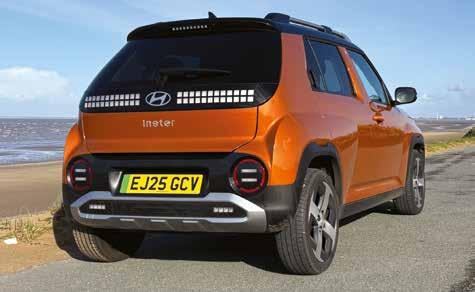
Think small and boxy like a Suzuki Ignis and many Japanese kei cars. At the side you get black bulbous wheel arches and unique alloy cross designs in chrome. At the front are large circular headlights with pixel square LEDs above, while the rear features a high pixel strip with two more large circular light located low down. The charging port is located at the front.
Interior
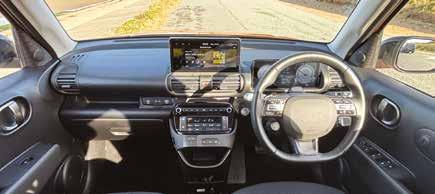
Hyundai has sensibly include plenty of normal switchgear making navigating the instruments super-easy. The 10.25” touchscreen sits proudly aloft the centre dash, with two air vents beneath. Lower down
you get a group of stand alone switches for volume, climate, the heated seats, parking camera and wireless charging pad. A line of short-cut buttons allows you to access the screen functions as well; Map, Nav, Radio, Media and Set Up.
The starter button sits to the left of the steering wheel with a right hand stalk to change gears. A circular Drive Mode button allows you to select from Eco, Normal, Sport or Snow settings with cruise control switches above, including, on our test car, an autonomous cruise control option. Door panels offer up window and exterior mirror switches.
Don’t expect any tactile finishes; it’s mainly smooth, hard plastics finished in black with the occasional grey or chrome finish. However, you can specify a beige interior with a houndstooth fabric for the seats which would certainly brighten this up.
Infotainment
Apple CarPlay and Android Auto are standard, as is the 10.25” touchscreen. The operating system is a couple of gens old, so you’ll need to connect your phone via a cable to connect to CarPlay or Android Auto. Some of the menus are slower to load than in Hyundai’s newer software.
Cabin practicality
First and foremost, even with a slim footprint, the tall, upright shape offers massive amounts of headroom. Despite having envelope-thin door pockets the rest of the Inster has been cleverly designed for maximum space. Continued on page 38
Continued from page 36
There’s a neat armrest that moves with the driver’s seat, as do the centre twin cup holders. A good sized glove box, a storage area above, a low down centre cubby, twin front USBs a single rear USB and a 12v socket are all on offer.
The steering adjusts both fore and aft and while you sit quite high the bonus is an uninterrupted forward view, although the large ADAS set-up behind the rear mirror is magnificently large.
Boot space and practicality
The sliding rear bench is also a clever inclusion, although it only comes with higher-spec models. This increases the boot space from 238 litres to 351 litres while reducing legroom. However, if you leave the boot as is, the knee room is brilliant, as is headroom in the back. The only negative is it will be strictly a two-seater in the back.
The flat boot floor hides storage below –perfect for the charging cables – and the fabric parcel cover can be attached to the back of the seats if you fold them down releasing a more than useful 1,059 litres of boot space, another clever addition.
Safety
Plenty, including seven airbags as standard, Lane-Keeping Assist, plus a Driver-Attention monitoring System, Forward Collision Avoidance Assist and Autonomous Cruise Control were all fitted to our 02 test car.
Charging and range
We plugged in overnight on a number of occasions and the Inster range showed as 199 miles each morning when fully charged.
The maximum charging speed is 85kW, or 73kW in the smaller-battery model, so a 10-80 % charge on a public fast charger will take just 30 minutes. Charge at home as we did on our 7.4kW wallbox and it will take just over six hours to fully recharge the Standard Range Inster, while the Long Range version takes around 7.5 hours. Our five-hour night time discounted rate of 9p/kWh meant adding 37kWh to the range for just £3.30
Driving
First things first. The driving mode and regeneration levels offered are the same as
you get on other Hyundai, Kia and Genesis models, so are first class. Eco is usually our default option as it offers plenty of power in town, while selecting the highest regeneration option, the i-Pedal, means you don’t really need to use the brakes. You can toggle through the regeneration levels of which there are five using the steering wheel paddles.
Even though the acceleration to 62mph is slow, thanks to the electric drive train, nippy urban driving is possible and with the regeneration set on max, you can accelerate fast then let the car bring itself to a stop, all while adding some battery range.
The Inster may be narrow but it’s tall and the clever seats mean that even six footers will have plenty of room in the rear unless you move the seats forward, of course.
In damp late October, road noise was noticeable once you hit 40mph or above and the downside of the Inster’s upright stance is that wind noise is also a bit more obvious than in similarly priced EVs. Neither, though, are loud enough to spoil the experience nor take away from the Inster’s light and nimble handling, which coupled to accurate steering make it fun to drive.
You’d be forgiven for thinking that it’s a bit of damp squib on the motorway but you’d be wrong. There’s more than enough power on offer with the larger battery to keep up with motorway traffic and the inclusion of cruise control with Intelligent Cruise Assist means
autonomous driving, which is a seriously good inclusion on a car at this price point, takes the hassle out of variable speed limits.
A couple of supermarket trips and the purchase of a leaf blower demonstrated that the boot is bigger than you think and as I drove around the Inster drew smiles from passers-by, a sure sign that its kooky looks have kerb appeal.
Real world range
Real world driving saw us averaging 3.8 miles a kWh and our longest 90-mile drive, all on the motorway, saw us use up 110 miles of range, so we’d guess at a combined driving range of 170 miles for the Long Range model. About 200 miles if driving just in town would sound about right.
Pros
Distinct exterior makes it stand out in a crowd. Some incredible premium features such as autonomous driving and the i-Pedal are available. The interior is like a Tardis. 3% BIK.
Cons
We like its looks, some may not. Interior is a little plasticky. The ADAS housing on the windscreen is enormous.
CC&V VERDICT
The Inster is a great small electric car and a worthy addition to the sector. There’s plenty to like here. Premium safety and regen features are offered, the exterior puts the ‘F’ in Funky and the cabin is cleverly designed and spacious. Not so good are the interior finishes which are a little cheap, while turning off driver warnings is a bit of a chore. But we are being highly critical because the Inster is one of the best small electric cars we’ve driven.
CC&V RATING: N N N N
Improvements have kept the Isuzu D-Max ahead of the pack
In 2021 the Isuzu D-Max had a major update, making it at the time the safest pick-up on the road. Interior tweaks were also on the agenda, as was the addition of a ladder chassis. But as competitors launched their own new pick-ups the updates needed an update, and in early 2025 Isuzu launched a revised model range. Here’s an update ...
What’s new?
Outside there’s a new bonnet, radiator grille, tail lights and bumper design. A re-designed tailgate, and an upgraded ADAS system with a wider viewing angle also feature.
Infotainment and tech
The D-Max’s technology has been upgraded across all versions. You now get wireless smartphone mirroring on every model with part-digital instruments on top of the range V-Cross.
Isuzu has also added a new Rough Terrain mode for the electronic traction control offering customers extra help on slippery surfaces or steep inclines.
In more detail
Right across the range the D-Max
infotainment systems have been upgraded. Utility and DL20 get an 8.0” screen with wireless smartphone mirroring, the DL40 and V-Cross models a 9.0” version with wireless device charging. The systems are more logical too, with DAB, AM and FM radio all located in the same place and you also get screens that illustrate your off-road performance.
Model range
The D-Max comes in two ranges: Business and All-Purpose. There are four trim levels: Utility, DL20, DL40 and V-Cross. To that you can add the steroid-injected Arctic Trucks AT35. Company Car and Van had the opportunity to drive the recently updated V-Cross model which is leading the way for the brand in pick-up sales.
Better news is that the Single and Extended Cab bodies still qualify as commercial vehicles so didn’t get caught in the tax changes of last year. Note, though, that single cab models sit 20mm lower than extended or double cabs so aren’t as adept off-road.
Prices
The single cab Isuzu D-Max Utility starts from around £27,500, the V-Cross double-
cab from £38,000 plus £2,000 if you select the auto version.
Engine and chassis
The 1.9-litre 162bhp engine has been carried over from the previous model. The ladder frame chassis has made it stronger while the current models longer wheelbase has increased load space both inside and out.
A rear-differential lock option is available on all manual 4×4 Utility models in the range. This feature was first made available for the 2022 Isuzu D-Max pick-ups and has been continued in the 2025 model.
With 360Nm torque there’s ample power for most, but thanks to a very short first gear on the manual, you’ll need to change up quickly. The auto is better but you need to adjust accordingly when pulling out of a junction.
Payload
Every version has a payload rating of at least 1,070kg, which is important for commercial vehicle tax purpose.There’s also a 3.5 tonnes towing capacity. Another interesting point is that, every variant of the D-Max weighs under 2,040kg.
Continued on page 40
Continued from page 39
Therefore the Extended and Double Cabs are subject to normal passenger car speed limits. Many double cab pick-up trucks –Ranger and Hilux included – exceed this weight limit so must comply with goods vehicle speed limits which are 10mph lower on single and dual carriageways – a fact that many pick-up customers are still unaware of.
Will it get me through the tough stuff?
The D-Max is still perfect for anyone who needs to use their truck off-road. All versions offer selectable shift-on-the-fly 4WD drive and on all models bar entry-level Utility, the mechanical rear diff lock gives the D-Max plenty of ability. The new Rough Terrain function, plus hill descent control and hill start assist also help and you also get a wading depth of 800mm.
Safety
All double-cabs get a radar system, with Isuzu choosing to use stereo-imaging via a pair of cameras at the top of the windscreen enabling the AEB, lane keeping, traffic sign recognition and intelligent speed limiter to work more accurately than offered elsewhere. The new system also enables cross traffic alert, blindspot monitoring and emergency lane keeping, all new to the pick-up sector. And if that’s not enough, Double Cabs get eight airbags, Single and Extended Cabs seven.
We used the adaptive cruise control and
autonomous driving on the motorway and it works brilliantly.
Emissions and fuel economy
Pick-up emissions and fuel economy are not a selling point. V-Cross manual offers 33.6 mpg/auto 30.7 mpg with emissions of 220g/km and 241g/km respectively. Move up the spec and the automatic gearbox drops this to 31.4mpg and 235g/km of CO2.
V-Cross specifics
V-Cross certainly looks the part and features 18” dark grey alloys, very dark grey radiator grille and side steps and gun metal door handles. It’s also very well equipped,
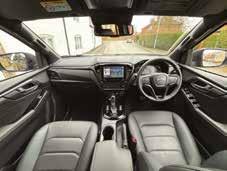
with keyless entry and start, new leather upholstery, dual zone climate control, heated front seats, rear parking sensors, a reversing camera, Bi-LED headlights, LED front fog and an eight-way electrically adjustable driver’s seat. The multifunction colour touchscreen is compatible with Apple CarPlay and Android Auto and comes with 8 speakers, plus 2 front and rear USB ports. There’s also an autodimming rear-view mirror and automatic headlight levelling. This is a pick-up tailored to the lifestyle sector.
Build quality and infotainment
The dashboard, fixture and fittings quality is excellent, with just a few cheaper plastics
used lower down. The seat finishes have been designed to be practical as well as hard wearing. More good news are the short cut switches and stand alone climate controls which sit underneath the screen itself.
The infotainment system works wirelessly with Apple CarPlay and we were able to connect our iPhone to the V-Cross in about 30 seconds, enabling us to utilise Google Maps and Waze. As far as the touchscreen itself, the graphics are clear and response time is decent too if not class leading.
Cabin practicality
All double-cabs feature two gloveboxes, a storage cubby on top of the dash , under armrest space, pop-out cup-holders with two more in the centre console.
What’s it like to drive?
The latest D-Max V-Cross is so much better to drive than the old Blade model and offers far stiffer competition to the established players such as the Ford Ranger, Toyota Hilux and Volkswagen Amarok. It handles the road much more like a large SUV than a pick-up. It’s easy to drive and manoeuvre and also features excellent brakes. The latest seats are comfortable and coupled with the improved body structure, there’s far less body-roll than on previous incarnations.
Rear passengers get good legroom and the rear seats are cleverly angled to make the rear more comfortable as well. On the motorway the V-Cross will cruise happily at motorway speeds without the previous model’s
tendency to be very loud. The inclusion of ADAS means that you can select your speed and let the V-Cross do the thinking for you.
In town it’s surprisingly agile and thanks to the reverse parking camera, easy to park as well. From start-up you do encounter a diesel growl which continues as it delivers it’s power lower down, but hit 25mph and it’s a lot better. Is it as smooth as the larger engines found on competitors? Probably not, and it doesn’t have the torque of some either.
None the less, the current D-Max is by far the best Isuzu pick-up yet and a CC&V favourite based on price, availability, model choice, conversion options and a familyfriendly dealer network.
Off road
Our driving day concluded with a 60-minute off-road trail taking in grass, mud, more mud, water and steep hills. The D-Max passed with flying colours just as we expected it to. For the building site, farm or forest worker it gets the job done.
Pros
Excellent model choice of single, extended and double cabs. Isuzu is proud of its ability to convert your D-Max by offering a bespoke service to suit the needs of customers. Isuzu also has an extensive dealer network of pick-up experts to help you buy and service your D-Max. The latest upgrades only add to the D-Max’s appeal.
Cons
The 1.9 engine works fine in almost every situation, but it’s lack of out and out pull could be an issue for some, and competitors offer more oomph. In common with all pick-ups, there’s still some cheaper plastics on the lower part of the dashboard even on the V-Cross. And as per all pick-ups if the load bed is empty, rear seat passengers can expect the occasional bumpy ride.
CC&V VERDICT
While other manufacturers shied away from the pick-up sector, Isuzu is to be congratulated for making its very popular truck even better. The amount of choice across a range of single, extended and double cab models means that there’s a D-Max priced for everyone. Furthermore, the latest upgrades means that it now looks better, and our test V-Cross is definitely a contender as a lifestyle pick-up.
CC&V RATING: N N N N
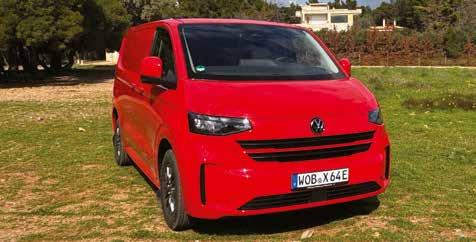
Volkswagen pulls out all the stops as e-Transporter chases down its Ford rival
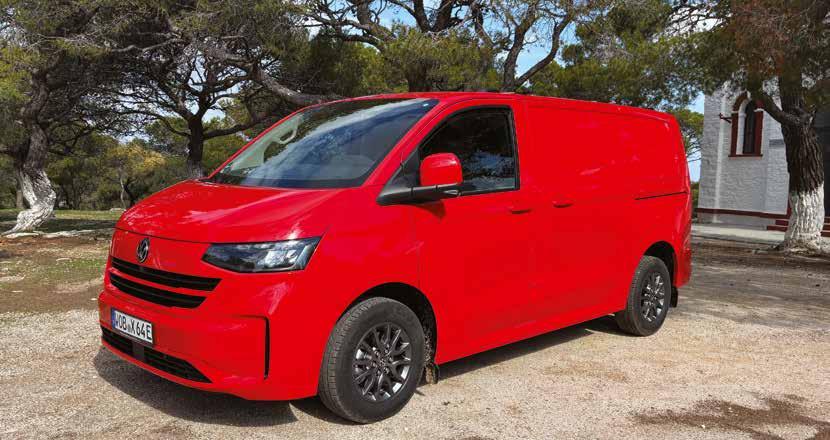
Volkswagen launched the seventh generation Transporter van last year. It’s based on the class-leading Ford Transit Custom. The Ford/VW strategic partnership has already delivered the Connect/Caddy and Ranger/ Amarok, so this joint venture is hardly a surprise. Ford sells more Customs than Volkswagen does Transporters, but the German giant has pushed the boat out to rectify this issue, with a longer warranty and higher specs than the Ford. We visited the Athenian Coast to putting the electric Transporter through its paces...
What is it?
This is the seventh generation of Transporter and it comes with an enlarged load or passenger compartment, a higher payload and increased efficiency.
There’s a Panel Van, Kombi, Shuttle and Double-Cab. All models are available with turbodiesel, plug-in hybrid and electric powertrains. The design and platform are shared with Ford’s Transit Custom.
Exterior
Looks-wise the front and nose are the main visual changes compared with the Ford. The front grille takes influence from the T5, and the upper edge of the headlights extends as a line into the side section above, dividing the upper and lower body in a wat that pays homage to the first generation Transporter. Customers can choose from a tailgate or wing rear doors.
Cabin
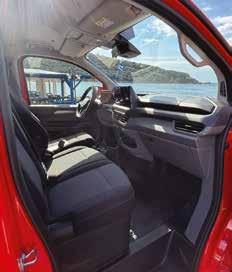
Climb aboard and the interior immediately smacks of quality. Yes, it’s almost identical to the Ford Transit Custom Electric but VW has a different steering wheel and digital driver’s display. The electric handbrake is located between the centre air-vents and the gear selector is on the right steering wheel stalk, freeing up floor space meaning drivers can move across the cab for pavement exit and entry. It also means that if there are three in the cab there’s decent legroom for the centre passenger as well, and certainly more than in a number of rivals.
Electric choice
The electric Transporter is offered with two outputs: 136 PS and 218 PS with torque figure of 430Nm. Both have a 65kWh battery and are rear-wheel driven. In effect the range consists of six models: the T32 Commerce 136PS SWB and LWB. The T32 Commerce Plus SWB with 136PS or 218PS or the T34 LWB 136PS or 218PS .
Charging
The e-Transporter can be charged on an AC connection at speeds up to 11kW and on DC chargers at speeds up to 125kW. And with
Rolec now offering 30kW workplace charging speeds this is even easier. See https://www. rolecserv.com/ev-products/ultracharge-30 for more details
Trims and specs
Two: Commerce Plus and Commerce Pro, with both offered in standard or long wheelbase. Commerce Plus is fitted with 16” steel wheels, LED headlights, rear wing doors, a near side door, 12” driver’s display, 13” touchscreen, cruise control, keyless start, Wireless App Connect, a heat pump, heated front seats, all season tyres, body-coloured bumpers, a leatherette steering wheel, front and rear parking sensors, a rear-view camera, keyless start with Safelock and an anti-theft alarm.
Range topper Commerce Pro ups the ante with 16” alloys, a heated windscreen, a heated leatherette steering wheel, wireless phone charging, auto air-con, Adaptive Cruise Control, Blind Spot Assist, extra USB ports and super-bright LED lights in the load area.
Charging and range
Charging times are linked to the maximum 125kW DC rapid charging, so if you’re out and about, you’ll be able to charge from 10-80% charge in around 40 minutes. The 11kW maximum charge speed for home chargers means a charge time of 8.5 hours from
0-100% on a 7.4kWh home charger like our own Rolec.
Depending on the model, the Transporter has between 192 and 201-mile range. There is one regeneration mode accessed by a ‘B’ button on the gear selector stalk.
Electric Transporter practicality
Unsurprisingly, the total payload is less than diesel models: 1,013kg and 1,088kg, depending on the spec. The towing capacity at 2,300kg, again smaller than the diesel. However, this is class leading for an electric van. There’s more good news with load space, which is the same as the diesel. The SWB L1 offers 5.8 cubic metres of cargo space, with the LWB L2 coming with 6.8 cubic metres. There’s a 1,400mm aperture for the back door with 1,932mm of space between the arches. The load compartment length on the Standard wheelbase model is 2,602mm, while the extended wheelbase version offers 3,002mm. There’s also a hatch in the bulkhead which allows you to push long loads into the space under the front seat, adding another 448mm to the total.Three Euro pallets now fit inside the long wheelbase model.
A useful addition for tradespeople is that electrical devices with a total power of 400W up to 2,300 W (depending on model) can be operated via optional 230 V interfaces.
Safety
Standard equipment includes Autonomous Emergency Braking, Lane Assist, front and side curtain airbags, cruise control, rear parking sensors, Dynamic Road Sign Display and Front Collision Warning. As you step up to the higher trim additional features include Intelligent Speed Assist, front and rear parking sensors, Adaptive Cruise Control.
Infotainment
We are a family of Volkswagen drivers so the touchscreen inputs and menus, lifted from the VW passenger range, are straightforward. There are some physical buttons for functions such as the heated windscreen and these are located on a single section under the screen. Apple CarPlay and Android Auto are included as standard. We connected an iPhone via a USB cable and it connected to CarPlay promptly. Whilst we prefer to use Waze or Apple Maps, the built in VW Nav was pre-programmed with our routes.
Cabin practicality
Up front there’s two USB inputs and a 12v socket in the centre dash and a clever pull down cup holder. The doors feature three storage spaces, with a dash top open area in front of the driver as well. There’s a good-sized glove box and even a dash top mounted closing box in front of the passenger. Our test cabin also had two more USBs in the dash top.
Driving modes
The Transporter BEV is available with five Drive Modes: Normal, Eco, Sport, Slippery and Tow/Haul. Plainly in a BEV, Eco will be your favoured choice, and Sport is useful for moving a heavier load or climbing steeper roads.
On the road
From the driver’s seat everything is easy to reach, including the touchscreen. Visibility is also good, although you will need to lean
forward to look left on some occasions. The seats, as per all VWs, are quite hard, but give good lower back support.
On some narrow, winding and hilly Greek roads the electric is very easy to drive, and with plenty of torque there’s enough power to make it up steep inclines easily. The electric motor can be heard at start up and when you slow down, but with anything playing on the speakers it’s barely noticeable.
Like the diesel version, the electric Transporter is a pleasure to drive. The only difference is the fitting of all-season tyres as standard; clever since it makes the electric model less likely to slip from the off, a problem with many battery electric vehicles especially those that are rear wheel driven. Rear wheel drive makes it a lot of fun, too. On some narrow winding Greek roads, with two on board and an empty load space, it literally flies, with a much faster 0-62mph time of 8.6 seconds compared to 13.4 seconds in the diesel. It’s also fabulously quiet with just a hint of road and wind noise entering the cabin.
A combination of the tyres, battery weight and overall weight make it a little cumbersome
on winding roads, typical of electric vans and certainly no deal breaker. The ride quality isn’t bad, with only badly-surfaced roads causing any cabin judders.
As far as range goes we were averaging an okay 2.7kW a mile on our test route. Of course, driving in Eco mode will help conserve the battery, as will utilising the B regeneration function. We tried it and in all settings the regeneration is noticeable, but in fairness it’s not that intrusive and certainly not one-pedal. It will help you eke out that extra range, especially useful in the colder months.
Pros
Excellent to drive, very well equipped and hugely practical – a total payload of between 1013kg and 1088kg is much higher than the Buzz Cargo’s 592kg for example. It’s also cheaper than the Electric Transit Custom and comes with a better warranty.
Cons
Payload is less than the diesel. It’s also more expensive. Real world range likely to be 150 motorway miles -170 urban miles. Very similar to the Ford Transit E-Custom.
CC&V VERDICT
Volkswagen has itself a much better, more practical electric panel van that competes with the Ford. Classic Volkswagen traits such as the front end and grille, cabin set-up and infotainment are great, and the finishes and plastics used inside are nicer than on the Ford. Compared with other rivals such as models from Stellantis, Toyota, Renault, Nissan and Maxus, the electric Transporter is competitive from a practical and range perspective, and ahead of the Mercedes-Benz e-Vito, especially for range.
CC&V RATING: N N N N N
Kia strikes first time as PV5 claims global award for LCVs
Not
only has the KIA PV5 won our award as the Van to Watch 2026, it’s also celebrating a global win as International Van of the Year
Kia’s all-electric PV5 has been named the ‘2026 International Van of the Year’ (IVOTY), marking a historic first victory for both Kia and a Korean manufacturer.
The award was presented in Lyon, France, following a vote by a jury of leading commercial vehicle journalists representing 26 countries.
“Congratulations to Kia for winning the prestigious 34th International Van of the Year Award,” said Jarlath Sweeney, Chairman of the International Van of the Year jury.
“The all-electric Kia PV5 sets a new benchmark for innovation, efficiency, and all-round capability in the light commercial vehicle segment. It combines zero-emission performance with versatility and practicality, redefining what businesses can expect from a modern van. Kia has long been celebrated for its award-winning cars, and now, its van division is making an equally powerful impact on the industry.”
In appreciation of this recognition, Ho Sung Song, President & CEO of Kia Corporation, said, “Kia has long stood at the forefront of EV innovation, and the PV5 brings that leadership into the commercial vehicle space with purpose.
“We developed the PV5 by listening closely to our business customers and by focusing on creating a vehicle that is both highly practical and distinctly Kia in its refined, modern design and functionality.
“Also, the PV5 brings innovation in the traditional LCV production through our conveyor and cell integrated manufacturing system enabling environmental modification process.
“To have the PV5 named International Van of the Year in its debut is an exceptional honor. It reinforces our belief that Kia can redefine this segment and continue shaping the future of smart, sustainable and electric mobility for businesses around the world.”
Kia’s all-electric PV5 was listed for consideration alongside six other models launched in 2025, including two other electric vans, further highlighting the growing importance of electrification as the industry
accelerates toward a more sustainable future.
Marc Hedrich, President & CEO of Kia Europe stated: “Winning the prestigious International Van of the Year Award is a true honour and a strong endorsement from some of the most respected journalists in the LCV industry, especially as the first vehicles are just arriving in Europe.
“Though new to the LCV market, this achievement confirms Kia’s readiness to deliver engineering, design, and practicality to strengthen our position as a leading mobility solutions provider. Our sincere thanks go to the IVOTY jurors for this recognition and to all Kia employees for their dedication.”
An electric van that gets the job done
Based on Kia’s Electric-Global Modular Platform for Service (E-GMP.S), the PV5 offers up to 258 miles (Cargo L2H1) and 256 miles (Passenger five-seater) of all-electric range (AER, WLTP), with DC charging from
10-to-80% in under 30 minutes and a payload capacity of up to 790 kilogrammes.
Additionally, within a month of its launch, the PV5 has also already earned a GUINNESS WORLD RECORDS™ title for “the greatest distance travelled by a light-duty batterypowered electric van with maximum payload on a single charge”, achieving 693.38 kilometres (430.85 miles).
Sangdae Kim, Executive Vice President and Head of PBV Division at Kia Corporation added, “In 2022, Kia launched its PBV division with the ambition to redefine the LCV market through innovation, something Kia has always stood for.
“The Kia PV5 brings that vision to life and receiving the International Van of the Year Award with our very first PBV model confirms that we are heading in the right direction. The PV5 has been developed by actively listening to customer voices, with every detail thoughtfully designed to meet real-world business needs.
“This award marks an important milestone, yet our journey to deliver meaningful value to customers continues as we expand the PBV line-up.”
Available now in Cargo (L2H1) and Passenger (five-seater) versions across Europe, the PV5 will be joined from 2026 by new variants, including a Chassis Cab, short-wheelbase Cargo (L1H1), and High Roof (L2H2). The larger PV7 and PV9 are currently in development.
GWM’s different take on pick-up sector is a breath of fresh air
We spoke to GWM’s boss Toby Marshall in our December 2025 issue about the POER300, a diesel pick-up the company was launching in the UK at a time when others are exclusively going PHEV and EV. GWM has successfully sold this model in other markets such as Australia, and GWM feels there is a UK market for a value-formoney hard-working diesel pick-up. We got to grips with one recently ....
Model choice and price
GWM is offering three versions of the POER300: the Lux at £31,495, Ultra at £34,830 and range-topping Vanta at £36,830 (all + VAT).
Engine and power
It’s powered by a 2.4-litre four-cylinder turbo diesel unit with 183PS and 480Nm.
Transmission is via a nine-speed automatic gearbox which offers full-time 4X4, plus low range gearing and several drive modes. On road you get Normal, Eco and Sport, while off road Mud, Sand and Snow are offered.
Payload and practicality
Competitive, with a 1,000 kg payload, up to a 3,500 kg braked towing capacity and a load bed with liner that measures 1,520mm x 1,520mm. A useful integrated tailgate step is fitted to Ultra and Vantas. When the tailgate is folded down you push a button and hey presto, the step emerges, and with a 150kg load it’s no gimmick either. Expect others to take note.
Off road capability
230mm ground clearance and approach and departure angles of 27 and 25 degrees are good, with a rear diff lock, selectable low range and full time 4X4.
Outside
A large GWM logo sits on the centre grille, with large lettering on the tailgate. Otherwise it looks like pretty much all pick-ups.
Cabin and specs
GWM has made sure even the base Lux has a 12.3” touchscreen, 7” driver’s display, wireless charging, LED lights, leatherette seats and wireless connectivity. Ultra adds heated and ventilated front seats, a manual sunroof, 360 degree camera, tailgate step and ambient lighting. Vanta has body-coloured extras in black, alloys, front grille, badge, sports bar, fixed side steps, mirror covers and door handles.
Compared to pick-ups of old it is very carlike, if not quite as luxurious as a Ranger or Amarok. The dashboard top, front, centre
binnacle, steering wheel and internal door finishes are all well put together with the cheaper stuff hidden much lower down.
Comfort and seating
You climb aboard using the side step and grab handles and settle into a welcoming cabin finished in black and chromes. The driver’s seat offers plenty of adjustment, the steering wheel fore and aft, and the heated seats and steering wheel were a bonus on a cold day. The cabin lining is light with a small manual sun roof that slides open to brighten things up.
Forward and side views are good and the rear view is made easier by the reversing cameras and touchscreen display. Unlike the Ranger, the gear selecter is easy to use and in the rear the bench is wide enough for three.
Rear leg space is a touch compromised by the high floor but headroom is acceptable. Twin USBs, a fold down armrest and separate air-vents also feature on the back.
Cabin practicality
Front and rear door pockets are large enough for a drinks holder as there aren’t any cup holders. Under armrest storage also features as does a dash shelf and small cubby low down on the right side. Twin USBs and a 12v socket are also located in the centre dash.
Infotainment and controls
More basic than some competitors, it’s very easy to use, reach, and comes with logical options. Short cut buttons give you access to the screen to adjust the temperature and directions, but are a bit fiddly.
All off-road and drive mode functions are accessed via buttons and a circular dial next to
the gear selector. Steering wheel controls handle phone and infotainment, and there’s a useful short-cut button for the driver safety menu which can be personalised. Adaptive cruise control is also offered.
Performance and drive modes
This is decent, with 0-62mph in 11 seconds. The main caveat we found is that the nine-speed gearbox is slow from the off, so you’ll need to give yourself time when exiting a junction. The power takes time to kick in. There’s not a lot of difference between the drive modes. Sport mode hangs onto the gears for longer but doesn’t really add much acceleration. Normal and Eco feel the same as each other so we stuck to Normal mode
Fuel economy
Official combined fuel economy is 32.7 mpg WLTP combined. With 170 of our miles on the motorway we averaged 28.3mpg. A 540-mile range courtesy of a 75-litre fuel tank means fewer stops than you’d expect
Warranty
Five-years or 125,000-mile warranty, with annual servicing or every 12,000 miles.
Safety
POER300 has a five-star NCAP safety rating thanks to 10 active and passive ADAS safety systems, including Front and Rear Collision Warning, Lane Keeping Assist and a 360-degree camera, plus seven airbags.
Driving on road
Like all pick-ups you’ll need to account for what is a long, wide and heavy vehicle that’s
been built to carry a load. Unladen the 300 bounces a lot and wobbles over poor tarmac. But add passengers and a load and it settles down, especially in town.
On the motorway we found it comfortable and surprisingly quiet if not quite as refined as a Ranger or Amarok. Two longish trips meant connecting wirelessly to CarPlay and listening to podcasts without needing to turn the vokume up. Hands-free calls were similarly made with no noise issues. The seats were comfortable and the driving position pretty good to, although the lack of steering reach was disappointing.
Off
road
We didn’t venture off the beaten track so turned to our Northern Group Motoring colleague Damian Turner at http://themudlife. co.uk for some guidance. One of our regions premier green-laner’s, Damian said this about the POER300. “On wet fields, rutted tracks and some steeper greasy inclines, the Poer300 just gets on with it. Even on fairly tame all-terrain tyres it rarely spun a wheel. The locking diff – torque management did its job well enough.
“There’s plenty of grunt for towing and on soggy ground the POER300 pulled away cleanly with minimal fuss. All told, it’s far more capable off-road than the price tag suggests.”
High praise indeed.
Pros
Competitively priced. Very capable off-road. Nicely designed cabin. Well equipped.
Cons
A touch fidgety in urban situations. Cruise control lever is not ergonomic. Slow off the mark.
CC&V VERDICT
As Toby Marshall at GWM told us, with pick-up prices rising in recent years, there is room for a cheaper, capable alternative. The POER300 ticks that box, but still has loads of nice cabin touches and a unique tailgate step. Lifestyle pick-up fans might stick to the Ranger and Amarok but plenty in the agricultural, building and construction sectors could do far worse than give the 300 a go. A very good addition to the pick-up sector
CC&V RATING: N N N N
Farizon’s another new name that you have to take seriously
A NEW name in the UK light haulage sector is Farizon. While in itself not the best-known name here, it is the commercial vehicle arm of a much better known company, Geely, which has strong ties with this country’s traditional black cab sector through its ownership of the London Electric Vehicle Company –formerly known as the London Taxi Corporation, which builds black cabs in Coventry.
The Farizon CV range is currently focused on the SV model range. This line-up includes the option of a 67 kWh or an 83 kWh lithium iron phosphate (LFP) battery, with a 106 kWh nickel manganese cobalt (NMC) battery available for the L3 H3 model. All battery options feature advanced cell-to-pack technology, reducing weight while increasing battery capacity and body rigidity.
One efficient, all-electric powertrain will be available, featuring a permanentmagnet synchronous motor with an eight-layer, flat wire configuration which produces 170 kW (231 PS) of power and 336 Nm of torque.
The first deliveries of the Farizon SV arrived in the UK in late spring. All variants will benefit from a standard four-year / 120,000-mile warranty (eight-year / 120,000-mile for the battery) demonstrating Jameel Motors’ confidence in the SV’s long-term reliability and durability.
Specification
A high level of standard equipment includes features such as automatic headlights with Intelligent High Beam Control, automatic wipers, an advanced 360° Surround View camera, heated and ventilated seats for driver and passenger, and a heated windscreen.
Also fitted as standard is an innovative payload monitoring system, which uses ride-height sensors used to calibrate the vehicle’s weight. An accurate payload read-out on the LCD driver’s display helps drivers and fleet operators ensure that they are meeting gross vehicle weight regulations. Overweight loads are alerted to the driver.
Other standard features adding comfort and convenience include, advanced connectivity, a heated multi-function steering wheel, high-power USB charging, automatic air conditioning, physical buttons alongside touchscreen control, three-seat layout, a full-size spare wheel, and a full suite of advanced safety and assistance systems. The standard paint finish is white.
Tom Carney, managing director, Jameel Motors UK added: “We already knew that the Farizon SV would be a unique product in this competitive segment, and now we know it will be ultra-competitive on price and significantly exceed expectations for standard specification, too.
“Not only is the list of standard features impressive, the SV also includes features that aren’t available at all on competitor models, like the weight monitoring system.
“That explains why we are seeing such excitement and interest in the SV from fleets large and small.”
Brian Currie Van Centre: From range anxiety to range confidence with the Farizon SV
Range anxiety is often cited as the biggest barrier preventing businesses from switching to electric vans. Concerns around daily mileage, charging availability and vehicle downtime are understandable, particularly for those whose vehicles are critical to keeping their business moving.
With five decades of experience supporting commercial vehicle users, addressing these concerns has become a core part of how Brian Currie Van Centre helps customers make informed, confident decisions about electric vehicles.
For the majority of businesses, daily mileage is far lower and more predictable than expected. Many vans return to the depot or home driveway each evening, making overnight charging a practical and convenient solution. When combined with the latest battery technology and fast-charging capability, this allows electric vans to fit seamlessly into existing working patterns. While out on the open road you’ll have access to an ever-growing number of nearly 80,000 public chargers across 40,000 locations.
A key example of a vehicle that can fit right into your everyday is the Farizon SV, available now at Brian Currie Van Centre. Designed from the ground up as a fully electric commercial vehicle, the Farizon SV has been engineered specifically to address the real concerns businesses raise around range, payload and useability.
Its battery and drivetrain have been developed to support full working days, not just short urban trips. This means you can plan routes with confidence, knowing the vehicle is
“The Farizon SV’s fastcharging capability means that even during longer days or unexpected changes to schedules, drivers can quickly top up and continue working with confidence. ..”
capable of getting there and back. As shown on the map on the facing page, this example highlights how far you can travel from Brian Currie Van Centre in Milton Keynes.
At our Milton Keynes Van Centre, we guide
customers through the realities of charging in simple, practical terms. We can help you understand how home or depot charging, public rapid chargers and smart route planning can work together to minimise downtime and maximise productivity. The Farizon SV’s fast-charging capability means that even during longer days or unexpected changes to schedules, drivers can quickly top up and continue working with confidence.
Our role does not stop at supplying the vehicle. As a specialist commercial vehicle centre, Brian Currie Van Centre provides ongoing support to keep your electric vans on the road. Our technicians are fully trained to work with electric vehicles, using specialist tools and genuine parts to ensure reliability, safety and performance throughout the vehicle’s life. This level of aftersales care is essential in providing peace of mind as you transition to new technology.
Electric vans are no longer a future concept - they are a practical, proven solution for today’s businesses.
By combining modern electric vehicle technology with decades of commercial vehicle expertise, Brian Currie Van Centre is helping businesses move beyond range anxiety and towards a more confident, cost-effective and sustainable way of working.
For businesses considering the switch to electric or looking to upgrade their current EV, our team is on hand to provide honest advice, tailored comparisons and real-world insight.