The motoring magazine for SME fleets
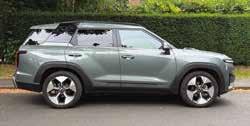
KGM TORRES EVX
Decidedly different - and all the better for it!
MG 4
Bigger range for best-seller
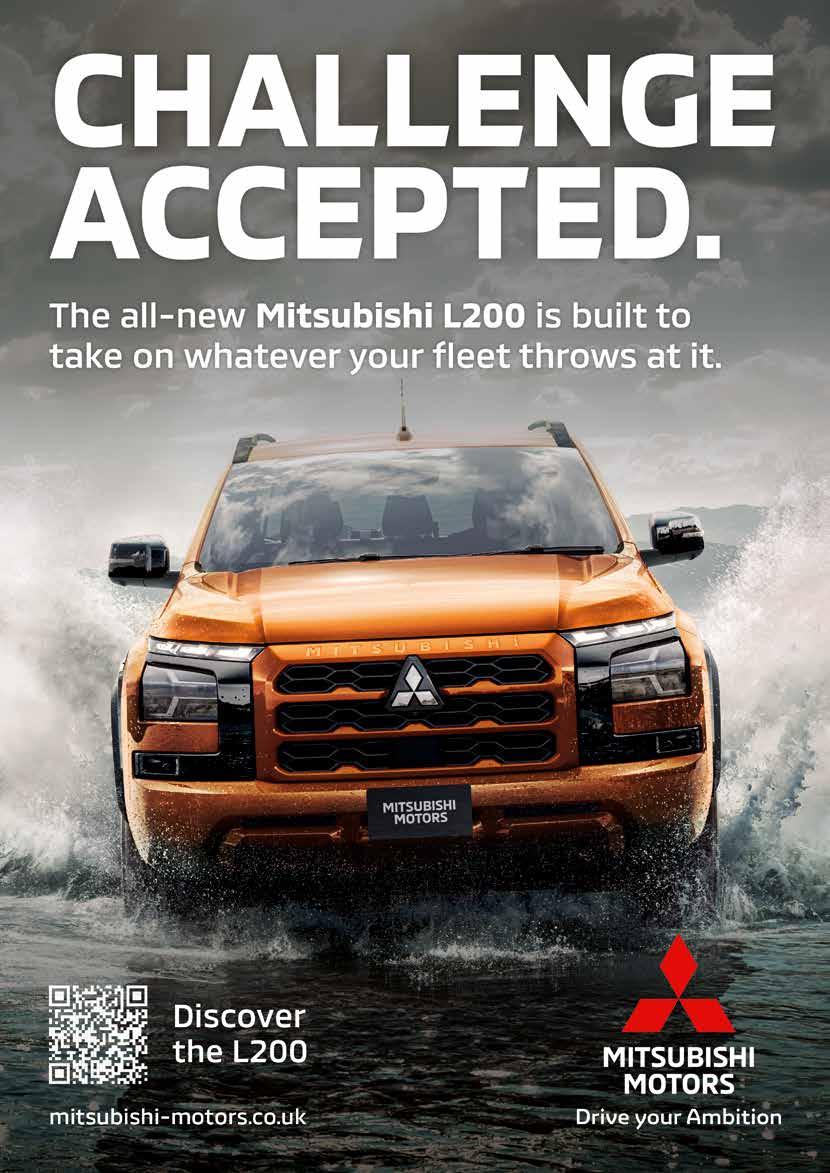
MITSUBISHI L200
A familiar name returns
KIA PV5
First van is resounding success
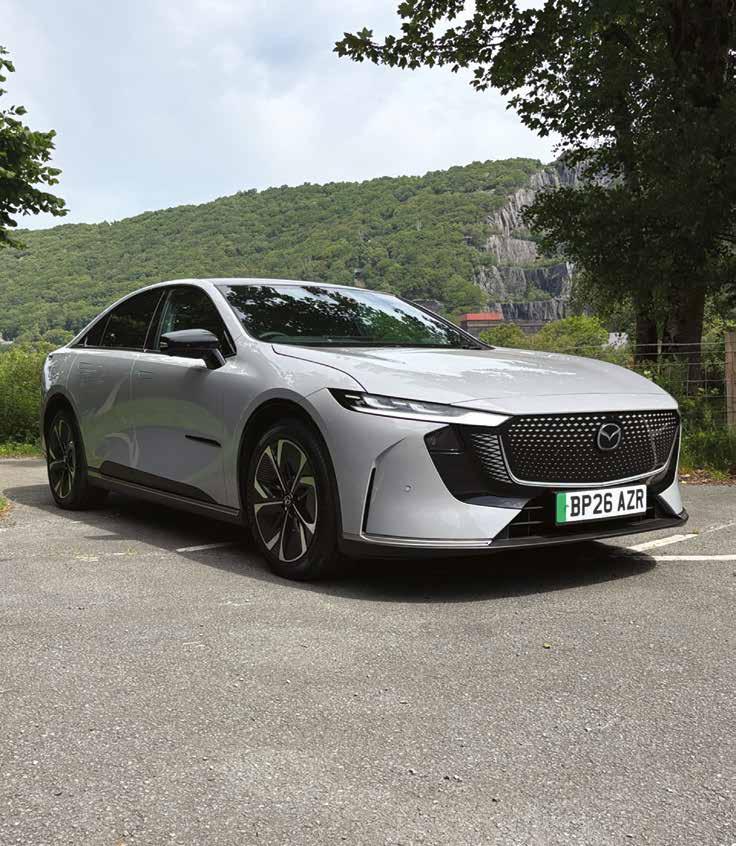
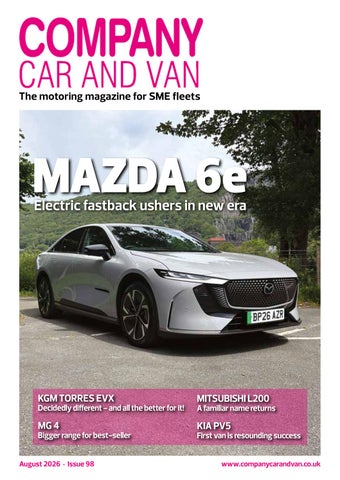
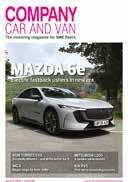
Mazda has always been a brand we’ve liked and the launch of this issue’s cover star, the all-new electric 6e, is a big one, to say the least. We spent a day traversing the roads of North Wales to find out how this new model performs.
Mitsubishi is back in the UK with two new models, one of which is the iconic L200 pick-up. The Series 7 has just landed and we’ve a feature on the welcome return of this popular model.
KGM made its presence felt at April’s CV Show. But it’s not all about CV. Step forward the Torres EVX, the brand’s electric SUV. We drive one this month.
In the face of increased Chinese competition, MG has come out fighting with six new model launches in recent months. The MG4 has been a very popular company car and it’s been updated; read our review on page 26. We drove Changan’s electric S07 last year and it definitely stood out in a crowded market of Chinese newcomers. In this issue we revisit it as the brand gets set to launch a plug-in version later this year.
Other new cars featured this month are our Executive Car of the Year, the updated XPENG G6, which is now even better; the Leapmotor C10 REEV, a plug-in that ticks plenty of boxes; the Cupra Tavascan, an EV with built in fun;
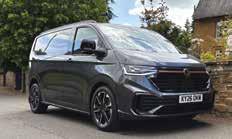
and the updated Omoda E5, which illustrates just how fast this newish Chinese brand is learning.
On the commercial front we drive the new Volkswagen Transporter Sportline and discover a van that’s at the top of its game and looks fantastic.
KIA launched its PV5 Cargo van last year and to say it’s been a success is an understatement. We get behind the wheel in our August issue.
INEOS has a Grenadier Commercial, a tax-breaking CV that will go anywhere, anytime while saving you money. See how we got on when we drove one in this issue.
We also take a look at the MAXUS eTerron 9, and we drive the Farizon SV, an electric van that’s making waves.
Three Q&As feature this month as we discus the return of Mitsubishi with Toby Marshall, the new Mazda 6e with Alex Janes and MG’s continued fleet success with Karl Howkins.
Finally, news from our regulars Rolec for charging, Northgate on van rental, Vanaways on van leasing and Rivervale for salary sacrifice news, all offering their expertise to help you run your fleets more efficiently.
Andrew Walker, Editor and Publisher

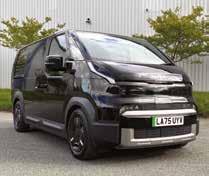
Mitsubishi has recently reintroduced new vehicle sales in the UK, which are being distributed through International Motors. Two models are spearheading the brand; the L200 pick-up and the Outlander SUV. We spoke to Toby Marshall, Managing Director for Mitsubishi Motors in the UK and now very much part of International Motors, to find out why they decided to bring the Japanese brand back.
CC&V: Not many would have predicted a return of new Mitsubishi vehicles to UK showrooms, but it’s great to see. Why did IM decide to reintroduce the brand?
Toby Marshall: This isn’t a relaunch; it’s continuity. Mitsubishi Motors in the UK may have ceased vehicle sales in September 2021, but the aftersales support was fully maintained.
We continued to have over 100 experienced aftersales dealers across the UK, we have over 530 years of Mitsubishi experience within the IM team and our investment in the brand has been maintained - so we have always been present.
The reintroduction of vehicle sales may have been unexpected by some, but we are thrilled to have new vehicle sales back and with our two most iconic vehicles of recent times.
CC&V: You’ve relaunched Mitsubishi with two models, the L200 and Outlander. Is there a particular reason you selected these vehicles?
TM: The Mitsubishi Outlander PHEV led the technology curve back in 2014 and was the best-selling plug-in hybrid EV for a considerable period. We went on to sell over 50,000 units in the UK, and there is pent-up customer demand for a new version.
In a lot of ways, PHEV technology makes even more sense in today’s market, particularly for retail customers. Many people are on the EV journey, but are not yet willing at this stage to commit to a full BEV. PHEV is a fabulous transition technology.
The new L200 Series 7 is the latest iteration of our brand’s stalwart pick-up truck. We know that pick-up buyers can be very brand loyal, so again, we believe there is pent-up demand for a new version. We first launched the L200 in the UK back in 1988 and led the double-cab revolution and lifestyle pick-ups back in the early ‘00s, so it’s a market we are well established in and have a lot of experience of.
CC&V: More good news is that many of your new Mitsubishi dealer network used to be dealers pre-2021, so customers will be reassured by familiar names. Was that your thinking when you appointed your dealerpartners?
TM: Well, we retained over 100 aftersales dealers since 2021, so it makes sense, where possible, to reinstate vehicle sales to a number of these sites. Our network is very

enthusiastic and experienced with the Mitsubishi brand. In some areas, where this was not possible or feasible for various reasons, we have appointed newer dealers to the franchise. These bring a fresh outlook and a new potential customer base, but critically, an equally high level of excitement and positivity.
Following the return of the Outlander PHEV and the launch of the L200 Series 7, the Mitsubishi Motors UK network has grown. Customers can now access expert servicing and maintenance at over 100 locations nationwide, all staffed by highly trained Mitsubishi technicians and supported by our next-day parts delivery service.
In addition, more than 50 of these locations are now authorised retail outlets, offering customers the opportunity to purchase new Mitsubishi vehicles alongside receiving first-class aftersales support.
We expect the network to grow to 120 points of representation with 60 sales centres.
CC&V: Our own SME fleet sector will welcome back the L200, a diesel pick-up with its rich history. Is Mitsubishi considering an electric version and if so, will you be adding it to your portfolio?
TM: For now, we are fully focused on this version which, as mentioned, is a diesel. Albeit a new and very impressive 2.4-litre bi-turbo engine, with 470Nm torque, making it the most powerful yet from Mitsubishi. We are proud of the legacy that L200 has built on nearly 40 years of UK sales, with a vehicle that continues to appeal to those users who need a pick-up.
CC&V: The Outlander PHEV was arguably the first tax-friendly company car back in the
“This isn’t a relaunch; it’s continuity. Mitsubishi Motors in the UK may have ceased vehicle sales in September 2021, but the aftersales support was fully maintained...”
day. Do you think the new version, which is also a plug-in, can capture some of the company car market ?
TM: Indeed, we did very well with the Outlander PHEV in the company car sector back when it was first launched in 2014. PHEV technology is still advantageous from a company car perspective and we know that EVs don’t suit all drivers, so PHEV is very relevant technology for many.
The new Outlander PHEV boasts attributes of twin-motor 4WD technology, impressive pure EV driving range, a high level of specification, a 7-seat option, and a luxurious interior that many will find attractive.
CC&V: We noticed that you’re planning to introduce an L200 Commercial model. When is this likely to land?
TM: The new Mitsubishi L200 Commercial, which will be available in both Titan and Barbarian versions, will be available this summer. Re-engineered as a dedicated two-seater, it features a permanent cabin conversion that replaces the rear passenger area with a secure, hidden load compartment. The transformation ensures full compliance with UK commercial vehicle legislation, meaning operators benefit from 100% plant and machinery allowance and a flat benefitin-kind (BIK) rate of £4,020.
CC&V: Finally, can you tell us if you plan to reintroduce any other Mitsubishi cars in the very near future and if you are, will these be EV and PHEV only?
For now, we are concentrating fully on the reintroduction of vehicle sales with the Outlander PHEV and L200 Series 7. We need to reconnect with customers on a sales level and allow them to experience these two new vehicles.
more good news as the speaker set-up is first class.
Performance and drivetrain
Top speed is 109mph with a 0-62mph time of 7.3 seconds. Maximum power is 258PS with 290Nm of torque.
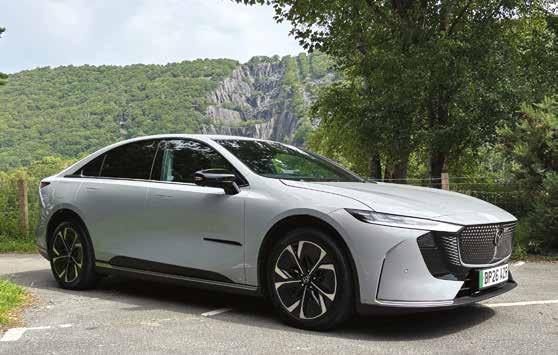
An early test of a left-hand drive Mazda 6e left us and many others scratching our heads at a car that just didn’t feel Mazda enough. Fast-forward to June 2026 and we were given the chance to drive the UK specced versions in glorious North Wales. Have Mazda’s designers tweaked the 6e enough to make it better? Here’s what Andrew Walker discovered.
What is it?
In order to bring a competitive EV to market, Mazda has collaborated with Chinese brand Changan, with the first fruits of this tie-in the 6e. It is a large saloon that competes with the likes of the Tesla Model 3, BYD Seal and BMW i4, in the burgeoning electric saloon sector.
Model choice
Mazda has simplified the 6e model choice with just one long-range 78kWh battery offered, which comes with a 348-mile range and is available in two specs, Takumi or Takumi+. Both versions are rear wheel drive. Takumi is available from £38,995, while the Takumi+ comes in at £39,995.
Specs
Takumi features 19” alloys, a 14.6” infotainment screen, a 10.2” digital driver’s cluster, a panoramic sunroof, a 360-degree parking camera, a 64-colour ambient lighting system, faux leather upholstery and a Sony stereo system. It features an impressive
maximum rapid-charging speed of 195kW, allowing for a 10% to 80% charge in about 24 minute
Takumi Plus adds the decidedly different tan Nappa leather upholstery, a heads-up display, ventilated wireless phone charging and more driver assistance tech.
Range and charging
The 78kWh battery is good for 348 miles and the 6e comes with a competitive maximum rapid-charging speed of 200kW, allowing for a 10% to 80% charge in just under 25 minutes.
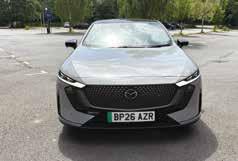
It’s a handsome car with some nice Mazda touches to the front with a Mazda grille and slim corner LED headlights. At the rear there’s a nod to Mazdas of old with the half moon circular rear light clusters. The floating electric spoiler looks good as well.
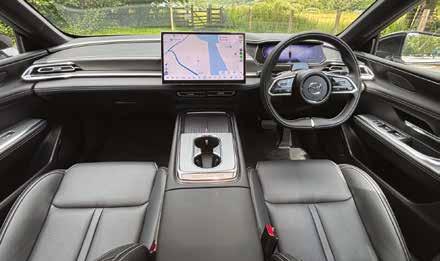
We drove a Takumi which came with black faux leather, a familiar Mazda logo-ed and shaped steering wheel and a simple clutter free dashboard.
The touchable surfaces are high quality and there’s a pleasing simplicity to the dashboard and controls, although as we discovered this comes at a cost with, as is common now, too many cabin controls located within the touchscreen menus. Wing mirrors, climate, driving modes etc, all will need to be accessed via the screen – more of which next.
Infotainment
Here is where the 6e heads in a new direction for the brand. Gone is the Mazda click wheel to make adjustments, which in my opinion is a good thing as we are all smart phone obsessed and struggled with the fact that the touchscreen usually only worked when you were stationary in a Mazda. However, there’s a caveat. Yes, you get a massive clear screen, but apart from the window switches, almost everything else goes through the screen itself. Mazda stressed that there is plenty of customisation for shortcuts and there is a line of icons on the bottom of the screen to make life easier, including climate. And two steering wheel star icons can be customised as short cuts, but as with many Chinese and to be fair Swedish cars with Chinese roots, it’s unnecessarily complicated.
A good example is with driving modes. Three are offered, Normal, Sport or Individual. However, if you want to utilise the built-in brake regeneration, this can only be accessed in Individual Mode which is selected via the touchscreen menu. We’d have preferred steering wheel paddles or even a switch so that the regen can be set in all three modes. And yes, we did try them and each slows the car down to give a little range extension but not one-pedal driving.
On the plus side we did connect to Apple CarPlay easily and our test route was called up quickly. And listening to 6 Music meant
Practicality
At 4.9m it’s a long car which is reflected in the interior. Up front the passengers have excellent head and legroom and in the rear, even with the rakish roof, the same is true. However, the floor is high to accommodate the battery so taller passengers may see their knees sitting higher than you’d expect. Storage comes courtesy of a glove box, large front door pockets, a deep centre bin between the front seats, twin centre drinks holders and a wireless phone charger completes the picture. The large panoramic sunroof adds both light and a touch of class.
Boot
The wide opening boot is a decent size offering 336 litres of storage plus a frunk, 72 litres of space hiding under the bonnet, with Mazda including a removable basket making it easier to clean a dirty charging cable.
Comfort and driving ease
I only sat in the front but couldn’t fault the driver or front passenger seats for comfort and adjustment. My only moan is that I like to sit down low when driving and the lowest setting still felt a touch high.
The side windows are narrow and the rear window is tiny so the on-board reversing cameras are a must. You change gear via a left-hand side steering stalk which also engages the cruise control. Short cuts on the steering wheel can be personalised and the screen itself is easily reached from the driver’s seat.
Safety
The 6e comes with all the on-board safety features you’d expect , but even with its Chinese origins, thankfully the 6e isn’t quite as annoying as some in this regard. The 6e we
drove in 2025 displayed an awful lot of what’s not to like in modern cars, with over zealous safety interference, especially with Lane Departure Warning, Driver Attention Warning and Overspeed warning. Thankfully, Mazda has tweaked these and we didn’t once beat the steering wheel in frustration, so a big tick from us.
Warranty
Six years or 100,000 miles and eight years or 100,000 miles for the battery.
Handling
Last year we were disappointed by how the 6e felt. Mazdas are not only beautifully built but they also offer plenty of driver engagement. And while the UK version drives better it’s still not as good on the road as we’ve come to expect from our favourite Japanese brand. Should we be surprised? Not really: the cost of R&D to get a new EV on the road is astronomical and Mazda’s collab with Changan means that the car’s suspension and running feel aren’t going to be what Mazda drivers will be used to.
Having said all that, and when compared to like for like competition, the Takumi we drove handled really nicely. A route around winding Snowdonia highlighted how Mazda’s designers have managed to improve its handling and the chassis and suspension feels just right. Thanks to a 47:53 weight distribution the battery weight isn’t obvious, which also helps the 6e’s balance and road holding. There is little or no body roll, making cornering enjoyable. It also feels reassuringly safe.
On the road
We drove 184 miles in the 6e taking in some amazing A and B roads in North Wales, the A55 and the M53, basically covering all bases. It doesn’t do anything badly, in fact we came away thinking just how much smoother the suspension was than when we drove it in 2025, and also how unobtrusive the driver safety functions were.
It’s not perfect though. At lower speeds the steering feels a touch disconnected .You can
actually select from two steering wheel settings, but neither we felt added nor took much away from our initial thoughts. Speed up though and the 6e feels more composed at higher speeds and genuinely offered a bit of fun on some undulating Welsh roads. Praise too for the brakes which compliment the car nicely, with the brake-regeneration settings blending in and out seamlessly. Perhaps unsurprisingly, the 6e shines brightest over smooth motorway tarmac driving at a constant 70mph. The cabin itself is vey well insulated against wind and road noise and the car’s damping also helps in this respect. We’d go so far as to say that this is its biggest attribute. Up front the seat and cabin wrap around the driver and front seat passenger with really good head and legroom, comfortable seats with fore and aft steering wheel adjustment, making getting comfortable easy.
The cruise control is easily set using the right side steering wheel stalk and you can alter the distance to the vehicle in front of you and adjust your speed with steering wheel switches. It works well. And if you do need to overtake there’s a pleasing amount of power when accelerating from 60-70mph.
Pros
Well equipped, decent ride, high-quality finishes, 3% BIK and looks fantastic.
Cons
Lacks some Mazda DNA. Infotainment is a little busy.
Conclusion
With the 6e it felt like Mazda was damned if they do, damned if they don’t. Mazda needs electric cars, specially for the fleet sector and what the 6e gives them is exactly that, albeit with more than a few compromises along the way. The bigger picture is that UK customers are flocking to new Chinese brands such as BYD, Omoda and Jaecoo, all of which offer value for money, electric and plug-in powertrains and great geographical coverage though their dealer networks. Crucially, how those cars ride doesn’t seem to be upsetting their buyers.
CC&V VERDICT
If you can handle the fact that the 6e isn’t a pure Mazda, there’s still a lot to like, including high levels of equipment, a top-quality interior and some decent Mazda touches to the exterior, especially with the use of heritage lights to the rear. Best of all Mazda has tweaked the car enough to make it ride better than many competitors and it genuinely looks different. In a sea of bland exteriors the 6e stands out, and that alone is worth plenty.
CC&V RATING: N N N N

CC&V caught up with Mazda’s new head of fleet, Alex Janes, to learn more about his plans for the ambitious Japanese manufacturer in the UK
CC&V: The former head of Mazda’s fleet department, Steve Tomlinson, had been at Mazda a long time and left the fleet department in a very good place. What are you looking to add to his legacy and what are your Mazda fleet plans moving forward?
Alex Janes: Steve built a very strong foundation for Mazda fleet and I’m fortunate to inherit a team that is already in such a positive position.
My aim is to build on that success by growing our local business proposition with every Mazda dealer, that has access to competitive fleet programmes to increase business in their local communities.
The automotive market continues to evolve, with private car sales becoming a smaller proportion of the market and business users playing an increasingly important role. That’s why supporting our dealer partners with strong local business opportunities is critical. It helps create a sustainable and profitable retail network while delivering a better experience for customers through local relationships and expertise.
Alongside that, we’ll continue to develop our fleet specialist dealer network to support larger fleet customers.
CC&V: We’ve now driven the 6e and while it’s not all-Mazda, the collaboration with Changan has definitely worked well. Are there any other electric Mazda models coming?
AJ: The Mazda6e is an important vehicle for us and looking ahead, we’re excited to be introducing the all-new Mazda CX-6e later this year. Like the Mazda6e, it will be produced at our dedicated Changan Mazda facility and will expand our EV line-up with a stylish, practical SUV that we believe will resonate strongly with both retail and fleet customers. We’re committed to broadening our electrified offering and the CX-6e is another significant step in that journey.
CC&V: You’ve recently added four new Mazda dealers to your fleet programme. Can you tell us how they and your other business centres can help SME fleet managers and company

car drivers when it comes to selecting a Mazda as their new company car?
AJ: The addition of four new dealers to our Fleet Specialist programme reflects both the confidence within our network and the strength of Mazda’s product range. Our fleet specialist dealers have dedicated fleet teams with expertise in business funding, company car taxation, fleet requirements and vehicle selection.
They are well equipped to support customers ranging from sole traders and SMEs through to larger fleet operators.
Importantly, they provide local, face-toface support throughout the entire customer journey, from choosing the right vehicle and funding solution to ongoing servicing and aftersales support. For company car drivers, that means access to expert advice on factors such as benefit-in-kind taxation, running costs and vehicle suitability.
In addition, all Mazda dealers have access to our Mazda Contract Hire programme, ensuring business customers can benefit from competitive offers and professional support regardless of where they are based.
CC&V: Plainly the 6e is an important fleet model for Mazda. What are your hopes for it and will you be engaging the leasing and broker sectors to broaden it’s appeal?
AJ: The Mazda6 has always held a special place within the Mazda range, particularly in the fleet sector, where it built a loyal following. In fact, during my time as a Mazda business manager between 2009 and 2013, it was regularly my company car of choice, so I know why it resonated so strongly with drivers.
With the Mazda6e, we have an opportunity to reconnect with many of those customers while also attracting a new audience to the brand. Its combination of striking design,
strong specification, competitive company car taxation and electric powertrain creates a very compelling fleet proposition.
We remain open to opportunities across all channels, including leasing and broker partners, but our primary focus is to continue growing fleet sales through our dealer network.
CC&V: The 6e is new but you also have two plug-in hybrids, the CX60 and CX80. Both have fleet appeal so will Mazda be introducing plug-in drivetrains elsewhere in the model range?
AJ: Mazda is famed for its multi-solution approach – across the range we have BEV, PHEV, mild-hybrid and self-charging hybrid – so with new model or new variant decisions all options are considered to ensure we have the right cars for the right markets with the right technology.
CC&V: Finally, what are your hopes for 6e fleet sales and where would you like the Mazda to be in two years time?
AJ: If look back 10 years, Mazda6 was selling around 6,800 units annually, with approximately 50% of those sales going into fleet. That demonstrates just how strong the model’s appeal was among business customers and company car drivers.
The all-new Mazda6e makes a very compelling proposition. A P11D price below £40,000, very low Benefit-in-Kind taxation, high levels of standard specification and Mazda’s Kodo design all combine to create a vehicle that is incredibly relevant for today’s fleet market.
Looking ahead two years, I would like to see the Mazda6e firmly established as a recognised and desirable choice in the fleet sector, helping us grow our fleet presence and bringing new customers to the Mazda brand.
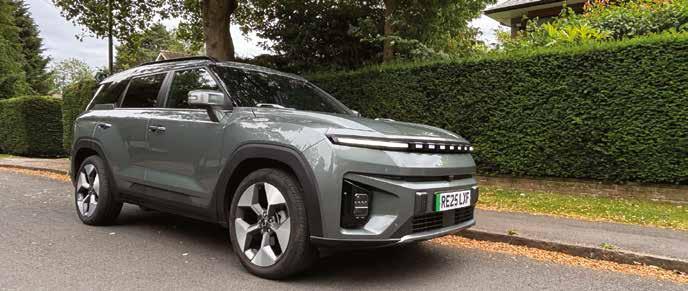
Chinese EVs are doing so well at the moment, but what about some love for the Korean KGM Torres, a large family SUV that offers great value and practicality. Andrew Walker drove the electric EVX version and discovered a car that’s well worth your consideration...
Tell me more?
KGM took over Ssang Yong in 2022 and set about updating the model range. Our test car, the Torres EVX, is available in two trims, K30 which costs from £36,995, or K40 at £39,295. It comes with a 73.4kWh battery courtesy of BYD’s Blade tech, powering a single e-motor and is front-wheel drive. Top speed is 109mph with 0-62mph in 8.1 seconds, with 204bhp and 339Nm on tap. There is also a hybrid petrol version.
Exterior
It’s chunky and despite not being 4WD it certainly looks the part. It reminded me of old Toyotas and Nissans. A bonnet-width light bar is nice, and low-down headlights, aero alloy wheels, black roof rails and a sturdy rear hatch give it road presence.
Interior space and practicality
The cabin is incredibly spacious with loads of leg and headroom. The rear bench is large enough for three adults but the centre seat is raised a touch so it does mean the centre rear passenger gets less headroom. There is plenty of storage space up front while rear passengers get twin USBs, a fold down armrest with twin cup-holders and the front seats feature useful organisers including pockets for your smartphone. The boot runs between 839 and 1,662 litres available. A removable soft rear parcel shelf enables larger items to fit in.
Cabin
Looks and feels sturdy and functional. Most of the dash is trimmed in soft touch materials and the copper coloured interior trim breaks up the ubiquitous blacks and chromes nicely. Cheaper finishes are hidden lower down. The dash is dominated by twin 12.3” displays that seamlessly meet to make one large section. The centre screen is for infotainment while the right side one is for
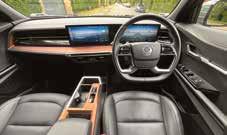
driver information. Almost everything is controlled in the screen menus, but not all. Right side steering wheel switches activate cruise control and the ones on the left the volume and entertainment.
Infotainment
The KGM set-up is more Chinese than Korean, ie, a bit fiddly and takes a bit of getting used to. Accessing some menus is slow, lacks precision and encourages you to look at it and not the road for too long. Turning off annoying safety warnings is long-winded.
Specifications
Far from stingy. The K30 comes with 18” diamond cut alloys, LED headlights, a heated steering wheel, heated front seats, front and rear parking sensors, SatNav, a wireless phone charger, cruise control, dual-zone climate control, Apple CarPlay, Android Auto connectivity and those twin screens. K40 adds 20” wheels, premium leather upholstery, adaptive cruise control, cooling front seats, adaptive cruise control, a 360-degree camera system, blind-spot monitoring and a heat pump.
Driving range and charging
A 287-mile driving range looks good on paper and in summer we were getting close to this with a 3.4 miles per kWh return, meaning a range of 250+ miles. A 100-mile motorway jaunt at a constant 70mph with the air con on saw us use 115 miles of range.
Even in winter we’d expect to get 200 miles. Maximum charging speed is 145kW so is slower than rivals. An 10-80% top-up on a fast charger will take 37 minutes. At home expect a 0-100% charge in 10 hours.
Driving
In town the steering is light with enough power to nip in and out of traffic. Feels smaller than it is. Parking is aided by the cameras and sensors which is great because you’ll notice the large C pillars obscure some rear view when you turn around.
On faster A roads the weight, shape and size are hard to disguise. The steering feels too sensitive and not heavy enough while there is the inevitable body-roll on any twisting section. You’ll also notice some road and wind noise. Much better on the motorway where it is a decent cruiser with enough power for overtaking.
The good Hugely practical, competitively priced and generously equipped, the EVX also comes with just 3% BIK. Chunky looks make it stand out in crowd.
The bad Over reliance on the touchscreen, annoying safety warnings and charging speed is just average. Tech and brake-regeneration feel dated compared to rivals.
The Torres EVX offers something different, even a bit old-school. Think Toyota RAV 4 or Nissan X-Trail but with an electric power train. If you can accept the intrusive safety warnings and touchscreen distractions you’ll find a car that’s really easy to like. Not perfect but may be perfect for you.
CC&V RATING: N N N N

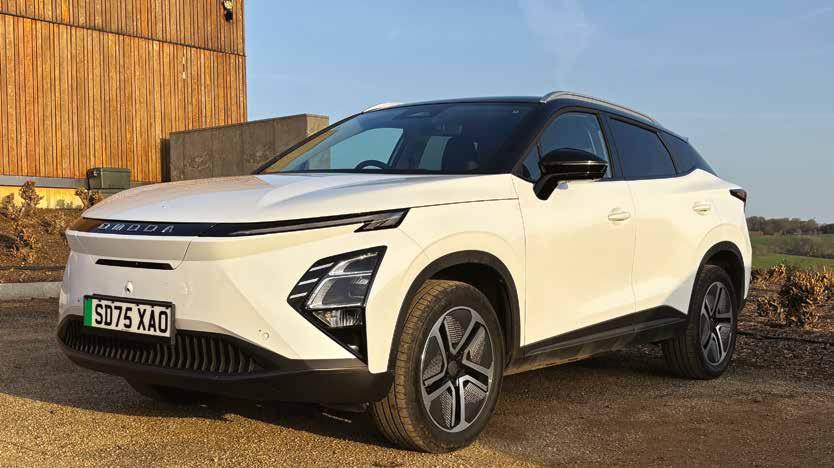
Less than two years after it was launched, Omoda has updated its electric E5 model, adding more miles, better brakes and suspension, and larger screens. Andrew Walker drove the new model around the Chilterns and if you’re considering an E5 as your next company car, here’s what you need to know.
Battery
The OMODA E5 features an upgraded 61 kWh Lithium-Iron Phosphate battery pack and a single motor on the front axle. They develop 204 PS and 340 Nm torque and will deliver a range of up to 267 miles (WLTP). It competes with the likes of the BYD ATTO 3, Kia Niro EV, Hyundai Kona Electric and MG4.
Model choice and price
Alongside its petrol engine stablemate, the E5 comes in two different trim levels: the Comfort variant, from £33,065 and the Noble priced from £34,555.
Exterior
The front features the brand name and an X
Shape with slim LED headlights and horizontal blade daytime running lights. At the rear there’s a large roof spoiler, LED rear lights and the tailgate is slightly bulbous like a Qashqai meets a Range Rover Velar, which adds some heft. The OMODA logo sits proudly in the centre between the light clusters. It’s unmistakably a medium SUV, currently the most popular sized car in the UK.
Inside Chinese brands have in the past cut corners inside their cars, but not so OMODA. Everything in the cabin is made of good quality plastics and the finish is impressive too, although the grey-black-chrome colour combo plays it safe.
Up front, the driver gets a nice high driving position, so all around visibility is good. But the rear window is quite shallow and the C pillars are large, so the on-board reversing camera is a bonus and shows up clearly on the screen.
Specification
As with other recent Chinese arrivals, the E5 even in Comfort trim is generously equipped. You get a rear parking camera, with front and rear sensors, 18” alloys, LED head and tail lights, wireless Apple CarPlay and Android Auto, Adaptive Cruise Control, keyless entry and Blind Spot Detection. Noble trim adds a 360 degree surround camera, a Sony eight-speaker sound system, a power sunroof, front and rear heated seats, two-zone air-con, a power tailgate and an electrically adjustable front passenger seat.
Infotainment
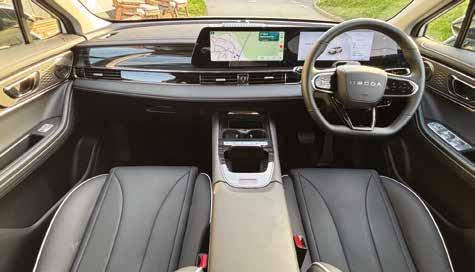
The updated E5 is kitted out with larger 12.25” screens which flow across the top of the dashboard. The one in front of the driver displays speed, range and all the usual car information. In the centre sits the touchscreen, where you can access the car’s own SatNav,
with an advanced Lithium-Iron Phosphate (LFP) chemistry, which is proven to offer enhanced durability and sustainability compared to a standard Lithium-iron battery found in most current EVs. The battery powers a single electric motor driving the front axle. This front-wheel-drive single-speed set-up develops 204 PS and 340 Nm of torque.
Performance and driving modes
Acceleration from 0 – 62 mph takes 7.2 seconds with a top speed of 107mph.
The E5 features an improved 130kW DC charging capability. This will charge the battery from 30-80% in 25 minutes using a public fast charger. Using a single-phase 7.4kW wallbox will deliver a full charge in under 10 hours. As usual plug-in overnight to utilise cheaper electricity tariffs. We use a Rolec EVO home charger. Details at https://www.rolecserv. com/ev-products/evo
The boot comes with a 380-litre luggage compartment, which extends to 1,075 litres with the rear seats folded, both competitive. The front luggage compartment offers additional storage space, a good place for the charging cable.
Front seat passengers get good space, but in the rear if you’re 6 foot or above, head height isn’t fantastic, perhaps as result of the panoramic sunroof and sloping roofline on the E5.
Driving
We spent a couple of hours on a route close to Aylesbury, covering A and B roads, some smaller country lanes and the M40. The E5 rides better than before, hiding the battery bulk, although there is a touch of body lean in and out of tight corners. Progress is quiet enough and the dashboard layout, steering wheel controls, including the right hand stalk to change gears, become familiar quickly. On some faster A roads there’s plenty of power and the E5 delivered nicely when we needed to overtake three-a-breast cyclists. The brakes are much better and not as sensitive, thankfully.
DAB radio, telephone, car settings and connect wirelessly in our case to CarPlay. It looks good and the icons and set-up are logical. Menus load promptly, which isn’t surprising when you realise that it uses the Qualcomm 8155 ‘Snapdragon’ chip, which offers rapid responsiveness to user inputs and supports 4G connectivity, a Wi-Fi hotspot and over-the-air software updates. Furthermore OMODA has included a natural voice control using a virtual assistant which comes with an animal avatar.
Controls
Thankfully the E5 features some virtual and physical controls. A row of buttons for commonly-used features such as climate control are integrated into the centre console. In front of the driver is a handy head-up display, so you can keep an eye on your speed. This also projects the navigation guidance and using mapping from HERE; this enables the driver to view public charging stations along their route, which network they belong to, what they cost and whether they are available or in use. Wireless Apple CarPlay and Android Auto feature with a 50W fan-cooled wireless charging pad for two phones, conveniently located in the centre binnacle for smartphone integration.
Battery and motor
The 61 kWh battery pack featuring Blade technology sits beneath the floor. It’s made
A choice of three driving modes – Eco, Comfort and Sport – enables drivers to tailor the driving experience to their preference. We tried all three and they do exactly as you’d expect. Eco dials the power down for slower progress, but a longer driving range. Comfort strikes a balance with more power released and Sport goes the full hog, but will reduce driving range.
Range and regeneration
On a single charge, the OMODA E5 can travel up to 267 miles (WLTP). While the vehicle is plugged in, preconditioning automatically heats or cools the battery to reach its ideal operating temperature and having experienced the Blade battery on the BYD range, we know it’s one of the best for holding on to range in colder weather.
On the move, regenerative braking charges the battery when the driver lifts off the accelerator pedal. Drivers can select three different settings – low, medium, or high –with the high setting enabling ‘single-pedal’ driving.
Single pedal driving is fast becoming a common EV benefit and the E5 will recoup under braking up to 80 kW of energy. It may be one-pedal but the regeneration isn’t as intrusive as on some other electric cars and we didn’t find it upset the drive in any way. If you use it you will gain a few extra miles. On Noble variants, a heat pump integrated into the climate control system draws energy from the air outside the vehicle and uses this to warm the interior instead of using just the electric heater. A definite plus.
There’s also an OMODA smart phone app for cabin preconditioning and the E5 features V2L functionality. When you’re parked up you can power a range of devices, with a socket in the luggage compartment delivering up to 3.3 kW of power.
A raft of 17 ADAS aids are standard, including Adaptive Cruise Control, Traffic Jam Assist, Lane Change Assist and Blind Spot Detection. Enhancing the body structure is a complement of 11 airbags, including a centre airbag to mitigate the effect of any collision between the driver and front seat passenger. As with many new cars the driver safety can be annoying but can be turned on or off.
Our main gripe when we drove the launch E5 was its ride and brakes; it was poor over the road and the brakes were over sensitive.
Upgrades have been made and it feels much more poised and handles poor British tarmac better.
The E5 cabin offers some decent storage and usability. Good news is that there is a line of short cut buttons behind the twin cup holders in the centre binnacle for air-con, the demisters, hazards, driving modes and to turn the infotainment screen on and off. So no fussing with the touchscreen, which we like. Behind the buttons is a small cover cubby and you get an armrest with storage beneath, plus twin USBs, twin cup holders, a rear fold down armrest, decent sized door pockets and a mid-sized glove box.
Finally we took a 10-mile M40 motorway drive where the E5 really shone. We selected adaptive cruise control and let the car do the work. At 70mph the E5 remains quiet with just a whisper of road noise coming from the tyres. The on-board safety features including the car visualisation, which shows the vehicles around you, works really well, definitely an impressive addition to this lower-priced car. If we had to drive 200 miles in the E5 we’d be able to do this in comfort and reach our destination hassle-free.
Pros
Better driving range, faster charging with excellent on-board tech and safety. Good looking from all angles. 3% BIK ticks the company car box.
Cons
Still plays it safe; by that we mean that it is very difficult to tell it apart from rivals such as the BYD ATTO 3 or MG4.
CC&V VERDICT
Tweaks to the battery range, the softer brakes and more compliant suspension have made the E5 a better car to drive. When you plug-in it charges faster, too. On the downside, it is still a bit vanilla to drive, which was a little disappointing. But to defend OMODA, that’s the sector the E5 is competing in. It’s a safe, medium-sized family EV, with good range, it’s easy to drive, is well equipped, safe and practical. And it definitely does all of that well.
Better but not that different.
CC&V RATING: N N N N
For businesses accelerating their transition to EV, the journey is about more than selecting electric vehicles. From charging infrastructure and energy management to driver engagement, successful electrification requires the right foundation, one that works today and can scale as demand grows.
For fleets, the challenge is no longer simply choosing electric alternatives, it is creating a strategy that keeps vehicles productive, controls costs and ensures infrastructure is ready for the future.
A successful EV transition requires businesses to consider the wider ecosystem surrounding their fleet, including grid capacity, charging infrastructure, energy management and the ability to scale as requirements evolve.
With the right planning and a clear strategy, businesses can minimise disruption, optimise charging sessions and unlock the benefits of electrification, from improved operational efficiency and reduced emissions to greater control over fleet management.
Building the right foundation
Charging infrastructure is central to fleet productivity. The availability, reliability and speed of charging will directly influence operational efficiency.
For many fleets, a combination of workplace, depot and home charging provides the most effective solution, reducing reliance on public charging networks and helping maximise vehicle uptime and productivity.
Before investing in infrastructure, businesses should understand their fleet requirements, including vehicle usage patterns, routes and schedules. The right charging strategy should be based on how vehicles operate, rather than simply the number of vehicles within the fleet.
A well-planned charging ecosystem allows businesses to keep vehicles moving while ensuring charging becomes a seamless part of daily operations.
Managing energy and future demand
From eHGVs and buses to delivery fleets, the continued transition of commercial vehicles to electric is making charging a core part of a broader energy strategy.
Smart charging technology, connected infrastructure and advanced chargepoint management can help businesses optimise
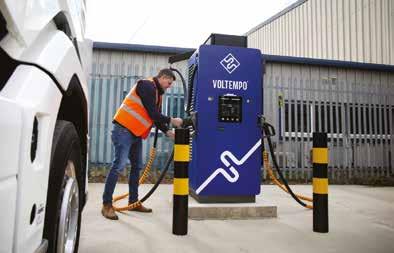
energy use, manage demand and gain greater control over costs. This becomes increasingly important as fleet numbers grow and charging requirements become more complex.
Businesses should also consider how their charging infrastructure can adapt as their fleet evolves. Selecting solutions that support interoperability and integration across business systems, including renewable energy sources, helps ensure infrastructure remains aligned with changing operational requirements.
Support through change
While reliable infrastructure and technology are critical, successful electrification also depends on driver confidence and engagement.
For employees charging vehicles at home, businesses should consider how reimbursement is managed. A streamlined approach ensures drivers are not left covering business charging costs themselves, while giving fleet managers greater visibility and control.
Supporting drivers throughout the transition helps ensure EV adoption is positive, practical and successfully embedded across the organisation.
A trusted solutions partner
The most successful EV transitions are built around forward thinking of how needs may evolve as vehicles, routes and demands change over time.
Choosing charging infrastructure that can adapt alongside the business is essential for protecting investment and delivering lasting value. This is where selecting the right charging partner becomes vital.
Rolec supports fleets with end-to-end EV
Electrifying fleets starts with the right charging strategy
charging solutions, covering consultation, planning and design, chargepoint supply and installation, chargepoint management, dedicated technical support, and flexible funding and financing options.
Rolec provides scalable solutions designed to support a wide range of fleet applications, supporting operators with technical expertise across the full project lifecycle.
Technicalities shaping projects now include load balancing across mixed fleet types, integration of both AC and DC charging systems, site-wide energy management and software, scalability for future fleet expansion, and maintaining uptime in mission-critical environments.
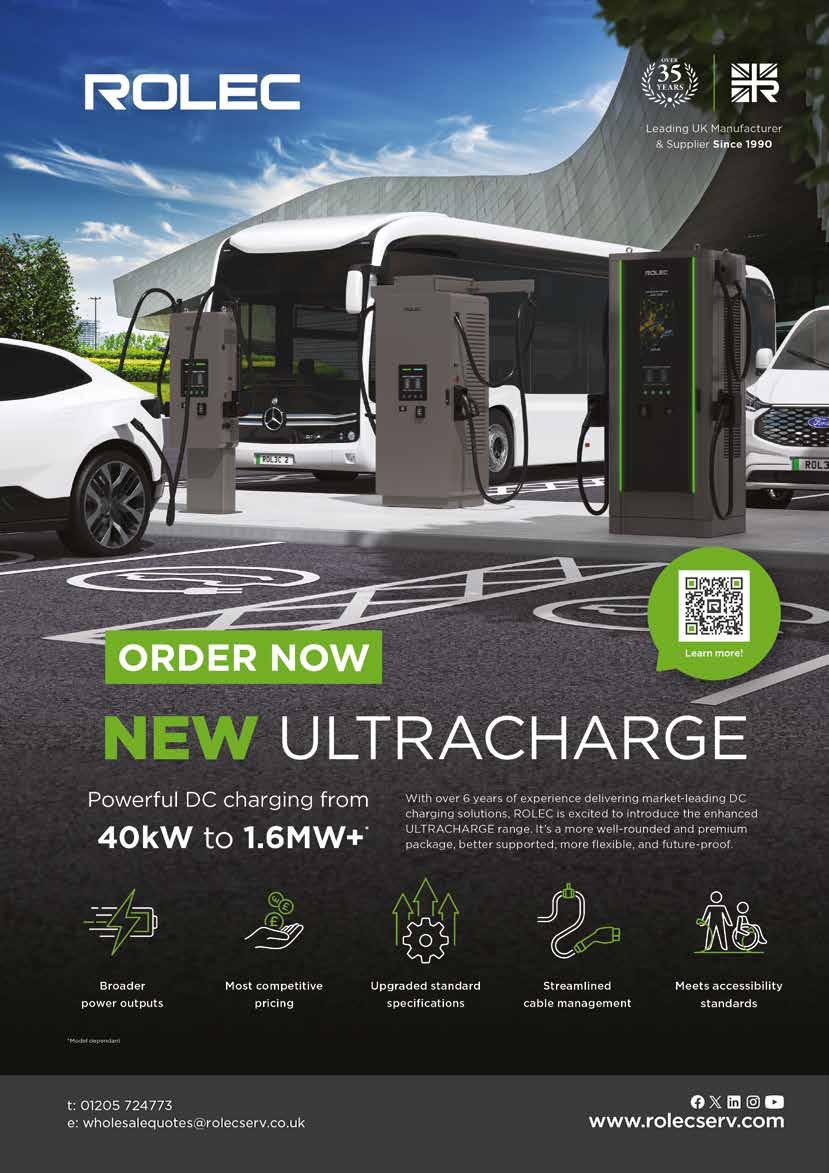
With local stock availability and short lead times, businesses can accelerate their transition to electric with confidence, from next-day delivery on AC fast chargepoints to rapid deployment of DC chargepoints, including systems from 40kW up to largescale 1.6MW+.
Whether supporting workplace charging, depot infrastructure or return-to-home company car charging, the focus is on creating a unified ecosystem built around the needs of each fleet, helping businesses navigate every stage of their transition with confidence and clarity.
With nearly two decades of experience supporting EV adoption, Rolec combines UK-based technical expertise with a clear understanding of commercial charging requirements and the capability to deliver solutions designed to keep vehicles moving today while adapting to changing fleet needs.
To find out more about Rolec’s solutions and support, contact Josh Holstead, Fleet and DC Charging Expert, at Josh@rolecserv.co.uk or +44 (0) 1205 724 754.
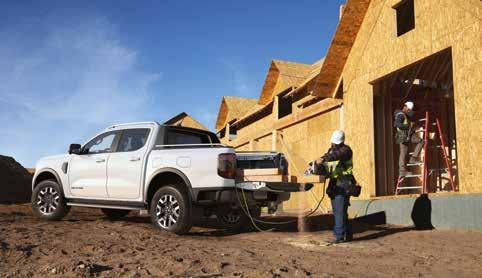
For many businesses, a van is more than just a vehicle. Whether it’s just one van for day-to-day use, or running a fleet, it is an essential tool you need to keep operations moving.
Whether it’s deliveries, on building sites, visiting customers or transporting equipment, choosing the right finance option can have a significant impact on your cash flow, budgeting and long-term flexibility.
Two of the most popular options are Finance Lease and Contract Hire, but which is right for your business?
What are the main van leasing options?
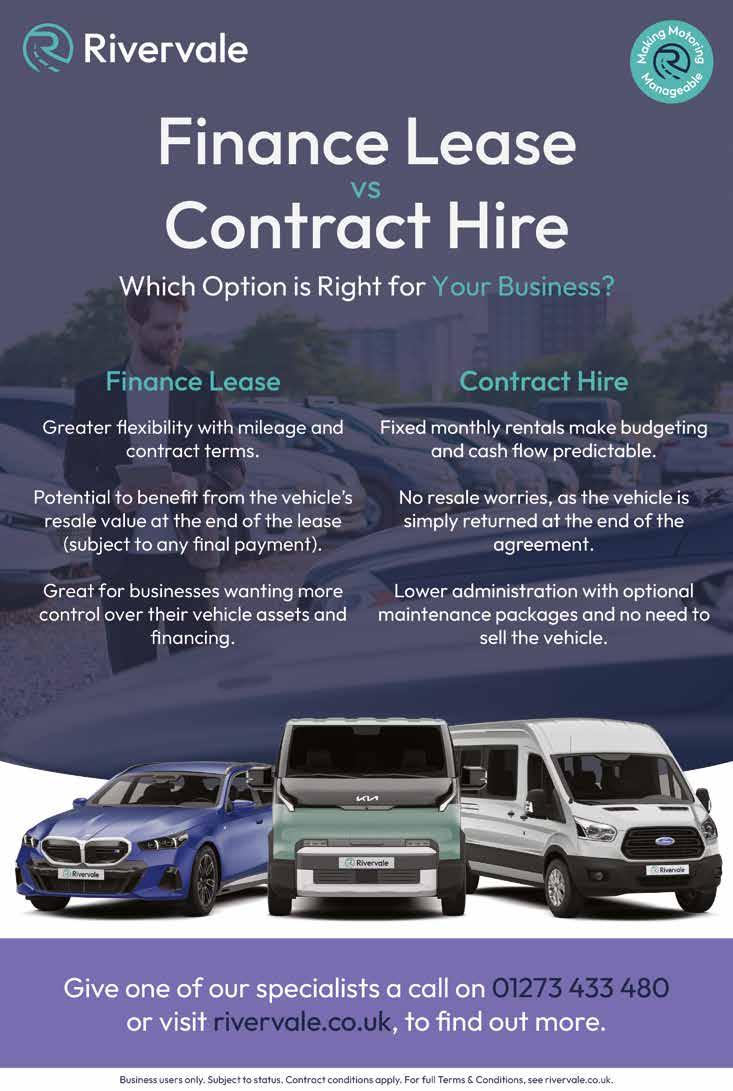
Finance lease and contract hire are two of the most common ways for businesses to lease a van. Both spread the cost through fixed monthly rentals, but they differ in how the vehicle is managed throughout the agreement and what happens when the contract comes to an end.
The right choice depends on factors such as your annual mileage, how long you intend to keep the vehicle and whether flexibility or predictable budgeting is your priority.
What is a Finance Lease?
A Finance Lease allows you to use a van for most of its working life without owning it. You pay an initial rental followed by monthly rentals over an agreed term, with some agreements also including a deferred balloon rental at the end of the contract. You take on a greater degree of exposure to the vehicle’s value over the course of the agreement. At the end of the agreement, the vehicle is normally sold on behalf of the finance company. Depending on the sale value achieved and the terms of the agreement, you may receive a share of any surplus proceeds.
Key features of a Finance Lease
n Greater flexibility in how the van is used
n Responsibility for maintenance, servicing, and insurance
n Potential to receive a share of any surplus sale proceeds at the end of the agreement
n Agreements that can be tailored to your business needs
This option is often suited to businesses that want more control of the end of contract process and expect higher or variable mileage.
What Is Contract Hire?
Contract Hire is a long-term rental agreement designed for simplicity and ease of budgeting. You pay a fixed monthly cost for
the use of the van over an agreed period and mileage.
The leasing company retains ownership and provides the option to include maintenance and servicing within the agreement. At the end of the contract, you simply return the van.
Key features of Contract Hire
n Fixed monthly payments for easy budgeting
n Maintenance and servicing can be included
n No concerns about depreciation or resale
n Simple return process at the end of the agreement
This makes contract hire ideal for those who want a hassle-free solution.
Finance Lease vs Contract Hire: Key differences
For many businesses, the decision comes down to balancing flexibility against simplicity.
Finance lease can offer more freedom around mileage and vehicle use, while contract hire is often preferred by businesses wanting fixed monthly budgeting and a straightforward return process.
The main difference between finance lease and contract hire comes down to responsibility and flexibility.
With a finance lease, you take responsibility for the vehicle’s residual value but may also benefit from any surplus value realised at the end of the agreement. With contract hire, residual value risks sit with the leasing company, making it a more straightforward option.
Mileage is another important factor. Finance lease agreements are generally more flexible, while contract hire includes agreed mileage limits and charges if these are exceeded.
Which van leasing option is right for you?
The right option depends on how you plan to use your van and how much control you want.
If flexibility and potential financial return are important, a finance lease may be the better choice. If you prefer fixed costs and a simple, hands off experience at the end of your contract, contract hire may suit you better.
Taking the time to assess your needs will help you make the right decision.
Want more free advice? Speak to our van leasing specialist
Whether you’re leasing your first van or expanding your fleet, our LCV Specialist, Shaun, is here to help. With expert knowledge of business van leasing, Shaun can talk you through your options, explain the differences between Finance Lease and Contract Hire, and recommend the solution that’s right for your business.
Give Shaun a call on 01273 077 604 to discuss your requirements and receive expert advice tailored to your business. rivervale.co.uk/van/leasing
THE shift to electric vehicles is accelerating, driven by government grants, new initiatives, and the growing need for businesses to act on sustainability.
The pressure on fleet operators to cut costs and reduce emissions is mounting. From working out which vehicles are truly suitable, to planning charging infrastructure and ensuring drivers feel confident behind the wheel, it isn’t a straightforward process. Northgate is helping fleets of all sizes tackle this challenge through its Drive to Zero initiative, which combines consultancy, smart tools, driver training and EV-ready hire solutions. That way, they can benefit from data-driven insights and dedicated expertise to give them confidence moving forward.
Expert Drive to Zero guidance for all fleet sizes
With Drive to Zero Consultancy, larger fleets can get access to dedicated support to build a clear, achievable electrification plan that balances operational needs with long-term sustainability goals. Northgate’s experts turn fleet data into actionable insights, offering tailored advice on strategy, cost modelling, infrastructure, compliance, and future planning. This provides a roadmap that removes uncertainty and builds a strong business case for change.
For smaller fleets, the Drive to Zero Hub is a smart tool that analyses fleet data to
highlight which vehicles are ready to go electric. It calculates running costs, estimates charging frequency, and maps out the nearest charge points, giving operators a practical, real-world view of how EVs will work day-to-day.
Additionally, Northgate works directly with drivers to understand their views on EV adoption, as well as their charging habits, ensuring the transition process works not only for businesses’ operational needs, but for their workforce.
Explore new options with Micromobility
Electrification isn’t just about vans and cars. For businesses facing last-mile delivery pressures or navigating busy urban areas where large vans are inconvenient, Northgate also offers innovative micromobility solutions such as e-bikes and more. These can provide cost-effective and flexible alternatives, helping businesses stay agile while reducing emissions.
EV driver training to build confidence
Switching to electric is more than just changing vehicles. EV confidence, training and skills play a major part in a successful transition.
Northgate offers EV driver training for both drivers and fleet operators designed to boost safety, efficiency, and peace of mind behind the wheel. From understanding charging to
mastering regenerative braking, this training removes common barriers to adoption and helps fleets unlock the full potential of EVs from day one.
Keeping EV fleets mobile
Reducing vehicle downtime is crucial and Northgate hire packages include service and maintenance as standard. These are supported by Northgate’s nationwide network of workshops, which are strategically located and staffed by highly trained mechanics and specialist EV technicians.
EV transition made easy
By combining consultancy, data-led tools, training and nationwide support, Northgate’s Drive to Zero initiative helps fleets approach electrification with clarity and confidence. Whether managing a handful of vehicles or a large-scale operation, businesses can access practical solutions that make the EV transition simpler, more sustainable, and better suited to real-world needs.
For further information on how Northgate can support your Drive to Zero visit www.northgatevehiclehire.co.uk/ drive-to-zero
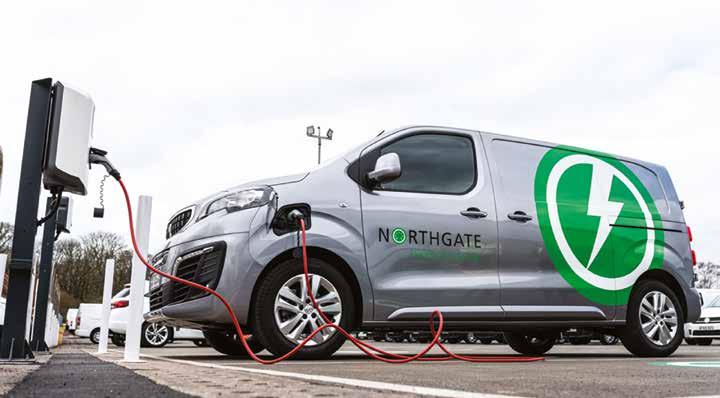
“Switching to electric is more than just changing vehicles. EV confidence, training and skills play a major part in a successful transition. Northgate offers EV driver training for both drivers and fleet operators that’s designed to boost safety, efficiency, and peace of mind behind the wheel.”
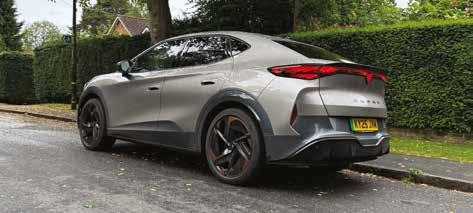
Cupra now has two electric cars. Following the Born, one of our favourite EVs, the Spanish auto brand has added the larger Tavascan. A striking 5-door SUV coupé, Andrew Walker got behind the wheel recently of a VZ1 model to find out more.
The Tavascan comes in four specs. Entry level V1, then V2, VZ1 and range topper VZ2. V1 and V2 are Rear Wheel Drive and come with 282bhp, VZ1 and VZ2 feature two motors so more offer power at 335bhp and are All Wheel Drive. All versions are fitted with a 77kWh battery.
V1 costs from £47,350, V2, £53,385, the VZ1 is £55,495 and VZ2 is £60,45.
Specifications
With prices like that you’d expect the Tavascan to come well equipped – and it doesn’t disappoint. V1 features 19” alloys, a 15” navigation system, 5.3” digital cockpit, CUPRA Connect, CUPRA Connect Plus, two front and two rear USB’s, wireless smartphone integration, a wireless charger, DAB, bucket seats, copper interior detailing, a rear view camera, Drive Profile – Range, Comfort, Performance, CUPRA, Individual –Travel Assist, Predictive Adaptive cruise control, Intelligent Park Assist and Traffic Sign Recognition.
As you move up you add 12-way electrical adjustment to the bucket seats, heated front seats, a rear arm rest, ambient lighting, a double floor in the boot and 21” alloys. VZ1 is specced as per the V2 but adds AWD with more power at 340PS battery, while VZ2 offers ventilated front seats, CUP Hero leather and 21” Etna forged alloys. All versions come with a Type 2 charging cable.
Outside and inside
Cupras are built on the same platforms as electric Volkswagens, Skodas and Audis, but their USPs are sportier and more aggressive. From its high curved corner front lights and large Cupra logo at the front, to the copper infused alloys and sharp lines at the side and with the slim rear car-width light bar and spoiler, it’s a looker.
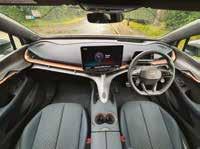
Inside there’s plenty of copper detail and the plastics look and feel hard wearing. Soft finishes around the centre console and on top of the centre armrest look and feel lovely.
A 15” touchscreen dominates the centre top dash. The operating system and menus are easy to navigate and it’s relatively easy to turn off the safety features.
Climate control switches are a bit fiddly, and the digital driver’s display is a little small, meaning the additional heads-up display on our VZ1 was a useful addition.
The glove box is small, but you do get split
opening under arm storage, twin centre cup holders, two front and two rear USB.
Comfort
The driving position is good with decent support from the bucket seats. Rear visibility is a little compromised by the low roofline and small rear window, and this worsens in the wet as there’s no rear wiper.
Back seat space is surprisingly good, with plenty of head and legroom and at a push, there’s room for three adults.
Performance and driving modes
It’s brisk. V1 and V2 fitted with the single motor and smaller battery will accelerate from 0-62mph in just 6.8 seconds. Select the dual-motor version with 335bhp and you release 545Nm of torque so a swifter 5.5 seconds from 0-62mph is possible.
You can utilise Comfort or Range modes to dial down the aggression and improve range.
Charging and range
AC 11kW is available on all versions, so a 0-100% charge will take eight hours. Away from home the Tavascan comes with 135kW DC charging so a 10-80% top-up on fast chargers can be as quick as 28 minutes.
We topped the Tavascan up to full overnight on our Rolec box to a range of 273 miles. Even on a 100-mile motorway jaunt at a constant 70mph, the Tavascan returned a one mile driven to one mile of range used, which is impressive. It averaged 3.8 miles/ kWh, better than many competitors.
Driving
Despite the power under the bonnet, the Tavascan handles nicely on local routes and in town centres. To start you push the brake and
the engine starts. You can then select D or B for regeneration from the right side steering wheel stalk.
Even though the rear window is narrow, the on-board parking sensors and camera make urban driving straightforward and the auto-hold means you can relax at lights and junctions.
The ride is a little on the firm side, probably not aided by our test car’s larger 21” wheels. However, the damping softens things up considerably compared its predecessor. Head out onto better driving roads and despite the car’s 2,267kg kerb weight, the steering is light and nicely weighted.
If we have a criticism it Is with the brakes which are lacking any feedback, especially in regeneration mode, which makes the car a bit harder to slow down than you’d expect. The regeneration can be adjusted via the steering wheel paddles but it never feels that strong and is definitely not one-pedal.
Pros
The Tavascan is both good fun to drive and looks good too. It also features a stylish comfortable cabin and comes well equipped. The largeish battery offers close to 300 miles of driving range and charging speeds are decent too.
Cons
All versions don’t come cheap. A slightly firm ride on larger wheels and a lack of feedback from the brakes are our only criticisms.
CC&V VERDICT
Excellent addition to the electric car market. Much more exciting proposition than many competitors. Firm ride harks back to Cupras of old. It’s practical too. But it is pricey, and we’d suggest leasing one. If you’re looking for an electric car that offers some excitement as well as practicality the Tavascan is well worth your time.
CC&V RATING: N N N N
Vanaways is delighted to announce the promotion of Cedric Ratnasingham to the role of sales director, recognising his exceptional contribution and leadership during five years of continuous progression within the business.
Cedric joined Vanaways as a sales executive and quickly established himself as a key member of the team. His promotion is a testament to both his ambition and the growth of Vanaways. Having recognised the company’s vision early on, he has developed alongside the business, with his progression to sales director reflecting not only his own dedication but also the opportunities created by Vanaways’ continued expansion.
Most recently serving as general sales manager, Cedric played a significant role in strengthening the sales function, developing colleagues and supporting the company’s continued growth in the competitive commercial vehicle market.
In his new role, Cedric will oversee the wider sales operation across the business, including the Bristol Retail team, Bridgend Connect, Fleet, National Account Manager Dorian Domeradzki, and key partnerships within the last-mile delivery and logistics sectors. His responsibilities will include shaping sales strategy, improving competitiveness, identifying new growth opportunities and

ensuring the business continues to deliver outstanding service to customers.
Speaking about his promotion, Cedric said:
“The sales director role is about ensuring the whole sales operation is working at its best. It’s about keeping everyone aligned, creating a clear strategy and making sure we continue doing the right thing for our customers while growing the business.
“My focus will be on improving our market position, expanding our partnerships and making sure we’re always looking ahead.” Alongside leading the sales team, Cedric will also take greater responsibility for pricing, stock procurement, supplier relationships and manufacturer partnerships, helping to support Vanaways’ long-term commercial strategy.
Reflecting on his journey, Cedric credits his success to hard work, adaptability and a genuine passion for the motor trade. “It’s a real honour to become sales director within five years, but it’s the result of many years of experience. started in the motor trade at just 14, learning the industry from the ground up. Every role has helped prepare me for this opportunity.”
He also believes that remaining adaptable has been essential. “The market is constantly changing, whether through economic pressures, vehicle supply or customer demand. Being willing to adapt, embrace change and keep learning is what helps you continue progressing.”
One of Cedric’s proudest achievements has been helping others succeed. During his time as general sales manager, he focused on developing the sales team, creating a culture where individuals are encouraged to grow, achieve their goals and support one another. Cedric is excited to help shape the next chapter of Vanaways. “I’m looking forward to building on everything we’ve achieved so far, strengthening our position in the market and helping Vanaways continue its impressive growth.”
Vanaways congratulates Cedric on his well-deserved promotion.
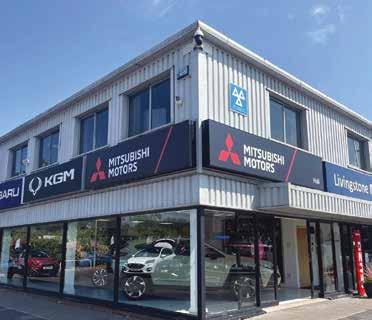
Over three decades of Mitsubishi expertise –and now ready for the next chapter
Livingstone Motor Group, formerly Hull Mitsubishi, has proudly represented Mitsubishi since 1991. As one of Mitsubishi’s longest-established dealerships in the UK, we are experts in all things Mitsubishi.
Over more than 30 years, we’ve supplied thousands of vehicles to private motorists, businesses and fleet operators across Yorkshire and beyond. While the automotive industry has undergone enormous change during that time, one thing has remained constant: our commitment to looking after every customer long after they have driven away.
Few automotive brands inspire the loyalty that Mitsubishi does. Known for its reliability, engineering and practical approach to motoring, Mitsubishi has earned a devoted following in the UK over many decades. As the brand begins an exciting new chapter in the British market, few retailers are better placed to support customers than Livingstone Motor Group.
That long-standing relationship with Mitsubishi means our team possesses a depth of product knowledge and technical expertise that can only be built through decades of experience. Many of our technicians have spent years working with Mitsubishi vehicles, and our sales and aftersales teams understand exactly what owners value most—dependability, honest advice and outstanding service.
With the return of the Mitsubishi L200 to
“While the automotive industry has undergone enormous change during that time, one thing has remained constant: our commitment to looking after every customer long after they have driven away.”
the UK, we’re excited to once again support businesses across the country with one of the most respected pick-ups on the market. For decades we’ve supplied Mitsubishi pick-ups to tradespeople, farmers, fleet operators and commercial customers who depend on their vehicles every day. Our experience doesn’t end when the keys are handed over — we’re here to provide ongoing support, servicing and expert advice
throughout the life of every vehicle.
For business users and fleet managers, choosing a dealer is about far more than purchasing a vehicle. It’s about finding a partner that understands the importance of keeping vehicles on the road, minimising downtime and delivering responsive aftersales support. That’s exactly where Livingstone Motor Group excels.
From our dealerships in Hessle and Cranswick, we provide comprehensive vehicle sales, servicing, MOT testing, repairs, parts and accident repair services, allowing customers to access everything they need under one roof. Whether you’re purchasing your first Mitsubishi L200, adding vehicles to a growing fleet or replacing trusted workhorses, our experienced team is ready to help.
Our approach has always been refreshingly straightforward. We believe customers deserve clear advice, transparent pricing and a genuine commitment to finding the right solution for their needs rather than simply making a sale. It’s an approach that has resulted in generations of customers returning to us and recommending us to family, friends and colleagues.
The return of Mitsubishi to the UK is exciting news, particularly for businesses that have long appreciated the capability, reliability and value the L200 has become known for. Interest in the brand has remained remarkably strong throughout its absence, with many existing owners continuing to rely on their
Livingstone Motor Group, formerly Hull Mitsubishi, has proudly represented Mitsubishi since 1991. Its staff are experts in all things Mitsubishi, from sales to servicing
Mitsubishi vehicles every day. We have been proud to continue supporting those customers throughout that period, ensuring they received the same high standards of service they have always expected.
As Mitsubishi expands its presence once again, Livingstone Motor Group is perfectly positioned to welcome both loyal owners and those discovering the brand for the first time. Whether you’re adding a single L200 to your business or expanding a commercial fleet, you’ll find an experienced, knowledgeable and friendly team ready to help.
In an industry increasingly driven by technology and changing customer expectations, we continue to believe that relationships matter. Our success has always been built on trust, expertise and looking after people properly. Those values have served us well for more than three decades, and they remain at the heart of everything we do today.
The return of Mitsubishi marks the beginning of an exciting new era. For Livingstone Motor Group, it is also the continuation of a partnership that has stood the test of time. We look forward to welcoming familiar faces back through our doors while introducing a new generation of business customers to the personal service that has defined our business since 1991. After more than 30 years representing Mitsubishi, we remain as passionate about the brand as ever—and we’re ready for the journey ahead.
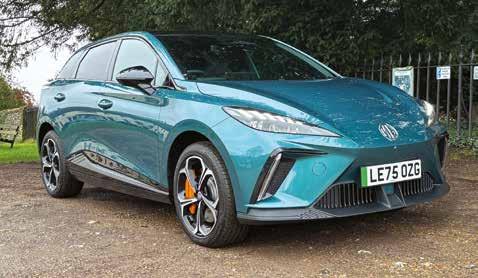
MG has updated the MG4 and Company Car & Van got to try one recently. At launch it was an EV that almost everyone loved so we were hoping that MG hadn’t changed much, especially with the way it drives. The good news is the ride is still there, and as Andrew Walker discovered, plenty of other things have improved, too
What’s new?
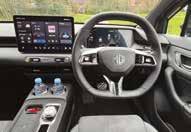
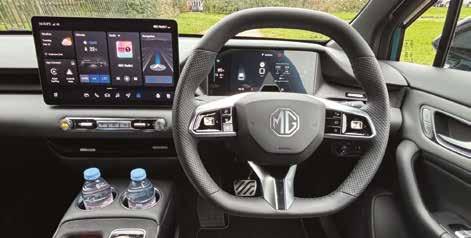
In the cabin MG has replaced the Mk1’s smaller screens with a 10.25-inch driver display and a 12.8-inch central touchscreen. More good news is that physical buttons make a welcome return for the climate, volume and de-misting controls. Plus you now get a better centre console layout with extra storage and a relocated gear selector. Quality of the fixtures and fittings feel more upmarket.
Model choice and price
There are three MG4s to choose from. The Premium Long Range Automatic goes for £29,995, above that is the Premium Extended Range Automatic, at £32,995, and the range is topped off by the XPOWER Automatic, at £33,995.
Performance
Top speed in Comfort and Long Range is 112mph, with the 0-62mph dash taking 7.5 seconds in the Standard Range, 6.2 seconds in Long Range or 3.8 seconds on XPOWER, which will go on to a top speed of 124mph.
Specifications
All versions feature MG Pilot, rear privacy glass, rear parking sensors, 18” alloys, LED daytime running lights, automatic climate control, a leather style multi-function steering wheel, V2L, a wireless phone charger, Apple Car Play and Android Auto connectivity, keyless entry, DAB radio, SatNav and heated front seats.
Batteries, driving modes and regeneration
Three batteries are now offered. The Premium Long Range 64kWh battery offers a 280-mile range, and the Premium Extended Range 77kWh battery ups this to 338 miles. The dual motor XPOWER has a 64kWh battery and a 251-mile range.
There are five logical driving modes –
Normal, Sport, Comfort, Snow or Custom –with four regenerative braking modes: Auto, 1, 2, or 3. Eco offers the best economy and coupled to Level 3 braking mode will give you more miles. Sport with auto braking offers the most fun and you’ll see your MG4’s best performance in this setting.
Charging
All versions offer 7kW AC charging, with DC charging of 154kW on Long Range, 144kW on Extended Range or 140kW on the XPOWER.
On home chargers a 0-100% charge will take 10.5 hours or 12 hours for Extended Range.
Visit a rapid 150kW charger and a 20-80% top up will take 25 minutes on Long Range models, 30 minutes for the XPOWER or 40 minutes on Extended Range versions.
Inside
Up front there is decent head and leg room, while in the rear leg room is fine, but the swooping roof line eats a little into head room.
The rear seats fold flat 60:40 which increases the boot space from 388 litres to a very useful 1,164 litres.
We couldn’t fault the updated seats, nor the new instrumentation layout and everything we tried worked well including connecting to Apple CarPlay easily and wirelessly.
The relocated gear wheel is now easier to reach, the newly designed centre binnacle is more practical and the larger screens make it an easier car to get on with.
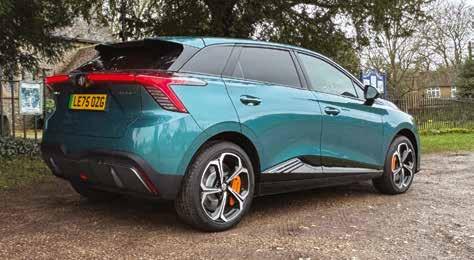
The MG4 Mk1 had amazing agility, and the good news is that nothing has changed on the new model. Whatever MG has added, including heavier batteries, hasn’t dulled the performance. Whether it’s to do with the thin battery, the 50:50 weight ratio or the car’s
lightish components, or a combination of all, it’s still a nimble and enjoyable companion, something that most electric cars still struggle with.
In town the cabin is quiet and the light steering makes for easy process. On the open road it handles well, hugging tight corners and dealing nicely with any undulating roads. Speed up or drive on the motorway and you’ll notice some road noise, and it’s a little less refined at higher speeds. But none of this is unexpected. Indeed, in Sport mode you can have some serious fun with the its rapid acceleration and great road manners.
Pros
The updated MG4 is better equipped, comes with longer driving ranges, has a much nicer cabin, better infotainment ... and a rear wiper on all versions! But most importantly it’s still brilliant to drive.
Cons
7kW AC charging and 150kW DC charging aren’t as good as others offer.
Subtle interior updates and larger batteries with longer ranges have definitely improved the MG4, which was our 2023 Car of the Year. More good news is that even with the addition of heavier batteries, it is still one of the best budget EVs to drive. Price-wise it’s incredible value, too. Smiles all around from us, especially in its Ealing Green colour. MG faces increased competition from a plethora of Chinese brands, so this mid-life refresh is very welcome.
CC&V RATING: N N N N N
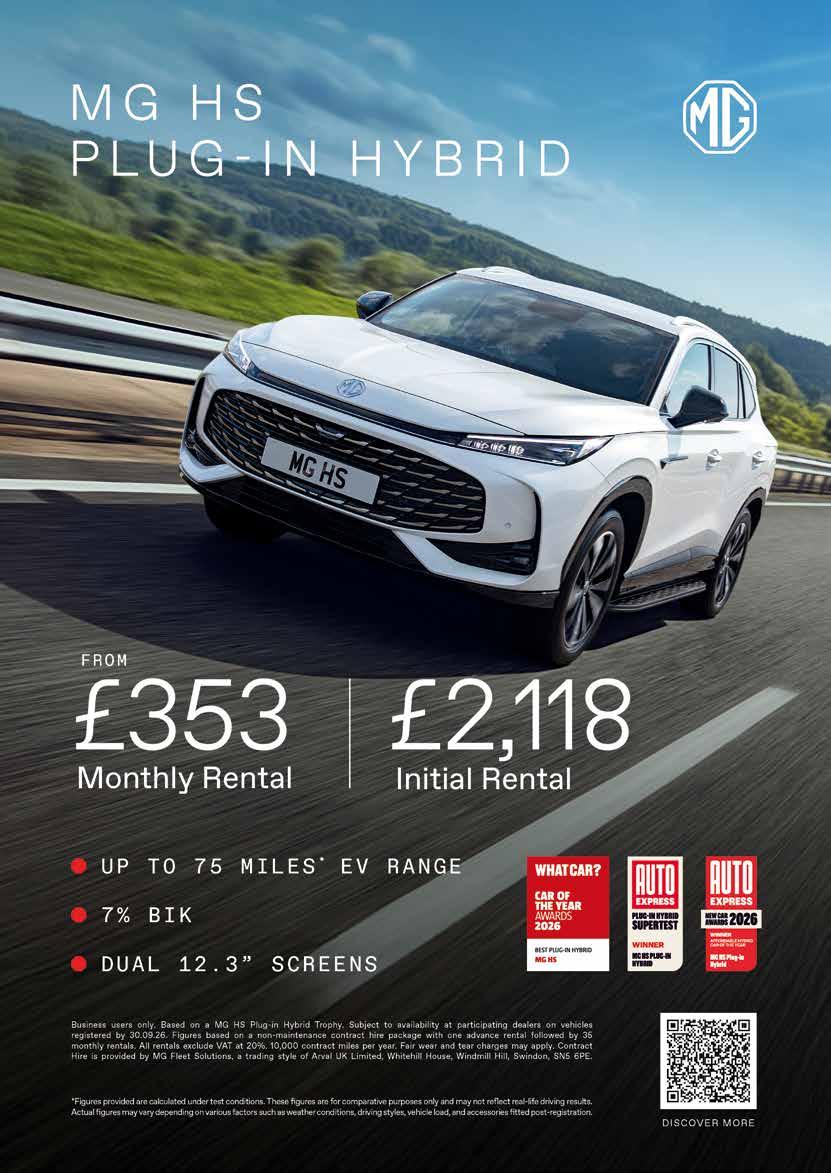
MG has had a fantastic few years in the UK, and its current model line-up is its strongest ever. In the face of increased competition especially from fellow Chinese brands, we spoke to Karl Howkins, Director Fleet MG Motors EU and UK, to find out how the company plans to stay ahead of its fleet rivals, and what’s coming next.

CC&V: Chinese car brands now dominate plenty of company car conversations and MG now has more competition than ever before. How do you intend to stay ahead of the pack, and what does MG offer that others don’t?
Karl Howkins: We’re well aware of the continuing presence of new brands entering the market. We firmly believe attack is the best form of defence in a crowded market space, so we’ll continue to introduce more and more new models, including cars in segments where we’re currently not represented. We also believe being a British brand that’s been around over 100 years, gives us a significant edge.
CC&V: Over the past 12 months MG has had an impressive product offensive, with several new company-car friendly models launched such as the S5 and S6 EVs. Are you seeing a growth in fleet sales with your electric models and if you are, can we expect this to continue?
KH: We’re not resting on our laurels, but fleet is up 19% YTD, which is encouraging based on doing less short cycle business this year and more true fleet. We’ve grown our BEV volumes with S5 and S6, but also with MG IM5 and MG IM6 which is hugely successful with end users and leasing companies.
CC&V: You’ve also launched two electric models in the MG IM5 and MG IM6, which are a more premium MG proposition. Can you tell us how both have been received in the fleet sector?
KH: As with my prior answer, the IM models have given us a different customer than we’ve had before. We’re competing well against the established premium brands, and we’ve expanded our customers, based on the performance and range of both models.
CC&V: The MG HS is still your best seller and the hybrid and PHEV versions tick plenty of company car boxes. Will MG continue to offer plug-in hybrids and can you tell us about any
new models that may be fleet-friendly?
KH: Yes, we’ll continue to provide hybrid models. In fact, on the back of the HS PHEV selling so well in the C SUV Segment, we’ve recently launched the MG S9 PHEV model which boasts seven full seats and isn’t a 5 + 2. We’ve had to ramp up production to keep up with the demand both in the UK and EU markets.
I’d also say, look out for more PHEV models to be announced shortly. think it’s important to reinforce the positive that MG is the one of the only brands which still offers ICE engines on top of hybrid and electric models.
CC&V: You’ve also updated the MG4 EV and launched the MG4 EV Urban. Are you expecting fleet growth with both or is the Urban more a retail proposition?
KH: It would be foolish to say we’re expecting growth with both, but I see opportunities to do more with the Urban.
CC&V: You began your career at Vauxhall and have also had stints at Fiat and Citroen.
These heritage brands are under immense pressure, mostly from Chinese EVs. Can they survive and what can they learn from MG to help them do so?
KH: The best way I can explain it is pace and agility. I’ve recently been in Shanghai and Beijing and the speed in which we can design, produce and bring products to market is simply incredible. I was used to attending head office meetings and being shown an MCE or a new model and a powerpoint deck on the future rollout. MG is more ‘here’s the cars, which ones do you want!’
In terms of survival, it’s unfortunately going to be survival of the fittest and having continued new and fresh models at the right time and right place. The days of trying to flog to death a car for seven years are simply gone. The UK and EU markets are showing small signs of growth, but nothing like being able to absorb the level of brands in the market now and going into ’27 and ’28 with even more new entrants. I don’t wish ill of any competitors, and as you said, I’ve worked for a few before, but not everyone can and will survive.
it adds fresh touches to the G6
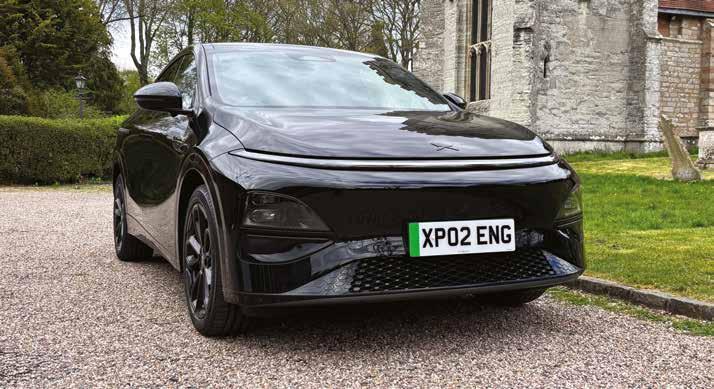
Chinese manufacturer XPENG launched its G6 model in 2025, with a G9 luxury MPV set to follow. It’s a Tesla competitor and we liked it enough to award it our Executive Car of the Year for 2026. As Chinese brands are apt to do, the G6 has already been updated and this new version arrived at Company Car Towers for us to test. Andrew Walker got behind the wheel...
What is it?
A five-door electric RWD SUV hatchback with smooth lines that features a slim bonnet front light strip with an X in the centre, a Porsch-esque narrow rear light strip, steep rear window and slim side windows with pop out door handles.
Exterior and other updates
Subtle, with a new full width LED light bar, less exterior black cladding and a high efficiency heat pump is now standard across all trims.
Model choice and Performance
Three versions are offered, a G6 RWD
Standard Range which comes with 280bhp and will accelerate from 0-62mph in 6.6 seconds.The G6 RWD Long Range which has 296bhp, is quicker to 0-62mph in 6.2 seconds and a range topping G6 Dual Motor AWD, which hits 62mph in just 4.1 seconds thanks to its crazy 470bhp. Top speed across all there is 124mph.
Prices
Pricing starts at £39,990 for the RWD Standard Range with the Long Range at £44,990 and the AWD Performance available for £49,990.
Interior upgrades
Updates from the Mk 1 include a new steering wheel that has just two button controls, a suede effect headliner, upgraded door panels and pillar finishes and a new ambient lighting system. Redesigned speaker covers, softer wireless charging panels now
at 50w each and, on RWD Long Range and AWD Performance versions, an upgraded 9” digital inner rear view mirror now feature.
Displays and build quality
Almost all is controlled via the 15” central touchscreen. You also get a 10.2” information display in front of the driver which illustrates range, speed, tyre pressure, vehicles around you and driving mode. The fonts used are quite small and as they’re plain black on a white background, can be a touch difficult to pick up in bright sunlight. Quality throughout is very good with a mix of soft plastics and tactile fabrics and synthetic leather for the seats. The steering wheel is an odd squared/ circular shape with just two spin wheels on the centre section that control the media, volume, cruise control when in use, the climate when not. The right side stalk is for the gears and pushing it all the way down engages cruise control. The left-hand stalk controls the wipers and lights. Continued on page 26
Continued from page 29
Cabin practicality
Good news is the spacious cabin which offers excellent front head and legroom. The rear seats offer plenty of this as well and it is large enough to fit three adults in side by side.
The large windscreen offers a great forward view, but both the narrow rear window and shallow side windows make parking a tad difficult, and you’ll need to utilise the side mirrors using the screen sub-menus and reversing camera on occasions. The steering wheel adjusts fore and aft and the electric seats offer a memory function and are heated, too.
The boot comes with a light movable parcel shelf and 571 litres of space, so plenty of room for the heavy charging cable which can be stored in a bag. Fold down the rear seats and the space goes up to a whopping 1,374 litres.
Infotainment
Any Tesla customer will be familiar with the clutter-free set up with almost all functions going through the screen. SatNav, DAB, Apple CarPlay and Android Auto are all included. The Snapdragon processor makes the screen quick and responsive, although you’ll need a bit of time to get used to the menus. The XOS cockpit system has been upgraded too, so customers benefit from faster app responses, a smarter voice control with Hey XPENG now offering intelligent recommendations across four zones in the cabin.
Charging and batteries
The updated G6 will peak charge at a whopping 451 kW; that’s up from the previous 280 kW. Charging the battery on a public fast charger from 10 to 80% now takes just 12 minutes.
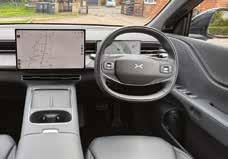
The battery size has been updated so it’s now slightly smaller. You can choose a 68.5 kWh battery with a 292-mile WLTP driving range or an 80.8 kWh battery with a 326-mile range in RWD Long Range or 316 miles in AWD Performance versions. At home on a 7.4kWh charger a full replenish of the larger battery will take approximately 11 hours.
Specifications
Just one specification so the goodies list is high and includes a panoramic roof, 15-inch infotainment system, 18-speakers, 20-inch wheels wrapped in Michelin Pilot Sport EV tyres, electrically adjusted memory and heated seats are all standard.
Driving
You can select from four driving modes. Eco, Standard, Sport or Individual and within each can adjust the power steering and braking between Comfort, Standard and Sport.
Regeneration levels can also be altered with Low, Medium High and XPedal the options, the latter offering almost one pedal driving. For the thrill of it when you’re in Sport mode there’s a Launch option which was great fun, unleashing the G6’s full potential. Despite the
power on tap it’s an easy car to drive, quiet, refined and comfortable. Around town it was a relaxing car to be in and on a 200-mile motorway trip, one of the best cars I’ve driven so far this year for striking the comfort-relaxed-fun balance.
As far as range goes the Performance gave us a 316-mile range.A 200-mile return trip saw us use up 208 miles of our range, with most of this at a constant 70mph. We’d surmise that 300 miles is doable.
Pros
Striking exterior, quality interior with plenty of space for five. Drives and handles exceptionally well. Competitively priced. Just 3% BIK.
Cons
The lack of physical buttons in the cabin to adjust simple things is a touch annoying but you do get used to it.
Excellent. More European friendly than most of its Chinese rivals. BYD, Omoda, Jaecoo, Geely and Changan are leading the Chinese charge but we reckon the XPENG is the best of the bunch so far, with the updates, especially to charging speed, making it an even stronger company car prospect. Would we choose one over a Tesla? We would and we’d be happy driving a G6 every day as well, especially as the new Performance model offers such exhilarating acceleration.
CC&V RATING: N N N N N
Leapmotor has added a new REEV motor to its large C10 SUV, in effect a small battery couple to a petrol engine and a range extender. Andrew Walker spent a frugal week in one recently and here’s how he got on.
Tell me more?
The C10 REEV combines a 1.5 litre fourcylinder petrol engine with a 158kW (215hp) electric motor that drives the rear wheels and is powered by a 28.4kWh battery. The engine is not connected to the road wheels but instead drives a generator that keeps the battery in an optimum state of charge to power the electric motor.
Fuel economy, emissions and range
The Geely- built LEVC taxi has a similar set-up, so this is pretty good at a WLTP of 706.2mpg with CO2 emissions of just 38g/ km. Maximum driving range is 603 miles. What we would caution is that an economy figure that high is unlikely day to day, unless you are permanently using the car’s electric range, so we’d suggest that 60mpg is a more likely scenario. Electric only range is 90 miles.
Energy modes and charging
Accessed through a shortcut on the central touchscreen, you can select from EV+, where the powertrain always prioritises the electric motor; or EV, which is the same but will see the range extender generator intervene when the battery charge falls under 9%. In addition you have Power+ where the range extender is always on; Full, where you get full EV driving when the battery is at over 80% charged wherein the generator kicks in; and finally Save, which allows drivers to customise the
range extender starting point. It sounds more complicated than it is and over time, you’ll find the ones that work best for you.
Regenerative braking
Drivers can choose from four regenerative braking settings including a ‘one pedal’ mode. There’s also a ‘freewheeling’ function designed to maximise energy efficiency and higher cruising speeds. Simply lift off the accelerator on flat or downhill sections, and the C10 automatically disengages its motor, allowing the car to use its momentum to maintain speed without using energy.
Charging
With a DC rapid charging rate of 65kW, the C10’s battery charge can be increased from 30% to 80% in just 18 minutes. And with an onboard 6.6kW charger, a full charge using a domestic charger takes 4.5 hours.
Driving modes
Three and fairly standard: Eco, Sport and Standard. Plus you can customise these with Robust, Smooth and Stable, again doing what they say on the tin. The steering feel is a choice from Comfort, Sport or Standard.
Price, model choice
Priced from £36,500 the C10 REEV is only available in one high-spec equipment grade
Warranty
Four-year/60,000-mile warranty (and eight-year/100,000-mile battery warranty)
Equipment
No keys, rather a keycard you swipe on the
driver side door mirror to gain entry. And keyless-go, dual-zone climate control, electric heated and cooled front seats, a heated steering wheel, wireless smartphone charger, rear parking sensors, a 360 degree all around camera, 12 speakers, panoramic sun roof, adaptive cruise control, 20” alloys and autonomous emergency braking. The Leapmotor App is also a pre-requisite.
Outside
The C10 is a very attractive amalgamation of the Porsche Macan at the back, with a full width light car and low number plate, clean sides with pop- out door handles, and the Smart #1 at the front, with a narrow light band below the bonnet
Inside
The interior smacks of Tesla. It’s clean and empty of controls, with almost all functions activated via the 14.6-inch touchscreen or the steering wheel scroll wheels. You also get a 10.25-inch instrument display, faux light grey leather upholstery and a full length sunroof.
Cabin practicality
A glove box, small front door pockets, under armrest space, twin centre cup holders, a space beneath the floating centre binnacle where two hard to reach USB inputs are located. Two rear USB Cs and front seat back storage. There’s also a rear fold down armrest. Leapmotor tell us that there’s actually 26 storage spaces.
Passenger space is exceptional with plenty of front head and legroom which is matched in the back. Manual steering wheel
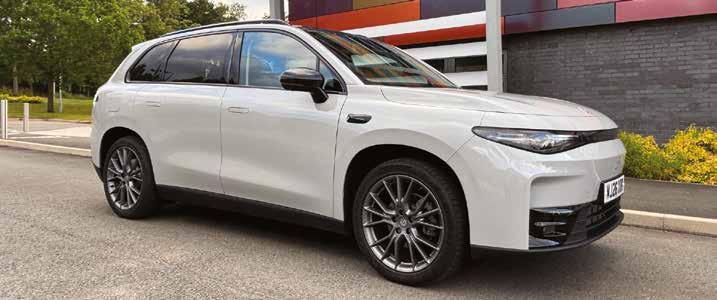
adjustment and electric seats makes finding a comfortable driving position easy, with the C10 remembering your choice and saving it via the screen.
Boot space
Thanks to the power set up there is only 400 litres on offer, which is small for a car of this size. This rises to 1.375 litres with the rear seats folded flat.
Infotainment and functions
The screen on the C10 controls almost everything, so you’ll have to get used to accessing the car safety functions every time you get into the car. This will allow you to adjust these to your personal preference. In our case off went Lane Departure, Speed Warning, Driver Attention and Drowsiness, removing almost all of the annoying beeps that accompany them.
The built-in Sat Nav is okay which is a good thing as you’re forced to use it, because currently, there’s no Apple CarPlay or Android Auto. Some short cuts can be utilised by the voice control, which is interestingly in an American accent.
Cruise control
You select cruise control by pushing the right side steering wheel stalk from Drive down one notch to engage it. To be fair to Leapmotor our major gripe on the electric C10, which becomes most obvious when
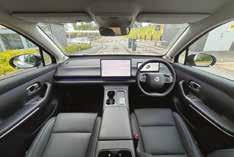
you’re on the motorway, was a supersensitive lane departure warning, this is now better after a software update. However, the slowing down too far from the vehicle in front when driving in cruise control is still there and is reminiscent of early systems we experienced over 10 years ago. Some work to be done there, we feel.
With some software tweaks when you’re on the motorway, it’s really rather nice to drive. After you’ve turned off some of the over zealous safety features you’ll find it’s a quiet and comfortable motorway companion. We usually drive in ECO mode and on the motorway this is the logical choice. It does restrict the car’s power and Standard became our new favourite, offering a bit more enjoyment and extra steering weight. Talking of which the C10 REEV, like its EV cousin, is not bad to handle, with well adjusted steering offering true entry and exits from corners and
no over or understeer. The smaller REEV battery makes this version less jerky and smoother over poor road surfaces as well. With a 0-62mph time of 8.5 seconds it’s definitely not an exciting car to drive and feels slower. But that’s really not the point; it’s large family SUV and handles like one.
Pros
Airy, spacious cabin, comfortable seats and clutter free interior. It’s very competitively priced, comes well equipped and is a good looking car to boot. No range anxiety and low BIK make it comnpany car friendly.
Cons
Over reliance on a touchscreen to access functions can be frustrating. The C10’s intrusive safety features can be annoying. Roll on Apple CarPlay. Drives like a large SUV.
CC&V VERDICT
Why would you choose the REEV over a normal C10 EV? Range anxiety for one: there isn’t any, and with just 38g/km of CO2 emissions and BIK of 6%, it’s attractive to company car drivers. If you don’t have a drive, haven’t got access to a home charger, live in a rural location or in a flat …. I could go on. Some have been sniffy about the REEV but it will work for plenty of people.
CC&V RATING: N N N N
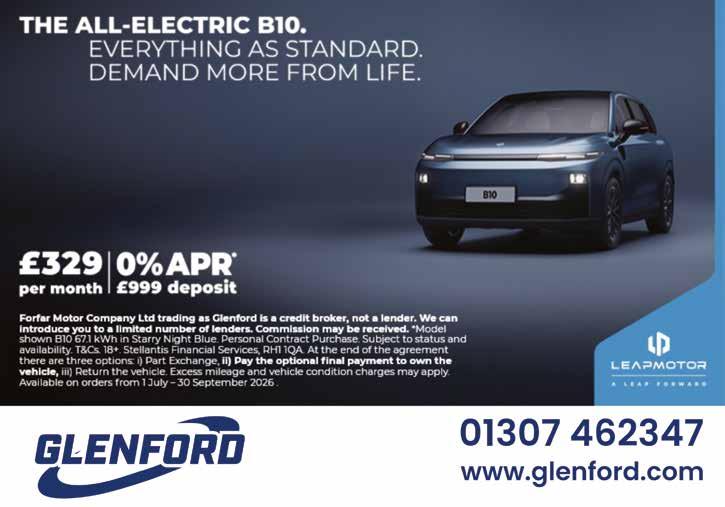
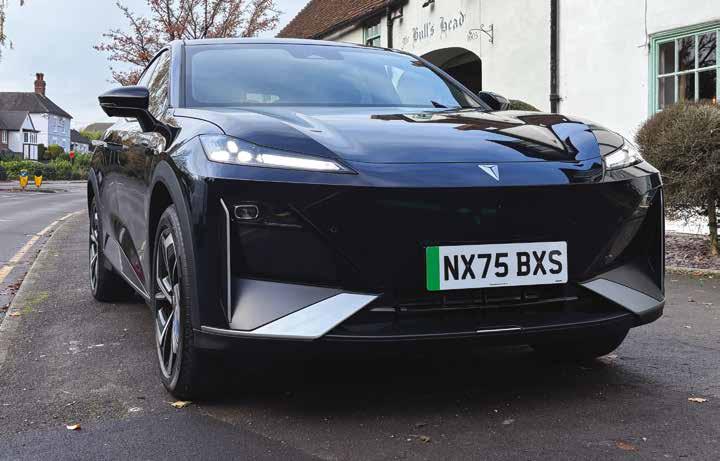
Coming at us faster than a cannonball is another Chinese car brand, this time it’s Changan which launched its first UK model, the DEEPAL S07, last autumn. Andrew Walker popped along to its Midlands HQ to take a look...
CHANGAN may be a name that’s gone under your radar but it’s actually a large Chinese carmaker which has been making cars for over 40 years. Realising that Europe has the best car designers and engineers, it opened a design studio in Turin in 2001 and an engineering centre in Birmingham in 2010, giving it a strong base to attack the European market.
The brand’s first UK model is the DEEPAL S07, a mid-sized SUV that will compete with the likes of the Tesla Model 3 and BYD Sea Lion 7. On the plus side it looks a lot like plenty of cars in the sector and will appeal to the SUV-obsessed British customer. On the down side this also means it doesn’t stand out, looking like a combination of a Cupra, a
Nissan and a Lexus among others.
Drivetrain and performance
It’s electric so will have kerb appeal in the fleet sector, courtesy of an 80kWh battery. This produces 218bhp for a 0-62mph time of 7.9 seconds but like most similar electric cars, feels sprightlier.
Range and charging
Claimed range is 295 miles which is lower than you’d expect from a battery that size. And coming with a charging speed of just 90kWh it would take 48 minutes to go from 10-80% of range on a public fast charger, which currently isn’t very competitive. Better news is that an on-board 11kW charger is included along with a heat pump.
Inside
This is where the S07 shames Tesla. With its similarly sparse dashboard and finishes made up of soft touch plastics, fake wood and fake leather, it’s definitely better than a Model 3. The dashboard top and front, the doors and
all of the stuff at eyeliner feels very nice. Cheaper stuff though, adorns the areas you can’t see as easily namely the centre binnacle sides, door pockets and seat sides.
Cabin practicality
You open the doors by pushing tiny buttons located on them, there’s a useful split opening armrest, good sized glove box, twin centre cup holders and hidden low down two USB inputs with more storage in front, plus a wireless charging pad.
Infotainment
Adopting the less-is-more philosophy when it comes to switchgear, the touchscreen controls all. This means that you’ll need a week or two to get used to the myriad of menus, options and general controls. However, the infotainment, which is a Huawei system with a 15.6” screen, does have a few tricks up its sleeve, namely that it can be tilted towards the driver or front passenger.
Continued on page 36
Continued from page 34 for easier access. Changan has also sensibly included within it a configurable short cut bar so you can at least adjust climate, for example, more easily.
You also get a head-up display. And while you get used to the screen menus you’ll at least benefit from clear graphics, a decent response time and an excellent 14-speaker stereo.
Spec and price
A strong suit, with the single model featuring 19”alloys , LED headlights with automatic high beam, an electric tailgate, adaptive cruise control, dual-zone air conditioning and heated and ventilated front seats, all from £39,990.
Comfort and boot
In the cabin you get plenty of space up front as well as in the rear, where taller passengers have masses of legroom. Boot space is average at 445 litres but a 125-litre frunk is plenty big enough to store charging cables and some more. A low load lip and 60:40 rear seats make the boot space easy to use as well.
Safety
The S07 comes fitted with pretty much everything including automatic emergency braking, lane departure warning, rear cross traffic alert and rear collision warning. The good news is that with one swipe of the screen, you bring up the safety features list where you can easily turn off the ones that most annoy you.
Warranty
You get a seven-year/100,000-mile warranty as standed, while the battery is covered by a separate eight-year/120,000mile warranty. Changan has a central England parts warehouse, aware that parts supply has been a hindrance for other Chinese brands.
Driving
On a mix of urban and motorway roads the S07 performed very much like any electric SUV. Around town it’s quiet and on decent tarmac it rides nicely, similar in many ways to
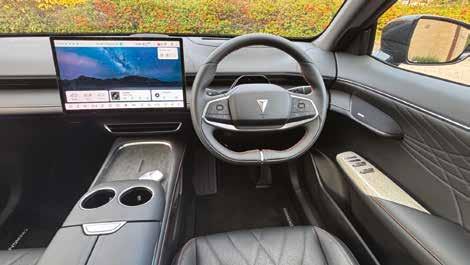
plenty of other electric SUVs.
All around vision is aided by the reversing cameras as the large C pillars and rear headrests limit the view backwards. A camera that shows your view when you indicate is a good idea although it does obscure your SatNav. It’s easily turned off.
While the driver’s seat adjustments are great you still sit a little higher than personally like, again very much, as you do in a Tesla, to accommodate the battery. The leaning screen is a really good idea, making the myriad of menus easier to reach, and despite our short time on board, Apple
CarPlay connected easily and the shortcut screen menus indicate when this is on, another good inclusion. As is the head-up display, where you can check your speed unlike in a Tesla or Volvo.
Head out onto the open road and the S07 even with double glazed glass starts to get noisy. It’s the tyres mainly at fault here and as you increase speed you’ll notice this more. The steering is well balanced but over poor road surfaces, the car’s weight sends a vibration through to the steering wheel which got a bit annoying.
As for regeneration, the S07 features three drive mode, Eco, Normal and Sport. Eco and Normal work just fine although the difference in the driving feel between the two is minimal. Sport mode though does make things tighter and the steering feels nicer and more precise.
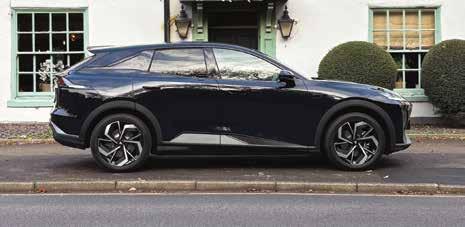
These also act as the car’s de-facto regeneration tools, so Eco adds more weight to the braking, Normal less and so on. None can be described as one-pedal but will add some extra miles if required.
Motorway
A quick sojourn along the M42 saw us reach 70mph and the DEEPAL S07 sits nicely on the motorway. The ride is smoother and the speaker system rises to the occasion. Adaptive Cruise Control enables easier control on Smart sections and we’ve no doubt long journeys with ample space on board would be comfortable.
Pros
A lot of car for the money. Well apportioned and company car friendly.
Cons
Fidgety ride at lower speeds, generic looks, too much controlled by the touchscreen.
The DEEPAL S07 felt very much like plenty of other Chinese EVs, and with those models’ current sales success, beginning with MG and moving on to BYD and Omoda, it will undoubtedly find customers, especially in the fleet sector.
Inside and out the attention to detail and build quality is actually higher than many competitors and while looks-wise it doesn’t stand out from the crowd, it’s a decent looking car.
It’s also good to know that the brand has a 35+ UK dealer network that’s growing and a national parts centre in the UK, so aftersales has support.
The newly launched S05 will double the brand’s models as Changan seeks to utilise leasing partners to spread the word. This model is a really good start.
CC&V RATING: N N N N
The all-new Mitsubishi L200 Series 7 pick-up has arrived in the UK, with an entirely new design on a re-engineered chassis and new diesel engine powertrain.
A rugged and capable workhorse for every environment, it’s offered in a double cab layout and two specifications: the Titan and top specification Barbarian, plus commercial variants to follow. Both deliver a payload capacity of over one tonne and a braked towing capacity of 3,500 kg, with supreme pickup capabilities on and off road and refined levels of comfort and infotainment. It’s built on Mitsubishi’s years of off-road know-how and engineering born from decades of rally success, including record Paris-Dakar wins. Created for the most challenging of industrial and rural environments it also delivers the space, comfort and refinement of a modern SUV.
No matter what the L200 faces, its rear-wheel drive with optional four-wheel drive includes selectable dynamic modes to take on the challenge of every road, track and surface with supreme competency. The
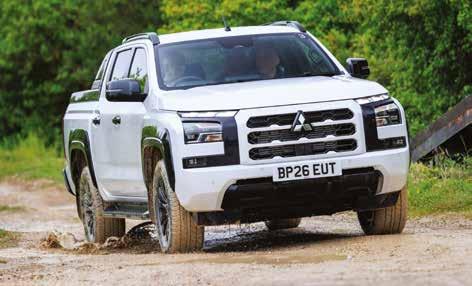
Barbarian specification also features Mitsubishi’s Super Select 4WD-II system, uniquely allowing full-time four-wheel drive to be selected on tarmac surfaces as well as
off road: drivers can choose to maximise fuel efficiency in two-wheel drive or benefit from the additional stability of four-wheel drive, perfect for towing.

Power and performance
The all-new Mitsubishi L200 Series 7 pick-up sports a new 2.4 litre four-cylinder twin-stage bi-turbo diesel engine to maximise efficiency and power: the small turbo operates at low rpm to eliminate lag while the larger turbo takes over at high rpm for a high torque, smooth power curve. The all-new L200 outputs 204 PS and 470 Nm of torque at 1,500 to 2,750 rpm. Acceleration from 0- 62 mph is achieved in 12.6 seconds with a maximum speed of 111 mph where legally permitted. Whatever the terrain, its selectable four-wheel drive system and seven drive modes mean the L200 takes on the challenge of every road, track and surface with supreme ability.
Off road if you need it
Both Titan and Barbarian come with six-speed automatic transmission. The Titan specification benefits from Mitsubishi Easy Select. A dial on the centre console allows easy switching between two- and four-wheel drive. For normal road driving the L200 Titan runs in ‘2H’ two-wheel drive mode, with ‘4H’ four-wheel drive high gear selectable through the shift-on-the-fly system for off-road environments. For more extreme off-road situations, once the L200 Titan is at a standstill the ‘4L’ four-wheel drive low gear and additional rear differential lock can be
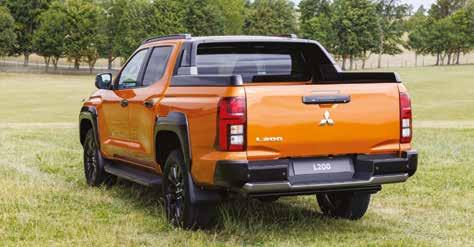
selected for off-road or low friction conditions such as mud and snow.
The L200 Barbarian features Mitsubishi’s Super Select 4WD-II four-wheel drive with a torque-sensing locking centre differential. This uniquely allows the L200 to run in full-time four-wheel drive on any surface including tarmac: ideal for towing. Selecting ‘2H’ sends power to the two rear wheels for normal road driving conditions with optimum handling and fuel efficiency. The driver can switch to ‘4H’ via a shift-on-the-fly system at up to 62 mph, for full-time four-wheel drive on road, ideal for wet or slippery surfaces as well as light off-road surfaces and
towing. The L200 Barbarian also features seven off-road drive modes: NORMAL, ECO, GRAVEL, SNOW, MUD, SAND and ROCK, working with the four-wheel drive system and precisely adjusting traction control and throttle response according to the surface. The Barbarian’s Super Select 4WD-II incorporates Active Yaw Control (AYC). This enhances cornering stability by shifting torque across the rear axle and braking the inside wheel, also supporting precise handling on loose surfaces. Hill Descent Control (HDC) on the Barbarian automatically governs speed and braking on steep inclines. Continued on page 40

Continued from page 39
The L200 manages uneven ground with a ground clearance of 222 mm, with approach and departure angles of 30.4 degrees and 22.8 degrees respectively.
Built for work
Wider, higher and longer than its predecessor, the all-new L200 pick-up is built on a new stiffer, lighter high-tensile ladder steel chassis, with torsional rigidity improved by 40%. A redesigned suspension system provides improved load-carrying and dynamic performance, refined handling and a comfortable ride.
A high-mounted double wishbone suspension with coil spring and stabiliser bar is fitted at the front, with a heavy-duty leaf spring at the rear: the all-new L200 has a front and rear axle weight of 1,580 kg and 2,040 kg respectively.
With a gross vehicle weight of 3,200 kg the L200 has a braked towing capacity of 3,500 kg and an unbraked capacity of 750 kg. With a gross train weight of 6,250 kg, the all-new L200 assures excellent towing, supported by Trailer Stability Assist (TSA) that prevents trailer sway by controlling individual wheel slip.
The interior of the loadbed is 1,555 mm long by 1,545 mm wide, with a depth of 526 mm. It easily accepts a standard 1200 x 800 mm Euro pallet and provides ample space for bulky tools or materials, completed with
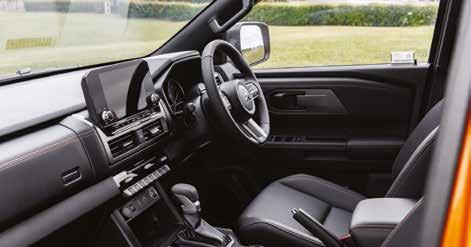
fixings for secure tie-down of loads. With a total kerb weight of 2,108. A wide sidestep enhances the rugged good looks of the all-new L200 and optimises safety, as does the rear bumper foothold for aiding loading.
The L200 Barbarian also includes Tailgate Assist for easy and soft opening and closing, with roof rails and styling bars behind the cabin in the loadspace.
Specifications
The double cab pickup features a spacious cabin seating up to five adults: broad but sporty front seats provide a deep-seated, supportive position with lumbar support, and are heated on the Barbarian with electrically operated driver’s seat. The Titan is finished in
a high-quality black cloth with hard-wearing vinyl flooring, and the Barbarian interior including steering wheel features black leather, with black carpet flooring. A 9” touchscreen is mounted on the sculpted dashboard and displays images from the 360-degree external camera.
A digital binnacle provides essential driver information such as drive mode selections. Bluetooth connects ‘phones, and wireless Apple CarPlay® and Android Auto™ are fully supported with voice control, outputting audio to four speakers (six in Barbarian). Two USB ports are located both front and rear.
The Mitsubishi Titan is priced from £36,295.000 CVOTR and the Titan commercial from £37,495.00
The Farizon SV is an excellent addition to the electric van sector. It comes in three lengths, with three load heights and three batteries. Prices range from £40,000 – £51,000. There is only one trim, so everything is included: a single manual sliding nearside door, with the offside a no cost option, LED headlights, front and rear fog lights, a heated front windscreen, heated and ventilated driver and main passenger seats, a heated steering wheel and a 12v socket. There is also a 12.3-inch infotainment screen, a 360 degree surround view display, automatic air con, a fixed rear bulkhead and a first, a payload monitoring system.
The interior is quite car like, but isn’t the most practical. The touchscreen sits central on the dash top and it’s a good size so easy to see and to reach from the driver’s seat. It is also simple to use and connected to Apple Car play easily.
Batteries and charging
The 67kWh and 83kWh batteries are lithium-ion phosphate and will DC fast charge at 120kW and 140kW respectively, whereas the 106kWh is a nickel manganese cobalt battery and this also charges at 120kW. What
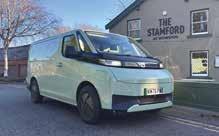
does that mean? Farizon says that you charge the SV’s battery from 20-80% capacity in 36 minutes.
The smaller battery on the L1 H1 will take you 188 miles while the largest van, the L3H3, combined with the 106kWh battery has an official range of 247 miles. Our L1 H1 fitted with the 83kWh battery has a maximum range of 234 miles.
On the road
The urban environment suits the SV best. Under 40mph the cabin is quiet and the infotainment for Apple CarPlay is great. It has light steering, nimble handling and instant acceleration, making it really easy to drive in the city. If you spend a day delivering in towns it would be a good choice with its large external mirrors, wide cabin space between the seats and 360 degree cameras working well.
Pros
Good choice of sizes and batteries. Competitive driving ranges and a comfortable cabin to be in. The inclusion of the payload monitoring system coupled to a high level of equipment and tech are also good.
Cons
It’s an easy van to pilot. Select cruise control and at motorway speeds the SV is comfortable with has enough power to overtake when required. As soon as you get past 50mph the cabin becomes noisy and it’s difficult to chat or listen to the infotainment. And on an 85-mile motorway round trip at a constant 70mph we used up 102 miles of range.
The larger mode is expensive. Some safety features are frustrating. Cabin practicality isn’t as good as it could be.
VERDICT
Well equipped and features on-trend tech but larger ones look expensive. Cabin not the most practical, but it is a great van to drive in the city. CC&V RATING: N N N

Kia launched its PV5 van at the 2025 CV Show and on paper it looked incredibly attractive, coming with a good range, decent payload and aggressive pricing. Here in the UK Kia is best known for cars but way back, they originally made vans and pick-ups, beginning with Mazda re-badges. So the PV5 is an evolution rather than a revolution. A year on from the launch Andrew Walker spent a week in one, and the good news is that it is really rather good.
Currently there’s just one version, an L1 H1, although this is about to change with the addition of some PV5 conversions. There is a choice of two batteries: a Standard Range with a 51.1kWh pack, and a Long Range fitted with the larger 71.2kWh battery. There are two trim options. The Essential comes with 16” steel wheels, a 7.5” digital driver display, 12.9” infotainment screen, LED headlights and daytime running lights, electric windows, automatic air con, startstop, smart entry and exit, wireless Apple CarPlay and Android Auto, Bluetooth with voice recognition and rain sensing wipers. Plus models add V2L capability, wireless phone charging, heated seats, a heated steering wheel and extra safety features. A heat pump is extra though.
Outside
The high bonnet front and corner headlights give it a futuristic feel. At the side chunky door handles and a smooth profile look great.
Inside
The switchgear mirrors Kia’s electric car offerings with the right side steering wheel gear stalk and the same steering wheel controls that feature brake regeneration paddles. The digital driver’s display is viewed through the steering wheel and covers speed, range and regeneration levels. The centre dash mounted screen features short cuts beneath allowing you to alter the climate and access the infotainment and the phone. The set-up is also recognisable from Kia’s car range and works perfectly well.
Quality and finish
A mixed bag. Dash top and front are excellent, but the door finishes and lower down plastics look cheaper. Our main criticism is that the colour way makes it a bit dark in the cabin, especially with the black bulkhead. Storage includes a good sized glove box, a massive centre space with twin cupholders and a slim area perfect for your phone, three door levels including drink
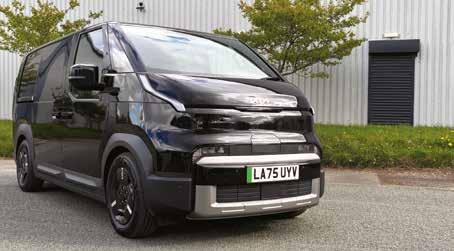
a centre cubby hole, a slim space beneath this and another small space on the right side dash top. Overall it’s impressively thought out.
Charging and range
We tested the Long Range model and interestingly the van will give you a max and min range when you climb aboard, so in early April when fully charged this ranged from 166 miles to 242 miles.
At home using a 7kWh charger, the Standard Range will charge from 0-100% in 7 hours 45 minutes, the Long Range doing the same in 10 hours 45 minutes. A 150kW peak charging DC rate means a 10% to 80% top-up will take under 30 minutes.
When it landed our PV5 was showing a decent 4 miles/kWh. However, an 80-mile motorway test at steady 70mph saw this fall to 3.6 miles/kWh.
Practicality
The load space ranges from 3.4m – 5.1m3
Payload is a decent 790kg on Standard Range and 690kg on Long Range. If you want dual siding side doors these cost an additional £355 + vat and were fitted to our test van, but the payloads fall to 665kg and 725kg respectively. The PV5 will tow 750kg and features a useful 419mm low step-in for loading and the space will fit two Euro pallets.
Comfort and ease of use
Here is where the PV5 shines brightest. Simply put it is the most car-like electric van we’ve driven. Seats are comfortable and the ergonomic cabin has simple and straightforward controls, all of which are easy to reach from the driver’s seat.
Driving
Light steering and the PV5’s small
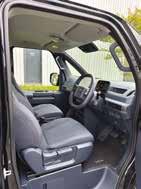
dimensions (4,695mm long, 1,923mm tall and 1,895mm wide) make it a doddle to drive in town. Acceleration is ample.The seating is high as well so forward vision is excellent. We drove the PV5 unladen but even then it handles poor road surfaces and speed bumps with aplomb and the cabin is incredibly quiet at under 40mph.
On the motorway you can select and engage adaptive cruise control and this makes any longer journeys much less stressful. Access to the load area is excellent.
Pros
Drives and feels just like an electric car. Comfortable, practical and user-friendly cabin. Easily accessible rear load space. The Long Range model has a great driving range. Both versions come very well equipped. Looks fantastic from the outside especially in black!
Cons
Payload is only average. Cabin finishes are a bit dull.
CC&V VERDICT
The PV5 Cargo was our Van to Watch 2026 and now we’ve driven one it most certainly is. Utilising its electric car know-how, Kia has, first time out, built an almost perfect small electric van. Not only does its exterior size mirror a large car, so does the way it drives, how it handles UK road imperfections and how the cabin feels, too. Throw in some clever cabin storage, easy rear and side access and you have an almost perfect combination.
CC&V RATING: N N N N N
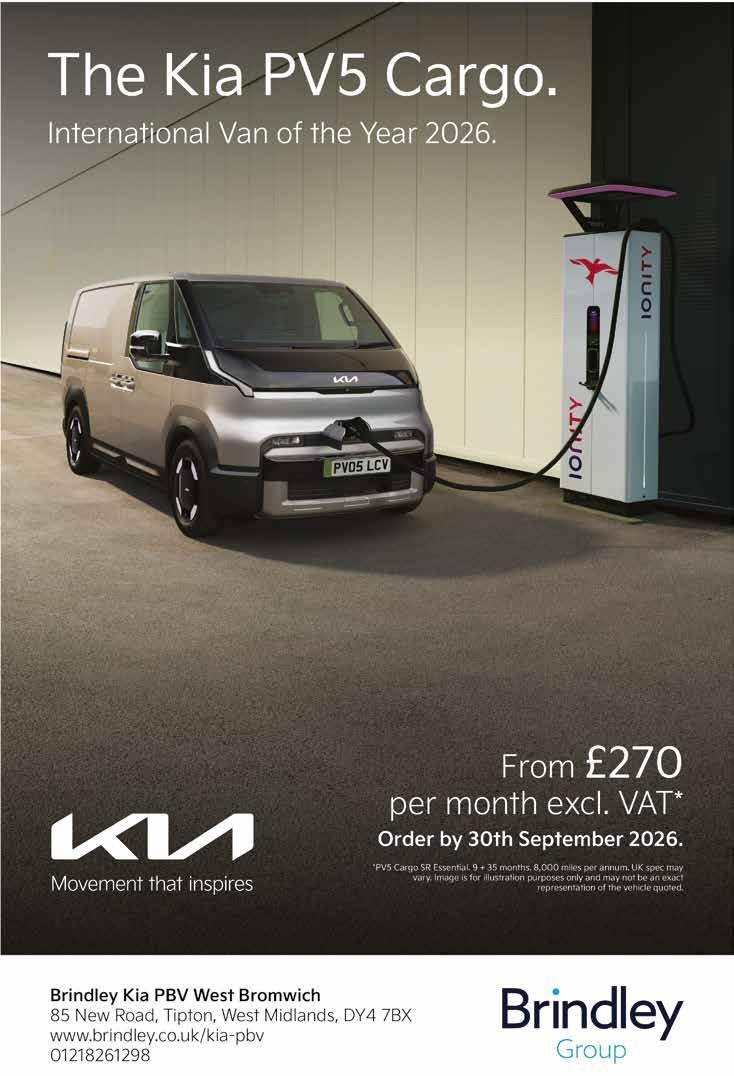
The rural community has been mourning the loss of its beloved Land Rovers since the Defender turned into a Chelsea Tractor, but into the gap has stepped the Ineos Grenadier. It’s a tough 4×4 that will go anywhere. While the five-door version makes for a practical working SUV, its petrol and diesel engines don’t make it tax or fleet friendly. So Ineos has built a commercial version to scratch that itch, ostensibly a two-seated Grenadier with a flat cargo space in the rear. Andrew Walker took one for a ride and discovered a hard as nails vehicle which could be a ‘halo’ product for some in the SME fleet sector.
Tell me more
Assembled at the Ineos plant in Hambach, France, it is then converted into a van in South Wales by EDC, a light commercial vehicle engineering specialist.
Engines
Two: a 3-0 litre BMW diesel, a 249hp unit with 550Nm; or a 286hp 3.0 litre BMW petrol engine. We tested the former. Both have an eight-speed automatic gearbox.
Practicality
The rear seats have been replaced by a flat cargo bed which offers a useful 2,088 litres of space and a maximum payload of up to 871kg (796kg for the diesel.) While almost square the door frames and wheel arches do intrude and there’s room on either side for small objects to disappear, otherwise it’s a usefully shaped area. A steel mesh bulkhead keeps driver and passengers safe, and there are six-tie down points in the floor with two above each wheel arch and two in the roof and a 12v socket. The rear hinged asymmetric doors split 30/70 and close with a wondrous thud, while the rear side windows have been replaced by aluminium panels and the rear glass is opaque. A Euro pallet will fit inside. It is fitted with a box-section ladder frame, with solid beam axles and five link coil springs front and rear. A 3.5-tonne towing capacity is impressive, as is 5.5 tonnes of winching power.
Outside
The Grenadier is a cross between an old Defender and a Mecedes-Benz G Wagon. It has a bucket-full of presence from the huge protruding front bumper to the bump strips along the sides, tailgate privacy glass and oval rear light clusters.
Inside
It’s a proper 4X4 with the now famous labelled roof switches for most off road
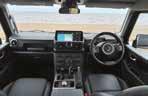
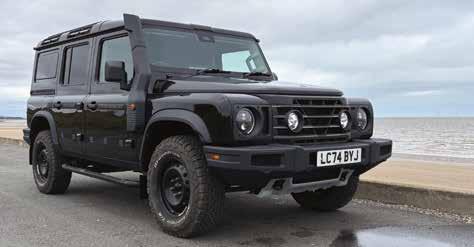
features reminding us of an aeroplane cockpit. It’s very well made with plenty of decent quality plastics.
Infotainment
Ineos has fitted a touchscreen and a number of short cut switches between the front seats with a BMW-style click-wheel, ostensibly so that if you have wet or muddy hands you can access the functions more easily. As far as the functionality goes it’s easy to use and to reach, offers simple menus and connects to Apple Car Play and Android Auto and offers DAB. Not so good is that it also doubles as the instrument cluster so the speedo is in the centre of the car not in front of the driver.
Performance
Top speed is 99mph and 0-62mph takes 9.8 seconds. Fuel economy isn’t great: we topped out at 28.7mpg in our week but a huge 90-litre fuel tank means visits to the petrol station aren’t as regular as you’d expect.
Comfort
Kind-of okay. Seats are comfortable and the cabin is spacious, while the coil spring suspension is soft enough on smooth tarmac and brilliant over speed bumps and pot holes. But make no mistake, this is not a Land Rover Defender or even a Toyota Landcruiser, this is an all-terrain vehicle and should be treated as so. And of course with no rear seats it’s just a two-seater so is practical as a commercial but not so much as a people carrier.
Driving Cross the Serengeti, tick, traverse the Atlas Mountains, tick, experience the green lanes of North Yorkshire, tick, or tow a trailer across rough, wet or uneven ground, and the Grenadier has got you covered. In town and at
under 30mph it’s a heavy beast with whiplash light steering, so easy to oversteer. It accelerates briskly and the engine roar is palpable but it takes a second or two to get going before the full torque is released, so best to pick a decent gap in traffic before you pull out. On the motorway it’s a decent performer with not a lot of road or wind noise spoiling the ambience inside.
Off-road is brilliant. Green lanes, muddy tracks, gravel, rocks, water, are all dealt with easily and if your business requires a go anywhere, durable 4X4 then the Grenadier is the solution. Towing is effortless.
Pros
Bomb proof. Looks the part. Hugely capable and goes where nothing else does. Low-ish BIK and VAT reclaimable. Way, way better than the old Defender.
Cons
Thirsty. Imprecise steering. Heavy to handle and to park. Expensive when you add things on.
We see the Grenadier Commercial as a halo product, something to be bought to promote your business while doing the stuff nothing else can do. We imagine it as the de-facto CV at a wet music festival, winching everything else out of the muck while delivering the tents and tables. Its usability has to be tempered by its old-fashioned driving feel; heavy and a little cumbersome even with power steering. Many older customers will take it in their stride but young ‘uns may find it challenging.
CC&V RATING: N N N N
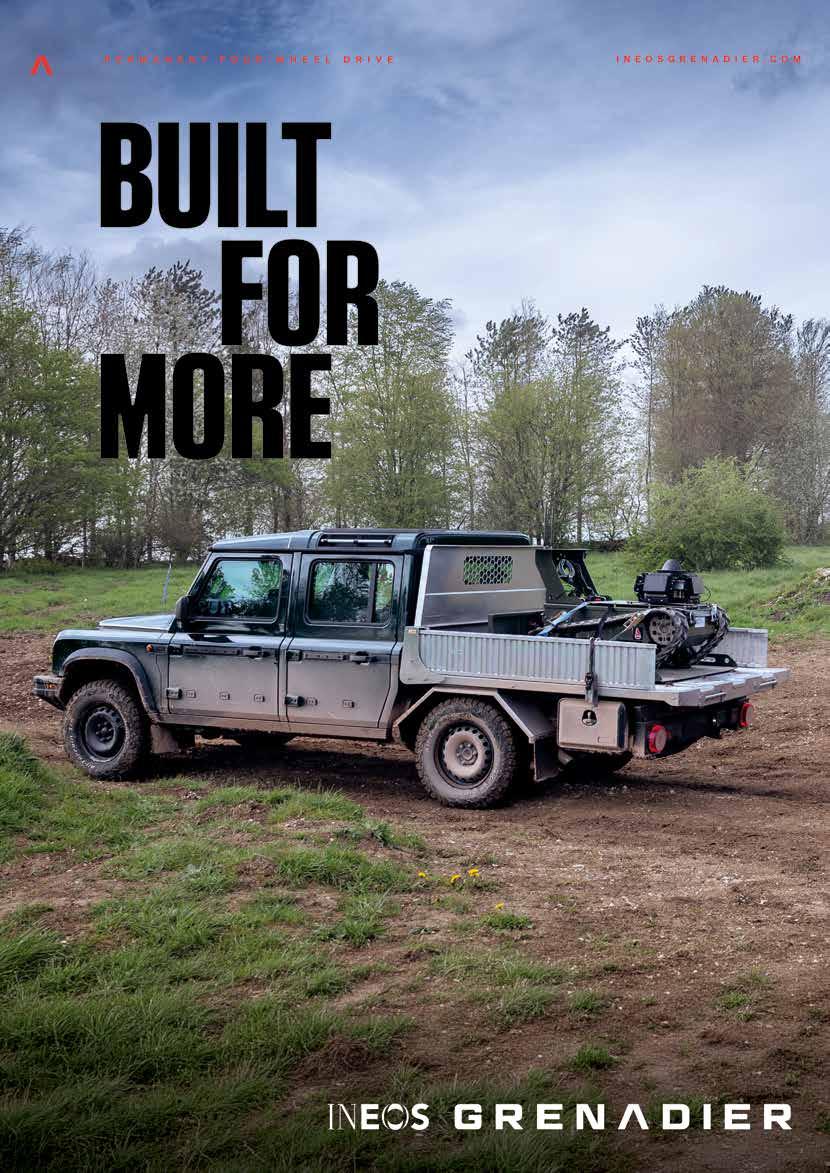
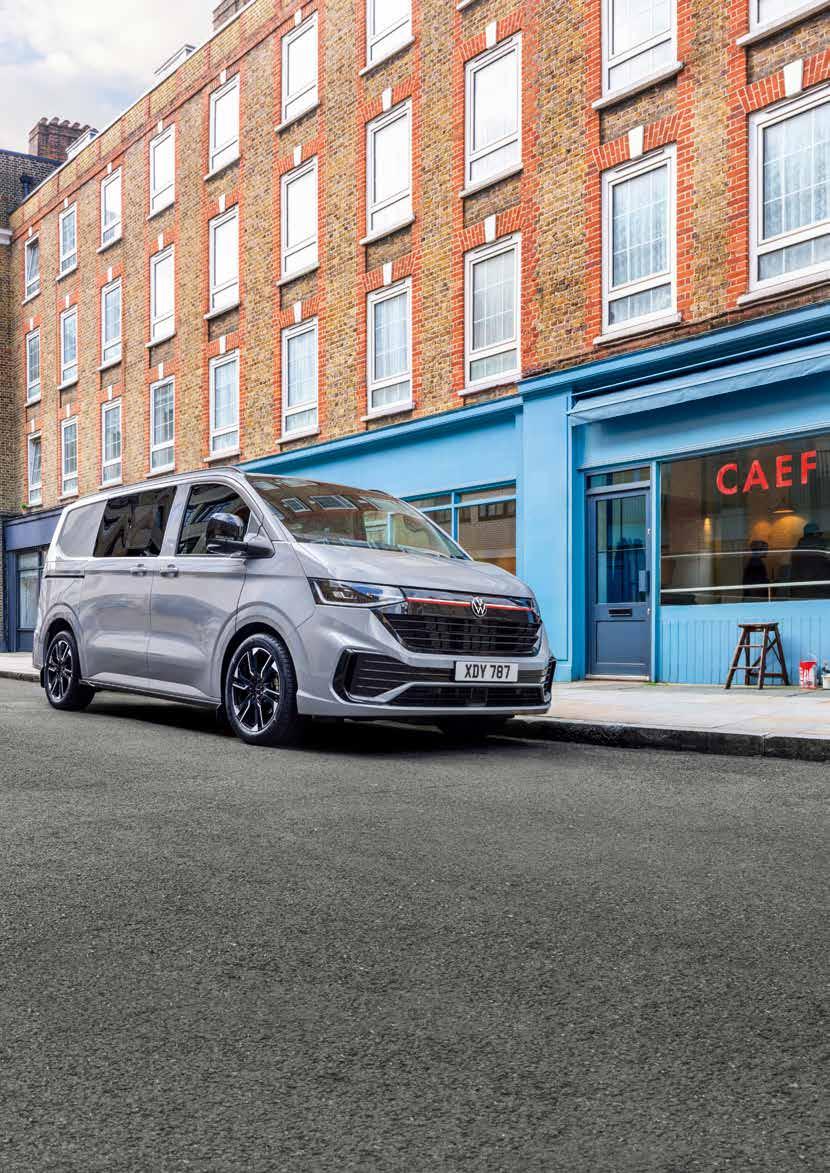
Last year was the 75th anniversary of the Volkswagen Transporter and we drove the latest Gen 7 version last year. It’s based on the Transit Custom, and Volkswagen has been working hard to differentiate it from the Ford. Fast-forward to 2026 and Volkswagen has a new range-topper in the form of the Transporter Sportline. Andrew Walker headed to deepest Northamptonshire to try one out.
Tell me more
Sportline is offered as a panel van or Kombi with SWB and LWB versions, in diesel, electric or eHybrid versions.
Sportline specifics
Volkswagen has spruced the Sportline up.
Outside it features black roof rails, gloss black mirror caps, 19” diamond-cut alloys, 29 mm Eibach performance springs, a gloss black front grille with Sportline signature red accent and IQ Matrix headlights. At the rear there’s a sport-profile spoiler, Sportline badging, full LED lights and a sculpted rear bumper, with a gloss black side skirt.
Inside finishes include a high gloss black edging to the 13” display, Sportline floor mats, wireless charging, front sport seats with contrast red stitching, six-way adjustment, black eco leather upholstery, Sportline embossing, chrome dash insets and bullet styling on the wing mirror. Footwell lighting in the cab and illuminated metal scuff plates brighten things up while in the load space, three super-bright LED lights are fitted.
Diesel panel van
All versions are powered by a 2.0 TDI 170PS engine and use an eight-speed automatic gearbox. Panel van payloads are 1,168 kg SWB and 1,122 kg LWB. Fuel tank capacity is 55 litres with maximum torque of 390 Nm.
Economy, performance and CO2
WLTP consumption is 34-34.9mpg, with CO2 emissions of 216-220. All versions will go from 0-62mph in 14 seconds and onto a top speed of 109mph
Electric panel van
There is one option, an 70kWh battery with a one-speed automatic gearbox. It has two outputs: 218PS or 286PS.
Panel van payloads are 911 kg SWB and 990kg LWB with the smaller battery and 724kg SWB and 693kg LWB fitted with the larger battery.
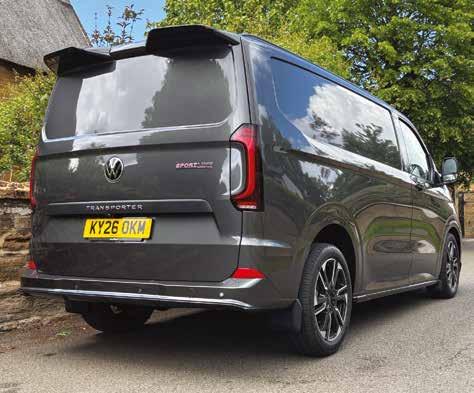
We tested a diesel Sportline. Climb aboard and from the driver’s seat everything is easy to reach including the touchscreen. Visibility is also good, with the handy built-in reversing camera with parking lines making reversing simple.
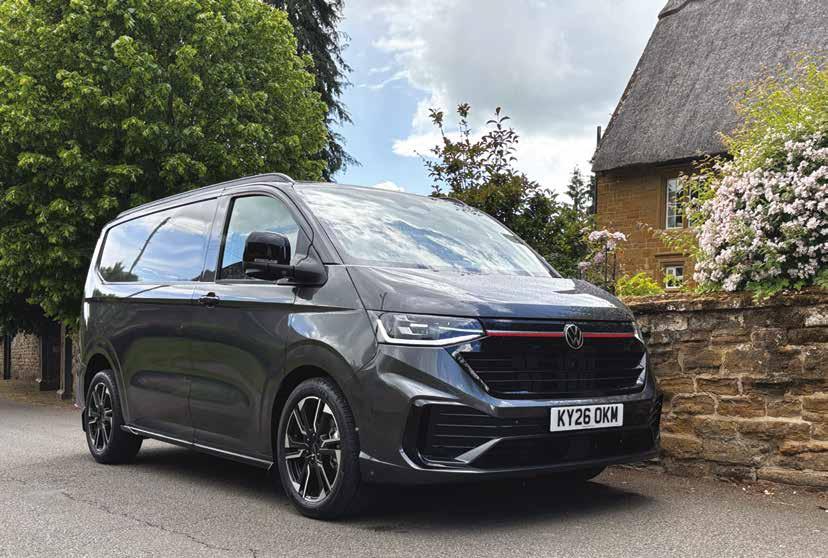
passenger can use one of these. It’s very easy to connect your smart phone to CarPlay so if you prefer to utilise your own apps such as Waze, that’s simple too. The onboard safety is impressive and can be tweaked via the touchscreen menu and steering wheel controls. Sportline adds Adaptive Cruise Control and Blind Spot Monitoring.
Pros
Looks the business, with classy userfriendly interior. Plenty of model choice. Better warranty than with Ford.
Driving range
All versions come with combined energy consumption of 2.5miles/kWh with the range running from 199-203 miles.
Power and performance
Fitted with the 218kW battery, 0-62mph takes 8.6 seconds while the larger 286kW battery does this in 7.4 seconds. Top speed for all models is 93mph.
Warranty
Customers benefit from an enhanced warranty and service plan at no extra cost. Called the Volkswagen 5+ Promise. It comprises five services, three MOTs, a five-year Warranty and five years’ Roadside Assistance.
All Transporters are just so easy to drive as well as pleasant to be in, and the Sportline is no different. In effect it handles more like a large SUV than a panel van. On some winding and undulating roads the van delivers exemplary handling and light, precise steering.
I headed out onto the M1 and engaged the adaptive cruise control and comfortably overtook some slow-moving traffic. Cabin insulation is very good and conversations can be held without shouting, even at higher speeds. Perhaps the suspension set-up is a touch harder than in standard Transporter but that’s our only criticism.
The Sportline interior is lovely and has now become our favourite of any panel van, with the contrast red stitching and eco-leather upholstery finishing things off nicely. You also get two fold-down armrests, one on the right and the left of the driver so the middle
Cons
Almost but not quite the same as a Ford Transit Custom MR-ST.
With electric, diesel and eHybrid offerings you can choose a Sportline in the drivetrain that works best for you. Looks like VW has all the bases covered. Is it worth paying more for a Sportline than a Commerce Pro or Pro S? That depends perhaps on you and your business. Renault announced a new range-topping Trafic at the 2026 CV Show and that joins the Ford Transit Custom MS-RT and various Stellantis vans such as the Vauxhall Vivaro GS as tradespeople and companies look for vans that offer more carlike cabins and a more distinctive look. For us the Transporter Sportline definitely cuts the mustard. Here’s to another 75 years!
CC&V RATING: N N N N N
“All Transporters are just so easy to drive as well as pleasant to be in, and the Sportline is no different. In effect it handles more like a large SUV than a panel van. On some winding and undulating roads the van delivers exemplary handling”
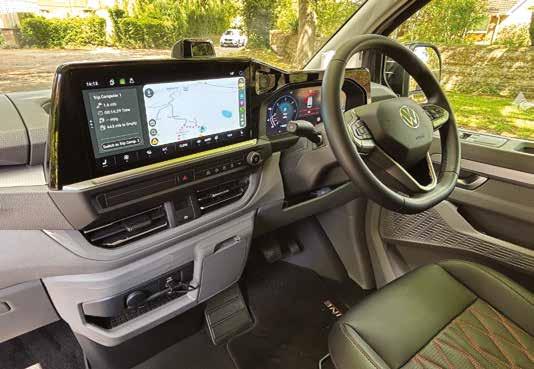
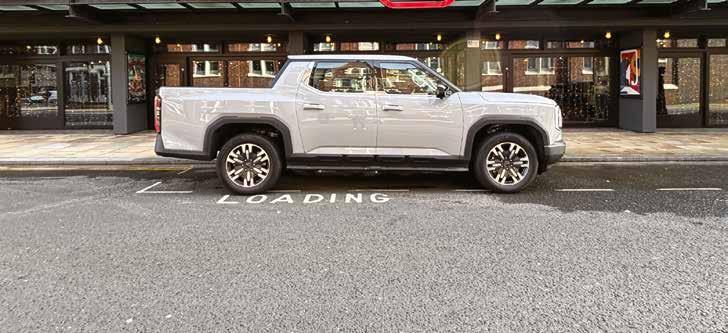
Two years after they launched their first electric pick-up the T90, Maxus launched another, the eTERRON 9. Andrew Walker spent an enjoyable morning in Liverpool putting one to the test.
What is it?
The second electric pick-up from Maxus replacing the T90 EV. Two versions are offered. Luxury priced from £54,695 and Premium costing from £58,495.
Practicality
It may be an electric pick-up, meaning there’s a heavy battery fitted underneath the cab and load floor, but this doesn’t prevent it offering a 620kg payload and towing up to 3500kg braked or 750kg unbraked. Looking at its length, width, height and load bed dimensions, they mirror a standard diesel pick-up, so it’s competitive as a load lugger.
Electric range and battery
The eTERRON 9 comes with a 265-mile range. This is courtesy of a 102.2kWh battery which produces 325kW of maximum power.
The dual-motor setup features an 170hp e-motor at the front and 272hp system at the rear axle, generating total output of 442hp.
Off road capability
The eT9 is 4WD and features an All-Terrain System. Options include Normal, Mud, Tow and Sand. Customers can also configure steering, engine power and stability to their personal preferences.
Performance
Brisk. 0-62mph takes 5 seconds. Top speed is 118mph.
Exterior
The front features a massive Maxus logo across the fact front grille. There are vertical side LED light intakes while the rear load bed area is very similar to that found on most pick-ups. The tailgate is heavy and Maxus has included an automatic unlocking and
push-power close to shut it, which is great.
The bonnet can also be open and closed this way.
There’s a large Maxus logo right across the rear, a high stop light, with a step in the bumper to allow for easier access. You also get a slim light that runs across the width of the tailgate finished off with two vertical light clusters on each corner. The sides feature black steps and a chrome low door protector. Front and rear bumpers are chunky and black. It looks more like a North American truck than a European pick-up.
Inside
The inside of the eT9 really illustrates just how far Maxus has come. In effect, you’re sitting in a premium car cabin with both the dashboard top, front and centre binnacle hewn from stone.
A massive dual screen consisting of a 12.3” cluster and 12.3” central touch screen that stretches across the dashboard top, reminding me of the set-up in the latest Hyundai Santa Fe, is the highlight inside. Located between the front seats is massive armrest cum wireless phone charger where the 4X4 switch is located. Here you can connect your Smartphone via Apple CarPlay, utilising the wireless charging pad. Or plug in via the two front and two rear Type-A or Type-C USB inputs. Separate climate controls are located underneath the screen with slim air vents above.
Look up and you’ll notice that the rear view mirror offers a streaming image via a rear external camera. With the typical limited view from a pick-up’s rear window, this is another plus for the eT9.
The front seats are electrically adjustable, with even a massage function on top-spec Premium. Luxury gets PVC seats, Premium leather.
Charging
Excellent range but it will take about 12 hours to go from 5-100% on a 7kWh home charger with 11kW capacity fitted to both
versions. Better news is that if you utilise it’s DC capabilities of 115kW speeds, a 20-80% charge will only take 45 minutes.
On the road
Apart from the electric whine when you first accelerate, the eT9 is very quiet, eerily so when compared to a standard diesel pick-up. Up front, the ride is quite firm. The cabin is quiet and comfortable, the dashboard and switches are easy to use. The eT9 might be quite long and wide but it never feels big thanks to the light power steering. And with the standard driving modes of Eco, Normal and Sport, you’re never short of instant power to nip in and out of urban traffic. On the motorway it cruises like a large saloon car and over decent tarmac feels composed offering a relaxing ride.
Pros
Decent payload and load bed area. Electric range and charging speeds are impressive. Very well equipped, quiet and surprisingly comfortable. Build quality is exceptional.
Cons
We’ve yet to take it off-road and perhaps the motor-battery combo may affect ground clearance and usability. Payload of 620kg is compromised by battery weight. At £55,000 + VAT it’s not cheap.
CC&V VERDICT
Maxus won the race to get an electric pickup to market with the T90 – but it wasn’t 4WD.The eTERRON puts that right, and then some. It’s miles better, illustrating just how far Maxus has come in a short time. The 620kg payload may put some off but not, we think all, with plenty not requiring a 1,000kg carrying capacity.
Time will tell how the eT9 does as both Isuzu and Toyota bring their electric truck to market.
CC&V RATING: N N N N N