The motoring magazine for SME fleets
2026 is theYear of the Horse, and in our April issue several new Chinese cars leap on to our pages
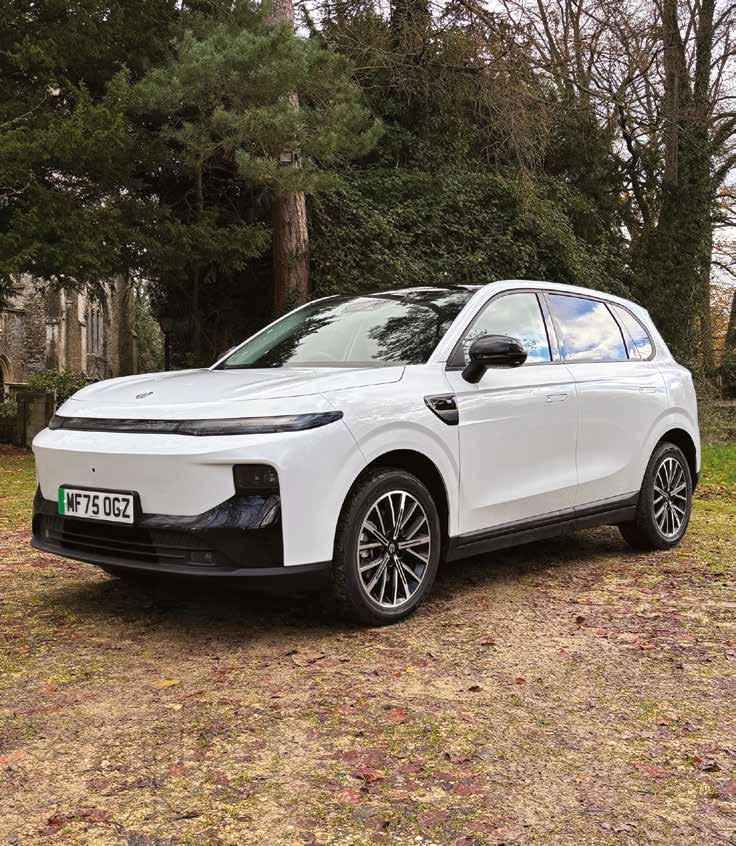
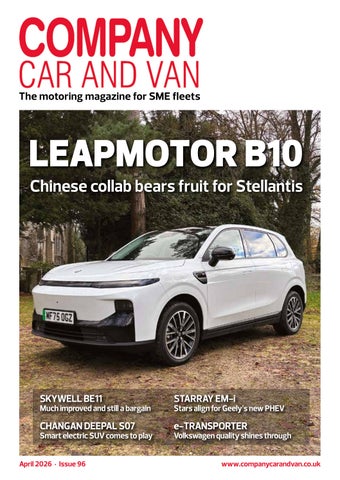
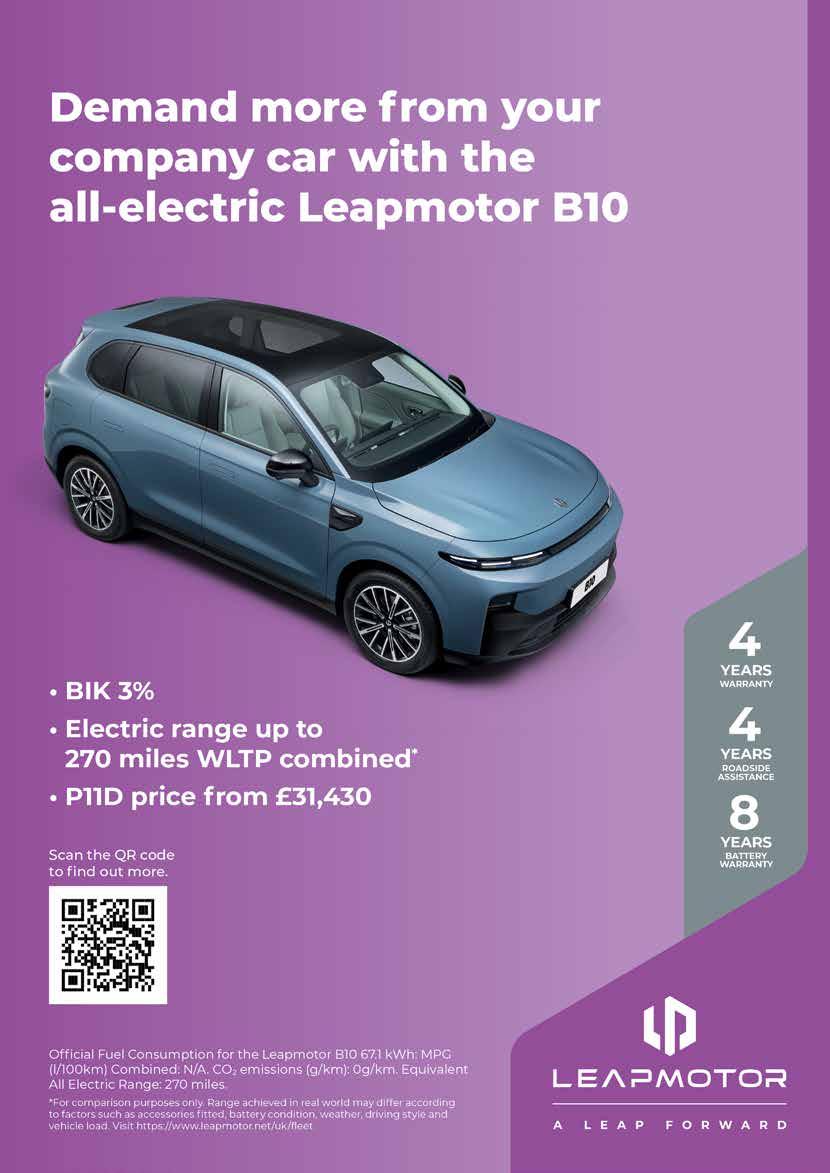
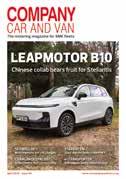
First up is our cover star, the Leapmotor B10. It’s a B-sector SUV that falls under the Stellantis brolly and we think it’s the best Leap model yet. User-choosers and salary sacrificers take note.
We first drove the Skywell BE11 in late 2024 and came away disappointed. Distributed by Innovation Automotive they’ve listened to criticism and have tweaked and improved it, as we found out. Read our thoughts on Page 4. Chery launched the Omoda and Jaecoo brands in 2024, and the Chery brand followed in 2025. We stepped out in the Chery Tiggo 7, a plug-in SUV, last month and discovered that it offers a lot to company car drivers at a budget price.
Changan is another new Chinese name and in this issue we have a first drive of the DEEPAL S07, a striking electric SUV leading its charge. Geely has just launched its second model, the plug-in hybrid Starray EM-i. We travelled to a film studio in deepest Surrey to drive it and came away pleasantly surprised.
A CC&V winner for 2026 was the sevenseat Hyundai IONIQ 9, our Large Car of the Year. If you’re looking for a large family car as
your next company vehicle, you can find out more inside, as you can on the Tavascan from Cupra, our Manufacturer of the Year for 2026. We explain why this decidedly different car could be for you.
MG is in the middle of a product onslaught and just before Xmas we tested its S5 EV. It’s a B-sector SUV and is arguably the best small EV we’ve ever driven. Road test on Page 26.
Other new cars featured this month are the new Peugeot E-308, our Executive Car of the Year, the updated XPENG G6, our Car to Watch 2026 the Nissan Leaf, and Kia’s latest electric model, the EV5.
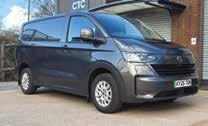
On the commercial front we spent a week in the Volkswagen e-Transporter which shares plenty with the e-Transit Custom, but has just enough VW in it to stand out. Those clever people at Isuzu have launched a tax-friendly D-Max Commercial that aim to upset the Treasury, while we take a look at the Maxus T60.
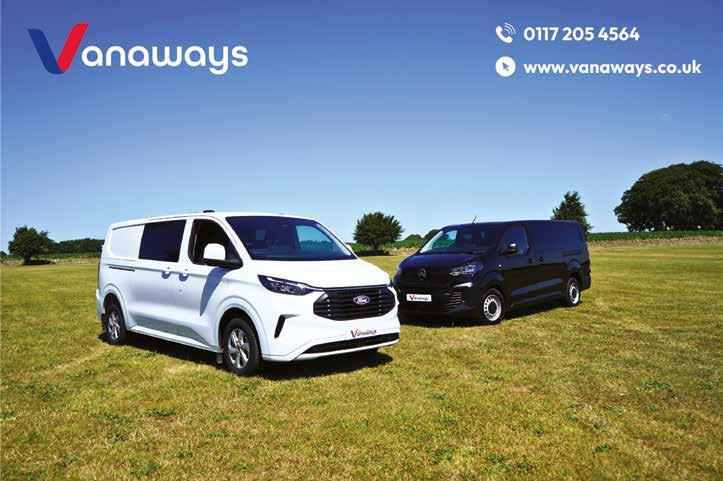
Finally, we have our regulars: Rolec for charging, Northgate for van rental, Vanaways for van leasing and Rivervale for salary sacrifice schemes, all offering their expertise to make sure you run your fleets more efficiently. Enjoy.
Andrew Walker, Editor and Publisher

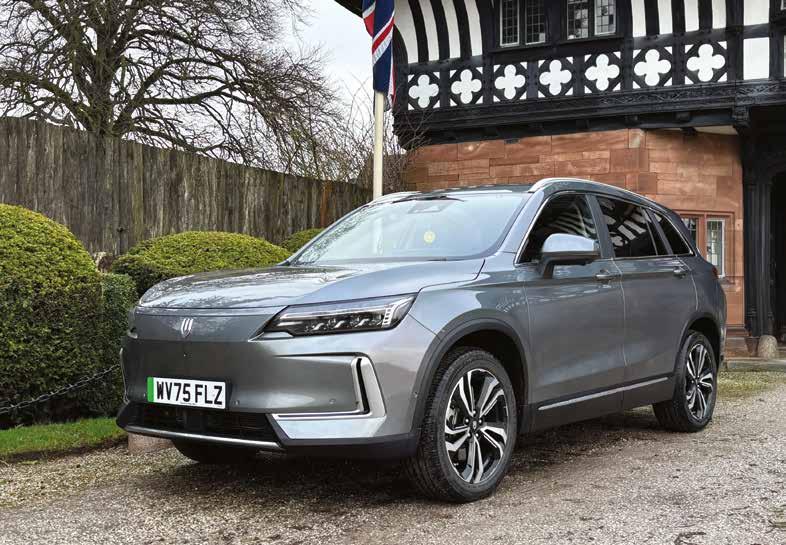
IN LATE 2024 we drove the Skywell BE11, and sadly, we came away disappointed. At the time we viewed it as a new Chinese electric SUV that was well priced, nicely finished and competitively priced, but it just wasn’t good enough at that time to compete.
Why? Poor handling, inadequate safety features, a difficult infotainment system and poor tyres all contributed.
Luckily, Skywell took the criticism on the chin and has just re-launched the BE11 – and it’s a big leap forward.
Tell us more
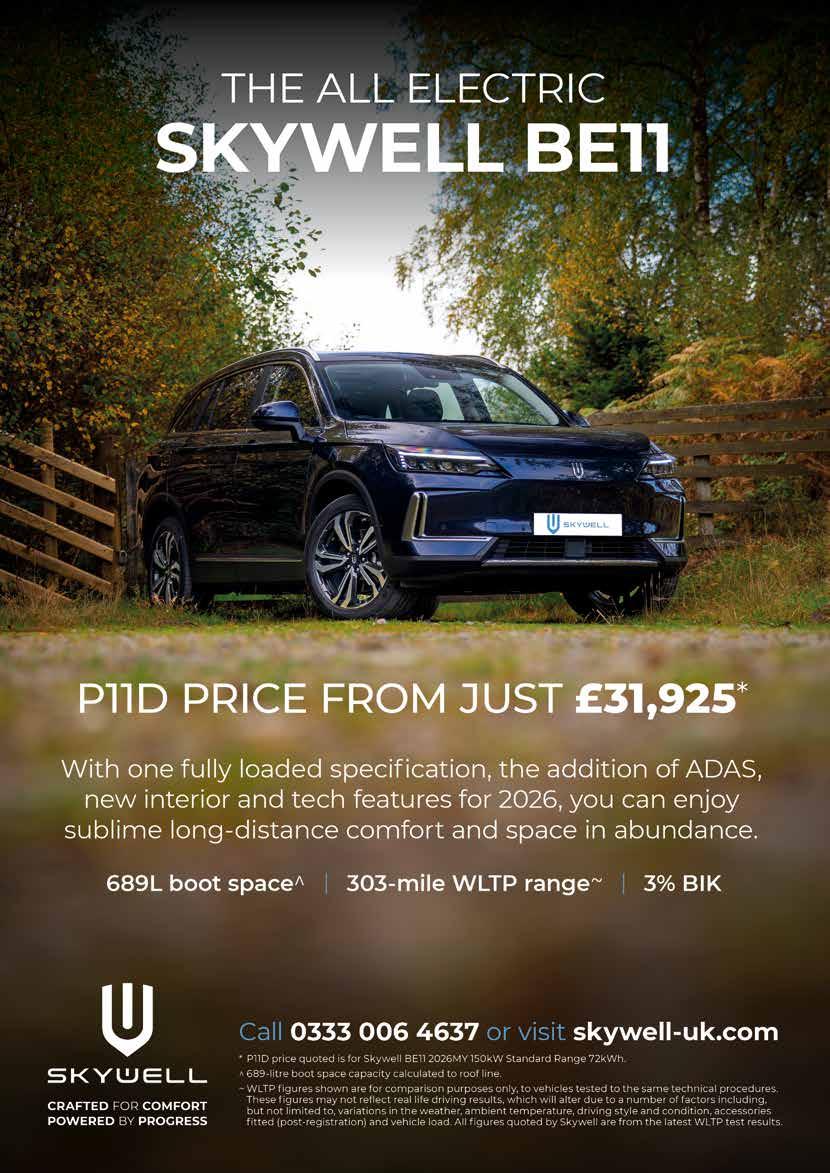
Skywell comes from Nanjing and is a subsidiary of Chinese electronics company Skyworth. Best known for building buses, the BE11 is the first electric model the brand has launched in the UK. It’s an electric SUV that mirrors models such as the BYD Atto 3, Jaecoo 7 and Geely EX5. As with other Chinese electric cars, it is competitively priced and at first glance is an attractive proposition, with prices starting at £31,950 and a brand philosophy of no extras, which means plenty of goodies are included.
Model choice and price
Just two. Standard Range comes with a 72kWh battery, a claimed range of 248 miles and costs £31,950. Or there’s the Long Range with the larger 86kWh battery with a claimed range of 303 miles, which will set you back £34,990.
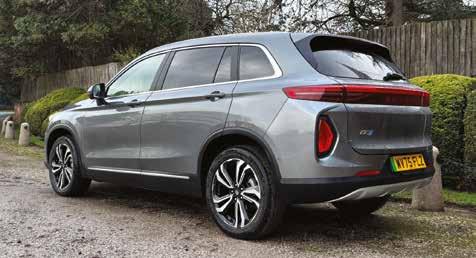
This is the BE11’s strong point. It looks like a Skoda Kodiaq crossed with an MG HS, so standard SUV looks. Curved LED headlights adorn the bonnet edge with a flat front grille. The rear features vertical indicators with a wide horizontal light band across the top of the boot lid. The SKYWELL logo is prominent in the centre.
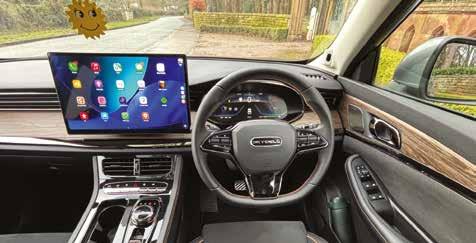
The fixtures and fittings are mainly black with some chrome edging here and there, and a wood-type facia on the dashboard front. Our test car had orange piping and stitching around the seat edges and doors. Quality is actually good with some soft touch plastics here and there and a typical Chinese feel. We noticed that the centre console has been altered with the cup holders now on the left and easier access to storage, the rotary gear lever and electric handbrake.
With only one trim level and no optional extras, specifications are good, with a panoramic sunroof, powered seats, a powered tailgate, keyless entry and start and metallic paint all include. More good news is you also get LED headlights, wireless smartphone charging, climate control, cruise control, a 360-degree camera, an eight-speaker sound system with subwoofer and Alcantara and leather-effect upholstery.
The BE11 scores highly here, with a decent 467-litre boot, large door bins, twin cup holders, space under the centre console and a split opening armrest with space beneath. There’s plenty of space inside the cabin, and there’s definitely room for five to sit comfortably, aided by the flat rear floor. Lowering the rear seats is a challenge as you have to unlock a cable to do it and when that’s completed the seats don’t fold flat, the only negative here.
With only an 80kW charging speed, the BE11 lags behind some competitors (for example, Skoda’s Enyaq can charge at 125kW). Even when you plug into a fast charger a 20-70% charge will take 35-45 minutes depending on which model you’re driving.
Although the batteries are supplied by BYD, it’s not of the Blade variety, with Skywell using lithium nickel manganese cobalt, rather than the more commonly used lithium iron phosphate. Skywell claims that this makes the batteries better in cold weather, meaning less battery range is lost.
To be fair, when fully charged our BE11 was indicating a driving range of 293 miles and that was in sub-5 degree February. An 80-mile round mostly motorway trip at 70mph saw us return with 198 miles, so not too shabby.
Continued on page 6
Continued from page 4
Safety
Here is where Skywell has taken note of criticism by introducing a whole new suite of safety features. These include adaptive cruise control, automatic emergency braking, blind spot detection, forward collision warning, intelligent cruise assist, lane keep assist, lane departure warning, rear cross traffic alert and traffic sign recognition.
More good news is that, sometimes with Chinese cars, the over-friendly safety features can get annoying. Not so in the BE11. The simple touchscreen menu means that you can enter the Vehicle Control option, choose Driving Assistance and toggle on or off the biggest culprits, namely lane keep assist, driver attention warning and speed limit warning. We were suitably impressed.
Infotainment
This too is much improved. We connected wirelessly to Apple CarPlay. A simple swipe up gets you into the BE11 screen with a Home button on the bottom right. Hold this down for two seconds and all operating apps open, so you can easily select what you want. You can also swipe left or right to enable this. Our test car was fitted with the larger 15.6-inch landscape screen an extra £800 on the asking price. Is it worth it? We’re not sure but it’s a good size, the graphics are clear and response time is fast enough and certainly better than others out there.
Warranty and residuals
The BE11 comes with a seven-year, 100,000-mile warranty, which is generous.
Performance
The BE11 is not fast, with 0-62mph taking 9.6 seconds and a top speed of 93mph.
Driving
Climb aboard, push the start button and the BE11 pulls away. The first thing we noticed was that the Giti tyres haven’t changed. We live close to a couple of farms so the end of the road can be slippy, and the BE11 didn’t like that one bit. From the very first junction the
front wheels were spinning like a top and while on most junctions it was okay, on many this continued as the wheels struggle for grip accompanied by a burning rubber smell. Again we’d lay the blame on the Giti tyres which struggle to cope with tech power forcing its way through front wheels.
Better news is that the BE11 feels more stable than before and the slight understeer isn’t as bad as we remembered. After a couple of days we got used to it and I daresay most customers won’t even notice. Also, where the Mk1 model seemed to treat poor tarmac as the enemy, the latest model feels able to deal with it better. Less harsh jolts appeared and the ride felt no better or worse than a raft of electric SUVs we’ve tried.
On the motorway it’s more than capable of cruising happily at 70mph. The all around view is excellent and the driving position just right too. Cabin noise is still there but it’s not as noticeable, especially with the volume turned up. The cruise control is easy to engage and now it’s adaptive, we feel it would make a good long-distance companion. Mrs W accompanied me to Chester along the M56 and even in heavy rain and at 70mph, neither of us felt that road noise was intrusive.
Other updates to the My26 model include front seat heating and ventilation, driver seat electric lumbar adjustment and driver seat memory function, all of which I tried and were great. Overall the cabin comfort has definitely
improved immeasurably, which is great news to hear.
The brakes are still spongy and take a bit of getting used to but after a couple of days they were fine. On the plus side, there is some in-built brake regeneration selected via the touchscreen menu. Previously it was overly complicated with far too many levels. Now it’s a touch the other way with a line of brake regeneration offered from 0-100% so it’s a bit of a punt to set. We settled for 50% but tried 100% which is noticeably heavier, but doesn’t offer one-pedal driving ,
Pros
The cabin is nicely finished and both models are well equipped. Safety and infotainment updates have definitely made it better. There’s loads of space inside as well. Low BIK and lower price make it a tempting proposition in the company car sector.
Cons
As vanilla as most other Chinese SUV EV’s. The tyres are still awful. Handling is only mediocre.
On paper the updated BE11 is an attractively priced C-sector SUV offering loads of standard equipment, plenty of space, with decent driving ranges. Updates to the safety, tech and infotainment have definitely improved it, but it’s only ever going to be as good as a BEV SUV can be, and that is across, the board, distinctly average.
Having said all that, we don’t think that Skywell has done a bad job of improving the BE11 and with lower prices, including Skywell’s EV switch incentive of £3,750 and a £500 insurance contribution, it shines brightest on its price point, where it significantly undercuts the competition. Much better and now competes with the Chinese new kids on the block.
CC&V RATING: N N N

Vanaways has announced a major investment in its technology department, bringing together a dedicated team of engineers, developers, and IT specialists to modernise the van buying experience and build systems to support the company’s growth.
The newly expanded team combines technical expertise with fresh ideas, working collaboratively to develop internal systems, customer-facing platforms, and innovative tools designed to streamline van sales.
The technology department is led by Jed Williams, Vanaways’ IT manager, who joined the company over three years ago. Jed progressed from IT support into a leadership role, now managing the company’s IT operations. He is joined by Gio Posa, lead software engineer, who is responsible for translating business goals into technical solutions and leading the development of new software systems.
The development team also includes Tomas Meneses, software engineer, who maintains and improves existing systems while helping to build new internal tools, and Alfie Gormley, software engineer, currently leading development on the Finaways website with a focus on improving user experience and performance. Supporting day-to-day operations is Josh Brimble, IT support executive, who joined Vanaways after
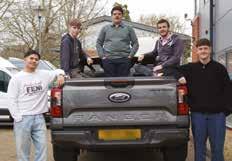
completing work experience and now provides IT support across the business.
“Software engineering at its core is about solving business problems using technology,” said Gio Posa. “Our role is to understand the challenges across the business, break them down, and build systems that make things more efficient.”
Redefining the customer experience
The team is currently working on several projects designed to enhance the van buying process, improve communication between Vanaways, dealerships, and customers, and reduce manual processes across the business.
A key development is a customer portal, which will allow clients to track quotes, orders, and updates in real time. By giving customers direct access to their purchase journey, the
platform aims to reduce repetitive calls and create a smoother overall experience.
Internally, new tools are being developed to automate processes and improve data flow between systems, enabling sales and customer service teams to work more efficiently.
“One of our main goals is always to make the experience easier for customers,” said Jed Williams.
Another exciting project in development is Vanaspec, a platform designed to simplify van research. Buyers often navigate multiple manufacturer websites to compare specifications. Vanaspec will centralise this information in a single platform, allowing users to browse specifications, view 360-degree imagery, and compare multiple vans side by side.
“We’re not limited to one way of doing things,” explained Alfie Gormley. “For each project, we can choose the tools that deliver the best results, giving us the freedom to build better systems.”
A bold step toward digital leadership
This investment in technology reflects a broader ambition to position Vanaways as more than a van broker. By combining marketing expertise, industry data, and innovative software development, the business is creating a platform designed to modernise how vans are researched, purchased, and financed.
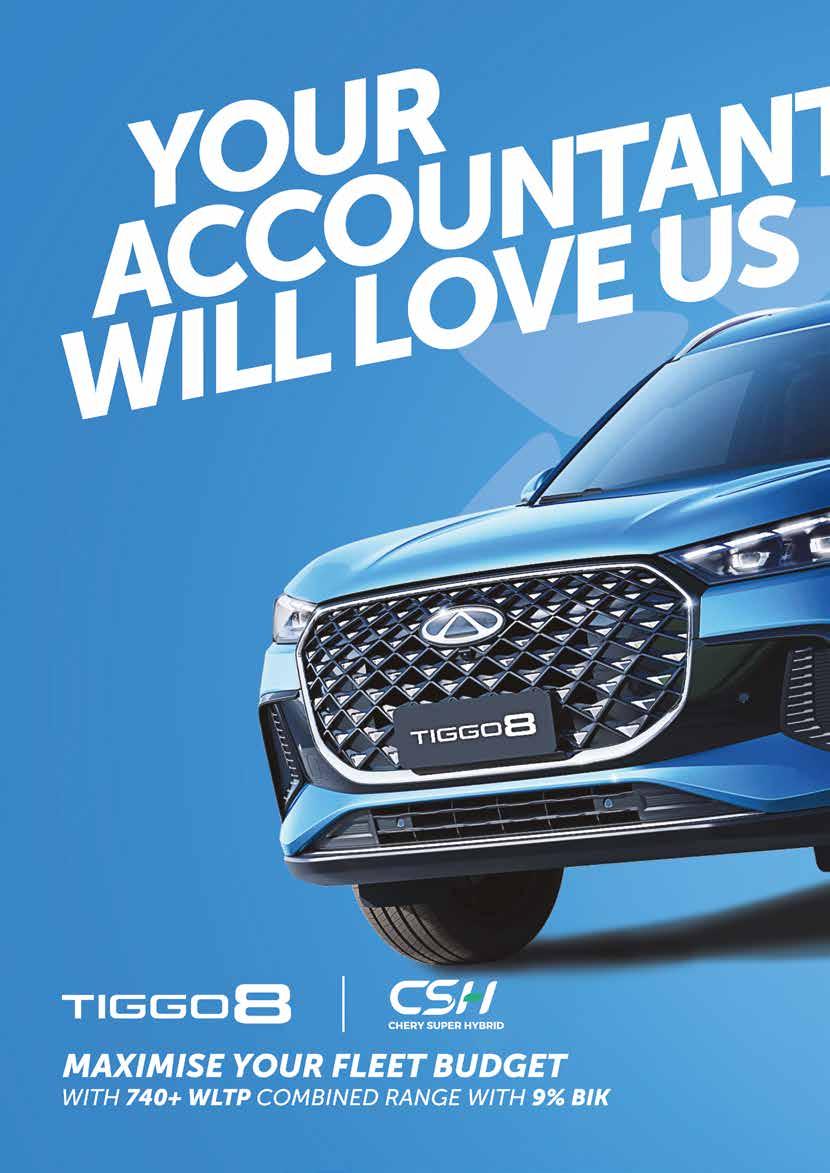
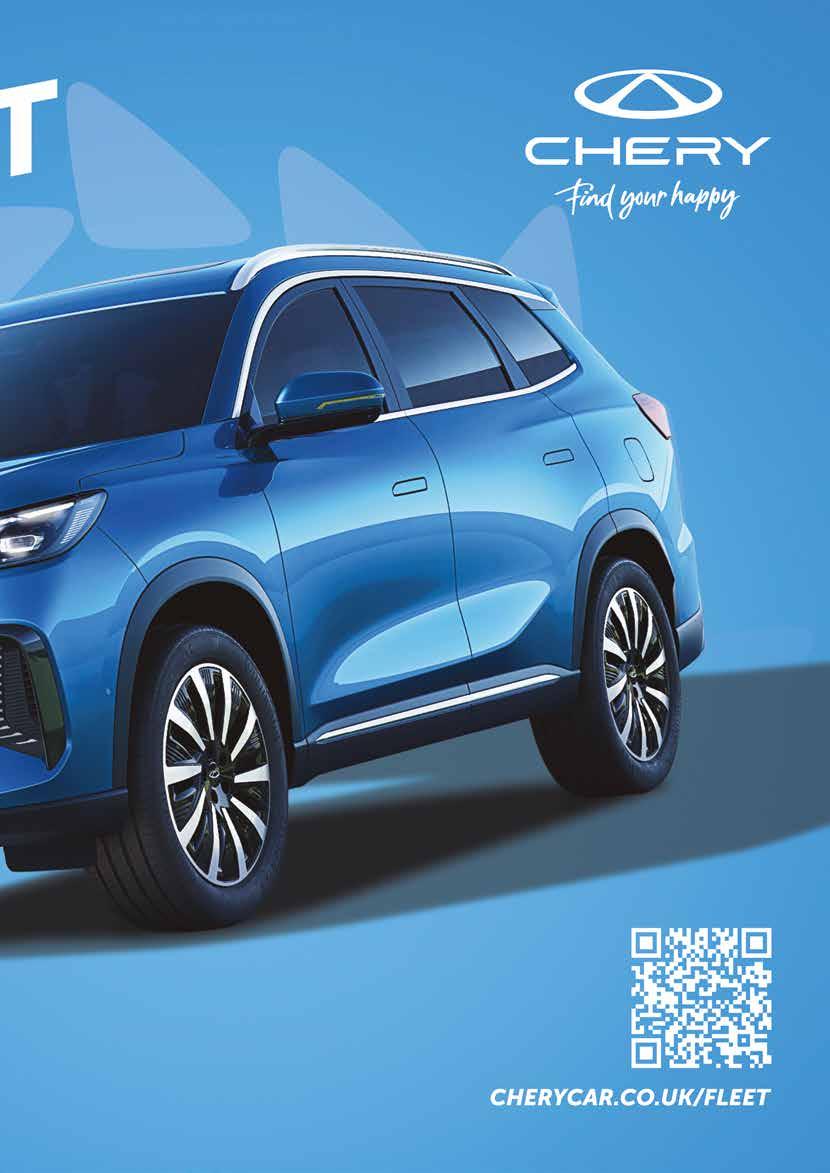
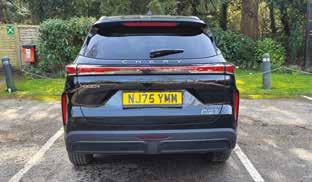
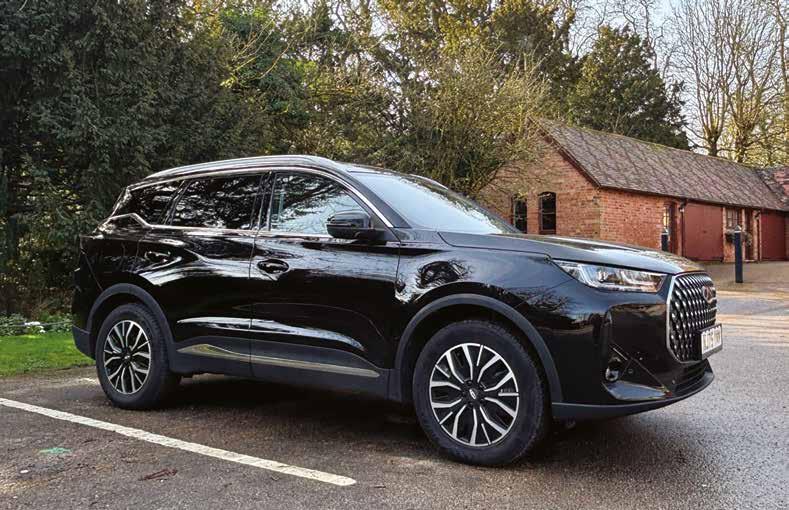
SUVs with great BIK are commonplace, so it takes a lot to cut through the competition. Chery’s Tiggo 7 is going to do pretty much that, says Andrew Walker
CHERY is the parent company to Omoda and Jaecoo, so inevitably wanted a piece of the UK car market of its own. To achieve this it has launched its own Chery brand, with the Tiggo 7, Tiggo 8 and Tiggo 9 the first to break cover. The good news for company car drivers is there’s a plug-in Tiggo 7 which arrived for us to test in February.
It is a Qashqai-sized SUV offering five-seat practicality and a tempting price tag. It shares its platform with the Omoda 7 and Jaecoo 7 but is the cheaper alternative. There are two versions, a petrol and a plug-in hybrid, the latter being the more tax friendly with 9% BIK.
Engines and prices
The Tiggo 7 costs £24,995 for the 145bhp turbocharged 1.6-litre pure-petrol version, or in fleet-friendly PHEV format, the Super
Hybrid is from £29,995, making it the cheapest plug-in hybrid car in the UK.
Entry-level Aspire comes with twin 12.3-inch screens, Apple CarPlay and Android Auto connectivity, LED lights front and rear, a six-way powered driver’s seat, dual-zone automatic air-conditioning and a rear-view camera. Step up to Summit and you’ll add a dual-panoramic sunroof, an upgraded Sony sound system, a four-way powered front passenger seat, a power boot lid, heated and ventilated front seats and an all-around camera. For an extra £3,000 you can move up to the Summit trim.
A chrome-plated diamond design grille and LED and IQ lights adorn the front, with a kinked rear quarter window making the side more interesting. An on-trend full-width rear LED light band sits beneath the CHERY name with a roof spoiler finishing if off at the rear.
Interior
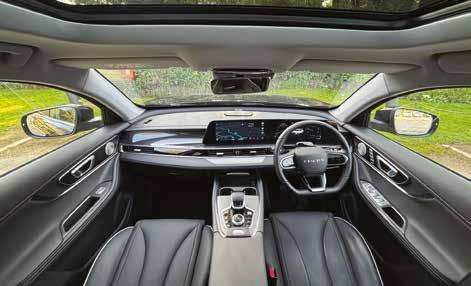
It may be cheaper than siblings the Jaecoo 7 and Omoda 7 but the interior is still pretty impressive. With artificial carbon inserts on the dash and some good quality textures and
plastic finishes on the doors and seats, you’ll be forgiven for thinking we’re in 40K territory here.
The Tiggo 7 central touchscreen with its Snapdragon processor responds exceptionally quickly to inputs, and connecting hands-free to Apple CarPlay was simple. The wireless charger on our Summit model was also helpful although it’s a bit of a squeeze for larger mobiles.
On-screen menus are intuitive but can be a touch frustrating. Better is that the touchscreen merges seamlessly with the driver info-display screen which clearly illustrates your speed, driving range, EV/ battery range and revs.
Performance
The Tiggo 7 has a 1.6-litre turbocharged four-cylinder engine and a seven-speed automatic transmission, while the Super Hybrid gets a 1.5-litre four-cylinder petrol engine and a 201bhp electric motor, fed by a 21kWh battery which uses a three-speed automatic gearbox.
Range and charging the Super Hybrid
The Super Hybrid’s claimed electric-only
“The Tiggo 7 was a great companion... I hit cruise control, sat back and that was it until I reached Bicester...”
range is 56 miles. Cleverly when you set off in EV mode, which I always did, the car will tell you when the electric range is low and will suggest you switch to HEV mode. As far as charging goes it comes with a 40kW charging speed, so a 30-80% top-up on fast charger will take just 30 minutes. Plug in at home on a 7.4kWh charger like our own Rolec Evo and a full charge will take under three hours. V2L is also included.
Cabin space and practicality
You sit quite high up in the Tiggo 7, giving you an excellent all-around view. The driver’s seats adjusts electrically and after over five hours at the wheel, my temperamental back survive unscathed, so it’s comfortable.
The front door pockets, under armrest storage and glove box are a good size. You also get a hidden storage area beneath the centre binnacle where the 12v socket is hidden, twin centre cup holders and an A and C USB input.
In the rear the seats are quite upright and bench-like but there’s plenty of legroom thanks to the flat floor, and the sunroof doesn’t eat into the very good headroom. Small-ish rear door pockets, a fold down armrest with two cup holders, tiny rear seat sleeves and a single USB complete the picture.
The petrol Tiggo 7’s boot is competitive at 565 litres, but you only get 484 litres in the plug-in version. With the 60:40 rear bench folded this increases to 1,386 litres in the Super Hybrid. There aren’t any other boot compartments nor any netting to keep things in place, but there is a small space beneath the boot floor for the charging cable.
All models come with CHERY’s comprehensive seven-year/100,000-mile warranty, whichever comes first, with the Super Hybrid also coming with an eightyear/100,000-mile warranty on the battery. All models include free RAC roadside assistance for the first year which then renews with every dealer service in line with the Chery seven-year warranty.
Both versions come with autonomous emergency braking, adaptive cruise control, rear cross-traffic braking, lane departure warning and blind spot monitoring. Summit doesn’t add any extra safety technology, but does include a 540-degree exterior camera.
We drove to an Omoda event and left all of the safety features turned on to see how
these were. Driver Attention Warning was by far the most annoying, beeping when I glanced left to use the touchscreen or put my right hand at 1 O’clock on the steering, which I’ve a tendency to do on the motorway. Lane Keeping and Departure illustrated some steering pull when we didn’t indicate to come back in after overtaking, but other than that we were pleased that they were nowhere near as intrusive as we had feared.
Driving on the motorway
From our front door to Waddesdon Manor near Aylesbury we drove 135 miles on the motorway network. As this is the cheapest Chery brand we weren’t expecting too much, but the Tiggo 7 surprised us, and in a good way. You hit a 60mph dual carriageway within one mile of where we live so I activated cruise control, sat back and that was pretty much it until I reached Bicester.
The Tiggo 7 was a great companion. The wireless CarPlay allowed me to use Waze and podcasts while the driver’s display kept me informed of range and speed. Plenty of glass coupled to the high driving position gave me a great all-around view, with only the Driver Attention Warning causing me any grief; I disabled it for the return journey.
Any negatives? The cabin gets quite noisy at 70mph and I’ve already mentioned the slowness of the screen when wanting to make quick changes, but that really is it.
Driving modes
I played around with the central dial, toggling between Eco, Normal and Sport driving modes, but there really isn’t a discernible difference. Selecting Eco on the motorway was absolutely fine.
We did notice that the electric motor can get a touch noisy as it strains to accelerate from 50-70mph, but it settles down quickly and is no better nor worse than plenty of other hybrids in that respect. This isn’t a fast car but the 8.5 second run to 62mph is plenty quick enough for most driving scenarios, with the brakes proving more than adequate.
The Tiggo 7 was a decent companion for short trips as well. The car starts itself when you push the brake and off you go in electric mode. Inside it’s quiet with the Tiggo 7 even handling poor tarmac well thanks to soft suspension, and certainly better than many. A small 11m turning circle plus all-around camera on the Summit made parking simple. As for driving dynamics, this is a car built for comfort and practicality and as an upright SUV, it ticks those boxes and is not going to excite you, like pretty much all other SUVs.
Plug-in BIK of 9% is a good start. Plenty of room on board for five. The on board tech and safety works well. It features comfortable seats. A 600-mile driving range is more good news and the price is a major win.
Not exciting. Cabin and engine can get noisy at higher speeds. Driver Attention Warning annoying so we’d suggest you turn this off. PHEV boot is smaller than the petrol version.
Tiggo 7 Super Hybrid is another Chinese car that delivers plenty at an amazingly low price. We much preferred it to the more expensive Jaecoo 7, and while the BYD 5 DM-i matches its electric range it costs £2,000 more. It does have faults: it can be unengaging to drive, some on-board safety features can be annoying, and overall, too much is controlled via the touchscreen, but to be fair to Chery, these are commonplace bugbears across the sector. Having said all that and judging by Jaecoo 7 sales in 2025, they are not putting people off and if you’re a company car driver who can’t go full-EV, the Tiggo 7 SH with it’s 600-mile range, near 60mpg and 9% BIK, will tick most of your boxes.
CC&V RATING: N N N N

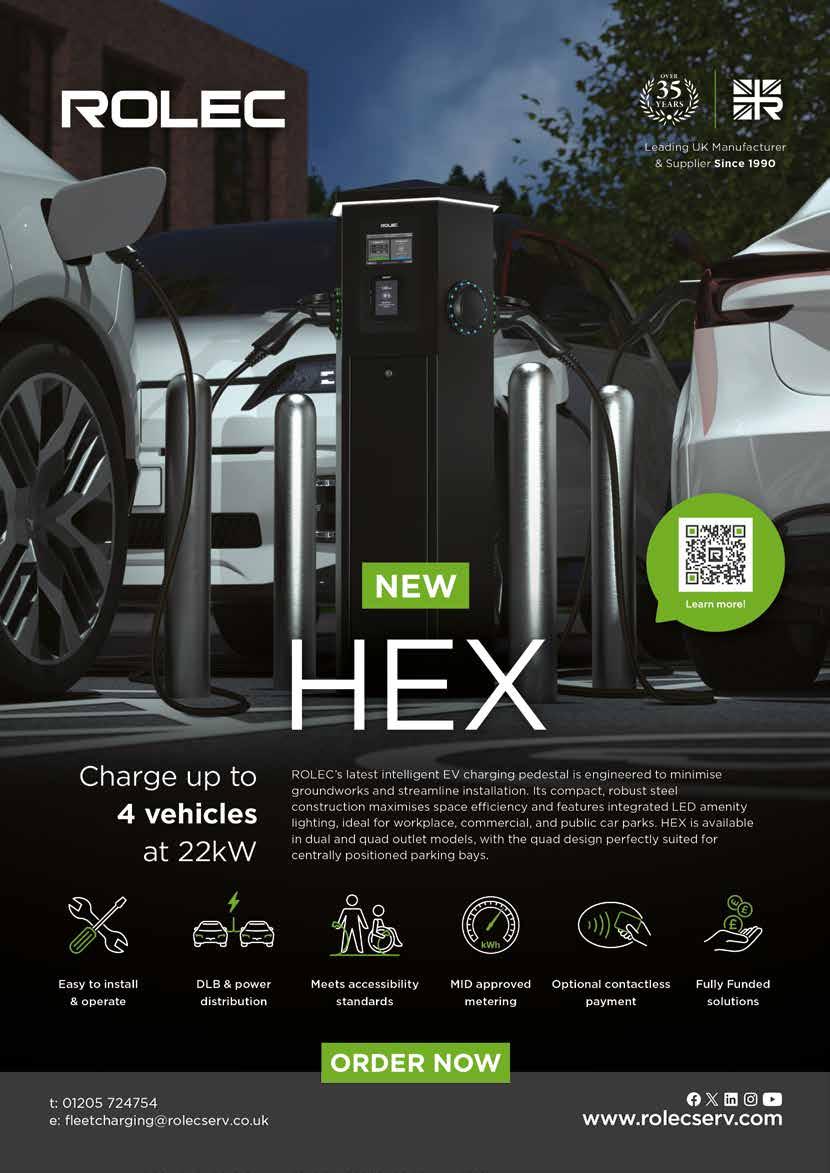
AS ONE of the UK’s longest-standing EV chargepoint manufacturers, Rolec has built an extensive global portfolio across commercial and fleet projects.
This depth of experience enables us to tailor charging solutions to the operational needs of fleets large and small – whether for company cars or mixed commercial fleets. Every successful project starts with thoughtful design. Prioritising British manufacturing and a dedicated R&D team gives us oversight of testing, development, and innovation. That means chargepoints engineered to evolve with the changing requirements of fleet operators, site owners, and operations managers.
A solution for every requirement
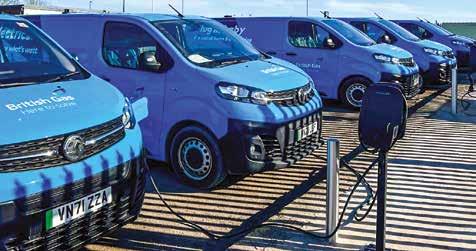
Rolec’s range of solutions deliver scalable, reliable hardware for a wide variety of fleet locations and use cases. Pedestal units provide space-efficient multi-vehicle charging, making them ideal for business parks, fleet depots, and workplaces. Their visible LED amenity lighting and high throughput ensure that fleets can move efficiently throughout the day.
For sites where space is limited, wallmounted units offer a compact solution without compromising on charging performance or convenience.
Beyond hardware, Rolec supports fleets with a complete EV charging ecosystem designed to keep vehicles moving wherever they operate. From workplace and depot charging to sponsored home charging for fleet vehicles and public charging on the road, fleet managers can oversee charging through integrated management tools. Vehicle integration provides visibility of journeys, battery status, and behaviour, while features such as automated home charging reimbursement and workplace charger prioritisation help simplify day-to-day operations.
With nearly two decades of experience supporting EV fleets, Rolec is perfectly positioned to guide clients through every stage of the process, from project conception and product selection to installation, integration, and ongoing support, delivering a fully turnkey charging experience.
Guiding smarter decisions
The EV landscape is evolving faster than
ever, and fleet managers need more than hardware – they need insight and practical guidance. Rolec combines decades of manufacturing experience with a deep understanding of fleet operations to provide solutions that fit the way businesses work. By analysing vehicle usage, journey patterns, and charging needs, Rolec helps fleets plan efficiently, optimise installations, and make the most of available budgets and grants.
We also ensure teams are confident using charging infrastructure, empowering fleet operators to maximise uptime, simplify management, and transition to a zeroemission fleet with ease.
Dedicated support every step of the way
Businesses and fleet managers can rely on Rolec’s specialists, account managers, and technical experts to provide insights and guidance tailored to their operational needs. Beyond hardware, we offer CPD accredited sessions that teach industry trends, regulatory updates, fleet insights, and product advancements that help organisations make informed decisions for futureproof strategies.
Smart, flexible hardware design makes both installation and maintenance straightforward: our units feature removable front panels for easy internal access. And with connections to 45+ CPMS partners, fleet operators benefit from intelligent management features that simplify daily operations and enhance user experience.
Sustainability as a practical enabler
Being UK manufacturers gives us full visibility over the lifecycle of our products, from concept and creation to delivery, service, and eventual upgrade. We have taken
measurable steps to reduce environmental impact by redesigning packaging to fit 50% more products per pallet, cutting transport emissions by a third, recycling 70% of our manufacturing waste, and investing in onsite solar and battery storage. These initiatives have contributed to an estimated annual saving of 76,410 kg CO₂e.
This holistic approach positions Rolec not just as a hardware supplier, but as a strategic partner for fleets committed to sustainability, efficiency, and dependable operations.
A trusted partner for fleet evolution
In the UK leasing sector, company fleets continue to lead the shift to electric vehicles. Recent data shows strong growth in the Business Contract Hire segment, which accounts for the majority of the leasing fleet, and BEVs now make up around half of new BCH car additions, a clear sign that fleet electrification is rapidly maturing.
Rolec remains a reliable source of both AC and DC charging hardware designed for fleet applications. Our extensive stockholdings and scalable solutions mean we can support rapid transitions with minimal delays with next-day delivery on AC chargepoints and short lead times on DC rapid chargers, all backed by Rolec’s full-service package.
By emphasising expertise, turnkey deployment, and long-term support, Rolec stands as a trusted partner for organisations electrifying their fleets with confidence and clarity.
Visit our website: www.rolecserv.com to explore our full product range, or speak to one of our experts: 01205 724754 or fleetcharging@rolecserv.co.uk
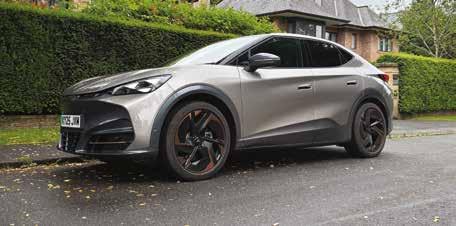
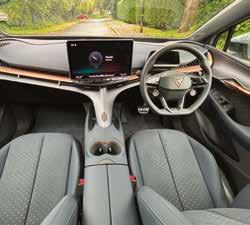
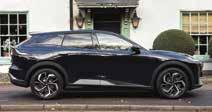
Cupra has two electric cars, the Born, one of our favourite EVs, and the larger Tavascan. It’s a striking five-door SUV coupe, and CC&V got behind the wheel of the VZ1 model to find out more.
Model choice
The Tavascan comes in four specs. Entry level V1, then V2, VZ1 and range topper VZ2. V1 and V2 are Rear Wheel Drive and come with 282bhp, VZ1 and VZ2 feature two motors so more offer power at 335bhp and are All Wheel Drive. All versions are fitted with a 77kWh battery.
V1 costs from £47,350, V2 £53,385, VZ1 £55,495 and VZ2 is £60,45.
Specifications
With prices in or around 50k you’d expect the Tavascan to come well equipped – and it does. V1 features, among many items, 19” alloys, a 15” navigation system, 5.3” digital cockpit, CUPRA Connect, a wireless charger, DAB, bucket seats, copper interior detailing, a rear view camera and a host of safety systems. V2 adds 12-way electrical adjustment to the heated bucket seats, a rear arm rest, ambient lighting, a double floor in the boot, 21” alloys, a head-up display and a top view camera.
VZ1 adds AWD with more power at 340PS battery, while VZ2 offers ventilated front seats, leather trim and 21” Etna forged alloys.
Outside
Cupras are built on the same platform as VWs and Skodas but with a sportier DNA. From its high curved corner front lights to the copper infused alloys and sharp lines at the side and rear, it’s a looker.
Inside
Someone at Cupra likes Star Trek as the Y shaped centre binnacle detail has been stolen
from a Klingon cruiser. Elsewhere there’s plenty of copper detail, and plastics look and feel hard wearing. There are soft finishes around the centre console and on top of the centre armrest.
Infotainment
The large 15-inch touchscreen dominates proceedings and is easy to navigate. The digital driver’s display is functional if a little small, meaning the additional heads-up display on our VZ1 was a useful addition.
Practicality
The glove box is small, but you do get split opening under-arm storage, twin centre cup holders, two front and two rear USBs, useful sized front door pockets and on our test car a fold down rear armrest.
The boot comes with 540 litres of space and a shelf underneath which you can store the charging cable, but not on the V1.
The driving position is good, with decent support. Rear visibility is a compromised by the low roofline and small window and this worsens in the wet as there’s no rear wiper.
Back seat space is surprisingly good, with plenty of head and legroom and at a push, there’s room for three adults.
Performance and driving modes
We settled for Comfort day to day while seeing just how brisk CUPRA can be a few times- it is. All versions are limited to a top speed of 122mph.
V1 and V2 will accelerate from 0-62mph in just 6.8 seconds. Select the dual-motor version with 335bhp and you release 545Nm of torque so a swifter 5.5 seconds from 0-62mph is possible.
Charging and range
AC 11kW is available on all versions, so a 0-100% charge will take eight hours. Away from home the Tavascan comes with 135kW DC charging, so a 10-80% top-up on fast
chargers can be as quick as 28 minutes. As ever plug-in at home overnight to benefit from lower electricity rates like we do on our Rolec EVO wall box. https://www.rolecserv. com/ev-products/evo
Full driving range is 273 miles and on a motorway jaunt the Tavascan returns one mile driven to 1 mile of range used. On average we achieved 3.8 miles/kWh.
Despite the power under the bonnet, the Tavascan handles nicely. The ride is a little firm, probably not aided by the larger 21” wheels. Steering is light and nicely weighted and the Tavascan feels nimble. If we have a criticism its with the brakes which are lacking any feedback. The regeneration never feels that strong and is definitely not one-pedal.
Pros
Both good fun to drive and looks good. Comfortable cabin and comes well equipped. The largish battery offers close to 300 miles of driving range and charging speeds are decent too.
Cons
Not cheap. A slightly firm ride on larger wheels and a lack of feedback from the brakes are our only criticisms.
CC&V VERDICT
Excellent; offers an exciting option. Slightly firm ride harks back to Cupras of old with far more polite road manners. It’s practical as well, with a spacious cabin. We’d suggest leasing one as at almost £50,000 it’s an expensive retail proposition, even in V1 livery. If you’re looking for an electric car that offers some excitement as well as practicality, the Tavascan is well worth your time.
CC&V RATING: N N N N
THE shift to electric vehicles is accelerating, driven by government grants, new initiatives, and the growing need for businesses to act on sustainability.
The pressure on fleet operators to cut costs and reduce emissions is mounting. From working out which vehicles are truly suitable, to planning charging infrastructure and ensuring drivers feel confident behind the wheel, it isn’t a straightforward process.
Northgate is helping fleets of all sizes tackle this challenge through its Drive to Zero initiative, which combines consultancy, smart tools, driver training and EV-ready hire solutions. That way, they can benefit from data-driven insights and dedicated expertise to give them confidence moving forward.
With Drive to Zero Consultancy, larger fleets can get access to dedicated support to build a clear, achievable electrification plan that balances operational needs with long-term sustainability goals. Northgate’s experts turn fleet data into actionable insights, offering tailored advice on strategy, cost modelling, infrastructure, compliance, and future planning. This provides a roadmap that removes uncertainty and builds a strong business case for change.
For smaller fleets, the Drive to Zero Hub is a smart tool that analyses fleet data to
highlight which vehicles are ready to go electric. It calculates running costs, estimates charging frequency, and maps out the nearest charge points, giving operators a practical, real-world view of how EVs will work day-to-day.
Additionally, Northgate works directly with drivers to understand their views on EV adoption, as well as their charging habits, ensuring the transition process works not only for businesses’ operational needs, but for their workforce.
Explore new options with Micromobility
Electrification isn’t just about vans and cars. For businesses facing last-mile delivery pressures or navigating busy urban areas where large vans are inconvenient, Northgate also offers innovative micromobility solutions such as e-bikes and more. These can provide cost-effective and flexible alternatives, helping businesses stay agile while reducing emissions.
EV driver training to build confidence
Switching to electric is more than just changing vehicles. EV confidence, training and skills play a major part in a successful transition.
Northgate offers EV driver training for both drivers and fleet operators designed to boost safety, efficiency, and peace of mind behind the wheel. From understanding charging to
mastering regenerative braking, this training removes common barriers to adoption and helps fleets unlock the full potential of EVs from day one.
Keeping EV fleets mobile
Reducing vehicle downtime is crucial and Northgate hire packages include service and maintenance as standard. These are supported by Northgate’s nationwide network of workshops, which are strategically located and staffed by highly trained mechanics and specialist EV technicians.
EV transition made easy
By combining consultancy, data-led tools, training and nationwide support, Northgate’s Drive to Zero initiative helps fleets approach electrification with clarity and confidence. Whether managing a handful of vehicles or a large-scale operation, businesses can access practical solutions that make the EV transition simpler, more sustainable, and better suited to real-world needs.
For further information on how Northgate can support your Drive to Zero visit
https://northgatevehiclehire.co.uk/ drive-to-zero
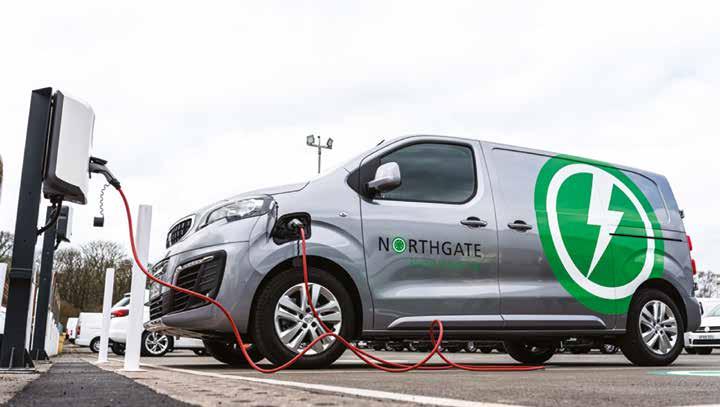
“Switching to electric is more than just changing vehicles. EV confidence, training and skills play a major part in a successful transition. Northgate offers EV driver training for both drivers and fleet operators designed to boost safety, efficiency, and peace of mind behind the wheel.”
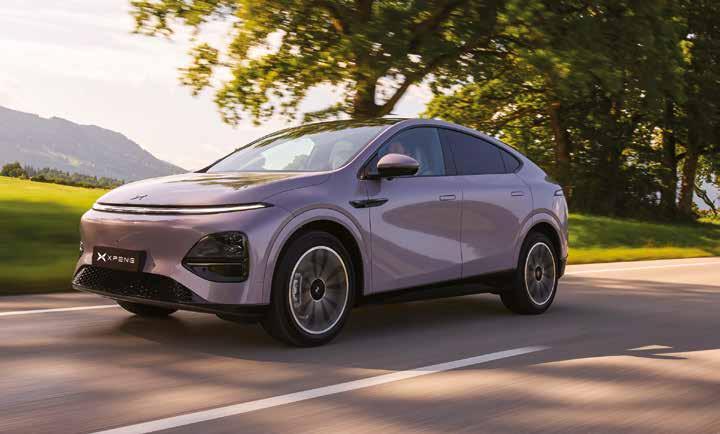
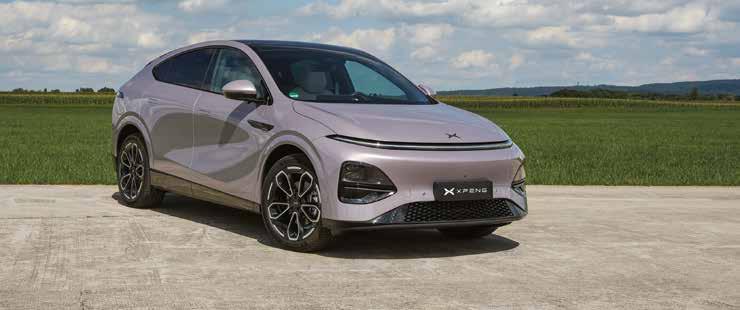
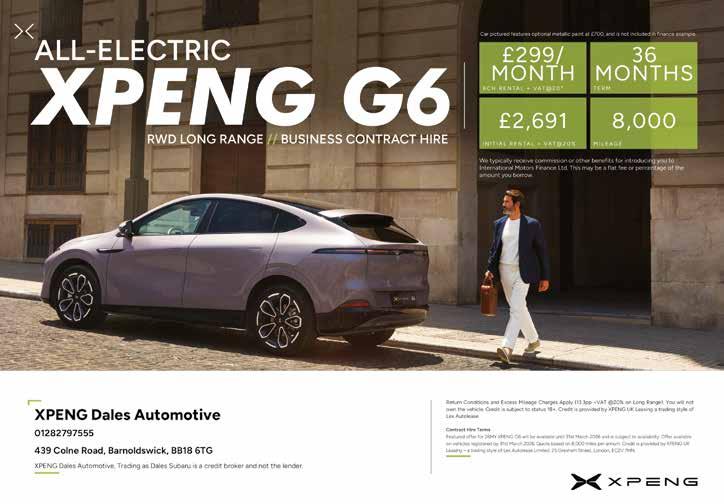
The new G6 All-Wheel-Drive (AWD) Performance Black Edition will be available to UK drivers for the first time
XPENG UK has given the G6 a comprehensive upgrade for 2026 with significant enhancements across performance, design, technology, and efficiency.
The new G6 All-Wheel-Drive (AWD) Performance Black Edition will be available to UK drivers for the first time, delivering surefooted traction and searing performance. Equipped with dual motors, the AWD produces 358kW of power and 660Nm of torque, enabling the AWD model to accelerate from 0-62mph in just 4.13 seconds. Combined with XPENG’s sophisticated all-wheel-drive system and advanced chassis tuning, the Performance derivative delivers exceptional handling, stability, and driving dynamics.
The Black Edition features 20-inch black sport alloy wheels, smoked black exterior trim, which includes mirrors, window surrounds, and black brake callipers, and creates a more stealth-inspired premium
appeal. Inside, drivers will find a grey-toned upholstery with a suede texture. It’s touches like this that really underscoring the model’s high-performance attitude.
The new XPENG G6 utilises a new stateof-the-art 80.8kWh lithium iron phosphate (LFP) battery. The advanced cell chemistry eliminates precious metals like cobalt, nickel, and manganese, offering a more sustainable solution without compromising performance.
The Next-Gen 5C battery, combined with XPENG’s Full-Domain 800V High-Voltage SiC Platform, enables industry-leading charging speeds with a peak power of 451kW and delivers a 30% increase in battery lifespan.
As a result of battery evolution, the new G6 can now potentially charge from 10% to 80% in just 12 minutes, making it the fastestcharging EV in its segment.
XPENG has refined the new G6 with over 20,000 incremental developments. Enhancements have been made in many areas, including chassis and suspension tuning, steering dynamics, electric powertrain behaviour, battery management, and NVH
(noise, vibration, and harshness) levels. The result is a more refined ride with exceptional stability, comfort, and vibration isolation, ideal for the challenging British roads.
The high-efficiency heat pump is now standard across all trims, preserving range efficiency during cold British winters. XPENG Heat Boost Technology warms the cabin efficiently without additional energy consumption, while the braking system ensures smooth control in both urban and motorway environments.
The new XPENG G6 features exterior styling enhancements, with a new full-width 1942mm Starlight LED light bar with integrated turn signals, creating a distinctive road presence. Body-coloured wheel arches replace the previous black cladding for a more cohesive look, and the matt grey XPENG logo has been repositioned for a more sophisticated appearance. A new rear spoiler adds 5mm to the overall length and enhances the vehicle’s stance and aerodynamics, complemented by a cleaner rear diffuser. The G6 maintains an impressive 0.248 (Cd) drag coefficient and is available in fresh colour options, including Stellar Purple.
Inside the New G6, new wood-grain dash trim adorns the cabin, with suede-effect ceiling material, and a fresh Dark Grey interior colour theme that creates a modern and luxurious atmosphere.
Practical enhancements include redesigned speaker covers, softer wireless charging panels (upgraded to 50W×2), and updated materials on the A and B-pillars. RWD Long Range and AWD Performance models feature
an upgraded 9-inch digital inner rear-view mirror, while new ambient lighting designs on the door panels and front dashboard enhance sophisticated visual appeal.
Front seats now feature heating, ventilation, and massage functions, while the rear seats continue to offer a 12-level recline function for exceptional comfort. Luggage capacity is retained at 571 litres in the boot (expanding to 1,374 litres with rear seats folded), and the large centre armrest box can accommodate up
to five bottles. The XPENG New G6 remains a genuinely practical for active UK families.
The XOS cockpit system delivers noticeable improvements over the current model, with faster app response times, smarter voice recognition, and ultra-smooth UI transitions. The enhanced “Hey XPENG” voice assistant now offers intelligent recommendations across four zones of the cabin. Pricing is £39,990 OTR for the RWD Standard Range, £44,990 for the Long Range.
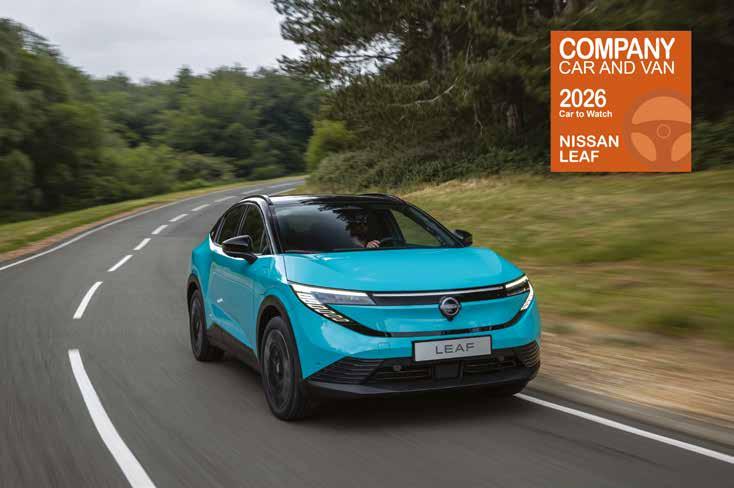
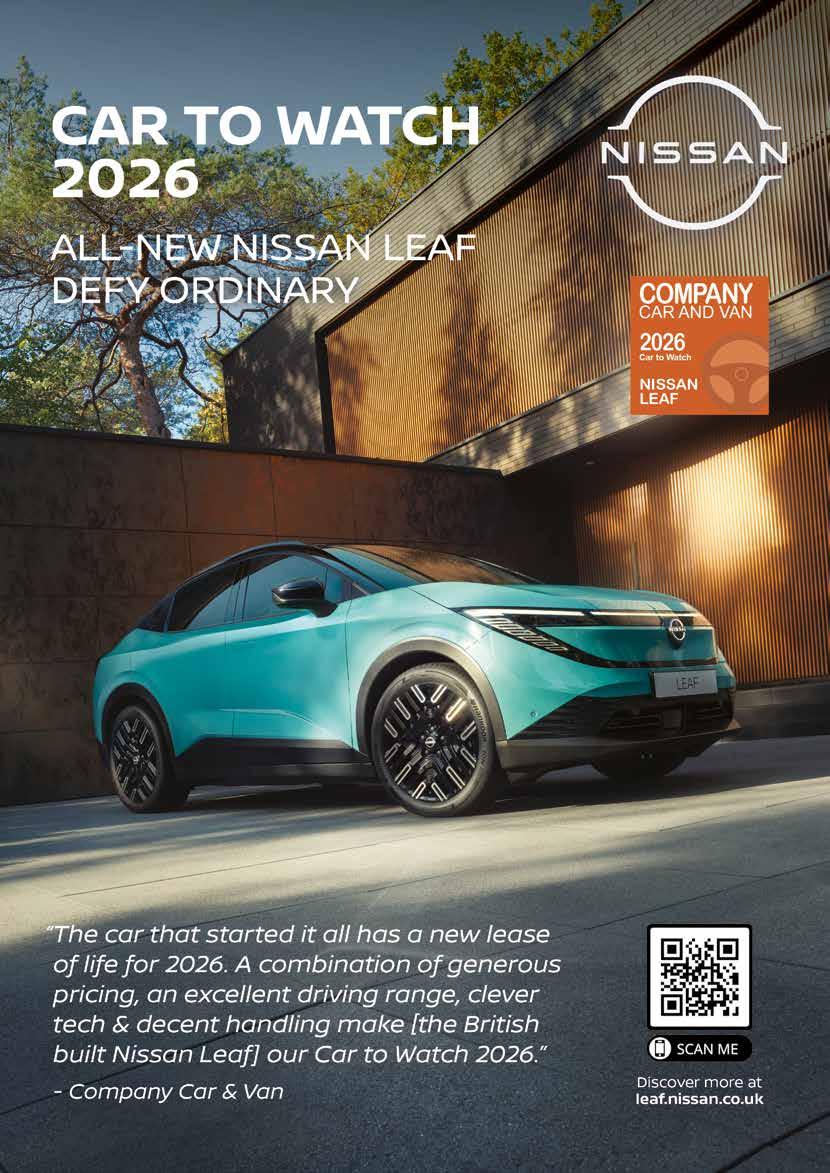
The All New Nissan LEAF has kicked off 2026 by winning a prestigious award from an esteemed UK automotive magazine and website.
The all-electric, third-generation LEAF –which has now entered production at Nissan’s Sunderland plant – has been named ‘Car to Watch’ by Company Car and Van.
It’s the latest in a series of accolades new LEAF has won – including The Sun newspaper’s Car of the Year – before the first model has even been handed over to a UK customer!
In bestowing LEAF with its latest honour, the Editor of Company Car and Van, Andrew Walker, said: ‘‘We’re delighted to include the all-electric Nissan LEAF in our annual list of award winners. The car that started it all has a new lease of life for 2026.
‘‘The British-built LEAF arrives to stiff competition and while it may not rewrite the rulebook as it once did, a combination of generous pricing, an excellent maximum range, clever tech and decent handling make it our Car to Watch for 2026.’’
Nissan has enjoyed a huge amount of success at Company Car and Van’s annual awards over the years, with its Qashqai and ARIYA models picking up trophies on previous occasions.
Townstar – the manufacturer’s compact LCV, available with a petrol or fully electric powertrain – is a former winner too.
This third generation of the pioneering LEAF continues to lead the charge in Nissan’s electrification strategy.
Engineered to tackle barriers to EV adoption, the car has a substantially increased maximum range of up to 386 miles on a single charge. It also offers enhanced charging speeds (up to 260 miles of range in 30 minutes) and a suite of technologies that
“Nissan has a rapidly expanding electric portfolio with real appeal to company car fleets and we look forward to welcoming new customers to our brand.”
make driving easier and EV ownership more rewarding.
Since its debut in 2010, LEAF has sold close to 700,000 units worldwide, earning its place in history as the world’s first mass-market electric vehicle.
And now, Nissan is ushering in a new chapter for the nameplate, re-designed and re-engineered to meet the needs of modern EV customers, while remaining true to its innovative roots.
James Taylor, managing director of Nissan GB, said: ‘‘A big thanks to the team at Company Car & Van for recognising the talents of our fantastic British-built LEAF electric car and awarding it their Car to Watch in 2026. We couldn’t agree more with their assessment!
“Together with our other fully electric models – including the all-new Micra and Ariya, plus the Townstar and Interstar vans –Nissan has a rapidly expanding electric portfolio with real appeal to company car fleets and we look forward to welcoming new customers to our brand.”
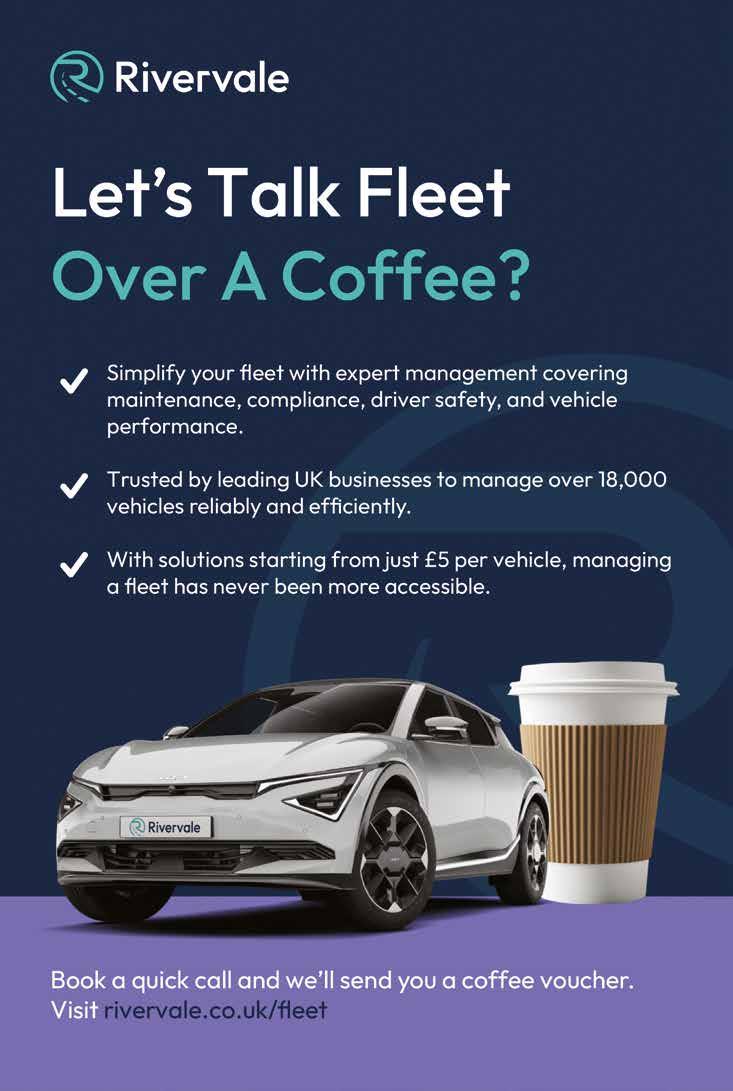
Did you know you can manage a fleet from as little as £5 per vehicle? Let us buy you a coffee and show you how!
RIVERVALE Cars Limited is a UK-based vehicle leasing and fleet management specialist headquartered in Brighton. Since 2001, the company has provided vehicle leasing, servicing and fleet management solutions for businesses, schools and organisations across the UK, helping customers simplify vehicle procurement, maintenance and compliance.
Rivervale’s Fleet Services supports a combined fleet of 8,000 vehicles and manages an additional 10,000+ vehicles on its fixed-cost maintenance plan. Our experience means we understand the challenges businesses face when managing fleets of all sizes, and we provide solutions designed to simplify every part of the process.
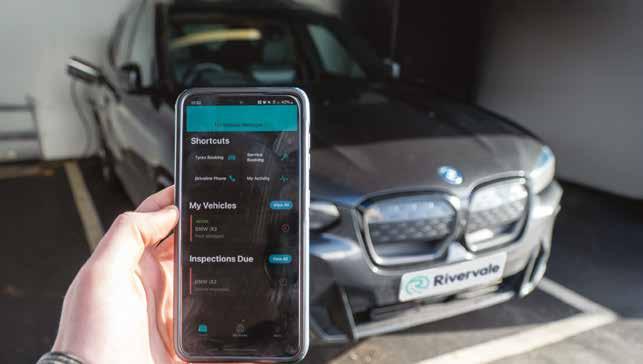
Alongside our fleet services, we also provide digital tools and driver support through our My Vehicle Manager app, giving drivers and businesses an easy way to manage vehicle information, inspections and bookings all in one place.
Fleet management
Fleet management is a key service offered by Rivervale Cars Limited and covers the full lifecycle of fleet vehicles, from acquisition to disposal. This includes managing maintenance, vehicle sourcing, compliance, driver safety and operational support. The company works closely with leasing providers and vehicle manufacturers to secure competitive pricing and efficient vehicle procurement, helping businesses reduce costs while maintaining operational efficiency.
Drivers can also stay on top of their motoring needs through Rivervale’s driverfocused digital tools and support services, including inspection checks, policy information and direct booking access for services such as tyres and maintenance.
Rivervale also provides 24/7 driver support to ensure that drivers and fleet managers can quickly resolve issues such as breakdowns, repairs or maintenance needs.
The goal of fleet management is to improve operational efficiency, ensure regulatory compliance, enhance driver safety, and reduce overall costs. By leveraging telematics, fleet management software and real-time data, businesses can monitor their vehicles, track performance and make informed decisions. These technologies allow organisations to monitor service schedules, track driver behaviour and analyse fuel consumption to improve operational efficiency and reduce environmental impact.
Rivervale supports a wide range of corporate fleets, including organisations such as Auto Windscreens and field marketing fleets managed through agencies like Acosta, which works with global brands including Nestlé, BAT (British American Tobacco) and Heineken. This experience demonstrates Rivervale’s ability to manage complex fleet operations across multiple sectors.
The company continues to grow its presence in the fleet and leasing sector. In recent years, Rivervale expanded its fleet management capabilities through acquisitions such as Concept Vehicle Leasing, strengthening its offering in contract hire, leasing and outsourced fleet services.
By embedding environmental, social and governance (ESG) values into its services, Rivervale also supports businesses transitioning to electric vehicles and loweremission fleets. Electric vehicle adoption can

significantly reduce operational costs while helping organisations meet sustainability and environmental targets.
Fleet management is not just for large corporations. Whether you run a large fleet that is difficult to monitor or a small growing operation without the time to oversee every vehicle, Rivervale Fleet Management makes it simple. Businesses benefit from tailored strategies, expert fleet consultancy and digital management tools designed to improve efficiency and reduce operating costs.
Rivervale’s fleet management service is flexible and scalable, supporting businesses of all sizes with tailored solutions for fleets ranging from as few as 25 units to over 1,000 units.
Drivers are also supported by the company’s DriverCare service, which provides a single point of contact for vehicle support and booking services 365 days a year.
Fleet Management is often perceived as expensive or out of reach for many businesses, but it doesn’t have to be. With solutions starting from just £5 per vehicle, managing a fleet has never been more accessible.
Let us show you how.
Book a call with one of our fleet management specialists via rivervale.co.uk/ fleet for a relaxed conversation. We’ll walk you through how fleet management works, what it involves, and how it could benefit your business.
At the end of the call our fleet management specialist will send you over a Costa Coffee voucher.
It’s also the perfect opportunity to ask questions or discuss any concerns. Our team will be happy to provide guidance and share insights from years of helping businesses like yours manage, optimise, and electrify their fleets.
PEUGEOT has taken the wraps off its all-new 308 and 308 SW models.
Boasting a striking low-profile silhouette, the dynamic hatchback seamlessly blends advanced technology, comfort, and connectivity. The 308 SW shares these standout features, while adding a touch of elegant sportiness and impressive versatility.
Together, the new 308 and 308 SW embody Peugeot’s latest design language, and represent the next evolution in design, refinement, and driving pleasure.
Exterior and interior design features
New 308 and 308 SW are available in Allure, GT, and GT Premium trims, each boasting advanced and attractive features. Notable upgrades include a more efficient electric powertrain with a 279 mile range (WLTP) on the hatchback and a 275 mile range (WLTP) on the SW, as well as the new front end with an illuminated front grille and PEUGEOT shield. Additionally, both 308 and 308 SW now boast new alloy wheels (17-inch on Allure and 18-inch on GT and GT Premium), a gloss black rear skirt, the Peugeot 3D LED rear lights with the distinctive angled ‘three claw signature’ and new model badging. Despite these various enhancements to design and performance, pricing for the 308 and 308 SW is lower than its predecessor, with the electric versions also qualifying for the Electric Car Grant (ECG).
Features as standard across all three trims include power folding door mirrors and an auto dimming interior rear-view mirror, as well as the unique Peugeot i-Cockpitâ featuring a 10-inch touchscreen with wireless Mirror Screen. All versions also benefit from new graphics on the digital instrument cluster. Four USB-C sockets (two in the front and two in the rear) ensure all occupants can stay connected at all times.
On Allure trim, 308 and 308 SW possess full LED headlights, rear parking sensors and a HD reversing camera. The body-coloured front grille has a new design, while the door mirrors and new rear bumper apron are finished in gloss black.
There are also new 17-inch diamond-cut alloy wheels, while electric versions feature new 18-inch alloys. Interior design features include dynamic front seats with a new ‘Tremezzo’ seat trim, in addition to fabric dashboard and door panel decoration.
The GT trim builds on these features. Full LED technology in the Allure contrasts with the Matrix LED technology in the GT. Both
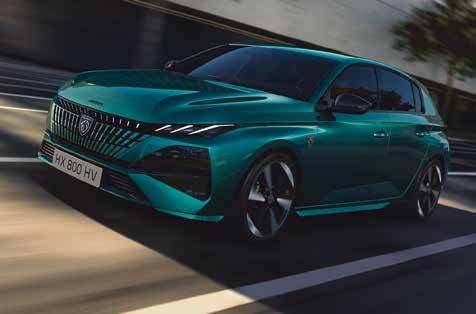
models also introduce Peugeot’s new lighting signature.
On GT trim, 308 and 308 SW boast front and rear parking sensors alongside the HD reversing camera. There is also a new design of 18-inch diamond-cut alloys, while GT gains the new illuminated front grill. Inside, there is a grained leather steering wheel, and the i-Cockpitâ is enhanced with i-Connect Navigation and configurable i-Toggles.
GT Premium offers additional features including Alcantara® heated front seats and the 360° Vision and Drive Assist Plus Pack. This includes a 360° camera system, 3D digital instrument panel and additional driver assist features including Rear Cross Traffic Alert, Adaptive Cruise Control with Stop & Go, Blind Spot Detection and Lane Position Assist.
New PEUGEOT 308 and 308 SW are available with four powertrains: electric, plug-in hybrid, hybrid and diesel.
The updated electric powertrain offers 156hp, 270Nm of torque, and an extended range of 279 miles (hatchback) and 275 miles (SW) (WLTP) from its 58.4kWh (55.4kWh usable) battery. Three levels of regenerative braking are now available.
A three-phase 11kW onboard charger comes as standard, providing 20% to 80% charging times as low as three hours and 35 minutes from an 11kW AC charger. With a 7.4kW charger, this will take five hours and five minutes. Using a 100kW DC rapid charger, a 20% to 80% charge takes 32 minutes.
Like all of Peugeot’s core electric models, the new E-308 and E-308 SW benefit from the Peugeot Electric Promise:
n 8-year / 100,000 miles vehicle cover thanks to the PEUGEOT CARE*, the broadest coverage of any European brand.
n 8-year / 100,000 miles battery warranty.
n Access to a Free2Move Charge Pass.
For the plug-in hybrid, a turbocharged 150hp 1.6-litre four-cylinder petrol engine is combined with a 125hp (92kW) electric motor, giving the vehicle a combined power output of 195hp. This second-generation plug-in hybrid powertrain includes a 17.2kWh battery that provides an additional 12 miles of range, giving an all-electric driving range of 53 miles (WLTP combined cycle).
The 145hp Hybrid powertrain is a 48V self-charging hybrid with a dual clutch six-speed automatic gearbox. Featuring a 0.9kWh 48V battery and 16kW electric motor, it enables pure electric driving for up to 1km at low speed.
Lastly, there is a 1.5-litre BlueHDi 130 four-cylinder diesel engine. It is the perfect companion for intensive long-distance runs.
Pricing
New 308 and 308 SW provide greater value with a lower starting price than their predecessors. The hatchback starts from £29,995 OTR, with the SW starting at £31,195 OTR. The E-308 and E-308 SW also qualify for the Electric Car Grant, providing a £1,500 saving off the list price, with starting prices of £30,995 and £32,195 respectively.
As MG faces up to a raft of new Chinese competition it’s good to know that despite incredible sales success here in the UK, it’s not resting on its laurels. The new MGS5 EV is a case in point. Launched mid-way through 2025 it’s a great example of how the brand is not standing still. We spent the first week of 2026 in an SE Long Range model and here’s how we got on.
Model range, battery and range
Three options: Entry level SE Standard Range has a 49kWh battery and a 211-mile range. The SE Long Range has a larger 64kWh battery and a range of 298 miles; and the Trophy Long Range mirrors the Long Range for battery size but its larger wheels increases range to 288 miles. Prices start from £28,745.
Outside
The S5 won’t win any design awards but it’s a decent looking SUV with smooth sides, a flat front with high corner wrap around headlights and a full width light band across the rear hatch.
Inside
The fixtures, fittings, seat fabrics and door sides are finished in ubiquitous greys, chromes and blacks. Some cheaper scratchy plastics lower down and the faux suede finishes in light grey are decidedly uninspiring.
Touchscreen and switches
Pretty much everything is controlled via the 12.8-inch touchscreen. The centre binnacle features twin cup holders, a wireless phone charger and the dial gear change. Steering wheel buttons for cruise control sit on the left of the steering wheel, with the media controls and driver info on the right. A clear 10.25 -inch display sits in front of the driver.
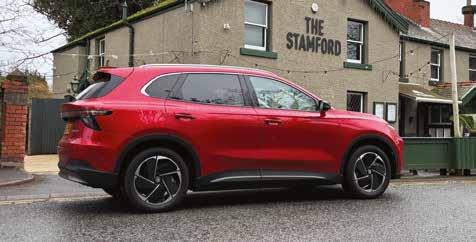
SE models are equipped with a full suite of active safety aids, LED headlights, a reversing camera, 17-inch alloy wheels, a 12.8-inch touchscreen , SatNav wireless phonemirroring apps for CarPlay and Android Auto Trophy trim adds upgraded seat trim, heated seats and a 360-degree camera.
There is under-armrest space, a low down floating area in the centre dash and large door pockets. The rear has an armrest with twin cup holders, rear front seat pockets and a single USB. Despite its B-sector billing, there’s actually plenty of space up front and in the rear, three adults will be comfortable.
A useful 458-litre boot can be increased to 1,440 litres with rear seats folded flat. The boot floor is also movable with underfloor storage for charging cables. The hatch opens wide and access to the load space is excellent.
The 49kWh battery charges at a maximum of 120kW, the 64kWh version at 135kW. That’s a 10-80% charge in 24 minutes, with the larger battery two minutes slower. At home on our Rolec Evo wallbox a 0-100% charge for Standard Range was 8.5 hours, with the Long Range taking 11 hours. https:// www.rolecserv.com/ev-products/evo
The highish seating position and large windscreen gives you a great view of the road.
Interestingly the range is rear wheel driven which could cause issues on icy roads but undoubtedly make the S5 more enjoyable to drive than almost anything else in the class. On local roads it handles nicely, with good
balance, accurate steering that’s well weighted and comes with a compliant ride. Impresses too on the motorway. Smooth ride thanks to the rear suspension, and a well insulated cabin and the electric powertrain keeps noise to a minimum. Acceleration is decent if not earth shattering but overall, we think it’s a much better car to drive than similar Chinese offerings.
Range
In sub-zero January range was 211-225 miles. Even when outside temperatures were zero, the S5 at motorway speeds was giving us a three miles/per kWh return and in one-pedal mode in town was giving us almost a mile driven to a mile of range used.
Pros
Decent driving range, well equipped, competitive charging speeds and incredibly spacious. Really good to drive.
Cons
A little bland both inside and out.
Loads of on-board space and good to drive. Indeed, class leading in the B-SUV sector in both categories. Down side is the interior is functional rather than inspiring and you’d be hard pressed to spot one in a line-up of similar offerings. But attractively priced and coming in at 3% BIK, company car drivers won’t mind that. We’d select the mid-specced SE Long Range which offers the highest driving range and best handling. A great addition to the MG electric stable.
CC&V RATING: N N N N N
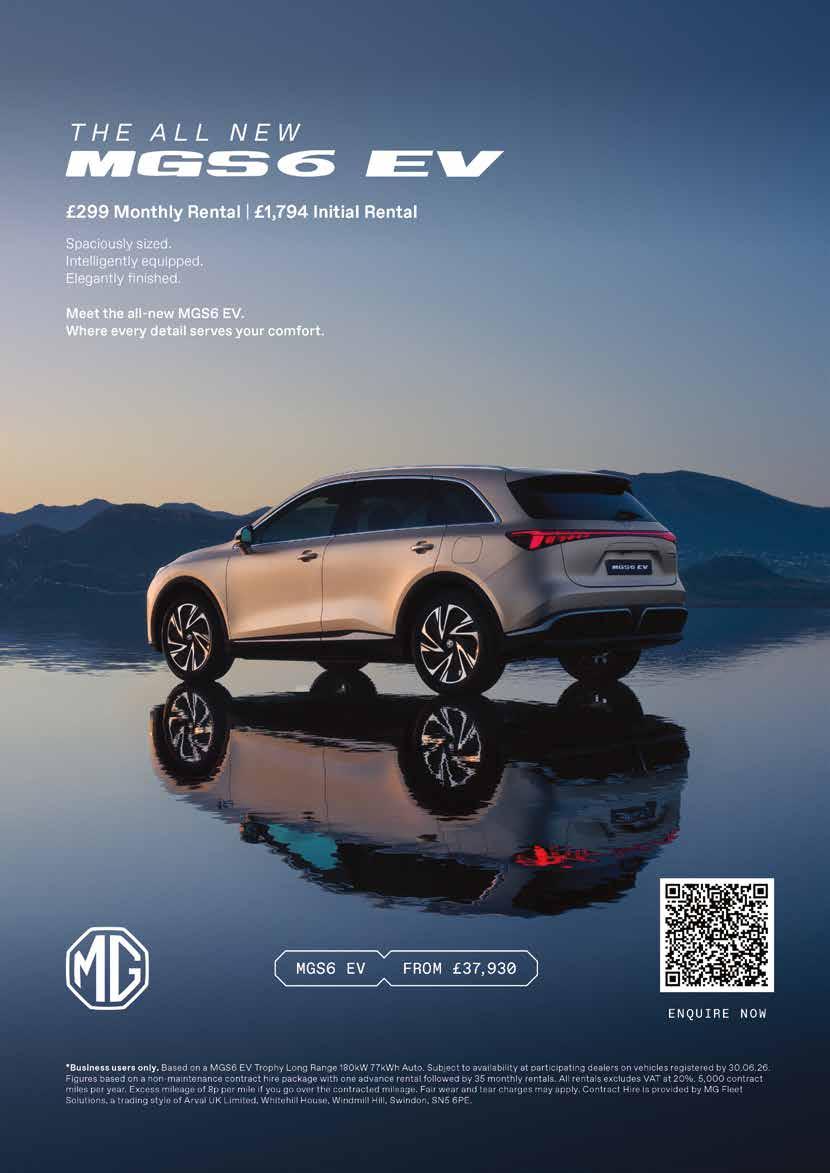
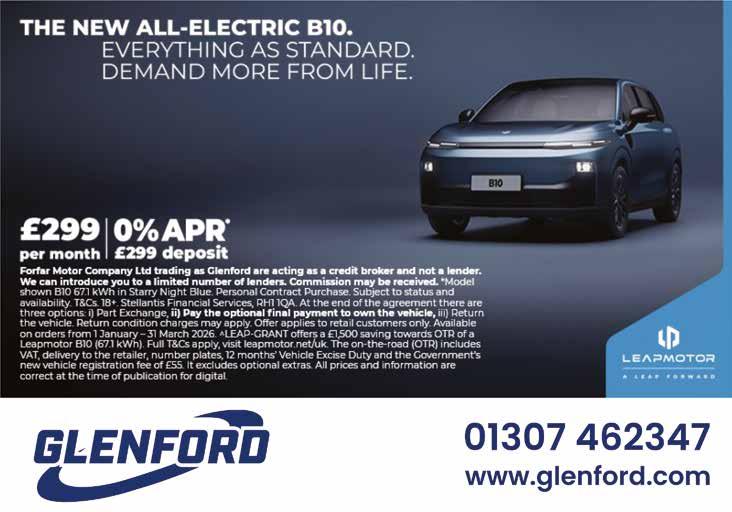
Stellantis owns a majority 51% share in Leapmotor International, and strengthened the relationship between Europe and China with two new models, the B10 EV and C10 REEV. That’s four cars in the fledgling brand as it aims for the fleet sector. First up from us, a report on the B10
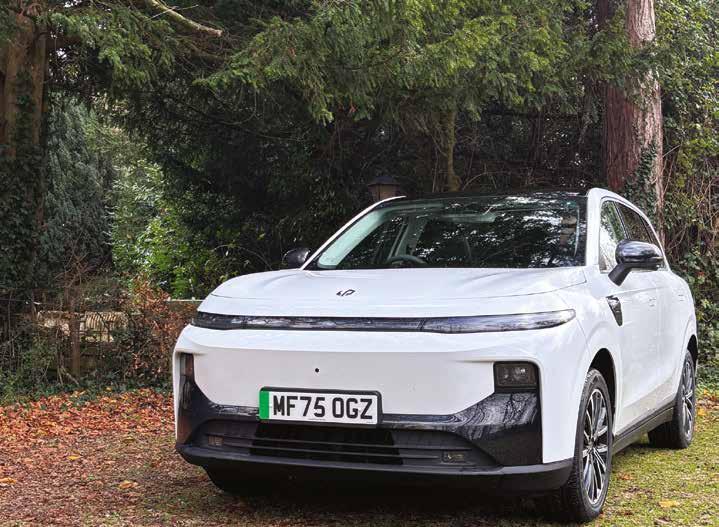
The B10 is an electric C-segment SUV powered by a 67.1kWh battery offering up to 270 miles of range on the WLTP. Like the larger C10 it’s only available as one high-spec equipment version, the Life Pro Max.
Equipment
No keys, rather a keycard you swipe on the driver side door mirror to gain entry. Then it’s keyless-go with loads of kit: dual-zone climate control, electric heated and cooled front seats, a heated steering wheel, wireless smartphone charger, rear parking sensors, a 360 degree all around camera, 12 speakers, adaptive cruise control, 18” alloys and autonomous emergency braking.
Outside
B10 fits seamlessly into the C SUV sector where it looks similar to a number of competitors: Mercedes-Benz EQA, Kia EV5 and BYD Atto 3. A single light band stretches across the bonnet edge, hidden side door handles pop out when unlocked, and there is another single rear light bar with Leapmotor lettering at the rear.
Inside
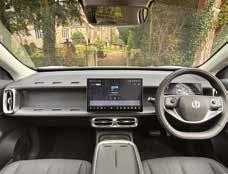
It’s similar to the larger C10, so you get a clean and empty dashboard with almost all functions activated via the 14.6-inch touchscreen or the steering wheel scroll wheels. You also get a 8.8-inch instrument display, faux light grey leather upholstery and an open area in the passenger dash.
Cabin practicality
A glove box, small front door pockets,
under-armrest space, twin centre cup holders , two rear USB Cs and front seat back storage give you plenty of spots for gear. There is decent leg and headroom all round. Manual steering wheel adjustment and electric seats make finding a comfortable driving position easy and it’s a good all around view of the road.
Boot space
A useful 430-litres is offered in a flat configuration with space beneath the floor to store the charging cable, or you could pop it into a 45-litre frunk.
Infotainment and functions
The screen has clear, sharp imaging and logical Home Screen menus, but currently and frustratingly no Apple CarPlay or Android Auto, which will come later this year. The screen is a good size and even though you need to touch tit a lot, it’s at least an easy reach from the driver’s seat. Good job as it controls pretty much everything!
Specification
There is only one model but it has all the kit you’ll need: heated steering wheel, heated and ventilated front seats, a wireless smartphone charger, automatic air-con, mobile App smartphone control with Smartphone keyless entry, all controlled via the Leapmotor App.
Range and charging
The single option B10 makes a lot of sense as it features a large 67.1kWh battery which is good for 279 miles. Not earth shattering but is further than the Vauxhall Mokka electric and
Peugeot 2008 will go.
Charging speed is at 168kW, enabling a 30 to 80 per cent top up in 20 minutes. At home on our Rolec Evo (https://www.rolecserv. com/ev-products/evo) a 0-100% charge would take around nine hours, so an overnight charge between midnight and 5am means adding 37kWh for just £3.40.
Driving modes and brake regeneration
The three driving modes are Comfort, Standard and Sport, with all doing exactly what they say on the tin. Each one tweaks the steering weight and throttle response with Eco dulling the fun, Standard releasing a touch more power and Sport easily the most enjoyable. There are also three levels of brake regeneration and each adds or removes a bit of braking but none are one-pedal like the Kia and Hyundai cars offer.
Safety
Extensive and includes Adaptive Cruise Control, Traffic Jam Assist, Blind Spot Detection, Door Opening Warning, Front Collision Warning, Autonomous Emergency Braking, Lane Departure Warning, Lane Keep Assist, Rear Cross-Traffic Alert and Driver Drowsiness Alert Warning
Performance
The rear-mounted motor provides 215bhp with 240Nm of torque which is good for a 0-62mph time of eight seconds and a top speed of 106mph.
Driving
At 1,845kg the B10 is heavy, so like many other electric SUVs it is fairly dull to drive.
However, with the motor located at the rear of the underpinnings, it does manage to handle better than some. The 18” wheels are small enough to soak up most road imperfections but over poor road surfaces, the typical EV shuddering occasionally rears its ugly head, even though the suspension is fairly soft.
On local B roads we got the revs up and found the B10 sticks to the road nicely. Throw on some tight turns and at speed there is a bit of body roll in and out of corners. This isn’t aided by the steering which feels a touch light for our liking, although the flip side of this is it’s very easy to handle in town where it’s also quiet and comfortable.
On the motorway you will notice some noise entering the cabin, a combination of the mirrors and tyres, we think. Still, at 70mph it drives tidily and the adaptive cruise control is easy to set and to adjust. We’d have no complaints on a long journey and would suggest that’s the B10’s strong point.
The car itself is quite large for the sector, which benefits the passenger space. Three will sit comfortably in the rear helped by the flat floor and with the standard fit panoramic sunroof the cabin feels light and airy. Front passengers have good head and legroom and the seats are supportive as well.
The B10 appears to have been tweaked by
Leapmotor so that some of the larger C10’s annoying features, such as the over zestful lane centering and driver drowsiness functions, aren’t as obvious. This is great news as it shows that the brand is listening and evolving with timely software updates.
Quality wise, the fixtures and fittings are par for the class and look and feel hard wearing, bar the pop up cup holders which appear flimsy. The grey-on-grey finishes on the dash, doors and seats are very ‘John Major’ and some brighter colours could have lifted this if Leapmotor had been braver.
As with all their models you use a credit card key and App set-up to open, close and start the car, and the whole process is a tad annoying - we’d rather have a key- but in time it does get easier to live with. Sometimes it’s difficult to work out if the engine is on or off for example, but at least Gen Z will enjoy the experience.
The B10 is offered at a seriously generous price of £29,995 which includes Leapmotor’s own £1,500 contribution. The cabin is clean, spacious and modern. Driving range and charging speeds are both competitive and you get a heat pump.
Cons
Leapmotor still doesn’t offer CarPlay or Android Auto. Too many of the functions are controlled via the touchscreen and some of the driver safety elements can still be temperamental.
Leapmotor has evolved as the B10 is its most complete car yet. Ticks the practical box, with fast charging and a decent range. Best of all, it’s generously priced with an incredible list of standard spec and goodies. Still suffers some typical Chinese EV problems, namely with the touchscreen, ride quality and safety functions, but these won’t be deal breakers for those who prioritise equipment and value over driving dynamics. Safety features much improved. In the competitive C-SUV company car sector it’s a lot of car for the money
CC&V RATING: N N N N
THE Kia EV5 introduces exceptional versatility to Kia’s SUV line-up, delivering a fully electric solution tailored to meet the diverse needs of today’s buyers. Its launch marks a strategic milestone in Kia’s mission to broaden access to dedicated electric vehicles (EVs) and reinforce its presence in key global markets.
“We have built the EV5 to appeal to a broad range of potential needs, with a particular focus on the diverse lifestyles of millennial customers,” said Ho Sung Song, President and CEO at Kia Corporation. “The EV5 delivers the comfort of a ‘home away from home’ combined with advanced connectivity and a dynamic driving experience, offering young families an ideal solution tailored to their lifestyles. By expanding the EV customer base in this way, the model will play a key role in accelerating the shift toward electrified mobility.”
Sustainable mobility without compromise
Built on Kia’s dedicated E-GMP EV platform, the EV5 is designed to meet the exacting requirements of today’s EV drivers. Equipped with an 81.4kWh battery and 160kW front-mounted electric motor, it delivers a maximum WLTP range of up to 329 miles on a single charge, providing the confidence and convenience required for both daily use and long-distance journeys.
Key technologies such as regenerative braking and fast-charging capability (10-to-80% in just 30 minutes) further enhance efficiency and usability in real-world conditions.
‘Opposites United’ philosophy behind design
Kia’s ‘Opposites United’ design philosophy bestows the EV5 with a confident, robust presence. Pairing assertive style with well-balanced proportions, its 4,610mm length and 1,875mm width deliver the spaciousness and practicality demanded by buyers without compromising on aesthetic appeal.
At the front, a wide nose and muscular bonnet project strength and stability, while the three-dimensional ‘Star Map’ daytime running lights and precision detailing introduce a new interpretation of Kia’s digital tiger face — clean, high-tech and distinctive. Rugged bumpers and a broad skid plate emphasise its assertive stance, while subtle design cues such as the diagonal-pattern lower intake and body-coloured trim add a sporty, premium feel.
Viewed from the side, the EV5 presents a
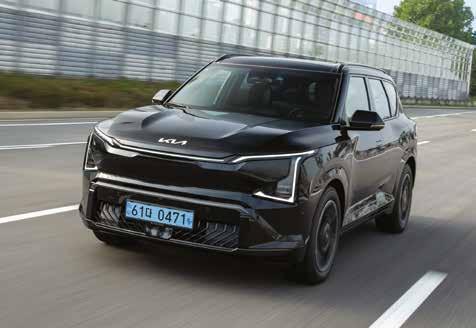
boxy yet dynamic silhouette that embodies a traditional SUV profile, reinterpreted for the electric era. Geometric surfacing and bold vertical lines create strong visual volume, while square wings, a prominent shoulder line, and sculpted wheel arches reinforce its futuristic SUV character. A rearward-shifted D-pillar maximises rear-seat visibility and draws attention to the generous cargo area. Unique 18- and 19-inch wheels showcase the ‘Opposites United’ design language through the interplay of rich volume and sharp, geometric patterns.
At the rear, a wide tailgate with clean surfacing and vertically extended rear lamps anchor the design, balancing sophistication with strength. A solid, technical rear bumper visually grounds the design, completing its authentic SUV stance, ready for everyday life and outdoor adventure alike.
Interior promote practicality and comfort?
The EV5 is as versatile inside as it is beneath the skin, enabling occupants to make full use of its spacious interior through an array of premium comfort features, flexible storage solutions, intelligent conveniences and adaptable design.
A three-zone climate control system with an odour-reducing after-blow function ensures a pleasant environment for all passengers, allowing even second-row occupants to adjust and enjoy personalised temperature settings. This focus on comfort is complemented by thoughtfully designed amenities, including a wide centre console
that is accessible to both front and rear passengers, featuring a sliding tray that extends into the second row to provide an additional surface when needed.
When not in use, the second-row seats can be folded nearly flat to zero degrees, seamlessly connecting with the luggage area to create a continuous, versatile space — ideal for everyday needs, outdoor activities, or even overnight stays.
Convenience and safety in the EV5
The EV5 introduces a suite of family friendly digital features that make every journey more enjoyable, engaging and reassuring.
The spacious, light and well-ventilated interior is equipped with cutting-edge infotainment and connectivity features designed to enhanced convenience and efficiency on every journey. At its heart is the panoramic wide display, which combines a 12.3-inch instrument cluster, a 12.3-inch infotainment screen, and a five-inch climate control display.
Kia’s new unified Graphical User Interface (GUI) is integrated throughout the EV5’s connected car Navigation Cockpit (ccNC) infotainment system, ensuring a consistent look and feel across audio-visual, navigation, and telematics (AVNT) screens. Simple-tonavigate, intuitive menus improve access to EV-specific functions, enabling drivers to easily monitor range and charging status at a glance. An optional head-up display further supports safe, distraction-free driving.
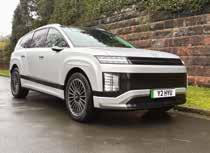
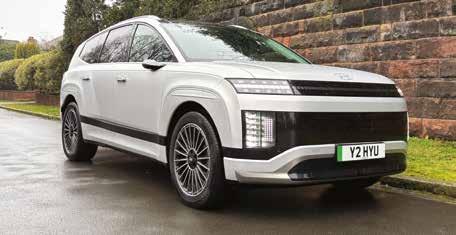
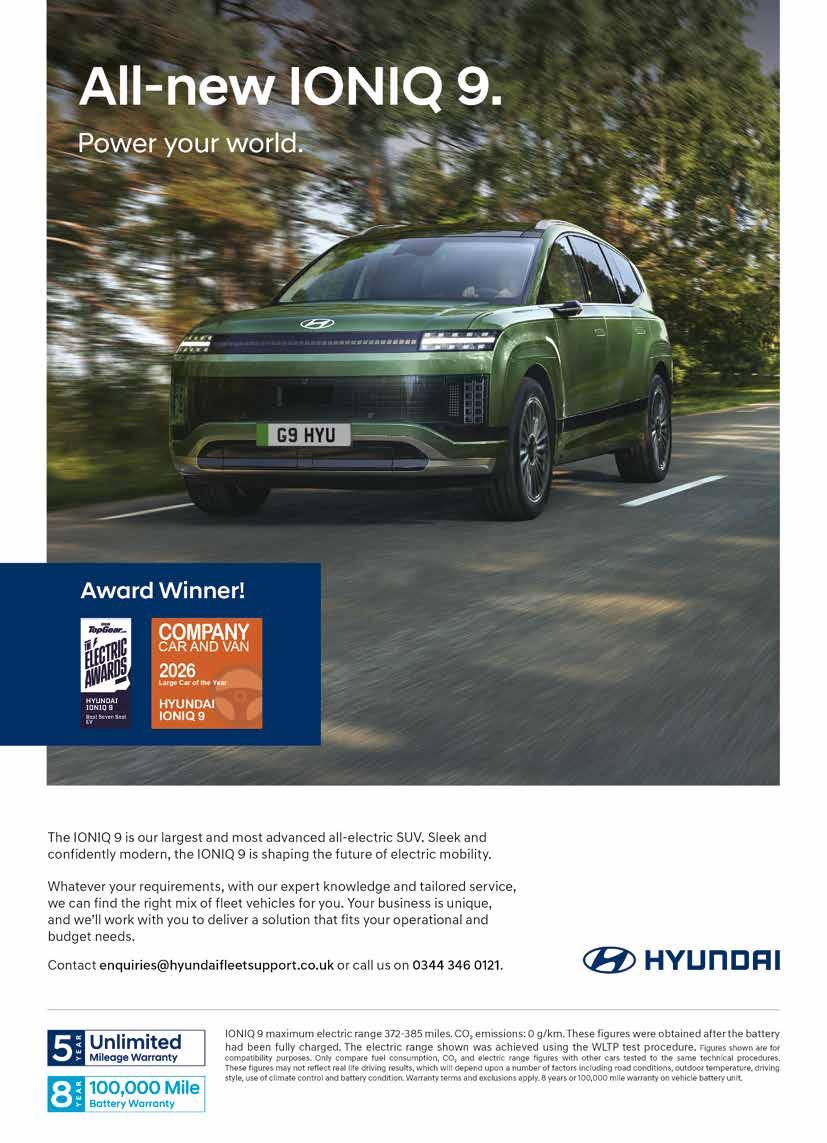
The Ioniq 9 is Hyundai’s flagship, and Company Car & Van had the opportunity to drive the range-topping Calligraphy model recently. The first car I ever reviewed in 1988 for a driving school publication was the Hyundai Pony, and as I discovered, today’s 9 is light years ahead of that early Hyundai...
Tell me more
The Ioniq 9 uses the same E-GMP platform as the Kia EV9, but has been designed to look smoother courtesy of Hyundai’s ‘Aerosthetic’ design concept. In essence it’s a six or seven seat MPV with acres of cabin space and a useful sized boot.
Model choice
Single motor 2WD Premium or twin motor 4WD Ultimate and Calligraphy. Seven seats is the standard configuration, but the Calligraphy can be upgraded to six Captain’s chairs with a useful sliding and rotating second row for £1,000 extra.
Battery, range and performance
All three models are fitted with a 110.3kWh battery. Single motor RWD Premium comes with a range of 385 miles while dual-motor AWD Ultimate offers 376 miles and range topper Calligraphy which is also dual motor and AWD will travel 372 miles. Premium RWD comes with 215bhp and a 0-62mph in 9.4 seconds. Top speed is 118mph. Opt for the Ultimate AWD and this increases to 303bhp and 0-62mph of 6.7 seconds. Top speed is 124mph. Calligraphy is even more powerful, offering 421bhp, a 5.2 second sprint to 62mph and the same 124mph top speed.
Outside
Ioniq 9 is slightly longer than the Kia EV9, and looks it. The Kia is chunkier while the Hyundai is more sculpted. The outline is eye-catching with a bonnet wide front light, deep vertical daytime LEDs, flat sides with pop out door handles, chrome roof rails and an almost old Volvo estate rear end.
Inside the design emulates smaller Ioniqs, so expected muted dark greys and blacks, with chrome finishes to brightening things here and there. The gear stalk is on the right of the steering wheel, the starter button to the left. There is a panoramic curved display, which combines a 12.3” digital instrument cluster and a 12.3” infotainment touchscreen in one seamless unit across the dash top. It’s all nicely put together with a mix of
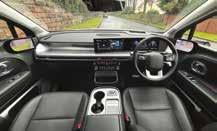
smooth and soft touch plastics. Shout out to the 14-speaker Bose sound system which is very good, while the panoramic glass roof brings plenty of light into the cabin.
While Hyundai’s system has been overtaken by newer tech elsewhere, it’s refreshingly logical and easy to use. Media, phone and apps are all easy to find so you don’t take your eyes off the road. Our only grumble is an overly complicated driver assistance adjustment that involves too many menu touches.
Charging speeds are impressive, with a maximum rate of 233kW allowing the battery to take a 10-80 per cent top up in just 24 minutes. The battery size makes home charging slow, almost 15 hours for a full charge on a 7.4kWh charger. To be fair few people let the battery run down past 20% so adding 38kWh of charge in our five-hour overnight low charging rate period is still the way to go.
Prices
£64,995 for the Premium seven-seater while the six-seat Calligraphy is £78,595. Go for the 2WD Premium which goes further and is cheaper cheaper it will also go further.
Practicality and space
Obviously something this large is practical,
but Hyundai has doubled down on that with touches such as seven USB inputs, a sliding centre console and the middle row of seats slide forward and back
On the road
At almost 2.7 tonnes the 9 isn’t the most agile, but to be fair that really isn’t the point. It’s amazingly comfortable, with self-levelling dampers and hydroelastic bushings to enhance its smooth ride. It is also lovely and quiet although on some poor road surfaces the large battery can be felt. Light steering makes this a relatively easy car to park and manoeuvre.
Driving modes are Normal, Sport, Eco and Custom. We used Eco mode in town and on the motorway with the odd burst in Sport to experience impressive acceleration. We got 2.5 miles/kWh test figure – not bad as it was winter. Expect a 220-mile range.
Pros
Incredibly spacious, very comfortable, quiet cabin, loaded with tech and easy to drive.
Cons
Expensive in AWD, not the prettiest car to look at.
CC&V VERDICT
Handles well for its size, makes mincemeat of motorways and supremely comfortable. The rear-wheel drive Premium will cost you less and go further. We’d argue that the Kia EV9 is more attractive looks wise, but the Ioniq 9 is more comfortable and offers a more compliant ride.
We can’t think of a better seven-seat EV
CC&V RATING: N N N N N
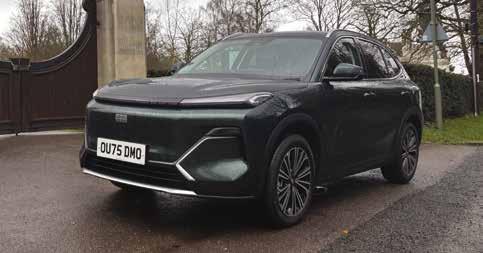
While established players such as the Hyundai Tucson and VW Tiguan plug-ins have traditionally sold well, it’s the new Chinese kids on the block that are proving most popular, with the Geely Starray EM-i the latest to join the fray. We popped down to the south to test one; here’s what you need to know.
Tell me more
In the battle of the PHEVs, Chinese brands BYD, Jaecoo and MG are currently tempting the UK company car driver with excellent value and low BIK on the likes of the BYD Sealion 5, Jaecoo 7 and MG HS PHEV. All are proving popular with fleet customers, offering a high level of equipment at around reasonable price.
The Starray, then, arrives to some stiff competition so what has Geely done? Only gone and made its model cheaper!
Prices
Three trim levels are available in the UK: Pro from £29,990, Max from £32,690 and Ultra from £34,990 all on the road.
Engine
A 1.5-litre 98bhp petrol engine combines with a 214bhp electric motor to power the Starray. As with BYD’s latest the 5 DM-i, the electric motor does most of the work using the car’s electric range as much as possible.
Model choice and battery
Entry level Pro and mid-range Max versions use an 18.4kWh battery with a 52-mile electric range while range-topping Ultra comes with an 85-mile range thanks to its larger 28.9kWh battery pack.
Warranty
All Starray EM-i models come with a warranty of eight years or 125,000 miles.
Performance
The plug-in hybrid system delivers a combined maximum output of 193kW and 262Nm, with acceleration from 0-62mph in 8.0 seconds.
Economy and emissions
The smaller 18.4kWh battery models return fuel economy of 2.4L/100km while the larger 29.8kWh battery on Ultra spec comes with an economy of 1.4L/100km. Emissions are 54g/ km and 32g/km respectively
Charging
Geely recognises that even plug-ins need
decent charging speeds. 30kW DC charging speeds are offered with the 18.4kWh battery versions which means these will charge from 30-80% in 20 minutes. T
he larger 29.8kWh battery benefits from 60kW DC charging so the same top up takes just 16 minutes.
Charge at home on a 7.4kW AC wall box and a 25-100% charge will take 3 hours for 29.8kWh models or 4.6 hours for 28.9kWh versions.
Equipment
Pro includes heated electrically adjustable front seats, wireless Apple CarPlayor Android Auto and keyless entry. Max models add a Head-Up display, panoramic sunroof, FlyMe audio 16-speaker premium audio system and a power tailgate. At the top of the range, the Ultra adds the larger battery and faster 60kW DC charging speeds.
It’s a C-Sector SUV that looks like just about all cars in this category. However, the slim high corner front lights and rear Porsche Macan-like rear end with large GEELY lettering do make it more attractive than most.
Here is where the Starray impresses most with a plethora of soft-touch finishes, on the dash front, inside the doors and on the centre armrest and console. Even the lower down stuff doesn’t look or feel cheap and it’s definitely nicer than the interiors found in much of the competition.
Most of the controls are accessed via the touchscreen – no surprise in 2026, of course.
The Starray digital cockpit is designed around an ARM processor and alongside a Flyme Auto operating system, so is relatively easy to use.
The 15.4” portrait screen offers clear graphics and fast responses to inputs. Similarly the 10.2” driver’s display is clear and on our test car, a Max, we also benefitted from a 13.8” head-up display and a 16-speaker audio system.
Geely has a voice control set-up on the Starray and while on paper it looks impressive with 200 commands on its files, when we asked it to open the panoramic roof, it didn’t. Still, the 15W charging pad and ease with which I wirelessly connected my iPhone 15 to CarPlay for connected apps was better, as was the ease with which we searched and found the driver safety settings within the on-screen menus to disable lane departure, speed warning and driver attention. Others please take note.
Cabin practicality
Customers can have no complaints here as the Starray features 30 places to hide stuff, including deep door pockets a decent sized glove box, under armrest space and a fold down rear armrest. Twin front and rear USBs and a useful click-wheel in between the front seats adds some short-cut menus to the otherwise screen dominated set-up. Cabin space is also very good with, we reckon, room for three adults to see side by side in the back.
Boot space
A nominal 528-litres increases to 2,065 with the rear seats folded. The load space is rectangular and a wide tailgate aperture of 1,122mm means it’s easier to utilise too. A flat
floor hides space for the charging cable beneath. A powered tailgate is standard on Max and Ultra versions and it opens high enough so as not to bang your head when bending down to gain access. Seems obvious but plenty of others don’t.
A two-hour jaunt around my old stomping ground of Surrey and Berkshire meant a test of mainly A and B roads with a touch of M4/ M25 thrown in for good measure.
On the smaller narrow roads of Surrey Heath the plug-in powertrain is smooth and refined and the 19” wheels and suspension did a good job of resisting any poor road surfaces we encountered. Lotus influence perhaps? The cabin is well insulated as well.
On to the A322 to Bracknell and at 50mph it remains quiet and nicely composed with my companion and I able to talk to each other clearly. Around a few roundabouts and you’ll notice that the car does wobble a touch in and out of tight turns, but the light steering helps you straighten things up and it’s back to cool and composed.
Finally to the M4 and despite smart motorway speed limits, when driving at 70mph it is probably at its best. The adaptive cruise control works well, the vehicle distance setting isn’t over sensitive and the electric motor gives you just enough power to overtake as required, with the loud-ish petrol
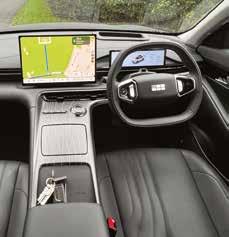
unit only making itself known with a roar when you put your foot down hard.
Real world economy
As for economy it’s hard to gauge over just an urban 50-mile journey. To make the most of your PHEV, plug it in whenever you can especially if you have a home charger and you should see a combined return, we’d guess, in the low 50mpgs.
Pros
Nicer looking and better built than most of the Chinese competition, and cheaper too. Offers a compliant, relaxing ride. High quality interior and decent charging speeds for a PHEV.
Cons
Not particularly exciting to drive. Real world range is very dependent on whether you plug-in regularly or not.
It looks, feels and drives much better than the latest plug-in BYD 5 and the Jaecoo 7. In bigger battery format the Starray also offers an excellent electric driving range. On the road it impresses. Perhaps Geelys sister company Lotus has had some input because it rides particularly well. More good news is that the infotainment is more user-friendly than those you’ll find in a Volvo or Polestar, and the interior looks the part too, so it’s definitely got some things right.
In our own fleet sector, leasing one would be the way in and we’d suggest that company car drivers are likely to be the biggest customer base and would hope that Geely can offer them some attractive terms. And finally, with a number of well-known dealer groups signed up to sell the Geely brand, plus ongoing work by Geely on its logistics and aftersales network, there should be no reason not to consider a Starray when your current company car is due to be replaced.
CC&V RATING: N N N N
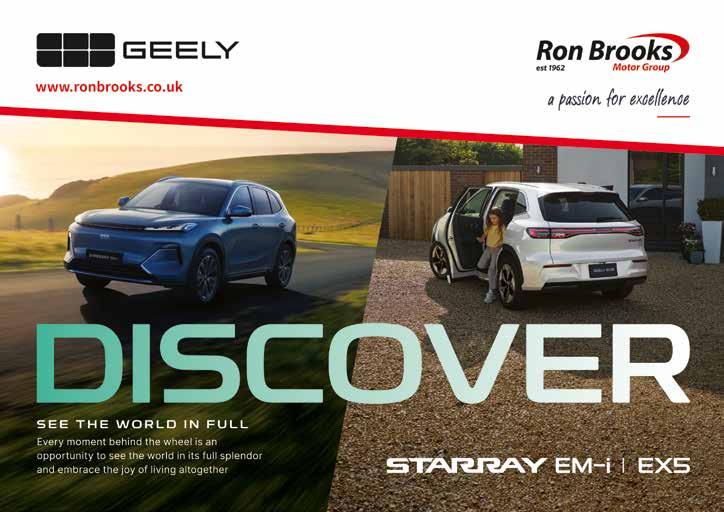
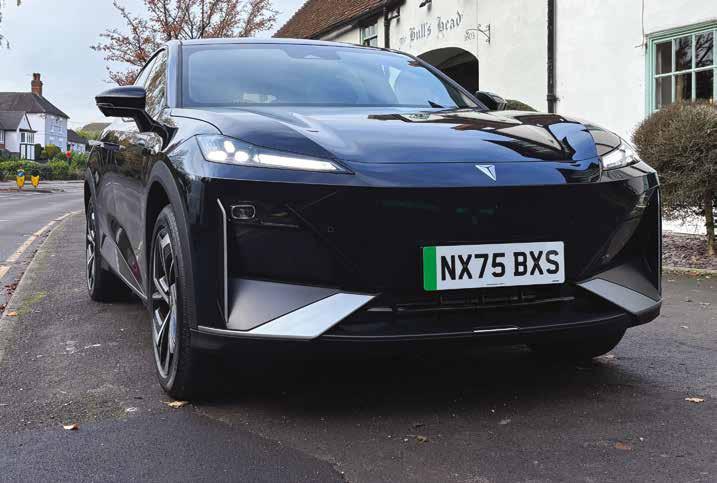
Coming at us faster than a cannonball is another Chinese car brand, this time it’s Changan which launched its first UK model, the DEEPAL S07, last autumn. We popped along to its Midlands HQ to take a look...
CHANGAN may be a name that’s gone under your radar but it’s actually a large Chinese carmaker which has been making cars for over 40 years. Realising that Europe has the best car designers and engineers, it opened a design studio in Turin in 2001 and an engineering centre in Birmingham in 2010, giving it a strong base to attack the European market.
The brand’s first UK model is the DEEPAL S07, a mid-sized SUV that will compete with the likes of the Tesla Model 3 and BYD Sea Lion 7. On the plus side it looks a lot like plenty of cars in the sector and will appeal to the SUV-obsessed British customer. On the down side this also means it doesn’t stand
out, looking like a combination of a Cupra, a Nissan and a Lexus among others.
Drivetrain and performance
It’s electric so will have kerb appeal in the fleet sector, courtesy of an 80kWh battery. This produces 218bhp for a 0-62mph time of 7.9 seconds but like most similar electric cars, feels sprightlier.
Range and charging
Claimed range is 295 miles which is lower than you’d expect from a battery that size. And coming with a charging speed of just 90kWh it would take 48 minutes to go from 10-80% of range on a public fast charger, which currently isn’t very competitive. Better news is that an on-board 11kW charger is included along with a heat pump.
Inside
This is where the S07 shames Tesla. With its similarly sparse dashboard and finishes made up of soft touch plastics, fake wood and fake leather, it’s definitely better than a Model
3. The dashboard top and front, the doors and all of the stuff at eyeliner feels very nice.
Cheaper stuff though, adorns the areas you can’t see as easily namely the centre binnacle sides, door pockets and seat sides.
Cabin practicality
You open the doors by pushing tiny buttons located on them, there’s a useful split opening armrest, good sized glove box, twin centre cup holders and hidden low down two USB inputs with more storage in front, plus a wireless charging pad.
Infotainment
Adopting the less-is-more philosophy when it comes to switchgear, the touchscreen controls all. This means that you’ll need a week or two to get used to the myriad of menus, options and general controls. However, the infotainment, which is a Huawei system with a 15.6” screen, does have a few tricks up its sleeve, namely that it can be tilted towards the driver or front passenger. Continued on page 38
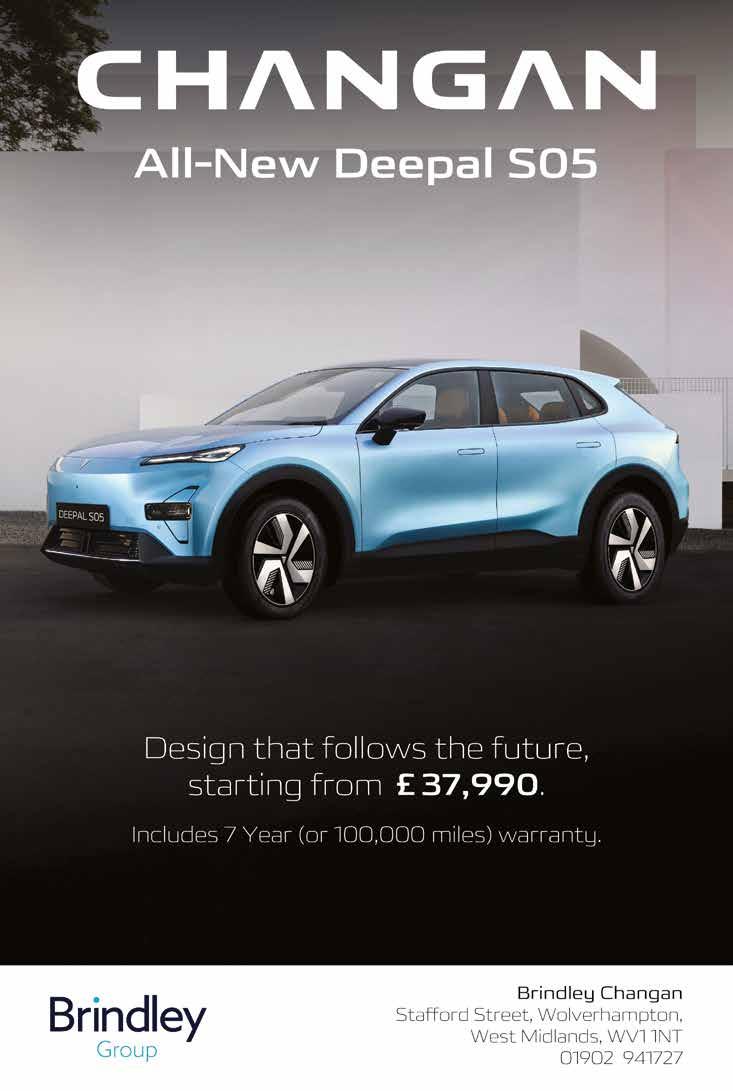
Continued from page 36 for easier access. Changan has also sensibly included within it a configurable short cut bar so you can at least adjust climate, for example, more easily.
You also get a head-up display. And while you get used to the screen menus you’ll at least benefit from clear graphics, a decent response time and an excellent 14-speaker stereo.
Spec and price
A strong suit, with the single model featuring 19”alloys , LED headlights with automatic high beam, an electric tailgate, adaptive cruise control, dual-zone air conditioning and heated and ventilated front seats, all from £39,990.
Comfort and boot
In the cabin you get plenty of space up front as well as in the rear, where taller passengers have masses of legroom. Boot space is average at 445 litres but a 125-litre frunk is plenty big enough to store charging cables and some more. A low load lip and 60:40 rear seats make the boot space easy to use as well.
Safety
The S07 comes fitted with pretty much everything including automatic emergency braking, lane departure warning, rear cross traffic alert and rear collision warning. The good news is that with one swipe of the screen, you bring up the safety features list where you can easily turn off the ones that most annoy you.
Warranty
You get a seven-year/100,000-mile warranty as standed, while the battery is covered by a separate eight-year/120,000mile warranty. Changan has a central England parts warehouse, aware that parts supply has been a hindrance for other Chinese brands.
Driving
On a mix of urban and motorway roads the S07 performed very much like any electric SUV. Around town it’s quiet and on decent tarmac it rides nicely, similar in many ways to
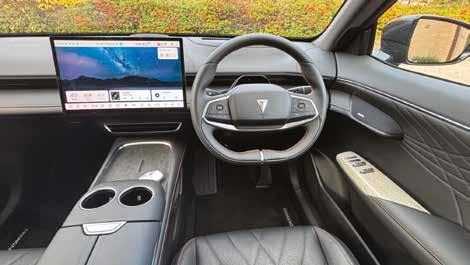
plenty of other electric SUVs.
All around vision is aided by the reversing cameras as the large C pillars and rear headrests limit the view backwards. A camera that shows your view when you indicate is a good idea although it does obscure your SatNav. It’s easily turned off.
While the driver’s seat adjustments are great you still sit a little higher than I personally like, again very much, as you do in a Tesla, to accommodate the battery. The leaning screen is a really good idea, making the myriad of menus easier to reach, and despite our short time on board, Apple CarPlay connected easily and the shortcut screen menus indicate when this is on, another good inclusion. As is the head-up display, where you can check your speed unlike in a Tesla or Volvo.
Head out onto the open road and the S07 even with double glazed glass starts to get noisy. It’s the tyres mainly at fault here and as you increase speed you’ll notice this more. The steering is well balanced but over poor road surfaces, the car’s weight sends a vibration through to the steering wheel which got a bit annoying.
As for regeneration, the S07 features three drive mode, Eco, Normal and Sport. Eco and Normal work just fine although the difference in the driving feel between the two is minimal. Sport mode though does make things tighter and the steering feels nicer and more precise.
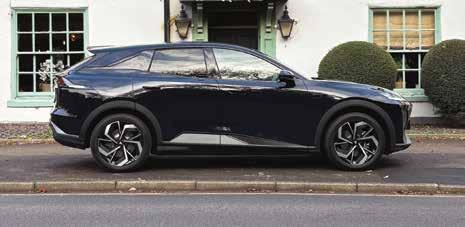
These also act as the car’s de-facto regeneration tools, so Eco adds more weight to the braking, Normal less and so on. None can be described as one-pedal but will add some extra miles if required.
A quick sojourn along the M42 saw us reach 70mph and the DEEPAL S07 sits nicely on the motorway. The ride is smoother and the speaker system rises to the occasion. Adaptive Cruise Control enables easier control on Smart sections and we’ve no doubt long journeys with ample space on board would be comfortable.
A lot of car for the money. Well apportioned and company car friendly.
Fidgety ride at lower speeds, generic looks, too much controlled by the touchscreen.
The DEEPAL S07 felt very much like plenty of other Chinese EVs, and with those models’ current sales success, beginning with MG and moving on to BYD and Omoda, it will undoubtedly find customers, especially in the fleet sector.
Inside and out the attention to detail and build quality is actually higher than many competitors and while looks-wise it doesn’t stand out from the crowd, it’s a decent looking car.
It’s also good to know that the brand has a 35+ UK dealer network that’s growing and a national parts centre in the UK, so aftersales has support.
The newly launched S05 will double the brand’s models from April as Changan seeks to utilise leasing partners to spread the word.
A really good start.
CC&V RATING: N N N N
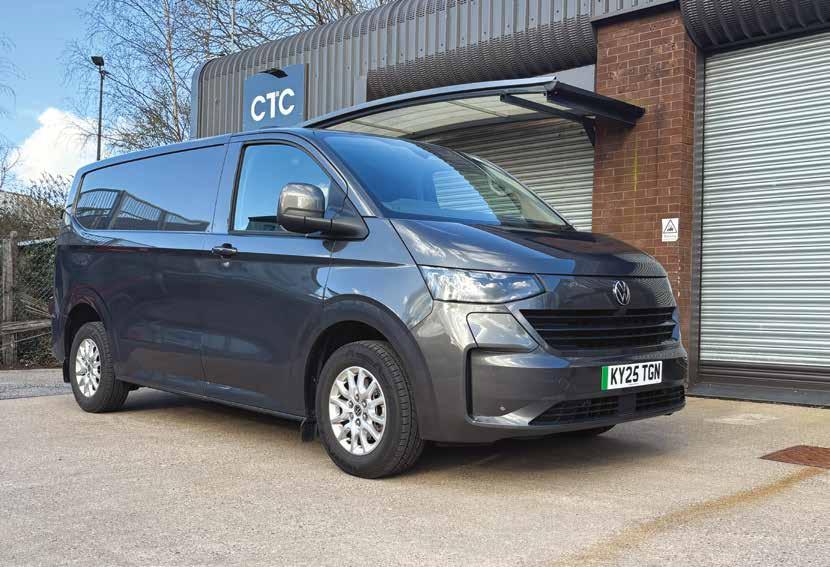
Volkswagen launched its seventh generation Transporter van in 2025. It’s based on the class-leading Ford Transit Custom. The Ford/VW strategic partnership has also delivered the Connect/Caddy and Ranger/Amarok, so this joint venture is hardly a surprise. We got to grips with the e-Transporter and here’s what you need to know...
IT’S A FACT that Ford sells more Customs than Volkswagen does Transporters, so Volkswagen has had to come out fighting with its all-new electric version of the Transporter, giving it a longer warranty and higher specs than the Ford van.
What is it ?
This is the seventh generation of Transporter and it comes with an enlarged load or passenger compartment, a higher payload and increased efficiency. There’s a Panel Van, with Kombi, Shuttle and DoubleCab variants. All models are available with turbodiesel, plug-in hybrid and electric drives with the design and platform shared with Ford’s Transit Custom.
Looks-wise the front and nose are the main visual changes VW have made to Ford’s van. The front grille takes influence from the T5 and the upper edge of the headlights extends as a line into the side section above. This creates a pronounced line that divides the upper and lower body, a feature that pays homage to the first generation Transporter.
Customers can, as with previous Transporter, choose from a tailgate or wing rear doors. Otherwise it’s almost identical.
Cabin
Climb aboard and the interior immediately smacks of quality. Yes, it’s almost identical to the inside of a Ford Transit Custom Electric although VW has a different steering wheel
and digital driver’s display. The electric handbrake is located between the centre air vents and the gear selector is on the right steering wheel stalk, freeing up floor space meaning drivers can move across the cab for pavement exit and entry.
If there are three in the cab, there’s decent legroom for the centre passenger as well and certainly more than in a number of competitors’ offerings.
The e-Transporter is offered with two outputs: 136 PS and 218 PS with speak torque figure of 430Nm. Both come fitted with a usable 65kWh battery and both are rear wheel driven. In effect the range consists of six models: the T32 Commerce 136PS SWB and LWB; the T32 Commerce Plus SWB with 136PS or 218PS; or the T34 LWB 136PS or 218PS.
The e-Transporter can be charged on an AC connection at speeds up to 11kW and on DC chargers at speeds up to 125kW. And with Rolec now offering 30kW workplace charging speeds this is even easier. Find out more at https://www.rolecserv.com/ev-products/ ultracharge-30.
Charging times are linked to the maximum 125kW DC rapid charging, so if you’re out, you’ll be able to charge from 10-80% charge in around 40 minutes. The 11kW maximum charge speed for home chargers means a charge time of 8.5 hours from 0-100% on a 7.4kWh home charger like our own Rolec.
Depending on the model, the e-Transporter has between 192 and 201-mile range and also comes with one regeneration mode accessed by a ‘B’ button on the gear selector stalk.
Trims and specs
There are two, Commerce Plus and Commerce Pro, with both offered in standard or long wheelbase.
Commerce Plus is fitted with 16” steel wheels, LED headlights, rear wing doors, a near side door, 12” driver’s display, 13” touchscreen, cruise control, keyless start, Wireless App Connect, a heat pump, heated front seats, all season tyres, body coloured bumpers, a leatherette steering wheel, front and rear parking sensors, a rear-view camera, keyless start with Safelock and an anti-theft alarm. Range topper Commerce Pro ups the ante with 16” alloys, a heated windscreen, a heated leatherette steering wheel, wireless phone charging, auto air-con, Adaptive Cruise Control, Blind Spot Assist, extra USB ports and super-bright LED lights in the load area.
Electric Transporter practicality
Unsurprisingly, the total payload is less than diesel models sitting between 1,013kg and 1,088kg depending on the spec. The towing capacity at 2,300kg is also smaller than the diesel’s, but is class leading for an electric van. There’s more good news with load space, which is the same as the diesel. So the SWB L1 offers 5.8 cubic metres of cargo space, with the LWB L2 coming with 6.8 cubic metres. There’s a 1,400mm aperture for the back door
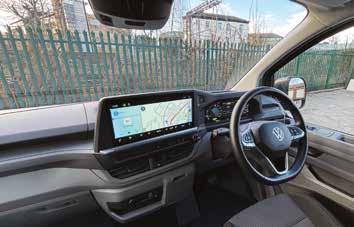
with 1,932mm of space between the arches.
The load compartment length on the Standard wheelbase model is 2,602mm, while the extended wheelbase version offers 3,002mm. There’s also a hatch in the bulkhead which allows you to load long loads into the space under the front seat, adding another 448mm to the total.
Three Euro pallets fit inside the Transporter LWB and a useful addition for tradespeople is that electrical devices with a total power of 400W up to 2,300W (depending on model) can be operated via optional 230 V interfaces. All versions also come in under 2m high, making the T7 electric car park-friendly, and you can also fit up to 175kg on the roof rack.
Standard equipment includes autonomous emergency braking, lane assist, front and side curtain airbags, cruise control, rear parking sensors, dynamic road sign display and front collision warning. Higher trim models add intelligent speed assist, front and rear parking sensors, adaptive cruise control and a rear-view camera are also included.
Infotainment
We are a family of Volkswagen drivers so the touchscreen inputs and menus are straight-forward coming as they do from the VW passenger range There are some physical buttons for functions such as the heated windscreen and these are located on a single section under the screen. Apple CarPlay and Android Auto are included as standard. We did connect an iPhone via a USB cable and it connected to CarPlay promptly. The reversing camera is super clear.
The doors feature three storage spaces, with a dash top open area in front of the driver as well, and there are two USB inputs and a 12v socket in the centre dash and a clever pull down cup holder. There’s a good-sized glove box and even a dash top mounted closing box on the passenger side. Our test cabin had two more USBs in the dash top open area, and the passenger side seat lifts up to access storage area – perfect to hide the charging cables.
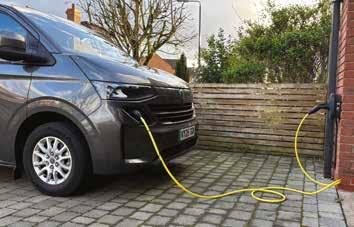
There are five drive modes: Normal, Eco, Sport, Slippery and Tow/Haul. Eco will be your choice, though Sport is useful for moving a heavier load or climbing steeper roads.
Everything is within reach for the driver, including the touchscreen. Visibility is also good, although you will need to lean forward to look left on some occasions. The seats, as per all VWs, are firm, which we like as they give the driver plenty of lower back support. Driving locally it feels electric car-like. From the off you’ll notice the torque as it literally flies away from junctions, and as we live at the bottom of a hill there’s enough power to make it up steep inclines easily. The electric motor can be heard at start up and when you slow down, but with anything playing on the speakers it’s barely noticeable.
Like the diesel version, the e-Transporter is a pleasure to drive. The only difference is the fitting of all-season tyres as standard, clever since it makes the electric model less likely to slip from the off, a problem with many battery electric vehicles, especially those that are rear-wheel driven.
Rear wheel drive, though, makes it a lot of fun. On a series of narrow winding north Cheshire roads, with two on board and an empty load space, we headed cross country to Crewe and it feels quick, with a much faster 0-62mph time of 8.6 seconds compared to the 13.4 seconds in the diesel; it’s easy too see why. It’s also fabulously quiet with just a hint of road and wind noise entering the cabin.
A combination of the tyres, battery weight and overall weight make it a little more cumbersome on those winding roads then the diesel, but that’s typical of electric vans and certainly no deal breaker. The ride quality isn’t bad either, with only poor tarmac causing any cabin judders.
Familiarity with VW’s set-up meant that engaging the cruise control and turning off a couple of driver safety features was simple. When we got on to the M56 and M53 we wanted to see how the e-Transporter’s range was when driving faster, as well as how
comfortable it is on a longer journey. Range-wise, when full charged our test van’s range indicated 159 miles, so an 84-mile round trip to Wallasey and back at a constant 70 mph in Normal mode saw us return home with 55 miles remaining. That meant we used 104 miles of range. The weather was cold –under five degrees – but it was just me driving with no payload so our advice is to stick to 60mph on your motorway trips.
As far as range goes across we averaged an okay 2.5kW a mile on our test. Of course, driving in Eco mode will conserve the battery, as will utilising the B regen function. We tried it and in all settings the regeneration is really that noticeable and certainly isn’t one-pedal. It will, of course, help you eke out that extra range, especially useful in the colder months.
Pros
Excellent to drive, very well equipped and hugely practical – a total payload of between 1,013kg and 1,088kg is much higher than the Buzz Cargo’s 592kg, for example. It’s also cheaper than the Electric Transit Custom and comes with a better warranty.
Cons
Payload is less than the diesel version. It’s also more expensive. Real world range likely to be 130 motorway miles - 150 urban miles. It is very similar to the Ford Transit E-Custom.
By building on the Ford platform Volkswagen has got itself a much better, more practical electric panel van than it had before, and it is class leading in almost every area. Has some Volkswagen traits, namely different front end and grille as well as VW’s own interior set-up, infotainment and digital drivers cluster. Seat finishes and plastics on the dashboard and front and door panels feel nicer than those on the Ford, so another tick. More importantly, superior to most electric panel van competitors.
CC&V RATING: N N N N N
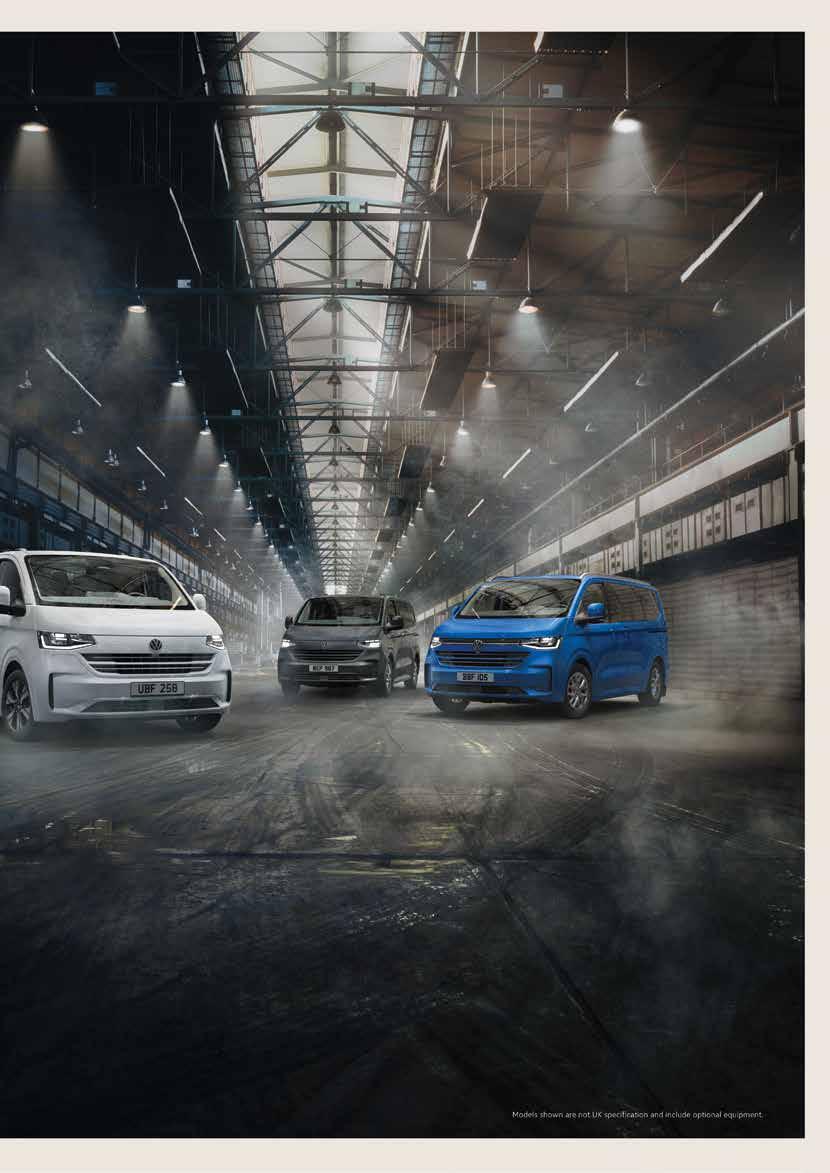
If you can’t beat them, join them. Maxus unveiled the eTERRON 9 electric pick-up in late 2024 and it was joined in early 2025 by a new diesel Maxus pick-up, the T60. We took a trip to the home of the Beatles to put it through its paces.
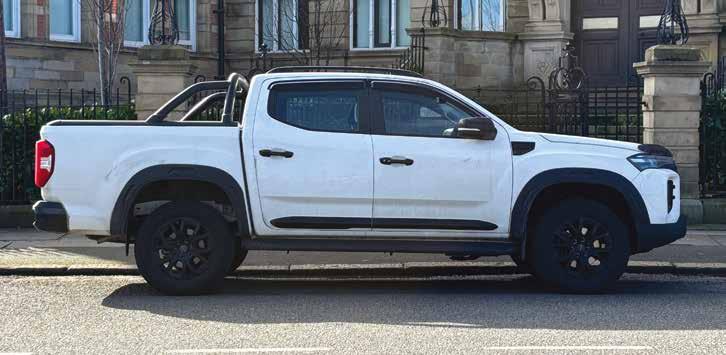
Tell me more...
There’s just one version, the MAX, priced at £36,115, which is powered by a 213hp 2-litre diesel engine. Peak torque is 500Nm. It features eight-speed automatic transmission mated to a four-wheel-drive system.
Size and practicality
It measures 5,395mm long by 1,960mm wide by 1,870mm high.The cargo load bed measures 1,485mm × 1,510mm, with a height of 530mm. It also has a 3.5-tonne towing capacity, a GVW of 3,250kg and a payload of 1,050kg
Outside
At the front the T60 comes with a dark front grille, high LED headlights, black side corner cut-outs and a large MAXUS logo on the bonnet front. The rear has a centre bumper step, vertical rear lights and a T60 MAX logo emblazoned on the tailgate. There’s roll bars and a side step as well.
Inside
The infotainment and driver display is the same as in the ET9, a massive dual screen
consisting of a 12.3” cluster and 12.3” central touch screen that stretches across the dashboard top. There’s no gear lever; instead, you’re presented with a right side steering wheel stalk with a simple Reverse, Neutral, Park or Drive option. The steering wheel also features switches for cruise control on the left and on the right those to utilise the infotainment, hands-free phone, voice control and heated steering wheel.
Located between the front seats is a large
armrest with the wireless phone charger, electric handbrake and off-road function dial floating above. Here you can connect your Smartphone via Apple CarPlay, utilising the wireless charging pad. Or plug in via the two front and one rear USB input. Separate climate controls are located underneath the screen with air vents above.
Equipment
Standard is a six-way adjustable leather
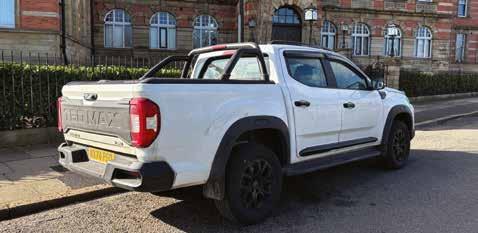
driver’s seat, a heated steering wheel, LED automatic headlights, automatic wipers, the wireless charging pad, DAB radio, Bluetooth, connected Apps for Apple CarPlay and Android Auto, 6 speakers and Maxus connected services.
Cabin practicality
There are numerous cabin storage spaces including large door pockets, a glove box, a covered centre are with cup holders and tray and space beneath the centre armrest. In the rear there’s a fold down armrest with twin cupholders inside.
Safety
The safety kit includes a 360 degree camera, front/rear parking sensors, Adaptive Cruise Control, Forward Collision Warning, Automatic Emergency Braking, Lane Keep Assist, Lane Departure Warning and driver and front passenger airbags, side airbags and front to rear curtain airbags. Rear Differential Lock is also standard with three driving modes offered, Eco, Normal and Power.
Infotainment
The screen itself is clear and bright. Our only complaint is that the screen menus – Vehicle, Energy, Driving, Connection, Sound System –are located on the left-hand side so a bit of a reach for the driver. The infotainment connections for Apple CarPlay worked promptly, using the DAB radio was fine and the inclusion of six speakers on our pick-up gave the system some heft.
Load practicality
T60 comes with a painted load bed liner, a tailgate lock, tailgate lift assistance, rear bumper step, a side step and roof rails.
On the road
We drove the T60 on the motorway and around Liverpool city centre and it rides like a
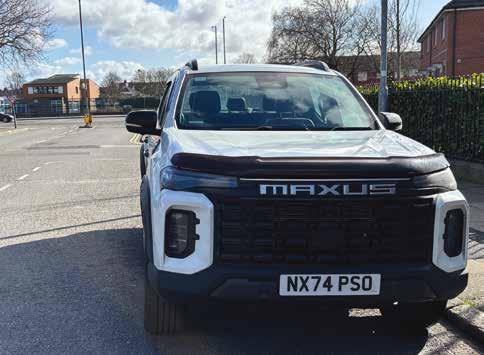
typical diesel pick-up truck and is certainly no better or worse than the Hilux and D-Max. Up front, the ride feels firm and with leaf-spring rear suspension it’s the same in the rear. Front and rear seat space is good with decent head and legroom in the rear as well.
The cabin is comfortable and user-friendly, the dashboard and switches are easy to use and to understand, and the off-road dial easy to reach and adjust as required. On the motorway adaptive cruise control is a blessing and at up to 70mph in eighth gear, the T60 cruises comfortably.
Road noise does enter the cabin thanks to the large tyres and wing mirrors, but again it’s par for the course in a pick-up.
You can alter performance via a range of drive modes – ‘Eco’, ‘Power’ or ‘Normal’. Eco in town is sensible, Power when fully laden makes sense too. Top speed is 105mph.
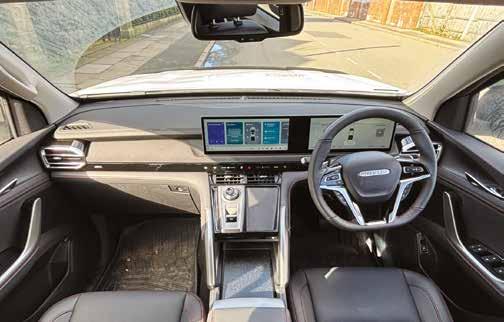
Venture off road and clearance is 230mm on the back axle, 217mm on the front axle and 230mm between the axles. Maxus quotes an approach angle of up to 29-degrees and a departure angle of up to 26-degrees, which are class competitive.
Pros
As it is only available in ‘MAX’ form, it is incredibly well equipped compared to the same priced Ford or VW truck. The interior’s well presented and it all feels built to last. Good safety and plenty of infotainment features come as standard too.
Cons
In the entry-level end of the diesel pick-up sector there’s suddenly plenty of competition from the likes of the GWM POER300, and coming soon will be the return of the Mitsubishi L200 and an updated KGM Musso.
While not as refined as the Ranger or Amarok, the T60 is priced competitively to compete with their lower specced models, while offering the ride and practicality of a Hilux. One thing to consider is that a number of new kids on the block have entered the market, so it will be interesting to see how the T60 performs in a suddenly booming-again sector.
CC&V RATING: N N N N

Isuzu launches new D-Max Commercial
What is it?
The Isuzu D-Max Commercial is a premium-spec, two-seater pick- up engineered for SMEs, farmers, trades, and construction professionals. It features a permanent rear cabin conversion into a secure load zone and full commercial specification.
It’s fully compliant as a commercial vehicle with VAT reclaimability and a flat £4,020 BIK rate, ensuring long-term tax efficiency.
Price
Priced at £41,995 CVOTR with road tax kept at a fixed rate of £345.
Practicality
Equipped with a commercial-ready specification as standard, this includes a lightweight commercial canopy, tow bar with towing electrics, load bed liner, rear passenger door window tints, and protective driver and passenger seat covers. It also comes with a one-tonne payload, 3.5-tonne towing capacity and full four-wheel drive,
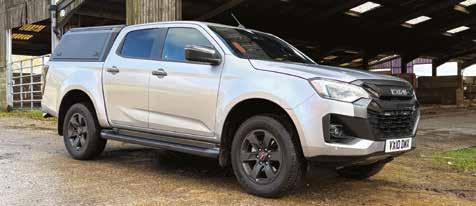
Rough Terrain Mode and a rear differential lock.
Tax benefits
It qualifies for Plant and Machinery Allowance under Capital Allowances, retaining 100% writing down status. For company drivers, the model keeps its flat-rate £4,020 Benefit in Kind for the 2025/26 tax year.
Features
Built on Isuzu’s highest trim level, drivers benefit from leather upholstery, dual-zone
climate control, a nine-inch infotainment system with wireless Apple CarPlay and Android Auto, and a new seven-inch Multi-Information Display. USB-C ports and an upgraded ADAS suite, including Intelligent Adaptive Cruise Control and Traffic Jam Assist are also offered.
Emissions and fuel economy
It comes with an automatic gearbox and delivers around 32 mpg and emissions of 235g/km of CO2.
However, our week and almost 550 miles
saw us do even better, averaging 36.4mpg.
Infotainment
Commercial is equipped with an updated 9” Multifunction Colour Touchscreen, Bluetooth, DAB Radio, wireless Apple CarPlay and Android Auto, eight speakers and 2x front USB C Ports.
Comfort
With loads of electric seat adjustment my usually fickle bad back felt no twinges, even after 5.5 hours on one day spent in the cab. So a big tick here.
Cabin practicality
Two gloveboxes, a storage cubby on top of the dash, under armrest space, pop-out cup-holders with two more in the centre console. Plus a driver’s foot rest.
Driving
It’s no secret that CC&V are big fans of the D-Max, but what about this Commercial version? Several local jaunts showed us that in auto form this is an easy pick-up to live with. Simple to park as well, thanks to the reversing camera.
With both adaptive cruise control and autonomous driving the Commercial just eases itself along the motorway at 70mph. No frills, and in some heavy rain the tyre noise does get intrusive at this kind of speed, interrupting my podcasts.
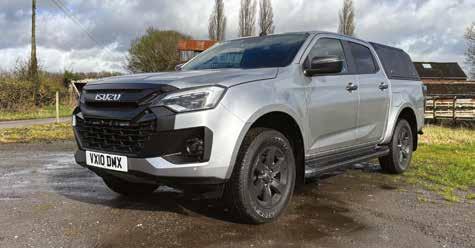
A 300-mile round trip showed us that it’s pretty damn good on the motorway, too. Negatives? If you’re overtaking you’ll need to be aware that it’s not dynamic and you’ll need to judge just how long the overtake is or how long it will take to get back to motorway speed, especially on steep inclines.
Pros
An excellent addition to Isuzu’s model choice of single, extended and double cabs. Tax savings cannot be ignored.
Cons
Despite the V-Cross badging it definitely feels more workhorse than lifestyle.
If you need a vehicle that offers pick-up usefulness but don’t need the rear seats, then the Commercial is a logical step for your business to consider. What surprised us most is just how easy it is to drive and manoeuvre, and how well it will handle a long motorway journey.
It’s a given as a workhorse but tax savings may be a consideration and if they are, we urge you to take a look.
A Clever Trevor from Isuzu
CC&V RATING: N N N N