TAHOE
SUmmer Serving the Lake Tahoe Region

SUmmer Serving the Lake Tahoe Region
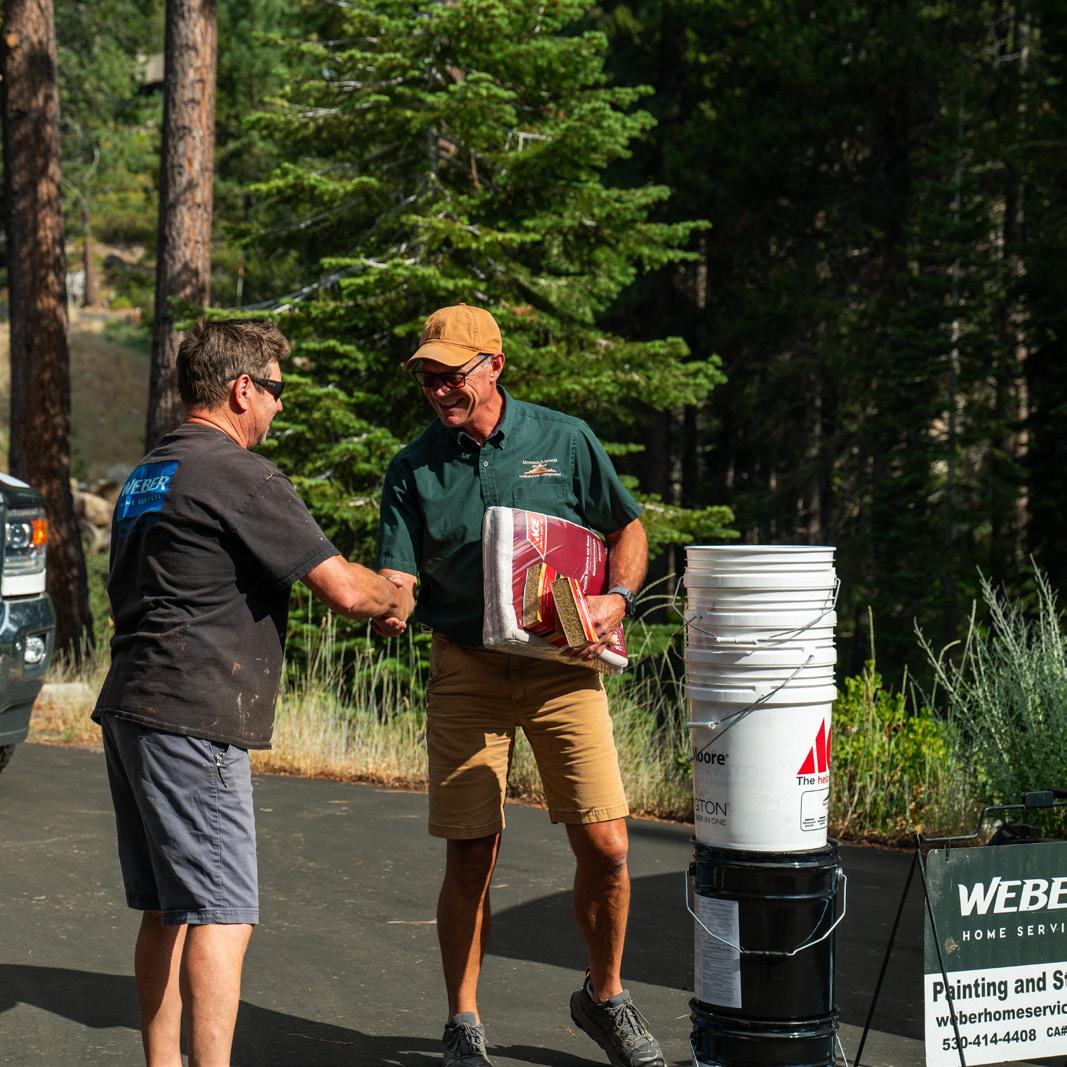
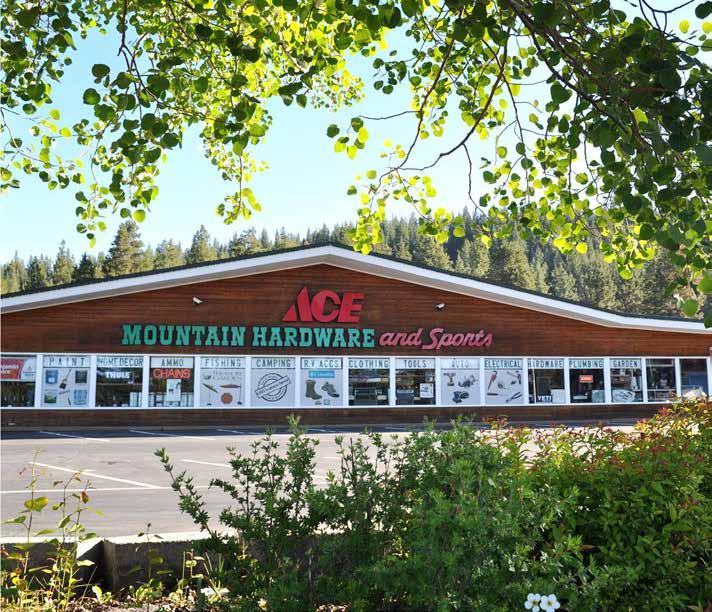
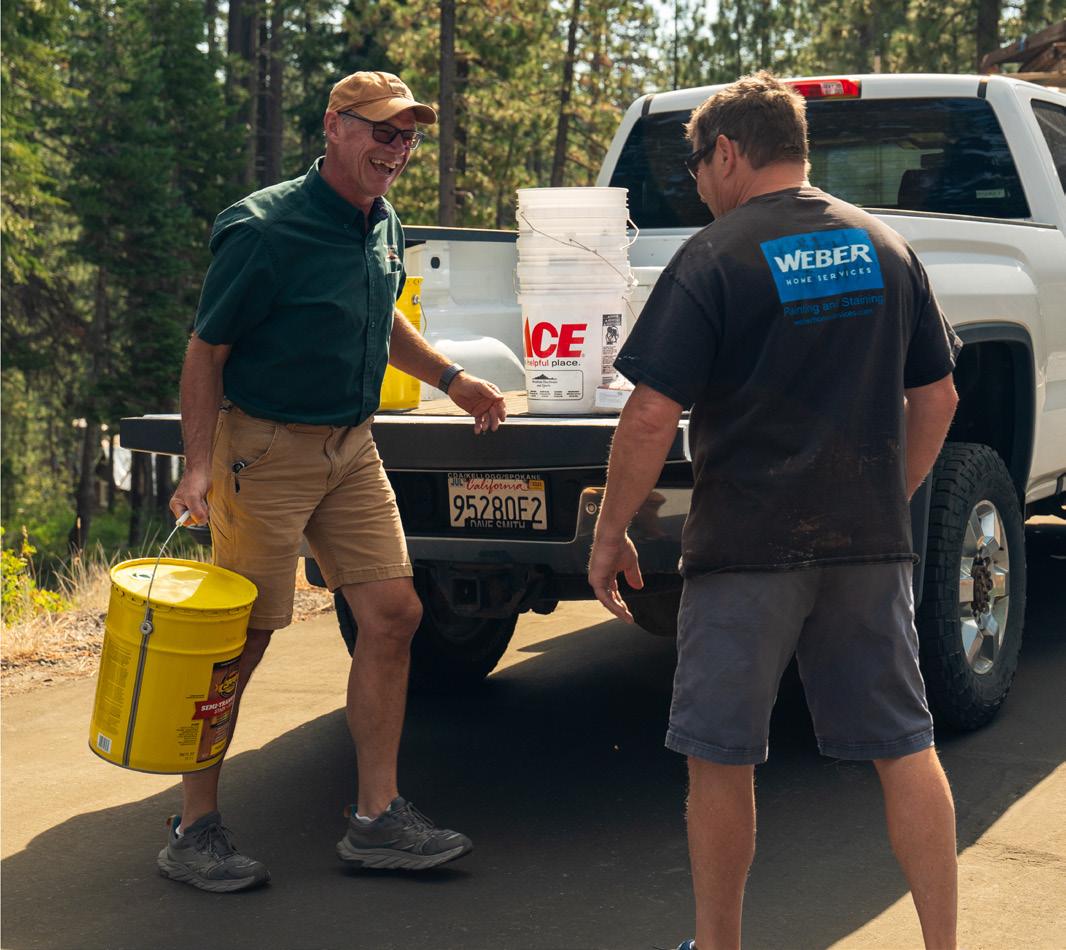
Ready for summer? Let Mountain Hardware and Sports help you make the most of the season. With a wide selection of gear, apparel, and free local delivery, to help you have a great summer in the mountains.
TAKE ADVANTAGE OF FREE LOCAL DELIVERY
Publisher: harryJONES
Editors: allisonJONES
MelanieCano
Layout design: aaronJONES
Contributing Writers: MarkMcLaughlin
Northwoods Tahoe is distributed FREE at locations in Truckee and Tahoe, also on www. northwoods.news and www.Issuu.com. When you visit our advertisers, please mention that you saw their ad in Northwoods Tahoe. Thank you for your support.
Disclaimer: Submitted articles, if published, become the exclusive property of Community Media LLC. We reserve the right to edit, or choose not to print submissions. The views and opinions expressed in the content of Northwoods Tahoe are not necessarily shared by the Publisher, Editor, Community Media LLC or anyone else.
2292 Main Street, Suite 7, Genoa, NV 89411
Mailing: PO Box 1434 Genoa, NV 89411
For advertising: (530) 582-9012 Email: harry@communitymediallc.net
By Mark McLaughlin
Like a powerful magnet, California’s rich gold fields attracted multitudes of adventurers afflicted with Gold Fever. In the 1850s, bustling mining camps sprouted along every Sierra stream— tent cities with names like Rich Bar, Saw Pit, Whiskey Diggings and Rabbit Creek. These early pioneers had come for gold, but their physical and intellectual energies were not limited to the lust for nuggets. Their industry laid the foundation for the 21st century Western economy.
One of the most prominent of these early Argonauts was Myron C. Lake. Known as the “Father of Reno,” it was he who founded the “Biggest Little City in the World.” In 1861, Myron Lake bought land along the Truckee River from C. W. “Bill” Fuller, who had arrived in the Truckee Meadows in 1859. Fuller had built a bridge over the Truckee River for which he charged a toll from all the stagecoaches and commercial wagon freighters rushing to the booming Comstock. After the purchase from Fuller, a destructive flood in January 1862 wiped out the bridge but Lake rebuilt it bigger and better, and added a lodging house as well.
world” and it was Myron Lake who deeded the land for the city hall where all those marriages were annulled, it is ironic that the inside story of Myron Lake was revealed during testimony in his own bitter divorce case against his wife, Jane.
During the divorce proceedings, Lake testified, “I came to California overland in the spring of 1852. I went to a place called Rabbit Creek (present day La Porte) and mined there in surface diggings for five years, from 1852 to 1857. I then went to Honey Lake Valley [Lassen County] and went into farming. I lived there four years and farmed all the time. From there I came to what is now Reno and bought the [Fuller] property here.” (That property later became the site of the famed Riverside Hotel.)
“I traded my ranch in Honey Lake Valley for the Reno property on June 22, 1861. I got $1,500 to boot in the trade. I have resided here ever since. When I bought this property, which is here at Reno, there was just the toll road, the [Fuller] bridge,
Continued on page 4
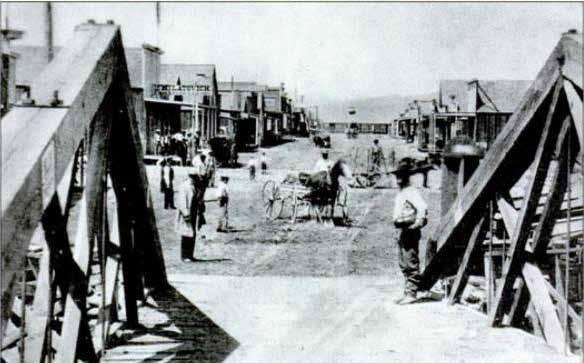
Myron Lake’s Virginia Street Bridge which led into Downtown Reno in the 1870s.
Considering that Reno was once called “the divorce capital of the
Continued from page 3
and a wayside hotel for teamsters, with a barn connected to it. Some of the land was under cultivation or enclosed. It was a pretty fair hotel, a frame house, one and a half stories high. I met Mrs. Lake at Honey Lake Valley at her father’s home. We were married at her father’s house with the intention of coming to Nevada to reside afterward. I brought her and two of her children, Florence and Seymour, down to my place which is known as Lake’s Bridge,” he concluded.
But Myron had not found financial success all by himself. Contesting her husband’s proposed settlement, Jane Lake told the court her side of the story. She explained how they were married at Honey Lake on September 9, 1864, and came to live at Lake’s Bridge. Their timing could not have been worse. The region was suffering its worst economic depression since the discovery of the Comstock, and the mines in Virginia City had stopped paying dividends. The next year, the struggling newlyweds decided to cash in on the new mining excitement at Meadow Lake, west of Donner Summit, a bustling boomtown high in the mountains. Prospectors were swarming over the district, and the price of real estate was soaring. In the summer of 1865, the couple made the difficult climb up and over the Sierra crest to the remote alpine lake.
to walk up the hills for miles at a stretch. The fatigue that I endured on that trip, together with the hard work at the mines, brought on a dyspeptic and bowel complaint from which I never fully recovered. At Meadow Lake we opened a hotel in a canvas tent, keeping from 50 to 75 boarders, for whom I cooked and waited upon. This lasted for five months.”
While his wife managed their “canvas hotel,” Myron built a large two-story wooden hotel. Completion of Lake’s hotel in late 1865 was celebrated with a ball on the roomy second floor. Only 13 ladies were present at the dance — far outnumbered by the overwhelming crowd of rough miners. By the end of the 1866 summer mining season, there were 600 new buildings at Meadow Lake, including a church and a sturdy brick bank.
As summer waned, about 400 people decided to winter at Meadow Lake, but a nasty snowstorm on September 24 sent half of them packing for Sacramento or Virginia City. Jane and Myron Lake were among the deserters. A long cold winter in the High Sierra had no appeal for the couple, so they sold their hotel for a tidy profit and returned to Nevada.
Jane bitterly recounted the trek in her divorce testimony.
“In 1865 or 1866, I’m not certain, Lake took me up to Meadow Lake. It was the time of the excitement there. We intended to start a hotel. We went in a wagon, heavily loaded, so heavy that I had
Jane and Myron Lake were becoming very wealthy and more was on the way. The tracks for Central Pacific’s transcontinental railroad reached Reno in 1868, and the iron rails crossed the Lake’s property. Myron Lake saw another gold strike in a deal with C.P. and the contract he hammered out with Charles Crocker for the railroad right-of-way became the key.
Every wagon or stage from the Comstock would have to pay toll over Lake’s Bridge to reach the railroad, and Lake stood to make money hand over fist. He bargained with Central Pacific until he got what he wanted. By the terms of his agreement with the railroad, Lake swapped about 90 acres of his own land for 110 acres south of the Truckee
Continued on page 6

River. After the deal was completed, Myron and Jane Lake owned nearly all the land that later became downtown Reno. Lake also demanded that the new town springing up be named after Civil War General Jesse L. Reno. When the railroad company met all his demands, it received the right-of-way across the Lake’s property.
It seemed that Lake had the Midas touch, but he wasn’t satisfied with his good fortune. Taking advantage of his monopoly of the only bridge over the Truckee River, Lake demanded an exorbitant $1 for each horse-drawn vehicle that crossed it. At first, all riders, pedestrians and domestic animals were also charged stiff rates, but Lake later gave free passage to town residents and collected only halffare from anyone who lived in the valley.
Despite his generosity, people were jealous of Lake’s lucrative business. His toll bridge receipts totaled as much as $2,500 in a single day. Lake had them coming and going, but his avarice was beginning to get the better of him. In 1872, he lost a legal battle in the Nevada Supreme Court over the construction of the Virginia & Truckee Railroad Bridge. Lake complained that hundreds of people were using that bridge to avoid his toll, and protested that the V&T crossing had been built within a one-mile limit of his operation. When Lake built a fence across the railroad bridge, both the V&T RR and the courts ordered it removed. Finally, on January 6, 1873, the Washoe County Commissioners declared Lake’s bridge a free public highway.
But Myron Lake was not one to back away from confrontation. Openly defying the commissioners, he closed the bridge. According to newspaper reports, Lake “stood on the bridge with a six shooter and demanded his toll from everyone who crossed.” Lake was arrested, fined $20, and ordered to keep the bridge open. Later that year, the Nevada Supreme Court ruled that Lake’s Bridge would henceforth be free.
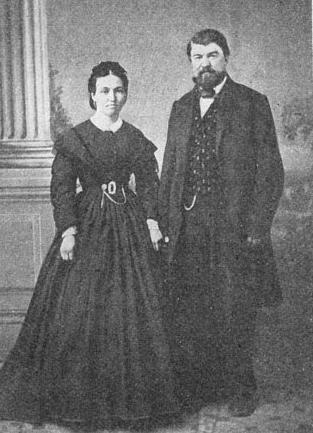
Myron Lake’s combative personality had seriously affected his marriage. In 1879, Jane filed for divorce from her abusive husband. Their troubles had begun after the birth of Myron Charles Lake, Jr., their only child. Myron accused Jane of infidelity and claimed that the real father was William Roberts, his longtime and loyal business manager. Jane then alleged that Myron had beaten her and threatened her life on several occasions. She said that he had accused her “of being unchaste and unfaithful to him.” According to testimony, Lake had told his wife “to leave his house and family, that he wanted to be rid of her, that, she could go to hell, and if she would go where he would never see her again he would give her $10,000.”
The highly publicized and bitter court fight lasted three years. In 1882, the state Supreme Court upheld the district court’s ruling in Myron’s favor. Myron Lake retained his extensive land holdings, while Jane received only $200 per month in alimony, and custody of Myron Charles, Jr. Before his death in Reno on June 20, 1884, at the age of 56, Myron named young “Charley” his full heir, with the fortune to be held in trust until his 27th birthday.
Myron Lake had fought bitterly to keep Jane from her share of their estate. It’s ironic that two years later, by giving Charley the money, he gave Jane, as the youngster’s guardian, full control of the Lake fortune. Charley may have had the money, but Jane had Charley!
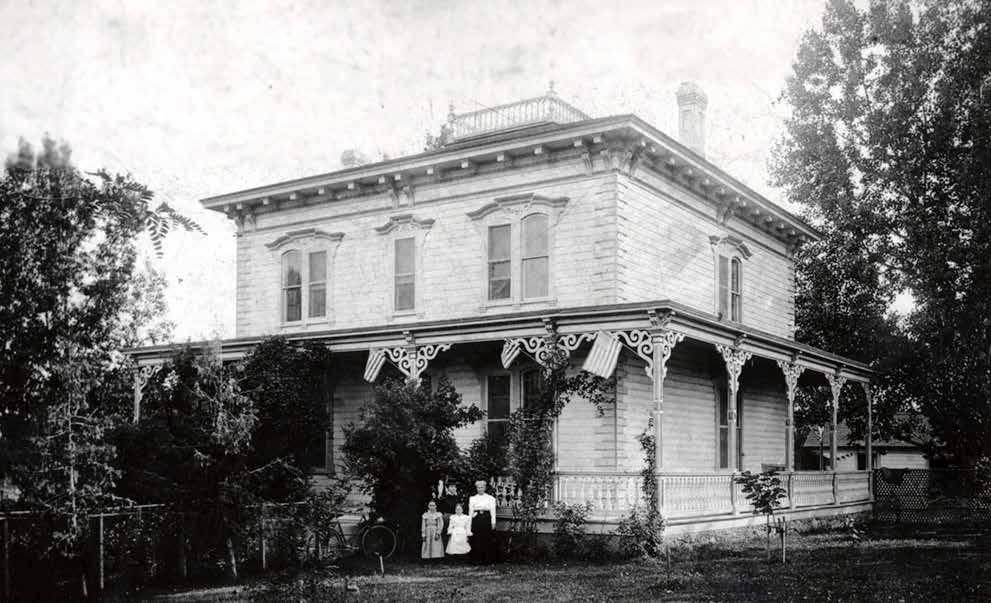
The Lake Family, 19th century Source: Special Collections, University of Nevada, Reno Libraries Date: ca. 1880s



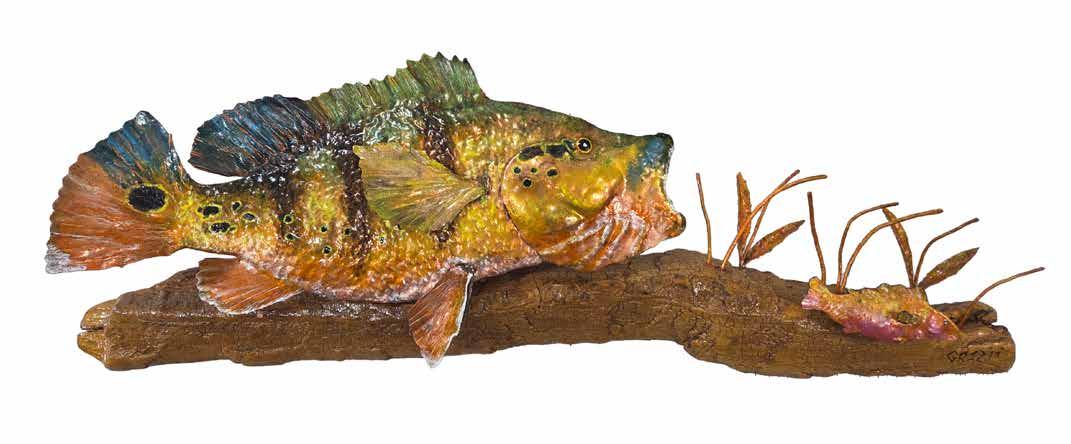
Keven “Griz” Lively is a self-taught copper artist whose work blends traditional metalworking with a deep appreciation for the outdoors. Inspired by memories of watching his father hammer copper into ship models, Lively eventually found his own artistic path through the guidance of a Truckee metalworker and artist. Today, he creates highly detailed sculptures of fish, birds, wildlife, and natural scenes using hand-hammered sheet copper, driftwood, bark, and acrylic inks.
Lively’s process is as important as the finished piece. Copper is shaped and textured by hand, then treated with heat and liver of sulfur to develop rich patinas. Additional color is applied by hand before a protective clear coat preserves the surface. Mounted on weathered wood and natural materials, each work becomes a small narrative drawn from the landscapes and waterways that inspire him.
In Peacock Bass, Lively demonstrates a remarkable ability to transform rigid sheet copper into a convincing representation of living form. The fish dominates the composition, its open mouth and forward posture suggesting the sudden aggression and energy for which peacock bass are known. Rather than striving for photographic realism, Lively embraces the expressive qualities of copper, using hammered textures and layered patinas to create the shimmering effect of scales and reflected light.
The coloration is particularly successful. Golds, greens, bronzes, and blues flow across the fish’s body. The characteristic dark markings and tail ocellus are rendered with enough precision to identify the species while remaining integrated into the overall surface design.
The wood base provides more than a simple mount; it establishes habitat and context. The weathered wood contrasts beautifully with the metallic sheen of the fish, while the smaller fish and sparse aquatic vegetation create a sense of narrative. The viewer is left wondering whether a chase or predatory encounter is about to unfold.
Perhaps the most impressive aspect of Peacock Bass is the balance between craftsmanship and spontaneity. Every fin ray, scale texture, and contour reflects careful observation, yet the hammered surface retains an organic quality that prevents the work from feeling overly pol-
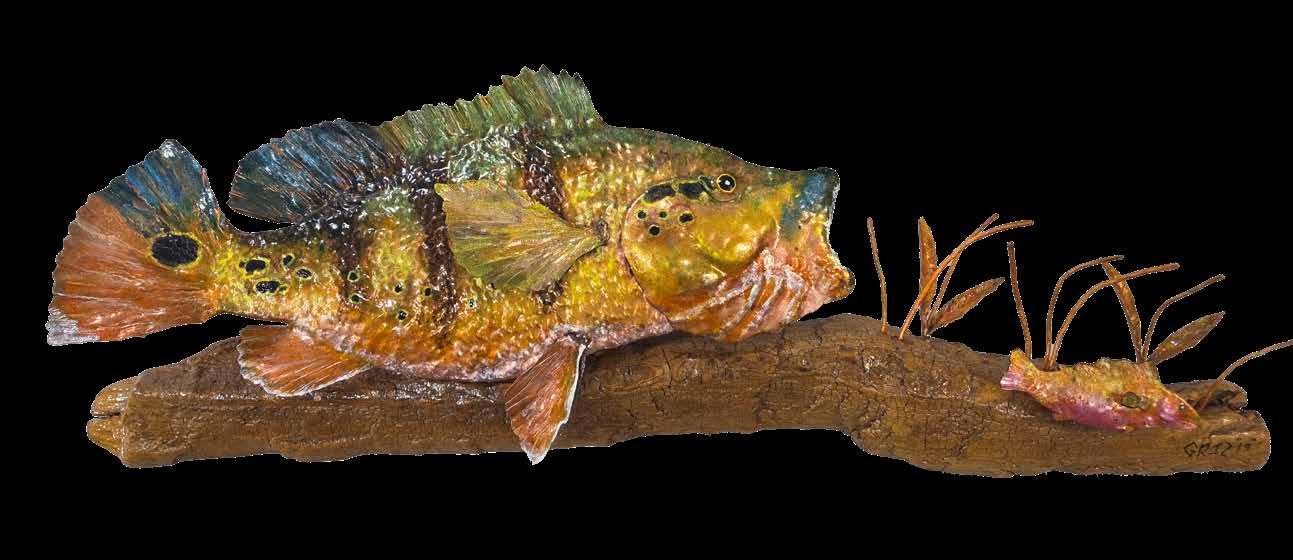
In Peacock Bass, Lively combines sculpture, painting, and natural materials into a work that feels equally at home in a gallery, a fishing lodge, or a collector’s home. It is a compelling example of how traditional metalworking techniques can be used to capture the vitality of the natural world.







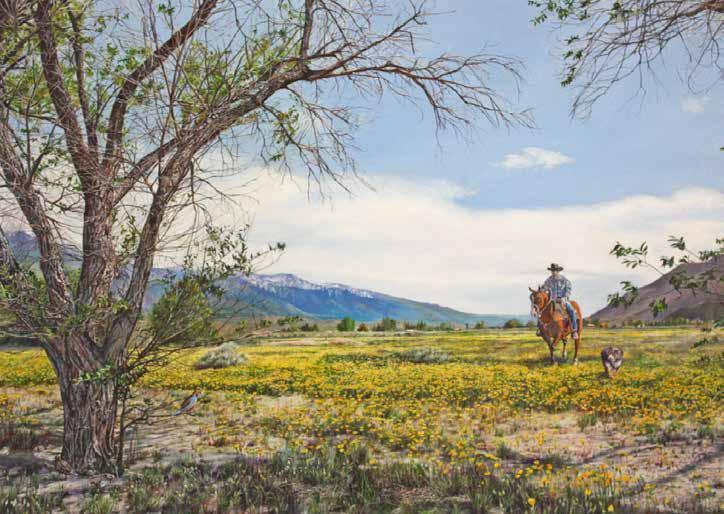



















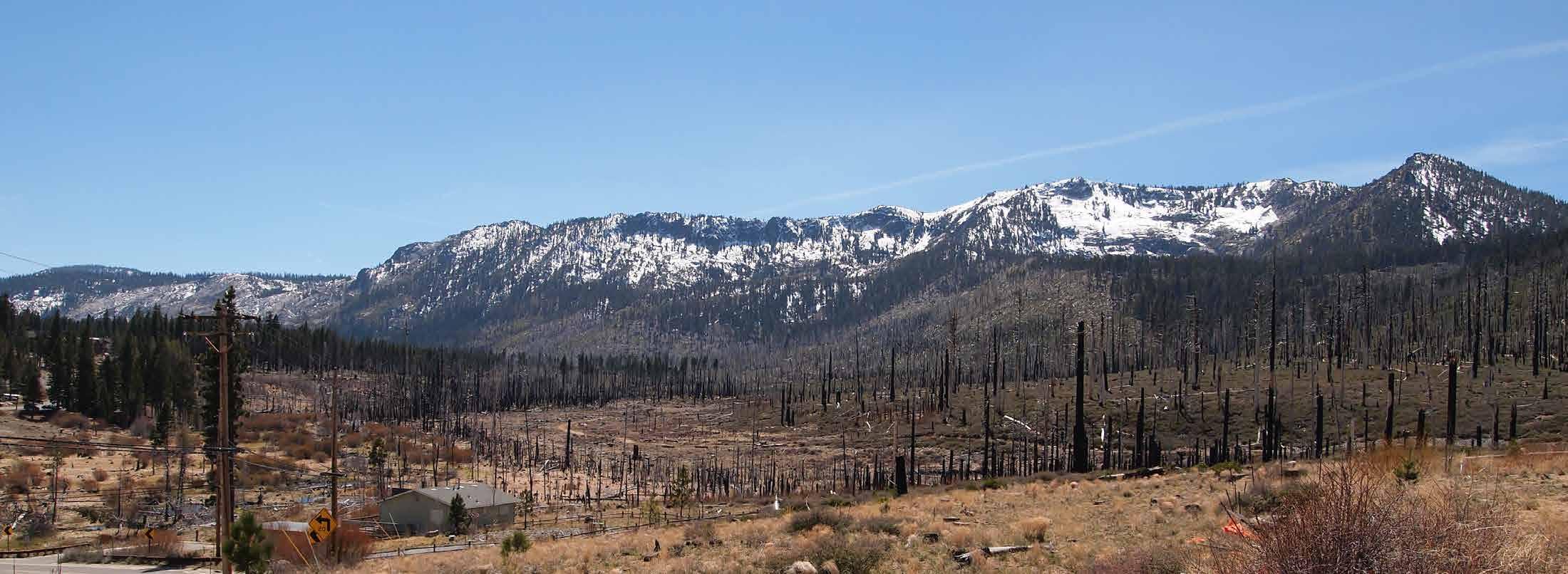
For homeowners in the Tahoe Basin and Carson Valley, wildfire preparation is as important as any seasonal home maintenance task. Modern wildfire research has shown that many homes are not ignited by a wall of flames, but by wind-driven embers that can travel long distances ahead of a fire front. The good news is that a few targeted improvements can significantly reduce your home’s vulnerability.
The most important step is creating defensible space around structures. The area closest to your home should be free of combustible materials such as pine needles, bark mulch, stacked firewood, and dry vegetation. As you move farther from the structure, trees and shrubs should be spaced and maintained to reduce the chance of fire spreading through the landscape. Regular pruning and removal of dead vegetation can make a substantial difference during a wildfire.
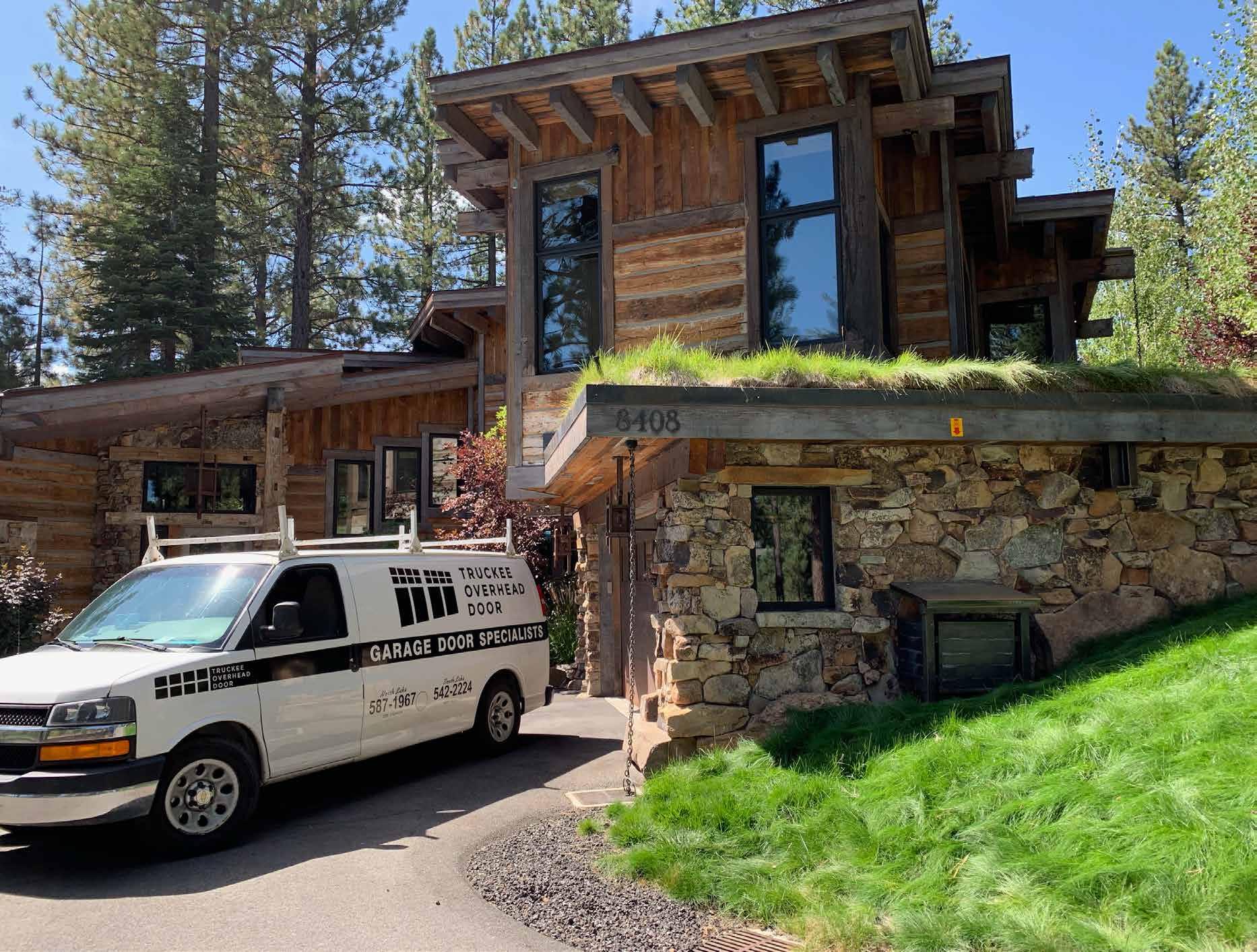
One of the most overlooked wildfire hazards in the Sierra is the accumulation of pine needles on roofs and in gutters. During fire season, embers can ignite this debris and start fires directly on or next to a home. Even properties with good defensible space can remain vulnerable if roofs, gutters, decks, and corners where debris collects are not cleaned regularly.
Homeowners should also pay attention to attic and crawl-space vents. Traditional vents can allow embers to enter a structure, where they may ignite hidden fires. Ember-resistant vents are designed to reduce this risk while still providing proper airflow and have become one of the most effective upgrades for homes in wildfire-prone areas.
Landscaping choices can further improve a home’s chances of survival. Rock, gravel, stone pathways, and well-maintained plants with higher moisture content are generally safer choices near structures than dense shrubs or highly resinous vegetation. Keeping plants healthy and removing dead material is just as important as selecting the right species.
Wildfire preparedness is ultimately about reducing opportunities for ignition. By maintaining defensible space, keeping roofs and gutters clear, upgrading vulnerable vents, and making thoughtful landscaping choices, homeowners can greatly improve their property’s resilience before peak fire season arrives.
Sources
National Fire Protection Association (NFPA) Firewise USA Program
U.S. Forest Service – Home Ignition Zone Guide
CAL FIRE Defensible Space Guidelines
University of Nevada Cooperative Extension – Living With Fire Program
Tahoe Living With Fire Program

Long before roads circled Lake Tahoe and visitors flocked to its shores, a remarkable fish ruled the waters. The Lahontan Cutthroat Trout (Oncorhynchus clarkii henshawi), Nevada’s state fish, once grew to extraordinary sizes in the Tahoe Basin, becoming one of the largest freshwater trout in North America. Today, after a dramatic decline and decades of restoration efforts, this native trout is making a cautious return to its ancestral waters.¹
The Lahontan Cutthroat Trout belongs to the salmonid family, which includes salmon, trout, and char. It is one of several subspecies of cutthroat trout native to western North America. Its most recognizable feature is the crimson-orange slash beneath each side of the lower jaw, the mark that inspired the name “cutthroat.”
The fish evolved within the ancient Lake Lahontan watershed, a vast inland lake system that covered much of northwestern Nevada during the Ice Age. As Lake Lahontan receded thousands of years ago, isolated populations adapted to rivers, streams, and lakes throughout the Great Basin, including the Lake Tahoe Basin.²
Like other trout, Lahontan Cutthroat Trout begin life as eggs deposited in gravel nests called redds in cold, flowing streams. After hatching, juveniles feed primarily on aquatic insects and small crustaceans.
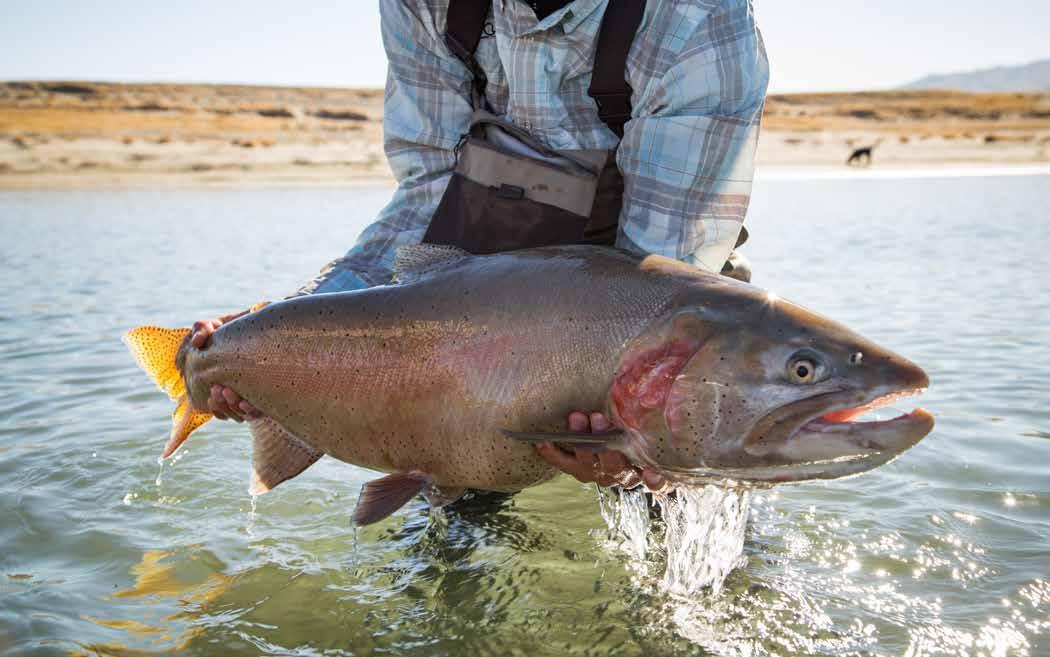
In lake environments, however, their growth can be ex traordinary. Young fish migrate into open water where they begin feeding on forage fish. This dietary shift allows them to attain sizes rarely seen among inland trout. His torical accounts from the nineteenth century describe fish exceeding 40 pounds, and some reports claimed speci mens approaching 60 pounds were taken from the Truck ee River system.³

Adult fish typically migrate into tributary streams during spring runoff to spawn, linking the health of mountain streams directly to the health of large lake populations.
Several trout species inhabit the Tahoe region today, but only one is truly native.
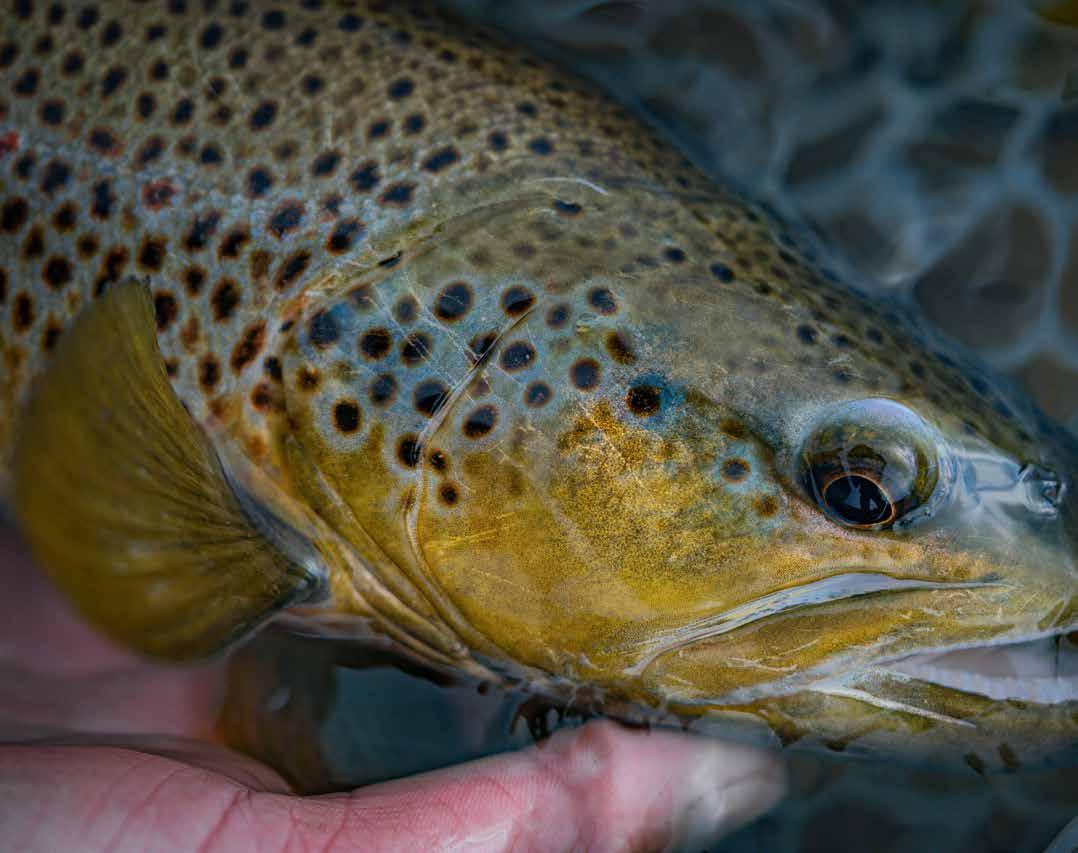
Rainbow trout were introduced from coastal Pacific drain ages and can often be identified by their pink lateral stripe. Brown trout, imported from Europe in the late nine teenth century, display golden-brown coloration and dis tinctive red-spotted flanks. Lake trout, commonly known as mackinaw, are actually members of the char family and spend most of their lives in Tahoe’s deep, cold waters. Continued on page 14







The Lahontan Cutthroat Trout differs from all of them through its characteristic throat markings, heavy spotting pattern, and unique evolutionary history within the Tahoe-Pyramid watershed. It is also the only trout species native to the Lake Tahoe Basin.4
For thousands of years, Lahontan Cutthroat Trout were an important food source for Indigenous peoples throughout the Great Basin, including the Washoe people, whose ancestral lands encompass the Tahoe Basin.5
During the nineteenth century, the fish became legendary among settlers and travelers. Commercial fisheries harvested immense numbers from Lake Tahoe, Pyramid Lake, and the Truckee River, shipping fresh trout to mining camps and rapidly growing western cities. The abundance seemed limitless.
watershed and represented descendants of the original giant lake strain that once inhabited Lake Tahoe and Pyramid Lake.7
By the early twentieth century, overfishing, logging-related sedimentation, water diversions, and habitat destruction had devastated populations. The construction of dams along the Truckee River blocked spawning migrations, while the introduction of non-native, natural predator fish species further accelerated the decline. By the 1930s, the original lake-dwelling population in Tahoe had effectively disappeared.6
For decades, many biologists believed the giant lake form of the Lahontan Cutthroat Trout was extinct until 1970.
Then, in a remarkable conservation twist, a surviving population was discovered near Pilot Peak on the Nevada-Utah border. Subsequent genetic studies indicated these fish likely originated from the historic Truckee River
The discovery transformed recovery efforts. Today, hatcheries in Nevada maintain broodstocks of the Pilot Peak strain and produce hundreds of thousands of fish annually for restoration programs throughout the region.¹
Despite significant progress, the Lahontan Cutthroat Trout remains federally listed as a threatened species.4
Habitat fragmentation remains one of the species’ greatest challenges. Dams, poorly designed culverts, and altered stream channels can prevent fish from reaching spawning grounds. Development along waterways can reduce water quality and eliminate critical habitat.
Competition from introduced species—including rainbow trout, brown trout, brook trout, and lake trout—continues to affect native populations. Rainbow trout present a

particularly difficult challenge because they can hybridize with Lahontan Cutthroat Trout, potentially reducing genetic integrity over time.³
Temperature fluctuations and evolving snowpack conditions throughout the Sierra Nevada present additional concerns. Reduced snowpack and earlier runoff can diminish summer stream flows, leaving spawning and rearing habitats warmer and less suitable for native trout.8
Today, anglers occasionally encounter Lahontan Cutthroat Trout in the Tahoe region, though the species remains far less common than non-native trout. Online fishing communities often celebrate these catches as special encounters with a fish that nearly vanished from its native waters.9
Federal, state, tribal, and local partners continue to work toward restoring self-sustaining populations in the Tahoe Basin. Stocking efforts, habitat improvements, fish passage projects, and ongoing research are helping rebuild a connection between the fish and the watershed that shaped its evolution.10
The story of the Lahontan Cutthroat Trout is more than a tale about a fish. It is a story about resilience, stewardship, and the possibility of recovering a piece of the Tahoe Basin’s natural heritage that once seemed lost forever.
Footnotes
1. U.S. Fish and Wildlife Service, Lahontan National Fish Hatchery Complex, Pilot Peak strain restoration efforts.
2. Nevada Department of Wildlife, Lahontan Cutthroat Trout Species Profile.
3. U.S. Fish and Wildlife Service, From Peak to Pyramid (2019).
4. U.S. Fish and Wildlife Service, Lake Tahoe to Receive 100,000 Lahontan Cutthroat Trout This Summer; Nevada Department of Wildlife Species Profile.
5. U.S. Fish and Wildlife Service, Tahoe Basin reintroduction partnership with the Washoe Tribe.
6. U.S. Fish and Wildlife Service, Tahoe Basin restoration history and causes of extirpation.
7. U.S. Fish and Wildlife Service, From Peak to Pyramid; University and agency genetic studies of the Pilot Peak strain.
8. U.S. Fish and Wildlife Service, Lahontan Fish and Wildlife Conservation Office; ongoing habitat connectivity and watershed restoration programs.
9. Regional angling observations and reports from Tahoe and Truckee River anglers documenting occasional catches of Lahontan Cutthroat Trout.
10. U.S. Fish and Wildlife Service, Lake Tahoe reintroduction and monitoring programs.

•Enclosed RV and Boat Stoarge
•Three LocationsWithin 1 hour of Tahoe
•24-Hour Access
•Temprature Controled Units
•Tahoe Resident Specials! Starting at $50/mo