TAHOE
February 2026
Serving the Lake Tahoe Region




February 2026
Serving the Lake Tahoe Region
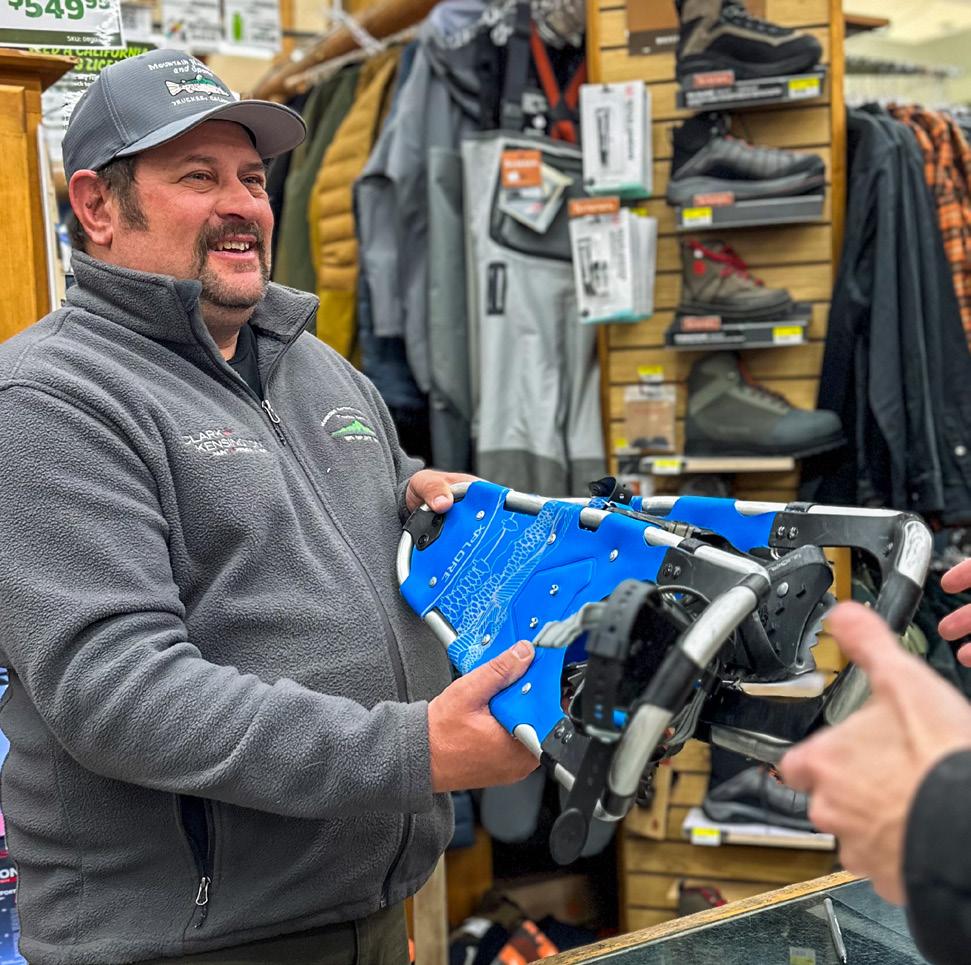
Mountain Hardware and Sports has everything you need for life in the mountains. From home repair to outdoor gear to apparel. With the trusted advice of our employee-owners, you’ll be sure to find all you’re looking for, and a little more.
Publisher: harryJONES
Editors: allisonJONES
MelanieCano
Layout design: aaronJONES
Contributing Writers: MarkMcLaughlin
Northwoods Tahoe is distributed FREE at locations in Truckee and Tahoe, also on www. northwoods.news and www.Issuu.com. When you visit our advertisers, please mention that you saw their ad in Northwoods Tahoe. Thank you for your support.
Disclaimer: Submitted articles, if published, become the exclusive property of Community Media LLC. We reserve the right to edit, or choose not to print submissions. The views and opinions expressed in the content of Northwoods Tahoe are not necessarily shared by the Publisher, Editor, Community Media LLC or anyone else.
2292 Main Street, Suite 7, Genoa, NV 89411
Mailing: PO Box 1434 Genoa, NV 89411
For advertising: (530) 582-9012
Email: harry@communitymediallc.net
By Mark McLaughlin
It was 66 years ago this month that Squaw Valley hosted the 1960 Winter Olympics. Like many Olympiads, these Winter Games showcased some very poignant athletic accomplishments, but the dramatic story of the underdog U.S. Olympic hockey team is worth noting on this anniversary.
In 1960, Canada dominated Olympic ice hockey, having won six gold medals, one silver and one bronze in the past eight Winter Games. The betting money was on Canada again at Squaw Valley, but the Russians, after winning the gold medal in the 1956 Olympics, were considered a strong contender that would give them a good fight. The United States hockey team had garnered a total of six medals
(none gold) in seven previous Olympiads, but in 1960 the team wasn’t considered much of a threat. Compared to the Soviets “amateur” team comprised of highly-trained hockey professionals, the U.S. media disparagingly portrayed the American team as a recently organized, ragtag group of college athletes and serious amateurs.
There were nine countries involved in the round-robin format of the hockey competitions at Squaw Valley, and after the preliminary rounds six teams advanced to the championship rounds: United States, Soviet Union, Canada, Germany, Czechoslovakia and Sweden. Blyth Arena was packed with spectators for the big contest between the U.S. and Canada, while millions more watched at home on live television. The Americans scored first and then increased their lead to 2-0 in the second period. The Canadians scored their first goal with less than seven minutes left in the third
Continued on Page 4
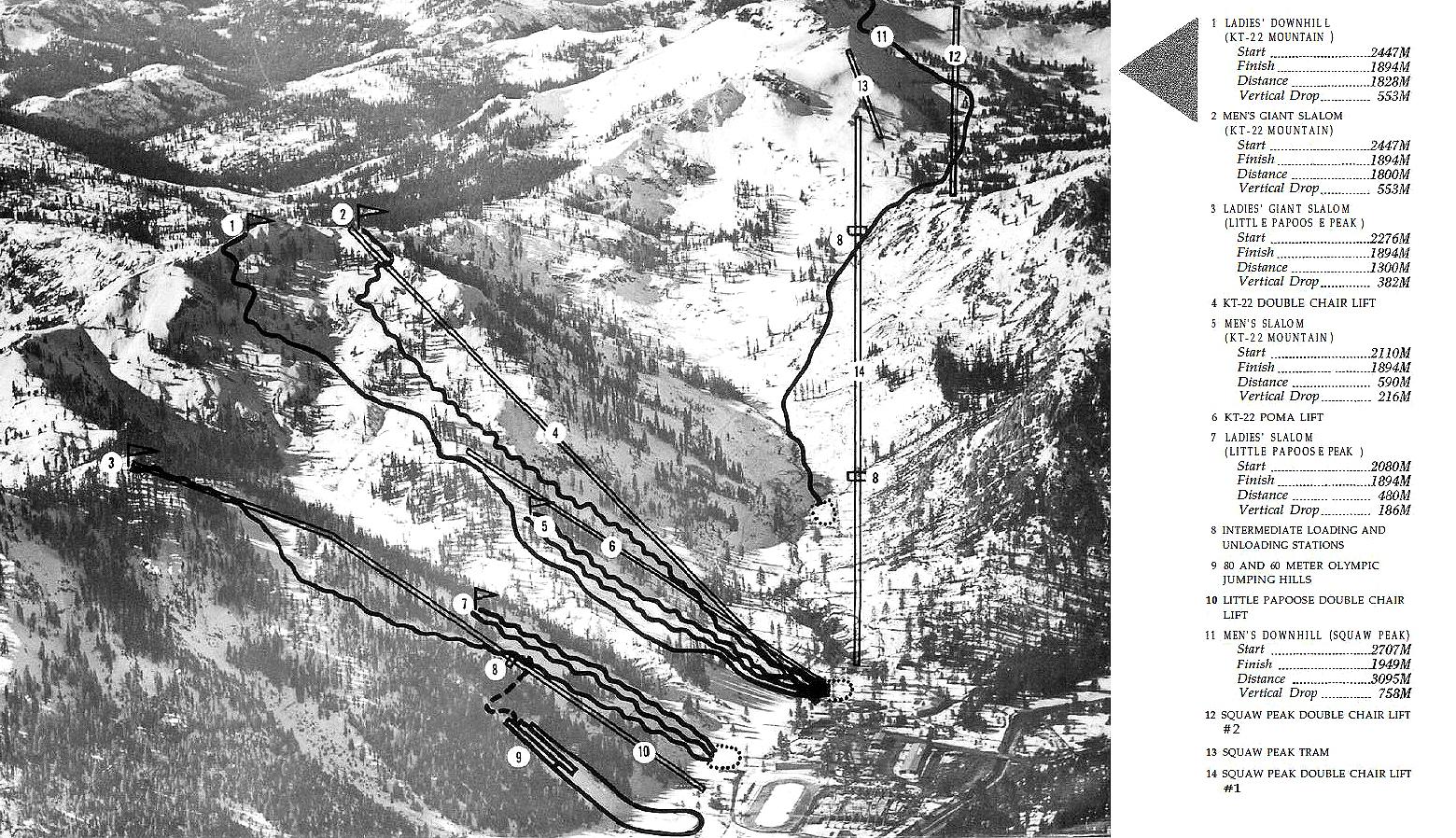
A printed map of the ski runs and events from the 1960’s Winter Olympics at Squaw Valley. Public Domain
Continued from page 3
and final period. The clock was ticking as the Canadian players aggressively attacked the U.S. defense.
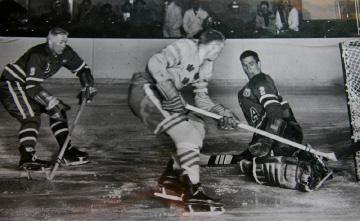
Goalie John McCartan was in the net for the Americans, a last minute substitution for the injured first string goal tender. McCartan’s performance was unbelievable against the Canadians with 39 saves out of 40 shots on goal. When the final buzzer sounded on the 2-1 American victory, spectators went crazy with delight.
The next key test for the United States was the highly anticipated matchup against the Russians. Considering that the United States was the principal political and military adversary against the Soviet Union at that time, the game took on the broader implications of the Cold War. (An estimated 500,000 watched the Winter Games.) For this game it was standing room only in the stands and in the press box, with CBS television cameras there to catch it all live for the American audience. The tempo of the game was lightning-fast action, but played clean with a total of only five penalties between the two teams. The U.S. scored first when Bill Cleary flicked a quick wrist shot past the Soviet goalie, but only minutes later the Russians came back to score one, and then quickly followed that play with another shot where the puck caromed off the goal post and into the net. The Russians were now up 2-1, but in the middle of the second period the Americans tied it up.
With little more than five minutes left in the third period, the U.S. team scored another goal to put them ahead by one. From that point on, the heart-stopping action was marked by exceptional passing and remarkable defense. Throughout the final period the Soviets tried to attack the net, but managed only five shots on goal. The American defense held even
after the Russians pulled their goalie in the final minute to add firepower to their offense. Despite a remarkable display of adrenalin-fueled athleticism, neither squad could score in those final five minutes and at the final buzzer both teams were thoroughly exhausted. When the game ended with an America win over the mighty Soviet Union, pandemonium rocked Blyth Arena. The huge upset victory set up a final match between the U.S. and Czechoslovakia and a chance for the Americans to win their first gold medal in ice hockey.
The Czechs employed the same aggressive style of quick play that had put the Russians on the podium in 1956. In the preliminary rounds against the American team, Czechoslovakia had tied one game and lost one by a single point. This final game played out on Sunday morning, the last day of the Winter Games. After the big win against the Soviet Union the night before, the exhausted Americans had their work cut out for them.

Before the U.S. players knew what hit them the Czechs scored a quick goal eight seconds into the first period, but the U.S. team bounced right back and by the first intermission the game was tied even up, 3 to 3. During the second period the Czechs scored a goal to go into the final intermission with a one point lead. Down 4 - 3 and tired from their extreme physical and emotional battle with the Russians, the American skaters were running out of gas.
During the second intermission, an unlikely ally walked into the U.S. locker room. Nickolai “Solly” Sologubov, the Soviet hockey team captain, had some advice for the Americans. He didn’t speak English, but he managed to communicate to U.S. Coach Jack Riley that the players could boost their energy levels by inhaling pure oxygen. (At the 6,200-foot elevation of Squaw Valley there is 20 percent less oxygen than at sea level.) Riley managed to find a tank and some of the players inhaled the gas in the hope that it would help fight their fatigue. Solly’s suggestion wasn’t a completely altruistic gesture. The Russians may have been out of the running for a gold medal, but they could still win a silver or bronze if the Czechoslovakian team lost to the Americans.
The atmosphere was tense in Blyth Arena as the third and final period went nearly six minutes without a goal until the American team’s high-powered offense kicked into overdrive. In a sudden explosion of firepower by Robert Christian, Robert Cleary, and his brother William Cleary, the U.S. scored six goals to lead an unstoppable American surge past the Czechs. Christian pulled off an impressive hat trick with three goals himself in that period. The U.S. offense was overwhelming with 45 shots on goal compared to the Czech’s 26. Their amazing 9 to 4 victory made international headlines and clinched the first U.S. gold medal ever in Olympic ice hockey competition.
After the game, Coach Riley said that the best overall performance was by backup goalie John McCartan, who he anointed “the greatest John since John the Baptist.” Many newspaper articles focused on the oxygen assist angle of the story, but in reality the U.S. team was a talented group of amateur guys bursting with the desire to win it all. Years later, McCartan downplayed the oxygen story by revealing that only eight of the American players used the gas, and none of the top scorers in the game, Christian or the Cleary brothers, had inhaled it.
The American press had given the U.S. hockey team virtually no chance to place higher than fifth at the Games. After all, the squad included a fireman, two carpenters from Minnesota, a couple of insurance salesmen and various players from minor league outposts. After their remarkable victory, however, the same media pundits who said they were destined to lose proclaimed them the “Team of Destiny.”
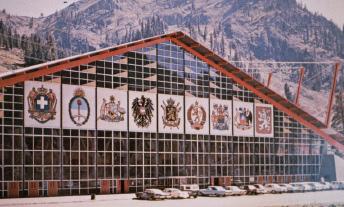
Blyth Arena was the focal point for Olympic Skating and pageantry. Author’s Collection



Few artists captured the spectacle and energy of sports quite like LeRoy Neiman. For decades, his vivid images of boxers, Olympians, golfers, and basketball legends shaped how America saw its athletes—not merely as competitors, but as icons in motion.
Born in 1921 in St. Paul, Minnesota, Neiman rose from modest beginnings during the Great Depression. After serving in World War II, he studied at the School of the Art Institute of Chicago, where he later taught. His early career included illustration work for magazines, most notably Playboy, which brought him national attention in the 1950s.
Neiman gained prominence by documenting major sporting events worldwide. He served as an official artist for five Olympic Games and covered the Super Bowl, World Series, Kentucky Derby, and heavyweight championship fights. Rather than freezing moments like a photograph, Neiman painted emotional impressions. His works were not just records of events—they were immersive experiences.
By the 1970s and 1980s, he had become one of the most recognizable and commercially successful artists in America. His screen prints made sports art accessible to a wide audience.
Neiman’s sports paintings are instantly recognizable for their explosive color—electric greens on golf courses, blazing reds in boxing rings, and brilliant blues and golds under stadium lights. His palette heightened drama and atmosphere. Grass appears more luminous, uniforms vibrate against charged backgrounds, and sweat gleams under intense light.
Color for Neiman was expressive rather than purely descriptive. A boxer’s red gloves flare against acidic yellows, intensifying the heat of the fight. In golf scenes, layered greens and streaks of white suggest sunlight flashing across fairways. The goal was sensation—the feeling of being present.
His brushwork was equally distinctive. Loose, gestural strokes rarely sit still. Lines flicker and edges blur, as if figures are caught mid-stride or mid-swing. Rather than carefully modeling anatomy, he suggested it with swift, energetic marks. This approach creates kinetic energy. Neiman understood that sport is speed, rhythm, and impact—and he translated that into canvases alive with motion.
Though sometimes criticized as flamboyant, Neiman was embraced by the public. He erased the line between fine art and popular culture, elevating athletic competition into painterly spectacle. When he died in 2012, he left behind a bold visual language for sport—fearless in color, expressive in stroke, and forever in motion.
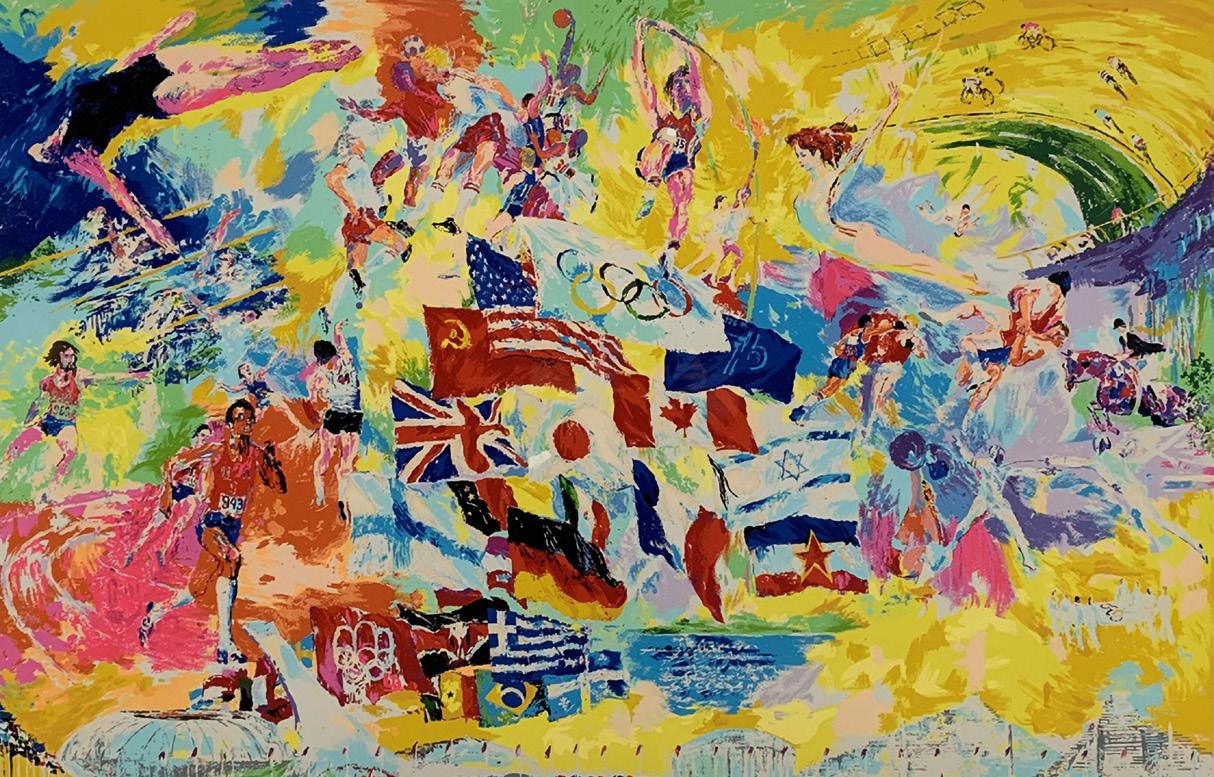
“76 Montreal” - Leroy Neiman | Pencil Signed Serigraph 120/600 - Available for Purchase at The Genoa Gallery

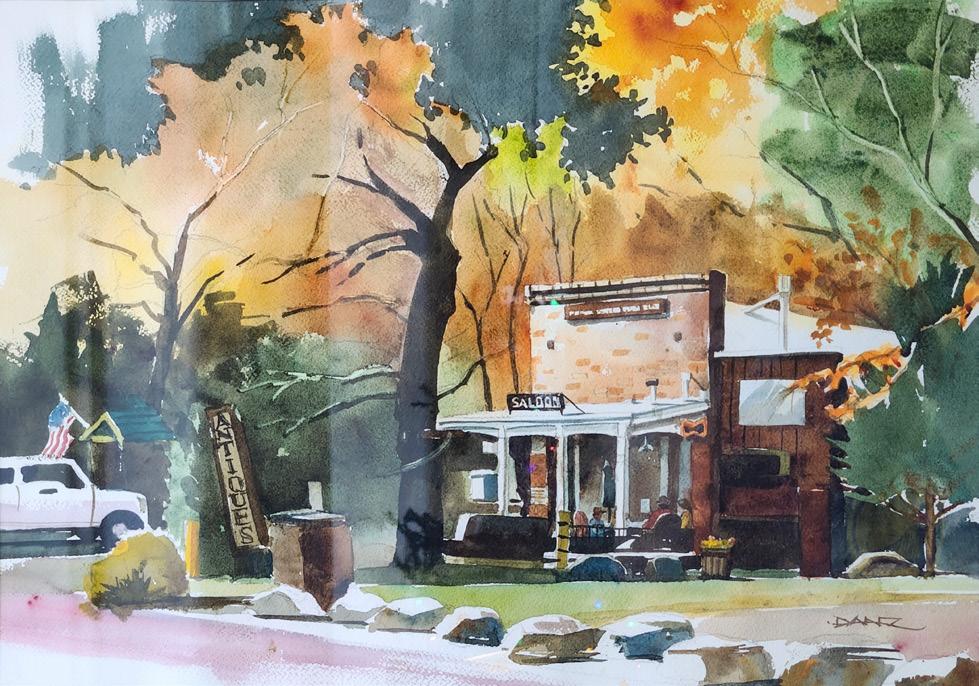


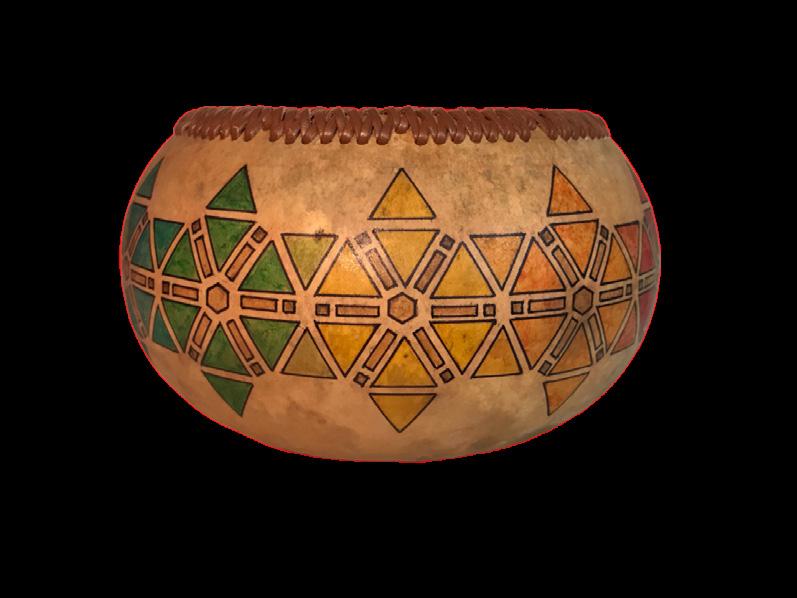






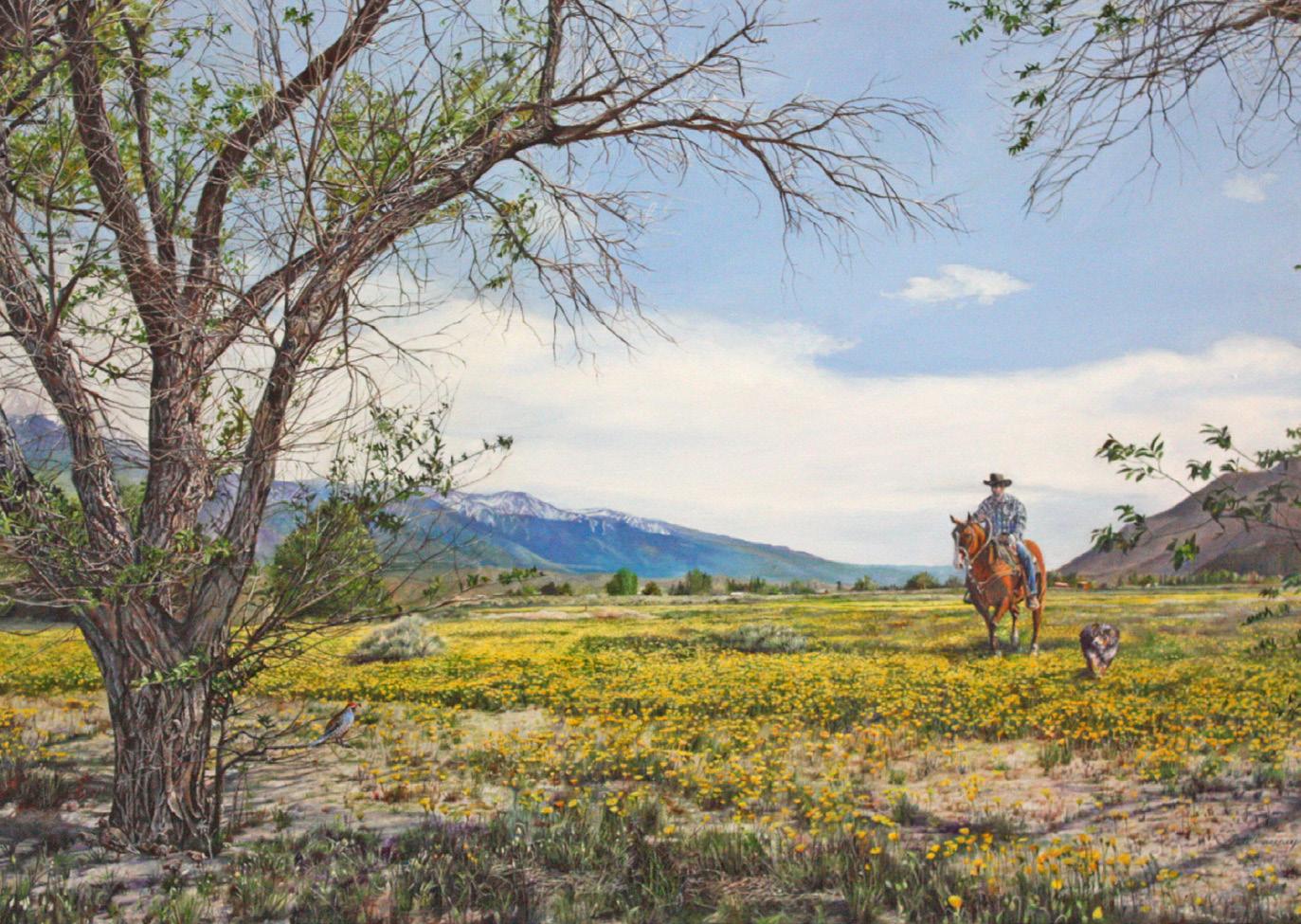






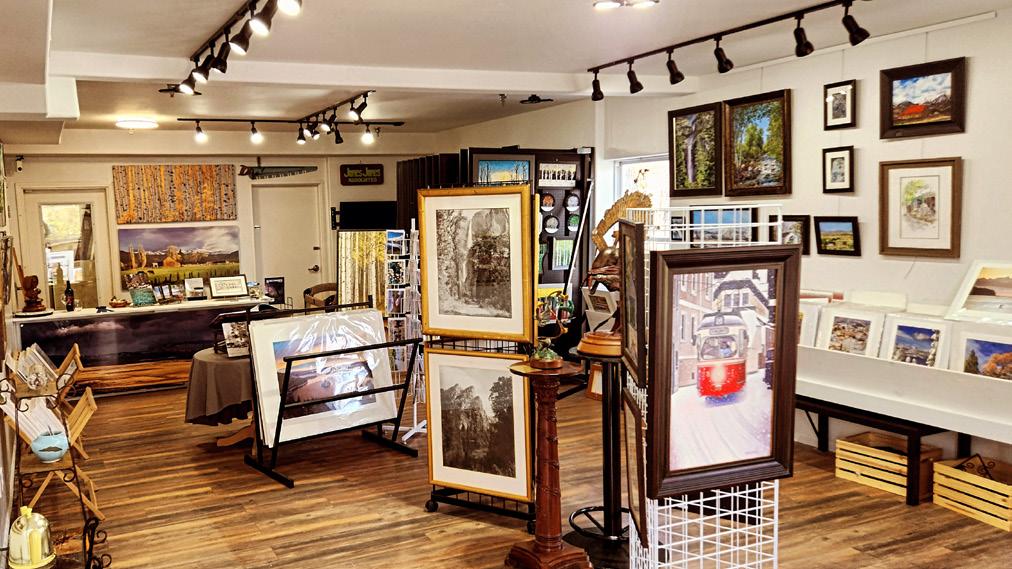










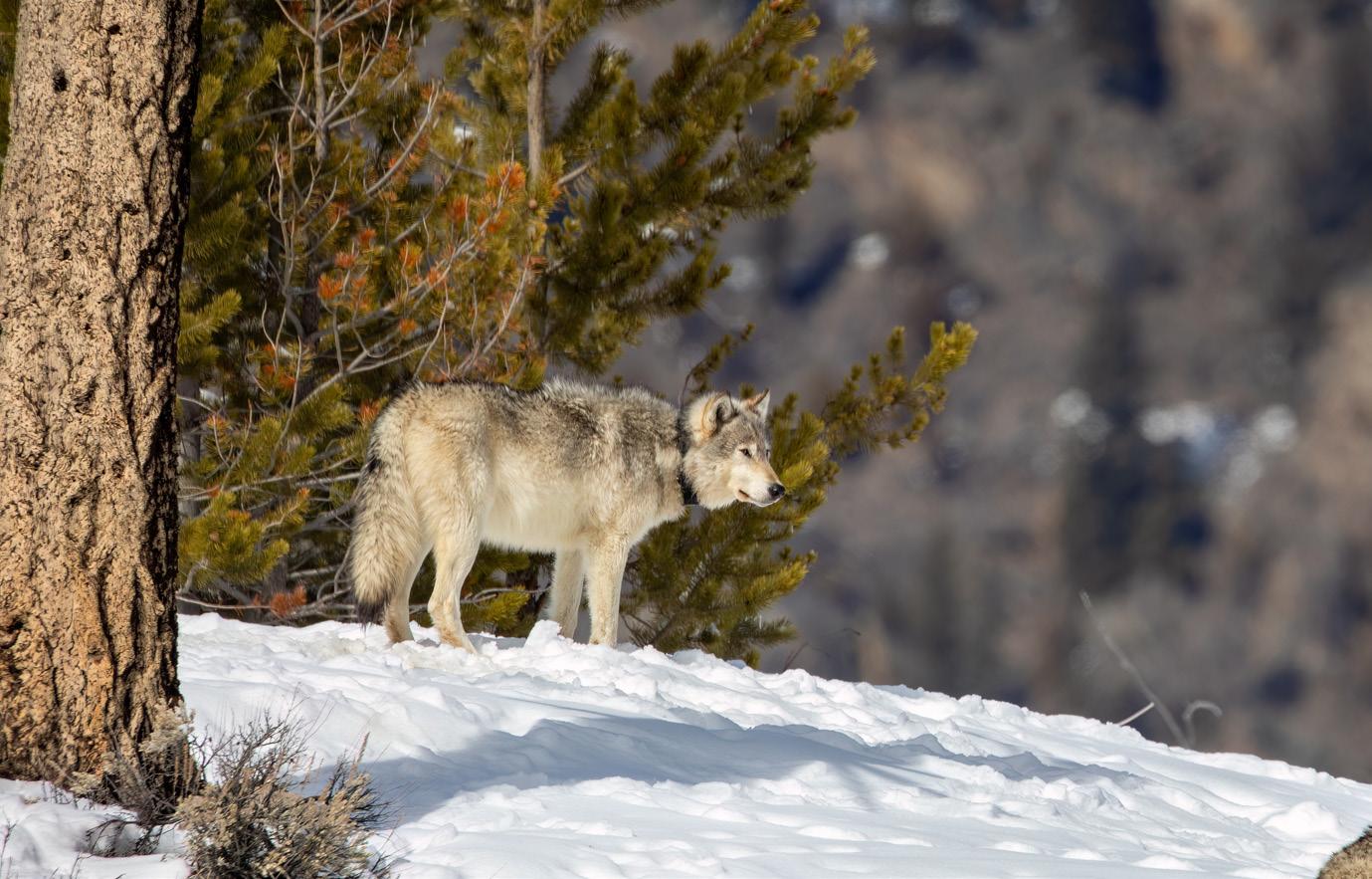
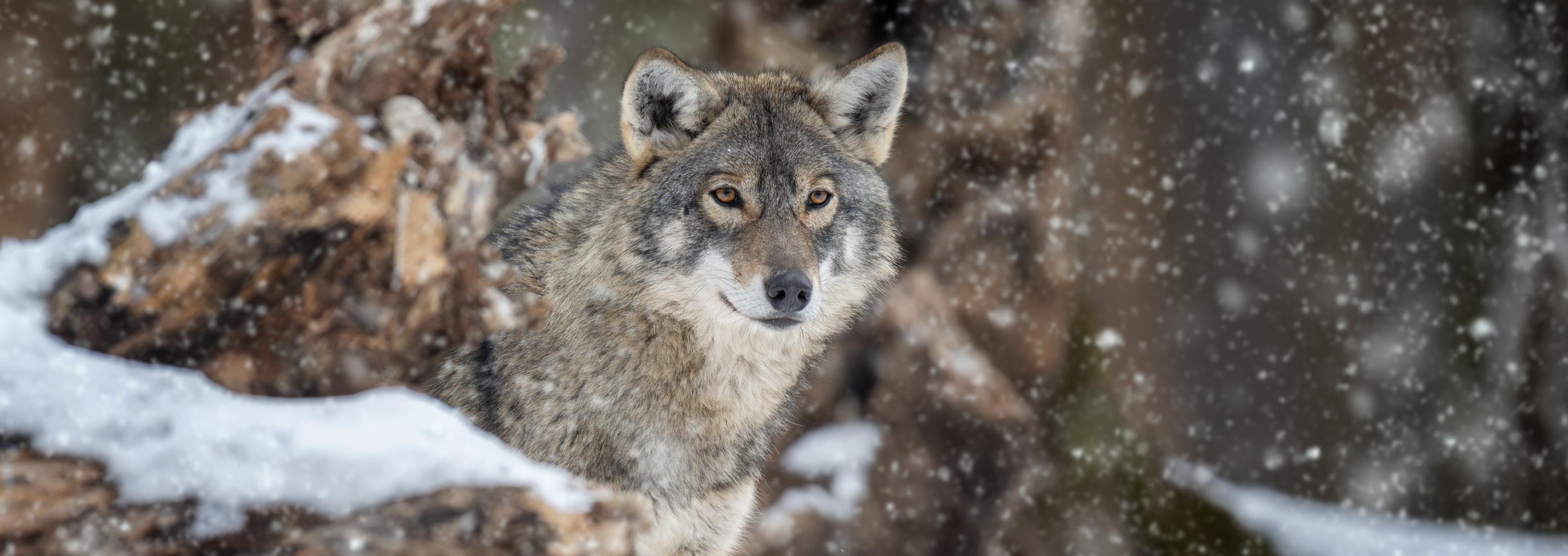
In early February 2026, wildlife officials confirmed that a gray wolf had moved into the Truckee, California area, based on data from the California Department of Fish and Wildlife (CDFW) wolf tracking system. The Truckee Police Department and regional authorities issued public advisories encouraging residents to remain aware, particularly during dawn and dusk hours, and to keep pets closely supervised. While no aggressive behavior toward people was reported, officials emphasized caution and the importance of reporting confirmed sightings to aid monitoring efforts.¹
The presence of a wolf near Truckee reflects a broader pattern of wolf dispersal across Northern California. Gray wolves were eliminated from California by the early 20th century, but began naturally recolonizing the state in 2011 when a wolf from Oregon crossed the border. Since then, several packs have formed, primarily in northeastern California, while individual wolves periodically travel long distances in search of territory or mates.² As populations slowly increase, dispersing wolves are expected to explore
portions of their historic Sierra Nevada range, including higher-elevation corridors near Donner Summit and surrounding forests.
Biologists believe the wolf detected near Truckee was likely a dispersing individual rather than part of an established local pack. Wolves are capable of traveling hundreds of miles, often passing through human-used landscapes during dispersal. While sightings near populated areas are uncommon, they can occur as wolves move between remote habitats.³ Winter conditions can also influence travel routes, as snow depth affects prey movement and accessibility.
CDFW uses GPS collars and public reporting tools to track these movements. The recently expanded wolf mapping system allows communities and livestock owners to view approximate wolf locations, helping reduce surprise encounters and prevent conflicts before they occur.4 These tracking tools are designed to balance transparency with species protection by sharing general location data rather than precise coordinates.

Gray wolves are listed as endangered under both the California Endangered Species Act and the federal Endangered Species Act, making them fully protected. California’s wolf management approach prioritizes monitoring, education, and conflict prevention, rather than population control.5
CDFW works closely with ranchers, tribes, conservation organizations, and local governments to deploy non-lethal conflict-mitigation tools, including range riders, fladry fencing, night corrals, and livestock compensation programs. Lethal removal is considered only in rare cases of repeated livestock depredation after extensive non-lethal measures have failed.6





Continued from page 10
As apex predators, wolves can influence ecosystems by helping regulate deer populations and altering prey behavior, which may benefit vegetation recovery in some landscapes. Their return is viewed by many conservationists as an ecological milestone. At the same time, rural communities and livestock producers face legitimate concerns about economic impacts, underscoring the importance of proactive management and open communication.
Wolves generally avoid humans and pose little direct risk to people. However, coexistence depends on proactive behavior:
• Pet owners should keep pets leashed or indoors at night and avoid leaving food outside.
• Livestock owners are encouraged to use non-lethal deterrents and maintain regular human presence around animals.
• Residents and visitors should never approach or feed wolves and should report sightings to CDFW.5
The movement of a wolf into the Truckee area highlights the ongoing recovery of a species absent from California for nearly a century. As wolves continue to reclaim portions of their historic range, community awareness, accurate information, and coexistence strategies will remain essential for balancing conservation goals with public safety, tourism, outdoor recreation, and rural livelihoods.
1. KOLO-TV, Wolf spotted near Truckee, officials urge caution, February 2026.
2. California Department of Fish and Wildlife, Gray Wolf Conservation and Management in California.
3. Center for Biological Diversity, California wolf dispersal and tracking updates.
4. California Department of Fish and Wildlife, Wolf Location Automated Mapping System.
5. California Department of Fish and Wildlife, Living with Wolves in California.
6. California Department of Fish and Wildlife, Wolf–Livestock Conflict and Management Actions.










Cold spots are a common challenge for homeowners during the winter months. They not only reduce overall comfort but also drive up energy costs. These problem areas often appear in rooms over garages, spaces farthest from the HVAC unit, finished basements, and home additions.
Caused by uneven airflow, poor insulation, or systems that struggle to adapt to varying room conditions throughout the day, cold spots can lead to uncomfortable living spaces, extra strain on your HVAC system, and higher heating bills due to overcompensation.
Fixing these problems can involve several approaches. One option is upgrading from a single, whole-home HVAC system controlled by one thermostat to a zoned solution that lets you fine-tune comfort in each room. Another is improving ductwork by replacing long runs, undersized ducts, or leaky connections that restrict airflow. You can also add smart controls that automatically adjust to changing conditions.
Consider these tips recommended by the experts at Mitsubishi Electric Trane HVAC US (METUS) to improve your home’s comfort:
• Evaluate Your Current System
Have a qualified technician inspect your HVAC system, checking ductwork for leaks, blockages or damage that could be preventing air from reaching specific rooms. Also confirm filters, coils and existing thermostats are properly located and in good working order to ensure they’re correctly reading temperatures.
• Consider a Zoned HVAC System Upgrade
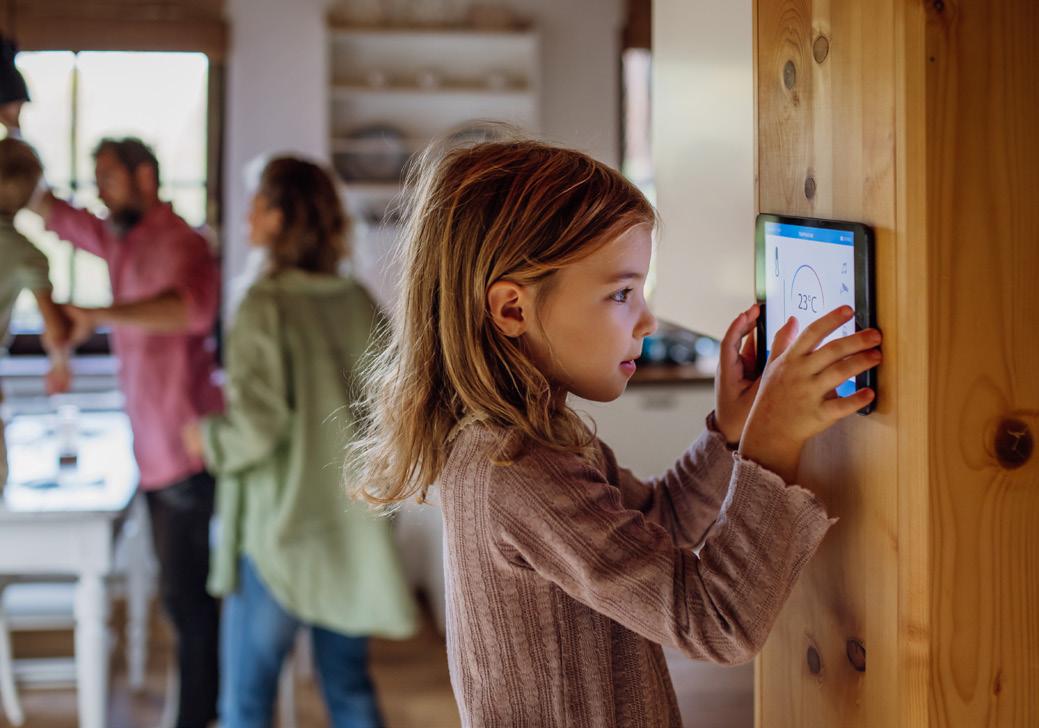
Zoning divides your home into separate areas, each with its own temperature control. Options like Zoned Comfort Solutions® from Mitsubishi Electric allow you to treat individual rooms or spaces differently, conditioning only the areas you use for consistent comfort and reduced energy waste.
Continued on page 16


Continued from page 14
In larger homes with central ducted systems, adding motorized zoning dampers to open and close inside the ductwork and multiple thermostats can help redirect air where it’s needed most. For additions, bonus rooms or spaces with unique needs, ductless minisplits provide independent control for precise comfort without requiring an overhaul of the entire existing system.
• Add a Smart Thermostat and Sensors
Pairing zoning with smart sensors and controls allows each zone to fine tune comfort automatically for maximum efficiency. These sensors and advanced controls serve as the system’s intelligence, responding in real time to conditions in each room and monitoring both temperature and occupancy to adjust when a room deviates from the desired temperature.
Easy to integrate with many popular smart home platforms, the system learns your household schedule and habits to automatically optimize comfort and efficiency based on when and where people actually spend time. Plus, access through connected apps via your phone allows you to monitor coldprone rooms and make adjustments, even when you are away.
• Schedule Seasonal Maintenance
At least semi-annually, if not at the change of each season, have filters, coils and sensors cleaned and calibrated by a professional. Staying up to date on maintenance can help ensure your system is delivering the right amount of air where and when you need it.

•Enclosed RV and Boat Stoarge
•Three LocationsWithin 1 hour of Tahoe
•24-Hour Access
•Temprature Controled Units
•Tahoe Resident Specials! Starting at $50/mo
Modern, connected energy efficient systems are attractive to buyers and can help lower a home’s carbon footprint. Learn more about fixing cold spots with zoned solutions at mitsubishicomfort.com.