LTSS stands for Long Term Services and Supports. LTSS encompasses services and supports used by individuals of all ages with functional limitations and chronic illnesses who need assistance to perform routine daily activities such as bathing, dressing, preparing meals, and administering medications.
Who Qualifies for LTSS?
Community First STAR Kids Members ages 0-20 who either:
> Receive Supplemental Security Income (SSI)
> Receive disability-related Medicaid services
> Are enrolled in the Medically Dependent Children Program (MDCP)
Community First STAR+PLUS members who meet at least one of the following:
> Age 21 or older, getting Supplemental Security Income (SSI) benefits and able to get Medicaid due to low income.
> Not getting SSI and need the type of services in STAR+PLUS HOME and Community-Based Services.
> Age 21 or older, getting Medicaid through what are called “Social Security Exclusion programs” and meet program rules for income and asset levels.
> Age 21 or over residing in a nursing home and receiving Medicaid while in the nursing home.
> In the Medicaid for Breast and Cervical Cancer program
Waiver Programs
Individuals currently enrolled in an Individual Developmental Disabilities/Individuals with Intellectual Disabilities (IDD/IID) waiver such as CLASS, DBMD, HCS, or TXHmL receive acute care services through their STAR Kids or STAR+PLUS health plan. All LTSS services are provided through their waiver program.
EVV COMPLIANCE & OPERATIONS FOR AGENCIES AND FMSAS
This resource provides program Providers, Financial Management Services Agencies (FMSAs), and Proprietary System Operators (PSOs) with key updates, responsibilities, and operational expectations under the Electronic Visit Verification (EVV) Policy Handbook and EVV guidelines published by Texas Health and Human Services Commission (HHSC).
EVV Overview for Providers, FMSAs & PSOs
Electronic Visit Verification (EVV) is a computer-based system used to electronically document and verify the delivery of certain Medicaid services—including date, time, service type, and location of service delivery.
The EVV Policy Handbook outlines mandatory EVV standards and requirements for:
• Program Providers
• Financial Management Services Agencies (FMSAs)
• Consumer Directed Services (CDS) Employers
• Proprietary System Operators (PSOs)
EVV is required for Medicaid personal care services (as of January 1, 2021) and home health care services (as of January 1, 2024) under the 21st Century Cures Act.
Compliance Expectations for Agencies and FMSAs
1. Adherence to EVV Policy Requirements
Agencies and FMSAs must fully comply with:
• EVV Policy Handbook rules
• Stand-alone EVV policies posted on the HHSC EVV webpage
• Additional program and licensure rules applicable to their service area
If operating as or applying to be a Proprietary System Operator (PSO), you must also adhere to PSO-specific requirements noted in the handbook and maintain compliance even when content has not yet been fully updated for PSOs.
2. EVV System Responsibilities
Agencies, FMSAs, and approved PSOs are responsible for:
• Ensuring attendants and CDS employees clock in and out using an approved EVV system (vendor or proprietary).
• Maintaining accurate service records for visits, including reason codes when visit maintenance is needed.
• Providing training and education to staff and CDS employers on visit verification requirements.
When visit data is incomplete or incorrect, agencies/FMSAs must perform visit maintenance, including:
• Selecting appropriate EVV reason codes
• Adding required free-text documentation
Improper or insufficient visit maintenance may trigger compliance actions.
4. EVV Compliance Reviews
HHSC and Community First conduct EVV compliance reviews to ensure adherence to:
• Visit verification rules
• Proper use of reason codes
• Alignment between EVV data and claims
Agencies and FMSAs should remain review-ready by maintaining:
• Up-to-date staff training
• Clear documentation trails
• Internal audit and monitoring processes
EVV Clock In/Clock Out Methods (What Your Staff Must Support)
Attendants must use one of the following:
• EVV mobile method (through an approved mobile app)
• Alternative device placed in the Member’s home
• Member’s home landline telephone
Agencies/FMSAs must train staff on proper use of these methods and ensure no use of the Member’s personal cellphone for EVV.
If an alternative device is used, agencies are responsible for:
• Installation
• Ensuring it remains in the Member’s home
• Replacing devices that are removed, damaged, or tampered with
Documentation & Reporting Expectations
Claims
Submission
Claims must match verified EVV visit data. Mismatches will result in claim denials. Providers should ensure that all visit details, including service codes, units, and dates of service, are accurately documented in EVV prior to claims submission.
Reason
Codes
Accurate reason codes must be used when correcting or validating visits. Each reason code selected must clearly align with the documented issue and include sufficient supporting detail to justify the change and ensure compliance during EVV audits or reviews.
Record Retention
All EVV related documentation must be maintained per HHSC retention rules (typically 5 years unless superseded by contract requirements).
System Updates, Revisions & Training Requirements
Handbook Revisions
Recent EVV Policy Handbook revisions include updated compliance standards, clarified language, new definitions, and changes to accessibility requirements (removal of graphics, diagrams, etc.).
Training
• HHSC regularly updates EVV training on the HHS Learning Portal.
• Agencies, FMSAs, and CDS Employers must complete required EVV trainings after revisions.
• Community First offers live, virtual training sessions designed specifically for Community First Providers. Visit CommunityFirstHealthPlans.com/Provider-Educational-Sessions to register.
Proprietary System Operator (PSO) Notes (If Applicable)
Agencies seeking PSO status must follow TMHP’s guidelines and maintain compliance across all EVV rules.
Support & Resources
• HHSC EVV Webpage: The HHSC EVV webpage provides access to official emergency services contacts, policies, handbook updates, grievance forms, and statewide guidance related to EVV requirements.
• TMHP EVV Portal: The TMHP EVV Portal offers user guides, billing code tables, system resources, and information related to EVV operations and compliance monitoring.
• Community First Provider EVV Webpage: The Community First Provider EVV webpage provides EVV guidance, training materials, and the latest policy updates specific to Community First.
• Community First Provider Porta: The Community First Provider Portal supports day-to-day administrative workflows, allowing Providers to submit claims and appeals, check claim status, verify Member eligibility, and manage authorization requests. The portal also provides access to key STAR Kids tools, including the STAR Kids Screening and Assessment Instrument (SK-SAI) and the STAR Kids Individual Service Plan (SK-ISP), helping Providers stay informed of patient needs and support effective care coordination.
Final Notes for Agencies & FMSAs
Maintaining EVV compliance requires:
• Ensuring accurate visit verification
• Maintaining readiness for compliance reviews
• Training staff and CDS employers
• Staying updated with EVV policy revisions
• Monitoring system changes issued by HHSC, TMHP, and MCOs
Provider Quick Reference Guide
SELF-REFERRALS
No Prior Authorization Needed
PRIOR AUTHORIZATION IS NOT REQUIRED WHEN A PARTICIPATING NETWORK PROVIDER IS UTILIZED FOR:
- Behavioral health (subject to program benefits and limitations)
- EPSDT/Texas Health Steps (Medicaid ONLY)
- Urgent care services provided in a network urgent care facility
- Emergency care provided in a hospital (Community First must receive notification of ER to inpatient setting admission within 24 hours of occurrence)
- Early Childhood Intervention
- Behavioral Health Targeted Care Management
Current authorization lists can be found on the Community First Provider Portal or online at CommunityFirstHealthPlans.com.
BILLING/CLAIMS
Availity Payor ID: COMMF
Community First Health Plans / Community First Insurance Plans
P.O. Box 240969
Apple Valley, MN 55124 Community First Health Plans / Community First Insurance Plans
Attn: Claim Appeals
P.O. Box 240969
Apple Valley, MN 55124
CLAIM APPEALS
- Appeal requests must be clearly identified and received by Community First within the appeal deadline specified below.
- Providers should use a Claim Appeal Submission Form when submitting appeals.
- A copy of the EOP and/or other supporting documentation may be required. If an EOP is submitted, de-identify information of other Members on the EOP.
- Appeals must be mailed to the claim appeal address listed above (addressed to “Claim Appeals”) or submitted via the Community First Provider Portal
- All Medicaid claims must be finalized within 24 months from the date of service, discharge date, or inpatient claims.
- If you disagree with an appeal decision, a second appeal must be received by the deadline specified below:
NEW PORTAL FEATURE: AUTHORIZATION PRE-CHECK TOOL
We are excited to introduce a NEW tool available on the Community First Provider Portal: Authorization Pre-Check.
How It Works:
The Authorization Pre-Check tool performs a quick review based on preliminary information to determine whether an authorization is required. If the tool shows that authorization is needed, your pre-check information will automatically transfer to the submission form.
NEW PORTAL FEATURE
How To Find It:
Log in to the Community First Provider Portal using your existing credentials. Navigate to the Referral & Authorizations dashboard and enter required information.
For step-by-step instructions, read the Authorization Pre-Check Guide available on the portal under Community First U.
We appreciate your partnership as we improve our tools and workflows. Questions? Call Provider Services at 210-358-6030 for support. Additional prior authorization information is also available on our website:
Below, you will find important information about Community First Member pharmacy benefits managed by Navitus Health Solutions, including how to find the most recent Preferred Drug List. Please review carefully.
Pharmacy Benefit Program
Community First offers Members prescription drug benefits through our pharmacy benefits partner, Navitus Health Solutions. Take the following steps to log in to the Navitus Provider Portal.
1. Visit Prescribers.Navitus.com
2. Click “Sign In” located on the upper right hand corner of your screen.
3. Enter your NPI number and select your state.
Once logged in, Providers can access the following information:
• List of covered drugs, also called a formulary, and other information including drug tiers and quantity limits.
• Updates to the formulary.
• Prior authorization forms and clinical criteria used for certain medications.
• Information on how to request a formulary exception.
• List of network and specialty pharmacies.
The Texas Vendor Drug Program publishes a Preferred Drug List (PDL) for Medicaid Members every January and July. This list contains preferred covered medications and requirements for using non-preferred medications.
4. For the most up-to-date version of the Medicaid PDL, please visit Medicaid Pharmacy Prior Authorization and PDL.
5. To obtain a paper copy, please contact Provider Services at 210-358-6030
INTERDISCIPLINARY CARE TEAM (ICT) MEETINGS: SUPPORTING
CARE COORDINATION FOR PCPS
At Community First, we understand the critical role Primary Care Providers (PCPs) play in coordinating and sustaining high-quality care for Medicare Advantage Dual Eligible Special Needs Plan (D-SNP) Members. To support you and your patients, our Medicare Advantage D-SNP program facilitates Interdisciplinary Care Team (ICT) meetings for Members with complex medical, behavioral, or social needs.
Why ICT Meetings Matter
ICT meetings are structured case conferences that bring together a coordinated team of clinicians that includes care coordinators, nurses, pharmacists, behavioral health specialists, and social workers who support the Member’s treatment plan.
How ICT Meetings Benefit PCPs
• Reinforce care plan adherence by aligning specialists, behavioral health, and supportive services.
• Address barriers such as medication access, care coordination challenges, and non-medical drivers of health (NMDOH).
• Improve communication between all treating Providers and the health plan.
• Streamline follow-up, reducing duplicated efforts and supporting better continuity of care.
• Support high-risk patients, especially those with chronic conditions, recent hospitalizations, or ongoing social needs.
PCP clinical insight is highly valued and directly influences care plan development.
How We Support Your Practice
Community First has dedicated Case Managers who coordinate ICT meetings and maintain follow-up documentation. PCP participation may be requested when:
• Your input is essential to the patient’s care plan.
• A change in treatment or medication management is being considered.
• There is a need to align goals across specialties.
• The Member has complex, ongoing clinical needs.
Our goal is to reduce administrative burden while strengthening collaboration.
To learn more about ICT meetings or to request additional support for one of your Medicare Advantage D-SNP patients, contact us at chelp@cfhp.com.
Together, we can enhance coordination, improve outcomes, and ensure comprehensive, patient-centered care for our shared Medicare Advantage D-SNP Members.
Community First uses a Member-Centric Population Health Management (PHM) strategy that allows us to focus on care that addresses each Members’ preferences, needs, and values. The framework of this strategy identifies the needs of our community, stratifies these needs for intervention, and focuses on the transition to value-based care in our contracted network.
The tools in our PHM strategy include the following:
Health Assessments. Health Assessments collect important information about Members, including their health literacy, risks and health behaviors, demographics, values, and special needs. Health Assessments also help us connect with our Members at all stages of life (i.e., early childhood, adolescence, adulthood, and old age), and better understand how they approach conditions and prefer to receive information.
Risk Stratification Risk Stratification arranges Members into meaningful categories for personalized intervention targeting. This includes everyone in our Member population, from low-risk to high-risk. Most health care costs are incurred by a minority of the population so it is important to strategize as to where to target investments that can yield the highest return, both in improved health outcomes and cost reductions.
Enrollment and Engagement. Enrollment and engagement include coordination of care across all settings for every Member. Engaging Members in their health care helps them to appropriately access care and services. Enrollment and engagement include self-determined participation in intervention-directed activities that are in alignment with the Members’ goals.
Person-Centered Interventions. Person-centered clinical and wellness interventions include a broad range of approaches and activities tailored to improve the health and well-being of an individual. These interventions can direct resources toward the areas of greatest population risk and opportunities for health improvement. This includes disease management, medication adherence, lifestyle management, and ongoing behavioral health coaching and education.
Providers play a key role in our overall strategy, including promoting healthy habits and increasing Member engagement in our Health & Wellness Programs. Our current Health & Wellness Programs include:
> ASTHMA MATTERS
Asthma Management Program
> DIABETES IN CONTROL
Diabetes Management Program
> HEALTHY MIND
Behavioral Health Program
> HEALTHY LIVING
Lifestyle Management Program
> HEALTHY EXPECTATIONS
Maternity Program
> HEALTHY HEART
Blood Pressure Management Program
Community First Health & Wellness Programs offer personalized guidance, one-on-one support, and incentives to help Members improve their health outcomes.
Please explore our program offerings and share these valuable resources with your Community First patients.
Asthma Matters
Asthma Management Program
• Education about the causes or triggers of asthma
• Tips to achieve normal or near-normal lung function
• Advice on how to participate in physical activity without symptoms
• Ways to decrease the frequency and severity of flare-ups
Qualifying Members can get an asthma kit, pillow cover, mattress protector, gift cards for: participating in Asthma Matters: Asthma Management Program, completing asthma education, receiving a flu shot, and completing three home visits with San Antonio Kids BREATHE.*
Diabetes in Control
Diabetes Management Program
• Diabetes education, self management, and healthy cooking classes
• In-person and virtual fitness classes
• Home visit from a nurse
• Tips to better communicate with providers
• Smart mat that checks foot temperature to help catch complications from diabetes early*
• Referral to YMCA Diabetes Prevention Program (including YMCA membership)*
• Diabetes Garage classes for men with diabetes*
Members in Diabetes in Control may qualify for gift cards for participating and completing diabetes education, receiving a dilated eye exam, and submitting A1C results (once every six months).*
Healthy Expectations Maternity Program
• Prenatal and postpartum education
• Information about labor and delivery
• Breastfeeding education
• Home visits for high-risk pregnancies*
• In-person or virtual Mommy & Me Baby Shower
• Fourth trimester classes
Members in Healthy Expectations may qualify for gift cards for each of the following: completing the Community First Health Assessment, agreeing to receive health education text messages, attending all required pre- and postnatal checkups, receiving a flu shot during pregnancy, and attending a Mommy & Me Baby Shower. Members can also receive a gift card toward a pregnancy item or birthing classes.*
Healthy Mind
Behavioral Health Program
• Help determining the type of behavioral health assistance needed
• Mental health resources and education
• Help choosing the right professional, counselor, or doctor
• Case Management for high-risk Members
Caregivers or parents of qualifying Members or qualifying Members caring for a child/teen with a mental health condition may qualify for a gift card for completing NAMI Basics, a six-class series on mental health.*
Healthy Living
Lifestyle Management Program
• Education on managing and monitoring blood pressure for better heart health
• Referral to YMCA Y Weightloss Program (including YMCA membership)
• Case Management for high-risk Members
Healthy Heart
Blood Pressure Management Program
• Education on managing and monitoring your blood pressure for better heart health
• Referral to YMCA Blood Pressure Management Program (including YMCA membership)*
• Case management for high-risk Members
Refer a Patient
If you have a patient who could benefit from participating in one or more of our Health & Wellness Programs, we encourage you to contact Population Health Management at 210-358-6055 or email healthyhelp@cfhp.com.
You can also advise patients to:
• Take our online Health Assessment available on our website at CommunityFirstHealthPlans.com/Healthand-Wellness-Programs, or
• Email healthyhelp@cfhp.com or
• Call 210-358-6055 to speak with a Health Educator.
All Health & Wellness Programs are provided at no cost, and Members can opt out of a program at any time.
Community First strives to provide the best quality services to our Members. These programs support and enhance your clinical care.
* Limitations and restrictions apply. For eligibility requirements, please call 210-358-6055 or email healthyhelp@cfhp.com.
2026 MEDICAID MENTAL HEALTH CARE PROVIDER INCENTIVE PROGRAM
Below is a description of Community First’s Incentive/Level 2 Alternative Payment Program effective January 1, 2026 for Mental Health Care Providers and other qualifying Providers based on HEDIS® technical specifications and the provision of services.
Follow-Up After Hospitalization for Mental Illness (FUH)
Mental Health Care Providers and other qualifying Providers* can be awarded up to $100 for each 7-day Follow-Up After Hospitalization for Mental Illness for STAR, STAR Kids and STAR+PLUS. Members, in addition to regular fees for service reimbursement.
Providers that provide 7-day Follow-Up After Hospitalization for Mental Illness care as defined by HEDIS® (Follow-Up After Hospitalization for Mental Illness within 7 days after discharge but excluding on the date of discharge) will receive $100 for STAR, STAR Kids, and STAR+PLUS Members with verified eligibility on the date of service in addition to the contracted payment for rendered services.**
A valid claim must include appropriate CPT/ICD-10 Codes and any necessary modifiers. The rendering Provider’s qualifying taxonomy and 10-digit NPI must be on the claim. Your efforts toward this measure reduce readmission rates and enhance mental health outcomes.
Thank you for prioritizing patient care during a vulnerable time in your patient's life.
We encourage you to participate in this Medicaid Mental Health Care Provider Incentive Program. If you have any questions about this program or other Community First provider incentive programs, please contact Narkunan Kesavaram at nkesavaram@cfhp.com or 210-358-6268.
Please note: The Community First Provider Incentive program is designed to align with the state’s P4Q Metrics and quality metrics. If there is an extraordinary circumstance (i.e., pandemic, changes to the P4Q metrics by HHSC, etc.), Community First reserves the right to update the Provider Incentive Program.
* Follow-up visit must meet FUH HEDIS technical specifications.
** Financial rewards will be distributed quarterly through this program, with payments commencing 90 days after the close of each quarter.
HEDIS® Tip Sheets
The following HEDIS Tip Sheets and billing guidance are designed by Community First to assist providers, their clinical team, and billing staff with information to improve HEDIS performance. If you have any questions related to HEDIS measures, please contact Provider Services at 210-358-6030.
HEALTH CARE TRANSITION FROM ADOLESCENCE TO ADULTHOOD
The transition from childhood to adulthood is filled with many changes, including a transition from a pediatric to an adult model of care. According to “Supporting the Health Care Transition From Adolescence to Adulthood in the Medical Home”, a clinical report from the American Academy of Pediatrics, optimal health care is achieved when each person, at every age, receives medically and developmentally appropriate care. The goal of a planned health care transition is to maximize lifelong functioning and well-being for all youth, including those who have special health care needs and those who do not.
The following information was compiled to help Community First Providers guide teen and young adult patients and their parents, guardians, and caregivers through a successful Health Care Transition (HCT), preparing them for an adult model of care.
HCT Team
A young adult’s HCT team includes:
• Young adult
• Parents/guardians
• Primary Care Provider
• Specialty Care Providers
• Other Providers or support staff, if appropriate
A Provider’s Role
A HCT focuses on building a teen/young adult’s independent health care skills, including selfadvocacy, which will prepare them for the adult model of care. Providers should also help patients find new adult Providers with experience caring for special health care needs, if applicable.
Pediatricians can offer support to patients and their parents by:
• Encouraging them to choose a new doctor with whom they trust and feel at ease.
• Encouraging them to stay in touch, especially in the beginning stages of the transition.
• Aiding both parent and child in making health care decisions, and until the child feels capable of managing their health themselves, the parent may discuss the possibility of the child granting the parent temporary access to medical records.
• Explaining that the adolescent’s decision to take responsibility for their actions is a normal stage of growing up and that doing so is a sign of maturity.
• Helping parents begin the process of finding a new doctor and transferring the child’s records before the child leaves pediatric care.
Timeline
The age and developmental stage of the adolescent are the main factors determining whether it is time to switch to an adult provider.
A well-timed transition from child-to adultoriented health care is unique to each individual and ideally occurs between the ages of 18 and 21 years, is determined with the assistance of a pediatrician, and should begin when the child is 14 or 15 years old.
INFANT AND EARLY CHILDHOOD DEVELOPMENTAL SCREENINGS UP TO AGE 3
Early screenings for children from birth through age 3 is crucial to ensuring the best possible health outcomes. It’s equally important to educate parents about the importance of these screenings so that they schedule them on time and follow through.
This Provider Tip Sheet was created with guidelines on well-child exams and Texas Health Steps from the American Academy of Pediatrics (AAP) and Health and Human Services Commission (HHSC). It should serve as a quick reference for when to screen children in their first few years of life using standardized screening tools for the risk of developmental, behavioral, and social delays.
Age Ranges
A total of eight developmental screenings are allowed up to age 6 with a Texas Health Steps medical checkup/well-child exam within the following age ranges:
• Two screenings from birth to 11 months
• Three screenings from ages 12 to 23 months
• Two screenings from ages 24 to 35 months
• One screening at 3 years of age
Clinical Recommendations
1. The AAP recommends developmental and behavioral screenings for all children during regular Texas Health Steps checkups/well-child visits at 9 months, 18 months, and 30 months.
2. In addition, the AAP recommends that all children be screened specifically for autism spectrum disorder (ASD) during regular Texas Health Steps checkups/well-child visits at 18 months and 24 months.
3. Developmental surveillance should be a component of every preventive care visit. Educate staff to schedule office visits within recommended time frames.
4. Standardized developmental screening tools should be used when surveillance identifies concerns about a child´s development.
CPT Codes
• CPT Code 96110: Use for developmental testing, with an interpretation and report, billed twice in a 12-month period.
• CPT Code 96110 with modifier U6: Use when additional screenings are performed for the screening of autism. This billing will not count toward the twice-yearly allowable regular screenings.
Best Practices
• Integrate screening protocols into routine pediatric care to enhance detection of developmental delays during subsequent assessments (American Academy of Pediatrics, AAP.org).
• Perform developmental observation and screenings during each health visit using a validated tool at 9, 18, and 30 months of age (AAP). Framing developmental surveillance as “monitoring” may facilitate understanding when discussing it with families.
• Increase screening frequency for children with additional risk factors such as preterm birth, low birth weight, and exposure to lead, among others.
• Actively solicit and address parental concerns regarding their child’s development.
• Screen for maternal depression at 1, 2, 4, and 6-month visits, recognizing its impact as an adverse childhood experience affecting infants and children (AAP).
• Assess parents/guardians for non-medical drivers of health (NMDOH) (formerly social determinants of health, SDOH) and other risks such as food insecurity or housing instability at each patient encounter.
• Conduct regular screenings for social-emotional development at recommended intervals.
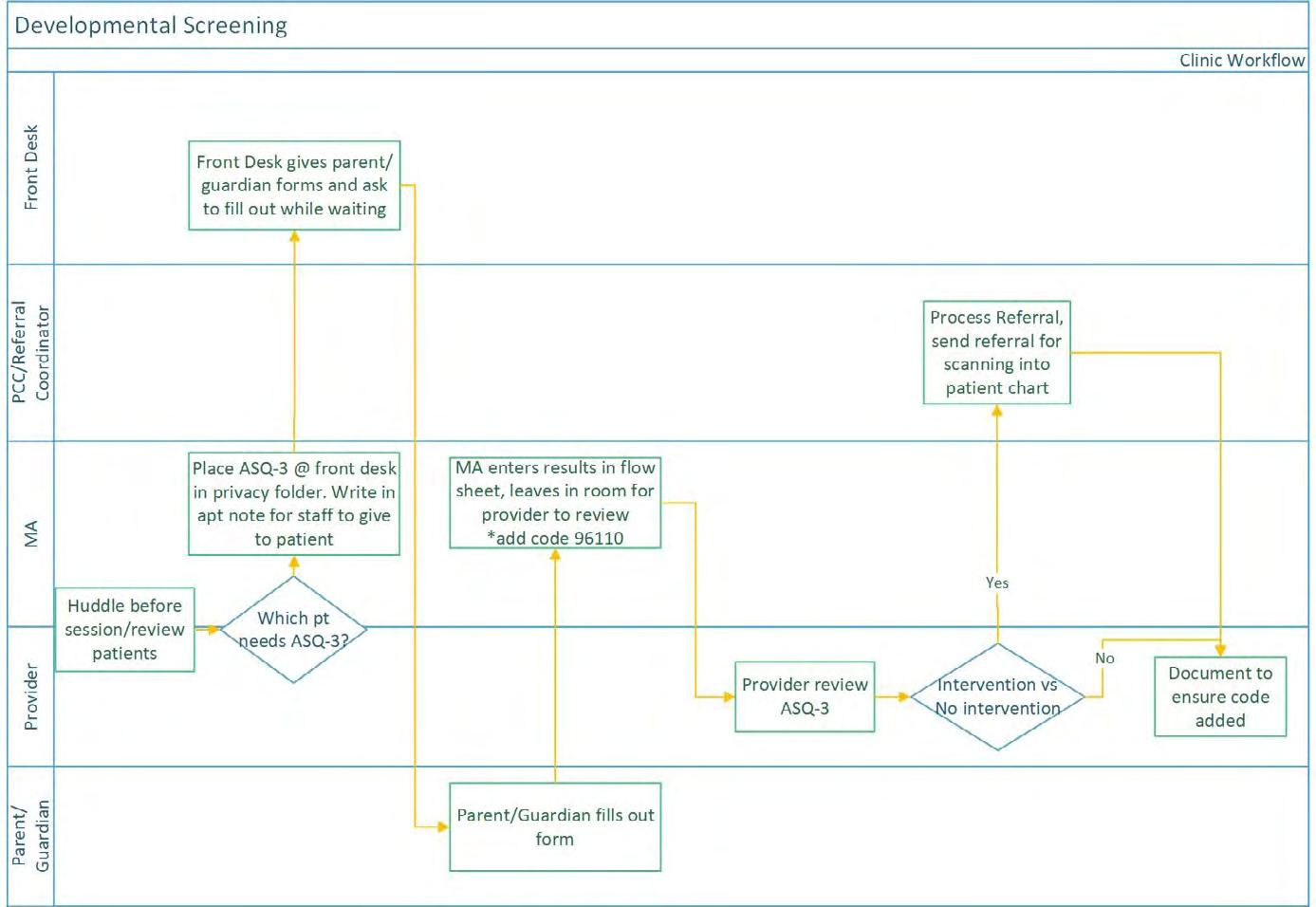
• Follow the developmental screening workflow below.
Developmental Screening Workflow
Sources:
• Texas Health Steps Anticipatory Guidance Provider Guide
• Texas Health Steps Periodicity Schedule
Coding for Controlling Blood Pressure (CBP)
Coding for Controlling Blood Pressure (CBP)
As part of Community First’s ongoing efforts to improve care and ensure compliance with the Healthcare Effectiveness Data and Information Set (HEDIS®) measures, we want to remind our network of Providers about the importance of accurate coding and documentation. Accurate coding and documentation are essential for meeting HEDIS requirements and ensuring timely and proper reimbursement.
HEDIS Measure Description
Coding for Controlling Blood Pressure (CBP) tracks the percentage of adults aged 18 to 85 with a hypertension diagnosis, who were screened for CBP according to established guidelines, and whose blood pressure is controlled. Blood pressure is considered controlled if the most recent reading during the measurement year is <140/90mm Hg.
Recommended Screening Guidelines
Clinical practical guidelines recommend screening patients within this population who meet these restrictions or requirements during the measurement year or in the previous years.
Coding Guidelines
HEDIS Best Practices
Key requirements for HEDIS compliance: Documentation of the lowest systolic and diastolic blood pressure reading from the most recent blood pressure notation in the medical record during the measurement year.
• Document exact blood pressure readings (no rounding).
• Take blood pressure and record it in the patient’s medical record at every office visit, telehealth visit, e-visit, or other virtual check-in.
• If the initial readings are ≥140/90, recheck at the end of the visit.
• Communicate and provide specific goals regarding management of medical condition(s).
• Schedule follow-ups for uncontrolled blood pressure.
• Encourage patients to use a validated digital device to track and report their blood pressure values. If the reading is captured with a digital device, patient-reported data is acceptable to document in the medical record.
• Ranges and thresholds do not meet the criteria for this measure. A distinct numeric result for both the systolic and diastolic blood pressure readings is required.
• Educate on what to do to maintain compliance with medications and lifestyle, especially during special circumstances like traveling or celebrations.
• Provide information/education about different blood pressure medications (printed materials, videos, self-study programs, referrals to community organizations, etc.).
Community First Resources
Refer Community First Members to these additional no-cost resources:
» Healthy Heart: Blood Pressure Management Program: This program offers Members education and resources to help them manage their high blood pressure by making healthy lifestyle changes
» YMCA Blood Pressure Self-Monitoring Program: Participating Members may be eligible for a 4-month YMCA family membership and a blood pressure cuff, while supplies last
References
1. Centers for Disease Control and Prevention (2024, December 13). Managing High Blood Pressure. CDC. https://www.cdc.gov/high-blood-pressure/living-with/index.html
2. Centers for Disease Control and Prevention (2024, December 13). Team-Based Care to Improve Blood Pressure Control. CDC. https://www.cdc.gov/high-blood-pressure/php/data-research/team-based-care/index.html
FOLLOW-UP AFTER HOSPITALIZATION FOR MENTAL ILLNESS (FUH)
WITHIN 7 AND 30 DAYS
Why is the FUH HEDIS® Measure important?
Evidence suggests that individuals who receive follow-up care after a psychiatric hospitalization experience a reduction in readmission rates to inpatient facilities. Additionally, delivering consistent continuity of care can lead to better mental health outcomes and facilitate a patient's return to their baseline functioning in a less-restrictive care setting.
What does the FUH Measure assess?
The FUH measure assesses the percentage of discharges for Members ages six and above who were hospitalized for treatment of a mental health or intentional self-harm diagnosis and who had a follow-up visit with a mental health provider within seven days of their discharge, but no later than 30 days from the discharge date.
What population is included in the measure?
Members hospitalized with a primary diagnosis of mental illness or intentional self-harm. This measure applies to Members ages six and up across the Commercial. Medicaid, and Medicare lines of business.
When does a Member "pass" the measure?
Providers should document the date of the first follow-up visit that is at least one calendar day after discharge.
This measure calculates two rates for the first follow-up visit:
> Within 7 days
> Within 30 days
If the first follow-up visit is within seven days after discharge, then both rates are counted for this measure.
A follow-up visit is with a mental health provider, or with any practitioner for any diagnosis of a mental health disorder.
Which services qualify to meet the measure?
Follow-up claims, including claims for any of the following services, qualify to meet this measure:
> Outpatient visit with a mental health Provider
> Medication management with a Psychiatrist/APN/PA with a mental health license or certificate
> Community support team (CST)
> Psychosocial rehabilitation (PSR)
> Intensive outpatient program (IOP)
> Partial hospitalization (PH)
> Opioid treatment/SA non-medical community residential treatment
> Targeted case management (TCM)
> Behavioral health day treatment
> Electroconvulsive therapy (ECT)
> Mental health and/or substance use assessments, screenings, treatment planning
> Community-based wrap-around and/or day treatment services
> Telehealth or telephone visit with a mental health provider
> Psychiatric collaborative care management
> Peer support services (PSS)
Best Practice Recommendations
Inpatient Providers
• Initiate discharge planning upon admission, maintaining its continuous and tailored progression.
• Schedule the patient's post-discharge appointment in advance.
• Engage the patient and family in all stages of discharge planning.
• Ensure Members have adequate access to prescribed medications.
• Attempt to address and mitigate barriers hindering post-discharge appointment attendance.
• Develop local referral sources of outpatient providers who can provide aftercare to patients within seven days of discharge.
• Ensure the prompt transmission of the Member's discharge documentation to both the outpatient provider and Community First within 24 hours.
• Invite care coordinators to meet Members to facilitate the process or aftercare planning.
Outpatient Providers
• Offer telehealth and phone visits.
• Ensure flexibility when scheduling appointments for patients who are being discharged from acute care to allow for appointments to be scheduled within seven days of discharge.
• Make reminder calls to Members before appointments and after a missed appointment to reschedule.
• Review medications with patients to ensure they understand the purpose, appropriate frequency, and method of administration.
• Educate staff on local resources to assist with barriers such as transportation needs.
• Establish communication pathways with inpatient discharge coordinators at local facilities.
• Coordinate care between behavioral health and primary care physicians by sharing progress notes and updates.
• Use complete and accurate value set codes.
• Submit claims in a timely manner.
FOLLOW-UP AFTER HOSPITALIZATION FOR MENTAL ILLNESS (FUH)
CPT Codes for Behavioral Health Billing
Unspecified Visits
90791 90792 90832 90833 90834 90836
90837 90838 90839 90840 90845 90847
90849 90853 90875 90876 99221 99222
99223 99231 99232 99233 99238 99239
99252 99253 99254 99255
BH Outpatient
98000 98001 98002 98003 98004 98005
98006 98007 98960 98961 98962 99078
99202 99203 99204 99205 99211 99212
99213 99214 99215 99242 99243 99244
99245 99341 99342 99344 99345 99347
99348 99349 99350 99381 99382 99383
99384 99385 99386 99387 99391 99392
99393 99394 99395 99396 99397 99401
99402 99403 99404 99411 99412 99483
99492 99493 99494 99510
Partial Hospitalization or Intensive Outpatient N/A
Effective August 3, Community First will enhance its existing claims processing program to improve the overall accuracy of claim processing in partnership with Cotiviti.
The goals of this endeavor are to implement, to the extent possible, claim payment policies that are broad in scope, simple to understand, and that come from regulatory guidance. We believe that this will enable you and your billing staff to more readily understand our payment of claims given the widespread use of these policies.
Industry Standards Driving These Updates
Community First’s payment policies are based on nationally accepted methodologies for claims payment, including:
• American Medical Association (AMA) CPT® coding guidelines
• National and regional Medicare policies
• National specialty academy guidelines
• State Medicaid guidelines, as applicable
Key Areas of Focus
These enhancements align with established coding and billing practices, including:
• CPT® procedure code definitions and guidelines
• National Correct Coding Initiative (NCCI) edits
• Appropriate modifier usage
• ICD-10-CM diagnosis coding guidelines
• Global surgery periods
• Evaluation and Management (E/M) guidelines
• Add-on code usage
• Professional, technical, and global billing rules
• Diagnosis-to-procedure alignment
• Place of service requirements
• Age-appropriate services
• CMS National and Local Coverage Determinations (NCDs and LCDs)
• Revenue code validation
Beginning August 3, 2026, Providers may receive claims denials or payment changes based on these enhanced claim editing concepts on your Explanation of Benefits or electronic remittances. For additional information on the specifics of your claim submission payment decisions, or to file a grievance or appeal, please contact Provider Services at 210-358-6030 or use our online directory to contact your Provider Relations representative directly.
Please review the following coding guidance on pages 32-35 to minimize the chance of claims denials or payment changes based on our new, enhanced claim editing concepts effective August 3.
Servicing Facility Location Reporting on Professional Claims (837P):
Correct Use and Coding Guidance
Community First is providing guidance on the correct reporting of Servicing Facility Location information on professional claims submitted using the 837P electronic claim format. Accurate reporting of the Servicing Facility is required when services are rendered at a location different from the billing Provider’s address and is necessary to support proper claim adjudication.
Effective August 1, 2026, claims that do not include required Servicing Facility Information, when applicable, may be rejected.
When Servicing Facility Reporting Is Required
Servicing Facility information must be reported only when both of the following apply:
1. Services were rendered at a location different from the billing Provider’s address, and 2. Identification of the Servicing Facility is required for accurate claims processing.
If services are rendered at the billing Provider’s address, the Servicing Facility Loop should not be populated.
How to Report the Servicing Facility (837P Claims)
When submitting professional claims electronically using the 837P format, Providers must report Servicing Facility information in the Service Facility Location Loop (Loop 2310C), as outlined below.
Claims submitted without all required elements in Loop 2310C, when applicable, will
Important Reminders
• The Servicing Facility Loop should only be populated when appropriate.
• The NPI submitted must belong to the facility where services were rendered, not the billing Provider.
• Claims submitted without a valid 9-digit ZIP code in Loop 2310C may be rejected.
When services are rendered at a location other than the billing Provider’s address, accurate Servicing Facility reporting on 837P claims is required. Claims that do not meet these requirements may be rejected.
Community First Resources
• The Community First Provider Resource Page offers additional tip sheets and resources to support your practice and help you stay current on state news and training opportunities.
Additional Resources
• The National Correct Coding Initiative (NCCI) Page provides CMS guidance on correct coding methodologies, including procedure-to-procedure edits and modifier use.
• The American Medical Association (AMA) Current Procedural Terminology (CPT®) page offers official CPT® coding definitions, guidelines, and modifier instructions used across payers.
• The Center for Medicare and Medicaid Services Medicare Learning Network® (MLN) page offers educational materials for health care Providers on CMS programs, policies, and initiatives.
LABORATORY MODIFIERS 59 AND 91: CORRECT USE AND CODING GUIDANCE
Community First is providing clarification on the appropriate use of laboratory modifiers 59 and 91. These modifiers are valid for many laboratory services and may be required when multiple laboratory services described by a single CPT® code are performed for the same patient on the same date of service by the same provider.
Modifier 59 – Distinct Procedural Service
Modifier 59 is used to indicate that a laboratory service is separate and distinct from another laboratory service billed on the same date of service, even when the same CPT® code is reported.
Appropriate use includes situations such as:
• The same laboratory test performed on different specimens
• Testing performed on different species or strains
• Distinct laboratory services that produce separately reportable results
CPT® guidance notes that modifier 59 may be reported when the same procedure code is used for testing different specimens, species, or strains, and when separate results are reported for each.
Modifier 59 should not be used:
• When a more specific modifier is available
• To routinely bypass National Correct Coding Initiative (NCCI) edits
• When services are duplicative and not distinct
Think: Different service, Different circumstance.
Modifier 91 – Repeat Clinical Diagnostic Laboratory Test
Modifier 91 is used when the same laboratory test is repeated on the same patient, same date of service, to obtain subsequent results that are medically necessary for patient management.
Appropriate use applies only when all criteria are met:
• Same CPT® code
• Same patient
• Specimen collected more than once on the same day
• Repeat testing is medically necessary and clearly documented
Examples include repeated laboratory tests performed at different intervals during the same day for ongoing monitoring, such as serial blood glucose or electrolyte testing.
Think: Same test, repeated for a valid clinical reason.
When Modifiers 59 or 91 Should Not Be Used
According to CPT® guidance, modifiers 59 and 91 should not be appended to laboratory codes in the following circumstances:
• Reruns performed to confirm test results
• Testing repeated due to specimen or equipment issues
• When another procedure code describes a series or panel test
• When the procedure code itself represents a series of tests
• When a one time result is required and no subsequent result is clinically necessary
Documentation Requirements
For both modifiers, documentation must clearly support use of the modifier, including:
• Medical necessity
• Distinct specimens or collection times, when applicable
• Clinical rationale for distinct or repeat testing
Key Takeaway
• Modifier 59: Use for distinct laboratory services
• Modifier 91: Use for a medically necessary repeat of the same laboratory test
Modifiers should only be applied when documentation clearly supports their use.
Community First Resources
The Community First Provider Resource page offers additional tip sheets and resources to support your practice and help you stay current on state news and training opportunities.
Additional Resources
• The National Correct Coding Initiative (NCCI) page provides CMS guidance on correct coding methodologies, including procedure-to-procedure edits and modifier use.
• The American Medical Association (AMA) Current Procedural Terminology (CPT®) page offers official CPT® coding definitions, guidelines, and modifier instructions used across payers.
• The American Academy of Professional Coders (AAPC) “What Are Medical Coding Modifiers” page explains the purpose and appropriate use of modifiers to support accurate medical coding and claims submission.
CPT Copyright 2026 American Medical Association. All rights reserved. CPT® is a registered trademark of the American Medical Association. Applicable FARS/DFARS Restrictions Apply to Government Use. Fee schedules, relative value units, conversion factors and/or related components are not assigned by the AMA, are not part of CPT, and the AMA is not recommending their use. The AMA does not directly or indirectly practice medicine or dispense medical services. The AMA assumes no liability for data contained or not contained herein.
UPDATED ASTHMA ACTION PLAN NOW AVAILABLE:
GUIDANCE FOR HEALTH CARE
PROVIDERS
The South Texas Asthma Coalition (STAC) has released a new Asthma Action Plan as a fillable form (PDF) designed to be completed electronically. The electronic template allows Providers to complete the plan using pull-down selections and clicking the appropriate boxes. If Providers need to select a medication/dose/instruction that is not listed on the pull-down menu, they can type in their selection.
INSTRUCTIONS
Download the updated STAC Asthma Action Plan and follow these general recommendations:
» If typing instructions instead of selecting a dropdown option, use plain language (e.g. “Four times a day”.)
» Assure the copy is signed by the Primary Care Provider (PCP).
Managing asthma in children requires collaboration between health care providers, parents, and caregivers. ALL children with asthma should have an Asthma Action Plan filled out by their health care provider.
» Give at least TWO copies to the patient’s family (for home and school) and keep one copy for the patient’s medical record.
» Select whether the patient is allowed to selfadminister their inhaler. If a selection is not made, the Provider will be unable to sign the form electronically.
Providers should complete medications prescribed for each zone (GREEN, YELLOW, RED)
» Provider must specify the name of the medication, dosage, when to take it, and check the box for where it can be taken (home/ school).
» GREEN Zone: Preventative medication(s)
» YELLOW Zone: Quick-relief medication(s)
» RED Zone: Emergency medication(s)
ADDITIONAL GUIDANCE
Identifying Triggers: Work with the family to identify triggers that exacerbate the child’s asthma. Consider elements such as allergens, environmental exposures, and specific activities.
Medication Management: Choose and clearly outline any prescriptions for daily controller and rescue medications based on severity/control for each zone and whether it is to be given at home, school, or both. Highlight the importance of adherence and correct inhaler technique. Select the most appropriate option for medication selfadministration.
Symptom Monitoring: Determine guidelines for monitoring asthma symptoms. Review Asthma Action Plan zones (GREEN, YELLOW, and RED) with parents and child to educate them on symptoms and when to administer medication appropriately. Promote open communication with parents to address any developing issues quickly.
Emergency Response: Develop a detailed emergency response plan (RED zone) detailing steps for escalating care during severe asthma exacerbations. Ensure parents are well equipped to handle emergencies and know when immediate medical attention is required.
ROUTINE REVIEWS & UPDATES
Schedule regular follow-up appointments to evaluate the child’s Asthma Action Plan. Adjust the plan as necessary based on the child’s response to treatment and any changes in triggers or symptoms.
A cooperative approach involving Providers, parents, and the child is indispensable for effective asthma management. By implementing an individualized Asthma Action Plan, Providers significantly contribute to the well-being of children with asthma, fostering a healthier future.
Communication and Education: Provide parents with education on asthma management, covering symptom recognition, proper medication administration and the importance of adherence. Advise parents to share the Asthma Action Plan with everyone involved in the child’s care; the child’s primary caretaker, daycare provider, school nurse, coach, after-school coordinator, and anyone else in charge of their child’s care, emphasizing the importance of a coordinated approach.
Community First offers Members Health & Wellness Programs, including Asthma Matters: Asthma Management Program. If you feel a patient could use more support with asthma education and case management, please refer them by calling Population Health Management at 210-358-6055 or emailing healthyhelp@cfhp.com.
Asthma Matters participants may be eligible to receive:*
» $80 in gift cards for completing San Antonio Kids BREATHE home visits
» $10 gift card for getting a flu shot
» Mask with aerosol chamber and allergy-free pillow protector
» $10 gift card for completing asthma education
*Limitations and restrictions apply.
PROVIDER RESOURCES
Questions about the STAC Asthma Action Plan should be directed to Mandie Tibball Svatek, MD at 210-450-5364 or svatekm@uthscsa.edu.
Providers can also refer to these specific instructions for completing the Asthma Action Plan.
If you’d like printed copies in English or Spanish for your office setting, please contact Community First Population Health Management at 210-358-6055 or email healthyhelp@cfhp.com.
Utilization Management: The Process Behind the Decision
Community First utilizes evidence-based criteria and clinical guidelines to make Utilization Management (UM) decisions. The criteria are applied in a fair, impartial, and consistent manner that serves the best interest of our Members.
Community First approves or denies services based on whether the service is medically needed and a covered benefit. Criteria used to make a determination are available upon request.
Service Review
A service review for authorization will occur before a Member receives care. All requests are reviewed by our experienced clinical staff. Service requests that fall outside of standard criteria and guidelines are reviewed by our physician staff for plan coverage and medical necessity.
If care is received that was not authorized in advance (for emergency services), a service review will occur before the claim is processed. Please note that a service review that happens after (emergency) services are received does not guarantee payment of claims.
Generally, your office staff will request prior authorization from Community First before providing care. You have a responsibility to make sure you are following Community First rules for providing care.
Out-of-Network Care
Requests for out-of-network services involve an evaluation of whether the necessary and covered services can be provided on time by a network Provider. Community First does not cover out-ofnetwork care without prior approval.
Hospital Care
Community First also reviews care our Members receive while in the hospital. We assist hospital staff in making sure our Members have a smooth transition home or to their next care setting.
Appeals
The Member, the Member’s representative, or a physician acting on behalf of the Member may appeal a decision denying a request for services. Members can file an appeal through the Community First appeals process.
More Information
To obtain more information about UM criteria used to make decisions about your patient’s health care, contact Population Health Management. Call 210358-6030 and press “2” for authorizations, Monday through Friday from 8 a.m. to 5 p.m.
Our UM staff is also available to assist you with any questions you may have regarding processing a request for services. Calls or communications received after hours will be addressed by the next business day. Should our staff attempt to reach you, they will provide you with their full name and title at Community First.
SUPPORTING CARE: WORKING TOGETHER TO CONNECT
PHYSICAL AND BEHAVIORAL HEALTH
At Community First, we recognize the essential role Primary Care Providers (PCPs) play in supporting Behavioral Health (BH). As often the first point of contact, PCPs serve as a critical link between Members’ physical and mental health needs. We also understand that effective collaboration can be challenging—especially when Providers operate across different Electronic Health Record (EHR) systems. That’s why we are committed to simplifying communication and supporting more seamless coordination of care.
WHAT HAPPENS WHEN CARE IS CONNECTED?
• Improved quality of care
• Reduction in health care costs
• Enhanced patient safety
• Greater patient care experience
• Efficient delivery of care
SIMPLE STEPS FOR STRONGER CARE CONNECTIONS
Here are some requirements and tips to facilitate the flow of communication between different health care settings and Providers.
• A release of information form must be on record for information to be shared between the PCP and the BH Provider.
• BH Providers and PCPs are required to send each other initial and updated (quarterly or more frequently, if clinically indicated) summary reports of a Member’s physical and BH status (as agreed to by the PCP team members and with the consent of the Member or the Member’s legal guardian).
• BH Providers are required to refer Members with known or suspected and untreated physical health problems or disorders to their PCP (with the consent of the Member or the Member’s legal guardian).
COMMUNICATION FORM
Community First has developed a standardized communication form to help facilitate information sharing between physical and BH Providers.
Our Quality Management clinical staff monitors for the presence of release forms and indication of communication between BH Providers and PCPs during medical record documentation audits.
When PCPs and BH Providers work together, patients receive more consistent, comprehensive support. We’re committed to working alongside you to simplify processes, strengthen connections, and most importantly, help every Member get the care they deserve.
NAMI Basics
Education and support for parents and caregivers of children and teens with mental illness
What is NAMI Basics?
Community First is partnering with the National Alliance on Mental Illness (NAMI) Greater San Antonio to offer NAMI Basics, a free, six-week class created to provide education, support, and resources for caregivers of children, teens, and young adults diagnosed with a behavioral health condition. * NAMI Basics is available to parents/caregivers of Members with a diagnosed mental health condition or substance use disorder or Members who are caregivers for children and teens with a mental health condition or substance use disorder.
NAMI Basics Class Topics
I. Mental Health Conditions Are No One’s Fault
II. Brain Biology & Getting A Diagnosis
III. Treatment
IV. Communication Skills & Crisis Prevention
V. Navigating Mental Health, School, & Juvenile Systems
VI. Advocacy, Self-Care, & Evaluation
Those who attend the six-week NAMI Basics class may be eligible to receive rewards for participating, including a $50 gift card (one gift card per eligible Member or parent/caregiver of an eligible Member). Limitations and restrictions apply.
Recovery is a journey, and there is hope. You are not alone! The group setting of NAMI Basics provides mutual support and helpful information for shared positive impact. Experience compassion and gain strength and knowledge from people who understand your situation because they have lived through it.
About NAMI Greater San Antonio: NAMI Greater San Antonio provides advocacy, education, support, and public awareness to help individuals and families affected by mental illness build better lives. *Age range eligibility depends on the individual health care plan.
Community First Members or their parent/caregiver can register for NAMI Basics by scanning the QR code or online at CommunityFirsthealthPlans.com/NAMI-Basics-Education-Program-Form. Call 210-358-6055 or email healthyhelp@cfhp.com for help.
If you are not a Community First Member and would like to register, contact NAMI Greater San Antonio at 210-256-2421.
Texas Child Psychiatry Access Network (CPAN) and Perinatal Psychiatry Access Network (PeriPAN) are free, simple, trusted resources that Texas health care clinicians can call on and count on. Mental health is complex. Call for a rapid peer consultation and get the support you need.
CPAN and PeriPAN child and reproductive psychiatrists and mental health experts help you expand your capacity to meet the standard of mental health care for your patients. They provide real-time, no-cost, evidence-based support, including one-time patient-psychiatrist direct consults when indicated.
Why CPAN?
» One in five children has a diagnosable mental, behavioral, or developmental disorder, and many more children and youth have persistent mental health symptoms.
» One in five perinatal women has a mental health condition. Mental health needs are the leading underlying cause of pregnancy-related death in the U.S. and Texas.
Why CPAN and PeriPAN?
• Texas children, youth, and perinatal patients are experiencing unprecedented mental health challenges and are facing a shortage of psychiatrists and other mental health clinicians.
• Health clinicians report feeling more confident treating their patients’ mental health needs after consulting with CPAN/PeriPAN.
• Access programs, like CPAN and PeriPAN, improve mental health outcomes.
How it Works.
• Call 888-901-2726 Monday-Friday, 8 a.m. to 5 p.m. and speak directly to a mental health expert within 5 minutes and a psychiatrist within 30 minutes.
• Leave a message anytime to schedule a convenient call-back time.
• Enrolled Providers can text using your CPAN/PeriPAN team’s unique texting number.
It was just a joy to be able to call my local PeriPAN hub and get a call back from a psychiatrist within 15 minutes. I collaborated with that psychiatrist for the betterment of my patient. It was just easy to use and so accessible.
NO CALL IS TOO SMALL. PSYCHIATRY EXPERTS ARE HERE TO SUPPORT YOU.
How do CPAN and PeriPAN help?
• Provide the real-time support and mental health expertise you need to treat your patient.
• Vet and compile lists of local referrals and resources individualized to your patient in one business day.
• When needed, psychiatrists provide one-time direct patient consults at no cost to you or the patient or family.
• Offer free CMEs, ethics credits, and collaborative learning opportunities.
• Your time consulting with CPAN or PeriPAN may be billable via time or complexity-based coding and if outside the global window.
“
CPAN is an incredible partner. As a pediatrician, knowing that I have a strong referral base and quick access to peer consultation is invaluable.
The Child Psychiatry Access Network, CPAN, can enhance child and youth mental health care at your practice and save you time.
The Perinatal Psychiatry Access Network, PeriPAN, can enhance your capacity to provide the perinatal mental health standard of care your patients need.
There is no cost to you or your patients for these evidencebased, clinician-to-clinician programs.
For more information, call 888-901-2726, email COSH@bcm.edu, or go to TXCPAN.org and TXPeriPAN.org
Angela Moemeka, MD, MBA, Pediatrician
Why PeriPAN?
Martin Hechanova, MD, OB/GYN
RESPONDING TO RISING RATES: NEW SUPPORT FOR CONGENITAL SYPHILIS PREVENTION
Texas continues to see rising rates of congenital syphilis, highlighting the continued vigilance in prenatal care. Early screening, timely diagnosis, and appropriate treatment during pregnancy are critical to preventing transmission and improving outcomes for infants.
To support Providers in these efforts, the Texas Department of State Health Services (DSHS) has released new resources designed to help with both prevention and clinical management. Community First is sharing these tools to help strengthen care delivery and support better outcomes for patients
Congenital Syphilis Consultation Hotline:
The Congenital Syphilis Consultation Hotline is available to support Providers caring for pregnant women and infants with suspected or confirmed syphilis.
• Phone: 833-623-6327 (833-62-END-CS)
• Hours: Monday through Friday, 8:00 a.m. – 5:00 p.m. (expanded evening hours expected in the future)
This resource provides direct access to clinical experts and offers support for complex cases, including case-specific guidance and referrals to regional prevention and treatment services. Providers are encouraged to use the hotline when additional clinical input is needed.
Additional details are available on the Congenital Syphilis Hotline Flyer (Texas Health and Human Services).
Congenital Syphilis Prevention Training
DSHS has also launched an online training module, Congenital Syphilis Prevention: Screening, Diagnosis, and Treatment for Pregnant Women in Texas, that offers practical guidance on:
• Prenatal screening recommendations
• Diagnosis and treatment protocols
• Strategies to reduce barriers to care
• Information on health disparities impacting congenital syphilis rates in Texas
The activity is approved for 1.25 continuing education hours, including credit in the medical ethics/professional responsibility category for CME. Continuing education credits are also available for multiple disciplines, including nurses, certified health education specialists, and social workers. Providers may review the training flyer or visit the DSHS Training Website for more information. (PDF)
We encourage Providers to take advantage of these resources to support early detection, improve care coordination, and help reduce the impact of congenital syphilis for mothers and infants across Texas.
REFUNDING OVERPAYMENT MAILING
ADDRESS – IMPORTANT REMINDER
THIS INFORMATION APPLIES TO PROVIDER REFUNDS ONLY.
If you believe you have received an overpayment from Community First Health Plans or Community First Insurance Plans (Community First) or we have identified an overpayment and requested a refund, please submit the following :
• A check issued to Community First in the amount of the overpayment
• The name and ID number of the Member for whom we have overpaid
• The dates of service
• Supporting documentation
Please mail this information to:
Community First Health Plans
P.O. Box 2409 San Antonio, TX 78298
If you have questions, please reach out to our Provider Relations team at 210-358-6030 or email ProviderRelations@cfhp.com.
MEMBER RIGHTS AND RESPONSIBILITIES
Community First recognizes the importance of a three-way relationship among its Members, Providers, and their health plan. Member education about health care responsibilities is important because it helps Members get greater benefits from their plan.
Community First Providers can find Member Rights and Responsibilities listed in each plan’s Community First Provider Manual. Members can find the same list in their plan’s Member Handbook.
For more information about Member Rights and Responsibilities, please contact Community First Provider Services at 210-358-6030.
HEDIS® The Healthcare Effectiveness Data and Information Set (HEDIS®) is a registered trademark of NCQA. CAHPS® is a registered trademark of the Agency for Healthcare Research and Quality (AHRQ).
Limited proprietary coding is contained in the measure specifications for convenience. NCQA disclaims all liability for use or accuracy of any third-party code values contained in the specifications.
CPT Copyright 2026 American Medical Association. All rights reserved. CPT® is a registered trademark of the American Medical Association. Applicable FARS/DFARS Restrictions Apply to Government Use. Fee schedules, relative value units, conversion factors and/or related components are not assigned by the AMA, are not part of CPT, and the AMA is not recommending their use. The AMA does not directly or indirectly practice medicine or dispense medical services. The AMA assumes no liability for data contained or not contained herein.
The CDC Race and Ethnicity code system was developed by the U.S. Centers for Disease Control and Prevention (CDC). NCQA’s use of the code system does not imply endorsement by the CDC of NCQA, or its products or services. The code system is otherwise available on the CDC website for no charge.
Certain NullFlavor codes are owned and copyrighted by Health Level Seven International (HL7); 2026.
The American Hospital Association holds a copyright to the Uniform Billing Codes (“UB”) contained in the measure specifications. The UB Codes in the HEDIS specifications are included with the permission of the AHA. All uses of the UB Codes may require a license from the AHA. Specifically, anyone desiring to use the UB Codes in a commercial product to generate HEDIS results, or for any other commercial use, must obtain a commercial use license directly from the AHA. To inquire about licensing, contact ub04@aha.org.
Health Care Provider Taxonomy Code Set codes copyright 2026 AMA. The codes are published in cooperation with the National Uniform Claim Committee (NUCC) by the AMAS. Applicable FARS/DFARS restrictions apply.
The American Dental Association (“ADA”) holds a copyright to the Current Dental Terminology (“CDT”) codes contained in certain measure specifications. The CDT codes in the HEDIS specifications are included with the permission of the ADA. All uses of the CDT codes require a license from the ADA. No alteration, amendments, or modifications of the CDT or any portion thereof is allowed. Resale, transmission, or distribution of copies of the CDT or other portions of the CDT is also not allowed. To inquire about licensing, contact CDT-SNODENT@ada.org
RadLex copyright 2014, The Radiological Society of North America (RSNA), all rights reserved. Licensed under RadLex License Version 2.0. You may obtain a copy of the license at: http://www.rsna.org/radlexdownloads/ This work is distributed under the above noted license on an “AS IS” basis, WITHOUT WARRANTIES OF ANY KIND, either express or implied. Please see the license for complete terms and conditions.
NOTES:
Notice of Availability of Language Assistance Services and Auxiliary Aids and Services
ATTENTION: If you speak a language other than English, free language assistance services are available to you. Appropriate auxiliary aids and services to provide information in accessible formats are also available free of charge. Call 1-800-434-2347 (TTY: 711) or speak to your provider.
ATENCIÓN: Si habla español, tiene a su disposición servicios gratuitos de asistencia lingüística. También están disponibles de forma gratuita ayuda y servicios auxiliares apropiados para proporcionar información en formatos accesibles. Llame al 1-800-434-2347 (TTY: 711) o hable con su proveedor.
1-800-434-2347 (TTY: 711)
1-800-434-2347 (TTY: 711)
ATTENTION : Si vous parlez français, des services d'assistance linguistique gratuits sont à votre disposition. Des aides et services auxiliaires appropriés pour fournir des informations dans des formats accessibles sont également disponibles gratuitement. Appelez le 1-800-434-2347 (TTY : 711) ou parlez à votre fournisseur.
LƯU Ý: Nếu bạn nói tiếng Việt, chúng tôi cung cấp miễn phí các dịch vụ hỗ trợ ngôn ngữ. Các hỗ trợ dịch vụ phù hợp để cung cấp thông tin theo các định dạng dễ tiếp cận cũng được cung cấp miễn phí. Vui lòng gọi theo số 1-800-434-2347 (Người khuyết tật: 711) hoặc trao đổi với người cung cấp dịch vụ của bạn.
ICYITONDERWA: Niba uvuga Ikinyarwanda, ufite serivisi z'ubufasha bw'ururimi ku buntu. Ibikoresho na serivisi byunganira bitangwa ku buntu kugira ngo amakuru atangwe mu buryo bworoshye kumva. Hamagara 1800-434-2347 (TTY: 711) cyangwa uvugishe umuganga wawe.
MAKINIKA: Ikiwa wewe huzungumza Kiswahili, msaada na huduma za lugha bila malipo unapatikana kwako. Vifaa vya usaidizi vinavyofaa na huduma bila malipo ili kutoa taarifa katika mifumo inayofikiwa pia inapatikana bila malipo. Piga simu 1-800-434-2347 (TTY: 711) au zungumza na mtoa huduma wako.
PAALALA: Kung nagsasalita ka ng Tagalog, magagamit mo ang mga libreng serbisyong tulong sa wika. Magagamit din nang libre ang mga naaangkop na auxiliary na tulong at serbisyo upang magbigay ng impormasyon sa mga naa-access na format. Tumawag sa 1-800-434-2347 (TTY: 711) o makipag-usap sa iyong provider.