

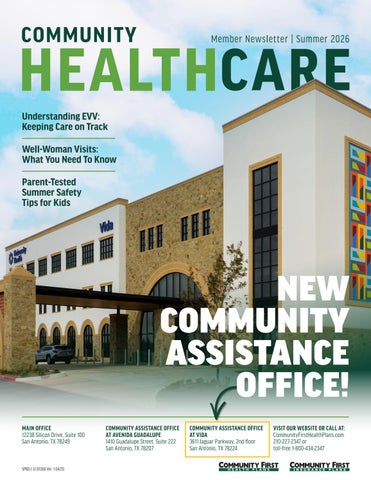


“Community First” is more than just our name. As San Antonio’s only local, non-profit health plan, our mission is rooted in putting people first—meeting the needs of our Members and the communities we proudly serve. As our city continues to grow, so do the needs of the families who call it home. We are committed to growing alongside our community, expanding access to resources and support where its needed most.
We are proud to open a new Community Assistance Office at Vida on San Antonio’s south side, bringing care and services closer to the families we serve.


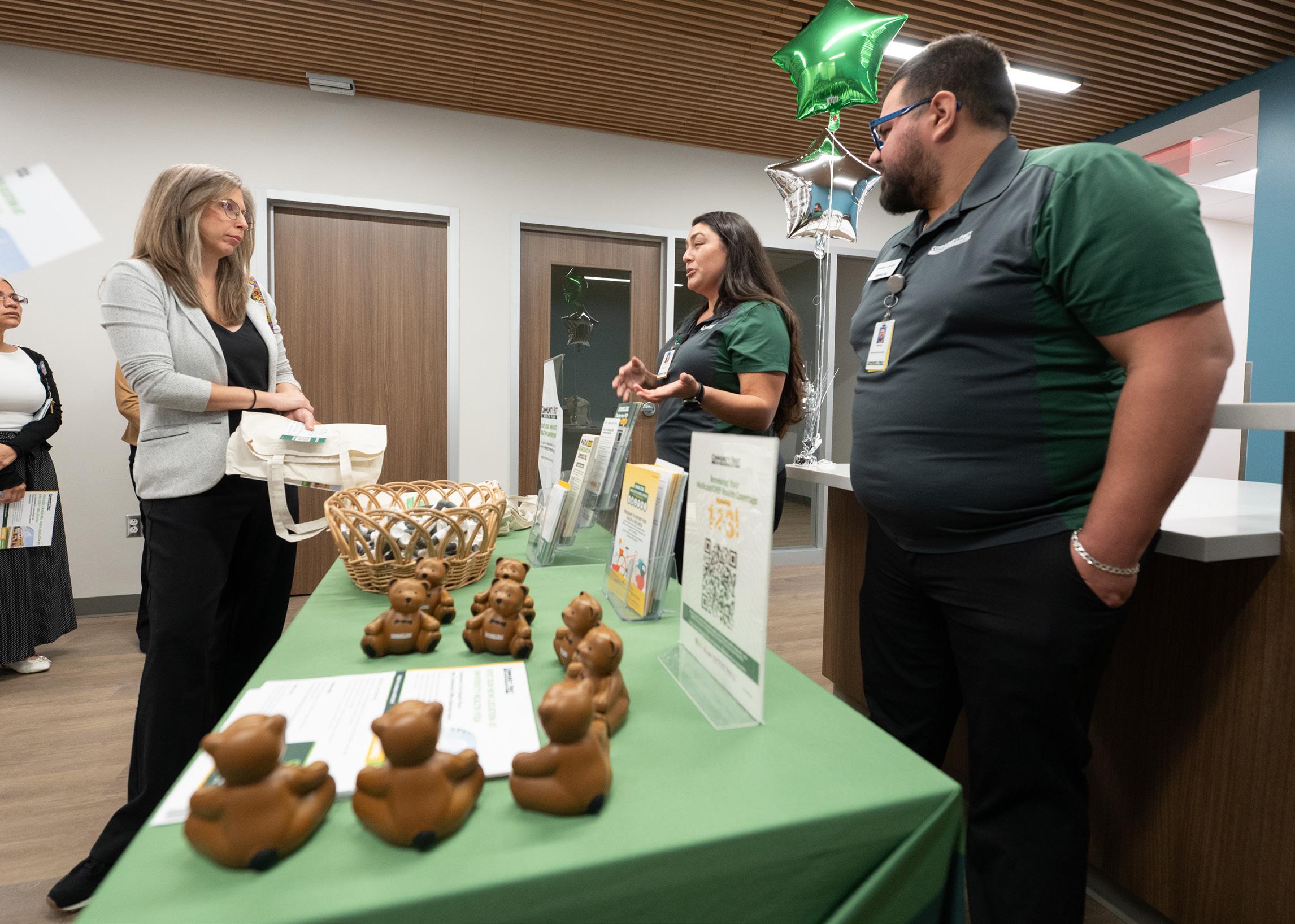
Our community assistance o ces are physical o ce locations where Community First Members and anyone looking for health care coverage can walk-in or make an appointment to get support in English or Spanish. During your visit, our team can also connect you with our community partners for help accessing daily needs, like food, transportation, employment, housing, and support for special health care needs.
Visit us for help with:
• Checking whether you or your child may be eligible for no-cost or low-cost health coverage.
• Applying for health insurance for yourself or a family member using our computer lab.
• Renewing your current health coverage.
• Connecting with local community resources and support services.
• Understanding your bene ts and coverage.
• Accessing free notary services (Members only).
Our new Community Assistance Office at Vida is located on San Antonio’s far south side, at the University Health Vida complex, across from Texas A&M University – San Antonio.
Members and anyone in need of support are welcome to visit Vida or our Community Assistance Office at Avenida Guadalupe located on the city’s west side and serving our community for 30+ years.
Community Assistance Office at Vida 3611 Jaguar Parkway, 2nd floor San Antonio TX 78224
Community Assistance Office at Avenida Guadalupe 1410 Guadalupe St., Ste. 222
San Antonio, TX 78207
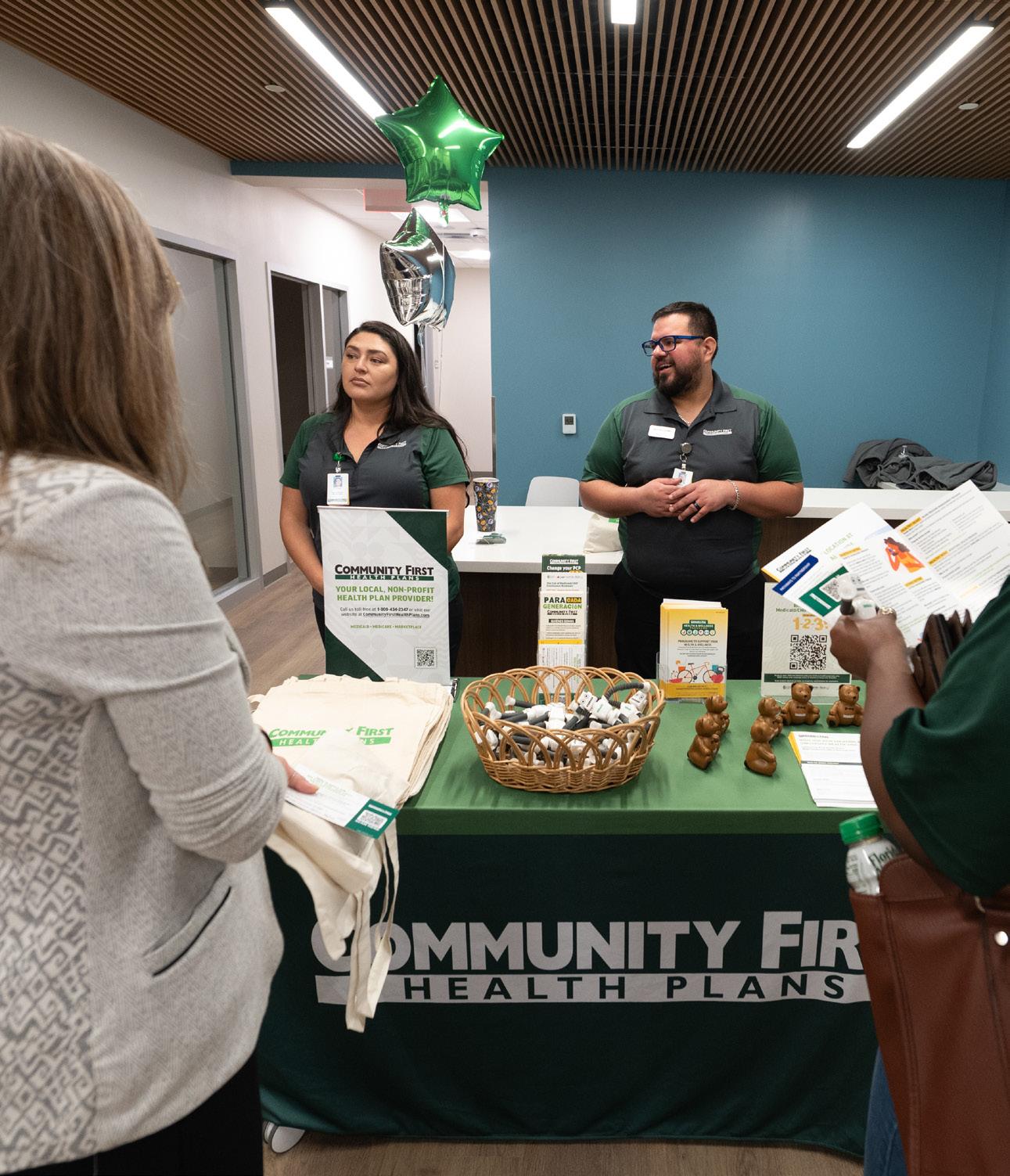
Health care goes beyond doctor’s visits. It’s about caring for your physical and mental well-being, not worrying about daily needs–like food, education, and housing–and feeling safe, secure, and set up for a healthy future.
Our community assistance o ces were created to help individuals and families nd and apply for coverage unique to their budget and health care needs. And beyond that, teach Members how to use their bene ts and connect them to services and support beyond what insurance may cover.
ink of it as a one-stop destination dedicated to helping our neighbors stay healthy and well by ensuring coverage meets their health needs while also connecting them directly with trusted local non-pro t organizations who are deeply invested in our community and ready to support a wide range of needs beyond health care.

Do I need to be a Community First Member to visit a Community Assistance Office?
No, we are here to serve ALL community members who need our guidance and support.
Do I need an appointment?
No, you do not need an appointment! Walk-ins are welcome! However, if you would like to make an appointment, you can call us at 210-227-2347, Monday through Friday, 8:30 a.m. to 5:00 p.m. or make an appointment online at CommunityFirstHealthPlans.com/CommunityO ce.
Can I bring my children or grandchildren with me?
Yes! Children and families are always welcome. Our o ces are equipped with toys, books, and kid-friendly activities.
Will I be able to speak with someone privately? Yes, we have private meeting rooms where we can answer your questions. We respect your privacy.
We look forward to welcoming you at our new Community Assistance O ce at Vida and additional o ce locations in the near future. By creating more opportunities to connect, we can reach more people and make a greater impact— supporting not just our Members, but our neighbors and the broader community.
(EVV) is a required verification system for Texas Medicaid and CHIP that helps Members make sure they receive the full amount of in-home care they are authorized for. EVV confirms when an in-home care provider arrives and leaves and the service(s) they provide during each home visit. This system ensures providers deliver the exact number of hours covered by your health plan.
▶ Ensures your caregiver is paid correctly.
▶ Prevents missed or shortened visits.
▶ Veri es you receive all approved services.
▶ Supports accuracy in your service plan.
Important: EVV does not track you, record audio, monitor your home, or reduce your benefits.
Your attendant must use one of three approved EVV methods. You can choose the one that works best for your home.
1. Mobile App (Most Convenient)
▶ Attendant uses an approved mobile app to check in and out.
▶ e mobile device does not stay in your home.
▶ Works best if the attendant regularly uses a smartphone.
▶ Location permissions must be turned on for the app to work properly.
▶ A small device that stays in your home and generates codes for check in and check out.
▶ Does not record sound or track movement.
▶ Must remain plugged in and kept in your home at all times.
▶ You must report if the device is lost, damaged, or removed.
▶ Attendant uses your home landline to call in and out.
▶ Only landlines work (cell phones do not count).
▶ Great option if you already have a landline in your home.
If your Medicaid program requires EVV, you must allow your attendant to use one of the approved methods. EVV is a state and federal requirement, not a rule created by Community First.
If you use the Consumer Directed Services (CDS) option (you employ a service provider instead of using an agency), it is important to understand HHSC Form 1722. Form 1722 lets you choose who is responsible for xing EVV visit errors and who approves the hours worked. It’s an important choice because it affects how quickly issues get resolved and how involved you are in managing your care.
Option #1 — YOU Fix Visit Errors and Approve Time
You (the employer) take full responsibility using the EVV system. You are responsible for:
▶ Correcting any EVV errors and keep visit compliance above 80%.
▶ Approving your employee’s time each pay period.
▶ Making sure your caregiver remains quali ed and keeps any required certi cations upto-date.
This is a good option for: Members who want full control and are comfortable using technology. is will require regular logins and timely corrections. If you miss a deadline, your employee may not be paid on time.
Option #2 — FMSA Fixes Errors; YOU Approve Time
Your Financial Management Services Agency (FMSA) handles EVV corrections. You are responsible for:
▶ Approving time inside the EVV system.
This is a good option for: Members who want help making corrections but still want nal oversight. Your FMSA may still need your input to x errors (e.g., con rming visit times).
Option #3 — FMSA Handles Everything in EVV
Your FMSA:
▶ Fixes ALL visit errors.
▶ Completes time approval inside the EVV system based on your approval outside the system (e.g., text, form, or email).
This is a good option for: Members who prefer not to log in to EVV at all.
EVV Questions? Community First Can Help!
• Member Services: 1-855-607-7827
• EVV General Inquiries: cfhpevv@cfhp.com
• Community First EVV Information & Forms
& Forms
• Contact Guide for Program Providers and Financial Management Service Agencies
(Employer’s
Every Community First STAR Kids, STAR+PLUS, and STAR Medicaid Member with Special Health Care Needs (MSHCN) should have a medical or health home.
A medical or health home is a consistent source of health care, combined in one place, that a Member receives through their primary care provider (PCP). e PCP works with the Member’s assigned Community First Service Coordinator to manage and coordinate all health care services. e Member’s PCP can also create a personalized Medical Home Services Model for a health home that provides integrated primary care for the Member.
All of the Member’s health care providers are part of their health home support team. e Member, their PCP, and their Service Coordinator play a central role on this team, working together to support the best possible care and health outcomes. e team might also include other doctors, nurses, therapists, dentists, pharmacists, community health workers, school staff, friends, neighbors, family members, and others involved in the Member’s care.
e PCP and Service Coordinator will work together to develop a Service Plan (SP) or Individualized Service Plan (ISP) that includes health care service delivery options for the Member or their legally authorized representative or guardian.
Service Coordination is provided by a nurse, social worker, or experienced clinical professional through your health plan. A Community First Service Coordinator will help the Member identify, select, coordinate, and use covered services and supports. Service Coordination can improve the Member’s well-being, independence, participation in the community, and potential for living a healthier life.
Community First Service Coordinators can also help with these tasks:
1. Conduct a complete, person-centered evaluation with the Member and the Member’s family in the home to identify individual needs and preferences. is information is used to develop a comprehensive Service Plan (SP) or Individualized Service Plan (ISP).
2. Provide health-related information to the Member and others in the Member’s support network.
3. Help identify the Member’s physical, behavioral, functional, and psychosocial needs.
4. Involve the Member and other caregivers in developing the service plan.
5. Connect the Member to covered and non-covered services.
6. Regularly check in to ensure the Member’s access to covered services is timely and appropriate.
7. Coordinate covered and non-covered services.
8. Contact care providers on the Member’s behalf with the Member’s consent and approval.
Community First Members can log in to the Community First Member Portal to nd the name and phone number of their assigned Service Coordinator. If you do not know who your or your child’s assigned Service Coordinator is, call Member Services at 1-855-607-7827. Members may also ask their PCP to help them connect with their Service Coordinator.
A medical or health home is not a building or a place you visit. It’s a person-centered way to provide comprehensive care. By working with your health home, you work with health care experts to nd and access all the medical and non-medical services to
support your needs. Community First provides access to a health home to all STAR Kids, STAR+PLUS, and STAR Medicaid Members with Special Health Care Needs, plus any Member who would bene t from Care Coordination.
Service Coordinators ensure that the health home provides additional services and supports beyond what the Member’s PCP can offer alone. Your or your child’s PCP or a specialist may be the health home at the center of the Member’s care team. e health home helps the Member access services more easily through coordination among all providers and by supporting a higher quality of care.
Health home services are delivered in a person-centered way to address the complete needs of an individual with multiple chronic or complex conditions, or a single serious and persistent mental or physical health condition.
Health home services must include:
1. Member self-management education
2. Member-centered and family-centered care
3. Evidence-based models of care
4. At least the minimum standards of care
5. Member and family support, including authorized representatives
What if my child or I don’t have a health home?
Ask your Service Coordinator for help. You can contact them directly or call Community First Service Coordination at 1-855-607-7827.
Members or caregivers may also take the following steps to establish a health home:
1. Select a PCP or specialist you trust to provide care.
2. Work with your PCP and Service Coordinator to develop a written care plan that coordinates the full range of services. Your Service Coordinator will work with you to create a comprehensive ISP each year. With your permission, the ISP is posted in the Community First Provider Portal, where the Member’s PCP and specialists can view and access it.
3. Keep a care folder to organize important information related to the Member’s physicians
and specialists, appointments, hospitalizations, therapies, medications, allergies, emergency plans, and other key details. is information should be taken to all medical appointments and shared with the full care team.
4. Ask questions and communicate openly. Members or caregivers should let their nurse, doctor, or Service Coordinator know if something is unclear or if additional support is needed. e care team can help identify appropriate resources.
5. At approximately 12 years old, caregivers should begin helping the Member understand the care plan to prepare for the transition to adult care. Teenagers should become more informed and responsible for their care. Caregivers can support this transition by helping the Member understand their care folder and learn how to advocate for their own needs.
Another resource that can help is the Texas Parent to Parent (TxP2P) Medical Home Toolkit. TxP2P empowers families to be strong advocates through parent to parent support, resources, referrals, and education. TxP2P Medical Home Toolkit explains what a medical home is and how to get one. is kit is free and downloadable on the TxP2P website
A medical home is the result of Members, caregivers, and health care professionals working together as partners. After all, the end goal is the same — a healthy Member and family who can achieve their maximum potential.

At Community First, we believe caring for our Members means more than just medical care. It means helping the whole person. That’s why we invest our time and resources to support both your medical and non-medical needs to make getting care easier. One meaningful way we do this is by connecting you to community resources.
Community resources are services, programs, and organizations that offer help to individuals and families. These can include government agencies, non-profit groups, and local businesses. They work to meet important needs like health care, education, food, housing, and more.
Since its founding, Community First has made a difference in more than 3.5 million lives and invested over $7.2 million in community programs and sponsorships. We focus on areas like food security, transportation, education, health literacy, childcare, special needs support, and stable housing, all to help our Members live healthier, happier lives.
• Visit FindHelp.org to find help with food, housing, education, and more.
• Visit a Community First Community Assistance Office for in-person support, at Avenida Guadalupe or our new Vida location on San Antonio’s south side.
• Call your Community First Service Coordinator directly.




Your prescription drug benefits depend on your health care plan. Navitus Health Solutions is the Pharmacy Benefit Manager (PBM) for Community First. Navitus delivers your pharmacy benefits to you.
All Community First Members can review pharmacy bene ts by logging into the Member Portal
Click on “My Health Plan” at the top right of your screen, then click on “Pharmacy Bene ts.”
You can nd the following information on the Member Portal:
• A list of covered medications (a formulary) and other information, including:
» Drug tiers (how prescription drugs are divided into different levels of cost) and quantity limits (the highest amount of prescription drug that can be given to you by your drugstore in a period of time)
• Prior authorization forms and clinical criteria used for certain medications
• Information on how to ask for a formulary exception (a type of coverage determination)
• A list of network and specialty drugstores




Maintain a list of your prescriptions and any overthe-counter medications you are taking, including vitamins, supplements, and herbal remedies. Take this list to all provider visits and review it with your provider at least once a year.
Your doctor may make recommendations for adding, removing, or changing the dosage on your medications. ey will also check for possible interactions between medications, vitamins, and supplements. Keeping an updated, approved medication list is an easy way to ensure your health and safety.
Community First Medicaid Members can review the Preferred Drug List (PDL) at TXVendorDrug.com. e PDL is published every January and July and includes preferred covered medications and requirements for non-preferred medications (specialty medications not included in the formulary).
Community First Member Services can also answer questions about prescription drug bene ts for Members. Call 1-800-434-2347 for more information.
Community First provides all Members with a printed copy of their health plan’s Member Handbook in both English and Spanish. Each Member Handbook has detailed information about how your specific health plan works. Your Member Handbook, along with a New Member Guide and other important information, is mailed to you shortly after you join Community First.
If you did not receive a Member Handbook or need a new printed copy, call Member Services toll-free at 1-800-434-2347 to ask for one, and we’ll mail you one at no charge within five business days. You can also view your plan’s Member Handbook online. Just visit CommunityFirstHealthPlans.com/Members and select your plan name.

Whether you’re becoming a parent for the first time or have been here before, your baby’s birth is an exciting time. This is also the first time your infant will be vaccinated — your first chance to protect your child from serious diseases. Getting vaccinated is the best way your child can start on a lifelong journey to good health!
Making sure your kids get their vaccines on time throughout their childhood is essential. Vaccines help provide immunity for your children before exposure to potentially dangerous or deadly diseases. Prevention is the best medicine! Stop diseases in their tracks before they have the chance to make your child sick.
Vaccines have been around for a very long time, and the reduction in deadly diseases around the world is proof that they work. e vaccines your child needs have been thoroughly tested to make sure they are safe and effective for children to receive at the recommended ages. ese vaccines protect against serious diseases such as diphtheria, measles, meningitis, polio, tetanus, and whooping cough to keep your children safe during their early years and beyond.
Be a strong advocate for your children’s health. If you have questions, discuss the vaccines with your child’s pediatrician. You should follow the American Academy of Pediatrics (AAP) Recommended Immunization Schedule.
Here are six good reasons to follow the AAP Recommended Immunization Schedule for Children and Adolescents
1. Ideal timing: e AAP has carefully designed their immunization schedule to protect children at exactly the right time.
2. Preventing complications: While babies are born with some immunity from their mothers, they have not yet built up all the necessary defenses against the diseases that vaccines can prevent.
3. Early protection: It can take weeks for a vaccine to help your baby make protective, disease- ghting antibodies. Some vaccines require multiple doses to provide the best protection.
4. Best protection: Children won’t have the best protection from vaccines until they get all the recommended doses of each vaccine.
5. Long-term protection: e protection (antibodies) you passed to your baby before birth will help protect your little one from disease in the rst months of their life. But, your baby’s immune system will soon need to be able to ght disease itself. Vaccines help protect your child even after your maternal antibodies have begun to weaken.
6. Not spreading illness: Refusing or forgetting to vaccinate your child on time can make them and other people sick, which can be dangerous for immunocompromised people whose bodies cannot ght illnesses well.
Call your child’s primary care provider (PCP) today to schedule their well-child visit or Texas Health Steps checkup where they can get recommended vaccines at no cost. Vaccines help everyone in our community stay healthier.
Sources
American Academy of Pediatrics (AAP). (2026). AAP Recommended Adolescent Immunization Schedule – 2026. AAP. Downloads.AAP.org/HC/EN/AdolescentVaccineSchedule.pdf 6/2/2026.
American Academy of Pediatrics (AAP). (2026). Recommended Pediatric Immunization Schedule – 2026. AAP. Downloads.AAP. org/HC/EN/ChildVaccineSchedule.pdf. 6/2/2026
U.S. Centers for Disease Control and Prevention (CDC). Vaccine Schedules for You and your Family. CDC. CDC.gov/Vaccines/Schedules/Index.html. 6/2/2026.
U.S. Centers for Disease Control and Prevention (CDC). (2024, August 9). Reasons to Follow CDC’s Recommended Immunization Schedule Childhood Vaccines. CDC. CDC.gov/ Vaccines-Children/Schedules/Reasons-to-Follow.html. 6/2/2026.
U.S. Centers for Disease Control and Prevention (CDC). (2024, August 9). Talking with Parents about Vaccines for Infants. CDC. CDC.gov/Vaccines-Children/HCP/Conversation-Tips/ Index.html. 6/2/2026.
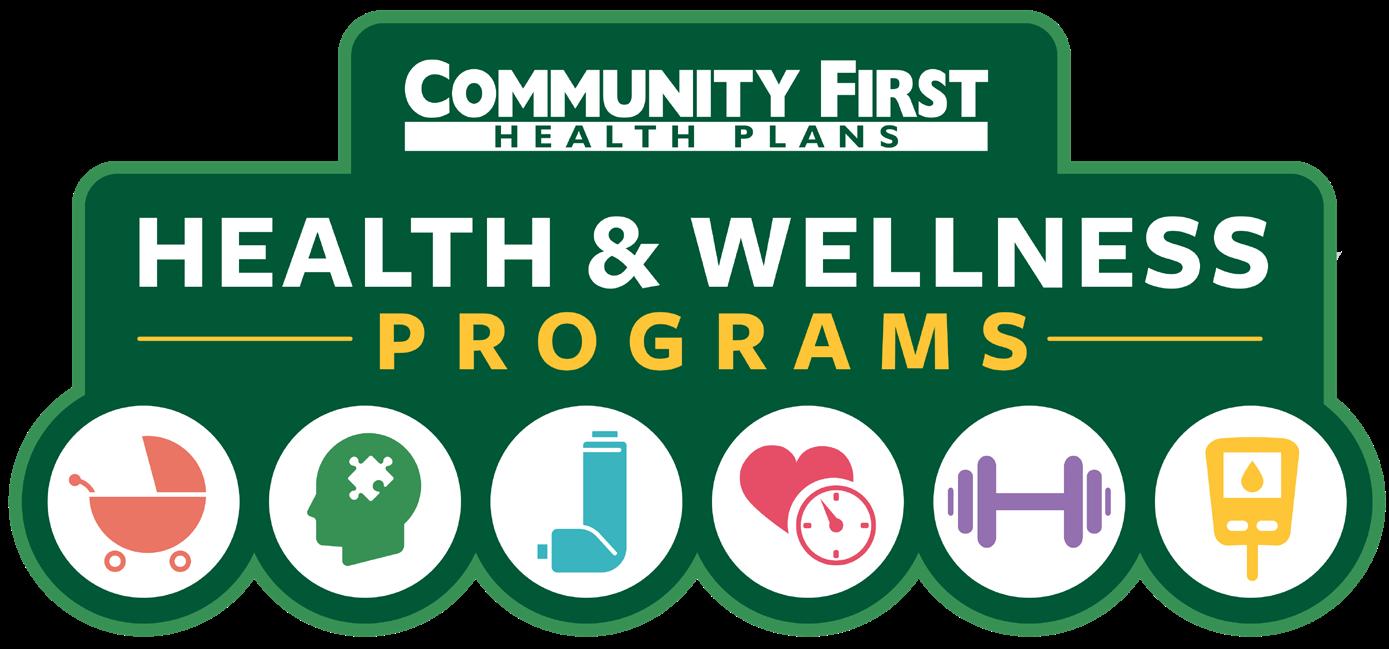
Did you know that Community First offers free Health & Wellness Programs designed to help you understand and improve your health, get support for a chronic condition, or experience a healthy pregnancy…all at no cost?
On the following page, you will nd a list of our current Health & Wellness Programs and the program goals of each. We want to provide you the added support, resources, and guidance you need to feel better, live healthier, and enjoy your life to the fullest.
Asthma Management Program
• Education about the causes or triggers of asthma
• Tips to achieve normal or near-normal lung function
• Advice on how to participate in physical activity without symptoms
• Ways to decrease the frequency and severity of flare-ups
Qualifying Members can get an asthma kit, pillow cover, mattress protector, gift cards for participating in Asthma Matters: Asthma Management Program and completing asthma education, receiving a flu shot, and completing three home visits with San Antonio Kids BREATHE.*
Diabetes Management Program
• Diabetes education, self-management, and healthy cooking classes
• In-person and virtual tness classes
• Home visit from a nurse
• Tips to communicate better with providers
• Smart mat that checks foot temperature to help catch complications from diabetes early*
• Referral to YMCA Diabetes Prevention Program (including YMCA membership)*
• Diabetes Garage classes for men with diabetes*
Qualifying Members in Diabetes in Control can get gift cards for participating and completing diabetes education, receiving a dilated eye exam, and submitting A1C results (once every six months).*
MATERNITY PROGRAM
• Prenatal and postpartum education
• Information about labor and delivery
• Breastfeeding education
• Tips for newborn care
• One-on-one support from a Health Educator
• Fourth Trimester classes
• In-person or virtual Mommy & Me Baby Shower
Qualifying Members in Healthy Expectations can get gift cards for each of the following: completing the Community First Health Assessment, agreeing to receive health education text messages, attending all required pre- and postnatal checkups, receiving a flu shot during pregnancy, and attending a Mommy & Me Baby Shower. Members can also receive a gift card toward a pregnancy item or birthing classes.*
Behavioral Health Program
• Help determining the type of behavioral health assistance needed
• Mental health resources and education
• Help choosing the right professional counselor, doctor, or mental health treatment
Caregivers or parents of qualifying Members or qualifying Members caring for a child/teen with a mental health condition can get a gift card for completing NAMI Basics, a six-class series on mental health.*
Lifestyle Management Program
• Education on developing healthier habits
• Case Management for high-risk Members
• Referral to YMCA Y Weightloss Program (including YMCA membership)*
Blood Pressure Management Program
• Education on managing and monitoring your blood pressure for better heart health
• Referral to YMCA Blood Pressure Management Program (including YMCA membership)*
• Case Management for high-risk Members
How to Join
Find the right Health & Wellness Program for you by taking our online Health Assessment.
1. Visit our website CommunityFirstHealthPlans. com/Health-and-Wellness-Programs or log in to the Member Portal to complete the assessment.
2. Contact one of our Health Educators for help at 210-358-6055 or email healthyhelp@cfhp.com.
Other Important Information
• All Health & Wellness Programs are provided at no cost.
• You can opt out of a Health & Wellness Program at any time.
Community First strives to give the best quality services to our Members. If you have any questions about our Health & Wellness Programs, including about eligibility, please contact Population Health Management at 210358-6055 or email healthyhelp@cfhp.com.
*Limitations and restrictions apply.
As a child enters adulthood, they need to learn how to care for their own medical needs. A health care transition is a process that helps youth and young adults who have disabilities or special health care needs prepare for the adult health care system.
During a health care transition, doctors and families should work together to make sure the young adult feels safe, comfortable, and informed. ey need appropriate resources and skills so they can live as independently and healthily as possible.
Remember, teenagers may be afraid to speak openly with their pediatrician. Health care transitions are more successful when providers and family members consider a young adult’s wants, needs, and values. Open, honest conversations between the young adult, their doctors, and their family members are a very important part of the process.
Although the health care transition process is different for each person, doctors recommend starting to plan for it by age 12. is article includes steps you can take to help your child feel con dent, supported, and prepared to take control of their health care.
Take time to discuss these important topics with your child to help prepare them for the transition:
• Health conditions and diagnoses: Discuss their medical conditions and formal diagnoses. Make sure they know how to manage them.
• Scheduling care: Show them how to schedule doctor visits. During visits, encourage them to participate and ask questions. ey should also know how to agree to medical care and what consent means.
• Arranging transportation: Community First offers Medicaid Members rides at no cost to and from health care visits and the pharmacy. Explain how these services work and how to schedule them.
• Managing health needs away from home: Explain the importance of a routine, especially when it comes to taking medication when traveling or away from home. Discuss where to go for emergency care and what to do if they are admitted to the hospital.
• Navigating the health care system: Encourage them to keep track of their health records, the medications they are taking, how to re ll prescriptions, etc.
• Understanding health insurance: Talk about their health plan bene ts and tell them who to call if they have questions. If their health insurance plan will change when they enter adulthood, explain this process.
• Making healthy choices: Remind them that as an adult, it’s their responsibility to make healthy choices and avoid risks for their own well-being.
Ask your doctor about when and how to prepare for a health care transition. A Community First Health Care Transition Specialist can also help your family through this process. Learn more by calling 1-800-434-2347 (STAR/CHIP) or 1-855-607-7827 (STAR Kids/STAR+PLUS).
Source: Got Transition©. Health Care Transition Timeline for Parents/Caregivers. GotTransition. org. GotTransition.org/Resources/?/HCT-TimelineParents-Caregivers. 6/5/2026.
When do I start having private time at my doctor visits to become more independent in my own health care?
How old will I be when I can transition to an adult doctor for care?
What do I need to learn about my own health to prepare for adult care?
Can you put recommendations in a care notebook or medical summary?
Can you help me create an emergency care plan?
What do I need to know about consent when I turn 18? Where can I get more information to help me make health care decisions?
Do you have suggestions on which doctors to transition to?
Talk with your teen about their health and conditions. Encourage them to ask their doctor questions.
Teach your teen how to make an appointment and refill a prescription. Learn what they know about their health/family history.
Encourage your teen to see their doctor alone. Before they turn 18, figure out if they will need help making health care decisions as an adult.
If your young adult is not ready to transition, seek resources for supported decisionmaking. Learn if there are other changes at 18 that affect your teen, like health insurance or Social Security Income.
Encourage your young adult to ask their current doctor to find a new adult doctor. Make sure the new doctor accepts your or your child’s health insurance.
Encourage your young adult to see their adult doctor and manage their own care. Encourage them to stay insured.
If you or your child have gone to the hospital for mental health care, we’re so glad that you took that step. But remember, after leaving the hospital, it’s important to visit a qualified provider within 7 days. This helps you stay healthy and continue getting the support you need.
Seeing a quali ed provider after leaving the hospital can make a big difference! It can help you feel better and stay out of the hospital in the future. We believe this follow-up visit is essential. You do not need a referral to see an in-network mental health specialist. Plus, if you go to your follow-up visit within 7 days, you can earn a $25 gift card!*
e sooner you have your follow-up visit, the better. Make an appointment to see any quali ed provider, including your primary care provider (PCP), within 7 days after leaving the hospital. You can also see the following types of mental health providers*:
• Psychiatrist
• Psychologist
• Licensed clinical social worker (LCSW)
• Credentialed psychiatric nurse or mental health clinical nurse specialist (PMHNP)
• Marriage and family therapist (LMFT)
• Professional counselor (LPC)
• Physician’s assistant certi ed to practice psychiatry
• Community mental health center
*Claim must include a mental health diagnosis and provider must be licensed to bill appropriate codes.
Here are some services that may take place during your follow-up visit:
• Talking with a quali ed provider.
• Getting help with medications.
• Finding community-based support teams and treatment services.
• Discovering peer support services.
• Learning about available intensive outpatient programs (IOPs).
• Getting treatment for substance use disorders.
• Taking assessments/screenings for mental health conditions.
• Setting up telehealth or phone visits.
• Receiving electroconvulsive therapy (ECT).
• Plan Ahead: Talk to the hospital staff before you leave to set up follow-up visits. ey can and want to help!
• Get Support: If you have a Community First Case Manager, Service Coordinator, or Behavioral Health Inpatient Transition Navigator, they can help you schedule visits or schedule a ride to and from your visit at no cost.* Email WeCare@CFHP.com for help.
• Schedule a Visit: If you already have a mental health provider, try to book a visit within 7 days after leaving the hospital to review medications, discuss changes in your mental health, and get other resources.
• Share Your Information: When you call, let them know the date you left the hospital so they can help you get an appointment sooner.
• Bring Your Papers: Don’t forget to take your hospital discharge papers to your follow-up appointment!
• Contact Community First: If you need help picking a doctor or making an appointment, call Community First Member Services:
» STAR Kids and STAR+PLUS: 1-855-607-7827
» STAR and CHIP: 1-800-434-2347
» University Community Care Plan: 1-888-512-2347
» Medicare Advantage Alamo & D-SNP: 1-833-434-2347
» University Family Care Plan and Commercial: 1-800-434-2347
If your child is feeling very upset or thinking about hurting themselves or others (or if you are), please seek help immediately! You can:
• Call or text the Suicide and Crisis Lifeline at 988. You can also visit 988lifeline.org to chat online.
• Community First has crisis hotlines you can call 24/7:
» STAR Kids and STAR+PLUS: 1-844-541-2347
» All other Community First Members: 1-877-221-2226
It’s a great idea to save these numbers in your phone, just in case.
Remember, you’re not alone, and there’s always help available!
or CHIP,
*Limitations and restrictions apply.
Community First is committed to ensuring that your personal health information is secure and private. Our doctors and other providers are committed to the same standards.
Your personal health information will only be used by Community First to manage your health plan and to meet state and federal requirements. We will not share it with anyone else nor release it to anyone without your written approval.
To learn more about privacy and confidentiality, please review your Member Handbook. You can also view a copy of our Notice of Privacy Practices on our website at CommunityFirstHealthPlans.com/Privacy-Policy
A well-woman visit is a yearly health checkup for women, teens, and girls. Your well-woman visit is a chance to focus on your overall health and wellness, including your reproductive health and mental wellbeing, at every stage of life.
ese appointments are usually with an obstetrician or gynecologist (OB/GYN), midwife, nurse practitioner, or another health care professional who has special training in providing care for women.
Well-woman visits focus on preventive care. Your well-woman visit will take place in a private examination room, with only you, your doctor, and possibly your doctor’s assistant. You will change into a medical gown for the examination.
The exam may include any of these screenings or conversations, based on your age and risk factors:
• Medical and family history
• A physical exam (height, weight, blood pressure)
• Vaccines (like HPV, Tdap, or flu, depending on your age and risk factors)
• Breast exam
• Pelvic exam
• Pap smear (Pap test)
• Education and counseling to help you make healthy choices
Do not schedule a well-woman visit when you are on your period (menstruating). Avoid douching, sexual intercourse, or vaginal creams for 48 hours before your appointment.
e American College of Obstetricians and Gynecologists (ACOG) recommends well-woman visits every year for any girl, women or teen recorded as female at birth who is 18 years and older or as soon as they become sexually active.
e American Academy of Pediatrics (AAP) and Texas Health & Human Services (HHSC) recommend a targeted well-woman exam to include a pelvic exam and lab work for STIs for females as early as age 11 if sexually active, but no Pap test until age 21. Teens younger than 18 who are not sexually active can schedule their rst visit between ages 1315 and every year after.
AAP & ACOG Pap Smear Recommendations:
• Before age 21 - No Pap test
• 21-29 years - Pap test every 3 years
• 30-65 years - Pap test every 3 years, or co-test every 5 years with HPV test, or HPV test every 5 years
Breast Exam:
• During a breast exam, the provider will do a visual exam to look for anything unusual or any changes in the shape, size, or color of the breast.
• ey will feel your breast with their ngers, underarm area where lymph nodes are located, and collarbone (near the neck) to check for any lumps (hard spots) or swelling.
Pelvic Exam:
• You will lie on the exam table and place your legs in stirrups.
• e provider will do an external visual exam for any issues, including sores, irritation, or swelling.
• en they will insert a small plastic or metal tool, a speculum, inside the vagina to help the provider to see inside and access the area better.
• e provider will check your reproductive organs by inserting a nger inside the vagina and pressing from the inside and outside the pelvic area to check your reproductive organs.
• A pelvic exam may or may not include a Pap test.
Pap Test (Pap Smear):
• If you need a Pap test, then during the pelvic exam, your provider will use a large cotton swab (like a Q-tip) and a small brush to collect a cell sample from your cervix.
• It is a quick process. Your provider will send the sample to a lab to check for abnormalities, including signs of cervical cancer or precancer.
• It’s important to try and relax as much as possible during the exam, for your own comfort.
• It may be uncomfortable, but should not be painful. If you experience pain, tell your provider immediately, so they can stop the procedure.
HPV Test:
• HPV tests check for the Human Papillomavirus.
• HPV tests are often done at the same time as a Pap test.
• Some types of HPV can cause cervical cancer.
Here are other common health screenings and preventive care you may get at your well-womanvisit depending on your age, risk factors, and family history. You may not get every screening or service at every visit.
• Sexually Transmitted Infections (STIs) Screening: An STI test checks for sexually transmitted infections, like chlamydia, which often has no symptoms. It is quick and painless.
• Vaccines: Your doctor may recommend vaccines like the HPV vaccine for cancer prevention (especially for teens and younger women), Flu (annually), and Shingles (for women 50+)
• Counseling: During your visit, your doctor may talk to you about your lifestyle (substance use, diet, and exercise), sexual health (birth control, STI prevention), mental well-being, and perimenopause/menopause. ese discussions all depend on your age and needs.
• Urine sample and blood tests: ese routine tests can check for things like liver dysfunction, diabetes, anemia (low iron), and vitamin D levels.
• Bone Density Test (DEXA): A DEXA scan measures your bone strength and can be used to diagnose osteoporosis.
Your well-woman visit is a great chance to ask about any health issues you are experiencing. Don’t be afraid to be open and honest with your doctor. Here are a few sample questions they can help answer.
1. I want to start birth control. What options are right for me?
2. My period is heavy and painful. What can I do to get relief?
3. I don’t feel like myself. Am I starting perimenopause or menopause?
4. I’m depressed and anxious. Where can I get help?
5. Am I due for a Pap test?
6. Do I need the HPV vaccine?
7. How can I protect myself from sexually transmitted infections?
8. Cervical cancer runs in my family. What can I do to prevent getting it?
Schedule Your Well-Woman Visit
Call your primary care provider or your OB/ GYN to make an appointment to get tested. Need help? Call 210-358-6055 or email healthyhelp@cfhp.com. Or nd an in-network doctor by logging into the Community First Member Portal or using our online Provider Directory at CommunityFirstHealthPlans.com.
Transportation
Community First offers STAR, STAR Kids, STAR+PLUS, and Medicare Advantage Alamo Plan and D-SNP Members non-emergency medical transportation to and from well-woman visits and other medical appointments at no cost. Learn how to book a ride before your next appointment.
Rewards
Community First STAR Members who are participating in our Healthy Living: Lifestyle Management Program will receive a $25 gift card for getting a cervical cancer screening, and a $25 gift card for getting a chlamydia screening. Limitations and restrictions apply. Learn more about this reward and other Value-Added Services you may be eligible for as a Member.
Other Health Services for Women
Visit our Women’s Health page to learn more about the bene ts and services Community First covers for the unique health care needs of women at every stage of life.
Every pregnancy is different. If your pregnancy becomes more difficult or more stressful than expected, Community First offers a special program called Complex Pregnancy Case Management, available for any Member who is experiences a complicated or high-need pregnancy.
When you sign up, we will assign you your own nurse Case Manager. ey will listen, answer your questions, and help you with things like:
• Making doctor appointments.
• Getting a ride to your visits.
• Finding maternity and family support programs in your community.
You’ll also have a team of people — your nurse, your doctor, and other medical professionals — all working together to take care of you and your baby.
You don’t have to go through a complicated pregnancy alone.
Members enrolled in our pregnancy Case Management program have reported feeling more calm, con dent, and cared for during their pregnancy. We can help you prepare for your baby’s arrival, explain treatment options, and listen to your concerns to better meet your needs. We are here for you.

We’re here to make sure you feel supported and cared for every step of the way. If you’re pregnant and want extra help, call our maternal case managers team at 210-358-6055 or email healthyhelp@cfhp.com.
A guide by your side—supporting you and your baby with answers, resources, and care.
When you’re enrolled in a Medicare Advantage Dual Eligible Special Needs Plan (D-SNP), we may invite you to participate in an Interdisciplinary Care Team meeting. Think of it as a special check-in where a team of professionals comes together to make sure you’re getting the right care, at the right time, with the right support.
An ICT meeting is all about you—your health, your goals, and what your medical care team can do to better support you with your health and wellness goals. During these meetings, a group of professionals who support your care meet each other to discuss and agree on your care. Depending on your needs, your care team may include doctors, nurses, case managers, pharmacists, behavioral health specialists, social workers, and sometimes other professionals who help you stay healthy, safe, and independent.
During an ICT meeting, you and your care team will review your medical conditions, medications, and treatments. ey will also discuss your day-to-day needs, like whether you have trouble getting to appointments, accessing food, or managing tasks at home. If you are working toward personal goals, such as improving mobility, maintaining independence, or reducing stress, you should share that with your ICT, so you can work together on a solution.
Together, they will use this information to build or update a personalized care plan just for you. is plan ensures that all of your providers are working together and also identi es and addresses any obstacles to your care.
Managing your health can feel overwhelming at times, especially when you have multiple health conditions or several doctors involved in your care. ICT meetings can take some of that weight off your shoulders.
ese meetings help ensure that:
» You’re not trying to gure everything out on your own.
» Your care feels easier to understand and follow.
» Everyone involved in your care knows what you need and what is important to you.
» Your care team makes decisions with your best interests in mind.
» Together, your ICT can identify minor issues early, before they become bigger problems.
» You always have a team looking out for you.
Go to your primary care provider (PCP) for routine care or when you’re feeling sick.
• Checkups and vaccinations
• Treatment of chronic illnesses, like asthma and diabetes
• Prescription re lls
• Flu, sore throat, cough
• Health screenings, like blood pressure checks, labs, and blood work
• Minor injuries, cuts, or burns
Your PCP’s name and phone number is on your Member ID card. If you don’t know who your PCP is, log in to the Member Portal or call 210-227-2347.
Schedule a virtual appointment as another option for routine care or when you’re feeling sick.
• Consultations and routine medical questions
• Mental health care
• Follow-up appointments
• Treatment of chronic illnesses, like asthma or diabetes
• Prescription re lls
• Flu, sore throat, cough
Your doctor will typically provide you with a link to a platform or portal where you can connect securely via video call on your computer, tablet, or smartphone.
Go to urgent care when your doctor’s office is closed and you have an urgent medical issue.
• Cuts requiring stitches
• Flu, high fever, bad colds
• Sprains, muscle pulls
• Shortness of breath
• Diarrhea and vomiting
• Ear infection, eye injury
• Abdominal pain
If you need help deciding where to go to get non-emergency care, call the 24/7 Community First Nurse Advice Line at 1-800-434-2347 to speak with a registered nurse.
Dial 911 or go to the nearest Emergency Room if your life is in immediate danger.
• Bleeding that will not stop
• Di culty breathing
• Seizure
• Fainting
• Chest pain
• Serious accident
If you think you may have consumed something poisonous, call the Poison Control Center at 1-800-222-1222. ey may tell you that you need to go to the ER.
Dyslexia is a neurobiological difference that impacts people of all intelligence levels in how their brains process language, particularly the relationship between sound and written words. It is one of the most common learning differences, affecting 1 in 5 individuals; however, it often goes undiagnosed.
Research shows that early identi cation and evidence-based intervention can signi cantly improve long-term educational and career success, and overall quality of life. With early intervention and the right resources, many people with dyslexia can thrive in daily life, using their strengths to express their creativity, big-picture thinking, and unique problem-solving skills.
When dyslexia goes unidenti ed, individuals may experience frustration, anxiety, lower selfcon dence, and academic challenges. Tools for working with this learning difference exist, and while it is good to start early, it’s never too late to learn how to live with dyslexia.
Talk to your primary care provider (PCP) as soon as possible if you think you or your child may have dyslexia. People with dyslexia often show one or more common habits that often remain consistent for years.
• May read slowly or with extra effort, but shows strong understanding when listening or discussing ideas
• Spelling may be inconsistent
• Notes and copying tasks can be slow or disorganized
• Memorization (e.g., facts, lists) may be challenging
• Handwriting may be messy or ideas appear disorganized
Community First partners with Celebrate Dyslexia, a San Antonio-based nonpro t leading efforts across healthcare, education, and community systems to improve awareness, identi cation, and support for individuals with dyslexia.
Celebrate Dyslexia and Community First offer helpful resources to support early awareness and intervention, including:
• Know the Signs of Dyslexia: A bilingual resource to identify the signs is the rst step to living well with dyslexia.
• Dyslexia Screener for Children and Adults: A screening tool designed to measure the risk of dyslexia developed by a team of educational diagnosticians, certi ed academic language therapists, and physicians a liated with Celebrate Dyslexia based on common signs and symptoms.
Contact Celebrate Dyslexia directly for more information or visit their website.
We understand that health care needs go beyond medical emergencies and doctor appointments.
Community First offers Health & Wellness Programs, case management services, and can connect you to local community resources.
Take the Community First Health Assessment or contact a Community First Health Educator at 210-358-6055 or email healthyhelp@cfhp.com so that we can better understand your needs and provide support.

Utilization Management (UM) is a process that evaluates the treatments, services, and procedures provided to our Members on a case-by-case basis.
When Community First receives a service request from your Provider, we use current medical evidence and clinical criteria to make a decision. We consider your best interests and apply criteria fairly and consistently. Community First then approves or denies services based on whether they are medically necessary and covered by the plan. If you wish to review the criteria used in making a decision, it is available upon request.
What Is Utilization Management (UM)?
Utilization Management (UM) is how we review requests for care. When your doctor asks for a service, we look at it to make sure it is:
• Safe
• Needed for your health
• Covered by our plan
We use medical guidelines and treat all members fairly. If you want a copy of the guidelines we use, just ask—we’re happy to share.
Before You Get Care (Service Review)
Most of the time, your doctor will ask us for approval before you get care. is is called prior authorization.
• Our trained nurses, therapists and doctors review the request
• A doctor will review cases that need extra attention
• We make sure the care is right for you
For emergency care, you can get help right away. Afterward, we will review the service. Please note: this review does not always mean the service will be paid.
Using Doctors in Our Network
We want you to see doctors in our network whenever possible.
• Care outside the network needs approval rst
• We check if a network doctor can provide the care on time
• Services outside the network may not be covered without approval

If You Go To the Hospital
If you are in the hospital, we will:
• Review your care
• Work with hospital staff
• Help plan your care when you leave (like going home or to another facility)
Our goal is to make your care smooth and safe.
If You Disagree with a Decision (Appeals)
If a service is denied, you have the right to appeal.
• You, your representative, or your doctor can le an appeal
• We will review your case again
We are here to listen and help.
Call us at 210-358-6050
Monday–Friday, 8 a.m. to 5 p.m.
• If you call after hours, we will call you back the next business day
• Our staff will always tell you their name and role
• You can call to ask questions or check on a request
We Care About You
Your health matters to us. We are here to make sure you get the care you need and to support you along the way. Please reach out anytime—we’re happy to help.


A healthy community is one where local groups and organizations work together to prevent disease and connect people to options for healthy living. At Community First, we are proud to do our part in contributing to a healthy community by putting YOU at the center of all health care decisions.
Improving the health of your community also starts at home. Here are a few things you can do to get healthy and stay healthy.
1. Concentrate on your own health and the health of your family. Take action to keep yourself healthy and strong. Eat well, wash your hands often to prevent illness, get regular checkups and vaccines, and stay physically active. If you take care of your body now, you will be more prepared to handle stress and physical demands during a medical emergency.
2. Use technology to improve communication between you, your provider, and your health plan. Did you know that most providers can talk with you via email, text, and even video message? Avoid long wait times on the phone and see what other communication options are available to you as a valued patient.
Additionally, our Member Portal can help you take better control of your health. e portal is a secure online space lled with YOUR information, including your bene ts, Member ID card, and much more. All Community First Members are encouraged to sign up for the Member Portal. It’s a great tool available in English and Spanish that can be used on any online device.
While you’re logged in to the Member Portal, be sure to explore the tools and resources available there, including our Health Assessment. Take the Health Assessment to see if you could bene t from one of
our no-cost Health & Wellness Programs designed for Members with long-lasting conditions like asthma, high blood pressure, and diabetes. Each program is provided at no cost to Members and includes incentives, giveaways, education, and support. You may also be able to receive a gift card just for taking the Health Assessment.*
3. Visit our website, read our blog, and connect with us on social media.
Our website, CommunityFirstHealthPlans.com, is a great source of important information about your health plan. Visit us online to nd a health care provider, review your Member Handbook, download forms and new Member documents, and more.
Our website is also home to our blog which features health, safety, and wellness articles plus community news and free local events.
Social media is another place where our team shares helpful videos, event announcements, health news, and community resources available to you as a Community First Member. Follow us to connect and keep up with the latest.
@CommunityFirstHealthPlans
@CFHealthPlans
@CFHealthPlans
@CommunityFirstHP
*Limitations and restrictions apply. For more information, call a Community First Health Educator at 210-385-6055 or email healthyhelp@cfhp.com.
Sources
Rangaswamy, N. (2015). The Five Pillars of Population Health Management. ZeOmega, Inc.
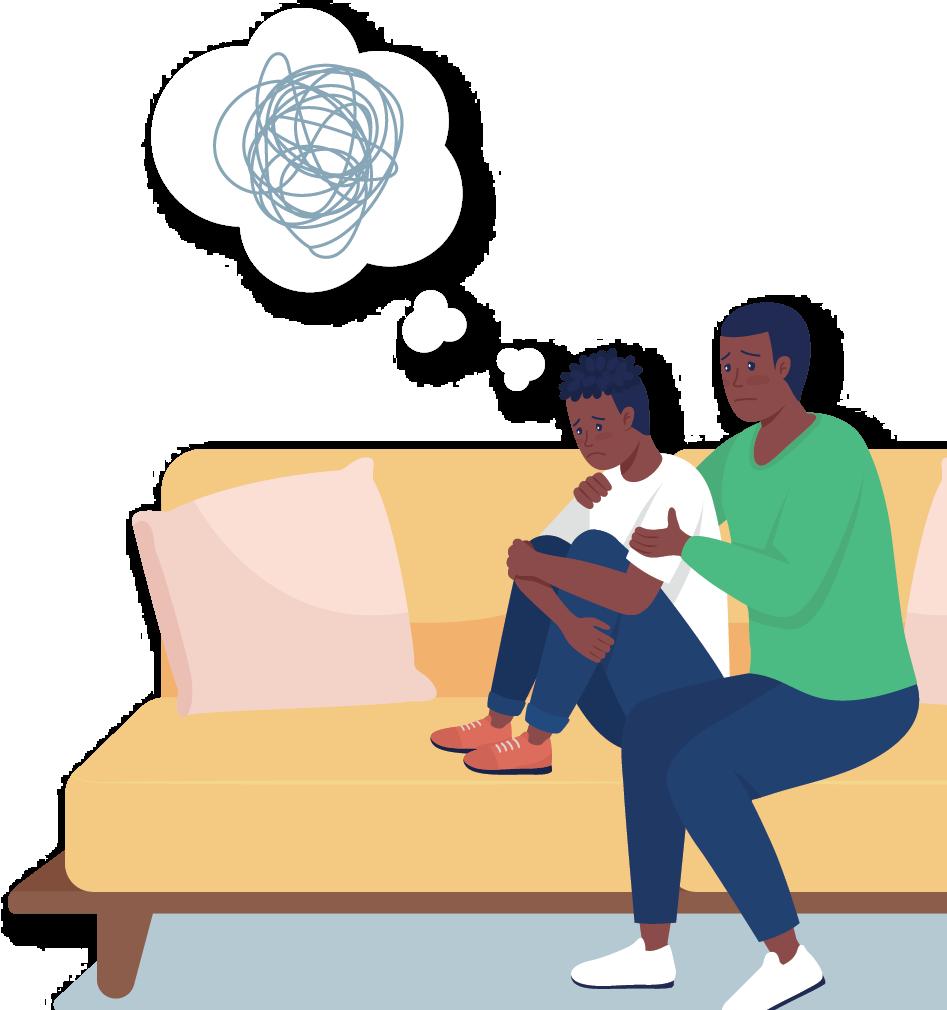
National Alliance on Mental Illness (NAMI) Basics is a free, six-week course for parents/guardians, caregivers, and other family members who care for youth 17 years and younger who have either been diagnosed with a mental health condition or who are experiencing symptoms but have not yet been diagnosed.
I. Mental Health Conditions Are No One’s Fault
II. Brain Biology & Getting A Diagnosis
III. Treatment
IV. Communication Skills & Crisis Prevention V. Navigating Mental Health, School, & Juvenile Systems VI. Advocacy, Self-Care, & Evaluation
Parents and caregivers of Community First STAR, STAR Kids, STAR+PLUS, and CHIP Members who attend may be eligible to receive rewards for participating, including a $50 gift card (one gift card per eligible Member or parent/caregiver of an eligible Member). Limitations and restrictions apply.
At NAMI Basics, you’ll find out that you’re not alone. Recovery is a journey, and there is hope. The group setting of NAMI Basics provides mutual support and shared positive impact—you can experience compassion and reinforcement from people who understand your situation.
About NAMI Greater San Antonio: NAMI Greater San Antonio provides advocacy, education, support, and public awareness to help individuals and families affected by mental illness build better lives.
Community First Members can register for NAMI Basics by scanning the QR code or at CommunityFirstHealthPlans.com/NAMI-Basics-Education-Program-Form. Call 210-358-6055 or email healthyhelp@cfhp.com for help.
If you are not a Community First Member and would like to register, contact NAMI Greater San Antonio at 210-256-2421.







Engage your children’s curious minds with the latest exhibit, the Little Community Garden at The DoSeum, brought to you by Community First! You may already be familiar with The DoSeum, San Antonio’s nationally recognized children’s museum, whether through a family visit, fun afternoon with your kids, or a school field trip. It’s loads of fun for active kiddos!
The new Little Community Garden, located in the child-sized Little Town, entertains young future gardeners by letting them explore how to build and care for a garden. In the garden, kids will see how plants grow, move bees around a pollinator maze, plant vegetables in the ground, and even harvest fruits and vegetables. And don’t forget to visit the Little Doers Den, a stimulating play area dedicated to infants and their caregivers, also sponsored by Community First.
Plan your next visit soon! Join The DoSeum at Free Family Nights on the first Monday of every month, co-sponsored by Community First and H-E-B.
REMEMBER, KIDS, LEARNING IS COOL!







Millions of Americans have a substance use disorder, which is an important health issue in our country. With effective treatment, recovery is possible.
ere are many mistaken beliefs about substance use disorders, addiction, and mental health issues. If you or someone you love is struggling, it’s important to understand that a substance use disorder is not a character flaw or sign of failure.
Substance use disorders are treatable, long-lasting diseases that can affect anyone regardless of race, gender, income level, or social class. In 2022, more than one in six Americans, ages 12 and older, reported experiencing a substance use disorder.
ere is hope for recovery and a brighter future.
According to the Centers for Disease Control and Prevention (CDC), a substance use disorder (SUD) is a chronic, but treatable, condition. It happens when someone continues to use drugs or alcohol, even though doing this causes serious problems in their life. A SUD affects how a person thinks, feels, and behaves. e National Institute of Mental Health (NIMH) also states that people with mental health disorders are at a higher risk of developing substance use problems, including:
• Anxiety
• Depression
• Schizophrenia
• Bipolar disorder
• Attention-de cit/hyperactivity disorder (ADHD)
Overcoming a SUD is not as simple as resisting the temptation to use drugs or alcohol. Doctors use evidence-based guidelines to choose the right treatment options for each patient. ese treatments may include medication, counseling, and rehabilitation. Community First Members can get help for a SUD without a referral for the following:
Outpatient SUD treatment services, including:
» Assessment
» Counseling
» Detoxi cation Services
» Medication-assisted therapy
Residential SUD treatment services, including:
» Detoxi cation
» Inpatient treatment (including room and board)
Follow-up care is also a very important part of treatment. It is recommended to follow up with an SUD provider or treatment program within 7 days of discharge from residential treatment or within 14 days after an SUD diagnosis for the best outcome. Community First offers eligible Members no-cost transportation* to and from the doctor or pharmacy to help Members stay on track with their recovery.
*Limitations and restrictions apply.
Naloxone (NARCAN) is used to prevent opioid overdose and can reverse or reduce the effects of opioids. Naloxone comes in many forms, including IV, intramuscular (injection directly into the muscle), and nasal spray.
Naloxone is a covered medication for all Community First Members with a valid prescription. It’s also available for purchase over-the-counter at retail pharmacies without a prescription. In addition, authorized pharmacists in Texas may use a standing order to dispense Naloxone. Naloxone Texas, a statewide initiative aimed at ending the state’s opioid epidemic, also distributes Naloxone for free to organizations and individuals across Texas.
If you or a loved one is at risk of an opioid overdose, you should keep some Naloxone handy. If you suspect someone is experiencing an opioid overdose, call 911 immediately. Opioid overdose is a medical emergency and requires treatment—the sooner the better.
Some signs of opioid overdose include:
• Pinpoint pupils
• Pale, clammy skin
• Slow, shallow breathing
• Vomiting or gurgling noises
• Purple/blue lips and ngernails
ere is no guaranteed way to predict if someone will experience an SUD. However, there are some things that you can do to help prevent it.
Evaluate Risk Factors
• Know your family history of SUDs, mental illness, and addiction.
• Be aware of your risk factors, like mental health issues and substance use among peers or family members.
Focus On Your Health
• Eat a healthy, well-balanced diet.
• Try to get 7-8 hours of sleep a night.
• Practice meditation and self-care to manage stress.
• Find positive outlets like exercise, volunteering, reading, or a new hobby.
Find Support
• Seek individual or group counseling.
• Find a community of support, like Alcoholics Anonymous or Narcotics Anonymous meetings, Rise Recovery, or Be Well, Texas.
• Join Healthy Mind: Behavioral Health Management,a no-cost Community First Health & Wellness Program that offers Members helpful information, resources, and tools.
• Reach out to the Community First Behavioral Health Department at WeCare@cfhp.com for assistance navigating treatment options and other resources.
• Call the Community First 24/7 Behavioral Health Substance Use Hotline:
» STAR Kids and STAR+PLUS: 1-844-541-2347
» All other plans: 1-877-221-2226
• Call, text, or chat with the 988 Suicide & Crisis 24/7 Lifeline for yourself or a loved one, or chat online at 988lifeline.org
Sources
National Institute of Mental Health. (2025, March). Finding Help for Co-Occurring Substance Use and Mental Disorders. NIMH. NIMH.NIH.gov/Health/ Topics/Substance-Use-and-Mental-Health
Centers for Disease Control and Prevention. (2024, April 25). Treatment of Substance Use Disorders. CDC. CDC.gov/Overdose-Prevention/ Treatment/index.html

Having a baby can be a stressful experience, no matter how much you love your child or have looked forward to becoming a parent. Considering the loss of sleep, intense new responsibilities, and having no time for yourself, it’s no surprise that many new moms feel like they’re on an emotional rollercoaster. In fact, mild depression and mood swings are so common in new mothers that it has its own name: The Baby Blues.
Is it the baby blues or postpartum depression?
e majority of women experience at least some symptoms of the baby blues immediately after childbirth. e sudden change in hormones after delivery, plus stress, isolation, no sleep, and fatigue, can cause strong feelings, even sadness. You may feel more tearful, unprepared, and emotionally fragile than normal. Generally, these feelings start in the rst couple of days after delivery, peak after one week, and then begin to fade by the end of the second week after your child’s birth (postpartum).
e baby blues are perfectly normal, but if your symptoms don’t go away after a few weeks or get worse, you may be suffering from postpartum depression. You may need to ask for help, and that is perfectly normal. You are not alone. Help is available.
Signs
In the beginning, postpartum depression can look like normal baby blues. In fact, postpartum depression and the baby blues share many symptoms, including mood swings, excessive crying, sadness, insomnia, and irritability. e difference is that with postpartum depression, the symptoms are more severe and may even include suicidal thoughts or the inability to care for your baby. Unlike the baby blues, postpartum depression is a serious problem—one that you shouldn’t ignore. Here are a few signs and symptoms of postpartum depression to be aware of:
• You avoid your partner or push them away.
• You feel unable to emotionally connect with or feel close to your baby.
• Your anxiety is out of control, which prevents you from eating or sleeping well, even when your baby is asleep.
• You experience powerful feelings of guilt or worthlessness, begin to be preoccupied with thoughts of dying, or even wish that you were not alive.
If you think you may have postpartum depression, or if your partner or family members are worried that you do, contact your OB/GYN or another health care professional as soon as possible and make an appointment to see them. DO NOT WAIT until your postpartum checkup. The sooner you call, the sooner you can get help.
For an urgent problem related to postpartum depression, call immediately for free help, 24/7:
• National Suicide and Crisis Lifeline 988
• Community First Behavioral Health Hotline 1-877-221-2226
Community First offers Case Management services to help Members suffering from postpartum depression and other complex and chronic conditions. Case Management services include:
• Help getting the care you need quickly
• Help coordinating care between doctors and other health care providers
• Help understanding your condition and treatment
As a reminder, Community First Members can make an appointment with any network Behavioral Health Services Provider without a referral.
If you would like to learn more about Case Management or need help nding a provider, call 1-800-434-2347.
Did you know that as a Member of Community First, you have certain rights and responsibilities?
Information about Member Rights and Responsibilities can be found in your Member Handbook. To view your Member Handbook, visit CommunityFirstHealthPlans.com/Members and pick your health plan.
You can also call Community First Member Services at 210-227-2347 or toll-free at 1-800-434-2347 to ask for a printed copy. We’ll mail one to you for free within five business days.
Summer is an exciting time for families—school is out, the days are longer, and there’s more time to enjoy the outdoors and be with friends. With all that freedom, though, comes added risk. While we can’t be by our children’s side every moment, we can teach them smart habits and awareness to help keep them safe.
Too much sun exposure can damage your skin now and may cause skin cancer later in life. Even on cloudy days, UV rays can still cause damage.
Help protect your family by:
• Using sunscreen (SPF 30 or higher) on all exposed skin.
• Reapplying every two hours, and after swimming or sweating.
• Wearing hats, sunglasses, or protective clothing when possible.
If a sunburn happens:
• Watch out for blistering, fever, or nausea.

Nothing feels more refreshing than cooling off in the water on a hot day. However, drowning can happen quietly and quickly. Prepare your kids to stay safe in and around the water; it may save their lives.
• Kids should always swim with an adult watching.
• Put phones away when supervising swimmers.
• Follow posted pool or lake rules.
• Use life jackets when boating or swimming in open water.
• Consider swim lessons at local public pools.
• Never dive into water unless you know it’s safe and deep enough.
• Apply aloe for relief and call your primary care provider if symptoms are severe.
Learn more:
5 Things You Can Do NOW to Prevent Skin Cancer
Texas summers are intense! Heat and dehydration can make kids and adults sick fast.
To stay safe in the heat:
• Hydrate, hydrate, hydrate! Drink lots of water while outdoors.
• Sports drinks can help, but water is usually better.
• Take breaks indoors or in the shade often.
• Avoid direct sun between 10 a.m. and 4 p.m.
• Wear light colored, breathable clothing.
• Never leave children, seniors, or pets in a parked car, even for a few minutes.
Learn more:
Safety Tips & Resources for Extreme Heat
If someone is missing, check the water rst, because every second matters.
Learn More:
Top Swim Safety Tips and the Signs of Drowning
Riding bikes is a summer favorite for many kids. Teach your kids bicycle safety and how to share the road or path responsibly with these tips:

• Wear a properly tted, CPSC-certi ed helmet on every ride.
• Wear bright or reflective clothing.
• Check bike seat height, tire pressure, and reflectors.
Learn more: i-Cycle Free Bike Safety and Repair Class
With most kids at home more often in the summer, it’s important to make sure your home is kid-proofed.
Keep these items locked up or out of reach:
• Medications
• Cleaning products and chemicals
• Matches and lighters
• Alcohol
• Firearms
• Plastic bags
For younger children, you should also:
• Use outlet covers.
• Secure furniture to walls.
• Add baby gates to stairs.
• Remove toys small enough for kids to swallow.
Learn more:
Home Safety Tips for Families With Young Children or Home Safety Checklist
Another challenge parents may face in the summer is keeping food on the table to ensure their children get the nutrients and protein they need to support their physical, mental, and emotional growth. San Antonio and surrounding counties offer many places to nd free or low-cost food, including more than 50 free Community First Food Pantries.
If you need help, you are not alone! Have an excellent and safe summer!
Sources
Northeast Dermatology. (2025, June 30). The Best Sunscreens of 2026: A Systematic Review of Top Recommendations. Dermatology Columbus. DermatologyColumbus.com/Post/The-BestSunscreens-of-2026-A-Systematic-Review-of-TopRecommendations. 6/3/2026.
U.S. Centers for Disease Control and Prevention (CDC). (2025, April 23). Sun Exposure in Travelers. CDC Yellow Book 2026. CDC.gov/Yellow-Book/HCP/EnvironmentalHazards-Risks/Sun-Exposure-in-Travelers.html. 6/3/2026.
Venosa, A. (2025, June 24). The Science Behind the Seal: What Safe, Effective Sun Protection Means. Skin Cancer Foundation. SkinCancer.org/Blog/The-Science-Behind-theSeal-What-Safe-Effective-Sun-Protection-Means. 6/3/2026.
Reimel, E., Farberg, A. (2025, June 2). Practice Sun Safety With These New SPF Guidelines. HealthCentral. HealthCentral.com/News/Skin-Cancer/Practice-SunSafety-New-SPF-Guidelines. 6/3/2026.
Van om, G., Bramlet Blackburn, K. (2024, July 2). What Happens to Your Skin When You Get a Sunburn. UT MD Anderson. MDAnderson.org/CancerWise/What-Happensto-Your-Skin-When-You-Get-a-Sunburn. 6/3/2026.
American Heart Association. It’s Great to Hydrate Infographic. American Heart Association. 6/3/2026 https://www.heart.org/en/healthy-living/healthy-eating/eatsmart/nutrition-basics/its-great-to-hydrate-infographic
U.S. Centers for Disease Control and Prevention (CDC). (2026, January 27). Summer Swim Safety. CDC. CDC.gov/Drowning/Prevention/Summer-Swim-Safety. html. 6/3/2026.
U.S. Centers for Disease Control and Prevention (CDC). (2025, September 29). Drowning Prevention. CDC. CDC. gov/Drowning/Prevention/Index.html. 6/3/2026.
American Red Cross. Water Safety. American Red Cross. RedCross.org/Get-Help/How-to-Prepare-for-Emergencies/ Types-of-Emergencies/Water-Safety.html. 6/3/2026.
National Safety Council (NSC). Bike safely and Enjoy Your Ride. NSC. NSC.org/Community-Safety/Safety-Topics/ Seasonal-Safety/Summer-Safety/Bicycles. 6/3/2026.
National Highway Tra c Safety Administration (NHTSA). (2012, April). Fitting Your Bike Helmet. NHTSA. NHTSA.gov/Sites.NHTSA.gov/Files/8019_ Fitting-a-Helmet.pdf . 6/3/2026.
Pedestrian & Bicycle Info Center. Bicycle Helmets. Pedestrian & Bicycle Information Center. PedBikeInfo.org/ Topics/Bicyclehelmets.php. 6/3/2026.
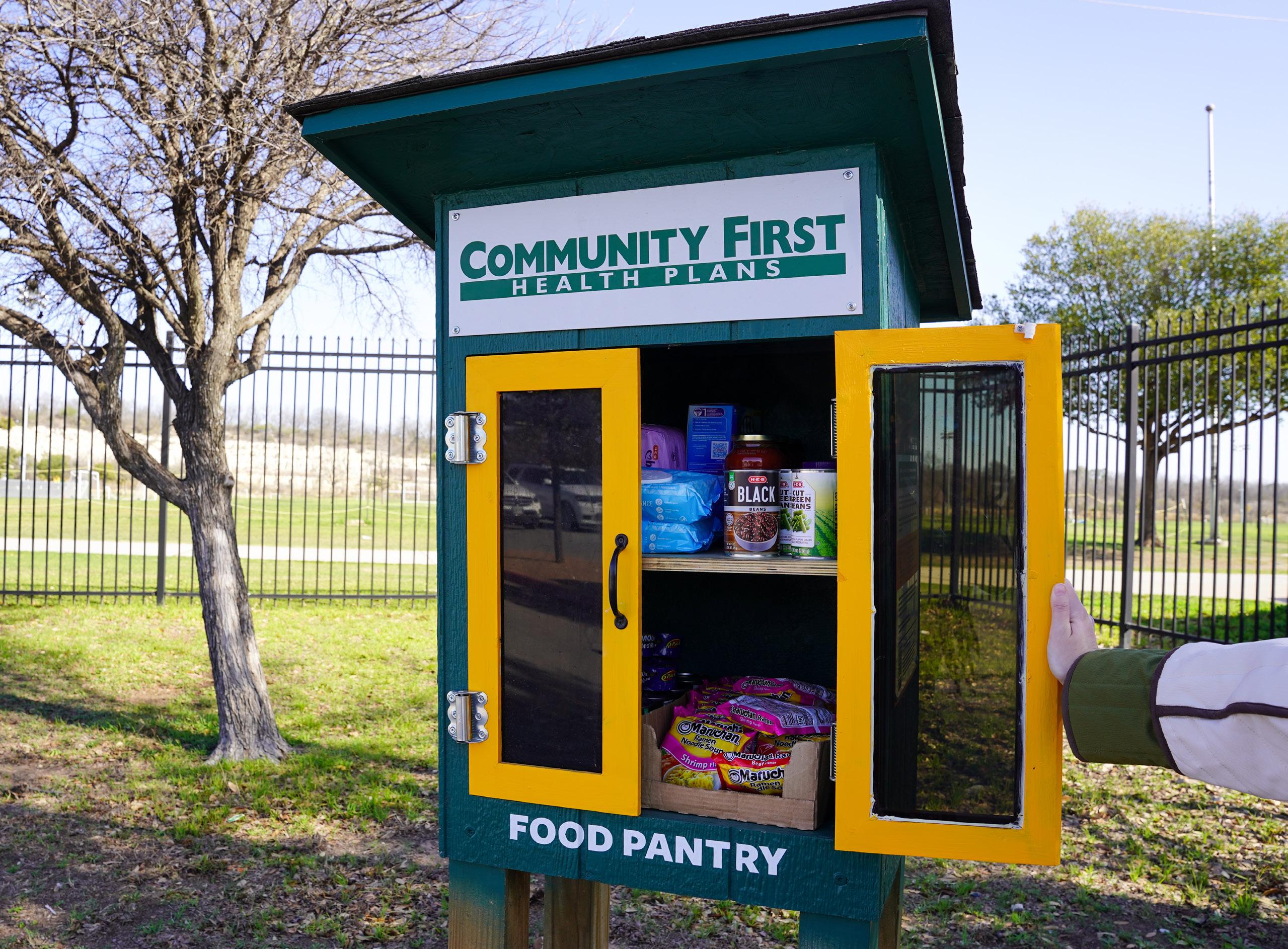
Did you know that there are several ways for families to get free food if they are in need? Here are some places and organizations providing free food in the San Antonio area and nearby.
• Community First Food Pantries: Community First has installed more than 50 free food pantries, open to anyone, in and around San Antonio at local churches, schools, and community organizations. ey are easy to access, most are located outdoors, and are available 24/7*. Anyone is welcome to take what they need when they need it, with no sign-up or registration needed. To nd a Community First food pantry near you, use the food pantry map on our website, CommunityFirstHealthPlans.com/Food-Pantry. *Some food pantries are located indoors and open during the organization’s hours of operation.
• San Antonio Food Bank: e San Antonio Food Bank’s website SAFoodBank.org/Help has a list of locations and food distribution events, as well as a link to help you nd and apply for bene ts for which you may be eligible. Enter your zip code to nd nearby pantries and upcoming distribution events. You can also call 210-337-3663 or 210-431-8326 for more information.
• 211: Anyone can call 211, toll-free, or visit 211Texas.org to ask where to nd food, other community resources, and social services. Press option “1” to get help nding food pantries and meal sites.
• FindHelp.org: FindHelp.org helps people nd food and other support. Visitors can search for help by entering a zip code anywhere in the country. No email address or application is required; the website is free, anonymous, and available for anyone to use at any time.
• FreeFood.org: FreeFood.org lists food pantries and places to nd free food across the country. You can search rst by state and then by city or town. e website is free to use and does not require any sign-in or personal information.
• Women, Infants, and Children Program (WIC): WIC provides healthy food boxes and virtual or in-person nutrition information for pregnant or breastfeeding women and families with children through age 5. Learn more and apply for WIC assistance on their website at TexasWIC.org
• San Antonio Meals on Wheels: Meals on Wheels San Antonio delivers fresh, hot meals to seniors and people with disabilities and pet food for their pets. ey can deliver meals to homebound individuals in Atascosa, Bexar, Comal, Edwards, Frio, Guadalupe, Karnes, Uvalde, and Wilson counties. Sign up to get meals on their website at mowsatx.org.
• Catholic Charities San Antonio: Catholic Charities San Antonio offers the St. Stephen’s CARE Center, set up like a supermarket, so families can choose what they want. You’ll need a form of ID with your current address, proof of address, and a Social Security card or birth certi cate of the person in the household who needs the assistance. Find out more at CCGCC. org/St-Stephens-Care-Center-Food-Pantry or call 210-226-6178 for hours.
• St. Vincent de Paul Society: St. Vincent de Paul offers food assistance, clothing, and other resources. Visit SVDPSA.org for ways to get help and a list of resources by county, or call 210-223-1200.
• The Salvation Army San Antonio: e Salvation Army provides free food through pantries, meals, and other social services. Visit Salvationarmysanantonio.org/san-antonio/ social-services/ to learn more or call 210-352-2020.
• Feeding America: Feeding America is a national organization that contributes to food banks. ey have a food nder by zip code on their website, FeedingAmerica.org, which includes helpful information and links to other types of support.
• Mutual Aid Groups: Mutual aid groups are voluntary, community-based networks of neighbors helping neighbors. Mutual aid means there is no government or corporate involvement. Find a mutual aid group near you at MutualAidHub.org. You can also search for mutual aid groups on social media platforms in your area, such as community gardens or a Buy Nothing group.
Community First Health Plans, Inc. and Community First Insurance Plans (Community First) comply with applicable federal civil rights laws and do not discriminate on the basis of race, color, national origin, age, disability, sex, gender identity, or sexual orientation. Community First does not exclude people or treat them differently because of race, color, national origin, age, disability, sex, gender identity, or sexual orientation.
Community First provides free aids and services to people with disabilities to communicate effectively with our organization, such as:
— Qualified sign language interpreters
Written information in other formats (large print, audio, accessible electronic formats, and other formats)
Community First also provides free language services to people whose primary language is not English, such as:
— Qualified interpreters
Information written in other languages
If you need these services, please contact Community First Member Services at the number on the back of your Member ID card or 1-800434-2347. If you’re deaf or hard of hearing, please call 711. If you feel that Community First failed to provide these services or discriminated in another way on the basis of race, color, national origin, age, disability, sex, gender identity, or sexual orientation, you can file a complaint with Community First by phone, fax, or email at:
Community First Compliance Coordinator
Phone: 210-227-2347 | TTY: 711 Fax: 210-358-6014
Email: DL_CFHP_Regulatory@cfhp.com
If you need help filing a complaint, Community First is available to help you. If you wish to file a complaint regarding claims, eligibility, or authorization, please contact Community First Member Services at 1-800-434-2347.
You can also file a civil rights complaint with the U.S. Department of Health and Human Services, Office for Civil Rights, electronically through the Office for Civil Rights Complaint Portal, available at: https://ocrportal.hhs.gov/ocr/portal/lobby.jsf
You may also file a complaint by mail or phone at:
U.S. Department of Health and Human Services
200 Independence Avenue, SW Room 509F, HHH Building Washington, D.C. 20201
Phone: 1-800-368-1019 | TTY: 1-800-537-7697
Complaint forms are available at: https://www.hhs.gov/civil-rights/filing-a-complaint/complaintprocess/index.html
Community First Health Plans, Inc. (Community First) y Community First Insurance Plans cumplen con las leyes federales de derechos civiles aplicables y no discriminan por motivos de raza, color, nacionalidad, edad, discapacidad, sexo, identidad de género u orientación sexual. Community First no excluye ni trata de manera diferente a las personas debido a su raza, color, nacionalidad, edad, discapacidad, sexo, identidad de género u orientación sexual.
Community First proporciona asistencia y servicios gratuitos a personas con discapacidades para comunicarse efectivamente con nuestra organización, como:
— Intérpretes calificados de lenguaje de señas
Información escrita en otros formatos (letra grande, audio, formatos electrónicos accesibles, y otros formatos)
Community First también ofrece servicios lingüísticos gratuitos a personas cuyo idioma principal no es el inglés, como:
— Intérpretes calificados
Información escrita en otros idiomas
Si usted necesita recibir estos servicios, comuníquese con Servicios para Miembros de Community First al número que aparece en el reverso de su tarjeta de Miembro o al 1-800-434-2347. Si tiene dificultades auditivas, por favor llame al 711. Si usted cree que Community First no le proporcionó servicios lingüísticos gratuitos o que fue discriminado/a de cualquier otra manera por motivos de su raza, color, nacionalidad, edad, discapacidad, sexo, identidad de género u orientación sexual, usted puede comunicarse con Community First por teléfono, fax o correo electrónico:
Coordinador de Cumplimiento Regulatorio de Community First
Teléfono: 210-227-2347 | TTY: 711
Fax: 210-358-6014
Correo electrónico: DL_CFHP_Regulatory@cfhp.com
Si usted necesita ayuda para presentar una queja, Community First está disponible para ayudarlo. Si usted desea presentar una queja sobre reclamos, elegibilidad o autorización, comuníquese con Servicios para Miembros de Community First llamando al 1-800-434-2347.
Usted también puede presentar una queja de derechos civiles ante el Departamento de Salud y Servicios Humanos de los Estados Unidos de manera electrónica a través del portal de quejas de derechos civiles, disponible en: https://ocrportal.hhs.gov/ocr/portal/lobby.jsf. También puede presentar una queja por correo o por teléfono al:
U.S. Department of Health and Human Services 200 Independence Avenue, SW, Room 509F, HHH Building Washington, D.C. 20201
Teléfono: 1-800-368-1019 | TTY: 1-800-537-7697
Los formularios de queja están disponibles en: https://www.hhs.gov/civil-rights/filing-a-complaint/complaintprocess/index.html


ATTENTION: If you speak a language other than English, free language assistance services are available to you. Appropriate auxiliary aids and services to provide information in accessible formats are also available free of charge. Call 1-800-434-2347 (TTY: 711) or speak to your provider.
ATENCIÓN: Si habla español, tiene a su disposición servicios gratuitos de asistencia lingüística. También están disponibles de forma gratuita ayuda y servicios auxiliares apropiados para proporcionar información en formatos accesibles. Llame al 1-800-434-2347 (TTY: 711) o hable con su proveedor.
1-800-434-2347 (TTY: 711)
1-800-434-2347 (TTY: 711)
ATTENTION : Si vous parlez français, des services d'assistance linguistique gratuits sont à votre disposition. Des aides et services auxiliaires appropriés pour fournir des informations dans des formats accessibles sont également disponibles gratuitement. Appelez le 1-800-434-2347 (TTY : 711) ou parlez à votre fournisseur.
1-800-434-2347 (TTY: 711)
注意:如果您说中文,我们将免费为您提供语言协助服务。我们还免费提供适当的辅助工具和服务,以 无障碍格式提供信息。致电 1-800-434-2347(文本电话:711)或咨询您的服务提供商。
LƯU Ý: Nếu bạn nói tiếng Việt, chúng tôi cung cấp miễn phí các dịch vụ hỗ trợ ngôn ngữ. Các hỗ trợ dịch vụ phù hợp để cung cấp thông tin theo các định dạng dễ tiếp cận cũng được cung cấp miễn phí. Vui lòng gọi theo số 1-800-434-2347 (Người khuyết tật: 711) hoặc trao đổi với người cung cấp dịch vụ của bạn.
ICYITONDERWA: Niba uvuga Ikinyarwanda, ufite serivisi z'ubufasha bw'ururimi ku buntu. Ibikoresho na serivisi byunganira bitangwa ku buntu kugira ngo amakuru atangwe mu buryo bworoshye kumva. Hamagara 1800-434-2347 (TTY: 711) cyangwa uvugishe umuganga wawe.
DÍYAN DO: Zodi oñne Rohingya hotá hoo, toíle oñnolla maana zubani modot ókkol ase. Lootfaíbade formeth ót maalumat dibolla munasef modotgorede caíjjo adde hédmot oñnolla taíbo. Kool goró 1-800-434-2347 (TTY: 711) ót yá oñnor dekbal doya loí hotá hoo.
MAKINIKA: Ikiwa wewe huzungumza Kiswahili, msaada na huduma za lugha bila malipo unapatikana kwako. Vifaa vya usaidizi vinavyofaa na huduma bila malipo ili kutoa taarifa katika mifumo inayofikiwa pia inapatikana bila malipo. Piga simu 1-800-434-2347 (TTY: 711) au zungumza na mtoa huduma wako.
PAALALA: Kung nagsasalita ka ng Tagalog, magagamit mo ang mga libreng serbisyong tulong sa wika. Magagamit din nang libre ang mga naaangkop na auxiliary na tulong at serbisyo upang magbigay ng impormasyon sa mga naa-access na format. Tumawag sa 1-800-434-2347 (TTY: 711) o makipag-usap sa iyong provider.
12238 Silicon Drive, Ste. 100, San Antonio, Texas