Western Sydney
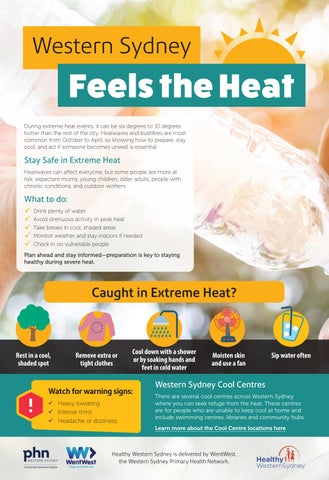
Feels the Heat During extreme heat events, it can be six degrees to 10 degrees hotter than the rest of the city. Heatwaves and bushfires are most common from October to April, so knowing how to prepare, stay cool, and act if someone becomes unwell is essential.
Stay Safe in Extreme Heat Heatwaves can affect everyone, but some people are more at risk: expectant mums, young children, older adults, people with chronic conditions, and outdoor workers.
What to do: 9 Drink plenty of water 9 Avoid strenuous activity in peak heat 9 Take breaks in cool, shaded areas 9 Monitor weather and stay indoors if needed 9 Check in on vulnerable people Plan ahead and stay informed—preparation is key to staying healthy during severe heat.
Caught in Extreme Heat?
Rest in a cool, shaded spot
Remove extra or tight clothes
Cool down with a shower or by soaking hands and feet in cold water
Watch for to warning Symptoms look outsigns: for • Excessive sweating 9 Heavy sweating • Thirstiness 9 Intense thirst • Headache or dizziness 9 Headache or dizziness
Moisten skin and use a fan
Sip water often
Western Sydney Cool Centres There are several cool centres across Western Sydney where you can seek refuge from the heat. These centres are for people who are unable to keep cool at home and include swimming centres, libraries and community hubs. Learn more about the Cool Centre locations here
Healthy Western Sydney is delivered by WentWest, the Western Sydney Primary Health Network.
Being Prepared for Bushfire Season With warmer weather conditions comes increased bushfire risk. Being prepared for a bushfire is not only about preparing your home or property, but also your physical, emotional, and mental health. Health concerns during a bushfire include smoke irritation, asthma, burns, heat-related illness and other heart and lung conditions. For more information on how to prepare and stay well, please visit the NSW Health bushfires and bushfire smoke page
Contact your GP or visit a local Urgent Care Service centre if you experience: 9 High body temperature (above 40 °C) 9 Nausea 9 Confusion and fainting 9 Call 000 in an emergency 9 Call the Urgent Care Line on 1800 371 372