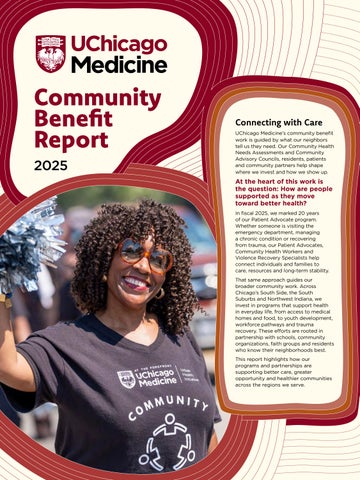
UChicago Medicine’s community benefit work is guided by what our neighbors tell us they need. Our Community Health Needs Assessments and Community Advisory Councils, residents, patients and community partners help shape where we invest and how we show up.
At the heart of this work is the question: How are people supported as they move toward better health?
In fiscal 2025, we marked 20 years of our Patient Advocate program. Whether someone is visiting the emergency department, managing a chronic condition or recovering from trauma, our Patient Advocates, Community Health Workers and Violence Recovery Specialists help connect individuals and families to care, resources and long-term stability.
That same approach guides our broader community work. Across Chicago’s South Side, the South Suburbs and Northwest Indiana, we invest in programs that support health in everyday life, from access to medical homes and food, to youth development, workforce pathways and trauma recovery. These efforts are rooted in partnership with schools, community organizations, faith groups and residents who know their neighborhoods best.
This report highlights how our programs and partnerships are supporting better care, greater opportunity and healthier communities across the regions we serve.
Communities We Serve
60609
Armour Square Bridgeport
Douglas Fuller Park
Gage Park Grand Boulevard
McKinley Park New City Washington Park 60653
Douglas Grand Boulevard Kenwood Oakland 60615
Grand Boulevard Hyde Park Kenwood Washington Park 60636
Chicago Lawn Gage Park West Englewood 60621
Englewood Greater Grand Crossing Washington Park 60637
Greater Grand Crossing
Hyde Park South Shore Washington Park Woodlawn 60620
Ashburn
Auburn Gresham
Beverly
Avalon Park Burnside
Calumet Heights Chatham Greater Grand Crossing Roseland South Shore 60649 South Shore Woodlawn 60643
Beverly
Riverdale Roseland Washington Heights West Pullman 60617
Avalon Park
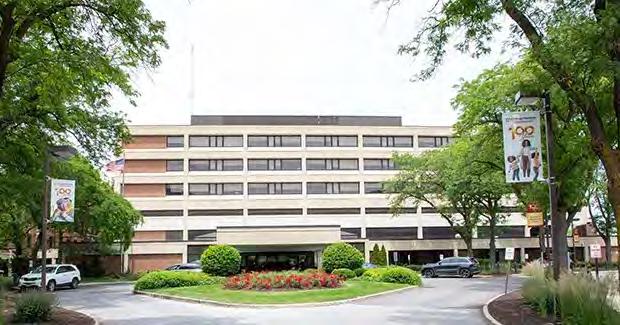
UChicago Medicine serves communities across Chicago’s South Side, the South Suburbs and Northwest Indiana. These primary service areas reflect where our hospitals, clinics and community health programs provide care and long-term partnerships to support the health and well-being of residents.
In the Community
Partnering with communities to support health education, screening and prevention
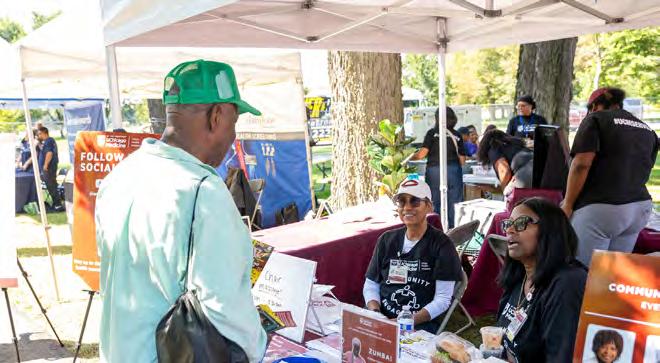
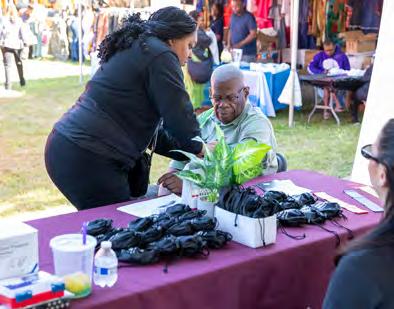
Across Chicago’s South Side, the South Suburbs and Northwest Indiana, UChicago Medicine partners with community organizations, schools, faith groups and residents to bring health information, screening and support directly into neighborhoods. In fiscal 2025, community outreach reached over 10,800 people through partnerships with 56 community organizations and affiliated groups, connecting neighbors to care, prevention and trusted local resources.
Community Grand Rounds
15 years of community health conversations
For 15 years, UChicago Medicine’s Center for Community Health & Vitality has hosted Community Grand Rounds— bringing research and clinical knowledge into community settings to improve health on the South Side. Supported by the University of Chicago’s Institute for Translational Medicine and the Urban Health Initiative, these events center community voices in healthcare conversations. Topics are selected by community members working alongside clinicians and researchers, ensuring discussions reflect lived experience and local priorities. Sessions have addressed topics such as adolescent mental health, gun violence, HIV, diabetes, domestic violence and teen pregnancy.
Honoring community leadership
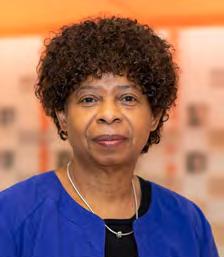
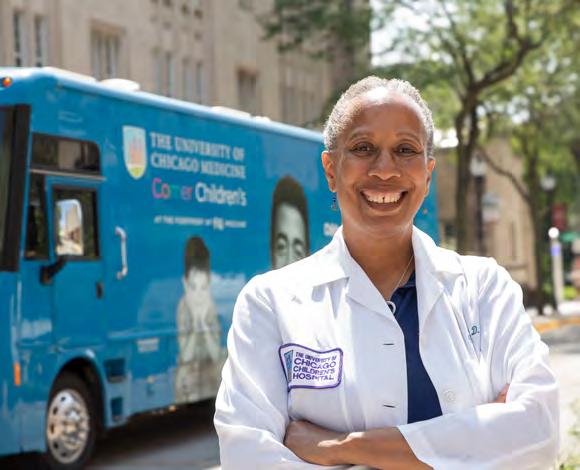
In 2025, Doriane Miller, MD, Professor of Medicine and Director of the Center for Community Health & Vitality, received the Bridge Builder Award from the Greater Auburn-Gresham Development Corporation for strengthening trust and collaboration with South Side communities. Dr. Miller leads Community Grand Rounds and other initiatives that bring healthcare and community together.
In 2025, Community Grand Rounds convened 7 sessions with 416 participants across 4 community partner organizations.
UChicago Medicine: Connecting communities to health information, screening and resources
• Community Health Update newsletters
• WVON AM-1690 Community Health Focus Hour
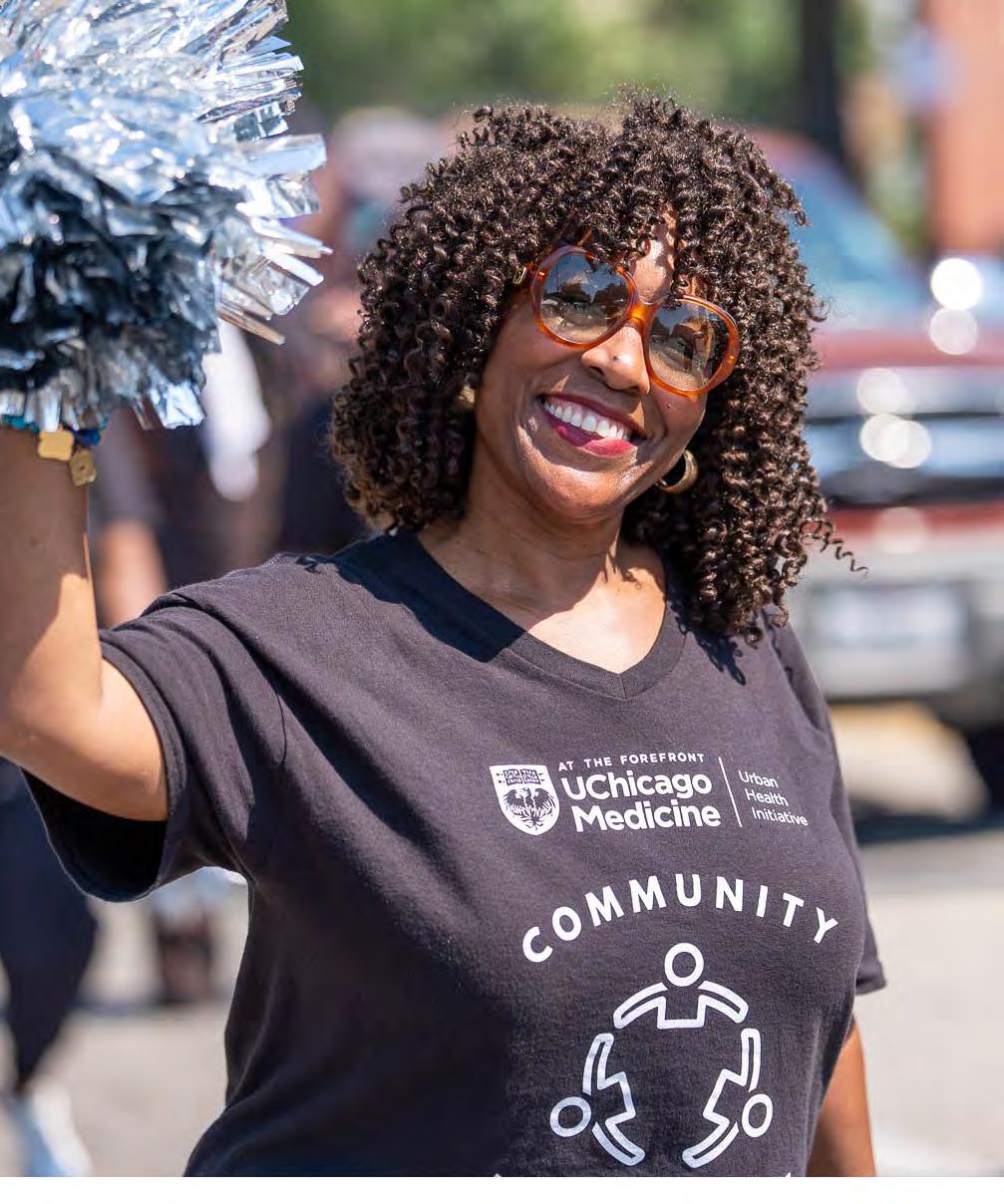
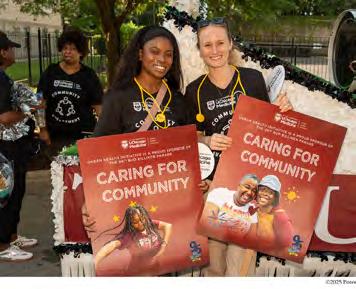
• Bud Billiken Parade
• African Festival of the Arts
• Black Women’s Expo
• Real Men Cook
• Strides for Peace
• Cancer screening and prevention programs
• High School Healthcare Careers events
Ingalls’ Healthy Baby Network: Supporting families from pregnancy to parenthood
UChicago Medicine Ingalls Memorial Hospital and community partners support expecting and new parents through the Healthy Baby Network, offering prenatal education, health screening and the annual Drive-Thru Baby Shower. The program connects South Suburban families to maternal and infant health resources that promote healthier pregnancies and births. In fiscal 2025, the network connected 101 people to resources, including 35 education classes, while 56 patients were connected to prenatal care.
Day of Service and Reflection (DOSAR): Neighbors helping neighbors
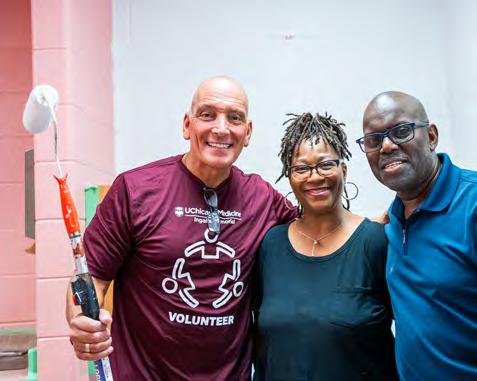
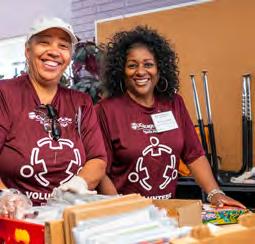
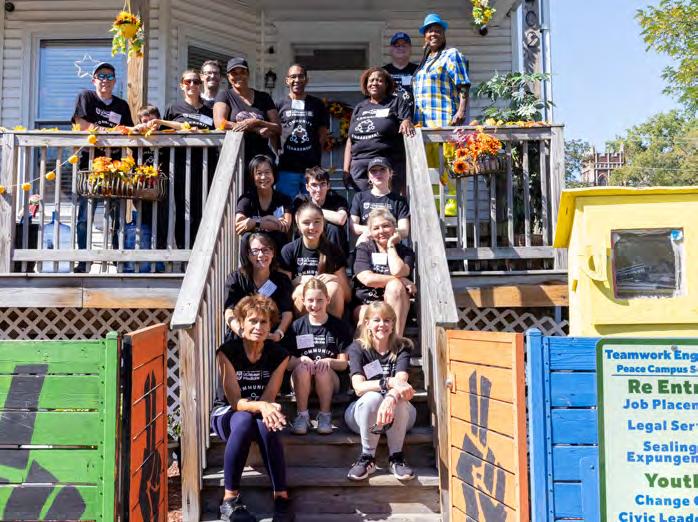
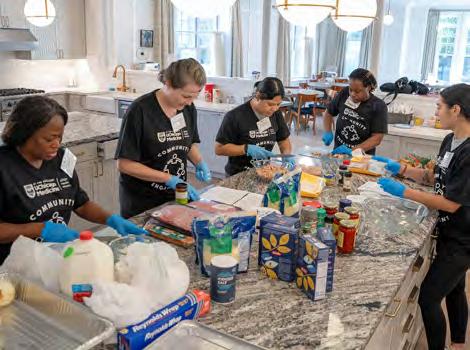
UChicago Medicine’s annual Day of Service and Reflection brings employees, families and community partners together for handson service at neighborhood organizations. In 2025, 153 volunteers served at 10 sites across the South Side and South Suburbs. For the first time, UChicago Medicine Crown Point hosted its own regional Day of Service, expanding this tradition
Youth Advisory Board: Empowering young voices
Northwest Indiana’s first Day of Service
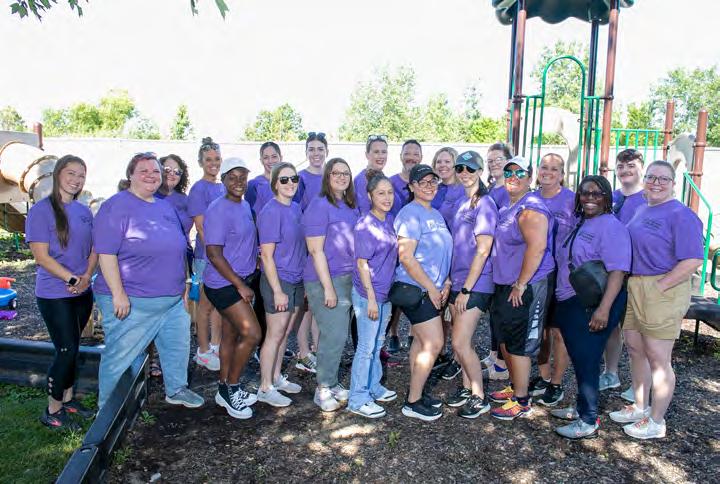
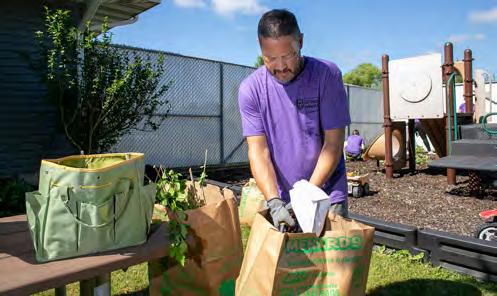
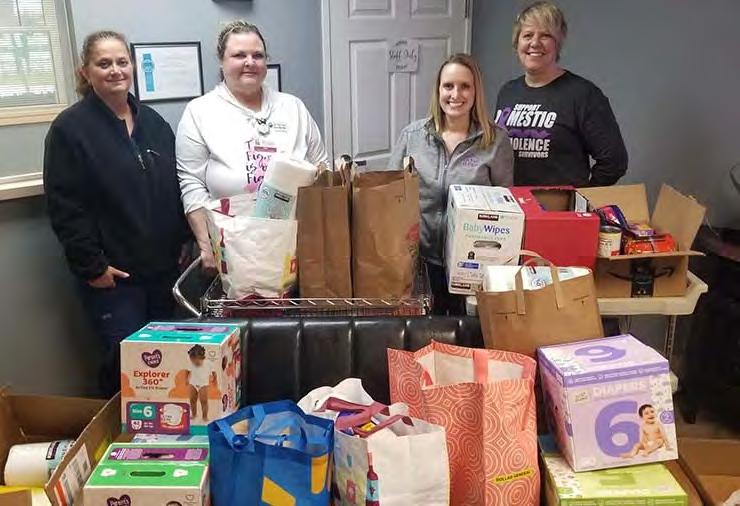
For UChicago Medicine Crown Point’s inaugural Day of Service, more than 20 volunteers supported St. Jude House, a domestic violence shelter serving Northwest Indiana. Volunteers landscaped outdoor spaces, deep-cleaned kitchens and playrooms, and brought wish list donations for families. “Everything the team did helps improve well-being for those at St. Jude House,” said Executive Director Anna Schoon.
In 2025, UChicago Medicine launched the Youth Advisory Board, engaging 10 young leaders ages 14-19 from Chicago’s South Side to shape community health, wellness and safety initiatives. Through monthly workshops, Youth Advisory Board members advise on youth-focused programming, review outreach materials and bring youth perspectives into health planning. The program connects students to healthcare careers through clinical shadowing, mentorship and networking.
Scholarships and local opportunity: Investing in South Suburban students
The Ingalls Development Foundation Community Scholarship Program celebrated its 20th anniversary in 2025, awarding $35,800 to 45 students. Since 2005, the program has invested $446,000 in 300 students pursuing careers in healthcare, education and public service. Through partnerships with Thornton High School District 205 and local institutions, the program strengthens community health through workforce development.
Community Champions: Physicians serving the South Side
Launched in 2021, the Community Champions program engages medical residents and fellows in community service while encouraging long-term practice in underserved areas. Participants lead health workshops, speak at career panels and volunteer at community events, building connections between UChicago Medicine and South Side neighborhoods. In fiscal 2025, 68 Community Champions contributed over 227 hours of their time.
Comer Family Safety Fair
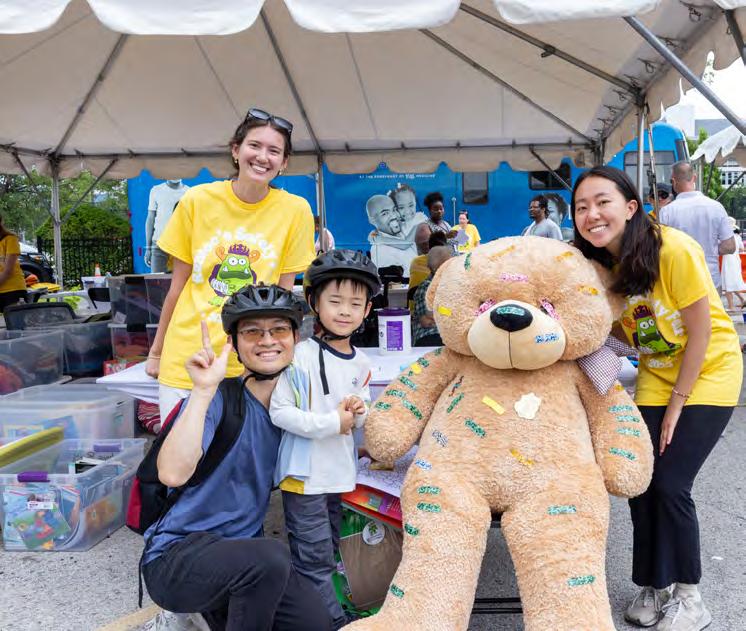
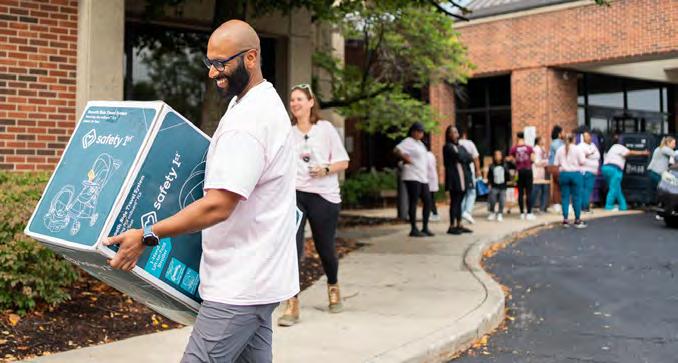
In July 2025, Comer Children’s Hospital hosted its annual Family Safety Fair, combining fun, learning and access to care for South Side families. More than 450 community members attended hands-on activities teaching safety, health and emergency preparedness. The event also provided free school physicals and vaccinations for patients who are uninsured or on Medicaid.
Health Equity
Removing barriers and expanding access to care
Health equity means everyone has a fair opportunity to be as healthy as possible. Challenges related to social drivers of health, like housing stability, food access, transportation and economic opportunity, create barriers that prevent people from getting care and staying healthy. UChicago Medicine addresses these barriers by expanding access to care, connecting patients to essential resources and meeting people where they are.
Two decades of connecting patients to care
For 20 years, UChicago Medicine’s Medical Home & Specialty Care Connection Program has helped people find their way through the healthcare system and connect to the care that can improve their health. Patient Advocates meet patients in the emergency department and stay connected afterward, helping them find doctors, schedule appointments and access the care they need.
Research shows patients who work with the program visit the emergency department 45% less often for minor medical needs. Since 2010, Patient Advocates have connected more than 94,000 patients to primary and specialty care and scheduled over 83,000 follow-up appointments. The program reaches out to nearly 1 in 5 patients who come through the emergency department, regardless of whether they have insurance.
In fiscal 2025, Patient Advocates connected with patients 8,351 times, a 60% increase over the prior year. In July 2025, the program expanded to Ingalls Memorial, bringing this support to families across the South Suburbs.
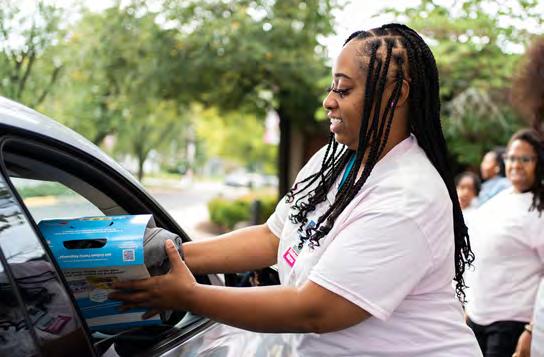
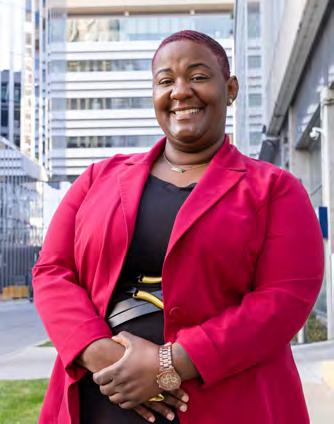
Marquita McCarter, Patient Advocate with UChicago Medicine’s Medical Home & Specialty Care Connection program, helps patients navigate the healthcare system and connect to primary care.
“Healthcare can be a very tough onion to peel.”
Addressing the Need
Food insecurity and poverty create significant barriers to health. Nearly 1 in 5 South Side residents struggle with food insecurity—higher than the countywide rate of 12%. In UChicago Medicine Ingalls Memorial’s South Suburban service area, nearly 20% of residents live below the federal poverty level. Additionally, 20% spend more than half their income on housing, leaving little for food, transportation or other basic needs. These social drivers of health directly impact health outcomes and access to care.
Source: 2024-2025 Medical Center and Ingalls Memorial Community Health Needs Assessments
South
Side Healthy Community Organization: Strengthening healthcare across our region
UChicago Medicine is an anchor member of the South Side Healthy Community Organization which connects patients who are uninsured or on Medicaid across 15 South Side neighborhoods to medical care and support services. Community Health Workers help residents with housing, food and transportation while creating personalized care plans and providing ongoing support. Since 2022, the organization has supported over 80,000 patient visits, made 7,000+ social service connections and coordinated 2,800+ rides to appointments across 21 sites.
Senior Health Insurance Program (SHIP): Navigating Medicare coverage
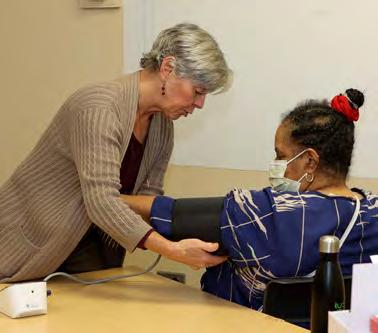
Through Ingalls Memorial, trained SHIP counselors meet with older adults one-on-one, explaining Medicare options and helping them enroll in the coverage that works for them. In fiscal 2025, counselors supported 45 community members Volunteer Services also organized the Thornton Township Senior Health Fair, published the SeniorLife Newsletter and hosted a workshop helping seniors use technology and MyChart.
Without consistent access to nutritious food, it’s harder to manage diabetes, heart disease and other health conditions. UChicago Medicine tackles this challenge across all three service areas with programs designed for local needs.
Chicago’s South Side: Feed1st operates 11 food pantry sites where anyone can access nutritious food. In 2025, Feed1st served 34,161 people from 12,251 families, distributing 62,939 pounds of dry goods and 8,194 pounds of fresh produce— 15% more than the year before. A new texting hotline connects pantry users to help with housing, utilities and childcare. The Nutrition Garden Committee donated $2,282 to the farm stand during the 2025 harvest, supporting fresh produce access.
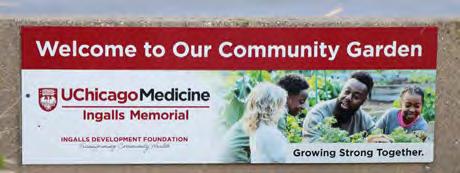
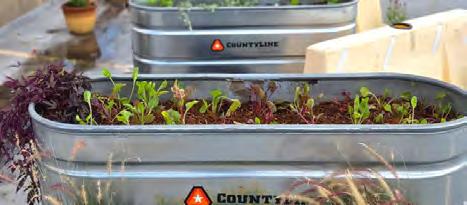
Chicago’s South Suburbs: Ingalls Memorial’s Complimentary Nutrition Stations served 2,450 people and distributed 20,650 pounds of food. The Food Brigade delivers groceries directly to homebound patients, supporting three families in fiscal 2025. Through a partnership with the American Cancer Society, 60 prepared meals go out each week to patients with cancer facing food insecurity. The Ingalls Community Garden provided fresh produce and recipes to 30 oncology patients in its first year. Dietetic staff led five community nutrition talks reaching more than 57 people. The Ingalls Memorial Dietetic Internship Program celebrated 45 years as an accredited, nationally respected clinical program providing students community engagement through 20 partner sites.
Cheryl Bacon, PhD, RDN, LDN, FAND, Director of Clinical Nutrition and Dietetic Internship said, “Our dietetic interns say one of their favorite parts is seeing patients in the community—in their own environment—healthier and ready to make a change.”
Northwest Indiana: At UChicago Medicine Crown Point, hospital employees organized three mobile food pantries in the parking lot, collecting donations of 500 pounds of food for the Food Bank of Northwest Indiana, strengthening local partnerships fighting hunger.
Comer Pediatric Mobile Medical Unit: Healthcare in schools and communities
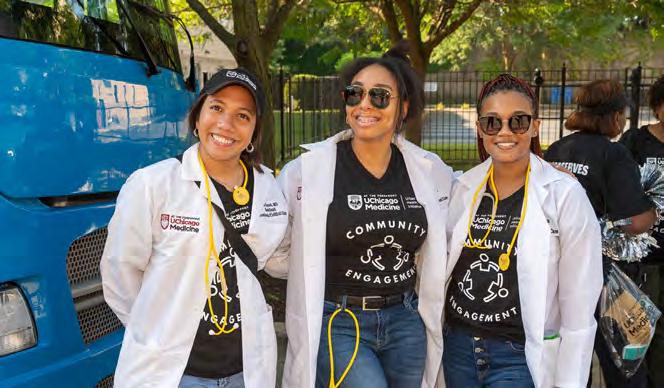
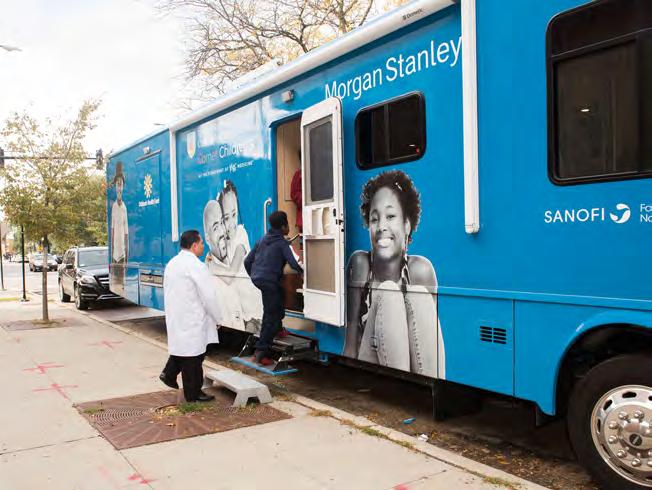
The Comer Pediatric Mobile Medical Unit brings doctors and mental health support directly to South Side children and teens. The mobile unit visits schools, daycare centers and community events, making care more accessible. In fiscal 2025, the team provided 804 medical visits for 733 students and 135 mental health counseling sessions across 46 locations. Health education reached 207 students, and mental health support was provided to 24 students and 37 teachers.
Trauma Resiliency
Supporting healing, safety and recovery for children, families and communities
Violence creates trauma that affects entire communities. Trauma resiliency means building the skills, resources and support people need to heal and thrive. UChicago Medicine provides crisis response, long-term support, mental health services and violence prevention programs that help survivors recover while strengthening community safety.
Youth sports programming and violence prevention
Building resilience through sports partnerships and pathways to healthcare careers
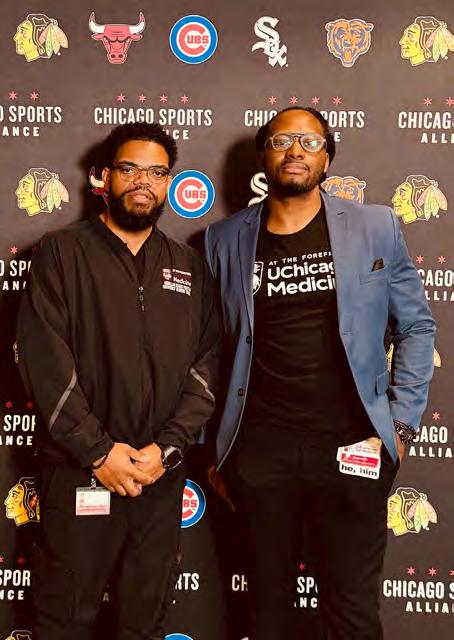
UChicago Medicine partners with Chicago’s professional sports teams to support youth trauma recovery and violence prevention. These collaborations with the Chicago Bulls, Chicago Bears, Chicago Sky, Chicago White Sox, Chicago Cubs and Chicago Black Hawks connect young people connect young people affected by violence with positive experiences and role models during their recovery.
In 2025, the Bears CARES partnership facilitated game-day experiences for gun violence survivors during preseason and home opener games, while also donating materials for the UChicago Medicine’s High School Healthcare Careers Fair.
The Violence Recovery Program also worked with Chicago Bulls Community Relations through the Inspire a Survivor Initiative to provide game tickets to pediatric and adult gunshot survivors and their families, offering time together outside the hospital to support emotional recovery.
In April 2025, the Youth Violence Prevention Pre-Game Panel brought together the Violence Recovery Program and community organizations including Sneakers to Scrubs and TRAP Violence for dialogue before a Chicago Bulls game, also connecting youth to career opportunities in healthcare, mental health and violence prevention.
Addressing the Need
Violence and trauma have significant behavioral health impacts. The same South Side communities experiencing the highest rates of gun violence also have the highest behavioral health emergency visit rates.
Source: 2024-2025 Medical Center Community Health Needs Assessment
Stop the Bleed: Lifesaving skills for youth
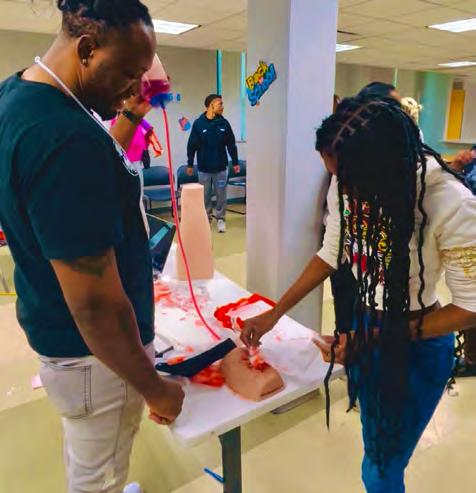
UChicago Medicine provides Stop the Bleed training to equip community members with emergency response skills. Throughout fiscal 2025, the Violence Recovery Program facilitated trainings at Englewood STEM High School and other community sites in partnership with MedCEEP, TRAP Violence, Sneakers to Scrubs and UChicago Medicine’s emergency department. TRAP Violence reached over 600 students through their Stop the Bleed workshops. Through the training, participants learned lifesaving bleeding response techniques, received Stop the Bleed kits and gun locks, and gained information about healthcare career pathways.
Violence Recovery Program: Crisis response and long-term support
The Violence Recovery Program provides immediate crisis support and ongoing help for survivors of violence. Since 2018, the program has supported nearly 12,000 patients. In fiscal 2025, Violence Recovery Specialists engaged 1,830 patients in the emergency department across 4,129 encounters. The program connected 74% of patients to crisis support, 53% to case management and 79% of those with documented needs to essential services including housing, food, mental health counseling and legal help. The program addresses both immediate safety and long-term stability.
Recovery Legal Care: Supporting survivors with legal resources
Recovery Legal Care is the nation’s first bedside legal support program for victims of violence. The program helps patients and families access crime victim compensation and legal resources directly in the hospital. To date, nearly 700 patients have received legal assistance, securing over $640,000 in crime victim compensation and financial support.
Ingalls’ behavioral health expansion
UChicago Medicine Ingalls Memorial is the primary inpatient psychiatric facility for UChicago Medicine and has one of the state’s highest behavioral health emergency visit rates. Following an expansion in 2024 that added 15 inpatient beds and new staff, Ingalls continued its commitment to mental health access in 2025. Throughout October, Ingalls hosted free mental health screenings in Flossmoor, Tinley Park and Calumet City. The hospital offers free, confidential mental health assessments 24/7 and intensive group programs mornings, afternoons and evenings, both in person and virtually.
Wellness Resilience Arts Program: Healing through creative expression
WRAP is a four-week trauma-informed summer program for teens developed in partnership with the Logan Center for the Arts and UChicago’s Crown Family School of Social Work, Policy, and Practice. The program has grown from a one-week spring break enrichment opportunity to a comprehensive summer experience now including filmmaking. Led by artists and social workers, creative workshops help teens reflect on trauma and social issues while building emotional skills and resilience in a supportive environment.
Block Hassenfeld Casdin Collaborative:
Supporting pediatric trauma patients and families
Established through the generous support of philanthropist Ellie Block, the Block Hassenfeld Casdin Collaborative for Family Resilience provides specialized support for pediatric patients and their families affected by trauma. In fiscal 2025, the program supported 225 pediatric patients Since 2019, the collaborative has served 1,406 pediatric patients and their families, offering wraparound services that support healing and recovery. It also funds community organizations including Fathers, Families & Healthy Communities, MedCEEP/TRAP Violence and YWCA Sexual Violence Support Services to deliver trauma-informed care and violence prevention reaching hundreds of families.
Mental health and behavioral health: Comprehensive trauma
care
Through the Block Hassenfeld Casdin Collaborative for Family Resilience, UChicago Medicine provides integrated behavioral health support for children and families affected by trauma:
REACT Program: A team of psychologists, psychiatrists and social workers provides care for children and families affected by trauma. In fiscal 2025, over 343 families received trauma-focused assessments, therapy and medication management.
Child Life Program: Works with medical and trauma teams to ensure every child has emotional and developmental support during hospitalization.
Spiritual Care: Provides emotional and spiritual support for patients and families dealing with grief, loss and trauma. In fiscal 2025, 911 children and families received spiritual care services.
Southland RISE: Community-led violence prevention and recovery
Southland RISE (Resilience Initiative to Strengthen and Empower) is a collaboration between UChicago Medicine and Advocate Health Care that supports community-led violence prevention. Launched in 2019, the initiative has awarded $950,000 over seven years to more than 80 organizations. In 2025, Southland RISE awarded $150,000 to 15 community organizations delivering summer programs reaching 8,500 people, including youth and families, through arts, sports, mental health services, mentoring and trauma recovery.
Partnering to support domestic violence survivors in Northwest Indiana
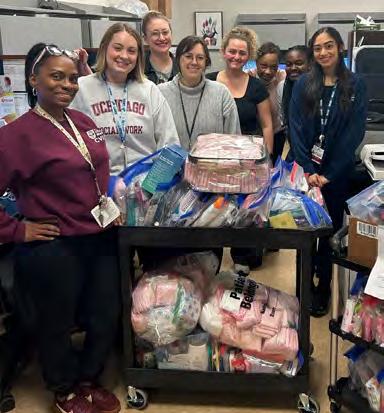
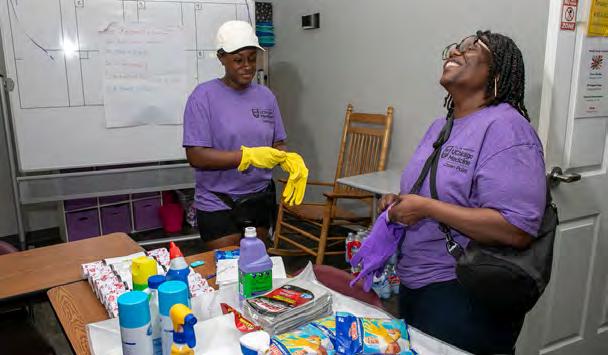
UChicago Medicine Crown Point partners with St. Jude House, a shelter serving domestic violence survivors in Northwest Indiana. Through this collaboration, Crown Point employees donate household items, hygiene products and essentials through ongoing wish lists to support families in need. In honor of Mother’s Day, staff assembled over 450 personalized gift bags with toiletries, blankets, snacks and self-care products for families navigating crisis.
Chronic Disease & Wellness
Helping people prevent illness and manage ongoing conditions
Chronic diseases like diabetes, heart disease and cancer disproportionately affect South Side and South Suburban communities. UChicago Medicine addresses chronic disease through prevention, early detection and management support, combining clinical care with community programs to help people adopt healthy behaviors and manage conditions.
Addressing the Need
The South Side and South Suburbs carry a higher burden of chronic disease, including late-stage cancer diagnoses. UChicago Medicine advances health through prevention, disease management and wellness programs.
Source: 2024-2025 Medical Center and Ingalls Memorial Community Health Needs Assessments
Reducing heart disease and stroke risk
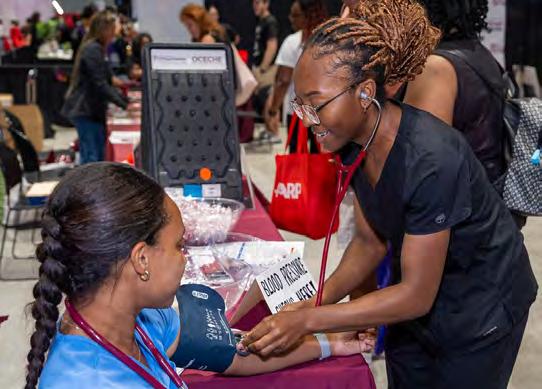
In 2025, UChicago Medicine joined with the South Side Healthy Community Organization and other citywide partners to launch Live Healthy Chicago, a campaign addressing hypertension through community-based screening and support. On the South Side, Community Health Workers visit churches, community centers and food pantries to screen for high blood pressure and connect residents to mobile health teams providing medication support and ongoing care. The three-year initiative aims to reduce heart disease and stroke risk by 1% in communities where residents face significantly shorter life expectancies.
Sickle cell advances: New treatments offering hope for a cure
UChicago Medicine Comer Children’s Hospital is among the first in the nation to offer gene therapies that can potentially cure sickle cell disease. As one of only nine hospitals selected to provide the newest therapy, Comer Children’s offers both approved treatments to eligible patients age 12 and older. The hospital helped develop these therapies by serving as a study site for groundbreaking research.
South Side Pediatric Asthma Center
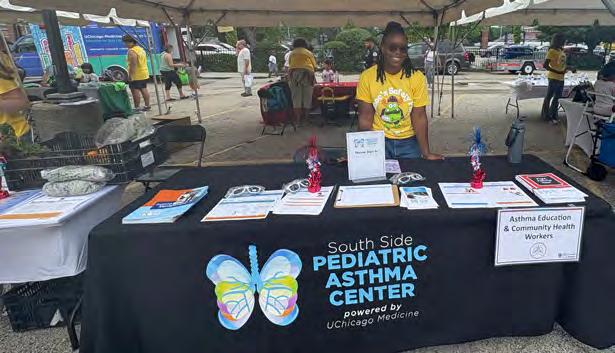
The South Side Pediatric Asthma Center is a partnership among UChicago Medicine Comer Children’s Hospital, La Rabida Children’s Hospital and community health organizations. The program improves access to care, standardizes treatment and engages families through education and home visits from Community Health Workers. Data shows reductions in asthma-related emergency visits and missed school days six months after enrollment.
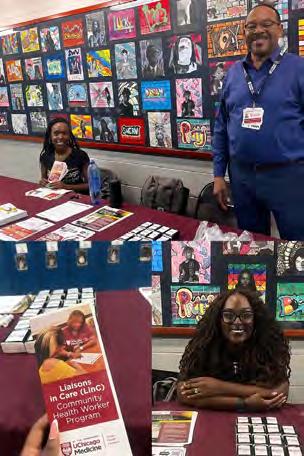
Liaisons in Care (LinC) Program: Trusted care professionals bridge gaps in healthcare Community Health Workers (CHWs) are trusted members of the community who connect patients with healthcare and social services. Through the LinC program, CHWs help patients navigate chronic diseases such as asthma, diabetes, high blood pressure and cancer while connecting people to resources including transportation, housing and food. CHWs serve patients from both the University of Chicago Medical Center and UChicago Medicine Ingalls Memorial. In fiscal 2025, LinC served 2,452 unique patients and made 3,880 resource referrals addressing these social needs.
Community Impact Grants support local health programs
UChicago Medicine provides grants to communitybased organizations implementing programs that address chronic diseases, including breast cancer and heart disease. In fiscal 2025, Community Benefit Grants helped partners expand their capabilities to serve South Side residents.
Ingalls Memorial awards Community Impact Grants to organizations across Chicago’s South Suburbs. In fiscal 2025, renewable grants supported initiatives focused on chronic disease prevention, mental health and food insecurity in Thornton Township.
Cancer screening, prevention and navigation
Office of Community Engagement and Cancer Health Equity (OCECHE): Part of UChicago Medicine’s Comprehensive Cancer Center, OCECHE partners with community, cultural and faith-based organizations to increase cancer screening participation and connect residents to clinical trials. OCECHE fosters bidirectional communication between the Cancer Center and the community to ensure scientific advancements are inclusive, relevant and beneficial to all served. In 2025, the Community Outreach and Engagement Team and the Center to Eliminate Cancer Inequity launched the Cancer Connections coalition in Northwest Indiana, growing a network of organizations collaborating to improve cancer care in the region.
Transforming cancer care on the South Side
Ingalls Memorial: Free fitness and wellness programs
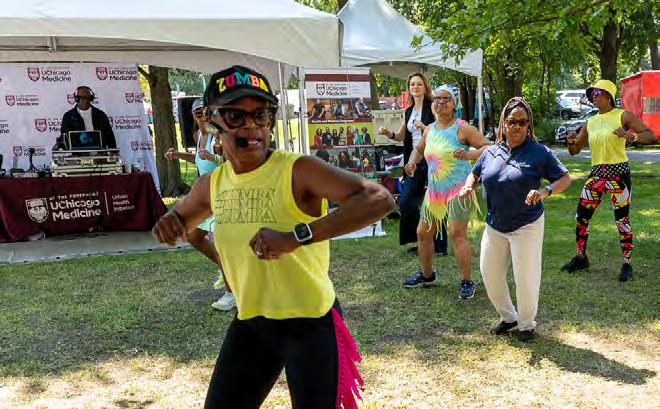
Free Fitness & Nutrition Classes: Ingalls collaborated with Armored Fitness & Nutrition to offer free fitness classes, including cardio drumming and hip-hop cardio dance, at South Suburban locations. Dietetic interns provided nutrition talks on managing diabetes, heart disease and cancer.
Monthly Walking Club: Ingalls’ monthly walking club builds connections while reducing stress and promoting heart health, offering community members a welcoming space to exercise together.
Choose Healthier, Balance Your Life: Launched in June 2024, this program supports chronic disease management through community-based programming addressing heart disease, diabetes, fitness and behavioral health in Thornton Township.
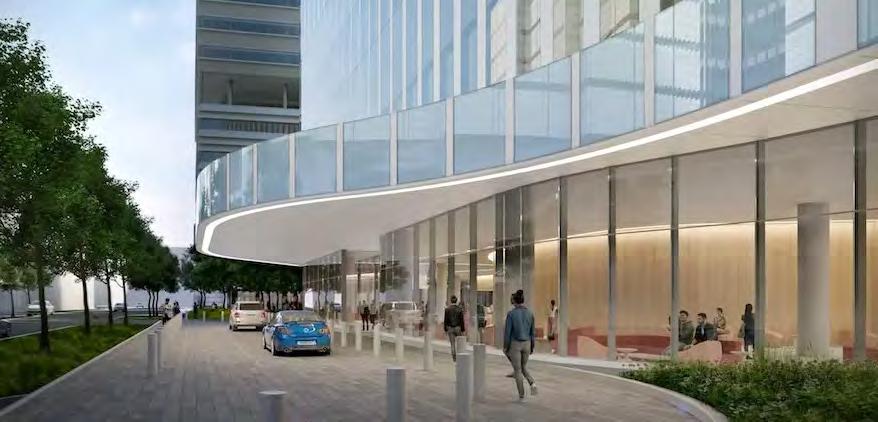
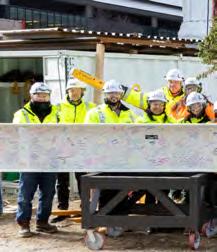
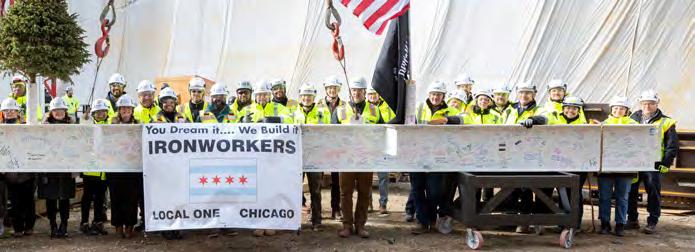
Opening spring 2027, Illinois’ first freestanding cancer facility makes comprehensive cancer care more accessible for South Side residents. The AbbVie Foundation Cancer Pavilion consolidates services currently spread across five buildings into one location with 80 inpatient beds, 90 exam rooms, a breast cancer center and clinical trial spaces. The ground floor will serve as a community hub offering cancer screenings, cooking classes, nutrition education, fitness programs, music therapy and survivor support. The pavilion addresses a critical need: The number of people diagnosed with cancer on the South Side is projected to increase 19% in the next five years. By bringing over 200 cancer experts together under one roof, the $815 million facility advances both cutting-edge research and compassionate care close to home.
UChicago Medicine: Fitness and wellness education
South Side Fit: Through a partnership between Timothy Community Corporation and the Urban Health Initiative, participants have access to diabetes self-management workshops, nutritional seminars and exercise classes.
Community Relations Wellness Workshops: Community Relations hosts wellness workshops across the South Side and South Suburbs covering chronic disease prevention, nutrition, fitness and stress management.
AbbVie Foundation Cancer Pavilion
Economic Opportunity & Local Impact
Investing in the local workforce and building pathways to careers
UChicago Medicine’s commitment to community extends beyond healthcare to economic opportunity. Through local hiring, workforce development partnerships and construction projects, UChicago Medicine strengthens the economic vitality of the communities it serves.
Addressing the Need
Economic challenges create barriers to health and well-being. On the South Side, 25.3% of residents live below the federal poverty level and 14.5% are unemployed— nearly three times the Cook County unemployment rate of 5.6%. In the South Suburbs, 19.3% live below poverty and 11.5% are unemployed. UChicago Medicine addresses these challenges through local hiring, workforce development and economic investment.
Source: 2024-2025 Medical Center and Ingalls Memorial Community Health Needs Assessments
From classroom to career: A pathway to opportunity
Oseremhen George Ijewere’s journey shows how the right support can transform education into opportunity.
A Hyde Park resident, Oseremhen enrolled in the Basic Nursing Assistant program at Malcolm X College during spring 2025. Through UChicago Medicine’s CNA Pathway Program, he gained real-world experience during an eight-week externship at an inpatient unit, working alongside a Nursing Support Assistant preceptor who guided him through daily rounds and patient care.
The hands-on training made all |the difference. Oseremhen’s preceptor recognized his dedication and recommended him for hire. After earning his state certification that summer, Oseremhen joined UChicago Medicine as a Nursing Support Assistant in August 2025— turning his education into a career close to home.
Construction investment: Supporting local businesses and workers
UChicago Medicine’s construction and purchasing decisions create economic opportunities for businesses and workers in the communities we serve.
$66.4 million in contracts awarded to local and community firms (up 68% over fiscal 2024)
$10.2 million in wages paid to local and community on-site construction workers (more than three times fiscal 2024)
$6.3 million in wages earned by 363 Chicago residents working on UChicago Medicine construction projects (more than three times fiscal 2024)
$1.7 million in wages earned by 94 Chicago residents residing within the UChicago Medicine primary service area
$652.6 million in economic benefit for local and community firms via UChicago Medicine’s capital, renovation and plant projects (2001-2024)
500 construction jobs to build the new AbbVie Foundation Cancer Pavilion, with 41% of contract dollars awarded to local and community firms
“The CNA Pathway Program allowed me to apply what I learned in school, build confidence and take my first step into a healthcare career at UChicago Medicine.”
George Ijewere, UChicago Medicine Nursing Support Assistant
Oseremhen
Workforce development: Opening doors to healthcare careers
UChicago Medicine partners with local educational institutions and community organizations to open doors to healthcare careers for South Side, south suburban and Northwest Indiana residents.
Certified Nursing Assistant Pathway Program: What began as a pilot has become a proven pathway to stable careers. In fiscal 2025, the program expanded to UChicago Medicine Ingalls Memorial while continuing at the University of Chicago Medical Center, providing full tuition for students at Prairie State College and Malcolm X College. Students gain real-world experience working one day a week during their training, then transition into permanent Nursing Support Assistant or Clinical Associate roles. Of those who completed the program in fiscal 2025, 89% converted to full-time positions, translating classroom learning into local careers. The program’s success secured over $30,000 in additional grant funding to support four more cohorts in fiscal 2026.
Behavioral Health Upskilling: Recognizing the growing need for mental health support, UChicago Medicine partnered with Ingalls’ Behavioral Health team in fiscal 2025 to create training opportunities for Behavioral Health Technicians. The program launches in fiscal 2026, creating new career pathways in an essential field.
Inclusive Pathways Program: In partnership with The Anixter Center of Chicago, this program removes barriers to employment for individuals with disabilities. In fiscal 2025, 12 candidates found meaningful careers through this partnership, with ongoing support ensuring both employees and their teams have the tools to succeed together.
Malcolm X College Partnership: Since 2015, UChicago Medicine has partnered with Malcolm X College to create training opportunities and clear pathways to employment. The partnership hosts an average of 65 students annually through internships, practicums and apprenticeships while engaging more than 100 students through career development events. In fiscal 2025, the collaboration reached a milestone with over 200 Malcolm X students hired—a record high that demonstrates the power of sustained community investment. Through a partnership between the University of Chicago and City Colleges of Chicago, plans are underway to build a clinical laboratory in Washington Park that will create even more opportunities for South Side residents.
Medical Assistant Pipeline: Working with over 5 local training programs, UChicago Medicine welcomed 26 Medical Assistant students for clinical rotations in fiscal 2025. Nearly two-thirds of these students—64%—went on to accept positions, turning hands-on learning into lasting employment.
Local hiring:
Building careers close to home
32% of new hires reside in the communities we serve
24% of University of Chicago Medical Center’s new hires reside in the South Side service area (452 employees)
26% of Ingalls Memorial’s new hires reside in the South Suburban service area (118 employees)
46% of UChicago Medicine Crown Point’s workforce resides in the Northwest Indiana service area
$11.5 million in salary investment from 598 new local hires
$1.2 million invested in tuition assistance for employees in the South Side service area
Community partnerships
Long-standing relationships with community organizations continue to connect job seekers to opportunities.
• Through The Cara Program, 17 individuals overcoming barriers to employment joined UChicago Medicine in fiscal 2025—the highest total since 2015.
• New Generation Work pilots launched with Food Services and Ingalls Behavioral Health focus on helping employees thrive through supportive onboarding, retention strategies and building psychologically safe workplaces.
• Through Skills for Chicagoland’s Future, 68 jobready Chicago residents found positions across the health system.
Definitions of community benefit categories
Medicaid and Medicare uncompensated care: Support to make up for Medicaid and Medicare reimbursement rates that do not cover the cost of care. Medicaid is a joint federal and state program for those requiring financial assistance. Medicare is a federal health insurance program for people 65 and older and those with certain disabilities.
Unrecoverable patient debt: Amount absorbed when a hospital cannot collect expected payment for services. Charity care: Cost of providing free services to qualified individuals.
Medical education: Cost to teach and train future health care professionals not covered by tuition, grants or scholarships. Medical research: Funding to investigate ways to better prevent, detect and treat disease, as well as advance patient care.
Subsidized health services: Medical services that cost more to provide than the hospital gets paid. The hospital covers the remaining cost to make sure people in the community can still get the care they need.
Uncategorized community benefits: Include support for community health improvement programs and services.
Cash/in kind contributions: Gifts to community groups for health-related activities.
Community-Guided Health Priorities
Based on the 2024-2025 Community Health Needs Assessments
Our community benefit work is shaped by Community Health Needs Assessments (CHNAs), which are published every three years and developed with residents, community partners and public health data. The 2024–2025 CHNAs for each region identify the health issues that matter most to the people who live there. These priorities guide how programs, partnerships and investments are designed to support care, stability and long-term health.
To read the 2024-2025 Community Health Needs Assessments, scan the QR codes below:
University of Chicago Medical Center
UChicago Medicine
Ingalls Memorial Hospital
South Side Primary Service Area Community Benefit Priorities: Prevent and manage chronic
South Suburban Primary Service Area Community Benefit Priorities:
Northwest Indiana Primary Service Area Community Health Needs Assessment IN PROGRESS
UChicago Medicine is currently conducting the CHNA process for Northwest Indiana. This assessment will be completed and published in June 2026 and will guide future community health investments and partnerships in the region.