2024 Community Benefit Report Highlights
Healthier Together
For more than 20 years, the University of Chicago Medicine’s Urban Health Initiative has worked with Chicago’s South Side community to understand and help with its most important health, social and economic issues. In 2016, this work expanded to the Southland community served by UChicago Medicine Ingalls Memorial in south suburban Harvey. With the opening of our multispecialty care facility in Crown Point, Indiana, in 2024, our community benefit service area now includes the greater Northwest Indiana region.
We engage with the community through our Community Advisory Councils, Patient and Family Advisory Councils, and work in research, education, community affairs and outreach.
Our organization’s Mission, Vision and Values helped us develop Elevate 2035, the strategic plan that will guide UChicago Medicine through the next decade. Community is one of the pillars of this enterprise-wide plan, along with People, Healthcare, Research and Education. This plan reflects our commitment to our values in every aspect of our work and decision-making.
In fiscal 2024, UChicago Medicine provided a total of $715 million in community benefit investment. This brochure includes details about this investment, along with highlights of our community health programs and partnerships. To read the full Community Benefit Report, visit: Community.UChicagoMedicine.org/2024
2023-2025
University of Chicago Medical Center
Prevent and Manage Chronic Diseases
• Cancer
• Diabetes
• Heart Disease
Build Trauma Resiliency
• Violence Prevention and Recovery
• Mental Health
Reduce Inequities Caused by Social Determinants of Health
• Access to Care
• Food Insecurity
• Workforce Development
UCHICAGO MEDICINE
UChicago Medicine Ingalls Memorial
Prevent and Manage Chronic Diseases
• Cancer
• Diabetes
• Heart Disease
Provide Access to Care and Services
• Maternal Health
• Mental Health
Reduce Inequities Caused by Social Determinants of Health
• Food Insecurity
• Workforce Development
Priorities Ingalls Memorial
Meeting the growing need for behavioral healthcare:
• UChicago Medicine Ingalls Memorial invested $840,000 to expand its inpatient behavioral health unit in 2024. This added 15 new beds and staff, improving access and reducing wait times.
• The new Behavioral Health in the Community program connects residents with resources and support. In 2023-24, Behavioral Health representatives participated in 45 events, workshops and consultations.
More care for moms and families: Ingalls Memorial is expanding OBGYN services to improve maternal health in south suburban Harvey,
where it’s one of only two hospitals with a full birthing unit.
In 2024, Ingalls Memorial’s Healthy Baby Network (HBN) hosted 31 prenatal classes and distributed 414 safe sleep cots. HBN has helped more than 2,600 patients since 2008, with 97% connected to care within 24 hours.
Promoting healthier lifestyles: Launched in June 2024, the Choose Healthier, Balance Your Life: Wellness program focuses on fitness and mental wellness to help participants manage heart disease and diabetes. In addition to fitness sessions, this program provides participants with free blood pressure cuffs and wellness journals.
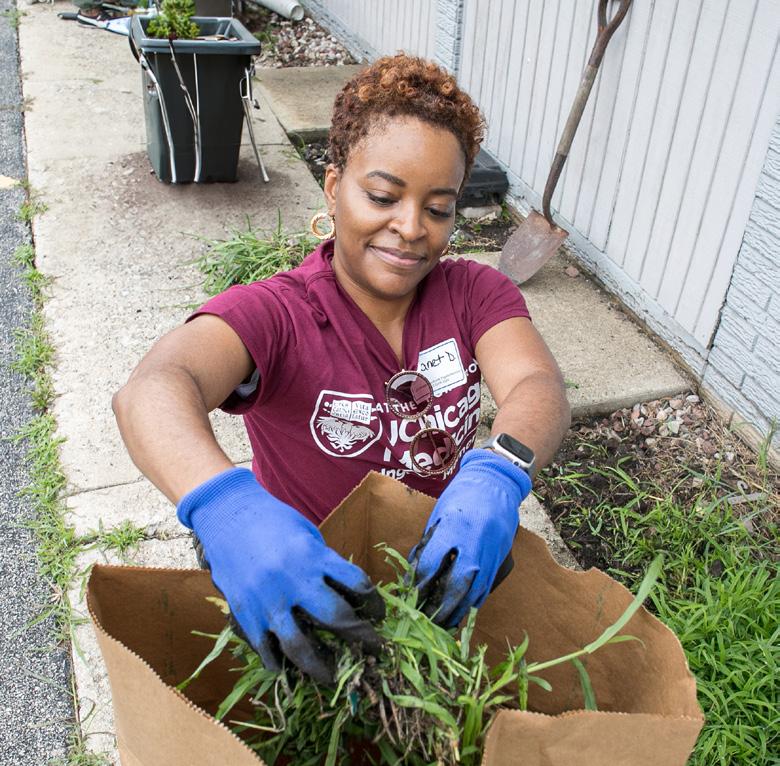
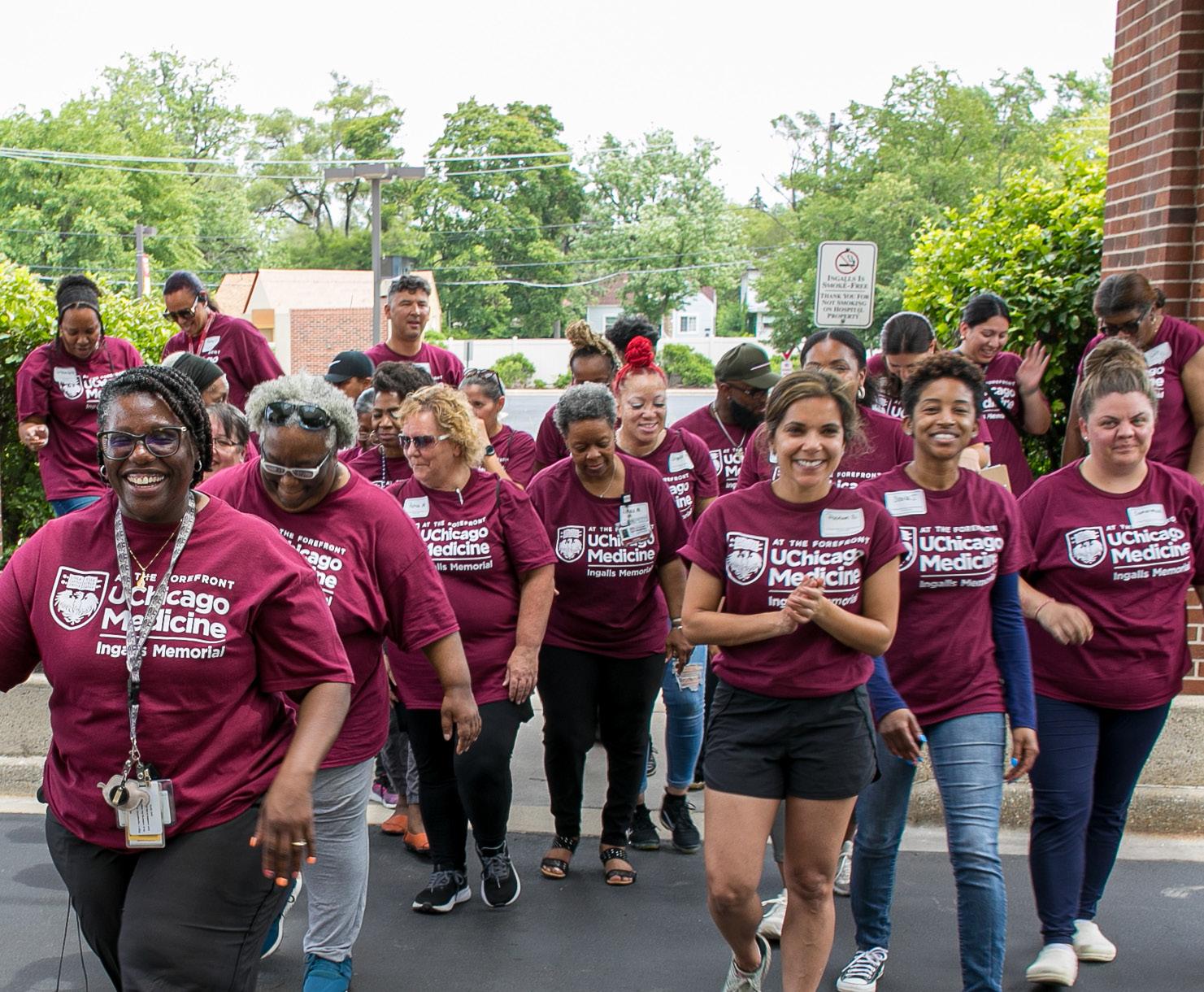
Ingalls Memorial’s 2nd Annual Day of Service and Reflection (DOSAR) brought 36 volunteers together for four service projects in the Southland.
• 13 participants engaged in workshops and monthly telehealth coaching.
• Average weight loss: 9.8 pounds per participant over three months.
• 100% program satisfaction.
Ingalls Development Foundation’s Investment
$3.29 million in higher education scholarships, supporting more than 2,000 students since 2001.
$20,000 to create sustainable economic and career pathways for local students and residents.
3 Thornton Township High School District 205 students completed development internships through the Foundation.
Support for Northwest Indiana Communities
Investing $300,000 over three years, UChicago Medicine is partnering with Boys & Girls Clubs of Greater Northwest Indiana to increase the mental health resources and social supports available to more than 5,000 youth across Northwest Indiana.
University of Chicago Medical Center
UChicago Medicine Ingalls Memorial
Health Equity
Patient Advocates: Vital Connections to Care
To help patients get connected to healthcare services, UChicago Medicine places Patient Advocates in the Emergency Department through the Medical Home and Specialty Care Connection Program They assist patients who don’t have a primary care doctor by helping them set up follow-up appointments, find a regular doctor and find care for health issues that aren’t emergencies.
South Side Healthy Community Organization (SSHCO)
Through a partnership of 13 healthcare providers, and with generous state funding, the SSHCO expands access to doctors and specialists, improves care coordination and connects residents to essential resources like food, housing and transportation.
• UChicago Medicine serves as an anchor partner of the collaborative.
• In 2024, 7 in 10 patients referred by UChicago Medicine’s Patient Advocates chose to enroll in the SSHCO. Patient Advocates also helped train Community Health Worker teams across the SSHCO network.
After just three years, the SSHCO is making a meaningful impact:
Nearly 80 Community Health Workers and Nurse Care Coordinators serve patients across clinics, emergency rooms and in the community.
I connect with people because I’ve lived what they’re living. That makes all the difference.”
- Nicolette King, Senior Patient Advocate
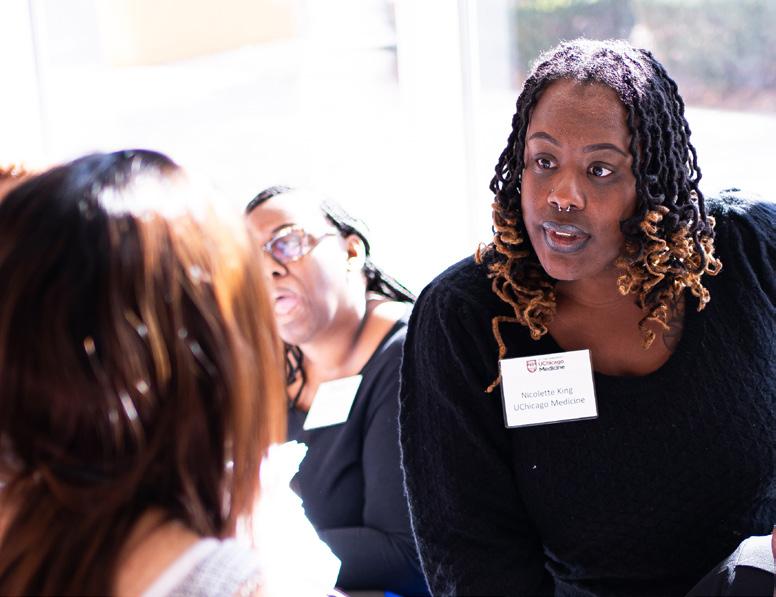
In fiscal 2024, Patient Advocates managed 6,653 patient visits, including multiple patient encounters. This is an increase of nearly 50% over fiscal 2023.
Reducing Food Insecurity
Nearly 20% of residents in the University of Chicago Medical Center’s South Side primary service area face limited access to healthy food. The Feed1st pantry program offers free food at 11 sites, open all day, every day. In partnership with the Greater Chicago Food Depository, Feed1st gave out over 58,000 pounds of food to nearly 30,000 people in 2024 — increases of 26% and 21% over 2023, respectively.
60+ new primary care and specialty providers joined the SSHCO network, making it easier for South Side residents to access care.
Over 80,000 patient visits completed with improved access and reduced wait times.
Maternal health services expanded for high-risk pregnancies and postpartum support.
Behavioral health telehealth program addresses psychiatric crises before they reach emergency levels.
More than 10,000 social needs referrals made for food, housing, transportation and more.
UChicago Medicine helped bring $3.5 million in grant funding to the SSHCO, supporting local organizations that connect people to vital resources like food, housing, and transportation.
Supporting Jobs and Career Pathways
In 2024, UChicago Medicine, the University of Chicago, and City Colleges of Chicago announced plans for a new clinical lab and allied learning center in Washington Park, supporting 550 jobs (200 new) and training 800 students in the city’s first clinical lab technician program.
Investing in Local Talent (2022-2024)
41% of new hires reside in the communities we serve
23% of Medical Center employees reside in the South Side service area
18% of Ingalls Memorial’s employees reside in the Southland service area
Community Outreach
50 43
325 volunteers
1,529 414 workshop attendees partners and collaborators workshops and events volunteer hours
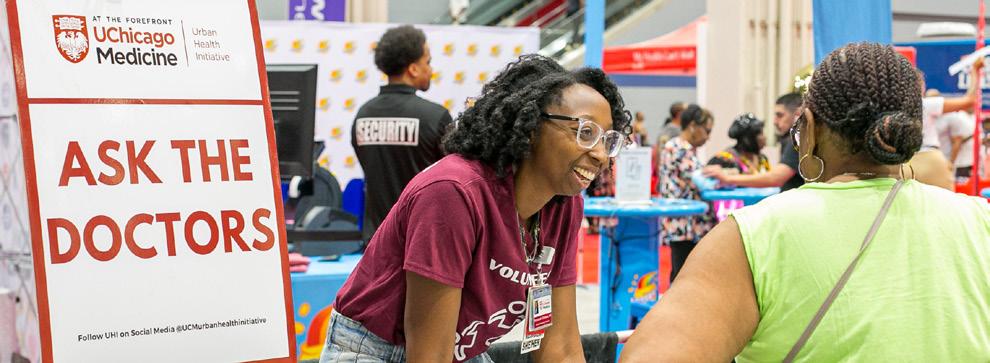
2024 Black Women’s Expo
UChicago Medicine in the Community
African Festival of the Arts
Black Women’s Expo
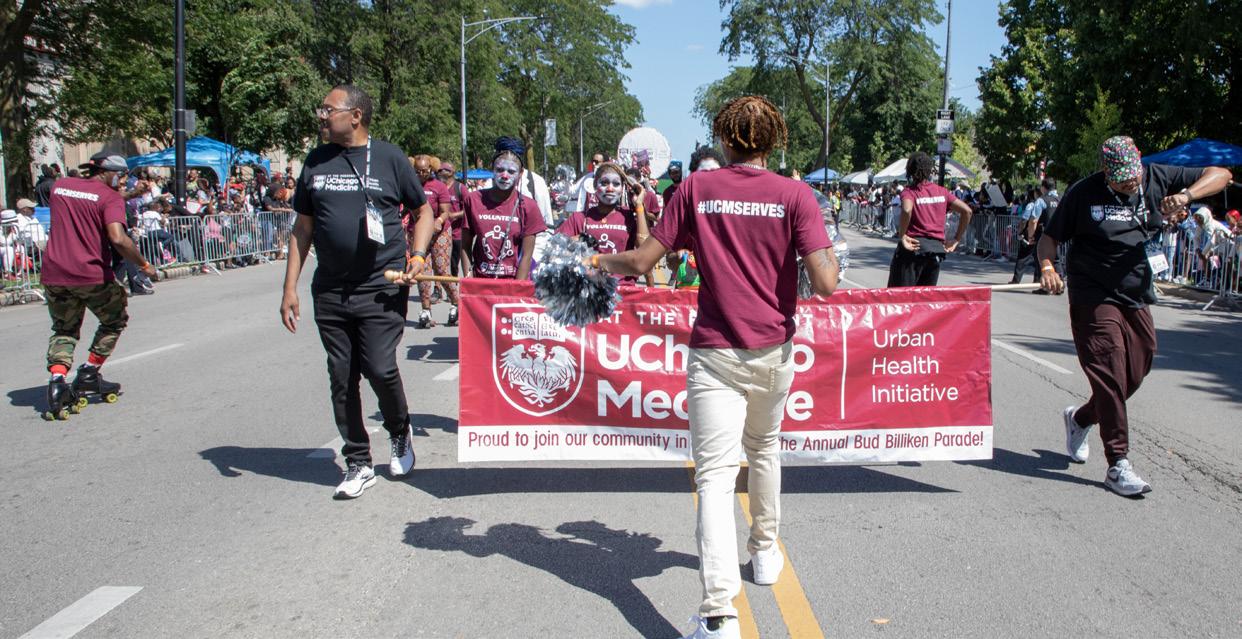
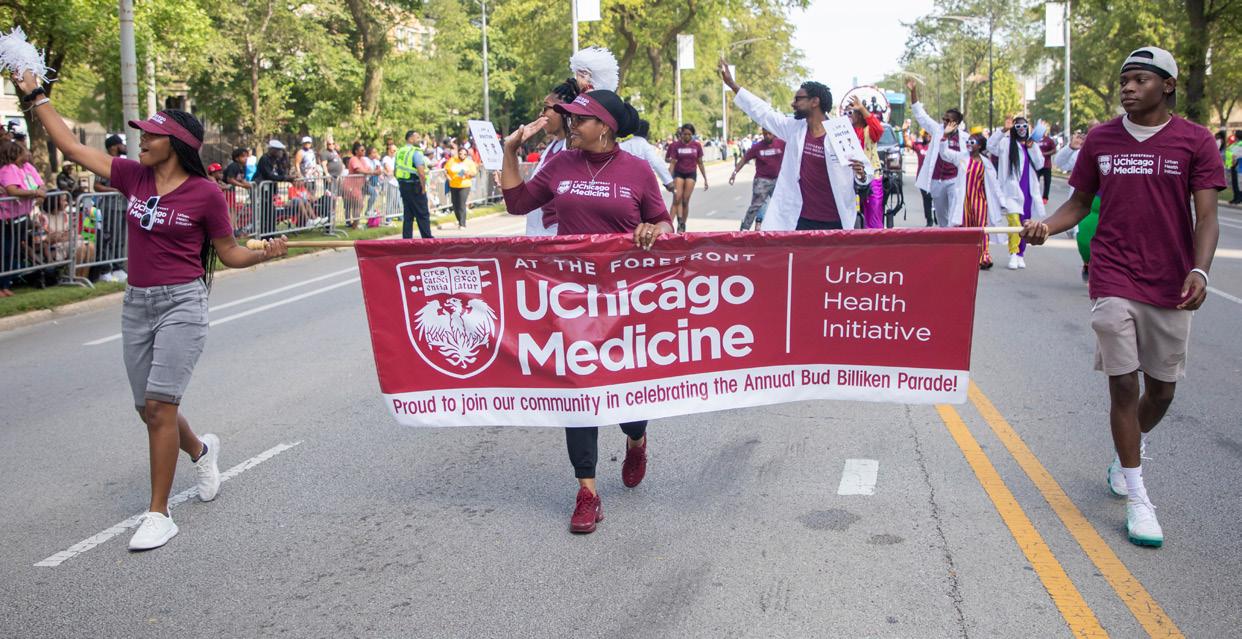
Bud Billiken Parade
Cancer Screening and Prevention events
WNBA Chicago Sky Health and Wellness Game
Community Grand Rounds
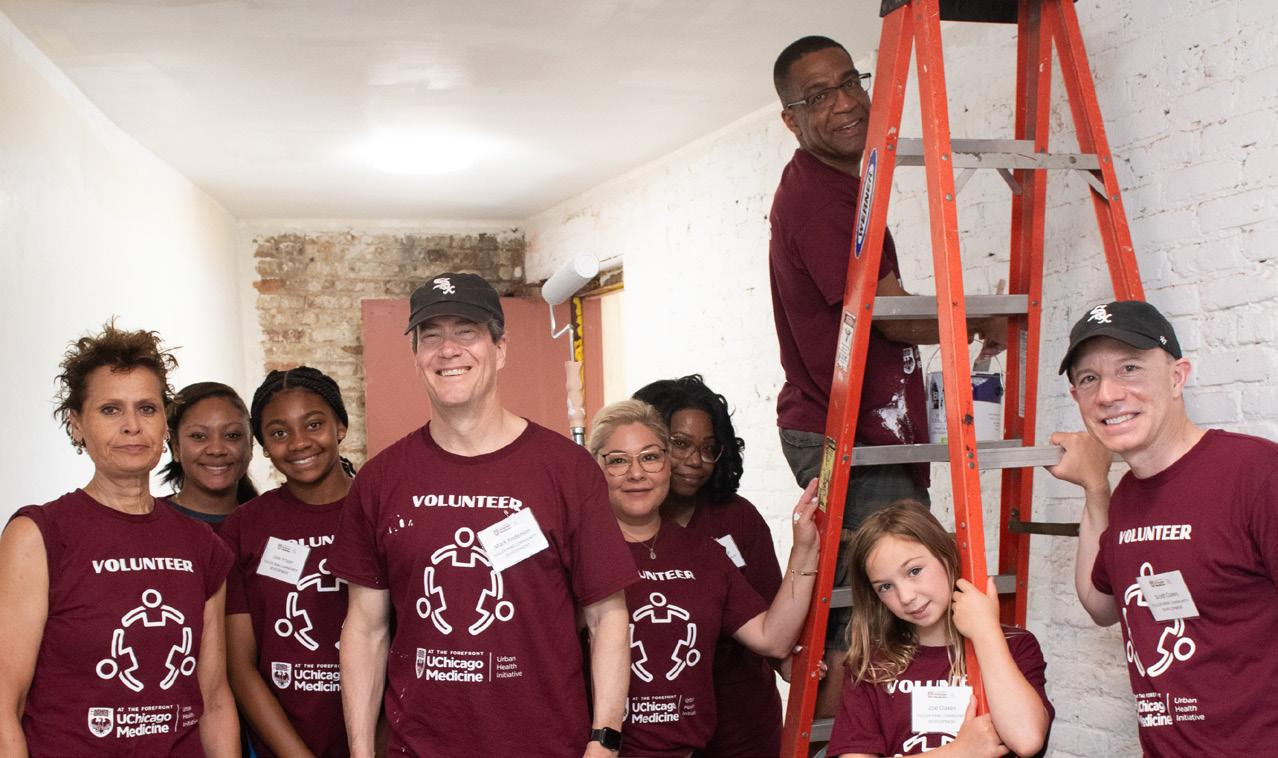
Day of Service and Reflection (DOSAR)
High School Healthcare Careers events
WVON 1690-AM “Community Health Focus Hour”
Urban Health Initiative (UHI) Summit: In October 2024, UHI celebrated 20 years of working with the community to improve health equity. Over 200 community members and partners joined UChicago Medicine leaders and the UHI team to mark the milestone.
Learning From and Serving the Community
The Community Champions program, a partnership between the Urban Health Initiative and Pritzker School of Medicine, encourages medical residents and fellows to practice medicine on the South Side. In fiscal 2024, 65 participants spent 186 hours doing workshops, speaking at high school healthcare career events and helping with service projects.
Student-run free clinics, staffed by Pritzker School of Medicine students and physicians, provide free health services at six locations across Chicago, including in Bridgeport, Greater Grand Crossing, Washington Park and West Woodlawn.
Chicago Street Medicine connects medical students and physicians with people experiencing homelessness — providing care on the streets.
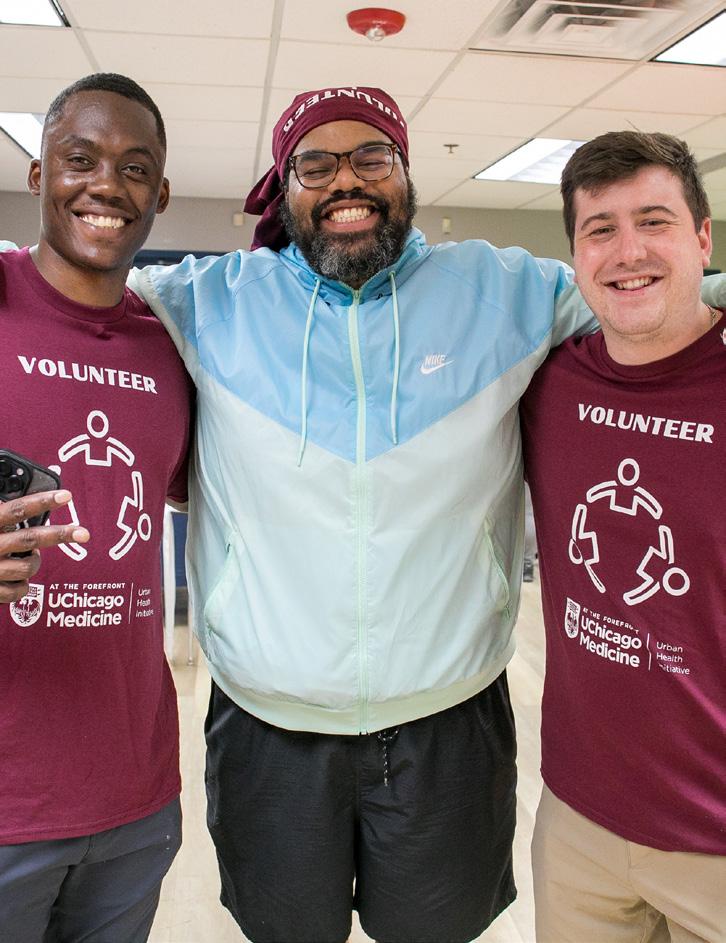
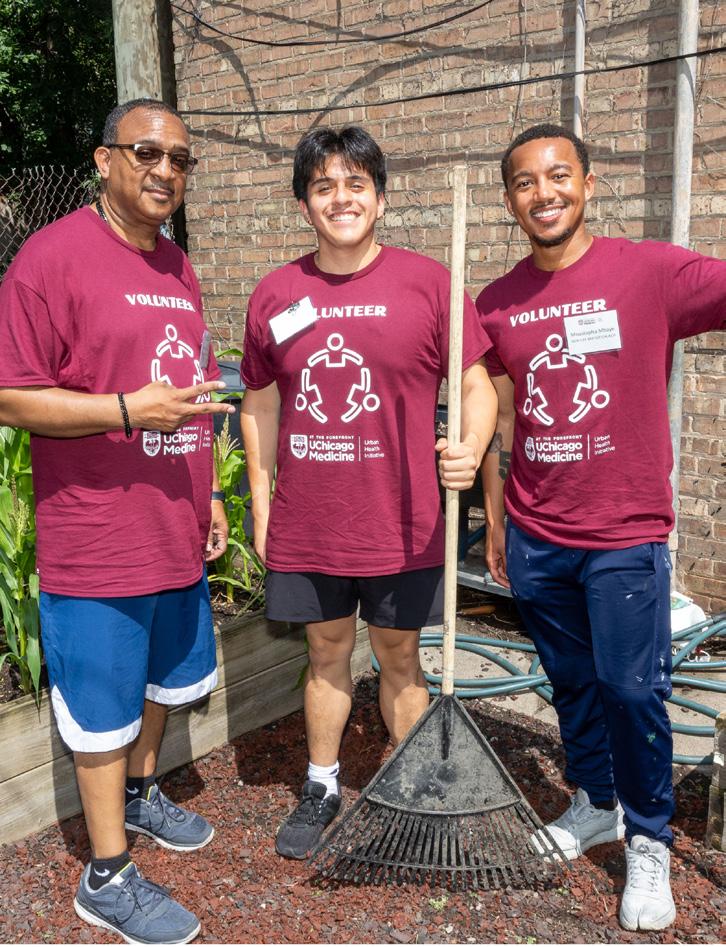
The Association of American Medical Colleges awarded the 2024 Spencer Foreman Award for Outstanding Community Engagement to the University of Chicago Medicine health system and the University of Chicago Pritzker School of Medicine.
2024 Bud Billiken Parade
DOSAR: This 22nd annual event connected more than 124 UChicago Medicine staff and volunteers to service projects at 14 community partner locations on the South Side.
Chronic Disease
Liaisons in Care: Community Health Worker Program
UChicago Medicine’s Liaisons in Care (LinC) program employs Community Health Workers (CHWs) to connect people to healthcare and social services. They play a key role in building trust and helping patients with conditions like asthma, diabetes, high blood pressure, cancer, heart disease, stroke, maternal health issues and sickle cell disease.
Partnering to improve community health
Through the LinC program, the Medical Center invested $1.25 million over five years to help community and faith-based organizations hire CHWs, which creates jobs and expands access to care, and helps community members understand how to prevent and manage chronic conditions.
Community Benefit Priority
LinC Program Impact: 2021-2024
6,891 patients served
1,813 referrals made to transportation, food and housing resources
58% reduction in hospitalizations for LinC program patients
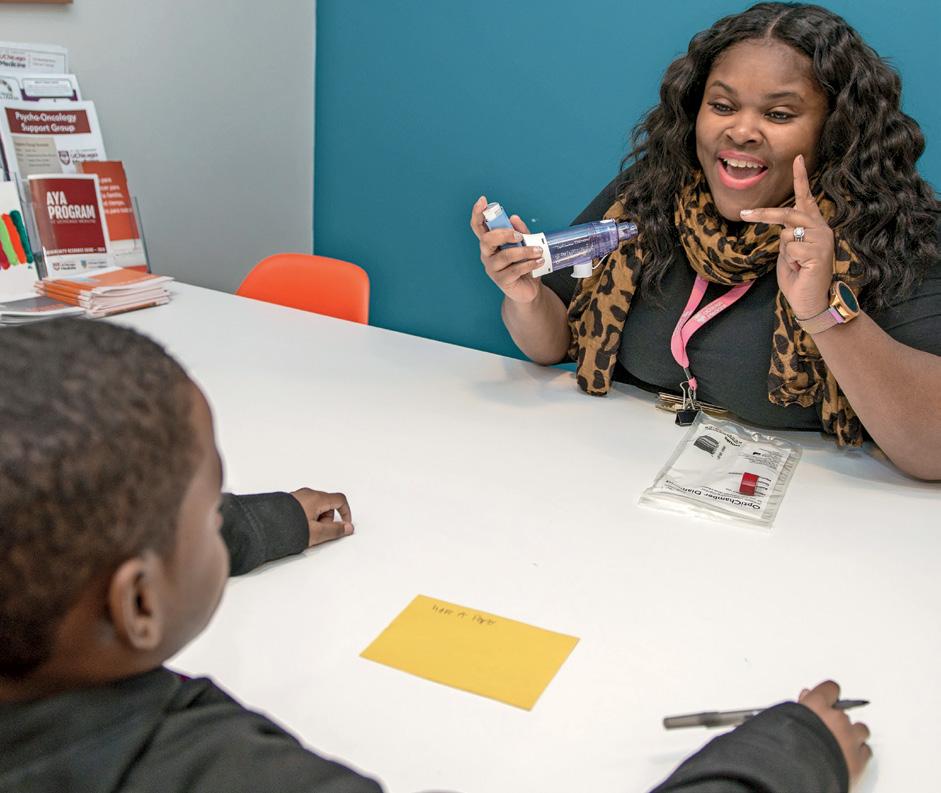
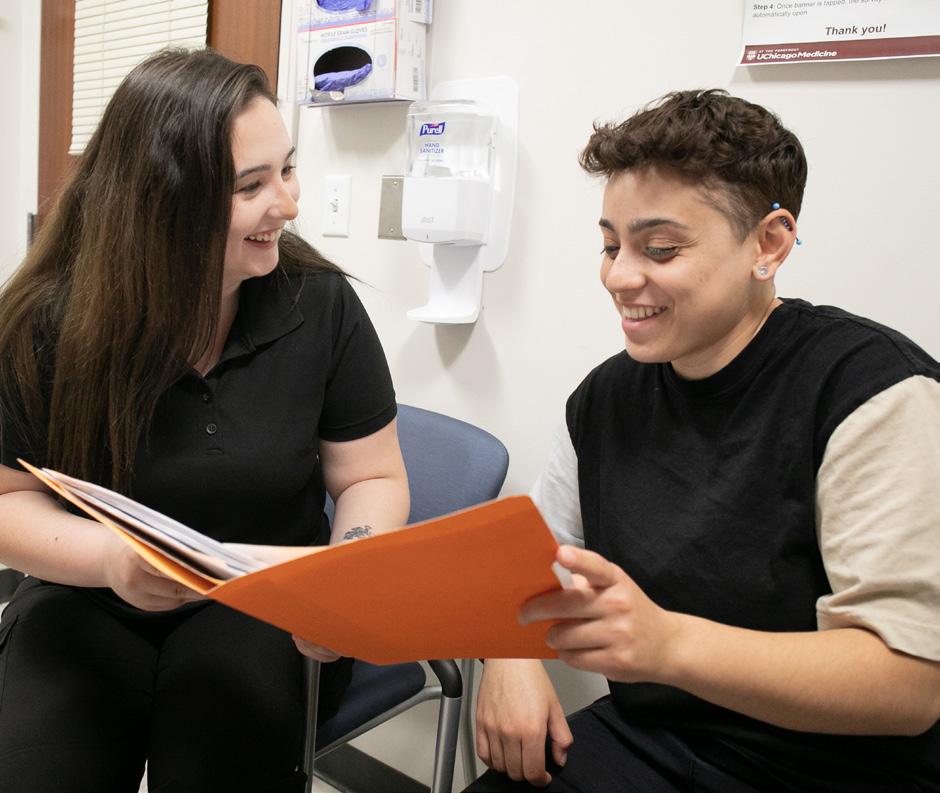
“Patients may lose hope. ... We’re here to hold their hand and guide them.”
- Izzy Velasquez, Community Health Worker
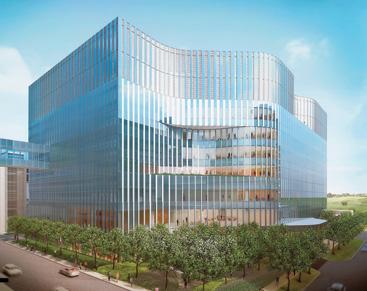
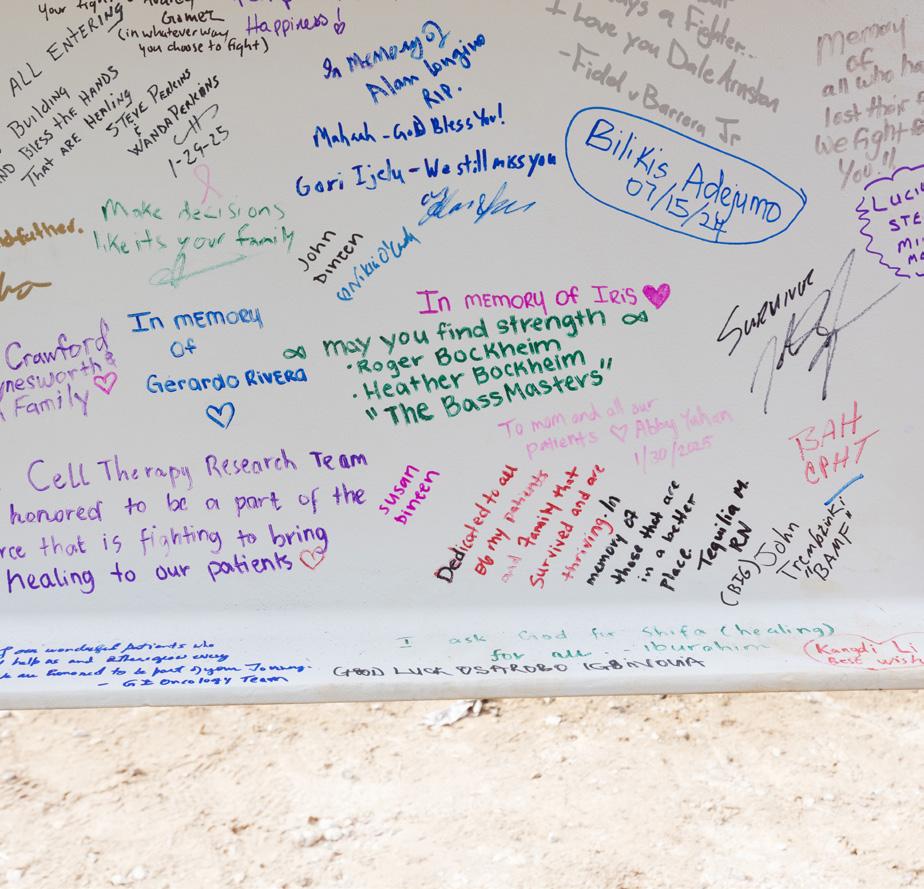
Structural beam for UChicago Medicine’s new cancer pavilion holds messages of strength and hope for South Side residents.
LinC program grantee highlights (July 2023 - December 2024):
Advocates for Community Wellness (A4CW)
• Increased health promotion, education and access to healthcare services, and provided resource navigation and social services for women in underserved communities.
• 997 community members screened for social service and healthcare needs.
Equal Hope
• With three years of LinC funding, Equal Hope has developed and maintained a South Side cervical cancer CHW program, hiring two full-time CHWs.
• 1,531 community members screened who needed primary care and/or specialty care appointments.
Chicago House and Social Service Agency
• Health Outreach and Prevention Education (HOPE) program focuses on HIV-related education and outreach in community settings, emergency departments and through mobile HIV testing at community partner events.
• 506 community members screened for care needs.
Chicago Women’s AIDS Project (CWAP)
• Harm reduction program focuses on overdose prevention as well as providing at-home HIV test kits and case management.
• 1,945 community members reached at community events, health fairs and street outreach.
Inner-City Muslim Action Network (IMAN)
• A CHW provides health education on topics ranging from asthma awareness to insurance enrollment. The CHW connects people to resources such as food pantries and primary care providers.
• 621 primary and specialty care appointments scheduled.
YWCA Metropolitan Chicago
• CHWs increase awareness of high blood pressure and diabetes self-management by helping people find care and resources for basic needs and social services.
• 356 follow-up appointments scheduled for clients.
Trauma Resiliency
The Violence Recovery Program (VRP) is UChicago Medicine’s hospital-based violence intervention initiative and is a model for similar programs nationwide. Violence Recovery Specialists help victims of intentional violence and their families — both in the Emergency Department (ED) and after discharge. Support includes help with housing, education, jobs, food access and funeral services.
In 2024:
• 1,946 violently injured patients were encountered by the VRP (3,794 encounters). Encounters included crisis intervention in the ED.
• 62% of patients enrolled in case management services.
• 81% of patients who indicated need received referrals for such support services as housing, education, jobs, food access, funeral services and more.
Other highlights:
• Pritzker School of Medicine partnered with the VRP to let medical students shadow Violence Recovery Specialists and learn about trauma care.
• In April 2024, the VRP hosted a four-day workshop for OSF Strive, helping it grow its trauma recovery program at OSF HealthCare Saint Anthony Medical Center in Rockford, Illinois.
• In November 2024, Recovery Legal Care and the VRP received a $4.92 million National Institutes of Health grant to study whether free legal help improves recovery and reduces future violence.
Healing Families After Trauma
The Block Hassenfeld Casdin (BHC) Collaborative for Family Resilience supports children and families affected by violence and trauma. Programs in the BHC Collaborative include the VRP, Child Life, Spiritual Care, the REACT Clinic (Recovery & Empowerment After Community Trauma), and Healing Hurt People-Chicago. October 2023 - September 2024:
• 422 violently injured pediatric patients received care through the BHC Collaborative.
• 119 violently injured children and families requested and received support from Spiritual Care.
The VRP has served more than 2,180 pediatric patients since the BHC Collaborative began in 2019.
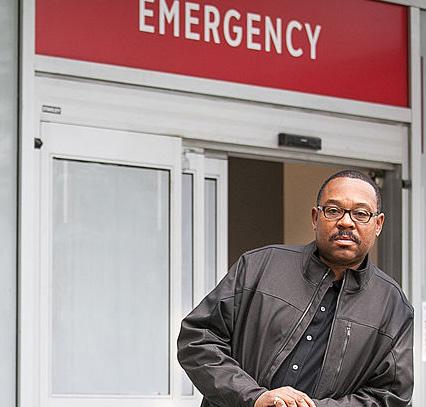
Dwayne Johnson, LCSW, a founding Violence Recovery Specialist in 2018, was named Director of the Violence Recovery Program in 2024.
“To do this work, building trust is essential. It helps people feel safe. Coming from the community, understanding the community, having similar lived experiences, all helps to build trust with the community members we serve.”
–
Dwayne Johnson, LCSW, Director, Violence Recovery Program
Southland RISE (Resilience Initiative to Strengthen and Empower) is a partnership between the trauma recovery programs at UChicago Medicine and Advocate Health Care. In 2024, it funded 19 summer programs with $150,000, reaching up to 8,500 South Side and Southland residents through arts, sports, leadership, and resilience-building activities. Since its start, Southland RISE has granted more than $800,000 to over 60 community organizations.
Wellness Resiliency Arts Program (WRAP): Funded by the Urban Health Initiative and in partnership with the Center for Community Health and Vitality, WRAP is a two-week summer program where teens use art to explore trauma and social issues. Led by teaching artists and social work specialists, the 2024 program engaged 27 youth in dance, drumming, writing, poetry and visual arts through trauma-informed workshops.
The Violence Recovery Program has engaged more than 11,000 patients since the program began in 2018.
$54.7 million in
and paid to local, community and underrepresented firms (up 68% over fiscal 2023)
$4.1 million million in wages paid to underrepresented on-site construction workers (more than three times fiscal 2023)
$2.1 million million in wages earned by 200 Chicago residents working on UChicago Medicine construction projects (more than three times fiscal 2023)
$586.1 million million in economic benefit for local, community and underrepresented firms via UChicago Medicine’s capital, renovation and plant projects (2001-2024)