

Become an AARP Massachusetts volunteer and make a difference in your community by supporting causes that matter to you, participating in local in-person and virtual events, reaching out to community members, and advocating for change.

Fighting fraud together: learn the signs, share the knowledge, make a difference
REQUIREMENTS FOR UPLOADING YOUR OWN
By Jennifer Benson, AArP MAssAchusetts stAte Director
PHOTO: You may upload a photo to the template if (1) it was downloaded from the Digital Asset Hub, or (2) you can document that AARP has all necessary legal rights to use the photo, including identifiable individuals, artwork and trademarks in text and logo, in this template.
Fraudsters are getting smarter, and people of all ages and backgrounds are feeling the impact. From identity theft to investment scams and increasingly sophisticated digital deception, criminals depend on confusion and isolation to succeed. At AARP Massachusetts, we know the most powerful defense against fraud is knowledge, and the most effective way to spread that knowledge is through people who care. That’s where learning and volunteering come together.
The minimum suggested size for the photos is 4500 x 2700 pixels.
Giving back. Making friends. Changing lives. Volunteer opportunities are open to people of all ages. Find your place at aarp.org/volunteerhere

This April, AARP Massachusetts is hosting a series of engaging events designed to help individuals recognize scams, build confidence and take action, not only for themselves but for their families, friends and communities.
Image resolution is best reviewed in “Preview” mode.
For more information about photography and usage rights, please review the Local Photography Guidance & Rules One-Sheet on InfoNet.
On April 11, AARP is offering a free, in person fraud prevention workshop at the Endicott Estate in Dedham. Participants will hear about the latest scam tactics, learn practical steps to protect themselves and loved ones, and explore trusted AARP tools and resources. Many AARP volunteers first get involved by attending events like this. They learn the basics and then share that information with neighbors, community groups and social networks.
For those who prefer a virtual option, we have two events to offer. On April 14, our volunteer-run Fraud Talk Tuesday series takes up home equity theft scams, which often target homeowners facing financial pressure. On April 15, the AARP Fraud Watch Network will host a session focused on identity theft and current fraud trends. These sessions equips participants with up to date data and easy to use tips that can be shared widely.
Education can also be fun and social. On April 21, AARP Massachusetts invites you to Fraud Busters & Brewmasters at Berkley Beer Company in Taunton. Joined by staff from the Commodity Futures Trading Commission, this fraud themed evening combines trivia, prizes, pizza and drinks with valuable insights into how scams work. Events like this help normalize fraud conversations and give attendees the confidence to speak up and help others stay alert.
Families are also part of the solution. On April 24, AARP will host a hands on, family friendly workshop at Franklin Park Zoo that explores how artificial intelligence and digital tools can blur the lines between real and fake. Through games and activities, participants will build critical thinking skills that are essential in today’s online world. Volunteers often play a key role in bringing these lessons to schools, libraries and community spaces, helping future generations become savvy consumers of information.
All of this learning comes together at the AARP Massachusetts Annual Volunteer Conference on April 30, happening this year at Polar Park in Worcester. Held during National Volunteer Month, the conference is both a celebration of the volunteers who make AARP’s work possible and an open door for anyone curious about getting involved. Volunteers play a vital role in fraud prevention. They help educate communities and make sure no one has to face scams on their own.
Fraud prevention is not a solo effort. By learning, sharing and volunteering, we strengthen our communities and protect one another. Whether you attend one event or many, your participation matters, and your voice can make a difference. Find event details, resources and ways to get involved at aarp.org/ma.

Jennifer Benson is the State Director for AARP Massachusetts. For more articles visit www.fiftyplusadvocate.com.
REQUIREMENTS FOR UPLOADING QR CODES:
The QR code seen on this template must be deleted or changed. QR codes must be created in the Uniqode platform using your AARP account. Download either .jpg or .png format for use in the template.
For information about licenses, training and support, review the QR Code Guidance on InfoNet or contact BrandHelp@aarp.org.
By LeighAh BeAusoLeiL contriButing Writer
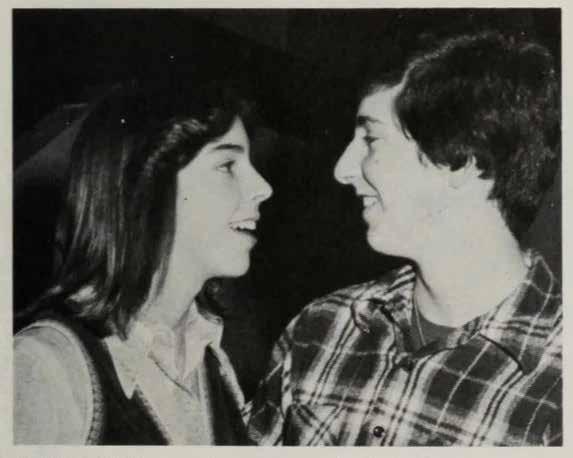
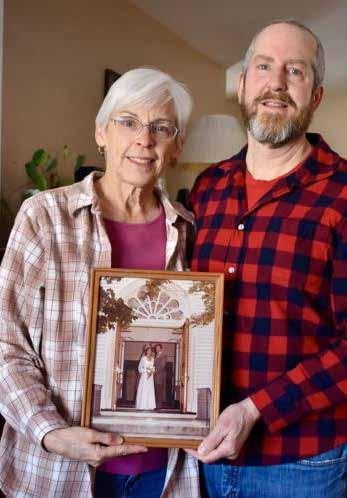
WESTBOROUGH – In 1979, Bonnie (Walker) and Paul Thiesing were named Westborough High School’s Class Couple less than a year into dating. Now, the two have been together for about 48 years — and happily married for 42.
They grew up together attending Westborough Public Schools. Living only one street from each other, a 13-year-old Paul would bring his horse over to the Walker Dairy Farm
When it came time to go to the Senior Ball, Bonnie had a full leg cast after knee surgery — but that didn’t stop her from dancing. When they went to the after-party, Paul exited the car, which slowly started to roll backwards. Cast-bound Bonnie was helpless as Paul jumped back in the car before anything bad happened.
After graduation, the two headed to different state schools for college. While Bonnie was down at Southeastern Massachusetts University (now UMass Dartmouth) studying
and charge Bonnie’s cousins 10 cents for rides.
At Westborough High School, Bonnie was on the Color Guard, while Paul was a member of the marching band. That’s where he first began to “spy” on Bonnie, he joked, considering her as a potential date for the upcoming Junior Prom.
A million thoughts ran through Bonnie’s head when the question finally came, but in the end, she said “yes.” The two had a nice night at the dance, which was themed “Miracles.” They’ve been together ever since.
They had their first official date at the Worcester Center Galleria, paying $2.50 for tickets to see “The Goodbye Girl.” Bonnie recalls how awkward they were together, especially when Paul made his first attempt to hold her hand as they made their way inside.
But the awkwardness of the new love between the two 16-year-olds would soon subside as they grew closer, spending nights doing their physics homework together, and eventually winning the title of “Class Couple.”
“At least we weren’t class clowns,” Paul remarked with a smile.
with the quiet, conservative Walkers. Driving down to Virginia for their honeymoon, they visited King’s Dominion and then Busch Gardens — back when there was only one rollercoaster, which Paul rode while Bonnie stayed safely on the ground. In a carnival game, he won her a pink stuffed hippo, which still sits in the garage of their Grafton home: “We can’t seem to
Spanish and business, Paul was over in Lowell completing a degree in mechanical engineering. Their only forms of communication were through “lots of letters” and the phone in the hallway of the dorm.
They couldn’t bear being apart.
After returning home from a seven-week trip in Spain — with, again, no way to truly contact one another — Bonnie recalls having been awake for 24 hours from her travels. “I was just bubbling and talking up a storm and he was strangely quiet — quieter than usual,” she said.
That’s when Paul popped the question.
The two were married on a windy August day in 1983 by Westborough’s beloved late Rev. Frederick Robert Brown at the Baptist Church right next door to Town Hall. Their reception was held at the Knights of Columbus in Shrewsbury. When they arrived, Paul’s cousin had already taken to the dance floor, and it was interesting to see his loud Italian family mingled
and now playing pickleball.
“We laugh a lot, which is one of those keys to a happy marriage,” she said. “To the point of tears sometimes.”
Though they have great memories of the many trips they’ve been on, Bonnie said sitting outside on their porch on a nice morning and having breakfast together, she’ll often think to herself: “Who needs to go on vacation?”
“We’ve been blessed for sure,” she added.
“Being a parent for the first time is just amazing,” Paul said. Although neither knew what they were doing, they did it together. They now have two daughters, 38 and 36, and two granddaughters, 4 and 2, who they absolutely adore.

“We’re not the same people we were then and that’s a good thing — that you grow and learn together through the years and survive
get rid of it,” Bonnie said with a laugh.
Heading home on the George Washington Bridge, just after the toll, Paul’s 1971 Malibu overheated and they had to pull over. Bonnie remembers looking over at Paul and joking with him: “I guess the honeymoon’s over.”
Arriving back at their apartment in Lowell, it dawned on Bonnie that she would have to cook. Attempting to make some spaghetti, she ended up accidentally burning herself. She recalls sitting on the couch, embarrassed and hiding her face.
Paul came over to comfort her: “It was sweet,” she said.
Though they have somewhat opposite personalities, they share the same values and interests — spending time together hiking in the mountains of New Hampshire, golfing, kayaking,
Bonnie Thiesing first expressed her interest in her future husband Paul when they were in the same second grade class.
Photos/Submitted
the tough times,” Bonnie said.
She added she’s appreciated Paul’s support through everything, including when she was diagnosed with breast cancer. “I don’t ever want to forget that because I never took it for granted that I was at the mercy of God through all that,” Bonnie said. “I would say that’s really where we’ve grown the most.”
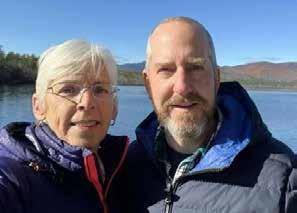
The two continue to enjoy each other’s company, especially now that Paul is newly retired and Bonnie works from home part-time.
On the morning the couple met with the Fifty Plus Advocate, Paul had stumbled upon a relic that truly demonstrated just how far back their connection was. The two had been in the same second grade class and were given small booklets to fill out with details such as their name, their teacher’s name, their favorite movie, and their “pal.”
“I didn’t remember it, but there he is,” Bonnie said, pointing to the page entitled “Somebody Nice.”
As a second-grader, Bonnie had etched Paul’s name in.
By sAnDi BArrett contriButing Writer
REGION – Snow, snow, and more snow along with freezing temps and power outages — this winter has been one for the books. With spring peeking at us from around the corner, packing up for a luxurious overnight stay might just be the perfect antidote to the New England winter blues.
Whether you are seeking a wellness retreat to kick start your summer beach body journey, an indulgent culinary-focused itinerary, an event-centric getaway, or a holiday celebration, below are a few ideas to get your cabin fever eraser working. So grab your bestie or fly solo, either way you can begin your entree into springtime with inhaling sweet spring fresh air and goodtime vibes.
Wellness Retreats
We all desire a little wellness in our lives and when spring rolls around and we start shedding layers of clothing, some of us might need a little personal care.
When it comes to wellness, Canyon Ranch in Lenox sets the bar high. The all-inclusive retreat lets you choose a pre-designed program or
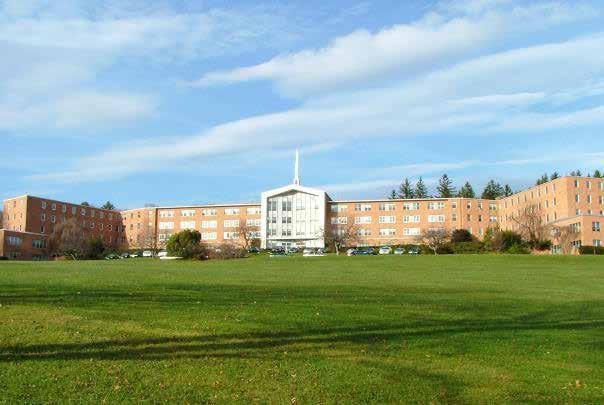
create a custom experience. Options include a Mindful Journey experience, a Get Healthy program, an Adrenaline Junkie adventure, or customize your own health-focused getaway.
Kripalu in Stockbridge is a yoga-focused retreat destination specializing in yoga education. Guests at Kripalu enjoy a variety of daily yoga classes, delicious dining, and the beautiful Berkshires waiting for you to explore.
Fresh spring flavors conjure up lighter dining with pops of fresh ingredients. Fiddleheads, asparagus, peas, and green onions are just a few of the bright seasonal flavors breaking through the hearty winter fare.
The Inn at Hastings Park in Lexington offers luxurious stays and gourmet dining all rolled up into one beautiful package. Owner Trisha Pérez Kennealy, a classically trained chef
from Le Cordon Bleu Culinary School in London leads amazing food-centric experiences. Her monthly Supper Club where you cook a three-course meal with a featured wine pairing delivers an unforgettable evening. Alternatively, enroll in an Immersive Cooking Weekend that includes the Supper Club dinner, a Farm & History Tour with a picnic lunch, a gourmet multi-course dinner, and a farewell Sunday brunch.
Create your personalized culinary retreat with apps like Viator or Get Your Guide. With Boston as your destination, you can travel the culinary globe. Stack foodie-focused tours throughout your city stay. The Boston foodie scene offers a plethora of options like Viator’s North End Cake and Bakery Tour, Taste Boston’s Italian Heritage Tour, Dumplings to Dim Sum: Food and History Tour of Boston’s Chinatown, and Boston Seafood Tour: Behind the Scenes at the Historic Fish Pier are just a few examples of the tasty stops around the city.
Concerts, holidays, and spring festivals are perfect opportunities to anchor your getaway. Choose your favorite event, find a great hotel or Air
• Diabetic Footcare
• Ulcers & Non-
• Arthritis
• Tendonitis
• Fractures
• Fungus
• Bunions/Corns

BnB close by and you are on your way to a personal mini-vacay that amps up the fun.
Special spring events are popping up around the state. Famous entertainers like Bruce Springsteen and Cardi B are performing in Boston. The World Cup is coming to Foxboro for a once-in-a-lifetime pitch match. The StrangeCreek Campout in Greenfield is a four-day camping and music festival for those who find camping “luxurious.”
Mother’s Day is a great opportunity for a thematic spring getaway. Why not take mom on a trip focusing on what she loves?
Unique ideas include the Renaissance Fair in Phillipston, any Daffodil or Tulip Day across the Commonwealth, or perhaps a quiet beach weekend before the summer crowds arrive en masse.


Photo/Pixabay

Indulge In Luxury
Sometimes a night away in a beautiful hotel, with a lovely dinner, a nice place for a stroll, and wrapped up with a sumptuous brunch is simple and perfect.
The Land’s End Inn in Provincetown offers guests the quintessential coastal hilltop B&B stay. In Boston, check out the Mandarin Oriental in Back Bay for a five-star experience or
the XV Beacon downtown for a luxurious option. The Wequassett Resort and Golf Club in Harwich and The Mansion at Ocean Edge in Brewster offer casually lux Cape Cod vibes and spring golf.
Planning a small, luxurious getaway to welcome spring temperatures, sunshine, and flowers can be the most perfect mini-vacation of the year.



By MAtt roBinson contriButing Writer
BOSTON – Christina Inge is a longtime marketing maven who’s told the stories of a wide variety of organizations in many ways. But these days her tool kit is highly digital, including the strategic use of AI.
Digital infrastructure leader
A leader in digital infrastructure and outreach for over 20 years, Inge teaches at Harvard (where she won the Fussa Award for Teaching Excellence), Northeastern (where she is a founding lead faculty member for the NUMedia digital storytelling lab), and internationally (including a recent term at the Sorbonne in Paris), and has written textbooks that are used by over 1,500 schools around the world.
She is also the founder of Thoughtlight, a Boston-based digital media agency that supports individuals and organizations in using digital media to advance careers, communities, and causes.
Despite her expertise and accolades, when asked how she got into
marketing, Inge is refreshingly blunt.
“Honestly” she admits, “I backed into it!”
Journalism background
Starting her career as a journalist, Inge’s skills were quickly recognized, and she was soon promoted to editor and was then recommended by for a position as an advertising copywriter.
“Eventually,” she recalled, “I landed a full-time job at a publisher in the market research department, translating industry studies into reports.”
As this opportunity allowed Inge to explore what she sees as a “natural curiosity about why people make the choices they do,” she was quite content with the new direction her career had taken and began to delve deeper into the marketing world.
Christina
“Marketing, at its heart, is about understanding people,” she affirmed. “What they need, what motivates them, and how to connect them with


solutions that genuinely help. Once I realized that, I was hooked! I’ve always been someone who notices patterns, and marketing is really just pattern recognition with a purpose.”
Launch of company
with
to choose. Choose us for exceptional results.
With this “purpose” in mind, Inge launched her own marketing company, which allowed her to pick her clients and colleagues.
“We work mainly with sustainable brands that have a mission,” she said proudly, “such as organic pet and personal care companies. It’s been an amazing journey and I love what I do every day!”
Inge’s interest in and passion for marketing is contagious, and she shares it with her clients and students on a daily basis — even those who might have been reticent to embrace it as she has.
“The technology has changed enormously,” she realized, “but the fundamentals haven’t. People still want to feel understood. They still respond to a message that speaks to their real needs. What’s different now is that we have incredibly powerful tools like artificial intelligence that can help us understand our audiences better and faster than ever before.”
Book targeted to ordinary people In order to help people understand
this new understanding, Inge offers her popular (and populist) book “Marketing Metrics,” which explains how everyone can use marketing to support themselves and their personal and professional ventures.
“My books break all of this down in plain language,” Inge maintains. “I wrote them for real people who need marketing skills, not just tech whizzes.”
From data to dating, Inge said her books help you build brands while building confidence.
“You don’t need to become a computer scientist,” she assures. “You just need to understand enough to make smart decisions and not get left behind.”
Advice for older professionals
As anxieties regarding being left behind (or even left out) are especially prevalent among older people and professionals, Inge is keen to offer specific support to this population.
“When you’re looking for a new opportunity later in your career,” she observed, “you are the product…. Everything you’ve learned, every problem you’ve solved, every relationship you’ve built is your value. Marketing is simply the skill of communicating that value clearly.”
Whether you use traditional resumes or new-fangled tools like LinkedIn or Instagram, or even when
introducing yourself IRL (”in real life”), what you share and what you project say a lot about you and can make the difference in how successful you are, she noted.
Fortunately, Inge maintains, people who have more experience IRL can have a distinct advantage, even over those who may be more used to using technology.

I’ve seen students in their 50s, 60s, and beyond completely transform their careers by learning a few key marketing skills.
“You have real stories to tell,” she pointed out. “You’re not talking theory. You’ve lived the reality!”
Another anxiety that older folks face has to do with the prospect of even trying new professions later in life.
“It is never too late to reinvent yourself,” Inge asserted.
“I’ve seen students in their 50s, 60s, and beyond completely transform their careers by learning a few key marketing skills. Understanding how to position yourself and tell your professional story is one of the most valuable things you can do at any age!”
Another key suggestion Inge makes is to realize and admit that the anxiety is normal and that you are not alone in feeling it.
“I teach professionals of all ages,” Inge said, “and I can tell you that even people in their 20s feel overwhelmed by how fast technology changes.“
Again, however, Inge suggests that people with more life
experience can have the upper hand, because they have already engaged so many new technologies throughout their lives.
“You went from typewriters to computers, from paper maps to GPS, from encyclopedias to Google,” she observed. “You’ve been adapting to new technology your whole life.”
AI can’t replace everything As with any learning, Inge says that the secret is to start small.
“You don’t have to master everything at once,” she supports. “Try one tool. Ask one question. Watch one tutorial.”
The most important thing to remember, Inge concludes, is that, no matter how much data a computer can crunch, they will never have the often intangible but always vital benefits that come from living.
“The wisdom and judgment that come with experience are things AI cannot replace,” she said. “Technology is a tool. You are the one with the insight, the relationships, and the perspective to use it well. Don’t sell yourself short!”
for completing the brain games. Altogether, you can receive up to $1955 if you complete the entire study. Travel costs can be reimbursed.
If interested, please contact Abbey Russell by calling (617) 496-7039 or emailing cnlsubject@wjh.harvard.edu
By MichAeL PernA Jr. contriButing Writer
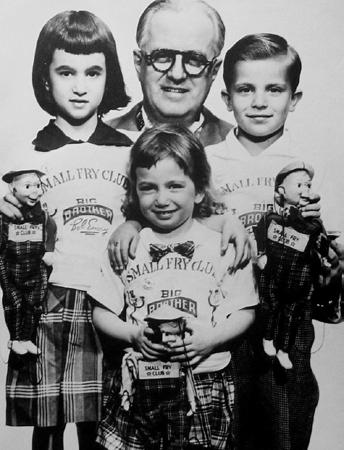
BOSTON -–Way back in the 1950s, Boston’s WBZ-TV featured a program on channel 4 — the “Big Brother Bob Emery Show.” The show was geared to youngsters, who “Big Brother” called “Small Fry.” By the time the show hit TV, Emery was an elderly looking gentleman — he was born in 1898.
Start in radio
Emery, who was born Claire Robert Emery, started off in the early 1920s performing with a musical group from Gilchrist’s Department Store in Boston where he worked in the shoe department. That led to a number of roles on various radio stations. One of these involved a program geared to young children, which was known as the “Big Brother Club” on radio station 1XE (later WGI). Initially, he was tasked to read stories and respond to children’s letters to Santa. The kids who listened in could apply to be members of the club — they would receive a membership card and pin if they promised to do good deeds and be good citizens.
Eventually he began a club magazine and would organize events at various locations in the Boston area. He also started a weekly column in the Boston Herald where he would ask children for their opinions on a particular subject, then publish the responses that he received.
Over the years, he became a widely known radio personality, with thousands of kids from across the United States becoming members of his club. He travelled all over the country as a result. In the 1930s he began his television career, even though very few people actually had TVs at that time.
TV career
By the early 1950s he wanted to settle down back in the Boston area and he reached a deal with WBZ-TV to host a kids show. He would start each daily show with a toast (with a glass of milk) to the President of the United States — the song “Hail to the Chief” would be played. This writer, who is seventy-five at this time — vaguely remembers the portrait of then-President Dwight D. Eisenhower filling the screen of his family’s black and white television every day as Big Brother’s show came on. The beginning of each show would also include Big Brother Bob Emery singing the song, “Oh, the grass is always greener in the other fellow’s yard” while strumming his signature ukelele.
During each show, which aired at



to teach them new things and make them feel worthwhile, no matter what their social or economic background might be. He wanted to teach the “Small Fry” — as he called them — good values. It is reported that he was especially proud of the number of kids that he taught the Pledge of Allegiance, for instance.
Fundraising efforts
television show in Boston in the 1950s and 1960s.
12:15 p.m. each day, Big Brother would engage the young children in the audience. He wanted to include them in whatever activities he participated in, as opposed to them just being spectators. Emery’s goal was to help each and every child that was present to not only be entertained, but
Bob Emery became an avid fundraiser for many different causes. One outstanding example was when a devastating tornado ravaged central Massachusetts in June 1953, he helped raise $18,000 — much of which was raised by children that were members of his “Small Fry Club.” The money was used to help children and their families whose homes had been destroyed in the disaster.
By the 1960s, WBZ was making changes to Emery’s show, changing it from daily broadcasts to once a week, for instance. He retired in 1968 at the age of seventy.
Big Brother Bob Emery — a kind and beloved TV personality for area children for many, many years, passed away in 1982 at the age of eighty-five.
By shAron oLiver contriButing Writer
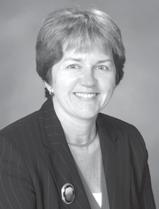
BOSTON – Former WBZ reporter Shelby Scott is known for being one half of the nation’s first all-female anchor team (with Gail Harris in 1976) and for taking the Boston area by storm for her unique weather coverage. The Seattle native began her career in her hometown where she was the city’s first female newscaster before moving to Boston in 1965 to work for WBZ-TV. Scott’s first major assignment for the station was covering the Northeast blackout of 1965. The blackout affected parts of Ontario in Canada, Connecticut, Delaware, Maryland, Massachusetts, New Hampshire, New Jersey, New York, Pennsylvania, Rhode Island and Vermont.
An inspiration and force of her own A force to be reckoned with, Scott’s former news director Peter Brown told The Boston Globe, “Shelby, as much as she would not want me to say it, was a pioneer — she was a trailblazer in journalism. She was a mentor. She inspired so many women and men who wanted to work into TV news. I saw her smile at the line from the young reporters: ‘Shelby, I grew up watching
you on TV.’”
legendary snowstorm coverage by her winter hats. A red cap indicated that people should remain indoors because the weather was going to be brutal, while a blue hat meant be careful and a white one meant the storm was not much of a concern. Locals took to Facebook to post their memories.
to be bad when Shelby Scott made an appearance!”
it was a big storm, Shelby was reporting and Don Kent was drawing on the map.”


“It wasn’t a ‘real’ story unless they assigned Shelby to it. Do you remember the year The Boston Globe used her and Robert Parrish as snow accumulation guides? Shelby was buried pretty early on (at under five feet) but Parrish hung on for a few more weeks.”
Iconic presence and leader During those cold, harsh winter days,

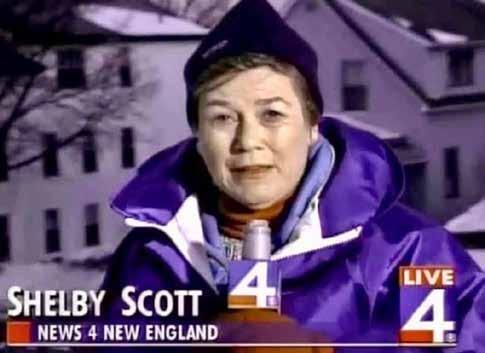
fans would bring Scott coffee and doughnuts if they spotted her on location. Being 62 inches tall, the Globe sometimes compared her height to snowfall accumulations, wondering if the city would get a “2-Shelby winter.”
Although she used hats to alert viewers on weather conditions, Scott was not crazy about the amount of attention paid to how women in broadcasting dressed. She said in a 1971 interview, “It’s unfair to judge me on what I’m wearing, rather than on my reportorial job.”
Scott was elected president of the American Federation of Television and Radio Artists (AFTRA) in 1993 and served in the role until 2001. She also helped spearhead the movement to fuse AFTRA with SAG (Screen Actors Guild).
Longtime WBZ news photographer Nat Whittemore once said his colleague was afraid of nothing and described her as a “rugged trouper


who never complained or wanted to quit, just so long as we got a cup of hot coffee once in a while.”
Later years
She retired from WBZ in February 1996 but continued to cover storms while getting battered in icy winds and freezing rain for the station as a freelance reporter. She also covered the 1997 April Fools’ Day Blizzard, an event that left the state buried in snow. Although Scott was synonymous with winter weather coverage, she loved political and animal stories as well.
Scott was inducted into the Massachusetts Broadcasters Hall of Fame in 2008 and retired to Tucson, Arizona where she died in 2022. The nation may have had weatherman Willard Scott by way of “The Today Show,” but Boston had the incomparable Shelby Scott — New England’s storm warrior.









By MichAeL PernA Jr contriButing Writer
PRINCETON – In the early 1960s, a family trip to the Princeton Antique Automobile Museum in Princeton, proved to be an exciting adventure for then-10-year-old Michael Perna Jr. His parents were friendly with the museum’s founder and owner at the time, Albert Garganigo, who had grown up in Shrewsbury.
Garganigo, who had started out owning the Turnpike Garage and Auto Wrecking business, located near the corner of what is now Route 9 and South Quinsigamond Avenue, started collecting what began to become known as “old” cars in the era around World War I. He eventually opened an antique auto museum on the site. The brick building that housed the museum is still there, home to a number of commercial enterprises.
Fighter plane acquisition
In the 1920s, he had purchased what had been known as the Red Fox Farm, located along Route 31 in Princeton. He began restoring his collection of antique vehicles in the barns on the farm, then storing the restored cars

in them. He would display a few of them outside on weekends. People passing by would stop to look at the old cars, and soon he had the idea to
build an actual museum building, housing what he called the “Horseless Carriage Exhibit.”
As his collection continued to
Now accepting Applications for 62 years of age and older and those that are under 62 years of age and are permanently disabled.
and
• Manicured walking paths with garden plots
grow, he added more buildings. The “Museum of Antique Autos” opened in 1937. Eventually more buildings were added, and so were more autos, an


antique fire truck, a carousel, antique bicycles, pinball machines, and a variety of other items. After World War II, he was somehow able to acquire the wreck of an Italian Air Force Macchi C.202 fighter plane that had been captured in North Africa.
The hulk of the aircraft was displayed outside on a grassy area near the parking lots for the museum. Although it was a rare artifact — very few similar aircraft were neither captured or for that matter displayed after the war ended — it didn’t seem to attract much attention from museum-goers.
Young Perna was an exception — he had been very interested in military affairs since his earliest years — this would eventually lead to a thirty-sixyear career in the United States Air Force. After arriving at the museum, he discovered the lonely wreck and immediately ran over to it. By this time, the aircraft was basically a wreck, with no undercarriage, no propellor or canopy, and rusting metal parts falling off the wings and fuselage. The youngster was somehow able to climb onto the wing, then into the pilot’s seat, which was just about non-existent by that time.
Taking a souvenir
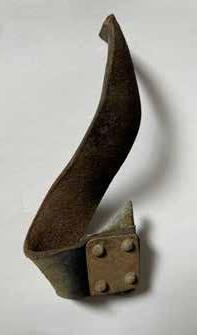
As he pretended to be flying the fighter, he looked down and noticed a small remnant of a leather seat belt strap, still attached to a tiny bit of metal that had secured it. The item was immediately put in his pocket.
Although he was excited with the “find,” his parents, and for that matter, the museum owner, weren’t very interested. He brought the remnant home, and it was tucked into a cigar box that contained a variety of World War II relics he had collected from various veterans.
Imagine his surprise, when, now in his 70s, a recent internet search about the antique auto museum brought up the fact that “his” fighter plane had eventually ended up at the Bradley Air Museum in Connecticut, then was completely restored and today is exhibited at the National Museum of the USAF in Ohio.
A search of the old cigar box turned up the piece of seat belt strap, and he has initiated getting in touch with the USAF Museum to see if they would like to reunite the artifact with the original aircraft, which would culminate a long and bumpy trip for this little piece of history.

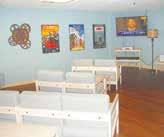
Within the building amenities include:
• A Theater-like media center
• Handicap-accessible lounges on every floor
• Library equipped with two computers and free internet access
• Physical fitness center
• Game room with billiard table
• Community room with bingo board and large screen TV
27 Mount Vernon Street, Worcester, MA • O ffice O pen D aily 8:00 am - 4:30 pm
To receive an application please call 508-755-6062 TDD# 508-755-0228
Now accepting applications for 62 years of age and older and those who are under 62 years of age and are permanently disabled.
Applicants must meet HUD annual low income guidelines. Preference is given to individuals 62 and older.
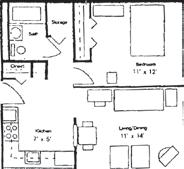
• Contemporary styled 1 & 2 bedroom apartments
• New kitchens with built-in microwaves and granite-like countertops
• Small pets welcome
• Heat and Hot water included
• Bus route / ample parking
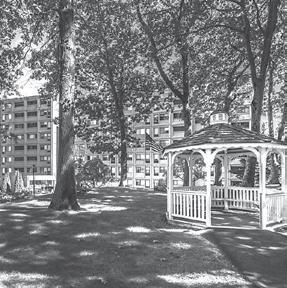
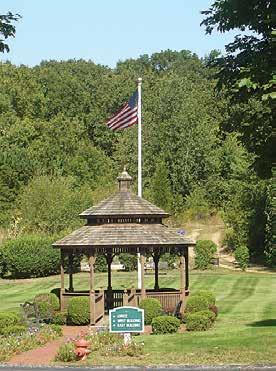
• Beautiful landscaped grounds with gazebo



By MichAeL PernA Jr. contriButing Writer
WORCESTER – As the United States prepares to celebrate two hundred and fifty years as a nation on July 4, 2026, it is only fitting that we might recognize a man who played a key role in the country’s efforts to gain its independence.
This individual would be Isaiah Thomas, who was born in Boston, which was at the time a province of the Massachusetts Bay Colony, on January 19, 1749. At the unbelievably early age of seven years old, he was apprenticed to a Boston printer by the name of Zachariah Fowle. This particular event would set young Isaiah on a lifelong journey, which resulted in his becoming a noted printer and publisher.
Newspaper founding
A number of years later, the two formed a partnership, this being in 1770, and started publishing the Massachusetts Spy. Three months later, Thomas became the sole owner, printing it first on a semi-weekly basis, then weekly. Thomas’ motto for the newspaper was “Open to all parties but influenced by none.”
Thomas soon used the newspa-

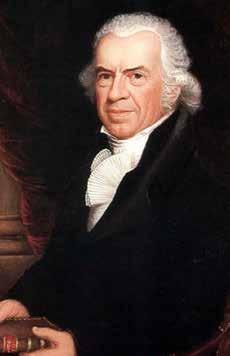
In a lifetime of over 80 years, Isaiah Thomas fought in and reported on one of the first battles of the Revolutionary War, at Lexington, performed the first public reading of the Declaration of Independence, and founded a newspaper that championed the Patriot cause.
per to promote the Whig cause, which caused the state’s government to oppose it and try to shut down its operations, in which they were not successful.
Because of the government’s efforts to oppose the newspaper, Thomas took his presses and moved them to
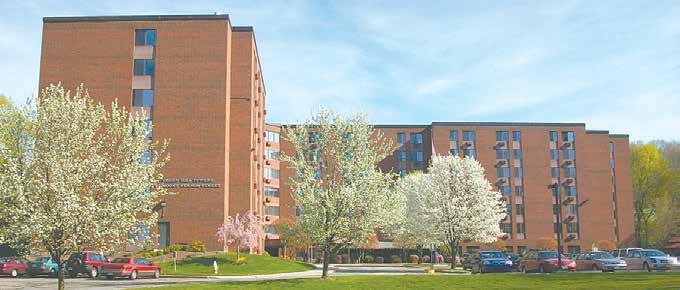
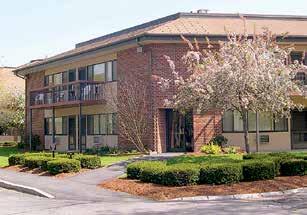
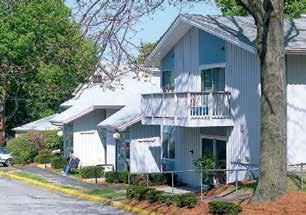
Colony Retirement Home III is congregate housing for seniors. Enjoy nutritious “Home Cooked Meals,” served in our attractive dining room with your neighbors and friends.
Worcester on April 16, 1775, three days before the Battle of Lexington. Thomas himself participated in the battle.
All of his other property in Boston was destroyed. He quickly regrouped in Worcester, opening a paper mill, book-bindery, and published and sold books, in addition to continuing to publish The Spy newspaper.
Pioneering reporter and publisher
He reported the first account of the Battles of Lexington and Concord and will forever be known as the person who performed the first public reading of the Declaration of Independence, this being done in Worcester.
Thomas continued his writing and publishing career throughout his life. From 1775 to 1803 he published the New England Almanac, which resembled Benjamin Franklin’s Poor Richard’s Almanack in its content. This publication was continued by his son Isaiah Jr. until 1819.
In 1788, Thomas opened the Thomas and Andrews bookstore in Boston, then went on to establish branches of his publishing operation in many parts of the country.
In 1791, he published an edition of the Bible in Worcester. In the years following, most of the Bibles and school-
apartments at
books used in the United States were published by Thomas.
Massive library donation
In 1812, Isaiah Thomas founded what, at the time, was known as the American Society of Antiquaries, which title was later changed to the American Antiquarian Society, this being located on land in Worcester, along with a building and a sizable sum of money. Along with this, he donated his library of almost 8,000 books, in addition to one of the most extensive collections of newspapers in the country. At the Society’s first meeting, he was elected president, holding that office until the time of his death. In 1816, he was also elected as a member of the American Philosophical Society in Philadelphia, Pennsylvania.
Isaiah Thomas lived until April 4, 1831, passing away at the age of 82 while living in Worcester.
Whatever personal papers and records he had, along with his entire library and collection of early American newspapers were bequeathed to the Antiquarian Society.
Isaiah Thomas, someone we should honor as a true American patriot and founder of our nation, is buried in Worcester’s Rural Cemetery.
Friday,

By shAron oLiver contriButing Writer
CAMBRIDGE – One of the most valuable facets of computer technology is networking. Namely, communications. Thanks to Cambridge engineer Ray Tomlinson’s fiddling with code, he invented the first email program which permits messages to be sent between users on different hosts connected to ARPANET, a communication network that would allow scientists and researchers to share each other’s computer facilities.
Precursor to internet
Shortly after earning his master’s degree in electrical engineering at the Massachusetts Institute of Technology (MIT), the computer programmer began work at Bolt, Beranek and Newman (now BBN Technologies) in 1967 as a principal engineer and helped develop ARPANET, the precursor to the internet. Tomlinson developed ARPANET’s first application for network email by combining the SNDMSG and CPYNET programs. He sent the first electronic message in 1971 which read: “QWERTYUIOP,” capitalized letters in the top row of the English keyboard. Needing a marker to separate a user’s name from the host terminal, Tomlinson settled on @, one of the least utilized characters in ASCII. User@ host remains the norm for email addresses to this day. After demonstrating the system to a colleague, Tomlinson told him to not tell anyone since this was not something they were supposed to be working on.
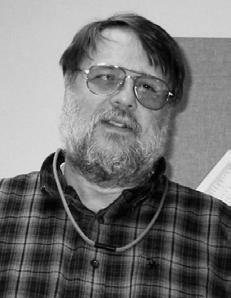
Ray Tomlinson created the first email program while working at a Cambridge technology company in 1971.
of mailing a greeting card. Tomlinson said, “I see email being used, by and large, exactly the way I envisioned. In particular, it’s not strictly a work tool or strictly a personal thing. Everybody uses it in different ways, but they use it in a way they find works for them.”
In an interview with NPR’s Guy Raz, Tomlinson said, “We were working on ways in which humans and computers could interact.” He started tinkering with the interaction between distant colleagues who didn’t answer their phones and eventually found a way to send messages from one computer to another, inventing what we now know as email.
Tomlinson added “The keyboards were about 10 feet apart. I could wheel my chair from one to the other and type a message on one, and then go to the other, and then see what I had tried to send.”
Tomlinson settled on @, one of the least utilized characters in ASCII.
As the popularity of computers grew, starting in the late 1980s and early 1990s, online services such as America Online (AOL) soon followed. By the 1990s, the public was fully enthralled with the World Wide Web and connecting with groups of people using email became common among those in the workplace and for personal use. Various social media platforms such as X (formerly Twitter) would eventually follow suit in making the @ character a standard tool for online interactions.
From one to four billion email accounts By 1996, email was more commonly used than U.S. mail with almost four billion email accounts existing today and with the application of various fonts and graphics, users can create beautiful messages of their own in lieu
By MAriAnne Lyons DeLorey, Ph.D.
“The English language is so elastic that you can find another word to say the same thing.” – Mahatma Gandhi
“You can have brilliant ideas, but if you can’t get them across, your ideas won’t get you anywhere.” – Lee Iacocca
When I was in high school, we did a writing exercise in which we all took off one shoe and put it in a pile. We were then asked to describe our shoe. After we were all done, the teacher shuffled the write-ups and began reading one at a time. Based on the description, we all took guesses about which shoe in the pile before us was being described. As you may imagine, many of the shoes fit into the fashion of the day and so many were very similar. It was an interesting experience to learn how to describe the details in such a way as to correctly identify one item among them.
I think about this exercise frequently when talking to my coworkers about specific residents. Conversations frequently follow this pattern:
“Oh, have you met Alice?”
“No, I don’t think so, what does she look like?”
“She has short gray hair and uses a walker.”
“Umm, that describes about 60 people in the dining room.”
“Oh yeah. She also has glasses.”
“Ok that narrows it down to 50.”
“She is a bit on the short side.”
“Forty.”
And so on.
I wonder if our inability to truly describe someone who is older is a failing of our language (not enough descriptive words) or if we have been conditioned not to use certain descriptors (wrinkles, weight, skin color, etc.) for fear of being insensitive.
But I have the answer.
Language helps us communicate. Communication is sometimes fact-based. In business or in science, it is important to be accurate, precise, and unfettered by emotion. If describing a person with gray hair is enough to pick a color out of your Crayola box, great. Use that color.
The revolutionary Ray Tomlinson was also a co-author of the standards RFC-561 (network mail headers) for message encoding in 1973, which defined fields such as “from,” “to,” and “date” that are still used in email addresses today.
A bevy of awards
In 2001, Tomlinson was honored with a Webby Award from the International Academy of Digital Arts and Sciences and was inducted into the Rensselaer Alumni Hall of Fame. In 2002, Discover Magazine awarded him its Innovation Award and in 2004, he earned the Institute of Electrical and Electronics Engineers Internet Award. He is ranked number four on the MIT list of top 150 innovators and ideas from MIT. Ironically, Tomlinson did not even own a mobile phone.
Ray Tomlinson was inducted into the Internet Hall of Fame in 2012. In 2016, he died from a heart attack in his home in Lincoln.
But language is also art. Art helps us find meaning in the world and breathe life into the subject matter by using words that take the description a step further. Consider these alternatives for the color gray that offer distinctions and shades of meaning (a nod to Benjamin Moore for several color suggestions)
I worry that our language does not use enough words to describe older adults because our culture considers them unworthy of description. But for those of us who see each person as a work of art, how much more interesting can we make our every day language? Consider these two examples:
The woman I saw in the grocery store looked about 75 years old. She appeared about 5 foot 3 and weighed about 200 pounds. She had gray hair and walked with a limp.
The woman I saw was on a mission, stomping through the produce section and hellbent on picking the best tomatoes. By the way she grabbed the fruit, it was clear she was strong and direct. She had a limp and was overweight, but I wouldn’t mess with her! Her steely hair and sharp eyes made me scoot out of her way when she came to the register.
And so I end with this thought. Do you have all the words you need to describe the older adults in your life? What value-laden words do you use? How can you encourage the use of language that maximizes the worth of people you love?
As with the writing exercise I described from high school, there is always a way to highlight details. Maybe we are all human, let’s try walking in each other’s shoes.
Marianne Delorey, Ph.D., is the executive director of Colony Retirement Homes. She can be reached at 508-755-0444 or mdelorey@colonyretirement.com and www.colonyretirementhomes.com. Archives of articles from previous issues can be read at www.fiftyplusadvocate.com.
By JAnice LinDsAy contriButing Writer
As I write this, I am recovering — too slowly, in my opinion — from a bout with Covid.
Except for a brief glimpse of my dear sister as she quickly dropped off more aspirin and cough drops, it has been a week since my only direct contact with another living being has been Henry, my cat, all black, eight years old, cuddly and lovey when he’s in the mood, and a bit set in his ways.
If you want a companion animal who truly worries when something is obviously wrong with you — who exhibits empathy and compassion — and who won’t leave your side no matter what — you can’t do better than to get yourself a dog.
Cats, maybe not so much.
Cats differ in personality as much as people do, so you can’t assume anything when you get a new cat. The first cat in our marriage, Kiki, my black BFF (best furry friend), seemed to sympathize with human suffering. If I were sick in bed, or huddled under blankets on the couch or recliner, she stayed right with me. I liked to think she cared. However, I also recognized

that her favorite activity was taking a nap with someone who was taking a nap.
Henry, who has been my companion since 2020, is nocturnal. At night, he eats and plays, spending his nights in the cat apartment, the finished cellar. By day, he mostly sleeps, curled up on his special blanket on one corner at the foot of my double bed.
Henry is not particularly fond of sharing the bed.
If I decide to lie down during the day, I gently wedge myself into the other half of the bed so as not to disturb his half. If he feels too mightily disturbed, he stalks off, stamping his feet.
If he happens to feel cuddly, he strolls over to me and settles himself for a nap on my chest, purring, rubbing his head against my chin. After about five minutes, he decides I’m not a comfortable sleeping place, leaps off, and might settle himself back on his blanket. Or he might stalk off.
He might accept my being on the bed with him, if I don’t make a commotion, like coughing or sneezing, activities that seem unavoidable when a person has Covid.
I’ve known a sneeze to drive him to his second-
favorite sleeping spot, a cubbyhole in the wall beside the cellar stairs. He stays until he has observed, through the narrow slit of the open cellar door, that I have left the bedroom and don’t plan to return, then he goes back to the bed. He does not do empathy.
“Henry dear,” I tell him, “Technically you are my cat on my blanket on my bed in my room in my house. You are alive because I took you in when you needed a place to go and because I feed you.”
Cats do not do gratitude.
I suppose this independence is one reason why so many people like cats. Every cat is its own person. You’re free to enjoy its personality or not. It will not change just to please you. A cat’s moral standard is simple: if something is pleasant for the cat, it’s good; if something is unpleasant for the cat, it’s bad. Your own moral judgement may be more complicated, but your cat considers it irrelevant.
A cat believes that you are the lucky one, because a cat has agreed to live with you. Many of us have to agree that the cat is right.
Contact jlindsay@tidewater.net.

By shAron oLiver contriButing Writer
COHASSET – Somewhere around the late 1890s, stage actor and Leicester native William H. Crane invited Lewis Williams, co-owner of Chicago’s posh saloon Williams & Newman, to his seaside estate in Cohasset, a summer resort for wealthy Bostonians and
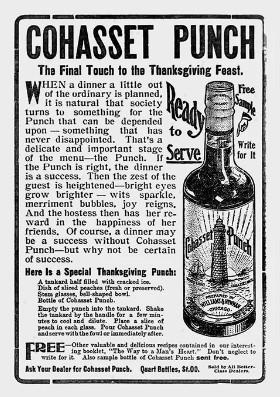
Cohasset Punch is a rum-based bottled punch that had its roots at a party in the South Shore seaside town during the 1890s.


popular with actors and yachtsmen. Crane was well familiar with the fancy cocktails served at the respected Williams & Newman and wanted to impress his friend. After all, Williams’ partner, Tom Newman, was a renowned mixologist.
Attempt to impress
While at the South Shore soiree, Williams overheard other guests discussing the superiority of New England’s rum punches. He immediately wired Newman, asking him to concoct a rum cocktail to wow Crane’s friends, writing it should “surpass anything ever before imbibed by any living soul.” Twenty-four hours later, Newman shipped a cask of his new creation by railcar and bound for Cohasset. The cocktail was a hit, and a legend was born among the elites at the estate, and Newman was declared the “king of blenders.” When Newman sent a telegram asking what to call the new drink, Williams replied
with one word: “Cohasset.”
Now famously known as Cohasset Punch, the drink combined rum, sweet vermouth, wine, several ingredients Newman kept secret and was served in a chilled champagne glass over a brandy-soaked peach slice. When Lewis Williams returned to Chicago, he and Newman began serving the punch in their saloon. Chicagoans drank so much of it that a 1902 article in Bonfort’s Wine & Spirit Circular printed: “What the mint julep is to the South, Cohasset Punch is to Chicago.”
In 1899, the business partners began selling the drink in bottles, using an illustration of Cohasset’s iconic Minot’s Ledge Light on the label. The two boats pictured on the bottles’ label are the single-masted “catboat” Chloe and the single-screw steam yacht The Senator, both owned by William H. Crane.
In 1938, a letter appeared in the Chicago Tribune describing the feeling one has after three or four glasses of Cohasset Punch. “[A] pleasant mellowness steals over you, your imagination glows, you discover humor you never possessed. Then suddenly you push your chair back to stand up, and lo, your legs are merely attached to your body for appearance’s sake!”
Although the cocktail remained a favorite for decades (until the 1980s), its popularity did wane. In 2024, the Cohasset Punch brand was resurrected by a Chicago-based cocktail historian using historical accounts of the flavor and ingredients that once described the Windy City’s signature drink. Greg Shutters, a graphic designer, was working on a menu design concept in 2019 while studying old cocktail menus from Chicago during the 1930s and 1940s. Shutters said, “I kept seeing the name Cohasset Punch, but I had no idea what it was. From what I can tell, Cohasset Punch was a huge thing in Chicago in the early 1900s and then again just post-Prohibition.”
Region’s rum heritage
There was a time when rum-making was the largest and most lucrative industry in colonial New England. Before the American Revolution, every man, woman and even child in the area drank an average of 3.6 gallons of rum every year.
Many Puritans had liquor stills in their homes to make rum for medicinal purposes and to offer to guests. By the middle of the 17th century, Massachusetts had more than 60 distilleries. By the 19th century, New England’s rum business went into sharp decline after the British cut off access to cheap molasses and most New England distilleries closed.
You’ve Worked Hard All Your Life, Now Let Your Home Work For You
• Need more money each month to cover the higher cost of living?
• Still have a mortgage payment or high credit card balances?
• Need money for house repairs or improvements?
• Feel anxious about NOT having enough money today or in the future?
Looking for a Solution? Maybe You Fit:
Are you 60 years old or older? Do you own a home?
A REVERSE MORTGAGE MAY BE THE ANSWER
I Will Guide You & Create a Plan
After a short conversation, I will be able to determine if you qualify and then share the exact action steps to successfully implement a plan.
Please call or text me at (781) 724-6221 or email me at av@powhse.com
I am passionate about educating people about reverse mortgage and will explain the pros & cons so that you will be fully informed if a reverse mortgage is the best choice for you.
Cost of Not Overcoming Your Challenges
There is no cost to learn about reverse mortgages. But the cost is immense to realize later that a reverse mortgage may have overcome your financial concerns, needs, and challenges. Over my 30 plus year career, the one word that hurts the most is – regret, regret of not taking action. Please feel comfortable contacting me.
When used properly, a reverse mortgage allows a qualified borrower the option to receive tax free cash up front, or a monthly check, or a line of credit to access cash when desired with NO minimum or required monthly mortgage payment. A reverse mortgage has no impact on Medicare or Social Security benefits. You still own your home and can prepay without penalty. Top uses include paying off a current mortgage and credit cards, augmenting retirement cash flow, medical needs, home improvements, and peace of mind knowing cash is available. I look forward to learning what success looks like for you. (Note – you are required to pay ongoing real estate taxes and property insurance and meet other loan guidelines.)
Alain Valles
Reverse Mortgage Specialist
781-724-6221
A great place to start is get your free “How to Use Your Home to Stay at Home” 36-page book. This is the official reverse mortgage consumer booklet approved by the U.S. Department of Housing & Urban Development and published by the National Council on Aging.
To receive your free copy, please call me at (781) 724-6221 or email me at av@powhse.com
I am also available to evaluate your specific situation, answer your questions, and calculate how much money is available to you.
Alain Valles was the first designated Certified Reverse Mortgage Professional in New England. He obtained a Master of Science from the M.I.T. Center for Real Estate, an MBA from the Wharton School, and graduated summa cum laude from UMass Amherst. He is the senior reverse mortgage loan officer MLO#7946 at Powerhouse Funding Corp. NMLS #1740551. He can arrange but does not make loans. Alain can be reached directly at (781) 724-6221 or by email at av@powhse.com
By shAron oLiver contriButing Writer
REGION – There are a handful of once-thriving communities now considered as ghost towns dotted throughout the Commonwealth. Contrary to popular belief, not all ghost towns are steeped in ghost stories and can leave, in some cases, no trace of previous civilization but only a silent echo.
Dogtown
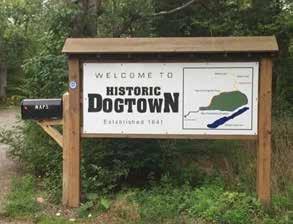
Massachusetts’s most famous abandoned settlement is Dogtown on Cape Ann, set between Gloucester and Rockport. The name originated from the packs of stray dogs living wild there after the village, originally known as the Common Settlement, was deserted almost two hundred years ago. In Thomas Dresser’s booklet “Dogtown: A Village Lost in Time,” he described an inhabitant named Tammy Younger who was referred to as “queen of the witches.”
Younger entertained “buccaneers and lawless men,” made rum and butter, hosted card games, and read fortunes. She supported herself by selling
butter and begging for fish at the harbor or by simply intimidating people into leaving her tithes of fish and corn. The original homes are crumbled ruins, but the cellars of these homes still remain and are marked by boulders inscribed with the former house numbers.
Anita Diamant also gives a historic fictional account of the former town which was populated by outcasts, scoundrels, spinsters and freed slaves in “The Last Days of Dogtown.” Beth Garland posted her opinion of the book on Facebook, “There is a book about the last days of Dogtown, based on a true story near Cape Ann and Gloucester Massachusett. The book is by Anita Diamant....a good read.” At one point, approximately 80 affluent families lived in Dogtown which is now a top destination for hiking.
Catamount
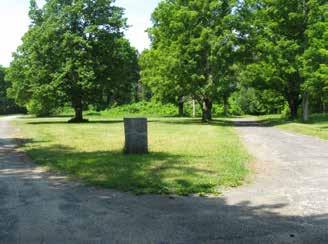
Catamount is another forgotten village that was located in the hills of Colrain. Due to harsh terrain and poor soil making farming next to impossible, the village faded away in the early 1900s. All that remains are mossy stone founda-
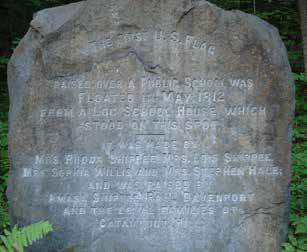
tions and a monument to the first public school in America to fly the U.S. flag in 1812. The abandoned land was purchased by the Commonwealth of Massachusetts in 1967 and is largely part of the Catamount State Forest.
Dana
In Worcester County, the former town of Dana is partially hidden beneath the Quabbin Reservoir. After the reservoir was built to help supply water to Boston, Dana flooded and the residents evacuated in the 1930s. The town may be closed to vehicles, but hikers can still visit. Other towns lost to the reservoir are Enfield, Greenwich, and Prescott.
Established near Norton in 1825, Norton Furnace (also known as Norton Mills and Copperworks Village) is one of the lesser-known settlements. It is now part of the L.A. Foster Wildlife Refuge but is void of any marked trails. The town was established by Annes A. Lincoln Jr., who constructed a furnace for manufacturing there. By 1837, the furnace produced 375 tons of iron and
Dogtown on Cape Ann, set between Gloucester and Rockport, was abandoned nearly 200 years ago.
employed 25 men. By 1850, the village had 25 houses, one store and a train depot in 1871.
The North Copperworks and Norton Furnace operated in the village until both companies relocated to Boston and Worcester. Reasons why Norton Furnace faded away are not exactly clear. The area is now called Meadowbrook.
Whitewash Village is a long-lost fishing town on Monomoy Island off Cape Cod. In 1864, a schoolmaster of Whitewash Village named Giddings Ballou wrote an article about the village for Harper’s Monthly Magazine, describing it as a small fishing village that served as a place of refuge for “exhausted and frost-bitten mariners.”
During the early 1800s, a changing coastline savaged by storms swallowed up the town’s school and Stewarts Tavern & Inn along with destroying its trade and once thriving fishing businesses. Today, the only way to reach the area is by boat. The only structure still existing is the Monomoy Lighthouse.
Jeremy Clark
The former town of Dana is partially hidden beneath the Quabbin Reservoir, which swallowed up a total of four communities.
Photo/Wikimedia Commons/John Phelan
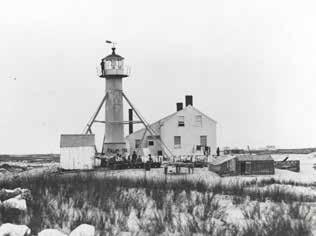
The only thing left in Whitewash Village, a long-lost fishing town on Monomoy Island off Cape Cod, is the Monomoy Lighthouse.
By shAron oLiver contriButing Writer
PROVINCETOWN – Not all hometowns have treasured characters who are or were so lovable until you could not help but love them back. Provincetown is home to many such characters but one of its most memorable residents was Frederick E. DeAvellar. Affectionately known as Butch, the one-time avid fisherman loved talking to tourists, making sure they knew he was considered to be the town character. A very considerate and generous man, he also loved repaying a kindness any way he could.
Adopted by family friends
Before his mother passed away in the late 1970s, she asked her employers
Frederick “Butch” DeAvellar was a beloved lifelong member of the Provincetown community known for his kindness and generosity.
Photo/Michael S. Koehler
and yes, a wonderful character. I still miss his presence as I still miss Freddie! It’s not the same without them.”
David Nechin added, “Butch used to always tell me, I may be slow, but my wheels are always turning. He was a good guy and always had a great attitude. Not a mean bone in his body.”
Support for charities
Besides fishing, he loved tinkering with machines and collecting cans for recycling, saving pop top tabs for police officer Glenn Enos whose niece had juvenile diabetes. Her school collected tabs for a local charity that helped less fortunate patients receive time on a kidney dialysis machine. Butch earned money from collecting cans and felt it was only right to give back.
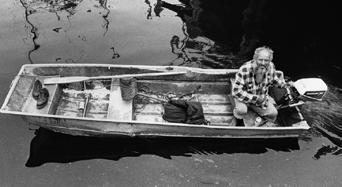
Ciro and Pat Cozzi to look after her son who could not read or write. The couple went one step further and adopted him. Butch was often seen riding around on his scooter along Route 6, Cornwell Street and downtown, wearing a blue motorcycle helmet with a seagull feather duct taped to it or towing his wagon down the middle of Commercial Street.
Butch usually ate lunch at the Soup Kitchen in Provincetown (SKIP) and often repaid their kindness by helping to set the tables, sometimes clearing the table before patrons were finished, if they did not object. Locals truly loved the gentle and innocent soul. Susan Darnell wrote on Facebook, “I used to see him with a long broom handle tied to the steering bar of the engine. This way, he could stand in the bow of the boat and steer it. It made him feel so important. He was great!”
Marcene Marcoux recalled, “I loved seeing Butch with his wagon and blue helmet walking through town. He was Provincetown and such a big part of who we are. I go by his house on Bradford and always think of Butch. Yes, he was buried with his blue helmet and red wagon. He was sweet

He hated traffic and would often stop it or at least slow it down by standing in the middle of the town’s most busy streets. Resident Peter Souza said the P-Town fixture “directed traffic better than most policemen in town.”
Before he passed away from cancer on May 30, 2002, at age 61, Butch spent his remaining days in the Cape End Manor. A companion would occasionally take the beloved resident on a trip to town, always stopping by Seamen’s Bank to donate $3 to $4 each month for the bank’s complimentary dog treats. At the time of his death, 50 pounds of pop tops were discovered in DeAvellar’s house. Frederick “Butch” DeAvellar was buried with his cherished wagon and helmet which he believed confounded police into thinking he had been driving his unlicensed moped.
No, not every hometown is graced with endearing locals whose epitaphs leave a lasting impressions. Butch proved that money nor a higher education always matter. But having a good character that encompasses friendliness, thoughtfulness, and generosity can go a long way in bringing smiles to faces, even after death.



By shAron oLiver contriButing Writer
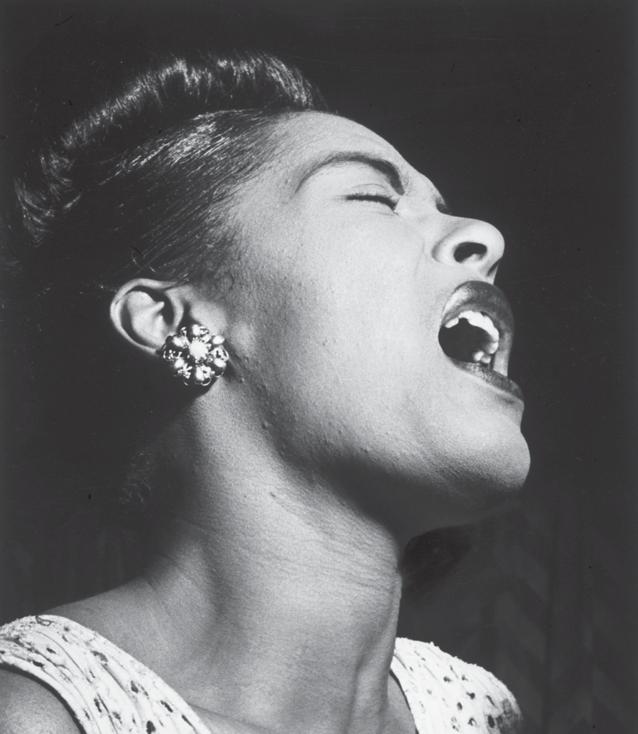
LOWELL – Despite discrepancies as to where jazz great Billie Holiday last performed, New York or at Storyville in Boston, it’s clear that her last intimate club gig was at the long-gone Flamingo Lounge in Lowell prior to her death on July 17, 1959. Lady Day performed at the tiny club, which was located at 535 Merrimack Street, for a week-long engagement from May 5 to May 11, 1959.
Physical decline
Warned by her doctor that she was too sick to perform, the 44-year-old was in obvious decline physically but needed the money. Jimmy Makris, The Flamingo’s managing director, saw her struggling before shows and offered to pay her the full contract amount if she would just go home and rest, even suggesting she could come back once she felt better. Holiday refused. According to a May 1959 article in The Lowell Sun by legendary journalist Mary Sampas, Holiday insisted that she “absolutely did not want to cut short” her engagement and would do “whatever it took to carry on.”
Sampas noted that Holiday was “walking like a dreamer over a carpet of eggshells” when she took the stage, obviously depleted from years of selfabuse. In her review, she wrote: “Before the microphone, as the celebrated voice lifts and pours, she is alive again, as though all the long, long road leads always and only to this moment in the lights.” Sampas’ husband, Charles, also worked at The Lowell Sun as the executive news editor and was a brother-in-law of Lowell native,
novelist and Beat Generation pioneer Jack Kerouac.
Mary Sampas covered Holiday’s Flamingo shows and published a daily column in The Lowell Sun under the pseudonym Pertinax. The general public was still not used to women holding prominent roles in the newspaper business, so she relied upon pseudonyms throughout her career. During her last interview with Holiday, the singer told Sampas her next
ASSISTED LIVING FACILITIES
Many regional performances Holiday had other musical connections to the region. Besides engagements in Boston at The Hi-Hat and Wally’s Paradise she also performed at The Music Inn in Lenox, The Celebrity Club in Providence, The Commodore Ballroom in Lowell, the North Shore Jazz Festival in Lynn and the Newport Jazz Festival. Other regional
venues Holiday sang at included concert halls and nightclubs in cities such as Springfield and Worcester.
Reportedly, Holiday gave a charity performance at the 1,000-seat Phoenix Theatre in New York City’s Greenwich Village on May 25, 1959. The “Strange Fruit” (song produced by comedic actor Billy Crystal’s uncle Milt Gabler) singer’s next engagement was scheduled for Montreal’s swanky Chez Parée supper club in early June for a oneweek run, with an option to extend to two weeks if ticket sales were strong. This would have been a huge financial lifeline for the troubled songstress.
Final illness
Sadly, it would be a trip she would never make. She was due to leave for Canada on May 31 but collapsed in her New York City apartment. Holiday was taken to Metropolitan Hospital Center, where she was placed under police guard for drug possession while on her deathbed.
Billie Holiday was given her last rites on July 15, 1959, and died two days later of pulmonary edema and heart failure caused by cirrhosis. According to hospital records at the time of her death, the singer’s life savings amounted to just $0.70 in the bank and around $750 in cash (about $8,350 in 2026). Holiday was posthumously nominated for 23 Grammy awards, winning four and inducted in the Rock and Roll Hall of Fame in 2000.
One of her famous sayings was, “If I’m going to sing like someone else, then I don’t need to sing at all.” She sang like no one else and no one else sang like Billie Holiday.
Bigelow Village – Rutland
Congregational Retirement –Melrose
Brookhaven Assisted Care – West Brookfield
Heywood Wakefield Commons – Gardner
SUBSIDIZED HOUSING
Colony Retirement – Worcester
Green Hill Towers – Worcester
Sherwood Village – Natick
By shAron oLiver contriButing Writer
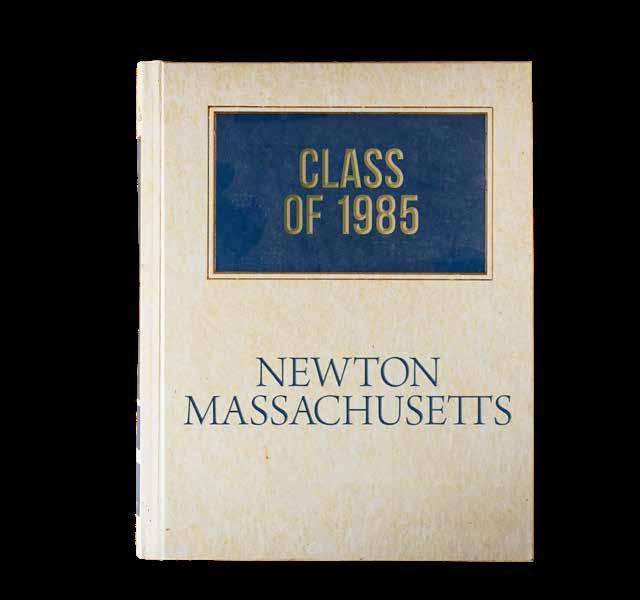
NEWTON – There is no question that an enormous number of notable people were born, raised and attended school in the Commonwealth. If there is one high school (among many, of course) that has had an extraordinary amount of talent roam through its halls it’s Newton North High School and Newton South as well. Some notable Newton North High School graduates include actor Robert Morse (1949), NASCAR driver and 1970 Daytona 500 winner Pete Hamilton (1960), and New Edition member Ronnie Devoe (1986).
Remarkably, the Gen Xers in Newton North’s Class of 1985 produced a couple of nationally known faces along with an MIT engineer and founder of a research organization, just to name a few.
Matt Leblanc
Before he became a household name as the good-natured Joey Tribbiani on the 62 Primetime Emmy Awards nominated sitcom “Friends,” Matt Leblanc got his start appearing in a 1987 Heinz Tomato Ketchup commercial. The following year, he starred in the television drama “TV 101,” which only lasted for one season. In 1991, Leblanc had a recurring role as Vinnie Verducci in the sitcom “Married…
with Children.” His biggest break came in 1994 when he joined an ensemble cast that included Jennifer Anniston, Courteney Cox, Lisa Kudrow, David Schwimmer and Matthew Perry (also a Massachusetts native) for the groundbreaking sitcom “Friends.”
Louis C. K.
Fellow Newton North ’85 graduate Louis C. K. worked as an auto mechanic and at a public access TV cable station in Boston after receiving his high school diploma. Nevertheless, watching bad television shows inspired him to work in the television industry. He began writing for comedians Conan O’Brien, David Letterman, Dana Carvey, Chris Rock and “Saturday Night Live” in the 1990s. C.K. would go on to do stand-up himself, releasing nine comedy albums and starring in his own specials such as “Shameless” (2007), “Chewed Up” (2008), “Hilarious” (2010), and “Oh My God” (2013). The actor and filmmaker also starred in the FX’s series “Louie” along with other television series and films performing voiceovers, winning six Emmy Awards, three Grammy Awards, three Critics’ Choice Awards,
Guild Award and nominations for two Golden Globe Awards along the way.
James Heywood
James Heywood may not be a household name, but his achievements are nothing to yawn about. The MIT engineer founded the ALS Therapy Development Institute (ALS TDI) with his family after his brother Stephen was diagnosed with amyotrophic lateral sclerosis (ALS) in December 1998 at age 29. Stephen was a builder and self-taught architect who specialized in the renovation of old houses. James, brother Ben and longtime friend Jeff Cole also formed PatientsLikeMe, a disease-specific community that allows dialogue between patients on how to improve care and accelerate research. Unfortunately, Stephen passed
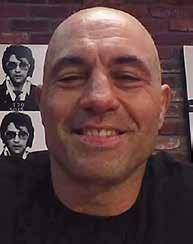
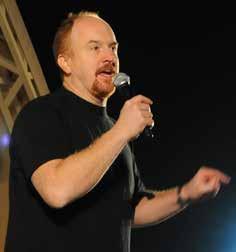
Podcaster, UFC color commentator, comedian, actor, and former television host Joe Rogan graduated from Newton South High School in 1985. Photo/Wikimedia Commons/ Steve Crowder
away in 2006, but James and Ben Heywood continue their fight to advance ALS therapies.
Joe Rogan
Joe Rogan, host of the “Joe Rogan Experience” podcast, also graduated in 1985 but received his cap and gown at Newton South High School. In 2017 and 2018, the podcast was Apple’s second-most-downloaded podcast and consistently ranks among the top podcasts globally, pulling in millions of listeners. Rogan also spent 30 years as a stand-up comedian and turned his gift of gab into an empire with political force. He has appeared on several television shows like “Chappelle’s Show,” “MADtv,” “NewsRadio,” and “Last Comic Standing.”
Receiving honorary mention are “The Office” actor John Kransinski and actor and filmmaker Eli Roth — “Cabin Fever” (2002) and “Hostel” (2005) — who also graduated from Newton South High School.
Both Newton high schools’ talent pool consists of graduates who also went on to become Nobel Prize winners, professional athletes, musicians, and a Massachusetts congressman.

Yet a time is coming and has now come when the true worshipers will worship the Father in the Spirit and in truth, for they are the kind of worshipers the Father seeks. God is spirit, and his worshipers must worship in the Spirit and in truth.

Massachusetts
By nAnce eBert contriButing Writer
REGION
and many aging residents struggle to make ends meet while still working, let alone think about retirement.
If you’re retiring in Massachusetts, the good news is that the state
doesn’t tax Social Security payments at all. In addition, if you have a government pension, those payments may also be state tax-exempt.
A variety of approaches
Sherri Gorelick of Southfield has worked at her current firm for fifteen years. She works in insurance employee benefit sales. Her compa-

ny has an optional forced savings plan, which she took advantage of. It’s pre-tax but this is in addition to having a 401(k) plan.
“Years ago, my financial advisor suggested that whatever I make in my 401(k), I roll over to him and he, being a better investor that I am, invests my money wisely,” said Gorelick. “In addition, he suggested that I put some of my savings in Roth dollars which I have been doing for about ten years now, so I do feel confident with the portfolio I have created.”
The advantage of a Roth 401(k) or Roth IRA is that it is not subject to required minimum distributions (RMDs).
American retirees receive a monthly income in a variety of ways that include Social Security, pension, retirement accounts, workplace retirement savings plans, investments, Roth IRAs, real estate (home equity), family assistance and more.
Best prepared in some ways Massachusetts residents are among the best prepared in the United States with the second-highest median retirement savings nationwide. However, there are many inequality issues that exist. For people who work at non-profits, the Massachusetts Core Plan (MA CORE) assists workers without employer sponsored plans.
In May 2025, Luc Schuster, executive director of Boston Indicators, the research center at the Boston Foundation, wrote, “The reward of a comfortable, secure retirement is one of the unwritten expectations of the American worker but for too many Massachusetts seniors, the combination of Social Security, retirement savings and other programs doesn’t quite cover what is needed. As a result, the low-income seniors we interviewed are forced to use an array of strategies to make ends meet.”
The level of retirement savings, while high in Massachusetts,
varies a good amount from town to town
and even within the Boston metro area.
Establish your priorities with an active approach Gary Schiff, an experienced wealth management professional with extensive client service, financial planning, portfolio management and business development experience shared a number of observations in helping to prepare his clients for retirement.
“One common approach for a broad section of people is to prioritize their income into a number of buckets to include current expense needs and future expense needs so that you end up with retirement security,” said Schiff. “The optimal idea is to start young and don’t wait until the last minute to start saving.”
He also encourages his clients to make a list of priorities. With each paycheck there are fixed costs (food, fuel, rent, etc.), more intermediate costs (like education and vehicles, purchase of a home) as well as contributions to a company 401(k). Some companies will match some percentage of your 401(k) contribution, which is essentially free money and should always be taken advantage of. In addition, putting some money into a discretionary IRA is also a good idea.
Some in the Baby Boomer generation are waiting for an assumed inheritance. “This is a poor strategy,” said Schiff. “Sometimes it works and often times it doesn’t. There is a grab bag of solutions that a person who takes ownership of their future has with an active approach.”
The power of compounding is magic. For example, an investment earning five percent a year will double in value in about 14 years. An investment earning 10 percent a year will double in value in about seven years. So, the key is to start young and over time, even saving a small amount each year, will grow to a much larger sum that you can look forward to using in your retirement years.