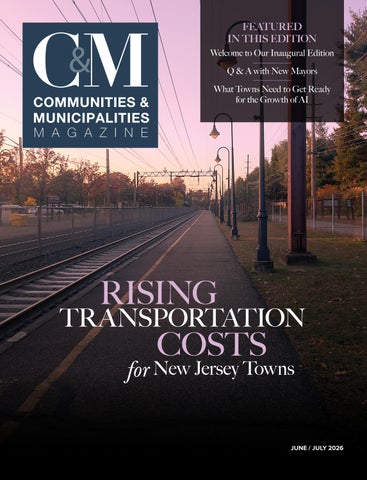
Welcome to Our Inaugural Edition Q & A with New Mayors What Towns Need to Get Ready for the Growth of AI
COMMUNITIES & MUNICIPALITIES
MAGAZINE
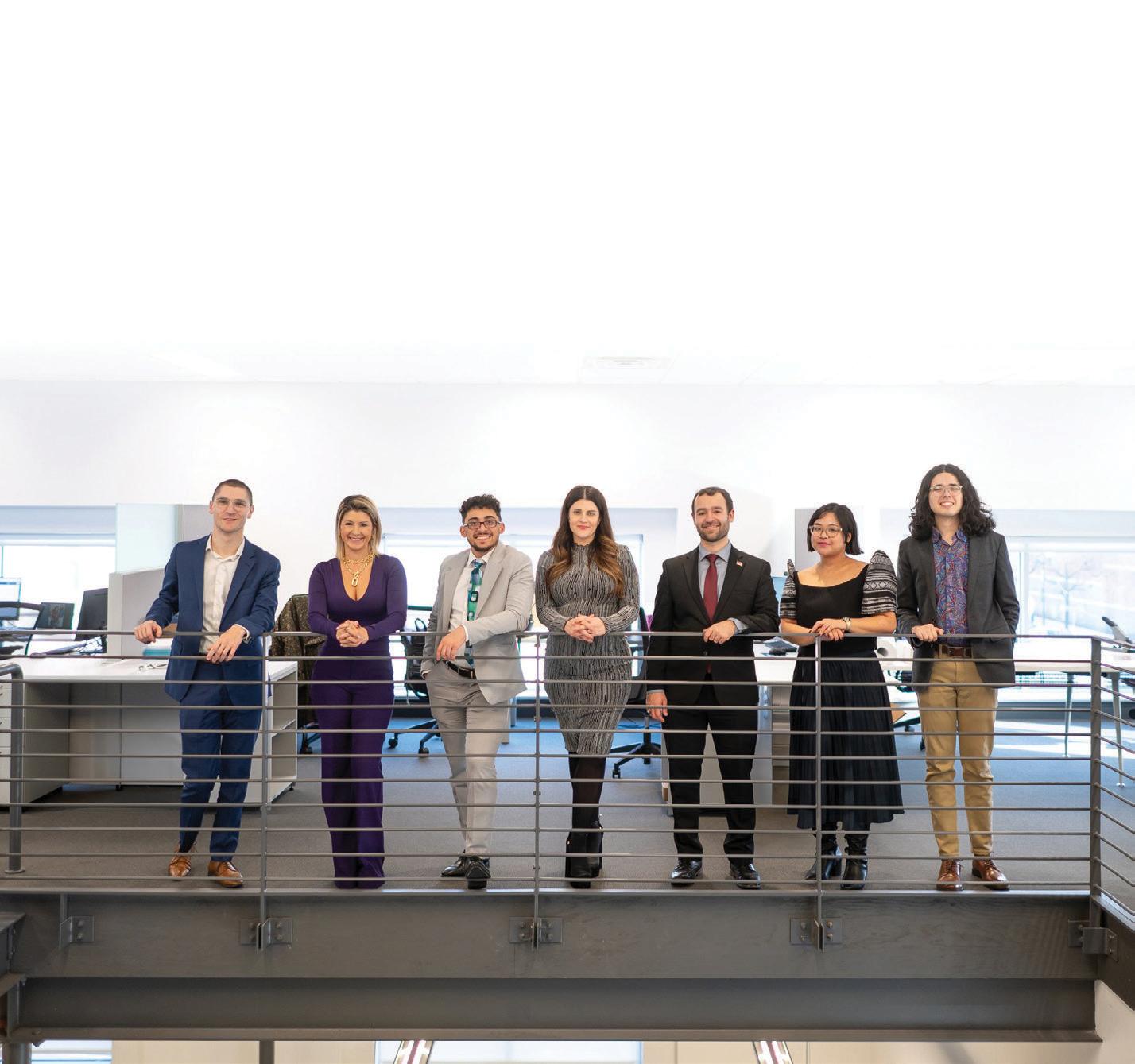
Thank you for reading the inaugural edition of Communities & Municipalities Magazine!
For the past 16 years, our company has operated successful magazines in Monmouth County, New Jersey mailing to more than 40,000 homes each month. Now we are proud to engage in a new product — a magazine, directly mailed to the homes of over 5,600 local elected officials, town business administrators, parking authority officials, sewer authority officials and other local decision-makers.
Our magazine will be like nothing else in New Jersey right now — with a direct focus on municipal news, information and resources as well as features on various officials at the local level who are making a difference each and every day.
We will be publishing six times a year as well as with an e-mail newsletter. As we begin this project, we welcome your ideas, feedback and story ideas. You can email us at anytime at admin@communitymagazinenj.com
We hope you enjoy the first edition of Communities & Municipalities Magazine.
SALES DIRECTOR AND GENERAL MANAGER
ROSEANNE SOFIA
ASSOCIATE EDITOR
EMMA SYLVIA
OFFICE MANAGER
PAM ROGERS
ACCOUNTS PAYABLE
SHIRLEY ST. CLAIR
REPORTERS
BILL CLARK
WILLIAM GARDELL
MICHELLE GLADDEN
REBECCA KING
DESIGN DIRECTOR
DEBBIE MCKENNA
PHOTOGRAPHERS
ANDREI JACKAMETS
JOE LYPOWY
JOHN VITOLLO ANDREA PHOX
PUBLISHER AND OPERATOR DIRECT COMMUNICATIONS & CONSULTING, LLC
EMAIL US info@communitymagazinenj.com FOR OUR MEDIA KIT & RATES EMAIL advertising@communitymagazinenj.com
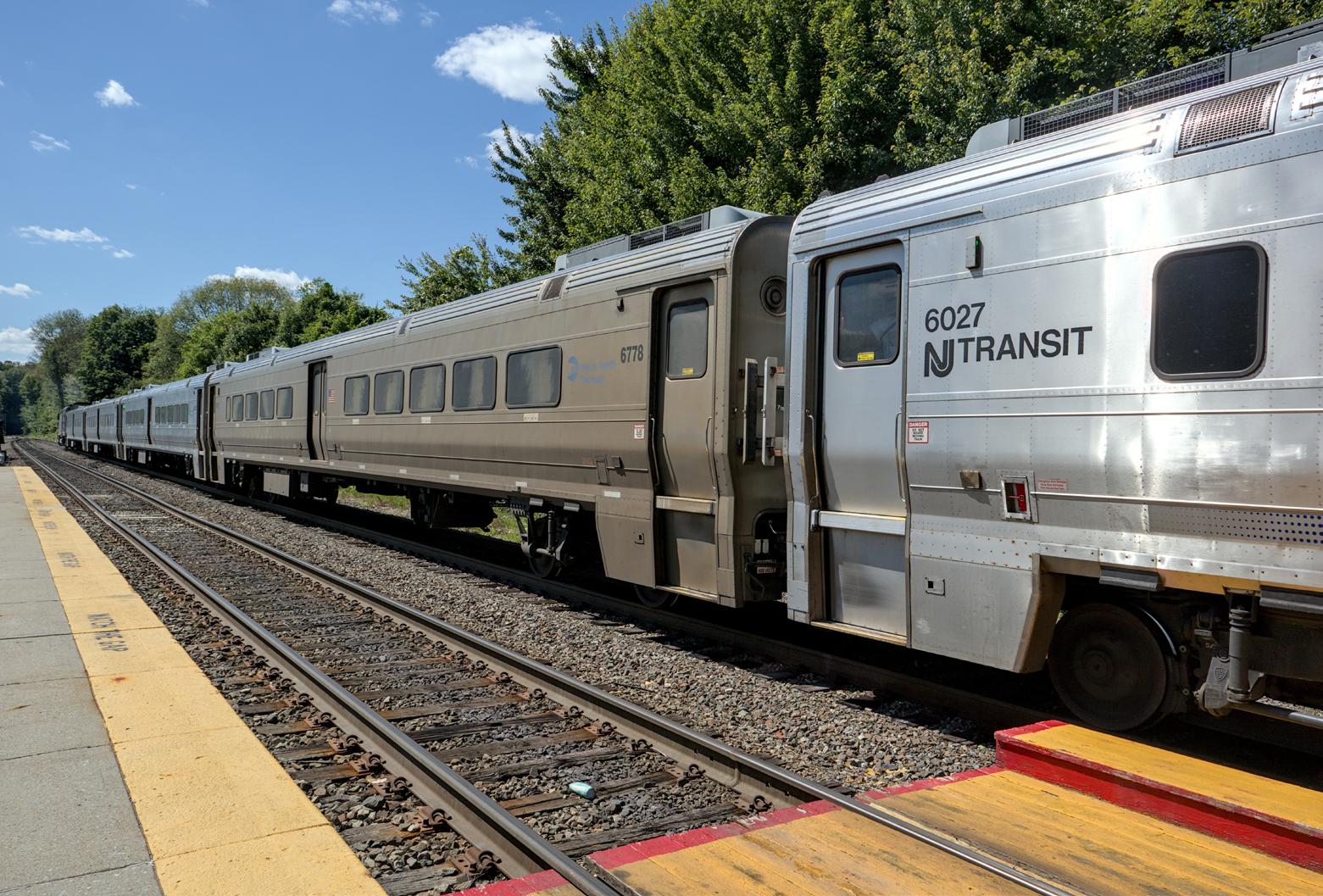
How are New Jersey towns dealing with rising transportation costs?
BY WILLIAM CLARK
After one of the harshest winters
New Jersey has experienced in some time, crews have been out responding to the impacts the freeze, salt and snow have done to state and local roads in addition to general maintenance and upkeep. State and local entities have had to be efficient with their funding in order to address standing issues and prepare the transportation infrastructure for the future.
New Jersey, with its density in population and various community needs, creates a unique ecosystem of roads, rail and bus to move people on a daily basis.
Transportation expert and advocate Zoe Baldwin has spent decades working with public policy and sees a positive forecast for the state’s trans-
portation needs with the new governor taking office.
“With Governor Mikie Sherrill, she’s very new, but we’re really excited,” Baldwin said. “She seems to be a pretty infrastructure focused governor. Her track record in Congress also backs this up.”
Baldwin concedes that transportation has been underfunded for decades, spanning the administrations of Democratic and Republican governors but has seen movement on positive changes in recent years. Unfortunately, Baldwin said, the positive impacts that have taken place are not necessarily apparent to the average driver or rider. Sherrill’s recent executive order on NJTransit will allow for “customer fac-
Zoe Baldwin Transportation Expert and Advocate
ing solutions,” Baldwin said.
Cleanliness, accessibility, safety and digital experiences are all laid out in Sherrill’s order.
Baldwin also said that the recent budget better funds transit’s efforts, though Baldwin believes more is needed. She understands that there is the belief around transit systems that it should be able to fund its own operations, which she contests.
“That is literally not how any transit agency in the world works,” she said, with the exception of Hong Kong which operates under a different system.
New Jersey, Baldwin said, is the densest transit system in the country. Major highways, bus, and rail operate under this belief that all paths lead to major hubs like Newark, New York, or Philadelphia.
“Our riders are not all taking trains to New York and that is a common and incorrect assumption,” she said.
Baldwin said that when lines were transitioned to transit use, they were already laid out with New York in mind. But that doesn’t mean the average person has either Penn Station as their final destination. New Jersey has one of the lowest rates of car ownership in the country, Baldwin revealed. Even South Jersey municipalities show high rates of households without cars, she said.
“You have a lot of transit dependent people,” Baldwin said. “We have an incredibly diverse user base for our system and that really does need to be understood.”
The money received to fund transit helps those that are more car dependent, Baldwin said. Stakeholders in Ocean County have asked why money paid by toll road users is going towards bus and rail.
“Because those people wouldn’t be able to get to work if all those bus people were not in a bus,” she said.
The balance that transportation infrastructure must hit allows for a smoother operation of the entire system, Baldwin argues. Bolstering transit opportunities lessens the strain on the toll roads and highways. Microtransit, Baldwin said, brings that part of the
equation closer.
Baldwin said that Trenton with its GOTrenton! system or Asbury Park with its bike and scooter share program help with these efforts. These services expand the notion of “First Mile, Last Mile,” the idea that more people would take mass transit if the first mile to a train or bus stop and the mile from where a rider gets off to their final destination was easier to navigate.
Government Strategist Kenneth DeRoberts juxtaposes the American rail system to the European offerings, where travelers in Europe can easily traverse country to country on various railways whereas in the states just moving from
state to state on train is difficult.
Although the Garden State Parkway and New Jersey Turnpike are well kept and offer access to most of the state, DeRoberts asks how many of those cars can be taken off the road if the single occupancy vehicles took mass transit instead. But for those that need the roads, DeRoberts said that the Transportation Trust Fund does a suitable job at distributing needed funds to local governments for improvements. As taxes on gasoline continue to increase, drivers are seeing the tangible impact those funds have in roadway improvements.
“It’s been a great program through the Department of Transportation,” he said.
It’s not comprehensive enough to take the burden completely off the towns, he said. As more cars travel, harsher treatments are applied during winters, and weather events take their toll on roadways, DeRoberts advises towns to put away funds in the event they need to make up the gap where state funding won’t reach. DeRoberts said that electric cars benefit from this program even though they do not pay into the trust through the gas tax. He said this inequity is harmful not just from the usage of the road but the increased weight that come with electric vehicles.
“All those combined, there’s a lot of pressure to keep the roads up to date,” he said.
Freehold Township has been one of those that have benefited from state funds for roadways.
“In the past few years we have been getting a good amount of local aid from the DOT,” Township Administrator Pete Valesi said.
Valesi said the township has been working to make the roads safer and better equipped for pedestrians and bicyclists in addition to cars. He pointed to the e-bikes and other motorized vehicles like scooters that have been taking to the streets in greater numbers as the impetus for creating bike lanes and safety features along roadways. Signs and lines help, but sometimes sim-
Kenneth DeRoberts Government Strategist
Pete Valesi Township Administrator
ple reconfigurations lead to beneficial changes.
“You take a wide road and make it more narrow, it reduces the speed limit for people,” he said.
Valesi said that the township works with its county and state partners on the major thoroughfares that run through the municipality. Routes 9 and 33 make Freehold a prime stop for commuters in all directions.
“Hundreds of people rely on those NJ Transit stops each day to get to and from the city or North Jersey so its a big corridor,” he said. “It makes the town more easily traversible.”
Cherry Hill Councilwoman Sangeeta Doshi said that her township shares some of those characteristics with Freehold Township. Just outside of Philadelphia and Camden, Cherry Hill provides a jumping off point for those commuters.
Doshi said Cherry Hill has been cognizant of keeping green spaces within the township as it expands its infrastructure footprint, something the former member of the Transit Board is proud of. Doshi said much of her work was on sustainability and creating more environmentally friendly transit options to keep those in densely populated areas from the effects of pollution. Even smaller towns have seen the benefit of the increase in funding.
Mayor Jennifer Naughton of Spring
Lake said that her Department of Public Works does a wonderful job during the winter months addressing drivability but those efforts leave issues to respond to come spring. The borough takes a twofold approach by considering if any portions under the roadway need to be improved before beginning the paving process on top.
Naugton said Spring Lake continues to put funding aside each year so that they can match what comes from the state. The beachside municipality relies on the infrastructure during the
summer for the influx of visitors it receives but Naughton said the real wear and tear comes from the salt and treatments after snow storms to keep the roads passable.
“DPW is judicious with salt but it kills the roads and machinery and ends up in stormwater to the ocean or lakes,” she said.
Each part of the transportation infrastructure environment depends on the other. Baldwin’s advocacy encourages people to see the state and its needs in that way. Commute times, environmental concerns, economic mobility, or enjoyment all rely on a system that funds each portion. Whatever transportation choice or requirement a person makes should be easily accessible so that one part of the system isn’t overloaded.
“If fewer people are taking transit because we make it too expensive and unreliable that people get back in their cars that affects the driving for everybody,” Baldwin said. “People want to pit roads versus transit. No, people need to get around differently. That’s not an opinion, that’s not a preference. We need to make sure that things and people that have to be on the roads can do that efficiently, and that transit is a huge reason that any of those function.”
Sangeeta Doshi Cherry Hill Councilwoman
Jennifer Naughton Mayor of Spring Lake
Our fleet department is here to help with an exceptional selection of municipal and commercial vehicles We offer a host of specialized work vehicles that are fit for whatever job you have in store. Our Fleet Vehicle Program is here to work with you on an individual basis and deliver the results you ’ re looking for
Tranzon
municipalities and government agencies
• Zero Cost to You: Buyers pay the commission, so you keep 100% of the proceeds.
• Maximize Value: Our system attracts competitive bidding for top-dollar sales.
• Transparent & Compliant: Open process that fully meets New Jersey state regulations.
• Full-Service Marketing: We handle signage, digital ads, PR, and broker outreach.
• Sell Smarter: Online, Live, or RFP Marketed Auctions.
Stop sitting on surplus assets - start generating revenue today.
Tranzon turns your municipal real estate into immediate capital with zero cost to the taxpayer.
Class A Curbside Recycling Services
Class B Recycling | A-901 Exempt
Clean Fill & RCA Available for Purchase
Recycled Stone: 3/4", 1 ½", 2 ½” Available for Purchase
Accepting: Concrete, Brick, Block, Asphalt, Petroleum-Impacted Soil, & More
Transportation & Containers Available
Municipal Leaders on the Move
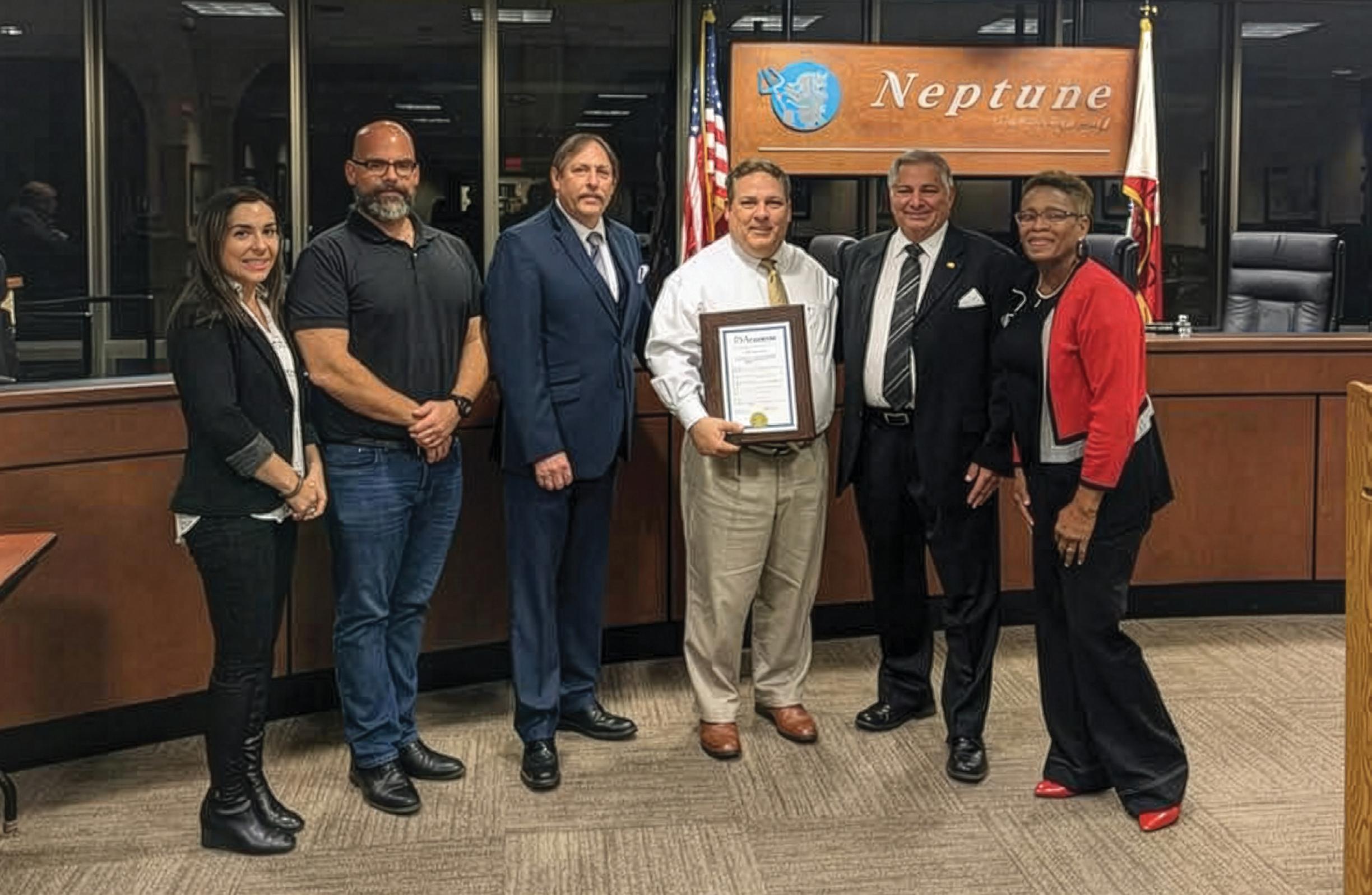
NEPTUNE TOWNSHIP
James Manning Town Administrator
- James Manning was hired as Town Administrator on April 13th. Stephanie Oppegaard was appointed as the Assistant Town Administrator. Nicole Schnurr was appointed CFO. Manning is a lifelong Neptune Township resident and a longtime New Jersey Department of Labor Employee. He previously served as Mayor and Town Committeeperson in Neptune. He also serves as an elected member of the town fire district and as an appointed member of the town sewer authority. Oppegaard is a longtime Neptune Twp. employee who most recently served
as Acting Business Administrator and as the longtime Human Resources Director for the town. Schnurr, a native of Freehold Borough, became CFO after serving in an acting provision and in other positions in the town.
PATERSON - Former Elmwood Park Councilman Daniel Golabek has become Mayor Andre Sayegh’s 3rd Business Administrator in the past 12 months. Golabek is a former mayor and councilman in Elmwood Park and has was Garfield’s Parks and Recreation director and most recently as Assistant Business Administrator and Chief Human Resource Officer for the Garfield Board of Education. He was also a Community Liaison for Senator Nellie Pou.
PROSPECT PARK - Heidy Amaral, the new town administrator, is a longtime municipal employee, has served in the Parks & Recreation Department, and served as a code enforcer, housing inspector and Planning Board secretary.
Are you a municipal employee who has recently been promoted and want us to tell your story? E-mail us at admin@communitymagazinenj.com with your job news for consideration.
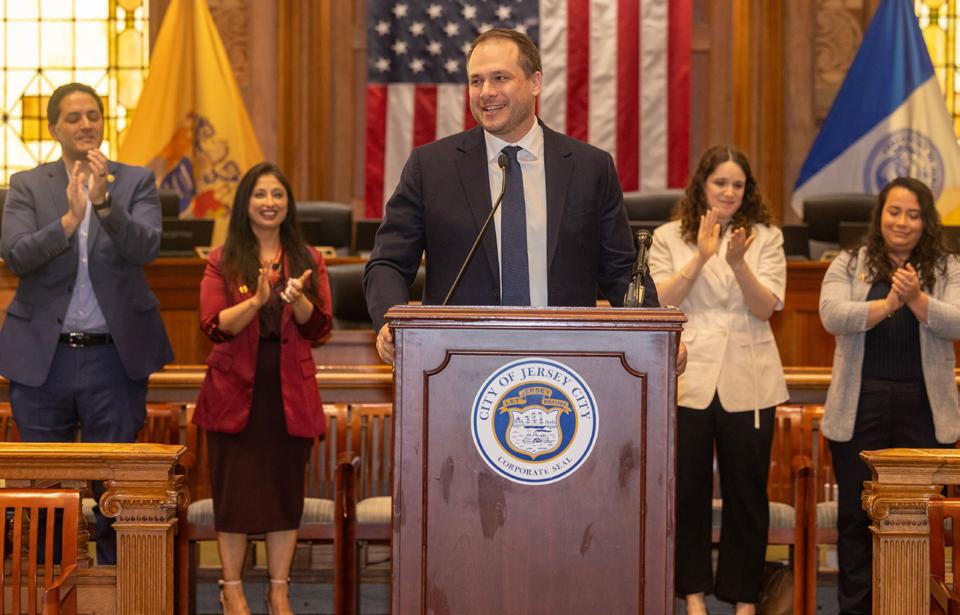
JERSEY CITY MAYOR JAMES SOLOMON
Mayor Solomon was sworn in as Mayor in January of 2026 of New Jersey’s 2nd largest municipality. Mayor Solomon was elected to the Jersey City Council in 2017 and re-elected in 2021. He worked as an adjunct college professor prior to his election as Mayor.
What are your top three steps to put the city on a firmer financial footing?
When I took office, I inherited a $254 million structural deficit, which is roughly 28 percent of our operating budget. Step one was saying it out loud. Residents deserve the truth, and you can’t fix a problem you’re not willing to name.
Step two is closing the gap between what the city is owed and what it actually collects. We launched a comprehensive audit of more than 100 long-term tax abatements, with results due July 1. Too many of these deals were cut with weak compliance monitoring, inconsistent reporting, and no real accountability for the public benefits that were promised. We’ve also launched an outside audit of health insurance claims, because we were paying over a million dollars a year in late-payment penalties alone. That’s not a budget problem, that’s a management problem, and we’re fixing it.
Step three is rebuilding recurring revenue through honest enforcement. Housing violations, zoning non-compliance, rent control audits — these aren’t just about fairness to tenants, they’re about making sure the city’s legal infrastructure actually generates the revenue it was designed to generate. The goal isn’t to punish; the goal is to make the rules mean something again.
How do you plan to improve city infrastructure, such as transit options, roads, and traffic management?
We started by being honest about where we were. The January blizzard was a stress test we failed, and
rather than spin it, we published a full public after-action report that uncovered outdated snow maps, a failed salt vendor, no bike-lane clearance plan, paper-based dispatch from the 1990s. That kind of transparency isn’t comfortable, but it’s the only way to actually fix things.
On roads and street safety: we’ve appointed Andy Kaplan — a Stevens Institute engineer and national Vision Zero leader — as Infrastructure Director. We’ve relaunched the Vision Zero Task Force with mandatory agency participation. We’ve deployed in-house pothole crews for the first time in years. And we’re moving a capital safety project on a major corridor to construction this year. Our goal is a short, published list of high-injury intersections with committed infrastructure improvements through design changes that make streets safer by default.
What downward trend in our city from the last five years is most worrisome to you?
The slow erosion of trust in institutions, in government, in the idea that the rules apply equally to everyone. I saw it as a councilman. Residents who stopped filing complaints because nothing happened. Small businesses that gave up navigating permitting because the process seemed designed to favor people with the right connections. Families who stopped accessing city services because they were afraid of who might be waiting on the other side of that interaction.
That erosion doesn’t show up cleanly in any single dataset. But it shows up in everything from election
turnout to 311 response rates, to whether a family calls 911 or handles things themselves. When residents stop believing government will work for them, they stop engaging with it. And when they stop engaging, the gap between what city government could be and what it actually is gets wider.
That’s ultimately why I ran, and it’s why I’m governing the way I am: publishing the deficit numbers, releasing the after-action report, and standing up when federal agents kidnap residents off our streets. Trust isn’t rebuilt with press releases. It’s rebuilt by showing up, telling the truth, and doing what you said you’d do.
What legacy do you hope to leave behind at the end of your term?
I want to leave behind a city where the basic promise of local government has been kept: that if you live here and work hard, the city will work for you not just for the people with the best lawyers or the best political connections.
Specifically, I hope we will have proven that you can enforce housing law, audit developer giveaways, modernize policing, and solve the city’s fiscal crisis without hurting working families. A lot of people in politics will tell you it can’t be done. I think Jersey City can prove them wrong, and I think the first 100 days have at least shown we’re serious about trying.
But if I’m being honest about legacy: I want the next mayor to inherit a government with functioning systems — accurate financial records, enforceable housing databases, a police department that deploys by data and earns community trust, a 911 system that actually works. The Fulop era lasted 13 years in part because structural dysfunction was politically useful. I want to make it structurally difficult for a future administration to go back to the way things were. That’s what durable reform looks like.
What are the top three complaints your 311 service receives, and how will you address them?
Trash and cleanliness, road conditions, and housing quality are consistently the loudest signals we get from residents, and they’re not surprising. They’re also the most honest feedback a city government can receive, because they’re about the things people see and live with every day.
On trash: we’re conducting a full audit of our waste collection contract, exploring whether a city-run or hybrid public option is feasible, and we’ve already launched JC Spring Clean Up with dedicated street-cleaning and pothole crews. We’ve resolved over 10,000 open SeeClickFix work orders since taking office, with dramatically faster response times. This is a baseline-competence issue, and we’re treating it that way.
On roads: the Infrastructure Director appointment, the Vision Zero relaunch, and the in-house engineering capacity we’re building are all designed to close the gap between when a problem is reported and when it’s fixed. We’re also working to give the Infrastructure Department genuine frontline capacity with the ability to both plan projects and execute them quickly.
On housing quality: we’ve stood up a coordinated cross-agency enforcement working group — Law, Prosecutor, Code Compliance, Construction Official — and directed prosecutors to pursue maximum penalties under the Minimum Penalty Ordinance. When a landlord gets fined per tenant, per unit, per day for unresolved violations, the calculus around non-compliance changes pretty quickly.
What specific changes do you think need to be made in how the city spends its dollars? What is your plan to support small local businesses and attract new jobs to the city?
The most important spending change is moving from one-shot revenues to structural balance. For years, this city papered over a structural deficit with property sales, reserve drawdowns, and federal pandemic dollars. That’s over.
On small businesses specifically: the biggest thing government can do is get out of the way of the things that are working and fix the things that are broken. Right now, too many small businesses in Jersey City are losing ground not because of bad ideas or bad products, but because of permitting barriers, certificate of occupancy delays, and bureaucratic processes that seem designed for large developers with full-time compliance staff. We’re reforming that. We’re launching a new small business website, a workshop series, and targeted outreach to the 698 businesses enrolled in our UEZ registry.
On commercial vacancies: we’re developing a policy strategy to address landlords who are holding storefronts empty for speculative reasons while neighborhoods hollow out. Empty storefronts aren’t a market outcome; in many cases they’re a tax strategy. We’re not going to subsidize that.
On jobs: the 1,000 summer youth pathways program is about pipeline, not just summer employment. We want young people in Jersey City — particularly from Black and Brown neighborhoods — to see a path into public safety careers, skilled trades, and the professions. The $900,000 EZ grant we secured to fund 250 jobs in the UEZ zone is a start. But the bigger vision is connecting our school system, our higher education partners, and our workforce development infrastructure into something that actually functions as a ladder.
What is your philosophy on handling contentious development projects?
Transparency early, accountability throughout, and a clear-eyed answer to the question: who benefits?
The Pompidou project is the cautionary tale I carry into every development conversation. A major cultural partnership advanced without a transparent public process, without professional arts-sector vetting, without a credible answer to a $29 million annual operating gap. By the time residents understood what had been committed in their name, tens of millions in state allocations had moved on and the city’s reputation had taken damage.
My philosophy is to set the terms before the project starts, not negotiate them after the developer has leverage. That means affordability commitments defined upfront. Community benefit requirements with real enforcement mechanisms. Tax abatement agreements that the public can actually read and monitor. And a Jersey City Redevelopment Agency that posts its agendas on time, makes its applications public, and applies clear standards for evaluating community and racial equity impacts.
The Bayfront project is the test case I’m most focused on right now. It’s a city-owned waterfront site with generational-scale potential. Done right, it can set the template for how we approach major redevelopment for the rest of this term and beyond. I intend to get it right.
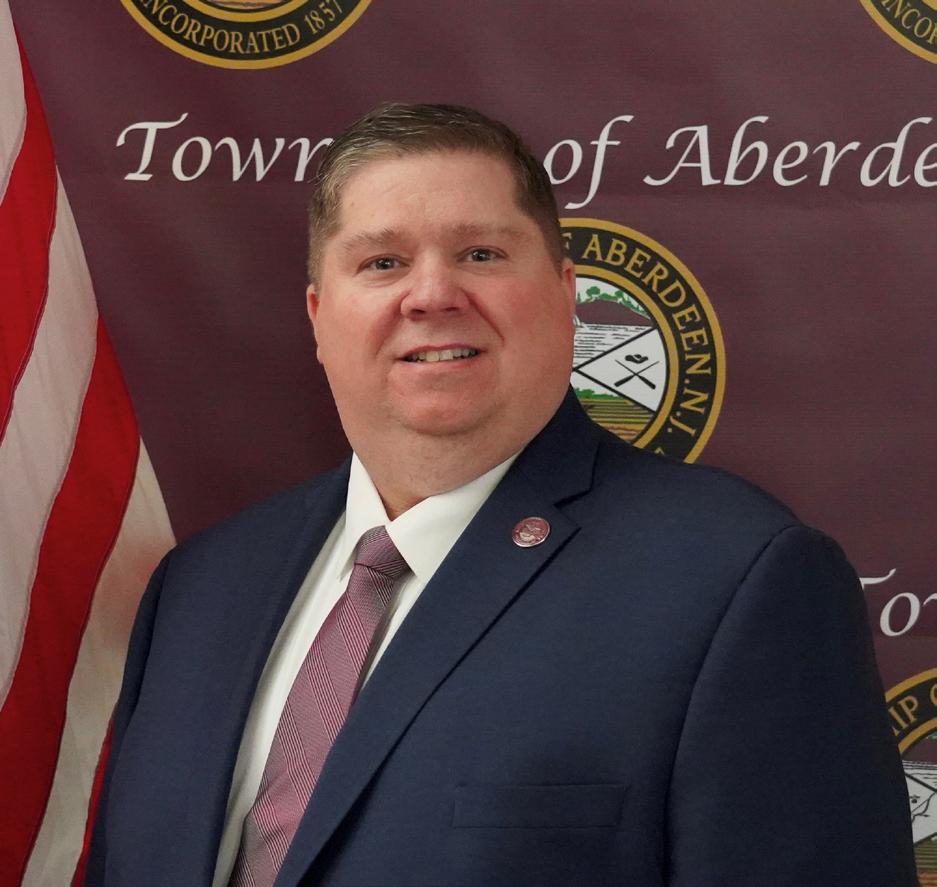
ABERDEEN MAYOR GREG CANNON
Greg Cannon became a new Mayor in January of 2026. Greg was first elected to the Aberdeen Borough Council in 2011 at the age of 27. He was re-elected in 2015, 2019 and 2023. He was elected Mayor in 2025, succeeding longtime Mayor Fred Tagliarini who did not seek re-election. Mayor Cannon is a second generation elected official - his father and brother have both served as councilmembers in nearby Matawan. Mayor Cannon is a practicing municipal attorney.
What are your top three steps to put the city on a firmer financial footing?
Responsible budgeting starts with discipline and long-term planning. Our focus is on controlling costs where we can, especially rising expenses like health insurance that are often outside municipal control, while continuing to deliver the core services residents rely on. We also remain committed to long-term infrastructure investments that help prevent more costly repairs in the future, and we continue pursuing grants and shared services whenever possible to help reduce the burden on local taxpayers.
How do you plan to improve city infrastructure, such as transit options, roads, and traffic management?
We have made major investments in roads, drainage, and public infrastructure over the past decade, and that work is continuing. Our roads program has focused on improving some of the Township’s oldest streets through a mix of full reconstruction and mill-and-pave projects, based on engineering reviews, maintenance history, and budget planning. In 2025 alone, Aberdeen moved forward with a $9 million road improvement initiative that included major work on streets like Dar-
win Way, Deerfield Lane, Inner Way, Irongate Lane, and Shore Concourse. Our approach is to stay proactive, address issues before they become larger problems, and continue working closely with county and state partners on major roadways and transit corridors. The goal is to make it safer and easier for residents to get around the community.
What downward trend in our city from the last five years is most worrisome to you?
One of the biggest challenges municipalities are facing right now is the rising cost of essential services, especially healthcare and insurance. Those increases put pressure on local budgets and, ultimately, on taxpayers. Addressing that requires careful planning, strong financial management, and a continued commitment to making smart, sustainable decisions.
What legacy do you hope to leave behind at the end of your term?
Having served on the Township Council since 2009, I’ve had the opportunity to be part of many important projects and decisions that have helped move Aberdeen forward. As a fourth-generation resident, this community means a great deal to me and my family, especially my kids, who are growing up here. At the end of my term as Mayor, I hope to leave the Township in a stronger position than when I started: financially stable, with reliable infrastructure, improved parks and community spaces, and a government that residents trust. More than anything, I want to know that the work we’re doing today is helping build a community my children, and the next generation, will be proud to call home.
What are the top three complaints your 311 service receives, and how will you address them?
Some of the most common concerns we hear from residents involve road conditions, drainage issues, and overall quality-of-life concerns. That includes things like potholes, needed street improvements, traffic safety, poor property maintenance, and streetlights being out. We’re addressing these issues through continued investment in our infrastructure, including our ongoing
roads program and drainage upgrades. We also have Q Alert, which makes it easy for residents to report concerns directly and stay updated on their status. In addition, we’re continuing to improve how residents can report and track issues, so they know their concerns are being heard and acted on.
What specific changes, if any, do you think need to be made in how the city spends its dollars?
Our focus has been, and will continue to be, on spending in ways that provide long-term value to residents. That means prioritizing infrastructure, public safety, and amenities that improve daily life in the community. It also means making the most of outside funding opportunities. We were able to secure a $475,000 Monmouth County grant for improvements at Fireman’s Field, as well as grant support for the new EV charging stations at the Aberdeen-Matawan train station. Those are the kinds of investments that help move the Township forward while easing the burden on taxpayers.
What is your plan to support small local businesses and attract new jobs to the city instead of for corporations?
DONOHUE, GIRONDA,
Small businesses are the backbone of our local economy, and supporting them remains a priority. We want to continue creating a business-friendly environment, streamlining processes where possible, and working with local partners to promote our commercial areas. Our administration has also played a role in helping encourage new energy and investment throughout Aberdeen, including attracting new businesses like Sprouts, AutoZone, LA Fitness, NJ Leaf, Crunch Fitness, Bluemelle Flowers, JAG Physical Therapy, and other tenants that now serve as anchors for our shopping centers. Our goal is to support the local businesses already here while also attracting the right kind of growth that fits the character and needs of the community.
CERTIFIED PUBLIC ACCOUNTANTS
REGISTERED MUNICIPAL ACCOUNTANTS
Do you believe our downtown/main street is thriving, and if not, what will you do to change that?
Aberdeen is a little different because we do not have a traditional downtown or main street. Instead, we have two state highway corridors that serve as business districts for the Township, and each has its own opportunities for growth. We have been working on finding creative ways to bring people into those business areas and connect local events with our business community. During the holiday season, for example, we held a receipt challenge and a children’s gingerbread hunt that encouraged families to visit participating businesses and helped introduce residents to places they may not have visited before. We also involve local businesses in our Township events, including our Aberdeen Day, our summer concert series, and many recreational programs.
What is your philosophy on handling contentious development projects?
Handling contentious development projects requires balance, transparency, and a willingness to listen. It is important to hear residents’ concerns, fully understand the impact of a project, and make sure any proposal aligns with the long-term goals of the community. Thoughtful planning and open communication are essential to making decisions that are in the best interest of the Township as a whole.
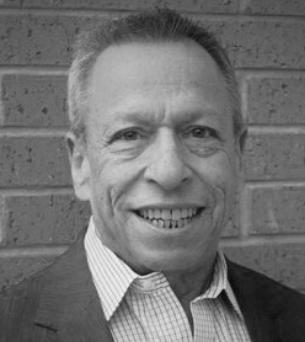
Mauricio Canto, CPA, RMA, audit and assurance partner
HOBOKEN MAYOR
EMILY B. JABBOUR
Mayor Jabbour was sworn in as Mayor in January of 2026. She was elected to the Hoboken City Council in 2017 and re-elected in 2021. Mayor Jabbour worked as a Health Fellow on a detail assignment with the Health Subcommittee of the House Committee on Energy and Commerce. During her 19 years on the Administration for Children and Families, Jabbour served as a certifying officer and performance officer for the Office of Planning, Research, and Evaluation.
What are your top three steps to put the city on a firmer financial footing?
Financial stability is about protecting people and ensuring core services are reliable while rebuilding our surplus.
That starts with collaboration. I began working closely with the Hoboken City Council early in the budgeting process and created more opportunities for public input, so we are funding the core services and programs residents rely on, as well as those they are asking for more of. Their voices and perspectives should help shape our priorities because the budget is ultimately a reflection of our city’s values.
Second, I want a more transparent budget so residents can clearly see where their money is going and what they are getting in return. Fundamentally I feel
that there is a lack of understanding when it comes to how local government works, so giving people insight into those dynamics whether that is getting to know individuals working in our community, or understanding how programs work, helps educate people on how their tax dollars work.
Finally, this work requires balance. We have to be thoughtful about cutting costs where it makes sense while also identifying new, responsible revenue sources so we can maintain the services people depend on while also investing in our future.
How do you plan to improve city infrastructure, such as transit options, roads, and traffic management?
Infrastructure should make daily life easier, with safer streets and greater resilience.
That means improving accessibility and pedestrian safety with public input, including upcoming roadway improvements to more than 50 blocks this year, as well as our ongoing Vision Zero initiative. We are also continuing construction on the Rebuild by Design project with the support of the New Jersey Department of Environmental Protection (NJ DEP), which will remove over 70 percent of the city from the floodplain.
We need to think about infrastructure in terms of fairness and access. Every neighborhood deserves safe streets and attention from the city, so I am focused on ensuring that these investments aren’t concentrated in just a few areas, but instead reflect the needs of the entire community.
What downward trend in our city from the last five years is most worrisome to you?
The biggest concern I have heard from residents over the last several years, while serving on the City Council, is that it’s getting harder to stay here because of the lack of affordable housing.
That’s one reason why my administration is working to use the Affordable Housing Trust to build and preserve affordable housing. We have also pushed new development to include not just an affordable housing set aside, but also look at workforce housing set asides. We will also continue to fund City social workers to support residents during times of crisis and help bridge the gap between those who are experiencing housing insecurity and the resources that are available to them.
What legacy do you hope to leave behind at the end of your term?
In a simple word: accessibility. I want people to feel like their Mayor and City works for them. That means when someone calls for help, they get a response. When they walk down their street, it feels safe and cared for. I want residents to feel more heard, more supported, and more connected to their City. That’s the legacy I’m aiming for.
What are the top three complaints your 311 service receives, and how will you address them?
Most complaints come down to everyday quality-of-life issues like sanitation, road conditions, and construction. These might seem small, but they shape how people ex-
perience their neighborhoods every day.
My focus is on faster response times, clearer and more responsive communication, and making sure issues are actually resolved, and not just logged. Residents shouldn’t have to feel like they need to chase the City to get these services addressed.
What specific changes, if any, do you think need to be made in how the city spends its dollars?
We need to make sure our spending reflects what residents actually experience and need.
That means prioritizing the core services people rely on daily, like clean streets, safe roads, and responsive city services. I also want strong communications from City Hall so that residents can see how taxpayer money is spent and how these investments improve their everyday life.
What is your plan to support small local businesses and attract new jobs to the city instead of corporations?
I want to make it easier for local entrepreneurs to open and grow by speeding up approvals without jeopardizing the character and historic charm of our neighborhoods. We are currently working with the Hoboken Business Alliance to evaluate some of our zoning laws and policies to see what could be updated to improve the process. We are also working to provide transparency into the process so that anyone with an idea for a new business can have a clear sense of how long it takes to go from that first application to the ribbon cutting.
Do you believe our downtown/main street is thriving, and if not, what will you do to change that?
There is always room for continued growth. We have built a strong partnership with the Hoboken Business Alliance, and we will continue that relationship to help attract foot traffic to our wonderful business districts and develop policy and legislative proposals to strengthen their operations. Our Cultural Affairs Division also hosts a variety of large events throughout the year that attract over 30,000 people to our city annually. Through these events and collaborations, we will continue to encourage visitors and residents to shop and dine locally while exploring our Mile Square City.
What is your philosophy on handling contentious development projects?
At the center of every development decision is the consideration for the people who live in the neighborhood and then the larger community.
My approach is to engage residents early, listen carefully, and make sure that residents are part of the process from the start - and not just as an afterthought. Even when people disagree with the outcome, they should feel they were heard and that the process respected their voice and perspective.
Artificial Intelligence in Local Government
Towns are racing to deal with artificial intelligence. Are some towns too late?
The race to infuse Artificial Intelligence capabilities into the labor market and other private services has been in full swing for several years now. A major push has occurred in the private sector with services from Anthropic, OpenAI, and other companies that are working on their own tools, services or agents in the sector. Companies have dedicated time and money in the hopes that it will streamline operations and create opportunities for efficiency and greater productivity.
The uptake at the local government level has been a bit slower. Municipal representatives have not turned down the option for employees and departments to use the tools, but widespread adoption has lagged behind the private sector’s.
Kenneth DeRoberts Government Strategist
“Public sector technology overall is so far behind the
curve,” government strategist Kenneth DeRoberts said. “It starts with the state, all the way down to the smallest municipality.”
DeRoberts pointed to the state government and its use of decades old technology in its systems.
“Governments are very, very slow adopters,” he said.
Funding, buy in and training are factors when it comes to government organizations choosing to utilize the tools. DeRoberts’ group offers studies and assessments of protocol and procedure within municipalities. One study he conducted showed a simple finance department request required filling out a physical form, bringing that form to the department, and waiting for the information to be entered into the system. This action wasn’t required, it was just how the employee had always done it and nobody had said otherwise.
“I'm not saying that that's commonplace,” he added. “But you come across stuff like that more often than not and people prefer their old, comfortable way of doing things.”
DeRoberts said getting employees comfortable with new technology might be as simple as small exposures. When desktop computers began appearing decades ago, one town administrator asked his employees to play solitaire, DeRoberts said.
Many AI companies provide free access to their tools but limit premium features or put time or request caps on users. Asking chat bots or AI agents simple questions or posing quick tasks may help employees feel comfortable with the abilities of the technology.
Freehold Township Administrator Pete Valesi said that township employees don’t operate under a specific policy just yet but are allowed to use the services.
“I encourage it,” he said. “But I think that like any tool you need to be sure that the information coming out is relevant and accurate.”
Valesi made the same warning that can be found on most AI tools: double check that the model did not make a mistake.
“You can’t blindly use an AI tool for a specific purpose and simply rely on its results without crosschecking,” he warned. “Garbage in, garbage out. But what software isn't like that?”
Valesi wants employees to use their
“My municipality falls into the curious, but we don’t know where to start, category.
Spring Lake Mayor Jennifer Naughton
talent and creativity but if they see the chance to augment their work with the help of an AI tool they should take it.
“It’s not lazy,” he said. “It’s leverage.”
Valesi said certain departments have used it to great success in analysis and communications.
“We use an AI tool in our engineering department to predict bid prices and that been very successful in nailing down our construction cost estimates,” he said.
One of DeRoberts’ clients has been attempting to gain subscriptions to Anthropic’s large language model Claude. As the township deals with sensitive information regarding residents and businesses, their main concern was security.
DeRoberts said that the federal government’s use of certain systems shows that there is trust in keeping data secure. Recent reports show that
the Department of Defense has a growing relationship with AI, a signal that DeRoberts says that there is comfort in using the services.
Jay Dave, President of XDuce, has an entire product line up made specifically for local governments. Vendor management, public meeting records and minutes, and web dashboards highlight some of the capabilities that XDuce can provide.
“These are designed only for doing work in municipalities,” Dave said.
Municipalities have shown interest in the products, Dave said, but the public sector is about five to seven years behind the private sector in terms of technology.
One tool allows citizens to contact a township, inform the AI agent of an issue, and the AI agent will generate an actionable request to the specific department. If the problem isn’t resolved within a certain time frame, the system will elevate it to the next level.
Spring Lake Mayor Jennifer Naughton said that the small borough along the ocean is curious about what AI can do for township employees and services. Like Freehold, Spring Lake allows employee usage without a specific policy.
“My municipality falls into the curious, but we don't know where to start, category,” she said.
Naughton’s main concern is how the price of implementation will impact Spring Lake’s finances.
Pete Valesi Township Administrator
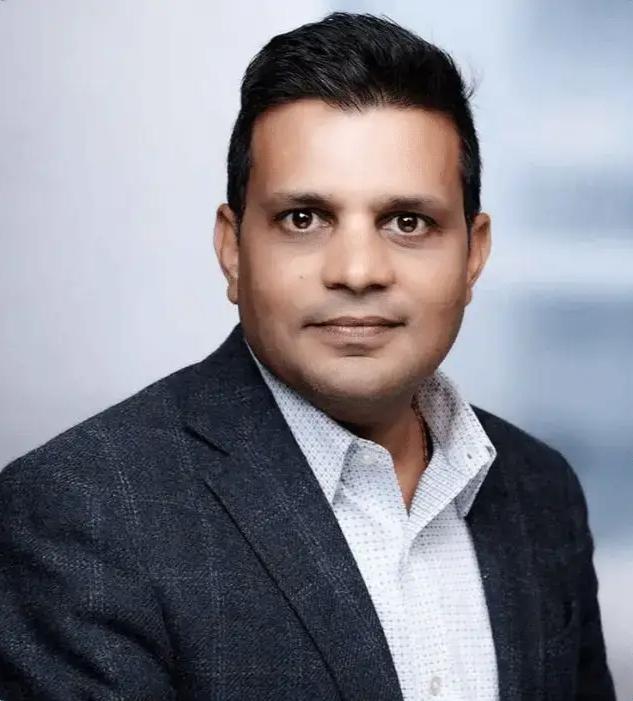
Jay Dave President of XDuce
Jennifer Naughton Mayor of Spring Lake
“One barrier to adopting AI is being cautious with taxpayer resources,” she said. ”They are not inexpensive.”
When the discussions take place, Naughton said the biggest question is how it will be funded and whether there will be a return on their investment.
Naughton runs a small tech firm and knows that there are tools to help with meeting agendas and minutes, construction, and zoning. What is available is more “elegant than we have now,” she said. When she evaluates what is available, she asks if it could free up a person’s time to tend to another task or just make a job a bit simpler. Regardless of its function, Naughton said the biggest value a tool could bring would be the ability to head off issues before they begin.
“Proactive, not reactive,” she said.
With existing tools being updated and new tools being released at an increasing frequency, the options for governments remain limited when compared to what is open to the private sector, DeRoberts said.
“The availability of applications for the public sector are not nearly as vibrant and abundant as what you find in the private sector. You're not getting a lot of technological advancement for the public sector.”
DeRoberts said that as towns ap -
proach him about what can be done, it’s clear that widespread adoption may be a way off just based on the amount of municipalities in New Jersey.
“Especially the local government, you have to do it on a town by town basis,” he said. “It's tough. It's a slow grind.”
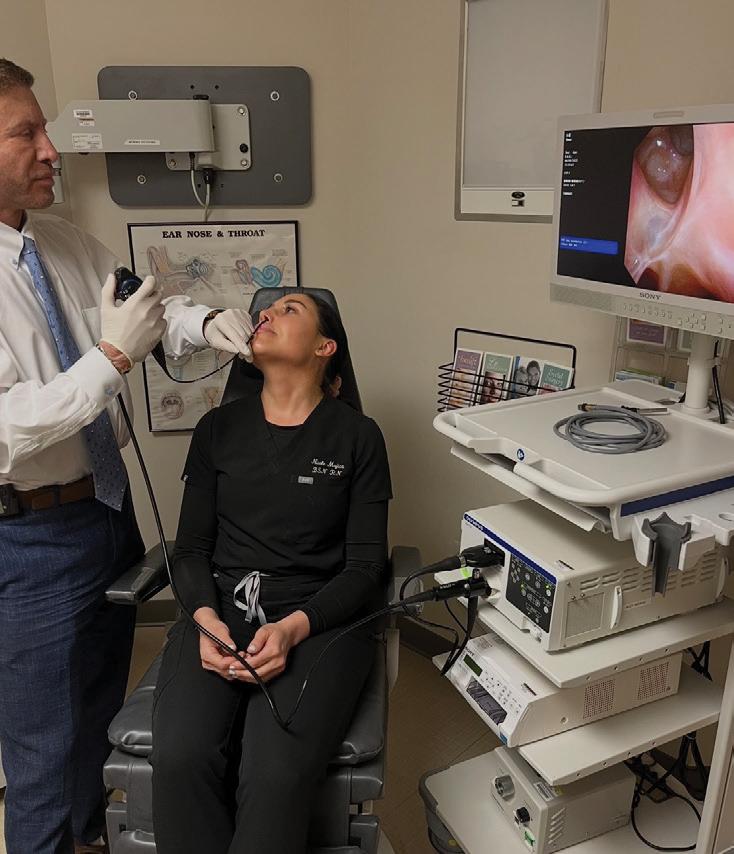
Laser Guided Navigation Sinus Procedure
If you answered yes to any of these questions we may be able to help with one of our many state-of-the-art surgical and non-surgical treatment solutions.
Aberdeen Business Administrator BRYAN RUSSELL
How long have you been at your current position and what positions did you hold prior?
I’ve been serving as the Township Manager for Aberdeen Township since January 2020. In our form of government, the Township Manager acts as the chief executive officer, responsible for overseeing the dayto-day operations of the municipality, managing our departments, and implementing the policies set by the Mayor and Council. It’s a structure that really emphasizes professional management, allowing elected officials to focus on policy while I focus on execution, efficiency, and long-term planning.
Before coming to Aberdeen, I served as Borough Administrator in Neptune City in 2019, and prior to that, as Borough Administrator in Roselle from 2017 to 2019. In Roselle, I also held roles as Assistant Borough Administrator and Qualified Purchasing Agent, which gave me a strong foundation in municipal operations and public procurement.
Earlier in my career, I worked as an Assistant Purchasing Agent for the City of Linden, and before transitioning into municipal government, I held positions in state government, including Legislative Director for Senator Raymond J. Lesniak and Director of Office Ad-
ministration for Senate President John O. Bennett.
Each of these roles helped shape my approach to public service, and I’ve carried those experiences with me into my work in Aberdeen.
How do you balance long-term strategic goals with day-to-day administrative fires?
Balancing long-term goals with the day-to-day challenges is really about building the right team and maintaining clear priorities. I’ve been fortunate to surround myself with experienced department heads who bring a high level of leadership and professionalism to their roles. That allows us to stay focused on our larger vision while still responding quickly when issues come up.
Administrative “fires” are inevitable in local government, but with a strong team in place, we’re able to address them efficiently without losing sight of our long-term objectives. Communication is key, we stay aligned and make sure everyone understands both the immediate needs and the bigger picture.
I also work closely with our Mayor to set and advance priorities for the township. Whether it’s continuing to invest in our roads program, expanding and enhancing our recreation offerings, or making improvements to our parks and public spaces, we’re always looking ahead while making sure we’re delivering results in the present. It’s really about staying proactive, trusting your team, and keeping a steady focus on what benefits the community most.
Property taxes continue to be the #1 concern for NJ residents. Tell us about a time you had to implement a significant change or cost-saving measure that faced resistance.
Property taxes are always top of mind for our residents, and it’s something I take very seriously. Right now, we’re working through our 2026 budget in Aberdeen, and it has been a challenging process. Like many municipalities across New Jersey, we’re facing significant increases in fixed costs, particularly health insurance, which make up a large portion of our proposed tax increase.
I understand the concern from residents. Any increase is difficult, and this budget has already faced resistance. Even in the final stages, including the week of adoption, my team and I are continuing to look for ways to reduce costs and ease the impact wherever possible.
This is one of the hardest parts of the job, finding that balance. Maintaining the level of service our residents expect is extremely important to me. Aberdeen residents have come to rely on strong municipal services, and I don’t believe in cutting essential services that directly impact quality of life just to reduce costs in the short term.
We’re constantly evaluating efficiencies, identifying savings, and making responsible decisions, but there are times when external factors, like rising healthcare costs, limit what we can control. My focus is always on being transparent, making thoughtful decisions, and doing everything we can to protect both our taxpayers and the services that make Aberdeen a great place to live.
How does transparency play a role in your job as a municipal leader?
Transparency is a critical part of what we do. I believe residents deserve to know what their local government is doing and how decisions are being made. During my time in Aberdeen, we’ve made a real effort to prioritize communication, including having dedicated Public Information Officers to ensure that information is consistently shared with the public.
Whether it’s through social media, press releases, town newsletters or community updates, we work to make sure residents are informed and can see the work that’s being done on their behalf. It’s about showing what good government looks like in Aberdeen and building trust with the community.
How would you handle a contentious situation between department heads, elected officials, and the public?
I approach contentious situations by making sure every voice is heard, whether it is department heads, elected officials, or the public. Each group brings a different perspective, and understanding those perspectives is key to moving forward.
At the same time, I am realistic that you cannot always appease everyone. The goal is not to make everyone perfectly happy. It is to find a fair, balanced solution that serves the broader community.
I focus on identifying common ground, keeping communication clear, and working toward outcomes that are equitable and sustainable. When people feel heard and understand the reasoning behind a decision, it goes a long way in building trust, even in difficult situations.
Describe a time you solved a complex operational problem that wasn’t immediately obvious to others.
One challenge I identified was that departments were
operating in silos, which was slowing down progress and creating inefficiencies. It was not immediately obvious because everyone was focused on their own responsibilities, but there was a lack of coordination across teams.
To address this, I implemented regular biweekly meetings with department heads between council meetings so everyone could share updates, flag issues, and identify opportunities to collaborate. I also established daily senior staff check-ins to keep priorities aligned and ensure we were all working toward the same goals.
This approach helped break down communication barriers and improved coordination across departments. As a result, we were able to move projects forward more efficiently, reduce duplication of effort, and make more informed decisions as a team.
It reinforced that when everyone is aligned and working toward shared outcomes, things move faster and more effectively.
How do you approach decision-making under highpressure, time-sensitive situations?
In high-pressure situations, I try to stay calm, take in all the information available, and quickly separate what is urgent from what is noise. Local government decisions often have immediate impacts, so it’s important not to react emotionally or make decisions in a vacuum.
I like to take a step back, look at the entire chessboard, and consider both the short-term and long-term effects on residents, employees, and the township as a whole. Even when time is limited, you still have to think clearly, rely on your team, and make the best decision with the information you have.
For me, it comes down to being steady, informed, and focused on outcomes that serve the public.
What do you like most about your job and least about your job?
What I like most is that no two days are the same. There is always something new to work on, and I value seeing the impact of what we do for residents. When things run smoothly or a problem gets solved, even if no one is pointing directly at you, it shows the team is doing its job and that the work matters.
What I like least is that you cannot always meet every expectation. Not every concern has an easy fix, and sometimes the answer is not what people want to hear. That is a difficult part of the role, but it comes with the responsibility of making decisions that are fair and in the best interest of the broader community.
Borough Administrator of Englewood Cliffs INTASHAN CHOWDHURY, MPA
How long have you been at your current position and what positions did you hold prior?
I have served as Borough Administrator for the Borough of Englewood Cliffs since 2025. Prior to that, I worked with the City of Englewood for over a year beginning in late 2024, where I supported internal management and operational initiatives.
Before Englewood, I served as Borough Administrator for Prospect Park for five years, where I became the youngest municipal administrator in New Jersey history at the time of my appointment.
In total, I bring approximately ten years of experience in municipal government, with a focus on operational efficiency, fiscal management, and driving innovation at the local level.
How do you balance long-term strategic goals with day-to-day administrative fires?
It’s about discipline and structure. Local government will always present daily challenges, whether it’s infrastructure issues, personnel matters, or resident concerns, but I anchor everything to a broader strategic framework. I make sure that even our short-term decisions ladder up to long-term priorities, whether that’s fiscal stability, infrastructure investment, or digital transformation.
I also empower department heads to own opera-
tional execution so I can maintain a forward-looking lens. If you’re only reacting, you’re falling behind. You need to build systems that allow you to respond while still moving the organization forward.
Property taxes continue to be the #1 concern for NJ residents. Tell us about a time you had to implement a significant change or cost-saving measure that faced resistance.
In Englewood Cliffs, we implemented a transition in our employee health benefits strategy by introducing a high deductible health plan paired with a health reimbursement arrangement. This change is projected to generate over $700,000 in annual savings while maintaining access to the same provider networks for employees which is projected to increase to $5 mil over next four years.
While the municipal savings are significant, the real focus was on the benefit to employees. With rising costs through the State Health Benefits Plan placing pressure on both municipal budgets and employee contributions, many employees were seeing less take home value. This approach allowed us to preserve strong coverage while putting a considerable amount of money back into employees’ pockets through lower contributions and more efficient plan design.
As expected, there was initial resistance, particularly from bargaining units. The key was transparency and education. We focused conversations on how the plan worked for employees, what they would actually pay, and how out of pocket exposure would be mitigated, rather than leading with municipal savings. Over time, through engagement and data driven discussions, we were able to build understanding and move forward.
At the same time, the Borough conducted a comprehensive audit of third party vendors and service providers. Working closely with our Qualified Purchasing Agent, we evaluated everyday services and longstanding contracts that had not been revisited in years. This effort generated additional savings and also resulted in new interlocal agreements that improved efficiency and shared services.
There was resistance here as well, largely driven by the mindset of we have always worked with this vendor or done things this way. Change was not easy, but once stakeholders saw the broader financial picture and the long term benefits, there was alignment around the need to modernize and be better financial stewards for the community.
How does transparency play a role in your job as a municipal leader?
Transparency is foundational. It builds trust, and without trust, nothing else works.
Whether it’s budgets, infrastructure projects, or policy decisions, I believe residents should understand not just what we’re doing, but why we’re doing it. That includes modernizing how we communicate, whether it is leveraging digital platforms, improving access to public information, and making government easier to navigate.
Transparency also applies internally. Clear expectations, open communication, and accountability within the organization lead to better outcomes for the public.
How do you define your role in engaging with residents and addressing public concerns?
My role is to bridge the gap between government operations and the community. Residents don’t think in departments, they think in outcomes. It’s my responsibility to ensure their concerns are heard, understood, and addressed efficiently.
That means being accessible, responsive, and proactive. It also means translating complex municipal issues into language people can understand, so they feel informed and empowered rather than frustrated.
How would you handle a contentious situation between department heads, elected officials, and the public?
First, I focus on facts and process. Emotions can run high, especially when multiple stakeholders are involved, but grounding the conversation in objective information is critical.
Second, I create space for each party to be heard. Often, conflict escalates because people feel ignored or misunderstood.
Finally, I align everyone around the shared goal, serving the public interest. My role is to depersonalize the issue, clarify responsibilities, and move toward a solution that is operationally sound and publicly defensible.
Describe a time you solved a complex operational problem that wasn’t immediately obvious to others.
In the City of Englewood, under the guidance and leadership of City Manager Robert S. Hoffmann, we identified a significant backlog and error rate in building department applications, with nearly 70 percent of submissions requiring corrections and creating delays of several months. Having that level of mentorship is critical for any Administrator, especially when tackling operational challenges at scale.
Rather than simply adding staff, we took a systems based approach. We implemented AI assisted tools and redesigned the intake process to guide applicants in real time, reducing errors at the source. This allowed residents and contractors to get it right the first time instead of going back and forth with the department.
The result was a dramatic reduction in the backlog and faster turnaround times, all without increasing personnel costs. The issue was not capacity, it was process design. Once that became clear, the solution followed.
I would also point to two additional examples that reflect this same approach.
In Englewood Cliffs, we have been addressing the ongoing issue of retiree health benefits and Chapter 78 compliance with our unions. Over time, costs that should have been shared in accordance with statute were being borne entirely by the Borough, creating a situation where one hundred percent of the financial obligation was placed on the municipality when it should not have been structured that way. This created a significant and unsustainable burden on taxpayers.
Addressing this required resetting expectations and realigning with statutory requirements while maintaining open communication with labor. These are not easy conversations, but they are necessary to ensure fairness, compliance, and long term fiscal stability for both retirees and the community.
In Prospect Park, we approached a different kind of challenge by rethinking how residents interact with government. We became what I refer to as a two click municipality, focused on humanizing government and democratizing access to services. We were among the first to introduce AI driven search, chat, and voice tools that synced directly with municipal forms, making it easier for residents to navigate services in real time.
What made this especially impactful is that it was not driven by a large budget or an internal technology team. We achieved it through a public private partnership, showing that innovation in local government is not about resources alone, but about approach. In a diverse community where many residents spoke different languages and struggled to navigate government processes, this solution broke down barriers and made services more accessible.
Across all of these examples, the common thread is identifying the root problem, not just the symptom, and implementing solutions that improve outcomes for both the organization and the community.
How do you approach decision-making under high-pressure, time-sensitive situations?
I rely on a structured, process-oriented approach: gather the best available information quickly, consult the right subject-matter experts, and make a decision that prioritizes public safety and organizational integrity.
You won’t always have perfect information, so confidence in your framework matters. I also believe in documenting decisions and communicating clearly, especially in high-pressure moments, so there’s alignment across the organization.
What do you like most about your job and least about your job?
What I enjoy most is the impact. In local government, you see the direct results of your work, whether it’s improved infrastructure, better services, or stronger financial stability. The work intersects into so many areas and you see domino effect. The buck will always stop at the local level. That’s incredibly rewarding.
The most challenging part is balancing competing expectations while the gears of government often move slower than I would like. Residents, elected officials, employees, and external stakeholders often have different priorities. Navigating those dynamics while staying focused on what’s best for the community requires constant discipline and judgment, but that’s also what makes the role meaningful.
ving Ser Now Is
One Source. Many Solutions.
Van Cleef is powered by seasoned professionals, with experience across multiple disciplines. From major public work to private assignments, we provide a seamless, single-source solutions from planning through completion.
With nine offices across New Jersey and eastern Pennsylvania, we bring strong local and regional reach to every project.
CLIENT SUCCESS
Plosia and Cohen LLC
As Borough Attorney for the Borough of Matawan, Plosia Cohen LLC successfully obtained a protective order against a “frequent filer” OPRA requester who submitted approximately thirty-nine (39) OPRA requests over a forty-five (45) day period. To the firm’s knowledge, the successful use of the new legislative protections created by the 2024 OPRA reform legislation was among the first applications of the statute statewide. The Court’s Order now limits the requester to two OPRA requests per month, with additional restrictions on the length and scope of requests. The result significantly reduced the administrative burden on the Borough Clerk’s Office, allowing staff to devote greater attention to core municipal operations, including preparation for the 2026 Primary Election.
Alamo Insurance Group
For more than 30 years, Alamo Insurance Group has remained relentless in its mission to protect taxpayer dollars through aggressive Risk Management Initiatives while delivering responsible, sustainable employee benefit solutions for public sector clients. Over the past five years alone, Alamo has successfully helped return more than $100 million back into public entity budgets through strategic planning, aggressive market negotiations, and innovative risk financing approaches. This year; as the State Health Benefits Plan (SHBP) increase exceeded+ 36% during the most recent renewal cycle, many municipalities, counties, fire districts, and school boards found themselves trapped in an unsustainable system placing enormous pressure on taxpayers and local budgets. In response, 10 public entities across New Jersey turned to Alamo Insurance Group for guidance and solutions. Of the ten public sector accounts seeking assistance during this period, Alamo successfully transitioned eight entities from SHBP programs into alternative direct placement and self-funded strategies while maintaining equal-to-or-better employee benefits. These initiatives impacted more than 4,700 employees and retirees and generated over $8.6 million in realized and projected savings for the 2026 2027 plan years alone through customized benefit modeling, pooled risk structures, and disciplined carrier negotiations. Alamo Insurance Group currently has an additional municipal transition pending for implementation on June 1, 2026, continuing its long-standing commitment to continue working for its clientele well passed renewal season, because it’s the most fiscal responsibility way to practice, innovation, and protecting the interests of both public employees and taxpayers alike.
Van Cleefe Engineering
When Mason Herrman, GISP, of Van Cleef Engineering told Middletown Engineer and DPW Director Ted Maloney that a project had come in under budget, and even offered to expand the work, it made a lasting impression. The transparency and proactive approach stood out, particularly for a municipality focused on managing costs while meeting regulatory demands. Like many New Jersey municipalities, Middletown faces increasing challenges in meeting evolving NJDEP MS4 and stormwater requirements, prompting Township officials to seek a practical, cost-effective solution with Van Cleef.
That partnership quickly proved its value. After seeing the firm’s GIS technology in action during a field visit, Middletown authorized a pilot mapping initiative that was completed with remarkable efficiency, delivering meaningful cost savings. The results reflected Van Cleef’s commitment to transparency, innovation, and long-term collaboration, leading to continued work with the Township. As Mayor Tony Perry noted, the firm has become a strong addition to Middletown’s engineering team, a testament to the impact of doing the right thing from the start.
EMPLOYEE MOVEUP
Plosia and Cohen LLC
In February 2026, Plosia Cohen LLC welcomed attorney Rasheta Butler to the firm as an associate. Ms. Butler brings a diverse and accomplished background to the firm’s litigation practice, including service as President of the Black Law Students Association at the University of Vermont Law School, experience as a former Middlesex County Assistant Prosecutor, and national athletic competition as a professional bobsledder. Her dedication, trial experience, and leadership further strengthen the firm’s commitment to providing aggressive and effective representation to its municipal and public-sector clients.
Van Cleefe Engineering
Van Cleef Engineering is continually looking to grow its team. Civil engineering professionals interested in a firm focused on integrity, collaboration, and long-term client relationships are encouraged to contact Jennifer Gaudiosi, Human Resources Director, at jgaudiosi@vancleefengineering.com or visit www.vancleefengineering.com/careers
NEW CLIENT PICKUP
Plosia and Cohen LLC
In April 2026, the City of Hoboken retained Plosia Cohen LLC to assist with collective negotiations involving several employee unions and to help develop negotiated strategies addressing rising health care costs across employee groups. The firm looks forward to working with Mayor Emily Jabbour, City administration, and union leadership to identify practical and creative solutions that balance fiscal responsibility with the needs of the City’s workforce.
These feature sections are opportunities for firms to talk about the work they do. All sections are written by our advertisers and C&MM does confirm what is being written
If you are interested in learning more about advertising with C&MM and being featured here, please e-mail admin@communitymagazinenj.com
SECTIONS FOR MUNICIPALITIES
Do you want to place an advertisement in this section which will be seen by 5,600 local elected officials. Are you recruiting for a new position? Seeking a new Department Head? This is the place you want to advertise.
Please e-mail admin@communitymagazinenj.com for more information!
2026-2027 Guides
August/September 2026 Edition
Insurance Guide
⊲ Top Healthcare Brokers
⊲ Top Property & Casualty Brokers
⊲ Top Joint Insurance Funds
October/November 2026 Edition
Engineering Guide
⊲ Top Municipal Engineers
⊲ Top Environmental Engineers
⊲ Top Planners
⊲ Top Architects
December 2026/January 2027 Edition
Municipal Financial Guide
⊲ Top Financial Advisors
⊲ Top Government Consulting Firms
⊲ Top Auditors
⊲ Top Grant Writers
February/March 2027 Edition Legal Guide
⊲ Top Labor Attorneys
⊲ Top Redevelopment Attorneys
⊲ Top Bond Counsels
⊲ Top Municipal Attorneys
April/May 2027 Edition All About Authorities
⊲ Best Sewer & Utility Authority Professionals
⊲ Best Housing Authority Professionals
⊲ Best Parking Authority Professionals
June/July 2027 Edition Technology, Communications and Security Guide
⊲ Top IT Firms
⊲ Top Security Firms
⊲ Top Communications Firms
CORE PRINCIPALS:
“Client-centric. Results-driven. Carrier-agnostic. Innovative practitioners, consultative by design, and moral and ethical by nature.”
BUILT FOR THE PUBLIC SECTORS
“Purpose-built solutions for the public sector.”
EMPLOYEE BENEFITS SPECIALIST
“…maximizing savings without compromising benefits.” Otherwise known as “Equal to or Better”
RISK MANAGEMENT CONSULTANTS
“Providing strategic guidance to identify, manage, and mitigate risk.”
“For more than a century, the Cape May Lighthouse has guided ships along New Jersey’s once treacherous coastline. Standing as a steadfast beacon of hope, it welcomed sailors, merchant vessels, and immigrants journeying toward the promise of a new world, its light cutting through darkness, storms, and time itself.”