
The Global Housing Crisis
Pathways
to Action
World Cities Report 2026
The Global Housing Crisis Pathways to Action
World Cities Report 2026
First published in 2026 by United Nations Human Settlements Programme (UN-Habitat)
Copyright © United Nations Human Settlements Programme, 2026
All rights reserved
United Nations Human Settlements Programme (UN-Habitat) P.O. Box 30030, Nairobi, Kenya
Website: www.unhabitat.org
DISCLAIMER
The designations employed and the presentation of the material in this report do not imply the expression of any opinion whatsoever on the part of the Secretariat of the United Nations concerning the legal status of any country, territory, city or area, or of its authorities, or concerning delimitation of its frontiers or boundaries, or regarding its economic system or degree of development. The analysis, conclusions and recommendations of this report do not necessarily reflect the views of the United Nations Human Settlements Programme or its Executive Board. The Report is produced with official data provided by governments and additional information gathered by UN-Habitat from partners. Cities and countries are invited to update data relevant to them. It is important to acknowledge that data varies according to definition and sources. While UN-Habitat checks data provided to the fullest extent possible, the responsibility for the accuracy of the information lies with the original providers of the data. Information contained in this Report is provided without warranty of any kind, either express or implied, including, without limitation, warranties of merchantability, fitness for a particular purpose and non-infringement. UN-Habitat specifically does not make any warranties or representations as to the accuracy or completeness of any such data. Under no circumstances shall UN-Habitat be liable for any loss, damage, liability or expense incurred or suffered that is claimed to have resulted from the use of this Report, including, without limitation, any fault, error, omission with respect thereto. The use of this Report is at the User’s sole risk. Under no circumstances, including, but not limited to negligence, shall UN-Habitat or its affiliates be liable for any direct, indirect, incidental, special or consequential damages, even if UN-Habitat has been advised of the possibility of such damages.
HS Number: HS/950/26E
ISBN Number (Series): 978-92-1-673396-6
ISBN Number: 978-92-1-823931-0
Executive Director’s Introduction

Anacláudia Rossbach Under-Secretary-General and Executive Director United Nations Human Settlements Programme (UN-Habitat)
Today’s global housing crisis is the result of decades of inaction. Limited investment, rapid urbanization, macroeconomic pressures and crises driven loss of homes are among the factors that have contributed to current shortcomings. The latest global estimates now make the situation unmistakably clear. Up to 3.4 billion people worldwide are estimated to be living without secure, safe, and adequate housing, of which over 1 billion reside in informal settlements and slums, facing acute threats daily including insecure tenure, overcrowding, exposure to natural hazards, and the absence of essential services like safely managed sanitation. Given its magnitude, the global housing crisis must be addressed as a matter of critical urgency for the sake of humanity now and in the future.
Yet, notwithstanding the universally recognized right to adequate housing, the world remains far from resolving this crisis. Even during periods of global commitment to action, first under the Millennium Development Goals and later the Sustainable Development Goals, adequate housing shortages have intensified rather than diminished. The global deficit increased from 251 million units in 2010 to 288 million in 2023. Millions of people continue to be forcibly uprooted from their homes each year, with an estimated 133 million people displaced globally in 2024 by conflict, persecution, violence, human rights violations, and natural disasters. Further, urban evictions remain pervasive but are poorly documented and frequently go unreported. New research undertaken by UN-Habitat for this report indicates that approximately 64 million people were evicted between 2003 and 2023. The consequences for affected households are profound, destroying livelihoods and pushing already vulnerable populations into deeper poverty.
A home encompasses complex social, economic, and psychological dimensions and outcomes. From access to employment and public services to legal recognition and social networks, housing plays a central role in shaping well-being and quality of life for everyone everywhere. This is why housing is the roof of the Sustainable Development Goals, and progress towards its global targets is inextricably linked to our ability to ensure adequate housing for all, and especially the transformation of informal settlements and slums.
The consequences are wide-ranging and enduring. As this edition of the World Cities Report illustrates, adequate housing is not merely about shelter, but much more. A home encompasses complex social, economic, and psychological dimensions and outcomes. From access to employment and public services to legal recognition and social networks, housing plays a central role in shaping well-being and quality of life for everyone everywhere. This is why housing is the roof of the Sustainable Development Goals, and progress towards its global targets is inextricably linked to our ability to ensure adequate housing for all, and especially the transformation of informal settlements and slums.
Indeed, housing has the potential to be a powerful force for positive change. Well-located, safe, and affordable housing can enhance productivity, improve health outcomes, and contribute to poverty reduction and shared prosperity. At the same time, housing will be central to any meaningful response to climate change. Buildings account for approximately 37 per cent of global greenhouse gas emissions, with housing responsible for an estimated 17 to 21 per cent, presenting a significant opportunity for action to reduce emissions substantially through the retrofitting of existing housing stock and the adoption of energy-efficient, low-carbon construction methods for new developments. Housing is also a critical determinant of urban resilience. As cities face increasing risks from floods, heatwaves, and other climaterelated hazards, the provision of well-designed, disaster-resistant housing will be essential to long-term adaptation and risk reduction.
Adequate housing therefore represents one of the most powerful entry points for accelerating sustainable and inclusive development at all levels. Realizing this potential requires placing participation at the centre of housing policy. National and local governments must fundamentally rethink their approach to informality. In many cities, informal settlements are home to a large proportion of urban residents and form an integral part of the urban fabric. Rather than ignoring informality or treating it as a failure of urban development, authorities should deliberately invest in transformative approaches, and recognize and support community-led, incremental approaches to upgrading that have demonstrated their capacity to deliver affordable and appropriate housing solutions.
The actions we take now will determine if housing becomes a foundation for stability and growth, or source of acute vulnerability. This is why this report presents a roadmap for achieving greener, more equitable, and more liveable housing across diverse urban contexts. It combines internationally recognized lessons and best practices with the need for locally tailored, context-specific solutions. From pro-poor financing instruments to innovative participatory mechanisms, the meaningful involvement of communities in the design, construction, and upgrading of housing is essential. As the country and regional examples throughout this report demonstrate, tangible progress is possible when the right policies, resources, and partnerships are in place. This report is therefore not only a warning, but a call to action, to recommit to housing as a human right and to ensure adequate housing for all.
Acknowledgements
Authors: UN-Habitat Core Team
Edlam Yemeru (Chief of Branch); Ben Arimah (Chief of Section and Task Manager); Raymond Otieno Otieno; Matthijs van Oostrum; Mary Mutinda; Zoe Gabrielli
Authors: External
Alison Brown; Ayyoob Sharifi; Claudia Maria de Magalhães Eloy; Godwin Arku; Hector Becerril Miranda; Paroj Banerjee; Piyush Kumar Tiwari; Vanesa Castán-Broto
Statistical Annex
Robert Ndugwa; Dennis Mwaniki; Samuel Wahome Maina; Daniel Githira; Wandia Riunga; Matthijs Van Oostrum
Contributors: UN-Habitat Staff
Rafael Tuts; Ombretta Tempra; Shubhagato Dasgupta; Shipra Narang Suri; Xing-Quan Zhang; Remy Sietchiping; Robert Ndugwa; Angela Mwai; Dennis Mwaniki; Francesca Lionetti; Patricia Gryciuk; Charlotte Albin; Alloice Okumu; Shuheng Zhao, Simon Deprez
Contributors: External
Claudio Acioly; Hannes Juhlin Lagrelius; Kecia Rust; Marion Rono; Pauline Adebayo; Sahar Attia; Mewahib Mohamed; Marja Hoek-Smit; Andrew Heywood; Andrew Mills; Geórgia Schmidt; Jamil Akhtar; Marco Gorini; Mona Kachhwaha; Tarcyla Fidalgo; Rennata Magalhães; Kamna Patel; Deepta Chakraborty; Chiara Martinuzzi; Elmond Bandauko; Desmond Adjaison
International Advisory Board
Bishwapriya Sanyal; Bharat Dahiya; Carol Dean Archer; Celine d’Cruz; Christine Platt; David Dodman; João Sette Whitaker Ferreira; Margarita Greene; Marie Huchzermeyer; Marietta E.A. Haffner; Obas John Ebohon; Taibat Lawanson; Yunqing Xu
Administrative Support Team
Amrita Jaidka; Peter Wamwiri; Samuel Muraga; Elizabeth Okongo; Alice Kagumba
Editorial Consultant
Peter Grant
Communications and Media Team
Katerina V. Bezgachina; Rachad Nassar; Irene Juma
Head of Design and Production
Victor Mgendi
Design and Layout
Peter Cheseret; Manuela Moreno Carvajal; Sarah Nyambura Mwangi; Kelvin Malombe Ndumbu
Illustrations
Manuela Moreno Carvajal
Financial Support
Government of Sweden
Government of Azerbaijan
List of Boxes, Figures, and Tables
Box 7.6: Decentralized housing governance in Japan
Box 7.7: Protecting the social function of land ...............................................................................................................................................
Box 7.8: The Caño Martín Peña Community Land Trust, Puerto Rico
Box 7.9: Granby Community Land Trust
Box 7.10: The Global Observatory of Sustainable Proximities: promoting proximity-based planning
Box 8.1: Moving beyond the dominant paradigm of homeownership
Box 8.2: Uncertainties and information gaps drive high mortgage interest rates in Africa ...............................................................................
Box 8.3: The Bauspar Contractual Savings-for-Housing
Box 8.4: Pioneering housing microfinance at scale: Habitat for Humanity’s MicroBuild Fund
Box 8.5: Bhubaneswar Affordable Housing PPP, India ....................................................................................................................................
Box 8.6: Waarborgfonds Sociale Woningbouw (WSW) Social Housing Guarantee Fund, Netherlands
Box 9.1: Promoting multilateral action on housing: The Open-ended Intergovernmental Expert Working Group on Adequate
List of Figures
Figure
Figure
Figure 1.3:
Figure
Figure 1.5:
Figure
Figure
Figure
Figure 2.3:
Figure 2.4:
Figure 3.1:
Figure
Figure
Figure
Figure 3.5:
Figure 3.6:
Figure
Figure
Figure
Figure
Figure
Figure
Figure
Figure
Figure
Figure
Figure
Figure
List of Tables
Table 2.1:
Table
Table 2.4:
Table 2.5:
Table 2.6:
Table
Table 3.2: Income inequality trends by region, based on Gini coefficients, 2010–2023
Table
Table 3.5:
Table 3.6:
Table 3.7:
Table 3.8:
Table 3.9:
Table
Table 4.2: A
Table
Table
Table
Table
Table
Table
Table
Table
Table
Table
Acronyms and Abbreviations
ACHR Asian Coalition for Housing Rights
ASCA Accumulating Savings and Credit Associations
BEC Building Energy Code
BFH Bono Familiar Habitacional
BIM Building Information Modelling
BSUP Basic Services for the Urban Poor
CAHF Centre for Affordable Housing Finance in Africa
CBO Community-Based Organization
CCMT
Community Construction Management Team
CESCR United Nations Committee on Economic, Social and Cultural Rights
CLH
CLT
Community-Led Housing
Community Land Trust
CO2 Carbon Dioxide
CODI
Community Organizations Development Institute
COHAB São Paulo Metropolitan Housing Company
COP28 Conference of the Parties 28
COP30 Conference of the Parties 30
COVID-19 Coronavirus disease of 2019
CPF Central Provident Fund (Singapore)
CSO Civil Society Organizations
DLTs Distributed Ledger Technologies
DRR Disaster Risk Reduction
ECOSOC United Nations Economic and Social Council
EDGAR Emissions Database for Global Atmospheric Research
EIB European Investment Bank
ESTIA EU’s Emergency Support to Integration and Accommodation Programme
EU European Union
EvIA Eviction Impact Assessment Tool
FEDUP Federation of the Urban and Rural Poor
FGTS Fundo de Garantia do Tempo de Serviço (Brazil)
FLISP FinanceLinked Individual Subsidy Programme
FOGARIM Fonds de Garantie pour les Revenus Irréguliers et/ou Modestes
FOGAVISF ondo de Garantía de Créditos de Vivienda de Interés Social (Bolivia)
FUCVAM Federación Uruguaya De Cooperativas De Vivienda Por Ayuda Mutua
GDP Gross Domestic Product
GHG Greenhouse Gas
GlobalABC Global Alliance for Building and Construction
GLTN Global Land Tools Network
GOSP Global Observatory of Sustainable Proximities
GSEs Government-Sponsored Enterprises
HBE Home-Based Enterprise
HCV
Housing Choice Voucher
HDB Housing and Development Board
HERO Housing and Empowerment for Roma
HIC Habitat International Coalition
HLP Housing, Land and Property Rights
HLRN Housing and Land Rights Network
HRC Human Rights Council
IDMCI nternal Displacement Monitoring Centre
IDPI nternally displaced person
IEA International Energy Agency
IFC International Finance Corporation
IIED International Institute for Environment and Development
ILO International Labour Organization
INFONAVIT Instituto del Fondo Nacional de la Vivienda para los Trabajadores (National Workers' Housing Fund Institute)
IDB Group Inter-American Development Bank Group
IOMI nternational Organization for Migration
IPCC Intergovernmental Panel on Climate Change
IRC International Rescue Committee
JNNURM Jawaharlal Nehru National Urban Renewal Mission, India, 2005-2014
JRC Joint Research Centre
KENSUP Kenya Slum Upgrading Programme
KOTAKU Kota Tanpa Kumuh (City Without Slums Programme)
kWh Kilowatt-Hour
LG Local Government
LIHTC LowIncome Housing Tax Credit
MAHCs Mutual Aid Housing Cooperatives
MMC Mayors’ Migration Council
NGO Non-government organization
NFT Non-fungible token
NHA National Housing Authority
NHP National Housing Policy
NHT National Housing Trust (Jamaica)
NIMBY Not In My Backyard
NUA New Urban Agenda
OCHCR United Nations Office of the High Commissioner for Human Rights
OECD Organisation for Economic Cooperation and Development
OEWG-H Open-ended Intergovernmental Expert Working Group on Adequate Housing for All
OHCHR Office of the United Nations High Commissioner for Human Rights
OICT Office of Information and Communications Technology
PAC Growth Acceleration Program
PMAY Pradhan Mantri Awas Yojana
PMRC Pakistan Mortgage Refinance Company
PSUP Participatory Slum Upgrading Programme
PV Photovoltaic
RA Republic Act
REIT Real Estate Investment Trust
RSRI
Refugee Self-Reliance Initiative
SDG Sustainable Development Goal
SDI Slum/Shack Dwellers International
SPARC Society for the Promotion of Area Resource Centres
SRI Self-Reliance Index
TOD Transit-Oriented Development
TOKi Türkiye’s Mass Housing Administration
UAE United Arab Emirates
UCLG United Cities and Local Governments
UK United Kingdom
UN United Nations
UN-Habitat United Nations Human Settlements Programme
UNDP United Nations Development Programme
UNDRR United Nations Office for Disaster Risk Reduction
UNEP United Nations Environment Programme
UNHCR Office of United Nations High Commissioner for Refugees
UNICEF United Nations International Children’s Emergency Fund
URA Urban Renaissance Agency
US United States
UTOPIAS Transformative and Organizational Hubs for Social Inclusion and Harmony
WHO World Health Organization
WIEGO Women in Informal Employment: Globalizing and Organizing
WSW Waarborgfonds Sociale Woningbouw
ZEIS Special Zones of Social Interest
Key Findings and Messages
Chapter 1:
The Global Housing Crisis
The world is facing an unprecedented housing crisis driven by rising costs, limited supply, widespread displacement, inadequate upgrading of existing homes and informal settlements. These pressures have made access to affordable and adequate housing one of the most persistent and complex global challenges of the 21st century. Although the crisis is universal, it appears differently across regions and income levels. Five interconnected issues define the crisis: affordability, displacement, informality, sustainability and liveability. Together they create a multidimensional problem with persistent gaps in policy and implementation. Despite its importance, housing has often been overlooked as a strategic priority in international development agendas. Yet adequate housing is essential for broader social and economic progress, supporting health, education, well-being, mobility and social inclusion. It is both a social good and a critical economic asset. Addressing the crisis requires coordinated, multisectoral action by all levels of government, the private sector, civil society, development partners and local communities. Only integrated, sustained and inclusive approaches can drive progress toward universal access to adequate, affordable and resilient housing.
Key Findings
The scale of global housing inadequacy is unprecedented. Up to 3.4 billion people worldwide lack access to adequate housing, reflecting deep and long-standing structural challenges in cities and human settlements. This figure encompasses more than 1.1 billion people living in informal settlements – the highest level on record – as well as unprecedented numbers of internally displaced persons and refugees, many of them living precariously in urban areas. At the same time, housing affordability pressures continue to intensify, with 44 per cent of households globally spending more than 30 percent of their income on rent – a burden that rises sharply to 55 per cent in Sub-Saharan Africa, where affordability constraints are most acute.
The global housing crisis is shaped by five interlinked and mutually reinforcing challenges. Affordability constraints, rising displacement, pervasive informality, increasing climate-related risks, and declining neighbourhood liveability collectively define the contemporary housing landscape. These challenges intersect across regions and income groups, producing diverse and context-specific expressions of housing deprivation. Together, they highlight the need for integrated, multisectoral approaches that address structural inequalities while strengthening the resilience and inclusiveness of urban housing systems.
Structural drivers continue to deepen housing deficits. Rapid urbanization, rising land values, widening inequality, the increasing treatment of housing as an investment asset, and intensifying climate impacts are outpacing the capacity of national and local governments to deliver adequate and affordable housing. By 2050, urban areas are projected to absorb an additional 2 billion residents, further straining already constrained housing systems and exacerbating existing shortages.
Climate change poses a significant and escalating threat to housing systems. Climate-related hazards are projected to destroy 167 million homes by 2040, and in 2023 alone, natural catastrophes generated US$280 billion in global economic losses, most of which were uninsured. The risks to cities, settlements and key infrastructure will intensify without accelerated adaptation, especially in fast-growing, vulnerable urban areas. The impacts will not be evenly distributed: informal settlements and low-income communities face disproportionately high exposure to climate risks and have limited adaptive capacity, amplifying existing vulnerabilities and deepening housing inequalities.
Housing is a major economic sector with transformative potential. Accounting for approximately 13 per cent of global GDP and employing more than 280 million people, the construction sector drives significant economic activity through extensive backward and forward linkages. In many developing regions, the predominance of informal housing, which accounts for up to 80 per cent of residential building, underscores the sector’s central role in local economies and its potential to drive inclusive, sustainable urban development.

Key Messages
Strengthen the social function of housing while harnessing its economic value. In many contexts, the social function of housing –its role in supporting well-being, equity and the common good – has increasingly been overshadowed by its treatment as a financial asset. This imbalance risks reducing housing to a speculative investment while also creating market conditions that may deter responsible private sector participation. A more balanced approach is needed to safeguard social function of housing while harnessing its economic contributions to sustainable development.
Position adequate housing as a strategic pillar of sustainable development: Governments should integrate housing into national development frameworks, recognizing its central role in improving health and education outcomes, expanding economic inclusion, strengthening climate resilience and fostering social cohesion. Adequate housing also underpins progress across multiple Sustainable Development Goals. Investing in adequate housing therefore generates wide-ranging and mutually reinforcing benefits, advancing social wellbeing, economic opportunity and urban resilience.
Adopt holistic and multidimensional housing approaches. Instead of addressing only one aspect of the housing crisis in isolation, such as meeting a numerical target for new housing units, policy frameworks should encompass all elements of housing adequacy. These include secure tenure, affordability, access to services, habitability, accessibility, location, cultural adequacy and environmental sustainability. Considering these dimensions together leads to more inclusive, resilient and enduring housing outcomes.
Advance comprehensive affordability strategies. Countries should simultaneously pursue balanced demand- and supply-side measures to address persistent affordability gaps. This includes strengthening land governance, expanding rental and non-market housing options, streamlining regulatory processes and deploying targeted financing instruments that effectively support low-income and vulnerable households. Collectively, these interventions can create more equitable and sustainable housing markets.
Recognize and strengthen informal and community-led housing solutions. Priority actions include securing diverse forms of tenure, upgrading informal settlements, and expanding investment in essential infrastructure. Supporting community-driven and incremental housing models as legitimate and scalable pathways to adequacy is also critical, particularly in contexts where informal construction constitutes a major share of housing provision. These approaches can significantly enhance resilience, inclusion, and long-term housing outcomes.
Chapter 2:
What Have We Learnt from 50 Years of Housing Policy?
Over the past five decades, housing policies have shaped urban development, yet persistent gaps in affordability, adequacy and access continue to affect billions worldwide. Despite housing being long recognized as a welfare and development issue, essential for poverty reduction and social stability, its prominence in national agendas has declined over the years and has only recently re-emerged as a priority within international development frameworks. Experience over the years shows that market-led, ownership-centred approaches have not sufficiently addressed the housing crisis and have often deepened inequalities. In cities, where housing needs are most acute, low-income and vulnerable groups are disproportionately affected. Addressing the global housing crisis requires integrated, people-centred and rightsbased approaches that reflect diverse tenure systems, socio-cultural practices and local realities, supported by strong coordination across all levels of government and stakeholders. At present, national governments typically lead housing policy development, while implementation falls to local authorities that often operate with limited mandates, resources, and institutional capacity. This division of responsibilities continues to impede progress toward inclusive housing systems.
Key Findings
The state is essential to deliver affordable housing for all. Five decades of experience show that market-led, ownership-centric models alone have not met growing adequate housing needs especially for the vulnerable. In contrast, countries that retained strong public stewardship over land, finance, and regulation achieved more inclusive and stable outcomes. Reinforcing the central role of the state in ensuring affordability, resilience, and housing rights, an imperative underscored by Habitat III and global shocks such as COVID-19.
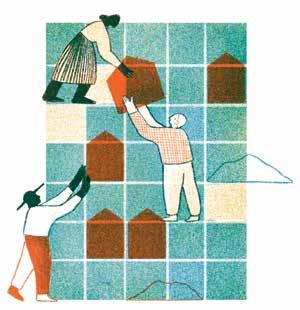
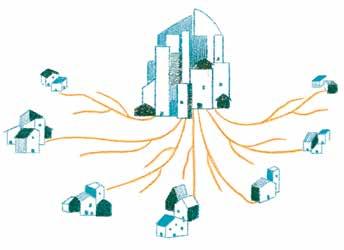
National Housing Policies are widespread but lack comprehensive integration. Many policy instruments – whether standalone housing policies, legislation or integrated sectoral frameworks – do not fully incorporate key dimensions of adequacy such as affordability, tenure security, accessibility, cultural adequacy and sustainability. Limited coordination with related sectors and uneven alignment with international frameworks such as the Sustainable Development Goals, the New Urban Agenda and the right to adequate housing contribute to persistent inadequacy and widening affordability gaps.
Weak multilevel coordination undermines the implementation of housing policy. While housing policies are typically formulated at the national level, local governments bear responsibility for delivery but often lack the mandate, resources and ability to implement them effectively. These governance gaps lead to poorly planned developments, inadequate access to services and spatial inequalities. Local governments can play a fundamental role in ensuring access to adequate housing with the necessary financial, institutional and political capacities in place. Yet in practice many remain confined to implementation roles, with minimal influence over strategic decisions.
Non-state actors shape housing far more than policy reflects Community organizations, civil society groups and private sector actors all play a central role in housing production and upgrading, yet remain marginal in policy formulation, contributing to persistent mismatches between policy design and lived realities. In many contexts, the majority of housing – especially for low-income groups – is produced incrementally by households, communities and informal markets. However, planning, regulatory and financial systems rarely recognize or support these actors. Their exclusion limits the adaptability, feasibility and social responsiveness of national housing strategies.
Human rights violations are deeply intertwined with the global housing crisis. Despite widespread ratification of human rights treaties, many states continue to permit or fail to prevent forced evictions, insecure tenure, homelessness and other precarious living conditions. Weak protections for low-income households and the persistent dominance of financial markets undermine obligations to respect, protect and fulfil the right to adequate housing. The COVID-19 pandemic and climate-related
disasters further exposed systemic vulnerabilities, such as overcrowding, homelessness and inadequate housing, intensifying preventable harm.
Key Messages
Governments should re-establish housing as a public priority. To respond to the housing crisis, governments should reclaim leadership in regulating land and financial markets, strengthen oversight to curb speculation, and maintain steady investment in affordable, well-located housing. Effective housing policies should go beyond an ownershipcentric, property-oriented approach to housing development to embrace the diversity in tenure types – from informal settlements and rental housing to collective and community arrangements – while prioritizing in situ upgrading and the enhancement of existing stock through adaptive reuse and stronger rental frameworks.
Housing policy should operate within a coherent, integrated framework. Linking National Housing Policies with National Urban Policies, clarifying legal mandates, and harmonizing standards across sectors such as infrastructure, finance, and legislation help ensure that policy objectives are aligned rather than fragmented. Embedding housing within broader, citywide and cross-sectoral investment strategies supports more coherent interventions and strengthens implementation. Aligning national policies with global commitments, including the Sustainable Development Goals, the New Urban Agenda, and the right to adequate housing, further promotes consistency and more inclusive outcomes.
Stronger multilevel coordination is essential for effective housing delivery. For housing programmes to be successful, there should be a close alignment between the formulation of policy and the key actors supporting implementation on the ground. A multilevel governance structure capable of coordinating across all government levels is essential to ensure effective housing policies. Local governments should play a stronger role in decision-making, especially in financing and resource redistribution, and hold broader mandates for integrated housing provision.
An effective housing policy needs to involve a wide range of stakeholders. Effective housing policy requires collaboration with a wide range of stakeholders throughout the policy cycle. Embedding public participation and co -production allows civil society to shape decisions and safeguard rights, strengthening policy legitimacy, improving feasibility, and ensuring that housing solutions respond to lived realities rather than remaining disconnected from everyday housing practices.
Housing law, policy and finance should align with human rights obligations. States should strengthen legal safeguards to prevent forced evictions and ensure viable alternatives, recognize and protect all legitimate forms of tenure, and embed the social function of land and housing in policy frameworks. Strengthening rights-based monitoring and accountability mechanisms, access to justice, and participatory processes, including meaningful engagement with civil society organizations, is essential to ensure that policies reflect the experiences and needs of vulnerable groups and effectively protect housing rights.
Chapter 3:
The Housing Affordability Crisis
The rising cost of housing has become a defining feature of the global housing crisis, with cities facing the greatest pressures. Housing is less affordable today than two decades ago, though the drivers and impacts vary widely across regions. Escalating prices reflect a complex interaction of local, national and global forces, and the burden falls disproportionately on younger people, female-headed households, migrants, visible minorities and other vulnerable groups. The crisis also raises concerns of intergenerational equity: high housing prices have increased the wealth of older homeowners, while rapidly rising rents limit younger households’ ability to save and enter homeownership. On the demand side, rapid urbanization, population growth and new household formation intensify pressures, particularly in developing countries. On the supply side, escalating land costs combined with restrictive regulations impede affordable housing delivery. Global dynamics, including cross-border capital inflows and low interest rates, further shape affordability challenges.

Key Findings
Housing prices have risen sharply in recent years, with average price-to-income ratios increasing from 9.5 in 2010 to 11.7 in 2023 globally. Housing prices have risen far faster than incomes, particularly for low-income households. Price-to -income ratios have increased in all regions except Europe and Northern America, with Central and Southern Asia experiencing the steepest rise, from 9.7 to 16.8. This trend reflects rapid urbanization and sustained demographic growth, which have intensified competition for serviced land, alongside rising construction costs driven by higher material prices and infrastructure bottlenecks.
Rental households face severe economic strain, with 44 per cent globally spending more than 30 per cent of their income on housing. Although global levels of housing unaffordability have declined slightly since 2010, trends differ markedly across regions, with many experiencing increases over the same period. Rental unaffordability is most acute in Sub-Saharan Africa, largely due to low and irregular
incomes, limited formal rental supply, widespread informality, and rapid urban population growth.
Acute housing supply gaps are deepening the affordability crisis. Housing shortages have continued to expand worldwide, rising from 251 million units in 2010 to 288 million in 2023. Delivery is constrained by limited serviced land, high construction costs, and regulatory bottlenecks, while subsidized housing reaches only a limited share of households, leaving most to rely on increasingly unaffordable market options.
Inequality magnifies affordability pressures: Higher inequality is closely associated with deeper affordability challenges, reflected in higher rents, greater overcrowding and sharper declines in access to adequate housing for low-income households. These disparities widen gaps between renters and owners and intensify vulnerability among disadvantaged groups.
Housing unaffordability is driving insecurity of tenure for millions worldwide. Nearly one quarter of adults in 108 countries report concerns about losing their land or housing rights, with insecurity increasing most rapidly among renters, young adults, and urban residents. Rising housing costs and growing difficulties in meeting rent or mortgage payments have become leading sources of displacement anxiety, signalling a shift away from traditional drivers such as weak legal frameworks or land disputes.
Key Messages
Ensure that housing policy is aligned with broader urban and national development strategies. Housing affordability is shaped by broad social and economic forces beyond sector-specific policies, including wage stagnation, insecure labour markets, population ageing, and smaller household sizes. As a result, housing policies that are not aligned with employment, social protection, and spatial planning have limited impact, especially for low-income households facing multiple challenges. Coordinating housing with transport, basic services, and social programmes can improve housing outcomes and reduce the wider disadvantages caused by high housing costs.
Reforming housing supply systems is essential for affordability. Persistent supply–demand gaps call for reforms in land management, planning, infrastructure, and delivery systems to accelerate the provision of well-located, affordable housing for low-income households. In many regions, supply has lagged behind population growth amid high construction costs, rigid planning rules, slow approvals, and weak land-use management. Countries combining sustained investment with stronger planning institutions and more efficient regulation have been more successful in expanding housing supply.
Targeting affordable housing finance to vulnerable and low-income groups. Affordable housing finance should prioritize vulnerable and low-income groups, including young adults, migrants, informal workers, and female-headed households. High levels of inequality exacerbate affordability pressures, resulting in rising rents, overcrowding, and
restricted access to adequate housing. Addressing these challenges requires pro -poor measures such as public housing, rental subsidies, and accessible credit for informal workers. However, demand-side support should be matched with strong supply-side action, as assistance to renters and first-time buyers can inflate prices if housing supply remains constrained.
Governments need stronger safeguards to manage the growing influence of institutional and corporate investment in housing markets. When poorly regulated, speculative activity and largescale corporate investment can undermine affordability and housing security for low-income households. If investment growth outpaces local incomes or housing supply, prices rise beyond what households can afford. Policymakers should recognize the limits of finance-led approaches and adopt balanced measures, including monitoring investor activity and supporting long-term affordability through social, rental, and non-profit housing.
Strong institutions are critical to achieving lasting improvements in housing affordability. Progress in expanding affordable housing depends on sustained political commitment, predictable financing, and accountable governance to strengthen housing systems over time. Effective strategies therefore rely on capable institutions, coherent planning frameworks, integrated infrastructure decisions, and active resident participation. Evidence from community-based upgrading, mixed-income developments, and public-private-community partnerships shows that outcomes improve when local knowledge informs planning and delivery.

Chapter 4:
Beyond Displacement: Mitigating the Loss of Home
Displacement and loss of housing are most effectively addressed through a city-wide approach that recognizes displaced people as urban residents with equal claims to the city. In practice, however, displaced populations often face unequal access to protection and services. Local governments therefore play a critical role in ensuring that displaced people have the same opportunities as other urban residents to access adequate housing. When displacement is addressed solely through short-term humanitarian assistance, funding rarely contributes to the long-term capacity of cities to deliver services for both displaced populations and host communities. What is needed instead is stronger alignment between humanitarian and development assistance, focused on place-based approaches that strengthen service delivery and land access, with local governments and communities at the centre of this process.
Key Findings
The number of people forcibly displaced by conflict, disaster or development worldwide is growing, with the majority now concentrated in cities. As of the end of 2024, 123.2 million people were forcibly displaced by persecution, conflict, violence or human rights violations – double the total a decade before – with a further 9.8 million displaced by disaster. Many of these people end up moving as refugees or IDPs (internally displaced persons) to cities, often into insecure or substandard housing where they face the risk of further displacement. However, in addition to these global figures, there is also a hidden epidemic of urban evictions. Though the data on evictions is partial and incomplete, analysis by UN-Habitat for this report estimates that at least 64 million people were displaced from informal settlement by urban development processes between 2003 and 2023.
Refugees, IDPs, evictees and other groups of the urban displaced fall under very different protection regimes, leaving many with little no support. The term “urban displaced” encompasses refugees, internally displaced persons, evictees living in cities, and others in displacement-like conditions, such as returnees or some homeless populations. While these groups often overlap, they are subject to very different rights frameworks and levels of support. Although international agreements exist to protect refugees and prohibit forced evictions, not all UN Member States are party to these instruments, and their provisions are frequently weakly reflected or enforced in national and local law. In practice, those most at risk of exclusion include unregistered refugees and people with insecure tenure, such as tenants and residents of informal settlements.
Displacement management should be a central issue for local government, but is often overlooked. Local governments are best equipped to meet the needs of refugees, IDPs and evictees, but often lack the capacity or the mandate to support them; meanwhile resources and decision-making are often concentrated with national governments and multilateral organizations. At the same time, local governments may

view displaced populations as transient and without political influence, giving them few incentives to support them. With many cities lacking a dedicated multi-sectoral agency to respond to displacement, in practice the response is often split between different departments, resulting in a haphazard and poorly integrated response.
Secure shelter is critical to well-being and fundamental to the right to adequate housing, but is beyond the reach of many displaced people in cities. The impacts of displacement are severe, debilitating and generational. They include, besides the immediate impacts of loss of home and destruction of property, destroyed livelihoods, shattered families, disrupted social networks and lasting psychological impacts from the violence of eviction. Many displaced people end up renting housing in exploitative markets. Women and girls face specific vulnerabilities from lack of a safe home, and are at acute risk of gender-based violence. Displacement often affects those with other vulnerabilities, including unaccompanied children, people with disabilities or minorities.
Many displaced people in cities need an income to survive, but punitive regulations, discrimination and hazardous informal work leave them vulnerable. Discrimination in the labour market leaves displaced people vulnerable to harassment and exploitation. Evictees forced into cheap housing in peripheral locations, far from their original place of work, may lose their livelihoods. Refugees often have restrictions on their rights to work and to open an enterprise, forcing them into informal income-generating arrangements. Overall, the positive impacts of the initiative and enterprise of displaced people remain under-recognized, to the detriment of both the urban displaced and the cities they live in.
Key Messages
Local and regional governments urgently require clear mandates and adequate resources to lead city-wide responses to displacement. Local and regional governments are central to
effective displacement responses, given their frontline role in supporting affected populations. Channeling humanitarian funding through local governments can strengthen long-term service capacity for all urban residents. While many essential services are already in place, additional technical support may be needed to address specific displacementrelated needs. Systematically documenting what works is critical to inform future policy, preparedness, and response.
Housing support for displaced people should move away from top-down provision toward self-reliant, community-led approaches. Housing provided by humanitarian actors, NGOs, or governments cannot meet the full range of displaced people’s needs. Instead, governments can enable access to diverse housing options, including private rentals, through targeted assistance and the removal of discriminatory regulations. Cash-for-shelter programmes have proved effective in helping some households secure housing and meet basic needs. Urban development should prioritize the prevention of forced evictions and ensure adequate compensation. There is also significant potential in community-led and participatory solutions driven by urban displaced groups themselves.
There is an urgent need to prevent and address forced evictions and the loss of displaced people’s livelihoods. Homes and livelihoods are far easier to destroy than to rebuild, so the demolition of housing, whether self-built, informal, or formal, should be avoided wherever possible. Many low-income workers, including displaced people, depend on hazardous, underpaid, and informal work, and eviction deepens these vulnerabilities. Home-based work is especially common among women. Incremental upgrading and area-based approaches can reduce risks and support livelihoods. Women should be supported in income generation, and refugees granted full rights to work and establish businesses.
A spatial, place-based approach can address urban deprivation while recognizing and valuing the cultural and economic diversity that displaced people contribute to cities. Applying a spatial lens to displacement involves mapping where displaced people live across the city and understanding the broader vulnerabilities affecting these neighbourhoods. This allows resources to be directed to priority areas through targeted programmes that benefit both displaced people and host communities. When designed with community participation, investments in public spaces can strengthen social inclusion, celebrate diversity, and create opportunities for jobs and livelihoods.
Bridging the humanitarian–development divide is essential to rebuilding cities and managing the transition from short-term crisis relief to longer-term development financing. While there is extensive international experience in post-disaster recovery, a persistent challenge is managing the transition from short-term emergency relief to long-term development and stable governance. Community-driven reconstruction can address urgent housing needs while helping rebuild cities and restore trust in local institutions. The “build back better” principle, when combined with participatory planning, has demonstrated strong potential to support inclusive and durable recovery for displaced populations and their cities.
Chapter 5:
Leveraging Informality For Affordable and Adequate Housing
Informality is a defining dimension of contemporary urbanization, and in many cities informal housing is now the norm rather than the exception. Given its scale, approaches that ignore or stigmatize informality are no longer viable. This chapter reframes informality not as a deviation, but as a distinct and deeply interconnected mode of urbanization linked to formal planning systems. While informal development can generate slum-like conditions, it is also an incremental process with significant potential to advance inclusive and sustainable city-making. The central challenge lies not in informality itself, but in the deprivations that can accompany it. Policy responses should therefore move from eradication toward leveraging informality to expand access to housing and livelihoods, while addressing structural constraints. These efforts should be integrated with broader housing and planning policies, including measures to strengthen formal housing delivery.
Key Findings
Informal settlements continue to expand in absolute terms Although the share of urban residents living in informal settlements has declined, absolute numbers have risen from 895 million in 2000 to about 1.13 billion in 2024. This increase reflects unplanned urbanization, growing inequality, insufficient affordable housing, limited access to serviced land, and bureaucratic regulatory frameworks that restrict formal housing delivery. Demographic growth, displacement, and weak planning capacity are expected to sustain this trend, with the largest increases projected in Sub-Saharan Africa, particularly in secondary cities.
Despite better understanding, evictions remain the dominant response to informal urbanization in many countries. This persistence is closely linked to the continued stigmatization of urban informality. In many cases, slum demolitions have been justified by efforts to host large-scale international events, such as the Olympics, or to project an image of “world-class” urban modernity. More recently, evictions have also been driven by inadequate responses to climate change, particularly in highly exposed coastal cities, resulting in large-scale displacement, deepening poverty, and heightened vulnerability.
While informal settlements are often discussed in terms of deprivation, they also hold significant potential to contribute to more inclusive and sustainable urban development. Informal urbanization is a dynamic and context-specific process that produces very different outcomes. In many cities, informal settlements provide vital access to affordable housing and land for low-income households, while supporting economic activities and strengthening social networks. Their inherent flexibility also enables residents to adapt quickly to changing needs and emerging challenges, including those posed by climate change.
Progress in informal settlement upgrading remains constrained by policy bottlenecks and trade-offs. Interventions have often focused on physical improvements while giving insufficient attention to other critical dimensions, particularly informal livelihoods. When land regularization through individual titling is poorly designed or implemented, it can trigger rent increases and eventually displace lowerincome residents. Similarly, conventional participation approaches are frequently rigid and outcome-driven, limiting meaningful engagement. This is especially problematic when upgrading initiatives assume uniform priorities among residents, overlooking the diverse needs of vulnerable groups, including women, youth, and older people.
Key Messages
Effectively harnessing informal urbanization requires a collaborative approach based on shared knowledge and genuine partnerships between residents, civil society, and governments. Effective policies should respond to the complexity of informality by recognizing unequal power relations within settlements and the diverse needs and vulnerabilities of residents. Rather than relying on rigid frameworks, public action should be flexible and adaptive to local dynamics and aspirations. Central to this collaborative approach is the co -production of data and knowledge, which helps challenge stigmatizing narratives and empowers stakeholders to reshape understanding of informal settlements. Digital technologies play a key enabling role by supporting participatory data collection and analysis.
Adapting legal and planning frameworks to the realities of informal urbanization. Informal urbanization is often portrayed as undermining formal systems, yet it is frequently shaped or even driven by outdated and inappropriate planning and regulatory frameworks that fail to meet the needs of today’s urban poor. These rigid rules can push people toward informal access to land and housing. Regulatory reform is therefore urgently needed, consistent with the Right to the City, to ensure that all residents can collectively inhabit, shape, and benefit from inclusive cities. This requires more flexible frameworks that work with, rather than against, informal urbanization.

Housing and infrastructure improvements that address climate risks should be grounded in local practices and knowledge and designed to avoid displacing affected communities. Housing and infrastructure interventions should align with informal systems to reduce marginalization and extend legal protection to the workforce. The expansion of basic infrastructure should prioritize participatory in situ upgrading through re-blocking or similar methods to create space for infrastructure while preserving social and economic networks. In the context of climate change, these interventions should adopt hybrid solutions, integrating grey and green/blue infrastructure.
Housing and infrastructure interventions should support mixed use, home-based work, and local livelihoods. These policies and interventions should strategically harness the construction sector and its value chains to maximize long-term impact. Institutionalizing maintenance is essential and can be effectively achieved through community-based models that promote resident ownership, ensure follow-up, and generate local livelihood opportunities. Integrating gender mainstreaming and intersectional perspectives is critical to ensure inclusion and equitable outcomes.
Enhancing land tenure security is critical to addressing the housing crisis. Policies should move beyond a narrow emphasis on freehold titling toward a pluralistic approach to tenure that recognizes diverse arrangements, including customary rights and communal or cooperative models based on collective stewardship. Acknowledging this diversity enables governments to design context-specific interventions that strengthen tenure security while supporting long-term affordability, social cohesion, and resilience. Land tenure schemes should also integrate a gender perspective to address inequalities in land rights and ensure secure tenure for historically excluded groups, including women and youth.
Chapter 6:
Building Climate Resilient Housing
In recent years, governments, agencies, and other actors have mobilized growing political and economic momentum around climate-resilient housing. Evidence shows that all elements of housing systems, from land tenure to financing, influence resilience outcomes. At the same time, housing sits at the centre of the climate challenge, both as a major source of greenhouse gas emissions and as a critical entry point for strengthening resilience. Investment in socially inclusive, climate-resilient housing therefore delivers multiple benefits, including emissions reduction and enhanced security for the most vulnerable urban populations. This chapter examines how climate-resilient housing can be advanced through coordinated action across scales, from individuals and communities to cities and national systems. This approach aligns with the concept of negotiated resilience, shaped through multiple decisions and interventions, helping to reduce unintended impacts and advance climate justice.

Key Findings
Housing is both a significant source of emissions and at the frontline of climate impacts. Buildings account for around 34 per cent of global energy use and 37 per cent of CO2 emissions, with housing alone responsible for an estimated 17 to 21 per cent of total emissions. Climate impacts on housing are widespread, driving displacement, long-term insecurity, and rising unaffordability, particularly in informal settlements with limited capacity to adapt. These intersecting challenges make climate-resilient housing a high-impact investment, capable of significantly cutting emissions while protecting the most vulnerable from climate-related disasters.
Climate impacts are accelerating housing insecurity and displacement, exacerbating the housing affordability crisis. In 2024, an estimated 45.8 million people worldwide were displaced by weather-related hazards, including storms (25.2 million), floods (19.1 million), wildfires (425,000), and droughts (387,000). Although not all such events can be directly attributed to climate change, its impacts are intensifying their frequency and severity. Displacement, in turn, generates new housing demand, often extending well beyond the short term, alongside pressing needs for access to services and sustainable livelihoods.
Emission reduction targets from housing are not being met; thereby, undermining international climate commitments. Progress in reducing housing-related emissions is substantially off track. Between 2015 and 2023, CO2 emissions from building operations increased by 5.4 per cent, even though a reduction of 28.1 per cent was required over the same period to align with the Paris Agreement. While rising global demand for housing partly explains this trend, it nonetheless represents a significant missed opportunity to reduce emissions in a sector with well-established mitigation potential.
Community-led housing is a highly effective strategy to deliver climate resilience. There are now decades of experience demonstrating the potential of this approach in different contexts. Community-led housing models consistently strengthen social, human, economic and physical capital, effectively equipping residents to respond to crises through adaptable housing systems. Furthermore, the direct involvement of the community promotes the use of local, sustainable building techniques and materials, such as bamboo and adobe, significantly reducing both costs and emissions.
The next 25 years represent a pivotal opportunity to reduce emissions from housing. The coming 25 years represent a decisive window for reducing emissions from housing. Estimates suggest that around 60 per cent of the buildings expected to exist in 2050 have yet to be constructed, creating a unique opportunity to embed low-carbon and climate-resilient design at scale. Seizing this opportunity will require coordinated action across multiple levels, from individual buildings and neighbourhood planning to national policy, regulation, and investment frameworks.
Key Messages
Housing is a cornerstone of climate mitigation, adaptation, and just transitions. Housing plays a critical role in climate action, both as a major source of emissions and as a frontline asset exposed to climate risks. This makes the housing sector a powerful entry point for reducing emissions while strengthening resilience at scale and advancing just transitions. Progress begins with improving the existing housing stock, where relatively low-cost measures, such as better ventilation, energy efficiency, and the use of local building materials, can simultaneously enhance comfort, safety, sustainability, and affordability. Housing policy should therefore be fully integrated into climate policy as a core pillar of mitigation, adaptation, and equity-focused transitions.
A whole-system national approach is essential to reducing housing emissions at scale: Reducing housing emissions at scale requires a national, whole-system approach that addresses emissions across the entire housing lifecycle, from design and construction to operation and end-of-life. While energy efficiency standards and building codes have lowered operational emissions in many countries, greater progress depends on expanding regulations to incorporate whole-life carbon accounting. This shift can enable low-carbon construction supply chains, circular economy practices in building design and materials, and other innovations necessary to deliver more sustainable housing outcomes.
Multilevel governance is critical to delivering climate-resilient housing: Delivering climate-resilient housing requires coordinated action across governance levels, as no single actor controls all the necessary levers. Effective responses depend on alignment between global, national, and local agendas, alongside collaboration across sectors. National governments set enabling frameworks for decarbonization, risk reduction, and disaster management, while local governments implement them through planning, land-use regulation, infrastructure provision, and social housing management, in collaboration with civil society and the private sector.

Empower communities to lead resilience-building strategies. Communities should be empowered to play a central role in resilience-building efforts. They are vital in mobilizing residents, bringing forward the perspectives of groups often excluded, including people with disabilities, migrants, Indigenous Peoples, and older persons, and sharing local knowledge essential for effective place-based action. Community-led housing has demonstrated strong results in delivering climate-resilient housing at lower cost while generating local benefits. Sustained national support and international financing can strengthen these capacities and enable resilient upgrading at scale.
Climate-resilient housing policies should embed justice safeguards to ensure resilience does not deepen inequality. Climate resilience measures often generate unequal distributions of benefits and burdens, especially in cities, where low-income and informal settlements already face the highest climate risks and have lower adaptive capacity. Policies should therefore prioritize vulnerable populations and protect the right to housing, preventing exclusionary outcomes such as green gentrification and green grabbing. Thus, integrating climate risk into housing planning with explicit attention to the needs of vulnerable populations – including affordability, tenure security and access to services – is a policy priority. Urban resilience demands a citywide, equity-centred perspective because a city that works for the most vulnerable is a city that works for all.
Embedding equity and justice in climate-resilient housing
Climate-resilient housing policies should include justice safeguards to ensure that resilience efforts do not worsen inequality. Climate interventions often distribute costs and benefits unevenly, especially in cities where low-income and informal settlements face the greatest risks and limited capacity to adapt. Policies should therefore prioritize vulnerable groups and protect the right to adequate housing, preventing exclusionary outcomes such as green gentrification and green grabbing. Integrating climate risk into housing planning with a clear focus on affordability, tenure security, and access to services is essential to achieving equitable, city-wide resilience.
Chapter 7:
Housing and the City: Delivering Equitable, Liveable and Inclusive Housing
Making cities equitable, liveable, and inclusive remains one of the central challenges of the 21st century, and housing plays a decisive role in meeting it. Yet housing is too often delivered as an isolated product, with insufficient attention to its neighbourhood context, environmental conditions, location, and cultural setting. In practice, the success of housing depends on how well it is integrated into the wider city, including access to services, infrastructure, mobility, and employment. Without such integration, households face heightened risks of social and economic marginalization. Urban liveability and inclusion are therefore not neutral technical objectives but deeply political outcomes, shaped by contested planning processes in which the interests of capital, middle-class residents, and vulnerable groups frequently collide. Addressing the housing crisis requires explicitly pro -poor planning and governance approaches that protect low-income households, informal settlement residents, and other marginalized groups, ensuring that liveability is realized as a universal right rather than a privilege of the affluent

Key Findings
Rising housing costs, poorly coordinated planning, and persistent discrimination have contributed to growing residential segregation and spatial fragmentation in cities. This segregation limits access to economic opportunities, services, and safe living environments, disproportionately affecting women, migrants, and residents of informal settlements. Place-based approaches that focus narrowly on physical upgrading or introducing higher-income residents to promote social mix have delivered mixed results, as they often overlook underlying social, cultural, and power dynamics. More integrated strategies are needed to address both spatial inequalities and the structural drivers of exclusion.
With only 19 per cent of cities showing strong civil society participation in urban planning, limited engagement remains a major obstacle to effective housing responses. Limited civic engagement in housing planning, construction, and maintenance undermines urban equity, effective service delivery, and trust in public institutions, with disproportionate impacts on vulnerable groups such as women, persons with disabilities, migrants, and residents of informal settlements. The exclusion of urban residents, particularly low-income communities, from decision-making has also contributed to poorly located and unsuitable housing that fails to respond to the social, economic, and cultural needs of its residents.
Limited access to housing and land is a key driver of increasing inequality. Across both developed and developing countries, shortages of well-serviced urban land are driving land scarcity, pushing up prices, and reinforcing residential segregation. In many cities, the social function of land has been eclipsed by its treatment as a financial asset. This imbalance is reflected in the paradoxical persistence of vacant land and housing alongside unmet need. While some vacancy is normal in functioning markets, large-scale vacancies reduce urban vitality, inflate costs, and undermine overall liveability.
Urban sprawl entrenches inefficiency, inequality, and fiscal strain
Between 1975 and 2025, urban areas expanded at nearly twice the rate of population growth, producing low-density development patterns that raise per-capita infrastructure costs and push low-income workers into long, costly commutes. This form of growth strains municipal budgets, degrades natural ecosystems, and deepens spatial inequality by concentrating affordable housing in peripheral areas far from jobs and services. These compounding inefficiencies and inequities underscore the urgent need for more integrated urban planning and coordinated governance.
Neighbourhoods are essential to social connection, safety, and urban resilience. Housing does not function in isolation; neighbourhoods play a vital social role by providing care, security, social interaction, and a sense of collective life. These benefits depend on inclusive and participatory land use, as well as urban design that prioritizes mixed-use development, small urban blocks, and active streets. Dense, mixed-use environments enhance visibility and public safety, strengthen human connections, and reduce social isolation, forming a critical foundation for vibrant, resilient, and inclusive cities.
Key Messages
People-centred housing is essential for inclusive urban development People-based social housing programmes are vital for reducing housing inequality, promoting social inclusion, and supporting vulnerable groups. To be effective, these programmes should be integrated with infrastructure and transport planning to create connected communities. Concentrating affordable housing in peripheral areas far from jobs and services should be avoided. Instead, well-located urban areas and transit corridors should systematically include affordable housing, supported through inclusionary zoning, the strategic use of public land for mixed-income development, and land-value capture mechanisms that redirect speculative gains toward long-term affordability.
Community-led housing delivers scale when residents control resources and decisions. Housing-centred participation achieves meaningful scale when residents have real control over resources and decision-making. Programmes that provide direct financing to community organizations and grant residents authority over the design, construction, and management of their homes have consistently improved housing outcomes. This requires moving beyond consultation toward genuine power-sharing, including community-controlled funds, collective land tenure arrangements, resident-led capacity building, and flexible implementation frameworks that reflect locally defined priorities. Success depends on communities managing resources directly, assessing their own needs, and negotiating tenure security collectively with government authorities.
Culturally appropriate, gender-responsive, and participatory urban planning should be a core requirement for all housing and neighbourhood development. People-centred policies should address the differentiated needs of vulnerable groups and commit to inclusion in both process and outcomes. Understanding how gender, ethnicity, age, disability, and legal status shape access to housing is critical to ensuring safety, mobility, and dignity for all. User-centred, participatory design approaches help ensure that housing and public spaces respond to diverse needs, benefiting women, children, older persons, persons with disabilities, Indigenous Peoples, migrants, and people experiencing homelessness. Designs that meet the needs of the most vulnerable often enhance liveability and accessibility for everyone.
Collaborative land and housing practices that grant communities legal authority over planning decisions are key to fostering greater inclusion and reducing the impacts of speculation and gentrification. Embracing the social function of land means transforming participation from consultative processes to legally binding co-governance. This can be done by collective tenure arrangements that transfer land ownership and development rights from state control or speculative markets to organized resident communities. Governments should legally recognize community-based organizations as legitimate planning authorities with statutory powers to negotiate land use, allocate housing units, establish community-controlled development funds and enforce affordability covenants in perpetuity.
Granting communities legal authority over land and housing decisions is critical to inclusion and to curbing speculation and gentrification. Recognizing the social function of land requires moving beyond consultative participation toward legally binding co -governance arrangements. This includes collective tenure models that transfer land ownership or development rights from the state or speculative markets to organized resident communities. Governments should formally recognize community-based organizations as legitimate planning actors, with statutory powers to negotiate land use, allocate housing, manage community-controlled development funds, and enforce long-term affordability requirements.
Equity safeguards are essential in neighbourhood liveability investments. Investments in neighbourhood liveability, including transit- oriented and proximity-based development, can reduce transport costs and improve access to services and amenities. However, without strong protection, these improvements often increase land values and displace vulnerable residents. Effective implementation requires securing collective tenure before infrastructure upgrades, embedding affordable housing requirements in all transit-corridor developments, and prioritizing the upgrading of existing communities over clearance and relocation. Without such safeguards from the outset, improved connectivity can unintentionally price low-income households out of newly accessible neighbourhoods..

Chapter 8:
Beyond the Conventionality of Housing Finance
Global financing needs for adequate and affordable housing are estimated at US$ 3–4 trillion per year through 2030, in addition to substantial investment required to maintain and upgrade existing housing stock. With national and local governments facing severe fiscal constraints, scaling a broader range of inclusive, resilient, and context-appropriate housing finance solutions is urgent. This chapter advances an inclusive housing finance ecosystem that affirms housing as a human right while
acknowledging its role as a market good. Housing finance is understood not as a narrow banking function, but as a system of instruments and institutions that enable access to capital throughout the housing life cycle, from land acquisition and construction to maintenance and retrofitting. Achieving housing for all requires rethinking finance beyond conventional models by expanding patient public-purpose capital, scaling non-speculative approaches such as cooperatives and community land trusts, and aligning finance with land, planning, and housing policies. These shifts can curb speculative finance and support diverse incomes, tenures, and delivery models.
Key Findings
Conventional housing finance reaches only a small share of households globally, presently. Conventional housing finance excludes most households worldwide. As of 2023, only one in four applicants (25.5 per cent) successfully obtained a housing loan, despite an increase from 19.8 per cent in 2010. Access remains far lower in many regions, particularly in Sub-Saharan Africa, where approval rates stand at just 8.9 per cent. Countries with high informality, weak credit information systems, and limited collateral frameworks are especially affected, reinforcing the perception that formal housing finance operates as a “luxury good” accessible mainly in more advanced economies.
Exclusion from housing finance is most severe in developing countries. Access to housing finance remains particularly limited in developing countries, where around 60 per cent of working adults lack appropriate financial services and are largely overlooked by existing housing finance policies. Current approaches, heavily focused on mortgage-backed homeownership, fail to reflect the scale, income patterns, and preferences of these households or to support alternative models such as rent-to - own, shared equity, and collective construction finance. Conventional systems are also poorly suited to financing incremental building, renovation, retrofitting, and climate-resilient upgrading, despite these being the areas of greatest need.
Housing finance remains overly focused on homeownership Housing finance systems continue to prioritize homeownership, often at the expense of rental and other tenure options. While owner- occupation remains the dominant tenure globally, accounting for nearly three-quarters of households (74.9 per cent) in 2023, rental housing represents a significant and growing share (15.9 per cent) that is frequently overlooked by conventional finance strategies. Despite proven examples, housing finance has not been fully leveraged through public–private partnerships and other mechanisms to expand public and social rental housing. As a result, many low-income and vulnerable households are left to rely on constrained and increasingly unaffordable rental markets.
Rising interest rates are a major barrier to access to housing finance. Rapidly rising interest rates have become a critical exclusionary barrier to housing finance. Between 2020 and 2024, global interest rates increased at the fastest pace in decades. In advanced economies, mortgage rates doubled or tripled from historically low levels, while in many developing economies, where borrowing costs were already high, interest rates remained in double digits and rose further. Elevated interest rates now act as a structural exclusion mechanism, disproportionately excluding low-income households and exposing the limits of market-dominated housing finance in delivering adequate housing as a human right.
Fragmented regulation and policy misalignment undermine inclusive housing finance. Housing finance systems have failed to keep pace with changing socioeconomic and demographic conditions. Fragmented legislation, misaligned land, planning, and housing policies, and the absence of regulation for non-mortgage finance products create systemic bottlenecks that disproportionately exclude lower-income groups. These structural gaps limit the development of innovative financing instruments capable of addressing the full continuum of housing needs, reinforcing inequality and constraining access to adequate and affordable housing.

Key Messages
Strengthening the legal and regulatory frameworks to balance housing as a right and an economic asset. Balancing the role of housing as a human right and an economic asset requires well-regulated markets paired with deliberate public intervention. Clear land policies, secure tenure, predictable zoning, consumer protection, and coordinated institutional frameworks are essential, as even well-designed financial products cannot function without supportive regulation. Governments should also promote a more inclusive and flexible housing finance ecosystem by complementing mortgage-based systems with alternatives such as microfinance, incremental construction loans, rent-to - own schemes, and other non-mortgage finance models that respond to diverse housing needs.
Scale up community-based and limited-profit housing finance for long-term affordability. Community-based and limited-profit housing providers, including cooperatives, community associations, and right- of-use models, play a critical role in delivering long-term affordable housing. These providers can be scaled through preferential lending, long-term public land leases, and formal legal recognition. Land policy can further support affordability by embedding inclusionary requirements and at-cost rent formulas. Together, these measures counter financialization by stabilizing costs, reducing speculative pressures, and strengthening non-profit housing finance channels that expand access for households excluded from conventional mortgage markets.
Leverage de-risking instruments to unlock long-term investment in affordable housing. Access to long-term, low-cost capital remains limited in many developing contexts due to economic volatility, shallow
capital markets, and high perceived risk. De-risking instruments such as refinancing facilities, guarantee schemes, liquidity backstops, and risk-sharing mechanisms can reduce borrowing costs, lengthen repayment periods, and crowd in private investors and developers. When strategically deployed, these tools help channel finance toward non-speculative affordable housing at scale and strengthen the resilience and depth of housing finance ecosystems.
Strengthen housing data systems to expand access to finance and improve regulation. Robust and timely housing data are essential for improving access to housing finance and strengthening regulatory effectiveness. Governments should invest in integrated national data systems that track housing supply, demand, affordability, and access to finance in real time. Such systems can support data-driven underwriting, alternative income verification, and technology-enabled loan structures, expanding access to credit for underserved households. Integrated data architectures are therefore critical to building more inclusive, stable, and well-regulated housing finance ecosystems.
Prioritize non-market housing finance for displaced and highly vulnerable populations. For households affected by conflict, displacement, or extreme vulnerability, market-based housing finance instruments are often inappropriate and ineffective. Policy responses should therefore shift away from debt-based approaches toward social-protection-led solutions. These include targeted subsidies, publicly supported rental and transitional housing, and grant-based financing mechanisms. Such non-market approaches are essential to prevent shelter-related impoverishment and to ensure access to safe and adequate housing for displaced and financially excluded populations.


The Global Housing Crisis Chapter 1:
Quick facts
1. Global housing inadequacy has reached unprecedented levels, with billions lacking adequate shelter and nearly half of all households struggling with unaffordable housing costs.
2. Five interlinked forces – unaffordability, displacement, informality, climate risks and declining liveability – now shape the global housing crisis and require coordinated, system‑wide action.
3. Rapid urbanization, rising land values, widening inequality, financialization and intensifying climate impacts are deepening housing deficits faster than governments can respond.
4. Climate change is accelerating housing risks worldwide, with escalating hazards destroying homes, driving massive economic losses and disproportionately impacting vulnerable communities.
5. The housing sector is a major global economic engine, generating substantial GDP and employment with the potential to promote inclusive and sustainable urban development.
Policy points
1. Strengthen the social function of housing by ensuring that its economic value does not overshadow its role in promoting well‑being, equity and the common good.
2. Embed adequate housing in national development frameworks to advance economic inclusion, health, climate resilience and social cohesion, supporting progress across multiple Sustainable Development Goals.
3. Implement comprehensive housing frameworks that integrate all dimensions of adequacy to build equitable, resilient and sustainable housing systems.
4. Pursue integrated affordability strategies that strengthen land governance, diversify rental and non‑market housing, simplify regulatory processes and deploy targeted finance to close persistent affordability gaps.
5. Strengthen informal and community led housing by securing diverse tenure, upgrading informal settlements and investing in essential infrastructure to create scalable, resilient and inclusive housing pathways.
Adequate housing is essential for the health, well-being and welfare of humanity. Improved housing conditions can save lives, prevent diseases, increase quality of life and reduce poverty,1 particularly when the housing improvements are targeted at vulnerable groups that live in inadequate housing conditions.2 Dwellings that meet standards of housing adequacy are associated with greater life satisfaction3 and higher psychological well-being.4 Access to adequate and affordable housing also provides children with consistent learning experiences, without the disruptions that result from involuntary and frequent residential mobility.5 In addition, the home is an important source of identity and a sense of belonging.6 Through housing use, design and modification, people attach meaning to their lives and communities.7
Besides these wide-ranging benefits, housing is also a major contributor to the economy and a driver of wealth and prosperity. Investment in housing is an important source of economic growth and employment,8 with the construction sector generating employment in other sectors of the economy through various backward and forward linkages. For instance, sustained investment in housing can lower construction and maintenance costs through economies of scale, catalyzing further growth and stimulating demand for other goods and services linked to housing – thereby providing governments with revenue to generate further development.9 Investment in housing can have co-benefits for health and well-being. To take one example, improvements in thermal insulation can enhance health, while lowering costs on energy consumption.10
In line with international treaties and development agendas (Box 1.1), the World Cities Report 2026 adopts a holistic understanding
of housing: one that goes beyond viewing housing merely as shelter or a collection of physical units. It emphasizes the social function of housing as a foundation for human well-being, community formation,
The World Cities Report 2026 adopts a holistic understanding of housing: one that goes beyond viewing housing merely as shelter or a collection of physical units
and opportunities to thrive. Although this broader perspective is well understood among housing experts, in practice much housing continues to be developed through a narrow, unit-focused lens. This has led to housing built in locations that are removed from employment and activity nodes, with schools, healthcare, recreational and other ancillary facilities taking years to materialize, if at all.11
The progressive realization of the right to adequate housing has long been recognized in international treaties and development agendas, such as the Universal Declaration of Human Rights, the 2030 Agenda for Sustainable Development and the New Urban Agenda (NUA). Housing has also been recognized by the United Nations General Assembly as a key foundation of social development.12 This rights-based framework provides the foundation for UN-Habitat’s own work on housing and underpins the analysis throughout this report. At a tangible level, the adoption of these instruments has been reflected in recent years in a shift in national housing policies in many countries, with a renewed focus on progressive approaches such as in situ upgrading (something discussed in more detail in Chapter 2).
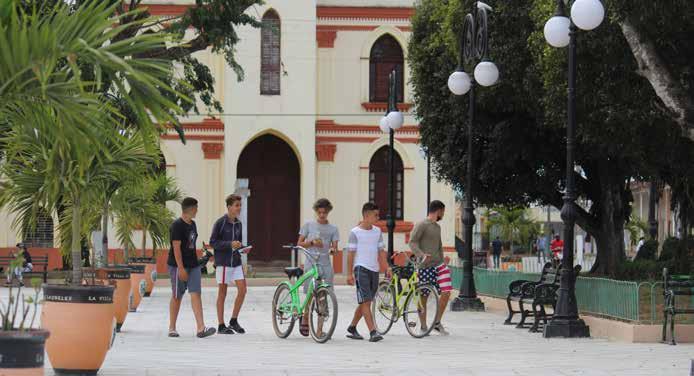
Bikers in Placetas, Cuba © UN-Habitat/Hector Bayona
The concept of adequate housing is multidimensional. A key point of reference in realizing the role of housing to drive societal progress are the seven dimensions of adequate housing that have been defined through the United Nations Committee on Economic, Social and Cultural Rights (CESCR): namely, security of tenure, availability of services, affordability, habitability, accessibility, location and cultural adequacy.13 The human right to housing is an essential part of the “right to the city”. This report is structured to cover the seven dimensions of adequate housing identified by CESCR, with the additional dimension of environmental sustainability: though not originally included by CESCR, the increased impact of climate change on housing necessitates including it explicitly in the definition of adequate housing (Figure 1.1).14
This report is also premised on the notion that adequate and affordable housing serves as an enabling condition for accessing a broader range of benefits. A house is more than just a place to live in: it is integral to health, education, economic prosperity and the ability to participate in the community on an equal basis.
1.1: Dimensions of adequate housing
As demonstrated repeatedly in this report, the provision of adequate housing is key to inclusive, equitable and sustainable development outcomes. It is integral to seven Sustainable Development Goals (SDGs), including SDG 1 on ending poverty, SDG 6 on clean water and sanitation, SDG 11 on sustainable cities and communities and SDG 13 on climate action. Housing also directly supports progress on six additional SDGs, such as SDG 8 on decent work and economic growth, SDG 10 on reducing inequalities, and SDG 12 on responsible consumption and production.15
Adequate housing is also essential for realizing the three transformative commitments of the NUA: promoting sustainable urban development for social inclusion and poverty eradication; fostering inclusive and sustainable urban prosperity and opportunities for all; and advancing environmentally sustainable and resilient urban development. Comparing indicators from the Adequate Housing Index16 and a set of development outcomes that reflect progress toward the SDGs, the close relationship between them is evident (Box 1.1).
Availability of services, materials, facilities and infrastructure
All people should have sustainable access to natural and common resources, safe drinking water, energy for cooking, heating and lighting, sanitation and washing facilities, means of food storage, refuse disposal, site drainage and emergency services
Affordability
Housing costs should be at such a level that the attainment and satisfaction of other basic needs are not threatened or compromised
Habitability
Housing should provide adequate space and protection from cold, damp, heat, rain, wind or other threats to health, structural hazards, and disease vectors
Legal security of tenure
All people should possess a degree of security of tenure which guarantees protection against forced eviction, harassment and other threats
Source: Adapted by UN-Habitat from CESCR, 1991.
Realizing the Right to Adequate Housing
Cultural adequacy
Accessibility
Housing must be accessible to those entitled to it, including disadvantaged people such as older persons, persons with disabilities or persistent medical problems, and children
Location
Housing must be in a location which allows access to employment options, health care services, schools, childcare centres and social facilities
The way housing is constructed, the building materials used and the policies supporting these must appropriately enable the expression of cultural identity and diversity of housing
Figure
Box 1.1: Correlating the Adequate Housing Index with sustainable outcomes
The Adequate Housing Index provides a standardized framework for assessing housing adequacy across 64 emerging economies, based on seven household-level dimensions: access to improved water, improved sanitation, adequate living space, durable materials and structural quality, security of tenure, access to electricity and access to clean cooking. These dimensions are combined into a single index ranging from 0 to 1, with higher scores indicating greater levels of housing adequacy. The figures below illustrate the relationship between housing adequacy and key development outcomes. With the exception of inequality, housing adequacy shows a strong and consistent association with improved outcomes in income, health, poverty reduction, as well as the prevalence of slums and informal settlements. In particular, as demonstrated in the graphs below, adequate housing correlates directly with a number of key sustainable development targets.
No poverty (SDG 1): Adequate housing is strongly associated with lower levels of poverty, as shown in the graph, underscoring its central role in poverty reduction. Beyond its economic value, adequate housing provides stability, safety, protection and social inclusion, all of which help prevent households from falling into poverty. Access to adequate housing enhances the ability of low-income households to improve living standards and pursue income-generating opportunities. Durable, safe, and climate-resilient housing is also critical for reducing vulnerability to shocks, in line with SDG Target 1.5. Aligning housing provision with social, economic and environmental strategies enables governments and development partners to reduce multidimensional poverty, break cycles of vulnerability and build more inclusive, resilient and equitable urban communities.
Good health and wellbeing (SDG 3): As shown in the graph, higher housing adequacy is strongly associated with lower under-one and under-five mortality rates, as well as longer life expectancy. Housing conditions that include improved water, sanitation, hygiene and resilient infrastructure significantly reduce exposure to waterborne diseases such as cholera, as well as communicable and non-communicable illnesses linked to unsafe water, pollution and environmental contamination, directly supporting progress toward SDG 3 on ensuring healthy lives. Improving the physical quality of housing through retrofitting older dwellings to reduce indoor air pollution, prevent mould growth and enhance ventilation has been found to lower the risk of respiratory conditions including asthma and allergies. Ensuring more equitable housing access is key to alleviating global health inequalities.
Decent work and economic growth (SDG 8): The figure shows a strong positive correlation (0.91) between adequate housing and income, measured by GDP per capita, consistent with World Bank findings.17 Improved housing affordability also reduces financial strain on households, enabling greater investment in education, skills development and other essential needs that enhance employability and earning capacity. In addition, the housing sector itself is a significant driver of economic growth, generating employment in construction, real estate and related industries and contributing directly to SDG Targets 8.3 and 8.5. In essence, adequate housing forms a foundation for higher and more stable incomes, supports inclusive and sustained economic growth, and expands access to economic opportunities in line with SDG 8’s vision of productive employment and decent work for all.
Reduced inequalities (SDG 10): The graph indicates a negative, though not statistically significant, relationship between housing adequacy and inequality, suggesting that better housing conditions are generally associated with lower levels of inequality. Adequate housing can play a key role in reducing disparities, promoting inclusive development and supporting upward mobility. Ensuring access to safe, secure and affordable housing helps mitigate visible forms of inequality, including spatial and social segregation. Providing equitable, non-discriminatory housing opportunities is essential for advancing the goals of SDG 10, particularly Target 10.2, which calls for the social, economic and political inclusion of all.
Sustainable cities and communities (SDG 11): Addressing slums and informal settlements requires a multifaceted strategy that includes expanding access to adequate and affordable housing, upgrading existing settlements, strengthening security of tenure and ensuring reliable access to essential services such as water, sanitation and electricity. Tackling the root causes of housing inadequacy, governments and partners can prevent the formation of new slums and support the development of sustainable, resilient and inclusive cities. These efforts reinforce progress toward multiple SDGs, alongside SDG 11.1: in this way, adequate housing contributes not only to the reduction of slum conditions but also to more resilient and sustainable cities.
Figure 1.2: The different intersecting components of the housing crisis
Climate-resilient design can involve higher up-front costs
Affordability
The challenge of making housing affordable for all
Lack of affordability drives peripheral construction of housing that are often not well integrated in the city
Liveability
The challenge of integrating housing into the city
Sustainability
The challenge of building climateresilient housing
Displacement creates pressure on existing housing markets
Climate change is an increasing driver of displacement
Informal settlements are most at risk of climate shock
Lack of affordability in formal markets drives informal housing development
Informality
The challenge of leveraging informality for housing
Displacement
The challenge of mitigating the destruction of housing
Many displaced people resort to informality to sustain livelihoods
Informal settlements often lack the services that integrate them into the city
1.1
Addressing the Global Housing Crisis
Despite the importance of housing, its role as a critical driver of societal progress has not fully been realized. Currently, the world is facing a housing crisis that is more severe than ever before. While the provision of housing has always faced difficulties, especially in urban areas, the past two decades have witnessed rising prices, low supply, massive displacement and limited upgrading, among other issues – all of which have led to severe shortages that have made access to adequate housing one of the intractable challenges of our time. Both developing and developed countries alike are affected by the housing crisis, with urban areas where housing conditions are already strained being disproportionately affected.
The housing crisis is multidimensional, and so the response needs to be multidimensional too
This section unpacks the housing crisis in terms of the five main intersecting challenges that emanate from the housing crisis: affordability, displacement, informality, sustainability and liveability (Figure 1.1). These broad-based issues have been identified because they are pervasive across different contexts, have profound impacts on achieving adequate housing across the world, and are critical levers for action.
What becomes clear though from the range of challenges is that there is no single “housing crisis”.18 Rather, what exists is a series of interconnected pressures and failed systems, explored in more detail in various chapters of this report. What this means is that none of the challenges can be addressed in isolation. The housing crisis is multidimensional, and so the response needs to be multidimensional too: coordinated, cross-cutting research and action on housing is more important than ever (Box 1.2).
Box 1.2: The Open-ended Intergovernmental Expert Working Group on Adequate Housing for All
In 2023, the UN-Habitat Assembly established the Open-ended Intergovernmental Expert Working Group on Adequate Housing for All (OEWG-H) through resolution 2/7.19 The Group was mandated to recommend policies that accelerate progress towards universal access to adequate, safe, sustainable and affordable housing; assess global efforts; identify best practices; develop a framework for measuring and reporting on adequacy; and map multilateral and bilateral support. Working under a multi-year roadmap to 2029, the OEWG-H advances thematic work on housing finance, security of tenure, homelessness, social housing and the upgrading of informal settlements. It is also developing a publicly accessible housing knowledge platform to compile disaggregated data, tools and case studies for policymakers. Through this work, the Group provides targeted, actionable recommendations to promote inclusive, safe and affordable living conditions for all.20
1.1.1 The scale of the housing crisis: an overview
Although the language of “crisis” often implies a temporary breakdown that can be corrected by returning to a previous period of effective functioning, the reality is that adequate housing for all has never been achieved at any point in human history. The term “crisis” is therefore used in this report to reflect the unprecedented magnitude and acceleration of housing need, at a time when the population living in slum conditions is now the largest on record and the number of people internally displaced from their homes in 2024 reached its highest level to date.21 In reality, these groups are to some extent overlapping and difficult to quantify exactly, but what emerges is a situation where a sizeable proportion of the urban population – in the case of many developing countries and low-income neighbourhoods, the large majority – are living with some degree of housing inadequacy.
People living in informal settlements and slums do have housing, but few of the dimensions of adequate housing are met in such neighbourhoods. They face precarious living conditions characterized by inadequate water supply, unsanitary environmental conditions, overcrowded and dilapidated habitation, hazardous location and insecurity of tenure, among other issues. More than 1.1 billion people currently live in informal settlements and slums. The proportion of the urban population living in slums globally has been declining for decades, from 31.2 per cent in 2000 to 24.8 per cent in 2022. However, the absolute numbers are still increasing. Three regions – Central and Southern Asia (334 million), Eastern and South-Eastern Asia (363 million) and SubSaharan Africa (265 million) – account for more than 85 per cent of the total population living in informal settlements.23 Chapter 5 discusses these figures in greater detail. However, housing inadequacy extends beyond those without homes or living in informal settlements. Overall, more than 1.6 billion people are affected by some form of housing inadequacy24 – a figure that includes, in addition to those living in informal settlements, another half a billion contending with a range of housing deprivations. Globally, as of 2024 2.2 billion people still lacked safely managed drinking water services, 3.4 billion were without safely managed sanitation services and 1.7 billion did not have basic hygiene services at home.25 As housing without these services is considered inadequate, given its knock-on effects on health and life prospects, at least 3.4 billion people are affected by some form of housing inadequacy across the urban-rural continuum.
In addition, urban displacement has created a large and growing population of internally displaced persons (IDPs), refugees and evictees, who face a range of profound challenges, including lack of access to housing. Given the complex nature of the displaced population’s needs, particularly those uprooted by conflict or natural disasters, their situation is often framed as a humanitarian crisis. Yet access to housing – both in terms of immediate shelter and longer-term accommodation that is safe, adequate and affordable – is a crucial challenge for displaced groups and can play a decisive role in determining their long-term well-being and integration. As of the end of 2024, 123.2 million people were displaced globally due to persecution, conflict, violence or human rights violations, more than twice the number recorded a decade before,26 with a further 9.8 million people internally displaced by natural disasters.27
From political instability to climate change, the drivers of displacement have direct implications for the global housing crisis. In addition, according to new research by UN-Habitat undertaken for this report, at least 64 million people were displaced by urban development between 2003 and 2023. This figure highlights the hidden epidemic of evictions, a significant but under-reported form of displacement that is generally excluded from headline figures on global displacement. These issues are discussed in more detail in Chapter 4.

However, housing inadequacy extends beyond those without homes or living in informal settlements
Homelessness – the lack of any form of secure dwelling – remains a widespread problem worldwide, though precise figures on its prevalence are not available. Only 78 countries globally have official data on homelessness, making consistent estimates of its prevalence globally more or less impossible.28 Moreover, definitions overlap with IDPs, evictees and people living in inadequate housing or informal settlements. Drawing on data from the Institute of Global Homelessness, however, the homelessness rates for some large countries indicate the scale of the problem: 21 per 10,000 for China, 13 per 10,000 for India, 20 per 10,000 for the United States (US) and 11 per 10,000 for Brazil.29 Based on a harmonized definition and method, the OECD estimated
that in 2024, over 2 million people in the OECD countries alone were experiencing homelessness each year.30 However, conventional methodologies often undercount certain groups, particularly women, children and young people, Indigenous Peoples, older persons, ethnic minorities and migrants.31
In other ways, too, systemic and historically rooted inequalities shape access to adequate housing across characteristics such as age, gender, ethnicity, economic status, disability, sexual orientation and migration status. Women and gender-diverse persons continue to face constraints arising from patriarchal property systems.
For example, a World Bank assessment in Sub-Saharan Africa found that fewer than 13 per cent of women aged 20–49 report sole ownership of land, compared with 36 per cent of men.32 Although joint ownership narrows the gap, disparities remain substantial, with long-term implications for intergenerational wellbeing and economic efficiency. Intersecting vulnerabilities also emerge along lines of ethnicity, disability and migration status. In Latin America, 2010 data show that Indigenous populations experience significantly higher rates of inadequate access to sanitation and drinking water than non-Indigenous, non-Afro -descendent groups.33
Migrants face similar disadvantages: in the EU, homeownership among nationals (73.6 per cent) is more than three times higher than among non-EU citizens (22.9 per cent) and almost double that of citizens from other EU countries (37.0 per cent). Overcrowding is likewise more prevalent among non-EU citizens (33 per cent) than among EU citizens (19.8 per cent) or nationals (13.7 per cent).34
The shortage of housing is a major driver of the global affordability crisis
1.1.2 The affordability challenge: rethinking housing delivery
The last three decades have witnessed an emerging housing affordability crisis, with housing-related expenses rising much faster than income.35 Housing affordability encompasses not only the direct cost of a home, but also the expenses associated with services, infrastructure, insurance and taxes. Households that spend more than 30 per cent of their income on housing are typically considered to be cost-burdened, a situation that UN-Habitat data shows applies to 44 per cent of tenant households worldwide.36 The regions with the highest proportions of households spending more than 30 per cent of their income on rent are Sub-Saharan Africa (55 per cent), Europe and Northern America (50 per cent), and Latin America and the Caribbean (48 per cent).
Between 2010 and 2023, the cost of buying a house rose globally from 9.3 to 11.2 times the average annual income. The regions with the highest price to income ratios in 2023 are Central and Southern Asia (16.8) and Eastern and South-Eastern Asia (17.5).37 These ratios indicate that housing is largely unaffordable for most urban residents and suggest that homes in Asian cities are generally less affordable than those in many developed countries. Hong Kong has frequently ranked as the least affordable housing market in the world.38 Chapter 3 analyzes the affordability crisis and discusses the contextual factors including the effects of the burden of affordability. The shortage of housing is a major driver of the global affordability crisis, as demand continues to outpace supply. As shown in Figure 1.2, the deficit is most acute in Sub-Saharan Africa, where at least 100 million additional housing units are needed to meet current and future household needs.
Figure 1.3: Housing shortage by region (units in millions)

Simply increasing the number of houses, without addressing underlying issues such as poverty and unemployment, will not result in truly affordable housing
Globally, the estimated shortfall is more than 268.8 million housing units, with the greatest concentration in developing regions.39 This estimate may still understate the true scale of need: the World Bank previously identified a housing deficit of 268 million units across 64 emerging countries, representing 1.26 billion people, suggesting that global figures are likely higher.40
Addressing the housing affordability crisis requires examining the entire housing delivery system: how housing is financed, constructed and maintained, as well as the factors that shape supply, including construction costs, regulatory frameworks and land availability. It also involves assessing demand-side pressures such as households’ ability to pay, the rapid rise in housing costs relative to income, and broader socioeconomic challenges like poverty, inequality, unemployment, low wages and gaps in social protection policies. This helps identify the key bottlenecks that impede the supply of affordable housing and informs the most effective strategies for reforming housing systems to improve affordability for all groups. Simply increasing the number of houses, without addressing underlying issues such as poverty and unemployment, will not result in truly affordable housing even if construction costs are reduced. This underscores the need for a multipronged approach that combines both demand- and supply-side measures.
1.1.3 Mitigating displacement and its impacts
Displacement is a broad term that captures the multitude of ways people can be affected by conflicts, disasters, eviction, slum clearance, and gentrification, among others. Besides leading to loss of livelihood, assets, health and well-being, conflict and disaster-related displacement pose a challenge to housing. First, as the majority of those displaced through conflicts and disasters do not live in camps,41 those displaced add pressure on surrounding housing markets and settle land informally in places with an insufficient supply of formal housing. In cities where capacity and resources are already strained, displacement compounds local housing issues, which can lead to tension and hostility. Second, there is the need for reconstruction of housing in conflict- or disasteraffected places for people to return if they so desire.
Displacement has often been addressed primarily from a humanitarian standpoint. Over the past decade, however, there has been growing demand for solutions that move beyond temporary or emergency responses toward more permanent housing options integrated into urban policy. At the same time, there is increasing recognition of the limitations of standardized shelter models: these may meet immediate physical needs, but fail to provide the broader socio -economic support such as access to services, amenities and social welfare programmes that helps displaced people fully integrate into society. A lack of cultural adequacy has also been repeatedly identified as a key recurring issue for emergency housing.42 Chapter 4 explores measures that have been taken to address
the trauma and impact of forced eviction and displacement, and how those that are displaced can be best supported through integrated approaches that promote the progressive realization of the right to adequate housing.
1.1.4 Leveraging the potential of informality for housing provision
In many settings, a significant portion of housing is produced informally through processes that are unplanned, unregulated and often in violation of planning or building standards. A common pattern in such contexts is that households first occupy land, then construct their own homes, and only afterward engage with community groups or government authorities to secure infrastructure and planning support. These issues are explored in greater detail in Chapter 5.
Although global data are unavailable, estimates from Mexico, Nepal and Ghana indicate that between 60 and 90 per cent of housing is built incrementally and through self-construction.43 Much of this activity takes place in informal settlements, which in many countries are the norm rather than the exception: in Burkina Faso, Mali and Chad, more than 80 per cent of the urban population lives in such settlements.44 Because formal housing is unaffordable and access to formal finance is limited, residents who build incrementally often rely on informal financing sources, including relatives, moneylenders and community-based housing funds.45
Informally built housing and neighbourhoods are constantly undergoing self-initiated maintenance, repairs and upgrading
The challenge is that formal urban policy and practice in most cities have struggled to integrate and capitalize on the significant potential of informal housing processes. These informal systems need to be harnessed because they directly produce significant quantities of housing, in the process generating livelihoods that support housing investment. Compared to formal housing systems, they also offer advantages such as greater flexibility, lower costs, stronger community networks and quicker responses to shocks.46 Indonesia’s Kampung Improvement Programme, for example, built on the strengths of informality by providing serviced plots on which low-income households could construct their own homes through self-help methods. At the same time, it is essential to recognize the limits of what communities can achieve alone: in particular, the need for investment in formal trunk infrastructure and key city-level services. It is equally important to analyse who benefits from informality in each context and the negative impacts informal practices can also produce, including environmental pollution, poorly built housing, political clientelism and land-related criminal networks.
Informally built housing and neighbourhoods are constantly undergoing self-initiated maintenance, repairs and upgrading, even though formal land and housing policies are often poorly aligned with their needs and realities. Informal housing is also widespread in high-income countries, where backyard units, basement apartments, rooftop dwellings, accessory dwelling units and unauthorized subdivisions have become an increasingly important source of low-cost housing.47

A comprehensive response to the housing crisis must include recognition of informal land tenure and planning regulations that support incremental, in situ upgrading. Informally built homes frequently double as places of work, making housing a productive asset that urban economic development strategies should consider.48 However, in many cities, local policies and building codes continue to penalize informality, and much construction takes place under insecure land tenure conditions.49 This insecurity limits access to finance and undermines residents’ ability to invest in and continually improve their homes. The key question, then, is how policy frameworks can be adapted to harness the strengths of informal practices while preventing the emergence of slum conditions.
1.1.5 Promoting sustainable housing through climate resilience
Climate change is reshaping cities in profound ways, driving more frequent and severe extreme weather events such as floods, heatwaves, wildfires, powerful storms, droughts and other climate shocks.50 Achieving climate-resilient housing is one of the world’s most urgent challenges. Because housing occupies the largest share of built-up urban land, homes are on the frontline of these impacts.51 In 2024 alone, natural catastrophes generated an estimated US$318 billion in global economic losses – most of it uninsured – and technical assessments indicate that disaster-related losses are following a long-term upward trajectory. By 2040, climate hazards could result in the loss of around 167 million homes.52
The Intergovernmental Panel on Climate Change (IPCC) warns that risks to cities, settlements and critical infrastructure will continue to intensify without accelerated adaptation, particularly in rapidly expanding and vulnerable urban areas.53
The building and construction sector is a major driver of global greenhouse gas emissions, accounting for at least 37 per cent of the total.54 Housing therefore holds significant potential for reducing emissions. Yet adapting homes and infrastructure to a changing climate presents profound challenges. Climate-related investments such as flood protection have too often prioritized affluent neighbourhoods, leaving vulnerable communities and informal settlements underserved and at greater risk, thereby deepening existing inequalities.55 Emerging low-carbon building technologies may not always be cost-effective, and their widespread adoption carries the risk of widening housing disparities. Balancing the higher upfront costs of green design against long-term savings in maintenance, operation and health outcomes remains a key policy challenge.56 In this context, investment in housing represents a critical opportunity to advance climate justice and ensure that the benefits of climate action are shared equitably.57
Building climate-resilient housing requires reconciling two urgent and sometimes competing imperatives: expanding access to adequate housing at scale, and promoting compact, connected forms of urban development.58 Variations in housing density, and in how “compact”
A local artist installs a newly painted roof in Medellín, Colombia © UN-Habitat/Julius Mwelu
neighbourhoods are planned, can lead to substantial differences in greenhouse gas emissions.59 Yet from 1990 to 2014, average urban densities declined, driving urban expansion into natural carbon sinks and contributing to higher emissions from longer commutes.60 Conversely, policies designed to protect green areas, such as greenbelts or restrictions on development in flood-prone zones, can unintentionally worsen housing affordability by constraining land supply.61 The central challenge is whether cities can strike a delicate balance between developing new peripheral land to meet housing needs and containing urban expansion to prevent further environmental degradation.
Addressing the challenge of sustainable housing is not simply a question of how many more homes are needed, but also of where and how they are built. Even without closing the existing housing gap, adapting today’s housing stock to withstand the accelerating impacts of the climate crisis is an immense undertaking. This is particularly the case in informal settlements, where strengthening resilience is both urgent and essential, yet must compete with other pressing needs and priorities. Recognizing that no single approach fits all contexts, Chapter 6 examines the policies and interventions needed to scale up the decarbonization of housing in ways that are cost-effective and do not undermine affordability.
1.1.6 The importance of ensuring liveable neighbourhoods
Cities around the world continue to face significant challenges in integrating housing into the broader urban fabric in ways that ensure all residents have access to liveable, well-connected neighbourhoods. Housing is far more than a physical structure: it encompasses a multidimensional package of goods and services, including access to infrastructure, public space, mobility, livelihood opportunities and social networks. Yet, in many contexts, housing delivery has been approached as a series of isolated construction projects focused primarily on the provision of shelter. Insufficient attention to the neighbourhood, environmental, cultural and locational dimensions of housing has often resulted in developments that are physically disconnected from essential services, employment and amenities. This segregation reduces access to opportunities and reinforces spatial inequality.
Urban planning and governance are therefore critical to creating liveable neighbourhoods by ensuring that housing is well located, adequately serviced and embedded within a coherent urban structure. However, in many settings, planning and governance frameworks lack the capacity, tools or institutional alignment required to fulfil this role effectively. When housing is built without walkable public spaces, safe street networks or mass public transport options, residents are pushed into car-dependent patterns of living, with cascading implications for health, safety, affordability and climate resilience. In the most extreme cases, isolated housing projects may remain vacant or underutilized because they fail to meet the practical needs of residents. Ensuring a balanced mix of housing, services and amenities can play a central role not only in improving neighbourhood liveability, but also in easing affordability by optimizing land supply and reducing infrastructure costs.

When housing is built without walkable public spaces, safe street networks or mass public transport options, residents are pushed into car-dependent patterns of living
Creating liveable cities requires authorities to move beyond convening planning processes and instead actively engage communities in decision-making, fostering meaningful collaboration with community organizations, the private sector, neighbourhood associations and individual residents.62 Such engagement ensures that planning tools reflect the perspectives and needs of diverse groups, particularly those traditionally marginalized from decision-making processes, such as women, older persons and migrants. Achieving full integration of housing within the city also requires sustained attention to management, maintenance and stewardship so that the social function of housing, its long-term value and its durability can be fully realized. Moreover, inclusive housing systems must adapt to evolving demographic trends, including ageing populations and increasingly multicultural cities. Chapter 7 explores how housing can be effectively integrated into the wider urban fabric to create resilient and liveable neighbourhoods.
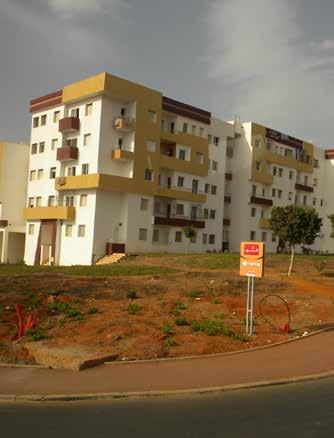
Newly constructed residential housing units in Rabat, Morocco © UN-Habitat /Jacob Ojwang
1.2
Drivers of the Global Housing Crisis
The escalating scale of the global housing crisis must not obscure the deeper, long-term structural forces that have shaped today’s challenges. While the specific barriers to achieving adequate housing vary by country and context, the focus of this section is on the structural, long-term drivers that underpin the global housing crisis. These forces shape housing outcomes across all regions and interact with policy failures, institutional weaknesses and regulatory gaps that compound housing deficits (Figure 1.4). Without addressing these drivers comprehensively and systematically, the global housing crisis will continue to deepen, placing even greater strain on cities and human settlements worldwide.
1.2.1
Urbanization: increasing urban population and rising land prices
A key driver for the housing crisis is the inability of housing production to keep pace with rising global population, especially in urban areas. Rapid urbanization exerts tremendous pressure on housing and land markets, which is reflected in housing shortages, overcrowded habitation, and the large number of people living in slums and informal settlements. Developing countries have the fastest rate of urbanization,
with an average annual urban growth of 1.7 per cent in less developed regions between 2000 and 2025 compared to 0.3 per cent among more developed regions during the same period.63
Between now and 2050, more than 1.7 billion additional people are expected to reside in urban areas, a total of 6.5 billion.64 The implication of this is that future urban growth will take place mainly in the developing regions of Africa and Asia, where the planning systems and public institutions are not currently well-equipped to supply housing at the rate which is needed.
Unplanned urbanization is a key driver for the growth of informal settlements. Without making well-serviced land available at affordable prices, conditions of housing inadequacy are more likely to persist. With the increasing concentration of people living in cities demand is outstripping supply, creating land scarcity and price escalation. In developed countries, rising land prices may account for as much as 80 per cent of the increase in housing prices that has taken place since the 1950s.65 In African countries, meanwhile, land prices have been found to be rising much faster than the general price of goods and services, particularly for urban areas.66
Demographic shifts
Demographic drivers
Increasing population in need of housing
Economic drivers
Increasing housing demand is fuelling potential returns on investment
Climate change and conflict are accelerating urbanization
Urbanization is leading to higher land prices Intergenerational housing inequality
Housing crisis
Context-specific policy gaps and inadequate level of responses to address key drivers
Urbanization is driving wealth generation and more floor area per person
Climate change and conflict are destroying homes while intensifying demand in urban housing markets
Financialization is driving demand for speculative housing assets
Housing financialization
Inequality and financialization are reinforcing each other
Housing is a key driver of increasing inequality
Accumulation of housing equity is driving the housing crisis
Housing inequality
Contextual drivers
Figure 1.4: The key drivers of the housing crisis
1.2.2 Increasing housing consumption
Urbanization is not only driving the demand for housing from rural to urban areas, but also generating prosperity.67 While increased affluence in cities is a mark of societal progress, it is leading to increased housing consumption that is straining supply. The trend from the available data shows that the amount of housing floor area per person has been rising for decades. In the US, the average house size increased from 154 m2 in 1973 to 250 m2 in 2015, while at the same time average household size dropped from 3.1 to 2.5 people. This means that the average area per capita almost doubled from 51 m2 in 1973 to 98 m2 in 2015.68 A similar picture emerges for China. In 1956, the average urban inhabitant in China only had 5.7 m2 of residential floor area, but by 2020 this figure has increased more than six-fold to 38.6 m2 per person.69
Unless significant changes are made to the types of available housing, housing consumption per capita is expected to accelerate with an overall trend towards smaller and single-person households. All this extra residential space costs money to be constructed, maintained and climatized, not only increasing the unaffordability of individual housing units, but also contributing to increased greenhouse gas emissions. Even in contexts where real construction costs have not risen significantly, the increase in housing size means costs have still gone up. In the US, the cost of housing per square foot (measured in constant 2010 US$) remained almost unchanged between 1980 ($83) and 2015 ($85).70 Yet housing prices have steadily increased in the US in recent years, with inflation-adjusted housing prices around 65 per cent higher in 2023 compared to 2000.71
In some contexts, changes in housing consumption have been compounded by high or increasing construction costs. Housing construction costs per square meter are lower in China and India, where significant economies of scale exist, than in Chad, Zambia or Ghana, where construction industries and supply chains are less developed.72 In African cities, construction costs range between 35 and 71 per cent of the total cost of housing.73 The reliance on imported materials is an important driver of higher construction costs, especially for landlocked countries such as Rwanda, where transport accounts for around 40 per cent of the cost of building materials in the capital Kigali.74 It is imperative that developing countries promote local production of building materials through strategies such as import substitution, as is being undertaken by Ethiopia, Rwanda and now Malawi.75
1.2.3
Increasing inequality
The contradiction between growing urban prosperity and the persistence of a severe housing crisis reflects the unequal distribution of housing opportunities. While global inequality has remained high for decades, income and wealth inequality within many countries have also increased, intensifying housing deprivation.
Rising property values disproportionately benefit those who already own homes, widening the wealth gap, while growing employment insecurity weakens the economic foundation required for households to access stable housing. At the same time, policy frameworks in many places have reduced support for economically vulnerable groups, often favouring those already securely housed.76 The widespread prevalence
of informal settlements is itself a consequence of these structural inequalities. Evidence from the US shows that an increase in inequality is associated with a rise in the number of severely rent-burdened lowincome households.77 This trend is replicated in Europe, where income inequality is associated with decreased affordability, inferior housing quality and overcrowding for low-income groups.78
The housing crisis does not simply result from inequality, however: housing has itself become a key driver of inequality, too. Housing generates disparities through at least two mechanisms. First, owner- occupiers can leverage their homes as collateral to access credit and build additional wealth. Second, well-located housing provides long-term human capital advantages such as access to good schools, employment, transport and services that compound over generations.79 Consequently, housing inequalities cascade into broader inequalities in health, education and economic opportunity. Whereas occupation once played a dominant role in shaping life outcomes, homeownership is increasingly emerging as a key determinant of welfare and social mobility.80
A major contributor to this dynamic is the intergenerational transmission of housing wealth. Financial assistance from parents or inherited property significantly enhances young adults’ access to homeownership, making wealth inequality persist over time. This has produced widening generational divides, as older homeowners have benefited from decades of rising housing values, while younger cohorts face escalating prices and far more restricted access to ownership.81 Without addressing these underlying inequities, particularly on the demand side, the housing crisis is likely to deepen and extend across future generations.82

Financial assistance from parents or inherited property significantly enhances young adults’ access to homeownership, making wealth inequality persist over time
Persistent disparities in access to adequate housing also drive major health inequalities. Poor ventilation, inadequate thermal protection, pest infestation, exposure to toxins and substandard infrastructure all negatively affect physical well-being. Overcrowding heightens the risk of communicable diseases, including tuberculosis, while the COVID-19 pandemic underscored the heightened vulnerability of residents of slums and informal settlements, where inadequate housing facilitated rapid disease transmission. Structural deficiencies in housing also increase risks of injury due to flooding, collapse and unsafe electrical systems. These challenges disproportionately affect vulnerable groups, particularly children living in informal settlements. UNICEF data from 70 countries show that in half of them, urban children in the poorest quintile are at least twice as likely to die before the age of five as those in the richest quintile.83 Limited access to preventive and curative health services, such as immunization, further compounds these risks.

1.2.4 Increasing financialization of housing
A major driver of the global housing crisis is the growing financialization of housing.84 Housing is increasingly treated as a financial asset, overshadowing its essential role in providing safe, secure and dignified living spaces for people. This shift has allowed homes and mortgages to be packaged into financial products and traded as investment commodities.85 As the Special Rapporteur on the right to adequate housing has noted, this trend has “transformed housing from a fundamental social necessity into an investment tool”, reducing both affordability and accessibility.86 In a number of countries, large institutional investors now own a significant share of the housing stock, contributing to rising rents, speculative behaviour and increased pressure on low- and middleincome households.
The financialization of housing accelerated during the 1980s as housing markets were liberalized.87 Access to mortgage credit expanded and restrictions on domestic and foreign investment in housing were eased.88 Banking deregulation increased the availability of credit, allowing mortgage lending to grow faster than the construction of new homes.89 This created feedback loops in which easier access to credit pushed up prices more quickly than supply could respond. In some cases, well intentioned housing subsidies also contributed to price increases by raising purchasing power without expanding supply. Declining interest rates from the 1980s further encouraged investment in real estate, intensifying demand and price growth.90
Speculative and poorly regulated credit flows have inflated housing prices in unsustainable ways, often ending in market corrections once price bubbles burst. In contrast, conventional housing finance systems remain inaccessible for large segments of urban households, especially in developing countries. The inability of formal institutions to address the housing needs of most of the population should be a central concern for policymakers. In response, alternative financing approaches have emerged, including microfinance, community-based mechanisms, blended finance and cooperative credit systems. These alternatives are examined in more detail in Chapter 8.
Current affordability challenges stem not only from supply constraints but also from demand-side pressures linked to speculation and investment practices. In many cities, new housing is increasingly designed for higher income groups or investors, leading to substantial numbers of vacant or under - occupied units even as shortages persist for lower income households. In some countries, these units represent 10 to 15 per cent of the total housing stock.91 This mismatch wastes valuable resources such as land, construction materials, infrastructure and services, while failing to meet urgent housing needs.
Speculative and poorly regulated credit flows have inflated housing prices in unsustainable ways
High-rise apartments in Hong Kong, China © Shutterstock
1.2.5 Rising impact of climate change and conflicts
Climate change and ongoing conflicts are often treated as external pressures rather than core drivers of the housing crisis.92 Yet both have become central forces reshaping where and how people live. As the UN Special Rapporteur on the right to adequate housing again notes, “the climate crisis is also a housing crisis.” Climate change contributes directly to housing insecurity by driving displacement, exacerbating rural-to-urban migration, and accelerating unplanned urbanization. The rising cost of adapting existing housing to withstand more frequent and severe climate shocks is placing additional pressure on households and public budgets alike. Recognizing these overlaps, it is increasingly clear that housing and climate policy must be addressed in a coordinated and mutually reinforcing manner.93
Armed conflict is also a major source of housing loss and displacement, with millions forced from their home every year to escape violence. For IDPs and refugees, violations of the right to adequate housing are among the most severe, encompassing loss of homes, land, livelihoods and security. While conflicts may appear localized, their effects extend far beyond conflict zones. Large population movements into cities elsewhere place additional strain on already overstretched housing markets, contributing to higher demand, rising rents and increased informal settlement growth.
Armed conflict is also a major source of housing loss and displacement, with millions forced from their home every year
Of the countries that experienced a rise in the proportion of their urban population living in slums and informal settlements between 2000 and 2020, more than half were either in conflict or transitioning out of it, highlighting the long-term impacts of violence on urban housing outcomes.94 Chapters 4 and 6 examine these drivers in greater detail, showing how displacement and climate risks intersect with housing systems and outlining practical strategies to strengthen resilience, expand protection and reduce vulnerability.
1.2.7 The institutional and regulatory environment
Local and context-specific factors, especially institutional and regulatory frameworks, also play a critical role in shaping housing outcomes. Across many settings, a recurring pattern of weak housing and land governance constrains supply and undermines affordability. Restrictive land-use rules, outdated building regulations and zoning practices such as “Not in My Backyard” (NIMBY) opposition often limit where and what types of housing can be built, as is in the case of San Francisco (US).95 When these regulations are unrealistically burdensome or poorly designed, they make housing more expensive and disproportionately exclude lowincome households.
Efficient and predictable regulatory systems, by contrast, can accelerate the supply of well-located and affordable housing. However, in many countries, complex approval processes, overlapping mandates and lengthy administrative procedures delay development and deter investment.
In some African countries, obtaining a construction permit can take more than 200 days, making land both scarce and costly.96 These governance gaps are compounded by widespread insecurity of land tenure – globally, an estimated 1.4 billion people lack legally recognized documentation of their land rights97 – as well as the absence of clear national housing policies or weak links between national and local priorities. Such fragmentation produces inconsistent regulations, conflicting objectives and incoherent housing systems.
Regulatory and financial incentives tend to favour high-income housing at the expense of affordable options. Very often, the market prioritizes luxury or investment-oriented developments even where demand from low- and middle-income households is far greater. This mismatch contributes to rising vacancies and under-occupied units, as seen in some “ghost city” developments, while shortages for lowincome groups persist. Because these context-specific drivers vary widely across places, addressing the housing crisis requires localized strategies tailored to institutional capacity, land governance conditions and the specific needs of different communities.
1.3 Emerging Housing Trends
This section highlights several key housing trends that have emerged in response to the global housing crisis and sets the foundation for the discussions in the chapters that follow. Although each trend requires its own set of policy responses, they share a common shift away from rigid, institutionalized and one-size-fits-all approaches. Instead, they emphasize more inclusive models that integrate people into society and expand the range of housing options available to different groups.
1.3.1 Trends in housing demography
Responding to an ageing population
A major demographic shift that will intensify over the coming decades is the rapid growth of the older population. People aged 65 and above represent the fastest-growing age group globally, projected to almost double between 2024 and 2054, from 17 to 33 per cent of the population.98 This trend makes it increasingly important to ensure that housing and supporting infrastructure are suitable for this demographic trend. As older people typically spend more time at home, the effects of inadequate housing will be felt even more acutely.
In response, many countries are adapting housing to support “ageing in place”, enabling older persons to live independently in their communities for as long as possible. This approach includes modifying existing homes and ensuring access to appropriate services and assistance.99 Ageing in place helps prevent or delay disruptive transitions to care facilities, supports autonomy and reduces the risk of social isolation.100 It also allows older adults to choose whether to remain in their current home, relocate to housing designed for older people, or live with family members.101
Historically, multi-generational households were common, providing social benefits such as shared caregiving and reduced loneliness among older persons. Although such arrangements have declined over the past century, particularly in Western Europe and Northern America, they remain widespread in many regions. In parts of Africa, for example, more than half of older persons live in extended family households.102 As populations age and housing affordability pressures increase, for young and old alike, multi-generational living may become more prevalent again.
As populations age and housing affordability pressures increase, for young and old alike, multigenerational living may become more prevalent
Inclusive approaches to housing for people with disabilities
An estimated 1.3 billion people, or 16 per cent of the global population, live with significant disabilities.103 People with disabilities face major barriers to securing adequate housing, including limited options for where and how they can live. Many people with disabilities remain in the parental home far longer than their peers, or they reside in shared accommodation with communal facilities and support services.104 Yet accessible housing tailored to their needs is essential for ensuring economic security, health, well-being and independence.105

Traditionally, governments and non-governmental organizations have developed disability-specific housing that often isolates residents from their communities and clusters people with disabilities together. In line with the United Nations Convention on the Rights of Persons with Disabilities, however, disability policy is increasingly shifting away from segregated and institutional models toward “individualized housing” approaches. These approaches give adults with disabilities genuine choice over their living arrangements and enable them to reside in ordinary community settings alongside people without disabilities.106 This shift away from formal institutions does not exclude collective living models that may be particularly beneficial for some groups such as people with autism or Asperger’s, especially when these arrangements support independence while also encouraging social interaction and engagement with the wider community.
To expand such choices, accessibility principles must be integrated into all housing construction. Accessibility adaptations range from low-cost measures like rails, ramps and entry systems, to major modifications such as lifts or redesigned kitchens and bathrooms. Evidence shows that these adaptations are a cost-effective public investment: they help people avoid hospitalization, ease pressure on caregivers and foster social inclusion.107 Yet major gaps remain. In the US, for example, fewer than 4 per cent of homes can be considered fully accessible to wheelchair users, with no-step doorways, single-floor living and hallways of a sufficient width.108 Building public support for inclusive design will require demonstrating that accessibility features benefit not only people with disabilities, but also older adults, children and others who may face mobility or access challenges at different stages of life.
Disability policy is increasingly shifting away from segregated and institutional models toward “individualized housing” approaches
Single-person households
As discussed earlier in this chapter, one major driver of the global housing crisis is the growing amount of space consumed per person. This trend stems from two opposing developments: homes are becoming increasingly larger, while average household size continues to shrink. The increase in single-person households is one dimension of this. The proportion of the world’s population living alone has steadily risen from 23 per cent in 1985 to 28 per cent in 2018, with projections suggesting that by 2050 more than one in three households could consist of a single person.109 Although regional differences are substantial – ranging from just 2.6 per cent single-person households in Cambodia to 38 per cent in Switzerland – a study across 75 countries found that the rate of singleperson households was rising in 53 of them, amounting to more than 70 per cent of those surveyed.110 Responding to these demographic shifts requires not only the construction of more smaller homes, but also the development of housing that can adjust to evolving household configurations. These adaptations are crucial not just for meeting the needs of smaller households, but also for addressing other dimensions of the broader housing crisis.
A young woman with a disability sits in a wheelchair and eats breakfast at home
Shutterstock
1.3.2
Trends in housing delivery
The persistent and complex nature of the housing crisis, combined with responses that are slow, small in scale and often still unaffordable, has led to growing interest in more flexible, temporary approaches to housing delivery, occupation and management. This discussion focuses on three adaptive housing solutions: infill housing, flexible housing and temporary housing.
Trends towards more adaptive housing solutions
In this context, infill housing is used as an umbrella term that encompasses secondary and accessory dwelling units, tiny homes, resident-initiated extensions, the restoration of previously habitable units, the subdivision of larger homes, and the conversion of non-residential spaces such as offices into housing units. These forms of development generally help fill gaps in the housing market, particularly for smaller units and for specific population groups. Infill housing often operates in grey areas of existing regulatory frameworks. For instance, secondary units built in backyards are typically smaller and lighter structures, meaning they may face less stringent building codes, fewer requirements for environmental impact assessments, and no need to upgrade local infrastructure.111 In some jurisdictions, regulations have been amended to encourage infill, such as by easing land-use restrictions.112 The city of Los Angeles (US), for example, has adopted policies on accessory dwelling units that have broadened where and how these units can be constructed.113
The housing built today must also be flexible enough to adapt to emerging and future needs. Flexibility is a key strategy in responding to the climate crisis, as housing designed for easy adaptation over time has a lower environmental footprint than carbon-intensive renovations or demolition and reconstruction. Flexible housing can adjust to personal, practical or technological changes, and seeks to empower residents to make modifications both at the design phase and throughout the building’s lifespan. This participatory approach strengthens residents’ sense of ownership and helps reinforce the idea of the housing unit as a true home.114
Temporary housing refers to all forms of accommodation intended for non-permanent use. Broadly, it includes demountable structures such as emergency shelters and temporary housing that repurposes existing durable buildings, such as the short-term conversion of offices into living spaces.115 While emergency housing is typically deployed in crisis situations, temporary housing plays an important role in addressing homelessness, where transitional solutions are often required: for instance, when a family is evicted and needs immediate, short-term accommodation.
Trends towards community-led housing
Housing policy is increasingly acknowledging community-led housing as a viable alternative model. In this context, community-led housing refers to a wide spectrum of housing approaches characterized by strong community participation such as collaborative housing, co -housing and cooperative housing. These models typically incorporate elements of self-built housing, including greater resident control over the development, management and long-term stewardship of homes, and they may also involve varying levels of support from local governments.
Central to this approach is the use of shared land tenure that moves beyond individual or state ownership, enabling collective land and housing management and fostering urban and architectural design that supports shared everyday spaces.116
Community-led housing has long been an important mode of housing provision across many Asian countries. A well-known example is Thailand’s Baan Mankong programme, discussed in detail in Chapter 5, where scale has been achieved through partnerships between government agencies and community-based organizations that make use of land-sharing arrangements. Another widespread form in Asia involves large-scale housing development by village committees located on urban peripheries. As cities expand and incorporate these urban villages, existing systems of shared or collective landownership have enabled the rapid creation of housing for people who are excluded from formal housing markets.117
In Europe and North America, community-led housing is gaining traction as a response to escalating housing unaffordability and the increasing financialization of residential real estate.118 Community land trusts, for example, have become prominent for their model of separating land ownership from home ownership and applying resale restrictions to ensure long-term affordability, maintain community benefit, and reduce displacement pressures.119 A notable trend in these regions is the explicit use of community-led housing to intentionally create new communities. Co -housing developments, for instance, are designed around shared facilities such as communal dining spaces, recreational areas and gardens to encourage interaction and support the formation of diverse, multigenerational communities.120

Homes built under Baan Mankong, a low-cost housing program to resettle communities living by canals in Sai Mai district of Bangkok, Thailand © Rina Chandran/Thomson Reuters Foundation
Community-led housing is gaining traction as a response to escalating housing unaffordability and the increasing financialization of residential real estate
1.3.3 Trends in housing technology
Technology has always played a role in the design, construction and maintenance of housing. However, in recent decades, new and rapidly evolving housing technologies have begun to transform the sector, driving down costs while reducing environmental impacts. Key trends include the growing adoption of modular and prefabricated construction methods, renewed interest in Indigenous building technologies, and the rise of digital tools that support more efficient housing design, construction and management.
Housing modularity and prefabrication
In response to the housing crisis, modular and prefabricated construction methods are being increasingly adopted because they reduce costs through mass production, shorten construction timelines and enhance quality control.121 These approaches involve manufacturing key components – such as facades, roofs and structural elements – off-site and then transporting them to the development site for final assembly. Off-site fabrication enables greater automation and more consistent quality. Since traditional construction is highly labour-intensive, faster on-site assembly can significantly reduce costs, particularly in countries where labour is expensive.122
However, prefabricated modules remain cost-effective only when the distance between factory and construction site is manageable, meaning they work best within strong, localized economies.123 In addition, modular construction requires substantial up-front investment to establish factories and acquire specialized machinery, potentially limiting the wider adoption of these technologies in developing countries. While modular and prefabricated systems often use concrete – an expensive and carbon-intensive building material – several recent innovations aim to reduce both the cost and environmental footprint of construction. These include replacing steel reinforcement with textile-based alternatives124 and using locally sourced binders to lower the clinker-to-cement ratio.125
Modular components are also increasingly being integrated with 3D-printing technologies.126 Advances in digital design, hybrid building systems and prefabrication have made it possible to use other materials as well, such as modular mass timber systems.127 Modular construction has also proven to be a powerful tool for climate adaptation. In the Netherlands, for example, prefabricated insulated wall and roof panels that can be attached directly to existing buildings have accelerated renovation processes and minimized disruption for residents.128
Innovative application of traditional technologies
The second trend in housing technology involves a growing appreciation and widespread use of Indigenous, vernacular and traditional construction methods – particularly for their potential to reduce costs and environmental impact.129 These approaches rely heavily on bio -based materials such as adobe, rammed earth, clay masonry, sod blocks, thatch and bamboo.130 Timber remains the most widely used bio -based material
at scale, often serving as a lower-carbon substitute for concrete and steel, especially in low- and mid-rise housing.131 These technologies are increasingly recognized for their contributions to the SDGs.132
Their carbon-sequestering properties, biodegradability and low embodied energy make them especially important for climate change mitigation.133 In addition, the localized supply chains linked to these materials create jobs and strengthen community resilience.
Modern technological advances are also helping revive and enhance traditional construction practices. For instance, innovations in producing interlocking stabilized soil blocks have transformed a long-standing technique into a cost-effective, scalable alternative to fired bricks. The ease of deploying this technology has led to wider use in displacement and humanitarian settings.134 Both modular and vernacular approaches emphasize design for disassembly and reuse – a strategy shown to reduce embodied energy and embodied carbon by up to 81 per cent and 88 per cent respectively.135 However, despite their benefits, bio -based housing technologies still face obstacles, including inconsistent performance standards and regulatory frameworks that have yet to catch up with material innovation.136

Housing digitalization
Modular construction has also proven to be a powerful tool for climate adaptation
The third pervasive trend is the increasing digitalization of housing production tools such as Building Information Modelling (BIM), now widely used to optimize building design for low energy consumption.137 Digital technologies also play a crucial role in modular housing, where they support the precise design and fabrication of complex connection components, and help reduce waste in prefabrication and modular construction.138 However, the most transformative impact of digitalization is likely to be in housing management. Recent advancements, including cloud and mobile computing, digital platforms and automated, data-driven decision-making, are reshaping how housing systems are administered.139
In some countries, land registries have been fully digitized, enabling the entire legal process of land sale and transfer to take place online. In Kenya, for example, the Boma Yangu platform uses a digital system that allows residents to register, save and apply for housing. Digitized monitoring of the housing sector can also strengthen decision-making, improving transparency and fairness in the allocation of below-market housing and housing subsidies.140
Technology is also advancing the development of early warning systems, which are increasingly important for housing resilience. Early warning tools for earthquakes and climate-related disasters are now used to predict and monitor the timing and severity of such events, helping residents protect their homes, secure their belongings and save lives.
Artificial intelligence is also being applied to monitor the financial health of housing markets, providing signals that can help prevent instability. Despite these benefits, the use of digital technologies raises concerns related to privacy, transparency, openness and the potential for increased speculation in housing markets.141 As digital systems make global finance more interconnected, strong regulatory frameworks are needed to ensure that digital housing information is not misused for financial gain.142
1.4
Housing and the Economy
Housing plays a transformative role in shaping national economic outcomes. However, the economic importance of housing has perhaps not been sufficiently recognized, with policymakers viewing it as “essentially a social sector deserving minimal attention and advocacy as an instrument for economic development”.143
Housing was historically viewed as a “non-productive” investment, having a high capital-output ratio compared to other forms of investment. It was a good or service which called for substantial input but yielded less output, yet competing with other sectors for capital, labour and materials. It was, and often still is, considered as a social expenditure contributing only to consumption, thus attracting labels like “resourceabsorber”, “consumer good” and “social overhead”.144
Widespread investment in housing in developing countries was often rejected as a meaningful development strategy. In Latin America and the Caribbean, despite housing deficits, public investments are below 1 per cent of GDP in several countries (Figure 1.5).145 Likewise public expenditure is also low in developed regions. In EU countries, for instance, government expenditure on “housing and community amenities” as a share of GDP is about 1.2 per cent.146
Yet in practice, the housing sector makes a substantial economic contribution. The construction sector is among the largest industries worldwide, accounting for approximately 13 per cent of the global GDP, and providing employment to an estimated 7.7 per cent of working population,147 which represents around 287 million people.148 In the US, housing has consistently accounted for 15–18 per cent of GDP.149
A study covering 11 emerging economies estimates that the combined contribution of housing investment and housing services ranges from 6.9 to 18.5 per cent of GDP, with an average of 13.1 per cent.150
Analysis of South Africa, Rwanda, Kenya and Nigeria further shows that the gross value added generated by residential construction and rental activities exceeds that of many other sectors.151
However, although housing makes a substantial contribution to national output in many emerging markets and developing economies, its true impact is often underrepresented in official statistics.
Figure 1.5: Public investment in housing in selected countries in the Latin America and the Caribbean region
This is because the large size of the informal sector leads to the undercounting of capital and labour invested in self-built housing.152 Informal construction, which may account for up to 80 per cent of residential building activity in developing countries, is frequently undervalued or not fully recorded.153
In many African countries, the economic value generated by informal housing is likely greater than that produced by the formal sector. It also consistently delivers more housing units.154 Yet housing services provided through informal arrangements are commonly overlooked or underestimated. This reflects a broader challenge in capturing the economic significance of informality in GDP measurements, with important implications for national economic indicators.155
1.4.1 Economic linkages of the housing sector
The economic significance of the housing sector is anchored in its extensive backward and forward linkages across the wider economy. Through these linkages, the sector’s demand for key inputs and services is closely connected to its broader role in meeting societal needs, stimulating economic activity and shaping patterns of urban development.156 These interdependencies mean the economic impact of housing investment is extended well beyond the initial outlay.157

Informal construction, which may account for up to 80 per cent of residential building activity in developing countries, is frequently undervalued
The economic effects of housing manifest through three channels: direct impacts, arising from investment in residential construction and the employment generated within the sector; indirect impacts, transmitted through the supply chains that provide materials, services and intermediate inputs; and induced impacts, arising from the re-spending of income generated by direct and indirect activities. Evidence from South Asia illustrates the magnitude of these effects, where US$1 spent in the housing sector can generate up to US$5 in income.158
Although internationally comparable data remains limited, available studies underscore the substantial contribution of the housing sector to national economies and employment creation. Cross-country research covering nine emerging market economies indicates that US$1 million in construction output can create between 43 and 182 jobs through direct and indirect effects.159 Country-specific evidence aligns with these findings. In India, an additional Rs. 100,000 (1 lakh) in demand for residential construction generates an estimated 2.69 new jobs (2.61 informal and 0.04 formal), rising to 4.06 jobs (3.95 informal and 0.11 formal) when induced effects are included.160 In the US, construction of a typical single-family home is estimated to support 2.9 jobs, while an average rental apartment generates 1.25 jobs.161 Similarly, in England and Wales (United Kingdom), the house building industry supports an average of 3.4 jobs per dwelling constructed.162
The economic gains generated by housing investment vary widely depending on the type of investment, the structure and size of the economy, the scale of construction activity, and a country’s level of development. Low-cost housing tends to create more employment than luxury or high-end housing because it relies heavily on locally produced materials and labour-intensive construction methods rather than imported materials, advanced technologies and specialized labour.163 Although the use of local building materials can generate substantial backward linkages, which support domestic manufacturing and raw material industries, many developing countries remain heavily reliant on imports. In Africa, imports account for an estimated 60 per cent of construction materials, a level that is difficult to sustain in economies facing significant debt pressures.164
1.4.2 Housing sector as a generator of employment
The housing sector has a strong capacity for job creation. It is both a major employer and a critical source of income, generating jobs directly through construction activity and indirectly through a wide range of related industries. Direct employment in housing construction engages diverse trades and occupations, and provides an important pathway for workers to acquire and upgrade skills – often through work-based or informal learning – creating opportunities for economic mobility.
Globally, the construction sector employs over 280 million people.165 A substantial proportion of these jobs are linked to housing construction. In the US, for example, as of June 2025, an estimated 3.3 million of the 8.3 million people employed in construction were engaged in residential building.166 In India, the construction sector directly employs 16 per cent of the national labour force, with housing alone accounting for 58 per cent of all construction-related employment.167
Informal employment dominates the construction sector across developing regions. As illustrated in Figure 1.6, rates of informality are highest in Africa, followed by Asia and Latin America and the Caribbean. In all regions, informal employment in construction exceeds overall informality levels. In Sub-Saharan Africa, the informal economy accounts for between 50 and 80 per cent of GDP.168 This dominance is dual-edged: while it provides essential “survivalist” economic opportunities, informal employment is often precarious and low-paid.169 Nonetheless, it plays an indispensable role in housing delivery, as examined in Chapter 5. High levels of informality also have implications for access to housing finance. The prevalence of daily-wage labourers and the lack of documented or stable incomes make it difficult for workers to qualify for formal housing loans, as mortgage providers and lending institutions often avoid lending to low-income informal workers. This issue is further explored in Chapter 8.

The housing sector has a strong capacity for job creation
Myanmar (2020)
Guinea-Bissau (2022) Bolivia (2024) India (2024) Uganda (2021) Honduras (2017) Cambodia (2019) Comoros (2021) Ecuador (2024) Pakistan (2021) Chad (2018) Suriname (2016) Nepal (2017) Mauritania (2019) Argentina (2024) Bangladesh (2023) Rwanda (2024) El Salvador (2023) Indonesia (2023) Gambia (2023) Guyana (2019)
America and the Caribbean
Timor-Leste (2021) Burkina Faso (2022) Mexico (2024) Viet Nam (2023) Benin (2022) Paru (2024) Afghanistan (2021) Burundi (2014) Panama (2024) Sri Lanka (2022) Tanzania (2020) Colombia (2024) Thailand (2024) Madagascar (2022) Costa Rica (2024) Maldives (2019) Mali (2022) Brazil (2024) Mongolia (2023) Senegal (2024) Uruguay (2024) Brunei Darussalam (2023) Togo (2022) Chile (2020) Turkey (2024) Lesotho (2024) Kenya (2019) Sierra Leone (2018) Somalia (2019) Egypt (2023) Zambia (2023) Botswana (2024) Nigeria (2024) Zimbabwe (2023) Ghana (2015) Angola (2022) Mozambique (2015) Côte d'Ivoire (2019) Ethiopia (2021) Liberia (2017) Mauritius (2023) Tunisia (2019) Namibia (2018) Eswatini (2023) Seychelles (2024) Niger (2017) Lao PDR (2022) Sudan (2022)
(2023)
1.4.3
The home as an enabler for income generation
In many low- and middle-income countries, housing serves as an important enabler of income generation through both rental arrangements and home-based enterprises.170 Subletting, for instance, is a common income-earning use of housing in some African cities.171 However, the expansion of rental use, particularly short-term rentals, has raised concerns about reduced housing supply and declining affordability.172 In response, several cities, including London (UK), Vienna (Austria), San Francisco and Washington, D.C. (US), have introduced regulations restricting short-term rentals to no more than 90 nights per year. Paris imposes a limit of 120 nights, while Japan applies a nationwide annual cap of 180 days.173
Home-based enterprises (HBEs) constitute a significant source of employment. A 2021 study by WIEGO and the ILO estimates that approximately 260 million home-based workers operate globally: of these, most (86 per cent) are in developing and emerging economies (Figure 1.7), with women representing the majority (57 per cent) of home-based workers worldwide.174 In OECD countries, HBEs account for slightly more than half of all private enterprises,175 and in several African countries they serve as a critical economic lifeline.176
HBEs flourish when housing meets key dimensions of adequacy. Evidence from Khulna, Bangladesh shows that the level of tenure security in informal settlements significantly affects the economic returns generated by HBEs. A lack of secure tenure can hinder enterprise growth, while secure tenure combined with income from HBEs supports self-help housing processes, enabling bottom-up, dweller-led housing consolidation.177
1.4.4 Housing as a fiscal tool for governments: a stimulus and source of revenue
Although the housing sector is sometimes approached cautiously due to its association with speculative bubbles and episodes of financial instability,178 it remains a powerful engine of economic activity. Housing generates substantial fiscal revenues for governments: in Jordan, it contributes between 6 and 11 per cent of total government revenue, while in Indonesia it accounts for roughly 8 per cent of national tax receipts.179 Its strong multiplier effects also make the sector an effective instrument for economic stimulation across a wide range of related industries.
Historical experiences from Japan, Singapore and the Republic of Korea underscore the central role of housing in long-term national development strategies.180 The sector has also played a leading role in economic recovery, as seen in the US, where residential investment consistently leads the business cycle, being typically the first component to contract and the first to recover.181
Europe (6%)
Asia and the Pacific (3%)
Americas (5%)
Eastern, Southern Europe and Central Asia (2%)
Southern Asia (26%)
East and South-Eastern Asia (36%)
Southern Africa (<1%)
Rest of Sub-Saharan Africa (14%)
Latin America and the Caribbean (6%)
Middle East and North Africa (1%)
Figure 1.7: Distribution of home-based workers by regions
Source: Bonnet et al., 2021.
During previous global crises, governments have frequently used housing investment to stimulate wider economic activity, particularly through construction and allied industries. During the COVID-19 pandemic, several countries – including India, Australia, Canada, France and New Zealand – implemented housing-focused initiatives as part of their fiscal responses. These included A$6 billion (approximately US$4.6 billion) for the “Big Housing Build” in the state of Victoria in Australia; C$1 billion (US$0.8 billion) for Canada’s Rapid Housing Initiative; and nearly 3 billion (US$3.4 billion) in housing investments under France’s France Relance economic recovery plan.182
1.4.5 Housing: a cornerstone for wealth accumulation
Housing is one of the most important tangible assets and a central component of national wealth.183 Unlike most consumer goods, it is a long-term investment and often the largest purchase individuals make. For many households, home equity is their primary financial asset and main store of wealth. In the US, for example, several years after the 2008 housing market collapse, 81 per cent of adults still viewed homeownership as the best long-term investment.184 Across OECD countries, owner- occupied housing constitutes roughly half of all household assets – and more than 60 per cent for middle-class households.185 In many developing countries, homeownership is a major driver of household savings and is widely regarded as essential for financial security and upward mobility. In both developing and developed economies, housing also supports financial intermediation by serving as collateral that enables the creation and expansion of small businesses.
Financialization has expanded the role of housing as an asset class and increased interest from institutional investors. These shifts have contributed to affordability pressures in some contexts, sharpening the tension between housing as an investment and as a basic need and human right. As concerns about speculative activity have grown, so too have calls for more active public measures to manage these impacts and support more inclusive housing outcomes.186
1.5 Concluding Remarks
The challenges identified in this Report are illuminated with new data and evidence, highlighting their scale, complexity and uneven impacts across regions and population groups. While the housing crisis manifests differently across contexts, its structural drivers, including rapid urbanization, climate risks, widening inequalities, evolving patterns of housing investment and constrained public finances, are global in scope. These forces interact with local regulatory gaps and weak governance frameworks, creating barriers that prevent many households from accessing adequate housing. Together, these forces show that the crisis cannot be resolved through isolated interventions or short-term responses.
Lack of access to housing is not only a question of insufficient supply, but also a product of social exclusion and inequality. Narrow solutions focused only on specific construction targets, without a wider analysis of the specific housing needs and challenges of the most excluded groups, are unlikely to deliver lasting solutions for those currently excluded from the market.
Adequate and affordable housing for all is achievable only through coordinated, multilevel action. National and local governments, the private sector, community actors and development partners each hold critical responsibilities. Ensuring the full participation of every stakeholder, particularly those traditionally left out of housing design and implementation, is therefore key.
Effective solutions must recognize housing as a long‑term process that spans land acquisition, planning, construction, finance, governance and ongoing maintenance. As past experiences show, success depends not only on policy design but also on the institutional capacity, political commitment and financing mechanisms required to implement those policies at scale.
Housing solutions should be tailored to specific national and local conditions: no “one size fits all” approach exists. What is needed instead are context-specific, multidimensional approaches that reflect local tenure arrangements, building practices, climate vulnerabilities and market conditions, while remaining aligned with national and global commitments.
Importantly, the World Cities Report 2026 takes stock of the successes and shortcomings in housing policies globally to identify what works and why. By examining decades of housing policies, programmes and community-driven initiatives, the Report distils practical lessons that can guide implementation. It identifies approaches that have delivered durable improvements in affordability, inclusion and resilience, as well as those that failed due to weak institutional capacity, fragmented governance or insufficient engagement with communities.
Drawing on this evidence, this Report provides clear and actionable policy directions to help countries and cities realign housing systems toward greater equity, sustainability and resilience. It emphasizes the need for integrated planning, diversified tenure options, expanded financing tools, strengthened governance and investments that enable climate-resilient, inclusive neighbourhoods. Ultimately, resolving the global housing crisis demands a renewed commitment to housing, both as a human right and a foundation for sustainable urban development.
Endnotes
1. WHO, 2018.
2. Thomson et al., 2013.
3. Clapham et al., 2018.
4. Singh., 2019.
5. Habitat for Humanity, 2021.
6. Richardson, 2018.
7. Rapoport, 1990.
8. UN-Habitat, 2015.
9. CAHF, 2025a.
10. Thomson et al., 2013.
11. Turok & Scheba, 2018.
12. United Nations, 2025a.
13. CESCR, 1991.
14. UN-Habitat, 2024.
15. Habitat for Humanity, n.d.a.
16. Behr et al., 2021.
17. Behr et al., 2021.
18. Menendian, 2022.
19. United Nations, 2025c.
20. UN-Habitat. 2025.
21. IDMC, 2025.
22. UN-Habitat, 2024a, p.301.
23. UN-Habitat, 2024a, p.301.
24. UN-Habitat, 2023b.
25. United Nations, 2025b (2024 data).
26. UNHCR, 2025a.
27. IDMC, 2025.
28. Institute of Global Homelessness, 2024.
29. Institute of Global Homelessness, 2024.
30. OECD, n.d.-a.
31. United Nations, 2025c.
32. Gaddis et al., 2018.
33. ECLAC, n.d.
34. Eurostat, 2025.
35. IMF, 2022.
36. UN-Habitat, 2026.
37. UN-Habitat, 2026.
38. Adams, 2020.
39. UN-Habitat, 2026.
40. Behr et al., 2021.
41. Davies, 2012.
42. Sukhwani et al., 2021.
43. Maravalle et al., 2024, p.20; Habitat for Humanity, n.d.b., p.5; Ahadzie & Amoa-Mensah, 2010.
44. Data from UN-Habitat database.
45. Smets, 2019.
46. UN-Habitat, 2009a.
47. Gurran, et al., 2024.
48. Arku, 2006.
49. Van Noorloos et al., 2020.
50. Hernánadez, 2022.
51. Swiss Re, 2025.
52. ShelterBox 2021.
53. IPCC, 2022a.
54. UNEP, 2023a.
55. Hughes, 2020.
56. Bradshaw et al., 2005.
57. Hernández, 2022.
58. Moreno-Monroy et al., 2020.
59. Welegedara, et al., 2021
60. Angel et al., 2021.
61. Viguié & Hallegatte, 2012.
62. UN-Habitat, 2022a.
63. UN DESA, 2025, p.97.
64. UN DESA, 2025, p.97.
65. Knoll et al., 2017.
66. Jayne at al., 2021.
67. UN-Habitat, 2013c.
68. Perry, 2016.
69. Ceicdata, n.d.
70. Glaeser & Gyourko, 2018.
71. US Department of the Treasury, 2024.
72. Sultan & Kajewski, 2003.
73. Centre for Affordable Housing Finance in Africa, 2019.
74. Bah et al., 2018, p.191.
75. National Construction Industry Council, 2024.
76. Arundel, 2017.
77. Dong, 2018.
78. Dewilde & Lancee, 2013.
79. Ioannides & Ngai, 2025.
80. Ryan-Collins, & Murray, 2023.
81. Botros, 2025.
82. Ioannides & Ngai, 2025.
83. UNICEF, 2022, p.4.
84. Arundel, 2017.
85. Forrest & Hirayama, 2015.
86. United Nations, 2023a.
87. Ryan-Collins & Murray, 2023.
88. Gallent et al., 2017.
89. Gallent et al., 2017.
90. Del Negro et al., 2019.
91. Moreno et al., 2014.
92. United Nations, 2023b.
93. Farsangi, 2023.
94. UN-Habitat, 2023.
95. McNee & Pojani, 2022.
96. World Bank, 2015.
97. UN-Habitat, 2026a.
98. UN DESA, 2024, p.22.
99. WHO, 2004. 100. Shippee, 2006. 101. Jolanki, 2021. 102. Kamiya & Hertog, 2019. 103. WHO, 2023.
104. Connellan, 2015. 105. OECD, 2021a. 106. Oliver et al., 2022. 107. Heywood, 2001.
108. Joint Center for Housing Studies of Harvard University, 2022. 109. Chamie, n.d.
110. Cohen, 2021.
111. Wegmann & Nemirow, 2011. 112. Chapple et al., 2017.
113. Kim et al., 2023.
114. Hamdi, 1995.
115. Stocker et al. 2021.
116. Griffith et al., 2024.
117. Van Oostrum & Dovey, 2024.
118. Crabtree-Hayes, 2024.
119. Moore & McKee, 2012.
120. Gardner & Nasserjah, 2020.
121. Kim, 2025.
122. Ardila et al., 2024.
123. Gupta et al., 2021.
124. Immanuel & Baskar, 2023.
125. Mañosa et al., 2024.
126. van den Bergh et al., 2022.
127. Kim, 2025.
128. World Habitat, 2024.
129. UNEP, 2023a.
130. Hu, 2023.
131. UNEP, 2023a.
132. Cosentino et al., 2024.
133. Bayeroju et al., 2019.
134. UNHCR, n.d.
135. Minunno et al, 2021.
136. Bayeroju et al., 2019.
137. UNEP, 2025.
138. UNEP, 2023a.
139. Fields, 2019.
140. Park et al., 2021.
141. Landau-Ward & Porter, 2019.
142. Rolnik, 2019.
143. Tibaijuka, 2009.
144. Tibaijuka, 2009; Arku, 2006.
145. CAF-Development Bank of Latin America and the Caribbean & Lincoln Institute of Land Policy, 2024.
146. Eurostat, n.d.
147. ILO, 2021; McKinsey, 2020.
148. ILO, 2024.
149. National Association of Home Builders, n.d.
150. Acolin et al., 2020, p.4.
151. Gardner, D., & Lockwood, K, 2019.
152. Acolin et al., 2020.
153. Tibaijuka, 2009.
154. Gardner & Lockwood, 2019.
155. Acolin et al., 2020.
156. UN-Habitat, 2018.
157. Tibaijuka, 2009.
158. Nenova, 2016, p.1.
159. Acolin et al., 2021.
160. National Council of Applied Economic Research, 2014, viii.
161. National Association of Home Builders, 2020.
162. Home Builders Federation, 2024.
163. Tibaijuka, 2009.
164. Tibaijuka, 2009.
165. ILO, n.d.
166. Associated General Contractors of America, 2025.
167. Nenova, 2016, p.2.
168. UNEP, 2023a.
169. Gardner & Lockwood, 2019.
170. Tibaijuka, 2009; Arku, 2006.
171. Tibaijuka, 2009.
172. Heinzl & Gorelick, 2024.
173. Symons, 2023.
174. Bonnet et al., 2021.
175. Reuschke & Domecka, 2018.
176. Ezeadichie et al., 2022.
177. Piashi et al., 2023.
178. Collier & Venables, 2014.
179. World Bank, 2018, p.3; World Bank, 2025.
180. Arku, 2006.
181. Leamer, 2007.
182. OECD, 2021b.
183. Collier & Venables, 2014.
184. Pew Research Center, 2011.
185. OECD, 2021b, p.101.
186. Dancygier & Wiedemann, 2024.
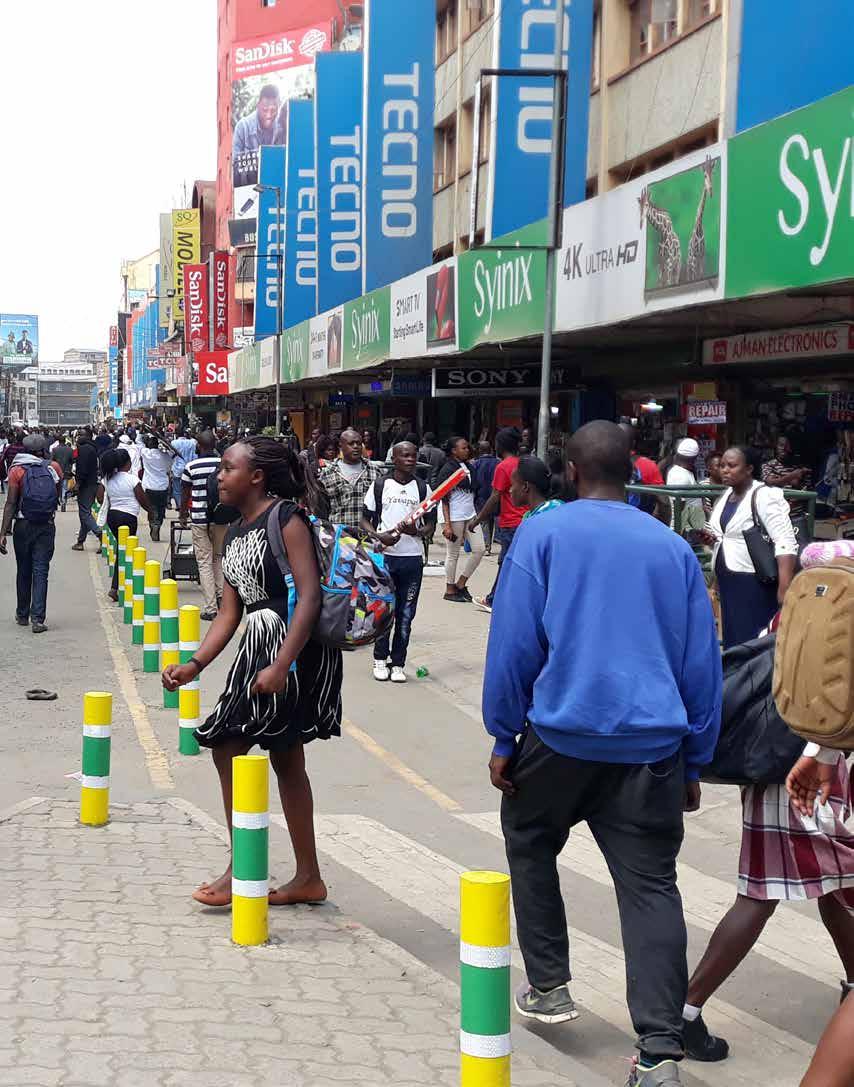
People walk along the newly transformed pedestrian-oriented Luthuli Avenue in downtown Nairobi, Kenya © UN-Habitat/Mark Ojal
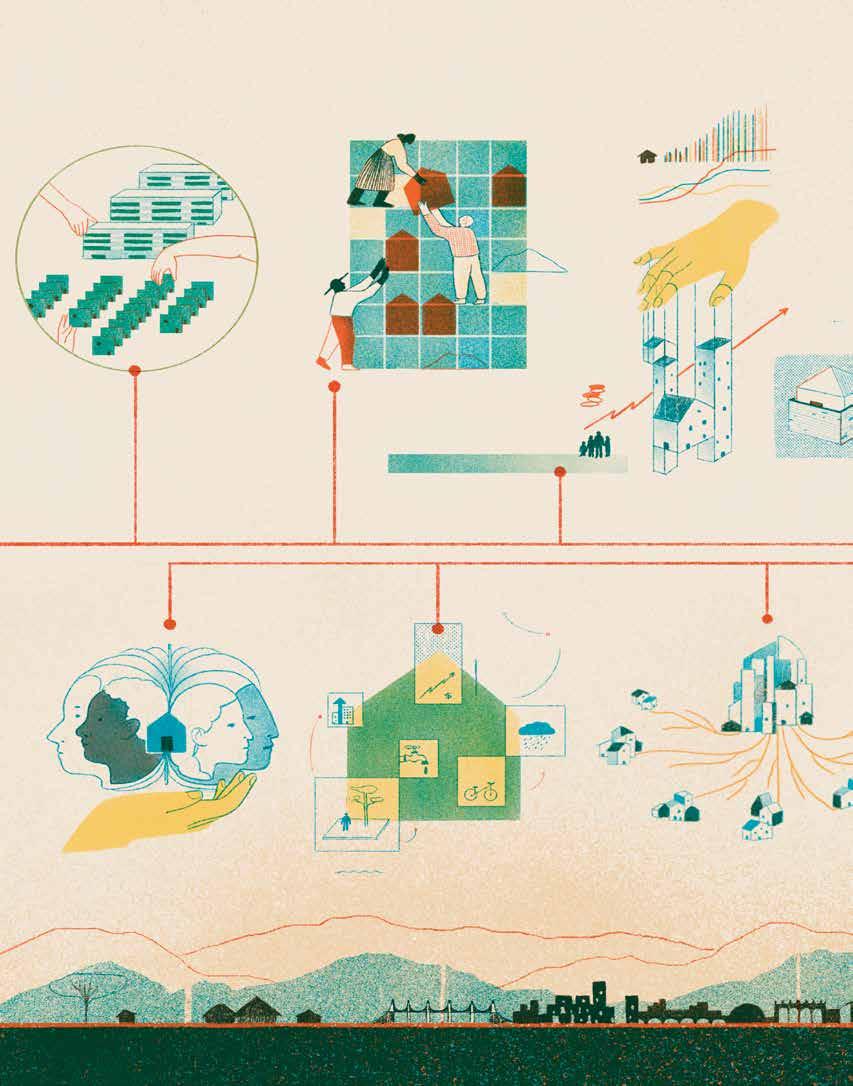
What Have We Learnt from 50 Years of Housing Policy? Chapter 2:
Quick facts
1. Fifty years of experience show that market led and ownership centred housing policies, far from closing housing gaps, have often deepened inequalities and speculative pressures.
2. Most countries nowadays have national housing frameworks, but many still fail to fully cover key adequacy dimensions or to connect housing with land use, transport, finance and social policy.
3. Housing implementation frequently falters because responsibilities are decentralized without matching mandates, finance or capacity, leaving local governments unable to realize national housing commitments on the ground.
4. Non‑state and community actors produce much of the housing for low‑income groups, yet planning, regulatory and financial systems rarely recognize or support their contributions.
5. Housing policies have often prioritized individual ownership, despite evidence that diverse tenure options – including regulated rental, cooperative, social and incremental forms – are essential for inclusive and flexible housing systems.

Policy points
1. Governments should re centre housing as a core public responsibility by regulating markets, curbing speculation and sustaining investment in adequate housing, especially for low income and vulnerable groups.
2. Housing policy should be embedded in integrated frameworks and citywide strategies that ensure housing interventions are consistent, cross sectoral and aligned with global agendas.
3. Effective housing delivery requires stronger multilevel governance that empowers local governments with real decision making authority, predictable funding and adequate administrative capacity.
4. Governments should recognize and support community organizations, civil society groups, small scale developers and other non state actors as partners in designing and implementing housing policy.
5. Housing laws, policy and finance should operationalize the right to adequate housing by strengthening tenure protections, preventing forced eviction and prioritizing low income and vulnerable groups.
Housing policy refers to the set of frameworks – usually led by governments – that guide how housing issues are regulated and managed. These frameworks can focus on improving housing quality, addressing homelessness or shaping interventions in the housing sector. Every country has some form of housing policy, even without a formal document in place. Housing policy often extends beyond housing itself, for example, by regulating markets to influence the broader economy. Historically, many objectives have been tied to political stability and industrialization. More recently, housing policy has increasingly been aligned with national economic goals. Whether through direct provision or regulation of the housing sector through building codes and standards, governments shape housing policy according to their priorities. In many contexts – especially in developing countries – housing is approached as a developmental and welfare issue, framed as a key tool for poverty reduction. This perspective is central to understanding housing policy trajectories in developing contexts.
Despite the centrality of housing in cities, it has fallen from the political priorities of national governments and is only recently regaining importance in the international development domain.1 As many as 3.4 billion people are affected by some form of housing inadequacy, deepening existing socioeconomic and political vulnerabilities.2 Housing affordability has also reached a crisis point (see Chapter 3). Housing policy approaches prioritizing home ownership have led to marginal
Housing policy approaches prioritizing home ownership have led to marginal increases in tenure security, primarily benefitting middle- and high-income groups

Addressing housing inadequacy requires strategic engagement with a wide range of laws, policies, programmes and institutional decisions
increases in tenure security (Figure 2.1), primarily benefitting middleand high-income groups.3 In this challenging global context, the former UN Special Rapporteur on the right to adequate housing has stressed that treating housing primarily as a commodity has eroded the “social function of providing a place to live in security and dignity”.4 As highlighted in Chapter 1, despite growing international attention, the housing crisis has intensified, marked by declining housing stock, rising unaffordability, homelessness, forced evictions, market failures and climate-related risks. Limited capacity within regional and local governments and fragmented governance systems have further exacerbated the issue.
While countries experience similar housing problems, differences in policy approaches make cross-learning difficult. In this regard, an important distinction should be made between housing policies and housing strategies:5 housing policies consist of programmes usually overseen by a single authority, but they often remain fragmented and technocratic; housing strategies, by contrast, adopt a broader structural vision and aim to transform the systems producing inequality. Addressing housing inadequacy requires strategic engagement with a wide range of laws, policies, programmes and institutional decisions to build a more just and inclusive housing system.
Figure 2.1: Global overview of regional changes in homeownership and tenure security
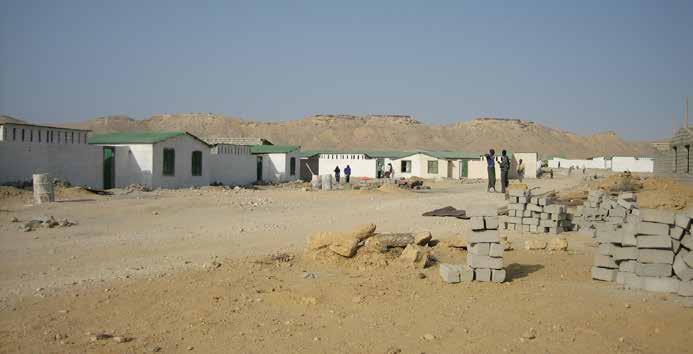
This chapter reviews 50 years of global housing policy, investigating how effectively policies have responded to persistent housing challenges. It is structured as follows:
• Historical overview of policy approaches over the past five decades: This outlines major trends in housing policy from the 1970s to the present day, tracing dominant approaches alongside key deviations (Section 2.2).
• Challenges and lessons learned: This reflects on the successes and failures of global housing policy over time, identifying influential policy shifts, successful factors and the importance of context. It also explores how commitments on the right to adequate housing have been implemented in practice (Section 2.3).
• The importance of a multistakeholder approach: This examines the role of actors beyond the state and interrogates the growing adoption of integrated approaches, particularly the development of NHPs, and how housing intersects with other policy domains. It analyses the conditions under which national level housing policies, often externally influenced, are likely to be effective (Section 2.4).
• Ways forward: Overall, the chapter shows that despite diverse housing experiences, dominant policy approaches continue to fall short of meeting global commitments such as Sustainable Development Goal (SDG) 11 and the New Urban Agenda (NUA). This final part therefore sets out pathways for strengthening future housing policy and advancing these commitments (Section 2.5).
2.1 Key Trends in Housing Policy: An Overview of 50 years
Over the past 50 years, global housing policy has evolved along two major trends. The first is a shift in the normative framework guiding housing policy – from narrowly meeting basic living standards to positioning housing within broader humanitarian goals of inclusion. This is reflected in the expanded understanding of “adequate housing”, which now includes cultural and social dimensions (see Section 2.2.5).6
A key example is the changing perception of informal settlements: once treated as areas to be cleared, they are increasingly approached as sites of development. Although inspired partly by John Turner’s incremental housing ideas, many low- and middle-income countries still combine limited support with continued evictions and criminalizing zoning laws.
The second trend is the changing role of the state. Governments have moved from being direct providers of housing to acting as facilitators of market-based solutions; more recently, many have re-emerged as key providers in response to persistent affordability crises. Affordable housing strategies now rely not only on constructing new units but also on strengthening existing systems, including rental housing. Subsequent sections examine these developments across different “eras” of global housing policy. Although each era reflects a dominant policy trend, there are strong continuities and overlaps between them.
Although many countries initially invested heavily in public housing, international agencies rarely supported this model: instead, they promoted aided self-help and private sector involvement
A new housing project in Xaafuun, Somalia © UN-Habitat
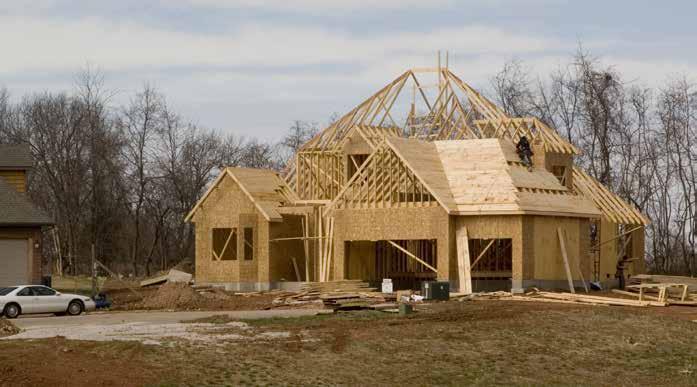
The pre-1970s period was marked by contradictory housing policies that combined forced evictions and slum eradication with the production of social housing

2.1.1 Housing policies in the post-war era
Following the end of World War II, severe global housing shortages and post-war economic depression led Western governments and agencies, such as the British Colonial Office, the Housing and Home Finance Agency, the Inter-American Development Bank and the Agency for International Development, to shape housing policy internationally – a legacy that continues today. International organizations, including the United Nations, International Labour Organization (ILO) and World Bank, also became influential advisers. Although many countries initially invested heavily in public housing, international agencies rarely supported this model. Instead, they promoted aided self-help and private sector involvement, arguing that public housing was too costly – especially for newly independent and transitioning economies.7 This critique of public housing set the foundations for the two dominant approaches that still influence global housing policy: “aided self-help” (where households build or renovate their own homes with support from governments or agencies) and the “enabling approach” (with the government facilitating construction by the private sector, community associations and other actors). Between 1945 and the early 1970s, these preferences strongly guided international housing policy. A number of trends during this period are worth highlighting:
1. Public housing received only limited and short lived backing, mainly from some colonial officials in the late 1940s, and was treated as a minor, temporary component of broader housing strategies rather than a long-term solution.
2. By the 1960s, aided self help had become the dominant international policy, promoted by all major agencies. Early influence came from the United States (US), followed later by the United Nations, with a shared emphasis on government support enabling households to build their own homes.
3. From 1945 to 1973, international agencies consistently favoured a mixed approach, combining self-help with support for the construction industry and housing finance. Rather than endorsing a single model, they prioritized modernizing building practices and strengthening financial systems – foundations later associated with the enabling approach.
The pre-1970s period was marked by contradictory housing policies that combined forced evictions and slum eradication with the production of social housing. Yet these programmes failed to reach the poorest households and often displaced the very populations they aimed to support. In Rio de Janeiro (Brazil), for example, around 80 favelas were demolished and approximately 140,000 residents were relocated between 1962 and 1974, even as new housing estates such as City of God were constructed.8
A new home under construction © Shutterstock
2.1.2 The self-help and enabling era
In the developing world, early signs of state retreat in this period were evident in the shift from public housing toward slum upgrading and sites-and-services programmes.9 Influenced by the belief that lowincome households could address their own housing needs, the self-help era promoted incremental, self managed construction – provided it met principles of financial viability and cost recovery. Governments gradually abandoned the “provider” model in favour of the “enabler” paradigm, emphasizing serviced land, upgrading and household-led construction. This paved the way for the market-oriented enabling approach of the late 1980s.10 Popularized by the World Bank and adopted by major international agencies and governments including the United Nations, the United Kingdom (UK) and the US, this approach assumed that mass
Governments gradually abandoned the “provider” model in favour of the “enabler” paradigm. This paved the way for the market-oriented enabling approach
public housing was not a viable solution. Housing challenges during this era were increasingly framed as issues of infrastructure and finance.11
Official perspectives on informal settlements have changed markedly since the 1970s, when the notion of the “informal” gained prominence (Figure 2.2). Influenced by debates on informality – especially the idea of housing as a gradual, resident-driven process – policy began recognizing the consolidation efforts and resourcefulness of informal settlers. During this period, Hernando de Soto’s advocacy for land titling became influential, though titling programmes proved complex and delivered limited results.12 In the 1980s, however, neoliberal reforms reshaped public action. Housing policy shifted toward institutional restructuring, private property and mortgage finance, aiming to reposition housing as a market-driven economic sector with the state confined to regulatory functions. This era also witnessed the emergence of international global summits on housing that significantly shaped housing policy approaches (Table 2.1).13
Provider model
First generation sites-and-services and slum upgrading programmes
Housing as a market-driven economic
New generation of slum upgrading based on citywide and multidimensional perspectives
Key factors shaping interventions
• Visibility of informal settlements and critical evaluation of past policies
• Consolidation of robust knowledge
• Climate change and biodiversity loss impacts
• Digital age effects on urbanization
• Promotion of coproduction approaches
Covid - 19
Neoliberal orthodoxy
Multisectoral in situ upgrading programmes
Recalibration of the new multisectoral in situ upgrading intervention
Figure 2.2: Evolution of informal settlement policies since the 1970s
Slum clearance and production of social housing
sector
Enabler paradigm
Table 2.1: Landmark global housing summits, 1976–2016
Global summit Year and place Key outcomes
United Nations Conference on Human Settlements (Habitat I) Vancouver, Canada 31 May–11 June 1976
United Nations Conference on Human Settlements (Habitat II) Istanbul, Türkiye 3–14 June 1996
Special Session of the General Assembly on Habitat (Istanbul+5)
New York, US 6–8 June 2001
UN Conference on Housing and Sustainable Urban Development (Habitat III) Quito, Ecuador 17–20 October 2016
• Habitat I shifted global housing policy discourse.
• The Vancouver Declaration defined “adequate shelter” and framed it as a human right.
• Called for self-help, community action and removal of segregation barriers.
• Promoted more inclusive and balanced human settlements.
• UN Strategy for Shelter to 2000 reflected this shift.
• UN-Habitat was created in 1978 following Habitat I.
• The Istanbul Declaration and Habitat Agenda committed signatory governments to “adequate housing for all” amid rapid urbanization.
• Habitat II highlighted the urgency of deteriorating housing and settlement conditions.
• Framed shelter policy as interdependent with macroeconomic, social and environmental policies.
• Influenced many national governments’ housing and urban policies.
• 2001 UN Special Session reviewed progress on the Habitat Agenda.
• Acknowledged achievements but highlighted ongoing poverty, insecure tenure, inadequate shelter and poor environmental conditions.
• These barriers continued to hinder the realization of adequate housing and sustainable settlements.
• Member States renewed commitments through the Declaration on Cities and Other Human Settlements in the New Millennium.
• By 2016, over half the world lived in cities, with the urban population projected to double by 2050, calling for a new urban paradigm.
• The NUA, adopted through the Quito Declaration, framed well-planned urbanization as a driver of sustainable development.
• First global summit after adoption of the 2030 SDGs.
• Re-centred how cities, towns and villages should be planned and governed to support sustainability and climate goals.
Source: Adapted from Evans et al., 2016, drawing on UN-Habitat, 1976; United Nations, 1996, 2001 and 2017; Zhang & Ball, 2016.
The World Bank became highly influential within governments and international development agencies towards increasing homeownership. As a major lender – especially to newly independent nations – the Bank played a central role in steering global housing policy toward market-oriented reforms. It called for comprehensive national policy “reform” aimed at increasing efficiency by scaling back the state's role and expanding market mechanisms.14 It also argued that earlier policies focused on infrastructure standards, pricing and cost recovery – including sites-and-services schemes – were insufficient to address the housing crisis. Instead, it promoted viewing housing not merely as a welfare concern, but also as a productive economic sector capable of driving national development. Through this enabling approach, balancing a number of “demand side” and “supply side” principles in areas such as property rights, mortgage finance, infrastructure and land regulations,
the World Bank hoped to enhance the “efficiency” of housing markets and improve outcomes for low-income groups.
Private firms and civic organizations – such as non-governmental organizations (NGOs), voluntary bodies and community-based groups – were increasingly viewed as more efficient than state agencies in delivering housing-related services. Yet even under the enabling approach, governments retained essential regulatory and supportive roles.15 The strategy, however, drew criticism for over-relying on marketdriven solutions, often neglecting long-term planning and broader structural issues. These concerns eventually reignited debate on the limits of markets and underscored the continued importance of strong state involvement and collective social action in housing.16

Private firms and civic organizations – such as NGOs, voluntary bodies and community-based groups – were increasingly viewed as more efficient than state agencies in delivering housing-related services
2.1.3 The market consolidation era
For the majority living in informal settlements, market-based approaches often worsened housing insecurity, even though these settlements offered varied tenure forms.17 Three policy narratives supporting the withdrawal of the state from public housing became prominent: first, that public spending on housing was inefficient and that communities and market actors could deliver more effectively; second, that informal housing supply far exceeded what governments could provide; and third, that state involvement in housing was counterproductive. These arguments collectively reinforced the push toward reduced state provision and increased reliance on market- and community-based solutions.
Across different regions, the enabling approach produced three notable effects. First, it improved housing access for an expanding middle-
Box 2.1: China's Market-oriented housing policy approach
class, while market-driven mechanisms and a retreating state deepened inequality for lower-income groups. In Africa, Structural Adjustment Policies accelerated state withdrawal, directing subsidies and supportive legal frameworks toward private actors – often accompanied by controversial reductions in housing standards to expand “affordable” supply.18
Second, in Asia, declining public investment and the rapid expansion of private developers fuelled middle-class growth during the 1990s, but the 1997 Asian Financial Crisis exposed the risks of speculative real estate markets, leading to widespread bank failures, mortgage defaults and foreclosures. The crisis underscored the need for stronger regulation of property markets and lending practices. Overall, these dynamics highlighted the limits of market-led housing strategies and renewed recognition of the continued importance of robust state involvement and long-term planning. In China (Box 2.1), India and Thailand, the 1990s saw a clear expansion of market influence in housing, with the state largely steering the sector and offering limited support to low-income groups.19 In India, policy analyses often view the enabling approach as harmful for lower-income households. Malaysia, however, adopted a distinct version of the enabling model: despite strong influence from international agencies, the state maintained an active interventionist role and succeeded in providing housing across low-, middle- and high-income groups.20 Market reforms included expanding affordable housing, promoting public-private partnerships (PPPs) and strengthening national regulatory frameworks through bodies such as the Ministry of Housing and Local Government.
From 1949 until 1978, China’s housing system operated as a state-led welfare provision regime, yet chronic undersupply resulted in widespread substandard urban conditions. Economic reforms between 1979 and 1998 reconstituted housing as a market commodity, a shift institutionalized by the 1998 circular, which terminated welfare allocation. In the following years, national policy aligned with the World Bank’s enabling strategy, expanding supply and promoting homeownership, but escalating prices undermined affordability. From the mid-2000s onward, intensifying affordability pressures prompted a renewed regulatory turn, with the state deploying stringent market-cooling instruments alongside mandates for smaller units and expanded low-cost housing. By 2010–11, despite unprecedented production and a 36 million-unit subsidized housing initiative, structural mismatches persisted: large volumes of vacant new-build stock contrasted with limited accessible supply for ordinary households, the rise of “ghost cities”, and continued displacement from cleared inner-city low-cost housing to more expensive peripheral high-rise developments.
Source: UN-Habitat, 2016c; Wu, 2018; Zhao and Bourassa, 2003.
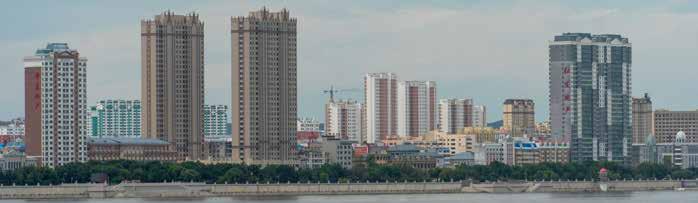
The ghost town of Heihe, China © Shutterstock
Third, in Latin America, housing policy during this era reflected marketoriented trends as well, with an emphasis on low-cost housing provision. Chile, a pioneer of the enabling strategy, pursued this model for over four decades, providing lower-income groups with targeted subsidies for affordable housing while adopting neoliberal reforms in the 1990s.21 While Chile is often cited as a success story for significantly reducing its low-income housing deficit and the number of informal settlements, critics note that this approach produced a strong spatial bias, routinely relocating low-income households to inexpensive peripheral land with poor access to services and weak connections to urban centres.22
Market-based approaches often worsened housing insecurity
In the early 2000s, European housing policy was shaped by a clear shift away from large public sector provision toward more market-oriented and mixed-tenure approaches, with many countries promoting owneroccupation and reducing the relative size of the social rented sector.23 This set the stage for the economic and political upheaval of the 2007–2008 financial crisis in North America and Europe: ultimately, the failure to regulate high-risk financial practices created an unsustainable housing boom.24
2.1.4 The management of informal housing era
This era saw the acceleration of the enabling approach, with a strong emphasis on low-income housing, in particular the scaling-up of such programmes.25 It reflected the consolidation of more than 25 years of slum upgrading efforts led by multilateral actors such as the World Bank, ILO and UN-Habitat. During this period, international agencies further standardized the understanding of “slums”, contributing to the global framing of informal settlements and strengthening the rationale for large-scale upgrading initiatives. UN-Habitat defined slums as an area that combines, to various extents, inadequate access to safe water, inadequate access to sanitation and other infrastructure, poor structural quality of housing, overcrowding and insecure residential status.26
By the 2000s, a wide range of approaches to low-income housing emerged, especially across Latin America and Asia, with policy shifting strongly toward in situ upgrading.27 The 1999 Cities Without Slums Action Plan promoted basic service provision and upgrading, subsequently leading to Target 11 of Millennium Development Goal (MDG) 7, “Achieve significant improvement in lives of at least 100 million slum dwellers, by 2020”.28 Upgrading programmes in this period adopted citywide, multisectoral and multi-scalar strategies that linked informal settlements with broader urban systems.29 Flagship initiatives such as Favela Bairro Programme in Rio de Janeiro, Brazil – launched in
Upgrading programmes in this period adopted citywide, multisectoral and multi-scalar strategies that linked informal settlements with broader urban systems
1995 with Inter American Development Bank financing – exemplified this shift. This era also saw decentralization to regional and local governments and the growth of cross-sector partnerships, with NGOs and community-led organizations playing central roles in areas such as financial empowerment, data production and community engagement.30 Meanwhile, groups like Women in Informal Employment: Globalizing and Organizing (WIEGO) shaped research and policy debates on informal work and strengthened the capacity of informal workers’ organizations.31
In situ upgrading became a core implementation strategy for informal settlement policy, typically incorporating five dimensions that were applied in different countries and regions in various ways:
• Multidimensional poverty reduction through services, infrastructure, income support and tenure security: in the Middle East and North Africa, Egypt and Morocco prioritized regularization and service provision.
• Spatial improvements to enhance mobility and public space: for instance, in Asia and the Pacific, India’s Pradhan Mantri Awas Yojana supported in situ rehabilitation to enable the creation of improved housing and more liveable urban environments in the original location.
• Institutional and legal reforms to align upgrading with national housing frameworks: Gulf states addressed overcrowding through labour housing reforms, while in Europe and North America governments focused on substandard rental conditions, tenant protections and social housing expansion, including regulation of shadow rental markets and hidden overcrowding.
• Structured community participation: in Sub-Saharan Africa, Kenya’s Participatory Slum Upgrading Programme and South Africa’s Upgrading of Informal Settlements Programme (Box 2.2) advanced community-driven models, while in Asia Thailand’s Baan Mankong institutionalized community-led upgrading with tenure security.
Housing policy was shaped by a clear shift away from large public-sector provision toward more market-oriented and mixedtenure approaches
• Multi scalar interventions linking settlements to citywide planning: across Latin America, initiatives such as Favela Bairro, Medellín’s social urbanism, Buenos Aires’ socio urban integration and Brazil’s Growth Acceleration Programme Favelas operationalized comprehensive, city-integrated strategies.
This era marked the decisive return of the term “slum” in policy thinking, often deployed in derogatory ways that framed upgrading as management, removal or eradication rather than recognizing these areas as “ordinary suburbs”.32 Three policy perceptions emerged around the
Box 2.2: Large-scale state-subsidized low-income housing in South Africa
The Reconstruction and Development Programme, launched in 1994 by South Africa’s Government of National Unity, is recognized as an early state sponsored housing initiative that directly addressed apartheid-era exclusion. Since its inception, the housing subsidy programme has delivered millions of housing units. In the early 2000s, housing policy evolved with the introduction of the Breaking New Ground housing policy in 2004, which sought to shift practices towards sustainable human settlements and in situ upgrading. Despite this shift, eradication narratives that framed informality as a temporary condition to be eliminated remained influential, culminating in the “war against shacks”. Cities such as Durban pursued aggressive clearance before moving towards the provision of interim services, implicitly acknowledging the permanence of informality and the slow pace of formal housing delivery.
A more promising path emerged with the incremental housing approach. Subsidized houses provided a platform for gradual improvement, rental income and micro-enterprise, often through backyard units. While the Reconstruction and Development Programme system incorporated market-oriented elements such as titling, it also retained strong welfare safeguards, including sale restrictions on subsidized houses and a cautious approach in issuing title deeds. South Africa’s experience shows how statesubsidized housing can provide a stable foundation for low-income households while creating opportunities for gradual expansion and income generation.
The programme has been criticized for not achieving increased income and employment outcomes at scale. Yet the widespread growth of incremental backyard model housing shows that when the state provides basic infrastructures and secure tenure, incremental strategies can transform housing into both shelter and an economic asset.
Source: Meth, 2020.

discussions of slums: as a slogan to draw attention to urban poverty; as a standard used by multilateral agencies and developers to critique global urbanization; and as a hopeful term supporting market-led solutions in informal housing.33 Despite major advances in upgrading over the past three decades, significant challenges persist. Planning systems often remain rooted in rational modernist paradigms that treat informality as a deviation, leading to clearance, de-informalization or superficial tolerance. Participation in upgrading frequently remains limited or exclusionary, with insufficient attention to the needs of women, youth, older people, people with disabilities, migrants and minority groups, as well as to climate resilience and long-term maintenance. Housing is commonly neglected within upgrading, despite urgent needs for incremental finance, rental strategies and responses to high-density

In situ upgrading became a core implementation strategy for informal settlement policy
living. Many interventions overlook informal livelihoods, prioritizing physical improvements while jeopardizing income sources during resettlement. Finally, land tenure insecurity continues to be a major constraint, with titling processes slow and uneven, underscoring the need for more flexible mechanisms to strengthen tenure security.
Reconstruction and Development Programme (RDP) housing in Soweto, , Johannesburg, South Africa © Shutterstock
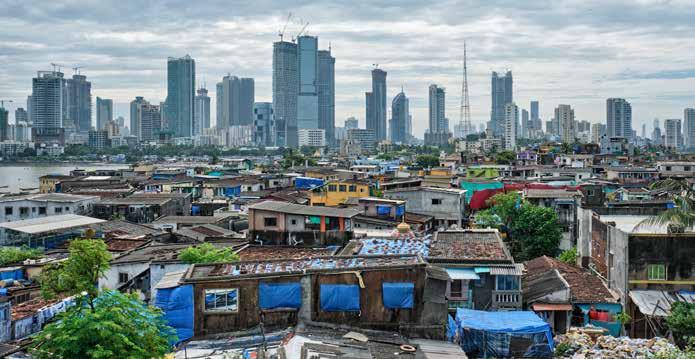
International flagship reports such as Cities Alliance’s groundbreaking publication The Challenge of Slums34 urged national governments to reassess their urban landscapes and prioritize informal settlements through the scaling-up of upgrading initiatives. At the time, the majority of the urban population in sub Saharan Africa, Asia and Latin America lived in slums, prompting several countries to develop national slum policies. In India, for example, the 2001 draft National Slum Policy evolved into the 2009 National Urban Poverty Reduction Strategy, aiming to make towns and cities “slum free” by 202035 – a decisive urban turn in Indian policymaking, prioritizing governing urban poverty and marking a departure from earlier world-class-city strategies centred on eviction and demolition.36
Yet despite these efforts, many individuals still live in slums or informal settlements in situations of overcrowding, homelessness and lack of basic services, with the constant threat of eviction. Though the proportion of the urban population living in slums globally has declined since 2010, in some regions it has begun to pick up again in recent years. In addition, the total number of people living in slums and informal settlements has continued to climb to more than 1.1 billion today.37
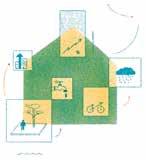
2.1.5 Return of the state era
In 2016, Habitat III recognized that over half of the world’s population – around 4 billion people – was living in urban areas, many of them in informal settlements.38 Meeting future demand in this context was daunting, with estimates suggesting that US$650 billion would need to be spent on new homes every year until 2025.39 Affordable housing provision was severely constrained by existing housing finance systems. Habitat III helped lay the groundwork for the NUA: its approach to housing, with its emphasis on rights-based, pro-poor, integrated and incremental strategies, reaffirmed a renewed leadership role for governments and advanced a dual approach combining slum upgrading with well-planned new supply.
Housing policies across regions revealed shared pressures but different strategic priorities (Table 2). In Africa, governments pursued stronger state-led investment, more diverse tenure options and integrated planning to link housing with infrastructure, while targeting women and youth. The Arab region grappled with high land costs, informality and conflict-driven displacement, focusing on in situ upgrading, publicprivate partnerships and more flexible finance. Across Asia and the Pacific, persistent affordability challenges underscored the need for stable institutions, integrated housing–infrastructure investment and expanded rental and renewal programmes. Europe, North America and Central Asia faced widening affordability gaps, rising homelessness and shrinking social housing budgets, making rehabilitation of existing stock and attention to health impacts increasingly important. In Latin America and the Caribbean, poorly located land, peripheralization and weak rental/condo systems sustained segregation, prompting a shift toward land-based tools, in situ regularization, neighbourhood upgrading and stronger links to transport and services.
View of skyscrapers over slums in Bandra suburb, Mumbai, Maharashtra, India © Shutterstock
Table 2: Regional overview of housing policies
Africa40
Arab Region41
Asia and the Pacific42
Europe, North America and Commonwealth of Independent States43
Latin America and Caribbean44
Source: UN-Habitat,2016c-g.
• Public investment and state leadership remain essential and should be scaled up, with a shift towards well-funded national programmes.
• Tenure systems should be diversified to include rental, social housing and rent-stabilized options while recognizing plural and customary tenure.
• Compact growth strategies, linking housing with transport, public spaces and investment in trunk infrastructure are needed.
• Dedicated measures are required to improve access to adequate housing for women and youth.
• High land costs and speculation drive informality, while barriers in land titling, registration and inheritance – especially for women – limit access to credit.
• Conflict and displacement worsen tenure insecurity.
• Priority actions include in situ upgrading, PPPs and fit-for-purpose finance, including microfinance.
• Housing affordability remains tight as land and construction costs outpace wages.
• Housing and infrastructure investment are interdependent and benefit from joint planning.
• Progress rests on long-term institutions and policy continuity. Key policy agendas include agency consolidation, rental diversification, renewal of ageing stock and counter-cyclical finance.
• Housing affordability pressures widen as income inequality grows. Price rises and widening income gaps reduce affordability, with low-income households struggling to meet utility costs.
• Demand for social housing rises while funding declines under austerity and welfare reforms. Homelessness increases across the region, especially among young adults and families.
• Limited new construction means existing stock rehabilitation shapes housing conditions more than new builds, with poor housing conditions worsening health and increasing disease burdens.
• Limited access to well-located, serviced land reinforces informality and segregation.
• Demand-side “saving–bonus–credit” model boosts output, but pushes development to peripheral areas and fails to reach informal workers.
• Rental housing remains underused, while gaps in condominium governance and maintenance create instability.
• Effective strategies combine land tools – such as value capture, Zones of Special Social Interest, land banks and inclusive quotas – with in situ regularization, neighbourhood improvements and integrated transport and service provision.
State-subsidized housing can provide a stable foundation for low-income households while creating opportunities for gradual expansion and income generation
During this era, affordability emerged as a key concern in the global housing crisis (discussed in more detail in Chapter 3). In their critical reflection on minimal government interference in the housing sector, the Habitat III Issue Papers highlighted the limitations and adverse side effects of the commodity-centric approach to housing.45 Specific recommendations emerged in relation to the role of governments in addressing the affordability crisis:
Prioritize housing through systemic reform: Governments should adopt long-term policy and financing frameworks, with a twin-track strategy of upgrading existing informal settlements while delivering new, affordable, well-located housing in coordination with private, financial and civil society actors.
Reassert an active state role: Beyond enabling markets, governments must lead efforts to meet housing needs – especially for the most excluded populations – by strengthening policy and regulatory systems, shaping markets to deliver pro-poor outcomes, and offering targeted subsidies and safety nets.
Improve subsidy equity and transparency: Public support should be redistributed down the income scale, with better value capture mechanisms and a balanced use of supply- and demand-side subsidies, ensuring vulnerable populations remain the priority.
Many interventions overlook informal livelihoods, prioritizing physical improvements while jeopardizing income sources during resettlement

Integrate housing, transport, land use and livelihoods: Stronger alignment is needed through continuous, participatory urban planning that promotes mixed land use, planned city extensions or infill development, and improved accessibility.
Integrate housing, transport, land use and livelihoods: Building codes and subdivision rules should support incremental construction, assisted self-build, sites-and-services schemes, and sustainable, locally appropriate construction techniques.
By the 2010s, there was broad recognition that market-oriented housing approaches had failed to deliver their expected social and economic outcomes.46 This prompted a renewed interest in large-scale housing programmes and a partial return of the state.47 However, unlike the
post-war period, the state’s re-emergence was not as a mass builder but as a more direct enabler – most notably through state-backed financing and large public investments. The surge in mass housing production during this period, whether through revitalized public housing assistance or major capital injections, signalled mounting global concern over housing affordability and the inability of market mechanisms alone to meet growing urban demand. This era saw the expansion of multibillion-dollar housing subsidy programmes (Table 2.4), with similar patterns visible across Western contexts. Rising austerity, homelessness and concerns over inequality in private sector delivery all contributed to a renewed involvement of the state in housing provision.48 After a prolonged period of state retreat, governments began to reassert a more active role in both housing provision and regulation. Notably, the mass production and provision of housing – long associated with developed countries – expanded significantly into developing countries too, signalling a broader global reorientation toward large-scale, state supported housing interventions.
Public investment and state leadership remain essential and should be scaled up, with a shift towards well-funded national programmes
Angola Nova Cidade do Kilamba (2013)
Argentina Argentina Credit Programme (2012)
Creation of 100,000 houses in new developments across 10 of the 18 provinces within Angola, by China
Provision of housing finance assistance for low- and middle-income groups for new housing construction and improvement through loans and subsidized interest rates, ranging from 2 per cent to 14 per cent depending on income. The programme is funded by the National Administration of Social Security in collaboration with Banco Hipotecario.
Shows how satellite cities fail when housing is unaffordable and far from jobs, creating low occupancy “ghost cities”. Without affordability, transport links and context-appropriate planning, new towns become isolated and exclusionary.
Despite its innovations, Argentina Credit Programme repeated longstanding regional policy limitations, highlighting the need for fairer targeting and better alignment between programme design and implementation.
Colombia Vivienda de Interés Social Integrated Housing Development Programme (2004)
Egypt49 National Housing Programme (2005–11)
Focus on low- and middle-income housing provision with the objective of providing 400,000 units per year. Financed through public resources repaid via city administration purchasing bonds from the Commercial Bank of Ethiopia.
Aimed to build 500,000 affordable housing units in new urban communities or existing cities.
Highlights structural gaps – land access, weak delivery systems, and financing constraints –showing the need for diverse housing solutions and stronger land management and construction sectors.
Shows the limits of top-down, supply-driven delivery: large peripheral projects with weak services and poor job access reduced affordability and viability. Also illustrates that heavy state subsidies without market or planning reforms create high fiscal costs while failing to serve low-income groups, underscoring the need for integrated land use, transport and housing policy.
Table 2.3: Key large-scale housing and upgrading programmes initiated in the 2000s
Ethiopia Integrated Housing Development Programme (2005)
Focus on low- and middle-income housing provision with the objective of providing 400,000 units. Financed through public resources, with regional and city administration purchasing bonds from the Commercial Bank of Ethiopia.
India Various In 2012, the state's role reversal in India entailed the direct provision of housing through a series of pro-poor housing programmes. Examples include the Valmiki Ambedkar Awas Yojana, the Jawaharlal Nehru Urban Renewal Mission, the Rajiv Awas Yojana, and the most recent Pradhanmantri Awas Yojana. The latter, which promised to construct 20 million houses by 2022, was by far the most ambitious policy vision wherein the state played a direct role in provisioning.
Mexico Esta es tu Casa (2007)
South Africa Comprehensive Plan for the Development of Sustainable Human Settlements, aka Breaking New Ground (2004)
Thailand Baan Mankong – Community Organizations Development Institute (2003)
Focus on improving access to housing for households earning <US$560 per month; Subsidies provided through a combination of federal government support, national savings fund contributions.
Focus on integration of human settlements, residential property market, social backyard rental accommodation and informal settlement upgrading.
Reveals ongoing constraints – limited affordable land, weak delivery diversification, and financing gaps – showing the need for stronger land management, flexible housing pathways, and more diverse construction models.
Central assistance depended on reforms – tenure regularization, rental and planning law changes –creating bottlenecks when states failed to comply. Many cities also lacked capacity for Geographic Information System mapping, community participation and the preparation of Slum-Free City Plans, limiting effective implementation.
Source: adapted from Buckley et al., 2016, p.119-138

Collective slum upgrading through infrastructure subsidies, loans from the government and civic community development, with contributions from community members.
Housing and infrastructure investment are interdependent and benefit from joint planning
However, a recurrent feature of these large-scale housing programmes was the prioritization of peripheral construction, placing new developments far from urban labour markets.50 This isolation was worsened by the lack of coordinated investment in infrastructure, especially transport systems, and by the creation of poorly serviced housing subdivisions
Relied heavily on mortgage-linked credit, excluding many of the poorest – especially informal workers – who could not qualify even with subsidies, sharply limiting programme reach.
BNG’s goal of well-located, integrated settlements was undermined by weak municipal capacity and persistent implementation gaps, leading to continued delivery of low-quality, peripheral housing. Overall, the programme’s progressive vision struggled to achieve the scale and pace of transformation required.
Despite its considerable achievements, Baan Mankong’s reliance on community savings groups creates uneven progress, with fragmented or poorly resourced communities struggling to meet requirements. Heavy support can limit independent city-level finance systems, reducing long-term resilience. Participation remains state framed, leaving deeper structural change and land tenure negotiations vulnerable to political dynamics.
without neighbourhood amenities. Such approaches in Latin America51 often produced vast residential areas that lacked the services and connectivity needed to deliver the benefits of adequate housing. This led to urban expansion beyond the functional city, preventing residents from accessing jobs.
In short, housing built far from transport, mixed-use development and local centres not only fails to promote social inclusion but also misses opportunities to strengthen and leverage the existing urban fabric (Chapter 7). While many countries struggled with the consequences of peripheralized housing production, other models demonstrate what strong state leadership can achieve (Box 2.3).
Box 2.3: Large-scale public housing provision in Singapore
Singapore provides one of the world’s most extensive examples of state-led housing provision. Since the 1960s, the Housing and Development Board (HDB) has delivered public housing to nearly 80 per cent of residents, with about 90 per cent of households owning their flats. Initially created to resolve acute shortages, the system evolved into a model that links homeownership to social stability and asset-based welfare. The programme is enabled by substantial government subsidies, grants for first-time buyers and the use of the Central Provident Fund, a mandatory savings scheme that allows residents to finance down payments and mortgages. Flats are sold on 99 year leases with high income ceilings, enabling broad eligibility.
Integrated planning is central: HDB towns are designed as self-contained communities with industry, transport, schools and services. Allocation policies promote social mixing through varied flat types, ethnic quotas and interspersed rental units, while intergenerational living is supported through 3Gen flats and proximity-based allocation. Community development is facilitated by the People’s Association and its grassroots network. HDB also runs continuous upgrading, retrofitting and renewal programmes to maintain quality and competitiveness.
While Singapore demonstrates the effectiveness of strong state commitment and integrated planning, its heavily interventionist, citizenship-centric, ownership-led model raises questions about replicability and long-term affordability in other contexts. The HDB programme also benefits from the significant financial resources that Singapore, as one of the richest countries in the world, has at its disposal.
Source: UN-Habitat, 2020c.


Rising austerity, homelessness and concerns over inequality in private sector delivery all contributed to a renewed involvement of the state in housing provision
2.1.6 The extraordinary approaches era
Since 2020, the need to adopt a rights-based approach to housing policy has intensified, thanks to a growing international consensus that housing is a fundamental human right (see Section 2.2.5). The COVID-19 pandemic exposed deep vulnerabilities – homelessness, inadequate shelter, gender-based violence and unequal access to services – prompting governments and United Nations bodies to emphasize protections such as eviction moratoria, expanded social assistance, and stronger commitments to adequate housing as part of the right to an adequate standard of living. This shift gained formal recognition in UN-Habitat Assembly Resolution 2/7 (2023), which reaffirmed the obligation of States to progressively realize the right to adequate housing and established the Open-ended Intergovernmental Expert Working Group on Adequate Housing for All (OEWG-H) to develop frameworks for monitoring, measuring and supporting this right. As a result, there is an urgent requirement for housing policies to adopt holistic approaches – linking housing to health, safety, climate resilience, social protection and tenure security – and embed rights-based principles more explicitly into national housing strategies.
COVID-19 marked a profound turning point in global housing policy. Many countries introduced extraordinary measures – such as emergency shelters for homeless populations – to address long-standing housing crises intensified by the pandemic. While some households were protected by secure housing, for others the home became a site of hardship and harm.52 Housing markets reacted sharply, with suspended transactions, halted construction and disrupted mortgage processes.53 Two major trends emerged: a global surge in house prices and a worsening affordability crisis for most households. Governments responded with fiscal tools such as eviction moratoriums, tenant and homeowner support, and tax concessions for landlords, alongside spatial and administrative measures. Yet the overall emergency response reaffirmed that housing continues to be treated primarily as a commodity rather than a social good.54
In Western countries, the pandemic triggered counterurbanization and mobility shifts that intensified pressures on housing availability, affordability and spatial inequality.55 The rapid growth of short-term rentals prompted stricter regulation across Europe, alongside new limits on second homes. Comparative studies from Australia, Canada, Germany, Ireland, New Zealand, Spain, the UK and the US show that government interventions helped prevent a housing market collapse.56
Limited access to well-located, serviced land reinforces informality and segregation



The need to adopt a rights-based approach to housing policy has intensified
Changing work and living patterns reshaped demand, favouring some housing types while reducing demand for others. Early policy responses – expanded social welfare measures, temporary assistance schemes, furlough programmes, wage subsidies and financial sector interventions – helped stabilize markets. Three key policy areas shaped housing outcomes: emergency income protection and labour market resilience; measures to safeguard homeless populations; and support for middleand-high income housing markets via liberalized mortgage lending and strong income supports.
In developing countries, physical and social conditions in informal settlements made measures like distancing and quarantine difficult, yet the pandemic still triggered policy shifts previously seen as impossible.57 Governments responded through informal settlement management, segregation measures, and socio-economic support such as cash transfers and food relief. A notable shift was the growing emphasis on rentalfocused tenure, reflecting how COVID-19 exposed the depth of urban informality and inequality while catalysing systemic policy action.58 In countries like South Africa, the crisis prompted a renewed turn towards self-help and incremental housing approaches, grounded in the view that large-scale direct provision is fiscally unsustainable.59 Overall, COVID-19 reinforced incremental, flexible housing strategies across much of Africa, Asia, Latin America and the Middle East.
2.1.7 Increasing recognition of the right to housing
Recent years have seen a shift in the recognition of housing not merely as a basic need, but as a right and a cornerstone of human dignity – far more than a physical asset with security or exchange value. International policies and legislative frameworks increasingly recognize adequate housing as a fundamental human right, indispensable to the realization of a wide range of rights, including health, education, water, sanitation and, ultimately, the right to life. Yet billions of people continue to live in
inadequate conditions that manifestly violate these rights. Discrimination in housing – through exclusionary zoning, denial of services or credit or regulations that restrict access based on identity – remains a persistent barrier in many contexts, disproportionately affecting women, children, older persons, Indigenous Peoples, persons with disabilities, migrants and racial, caste and religious minorities.
The right to adequate housing is articulated through seven dimensions established by the Committee on Economic, Social and Cultural Rights: security of tenure; availability of services; affordability; habitability; accessibility; location; and cultural adequacy. These dimensions were first defined in 1991 by General Comment No. 4, which remains the foundational interpretation of adequacy under international human rights law, while General Comment No. 7 provides essential safeguards against forced evictions. In recognition of emerging global challenges, this report proposes an eighth dimension – environmental sustainability – to reflect the growing urgency of climate risks and the essential role of housing in enabling resilient and low-carbon development.
There is an urgent requirement for housing policies to adopt holistic approaches – linking housing to health, safety, climate resilience, social protection and tenure security
Building on these foundations, the UN Human Rights Council (HRC) identified a number of core obligations that defined how governments must operationalize the right to adequate housing, including the prevention of forced evictions, discriminatory or exploitative practices such as predatory lending, and the adoption of appropriate institutional reforms to support practical implementation.60 In addition, the thematic reports of the UN Special Rapporteur on the right to adequate housing and, more recently, the work of the Open-ended Intergovernmental Expert Working Group on Adequate Housing for All (OEWG-H) have reaffirmed these principles. Within this broader framework, several international conventions also include specific provisions designed to protect groups that experience heightened barriers to adequate housing. Table 2.4 summarizes these safeguards across key population groups.
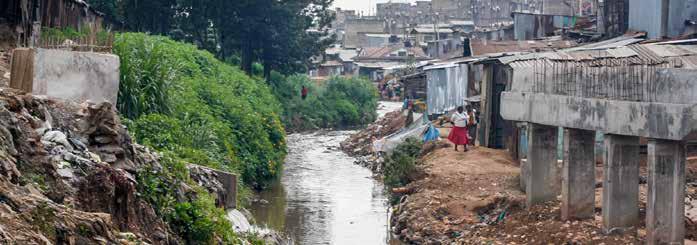
The construction of the bridge in Mathare slum, Nairobi, Kenya in 2016 © Julius Mwelu_UN-Habitat
Table 2.4: Selected international conventions supporting the right to adequate housing
Safeguards
Convention on the Elimination of All Forms of Discrimination against Women, Articles 14 (2) and 15 (2)
Key focus
Women
Requires State Parties to eliminate discrimination against women in rural and urban contexts, ensure adequate living conditions – including housing, water supply, sanitation, electricity, transport and communication – and guarantee equal legal capacity to men in matters relating to property, inheritance and contracts.
Children
Countries with constitutional mandates
Ethiopia’s Constitution (Article 35) affirms equal rights for women and men regarding access to property and land.
Convention on the Rights of the Child (1989), Articles 16 (1) and 27
Convention on the Rights of Persons with Disabilities (2006), Articles 1, 9, 12 and 28
Protects children from unlawful or arbitrary interference in their home and recognizes every child’s right to an adequate standard of living, obliging State Parties to support parents and caregivers in securing essential housing conditions for child development.
Persons with disabilities
Requires accessible housing environments, equal legal capacity, and measures ensuring an adequate standard of living, including access to public housing programmes and social protection schemes without discrimination.
Displaced persons and migrants
South Africa enshrines children’s right to shelter in its Constitution (Article 28), providing a basis for judicial protection.
Convention Relating to the Status of Refugees (1951), Article 21
Committee on the Elimination of Racial Discrimination General recommendation No. 30 of 2004 on Discrimination Against NonCitizens (2004)
Pinhero Principles on Housing and Property Restitution for Refugees and Displaced Persons (2005), Articles 2, 12,13 and 18
Requires State Parties to grant refugees as favourable as possible housing treatment and at least equal to that afforded to non-nationals in comparable circumstances.
Calls on States to ensure equal access to housing for citizens and non-citizens, prohibits segregation in housing and protects non-citizens from discrimination by housing agencies, landlords and financial institutions.
Establishes the right of refugees and internally displaced persons to housing, land and property restitution; requires States to set up procedures and remedies for restitution or compensation following displacement.
Indigenous People
In 2023, South Sudan signed the Convention, signalling a step toward strengthening protection for persons with disabilities by enacting its Disability Bill.
All State Parties to the 1951 Convention – and/or its 1967 Protocol – are bound by Article 21; this includes most countries worldwide.
Applies to all States Parties to the International Convention on the Elimination of All Forms of Racial Discrimination.
Colombia’s Land Restitution Programme incorporates the Pinheiro Principles as normative standards to safeguard the rights of refugees and Internally Displaced Persons to return to their homes and recover property and contains a demanding set of principles governing the right to restitution.
United Nations Declaration on the Rights of Indigenous Peoples (2007), Articles 21 and 23
Affirms Indigenous Peoples’ right, without discrimination, to improved economic and social conditions, including housing, sanitation, health and social security, education, employment and to participate in housing and development programmes affecting them.
Canada gives the Declaration legal effect in federal law, requiring all federal legislation to align with its provisions, and formally safeguards Indigenous rights to adequate housing, land, territory and culturally appropriate living conditions.
Source: United Nations, 1979; United Nations, 1989, United Nations, 2006; United Nations, 2007; United Nations, 1951; OHCHR, 2007; Committee on the Elimination of Racial Discrimination (CERD), 2004; UN Sub-Commission on the Promotion and Protection of Human Rights, 2005; Atem, 2024; Belanger, 2011; Belay, 2020; Binford, 2015; Funke, 2023; Guzman-Rodriguez, 2017.
Affordability and inclusion emerge from integrated housing systems rather than from single, one-size-fits-all policies
Despite widespread commitments towards the right to adequate housing, ground-level implementation remains uneven. Safeguards against eviction and discrimination often co-exist with relocation policies, loitering and vagrancy laws and gentrification-driven redevelopment that disproportionally harm urban groups like the homeless, street children and those without formal titles.61 A right-based approach requires framing housing as a multidimensional right encompassing location, culture, identity, tenure security and social inclusion. Section 2.2.5 discusses how the right to housing can be practically instrumentalized in cities.
2.2 Key Lessons of Housing Policy in the Last 50 Years
Fifty years of evolving housing policy reveal a number of lessons that cut across regions, policy eras and institutional contexts (Table 2.5). These lessons point to the limits of market-led models, the enduring importance of public leadership, the centrality of tenure security for
settlement upgrading and the need for housing systems that bring together finance, land governance, infrastructure and community initiatives. Together, they highlight the conditions under which housing policies succeed or fail, and provide a basis for rethinking approaches to affordability, adequacy and inclusion. Overall, durable affordability and inclusion emerge from integrated housing systems rather than from single, one-size-fits-all policies.
Many countries continue to face similar pressures: unaffordable housing, persistent informality, spatial segregation and the erosion of housing as a social good. As rapid urbanization has pushed housing affordability into crisis, recent global assessments have called for integrated approaches that combine infrastructure, finance and participatory governance.62 In many countries, National Urban Policies (NUPs) are attempting to alleviate the housing crisis by focus on different aspects of affordability, adequacy and sustainability (Figure 2.3).63

Despite widespread commitments towards the right to adequate housing, groundlevel implementation remains uneven
Affordable Housing
Increase investments in affordable and social housing
Provide targeted support to vulnerable population groups
Increase housing supply while ensuring compact urban development
Ensure planning policies are not too restrictive
Encourage the repurposing of vacant premises in urban areas
Foster partnerships and alternative ownership solutions
Create conducive environment/incentives for private sector
Encourage adoption of alternative housing technologies
Adequate Housing
Enhance housing quality through increasing investments to
Adapt the housing stock to respond to people's needs
Ensure access to job and amenities
Revitalize neighbourhoods to promote access to public spaces
Promote and improve housing, land and property rights
Sustainable Housing
Promote energy efficiency through building codes
Improve
Source: Adapted from UN-Habitat/OECD, 2024, p.94.
Figure 2.3: Housing policy priorities identified in selected NUPs
Count
2.2.1 Facilitating the role of the state in housing
A core lesson from the last five decades is that housing functions best when treated as a long-term social and economic process, rather than as a one-off product or financial asset. Early policies were shaped by state retreat and market-enabling approaches that treated housing primarily as a commodity, shifting responsibilities to the private sector. Far from closing housing gaps, these reforms instead fuelled financialization and speculation, particularly in high-income countries. The 2008 financial crisis exposed the fragility and volatility of predatory mortgage-driven systems, and subsequent austerity measures – experienced by countries like the US, Cyprus, Greece, Portugal and Spain – further reduced public investment just as demand for affordable housing intensified. In many developing countries, where mortgage markets remain limited, low-income, informal and Indigenous communities nonetheless experienced land pressures and displacement linked to real estate speculation and corporate investment, deepening exclusion and insecurity.64
Rapid urbanization has pushed housing affordability into crisis
These patterns demonstrate that housing policies are more likely to thrive when governments sustain long-term public stewardship of land, finance and regulation so that market activity is aligned with clear social objectives and safeguards against speculation. This highlights
2.5: Key lessons from 50 years of housing policy
States must reclaim a strong, interventionist role in shaping equitable housing systems
the importance of public leadership in housing – as illustrated by the extraordinary renter protections in place in Vienna, Austria (Box 2.4). Where states withdrew from direct provision and relied heavily on market mechanisms, affordability crises deepened and informal settlements expanded. Conversely, where governments retained or rebuilt strong institutional capacity, mobilized public finance and regulated land and housing markets, they were better able to shape inclusive outcomes –especially for low-income households. Effective housing systems also depend on how responsibilities are shared: national governments set strategic and fiscal frameworks, while local governments shape dayto-day housing outcomes and must therefore be equipped with adequate administrative, financial and decisional-making authority.


Construction alone cannot solve shortages; diverse tenure and rental options are essential
From Habitat I–III to the NUA, commitments to rights, sustainability and integration advanced, yet peripheral siting, inadequate services, and limited participation persist.
Housing has been politically deprioritized despite the massive scale of housing inadequacy.
Ownership-led policies tend to benefit higher-income groups and fail to ensure tenure security for lower-income households.
Treating housing as a commodity undermines its social role.
The “enabling approach” views housing as a product, not a process, limiting effectiveness.
Persistent housing crises stem from fragmented policies and weak local capacity.
States must reclaim a strong, interventionist role in shaping equitable housing systems.
Local governments require greater authority, resources, and autonomy to deliver effectively.
Construction alone cannot solve shortages; diverse tenure and rental options are essential.
Adaptive reuse and tackling vacancy offer climate-sensitive ways to expand affordable supply.
Informal settlements must be upgraded and integrated, not eradicated, recognizing their permanence and value.
Incremental upgrading and secure tenure enable livelihood-linked housing improvements.
Effective housing systems rely on coordinated action across multiple actors and sectors.
Finance must support low-income builders and community-led solutions.
A rights-based approach is essential to anchor reforms and counter financialization.
Housing must be prioritized for use, not speculation, to ensure fairness and stability.
Table
Box 2.4: The role of local governments in promoting social housing in Vienna, Austria
Vienna (Austria) demonstrates how long-term public commitment to housing as a human right can sustain affordability across shifting political and economic conditions. Since the early 20th century, the city has pursued an active housing policy that combines municipal provision with a large limited-profit sector supported by strong regulation and public land management. Today, around 77 per cent of residents rent, and social and affordable housing make up roughly 43 per cent of the housing stock, helping stabilize rents citywide. The model blends municipally owned stock with cooperative and limited-profit housing provided by associations. Rents are cost-based, profits must be reinvested, and broad eligibility criteria maintain social mix and avoid stigmatization.
Housing policy is tightly linked to planning. Estates are integrated into the urban fabric, while Wohnfonds Wien – the city’s land fund – has since 1984 assembled public land and allocated sites through competitive processes assessing affordability, quality and environmental performance. Vienna also prioritizes “gentle urban renewal”, upgrading older stock without displacement, supported by rent controls, open-ended tenancies and retrofit subsidies. Challenges still persist, including limited access for newcomers and the administrative demands of managing a large public stock. Nonetheless, Vienna shows how sustained state leadership, public land stewardship and stable institutions can maintain long-term affordability.
Source: City of Vienna. (n.d.); Statiskik Austria, 2022.
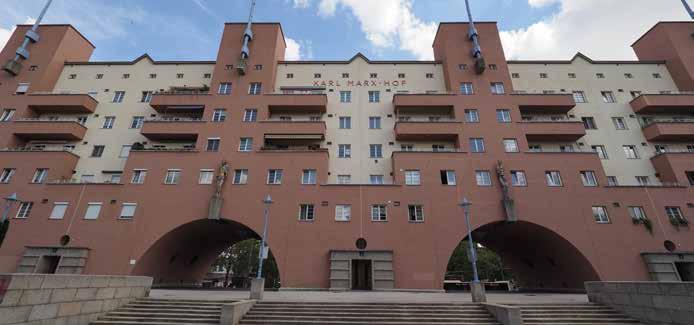
2.2.2 Promoting integrated housing systems
Coordination across sectors is equally essential to deliver adequate housing that is well-located, serviced, resilient and affordable. There is increasing recognition of the importance of National Housing Policies (NHPs) as a guiding framework for governments seeking to develop sustainable, inclusive housing outcomes. Despite this, NHPs in a significant proportion of countries are still absent or incomplete. A recent UN-Habitat survey of 140 countries found that just over half (56 per cent) had an explicit National Housing Policy (NHP), with a small additional group (7 per cent) addressing housing comprehensively
Effective housing systems rely on coordinated action across multiple actors and sectors
but through fragmented frameworks. More than a third (37 per cent) of countries had no NHP, however – either because housing appeared only in sectoral policies (18 per cent), policies were still in the process of being prepared (9 per cent) or no framework existed at all (10 per cent).65
The same review of NHPS also found that more effective systems tend to link housing with urban policy, land use, finance, infrastructure and other allied sectors.66 Several countries have aligned their NHPs and NUPs, including Egypt, Cuba and Ghana. In some contexts (South Korea, Mexico and Chile), Housing Acts mandate periodic reviews of national strategies; in others (Ireland), NHPs operationalize legislation or are tied to implementation plans (Croatia, New Zealand); and elsewhere (Namibia and Kenya), NHPs contribute to shape legislation.
Karl Marx Hof housing complex in Heiligenstadt, Vienna, Austria © Shutterstock
Figure 2.4: Prevalence of dimensions of adequate housing across NHPs, by income group
Housing functions best when treated as a long-term social and economic process, rather than as a one-off product or financial asset
Figure 2.4 shows that NHPs most frequently address affordability, ownership security, housing finance, supply incentives and land or construction costs. In higher-income settings, affordability is especially prominent; in lower-income contexts, tenure security features more strongly. Sustainability is widely addressed, though mitigation is more common than adaptation. Accessibility for disadvantaged groups is notable in European NHPs, and homelessness is increasingly incorporated. Cultural adequacy remains least addressed, with New Zealand’s National Mãori Housing Strategy a key exception.
2.2.3 Engaging informal settlements in upgrading
Over time, international agendas have shifted from slum clearance to upgrading and integration. In place of demolition and relocation, the “management of informal housing” era highlighted the advantages of in situ, multisectoral upgrading that connects settlements to wider urban systems. Yet important challenges remain. Forced evictions, criminalization and weak tenure reforms persist across many contexts, while the lived realities, agency and adaptive capacity of low-income residents continue to be of secondary importance in policymaking.
Experiences worldwide demonstrate that incremental in situ upgrading – combined with service provision, climate risk reduction and improved mobility – can significantly enhance living conditions while preserving livelihoods and social networks. Supporting incremental expansion requires policies that legitimize and finance step by step improvements, enable flexible microfinance schemes, provide technical assistance
and strengthen tenure arrangements so households can invest with confidence. Programmes such as Baan Mankong in Thailand or the Participatory Slum Upgrading Programme in parts of Africa and Asia demonstrate how community-driven and city wide approaches can transform precarious settlements into better serviced, more connected neighbourhoods. Civil society and community-based organizations play a critical role not only in the provision and maintenance of affordable housing, but also in advancing the rights and protections of low-income residents against discrimination and exclusion. Such approaches, in addition to reinforcing social and economic resilience, also reduce displacement pressures associated with market-driven redevelopment (discussed further in Chapter 4).
2.2.4 Recognizing tenure diversity
Across contexts, durable tenure security and effective rental systems depend on regulation, supply and finance working together to protect from arbitrary eviction and excessive rent increases.
Housing policy must recognize and support a full spectrum of tenure and property arrangements. Although ownership remains dominant globally, households rely on a wide range of tenure forms: formal and informal rental (social, cooperative and private), subdivided and backyard units, shared houses and co living, collective or customary systems such as community land trusts, and incremental tenure in informal settlements. Because tenure is experienced differently, frameworks should reflect the lived realities of single women, older and younger people, informal
Long-term public commitment to housing as a human right can sustain affordability across shifting political and economic conditions



Source: UN-Habitat 2026b.
Community-driven and city wide approaches can transform precarious settlements into better serviced, more connected neighbourhoods

settlers, migrants, refugees and other vulnerable groups through secure and flexible options – leases, occupancy or usufruct rights – supported by anti-discrimination and habitability standards and guaranteed access to services. This entails aligning planning, cadastre and finance with mixed-tenure system recognizing informal rental contracts, enabling incremental regularization and service provision without displacement, and tailoring subsidies, micro-finance and landlord support to stabilize rents and improve quality while preserving affordability. Germany is a good example of a country where the provision of a strong regulatory framework for rental properties has helped protect tenants from exploitation (Box 2.5).
2.2.5 Protecting the right to adequate housing
Together, the various instruments and conventions described in Section 2.1.7 offer a coherent international framework for treating adequate housing as both a basic human need and a legally enforceable right. Yet despite these safeguards, violations of housing rights remain widespread and many states continue to treat adequate housing as an aspirational goal, rather than a human right with binding obligations and enforceable remedies.67 To be meaningful, governments must demonstrate not only legal recognition of the right, but also concrete and measurable actions to realize it at the national and local levels. Furthermore, the ability of states to realize the right to adequate housing depends on more than formal declarations and constitutional or legislative recognition; it requires institutions capable of implementing policy commitments, enforcing court decisions and regulating public and private actors. There are a number of significant entry points to support the realization of the right to housing, including:
National legal and regulatory reform: Domestic legal frameworks are a crucial bridge between international commitments and everyday housing realities, with many states having constitutionalized the right to adequate housing. Notable examples include the constitutions of Mexico (1917, 1983), Portugal (1976 and 1997 fourth revision), the Russian Federation (Article 40, 1993) and South Africa (Article 26, 1996). These constitutional commitments can strengthen judicial remedies for individuals and communities facing violations of their housing rights. States have also adopted a wide range of regulatory, fiscal and administrative measures to realize the right to adequate housing. These include restrictions on foreign purchase of residential real estate, property speculation taxes, affordable housing requirements for developers, the temporary expropriation of vacant houses, and prohibitions on foreclosures or evictions that would result in homelessness.69 However, these measures are often partial, unevenly implemented and insufficiently scaled, meaning that housing policies only partially ensure the right to adequate housing as a basic human need.
Box 2.5: Rent controlled housing in Germany
Tenant protection is a central housing priority in Germany, where rising demand, gentrification and rental pressure make regulation essential. The rental system is governed by the German Civil Code, which defines landlordtenant rights and allows federal states to regulate rent levels. The key instrument is the 2015 Rent Brake Law (Mietpreisbremse), which limits rent increases on new and existing leases by tying them to the local Mietspiegel (reference rent). Core measures include a 15–20 per cent cap on rent increases over three years, with up to 8 per cent annually allowed for modernization. In high pressure markets, additional rules apply: new leases cannot exceed 10 per cent above local reference rents, annual increases are capped at 3.9 per cent, a 12 month notice period is required for a rental increase, and special protection zones restrict conversion of rented units into ownership housing. Tenants may reclaim excessive rent for up to 2.5 years and charging over 50 per cent above reference rent is a criminal offence.
Tenant stability is reinforced through long-term leases, strong security of tenure and restrictions on eviction. While these regulations have improved stability and moderated rent increases, their effectiveness varies regionally. Germany’s experience shows that regulation alone cannot offset structural shortages: rent controls must be complemented by policies expanding supply, land availability and public investment
Source: Uniplaces. (n.d.).
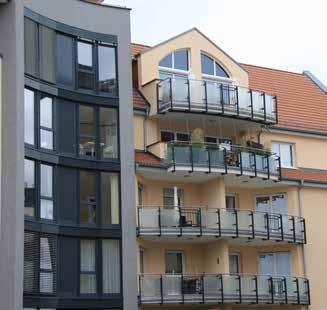
An apartment block in Hanau, Frankfurt, Germany © Shutterstock
Box 2.6: Progressive court rulings linking the right to housing and basic needs
Courts across the world have progressively expanded the interpretation and enforcement of the right to adequate housing, often linking it to human dignity, the right to life, non-discrimination and other essential basic needs. Some of the key judgements include:
In Muhindo James v Attorney General (Uganda, 2019), the Ugandan High Court ruled that the Government’s failure to prevent forced eviction violated the constitutional protection of dignity, life and property, despite it being enshrined in the constitution.
In Beja v Premier of Western Cape Town (South Africa, 2011), the South African High Court recognized that inadequate sanitation in informal settlements infringed the right to housing, affirming the State responsibility to ensure dignified living conditions.
In Maphango v Aengus Lifestyle Properties (South Africa, 2012), the South African Constitutional Court outlined a progressive interpretation of the right to adequate housing to protect tenants from arbitrary actions by landlords. Other examples include the Gauteng Rental Housing Tribunal’s outlawing of landlords levying service charges on tenants for water and electricity consumption.
In India, several landmark decisions – including Olga Tellis and Others v Bombay Municipal Corporation (1985), Chamelli Singh and Others vs the State of UP (1995) and the Ahmedabad Municipal Corporation v Nawab Khan Bulab Khan (1997) – interpreted Article 21 of the Constitution (Right to Life) to encompass housing, livelihood, health and a clean environment and protect people from evictions, homelessness and arbitrary detention.
At the European level, in the case of Yordanova and others v Bulgaria (Bulgaria, 2012), the European Court of Human Rights established that the eviction of the long-established settlements of Roma communities without meaningful procedural safeguards, would constitute a violation of Article 8 of the Convention for the Protection of Human Rights and Fundamental Freedoms. This relates to the right to respect for private and family life, home and correspondence, requiring authorities to consider vulnerability and explore lawful alternatives.
Internationally, the UN Committee on Economic, Social and Cultural Rights ruled in I.D.G v Spain (2015) that executing a mortgage foreclosure without proper notification violated the right to adequate housing, reinforcing due-process obligations in eviction and foreclosure procedures.
Source: Wilson, 2020; European Court of Human Rights, 2012.
Legal rulings and enforcement: In many countries, courts have played a central role in defining the scope and enforceability of housing rights. Procedural protections – such as requirements for meaningful consultation, fair notice, provision of alternative accommodation, and proportionality review – have become critical safeguards against forced evictions and arbitrary displacement (Box 2.6). However, over-reliance on litigation can raise expectations that exceed institutional capacity, while treating rights as a sole obligation of the state can discourage community engagement. Strong administrative mechanisms – such as ombudspersons, national human rights institutions and municipal accountability frameworks – remain essential complements to judicial enforcement.
Housing policy must recognize and support a full spectrum of tenure and property arrangements


Financial regulations: Speculation and profiteering continue to undermine the right to housing by eroding affordability, deepening inequalities and displacing low-income households. Many governments acknowledge these risks, but have yet to regulate financial markets in ways consistent with human rights obligations. Financial institutions and investors should integrate the right to adequate housing into their practices, and courts must ensure that housing-related laws and financial regulations are interpreted and applied consistently with human rights obligations.
Implementation by local authorities: The “right to the city” –recognized in the NUA as an emerging framework for expanding equitable access to urban resources – has been deployed by some local governments to enhance participation, protect public space and address exclusionary planning practices.70 However, its transformative potential often remains limited by weak local capacities, fragmented institutions and resistance from powerful economic interests, constraining the extent to which housing policies can fully realize the right to adequate housing.
Monitoring and accountability: At the international level, states should be held accountable for how they operationalize the right to adequate housing at national and regional levels. Strong administrative and political mechanisms are required to complement national accountability. Further, monitoring tools are critical for translating commitments into measurable progress. UN-Habitat’s Housing Rights Index, for example, offers a structured methodology for governments and policymakers to assess compliance across key areas and provides guidance on operationalizing the right to adequate housing in their cities. There is also an extensive checklist that national and local governments can use to assess their own progress across different dimensions of housing adequacy.71
Realizing the right to adequate housing requires a multidimensional approach that aligns laws, policies and governance frameworks with human rights standards. Whether commitments will be transformed into effective strategies depends on sustained political will, institutional capacity, and coordination across public, private and community actors. Only when housing policies are designed and implemented through this right-based lens they can move beyond formal recognition to actively enabling people to enjoy adequate housing in practice.
2.3 Key Actors in Housing Policy Formulation and Implementation
Housing policies are often formulated at the national level, yet implementation occurs locally through a wide range of institutions, agencies and community actors. Effective housing delivery depends on strong alignment between policy design and the actors responsible for implementation. This section identifies the actors involved in the formulation and implementation of housing policies in different contexts, including not only different levels of government but also international agencies, financial institutions, private developers and construction firms, civil society and community organizations, informal sector actors and landowners. Promoting broad, multistakeholder partnerships in housing policy implementation is the final step in ensuring that housing policies achieve concrete outcomes.
2.3.1 Governments (national, regional and local) and public housing agencies
National, regional and local governments sit at the core of housing systems, shaping both policy formulation and implementation. National governments establish regulatory frameworks, set housing and planning standards, determine subsidy regimes and fiscal incentives, and define overall housing strategies and financing mechanisms. Regional or
Speculation and profiteering continue to undermine the right to housing by eroding affordability
provincial governments coordinate spatial development and adapt national frameworks to the territorial context. Local governments typically oversee land use planning, development control, infrastructure provision and, in some cases, the direct delivery or facilitation of affordable housing. The effectiveness of housing policy depends on clear mandates, adequate fiscal capacity and coherent vertical coordination across these levels.
Within this governance architecture, public housing agencies, regulated non-profit housing associations and semi-public providers operationalize these policy objectives. Positioned between public mandates and housing markets, they develop new housing, manage existing stock, allocate units, maintain affordability controls and increasingly leverage private finance within regulated frameworks. Non-profit housing associations, such as Peabody and Clarion Housing Group in the UK, and semi-public providers, like the Dutch housing associations, manage substantial housing portfolios, combining new development with long-term property management and tenant services.72 These actors can stabilize housing systems by safeguarding affordability, maintaining quality standards and moderating exposure to market volatility. Their capacity to produce such outcomes is shaped by national policy design, financial regulations and governance structures. Changes in subsidy regimes have pushed many housing associations towards more commercially oriented practices. Where mandates, financing frameworks and regulations are misaligned or skewed toward market-driven priorities, the stabilizing role of public housing agencies is weakened, allowing affordability and quality gaps to persist.
2.3.2 International agencies
International development agencies – including the Inter American Development Bank, the World Bank and UN-Habitat – have long influenced NHPs through financing, technical assistance and normative guidance. Global frameworks such as the NUA reinforced housing as central to sustainable development, advancing the right to adequate housing and promoting age- and gender-responsive approaches linked to employment, health, education, inclusion and environmental sustainability. Since Habitat III, international agencies have promoted integrated, sustainable housing approaches that connect affordability, adequacy and upgrading to land use, transport, infrastructure and environmental strategies. This has encouraged greater coherence between national urban and housing policies and stronger cross-sector alignment. Implementation, however, depends on coordinated governance across ministries and levels of government and on institutional systems capable of sustaining long-term action.
Courts across the world have progressively expanded the interpretation and enforcement of the right to adequate housing

While many countries report progress in aligning national urban and housing policies with international agendas, major gaps persist in infrastructure, basic services and spatial investment, indicating ongoing difficulties in translating global commitments into coordinated, tangible national and local outcomes.

States should be held accountable for how they operationalize the right to adequate housing
2.3.3 Financial institutions
How housing is financed, and by whom, determines who can access it. Today’s financing landscape still leaves most households without viable options, with low-income and informal settlers excluded from formal lending systems that rely on fixed assets, stable employment and conventional income verification. This persistent exclusion deepens urban poverty73 and helps explain the scale of the housing crisis, revealing weaknesses in how financial actors design, regulate and implement housing policy. Expanding access to affordable housing therefore requires broadening finance for incremental construction, extending mortgage opportunities beyond middle- and high-income
Actors Scale
International donors – bilateral donors and international NGOs
Regional development banks and the World Bank
State-owned banks
International
International
National
Regional/state facilities
State-controlled housing funds
Commercial banks, building societies
Microfinance
Municipality, local government authority
PPP models
Community-based organizations (CBOs)
National; regional
National; regional
National; regional; city
National; city; neighbourhood
City
National; city
Neighbourhood
Credit providers City; neighbourhood
Co-operatives and credit unions
Informal lenders (family, merchants, peers)
groups and strengthening the public sector’s role in steering sustainable housing finance (see Chapter 8). Meeting these needs depends on the engagement of multiple actors, from international donors to national and local governments, financial institutions and community organizations.74 Table 2.8 summarizes these actors and their functions.
Although many institutions participate in housing finance, their actions often remain fragmented, with weak connections between international funding and the informal processes through which most housing is produced. Understanding how these actors interact – and where their mandates, incentives and accountability mechanisms fall short – is crucial for explaining why housing policies frequently fail to close affordability gaps or remain only partially implemented. Improving performance requires three major shifts. First, formal finance must adapt to the financial realities of low-income and informal sector households by adopting alternative credit assessments, flexible collateral arrangements and products suited to incremental and self-build housing. Second,
Types of Financial Services
Technical assistance; grants; catalytic financing for housing programmes
Technical assistance; loans, guarantees, project-preparation grants; housing finance facilities developed with governments/industry
Loans to public and private housing developers, typically at favourable rates; direct concessional loans to low-income households; guarantee schemes; incremental housing and self-build finance; financing of public rental housing programmes
Capital finance; finance to developers on reimbursement principles; land-based financing; land value capture
Subsidies to developers; serviced land and infrastructure; direct subsidies to households
Developers loans; mortgage finance; housing loans
Short-term loans for incremental housing, repairs and extensions to small groups
Property-tax revenues funding direct housing development or to sub-contracted developers; infrastructure finance; co financing of local projects
Co-financing of mixed income or affordable housing projects
Savings groups; community loans; microfinance
Local merchants providing credit, e.g. for building materials
National; city; neighbourhood Member-based loans for housing upgrading and land purchase
Neighbourhood
Source: adapted from Patel, 2013, pp.7-8; UCLG, 2019.
Informal credit usually for materials, small repairs, or incremental building
Table 2.6: Overview of key financial actors and services
The effectiveness of housing policy depends on clear mandates, adequate fiscal capacity and coherent vertical coordination

coordination across international, national and local actors must be strengthened to ensure global financing mechanisms align with local practices. Third, integrated financial ecosystems – linking subsidies, microfinance, community savings, land tools and public infrastructure investment – are needed to support the full housing lifecycle rather than isolated interventions.
Non-banking financial institutions can expand access to housing finance, though investors often remain cautious due to perceived high risk, low collateral values and, in some contexts, political instability.75 Innovative models that bridge low-income households’ financial practices with formal mortgage markets – such as incremental housing loans, hybrid instruments and government-backed mortgage guarantees – offer promising alternatives. CBOs can also play a vital role by coordinating with financial institutions, private developers and residents to support inclusive public-private housing initiatives. Housing itself can function as an asset and an income source, as demonstrated by South Africa’s backyard rental markets. When secure and formalized, housing becomes a viable collateral enabling households to access broader financial services. Appropriately structured blended finance vehicles can support these reforms by aligning public, philanthropic and commercial capital around transparent affordability targets and linking finance to city-level delivery systems. Expanding such inclusive financing channels can also help counter housing financialization by encouraging real economy investments rather than speculative flows. This requires attention to the policies that shape financialization, including monetary policy, securitization regulations and oversight of private equity and investment funds.76
How housing is financed, and by whom, determines who can access it
2.3.4 Private developers and construction firms
Private developers and construction firms are central to formal housing delivery, shaping what gets built, for whom and under what conditions. Large developers dominate market production in many countries, leveraging access to finance, land and political influence to shape planning and regulatory decisions. Their business models typically prioritize higher-margin units, contributing to the persistent undersupply of affordable and rental housing, especially for lower-income households. Mid-sized developers and construction SMEs often operate with thin margins and face barriers such as limited access to credit, strict collateral requirements and procurement systems that favour larger firms. Meanwhile, the construction industry is affected by skills shortages, inconsistent building standards and volatile material costs, all of which undermine quality and delay delivery, often contributing to incomplete policy implementation and uneven outcomes.
Examples from diverse contexts illustrate both the potential and the limits of private sector participation. In the US, private contractors working with organizations such as Habitat for Humanity have expanded access to affordable housing through subsidized or volunteer-supported delivery models.77 In South Africa, companies such as Calgro M3 deliver subsidized and “gap market’’ housing through PPPs.78 In Brazil, large firms like MRV Engenharia scaled delivery under Minha Casa, Minha Vida (Box 2.7) through close coordination with the state and financial institutions.79 Together, these cases show that private-sector engagement can increase supply, but also that outcomes depend heavily on public incentives, regulatory oversight, coordinated frameworks and the alignment of developer interests with affordability goals.
2.3.5 Civil society and community organizations
Civil society and community organizations play a crucial role in housing policy by representing residents’ needs, particularly of low-income and vulnerable groups who are often excluded from formal decision making. They advocate for secure tenure, fair land use and accountable governance, while providing essential on-the-ground knowledge of local housing conditions.
Formal finance must adapt to the financial realities of low-income and informal sector households
These actors include slum-dweller federations, savings groups, housing cooperatives, advocacy NGOs, social movements and citywide community networks that organize residents and articulate collective demands. Many organizations engage in co-production – including community-led upgrading, cooperative housing and participatory planning – to ensure that housing solutions are culturally appropriate, socially inclusive, and responsive to lived realities. By acting as intermediaries, organizers, innovators and oversight actors, these groups strengthen transparency and help align housing policy with communitie's rights and priorities.80 However, their impact is often constrained by limited financing, uneven recognition by authorities and fragmented participation mechanisms. These constraints can lead to housing programmes that overlook local needs or remain only partially implemented.
Thailand’s Baan Mankong programme demonstrates how national housing objectives can be effectively delivered on the ground when civil society organizations are granted a formal and adequately supported role. The participatory nature of the programme – centred on collective tenure, community finance and citywide federations – is regarded as an exemplary instance of state support for community-driven housing81 (see Chapter 5).

The construction industry is affected by skills shortages, uneven building standards and volatile material costs

Civil society and community organizations play a crucial role in housing policy by representing residents’ needs
2.3.6 Informal sector actors
Informal sector actors play a crucial, yet often overlooked, role in housing systems, especially in cities where informal settlements and self-built construction dominate. Operating outside formal regulations, these actors – including formal builders, artisans, small-scale landlords,
savings groups, community networks, informal land brokers, local material suppliers and other household-level producers – deliver the bulk of affordable housing for lower-income groups by providing lowcost materials, incremental construction and small rental units. Their everyday practices offer valuable insight into land access, tenure and upgrading processes. Yet these actors face significant constraints, including insecure tenure, limited access to credit, variable construction quality and high exposure to environmental and economic risks. Policies that ignore or penalize them often lead to delays or partial implementation. When supported by secure tenure, serviced land or simplified regulations, on the other hand, informal sector actors become key partners in improving access to affordable housing and advancing inclusive urban development.
Box 2.7: Minha Casa, Minha Vida: Brazil’s federal housing programme
Launched in 2009, Minha Casa, Minha Vida (MCMV) is Brazil’s largest federal housing programme, designed to expand affordable housing in urban and rural areas. Although pro-poor, it serves a wide range of the population and prioritizes vulnerable groups, including women-headed households, people with disabilities, older people and Indigenous communities. Managed by the Ministry of Cities through the National Housing Secretariat, it operates as an umbrella programme with multiple modalities under the National Urban and National Rural Housing Programmes. These include subsidized projects delivered by public and private developers, cooperatives and non-profit organizations, as well as financed options offering preferential interest rates. CAIXA, the public bank, administers resources and technical standards.
Since 2009, the programme has channelled unprecedented public subsidies and private investment, delivering over 4.5 million homes. Early phases were criticized for peripheral, isolated developments with limited services and weak job access. In 2023, the programme was revised to improve location, expand assistance, raise income ceilings and lower interest rates. Five subsidized and three financed lines now target four income bands and regional needs. Minha Casa, Minha Vida demonstrates how large-scale subsidies, diverse delivery mechanisms and iterative reform can rapidly expand housing supply, while underscoring the need for sustained coordination to ensure adequate, well-located and socially integrated neighbourhoods.
Source: UN-Habitat, 2013a; Federative Republic of Brazil, 2023.
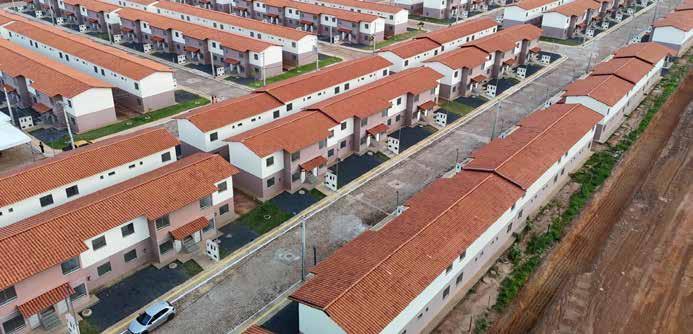
Aerial view of a housing complex from the Minha Casa Minha Vida - My House, My Life program in the city of Barreiras, Brazil © Shutterstock
Informal sector actors play a crucial, yet often overlooked, role in housing systems

2.3.7 Landowners
Landowners – whether private individuals, large estates, customary authorities or public agencies – significantly shape housing outcomes through their control over land release, redevelopment and tenure arrangements. In high-income cities, large private estates influence planning negotiations and, in some cases, limit the supply of affordable housing. In rapidly growing cities in developing countries, informal or customary landowners frequently subdivide peri-urban land, shaping where informal settlements expand and the degree of tenure security residents can expect. Major infrastructure investments can also trigger sharp land value increases, allowing landowners to capture substantial gains while low-income communities face displacement.83 Where the state itself is a dominant landowner, public land leasing can support urban development, yet also contribute to escalating housing prices.84 Across these contexts, landowners’ interests and decisions strongly influence the direction and equity of housing policy, making their engagement central to effective housing system reform.
2.4 Concluding Remarks
The lessons learned from 50 years of housing policies demonstrate that fragmented, market-driven and ownership-centred approaches have failed to deliver adequate housing for most urban residents. Despite its centrality to urban well-being, housing has been consistently deprioritized politically. Affordability crises, rising evictions, persistent informality and climate risks illustrate the limits of the enabling approach that continues to frame housing primarily as a commodity or a finished product rather than as a socio-cultural process that evolves over time.85 At the same time, several NHPs and subnational strategies offer valuable insights, highlighting the need for coherent legal frameworks, aligned institutions, empowered local governments and finance systems that support rather than undermine inclusion. Moving forward, the formulation and implementation of housing policies must build on these lessons and orient towards comprehensive, rights-based strategies that respond to different contexts.
Governments must reclaim a central and active role in shaping housing systems. In many countries, the shift from state provision to market facilitation has left low- and middle-income households increasingly exposed to volatility, speculation and exclusion. Public authorities are uniquely positioned to set ethical standards, regulate the roles of financial actors, developers and CBOs, ensure transparency and accountability in housing markets and coordinate delivery systems. Strong state involvement is also critical for addressing the differentiated needs of women, youth, older persons, persons with disabilities, migrants and minority communities, and ensuring that housing systems support climate resilience.
Expanding the autonomy and authority of regional and local governments is critical to translate national policies into tangible improvements. While national governments set broad policy directions and uphold international commitments, delivery happens at a local level. With clear decision-making authority, predictable fiscal transfers, meaningful planning powers and discretion over housing programmes, local governments are able to deliver more context-appropriate and people-centred solutions. Their proximity to communities means local governments are best integrate housing with transportation, employment, basic services, climate adaptation and inclusive urban design (see Chapter 7).
Housing policy innovation must diversify pathways beyond new construction and ownership centric models. Current shortages cannot be resolved through construction alone, nor through policies that prioritize homeownership at the expense of other tenure options. Diversifying tenure arrangements through the expansion of regulated rental housing, cooperative and limited-profit models, incremental housing and self-build solutions can respond more effectively to the needs of low- and middle-income households. Mobilizing underutilized stock – for example, through adaptive reuse or vacancy regulation – also offers immediate, climate-smart ways to expand supply. These approaches respond more effectively to the realities of households that build incrementally and rely on flexible tenures.
Informal settlements must be recognized as integral components of cities rather than areas to be eradicated. Although global narratives increasingly recognize informal settlements as sites of urban innovation, in practice the rights and needs of residents are often neglected. Experience worldwide shows that incremental and in situ upgrading – supported through microfinance, technical assistance and secure tenure – is more inclusive, feasible and aligned with the lived realities of low-income households, who rely on housing for multiple functions, including livelihoods and community networks. Such approaches strengthen social and economic resilience, reduce displacement pressures linked to market-driven redevelopment, and allow households to invest with confidence in safer and more resilient homes.
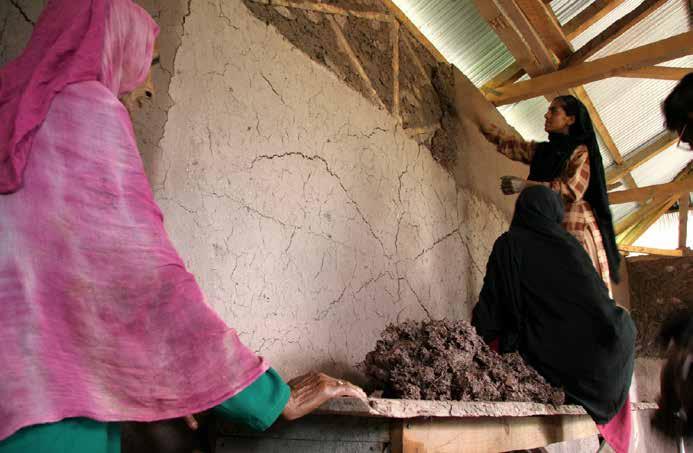
Effective housing systems must actively integrate the diverse actors who already shape housing outcomes. Housing systems involve a wide constellation of public, private, civic and informal actors operating across multiple scales, yet fragmentation among these actors remains a major barrier to effective implementation. Financial actors are particularly significant: in most countries, lowerincome households finance and build most housing, yet policy has rarely engaged constructively with this reality. Innovative finance mechanisms – such as community-based finance, blended capital, or revolving funds – can mobilize resources to support social outcomes, while better aligning state incentives with inclusive housing delivery. A comprehensive, well-regulated and rightscentred framework for these actors to work in is crucial to ensure coherence across sectors such as transport, employment, health, education, water, and sanitation.

Informal settlements must be recognized as integral components of cities rather than areas to be eradicated
Safeguarding the right to adequate housing must anchor all policy and institutional reforms. Despite widespread legal recognition, the right to adequate housing remains frequently violated, often due to financialized housing markets and weak accountability. Realizing this right requires aligning legal frameworks, financial systems, and investment practices with human-rights obligations. This includes regulating speculative investment, preventing eviction and foreclosure, and prioritizing housing for use rather than profit. Civil society organizations – particularly those working with homeless populations, women, children, persons with disabilities, refugees, and minority groups – play an indispensable role in monitoring violations and securing accountability. Policy tools such as the UN-Habitat Housing Rights Index further support governments in identifying gaps, guiding reforms and measuring progress across national and local contexts.
Together, these directions point to a way forward in which housing policy is not merely a technical domain but a central pillar of inclusive, sustainable and rights-based urban development. Translating lessons into practice requires political will, strong institutions and coordinated action across actors and sectors. Only then can housing systems evolve from fragmented interventions to integrated strategies that ensure adequate housing for all (see Chapter 9).
Women repair their house using mad in Haveli, Pakistan © UN-Habitat
Endnotes
1. UN-Habitat, 2016c; United Nations, 2025b.
2. United Nations, 2025b.
3. UN-Habitat, 2016c.
4. OHCHR, 2017a, p.3.
5. United Nations, 2018.
6. Mc Cawley, 2019; UCLG, 2019.
7. Harris & Giles, 2003.
8. Da Cunha, N. V. (2020).
9. Mukhija, 2004.
10. Bredenoord & Lindert, 2010; Harries & Giles, 2003; Mukhija, 2004.
11. Patel, 2018.
12. Gilbert, 2002.
13. Evans et al., 2016.
14. World Bank, 1993.
15. Mukhija, 2004; Jones & Datta, 2000; Yap, 2016.
16. UCLG, 2019.
17. Yap, 2016.
18. Patel, 2018.
19. Shuid, 2016; Mukhija, 2004.
20. Agus, 2002.
21. Mc Cawley, 2019.
22. Mc Cawley, 2019, p.591.
23. Poggio & Whitehead, 2017.
24. Aalbers, 2016; Fields & Hodkinson, 2018.
25. Cities Alliance, 1999; Gilbert 2009.
26. UN-Habitat, 2003, p.12.
27. UCLG, 2019.
28. UN-Habitat, 2003.
29. Fiori, 2013.
30. Butcher et al., 2025.
31. Patel & Arputham, 2008.
32. Arabindoo, 2011; Banerjee, 2022; Gilbert, 2007, 2009; Roy, 2014.
33. Gilbert, 2009.
34. Cities Alliance, 1999.
35. Arabindoo, 2011.
36. Roy, 2014, p.141.
37. UN-Habitat, 2024a, p.301.
38. UN-Habitat, 2016c.
39. UN-Habitat, 2016c.
40. United Nations, 2016c.
41. United Nations, 2016d.
42. United Nations, 2016e.
43. United Nations, 2016f.
44. United Nations, 2016g.
45. United Nations, 2016a.
46. Sengupta et al., 2018; Wang & Shao, 2014; Wu, 2018.
47. Zhang & Ball, 2016; Sengupta et al., 2018.
48. Hodkinson, 2012; Clifford & Morphet, 2022.
49. World Bank, 2012a.
50. Buckley et al., 2016.
51. Rojas, 2015.
52. Brickell, 2020; Dubey et al., 2022; Kifle et al., 2024.
53. Colomb & Gallent, 2022; Yiu et al., 2023.
54. Rogers & Power, 2020.
55. Colomb & Gallent, 2022.
56. Pawson et al., 2022.
57. OHCHR, 2020; Sethi& Cruetzig, 2021; Dorlach, 2023.
58. Sethi & Cruetzig, 2021.
59. Adebayo, 2020, p.577.
60. OHCHR, 1991; OHCHR, 1997.
61. Banerjee, 2023.
62. United Nations, 2025b.
63. UN-Habitat & OECD, 2024.
64. OHCHR, 2017a, pp. 7 & 13.
65. UN-Habitat, 2026.
66. UN-Habitat, 2026.
67. Fredman, 2018; Rolnik, 2013.
68. OHCHR, 2017b.
69. United Nations, 2016b, p.2.
70. UN-Habitat, 2018a.
71. Poggio & Whitehead, 2017.
72. Aalbers, 2016; UCLG, 2019; OHCHR, 2013.
73. Buckley et al., 2016.
74. Patel, 2013.
75. Aalbers, 2016, p.551.
76. Habitat for Humanity, 2025.
77. Dlamini & Yessoufou, 2022.
78. Shimbo, 2019.
79. Chiodelli, et al., 2025.
80. Shelby, 2024.
81. Mishra, 2025.
82. Layard, 2018.
83. Tian & Ma, 2009.
84. Turner, 1976.

The Housing Affordability Crisis Chapter 3:
Quick facts
1. As of 2023, the global house price to income ratio rose from 9.3 in 2010 to 11.2 in 2023, reflecting a broad decline in affordability, especially concentrated in Eastern and South Eastern Asia.
2. As of 2023, 44 per cent of tenant households worldwide were spending more than 30 per cent of their income on rent, with levels particularly high in Sub Saharan Africa.
3. Global housing shortages rose from 201 million units in 2010 to 269 million units in 2023: though the gaps are now reducing in some regions, the backlog has continued to grow.
4. Countries with higher income inequality report higher rents, more overcrowding and deeper affordability declines, especially among low‑income households.
5. Nearly one‑quarter of adults across 108 countries fear losing their land or housing rights, with insecurity growing fastest among renters and young adults.
Policy points
1. Treat housing affordability as a long‑term development priority and integrate it into national economic, social and urban strategies, supported by multi‑year financing and coordinated cross‑government action.
2. Expand affordable housing supply through structural reforms in land management, planning systems, permitting processes and infrastructure provision.
3. Strengthen policies that support vulnerable and low‑income groups, including renters, informal sector workers, migrants, young adults and female‑headed households.
4. Establish adequate safeguards to ensure that the growing role of financial investment in housing does not drive prices beyond the reach of households.
5. Build strong housing institutions, coordinated planning frameworks and participatory governance systems to support sustainable, inclusive and accountable delivery of affordable housing.
Access to affordable and adequate housing is fundamental to overall well-being. As outlined in Chapter 1, adequate housing is associated with lower levels of poverty, improved physical and mental health, social inclusion, upward mobility and substantial economic activity. However, the rising cost of housing in nearly every region of the world remains a persistent challenge for households – whether renting, attempting to buy a home or managing mortgage payments. In recent years, rising housing costs have far outstripped any gains in household incomes, meaning that housing is even less affordable now than it was prior to the 2007–2008 global financial crisis.1
Rapid urbanization and demographic change are compounding affordability pressures across regions. Smaller households, an increasing number of older renters and high-income inequality further increase demand and deepen burdens for low-income renters. These combined pressures keep housing markets tight across diverse regions, with the burden falling disproportionately on tenants, young people and female-headed households, new migrants and visible minorities, among others.
This chapter provides an overview of the housing affordability crisis, drawing on available data and published research. Although the current affordability crisis is a global phenomenon, it remains essential to reflect regional diversity and contextual nuance throughout the analysis. The chapter assesses the current state of affordability, the contextual factors driving cost increases, and the implications of these challenges.
The chapter also examines the broader effects of housing unaffordability on well-being, opportunities and life outcomes, including:
An initial overview of the framework linking housing affordability to well-being, as well as prevailing definitions and measurement approaches (Section 3.1).
An examination of current unaffordability trends in both the homeowner and rental sectors, with a particular focus on the most affected regions (Section 3.2).
An analysis of the primary drivers of rising housing costs, both those linked to demand (such as urban growth, income inequality and property speculation) and supply (such as construction costs, public housing stock and land availability) (Section 3.3).
An exploration of the impacts on individuals and communities, from homelessness and informal settlement growth to the denial of basic expenditures such as food and healthcare (Section 3.4).
A summary of key policy responses to reduce demand-side barriers (for example, targeted subsidies) and support affordable supply (including public housing programmes), aided by innovative financial, planning and participatory approaches (Section 3.5).
Concluding remarks, drawing on the findings of the chapter (Section 3.6).
Figure 3.1: Framework for housing affordability and well-being
Source: Tiwari and Shukla, 2024
3.1 Defining Housing Affordability
Housing affordability refers to a household’s ability to secure adequate housing without placing undue pressure on its income or compromising overall living standards. It reflects the balance between housing costs such as rent, mortgage repayments, utilities, insurance and other ownership-related expenses and household income, ensuring that sufficient resources remain for essential non-housing needs including food, health care, education and transport.2 This section outlines a general framework for understanding housing affordability and presents a baseline metric for measuring and monitoring affordability levels across different regions.
3.1.1
Framework for housing affordability
The framework linking housing and well-being (Figure 3.1) shows how conditions in housing markets, the real economy and financial markets jointly shape the key components of affordability – house prices, household incomes and access to mortgage finance. Housing prices reflect the interaction of supply and demand, influenced by macroeconomic trends, financial market settings and institutional arrangements:
On the supply side, construction costs depend on wider economic activity and cost pressures, while lending conditions are determined by interest rates, liquidity and credit standards. Planning regulations shape land availability and the pace of new development: rigid land-use rules, such as restrictive density limits, can constrain supply.
On the demand side, urbanization, demographic change, household preferences, purchasing power (including access to funds for home purchase) and investor activity in rental markets all contribute to price formation.
Affordability is also shaped by employment and income growth in the real economy, alongside financial market conditions that determine the cost and availability of mortgage credit. Interest rates, liquidity and the behaviour of banks and non-bank lenders directly affect borrowing terms. Institutional contexts vary widely across countries and influence both household income potential and the types of housing finance available. Fiscal policy affects taxation and disposable income, while welfare policy determines the extent of public support for affordable housing. Land administration systems vary widely across cities and play a central role in shaping housing outcomes. Overall, then, affordability emerges from the interplay of prices, incomes, and the cost and availability of finance.
Land administration systems vary widely across cities and play a central role in shaping housing outcomes
3.1.2 Measuring housing affordability
While housing unaffordability covers a wide spectrum of challenges, a common benchmark is when costs exceed 30 per cent of gross income, particularly for lower-income households. While widely used, this ratio does not fully capture variations in housing quality, differences in household composition, or location-specific and tenure-related cost
structures. Affordability is typically assessed for three groups –renters, existing homeowners and prospective buyers – with each facing distinct pressures:
Among renters, affordability is evaluated by the share of income devoted to rent, with households considered cost-burdened when rent exceeds 30 per cent of income and severely burdened at 50 per cent.
For homeowners, the focus is on ongoing housing costs, especially mortgage repayments, as well as taxes and insurance: stress arises when these exceed the 30 per cent threshold.
For prospective buyers, purchase affordability is usually measured using the house price-to -income ratio: a dwelling is considered affordable when the median house price is no more than three times the median household income, while ratios above five indicate severe unaffordability.3
While useful for their simplicity and comparability, these ratio -based indicators have notable limitations.4 Measures such as price-to -income and rent-to -income ratios do not fully capture policy interventions, shifts in borrower composition or the range of household choices across income groups. For example, increases in headline ratios may coexist with targeted assistance enabling lower-income households to purchase below-median-priced homes, while rent burdens among higher-income households may reflect preferences for location or quality rather than financial stress. More refined benchmarks, such as the 30/40 rule, which applies the 30 per cent affordability threshold to the lowest 40 per cent of income earners, help identify vulnerable households. However, they still mask important differences across households and do not account for variations in local living costs.5
Housing affordability challenges remain pervasive across the world. Globally, average price-to-income ratios have risen from 9.3 in 2010 to 11.2 in 2023
To address these gaps, complementary approaches focus more directly on welfare and financial conditions. Residual-income methods assess whether households have sufficient income left after meeting housing costs to cover basic needs, offering a conceptually stronger link to living standards despite practical challenges in defining normative budgets across contexts.6
Similarly, financing-adjusted indicators capture the interaction of house prices, household incomes and borrowing costs, providing a clearer picture of affordability, especially during periods of monetary tightening.7 Together, these approaches enhance the interpretation of the ratio -based benchmarks used in this chapter, helping distinguish between nominal price pressures and genuine constraints on household well-being.
Figure 3.2: Global ownership affordability
Source: UN-Habitat, 2026a.
3.2 Trends in Housing Affordability
This section examines global and regional trends in housing affordability for both owners and renters, drawing primarily on UN-Habitat’s Global Urban Indicators Database and complemented by international sources. It highlights where affordability has worsened or improved, the structural and market factors driving these shifts, and the differing patterns that emerge across regions.
3.2.1 Ownership affordability
Housing affordability challenges remain pervasive across the world, with most countries experiencing housing markets that are “seriously”, “severely” or even “impossibly” unaffordable. As illustrated in Figure 3.2, nearly 96 per cent of countries fall into one of these categories, reflecting a widening misalignment between housing prices and household incomes. Globally, average price-to-income ratios have risen from 9.3 in 2010 to 11.2 in 2023. In more than half of all countries, the price-to -income ratio exceeds 9, meaning that a median-income household would require over nine years of income to purchase a median-priced home – the margin for being classified as impossibly unaffordable. Only two countries (Saudi Arabia and the United Arab Emirates) record price-to -income ratios below 3, the threshold commonly associated with broadly affordable conditions.8 Against this backdrop, this section examines recent trends in ownership affordability, focusing on the regions where pressures have intensified markedly.
Central and Southern Asia has seen the sharpest relative rise in price to income ratios of any region – an increase of 73 per cent between 2010 (9.7) and 2023 (16.8) – driven by significant urban and population growth.
Eastern and South‑Eastern Asia has the highest price to income ratio (17.5) of any region, up from 10.7 in 2010, accelerated by speculative investment and high construction costs.
Sub‑Saharan Africa falls within the range of severely unaffordable housing, with a price‑to‑income ratio of 8.9. In some countries, ratios are two to three times higher, further constrained by the exclusion of most poor urban households from formal housing finance.
Central and Southern Asia
Ownership affordability in Central and Southern Asia has deteriorated substantially over the past decade, with the region now recording some of the highest price-to-income ratios globally. By 2023, households typically required 16.8 years of income to purchase a median-priced home, reflecting deep structural pressures on housing systems.9 Rapid urbanization and sustained demographic growth have intensified competition for serviced land, while construction costs have escalated due to rising material prices and infrastructure bottlenecks.
Source: UN-Habitat, 2026a
The situation has been further aggravated by the tendency for developers to focus on housing for more affluent households at the expense of low-income buyers, as in India (Box 3.1). The region demonstrates how rapid economic and demographic transformation, coupled with institutional and financial constraints, has intensified ownership affordability pressures and limited opportunities for inclusive homeownership.
Eastern and South-Eastern Asia
Eastern and South-Eastern Asia remains one of the least affordable regions for homeownership, with price-to-income ratios among the highest globally. In 2023, median households required 17.5 years of income to purchase a typical home.10 This reflects structural characteristics unique to the region: highly concentrated urban populations, significant speculative demand, limited land supply and housing systems that treat property as a primary vehicle for wealth accumulation.
Across the wider region, rapid urbanization has outpaced the expansion of serviced land and infrastructure, contributing to land-price inflation and long approval timelines for new housing development. Rising construction and financing costs have reinforced these pressures, while speculative investment has created additional upward momentum in markets that already suffer from tight supply, such as China (Box 3.2).
Box 3.1: Limited mortgage access and prioritization of high-end housing in India
In India, these pressures are clearly visible in the shifting structure of new supply: in the country’s eight largest cities, the affordable housing segment declined from 52 per cent of new builds in 2018 to just 17 per cent in 2025, as developers increasingly prioritized mid- and high-end units where profit margins are higher. Affordability constraints are particularly acute in India’s largest metropolitan areas. Mumbai and Delhi record price-to-income ratios of 14.3 and 10.1, levels that place formal homeownership far beyond the reach of households earning median incomes. Only a small minority of households have access to formal mortgage finance, which restricts pathways to ownership and forces many families to rely on savings, informal borrowing or extended family networks. While cities such as Ahmedabad (5.1), Chennai (5.1) and Kolkata (5.8) exhibit lower ratios, their affordability is undermined by a significant shortfall in supply. The supply-to-demand ratio for affordable housing across India’s eight largest cities dropped from 1.05 in 2019 to 0.36 in 2025, indicating that even “less unaffordable” cities face widening shortages.
Source: Haidar, 2025; Knight Frank, 2025; Magicbricks, 2024.
Figure 3.3: Median house price-to-income ratio
These factors have entrenched severe affordability constraints across the region, particularly in large metropolitan centres where aspiring homeowners face some of the most challenging conditions globally.
Box 3.2: China’s overheated housing market
The dynamics of exclusionary speculative development are especially visible in China, where Beijing, Shanghai and Shenzhen consistently rank among the world’s most unaffordable housing markets. In these cities, constrained land supply, strong investor participation and rapid economic growth have driven persistent price escalation. Hong Kong exemplifies these extreme affordability pressures.
With a price-to-income ratio of 23.4 in 2024, according to the Urban Land Institute, it remains one of the world’s least affordable housing markets. Although this marks a slight improvement from 26.5 in 2022, housing remains classified as “impossibly unaffordable”, largely due to the city’s extreme land scarcity, of which only one-quarter is developed, with the remainder primarily designated as protected country parks.
Source: Hong Kong Environment and Ecology Bureau, n.d.; Hong Kong Business, 2025
Sub-Saharan Africa
Sub-Saharan Africa faces persistent homeownership affordability challenges. Regional price-to-income ratios rose from 7.8 in 2010 to 8.9 in 2023, placing much of the region within the “severely unaffordable” threshold.11 These figures mask even greater pressures in individual countries: Ethiopia (26.4), Nigeria (28.2) and Kenya (16) exhibit extreme ratios that make formal homeownership unattainable for the vast majority of households.12 Independent estimates show even higher values, including projections in Ethiopia (47) and Cameroon (46.7) that imply households would need almost five decades of income to purchase an entry-level home.13
Structural constraints lie at the heart of these affordability challenges. In most countries, the cost of formal housing far exceeds average household incomes due to high land prices, expensive construction inputs, limited infrastructure and fragmented land-administration systems. Cross-country analysis by the World Bank shows that mortgage markets in most Sub-Saharan African countries remain shallow, with mortgage-to -GDP ratios typically well below 5 per cent. Only a small number of upper-middle-income countries exceed this level.14
This limits the ability of developers to deliver large-scale, lower-cost housing. In Nigeria, for instance, even the cheapest private sector house available as of 2020 – at a cost of US$8,040 – is still out of reach for around a third (32 per cent) of urban households, a powerful reminder of the entrenched affordability divide.15 The region also faces substantial
housing deficits driven by rapid population growth and urbanization. Estimated shortages include 28 million units in Nigeria, 19.5 million in Egypt, and millions more in Ethiopia, Kenya, Tanzania and South Africa.16
3.2.2 Rental affordability
Figure 3.4 shows marked variation in rental affordability across world regions, with many low- and middle-income areas recording high or very high rent-to-income ratios, often above 50 per cent. Substantial differences are also evident within Asia, Europe and Northern America: these regions contain both cities with relatively manageable rental costs and others where households face severe burdens due to tight housing markets, income disparities, limited rental supply or restricted access to social or affordable housing. National averages often obscure these contrasts: a country classified as broadly affordable may still contain cities with acute rental stress, while some high-burden countries include pockets of more moderate conditions.
At the global level, though the proportion has fallen slightly in recent years, 44 per cent of tenant households are currently spending more than 30 per cent of their income on rent. Though unaffordability levels worldwide have fallen slightly since 2010, the picture varies significantly between regions, with Oceania, Western Asia and Northern Africa, Central and South Asia, Eastern and South-Eastern Asia, and Australia and New Zealand all reporting rises during this period.17 This section examines rental affordability trends in the regions where rent burdens are most severe and persistent:
In Sub Saharan Africa, the rate of rental unaffordability is the highest in the world (55 per cent), driven by low and irregular incomes, limited formal rental supply and widespread informality.
In Latin America and the Caribbean, almost half (48 per cent) of rental households are unaffordable, a situation underpinned by high land and construction costs, shallow mortgage markets and the slow growth of formal rental options.
In Europe and Northern America, one in two (50 per cent) rental households are struggling with unaffordability, the product of tight housing markets and rising development costs.
Focusing on these regions allows the analysis to capture both the depth of rental stress in lower-income contexts and the growing pressures evident in higher-income settings too. In all three regions, despite slight reductions in recent years, the rental burden falls most heavily on lowincome households, underscoring the need for policies that expand affordable rental supply and strengthen tenant protections.

Rental burden falls most heavily on lowincome households
Figure 3.4: Global rental affordability, 2023
Source: UN-Habitat, 2026a
Sub-Saharan Africa
Rental affordability in Sub-Saharan Africa remains severely constrained, with many urban households facing rent-to-income ratios that exceed standard affordability thresholds. These challenges are rooted in a combination of low and often irregular household incomes, limited formal rental supply and rapidly expanding urban populations. SubSaharan Africa is urbanizing faster than any other world region, adding millions of new urban residents each year and placing immense pressure on already strained housing systems.
Because formal rental options are limited, most households rely on informal rental arrangements, including units in unplanned settlements, backyard structures and shared compounds. Informal rentals dominate the urban housing landscape in many cities where rental markets operate largely outside regulatory frameworks. This informality persists because obtaining formal housing remains prohibitively expensive, with high development costs, infrastructure gaps and cumbersome regulatory procedures.
These systemic constraints create a profound mismatch between incomes and market prices, which pushes the majority of lower-income renters into informal housing, where the rent-to-income ratio may still be high despite significantly lower construction standards. Consequently, rental unaffordability becomes both a symptom and a driver of deeper structural weaknesses, reinforcing reliance on unregulated markets and limiting access to adequate, well-located housing. Rapid urbanization, along with limited formal supply and high barriers to formal housing finance, ensure that rental affordability remains one of the most persistent and intensifying housing challenges across Sub-Saharan Africa.
Latin America and the Caribbean
Rental affordability pressures remain high across Latin America and the Caribbean, with more than half of renters in many countries spending over 30 per cent of their income on housing costs. These pressures reflect long-standing structural factors, including widespread informality in labour and housing markets, limited availability of formal and affordable rental options, and high land and construction costs that push rents beyond the reach of low- and middle-income households. In several major urban centres, rapid population growth has increased competition for limited rental stock, further raising costs and intensifying affordability challenges.18
The pressures of affordability are particularly acute in metropolitan areas where formal rental supply remains constrained and new housing construction is both expensive and slow to materialize. Research indicates that land prices in many cities have doubled every 6 to 10 years, a trend that significantly inflates development costs and contributes to higher rents.19 Mortgage market depth remains limited, averaging around 8 per cent of GDP, which restricts households’ ability to move from renting to homeownership and keeps a large share of the population reliant on rental markets.20
The pressures of affordability are particularly acute in metropolitan areas where formal rental supply remains constrained
Tenants in informal housing often face overcrowded or substandard housing, limited tenure security and higher housing costs relative to income. Weak regulatory enforcement and fragmented land use systems
Source: UN-Habitat, 2026a
restrict the development of affordable, well-located rental housing. These constraints place a disproportionate burden on low-income households, who must devote a significant share of their income to rent, leaving fewer resources for essential needs such as food, transportation, healthcare and education.
Without targeted interventions that expand formal rental options, reduce development costs and strengthen regulatory frameworks, rental burdens are likely to remain high, particularly for low-income households. Addressing these constraints will be essential for improving equitable access to adequate, affordable rental housing across the region.
Europe and Northern America
Rental affordability patterns in Europe and Northern America show a mix of gradual improvement and enduring pressures, with the overall rent burden declining but still above 50 per cent. The share of rentburdened households fell from approximately 57 per cent in 2010 to 50.4 per cent in 2023.
This moderate decline reflects steady improvements in several European countries where the rent burden reduced during this period, including Albania (from 60 to 45 per cent), Ireland (from 65 to 50 per cent), Spain (from 50 to 43 per cent) and the United Kingdom (UK) (from 45 to 38 per cent).21 Despite this progress, the regional average remains high, indicating that a substantial portion of households still allocate more than half of their income to rent.
In the US, one in two renter households (50 per cent) – a total of 22.4 million – were cost burdened in 2022, including 12.1 million households (27 per cent of renters) who were severely cost burdened, spending more
than half of their income on housing.22 These high burden levels point to structural constraints in rental markets, including limited housing supply, rising land and construction costs, and a shortage of affordable rental options. Rental burdens fall unevenly across population groups, with minority and low-income households often facing the greatest strain. In the US, 57 per cent of Black renters and 53 per cent of Hispanic renters were cost-burdened in 2022, compared with 46 per cent of white renters.23
These disparities highlight enduring inequalities in access to affordable, secure and well-located rental housing. Restrictive zoning and land use regulations, rising development costs and high interest rates continue to constrain new rental construction, further tightening markets in many metropolitan areas and deepening affordability challenges for vulnerable households.
3.3 Drivers of Housing Unaffordability
Housing unaffordability is shaped by conditions across the domains in Figure 3.1: the housing market, the real economy, financial markets including institutions. This section will explore both demand- and supplyside factors in housing unaffordability:
On the demand side, house prices reflect urbanization, demographic change, household preferences and investment activity, while employment, productivity and wage growth determine households’ ability to pay. Financial markets influence access to credit and mortgage costs.
Oceania (excluding Australia and New Zealand)
SubSaharan Africa
Western Asia and Northern Africa
Latin America and the Caribbean
Central and Southern Asia
Eastern and South-Eastern Asia
Europe and Nothern America
Australia and New Zealand
Global Average
On the supply side, construction activity, input costs and developers’ responsiveness affect the delivery of affordable units. Institutional factors, including fiscal policy, land use planning, zoning and land administration systems, determine how easily land is converted for housing and how quickly new supply can be delivered.
3.3.1 Demand-side factors
Demand for housing is shaped by how people form households, decide where to live, and access finance. Rapid urbanization and shifting demographics – such as smaller and single-person households, ageing populations or growing youth cohorts – can increase the number of potential buyers, even when overall population growth slows. Investor activity also adds pressure, as purchases motivated by rental income, inflation protection or wealth storage can push demand beyond what end-users alone would generate. Expectations matter, too: when people anticipate rising prices, they are more likely to buy sooner, adding momentum to price growth. These pressures intensify when credit is readily available or borrowing costs fall, enabling more households and investors to bid for limited housing stock. Together, these forces raise demand faster than supply can adjust, contributing to affordability challenges even before supply-side constraints are taken into account.
Urbanization and demographic change
Global patterns of urbanization and demographic change are exerting growing pressure on housing systems, intensifying affordability challenges in regions already grappling with limited supply and structural constraints. Although the pace of urban population growth has slowed in most world regions, Sub-Saharan Africa stands out in this regard, with cities and towns expanding at three times the global urban growth rate, making it the fastest-urbanizing region worldwide. Rapid urbanization is also evident in Western Asia and Northern Africa (where urban areas are growing at 1.71 times the global average) and in Central and Southern Asia (where growth is 1.2 times the global rate).24 These elevated rates of city expansion closely align with rising housing affordability pressures.
A moderate positive correlation (0.51) between the pace of urban growth and the share of households facing housing cost overburden highlights how rapidly expanding cities are more likely to experience acute affordability challenges. This reflects a fundamental policy tension: urbanization is progressing faster than housing systems can adjust, resulting in a widening gap between demand and supply. As cities grow, demand for well-located housing increases more quickly than serviced land and new unit production, pushing prices upward and intensifying cost burdens. To address these pressures, governments must prioritize forward-looking land use planning, ensure the timely release and servicing of developable land, and scale up affordable housing delivery in line with demographic trends.
Urbanization alone does not determine affordability outcomes. Countries with similar rates of urban growth often show very different levels of housing cost burden, reflecting differences in how effectively their housing systems can respond. Where planning, land management and housing finance frameworks function well, supply can adjust and moderate rising demand.
In weaker systems with limited serviced land, however, restrictive regulations or underdeveloped rental markets, affordability pressures can remain high even when urban growth is modest.
Alongside urbanization, demographic change has become a major and increasingly independent driver of housing demand. The shift toward smaller household sizes and population ageing has increased the number of households seeking housing, even in regions where overall population growth has slowed. By accelerating household formation faster than population growth, these trends place sustained pressure on housing systems. Table 3.1 summarizes percentage point changes in key housing affordability indicators and major dimensions of demographic change across regions between 2010 and 2020. Across most regions, rising median house price-to -income ratios coincide with growth in smaller household types and an increasing share of households headed by older persons. These patterns indicate a structural tightening of housing markets, as demand for housing units has outpaced population growth alone.
Latin America and the Caribbean and East and South-Eastern Asia are particularly affected. In both regions, large increases in price-to -income ratios occur alongside strong growth in one- and small-household types, indicating that changes in household composition have amplified affordability pressures. These trends reflect persistent supply constraints and highlight the need for more diversified housing strategies, including greater provision of smaller units, affordable rental housing and mid-income ownership options.
In Central and Southern Asia, affordability pressures intensified most strongly. Rapid population ageing coincides with rising rent unaffordability, underscoring the growing importance of age-responsive housing policies. Expanding social rental housing, strengthening tenant protections, and promoting housing designs that support ageing in place will be critical to addressing these challenges.
By contrast, Sub-Saharan Africa shows more moderate increases in price-to -income ratios alongside a decline in rent unaffordability. However, continued growth in single-parent households points to emerging affordability risks for vulnerable groups, particularly where housing supply remains constrained by limited serviced land, weak housing finance systems and regulatory bottlenecks. These patterns highlight the need for foundational reforms to strengthen planning frameworks, land management, and tenure diversification.

Global patterns of urbanization and demographic change are exerting growing pressure on housing systems
Table 3.1. Percentage point changes in housing affordability indicators and demographic change, 2010–2020
Source: Calculated from UN DESA, 2022a; 2022b and UN-Habitat, 2026a
Western Asia and Northern Africa stands out as the only region to record a decline in median price-to -income ratios over the period, reflecting the effects of long-standing state-led housing programmes. Large-scale public investment, such as Algeria’s delivery of millions of housing units since the late 1990s, demonstrates that sustained public intervention can help moderate affordability pressures associated with demographic change.25
Across all regions, the growing share of households headed by older persons highlights ageing as an increasingly important determinant of housing demand, while the widespread shift toward smaller household sizes underscores the limits of relying on population growth alone to anticipate future housing needs. As Table 3.1 shows, demographic change is reshaping housing demand in ways that often intensify affordability pressures. Addressing these challenges requires housing policies aligned with demographic realities and coordinated across land, planning, social protection, and housing finance systems.
Income inequality
Income inequality is a significant driver of housing unaffordability across world regions. As inequality widens, a greater share of income becomes concentrated among higher-income households, increasing demand for well-located housing and raising prices in both rental and ownership
markets. At the same time, slower income growth among low-income households heightens difficulties in meeting rising housing costs, resulting in higher rates of housing cost overburden.26
The positive correlation between the Gini coefficient and housing cost overburden is 0.54, indicating that countries with higher levels of inequality tend to experience greater rent burden, though this can be offset to some extent by other factors such as the presence of a large public housing stock (Box 3.3). Inequality interacts with limited housing supply responsiveness, rapid urban growth and institutional constraints, reinforcing affordability pressures, with renters being particularly exposed. In low-vacancy markets such as the US, constrained supply combined with widening income disparities has contributed to rising rents and overcrowding, a broader pattern observed across regions where inequality is strongly linked to worsening affordability for low-income renters and homeowners.27
Inequality trends vary significantly across countries and regions. Table 3.2 shows that between 2010 and 2023, income inequality increased in 82 countries (44 per cent), while 98 countries (53 per cent) recorded declines.
Box 3.3: Social housing as a buffer against the effects of rising inequality
In Northern America and Europe, as shown in Table 3.2, far more countries (27) experienced rising inequality between 2010 and 2023, yet housing cost burdens fell in several cases. This reflects the moderating effect of well-established social housing systems (a point discussed further in Section 3.3.2). Public or cooperative housing makes up 20 to 30 per cent of the housing stock in Austria, Denmark and the Netherlands, for example, far exceeding the European Union (EU) average of just 6–7 per cent. These large and stable stocks help to moderate affordability pressures through active municipal involvement, strong non-profit housing associations and sustained public investment. Nevertheless, rising inequality signals increasing vulnerability to future affordability pressures as market rents continue to rise.
Source: European Commission, n.d.; UN-Habitat, 2026a
Source: World Inequality Lab, n.d.
In Sub-Saharan Africa, despite inequality reducing in recent years in the majority of countries, unaffordability is already severe and countries with higher levels of inequality such as South Africa, Botswana, Namibia and Eswatini record some of the highest rent-burden rates, often above 60 per cent.28 A similar pattern is seen in Latin America and the Caribbean, where highly unequal countries including Brazil, Colombia, Guatemala and Nicaragua report that more than half of households face rental unaffordability.
The growing share of households headed by older persons highlights ageing as an increasingly important determinant of housing demand
Access to housing finance
Access to housing finance remains highly uneven across regions, reinforcing the broader finding that conventional mortgage systems exclude most households worldwide, especially low-income and informally employed groups.29 Although mortgage penetration has increased modestly over the past decade, deep structural disparities persist.
Table 3.2: Income inequality trends by region, based on Gini coefficients, 2010–2023
In Sub-Saharan Africa, Central and Southern Asia, and parts of Eastern and South-Eastern Europe, mortgage penetration remains in the single digits to low-30 per cent range.30 High informality, incomplete land titling and underwriting practices that depend on stable, documented incomes continue to prevent lower-income households from accessing formal mortgage markets.
In Latin America and the Caribbean, penetration has reached 30 to 40 per cent in some markets, yet access remains constrained by high land and infrastructure costs, rising construction prices and persistent informality.31 These factors suppress effective mortgage demand despite the expansion of lending instruments, mirroring the affordability challenges highlighted and demonstrating that deeper mortgage markets do not necessarily translate into inclusive access.
Mortgage access remains relatively high in several developed economies, but recent trends point to increasing differentiation across developed markets. The share of eligible households that successfully obtain a mortgage or housing loan has remained broadly stable in the US, at 77 per cent in 2010 and rising slightly to 78 per cent in 2023. A similar pattern is observed in Canada, where success rates increased from 75 per cent in 2010 to 78 per cent in 2023, reflecting sustained access to housing finance in these mature systems. By contrast, Australia and New Zealand have experienced a
gradual tightening of mortgage access from very high pre-pandemic levels. In Australia, mortgage penetration declined from 85 per cent in 2010 to 80 per cent in 2023, while in New Zealand it fell from 70 per cent to 63 per cent over the same period. These trends reflect tighter macroprudential regulations aimed at curbing household debt and reducing systemic financial risk.32
As it stands, mortgage access remains far too limited to enable broad entry into adequate housing. As Chapter 8 shows, most low-income households will remain excluded unless accessible, pro-poor financial alternatives to conventional mortgages are provided. Expanding access requires stronger mortgage markets plus complementary tools such as incremental finance, rental housing finance and lower land and infrastructure costs.
Financialization of housing
Financialization refers to the increasing involvement of financial actors, investment instruments and large pools of capital in housing and land markets. It reflects broader shifts in global capital flows and evolving real estate finance models, rather than a single uniform process.33 Across regions, institutions such as mortgage lenders, private equity funds and corporate landlords have expanded their participation in rental and ownership markets, often seeking long-term income streams and asset appreciation.34 The effects of these trends vary considerably depending on local market conditions, regulation and supply capacity.
Country/mechanism
Canada (Ottawa)
Corporate landlords acquiring older rental stock
Portugal (Lisbon)
Foreign capital and SIGIs; rental market liberalization
South Africa
Mortgage expansion and microfinance collateralization
Brazil and Puerto Rico (US)
Regularization linked to exploitative mortgages; post-disaster redevelopment
China (Shanghai)
Rental platforms offering peer-to-peer rental loans
Botswana, Kenya, Namibia, Zambia
Limited mortgage eligibility (~17%).
Honduras, Nigeria, India
Redevelopment and tourism-driven land pressures
Malaysia
Cagamas securitization expanding asset-backed issuance
Note: Selected examples are illustrative and not exhaustive.
Observed outcomes
Demolitions, evictions and racialized displacement: community organizing secured no-displacement commitments, though gentrification pressures persisted
Significant house price inflation as investor demand increased: affordability did not keep pace.
High arrears, foreclosures and debt burdens; emergence of mortgage boycotts.
Displacement and evictions; Community Land Trusts improved tenure security but challenges remained.
Platform bankruptcies left tenants liable; evictions and financial losses.
Widening wealth disparities; intensified exclusion from serviced land and formal housing.
Forced evictions, cultural loss, clearance of informal settlements.
Increased household leverage and systemic exposure.
Source: Crosby, 2024 (Canada); Mendes & Tulumello, 2024 (Portugal); Bond, 2024 (South Africa); Algoed, 2025 (Brazil and Puerto Rico); Chen et al., 2022 (China); Farha, 2017 (Botswana, Kenya, Namibia, Zambia, Honduras, Nigeria, India, Malaysia).
Table 3.3: Financialization in practice: country mechanisms and outcomes
Financialization typically interacts with existing structural challenges rather than driving outcomes on its own. In markets where supply is limited, incomes are informal or tenant protections are weak, increased capital flows can intensify competition for well-located housing and contribute to price increases or redevelopment pressures.35 In contrast, in well-regulated environments with stronger planning and management systems, investment has supported new construction, the upgrading of older units and the expansion of professionally managed rental housing. This reinforces the fact that institutional capacity and regulatory safeguards largely determine how financialization affects housing outcomes.
Without appropriate protections or regulations, the effects of financializaton can be devastating. Table 3.3 summarizes selected cases from different regions and shows three recurring patterns:
First, large scale acquisitions that influence rent trajectories: for instance, the purchase by a real estate firm of low-income housing in Ottawa, Canada, to generate significant returns through gentrification, evictions and rent hikes.36
Second, regulatory gaps that allow speculative redevelopment or create displacement pressures: for instance, the influx of foreign investment into Lisbon’s (Portugal) housing market.37
Third, financial products that raise leverage in markets with limited social safeguards: for instance, the use of asset-light “rental loans” in Chinese cities.38
These impacts tend to be most significant where supply remains constrained and institutional frameworks are weak.39 In some settings, portfolio acquisitions and redevelopment strategies have been linked to higher rents or increased eviction risks. In other cases, financial innovations such as securitization platforms or rental loan products have created new funding channels for lenders and developers, although these benefits have not always improved access for low-income households.
Overall, financialization can either intensify or moderate affordability pressures depending on the broader governance context. Where capital grows faster than supply capacity and social protections, affordability and tenure security often decline for low-income households. On the other hand, where institutions direct investment toward serviced land provision, community-supported tenure models, enforceable tenant protections and diversified housing finance, the risks are reduced and the benefits are more widely distributed.

3.3.2 Supply-side factors
In many parts of the world, the supply of new housing has not kept pace with population growth. Global housing shortages have been widening, increasing from 201.2 million units in 2010 to 268.8 million in 2023.40 While housing shortages have fallen from a peak of 280.3 million in 2020, thanks to an uptick in construction in Latin America and the Caribbean and Central and Southern Asia, many regions have seen the gap increase further during this time. In Europe and Northern America, for instance, affordable housing shortages increased by more than a quarter from 9.9 million in 2020 to 24.8 million in 2023.41
In many regions, tighter financial conditions, rising construction costs, and heightened economic uncertainty slowed housing development after 2020. As shown in Table 3.4, although global housing stock growth exceeded population growth, largely driven by a strong surge in construction in Latin America and the Caribbean, this pattern was not universal. In several regions, including Europe and Northern America, Western Asia and North Africa, and Oceania, housing supply growth lagged behind population growth.
In many parts of the world, the supply of new housing has not kept pace with population growth
These shortfalls have intensified affordability pressures for low- and middle-income households by contributing to rising rents and housing prices. A combination of factors underlies the construction slowdown observed in these regions.
Rising interest rates and stricter lending criteria limited access to finance for both developers and households.
Higher construction costs also reduced the number of new developments proceeding, slowing the expansion of formal housing supply. While renovation and energy-efficiency programmes, including EU initiatives to improve building performance, helped sustain retrofit activity, they were insufficient to offset the broader decline in new residential construction.42
In rapidly growing cities, limited serviced land and reliance on incremental or informal construction continue to restrict the supply of well-located and adequately serviced homes. As a result, even where overall stock grew at a rate similar to population, shortages persisted in high demand locations, reinforcing affordability pressures.
Financialization can either intensify or moderate affordability pressures depending on the broader governance context
Despite persistent housing shortages, global vacancy rates remain in the low-teens,43 underscoring the complexity of housing market dynamics. Vacancy rates alone provide limited insight, as vacant units may reflect seasonal use, structural decline, or misalignments between the location, quality or price of available housing and household needs. Interpreting vacancy levels therefore requires careful consideration of unit characteristics, market segments and patterns of household formation
Table 3.4: Ratio of housing stock growth to population growth
Source: UN-Habitat, 2026a
These dynamics underscore that housing supply does not automatically adjust to demographic or economic pressures. Ensuring an adequate, well-located and affordable supply requires coordinated action: aligning land use and transport planning with housing delivery, using countercyclical finance to stabilize production, streamlining regulatory processes without weakening standards and leveraging public investment to crowd in private capital. When these elements work together, housing systems can expand supply more sustainably across income groups.
Experiences from different countries show that public programmes can help stabilize delivery during difficult periods. In Brazil, for example, the 2023 relaunch of Minha Casa, Minha Vida reactivated stalled works and increased contracting volumes, providing support during a period of tightening financial conditions.44 Where governments mobilized countercyclical financing, expanded subsidies or reactivated stalled projects, the housing sector remained more resilient despite adverse market conditions.45
Public and social housing in transition
Subsidized housing remains an important policy tool for expanding access to adequate and affordable housing, particularly for lowincome and vulnerable households. At the global level, however, no consolidated estimate exists of the share of households living in subsidized or social housing, reflecting substantial differences in national definitions, tenure structures, and the availability and comparability of data.46 While subsidized and public housing remains a critical component of many
Limited serviced land and reliance on incremental or informal construction continue to restrict the supply of well-located and adequately serviced homes
national housing systems, it serves only a limited share of households and, in many countries, has declined steadily since the 1980s amid a broader shift toward market-led delivery models and demand-side subsidies such as housing allowances and homeownership support.47 Within OECD countries, social and public rental housing accounts on average for between 3 and 7 per cent of the housing stock, although crosscountry variation is substantial.48
A small number of countries, notably Austria, Denmark, France, and the Netherlands, stand out for maintaining large nonmarket rental sectors, in some cases housing between 15 and 30 per cent of households.49 These systems are underpinned by longterm public investment, robust legal and regulatory frameworks, and close integration with urban planning, landuse regulation, and infrastructure provision. In such contexts, subsidized housing operates as a core component of the housing system rather than as a residual safety net.50
In North America, affordable housing provision has relied heavily on municipal housing entities and regulated nonprofit providers, supported by largescale federal financing mechanisms. In the US, the LowIncome Housing Tax Credit (LIHTC) programme has served as the primary tool for affordable rental housing production, financing an estimated 3.7 to 4 million homes between 1987 and 2023.51 In Canada, sustained supplyside investment under the National Housing Strategy has similarly expanded and preserved affordable housing stock, with federal commitments exceeding $76 billion as of 31 December 2025 and supporting nearly 196,000 new housing units as well as the preservation of more than 359,000 community housing units, underscoring the capacity of longterm public investment to address affordability gaps in highcost markets where market delivery alone has been insufficients.52
In Eastern and South Eastern Asia, state intervention has produced some of the world’s most extensive public housing systems. Singapore’s Housing and Development Board provides public housing to close to 80 per cent of households,53 while China, Japan and the Republic of Korea each operate broad housing support systems that combine subsidized rental housing, price-controlled ownership programmes, and publicly supported housing finance, together reaching around 30 per cent of households in aggregate.54 In India, the national Pradhan Mantri Awas Yojana (PMAY) programme expanded subsidized housing from 0.3 per cent of households in 2010 to 7 per cent in 2023.55
In Western Asia and Northern Africa, large scale public delivery models have also shaped outcomes. Türkiye’s Mass Housing Administration (TOKi) has delivered more than 1 million affordable units over two decades using public land, cross-subsidy models and long-term planning.56
In Sub Saharan Africa, public and social housing remain limited in scale. Governments have launched various programmes, including Ethiopia’s Integrated Housing Development Programme and Cameroon’s public housing and serviced plot schemes, as well as subsidy programmes in Mali, Mauritius, Senegal and Djibouti. However, high construction costs, limited fiscal space, weak targeting and affordability constraints have prevented these programmes from serving low-income groups effectively.57
Since the 1980s, however, many high-income countries have reduced direct public investment in housing. Policies such as the UK’s Right to Buy, the downsizing of US public housing and the shift toward marketbased subsidies in parts of Europe have contributed to shrinking public stock. Across OECD countries, public capital investment in housing fell from 0.17 per cent of GDP in 2001 to 0.06 per cent in 2018, increasing reliance on markets to meet demand.58
The limited scale of public and social housing, combined with fiscal constraints and greater reliance on market delivery, has left low-income households increasingly exposed to rising land and construction costs. Without renewed, well-targeted public investment supported by strong regulatory frameworks and mechanisms that attract responsible private capital, public and social housing will struggle to ease affordability pressures.
Cost-driven constraints on housing supply
Rising input and transaction costs impose significant supply-side constraints that reduce both the volume and affordability of new housing delivery. Operating through the construction process and systems of property-related taxes and fees, these pressures erode project viability, narrow already tight margins, and ultimately raise prices for both new and existing homes.
Construction costs have become a persistent driver of housing unaffordability. Sharp increases in the prices of materials, labour, equipment, site preparation, and infrastructure have raised per-unit development costs, compounded by global supply-chain disruptions,
Many high-income countries have reduced direct public investment in housing
material price inflation, and labour shortages. In the US, construction material costs have risen by more than 40 per cent since the COVID-19 pandemic, with tariff measures alone adding an estimated US$ 10,900 to the cost of a new single-family home.59
As costs rise, affordable and mid-market projects become less viable, leading developers to delay, scale back or cancel planned schemes. This slows new supply, increases pressure on existing stock, and intensifies price growth that disproportionately affects low- and middle-income households. Figure 3.6 illustrates this pattern, showing significant construction cost increases between 2020 and 2025 across major global cities. These cost escalations constrain housing supply through higher prices and reduced output, delaying delivery and limiting overall supply.
Transaction costs, including taxes and fees linked to buying, holding, renting, and selling property, represent a significant but often overlooked supply-side constraint. These costs shape investment incentives, affect household mobility, and influence participation in formal housing markets. Globally, average burdens include a 2 per cent property transfer tax, a 0.8 per cent annual property tax, a 13.5 per cent rental income tax and a 7.2 per cent capital gains tax, alongside typical transaction costs of 6.6 per cent for buyers and 3.3 per cent for sellers.60
While low transfer and annual property taxes can support ownership in some regions, their effects are often offset by high rental income and capital gains taxes that deter investment in rental housing. SubSaharan Africa, for example, combines very low transfer and property taxes with high rental income and capital gains taxes, while Australia and New Zealand apply rental income tax rates of up to 32 per cent despite moderate property-based taxation. In much of Latin America and Central and Southern Asia, barriers stem less from taxation than from high non-tax costs, such as administrative charges, commissions and transaction fees, which weigh most heavily on first-time buyers and lower-income households.
Alongside rising construction costs, these transaction-related frictions raise upfront costs, discourage investment, reduce household mobility and slow turnover of existing stock, tightening housing supply and deepening affordability pressures. Addressing these constraints requires measures that improve productivity and reduce risk, including modern construction technologies, digital procurement, streamlined planning and approvals, predictable building codes, improved risk allocation, and blended finance instruments to support affordable and mid-market housing delivery.
Construction costs have become a persistent driver of housing unaffordability
Source: Arcadis, 2020, 2025
Land, regulation and the cost of urban expansion
Access to buildable, serviced land is central to housing affordability. When cities fail to expand serviced areas in line with demand or apply restrictive planning rules, land scarcity pushes development outward and reinforces sprawl. Over the past five decades, urban land areas have expanded faster than population, particularly in Africa and Asia, reflecting increasingly land-intensive development.61
Affordability outcomes vary by context. While low-density fringe development can reduce land costs per unit, these gains are often offset by higher lifetime expenses, including longer commutes, higher transport costs and self-provision of services where infrastructure lags. Evidence from the US shows that modest density increases may raise housing costs initially but generate larger reductions in transport costs relative to income, improving combined housing and transport affordability.62 Poorly managed expansion therefore risks shifting costs onto households rather than lowering them.
Land use regulations shape these outcomes. Minimum lot sizes, single-use zoning, and low height or floor-area limits restrict welllocated housing supply, push growth to the fringe, and raise central-area prices. In contrast, planned and phased expansion supported by trunk infrastructure and serviced plots enables more compact and affordable growth with better access to jobs and services.
Figure 3.6: Construction-cost inflation in major cities, 2020–2025
Table 3.5: Average time to obtain a construction permit
Source: World Bank, n.d.-a
Administrative delays further increase costs. In the US, each additional month of permitting delay raises construction costs by around 1 per cent.63 Approval times vary widely across regions, with Europe and Northern America recording the longest averages (Table 3.5). Streamlined approvals with predictable standards reduce uncertainty and improve the feasibility of affordable and mid-market housing.
Equity concerns are paramount. When serviced land is scarce or expansion poorly managed, low-income households are often displaced to informal or peripheral areas, facing higher transport costs, weaker services, and greater exposure to climate and health risks.
Embedding affordability objectives in both infill and expansion strategies is therefore essential to avoid shifting housing and access costs onto vulnerable groups.
Overall, affordability depends not only on construction and finance, but also on how cities manage land supply, regulate building form and administer approvals. When these systems align, cities can accommodate growth at a lower total cost to households. When they do not, they risk reinforcing a cycle of sprawl, high travel costs, delayed supply and rising prices.
Price and rent dynamics: drivers and affordability implications
Housing prices and rents have increased across most regions over the past decade, reflecting a persistent gap between demand and supply. Figures 3.7 and 3.8 illustrate both the scale and timing of these shifts. Figure 3.7 shows that nominal house prices have risen substantially since 2010, with several regions experiencing sustained appreciation through 2023. While the pace of growth varies by region and over time, the overall pattern points to long-standing supply constraints relative to population growth, household formation, and demographic change. These trends signal mounting affordability pressures in ownership markets, particularly where housing delivery has not kept pace with urban expansion and the growing demand for well-located housing.
Figure 3.8 shows a sustained increase in rents across regions over the period 2010–2025, reflected in steadily rising rent index levels. Rather than abrupt or short-term spikes, the pattern points to gradual and broad-based rent growth, indicating continued upward pressure in rental markets. While the pace of increase varies across regions, rents have continued to rise in both real and nominal terms, reinforcing affordability challenges for renters.
Source: UN-Habitat, 2026a
Figure 3.7: House value appreciation (%)
Source: Global Property Guide, n.d
This long-term trend reflects strong demand interacting with limited expansion of rental supply, rising construction and financing costs, and demographic and urbanization-driven pressures, particularly where new rental stock has not kept pace with household formation.
These trends point to tightening conditions in both ownership and rental markets, driven by persistent supply constraints, rising costs, and demand increasingly shaped by urbanization, demographic change and inequality. Addressing these pressures requires policy responses that strengthen housing supply elasticity across tenures, including faster land servicing, more predictable planning and approval processes, and support for cost-efficient housing delivery.
3.4 Impacts of Housing Unaffordability on Households and Cities
Housing unaffordability affects much more than shelter. When housing costs take a larger share of income, households reduce spending on food, health care, education and transport, or accept smaller, lower-quality homes in less accessible areas. Persistent unaffordability increases risks of homelessness, overcrowding, unsafe or informal housing, and limits the ability to move closer to jobs. Over time, these pressures compound,
deepening inequality and constraining economic and social mobility. They also erode social cohesion and place increasing strain on urban systems. The following sections examine how these impacts vary across population groups and regions, and the consequences for households and cities.
3.4.1 Immediate housing outcomes
Housing unaffordability first becomes visible through its most direct and immediate effects on where and how people live. Rising costs, declining rental affordability, and limited access to adequate shelter manifest in homelessness, overcrowding, informal housing and insecure tenure. These outcomes reflect the most acute pressures households face when markets and policy systems fail to supply affordable, adequate and secure homes.
Homelessness, overcrowding and exclusion
Housing unaffordability is increasingly reflected in homelessness, overcrowding and other forms of exclusion. Rising housing costs intersect with conflict, climate shocks, displacement and uneven social protection systems, producing distinct regional patterns of housing deprivation. Measurement remains difficult because definitions and datasets vary, yet available evidence indicates that the number of households at risk is rising.64 Rates of homelessness differ sharply across regions, with some
Figure
areas reporting levels several times higher than others. Although data are not fully comparable, they consistently show elevated rates in Sub-Saharan Africa, Latin America and the Caribbean, Western Asia and Northern Africa, and parts of Oceania.65
Within OECD countries, city-level trends highlight the role of rental markets: where rents have grown slowly, homelessness has tended to fall, while rapid rent increases are closely associated with rising homelessness.66 Regional dynamics shape these outcomes in different ways. In Western Asia and Northern Africa, conflict, occupation and the destruction of housing stock directly drive displacement and homelessness.
In Sub-Saharan Africa, extreme poverty, rapid urbanization and recurrent violence heighten vulnerability amid limited formal low-cost housing. Latin America and the Caribbean experience high inequality and macroeconomic instability, which translate quickly into evictions and expanded informal settlements. In South Asia, informal labor markets, rural-urban migration and recurring disasters sustain chronic housing precarity.
Overcrowding remains another widespread manifestation of unaffordability. Rates have declined modestly at the global level but remain highest in Sub-Saharan Africa, Western Asia and Northern Africa, and parts of Latin America and the Caribbean.67 Some regions with historically lower overcrowding levels, including Australia and New Zealand, have seen recent increases, indicating that affordability pressures are affecting a broader share of the population.68
Affordability pressures affect people differently at different stages of their lives. Older adults, even those who own their homes outright, face rising utility costs and, in some places, high property taxes: this can strain fixed or limited incomes and push low-income older households toward housing insecurity. Climate and disaster risks compound these pressures by destroying homes, causing repeated displacement and deepening vulnerability for households already struggling with high housing costs.
Homelessness, overcrowding and related forms of exclusion signal wider pressures on economic security, social inclusion and urban resilience. Evidence shows that tighter rental markets and rising rents are associated with higher levels of homelessness, while integrated strategies that combine short-term assistance, expanded rental stock and rights-based “Housing First” programming – as demonstrated in Finland (Box 3.4) can reduce these pressures.69

Housing unaffordability is increasingly reflected in homelessness, overcrowding and other forms of exclusion
Box 3.4: Finland’s “Housing First” approach to homelessness
Finland is widely regarded as a global pioneer of the Housing First approach, adopted as national policy in 2008 to eradicate long-term homelessness. The strategy reframes housing as a human right, guaranteeing access to permanent, self-contained homes without preconditions such as sobriety or treatment compliance. Through coordinated action between the state, municipalities, social service agencies and non-profit housing providers, Finland converted most of its traditional shelters and hostels into affordable rental units. Eligible persons –experiencing homelessness for over a year or with recurring episodes in the last three years – receive tenancy agreements and pay rent to cover operating costs.
The results speak for themselves: between 2008 and 2022, the number of people experiencing longterm homelessness fell by 68 per cent. This success is attributed to sustained political commitment, a strong supply of subsidized rental housing and integrated support services delivered by municipal welfare agencies and organizations. In particular, the Y-Foundation plays a pivotal role managing the Housing First Development Network, with an emphasis on knowledge sharing, collaboration and solutions that extend beyond the provision of accommodation to providing social support and integration.
Source: Rojas Morales, 2024.
Väinölä supported social housing unit in Espoo, Finland. © Y-Foundation (Y-Säätiö)
Informal settlements and housing affordability
Informality is closely linked to insecure tenure, as households priced out of formal markets often move into areas with limited legal protections. When housing costs exceed what low-income families can afford, many turn to settlements where land use, construction practices and tenure arrangements fall outside formal regulation.
More than 1.1 billion people now live in informal settlements worldwide, with Sub-Saharan Africa recording the highest urban share. In contrast, parts of Central and Southern Asia have seen gradual declines in the proportion of their urban populations living in informal settlements due to large-scale upgrading and formalization. These experiences show that targeted investment can expand access to adequate housing, even as demand continues to grow. Trends since 2010 show that informality is highly responsive to policy interventions and wider economic conditions. During the 2010s, many regions saw reductions in informal settlement populations as upgrading programmes, expanded serviced land and stronger tenure security took effect. After 2020, however, pandemic-related income losses, construction disruptions and broader economic shocks reversed these gains in several regions, pushing more households into informal arrangements.
Unaffordability increasingly forces households to redirect income away from basic needs in order to meet rising housing costs
Informality is also closely associated with lower housing quality and climate vulnerability. Globally, only about three-quarters of dwellings are built with durable materials, and this figure is significantly lower in regions where informal housing predominates.70 The overlap between informal tenure and non-durable construction exposes households to heightened structural, environmental and safety risks. As noted in Chapter 6, housing delivered outside formal systems is less likely to incorporate hazard-resistant design, regulated construction methods or resilient materials, leaving residents disproportionately vulnerable to extreme weather events and other climate-related hazards. Unaffordability therefore increases reliance on informal settlements while amplifying structural and environmental risks.
3.4.2 Economic and social consequences for households
Beyond immediate housing conditions, unaffordability reshapes household budgets, well-being and day-to-day decision-making. As housing costs consume a growing share of income, families confront difficult trade-offs that affect every aspect of their lives. These economic pressures intersect with social and demographic dynamics, deepening vulnerability across the life course.
Crowding out of essential expenditures
Housing unaffordability increasingly forces households to redirect income away from basic needs in order to meet rising housing costs. This effect is most pronounced among low-income renters, residents of informal settlements, single-parent households, young adults and older persons living on fixed incomes.
As rents, service charges and utility costs rise faster than wages, families reduce spending on food, healthcare, education and transport, deepening socio -economic inequality and reinforcing cycles of vulnerability.71
Household expenditure data from OECD countries show that spending on housing, water, electricity, gas and other fuels ranges from around 11 per cent of income to nearly 30 per cent.72 While such levels may be manageable for middle-income households, they impose a far heavier burden on low-income families. As housing costs rise, households are left with diminishing income for essential consumption. In Belgium, for example, increases in housing expenditure between 2011 and 2021 were accompanied by a proportional decline in food spending, illustrating the crowding- out effect.73
Similar dynamics are evident in developing countries. Evidence from Benin shows that modest increases in essential expenditures, such as out- of-pocket health spending, lead to significant reductions in food and education consumption.74 In Nigeria, even small increases in healthcare costs reduce household spending on higher-quality food and cooking fuel among poor households.75 Transport-related trade-offs further intensify the burden. Across cities in Sub-Saharan Africa, rising housing costs near employment centres are pushing low-income households into peri-urban or informal areas, increasing commuting distances and mobility costs while limiting access to jobs, childcare and health facilities.76
Life-course impacts are also evident. Older adults face rising utility and maintenance costs in ageing homes, while young adults delay forming independent households to avoid compromising essential consumption. At the macro level, rising fiscal pressures in many low-income countries have constrained public spending on health, education and social protection, shifting additional costs onto households already confronted by rising housing expenses.77
Housing costs and employment constraints
Closer proximity to employment centres improves labour market participation and wage outcomes, yet rapidly escalating housing costs increasingly prevent workers from living near job opportunities. In many large cities, the mismatch between where jobs are located and where affordable housing is available has widened. In Sydney (Australia), for example, more than 251,000 jobs are located in the central area but only about 11,000 workers reside there, and a large share of low-income households spend over 30 per cent of their income on rent.78 Workers displaced to the periphery face longer commutes and weaker access to secure employment, with lower-cost housing compensating for only a fraction of the disadvantage created by distance.
Similar pressures are evident across developing countries. In Viet Nam’s major cities, property prices reaching 20 to 25 times the average annual household income have made formal housing near employment centres unattainable, pushing many workers into low-quality fringe accommodation or poorer neighbourhoods with limited job prospects.79
Rapidly escalating housing costs increasingly prevent workers from living near job opportunities

Rural migrants, especially young people, often face intense financial pressure and rely on informal or precarious work as a result. Comparable patterns appear in Africa, where young migrants to Kampala (Uganda) often depend on informal work and social networks to access low-paid, insecure jobs.80 In Latin America, living in cheaper peripheral settlements increases commuting times and reduces job access, with evidence from Montevideo (Uruguay) linking lower job accessibility to higher unemployment risk.81
Housing unaffordability has pronounced gender and generational effects. In several Chinese cities, rising housing prices have pushed women from low-income households into low-paid employment to supplement family income. These high housing costs also prompt many young people to enter the labour market earlier or work longer hours, while in higher-income countries similar pressures more often delay household formation among young adults.82 In many developing contexts, those unable to secure formal housing often move into informal settlements, where affordability comes at the cost of weaker services, limited mobility and fewer economic opportunities.
Housing affordability and human development
Housing affordability has far-reaching implications for human development, affecting health, education, well-being and long-term life chances. When housing costs absorb a large share of income, households reduce spending on essentials such as food, preventive healthcare, and learning materials. Cross-country data show that housing, water, energy and related costs now account for the largest share of household consumption in many economies, leaving less for other basic needs.83
Box 3.5: The disproportionate impacts of housing unaffordability on young adults
The effects of housing unaffordability are especially pronounced for children and young adults, shaping life prospects in multiple ways. Unaffordable or unstable housing disrupts education, as frequent moves, overcrowding, and housing insecurity reduce study time and school attendance, with lasting consequences. Cross-country evidence shows a negative relationship between housing cost burdens and educational attainment, consistent with wider findings that affordability pressures constrain investment in learning.
In many high-cost urban markets, rising housing costs have also weakened young adults’ ability to form independent households. In Canada, sharp rent increases in cities such as Toronto and Vancouver have coincided with declining household formation among 25- to 29-year-olds, while cities with more moderate rents, including Quebec City and Montreal, show more stable patterns. Similar pressures are evident across Europe, where nearly one-third of adults aged 25 to 34 live in the parental home, reflecting historically high levels of co-residence as housing costs rise and affordable options remain limited.
In developing contexts, affordability constraints influence broader life-course transitions. In South Africa, young, educated women increasingly delay marriage until financial stability and adequate housing can be secured. Across East, South-East and South Asia, high living costs are linked to later marriage and postponed fertility, while in Latin American and African cities limited affordable housing near employment centres pushes young adults to peripheral or informal settlements, where weaker services and longer commutes make early household formation less feasible.
Across diverse contexts, housing affordability pressures are reshaping the timing of key life transitions, from leaving the parental home to marriage and family formation, as rising housing costs increasingly outpace the resources needed to establish stable independent households.
Source: Eurofound, 202; Lauster & von Bergmann, 2025; Maharaj & Shangase, 2020; The Lancet Regional Health – Western Pacific, 2025; Migliore et al., 2024; Nature Cities, 2025; WHO, 2025.
A grandma babysitting her granddaughter © Shutterstock
These impacts are unevenly distributed. Older persons, low-income households, migrants, women and informal settlement residents face disproportionate pressures that shape life trajectories and reinforce intergenerational inequalities. Housing unaffordability influences household formation, mobility, education and demographic outcomes. For children and young adults, the effects can be especially pronounced, contributing to delayed transitions to adulthood and postponed parenthood, even in high-income settings (Box 3.5).
These patterns show that housing affordability is not only a living standards issue but also a structural determinant of human development. Addressing affordability is therefore essential to improving health outcomes, sustaining learning, and expanding life opportunities across diverse national and regional contexts.
3.4.3 Wider urban and societal impacts
At the city and societal level, widespread unaffordability contributes to spatial segregation, weakened social cohesion and reduced urban resilience. As housing pressures intensify, cities face rising tenure insecurity, political discontent, social fragmentation, economic instability and vulnerability to climate shocks. These broader impacts demonstrate that housing unaffordability is not only a household challenge, but also a structural urban and governance issue.
23 per cent of adults globally or about 1.1 billion people feel insecure about their land or housing rights
Insecure property rights
Secure tenure plays a central role in fostering stability, personal identity, and well-being. Beyond its legal status, having a home where one feels safe provides a stable base that allows individuals to plan, build daily routines, exercise autonomy, and sustain family and community life.84 When property rights are uncertain, these psychological and social foundations weaken, reducing residents’ confidence in their place within the city and discouraging investment in their homes and neighbourhoods.
Affordability pressures have become a major source of tenure insecurity. The organization Prindex reveals that 23 per cent of adults globally, or about 1.1 billion, people feel insecure about their land or housing rights.85 Rising housing costs and difficulties meeting rent or mortgage payments are now among the most frequently cited reasons for fearing displacement or eviction.86 This marks a shift from traditional drivers of insecurity such as weak legal systems or land disputes. There are, however, significant regional disparities, as shown in Figure 3.9 Perceived tenure insecurity is highest in Oceania and Sub-Saharan Africa, but it has also increased in North America and Europe, East and South-East Asia, and Latin America and the Caribbean, showing that insecurity is no longer concentrated in fragile or low-income settings.
Despite progress in formal titling and rental documentation, many households continue to fear displacement, highlighting persistent gaps between legal rights and lived experience. Affordability pressures and financial vulnerability play a central role in shaping perceived tenure security. Younger adults, particularly those under 24, report the
Source: Prindex, n.d.
Figure 3.9: Percentage of respondents who feel insecure about land and property, 2024
Oceania Sub-Saharan Africa
Western Asia and Northern Africa Latin America and the Caribbean
Central and Southern Asia
Eastern and SouthEastern Asia Europe and Nothern America
highest insecurity due to reliance on rental markets and precarious employment.87 However, in some contexts older adults also experience elevated insecurity,88 underscoring how perceptions of tenure risk vary by tenure type, housing system design and broader economic conditions.
Social disruption and urban fragmentation
Housing unaffordability is increasingly recognized as a structural driver of economic insecurity, social fragmentation and urban disruption, with implications that extend beyond housing markets alone. As housing costs rise faster than incomes, growing numbers of households face financial strain, insecure tenure and reduced access to adequate shelter. These pressures undermine material stability, constrain spending on health, education and nutrition, disrupt labour participation, and weaken community ties. They also erode trust in public institutions when governments are perceived as unable to expand affordable supply or regulate speculative markets,89 contributing over time to widening socio -economic divides and more fragmented urban landscapes.
The impacts of housing stress are unevenly distributed. Younger renters, who are increasingly excluded from homeownership, often experience the greatest frustration,90 deepening intergenerational divides as older homeowners retain substantial housing wealth.91 In many contexts, these pressures have been linked to declining confidence in public institutions, rising protest mobilization, and growing support for anti-establishment politics.
In rapidly urbanizing regions, similar dynamics operate through different channels. Chronic underinvestment in affordable housing and weak tenure systems push large segments of the population into informal or peripheral settlements characterized by insecurity, limited services and long commutes. Financial vulnerability, informal land markets and exposure to climate-related hazards such as flooding and extreme heat further amplify instability, reinforcing spatial inequality and heightening the risk of social unrest.
Failing to resolve these shortcomings leaves housing systems ill-equipped to support social stability and institutional legitimacy. Responding effectively requires expanding affordable housing supply, diversifying rental options and strengthening tenant protections, upgrading informal settlements, and investing in climate-resilient infrastructure to restore material security and reduce the fragmentation associated with unmet housing needs.

Improving housing affordability requires coordinated action across policy areas rather than isolated measures
3.5 Affordable Housing Strategies
Improving housing affordability requires coordinated action across policy areas rather than isolated measures. Governments at national and subnational levels can support households, increase well-located affordable supply, mobilize long-term investment and strengthen the planning and institutional systems that shape land and housing markets. Although the right policy mix varies with factors such as urbanization pressures, land availability, credit conditions, regulations and fiscal capacity, effective responses rely on collaboration among public authorities, private developers, financial institutions and communities. This section sets out the main policy directions on demand support, supply expansion, financing reform and institutional strengthening, including discussions of how these strategies operate in different contexts.
3.5.1
Demand-side measures to improve affordability
Housing affordability pressures often arise from a gap between household incomes and market prices, especially for renters and first-time buyers. Demand-side measures help narrow this gap by supplementing posthousing income, easing deposit and credit constraints, and enabling access to formal finance. Their effectiveness depends on targeting, fiscal sustainability, administrative capacity and alignment with supply conditions.
Demand-side measures work best as part of a coherent housing strategy. Well-targeted assistance can ease affordability pressures, improve mobility and expand access to formal housing while limiting inflationary effects. Table 3.6 outlines the range of instruments countries use, from rent allowances and employer support schemes to flexible payment models and community-based approaches. When designed in line with supply conditions and planning reforms, these measures can improve household well-being, support mobility and expand access to formal housing without generating price inflation. Countries use different instruments depending on their market and institutional context:
In high income settings with developed rental sectors, entitlement based allowances can stabilize post rent incomes and support mobility. The Netherlands reduces administrative barriers through automatic rent rebates,92 while the Republic of Korea links an income-tested housing benefit with public housing supply to limit rent capitalization. Where rental support is not an entitlement, as in the US Housing Choice Voucher Program, long waiting lists can limit overall impact, despite the programme’s demonstrated role in enabling moves to lower-segregation neighbourhoods.93
Where access to mortgage finance is limited, demand side policies focus on improving credit access and reducing deposit requirements Employer-based programmes in South Africa combine grants, matched savings and advice to help low-income workers enter mortgage markets.94 Mandatory long-term savings systems, such as Singapore’s Central Provident Fund tied to Housing Development Board flats, show how structured savings can extend homeownership opportunities.95
Table 3.6: Demand-side measures to support affordable housing
Measure
Flexible payment modes Cash, pay-as-you-go, rent-to-buy options
Cash housing allowance
Employer housing assistance
Entitlement-based rent rebate
Employer grants and matched savings
Mandatory savings CPF withdrawals for HDB flats
Community cost-sharing
Needs-based housing benefit
Microfinance contributions for upgrading
Income-tested rent support
Means-tested rent assistance Local rent rebates/allowances
Rent vouchers
Non-entitlement housing vouchers
Case
Builds effective demand; targets informal renters and self-builders Casa Real (Mozambique)
Maintains minimum post-rent income; mobility support
Housing allowance (Netherlands)
Improves mortgage access for indebted workers PPC (South Africa)
Supports homeownership; resettles informal households
CPF–HDB (Singapore)
Builds ownership; reduces subsidy needs Ahmedabad SNP (India)
Targets lowest-income renters
Ensures post-housing income adequacy
Improves mobility; reduces rent burden
Source: Nkhonjera, 2020 (Mozambique); Colburn, 2021 (Netherlands, UK and US); Gordon, 2016 (South Africa); Phang & Helble, 2016 (Singapore); Patel et al., 2013 (India); Kim & Park, 2016) (Republic of Korea); Biscontini, 2025 (US)
In low and middle income contexts with high informality, flexible payment mechanisms expand effective demand. Pay-as-you-go, rent-to-buy and other staged-payment options, such as Casa Real in Mozambique, allow informal-income households to transition gradually into formal housing.96 Community cost-sharing approaches, including the Slum Networking Project in Ahmedabad, India, demonstrate how microfinance contributions and in situ upgrading strengthen ownership and reduce public subsidy needs.97
3.5.2 Supply-side measures
Persistent housing unaffordability is often rooted in structural supply constraints. When well-located and serviced housing fails to keep pace with demographic change, urbanization and income shifts, prices and rents rise. Supply-side measures therefore focus on expanding the volume, diversity and durability of housing stock while reducing delivery costs. The appropriate mix of approaches depends on fiscal capacity, institutional strength, land availability and market conditions. Countries use a wide range of tools to expand affordable supply, as shown in Table 3.7:
In settings with limited public resources but active private sectors, mixed‑income development and cross‑subsidy models can leverage market demand to finance affordability. Kenya’s Karibu Homes illustrates how higher-priced units can help fund lower-cost housing and basic infrastructure when supported by density bonuses, inclusionary requirements and streamlined approvals.
Housing benefit (Republic of Korea)
Housing benefit (UK)
HCV program (US)
In fast‑growing cities with extensive informal housing, incremental and self‑build approaches activate local labour and household resources. Cape Town’s (South Africa) backyard rental units and Mozambique’s Casa Real starter-home model show how flexible payment modes, expandable designs and clearer titling frameworks can enable low-income households to enter formal housing systems over time.98 These approaches align housing investment with income trajectories and reduce entry barriers.
Where supply deficits are large and land markets constrained, state‑backed developers remain central. Türkiye’s mass housing programmes, Japan’s Urban Renaissance Agency and Singapore’s Housing Development Board demonstrate how sustained state intervention, land assembly, long-term financing and standardized construction can deliver housing at scale, including in renewal and disaster-prone areas.99
In middle‑income countries with large informal settlements, in situ upgrading and community‑led models combine fiscal prudence with social inclusion. India’s urban housing programmes use beneficiary-led construction, redevelopment partnerships and credit-linked subsidies to expand supply across tenure types. Kenya’s KENSUP and Pakistan’s Orangi Pilot Project show how multi-stakeholder or community-driven upgrading can improve living conditions where full redevelopment is financially or politically challenging.100
Non-profit affordable rental Funding for social housing
target; design innovation NRAS (Australia)
Incremental micro-development Backyard units Local labour; regulatory delays Cape Town (South Africa)
Incremental housing model Expandable starter homes Flexible payment modes; serviced plots Casa Real (Mozambique)
Self-development/PPP upgrading BLC, AHP, ISSR, CLSS
Large-scale public rental State-led public housing
Low-density gated community Mixed typologies
million houses sanctioned; multi-instrument PMAY-U (India)
Plans since 1966 URA (Japan)
Cross-subsidy finances low-cost units Karibu Homes (Kenya)
Multi-stakeholder slum improvement Permanent rehousing + services Training, green spaces KENSUP (Kenya )
Source: Shukla et al., 2022 (Australia); Spiropoulos, 2019 (South Africa); Nkhonjera, 2020 (Mozambique); Ministry of Housing and Urban Affairs, 2025. (India); Centre for Living, 2024 (Japan); Ruparel & Shah, 2019 (Kenya); Republic of Kenya, n.d. (Kenya); Hasan, 2019 (Pakistan); Phang & Helble, 2016 (Singapore)
Table 3.8: Financing mechanisms to support affordable housing
Mortgage guarantees
Lease-to-own finance
Community-led financing
BFH voucher
70–80 per cent gov-backed guarantees
Real, Mozambique
Supports irregular-income buyers FOGARIM, Morocco
Low-interest long-term payments Backed by housing levy
Self-financed upgrading
NHDF TPS, Kenya
Low-cost sanitation/housing Orangi, Pakistan
Non-repayable subsidy Supports purchase/construction BFH, Peru
CPF withdrawals Savings for mortgages and fees Supports mass homeownership CPF–HDB Singapore
Source: Shukla et al., 2023 (Australia); LSEG, 2022 (Freddie Mac); Hatfield, 2016 (Gambia); Keightley, 2025 (US); Nkhonjera, 2020 (Mozambique); Tagma, 2016 (Morocco); Gitonga, 2023 (Kenya); Hasan, 2019 (Pakistan); Calderón, 2013 (Peru); Phang & Helble, 2016 (Singapore)
Table 3.7: Supply-side measures to support affordable housing
Across all contexts, effective supply-side reform depends on improving land access, removing regulatory bottleneck, sequencing infrastructure and strengthening institutional capacity. Without these enabling conditions, even well-designed financial incentives or subsidies have limited impact.
3.5.3 Implementation bottlenecks
Conventional housing finance reaches only a small share of the global population, meaning that affordability depends heavily on how capital is mobilized, structured and allocated within the housing system. Finance determines who can obtain mortgages, how rental supply is funded, the cost and tenor of borrowing, and whether affordable housing can scale sustainably.
In many countries, constraints arise not only from land or demand, but from limited long-term capital, weak risk-sharing mechanisms and shallow secondary markets. Table 3.8 outlines a range of instruments across mortgage markets, rental finance, structured products and community-based mechanisms. Governments can expand affordable housing finance through three broad strategies:
Reducing lender risk: for instance, credit guarantees, such as Morocco’s FOGARIM, lower lender risk and expand access for buyers with irregular incomes.101
Mobilizing institutional and long term capital: structured finance instruments, including Australia’s Affordable Housing Bond Aggregator and Freddie Mac’s K-Deal platform (primarily in the US), pool assets and attract long-term capital into rental supply.102 Provident fund systems such as Singapore’s CPF and Kenya’s Tenant Purchase Scheme also mobilize domestic savings to support homeownership.103
Designing tailored instruments for informal and low income households: tax incentives like the US Low-Income Housing Tax Credit reduce project debt and enable lower rents.104 In contexts where formal mortgage systems are less developed, incremental finance and community-based models help fill the gap, as seen in Gambia’s cement block banking and Pakistan’s Orangi Project.
These tools can reduce credit barriers, attract long-tenor capital and support mixed-income and informal-income households. Their effectiveness depends on strong governance and alignment with supplyside pipelines. Across settings, well-designed financing mechanisms should lower borrowing costs, extend loan tenors, improve risk-sharing and align capital flows with long-term supply. These systems must be embedded within sound macroprudential oversight to avoid price inflation and ensure that expanded credit supports affordability rather than undermining it.
Measure
Multi-stakeholder collaboration
Street-led participatory upgrading
Neighbourhood restructuring through street reconfiguration
Street-based upgrading linked to tenure security
Community-led street upgrading at city scale
Gov-UN-NGO-community Training, rehousing, greening KENSUP, Kenya
Community-led street layout and service planning
Reblocking, street consolidation, assisted self-help housing
Road widening, plot adjustment, service provision
Collective reblocking and street improvement
Uses streets as the framework for infrastructure delivery
Improves accessibility, drainage, and infrastructure
Enables infrastructure delivery and long-term tenure arrangements
Supports large-scale, bottom-up upgrading and citywide integration of informal settlements
Participatory Development Programme, Boulaq alDakrour, Egypt
PMBB Neighbourhood Improvement Programme, Bissau, Guinea-Bissau
Ghousia Colony Regularisation, Karachi, Pakistan
Baan Mankong Programme, Thailand
Table 3.9: Planning and community institutions to support affordable housing
Source: Magalhães & Villarosa, 2012 (Brazil); Republic of Kenya, n.d. (Kenya); UN-Habitat, 2012a (Egypt, Guinea Bissau, Pakistan and Thailand)
Participatory slum upgrading
Resident participation in planning
Improves inclusion, ownership
Favela-Bairro, Brazil
3.5.4 Planning and community institutions
Housing affordability depends heavily on how planning systems and community institutions manage land, infrastructure and participation. Many drivers of unaffordability, including land scarcity, regulatory delays and weak coordination, stem from shortcomings in these systems. Strengthening planning institutions and embedding meaningful community involvement can lower delivery costs, improve legitimacy and support more durable affordability outcomes.
Table 3.9 shows how diverse planning and community institutional arrangements, including participatory upgrading, multi-stakeholder collaboration and street-led approaches to restructuring, tenure security and citywide upgrading, support affordable housing by linking infrastructure provision, inclusion and incremental development:
Participatory upgrading is an effective approach in informal settlements with insecure tenure. Brazil’s Favela-Bairro programme shows how involving residents in planning and implementation can improve infrastructure, upgrade housing and support regularization while strengthening social inclusion and reducing long-term redevelopment costs.105 Governments aiming to replicate such models can formalize participatory processes, link tenure regularization with service delivery, and build municipal capacity for incremental upgrading.
Multi stakeholder arrangements are especially important where affordability intersects with infrastructure deficits and social vulnerability. Kenya’s KENSUP illustrates how coordinated
engagement can mobilize technical expertise, generate employment opportunities, improve services and support rehousing, helping reduce fragmentation and strengthen accountability.
Street led participatory upgrading provides a practical pathway for improving access and services in dense informal settlements without large scale displacement. In Egypt, streets served as the organizing framework for infrastructure provision, walkability, safety and social control, enabling incremental and inclusive upgrading.106
Neighbourhood restructuring through street reconfiguration has been particularly effective in contexts where poor access and drainage restrict service delivery. The PMBB programme in Guinea-Bissau illustrates how reblocking and consolidating street networks can free space for infrastructure, improve environmental conditions, and enable assisted self-help housing with partial cost recovery.107
Street based upgrading linked to tenure security can advance both infrastructure delivery and legal inclusion. In Pakistan’s Ghousia Colony, road widening and plot reconfiguration enabled service installation while securing long-term tenure, encouraging household investment and gradual formalization.108
Community led street upgrading at city scale highlights the potential for mainstreaming street based approaches within national housing strategies. Thailand’s Baan Mankong programme demonstrates how infrastructure subsidies and collective planning can support upgrading and urban integration across more than 200 cities.109
Street view of Khan el-Khalili market in Cairo, Egypt. © Shutterstock
These approaches illustrate how planning and community institutions can expand affordable housing through incremental, inclusive and scalable upgrading. Street-led planning emerges as a flexible instrument linking infrastructure, tenure security and community participation across diverse contexts. Embedding such approaches within housing, land and urban development policies can reduce displacement, improve access to services and lower delivery costs. Strengthening participatory frameworks, coordinating stakeholders and aligning street investments with housing strategies are therefore central to advancing affordable housing and long-term urban integration.
3.6 Concluding Remarks
Housing affordability has become a deep-rooted, multidimensional challenge that cannot be addressed through short market cycles or incremental policy responses. It intersects with inequality, rapid urbanization, demographic shifts, evolving investment trends and institutional limitations. These dynamics reinforce the need to treat housing not only as a market commodity, but as a human right and a foundation of social and economic development. The key lessons from this chapter are as follows:
First, housing outcomes mirror broader economic and social trends. Wage stagnation, insecure employment, population ageing and smaller household sizes intensify affordability pressures, particularly in fast-growing cities. When housing policies are disconnected from employment, social protection and integrated spatial planning, their impact is limited. Low-income households are especially affected through rising costs, overcrowding, informality and insecure tenure. Embedding housing within national development and povertyreduction strategies is therefore essential.
Second, affordability problems arise from both supply constraints and limited household purchasing power. In many regions, housing supply has failed to keep pace with population growth and household formation, while construction and transaction costs remain high. Rigid planning frameworks, lengthy approval processes and weak land use management restrict access to serviced, welllocated land. Countries that pair sustained investment in social and affordable housing with stronger planning institutions and more efficient regulation have been more successful in expanding supply and easing pressure.
Third, shifting investment patterns shape affordability and access. Increased involvement by large-scale investors and new financing models can drive prices upward when investment outpaces local incomes and housing supply. Finance-driven approaches alone have limits. Policymakers must introduce safeguards to keep housing
accessible, including oversight of investor activity and financial instruments that support long-term affordability through social, rental and nonprofit housing.
Fourth, conventional affordability indicators are necessary but insufficient. Price-to-income and rent-to-income ratios do not capture housing quality, location, access to services, transport costs or tenure security. A people-centred approach asks whether housing enables health, education, livelihoods and social participation. This requires tracking indicators such as overcrowding, informality, homelessness, tenure security, accessibility and perceived adequacy.
Fifth, effective responses balance demand side support with strong supply side action. Allowances, subsidies and savings schemes are critical for low-income renters and first-time buyers, but in the absence of adequate supply they can fuel price increases. Their effectiveness is greatest when combined with efforts to expand affordable housing, diversify options and lower construction and transaction costs.
Finally, sustained progress depends on coordinated action across sectors and levels of government. Experiences with communityled upgrading, mixed-income developments and public–private–community partnerships show that outcomes improve when local knowledge and resident participation shape planning and delivery. Advancing affordability requires long-term political commitment, predictable financing and accountable governance to strengthen housing systems over time.
Endnotes
1. Igan, 2024.
2. Commonwealth of Australia, 2023.
3. Nwuba & Kalu, 2018.
4. Meen, 2018.
5. Baker et al., 2015.
6. Stone, 2006.
7. Biljanovska at al., 2023.
8. UN-Habitat, 2026a.
9. UN-Habitat, 2026a.
10. UN-Habitat, 2026a.
11. UN-Habitat, 2026a.
12. UN-Habitat, 2026a.
13. Olasupo, 2025.
14. Badev et al., 2014.
15. Rust, 2022.
16. UN-Habitat, 2026a.
17. UN-Habitat, 2026a.
18. UN-Habitat, 2026a.
19. López, 2023.
20. López, 2023.
21. UN-Habitat, 2026.
22. Harvard Joint Center for Housing Studies, 2025, pp.2 and 34.
23. Harvard Joint Center for Housing Studies, 2025.
24. UN DESA, 2019.
25. Oxford Business Group, n.d.
26. World Inequality Lab, n.d.; UN-Habitat, 2026.
27. Harvard Joint Center for Housing Studies, 2024.
28. World Inequality Lab, n.d.
29. UN Habitat, 2026a.
30. Centre for Affordable Housing
Finance in Africa, 2024; UN-Habitat, 2026.
31. López, 2023; CAF--Development Bank of Latin America and the Caribbean, & Lincoln Institute of Land Policy, 2024.
32. Reserve Bank of Australia, 2021.
33. Aalbers, 2008.
34. Aalbers, 2008.
35. Fields & Hodkinson, 2018.
36. Crosby, 2024.
37. Mendes & Tulumello, 2024.
38. Chen et al., 2022.
39. Aalbers, 2008; Fields & Hodkinson, 2018.
40. UN-Habitat, 2026a.
41. UN-Habitat, 2026a.
42. EU, 2024.
43. UN Habitat, 2026a.
44. Agência Gov, 2023.
45. Australian Housing and Urban Research Institute, 2019.
46. OECD, 2023.
47. Kholodilin et al., 2024; OECD, 2023.
48. UN-Habitat, 2026a.
49. OECD, 2023.
50. Kholodilin et al., 2024.
51. US Department of Housing and Urban Development, n.d.
52. Housing and Development Board, 2025.
53. Man et al., 2011; Yu, 2022; OECD, 2021c; OECD, 2021d.
54. Ministry of Housing and Urban
Affairs, n.d.-a.
55. Housing Development Administration of Türkiye, 2022.
56. World Bank, 2015.
57. OECD, 2021, p.9.
58. National Association of Home Builders, 2026.
59. Global Property Guide database.
60. UN DESA, 2025; Seto et al., 2011; Mahtta et al., 2022.
61. White House, 2024.
62. White House, 2024.
63. OECD, 2023.
64. World Population Review, 2026.
65. OECD, 2023; Our World in Data, n.d.
66. UN-Habitat, 2026a.
67. UN-Habitat, 2026a.
68. OECD, n.d.-b; Pew Charitable Trusts, 2023.
69. UN-Habitat, 2026a.
70. OECD, 2025.
71. OECD, 2025.
72. OECD, 2025.
73. Houeninvo et al., 2023.
74. Odunyemi et al., 2025.
75. Centre for Affordable Housing Finance in Africa, 2025a.
76. UNDP, 2023b.
77. van den Nouwelant et al., 2016, pp.11 and 159.
78. Nguyen Van & Le Quoc, 2025.
79. Tulibaleka & Katunze, 2023.
80. Hernandez et al. 2020.
81. Li et al. 2023.
82. OECD, 2025.
83. Dupuis & Thorns, 1998.
84. Prindex, 2024.
85. Prindex, 2024; Rural21, 2024
86. Prindex, 2024.
87. Prindex, 2024.
88. Julien & Stewart III, 2025; Arundei & Doling, 2017.
89. Furtado & Flynn, 2025; Drea, 2025
90. Parliament of Australia, 2025; Dewilde, 2021.
91. Colburn, 2021.
92. Kim & Park, 2016.
93. Colburn, 2021; Biscontini, 2025.
94. Gordon & Shisaka Development Management Services, 2016.
95. Phang & Helble, 2016.
96. Nkhonjera, 2020.
97. Patel et al., 2013; Samad, 2006.
98. Spiropoulos, 2019.
99. Housing Development Administration of Türkiye, 2022; Centre for Living, 2024; Phang & Helble, 2016.
100. Republic of Kenya, n.d.; Hasan, 2019.
101. Tagma, 2016.
102. LSEG, 2022.
103. Phang & Helble, 2016; Gitonga, 2023.
104. Colburn, 2021.
105. Magalhães & Villarosa, 2012.
106. UN-Habitat, 2012a.
107. UN-Habitat, 2012a.
108. UN-Habitat, 2012a.
109. UN-Habitat, 2012a.

Beyond Displacement: Mitigating the Loss of Home Chapter 4:
Quick facts
1. People forcibly displaced by conflict or disasters are amongst the most vulnerable in the world, with around 133 million displaced globally as of the end of 2024.
2. In addition, new research for this report highlights the hidden epidemic of evictions, with at least 64 million people displaced from informal settlements over the past two decades.
3. The “urban displaced” include refugees, IDPs, evictees and all others in displacement like situations, such as returnees or some homeless people, but with some overlaps between groups. These groups have very different rights and access to support.
4. The impacts of displacement are severe, debilitating and generational. They include loss of home, destruction of property, financial loss, destruction of social networks and loss of livelihoods, often resulting in ongoing trauma and deep impoverishment.
5. Many displaced people in cities need an income to survive, but punitive regulations, discrimination and hazardous informal work leave them vulnerable.
Policy points
1. City governments are key to supporting the urban displaced as they already provide many services to urban residents, but are often sidelined. A coordinated response that includes local governments is essential.
2. Adequate and affordable housing, in accessible locations, is the foundation from which displaced people can restart their lives, but more focus is needed to facilitate self reliant housing.
3. Livelihoods support for displaced people in cities needs to recognize the agency and creativity they bring and their collective contributions to local economies, for which secure housing is key.
4. A spatial approach is essential to identifying and supporting displaced people, to identify where pockets of deprivation amongst both host and displaced communities coincide.
5. Effective recovery in cities shattered by natural disasters or conflict relies on a long‑term transition from humanitarian to development funding, with a focus on supporting both displaced and host communities together.
Forced displacement in urban areas is both a humanitarian and development issue: from supporting those uprooted by conflict or disaster to mitigating the impacts of eviction, the challenges it poses for cities are unique and wide-ranging. But while the potential impacts may be felt in every aspect of planning and housing policy, how local authorities choose to respond can determine whether a displacement crisis becomes a lasting problem or can be leveraged in ways that benefit all urban residents. While loss of home and the process of relocation can be profoundly disruptive for both displaced and host communities, open and inclusive policies can help minimize tensions while allowing cultural richness and economic vibrancy to thrive.
The focus of this chapter is exclusively on displacement rather than the broader scope of migration. The latter, while encompassing displacement, can take on a wider range of forms and is often to some degree voluntary in nature, even if powerful drivers such as poverty, political instability or exclusion may also be at play. The international community defines displacement as “The movement of persons who have been forced or obliged to flee or to leave their homes or places of habitual residence, in particular as a result of or in order to avoid the effects of armed conflict, situations of generalized violence, violations of human rights or natural or human-made disasters.”1 A key factor in this definition is the involuntary nature of displaced and/or the use of force and coercion.
Displacement occurs in many contexts: in developed and developing nations, for political, economic, social and environmental reasons, often affecting those with precarious tenure, limited political voice or victimized on account of their nationality, race or ethnicity. This chapter focuses on urban displacement – the movement of displaced people into cities and displacement that takes place within city boundaries – while recognising that the impacts are by no means confined to cities.
Set within a framework of urban resilience and disaster management, the chapter adopts a spatial lens to examine the concept of urban displacement, its framing in international law and innovations in displacement response. It examines three main groups of the urban displaced – refugees, IDPs (internally displaced persons) and evictees in cities – exploring the human rights and practical challenges of sheltering the urban displaced. Focusing on the key role of city governments and other key actors, the chapter explores the humanitarian-development nexus, i.e. how an integrated humanitarian and development response to displacement can help drive better outcomes in areas such as shelter, livelihoods and urban space (Figure 4.1).
The chapter is structured as follows, covering the causes, impacts and solutions to urban displacement:
• The causes, drivers and scale of displacement in cities (Section 4.1)
• The main groups of the urban displaced and their relationship with hosts (Section 4.2)
• Key elements in the displacement response: addressing trauma; key actors in response and displacement monitoring (Section 4.3)
• Core strategies to mitigate the loss of home: addressing shelter needs; enabling livelihoods; applying a spatial lens to displacement; and focusing on massive destruction in shattered cities (Sections 4.4 – 4.7)
• Lessons for policy and action for an inclusive displacement response (Section 4.8).
REFUGEES : : IDPS : : EVICTEES : : HOST COMMUNITIES DISPLACED PEOPLE & CITIES
SHELTER
• Supported housing
• Self-help housing
LIVELIHOODS
• Right-to-work & self-reliance
• Informal economy
URBAN SPACE
• Urban profiling
• Area-based recovery
• Spaces for inclusion ADDRESSING
• Communityled housing
MONITORING DISPLACEMENT
• Women’s work
• Inclusive urban livelihoods
Figure 4.1: Recovering home: framing displacement response

Global humanitarian estimates show an inexorable rise in the numbers of forcibly displaced people
4.1 Global displacement: A brief snapshot
Displacement is part of the global housing crisis. Every year, millions of people are forced to flee their homes as a result of conflict, violence, natural disasters, human rights violations or major development projects. Some flee across international borders to become refugees; others remain within their countries of residence as IDPs; and others have been evicted from their homes as a result of mega-development projects, gentrification, rent increases or slum redevelopment.
4.1.1 Global
figures on displacement
Global humanitarian estimates show an inexorable rise in the numbers of forcibly displaced people. As of the end of 2024, UN figures show that 123.2 million people worldwide were forcibly displaced as a result of persecution, conflict, violence or human rights violations, including 31 million refugees, 73.5 million IDPs and 18.7 others in need of protection. This represents more than double the total recorded just a decade before (Figure 4.2).2 In addition, a further 9.8 million people were internally displaced by natural disasters.3
However, Figure 4.2 does not capture the full scale of displacement, particularly in cities. Remarkably, according to UN-Habitat analysis featured later in this chapter (Box 4.3), in addition to these figures at least 64 million people were evicted from informal settlements for urban development over the past two decades. Although the monitoring of those evictions is not exhaustive, the data points to a much larger and significantly under-reported reality of urban displacement that goes far beyond the official figures.
4.1.2
Location and distribution
What the data does not show is how unevenly this displacement is experienced regionally, nationally and within cities. Regionally, developing countries are typically most affected. Of the total population of forcibly displaced people (Figure 4.2), for instance, almost threequarters (73 per cent) were hosted in low- and middle-income countries.
Nationally, some countries carry a disproportionate burden: in Lebanon, for example, depending on which groups are included in the estimate, as many as one in five of the population are refugees.4
Within cities, around 70 per cent of refugees5 and at least 42 per cent of IDPs6 are based in urban settings. Even here, the concentration of displaced residents is distributed very unevenly, with low-income settlements generally hosting disproportionate numbers. Many people also face recurring displacement, such as the large scale evictions of IDPs in Mogadishu, Somalia.7 In this context, UN-Habitat is uniquely positioned to contribute to displacement response in cities, working in partnership with local governments, communities and other actors (Box 4.1).
Number of people
5.9 million other people in need of international protection
5.9 million Palestine refugees under UNRWA's mandate
8.4 million asylum-seekers
31 million refugees under UNHCR's mandate
73.5 million internally displaced people
Figure 4.2: Global forced displacement in 2024
Source: UNHCR, 2025a. Note: Recent displacements in Sudan and Iran are not included in these figures. Some Palestinians are counted twice in different categories but are only enumerated once in the total of 123.2 million.
Box 4.1: UN-Habitat’s mandate on urban displacement
Displacement is a global crisis, but it is profoundly local in its effects, with particular cities or settlements on the frontline. Therefore, displacement as a mandate for UN-Habitat is confirmed in the New Urban Agenda (NUA), adopted at the UN’s Habitat III Conference on Housing and Sustainable Urban Development in 2016. Among other provisions, signatory countries committed to fully respect the human rights of refugees and IDPs, recognizing their significant social, economic and cultural contributions to urban life (Para. 28); support the progressive realization of the right to adequate housing through addressing arbitrary forced evictions (Para. 31); support sub-national and local governments in giving attention to the needs of refugees and IDPs (Para. 42); promote full and productive employment for refugees and IDPs (Para. 57); and address the challenges of workers and enterprises in the informal economy (Para. 58 and 59).
Two foundational principles are important for implementing this mandate:
Recognition and implementation of the social and ecological function of land: this is a legal and philosophical principle asserting that right to private property is not absolute, but carries an obligation to serve the collective needs of society and to support ecological protection. Countries including Brazil, Colombia, Indonesia and Germany have adopted the concept as a legal principle.8
The progressive realization of the right to adequate housing: this is derived from various United Nations instruments, principally the 1948 Universal Declaration of Human Rights (Art. 25).9 Housing is a right, and the basis for stability and security for individuals and family, with freedom of protection against forced eviction. To be adequately housed means having secure tenure, living somewhere culturally appropriate, and having access to services and employment.
Source: United Nations, 2017.
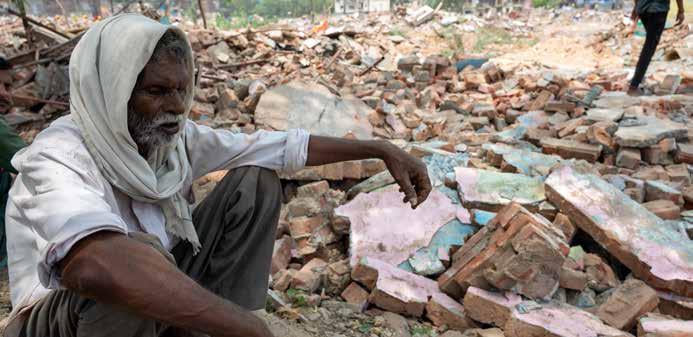
4.1.3 Drivers of displacement
The causes of displacement are a complex mix of natural and man-made factors. While the main triggers of forced displacement include armed conflict, violence, persecution and disasters, these often overlap with structural problems such as poverty and inequality, weak governance, climate change or environmental degradation.10 A distinction is also made between slow-onset disasters (sea-level rise or desertification,
An elderly man looks at the remains of his demolished house at Bhoomiheen Camp, Govindpuri, New Delhi, India, following the slum clearance drive in the area © Shutterstock for example) and sudden-onset crises such as flooding, landslides or violence. As the impacts of climate change intensify, the exposure of the global urban population will only rise: estimates suggest that by 2100, up to 630 million people will live on land below projected annual flood levels, compared to around 250 million at present, many in cities.11 Chapter 6 provides more detail on housing that can be adapted to climate change.
Figure 4.3: Conceptualizing displacement in cities: rights, support, advocacy and data
URBAN DISPLACED
IDPS In Cities
Rights:1998 UN Guidelines
Support: Humanitarian
Advocacy: Few associations
Data: Reasonable
Displacement Affected HOSTS In Cities
City residents are also displaced for urban development, often in the name of “progress”, “urban planning”, “safeguarding” or “climate adaptation”, but with long-lasting impacts for those affected. Drivers of displacement can include: development-induced-displacement for major infrastructure; planning and zoning interventions and urban renewal; slum clearance of informal settlements or older housing; “mega-events” such as the Olympic Games; land grabbing and coercion for market-led development; political or gang-led violence; or environmental exclusion zones.12
4.2 Displacement-affected People in Cities
Displaced people in cities broadly fall into three main groups: refugees, IDPs and evictees (Figure 4.3), albeit with some overlap (for example, when IDPs suffer secondary displacement). Each group is protected by different legal frameworks (Table 4.1), although international protections for refugees are stronger than those for IDPs and evictees. Others, such as returnees, the homeless or those evicted from livelihoods can be considered as displaced, but are not discussed in detail here. Debates on displacement are often covered in different disciplines, with humanitarians working on refugees and IDPs while development practitioners focus on evictees: as a result, learning is not always shared. This section combines these strands to create a sharper focus on all the urban displaced.
City governments have a central role in supporting refugees and are often first responders in a crisis

REFUGEES In Cities
Rights: 1951 UN Convention
Support: Humanitarian
Advocacy: Few Associations
Data: Good
EVICTEES In Cities
Rights: Fragmented
Support: Development
Advocacy: Strong
Data: Patchy
4.2.1 Refugees in cities
Cities worldwide are often the final place of arrival for refugees fleeing conflict or disaster. Although most refugees now live in urban areas,13 many fall through the gaps of humanitarian and development support. In theory, refugees have the strongest legal support amongst groups of the urban displaced. While their protections are wide ranging, with 149 UN member states party to either the 1951 Convention and 1967 Protocol or both, 44 countries are not, including some of the top refugee-hosting nations.14 Some countries which have not ratified the 1951 Convention, such as Jordan, still recognize the status of refugees, while others with large migrant populations, such as Colombia, do not describe the arrivals as refugees. Regional legal instruments for the Americas15 and Africa16 have broadened protections in those regions.
Refugee affairs are often managed by national agencies, with little involvement of city governments, and there is sometimes an uneasy balance between refugee protection needs and national concerns for security. Given that city governments have a central role in supporting refugees and are often first responders in a crisis,17 their limited involvement in national-level decision-making can undermine their ability to respond. Many of the services required by refugees, such as health, education or women’s protection services, are in practice already provided by city governments. In many cases, as documented throughout this chapter, numerous cities have established innovative programmes to make the most of the limited resources at their disposal to support the urban displaced.
The challenge is to coordinate humanitarian and development funds to better support new arrivals and benefit host communities. However, many smaller municipalities lack the finance and capacity to address the complex needs of refugees, humanitarian funding is rarely channelled through local administrations, and little specialist training is available for municipal officials.
Table 4.1: Main groups of the urban displaced
Main groups of the urban displaced Legal status
Refugees are any person who “owing to a well-founded fear of being persecuted for reasons of race, religion, nationality, membership of a particular social group, or political opinion, is outside the country of his nationality, and is unable to or, owing to such fear, is unwilling to avail himself of the protection of that country.”18
Refugees are afforded strong legal protections in principle in international law, but a significant number of countries are not signatories to relevant instruments.
IDPs are defined as: “Persons or groups of persons who have been forced or obliged to flee or to leave their homes or places of habitual residence, in particular as a result of or in order to avoid the effects of armed conflict, situations of generalized violence, violations of human rights or natural or human-made disasters, and who have not crossed an internationally State border.”22
While IDPs do not hold a specific legal status as refugees, those who are recognized citizens should in principle enjoy the same rights and recognition in their place of displacement – though IDPs may be non-citizens or stateless persons.
Evictees are any person living in a town or city, who has been directly or indirectly evicted or forced to move as a result of urban development processes or environmental change. (such as major infrastructure development; planning and zoning regulations; slum clearance, megaevents; land speculation, political or gangled violence, or environmental exclusion zones, etc.). The definition is developed for this report from various sources.29
The international framework protecting refugees is the UN’s 1951 Convention Relating to the Status of Refugees (1951 Convention), initially focussing on European refugees, but expanded by the 1967 Protocol to cover other regions.19 The cornerstone of the 1951 Convention is the principle of non-refoulement (Art. 33), which states that a refugee should not be returned to a country where they face serious threats to life or freedom.
In 2009 UNCHR published its Policy on Refugee Protection and Solutions in Urban Areas, based on the principle that “urban areas [are considered] to be a legitimate place for refugees to enjoy their rights,”20 promoting an inclusive response to urban refugees.
In 2016, the UN General Assembly unanimously adopted the New York Declaration for Refugees and Migrants21 and its Annex I, the Comprehensive Refugee Response Framework (CCRF). Its implementing protocol, the 2018 Global Compact on Refugees (GCR), besides generally encouraging refugee self-reliance, makes a number of references to refugees in urban settings and the role of local authorities in supporting them.
In April 1998, the UN Commission on Human Rights adopted the Principles on Internal Displacement, 23 which remain the most widely recognized standard to prevent, respond to and resolve internal displacement.
The 2009 African Union Convention for the Protection and Assistance of Internally Displaced Persons in Africa (generally referred to as the “Kampala Convention”)24 is the only legal regional treaty on IDPs, emphasizing the need to find durable solutions to displacement, through return, third country resettlement or local integration.
The UN Inter-Agency Standing Committee’s 2010 Framework on Durable Solutions for Internally Displaced Persons25 covers IDPs, but is now also widely used for refugees. The framework emphasizes local integration as the most viable solution as protracted conflicts and third country hostility limit options for return or resettlement.26
In 2019 the UN Secretary General set up a High-Level Panel on Internal Displacement to spotlight rapid increases in internal displacement, and promote transformative measures for its prevention, and solutions.27 Following their recommendations, the UN Secretary-General’s Action Agenda on Internal Displacement, launched in June 2022, aims to help IDPs find a durable solution to their displacement, prevent new displacement crises and ensure those facing displacement receive effective assistance.28
Forced eviction without adequate compensation is a human rights violation in international law, contravening the right to adequate housing, land, security of person, health, livelihood, and food and water, as set out in the UN’s 1948 Universal Declaration of Human Rights and several other UN covenants and conventions.30 UN member states party to relevant treaties have obligations to refrain from forced eviction, and offer victims full reparation.31
A distinction is made in international law between evictions carried out in accordance with national law (although these can still be described as displacement) and forced evictions. Eviction may be direct as a result of legal notice or force, but may also be indirect due to coercion or harassment. In 1997, the UN Committee on Economic, Social and Cultural Rights (CESCR) recognized forced evictions as a “gross violation of human rights, in particular the right to adequate housing.”32
Forced eviction was subsequently defined in the UN’s 2007 Basic Principles and Guidelines on Development-based Evictions and Displacement as the “coerced or involuntary displacement of individuals, groups and communities from homes and/or lands and common property resources that were occupied or depended upon… without the provision of, and access to, appropriate forms of legal or other protection”.33 However, these guidelines carry no legal weight.
Other people experiencing displacementlike situations
Can include returnees (people displaced abroad who have returned), homeless people, and people evicted from their place of work.
No formal status, but should receive the same support and protections as other groups of the urban displaced. Not covered in detail in this chapter.
4.2.2 Internally displaced persons (IDPs) in cities
Each year, millions of IDPs are forced to flee within their own country due to conflict, natural disasters, climate change or major development. In addition, many people face chronic displacement risk or live in protracted displacement. Unlike refugees, there is no international treaty which protects IDPs. However, from the late 1980s onwards, the increasing numbers of IDPs made international coordination imperative, and a number of important frameworks have been developed to guide responses.
While many of those affected by internal displacement are citizens, meaning that in principle they enjoy the same rights and recognition as host communities, in practice IDPs often include non-citizens or stateless persons whose already precarious status is exacerbated by displacement. Furthermore, certain groups may be disproportionately affected as a result of language barriers or institutional discrimination. Roma IDPs in Ukraine, for instance, displaced following the Russia-Ukraine conflict, have reportedly experienced significant barriers in accessing housing, services and livelihoods.34
4.2.3 Evictees in cities
Millions of people in cities are displaced by urban development, many of whom are poor, marginalized, and live in informal or sub-standard housing. Ethnic, religious and racial minorities and indigenous people are also more likely to be evicted.35 These displacements, driven by powerful social, economic and political forces,36 typically have a catastrophic effects on the lives of those affected.37 Despite many decades of antieviction advocacy, they remain significant, but have rarely been treated as a combined process and thus remain largely hidden and poorly monitored.38 Although some evictees are counted as IDPs, in practice evictees in cities are dispersed, so are mostly excluded from national estimates of IDPs.
Eviction takes place in many different ways. Legal eviction takes place within international and national legislation, with evictees receiving compensation in cash or a resettlement dwelling. However, compensation
rarely covers the true cost of relocation and resettlement dwellings often do not meet standards of housing adequacy. Unfortunately, forced eviction is all too common. City governments have a shared responsibility to prevent evictions, but in practice lack the mandate or resources to support those evicted, and may even cause evictions themselves through poorly-designed planning or urban development schemes. Without checks in place, urban gentrification may also swiftly outprice former residents. Many other covert actions force people to leave their homes. For example, in Karachi, Pakistan, informal land controls are used by political parties and others to control territory and gain power, often along ethnic lines, with non-group residents subjected to vigilante intimidation such as informal road blocks and wall-chalking.39
People who suffer forced eviction are often left homeless and destitute, without legal redress or adequate compensation. Nevertheless, critical advocacy by academics and community activists can sometimes promote radical alternatives to eviction such as community land trusts, putting residents themselves at the heart of the development process.40 For instance, the fight by villagers in Vila Autódromo in Brazil, a fishing village scheduled for demolition for the 2016 Rio Olympics, became an international symbol of community resistance against forced eviction.41
4.2.4 Host communities
Host communities, often in low-income areas, face considerable challenges in accommodating displaced people. Displaced people can be seen as a burden on already scarce public services, or blamed for increasing housing costs or shortage of employment. In contrast, sometimes local communities lead the displacement response, offering new arrivals food and shelter, particularly where they share a common language and culture. Refugee and host community interactions can also be beneficial, particularly with the mainstreaming of area-based development programming that supports displaced and host communities simultaneously (Section 4.6.2). For instance, the World Bank’s STEP project in the Democratic Republic of Congo supports joint development committees of local residents and refugees to help both groups generate income and reclaim control over their economic futures.42

4.3 Responding to Urban Displacement
Cities are vibrant places that, with the right policies in place, can shape displaced people’s lives in many positive ways. However, they also pose specific challenges for humanitarian response as the displaced population is scattered and diverse. This section discusses three challenges in more detail: addressing displacement trauma; exploring the role of key actors, particularly local governments; and monitoring urban displacement.
4.3.1
Displacement-related trauma
The impacts of forced displacement are severe, debilitating and farreaching. They include, besides the immediate impacts of loss of home and destruction of property, destroyed livelihoods, shattered families, disrupted social networks and lasting psychological impacts from the violence of eviction.43 Refugees and IDPs fleeing sudden crises may have little time to find family members or salvage key documents, a situation that can leave them subsequently unable to access basic services or assistance. Displacement frequently results in deep impoverishment:44 losing a home often results in inadequate housing or homelessness, leading to status deprivation and worsening health.45 The lack of secure housing for displaced people also has a severe impact on mental health, particularly for women.
Though displacement may be driven by conflict or disasters, in many cases it is the outcome of urban policies that overlook or actively exclude informal settlements and low-income neighbourhoods. Evictions in urban areas may be carried out by government agencies in the name of the

“public good” but without adequate compensation, with lasting impacts for those affected.46 Even when evictees are relocated elsewhere, their new housing is frequently substandard or situated in peripheral areas farremoved from basic services or livelihood opportunities. In Ahmedabad, India, researchers found that the government’s flagship JNNURM and BSUP slum-upgrading programmes destroyed around 29,000 dwellings between 2003 and 2011, and the remote resettlement sites provided to evictees exacerbated post-displacement poverty.47
The impacts of forced displacement are severe, debilitating and far-reaching
Women and girls face specific risks from the lack of a safe home, particularly sexual and gender-based violence, including rape, transactional sex and being trafficked for prostitution, domestic slavery or child begging. They may also engage in “survival sex” to access shelter.48 Fear of eviction is also a significant cause of stress, particularly for female-headed households and mothers of young children.49 A study conducted in Nairobi, Kenya, found that the widening of the A-104 arterial road posed a significant threat to the health and well-being of women in nearby informal settlements through loss of assets, disrupted livelihoods, construction noise and dust. For the majority of women, this was not even their first experience of displacement: 81 per cent of those interviewed reported having suffered distress from previous relocations.50
For children, particularly unaccompanied children, displacement and forced evictions have severe impacts on their development. Children frequently develop post-traumatic symptoms, nightmares and withdrawal, impacting in turn on long-term educational prospects.51 The need to address displaced children’s trauma, as well as the impacts of sexual violence or forced recruitment, is urgent.52 This reflects a broader gap in dealing with displacement trauma that is evident in many societies where mental health is poorly understood and inadequately resourced. Some programmes are now attempting to counter this reality through more direct engagement with the issue of displacement trauma.
4.3.2 Resilience and governance: actors and processes
Urban strategies for strengthening resilience to disasters or climate change are well-established, but have only recently started to address displacement. However, a resilience-based approach has promise in helping national and city governments respond to and recover from crises while absorbing the displaced. The core principles of environmental resilience outlined in key documents such as the 2015 Sendai Framework for Disaster Risk Reduction53 – preparedness, information gathering, early warning systems, the importance of an integrated, multi-stakeholder response – all provide a highly relevant framework to anticipate and mitigate urban displacement. This approach, if successfully implemented, could ensure the needs of new arrivals are met while enabling them to contribute to cultural diversity and economic development. There are some signs that resilience-based principles are increasingly being mainstreamed into displacement strategies:54 for instance, the private sector-led City Resilience Framework 2024 has a component on “War, conflict and migration.”55
A water-buffalo farmer, and his daughter. Drought forced them to move from the Sinaf marshes in Iraq to a nearby settlement © Braschler Fisher
A resilience-based approach has promise in helping national and city governments respond to and recover from crises while absorbing the displaced
The resilience framework in The Sendai Report, published by the World Bank in 2012 in preparation for the 2015 Sendai Framework for Disaster Risk Reduction, offers a useful lens to strategize and “build back better” in crisis response, focusing on five pillars: risk identification, risk reduction, preparedness, financial protection and resilient reconstruction.56 Though intended for environmental resilience, the principles can be adapted with a view to enhancing greater resilience to urban displacement (Table 4.2).
Table 4.2: A resilience-based approach to managing urban displacement
Pillar
Sample policies and actions
Risk identification Mapping of urban areas to identify recent and ongoing displacement and evictions
Risk reduction Development restrictions in flood-prone urban areas to prevent disaster-induced displacement
Preparedness Design and implementation of emergency housing and mobile services to provide emergency assistance
Financial protection Leveraging of humanitarian and development funding for area-based programming that supports both host and displaced communities
Resilient reconstruction In situ upgrading of development-affected communities to ensure continued access to livelihoods and social connections
Adapted from: World Bank, 2012b
In line with the place-based approach to urban resilience building, and the capacity of communities to withstand shocks,57 multi-stakeholder programmes that afford a central role to local hosts and the displaced are important. Key actors in displacement response include humanitarian agencies, national and city governments, NGOs, the private sector and communities, each with specific strengths to contribute to the process (Figure 4.4). Nevertheless, the development of these inclusive programmes takes work, given that that displaced people are increasingly located in fragile cities where coordinated action is difficult.58 Refugees and IDPs are supported mainly by humanitarian agencies, but with national jurisdiction often split between different ministries, reflecting tensions between protection agendas and security concerns. Evictees are usually helped (if at all) at city level, but support is patchy.
There are also often significant power imbalances to overcome between top-down state policy and grounded community practice.59 Often, refugees and IDPs are invisible to policy-makers because authorities (mistakenly) assume they are temporary residents, and evictees are
ignored in urban policy. As a result, displaced communities can end up permanently segregated from other residents, with adverse effects both for them and their host cities.60 In addition, governments frequently fail to engage meaningfully with NGOs and their own citizens, despite the valuable knowledge and skills they can bring. With limited funding or political recognition, local NGOs can still be highly effective in service provision and advocacy for refugees and IDPs who themselves have little or no representation and remain “under the radar”. Host communities have also in some instances taken the lead in supporting displaced people, as in Duhok (Iraq) and Cali (Colombia).61 Communities and NGOs can also work together to develop radical alternatives to planned evictions.
INTERNATIONAL AGENCIES
UHNCR, IOM etc. monitor UN human rights implementation, for all urban displaced and support national governments. May also collaborate on incountry programme delivery.
NATIONAL GOVERNMENTS
For refugees/ IDPs, establish laws & policies to meet international obligations & coordinate displacement response. Less involvement in evictions in cities.
CIVIL SOCIETY, COMMUNITIES
CITY GOVERNMENTS
Limited capacity to support refugees/IDPs. For evictees, may directly or indirectly cause evictions but may also support evictees. Scope to combine humanitarian/ development funds to improve services for all.

Participation of displaced communities essential in response to facilitate integration. Refugees/IDPs have few associations & fear security officials. Urban residents often have political leverage to counter eviction threats.
NGOS
For refugees/IDPs, NGOs play a key role in service provision. Sensitive to local needs but problems in scaling up. Key activists challenging forced eviction. In some countries, NGO operations are restricted.
Important role in providing employment for refugees/IDPs, and as private landlords for the urban
Enhanced “displacement resilience” can also support the development of prosperous and socially cohesive cities. Enlightened city governments are promoting initiatives to highlight the plight of the urban displaced and foster their inclusion in city life. Despite the recent massive global cuts in aid funding – in 2025, humanitarian aid was around 40 percent lower than its peak of US$43 billion in 202262 – there is still scope to leverage financial assistance, including bilateral funds, remittances or religious aid, to support humanitarian and development initiatives for host and displaced communities.63 Though often sidelined from nationallevel decision-making, cities still have the power to engage autonomously in global networks, solidarity groups and other initiatives that promote the recognition and integration of displaced communities (Box 4.2).
Figure 4.4: Key actors and their roles in displacement response
PRIVATE SECTOR
displaced.
Refugee Rights Icons © YuliDor /Shutterstock
Box 4.2: Local government inclusion initiatives
Despite the fact that they are often marginalized from national decision-making or policy formulation, local governments can play a key role for the urban displaced. Across different regions, cities have taken action unilaterally or as a collective to support the inclusion of their displaced communities. This has been achieved through a range of approaches, including:
Linking city-level initiatives with global programmes: The 2022 Call to Local Action for Migrants and Refugees was launched at the International Migration Review Forum, supported by United Cities and Local Governments (UCLG), the Mayors’ Migration Council (MMC), UNHCR and IOM (International Organization for Migration or UN Migration) as well as over 100 city governments. This initiative, spanning governance, access to housing, social inclusion, partnership building and other areas, offers a pathway for local government to align their policies with the Global Compact for Migration and the Global Compact on Refugees.64
Monitoring integration through clear, measurable data: UNHCR’s Cities of Solidarity framework has been widely used by local authorities in Latin America to facilitate the integration of displaced people. The initiative has developed a self-assessment tool with a total of 10 indicators, spanning areas such as economic inclusion and institutional commitment, that cities can use to determine their own progress in welcoming refugees and IDPs.65
Promote an inclusive city-wide environment for displaced communities: European cities have been particularly active in fostering inclusive discourse. For example, Milan (Italy) has positioned itself as a “city of welcome”, driven by a strong political consensus underpinned by alliances between city administrations and social movements. Among other activities, Milan’s Welcome Centre and the city’s First Steps in Milan project now support newly arrived refugees.67
4.3.3 Monitoring urban displacement
There are many challenges in monitoring the housing needs of the urban displaced, not least the lack of consensus on what constitutes “urban” and “displacement”. In addition, there is the difficulty of obtaining geolocated data, although community monitoring and satellite tracking hold some promise. Monitoring displacement involves three dimensions: the causes of displacement and the specific breaches of human rights which have occurred; a population approach, measuring the spatial and sociodemographic characteristics of the urban displaced; and an individual approach to identify specific needs. This section discusses monitoring techniques, concluding that a coordinated approach to monitoring urban displacement is urgently required.
Monitoring refugees and IDPs is well-established and internationally coordinated. UNHCR collaborates with the World Bank-UNHCR Joint Centre on Forced Displacement to track forced migration, using local humanitarian data, mobile-phone surveys, satellite imagery, cell-phone monitoring and other techniques. Tracking covers registered refugees, asylum seekers, stateless persons and other people in refugee-like situations. IDPs are monitored by IOM through the Displacement Tracking Matrix (DTM) which gathers information on the mobility, vulnerability and needs of mobile populations displaced by war, conflict or disaster in over 80 countries.68 IDMC, hosted by the Norwegian Refugee Council, augments the DTM with real-time data from many sources, and publishes the widely-used annual Global Report on Internal Displacement (GRID).69
Monitoring of evictions in cities is patchy, especially where informal occupation of land or property is hidden, for example under flyovers or in abandoned buildings. Governments may also avoid monitoring evictions,
because of influential vested interests in land, political sensitivity or anti-government activism. In many cities, land tenure in informally-built settlements is now regularized, but construction, services and local security often remain informal.70 A critical problem in displacement is the number of people with unclear rights, such as tenants renting without a contract who received little compensation for displacement.
Community-based monitoring has been pursued by international NGOs representing threatened communities. For instance, the Centre for Housing Rights and Evictions (COHRE), a Geneva-based NGO which operated from 1994 to 2014,71 conducted missions on housing rights violations when invited by local human rights organizations. Other examples include the Housing and Land Rights Network (HLRN)72 which uses legal analyses to support communities facing eviction and deploys the Eviction Impact Assessment (EvIA) tool to determine the monetary and non-monetary costs of eviction.73 This approach highlights a major gap in assessing the real costs of displacement. Since 2006, HLRN has also maintained a Housing and Land Rights Violation Database, verifying data on human rights violations identified from partners, the media, research, and legal case files.74 Globally, the number of reported incidents extends into the millions: in the first months of the COVID-19 pandemic, for instance, between January and October 2020, HLRN data identified over 9.9 million housing rights violations in close to 40 countries.75
Satellite imagery can track demolitions of informally-built settlements and translate these into eviction data (Box 4.3). Satellite imagery combined with local enumerations can provide inexpensive time-series data on demolitions, amplify other forms of monitoring, access remote locations and track post-demolition development. However, such data misses evictions with no physical footprint, and there can be a time lag between the eviction and image updates.
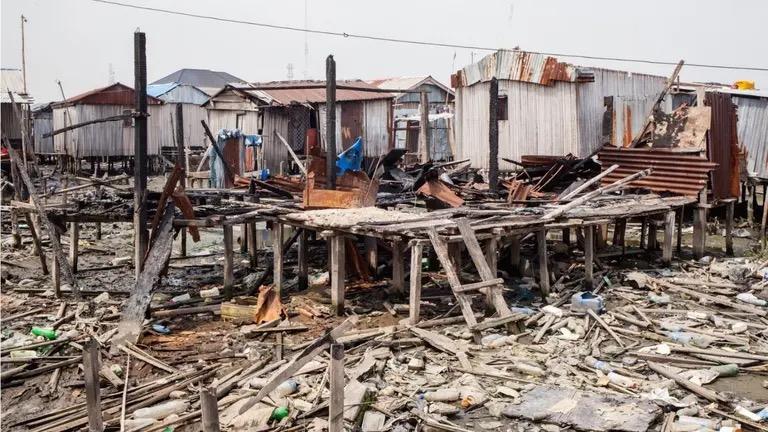
While forced evictions are a daily occurrence in cities across the world, all too often these rights violations are invisible and undocumented – a situation that leaves those affected with limited options for compensation or resettlement. There are no global figures for evictees living in cities:77 some data exists, but it is not comprehensive and is sometimes deliberately obscured.78
However, new analysis by UN-Habitat for this report seeks to highlight the scale of the problem by combing satellite imagery analysis with local enumerations to track demolitions in 94 cities in Africa, Asia and Latin America. Together, these represent 14 per cent of the urban population in less developed regions: extrapolating the sample to the global urban population (weighted and averaged), an estimated 64 million people suffered displacement from informal settlement between 2003 and 2023. While the trend since 2010 is downward, more than 2 million people are still being evicted from informal settlements each year.
Total estimated global displacement of informal settlement residents, 2003-2023
rate of informal settlement eviction(weighted and averaged)
global rate of informal settlement eviction per million of urban inhabitants (weighted and averaged)
Evicted settlement in Lagos, Nigeria © Alexander Macfarlane / IIED & UCL
4.4 Shelter and Displacement
The challenges of sheltering displaced populations in cities, given the widespread problems of affordability, adequacy and access to housing that urban residents already contend with, are self-evident. The exclusionary effects of exploitative real estate markets and inequitable housing policies are felt disproportionately (though still to varying degrees) by refugees, IDPs and evictees, forcing many into homelessness or overcrowded, insecure housing on the urban periphery. This section highlights the differences between the humanitarian approach of providing shelter for (some) refugees and IDPs, and the self-reliant approach which others pursue. For refugees and IDPs, shelter may be temporary rather than longer-term – a short-term fix that mirrors the urban response to homelessness. The challenge is how to connect top-down provision with bottom-up community-led initiatives, while bridging the humanitarian/ development divide so local authorities can benefit from the social and economic inclusion of displaced communities.
4.4.1 The challenges of housing solutions for the urban displaced
While urban displacement is often characterized by precarious and even inhumane living conditions, cities also offer many potential strengths as hosting areas. Indeed, for decades many refugees and IDPs have actively chosen to move to urban areas rather than designated displacement
camps, even when the latter were mandated by national authorities. Among governments too, however, there has been a long-term shift away from camp-based shelter solutions, given the segregation and dependency these models can entrench.
On the ground, particularly in cites, the sometimes overlooked reality is that conventional camps only accommodate a minority of displaced communities, with the private or informal sector accounting for a significant share. Information on the types of shelter used by displaced populations is patchy: at the national level, focusing on refugees and IDPs, UNCHR records five types of displacement shelter (Table 4.3), but the data’s large “undefined” cohort and lack of urban-rural distinction limits its usefulness in urban displacement response. Nevertheless, the figures illustrate the diversity of housing options among refugees and IDPs.
The barriers of accessing secure housing are especially difficult to surmount for refugees and IDPs due to their limited visibility and official recognition. A critical problem for housing provision is that the organization best equipped to meet the needs of the urban poor – local government – often has little capacity or mandate to deal with refugees, IDPs or evictees. Furthermore, as displaced populations are often viewed as transient and without political influence, local governments lack incentives to support them. In this regard, refugees
Source: UNHCR, 2024c.
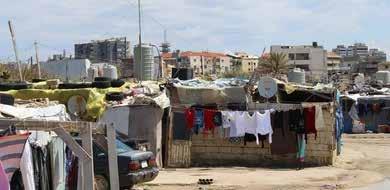
Table 4.3: Estimates of displaced population by settlement type
Views of Hay Al Tanak slums in Al Mina, Tripoli, Lebanon © Mohaymen Abk/Shutterstock
and IDPs – particularly women, children and vulnerable groups79 – face greater obstacles than hosts in accessing public or private sector housing. Consequently, they may live in poor or overcrowded accommodation with insecure tenure, renting without a formal contract in informal settlements or occupying vacant land and abandoned buildings. Many risk being exposed to secondary displacement.80
While many evictees must rent in exploitative markets, some still have agency to influence their own housing solutions in ways which refugees and IDPs generally do not. Nevertheless, evictees often have to compete for scarce private sector accommodation or relocate to housing in remote areas.81 Their rights and post-displacement prospects may be significantly informed by the broader political context and their own status. In some cases, the impact of displacement can be mitigated by consultation with evictees themselves: for instance, a study of marketinduced displacement from informal settlements in Jakarta (Indonesia) found that affected households could sometimes negotiate when, how and for what price they are displaced.82 However, tenants are usually left out of such discussions and receive no compensation when displacement occurs, as found in urban villages in China.83
Eviction should be a last resort, and where eviction cannot be avoided, compensation should cover the full costs of loss of home, livelihood and resettlement. Two principles are important. First is the need to minimize displacement from urban development. Participatory planning to enable settlement upgrading in situ is one way to achieve this (see Chapter 5), as well as ensuring that urban regeneration protects communities from pressure to move. For example, the South African National Housing Code requires that upgrading of informal settlements should involve relocation only in exceptional circumstances.84 Second is the need to ensure due process for all households where there is no alternative to resettlement. Campaigners can be important in bringing housing rights to the fore. For example, the 2025 UN-Habitat Scroll of Honour was awarded to the Public Works Studio, a women-led NGO advancing spatial justice through critical research, participatory design and policy advocacy, enabling residents to safely report housing violations and gain legal support to fight eviction threats.85

Conventional camps only accommodate a minority of displaced communities, with the private or informal sector accounting for a significant share
4.4.2 Bridging humanitarian and development needs
One of the challenges for cities in the midst of a displacement crisis is to ensure the most immediate and pressing needs of refugees, IDPs and evictees are met while also creating a long-term vision that anticipates rather than reacts to these pressures. As outlined in Table 4.4, there are a number of different timescales that cities must bear in mind to manage displacement sustainably. While crisis relief focuses on urgent needs in recent or developing situations of displacement, stabilization involves engaging in more sustained research and analysis to inform a forwardlooking plan for housing the displaced. Finally, development involves addressing the underlying structural issues in housing policy to create long-term solutions for displaced communities while also aligning with the city’s needs and priorities. The specific drivers of urban displacement will also determine the extent to which the city can plan its response in advance, given the different timescales potentially at play.
As UNHCR emphasizes, shelter decisions once made are difficult to reverse and plans should allow for transforming emergency provision into longer-term sustainable settlements.86 Three factors are critical to achieving this:
• A comprehensive evidence base on housing conditions: this entails city-wide data on where and under what conditions the urban population (including displaced communities) live, ranging from tenure status to service access.
Table 4.4: Key actions for housing the urban displaced in different phases of crisis response
Crisis relief
Stabilization
Development
Assess housing needs, legal frameworks and shelter options
Link shelter provision with other needs, such as access to public space, basic services and livelihoods
Prevent and address forced evictions
Urban profiling and area-based analyses to identify priorities and vulnerabilities (including future disaster risks)
Explore public and private sector housing options
Increase access to affordable housing
Assess future displacement risk and enhance preparedness
Address causes of displacement: for example through climate-resilient spatial planning
Improve housing policy: for example by increasing affordable housing or rent policy reform
Identify opportunities to leverage positive long-term housing solutions for both displaced and host communities
Source: UN-Habitat / GLTN, 2024.
• A detailed spatial strategy to accommodate current and future populations: this serves as a lens to consider displaced people’s long-term shelter needs alongside the city’s existing development priorities.
• A framework for multi-stakeholder partnerships: this will enable participation from a range of groups including international and national agencies, governments, NGOs and civil society, as well as host and displaced communities, to support housing provision.
In the next sections, three broad categories of shelter for displaced people are discussed in more detail: supported housing, self-reliance and community-led response.
4.4.3
Supported housing
Supported housing is provided through humanitarian, government, NGO or community assistance. It broadly falls into three main categories, detailed below.
Emergency and short term shelter: Humanitarians have extensive experience of emergency shelter provision. Collective accommodation can be provided in under-used factories or school halls, but is unlikely to provide a satisfactory long-term housing solution. Where land is available, individual units can be built on vacant land using tents, locally constructed units or factory-built dwellings,87 but this low-rise model is difficult in dense cities where land values are high. Where housing solutions are supported, it is critically important that allocation processes for both individuals and communities are fair and transparent.
Longer term accommodation: Longer-term solutions help displaced people access to land, home-ownership or rental (with the latter generally being the most feasible), in some cases as part of a broader package of support. In Medellín, Colombia, for instance, new arrivals were provided with three months of paid rental accommodation, paired with legal, psychosocial and employment support.88 While renting existing housing can give displaced people choice, it can exacerbate housing-cost inflation for other residents, creating potential divisions. However, these can be mitigated through innovative programmes that attempt to leverage under-utilized or vacant stock. In Greece, for instance, UNHCR worked with the Greek government, NGOs, and municipalities in Athens and Thessaloniki to set up the Urban Accommodation Scheme, supported by the EU’s Emergency Support to Integration and Accommodation Programme (ESTIA). Under this arrangement, NGO partners entered into direct contracts with apartment owners, enabling them to secure tens of thousands of housing units for new arrivals.89
Organized community provision: In a crisis, host communities often provide the first point of shelter for displaced people. Displaced people may be allocated a room, or space for a shelter within the property. Hosting has been indispensable in many disasters: for example, after the 2004 Indian Ocean tsunami or the 2010 Haiti earthquake.90 In many cases, especially in contexts of ongoing conflict, these arrangements may end up being protracted. Between 2013 and 2015, for instance, Duhok governorate received about 542,000 refugees and IDPs from Syria and northern Iraq, with Duhok city’s population doubling in just two years.
By 2024 the governorate still hosted around 92,000 refugees and 281,000 IDPs. Community support for the new arrivals was extraordinary, coordinated by the mukhtars (religious leaders), with many residents providing shelter, clothing, blankets or food.91
In addition, cash for shelter is a key mechanism to bridge the gap between supported housing and self-reliance.92 This can encompass financial assistance for rent, repairs or new construction, affording recipients with a measure of choice in where and how they live.
4.4.4 Self-reliance
While the move away from camp-based solution has been driven by a positive desire to provide displaced communities with more durable and empowered solutions, it is also the case that “self-reliance” has increasingly been promoted as a “remedy for dependency and protracted displacement”.93 This acknowledges that displaced people end up finding some form of shelter, although often in inadequate housing and subject to exploitation. Self-reliance was defined by UNHCR as, “the social and economic ability of an individual, a household or a community to meet essential needs.”94 However, relying on displaced people assuming responsibility for themselves has been critiqued for effectively leaving displaced people in poverty without aid.95
Rented accommodation: this is often the main way that displaced people find shelter for themselves in cities. For instance, a major study conducted across seven urban locations in Afghanistan, Ethiopia, Kenya and Jordan found that nearly 91 per cent of refugees and IDPs interviewed were renting property (Box 4.4). Comparing camps with cities, the study found that the proportion of refugees working was much higher in cities than in camps.96 However, private sector rental can be overcrowded or insecure. For example, the Lebanese government’s “no-camp” policy means that most Syrian refugees are renting, often with precarious contracts, in poor conditions and at constant risk of eviction.97
Sharing with family and friends: Personal contacts can sometimes be the first resort for the urban displaced, with kinship ties in some cases offering the main entry point for arrivals with no previous experience of living in the city. Although these arrangements can become strained over time, they often enable displaced people to find more permanent accommodation.
Homelessness: Displaced people in dire need often become homeless, even in relatively well-resourced contexts. A study in Canada found that a key problem for refugees was that local housing organizations often lacked the specialist knowledge of refugee protection necessary to help them navigate bureaucracy, with the result that some ended up becoming homeless.100 In Dhaka, Bangladesh, in the absence of viable

Rented accommodation: is often the main way that displaced people find shelter for themselves in cities
Box 4.4: Renting is the norm
Evidence from Afghanistan, Ethiopia, Jordan & Kenya found that out of 2,148 displaced respondents in urban areas, over 90 per cent of households rented accommodation.98 Despite work-permit restrictions in Ethiopia, Kenya and Jordan, 64 per cent of households were earning, and the rest mostly relied on overseas remittances or aid. Furthermore, 90 per cent of respondents lived in permanent housing, except in Mathare, an informal settlement in Nairobi; only 23 people had no shelter at all. Comparing camps with cities, the study found that the proportion of refugees working was much higher in cities than in camps.99
Adapted by Jacqueline Wanyoni from: UK Data services, 2025.
housing solutions, some climate migrants – unable to access even slum housing – have become “pavement dwellers”, living under tarpaulins on footpaths or below bridges: living in these conditions, they are at high risk of theft, rape, assault or illness.
4.4.5 Community-led provision
Occasionally, evictees can create their own housing solutions, and global advocacy movements have achieved some remarkable successes in fighting evictions and promoting community-led housing. Successful campaigns rely on organized coalitions of the urban poor with solidarity and savings groups, usually supported by volunteer professionals or NGOs. For example, Nairobi’s Muthurwa Estate, originally built for railway workers, was scheduled for redevelopment. In 2011, with legal aid from NGO, Kituo Cha Sheria, the residents won a landmark court injunction on evictions, and a judgement that resettlement must take account of human rights and logistics.
The most successful projects now work in partnership with municipal authorities to find land and build shelter. For example, the Asian Coalition of Housing Rights (ACHR), established in Thailand in 1989, prioritized partnerships and now has active partners in 19 countries and projects in 230 cities.103 In the Philippines, innovative housing legislation and the emergence of the Philippines Alliance in the 1990s led to a country-wide social movement based on partnerships between local authorities and communities (Box 4.5).
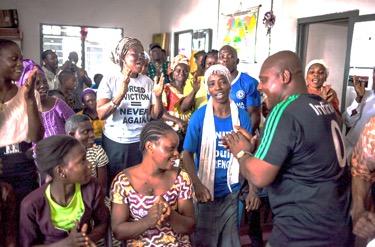

Global advocacy movements have achieved some remarkable successes in fighting evictions and promoting community-led housing
Unfortunately, the experience of community-led housing is rarely available to refugees and IDPs, partly because of a discipline divide between humanitarian work and local activism, but also because some governments resist the formation of refugee associations due to security concerns.
4.5 Livelihoods in Displacement
A secure home is a key asset for surviving in cities. Many of the urban displaced are poor and have lost livelihoods, but they need an income to survive. Secure housing can improve people’s health and well-being, and thus help in finding and keeping work. A range of impoverishment risks follow in the wake of resettlement, including joblessness and marginalization.104 Loss of home can also mean loss of a workplace, equipment or produce, all of which are central to livelihoods.
Box 4.5: Self-help housing in the Philippines
The Philippine Alliance grew out of activism in the early 1990s supporting waste-pickers at the Payatas garbage dump in Quezon City, Metro Manila. Following the 1986 revolution, lobbying by urban poor groups, NGOs and religious leaders led to the pivotal 1992 Urban Development and Housing Act (UDHA). This required local governments to make decent and affordable housing available for “underprivileged and homeless citizens” affected by development, and to ensure that evictions were according to the law and not being carried out for market-oriented development.
In Mandaue, Cebu, the Alliance has constructed affordable homes within existing informal settlements and on new land donated by the government. For example, supported by the NGO Reall, the LTHAI project delivered 32 homes through in-situ upgrading. The MMVHAI project built homes for 80 people on reclaimed wetland donated by Mandaue City Council under the 1992 UDHA. In both schemes, the community was directly involved in the design, project management and construction of their homes, in the process strengthening social cohesion and enabling displaced communities to determine their own housing needs.
Source: Reyos, 2010; Smith et al., 2024; Reall, 2025.
Even the threat of eviction is enough to impact on livelihood security: people may reduce their work to fight eviction, in the process losing income which then precipitates the eviction.105 Yet, despite discrimination and restrictions, displaced people in cities construct livelihoods in many creative ways. Refugees and IDPs can bring new skills to the labour market or build strong links to markets in their original home, drawing on kinship networks for supplies, and the demands of their communities for specific goods or foodstuffs. This often creates new economic specialisms, such as the furniture-making and tourism services introduced by Syrian refugees in Kurdistan (Iraq), and specialist clothing stores opened by Somali refugees in Addis Ababa (Ethiopia).106
4.5.1 Livelihood challenges
Displacement can affect people’s livelihoods in many ways. Refugees are hampered by legal restrictions on their “right to work”, lack of documentation, linguistic barriers and discrimination. IDPs as citizens usually have the “right to work”, but often cannot resume their previous profession: this is particularly the case for those displaced from rural areas, who may previously have worked in agriculture or other occupations that are not available to them in cities.
Evictees, meanwhile, may live far from their previous workplace and business networks. Losing an income can precipitate problems of hunger and health, insecurity, mental distress and loss of self-worth,107 disproportionately affecting the most vulnerable and creating a spiral of deepening poverty.108
Self-help housing in the Philippines © Alison Brown
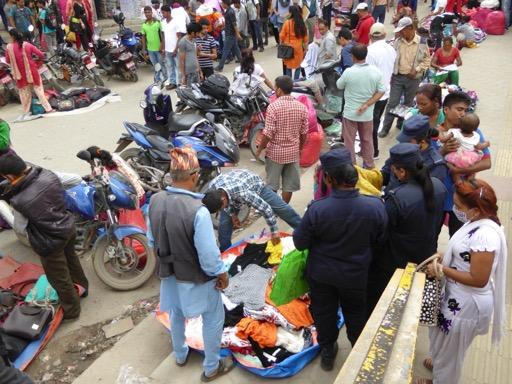
The informal sector is vital to the survival of displaced communities
A minority of evictees affected by major development may be protected by the standards adopted by multilateral development banks to minimize project-related loss of income or livelihood, so-called “economic displacement.”109 Sadly, in many urban projects, from informal settlement upgrading to private sector housing construction, livelihoods are rarely, if ever, considered.
The informal economy and displacement
The ILO estimates that the informal economy now encompasses over 61 per cent of the global labour force, amounting to an estimated 2 billion people (see Chapter 5 for more detail).110 Informal work spans a plethora of activities from petty trade, waste picking and homebased income generation to education, health, construction, transport and security: people often “construct” livelihoods from a portfolio of activities111 to diversify their income sources. In the aftermath of crises, the informal economy often steps in to replace services disrupted by disaster or conflict. The informal sector is therefore vital to the survival of displaced communities and the wider economies of the cities they reside in. Nevertheless, as is the case for many of the urban poor in
general, the insecurity of informal work and the lack of meaningful labour protections leaves them highly vulnerable to exploitation or sudden shocks.112 Although international agencies seek to “formalize the informal economy”,113 it will remain deeply embedded in urban economies for many years. Rather than approaching formalization as a one-time process of business regulation, the aim should be to address regulations and practices that exacerbate workers’ vulnerabilities. Unions and worker associations are critical advocates for positive change, but may not be accessible to displaced people who lack political bargaining power.
The scale of informal activity in cities is generally recognized, but the collective economic contribution of displaced people is rarely analyzed.114 There is now emerging work on the cumulative economic impacts of displaced people’s employment and enterprise in creating new enterprises and specialisms, providing jobs for others and contributing to local economic development. The concept of displacement economies defined as “the collective economy created over time by refugees and IDPs through their livelihood activities, enterprise, need for services and consumption, and through their mutual support and diaspora inputs”,115 is now gaining more visibility. Understanding and enabling these nascent economic activities can benefit both displaced people and their host cities.
Many displaced people are involved in informal work, where they are vulnerable to harassment or eviction, Kathmandu, Nepal © Alison Brown
Denial of the right to work
The right to work is critical for all the urban displaced, providing the foundation for economic well-being, stability and long-term integration. However, in practice many face considerable obstacles in securing the legal right to work, forcing them into informal activities to ensure their survival. These challenges are especially evident for foreign nationals. Although the 1951 Refugee Convention recognizes rights to work for refugees and asylum-seekers under the same conditions as foreign nationals, many signatory countries in practice do now allow refugees to do so. Even where refugees have de jure rights to work, in practice de facto rights may be very different.116 Other hurdles include limited access to finance, lack of recognition for qualifications obtained abroad, prohibitions on owning property, xenophobic attitudes and discriminatory practices against displaced people.
Women are amongst the most vulnerable among the displaced, often forced into hazardous or exploitative occupations in order to feed their families. Displacement can also offer opportunities for women to enter the workforce for the first time, giving them economic independence. Home-based work – whether undertaken alone and with family members as own-account work or as piece-work for larger companies – is important for many displaced women, enabling them to combine income-generation with family care in sectors ranging from textiles, garments and food preparation to personal services and digital platform work.117 Prostitution and transactional sex are also a recourse for some women facing destitution.
The barriers displaced communities face, from legal restrictions to discrimination, represents considerable wasted potential both for them and their host cities. Many refugees are self-employed, but have no rights to obtain a business license. Researchers have found that refugees often circumvent this restriction by setting up partnerships with a local entrepreneur, but the partnerships can be exploitative and discourage longer-term investment.118 To realize the untapped economic benefits that displaced communities can bring requires open, emancipatory policies that not only provide displaced people with full access to the labour market, but also ensure key enabling rights including freedom of movement, housing rights, access to documentation and certification of professional qualifications.119
4.5.2 Livelihoods recovery
For all the urban displaced, accessing a livelihood is key to their wellbeing, sense of dignity and ability to find and maintain secure housing. A wide variety of NGOs, humanitarian organizations and local governments have provided livelihood support for refugees, IDPs and in some cases evictees. These livelihood programmes often focus on training and skills development or small business start-ups in areas such as tailoring, computing or vehicle repair, with host communities sometimes involved in the programmes. A different approach to supporting displaced communities is through direct cash transfers, which can help recipients first access food, clothing or shelter, and then support a small-enterprise start-up. Agencies and donors have also explored market-based approaches, to create employment in growth-oriented industries or value chains that also minimize protection risks. Digital freelance or platform work is also an emerging sector for displaced people, though refugees

Women are amongst the most vulnerable among the displaced, often forced to into hazardous or exploitative occupations in order to feed their families
can find it difficult to access digital work if they lack identification documents or a bank account and an accessible computer with good connectivity.
Training and other forms of livelihood assistance are often designed with the aim of helping people “graduate” to self-reliance, reducing the longterm cost of aid. As with housing provision, the discourse of economic self-reliance is not without controversy: while some researchers and practitioners see self-reliance as a laudable goal, others argue that the approach is flawed, based on neoliberal principles and driven by donors’ funding restrictions. It is vital that local governments, aid agencies and other actors view self-reliance within the wider legal and economic context of the urban displaced: training programmes and other interventions, while welcome, can only deliver tangible improvements if the structural barriers to work, such as restrictive urban regulations, discrimination, police corruption or xenophobia, are also addressed.124
Box 4.6: UN-Habitat’s five-point social protection and livelihood strategy for IDPs
In exploring displacement as both a crisis and an opportunity, UN-Habitat has promoted a five-point approach to promoting social protection and livelihoods for IDPs in cities, which can equally apply to refugees and evictees:125
Advocate for access to formal and informal labour markets, for example through humanitarian diplomacy.
Provide emergency assistance through multi-purpose cash assistance to give the displaced choice and stimulate the local economy.
Seize economic development opportunities of displacement, noting expanding markets, new skills and displaced people’s transnational linkages.
Unlock economic growth with spatially-informed local economic development strategies, requiring a datadriven approach and partnership across government agencies.
Mainstream emergency assistance, linking support to existing social protection schemes.
Source: UN-Habitat, 2025d, pp.40-41.

4.5.3 Towards inclusive urban livelihoods
For the urban displaced, two fundamental principles emerge for supporting livelihoods: first, economic displacement should be avoided wherever possible to conform with international human rights standards;126 and second, displaced people, or those threatened with displacement, should be at the core of negotiations on their future. It is easy to destroy jobs, but difficult to create them, and simple one-sizefits-all solutions are bound to fail.127
Local government can play a positive role in delivering better livelihood outcomes for displaced and host communities. However, the local government’s remit may be constrained by lack of knowledge of human rights protections, limited understanding of displacement economies and siloed responsibilities where, for example, one department deals with street clearances and another with job creation. Adopting a citywide approach to livelihoods can act as a bridge between individuals and macro-level urban development agendas. Worker associations and unions are also important for informal and other marginalized workers to identify collective needs, negotiate for safe working conditions and create opportunities to strengthen both their livelihoods and economic contribution.
The potential of humanitarian assistance to improve livelihood access for displaced communities is considerable, but remains underutilized. One problem is that the timescale of humanitarian funding, which often operates on annual budgets, is too short-term to achieve longer-term development objectives.128 To address this, the four-year Re:BUiLD (Refugees in East Africa: Boosting Urban Innovations for Livelihoods Development) programme in Kampala (Uganda) and Nairobi (Kenya) took a longer-term view, supporting individuals and urban economic growth. Between 2021 and 2025, the programme reached more than 21,000 beneficiaries, more than half of whom were refugees. Interventions included skill certification, vocational training and apprenticeships, micro-enterprises grants, savings and loan associations, and financial literacy.129 However, while external assistance can play an important role in promoting livelihood access, it is vital not to ignore displaced people’s own initiative and enterprise. For example, in the thronging commercial
It is easy to destroy jobs, but difficult to create them
Box 4.7: Refugee enterprise in Eastleigh, Nairobi
Eastleigh, known as “Little Mogadishu,” is now a hub for refugee and local enterprise. A high proportion of refugees work, particularly women. Eastleigh now contributes perhaps 25 per cent of Nairobi’s GDP. Some Somalis, both Kenyans and refugees, are highly successful, controlling emporia importing goods from Malaysia, Thailand or China. Investment is injected through informal hawala (trust-based credit), and diaspora Somalis in the US or Canada invest in new buildings with space pre-let to small operators. Eastleigh also has great poverty, particularly among refugee women who are divorced, separated or widowed; police harassment is acute, and police bribery reputedly treats small-scale traders “like ATMs”, although recent crack-downs by Nairobi City Council have eased pressure. Many refugee enterprises operate in partnership with a Kenyan “owner” to bypass legal restrictions, but the existence of refugee-run wholesale businesses suggests a well-established, internationally networked economy. Eastleigh will likely benefit from the government’s recent decision to relax some of the previous restrictions in place for refugees, with Kenya now implementing the 2021 Refugee Act by strengthening rights to work and access to business permits. In 2025, Nairobi City Council also passed the Nairobi County Refugee Integration and Community Building Strategy, which aims to institutionalize refugee affairs into all aspects of government activity.
Source: Brown et al., 2024a; Nairobi County City Council, 2025.
district of Eastleigh, Nairobi, Somali refugees and Somali Kenyans have built an international business empire (Box 4.7).
4.6 Urban Space and Displacement
For refugees and IDPs, cities are usually places of arrival, but where they are often “invisible” to policy-makers.130 The urban poor and displaced people often share the same neighbourhoods, exposing them to the same environmental risks and sub-standard housing.131 Having safe access to urban space is a critical part of belonging, as are specific spaces for socializing, cultural expression, religious worship or specialist markets. Evictees may have very different experiences of displacement depending on the infringement of human rights experienced and where, if any, resettlement was offered.
Applying a spatial lens to displacement means applying spatial analysis at three scales: the city-wide distribution of different displaced communities; neighbourhoods with concentrations of vulnerability; and significant spaces for the urban displaced which foster cultural expression or community integration. Analysis should also consider where resettlement is taking place. This section explores these three spatial lenses.
Two refugee shop sellers talk each other near a vegetable stall set up in the main street of the Syrian refugee camp of Zaatari, Jordan © Shutterstock
4.6.1 City-wide analysis: urban profiling
Urban planning disciplines have long used strategic spatial planning to identify land-use needs, address housing shortages and promote urban equity and inclusion.132 Formal urban planning is largely government-led and its effectiveness depends on the capacity of local administrations and acceptance by the majority of urban builders. However, in countries where governance and oversight are weak, much urban development is unregulated.
City-wide planning is an important means to address the economic, social, political and spatial factors that contribute to displacement, but displacement is not usually considered a strategic urban planning issue, even though major infrastructure works often involve displacement. Several aspects are key: first, displacement as a whole should be treated as a city-wide issue; second, the spatial distribution of displaced people is important to identify pockets of need; third, it is important to identify and halt current evictions and to track resettlement locations; and finally, spatial analysis can help smaller cities prioritize resources for an influx of new urban residents.133
Urban profiling is a collaborative process that analyzes data on cities, neighbourhoods and homes, their governance systems and the specific vulnerabilities of residents. In conflict-affected countries, it can be used to assess the needs of displaced communities and target resources in localities where services are most needed. It can also identify opportunities for multi-sector interventions, benefiting refugees, IDPs and hosts.134 For instance, UN-Habitat’s Urban Recovery Framework examines how conflict has affected specific areas of the city, the potential implications for longer-term development and the strategic priorities requiring medium-term attention.135 One component within this is the Urban Profiling Toolbox, offering a structured guide to the development of an urban profile, including establishing baseline data to
identifying deprived neighbourhoods affected by migration. Spanning a range of areas including governance, financing and environment, the toolbox offers a roadmap for the development of a long-term housing recovery strategy.136
UN-Habitat has developed extensive expertise on urban profiling for conflict recovery in the Middle East and Arab states in particular. It has now conducted more than 40 city profiles, 40 neighbourhood profiles and five data platforms.137 An example of an urban profile conducted in Sana’a, Yemen, is summarized in Box 4.8.
Damages in Sana’a City due to conflict
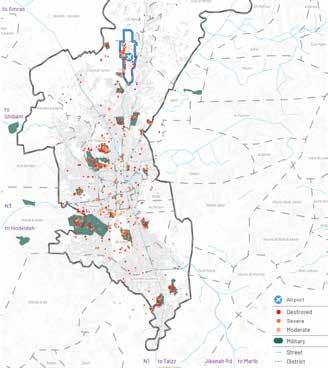
In Yemen, rapid city and neighbourhood profiling was undertaken to support recovery in seven cities: Sana’a, Aden, Sada’a, Taiz, Ma’arib, Al Huta and Zinzibar. Data was compiled from secondary sources, using satellite imagery and mobile phone photos to assess damage to buildings using the European Commission’s Joint Research Centre methodology. These profiles have helped government, agencies and other actors develop a picture of the evolving situation on the ground. While their ability to map out longterm urban plans for displaced and host communities is severely constrained by the uncertain security context, these assessments nevertheless provide a much needed evidence base on current vulnerabilities and emerging stress points.
In Sana’a, one of the oldest continuously inhabited settlements in the world, the impacts of years of conflict has been wideranging. While fighting has damaged many of the city’s historic buildings, the 2020 city profile highlighted how the costs of well-located housing had almost tripled. In a context where almost 60 per cent of the city’s 3.5 million people were aged 18 or less, including many children in need, the city’s health and education facilities had also been devastated. These pressures were greatly exacerbated by the arrival of large numbers of IDPs, who by 2019 were estimated to comprise about a third of the urban population. As a result, over the space of a few years informal settlements proliferated on Sana’a’s periphery. Many IDPs have since fled, however, illustrating the difficulties of providing services for a fluctuating population.
Source: UN-Habitat, 2020b.
Box 4.8: Urban profiling in Sana’a, Yemen
4.6.2 Neighbourhood level: area-based recovery
There is now increasing recognition of the value of “area-based” approaches to urban crisis recovery. Area-based programming takes a multi-stakeholder, multi-sectoral approach in a defined geographic area: though relatively new to humanitarian response, it has a long track record in urban and neighbourhood planning.138 The success of areabased interventions depends on the context, programme design and delivery.139 Generally, they work best when the population is stable and local authorities are credible partners. It requires an ability to work at multiple spatial scales within the city and engage local residents through participatory mechanisms, with local governments playing a key coordinating role throughout the process. As wide a range of actors as possible should be involved, with each positioned to make distinct contributions. To take one example, the organization Humanitarian OpenStreetMap Team (HOT) supports humanitarian agencies, local governments and communities coping with conflict- and disaster-induced displacement across the world: among other projects, responding to the 2024 Mexico hurricanes, enhancing climate preparedness in TimorLeste and building women-centred disaster resilience in Small Island Developing States.140
A first step is often to create a “platform” for response agencies to work together across different sectors (such as shelter, health, livelihoods or protection) to create a shared understanding of how best to help populations in need.141 Local governments should be fully integrated in such platforms, given their role in service delivery. Crucially, areabased approaches should cover the whole population of the target area, including displaced and host communities, with both groups benefitting from the outcomes. As much as possible, these programmes should also support and strengthen the existing systems managed by local authorities rather than replicate their own in parallel to them. It is also important to adopt an iterative and flexible approach, given the need to adapt rapidly to changing conditions.142
4.6.3 Significant
places: spaces for inclusion
Urban space is a critical dimension of displacement, requiring connections across humanitarian, housing and urban planning disciplines. Wellmanaged public spaces can foster community, social integration and a sense of belonging, enhancing the quality of neighbourhoods and setting of homes. Urban planners have significant experience of neighbourhood place-making through spatial interventions, an approach that humanitarian organizations are now replicating to support vulnerable populations in a particular location, but the approaches are not well combined. Yet successful, inclusive public spaces can play a critical role in countering divisions and adapting to meet new challenges as they emerge. In Beirut, Lebanon, for instance, Souq el Tayeb was established in 2004 as an organic market celebrating Lebanese food, with the aim of changing the war-torn, sectarian image of the city. Using minimal resources, the market helped foster interaction between displaced and local communities at a time when many still avoided public spaces due to the continued presence of militias. Souq el Tayeb subsequently became an NGO in 2016 and with EU funding promoted the integration of Syrian refugees.143
Public spaces play a vital role in enabling urban residents to meet others or connect to social services, to combat isolation and exclusion. For migrants, public space can assume special importance for wellbeing. Displaced people imaginatively use public spaces for livelihoods, shelter, leisure, homemaking, cultural expression, conviviality and community mobilization, in the process anchoring themselves in their cities. Public space, while also potentially exclusionary or intimidating, can be transformative for recent arrivals struggling to settle into their new lives. A multi-city research project on young refugees in Amsterdam (the Netherlands), Brussels (Belgium), Leipzig (Germany) and Newcastle-Gateshead (the United Kingdom), drawing on first-hand testimonies, highlighted the role that outside activities, such as football and community or arts centres, played in promoting camaraderie and boosting their confidence.145
Flexible municipal support can also help identify appropriate space and attract development and recovery funds (Box 4.9). However, there is a need to counter the privatization and regulation of public space that often results in the exclusion of marginalized communities in cities. The ability of displaced communities to settle and integrate successfully in urban areas is determined in no small part by their public spaces and the extent to which these spaces welcome or sideline displaced residents.
Box 4.9: Supporting refugee inclusion through green space rehabilitation in
In Jordan’s capital, Amman, a variety of small spaces have been transformed through environmental and community initiatives that have deployed tactical urbanism as a creative approach to protracted displacement of Syrian refugees in the city. Greater Amman Municipality has played a key role in the initiative, revitalizing under-used public space for community-led projects that empower residents and refugees while promoting micro-enterprise growth and sustainability.
Many of these projects have focused on improving access to green space and transport in denselypopulated, disadvantaged neighbourhoods, drawing on participatory designs by all residents and focusing in particular on the needs of women and girls. The interventions have included the rehabilitation of a neighbourhood stairway on Amman’s steep slopes, the creation of micro-forests to enhance urban greening, and the rehabilitation of a large open space near the Al-Hussein refugee camp as a climate-resilient, ageresponsive park. Together, they demonstrate the shared benefits that place-based upgrading can bring to both displaced and host communities.
Source: Al-Betawi, 2024.
Amman, Jordan
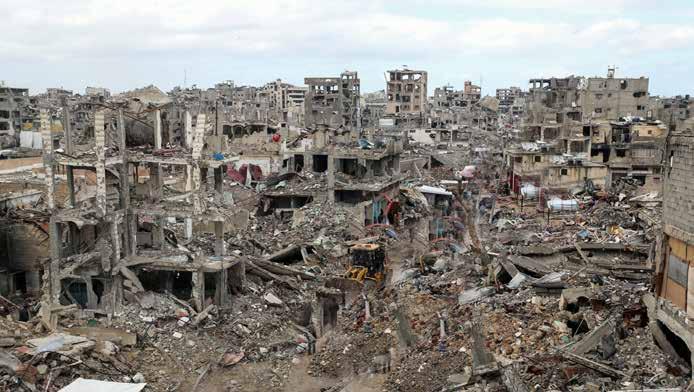
4.7 Rebuilding Shattered Cities
During 2025, communities from across the world faced dramatic impacts from flooding, cyclones, forest fires and earthquakes. In May, an earthquake of 7.9 magnitude in Myanmar, with an epicentre near Mandalay, killed around 3,800 people and injured over 5,000.146 In October, Hurricane Melissa, with winds of over 300 kilometres per hour, hit Jamaica, Haiti and Cuba, leaving dozens of people dead and hundreds of thousands of homes damaged. Meanwhile flash floods in Pakistan after heavy pre-monsoon rains in June hit Punjab, Khyber Pakhtunkhwa and Sindh provinces, killing more than 1,000 people.148 Although the impacts of these disasters were felt across a wide area, towns and cities were often the most acutely affected.
Also in 2025, armed conflict left swathes of urban areas demolished, with Ukraine, Gaza and Sudan most acutely affected. In Ukraine alone, an estimated 3.8 million people are internally displaced and 2.5 million families remain without adequate shelter. Damage from drones, bombs and missiles have made front-line towns and villages uninhabitable, and more than 14,500 civilian deaths and nearly 38,500 injuries have been verified. In Gaza, an estimated 83 per cent of structures are damaged or destroyed, with at least 71,667 fatalities and 171,343 injuries between October 2023 and January 2026.150 As of early 2026, almost the entirety of the population were IDPs, with many having been displaced multiple times since the conflict began.151 In Sudan, since April 2023, over 12 million people have been displaced, including nearly 9 million within Sudan.152 The town of El Fashr, in the Darfur region, under siege for 500 days, has seen buildings flattened in drone attacks, with around 1.2
million people displaced and thousands massacred when the town was finally overrun.153 By March 2026, up to 3.2 million Iranians had been temporarily displaced by the new conflict in the Middle East.154
Both natural disaster and war result in shattered cities, demolished neighbourhoods and mass displacement. While the conditions for recovery often extend far beyond the local level – in conflict settings, for instance, little progress can be made without (re-)establishing peace and governance institutions – the urban dimensions are a vital element in ensuring a lasting resolution. This section draws lessons from previous crises and UN-Habitat’s specific expertise.
4.7.1 Key factors in disaster recovery
Recovery from natural disaster or war may take many years and usually involves international relief. The challenge is to transition from shortterm time-limited emergency relief to build effective governance and longer-term development. Here partnership approaches that engage with power-holders while building community trust are essential to ensure a sustainable recovery. There is already extensive knowledge on recovery from natural disaster through the three phases of preparedness, response and recovery, elaborated through the Sendai Framework (Section 4.3.2). Examples are the World Bank’s Safer Homes, Stronger Communities: A Handbook for Reconstructing after Natural Disasters, and more recent Handbook of Livable and Resilient Cities which provides an urban planning focus to risk reduction.156 While post-disaster recovery is multi-dimensional, this section focuses on the provision of adequate housing delivery in cities.
A landscape of rubble and ruins shows devastating aftermath of attacks in Gaza, February 2025 © Shutterstock
In all scenarios, risk mapping, development restrictions in hazard-prone areas and advance planning are critical to build resilience in cities. The different types of natural disasters prevalent in cities include:157
• Floods, such as flash, surface water, riverine or coastal floods, affecting tens of millions of city dwellers every year.
• Geohazards, such as landslips and mudslides, particularly affecting informal settlements with inadequate drainage. Earthquakes and volcanic processes can be devastating.
• Climatological hazards, such as extreme heat, urban heat islands, droughts and wildfires.
An effective disaster response in urban areas must first meet the emergency needs for rescue, temporary shelter, debris clearance and security to prevent looting. After this immediate phase, however, a longer-term strategy between humanitarians, governments and civil society needs to be agreed. In most emergencies, the recording of property rights is critical, as people will have lost land titles or land registries may have been destroyed. It is also important to ensure that the selection of beneficiaries for supported housing is fair and transparent.
A further challenge is rebuilding at scale in the wake of a major disaster, in turn requiring an innovative response. For example, after devastating floods affected around 33 million people in Sindh province and other parts of Pakistan in 2022, the World Bank fund a programme of ownerdriven resilient construction to rebuild approximately half a million housing units. Under this model, households received financial assistance directly in tranches that they could then use to rebuild their home, with NGOs and local committees verifying the incorporation of multi-hazard resilience measures before each disbursement was made.158
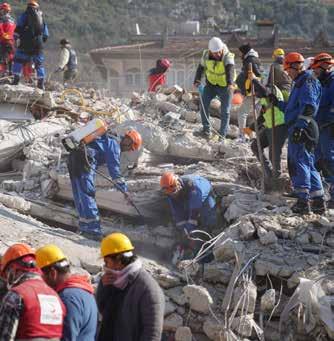
Genuine participation of displaced communities is also crucial to ensure that the recovery is appropriate to cultural sensitivities (see Chapter 7). For instance, if resettlement is necessary, ensuring that the new location enables them to maintain their existing social connections and livelihoods is key to preventing further movement in the future (Box 4.10). In addition, there may be tensions in balancing community needs and cultural heritage protection, as in the 2003 Bam earthquake in Iran, which left about 95 per cent of the city buildings destroyed,159 and badly damaged the ancient citadel of Arg-e-Bam, a World Heritage site. To minimize ownership disputes, the government passed legislation forbidding land transactions in Bam during the reconstruction.160
Box 4.10: Community-led planning for resettlement in Indonesia
In 2018, following a 7.5 Mw earthquake off the Indonesian island of Sulawei, the fishing village of Mamboro Barat was hit by a major tsunami. Government policy aimed to relocate all coastal communities away from the “red zone” within 100 metres from the high tide mark. For the villagers, the relocation site, more than 5 kilometres away, would have destroyed livelihoods and broken the community’s affiliation to the sea. Supported by the NGO, Arkom Indonesia, and the local municipality, they found an alternative site on the edge of the nearby town of Palu Bay. The land was purchased through a collective savings fund with starting capital from Arkom. The new community of Kampung Mamboro Perikanan was completed in 2020 with 38 new dwellings, built using earthquake resistant technology and housing 156 people.
Source: World Habitat, n.d.-a
4.7.2 Armed action and destruction: “domicide” and “urbicide’
The impacts of state conflict or rebel action which shatter cities may never fully heal. Dispossession from properties, murdered family members or division of communities can cause generational harm. As the UN Special Rapporteur on adequate housing said, “the systematic, massive and arbitrary destruction of civilian housing and infrastructure” is a blatant violation of human rights, which should be recognized as “a crime, against humanity of its own standing – domicide”.161 Domicide is defined as “the planned, deliberate destruction of home” and the loss of memory and identity associated with it.162
Urbicide is the deliberate death and destruction of all or part of the city by identified actors to devastate or destroy the urbs (the significant places of life in the city). It involves the devastation of the ordinary places of urban life, the annihilation of the institutional frameworks of government, and the destruction of symbolic buildings and cultural artefacts which symbolize collective memory – a distinct form of urban
Rescue works after the Türkiye earthquake, 2023 © Shutterstock
violence in its own right.163 Urbicide often refers to crimes of war, but was initially used to refer to destructive urban planning schemes in New York (United States), before it was then adopted by writers on Latin America and popularized during the Bosnian war.164
In war-torn cities, before any long-term recovery can commence, there is a critical need to re-establish security and local governance. This may involve peace negotiations, disarming opposing sides, demining contaminated land and depoliticizing recovery strategies. Reconstruction of housing and infrastructure can only begin once a level of security is in place, with land and property rights procedures agreed. In Bosnia and Herzegovina, property verification was very successful, but even with extensive international support and large-scale housing reconstruction some renovated houses remained unoccupied years after the war (Box 4.11). UN-Habitat’s Urban Recovery Framework (see Section 4.6.1) has also been applied to rebuilding after major destruction of buildings and property.165
Box 4.11: Reconstruction after conflict: experience from Bosnia and Herzegovina
Destruction of housing and forced eviction was rife during the 1992–95 civil war that ravaged the newly independent country of Bosnia and Herzegovina. After the 1995 Dayton Peace Accord, 37 per cent of pre-war housing was destroyed or damaged, more than a million people were displaced, and the country was partitioned into two political and ethnic enclaves. Two recovery policies were particularly successful: establishing the Housing Verification and Monitoring Unit (HVM) in 1999 to document housing rights and implement property laws, and the reconstruction of houses damaged during the war. However, by 2004, only 43 per cent of reconstructed houses had been occupied by registered beneficiaries, some were rented out and 21 per cent remained vacant, as some people were reluctant to return, pre-war homes were occupied by other displaced people, and employment was scarce. The international community had naïvely assumed that reconstruction would lead to return, but donors had focused on the house rather than the owner. Decades after Dayton, many people had still not returned.
Source: Povrženic, 2024; Inzko, 2015.
However, challenges arise when crises occur in contexts of weak or fragmented governance and insecurity, potentially paving the way for long-term challenges after the immediate crisis has passed. Haiti’s massive earthquake in 2010, for instance, left as many as 160,000 dead and 250,000 dwellings destroyed. Many ended up resettling on land in Canaan, north of Port-au-Prince, where by 2016 around 300,000 people were informally housed. All this occurred at a time when Haiti
was plagued by spiralling gang-based violence. Between 2018 and 2023 gangs took over Canaan, making it a “no go area” for all state officials, leading to further displacement, violent leadership struggles and rentseeking in land sales.166
4.7.3 Towards crisis recovery: Bridging the humanitarian-development divide
Rebuilding shattered cities involves applying the lessons on shelter, livelihood and urban space for displaced people, explored in the earlier sections of this chapter. This final section discusses three principles of displacement response, to look beyond displacement and conflict to aim for adequate and affordable housing for all.
Bridging the humanitarian-development divide: One of the challenges highlighted in this chapter is the different levels of protection afforded to refugees, IDPs and evictees in cities. Humanitarians often lead in refugee support, with UNHCR and NGOs supporting government policy. IDPs may come under the remit of either humanitarian providers or other support, while evictees receive help from governments or NGOs, if at all.
However, humanitarian response is not well-attuned to the way cities are managed and function. Urban areas are complex systems – of governance, housing, markets and society – operating within a specific spatial context. Informal and formal systems co-exist, at household, neighbourhood and city scale.167 A conventional humanitarian response is based around direct service provision to affected people, or livelihoods programming to encourage self-sufficiency. To take advantage of the capabilities and resources of urban areas, humanitarians need to work closely with local governments, and to support existing urban services rather than establishing parallel systems. Humanitarians also need access to urban expertise, for example on rental housing or health services.
Building back better: this catch-phrase emerged in the wake of the devastating Indian Ocean Tsunami in 2004, driven by the belief that disaster recovery should not recreate previous vulnerabilities, including inadequate housing. Instead, rehabilitation and recovery should integrate disaster risk reduction into the restoration of housing and infrastructure, as well as the revitalization of livelihoods and the environment. “Build back better” approaches to reconstruction have since become mainstream and are now integrated into the 2016 Sendai Framework. These approaches can sometimes be too narrowly focused on technical risk reduction, and it is important they adequately empower local governments and involve families and communities to drive their own recovery.168
The implications for policy are that different interventions will be needed at different stages of crisis recovery. Figure 4.5 is adapted from a UNDP report on economic recovery, but the principles apply more broadly.169 Track A responds to the urgent needs of crisis-affected groups, using humanitarian expertise. Track B focuses on medium- to longer-term local recovery and building governance capacity, with shared
“Build back better” approaches can sometimes be too narrowly focused on technical risk reduction
Track A: Crisis relief
- Aid agencies & CSOs: Principle "Do-no-harm", emergency shelter, livelihoods & services
Track B: Stabilization
- CSOs, LG recovery: Principle "Build-back-better", community-led shelter & livelihoods support
Track C: Development
- LG fully re-established: HLP rights, social security, local economic development
Adapted from: UNDP, 2013, p.4. Note: CSOs = Civil Society Organizations; LG = Local government; HLP= Housing, Land and Property

People are not only “victims” and “survivors” but have agency, and reconstruction should be developed with affected communities
input from humanitarians and development experts. Track C focuses on the inclusion of displaced people in ordinary urban systems, with local government in the lead.
People at the centre: The challenge in displacement response, as this chapter has shown, is that people are not only “victims” and “survivors” but have agency, and reconstruction should be developed with affected communities to ensure cultural appropriateness and longterm recovery – a significant challenge in disaster- and conflict-affected towns and cities, but nevertheless achievable in some contexts. In Sri Lanka, for instance, three decades of fighting had left over 160,000 houses damaged or destroyed and 450,000 people displaced when the civil conflict ended in 2009. In response, between 2010 and 2016 UN-Habitat’s Post-Conflict Reconstruction Programme in the Northern and Eastern Provinces of the country oversaw the reconstruction of 31,350 homes. This work was based on three key principles: community participation throughout a commitment to ensuring a “People’s Process”,
with home-owners themselves managing the construction and repair of their damaged homes; extensive partnerships with donors, government and communities; and the use of low cost, environmentally friendly building technologies. Importantly, given the potential risks for postconflict reconstruction to exacerbate existing inequalities, the project endeavoured to incorporate measures to avoid groups being sidelined due to gender, disability or caste.170
4.8 Concluding Remarks
This chapter has presented a challenge: how can the tragedy of displacement be transformed into an asset for cities, host communities and the urban displaced themselves, to enable displaced people to look “beyond displacement”, to invest in their urban future? Displacement and loss of home can be best mitigated by applying an urban focus that treats different people affected by displacement as urban inhabitants sharing the same city. The chapter has argued that an enabling approach that puts local government at the centre and is developed with communities themselves can go some way to meeting that challenge. It also implies a convergence between conventional humanitarian aid and development aid, with the aim of empowering communities, and strengthening service delivery and access to housing in place-based approaches. The concluding section first outlines guiding principles for responding to displacement, and then policy priorities (Table 4.5) to help frame a local response.
Figure 4.5: Transitions from conflict relief to development, and intervention tracks
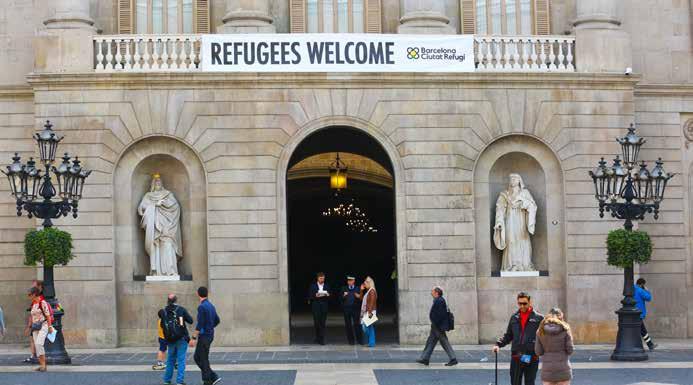
Seven key guiding principles should shape local policy development:
1. Adequate and affordable housing, in accessible locations, is the foundation from which displaced people can re start their lives, but innovative ways are needed to secure housing for the urban displaced (see Box 4.1). As global experience of low-income housing has shown, “providing” housing for all is rarely feasible, and innovations should thus focus on “enabling” most displaced people to develop their own housing solutions, e.g. through cash grants, rent reform or community-led response, to underpin their wider contribution in cities. This approach means a changing role for humanitarians shifting towards advocating and facilitating, rather than direct service provision, and recognizing the social and ecological function of land, to ensure support for all urban dwellers.
2. There is an urgent need for a city wide approach to displacement and a platform to coordinate actors across the humanitarian development divide. Local governments are best placed to convene that platform, as they already provide many of the services that displaced people need. Humanitarian funding, if channelled through local governments, can strengthen services for both host and displaced communities while building the longer-term resilience and sustainability of city systems. However, many local governments have limited experience in supporting displaced people. Staff may need specialist training in areas such as refugee rights or mental health services, and the ability to call on expert advice where needed. Community associations can also help highlight needs and channel advocacy, although associations are often denied to refugees and IDPs.
3. A spatial understanding of displacement is essential to identify the concentration of needs amongst displaced and host communities. City-wide spatial data is also urgently needed on under-counted groups such as non-registered refugees, some IDPs and evictees, using new media and participatory data to fill knowledge gaps. Using an urban profiling approach, area-based programming can address problems of acute need in specific neighbourhoods. Community-led planning can also identify significant green and open spaces, as well as provide safe spaces for displaced communities, particularly women and young people, to help local integration.
4. Displacement prevention is always the best solution, and any alternatives should be planned with future sustainability in mind. The core principle should be to prevent eviction from homes and places of work, exploring alternatives with affected communities, such as promoting urban renewal or settlement upgrading rather than clearance. Where displacement is unavoidable, compensation should account for the full monetary and non-monetary cost of displacement, covering all affected populations. Emergency shelter should factor in longer-term considerations, in case displacement becomes protracted, and be allocated in a fair and transparent manner.
5. Housing solutions for displaced communities should draw on the diversity of housing options available in urban areas. Rental property remains the main way in which displaced people access housing and build self-reliance in cities. Reviewing rent regulations can help minimize exploitation and the provision of substandard or unsafe housing. In addition, co-production of housing for displaced people
Local governments have a key role in supporting displaced people in cities. The message on Barcelona City Hall in 2015 reflects the then council’s refugee-welcome policy © Shutterstock
can build on the extensive experience of community-led housing and savings groups, often working with local governments to find land. To date this approach has only been available to some evictees in cites, but could be extended to refugees and IDPs.
6. Livelihoods support for displaced people in cities needs to recognize the agency and creativity they bring to securing an income, or establishing an enterprise, and their collective contributions to local economies, for which secure housing is key. The key principle is to protect displaced people’s livelihoods wherever possible and avoid evictions that will separate them from their place of work. In this regard, it is important to recognize that some displaced people must work informally to survive: here, the aim should be to reduce exploitation and hazardous work, rather than destroy jobs and income-earning potential.
Conventions, guidelines and protection regimes
Reducing impact
Shelter
Livelihood
Urban space
Countries to adopt and abide by the 1951 Convention Relating to the Status of Refugees
7. For cities shattered by natural disasters or conflict a coordinated international response is required. After natural disasters, the priorities are to meet emergency needs for food and shelter and re-establish livelihoods. Recovery from conflict is more complex as progress depends on resurrecting trusted governance mechanisms. In both cases a transition from humanitarian to development funding and priorities can help bridge the humanitariandevelopment divide.
These seven guiding principles provide the foundation for developing locally relevant policy priorities, to be implemented by local governments in partnership with other local and national agencies.
Countries to adopt and abide by the 1998 Guiding Principles on Internal Displacement
Address vulnerabilities to secondary eviction which the move to a new urban area creates for refugees and IDPs
Countries to adopt and abide by the 1997 CESCR General Comment 7: The right to adequate housing: forced evictions
Urban authorities should avoid eviction. Compensation should account for the full monetary and non-monetary cost of displacement
Rental property remains the main way in which displaced people access housing.
Support for rental housing include short-term cash grants, rent vouchers, the provision of a temporary “rent holiday” or access social housing
Fair and transparent allocation of emergency and post-recovery housing for individuals and communities
Cash for shelter is a key way to bridge the gap between supported housing and self-reliant provision
Refugees specifically have two critical needs: to secure the “right-to-work” and “right-toopen-a business”, without which they remain open to exploitation
Leverage existing practices of community-led housing and savings groups within urban context
Explore ways for displaced people to address issues of discrimination, vulnerability from informal work, loss of home-based work due to eviction, and resettlement to locations remote from previous employment, to increase the independence and income-earning potential of displaced people
Worker associations can collaborate to support innovative policy and provide protections against discrimination, exploitation and hazardous work
Acknowledge and map the collective “displacement economy” that refugees and IDPs create, fostering business enterprise, economic diversity and the creation of new sectors, thus contributing to local economic development
Area-based approaches should include the whole population of the target area, and support existing systems with adequate funding, adopting an iterative and flexible approach
Public space plays an important role for refugees and IDPs in their experience of arrival and of settling down
Shared spaces play an important role for evictees to readdress their displacement and seek collective compensation
Table 4.5: Key policy priorities for different groups of urban displaced Refugees IDPs
Endnotes
1. IOM, 2019.
2. UNHCR, 2025a.
3. IDMC, 2025.
4. UNHCR, 2025a.
5. GCR, 2025.
6. UNHCR, 2025a, p.44.
7. Norwegian Refugee Council, 2025.
8. Global Platform for the Right to the City, 2016.
9. OCHCR, 2026.
10. IDMC, 2025; Chapple, 2015.
11. Kulp & Strauss, 2019.
12. UN-Habitat & OCHCR, 2014, p.3; Hirsh et al, 2020, p.393; Watt & Morris, 2024.
13. GRC, 2025.
14. Janmyr, 2021.
15. UNHCR, 1984.
16. African Union, 2009.
17. UNHCR, 2018, Art. 37.
18. United Nations, 1951.
19. UNHCR, 2011.
20. UNHCR, 2009, Art. 14; Crisp, 2017.
21. United Nations, 2016b.
22. UN-ECOSOC, 1998.
23. UN-ECOSOC, 1998.
24. African Union, 2009.
25. IASC, 2010.
26. Crawford & Holloway, 2024.
27. UN-HLP, 2021.
28. UN-HLP, 2022; Ferris, 2020.
29. Watt & Morris, 2024, p.162; CESCR, 1997.
30. HLRN, 2025a.
31. UN General Assembly, 2005.
32. CESCR, 1997.
33. OHCHR, 2007b.
34. Stern, 2025.
35. Kothari, 2015.
36. Watt & Morris, 2024; OHCHR, 2007b.
37. UN-Habitat & UNHCR, 2022.
38. Hirsh et al., 2020; Sanyal, 2014.
39. Brown & Ahmed, 2016.
40. Lees, 2022.
41. Salvesen, 2015; Huggins, 2015; Talbot & Carter, 2018.
42. Minko et al., 2025.
43. UN-Habitat & OHCHR, 2011, p.3.
44. Pain, 2019; UN-Habitat & OHCHR, 2011; Brown et al., 2024a.
45. Cernea, 2000.
46. Hanmer et al., 2022; Hirsh et al., 2020; Cernea, 2000.
47. Patel et al., 2015.
48. Rohwerder, 2016.
49. UN-Habitat & OCHCR, 2014, p.16.
50. MI, PT, HIC-HLRN, 2020.
51. UN-Habitat & OCHCR, 2014, pp.17-18.
52. Hart, 2014.
53. United Nations, 2015a.
54. Kirbyshire et al., 2017.
55. Arup, 2024.
56. World Bank, 2012b.
57. Mehmood, 2016.
58. de Boer, 2015.
59. Beilin & Wilkinson, 2015.
60. Kirbyshire et al., 2017; García Amado et al., 2024.
61. Brown et al., 2021a.
62. Streets, 2026.
63. UNHCR, 2025e.
64. MMC, 2022.
65. UNHCR, 2024d; UNHCR 2022.
66. Bazurli, 2019.
67. MMC, 2024.
68. IOM, 2023.
69. JIPS, 2019.
70. Brown & Ahmed, 2016.
71. COHRE, 2007.
72. HLRN, 2025a.
73. HLRN, 2025b; HLRN, 2016.
74. HLRN, 2025c.
75. Abdelkader, 2020.
76. van Oostrum, 2025a.
77. UNHCR, 2024b.
78. Krause, 2019.
79. UN-Habitat & UNHCR, 2022, p.30.
80. MI, PT, HIC-HLRN, 2020.
81. Wang, 2020.
82. Leitner et al., 2022, p.8.
83. Hu et al., 2015; Liu et al., 2018.
84. Department of Human Settlements, South Africa, 2009.
85. UN-Habitat, 2025c.
86. UNHCR, 2025c.
87. Caron, 2017.
88. Smith et al., 2020; Yu, 2022.
89. UNHCR, 2025b; ANSA, 2021; UNHCR, 2025d.
90. Caron, 2017.
91. Brown et al., 2021a; Brown et al., 2021b.
92. UNHCR, 2024a.
93. Easton-Calabria & Omata, 2018, p.1468.
94. UNHCR, 2005, p.1.
95. Easton-Calabria & Omata, 2018; Earle & Brown, 2024.
96. Earle, 2023.
97. Sender, 2024.
98. Earle & Brown, 2024.
99. Earle, 2023.
100. Oudshoorn et al., 2020.
101. LeBeau & Tuckfield, 2017.
102. HLRN, 2012.
103. ACHR, 2025.
104. Cernea, 2004; Esteves et al., 2024.
105. Desmond, 2017.
106. Brown et al., 2021a; Brown et al., 2021b; Brown et al., 2018.
107. Jacobsen, 2006; Jacobsen & Fratzke, 2015; Esteves et al., 2024.
108. Chambers, 1995; Rakodi with Lloyd-Jones, 2002.
109. World Bank, 2017.
110. ILO, 2018.
111. Brown et al., 2024b.
112. Kälin et al., 2010; Mandhavan & Landau 2011, p.478; Sturridge, 2024.
113. ILO, 2025.
114. Betts et al., 2016; Zetter & Ruaudel, 2018.
115. Brown et al., 2024a; Brown et al., 2024b.
116. Zetter & Ruaudel, 2018; Brown et al., 2018.
117. Bonnet et al., 2021.
118. Brown et al., 2024b.
119. UN-Habitat & UNHCR, 2022, p.25.
120. Crawford & Holloway, 2024; UNHCR, 2017.
121. FMR 73, 2024.
122. Crawford & Holloway, 2024.
123. Skran & Easton-Calabria, 2020.
124. Monteith & Lwasa, 2017.
125. UN-Habitat, 2025d, pp.40-41.
126. Esteves et al., 2024.
127. Vanclay, 2017.
128. Crawford & Holloway, 2024.
129. IRC, 2025; Dempster & Herbert, 2023; Kaumba, 2024; Re:BUiLD, 2022; RSRI, 2021.
130. Cotroneo, 2017.
131. te Lintelo & Soye, 2018.
132. Brown, 2015, p.19.
133. te Lintelo & Soye, 2018.
134. UN-Habitat, 2024c; JIPS, 2021.
135. UN-Habitat, 2021b, p.8.
136. UN-Habitat, 2021.
137. UN-Habitat, 2021b, p.25.
138. Keen et al., 2017.
139. Parker & Maynard, 2015.
140. HOT, 2026.
141. Schell et al., 2020.
142. Global Shelter Cluster, 2019.
143. Mady, 2017.
144. te Lintelo et al., 2024.
145. Finlay et al., 2022.
146. UN News, 2025.
147. OCHA, 2025a; OCHA, 2025b.
148. ReliefWeb, 2025.
149. Humanitarian Action, 2026.
150. UNRWA, 2025; UNRWA, 2026.
151. OCHA, 2026.
152. OCHA, 2025c
153. IOM, 2026; UN News, 2026.
154. UNHCR, 2026.
155. Jha et al., 2013.
156. GFDRR, 2025.
157. GFDRR, 2025.
158. GFDRR, n.d.
159. Khazai & Hausler, 2005.
160. Gharaati & Davidson, 2009; Naeim et al., 2004.
161. UN News, 2024.
162. Porteous & Smith, 2001, p.19.
163. Coward, 2009, pp.37-39; Carrión Mena, 2023, p.28.
164. Coward, 2009, p.6.
165. UN-Habitat, 2021b, p.8.
166. Ward, 2024.
167. Earle, 2016.
168. Maly, 2018.
169. UNDP, 2013, p.4; UN-Habitat, 2020a, p.3.
170. UN-Habitat, 2017.

Leveraging Informality for Affordable and Adequate Housing Chapter 5:
Quick facts
1. While the percentage of people in informal settlement and slum conditions has decreased, the absolute numbers have risen from 895 million in 2000 to 1.16 billion in 2024.
2. The response to informal urbanization in many countries continues to be dominated by large scale evictions.
3. Informal urbanization is a dynamic process that has vastly different outcomes depending on the interplay of community organization, incremental housing development, infrastructure, livelihoods and land tenure.
4. While past policy has tended to focus on deprivations within informal settlements, informal urbanization has the potential to promote inclusive and sustainable city making.
5. Despite substantial progress around informal settlement upgrading in recent decades, policy bottlenecks and trade offs continue to undermine the potential of informal urbanization.
Policy points
1. A hybrid approach, based on co produced knowledge and genuine partnership involving residents, civil society and governments, is essential to effectively leverage informal urbanization.
2. Enhancing land tenure security in all its diverse forms, through a wide ranging approach that includes rentals and collective ownerships models, is critical to address the housing crisis.
3. Governments and other urban authorities should adapt outdated legal and planning frameworks to reflect the reality of informal urbanization on the ground.
4. To adapt to climate risks, housing and infrastructure improvement must be anchored in local practices and knowledge, with a focus on in situ upgrading rather than displacement.
5. Housing and infrastructure interventions must support mixed use functions, home based enterprises and livelihoods through community based construction and maintenance practices that ensure local ownership and long term sustainability.
Informal settlements are a pervasive feature of urbanization across the world. Today, over 1.1 billion people are living in informal settlements and slums, and in many cities, informality is the norm rather than the exception. Bearing that in mind, this chapter draws on a robust and growing body of scholarship and practice that recognizes informality not as a discrete sector or spatial area isolated from the formal city, but as an intrinsic mode of urbanization, deeply intertwined with formal urban production.1 As such, it attempts to move beyond the informal/formal binary, understanding informality as a difference rather than a deviance.2 This knowledge base offers a deeper and context-specific understanding of informal urbanization across cities and regions to guide action and research, as well as reassess policy approaches based on the formal/ informal dichotomy.3
In addition, this chapter builds on the call to distinguish between poverty and informality.4 Consequently, an effort has been made to cease conflating informal settlements and slum conditions. To that end, informality is understood as a mode of urbanization that can produce diverse outcomes, including slum conditions. By disconnecting the process from the outcomes, this analysis sees the core challenge as
not informality itself, but the specific deprivations that may or may not result from it. This means that when governments engage with urban informality, they should refrain from anti-informality approaches. While the impacts of evictions are severe and wide-ranging, ill-conceived formalization can also burden residents with administrative and financial costs that are difficult to bear.5
In short, there is an urgent need to reframe how urban informality is seen and responded to. More recently, as monitoring and identification have improved, recognition of their existence has progressed – yet too often, as a problem to be solved through demolition and resettlement. However, given its prevalence, simply ignoring or stigmatizing informality is no longer an option: it is not possible to address the global housing crisis without engaging seriously with the reality of informal urbanization. It is against this backdrop that this chapter explores how, despite its many challenges, urban informality can be leveraged as part of the solution. This entails recognizing and supporting the potential of informal urbanization to drive inclusive and sustainable city-making, while simultaneously addressing the persistent issues that prevent it from doing so.
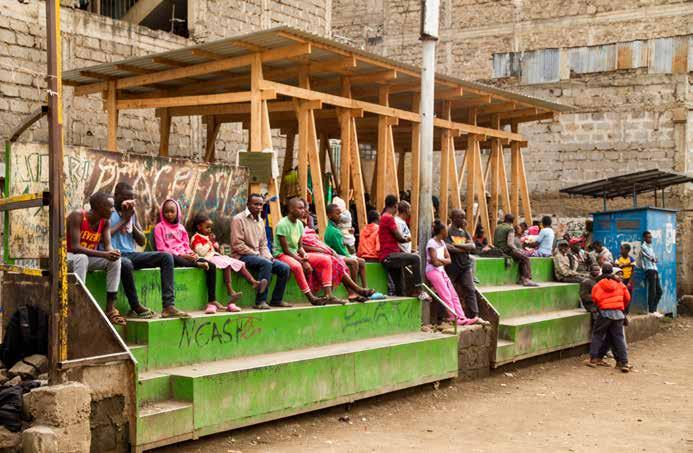
Arvet, a Swedish architecture firm, presented the Swedish Wooden Pavilion "In Praise of Shadows" at the first United Nations Habitat Assembly in Nairobi and donated it afterwards to the local communities in Mathare as a playground and public space © UN-Habitat/Kirsten Milhahn
The chapter is organized into five sections.
An overview of the latest trends in informal urbanization, reframing informality not as a sector or specific area in the city, but as the predominant mode of urbanization in many developing cities. It also explores the ongoing stigma facing slums and informal settlements, as well as the role this plays in perpetuating large-scale evictions, despite their well-documented negative impacts (Section 5.1).
A summary of the key elements that shape informal urbanization – including insecure land tenure, community organizations, incremental development, livelihoods and co-production – with an analysis of both the opportunities and limitations of informal urbanization for addressing the global housing crisis (Section 5.2).
An examination of the evolution of in situ upgrading as a comprehensive strategy for leveraging informality, with a discussion of some of the key bottlenecks and emerging possibilities in a shifting global context (Section 5.3).
An exploration of innovative ideas and approaches to improve tenure security, participation, informal housing, livelihood and infrastructure, including a discussion on the importance of knowledge co-production and digital technologies in sustaining these solutions (Section 5.4).
Finally, the chapter culminates with concluding remarks and lessons for policy (Section 5.5).
5.1 Reframing the Challenge of Urban Informality
The concept of informality has gained in prominence in recent decades. This section examines its origins, analyses the latest trends and explores the continued stigma affecting informality, despite improved understanding. Over time, approaches to informality have evolved from eradication (forcible demolition and clearance) and then formalization (attempting to bring it in line with formal planning and regulations) to the approach advocated in this chapter: namely, to leverage the potential of informal urbanization as a solution to the global housing crisis.
5.1.1 Informal growth: trends and dynamics
As Figure 5.1 shows, the percentage of the urban population living in informal settlements and slums declined between 2010 and 2024 in all regions, except Oceania. However, this picture is complicated by the fact the absolute number of people living in slum and informal settlements has grown against a backdrop of rapid urbanization, with the annual rate of change almost quadrupling from 0.4 per cent between 2008 and 2016 to 1.5 per cent between 2016 and 2020.6
Globally, 1.16 billion people resided in slums and informal settlements in 2024 – a 27 per cent increase compared to the total in 2000 (895 million).7 This figure, it should be noted, is the minimum based on the data that is available and would likely be significantly higher if information on tenure security was more widely accessible. Meanwhile, further exacerbating the situation, forced eviction and informal settlement clearance have continued in all regions.8
Figure 5.1: Share of urban population living in informal settlements, 2010–24, by region
Given their longstanding invisibility, significant progress in tracking, enumerating and monitoring the prevalence of slums and informal settlements has been key (Box 5.1). Beyond the headline figures, however, a number of other features are evident:
Urban informality, while present everywhere, is disproportionately concentrated in some regions and cities. As of 2024, around 85 percent of the world’s population in informal settlement was situated in Central and Southern Asia (340 million), Eastern and South-Eastern Asia (370 million), and Sub-Saharan Africa (254 million).9 In the coming years, projections suggest that the largest proportional increase of slum conditions will occur in Sub-Saharan Africa.10 Additionally, data indicates that future growth of informal settlement will likely concentrate in secondary cities rather than major metropolitan areas.11
The challenges associated with urban informality frequently intersect with other areas of discrimination, such as gender. For instance, data shows that women are typically overrepresented in informal settlements. In a survey of 59 countries across Latin America and the Caribbean, Central and Southern Asia, and Sub-Saharan Africa, women between the ages of 15 and 49 were found to be generally overrepresented in slums informal settlements in 80 per cent of these countries.12
Female residents face particular vulnerabilities due to lack of access to adequate sanitation, gender based violence and higher risks of eviction. Recent estimates suggest that as of 2020, there were between 350 and 500 million children living in slums and informal settlements, representing between a third and a half of the total population there.13
Informal housing is closely correlated with other areas of informality, including informal employment. As in the case of informal settlements, the informal economy is a significant and persistent feature of life for millions of the urban poor.14 Though stigmatized and undervalued, informal workers make a vital contribution to household income, poverty reduction and local culture.15 It is estimated that 43 per cent of the urban work force are in informal employment, without adequate social security arrangements, workplace safety measures and legal protection.16 However, there are major difference across regions. In Latin America and the Caribbeans and Asia the percentage of informal employment in urban areas is 47 and 49 per cent respectively. In Africa urban informal employment represents 72 per cent, while it is 60 per cent in Arab States.17 The relationship between informal livelihoods and informal settlements is closely linked as an important share of people work at home as own-account workers and contributing family workers.18
It is estimated that 43 per cent of the urban work force are in informal employment
Box 5.1: Defining and measuring slums and informal settlements
A crucial milestone for the policy agenda on slums and informal settlements at the global level was the adoption of the Millennium Declaration, in particular Target 11: “By 2020, to have achieved a significant improvement in the lives of at least 100 million slum dwellers”. This was followed in 2003 by UN-Habitat’s report, The Challenge of Slums, which provided the first comprehensive global overview of the issue. One of its key achievement was to present an authoritative estimate of the number of slum dwellers based on an operational definition composed of five deprivations: (i) lack of access to improved water services, (ii) lack of access to improved sanitation facilities, (iii) lack of sufficient living area, (iv) lack of housing durability and (v) lack of security of tenure. More recently, these elements were operationalized as key metrics for tracking and recording progress on Sustainable Development Goal (SDG) Target 11.1: “By 2030, ensure access for all to adequate, safe and affordable housing and basic services and upgrade slums by 2030”.
Source: UN-Habitat, 2003 and 2018; United Nations, 2000 and 2015b.
5.1.2 Stigma and misconceptions
While the increasing policy attention on urban informality has been welcome, it has also provoked extensive debate around the terminology used to discuss it – in particular, the use of the word “slum”. While the operational definition proposed in the early 2000s was crucial for supporting international efforts, public policy, data generation and research, the term itself – used to refer to a variety of urban spaces, from refugee camps and peripheral shantytowns to inner-city tenements – has become increasingly imprecise, undermining its capacity to explain the spaces it is supposed to describe.19
The word has also been criticized for its stigmatizing overtones. As the term “slum” frequently conflates the physical characteristics of the settlements with its residents, it risks framing housing deprivation as a product of their personal failings, further perpetuating their marginalization.20 Even though its negative connotations have been subverted in some instances by residents themselves – most notably, in the case of the organization Slum/Shack Dwellers International (SDI) – the term continues to be critiqued by numerous academics and practitioners alike. Though UN-Habitat and other agencies continue to use it to classify settlements according to their specific deprivations, in line with its official definition, every effort is made to avoid using it in ways that perpetuates stereotypes about these communities. This is vitally important, given that these assumptions can have real-world consequences in shaping and justifying exclusionary policies such as
evictions. This was reflected in the misdirection of the Cities Without Slums initiative in the early 2000s, for instance, which prompted some countries to undertake a programme of slum eradication and elimination – an exercise that had the exact opposite effect of integration.21 This points to the fact that many destructive policies towards slums and informal settlements are founded on a fundamental misunderstanding of the drivers and effects of urban informality.

The term “slum” frequently conflates the physical characteristics of the settlements with its residents
The promotion of more inclusive terminology goes hand in hand with more equitable, collaborative approaches to informal settlement, enabling stakeholders to collectively redefine how informal settlement is understood. A compelling precedent was set by the Brazilian Institute of Geography and Statistics when it replaced the pejorative census classification “subnormal agglomerations” with “favelas and urban communities”. This shift was the result of co-production processes between the Institute, social movements, communities and academia. Ultimately this designation shifts the narrative from stigma to affirmation, valorizing the unique sociability, cultural identity and distinct forms of mode of urbanization at the core of these communities. A similar process occurred in Argentina, leading to the adoption of the term “popular neighbourhoods”.22
There are other generalizations about urban informality that need be challenged. Contrary to common assumptions, informal housing is not the exclusive preserve of the urban poor. Over the last few decades there has been increasing recognition of elite actors in cities across the world engaging in informal housing and planning practices. In Bogotá, Colombia, upper-income illegal housing was built in the eastern hills of the city with the contribution of public institutions.23 In Hong Kong, China, privileged groups have engaged in informal housing and land transformation practices throughout the colonial and post-colonial periods.24 In Islamabad in Pakistan, elite actors engage in informal urbanization for profit-seeking.25
Contrary to common assumptions, informal housing is not the exclusive preserve of the urban poor
Informal urbanization is also not confined only to developing countries. Informal housing practices are present and increasingly prevalent worldwide, driven significantly by the current housing crisis. In the United States (US), informally built Accessory Dwelling Units have been widely adopted: in Los Angeles, California, it is estimated that about 10 per cent of single-family housing units have an informal second unit.26 In Europe, too, the informal adaptation of formal or state-built housing complexes is a widespread practice. In London, United Kingdom, incremental backyards extensions are common in both high- and low-income areas.27
These informal housing practices coexist with encampments and substandard housing experienced by undocumented migrants, unhoused people and other vulnerable groups.28
Often, these informal practices involve the reuse and regeneration of vacant or abandoned public or private buildings for housing purposes. When properly leveraged, informal self-organization and squatting can contribute to housing provision without surplus land consumption, transforming underutilized spaces into lively, inclusive neighbourhoods (Box 5.2). Moreover, informal urbanization is shaping the transformation of post-socialist cities in South-East Europe.29
Box 5.2: Leveraging urban informality in Port Fluviale, Rome, Italy
In June 2003, around 200 people occupied Porto Fluviale, a former air force warehouse in Rome, Italy. An internal management assembly coordinated the transformation of the building into housing, with residents constructing upper-floor accommodation using lightweight materials and integrating individual bathrooms connected to the sewer system. Communal spaces – such as a kitchen, tailor’s shop, bike repair workshop and tearoom – were created on the ground floor. Infrastructure improvements included fire safety upgrades and separate clean water and sewage systems. Spaces were adapted to household needs through participatory design. Over the years, Porto Fluviale opened to the neighbourhood and developed strong community ties through local workshops and a collaboration with Roma Tre University, evolving into a socially rooted regeneration project.
In 2021 a formalization process began, promoted by the Municipality of Rome and funded by the Ministry of Infrastructure and Transport’s National Innovative Programme for Quality Living programme. Under the Law on Cultural Federalism, the municipality acquired the property free of charge, conducted a census with residents and temporarily relocated them to public housing for the duration of the works. The project includes the realization of approximately 150 public housing units on the first floor, a photovoltaic garden on the terrace and a public square on the ground floor providing a range of services to the local neighbourhood – from a “zero kilometre” market to an anti-violence help desk.
Source: Mira, 2025.
5.1.3 The persistence of evictions
Global understanding of slums and informal settlements has greatly improved over the past three decades. The principles espoused by UN-Habitat back in 2003 – in particular, the importance of well-planned, participatory in situ upgrading, supported by adequate infrastructure, tenure security and livelihood opportunities30 – have gained traction in cities and across the world, as evidenced by progressive in situ upgrading programmes such as Baan Mankong in Thailand (Box 5.3). Yet despite the demonstrated benefits of this approach and the broader move away from the harmful “eradication” policies of the past (see Chapter 2), a number of seemingly intractable problems remain, including the persistence of large-scale evictions.
This is due in no small part to the continued stigmatization of urban informality. Informal settlement demolitions have been associated, for instance, with the organization of large-scale events such as the Olympics and the resulting obsession of host cities to project an image of “world class” urban modernity, regardless of local context.31

Evictions are often implemented without proper consultation, adequate resettlement options or fair compensation
More recently, evictions have been fostered by inadequate responses to climate change,32 particularly in coastal cities in South, South-East and East Asia, where flooding risks are especially high.33 Ill-informed climate adaptation measures over the last decade have led to the eviction of informal settlements along the Gujjar nullah and Orangi nullah in Karachi (Pakistan), the Cooum River in Chennai (India), the Saigon River in Ho Chi Minh City (Viet Nam) and the Ciliwung River in Jakarta (Indonesia).34 Crucially, evictions are often implemented without proper consultation, adequate resettlement options or fair compensation for residents. Slum clearance typically results in serious consequences for those displaced, including violations of human rights, worsening poverty conditions and increased vulnerability.35
There exists major regional variation regarding eviction. A study based on a sample of 60 cities revealed that in Latin America and the Caribbean, the demolition of informal settlements remains low and that the use of land when clearances do occur is often for public space, or kept empty due to its exposure to natural hazards.36 Asia and Africa, on the other hand, have higher rates of informal settlement demolitions. However, the use of land after demolition varies. In Asia, an important share of land is allocated to private urban development and infrastructure, consistent with the pursuit of urban modernism and world-class city making. In Africa, land is left vacant or used for private urban development. Nevertheless, the high demolition rates highlight how informal settlement clearance remains commonplace. Chapter 4 documents in more detail the situation of urban evictees and what action can be taken to mitigate the impacts of displacement.
Box 5.3: Thailand’s pioneering Baan Mankong Programme
As an alternative to eviction and resettlement, the Baan Mankong programme in Thailand offers crucial insights on how governments can support residents of informal settlements to achieve sustainable housing solutions in situ. Initiated in 2003, the programme is implemented by the Community Organizations Development Institute (CODI), an autonomous public entity with direct access to state resources and greater freedom and flexibility than traditional government bodies. CODI functions as a demanddriven entity, recognizing that people are active producers of their housing and CODI’s role was to support them. The programme has been operating through two main principles: working with communities rather than individuals (thereby addressing the privatization of urban resources) and network building (which plays an important role in the process of upgrading).
The task of identifying and acquiring land is entrusted with the communities and citywide networks. This is enabled through the accessible and flexible financing programmes that enable residents to negotiate and acquire public or private land through a variety of leasehold agreements, often with the support of the local authorities. Thus, the collective nature of the land-owning guarantees the continuity of the programme. Furthermore, security in land tenure ensures that communities are able to invest in their social relationships, helping households to address their situations of poverty and vulnerability. The legal entity that facilitates the purchase or leasing of land and receives loans from CODI loans is set up through a community cooperative. It functions on the condition that the land tenure remains collective in the first 15 years as communities repay their loans.
The Baan Mankong programme represents a radical response to the challenges of privatization and the commodification of essential urban resources. The provision of secure collective tenure and upfront financial assistance from the government enables urban poor communities to invest deeply, albeit incrementally, in their homes. Crucially, the focus of the programme on the whole city, rather than on specific neighbourhoods, is a key element in the programme’s success: land plots are often acquired in multiple locations simultaneously following a citywide survey.
5.2
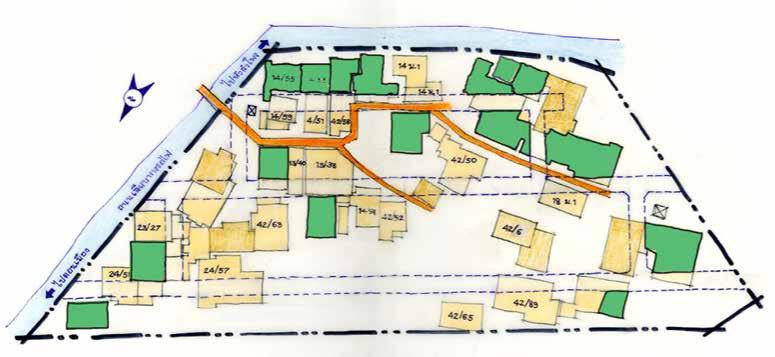
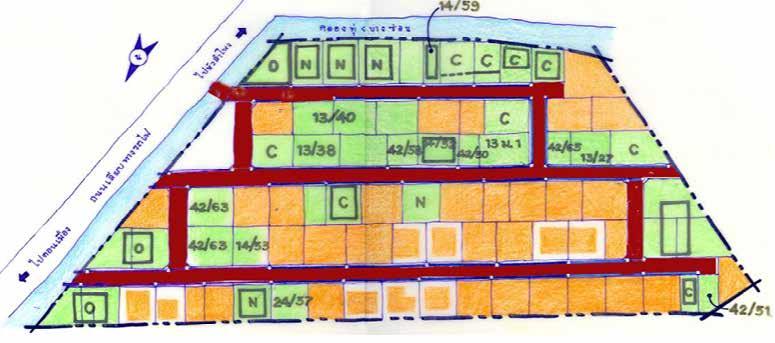
Informal Urbanization: Characteristics, Opportunities and Challenges
The recognition of informality as the predominant mode of urbanization that is not merely as the antithesis of the formal, allows an understanding on its own terms. In this line informal urbanization can be best understood as a broad continuum, a process shaped by multiple elements – namely land tenure, community organization, incremental development, informal livelihoods and co-produced infrastructure (Figure 5.2) – in different configurations. For instance, informal urbanization might occur with high levels of community organization but without secure tenure; it might have residents working formal jobs, but using the income to incrementally upgrade their housing.
These elements also play out in different contexts, with different geographies, different state planning and policy and different demographic compositions and vulnerabilities. Thus, informal urbanization cannot be understood as a simple binary or even as a spectrum between formal and informal. Each informal settlement has a unique profile and presents specific opportunities and limitations in relation to the current housing crisis. This section will explore each element in detail to illustrate the diversity of urban informality today.
Informal urbanization cannot be understood as a simple binary or even as a spectrum between formal and informal
Charoenchai Nimitmai community upgrading through Baan Mankong Programme: Sketch plan and final plan after re-blocking
Source: Shelby, 2024; Boonyabancha, 2009; Boonyabancha & Kerr, 2018; Asian Coalition of Housing Rights, 2021.
Figure 5.2: Key factors shaping informal urbanization outcomes
Community organization
Geographical location, age and conditions
Demographic composition and vulnerabilities
Informal Urbanization
Co-produced infrastructure
5.2.1 Informal land tenure
Informal urbanization has conventionally been linked to squatter settlements, but the reality is that land tenure is more diverse, including unauthorized subdivisions, customary tenure, collective land ownership and regularized tenure conditions. These can also change over time. In the case of squatter settlements, where land has been occupied without permission – for example, unauthorized settlements established on rooftops and pavements, incremental occupations and organized land invasions, particularly in Latin America and the Caribbean – residents may eventually gain some form of tenure security and even a degree of formalization, such as occupation certificates. These provide administrative recognition, leading to essential government actions like inclusion in city registers and the possibility of accessing basic urban services. Furthermore, these certificates grant residents legal status to assert and defend their housing rights and determine their settlement’s future development.37
Informal urbanization has conventionally been linked to squatter settlements, but the reality is that land tenure is more diverse
In unauthorized subdivisions, legal landowners sell or lease plots to individuals to build their own homes. Despite the legal ownership of the land, these developments remain unauthorized due to regulatory failures such as irregular plotting, zoning violations and lack of infrastructure or permits.38 This type of informal growth commonly occurs on peripheral
Incremental development
State planning and policy
rural land, in some cases facilitated by private landowners. In other cases, land tenure may be supported by customary laws, as is the case with some “urban villages”. An increasingly common phenomenon in many developing countries, as urban growth spreads to formerly rural communities, urban villages occupy a grey area in terms of state recognition, leaving them at risk of demolition and exclusionary urban planning.39 In addition, informal urbanization also occurs on formally owned land, particularly within public housing and sites-and-services schemes. In both cases, residents frequently engage in informal housing practices and alternative service arrangements.
While informal urbanization is often framed as a disruptive force that undermines formality, it is also the case that it is shaped and to some extent actively driven by official laws and planning codes such as zoning. By determining what is formal and authorized in a city, these regulations – themselves the product of outdated and often inappropriate Western and colonial norms – also determine what is classified as informal and unauthorized.40 These planning standards, often decades old and developed for contexts very different to those in developing cities today, are generally ill-suited to the needs and realities of the urban poor. As a result, these regulations may have the perverse effect of forcing many to secure land and shelter informally.41 Nevertheless, most of the time residents gradually bring their informal housing into regulatory compliance with building and land use regulations. This gradual approach is crucial when financial limitations prevent immediate adherence to all land and construction regulations.42
Livelihoods
Land tenure
5.2.2
Community organization and resident action
Informal settlements are fundamentally shaped by their inhabitants. Residents actively participate in the construction of their houses and settlements,43 simultaneously building (with their labour or hiring people) and living in their homes.44 Therefore, informal urbanization is as much a process as an outcome,45 with residents frequently serving as active co-producers of neighbourhoods and cities.46 Though it can unfold as the result of individual housing production, more often than not it is driven by groups of residents who have organized themselves informally. In Latin America, for instance, organized land invasions are a common tactic for communities to gain access to land.47 In Asia, collective and cooperative land management by informal settlement communities is a common feature (see Chapter 7 for their role in supporting housing inclusion).
Community-based organizations (CBOs) and local non-governmental organizations (NGOs) can also play a crucial role, organizing collective action within settlements and engaging with state authorities.48 This is of vital importance as the settlement’s needs and aspirations, such as infrastructure provision and financing, go beyond individual demands. Crucially, women act as key drivers in this collective action, frequently leading urban popular movements, and assuming active decision-making
roles.49 Often the active role of CBOs and NGOs results in a hybrid approach that balances informal self-governance mechanisms and local bodies to guide incremental development. For instance, in China, where much affordable housing is built by village collectives, the self-initiated redevelopment of Maquanying village in Beijing (China) represents a community-led model that combines (in)formal governance for redevelopment and incremental housing expansion (Box 5.4).
Nevertheless, it is by no means the case that informal urbanization is always driven by its residents. Other key participants of informal urbanization are tenants, developers, rent agents and protection racketeers, alongside landlords ranging from subsistence owners to absentee petty-capitalists.50 In many informal urban settings, land and housing may be controlled by local elites or criminal networks, with residents housed in highly exploitative conditions such as inflated rents and insecure contracts. Even among residents themselves, complex hierarchies may emerge between owners and renters. One study of backyard renting in Johannnesburg, South Africa, for instance, has highlighted how the impacts of “grassroots rentierism” can deepen inequalities between owner-residents and their tenants – the latter composed of recent arrivals or migrants living surviving precariously on temporary wage labour.51
Box 5.4: “Self-governing” incremental redevelopment in Beijing, China
Maquanying in Beijing, China, is one of many “urban villages” that have gradually been subsumed into the capital as it has expanded outwards. While most have been subjected to highly destructive, state-led demolitions, Maquanying is notable for having pursued a different path of “self-governing redevelopment” through a protracted process of community-driven and incremental improvement. This model stands in stark contrast to the top-down, exclusionary development usually imposed on similar communities elsewhere in the city. At the heart of the process was Maquanying’s village committee, a local governance body elected by and from local villagers. The committee took responsibility for planning and maintaining public infrastructures, managing collective land and assets, setting construction standards, enforcing limits on extensions, representing and protecting villagers’ interests, acting as an intermediary with the municipal government and implementing public policies within village boundaries.
In the first phase, the committee initiated the area’s redevelopment with the approval of local villagers, the township and district government. It facilitated an agreement among villagers on plot allocations and the contribution of individual households to the redevelopment. Though local authorities did not directly oversee the implementation, they regulated the powers and activities of the village committee. Funding came entirely from the community through land requisition compensation, collective savings, profits from collective companies and villagers’ contributions. The new layout, designed by the committee based on traditional principles, included two standard plot types, wide lanes for safety and collectively owned public facilities. As a result, 700 new houses were built and over 13 hectares of land reserved for future development.
As urbanization accelerated, a second phase saw villagers incrementally expanding houses to accommodate migrants in independent rooms. The committee introduced “self-governance regulations” to guide extensions, while floor area added through cantilevering was managed through informal verbal agreement among residents. The consistent and orderly application of such practices highlights the strength of cultural norms and social cohesion. The high quality of the housing and public spaces, even after the extensions, led the municipality to condone the redevelopment, enhancing the perception of tenure security of villagers and migrants and their willingness to follow local rules.
Source: Yang & van Oostrum, 2020.
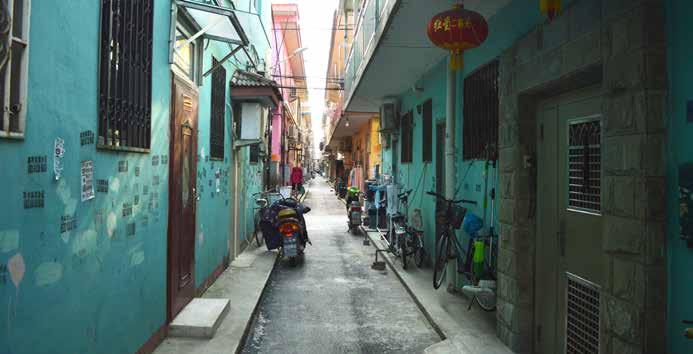
5.2.3 Incremental housing
Informal urbanization is characterized by incremental development: housing and neighbourhoods are not planned in advance and built in one go, but developed over time and built in smaller phases. While incremental development is often conflated with “unplanned” development, this is a misrepresentation. Rooted in geographical location and conditions, including available materials and local knowledge,52 incremental development typically follows observable patterns and an organized process governed by explicit and implicit rules. In Indonesia, the development of urban kampungs is shaped by clear, socially accepted protocols, communicated verbally or in writing and in the physical environment (for example, with property numbers and boundary markers). Kampungs are also shaped by an array of standards
and behaviours that are not explicitly communicated, allowing for more adaptability in how they are interpreted.53
Informal urbanization, then, can result in the evolution of a built environment that is improvisational and make-shift, reflecting the needs and priorities of individual households but also informed by a shared agreement of what is and is not permissible. As shown in Table 5.1, it can encompass a variety of physical forms, often in original or ingenious ways. Incremental development is generally hybrid in its approach, incorporating formal processes alongside highly individualized functions. For instance, in the context of a lack of basic infrastructure, decentralized and small-scale informal systems involving a single household or small networks are often developed to provide diverse resources and services including energy, water, food, mobility and waste.
Extend Vertical and horizontal expansion of existing structures.
Attach Construction of spaces that alter the transition between private and public areas such as porches, roof terraces and balconies.
Replace Improvement or replacement of materials and construction methodologies.
Divide Subdivision of existing interior space for generating additional dwelling units or reorganizing internal functions.
Infill Reuse of existing and underutilised formal construction through the construction of an informal enclosure.
Connect Establishment of building connectivity to essential utility networks. Provision often transitions from an initial informal status to subsequent formalization.
Laneway in Maquanying urban village © UN-Habitat/Matthijs van Oostrum
Table 5.1: Different typologies of incremental development
Source: Kamalipour & Dovey, 2020.
Incremental development is often conflated with “unplanned” development
Incremental development is financed gradually over time rather than all at once.56 The most common finance sources are savings, remittances, loans from informal lenders (relatives, friends, neighbours, moneylenders and pawnbrokers) and financial self-help organizations such as Rotating Credit and Savings Associations, and Accumulating Savings and Credit
Associations. Over the past decade housing microfinance has expanded, although it remains a secondary product for microfinance institutions, which primarily focus on economic development.57
For its part, in Durban, South Africa, two community-led housing initiatives – Stop 8 and Piesang River – demonstrate how informal financing mechanisms, when supported by enabling institutions like uTshani Fund and the Federation of the Urban and Rural Poor (FEDUP), can successfully support incremental housing construction and improve socio-economic conditions over the long term (Box 5.5).
Box 5.5: Leveraging informal finance mechanisms in Durban, South Africa
Leveraging and integrating informal finance mechanisms, such as savings groups, can significantly improve housing quality in informal settlements. When combined with capacity building and resident-led design and construction, this approach enhances community ownership, social cohesion and long-term sustainability. This requires flexible, informal financing mechanisms that reflect the economic realities of low-income households and can work with them to provide accessible funding for incremental upgrading.
At Stop 8 in Durban, South Africa, three women-led savings groups established an “Urban Poor Fund” to finance incremental housing constructions. This promoted the development of a saving culture allowing the Federation of the Urban and Rural Poor (FEDUP) – supported by the uTshani Fund, the financial facility of the South African SDI alliance – to co-finance higher quality and larger homes than those typically built through the government-led Reconstruction and Development Programme. The initiative followed the People’s Housing Process, a participatory model centred on delivery by community contractors. FEDUP acted as a community contractor and led the provision of self-build housing, together with a Community Construction Management Teams (CCMTs) supervised by uTshani Fund and composed of approved professional contractors, who ensured technical support. This process not only improved the technical quality of housing but also cultivated financial literacy, construction skills and a strong sense of ownership among residents.
Similarly, at Piesang River, groups of women-initiated savings group took responsibility for book-keeping and fund management. These efforts enabled access to additional subsidies channelled through uTshani. The additional funds enabled FEDUP to support the process through bridging finance (pre-financing), allowing community members to contribute with time and labour and repay the loan at a later stage. A local Steering Committee organized semi-skilled residents into groups according to their specific abilities including technical design and construction, management and social facilitation. With the assistance of professional builders brought in by FEDUP, participants – this time including youth groups – received hands-on training in construction techniques and land negotiation. Overall, the process helped reduce social tensions, strengthened social bonds, created local job opportunities and contributed to a noticeable decrease in crime.
Source: Georgiadou & Loggia, 2024.
5.2.4 Informal livelihoods
The informal economy also shapes informal urbanization, as wages and earnings are determinants in building housing incrementally.58 Furthermore, a significant share of informal workers also live in informal settlements and in some cases have helped transform them into industrial hubs, as in the case of Dar es Salaam (Tanzania).59 Specifically, for home-based informal workers housing is frequently used as a place to work as well as live, as well as a storage place for street vendors and other informal workers. In this regard, housing design and adaptations are in part shaped by work-related needs, while the location of housing and settlements are determined by the proximity and accessibility to economic opportunities.
For example, informal settlements in Manila (the Philippines) maintain a symbiotic relation with street vending and transport infrastructure (Figure 5.3). In the Recto area of Quiapo district, informal settlements allow street vendors to access affordable housing at walkable distance to markets, as well as space for cart parking and storage. They also serve as production hubs where the goods sold on the street are made or prepared, ensuring readily available and inexpensive products for residents. Furthermore, informal settlements allow drivers in the informal transport sector to access affordable housing and space for parking, while enhancing mobility options for residents.60 The symbiotic relationship between informal housing and livelihoods underpins workers’ preference for well-located housing over well-built housing in a location that make
it impossible to earn a living. Therefore, upgrading interventions need to factor in not only the improvement of living conditions, but also how to support and maintain people’s livelihoods. The Yerwada project in Pune, India, demonstrates how housing improvements and livelihood support can be mutually supportive, offering a blueprint for effective upgrading (Box 5.6).
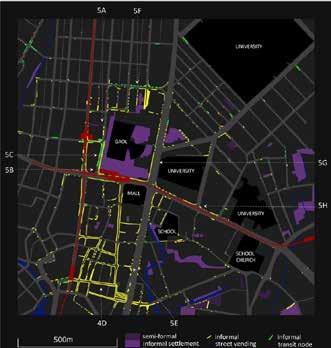
Incremental development is financed gradually over time rather than all at once. The most common finance sources are savings, remittances and loans from informal lenders
5.2.5 Co-production of infrastructure and services
Informal urbanization is a co-production, involving a broad range of actors who each contribute in distinct ways to the process. This is particularly evident in infrastructure. Whether sewage networks, electricity supply or road networks, governments and urban authorities typically provide the trunk infrastructure, while community organizations and residents build connections to their own streets and homes. The benefit of this approach is that municipal services are generally more effective and equitable when both public actors and citizen groups are involved.61 In Lilongwe, Malawi, for example, the co-production of services by a public utility and civil society groups addressed longstanding inefficiencies in delivery and built social capital within communities.62
Box 5.6: The Yerwada project in Pune, India: improving livelihoods and housing
The Yerwada project in Pune (India), launched under India’s Basic Services for the Urban Poor (BSUP) scheme, illustrates how a participatory in situ upgrading can support residents’ livelihoods. Led by civil society organizations SPARC/Mahila Milan and MASHAL, the project engaged residents in a participatory, house-byhouse upgrading process. The initiative retained existing street layout, respected residents’ established social networks, and supported livelihoods by maintaining their proximity to the city centre.
Upgraded homes were designed for incremental vertical expansion and featured adaptable spaces for homebased income-generating activities, including roll-up storefronts, verandas and flexible interiors that could be used for tailoring, basket-weaving, vending and small shops. These features not only improved living conditions and enhanced livelihoods, but also helped to reduce the stigma previously associated with poor housing conditions.
By tapping into locally available skills, economic practices and social networks, the project enabled residents to improve their homes affordably and incrementally while responding flexibly to changing needs and circumstances. Community members, particularly women, were involved in the implementation as workers and local contractors. In later iterations, residents were formally allowed to serve as their own contractors, deepening their economic empowerment and strengthening ownership over the process.
Source: Lamb & Vale, 2024.
Whether in public transport, or garbage collection, informal settlement communities and informal service providers typically provide feeder services to more formalized systems. In urban villages in Guangzhou, China, for instance, local authorities only provide infrastructure to the edge of their territory, leaving local collectives to plan, manage and build the “last-mile” connectivity.63 Similarly, in the neighbouring city of Shenzhen, informal e-bikes significantly extend the catchment area of its rapid transit system, helping to reduce the social exclusion of informal settlement residents.64 This co-production can happen in different ways. Through participation, non-state actors have become co-producers of urban development with the local governments and its institutions.65
Figure 5.3: The mix of informal vending, transport and settlement in Quiapo, Manila
Source: Dovey & Recio, 2024.
“Supplementary” co-production occurs when informal institutions are set up where governments are too weak to implement their formal rules or provide services; “complementary” co-production is when there is an absence of formal rules and so informal and customary practices become formalized over time.66 Understanding how formal and informal systems can work together is critical in leveraging informal urbanization.
Governments and urban authorities typically provide the trunk infrastructure, while community organizations and residents build connections to their own streets and homes
5.2.6 The potential and limitations of informal urbanization
The key factors shaping informal urbanization also reveal its potential to alleviate the housing crisis (Table 5.2) in contexts where formal housing provision is often costly, inflexible, slow and exclusionary. Informal urbanization has the potential to contribute in the following ways:
Asserting the right to the city: Informal urbanization contributes to the provision of affordable housing and accessible land to lowincome urban dwellers.67 Excluded from formal markets, informal land development gives people a chance to assert their “right to the city”. As a result, despite their precarious conditions, informal settlements can still enhance the well-being of its residents.
A survey of residents in informal settlements in Burayu City, Ethiopia, found that more than half (54 per cent) were satisfied with their residential area, in particular, with the cost of living, housing acquisition process and tenure options.68
Community building: Informal urbanization based on co-production processes contributes to the strengthening of community networks, kinship, a greater sense of belonging and a more inclusive mode of governance.69 In Harare, Zimbabwe, informal settlement dwellers report significant levels of residential satisfaction which were associated with social networks and place attachment, among other factors.70
Flexibility and adaptability: The incremental logic of informal urbanization fosters flexibility and spatial adaptiveness, enabling informal settlements to adjust quickly to the ever-changing needs of its residents and evolving challenges such as climate change. Moreover, this environment encourages the emergence of innovative strategies such as the productive reuse of plastic waste and other circular economy practices.71 The gradualist nature of informal urbanization also enables residents to accumulate financial and social assets over time, thereby strengthening their stability, security and well-being.72 In this regard, informal urbanization not only addresses the pressing needs of residents, but also creates the conditions for alternative futures.73
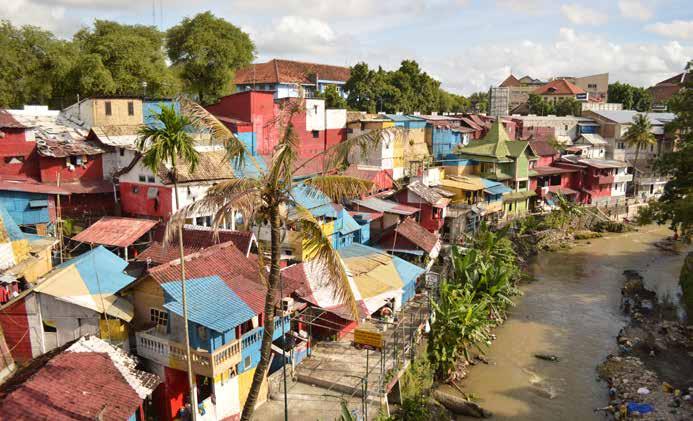
An informal settlement in Indonesia in the process of upgrading © Matthijs van Oostrum
Livelihood support: The close relationship between informal urbanization and a variety of livelihood opportunities supports household income and savings, sustains local economies and provides entry-level access to the job market to unskilled workers and young people.74 For instance, in Mumbai, India, informal settlement dwellers report feeling happier and more satisfied with life than the rural population, given their social capital and socioeconomic trajectories.75 Informal jobs play a critical role in key industries, such as waste recycling, that formal processes are unable or unwilling to engage in.
Walkable and mixed use environments: The spatial development of informal urbanization can be diverse, from low-density peripheral settlements to inner-city slums. Many informal settlements are already highly walkable neighbourhoods encompassing a mix of land uses and embodying many of the principles of proximity-based planning (discussed in more detail in Chapter 7). While their urban forms are sometimes dismissed as unplanned and chaotic, their pedestrian and mixed-use design can offer a range of benefits that local authorities need to work with.

Many informal settlements are already highly walkable neighbourhoods encompassing a mix of land uses and embodying many of the principles of proximitybased planning
Notwithstanding these opportunities, however, informal urbanization must contend with a range of persistent and emerging limitations that hamper its ability to deliver broader social and environmental goals (Table 5.2). These include:
Insecurity and land grabbing: The lack of tenure security in many informal settlements can discourage residents from making longterm investments in upgrading due to the risk of eviction. This uncertainty is exacerbated by the fact that a significant proportion of informal settlements are situated in hazard-prone areas vulnerable to natural disasters. At the same time, criminal groups may exert control over service provision and informal land markets. In Rio de Janeiro, Brazil, for instance, militias are in charge of basic utilities such as water, electricity, transport and protection services. They are also involved in land grabbing and the construction of unauthorized residential building for low-income groups.76
Stigmatization and exclusion: Informal settlements dwellers are frequently stigmatized and excluded from broader urban decisionmaking.77 This exclusion is often exacerbated for groups who also experience discrimination on the basis of their identity, including religious and ethnic minorities, recent migrants and Indigenous Peoples.78
Overcrowding and overdevelopment: Housing in informal settlements are frequently overcrowded and built with low quality materials and poor structural integrity.79 Climate change further exacerbates these physical deficits, leading to increasing thermal discomfort and other critical issues.80 Ongoing vertical extensions to housing and “tunnelling” over public spaces can lead to overdevelopment, whereby access to light and ventilation becomes restricted.
Exploitative labour practices: Informal employment operates outside the reach of legal protections or labour regulations. The absence of official recognition can generate significant problems for informal workers, such as eviction or harassment, negatively impacting their livelihoods.81 In African cities, government action towards informal employment typically oscillates between eradication and repressive tolerance,82 but generally overlooks the need to support the sector or prevent exploitation.
Infrastructural deprivations and environmental externalities: Informal settlements frequently lack basic infrastructure such as water or sewage and have little in the way of public and green spaces. In many cases, the high density of informal settlements exacerbates infrastructure and connectivity deficits as well as health risks.83 These conditions can significantly increase health risks, as shown during the COVID-19 pandemic,84 and foster the prevalence of communicable diseases conditions such as cholera.85 Limited access to other services, such as digital technologies, can also widen existing inequalities. The widespread absence of solid waste management, in areas that often combine dense residential development with significant industrial activity, often leads to the dumping or incineration of informally produced waste and pollutants.
In sum, housing in informal settlements has the benefit of bring relatively affordable and often in proximity to economic opportunities and transport – characteristics that for many of the urban poor are at the very top of their priorities – but is also characterized by inadequate living conditions and insecure tenure (Table 5.2).86 Therefore, addressing these limitations is essential to realizing the full potential of informal urbanization to contribute to addressing the current housing crisis.
Characteristics shaping informal urbanization Potentials to leverage
Land tenure
Community organization
Incremental development
Informal land market gives poor people access to land and a chance to assert their “right to the city”.
Co-production processes contribute to the strengthening of community networks, kinship, a greater sense of belonging and more inclusive modes of governance.
The gradual logic of informal urbanization fosters flexibility and spatial adaptiveness, enabling adjustment as conditions change.
Limitations to address
Insecure land tenure discourages long-term investment, and the involvement of land mafias can lead to exploitative tenure.
Informal settlement dwellers are frequently stigmatized and excluded from broader urban decision-making.
Housing in informal settlements are frequently overcrowded and built with low quality materials and poor structural integrity. There is also the risk of overdevelopment.
Livelihoods
Co-produced infrastructure
Informal urbanization supports household income and savings, sustains local economies and provides easy entry level in the job market to non-skills workers and young people.
Informal urbanization oftentimes produces neighbourhoods that are highly walkable neighbourhoods and with mixed land use.
5.3 Leveraging Informal Urbanization through In Situ Upgrading
Since the mid-1990s, policy approaches to informal settlements have shifted towards in situ upgrading based on citywide and multidimensional perspectives, favouring multisectoral, multi-programmatic and multiscale interventions over demolitions and resettlements. These have informed the development of programmes that not only focus on improving conditions within informal settlements, but also strengthening their linkages with the rest of the city.87 By recognizing, supporting and integrating informal settlements, these interventions represent a crucial strategy for leveraging informal urbanization.
Nevertheless, while the principles and practices of in situ upgrading have been refined over decades of global experience,88 it is still the case that evictions and resettlement are routinely carried out by governments despite the well-documented evidence of their adverse effects (Section 5.1.3). While the role of innovative approaches to upgrading will be showcased later in this chapter (Section 5.4), this section will examine the achievements of community-based upgrading and how to improve its effectiveness in the face of continued challenges.
Informal employment operates outside the reach of protective laws or regulations, exposing residents to exploitative practices.
Lack of basic infrastructure, such as water, sewage and public space. Limitations in basic infrastructure can lead to environmental externalities.
5.3.1 Comprehensive community-led in situ upgrading
In situ upgrading interventions exhibit a wide range in their size and complexity, ranging from the small-scale or discretely sectoral (for instance, focused specifically on the provision of a basic service such as clean water or electricity) to comprehensive programmes of physical, social and economic renewal. Comprehensive in situ upgrading projects are fundamentally participatory (mobilizing local knowledge and expertise to respond to the specific needs and aspirations of residents), multidimensional (based on the understanding that poverty is itself multidimensional and requires coordinated, crosssectoral efforts) and multi scalar (integrating informal settlements into citywide and country programmes to avoid isolated or fragmented interventions).89 An illustrative example is the experience of Brazil, where local and national upgrading strategies have been enabled by a progressive legal and institutional framework (Box 5.7).
It is still the case that evictions and resettlement are routinely carried out by governments despite the well-documented evidence of their adverse effects
Table 5.2: Potentials and limitations of informal urbanization
Box 5.7: Implementing the “right to the city” in Brazil’s favelas
Brazil’s ground-breaking 1988 Constitution, with its provision that urban development policy “is aimed at ordaining the full development of the social functions of the city and ensuring the well-being of its inhabitants”, introduced various provisions that are central to the concept of the “right to the city”. This legislation, in particular its empowerment of municipalities to develop their own urban policies, provided the basis for the subsequent rollout during the 1990s of Rio de Janeiro’s Favela-Bairro programme. This ambitious urban development strategy sought to integrate dozens of its favelas through a comprehensive, participatory and citywide approach.
Building on the principles in the Constitution, the Brazilian government subsequently enacted the City Statute in 2001, regulating the upgrading of favelas. A succession of complementary federal laws for land tenure were also enacted to streamline regularization and support vulnerable communities: for instance, by removing financial barriers, supporting tenure regularization at the local level and enabling the formalization of separate ownership titles above pre-existing buildings. Alongside these legal reforms, major institutional changes were implemented to support implementation, including the creation of the Ministry of Cities in 2003, the National Cities Council in 2004 and the National Social Housing Fund in 2005.
The announcement of the Growth Acceleration Programme (PAC) in 2007 ushered in an era of major investment in urban infrastructure, including a specific component on favela upgrading. PAC Favelas was built on the robust institutional framework for social housing that Brazil had established and the specific upgrading experiences gained during the 1980s and 1990s, including Favela-Bairro. It represented a significant shift from the localized and fragmented interventions that had characterized the country’s previous upgrading efforts to a comprehensive national strategy with an unprecedented budget, implemented at scale across numerous municipalities.
The programme provided a flexible institutional framework in which local governments were able to tailor strategies to their specific needs and build on their previous experience. Through its integrated approach, including urban-environmental interventions and land regularization programs, PAC Favelas aims to address the specific challenges of each favela. Its diverse range of projects include housing improvements in the Greater São Paulo region, drainage in Recife and the construction of a cable car in Complexo do Alemao in Rio de Janeiro.
Source: Carvalho & Rossbach, 2010; Denaldi & Cardoso, 2021; João, 2019; Riley et al., 2001; Pamuk and Cavallieri, 1998; Federative Republic of Brazil, 1988.
The role of community-led organizations in upgrading projects has expanded significantly over the past three decades, with countries in every region integrating them into upgrading programmes (Table 5.3). These efforts have focused in particular on the following areas:90
Community driven planning: Community organizations are particularly well-placed to generate social, economic and spatial data on their settlements to identify priorities for upgrading. For instance, the Indian NGO SPARC (the Society for the Promotion of Area Resource Centres) has worked to support communities with data production through mappings and surveys to inform upgrading projects.91 This research not only helps clarify needs and aspirations for residents, but also strengthens their negotiating position: community enumerations, for example, have contributed to preventing evictions.
Tenure security: Many informal settlements have customary land tenure systems which rely on complex but locally understood arrangements for distributing land and resources, as well as internal processes of conflict resolution, that may not be formally documented with local authorities. Community-led organizations can deploy fit for purpose tenure tools that integrate local knowledge with official government registers, enabling communities to record their rights within the formal legal system. Increasingly, too, the use of digital technologies is enabling the creation of alternative tenure security arrangements as innovative solutions for communities.
Housing and service delivery: Community groups can also play a leading role in the construction and management of housing units, spanning not only the building process itself but also the provision of infrastructure such as waste, water and sanitation, as well as internet access, day care and other “soft” services. Financing is also an important component in this, supporting residents with accessible credit and loans to fund upfront housing costs. The Asian Coalition for Housing Rights (ACHR) focused on financial empowerment,92 including working with poor urban communities in Phnom Penh, Cambodia, to establish community savings groups and revolving funds to support upgrading.93 Hybrid governance approaches, bridging local authorities with communities, have also supported settlement upgrading processes in Kigali, Rwanda (Box 5.8).
Employment and livelihoods: Residents in informal settlements can be supported by the development of community-based enterprises for small-scale service delivery, for example, the provision of lending opportunities for individuals or local businesses, and the creation of livelihood options (in particular, work for vulnerable groups). Organizations like WIEGO (Women in Informal Employment: Globalizing and Organizing) have influenced research and policy discussions on the informal economy and promoted the empowerment of informal workers and organizations with data production.94
Box 5.8: The role of hybrid governance in community upgrading in Kigali, Rwanda
In Kigali, Rwanda, the Umudugudu Committee – a local decision-making body – plays a key role in community upgrading. It illustrates how informal governance structures can be leveraged to coordinate actions, mobilize funding and foster collective responsibility in the upgrading process through collaboration. In addition to facilitating consensus on infrastructure priorities such as community water taps, pavements, bridges and draining systems, it also helps coordinate the mobilization of financial and human resources. Typically, funding comes from a combination of government allocations and community-driven contributions. These included the Umudugudu funds collected from residents, neighbourhood funds from adjacent households and individual voluntary contributions. In addition, the community contributes through the Umuganda, a collective action mobilized monthly to clean and maintain community infrastructure and the environment.
Cost distribution was guided by the principle of shared benefit. Interventions serving the entire settlement were financed mainly through common development funds, following discussion with residents; while for interventions involving a smaller number of households, community members discussed and adjusted cost-sharing arrangements ranging from the degree of benefit received, flat rate or a flexible system based on income levels.
Source: Ono & Adrien, 2024.
Table 5.3: Selection of upgrading approaches in different regions
Region Case studies
Latin America and the Caribbean Examples include Brazil’s favela upgrading programme (Box 5.7), the transformative “social urbanism” approach in Medellín (Colombia) and the “reurbanization” of slums in Buenos Aires (Argentina).95
More recently, a coalition of regional and international organizations, NGOs, academia and civil society organizations jointly published the “Decalogue for Participatory Slum Upgrading”, a 10-point recovery strategy for the region prioritizing human rights, well-being and environmental sustainability.96
Sub-Saharan Africa Various countries have implemented in situ upgrading projects, particularly through the UN-Habitat led Participatory Slum Upgrading Programme (PSUP), launched in 2008. These interventions encompass a wide range of areas, including livelihood development, gender security and climate change, with a focus on multi-stakeholder collaboration and financial sustainability.
Middle East and North Africa Countries such as Egypt and Morocco have addressed the challenges associated with informal settlements with regularization policies and provision of basic infrastructure.
In Gulf nations, the main challenges are overcrowding and informal rental. Accordingly, Qatar and the United Arab Emirates (UAE) have worked on labour housing reforms and regulatory actions for minimum housing standards.97
Asia and the Pacific
Europe and North America
Several countries have launched major upgrading initiatives. For instance, India’s Pradhan Mantri Awas Yojana supports in situ rehabilitation projects.98
Similarly, Thailand’s Baan Mankong Programme (Box 5.3) is community-driven slum upgrading supported by the government that focuses on housing improvement, infrastructure and secure tenure.99
The emphasis in this region is on formalization, including privatization of occupied state-owned land, the provision of ownership titles, and revised zoning and planning procedures.100
5.3.2 Implementation bottlenecks
Despite the substantial progress yielded regarding informal settlements upgrading over the past decades, policy bottlenecks in key areas continue to undermine the possibility of leveraging informal urbanization to address the current housing crisis.
Inappropriate and inequitable planning systems: Frequently, the planning frameworks in cities in developing countries are transposed from the Global North, in many cases as a direct result of colonialism. Consequently, they are inherently unjust as they were established against a backdrop of control and domination, making them especially ill-suited to meeting the needs of the poor in contemporary urban settings.101 Crucially, they fail to recognize the reality of informal urbanization and tend to be outdated in their approach to the complex challenges of cities today.
Poorly implemented land tenure programmes that exacerbate social exclusion: Land tenure programmes can be a catalyst for enhanced quality of life, livelihoods and environmental conditions in informal settlements. Crucially, successful interventions safeguard the land rights of vulnerable groups, including women. Yet despite the potential benefits, poorly executed land tenure security efforts can have severe unintended consequences, aggravating existing inequalities through higher rents and gentrification processes. In particular, land regularization through individual titling can lead to rent increases and ultimately the displacement of lower-income residents who are less likely to own the properties they live in.102 Moreover, interventions that lack transparency and accountability often fuel disputes and land grabbing. In some cases, these interventions can exacerbate the vulnerabilities of residents who struggle to meet new formalization rules.103

Land regularization through individual titling can lead to rent increases and ultimately the displacement of lower-income residents
Lack of community input as a result of inadequate participation: While participation has been at the core of upgrading approaches for decades, conventional models tend to be outcome-focused and rigid, undermining meaningful engagement with residents.104 All too often, their implementation remains confined to one-way “updates” on project progress or tokenistic consultations. Consequently, these interventions overlook local needs and aspirations, while failing to engage the invaluable skills and knowledge of the communities themselves. Furthermore, upgrading interventions often assume that all dwellers have similar priorities and aspirations, failing to capture the differentiated needs of vulnerable groups, particularly women, young people and older people.105 Chapter 7 will elaborate more on what a pro-poor approach to participation looks like.
Upgrading interventions often assume that all dwellers have similar priorities and aspirations, failing to capture the differentiated needs of vulnerable groups
Limited attention given to the importance of housing itself in the upgrading process: Upgrading approaches have tended to focus on the needs of people at the settlement level (for instance, the installation of communal infrastructure such as water and sanitation networks) rather than on individual housing needs.106 However, the combination of overcrowding, high population density and the increasing effects of climate change create a pressing need to focus on improving the quality, safety and resilience of informal housing (see Chapter 6 for more detail). This includes in the rental sector – increasingly, the predominant housing option for the urban poor in many cities107 – especially as tenants are at particular risk of substandard living conditions and excluded from conventional owner-led upgrading programmes. Re-envisioning housing itself as a primary component of upgrading interventions can have a direct impact on living standards, health and education. One comprehensive global study on informal settlements worldwide estimated that ensuring adequate housing to all could deliver significant economic growth (more than 10 per cent) while increasing life expectancy by 4 per cent (an average of 2.4 years) and years of schooling by 28 per cent. Furthermore, housing improvements contribute to gender equity, political inclusion and climate justice.108
Prioritization of physical upgrading at the expense of other dimensions, in particular livelihoods: There continues to be a disconnect between informal settlement interventions and livelihoods.109 Although there has been a clear shift towards a more multidimensional approach, upgrading interventions still tend to prioritize physical components while overlooking other elements, especially informal livelihoods. As a result, upgrading projects frequently overlook the role of housing units as places of work, and more broadly the importance of informal settlements as local or citywide economic hubs.110 Consequently, when relocation or resettlement occurs, livelihoods tend to be severely impacted.111
Failure to factor in long term infrastructure maintenance costs: While the expanding coverage of basic infrastructure remains a major concern, maintenance work has emerged as an equally critical challenge. Evidence suggests that without the technical and financial resources in place to ensure ongoing repairs and servicing, gains are quickly lost. For instance, in Rio de Janeiro, Brazil, infrastructure deterioration became a primary issue just a decade after the implementation of the first Favela-Bairro projects.112 Similarly, a study of in situ redevelopment in Ahmedabad, India, found that the structural integrity and overall living conditions severely degraded in less than nine years.113 Moreover, these challenges are exacerbated by infrastructure solutions that neglect climate change and environmental sustainability.
5.3.3 Shifting contexts, emerging opportunities
These policy bottlenecks must be addressed within a profoundly altered global context. First, urban issues – particularly those relating to informal settlements – have become highly visible in international development agendas, repositioning participatory and integrated upgrading as a key priority. The elaboration of the 2030 Agenda fostered a crucial debate around sustainable urbanization, including the prevalence of informal settlements and slum conditions,114 resulting in the elaboration of SDG 11 and its specific target on adequate housing and upgrading (Box 5.1).
Subsequently, the Habitat III process catalysed a re-evaluation of existing policies for informal settlements and promoted a strategic analysis for future action.115 Its outcome, the New Urban Agenda, establishes participatory upgrading as a central pillar of urban planning and housing policy. More recently, the 2022 Global Action Plan (Table 5.4) sought to accelerate the delivery of the SDGs in informal settlements and slums, particularly Target 11.1.116 Its launch was followed in 2023 by the United Nations Habitat Assembly Resolution 2/2 on accelerating the transformation of informal settlements and slums by 2030.117
Looking ahead, UN-Habitat’s Strategic Plan 2026-2029 seeks to transform lives by expanding access to adequate housing, land and basic services, with a particular focus on people in vulnerable situations, including those living in informal settlements and slums.118
In addition, the Open-ended Intergovernmental Expert Working Group on Adequate Housing for All (OEWG-H) is focusing on the specific challenges of informal settlements, including definitions, policy responses and land tenure security strategies. The OEWG-H has released recommendations for countries on how to improve the lives of people living in slums and informal settlements.119
Other changes in the context that offer opportunities relate to climate change and digitalization. While climate change and biodiversity loss present acute challenges for informal settlements, they have simultaneously catalysed a wave of community-led innovation. New strategies are emerging that intertwine upgrading interventions and climate action, highlighting the unique potential of communities to drive urban resilience.120
The digital age, meanwhile, is reshaping informal urbanization121 and offering new ways to produce urban data and knowledge.122 For instance, field-based mapping such as community-led enumerations123 and disaggregated household data coexist with human visual imagery interpretation and machine learning image classification. While these mapping approaches are often implemented in isolation, integrating them can create a robust data ecosystem capable of driving effective advocacy, planning and decision-making.124
Principles of Transformation
Inclusive and participatory, in the spirit of co-production
Evidence and data-driven, leveraging the localization of actions
Integrated and proactive, providing a strategic framework for continuous transformation
Equitable and catalytic, meeting the needs of everyone and progressively delivering human rights
Sustainable and climate-smart, aiming for a healthy urban living environment
Affordable and replicable, prioritizing most impactful interventions at scale
Source: UN-Habitat, 2022c.
Management of Transformation
No quick fix: long-term, streamlined policies
No half-hearted approaches: comprehensive interventions delivered across multiple sectors
No one left behind: disaggregated, people-centred focus, including vulnerable groups
No one solution fits all: diverse and flexible solutions
No dimension left out: multidimensional and cross-sectoral
No place left behind: a citywide approach that recognizes and integrates informal settlements
Table 5.4: Global Action Plan: guiding slum transformation
5.4. Leveraging Informal Urbanization: Innovative
Approaches
In response to both the strengths and challenges of conventional upgrading, innovative approaches and strategies have emerged that build on the consolidated lessons of these experiences and address the bottlenecks that have hindered their implementation on the ground. Capitalizing on the opportunities created by the current context, these initiatives leverage informal urbanization while mitigating its associated limitations. Rather than relying on rigid and static frameworks, public action must be flexible and adaptative to local dynamics, needs and aspirations. This section examines these approaches, organized into key spheres of action: enhancing tenure security, strengthening participation, improving informal housing, prioritizing livelihoods and co-producing infrastructure (Figure 5.4). Through practical examples and interlinkages, this section offers an action-oriented way forward, integrated with the Open-ended Intergovernmental Expert Working Group on Adequate Housing for All.
5.4.1
Enhancing tenure security
Enabling tenure security and land readjustment interventions is critical for the long-term success and durability of an upgrading programme.125
This should be done in a way that leverages the potential of informal urbanization and acknowledges people’s right to the city.
Recognize diverse forms of informal tenure: Land tenure strategies are evolving beyond a singular focus on freehold titling to embrace a more pluralistic view. Governments are increasingly recognizing a broad spectrum of tenure forms, including informal rights, by validating longterm occupation as in the case of usucapião in Brazil. These mechanisms are instrumental in securing adequate housing by protecting residents against forced displacements, improving access to basic services and generating confidence to invest in home improvements.126 Working with diverse forms of tenure offers a critical opportunity to craft innovative, context-based and locally relevant interventions that increase tenure security for a range of groups. Other forms of tenure that have increasingly gained recognition are communal and cooperative land tenure models, where land is under collective stewardship and its social and ecological functions are prioritized. Consequently, these models not only enhance tenure security but also foster long-term affordability, social cohesion and resilience.127 Illustrative examples include Community Land Trusts (see Chapter 7 for more information), supporting the rights of local villagers to develop their land (as illustrated by the case of Maquanying in Box 5.4) and collective land ownership (as in Thailand’s Baan Mankong Programme in Box 5.3).
STRENGTHENING PARTICIPATION AND INCLUSION
Recognize diverse populations
Enable hybrid governance
Mobilize digital technologies
ENHANCING TENURE SECURITY
Recognize diverse informal tenures
Combine tenure security with informal settlement upgrading
Integrate informal rental housing
Mainstream coproduction and political rights
Adopt a hybrid and context-based approach leveraging Informal Urbanization
IMPROVING INFORMAL HOUSING
Innovate regulation to the logics of informality
Adapt housing to climate change
Finance incremental development
Close the data and knowledge gap
PRIORITIZING LIVELIHOODS
Involve home-based workers and the construction sector
Protect informal service providers
CO-PRODUCING INFRASTRUCTURE
Expand coverage in targeted ways
Maintain infrastructure
Figure 5.4: Leveraging informality: key spheres of action
Combine tenure security with informal settlement upgrading: Leading upgrading strategies have shifted away from treating land tenure as an isolated legal formality. Instead, they combine land tenure schemes with upgrading interventions such as the provision of water, sanitation and public spaces. In the case of Brazil, favela upgrading has been underpinned by tenure security through evolving legal frameworks and regulations, as well as national and subnational upgrading interventions (Box 5.7 and Box 5.9). Furthermore, adopting a co-production approach that enables residents to actively participate in the transformation of housing and settlements reinforces overall tenure security.128
In addition, upgrading strategies are increasingly adopting a gender perspective to address inequalities in land rights. This type of approach is crucial for guaranteeing secure tenure to historically excluded groups, including women and youth. For example, a cornerstone of the Yerwada upgrading project in Pune, India (Box 5.6) was the assignment of certificates of occupancy to women upon completions of upgrading works. This gender-responsive measure not only allows female owners to use homes as collateral for loans, but also to sell them after five years, potentially providing them with more secure tenure and empowering them financially.129
Upgrading strategies are increasingly adopting a gender perspective to address inequalities in land rights
Integrate informal rental housing: The informal rental market has gained greater visibility in recent decades. In the case of cities in Latin America and the Caribbean, rental housing was historically a marginal sector within the context of informal urbanization130 but in recent decades has expanded, fostered not only by major economic and social changes but also the development of upgrading interventions.131 In Africa, rental housing has remained high in the past few decades, although it has been neglected as a sector. In the case of Nairobi, Kenya, nearly 70 per cent of residents rent single-room accommodation, distributed equally between informal shacks and tenements.132
Rental housing capacity needs to be integrated into settlement upgrading policies. While informal rental housing is frequently characterized by precarious and substandard conditions, it is critical to harness this growing market. Two key guiding principles are critical. First, policy makers and planners should acknowledge the interaction between upgrading interventions and informal rental markets, and design and implement housing alternatives based on diverse tenure and typologies to facilitate a mix of different incomes in specific areas. Second, regulations such as tenancy credit scoring, lease mediation and disputeresolution mechanisms are needed to guide this market.133 Nevertheless, it is crucial to find flexible and hybrid solutions in collaboration with community-led organizations to ensure a more secure and transparent rental market.
5.4.2 Strengthening participation and inclusion
An inclusive approach to informal settlement upgrading is critical. This is heavily dependent on the ability of upgrading programmes to facilitate full participation to leverage the potential of all community members. While Chapter 7 offers more detail on achieving inclusive participation in housing, this section highlights three key concerns for participation of informal settlement communities.
Recognize diverse populations: Strengthening participation requires a fundamental understanding that the priorities and perspectives of residents in informal settlements are not homogenous. This diversity results from the intersectionality of multiple factors, including age, sex, gender, ethnicity, citizenship status and livelihood. Accordingly, upgrading strategies must be explicitly designed to address this diversity. Specifically, three critical dimensions can be considered for addressing diversity:134
Diverse needs and aspirations: moving beyond one-size-fits-all solutions to implement interventions that respond to specific resident priorities.
Differentiated impacts: assessing how upgrading interventions affect various groups differently to mitigate unintended negative effects.
Active participation: actively addressing unequal power relations at the settlement level, to ensure that decision-making includes the interests of the most excluded voices.
Addressing diversity across these dimensions requires the integration of gender mainstreaming and intersectional analysis.135 The programme Transformative and Organizational Hubs for Social Inclusion and Harmony (UTOPIAS) in Iztapalapa, Mexico, offers a practical example of this approach. It moves beyond the provision of generalist social services to target gender-specific urban challenges. The programme prioritizes the development of physically and socially accessible infrastructure for women and caregivers, with specialized nodes dedicated to specific care activities such as the Casa de Día (Day House), providing support for seniors, to the Casa de las Siempre Vivas (Always Alive House), which offers survivors of domestic violence legal aid and referrals.136
Enable hybrid governance: Innovative forms of hybrid governance and co-production among governments, CBOs and residents can help strengthen participation. It aligns with recommendations by the OEWG-H on “embedding community participation in the design, execution and oversight of housing and informal settlements’ transformation initiatives” and to “establish multi-stakeholder efforts to transform informal settlements”.137
From the leveraging of informal governance structures in Nyarugenge District, Kigali, Rwanda (Box 5.8) to the balance of informal selfgovernance mechanisms and local bodies in Beijing, China (Box 5.4), there are many possible models to facilitate collaborative decisionmaking and implementation processes.
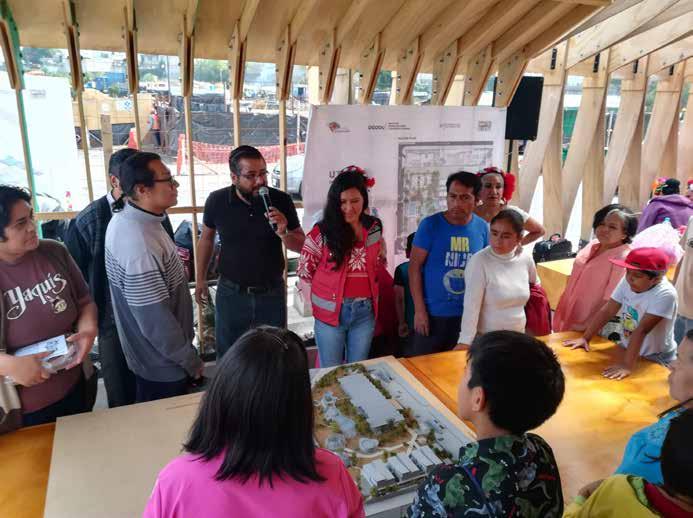
A good example of how this approach can be applied to participatory engagement is the Mukuru Special Planning Area in Nairobi, Kenya. The participatory planning process was implemented by the Nairobi City County Government with the support of Muungano, Kenya’s national federation of slum dwellers and urban poor. Eight consortia made up of professionals and academics were created to collaborate with Mukuru residents to identify key issues and propose interventions in areas such as housing, infrastructure, commerce, land and institutional arrangements. To mitigate power imbalances, the participatory process prioritized engagement from resident households over the building owners.138
Mobilize digital technologies: Digital technologies have the potential to enhance participation in a variety of ways (see Chapter 1). For instance, Integrated Land Information Management Systems are being implemented to map critical zones of precarious tenure, monitor displacement and guide housing strategies. In the Flaming Crescent project in the City of Cape Town, South Africa, advanced Global Positioning System (GPS) and Geographic Information System (GIS) technologies to manage spatial
data were combined with traditional, user-friendly tools such as paper maps to generate a more comprehensive understanding of the informal settlement context to guide its re-blocking.139 Digital tools are also being used to empower grassroots initiatives to accurately map, document and formalize customary land tenure. Lastly, technological innovations are playing a pivotal role in democratizing access to land services, particularly for women and smallholders. Tools such as mobile payments, digital certificates and remote sensing streamline transactions.
However, digital solutions will only succeed in strengthening tenure security if they are guided by accountability and inclusion. It is essential they are used in a way that responds to local community needs and aspirations rather than bypasses them.140
Digital tools are also being used to empower grassroots initiatives to accurately map, document and formalize customary land tenure
Community participation in the UTOPIAS programme in Iztapalapa, Mexico © Itzel Fuentes
5.4.3 Improving informal housing
Institutionalizing support for incremental, self-help and community-led housing upgrading is key.141 This requires engagement with the actuality of informal housing production and a willingness to support incremental development approaches.
Align planning regulations with the realities of informal urbanization on the ground: The OEWG-H has recommended to enact legal frameworks to integrate flexible zoning, land and planning systems in informal settlements.142 Innovative regulations have been developed to harness the dynamics of informal urbanization while mitigating its drawbacks. Rather than merely lowering standards, governments are implementing comprehensive frameworks to adapt conventional planning standards to the logics and characteristics of informal urbanization, as evidenced in São Paulo, Brazil (Box 5.9). Other innovative regulations are based on acknowledging and supporting “relational” rules and neighbourly consent.143 Relational rules are grounded on proscriptive regulations (rules that forbid or restrict specific actions) and function within a relational framework. These recognize and build on the explicit and implicit rules that guide the incremental logic of informal urbanization. The example of Indonesia’s kampungs (discussed in Section 5.2.3) illustrates how this relational approach can be applied in practice. Rules are established with the support of local leaders and experienced builders: unlike statutory codes, they are iterative, evolving to match the community’s needs and aspirations. For instance, homeowners may extend cantilevers or slightly encroach upon public space, but only if these modifications respect the collective “do no harm” principle, such as ensuring that traders’ vehicles can still navigate the laneway unobstructed.
For its part, neighbourly consent operates as a community-driven framework centred on collective agreements rather than fixed rules. This model creates a dynamic regulatory environment capable of adapting to the specific characteristics of informal settlements. However, the reliance on private negotiations means that the fairness of outcomes depends heavily on local power dynamics. Consequently, equitable and inclusive decision-making platforms are needed to mitigate the risk of elite takeover. As mentioned earlier, in the case of Maquanying, Beijing (Box 5.4), as urbanization accelerated, the village committee, a local governance body elected by and from local villagers, introduced “self-governance regulations” to guide extensions, while floor area added through cantilevering was managed through informal verbal agreement among residents. The consistent and orderly application of such practices highlights the strength of cultural norms and social cohesion. However, the implementation of these innovative regulation frameworks require a careful understanding of the local context to be successful.144
Rather than merely lowering standards, governments are implementing comprehensive frameworks to adapt conventional planning standards to the logics and characteristics of informal urbanization
Box 5.9: São Paulo’s Special Zone of Social Interest (ZEIS)
In line with Brazil’s 2001 City Statute (Box 5.7), the Strategic Master Plan of São Paulo established Special Zones of Social Interest (ZEIS) that allows for the application of tailored urban parameters to promote low-income housing in each zone. The ZEIS facilitates comprehensive favela upgrading, land regularization instruments for improving tenure security, such as usucapião (adverse possession), as well as the development of new social housing projects and the development of statutory master plans for cities over 20,000 inhabitants.
The 2014 Strategic Master Plan of São Paulo establishes five types of ZEIS based on the characteristics of land use and occupation and the actions needed to address housing problems in each context. This includes areas with slums and informal settlements (ZEIS 1), vacant or underused land (ZEIS 2), empty or deteriorating properties (ZEIS 3), vacant land in watershed protection areas (ZEIS 4) and vacant or underused properties in areas with services, facilities and infrastructure (ZEIS 5). To guarantee housing for low-income groups, the Strategic Master Plan mandates that ZEIS 1, 2, 3 and 4 allocate at least 60 per cent of the built area to families earning up to three minimum wages, which represent most of the housing deficit.
In addition, the Strategic Master Plan mandates the elaboration of ZEIS Urbanization Plans. This instrument seeks to integrate administrative, legal, urban planning and social measures, according to each case: prepared by the municipal government, it must integrate social participation as a core objective. To finance social housing, the Master Plan also established a permanent quota of funding for social housing policies and created a counterpart mechanism, the “Solidarity Share”, requiring large developments must donate 10 per cent of their built area to affordable housing. In 2016, the Municipal Housing Plan Bill proposed the development of an Integrated Intervention Plan, in line with the Plan of Urbanization for ZEIS foreseen in the Strategic Master Plan. These instruments sought to guide interventions in informal settlements that required complex solutions by articulating urban and environmental improvement, land regularization and housing improvements.
Source: Prefeitura de São Paulo, 2014 and 2016.
Urban informality offers both opportunities and challenges for effective climate adaptation
Adapt housing to climate change: There is broad consensus that urban informality offers both opportunities and challenges for effective climate adaptation.145 Given the prevalence of informal urbanization, particularly in hazard-prone urban areas, it is critical that housing interventions work with informality, rather than against it.
Many informal communities are already adapting their homes to climate change, as in Makoko in Lagos, Nigeria, where houses float on the water using stilts. Existing limitations and deprivations in informal urbanization should be approached as opportunities to “leapfrog” to lowor zero-emission systems and practices.146 An example is the adoption of solar panels in community micro-grids in informal settlements, enabling households to transition directly to decentralized carbon-based energy production. In South Africa, the iShack Project works with communities to supply solar panels while enhancing local enterprising capacity, developing skills and creating livelihood opportunities.147 For its part, in the Yerwada project in Pune India, launched under India’s Basic Services for the Urban Poor (BSUP) scheme, implemented strategic construction
measures to mitigate environmental risks such as elevating homes against floods (Box 5.5).148 Chapter 6 offers further examples of how housing can be adapted to climate change.
Provide financing to support incremental development: Conventional housing finance systems have generally failed to engage with the reality of incremental upgrading. In this vacuum, hybrid financing schemes have proven effective for improving housing in informal settlements. For instance, the Urban Poor Fund and Revolving Fund in Namibia is a community-managed financial model that in recent decades has contributed to closing the gap in financial access for urban poor populations. The fund allows residents to implement upgrading interventions in stages, in accordance with the incremental logic of informal urbanization. Crucially, donor agencies and national and local governments contribute to the shared pool of funds.149 The case of Stop 8 and Piesang River in Durban, South Africa (Box 5.5) illustrates how informal financing mechanisms supported by enabling institutions can successfully deliver dignified housing and improve socio-economic conditions over the long term. Moreover, the OEWG-H stresses that it is important to “put in place long-term financing mechanisms to upgrade informal settlements, including land-based financing, communitymanaged funds and inclusive credit solutions for informal dwellers.”150
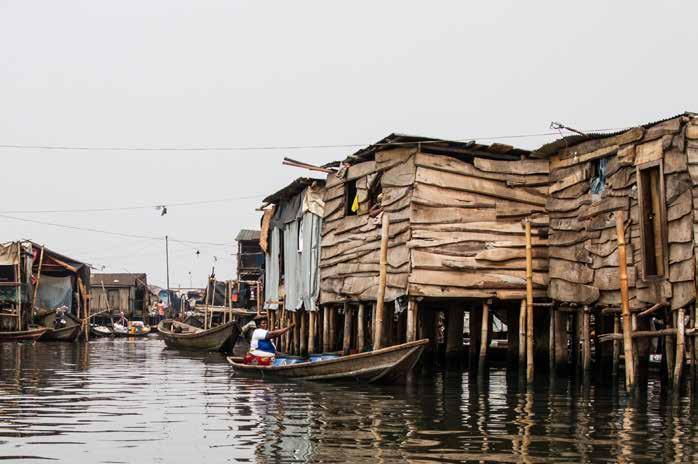
Housing on stilts in Lagos, Nigeria © Alexander Macfarlane / IIED & UCL
5.4.4 Prioritizing livelihoods
Livelihoods have often been neglected in upgrading as well as resettlement programmes. Leveraging informal livelihoods and local skills is an effective entry point to settlement upgrading.
Involve home based workers and the construction sector: In informal settlements, housing often serves as both a living and working space. Consequently, in situ upgrading is preferable to resettlements that disrupt residents’ livelihoods. However, when in situ upgrading is unfeasible and relocation projects are implemented, their development must at all times prioritize livelihoods and involve the participation of affected residents to reduce the likelihood of negative impacts.151 To support livelihoods, interventions must recognize that improvements in housing and services are critical not only for enhancing living conditions, but also for supporting economic activity.
To sustain livelihoods, policy interventions can also strategically leverage the construction sector. Characterized by its low barriers to entry and high impact on the economy, this sector is a vital source of informal employment. Informal settlement upgrading offers a major opportunity to operationalize this potential. The Yerwada in-situ upgrading project (Box 5.5) offers a compelling example of how informal construction practices, local knowledge and job creation can be leveraged to improve
housing conditions and livelihoods without displacing communities, enabling residents to quickly adapt to changing circumstances. Furthermore, while the complexity of construction supply chains makes the measurement of indirect employment difficult, their impact is estimated to be significant.152
Consequently, understanding and sustaining these value chains is critical. The connection between building material supply chains and associated employment opportunities – such as extraction, processing, transportation and storage – offers a strategic opportunity for improving livelihoods while building sustainable housing and settlements.153
Protect informal service providers: Another key area for sustaining livelihoods is infrastructure and services. Often, their provision overlooks the informal systems that operate within informal settlements to deliver basic services, generating disruptions and eroding individual and community livelihoods.154 Therefore, infrastructure interventions should recognize and account for the hybrid nature of informal systems, particularly their links with formal infrastructure networks. In this spirit, in a number of cities such as Pune and Bangalore (India) and Belo Horizonte (Brazil), local governments have worked closely with waste pickers to integrate
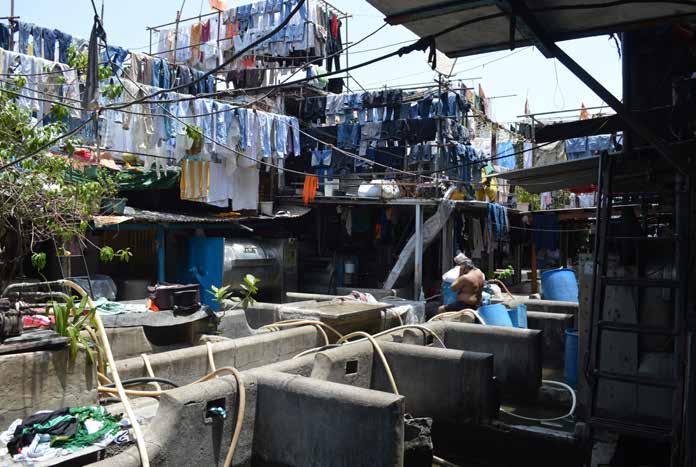
Informal livelihoods in Mumbai, India © Matthijs van Oostrum
them into solid waste management.155 This recognition is essential to strengthen the flexibility and adaptability of informal systems, combating communities’ marginalization while enhancing the legal protection of workers involved in informal service provision. This effort must simultaneously focus on reducing risk and significantly improving working conditions, particularly for women.156
While government schemes for formalization are valuable in reducing the vulnerability associated with informal work, they are insufficient when implemented in isolation. In this context, planning and design represent crucial leverage points for supporting livelihoods in the informal economy. For these efforts to succeed, they must be inclusive and supportive, balancing regulation and control. This is especially relevant when public spaces are subject to competing demands – such as conflicts between vendors or disputes over commercial versus social uses – and where home-based work generates negative externalities for neighbours.157 A case in point is the urban renewal of the Warwick Junction in Durban, South Africa, where local governments collaborated with street traders to implement a project to improve the quality of the area.158
5.4.5 Co-producing infrastructure
Providing improved infrastructure and basic services to informal settlements is one of the main recommendations from the OEWG-H.159 But the density and peripheral location of many informal settlements can make such provision difficult, requiring urban authorities to develop innovative solutions to extend coverage to unserviced areas.
Expand coverage in creative ways: The implementation of basic infrastructure in informal settlements is crucial for harnessing residents to invest in their houses. It is also an effective strategy to disrupt illegal armed groups and criminal organizations by establishing service access and security in informal settlements. The Urban Integrated Projects in Medellín (Colombia) are an illustrative example of this, upgrading informal settlements by extending transportation systems like cable cars, electric stairs and new bus lines into formerly inaccessible spaces controlled by criminal organizations.160 Climate adaption is another area where well-designed upgrading interventions can promote hybrid solutions that address social and environmental challenges at the same time. For instance, in Kibera, Nairobi (Kenya), a community-managed green-blue-grey drainage system was implemented in public spaces,161 demonstrating the potential for innovative, locally-led infrastructure projects that deliver a range of benefits.
The spatial patterns of informal urbanization can make service delivery difficult, in particular in high dense settlements. One solution to this is the use of participatory re-blocking. In this approach, residents collaborate to map existing housing units and their floor area, creating a preliminary land register. Then the structures are dismantled and reconstructed according to an agreed layout that creates space for basic services, including water, sanitation and electricity, as well as roads and pavements to improve mobility for pedestrians, goods and services.
Re-blocking has been commonly applied across Baan Mankong projects (see Box 5.3) but is currently most common in South Africa. In the aforementioned Flaming Crescent project, residents worked in partnership with the Cape Town municipality, the Informal Settlement Network and the Community Organisation Resource Centre, to conduct a community-led enumeration and mapping. The re-blocking was overseen by a local community project steering committee responsible for design, planning, savings coordination, demolition and construction. Residents were responsible for collectively dismantling and rebuilding their structures and a community-based saving scheme was established for financially supporting the building new structure, while the municipality funded the installation of basic services. The project allowed residents to improve their lives, foster a sense of belonging, and prevent eviction. Beyond physical improvements, the participatory mapping process created a first land register, creating an interim step in demarcating land parcels.162
Plan for infrastructure repair and maintenance: In addition to expanding the coverage of basic infrastructure, ensuring a system for monitoring and maintenance is in place is critical for ensuring the long-term success and sustainability of upgrading interventions. For instance, the installation of complex infrastructures such as sanitation systems in informal settlements requires ongoing management and repairs that need to be factored in. In contexts where local authorities are unwilling or unable to provide this follow-up themselves to informal settlements, programmes have sought to include community upskilling and training to facilitate long-term local involvement. This approach not only creates the foundation for more durable service provision, but can also empower residents and create new employment.
A promising source of inspiration is found in the experience of the Municipal Offices for Social and Urbanistic/Building Orientation, implemented in favelas of Rio de Janeiro (Brazil). In the context of the Favela-Bairro programme, after the completion of works the municipality opened offices in the upgraded favelas to support land regularization and monitoring, among other functions.163 This model offers lessons that, combined with robust community engagement, can create effective and lasting follow-up strategies.
Infrastructure interventions should recognize and account for the hybrid nature of informal systems, particularly their links with formal infrastructure networks

5.5 Concluding Remarks
The magnitude of the global housing crisis demands a fundamental reframing of the issues at stake to envision alternative pathways. This chapter has posited that informality should be viewed not as a deviant exception, but as a distinct mode of urbanization. Deeply intertwined with the dynamics of formal urbanization, informality represents an incremental development process – while this process can produce slum conditions, the core challenge is not informality itself, but the specific deprivations that may result from it.
Policy makers must therefore recognize the distinct yet equally valid nature of informal urbanization vis-a-vis formal urban development. This means discouraging forced evictions while prioritizing the in situ transformation of informal settlements. Crucially, this orientation cannot function in isolation; it must be articulated alongside broader housing and planning policies, including interventions that improve the delivery of housing through the formal system.
Since informality as a mode of urbanization has become the norm in many developing cities, not the exception,164 it can no longer be regarded as an aberration. Instead, it is a policy imperative to leverage informality as a solution to the housing crisis and other urban deprivations. This approach, however, requires a significant reorientation from governments, developers and other players to recognize and support the potential of informal urbanization to contribute to city-making and sustainable urbanization.
To consolidate comprehensive in situ upgrading, this chapter highlights major pathways for leveraging informality: adapting legal frameworks and regulations, strengthening participation, improving informal housing, expanding and maintaining infrastructure, prioritizing livelihoods and enhancing land tenure security. To successfully implement these pathways this chapter proposes three crucial enabling conditions for guiding policy response:
Adopt a hybrid and context based approach. Effective policy responses must be capable of responding to the complexity of informality by generating context-based interventions that balance formal and informal drivers and practices. This necessitates a flexible and adaptative “chameleonic” approach,165 rather than rigid and static frameworks that are disconnected from the specific dynamics, needs and aspirations of communities and cities. Innovative approaches for leveraging informal urbanization entail the adaptation of laws and regulations to work with the existing reality of informal urbanization. A critical guiding principle for such innovations should be the “right to the city”, which enshrines the right of all inhabitants, including informal settlement dwellers, to collectively inhabit, produce and enjoy inclusive cities. It reframes the city as a common good that must remain inclusive, safe and sustainable.166
Close the data and knowledge gap. It is impossible to effectively leverage informality without robust data, particularly in smalland medium-sized cities where data is often fragmented or incomplete. Governments and stakeholders should invest and collaborate in generating data and research to gain a comprehensive understanding of informal urbanization. This commitment to data co-production is a fundamental prerequisite for crafting policies that can respond to local conditions and the needs of residents themselves. The OEWG-H recommends to develop data systems and strengthen localised knowledge of housing needs, income levels and coping strategies to inform inclusive and context-specific housing policies.167 The production of data and knowledge has been shifting from a specialized activity – performed by only a few actors such as academics and specialists – towards greater coproduction, bringing together residents, civil society, governments and experts to harness the potential of informal urbanization while addressing its drawbacks.168 The successful implementation of data and knowledge co-production with academia requires a tailored approach that carefully assesses the capacity, strengths and limitations of academic institutions and research communities, in particular in secondary cities, and finds ways to support them.169
Mainstream co production and political rights. Co-production approaches have gained significant traction, emerging as a prerequisite for effective policy, as well as in data and knowledge production.170 By institutionalizing collaboration between residents, governments, civil society, academia and other relevant stakeholders, co-production can foster robust and equitable partnerships. Furthermore, the consolidation of South-South dialogue amplifies this impact, refining practical methodologies and strategies to leverage informal urbanization.171 Policy response must be designed and implemented in partnership with residents, civil society organizations, local governments, and other relevant stakeholders such as academia, NGOs and CBOs. Furthermore, leveraging informality requires granting full urban political rights to informal residents – beyond secure tenure – to ensure they have a voice in municipal planning and budgeting decisions that affect their communities. Special attention must be paid to include vulnerable groups, particularly women, in decision-making processes.
Endnotes
1. Roy, 2005; Dovey et al., 2023; Pratt, 2019.
2. Kamete, 2020.
3. Bhan, 2020; Dovey et al., 2023; Dovey & Recio, 2024; Kamalipour & Dovey, 2020; Marx & Kelling, 2019; McFarlane, 2019; Pratt, 2019; Smith & Brown, 2019.
4. Dovey et al., 2021; McFarlane, 2019; Roy, 2009.
5. UN-Habitat, 2024a.
6. UN-Habitat, 2023b.
7. UN-Habitat, 2026a.
8. Cabannes et al., 2010; van Oostrum, 2025b.
9. UN-Habitat, 2026a.
10. United Nations, 2024a.
11. UN-Habitat, 2023b.
12. Azcona et al., 2020.
13. UN-Habitat, 2023b.
14. Chen & Carré, 2020.
15. Chen & Carré, 2020.
16. ILO, 2023.
17. ILO, 2023.
18. Chen & Carré, 2020.
19. Massidda, 2023; Dovey et al., 2021.
20. Gilbert, 2007.
21. Huchzermeyer, 2011, 2014.
22. García Monticelli & Pastoriza, 2023.
23. Vieda Martínez, 2024; Vieda Martínez & Chiodelli, 2021.
24. Lai, 2015.
25. Moatasim, 2018.
26. Mukhija, 2022.
27. Galuszka & Wilk-Pham, 2022.
28. UN-Habitat, 2025i.
29. Tsenkova, 2012.
30. UN-Habitat, 2003.
31. Huchzermeyer, 2011; Kamete, 2013.
32. Cociña et al., 2025a.
33. Gu, 2019.
34. UN-Habitat, 2024a.
35. UN-Habitat, 2025i.
36. van Oostrum, 2025b.
37. Cities Alliance, 2021d.
38. UN-Habitat, 2003.
39. Kasula et al., 2026; van Oostrum & Dovey, 2024.
40. Roy, 2009.
41. Watson, 2009b.
42. Chiodelli & Moroni, 2014.
43. Caldeira, 2017.
44. Bhan, 2019.
45. Suhartini & Jones, 2023.
46. Guma et al., 2023.
47. Lombard, 2016.
48. Cities Alliance, 2021b.
49. UN-Habitat, 2003.
50. UN-Habitat, 2003.
51. Dawson, 2026.
52. Bhan, 2019; Suhartini & Jones, 2023.
53. Suhartini & Jones, 2023.
54. Kamalipour & Dovey, 2020.
55. Caldeira, 2017; Rigon et al., 2020; Suhartini & Jones, 2023.
56. Amoako & Frimpong Boamah, 2017.
57. Ferguson & Smets, 2010.
58. Bhan, 2020.
59. Doyle, 2017.
60. Dovey & Recio, 2024.
61. Mitlin & Bartlett, 2018.
62. Adams & Boateng, 2018.
63. van Oostrum & Dovey, 2024.
64. Talamini & Ferreira, 2019.
65. McFarlane, 2012.
66. Altrock, 2016.
67. Marnane & Greenop, 2023; Marx, 2009.
68. Bayuma & Abebe, 2024.
69. Watson, 2014.
70. Kutor et al., 2023, p.1195.
71. Samper & Andrade, 2023.
72. Lall, 2022.
73. Silver, 2014.
74. Azunre et al., 2022; Rigon et al., 2020.
75. Coulibaly & Managi, 2022.
76. Müller, 2024.
77. UN-Habitat, 2003.
78. Iyer & Rao, 2024; Minority Rights Group International, 2015.
79. UN-Habitat, 2003.
80. Correia & Delgado Henriques, 2025.
81. Chen, 2007.
82. Kamete, 2013.
83. Visagie & Turok, 2020.
84. Cities Alliance, 2021c.
85. Zerbo et al., 2020.
86. Bhan, 2020.
87. Fiori, 2013.
88. Acioly, 2021; UN-Habitat, 2023a.
89. Cities Alliance, 2021a, 2021e, 2021b, 2021d; Fiori, 2013; Riley et al., 2001.
90. Adapted from Cities Alliance, 2021b.
91. Patel & Arputham, 2008.
92. Butcher et al., 2025.
93. Phonphakdee et al., 2009.
94. Chen, 2020.
95. Cravino, 2023.
96. Synergies for Solidarity, n.d.
97. UN-Habitat, 2025i.
98. UN-Habitat, 2025i.
99. Boonyabancha, 2009.
100. UNECE, 2015.
101. Watson, 2009a.
102. Rigon, 2016.
103. Chigbu & Babalola, 2025. 104. Hill, 2025.
105. Rigon, 2022.
106. Cities Alliance, 2021a.
107. Lonardoni & Bolay, 2016.
108. Frediani et al., 2023.
109. Chen & Carré, 2020.
110. Cherunya et al., 2021.
111. Nikuze et al., 2019. 112. Becerril, 2017. 113. Vaid, 2021.
114. Barnett & Parnell, 2016; Revi et al., 2014.
115. Alfaro d'Alençon et al., 2018; Deboulet, 2016; UN-Habitat, 2016b; Ward, 2015.
116. UN-Habitat, 2022c.
117. UN-Habitat, 2023a.
118. UN-Habitat, 2025e.
119. UN-Habitat, 2025i.
120. Cities Alliance, 2024; Finn & Cobbinah, 2023; UN-Habitat, 2024a.
121. Datta, 2023.
122. Owusu et al., 2023.
123. Patel et al., 2012.
124. Thomson et al., 2020.
125. UN-Habitat, 2025i.
126. UN-Habitat 2025h.
127. UN-Habitat 2025h.
128. UN-Habitat 2025h.
129. Lamb & Vale, 2024.
130. Stiphany et al., 2024.
131. Lonardoni & Bolay, 2016.
132. Mwau & Sverdlik, 2020.
133. UN-Habitat 2025h.
134. Rigon, 2022.
135. UN-Habitat, 2012b.
136. Yañez et al., n.d.
137. UN-Habitat, 2025i.
138. Ouma, 2023.
139. Pinfold, 2020.
140. UN-Habitat 2025h.
141. UN-Habitat, 2025i.
142. UN-Habitat, 2025i.
143. van Oostrum & Shafique, 2023.
144. van Oostrum & Shafique, 2023.
145. Brown & McGranahan, 2016.
146. UN-Habitat, 2024a.
147. iShack, 2024.
148. Lamb & Vale, 2024.
149. Cociña et al., 2025b.
150. UN-Habitat, 2025i.
151. Smith & Brown, 2019; UN-Habitat, 2016a.
152. Smith & Brown, 2019.
153. Frediani et al., 2024.
154. Choueiri et al., 2025.
155. UN-Habitat, 2016a.
156. Choueiri et al., 2025.
157. Skinner & Watson, 2020.
158. UN-Habitat, 2016a.
159. UN-Habitat, 2025i.
160. Samper, 2012.
161. Mulligan et al., 2020.
162. Pinfold, 2020.
163. Acioly, 2021.
164. Pratt, 2019.
165. Viada, 2010.
166. Global Platform for the Right to the City, n.d.
167. UN-Habitat, 2025i.
168. Deboulet & Lipietz, 2024; Mitlin & Bartlett, 2018; Watson, 2014.
169. Becerril, 2023.
170. Deboulet & Lipietz, 2024; Mitlin & Bartlett, 2018; Watson, 2014.
171. Anand et al., 2021; Saraiva, 2022.
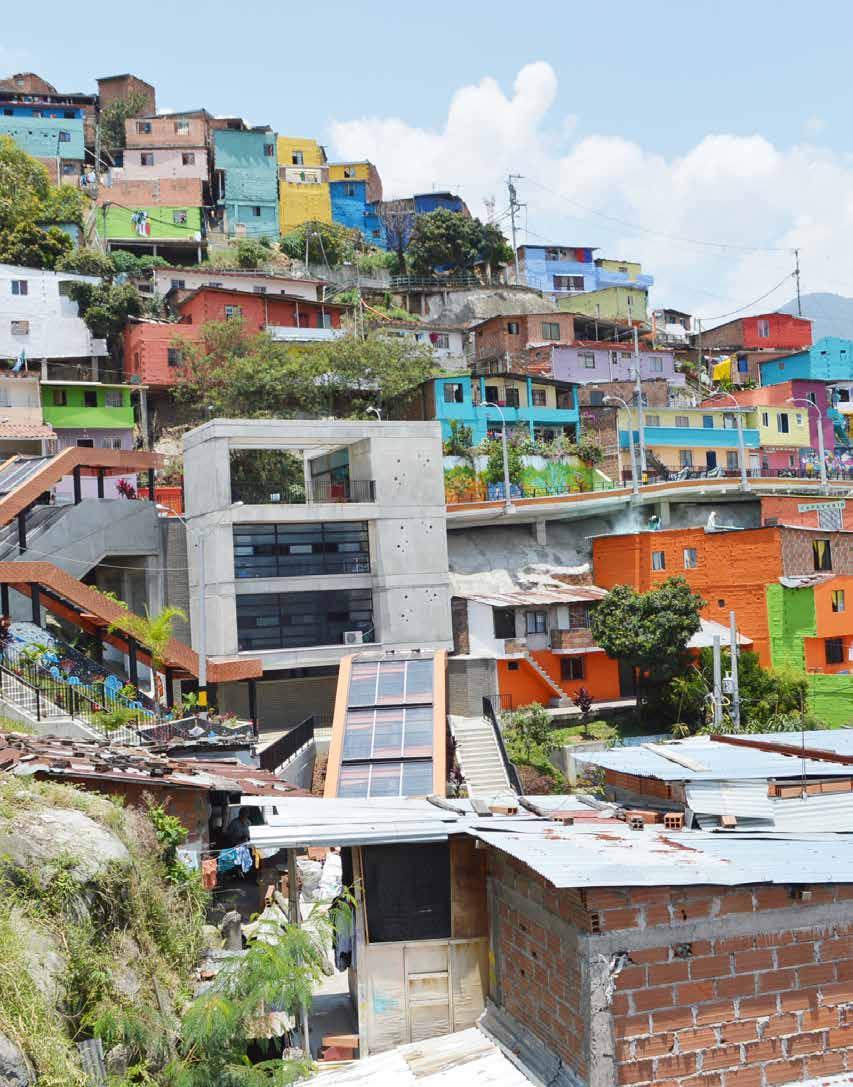
Escalators take residents up into a hillside community in Medellín, Colombia © Julius Mwelu/UN-Habitat

Chapter 6:
Building Climate Resilient Housing
Quick facts
1. Buildings account for 34 per cent of global energy demand and 37 percent of CO₂ emissions, with housing alone responsible for between 17 and 21 per cent of total emissions worldwide.
2. In 2024, 45.8 million people were displaced by weather related events, including storms (25.2 million), floods (19.1 million), wildfires (425,000) and droughts (387,000), among other weather related risks. While not all these events can be attributed directly to climate change, their frequency and severity are increasing as a result of its effects.
3. Progress on reducing housing related emissions is significantly off track. Between 2015 and 2023, CO2 emissions from building operations rose 5.4 per cent– in contrast to what should have been a 28.1 per cent reduction in that period to meet the targets of the Paris Agreement.
4. Current estimates suggest that 60 per cent of the buildings that will exist in 2050 have yet to be built, meaning the next 25 years present a unique opportunity to decarbonize future construction and reduce other emissions indirectly associated with housing.
5. While investments in energy efficiency for buildings have generally been on the rise, amounting to around US$270 billion spent in 2023, the Global Alliance for Buildings and Construction has called for this to be doubled to US$540 billion by 2030.
Policy points
1. Housing stock is a key entry point for delivering climate resilience at scale, and housing policy should be integral to climate policy as a core sector for climate change mitigation, adaptation and just transitions.
2. Multilevel governance is an essential component for delivering climate resilient housing, as no single level of government or market actor controls all action levers.
3. Climate impacts and actions generate unequal distributions of benefits and burdens, especially in cities. Resilience strategies must prioritize the needs of vulnerable groups and ensure that any action protects the right to adequate housing for all.
4. Addressing housing emissions requires a whole system transformation, decarbonizing every stage of housing production from design and construction to in use operations and end of life demolition.
5. Community led housing is a proven resilience strategy that delivers sustainable, appropriate housing at lower costs, while generating a range of local benefits.
In the period leading up to the adoption of the Paris Agreement on Climate Action in 2015, there was growing awareness – albeit not always explicitly stated – that sustainable housing could contribute to building climate resilience. Since then, with the passage of successive international agendas and agreements (Box 6.1), there has been increasing political and economic momentum from governments, agencies and other actors to deliver climate resilient housing.
6.1: The dual role of climate-resilient housing

Housing plays a dual role. On the one hand, measures can be taken to make it more climate-resilient; on the other, well-designed, wellplanned housing supports the resilience of individuals and communities
• Decarbonization
• Community-led housing
• Neighbourhood Integration
• Justice,Governance, Finance
Illustrated by Vanesa Castán Broto
Climate-resilient housing
This chapter discusses how to build climate resilient housing to deliver climate justice by activating diverse and dynamic efforts across different scales – individuals, communities, neighbourhoods, cities and nationlevel systems. In terms of what constitutes resilience, it is adapted from the IPCC’s definition of resilience1 for an urban context as: “The ability of urban systems, communities, households and individuals to resist, absorb, adapt and recover from shocks and stresses, while maintaining essential functions, structures and identity, and transforming in ways that support long-term sustainability.”2
In this regard, housing plays a dual role. On the one hand, measures can be taken to make it more climate-resilient; on the other, well-
• Individual resilience
• Socio-technical resilience
• Resource resilience
• Socio-ecological resilience
Housing is a powerful lever to cut emissions, protect the vulnerable and catalyse just, resilient urban futures
designed, well-planned housing supports the resilience of individuals and communities (Figure 6.1). This underscores the position of housing not just as a site of climate risk, but also as a powerful lever to cut emissions, protect the vulnerable and catalyse just, resilient urban futures. Every factor shaping housing, from land tenure to financing, has been shown to enhance resilience. Indeed, the right to adequate housing is closely related to the capacity to build resilience across all scales (individual, community, neighbourhood, city, nation-state).3
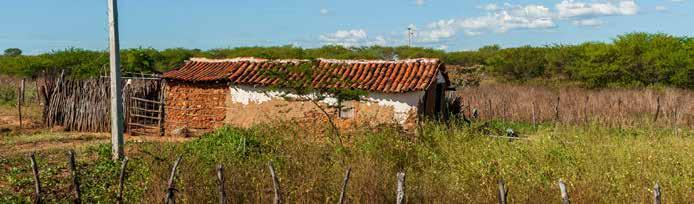
Figure
A mud house in the rural landscape of São Bento, Paraiba, Brazil © Shutterstock

The 2015 Paris Agreement provided an important framework for the development of subsequent global agreements on sustainable housing
Building on the emphasis in the World Cities Report 2024 on social and climate justice as central for effective urban climate action, this chapter focuses on the most vulnerable populations by examining the intersection of climate change, housing and social equity in urban environments. It therefore seeks to present an evidencebased perspective on climate-resilient housing by addressing three questions:
i. Balancing the need for adaptation and mitigation: In the context of the housing crisis, what does it mean to deliver housing that helps reduce greenhouse gas emissions while being resilient to climate shocks?
ii. Translating aspirations into inclusive action: How can climateresilient housing solutions be effectively implemented, particularly for vulnerable populations such as those living in slums and informal settlements who face disproportionate climate risks and have limited adaptive capacity?
iii. Ensuring the right governance framework is in place: How can collaborative, multi-stakeholder governance systems that incorporate Indigenous and local knowledge systems, together with community-based participatory approaches be effectively integrated across diverse urban contexts to advance climateresilient housing?
The chapter is structured into the following sections:
• An overview of the housing sector's contribution to carbon emissions, as well as the available responses emerging from half a century of sustainable housing experience (Section 6.1)
• An examination of the impacts of climate change on housing and how these can be addressed at different scales, especially for vulnerable populations (Section 6.2)
• An analysis of the challenges posed by current governance systems in delivering climate resilience, in line with the right to adequate housing for all and the role of multiple knowledge systems in developing solutions (Section 6.3)
• A conclusion with recommendations and ways forward (Section 6.4)
Box 6.1: Housing and climate resilience on the development agenda
The 2015 Paris Agreement was a milestone moment for climate action. Though housing was not directly mentioned, the emphasis on resilience building through sustainable energy use and emission reductions provided an important framework for the development of subsequent global agreements on sustainable housing. This included the Sendai Framework for Disaster Risk Reduction (2015–2030), which frames housing as a critical dimension in inclusion and social protection. This was further reinforced by Sustainable Development Goal (SDG) 11 “Make cities and human settlements inclusive, safe, resilient and sustainable”, where climate change is identified as a key threat, and the New Urban Agenda (NUA), with its provision on “strengthening and retrofitting all risky housing stock, including in slums and informal settlements, to make it resilient to disasters”.
In subsequent years, a number of landmark conferences and international commitments have afforded housing an increasingly central role in building resilience. For instance, the Buildings Breakthrough collaboration launched at the 2023 United Nations Climate Change Conference (COP28) offered a bold roadmap for countries to progress towards “near-zero emission and resilient buildings as the new normal by 2030”. This was followed in 2024 by the Declaration de Chaillot, which explicitly acknowledged the exposure of housing to climate risk as well as its role as a key driver of emissions. The outcomes of the 4th Ministerial Meeting on Urbanization and Climate Change during COP30 in 2025, while encompassing a wide range of issues, identified housing as one of its key priorities for achieving a resilient urban future, including “equity and inclusion for the urban poor and residents of informal settlements”. Together, these developments signal a heightened global commitment to transforming the housing sector.
Source : UNFCCC, 2016; United Nations, 2015; United Nations, 2017; Global ABC, 2024; GlobalABC, n.d.; UN-Habitat, 2025; UN-Habitat, n.d.
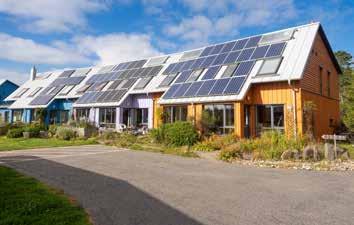
Findhorn is a world-renowned destination for mindfulness and is also a centre for ecological and sustainable living ©Shutterstock
6.1 Reducing Greenhouse Gas Emissions in Housing
The buildings and construction sector is considered the largest emitter of greenhouse gases worldwide, accounting for 34 per cent of global energy demand and 37 per cent of energy and process-related carbon dioxide (CO2) emissions in 2023.4 Housing alone is estimated to account for between 17 and 21 per cent of global emissions.5 Evidently, then, the housing sector is a key entry point for decarbonizing and delivering climate resilience at scale, particularly given the growing demand for housing.6 Progress, however, falls far from existing emission reduction commitments. Between 2015 and 2023, CO2 emissions from building operations rose 5.4 per cent – in contrast to what should have been a 28.1 per cent reduction in that period to meet the targets of the Paris Agreement.7 This represents a significant missed opportunity to tackle emissions in a sector with clear mitigation potential.8
Emissions from buildings vary widely across countries, reflecting differences in income levels, climate, energy mixes, and building stock characteristics. Diverse countries like Russia, India and Iran, all highly dependent on fossil fuels, dominate the list of the highest emitters in the
and 2005-2023
Between 2015 and 2023, CO2 emissions from building operations rose 5.4 per cent – in contrast to what should have been a 28.1 per cent reduction in that period to meet the targets of the Paris Agreement
buildings sector (Figure 6.2).9 However, efforts to reduce emissions are also evident, with countries as diverse as Japan, Trinidad and Tobago, and Brunei achieving consistent year on year annual reductions of 0.1 – 8.8 per cent in their building emissions. The EU 27 has managed to facilitate reductions across all its members, with Italy and France leading at over 3 per cent annually. At the same time, China has shifted from being a contributor of emissions to achieving the greatest reductions of any country in the 2015–2023 period. This contrasts with the US, which has moved from a modest role in reducing emissions in the building sector to accelerating emissions since 2015. These figures suggest that countries that have not decarbonized their economies tend to use more fossil fuels in the buildings sector. In contrast, countries with strong decarbonization policies, such as the EU 27 and more recently China, seem to be reversing the trend.
Figure 6.2: Top 10 countries by increase and by reduction in GHG emissions in the building sectors 2015-2023
Source: IEA, 2024, p136.
Often overlooked in discussions about the climate impact of buildings are the different pathways whereby emissions are generated, not only during their construction but also in relation to how they are inhabited and how the infrastructure around them is used. An essential aspect for understanding greenhouse gas emissions in the buildings sector is to differentiate between direct, indirect and embodied emissions (Figure 6.3):10
• Direct emissions are those released on-site from activities related to use and occupation: for example, emissions from the combustion of fuel for thermal comfort or to deliver hot water. Direct emissions are shaped by the practices of inhabitation, which are themselves shaped by cultural practices, income levels and other factors shaping life at home.11
• Indirect emissions are produced off-site to sustain the building or provide a service, such as electricity generation or water supply and treatment.
• Embodied emissions relate to the building’s life cycle, including the extraction, transport and assembly of construction materials. These include end-of-life practices, such as demolition, waste processing or recycling.12 Given current construction practices, the bulk of embodied emissions relates to the steel and concrete sectors.

While housing occupants can influence direct emissions, reducing indirect and embodied emissions—which account for over two thirds of total emissions— requires a whole systems approach
While housing occupants can influence direct emissions, reducing indirect and embodied emissions—which account for over two thirds of total emissions— requires a whole systems approach. Current projections suggest that 60 per cent of the buildings that will exist in 2050 have yet to be built,13 presenting a unique opportunity to tackle indirect and embodied emissions in the building sector. At the same time, retrofitting existing stock can also tackle both direct and indirect emissions, but its current pace is far too slow to meet the scale of the challenge.14 In any case, reducing emissions requires a place-based perspective that is better advanced through the involvement of communities.15
60 per cent of the buildings that will exist in 2050 have yet to be built, presenting a unique opportunity to tackle indirect and embodied emissions in the building sector
6.1.1. Direct emissions
Direct emissions from buildings – arising from on site combustion for heating, cooking and hot water – account for approximately 5–8 per cent of global greenhouse gas emissions.16
While global direct emissions from buildings declined slightly (by about 1 per cent) between 1990 and 2019, there are significant regional variations, with marked declines of around 14 per cent in the Europe region, contrasted with a nearly 200 per cent increase in the Middle East region. These contrasts highlight both the mitigation potential in residential buildings and the importance of context specific interventions.17
Table 6.1 provides examples of measurable actions to reduce emissions in the housing stock that are already having an impact on direct emissions within the sector in different locations around the world. However, while low-carbon designs and technologies exist, the question remains about how to align these investments with the objective of providing housing for all.
Figure 6.3: Distribution of emissions as direct, indirect and embodied emissions
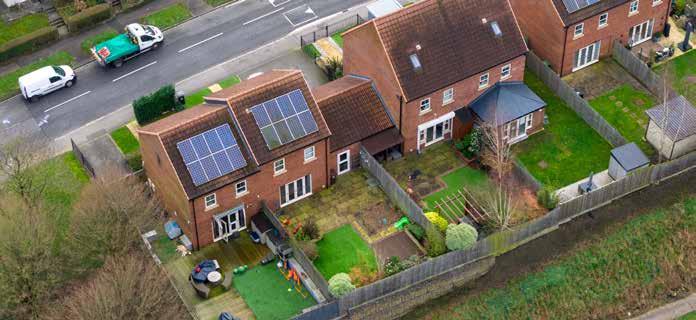
Building and construction measures
What do they consist of? What resources are needed? What is their impact on reducing emissions?
Energy efficiency retrofits Deep renovation of existing buildings (insulation, windows, efficient lighting/appliances)
Stronger building energy codes
Heat pump installation
Onsite renewables (solar, thermal, PV)
Minimum Energy Performance Standards (MEPS) for appliances
Sufficiency measures integrating behaviour and design
Green building certification and labelling
Public procurement and zero-carbon targets
Mandatory standards for new builds and renovations (insulation, glazing, HVAC, lighting)
Replacing fossil fuel heating/ cooling with electric heat pumps
Installing solar PV and solar hot water to displace direct fossil fuel use
Standards for boilers, stoves, air conditioning, etc.
Lower energy demand via passive design, smaller floor area, smart controls and behaviour change
Incentivizing low-carbon design via rating systems (LEED, EDGE, etc.)
Actions taken in public buildings to be net-zero carbon may serve to establish benchmarks or establish sustainable supply chains
Finance, building materials, skilled workforce, incentives
Legislation, enforcement capacity, and training for builders
Subsidies, grid upgrades, manufacturing scale-up, and advice to consumers
Capital investment, rooftop access, storage systems, know-how
Regulatory frameworks, testing labs, enforcement, and enrolment of the private sector
Awareness, design guidelines, digitalization, public mobilization
Certification schemes, monitoring systems, incentives
Political will, budget allocation, procurement frameworks
Up to 60 per cent lower energy intensity in buildings18
Up to 50 per cent reduction in a building’s energy consumption19
Around 500 million tonnes of CO₂, or nearly 40 per cent global reduction of total direct and indirect emissions in space and water heating20
Rooftop photovoltaics could reduce global average temperatures by 0.05–0.13 °C before 205021
In South Africa, energy efficient electric appliances can deliver energy savings of between 9 and 76 per cent22
A new Passivhaus home built in England, in the United Kingdom (UK), will result in 86 per cent fewer lifetime emissions than an equivalent house equipped with a gas boiler23
In Manila, the Philippines, Green Building Certification had multiple benefits, including encouraging the adoption of sustainable technologies24
Indirect impact by driving markets and creating demand for sustainable technologies25
Table 6.1: Examples of building and construction measures to reduce direct emissions in buildings
Modern brick suburban houses in the United Kingdom with rooftop solar panel systems producing renewable electricity for residential homes during winter season © Shutterstock
To date, 88 countries have adopted mandatory Building Energy Codes (BECs) in at least one city, and as many as 54 countries have implemented standards

The majority of these measures require upfront capital from homeowners or developers, typically increasing the cost per housing unit and so reducing affordability. There has long been an argument that energyefficient improvements pay for themselves by reducing utility bills, but examples of well-developed markets like Germany suggest that this is not always the case.26 While costs continue to fall as technologies and designs develop, there is still a need for public policy support beyond building regulations to facilitate the democratization of low-carbon housing standards.
The IPCC considers building energy codes the primary regulatory instrument for reducing emissions from both new and existing buildings.27 Building codes represent a success story in developing a global standard for reducing greenhouse gas emissions in housing and buildings more generally, as dynamic policy tools that can be adapted effectively to local conditions.28 To date, 88 countries have adopted mandatory Building Energy Codes (BECs) in at least one city, and as many as 54 countries have implemented standards but lack a comprehensive
BEC. However, as shown in Figure 6.4, recent data for many countries is not available, meaning the picture on progress remains incomplete.29
BECs should, however, be understood and integrated within the broader framework of adequate housing for all. In some cases, for example, the need to meet building code requirements may prove insurmountable for families relying on self-help housing and add a further layer of stigmatization for low-income and informal settlements households particularly when building codes are embedded in long-term histories of oppression30 (discussed further in Chapter 5).
Moreover, there is a need to be cautious about their presentation as a panacea. Instead, building codes should be considered alongside a diverse suite of interventions, involving a range of actors across the whole housing sector. This could encompass traditional methods of environmental policymaking through regulation and incentives, alongside more dynamic approaches such as provision, self-management, activism, awareness-raising and training (Figure 6.5).
Building codes should be considered alongside a diverse suite of interventions, involving a range of actors across the whole housing sector

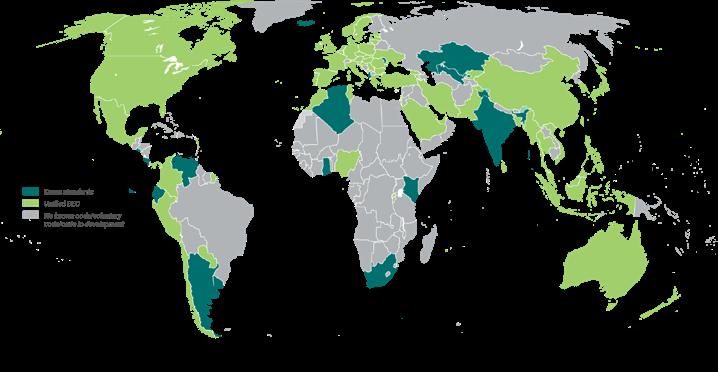
Figure 6.4: Prevalence of building energy codes (BEC) and standards
6.5: Actors, policy strategies and examples of action
e.g. Implementation of building codes
Regulations and directives
National, regional and state governments
Resources, financial incentives, grants
Local governments
e.g. Technological expansion (such as Heat pumps, EV chargers)
Spacial planning
Finance providers
Housing associations
Business and private sector
NGOs and networks
Individuals and communities
Building design and delivery
Testing and innovation
Service provision
Education and awareness
e.g. Zoning restrictions
e.g. On site renewables
e.g. Skills development programmes
e.g. PassivHous Designs
e.g. Innovative heating and cooling technologies
There is also an urgent need to research how established actions to reduce direct emissions must account for dynamic changes driven by global spatial trends, particularly climate change impacts, biodiversity loss and urbanization.31 For example, around 80 per cent of the increase in global CO2 emissions between 2023 and 2024 was attributed to record-breaking temperatures, driving up the use of cooling, with twothirds of the temperature-associated emissions attributable to China and India.32
Actions to reduce direct emissions need to integrate local knowledge to identify and manage place-based uncertainties
This points to the growing difficulty of using building templates or standard designs to address dynamic environmental impacts. To be effective, actions to reduce direct emissions need to integrate local knowledge to identify and manage these place-based uncertainties.
Figure
Illustrated by Vanesa Castán Broto
6.1.2 Indirect emissions
Indirect emissions are generated off-site to meet building and housing demands. Common examples of indirect emissions include those generated by the production of electricity off-site and the provision of services such as water, waste disposal or district heating, as well as the outputs associated with the various objects that make the house habitable, from furniture to appliances. The integration of buildings into the overall service provision system, including networked infrastructure and waste management, can potentially have considerable environmental benefits
Box 6.2: eCooking in Tanzania
through efficiencies of scale. For example, urban electrification has great potential to reduce emissions because electricity can be converted to renewable energy more efficiently through a larger network. Nationallevel initiatives to support electrification can translate into significantly reduced emissions among urban households, as in Tanzania (Box 6.2).
Supporting a reliable supply of electricity can be an effective way to reduce greenhouse gas emissions in the housing sector, while ensuring affordability
For local and regional governments, supporting a reliable supply of electricity can be an effective way to reduce greenhouse gas emissions in the housing sector, while ensuring affordability and facilitating large-scale technological transitions towards more sustainable practices. In Tanzania, for instance, a process of rapid electrification across the country has seen access among the population more than double from 15 per cent in 2020 to 40 per cent in 2020. This has provided a vital alternative to highpolluting energy sources such as charcoal, paving the way for more sustainable practices such as eCooking. Estimates suggest that, were 40 per cent of the urban population currently using charcoal to instead use electric appliances such as pressure cookers, rice cookers and induction stoves, an annual reduction in emissions of 1.3M tonnes/yr CO₂eq could be achieved. In addition, eCooking has a range of other benefits, including improved health, significant time savings and lower energy costs.
A number of different stakeholders have been involved in driving this transition forward through various economic, behavioural and policy interventions. The Tanzania Electric Supply Company Limited developed a programme to give consumers access to eCooking appliances through sustainable finance. To address the challenges of changing practices and cultures of cooking that were previously reliant on charcoal, the Tanzania Traditional Energy Development and Environment Organisation (TATEDO) developed a recipe book specifically tailored to eCooking. The government has also engaged the private sector and NGOs to facilitate skills development for repair and maintenance, as well as support the establishment of a reliable supply chain. These efforts culminated in the government’s adoption of a National Clean Cooking Strategy in 2024 to facilitate the move away from high-polluting energy sources to eCooking.
Source: Clemens, 2022; TATEDO, 2022

Cooking in steel pot on the electric stove © Shutterstock
Figure 6.6: Rethinking housing sustainability at different scales
Impact reduction through insulation, drought proofing, solar water heaters, etc In situ
Autonomous Eco village Eco region
Conversion to resource autnomy: renewable energy, water collection, greywater treatment, etc
Ecosystem services at the community scale: watershed management community energy
Delivering reductions in indirect emissions requires careful consideration not only about the house itself, but also its surrounding neighbourhood and regional context. As Figure 6.6 shows, in situ measures alone are generally insufficient. To achieve more meaningful impacts, housing should be viewed holistically within its broader environment, with a focus on large-scale, integrated approaches that promote the development of entire “eco-villages” or even “eco-regions”.
Inspiring practical, ongoing experiments on sustainable housing have emerged from self-organized and intentional eco-communities, often involving fewer than 400 people.33 They usually encompass not only infrastructure but also food supplies and sustainable living practices such as shared habitation, co-housing or collaborative housing (Box 6.3). There are hundreds of ecovillages, mainly in Europe. Examples also exist in other locations, including the US, Canada, India, Thailand and Australia, with many integrated into international networks such as the Global Ecovillage Network.34 It is true that eco-communities are
Box 6.3: Sustainable living at the Dancing Rabbit Ecovillage in Missouri, US
The Dancing Rabbit Ecovillage in northeast Missouri in the US describes itself as “a thriving sustainability demonstration project” that hosts annual visitor programs to showcase low impact living. Its residents commit to ecological covenants that prohibit personal motorized vehicles on Dancing Rabbit property and the use of fossil fuels for purposes such as warming or cooling the home. Residents are also required to conform to organic standards in all land-based activities, ensure electricity is from sustainable sources, and to prioritize waste reclamation. Interviews with Dancing Rabbit members show that their way of life has a reduced impact on ecosystems and that many of their practices improve their quality of life. Yet, they also express frustration with the perceived restrictions on their personal freedom that living in such a context entails.
Source: Pickerill, 2025; Ecovillage, n.d.
Regional impact through the maintenance of shared ecological space
rarely scalable initiatives and have not fundamentally changed housing paradigms. They do, however, offer opportunities for knowledge and innovation that can support the realization of more sustainable housing and emissions reductions.35
Local governments and housing associations can play an essential role in reducing indirect emissions: for example, either directly through the provision of social housing or indirectly by providing incentives for other actors to change existing practices. However, they often face difficulties ensuring that actions to reduce emissions do not exacerbate existing drivers of exclusion.36
Financial grants, subsidies and low-interest loans can play a role in mitigating the need for up-front investments from households, while potentially reducing long-term user costs. For instance, Cornwall Council in the UK retrofitted 83 council owned social homes as part of its Whole House Retrofit Innovation project, funded in part by the UK Department for Business, Energy and Industrial Strategy (BEIS). The upgrades –including loft, wall and under-floor insulation, solar panels, single room ventilation and ground source heating – significantly cut both direct and indirect emissions by reducing household energy demand and lowering reliance on carbon intensive electricity.37
Regulatory authority and community organization can also be leveraged to unlock economies of scale and accelerate shifts towards green energy. In the US, Community Choice Aggregation (CCA) regulations allow local governments to procure electricity on behalf of residents and businesses, using aggregated demand to negotiate cleaner power options. In 2022, about 5.7 million customers using 14.6 billion kWh of electricity benefited from CCA in California, Illinois, Maryland, Massachusetts, New Hampshire, New Jersey, New York, Ohio, Rhode Island, and Virginia.38 By aggregating their electricity demand, communities are able to negotiate better rates for their energy supply and accelerate the shift towards green energy.
Inspiring practical, ongoing experiments on sustainable housing have emerged from selforganized and intentional eco-communities, often involving fewer than 400 people
Source: Elaborated by Vanesa Castán Broto from Birkeland, 2012.

6.1.3 Embodied emissions
Embodied emissions are forecast to increase, particularly as housing demand grows. As emissions are generated throughout a building’s lifecycle, achieving net-zero embodied carbon requires emissions to be minimized at every stage.39 This “whole-life” approach40 means considering if the building is needed, whether there are already existing assets that could be used in its place, how to construct it most efficiently and the best way to dispose of it without generating further emissions.
There are already encouraging examples of innovations in reducing embodied emissions through repurposing existing assets. A Scottish cleantech building materials company, Kenoteq – a spinout from Heriot-Watt University – develops bricks made from construction and demolition waste and reuse materials that would otherwise go to landfills. The bricks, which do not need kiln firing, produce 95 per cent less carbon emissions compared with the traditional clay versions.41 In Kenya, a community-focused enterprise, Gjenge, has responded to the mounting problem of non-recyclable waste by repurposing it into a range of alternative building materials. Besides preventing the burning or burial of discarded plastic, Gjenge’s innovation also avoids the energy-intensive process of manufacturing cement, so contributing to the reduction of embodied carbon.42
Looking at the construction process as a whole, the Life Cycle Assessment (LCA) is a design method that supports material accounting of the full
By analysing emissions at every stage of the building’s lifetime from “cradle to grave”, Life Cycle Assessment (LCA) method identifies opportunities for lower carbon design choices and helps guide policy action
impact of buildings from raw material extraction through manufacturing, transport, construction, use, maintenance and demolition. By analysing emissions at every stage of the building’s lifetime from “cradle to grave”, LCA identifies opportunities for lower carbon design choices and helps guide policy action.43 Through multiple national level regulations, Nordic countries have already taken bold steps to tackle embodied carbon by applying LCA principles to capture emissions throughout the different stages of a building’s life cycle – upfront production, in use and end of life. These regulatory shifts create the conditions for material innovation at scale. For example, in Växjö (Sweden) and Trondheim (Norway), the widespread adoption of timber-based construction has significantly cut embodied emissions, replacing steel and concrete with materials that not only use far less energy, but also process and store carbon. The Nordic countries are now working towards a harmonized legal framework, further expanding the scale for controlling embodied carbon in the building sector across the region.44
While the LCA is a valuable tool for architects, designers, engineers, and planners involved in the development of housing projects, whether they are newly built or retrofits, it does have some limitations. In particular, its general focus is on conventional housing projects rather than a more holistic perspective that incorporates the broader neighbourhood in its assessment.45 Thus, an alternative has been to use the LCA in a wider context as an urban planning tool to evaluate “circular” strategies to reduce emissions by reimagining building practices and infrastructure use.46 These approaches retain the value of existing buildings, extend their life and aim to reduce overall consumption by activating existing assets through incentives or regulations. Cities as varied as Mataró (Spain) and Amsterdam (the Netherlands) already use circular strategies, such as imposing restrictions on vacant housing, although they face barriers to implementation (Table 6.2).47
Bakklandet Wooden House Village in Trondheim, Norway © Shutterstock
Table 6.2:
Circular strategies for reducing life cycle emissions from buildings
Circular strategy for reducing life cycle emissions from buildings
Sharing of space
Temporary use of vacant space
Virtualization / digital solutions
Adaptive reuse
Key elements
Using the same physical space for multiple users or functions (e.g., co-working)
Re-purposing unoccupied buildings or land temporarily instead of building new ones
Replacing or reducing physical space with digital tools and remote work
Extending a building’s life by converting it to a new use
Vertical extensions Adding floors to existing buildings rather than constructing new ones elsewhere
Relocatable / modular buildings
Constructing buildings or modules designed to be moved and reused
Building relocation Moving an existing building to a new site instead of demolishing it
Refurbishment and renovation
Design for disassembly
Upgrading and maintaining existing buildings for more prolonged use
Designing buildings for easy deconstruction and material recovery
Material substitution Replacing carbon-intensive materials with low-carbon alternatives
Reduces demand for new construction, lowers embodied emissions
Saves embodied energy, materials, and supports urban regeneration
Cuts demand for office buildings, reduces travel and energy use
Saves embodied energy and materials, avoids greenfield construction
Mitigates land pressure, saves embodied carbon and densifies cities
Preserves embodied materials, reduces demolition waste, and may facilitate retaining population
Retains embodied carbon, avoids new material use
Reduces demolition waste, lowers operational energy demand
Enables reuse of components, high-quality recycling
Examples from European countries
Co-working hubs, rural shared workspaces, cohousing
Pop-up shops or clubs, cultural projects in vacant buildings
Hybrid work, virtual meetings, working from home
Converting offices or industrial buildings into housing
Rooftop or garden extensions
Modular schools, relocatable offices and housing
There are several relocation projects in Nordic countries
Social housing projects to retrofit zero-carbon appliances and designs
Circular design principles in EU building codes, and the approach has become popular in the construction industry48
Barriers to implementation
Cultural resistance, legal/ contractual issues and management of complex social relations
Short tenure security, lack of incentives and zoning restrictions
Digital divide, employer resistance, cybersecurity concerns
High retrofit costs, regulatory barriers and heritage restrictions
Structural limitations, safety codes, community opposition and over-densification
High initial investment, limited design flexibility, logistics challenges and planning regulations
Technical complexity, high cost, limited applicability
Financing gaps, disruption to occupants, split incentives between owners/tenants
Lack of standards, higher upfront costs, and a limited market for reused materials
Reduces embodied emissions significantly
Using timber instead of steel/concrete, architectural designs with mudbricks
Supply chain limitations, fire safety and durability concerns, and conservative building codes
Source: Lundgren et al, 2025.
Reducing embodied emissions, however, requires coordinated action at different scales from the design of buildings and neighbourhoods to the national level. The latter is especially important with regards to normalizing different directives and practices related to housing. This is particularly relevant for tackling complex challenges, such as the growing use of carbonintensive materials, such as cement and steel, in buildings (Box 6.4). Tackling these emissions may require nuanced negotiations with industry, mediated by national governments, showing the limits of sustainability action by local governments alone.
Box 6.4: Tracking the flows of cement and steel in housing
Embodied carbon accounts for about 18 per cent of global greenhouse gas emissions, with the majority attributable to cement and steel.49 Progress towards achieving emission reductions in this area since 2015 has, however, been uneven.50 In the case of steel, while there have been various positive measures including the adoption of the WTO Steel Standards Principles by key organizations,51 a lack of commitment from national governments has undermined any meaningful steps towards decarbonization. In the case of cement and concrete, there is limited agreement on what net-zero carbon means in the sector. Again, substantive commitments are few, despite the development of standard accounting methodologies by organizations such as the Global Cement and Concrete Association (GCCA). Cement and steel also consume large amounts of water, further multiplying the negative environmental impacts.
IEA envisions a critical pathway for the decarbonization of both sectors. For steel, increased recycling and strong electrification are key levers to facilitate decarbonization.52 In the case of steel, a key issue is developing dialogue with communities affected by the sector’s decline to ensure a more just transition, alongside the decisive implementation of regulations and business strategies by the public and private sectors. In the case of cement, the primary initial step is to prepare a comprehensive policy framework to facilitate the implementation of more ambitious policies and regulations.
Source: IEA, 2024

6.2 Reducing the Vulnerability of Housing to Climate Impacts
When climate change impacts housing and homes, the consequences are felt across society, as adverse climate outcomes change the lives of individuals, communities, cities and wider regions. However, the way those impacts are experienced vary widely across a city. People living in informal settlements are disproportionately affected by climate hazards and have limited adaptive capacity.53
The adverse impacts of climate change are already keenly felt. In 2024, 45.8 million people were internally displaced by weatherrelated events, including storms (25.2 million), floods (19.1 million), wildfires (425,000) and droughts (387,000), among other weather-related risks.54 While not all these weather events can be attributed directly to climate change, their frequency and severity are increasing as a result of its impacts. Displacements create new demand for housing, sometimes on a temporary basis but often for protracted periods, with associated needs for access to services and livelihoods (a point discussed further in Chapter 4). Housing is also a major determinant of health vulnerability to climate change.55
Addressing climate hazards requires not only evaluating the current state of the hazard, but also its future evolution. Hazards do not occur in isolation but often interact with other concurrent risks. On the one hand, there is the possibility of a “cascade event” that creates multiple interactions between the hazard and the infrastructure sustaining housing. For example, the impacts of flooding on electricity and communication networks may complicate the emergency response, as happened when Hurricane Idai hit Beira (Mozambique) in 2019. On the other hand, the development of slow-onset events may add to the progressive deterioration of the housing stock, making it less resilient to further events.

The destruction of housing stock due to climate risks not only directly affects people’s lives but also makes it more difficult to access housing in the future
From the perspective of housing as a human right, the destruction of housing stock due to climate risks not only directly affects people’s lives but also makes it more difficult to access housing in the future.56 Moreover, climate risks add to insurance costs, further reducing the means to manage urban risks even for those not already excluded from formal financial instruments.57 Housing, again, becomes a key means through which resilience can be attained. Urban resilience demands a citywide perspective that prioritizes those most at risk: a city that works for the most vulnerable is a city that works for all.
Wet concrete being poured onto steel reinforcement bars at a construction site
Shutterstock
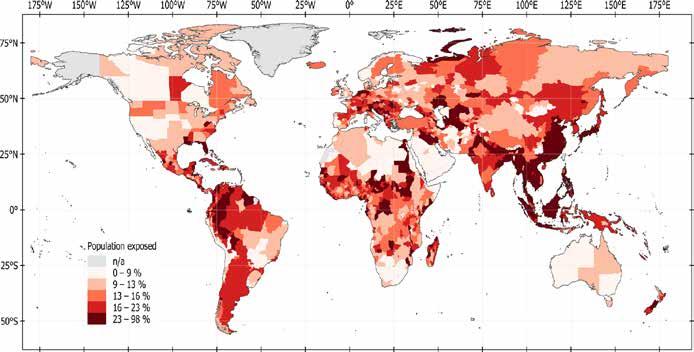
6.2.1 Specific climate-related risks to housing
Housing is acutely exposed to the effects of climate change. Both acute and slow-onset events, from sea storms to gradual temperature increases, impact on housing and how it is inhabited. Risks to consider when developing climate-resilient housing include sea-level rise, inland flooding, extreme storms such as typhoons, cyclones and hurricanes, wildfires, heatwaves, water stress and subsidence. If effective reconstruction measures are not taken, these risks may become chronic over time.58
Over 850 million people live in coastal zones with low elevation and will thus be exposed to increasing risks of sea level rise,59 including flooding, erosion, sea intrusion and pollution, leading to increased maintenance costs.60 In addition, many others are at risk from fluvial overflow from rivers or surface water flooding. For instance, a recent assessment of flooding risks in 188 countries estimated that as many as 1.81 billion people (23 per cent of the world population) were situated in locations exposed to “a significant level of flood risk”.61 Compaction and soil sealing, common in highly populated areas, exacerbate the risk of flooding. Countries in Southeast Asia are heavily affected, but risks are widespread in all world regions, as illustrated in Figure 6.7.

As many as 1.81 billion people (23 per cent of the world population) are situated in locations exposed to “a significant level of flood risk”
In the wake of devastating wildfires across Europe during 2025, experts have warned of a “new normal” of extreme weather in the continent
Flooding is often driven by extreme events, such as extreme storms. Table 6.3 demonstrates the impact of these events on housing and associated infrastructure. The storms cause direct destruction through high winds (tearing roofs, collapsing walls), storm surges (which cause inundation and erosion of foundations) and heavy rainfall, potentially triggering landslides and flash floods that may wash away entire communities. Additional impacts on materials and land availability, as well as the loss of livelihoods and displacement, also hinder reconstruction efforts.62
Concern about the impacts of wildfires on housing has also risen, as recent events in locations such as California (US), Spain and Australia have led to population displacement, destruction of homes and increased air pollution.72 In the wake of devastating wildfires across Europe during 2025, experts have warned of a “new normal” of extreme weather in the continent.73 The impacts of wildfire are long-lasting, as the loss of vegetation and subsequent erosion can further exacerbate the loss of water resources and the risk of flooding.
Increased average temperatures and heatwaves are also a concern, as poorly designed housing can exacerbate the effects of heat, leading to heat exhaustion, dehydration and cardiovascular strain among residents. Heatwaves, often described as “a silent killer”, are responsible for
Figure 6.7: Percentage of population exposed to flood risk at the subnational level
Source: Rentschler, Salhab et al., 2022.
Table 6.3: Examples of housing impacts of extreme storms recorded in recent years
Name Location (country/territory)
Super Typhoon Hagibis Japan (Honshu) 2019 ~ 2.9 trillion yen (~US$21.3 billion)
Typhoon Co-may (Lekima) China (Zhejiang / Shandong)
Hurricane Dorian Bahamas
Cyclone Idai Mozambique / Malawi / Zimbabwe
~CNY72 billion (US$10 billion)
~US$3.4 billion
~US$2.9 billion
Super Typhoon Rai (Odette) Philippines 2021 ~US$0.95 billion (₱47.6 billion)67
Hurricane Ida US (Gulf of Mexico) 2021 ~US$95 billion
Hurricane Ian US (Florida & SE)
Typhoon Yagi Vietnam (North/Northeast)
Source: compiled by author.
millions of unrecognized deaths.74 These impacts may be higher for certain population groups susceptible to heat, such as the elderly, children, people with disabilities or low-income individuals who may not have alternatives to minimize exposure (Figure 6.8).75 Rising temperatures are often alleviated with individual air conditioning units that increase the home’s overall energy consumption, therefore increasing emissions and further reducing resilience.
Heatwaves, often described as “a silent killer”, are responsible for millions of unrecognized deaths


PHYSIOLOGICAL FACTORS
Older and people with disabilities
People with certain medical conditions or taking certain medications or drugs
Pregnant people
Infants and children
Adapted from: WHO, 2024
3,273 totally destroyed, and over 90,000 partially damaged or inundated63
~149,000 damaged64
~3,000 homes damaged or destroyed65
~240,000 homes damaged or destroyed in Mozambique alone66
>1 million homes damaged68
Up to 75 per cent of buildings damaged in some hard-hit areas such as Lafourche Parish69
billion ~5,000 homes destroyed and 30,000 damaged in Florida alone70
billion
homes damaged or destroyed71
6.2.2 Addressing the impact of climate change on housing
While climate-related events affect everyone, the impacts are strongly determined by location, income and other factors, with poor and marginalized homes and neighbourhoods typically most exposed to risks. Housing inequality compounds climate-related vulnerabilities.76 At the same time, housing can be a key lever for improving health and resilience among vulnerable populations, and providing climate-resilient housing responses is also an effective way to build communities.77 In particular, climate resilience can be developed through interventions in building design and construction, neighbourhood planning, city-wide planning


EXPOSURE FACTORS
Outdoor and manual workers
People living in sub-par housing conditions or who lack access to cooling
People who are poor, displaced or experiencing homelessness
Athletes and attendees of outdoor events
Figure 6.8: Vulnerabilities that exacerbate the individual impacts of heat and inadequate thermal comfort

and broader interventions at the regional and national levels. Three areas of action open: People and community capital; Housing stock (new and retrofit); and Integrated planning of neighbourhoods and cities.
People and community capital
Community is key in strengthening resilience: it is not built solely by individuals, but through their relationships with others and the environment, underscoring the importance of a collective, shared approach to any form of action.78 Local actions led by community organizations aiming to improve neighbourhoods are almost always beneficial for building resilience, particularly for more disadvantaged households, and especially when local community representatives are facilitating resilience-building efforts themselves.79 Across the world, there are numerous examples of community-based housing programmes that have successfully support resilience building, in many cases either in preparation for or in the wake of natural disasters (Table 6.4).
Community capital in its different forms can also be effectively leveraged to bolster resilience through informal practices (discussed in more detail in Chapter 5):86 it encompasses social capital (the degree of interconnectedness among community members through relationships of reciprocity and trust), economic capital (including sustainable livelihoods, markets, community savings and access to credit), human capital (the specific abilities of the community including skills, diverse forms of knowledge, experience and opportunities for action), physical capital (the available infrastructure and facilities, together with the institutions and practices that maintain them) and natural capital (relating to the ability of the community to access natural resources sustainably)87 (Figure 6.9).
Housing inequality compounds climate-related vulnerabilities
Table 6.4: Examples of different forms of community capital building climate-resilient housing
Location Case study
Cambodia and the Philippines Community-led housing in Cambodia and the Philippines through the People’s Process and Asian Coalition for Housing Rights (ACHR), where residents collectively plan and construct homes.80
Denmark and the UK Co-housing schemes that foster cooperation and shared resource management across generations.81
Zimbabwe and Tanzania Third sector organizations such as Dialogue on Shelter Trust (Zimbabwe) and the Centre for Community Initiatives (Tanzania), both affiliated to Slum Dwellers International (SDI), support diversification and local development to access housing.82
Mexico Incremental housing finance through the INFONAVIT programme, enabling low-income earners to upgrade homes progressively.83
US and Nepal
Nepal
Habitat for Humanity’s Build Back Better programmes includes skills training on disaster-resistant building methods further building the human capital.84
Post-earthquake Nepal reconstruction projects trained local masons in earthquake-resistant design, creating new forms of community-led disaster reconstruction.85
A firefighter fights intense flames consuming a house during a wildfire outbreak in Stillwater, Oklahoma, US. © Shutterstock

Relatively small measures, such as those that improve ventilation and thermal comfort or use local materials, can make a big difference to the habitability of the home
In addition, there are multiple opportunities for multilateral, regional and local agencies to engage communities constructively in processes that develop local forms of capital and contribute to climate-resilient housing. The example of the People’s Process approach deployed in Tboung Khmum, Cambodia, is a good example of the transformative impacts that donors can achieve by engaging communities at multiple scales (Box 6.5).
Community-led housing (CLH) is an effective strategy to deliver community resilience. While varied in their approaches, CLH initiatives share a number of common principles that are in line with strategies to build community capital:88
• Residents are in the driving seat, ensuring their central involvement in the housing project.
• Action follows principles of solidarity and cooperation, mobilizing resources through community savings.
• The focus is on ensuring long-term affordability and guarding against gentrification.
• There is collective stewardship, often through communal management of infrastructure, land sharing or institutional development.
• The overarching focus is always on advancing the right to housing.
Community-led housing is an effective strategy to deliver community resilience
Over the years, climate resilience and attention to housing environments have become increasingly central to CLH efforts because it is often conducted in ways that help build resilience.89 Examples demonstrate that CLH builds multiple elements of community capital and can deliver housing for just a fraction of market costs, with a substantially smaller carbon footprint. This is illustrated by the case of Uruguay’s FUCVAM, where the use of local materials reduced construction costs by 30–40 per cent while also lowering emissions.90 Arguably, the most substantial impact of CLH is its ability to deliver social and human capital through networking, collaboration and the potential for peer-to-peer learning. In Argentina’s San Martín de los Andes, for instance, the active participation of Mapuche communities enabled the implementation of traditional techniques that minimize deforestation and soil degradation.91 This
Box 6.5: Applying the People’s Process to disaster-resilient upgrading in Tboung Khmum, Cambodia
Cambodia faces severe vulnerability to floods, storms and strong winds, especially in low-lying provinces along the Mekong River. In 2018, Tropical Storm Son-Tinh and the collapse of the Sepa-Nam Noi dam displaced over 5,000 families across five provinces. The worst-affected district was Tboung Khmum, with 2,148 households evacuated and no immediate reconstruction assistance available.
In response, the “Project for Improving Living Environment and Disaster Prevention Capacity in Cambodia”, implemented by UN-Habitat with support from the Government of Japan and Cambodian authorities, applied the principles of the People’s Process approach to rebuild 202 disaster resilient houses and install 216 latrines, benefitting nearly 10,000 people in the district. Communities mapped risks, identified safe construction sites and formed Community Development Committees to oversee construction and preparedness activities. The project also strengthened local skills by training 172 builders and 70 officials, while enhancing women’s participation, social cohesion and governance capacity. Although internationally financed, the community leadership shaped planning, decision making, monitoring and conflict resolution throughout the project.
Source: UN-HABITAT, 2020


Source: Adapted from
Vallecha et al. 2025
Figure 6.9: The different dimension of community capital
also enables political mobilization and pressure at the local, regional and national levels. For example, the Philippines Alliance, in support of the Homeless People’s Federation of the Philippines, has established strong partnerships with municipal actors through CLH projects.92
Building community resilience is dependent on timing, scale and the development of a common understanding on how to approach it. Humanitarian responses have focused on “building back better” after disasters, but as explained above, community resilience depends particularly on the ability to build different forms of capital over time. Planning helps anticipate disruptions and address pre-existing vulnerabilities that may become critical in the context of emergency responses and recovery.93 Resilience is also consolidated at different scales, reflecting the interconnected nature of systems at the neighbourhood and wider regions where housing is located.
Community-led housing can deliver housing for just a fraction of market costs, with a substantially smaller carbon footprint

Housing stock: new and retrofit
Climate resilience can be delivered through interventions in the housing stock, prioritizing affordability and the needs of low-income dwellers in particular (Figure 6.10). The first step to building climate-resilient housing is to evaluate the conditions of the existing stock. Relatively small measures, such as those that improve ventilation and thermal comfort or use local materials, can make a big difference to the habitability of the home. Many such measures may emerge from the deployment of traditional knowledge or an informed understanding of the current climate and how it will impact future projections. Awareness, education, peer-to-peer learning and demonstration projects can also significantly enhance housing resilience.
There is also much to gain by investing in efforts to reduce housing emissions, both direct and indirect, as discussed in Sections 6.1.1 and 6.1.2. Mitigation actions often have co-benefits for adaptation. For example, retrofitting old and inefficient housing with energy efficiency measures such as insulation or upgraded heating, ventilation and air conditioning (HVAC) systems is an effective way to improve its performance and liveability. Similarly, applying green building standards in the construction, design and operation of housing reduces emissions, improves environmental quality and facilitates long-term savings.
There is, however, a need to apply such standards carefully, as they may curtail access to housing and create additional vulnerabilities, particularly when they do not fit neatly with local conditions and traditions. Tradeoffs can also manifest in different ways: for example, the implementation of flood zoning policies help reduce flooding risks at the city level, but may impact negatively on housing access and affordability by
Negotiating resilience with communities helps reduce unintended impacts, particularly in the context of informality where communities play a central role in the production of space
reducing the availability of developable land.94 Negotiating resilience with communities helps reduce unintended impacts, particularly in the context of informality where communities play a central role in the production of space.95 A key challenge is considering the multiple decisions and points of intervention to advance climate-resilient housing through a negotiated approach across the different stages of housing delivery.
On the other hand, climate resilience is also achieved through adaptation to the increasing frequency and severity of weather-related shocks. Strategies for hazard mitigation can be incorporated into the design and construction of housing, such as elevating structures in flood-prone areas, using flood-resistant materials and house elements, retrofitting foundations to withstand storms or earthquakes, and improving site drainage. These can be complemented with measures to facilitate rapid recovery, such as collective planning, reduced interconnections in physical infrastructure, and modular infrastructure and housing.
Appropriate location tenure security
Finance & Regulation Inclusion & Equality Skills & Knowledge Enabling factors
Figure 6.10: Areas of intervention to build resilience in existing and new housing stock
Elaborated by Vanesa Castán Broto
Retrofits and energy efficient appliances
Green construction designs and operation
Hazard mitigation in materials and design
Fast recovery measures
Often, adaptation can be addressed through mobilizing traditional and alternative knowledge. For example, the construction of elevated housing has a long history in many parts of the world and continues to be practiced to this day (Figure 6.10). The stilt village of Ganvié on Lake Nokoué in Benin was founded in the 17th century by communities seeking to hide from slave traders. Today, the community works on the ongoing rebuilding and maintenance of timber houses on piles over the shallow lake and a system of elevated platforms connected by canoe transport.96 Such examples have been emulated in contemporary urban settings elsewhere, such as the modern amphibious housing designs in Gelderland (the Netherlands), demonstrating the potential for learning about traditional technologies.97
Indigenous knowledge around building methods has also long been used to build resilience, often developing techniques closely aligned with the characteristics of a particular place. This is reflected in the varied architecture evident in many Small Island Developing States (SIDS).98 In Samoa, the traditional housing called Samoan fale features a high thatched roof over an open structure with no walls, thus protecting inhabitants from the sun and rain while allowing natural breeze to cool
Often, adaptation can be addressed through mobilizing traditional and alternative knowledge
The diverse solutions evident in traditional architecture offer important learning opportunities for the development of contextappropriate housing today

the structure. In New Caledonia, the traditional Kanak case has thick walls and no windows, so that the structure retains the warmth from an indoor fireplace (and the smoke helps keep mosquitoes away). In Fiji, the traditional bure withstands strong winds and tropical cyclones with the use of hardwood posts deeply buried in the ground to provide stability. The steep, four-sided rooms and strong bindings secure the whole structure. In the Solomon Islands, particularly on Tikopia Island, Indigenous communities use natural landscape features as protection, taking shelter beneath overhanging rocks during severe storms. A similar ingenuity is reflected in the vernacular architecture deployed by communities in Indonesia, drawing on locally sourced materials and designed to withstand a range of natural disasters such as flooding, heavy rain and earthquakes (Figure 6.11). The diverse solutions evident in traditional architecture offer important learning opportunities for the development of context-appropriate housing today.
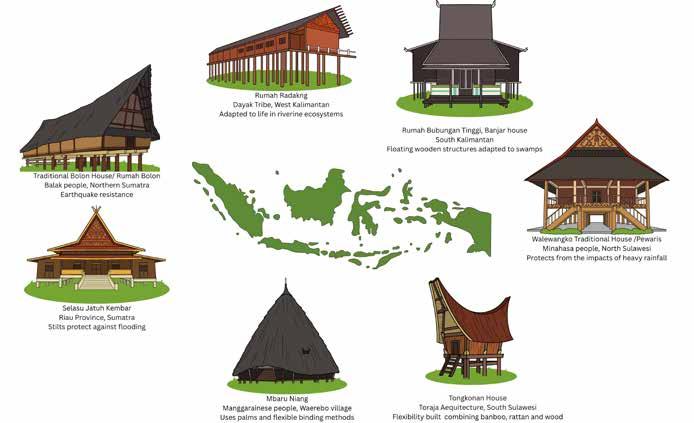
Figure 6.11: Diversity of traditional and adaptable architectural styles in Indonesia
Source: Illustrated by Sepeda Ilmu.
Neighbourhood scale is crucial for effective disaster risk management and reconstruction
Integrated planning of neighbourhoods and cities
Housing resilience extends far beyond the individual structures: it both shapes and is shaped by the community it is situated in. In this regard, the neighbourhood scale is crucial for effective disaster risk management and reconstruction, linking housing with the surrounding infrastructure and environment.99 Sustainable neighbourhood design begins with the recognition that each neighbourhood is different, as much as every city: rather than importing ready-made solutions, an assessment of the specific needs and opportunities of the particular location should be undertaken.100 This paves the way for context-specific solutions that put people at the centre of action while enriching existing urban landscapes. For example, low-income residents in the informal settlement of Kibera, Kenya, actively participated in flood modelling, helping improve its accuracy and local relevance.101
Neighbourhoods thrive within a connected city. City-wide interventions, drawing on resources such as UNDRR’s Disaster Resilience Score for Cities (Box 6.6), can make a huge difference in how a neighbourhood develops and feels. The knowledge and resource demands of sustainable planning, however, are often high and may exceed the resources available in each city or neighbourhood. Despite widespread evidence about the potentially transformative role of communities in urban development projects, the pressure authorities may face to deliver at speed influences the extent to which self-governance and participation are meaningful or even possible in many cases.104
Planning for density can help build resilience across the city by improving the use of space and aligning it with community use
Where city governments are unable to deliver effective planning responses, local communities may step in to develop locally adapted plans. These examples show the considerable benefits that can accrue when local planners recognize and facilitate locally-led incremental resilience-building. Old Fadama in Accra, Ghana, for instance, is one of the city’s most deprived settlements, its residents exposed to both the risks of eviction due to insecure tenure and flooding caused by climate change. All too often in contexts like these, local populations in vulnerable settings are simply displaced in the name of climate adaptation to make space for greening programmes, without considering the loss of resilience this entails due to the erosion of social and human capital.105 However, with the support of international NGOs such as the Centre for Public Interest Law (CEPIL), Shack/Slum Dwellers International (SDI) and People’s Dialogue on Human Settlements (PDS), local leaders in Old Fadama led a community upgrading initiative to improve accessibility, identifying flooding as a critical challenge and negotiating relocation with the most affected residents.106
Urban density is often seen as a problem, but planning for density can help build resilience across the city by improving the use of space and
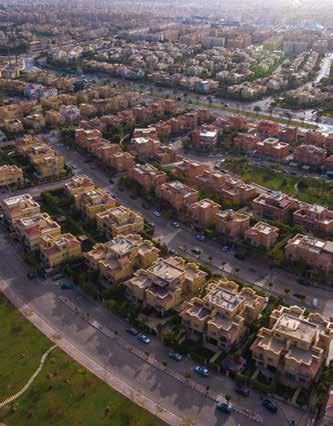
aligning it with community use, in line with some of the densification strategies suggested by circular thinking (see Section 6.1.2). Among the different approaches to integrating neighbourhoods into wider urban systems, the three-value (3V) approach proposes focusing on the various forms of value created by the structure of urban space, namely:107
• Node value emphasizes the centrality, accessibility and mobility of space, and how it facilitates movement across the city.
• Place value emphasizes the urban quality of different places, the development of vibrant neighbourhoods that ensure the well-being of populations and ecosystems.
• Potential market value emphasizes a place's economic attractiveness.
This emphasis on connectivity across the city supports arguments for transit-oriented development (TOD) to facilitate compact housing growth around public transport intersections.108 Their mixed use, highdensity design, typically connected to major transport links, can deliver significant emission reductions both in the construction of housing and the subsequent lifestyles of its inhabitants, who are in close proximity to a range of amenities and have easy access to public transport. However, while TODs often have significant impacts on housing availability, affordability remains a challenge.109 A comparative study of 107 TODs in 24 rail-served regions in the US found that housing affordability rates varied widely but, in most cases, lower-income groups are priced out.110
Rehab City, New Cairo, Egypt © Shutterstock
Box 6.6: Taking action to reduce rising urban temperatures: examples from the Making Cities Resilient Campaign
UNDRR’s Disaster Resilience Scorecard for Cities aim to facilitate a collaborative planning process, in line with its “Ten Essentials for Making Cities Resilient”, which operationalize the principles of the Sendai Framework at the local level.102 The Resilience Scorecard is a tool that facilitates the assessment of the city’s resilience against a list of 47 indicators in the preliminary assessment and 117 in the detailed assessment.103 The Scorecard is broad and system-wide, and rather than focusing purely on housing, it emphasizes the language of property and infrastructure. Nevertheless, different indicators such as property risk, building codes, land use and displaced persons enable local governments to address climate-resilient housing.
Various cities have piloted the Scorecard as part of the Making Cities Resilient campaign, including Manchester (UK), Makati (Philippines) and Suroydarya (Nepal). In particular, its work has helped demonstrate different approaches to addressing urban heat challenges through housing and urban infrastructure interventions, including:
• Amadora (Portugal), a densely populated city of 200,000 inhabitants, has addressed heat through retrofitting of dense housing areas and an ambitious tree planting programme to increase green space by 50 per cent in five years. Designated cooled emergency shelters address the needs of vulnerable residents, such as the elderly and the homeless.
• Incheon (Republic of Korea) integrates planning, data and housing upgrades for heat management. Cooling measures include the use of cool roofs and walls in public and residential buildings, shading infrastructure, and tree planting in cool, dense residential areas. They have also targeted low-income houses for upgrades, including wall insulation and window films.
• Quito (Ecuador) incorporates nature into housing designs through green roofs, vertical gardens, and permeable gardens, as well as the expansion of parks and community gardens (especially in dense districts).
• Cape Town (South Africa) integrates the revision of planning and urban design policies to incorporate heat risk management to guide private developers and shape public spaces. Tools include heat risk maps and a map of the city's network of green spaces. As of 2025, the city had installed six spray park cooling centres in lower-income neighbourhoods.
• Nairobi (Kenya) has addressed higher temperatures through cooling and nature-based housing solutions, with the core concern of addressing affordability. Green roofs are a key element of the city’s strategy to address heat, with over 200 buildings having benefited.
Source: UNDRR, 2025b
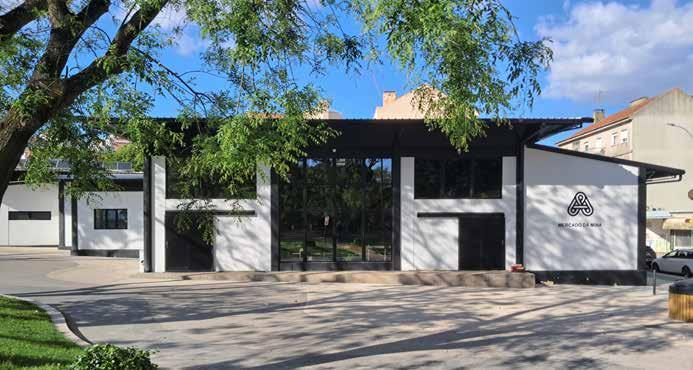
Amadora, Portugal, May 9, 2025, Modern architecture of municipal market of amadora water mine © Shutterstock
In the UK, Coal Drops Yard, in the area near King’s Cross station –hailed as the most successful regeneration project in London, with a strong emphasis on climate resilience and carbon neutrality111 –implemented a TOD concept to align multiple stakeholders for the development.112 Nevertheless, it has come at the expense of the needs of different communities, especially low-income residents who have seen skyrocketing prices in housing and sex workers whose space needs have been overlooked.113
In the context of informal settlements, TODs may expose communities to insecure land tenure, displacement and housing unaffordability. Moreover, TODs may conflict with existing informal transport systems and create unfamiliar transport options, reducing the overall mobility of poorer populations and further compromising housing needs.114 Thus,
Box 6.7: The impacts of green grabbing and green gentrification on the right to adequate housing
The UN Human Rights Council has highlighted how green gentrification and green grabbing can undermine climate resilience by challenging the right to adequate housing. Green gentrification occurs when environmental improvements – such as energy-efficient retrofits, green building standards or urban greening – raise property values and living costs, pushing out low-income residents. Green grabbing refers to the appropriation of land, housing or resources under the pretext of environmental protection or climate action: for example, the creation of green zones or carbon offset projects that displace residents.
In both cases, any gains in efficiency, adaptability and sustainability are primarily captured by wealthier residents or large landowners, displacing low-income tenants, Indigenous communities or others living in informal conditions. As residents are evicted, long-established networks weaken, social cohesion erodes and people are pushed to hazard-prone, underserved areas, heightening their vulnerability. Concentrating land and benefits in the hands of a few wealthier actors further reduces access to adequate housing, thus undermining trust and participation.
Different measures can reduce the impact of these processes. Measures to deal with green gentrification include tenant and housing affordability protections such as rent controls, legislating equitable green grants, and support for cooperative and community-led housing. Addressing green grabs demands strong human rights safeguards through due diligence in climate projects and strengthened land tenure rights, including diverse forms of customary and collective tenure. Benefit sharing mechanisms and the avoidance of forced evictions are also important mechanisms for preventing green grabbing
Source: Rajagopal, 2022.
Green projects can generate unintended consequences that undermine both climate resilience and the right to adequate housing
increasing resilience requires approaching development projects such as TODs with caution and through the perspectives of the disadvantaged communities that they impact.
Overall, the planning and implementation of green projects can generate unintended consequences that undermine both climate resilience and the right to adequate housing. For instance, the negative impacts associated with “green gentrification” or “green grabbing” (Box 6.7) underscore the need for adequate safeguard measures to prevent negative social impacts.
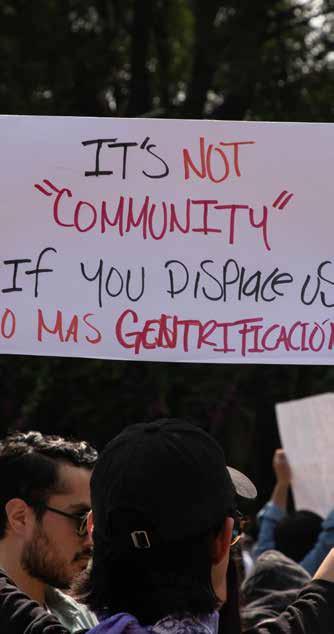
First march against gentrification held in the Condesa neighborhood of Mexico City © Shutterstock
The climate resilience dial: reduce, address, build and transform


ADDRESS RESILIENCE BUILD RESILIENCE


6.3 Enabling Conditions for Climate –Resilient Housing
Current thinking on pathways to climate resilience highlights the need to put vulnerable populations at the centre of resilience efforts.115 Of particular concern, from a climate justice perspective, is the distribution of benefits and burdens arising from climate action. Access to housing is no exception to this, particularly in urban environments. The technical side of delivering climate-resilient housing, while important, is only part of the story: ultimately, its success requires a political and social transformation that redefines how housing is produced, inhabited and governed.
Furthermore, as elaborated in previous sections of this chapter, evaluating resilience is not always straightforward. Actions implemented under the banner of climate resilience are not always intrinsically good:

Any planning for climate-resilient housing must take into account the unequal distribution of impacts
while encompassing transformative strategies that place communities at the heart of the process, they can also involve exclusionary measures that treat them as part of the problem, such as forced evictions (Figure 6.12). Any planning for climate-resilient housing must take into account the unequal distribution of impacts. With this in mind, the following section discusses two key enabling factors that enable just pathways towards climate-resilient housing: multilevel governance and sustainable housing finance.
Climate-resilient housing must start with partnerships, because no single level of government or market actor controls all the levers

6.3.1 Multilevel Governance
Climate resilient housing must start with partnerships, because no single level of government or market actor controls all the levers. Multilevel governance refers to the system of shared authority and coordination among different levels of government (international, national, regional and local) alongside non-state actors such as civil society, the private sector and communities.116 In the context of climate resilience, it implies both vertical alignment (coherence between global, national and local agendas) and horizontal collaboration (across sectors and actors). Multilevel governance in housing resonates with the idea of negotiated resilience, which acknowledges multiple definitions across different actors.117
Figure 6.12:
Illustrated by Vanesa Castán Broto REDUCERESILIENCE
At the national level, countries are increasingly recognizing buildings and housing in their climate agendas. For example, the number of countries with Nationally Determined Contributions (NDCs) that reference buildings rose from 135 in 2021 to 161 in 2024.118 Government institutions at the national level can develop broader policy frameworks that embed decarbonization, risk reduction and disaster management at different levels of decision-making, as in the Philippines (Box 6.8). For example, the government of Kenya has established requirements for affordable housing to meet green standards.
National governments can play a crucial role in protecting the right to adequate housing and establishing assurances for protecting vulnerable populations. At the same time, they can also support market development and provide security to investors and other actors through various tools such as building codes, green procurement, fiscal incentives and support for housing associations.
At the local level, action becomes real. Local governments can enact land use ordinances, planning permissions, infrastructure provision and, often, social housing portfolios. Local governments can also play a key mediator role, convening action between businesses, civil society organizations and other relevant institutions. This puts them in a unique position to support both community-led housing and incremental neighbourhood improvements that can make a difference to local resilience. Communities, for their part, mobilize populations and make room for voices that are often excluded but whose experiences are essential to build resilience, whether this is people with disabilities, imigrants, Indigenous communities or the elderly.
National governments can play a crucial role in protecting the right to adequate housing and establishing assurances for protecting vulnerable populations
Box 6.8: An innovative multilevel governance framework for climate action in the Philippines
The Philippines is often cited as one of the countries most at risk from climate change. In response, in 2009 the government approved the Republic Act (RA) 9729 and the Climate Change Act (CCA). This offers a standout case where housing resilience is integrated and mainstreamed at multiple levels of governance through ambitious legislation.
The Act created the Climate Change Commission (CCC), a policy-making government body that coordinates, monitors and evaluates climate adaptation and mitigation efforts across government. The CCC also leads implementation of the National Framework Strategy on Climate Change and the National Climate Change Action Plan (NCCAP, 2011–2028), which align climate priorities with national development planning cycles. The CCC also administers the People’s Survival Fund (PSF), replenished annually, to finance local and community level adaptation proposals, making the Philippines a pioneer in institutionalizing adaptation finance.
At the local level, the Act positions Local Government Units (LGUs) – comprising some 138 cities, 1,496 municipalities and more than 42,000 barangays – as frontline actors responsible for preparing Local Climate Change Action Plans (LCCAPs) and integrating them into local development and land-use plans. Barangays play a crucial role as first responders and as information channels between communities and municipalities. Ilolo City, for example, has leveraged multilevel governance in negotiating relocations, water conservation and nature restoration, which have addressed deepening inequality and vulnerability among the most disadvantaged groups.
Despite its strengths, the system faces challenges including overlapping institutional mandates, limited enforcement mechanisms and uneven local capacity, particularly in translating community needs – such as land and housing –into formal adaptation strategies.

NATIONAL LEVEL INSTITUTIONS
REGIONAL LEVEL
CITY GOVERNMENTS
DEPARTMENTS
BARANGAYS
Source: See and Wilmsen, 2020. Figure of multilevel governance structure in the Philippines elaborated by Vanesa Castán Broto

Private actors have considerable influence in shaping land markets and housing quality. Developers, construction firms and architects can make low-carbon, climate-responsive design the default, while investors collaborate with local plans to prevent overdevelopment in high-risk areas. Landlords and building owners have day-to-day responsibility for keeping homes safe, efficient and affordable. Professional bodies of planners, engineers, and housing federations can codify best practices, as seen in the UK’s Healthy Homes programme, which the Town and Country Planning Association supported in developing the principles and reviewing the standards.119
6.3.2 Climate-resilient housing finance
Finance for climate resilient housing continues to fall short of global needs. Tracking such investment is difficult because programmes fall into two categories: climate resilient initiatives that may include housing elements, and housing programmes (such as upgrading or reconstruction) that do not always incorporate explicit resilience components. Consequently, there is no consistent dataset of investments in climate-resilient housing. In 2022, global investment in energy efficiency for buildings reached US$285 billion,120 driven largely by heightened energy security concerns in Europe, before falling slightly to US$270 billion in 2023 – a figure that the Global Alliance for Buildings and Construction (GlobalABC) has said should be doubled to US$540 billion by 2030.121

Multiple forms of innovative finance for climate-resilient housing are emerging, including green bonds, blended finance, carbon markets and debt-for-nature swaps
However, beyond energy efficiency, identifying resilience specific housing investments is difficult, yet the number of national and multilateral initiatives with resilience elements –including energy efficiency, resettlement, social housing and flood-resilient design – has grown. Several country examples illustrate emerging practice. In the Philippines, the PSF, capitalized at PHP 1.42 billion (around US$17 million), has supported 24 locally led adaptation projects.122 Indonesia’s KOTAKU National Slum Upgrading Programme, a US$1.4 billion initiative supported by the World Bank, includes infrastructure and services that reduce climate related risks in informal settlements.123 Kenya’s Green Affordable Housing Fund, backed by €21.5 million (US$23 million) from the European Investment Bank,124 promotes climate resilient construction. France’s €5 billion (US$5.4 billion) MaPrimeRénov’ programme supports energy efficient retrofits of ageing housing.125
Finance for climate-resilient housing continues to fall short of global needs
Multiple forms of innovative finance for climate-resilient housing are emerging, including green bonds, blended finance, carbon markets and debt-for-nature swaps. However, to be viable and deliver for vulnerable groups, these approaches often need to be complemented by instruments that mitigate financing risk and enhance affordability such as grants, guarantees, and concessional finance. An encouraging example is the Barbados Roofs to Reefs programme that integrates resilience efforts from retrofitting roofs for energy efficiency and storm-water management, to improving critical infrastructure like sewer and water systems, and preserving coastal and marine ecosystems. The program is partly financed through the world’s first US$125 million debt-forclimate-resilience swap, backed by guarantees from the Inter American Development Bank and European Investment Bank, and supported by upfront grants from the Green Climate Fund.126
Barbados Island © Shutterstock
Collectively, these initiatives show progress, yet investment remains insufficient, fragmented and poorly tracked. An important gap persists in developing and scaling locally anchored, inclusive and affordable financing mechanisms for climate-resilient housing. In this regard, much can be learnt from housing cooperatives and community savings groups, which have become increasingly prevalent around the world.127
6.4 Concluding Remarks
Climate justice begins at home, it is often said, to emphasize everyone’s potential to contribute to one of the global challenges of our time. Climate justice also begins at home because the home is the site of climate action, both to reduce emissions and improve resilience.128 Bearing that in mind, this chapter has argued that:
• Far from being a trade off, reduced housing emissions go hand in hand with improvements in quality of life. Measures that promote energy efficiency, a shift to non-polluting fuel sources or circular construction simultaneously enhance comfort, safety and affordability. Furthermore, addressing climate risks in housing can also deliver improvements in habitability, as measures that increase resilience – such as insulation, shading and elevated design – also enhance comfort and liveability while at the same time lowering energy use and emissions.
• Climate resilient housing depends as much on social as physical and technical innovation. A key insight is that most sustainable forms of housing are those grounded in the knowledge, networks and agency of communities themselves. There are now decades of experience in community-led approaches to housing development that demonstrate its potential in different contexts. The People’s Process – that is, a locally-led, community-driven approach in which residents plan, build and manage housing – is central to achieving this.
• In the context of strengthening climate resilience, eviction and displacement should only be deployed as a last resort. Instead, it is crucial to reflect on local environmental conditions and the opportunities they present for in situ improvements. There are lowcost, locally implementable options for incremental improvements, whether in the existing housing stock or in the surrounding infrastructure. From the design stage through to use of the built environment, there are ample opportunities to deliver integrated approaches to climate resilience in existing and new housing as alternatives to relocation.
• Climate resilient housing ultimately demands a political and social transformation that redefines how housing is produced, inhabited, and governed. In particular, it requires multilevel governance arrangements that enable coordination not only between national and local government but also with neighbourhoods and communities, combining vertical alignment and horizontal collaboration across sectors and actors. This resonates with the idea of negotiated resilience, shaped through multiple decisions and points of intervention – an approach that helps reduce unintended impacts and promote climate justice.
• For climate resilient housing to be widely accessible, the current financing landscape needs to be fundamentally transformed. Financing and regulatory frameworks should evolve accordingly to empower community approaches, rather than bypass them, and safeguard against exclusionary dynamics such as green gentrification and green grabbing. Some finance is already available for innovative programmes that focus on affordable resilience, but must be significantly scaled up to meet growing demand. The challenges and opportunities for expanding such approaches – and the limitations of conventional housing finance – are discussed further in Chapter 8.
Endnotes
1. IPCC, 2023, Glossary p. 66.
2. UN-HABITAT, 2024a, Chapter 6, p. 174; see also UNHABITAT, 2019, p. 31.
3. UN-HABITAT, 2016c.
4. GlobalABC, 2025.
5. World Green Building Council, 2023.
6. Build Change, 2024.
7. GlobalABC, 2025.
8. UNEP, 2024.
9. European Commission, JRC & IEA, 2025.
10. IEA, 2024.
11. Blunt & Dowling, 2022.
12. IEA, 2024; IPCC, 2023 (Glossary).
13. GlobalABC, 2023.
14. GlobalABC, 2025.
15. Henfrey et al., 2023.
16. IEA, 2023a.
17. Cabeza et al., 2022.
18. GlobalABC, 2025; IEA, 2023a, p.89.
19. DECIG, 2024.
20. IEA, 2022, p.28.
21. Zhang et al., 2025.
22. Hughes & Larmour, 2024.
23. Palmer & Selincourt, 2021.
24. Franco et al., 2021.
25. One Planet Network, 2025.
26. Galvin, 2024.
27. IPCC, 2022.
28. UNEP, 2023; GlobalABC, 2025.
29. DECIG, 2024.
30. Wong, 2023.
31. IPCC, 2022b.
32. IEA, 2025.
33. Pickerill, 2025.
34. Ecovillage, n.d.
35. Pickerill, 2025.
36. Fatti, 2022; Culwick and Patel, 2020; Winston, 2022.
37. Cornwall Energy Networks. (n.d.).
38. EPA, 2025.
39. Adams et al., 2019.
40. GlobalABC, 2020.
41. Kenoteq Ltd., n.d.
42. Gjenge Makers., n.d.
43. Ramesh et al., 2010 ; Ruiz-Valero et al., 2025
44. Nordic Innovation, 2024.
45. Ruiz-Valero et al., 2025.
46. Arceo et al., 2025.
47. Lundgren et al., 2025.
48. Ostapska et al., 2024.
49. GlobalABC, 2025.
50. IEA, 2024.
51. WTO, 2025.
52. Keramidas et al., 2024.
53. UN-HABITAT, 2024a.
54. IDMC, 2025.
55. Li et al.,2025.
56. Rajagopal, 2022.
57. Carlin, et al., 2023.
58. Rajagopal, 2022.
59. UN-HABITAT, 2024a, p.85.
60. Carlin et.al, 2023.
61. Rentschler et.al, 2022.
62. UNDRR, 2023.
63. Cabinet Office, Government of Japan,2020.
64. AON, 2019.
65. ICWS, 2022.
66. ILO, 2019 ; OCHA, 2019.
67. NDRRMC, 2021
68. Enano, 2025.
69. CNN, 2021.
70. Kaye, 2022.
71. Dat, 2024.
72. Pierce et.al, 2023.
73. UNDRR, 2025a.
74. Rajagopal, 2022.
75. WHO, 2024.
76. UN-HABITAT, 2024a.
77. Li et al., 2025.
78. Boston et al., 2024.
79. UN-HABITAT, 2011a.
80. Butcher et al., 2025.
81. Beck, 2020.
82. Chatiza, 2026.
83. Rendón & Torres, 2018.
84. Pusey et al., 2022.
85. Crawford & Morrison, 2021.
86. Rajendran et al., 2025.
87. Vallecha et al., 2025.
88. Núñez, 2025.
89. Ibid.
90. Ibid.
91. Ibid.
92. Mamo, 2015.
93. Boston et.al., 2024.
94. Sharifi, 2020; Chelleri et al., 2015.
95. Colenbrander et.al., 2017.
96. Christian et al., 2023.
97. Piątek et al., 2024.
98. Mercer et al., 2007; Pathirana, 2025.
99. UN-HABITAT, 2019.
100. UNEP, 2023a.
101. Mulligan et al., 2019.
102. UNDRR, 2015.
103. Schofield & Twigg, 2019.
104. Lamb & Vale, 2024.
105. Douglas, 2018.
106. Cobbinah & Finn, 2023.
107. Salat & Ollivier, 2017.
108. Ollivier et al., 2021.
109. Garde et al., 2024.
110. Kaniewska et al., 2024.
111. King’s Cross, 2026.
112. Adelfio et al., 2021.
113. Sanders-McDonagh & Neville, 2017.
114. Abdi & Lamíquiz-Daudén, 2022.
115. Eriksen et al., 2021.
116. ICLEI-Africa, 2021.
117. Sethi et al., 2021.
118. GlobalABC, 2025, p.47
119. Town and Country Planning Association, 2023.
120. GlobalABC, 2023, p. ix.
121. GlobalABC, 2025.
122. Department of Finance, 2025.
123. World Bank, 2019.
124. EIB, 2025.
125. Ministère de la Transition écologique, 2023.
126. Inter-American Development Bank,2024; European Investment Bank, 2024.
127. Rahman & Ley, 2020 ; d’Cruz & Mudimu, 2013 ; Mitlin et al., 2011.
128. Hernández, 2022.
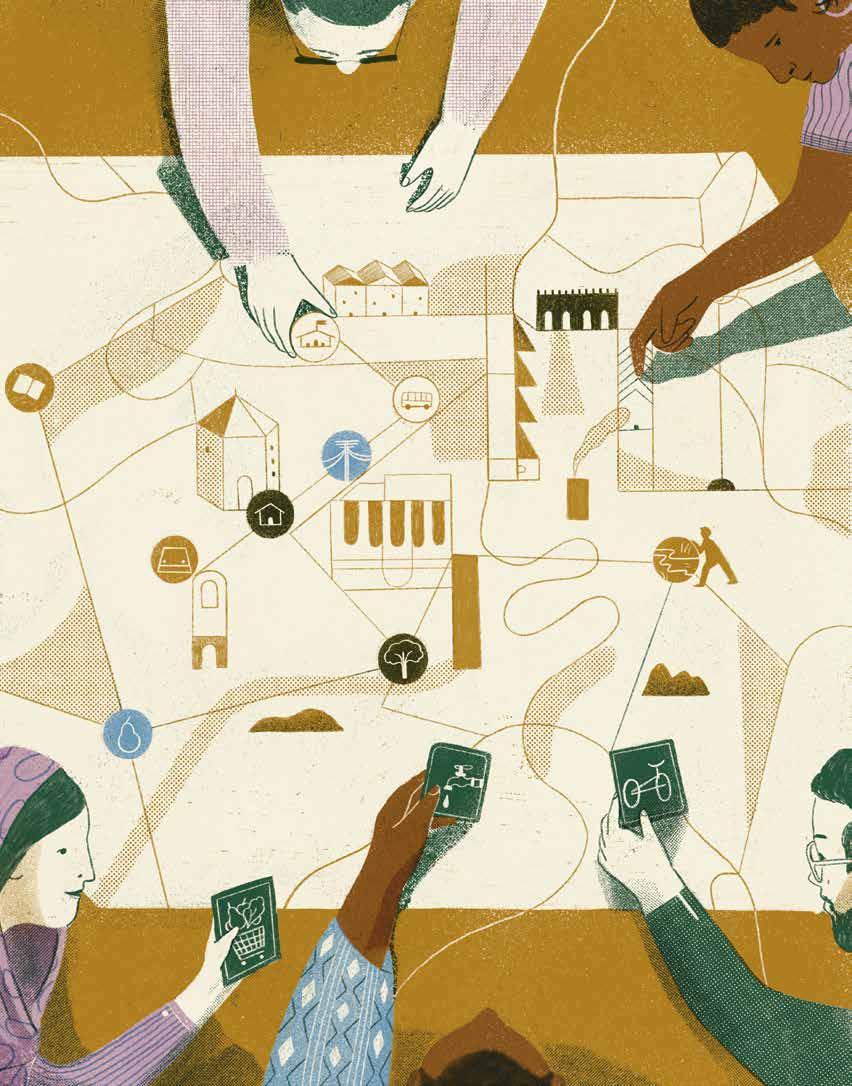
Chapter 7: Housing and the City: Delivering Equitable, Liveable and Inclusive Housing
Quick facts
1. The combined effects of decreasing affordability, poorly integrated planning and discrimination have led to increased housing segregation and fragmentation.
2. Limited civil society participation in housing, planning and management remains a major barrier to address the housing crisis, with only 19 per cent 152 surveyed of cities having strong civil society participation in urban planning.
3. Limited access to land is a key driver of increasing housing inequality.
4. From 1975 to 2025, urban areas have expanded physically at nearly twice the rate of population growth, creating low density development patterns that significantly increase per‑capita infrastructure costs.
Policy points
1. People based social housing programmes are key to address housing inequality, promote social inclusion and support marginalized groups.
2. Gender responsive and culturally appropriate design should be mandated as a core requirement for all housing and neighbourhood development.
3. Community participation, financing and decision making in housing design, construction and management can lead to more efficient and inclusive housing outcomes.
4. The development of affordable housing should be aligned with infrastructure planning and livelihood access to avoid concentrating low income communities in isolated, poorly serviced locations.
5. Proximity based planning requires proactive equity safeguards to ensure that local improvements to liveability do not displace urban poor populations as a result of price increases.
Making cities equitable, liveable and inclusive for all remains one of the greatest challenges of the 21st century. While housing has an instrumental role to play in achieving this, it has often been developed as an isolated output without adequate consideration for its wider neighbourhood, environmental, cultural and locational setting. Yet the success of a housing project is heavily determined by its integration into the city and the wide range of services and employment it provides. Without these urban opportunities, households risk further social and economic marginalization. Consequently, of the eight dimensions of adequate housing discussed in this report (see Chapter 1), this chapter pays particular attention to three dimensions that are often overlooked in housing delivery and management: accessibility (the ways in which housing must be accessible to disadvantaged groups), location (how housing needs to be in proximity to economic and social opportunities) and cultural adequacy (how it reflects the specific customs, values and local materials of its inhabitants).
Housing inclusion is increasingly challenging, extending beyond lowincome families to affect even the middle classes, who often find public and social housing provisions exclusively targeted towards the very poor.1 The pursuit of liveability must therefore be explicitly anchored in equity: focusing solely on liveability risks legitimizing high-quality spaces for those who can afford them, while perpetuating exclusion for low-income and marginalized populations. This inherent tension – between neighbourhood liveability and economic accessibility – requires effective planning and governance to reconcile competing priorities and ensure that improved urban environments benefit all residents, particularly the urban poor.
With this in mind, the chapter highlights the need for “active inclusion” and pro-poor action. It is not enough to accommodate or make space for inclusion and liveability, but urban authorities need active policies to make this happen. When addressing the housing crisis, it is important to prioritize strategies that explicitly protect and benefit low-income households, informal settlement residents and other vulnerable groups, ensuring that liveability is not only a privilege enjoyed by the affluent but a right accessible to all urban dwellers.
The pursuit of liveability must therefore be explicitly anchored in equity
Realizing the human right to adequate housing for all requires proactive urban planning and governance that places liveability and inclusion concerns central to addressing the housing crisis. The chapter is broken up into six main sections:
• The implications of housing segregation and discrimination, as well as the opportunities of social housing programmes and “Housing First” approaches to homelessness (Section 7.1).
• The value of promoting “user-centric” and culturally appropriate design, particularly for women, persons with disabilities, migrants, Indigenous Peoples and other groups traditionally excluded from planning processes (Section 7.2).
• The central role of urban governance in enabling better housing outcomes, including the contribution of devolved decisionmaking structures, pro-poor policy frameworks and housingcentred community participation in overcoming barriers to local engagement (Section 7.3).
• The critical role of the social function of land and the opportunities it creates for pro-poor and community-managed models of land management (Section 7.4).
• The importance of density, location and pro-poor improvements to prevent urban sprawl and protect low-income groups from the risk of displacement (Section 7.5).
• Some concluding remarks summarizing key lessons and ways forward (Section 7.6).
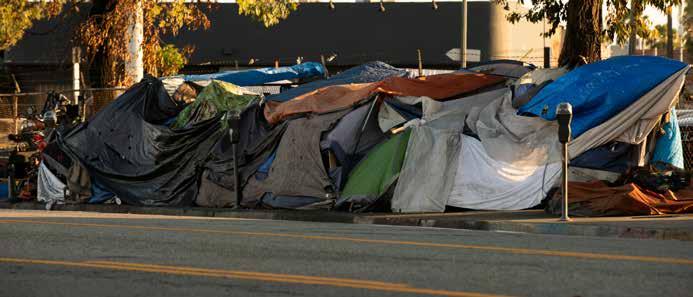
A homeless encampment sits on a street in Downtown Los Angeles, California, USA © Shutterstock
7.1
The Reality of Housing Exclusion
Across the world, the socioeconomic divide in urban areas has widened sharply over the past three decades, resulting in severe spatial and social exclusion.2 The housing crisis confronting cities worldwide is not a neutral phenomenon affecting all residents equally: rather, it represents a systematic failure that disproportionately burdens the urban poor and other vulnerable groups. Conventional development approaches often treat low-income housing needs as peripheral concerns, to be addressed through minimal standards and residual resources, while concentrating investment and quality in middleand upper-income areas. This produces a dual city where liveability is stratified by class: affluent residents enjoy access to well-designed, amenity-rich, transit-connected neighbourhoods, while the poor are relegated to informal settlements, peripheral estates or substandard housing in areas lacking basic services and opportunities.3 This is why any solution must begin with urban residents themselves and prioritize “people-based” policy approaches. These challenges must therefore be understood not only as technical problems requiring better design solutions, but as manifestations of deeper structural inequalities in how urban development is financed, governed and prioritized. Consequently, this section begins with an exploration of the dynamics of housing segregation and discrimination before discussing two highly politicized areas of intervention where the problems of housing exclusion can be met at scale: social housing and homelessness.

The socioeconomic divide in urban areas has widened sharply over the past three decades, resulting in severe spatial and social exclusion
7.1.1 The impacts of housing segregation and discrimination
The combined effects of decreasing housing affordability, poorly integrated planning and discrimination have led to increased residential and housing segregation. This has the effect of restricting disadvantaged people’s access to urban opportunities and safe environments, severely limiting the potential role of housing as an enabler for social and economic progress. Empirical studies in Europe have shown that segregation is increasing,4 with many first- and second-generation immigrants concentrated in the lowest-income neighbourhoods.5 In the United States (US), housing segregation increased in most cities from 1990 to 2014.6 In cities in developing countries, segregation often tends to be expressed along distinctions of class,7 caste, ethnicity or religion. In India, for example, both Dalits and Muslims are often discriminated against when accessing housing, leading to their segregation.8 Segregation in China is predominantly between urban residents and rural migrants, whose residential permit does not allow them to access urban amenities to the same degree.9 The COVID-19 pandemic further highlighted housing segregation (Box 7.1).
Box 7.1: How COVID-19 exposed housing inequality
The COVID-19 pandemic exposed longstanding inequalities in housing access and brought to the forefront its importance for health and economic productivity. With lockdowns in place, people living in inadequate and overcrowded housing were unable to isolate or socially distance effectively. Combined with substandard housing conditions, such as poor ventilation and a lack of sanitation, this had the effect of exposing low-income urban residents to an elevated risk of contracting the virus. Dense informal settlements with inadequate infrastructure and insecure tenure proved particularly vulnerable. For cities to strengthen their resilience to future pandemics, housing inadequacy and affordability must be addressed as core public health infrastructure, prioritizing the most vulnerable populations who are currently the most exposed.
Source: Amerio et al., 2020; Wahba, 2022.
Urban segregation can be unpacked into two distinct components: housing segregation (the uneven distribution of housing units within neighbourhoods, based on characteristics such as price, size, type or tenure) and residential segregation (the extent to which groups live separately in different parts of the city). Both are compounded by housing discrimination: this is the practice of treating people unfairly when renting, buying or financing a home, based on group characteristics or their place of residence. Examples include a landlord rejecting offers from potential tenants on account of their race, age or gender, or a bank refusing to issue a loan because of the applicant’s address.
Housing discrimination often goes under the radar and is difficult to monitor systematically. New global data collected for this report indicates that since 2010, the number of formal complaints regarding access and treatment has increased by 68 per cent.10 This figure likely reflects both the high incidence of negative incidents and improvements in monitoring and accountability. In the US, for instance, its legacy of slavery and segregation is balanced by relatively strong reporting standards that illustrate housing discrimination in its diverse forms. According to the 2025 Fair Housing Trends Report, the most common form of housing in the US was based on disability, accounting for more than half (55 per cent) of complaints filed, followed by race (16 per cent) and gender (7 per cent).11
Housing discrimination often goes under the radar and is difficult to monitor systematically
In practice, processes of segregation and discrimination work in tandem – and the housing market is one of the essential factors driving these processes.12 While higher income groups can afford housing in neighbourhoods with low crime, access to employment opportunities, minimal pollution, high-quality amenities and educational resources, lower-income households become concentrated in less attractive neighbourhoods where housing is cheap.13 Creating desirable, well-connected neighbourhoods can drive an inherent affordability gap, effectively excluding marginalized populations and reinforcing segregation. Studies show that this phenomenon is not confined to developing countries: for instance, in Vancouver, Canada, policies allowing density bonuses in exchange for affordable housing can drive the gentrification of neighbourhoods and obscure the role of political power in decisions regarding land use.14
In sum, housing segregation limits social mobility and deepens socioeconomic divides, perpetuating inequality across generations.15 Issues of inclusion and liveability are thus intimately connected to issues of housing affordability. Indeed, high and rising housing prices are associated with increasing segregation. Housing affordability in advanced economies is often compounded by racial discrimination and racial inequality. Thus, tackling the drivers of the global housing crisis requires dealing with housing segregation.16
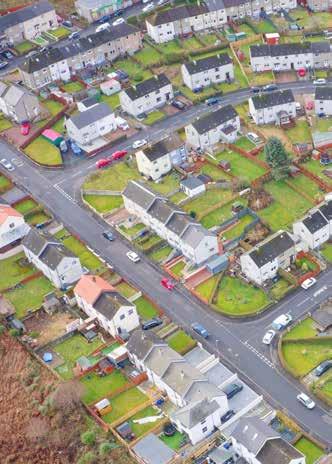
Housing affordability in advanced economies is often compounded by racial discrimination and racial inequality.17 Thus, tackling the drivers of the global housing crisis requires dealing with housing segregation.
7.1.2 Place-and-people-based policies
Place-based policies generally focus on the physical upgrading of deprived neighbourhoods, by introducing housing for more affluent residents to increase the social mix. Examples include diversifying housing designs and tenures, providing community spaces and access to transit, and specifying the social mix through rent and tenure variation. These interventions are increasingly dominant in many regions. In Europe, for instance, place-based policies have been popular since the 1990s, whereby selective demolitions, strategic construction of owner-occupied and private housing, and new allocation rules have been used to transform social housing developments. Several such programmes include France’s Politique de la Ville, the UK’s New Deal for Communities, Germany’s Soziale Stadt and the Netherlands’ Empowered Neighborhoods Policy.18
However, place-based policies have been critiqued for not addressing the root causes of segregation and not addressing specific social and cultural concerns.19 These policies have struggled to deconcentrate the poor and ethnic minorities, or to attract middle-class residents to disadvantaged suburban neighbourhoods.20 Place-based strategies can also reinforce social exclusion: they often favour older migrants and long-term residents over recent migrants, for instance, and may fuel gentrification by encouraging middle-class homeownership in poor neighbourhoods.21 Consequently, if imposed without due consideration of the complex social dynamics at play, their outcomes can even prove detrimental to the most vulnerable groups.
People-based policies, on the other hand, target specific people and vulnerable groups and give agency to people to determine where their housing needs are best met. Among the best-known people-based policies are housing voucher programs whereby eligible people can use government-issued vouchers to pay for rental cost in the private sector. India’s Pradhan Mantri Awas Yojana Scheme offers redeemable housing vouchers for purchase of public housing projects as well as private sector housing.22 In Spain, through the Youth Rental Voucher, young tenants can receive direct monthly rental subsidies of up to €250, protecting them from disruptive relocation, and ensuring that young tenants can move for work or personal reasons without losing access to housing support.23
People-based policies are also not without their limitations. For instance, they often rely on people meeting specific criteria, like age, income or job status, which can leave some residents susceptible to losing coverage and as a result being at risk of eviction of relocation. In combination, however, when implemented appropriately, the two approaches can deliver positive impacts: place-based programmes can help revitalize distressed neighbourhoods, while people-based assistance can facilitate people transitioning out of high-poverty, low-opportunity housing conditions.24
Council flats in a housing estate in Port Glasgow, Scotland, UK © Shutterstock
Box 7.2: United Nations expert recommendations on social housing
The Open-ended Intergovernmental Expert Working Group on Adequate Housing for All (OEWG-H) was established by the United Nations in 2023 as a platform for countries to work together to address the global housing crisis. In 2025, it released 11 recommendations on social housing.
Embedding social housing within a robust legal and institutional framework
1. Develop robust institutional and policy frameworks to guide the implementation of inclusive and sustainable social housing programmes, ensuring sufficient flexibility to accommodate and support incremental housing approaches, mutual-help and cooperative delivery systems.
2. Mobilize long-term, diversified and accountable public-interest financing frameworks for social housing, including tailored channels for incremental, mutual help, cooperative and community-based provision.
3. Build integrated housing, spatial and demographic data systems to support evidence-based planning and decision-making.
4. Demonstrate the public value of social housing through impact measurement.
Land allocation and spatial equity
5. Unlock access to well-located land for social housing development by mobilizing strategic public land use, land banking and land value sharing.
6. Embed social housing into urban policy and governance to ensure equitable access to housing and promote territorial justice.
7. Align social housing with infrastructure planning to support connected and inclusive communities.
Inclusive and accessible design
8. Establish inclusive, accessible and adaptable housing design standards for diverse needs and life stages, as well as form of delivery.
9. Promote cultural adequacy and economic inclusion through participatory design and support for informal livelihoods.
Integrated welfare support and transparent housing allocation
10.Develop integrated ecosystems of social partners to support the maintenance of the social housing stock and provide continued welfare support to beneficiaries, particularly through coordination with other administrative and social assistance systems.
11.Establish and implement transparent eligibility criteria and allocation procedures, grounded in principles of equity and inclusion.
Source: UN-Habitat, 2025g.
7.1.3 The potential of social housing programmes
Social housing has a significant role to play in tackling residential and housing segregation. While the definition of social housing varies significantly between countries, they typically share several features.25 The costs are generally set below formal market rates and are often linked to incomes or to the costs of the dwelling. They are designed to preserve long-term affordability. Social housing is commonly owned or managed by government bodies, non-profit or limited-profit organizations. The allocation is typically based on criteria such as need, including income level, occupation and vulnerability. Through these features, social housing can address housing inequality, promote social inclusion and support marginalized groups.
A key bottleneck to enhanced social housing delivery are governance gaps and erosion of trust. The delivery of social housing is significantly hampered by unclear mandates, fragmented responsibilities, opaque allocation processes and a lack of institutional continuity.26 The absence of dedicated providers or long-term urban planning frameworks can
Social housing has a significant role to play in tackling residential and housing segregation
further undermine the system’s ability to deliver. Where allocation procedures or eligibility criteria lack transparency, public trust in the fairness and purpose of social housing may be further weakened. Social housing is also often built in peripheral locations, which severely limits its potential (see Section 7.5 on how proximity-based planning can overcome this). To improve the supply and management of social housing, the United Nations has released key recommendations to assist countries in the development of their social housing programmes (see Box 7.2). A key trend in social housing is towards community-led and cooperative models, an area that will be explored in greater detail in Section 7.4. Social housing also has seen design innovations to address cultural adequacy and demographic shifts, through user-centric and participatory design approaches.
Cities such as Vienna (Austria), Paris (France), Barcelona (Spain), São Paulo (Brazil) and Seoul (Republic of Korea) are advancing housing agendas by planning, financing and managing social housing while integrating it within their broader urban policies. In the Netherlands, which has traditionally had a large supply of social housing, the national government recentralized public housing delivery by setting national goals of at least 30 per cent social rent in the housing stock of each municipality. It also signed performance agreements with local authorities, housing corporations, and market parties to realize 250,000 social rental homes.27 In South Africa, meanwhile, social housing is
positioned as a tool to deal with the legacy of apartheid, enhancing the mobility of people and promoting a non-racial, integrated society. In the Republic of Korea, instead of wholesale demolition and large-scale construction from scratch, a new redevelopment strategy adopted in 2012 pursues small-scale on-site demolition in older low-rise residential areas. This enables the preservation of greater diversity in housing types that is more conducive to a range of income groups than a homogenous landscape of high-rise new-builds.28 Mexico has also adopted a strong rights-based approach to social housing delivery through its Infonavit programme (Box 7.3).
Box 7.3: Delivering social housing through Mexico’s Infonavit programme
Infonavit, Mexico’s groundbreaking social housing progamme, operates on the principle that housing is a social right rather than a market commodity. It was created in 1972 by the Mexican federal government to develop and build social housing projects, primarily through the provision of long-term mortgage credit to low-income workers. In 1993, Infonavit transitioned from being solely a constructor of housing to also serving as a regulator of the social housing sector. Residential real estate developers take on the risk of funding, building and selling housing, while Infonavit provides affordable finance to employees. By allocating 5 per cent of their wages to a saving account, they can then use this to obtain a mortgage or other loan from Infonavit-related programmes. The accumulated funds, besides being used as a down payment or credit guarantee, can be added to their pension fund if they ultimately decide not to buy a house. Between January and December 2025 alone, Infonavit issued close to 600,000 housing loans, and over the course of the year also constructed more than 6,400 homes.
Source: UN-Habitat, 2011b; Mexico Business News, 2025.
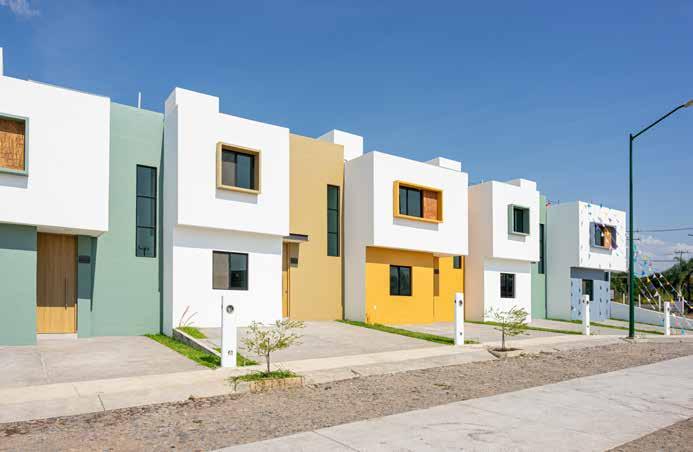
Infonavit financed social housing in Mexico © Shutterstock
1. The right to housing
THE HOMELESS BILL OF RIGHTS
2. Access to decent emergency accomodation
3. The right to use public space and to move freely within it
4. The right to equal treatment
5. The right to a postal address
6. The right to basic sanitary facilities
7. The right to emergency services
8. The right to vote
9. The right to data protection
10. The right to privacy
Adapted from: European Observatory of Homelessness, n.d.
7.1.4 Towards the decriminalization of homelessness and Housing-First approaches
Among the most egregious shortfalls to adequate housing for all is the persistent homelessness of many people around the world. There has been an increasing recognition of the need to comprehensively address this challenge,29 with more than one third of countries that prepare National Urban Policies acknowledging that homelessness a significant concern in their cities.30 Homelessness reflects the failure to guarantee the right to adequate housing and can include a broad range of experiences in which people face inadequate housing, but the focus here is on people without shelter or in temporary and crisis accommodation.

11. The right to carry out practices necessary to survival within law by the adoption in several cities of the European Observatory on Homelessness’ Homeless Bill of Rights (Figure 7.1).33 It sets out the rights of persons experiencing homelessness, including their right to use public spaces and to move freely within them, and to carry out practices needed for survival.34
Housing First approaches emphasize ensuring people have access to housing and secure tenure first, before addressing the individual underlying causes and drivers of homelessness
Conventional responses have involved the criminalization of homelessness in various forms: eviction from shelter in public spaces, the issuance of fines, incarceration and forced institutionalization, often perpetuating historical legacies of discrimination and exclusion.31 These practices exact a significant cost on local governments while failing to address the root causes of homelessness. In the US, homeless camps have been increasingly criminalized following the 2024 Supreme Court decision that empowered jurisdictions to penalize people experiencing homelessness. This has led to the ban on encampments in over 150 cities.32 However, in other contexts, there is evidence of an emerging trend towards the decriminalization of homelessness, as demonstrated
While emergency shelters and humanitarian aid play a necessary role for people experiencing sudden homelessness, they are not sustainable long-term solutions to address homelessness. It is particularly important for women, as they often face additional challenges related to safety, as well as exclusionary rules for temporary shelter regarding children and family composition.35 With this in mind, there has been a trend in homelessness policy to move away from “emergency-and-crisis-only” responses towards “Housing First” approaches. Housing First approaches emphasize ensuring people have access to housing and secure tenure first, before addressing the individual underlying causes and drivers of homelessness. It is founded on the principle that housing functions as an enabling condition to address other issues, such as finding employment or addressing substance abuse issues. In such approaches, services are still provided, but access to housing is not predicated on successful engagement. This stands in contrast to alternative “treatment first” models which require people first to address mental health issues or drug abuse, before being eligible for housing.36 Countries such as Finland (Box 3.4) and Canada have made significant progress through the Housing First model. Other examples include Scotland, where recent legislation removed the requirement for people experiencing homelessness to have a “local connection” to the area where assistance is sought, enabling people to apply for support anywhere in its territory.37
Figure 7.1: The Homeless Bill of Rights
©Burdun Iliya / Shutterstock
7.2 Promoting Inclusive Housing Design
People-based policies to enhance inclusion require attention to the needs of specific vulnerable groups and a commitment to inclusivity.38 This includes designing housing that accommodates older people and persons with disabilities, people experiencing homelessness, as well as women, migrants and Indigenous Peoples. However, design strategies that benefit one vulnerable group often improve the environment for all. For instance, a well-lit neighbourhood with varied amenities serves women’s safety, eases children’s school routes and can help people with visual impairments. Public parks with visible play areas benefit multiple groups simultaneously, demonstrating how inclusive design creates universally beneficial environments. This section examines the importance of usercentric design, with a specific focus on women, Indigenous Peoples and other groups who have historically been overlooked or sidelined by traditional planning processes.
7.2.1 The need for user-centric design
A key aspect of making housing inclusive to all is user-centric and adaptable design that can respond to the changing requirements of their inhabitants as they age, grow families or face unexpected life events. For instance, during the COVID-19 pandemic housing had to accommodate evolving needs, including remote work, isolation and multi-generational living.39 In a context like this, flexible, adaptive housing design reduces costly renovations and forced relocations, while preserving community ties and supporting climate resilience.40 Adaptable homes are long-term investments, allowing residents to remain in place longer and realize savings from sustainable upgrades that would be lost upon relocation (see Chapter 6). Overall, inclusive design extends beyond simple accessibility

During the COVID-19 pandemic housing had to accommodate evolving needs, including remote work, isolation and multigenerational living
to encompass adaptability and a multi-generational perspective, ensuring that homes remain functional for a lifetime while preserving community ties.
User-centric and participatory design approaches prioritize the values of residents in the formulation and implementation of housing. This includes a detailed consideration of factors such as safety, security, maintenance costs and the potential for future modifications.41 For instance, in Amsterdam (the Netherlands), residents have actively become “unofficial urban designers”, collaborating with architects to shape urban renewal projects that preserve the existing morphology while integrating modern comforts.42 This collaborative approach yielded specific architectural requirements that reflected the diverse needs of residents, including balconies, outdoor rooms, enclosed kitchens and varied dwelling sizes tailored to different demographics. Methodologies like recurrent interdisciplinary surveys are employed to understand shifting user expectations and inform improvement measures in large housing estates.43 For marginalized groups, such as female immigrants from the Chinese mainland in Hong Kong, participatory action research allows them to express their preferences for ideal living and community spaces, informing policy recommendations.44

User-centric design of apartment buildings in Zuidas, Amsterdam © Shutterstock
Box 7.4: Promoting gender inclusion through urban planning
While urban planning frequently disregards the particular needs and vulnerabilities of girls and women, there has been a wide range of responses to promote gender inclusion in housing, encompassing a range of entry points. These include:
A clear evidence base to inform planning: Planning agencies should develop gender-disaggregated data collection on travel patterns, time use and access to services, using this evidence to identify and eliminate spatial barriers that constrain women's economic participation and community engagement.
Gender-responsive design: in Austria, Vienna’s Frauen-Werk-Stadt projects integrate childcare facilities and shops into housing blocks to minimize caregivers’ travel time.
Progressive land use planning: In Zambia, the Southern African Development Community’ Gender Protocol has promoted policies in which 30 per cent of available public land is allocated to women. Social organizations in Zambia have also worked towards gender-responsive planning through amendments of 22 land-related laws.
Subsidized housing provision: In an effort to readdress historic exclusion of women in El Salvador, the government launched a programme in which seized homes were sold to survivors of gender-based violence at just a quarter of the average housing rate.
Safe public spaces: urban design elements, such as clear sightlines and adequate lighting, are essential for women’s security and freedom of movement. For children, this means safe routes to schools, visible play spaces and intergenerational public areas.
Housing support for survivors of gender-based violence: In São Paulo, Brazil, the Women Victims of Violence programme was launched in 2021 to provide support to female victims of domestic violence in the process of separating from their aggressors. The programme provides beneficiaries with a fast and inclusive housing purchase mechanism that does not require proof of income or banking ties, empowering them at a critical moment in their lives.
Source: Pereira & Rebelo, 2024; Zambia Ministry of Housing and Infrastructure Development, 2020; Mutenda & Chikumo-Mtonga, 2021; El Salvador Ministerio de Vivienda y Habitat, 2014.
7.2.2 Gender-responsive housing
Understanding the gendered experiences in accessing housing is critical for inclusion and liveability, as issues such as safety, mobility and access to information disproportionately affect women.45 Safety is a paramount concern for women, exacerbated by inadequate lighting, poorly designed public spaces, and insufficient policing. Access to essential services, affordable housing and economic opportunities also remains limited for women.46 This marginalization is generally rooted in complex socioeconomic, cultural and legal factors.47 For example, in Lagos (Nigeria), the majority of victims of discrimination in the rental market were femaleheaded households.48 In Asia and Africa, discrimination, customary laws and inheritance practices continue to limit women’s direct access to land and housing.
Gender-inclusive housing approaches are therefore urgently needed to ensure equitable access to housing, promote economic empowerment and involve women in decision-making processes (Box 7.4). Gender-responsive policies must also be tailored to the unique social characteristics and barriers faced by different groups of women, moving beyond a “one-size-fits-all” approach.49 Yet conventional urban planning and housing construction have all too often been indifferent to gender-specific challenges, overlooking women’s mobility patterns and caregiving responsibilities.50 Gender analysis should be institutionalized as a mandatory component of all planning approvals by requiring developers and planning agencies to demonstrate how
housing designs, infrastructure placement and service provision address the specific mobility patterns, safety concerns and time constraints of women, particularly those with caregiving responsibilities. This requires reforming planning standards to mandate the integration of childcare facilities, markets and essential services within neighbourhoods, rather than requiring separate trips. Authorities should also establish universal design requirements for well-lit pedestrian routes, visible public spaces that enable passive surveillance, and direct connections between housing, schools and transit that minimize travel time for those managing multiple household trips.
Playground and rest area in Fernvale Street HDB Estate in Singapore © Shutterstock
7.2.3
Promoting multicultural housing
Cities are increasingly becoming more multicultural, yet this diversity is rarely reflected in housing design. In many developing countries, in particular, Western design and planning standards are still followed, without appropriate recognition of local norms and culture.51 The dominance of mainstream developers and building firms has often led to the construction of homogenous housing, indifferent to different local contexts and values.52 This can have wide-ranging impacts on individual and communal well-being. While the home is an important source of identity and belonging, housing that is poorly attuned to the specific needs and practices of its inhabitants can undermine their sense of attachment.53 For instance, the standardization of mass housing can leave residents feeling alienated from their surroundings, especially if the organizational layout fails to respond to local norms around gender, age and social position. There is enormous divergence between different cultures on key issues, such as the co-residence of adult children with their parents, that can strongly determine whether or not a dwelling would be considered socially and culturally acceptable.56
Conventional urban planning and housing construction have all too often been indifferent to gender-specific challenges, overlooking women’s mobility patterns and caregiving responsibilities
Culturally appropriate housing thus goes beyond aesthetic features, such as murals or decoration, to encompass a wide range of considerations such as family size or the role of older persons in the household.57 By definition, there is no template for how culturally appropriate housing should look: its design and function will depend on the context and the community it serves. For instance, while a typical house in Europe or North America tends to be highly compartmentalized, prioritizing private over public space,58 migrant communities often adapt the design to make it more responsive to their needs. For cultures in which socializing and hosting guests is important, this may include modifications to the housing entrances, flexibility in the number of bedrooms available, and changes to the way kitchens are integrated into the layout.59 This aspect of housing flexibility is thus an important enabler of culturally appropriate housing.
In other context, responses to multiculturalism have focused on appropriate housing for Indigenous cultures, such as India’s Koraga tribal community (Box 7.5). New Zealand’s Framework Guidelines on the Right to a Decent Home in Aotearoa emphasize the importance of acknowledging and respecting cultural diversity in the country.60 In Canada, the Clayoquot Forest Communities Program involved five First Nations groups who identified the need for improved culturally appropriate housing that encouraged the use of local labour, expertise and materials such as cedar logs, as well as multipurpose spaces for evolving family needs.61
There is no template for how culturally appropriate housing should look: its design and function will depend on the context and the community it serves
Box 7.5: Supporting inclusive housing outcomes for Indigenous Koraga in Karnataka, India
India’s Koraga tribal community have long suffered housing exclusion under the caste system. While caste‐based discrimination is illegal, many prejudices remain. ActionAid India, the Koraga Federation and Samagra Grameena Ashram worked with the Koraga people in Karnataka state, India, to break this negative cycle by supporting Indigenous communities to access government schemes to which they are entitled. Under the initiative, thousands of hectares of land were secured for tribal communities and 19,000 people were provided with grants to build homes. Furthermore, enhanced access to state‐sponsored nutrition programmes have improved food security and health among the Koraga community. Through a community‐led approach, the programme empowers the marginalized tribal groups to resist oppressive practices and access their basic human right to housing.
Source: World-Habitat, n.d.-b.
7.3 The Role of Urban Governance in Housing Equity
Truly inclusive housing is only possible if everyone is able to participate in its design, development and implementation. Full participation ensures that people can actively contribute to housing decision-making processes, resulting in more transparent, inclusive and equitable outcomes.62 It helps overcome distrust and power imbalances, fostering collaborative learning and shared problem-solving among diverse stakeholders.63 Yet current participatory processes often stop short of genuine citizen control and empowerment, instead merely informing, placating or even manipulating communities with plans that have already been decided on.64
The extent to which residents are able to participate meaningfully in determining their own housing outcomes is strongly determined by the system of urban governance in place: this is the mechanism through which urban planning principles are implemented, contested and regulated across multiple levels and sectors (state, private, and community). Effective governance is crucial for achieving adequate and affordable housing, particularly in mediating the inherent tensions between market demands and social needs.65 This section look at the current barriers to achieving this and how pro-poor housing policies, devolved governance structures and full community participation can help overcome them.
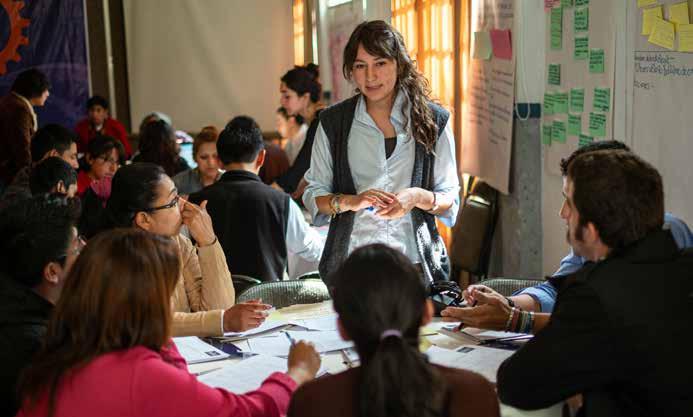
7.3.1
Limited civil society engagement
Despite decades of work on highlighting the importance of civil society participation to achieve inclusion and housing equity, progress remains uneven and in many cases is being reversed. A 2024 survey of 152 cities across 50 countries found that only 19 per cent of cities demonstrated strong civil society participation and another 18 per cent showed medium participation, with the remainder either having low (35 per cent) or very limited or no (29 per cent) participation.66 In Africa, civic space has deteriorated in 38 countries since 2014.67 According to the CIVICUS Monitor, only 3.4 per cent of the world’s population now live in countries where the rights of civil society organizations to operate freely are deemed to be “open”. By contrast, almost three quarters (73 per cent) of people live in countries characterized by “closed” or “repressive” civil spaces.68
Governance mechanisms sometimes operate as weaponized instruments of exclusion against vulnerable groups. The lack of adequate and affordable housing, coupled with processes of urban exclusion, acts as a primary driver of displacement, forcing development into precarious peri-urban areas.69 This forced settlement contributes directly to environmental and health hazards such as catastrophic wildfires, exposing already vulnerable groups to compounded risks, including pollution and infectious diseases.70 Even in formal urban settings, the socioeconomic inequalities
Exclusionary practices are often codified into policy and manifested in the physical urban landscape
embedded in housing lead to outcomes such as excess commuting, where budget-constrained key workers must accept long, suboptimal journeys and live far from their workplaces.71 These spatial and social dynamics underscore that structural failures, rather than just market pressures, perpetuate concentrated poverty and unnecessary social separation among residents.72 Exclusionary practices are often codified into policy and manifested in the physical urban landscape, characteristic of what some scholars term the “revanchist city”, which actively fosters displacement and dispossession.73 All of these underscore the crucial role that urban planning and governance can play in integrating housing into cities to create liveable and sustainable neighbourhoods.74
A starting point for safeguarding public participation is to recognize it in constitutions or secondary legislation. Bolivia, for instance, enshrined the right to participate in its national constitution, paying particular attention to the rights of Indigenous Peoples.75 Other countries, such as the United Kingdom (UK), Australia, South Africa or Chile, have established mechanisms for public participation in territorial planning in their legislative frameworks.76 However, the effectiveness of these provisions depends on the concrete modalities through which public participation takes place. Effective public participation also requires access to information, transparency in decision-making and accessible remedies for rights violations, including in housing (see Chapter 2).
La Paz / Bolivia. Group of Men and Women looking to a Young Woman who Explains something to them © Shutterstock
7.3.2 Pro-poor frameworks for action
Statutory inclusion of participation can be a critical enabler, but ultimately, participatory processes must be evaluated not by their adherence to procedural forms but by their effectiveness in amplifying the voices and advancing the interests of low-income and marginalized communities. Conventional participation often reproduces existing power imbalances, with articulate, well-resourced middle-class residents dominating consultations. Meanwhile, the poor, facing barriers of time, language, literacy and political capital, remain effectively excluded. The case of the Community Architect Program in Old Havana, Cuba, illustrates this dynamic starkly: a nominally participatory process primarily benefitted those with existing economic and social capital, while failing most low-income residents who lacked both the resources to participate effectively and the power to influence restrictive regulations.77 When public engagement is merely a “cosmetic” process and citizens’ inputs are not meaningfully incorporated, good governance is undermined, and community distrust deepens.
Genuine participatory governance for liveable neighbourhoods must therefore go beyond tokenistic consultation to actively redistribute power, providing low-income communities with technical support, legal resources and decision-making authority. Pro-poor and active participatory approaches directly involve vulnerable people in the design and implementation of interventions that affect their lives, rather than treating them as passive beneficiaries. Tools supporting such a propoor approach include reserved seats for representatives from informal
Pro-poor and active participatory approaches directly involve vulnerable people in the design and implementation of interventions that affect their lives
settlements and low-income areas on planning bodies, dedicated budgets controlled by poor communities for neighbourhood improvements, and legal frameworks that prioritize tenure security and anti-displacement protections.
Participatory budgeting is a good example of pro-poor participation. In participatory budgeting, inhabitants are closely involved in decisions to allocate public funds across various components, enabling investment choices that better reflect community priorities. Such involvement builds public trust and buy-in to municipal plans. This can transform community planning from an abstract wish list into a process that prioritizes concrete investments and builds a sense of shared ownership and accountability. Applying such an approach can accelerate improvements in housing in two ways. First applied in Porto Alegre, Brazil, participatory budgeting in that context allocated a greater share of municipal resources to fund housing and basic services.78 Participatory budgeting can also be applied to housing communities, particularly housing cooperatives and other forms of collaborative housing (see Section 7.4).
In many regions, regulatory frameworks are evolving to provide more dedicated “invited spaces” for community participation, recognizing community assets and capacities.79 Table 7.1 presents case studies demonstrating how political strategies and actor configurations have shaped housing outcomes across contexts, illustrating the relationship between political power and equitable development. However, gaps often emerge during implementation, where community participation ideals can be sidelined due to procedural expediency or bureaucratic convenience.80

View of the public market in Porto Alegre, Brazil © Shutterstock
Table 7.1: Examples of political strategies in pro-poor housing delivery
Case Actors and dynamics Strategies
Baan Mankong, Thailand
Caño Martín Peña CLT, Puerto Rico
Porto Alegre Participatory Budgeting, Brazil
• Government political will
• CODI state agency
• Slum federations
• Savings groups
• NGOs
• Community leaders
• Local elected allies
• Government land transfer
• Legal advocates
• Municipal government
• Neighbourhood assemblies
• Elected citizen delegates
• CSOs and social movements
• Strong mobilization from low-income districts
Medellín Metrocable, Colombia
Berlin Rent Control, Germany
Granby CLT, Liverpool, UK
• Progressive mayors
• Municipal agencies
• Informal settlement residents
• International partners
• Tenant unions
• Left parties
• Municipal government vs. corporate landlords
• Residents
• Community activists
• Local council (hostile then supportive)
• Housing associations
• Social investors
DC Preservation Network, US
South Africa NUSP
Mukuru Special Planning Area, Nairobi, Kenya
• Tenant organizers
• Housing providers
• Agency staff
• Researchers
• Variable official support
• Shack dweller federations
• Governments
• NGOs
• Donors
• Nairobi City County
• Community organizations and federations
• NGOs
• Universities
• Utilities
• Residents of Mukuru informal settlements, working through thematic working groups
• Direct funding to communities
• Community-led planning
• Savings as organizing base
• City-wide networks
• Decades of organizing
• Legal innovation
• Coalition with professionals
• CLT model
• Annual participatory budgeting cycle and elected budget councils
• Neighbourhood and thematic assemblies
• Explicit criteria prioritizing underserved areas
• Iterative feedback between communities and municipal planners
• Political prioritization of poorest areas
• Integrated transport-housing-space approach
• Community participation
• Sustained commitment
• Tenant organizing
• Electoral campaigns
• Rent freeze
• Decades resistance to demolition
• Guerrilla gardening
• Strategic partnerships
• CLT formation
• Architect collaboration
• Multi-stakeholder platform
• Data sharing
• Combining community and expert knowledge
• Savings as organizing
• Federation model
• Rights-based advocacy
• Community-government partnerships
• Declaration of a Special Planning Area (SPA)
• Community-led enumerations and mapping
• Multi-stakeholder consortia by sector
• Co-produced, integrated development plan
Lessons
• Household conditions improved
• Community power negotiates
• Secure tenure for many families
• Sustained organizing essential
• Strategic allies crucial
• Displacement threat catalysed political will
• Sustained political commitment and clear rules
• Pro poor criteria and residents' decision power
• Institutionalization across election cycles
• Improved access and integration
• Political leadership prioritizing poor essential
• Success created gentrification risks
• Rent freeze overturned by courts
• Expropriation blocked
• Organized tenant power faces property rights limits
• Electoral wins insufficient alone
• CLT established with community control
• Sustained resistance essential
• Austerity created opening
• Legal structure enables control
• Thousands of units preserved
• Trust-building enables action
• Knowledge is political resource
• Requires preservation funding
• Thousands upgraded
• Constitutional rights provide leverage, but need organizing
• Political will varies across municipalities
• Granting formal planning status to informal settlements
• Structuring resident participation through SPA mechanisms
• Aligning pro-poor priorities with official planning
• Community data and organization strengthen negotiating power
Sources: Shelby, 2024; Algoed, 2019; Abers et al., 2018; Montgomery,2024; Howell, 2018; Cities Alliance (n.d.); Ouma, 2024; D’Adda & Kusiak, 2025; Centre for Public Impact, 2016
Communities can leverage constitutional provisions, human rights law, international covenants and administrative procedures for strategic litigation and rights-based advocacy
Consistent with international frameworks, this report views housing as a human right (see Chapter 1). This means that communities can leverage constitutional provisions, human rights law, international covenants and administrative procedures for strategic litigation and rights-based advocacy to compel government action or block harmful policies through judicial intervention. The Constitutional Court of South Africa, for instance, has issued decisions enforcing housing rights and preventing evictions without adequate alternative accommodation, demonstrating how legal strategies can achieve policy changes that political processes alone might not produce. However, litigation requires access to legal expertise and resources that poor communities typically lack, making pro bono legal support or public interest law organizations essential. Moreover, judicial systems themselves reflect broader power relations and may prove unreceptive to rights claims that threaten property interests or require substantial public expenditure.81
Furthermore, leveraging international norms and networks can create external pressure on national and local governments by appealing to human rights frameworks, Sustainable Development Goal commitments, and international attention through United Nations special rapporteurs, international NGOs, or global housing rights networks. This proves particularly valuable in contexts where domestic political opposition is weak or where governments prove more responsive to international scrutiny than to local demands. The UN Special Rapporteur on the right to adequate housing has conducted country missions, highlighting violations and making recommendations that lend legitimacy to local advocacy.
The increasing digitalization of all aspects of housing delivery has also extended to participation. COVID-19 accelerated this shift, with many governments expanding digital service delivery, remote working tools, data-driven management and the development of “one-stop” municipal platforms. Yet, the main challenge over the past decade has been ensuring that digital transformation is inclusive and rights-based rather than technology-led. Significant digital divides persist, limiting access for those with low-incomes or limited connectivity. Low levels of meaningful community engagement in smart city initiatives can also weaken legitimacy, trust and uptake.
In response, people-centred approaches to smart cities have gained traction, emphasizing the role of technology as a tool to advance inclusion, sustainability and shared prosperity. Smart city initiatives, while leveraging technology for efficiency, must also prioritize citizen feedback and engagement to enhance urban services and effectively address housing issues.82 A pro-poor approach prioritizes equitable
People-centred approaches to smart cities have gained traction, emphasizing the role of technology as a tool to advance inclusion, sustainability and shared prosperity

access, participatory design and safeguards to manage risks, including privacy, data protection, cybersecurity and responsible use of artificial intelligence, consistent with the principles and commitments of the United Nations-led Global Digital Compact.83
7.3.3 Subsidiarity of housing governance
Realizing adequate housing with strong pro-poor community engagement relies on multi-level governance and strong coordination across different government tiers with clear roles and responsibilities.84 When national, regional and local levels of government coordinate effectively, policies are more likely to succeed, fostering development and enhancing public trust. Over the last few decades, there has been a broad trend towards the decentralization of urban planning, pushing competencies and responsibilities down to lower government levels.85 Such decentralized and collaborative governance involving government agencies, the private sector, NGOs and local communities is essential to leverage resources and expertise.86 Decentralization, however, has had mixed results. Too often, local levels of government are without adequate resources to match their new responsibilities, often considered to be not credit-worthy, and unable to benefit from economies of scale. Fragmented mandates and weak alignment often undermine local authorities’ capacity to shape development outcomes. In London (UK), for example, local planning bodies struggle to implement quality standards against macro-level economic pressures and a complex system of planning negotiations.87
Decentralization of housing governance involves multiple political actors whose interests frequently conflict, creating a contested terrain where outcomes depend on relative power rather than technical merit alone. Political executives and elected officials, including mayors, governors and council members, operate within electoral logics that may incentivize or discourage pro-poor housing policies, depending on their political constituencies and the balance of organized interests they must navigate. Middle-class voters express concerns about property values and neighbourhood change that politicians ignore at their electoral peril. Property developers provide campaign financing and political
Commuter paying with smart phone while onboarding in public transport © Shutterstock
Housing subsidiarity involves the transfer of powers, responsibilities and resources to the level of organization that is best matched to execute effective housing delivery
support, creating dependencies and obligations. Meanwhile, low-income communities that would benefit most from affordable housing typically lack equivalent political resources, organizational capacity or access to decision-makers. This results in a political asymmetry that systematically disadvantages their interests, even in formally democratic systems.88
A primary mechanism of pro-poor housing governance is therefore appropriate housing subsidiarity, which involves the transfer of powers, responsibilities and resources to the level of organization that is best matched to execute effective housing delivery. This empowers local leaders to design and implement strategies tailored to their region’s specific needs. In Japan, for example, flexible urban planning regulations and decentralized housing governance have helped to increase the supply of housing (Box 7.6). The DC Preservation Network in Washington, DC (US), illustrates how an inclusive, collaborative process can involve government agencies, affordable housing advocates and grassroots organizers. By facilitating data-sharing on building conditions, funding
Box 7.6: Decentralized housing governance in Japan
commitments, ownership and tenant needs, the network strengthens access to collective knowledge, builds trust among actors and enables effective, proactive interventions to prevent the loss of affordable housing stock (Table 7.1).89 These examples highlight that decentralization alone is insufficient: successful governance models must move beyond siloed decision-making to embrace a dynamic, interconnected multilevel governance approach that is both agile and anticipatory. Such an approach can engage multiple stakeholders and coordinate efforts across various sectors, including land use, transportation and infrastructure.90
Empowering residents and building their capacity is central to appropriately subsidiarized housing solutions. This includes tenant education in cooperative principles and architectural design, as demonstrated by the Granby CLT in Liverpool (UK) (Box 7.9). Investing in civic engagement activities builds the capacity of different communities to self-organize, learn and act in support of a shared regional vision. This involves creating meaningful opportunities for diverse stakeholder groups to participate in planning and co-create a sustainable future.91 Capacity-building initiatives should aim to empower women and marginalized groups through skill development, education and entrepreneurship, fostering economic independence.92 Training programmes for policymakers, urban planners and community leaders on housing rights and participatory governance are also crucial.93
Japan’s Basic Act for Housing defines how institutions at different levels cooperate with each other, defining the process of multilevel incorporation of public rental housing supply. Japan’s housing governance grants prefectural governments direct authority to formulate local housing plans, positioning them as a key intermediary between national and municipal levels. On the one hand, it mandates public consultation procedures, ensuring that housing planning reflects local needs and social conditions. At the same time, central government, regional housing council oversight and approval requirements based on broader national acts prevent the misuse of local power, maintaining policy coherence and institutional accountability. Combined with a radically simplified national zoning policy based on nuisance level (such as noise or pollution), these innovations in governance have helped to increase the supply of housing.
Source: Japan Ministry of Land, Infrastructure, Transport and Tourism, 2021.
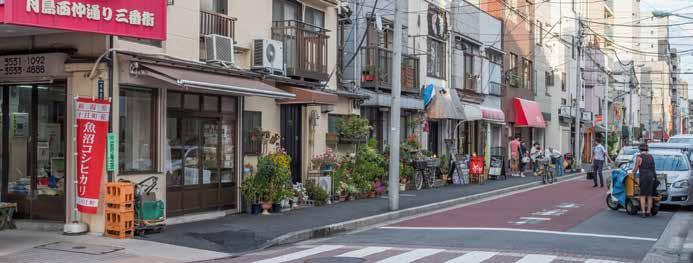
Mixed-use housing in Tokyo, Japan © Shutterstock
7.3.4
Housing-centred community participation
Housing issues have long been catalysts for community organization, offering a foundation upon which more inclusive forms of participation can be built. Tenant unions, federations of slum dwellers, community-led housing networks and similar organizations aggregate the fragmented power of individual households into a collective political force capable of sustained action.94 The Asian Coalition for Housing Rights (ACHR) network, linking slum-dweller federations across the region, demonstrates how horizontal organizing among communities can build political capacity and help share strategies across borders.95 Similarly, tenant unions in cities like Berlin (Germany) have successfully campaigned for rent controls and even municipal takeover of large corporate landlords by transforming diffuse tenant grievances into organized political demands, backed by thousands of mobilized members (Table 7.1).96
Resident concerns can also lead to forms of resistance that clash with local governments. A significant challenge arises from “Not-in-mybackyard” (NIMBY) opposition, typically voiced by established, often affluent homeowners who resist densification or new affordable/social housing. These objections, often framed as protecting neighbourhood “character” or due to concerns over density, can maintain or exacerbate social and economic inequality.97 But housing resistance can also lead to positive change. In Kampung Akuarium, Jakarta (Indonesia), for instance, the persistent efforts by evicted residents to reclaim their land and negotiate with the authorities to support reconstruction ultimately led to the development of social housing that ultimately improved their living conditions.98
Local authorities should adopt a pro-poor approach that considers how structural barriers to political participation among poor and marginalized populations can be overcome
Housing-centred community participation can also be strengthened through electoral accountability. This requires making pro-poor housing politically salient through voter education about how housing policy affects everyday lives, public scorecards rating candidates on their housing records, and targeted mobilization of affected communities during elections. Local authorities should adopt a pro-poor approach that considers how structural barriers to political participation among poor and marginalized populations can be overcome, including voter registration obstacles, time poverty that makes engagement difficult, and political alienation. Success depends on demonstrating that electoral participation can yield tangible improvements in housing conditions, rather than merely symbolic gestures.99
Coalition-building across class, sectoral and identity lines can amplify housing demands and provide technical, political and financial resources that individual organizations lack. Direct action and contentious politics, including occupations, demonstrations, civil disobedience and other forms of protest outside formal institutional channels, can create political pressure and attract media attention to unmet housing needs, helping to shift public discourse. In Brazil, the Homeless Workers Movement (MTST) has used the occupation of unused urban land to demand
housing rights, forcing government responses and demonstrating the failure of market-led provision. Such tactics prove particularly important when formal channels exclude poor communities or fail to produce meaningful responses to urgent needs. However, direct action also carries risks of repression, criminalization and political backlash that must be carefully weighed.100
Engaging sympathetic actors within state institutions also creates opportunities for internal advocacy and provides entry points for community influence over bureaucratic decisions. Identifying progressive bureaucrats, elected officials and agency staff who support pro-poor agendas enables communities to cultivate allies who can navigate institutional processes, provide information on upcoming decisions and champion community interests in internal deliberations. However, reliance on insider allies creates dependencies and may moderate demands to maintain relationships.101
Finally, demonstrating alternative models through community-led projects proves the viability of pro-poor housing approaches and exerts pressure for their adoption in policy by showing that different arrangements are possible and effective. When well-documented and disseminated, these initiatives broaden understanding of what is politically and practically feasible. However, scaling pilot projects to address housing needs requires overcoming political resistance to approaches that threaten established interests.
7.4 Realizing the Social Function of Land
Equitable access to housing and land is a key means to address the housing crisis. Social inclusion and access to services can only be realized if the question of land is tackled head on. Housing and land enable people to use their assets as collateral for other investments, and residential location is a key determinant in access to services, including schools, hospitals and parks. However, in both developed and developing countries, a lack of well-serviced urban land is creating land scarcity, rising prices and land speculation (see Chapter 1). The social function of land – its use to benefit the collective or common good – is not realized in most cities, and has become secondary to the financial value of land as a means of investment (Box 7.7). This section begins by looking at the widespread problem of land and housing vacancy as a symptom of a broader malaise brought on by the financialization of supply. From there, it discusses how land use instruments such as zoning can promote more efficient and inclusive outcomes, before presenting some key examples of successful community-led land management models worldwide.
The social function of land – its use to benefit the collective or common good – is not realized in most cities, and has become secondary to the financial value of land as a means of investment
7.4.1 The problem of vacant land and housing
Housing does not exist in isolation: the surrounding streets and neighbourhood provide many social functions to the home, including care, security, human contact and communal vitality. Realizing these benefits, however, relies on land being used and developed in inclusive and participatory ways, as well as urban design elements that promote mixed-use environments, small blocks and active streets as the foundation for urban vitality and resilience.102 Diversity, complexity and variety are essential for creating complete neighbourhoods that foster human connectivity and discourage isolation.103 The concept of “eyes on the street” – espoused by the urbanist Jane Jacobs that the presence of fellow residents in public spaces offers a form of passive surveillance that enhances security and lowers crime104 – further underscores that dense,
Box 7.7: Protecting the social function of land
mixed-use environments enhance visibility and improve public safety.105 The practice of mixing housing, commercial and office land uses helps manage transitions within neighbourhoods and facilitates active street life.106
Unfortunately, in practice most urban land markets generally conspire against such positive outcomes, instead promoting damaging and even dysfunctional development practices that actively undermine the collective interests of residents themselves in the interests of profit. One of the main ways in which the social value of land is neglected is in leaving land and housing vacant: this is often the result of a conscious decision by investors to leave land undeveloped on the assumption that its value will continue to rise regardless.
Embracing the social function of land is paramount for equitable housing provision. The social function of land means that the right of private ownership also includes an obligation to use land in a way that contributes to shared interests and the collective good, serving a crucial social purpose beyond its economic value. The social function of land was integrated into the New Urban Agenda, as it envisages “cities and human settlements that fulfil their social function, including the social and ecological function of land, with a view to progressively achieving the full realization of the right to adequate housing”. It involves reimagining zoning practices to prioritize equity, ecology and collective resource management over economic profitability. This means using urban planning to create a range of housing opportunities and choices for different income levels and co-habitation possibilities. Policies can ensure that essential urban functions are accessible at a community scale, balancing urban density with green and blue infrastructure to meet both environmental and social needs. This approach challenges the commodification of urban spaces, promoting cities as common goods free of discrimination.
Over the past decades, the social function of land has gained significant legal recognition, with Brazil serving as a prominent case. The 1988 Federal Constitution established the legal foundation for the right to the city by incorporating as a crucial principle the social function of land, property and the city. These principles were further regulated by the 2001 City Statute (Box 5.7), which recognized favelas as legitimate areas of the city entitled to public investment, basic infrastructure and public services.
Source: Foster & Bonilla, 2011; Jha et al., 2025, para 13, p.5; Yücel & Durán-Díaz, 2025; Zhang et al., 2025; Rossbach & Montandon, 2017.

Aerial view of Municipal Porada Park in Seregno, Brianza, Italy © Shutterstock
While global data on land and housing vacancy is incomplete and difficult to compare between countries, given the lack of an agreed definition of vacancy, in some contexts upwards of 15 per cent of housing stock could be vacant.107 Vacancy rates are typically higher in rural areas and small towns, as demonstrated in Figure 7.2 showing comparative levels in different European countries. However, housing vacancies in urban areas represent a far more serious opportunity cost, as all the upfront investments in infrastructure and services have already been made, but are not being used. While some vacancy is a normal part of a functioning housing market, large-scale vacant land and housing negatively impact on livability, through reduced urban activity and higher costs.108 It is also the case that housing vacancy does not translate into lower housing costs: in Bulgaria’s capital, Sofia, despite an estimated 30 per cent of housing stock lying vacant, the city has seen house prices soar against a backdrop of limited supply on the market.109
Some countries and cities have developed new and innovative ways of tackling land and housing vacancy (Table 7.2). This begins with better data collection. In the Belgian region of Wallonia, measures have been implemented to use utility bills to detect vacant homes.110 France, where an estimated 1.1 million housing units have been vacant for at least two years, has launched a national strategy to combat the problem.111 Coordinated by France’s National Housing Agency, it empowers local actors to tackle long-term vacancy through digital record keeping and
behaviour analysis to determine the best strategy.112 Some countries and cities have also experimented with taxes and fines for vacant property. For instance, since Vancouver (Canada) introduced its empty homes tax in 2017, the city has collected C$202 million as of the end of 2024, with this revenue used to support affordable housing development.113
7.4.2 The role of pro-poor land management
Land policy instruments and regulations are vital for reforming housing policies to make them more inclusive and address the housing crisis. Secure land tenure is a critical building block for people to establish sustainable livelihoods, prevent displacement (Chapter 4) and leverage the potential of informal urbanization to alleviate the housing crisis (Chapter 5). Governments can work proactively to help achieve this. In Mongolia, for example, the 2002 Law on Allocation of Land to Mongolian Citizens for Ownership aimed to democratize access to land by granting every adult citizen a one-time right to receive a residential land plot free of charge – up to 700 square metres in urban areas.114 However, this approach can have unintended knock-on effects that, if not effectively managed, can exacerbate vulnerabilities. In the case of Mongolia, the free redistribution of land has been blamed for promoting inefficient land use and sprawl in the capital of Ulaanbaatar (Figure 7.3), resulting in the spread of poorly serviced, far-flung settlements at the city’s periphery.115
Figure 7.2: Residential vacancy rates in selected European countries and their capital cities
Table 7.2: Strategies to tackle housing vacancy
Tools to help owners to bring homes back into use
Tax and regulatory reliefs
Public grants and loans
One-stop shops
Temporary rental agreements
Increased tax liabilities
Fining owners of vacant dwellings
Requisition of vacant dwellings
Dealing with secondary residences
Adapted from: Housing Europe Observatory, 2023.
Reducing the tax or regulatory burden to incentivise rehabilitation of vacant dwellings
Direct cash payment or loan to complete certain activities, like the renovation of a dwelling
Programmes to bring together the various strands of renovation and regeneration under one roof and with tailored support for applicants
Incentivize owners to plug gaps in the rental market for a defined period of time
Tools to deter owners from leaving homes vacant
Pressure owners of vacant property by increasing property taxes
Pressure owners of vacant dwellings by levelling fines in proportion to the social value of the property
Bring vacant dwellings under temporary public management
Discourage the underutilization of dwellings in areas of high demand for primary residences
Effective land use management is thus critical for sustainable, socially inclusive cities. Different zoning types – such as performance zoning for environmental protection, incentive zoning for supplying community infrastructure and inclusionary zoning requiring developers to allocate a portion of houses as social housing units116 – all contribute to greater equity by promoting diverse housing opportunities.117 A crucial aspect involves reviewing regulatory processes governing land use to increase the supply of affordable housing.118 Their effectiveness depends on local market conditions and political will: they are generally most successful when integrated into urban land and housing markets and the planning system, providing incentives to landowners and developers.119
Land and property registration and cadastres are an important tool for land valuation and taxation, as well as land dispute resolution. A functional system of land and property registration is a basic condition for effective urban planning techniques, such as land value capture, whereby a portion of the increase in land value that occurs due to public investments or planning decisions is recycled to finance public goods, including affordable housing and infrastructure.120 In Vancouver (Canada), for example, “density agreements” allow condominium developers to obtain extra density in exchange for providing affordable housing units.121 Effective land value capture requires a planning system that corrects for market failures and provides incentives for private landowners and developers to participate in affordable housing as a business proposition.122
7.4.3 The opportunity of community-led land and housing management
Embracing the social function of land means transforming participation from consultative processes to legally binding co-governance with communities. Community-led housing refers to a broad range of housing solutions that are characterized by strong community involvement, including collaborative housing, co-housing and co-operative housing. As highlighted in Chapter 1, such community-led approaches are increasingly recognized as important to realizing the social function of land. From Uruguay’s mutual aid cooperatives and Brazil’s Minha Casa, Minha Vida (“My House, My Life”) initiatives to the Philippines’
Community Mortgage Programme and European housing cooperatives, resident-led models are diversifying.
Community-led land and housing approaches rely on establishing collective tenure arrangements that transfer land ownership and development rights from state control or speculative markets to organized resident communities.123 Governments should legally recognize community-based organizations as legitimate planning authorities with statutory powers to negotiate land use, allocate housing units, manage collective assets and enforce affordability covenants in perpetuity. Urban authorities should also implement participatory land use mapping where communities can document their spatial needs and establish development funds to acquire land strategically, preventing displacement before gentrification pressures emerge.

Collaborative housing
Large-scale vacant land and housing negatively impact on livability
Successful models of collaborative governance in housing development demonstrate how collective action and multi-stakeholder partnerships can create more equitable and liveable urban environments. They must be inclusive, ensuring that all relevant stakeholders, especially nonstate actors and representatives of vulnerable communities, are invited to participate directly in the decision-making process. The process for developing such models must be governed by transparent rules for negotiation and decision-making that are established and agreed upon at the outset: this requires open communication and a genuine redistribution of power. Collaborative housing initiatives in European cities, such as Freiburg and Hamburg in Germany or Gothenburg in Sweden, also demonstrate how municipalities can support self-build groups and co-housing projects through land allocation, financial aid and the integration of social diversity.124
Elsewhere, in Mexico, the Xacalli development used participatory design tools, inspired by local forms, to create urban housing with flexible growth options for families.125 Similarly, in Dar es Salaam, Tanzania, cooperative housing societies, often community-led, demonstrate the potential of collective action, self-governance and partnerships to secure land and build housing, thereby mitigating financial constraints through active engagement, strategic resource allocation and risk management.126 It can be observed from these cases that meaningful participation requires a significant investment of time, technical expertise and financial resources. Public agencies must be willing to adequately fund the process, including providing capacity-building support for community groups and ensuring that the collaboration’s outcomes can be effectively implemented.127
Housing cooperatives
Another common form of community-led land management are housing cooperatives. In recent debates on social development, involving youth, ageing people and persons with disabilities, the United Nations Secretary-General highlighted the role of cooperatives as sustainable and successful enterprises that have an important enabling role in the creation of affordable housing options.128 Such cooperatives are common across the world, both in developed and developing countries, including more than 2.3 million housing units in Pakistan, almost 2 million in Türkiye and around 500,000 in Egypt (Table 7.3). While there is no single model, all cooperative housing is characterized by the way in which residents are members of the cooperative themselves. Community-led housing
CLTs have proven effective in securing long-term affordable housing and preventing displacement and loss
cooperatives are usually set up at the scale of their intended housing project and tend to be highly participatory, with shared values including environment-friendly design, intergenerational sharing, mutual care, open neighbourhoods and solidarity with vulnerable populations. In developing countries, housing cooperatives that gather housing demand to collectively purchase land and build are common, such as in Chile, India, Kenya, Peru, Senegal and Zimbabwe. There are also institutional housing cooperatives, often in developed countries, where a housing authority manages public housing subsidies to provide affordable housing for residents.
Community Land Trusts
The community land trust (CLT) is an alternative tenure model in which land is collectively managed and owned through a nonprofit organization that holds it in a trust on behalf of the local community, while buildings belong to the residents themself.129 By institutionalizing cooperative tenure, member tenants collectively own land and housing, transcending traditional private ownership models. CLTs have proven effective in securing long-term affordable housing and preventing displacement and loss. They make homeownership more accessible to lower-income households by maintaining prices low over time through resale restrictions.130 CLTs are flexible in incorporating multiple tenures and diverse stakeholder groups for democratic land governance, prioritizing stewardship over mere ownership.131
CLTs are among the most common legal infrastructure to produce collaborative housing.132 CLTs acquire land, with support from public or private donors, permanently removing it from the speculative market. In doing so, they provide long-term affordability while facilitating democratic community control over development. The land is never resold: instead, it is leased to individual owners, housing cooperatives, nonprofit and for-profit developers, and other entities through long-term ground leases for uses approved by the community. Ground leases, which typically last 99 years, are renewable and inheritable, with built-in affordability and resale controls.133
Beyond the core purposes of land acquisition, collective stewardship and community governance, the CLT is a flexible model that can serve multiple purposes, depending on local context and needs.134 The model is a form of community-led housing, designed to insulate against market volatility, foster social equality and encourage resident control.135 Through governance structures that ensure balanced representation of residents, community members and government authorities, CLTs embody a participatory approach to land management while ensuring affordability across generations. The Caño Martín Peña CLT in Puerto Rico (US) stands as a powerful global example of how collective land ownership can be used as a legal and institutional tool to empower informal communities, secure housing rights and guide equitable urban development in the long term (Box 7.8).
Table 7.3: Housing cooperatives in select countries
Box 7.8: The Caño Martín Peña Community Land Trust, Puerto Rico
In the late 1990s, eight informal communities along the highly polluted Mar tín Peña Channel in San Juan, Puerto Rico faced the threat of displacement from a large-scale government project to dredge the channel and redevelop the valuable adjacent land. In response, residents – in partnership with the government – established the Caño Martín Peña CLT in 2004. The CLT was established as a safeguard against gentrification, recognizing that environmental improvements paired with the area’s central location would likely attract private developers and raise land values. Residents were engaged throughout every planning phase, strengthening local leadership and grassroots organizations.
Between 2002 and 2004, more than 700 participatory meetings led to the adoption of the Law 489-2004, recognising the G-8 as the communities’ representative entity and establishing the Caño Martín Peña Community Land Trust. Approximately 80 hectares of public land were transferred to the Trust, granting residents tenure security and legal control over local development. Constituted as a nonprofit governed by a board of residents and public officials, the CLT became a mechanism to regularise land tenure for 2000 households, formalising land-occupancy rights – inheritable, mor tgageable, or saleable under a formula that limits equity – at the Land Registry.
This innovative adaptation of the CLT model to an informal settlement context effectively de-links the value of the housing from the speculative land market. A resale formula in the ground lease ensures that homes remain permanently affordable for future generations of low-income residents, preventing the gentrification that typically follows major infrastructure upgrades. The CLT is governed by a board of residents and public officials, giving the community legal control over the development of their territory. The model has not only secured tenure for thousands of families, but has also facilitated a more organized and just resettlement process for those who had to move for the dredging, ensuring they could remain within their community.
Source: Algoed, 2019.
Today, there are over 500 CLTs in countries worldwide, including Bolivia, Brazil, India and Kenya,136 demonstrating their applicability in developing countries. Brazil, for instance, launched the Favela CLT project in 2018 to pilot CLTs in informal settlements and promote national legislation.137 Its achievements included workshops in seven Brazilian cities, 139 community workshops across 10 favelas in Rio de Janeiro – resulting in two associations’ bylaws and two community plans for local improvement – and the incorporation of CLTs into the master plan of five municipalities. Within informal settlements, the sustainability of the CLT model is favoured by the presence of welldeveloped communities who perceive a clear threat of displacement and are motivated to address their lack of tenure security together, aided by a strong sense of belonging, an established process of community mobilization and connections with external organizations able to provide the necessary technical assistance to support them.138
CLTs often originate from grassroots movements. In developing countries they tend to combine land tenure reform with public infrastructure improvements – such as drainage, sanitation, green areas and resilience projects – and prioritize resident-majority boards alongside participatory oversight mechanisms. A successful case of CLTs in developed countries is the Granby Four Streets CLT, in Liverpool, UK (Box 7.9). After decades of disinvestment and failed demolition plans, residents of Granby, Liverpool, initiated a campaign to create a CLT to acquire and rehabilitate empty homes.139 Incorporated in 2011, the Granby CLT brought together residents, housing associations, the city council, and a private social finance company for refurbishment. The community designed, developed and managed their own homes,
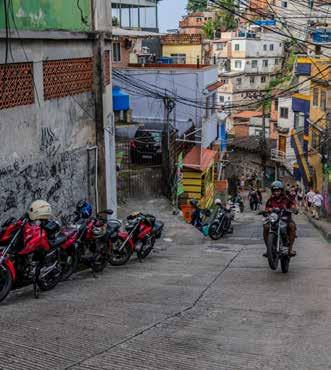
supported by tenant education in cooperative principles and architectural design. This enabled an incremental, self-sustaining, and community-led approach, demonstrating how grassroots initiatives can secure legal ownership and long-term collective control over land and resources with external support.140
View of Rocinha, the largest favela in Brazil © Shutterstock
Box 7.9: Granby Community Land Trust
The Granby Community Land Trust (CLT) in Liverpool, UK, offers a compelling example of grassroots innovation and multistakeholder collaboration in urban regeneration. Originating from informal "commoning" practices and guerrilla gardening by residents, the CLT emerged as a response to severe deprivation and dilapidated housing conditions in the Granby neighbourhood. Residents actively resisted displacement and community fragmentation, motivated by a desire for better housing conditions. The community designed, developed, and managed their own homes, supported by tenant education in cooperative principles and architectural design.
This initiative demonstrates social production of habitat through NGO-community-government partnerships. The CLT works with partners like Housing Development Solutions International (HDSI) and the National Association of Housing Cooperatives (NAHC) to attract vital support and funding, including low-interest loans from HDSI and grants from organizations like the Nationwide Foundation and the government's Empty Homes funds.
The Granby case also highlights the challenges of scaling grassroots innovations and institutionalization within a prevailing "ownership model" focused on private property rights. The long-term viability of collective control paradoxically depends on state support to authorize and finance community acquisition of land and to recognize its legal ownership. The CLT's flexibility in incorporating multiple tenures and diverse interest groups for democratic governance of land, emphasizing stewardship over ownership, is key to overcoming exclusionary dynamics and attracting broad community mandate. Systematic support and coordination from intermediary bodies are needed to replicate such mutual experiments. However, there is a recognized risk that successful common ownership institutions could mutate into large, bureaucratic concerns, losing their connection to people and place, similar to how some housing associations originally started as place-based charitable trusts.
Source: Thompson, 2015.
7.5 Integrating Housing in the City
The legacy of poorly managed urban development is often reflected in social and spatial stratification,141 resulting in physically isolated residential areas that are disconnected from key amenities, employment centres, and social infrastructure. Realizing the social integration of people within the city – the “people-based” dimension of housing policy – depends on overcoming housing segregation and inclusive participatory processes. However, without addressing the spatial component of integrating housing in the city – the “place-based” aspects – people will not be able to access urban opportunities in an equitable manner. While concepts like mixed-use development, Transit-Oriented Development (TOD) and the X-minute city offer powerful frameworks for creating vibrant neighbourhoods, their implementation often primarily benefits middle- and upper-income residents while displacing or excluding the poor. This section therefore analyses not only the potential of these planning approaches, but also their limitations and the specific interventions required to ensure they serve low-income communities and advance equity alongside liveability. After providing an overview of the challenges of urban sprawl, it examines the importance of wellplanned density and location, as well as the need for pro-poor safeguards to ensure that improvements to liveability do not result in low-income groups being displaced by gentrification.
Urban areas around the globe have expanded their physical size at a pace significantly outpacing population growth
7.5.1 Increasing urban sprawl
The rapid acceleration of global urbanization, with projections that 68 per cent of the world's population will inhabit cities by 2050 and urban populations expected to add another 2.2 billion people by that time,142 demands an immediate and critical re-evaluation of how housing is planned, governed, and integrated into the city. This unprecedented urban growth is overwhelmingly concentrated in Asia and Africa, where cities must accommodate massive population increases while confronting the dual challenge of providing adequate housing and managing urban expansion sustainably. The scale of this transformation requires moving beyond conventional development patterns that have generated extensive urban sprawl, consuming agricultural land and natural ecosystems at alarming rates while increasing infrastructure costs and environmental degradation.
In recent decades, urban areas around the globe have expanded their physical size at a pace significantly outpacing population growth. From 1975 to 2025, the area developed and inhabited by people has increased nearly twice as quickly as the world’s population.143 This has resulted in the average built-up area per capita in that period increasing from 43 to 63 square metres. Given the inefficiencies and inequities this sprawling development creates, the imperative for integrated planning and governance becomes even more acute. Low-density urban expansion increases per capita infrastructure costs for water, sewerage, roads and public services while reducing fiscal capacity to provide quality education, healthcare and social services. Urban sprawl exacerbates spatial inequality by concentrating affordable housing options in peripheral
locations far removed from employment centres, forcing low-income workers into long, expensive commutes. Environmental consequences include habitat loss, increased carbon emissions from transportation and reduced agricultural productivity as cities consume productive farmland. Such consequences have been observed in many cities globally, such as Ulaanbaatar, Mongolia (Figure 7.3).
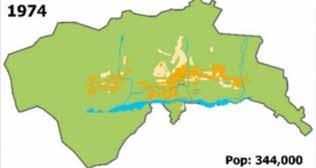
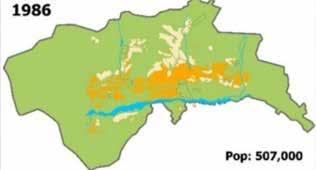
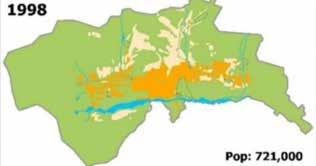
Urban sprawl exacerbates spatial inequality by concentrating affordable housing options in peripheral locations far removed from employment centres
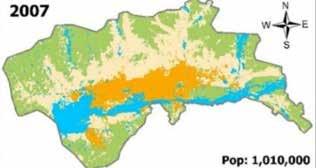
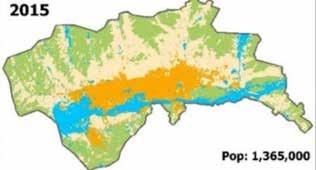
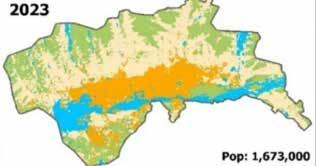
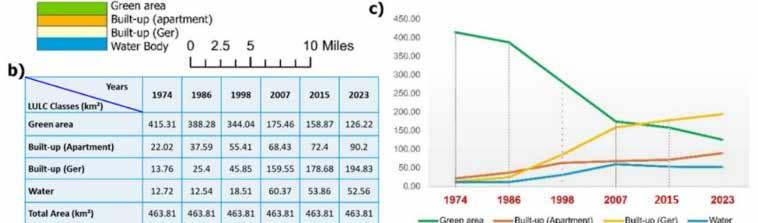
Source: Chinzorig et al., 2026.
Figure 7.3: Urban sprawl and associated loss of natural resources in Ulaanbaatar, Mongolia
7.5.2 The importance of density and effective design
Effective urban planning that integrates housing within compact, mixed-use, transit-oriented neighbourhoods offers an alternative pathway to unmanaged sprawl: reducing land consumption while improving access to opportunities, lowering household transportation costs, enabling efficient public service delivery, and creating the population densities necessary to support vibrant local economies and robust public transit systems.144 Working from these criteria, different metrics rooted in urban design are used to assess liveability and sustainable development in neighbourhoods.145 The “5Ds” approach – focused on density, diversity, design, destination accessibility and distance to transit – provides a framework for evaluating neighbourhood performance and ensuring proper access to basic services and infrastructure:146
• Density refers to increasing population and dwelling units to achieve efficiency in land use and enable proximity to opportunities.147 Urban density is essential because it creates the critical mass necessary to make public transportation, shops, and essential services viable.148
• Diversity requires a mix of housing types (such as high-rise, low-rise and affordable units) and non-residential functions (including commerce and services). It plays a key role in increasing neighbourhood liveability.149
• Design encompasses characteristics like street connectivity and pedestrian-oriented environments, which directly influence walkability and public life.150
• Destination accessibility ensures that essential services are close by, enabling daily needs to be met locally.151
• Distance to transit measures the proximity of residences to public transportation stops, promoting ridership and sustainable mobility across the city.152
The COVID-19 pandemic brought discussions on urban density to the mainstream. Initial assumptions that higher urban density directly caused higher infection rates proved false.153 Well-designed density with sufficient household space and public amenities supports vibrant urban life, while overcrowding – too many people in inadequate space – strongly correlated with disease transmission.154 Seoul (Republic of Korea), for instance, despite its high population density, was able to effectively contain COVID-19 as a result of adequate floor space, quality housing and infrastructure facilitating social distancing.155 The pandemic also highlighted the value of urban proximity where daily needs (such as work, commerce, healthcare and education) are accessible within walking or cycling distance.156 Decentralized services minimize population movement during crises, though equitable distribution is essential to avoid worsening existing inequities.
An often overlooked aspect of improving accessibility and the proximity of housing to services is the role of the urban fabric in facilitating ease of movement, particularly for pedestrians.157 Much housing is not only built far from adequate public transport and amenities, but also
located in neighbourhoods that discourage walking. While the absence of sidewalks in many developing cities is one aspect of walkability that is often highlighted,158 a neighbourhood’s spatial cohesion is also key: if the network of streets are not well connected, pedestrian travel distances can easily reach beyond what is walkable. In this regard, the prevalence of gated housing communities can be a major obstacle to pedestrian access, particularly in cities where colonial planning practices persist, segregating neighbourhoods from each other and lowering good walkable access to housing.159 Urban planning must incorporate social infrastructure and public space design principles focused on human scale, activity opportunities and community ties.160 Access to amenities (such as libraries and schools) and public spaces (including streets, squares and parks) positively correlate with social trust and neighbourly cohesion. Designing spaces at a human scale, encouraging walking and collective interaction, nurtures community life.161 Parks, community gardens and waterfronts are also essential for improving resident health, well-being and community socialization. These green and blue spaces should be considered “essential infrastructure” and provided equitably. Research in cities such as Tartu (Estonia) and Faro (Portugal) highlights that the inadequate distribution of public green space often reflects environmental injustice, disproportionately affecting minority or lowincome communities.162
7.5.3 The role of housing typologies
The demand for housing is a primary driver of urban expansion, attributable to growing urban populations, increasing unaffordability in city centres, changing preferences among urban residents for more space and higher demand for single-family dwellings, as well as government-led housing initiatives which are increasingly located outside core urban areas.163 As shown in Chapter 1, the ever larger housing consumption per capita is a key driver of the housing crisis, and this is intrinsically linked to the housing typologies people prefer and policies promote.
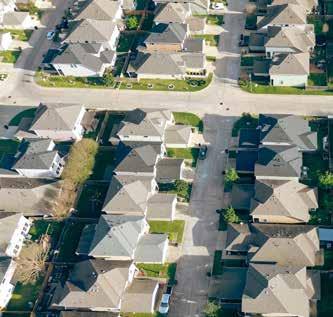
Low rise single-family housing is both expensive to built and costly to the environment
Shutterstock
Table
The contribution of various housing typologies to housing stock and built-up area
Source: UN-Habitat, 2026a.
The costs of investing in public infrastructure and services for low-rise housing development are multiplied since the distances covered by these infrastructures is far greater. A neighbourhood with low-rise typologies has a smaller tax base to cover the costs of long-term maintenance for any given stretch of infrastructure.
Comparison of a variety of housing typologies and their contribution to built-up areas and urban sprawl between 2010 and 2025 of a sample of 110 cities worldwide (presented in Table 7.4) demonstrate a number of significant including findings, including:
Low rise single housing is by far the most dominant housing typology globally in cities, accounting for 58.2 per cent of housing stock. This figure only appears to be increasing: between 2010 and 2025 period, 63 per cent of newly built urban areas was comprised of low-rise housing, with multi-family housing accounting for only 9.7 per cent and informally planned areas representing only 2.7 per cent. This shows that urban sprawl is primarily driven not by unmanaged urban growth, such as informal settlements, but by poorly planned housing development that favours low-rise typologies over more efficient alternatives. Aracaju City, Brazil, in the Figure 7.4 provides an example of the prevalence of low-rise typologies.
Besides being the most prevalent housing type, low rise single housing is also the most inefficient in terms of its land consumption. It is the only typology included in the analysis that consumes a higher proportion of land than its relative share of the housing stock, accounting for 69.2 per cent of total built-up areas in cities.
Multi dwelling apartments have better access to public transport: the largest gaps are for low rise single housing units where ridership is lowest and costs for service delivery are highest. Globally, the average proportion of the urban population with convenient access to public transport is estimated at 60.9 per cent, with significant variations across regions – from 16.2 per cent in Oceania to 83.7 per cent in Europe and Northern America164 – but these figures do not account for different housing typologies. In the sample, 65 per cent of multi-dwelling apartments enjoyed convenient access to public transport, followed by housing in unplanned areas (48 per cent), multi-family row housing units (46 per cent) and lastly lowrise housing units (42 per cent).
Much housing is not only built far from adequate public transport and amenities, but also located in neighbourhoods that discourage walking
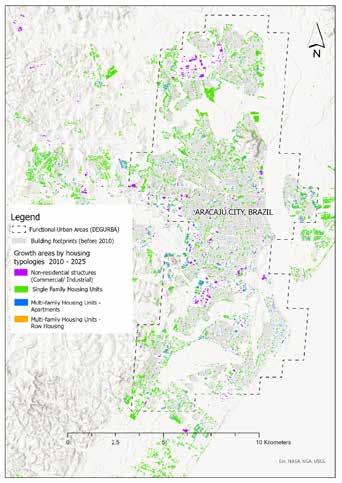
Source: UN-Habitat, 2026a .
7.4:
Figure 7.4: Single-family housing is the main contributor to urban sprawl

Access to public open space also varies considerably, depending on housing type. Globally, the average proportion of the urban population with convenient access to an open public space is estimated at 44.2 per cent, ranging from 21.2 per cent in SubSaharan Africa to 71 per cent in Australia and New Zealand.165 Looking through the lens of housing typologies, multi-family apartments again score the highest on convenient access to open public spaces (45 per cent), followed by low-rise housing (38 per cent), housing in unplanned areas (28 per cent) and finally multifamily row housing (24 per cent).
These findings demonstrate that if cities are to become sustainable, significant changes are required to the form and typology of what housing is prioritized, particularly as residential development is by far the largest land consumer in cities. This would include ensuring more affordable access to land to ensure higher housing densities. If the sampled cities had adopted planning and development policies that promoted more diverse housing typologies, including multi-family apartment housing typology (of different heights), an estimated 73 per cent of the current built up areas would have been saved, significantly reducing sprawl.
7.5.4
Enhancing spatial inclusion through proximitybased planning
Proximity represents a powerful lever for creating more equal, inclusive and resilient settlements. Cities designed around proximity allow residents to meet essential daily needs within a reasonable walking, cycling or public transport distance from home.166 Conventionally, Transit-Oriented Development (TOD) concentrates high-density, mixed-use developments within walking distance of public transit hubs,
Cities designed around proximity allow residents to meet essential daily needs within a reasonable walking, cycling or public transport distance from home
clustering offices, retail and housing to establish vibrant activity centres where residents can meet their needs without relying on private cars. In large metropolitan areas, access to jobs and specialized amenities often requires inter-neighbourhood travel, making efficient transit networks indispensable for equitable access across different social groups.167 This strategy supports sustainability, enhances access to employment opportunities and reduces reliance on cars.
But while TOD is typically applied to specific development projects, more recently a broad range of so-called “X-Minute City” approaches have emerged with essential services available within an X-minute walking or cycling distance (with “X” generally being 5, 10, 15 or 20 minutes).168
In contrast to TOD, where the focus is on mobility networks, proximity planning shifts its focus to the neighbourhood level, leveraging walking and cycling as the main mobility options. Proximity-oriented planning advocates for polycentric urban structures composed of interconnected complete neighbourhoods, where equitable and affordable housing is at its core.169 Once opportunities are available within a short distance, street design should encourage active mobility and new movement habits. Street calming measures, new green and pedestrian areas, reserved lanes for bikes, urban design interventions for appealing and safe public realm, are complementary aspects of proximity-based planning to accommodate the needs of pedestrians and cyclists and protect them from vehicle traffic.
View of a mixed-use real estate complex, housing and shops, built in 2020 in the ZAC Paris Rive Gauche © Shutterstock
In proximity-based urban planning, cities are encouraged to promote mixed land use and limit spatial specialization through land management regulations. Applying minimum service provision standards to the neighbourhood or sub-municipal level, rather than the city boundaries, ensures a more equitable distribution of facilities. This requires strong housing subsidiarity to empower local district administrations and secure strong resident engagement. Paris – a pioneer of proximitybased planning – promotes mixed land use through its vision La Ville du Quart d’Heure (“15-Minute City”)170 and the Local Bioclimatic Urban
Plan.171 Additionally, the Pact of Proximity172 decentralizes resources and decision-making powers to the local administrations (also called arrondissment). This model of urban planning is increasingly being promoted as international best practice (Box 7.10).
Proximity-oriented planning advocates for polycentric urban structures composed of interconnected complete neighbourhoods
The Global Observatory of Sustainable Proximities (GOSP) is a joint initiative led by UN-Habitat, United Cities and Local Governments (UCLG) and Sorbonne University, aimed at advancing the integration of proximity principles into sustainable urban development. Starting from the concept of the 15-minute city, the Observatory has developed an inclusive approach to define a set of global principles that promote sustainable proximities. The includes six essential social functions that should be accessible to all residents: living, working, supplying, caring, learning and enjoying.
In addition to gathering global best practices, academic research, policy tools and advocacy initiatives, the Observatory provides guidance for local governments seeking to incorporate sustainable proximity into urban projects. The methodological framework provides key principles and monitoring indicators to enhance the impact of proximity practices in cities, including measures to improve access to public services, land use mix, access to transport, biodiversity, food security and road safety, among other dimensions. Based on the successful implementation of proximity-based planning around the world, the Observatory has collected actionable recommendations to support the implementation of proximity principles.
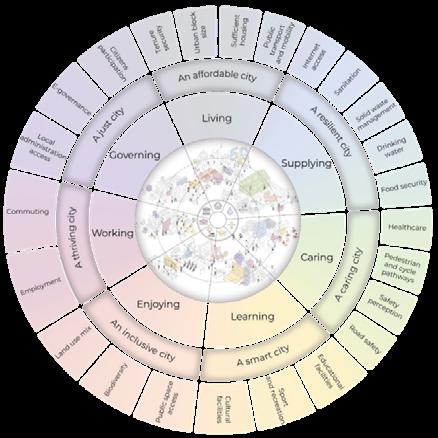
Source: Global Observatory of Sustainable Proximities, 2025.
Box 7.10: The Global Observatory of Sustainable Proximities: promoting proximity-based planning worldwide
Cities can foster partnerships with developers, private actors and strategic actors to promote equitable access to essential services, ensuring a diversified and affordable offer. For instance, the city of Paris set up “Paris Commerce”, a public operator focused on promoting, protecting and revitalising local commerce. Through Paris Commerce, the city purchases, manages and offers small commercial premises at a controlled rent to local shops, artisans and small service businesses, often hosted in social housing ground floors. Private developers are required to integrate public spaces, mobility infrastructure, social housing and public facilities, and prevent the emergence of segregated, monofunctional social housing districts in the outskirts. Johannesburg’s 2019 Inclusionary Zoning Policy is another example where, alongside density bonuses, developments larger than 20 units need to contain 30 per cent of housing units for low-income households.173

Finally, a committed political agenda is essential to foster the holistic benefits of urban proximity. Municipalities can leverage advocacy and educational efforts as well as incentives to encourage policy acceptability and behavioural change among stakeholders and citizens. The city of Busan (Republic of Korea) has adopted in 2022 a strong proximity agenda, to improve citizens’ quality of life.174 Among the various initiatives promoted under this umbrella, Busan has launched the Dongbaek Pass, a smartphone application that awards residents with digital currency when walking or visiting local services. Busan digital currency can be used to purchase goods in local facilities and shops that adhere to the initiative.
Recent studies have shown that spatial reorganization along these lines supports active mobility, decreasing reliance on cars, reducing traffic congestion and mobility-related environmental pollution.175 Besides boosting residents’ health and well-being through increased physical activity, it helps foster stronger social ties and community cohesion through the adoption of local lifestyles.
7.5.5 Pro-poor proximities
To ensure effective proximity-based urban planning, it should be strategically linked to housing and employment. The success and desirability of such connected and liveable neighbourhoods can inadvertently lead to rising property values and gentrification.176 Efforts to implement proximity-based urban planning have exposed a fundamental tension between neighbourhood liveability and economic accessibility. When a neighbourhood becomes more connected, walkable and amenity-rich, property values invariably rise, triggering gentrification that displaces the very low-income communities these projects were intended to benefit. Promoting proximity-based planning can drive up unaffordability levels if not coupled with measures addressing deeper structural inequalities and displacement.177
From a pro-poor perspective, this reveals how liveability, when pursued without explicit equity safeguards, can become a mechanism of exclusion rather than inclusion. Urban planning approaches should therefore embed anti-displacement measures from the outset, including mandatory inclusionary zoning with deep affordability requirements, collaborative land management that permanently removes land from speculative markets, rent stabilization policies, and the prioritization of publicly owned land for social housing. These interventions must be non-negotiable components of any proximity-based planning initiative, ensuring that enhanced liveability benefits existing low-income residents rather than serving as a prelude to their displacement.178 One example of this pro-poor approach is in Iztapalapa municipality in Mexico City

Liveability when pursued without explicit equity safeguards, can become a mechanism of exclusion rather than inclusion
Cablebús Crossing Over Calzada Ermita Iztapalapa in Mexico City © Shutterstock
(Mexico), where the creation of 15 so-called UTOPIAs – Units of Transformation and Organization for Inclusion and Social Harmony – have brought back dignity to one of the most populous and poorest districts of Mexico City. These large developments bring together sports facilities, education, healthcare, beauty salon, restaurants, green and public areas, completely free of charge. Originally conceived as an acupunctural strategy to target one of its most impoverished districts, authorities now plan to expand it into a city-wide network of 100 centres across Mexico City.179
Policies that support increasing population density can also lead to challenges to urban liveability.180 Urban consolidation, a strategy to accommodate population growth, often encounters resident resistance and can lead to negative impacts, including aesthetic concerns about high-rise developments, traffic congestion, loss of social diversity, declining housing affordability and erosion of local identity.181 Inadequate
public and private infrastructure, including schools, parking and open spaces, is a common issue that often fails to meet the needs of growing populations, compromising urban liveability in favour of densification.182
Thus, proactive policies like inclusionary zoning or the utilization of publicly owned land are essential to safeguard affordability alongside development.183 This is particularly vital for low-income residents, for whom transportation costs are a major component of total household expenses. Strategic investment in transport infrastructure directly impacts housing affordability by improving access to economic opportunities. By minimizing the necessity for expensive private car ownership and long commutes, proximity-based urban planning can significantly lower the total household cost of living, thereby enhancing housing affordability. Medellín, Colombia, provides an example through its Metrocable system (Table 7.1), which links hillside barrios to the city’s metro and job centres, fostering integration for poor and vulnerable communities.184
View of dedicated bus lanes on Calzada de los Misterios © Shutterstock
7.6 Concluding Remarks
Liveable, inclusive and well-connected neighbourhoods are crucial for progressing towards the broader goal of adequate and affordable housing for all. Achieving this goal goes beyond just building houses: it requires urban planning and governance to realize where communities can thrive. Ultimately, the goal is to move beyond narrow institutional or commercial interests to create urban environments that prioritize collective values such as social justice, spatial inclusion and the wellbeing of all residents.185
While the goals of liveability and inclusion have been part of policy frameworks for decades, progress has not been sufficient. To overcome structural barriers, governments and urban authorities need to adopt an active approach to housing inclusion. The following common principles distinguish them from business-as-usual urban planning and governance:
• Prioritize the needs and participation of low income communities and other vulnerable groups. This requires a holistic approach that recognizes the complex social and economic dimensions to housing, including the importance of maintaining livelihoods, preserving communities and accessing the wider opportunities that cities offer. This can only be achieved through a sustained process of participatory governance that puts residents themselves at the heart of the decision-making process.
• Incorporate affordability mechanisms that resist market pressures and the financialization of land and housing. A city’s ability to shelter its population adequately is a fundamental test of its success and sustainability: for this to happen, it must recognize and protect the value of land and housing as a social asset, not a speculative commodity. Numerous examples from around the world of public housing programmes, housing cooperatives and CLTs demonstrate that the forces of profit-seeking and extractive development, while powerful, can be actively challenged.
• Link improved neighbourhood quality directly to protections against displacement. All too often, without appropriate safeguards in
place, even well-intentioned efforts to improve living conditions and local environments in low-income communities can fuel gentrification, ultimately driving up housing costs even higher. Propoor measures such as collective land stewardships, rent controls and community-led development can help mitigate these risks by ensuring the future of poorer residents in their current place of residence even as market values continue to rise.
• Recognize that the urban poor and other vulnerable groups have rights to liveable environments, not merely claims on minimal shelter. To maximize their economic opportunities and well-being, it is not enough to focus only on the provision of housing but also the wider impacts it has for households and communities. From livelihood access to health outcomes, public safety to social cohesion, the local neighbourhood and environment can have profound implications for low-income communities. An integrated planning approach that connects housing development with these broader issues is therefore essential to prevent segregation in peripheral and poorly serviced areas.
• Uphold and implement people’s rights to housing. Communities can leverage constitutional provisions, human rights law, international covenants, and administrative procedures for strategic litigation and rights-based advocacy to compel government action or block harmful policies through judicial intervention. Governments should consider how the right to adequate housing can be practically implemented across urban planning and governance domains.
Implementation of these strategies requires political will to constrain market forces, redistribute resources and enforce regulations that protect vulnerable populations – commitments that many cities have historically lacked, but which are essential for achieving equitable urban development. As shared by participants of the 12th World Urban Forum in Cairo, Egypt, a localized approach is needed to realize the right to adequate housing.186 Addressing housing challenges requires acknowledging the distinct differences, opportunities and constraints across various regional contexts, while maintaining a consistent pro-poor focus that transcends geographic boundaries and prioritizes the needs of the most vulnerable.187
Row housing and children's playground © Shutterstock
Endnotes
1. Brysch, 2019.
2. Nilforoshan et al., 2023.
3. Nicoletti et al., 2022.
4. Musterd et al., 2017.
5. van Ham et al., 2018.
6. Owens, 2019.
7. Garrido, 2021.
8. Thorat et al., 2015.
9. Xu & Wu, 2022.
10. UN-Habitat, 2026a.
11. National Fair Housing Alliance, 2025.
12. Tammaru et al., 2020.
13. Pryce et al., 2021.
14. Hyde, 2021.
15. Arundel, 2017; Cui et al., 2020.
16. Kohl et al., 2025.
17. Lee et al., 2022.
18. Silver & Danielowski, 2019.
19. van Ham et al., 2018; Bolt et al., 2010.
20. Bolt et al., 2010.
21. Iyer & Rao, 2024.
22. Ministry of Housing and Urban Affairs, 2024.
23. National Government of Spain, 2022.
24. Owens, 2017.
25. UN-Habitat, 2025g.
26. UN-Habitat, 2025g.
27. Netherlands Ministerie van Binnenlandse Zaken en Koninkrijksrelaties, 2022.
28. Lee & Kim, 2025.
29. United Nations, 2024b.
30. OECD & UN-Habitat, 2024.
31. United Nations, 2024b.
32. Joint Center for Housing Studies of Harvard University, 2025.
33. Ploszka, 2020.
34. European Observatory of Homelessness, n.d.
35. United Nations, 2025e.
36. Atherton & Nicholls, 2008.
37. United Nations, 2024b.
38. Adewale & Parisi, 2025; Albers, 2021; Jones & Parham, 2023.
39. Liu et al., 2024.
40. UN-Habitat, 2022b.
41. Olanrewaju & Tan, 2018.
42. Albers, 2021.
43. Ostanska & Iop, 2017.
44. Kwok & Ku, 2008.
45. Adewale & Parisi, 2025.
46. Adewale & Parisi, 2025.
47. Adewale & Parisi, 2025.
48. Aliu, 2024.
49. Adewale & Parisi, 2025.
50. Gauvin et al., 2020.
51. Porter, 2006.
52. Saha, 2022.
53. Richardson, 2018; King, 2004; Eldemery, 2009.
54. Habraken, 2021.
55. Makinde, 2015.
56. Monkkonen, 2013.
57. Rachelson et al., 2019.
58. Rachelson et al., 2019.
59. Salama et al., 2017
60. Te Kāhui Tika Tangata Human Rights Commission, 2021
61. Rachelson et al., 2019
62. Levend & Fischer, 2022.
63. Howell, 2018.
64. Johar, 2017.
65. Cerrada Morato, 2022.
66. United Nations, 2025b.
67. Mo Ibrahim Foundation, 2020.
68. CIVICUS, 2025.
69. Greenberg, 2021.
70. Greenberg, 2021.
71. Xiong et al., 2021.
72. Montgomery, 2024.
73. Sudermann & Zintl, 2024.
74. UN-Habitat, 2018b.
75. Bolivia (Plurinational State of), 2009.
76. UN-Habitat, 2023c.
77. Valladares, 2017.
78. World Bank, n.d.
79. Johar, 2017.
80. Johar, 2017; Sanga et al., 2022.
81. Wilson et al., 2015.
82. UN-Habitat, 2025b.
83. United Nations, n.d.
84. Cerrada Morato, 2022.
85. UN-Habitat, 2022a.
86. Johar, 2017.
87. Cerrada Morato, 2022.
88. Gurran & Phibbs, 2015
89. Howell, 2018.
90. Cerrada Morato, 2022.
91. Walsh et al., 2017.
92. Adewale & Parisi, 2025.
93. Mubangizi, 2024.
94. Mielke & Cermeño, 2021; Power & Bergan, 2019.
95. Butcher et al., 2025.
96. D’Adda & Kusiak, 2025.
97. Doberstein, 2020.
98. ACHR, 2023.
99. Chou & Dancygier, 2021.
100. Albert, 2021.
101. Costa Silveira & Getulio Vargas, 2022.
102. Jacobs, 1961.
103. Montgomery, 2024.
104. Jacobs, 1961.
105. James, 2010.
106. Ferm & Jones, 2016; Poitras, 2009.
107. Moreno & Blanco, 2014; Housing Europe Observatory, 2023.
108. Haase et al., 2014.
109. EHC, n.d.; Mahlelieva, 2023.
110. Deffet, 2022.
111. MTATVL, 2021.
112. Housing Europe Observatory, 2023.
113. Jefferson, 2025.
114. Bagdai et al., 2012.
115. Boldbaatar et al., 2024.
116. Dadpour et al., 2024; Mishra & Mohanty, 2017.
117. Yücel & Durán-Díaz, 2025.
118. Johar, 2017; Thiel, 2018.
119. Mishra & Mohanty, 2017.
120. Mishra & Mohanty, 2017; Wahba, 2022.
121. Hyde, 2021.
122. Mishra & Mohanty, 2017.
123. Griffith et al., 2024.
124. Dang & Seemann, 2021.
125. Martin & Andrade, 2017.
126. Dakyaga et al., 2025.
127. Douglas et al., 2020.
128. United Nations, 2025d.
129. Thompson, 2015.
130. Participedia, n.d.
131. Thompson, 2015.
132. Griffith et al., 2024.
133. Davis, 2014.
134. Participedia, n.d.
135. Participedia, n.d.
136. International Center for Community Land Trusts, n.d.
137. Termo Territorial Colectivo, 2022.
138. Algoed, 2019.
139. Thompson, 2015.
140. Thompson, 2015.
141. Montgomery, 2024.
142. UN-Habitat, 2022a, p.xv.
143. UN DESA, 2025, p.36.
144. Echenique et al., 2012; Sharifi, 2019; UN-Habitat, 2009b.
145. Boulange et al., 2017.
146. Giles-Corti et al., 2023.
147. Poklewski-Koziełł et al., 2023.
148. Dinić & Mitković, 2016; Poklewski-Koziełł et al., 2023.
149. Poklewski-Koziełł et al., 2023.
150. Boulange et al., 2017.
151. Boulange et al., 2017.
152. Boulange et al., 2017.
153. UN-Habitat, 2021a.
154. Khavarian-Garmsir et al., 2021; Wahba, 2022.
155. Wahba, 2022.
156. Giles-Corti et al., 2023.
157. Pafka & Dovey, 2017.
158. Koschinsky & Talen, 2015.
159. van Oostrum, 2024.
160. Rahimi et al., 2017.
161. De Sousa Silva et al., 2018
162. De Sousa Silva et al., 2018
163. Hines, 2025; UNECE, 2025.
164. UN-Habitat, 2026a.
165. UN-Habitat, 2026a.
166. Moreno et al., 2021.
167. Tammaru et al., 2023; UN-Habitat, 2013b.
168. Sepehri & Sharifi, 2025.
169. Moreno, 2024.
170. Ville de Paris, 2022.
171. Ville de Paris, 2024.
172. Ville de Paris, 2025.
173. SAPOA, 2019.
174. Busan, n.d.
175. Marzolla et al., 2026.
176. Agyemang et al., 2020.
177. Sepehri & Sharifi, 2025.
178. Chng et al., 2024.
179. Navarro, 2024.
180. McCrea & Walters, 2012.
181. McCrea & Walters, 2012.
182. McCrea & Walters, 2012.
183. Agyemang et al., 2020.
184. Centre for Public Impact, 2016.
185. Levend & Fischer, 2022; Zhang et al., 2025.
186. UN-Habitat, 2025f.
187. Deng et al., 2025; Mubangizi, 2024; Mvuyana, 2025; Zhang et al., 2020.


Beyond the Conventionality of Housing Finance Chapter 8:
Quick facts
1. The global financing requirement for adequate and affordable housing is estimated at US$3–4 trillion annually through to 2030, in addition to significant funding needed to maintain and upgrade existing housing stock.
2. Conventional housing finance excludes the majority of households, with only one in four (25.5 per cent) of eligible applicants securing a loan in 2023, while the majority were ineligible to apply.
3. Close to half (43 per cent) of the urban workforce is informal, rising to as much as 77.9 per cent in low income countries – most of whom are unable to access conventional housing finance.
4. While home ownership remains the dominant tenure form, accounting for three quarters (74.9 per cent) of households globally in 2023, a significant and growing share (15.9 per cent) rely on rental housing.
5. The majority of urban households cannot viably access long term homeownership finance, making affordable rental or social housing the most realistic option.
Policy points
1. Effective and inclusive housing finance should balance the dual role of housing as an economic asset and a basic human right, combining sustainable financing with tailored social safeguards.
2. To expand inclusion, housing finance need to move beyond mortgage‑centric models to support incremental and microfinance loans, savings‑based pathways, rent‑to‑own and rental housing, collective ownership models, and targeted non‑debt interventions.
3. Robust de risking frameworks that allocate risks transparently across government, developers, investors and households, such as insurance, guarantees, blended finance and securitization, can help catalyse the delivery of affordable housing at scale.
4. Urban land should be leveraged as a strategic asset, using land banking, leases, and value capture to curb speculation and channel gains into affordable housing.
5. National housing strategies should prioritize the financing of large‑scale rental and social housing as a central pillar, supported through non‑speculative land management, public‑private partnerships and and long term affordability safeguards.
While adequate housing has been firmly established on the global development agenda as a fundamental right, housing finance policy has largely been shaped by framing housing as a market commodity. This has contributed to widespread outcomes of systemic exclusion, declining affordability, widening inequalities, and the harmful financialization of housing, with impacts evident across both developed and developing economies.1 The “enabling markets” framework championed in the 1990s2 positioned the market, rather than the state, as the primary driver of housing delivery. As a result, many governments undertook wide-ranging policy, institutional and regulatory reforms to enable more efficient private home ownership form of housing finance, driven by the assumption that an “enabled” market would naturally provide for all. In subsequent years it has become clear that, while markets matter a great deal, they have consistently failed to serve the poorest and most vulnerable groups. The resulting market versus needs gap, and by extension the gap in conventional housing finance, is reflected in the scale and persistence of the global housing crisis. To achieve adequate housing for all, it is estimated that US$3–4trillion annually is required through 2030, in addition to substantial investment required to maintain and upgrade existing housing stock.3 Consequently, any meaningful response to the global housing crisis should seek to develop and scale financing solutions that can reach those excluded by conventional housing finance.
The UN-Habitat-led Open-Ended Working Group on Housing defines housing finance as “the systems, instruments and institutions that enable individuals, households and developers to access the capital needed for the construction, purchase, improvement or rental of housing”.4 Put
Any meaningful response to the global housing crisis should seek to develop and scale financing solutions that can reach those excluded by conventional housing finance
another way, housing finance should fundamentally enhances efficient flow and affordability of capital across the housing value chain from land acquisition and planning to design, construction, use, maintenance, renovation and retrofitting. It further follows, in advancing adequate housing as a basic human right for all, housing finance needs to support a continuum of solutions to meet the needs of diverse income groups, tenure options, and delivery models beyond individual mortgage- based homeownership tenure, especially those excluded from the conventional systems.
For a majority of those excluded, long-term debt-based homeownership finance for housing in urban areas may not be viable option. Policy therefore needs to shift decisively toward social protection and targeted subsidies that safeguard against further shelter induced impoverishment. Beyond mortgages, financing large-scale social and private rental solutions, as well as incremental and collectively owned housing arrangements, are critical pathways for realizing the right to adequate housing for all. It is also crucial that governments and financial institutions recognize the prevalence of informal workers representing close to half (43 per cent) of the urban workforce and rising to as much as 77.9 per cent in low-income countries, whose irregular or cash-based income limit their ability to access long-term debt-based forms of housing finance.
Aerial view of standardized houses of the Minha Casa Minha Vida Program of the State of Sao Paulo, Brazil © Shutterstock
Given the severely constrained fiscal space that national and local governments are operating in today, significant shifts are needed to unlock financing beyond public funding sources to develop adequate and affordable housing at scale.5 This requires mobilising housing finance from a broader ecosystem of funding sources, alongside more systematic approaches to identifying, pricing, and managing risks—ranging from
household credit risk and developer performance to environmental and climate risks. It further calls for stronger recognition of the interdependencies between financial services, construction systems, and land markets, as well as the expanded role of non-bank actors and data and technology enabled solutions, as illustrated in Figure 8.1.
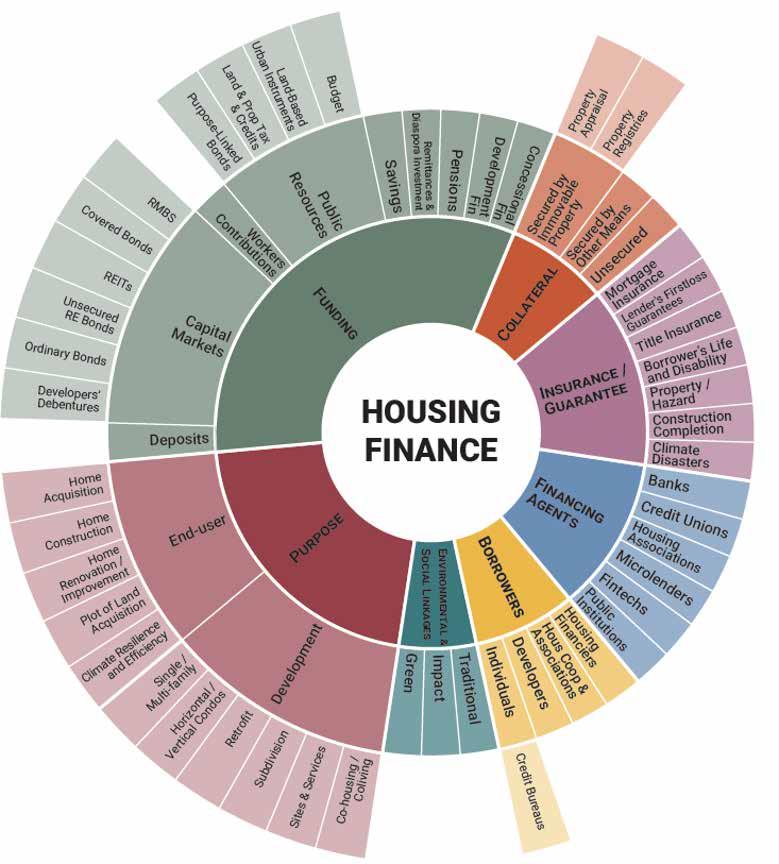
Image credit: Claudia Magalhães and Rennata Magalhães.
Figure 8.1: The housing finance ecosystem
It is essential to recognize that housing needs are met through a wide range of tenure forms
Anchored on evidence and case studies, this chapter advances discussion an inclusive and resilient housing finance framework that looks beyond the narrow logic of market delivery. Instead, it centres housing as a basic human right while being attentive to market imperatives. The chapter contributes to debates on how to broaden and deepen housing finance beyond the conventional mechanisms to accelerate the realization of the right to adequate and affordable housing for all.
The chapter includes:
An overview of housing finance needs across different regions, demographics and socioeconomic groups, highlighting who is excluded from conventional systems and why. It also examines the risks of extending conventional models to these groups (Section 8.1).
An exploration of successful alternative financing mechanisms at household, community, city and national levels, including inclusive mortgages, pro-poor subsidies, government-led savings schemes and microfinance, analysing their features and the barriers to broader institutionalization and scale (Section 8.2).
An examination of large-scale housing production, assessing how developers, investors, and especially local and national governments can deliver adequate and affordable housing within a rights-based framework. It also critically reflects on strategies for de-risking affordable housing (Section 8.3).
A short framework for building an inclusive and resilient housing finance ecosystem, bringing together resource mobilization, land rights, risk management, digitalization and monitoring (Section 8.4).
Some final concluding remarks, drawing on the analysis in the chapter (Section 8.5).
8.1 Assessing Housing Needs and Housing Finance Gaps
Over the last three decades, a succession of global milestones – from the United Nation’s articulation of the right to adequate housing in 1991 and the Habitat Agenda in 1996 to the formulation of the Sustainable Development Goals (SDGs) in 2015 and the New Urban Agenda the following year – have progressively affirmed adequate housing as a basic human right. However, policy around housing finance has developed dominantly on the framework of housing as a market commodity. Conventional housing finance is typically structured through mortgagebased financing tied to secure and collateralizable property title and market-priced interest rate based on assessed credit risk profile of the borrower (Box 8.1). While this structure supports capital market development and has proved relatively effective for middle- and higherincome groups, it is increasingly evident that markets alone cannot
Box 8.1: Moving beyond the dominant paradigm of homeownership
From the outset, it is essential to recognize that housing needs are met through a wide range of tenure forms, including outright homeownership, private and social rental housing, cooperative and mutual ownership, community-led land and housing arrangements, supportive or group housing, and various forms of incremental or hybrid tenures. Yet this diversity is rarely reflected in conventional housing finance systems, where the focus is primarily on homeownership. As argued in this chapter, there is a significant proportion of the population for whom ownership-focused financing is unfeasible and even potentially harmful.
Although homeownership remains the dominant tenure globally, accounting for an estimated 74.9 per cent of occupied housing units in 2023 (see Figure 8.2), down slightly from 75.5 per cent in 2020, there is substantial variation across countries. Homeownership rates range from as high as 98 per cent in Uzbekistan to just 36.4 per cent in Colombia.8 Rental housing represents the second most prevalent tenure, accommodating a growing share of the population – around 17 per cent globally in 2023, up from 13.5 per cent in 2020 which is equivalent to more than one billion people worldwide. In a significant number of countries, the proportion of the population renting exceeds 30 or even 40 per cent.9 Consequently, there needs to be a similarly diverse range of finance solutions to respond to these different housing types.

Calgary, Alberta, Canada Real estate signs were photographed in a residential area © Shutterstock
AustraliaandNewZealandCentralandSouthernAsiaEasternand South-EasternAsiaEuropeandNorternAmericaLatinAmericaandCaribbean
Source: UN-Habitat, 2026.
efficiently and equitably deliver adequate and affordable housing for all income groups, particularly low-income and vulnerable households6 who remain structurally excluded either through lack of credit histories, collateralizable assets or the imposition of inflated interest rates due to their perceived risk.7 The outcome is that housing stands out as one of the most visible arenas of inequality in today’s urbanized world.
While this chapter will in due course explore potential solutions and innovative approaches, this first section examines the exclusionary dynamics experienced by certain groups, including the homeless, displaced groups and informal workers. It then assesses to what extent the conventional finance system is not reaching the majority of households worldwide and the barriers contributing to their exclusion. From there, it attempts to identify four distinct groups of urban residents, arguing that each requires a specific form of assistance.
The discussion in Section 8.1 will examine the issue of financing shortfalls from the perspective of home ownership. The analysis of rental housing supply solutions, which are unquestionably a central pillar of inclusive and affordable housing, will be taken up in Section 8.3 discussing capital and risk structuring for large-scale developers, including city and national governments. Other tenure forms will be addressed through a case study approach in Section 8.2.
Markets alone cannot efficiently and equitably deliver adequate, and affordable housing for all income groups
8.1.1 Identifying key groups excluded from conventional housing finance
This chapter reframes housing finance within a right-based framework, recognizing its dual role as an enabler of housing as a basic human right and as a market commodity. To achieve this, it is essential to look beyond the aggregate global and regional statistics to get a clearer picture of the people behind the numbers. Understanding the perspective of low-income and excluded households helps illuminate the gaps and systemic barriers they face in accessing conventional housing finance. Some of the key groups currently sidelined by the system as a result of lack of resources, uncertain legal status, societal barriers or institutional discrimination are discussed below.
People experiencing homelessness constitute the most visible group lacking access to adequate housing. This group includes internally displaced persons, refugees and migrants who often lack any form of secure shelter: globally, at least 133 million people were estimated to be displaced by conflict, persecution, violence and natural disaster as of the end of 2024,10 a figure that is likely a gross underestimation and does not include the millions of urban residents subjected to evictions every year (Chapter 1). Displaced persons, refugees and migrants often faces a range of legal and structural barriers to accessing adequate housing, including lack of documentation, the absence of local credit history, language barriers and discrimination. Homelessness cuts across both developing and developing economies, with estimates of at least 2.2 million people experiencing homelessness in OECD and EU countries as of 2024.11
Figure 8.2: Percentage of occupied housing units that are owner-occupied as of 2023
Informal workers comprise the largest socioeconomic group at high risk of lacking access to adequate housing, accounting for 58 per cent of workers globally – amounting to around 2 billion workers.12 The patterns of informal employment, however, vary sharply by location, with rural workers globally twice as likely to be informal (82 per cent) as their urban counterparts (43 per cent). Even within urban areas, informality differs significantly across income groups: in high-income countries only 13.6 per cent of urban workers are informally employed, while this rises dramatically in lower-middle-income countries (72.9 per cent) and low income countries (77.9 per cent).13 There is strong evidence that informal housing and informal employment are deeply interlinked and mutually reinforcing,14 with informal workers disproportionately residing in slums and informal settlements (as discussed in Chapter 5). Informal workers typically earn substantially lower and more unstable incomes than those in formal employment, effectively pricing them out of formal housing markets and pushing them toward peripheral informal settlements with inadequate housing conditions and little or no basic services.15 Compounding this, many informal settlements sit on land with insecure or illegal title, which systemically locks them out of formal housing finance because of a lack of lienable collateral.16
Beyond informal workers, other vulnerable groups disproportionately experience a lack of adequate housing based on their demographic, environmental and socioeconomic characteristics. Older persons increasingly face lack of housing as well as inadequate, inaccessible or
People experiencing homelessness constitute the most visible group lacking access to adequate housing.
unaffordable housing, particularly in urban areas, with many occupying housing that lacks accessible infrastructure or social support.17 Older persons tend to have diminishing income sources, limiting their ability to secure adequate housing with sufficient supporting infrastructure.18 Single parent households, especially those that are female-headed, face significant barriers to securing adequate housing in urban areas and are also disproportionately at risk of homelessness due to lower average incomes, limited access to affordable childcare and discriminatory socio cultural norms.19 Meanwhile people living with disabilities, including people with reduced mobility, face higher barriers in accessing adequate, affordable and accessible housing. They are more likely than people without disabilities to face severe housing cost overburden, live alone and experience social isolation, as well as remain in the parental home well into adulthood due to the difficulty of securing suitable housing.20
People living in territories with an elevated climate risk are also experiencing increasing housing insecurities as more extreme weather drives large-scale housing and infrastructure destruction. Across the Caribbean and the Pacific, islands and coastal cities, especially in Small Island Developing States, are experiencing increasing inundation and

Wheelchair Ramp fitted to front of home © Shutterstock
Table 8.1: Summary of social groups with an elevated risk of inadequate housing
Group
People experiencing displacement or homelessness
Estimated scale
Significant displacement (at least 133 million internally displaced persons and refugees globally as of 2024) as well as widespread homelessness (2.2 million people in OECD and EU countries alone)
Informal workers Around 2 billion workers globally (approximately 58 per cent of global workforce). In urban areas, the global proportion is 43 per cent, ranging between 13.9 and 77.9 per cent, depending on the region
Older persons Increasingly face inadequate, inaccessible or unaffordable housing, particularly in urban areas
Single-parent households (especially female headed)
People living with disabilities
Climate-vulnerable populations
No single global figure, but consistently overrepresented among the urban poor
Estimated at around one-quarter of adults in OECD and EU countries
No single global figure, but escalating and widespread across regions
erosion. For instance, when Tropical Cyclone Pam hit Vanuatu in 2015, over 16,000 housing units were damaged and over 65,000 people – roughly one quarter of the national population at the time – were displaced from their homes.21 Interlinked to the destruction of housing, the affordability and availability of property insurance for such highclimate-risk territories is rapidly deteriorating.22 For instance, in fireaffected ZIP codes of Altadena and Pacific Palisades in California (US), homeowners’ insurance premiums rose by 26 and 33 per cent above inflation respectively between 2018 and 2022.23 In the Caribbean, annual premiums for property insurance have also risen sharply in response to increasingly frequent and severe storms in the region, even for households that have not incurred any direct damage or made any claims.24
Table 8.1 summarises the key vulnerable social groups and the key drivers of their elevated risk to lacking access to adequate housing. Recognizing the specific challenges that these and other vulnerable groups face is key to tailoring an inclusive and resilient housing finance system, particularly
People living in territories with an elevated climate risk are also experiencing increasing housing insecurities as more extreme weather drives large-scale housing and infrastructure destruction
Key drivers of high risk of lacking access to adequate housing
• Legal exclusion
• Lack of documentation
• No local credit history
• Language barriers and discrimination
• Restricted access to formal housing or finance
• Low and unstable incomes
• Concentration in informal settlements which lack lienable collateral
• Declining incomes
• Lack of accessible housing
• Insufficient social support
• Lower average incomes
• Unaffordable childcare
• Discriminatory sociocultural norms
• Inaccessible built environments
• Limited availability of adapted units
• Higher likelihood of cost overburden and living alone
• Housing destruction
• Rising insurance premiums
• Chronic exposure to hazards
• Increasing cost/decline of insurability in high risk zones
considering the diversity of characteristics and needs. Consequently, a key argument throughout this chapter is the need for diverse and flexible financing models to support the majority of the global population currently excluded from conventional housing finance.
8.1.2 Evaluating housing finance gaps
Financing remains one of the most significant barriers to achieving adequate housing for all, particularly for low-income and vulnerable groups. Consequently, understanding the limitations of conventional housing finance systems is of utmost importance to move toward more comprehensive, inclusionary frameworks. This section will draw out the scale of the shortfall from the perspective of home ownership and the limited coverage of formal financing in this area.
From a household’s perspective, a housing unit often represents the most significant financial investment made in a lifetime. Conventional housing finance for homeownership is typically accessed through a bank-mediated mortgage arrangement. A mortgage is a powerful financing tool that converts massive capital demands into manageable payments. Moreover, by relying on collateral – established through legally recognized tenure rights over immovable property – mortgages are priced at lower interest rates compared to unsecured debt, as the use of property as collateral substantially reduces the lender’s credit risk. While mortgage lending often relies on relatively standardized eligibility criteria, a significant majority fall outside these parameters, making it difficult or impossible for them to secure any loans. The result is huge variations in access at regional and even intra-regional levels.
Globally, only one in four applicants (25.5 per cent) successfully secured a housing loan in 2023. It should be noted that, as the majority of households in many developing countries are not even eligible to apply, the actual proportion of the global population excluded from formal housing finance is likely much higher. Though this marks an increase from 19.8 per cent in 2010, it nevertheless highlights the limited reach of conventional housing finance, particularly in certain regions (Figure 8.3). For instance, while Australia and New Zealand region records 71.5 per cent housing loan access, in Sub-Saharan Africa this falls to just 8.9 percent. One way of interpreting these disparities is by regional income level. While some high-income economies such as Australia (80 per cent), Canada (78 per cent) and Japan (75 per cent) show comparatively high access,25 many low-income countries – particularly those with high informality, weak credit systems and limited collateral frameworks – remain far below global averages. This leads to the perception that conventional housing finance functions as a “luxury good”, accessible primarily in more advanced economies.26
Access to conventional housing finance, often in the form of a mortgage, depends on three structural elements: income capacity, collateral quality and perceived risks
Source: UN-Habitat, 2026a.
Disparities even within the same broad region are particularly striking and highlight that income level alone cannot explain differences in access to formal housing finance. For example, in Sub-Saharan Africa, access to housing loans ranges from 32 per cent in South Africa to just 1 per cent in Central African Republic and Eritrea.27 This shows how financial infrastructure, credit information systems and policy environments can dramatically shape housing finance outcomes. In Europe and Northern America, access spans from 78 per cent in Canada and the United States (US) to less than a tenth of this in Moldova (8 per cent) and Ukraine (5 per cent), suggesting that regulatory efficiency, mortgage market development and urbanization patterns could also contribute to variation. Viewed through the lens of the right to adequate housing, these inter- and intra regional gaps point to an inclusion and equity challenge, underscoring the need for more diversified, inclusive and context-responsive housing finance models.
8.1.3 Access barriers to conventional housing finance
In practice, access to conventional housing finance, often in the form of a mortgage, depends on three structural elements: income capacity, collateral quality and perceived risks. These three elements jointly determine whether a household is considered bankable and eligible for a mortgage facility. Where any of these elements are weak or systematically unavailable for vulnerable groups, they form structural barriers that limit or even deny access to mortgage finance.
Income capacity: Conventional mortgage lending frameworks require
Figure 8.3: Percentage of eligible households who successfully obtained a housing loan compared to the total number of applicants
DEVELOPING ECONOMIES DEVELOPED ECONOMIES
1 Credit risk - weak borrower information, informal incomes
2 Macroeconomics risk - inflation, currency volatilities
3 Collateral/property title risk - weak land registries
4 Liquidity risk - shallow capital markets
5 Regulatory/policy risk - unpredictable and sometimes grey or outdated policy directives
6 Market/house price risk - volatile or thin property markets
7 Fraud risk - documentation/ systems gaps
8 Environmental/climate risk - uninsured properties, exposure to hazard with weak adaptive capabilities
9 Operational risk - weak digitalization of processes
10 Reputational risk - weak or negative public trust
1 Prepayment risk - less refinancing due to high rates
2 Interest rate risk - shorter mortgage tenures reducing exposure to interest rate variations
3 Cybersecurity risk - lower digitalization
Source: Developed for this report.
regular, documented income, yet for the sizeable share of the urban work force in developing regions who are paid irregularly and in cash, this is not possible. This limits the building of credit histories and constrains the ability of lenders to verify repayment capacity.
Quality of collateral: Access to mortgage finance strongly depends on legally recognizable and enforceable property rights. Yet across many developing economies, insecure tenure, incomplete titling and slow or unreliable land administration systems significantly restrict the stock of “bankable” collateral, with only 46 per cent of urban land mapped and registered in developing countries.28 It is important to note that, even in advanced economies with strong property administration, the quality of housing collateral is not constant and can vary over time, significantly shifting access to mortgage finance. For instance, the strong negative collateral quality shock during the 2008 housing crisis in the US accounted for roughly 50 per cent of the observed variation in house prices: this in turn precipitated a sharp tightening in mortgage lending, as lenders became more information sensitive and reduced the liquidity they were willing to extend.29
Perceived risks: Advancing a very large, long-term capital outlay obviously presents some risks to the lender. There are more than 10 different kinds of risks that are typically assessed when a mortgage is under consideration. However, the intensity and relevance differ sharply across developed and developing economies, as shown in Figure 8.4. In
1 Interest rate risk - especially in recent years
2 Prepayment/refinancing risk - rate sensitive refinancing
3 Market/ house price risk - driven by financialization especially in recent years
4 Cybersecurity risk - attack of digitized systems
5 Environmental/climate risk - climate sensitive geographies of urban developments including coastlines, floodplains and wildfire prone areas
6 Macroeconomics risk - escalating geopolitical shocks and persistent inflationary pressures
1 Credit risk - robust credit references and verifies incomes
2 Collateral/property title risk - reliable land registries and enforceable foreclosure
3 Regulatory/policy risk - stable and predictable
4 Operational risk - advanced automations
5 Fraud risk - digital identity and advanced verification systems
developing regions such as Africa, perceived high risk and information gaps can lead to prohibitively high interest rates (Box 8.1).
Whereas developed economies present mature credit information systems, predictable macroeconomic conditions and strong regulatory frameworks, interest rates – while lower relative to developing countries such as Ghana or Zimbabwe (Box 8.2) – still play a significant role in determining housing affordability. Evidence suggests that the sharp increase in mortgage rates in recent years is a major driver of declining affordability, as illustrated in Figure 8.5. From 2021, central banks raised interest rates at an unusually fast pace, reversing a decade of ultra low rates in developed economies from near zero to above 4 percent by 2023 in response to rising inflation. This sharp increase - the highest in four decades - transmitted quickly into mortgage markets, sharply raising borrowing costs and constraining housing affordability.30 For instance mortgage rates in the US rose from a pandemic low of about 2.65 per cent in early 2021 to nearly 7.79 per cent in October 2023, more than tripling borrowing costs.31

A mortgage is a powerful financing tool that converts massive capital demands into manageable payments
Figure 8.4: Mortgage risk perception matrix (developing vs developed economies)
Box 8.2: Uncertainties and information gaps drive high mortgage interest rates in Africa
Mortgage interest rates reflect a lender’s assessment of risks associated with advancing the long-term capital facility. In many developing economies, limited borrower level credit information, combined with elevated macro level uncertainties, lead lenders to adopt conservative underwriting practices. The result is often prohibitively high, double digit mortgage interest rates – common across many African markets – making the housing finance unaffordable for many. For instance, in 2023-2024, the average non-subsidized interest rate for a residential mortgage in Ghana and Zimbabwe was 29 per cent and 25.9 per cent respectively.32 By contrast, average mortgage lending rates in the European Union (EU) – considered a low risk premium region at the macroeconomic level – was substantially lower at between 3.11 and 3.98 per cent.33 Put differently, on a standard 15 year mortgage, a borrower in countries such as Ghana or Zimbabwe facing interest rates of 25–30 percent would repay around 300 percent of the original loan in interest alone—about three times the amount borrowed. By contrast, under the same loan term in most EU countries, where interest rates are typically 3–4 percent, total interest paid would be around 25–35 percent of the original loan over 15 years.

Source: Biljanovska et.al., 2023.
Figure 8.5: Impact of higher mortgage rates on Housing Affordability Index (HAI) across 40 countries (33 advanced economies and 7 emerging markets)
8.1.4 Categories of housing finance eligibility for households
There are several critical considerations in evaluating a household’s eligibility for housing finance, especially in an urban context:
First, as discussed in the previous section, there are the three essential criteria of income capacity, collateral and perceived risk through which financial institutions assess the ability to pay and bankability of a household. Understanding how any of these elements are systematically limited or denied to vulnerable urban groups – and thus generating barriers of access to housing finance –is critical to refining the true categories of eligibility.
Second, alongside a household’s ability to repay a housing loan, it is equally essential to consider their willingness to pay for homeownership. Not all urban residents seek, need or benefit from mortgage backed homeownership and for many their right to adequate housing would be sufficiently met through secure, affordable rental arrangements. For instance, many low-income urban households in Sub-Saharan Africa maintain a dual rural–urban existence, whereby employment and daily life take place in the city, but asset anchoring, social networks and often some form of self-built, inherited or incrementally built homeownership remain in rural areas.34
Third, it is important to recognize there are limits and dangers to expanding mortgages to lower-income groups. Interest rate subsidies, often used to bridge access gaps, if poorly calibrated, may distort markets and ironically favour house price increases that can further aggravate the realities of the poorer household as witnessed in Croatia.35 There is also the risk that extending loans beyond what is affordable or prudent can leave households, particularly those with precarious incomes, vulnerable to foreclosures or negative equity in the event of turbulence in the housing market.
Globally, only one in four applicants (25.5 per cent) successfully secured a housing loan in 2023.
These points further support the argument that to be effective and inclusive, housing finance needs to move beyond conventional mortgagecentric approaches. There is a need to recognize and scale alternative financing approaches that are better aligned to the diverse socioeconomic profiles of households. Broadening and deepening housing finance also addresses the need for financing to meet its dual function of enabling housing as a market commodity, while embedding sufficient guardrails to protect adequate housing as a basic human right for all. This includes, on the one hand, strategies for navigating and easing the structural barriers faced by households who are willing and able to pay for home ownership yet remain excluded by standard mortgage access metrices. At the same time, it calls for a deeper exploration of how to finance and maintain over the long-term large-scale developments of adequate and affordable rental housing as a critical pathway for advancing the right to adequate housing for households that are ineligible for mortgage finance.
It is important to recognize there are limits and dangers to expanding mortgages to lower-income groups
Bearing this in mind, four distinct groups emerge in terms of housing finance eligibility:
Mortgage eligible: Households with stable, verifiable incomes, sufficient savings and credit profiles that meet conventional requirements and can qualify for a standard mortgage facility towards the purchase of a formal housing unit. Based on average housing loan access, this likely represents less than one-quarter of households globally.
Potentially mortgage eligible: Households that are willing and able to service a mortgage, but do not qualify due to structural barriers such as insufficient or informal credit histories, high down payment requirements or volatile interest rates. Evidence shows that high interest rates in recent years have significantly eroded affordability and the ability of households to reliably sustain a mortgage facility.36 Policies which adequately address key obstacles – innovative underwriting, mortgage insurance and/or smart targeted subsidies –can expand eligibility for this group.
Alternative finance eligible: Households that cannot qualify for mortgages, even when subsidized. These households have earnings above the threshold of what is considered financially deprived and often from irregular or undocumented sources but lack the formal documentation or credit metrics required for mortgage underwriting. Many have demonstrated cash flow and can sustain smaller, shorter-term, non-collateralized loans, which can support incremental construction, home improvement, serviced plot acquisition or formal rental housing. Many of the estimated 2 billion people engaged as informal sector workers fall into this category. Tailored mechanisms such as micro loans, incremental construction finance and rental housing programs often provide a more sustainable pathway for these households than attempting to force mortgage eligibility.
Financially deprived: Households whose incomes are fully absorbed by basic subsistence, leaving no disposable margin for any form of housing loan. A significant share of this group are displaced and homeless. For this group, indebtedness is inappropriate and potentially harmful: policy should instead prioritize non-debt social interventions that lean on the guardrails in financial systems of securing and advancing the social function of housing, including direct subsidies, social housing and broader social protections.
Each of these groups demand different housing policy approaches and distinguishing clearly between them is essential for designing an effective, inclusive and sustainable housing finance ecosystem (Figure 8.6).
Requires state assistance
Very Poor Moderate Poor
Destitute
8.2 Financing Homeownership Beyond Mortgages
This section shifts from identifying barriers and gaps in accessing conventional housing finance to outlining solutions. It examines both emerging adjustments within conventional systems to expand access, as well as the continuum of innovative and alternative housing finance mechanisms available to those for whom standard mortgage products remain limited or inaccessible. This section also broadens the focus beyond individual level financing to include communities, cooperatives as well as sovereign level financing for housing. The section presents a selection of global cases to illustrate how specific financing barriers and gaps are overcome. While not universal or necessarily replicable, these examples demonstrate that viable alternative, scalable pathways exist and merit deeper consideration.
8.2.1
Expanding mortgages to potentially eligible households
Potentially eligible households refer to households that are willing and capable of servicing a mortgage, but face obstacles in meeting the standard criteria used by formal lenders to assess a household’s ability to pay. Solutions to expanding access therefore relate to policy and
Solutions to expanding mortgage access to potentially eligible households relate to policy and institutional directives that can make the households’ capability to pay more visible
Mortgage eligible
Potentially mortgage eligible
Households eligible for other financing arrangements
Financially deprived
institutional directives that can make the households’ capability to pay more visible.
More inclusive underwriting: Underwriting is the comprehensive risk evaluation of a loan application, encompassing both the borrower’s credit and the property’s assessment, balancing factors like credit scores, collateral quality and down payments. Traditional underwriting assumes documented incomes from formal employment – a mismatch for millions of informal workers. Inclusive underwriting updates credit evaluation to incorporate alternative data and mixed income sources such as utility payments, rent payment histories, mobile money flows and platform economy earnings such as those on ride hailing apps. Some examples include:
The development of credit profiles through non conventional information sources (US): the government-sponsored institution Fannie Mae and Freddie Mae is integrating alternative data into their automated underwriting systems to consider rental payment histories. This particularly benefits first-time mortgage applicants who would otherwise be considered ineligible due to the absence of a documented credit history.37
The validation of platform economy earnings (Indonesia): the Sarana Multigiya Finansial (SMF) – GRAB mortgage programme enables ride hailing drivers to qualify for mortgages by using digitally verified platform based earnings as proof of income, supported by SMF’s derisking mechanisms for non-bank financial institutions (NBFIs). This
Source: adapted from Goldberg, 2009.
helps self-employed drivers who lack the formal credit history and stable income documentation required by traditional commercial banks.38
Recognition of remittance income (Colombia): the Mi Casa con Remesas programme – run by Colombia Nos Une (Ministry of Foreign Affairs) in partnership with Bancolombia and the InterAmerican Development Bank – recognizes remittances as a legitimate income stream, enabling Columbians living abroad and remittance-receiving households to use their remittance histories as a basis for their housing loans.39
Leveraging digital technology and data-driven tools: Digital and data driven tools have been applied to enhance the efficiency and inclusiveness of housing finance by targeting specific inefficiencies such as credit assessment, subsidy targeting and information gaps. This is especially relevant for regions with high informality, weak credit information systems and limited collateral frameworks, such as the majority of the countries in Sub-Saharan Africa. For example, in South Africa, the Finance Linked Individual Subsidy Programme (FLISP) has been strengthened through the use of digitized deed registries, mortgage and subsidy data, enabling better targeting of subsidy eligible households and reducing lender risk. Analysis has shown that digital data integration has helped shorten approval timelines and improve subsidy take up in secondary cities.40 In Egypt, the use of a centralized digital housing platform transformed housing finance efficiency by enabling largescale, transparent processing of over 2.17 million applications, linking tax, utility and social databases. This supported mortgage processing at around 10,000 loans per month, extending formal finance to 65 per cent previously unbanked households while reducing documentation barriers for informal workers by about one third.41

Digital and data driven tools have been applied to enhance the efficiency and inclusiveness of housing finance
Insurance and guarantee schemes: Insurance and guarantee instruments are powerful tools for expanding access to housing finance that shift the risk evaluation away from individual collateral-focused requirements towards risk-sharing models that rely on institutional mechanisms. By spreading credit risk to other actors, the risks for lenders are eased off. This enables more lending to be extended to households perceived to be at higher risk of defaulting or falling into financial distress. In conventional approaches, borrowers with informal, irregular or nondocumented income streams or with limited capacities to meet the down payment requirements would be categorized as an elevated credit risk. This situation either leaves them at the mercy of prohibitively high interest rates or denied access to financing altogether.42 However, when designed with sufficient regulatory safeguards governing capital adequacy, solvency benchmarks, claim settlement rules and risk transfers, insurance and guarantee schemes can have a powerful, multiplier
Insurance and guarantee schemes can have a powerful, multiplier effect in expanding access to housing finance, allowing each dollar of capital to support a much larger volume of mortgages.
effect in expanding access to housing finance, allowing each dollar of capital to support a much larger volume of mortgages.43 Insurance and guarantee schemes are well established in the US, Canada, Australia, across Asia, and Europe, and are now being strengthened in countries such as Serbia, Jamaica, Azerbaijan, Morocco and Pakistan. Generally, while insurance models allow the lender to claim payment after they have realized the losses, guarantee models allow the lender to file claims as soon as a default of payment occurs. Some examples of schemes that have achieved commendable scale include:
• Damane Assakane, Morocco: This national mortgage guarantee programme, in operation since 2003, has three main guarantee windows, targeting different groups of first-time buyers – lowincome households, public workers and employees in the educational sector – who would struggle to qualify for conventional mortgages. The guarantee applies on a first-loss structure, ranging from 70 to 80 per cent of the outstanding loan at the point of default.44
• Fondo de Garantía de Créditos de Vivienda de Interés Social (FOGAVIS), Bolivia: This is a first-loss guarantee to cover a borrower’s aporte propio (equity contribution). It guarantees up to 20 per cent of the property value and is limited to the regulated affordable housing programme, Social Interest Housing (VIS). FOGAVIS is designed to help low- and moderate-income families with the capacity to make regular repayments but lacking the wherewithal to make a larger one-off down payment, to buy or build their home.45
• Pakistan Mortgage Refinance Company (PMRC), Pakistan: PMRC’s Credit Guarantee Fund, financed by the World Bank and supported by the State Bank of Pakistan, offers a first-loss credit guarantee for up to 40 per cent of the outstanding principal of low income housing mortgages. Besides covering both conventional and Islamic finance housing loans, it also embeds a gender responsive structure to address gender gaps in mortgage access and encourage lending to underserved women: to do this, the risk sharing facility boosts coverage to 60 per cent for women borrowers.46
Contractual saving-for-housing schemes: These promote affordability and creditworthiness in environments with high-interest rate volatility, shallow capital markets and limited long-term funding. Initiated in Germany around a century ago, this model has since been replicated in countries across Central and Eastern Europe and beyond (Box 8.3). This approach, balancing low-interest saving and borrowing rates to protect households from unpredictable fluctuations, has been used to upgrade existing housing stock and fund incremental, self-managed construction on acquired land.47
Government-led saving-for-housing schemes: Many countries have established structured savings-for-housing schemes to mobilize large, stable pools of capital that can support access to homeownership for low- and middle-income households who face eligibility barriers due to low or irregular incomes, limited collateral or vulnerability to default
Box 8.3: The Bauspar Contractual Savings-forHousing
The Bauspar system is one of the world’s most established contractual savings-for-housing mechanisms. It originated in Germany in the early 1920s as a response to severe housing shortages, coupled with high inflation and the inability of households to access stable credit after World War I. It now operates in at least 10 countries, including Austria, China, Croatia, Czech Republic, Hungary, Kazakhstan, Luxembourg, Romania and Slovakia.
Households enter a Bauspar contract with a regulated building and loan association and save into a collective fund. In future, once they have saved 40 to 50 per cent of the contract amount, they become eligible to receive a guaranteed housing loan on a low (below market) fixed interest for developing, acquiring or renovating owner occupied homes.
The system especially serves low- to middle-income families who are able to save modest amounts but are vulnerable to the volatility of market interest rates. The mechanism allows them to gradually build their credit histories and borrow at favourable predicted rates. Additionally, the system also benefits from targeted government subsidies and employee savings bonus.48 As of 2024 in Germany, there are about 22 million Bauspar contracts, translating to nearly one in two households in the country. In total the value of Bauspar contracts comes to around €930 billion.49

under variable mortgage interest rates.50 These schemes are typically funded through mandatory payroll-based contributions from formally employed workers, while some also incorporate voluntary contribution mechanisms that enable participation by informal or gig workers.51 Many schemes embed targeted subsidies for lower-income contributors, such as reduced interest rates or down payment assistance. Other inclusive features include allowing lower income families to pool contributions, offering flexible restructuring or default relief options, and providing insurance or guarantee mechanisms. Some examples include:
Central Provident Fund (CPF), Singapore: This mandatory national saving scheme, in operation since 1955, allows members to use their CPF Ordinary Account towards purchasing public and private housing, including down payment, mortgage instalment, duties, insurance and other fees. Key features include compulsory automatic deductions, regulated usage of funds, the pooling of savings by family members to jointly purchase homes, and age-tiered safeguards aimed to balance housing costs with retirement needs.52
Affordable Housing Programme (AHP) and Boma Yangu Platform, Kenya: This mandatory contribution scheme, in place since 2024, includes a 1.5 per cent levy through payroll for salaried workers. To enhance inclusion, it allows for voluntary savings from informal, gig, self employed and diaspora workers, allowing for as little as KShs 200 (~US$1.5) across multiple platforms, including mobile money transfers. To enhance affordability, AHP includes features of rent-to-own through Tenant Purchase Schemes (TPS) and affordable mortgages, issued in partnership with Kenya Mortgage Refinancing Company (KMRC), with interest rates capped below 10 per cent of for qualifying affordable housing units.53
National Housing Trust (NHT), Jamaica: Established in 1976, with a core mandate of mobilizing long-term capital for housing, the NHT is funded primarily through mandatory payroll deductions, as well as by contributions from self employed workers. Uniquely, the NHT functions both as a housing finance institution and a direct housing developer, enabling it to deliver subsidized mortgage products alongside new housing supply. It features subsidized mortgage rates linked to contribution history, income and first time homeownership status. The system also embeds strong social targeting mechanisms, prioritizing vulnerable groups including elderly applicants, low-income households, youth, public sector workers and persons with disabilities. Beyond mortgage finance, it also provides for disaster repair grants, insurance-linked reliefs and special home improvement loans, thus enhancing resilience and housing security for its contributors.54
Many countries have established structured savingsfor-housing schemes to mobilize large, stable pools of capital that can support access to homeownership for low- and middle-income households
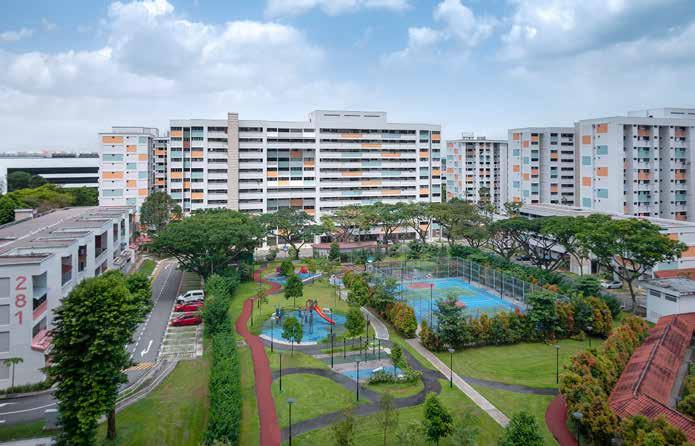
Rent to own / Lease to own schemes: Rent to own schemes enable aspiring homeowners – especially those potentially mortgage eligible but struggling to save enough for a down payment or with a limited credit history – to occupy a home under a tenancy or lease arrangement while progressively building equity towards eventual homeownership. A number of variations of rent-to-own schemes exist differing by their equity building, tenure transfer points and instalment structures.55 The examples below illustrate some of these variations:
Divvy Homes, US: Designed for “credit bruised” or savings constrained households who cannot qualify for mortgages immediately, the programme enables prospective buyers to sign an option to buy at a future date at an agreed price. After paying 1–2 per cent of the house price upfront, they then move into the house and make monthly payments, which also include some component of savings. After three years they become mortgage eligible and can exercise the option to buy the home or withdraw their savings less fees. However, surging mortgage interest rates in recent years have pushed monthly payments far above local market rents, making the model increasingly unsustainable.56
Shared Ownership, UK: The prospective home buyer pays 10–75 per cent of the housing unit market value and pays rent on the remaining share to a housing association, local authority or registered provider. As the buyer increases their shares contribution over time, their rent is reduced. By splitting the property’s value into equity (debt) and occupancy (rent), the model lowers the purchase value barrier and the income barrier simultaneously, easing access for first-time home buyers who cannot afford a full market rate mortgage.57
Tenant Purchase Scheme (TPS), Kenya: A lease to own structure where buyers make an initial deposit of 10–15 per cent of the property price, followed by monthly instalments over 10 to 15 years, often at fixed interest rates on a reducing balance. During the repayment period, the property title remains with the seller (often the developer or government agency). The instalments resemble rent but directly reduce the outstanding balance, creating a gradual path to ownership.58
A Housing & Development Board (HDB) Estate, in Yishun, Singapore.© Shutterstock
Subsidies to home buyers: Subsidies can be a useful instrument if properly targeted to households at the margins of the mortgage market. Subsidies are often run by governments and strengthen a household’s purchasing power by reducing the effective cost of purchasing or financing a home. There are different forms and entry points, including upfront subsidies for down payment, interest rate subsidies or innovative subsidies applied to rentto-own models. Demand-side subsidies directly supporting homebuyers are generally more effective than supply-side subsidies to developers, as they avoid distorting housing markets and do not interfere with what is produced, who produces it or when new housing is delivered.59 Some examples include:
Finance Linked Individual Subsidy Programme (FLISP), South Africa: A mean-tested one-time grant (capital subsidy) to reduce the initial down payment or mortgage size to qualifying households. To qualify, an applicant must secure approved financing, be it a mortgage facility, instalment sales agreement or other form. The subsidy ranges approximately between R27,960 and R121,626 (~US$1,500–7,000), depending on household income, with lower-income earners receiving higher amounts. The programme is targeted at low- and middle-income households who earn too much to qualify for fully subsidized Reconstruction and Development Programme (RDP) housing, yet too little to obtain a mortgage without assistance.60
Fundo de Garantia do Tempo de Serviço (FGTS) and Minha Casa, Minha Vida (MCMV), Brazil: The federal government channels FGTS resources into highly subsidized housing loans and grants, as well as interest rate subsidies advanced to qualifying households. MCMV operates through income based tiers that determine eligibility, subsidy levels and maximum house prices. These programmes support low- and lower-middle-income households that were previously excluded from conventional finance due to insufficient income or high interest rates.61
8.2.2 Enabling alternative finance eligible households
Alternative finance eligible households are unable to qualify for mortgage finance, even when loans are subsidized, and require alternative financing approaches to secure adequate housing. This group includes a large share of informal workers. For these households, alternative housing finance solutions – such as microfinance, incremental construction loans, collective financing models, pooled collateral models and well structured rental or rent to own programmes – offer more realistic and sustainable routes to adequate housing.
Microfinance based models: Microfinance schemes enable incremental construction, home improvement or progressive land consolidation through small loan sizes, shorter tenures and lower collateral demands. Though some mortgage lending commercial banks offer specialized housing microloans, the vast majority of products are delivered through non-bank entities such as microfinance institutions, cooperatives, credit unions, community savings groups and non-governmental organizations. This reflects the sector’s first major innovation: its diverse and decentralized
Box 8.4: Pioneering housing microfinance at scale: Habitat for Humanity’s MicroBuild Fund
The MicroBuild Fund, created in 2012 by Habitat for Humanity’s Terwilliger Center for Innovation in Shelter, is considered the world’s first housing focused microfinance investment fund. Rather than lending directly to households, MicroBuild channels capital to microfinance institutions and provides technical assistance so they can design and deliver housing microfinance products tailored to incremental homebuilding. As of 2024, the fund had supported 236,870 borrowers, improving shelter conditions for approximately 1.18 million people in 33 countries across Latin America and the Caribbean, Asia, Africa and the Middle East. Financially, the fund has grown beyond its initial US$100 million capitalization, disbursing US$230 million in debt to 62 partner institutions.
Source: Habitat for Humanity International, 2024.
delivery channels.62 It is highly suited to informal earners and selfemployed households as it addresses the structural mismatch of conventional mortgage products dependent on stable, documented income and long-term creditworthiness. Microfinance for housing is, however, hampered by lack of access to affordable funding and significant operational risks. Without integrated technical assistance, construction projects may suffer from delays, cost overruns and unfinished works, necessitating robust, data-informed monitoring to prevent misuse of funds. A notable example of housing microfinance that has been brought to scale is Habitat for Humanity’s MicroBuild Fund, discussed further in Box 8.4.
Community led housing finance: Community led housing finance is increasingly recognized as a powerful alternative to conventional financing models, particularly for low-income urban residents who face systemic exclusion from formal credit and land markets. Different from microfinance, community housing finance mobilizes collective savings not only for financing housing, but also for securing land and upgrading shared infrastructure. They usually operate informally, relying on trust, flexible contribution amounts and timings, to ensure broad participation and strengthen community bonds.63 The Nakuru housing cooperative in Kenya illustrates the transformative potential of organized community finance: it has collectively acquired 26 acres of land for its members and supported the construction of 300 homes, all sustained by a vibrant membership of 600 people – more than two thirds of whom are women.64
Demand-side subsidies directly supporting homebuyers are generally more effective than supply-side subsidies to developers, as they avoid distorting housing markets
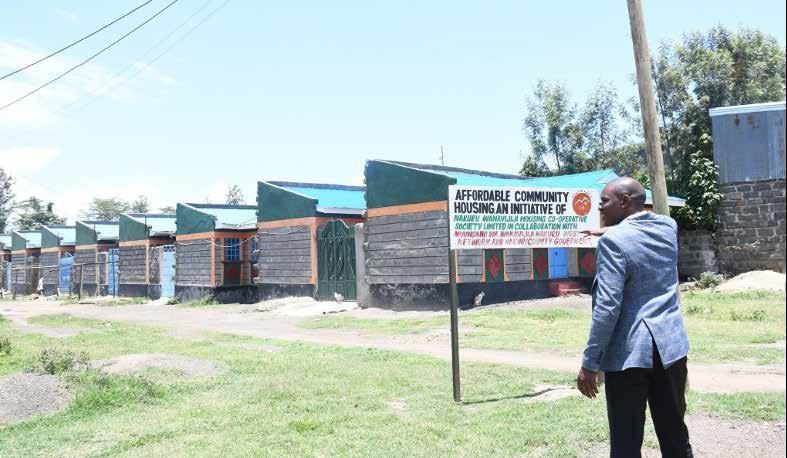
Community land–based financing models: Acquiring and leveraging urban land is the single most critical enabler to financing adequate housing for low- and middle-income households in cities. Land prices in cities have surged in recent years, rendering housing markets inaccessible to many households,65 particularly as housing prices decouple from wages.

Microfinance for housing is hampered by lack of access to affordable funding and significant operational risks
Collective land-based financing schemes provide a critical alternative to individual borrowing. Land value capture can be used as a financing tool at both a government level and community level. Of the latter, Community Land Trusts (CLTs) – an area also explored in Chapter 7 – are among the most effective mechanisms. A CLT is a community based, nonprofit organization that acquires and holds land on behalf of residents to secure long-term accessible and affordable housing. The CLT retains ownership of the land, with each member allocated a lease agreement, with embedded conditions on resale and transferability of the housing unit.66 By treating land as a collective asset rather than an individually-owned commodity, the trust captures value appreciation for the community, preventing homes from being lost to speculative cycles or gentrification. By separating the value of the land from the building, households only finance the structure, lowering the entry
Acquiring and leveraging urban land is the single most critical enabler to financing adequate housing for low- and middle-income households in cities
“wealth barrier”, while the trust preserves the land as a permanent social resource, decoupling the cost of shelter from the volatility of land markets. Some examples include:
• Fideicomiso de la Tierra del Caño Martín Peña, Puerto Rico, US: The Caño Trust is a CLT designed and managed by the residents of eight neighbouring communities, along with allies from the public and private sectors, to implement a comprehensive development plan to revitalize a historically marginalized area. Regularizing and collectively owning land has helped prevent gentrification and involuntary displacement, with 2,000 low-income families benefitting from upgrading so far.67 (This initiative is discussed in more detail in Chapter 7, Box 7.7).
• Community Land Trust Brussels (CLTB), Belgium: Through CLTB, land is collectively owned and land price inflation is neutralized. This allows residents to buy only the housing unit while the trust retains collective ownership of the land – reducing prices by an average of 40 per cent compared to the private market. This initiative benefits low-income households eligible for social housing and at risk of being priced out of Brussels.68
Nakuru Wanavijiji Housing Cooperative, Kenya © Nakuru Wanavijiji Housing Cooperative, n.d.
8.3 Financing and De-risking Rental and Social Housing at Scale
Expanding conventional housing finance to potentially mortgageeligible households or scaling alternative financing for homeownership addresses only part of the inclusive and resilient housing finance puzzle. As shown in Section 8.1, a large proportion of urban residents fall into the “alternative finance eligible” or “financially deprived” groups for whom long-term financing for home ownership may not be viable or desirable. For these households, affordable rental housing becomes the more realistic route to securing adequate shelter, underscoring the need for the large-scale, sustained production of well-located rental stock. In many countries since the 2000s – particularly across Europe and North America – the supply of affordable rental housing has declined markedly over recent decades. As governments have scaled back the construction of public and social housing, sold large portions of their existing stock, and increasingly shifted responsibility for provision to the private market, affordability for low- and moderate-income households has been steadily eroded.69 This section shifts the focus from household and community-level demand-side financing for homeownership to the institutional actors that shape urban housing supply: governments, developers, investors, housing funds and public land agencies. For these actors, the central challenge is producing and sustaining over the long term and at scale non-speculative, affordable housing, including public rental, social housing, limited equity cooperatives and temporary transitional housing.70
Large-scale housing development depends on land provision, regulatory reform, trunk infrastructure financing and long-term predictable subsidy flows, all of which sit within the remit of national and subnational governments. Therefore, public policy and coordination around land release, financing and grants play a decisive role in shaping financing for large-scale housing development.71 The production of non-speculative and affordable housing at scale hinges not only the mobilization of resources, but also on how risk is allocated among different actors including governments, developers, investors and households. Lower returns, longer payback periods and exposure to regulatory and offtake uncertainties often deter private developers and investors from participating in affordable or social housing delivery. Yet when governments attempt to absorb all development risk and cost alone, projects often become fiscally unsustainable and difficult to scale. Figure 8.7 presents a flow diagram of the decision pathways governments navigate as duty bearers in realizing the right to adequate housing for all, illustrating the precarious balance of public–private risks and priorities. It is increasingly evident that markets alone cannot efficiently and equitably deliver adequate and affordable housing for all income
Public policy and coordination around land release, financing and grants play a decisive role in shaping financing for large-scale housing development
Figure 8.7: Decision making framework for governments delivering affordable housing at scale
Figure 5.2 Housing offtake decision options

groups, particularly low-income and vulnerable households who remain structurally excluded from formal finance and land markets.72 At the same time, governments – especially in fiscally constrained developing countries confronting rising debt servicing pressures – cannot meet the scale of need through public budgets alone, nor produce non-speculative, affordable housing at scale without coordinated partnerships with private actors and well-designed de-risking tools. The cases discussed in this section are not exhaustive but illustrate the range of feasible pathways to deliver housing at scale.
8.3.1 Public-private partnerships
Public–private partnerships (PPPs) have increasingly emerged as a viable mechanism for financing and delivering non-speculative, affordable rental and social housing at scale in emerging markets. PPPs create a structured collaboration in which public entities de-risk investments while private partners bring capital, construction capacity and long-term management expertise.73 A core feature of effective housing PPPs is risk reallocation. Governments assume responsibilities that private actors cannot efficiently absorb – such as providing land, streamlining policy and approvals, and investing in trunk infrastructure – which reduce offtake uncertainties. In return, private partners commit to affordability conditions, non-speculative pricing, long term operations or regulated rents. PPPs can vary in form, largely based on what responsibilities the
private player takes. They are most successful where public roles are transparent, land is leveraged efficiently and long-term affordability is embedded contractually, not left to market forces. There are four widely used structures for PPPs in housing development. These are as follows:
1. Design–build–finance (DBF): The private partner designs, constructs, and finances the housing development, with the public sector typically repaying costs once key milestones are reached.
2. Design–build–finance–operate (DBFO): The private partner designs, builds, finances and operates the project – often under a long-term agreement – while the public sector ensures affordability conditions and regulates performance.
3. Design–build–finance–operate–maintain (DBFOM): This structure places full lifecycle responsibility – financing, construction, operations and long-term maintenance – with the private entity, aligned to performance based payments or availability fees.
4. Operate–maintain (OM): Often used for existing housing stock where the private sector is contracted to operate and maintain affordable units to agreed service standards, while ownership and financing remain public.74
Protester from Warszawskie Stowarzyszenie Lokatorów (WSL) stands before a large crowd during a demonstration against unfair housing and mortgage policies in Warsaw, Poland © Shutterstock
Countries such as India, Kenya, South Africa and Brazil have applied PPPs at scale, using public land concessions, credit guarantees, tax incentives, subsidies and blended financing to crowd-in private investment. One such example, the Bhubaneswar Affordable Housing Project in India, is further explained in Box 8.5.
Box 8.5: Bhubaneswar Affordable Housing PPP, India

A core feature of effective housing PPPs is risk reallocation
The Bhubaneswar Affordable Housing Project in the state of Odisha represents the first fully structured PPP in India designed explicitly to deliver affordable housing for low‐income urban households at scale. The initiative was developed in response to Odisha’s rapidly growing housing deficit – an estimated 400,000 units statewide, including 80,000 units in Bhubaneswar alone.
With advisory assistance from the International Finance Corporation (IFC), the Bhubaneswar Development Authority (BDA) structured India’s first dedicated affordable housing PPP, using a DBF model. Under this arrangement, the private partner would finance, design and construct the units on 65 per cent of the land, cross subsidized through commercial development on the remaining 35 per cent. The government provided land, capital subsidies and a clear regulatory framework while developers built affordable units. Parallel PPP projects across Bhubaneswar, Cuttack and Rourkela now involve more than 5,000 units under development, accelerating formal housing access for urban poor households.
The PPP was guided through BDA’s 2015 Policy on Housing for All in Urban Areas, which operationalized India’s national PMAY U (Pradhan Mantri Awas Yojana – Urban) policy at Odisha state level. The Pradhan Mantri Awas Yojana Urban (PMAY-U) has become India’s largest urban housing program, with around 11.8 million houses targeting low- to middle-income groups approved as of 2024. While PMAY-U serves as an inspiring model for large-scale, inclusive housing finance, it also highlights the inherent tensions of scaling and territorial coverage. Critics argue that PMAY-U better serves small cities, promotes poor coverage of slum households, and faces a significant number of delayed and yet-to-be-completed houses.
Source: Ministry of Housing and Urban Affairs, n.d.; World Bank, 2020; Times of India, 2026; Roy & Kundu, 2024; Press Information Bureau, 2024.
Freddie Mac sells loans to a third-party depositor Loans deposited into the third-party trust by the depositor
Source: Freddie Mac Multifamily, 2025, p.29.
Freddie Mac acquires Guaranteed Bonds and deposits them into a Freddie Mac trust
Unguaranteed subordinate Bond
RELEVANT PARTIES/ENTITIES
Underlying mortgage loan seller Freddie Mac
Underlying originators Optigo Lender(s)
Freddie Mac sells Guaranteed Certificates backed by the Guaranteed Bonds
Underlying master servicer Deals with subordination — selected by Freddie Mac through bidding process Fully guaranteed deals — Freddie Mac
Senior Bond Investors
Subordinate Bond Investor
Figure 8.8: Freddie Mac’s securitization structure
8.3.2 Risk pooling and collective guarantees
A critical pathway for scaling non-speculative, affordable housing lies in mechanisms that pool risk and stabilize cash flows, thereby lowering the cost of capital for developers, lenders and social housing providers. These risk pooling and sharing instruments range from securitization to cross-collateralization, reinsurance and credit guarantees. Securitization is one of the most powerful tools used by governments and housing finance agencies. In its simplest form, securitization bundles a pool of mortgages, transforms them into tradable securities, and sells them to investors. The proceeds allow the housing finance institution to recycle capital, originate more loans, and channel substantially more financing into affordable housing than would otherwise be possible. The US continues to demonstrate the power of securitization through its government sponsored enterprises (GSEs), Freddie Mac (the Federal Home Loan Mortgage Corporation) and Fannie Mae (the Federal National Mortgage Association). For instance, by 2025, Freddie Mac had securitized over US$448 billion worth of multifamily mortgage
A critical pathway for scaling non -speculative, affordable housing lies in mechanisms that pool risk and stabilize cash flows, thereby lowering the cost of capital.
loans out of its US$496 billion mortgage portfolio. In 2025 Freddie Mac Multifamily financed 617,000 rental units across nearly 3,900 properties, and securitization was the key liquidity engine enabling this level of production.75 Figure 8.8 presents an illustration of how Freddie Mac structures its securitization.
Risk pooling also underpins successful European social housing systems. In the Netherlands, the Social Housing Guarantee Fund provides cross collateralization across the entire housing association sector, enabling associations to borrow at near sovereign rates – significantly reducing financing costs for low-income rental housing (Box 8.6).
Box 8.6: Waarborgfonds Sociale Woningbouw (WSW) Social Housing Guarantee Fund, Netherlands
The Netherlands operates one of the most effective and mature systems for financing affordable, non-speculative rental housing in the world through collective risk pooling. At the centre of the system is the Waarborgfonds Sociale Woningbouw (WSW) –the Social Housing Guarantee Fund. WSW provides a joint, cross-collateralized guarantee on loans taken out by 268 housing corporations participating in the WSW. This means, if one corporation fails, the entire association collectively covers the debt. In the event that resources within the association are insufficient, municipal and national governments act as ultimate backstops through formal agreements renewed in 2021 and 2023.
As a result, housing corporations hold minimal credit risk, enabling AAA-rated borrowing at near government interest rates (an average of 2.79 per cent in 2023). This dramatically lowers capital costs and allows Dutch housing corporations to sustain the large-scale delivery of non-speculative affordable rental housing, financing construction, retrofits, and neighbourhood improvements at scale. WSW had guaranteed €92.2 billion (~US$100 billion) in loans to housing associations (as of 2024) and collectively supports around 2.3 million affordable housing units – nearly a third of the country’s housing stock.
Source: Housing Europe, 2025; Van Deursen, 2023; WSW, n.d.
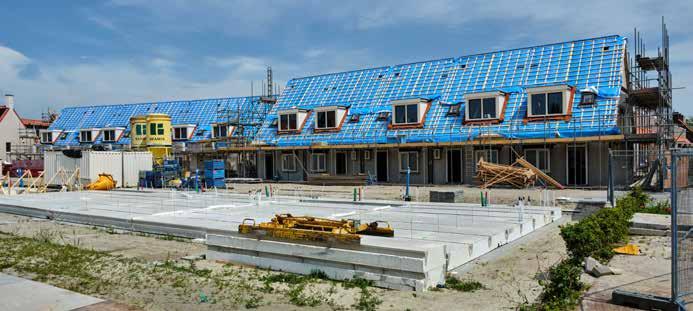
Social housing project under construction in a suburb in Middelburg, the Netherlands © Shutterstock
8.3.3 Cooperative housing at scale
Cooperative housing offers a globally recognized pathway for financing non-speculative, affordable housing at scale. Unlike conventional rental or ownership markets, cooperatives embed collective governance, pooled financing and de-commodified land and housing management, reducing both household level risk and system wide exposure for lenders and municipalities. From a financing standpoint, cooperatives typically blend member equity contributions, long-term fixed cost financing, public guarantees and preferential access to land, while de-risking the
Scheme
Non profit rental cooperatives 76
Financing and Risk Sharing
Collective equity cooperatives 77
Mutual aid housing cooperatives (MAHCs)78
Mutual home ownership societies (UK)79
Right of use housing cooperatives80
system through at-cost operating rules, collective decision-making and restrictions on speculation. Table 8.2 summarizes some of the different types of cooperative housing models, highlighting their financing and risk sharing approaches.
Cooperative housing offers a globally recognized pathway for financing non-speculative, affordable housing at scale
• Development is often supported by public loans or grants
• Risk is shared across entire cooperative, lowering debt exposure
• Ownership is collective through members buying shares or paying deposits
• Rents set on at cost basis
• Members contribute and pool maintenance funds
• Common in Germany, Switzerland and Canada
• Members purchase shares granting occupancy rights
• Housing units are financed through collective mortgages with risk spread across shareholders
• There is no direct ownership of units but share value can increase over time which can be transferred
• The cooperative holds underlying property rights and may exercise control over speculation through by-laws
• In a Limited Equity structure, the price at which members can buy or sell their shares is restricted to prevent rapid increases in housing costs
• Common in Sweden, Norway and US
• Financing can be through state-backed loans (e.g., Uruguay’s FUCVAM), solidarity funds, pooled repayment and members sweat equity
• Cooperative owns land/buildings and collective decision-making minimizes default risk
• Originated in Uruguay, expanded across Latin America
• These combine the benefit of CLTs and housing cooperatives
• Debt for developing or purchasing housing units is undertaken and paid collectively over time
• Payments build equity shares, risks are shared collectively and land is often held in trust
• First pioneered with LILAC in Leeds, this approach is now being applied across other UK cities
• Many initiatives reduce overall costs by developing on publicly owned land made available through long-term municipal leases
• Financing development of housing units is through a mix of public or ethical bank
• To join a “right of use” cooperative, members usually pay an initial social capital contribution – often around 20 per cent of construction costs – which is reimbursed when they leave the cooperative
• Residents have rights of occupancy through membership and payment of monthly fees based on real costs of maintenance and operations, but do not own their unit
Solution and Targets
Targets mixed income households seeking long-term affordability by providing stable, below market rental housing, strong tenant participation
Low- to moderate-income resident seeking guarantees on long-term affordability
Provides permanently non speculative, community built housing
Targets lower- and middle-income households assuring permanent affordability while allowing equity accumulation
Long-term security and affordability without the debt of ownership
Table 8.2: Cooperative housing models
Technical Assistance & capacity building
Previously Disadvantaged Individual (PDI)
Equity: "earnest capital"
Intuthuko Equity Fund
• TUHF21
• Gauteng Partnership Fund
• Eskom Pension & Provident Fund
• Kagiso Trust
• Novo Impact Fund
TUHF (Pty) Itd
inner city rental or uMaStandi
Township rental
Source: Convergence Blended Finance and CAHF, 2025, p. 39.
8.3.4 Blended
finance
Blended finance is increasingly used to unlock private financing for affordable housing when investors are reluctant to enter due to higher real or perceived risks, particularly when these are accompanied by low returns.81 In its simplest form, blended finance combines public or philanthropic capital – which accepts a lower return or higher risk –with commercial investment, thereby reducing the perceived and actual risks of affordable housing projects. Blended capital structures reduce risk through instruments like first-loss capital, guarantees, patient debt, technical assistance and viability gap funding, thus lowering the cost of capital and improving the viability of projects targeting lower-income households. Blended finance is particularly effective when combined with land based instruments, municipal guarantees and affordability covenants, ensuring that public resources produce long-term social outcomes rather than subsidizing private profit.
A strong example is South Africa’s Intuthuko Equity Fund, created in 2004 to help historically disadvantaged inner city entrepreneurs enter the affordable rental market. The fund blends concessional capital (from entities such as the Gauteng Partnership Fund and Eskom Pension and
Loan, repayable over 7 years at concessional rates
Project to develop / refurbish / convert inner citv or township rental property
Borrower equity
5% min
Mezzanine loan
Difference between equity and Sr. debt 15% max
Loan, repayable over 15 years at commercial rates
Property as collateral
Senior debt
80% max
Provident Fund), commercial debt from the Trust for Urban Housing Finance (TUHF) or uMaStandi, and entrepreneurs’ equity to support acquisitions, refurbishments and new affordable rental projects. Figure 8.9 illustrates the resulting blended capital structure.
8.3.5 Land-based
financing
As urban land prices surge, land-based financing has become one of the most powerful levers for unlocking financing for housing. The core idea is straightforward: capture or leverage increases in land value generated by public action – such as rezoning, infrastructure investment or land assembly – and reinvest these gains into public infrastructure and affordable housing.82 This reduces speculative pressure and ensures that land value appreciation benefits the broader public rather than private interests.
Several city models illustrate how land-based financing can achieve affordable housing at scale. For instance, in Austria, Vienna’s public land strategy includes public land banking, restrictions on land prices for subsidized housing and large mixed income development zones such as Sonnwendviertel.83
Figure 8.9: Blended capital structure of Intuthuko Equity Fund, South Africa
France combines designated development zones – Zone d’Aménagement Concerté – to assemble, prepare and control the release of land (often at controlled prices) in exchange for obligations such as delivering social housing or mixed income units. The Caisse des Dépôts et Consignations provides long-term, low-cost public financing that enables municipalities and social housing providers to develop these zones and deliver affordable housing at scale.84 There are various land value capture instruments that can be deployed by local and national governments, summarized in Table 8.3.
Table 8.3: Selected land value capture instruments
Instrument
Land readjustment (land pooling or consolida-tion)
Strategic land management (land banking or strategic acquisition)
Public land lease
Transfer of Development Rights (TDR)
Source: Adapted from IHS, 2022, p.52.
8.3.6

Description
Land parcels are pooled and readjusted to make space for public utilities such as roads and parks
Landowners end up with smaller sized plots but of higher value
Action on the land banked or acquired include development, rezoning or leasing allowing the public entity to engage strategic partners
Granting the right to use with incentives and conditionalities that advance social objectives such as housing
Developers and landowners pay for additional rights such as densification
Capital market instruments
While access to capital markets may differ, cities can issue bonds to mobilize resources for housing and related infrastructure, especially targeting vulnerable groups at heightened risk of lacking access to adequate housing. For instance, in 2024 the city of Chicago (US) issued a US$1.25 billion housing and economic development bond, with proceeds allocated to affordable rental housing, home purchase assistance, home repair, addressing homelessness and supporting broader community development objectives, including small business support and job creation.85 More broadly, US municipalities have used voter-approved general obligation bonds to finance affordable housing objectives. Notable examples include Boulder County (Colorado), Las Cruces (New Mexico), San Antonio (Texas), Durham (North Carolina), Baltimore City (Maryland) and Raleigh (North Carolina), where bond proceeds have supported housing production, preservation, home repair and rental assistance.86 Raleigh’s Affordable Housing Bond, first issued in 2020, raised US$80 million towards affordable housing programmes and has become one of the most popular policies in the city and region.87 Building on this experience, the municipality is preparing a new affordable housing bond of up to US$200 million for the 2026 ballot to further scale delivery.88
Beyond the US, Thailand’s National Housing Authority (NHA) provides a leading example from an emerging economy. Between 2019 and 2024, NHA issued thematic green and sustainability bonds to finance nearly 2,956 affordable housing units, representing approximately 11.4 per cent of NHA’s housing stock, with bond tenors of 5–15 years and
As urban land prices surge, landbased financing has become one of the most powerful levers for unlocking financing for housing
Where it has been applied
Cuenca, Ecuador Qena, Egypt
PPPs in Egypt
Ethiopia Ghana
Quito, Ecuador Jarkata, Indonesia
interest rates of 1–1.9 per cent.89 The developments achieved about 25 per cent of energy savings compared with conventional public housing and were aligned with the SDGs and certified green building standards.90 Barbados illustrates an innovative approach to mobilizing capital for

El Gouna Egypt: A street with a row of houses and a flower garden © Shutterstock
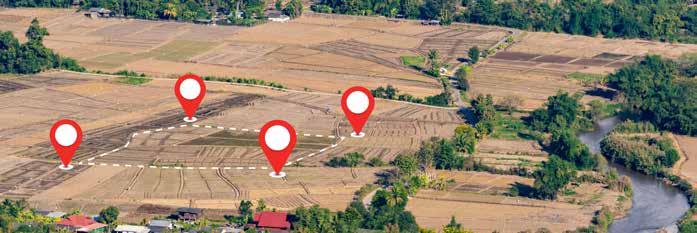
climate resilient infrastructure with adequate housing co-benefits through a sovereign debt for climate resilience swap. In 2024, Barbados restructured existing high-cost debt, generating approximately US$125 million in fiscal savings without increasing its public debt burden. The unlocked financing, while broadly focused on investments in sustainable infrastructure such as water reclamation and sewage management, also includes components to enhance housing resilience, such as roof retrofitting and improvements in energy efficiency.91
Real Estate Investment Trusts (REITs) are a growing channel for institutional investment in large-scale rental housing through the capital markets. South Africa presents one of the largest REIT markets in emerging economies, with a market capitalization of about R150–160 billion (approximately US$8–9 billion), although residential assets make up only a small share of listed portfolios.92 International Housing Solutions (IHS) – one of the country’s largest affordable housing investment platforms – has mobilized over US$740 million in equity and debt between 2008 and 2022 through funds and REIT like structures, financing around 30,000 housing units, including multifamily rental housing for lower- and middle-income households and thousands of social housing units across South African cities.93 However, because REITs operate through capital markets and are driven by risk adjusted return expectations, their expansion does not automatically result in affordable housing provision for low-income households and thus require public policy intervention to serve the poorest groups.94 Taken together, these cases highlight the growing role of capital market instruments by cities to mobilize long-term capital, crowd in private investment and scale affordable housing delivery in contexts where fiscal space and annual budgets are constrained.
8.3.7 Emerging digital infrastructure for housing finance: Blockchain and Tokenization
Distributed ledger technologies (DLTs) – including blockchain-based registries and tokenized assets such as non-fungible tokens (NFTs) –are emerging as enabling infrastructure in the financing and delivery of rental and social housing. When embedded within appropriate regulatory and governance frameworks, they can reduce information asymmetries, improve transparency and mobilize alternative sources of capital.
One area of application with direct relevance for rental and social housing is blockchain-enabled land and tenure administration, which enhances the ability to use real estate as collateral and thus enhancing project bankability. For instance, blockchain-enabled digital land registry, goLandRegistry, has been operationalized by the Government of Afghanistan to support the documentation of at least 1 million land parcels in a country context where more than 80 per cent of urban properties lacked formal registration.95 Blockchain has also been implemented or piloted for land and property registries in countries including Georgia, Honduras, Ghana, Kenya, Estonia, Dubai, India and the US, primarily to improve transparency, reduce fraud and strengthen tenure security, with the greatest successes observed where digital readiness, legal alignment, and institutional reform are in place.96 For example, in Sweden a hybrid public–private blockchain model has been integrated into the national land registry, significantly reducing transaction times and paperwork. It was estimated that this innovation would generate public sector savings of over US$100 million per year, enabled by high digital readiness and strong legal alignment.97
Distributed ledger technologies are emerging as enabling infrastructure in the financing and delivery of rental and social housing
Other models have evidenced similar savings. In Maputo, Mozambique, Mercy Corps Ventures partnered with Empowa and Casa Real to test a rent to own model financed through NFT based tokenized real estate assets. The pilot raised approximately US$300,000, enabling 30 lowand middle-income families to access climate resilient housing. Notably, 88 per cent of tenants reported improved safety against climate shocks, reinforcing the model’s dual affordability and resilience benefits. Additionally, the effective cost of financing was reduced by over 50 per cent – from interest rates exceeding 22 per cent to levels closer to 10 per cent.98 Though application of technology at pilot or early operational stage, blockchain-enabled registries and tokenized financing models show how digital technologies can complement public and non profit housing systems by improving transparency, lowering perceived risk and mobilizing alternative capital.
Mapping out a plot of rural land for development © Shutterstock
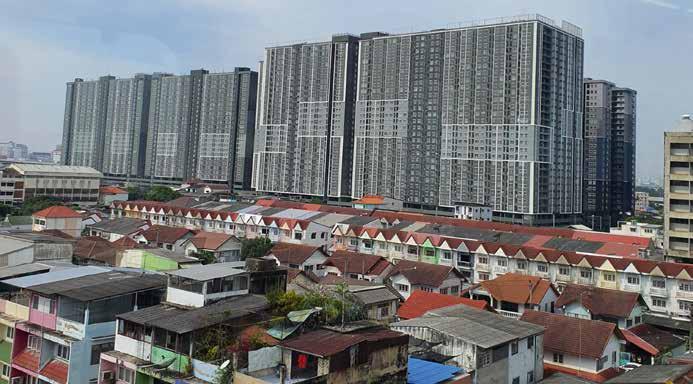
8.4 Towards an Inclusive and Resilient Housing Finance Ecosystem
A housing finance ecosystem functions effectively and inclusively only when it balances the dual nature of housing as both a market asset and a basic human right. Leaning too far toward the market risks price escalation and exclusion of low-income households; leaning too far toward rights based approaches without stable financing undermines supply and places unsustainable burdens on public budgets. A balanced ecosystem requires both well regulated markets and purposeful public intervention, operating in tandem to align investment flows with right based outcomes. Building such balance depends not only on capital mobilization, but also on the broader enabling environment – notably land policy, risk management and institutional coordination. These structural enablers are briefly discussed below.
Funding and capital mobilization: Sufficient funding is a sine qua non condition for financing. A robust funding base ensures the liquidity needed to meet credit demand and to match debt duration with asset life. Conventional mechanisms – mortgage banks, savings institutions, and state-backed lenders – remain essential, but on their own they rarely reach most moderate and low-income households, particularly in economies marked by informality or shallow long-term capital markets. An inclusive ecosystem therefore integrates multiple complementary channels, including contractual savings and cooperative schemes, payroll linked housing funds, blended finance structures that deploy concessional capital to de-risk investments, and green or social bonds that expand access to climate aligned and socially targeted capital.
Land, legal and regulatory foundations: Even well-designed financing products will fail where land access and land rights are not supported by a clear institutional and regulatory framework. Effective housing finance systems rely on foundational enablers such as reliable land and property registration, predictable zoning and land use regulation, secure collateralization and enforceable foreclosure processes, and land value capture and progressive property tax systems that ensure serviced land becomes available for affordable housing rather than lost to speculation.
Risk management: Financing a long-term, high-cost asset such as housing exposes lenders, investors and households to multiple interconnected risks. An inclusive and resilient housing finance ecosystem needs to allocate risks to the actors best equipped to manage them, ensuring that no single segment, particularly households, is overexposed. Instruments such as guarantee schemes, portfolio insurance, and well targeted and transparent appraisal standards help stabilize market functioning, especially in emerging economies where volatility can quickly make housing finance inaccessible to most households. Capital adequacy requirements should also go beyond sound legislation to ensure robust supervisory capacity, especially as systems integrate innovative products. This includes mandating adequate technical reserves and vigilant monitoring to prevent the erosion of underwriting standards that contributed to the 2008 subprime mortgage crisis.
A housing finance ecosystem functions effectively and inclusively only when it balances the dual nature of housing as both a market asset and a basic human right
Old colorful townhouse in front of high-rise building © Shutterstock
Data, digitalization and institutional coordination: Data systems – such as credit registries, land cadastres, rental databases and housing price indices – are essential for reducing perceived risk, guiding effective policy design and strengthening accountability across the housing finance ecosystem. Digital technologies further enhance system performance by enabling automated underwriting, incorporating alternative data and streamlining loan approval processes. Further, coordination across ministries, regulators, local governments and financial institutions ensures coherence between fiscal policy, land strategy, housing supply and financial sector regulation. By strengthening real-time national data systems on housing supply, demand, affordability and finance access, governments can enhance the reach and stability of housing finance markets. Significant potential exists to expand mortgage access through data-driven underwriting, alternative income verification and technology enabled loan structuring.
Data systems are essential for reducing perceived risk, guiding effective policy design and strengthening accountability across the housing finance ecosystem
Appropriate metrices for measuring inclusion and equitability: While the mortgage debt-to-GDP ratio is widely used to gauge housing finance depth, it is a poor indicator of inclusion. It captures market size but reveals little about whether systems meet the needs of diverse households. More meaningful assessment requires a multidimensional framework that evaluates both how far mortgage markets reach and whom they exclude. To guide meaningful reform, it is necessary to move beyond “size-based” metrics and adopt a multidimensional set of indicators that capture these complexities and can adequately express credit inclusiveness. An expanded toolkit of metrices could consider mortgage inclusivity and systemic diversity.
8.5 Concluding Remarks
The global housing crisis – marked by widening affordability gaps, growing displacements, persistent informality and escalating climate risks – demands a fundamental rebalancing of how housing finance systems are structured and governed. The chapter identifies four distinct housing finance eligibility groups – mortgage eligible, potentially mortgage eligible, alternative finance eligible and financially deprived – each requiring distinct financing strategies tailored to their specific needs. At present, conventional housing finance effectively serves only the first group, while the financing needs of the remaining three are only partially reached or entirely excluded.
This chapter posits housing finance must bridge two imperatives: housing as a market asset requiring financial discipline and efficiency, and housing as a basic human right requiring protection, inclusion and public purpose. This requires nuanced, socially informed financing strategies that do not, on the one hand, continue to exclude the poorest households.

Financing instruments alone are insufficient to deliver an inclusive and resilient housing finance ecosystem
At the same time, financial assistance should be appropriate and not risk creating unmanageable levels of debt for low-income earners. With that in mind, a number of key principles highlighted throughout this chapter include:
• Embrace a continuum of financing solutions to target different groups: An inclusive and resilient housing finance ecosystem requires a broad array of recognized, supported and well-regulated financial solutions matched to the diverse realities of households. Notably for financially deprived households, policy must shift decisively away from debt-based instruments toward social protection, rental assistance and targeted subsidies that safeguard against further shelter induced impoverishment.
• Acknowledge and incorporate informal and irregular payments: A significant share of informal sector workers have sufficient earning capacity to take on some form of housing loan but are unable to do so because their income is informal or cash-based. Housing finance institutions need to urgently respond to this reality by mainstreaming mechanisms that enable informal workers to develop credit profiles and borrow at market rates.
• Move beyond the dominant focus on home ownership to strengthen rental options: Housing finance is skewed heavily towards mortgages and property ownership, a situation that leaves the growing share of urban residents who rely on rental with few options. Crucially, beyond mortgages, rental solutions are a critical pathway for realizing the right to adequate housing especially for the alternative finance-eligible groups. As outlined in this chapter, there are an array of tried and tested models to increasing affordable and adequate rental housing that have the potential to be scaled up.
• Ensure a holistic approach to housing finance that reflects the wider ecosystem of land and infrastructure: Crucially, financing instruments alone are insufficient to deliver an inclusive and resilient housing finance ecosystem. The delivery of adequate and affordable housing fails where land is scarce, infrastructure is incomplete or permitting is unpredictable. Financing instruments must therefore align with strategic land management, the release of serviced land, and long-term investments in utilities, drainage, climate resilient design and rental supply.
Endnotes
1. Çelik, 2024.
2. World Bank, 1993.
3. UN-HABITAT, 2025a.
4. UN-Habitat, 2023, p.x.
5. Walley and Vidal, 2022.
6. World Bank, 2020.
7. Kavaarpuo et. al., 2024.
8. UN-Habitat, 2026a.
9. Sharma and Samarin, 2022.
10. UNHCR, 2025a; IDMC, 2025.
11. OECD, 2024.
12. United Nations, 2025b; ILO, 2023.
13. ILO, 2023, p.28.
14. García et.al., 2024.
15. Okyere et.al., 2022.
16. Cavalcanti et.al., 2019.
17. Lee and Han, 2024.
18. World Bank, 2024.
19. Zewale et.al., 2026.
20. OECD, 2021a.
21. Government of Vanuatu, 2015.
22. Keys and Mulder, 2025.
23. Koller, 2025.
24. Rose, 2024.
25. UN-Habitat, 2026a.
26. Badev et. al., 2014.
27. UN-Habitat, 2026a.
28. Byamugisha and Dubosse, 2023.
29. Zhou, 2023.
30. Andaloussi et.al., 2024.
31. Consumer Financial Protection Bureau, 2024.
32. CAHF, 2024.
33. European Central Bank, 2026
34. Potts, 2022; World Bank, 2015.
35. Kunovac & Zilic, 2022.
36. Consumer Financial Protection Bureau, 2024.
37. FinRegLab, 2022.
38. Estiningrum et al, 2020.
39. EUDIF, n.d.
40. CAHF, 2023.
41. Alliance for Financial Inclusion, 2025.
42. Chiwetu, 2019.
43. Walley and Vidal, 2022.
44. Tagma, 2016.
45. Banco Ganadero S.A., n.d.
46. World Bank, 2021.
47. Braun et al. 2021; Polterovich et al., 2005.
48. W&W Group, n.d.
49. Verband der privaten Bausparkassen e.V., 2023.
50. Sümer, 2024.
51. Xu, 2017.
52. Central Provident Fund Board, n.d.
53. Kenya Mortgage Refinance
Company, n.d.; State Department for Housing and Urban Development, n.d.
54. National Housing Trust, n.d.
55. World Bank, 2023.
56. Divvy Homes, n.d.; Azevedo, 2023.
57. Murray, 2024.
58. Gitonga, 2023.
59. International Growth Centre, 2018.
60. Mpumalanga Department of Human Settlements, n.d.
61. Caixa Econômica Federal, n.d.; Jussara Itou Advogados, n.d.
62. Merrill and Mesarina, 2006.
63. Kimani, 2025.
64. CAHF, 2026.
65. Fika, 2025.
66. Saiz, 2023.
67. Community Land Trust Network, n.d., World Habitat, 2015.
68. Brussels Capital Region, 2023.
69. Kholodilin et.al., 2022.
70. Satterthwaite, 2020.
71. Baum Snow and Duranton, 2025.
72. World Bank, 2020.
73. Ibid.
74. Ibid.
75. Freddie Mac Multifamily, 2025.
76. Matos & Alho, 2025.
77. Ibid.
78. Ibid.
79. Collective Community Housing London, 2023.
80. Catalan News, 2025.
81. Convergence Blended Finance and Centre for Affordable Housing Finance in Africa, 2025.
82. IHS, 2022.
83. City of Vienna, n.d.
84. Cerema, 2022.
85. City of Chicago, n.d.
86. Local Housing Solutions, 2026.
87. Guajardo, 2020.
88. Raleigh Public Record, 2026.
89. Povatong, 2025.
90. Ibid.
91. IDB Group, 2024.
92. CAHF, 2025, Simply Wall St., 2026.
93. International Housing Solutions, n.d.
94. Harrison & Butcher, 2025.
95. United Nations, 2021 ; UN-Habitat, 2020.
96. Paavo & Rodríguez Puentes, 2024; Graglia & Mellon, 2018.
97. Blockchain for the People, 2017.
98. Asiimwe, 2024.



Closing the Adequate Housing Gap Chapter 9:
The different chapters of the World Cities Report 2026 have repeatedly highlighted the scale and complexity of the global housing emergency. The severity of the challenges faced today, in developed and developing countries alike, are the product of multiple intersecting crises. These are underpinned by a number of structural drivers, including rising unaffordability, inadequate living conditions, widespread displacement and the growing prevalence of informal urbanization. These pressures are compounded further by demographic shifts, growing inequality and vulnerability to climate shocks.
Nevertheless, while undeniably daunting, these challenges can still be resolved through a holistic and integrated approach that places housing at the centre of public policies. This requires urgent, bold cross-sectoral and coordinated action across all levels of governance – national, provincial, local and supra-national – and involving a full spectrum of stakeholders, including the private sector and community groups. Isolated sectoral interventions or the construction of new housing will on their own remain ineffective without this broader strategic framework.
Housing outcomes are shaped by an array of factors, including infrastructure investments, basic services, land use planning, urban policy, institutional capacity, participatory governance and financial mechanisms. When these resources are mobilized in a synchronized manner, it becomes possible to tackle housing inadequacy at scale. With this in mind, drawing on the learning and analysis throughout this report, this closing chapter summarizes some key universal principles and accelerators for systemic change. While housing solutions needs to
be tailored to their specific contexts, the following framework offers a common roadmap for inclusive and sustainable housing outcomes:
Transformative pathways for action: This section outlines the foundations of a rights-based approach to housing that embraces the diversity of needs and aspirations among different groups, with a particular focus on the role of tenure regularization, renter protections and informal urbanization in creating an enabling environment (Section 9.1).
Triggering systemic change: Having established the broad principles and priorities for action, this section outlines the key drivers to realize better housing outcomes, spanning integrated planning and land use, inclusive financing, participatory governance and digitalization (Section 9.2).
Advancing global development goals through adequate housing: This section examines the potential knock-on benefits that positive housing outcomes can bring to development and well-being, with a particular focus on poverty reduction, climate resilience and displacement (Section 9.3).
Concluding remarks on the role of multilateral cooperation in housing: This section concludes the chapter with a brief discussion of the ways forward presented by international partnerships, in line with global development agendas.
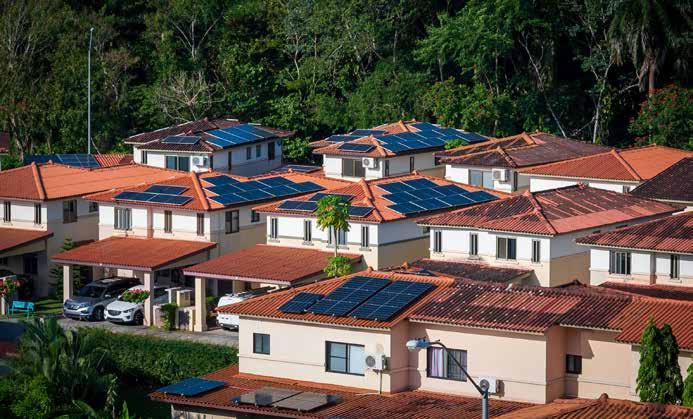
9.1 Transformative pathways for action
The evident failure of the global housing system to deliver adequate, affordable housing has highlighted the need to move away from “businessas-usual” approaches and embrace an alternative vision of how housing should be delivered. While conventional housing policies, particularly those dominated by market-led solutions, are in many cases excluding the poorest and most vulnerable urban residents, this section outlines some key principles to expanding access equitably. This approach, grounded in human rights principles, focuses on the opportunities to expand the supply of adequate housing through diversification, increased protections and meaningful engagement with the informal sector.
9.1.1 Embracing a rights-based approach to housing
The housing crisis is rooted in the systematic denial of human rights. Adequate housing is currently out of reach for between 1.6 and 3.4 billion people across both developed and developing countries. If left unchecked, this threatens the very fabric of sustainable development, undermining social inclusion, economic stability and environmental resilience. Solving the global housing crisis is a pre-requisite to achieving the future of cities and human settlements envisioned in Sustainable Development Goal (SDG) 11 and the New Urban Agenda (NUA).
The economic role of housing should not come at the expense of its social function. While housing is a productive sector of the economy, capable of driving household resilience and national development through employment generation and private investment, it is first and foremost a human right. The social function of housing to support poverty reduction, health, education and climate resilience must be reinforced by leveraging its potential to support inclusive economic development, rather than speculative investment. The key challenge is not only to increase housing supply, but to ensure that needs and demand are matched through the provision of housing that is culturally appropriate and situated close to work, schools and other amenities.
9.1.2
Diversifying housing solutions to meet different needs
To function effectively, housing systems need to combine diverse strategies that encompass incremental development, social rental stock and other options widely used by low-income households. This includes the state-facilitated delivery of housing by the private sector, informal settlement upgrading, regulated rental markets and an expanded supply of social, cooperative and limited-profit housing. Supporting self-built and incremental models is particularly critical in cities and regions where informal construction constitutes a major share of total housing provision.
Strengthening flexible housing solutions is essential. It is critical to build housing stock that is adaptive enough to respond to the changing needs of different social groups, particularly in a context of climate change, ageing populations and large-scale urban migration. This requires a dual approach that combines construction and upgrading: the housing crisis will be resolved not only through the development of new housing, but also through the improvement and renovation of dilapidated stock in informal settlements and low-income neighbourhoods.

Temporary housing solutions, integrated into broader strategies, can play a crucial role. This is especially important to meet the immediate needs of specific vulnerable groups such as students, temporary workers and displacement-affected populations who might otherwise find themselves without any form of shelter. While site-and-services schemes have proven effective, they require complementary elements – including legal frameworks, basic infrastructure, technical support and flexible financing – to achieve truly adequate housing outcomes. Transitional housing and displacement camps should not be used as a substitute for lasting solutions, however, as they may otherwise risk locking inhabitants into long-term housing inadequacy.
9.1.3 Expanding supply through tenure regularization and renter protections
Unlocking the supply of affordable land for development and upgrading remains critical to solving the housing crisis. This requires targeted policies to support the delivery of basic infrastructure and developable land, especially for lower income groups in rapidly growing cities. As many informal settlements are situated on public land, governments have a central role to play in enabling civil society organizations and local communities to develop secure, sustainable settlements in appropriate urban locations.
Asphalt paving crew working on a residential street in Kebumen, Indonesia © Shutterstock
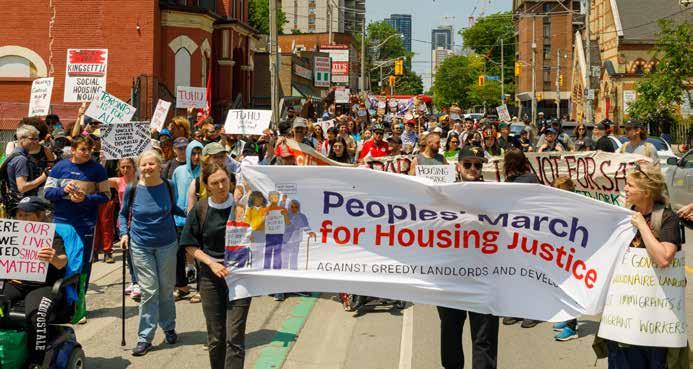
Tenure security is a central determinant of adequate housing. Land regularization drives and the expansion of land records – including through fit-for-purpose land administration approaches – have proven effective in increasing tenure security and unlocking household investments in home improvements and resilience building. This is particularly the case in informal settlements where the risk of eviction had previously discouraged significant expenditure: consequently, protection against forced removals and mortgage foreclosures can help contribute to the diversification of housing solutions through incremental improvements or upgrading.
Strengthening the regulation of rental markets can increase access to adequate housing. This should include clarifying the rights and responsibilities of landlords and tenants, with well-defined and functioning mediation and dispute resolution mechanisms. Accompanying instruments, such as caps on rent increases in some cases and longterm leases, can improve affordability. Enhanced regulation of rental markets should also be complemented by conducive policies to expand rental supply through increasing land availability and public and private investment.
9.1.4 Leveraging informality as a housing solution
Informal settlements and incremental housing development should be recognized as legitimate avenues for providing access to adequate housing and driving inclusive economic development. More than 1.1 billion people presently live in informal settlements, reflecting both the scale of unmet housing needs and the capacity of households and communities to respond through self-organization and hybrid growth. Their widespread invisibility in policy and decision-making processes, besides exacerbating their exclusion, also represents a significant missed opportunity to harness the energy and ingenuity of these processes for positive housing outcomes.
At the same time, the physical, social and economic deficits often associated with informal settlements should be urgently addressed. These can be alleviated through integrated approaches that combine multidimensional poverty reduction and income support with the provision of services, infrastructure and tenure security. Public investment should prioritize the provision of core infrastructure –in particular, water, sanitation, electricity and access roads – while enabling households to complete the construction of their homes through incremental processes supported by adequate financing mechanisms and technical assistance.
Whenever possible, policies should prioritize comprehensive in situ upgrading of informal settlements that also integrate them into broader urban systems. Rather than promoting resettlement elsewhere – a process that can be both economically and emotionally devastating for those displaced – the provision of essential infrastructure, public spaces and livelihood assistance can transform the lives of residents while retaining access to their existing livelihoods and social connections. This can be advanced through citywide, multisectoral and participatory strategies that support inclusive urban planning and governance arrangements that incorporate, rather than penalize, informality.
Participation and co-production are central to these processes. Housing policies must be co-designed and implemented alongside residents, ensuring that communities possess the political recognition, institutional support and accessible financing required to shape their own development. Similarly, data and knowledge production should be co-produced, empowering communities to define and transform their own settlements.
Affordable-housing and tenant-rights activists protest downtown against the commodification of housing, Toronto, Canada © Shutterstock
9.2 Triggering Systemic Change
Systemic change requires the strategic realignment of institutional frameworks and a harmonized approach that combines integrated urban planning, inclusive financing, multi-level governance and digital data collection. It represents a shift from reactive, symptomatic interventions toward a transformative model that addresses the root causes of the crisis. While different levels of governance have an important role in shaping this strategic realignment, the particular pathways evolve in context-specific ways. This section outlines how a holistic response across a range of areas can deliver better housing outcomes.
9.2.1 Enable integrated urban planning and inclusive land use
Integrated planning and land use is key to ensuring that housing development is coordinated with the provision of infrastructure, transport systems, public services and livelihood opportunities. Fostering
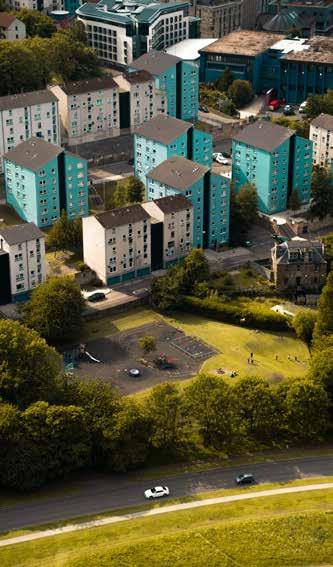
close coordination among the agencies responsible for these different sectors enables more efficient resource allocation and improved policy coherence. Strengthening public capacity, particularly at the city level, to guide land development, manage land values and ensure the provision of serviced land is also critical to the effective functioning of housing systems.
Urban planning should be underpinned by a recognition of the social and environmental functions of land, in line with the NUA. This requires scaling up inclusive land use solutions such as special development areas, inclusionary zoning, public green space and land banks with dispensations for pro-poor housing. Priority should be placed on the inclusiveness, transparency and efficiency of land management systems, capitalizing on the demonstrated value of innovative approaches including fit-for-purpose land administration, new spatial technologies and community-led property registration drives.
Spatial strategies should promote compact urban development, mixed land use, infill development and connectivity. A shift is required from isolated housing projects in city peripheries, especially those which result in urban sprawl, toward integrated neighbourhoods and communities where transit corridors incorporate affordable units through inclusionary zoning and the strategic use of land. Furthermore, these interventions should aim to strengthen connections with other neighbourhoods and the wider city through improved mobility and accessibility.
Participatory planning that incorporates local knowledge and priorities strengthens policy effectiveness, ensuring that development is driven by community needs and aspirations. Recognizing community-based organizations as planning actors in their own right, with statutory powers to negotiate land use, allocate housing, manage assets and enforce longterm affordability, can help ensure more inclusive outcomes.
Inclusive planning must be accompanied by social safeguards and genderresponsive measures to protect vulnerable groups from displacement. This necessitates mandatory anti-displacement actions, such as securing tenure alongside infrastructure upgrades and prioritizing in situ improvements. Planning norms should be tailored to reflect the specific realities of slums, informal settlements and incremental housing. Furthermore, planning agencies should adopt a gendered perspective to identify, understand and address inequalities and remove the barriers for women’s participation.
9.2.2 Scaling up inclusive housing finance systems
Housing finance systems need to be well integrated into national and international finance systems and protect borrowers from shocks, while making finance more widely available and cheaper. This requires finance instruments to move beyond conventional models to embrace alternative housing finance solutions, addressing structural constraints through credit enhancement, disciplined financial behaviour, smarter expenditure targeting and controls. Governments can also work with private developers to establish land value capture instruments that can use leverage increases in land value to cross-subsidize social and affordable housing programmes.
Housing development with recreational space in Edinburgh, Scotland © Shutterstock
Financial systems should be reoriented to support the full diversity of housing needs and pathways. Simply expanding conventional mortgage models, based on formal employment, documented income and titled land, are insufficient to address the realities of large segments of the population. Private developers, small-scale builders and civil society organizations can all play crucial roles in housing delivery with the appropriate financial mechanisms in place. To achieve this, however, requires a flexible and inclusive financial ecosystem with an array of domestic finance and subsidy mechanisms for different stakeholders. In addition to targeted assistance for vulnerable groups, for instance, blended finance and de-risked loans can help mobilize private sector investors who might otherwise be unwilling to take on the perceived risks of low-income housing provision.
A diversity of tenure arrangements should be formally recognized and integrated into national financial frameworks. This includes informal, customary and collective rights to cater to residents of informal settlements and in new urban peripheries. Land registration and titling processes should be simplified and decentralized to facilitate lending for
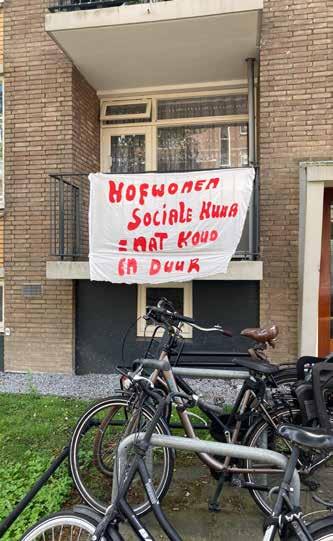
these diverse solutions, aimed at expanding formal affordable finance across the housing spectrum. When supported through tenure security and simplified regulations, the informal sector can become a key partner in advancing inclusive housing delivery. Tax reliefs, subsidies and risksharing mechanisms can incentivize finance institutions and developers to extend their terms to previously unreached populations.
The prevalence and impact of informal employment must be recognized in mainstream financing systems. Banks, lenders and developers must adapt to the reality that a significant proportion of society either works in the informal sector or is self-employed. Innovative risk assessment methods, including the use of alternative data, can help evaluate repayment capacity more accurately and should be complemented by borrower education and protection mechanisms.
9.2.3 Strengthen multi-level governance, participation and institutional capacities
Effective housing delivery depends on coordinated governance across all levels. Governments can play a central role in enabling integrated housing systems that mobilize the capacities of different stakeholders, supported by regulatory frameworks, targeted subsidies and risk-sharing mechanisms aligned with social objectives. Strengthening multilevel governance structures for housing delivery is therefore essential. Clear institutional responsibilities, shared financing mechanisms and lead coordinating bodies can support more effective implementation.
Governments should prioritize housing in national development and across sectoral policies. While housing policies serve as critical instruments, a cross-sectoral approach to housing is needed given its cross-cutting links across all sectors. When housing is treated in isolation, policies often fail and opportunities are lost. Mainstreaming housing across all government sectors is necessary because housing is a systemic driver of health, economic growth and environmental sustainability, while achieving adequate housing necessitates actions across sectors.
Transforming housing systems requires sustained political commitment over time. Because housing systems are capital-intensive and evolve slowly, reforms must extend beyond electoral cycles and be anchored in a clear recognition of the social, economic and environmental functions of housing. Housing policies must therefore be rooted in long-term mandates and coherent institutional frameworks. These should be capable of coordinating land policy, planning, infrastructure and financial regulation over the long term.
Strengthening the role of local governments in decision-making is essential to ensure that decision-making processes reflect realities on the ground. Local governments are best positioned to integrate housing with land use, infrastructure, services, employment and climate adaptation, but frequently lack the authority or resources to do so. However, in addition to clear mandates and predictable funding, cities also need to have adequate technical capacity in place to develop their own housing strategies. Local planning agencies need to be equipped with the skills and authority to implement policies, enforce standards and manage increasingly complex urban development processes.
A protest banner hanging from Hofwonen social housing apartment block complaining about poor conditions and high rent prices in Loosduinen, The Hague, the Netherlands © Andrew Balcombe
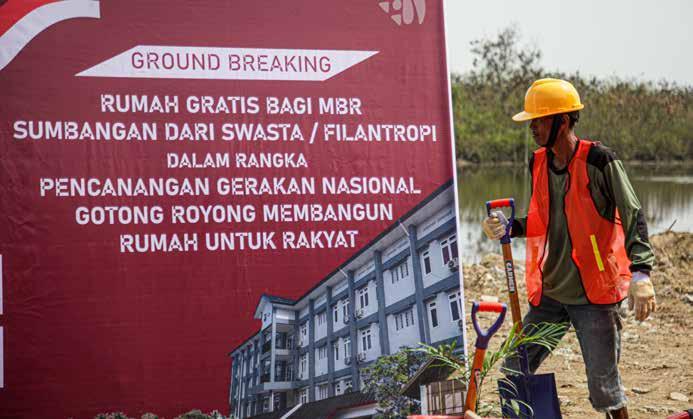
Participation should be embedded as a core governance principle in addressing adequate housing. Structured engagement with communities and civil society strengthens policy legitimacy, improves responsiveness to lived realities, and helps integrate cross-cutting priorities such as health, gender equality, climate resilience and demographic change.
9.2.4 Enhance data collection and digitalization
Robust housing data systems are essential for evidence-based policymaking and effective monitoring. Given persistent gaps, strengthening housing data for planning, decision-making and capturing the broader dimensions of adequacy is a key priority to inform policy adjustments over time. Monitoring systems should track outcomes across different demographic groups to ensure that policies respond to those most in need. This includes developing gender-disaggregated data on mobility, time use and access to services, as well as broader indicators related to access to jobs, public space and essential services.
An improved evidence base on conditions in informal settlements is urgently needed. With many marginalized or low-income communities largely excluded from official data collection, this requires approaches that are grounded in local realities. In particular, the co-production of knowledge and research through participatory processes – such as the use of community mapping tools to document spatial conditions, service gaps and tenure arrangements – can help inform planning and decisionmaking. These approaches, led by communities themselves, can improve the accuracy, relevance and legitimacy of data systems, particularly in
contexts where conventional data sources do not adequately capture the complexity of informal settlements.
Digital technologies offer new opportunities that should be leveraged. When used appropriately, with the active engagement of communities themselves, these tools can promote more accurate data collection, improved construction methods and real-time monitoring of housing conditions to support evidence-based policy design. At the same time, data and technology can support the development of more innovative and inclusive housing finance systems, enabling better targeting of financial instruments and improving system efficiency. For instance, geospatial technologies and digital land registries can be used to promote more transparent land administration processes or map multi-layered vulnerabilities.
9.3 Advancing Global Development Goals through Adequate Housing
Many of the goals of the 2030 Agenda for Sustainable Development cannot be achieved if people lack adequate housing. Adequate housing is not just shelter – it is essential for health, education, dignity, safety and social inclusion and therefore a foundation for human dignity, security and well-being. In particular, addressing the global housing crisis is essential in order to tackle three key global challenges: poverty, climate change and displacement.
A construction worker at the site of free houses for the poor, which is a government program in Tangerang, Indonesia © Shutterstock
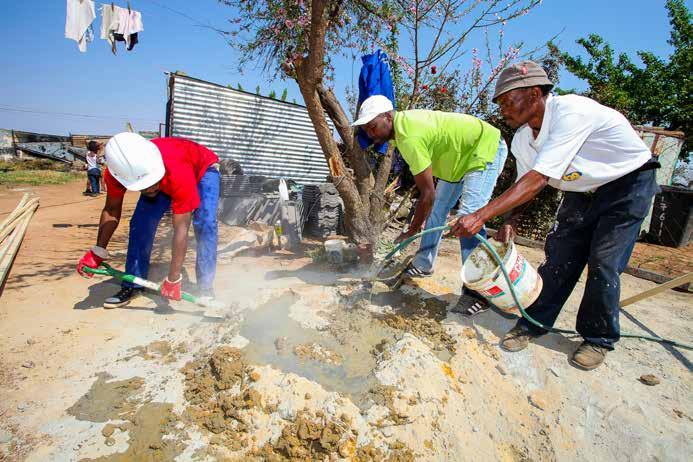
9.3.1
Affordable housing as a tool of poverty reduction
Housing unaffordability is a critical barrier to poverty reduction. Inadequate housing and informal settlements are one of the most visible symptoms of failed development. However, while high housing costs – both the direct costs of purchasing or renting a property, but also indirect costs such as heating, maintenance and transport –are a major factor in pushing poor urban residents into informal or inadequate housing, the impacts extend far beyond this. With so much of their limited income going towards rent, repayments and upkeep, many low-income households are forced to divert essential resources away from nutrition, healthcare and education, with little prospect of accumulating savings.
Delivering affordable housing requires reducing costs to the poor though strategic planning. Increasing the availability of well-located, serviced land is essential, as land can constitute a significant share of housing costs, particularly in high-value urban areas. This requires transparent and well-regulated land, planning and regulatory systems to promote the strategic use of public land for affordable housing. Compact, mixed-use urban development that places housing near places of work and education is an enabler of housing affordability, as it reduces time and cost of daily commutes. Recycling and the use of locally produced materials, supported by technical and financial support to enable self-construction, can also help lower overall costs.
Both demand- and supply-side interventions are needed to support the expansion of adequate housing models for the vulnerable. Demand-side assistance, including housing benefits, subsidies or mortgage support programmes, should be carefully aligned with broader housing policy objectives and supply side interventions. Expanding supply-side models – whether through new construction or upgrading, renovation or adaptive reuse of existing buildings – should be calibrated to improve effective access to adequate housing for vulnerable households.
9.3.2 Aligning housing with climate resilience and sustainability objectives
Housing is a critical pillar of climate action, generating significant emissions while also itself exposed to the effects of natural disasters and other impacts. Given its role as both a contributor to emissions and a key site of climate risk, housing policies must be aligned with climate mitigation and adaptation strategies. Sustainable and climateresilient housing therefore requires a transformation in how housing is produced, inhabited and governed.
Reducing the carbon footprint of housing requires a whole-life approach, addressing direct, indirect and embodied emissions. Measures include improved energy efficiency, the use of low-carbon construction materials, the adoption of circular economy protocols and the integration of housing into broader infrastructure and waste management systems.
Community members building a low cost house as a team in Soweto, South Africa © Shutterstock
Retrofitting existing housing stock offers significant opportunities to improve both climate mitigation and adaptation. Adaptive reuse, renovation and vertical extensions can also reduce the need for new construction and limit environmental impacts.
Local knowledge is key to promoting climate-resilient housing. Particularly in informal settlements, which often concentrate the highest climate risk, dedicated climate strategies should build on residents’ knowledge and agency. Traditional, vernacular, community-based and Indigenous building techniques also provide valuable resources for climate adaptation and should be integrated into housing strategies.
Climate action must not exacerbate inequality and avoid displacement. By building on principles of justice and prioritizing vulnerable populations when developing climate resilience interventions, the risk of “green gentrification” and other exclusionary impacts can be avoided. When well-implemented, environmentally sound planning can also deliver improvements to equity and well-being. For instance, compact, mixed-use development not only reduces emissions and infrastructure costs by optimizing land use and reducing energy demand for transportation, but also improves access to services and opportunities.
9.3.3 Housing the displaced at a time of global rises
Housing is a key factor in crisis response and recovery. A growing number of displaced people seek refuge in urban centres, adding to the unmet demand for housing and often competing for the same options as other vulnerable residents. Ensuring that urban systems work for all, including the displaced, is crucial for social and economic sustainability. Area-based approaches that address the needs of both displaced and host communities can support social cohesion while strengthening local housing systems.
Integrating displacement prevention and response into local housing strategies can improve infrastructure provision, housing availability and service delivery. To this end, a spatial understanding of displacement and the leveraging of multi-stakeholder platforms to coordinate citywide responses is critical. Urban profiles and recovery strategies that involve governments and humanitarian actors allow for the prioritization of resources to accommodate new residents. This ensures that humanitarian aid contributes to long-term development and increases the capacity of local governments to supply services without creating parallel systems. Strengthening coordination between humanitarian and development actors can also improve the sustainability of responses.
Building back better is essential in areas where post-crisis reconstruction is needed. This entails the identification and reduction of risks, preparedness, financial protection and resilient reconstruction. Temporary shelter solutions should also be planned with longer-term sustainability in mind: displacement is increasingly protracted and settlements often become permanent low-income neighbourhoods. Plans should therefore allow for the transformation of emergency provision into sustainable settlements through incremental upgrading and land regularization. Further, temporary shelters should be part of overall area-based housing strategies.
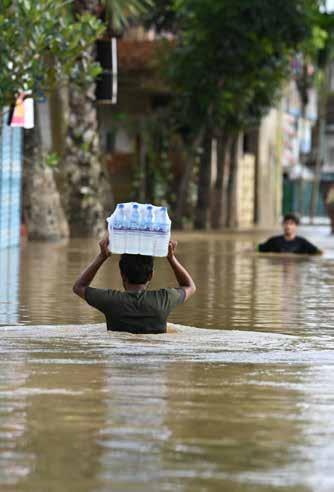
Local governments play a central role in supporting both host and displaced communities through planning, service provision and housing regulation. They are best placed to oversee localized approaches – such as community-led housing, cash-for-rent or repairs – and ensure these are distributed fairly and transparently. Rental markets play a key role in accommodating displaced populations and require regulatory frameworks that ensure accessibility and stability.
9.4 The Role of Multilateral Cooperation in Closing the Gap
Adequate housing is increasingly shaped by global dynamics that extend beyond national jurisdictions. This includes financial flows, climate change, demographic change, displacement, technological transformation and evolving labour markets. These interdependencies require renewed multilateral cooperation capable of addressing housing not only as a national policy domain, but as a shared global challenge requiring coordinated action across levels of governance and sectors of the economy. At a time of geopolitical turbulence and global fragmentation, the need for this shared cooperation is more urgent than ever.
Flood affected people receiving relief in Feni District, Bangladesh © Shutterstock
In this context, addressing the global housing crisis requires strengthened multilateral cooperation. With that in mind, the Open-ended Intergovernmental Expert Working Group on Adequate Housing for All (OEWG-H) is a key milestone (Box 9.1). Though only recently created, its work demonstrates the potential of multilateral cooperation to support coordinated policy development, improved data and monitoring systems, and facilitate exchange of experience across diverse national and city contexts. While international frameworks recognize adequate housing as a human right and as a central component of sustainable development, implementation has often remained fragmented across sectors and governance levels. Strengthened multilateral development cooperation can help align policy approaches, support institutional capacity and ensure that progress towards adequate housing contributes to broader social, economic and environmental objectives.
This could not be more timely, given that global progress on SDG 11 remains significantly off-track, with progress towards many targets stagnating, reversing or largely static. The mid-term review of the progress of the NUA by the UN Secretary General also illustrated gaps in implementation, despite progress made in policy adoption. As the deadline for the SDGs in 2030 approaches rapidly, and the world looks ahead to the second decade of implementation of the New Urban Agenda (2026-2036), adequate housing is an indispensable foundation for progress in implementing both frameworks. Ultimately, upholding housing as a human right is the foundation to achieving these aims
Box 9.1: Promoting multilateral action on housing: The Open-ended Intergovernmental Expert Working Group on Adequate Housing for All
Established by the United Nations Habitat Assembly in 2023, the OEWG-H represents an important step towards strengthening global coordination on housing. The OEWG-H provides the first dedicated intergovernmental platform to collectively address structural housing challenges and develop policy guidance capable of supporting national and local action. It enables Member States to exchange experience, identify shared priorities and develop recommendations reflecting diverse institutional and economic contexts.
Collective reflections on the global housing crisis can advance collective action. The OEWG-H has made progress across key thematic areas that reflect core dimensions of housing systems. Since its first session in 2024, the group has addressed issues such as housing finance, social housing, informal settlements and tenure security. Several key issues have been highlighted through this, including the importance of strengthening non-market housing approaches, supporting in situ upgrading of informal settlements, recognizing the continuum of tenure rights, and expanding inclusive housing finance mechanisms that combine public investment, private resources and community-based solutions. These thematic areas provide an initial framework for integrated housing policy development and reflect the need to address housing systems in a comprehensive manner.
One priority for the OEWG-H is strengthening the global knowledge base on housing policy. Work is underway to establish a global housing knowledge platform that will support the exchange of data, tools and policy practices, as well as peer learning across countries. Improved monitoring frameworks are also being developed to address persistent gaps in housing data, including in relation to affordability, tenure security, informal settlements and homelessness.
However, advancing global multi-stakeholder collaboration is critical. The global housing crisis requires concerted efforts from international, regional, national and local actors. Through intersessional consultations and expert meetings, the OEWG-H has engaged a broad range of stakeholders. National and local governments, development institutions, civil society organisations, financial actors and academic experts have all been involved. This multistakeholder approach reflects the recognition that housing outcomes depend on coordinated action across public, private and community actors. It also supports stronger alignment between global commitments and national policy processes.
The development of forthcoming global guidelines could help strengthen action on adequate housing action. As the OEWG-H progresses towards the development of global guidelines to be considered by the United Nations Habitat Assembly in 2029, it provides an opportunity to strengthen international cooperation to build a more coherent and effective housing system and reinforce housing as a central element of sustainable development policy. The roadmap for the period 2025–2029 provides a structured framework for further development of recommendations and monitoring tools, including work on sustainability and resilience dimensions of housing, improved definitions of homelessness and informal settlements, and strengthened global housing indicators. The nature of the process allows Member States to progressively refine policy guidance and adapt approaches to evolving housing challenges.
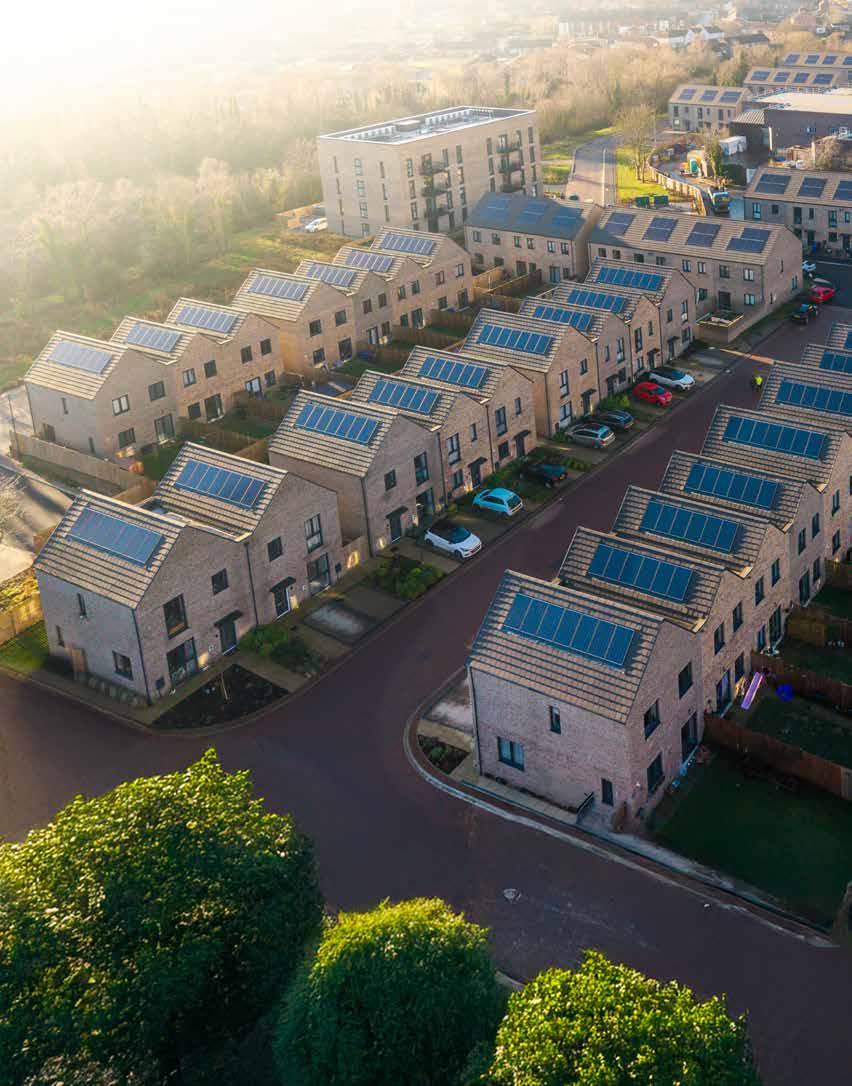
A housing development equipped with rooftop solar panels and hydrogen boilers for energy efficiency, Selby, UK © Shutterstock
Statistical Annex
General Disclaimer: The designations employed and presentation of the data in the Statistical Annex do not imply the expression of any opinion whatsover on the part of the Secretariat of the United Nations concerning the legal status of any country, city or area of its authorities, or concerning the delimitation of its frontiers or boundaries
Table 1: Housing stock, characteristics and ownership
Table 1: Continued
Central Asia
Table 1: Continued
Definitions:
(a) Housing Stock (units in millions): The total number of housing units (occupied and vacant) available in a country or region.
(b) Housing Shortage (units in millions): The estimated gap between the existing housing stock and the number of housing units needed to accommodate the current and desired number of households.
(c) Home Ownership Rate (%): The percentage of occupied housing units that are owner-occupied. It is the ratio of owner-occupied units to the total number of occupied units.
(d) Rental Housing Rate (%): The percentage of occupied housing units that are renter-occupied.
(e) Age of Housing Stock (years): The average age of all housing units in a given area.
Sources:
(a) National Housing Censuses, Administrative Data from building departments on completions and demolitions.
(b) National Housing Censuses, National Statistical Office Surveys,Publications, Administrative Data from building departments on completions and demolitions.
(c) For Home Ownership Rate (%) and Rental Housing Rate (%) data: National Population and Housing Censuses, National Statistical Office Housing Surveys.
(d) National Population and Housing Censuses, National Statistical Office Housing Surveys.
(e) For age of housing stock data: Eurostat, National Housing Censuses (Year Structure Built item), National Statistical Offices Housing Surveys.
Notes
*: Excluding Australia and New Zealand.
Figures for Housing Stock and Housing Shortages have been rounded off to one decimal and values at 0.0 may thus still contain a small number of housing.
Regional values:
(a) For Housing Stock and Housing Shortage contains totals for housing units.
(b) For Home Ownership Rate, and Age of Housing Stock (years) contains unweighted averages.
(c) For Rental Housing Rate contains weighted averages.
Last Updated: 21/04/2026
Middle Africa
Table 2: Housing affordability and finance
Table 2: Continued
Asia
Asia
South-Eastern Asia
Table 2: Continued
Definitions:
(a) Housing Stock (units in millions): The total number of housing units (occupied and vacant) available in a country or region.
(b) Price-to-Income Ratio: The ratio of the median house price to the median annual household income.
(c) Housing Cost Overburden (%): The percentage of the population living in households where the total housing costs (rent, mortgage interest, utilities, etc.) represent more than 40% of their disposable income(net income)_applies to Northern American Countries, Türkiye, Cyprus, Chile, Colombia, Costa Rica, New Zealand, Mexico.
(d) The percentage of the population living in households where the total housing costs (rent, mortgage interest, utilities, etc.) represent more than 30% of their disposable income (net income)- Applies to all other countries.
(e) Rental Affordability (%): The percentage of households where rent exceeds 30% of income.
(f) Housing Value Appreciation (%): Annual percentage increase in housing prices.
(g) Housing Loans Access (%): The percentage of eligible households who successfully obtained a mortgage or housing loan compared to the total number of applicants.
Sources:
(
a) For Price-to-Income Ratio data: Central Bank House Price Indices (HPI), Land Registry Transaction Data, Numbeo/Crowd-sourced data, National Statistical Offices (Income data), OECD.
(b) For Housing Cost Overburden (%) data: EU Statistics on Income and Living Conditions (EU-SILC), OECD, Stats NZ (New Zealand statistics agency). Census, National Household Income and Expenditure Surveys, National Housing Surveys.
(c) For Rental Affordability (%) data: Eurostat,OECD,National Household Income and Expenditure Surveys,Demographic and Health Surveys (DHS) & MICS,LSMS.
(d) For Housing Value Appreciation (%) data: Eurostat, Central Bank House Price Indices (HPI), Land Registry/Transaction Data, and Real Estate Listing Service Data, Country National Statistical Offices.
(e) For Housing Loans Access (%) data: Eurostat, EMF Hypostat, CAHF, Central Bank/Financial Regulator Administrative Data (on mortgage applications and approvals), National Housing Surveys.
(f) For Access to Subsidized Housing (%) data: OECD data, World Bank Housing reports, UN-Habitat reports, CAHF Yearbook, Habitat for humanity.
Notes
*: Excluding Australia and New Zealand.
Regional values:
(a) For Price-to-Income Ratio and Housing Cost Overburden, Housing Value Appreciation, and Housing Loans Access contains unweighted averages.
(b) For Rental Affordability contains weighted averages.
(c) The indicator is not computed at a global level due to the two definitions used in different regions.
For housing cost overburden Country/Regional data compiled:
(a) Oceania* — All countries have percentage of the population living in a household where the total housing costs (net of housing allowances) represent more than 30% of the total disposable household income (net of housing allowances).
(b) Sub-Saharan Africa — All countries have percentage of the population living in a household where the total housing costs (net of housing allowances) represent more than 30% of the total disposable household income (net of housing allowances).
(c) Western Asia and Northern Africa — Excluding Cyprus and Türkiye where the Percentage of the population living in a household where the total housing costs (net of housing allowances) represent more than 40% of the total disposable household income (net of housing allowances).
(d) Latin America and the Caribbean — Excluding Chile, Colombia, Costa Rica and Mexico the percentage of the population living in a household where the total housing costs (net of housing allowances) represent more than 40% of the total disposable household income (net of housing allowances).
(e) Central and Southern Asia — All countries have percentage of the population living in a household where the total housing costs (net of housing allowances) represent more than 30% of the total disposable household income (net of housing allowances).
(f) Eastern and South-Eastern Asia — All countries have percentage of the population living in a household where the total housing costs (net of housing allowances) represent more than 30% of the total disposable household income (net of housing allowances).
(g) Europe and Northern America — All countries have the percentage of the population living in a household where the total housing costs (net of housing allowances) represent more than 40% of the total disposable household income (net of housing allowances).
(h) Australia and New Zealand — For New Zealand the percentage of the population living in a household where the total housing costs (net of housing allowances) represent more than 40% of the total disposable household income (net of housing allowances).
Last Updated: 21/04/2026
Table 3: Tenure security and informality
Table 3: Continued
Definitions:
(a) Security of Tenure (%): Proportion of people with legally recognized documentation of their rights to land out of total adult population.
(b) Proportion of urban population living slums or informal settlements (%). This is based on the ‘slum household’ definition as one in which the inhabitants suffer one or more of the four household deprivations (1. Lack of access to improved water source, 2. Lack of access to improved sanitation facilities, 3. Lack of sufficient living area, 4. Lack of housing durability).
Sources:
(a) For Security of Tenure (%) data: National Population and Housing Censuses (Tenure status item), UN-Habitat, and Land Administration Records.
(b) For Proportion of urban population living slums or informal settlements (%) and Urban population living slums or informal settlements (thousands): United Nations Human Settlement Programme (UN-Habitat), Global Urban Indicators Database 2026.
Notes
*: Excluding Australia and New Zealand.
Regional values: For Proportion and Population of urban population living in slums or informal settlements contains weighted averages.
Last Updated: 21/04/2026
Table 4. Safety and Sufficiency of living area
AFRICA
South-Central Asia
Southern
Western
Table 4: Continued
Central America
Micronesia
Definitions:
(
a) Structural Safety (%): The percentage of the housing units certified to meet national or local building codes and standards designed to protect inhabitants from structural failure and hazards (e.g., hurricanes, floods).
(b) Durable Materials (%), Urban: The percentage of urban households with housing built using durable materials for floor (e.g., cement, tiles), wall (e.g., brick, stone), and roof (e.g., concrete, tiles) that protect from climatic extremes, per UN-Habitat SDG 11.1.1 metadata.
(c) Overcrowding (people/room), Urban: UN-Habitat Definition - The percentage of the population living in an overcrowded household. A dwelling unit is considered overcrowded if more than three people share the same habitable room.
(d) Eurostat/OECD Definition -A person is considered as living in an overcrowded household if the household does not have at its disposal a minimum of rooms equal to: - one room for the household; - one room by couple in the household; - one room for each single person aged 18 and more; - one room by pair of single people of the same sex between 12 and 17 years of age; - one room for each single person between 12 and 17 years of age and not included in the previous category; - one room by pair of children under 12 years of age. The indicator is presented by age group."
Sources:
(a) For Structural Safety (%) data: World Bank (Adequate Housing Index - AHI,National Housing Censuses (using durability of materials as a proxy, as per UN-Habitat SDG 11.1.1), National Surveys I.e. MICS and DHS. In countries where direct data on structural safety certifications are unavailable, 'Durable Materials' serves as a critical proxy indicator. In most countries materials classified as durable also meet structural safety standards. A dwelling is therefore categorized as safe if it features permanent construction materials like concrete, stone, brick, or treated wood.
(b) For Durable Materials (%), Urban data: National Population and Housing Censuses,Demographic and Health Surveys (DHS) / Multiple Indicator Cluster Surveys (MICS), United Nations Human Settlement Programme (UN-Habitat), Global Urban Indicators Database 2024.
(c) For Overcrowding (people/room), Urban data: European Union (Eurostat/OECD),National Population and Housing Censuses,Demographic and Health Surveys (DHS) & Multiple Indicator Cluster Surveys (MICS).
Notes
*: Excluding Australia and New Zealand.
Regional values:
(a) For Structural Safety and Overcrowding contains unweighted averages.
(b) For Durable Materials contains weighted averages.
Last Updated: 21/04/2026
Table 5. Basic services
OCEANIA
Definitions:
(a) Access to electricity (%): Percentage of urban population with access to electricity.
(b) Internet access (%): Percentage of individuals with internet access ( Proportion of individuals who used the internet from any location in the last three months.
Access can be via a fixed or mobile network).
Sources:
(a) For Access to electricity (%) data: National Population and Housing Censuses, Demographic and Health Surveys (DHS), International Energy Agency (IEA), World Bank.
(b) For Internet access (%) data: National Population and Housing Censuses, ICT Household Surveys (e.g., Eurostat Digital Economy and Society Statistics), International Telecommunication Union (ITU).
Notes
*: Excluding Australia and New Zealand
Regional values:
For Access to electricity and Internet access contains weighted averages.
Last Updated: 21/04/2026
Table 6. Climate adaptation
Table 5: Continued
Definitions:
Energy intensity level of primary energy (MJ/$2021 PPP GDP): Energy intensity level of primary energy is the ratio between energy supply and gross domestic product measured at purchasing power parity. Energy intensity is an indication of how much energy is used to produce one unit of economic output. Lower ratio indicates that less energy is used to produce one unit of output.
Sources:
For Energy intensity level of primary energy (MJ/$2021 PPP GDP) data: World Development Indicators(World Bank) SDG 7.3.1 (Energy Balances, UN Statistics Division) (2024).
Notes:
*: Excluding Australia and New Zealand.
Regional values:
For Energy Efficiency (mj/$ GDP) contains unweighted averages.
Last Updated: 21/04/2026
References
Aalbers, M. (2016). Financialization of housing. Taylor & Francis. https://doi. org/10.4324/9781315668666
Aalbers, M. B. (2008). The financialization of home and the mortgage market crisis. Competition & Change, 12(2), 148–166. https://doi. org/10.1179/102452908X289802
Abbas, N. & Macchiarelli, C. (2024, January 11). Housing affordability remains stretched amid higher interest rate environment. International Monetary Fund https://www.imf.org/en/blogs/articles/2024/01/11/housing-affordabilityremains-stretched-amid-higher-interestrate-environment
Abdelkader, Y., Elaydi, N., Mansour, A. & Schechla, J. (2020). A pandemic of viola tions: Forced evictions and other habitat related human rights violations amid COVID 19. HLRN. https://www.hlrn.org/ img/publications/Pandemic_Violations.pdf
Abdi, M. H. & Lamíquiz-Daudén, P. J. (2022). Transit-oriented development in developing countries: A qualitative meta-synthesis of its policy, planning and implementation challenges. International Journal of Sustainable Transportation, 16(3), 195–221. https://doi.org/10.1080/1 5568318.2020.1858375
Abers R., Brandão, I., King, R. & Votto, D. (2018). World resources report: Case study—Porto Alegre. World Resources Institute. https://www.oidp.net/docs/repo/ doc415.pdf
ACHR. (2021). Charoen Chai Nimitmai. Case Studies of Collective Housing in Asian Cities Series. http://www.achr.net/upload/ downloads/file_02052021112601.pdf
ACHR. (2023). Kampung Akuarium: Case studies of collective housing in Asian cities series http://achr.net/upload/downloads/ file_230824171816.pdf
ACHR. (2025). What we do: Solving Asia’s urban poor housing problems using Asia’s greatest resource: People. http://www.achr. net/about-whatwedo.php
Acioly, C. (2021). Street-led citywide slum upgrading: Connecting the informal and the formal city through area-based planning and infrastructure improvement. In O.C. García-Villalba (Ed.), Advances in 21st century human settlements. Springer Singapore. https://doi.org/10.1007/978981-13-7307-7_2
Acolin, A., Green, R. & Hoek-Smit, M. (2021). A ladder up: The role of the construction sector in creating jobs and rebuilding emerging market economies. Habitat for Humanity. https://www.habitat.org/ sites/default/files/documents/A-LadderUp_Report.pdf
Acolin, A., Hoek-Smit, M. & Green, R. (2020). Cornerstone of recovery: How housing can help emerging market economies rebound
from COVID 19. Habitat for Humanity International. https://www.habitat.org/ sites/default/files/documents/Cornerstoneof-Recovery-English.pdf
Adams, C. (2020, January 21). Hong Kong ranked most expensive city to live in. The Independent. https://www.independent. co.uk/travel/news-and-advice/hong-kongmost-expensive-city-vancouver-sydney-melbourne-london-house-prices-a9294026.html
Adams, E. A. & G. O. Boateng. (2018). Are urban informal communities capable of co-production? The influence of community–public partnerships on water access in Lilongwe, Malawi. Environment and Urbanization 30(2), 461-480. https://doi. org/10.1177/0956247818792059
Adams, M., V. Burrows, S. Richardson, J. Drinkwater, C. Gamboa, C. Collin, X. Den, L. Riemann, S. Porteron & A. Secher (2019). Bringing embodied carbon upfront: Coordinated action for the building and construction sector to tackle embodied carbon. World Green Building Council. https://worldgbc. s3.eu-west-2.amazonaws.com/wp-content/ uploads/2022/09/22123951/WorldGBC_ Bringing_Embodied_Carbon_Upfront.pdf
Adebayo, P. (2020). A forced policy crossroads in South Africa: Revisiting incremental housing ideas post-COVID-19. Journal of Public Administration, 55(3-1), 566–587. https://jopa.wemasoft.co.za/public/portal/ articles/published-article/id/1358
Adelfio, M., Hamiduddin, I. & Miedema, E. (2021). London’s King’s Cross redevelopment: A compact, resource efficient and ‘liveable’ global city model for an era of climate emergency? Urban Research & Practice, 14(2), 180–200. https://doi.org/1 0.1080/17535069.2019.1710860
Adewale, B. A. & Parisi, L. (2025). Genderinclusive regeneration strategies for inner city housing. Cities, 165, 106125. 10.1016/j.cities.2025.106125
African Union. (2009). African Union Convention for the Protection and Assistance of Internally Displaced Persons in Africa (Kampala Conven tion). https://au.int/en/treaties/african-unionconvention-protection-and-assistance-internally-displaced-persons-africa
Agência Gov. (2023, December 28). Minh a Casa, Minha Vida entrega 21 mil uni dades habitacionais em 2023. https:// agenciagov.ebc.com.br/noticias/202312/ minha-casa-minha-vida-entrega-21-mil-unidades-habitacionais-em-2023
Agus, M. R. (2002). The role of state and market in the Malaysian housing sector. Journal of Housing and the Built Environ ment, 17(1), 49–67. https://doi.org/10.1023/a:1014868908840
Agyemang, K. K., Amoako-Sakyi, R. O., Antwi, K. B., Mensah, C. A. & Abane, A. M. (2020). Transit oriented development:
Theory and implementation challenges in Ghana. TeMA Journal of Land Use, Mobility and Environment, 13(3), 409-425.
Ahadzie, D. K. & Amoa-Mensah, K. (2010). Management practices in the Ghanaian house building industry. Journal of Science and Technology (Ghana), 30(2). https://doi. org/10.4314/just.v30i2.60533
Al-Betawi, Y. (2024). An agile city? Tactical urbanism and responses to protracted displacement in the City of Amman, Jordan. Environment & Urbanization, 36(2), 337-400. https://doi. org/10.1177/09562478241277078
Albers, A. (2021). Designing with ‘direct democracy’: Local residents, architects and the design of urban renewal in Amsterdam, 1970-1990. Bulletin Knob, 120(2), 1-19. https://doi.org/10.48003/ knob.120.2021.2.714
Albert, V. A. (2021). Mobilising the periphery: Brazil’s My House My Life programme and the Homeless Workers’ Movement. Bulletin of Latin American Research, 40(1), 84-99. https://doi.org/10.1111/blar.13103
Alfaro d’Alençon, P., Smith, H., Álvarez de Andrés, E., Cabrera, C., Fokdal, J., Lombard, M., Mazzolini, A., Michelutti, E., Moretto, L. & Spire, A. (2018). Interrogating informality: Conceptualisations, practices and policies in the light of the New Urban Agenda. Habitat International, 75, 59–66. https://doi.org/10.1016/j. habitatint.2018.04.007
Algoed, L. (2019). The land is ours. Vulnerabilization and resistance in informal settlements in Puerto Rico: Lessons from the Caño Martín Peña Community Land Trust. Radical Housing Journal 1(1), 29-47. https://radicalhousingjournal.org/ wp-content/uploads/2019/04/02_LongRead_Algoed-et-al_29-47.pdf
Algoed, L. (2025). Resisting the financialisation of housing and land: The emergence of community land trusts in Latin America and the Caribbean. Critical Housing Analysis, 12(1), 102–114.
Aliu, I. R. (2024). Gender, ethnicity and residential discrimination: Interpreting implicit discriminations in Lagos rental housing market. Journal of Housing and the Built Environment, 39(1), 77-102. https:// doi.org/10.1007/s10901-023-10073-7 Alliance for Financial Inclusion. (2025). Building homes, building futures: Egypt’s affordable housing finance model (Special report case study). https://www.afi-global. org/wp-content/uploads/2025/07/EgyptHousing-Finance-Case-Study_16Oct.pdf
Altrock, U. (2016). Conceptualising informality: Some thoughts on the way towards generalisation. In M. Waibel & C. McFarlance (Eds.), Urban Informali ties (pp. 171-193). Routledge. https://doi. org/10.4324/9781315548814
Amerio, A., Brambilla, A., Morganti, A., Aguglia, A., Bianchi, D., Santi, F., Costantini L., Odone A., Costanza A., Signorelli C., Serafini G., Amore, M. & Capalongo, S. (2020). COVID-19 lockdown: Housing built environment’s effects on mental health. International Journal of Environmental Research and Public Health, 17(16), 10. https://doi.org/10.3390/ijerph17165973
Amoako, C. & Frimpong Boamah, E. (2017). Build as you earn and learn: Informal urbanism and incremental housing financing in Kumasi, Ghana. Journal of Housing and the Built Environment, 32(3), 429–448. https://doi. org/10.1007/s10901-016-9519-0
Anand, G., Lall, R., Wesely, J. & Allen, A. (2021). One amongst many: Higher education institutions in an ecosystem of urban pedago gies (KNOW Working Paper Series No. 4). Knowledge in Action for Urban Equality. https://www.urban-know.com/resources/ know-working-paper-series-4-one-amongstmany-higher-education-institutions-in-anecosystem-of-urban-pedagogies
Andaloussi, M. B., Biljanovska, N. & De Stefani, A. (2024, December). Housing markets and monetary policy. Finance & Development, International Monetary Fund. https://www.imf.org/en/publications/fandd/ issues/2024/12/housing-markets-andmonetary-policy-mehdi-andaloussi
Angel, S. & Mundt, A. (2024). Who lives there now? Residualisation of social housing in Austria. Journal of Housing and the Built Environment, 39(3), 1189–1207. https:// doi.org/10.1007/s10901-024-10110-z
Angel, S., Lamson-Hall, P. & Blanco, Z. G. (2021). Anatomy of density: Measurable factors that constitute urban density. Buildings & Cities, 2(1). https://doi.org/10.5334/bc.91
ANSA. (2021). Greek government housing program making a difference. https:// www.infomigrants.net/en/post/37061/ greek-government-housing-programmaking-a-difference#:~:text=The%20 ESTIA%20program%20provides%20 rented,2015%2C%22%20the%20statement%20continued.
AON. (2019, September 6). Typhoon Lekima heralds $10bn economic loss for China in August: Aon catastrophe report https://aon.mediaroom.com/newsreleases?item=137916
Arabindoo, P. (2011). Rhetoric of the ‘slum’: Rethinking urban poverty. City, 15(6), 636–646. https://doi.org/10.1080/136048 13.2011.609002
Arcadis. (2020). International construction costs 2020 https://mc-8a0094ca-7a4f-4771-a3c9191964-cm.azurewebsites.net/-/media/ project/arcadiscom/com/costs/international-construction-costs-2020.pdf
Arcadis. (2025). International construction costs 2025: Navigating uncertainty https://www.arcadis.cn/-/media/project/ arcadiscom/com/news/global/2025/5/ geneva-ranked-costliest-city-for-construction-by-arcadis/international-constructioncosts-2025-cn.pdf
Arceo, A., Touchie, M. F. & O’Brien, W. (2025). Beyond density: Examining overlooked drivers of housing and neighborhood greenhouse gas emissions. Sustainable Cities and Society, 120, 106131. https://doi.org/10.1016/j. scs.2025.106131
Ardila, A., Prada, M. D., Martinez, K. V. & Aguilar, G. M. (2024). Factors affecting labor productivity in the global construction industry: A critical review, classification and ranking. Scientia et Technica, 29(1), 18–33. https://doi. org/10.22517/23447214.25546
Arku, G. (2006). The housing and economic development debate revisited: Economic significance of housing in developing countries. Journal of Housing and the Built Environment, 21, 377–395. https://doi. org/10.1007/s10901-006-9056-3
Arundei, R. & Doling, J. (2017). The end of mass homeownership? Journal of Housing and the Built Environment, 32(4), 649–672.
Arundel, R. (2017). Equity inequity: Housing wealth inequality, inter- and intra-generational divergences, and the rise of private landlordism. Housing, Theory and Society, 34(2), 176–200. https://doi.org/10.1080/1 4036096.2017.1284154
Arup. (2024). The City Resilience Framework, 2024 edition: Preparing for the next decade. https://resilientcitiesnetwork.org/ city-resilience-framework-2024-edition/
Asiimwe, T. (2024, August 9). Pilot insights: The impact of climateresilient housing and how Web3 technology can scale its develop ment. Mercy Corps Ventures. https:// www.mercycorpsventures.com/blog/pilotinsights-the-impact-of-climate-resilienthousing-and-how-web3-technology-canscale-its-development
Associated General Contractors of America. (2025, July). Construction employment, average hourly earnings, and unemploy ment, 2022–2025. https://www.agc.org/ sites/default/files/users/user21902/Employment-AHE%20table%20June_25.pdf
Atem, M. P. (2024). Stakeholders asked to support implementation of convention on persons with disabilities. The Radio Community. https://theradiocommunity. org/stakeholders-asked-to-support-implementation-of-convention-on-persons-withdisabilities-3051
Atherton, I. & Nicholls, C. M. (2008). “Housing First” as a means of addressing multiple needs and homelessness. European Journal of Homelessness, 2, 289-303. Australian Housing and Urban Research Institute. (2019). Understanding counter cyclical investment in social housing https://www.ahuri.edu.au
Azcona, G., Bhatt, A. & Duerto, S. (2020). Spotlight on SDG11. Harsh realities: Marginalized women in cities of the devel oping world. UN Women & UN-Habitat. https://unhabitat.org/harsh-realities-marginalized-women-in-cities-of-the-developing-world
Azevedo, M. A. (2023, September 11). Divvy Homes goes from $2B valuation to third layoff in a year. TechCrunch https://techcrunch.com/2023/09/11/divvy-homes-goesfrom-2b-valuation-to-third-layoff-in-a-year/
Azunre, G. A., Amponsah, O., Takyi, S. A., Mensah, H. & Braimah, I. (2022). Urban informalities in sub-Saharan Africa (SSA): A solution for or barrier against sustainable city development. World Development, 152, 105782. https://doi.org/10.1016/j. worlddev.2021.105782
Badev, A., Beck, T., Vado, L. & Walley, S. (2014). Housing finance across countries: New data and analysis (Policy Research Working Paper No. 6756). World Bank. https://documents1.worldbank.org/ curated/en/697351468165251669/pdf/ WPS6756.pdf
Bagdai, N., Van der Molen, P. & Tuladhar, A. (2012). Does uncertainty exist where transparency is missing? Land privatisation in Mongolia. Land Use Policy, 29(4), 798804. 10.1016/j.landusepol.2011.12.006
Bah, E.-M., Faye, I. & Geh, Z. F. (2018). Housing market dynamics in Africa. Palgrave Macmillan. https://doi. org/10.1057/978-1-137-59792-2
Baker, E., Mason, K. & Bentley, R. (2015). Measuring housing affordability: A longitudinal approach. Urban Policy and Research, 33(3), 275–290. https://doi.org/ 10.1080/08111146.2015.1034853
Banco Ganadero S.A. (n.d.). Fondo de Garantías de Créditos de Vivienda Social https:// www.bg.com.bo/fondos-de-garantia/ fondo-de-garantias-de-creditos-de-vivienda-social/
Banerjee, P. (2022). Abandon the slum? Toward an alternative recognition of urban informal dwelling. Journal of Urban History, 49(3), 600–614. https://doi. org/10.1177/00961442221127311
Banerjee, P. (2023). Making-home from below: Domesticating footpath and resisting “homelessness” in Mumbai. Antipode, 55(1), 5–26. https://doi.org/10.1111/ anti.12889
Barnett, C. & Parnell, S. (2016). Ideas, implementation and indicators: Epistemologies of the post-2015 urban agenda. Environment and Urbani zation, 28(1), 87–98. https://doi. org/10.1177/0956247815621473
BaumSnow, N. & Duranton, G. (2025). Housing supply and housing affordability. NBER Working Paper No. 33694; forthcoming as Chapter 6 in Handbook of Regional and Urban Economics, Volume 6. https:// realestate.wharton.upenn.edu/wp-content/ uploads/2025/12/BaumSnow_Duranton_ bc_2025-003.pdf
Bayeroju, O. F., Sanusi, A. N. & Nwokediegwu, Z. Q. S. (2019). Bio-based materials for construction: A global review of sustainable infrastructure practices. J Front Multidiscip Res, 1(1), 45–56. https://www. irejournals.com/paper-details/1710574
Bayuma, T. B. & Abebe, B. G. (2024). Investigating residential satisfaction in informal
settlement areas from a sustainability perspective: The case of Burayu City, Ethiopia. International Journal of Commu nity Well Being, 7(4), 635–661. https://doi. org/10.1007/s42413-024-00224-1
Bazurli, R. (2019). Local governments and social movements in the “refugee crisis”: Milan and Barcelona as “cities of welcome”. South Europea Society & Politics, 24(3), 343-370. https://doi.org/10. 1080/13608746.2019.1637598
Becerril, H. (2017). Evictions and housing policy evolution in Rio de Janeiro: An ANT perspective. Journal of Urban Affairs, 39(7), 939–952. https://doi.org/10.1080/0 7352166.2017.1321735
Becerril, H. (2023). Knowledge coproduction at the periphery of the urban and academia: Insights from Acapulco’s metropolitan area. Planning Theory, 23(4), 377–399. https://doi. org/10.1177/14730952231187611
Beck, A. F. (2020). What is co-housing? Developing a conceptual framework from the studies of Danish intergenerational co-housing. Housing, Theory and Society, 37(1), 40–64. https://doi.org/10.1080/140 36096.2019.1633398
Behr, D. M., Chen, L., Goel, A., Haider, K. T., Singh, S. & Zaman, A. (2021). Introducing the Adequate Housing Index (AHI): A new approach to estimate the adequate housing deficit within and across emerging economies (Policy Research Working Paper No. 9830). World Bank. https://openknowledge.worldbank.org/handle/10986/36481
Beilin, R. & Wilkinson, C. (2015). Governing for urban resilience. Urban Studies, 52(7), 1205-1217. https://doi. org/10.1177/0042098015574955
Belanger, Y. (2011). The United Nations Declaration on the Rights of Indigenous Peoples and urban Aboriginal self-determination in Canada: A preliminary assessment. Aborig inal Policy Studies https://doi.org/10.5663/ aps.v1i1.10134
Belay, A. A. (2020). Protecting the land rights of women through an inclusive land registration system: the case of Ethiopia. African Journal on Land Policy and Geospatial Sciences, 3(2), 29-40. https://doi.org/10.48346/IMIST. PRSM/ajlp-gs.v3i1.17942
Betts, A., Bloom, L., Kaplan, J., Naohiko, J. & Omata, N. (2016). Refugee economies: Forced displacement and development. Oxford University Press.
Bhan, G. (2019). Notes on a Southern urban practice. Environment and Urbaniza tion, 31(2), 543–558. https://doi. org/10.1177/0956247818815792
Bhan, G. (2020). Informality, housing and work: The view from Indian cities. In M. Chen & F. Carré (Eds.), The informal economy revisited: Examining the past, envisioning the future (pp. 136–139). Routledge. https://doi. org/10.4324/9780429200724
Biljanovska, N., Fu, C. & Igan, D. (2023). Housing affordability: A new dataset (IMF Working Paper No. WP/23/247).
International Monetary Fund. https://doi. org/10.5089/9798400259746.001
Binford, W. (2015). The constitutionalization of children’s rights in South Africa. NYL Sch. L. Rev., 60, 333. https://heinonline. org/HOL/Page?handle=hein.journals/ nyls60&div=22&g_sent=1&casa_ token=&collection=journals
Birkeland, J. (2012). Positive develop ment: From vicious circles to virtuous cycles through built environment design (eBook ed.). Routledge. https://doi. org/10.4324/9781849772235
Biscontini, T. (2025). Section 8 (housing) Encyclopaedia Britannica. https://www. britannica.com/topic/Section-8-housing Blockchain for the People. (2017, November 17). Land registry in Sweden. Machete Magazine. https://blockchain.machetemag. com/sweden/land-registry-sweden/ Blunt, A. & Dowling, R. (2022). Setting up home: An introduction. In A. Blunt & R. Dowling (Eds.), Home (2nd ed., pp. 1–39). Routledge. https://doi. org/10.4324/9780429327360-1
Boldbaatar, G., Gombodorj G, Donorov D, Andriambololonaharisoamalala R, Indra M, & Purevtseren M. (2024). Land suitability analysis in monocentric post-socialist city: Case of Ulaanbaatar, Mongolia. PLOS One https://doi.org/10.1371/journal. pone.0308762
Bolivia (Plurinational State of). (2009). Constitution of Bolivia. https://www.constituteproject.org/constitution/Bolivia_2009
Bolt, G., Phillips, D. & Van Kempen, R. (2010). Housing policy, (de)segregation and social mixing: An international perspective. Housing Studies, 25(2), 129-135. https:// doi.org/10.1080/02673030903564838
Bond, P. (2024). South Africa’s housing financialisation crises and social resistance. Crit ical Housing Analysis, 11(1), 81–93. Bonnet, F., Carré, F., Chen, M. & Vanek, J. (2021). Home based workers in the world: A statistical profile (Statistical Brief No. 27). WIEGO. https://www.ilo.org/sites/ default/files/wcmsp5/groups/public/@ ed_protect/@protrav/@travail/documents/ publication/wcms_771793.pdf
Boonyabancha, S. (2009). Land for housing the poor – by the poor: Experiences from the Baan Mankong nationwide slum upgrading programme in Thailand. Environment and Urbanization, 21(2), 309–329. https://doi. org/10.1177/0956247809342180
Boonyabancha, S. & Kerr, T. (2018). Lessons from CODI on co-production. Environment and Urbanization, 30(2), 444–460. https:// doi.org/10.1177/0956247818791239
Boston, M., Bernie, D., Brogden, L., Forster, A., Galbrun, L., Hepburn, L.-A., Lawanson, T. & De Villiers Morkel, J. (2024). Community resilience: A multidisciplinary exploration for inclusive strategies and scalable solutions. Resilient Cities and Structures, 3(1), 114–130. https://doi. org/10.1016/j.rcns.2024.03.005
Botros, A. (2025). Baby boomers are beating millennials in a housing showdown,
scooping up homes in all cash. Fortune https://fortune.com/2025/04/03/babyboomers-beating-millennials-in-housingshowdown-all-cash-buy/
Boulange, C., Gunn, L., Giles-Corti, B., Mavoa, S., Pettit, C. & Badland, H. (2017). Examining associations between urban design attributes and transport mode choice for walking, cycling, public transport and private motor vehicle trips. Journal of Transport & Health, 6, 155-166. https:// doi.org/10.1016/j.jth.2017.07.007
Bradshaw, W., Connelly, E. F., Cook, M. F., Goldstein, J. & Pauly, J. (2005). The costs and benefits of green affordable housing. New Ecology.
Braun, J., Burghof, H., Gehrung, M. & Schmidt, D. (2021) Contractual saving for housing as early financial development and its clients in Weimar Germany. SSRN. https:// ssrn.com/abstract=3742623
Bredenoord, J. & Van Lindert, P. (2010). Pro-poor housing policies: Rethinking the potential of assisted self-help housing. Habitat International, 34(3), 278–287. https://doi.org/10.1016/j.habitatint.2009.12.001
Brickell, K. (2020). Stay home, stay safe? A political geography of home in Covid times. Geography Directions, 8. Available at: https://blog.geographydirections. com/2020/07/08/stay-home-stay-safe-apolitical-geography-of-home-in-covid-times/ Brown, A. (2015). Planning for sustain able and inclusive cities in the global south. DFID Topic Guide. https:// assets.publishing.service.gov.uk/ media/57a08970e5274a31e00000a6/ EoD_Topic_Guide_Planning_Sustainable_ Cities_Global_South.pdf
Brown, A. & Ahmed, S. (2016). Local government dissolution in Karachi: chasm or catalyst. Third World Thematics: A TQW Journal, 1(6), 879-897. https://doi.org/10.1 080/23802014.2016.1315318
Brown, A., Mackie, P., Dickenson, K. & GebreEgziabher, T. (2018). Urban refugee econo mies: Addis Ababa, Ethiopia. IIED. https:// www.iied.org/10850iied
Brown, A., Martinez, L. & Barwari, N. (2021a). Innovation through crises: Urban livelihoods in Cali, Colombia and Duhok, Kurdistan. Cardiff University.
Brown, A., Mackie, P., Barwari, N. & Dickenson, K. (2021b). IDPs and the informal economy: Innovations in Duhok, Kurdistan Region of Iraq. https:// www.cardiff.ac.uk/__data/assets/ pdf_file/0010/2503000/IDPs-and-theInformal-Economy_-Innovations-in-Dahuk,Kurdistan.pdf
Brown, A., Mackie, P., García Amado, P., Barratt, S. & Krišči nait , A. (2024a). Urban protracted displacement and displacement economies. Environment & Urbanization, 36(2), 278-299. https://doi. org/10.1177/09562478241277087
Brown, A., Mackie, P. & García Amado, P. (2024b). The Displacement Economies Framework. Journal of Immigrant &
Refugee Studies, 1–18. https://doi.org/10.1 080/15562948.2024.2379380
Brown, D. & McGranahan, G. (2016). The urban informal economy, local inclusion and achieving a global green transformation. Habitat International, 53, 97-105. https://doi.org/10.1016/j.habitatint.2015.11.002
Brussels Capital Region. (2023). Community Land Trust Brussels (CLTB): An innovative housing model! https://be.brussels/en/ housing/community-land-trust-brusselscltb-innovative-housing-model
Brysch, S. (2019). Reinterpreting existenzminimum in contemporary affordable housing solutions. Urban Planning, 4(3), 326-345. https://doi.org/10.17645/up.v4i3.2121
Buckley, R. M., Kallergis, A. & Wainer, L. (2016). Addressing the housing challenge: Avoiding the Ozymandias syndrome. Environment and Urbani zation, 28(1), 119–138. https://doi. org/10.1177/0956247815627523
Build Change. (2024). Reducing carbon emis sions, increasing adequate housing: How the buildings and construction sector can do both. https://buildchange.org/reducingcarbon-emissions-increasing-adequatehousing-how-the-buildings-and-construction-can-do-both Busan (n.d.) 15-minute city Busan. https:// www.busan.go.kr/eng/15-minute-city-busan
Butcher, S., Pérez-Castro, B., Lipietz, B., Boonyabancha, S., Kerr, T., Shah, K., Patel, S., Hosaka, M., Manandhar, L., Cadornigara, S., Hasan, A., Silas, J., Samarasinghe, R., Domingo, M. & Jayaratne, K. A. (2025). Pathways to urban equality: trans-local solidarities within the Asian Coalition for Housing Rights. Environment and Urbanization, 37(1), 76–94. https://doi. org/10.1177/09562478251317977
Byamugisha, F. F. K. & Dubosse, N. (2023). The investment case for land tenure security in SubSaharan Africa: A cost–benefit analysis. Journal of BenefitCost Analysis, 14(S1), 272–300. https://doi.org/10.1017/bca.2023.14
Cabannes, Y., Yafai, S. G. & Johnson, C. (Eds.). (2010). How people face evictions. Development Planning Unit, University College London.
Cabeza, L. F., Bai, Q., Bertoldi, P., Kihila, J. M., Lucena, A. F. P., Mata, É., Mirasgedis, S., Novikova, A. & Saheb, Y. (2022). Buildings. In P. R. Shukla, J. Skea, R. Slade, A. Al Khourdajie, R. van Diemen, D. McCollum, M. Pathak, S. Some, P. Vyas, R. Fradera, M. Belkacemi, A. Hasija, G. Lisboa, S. Luz & J. Malley (Eds.), Climate change 2022: Mitigation of climate change. Contribution of Working Group III to the Sixth Assess ment Report of the Intergovernmental Panel on Climate Change (pp. xx–xx). Cambridge University Press. https://doi. org/10.1017/9781009157926.011
Cabinet Office, Government of Japan. (2020). White paper on disaster manage ment 2020. https://www.bousai.go.jp/ en/documentation/white_paper/pdf/ R2_hakusho_english.pdf
CAF – Development Bank of Latin America and the Caribbean & Lincoln Institute of Land Policy. (2024). Housing yearbook for Latin America and the Caribbean. https://anuarioviviendalac.com
CAHF. (2019). Benchmarking housing construction costs across Africa: Using CAHF’s Housing Cost Benchmarking methodology to analyse housing costs in fifteen African countries. https:// housingfinanceafrica.org/wp-content/ uploads/2025/01/Benchmarking-HousingConstruction-Costs-Across-Africa-FINAL19-May-2019.pdf
CAHF. (2023). Housing finance in Africa year book 2023 https://housingfinanceafrica. org/wp-content/uploads/2025/01/2023CAHF-Yb_Compressed-14.11.2023.pdf
CAHF (2024). Housing finance in Africa: A review of Africa’s housing finance markets. https://housingfinanceafrica.org/wpcontent/uploads/2025/03/2024-CAHFyearbook.pdf
CAHF (2025a). Housing economy toolkit: Understanding the impact of housing on the economy. https://housingfinanceafrica.org
CAHF. (2025b) Aligned interests: The case for longterm institutional investment in mul tifamily residential rental in South Africa. Centre for Affordable Housing Finance in Africa. https://cib.absa.africa/wp-content/ uploads/2025/01/Absa-CAHF-ResidentialResearch-012025.pdf
CAHF. (2026). Nakuru Housing Chroni cles: Community voices on financing, building and sustaining homes https:// housingfinanceafrica.org/wp-content/ uploads/2026/01/OAI-Case-Study_NakuruHousing-Chronicles-vf_compressed-Centrefor-Affordable-Housing-Finance-in-Africa_ compressed.pdf
Caixa Econômica Federal. (n.d.). Minha Casa, Minha Vida https://www.caixa.gov.br/voce/ habitacao/minha-casa-minha-vida/Paginas/ default.aspx
Caldeira, T. (2017). Peripheral urbanization: Autoconstruction, transversal logics, and politics in cities of the global south. Environment and Planning D: Society and Space, 35(1), 3–20. https://doi. org/10.1177/0263775816658479
Calderón Cockburn, J. (2013). Affordable housing policies and urban land markets in Peru. Lincoln Institute of Land Policy. Carlin, D., Arshad, M. & Baker, K. (2023). Climate risks in the real estate sector. UNEP FI. https://www.unepfi.org/ wordpress/wp-content/uploads/2023/03/ Real-Estate-Sector-Risks-Briefing.pdf
Caron, C. (2017). Hosting the displaced – and being hosted. Forced Migration Review 55, 56-58. https://www.fmreview.org/shelter/ Carrión Mena, F. (2023). Urbicide: the liturgical murder of the city. In Carrión Mena, F. & Cepeda Pico (Eds.) Urbicide: The death of the city, Springer, pp. 25-46. https://doi. org/10.1007/978-3-031-25304-1_2
Carvalho, C. S. & Rossbach, A. (Eds.). (2010). The City Statute of Brazil: A commentary Cities Alliance; Ministry of Cities.
Catalan News. (2025, January 12.). Cooperative housing in Catalonia: Building an alternative to marketregulated residences https://www. catalannews.com/society-science/item/ cooperative-housing-in-catalonia-building-analternative-to-market-regulated-residences
Cavalcanti, T. V. de V., Da Mata, D. & Santos, M. (2019). On the determinants of slum formation. The Economic Journal, 129(621), 1971–1991. https://doi. org/10.1093/ej/uez033
CEIC. (n.d.). China residential area per capita https://www.ceicdata.com/en/china/ residential-area-per-capita
Çelik, Ö. (2024). Cracking the housing crisis: Financialization, the state, struggles, and rights. Housing Studies, 39(6), 1385–1394. https://doi.org/10.1080/02673037. 2024.2333569
Central Provident Fund Board. (n.d.). Central Provident Fund https://www.cpf.gov.sg/ Centre for Living. (2024). A quick look at housing in Japan https://www.cbl.or.jp/slc/ file/english.pdf
Centre for Public Impact. (2016). The Metrocable: Transport by urban cable car in Medellín. https://centreforpublicimpact.org/ public-impact-fundamentals/the-metrocabletransport-by-urban-cable-car-in-medellin/ Cerema. (2022, April 14) La Zone d’Aménage ment Concerté (ZAC). https://outil2amenagement.cerema.fr/outils/la-zone-damenagement-concerte-zac
Cernea, M. (2000). Risks, safeguards and reconstruction: A model for population displacement and resettlement, Economic & Political Weekly, 35(41), 3659-3678. https:// www.jstor.org/stable/4409836
Cernea, M. (2004). Impoverishment risks, risk management and reconstruction: A model of population displacement and resettle ment. https://www.un.org/esa/sustdev/ sdissues/energy/op/hydro_cernea_population_resettlement_backgroundpaper.pdf
Cerrada Morato, L. (2022). Opportunities and challenges of municipal planning in shaping vertical neighbourhoods in Greater London. Urban Planning, 7(4), 17. https:// doi.org/10.17645/up.v7i4.5757
CESCR. (1991). General Comment No. 4: The right to adequate housing (Art. 11(1) of the Covenant)
CESCR. (1997). The right to adequate housing (Art.11.1): forced evictions: 20/05/97. UN Committee on Economic, Social and Cultural Rights (CESCR) General comment 7 https://emergency.unhcr.org/ sites/default/files/2023-12/General%20 Comment%20No.%207%20-%20The%20 right%20to%20adequate%20housing%20 %28Art.11.1%29%20-%20forced%20evictions.pdf
Chambers, R. (1995). Poverty and livelihoods: Whose reality counts? Environment & Urbanization, 7(1), 173–204. https://doi. org/10.1080/15562948.2024.2379380
Chamie, J. (n.d.). The growth of one-person households. Inter Press Service https:// www.ipsnews.net/2025/04/growth-oneperson-households/
Chapple, K. (2015). Income inequality and urban displacement: The new gentrification. The New Labour Forum, 26(1), 84-93. https://doi. org/10.1177/1095796016682018
Chapple, K., Wegmann, J., Mashhood, F. & Coleman, R. (2017). Jumpstarting the market for accessory dwelling units: Lessons from Portland, Seattle, and Vancouver. UC Berkeley. https://doi. org/10.13140/RG.2.2.22055.50089
Chatiza, K. (2026). From passive victims of elite housing policies to formal decision-making spaces for impactful delivery: Lessons from efforts of urban social movements in Zimbabwe. In L. Chipungu, H.H. Magidimisha-Chipungu & J. Kamuzhanje (Eds.), Contemporary models for pro‑poor housing in urban Sub‑Saharan Africa (pp. 99–115). Springer https://doi. org/10.1007/978-3-032-05489-0_5
Chelleri, L., Waters, J. J., Olazabal, M. & Minucci, G. (2015). Resilience trade-offs: Addressing multiple scales and temporal aspects of urban resilience. Environment and Urbanization, 27(1), 181–198. https:// doi.org/10.1177/0956247814550780
Chen, J., Wu, F. & Lu, T. (2022). The financialization of rental housing in China. Land Use Policy, 112, 105442. https://doi. org/10.1016/j.landusepol.2021.105442
Chen, M. A. (2007). Rethinking the informal economy: Linkages with the formal economy and the formal regulatory environment. In B. Guha-Khasnobis, R. Kanbur & E. Ostrom (Eds.), Linking the formal and informal economy: Concepts and policies (pp. 75–92). Oxford University Press. https://doi. org/10.1093/0199204764.003.0005
Chen, M. A. (2020). WIEGO research on informal employment: Key methods, variables and findings. In M. A. Chen & F. Carré (Eds.), The informal economy revisited: Examining the past, envisioning the future (pp. 67–75). Routledge. https:// doi.org/10.4324/9780429200724
Chen, M. A. & Carré, F. (Eds.). (2020). The informal economy revisited: Examining the past, envisioning the future. Routledge. https://doi.org/10.4324/9780429200724
Cherunya, P. C., Truffer, B., Samuel, E. M. & Lüthi, C. (2021). The challenges of livelihoods reconstruction in the context of informal settlement upgrading. Environment and Planning A: Economy and Space, 53(1), 168–190. https://doi. org/10.1177/0308518X20926514
Chigbu, U. E. & Babalola, T. O. (2025). Unhiding the “land rights” and “land wrongs” in sub-Saharan Africa: An interpretive scoping review. Land Use Policy, 154, 107576. https://doi.org/10.1016/j. landusepol.2025.107576
Chinzorig, G., Sarif, M. O. & Sharifi, A. (2026). An analysis of the effectiveness of urban master plans in controlling and regulating urban growth in Ulaanbaatar, Mongolia. Cities, 170, 106713. https://doi. org/10.1016/j.cities.2025.106713
Chiodelli, F. & Moroni, S. (2014). The complex nexus between informality and the law: Reconsidering unauthorised settlements in light of the concept of nomotropism. Geoforum, 51, 161–168. https://doi. org/10.1016/j.geoforum.2013.11.004
Chiodelli, F., Caramaschi, S. & Grazioli, M. (2025). Toward a fine-grained understanding of informality: Subjective meanings, perceptions, and expectations in informal housing trajectories. European Urban and Regional Studies, 32(2), 166-181. https://doi. org/10.1177/09697764231203537
Chiwetu, D. (2019, December 18). The role of mortgage insurance as a credit risk management tool. CAHF https:// housingfinanceafrica.org/discussion/therole-of-mortgage-insurance-as-a-credit-riskmanagement-tool/
Chng, I., Reades, J. & Hubbard, P. (2024). Planning deregulation as solution to the housing crisis: The affordability, amenity and adequacy of Permitted Development in London. Environment and Planning A: Economy and Space, 56(3), 961-978. https://doi. org/10.1177/0308518x231209982
Chou, W. & Dancygier, R. (2021). Why parties displace their voters: Gentrification, coalitional change, and the demise of public housing. American Political Science Review, 115(2), 429-449. https://doi.org/10.1017/ S0003055421000058
Choueiri, Y., Perrotti, D. & Acevedo-De-losRíos, A. (2025). Characterizing informality in urban resource management: Towards an integrated framework of urban metabolism and informal flows. Land Use Policy, 151, 107472. https://doi.org/10.1016/j. landusepol.2025.107472
Christian, B. P., Lucien, A., Patricia, H., Jadix, S. & Edouard, H. (2023). The lake city of Ganvié in the face of environmental development challenges: A review of the literature. Inter national Journal of Environment and Climate Change, 13(8), 471-486. https://doi. org/10.9734/ijecc/2023/v13i81974
Cities Alliance. (1999). Cities without slums: Action plan for moving slum upgrading to scale. Washington, D.C.: World Bank. https://www.citiesalliance.org/sites/default/ files/ActionPlan.pdf
Cities Alliance. (2021a). An international review of slum upgrading practices: Lessons learned and remaining challenges of projects and programs. https://www. citiesalliance.org/resources/publications/ publications/international-review-slumupgrading-practices
Cities Alliance. (2021b). Community led mechanisms for upgrading informal settle ments and informal work in southern cities https://www.citiesalliance.org/sites/default/ files/2022-03/Cities%20Alliance_Informality%20Papers%20Series_Communityled%20Mechanisms.pdf
Cities Alliance. (2021c). COVID 19 and informality: Good practices for reducing risk and enhancing resilience https://
www.citiesalliance.org/sites/default/ files/2022-03/Cities%20Alliance_Informality%20Papers%20Series_Covid19%20 and%20Informality.pdf
Cities Alliance. (2021d). Informal land markets: City government interventions for enhancing land access and tenure security https://www.citiesalliance.org/sites/default/ files/2022-03/Cities%20Alliance_Informality%20Papers%20Series_Informal%20 Land%20Markets.pdf
Cities Alliance. (2021e). Systemic approaches to slums: A review of national and city wide approaches https://www.citiesalliance. org/resources/publications/cities-allianceknowledge/systemic-approaches-slumsreview-national-and-city
Cities Alliance. (2024). Slum upgrading is climate action: Experiences and insights from the Global South. https://www. citiesalliance.org/resources/publications/ cities-alliance-knowledge/slum-upgradingclimate-action
Cities Alliance. (n.d.). Upgrading South Africa’s housing policy https://www.citiesalliance. org/sites/default/files/CA-in-Action-%20 NUSP.pdf
City of Chicago. (n.d.). Business and neighbor hood development strategy https://www. chicago.gov/city/en/sites/business-andneighborhood-development-strategy/home. html
City of Vienna. (n.d.-a). Social housing in Vienna. https://socialhousing.wien/ City of Vienna (Stadt Wien) (n.d.-b). Son nwendviertel: A new urban quarter https:// socialhousing.wien/best-practice/planning-urban-development/sonnwendviertela-new-urban-quarter
CIVICUS. (2025). People power under attack: A report based on the data from CIVICUS Monitor. https://civicusmonitor.contentfiles.net/media/documents/GlobalFindings2025.EN.pdf
Clapham, D., Foye, C. & Christian, J. (2018). The concept of subjective well-being in housing research. Housing, Theory and Society, 35(3), 261–280. https://doi.org/10 .1080/14036096.2017.1348391
Clemens, A. (2022). Tanzania eCooking market assessment 2022. Modern Energy Cooking Services (MECS). https://mecs.org.uk/ wp-content/uploads/2022/08/TanzaniaeCooking-Market-Assessment-2022-Final. pdf
Clifford, B. & Morphet, J. (2022). Local authorities doing it for themselves: Austerity, the direct provision of housing and changing central-local relations in England. Local Government Studies, 49(6), 1218–1240. https://doi.org/10.1080/03003930.2022. 2033227
Climate Change Commission (CCC). (n.d.). People’s Survival Fund. Climate Change Commission, Manila. https:// climate.gov.ph/our-programs/peoplessurvival-fund
CNN. (2021, September 6). Communities across the U.S. trudge through the long recovery process more than a week after
Hurricane Ida’s landfall. https://edition. cnn.com/2021/09/06/weather/hurricaneida-recovery-monday/
Cobbinah, P. B. & Finn, B. M. (2023). Planning and climate change in African cities: Informal urbanization and “just” urban transformations. Journal of Planning Literature, 38(3), 361–379. https://doi. org/10.1177/08854122221128762
Cociña, C., Barcena, A., Sevilla-Núñez, P., Frediani, A. A. & Roche, J. M. (2025a). Forced evictions and climate change: The damaging impact on risks and emissions IIED. https://www.iied.org/22238iied
Cociña, C., Philander, E., Harder, M. & Chitetkwe-Biti, B. (2025b). Learning from informality: Urban innovations for just and sustainable cities: A collection of good practices from around the world Cities Alliance. https://www.citiesalliance. org/resources/publications/publications/ learning-informality-urban-innovations-justand-sustainable
Cohen, P. N. (2021). The rise of oneperson households. Socius, 7, 23780231211062315. https://www. researchgate.net/publication/356850953_ The_Rise_of_One-Person_Households COHRE. (2007). Forced evictions: Towards solutions? Second report of the Advisory Group on Forced Evictions to the Executive Director of UN-Habitat COHRE (Centre on Housing Rights and Evictions) archive. https://issuu.com/cohre/docs/ cohre_report_advisorygroupforcedevi Colburn, G. (2021). The use of markets in housing policy: A comprehensive analysis of housing subsidy programs. Housing Studies, 36, 46–79. https://doi.org/10.108 0/02673037.2019.1686129
Colenbrander, S., Gouldson, A., Roy, J., Kerr, N., Sarkar, S., Hall, S., Sudmant, A., Ghatak, A., Chakravarty, D. & Ganguly, D. (2017). Can low-carbon urban development be pro-poor? The case of Kolkata, India. Environment and Urbanization, 29(1), 139–158. https://doi. org/10.1177/0956247816677775
Collective Community Housing London. (2023). Mutual Home Ownership Socie ties (MHOS): A model for community led housing https://www.cohousingupontyne. org.uk/wp-content/uploads/2023/08/CLHLondon_MHOS.pdf
Collier, P. & Venables, A. J. (2014). Housing and urbanization in Africa: Unleashing a formal market process (Policy Research Working Paper No. 6871). World Bank. https://documents.worldbank.org/en/ publication/documents-reports/documentdetail/500351468002109285/housingand-urbanization-in-africa-unleashing-aformal-market-process
Colomb, C. & Gallent, N. (2022). PostCOVID-19 mobilities and the housing crisis in European urban and rural destinations: Policy challenges and research agenda. Planning Practice & Research, 37(5), 624–641. https://doi.org/10.1080/0 2697459.2022.2119512
Colorado Coalition for the Homeless. (n.d.). Social Impact Bond (SIB). https://www. coloradocoalition.org/SIB Commonwealth of Australia. (2023). The Australian Dream Community Land Trust Network. (n.d.). Com munity land trusts in the Global South: Puerto Rico https://www.cltweb.org/ resources/global-south/puerto-rico/ Connellan, J. (2015). Commentary on housing for people with intellectual disabilities and the National Disability Insurance Scheme reforms (Wiesel, 2015). Research and Practice in Intellectual and Developmental Disabilities, 2(1), 56–59.
Consumer Financial Protection Bureau. (2024). Data spotlight: The impact of changing mortgage interest rates. https://www. consumerfinance.gov/data-research/ research-reports/data-spotlight-the-impactof-changing-mortgage-interest-rates/ Convergence Blended Finance and CAHF (2025). Blended finance for afford able housing in Africa: A playbook for mobilizing capital at scale for affordable housing in Africa https://housingfinanceafrica.org/wp-content/uploads/2025/10/ Convergence-report_Affordable-Housingin-Africa.pdf
Cornwall Energy Networks. (n.d.). Cornwall Council: Whole house retrofit unnovation project. https://www.cen.uk.com/post/ cornwall-council-whole-house-retrofitinnovation-project
Correia, E. & Delgado Henriques, C. (2025). Indoor thermal comfort in informal settlements: A case study of Mafalala, Maputo. African Geographical Review, 44(6), 558-580. https://doi.org/10. 1080/19376812.2025.2520775
Cosentino, L., Fernandes, J. & Mateus, R. (2024). Fast-growing bio-based construction materials as an approach to accelerate United Nations Sustainable Development Goals. Applied Sciences, 14(11), 4850. Costa Silveira, M. & Getulio Vargas, F. (2022). Activism among bureaucrats: Creative social housing work in a conservative institutional setting. Brazilian Political Science Review, 16(3).
Cotroneo, A. (2017). Specificities and challenges of responding to internal displacement in urban settings, Migrations and Displacement. International Review of the Red Cross, 99(1), 283-318. Cambridge University Press. https:// www.cambridge.org/core/journals/ international-review-of-the-red-cross/ article/specificities-and-challenges-ofresponding-to-internal-displacementin-urban-settings/437B517C56BBF0BE1F2BD01AE0795008
Coulibaly, T. Y. & Managi, S. (2022). Populations in slums are happier than rural populations: The case of Mumbai. Land Use Policy, 122, 106341. https://doi. org/10.1016/j.landusepol.2022.106341 Coward, M. (2009). Urbicide: The politics of urban destruction. Routledge. https://doi. org/10.1080/23269995.2010.10707868
Crabtree-Hayes, L. (2024). Establishing a glossary of community-led housing. Interna tional Journal of Housing Policy, 24(1), 157–184.
Cravino, M. C. (2023). Paradigmas de intervención estatal en asentamientos populares en América Latina (1970-2020). Cuaderno Urbano, 34(34), 187–209. https://doi. org/10.30972/crn.34346560
Crawford, G. & Morrison, C. (2021). Community-led reconstruction, social inclusion and participation in post-earthquake Nepal. Development Policy Review, 39(4), 548–568. https://doi.org/10.1111/ dpr.12512
Crawford, N. & Holloway, K. (2024). The liveli hoods of forcibly displaced persons (FDPs): A global evidence review. HPG working paper. London: ODI. https://media.odi. org/documents/HPG_WP_forced_displacement_Global_Evidence_Review-finalApr24.pdf
Crippa, M., Guizzardi, D., Pagani, F., Banja, M., Muntean, M., Schaaf, E., Becker, W., Monforti-Ferrario, F., Quadrelli, R. & Risquez Martin, A. (2023). GHG emissions of all world countries. Publications Office of the European Union. https://doi. org/10.2760/953322
Crisp, J. (2017). Finding space for protection: An inside account of the evolution of UNHCR’s Urban Refugee Policy. Refuge: Canadian Journal on Refugees, 33(1), 87-96.
Crosby, A. (2024). Housing financialization and community wellbeing: Tenant resistance in the liveable city. Critical Housing Analysis, 11(1), 68–80.
Cui, C., Huang, Y. & Wang, F. (2020). A relay race: Intergenerational transmission of housing inequality in urban China. Housing Studies, 35(6), 1088-1109. https://doi.org/ 10.1080/02673037.2019.1648771
Culwick, C. & Patel, Z. (2020). Building just and sustainable cities through government housing developments. Environment and Urbanization, 32(1), 133–154. https://doi. org/10.1177/0956247820902661
D’Adda, G. & Kusiak, J. (2025). Striking back with the law: Legal struggles against corporate landlords in Barcelona and Berlin. Urban Studies, 62(16), 3205-3222. https:// doi.org/10.1177/00420980241300417
d’Cruz, C. & Mudimu, P. (2013). Community savings that mobilize federations, build women’s leadership and support slum upgrading. Environment and Urbanization, 25(1), 31–45. https://doi. org/10.1177/0956247812471616
Da Cunha, N. V. (2020). Public policies in favelas and the production of urban inequalities in Rio de Janeiro. Global Journal of Human Social Science, 20(1), 11-19. https://doi.org/10.17406/GJHSS
Dadpour, R., Law, L. & Osbaldiston, N. (2024). Paradise lost? Rental housing insecurity and the lived experiences of amenity migrants in Cairns, Australia. Australian Planner, 60(1), 58-71. https://doi.org/10.10 80/07293682.2024.2405673
Dakyaga, F., Bagson, E. & Sillim, M. L. (2025). Urban housing journeys: Collaborative housing configurations for improving access to housing. Cities, 158. https://doi. org/10.1016/j.cities.2024.105690
Dancygier, R. & Wiedemann, A. (2024). The financialization of housing and its political consequences. American Journal of Political Science. https://doi.org/10.1111/ ajps.12928
Dang, L. S. & Seemann, A. K. (2021). The role of collaborative housing initiatives in public value co-creation: A case study of Freiburg, Germany. Voluntary Sector Review, 12(1), 59-80. https://doi.org/10.13 32/204080520X15822993230122
Dat, N. (2024, December 26). Cost of Typhoon Yagi impact laid bare in wide-ranging study. Vietnam Investment Review. https://vir. com.vn/cost-of-typhoon-yagi-impact-laidbare-in-wide-ranging-study-120379.html
Datta, A. (2023). The informational periphery: Territory, logistics and people in the margins of a digital age. Asian Geographer, 40(2), 159–176. https://doi.org/10.1080/1 0225706.2023.2253233
Davies, A. (2012). IDPs in host families and host communities: Assistance for hosting arrangements. UNHCR.
Davis, T., Vandeventer, J. S., Warnaby, G. & Bull, M. (2014). Urban regeneration and social entrepreneurship: A microhistorical study of a Community Land Trust. Business History, 1-24. https://doi.org/10.1080/000 76791.2025.2485208
Dawson, H.J. (2026). Rentierism and class differentiation in an informal Johannesburg settlement. Development and Change. https://doi.org/10.1111/dech.70055
de Boer, J. (2015). Resilience and the fragile city. Stability: International Journal of Secu rity and Development, 4(1), 1–7. https:// doi.org/10.5334/sta.fk
De Sousa Silva, C., Viegas, I., Panagopoulos, T. & Bell, S. (2018). Environmental justice in accessibility to green infrastructure in two European cities. Land, 7(4), 134. https:// www.mdpi.com/2073-445X/7/4/134
Deboulet, A. (Ed.). (2016). Rethinking pre carious neighborhoods. Agence Française de Développement. https://librairie.afd.fr Deboulet, A. & Lipietz, B. (2024). Planning Theory special issue: Coproducing the just city: Interrogating the civil society/academy interface. Planning Theory, 23(4), 291–299. https://doi. org/10.1177/14730952241284139 DECIG (2024). Building Green: Mapping Energy Efficiency – Global dataset on building code effectiveness and compliance. Global Indicators Group (DECIG), World Bank Group. https://www.worldbank.org/ en/building-green Deffet, E. (2022, September 1). Wallonie: les logements inoccupés seront plus facilement détectés [Wallonia : Empty homes will be easier to detect]. https:// www.lesoir.be/462934/article/202209-01/wallonie-les-logementsinoccupesseront-plus-facilement-detectes#_
ga=2.36986976.1522295958.16626491251435228560.1662649125
Del Negro, M., Giannone, D., Giannoni, M., Tambalotti, A., Bok, B. & Qian, E. (2019, February 14). Global trends in interest rates. Liberty Street Economics (Federal Reserve Bank of New York). https://libertystreeteconomics.newyorkfed.org/2019/02/globaltrends-in-interest-rates/ Dempster, H. & Herbert, N. (2023). Adaptive management in refugee programming: Lessons from Re:Build. CGD Policy Paper 295. Center for Global Development. https:// www.cgdev.org/ publication/adaptive-management-refugee-programming-lessons-rebuild Denaldi, R. & Cardoso, A. L. (2021). Slum upgrading beyond incubation: Exploring the dilemmas of nation-wide large scale policy interventions in Brazil’s Growth Acceleration Programme (PAC). International Journal of Urban Sustainable Development, 13(3), 530–545. https://doi.org/10.1080/19463138 .2021.1958336
Deng, G. J., Zhou, W. H. & Wang, D. X. (2025). Has China’s housing security policy affected the housing market? Analysis based on housing market data from 35 monitored cities. Buildings, 15(11). https://doi. org/10.3390/buildings15111847
Department of Finance. (2025, October 28). DOF HEARTS Series: Environment. DOF ensures the nation’s sustainable future by protecting climate-vulnerable communities. Government of the Philippines. https://www.dof.gov.ph/ dof-hearts-series-environmentdof-ensuresthe-nations-sustainable-future-by-protectingclimate-vulnerable-communities/ Department of Human Settlements, South Africa. (2009). National Housing Code, Volume 4. Incremental interventions: Upgrading informal settlements. https://dhs.mpg.gov. za/5%20Volume%204%20Upgrading%20 Infromal%20Settlement.pdf
Desmond, M. (2017). Evicted: Poverty and profit in the American city. Broadway Books.
Dettmer, J., Cancryn, A., Hartog, E. & TaylorVaisey, N. (2024, August 3). Priced out of housing, many younger disillusioned voters embrace populism. Politico https://www. politico.com/news/2024/08/03/unaffordablehousing-populism-00172552
Dewilde, C. (2021). Housing and deprivation. SocioEconomic Review, 20(1), 373–400. Dewilde, C. & Lancee, B. (2013). Income inequality and access to housing in Europe. European Sociological Review, 29(6), 1189–1200. https://doi.org/10.1093/esr/jct009
Dinić, M. & Mitković, P. (2016). Suburban design: From “bedroom communities” to sustainable neighborhoods. Geodetski vestnik, 60(1). Divvy Homes. (n.d.). How it works https://www. divvyhomes.com/how-it-works
Dlamini, L. N. & Yessoufou, K. (2022). Residents and professionals’ perspectives on energy and water consumption while transiting from conventional to sustainable housings in South Africa. Sustainability, 14(8), 4498. https://doi.org/10.3390/su14084498
Doberstein, C. (2020). Role-playing in public engagement for housing for vulnerable popu-
lations: An experiment exploring its possibilities and limitations. Land Use Policy, 99, 105032. https://doi.org/10.1016/j. landusepol.2020.105032
Dong, H. (2018). The impact of income inequality on rental affordability: An empirical study in large American metropolitan areas. Urban Studies, 55(10), 2106–2122. https://doi. org/10.1177/0042098017710380
Dorlach, T. (2023). Social policy responses to Covid-19 in the global south: Evidence from 36 countries. Social Policy and Society, 22(1), 94–105. https://doi. org/10.1017/S1474746422000264
Douglas, I. (2018). The challenge of urban poverty for the use of green infrastructure on floodplains and wetlands to reduce flood impacts in intertropical Africa. Landscape and Urban Planning, 180, 262–272. https://doi. org/10.1016/j.landurbplan.2016.09.025
Douglas, S., Ansell, C., Parker, C. F., Sørensen, E., ‘t Hart, P. & Torfing, J. (2020). Understanding collaboration: Introducing the collaborative governance case databank. Policy and Society, 39(4), 495-509. https://doi.org /10.1080/14494035.2020.1794425
Dovey, K. & Recio, R. B. (2024). Inventraset assemblages: The spatial logic of informal street vending, transport and settlement. Urban Studies, 61(12), 2265–2289. https://doi. org/10.1177/00420980231223060
Dovey, K., Shafique, T., Van Oostrum, M. & Chatterjee, I. (2021). Informal settlement is not a euphemism for slum: What is at stake beyond the language? International Development Planning Review, 43(2), 139–150. https://doi.org/10.3828/ idpr.2020.14
Dovey, K., van Oostrum, M., Shafique, T., Chatterjee, I. & Pafka, E. (2023). Atlas of informal settlement: Under standing self organized urban design Bloomsbury Publishing. https://doi. org/10.5040/9781350295070
Doyle, R. (2017). Slum economies: Economic activity hubs in informal settlements: A case study of Dar es Salaam, Tanzania [Doctoral dissertation, Cardiff University]. ORCA. https://orca.cardiff.ac.uk/id/ eprint/111113/
Drea, E. (2025). Three inconvenient truths Wilfried Martens Centre for European Studies.
Dubey, S., Sahoo, K. C., Dash, G. C., Sahay, M. R., Mahapatra, P., Bhattacharya, D., Barrio, M. O. & Pati, S. (2022). Housing-related challenges during COVID-19 pandemic among urban poor in low-and middleincome countries: A systematic review and gap analysis. Frontiers in Public Health, 10, 1029394. https://doi.org/10.3389/ fpubh.2022.1029394
Dupuis, A. & Thorns, D. (1998). Home, home ownership and the search for ontological security. The Sociological Review, 46(1), 24–47. https://doi. org/10.1111/1467-954X.00088
Earle, L. (2016). Addressing urban crises: Bridging the humanitarian-development divide. War in cities: International Review of the Red Cross. 98(901), 215 – 224. https://doi.org/10.1017/ s1816383116000576
Earle, L. (2023). Why the international com munity is failing refugees: Four myths about protracted displacement. IIED. https:// www.iied.org/21631iied
Earle, L. & Brown, A. (2024). Realigning responses to protracted displacement: Putting ‘urban first” in a world without camps. (Editorial). Environment & Urbanization, 36(2), 233-248. https://doi. org/10.1177/09562478241283
Easton-Calabria, E. & Omata, N. (2018). Panacea for the refugee crisis? Rethinking the promotion of ‘self-reliance’ for refugees. Third World Quarterly, 39(8), 1458-1474. https://doi.org/10.1080/01436 597.2018.1458301
Echenique, M. H., Hargreaves, A. J., Mitchell, G. & Namdeo, A. (2012). Growing cities sustainably. Journal of the American Plan ning Association, 78(2), 121-137. https:// doi.org/10.1080/01944363.2012.666731
Economic Commission for Latin America and the Caribbean (ECLAC). (n.d.). Statistics and indicators: CEPALSTAT statistical data portal and publications. https:// statistics.cepal.org/portal/cepalstat/ dashboard.html?indicator_id=4437&area_ id=2320&lang=en
Ecovillage. (n.d.). Dancing Rabbit Ecovillage website. https://ecovillage.org/ EHC. (n.d.) Bulgaria. https://www.housingcoop. eu/countries/bulgaria
EIB. (2025, August 7). Kenya: Affordable housing projects advance with EIB Global support. https://www.eib.org/en/press/ all/2025-312-kenyan-affordable-housingprojects-advance-with-eib-global-support
El Salvador Ministerio de Vivienda y Habitat. (2014). Política Nacional de Vivienda y Hábitat de El Salvador https://noticias. uca.edu.sv/uploads/texto_2626/file/PDF746092-1393980725-53167535282e9.pdf Eldemery, I. M. (2009). Globalization challenges in architecture. Journal of Architectural and Planning Research, 26(4), 343-354.
Enano, J. O. (2025, October 23). Is Shell to blame for a “super typhoon”? Philippines survivors to sue oil giant in legal first. The Guardian. https://www.theguardian.com/world/2025/ oct/23/we-are-now-fighting-back-
Eriksen, S. H., Grøndahl, R. & Sæbønes, A.-M. (2021). On CRDPs and CRPD: Why the rights of people with disabilities are crucial for understanding climate-resilient development pathways. The Lancet Planetary Health, 5(12), e929–e939.
Esteves, A-M., Gouley, C., Konstantinidis, A. & Carroll, B. (2024). Livelihoods and social impact assessment, Chapter 24. In Vanclay, F. & Esteves, A-M. (Eds.) Handbook of Social Impact Assessment, EE Elgar-online. https:// www.elgaronline.com/edcollbook-oa/book/9 781802208870/9781802208870.xml
Estiningrum, W., Farisi, A., Lubis, W. & Septiani, Y. (2020) Affordable housing finance for informal workers. Housing Finance International. https://www.housingfinance. org/wp-content/uploads/2020/09/HFIAutumn-2020_AHF-informal-workers_ article.pdf
EUDiF. (n.d.). Colombia unites us https:// diasporafordevelopment.eu/cpt_practices/ colombia-unites-us/ Eurofound. (2024). Becoming adults: Young people in a postpandemic world. Publications Office of the European Union. https://www.eurofound.europa. eu/en/publications/2024/becoming-adultsyoung-people-post-pandemic-world European Central Bank. (n.d.). Mortgage loan features and credit standards. https:// data.ecb.europa.eu/data/data-categories/ supervisory-and-prudential-statistics/ macroprudential-database/residential-realestate-variables/mortgage-loan-featurescredit-standards?layerType=KL European Commission, JRC & IEA. (2025). EDGAR emissions data base for global atmospheric research: EDGAR_2025_GHG_ booklet_2025 [Data set]. European Commission. https://edgar.jrc.ec.europa. eu/report_2025#data_download European Commission. (n.d.). The European affordable housing plan. https://commission.europa.eu/topics/employmentand-social-affairs/affordability/affordablehousing_en
European Court of Human Rights. (2012). Yordanova and Others v. Bulgaria https://hudoc.echr.coe.int/fre#{%22it emid%22:[%22002-2155%22]}
European Observatory of Homelessness. (n.d.). The Homeless Bill of Rights. https://www. feantsa.org/files/Home/Homeless-bill-ofrights/The_Homeless_Bill_of_Rights_Full_ Doc.pdf
European Union & CEB. (n.d.). Housing and Empowerment for Roma (HERO): Innovating housing support and financial inclusion of Roma in Bulgaria, Romania and Slovakia https://projektdomov.sk/ wp-content/uploads/2025/03/HERO_Bulgaria_Romania_Slovakia.pdf European Union. (2024). Directive (EU) 2024/1275 on the energy performance of buildings (recast) Official Journal of the European Union. https://eur-lex.europa.eu/ eli/dir/2024/1275/oj/eng
Eurostat. (2025). Migrant integration statistics – Housing https://ec.europa. eu/eurostat/statistics-explained/index. php?title=Migrant_integration_statistics_-_housing
Eurostat. (n.d.). Government expenditure on housing and community amenities https:// ec.europa.eu/eurostat/statistics-explained/ index.php?title=Government_expenditure_ on_housing_and_community_amenities Evans, B., Elisei, P., Rosenfeld, O., Roll, G., Figueiredo, A. & Keiner, M. (2016). Habitat III – Toward a new urban agenda. disP – the Planning Review, 52(1),
86-91. https://radar.gsa.ac.uk/5263/1/ Habitat%20III%20Toward%20a%20new%20 urban%20agenda.pdf
Ezeadichie, N. H., Nkwunowo, U. C., Onodugo, V. A., John-Nsa, C., Lawrence, E. A. & Sampson, M. (2022). Are homebased enterprises an economic lifeline or scenic distortion in Nigeria? Evidence from Ikot Ekpene, Akwa Ibom State. Habitat International, 127, 102623. https://doi. org/10.1016/j.habitatint.2022.102623
Farha, L. (2017). Report of the Special Rappor teur on adequate housing. United Nations. Farsangi, E. (2023). A duel of dual crisis: Charting governance priorities. Energy (Magazine). https://issuu.com/ monkeymediamagazines/docs/energy_ november_2023_web_magazine/62
Fatti, C. C. (2022). Towards just sustainability through government-led housing: Conceptual and practical considerations. Current Opinion in Environmental Sustainability, 54, 101150. https://doi. org/10.1016/j.cosust.2022.101150
Federative Republic of Brazil. (1988). Constitution of the Federative Republic of Brazil. https://www.refworld.org/legal/legislation/ natlegbod/1988/en/103855
Federative Republic of Brazil. (2023). Brazil’s Minha Casa, Minha Vida program is back, delivering over 2,700 homes across six Bra zilian state. https://www.gov.br/secom/en/ latest-news/2023/brazil2019s-minha-casaminha-vida-program-is-back-delivering-over2-700-homes-across-six-brazilian-states
Ferguson, B. & Smets, P. (2010). Finance for incremental housing: Current status and prospects for expansion. Habitat International, 34(3), 288–298. https://doi. org/10.1016/j.habitatint.2009.11.008
Ferm, J. & Jones, E. (2016). Mixed-use “regeneration” of employment land in the post-industrial city: Challenges and realities in London. European Planning Studies, 24(10), 1913-1936. https://doi.org/10.108 0/09654313.2016.1209465
Ferris, E. (2020). Durable solutions for IDPs Research briefing paper, UN SecretaryGeneral’s High Level Panel on Internal Displacement. https://www.un.org/ internal-displacement-panel/sites/www. un.org.internal-displacement-panel/files/ durable-solutions-ferris_1_apr_2021.pdf
Fields, D. (2019). The politics of digital transformations of housing. Planning Theory & Practice, 20(4), 575–603. https://doi.org/1 0.1080/14649357.2019.1651997
Fields, D. J. & Hodkinson, S. N. (2018). Housing policy in crisis: An international perspective. Housing Policy Debate, 28(1), 1-5. https://doi.org/10.1080/10511482.20 18.1395988
Fika, O. (2025, March 12). Why land matters in the fight for affordable housing. Cities Today. https://cities-today.com/industry/ why-land-matters-in-the-fight-for-affordable-housing/
Finlay, R., Hopkins, P., Kirndörfer, E., Kox, M., Huizinga, R., De Backer, M., Benwell, M.C., Van Liempt, I., Hörschelmann,
K., Felten, P., Bastian, J. & Bousetta, H. (2022). Young refugees and public space HERA report. Newcastle University. https:// refugeeyouthinpublicspace.sites.uu.nl/wpcontent/uploads/sites/550/2022/03/Youngrefugees-and-public-space-2022.pdf
Finn, B. M. & Cobbinah, P. B. (2023). African urbanisation at the confluence of informality and climate change. Urban Studies, 60(3), 405–424. https://doi. org/10.1177/00420980221098946
FinRegLab. (2022). Utility, telecommunications, and rental data in underwriting credit. FinRegLab. https://finreglab.org/wp-content/ uploads/2023/12/FinRegLab_2022-03-23_ Research-Report_Utility-Telecommunicationsand-Rental-Data-in-Underwriting-Credit.pdf
Fiori, J. (2013). Informal city: design as political engagement. In T. Verebes (Ed.), Masterplanning the Adaptive City. Computational urbanism in the twenty first century (pp. 40–48). https://doi. org/10.4324/9780203428054
Forced Migration Review (2024). Digital disruption and displacement. Forced Migration Review 73. https://www.fmreview.org/digitaldisruption/
Forrest, R. & Hirayama, Y. (2015). The financialisation of the social project: Embedded liberalism, neoliberalism and home ownership. Urban Studies, 52(2), 233–244. https://doi. org/10.1177/0042098014528394
Foster, S. & Bonilla, D. (2011). The social function of property: A comparative law perspective. Fordham Law Review, 80, 101.
Franco, M. A. J. Q., Pawar, P. & Wu, X. (2021). Green building policies in cities: A comparative assessment and analysis. Energy and Buildings, 231, 110561. https://doi. org/10.1016/j.enbuild.2020.110561
Freddie Mac Multifamily. (2025, December 31). Multifamily business and securitization program overview https://mf.freddiemac. com/docs/mf_securitization_investor-presentation.pdf
Frediani, A. A., Cociña, C. & Mardon, M. (2024). Building sustainable housing futures for all: Filling the knowledge gap on building materials in informal settlements [Briefing paper]. International Institute for Environment and Development. https://www.iied. org/22321iied
Frediani, A. A., Cociña, C. & Roche, J. M. (2023). Improving housing in informal set tlements: Assessing the impacts in human development. Habitat for Humanity International; International Institute for Environment and Development. https://www. habitat.org/sites/default/files/documents/ Home-Equals-Launch-Report_Full.pdf
Fredman, S. (2018). Comparative human rights law. Oxford University Press. https://doi.org/10.1093/ oso/9780199689408.001.0001
Funke, C. (2023). No context is too challenging: Promoting, doing and achieving inclusion in the humanitarian response in South Sudan. International Review of the Red Cross, 105(922), 375-395. https://doi. org/10.1017/S1816383122000546
Furtado, J. & Flynn, L. (2025). Housing unaffordability and political preferences. Inter national Journal of Comparative Sociology, 66(4), 606–632.
Gaddis, I., Lahoti, R. & Li, W. (2018). Gender gaps in property ownership in Sub‑Saharan Africa. World Bank. https://openknowledge.worldbank.org/server/api/core/ bitstreams/654294ba-2ffd-5f86-9d9b2a59866973cb/content
Gallent, N., Durrant, D. & May, N. (2017). Housing supply, investment demand and money creation: A comment on the drivers of London’s housing crisis. Urban Studies, 54(10), 2204–2216. https://doi. org/10.1177/0042098017705828
Galuszka, J. & Wilk-Pham, A. (2022). Incremental housing extensions and formal-informal hybridity in London, United Kingdom: Questioning the formal housing imaginaries in the ‘North’. Habitat International, 130, 102692. https://doi. org/10.1016/j.habitatint.2022.102692
Galvin, R. (2024). The economic losses of energy-efficiency renovation of Germany’s older dwellings: The size of the problem and the financial challenge it presents. Energy Policy, 184, 113905. https:// doi.org/10.1016/j.enpol.2023.113905
García Amado, P., Brown, A. & Mackie, P. (2024). Inhabiting temporariness: The agency in waiting of Eritrean refugees in the city. Environment & Urbanization, 36(2), 340-357. https://doi. org/10.1177/09562478241277070
García Monticelli, F. & Pastoriza, V. (Eds.). (2023). La experiencia del Registro Nacional de Barrios Populares. Universidad Nacional de Quilmes Editorial.
García, G. A., Badillo, E. R. & Aristizábal, J. M. (2024). Housing informality and labor informality in space: In search of the missing links. Applied Spatial Analysis and Policy, 17, 923–949. https://doi. org/10.1007/s12061-024-09569-8
Garde, A., Jamme, H.-T., Toney, B., Bahl, D. & Banerjee, T. (2024). Can TODs include affordable housing? The Southern California experience. Journal of the American Plan ning Association, 90(2), 303–317. https:// doi.org/10.1080/01944363.2023.2266686
Gardner, D. & Lockwood, K. (2019, March). Comparing housing economic value chains in four African countries. Centre for Affordable Housing Finance in Africa. https://housingfinanceafrica.org/wp-content/uploads/2025/01/Comparing-HousingEconomic-VCs-in-Four-African-CountriesMarch-2019-FINAL.pdf
Gardner, G. & Nasserjah, A. (2020). The future of multigenerational housing in existing communities. Cityscape, 22(1), 249–272. https://www.jstor.org/stable/26915496
Garrido, M. (2021). Reconceptualizing segregation from the global south. City & Commu nity, 20(1), 24-37. https://doi.org/10.1111/ cico.12504
Gauvin, L., Tizzoni, M., Piaggesi, S., Young, A., Adler, N., Verhulst, S., Ferres, L. & Cattuto, C. (2020). Gender gaps in urban
mobility. Humanities and Social Sciences Communications, 7(1), 11. https://doi. org/10.1057/s41599-020-0500-x
GCR. (2025, May 28). Cities and urban areas: The transformative power of municipalities https://globalcompactrefugees.org/newsstories/transformative-power-municipalities
Georgiadou, M. C. & Loggia, C. (2024). Community-led vs. subsidised housing: Lessons from informal settlements in Durban. Housing Studies, 40(11), 2335–2362. https://doi.org/10.1080/02673037.2024. 2397425
GFDRR. (n.d.). Supporting owner driven resilient housing in Pakistan. GFDRR (Global Facility for Disaster Risk Recovery & Reduction). https://www.gfdrr.org/en/ feature-story/supporting-owner-drivenresilient-housing-pakistan
GFDRR. (2025). Handbook for livable and resilient Cities: Integrating hazard and risk information into urban planning GFDRR (Global Facility for Disaster Risk Recovery & Reduction), City Resilience Program, World Bank. http://hdl.handle. net/10986/44140
Gharaati, M. & Davidson, C. (2009). Who knows best? An overview of reconstruction after the earthquake in Bam, Iran. Building resilience; achieving effective post disaster reconstruction; i Rec, 2008. http://www. grif.umontreal.ca/i-rec/i-Rec2008/papers/ CIB11524-ghara.pdf
Gilbert, A. (2002). On the mystery of capital and the myths of Hernando de Soto: What difference does legal title make? Interna tional development planning review, 24(1), 1-19. http://dx.doi.org/10.3828/idpr.24.1.1
Gilbert, A. (2007). The return of the slum: Does language matter? International Journal of Urban and Regional Research, 31(4), 697–713. https://doi.org/10.1111/ j.1468-2427.2007.00754.x
Gilbert, A. (2009). Extreme thinking about slums and slum dwellers: A critique. SAIS Review of International Affairs, 29(1), 35–48. https://doi.org/10.1353/ sais.0.0031
Giles-Corti, B., Foster, S., Lynch, B. & Lowe, M. (2023). What are the lessons from COVID-19 for creating healthy, sustainable, resilient future cities? npj Urban Sustainability, 3(1), 29. https://doi. org/10.1038/s42949-023-00107-y Gitonga, A. (2023). Overview of tenant pur chase schemes in Kenya. CAFH Gjenge Makers. (n.d.). About. https://www. gjenge.co.ke/about
Glaeser, E. & Gyourko, J. (2018). The economic implications of housing supply. Journal of Economic Perspectives, 32(1), 3–30. https://doi.org/10.1257/jep.32.1.3 Global Observatory of Sustainable Proximities. (2025). Sustainable proximities for high quality of societal life https://chaire-eti. org/wp-content/uploads/2025/11/Methodology-Sustainable-Proximities-for-a-HighQuality-of-Societal-Life.pdf
Global Platform for the Right to the City. (2016). The right to the city: Building
another possible world. Guidelines for its understanding and operationalization https://www.right2city.org/wp-content/ uploads/2019/09/R3.2_the-right-to-thecity_building-another-possible-world-1.pdf
Global Platform for the Right to the City. (n.d.). The right to the city https://www. right2city.org/
Global Property Guide. (n.d.). Global property guide database. https://www.globalpropertyguide.com
Global Shelter Cluster. (2019). Area based approaches in urban settings: Compendium of case studies https://sheltercluster. org/settlements-approaches-urban-areasworking-group/documents/full-case-studycompendium-area-based
GlobalABC. (2020). GlobalABC roadmap for buildings and construction 2020–2050: Towards a zero emission, efficient, and resilient buildings and construction sector. IEA/UNEP. https://globalabc.org/ sites/default/files/inline-files/GlobalABC_ Roadmap_for_Buildings_and_Construction_2020-2050_3.pdf
GlobalABC. (2023). Beyond foundations: Mainstreaming sustainable solutions to cut emissions from the buildings sector. https:// globalabc.org/sites/default/files/2024-11/ global_status_report_buildings_construction_2023.pdf
GlobalABC. (2024). Declaration de Chaillot. https://globalabc.org/sites/default/files/ inline-files/DECLARATION%20DE%20 CHAILLOT-NP.pdf
GlobalABC. (2025). Global status report for buildings and construction 2024/2025: Not just another brick in the wall. UNEP. https://www.unep.org/resources/ report/global-status-report-buildings-andconstruction-20242025
GlobalABC. (n.d.). Buildings Breakthrough https://globalabc.org/buildingsbreakthrough#:~:text=The%20 Buildings%20Breakthrough%20 focuses%20on%20five%20 priority,Intergovernmental%20Council%20 for%20Buildings%20and%20Climate%20 (ICBC
Gordon, R. (2016). PPC home owners support programme. CAFH. Gordon, R. & Shisaka Development Management Services. (2016). Case study 5: The PPC home owners support programme. CAFH. Government of Canada. (2026). Canada’s National Housing Strategy. https://housinginfrastructure.canada.ca/housing-logement/ ptch-csd/index-eng.html
Government of Vanuatu, Global Facility for Disaster Reduction and Recovery & UNDP. (2015). Postdisaster needs assessment: Tropical Cyclone Pam, March 2015 https:// www.gfdrr.org/sites/default/files/publication/pda-2015-vanuatu.pdf
Graglia, J. M. & Mellon, C. (2018). Blockchain and property in 2018: At the end of the beginning. Innovations: Technology, Gov ernance, Globalization, 12(1–2), 90–116. https://doi.org/10.1162/inov_a_00270
Greenberg, M. (2021). Seeking shelter: How housing and urban exclusion shape exurban disaster. Sociologica International Journal for Sociological Debate, 15(1), 67-89. https://doi.org/10.6092/issn.19718853/11869
Griffith, E. J., Jepma, M. & Savini, F. (2024). Beyond collective property: A typology of collaborative housing in Europe. Inter national Journal of Housing Policy, 24(1), 121–141. https://doi.org/10.1080/194912 47.2022.2123272
Gu, D. (2019). Exposure and vulnerability to natural disasters for the world’s cities. UN DESA. https://www.un.org/ en/development/desa/population/publications/pdf/ technical/TP2019-4.pdf
Guajardo, C. (2020, November 4). Raleigh voters approve $80m affordable housing bond, largest in city’s history. WUNC News https://www.wunc.org/news/202011-04/raleigh-voters-approve-80m-affordable-housing-bond-largest-in-citys-history
Guma, P., Mwaura, M., Wanjiku, E. & Ayumbah, J. (2023). Urban way of life as survival: Navigating everyday life in a pluriversal global south. City, 27(3–4), 519–531. https://doi.org/10.1080/136048 13.2023.2214961
Gupta, N., Kamal, M. A. & Brar, T. S. (2021). Exploration of prefabricated building system in housing construction. Journal of Building Materials and Structures, 8(1), 19–31. https://doi.org/10.34118/jbms.v8i1.1054
Gurran, N. & Phibbs, P. (2015). Are governments really interested in fixing the housing problem? Policy capture and busy work in Australia. Housing Studies, 30(5), 711-729. https://doi.org/10.1080/0267303 7.2015.1044948
Gurran, N., Nasreen, Z. & Shrestha, P. (2024). Platformenabled informality? Planning for new housing practices in Australia. Journal of the American Planning Association, 90(4), 672–685. https://doi.org/10.1080/0 1944363.2024.2326554
Guzman-Rodriguez, D. E. (2017). Dignity takings and dignity restoration: A case study of the Colombian land restitution program. Chi. Kent L. Rev., 92, 871. https://scholarship.kentlaw.iit.edu/cklawreview/vol92/iss3/10/
Haase, A., Rink, D., Grossmann, K., Bernt, M. & Mykhnenko, V. (2014). Conceptualizing urban shrinkage. Environment and Planning A, 46(7), 1519-1534. https://doi. org/10.1068/a46269 Habitat for Humanity. (2021). Evidence brief: How does housing affect children’s educa tion? https://www.habitat.org/sites/default/ files/documents/21-81776_RD_EvidenceBrief-6-Education_FASH-lores_1.pdf
Habitat for Humanity. (2024). MicroBuild Fund: Year in review: FY2024 https://www. habitat.org/our-work/terwilliger-centerinnovation-in-shelter/microbuild Habitat for Humanity. (2025). Home is the foundation FY2025 Annual Report. https:// www.habitat.org/multimedia/annual report 2025/
Habitat for Humanity. (n.d.-a). Housing and the Sustainable Development Goals: The transformational impact of housing https:// www.habitat.org/sites/default/files/documents/Housing-and-Sustainable-Development-Goals.pdf
Habitat for Humanity. (n.d.-b). Case study: Achieving affordable housing through microfinance loans in Nepal. https://www. habitat.org/sites/default/files/documents/ case-study-microfinance-loans-nepal.pdf
Habraken, N. J. (2021). Supports: An alternative to mass housing. Routledge.
Haerpfer, C., Inglehart, R., Moreno, A., Welzel, C., Kizilova, K., Diez-Medrano J., M. Lagos, P. Norris, E. Ponarin & B. Puranen (Eds.). (2022). World values survey: Round seven (2017–2020). World Values Survey Association. https://www.worldvaluessurvey.org
Haidar, F. (2025). Affordable housing supply dips as developers focus on luxury projects. The Economic Times. https:// economictimes.indiatimes.com
Hamdi, N. (1995). Housing without houses: Participation, flexibility, enablement. Intermediate Technology Publications.
Hamidi, S. & Ewing, R. (2015). Is sprawl affordable for Americans? Transportation Research Record, 2500(1), 63–70. https:// doi.org/10.3141/2500-09
Hanmer, L., Klugman, J. & Ortiz, E. (2022). Poverty, gender and displacement: A policy brief. World Bank. https:// documents1.worldbank.org/curated/ en/371441644957327657/pdf/PovertyGender-and-Displacement-A-Policy-Brief.pdf
Harris, R. & Giles, C. (2003). A mixed message: The agents and forms of international housing policy, 1945–1973. Habitat International, 27(2), 167–191. https://doi. org/10.1016/S0197-3975(02)00044-9
Harrison, K. & Butcher, S. (2025). Financialization, affordable housing and urban governance: A spatiotemporal analysis of four South African REITs. Urban Geography, 46(9), 2109–2134. https://doi.org/10.108 0/02723638.2025.2486995
Hart, J. (2014). Children and forced migration. In E. Fiddian-Qasmiyeh, G. Loescher, K. Long & N. Sigona, N. (Eds.), The Oxford handbook of refugee and forced migration studies. Oxford University Press. https:// www.oxfordhandbooks.com/view/10.1093/ oxfordhb/9780199652433.001.0001/ oxfordhb-9780199652433-e-047
Harvard Joint Center for Housing Studies. (2024). America’s rental housing 2024 Harvard University. https://www.jchs. harvard.edu
Hasan, A. (2019). Orangi Pilot Project. In Wiley Blackwell encyclopedia of urban and regional studies. Wiley.
Hatfield, J. (2016). Innovative affordable housing practices in Africa: Cement block banking. CAFH.
Heinzl, C. & Gorelick, E. (2024, July 9). Cities are cracking down on short-term rentals. Here’s how. Bloomberg. https://www. bloomberg.com/news/articles/2024-07-09/
airbnb-abnb-vrbo-expe-why-cities-arecracking-down-on-short-term-rentals
Henfrey, T., Feola, G., Penha-Lopes, G., Sekulova, F. & Esteves, A. M. (2023). Rethinking the sustainable development goals: Learning with and from community-led initiatives. Sustainable Development, 31(1), 211–222. https://doi. org/10.1002/sd.2414
Hernández, D. (2022). Climate justice starts at home: Building resilient housing to reduce disparate impacts from climate change in residential settings. American Journal of Public Health, 112(1), 66–68. https://doi. org/10.2105/ajph.2021.306611
Hernandez, D., Hansz, M. & Massobrio, R. (2020). Job accessibility through public transport. Journal of Transport Geography, 85, 102742. https://doi.org/10.1016/j. jtrangeo.2020.102742
Heywood, F. S. (2001). Money well spent: The effectiveness and value of housing adapta tions. Policy Press. Hill, D. (2025). Humanizing urban planning: Acknowledging the emotional and psychological dimensions of upgrading informal settlements. Planning Practice & Research, 40(1), 1–23. https://doi.org/10.1080/0269 7459.2024.2404749
Hines. (2025). Global living reimagined. https:// hines-assets.s3.amazonaws.com/documents/GlobalLivingPaper25.pdf
Hirsh, H., Eizenberg, E. & Jabareen. Y. (2020). A new conceptual framework for understanding displacement: Bridging the gaps in displacement literature between the Global South and the Global North. Journal of Planning Literature, 35 (4), 391–407. https://doi. org/10.1177/0885412220921514
HLRN. (2012). Counting the cost of forced eviction: Kenya https://www.hlrn.org/img/ documents/Case%20study-%20Muthurwa. pdf#:~:text=The%20Muthurwa%20 Estate6%20is%20an%20area%20 that,the%20entire%20estate%2D%20displacing%20thousands%20of%20families
HLRN. (2016). Housing and Land Rights Network. Eviction Impact Assessment (EvIA) tool. https://www.hlrn.org/img/ documents/Concept_Note_EvIA%20 Tool_2016.pdf
HLRN. (2025a). HLRN (Housing and Land Rights Network with Habitat International Coalition). https://hlrn.org.in/
HLRN. (2025b). Violation and climate change impact assessments https://www.hlrn.org/ spage.php?id=qnE=
HLRN. (2025c). Housing and land rights viola tion database (interactive map). https:// www.hlrn.org/welcome_violation.php
Hodkinson, S. N. (2012). The return of the housing question. Ephemera: Theory and Politics in Organization, 12(4), 423–444. https://ephemerajournal.org/sites/default/ files/12-4hodkinson.pdf
Home Builders Federation. (2024). The economic footprint of home building in England and Wales https://www.hbf.co.uk/ documents/13965/The_Economic_Foot-
print_of_Home_Building_in_England_and_ Wales_report_-_September_2024_v.pdf
Hong Kong Business. (2025, August). Rising rents outpace income despite price decline in Hong Kong. https://hongkongbusiness.hk HOT. (2026). HOT is a global community of mappers transforming lives using the power of data. https://www.hotosm.org/en/ Houeninvo, H. G., Quenum, V. C. C. & Senou, M. M. (2023). Outofpocket expenditure and crowdingout effects in Benin. Health Economics Review
House Building Finance Company. (2024). Public housing models: A global perspective. https://hbfc.com.pk Housing and Development Board. (2025). Public housing in Singapore https://www.hdb.gov.sg
Housing Cooperatives International. (2025). Housing cooperatives worldwide https:// www.housinginternational.coop/housingco-operatives-worldwide/?cn-reloaded=1 Housing Development Administration of Türkiye. (2022). Housing programs. https://www.toki.gov.tr
Housing Europe Observatory. (2023). Tools to deal with vacant housing. Vol.7 of the Series ‘Housing in the post-2020 EU. https://www.housingeurope.eu/ wp-content/uploads/2024/12/Tools%20 to%20Deal%20with%20Vacant%20Housing_ Sept%202023.pdf
Housing Europe. (2025). Factsheet 3: The Netherlands – Optimal use of private finance for social and affordable housing. https://www.housingeurope.eu/wp-content/uploads/2025/11/factsheet-3-netherlands_digital.pdf
Howell, K. L. (2018). Housing and the grassroots: Using local and expert knowledge to preserve affordable housing. Journal of Planning Education and Research, 38(4), 437-448. https://doi. org/10.1177/0739456X17709500
Hu, M. (2023). Exploring low-carbon design and construction techniques: Lessons from vernacular architecture. Climate, 11(8), 165. https://doi.org/10.3390/cli11080165
Hu, Y., Hooimeijer, P., Bolt, G. & Sun, D. (2015). Uneven compensation and relocation for displaced residents: The case of Nanjing. Habitat International, 47, 83-92. https://doi.org/10.1016/j.habitatint.2015.01.016
Huchzermeyer, M. (2011). Cities with ‘slums’: From informal settlement eradication to a right to the city in Africa. UCT Press. Huchzermeyer, M. (2014). Troubling continuities: Use and utility of the term “slum”. In S. Parnell & S. Oldfield (Eds.), The Routledge handbook on cities of the Global South (pp. 86–97). Routledge. https://doi. org/10.4324/9780203387832-12
Huggins, C. (2015, October 31). Living together with the Olympics: The evolution of Vila Autódromo’s People’s Plan. RioOn Watch https://rioonwatch.org/?p=25086
Hughes, A. & Larmour, R. (2024). Assessment of the potential to improve the energy efficiency of household appliances in
South Africa. Energy Strategy Reviews, 56, 101595. https://doi.org/10.1016/j. esr.2024.101595
Hughes, S. (2020). Principles, drivers, and policy tools for just climate change adaptation in legacy cities. Environmental Science & Policy, 111, 35–41. https://doi. org/10.1016/j.envsci.2020.05.007
Humanitarian Action. (2026). Global humani tarian overview, 2026: Ukraine https:// humanitarianaction.info/document/ global-humanitarian-overview-2026/article/ ukraine-4
Hyde, Z. (2021). Gift giving in the neoliberal city: Polanyi’s substantivism and the exchange of density for affordable housing in Vancouver. Environ ment and Planning A: Economy and Space, 55(5), 1150-1170. https://doi. org/10.1177/0308518X211022746
IASC. (2010). IASC framework on durable solutions for internally displaced persons https://interagencystandingcommittee.org/ other/iasc-framework-durable-solutionsinternally-displaced-persons ICLEI-Africa. (2021). A guide to collabora tive multi level governance for climate resilient development. Cape Town, South Africa. https://africa.iclei.org/wp-content/ uploads/2021/04/IMPACT-Toolkit_FIN.pdf ICWS. (2022). Rebuilding the Bahamas in response to Hurricane Dorian and the global pandemic. Institute of Commonwealth Studies. https://commonwealth.sas.ac.uk/ news-events/blogs/rebuilding-bahamasresponse-hurricane-dorian-global-pandemic IDB Group. (2024, December 2). Barbados launched the world’s first debt for climate resilience operation. https://www.iadb.org/ en/news/barbados-launched-worlds-firstdebt-climate-resilience-operation IDMC. (2025). GRID 2025: Global report on internal displacement https://www. internal-displacement.org/global-report/ grid2025/ IEA. (2022). The future of heat pumps https://iea.blob.core.windows.net/ assets/4713780d-c0ae-4686-8c9b29e782452695/TheFutureofHeatPumps. pdf
IEA (2023a). Buildings: Tracking clean energy progress. https://www.iea.org/energysystem/buildings#tracking
IEA. (2023b). Net zero roadmap: A global pathway to keep the 1.5 °C goal in reach (2023 edition). https://www.iea.org/ reports/net-zero-roadmap-a-global-pathwayto-keep-the-15-c-goal-in-reach
IEA. (2024). Breakthrough Agenda Report 2024: Accelerating sector transitions through stronger international collabora tion. https://www.iea.org/reports/breakthrough-agenda-report-2024/buildings
IEA. (2025). Global energy review 2025. https:// iea.blob.core.windows.net/assets/909b71201cbd-439a-a9da-e971a4419977/GlobalEnergyReview2025.pdf
IFC. (2025). Factsheet: Housing finance. IFC Financial Institutions Group. https://www. ifc.org/content/dam/ifc/doclink/latest/
housing-finance-factsheet-ifc-financialinstitutions-group.pdf
Igan, D. (2024). The housing affordability crunch. Finance & Development, 61(4), 21–23. https://www.imf.org
IHS. (2022). Land value capture for urban development: Knowledge report. Deutsche Gesellschaft für Internationale Zusammenarbeit (GIZ). https://city-transitions. global/Resources/land-value-capturefor-urban-development-knowledge-report/ ILO. (2018). Women and men in the informal economy: A statistical picture. https:// www.ilo.org/publications/women-and-meninformal-economy-statistical-picture-thirdedition
ILO. (2019). Executive summary – Mozambique Cyclone Idai 2019: Post disaster needs assessment. https://www.ilo.org/publications/executive-summary-mozambiquecyclone-idai-2019-post-disaster-needs
ILO. (2021). ILO sectoral brief: Construction. https://www.ilo.org/media/8181/download
ILO (2023). Women and men in the informal economy: A statistical update https:// labordoc.ilo.org/discovery/fulldisplay/ alma995264809802676/41ILO_ INST:41ILO_V2
ILO. (2025, April 10). New incentives needed to make enterprise formalization more attractive. https://www.ilo.org/resource/ news/new-incentives-needed-make-enterprise-formalization-more-attractive
ILO. (n.d.-a). Construction https://www.ilo.org/ topics-and-sectors/industries-and-sectors/ construction
ILO. (n.d.-b). Informal employment rate dataset https://www.ilo.org IMF. (2022). Global housing watch. https:// www.imf.org/external/research/housing/ index.htm
Immanuel, S. & Baskar, K. (2023). A state- of-the-art review on sustainable low-cost housing and application of textile reinforced concrete. Innovative Infra structure Solutions, 8(1), 39. https://doi. org/10.1007/s41062-022-01010-8 Institute of Global Homelessness. (2024). Global homeless data map. https://storymaps.arcgis.com/stories/cd543d1380b74896b21860aae3be1539
International Center for Community Land Trusts. (n.d.). CLT map and directory https://www.cltweb.org/resources/cltdirectory/ International Growth Centre (IGC). (2018, October 5). Can subsidies effectively tackle housing affordability? https://www.theigc. org/publications/housing-finance
International Housing Solutions. (n.d.). Funds. https://www.ihsinvestments.co.za/funds/ Inzko, V. (2015). Addressing the legacy of violence. Dayton +20: Bosnia and Herzegovina twenty years on from the Dayton Peace Agree ment, FMR 50 (Forced Migration Review), 4. https://www.fmreview.org/dayton20/ Ioannides, Y. M. & Ngai, L. R. (2025). Housing and inequality (CEPR Discussion Paper No. 19907). Centre for Economic Policy Research.
IOM. (2019) Glossary on migration: Interna tional migration law. https://publications. iom.int/system/files/pdf/iml_34_glossary.pdf IOM. (2023). DTM methodological framework for quantifying displacement and mobility in displacement tracking matrix: 2nd edition https://dtm.iom.int/about/methodological-framework IOM. (2026, January 29). IOM warns of deepening needs as over three million people return to Sudan. https://www.iom. int/news/iom-warns-deepening-needs-overthree-million-people-return-sudan IPCC. (2022a). AR6 WGII factsheet: Human settlements. https://www.ipcc.ch/report/ ar6/wg2/downloads/outreach/IPCC_AR6_ WGII_FactSheet_HumanSettlements.pdf IPCC. (2022b). Climate change 2022: Mitiga tion of climate change. Contribution of Working Group III to the Sixth Assessment Report of the Intergovernmental Panel on Climate Change. Cambridge University Press. https://www.ipcc.ch/report/ar6/wg3/ IPCC. (2023). Climate change 2023: Synthesis report. Contribution of Working Groups I, II and III to the Sixth Assessment Report of the Intergovernmental Panel on Climate Change (H. Lee & J. Romero, Eds.). Cambridge University Press. https://www. ipcc.ch/report/ar6/syr/ IRC. (2025). About Re:BUiLD https://rebuild. rescue.org/about/overview
iShack. (2024). Providing solar energy to under served communities https://www. ishackproject.co.za/
Iyer, S. & Rao, N. (2024). Inclusion or exclusion?: Gendered experiences and strategies of migrants in informal settlements in Bengaluru. Indian Journal of Human Development, 18(1), 20-41. https://doi. org/10.1177/09737030241238821
Jacobs, J. (1961). The death and life of great American cities. Random House.
Jacobsen, K. (2006). Refugees and asylum seekers in urban areas: A livelihoods perspective. Journal of Refugee Studies, 19(3), 273–286. https://doi.org/10.1093/jrs/ fel017
Jacobsen, K. & Fratzke, S. (2015). Building livelihood opportunities for refugee popula tions: Lessons from past practice, Transatlantic Council on Migration. https://regionaldss.org/wp-content/uploads/2017/09/ TCM-Dev-Jacobsen-FINAL.pdf
James, R. K. (2010). From “slum clearance” to “revitalisation”: Planning, expertise and moral regulation in Toronto’s Regent Park. Planning Per spectives, 25(1), 69-86. https://doi. org/10.1080/02665430903421742
Janmyr, M. (2021). Non-signatory states and the international refugee regime. Forced Migration Review (FMR) 67. https://www.fmreview.org/issue67/ janmyr/#:~:text=In%20the%20first%20 ten%20years,India%20participated%20 at%20various%20stages
Japan Ministry of Land, Infrastructure, Transport and Tourism. (2021). Basic Act for Housing and Basic Plan for Housing https://www.
mlit.go.jp/jutakukentiku/house/jutakukentiku_house_tk2_000011.html
Jayne, T. S., Chamberlin, J., Holden, S., Ghebru, H., Ricker-Gilbert, J. & Place, F. (2021). Rising land commodification in Sub-Saharan Africa: Reconciling the diverse narratives. Global Food Security, 30, 100565. https://doi.org/10.1016/j. gfs.2021.100565
Jefferson, R. (2025). Local vacancy taxes: A tool but not a panacea. Institute on Taxation and Economic Policy. https://itep.org/ vacancy-tax-blight-tax-property-tax-tools/ Jha, A., Barenstein, J., Phelps, P., Pittet, D. & Sena, S. (2013). Safer homes, stronger communities: A handbook for recon structing after natural disasters. World Bank. https://documents.worldbank.org/en/ publication/documents-reports/documentdetail/290301468159328458
Jha, M. K., Delahaye, S. G., Srishti, S. & Dubath, C. (2025). Social housing and right to the city: Experiences of inhabitants and social workers in Mumbai and Geneva. Journal of Asian and African Studies, 61(2), 1703-1723. https://doi. org/10.1177/00219096251319218
JIPS. (2019). Displacement profiling in urban areas: Methodological approaches for collecting and analysing data on internal displacement in cities. https://www. jips.org/uploads/2019/05/JIPS-IDMCGRID2019-UrbanProfiling.pdf
JIPS. (2021). Working with cities to deliver solutions for displacement: What we can learn from urban profiling practice. https:// www.jips.org/learning-from-urban-profilingpractice-in-internal-displacement/#top
João, C. B. L. (2019). O direito de laje como medida jurídica de regularização fundiária para promoção do direito à moradia adequada. Revista Brasileira de Direito Urbanístico, 5(9), 35–50.
Johar, N. (2017). Community participation: A cementing process, theorizing various dimensions and pproaches. Journal of Construction in Developing Countries, 22, 47-61. https://doi.org/10.21315/ jcdc2017.22.supp1.3
Joint Center for Housing Studies of Harvard University. (2022, March 23). Housing for America’s older adults: Four problems we must address https://www.jchs.harvard. edu/blog/housing-americas-older-adultsfour-problems-we-must-address
Joint Center for Housing Studies of Harvard University. (2025). The state of the nation’s housing 2025. https://www.jchs. harvard.edu
Jolanki, O. H. (2021). Senior housing as a living environment that supports well-being in old age. Frontiers in Public Health, 8, Article 589371. https://doi.org/10.3389/ fpubh.2020.589371
Jones, A. & Parham, S. (2023). Living in an age-friendly community: Evidence from a masterplanned development in Southwest Sydney. International Journal of Environ mental Research and Public Health, 20(2). https://doi.org/10.3390/ijerph20021312
Jones, G. A. & Datta, K. (2000). Enabling markets to work? Housing policy in the “new” South Africa. International Plan ning Studies, 5(3), 393–416. https://doi. org/10.1080/713672861
Julien, J.P. & Stewart, S., III. (2025). Investing in housing: Unlocking economic mobility for Black families and all Americans McKinsey Global Institute. https://www. mckinsey.com
Jussara Itou Advogados. (n.d.). How Minha Casa Minha Vida works https://jussaraitouadv.com.br/en/como-funciona-ominha-casa-minha-vida/
Kälin, W., Williams, R., Koser, K. & Solomon, A. (2010). Incorporating the Guiding Principles on Internal Displacement into domestic law: Issues and challenges Brookings Bern Project on Internal Displacement. https://www.brookings. edu/wp-content/uploads/2016/06/0119_ internal_displacement_complete.pdf
Kamalipour, H. & Dovey, K. (2020). Incremental production of urban space: A typology of informal design. Habitat International, 98, 102133. https://doi. org/10.1016/j.habitatint.2020.102133
Kamete, A. Y. (2013). On handling urban informality in southern Africa. Geografiska Annaler: Series B, Human Geography, 95(1), 17–31. https://doi.org/10.1111/geob.12007
Kamete, A. Y. (2020). Neither friend nor enemy: Planning, ambivalence and the invalidation of urban informality in Zimbabwe. Urban Studies, 57(5), 927–943. https://doi. org/10.1177/0042098018821588
Kamiya, Y. & Hertog, S. (2019). Measuring household and living arrangements of older persons around the world: The United Nations database on the households and living arrangements of older persons 2019. UN DESA. https://www.un.org/ development/desa/pd/sites/www.un.org. development.desa.pd/files/desa-pd-technicalpaper-living_arrangements_of_older_ persons_2019.pdf
Kaniewska, J., Ewing, R., Sabouri, S. & Ameli, H. (2024). Is transit-oriented development affordable for low- and moderate-income households? Cities, 147, 104772. https:// doi.org/10.1016/j.cities.2023.104772
Kasula, P., Dedekorkut-Howes, A., Shearer, H. & Baum, S. (2026). Social inclusion of urban villages: A systematic review of global urban planning practices. Cities, 169, 106509. https://doi.org/10.1016/j. cities.2025.106509
Kaumba, E. (2024). Fostering refugee self reliance: Insights from Re:BUiLD. https:// rebuild.rescue.org/learning-briefs/ Fostering-Refugees-Self-Reliance-Insightsfrom-ReBUiLD
Kavaarpuo, G., Mintah, K. & Donkor-Hyiaman, K. A. (2024). Financing housing development in an underdeveloped financial market: Learning from developers’ financing adaptations? Housing Policy Debate, 34(6), 918–945. https://doi.org/10 .1080/10511482.2023.2237004
Kaye, D. (2022). On Florida’s Gulf Coast, developers eye properties ravaged by Hurricane Ian. NPR. https://www.npr. org/2022/12/21/1143088346/on-floridasgulf-coast-developers-eye-propertiesravaged-by-hurricane-ian
Keen, M., D Sanderson, D., Osborne, K., Deo, R., Faith, J. & Ride, A. (2017). Implementing area-based approaches (ABAs) in urban post-disaster contexts, Environment & Urbanization, 29(2), 151–169. https:// doi.org/10.1177/0956247817717422
Keightley, M. P. (2025). An introduction to the LowIncome Housing Tax Credit (CRS Report No. RS22389). Congressional Research Service. https://www.congress.gov Kenoteq Ltd. (n.d.). About. https://www. kenoteq.com/about/ Kenya Mortgage Refinance Company. (n.d.). KMRC backed home loan https://www. kmrc.co.ke/kmrc-backed-home-loan/ Keramidas, K., Mima, S. & Bidaud, A. (2024). Opportunities and roadblocks in the decarbonisation of the global steel sector: A demand and production modelling approach. Energy and Climate Change, 5, 100121. https://doi.org/10.1016/j. egycc.2023.100121
Keys, B. J. & Mulder, P. (2025). Property insurance and disaster risk: New evidence from mortgage escrow data (NBER Working Paper No. 32579). National Bureau of Eco nomic Research. https://doi.org/10.3386/ w32579
Khavarian-Garmsir, A. R., Sharifi, A. & Moradpour, N. (2021). Are high-density districts more vulnerable to the COVID-19 pandemic? Sustainable Cities and Society, 70, 13. https://doi.org/10.1016/j. scs.2021.102911
Khazai, B. & Hausler, E. (2005). Intermediate shelters in Bam and permanent shelter reconstruction in villages following the 2003 Bam, Iran, earthquake. Earthquake Spectra, 21(S1), 487–511. https://doi. org/10.1193/1.2098907
Kholodilin, K. A., Kohl, S. & Müller, F. (2022). The rise and fall of social housing? Housing decommodification in longrun comparison. Journal of Social Policy, 53(4), 970–996. https://doi.org/10.1017/ S0047279422000770
Kifle, M. E., Aychiluhm, S. B. & Anbesu, E. W. (2024). Global prevalence of intimate partner violence during the COVID-19 pandemic among women: A systematic review and meta-analysis. BMC Women’s Health, 24, Article 127. https://doi.org/10.1186/ s12905-023-02845-8
Kim, D., Baek, S. R., Garcia, B., Vo, T. & Wen, F. (2023). The influence of accessory dwelling unit (ADU) policy on the contributing factors to ADU development: An assessment of the City of Los Angeles. Journal of Housing and the Built Environ ment, 38(3), 1585–1599. https://doi. org/10.1007/s10901-022-10000-2
Kim, K.H. & Park, M. (2016). Housing policy in the Republic of Korea. Asian Development Bank Institute.
Kim, S. (2025). Prefabricated and modularized residential construction: A review of present status, opportunities, and future challenges. Buildings, 15(16), 2889. https://doi.org/10.3390/buildings15162889
Kimani, J. (n.d.). AUHF presentation. Africa Union for Housing Finance. https://www. auhf.co.za/wp-content/uploads/2025/10/ Joseph-Kimani-AUHF-Presentation.pdf
King, A. (2004). Spaces of global cultures: Architecture, urbanism, identity. Routledge. King’s Cross. (2026). About the development. https://www.kingscross.co.uk/about the development
Kirbyshire, A., Wilkinson, E., le Masson, V. & Batra, P. (2017). Mass displacement and the challenge for urban resilience. ODI. https:// odi.org/en/publications/mass-displacementand-the-challenge-for-urban-resilience/ Knight Frank. (2025). India affordable housing: Tackling urban housing deficit through sup plyside reforms. https://content.knightfrank.com
Knoll, K., Schularick, M. & Steger, T. (2017). No price like home: Global house prices, 1870–2012. American Economic Review, 107(2), 331–353. https://doi.org/10.1257/ aer.20150501
Kohl, S., Li, B. & Cui, C. (2025). Housing segregation in Chinese major cities: A K-nearest neighbor analysis of longitudinal big data. Computers, Environ ment and Urban Systems, 121, 102326. https://doi.org/10.1016/j.compenvurbsys.2025.102326
Koller, S. (2025, May 27). California’s homeowners insurance market is a national bellwether. Joint Center for Housing Studies of Harvard University. https://www.jchs. harvard.edu/blog/californias-homeownersinsurance-market-national-bellwether Koschinsky, J. & Talen, E. (2015). Affordable housing and walkable neighborhoods: A national urban analysis. Cityscape, 17(2), 13-56.
Kothari, M. (2015). The global crisis of displacement and evictions: A housing and land rights response. New York: Rosa, Luxemburg Stiftung. https://rosalux.nyc/ wp-content/uploads/2020/11/RLS-NYC_ displacement_and_evictions.pdf
Krause, U. (2019). The powerful (vagueness of) numbers? (Non)knowledge production about refugee accommodation quantifications in UNHCR’s Global Trends Reports. Migration & Society, 5(1), 141-151. https:// doi.org/10.3167/arms.2022.050113
Kulp S. & Strauss, B. (2019). New elevation data triple estimates of global vulnerability to sea-level rise and coastal flooding. Nature Communications 10, 4844. https:// doi.org/10.1038/s41467-019-12808-z
Kunovac, D. & Zilic, I. (2022). The effect of housing loan subsidies on affordability: Evidence from Croatia. Journal of Housing Economics, 55: 101808. https://doi. org/10.1016/j.jhe.2021.101808
Kutor, S. K., Bandauko, E., Kyeremeh, E., Annan-Aggrey, E. & Arku, G. (2023).
Residential satisfaction in deprived urban neighbourhoods: A case study of Harare’s selected informal settlements. Journal of Housing and the Built Environment, 38(2), 1177–1199. https://doi.org/10.1007/ s10901-022-09969-7
Kwok, J. Y. C. & Ku, H. B. (2008). Making habitable space together with female Chinese immigrants to Hong Kong: An interdisciplinary participatory action research project. Action Research, 6(3), 261-283. https://doi. org/10.1177/1476750308094131
Lai, L. W. C. (2015). Squatting by the privileged? A Hong Kong study on the innovations and ambiguity of property rights of irregular development. Habitat International, 50, 317–325. https://doi. org/10.1016/j.habitatint.2015.09.003
Lall, R. (2022). Housing temporalities: State narratives and precarity in the Global South. Global Discourse, 12(2), 404–423. https://doi.org/10.1332/204378 921X16324313888043
Lamb, Z. B. & Vale, L. J. (2024). The equi tably resilient city: Solidarities and struggles in the face of climate crisis. MIT Press. https://doi.org/10.7551/mitpress/14961.001.0001
Landau-Ward, A. & Porter, L. (2019). Digital innovations, PropTech and housing: The view from Melbourne. Planning Theory & Practice, 20(4), 582–590. https://doi.org/1 0.1080/14649357.2019.1651997
Lauster, N. & von Bergmann, J. (2025). The new rules: Housing shortage as an explanation for family and household change across large metro areas in Canada, 1981–2021. The History of the Family, 30(4), 619–648. https://doi.org/10.1080/1 081602X.2024.2448986
Layard, A. (2018). Property and planning law in England: Facilitating and countering gentrification. Handbook of Gentrification Studies, 444. https://doi. org/10.4337/9781785361746.00038
Leamer, E. E. (2007). Housing is the business cycle. In Housing, housing finance, and monetary policy: A symposium sponsored by the Federal Reserve Bank of Kansas City (pp. 149–233). Federal Reserve Bank of Kansas City. https://www.kansascityfed.org/documents/3227/pdf-Leamer_0415.pdf
LeBeau, N. & Tuckfield, H. (2017). The pavements and slums of Dhaka. Forced Migration Review, 55, 62-63. https://www. fmreview.org/shelter/
Lee, C. & Kim, D. (2025). Impact of urban redevelopment on low-income residential segregation in South Korea’s metropolitan cities, 2011–2020. Land, 14(3), 442. https://doi.org/10.3390/ land14030442
Lee, Y. & Han, S. (2024). Exploring urban housing disadvantages and economic struggles in Seoul, South Korea. Urban Sustain ability, 4(1), 158. https://doi.org/10.1038/ s42949-024-00158-9
Lee, Y., Kemp, P. A. & Reina, V. J. (2022). Drivers of housing (un)affordability in the
advanced economies: A review and new evidence. Housing Studies, 37(10), 17391752. https://doi.org/10.1080/02673037. 2022.2123623
Lees, L. (2022). Gentrification, urban policy and urban geography, Space and Polity, (26), 109-114. https://doi.org/10.1080/13 562576.2022.2098648
Leitner, H., Sheppard, E. & Colven, E. (2022). Market-induced displacement and its afterlives: Lived experiences of loss and resilience. Annals of the American Association of Geographers, 112(3), 753-762. https://doi. org/10.1080/24694452.2021.2023351
Levend, S. & Fischer, T. B. (2022). Determining people’s design priorities for neighbourhood units: A study in Liverpool, Merseyside. Iconarp International Journal of Archi tecture and Planning, 10(1), 21-42. https:// doi.org/10.15320/ICONARP.2022.192
Li, A., Toll, M., Chapman, R., HowdenChapman, P., Hernández, D., Samuelson, H., Woodward, A. & Bentley, R. (2025). Housing at the intersection of health and climate change. The Lancet Public Health, 10(10), e865–e873. https://doi. org/10.1016/S2468-2667(25)00123-4
Li, Y., Khan, J. & Mahsud, Q. (2023). Urban housing prices and female labor participation. Frontiers in Psychology, 13, 970039. https://doi.org/10.3389/ fpsyg.2022.970039
Liu, X., Moayedi, H., Dehrashid, A. A., Dai, W. J. & Thi, Q. T. (2024). Developments and evolution of housing architecture in the post-Corona era with a healthoriented approach. Building and Environ ment, 265. https://doi.org/10.1016/j. buildenv.2024.111936
Liu, Y., Geertman, S., Van Oort, F. & Lin, Y. (2018). Making the “invisible” visible: Redevelopment-induced displacement of migrants in Shenzhen, China. Inter national Journal of Urban and Regional Research, 42(3), 483-499. https://doi. org/10.1111/1468-2427.12646
Local Housing Solutions. (2026). General obligation bonds for affordable housing https://www.localhousingsolutions.org/ housing-policy-library/general-obligationbonds-for-affordable-housing/ Lombard, M. (2016). Land conflict in peri-urban areas: Exploring the effects of land reform on informal settlement in Mexico. Urban studies, 53(13), 2700-2720. https://doi. org/10.1177/0042098015603569
Lonardoni, F. & Bolay, J. C. (2016). Rental housing and the urban poor: Understanding the growth and production of rental housing in Brazilian favelas. International Journal of Urban Sustainable Development, 8(1), 49–67. https://doi.org/ 10.1080/19463138.2015.1102141
López, P. (2023, August 1). Affordable housing in Latin America and the Caribbean. CAF – Development Bank of Latin America and the Caribbean. https://www.caf.com
LSEG. (2022). An introduction to Freddie Mac London Stock Exchange Group.
Lundgren, R., Kyrö, R., Toivonen, S. & Tähtinen, L. (2025). Reimagining circularity: Actions for optimising the use of existing buildings. Buildings & Cities, 6(1), Article 578. https://doi.org/10.5334/bc.578
Mady, C. (2017). Reading the dynamics of contemporary urban spaces in a turbulent era: A case from Beirut. Built Environment, 43(2), 256-27. https://doi.org/10.2148/ benv.43.2.256
Magalhães, F. & Villarosa, F. (2012). Slum upgrading: Lessons learned from Brazil Cities Alliance.
Magicbricks. (2024). Housing affordability in major Indian cities. https://property. magicbricks.com
Maharaj, P. & Shangase, T. (2020). Reasons for delaying marriage: Attitudes of young, educated women in South Africa. Journal of Comparative Family Studies, 51(1), 1–20. Mahlelieva, G. (2023, November 11) Is there a solution to the problem of uninhabited buildings in Bulgaria? Economic Bg https:// www.economic.bg/en/a/view/is-there-asolution-to-the-problem-of-uninhabitedbuildings-in-bulgaria#:~:text=Gabriela%20 Mahlelieva,have%20an%20effect%20in%20 Sofia
Mahtta, R., Güneralp, B. & Seto, K. C. (2022). Urban land expansion: The role of population and economic growth. npj Urban Sustainability, 2, 1–9. Makinde, O. O. (2015). Influences of sociocultural experiences on residents’ satisfaction in Ikorodu low-cost housing estate, Lagos state. Environment, Development and Sustainability, 17, 173-198. https://doi. org/10.1007/s10668-014-9545-6
Maly, E. (2018). Building back better with people centered housing recovery. Inter national Journal of Disaster Risk Reduc tion, 29, 84-93. https://doi.org/10.1016/j. ijdrr.2017.09.005
Mamo, J. (2015). The Philippine Alliance: Collaboration for planning and design. The Bartlett Development Planning Unit, UCL https://blogs.ucl. ac.uk/dpublog/2015/03/17/philippinealliance-collaboration-for-planningdesign/#:~:text=The%20Philippine%20 Alliance%20works%20with,solutions%20 for%20the%20urban%20poor
Man, J. Y., Zheng, S. & Ren, R. (2011). Housing policy and housing outcomes in China: A review. Lincoln Institute of Land Policy. https://www.lincolninst.edu/publications/ articles/affordable-housing-china Mandhavan, S. & Landau. L. B. (2011). Bridges to nowhere: Hosts, migrants and the chimera of social capital in three African cities. Population & Development Review, 37(3), 473-497. https://doi.org/10.1111/ j.1728-4457.2011.00431.x
Mañosa, J., Calderón, A., Salgado -Pizarro, R., Maldonado -Alameda, A. & Chimenos, J. M. (2024). Research evolution of limestone calcined clay cement (LC3), a promising low-carbon binder – A comprehensive overview. Heliyon, 10(3). https://doi. org/10.1016/j.heliyon.2024.e25117
Maravalle, A., Sánchez, A. C. & Pandiella, A. G. (2024). Improving housing and urban development policies in Mexico (OECD Economics Department Working Paper No. 1801). OECD Publishing. https:// www.oecd.org/content/dam/oecd/en/ publications/reports/2024/05/improvinghousing-and-urban-development-policies-inmexico_a5e81d35/c2229c19-en.pdf
Marnane, K. & Greenop, K. (2023). Housing adequacy in an informal built environment: Case studies from Ahmedabad. Journal of Housing and the Built Environment, 38(3), 2059–2082. https://doi.org/10.1007/ s10901-023-10029-x
Martin, A. & Andrade, J. (2017). Shaping Mexico City: Evolutionary housing for low-income urban families. Architec tural Design, 87(5), 92-95. https://doi. org/10.1002/ad.2221
Marx, C. (2009). Conceptualising the potential of informal land markets to reduce urban poverty. International Development Plan ning Review, 31(4), 335–353. https://doi. org/10.3828/idpr.2009.1
Marx, C. & Kelling, E. (2019). Knowing urban informalities. Urban Studies, 56(3), 494–509. https://doi. org/10.1177/0042098018770848
Marzolla, F., M. Melo, H. P., Bruno, M. & Loreto, V. (2026). Proximity-based cities emit less mobility-driven CO2. npj Sustainable Mobility and Transport, 3(1), 7. https://doi. org/10.1038/s44333-025-00074-0
Massidda, A. L. (2023). Slums, villas miseria, and barriadas: Why terms matter. Journal of Urban History, 49(3), 552–570. https:// doi.org/10.1177/00961442221127308
Matos, V. P. D. & Alho, C. A. A. (2025). The collective dwelling of cooperative promotion in Caselas. Buildings, 15(15), 2756. https://doi.org/10.3390/buildings15152756
Mc Cawley, D. G. (2019). Law and inclusive urban development: Lessons from Chile’s enabling markets housing policy regime. The American Journal of Comparative Law, 67(3), 587–636. https://doi.org/10.1093/ ajcl/avz026
McCrea, R. & Walters, P. (2012). Impacts of urban consolidation on urban liveability: Comparing an inner and outer suburb in Brisbane, Australia. Housing Theory & Society, 29(2), 190-206. https://doi.org/10. 1080/14036096.2011.641261
McFarlane, C. (2012). The entrepreneurial slum: Civil society, mobility and the coproduction of urban development. Urban Studies, 49(13), 2795-2816. https://doi. org/10.1177/0042098012452460
McFarlane, C. (2019). Thinking with and beyond the informal–formal relation in urban thought. Urban Studies, 56(3), 620–623. https://doi. org/10.1177/0042098018810603
McNee, G. & Pojani, D. (2022). NIMBYism as a barrier to housing and social mix in San Francisco. Journal of Housing and the Built Environment, 37(1), 553–573. https://doi. org/10.1007/s10901-021-09857-6
Meen, G. (2018). How should housing afford ability be measured? UK Collaborative Centre for Housing Evidence.
Mehdipanah, R. (2023). Without affordable, accessible, and adequate housing, health has no foundation. The Milbank Quarterly, 101(S1), 419–443. https://doi. org/10.1111/1468-0009.12626
Mehmood, A. (2016). Of resilient places: planning for urban resilience. European Plan ning Studies, 24(2), 407–419. https://doi. org/10.1080/09654313.2015.1082980
Mendes, L. & Tulumello, S. (2024). Changing social movements in Lisbon. Critical Housing Analysis, 11(1), 115–126. https://doi.org/10. 13060/23362839.2024.11.1.569
Menendian, S. (2022). Deconstructing the housing crisis. Othering & Belonging Institute. https://belonging.berkeley.edu/ deconstructing-housing-crisis Mercer, J., Dominey-Howes, D., Kelman, I. & Lloyd, K. (2007). The potential for combining indigenous and western knowledge in reducing vulnerability to environmental hazards in small island developing states. Environmental Hazards, 7(4), 245–256
Merrill, S. & Mesarina, N. (2006). Expanding housing finance to the poor: Overview. World Bank, Housing Finance Policy Center. https://www.housingfinance.org/ wp-content/uploads/2020/03/Dez2006.pdf Meth, P. (2020). “Marginalized formalization”: An analysis of the in/formal binary through shifting policy and everyday experiences of “poor” housing in South Africa. International Development Planning Review, 42(2), 139164. https://doi.org/10.3828/idpr.2019.26 Mexico Business News. (2025). INFONAVIT accelerates housing delivery, approves 2026 plan. https://mexicobusiness.news/infrastructure/news/ infonavit-accelerates-housing-deliveryapproves-2026-plan#:~:text=Over%20 264%2C000%20of%20these%20 financings,year%20above%20MX$1%20 trillion
MI, PT, HIC-HLRN. (2020). Incidents of infra structure development that dispossess and displace people: Assessment of women’s wealth, wellbeing and habitat. MI (Mazingira Institute), PT (Pamjoa Trust), and HIC-HLRN (Habitat International Coalition, Housing and Land Rights’ Network). https://www. hlrn.org/img/documents/Final_Analysis_ Infrastrucutre_Development_Kenya.pdf Mielke, K. & Cermeño, H. (2021). Mitigating pro-poor housing failures: Access theory and the politics of urban governance. Poli tics and Governance, 9(2), 439-450. https://doi.org/10.17645/pag.v9i2.4113
Migliore, M., Alves, A.C., Pacheco, D., Biasone, A.R., Machado, C.A, Benitez, M.L. & Sanchez, M. (2024). Redefining urban development: Challenges and solutions in Latin America’s informal settlements Global Solutions Initiative. https://www. global-solutions-initiative.org/publication/ redefining-urban-development-challengesand-solutions-in-latin-americas-informal-
settlements/ Ministère de la Transition écologique. (2023, October 12). MaPrimeRénov’2024 : Réno vation énergétique : des aides renforcées et des parcours adaptés aux projets des Français https://www.ecologie.gouv. fr/presse/maprimerenov2024-renovation-energetique-aides-renforcees-parcours-adaptes-aux-projets
Ministry of Housing and Urban Affairs. (2024). Pradhan Mantri Awas Yojana – Urban Mantri 2.0. Government of India. https:// pmay-urban.gov.in/uploads/guidelines/ Operational-Guidelines-of-PMAY-U-2.pdf
Ministry of Housing and Urban Affairs. (2025). Research Centre for Public Policy on Housing and Habitat. Government of India. https://pmaymis.gov.in
Ministry of Housing and Urban Affairs. (n.d.a). Pradhan Mantri Awas Yojana–Urban (PMAY U). Government of India. https:// pmay-urban.gov.in/
Ministry of Housing and Urban Affairs. (n.d.b). Pradhan Mantri Awas Yojana (Urban): Housing for all – Mission overview. Government of India. https://mohua.gov.in/upload/ uploadfiles/files/6PMAY_Single_leaflet.pdf
Minko, D., Gallego-Ayala, J., Gabelle, C. & Coulibaly, A. (2025) Enabling entrepre neurship and job creation through social protection in the Democratic Republic of Congo (DRC). World Bank Group. https://www.worldbank.org/en/news/ feature/2025/06/18/enabling-entrepreneurship-and-job-creation-through-socialprotection-in-afe-drc
Minority Rights Group International. (2015). State of the world’s minorities and Indigenous Peoples: Focus on cities. https:// minorityrights.org/app/uploads/2023/12/ mrg-state-of-the-worlds-minorities2015-full-text.pdf
Minunno, R., O’Grady, T., Morrison, G. M. & Gruner, R. L. (2021). Investigating the embodied energy and carbon of buildings: A systematic literature review and meta-analysis of life-cycle assessments. Renewable and Sustainable Energy Reviews, 143, 110935. https://doi.org/10.1016/j. rser.2021.110935
Mira. (2025, April 9). Da occupazione a modello di coabitazione: Porto Fluviale raccontato dall’Arch. Valentina Cocco. https:// miranetwork.org/news/porto-fluviale-valentina-cocco/
Mishra, A. K. & Mohanty, P. K. (2017). Urban policy in Asia Pacific countries: A case for inclusionary zoning and housing. Asia Pacific Journal of Regional Science, 1(1), 191-215. https://doi.org/10.1007/s41685017-0026-4
Mishra, V. (2025). Class, property rights and citizenship: Affluent informal settlements and the cultural production of property in Delhi. International Journal of Urban and Regional Research https://doi. org/10.1111/1468-2427.70002
Mitlin, D. & Bartlett, S. (2018). Editorial: Coproduction – Key ideas. Environment and Urbanization, 30(2), 355–366. https://doi.
org/10.1177/0956247818791931
Mitlin, D., Satterthwaite, D. & Bartlett, S. (2011). Capital, capacities and collaboration: The multiple roles of community savings in addressing urban poverty. Envi ronment and Urbanization, 23(1), 43–62. MMC. (2022). Call to local action for migrants and refugees https://mayorsmigrationcouncil.org/cta/ MMC. (2024). First steps in Milan: Building a better future for migrant children and their families https://mayorsmigrationcouncil. org/news/milan-blog/#:~:text=In%20 2023%2C%20the%20Municipality%20 of,language%20skills%20of%2095%20 caregivers
Mo Ibrahim Foundation. (2020). 2020 Ibrahim index of African governance: Index report. https://mo.ibrahim.foundation/ news/2020/2020-ibrahim-index-africangovernance-key-findings
Moatasim, F. (2018). Entitled urbanism: Elite informality and the reimagining of a planned modern city. Urban Studies, 56(5), 1009–1025. https://doi. org/10.1177/0042098018767011
Monkkonen, P. (2013). Housing deficits as a frame for housing policy: Demographic change, economic crisis and household formation in Indonesia. International Journal of Housing Policy, 13(3), 247-267. https://doi.org/10.1080/14616718.2013 .793518
Monteith, W. & Lwasa, S. (2017). The participation of urban displaced populations in (in)formal markets: Contrasting experiences in Kampala, Uganda. Environment & Urbanization, 29(2), 383–402. https://doi. org/10.1177/0956247817721864
Montgomery, J. A. (2024). Addressing urban social and spatial stratification: Testing the potential for integration of public housing. Architecture_Mps, 28(1), 1-19. Moore, T. & McKee, K. (2012). Empowering local communities? An international review of community land trusts. Housing Studies, 27(2), 280–290. https://doi.org/10.1080/0 2673037.2012.647306
Moreno C. (2024). The 15 minute city. A solution to saving our time and our planet. Wiley.
Moreno C., Allam Z., Chabaud D., Gall C. & Pratlong F. (2021). Introducing the “15minute city”: Sustainability, resilience and place identity in future post-pandemic cities. Smart Cities, 4(1), 93-111. https:// doi.org/10.3390/smartcities4010006
Moreno -Monroy, A., Gars, J., Matsumoto, T., Crook, J., Ahrend, R. & Schumann, A. (2020). Housing policies for sustainable and inclusive cities: How national govern ments can deliver affordable housing and compact urban development. Coalition for Urban Transitions.
Moreno, E. L. & Blanco, Z. G. (2014). Ghost cities and empty houses: Wasted prosperity. American International Journal of Social Science, 3(2), 207–216. https://www.researchgate.net/publication/291034441_Ghost_cities_and_
empty_houses_wasted_prosperity
Mpumalanga Department of Human Settlements. (n.d.). Finance linked individual subsidy pro gramme (FLISP) brochure https://dhs.mpg. gov.za/FLISP%20Brochure.pdf
MTATVL. (2021, January 18). Plan national de lutte contre les logements vacants. Minis tères transition écologique aménagement du territoire transports ville et logement. https://www.ecologie.gouv.fr/plannational-lutte-contre-logements-vacants
Mubangizi, J. (2024). The right to housing and the pan-African city: Challenges of inclusivity and equity - A review of four African countries. Town and Regional Plan ning, 84, 72-82. https://doi.org/10.38140/ trp.v84i.7971
Mukhija, V. (2004). The contradictions in enabling private developers of affordable housing: A cautionary case from Ahmedabad, India. Urban Studies, 41(11), 2231–2244. https://doi. org/10.1080/0042098042000268438
Mukhija, V. (2022). Remaking the American dream: The informal and formal transforma tion of single family housing cities. MIT Press. Müller, F. I. (2024). Weaponizing urban development: Critical geographies of militarism in Rio de Janeiro. Alterna tives, 49(4), 286–306. https://doi. org/10.1177/03043754231182476
Mulligan, J., Bukachi, V., Clause, J. C., Jewell, R., Kirimi, F. & Odbert, C. (2020). Hybrid infrastructures, hybrid governance: New evidence from Nairobi (Kenya) on greenblue-grey infrastructure in informal settlements. Anthropocene, 29, 100227. https:// doi.org/10.1016/j.ancene.2019.100227
Mulligan, J., Bukachi, V., Gregoriou, R., Venn, N., Ker-Reid, D., Travers, A., Benard, J. & Olang, L. O. (2019). Participatory flood modelling for negotiation and planning in urban informal settlements. Proceed ings of the Institution of Civil Engineers – Engineering Sustainability, 172(8), 403–414. Thomas Telford Ltd. https://doi. org/10.1680/jensu.18.00035
Murray, C. (2024, August 27). Shared ownership schemes – how they work and who is eligible. Graysons Solicitors https:// www.graysons.co.uk/property/buying-andowning-houses-property-and-land/sharedownership-shared-equity-schemes/114/ Musterd, S., Marcińczak, S., van Ham, M. & Tammaru, T. (2017). Socioeconomic segregation in European capital cities:Increasing separation between poor and rich. Urban Geography, 38(7), 1062-1083. https://doi. org/10.1080/02723638.2016.1228371
Mutenda, M. & Chikumo-Mtonga, G. (2021). Win for women’s right to land in Zambia. Weeffect. https://www.weeffect.org/news/ win-for-womens-right-to-land-in-zambia/ Mvuyana, B. Y. C. (2025). The role of social actors in building sustainable cities in the Global South. Frontiers in Sustain able Cities, 7. https://doi.org/10.3389/ frsc.2025.1536656
Mwau, B. & Sverdlik, A. (2020). High rises and low-quality shelter: Rental
housing dynamics in Mathare Valley, Nairobi. Environment and Urbaniza tion, 32(2), 481–502. https://doi. org/10.1177/0956247820942166
Naeim, F., M. Mehrain & M. Rahnama. (2004). Preliminary observations on the Bam, Iran, earthquake of December 26, 2003. EERI Special Earthquake Report, Earthquake Engineering Research Institute (EERI). https://eeri.org/lfe/pdf/iran_bam_eeri_preliminary_report.pdf
Nairobi County City Council. (2025). Nairobi county refugee integration and com munity building strategy (NCRIS), 2025. https://data.unhcr.org/en/documents/ details/116289
Nakuru Wanavijiji Housing Cooperative. (n.d.). Block 120A project https://nakuruwanavijiji.org/projects/block-120-a/ Nation Media Group. (n.d.). What the NSSF tenant purchase scheme offers https://nation.africa/kenya/brand-book/ what-the-nssf-tenant-purchase-schemeoffers-3272040
National Association of Home Builders. (2020). How home building can lead a recovery by generating jobs. https://eyeonhousing. org/2020/04/how-home-building-can-leada-recovery-by-generating-jobs/
National Association of Home Builders. (2026). How tariffs impact the home building industry https://www.nahb.org
National Association of Home Builders. (n.d.). Housing’s contribution to Gross Domestic Product https://www.nahb.org/news-andeconomics/housing-economics/housingseconomic-impact/housings-contribution-togross-domestic-product
National Construction Industry Council. (2024, September 3). NCIC promotes local production of construction materials https://ncic.mw/blog/ncic-promotes-localproduction-of-construction-materials/ National Council of Applied Economic Research. (2014). Impact of investments in the housing sector on GDP and employ ment in the Indian economy https:// www.scribd.com/document/268466761/ Impact-of-Housing-on-GDP-EmploymentFULL-REPORT
National Fair Housing Alliance. (2025). 2025 Fair housing trends report. https://nationalfairhousing.org/resource/2025-fair-housingtrends-report/
National Government of Spain (Ministerio de Vivienda y Agenda Urbana). (2022). Real Decreto 42/2022, de 18 de enero, por el que se regula el Bono Alquiler Joven y el Plan Estatal para el acceso a la vivienda 2022 2025 https://www.boe.es/buscar/act. php?id=BOE-A-2022-802
National Housing Trust. (n.d.). Housing schemes https://www.nht.gov.jm/housingschemes
Nature Cities. (2025). Understanding and improving informal settlements in African cities. Nature Cities, 2, 1001–1002. Navarro A. (2024). Inside the “utopias” of Mexico City. Bloomberg CityLab Summit. https://www.bloomberg.com/
news/features/2024-10-15/mexico-citys-utopias-offer-yoga-and-music-for-all-iniztapalapa-neighborhood
Nenova, T. (2016). Expanding housing finance to the underserved in South Asia: Market review and forward agenda. World Bank. https://documents.worldbank.org/pt/publication/documents-reports/documentdetail/393181468114238340
Netherlands Ministerie van Binnenlandse Zaken en Koninkrijksrelaties. (2022). Nationale Woon en Bouwagenda. https:// www.volkshuisvestingnederland.nl/ documenten/2022/03/11/nationale-woon-en-bouwagenda
Nguyen Van, Q. & Le Quoc, B. (2025). Housing affordability trap and labour mobility: Evidence from Vietnam’s urban development. Journal of Economics, Finance and Management Studies, 8(9), 6276–6284. Nicoletti, L., Sirenko, M. & Verma, T. (2022). Disadvantaged communities have lower access to urban infrastructure. Environ ment and Planning B: Urban Analytics and City Science, 50(3), 831-849. https://doi. org/10.1177/23998083221131044
Nikuze, A., Sliuzas, R., Flacke, J. & van Maarseveen, M. (2019). Livelihood impacts of displacement and resettlement on informal households – A case study from Kigali, Rwanda. Habitat International, 86, 38–47. https://doi.org/10.1016/j.habitatint.2019.02.006
Nilforoshan, H., Looi, W., Pierson, E., Villanueva, B., Fishman, N., Chen, Y., Sholar, J., Redbird, B., Grusky, D. & Leskovec, J. (2023). Human mobility networks reveal increased segregation in large cities. Nature, 624(7992), 586-592. https://doi. org/10.1038/s41586-023-06757-3
Nkhonjera. (2020). Affordable and climateresil ient building: Casa Real. CAFH. Nordic Innovation. (2024). Harmonised carbon limit values for buildings in Nordic coun tries: Analysis of the different regulatory needs. https://pub.norden.org/us2024-415/ us2024-415.pdf
Norwegian Refugee Council. (2025). Eviction risk mapping (ERM) report– Banadir, March 2025. https://reliefweb.int/report/ somalia/somalia-eviction-risk-mapping-ermreport-banadir-march-2025
Núñez, P. Frediani, AA., Cociña, C., Papamanousakis, Y., Luka, Z., Kondowe, Mtonga, G.C., Kabilika, P., Mphande, J., Ribeiro, T.F., Litsek, G., Manadhar, L., Joshi, L. & Manandhar ,D. (2025) Community led housing in the global South Benefits: Blockages and ways forward. IIED. https://www.iied.org/sites/default/files/ pdfs/2025-05/22625iied.pdf
Nwuba, C. & Kalu, I. (2018). Housing affordability: A review of the diversities of definitions and concepts. Environmental Tech nology and Science Journal, 9(1), 100–114.
OCHA. (2019). Mozambique: Cyclone Idai and floods situation report No. 5 (as of 6 April 2019). https://reliefweb.int/report/mozambique/mozambique-cyclone-idai-floodssituation-report-no-5-6-april-2019
OCHA. (2025a). Cuba, Hurricane Melissa:
Flash update no. 5 (as of November 5, 2025). https://www.unocha.org/publications/report/cuba/cuba-hurricane-melissaflash-update-no-5-november-5-2025
OCHA. (2025b). The Caribbean: Hurricane Melissa: Flash update no. 6 (as of 14 November 2025). https://www.unocha. org/publications/report/jamaica/caribbeanhurricane-melissa-flash-update-no-6-14-november-2025#:~:text=Hurricane%20 Melissa%20affected%20more%20 than,to%20infrastructure%20and%20essential%20services.&text=Access%20 remains%20severely%20 constrained%2C%20with,communities%20 in%20all%20three%20countries
OCHA. (2025c). Sudan regional displacement crisis. https://reliefweb.int/topic/sudanregional-displacement-crisis
OCHA. (2026). Humanitarian situation update #353: Gaza Strip https://www.ochaopt. org/content/humanitarian-situation-update353-gaza-strip?_gl=1*8vh9ek*_ga*NDMy MzIzNTA3LjE3NjU2MjIzNjc.*_ga_E60ZN X2F68*czE3NzI0Mzg3OTAkbzI1JGcxJHQ xNzcyNDQwNDkwJGo2MCRsMCRoMA
Odunyemi, A., Sohrabi, H. & Alam, K. (2025). Crowdingout effect of outofpocket expenditure on noncommunicable diseases in subSaharan Africa: A Nigerian case study. International Health https:// doi.org/10.1093/inthealth/ihaf11
OECD. (2021a). A crisis on the horizon: Ensuring affordable, accessible housing for people with disabilities. https://www.oecd. org/content/dam/oecd/en/publications/ reports/2021/06/crisis-on-the-horizonensuring-affordable-accessible-housing-forpeople-with-disabilities_9293d1e4/40e85 7a1-en.pdf
OECD. (2021b). Brick by brick: Building better housing policies. https://www.oecd. org/content/dam/oecd/en/publications/ reports/2021/05/brick-by-brick_eb010639/ b453b043-en.pdf
OECD. (2021c). Housing policy in Japan: Country fiche. OECD Housing Policy Toolkit. https://housingpolicytoolkit.oecd. org/www/CountryFiches/housing-policyJapan.pdf
OECD. (2021d). Housing policy in Korea: Country fiche. OECD Housing Policy Toolkit. https://housingpolicytoolkit.oecd. org/www/CountryFiches/housing-policyKorea.pdf
OECD (2023). HC3.1: Population experiencing homelessness (QuASH 2023) [Data set]. OECD Affordable Housing Database. https://webfs.oecd.org/Els-com/Affordable_ Housing_Database/HC3-1-Populationexperiencing-homelessness.pdf
OECD. (2023). Social rental housing stock (PH4.2). OECD Affordable Housing Database. https://www.oecd.org/content/dam/ oecd/en/data/datasets/affordable-housingdatabase/ph4-2-social-rental-housingstock.pdf
OECD. (2024) OECD toolkit to combat home lessness https://doi.org/10.1787/0fec780een https://www.oecd.org/content/dam/
oecd/en/publications/reports/2024/12/ oecd-toolkit-to-combat-homelessness_ ac743295/0fec780e-en.pdf
OECD (2025). HC1.1: Housing related expendi ture of households (methodology and country comparisons). OECD Affordable Housing Database. https://webfs.oecd.org/ Els-com/Affordable_Housing_Database/ HC1-1-Housing-related-expenditure-ofhouseholds.pdfOlasupo, F. (2025, June 22). Top 8 African countries with the least affordable housing in 2025. Business Insider Africa https://africa.businessinsider.com/local/lifestyle/top-8-africancountries-with-the-least-affordable-housingin-2025/gpbkmdy
OECD (n.d.-a) Homelessness https://www. oecd.org/en/topics/sub-issues/affordablehousing/homelessness.html
OECD. (n.d.-b). Affordable housing. https:// www.oecd.org/en/topics/affordablehousing.html
OECD & UN-Habitat. (2024). Global state of national urban policy 2024: Building resil ience and promoting adequate, inclusive and sustainable housing. https://www. oecd.org/en/publications/global-state-ofnational-urban-policy-2024_4db6994c-en. html
OHCHR. (1991). General Comment No. 4: The Right to Adequate Housing (Art. 11 (1) of the Covenant). https://www.refworld.org/ legal/general/cescr/1991/53157
OHCHR. (1997). General Comment No. 7: The right to adequate housing (Art.11.1): forced evictions. https://www.refworld.org/legal/ general/cescr/1997/53063
OHCHR. (2007a). Handbook on housing and property restitution for refugees and displaced persons: Implementing the “Pin heiro principles”. https://www.ohchr.org/ sites/default/files/Documents/Publications/ pinheiro_principles.pdf
OHCHR. (2007b). Basic principles and guide lines on development based displacement and evictions. Annex 1 of the report of the Special Rapporteur on adequate housing as a component of the right to an adequate standard of living, A/HRC/4/18. Office of United NATIONS High Commissioner for Human Rights, report from the 4th session of the Human Rights Council, 5 February 2007. https://www.ohchr.org/ en/documents/thematic-reports/basic-principles-and-guidelines-development-basedevictions-and
OHCHR. (2013). Report of the Special Rappor teur on adequate housing as a component of the right to an adequate standard of living, and on the right to non discrimina tion in this context (A/HRC/25/54). United Nations Human Rights Council. https:// digitallibrary.un.org/record/766905
OHCHR. (2017a). Report of the Special Rappor teur on adequate housing as a component of the right to an adequate standard of living, and on the right to non discrimina tion in this context (A/HRC/34/51). https:// www.ohchr.org/en/documents/thematicreports/ahrc3451-report-special-rappor-
teur-adequate-housing-component-right OHCHR. (2017b). Statement by the Special Rapporteur on the right to adequate housing, Leilani Farha, during the Interac tive Dialogue at the Human Rights Council. https://www.ohchr.org/en/statements-andspeeches/2017/03/statement-special-rapporteur-right-adequate-housing-leilani-farha OHCHR. (2020). COVID 19 guidance note: Pro tecting residents of informal settlements. Leilani Farha. United Nations Special Rap porteur on the right to adequate housing. https://www.ohchr.org/Documents/Issues/ Housing/SR_housing_COVID-19_Guidance_informal_settlements.pdf OHCHR. (n.d.). Financialization of housing. https://www.ohchr.org/en/special-procedures/sr-housing/financialization-housing Okyere, S. A., Frimpong, L. K., Diko, S. K., Abunyewah, M. & Kita, M. (2022). Situating everyday urban struggles within the context of the SDGs in an informal settlement in Accra, Ghana. In P. B. Cobbinah & M. Addaney (Eds.), Sustainable urban futures in Africa (pp. 265–287). Routledge. Olanrewaju, A. & Tan, S. Y. (2018). An exploration into design criteria for affordable housing in Malaysia. Journal of Engineering Design and Technology, 16(3), 360-384. https://doi.org/10.1108/JEDT-12-20170125
Oliver, S., Gosden-Kaye, E. Z., Winkler, D. & Douglas, J. M. (2022). The outcomes of individualized housing for people with disability and complex needs: A scoping review. Disability and Rehabilitation, 44(7), 1141–1155. https://doi.org/10.1080/0963 8288.2020.1785023
Ollivier, G., Ghate, A., Bankim, K. & Mehta, P. (2021). Transit oriented develop ment implementation resources and tools (2nd ed.). World Bank. https://doi. org/10.1596/34870
Omukuti, J. (2024). The need for a climateresilient development-aligned framing of innovative climate finance. Current Opinion in Environmental Sustainability 66: 101400. https://doi.org/10.1016/j. cosust.2023.101400
One Planet Network. (2025). Global frame work for action (Version 9). United Nations Environment Programme (UNEP). https://www.oneplanetnetwork.org/sites/ default/files/2025-07/250515-Global%20 Framework%20for%20Action_V9.pdf
Ono, H. & Adrien, U. (2024). Communitydriven informal settlement upgrading as an everyday practice: The role of urban and governance policies. Land Use Policy, 146, 107318. https://doi.org/10.1016/j. landusepol.2024.107318
Ostanska, A. & Iop. (2017). Evolution of Spaces between Buildings in Polish Mass Housing Estates in the Eyes of the Inhabitants. Paper presented at the World Multidisciplinary Civil Engineering-Architecture-Urban Planning Symposium - Wmcaus.
Ostapska, K., Rüther, P., Loli, A. & Gradeci, K. (2024). Design for disassembly: A systematic scoping review and analysis of built
structures designed for disassembly. Sus tainable Production and Consumption, 48, 377–395. https://doi.org/10.1016/j. spc.2024.05.014
Oudshoorn, A., Benbow, S., Esses, V., Baker, L., Annor, B., Coplan, I., Shantz, J. & Ezukuse, V. (2020). Homelessness prevention for refugees: Results from an analysis of pathways to shelter. European Journal of Homelessness, 14(2), 263279. https://www.abeoudshoorn.com/ wp-content/uploads/2020/09/OudshoornBenbow-Esses-Baker-et-al-2020.pdf
Ouma, S. (2023). Participation as “citymaking”: A critical assessment of participatory planning in the Mukuru Special Planning Area in Nairobi, Kenya. Environment and Urbanization, 35(2), 470–489. https:// doi.org/10.1177/09562478231175031
Ouma, S. (2024). Mukuru Special Planning Area (SPA). African Cities Research Consortium. https://african-cities-database.org/ urc-record-index/mukuru-spa/ Our World in Data. (n.d.). Homelessness. https://ourworldindata.org/homelessness Owens, A. (2017). How do people-based housing policies affect people (and place)? Housing Policy Debate, 27(2), 266-281. https://doi.org/10.1080/10511482.2016. 1169208
Owens, A. (2019). Building inequality: Housing segregation and income segregation. Socio logical Science, 6, 497-525.
Owusu, M., Engstrom, R., Thomson, D., Kuffer, M. & Mann, M. L. (2023). Mapping deprived urban areas using open geospatial data and machine learning in Africa. Urban Science, 7(4), 116. https://doi. org/10.3390/urbansci7040116
Oxford Business Group. (n.d.). Algeria con tinues its housing drive. https://oxfordbusinessgroup.com
Paavo, J. P. & RodríguezPuentes, R. (2024). A systematic literature review on blockchainbased title registries for transparent land administration. Department of Computing, Mathematical & Statistical Sciences, University of Namibia. https://www.researchgate.net/ publication/388913842_A_systematic_literature_review_on_blockchain-based_ titles_registries_for_transparent_land_ administration
Pafka, E. & Dovey, K. (2017). Permeability and interface catchment: Measuring and mapping walkable access. Journal of Urbanism: International Research on Place making and Urban Sustainability, 10(2), 150-162.
Pain, R. (2019). Chronic urban trauma: The slow violence of housing dispossession. Urban Studies 5 (2), 385–400. https://doi. org/10.1177/0042098018795796
Palmer, J. & de Selincourt, K. (2021). Pas sivhaus benefits. Passivhaus Trust. https://passivhaus.uk/wp-content/ uploads/2024/10/PHT_PH-Benefits-Summary_Full-report_5.0_Double-Page.pdf
Pamuk, A. & Cavallieri, F.P. (1998). Alleviating urban poverty in a global city: New
trends in upgrading Rio-de-Janeiro’s Favelas. Habitat International, 22(4), 449-462. https://doi.org/10.1016/S01973975(98)00022-8.
Park, D. & Ryu, D. (2021). A machine-learning-based early warning system for the housing and stock markets. IEEE Access, 9, 85566–85572. https://doi. org/10.1109/access.2021.3077962
Parker, E. & Maynard V. (2015). Humanitarian response to urban crises: A review of area based approaches. IIED. https://www.iied. org/10742iied
Parliament of Australia. (2025). Implications of declining home ownership. https://www. aph.gov.au
Parliamentary Assembly of the Council of Europe. (2025, October 3). Housing is a human right, not a commodity https:// pace.coe.int/en/news/10051/-housing-isa-human-right-not-a-commodity-says-pace Participedia. (n.d.). Participedia. participedia. net
Patel, K. (2013). Topic guide: Provision and improvement of housing for the poor Evidence on Demand. https://doi. org/10.12774/eod_tg11.dec13.patel
Patel, K. (2018). Housing in Africa. In E. Aryeetey, S. Devarajan, R. Kanbur & L. Kasekende (Eds.), Handbook of African development (pp. 426–436). Routledge. https://doi.org/10.4324/9781315712482
Patel, S. & Arputham, J. (2008). Plans for Dharavi: Negotiating a reconciliation between a state-driven market redevelopment and residents’ aspirations. Environment and Urbaniza tion, 20(1), 243–253. https://doi. org/10.1177/0956247808089161
Patel, S., Baptist, C. & D’Cruz, C. (2012). Knowledge is power – Informal communities assert their right to the city through SDI and communityled enumerations. Environment and Urbanization, 24(1), 13–26. https://doi. org/10.1177/0956247812438366
Patel, S., Sliuzas, R. & Georgiadou, Y. (2013). Lessons from the Ahmedabad Slum Networking Project. Urban Studies, 50(4), 691–708.
Patel, S., Sliuzas, R. & Mathur, N. (2015). The risk of impoverishment in urban development-induced displacement and resettlement in Ahmedabad. Environment & Urbanization, 27(1), 231-256. https:// doi.org/10.1177/0956247815569128
Pathirana, A. (2025). Small islands: Living laboratories revealing global climate and sustainable development challenges. Fron tiers in Climate, 6, 1445378. https://doi. org/10.3389/fclim.2024.1445378
Pawson, H., Martin, C., Aminpour, F., Gibb, K. & Foye, C. (2022). COVID 19: Housing market impacts and housing policy responses – An international review (ACOSS/UNSW Sydney Poverty and Inequality Partnership Report No. 16). ACOSS-UNSW Sydney. https://doi. org/10.26190/unsworks/28223
Pereira, A. & Rebelo, E. M. (2024). Women in
public spaces: Perceptions and initiatives to promote gender equality. Cities, 154, 105346. https://doi.org/10.1016/j. cities.2024.105346
Perry, M. J. (2016). New U.S. homes today are 1,000 square feet larger than in 1973 and living space per person has nearly doubled. American Enterprise Institute. https:// www.aei.org/carpe-diem/new-us-homestoday-are-1000-square-feet-larger-thanin-1973-and-living-space-per-person-hasnearly-doubled/
Pew Charitable Trusts. (2023, August 22). How housing costs drive levels of homelessness https://www.pew.org
Pew Research Center. (2011, April 12). Home sweet home. Still. https://www.pewresearch.org/social-trends/2011/04/12/homesweet-home-still/
Phang, S.Y. & Helble, M. (2016). Housing policies in Asia: A comparative perspective. In M. Helble & S.Y. Phang (Eds.), Housing poli cies in Asia (pp. 1–22). Asian Development Bank Institute. https://www.adb.org Phonphakdee, S., Visal, S. & Sauter, G. (2009). The Urban Poor Development Fund in Cambodia: Supporting local and citywide development. Environment and Urbanization, 21(2), 569–586. https:// sdinet.org/wp-content/uploads/2015/04/ EU_2009_212_Phonphakdee_et_al2.pdf
Piashi, S. R., Mostafa, A., Hossain Foishal, I. & Sultana Leya, R. (2023). Impact of tenure security on home-based enterprises: Observations from two informal settlements in Khulna. Khulna University Studies, 20(2). https://doi.org/10.53808/ KUS.2023.20.02.968-se
Piątek, Ł., Dal Cin, F. & Gireesh, N. (2024). Amphibious buildings as a response to increased flood risk—European case study. In T. Ikoma, S. Tabeta, S. H. Lim & C. M. Wang (Eds.), Proceedings of the Third World Conference on Floating Solutions (WCFS 2023) (pp. 789–808). Springer. https://doi.org/10.1007/978-98197-0495-8_46
Pickerill, J. (2025). Eco communities: Surviving well together. Bloomsbury Publishing. Pierce, G., Gabbe, C. & Rosser, A. (2022). Households living in manufactured housing face outsized exposure to heat and wildfire hazards: Evidence from California. Natural Hazards Review, 23(3), 04022009. https://doi.org/10.1061/(ASCE)NH.15276996.0000564
Pinfold, N. (2020). Fit for purpose community mapping in South Africa. Architecture_MPS, 17(1), 1–13. https://doi.org/10.14324/111.444. amps.2020v17i1.002
Ploszka, A. (2020). A homeless bill of rights as a new instrument to protect the rights of homeless persons. European Constitutional Law Review, 16(4), 601-624. https://doi. org/10.1017/S1574019620000310
Poggio, T. & Whitehead, C. (2017). Social housing in Europe: Legacies, new trends and the crisis. Critical Housing Anal ysis, 4(1), 1-10. https://doi.org/10.13060/2
3362839.2017.3.1.319
Poitras, C. (2009). Designing sustainability for whom? Recent housing developments in Southwest Montréal. Local Environment, 14(6), 515-528. https://doi. org/10.1080/13549830902903856
Poklewski-Koziełł, D., Dudzic-Gyurkovich, K. & Duarte, C. M. (2023). Investigating urban form, and walkability measures in the new developments. The case study of Garnizon in Gdansk. Land Use Policy, 125, 106471. https://doi.org/10.1016/j. landusepol.2022.106471
Polterovich, V., Starkov, O. & Chrenykh, E. (2005). Contractual savings for housing: A mortgage institution for Russia Voprosy Ekonomiki, 1 https://ideas.repec.org/a/ nos/voprec/y2005id1395.html
Porteous, J. & Smith, S. (2001). Domicide: the global destruction of home. Housing Studies, 18(3), 269-272. McGill University Press. https://doi. org/10.1080/0267303032000087766
Porter, L. (2006). Planning in (post)colonial settings: Challenges for theory and practice. Planning theory & practice, 7(4), 383-396. https://doi. org/10.1080/14649350600984709
Potts, D. (2022). Reshaping the urban–rural divide in the 21st century: Shifts in the geographies of urban-based livelihoods. Journal of International Affairs, 74(1). https://jia.sipa.columbia.edu/news/ reshaping-urban-rural-divide-21st-centuryshifts-geographies-urban-based-livelihoods
Povatong, B. (2025) Sustainability bonds issuance for affordable housing development: Case study of National Housing Authority. Academic Journal of Architecture, 80. https://so01.tci-thaijo.org/index.php/AJA/ article/view/255357
Povrženic, A. (2004). Housing reconstruction in Bosnia: Field realities. Forced Migration Review Supplement, September 2004. https://www.fmreview.org/povrzenic/ Power, E. R. & Bergan, T. L. (2019). Care and resistance to neoliberal reform in social housing. Housing, Theory and Society, 36(4), 426-447. https://doi.org/10.1080/1 4036096.2018.1515112
Pratt, A. C. (2019). Formality as exception. Urban Studies, 56(3), 612–615. https:// doi.org/10.1177/0042098018810600
Prefeitura de São Paulo. (2014). Plano diretor estratégico do município de São Paulo https://gestaourbana.prefeitura.sp.gov. br/wp-content/uploads/2015/02/Master_ plan_english_version.pdf
Prefeitura de São Paulo. (2016). Plano municipal de habitação de São Paulo: Caderno para discussão pública. Secretaria Municipal de Habitação.
Press Information Bureau. (2024, June 13). Pradhan MantriAwasYojana (PMAY): A boost for ‘ease of Living’ and dignity for crores of Indians! Government of India. https://www.pib.gov.in/PressNoteDetails. aspx?NoteId=151895&ModuleId=3® =3&lang=2
Prindex. (2024). Global perceptions of tenure
insecurity. https://prindex.net
Prindex. (n.d.). Tenure security dataset. https:// prindex.net
Pryce, G., Wang, Y. P., Chen, Y., Shan, J. & Wei, H. (2021). Urban inequality and segrega tion in Europe and China: Towards a new dialogue. Springer Nature.
Pusey, H., Mathur, N., Figliomeni, K., Srinivasan, N., Dehn, K. R. & Ware, J. A. (2022). Exploring the impact of the Habitat for Humanity home-building process on partner families’ holistic well-being. Purdue Journal of Service Learning and International Engage ment, 9(1), Article 12. https://doi. org/10.5703/1288284317489
Rachelson, H., Wong, J. & Han, W. (2019). An exploration of approaches to advance cultur ally appropriate housing in Canada. SCARP. https://housingresearchcollaborative.scarp. ubc.ca/files/2019/06/Culturally-AppropriateHousing-2019PLAN530-CMHC.pdf
Rahimi, S., Martin, M. J. R., Obeysekere, E., Hellmann, D., Liu, X. & Andris, C. (2017). A Geographic Information System (GIS)-based analysis of social capital data: Landscape factors that correlate with trust. Sustainability (Switzerland), 9(3). https:// doi.org/10.3390/su9030365
Rahman, M. A. U. & Ley, A. (2020). Micro -credit vs. group savings: Different pathways to promote affordable housing improvements in urban Bangladesh. Habitat International, 106, 102292. https://doi.org/10.1016/j.habitatint.2020.102292
Rajagopal, B. (2022). Towards a just transfor mation: Climate crisis and the right to housing. Report of the Special Rapporteur on the right to adequate housing (A/ HRC/52/28). Human Rights Council, United Nations. https://www.ohchr.org/ en/documents/thematic-reports/ahrc5228towards-just-transformation-climate-crisisand-right-housing
Rajendran, L. P., Odeleye, N.-D. & Can, A. (2025). Resilient cities in the Global South: Rethinking informality in urban planning and design. Taylor & Francis. Rakodi, C., with Lloyd-Jones, T. (2002). Urban livelihoods: A people centred approach to reducing poverty. Taylor & Francis. https://www.taylorfrancis.com/books/ edit/10.4324/9781849773805/urbanlivelihoods-tony-lloyd-jones-carole-rakodi RaleighForward. (2026, March 15). Raleigh’s affordable housing bond: Balancing urgency with longterm fiscal stewardship https:// raleighforward.org/housing-affordability/ raleighs-affordable-housing-bond-balancingurgency-with-long-term-fiscal-stewardship Ramesh, T., Prakash, R. & Shukla, K. K. (2010). Life cycle energy analysis of buildings: An overview. Energy and Buildings, 42(10), 1592–1600. https://doi.org/10.1016/j. enbuild.2010.05.007
Rapoport, A. (1990). The meaning of the built environment: A nonverbal communication approach. University of Arizona Press. Re:BUiLD. (2022). Randomized control trial
launched in Uganda. https://rebuild.rescue. org/success/randomized-control-triallaunched-uganda
Reall. (2025). MMVHAI: Project overview https://reall.net/data-dashboard/philippines/mmvhai/#:~:text=The%20homeowners%20in%20this%20project,by%20 being%20completely%20carbon%20neutral ReliefWeb. (2025). Pakistan: Flash floods – June 2025 https://reliefweb.int/disaster/fl2025-000100-pak
Rendón, J. J. A. & Torres, G. A. (2018). El Programa hipoteca verde del INFONAVIT: ¿Hacia una política de vivienda sustentable? Vivienda y Comunidades Sustentables, 2(3), 25–34. https://doi. org/10.32870/rvcs.v0i3.36
Rentschler, J., Salhab, M. & Jafino, B. A. (2022). Flood exposure and poverty in 188 countries. Nature Communications, 13, 3527. https://www.nature.com/articles/ s41467-022-30727-4
Republic of Kenya. (n.d.). Kenya informal settle ments improvement project (KENSUP) Reserve Bank of Australia. (2021, October). Financial stability review: Mortgage macroprudential policies. https:// www.rba.gov.au
Reuschke, D. & Domecka, M. (2018). Policy brief on home‑based businesses (OECD SME & Entrepreneurship Papers). OECD Publishing. https://www.oecd.org/en/ publications/policy-brief-on-home-basedbusinesses_abfe755f-en.html
Revi, A., Simon, D., Parnell, S. & Elmqvist, T. (2014). Urban SDG Goal 11: Targets & indicators. Indian Institute for Human Settlements.
Reyos, J.C. (2010). Community driven disaster intervention: Experience of the Homeless People’s Federation Philippines, Incor porated (HPFPI). Human Settlements Working Paper Series, Climate Change and Cities – 25. IIED. https://recovery. preventionweb.net/publication/communitydriven-disaster-intervention-experienceshomeless-peoples-federation Richardson, J. (2018). Place and identity: The performance of home. Routledge. Rigon, A. (2016). Collective or individual titles? Conflict over tenure regularisation in a Kenyan informal settlement. Urban Studies, 53(13), 2758–2778. https://doi. org/10.1177/0042098015602658
Rigon, A. (2022). Diversity, justice and slum upgrading: An intersectional approach to urban development. Habitat International, 130, 102691. https://doi.org/10.1016/j. habitatint.2022.102691
Rigon, A., Walker, J. & Koroma, B. (2020). Beyond formal and informal: Understanding urban informalities from Freetown. Cities, 105, 102848. https://doi. org/10.1016/j.cities.2020.102848
Riley, E., Fiori, J. & Ramirez, R. (2001). FavelaBairro and a new generation of housing programmes for the urban poor. Geoforum, 32(4), 521–531. https://doi.org/10.1016/ S0016-7185(01)00016-1
Rogers, D. & Power, E. (2020). Housing policy
and the COVID-19 pandemic: The importance of housing research during this health emergency. International Journal of Housing Policy, 20(2), 177–183. https://doi.org/10.1 080/19491247.2020.1756599
Rohwerder, B. (2016). Women and girls in forced and protracted displacement. GSDRC Applied Knowledge Services. https://gsdrc.org/publications/women-andgirls-in-forced-and-protracted-displacement/ Rojas Morales, L. M. (2024). Finland’s housing first policy successfully tackles longterm homelessness. Pathfinders. https://www.sdg16.plus Rojas, E. (2015). Housing policies and urban development: Lessons from the Latin American experience, 1960–2010. In G. W. McCarthy, G. K. Ingram & S. A. Moody (Eds.), Land and the City (pp.301-356). Lincoln Institute of Land Policy. https://www. lincolninst.edu/publications/books/land-city
Rolnik, R. (2013). Late neoliberalism: The financialization of homeownership and housing rights. International journal of urban and regional research, 37(3), 1058-1066. https://doi.org/10.1111/14682427.12062
Rolnik, R. (2019). Urban warfare: Housing under the empire of finance. Verso Books. Rose, D. (2024, August 16). Reinsurance spike bites. Jamaica Observer https://www. jamaicaobserver.com/2024/08/16/reinsurance-spike-bites/
Rossbach, A. & Montandon, D. (Eds.). (2017). An overview of national urban laws in Latin America and the Caribbean: Case studies from Brazil, Colombia and Ecuador. Cities Alliance.
Roy, A. (2005). Urban informality: Toward an epistemology of planning. Journal of the American Planning Asso ciation, 71(2), 147–158. https://doi. org/10.1080/01944360508976689
Roy, A. (2009). Why India cannot plan its cities: Informality, insurgence and the idiom of urbanization. Plan ning Theory, 8(1), 76–87. https://doi. org/10.1177/1473095208099299
Roy, A. (2014). Slum free cities of the Asian century: Postcolonial government and the project of inclusive growth. Singapore Journal of Tropical Geography, 35(1), 136–150. https://doi.org/10.1111/sjtg.12047
Roy, D. & Kundu, R. (2024) Deconstructing PMAY-U: What the numbers reveal. CSEP Working Paper https://csep.org/workingpaper/deconstructing-pmay-u-what-thenumbers-reveal/
RSRI. (2021). Refugee self reliance and the Global Compact on Refugees: Unpacking barriers and opportunities for success https://www.refugeeselfreliance.org/ resource-database1/2019/12/18/thekalobeyei-model-towards-self-reliance-forrefugees-x6k4j-56z73-slz7f-5f7xk-xn7c8
Ruiz-Valero, L., Arceo, A., Kesik, T., Touchie, M. & O’Brien, W. (2025). Life cycle assessment of housing and neighbourhoods: A systematic review. Renewable and Sustain able Energy Reviews, 210, 115249. https://
doi.org/10.1016/j.rser.2024.115249
Ruparel, R. & Shah, S. (2019). Delivering afford able housing in Kenya: The case of Karibu Homes Ltd. CAFH.
Rural21. (2024, October 28). Alarming trends in global tenure insecurity. https://www. rural21.com
Rust, K. (2022). Promoting affordable housing in African cities. ADB.
Ryan-Collins, J. & Murray, C. (2023). When homes earn more than jobs: The rentierization of the Australian housing market. Housing Studies, 38(10), 1888–1917. https://doi.org/10.1080/02673037.2021. 2004091
Saha, A. (2022). Sustaining multicultural places from gentrified homogenisation of cities. Cities, 120, 103433. https://doi. org/10.1016/j.cities.2021.103433Get rights and content
Saiz, A. (2023). The global housing affordability crisis: Policy options and strategies. IZA Policy Paper No. 203. Institute of Labor Economics (IZA). https://www.econstor.eu/ bitstream/10419/283421/1/1869513053. pdf
Salama, A. M., Wiedmann, F. & Ibrahim, H. G. (2017). Lifestyle trends and housing typologies in emerging multicultural cities. Journal of Architecture and Urbanism, 41(4), 316-327. https://doi.org/ 10.3846/20297955.2017.1415773
Salat, S. & Ollivier, G. (2017). Transforming the urban space through transit oriented devel opment: The 3V approach. World Bank. https://documents.worldbank.org/en/publication/documents-reports/documentdetail/ World Bank TOD 3V framework report. Salpina, D., Casartelli, V., Marengo, A. & Mysiak, J. (2025). Financing strategies for the resilience of cultural landscapes: Lessons learned from a systematic literature and practice review Cities, 162, 105922. https://doi.org/10.1016/j. cities.2024.105922
Salvesen, S. (2015, December 22). City government lays pressure on Vila Autódromo with eight months to go to Rio’s Olympic games. RioOnWatch https://rioonwatch. org/?p=25938
Samad, L. (2006). Institutional synergies in urban upgrading (Master’s thesis, Massachusetts Institute of Technology). https://dspace.mit.edu
Samper, J. (2012). The role of urban upgrading in Latin America as warfare tool against the “slums wars”. Critical Planning, 19, 16–34. https://www.researchgate.net/ publication/313877149_The_role_of_ Urban_Upgrading_in_Latin_America_as_ warfare_tool_against_the_Slums_Wars
Samper, J. & Andrade, E. (2023). Circular economy in informal settlements. Tech nology | Architecture + Design, 7(2), 293–304. https://doi.org/10.1080/247514 48.2023.2246806
Sanders-McDonagh, E. & Neville, L. (2017). Gentrification and the criminalization of sex work: Exploring the sanitization of sex work in Kings Cross with the use
of ASBOs and CBOs. In T. Sanders & M. Laing (Eds.), Policing the sex industry: Protection, paternalism and politics (pp. 225–240). Routledge. https://doi. org/10.4324/9781315196893-10
Sanga, N., Benson, O. G. & Josyula, L. (2022). Top-down processes derail bottom-up objectives: A study in community engagement and “slum-free city planning”. Community Development Journal, 57(4), 615-634. https://doi.org/10.1093/cdj/ bsab037
Sanyal, R. (2014). Urbanizing refuge: Interrogating spaces of displacement. International Journal of Urban and Regional Research, 3 (2), 558–572. https://doi. org/10.1111/1468-2427.12020
SAPOA. (2019). The City of Johannesburg inclusionary housing policy https://sapoa. org.za/wp-content/uploads/2021/12/cojinclusionary-housing-policy-sapoa-presentation-of-findings.pdf
Saraiva, C. (2022). Disassembling connections: A comparative analysis of the politics of slum upgrading in eThekwini and São Paulo. Urban Studies, 59(8), 1618–1635. https://doi. org/10.1177/00420980211059703
Satterthwaite, D. (2020). Editorial: Getting housing back onto the development agenda: The many roles of housing and the many services it should provide its inhabitants. Environment and Urbanization, 32(1), 3–18. https://doi. org/10.1177/0956247820905212
Schell, J., Hilmi, M. & Hirano, S. (2020). Area-based approaches: An alternative in contexts of urban displacement. Forced Migration Review 63, 16-19. https://www. fmreview.org/cities/
Schofield, H. & Twigg, J. (2019). Making cities sustainable and resilient: Lessons learned from the disaster resilience scorecard assessment and disaster risk reduction (DRR) action planning. UNDRR.
Sender, H. (2024). Making rent: how forced migrant families access private rental housing in the Biqa’ Valley, Lebanon. Environment & Urbanization, 36(2), 401-417. https://journals.sagepub.com/ doi/10.1177/09562478241276722
Sengupta, U., Murtagh, B., D’Ottaviano, C. & Pasternak, S. (2018). Between enabling and provider approach: Key shifts in the national housing policy in India and Brazil. Environment and Planning C: Politics and Space, 36(5), 856–876. https://doi. org/10.1177/2399654417725754
Sepehri, B. & Sharifi, A. (2025). X-minute cities as a growing notion of sustainable urbanism: A literature review. Cities, 161, 105902. https://doi.org/10.1016/j. cities.2025.105902
Sethi, M. & Creutzig, F. (2021). COVID-19 recovery and the global urban poor. npj Urban Sustainability, 1(1), 23. https://doi. org/10.1038/s42949-021-00025-x
Sethi, M., Sharma, R., Mohapatra, S. & Mittal, S. (2021). How to tackle complexity in urban climate resilience? Negotiating
climate science, adaptation and multi-level governance in India. PLOS ONE, 16(7), e0253904. https://doi.org/10.1371/ journal.pone.0253904
Seto, K. C., Güneralp, B. & Hutyra, L. R. (2011). A metaanalysis of global urban land expansion. PLOS ONE, 6(8), e23777. https://doi.org/10.1371/journal. pone.0023777
Sharifi, A. (2019). Resilient urban forms: A macro-scale analysis. Cities, 85, 1-14. https://doi.org/10.1016/j. cities.2018.11.023
Sharifi, A. (2020). Trade-offs and conflicts between urban climate change mitigation and adaptation measures: A literature review. Journal of Cleaner Production, 276, 122813. https://doi.org/10.1016/j. jclepro.2020.122813
Sharma, M. & Samarin, M. (2022). Rental tenure and rent burden: Progress in interdisciplinary scholarship and pathways for geographical research. GeoJournal, 87, 3403–3421. https://doi.org/10.1007/ s10708-021-10417-2
Shelby, H. (2024). Insurgent co-production: Conflict, cooperation and the dialectics of scale in Thailand’s Baan Mankong Program. International Journal of Urban and Regional Research, 48(4), 666–688. https://doi. org/10.1111/1468-2427.13251
ShelterBox. (2021). Press release: Intensifying storms will displace more than 200 million people in the next 20 years. https:// shelterbox.org/press-release/storms-willdisplace-200-million-people/
Shimbo, L. (2019). An unprecedented alignment: State, finance, construction and housing production in Brazil since the 2000s. International Journal of Housing Policy, 19(3), 337-353. https://doi.org/10.1 080/19491247.2019.1573960
Shippee, T. P. (2009). “But I am not moving”: Residents’ perspectives on transitions within a continuing care retirement community. The Gerontologist, 49(3), 418–427. https://doi.org/10.1093/geront/ gnp030
Shuid, S. (2016). The housing provision system in Malaysia. Habitat International, 54, 210–223. https://doi.org/10.1016/j.habitatint.2015.11.026
Shukla, J., Tiwari, P. & Stojanovic, D. (2022). Urban densification through private land assembling for buildtorent develop ment. Australian Property Research and Education Fund.
Silver, H. & Danielowski, L. (2019). Fighting housing discrimination in Europe. Housing Policy Debate, 29(5), 714-735. https://doi. org/10.1080/10511482.2018.1524443
Silver, J. (2014). Incremental infrastructures: Material improvisation and social collaboration across post-colonial Accra. Urban Geography, 35(6), 788–804. https://doi. org/10.1080/02723638.2014.933605
Simply Wall St. (2026). South African (JSE) REITs industry analysis. https://simplywall. st/markets/za/real-estate/reits
Singh, A., Daniel, L., Baker, E. & Bentley, R.
(2019). Housing disadvantage and poor mental health: A systematic review. American Journal of Preventive Medicine, 57(2), 262–272. https://doi.org/10.1016/j. amepre.2019.03.018
Skinner, C. & Watson, V. (2020). The informal economy in urban Africa: Challenging planning theory and praxis. In M. Chen & F. Carré (Eds.), The informal economy revis ited: Examining the past, envisioning the future (pp. 123–131). Routledge. https:// doi.org/10.4324/9780429201088
Skran, C. & Easton-Calabria, E. (2020). Old concepts making new history: Refugee self-reliance, livelihoods, and the ‘refugee entrepreneur’. Journal of Refugee Studies, 33(1), 1-21. https://academic.oup.com/jrs/ article-abstract/33/1/1/5819371?redirected From=fulltext
Smets, P. (2019). Indian community-based housing finance systems: Potentials and pitfalls for urban development and housing improvement. International Journal of Urban Sciences, 23(4), 586–600. https:// doi.org/10.1080/12265934.2018.1514274
Smith, H., Garcia Ferrari, S., Medero, G., Rivera, H., Coupé, F., Caballero, H., Castro, W., Abiko, A., Marinho, F. A. M. & Ferreira, K. (2020). Learning from co-produced landslide risk mitigation strategies in low-income settlements in Medellín (Colombia) and São Paulo (Brazil). In A. Ley, A.U. Rahman & J. Fokdal (Eds.), Housing and human settlements in a world of change. Habitat-International: Series on International Urbanism, vol.25, transcript, Bielefeld, pp.243-265. https://doi. org/10.14361/9783839449424-013
Smith, T. A. & Brown, A. (2019). Communityled housing and urban livelihoods: Measuring employment in low-income housing delivery. Habitat International, 94, 102061. https://doi.org/10.1016/j. habitatint.2019.102061
Smith, T., Brown, A. & Owen, J. (2024). Scaling low-income housing delivery in Kenya and the Philippines: Community participation and livelihoods outcomes. International Development Planning Review, 2024 (3), 123-149. https://doi.org/10.3828/ idpr.2024.3
Spiropoulos, J. (2019). Financing microdevelop ments of residential rental stock. CAFH. State Department for Housing and Urban Development. (n.d.). Boma Yangu https:// www.bomayangu.go.ke/
Statistik Austria. (2022). Wohnen: Zahlen, daten und indikatoren der wohnstatistik https://www.statistik.at/fileadmin/user_ upload/Wohnen-2021.pdf
Stern, S. (2025, March 26). Long marginalized, Roma displaced from Ukraine have faced further exclusion. Migration Policy Institute. https://www.migrationpolicy.org/ article/roma-ukraine-challenges
Stevens, P. (2021, September 3). Hurricane Ida’s damage tally could top $95 billion, making it 7th costliest hurricane since 2000. CNBC https://www.cnbc.com/2021/09/08/ hurricane-idas-damage-tally-could-top-
95-billion-making-it-7th-costliest-hurricanesince-2000-.html#:~:text=hurricane%20 since%202000-,Hurricane%20Ida’s%20 damage%20tally%20could%20top%20 %2495%20billion%2C%20making,7th%20 costliest%20hurricane%20since%20 2000&text=AccuWeather%20estimates%20 hurricane%20Ida’s%20economic,hit%20 the%20U.S.%20since%202000.
Stiphany, K., Ward, P. M. & Perez, L. P. (2024). Informal settlement upgrading and the rise of rental housing in São Paulo, Brazil. Journal of Planning Education and Research, 44(3), 1367–1385. https://doi. org/10.1177/0739456X211065495
Stocker, M., Schneider, G., Zeilinger, J., Rose, G., Damyanovic, D. & Huber-Humer, M. (2021). Urban temporary housing environments – From a systematic comparison towards an integrated typology. Journal of Housing and the Built Environment, 36(4), 1457–1482. https://doi.org/10.1007/ s10901-020-09812-x
Stone, M. (2006). What is housing affordability? Housing Policy Debate, 17(1), 151–184. https://doi.org/10.1080/105114 82.2006.9521564
Streets, J. (2026, February). How to deal with scarcity, power shifts, and system-wide crisis in the humanitarian sector. GPPi. https://reliefweb.int/report/world/howdeal-scarcity-power-shifts-and-systemwide-crisis-humanitarian-sector
Sturridge, C. (2024). The livelihoods of urban internally displaced persons (IDPs): Time to meet in the middle? September 2024. HPG working paper. ODI. https://media.odi. org/documents/HPG_livelihoods_of_IDPs_ meet_middle_final.pdf
Sudermann, Y. & Zintl, T. (2025). Towards an exclusionary social contract: Narratives of a revanchist city in (post)war Syria. Mediterra nean Politics, 30(5), 1017-1037. https://doi. org/10.1080/13629395.2024.2379740
Suhartini, N. & Jones, P. (2023). Beyond the informal—Better understanding selforganization and the self-organized city. In N. Suhartini & P. Jones (Eds.), Beyond the informal: Understanding self organized kampungs in Indonesia (pp. 131–161). Springer. https://doi.org/10.1007/978-3031-22239-9_5
Sukhwani, V., Napitupulu, H., Jingnan, D., Yamaji, M. & Shaw, R. (2021). Enhancing cultural adequacy in post-disaster temporary housing. Progress in Disaster Science, 11, 100186. https://doi.org/10.1016/j. pdisas.2021.100186
Sultan, B. & Kajewski, S. (2003). The behaviour of construction costs and affordability in developing countries: A Yemen case study. In Proceedings of the Joint International Symposium of CIB Working Commissions (pp. 656–667). National University of Singapore.
Sümer, L. (2024). The global housing crisis: A sustainable new home financing model. Palgrave Macmillan. https://doi. org/10.1007/978-3-031-72604-0
Swiss Re Institute. (2025). Natural catastro
phes: Insured losses on trend to USD 145 billion in 2025 (Sigma Report). https:// www.swissre.com/dam/jcr:46617c8b98a4-4d54-b259-f4bdcbaab0b8/sri-sigmanatural-catastrophes-1-2025.pdf
Symons, A. (2023, June 9). Italy, Austria, Malaysia: Which cities and countries are cracking down on Airbnb-style rentals? Euronews https://www.euronews.com/ travel/2023/06/11/italy-malaysia-usa-whichcities-and-countries-are-cracking-down-onairbnb-style-rentals
Synergies for Solidarity (n.d.) Decalogue for Participatory Slum Upgrading. https:// www.synergiesforsolidarity.org/en/ dec%C3%A1logo-mib-2020
Tagma, A. (2016). FOGARIM guarantee: Expanding access to housing finance in Morocco. CAFH. https://housingfinanceafrica.org/wp-content/uploads/2025/01/ CAHF-Case-Study-1_FOGARIM.pdf
Talamini, G. & Ferreira, D. P. (2019). An informal transportation as a feeder of the rapid transit system. Spatial analysis of the e-bike taxi service in Shenzhen, China. Transportation Research Interdisci plinary Perspectives, 1, 100002.
Talbot, A. & Carter, T. (2018). Human rights abuses at the Rio 2016 Olympics: activism and the media. Leisure Studies, 37(1), 77-88. https://doi.org/10.1080/02614367. 2017.1318162
Tammaru, T., Marcin´ Czak, S., Aunap, R., van Ham, M. & Janssen, H. (2020). Relationship between income inequality and residential segregation of socioeconomic groups. Regional Studies, 54(4), 450-461. https://doi.org/10.1080/00343404.2018. 1540035
Tammaru, T., Sevtsuk, A. & Witlox, F. (2023). Towards an equity-centred model of sustainable mobility: Integrating inequality and segregation challenges in the green mobility transition. Journal of Transport Geography, 112, 103686. https://doi. org/10.1016/j.jtrangeo.2023.103686
TATEDO. (2022). Cooking book. Modern Energy Cooking Services (MECS).
Te Kāhui Tika Tangata Human Rights Commission. (2021). Framework guidelines on the right to a decent home in Aotearoa. https:// tikatangata.org.nz/our-work/frameworkguidelines-on-the-right-to-a-decent-homein-aotearoa
te Lintelo, D. & Soye E. (2018). Vulner abilities in urban protracted displacement: Exploring the roles of space and time. HLC (Humanitarian Learning Centre) Operational Practice Paper 4, Institute of Development Studies. https://www.ids. ac.uk/publications/vulnerabilities-in-urbanprotracted-displacement-exploring-theroles-of-space-and-time/
te Lintelo, D., Ip, A., Lappi, T.R., Lakshman, R. W. D., Hemmersam, P., Dar, A. & Tervonen, M. (2024). Urban displacement and placemaking in public space for wellbeing: A systematic review of global literature. Environment & Urbanization, 36(2), 358376. https://journals.sagepub.com/doi/
pdf/10.1177/09562478241277085
Termo Territorial Colectivo. (2022). What is a Favela Community Land Trust? https:// www.termoterritorialcoletivo.org/about
The Lancet Regional Health – Western Pacific. (2025). Social determinants of low fertility in Asia. https://www.thelancet.com
Thiel, F. (2018). Regulatory or expropriatory? On the implications of the Transatlantic Trade and Investment Partnership for the German land policy. Land Use Policy, 77, 778-789. https://doi.org/10.1016/j. landusepol.2017.01.015
Thompson, M. (2015). Between boundaries: From commoning and guerrilla gardening to Community Land Trust Development in Liverpool. Antipode, 47(4), 1021-1042. https://doi.org/10.1111/anti.12154
Thomson, D. R., Kuffer, M., Boo, G., Hati, B., Grippa, T., Elsey, H., Linard, C., Mahabir, R., Kyobutungi, C., Maviti, J., Mwaniki, D., Ndugwa, R., Makau, J., Sliuzas, R., Cheruiyot, S., Nyambuga, K., Mboga, N., Wanjiru, N., Porto de Albuquerque, J. & Kabaria, C. (2020). Need for an integrated deprived area “slum” mapping system (IDeAMapS) in LMICs. Social Sciences, 9(5), 80. https://doi.org/10.3390/socsci9050080
Thomson, H., Thomas, S., Sellström, E. & Petticrew, M. (2013). Housing improvements for health and associated socio -economic outcomes: A systematic review. Campbell Systematic Reviews, 9(1), 1–348. https:// doi.org/10.4073/csr.2013.2
Thorat, S., Banerjee, A., Mishra, V. K. & Rizvi, F. (2015). Urban rental housing market: Caste and religion matters in access. Eco nomic and Political Weekly, 47-53.
Tian, L. & Ma, W. (2009). Government intervention in city development of China: A tool of land supply. Land use policy, 26(3), 599-609. https://doi.org/10.1016/j.landusepol.2008.08.012
Tibaijuka, A. K. (2009). Building prosperity: Housing and economic development. Earthscan/Routledge.
Times of India. (2026, March 22). Afford able flats at 5 sites for urban poor, says minister https://timesofindia.indiatimes. com/city/bhubaneswar/affordable-flats-at5-sites-for-urban-poor-says-minister/articleshow/129737549.cms
Tiwari, P. & Shukla, V. (2024). Measuring housing wellbeing. Housing Studies, 39(10), 2425–2454. https://doi.org/10.10 80/02673037.2023.2211950
Town and Country Planning Association. (2023). Healthy homes principles https:// www.tcpa.org.uk/resources/healthy-homesprinciples/
Tsenkova, S. (2012). Urban planning and informal cities in Southeast Europe. Journal of Architectural and Planning Research, 29(4), 292–305. https://www. researchgate.net/publication/271272503_ Urban_planning_and_informal_cities_in_ southeast_Europe
Tulibaleka, P. O. & Katunze, M. (2023). Rural–urban youth migration in Uganda. Urban Forum, 35, 329–348. https://doi.
org/10.1007/s12132-023-09494-y
Turner, J. F. C. (1976). Housing by people: Towards autonomy in building environ ments. Marion Boyars. https://library. uniteddiversity.coop/Ecological_Building/ Housing_By_People-Towards_Autonomy_ in_Building_Environments.pdf
Turok, I. & Scheba, A. (2018). “Right to the city” and the New Urban Agenda: Learning from the right to housing. Territory, Poli tics, Governance. https://doi.org/10.1080/2 1622671.2018.1499549
UCLG. (2019). Rethinking housing policies: Harnessing local innovation to address the global housing crisis. UCLG Congress, World Summit of Local and Regional Leaders. https://www.gold.uclg.org/sites/ default/files/UCLG_Rethinking_Housing_ Online_0.pdf
UK Data Services. (2025). Survey of displaced and host households in four refugee hosting countries, 2021 2022: Afghanistan, Ethiopia, Jordan, and Kenya. IIED. http:// doi.org/10.5255/UKDA-SN-9260-1
UN DESA. (2019). World urbanization prospects: The 2018 revision (ST/ESA/ SER.A/420). https://population.un.org/ wup/assets/WUP2018-Report.pdf
UN DESA. (2022a). Database on household size and composition 2022 [Data set]. https://www.un.org/development/desa/pd/ household-size-and-composition
UN DESA. (2022b). Households and living arrangements data 2022 [Data set].
UN DESA. (2024). World Population Prospects 2024: Summary of results. https://population.un.org/wpp/assets/Files/WPP2024_ Summary-of-Results.pdf
UN DESA. (2025). World urbanization prospects: Summary of results https:// population.un.org/wup/assets/Publications/ undesa_pd_2025_wup2025_summary_of_ results_final.pdf
UN General Assembly. (2005). Resolution adopted by the General Assembly on 16 December 2005, 60/147. Basic principles and guidelines on the right to a remedy and reparation for victims of gross violations of international human rights law and serious violations of international humanitarian law. A/RES/60/147. https://docs.un.org/ en/A/Res/60/147
UN News. (2024, March 5). UN rights expert condemns “systematic” war time mass destruction of homes. https://news.un.org/ en/story/2024/03/1147272
UN News. (2025, June 24). “Still reeling”: Myanmar quakes worsen humanitarian crisis in fractured country. https://news. un.org/en/story/2025/06/1164881
UN News. (2026, February 13). “Like a scene out of a horror movie”: UN report warns of war crimes in Sudan’s El Fasher. https:// news.un.org/en/story/2026/02/1166960
UN Sub-Commission on the Promotion and Protection of Human Rights. (2005). Prin ciples on housing and property restitution for refugees and displaced persons https:// www.unhcr.org/uk/media/principleshousing-and-property-restitution-refugees-
and-displaced-persons-pinheiro
UN-ECOSOC. (1998). Addendum: Guiding principles on internal displacement. Report of the representative of the Secretary General, Mr. Francis Deng, submitted pursuant to Commission resolution 1997/39. UN-ECOSOC (UN’s Economic & Social Council). https://docs.un.org/en/E/ CN.4/1998/53/Add.2
UN-Habitat. (1976). Report of Habitat: United Nations conference on human settlements. United Nations, New York. https:// docs.un.org/en/A/CONF.70/15
UN-Habitat. (2003). The challenge of slums: Global report on human settlements 2003 https://unhabitat.org/the-challenge-ofslums-global-report-on-human-settlements-2003
UN-Habitat. (2009a). Global report on human settlements: Planning sustainable cities https://unhabitat.org/sites/default/files/ download-manager-files/Global%20 Report%20on%20Human%20Settlements%202009%20Planning%20Sustainable%20Cities.pdf
UN-Habitat. (2009b). Planning sustainable cities: Global report on human settlements 2009, United Nations Human Settlements Programme. Earthscan.
UN-Habitat. (2011a). Global report on human settlements 2011: Cities and climate change. https://unhabitat.org/sites/default/ files/download-manager-files/Cities%20 and%20Climate%20Change%20Global%20 Report%20on%20Human%20Settlements%202011.pdf
UN-Habitat. (2011b). Housing finance mecha nisms in Mexico. https://unhabitat.org/ sites/default/files/download-manager-files/ Housing%20Finance%20Mechanisms%20 in%20Mexico.pdf
UNHabitat. (2012a). Streets as tools for urban transformation in slums: A streetled approach to citywide slum upgrading https://unhabitat.org/streets-astools-for-urban-transformation-in-slums
UN-Habitat. (2012b). Gender responsive urban planning and design https://unhabitat. org/sites/default/files/download-managerfiles/Gender%20Responsive%20Urban%20 Planning%20and%20Design.pdf
UN-Habitat. (2013a). Scaling up affordable housing supply in Brazil: The ´my house my life´ programme https://unhabitat.org/ sites/default/files/download-manager-files/ Scaling-up%20Affordable%20Housing%20 Supply%20in%20Brazil.pdf
UN-Habitat. (2013b). Planning and design for sustainable urban mobility: Global report on human settlements 2013 https:// unhabitat.org/planning-and-design-forsustainable-urban-mobility-global-reporton-human-settlements-2013
UN-Habitat. (2013c). State of the world’s cities 2012/2013: Prosperity of cities. https:// unhabitat.org/prosperity-of-cities-state-ofthe-worlds-cities-20122013
UN-Habitat. (2015). Housing at the centre of the New Urban Agenda. https://unhabitat. org/sites/default/files/download-manager-
files/Housing_at_the_centre.pdf
UN-Habitat. (2016a). Enhancing productivity in the urban informal economy. https:// unhabitat.org/enhancing-productivity-inthe-urban-informal-economy
UN-Habitat. (2016b). Pretoria declaration on informal settlements. Habitat III Thematic Meeting on Informal Settlements. https:// unhabitat.org/sites/default/files/downloadmanager-files/Pretoria%20Declaration.pdf
UN-Habitat. (2016c). World cities report 2016: Urbanization and development – Emerging futures. https://unhabitat.org/world-citiesreport-2016
UN-Habitat. (2017). Good practices & lessons learned in post conflict reconstruction in Sri Lanka. https://unhabitat.org/sites/ default/files/download-manager-files/ Good%20practices%20and%20lessons%20 %20learned%20in%20Sri%20Lanka.pdf
UN-Habitat. (2018a). The Housing Rights Index: A policy formulation support tool. https:// unhabitat.org/sites/default/files/2020/01/ housing_rights_index_jan_7_low_resolution.pdf
UN-Habitat. (2018b). International guidelines on urban and territorial planning.
UN-Habitat. (2019). Supporting safer housing reconstruction after disasters: Planning and implementing technical assistance at large scale. https://unhabitat.org/sites/default/ files/documents/2019-09/supporting_safer_ housing_reconstruction_after_disasters.pdf
UN-Habitat. (2020a). Urban crises and the informal economy: Surviving, managing and thriving in post conflict cities. https:// unhabitat.org/sites/default/files/documents/2020-02/urban_crises_and_the_ informal.pdf
UN-Habitat. (2020b). Sana’a city profile https://unhabitat.org/sanaa-city-profile
UN-Habitat. (2020c). Housing practice series – Singapore https://unhabitat.org/ sites/default/files/2020/08/singapore_-_ housing_practise_series.pdf
UN-Habitat. (2020d). Resilient housing for all: Project for the support for improving living environment and disaster prevention capacity in Cambodia. https://unhabitat. org/sites/default/files/documents/2020-04/ un-habitat_cambodia_photobook1.pdf
UN-Habitat. (2020e, December 2). UN-Habitat, OICT and LTO Network release first opensource urban land registry solution for the Government of Afghanistan. https://unhabitat.org/news/02-dec-2020/un-habitat-oictand-lto-network-release-first-open-sourceurban-land-registry#:~:text=The%20 land%20registry%20solution%20 will,immutable%20transactions%20 using%20Live%20Contracts.
UN-Habitat. (2021a). Cities and pandemics: Towards a more just, green and healthy future.
UN-Habitat. (2021b). Urban recovery frame work for urban profiling toolkit: Analysis tools for urban profiling in crisis affected cities https://unhabitat.org/sites/default/ files/2021/03/toolbox_v11.pdf
UN-Habitat. (2022a). World cities report 2022:
Envisaging the future of cities
UN-Habitat. (2022b). Urban planning law for climate smart cities. https://unhabitat. org/urban-planning-law-for-climate-smartcities-the-urban-law-module-of-the-law-andclimate-change
UN-Habitat. (2022c). Global action plan: Accelerating for transforming informal settlements and slums by 2030 https:// unhabitat.org/global-action-plan-accelerating-for-transforming-informal-settlements-and-slums-by-2030
UN-Habitat. (2023a). Accelerating the trans formation of informal settlements and slums by 2030 HSP/HA.2/Res.2. United Nations. https://unhabitat.org/sites/default/ files/2023/06/2308670E.pdf
UN-Habitat. (2023b). Rescuing SDG 11 for a resilient urban planet. https://unhabitat. org/sites/default/files/2023/11/sdg_11_ synthesis_report_2023.pdf
UN-Habitat. (2023c). Benchmarking case studies on public participation in spatial planning processes in four countries: Aus tralia, Chile, South Africa and the United Kingdom of Great Britain and Northern Ireland. https://unhabitat.org/sites/default/ files/2023/04/public_participation_case_ studies_final.pdf
UN-Habitat. (2024a). World cities report 2024: Cities and climate action https://unhabitat. org/sites/default/files/2024/11/wcr2024_-_ full_report.pdf
UN-Habitat. (2024b). Development of a frame work for measuring and reporting on the adequacy of housing across diverse national and local contexts (HSP/OEWG -H.2024/ INF/3). https://unhabitat.org/sites/default/ files/2024/10/2416765e.pdf
UN-Habitat. (2024c). Sustainable urbanization and forced displacement: UN Habitat’s practices towards solutions https:// unhabitat.org/sites/default/files/2024/08/ sustainable_urbanization_and_forced_displacement.pdf
UN-Habitat. (2025a). Proposed recom mendations on housing finance (HSP/ OEWGH.2025/INF/2). https://unhabitat. org/sites/default/files/2025/09/hspoewg-h.2025-inf-2_proposed_recommendations_on_housing_finance.pdf
UN-Habitat. (2025b). A step by step guide for a people centred smart city strategy: A playbook for national, regional, and local governments. https://unhabitat.org/astep-by-step-guide-for-a-people-centredsmart-city-strategy-a-playbook-for-nationalregional-and-local-governments
UN-Habitat. (2025c). Public Works Studio: Defending housing rights through innova tion and advocacy https://unhabitat.org/ news/06-oct-2025/meet-the-winners-ofthe-2025-scroll-of-honour-award#sectionxhgOyp2bBs
UN-Habitat. (2025d). Towards inclusive solutions to urban internal displacement: A global framework for governments, UN agencies, the resident coordinator system, and partners. https://unhabitat. org/towards-inclusive-solutions-to-urban-
internal-displacement-a-global-frameworkfor-governments-un#:~:text=This%20 publication%20by%20UN%2DHabitat,%2C%20scalable%2C%20and%20transformative%20solutions
UN-Habitat. (2025e). UN Habitat’s strategic plan 2026–2029.
UN-Habitat. (2025f). WUF12 perspectives: Voices on localization for sustainable urban development. https://unhabitat.org/sites/ default/files/2025/05/wuf12_perspectives_2025.pdf
UN-Habitat. (2025g). Proposed recommenda tions on social housing OEWG-H. HSP/ OEWG-H.2025/INF/5. UN-Habitat, Openended Intergovernmental Expert Working Group on Adequate Housing for All. UN-Habitat. (2025h). Proposed recommenda tions on tenure security for housing. HSP/ OEWG-H.2025/INF/3. UN-Habitat, Openended Intergovernmental Expert Working Group on Adequate Housing for All.
UN-Habitat. (2025i). Proposed recommenda tions on informal settlements. HSP/OEWGH.2025/INF/4. UN-Habitat, Open-ended Intergovernmental Expert Working Group on Adequate Housing for All.
UN-Habitat. (2026a). Global Urban Indicators Database, Version 2025.
UN-Habitat. (2026b). National Housing Policies Database, Version 2026
UN-Habitat. (n.d.). Chair’s Summary: Fourth ministerial meeting on urbanization and climate change at COP30. https:// unhabitat.org/news/19-nov-2025/chairssummary-fourth-ministerial-meeting-onurbanization-and-climate-change-cop30
UN-Habitat / GLTN. (2024). Housing, land and property solutions to resolve and prevent displacement. https://gltn.net/publications/policy-directions-housing-land-andproperty-solutions-resolve-and-preventdisplacement
UN-Habitat & OECD (2024). Global state of national urban policy 2024: Building resil ience and promoting adequate, inclusive and sustainable housing. OECD https://doi. org/10.1787/4db6994c-en.
UN-Habitat & OHCHR. (2011). Losing your home: Assessing the impact of eviction. https://unhabitat.org/losing-your-homeassessing-the-impact-of-eviction
UN-Habitat & UNHCR. (2022). Guidance for responding to displacement in urban areas https://unhabitat.org/sites/default/ files/2022/03/unhcr_unhabitat_urban_ guidance_report.pdf
UN-HLP. (2021). Shining a light on internal dis placement: A vision for the future. Report of the United Nations Secretary-General’s High-Level Panel on Internal Displacement. https://internaldisplacement-panel.org/ wp-content/uploads/2021/09/HLP-reportWEB.pdf
UN-HLP. (2022). The Secretary General’s action agenda on internal displacement: Trans forming the way we address internal dis placement. https://www.un.org/en/content/ action-agenda-on-internal-displacement/ UNDP. (2013). Livelihoods and economic
recovery in crisis situations: Execu tive summary https://www.undp.org/ sites/g/files/zskgke326/files/publications/20130215_UNDP%20LER_guide_ summary.pdf
UNDP. (2023a). Informal Economy Annual report 2023 https://www.undp.org/sites/g/ files/zskgke326/files/2025-06/informal_ economy_annual_report_2023_final.pdf
UNDP. (2023b). The human cost of inac tion: Poverty, social protection and debt servicing https://www.undp.org/arabstates/publications/human-cost-inactionpoverty-social-protection-and-debt-servicing-2020-2023
UNDRR. (2015). The ten essentials for making cities resilient.. https://mcr2030.undrr. org/sites/default/files/inline-files/10%20 Essentials%20%28from%20LG%20handbook%29_1.pdf
UNDRR. (2023). Global assessment report on disaster risk reduction 2023: Mapping resilience for the Sustainable Develop ment Goals. https://digitallibrary.un.org/ record/4022485
UNDRR. (2025a). Europe confronts an unprec edented wildfire season – What can we do to prevent them? https://www.undrr.org/ news/europe-confronts-unprecedentedwildfire-season-what-can-we-do-preventthem
UNDRR. (2025b). Urban heat risk management resource package https://www.undrr.org/ publication/urban-heat-risk-managementresource-package
UNECE. (2015). Formalizing the informal challenges and opportunities of informal settlements in South East Europe. https:// unece.org/sites/default/files/2020-11/ Formalizing_the_Informal_Challenges_ and_Opportunities_of_Informal_Settlements_in_South-East_Europe.pdf
UNECE. (2025). Challenges and priorities for improving housing affordability in the UNECE region. https://unece.org/sites/ default/files/2025-07/ECE-HBP-225_ Housing%20Affordability_E_web.pdf
UNEP. (2023a). Building materials and the climate: Constructing a new future https:// wedocs.unep.org/20.500.11822/43293 UNEP. (2023b). Integrated guidelines for sustainable neighbourhood design https:// www.neighbourhoodguidelines.org/ UNEP. (2024). Emissions gap report 2024: No more hot air … please! https://digitallibrary.un.org/ record/4064527?v=pdf. https://doi.org/10. 59117/20.500.11822/46404
UNEP. (2025). Not just another brick in the wall: Global Status Report for Buildings and Construction 2024/25. https://www.unep. org/resources/report/global-status-reportbuildings-and-construction-20242025 UNFCCC. (2016). The Paris agreement. https:// unfccc.int/sites/ default/files/resource/parisagreement_publication.pdf
UNHCR. (1984). Declaratión de Cartagena sobre los refugiados (Cartagena declara tion on refugees). https://www.acnur.org/ sites/default/files/2024-03/Declaracion-de-
Cartagena-1984.pdf
UNHCR. (2005). Handbook for self reliance https://www.unhcr.org/44bf7b012.pdf
UNHCR. (2009). UNHCR policy on refugee protection and solutions in urban areas. https://www.unhcr.org/uk/media/ unhcr-policy-refugee-protection-and-solutions-urban-areas
UNHCR. (2011). The 1951 Convention relating to the status of refugees, and its 1967 Pro tocol. https://www.unhcr.org/sites/default/ files/legacy-pdf/4ec262df9.pdf
UNHCR. (2017). A guide to market based liveli hoods for refugees https://www.unhcr.org/ uk/media/guide-market-based-livelihoodinterventions-refugees
UNHCR. (2018). Global Compact for Refugees (GCR) https://www.unhcr.org/uk/globalcompact-refugees
UNHCR. (2022). Cities of solidarity: Self assessment tool and the 10 criteria https:// www.acnur.org/sites/default/files/legacypdf/635704744.pdf
UNHCR. (2024a). Cash and shelter: Access to sustainable housing through cash assistance – Key considerations and learning. https:// www.unhcr.org/sites/default/files/2024-04/ cash-and-shelter-access-to-sustainablehousing-through-cash-assistance.pdf
UNHCR. (2024b). Factsheet: Duhok SubOffice, Overview December 2024. https://data.unhcr.org/en/documents/ details/114271
UNHCR. (2024c) Global Trends report: Annex 14 https://www.unhcr.org/refugeestatistics/insights/annexes/trends-annexes. html?situation=14
UNHCR. (2024d). Cities of Solidarity in the Americas https://www.acnur.org/sites/ default/files/2024-12/cities_of_solidarity_ in_the_americas_DEC_2024.pdf
UNHCR. (2025a). Global trends: Forced dis placement in 2024. https://www.unhcr.org/ global-trends
UNHCR. (2025b). Who we protect: Refugees https://www.unhcr.org/uk/about-unhcr/ who-we-protect/refugees
UNHCR. (2025c). Settlement typologies in emergencies. https://emergency.unhcr. org/emergency-assistance/settlement-andshelter/guidance-settlements/settlementtypologies-emergencies#:~:text=2.1%20 Individual%20Accommodation%20in%20 Communities,EHB%20section%20Alternatives%20to%20Camps.
UNHCR. (2025d). Advancing refugee integra tion in Greece. Integration update 11 – June 2025. https://data.unhcr.org/en/ documents/details/118863
UNHCR. (2025e). Enhancing municipalities’ access to funding for refugee inclusion and integration https://www.unhcr.org/europe/ media/enhancing-municipalities-accessfunding-refugee-inclusion-integration UNHCR. (2026, March 12). Up to 3.2 million Ira nians temporarily displaced in Iran as conflict intensifies. https://www.unhcr.org/uk/news/ press-releases/unhcr-3-2-million-iranianstemporarily-displaced-iran-conflict-intensifies UNICEF. (2022). Strategic note on UNICEF’s
work for children in urban settings (2nd ed.). https://www.unicef.org/ media/133761/file/Strategic%20note%20 on%20UNICEF’s%20work%20for%20 children%20in%20urban%20settings.pdf
Uniplaces. (n.d.). Tenant protection and rent control in Germany: What you need to know. https://www.uniplaces.com/city-explorer/ tenant-protection-and-rent-control-in-germanywhat-you-need-to-know/#:~:text=These%20 legal%20safeguards%20reflect%20 Germany%27s,month%20notice%20for%20 rent%20increases
United Nations. (1951). Convention relating to the Status of Refugees. https://www.ohchr. org/sites/default/files/refugees.pdf
United Nations. (1979). Convention on the Elimination of All Forms of Discrimination against Women. United Nations General Assembly resolution 34/180. https://www. ohchr.org/en/instruments-mechanisms/ instruments/convention-elimination-allforms-discrimination-against-women
United Nations. (1989). Convention on the Rights of the Child https://www.unicef. org/child-rights-convention
United Nations. (1996). The Habitat Agenda: Goals and principles, commitments and the Global Plan of Action. https://habitat3.org/ wp-content/uploads/The-Habitat-AgendaGoals-and-Principles-Commitments-andthe-Global-Plan-of-Action-2003.pdf
United Nations. (2000). United Nations Millennium Declaration. https://www.ohchr.org/ en/instruments-mechanisms/instruments/ united-nations-millennium-declaration
United Nations. (2001). Declaration on Cities and Other Human Settlements in the New Millennium (A/S 25/7/Rev.1). https://docs. un.org/en/A/RES/S-25/2
United Nations. (2006). Convention on the Rights of Persons with Disabilities https:// www.un.org/disabilities/documents/convention/convoptprot-e.pdf
United Nations. (2007). Declaration on the Rights of Indigenous Peoples. https://www. un.org/development/desa/indigenouspeoples/wp-content/uploads/sites/19/2018/11/ UNDRIP_E_web.pdf
United Nations. (2010). Report of the Committee on the Elimination of Racial Discrimination. General Assembly Official Records. Sixty-fifth session (A/65/18) https://docs.un.org/en/A/65/18
United Nations. (2015a). Sendai Framework for Disaster Risk Reduction 2015 2030 https:// www.undrr.org/publication/sendai-framework-disaster-risk-reduction-2015-2030
United Nations. (2015b). Transforming our world: The 2030 Agenda for Sustainable Development. https://sdgs. un.org/2030agenda
United Nations. (2016a). Habitat III Issues Papers. https://habitat3.org/wp-content/ uploads/Habitat-III-Issue-Papers-report.pdf
United Nations. (2016b). Draft outcome document of the United Nations Confer ence on Housing and Sustainable Urban Development (Habitat III). https://habitat3. org/wp-content/uploads/Draft-Outcome-
Document-of-Habitat-III-E.pdf
United Nations. (2016c). Habitat III regional report Africa: Transformational housing and sustainable urban development in Africa. https://habitat3.org/wp-content/uploads/ Habitat-III-Regional-Report-Africa.pdf
United Nations. (2016d). Habitat III regional report Arab Region: Towards inclusive, safe, resilient and sustainable Arab cities. https:// habitat3.org/wp-content/uploads/HabitatIII-Regional-Report-Arab-Region.pdf
United Nations. (2016e). Habitat III regional report Asia and the Pacific: Transformative urbanization for a resilient Asia Pacific. https://habitat3.org/wp-content/uploads/ Habitat-III-Regional-Report-Asia-Pacific.pdf
United Nations. (2016f). Habitat III Regional report Europe, North America And Com monwealth of Independent States: Towards a city focused, people centred and integrated approach to the New Urban Agenda. https:// habitat3.org/wp-content/uploads/HabitatIIIRegional-Report-Europe-Region.pdf
United Nations. (2016g). Habitat III regional report Latin America and the Caribbean: Sustainable cities with equality. https:// unhabitat.org/sites/default/files/documents/2019-05/habitatiii-regional-reportlac.pdf
United Nations. (2016h). Resolution adopted by the General Assembly on 19 September 2016. New York Declaration for refugees and migrants. A/71/L.1. https://www. un.org/en/development/desa/population/migration/generalassembly/docs/ globalcompact/A_RES_71_1.pdf
United Nations. (2017). New Urban Agenda (A/ RES/71/256*) https://habitat3.org/wp-content/uploads/NUA-English-With-Index-1.pdf
United Nations. (2018). Report of the Special Rapporteur on adequate housing as a component of the right to an adequate standard of living, and on the right to non discrimination in this context. https://docs. un.org/en/A/HRC/37/53
United Nations. (2021, March 18). OICT sup ports UNHabitat to improve urban planning via technology. United Nations. https:// unite.un.org/en/news/oict-supports-unhabitat-improve-urban-planning-technology
United Nations. (2023a). Report of the Special Rapporteur on adequate housing (A/78/192). https://docs.un.org/ en/A/78/192
United Nations. (2023b). Towards a just transformation: Climate crisis and the right to housing (A/HRC/52/28). https://docs. un.org/en/A/HRC/52/28
United Nations. (2024a). The sustainable devel opment goals report 2024 https://unstats. un.org/sdgs/report/2024/
United Nations. (2024b). Breaking the cycle: Ending the criminalization of homelessness and poverty. A/HRC/56/61/Add.3. United Nations. (2025a). Doha Political Declaration of the World Social Summit (A/RES/80/5). https://docs.un.org/en/A/ RES/80/5
United Nations. (2025b). The Sustainable Development Goals report 2025. https://
unstats.un.org/sdgs/report/2025/ United Nations. (2025c). Inclusive policies and programmes to address homeless ness (A/80/316). https://docs.un.org/ en/A/80/316
United Nations. (2025d). Cooperatives in social development. A/RES/80/182. https://docs. un.org/en/A/RES/80/182
United Nations. (n.d). Global Digital Compact https://www.un.org/digital-emerging-technologies/global-digital-compact UNRWA. (2025). UNRWA situation report #192 on the humanitarian crisis in the Gaza Strip and the Occupied West Bank, including East Jerusalem https://www.unrwa.org/resources/ reports/unrwa-situation-report-192-situationgaza-strip-and-west-bank-including-eastjerusalem#:%7E:text=The%20UN%20Satellite%20Centre%20published,estimated%20 81%2C159%20housing%20units%20damaged UNRWA. (2026). UNRWA situation report #207 on the humanitarian crisis in the Gaza Strip and the Occupied West Bank, including East Jerusalem https://www. unrwa.org/resources/reports/unrwa-situation-report-207-situation-gaza-strip-andwest-bank-including-east-jerusalem
US Department of Housing and Urban Development. (n.d.). Lowincome housing tax credit (LIHTC) propertylevel data. https://www. huduser.gov
US Department of the Treasury. (2024). Rent, house prices, and demographics. https:// home.treasury.gov/news/featured-stories/ rent-house-prices-and-demographics
Vaid, U. (2021). Delivering the promise of ‘better homes’?: Assessing housing quality impacts of slum redevelopment in India. Cities, 116, 103253. https://doi. org/10.1016/j.cities.2021.103253
Valladares, A. (2017). Successes and failures of participation-in-design: Cases from Old Havana, Cuba. Frontiers of Architectural Research, 6(3), 401-411. https://doi. org/10.1016/j.foar.2017.06.001
Vallecha, H., Gebreslassie, M., Filli, F., Hara, C., Gogoda, C., Assefa, A., To, L. S., Kirshner, J. & Castan Broto, V. (2025). How to build resilient community energy systems? Lessons from Malawi and Ethiopia. Envi ronmental Research: Infrastructure and Sustainability, 5(1), 015013. https://doi. org/10.1088/2634-4505/ad7f0d
Van den Bergh, J., Nieuw, C., Slob, W., Suarez, M. E. & Velema, P. L. (2022). Modular 3D printing construction: Towards affordable, adjustable and climate‑resilient housing Multistakeholder Forum on Science, Technology and Innovation for the SDGs, May 2022. https://sdgs.un.org/sites/default/ files/2022-05/2.4.4-14-van%20den%20 Bergh%20-Modular%203D%20printing%20 construction.pdf
van den Nouwelant, R., Crommelin, L., Herath, S. & Randolph, B. (2016). Housing afford ability and productivity. Australian Housing and Urban Research Institute. https://www. ahuri.edu.au/sites/default/files/migration/documents/AHURI_Final_Report_No261_Housingaffordability-central-city-economic-productivity-
and-the-lower-income-labour-market.pdf
van Deursen, H. (2023). The people’s housing: Woningcorporaties and the Dutch social housing system. Joint Centre for Housing Studies, Harvard University. https:// www.jchs.harvard.edu/sites/default/files/ research/files/harvard_jchs_the_peoples_ housing_history_van_deursen_2023.pdf
van Ham, M., Tammaru, T. & Janssen, H. J. (2018). A multi-level model of vicious circles of socio-economic segregation. In Divided cities: understanding intra urban disparities, pp. 135-153. OECD, Paris. Van Noorloos, F., Cirolia, L. R., Friendly, A., Jukur, S., Schramm, S., Steel, G. & Valenzuela, L. (2020). Incremental housing as a node for intersecting flows of city-making: Rethinking the housing shortage in the global South. Environment and Urbanization, 32(1), 37–54. https:// doi.org/10.1177/0956247819887679
van Oostrum, M. (2024). Walkability and colonialism: The divergent impact of colonial planning practices on spatial segregation in East Africa. Cities, 144, 104662. 10.1016/j.cities.2023.104662
van Oostrum, M. (2025a). Monitoring urban displacement: A new methodology for tracking informal settlement eviction. International Journal of Urban and Regional Research 49(5), 1239-1250. https://doi. org/10.1111/1468-2427.13354
van Oostrum, M. (2025b). A regional assessment of two decades of informal settlement. Habitat International, 162, 103434. https:// doi.org/10.1016/j.habitatint.2025.103434
Van Oostrum, M. & Dovey, K. (2024). Urban villages in China and India: Parallels and differences in the village extension process. Urban Research & Practice, 17(2), 218–239. https://doi.org/10.1080/175350 69.2022.2160656
van Oostrum, M. & Shafique, T. (2023). Viewpoint: Regulating informal settlement ‘from within’: The case for plurality in applying building regulation to slum upgrading. International Development Plan ning Review, 45(3), 235–248. https://doi. org/10.3828/idpr.2023.4
Vanclay, F. (2017). Project-induced displacement and resettlement: from impoverishment risks to an opportunity for development? Impact Assessment & Project Appraisal, 35(1), 3-21. http://dx.doi.org/10 .1080/14615517.2017.1278671
Verband der privaten Bausparkassen e.V. (2023). The Bauspar system in Germany. https://www.bausparkassen.de/wpcontent/uploads/2025/03/Bausparen_in_ Deutschland_English.pdf
Viada, D. (2010). African cities: Towards a new paradigm – “Chameleonic urbanism for hybrid cities. In K. A. Bakker (Ed.), African perspectives 2009: The African inner city (pp. 179–188). University of Pretoria.
Vieda Martínez, S. (2024). The formal production of informal housing for the rich: Informality pathways in the eastern hills of Bogotá. International Journal of Urban and Regional Research, 48(6), 1079–1100.
https://doi.org/10.1111/1468-2427.13280
Vieda Martínez, S. & Chiodelli, F. (2021). Informal housing of the rich: Clustering, isolating, and concealing in Bogotá, Colombia. Habitat International, 112, 102369. https://doi.org/10.1016/j.habitatint.2021.102369
Viguié, V. & Hallegatte, S. (2012). Trade- offs and synergies in urban climate policies. Nature Climate Change, 2(5), 334–337. https://doi.org/10.1038/nclimate1434
Ville de Paris. (2022). Paris ville du quart d’heure, ou le pari de la proximité https:// www.paris.fr/dossiers/paris-ville-du-quart-dheure-ou-le-pari-de-la-proximite-37
Ville de Paris. (2024). Plan local d’urbanisme bioclimatique: vers un Paris plus vert et plus solidaire https://www.paris.fr/pages/ plan-local-d-urbanisme-bioclimatique-versun-paris-plus-vert-et-plus-solidaire-23805
Ville de Paris. (2025). Les mairies d’arrondissement au coeur de l’action municipale. https://www.paris.fr/pages/ les-mairies-d-arrondissement-au-coeur-de-laction-municipale- 30190#:~:text=Le%20 Pacte%20parisien%20de%20la,les%20 renforcer%20et%20les%20%C3%A9largir. (Access 05.02.2026)
Visagie, J. & Turok, I. (2020). Getting urban density to work in informal settlements in Africa. Environment and Urbanization, 32(2), 351–370. https://doi. org/10.1177/0956247820907808
W&W Group (n.d.). Insights: German Baus paren. WW AG. https://www.ww-ag.com/ media/files_1/investor_relations_2/publications/insights-german-bausparen.pdf
Wahba, S. N. (2022). Can cities bounce back better from COVID-19? Reflections from emerging post-pandemic recovery plans and trade-offs. Environment and Urbanization, 34(2), 481-496. https://doi. org/10.1177/09562478221102867
Walley, S. & Vidal, O. (2022). Housing finance: How DFIs can leverage private sector longterm funding for affordable housing. World Bank Group. https:// documents.worldbank.org/en/publication/documents-reports/documentdetail/099200106282235291
Walsh, E. A., Becker, W. J., Judelsohn, A. & Hall, E. (2017). Civic infrastructure and sustainable regional planning: Insights from the sustainable communities initiative regional planning grantees. Cityscape, 19(3), 63-92.
Wang, Y. P. & Shao, L. (2014). Urban housing policy changes and challenges in China. In J. Doling & R. Ronald (Eds.), Housing East Asia (pp. 44–70). Palgrave Macmillan. https://doi. org/10.1057/9781137314529_3
Wang, Z. (2020). Beyond displacement: Exploring the variegated social impacts of urban redevelopment. Urban Geography, 41(5), 703–712. https://doi.org/10.1080/0 2723638.2020.1734373
Ward, C. (2024). The city the earthquake built: Internal displacement, international aid and state-society relations in
the “fragile” city of Canaan. Environ ment & Urbanization, 36(2), 440-459. https://journals.sagepub.com/doi/ full/10.1177/09562478241276724
Ward, P. M. (2015). Housing rehab for consolidated informal settlements: A new policy agenda for 2016 UN-Habitat III. Habitat International, 50, 373–384. https://doi. org/10.1016/j.habitatint.2015.08.021
Watson, V. (2009a). “The planned city sweeps the poor away...”: Urban planning and 21st century urbanisation. Progress in Planning, 72(3), 151–193. https://doi.org/10.1016/j. progress.2009.06.002
Watson, V. (2009b). Seeing from the South: Refocusing urban planning on the globe’s central urban issues. Urban Studies, 46(11), 2259–2275. https://doi. org/10.1177/0042098009342598
Watson, V. (2014). Co-production and collaboration in planning – The difference. Planning Theory & Practice, 15(1), 62–76. https://doi.org/10.1080/14649357.2013 .866266
Watt, P. & Morris, A. (2024). Putting urban displacement in its place. City, 28(1-2), 161-188. https://doi.org/10.1080/1360481 3.2024.2315883
Wegmann, J. & Nemirow, A. (2011). Secondary units and urban infill: A literature review Working Papers, Institute of Urban and Regional Development (IURD), University of California Berkeley. https://www.econstor.eu/handle/10419/59382
Welegedara, N. P., Agrawal, S. K., Gajjar, S. & Joshi, N. (2021). Variations in direct greenhouse-gas emissions across neighbourhoods: A case of Edmonton, Canada. Envi ronmental Challenges, 5, 100312. https:// doi.org/10.1016/j.envc.2021.100312
White House. (2024). Reforming permitting requirements WHO. (2004). A glossary of terms for community health care and services for older persons (Ageing and health technical report, Vol. 5). World Health Organization. WHO. (2018). WHO housing and health guidelines. https://iris.who.int/bitstream/ handle/10665/276001/9789241550376eng.pdf
WHO. (2023). Disability fact sheet https:// www.who.int/news-room/fact-sheets/ detail/disability-and-health WHO. (2024). Main heat vulnerability factors https://www.who.int/multi-media/details/ main-heat-vulnerability-factors WHO. (2025, May 6). Health inequities are shortening lives by decades https://www. who.int/news/item/06-05-2025-healthinequities-are-shortening-lives-by-decades Wilson, S. (2020). The right to adequate housing. In J. Dugard, B. Porter, D. Ikawa & L. Chenwi (Eds.), Research handbook on economic, social and cultural rights as human rights (pp. 180–201). Edward Elgar Publishing. https://doi.org/10.4337/97817 88974172.00018
Wilson, S., Dugard, J. & Clark, M. (2015). Conflict management in an era of urbanisation: 20 years of housing rights in the
South African Constitutional Court. South African Journal on Human Rights, 31(3), 472-503. https://doi.org/10.1080/0258720 3.2015.12035714
Winston, N. (2022). Sustainable community development: Integrating social and environmental sustainability for sustainable housing and communities. Sustainable Development, 30(1), 191–202. https://doi. org/10.1002/sd.2249
Wong, K. A. (2023). Mitchellian architecture: Building code and informal settlements in Hong Kong. In World Congress of Architects. Springer
World Bank. (1993). Housing: Enabling markets to work; with technical supple ments (World Bank Policy Paper No. 81). https://documents.worldbank.org/en/ publication/documents-reports/documentdetail/387041468345854972/housingenabling-markets-to-work
World Bank. (2012a). Arab Republic of Egypt: Analysis of housing supply mechanisms, Final Note. https://documents1.worldbank. org/curated/en/668441468021569051/ pdf/411800REVISED01inal002030701PU BLIC1.pdf
World Bank. (2012b). The Sendai report: Managing disaster risks for a resilient future https://documents1.worldbank.org/ curated/en/851321468339912993/pdf/ 806080WP0Senda00Box379809B00PU BLIC0.pdf
World Bank. (2015). Stocktaking of the housing sector in Sub Saharan Africa: Summary report https://www.worldbank.org/ content/dam/Worldbank/document/Africa/ Report/stocktaking-of-the-housing-sectorin-sub-saharan-africa-summary-report.pdf World Bank. (2017). ESS1 Assessment and man agement of environmental and social risks and impacts https://projects.worldbank. org/en/projects-operations/environmentaland-social-framework/brief/environmentaland-social-standards
World Bank. (2018). Jordan housing sector review. https://openknowledge.worldbank.org/
World Bank. (2019). Restructuring paper on a proposed project restructuring of national slum upgrading project approved on July 12, 2016 to Republic of Indonesia. https:// documents1.worldbank.org/curated/ en/914861597263126243/pdf/DisclosableRestructuring-Paper-Indonesia-NationalSlum-Upgrading-Project-P154782.pdf
World Bank. (2020). Public–private partnerships for investment and delivery of affordable housing in emerging market economies https://documents1.worldbank.org/ curated/en/850561606165749844/pdf/ Public-Private-Partnerships-for-Investmentand-Delivery-of-Affordable-Housing-inEmerging-Market-Economies.pdf
World Bank. (2021). Environmental and social review summary appraisal stage: Pakistan housing finance: Additional financing (P172581) https://documents1.worldbank. org/curated/en/404891641797816360/ pdf/Pakistan-Housing-Finance-ProjectAdditional-Financing.pdf
World Bank. (2023). Global affordable housing conference: Rent to own 2.0: Innovations in rent to own to reach previously excluded households. https://www.worldbank.org/ en/events/2023/01/26/global-affordablehousing-conference-2023
World Bank. (2024). Understanding income security for older adults: Rethinking social protection and jobs in an actively aging world https://thedocs.worldbank. org/en/doc/98421347706d9fecd936b e71c0845479-0140022024/original/Understanding-income-security-for-older-adult.pdf
World Bank. (2025). Indonesia Economic Prospects: People‑First Housing. https:// thedocs.worldbank.org/
World Bank. (n.d.-a). Enterprise permits dataset https://www.worldbank.org
World Bank. (n.d.-b). Participatory budgeting in Brazil. https://documents1.worldbank.org/ curated/en/600841468017069677/pdf/ 514180WP0BR0Bu10Box342027B01PU BLIC1.pdf
World Green Building Council. (2023). Sus tainable and affordable housing: Spot lighting action from across the World Green Building Council network https://worldgbc.org/wp-content/ uploads/2023/05/WGBC_SAffordableHousing-Report_FINAL.pdf
World Habitat. (2015). Caño Martín Peña Community Land Trust: Winner 2015, Puerto Rico – Project description, aims and objectives https://worldhabitat.org/?post_id=8521&generate_ pdf=1&nonce=58eb38e772&acf_ field=long_copy
World Habitat. (2024). Energiesprong – Gold winner. https://world-habitat.org/awards/ winners/energiesprong/
World Habitat. (n.d-a). Building homes collectively for better habitat. Bronze Award. https://www.arkomindonesia. id/2021/12/29/building-homes-collectivelyfor-better-habitat/
World Habitat. (n.d.b). Restoration of dignity and human rights of indigenous tribal com munity in Karnataka. https://world-habitat. org/awards/winners/restoration-of-dignityand-human-rights-of-indigenous-tribalcommunity-in-karnataka/
World Inequality Lab. (n.d.). World ine quality database. https://wid.world World Population Review. (2026). Homelessness by country https://worldpopulationreview. com
WSW (n.d.). Over het borgstelsel [About the guarantee system]. https://www.wsw.nl/ over-wsw/borging/over-het-borgstelsel WTO. (2025). Steel standards principles: Common emissions measurement method ologies to accelerate the transition to near zero https://steelstandardsprinciples.org/ wp-content/uploads/2025/10/steel_standards_principles_e.pdf
Wu, F. (2018). Housing privatization and the return of the state: Changing governance in China. Urban Geography, 39(8), 1177–1194. https://doi.org/10.1080/0272 3638.2018.1440126
Xiong, C. Y., Cheung, K. S. & Filippova, O. (2021). Understanding the spatial effects of unaffordable housing using the commuting patterns of workers in the New Zealand Integrated Data Infrastructure. ISPRS International Journal of Geo Infor mation, 10(7), 17. https://doi.org/10.3390/ ijgi10070457
Xu, D. & Wu, X. (2022). Separate and unequal: Hukou, school segregation, and educational inequality in urban China. Chinese Sociological Review, 54(5), 433-457. https://doi.org/10.1080/21620555.2021. 2019007
Xu, Y. (2017). Mandatory savings, credit access and home ownership: The case of the housing provident fund. Urban Studies, 54(15), 3446–3463.
Yañez, K., Zárate, L. & Wigle, J. (n.d.). UTOPIAS in Iztapalapa: From the right to the city to the right to caring cities? [Unpublished manuscript].
Yang, S. & van Oostrum, M. (2020). The self-governing redevelopment approach of Maquanying: Incremental socio-spatial transformation in one of Beijing’s urban villages. Habitat International, 104, 102235. https://doi.org/10.1016/j.habitatint.2020.102235
Yap, K. S. (2016). The enabling strategy and its discontent: Low-income housing policies and practices in Asia. Habitat International, 54, 166–172. https://doi.org/10.1016/j. habitatint.2015.11.026
Yiu, E. C., Wong, K. S., Wu, H. & Cheung, W. K. (2023). Guest editorial: A global housing affordability upheaval after COVID-19. International Journal of Housing Markets and Analysis, 16(3), 445–449. https://doi. org/10.1108/IJHMA 05 2023 181
Yu, H.E. (2022). Medellín’s holistic housing for refugees. MMC (Mayors Migration Council). https://mayorsmigrationcouncil. org/news/medellns-holistic-housing-forrefugees/
Yu, L. (2022). China’s new affordable rental housing strategy (EAI Background Brief No. 1655). East Asian Institute, National University of Singapore. https:// research.nus.edu.sg/eai/wp-content/ uploads/2022/08/EAIBB-No.-1655-Chinasnew-Affordable-Rental-Housing-strategy-2. pdf
Yücel, A. & Durán-Díaz, P. (2025). Shrinking for survival: Integrating degrowth principles into Texas zoning regulations. Urban Science, 9(1). https://doi.org/10.3390/ urbansci9010006
Zambia Ministry of Housing and Infrastructure Development. (2020). National housing policy 2020–2024: Affordable and decent housing for all by 2030. https:// www.mihud.gov.zm/nhf/wp-content/ uploads/2024/05/NATIONAL-HOUSINGPOLICY-NHP-2020-2024.pdf
Zerbo, A., Delgado, R. C. & González, P. A. (2020). Vulnerability and everyday health risks of urban informal settlements in Sub-Saharan Africa. Global Health Journal, 4(2), 46–50. https://doi.org/10.1016/j. glohj.2020.04.003
Zetter, R. & Raundel, H. (2018). Refugees’ right to work and access to labour markets: Constraints, challenges and ways forward. Forced Migration Review: Economic rights and access to work, 58, 4-7. https://www. fmreview.org/economies/zetter-ruaudel-2/
Zewale, H. L., Agegnehu, S. K., Hirschler, P. & Navratil, G. (2026). Challenges and vulnerabilities of female-headed households in obtaining affordable housing in urban areas: A systematic review. Urban Science, 10(2), 111. https://doi.org/10.3390/ urbansci10020111
Zhang, Q., Kwan Yung, E. H. & Wan Chan, E. H. (2020). Comparison of perceived sustainability among different neighbourhoods in transitional China: The case of Chengdu. Habitat International, 103, 102204. https:// doi.org/10.1016/j.habitatint.2020.102204
Zhang, X. Q. & Ball, M. (2016). Housing the planet: Evolution of global housing policies. Habitat International, 54, 161–165. https://centaur.reading.ac.uk/60427/3/ Habitat%20Introduction%20on%20 Special%20Issue%20Housing%20the%20 Planet%202-10-15.pdf
Zhang, Y. Z., Luo, F. B. & Dai, Y. Z. (2025). Understanding socio-spatial inclusion: How age, ethnic, and income inclusion relate to neighborhood transport, land use, and housing features in Australia. Habitat Inter national, 162. https://doi.org/10.1016/j. habitatint.2025.103430
Zhang, Z., Qian, Z., Chen, M., Zhu, R., Zhang, F., Zhong, T., Lin, J., Ning, L., Xie, W., Creutzig, F., Tang, W., Liu, L., Yang, J., Pu, Y., Cai, W., Pu, Y., Liu, D., Yang, H., Su, H., Lu, M., Li, F., Cui, X., Xie, Z., Sheng, T., Zhang, K., Santi, P., Tian, L., Lü, G. & Yan, J. (2025). Worldwide rooftop photovoltaic electricity generation may mitigate global warming. Nature Climate Change, 15(4), 393–402. https://www.nature.com/articles/s41558-025-02276-3
Zhao, Y. & Bourassa, S. C. (2003). China’s urban housing reform: Recent achievements and new inequalities. Housing Studies, 18(5), 721–744. https://doi. org/10.1080/02673030304254
Zhou, J. (2023). Collateral quality and house prices. Journal of Economic Dynamics and Control, 147, 104514. https://doi. org/10.1016/j.jedc.2022.104514