Cardinal Health Masterworks: Jan. 16 - March 7, 2026
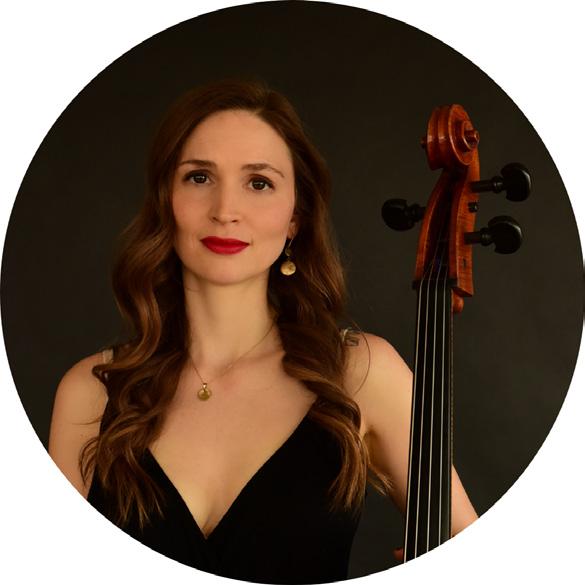
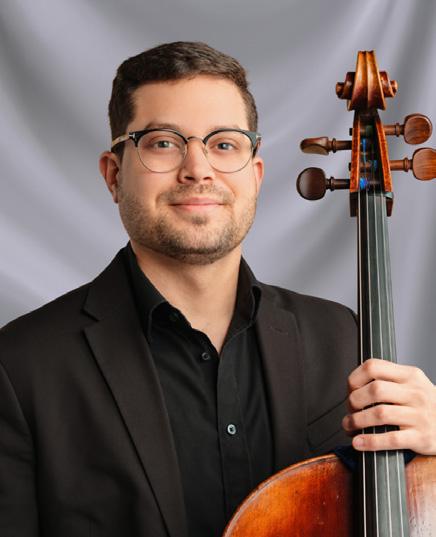
Luis Parra, cello
January
January 23-24: Mozart’s Requiem
February 6-7:
February 20-21: Mahler 1
Dear Friends,
Welcome to the Cardinal Health Masterworks series! Each time the orchestra takes the stage, I am reminded why the Columbus Symphony holds such an essential place in our community. These past months have deepened my appreciation for the extraordinary musicians who bring the music to life, the dedicated team behind the scenes, and for you — our audience whose curiosity and commitment sustain it all.
A concert is never a one-way experience. It is shaped as much by those listening as by those performing. The shared focus in the room — the collective breath before a downbeat, the response to a soaring phrase — creates something that exists only in that moment and only because we are all present together.
At a time when many people feel isolated or pulled in countless directions, gathering for live music offers a rare opportunity to slow down and connect. Whether you are celebrating a special occasion, welcoming guests, spending time with loved ones, or simply seeking inspiration and reflection, the Symphony provides a space to be fully engaged and in the company of others. We hope these performances become part of how you mark meaningful moments throughout the year.
I look forward to continuing to meet many of you in the hall. Please don’t hesitate to say hello — I always enjoy hearing what the Symphony means to you and what brings you back.
Thank you for being here, for championing this organization, and for sharing in the music. It is a privilege to experience this season together.
With gratitude,
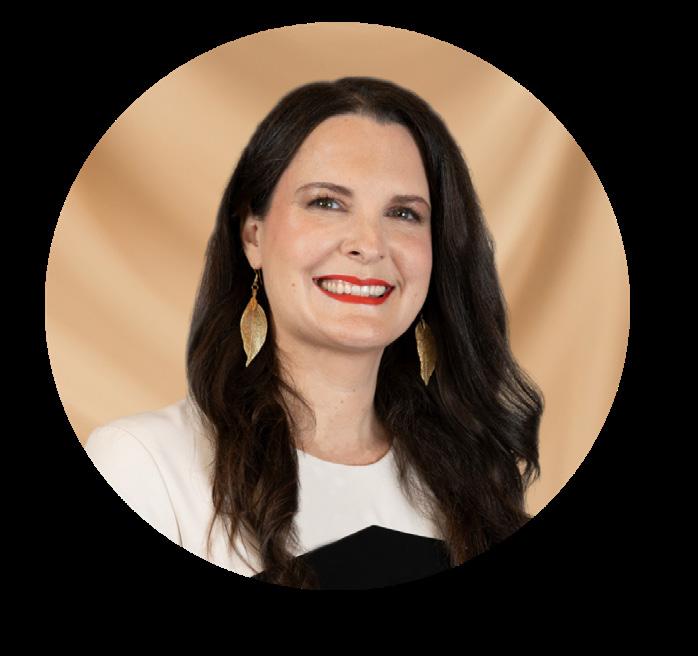
Maureen O’Brien Chief Executive Officer
Dear Friends,
All of us on stage are excited to ring in 2026 with you as our Cardinal Health Masterworks season continues! We’re looking forward to sharing more inspirational experiences that will unite us through the power of live music.
We kick off the new year on January 16-17 with Latin Rhythms and Hollywood Drama. I am pleased to welcome guest conductor Josep Vicent to the podium to lead the orchestra in a captivating concert featuring song, dance, and Erich Korngold’s cinematic Violin Concerto.
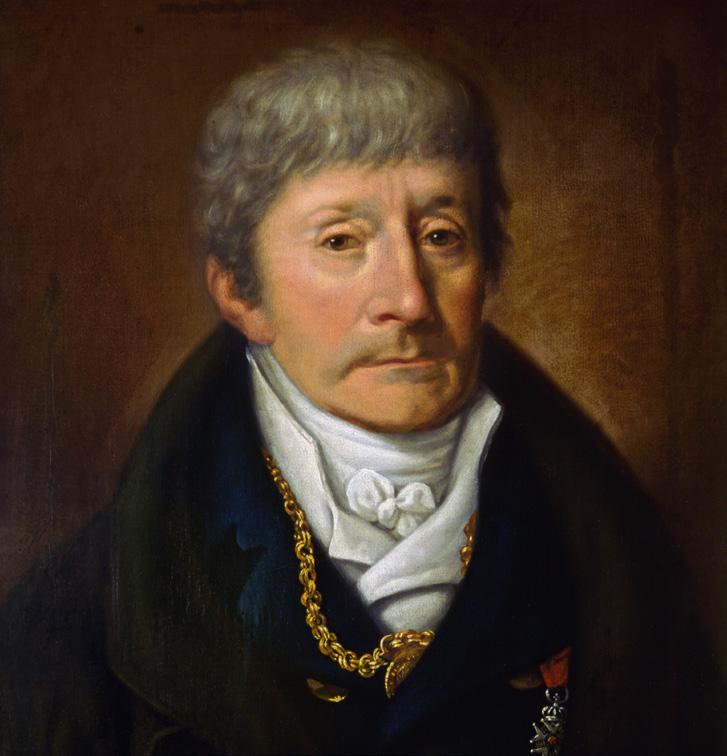
On January 23-24, I return to lead Mozart’s Requiem as you’ve never heard it before. Acclaimed American composer Gregory Spears has written a new conclusion for this unfinished masterpiece, adding a fresh contemporary twist to a staple of classical repertoire. Guest soloists and our Columbus Symphony Chorus will give voice to some of Mozart’s most emotional music.
Shake off the winter blues on February 6-7 with Price & Tchaikovsky, featuring spirited music from Aaron Copland’s ballet Rodeo and Florence Price’s elegant Second Violin Concerto. Then, we travel from 20th-century America back to Tchaikovsky’s Russia for a charming musical ride through his Symphony No. 1, “Winter Dreams.”
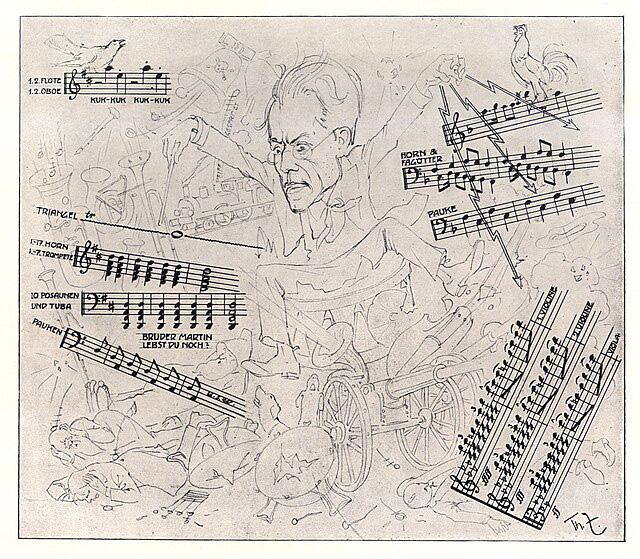
On February 20-21, we pair Mahler 1, the monumental first symphony by a titan of that form, with the world premiere of contemporary composer Jeffrey Mumford’s floating layers interwoven with expanding brightness, a double concerto for violin and cello that fuses rich textures, innovative harmonies, and intricate dialogue between instruments.
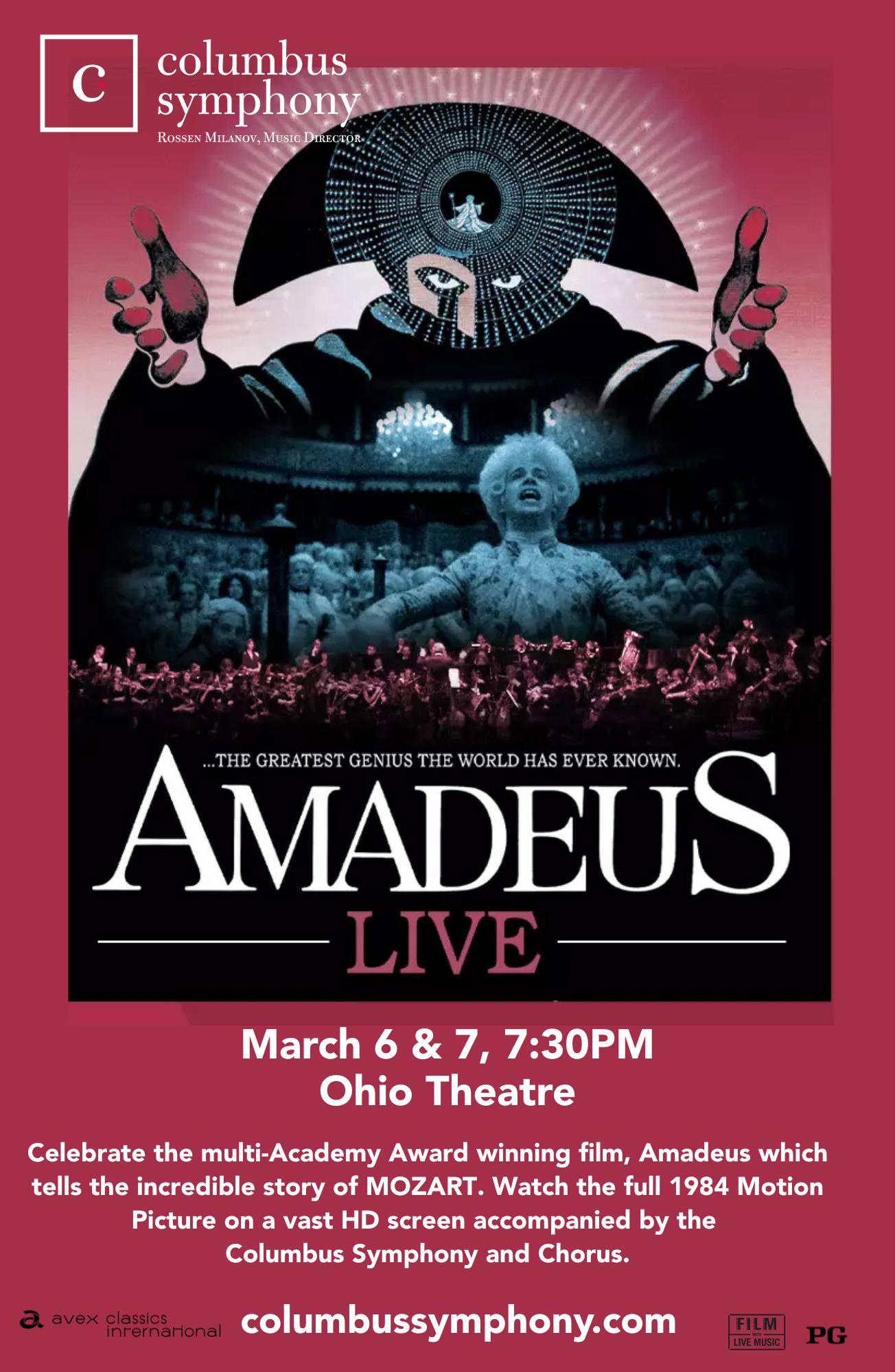
In a first for our Cardinal Health Masterworks series, we’re going to the movies for Amadeus Live on March 6-7! Experience the Academy Awardwinning film like never before as Principal Pops Conductor Stuart Chafetz leads the orchestra and chorus in a lively fusion of cinema and music.
On behalf of our Columbus Symphony family, thank you for your continued support of our orchestra, and for joining us during the 2025-26 season. Let the music move you!
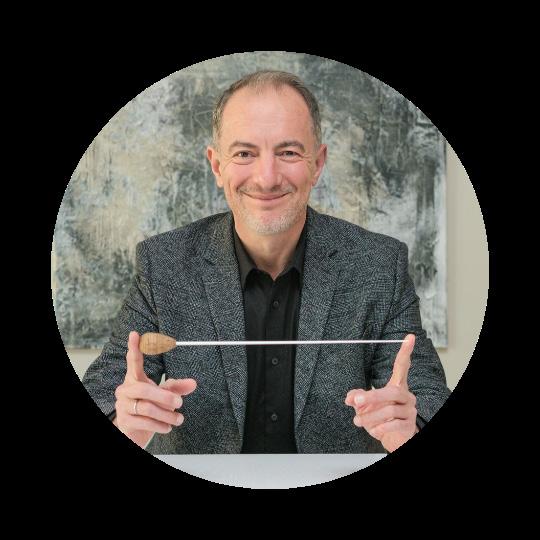
Rossen Milanov
Music Director
ROSSEN MILANOV, Music Director
Mr. Milanov has established himself as a conductor with considerable national and international presence. Past positions include Music Director of Symphony Orchestra of Bulgarian National Radio, New Symphony Orchestra in Sofia, Symphony in C in New Jersey, Orquesta Sinfónica del Principado de Asturias (OSPA) in Spain, and Chief Conductor of the Slovenian RTV Orchestra in Ljubljana. Nationally he has appeared with the Colorado, Detroit, Indianapolis, Milwaukee, Baltimore, Seattle, and Fort Worth Symphonies, and National Symphony Orchestra at the Kennedy Center, Link-Up education projects with Carnegie Hall with the Orchestra of St. Luke’s, and with the Civic Orchestra in Chicago.
Internationally, he has collaborated with the BBC Symphony Orchestra, Orchestra de la Suisse Romand, Rotterdam Philharmonic, Aalborg, Latvian, and Hungarian National Symphony Orchestras and the orchestras in Toronto, Vancouver, KwaZulu-Natal Philharmonic in South Africa, Mexico, Colombia, Sao Paolo, Belo Horizonte, and New Zealand Symphony Orchestra. In the Far East he has appeared with NHK, Sapporo, Tokyo, Singapore Symphonies, Hyogo Performing Arts Center, Malaysian, and Hong Kong Philharmonics. Mr. Milanov has collaborated with some of the world’s preeminent artists, including Yo-Yo Ma, Itzhak Perlman, Joshua Bell, Renée Fleming, Midori, Christian Tetzlaff, Hilary Hahn, Dawn Upshaw, and André Watts among many others.
During his eleven-year tenure with The Phiadelphia Orchestra, Milanov conducted more than 200 performances. In 2015, he completed a 15-year tenure as Music Director of the nationally recognized training orchestra Symphony in C in New Jersey and in 2013 a 17-year tenure with the New Symphony Orchestra in his native city of Sofia, Bulgaria. His passion for new music has resulted in numerous world premieres of works by composers such as Derek Bermel, Mason Bates, Caroline Shaw, Philip Glass, Richard Danielpour, Nicolas Maw, and Gabriel Prokofiev, among others.
Noted for his versatility, Milanov is also a welcomed presence in the worlds of opera and ballet. He has collaborated with Komische Oper Berlin (Shostakovich’s Lady Macbeth of Mtzensk), Opera Oviedo with the Spanish premiere of Tchaikovsky’s Mazzepa and Bartok’s Bluebeard’s Castle (awarded best Spanish production for 2015), Opera Columbus (Verdi’s La Traviata, Aida, Rigoletto, and Tchaikovsky’s Eugene Onegin). At The Princeton Festival he conducted productions of Britten’s Albert Herring, Derrick Wang’s Scalia/Ginsburg, and Rossini’s Barber of Seville.
An experienced ballet conductor, he has been seen at New York City Ballet and collaborated with some of the best known choreographers of our time such as Mats Ek, Benjamin Millepied, and most recently Alexei Ratmansky in the critically acclaimed revival of Swan Lake in Zurich with Zurich Ballet and in Paris with La Scala Ballet.
Under his leadership the Columbus Symphony has expanded its reach by connecting original programing with community-wide initiatives such as focusing on women composers, nature conservancy, presenting original festivals, and supporting and commissioning new music. In Princeton under his leadership the orchestra has established an excellent artistic reputation and has been recognized for its innovation and vital role in the community. Since 2022, Rossen Milanov is also the Music Director of The Princeton Festival.
Rossen Milanov studied conducting at the Bulgarian Music Academy, Tanglewood Music Center, Curtis Institute of Music in Philadelphia, and The Juilliard School in New York, where he received the Bruno Walter Memorial Scholarship.
Mr. Milanov is an avid biker. A passionate chef, he often dedicates his culinary talents to various charities.
Rossen Milanov is a former scholarship recipient and current board member of Cyril and Methodius Foundation in Bulgaria.
STEPHEN CARACCIOLO, Chorus Director
Stephen Caracciolo is the Chorus Director of the Columbus Symphony Orchestra, preparing the CSO Chorus for appearances in the Masterworks concert series and conducting community performances of the CSO Chamber Choir. Dr. Caracciolo is a conductor recognized for his passionate artistry and creative leadership in interpreting an expansive range of the choral repertoire, including choral-orchestral works, Renaissance and Baroque motets, GermanRomantic part songs, French chansons, the sacred literature of the English and Russian churches, opera choruses, American folk songs and spirituals, and works by living composers.
For twelve years he was a professional choral bass at Washington National Cathedral where he also served as the cover conductor for masses, choral evenings, and special services. He has performed choral masterworks with the New York Philharmonic, the Philadelphia Orchestra, the Juilliard Orchestra, the American Symphony, and the orchestra of Washington National Cathedral with such renowned conductors as Robert Shaw, Zubin Mehta, Riccardo Muti, Kurt Masur, Erich Kunzel, Michael McCarthy, and James Levine.
Known nationally as a composer and arranger, Caracciolo’s choral works are performed extensively throughout the United States and Europe. He is a composer with MorningStar Music Publishers, E.C. Schirmer, Kjos Music, and Roger Dean Publishing, and is active as a consultant for various educational, ecclesiastical, and professional organizations.
His publications—including commissions for the acclaimed professional vocal ensemble, Cantus—appear on numerous professional, collegiate, and cathedral repertoire lists, and may be heard on nationally distributed recordings as well as syndicated radio broadcasts including the well-known Sunday program, With Heart and Voice.
Dr. Caracciolo concurrently serves as Artistic Director of ProArteOHIO, Central Ohio’s premier professional vocal ensemble. Under his leadership, the ensemble consistently garners high praise for its beauty of tone, remarkable blend, and exceptional commitment to elegant text phrasing. Previous conducting posts include the Maryland Choral Society and choral ensembles at the University of Maryland-Baltimore, Roberts Wesleyan College, the Ohio University School of Music, and Denison University. Caracciolo holds a doctoral degree in conducting from the Jacobs School of Music at Indiana University, a master’s degree in conducting from Westminster Choir College, and a bachelor’s degree in music education from the Capital University Conservatory of Music.
FALLA The Three Cornered Hat Introduction and Jota (Final Dance)
KORNGOLD
FALLA
Concerto in D Major for Violin and Orchestra, op. 35
I. Moderato mobile
II. Andante
III. Finale: Allegro assai vivace Blake Pouliot, violin
-- INTERMISSION --
Elamorbrujo: Ballet Suite
I. Introduction and Scene
II. At the Gypsies (The Evening)
III. Song of Love’s Sorrow
IV. The Ghost
V. Dance of Terror
VI. The Magic Circle (The Fisherman’s Story)
VII. Midnight (The Magic Spell)
VIII. Ritual Fire Dance
IX. Scene
X. Song of the Will-o’-the-Wisp
XI. Pantomime
XII. Dance of the Game of Love
XIII. Final
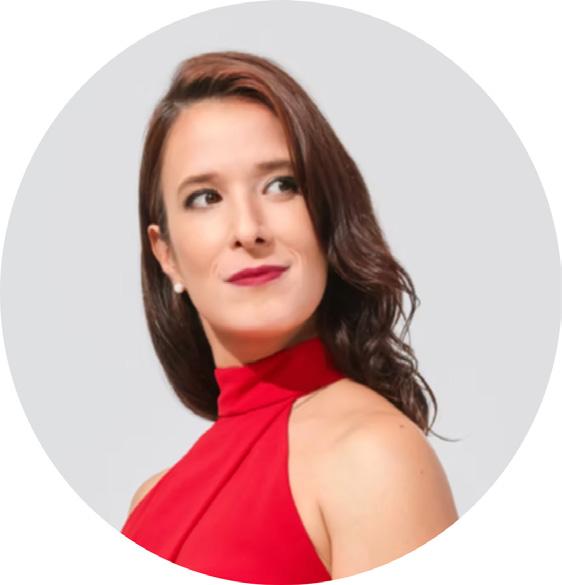
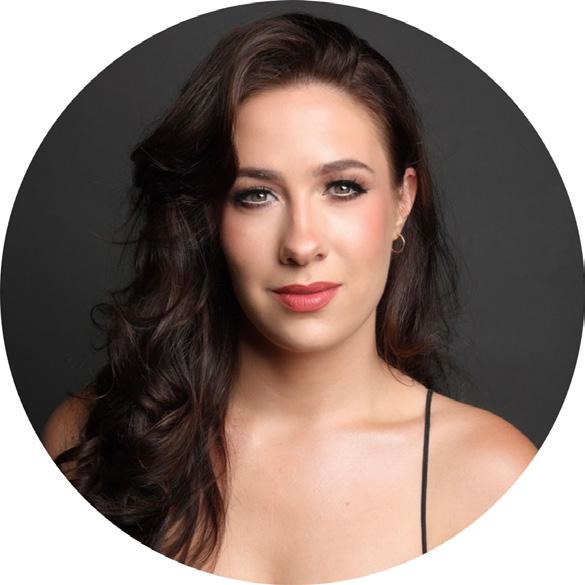
Anabella Petronsi, vocalist
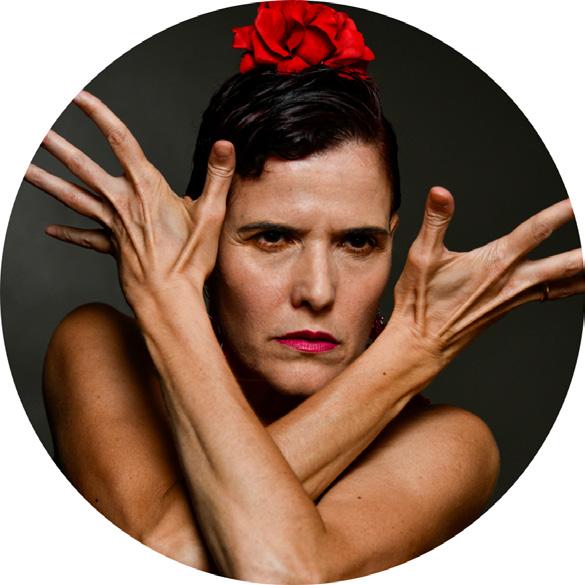
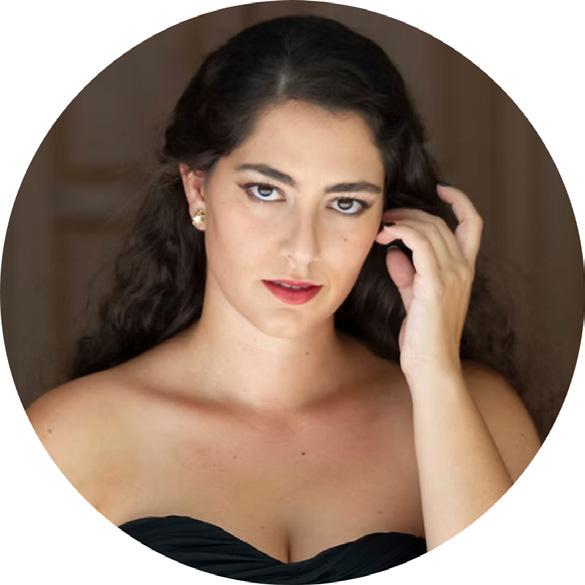
Griset Damas-Roche, flamenco dancer
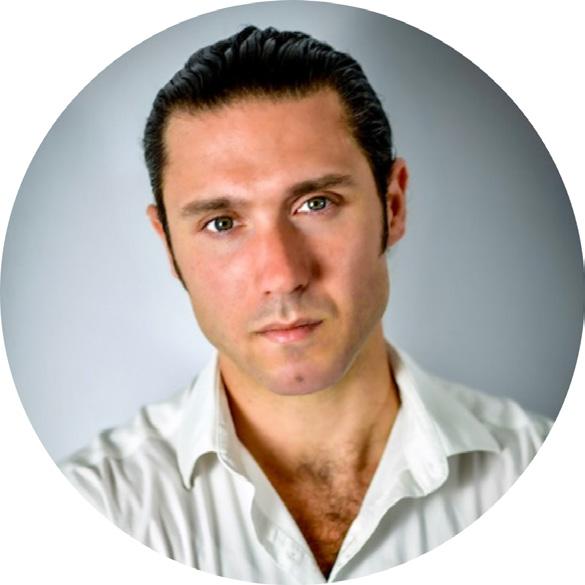
JOSEP VICENT, conductor
Josep Vicent is a musician with an extensive international career leading some of the most prestigious orchestras in Spain and around the world. With his fresh and captivating style together with an strong commitment to music making he conducted London Symphony Orchestra, New World Symphony Miami, Royal Liverpool Philharmonic, Rotterdam Philharmonic Orkest, Mariinsky Theatre Orchestra, Radio Metropol Orkest, Royal Philharmonic Orchestra, Residentie Orkest, Paris Chamber Orchestra, Orquesta Nacional de España, Orquestra de Barcelona i Nacional de Catalunya, National Symphonies of Belgium, Chile, and Brazil, among others.
He has received multiple international recording prizes and was Nominated for the GRAMMY and Latin GRAMMY in 2023 and 2024 for the second consecutive year for his albums Ritmo and The Latin Rites with ADDA Simfònica.
He was also the Artistic Director of Slagwerkgroep Amsterdam Xenakis Festival, principal conductor of the Orquestra Simfònica de les Illes Balears, and Music Director of the Jeunesses Musicales World Orchestra for 15 years, with whom he toured extensively across four continents. Since 2015, he has been the artistic and principal conductor of ADDA Simfònica Alicante, touring with them in Germany, Spain (including Ibermúsica Series in Madrid and Barcelona), France (including succesfull debuts and returns to the Berlioz festival), and Slovenia (with repeated performances at Ljubljiana Festival). In november 2025 they will tour Japan extensively including several performances at Suntory Hall Tokio and Osaka. In recent seasons, he debuted with the Buenos Aires Philharmonic, WDR, Orchestre National de Lille, and Arthur Rubinstein Philharmonic.
The 2024/25 season includes his return with the Aargau Symphony Orchestra in Switzerland, the Valencia Symphony Orchestra, the Orquesta Sinfonica de Milano, and his debut with the Slovak Philharmonic and Arturo Toscanini Philharmonic, among others.
Since 2014, he has worked as Musical Director with La Fura dels Baus. Josep Vicent has conducted at the Rouen Opera, Teatro Colón, Teatro Real, Liceu Opera House, La Monnaie Opera, Leipzig Opera, Mariinsky Theatre, Teatro de la Maestranza, Teatro Arriaga, and numerous festivals around the world. He is a recipient of the National Youth Music Award, the “City of Valencia” Arts Award, the Oscar Esplá Award, and was named Ambassador of the Foundation for a Culture of Peace. His extensive discography is available through Deutsche Grammophon, Aria, and Warner Classics, with whom he currently records.
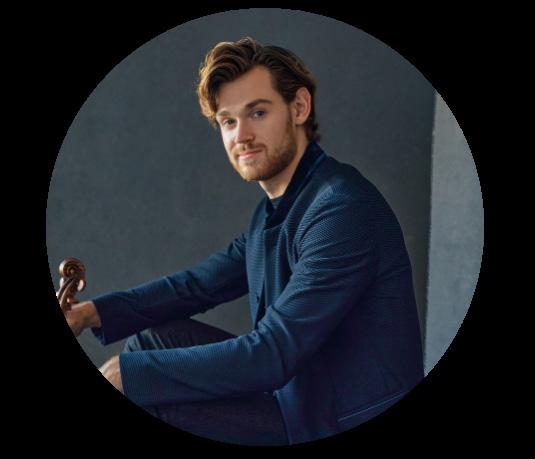
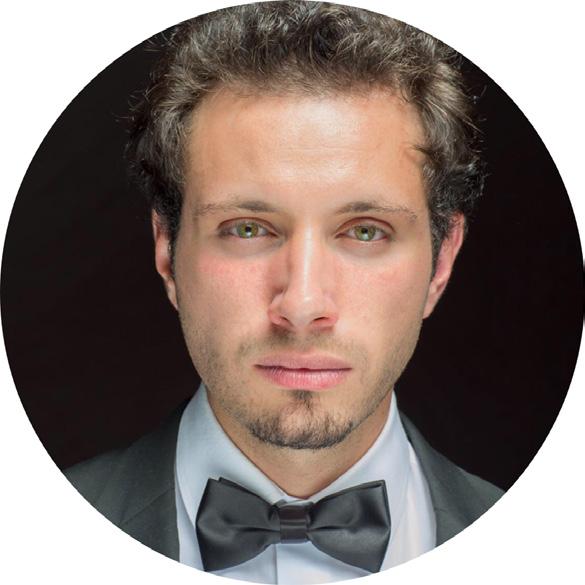
BLAKE POULIOT, violin
Described as “immaculate, at once refined and impassioned,” (ArtsAtlanta) violinist Blake Pouliot (pool-YACHT) has anchored himself among the ranks of classical phenoms. A tenacious young artist with a passion that enraptures his audience in every performance, Pouliot has established himself as “one of those special talents that comes along once in a lifetime” (Toronto Star).
Blake Pouliot’s 2024-2025 symphonic highlights include debuts with the LA Philharmonic at the Hollywood Bowl, San Diego Symphony, as well as the Houston Symphony, Grand Rapids Symphony, Rhode Island Philharmonic and the San Antonio Symphony. Blake expands his presence in Europe this season with performances with the London Philharmonic and Alevtina Ioffe, Chamber Orchestra of Europe with conductor Mattias Pintscher and cellist Alisa Weilerstein, KYMI Sinfonietta, and Orchestre National des Pays de la Loire.
During his time as Soloist-in-Residence of Orchestre Métropolitain in 2020/21, Pouliot and Yannick Nézet-Séguin performed Mozart’s Violin Concerto No. 5 and Piazzolla’s The Four Seasons which led to Pouliot’s 2022 debut with the Philadelphia Orchestra at the Kimmel Center, performing John Corigliano’s The Red Violin (Chaconne for Violin and Orchestra) with NézetSéguin. Highlights elsewhere include Beethoven’s Triple Concerto with Orchestre Symphonique de Montréal in 2022/23, with Angela Hewitt and Bryan Cheng, as well as performances of the Paganini, Mendelssohn, Saint-Saëns concerti and Bruch’s Scottish Fantasy in subscription series across North America.
Pouliot released his debut album of 20th century French music on Analekta Records in 2019. Featuring Ravel’s Tzigane and Violin Sonata in G, Debussy’s Violin Sonata in G minor and Beau Soir, the recording received critical acclaim including a five-star rating from BBC Music Magazine and a 2019 Juno Award nomination for Best Classical Album.
Since his orchestral debut at age 11, Pouliot has performed with the orchestras of Aspen, Atlanta, Detroit, Dallas, Madison, Montreal, Toronto, San Francisco, and Seattle, among many others. Internationally, he has performed as soloist with the Sofia Philharmonic in Bulgaria, Orchestras of the Americas on its South American tour, and was the featured soloist for the first ever joint tour of the European Union Youth Orchestra and National Youth Orchestra of Canada. He has collaborated with many musical luminaries including conductors Sir Neville Marriner, David Afkham, Pablo Heras-Casado, David Danzmayr, JoAnn Falletta, Marcelo Lehninger, Nicholas McGegan, Alexander Prior, Vasily Petrenko, and Thomas Søndergård.
Pouliot has been featured twice on Rob Kapilow’s What Makes it Great? series and has been NPR’s Performance Today Artist-in-Residence in Minnesota (2017/18), Hawaii (2018/19), and across Europe (2021/22). Prior to that, he won the Grand Prize at the 2016 Orchestre Symphonique de Montréal Manulife Competition and was named First Laureate of both the 2018 and 2015 Canada Council for the Arts Musical Instrument Bank.
Pouliot performs on the 1729 Guarneri del Gesù on generous loan from an anonymous donor.
GRISET DAMAS-ROCHE, flamenco dancer
Griset Damas-Roche is a Havana-born Flamenco dancer, choreographer, and artistic director with over 25 years of international experience. Trained in Ballet at the Instituto Superior de Arte de La Habana, she started Flamenco dance in Ballet Español de Cuba, where she achieved soloist grade and did her first steps playing Castanets.
Griset has also studied Flamenco with very renowned masters and institutions and keeps the discipline to study every year at Flamenco festivals or special training events in Spain.
She has performed with major orchestras, including the Bogota Philharmonic and National Symphony of Colombia. Since she resides in Ohio, she has performed with Columbus Symphony Orchestra, Chautauqua Symphony Orchestra, and Princeton Symphony Orchestra.
At this time, Griset directs Caña Flamenca and U Will Dance Studio, sharing authentic Flamenco through performances and education. Her dynamic artistry blends technical precision with deep emotional expression, bringing the passion of Flamenco to concert stages worldwide.
first church arts
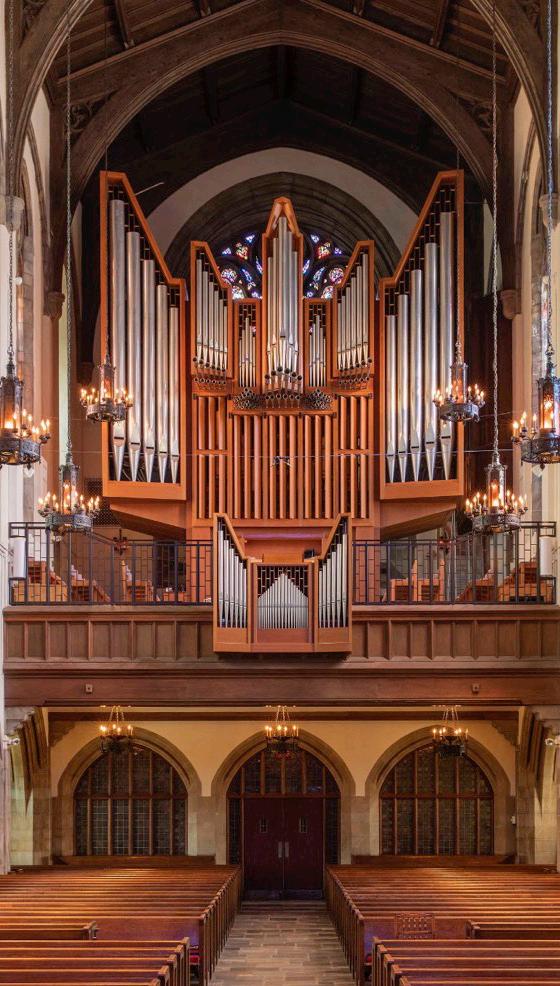
Organ and Chamber Orchestra Sunday, February 22nd | 4 p.m.
Albinoni: Adagio in G minor (Joanna Frankel, soloist)
Rheinberger: Concerto No. 2 in G Minor for Organ, 2 Horns, 2 Trumpets, Tympani and Strings
Free Admission & Parking
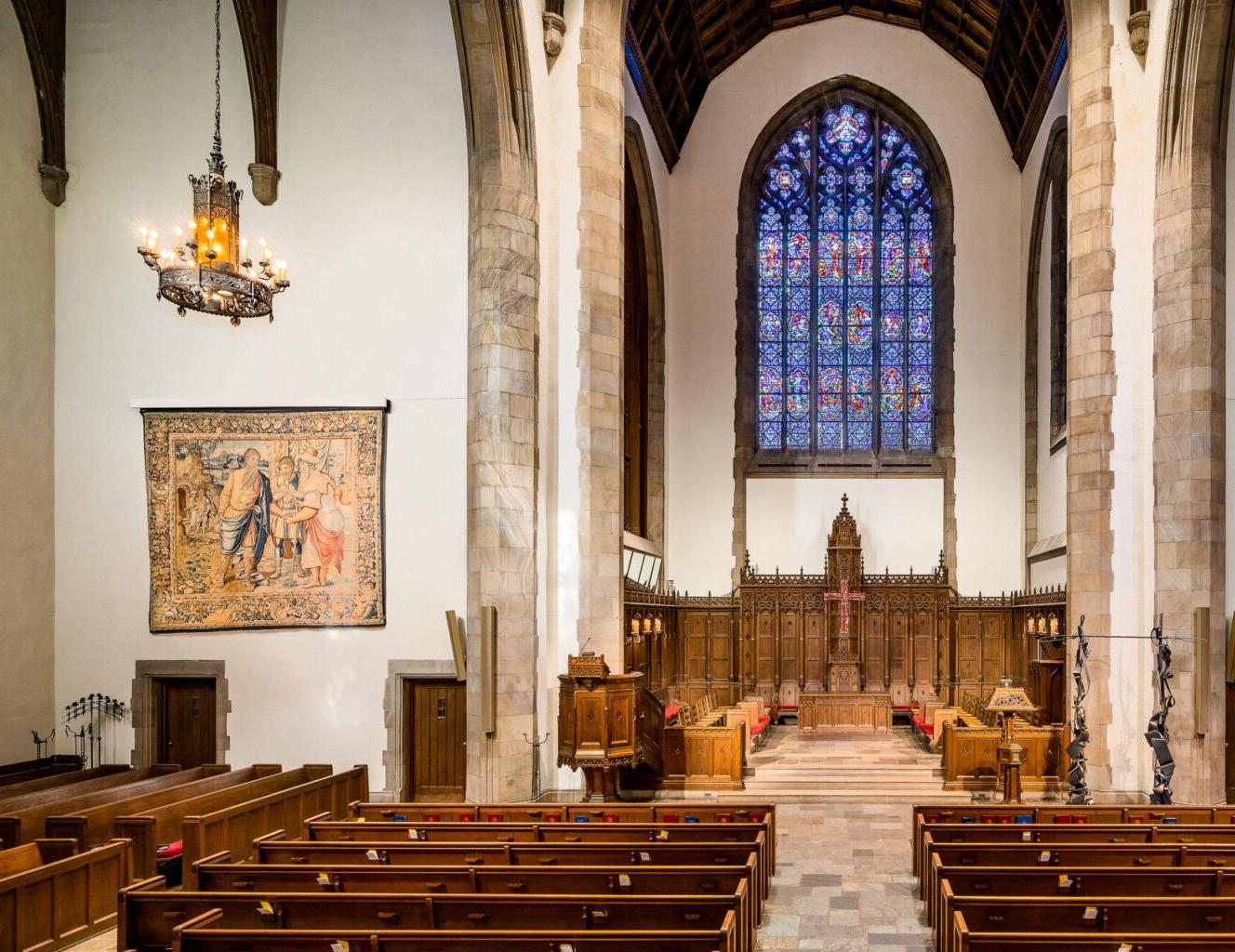
First Congregational Church, UCC 444 E Broad Street, Columbus, Ohio firstchurcharts.org | music@first-church.org
ANABELLA PETRONSI, vocalist
Anabella is an Argentine-born mezzo-soprano and jazz vocalist whose work spans opera, chamber music, contemporary repertoire, and music from Latin America. She has performed principal and featured roles in both Argentina and the United States, including Francisca (West Side Story), Hänsel (Hansel and Gretel), Pillar 3 (The Temple: The Magic Flute Experience), Sorceress (Dido and Aeneas), Rosine (Signor Deluso), Mrs. Webster (Sweets by Kate), Kate (Pirates of Penzance), Mercédès (Carmen), and Giovanna (Rigoletto). She has also sung Despina, Serpetta, Papagena, and Barbarina (Mozart); Rosita (Torroba); Heraldo (Lambertini); Poesié (Charpentier); Mariquita Sánchez de Thompson (Kohan); and Berenice (Rossini).
In the U.S., she has performed with Opera Columbus, Opera Project Columbus, OSU Opera Theatre, and Worthington Chamber Orchestra. In Columbus, she founded the Cardinal Ensemble, which debuted in 2024 with works by Jake Heggie, and led the Andes Ensemble, focusing on music from Latin America. Anabella is part of the Columbus Symphony Chorus and cantor at St. Mary Catholic Church in German Village.
As a passionate advocate of new music, Anabella founded Ensemble Tempus back in Argentina, dedicated to 20th- and 21st-century repertoire, performing across major cultural venues in Buenos Aires. In 2017, the group received a Special Mention from the University Artistic Festival for their performance of Luciano Berio’s Folk Songs. She appeared in The Marriage of Figaro, Tosca, and María de Buenos Aires with Opera Columbus in the US, Molière’s The Imaginary Invalid with Ensemble Arcana, and Carissimi, the Territory of Sacrifice at the Palacio Libertad in Buenos Aires.
Also, an accomplished jazz singer, Anabella has performed with the OSU Jazz Ensemble, Heisey Wind Ensemble Big Band, and Vaughn Weister’s Famous Jazz Orchestra.
Her honors include first place at the 2024 Berlioz Music Competition, the Platinum Prize and Master of Emotion Award at the 2023 UK Elizabeth Music Competition, third prize at the World’s Best Musicians Classical Music Competition, and the 2023 Wilson Voice Competition. She received artist grants from the Greater Columbus Arts Council (2023–2025), a scholarship from Argentina’s National Endowment for the Arts to perform in New York and at the Latin American Festival in Ohio, and scholarships from The Ohio State University.
Anabella holds a Doctorate in Music in Voice Performance with a Singing Health Specialization and a master’s in music education from The Ohio State University, where she served as a graduate teaching assistant. She earned her BM in voice from the National University of Arts in Buenos Aires.
She has also held leadership roles in arts administration, including Artistic Administrator and Director of Operations for UNA’s College of Music, executive coordinator of the Araiz Ballet, and producer for the Ensamble Vocal Contemporáneo conducted by Mariana Rosas. She works for Opera Columbus as a Marketing Associate.
PROGRAM NOTES
Introduction
and
“Jota”
from The Three-Cornered Hat, Suite II (1917)
by
Manuel de Falla (Cádiz, Spain, 1876 - Alta Gracia, Argentina, 1946)
Most recent Columbus Symphony performance: Nov. 21-22, 2014; Andrew Grams conducting. Duration: 8’
Manuel de Falla had a deep love for the folk music of his native Spain, but also the ambition to transcend nationalism in a narrow sense and be universally European both in outlook and in technique. From 1907-14, Falla lived in Paris where he came into contact with some of the most exciting musical developments of the day. Upon his return to Spain, he entered a period of intense creativity that resulted in a unique synthesis: his mature works build, in equal measure, on his early exposure to folk music, his systematic study of all aspects of Spanish tradition under the composer and musicologist Felipe Pedrell, and finally the Paris experience that had greatly broadened his horizons.
Falla had long known the story of The ThreeCornered Hat. It was an old folktale, adapted by the poet and novelist Pedro Antonio de Alarcón (1833-1891) in his novel The Magistrate and the Miller’s Wife. In the story, a lecherous magistrate tries to seduce the miller’s wife but fails and ends up being humiliated. Falla’s music for The Three-Cornered Hat initially took the form of a pantomime, titled EL Corregidor y la molinera, premiered at the Teatro Eslava in Madrid on April 7, 1917. At the request of Serge Diaghilev, the director of the famous Ballets Russes, Falla revised and expanded the work, re-scoring the original chamber-ensemble accompaniment to a full-size symphony orchestra. The new version opened in London in 1919, with Léonide Massine in the role of the miller, and sets and costumes by Picasso, under
the new title The Three-cornered Hat. Falla drew two concert suites from the ballet, which contain the bulk of the entire score. The second suite is made up of three dance movements, of which the last is a jota, a rapid triple-time dance primarily associated with the region of Aragon. A string of irresistible Spanish melodies is orchestrated in a way inspired by French music, complete with harps and muted horns. Simple themes are chromatically inflected in a most ingenious way, infusing the authentic voice of Spain with modernistic elements. The prestigious Diaghilev production of The Three-Cornered Hat turned Falla into a European celebrity to a degree hardly ever matched by a Spanish composer either before or after him.
Violin Concerto in D major, Op. 35 (1937-39, rev. 1945)
by Erich Wolfgang Korngold (Brünn, Moravia, Austro-Hungarian Monarchy [now Brno, Czechia], 1897 - Hollywood, CA, 1957)
Most recent Columbus Symphony performance: Jan. 19-20, 2008; Junichi Hirokami conducting; Charles Wetherbee, violin. Duration: 24’
When Erich Wolfgang Korngold was nine years old, his father—who happened to be Julius Korngold, the most influential music critic in Vienna —showed the boy’s first compositions to Gustav Mahler, the latter exclaimed: “A genius!” Mahler’s reaction was understandable. The young Korngold was a unique composing prodigy who had an instinctive grasp of the most modern musical styles of the day. He grew up to be an extremely successful opera composer—his most talked-about work, Die tote Stadt (“The Dead City”), was written when he was twenty. He was equally attracted to operetta, and was considered an expert on Johann Strauss, Jr. His involvement with new productions of Die Fledermaus and other Strauss operettas (as
PROGRAM NOTES
arranger and conductor) became legendary, and brought him into contact with Max Reinhardt (1873-1943), the foremost German stage director of the time. This turned out to be a life-saver, as it was with Reinhardt that Korngold first went to Hollywood, where he soon became the star among film composers. After the Nazi occupation of Austria in 1938, Korngold lost his original home base and settled permanently in Los Angeles.
His father, who in his seventies was forced to flee Austria and joined his son in Southern California, was deeply disappointed that Erich had given up “serious” composition in favor of the movies. To his last day, the old man kept exhorting his son to return to concert music. His advice went unheeded for years, yet towards the end of Julius’s life, Erich wrote a string quartet (his third) and, after his father’s death, he returned to a project started years earlier but never completed: a concerto for violin and orchestra.
The great violinist Bronislaw Huberman—an old family friend since Vienna days—had long been asking Korngold for a violin concerto. When the work was finally completed, however, Huberman found himself unable to commit to a performance date. (The Polish violinist was in poor health and died in June 1947 at the age of 64). Korngold showed the concerto to Jascha Heifetz, who learned it within a few weeks and, with Huberman’s blessing, gave the world premiere in St. Louis on February 15, 1947.
At this point in Korngold’s career, the two aspects of his creative world—concert and film music—had become completely intertwined. His movie scores (Captain Blood, The Adventures of Robin Hood) were symphonic, even operatic, in their scope. The Violin Concerto, conversely, owes much to Korngold’s work in the film industry. Many of the major themes were taken over from movie scores, and there are moments where the instrumentation and the thematic development also bring back Hollywood memories.
The opening theme of the concerto comes
from a score written for a film that failed and was quickly forgotten (Another Dawn, 1937), the second from the historical movie Juarez (1939). The folk-dance theme of the last movement originated in the film adaptation of Mark Twain’s The Prince and the Pauper (1937), and became the starting point for a set of brilliant variations. These different sources form a completely new entity in the Violin Concerto, quite independent from the screen originals. (The beautiful melody of the second-movement “Romance” seems to have been written especially for this concerto.)
In Korngold’s personal style, elements inherited from Mahler and Richard Strauss are treated with the light touch perfected at the Warner Brothers studios. This approach brought Romantic concerto-writing to new life at a time when most modern composers and critics were ready to bury it. Korngold himself never had any doubts about the vitality of this tradition. His rich melodic invention, his “spicy” harmonies that nevertheless remain firmly anchored in tonality, and his perfect understanding of the virtuoso violin idiom enabled him to make an important contribution to the repertoire. Yet at first, the concerto found little favor with violinists, despite Heifetz’s strong advocacy. (Heifetz recorded the work twice: once with the New York and once with the Los Angeles Philharmonic.) Since the 1970s, Korngold’s Violin Concerto has become part of the standard repertoire, with numerous recordings and frequent concert performances all over the world.
El amor brujo (“Love, the Sorcerer,” 1914-24)
by
Manuel de Falla (Cádiz, Spain, 1876 - Alta Gracia, Argentina, 1946)
Manuel de Falla was already well established as the foremost Spanish composer of his generation when he was approached by the famous flamenco dancer, Pastora Imperio, with a request to write a piece for her troupe.
PROGRAM NOTES
Since Imperio was an accomplished vocalist as well as a dancer, the protagonist had to sing as well as dance in the new work. Falla and Imperio worked with a libretto that was credited to Gregorio Martínez Sierra a highly regarded playwright and poet–although it was actually written, at least in part, by Martínez Sierra’s wife, María Lejárraga, a prominent author in her own right. Their work made use of some old fables told by Imperio’s mother, Rosario la Mejorana, herself a celebrated flamenco dancer.
In the story, a Gypsy woman named Candelas is haunted by the ghost of her murdered husband José (who had cheated on her while he was alive). The ghost forces Candelas to dance with him every night, getting in the way of her romance with Carmelo (with whom she had been in love before her family married her off to José). Even the magic fire ritual does not succeed in exorcising the ghost. It is only when José’s old lover appears and distracts the ghost that the love between the two protagonists can finally flourish.
El amor brujo went through a number of versions over the years. The original 1915 production was a gitanería or Gypsy entertainment, with spoken dialog, flamenco singing and dancing. Unsuccessful as a play, the music was revised for classical singer and orchestra in 1916 and again in 1924, as a ballet pantomímico using a larger orchestra. This last version has become the standard form of the work in which is most frequently performed.
This final version, which will also be heard at this weekend’s concerts, consists of thirteen sections, some of which are extremely brief. It includes the “Dance of Terror,” the everpopular “Ritual Fire Dance,” the “Dance of the Game of Love,” as well as three vocal numbers, sung in Andalusian Spanish. In Falla’s music, the sounds of flamenco are combined with French impressionist influences; the resulting fusion of styles is a perfect vehicle for the mixture of passion, folklore and the occult that gives this ballet pantomímico its unique flavor.
Danzón No. 2 (1994)
by Arturo Márquez (b. Álamos, Sonora, Mexico, 1950)
Most recent Columbus Symphony performance: Oct. 2, 2009; Alondra de la Parra conducting. Duration: 10’
In the 31 years since its premiere, Arturo Márquez’s Danzón No. 2 has enjoyed immense success, not only in Mexico, where some have even called it a “second national anthem,” but internationally as well. That is hardly surprising, since the piece takes a string of irresistible Mexican dances, of the kind one would normally hear at a dance hall, played by an orquesta típica or a mariachi band, and presents them in the full colors of a large symphony orchestra. The effect is quite spectacular!
The danzón, of Cuban origin, is in the Latin world what the waltz is in Europe. A stately couple dance that is considered the main event at any ball, it starts slowly and allows for some close contact between the dancers, but eventually speeds up and can get quite fiery towards the end. Aaron Copland had earlier been inspired by the danzón in his Danzón Cubano (1942). Márquez has now made it into one of his signature genres; to date, he has completed no fewer than nine danzones.
Danzón No. 2 was written in early 1994 during the Zapatista uprising, which fought for the rights of the impoverished indigenous populations in Mexico. This circumstance, which the composer himself has pointed out, lends an added emotional charge to the work as it progresses from a haunting clarinet solo at the beginning to a passionate conclusion.
Notes by Peter Laki
El amor brujo
PROGRAM NOTES
III. Canción del amor dolido
¡Ay! Yo no sé qué siento, ni sé qué me pasa, cuando éste mardito gitano me farta! Candela que ardes ¡Más arde el infierno que toita mi sangre abrasa de celos! ¡Ay! Cuando el río suena ¿qué querrá decir? ¡Ay! ¡Por querer a otra se orvía de mí! ¡Ay! Cuando el fuego abrasa, Cuando el río suena… Si el agua no mata al fuego, a mí el pesar me condena! ¡A mí el querer me envenena! ¡A mí me matan las penas! ¡Ay!
VI. Romance del pescador
Por un camino iba yo buscando la dicha mía: lo que mis sacais miraron mi corasón no lo orvía. Por la verea iba yo. A cuantos le conocían – ¿ile habéis visto? – preguntaba, y nadie me respondía. Por el camino iba yo y mi amor no parecía. Er yanto der corasón por er rostro me caía. La verea se estrechaba y er día se iba acabando. A la oriyita der río estaba un hombre pescando. Mientras las aguas corrían iba el pescador cantando: ¡No quiero apresar los pececillos del río; quiero hallar un corasón que se me ha perdío!
‘Pescador que estás pescando, si has perdido un corasón, a mí me lo están robando a traición.’ El agua se levantó al oir hablar de penas de amantes y dijo con ronca voz: ¡Pescador y caminante, si sufrís los dos, en er monte hay una cueva, en la cueva hay una bruja que sabe hechisos de amor!
Idla a buscar que eya remedio os dará! Esto dijo er río, esto habrá que haser… ¡A la cueva de la bruja tengo de acudir! ¡Si eya no me da er remedio me quiero morir!
Love, the magician
III. Song of Love’s Sorrow
Ah! I don’t know what I feel, nor what is happening to me, But how I miss this damned gypsy! Fire, that blazes
Blazing stronger is the inferno
Which burns my blood with jealousy! Ah!
When the river boils what does it mean? Ah!
For the love of another he forgets me! Ah! When the fire blazes, When the river boils…
If the water doesn’t kill the flame, then sorrow will damn me!
Love is poisoning me!
Grief is killing me! Ah!
VI. The Magic Circle (The Fisherman’s Story)
I walked along a road looking for my love; what my eyes saw my heart could not forget. Along the path I went. To those who knew him I asked, ‘Have you seen him?’ – and no one answered me. Along the path I went and my love I did not see. The cry of my heart could be seen on my face. The path became narrower and the day was ending. On the bank of a little river a man was fishing. While the waters flowed past the man was singing, ‘I don’t want to pluck little fishes from the river. I want to catch a heart that has been lost to me!’
‘Fisherman who is fishing, if you have lost a heart, mine has been treacherously stolen!’ The water, on hearing the talk of lovers’ pain, rose up, and with a roar said: ‘Fisherman and traveller: if you are both in pain, in the mountain there is a cave, and in the cave is a witch who has spells for love!
Go and find her and she’ll give you a remedy!’ This the river said, and this has to happen… ‘To the witch’s cave I go! If she cannot give me remedy then I want to die!’
PROGRAM NOTES
X. Canción del Fuego fatuo
Lo mismo que er fuego fatuo, lo mismito es er queré.
Le juyes y te persigue, le yamas y echa a corré.
¡Lo mismo que er fuego fatuo, lo mismito es er queré!
¡Malhaya los ojos negros que le alcanzaron aver!
¡Malhaya er corazón triste que en su yama quiso arder!
¡Lo mismo que er fuego fatuo se desvanece er queré!
XII. Danza del juego de amor
¡Tú eres aquél mal gitano que una gitana quería!
¡El querer que eya te daba tú no te lo merecías!
¡Quién lo había de decí que con otra la vendías!
¡Soy la voz de tu destino!
¡Soy er fuego en que te abrasas!
¡Soy er viento en que suspiras!
¡Soy la mar en que naufragas!
XIII. Final
Ya está despuntando er día!
¡Cantad, campanas, cantad!
¡Que vuelve la gloria mía!
X. Song of the Will-o’-the-wisp
Just like the will-o’-the-wisp, So is love.
You flee from it and it pursues you, You call it, and it runs away. Just like the will-o’-the-wisp, So is love.
Damned are the dark eyes that can see it!
Damned is the sad heart that wanted to burn in its flame!
Just like the will-o’-the-wisp, Love vanishes.
XII. Dance of the Game of Love
You are the evil gypsy that a girl once loved! You didn’t deserve the love that she gave you!
Who would have said that you would betray her with another! I am the voice of your destiny!
I am the fire in which you burn!
I am the wind in which you sigh! I am the sea in which you are shipwrecked!
XIII. Finale
Dawn is breaking! Sing, bells, sing! I feel joy returning to me!
MOZART’S REQUIEM
FRIDAY, JANUARY 23, 2026 AT 7:30PM
SATURDAY, JANUARY 24, 2026 AT 7:30PM OHIO THEATRE
ROSSEN MILANOV, CONDUCTOR
LYDIA GRINDATTO, SOPRANO
MARIYA KAGANSKAYA, MEZZO SOPRANO
VICTOR STARSKY, TENOR CUMHUR GÖRGÜN, BASS
COLUMBUS SYMPHONY CHORUS
STEPHEN CARACCIOLO, CHORUS DIRECTOR
MOZART
I-IV, VIII completed by Süssmayr
V-VII completed by Spears
Requiem, K. 626
I. Introitus - Requiem
II. Kyrie
III. Sequenz
Dies irae
Tuba mirum
Rex tremendae
Recordare
Confutatis
Lacrimosa
IV. Offertorium
Domine Jesu
Hostias
V. Sanctus
VI. Benedictus
VII. Agnus Dei
VIII. Communio - Lux aeterna
LYDIA GRINDATTO, soprano
A native of Tijeras, New Mexico, soprano Lydia Grindatto is a graduate of the Academy of Vocal Arts (AVA) in Philadelphia, and was a 2024 Grand Finals Winner of The Metropolitan Opera Laffont Competition.
Praised for her “high-octane emotionalism,” Lydia begins the 2025-2026 season with her European, house and role debut as Léonore in Le trouvère at Wexford Festival Opera. She makes role debuts as Micaëla in Carmen (San Diego Opera, house debut) and Violetta in La traviata (Utah Opera), and adds the role of Roxana in a new production of Szymanowski’s masterpiece King Roger at Des Moines Metro Opera (house debut). On the concert stage, she joins the Columbus Symphony for Mozart’s Requiem
The 2024-2025 season included three role and company debuts: Palm Beach Opera (Juliette in Roméo et Juliette), Utah Opera (Nedda in Pagliacci), and The Glimmerglass Festival (Anne Trulove in The Rake’s Progress). Elsewhere, Lydia bowed as a soloist with the Sag Harbor Song Festival, and made her role debut as Marguerite in Gounod’s Faust at AVA. During the 2023-24 season, Ms. Grindatto made house debuts with Arizona Opera as Donna Anna in Don Giovanni and Opera Columbus as Tatiana in Eugene Onegin, spending the summer at the prestigious Merola Opera Program, returning to the role of Donna Anna. Earlier that season, Lydia sang the title role in Donizetti’s Anna Bolena at AVA, and was invited to perform popular opera selections alongside featured guest star Michael Fabiano in a concert with Opera Italiana is in the Air at the Lincoln Memorial in Washington, D.C. She was a 2023 Apprentice Artist at the Santa Fe Opera, where she made her company debut as the Second Wood Sprite, in addition to covering the title role, in Dvorák’s Rusalka.
Her opera roles at the Academy of Vocal Arts have included Donna Anna in Don Giovanni, Violetta in La traviata, and Tatiana in Eugene Onegin. Lydia has been recently recognized as a winner in several prestigious competions, including the Opera Index Awards, The Loren L. Zachary Society Competition, the Gerda Lissner Foundation Competition, as well as winning the top prize in AVA’s Giargiari Bel Canto Competition.
The soprano has also appeared as a featured soloist in various concert settings, including the chamber ensemble Antigua y Moderna, the University of New Mexico Symphony Orchestra, and the AVA Orchestra. Lydia holds a B.M. in Vocal Performance from the University of New Mexico.
MARIYA KAGANSKAYA,
This coming season Russian-American mezzosoprano Mariya Kaganskaya sings Mozart’s Requiem with the Columbus Symphony. In the 2024-25 season, she performed Third Lady in The Magic Flute with Opera San Jose. Her most recent roles include Suzuki in Madame Butterfly with West Bay Opera, Larina in Eugene Onegin with Opera Columbus, and Third Lady in The Magic Flute with San Francisco Opera (cover). Recent engagements prior to that include Larina in Eugene Onegin with Opera Omaha; Pauline in Pique Dame with West Bay Opera; Cherubino in Le nozze di Figaro, Page in Salome, Paula in Florencia en el Amazonas for Florida Grand Opera; and Tisbe in La Cenerentola, Suzuki in Madame Butterfly, and Third Wood Sprite in Rusalka for Arizona Opera. Ms. Kaganskaya also sang the role of Teacher in the Santa Fe Opera’s world premiere production of The (R)evolution of Steve Jobs, the recording of which earned the 2019 Grammy Award for Best Opera Recording.
In the 2018-19 season, Ms. Kaganskaya performed the roles of Mrs. Rockefeller/Natalia in Frida, as well as Käthchen and Charlotte (cover) in Werther for Florida Grand Opera. Her other recently performed roles include Dorabella in Così fan tutte, Ottavia in L’incoronazione di Poppea, the title role of Serse, Olga in Eugene Onegin, Hostess in Boris Godunov, Marta in Iolanta, La Nourrice in Milhaud’s Médée, Mexican Woman in A Streetcar Named Desire, Dinah in Trouble in Tahiti, and Julia Bertram in Mansfield Park.
Ms. Kaganskaya was a Studio Artist at Florida Grand Opera, and has been an Apprentice Singer at the Santa Fe Opera, a Marion Roose Pullin Studio Artist at Arizona Opera, a Mosher Studio Artist at Opera Santa Barbara, and a Young Artist at the iSing International Festival in China. She is an alumna of the OperaWorks Advanced Artist Program and the Russian Opera Workshop at the Academy of Vocal Arts, and earned her MM (’15) and PGD (’16) at the San Francisco Conservatory of Music, under the tutelage of Catherine Cook.
Recent awards include: First Place and Audience Choice, Lois Alba Aria Competition (2019); Grand Prize Winner in the St. Petersburg Opera Guild (2019); Winner, Butler Opera International Competition (2018); Audience Choice, Lois Alba Aria Competition (2018); Tier I Bell Encouragement Award, James Toland Vocal Arts Competition (2018); Florida East Coast Chapter Winner, NSAL Dorothy Lincoln-Smith Competition (2018); First Place, Gershwin International Music Competition (2017); Polk Young Artist Award, Orpheus Vocal Competition (2017); Young Artist Award, Pasadena Opera Guild (2016); Silver Award, Holt Competition (2016); Third Place, East Bay Opera League Competition (2016); San Francisco District Winner and Western Regional Encouragement Award, Metropolitan Opera National Council Auditions (2015); and First Place/Lotfi Mansouri Award, Pacific Musical Society Competition (2014).
VICTOR STARSKY,
Tenor Victor Starsky, a native of Richmond Hill, New York, received critical acclaim this year for his performance as Mario Cavaradossi in the Princeton Festival’s production of Puccini’s Tosca, as well as his role debut as the title character in Verdi’s Stiffelio with Sarasota Opera. Starsky’s 2024-2025 season also featured role and company debuts as Maurizio in Adriana Lecouvreur with Pittsburgh Festival Opera; Nemorino in L’Elisir D’Amore with Charlottesville Opera; and he performed the role of Jim Casy in MasterVoice’s Carnegie Hall presentation of Ricky Ian Gordon’s The Grapes of Wrath.
Of his performance of Don José with Sarasota Opera in 2024, Your Observer writes, “While possessing a voice that flexes with nuance, the genius of Starsky’s stage performance is how he shares each tiny tear in his moral fabric as he follows and succumbs to Carmen despite every effort to cling to what he knows is moral and right. Watching his slow crumbling into unhinged desperation is unforgettable.” In the upcoming 2025-2026 season, Starsky looks forward to several new role debuts, including Enzo in Ponchielli’s La Gioconda with Pittsburgh Festival Opera, and Manrico in Il Trovatore with Sarasota Opera. He also joins Wichita Symphony Orchestra as the tenor soloist in the Verdi Requiem, as well as making his debut as Dick Johnson in Puccini’s La Fanciulla del West with Wichita Grand Opera.
In 2023-2024, Starsky made his debuts as Radamés in Verdi’s Aïda and George Gibbs in Rorem’s Our Town at Utah Festival Opera and Musical Theater. He sang Roméo in Gounod’s Roméo et Juliette with New York City Opera and Rodolfo in La Bohème with Wichita Grand Opera. Starsky was honored to perform The Celebrant in Leonard Bernstein’s Mass with the premier conductor Maestro Maurice Peress in 2014. As a Adler Fellow with San Francisco Opera in 2020 he was awarded the Shoshana Foundation’s Richard F. Gold Career Grant.
CUMHUR GÖRGÜN, bass
Turkish bass Cumhur Görgün was born in Istanbul, Türkiye. He intially studied at the Istanbul University as a student of Prof. Güzin Gürel and later pursued further studies at the Rodolfo Celletti Belcanto Academy in Italy. In Türkiye, he covered Sancho in Don Quichotte at the Istanbul State Opera and Ballet and performed Schlendrian in Bach’s Coffee Cantata at the Süreyya Opera House. He has been recognized with multiple awards in national competitions.
A fourth-year Resident Artist at the Academy of Vocal Arts (AVA), Mr. Görgün has performed roles including Méphistophélès in Faust, the title role in Don Pasquale, Leporello in Don Giovanni, Enrico VIII in Anna Bolena, Don Basilio in Il barbiere di Siviglia, and Collatinus in The Rape of Lucretia. He has performed as a soloist with the Istanbul State Symphony Orchestra and was featured in the Idil Biret Music Festival. He also sang in the opening concert of Festival Under the Stars with Opera Naples, as well as performing in the Pavarotti Voices Opera Gala at Festival Boca.
Mr. Görgün has received recognition in numerous international competitions, winning prizes at the Meistersinger Competition, The Mary Jacob Singer of the Year Competition, Opera Columbus Cooper-Bing Competition, and Wilhelm Stenhammar Competition. He was awarded Second Prize in the Mario Lanza Competition, the Giargiari Belcanto Competition, and the SAS Vocal Competition. He is the winner of the Opera Naples Luciano Pavarotti Competition.
In the summer of 2025, he covered Don Basilio at the Glyndebourne Festival, and also made his debut as Banquo in Macbeth with Teatro Nuovo. In 2026, he returns to Glyndebourne to make his house debut as Don Basilio in Il barbiere di Siviglia.
GREGORY SPEARS, composer
Praised for “astonishingly beautiful” music (The New York Times) and a “singular compositional voice, unlike any that has been heard in opera before” (The New Yorker), composer Gregory Spears is acclaimed for blending romanticism, minimalism, and early music influences into works celebrated for their melodic richness and emotional clarity.
The 2025-2026 season brings the world premieres of Spears’ newest opera, Sleepers Awake (Opera Philadelphia), as well as Secrets (The Frick Collection) and Bartleby (Tucson Desert Song Festival). His best-known opera, Fellow Travelers (libretto by Greg Pierce), marks its tenth anniversary in 2026 with the launch of a national, multi-year tour.
Spears’ music has been commissioned by the New York Philharmonic, Lyric Opera of Chicago, Santa Fe Opera, Houston Grand Opera, Opera Philadelphia, Cincinnati Opera, Seraphic Fire, The Crossing, Bang on a Can, and JACK Quartet, among many others. Spears’ opera The Righteous (libretto by Tracy K. Smith) premiered at Santa Fe Opera in 2024, earning a “Critic’s Pick” in The New York Times. Earlier collaborations with Smith include Castor and Patience (2022, Cincinnati Opera) and Love Story, commissioned and premiered by the New York Philharmonic. His first opera, Paul’s Case (written with librettist Kathryn Walat), was called “a masterpiece” by The New York Observer. Beyond opera, Spears has developed a wide-ranging catalog of orchestral, choral, and chamber works. His Requiem (2010) and Seven Days (2021) showcase his gift for balancing intimacy with dramatic scale.
A graduate of Eastman, Yale, and Princeton, and a former Fulbright Scholar, Spears teaches at New York University, and his music is published by Schott Music and Schott PSNY. Learn more at www.gregoryspears.com.
SOPRANO I
Alleana Bammerlin
Julie Cannell
Andrea Dent
Katie DiPietro
Makenna Koehl
Sarah Higley
Stephanie Rodriguez
Lexi Scherzer
Kristen Snyder
Megan Trierweiler
Victoria Zanatian
SOPRANO II
Susie Beecroft
Kathryn Ehle
Karissa Frische
Charlene Grant
Cassie Howard
Elizabeth Jewell Becker
Alexa Konstantinos
Miriam Matteson
Gretchen Mote
Elizabeth Neer
Maureen O’Brien
Amy Adele Parker
Stephanie Pikovnik
Mary Yarbrough
Jennifer Young
ALTO I
Leslie Armstrong
Aubrey Bailey
Amy Bergandine
Kara Carlen
Kelli Clawson
Kailey Coulter
Deborah Forsblom
Savannah Gonsoulin
Jessica Kahn
Hannah Miller Rowlands
Cassie Otani
Wendy Rogers
Gretchen Rutz Leist
Jenna Shively
Katerina Warner
Shelli White
ALTO II
Jordan Abbruzzese
Lauren Grangaard
Kirby Johnson
Georgia Loftis
Janet Mulder
Debbie Parris
Lisa Peterson
Christina Rossi
Elizabeth Pittman
Laura Scobell
Laura Smith
Tara Smith
Peggy Wigglesworth
TENOR I
Wade Barnes
Justin Burkholder
Aaron Lashley
Adam Mesker
Matt Pittman
Richard Spires
Andrew Sutherland
Eric White
Michael Wigglesworth
TENOR II
William B. Catus III
Todd Chandler
Michael Cochran
Andy Doud
Hector Garcia Santana
Darius McBride
Matthew Norby
Paul Ricketts
Evan Stefanik
Ed VanVickle
Thom Wyatt
Jason Yoder
Aidan Young
BARITONE
Alexander Almeida
Kevin Baum
Anthony Brown
Raymond Cho
Jeffrey Davis
Gary Everts
Keith Frische
William Gehring
Eric Gibson
Andrew Grega
Ernest Hoffman
James Legg
Gordon McKnight
Kyle Norton
David Scott
Dominic Straquadine
David Zach
BASS
Matt Barbour
Kevin Bilbrey
Jacob Conrad
Luis Falcon
Ian Furniss
Kent Maynard
Robert Moreen
Allen Rutz
David Rutz
Drew Shadwick
Bruce Turf
Keith Whited
DIRECTOR
Stephen Caracciolo
ACCOMPANIST
Casey Cook
BOARD CHAIR
William Gehring
COORDINATOR
Lauren Grangaard
PROGRAM NOTES
PROGRAM NOTES
Requiem, K. 626 (1791)
by Wolfgang Amadè Mozart (Salzburg,
1756 - Vienna, 1791)
With new Sanctus, Benedictus and Agnus Dei movements (2013) by Gregory Spears (b. Virginia Beach, Virginia, 1977)
Most recent Columbus Symphony performance: March 29-30, 2019; Rossen Milanov conducting. Duration: 65’
the Cincinnati Opera. He has offered the following comments on his work on the Mozart Requiem:
It is well known that Mozart didn’t live to finish his Requiem, leaving it to others to make the work performable. His student Franz Xaver Süssmayr was the first to take up the challenge. He had the benefit of receiving first-hand instructions from the composer, but his completion has long been subjected to criticism – especially the Sanctus, Benedictus and Agnus Dei movements, which were composed in their entirety by him in the familiar version.
Over the years, numerous musician-scholars have attempted to improve on Süssmayr in an attempt to get closer to what Mozart might have written. American composer Gregory Spears has taken a different approach; he decided to write original music for the three missing movements in what may best be described as a “contemporaryclassical” style. His contributions do share some stylistic features with Mozart: the melodic writing and the rhythmic flow follow classical models, and there are even some literal quotes from Mozart. Yet the harmonic language is definitely of our time, with many extra notes added to the chords that you wouldn’t find in any harmony textbook. Instead of trying to reimagine a hypothetical original, then, Spears kept the boundary between 18th-century imperial Austria and the 21st-century United States clear at all times.
Spears is a prolific composer who has achieved great success with his operas, two of which, Fellow Travelers and Castor and Patience, have been premiered by
While researching Mozart’s Requiem, I came across a rare recording by conductor Eugen Jochum from 1955. On the recording, the traditional Mozart/Süssmayr completion was performed as part of a memorial service in Vienna. This historical recording – which interpolated organ improvisations and chanted texts into the musical fabric – was a reminder that a Requiem, when performed as a mass, invites music from different sources and time periods. Mozart’s work was itself highly influenced by earlier music and begins with a conspicuous borrowing from Handel’s Funeral Anthem for Queen Caroline.
While my new music does not sound like Mozart, it is written in a manner that pays homage to the juxtaposition of old and new styles apparent in Mozart’s late work and much of the liturgical music of the period. One of the enduring stories concerning the Requiem was that the composer’s wife, Constanze, gave Süssmayr some musical “scraps” left by her husband to help the young composer write the missing movements. In homage to this myth, I have incorporated two cadential fragments from Süssmayr’s completion into the end of my Benedictus and Agnus Dei. Are these short passages possibly Mozart’s last writings, or are they Süssmayr’s invention? Our inability to answer such questions generates passionate debate concerning the Requiem and its fragmentary nature.
Spears’s new music for the Mozart Requiem was written in 2013 and first performed on November 15 of that year in Fort Lauderdale, Florida, with the Seraphic Fire choral group and the Firebird Chamber Orchestra under the direction of Patrick Dupré Quigley.
Notes, text and translations by Peter Laki
PROGRAM NOTES
I. Introitus - Requiem
Requiem aeternam dona eis, Domine, et lux perpetua luceat eis. Te decet hymnus, Deus in Sion, et tibi reddetur votum in Jerusalem. Exaudi orationem meam, ad te omnis caro veniet. Requiem aeternam dona eis, Domine, et lux perpetua luceat eis.
II. Kyrie
Kyrie eleison. Christe eleison. Kyrie eleison.
III. Sequenz
Dies irae
Dies irae, dies illa, solvet saeclum in favilla, teste David cum Sibylla.
Quantus tremor est futurus, quando judex est venturus, cuncta stricte discussurus.
Tuba mirum
Tuba mirum spargens sonum, per sepulchra regionum, coget omnes ante thronum.
Mors stupebit et natura, cum resurget creatura, judicandi responsura.
Liber scriptus proferetur, in quo totum continetur, unde mundus judicetur.
Judex ergo cum sedebit, quidquid latet apparebit, nil inultum remanebit.
Quid sum miser tunc dicturus? Quem patronum rogaturus. cum vix justus sit securus?
Give them eternal rest, o Lord, and let perpetual light shine upon them. A hymn, o God, becomes You in Zion, and a vow shall be paid to You in Jerusalem. Hear my prayer, all flesh shall come to You. Give them eternal rest, o Lord, and let perpetual light shine upon them.
Lord, have mercy. Christ, have mercy. Lord, have mercy.
The day of wrath, that day, will dissolve the world in ashes, as prophesied by David and the Sibyl.
How great a trembling there shall be when the Judge shall appear and separate everything strictly.
The trumpet, sending its wondrous sound throughout the tombs of every land, will summon everyone before the throne.
Death and Nature will be stupefied, when all creation rises again to answer Him who judges.
A book will be brought forth in which everything will be contained, by which the world will be judged.
When the Judge takes His place, anything hidden will be revealed, nothing will remain unavenged.
What can a wretch like me say? What patron shall I ask for help when the just are scarcely protected?
Rex tremendae
PROGRAM NOTES
Rex tremendae majestatis, qui salvandos salvas gratis, salva me, fons pietatis.
Recordare
Recordare, Jesu pie, quod sum cause tuae viae, ne me perdas illa die.
Quaerens me sedisti lassus, redemisti crucem passus, tantus labor non sit cassus.
Juste judex ultionis, donum fac remissionis, ante diem rationis.
Ingemisco tamquam reus, culpa rubet vultus meus, supplicanti parce, Deus.
Qui Mariam absolvisti, et latronem exaudisti, mihi quoque spem dedisti.
Preces meae non sunt dignae, sed tu, bonus, fac benigne, ne perenni cremer igne.
Inter oves locum praesta, et ab hoedis me sequestra, statuens in parte dextra.
Confutatis
Confutatis maledictis, flammis acribus addictis, voca me cum benedictis.
Oro supplex et acclinis, cor contritum quasi cinis, gere curam mei finis.
Lacrimosa
Lacrimosa dies illa, qua resurget ex favilla, judicandus homo reus. Huic ergo parce Deus, Pie Jesu Domine, dona eis requiem. Amen.
King of terrible majesty, who freely saves those worthy of redemption, save me, Source of Mercy!
Remember, sweet Jesus, that I am the cause of your suffering, do not forsake me on that day.
Seeking me, you descended wearily, You redeemed me by suffering on the cross, such great effort should not have been in vain.
Just Judge of Vengeance, grant the gift of remission before the day of reckoning.
I groan like a criminal, my face blushes with guilt, God, spare a supplicant.
You who absolved Mary [Magdalene] and inclined your ear to the thief, have also given me hope.
My prayers are unworthy, but, Good One, have mercy, that I may not burn in everlasting fire.
Grant me a place among the sheep, and separate me from the goats, keeping me at your right hand.
When the damned are dismayed and assigned to the burning flames, call me among the blessed.
I pray, suppliant and kneeling, my heart contrite as ashes, care for me when my time is at an end.
What weeping that day will bring, when from the ashes shall arise all humanity to be judged. But spare me, God, Merciful Lord Jesus, grant them eternal rest. Amen.
IV. Offertorium
Domine Jesu
PROGRAM NOTES
Domine Jesu Christe, rex gloriae, libera animas omnium fidelium defunctorum de poenis inferni et de profundo lacu! Libera eas de ore leonis, ne absorbeat eas Tartarus, ne cadant in obscurum, Sed signifer sanctus Michael representet eas in lucem sanctam, quam olim Abrahae promisisti et semini ejus.
Hostias
Hostias et preces tibi, Domine, laudis offerimus. Tu suscipe pro animabus illis, quarum hodie memoriam facimus: fac eas, Domine, de morte transire ad vitam, quam olim Abrahae promisisti et semini ejus.
V. Sanctus
Sanctus, Sanctus, Sanctus, Dominus Deus Sabaoth! Pleni sunt coeli et terra gloria tua! Hosanna in excelsis!
Benedictus qui venit in nomine Domini. Hosanna in excelsis!
VI. Benedictus
Benedictus qui venit in nomine Domini. Hosanna in excelsis.
VII. Agnus Dei
Agnus Dei, qui tollis peccata mundi, dona eis requiem.
Agnus Dei, qui tollis peccata mundi, dona eis requiem sempiternam.
VIII. Communio: Lux aeterna
Lux aeterna luceat eis, Domine, cum sanctis tuis in aeternum, quia pius es. Requiem aeternam dona eis, Domine, et lux perpetua luceat eis cum sanctis tuis in aeternum, quia pius es.
O Lord Jesus Christ, King of Glory, deliver the souls of all the faithful departed from the pains of hell and from the deep pit; deliver them from the lion’s mouth don’t let them be swallowed by hell, don’t let them fall into darkness. But have the holy standard-bearer, Michael, lead them into the holy light which you once promised to Abraham and his seed.
Sacrifices and prayers of praise, Lord, we offer to you. Receive them today for the souls of those we commemorate this day; make them, o Lord, pass from death to the life which you once promised to Abraham and his seed.
Holy, holy, holy, Lord God of Hosts. Heaven and earth are full of your glory. Hosanna in the highest!
Blessed is he who comes in the name of the Lord, Hosanna in the highest!
Blessed is he who is coming in the name of the Lord.
Hosanna in the highest.
Lamb of God, you who take away the sins of the world, grant them rest. Lamb of God, you who take away the sins of the world, grant them eternal rest.
May eternal light shine upon them, o Lord, with your saints in eternity, for you are merciful. Give them eternal rest, o Lord, and let perpetual light shine upon them with your saints forever, for you are merciful.
PRICE
PRICE & TCHAIKOVSKY
FRIDAY, FEBRUARY 6, 2026 AT 7:30PM
ROSSEN MILANOV, CONDUCTOR MELISSA WHITE, VIOLIN
COPLAND Four Dance Episodes from Rodeo
I. Buckaroo Holiday
II. Corral Nocturne
TCHAIKOVSKY
SATURDAY, FEBRUARY 7, 2026 AT 7:30PM OHIO THEATRE -- INTERMISSION --
III. Saturday Night Waltz
IV. Hoe Down
Violin Concerto No. 2
Melissa White, violin
Symphony No. 1 in G minor, op. 13 (“Winter Dreams”)
I. Allegro tranquillo
II. Adagio cantabile ma non tanto
III. Scherzo: Allegro scherzando giocoso
IV. Finale: Andante lugubreAllegro moderato - Allegro maestoso
MELISSA WHITE, violin
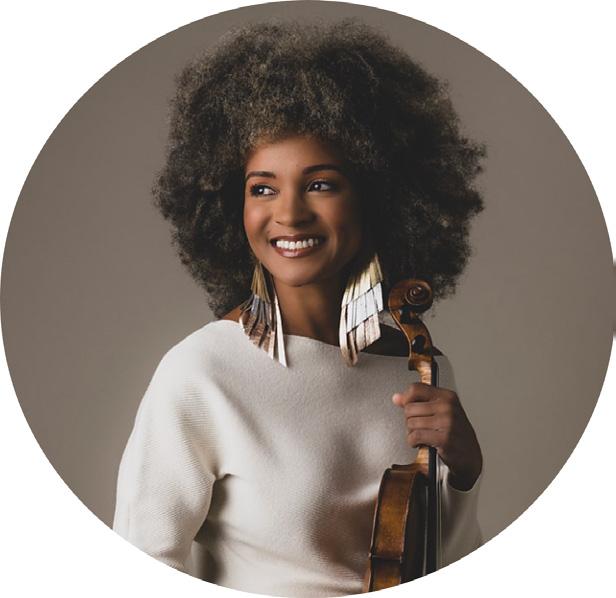
American violinist Melissa White has enchanted audiences and critics around the world for her “warmly expressive and lyrical…glittering” playing (Chicago Classical Review) and for “making her violin sing elegantly” (Aspen Times). Ms. White’s rapid rise as a soloist has captured the attention of orchestras and audiences worldwide, many of whom already know her as a founding member of the Grammy-winning Harlem Quartet.
Highlights of the 2025–26 season include Ms. White’s debut with the Seattle Symphony; the world premiere of Sophia Jani’s Violin Concerto with the Dallas Symphony, and debut performances with the Mobile and Columbus Symphony Orchestras. She also returns for performances with the Johnson City Symphony and Northwest Sinfonietta, and will record a new concerto by Jonathan Bailey Holland with the Curtis Symphony Orchestra.
Recent and upcoming solo recital debuts for Ms. White include Boston Conservatory, the Spire Center in Plymouth, Philadelphia Chamber Music Society, Chamber Music Detroit, Davidson College, and The Isabel Bader Centre for the Performing Arts in Kingston, Ontario. Since 2023, she has also appeared in recital at Carnegie Hall, Corpus Christi Chamber Music Society, the Phillips Collection, and Purdue Convocations, among others.
Beyond orchestra and recital appearances, Ms. White relishes the opportunity to perform in chamber music settings alongside close friends and colleagues. In June 2023, she joined the Kaleidoscope Chamber Collective at London’s Wigmore Hall together with Hilary Hahn, and she reunited with the ensemble for performances in the 2023–24 season from Germany to major series along the East Coast, returning again to Wigmore in July 2025. Other recent chamber music engagements, beyond the Harlem Quartet, include appearances at the Spoleto Chamber Music Festival, Tippet Rise, Festival Napa Valley, San Francisco Conservatory of Music, and the Sarasota Music Festival.
A first-prize laureate in the Sphinx Competition, she has performed with such leading U.S. ensembles as the Cleveland Orchestra, the Boston Pops, the Louisville Orchestra, and the Atlanta, Baltimore, Colorado, Detroit, and Pittsburgh Symphony Orchestras. Internationally, she has appeared as soloist with Poland’s Filharmonia Dolnoslaska; with the Colombian Youth Orchestra in a tour of that country; with the Czech National Philharmonic; and as a recitalist in Baku, Azerbaijian, and Jelenia Gora, Poland. Her film credits include a violin solo in the soundtrack to Jordan Peele’s 2019 psychological thriller Us; and in addition to her numerous classical performances she has also performed alongside several pop artists including Pharrell, Bruno Mars, Alicia Keys, and Lauryn Hill.
Ms. White is a founding member of New York-based Harlem Quartet, where since 2006 her passion and artistry have contributed to performances hailed for “bringing a new attitude to classical music, one that is fresh, bracing and intelligent” (Cincinnati Enquirer). Together with Harlem Quartet, she has appeared in many of the country’s most prestigious venues, including Carnegie Hall, the White House, and the Kennedy Center; and toured throughout the U.S., as well as in Europe, Africa, Japan, and the United Kingdom. Harlem Quartet has collaborated closely with leading jazz musicians, including Chick Corea and Gary Burton, with whom their recording “Mozart Goes Dancing” won three Grammy Awards, including the Grammy for Best Instrumental Composition in 2013. Harlem Quartet was named quartet-in-residence at Montclair State University in the fall of 2021, and has served as the visiting quartet-in-residence at the Royal College of Music in London since 2016. In 2024, Harlem Quartet took home a Grammy for Best Classical Compendium for their work on “Passion for Bach and Coltrane,” with Imani Winds, A.B. Spellman, and jazz trio Alex Brown, Edward Perez, and Neal Smith. In 2025, Harlem Quartet earned its first Latin Grammy nomination for Best Instrumental Album with “Havana meets Harlem,” their collaboration with Cuban pianist-composer Aldo López Gavilán.
PROGRAM NOTES
Four Dances from Rodeo (1942)
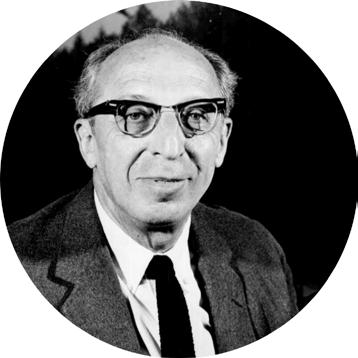
by Aaron Copland (Brooklyn, 1900 - North Tarrytown, New York, 1990)
Copland’s first ballet on an American theme, Billy the Kid (1938), was a sensational success. For the first time, an American ballet company had made a decisive move away from the classical tradition as represented by the influential Russian school and turned to a specifically American subject. Four years after Billy the Kid opened in Chicago, Copland received a phone call from Agnes de Mille, the celebrated dancer and choreographer, inviting him to write the music for a new ballet, to be performed by the Ballet Russe de Monte Carlo at the Metropolitan Opera in New York. When Copland heard that it was a cowboy ballet, he exclaimed: “Oh no! I’ve already composed one of those. I don’t want to do another cowboy ballet.” But de Mille assured him that it was going to be different this time – and it was. Unlike Billy the Kid, which had a dramatic and violent plot, Rodeo was all about romance. In de Mille’s words,
This is the story of the Taming of a Shrew – cowboy style. It is not an epic, or the story of pioneer conquest. It builds no empires. It is a pastorale, a lyric joke … the quieter and simpler the style the better. There are never more than a few people on the stage at a time … one must always be conscious of the enormous land on which these people live and their proud loneliness
Throughout the American Southwest, the Saturday afternoon rodeo is a tradition. On the remote ranches, as well as in the trading centers and the towns, the “hands” get together to show off their skill in roping, riding, branding, and throwing. Often, on the
more isolated ranches, the rodeo is done for an audience that consists only of a handful of fellow workers, womenfolk, and those nearest neighbors who can make the eighty or so mile runover.
The afternoon’s exhibition is usually followed by a Saturday night dance at the Ranch House.
The theme of the ballet is basic. It deals with the problem that has confronted all American women, from earliest pioneer times, and which has never ceased to occupy them throughout the history of the building of our country: how to get a suitable man.
In the ballet, the Cowgirl has a crush on the Head Wrangler and tries to impress him by riding a bucking bronco, but the horse throws her off and the Wrangler goes to dance with another girl. The Cowgirl, who has been wearing men’s clothes to look tough, changes into a beautiful dress and appears at the dance, making all heads turn. The Head Wrangler becomes interested, but now it’s the Cowgirl’s turn to prefer someone else.
Copland used old cowboy songs in three of the ballet’s four major sections. The first, “Buckaroo Holiday,” contains variations on the tunes “If He Be a Buckaroo by His Trade” and “Sis Joe.” There are no folk tunes in the next scene, “Corral Nocturne,” a tender, lilting slow movement (mostly) in asymmetrical 5/4 time. The nocturne is followed by a piano solo in ragtime style, evoking the kind of dance music heard in the country in the early 1900s. (Leonard Bernstein, whose friendship with Copland had started in 1937, later recalled that he had written sixteen bars of the piano solo.)
The dancing continues with the “Saturday Night Waltz,” in which the song “Old Paint” is alluded to, and finally with the popular “Hoedown,” which uses two square dance tunes: “Bonyparte” and “McLeod’s Reel.”
Agnes de Mille’s choreography, with its
PROGRAM NOTES
cowboy lopes and horse wrangling, gave the dancers of the Russian Ballet a hard time at the beginning. But it was well worth the effort: the premiere, on October 16, 1942, was a smashing success, followed by 78 more performances within a year.
Violin Concerto No. 2 (1952)
by
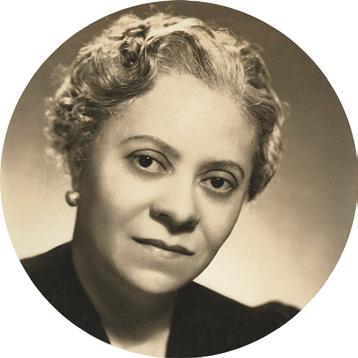
Florence Price (Little Rock, Arkansas, 1887 - Chicago, 1953)
This is the first performance by the Columbus Symphony. Duration: 16’
stage, fully embracing the entire Romantic concerto tradition. What is more: she managed to say something new in this traditional idiom, helped by her brilliant orchestration and her well-assured control of musical form.
The compact concerto is based on two principal themes – one march-like, the other cantabile (singing). They are heard in alternation throughout the composition, with each return bringing new variations on the themes and new virtuosic fireworks for the soloist. There are some exquisite solo moments for the celesta, the harp and the first flute, among others.
One of the most sensational musical discoveries in the 21st century so far occurred in 2009, when a large collection of musical scores was found in an abandoned home in St. Anne, Illinois, about 60 miles south of Chicago. The compositions were by Florence Price, whose First Symphony, premiered by Frederick Stock and the Chicago Symphony in 1933, was the first work by an African American woman to be programmed by a major orchestra. Yet in subsequent years, many of Price’s works remained unperformed and, following her death, her work was all but forgotten.
It was only after the spectacular findings in St. Anne had resulted in a slew of performances and recordings that Florence Price’s true greatness was revealed to the musical world. At the beginning of her career, Price, like her contemporaries William Grant Still and William Dawson, was following the advice Antonín Dvorák had given American composers back in the 1890s: use your native musical traditions to create new music. In the case of Price, that would be the Afro-American spiritual and the Black dance music of the antebellum South, in particular the juba that appears in several of her earlier works. Yet by the time she wrote her Second Violin Concerto in 1952, she had moved well past that
The concerto was written for Price’s friend, violinist Minnie Cedargreen Jernberg, who performed it several times in the 1950s, but only with piano accompaniment. After the full score had been discovered, the orchestral premiere of the concerto took place on February 17, 2018, in Bentonville, Arkansas. The soloist was Er-Gene Kahng (who subsequently made the first recording of the work); the Arkansas Symphony Orchestra was led by Steven Byess.
Symphony No. 1 (“Winter Dreams”)
in G minor, op. 13 by Piotr Tchaikovsky (Votkinsk, Russia, 1840 - St. Petersburg, 1893)
Most recent Columbus Symphony performance: December 6-7, 1991; Peter Stafford Wilson conducting. Duration: 43’
In 1840, the year of Piotr Tchaikovsky’s birth, Russian music had just begun to adopt Western forms and genres. The composer regarded as the “father of Russian music,” Mikhail Glinka, had finished his first opera, A Life for the Tsar, only a few years earlier (1836). The St. Petersburg Conservatory, the first institution in the country to offer advanced musical training, didn’t open its doors until 1862, with the celebrated pianist and composer Anton Rubinstein as its founding director. Tchaikovsky, who entered the conservatory in 1863, was therefore one of its first composition students.
PROGRAM NOTES
Although he had exhibited great musical talent since childhood, Tchaikovsky had reached the age of 23 before he decided to devote his life to music. It was only then that, giving up his job as a civil servant at the Department of Justice, he enrolled in the conservatory as a pupil of Rubinstein and Nikolai Zaremba. He graduated with honors three years later. Upon leaving school, he was immediately appointed to the faculty of the second conservatory of the country, which Anton Rubinstein’s brother Nikolai had just opened in Moscow. Tchaikovsky’s arrival in Moscow in January 1866 marked the beginning of a stellar musical career. A few months later, the 26-year-old budding composer embarked on his first large-scale symphony, something hardly any Russians had ever done. His only significant predecessor had been his teacher Anton Rubinstein, whose Second Symphony (“Ocean”) was written in 1851. Members of the “Mighty Handful,” in St. Petersburg, also tried their hand at symphonies around the same time: Rimsky-Korsakov’s First was premiered in 1865, Borodin’s in 1869.
A composer writing a symphony in Russia in the 1860s was, then, something of a pioneer, and Tchaikovsky was fully conscious of the difficulties and responsibilities involved in the task. The Symphony caused him more anguish and agony than any of his later works, resulting in rather frightening physical symptoms and a near nervous breakdown during the time of composition. Tchaikovsky complained to his younger brother Anatol about chronic insomnia and what he called recurrent “little apoplectic fits” (they might have been milder epileptic seizures). He was unhappy about the sluggish pace at which the Symphony progressed, and suffered a major setback when, during the summer of 1866, he showed his two former teachers what he had written. Both Anton Rubinstein and Zaremba were harshly critical of the work in progress, which did not help the composer, who was already plagued by self-doubt. Fortunately the other Rubinstein, Nikolai, was of a different opinion. He had been a friendly mentor since Tchaikovsky’s arrival in Moscow; he offered his younger colleague a room in his home, and even saw to it that Tchaikovsky was well dressed and in good company. Nikolai Rubinstein presented the new work both in Moscow and St. Petersburg, with great success. Yet Tchaikovsky was not entirely satisfied with the work and revised it substantially in 1874.
PROGRAM NOTES
Although Tchaikovsky provided the first two movements of his Symphony with descriptive subtitles, it would be an exaggeration to call the symphony program music. (At any rate, the third and fourth movements have no subtitles.) The composer simply associated some images with the first half of the work, but felt no need to do so in the second half.
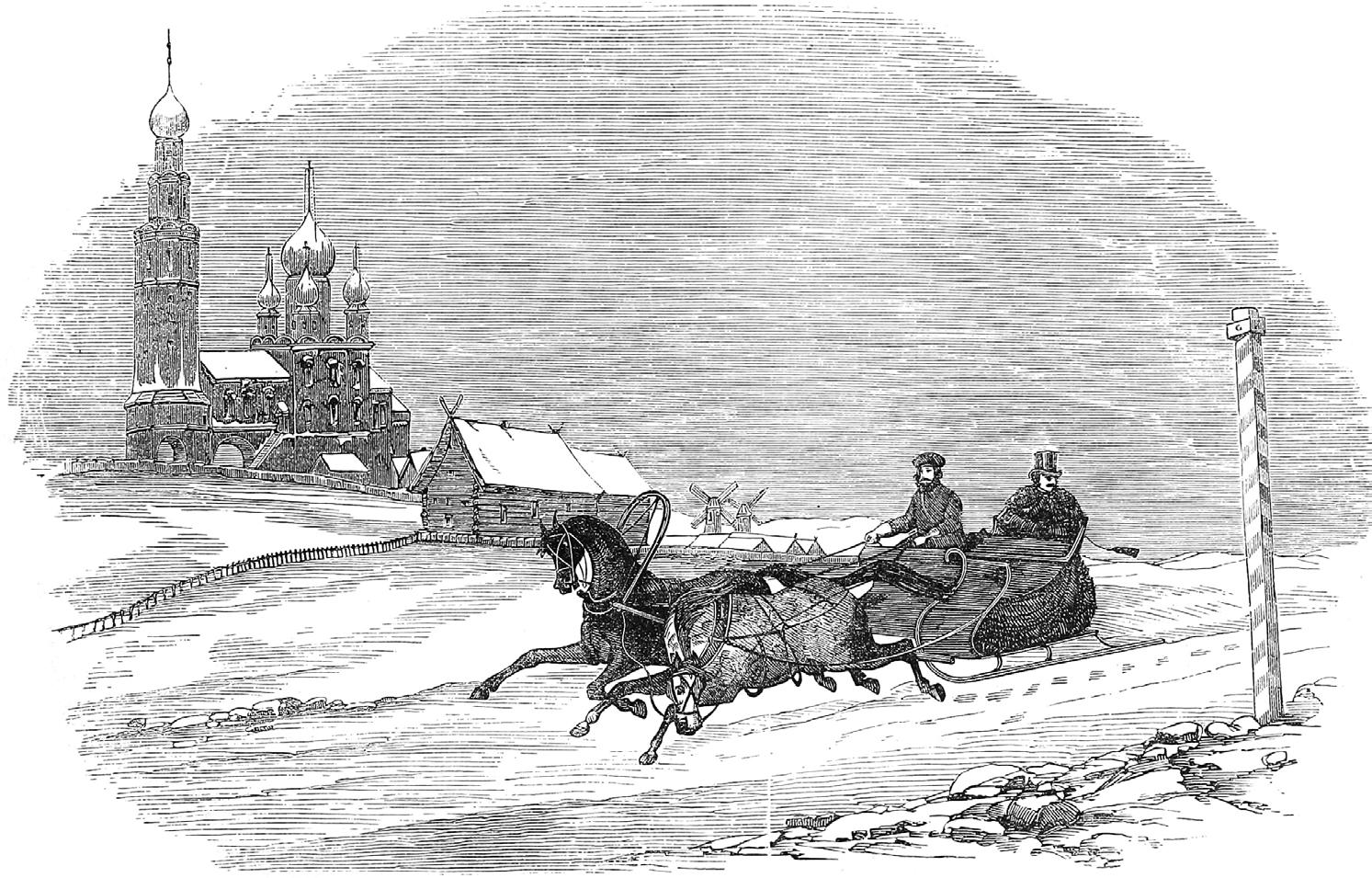
The first movement, “Reveries of a Winter Journey,” travels (or, one might say, wanders) from a “frosty” opening, with eerie string tremolos and slowly unfolding, brief melodic fragments, to brighter landscapes and then back to the opening frost. This journey is accomplished by means of the traditional sonata form, which allows Tchaikovsky to modulate from the initial, wistful G minor to the more radiant D major. The beautiful second theme, introduced by the solo clarinet, was newly written during the 1874 revision. The development section begins with a quartet of horns that sounds astonishingly like the Waltz of the Flowers from The Nutcracker, written 20 years later, and culminates in a powerful orchestral crescendo followed by three measures of general rest. The recapitulation repeats the minor-to-major “journey” from the exposition, but at the end Tchaikovsky unexpectedly reverts to minor. The movement concludes as mysteriously as it began.
The second movement, “Land of Desolation, Land of Mists” opens and closes, as mentioned before, with a quote from the overture The Storm. There are two new themes that are so similar to each other that they could be considered variants of the same theme. They are differentiated, however, by their tempo, alternating between “Adagio” and “Pochissimo più mosso.” The melodic flow is uninterrupted during the entire movement, as various instruments and sections of the orchestra take their turn playing segments of the seemingly endless melody. The haunting atmosphere is further enhanced by the rapid passages interjected by the solo flute. The main section of the scherzo is a masterful orchestration of the earlier sonata movement in which a simple, two-bar rhythmic phrase is presented in a multitude of melodic forms. The influence of Mendelssohn’s “fairy” scherzos cannot be denied in the main section, but the Trio, newly written for the symphony, takes us to a completely different
world. It is the first of several orchestral waltzes in which Tchaikovsky made that popular dance thoroughly his own. The recapitulation of the main section is followed by a coda combining both sections. The coda begins in a most interesting way with a timpani solo that decreases in volume from forte to pianissimo as the strings play the movement’s two themes in close succession.
The finale begins with an “Andante lugubre” introduction in G minor, with two bassoons intoning the fragment of a Russian folksong that will soon be heard in its entirety, played by the violins. The folksong, first heard in G minor, is repeated in the major as the tempo gradually accelerates. The principal “Allegro maestoso” tempo is announced by a jubilant new theme played by the entire orchestra. The folksong is reintroduced as the second theme in the unfolding sonata form. The development includes an extended fugato section, which has been criticized as serving no apparent purpose other than showing off what Tchaikovsky had learned during his three years at the conservatory. Yet the use of counterpoint here actually serves to increase dramatic tension and prepare the return of the jubilant tutti theme. This recapitulation, however, is dramatically cut short by a general rest, followed by a return of the “lugubrious” introduction. After this momentary slowdown, the tempo again begins to accelerate. This passage, written in 1874, has been widely admired as one of the work’s most original moments. It is characterized by contrary motion in the strings (simultaneously ascending and descending chromatic scales) accompanied by an ominous ostinato in the horns. Finally, the summit is reached; the Symphony ends with about two minutes of exultant fanfares with drums and pipes and celebration on a monumental scale.
Notes by Peter Laki
MUMFORD
MAHLER 1
FRIDAY, FEBRUARY 20, 2026 AT 7:30PM
SATURDAY, FEBRUARY 21, 2026 AT 7:30PM
OHIO THEATRE
ROSSEN MILANOV, CONDUCTOR
LAUREN CAULEY, VIOLIN
MARIEL ROBERTS MUSA, CELLO
JEFFREY MUMFORD, COMPOSER
-- INTERMISSION -.............................
floating layers interwoven in expanding brightness
Lauren Cauley, violin
MAHLER
Mariel Roberts Musa, cello (World Premiere) .............................
Symphony No. 1 in D Major
I. Langsam Schleppend
II. Kräftig bewegt
III. Feierlich und gemessen, ohne zu schleppen
IV. Stürmisch bewegt
This concert is dedicated to the memory of Rhoma Berlin by the Berlin Family.
The world premiere of Jeffrey Mumford’s floating layers interwoven in expanding brightness is made possible by Jack and Zoe Johnstone and the Committee for the Johnstone Fund for New Music of The Columbus Foundation.
LAUREN CAULEY, violin
Violinist and improviser Lauren Cauley has quickly risen in New York’s avant-garde as an artist known for genre-breaking performances that expand the sonic possibilities of her instrument. Now a “mainstay of the local new-music scene” (New York Times), she’s built a reputation as an interpreter of “fierce precision” and “excellence uncompromised” (Cleveland Classical).
Lauren has worked with artists and composers such as Anahita Abbasi, Ambrose Akinmusire, Bedouine, Richard Carrick, Chance the Rapper, Ellie Goulding, Georg Friedrich Haas, Pauline Kim Harris, Ezra Koenig (Vampire Weekend), David Lang, George Lewis, Roscoe Mitchell, Jeffrey Mumford, Qasim Naqvi, Steve Reich, Sigur Rós, Cécile McLorin Salvant, Tomorrow X Together, Wadada Leo Smith, Zeynep Toraman, Emily Wells, Immanuel Wilkins, Saul Williams, Julia Wolfe, and Michelle Zauner (Japanese Breakfast).
Lauren maintains an international career with performances at festivals such as Venice Biennale, Acht Brücken, Newport Jazz, Beijing Modern Music Festival, Lincoln Center Festival, Darmstadt, Asphalt, Bang on a Can, ECLAT, Ear We Are, KLANG, New York City Electroacoustic Music Festival, Sons d’hiver, Winter Jazzfest NYC, Sympósio Internacional de Música Nova, and The Perlman Music Program. In addition to her work as a soloist, Lauren has performed with groups such as Ensemble Signal, Alarm Will Sound, Metropolis Ensemble, and the [Switch~ Ensemble].
As a sought-after collaborator and recording artist, Lauren has appeared on Grammy Award-winning and Emmy-nominated projects. Her playing has been broadcast on WNYC, Deutschlandfunk Kultur, ORF Radio Wien, WDR Köln, Radio SRF 2 Kultur, and NBC’s Saturday Night Live. Lauren can be heard on Albany Records, Atlantic Records, ATMA Classique, Blue Note, Bright Shiny Things, Chandos Records, New Focus Recordings, Physical Editions, and RVNG Intl. As a composer, Lauren has premiered her own work for violin and electronics at the Guggenheim Museum and been commissioned by Metropolis Ensemble.
As a guest artist and educator, Lauren has given performances and worked with students at universities around the world, including Bard College; Berklee College of Music; Chinese University of Hong Kong; Cornell University; Dartmouth College; Eastman School of Music; Harvard University; Princeton University; Shanghai Conservatory; Universidade Federal do Paraná; University of Alaska Anchorage; University of California, Berkeley; University of California San Diego; and Wesleyan University.
Lauren received her bachelor’s and master’s degrees in violin performance from the Eastman School of Music, where she served as teaching assistant to Charles Castleman. While at Eastman, Lauren was awarded a DAAD grant to study at the Bauhaus Universität in Weimar, Germany. After Eastman, Lauren attended the International Ensemble Modern Academy, Klangspuren Schwaz. In addition to performing, Lauren maintains a private teaching studio in Brooklyn. She plays a Parisian violin made by François Gaviniès in 1734. www.laurencauley.com
MARIEL ROBERTS MUSA, cello
American cellist and composer Mariel Roberts Musa, “one of the leading solo performers in new music” (Bandcamp), is widely recognized not just for her virtuosic performances, but as a fearless explorer in her field.
Her passion for collaboration and experimentation as an interpreter, improvisor, and composer have helped create a body of work which bridges avant-garde, contemporary, classical, improvised, and traditional music; and has established her as “one of the most adventurous figures on New York’s new music scene—one with a thorough grounding in classical tradition but a ravenous appetite for and tireless discipline in new work.” (Bandcamp).
Roberts Musa is celebrated for her “technical and interpretive mastery” (I care if you listen), and has appeared as a soloist and chamber musician across four continents, most notably as a member and co-director of the Wet Ink Ensemble, as well as with the International Contemporary Ensemble (ICE), Mivos Quartet, Bang on a Can All Stars, and Ensemble Signal.
JEFFREY MUMFORD, composer
Born in Washington, D.C. in 1955, composer Jeffrey Mumford has received numerous fellowships, grants, awards and commissions.
Awards include the “Academy Award in Music” from the American Academy of Arts & Letters, a Fellowship from the Guggenheim Foundation, and an ASCAP Aaron Copland Scholarship. He was also the winner of the inaugural National Black Arts Festival/Atlanta Symphony Orchestra Composition Competition. Other grants have been awarded by the Ohio Arts Council, Meet the Composer, the Martha Baird Rockefeller Fund for Music Inc., the ASCAP Foundation, and the University of California.
Mumford’s most notable commissions include those from the Isabella Stewart Gardner Museum, the Koussevitzky Foundation, the Los Angeles Philharmonic Association and the Library of Congress (co-commission), the BBC Philharmonic, the San Antonio, Chicago and National Symphonies, Washington Performing Arts, the Network for New Music, cellist Mariel Roberts, the Fulcrum Point New Music Project (through New Music USA), Duo Harpverk (Iceland), the Sphinx Consortium, the Cincinnati Symphony, the VERGE Ensemble/National Gallery of Art/ Contemporary Music Forum, the Argento Chamber Ensemble, the Cleveland Orchestra, the Nancy Ruyle Dodge Charitable Trust, the Meet the Composer/Arts Endowment Commissioning Music/USA, Cincinnati radio station WGUC, the Walter W. Naumburg Foundation, the Fromm Music Foundation, and the McKim Fund in the Library of Congress.
His music has been performed extensively, by major orchestras, soloists, and ensembles, both in the U.S. and abroad, including London, Paris, Reykjavik, Vienna, The Hague, Russia and Lithuania.
Recent and forthcoming performances include the premiere of layering radiance . . . toward stillness by the Grossman Ensemble, let us breathe (solo cello) by Annie Jacobs-Perkins, of radiances blossoming in expanding air by Annie Jacobs-Perkins and the Post Classical Ensemble, conducted by Angel Gil-Ordeonez, wending by violist Jordan Bak, undiluted days by the Merz Trio and the Talea Ensemble, the premiere of ...fleeting cycles of layered air (solo violin) by Miranda Cuckson, as part of the Fromm concert series sponsored by Harvard University, brightness dispersed (cello and string orchestra) by The String Orchestra of Brooklyn, her eastern light amid a cavernous dusk, by Ensemble Connect, and a landscape of interior resonances by pianists Robert Fleitz and Steven Beck. Pianist Pina Napolitano will include his two Elliott Carter tributes in her European concerts in this and coming seasons and has recorded them as part her recently released CD entitled “Tempo e Tempi” (Odradek Records). He has also written a concerto for her entitled unfolding waves, which is scheduled to be premiered and recorded within the next year in Berlin.
Current projects include a new work for the String Orchestra of New York City (SONYC), cavernous echoes of expanding brightness, and a harp concerto for Anne-Sophie Bertrand. His new CD of recent concerti, entitled “echoing depths,” has recently been released on Albany Records / Parma Recordings.
Mumford has taught at the Washington Conservatory of Music, served as Artist-in-Residence at Bowling Green State University, and served as assistant professor of composition and Composer-in-Residence at the Oberlin College Conservatory of Music. He is currently Distinguished Professor at Lorain County Community College in Northern Ohio.
Mr. Mumford is published by Theodore Presser Co. and Quicklight Music and represented by Latitude 45 Arts.
PROGRAM NOTES
floating layers interwoven in expanding brightness (2025)
by Jeffrey Mumford (b. Washington, D.C., 1955)
This is the world premiere performance. Duration: 18’
With an extensive oeuvre that has won him rave reviews and prestigious awards for decades, Jeffrey Mumford has proven that so-called “high Modernism” is not necessarily soulless or devoid of feeling, as many people still seem to think. The American composer, who recently turned 70, knows how to endow complex harmonic and rhythmic structures with an intense dramatic charge. He constantly discovers new ways to convey passion and excitement and, through a particularly imaginative orchestration, achieves sonorities that can only be described as luminous.
Luminosity is a particularly important concept for Mumford, who frequently gives his works long poetic titles that almost always emphasize light and radiance. His earlier works include amid fleeting pockets of billowing radiance; to find in the glimmering air . . . a buoyant continuity of layering blue; radiances spreading from a world of resonant stillness – and now floating layers interwoven with expanding brightness, a double concerto for violin and cello cast in a single movement. Mumford’s series of highly evocative titles suggest a recurrent vision of atmospheric harmony, and each sound, each gesture, each musical idea is placed in the service of expressing that vision of light.
The composer has offered the following remarks on his piece:
Commissioned by the Columbus Symphony with assistance from the Johnstone Fund, floating layers interwoven in expanding brightness was written for violinist Lauren Cauley and cellist Mariel Roberts Musa, with whom I have collaborated on many occasions and whom I find particularly inspiring.
In this piece, I wanted to create a work that showcased the considerable talents of both soloists, who have an uncompromising and deep affinity for new music. Everything they play is informed by consummate musicianship, intelligence, vision, and a profound depth of purpose that communicates immediately and compellingly.
Writing this piece was a particular labor of love as ideas had been percolating for 15 years until the right formula presented itself.
I am very excited about the current direction my work is taking. Over the past few years, I have been focusing on images from my childhood –specifically, the energy and particular journey daylight (either direct or reflected) took through my bedroom window. In addition, I have more keenly focused on gradations and intensities of light as communicated by sound. I imagine distinct worlds within clouds as they define distance, which greatly fuels my imagination. In particular and most recently, my double concerto attempts to address these elements.
In short, I am trying to create an alternate reality in my work, my own heaven, as so much of the world we live in, is not enough.
The opportunity to share my work with the larger community is one that I cherish, and I am deeply grateful that the Columbus Symphony and Lauren & Mariel will bring it to life!
Symphony No. 1 (1888)
by Gustav Mahler (Kalischt, Bohemia [now Kalište, Czechia], 1860 - Vienna, 1911)
Most recent Columbus Symphony performance: March 5-6, 2010; Alondra de la Parra conducting. Duration: 56’
Like the hero of his first great song cycle, the young Mahler was a fahrender Geselle (“wayfarer”), and was anxious to become a
PROGRAM NOTES
Meister (“master”). Geselle was the traditional title given to young artisans who had passed the apprentice stage and often wandered from place to place assisting more experienced practitioners before setting up shop themselves. In his 20s, Mahler likewise moved from city to city, from one assistant position to the next, waiting for the big break that finally came in 1888, when he was appointed to his first important post as Director of the Royal Opera in Budapest (he was still only 28).
It was during these itinerant years that Mahler conceived his first symphony –arguably the most ambitious first symphony any composer had ever written. In fact, few composers under 30 have ever been so independent from influences as was Mahler. As he once remarked, Beethoven had started out as a Mozartian composer and Wagner as a follower of Weber and Meyerbeer; but he, Mahler, “had been condemned by a cruel fate to being himself from the start.”
During the 1880s, composers of symphonic music in the German-speaking countries were divided between the camps of “program” vs. “absolute” music. The former believed that music should be based on some explicit extra-musical ideas, taken from literature, philosophy or the visual arts, while the latter insisted that music could express only itself. Franz Liszt had recently introduced the genre of the “symphonic poem” and, following in his footsteps, the young Richard Strauss presented his first tone poems, including Don Juan and Death and Transfiguration, in 1888-89. Mahler was reluctant to join the programmusic camp, yet he was undeniably inspired by his readings, which had a definite influence on his music. His ambivalent attitude is evident from his hesitation about disclosing programs over the years.
At the Budapest premiere in 1889, Mahler called the work we now know as his First
Symphony a “Symphonic Poem in 2 parts.” On this occasion, the audience heard five movements, as Mahler had included an Andante, called Blumine, written in 1884. (It was originally part of the incidental music for a play.) The rest of the symphony was composed in 1887/88. Movements 1-3 comprised Part I; the last two movements made up Part II.
For the second performance in Hamburg, Mahler renamed the work “Titan: a Tone Poem in Symphonic Form.” He borrowed the name “Titan” from the eponymous novel by Jean Paul (Johann Paul Friedrich Richter), an influential German Romantic novelist who, many years before Mahler, had also been one of Robert Schumann’s favorites. The “titan” of the 900-page novel is a young Prince who evolves as a person thanks to his interactions with a colorful cast of secondary characters. Mahler, in any case, made no attempt to illustrate the characters or the plot in any way: his use of the word “titan” seems to be little more than a metaphor for the boundless energy of the music. In addition, Mahler provided programmatic titles for the two major parts of the work and also for the individual movements, sometimes augmented by additional comments:
Part I: “From the Days of Youth: Flower, Fruit, and Thorn Pieces.”
1. “Spring Without End” (The awakening of Nature after a long winter slumber)
2. Blumine
3. “Under Full Sail” (Scherzo)
Part II: Commedia humana
4. “Stranded!” Funeral March in Callot’s Style
5. “Dall’inferno” (an outburst of despair)
In 1896, when the work was performed in Berlin, Mahler removed all programmatic references and called the work simply “Symphony in D major.” Also, at this time, he deleted the “Blumine” movement and eliminated he division into two parts. The work was thus turned into a four-
PROGRAM NOTES
movement symphony, presented as a piece of absolute music. Yet even though all extra-musical references had been removed, the work wouldn’t be what it is, had Mahler not been thinking about things like nature, grotesque funeral marches and outbursts of despair at the time of writing.
The words “flower, fruit, and thorn pieces” from the 1893 program – words also taken from Jean Paul – must be interpreted as allusions to life’s “good and bad times” in general. And Mahler may have thought of some of his own tumultuous life experiences during the time of the symphony’s genesis. During his tenure in Kassel in 1884, he fell passionately in love with a soprano from the opera company named Johanna Richter, a relationship that, as Mahler later recalled, caused him “more pain than pleasure.” This affair inspired the Songs of a Wayfarer, a song cycle on Mahler’s own words, which is quoted in the First Symphony. Three years later in Leipzig, Mahler became romantically involved with Marion von Weber, wife of Captain Carl von Weber (grandson of the composer Carl Maria) – an affair that came close to causing a major scandal.
Yet the real “story” of the Symphony, which Mahler would want us to hear as a non-programmatic piece, lies in the way he expanded conventional symphonic form to produce this monumental work. Some of the procedures he used have literary parallels without being influenced by any literary program: the recall of the first movement’s material in the finale is like when a long-absent character in a novel suddenly reappears, and the extended passage in slow tempo in the same movement is like a parenthesis or a sub-plot. On the other hand, some of the procedures he used are eminently musical, like the introduction of certain genres that would recur throughout his entire symphonic output: the second movement Ländler (an Austrian folk dance) is a prototype of many a later Mahler movement, and the third movement funeral march likewise opens a long line of Mahlerian marches.
It wasn’t for nothing that the first movement was at one point called “Spring Without End.” The gradual awakening of spring is symbolized by a perfect fourth (Mahler called it “a sound of nature” in the score) over a sustained pedal. Everything grows out of this one interval, like a tree from a small seed. Even the call of the cuckoo, evoked by the clarinet, is a perfect fourth, although this bird knows only thirds in reality. In fact, the interval of the fourth serves as the unifying factor of the movement (and, indeed, of the entire Symphony). When the slow introduction yields to the movement’s main section, we hear the theme of the second of the Wayfarer songs: “Ging heut morgens übers Feld” (“I walked this morning through the field”), which also begins, significantly, with a perfect fourth.
It is said that Mahler had to change the beginning of the second movement Ländler because it sounded too much like one of Anton Bruckner’s themes. As it is, the theme sounds distinctly Mahlerian, echoing the early song “Hänsel and Gretel” written around 1880. A simple tune, rather unassuming in itself, is played by the woodwinds with great rhythmic energy; it is soon taken up by the full orchestra (with a large brass section comprising seven horns and four trumpets!). In the words of the late Michael Steinberg, longtime program annotator for the San Francisco Symphony, the Trio “fascinatingly contrasts the simplicity of the rustic, super-Austrian material with the artfulness of its arrangement. It is an early instance of what [German philosopher and musicologist] Theodor W. Adorno perceived as the essence of Mahler, the turning of cliché into event.”
Early audiences clearly didn’t quite know what to make of the third movement. They couldn’t fail to recognize the popular “Frère Jacques” melody – transposed, bizarrely, into a minor key. The “alienation” of a familiar tune creates a unique mixture of humor, tragedy, mystery and irony. There follows an openly parodistic section whose unabashedly schmaltzy themes, played by oboes and trumpets, are reminiscent of klezmer music (Eastern European Jewish
Caricature of Gustav Mahler conducting his First Symphony. From “Illustriertes Wiener Extrablatt,” November 25, 1900.
instrumental folk music). As a total contrast stand the two quotations from the last “Wayfarer” song, almost transfigured and painfully nostalgic (“Auf der Strasse stand ein Lindenbaum”–”By the road stands a linden tree,” and “Die zwei blauen Augen von meinem Schatz”–”My sweetheart’s two blue eyes”). A more subdued recapitulation of the “Frère Jacques” tune and the klezmer material ends this most unusual movement.
The finale, which follows the funeral march without a pause, is the longest and most complex movement in the Symphony. It represents a progression from tragedy to triumph like many earlier symphonic finales, but the contrasts between the various emotions are more polarized than ever. The movement lacks tonal unity as it opens in F minor and closes in D major: in
the 1880s, this was quite a revolutionary way of handling tonality. We experience a lyrical second theme introducing us to a completely different world. Exuberant climaxes are followed by relapses into despair, and motifs from the first movement return, as mentioned above, to increase the dramatic tension even more. The work ends with a radiant D-major coda proclaiming the final victory.
Notes by Peter Laki
MOZART
AMADEUS LIVE
FRIDAY, MARCH 6, 2026 AT 7:30PM
SATURDAY, MARCH 7, 2026 AT 7:30PM OHIO THEATRE
STUART CHAFETZ, CONDUCTOR
COLUMBUS SYMPHONY CHORUS
STEPHEN CARACCIOLO, CHORUS DIRECTOR
Amadeus Live
Film licensed by The Saul Zaentz Company.
Tonight’s performance will include a 20-minute intermission at approximately 9:20PM, and will end at approximately 10:30PM.
Stuart Chafetz is the Principal Pops Conductor of the Columbus Symphony and Principal Pops Conductor of the Chautauqua and Marin Symphonies. Chafetz, a conductor celebrated for his dynamic and engaging podium presence, is increasingly in demand with orchestras across the continent and this season Chafetz will be on the podium in Detroit, Ft. Worth, Naples, Buffalo, North Carolina and Seattle. He enjoys a special relationship with The Phoenix Symphony where he leads multiple programs annually.
He’s had the privilege to work with renowned artists including Ne-Yo, Ben Folds, Natalie Merchant, Leslie Odom, Jr., En Vogue, Kenny G, David Foster w/ Catherine McPhee, The O’Jays, Chris Botti, 2 Cellos, Hanson, Rick Springfield, Michael Bolton, Kool & The Gang, Jefferson Starship, America, Little River Band, Brian McKnight, Roberta Flack, George Benson, Richard Chamberlain, The Chieftains, Jennifer Holliday, John Denver, Marvin Hamlisch, Thomas Hampson, Wynonna Judd, Jim Nabors, Randy Newman, Jon Kimura Parker and Bernadette Peters.
He previously held posts as resident conductor of the Milwaukee Symphony Orchestra and associate conductor of the Louisville Orchestra. As principal timpanist of the Honolulu Symphony for twenty years, Chafetz would also conduct the annual Nutcracker performances with Ballet Hawaii and principals from the American Ballet Theatre. It was during that time that Chafetz led numerous concerts with the Maui Symphony and Pops. He’s led numerous Spring Ballet productions at the world-renowned Jacobs School of Music at Indiana University.
When not on the podium, Chafetz makes his home near San Francisco, CA, with his wife Ann Krinitsky. Chafetz holds a bachelor’s degree in music performance from the College-Conservatory of Music at the University of Cincinnati and a master’s from the Eastman School of Music.
COLUMBUS SYMPHONY CHORUS
SOPRANO
Elizabeth ArtetaCunningham
Alleana Bammerlin
Susie Beecroft
Julie Cannell
Andrea Dent
Katie DiPietro
Kathryn Ehle
Makenna Koehl
Miriam Matteson
Elizabeth Neer
Amy Adele Parker
Stephanie Pikovnik
Stephanie Rodriguez
Kristen Snyder
Megan Trierweiler
Mary Yarbrough
Jennifer Young
Victoria Zanatian
ALTO
Jordan Abbruzzese
Amy Bergandine
Deborah Forsblom
Savannah Gonsoulin
Lauren Grangaard
Hannah Miller Rowlands
Lisa Peterson
Christina Rossi
Gretchen Rutz Leist
Laura Scobell
Jenna Shively
Peggy Wigglesworth
TENOR
Wade Barnes
Todd Chandler
Geoffrey Gear
Aaron Lashley
Adam Mesker
Richard Spires
Evan Stefanik
Andrew Sutherland
Eric White
Jason Yoder
Aidan Young
BASS
Alexander Almeida
Matt Barbour
Anthony Brown
Jacob Conrad
Luis Falcon
Keith Frische
William Gehring
Eric Gibson
James Legg
Gordon McKnight
Kyle Norton
Allen Rutz
David Rutz
Drew Shadwick
Keith Whited
David Zach
DIRECTOR
Stephen Caracciolo
ACCOMPANIST
Casey Cook
BOARD CHAIR
William Gehring
COORDINATOR
Lauren Grangaard
PROGRAM NOTES
PROGRAM NOTES
Amadeus Live (1984)
Music composed by Wolfgang Amadè Mozart (Salzburg, 1756 - Vienna, 1791)
This is the first Columbus Symphony performance. Duration: 160’
What is the reason for the enduring popularity of Mozart’s Requiem? Besides the beauty and power of the music itself, the circumstances of its creation shortly before the great composer’s death surely play a role. As an unfinished work, the opportunities for both completion and myth-making are nearly endless. Audiences at the Columbus Symphony’s performances of the Requiem earlier this year heard a contemporary twist on the ending of the work by American composer Gregory Spears, contrasting with the original completion by Mozart’s student Franz Xaver Süssmayr – and there have been multiple other efforts over the years by composers and musicologists.
As a member of our audience this evening, you’ll witness yet another take on the Requiem, a masterful melding of music and cinema that still contributes, more than 270 years after his birth, to the popular image of Mozart as a musical genius who was still all too human. The Academy Award-winning Amadeus, directed by Miloš Forman, is based on a play by Peter Shaffer, itself inspired by the work of Alexander Pushkin. In the more than four decades
since the film’s premiere, it has inspired the hit song “Rock Me Amadeus” and been parodied on television shows like 30 Rock, The Simpsons and Family Guy. Who else but Mozart could span such a range of both highbrow and popular culture?
Drawing on excerpts from the operas The Abduction from the Seraglio, The Marriage of Figaro, and Don Giovanni, to the Great Mass, multiple piano concertos, and of course the Requiem, music conductor and supervisor Neville Marriner and music coordinator John Strauss requisition Mozart’s music to creatively score his own life for maximum Hollywood drama, especially in applying the Commendatore’s theme from Don Giovanni to represent Mozart’s own relationship with his demanding father and with fate itself. Although it is not true that Mozart dictated parts of the Requiem to his real-life colleague (but not murderer) Antonio Salieri, the climactic scene has elements of fact. Mozart did sometimes work in a last-minute frenzy, completing the score to Don Giovanni the night before its premiere, and Süssmayr did complete the score at the urging of Mozart’s widow, Constanze, who was eager to build her husband’s legacy and her own economic security. As F. Murray Abraham’s Salieri frantically scribbles ideas from Tom Hulce’s Mozart, we see the Confutatis movement of the Requiem come to life from the bottom up, rendering the ‘flames of woe’ through voices, trombones and bassoons, trumpets and timpani, and grinding ostinato strings. His compositional genius is demonstrated in a much more lighthearted way earlier in the film, when Mozart demonstrates his impeccable ear and skill for improvisation by one-upping Salieri’s simple march (grazie, signore …) and by humorously, and crassly, imitating the styles of various composers in a party scene.
Endless words could be written – and have been – about the historical accuracy of Amadeus. But although the details of every scene may not be based in fact, the film presents a marvelous pastiche of Mozart’s timeless music as it dramatizes the times of his life.
Notes by David Hoyt
Portrait of Antonio Salieri by Joseph Willibrord Mähler, 1815, oil on canvas. Gesellschaft der Musikfreunde.
COLUMBUS SYMPHONY MUSICIANS
Alicia Hui Principal Second
Sydney Hartwick AssistantSecondPrincipal
Joanna Frankel Concertmaster
Gyusun Han Associate Concertmaster
Jessica Hung Assistant Concertmaster
David Edge
Robert Firdman
Maalik Glover Tatiana Hanna
Violin
COLUMBUS SYMPHONY MUSICIANS
Violin cont.
William Manley
Gail Sharp Zoran Stoyanovich
David Tanner Mwakudua waNgure
Karl Pedersen
Alice Risov Assistant Prinicpal
Ye Jin Goo
Viola Principal
COLUMBUS SYMPHONY MUSICIANS
Viola cont.
Spencer Ingersoll
Kenichiro Matsuda Jessica Pasternak
Ann Schnapp
Luis Biava
Wendy Morton Assistant Prinicpal Pei-An Chao
Cello Principal
COLUMBUS SYMPHONY MUSICIANS
Cello cont.
Albach
Principal
Jena Huebner
John Pellegrino Assistant Prinicpal
Gill
Victor Firlie
Luis Parra Ha Eun Song
Rudy
Russell
Bass
COLUMBUS SYMPHONY MUSICIANS
Joseph Niles Watson
Lydia Roth Second & Piccolo
Heidi Ruby-Kushious Flute & Piccolo
Hugo Souza
Robert Royse English Horn & Utility Oboe
Flute Principal
Oboe Principal
Clarinet
David Thomas
Mark Kleine Second & E Flat Principal
COLUMBUS SYMPHONY MUSICIANS
Megan Amos
Julia Rose Associate Principal
Bassoon Horn Principal
Lorenzo Robb Fourth & Utility
Betsy Sturdevant
Doug Fisher Second Principal
Adam Koch Second
COLUMBUS SYMPHONY MUSICIANS
Trumpet Principal
Jeff Korak Second
Timpani
Trombone Principal
Benjamin Ramirez Principal
Percussion
Principal
Jean-Etienne Lederer Librarian Librarian
Justin Kohan
Vlad Petrachev
Cameron Leach
Violin
Sarah Becker
Leah Burtnett
ASSOCIATE MUSICIANS
Pin-Hsuan Chen
Shang Yi Chen
Anita Chiu
Ashley Dyer
Yu-Kun Hsiang
Sean Klopfenstein
Ion-Alexandru
Malaimare
Maria Monday
Youjin Na
Nick Naegele
Aurelian Oprea
Tea Prokes
Aaron Schwartz
Manami White
Yen-Ju Young
Viola
Dee Dee Fancher
Jacquelyn Hamilton
Ila Rondeau
Cello
Nikita Annenkov
Sabrina Lackey
Will Teegarden
Bass
Jim Faulkner
Emily Tarantino
Flute
Lori Akins
Lisa Jelle
Oboe
Lisa Grove
Eduardo Sepulveda
Jessica Smithorn
Clarinet
Jenna Kent
Anthony Lojo
Evan Lynch
Celeste Markey
Bassoon
Cynthia Cioffari
Horn
Brad Granville
Bruce Henniss
Amy Lassiter
Kim McCann
Connor Monday
Natalie Sweasy
Andrew Symington
Trumpet
Tim Leasure
Jay Villella
Trombone
David Roode
Chad Arnow
Jeremy Smith
Tuba
Jonathan Fowler
Yukitada Onitsuka
Percussion
Marie Conti
Ryan Kilgore
Jake Kundu
Chris Lizak
Sasha Luthy
Feza Zweifel
Harp
Sara Magill
Keyboard
James Hildreth
Caroline Hong
The Musicians of the Columbus Symphony are members of, and represented by, the Central Ohio Federation of Musicans, Local 103 of the American Federation of Musicians
COLUMBUS SYMPHONY STAFF
EXECUTIVE
Maureen O’Brien
Chief Executive Officer
Kelsey Brown
Chief of Staff
ARTISTIC OPERATIONS
Christopher Bowling
Community Engagement Coordinator
Jake Burrell
Assistant Stage Manager
Maureen Driscoll Personnel Manager
Trevor Edge
Stage Manager
Lauren Grangaard
Chorus Coordinator
Yoon Su Kim
Artistic Administrator
Jean-Etienne Lederer Principal Librarian
Jacqueline Meger
Orchestra Artistic Coordinator
Elias Miller
Assistant Conductor and Columbus Symphony Youth
Orchestra Music Director
Katie Sharp
Production Assistant
Nick Sico
Stagehand Production Coordinator
DEVELOPMENT
Erin G. Flynn
Chief Development Officer
Taryn Barnes
Executive AssistantDevelopment
Carl P. McCoy
Director of Development Operations
Susan Ropp
Director of Grants
Joshua Shipley
Special Events Manager
EDUCATION
Meghan McDevitt Vice President of Education
Nia Dewberry
Education Coordinator
Ashley Marini
Education Assistant
FINANCE
Jill Lushkin-Hoff
Chief Financial Officer
Mike Daniels Controller
Elyse Gentry Staff Accountant
Chris Wallace
Payroll & Benefits Manager
HUMAN RESOURCES
Michelle Reese
Head of People
Kristi Wilson
Human Resources Senior Manager
INFORMATION
TECHNOLOGY
Dave Burgan Director of I.T.
Brian Kovats
Systems Administrator
Zach Warmouth I.T. Technician
MARKETING
Kathy Karnap Vice President of Marketing
Ava Contenza
Marketing and Events Intern
Nat Hickman
Marketing and Communications Manager
David Hoyt
Marketing and Communications Manager
Rodney Thomas Patron Engagement Manager
TICKETING
Wes Taliani
Senior Ticketing Manager, Shared Services
COLUMBUS SYMPHONY BOARD
OFFICERS
Stephen E. Markovich, MD, Chair
Giordano Albertazzi, Co-Vice Chair
Nelson Yoder, Co-Vice Chair
Aaron Alt, Treasurer
Amy T. Shore, Secretary
TRUSTEES
Rosa Ailabouni
Andy Alderman
Melody Birmingham
Joseph A. Chlapaty
Vinita Clements
Kate Dixon
Michael P. Foley
Hector Garcia-Santana
Cindy Hilsheimer
Marcy Hingst
Terry Hoppmann
Alex Johnson
Eric Johnson
The Honorable
Algenon L. Marbley
Ted McDaniel, PhD
Robert Morrison, Jr.
Gay Su Pinnell, PhD
EX-OFFICIO TRUSTEES
Judy Connelly Cameron Leach
Betsy Sturdevant
Leslie Swanson
HONORARY TRUSTEES
Jack George, MD
Ronald A. Pizzuti
Zuheir Sofia
Michael Weiss
GOVERNMENT, CORPORATE, & FOUNDATION PARTNERS
With gratitude, the Columbus Symphony acknowledges all our government, corporate, and foundation supporters. This publication lists names of donors who made gifts, pledges, and in-kind donations of $1,000 or more from September 1, 2024, to August 31, 2025.
$150,000 & Above
$50,000-$149,999
Columbus Symphony League
Hotel LeVeque, Autograph Collection
$25,000-$49,999
Above Sound & Lighting
Huntington
NiSource
OhioHealth
State Auto Insurance Companies
$15,000-$24,999
Friends of the Columbus Symphony
Johnstone Fund for New Music
KPMG LLP
The Reinberger Foundation Renewal by Andersen
$10,000-$14,999
Bath & Body Works Foundation
Crawford Hoying
Thomas R. Gross Family Foundation
Donald Harris Fund for New Compositions
Siemer Family Foundation
$5,000-$9,999
AECOM
Battelle
CAPA
CK Construction
Diamond Cellar
DiPerna & Co
DLZ
Epcon Communities, LLC
Ernst & Young LLP
Fifth Third Bank
G& J Pepsi
GBQ
Graves Piano
Ice Miller
MMJ Events
Mount Carmel Health System
PNC
Porter Wright Morris & Arthur, LLP
Vorys
The Robert Weiler Company
$1,000-$4,999
American Electric Power
Bread Financial
Columbus Partnership
D’Addario Foundation
GFS Chemicals
Grange Insurance
David & Mindy Gross Family Foundation
The Harry C. Moores Foundation
Microsoft Matching Gifts Program
NiSource
Charitable Foundation/ Columbia Gas
PNC Foundation
RMA Strategies, LLC
Squire Patton Boggs
Taft
Thompson Hine LLP
INDIVIDUAL PARTNERS
With gratitude, the Columbus Symphony acknowledges all our individual donors. This publication lists names of donors who made gifts, pledges, and in-kind donations of $550 or more from September 1, 2024, to August 31, 2025.
$250,000 & Above
Jack & Joan George
Anne Melvin*
Gay Su Pinnell
$100,000-$249,999
Anonymous (2)
Mrs. Rhoma Berlin*
G. Ross & Patricia Bridgman
$50,000-$99,999
Anonymous (1)
Aaron Alt & Jennifer Konz-Alt
Joe & Linda Chlapaty
Drs. Deborah Parris & David Bisaro
Andy* & Sandy Ross
Sheldon & Rebecca Taft
$25,000-$49,999
Anonymous (4)
Jim & Margaret Boggs
Robert & Susan Cochran
Mr. Jeff Harris
Keith Klingler & Maura Stevenson
Marilyn Scanlan*
Deborah & Hiroshi Yoshino
$15,000-$24,999
Anonymous (2)
Rosa M. Ailabouni & Dr. Scott A. Smitson
Giordano Albertazzi
Terry & Michelle Hoppmann
Mary Lazarus
Steve & Kathy Markovich
Jane P. Mykrantz
Amy & Alan Shore
Kim & Judith Swanson
Chris & Susan Timm
Gregory P. Zunkiewicz
$10,000-$14,999
Anonymous (2)
Dr. Patricia A. Cunningham
Charles Driscoll
Marty Golubitsky & Barbara Keyfitz
Cindy & Larry Hilsheimer
David Ives
Sue & Seth Kantor
Nancy & Tom Lurie
Lawrence & Katherine Mead
Rossen Milanov & Robert Gardler
Andrew & Bette Millat
Richard R Murphey III & Charles Cataline
George L.* & Patricia G. Smith
David H. Timmons
Dr. Gifford Weary & David Angelo
Lillian Webb
Joseph Wisne & Bridgette Mariea
Richard & Karen Zunkiewicz
$6,000-$9,999
Anonymous (1)
George Barrett
Jim & Susan Berry
Janet L. Cox
Jerome & Bette Dare
David & Ann Elliot
Francille & John* Firebaugh
Gerlinde Lott
Brad Myers & Steve Rowlands
Sandra & Howard Pritz
Mr.* & Mrs.* Arthur E. Shepard
Lewis & Benita Smoot
Mark Tinderholt
Mark & Katherine Tucker
Connie & Craig Walley
Gwen Weihe
Hugh Westwater & Linda Larrimer
$3,500-$5,999
Anonymous (8)
June Allison & Stephen Tracy
Dr. Constance Bauer
Ronald A. Bell
Felicia Bernardini
Melody Birmingham
Nadine Block
Mr. & Mrs. Thomas H. Brinker
Don & Ann Casto
Patricia Ann Chmiel
Barbara L. Chuko
Pam Conrad
Ted & Lynn Coons
Polly J. D’Eredita
Mr. C. John Easton
Nancy Edwards
Benedicta G. Enrile, MD
Michael & Kris Foley
James Garland & Carol Andreae
Drs. Annie Marie Garraway & Ira W. Deep
Robert C. & Beverly A. Goldie
Lori & Joe Hamrock
Ellis & Beverly Hitt
Patrick & Carol Huber
Daniel L. Jensen
Karen Karlsberger
Mike & Linda Kaufmann
Barry & Karen Keenan
Michelle Kerr
Ginny & Alan Litzelfelner
Mary Ann & Skip Loeb
Todd Majidzadeh & Karen Hough Majidzadeh
INDIVIDUAL PARTNERS
Margaret A. Malone
Matteson Garcia Family
Kenneth C. & Jane H.* McKinley
Patricia Moore
Robert & Lori Morrison
Barbara McAdam Muller
Melanie Murray
Charles Pace*
Ron & Ann Pizzuti
Barbara Poplis
Martyn & Lynne Redgrave
Connie & Tom Ricer
Wanye & Cheri Rickert
Mark & Martha Rosenson
Dr. Steven & Dr. Maria Rosenthal
Dr. Philip & Mrs. Elizabeth Samuels
Tadd & Nancy Seitz
Olga & Charles Snow
Jennifer Tiell & Mark Adelsperger
Kara Trott & Bob Philips
Becky Wright
$1,350-$3,499
Anonymous (5)
Ben L. Addison
John & Elizabeth Allemong
Vanessa & George Arnold
Lois & Brian Bäby
Rita Barnum
William & Jean Bay
Paul & Tere Beck
Mr. and Mrs. William Beckell
Kirsten Dell & Rusty Bell
Frank Birinyi
Alfred H. Bivins
Michael & Sarah Bongiorno
E. Christopher Ellison & Mary Pat Borgess
Kenneth Bowen
Connie & Denny Cahill
Stephen & Sandra Caracciolo
Derrick & Sydnee Clay
Vinita J. Clements
Matthew Cohen & Susan Geary
John & Judy Connelly
Lorie & Jeff Copeland
Jim Craft
Tom Crumrine
Mr. Carl D. Cummins
Tom W. Davis
William Davis & Ronald Jenkins
Ruth K. Decker
Judy Driskell
Pete & Christine Edwards
Donald & Kathleen Faust
Cornelia Ferguson
Arthur L. Flesch
Erin G. Flynn
Dave Fritz
Brian Fruchey
Kenneth W. Fultz
Mr. Thomas A. Gerke
Barbara E. Goettler
Elaine & Victor Goodman
Michele Gwinn
Linda & Bill Habig
Barbara A. Hackman
Dan Hanket
Nick & Steve Hardin
Marilyn Harris
Donald & Jean Haurin
Rich Hillis
Marcy Hingst
Jason M. Hunt
Janice Innis-Thompson
Frederick M. & Judith K. Isaac
Donna & Larry James
Kirk Jones
Rosemary O. Joyce
Linda & Frank Kass
Tom & Mary Katzenmeyer
James & Rose Kent
George Knight & Ellen Berndt
John Looman
Michael Lowe
Jeffrey & Wendy Luedke
Jill Lukshin-Hoff &
Justin Hoff
Matt McClellan & Jennifer Phillips
Ted & Bernice McDaniel
Mark & Christine McHenry
Dr. Violet Meek & Dr. Don Dell
Patricia & John Melvin
Mark & Susan Meuser
Mr. & Mrs. Robert Nevel
Gail & Philip Nelson
Dorothy Noyes & Michael Krippendorf
Mr. David R. Packer & Dr. Linda C. Nusbaum
Ruth Paulson
Marcy Pelecky
Jody Porreca
Doug Preisse
James B. Reardon
Rebecca Rhoads
Denise L. Rehg
Nancy Rigsby
Lois E. Robison*
Judy & Ken Rodgers
Thomas & Gail Santner
The Schumacher Family
Robert Shelly
Junko Shigemitsu
The Revs. Bruce & Susan Smith
Zuheir & Susan Sofia
Sadie & Seyman Stern
Kate Sturgess
Louise Swanson
Barbara & Michael Taxier
Nancy & Ray Traub
Richard H. & Margaret R. Wagner
John Wakelin & Anu Chauhan
Sharon Walton
Tom & Mary Weatherwax
William H. &
Jane T. Wilken
Amy & Steven Woods
Charlotte Yates
Simon Zhuang
$550-$1,349
Anonymous (14)
INDIVIDUAL PARTNERS
Roshini Sarah Abraham
Natalie Adams
Judith H. Ahlbeck
The Allene N. Gilman
Charitable Trust
Michelle Andre
Mary Auch
Robert Bailey
Brian Ballenger
Trisha Barhorst & Sam Bass
Robert & Linda Boynton
Carol Ann Bradley
Dr. & Mrs. J. Richard
Briggs
Robert V. Byrd
Amy & Jim Chapman
Lyn Charobee
William & Donna Cochran
Jim & Karen Conrad
Frank & Susan Cook
Dr. Johanna DeStefano
Philip & Susan DeVol
Mildred & Michael Disko
Colleen & Ted Donley
Nancy Donoghue
Sue Ellen Eickelberg
Charles & Edith Emery
Philip & Shelley Engler
Bernie & Linda Erven
John & Charlotte Eufinger
Bebe & John Finn
Daniel & Koleen Foley
Frank & Jean Forsythe
Joanna Frankel & Daniel Walshaw
Mark Friedman
Reinhard & Mary Gahbauer
Sandra L. L. Gaunt
Michelle Geissbuhler
Dossy & Martin Gelender
Don Good
Dr. Steven &
Gaybrielle Gordon
Richard & Linda Gunther
Mark Haker &
Matt Messersmith
Douglas Hale & Meg Hardison
Bill Hegarty
Dr. Laurie & Kevin Hommema
Dr. Robert Horvat
Marcia Horvath
David Hoyt
Rose Hume & Jim Dunn
Amelia Jeffers
Douglas N. Jones
Steve & Diane Jones
Marcia Katz Slotnick
John D. Kennedy
Michele Koenig
Judith Krasnoff
Polly B. Lindemann
Ellen Tate
Gary Longstreth
Talvis P. Love
Rose Luttinger
Dan Manges
Priscilla M. Meeks
David & Betty Meil
Bill & Jane Miller
Lanah & John Miller
Jay Mirtallo
Cameron & Molly Mitchell
Kimberly Monfort
Lynda & Stephen Nacht
Therese Nolan
Ann & Bob Oakley
Michael Para & Caroline Whitacre
Jay Pascoe
Robert A. Patterson
Dr. Karen Peeler & Rev. Deniray Mueller
Gerri & Loyal Peterman
Colette Peterson
Lisa A. Peterson
Robert Poletto
Donald Poling
Carol J. Porter
Vicki & Steve Probst
Allen Proctor & Gail Walter
Judy & Dean Reinhard
Sara Robertson
Shelda Robertson
Lois Rosow
Dana & Pamela Rudmose
Jennifer & Ed Saboley
Paulette Schmidt
Joyce Schoedinger
David R. Schooler
Diane Selby
Robert & Barbara Shapiro
Dr. Gordon N. Shecket
Stacey Siak
Larry & Cheryl Simon
James R. Skidmore
Retta & Elliot Slotnick
Beatrice K. Sowald
Bill & Maggie Stadtlander
Sally & John Stefano
Mark & Gail Storer
Nancy Strause
Margie & Mike Sullivan
Ralph & Joan Talmage
Jeffrey Thurston & Kristen Parker
Rachel Thurston & Steve Caudill
Joyce Toner
Don & Miriam Utter
Dr. James & Jacquelyn Vaughan
Meta & Burkhard von Rabenau
Michael Ward
Rodney Wasserstrom
J. Hope Weber
Dr. Kenneth Weise
Dan & Nancy Whetstone
Ronald & Ramona Whisler
Devon Whittaker
Melinda Williams
Marilyn Wollett
Anne Jeffrey Wright
Jane B. Young
Joseph & Carol Zanetos
Jim & Barbara Zook
*denotes deceased
A Proper Garden
Above Sound and Lighting
Aiden & Grace
Specialty Rentals
Jean Bay
Connie Cahill
Cleveland Cavaliers
Robert & Susan Cochran
Donatos
Downtown Columbus, Inc
David & Ann Elliot
Linda Evans
Marion Fisher
IN-KIND
Franklin Park Conservatory
Sue Gustin
Hotel LeVeque, Autograph Collection
Carol Huber
iHeartMedia Columbus
Peyton Krueger
Stacey Mlicki
Mill Creek Golf Club
MMJ Events
OhioHealth
Gay Su Pinnell
Sandra Germond Pritz
Tom & Connie Ricer
Rolling Meadows Golf Club
Deb Susi
The Buckeye Lady
The Refectory Restaurant
The Ridge Golf and Gardens
The Seasoned Farmhouse
Joyce Toner
Tom & Mary Weatherwax
Woodhouse Day Spa
HONORARY GIFTS
The following donors have made contributions to the Columbus Symphony in honor of a friend or loved one between September 1, 2024, and December 31, 2025. For questions about making a tribute gift, please contact the Development Office at gifts@columbussymphony.com or 614-221-6016.
Benjamin Addison
John Butler
Ned Alexander McComas Family
Brett Allen
Don & Barbara Robinson
Aaron Alt
Natalie Adams
Andrew Alderman
Chad Fast
Eric Pollock
Jody Porreca
Susan Scott Anderson
Rachel Scott
Matthew Anderle
Melinda Holler
Rosa Balderrama
Stephen A. Rogers & Jean A. Strauch Family Trust
Annie & Mark Bates
Loretta Myers
Deborah Yoshino
Luis Biava
Philip & Shelley Engler
Dan & Evy Bryant
Sue & Les Blatt
Mike Buccicone
Barbara Hamelberg
Cardinal Health
Jody Porreca
Maestro Stuart Chafetz
Julie & Bill Patterson
Bob & Susan Cochran
John & Judy Connelly
Jerry & Mary Cole
Jeff & Linda Maxwell
Columbus Symphony Chorus
Salvador & Susan Garcia
Columbus Symphony Orchestra
Kamal & Linda Boulos
CSO Musicians & Staff
Erin G. Flynn
Casey Cook
Matteson Garcia Family
Crawford Hoying
Cynthia Webster
HONORARY GIFTS
Ron Currin
Ben & Karen Freudenreich
Diane Drissen
Ben & Karen Freudenreich
Robert Firdman Friends of the Columbus Symphony
Erin G. Flynn
Elizabeth & Sean Becker
Debra Forsblom
Tom & Susan Szykowny
Tatiana Hanna Friends of the Columbus Symphony
Marcy Hingst
Kristen Lewis
Ronald J. Jenkins
Elizabeth & Sean Becker
Will Hensley
Ken Matsuda Friends of the Columbus Symphony
Mighty Morton Organ
Andrea Andrioff
Rossen Milanov
Marilyn Wollett
Wendy Morton Friends of the Columbus Symphony
Robert L. Niochols
Diane Piasecki
OhioHealth
William J. Hicks II
Vladislav Petrachev
Anonymous
Gay Su Pinnell
Donald & Kathleen Faust
Lanah & John Miller
Howard Pritz
Marilyn R. Smith
Howard & Sandy Pritz
Robert & Linda Boynton
Denise Rehg
Bernie & Linda Erven
Susan Scott
Rachel Scott
Nick Sico
Monte & Carolyn Holland
Amy Shore
Trisha Barhorst & Sam Bass
Samuel Bass
Janice Innis-Thompson
Dana Ullom-Vucelich
Susi Smith
Jeanette Smith
Marilyn Smith Johnson
Polly J. D’Eredita
Maura Stevenson & Keith Klinger
Dr. Ching-chu Hu
Leslie Swanson
Judi & Bill Swanson
David Thomas
Carole Dale
Jan Wade
Marti Rideout
Cameron Wade
Daniel Walshaw
Julia Noulin-Mérat
Sue Porter & Mike Sayre
Shirle & Bill Westwater
Hugh Westwater & Linda Larrimer
Denise & Mike Wible
Dan & Nancy Whetstone
Jody Williams
Bill Hegarty
Nelson Yoder
Zachary T. Graham
Allison Srail
Gregory Zunkiewicz
Mark Zunkiewicz
Richard Zunkiewicz
Michael Ward
MEMORIAL GIFTS
The following donors have made contributions to the Columbus Symphony in memory of a friend or loved one between September 1, 2024, and December 31, 2025. For questions about making a tribute gift, please contact the Development Office at gifts@columbussymphony.com or 614-221-6016.
Allene N. Gilman
The Allene N. Gilman Charitable Trust
Thomas W. & Vivian B. Applegate
Margaret Marotta
Jerry Armstrong
Alice Armstrong
Mr. & Mrs. David Baumgartner
Ann Schnapp
Harold & Hellen Beard
Gene E. Beard
Joseph H. Bein
Nancy J. Bein & Ross Fuerman
Gary Belter
Arlene Belter
Rhoma Berlin
Anonymous
Brian Bashnagel
Steven & Karyn Bass
Adam & Suzy Biehl
Suzanne Birdsong
The Chickerella Family
Eric Darwin & Barb Tewart-Darwin
Friends of the Columbus Symphony
Mrs. Barna J. Graves
Jill Greene
Olinda & Kevin Hissrich
Joseph Kay
Mike & Connie Kellar
Brian & Tina Murdick
Nichols & Company CPAs
Stacia & Wayne Schrader
Susan Sills
Julie Van De Mark & Barry Wilson
Marquis & Sumiko Van De Mark
Marilyn Wollett
Brad & Susan Wylie
John Biszaha
Anonymous
Dr. Bill Blair
Janet Blair
Phyllis & Robert Boehnke
John D. Kennedy
Dr. Samuel & Beverly Cohen
Susan Cohen
Linda Cooper
Anonymous
Mike Dantz
Brian Ballenger
Lois & John Day
Gail & Philip Nelson
Richard J. Dick
Mary Ann Gallucci
John & Jinnie Elam
Bob Yocom
Evelyn Erlanger
Ed Erlanger
Jean Fair
Andrew Wiegerig
Louis Fabro
Anonymous
Jeff Forney
Kenneth W. Fultz
Joan S. Friedman
Mark Friedman
Jane Gutin
Carol S. Price
Joann Hall
Phil Hall
Marvin Hamlisch
Janet Blair
Donald Harris
Johnstone Fund for New Music
Duane E. Hays
Judith Hays
Frank A. Healy
The Healy Family
Dennis and Amy Healy
Alex Heckman
Mel Heckman
Irene Hessler
Anonymous
Don Hoyt
Patricia Ann Chmiel
Bernice Hoyt
Jean Ives
David Ives
Darlene Jones
Anonymous
Joanne Castiglione & Gary Minks
Ken Keller
Mary Keller
MEMORIAL GIFTS
H. Lee & Evelyn F. Leathers
Anonymous
Larry Levenson
Leslie Ghiz
Brian, Sarah & Danielle Hall
Leah Levinson
Anonymous
Linda & Carl English
Donna S Friedman
Gary Gibeaut
Brian, Sarah & Danielle Hall
Roxanna McCulloch
Charlotte L. Stiverson
Ed Lichtenfeld
Marlowe & Eric Lichtenfeld
Robert E. Lindemann
Polly Lindemann
Jacquelyn Long Vaughan
Lanah & John Miller
Dr. Richard T. Martin
John P. Cahill
The Rev. Philip College & Edward Lasseigne
David & Joanne Frantz
Elizabeth Gabel
Linda L. Gill
James & Kathleen Griffith
Dr. Ellen Carol Jones
Robert Maier
The Mullen Family
Dr. Richard T. Martin & Collette Bakke Martin
Dr. Ellen Carol Jones
Jane McKinley
Anonymous
Friends of the Columbus Symphony
Peter Georgiton
Mrs. Barna J. Graves
Rose Hume & Jim Dunn
Arril Johnson
Carl P. McCoy
Marilyn Wollett
Jim Meeks
Priscilla M. Meeks
Anne H. Melvin
Anonymous
Robert E. & L. Dolores Millat
Andrew & Bette Millat
Annette Molar
Anonymous
Bob Nichols
Steve Haise
David Niwa
Ginny & Larry Christopherson
Kenneth Planisek
Anonymous
Rita M. Diewald
Barbara W. Poplis
Jennifer Shay
Rob Rideout
Jan Wade
Dave & Maria Rose
Julia Rose
Andy Ross
Lousie L. Swanson
Mrs. Patricia Saker
Alice A. Rodgers
George L. Smith Jr
Robert & Kathleen Hinklin
Patricia J. Sprouse
Battelle-BGCAPP Team
Laura & Bailey Crockwell
Lewis E. Marr
Kimberly J. McClenathan
Richard Pettit
Evelyn Stevens
Canterbury Unit, Friends of the Columbus Symphony
Dave Swanson
Hugh Westwater & Linda Larrimer
Nicholas Tambone
Anonymous
Ray Trask
Trask Family
Donald & Naomi Valentine
Gary & Evelyn Kinzel
Carolyn Vitak
Jim Vitak
Patrick J. Walsh
Daria Arbogast
Kathy Weiss
Ira S. Weiss
Benjamin Wiant
Kim & George Hoessly
Larry Woods
Annita Meyer
John D. Young
Rev. Laura Young
ENDOWMENT
With gratitude, the Columbus Symphony acknowledges all our Columbus Symphony Endowment donors. This publication lists names of donors who have made a gift of $5,000 or more to the Columbus Symphony permanent endowment. Endowment donations are invested to support symphonic music in our community in perpetuity. Thank you for supporting the bright future of our orchestra. For questions about making gift to the endowment, please contact gifts@columbussymphony.com.
Anonymous (6)
Ms. Rosa M. Ailabouni & Dr. Scott A. Smitson
American Electric Power
Jerome & Bette Dare
Garrett* & Sidney* Dill
Charles & Anne Driscoll
John & Francille Firebaugh
The Rev. Earl* & Pauline Fritz
The Jeffrey Company
Phillip J. La Susa
Mary C. Long*
Susan J. Mancini
Mattlin Foundation
Kenneth C. & Jane H.* McKinley
Anne Melvin*
Annette Molar*
Mervin E. Muller*
Carol & Jim Paul
Gay Su Pinnell
Howard & Sandra Pritz
Dr. Steven & Dr. Maria Rosenthal
Robert & Ann* Shelly
Zuheir & Susan Sofia
Alden* & Virginia* Stilson
David H. Timmons
For a complete listing of contributions to the Columbus Symphony Endowment, please visit our website at columbussymphony.com
*denotes deceased
LEGACY SOCIETY
With gratitude, the Columbus Symphony acknowledges all Legacy Society donors who have included the orchestra in their long-range charitable giving plans. Planned gifts from Legacy Society members help sustain the financial strength of the CSO to inspire and build a strong community through music. To entrust your legacy with the Columbus Symphony, please contact gifts@columbussymphony.com
Anonymous (3)
Benjamin L. Addison
James* & Lois Allen
Elizabeth Ann Ayers
George W.* & Shannon Baughman
Paul & Tere Beck
Susan & Jim Berry
Pat & Ross Bridgman
Thomas H. Brinker
Fred* & Paula Brothers
Neal Brower
Robert V. Byrd
Charles* & Sharron* Capen
Robert & Susan Cochran
Richard & Lynn Colby
William B. Connell
Janet L. Cox
Jerome* & Margaret Cunningham
Eugene R.* & Pauline E.* Dahnke
Richard I.* & Helen M. Dennis
Brian & Christine Dooley
Sherwood* & Martha Fawcett
Barbara K. Fergus
Robert Firdman
Fred & Molly Caren* Fisher
Michael & Kris Foley
The Rev. Earl* & Pauline Fritz
Brian Fruchey
Judy* & Jules* Garel
Jack E. & Winifred J. Gordon
Anne Goss & Richard Coleman*
Marilyn H. Harris
Judith Harris Hays
Michael & Victoria Hayward
Cindy & Larry Hilsheimer
Lisa A. Hinson
Harold C. Hodson
David Hoyt
Mr. & Mrs.* David A. Jeggle
Daniel L. Jensen
Mr. Eric T. Johnson & Dr. Rachel G. Mauk
Douglas & Darlene* Jones
Dr. Rosemary O. Joyce
Patricia Karr
Linda S. Kass
Mary & Ken Keller
William* & Sandra Kight
Phillip J. La Susa
Frank A. Lazar
Fran Luckoff*
Lowell T. & Nancy MacKenzie
Susan J. Mancini
Kenneth C. & Jane H.* McKinley
Kathy Mead
Mr.* & Mrs. H. Theodore Meyer
Ruth Milligan
Karen M. & Randall E. Moore
Richard R. Murphey, Jr.*
Mr. & Mrs. Robert A. Oakley
John M. Pellegrino
Betty J. Peters
Denise Rehg
Richard & Teri Reskow
Rocky & Mary Robins
Lois & William J.* Robison
Karlon Roop
Joseph M. B. Sarah
Merry Ann L. Sauls
Elizabeth J. Sawyers*
James* & Marilyn Scanlan
Carl & Elizabeth Scott
Anne C. Sidner
Marcia Katz Slotnick
Elliot E. Slotnick & Retta Semones
George* & Patricia Smith
Marilyn A. Smith Johnson
Kim & Judith Swanson
Sheldon & Becky Taft
David Thomas
David H. & Rachel B.* Timmons
Buzz & Kathleen Trafford
Mark & Katherine Tucker
Laura J. Young
Craig D. & Connie Walley
Mr. & Mrs. Jerry Woodruff
For a complete listing of Legacy Society members, please visit our website at columbussymphony.com *denotes deceased
COLUMBUS SYMPHONY LEAGUE
The women of the CSL are a diverse group from a variety of professional and community service backgrounds. All share a love of music and enthusiasm for helping the Columbus Symphony remain a vibrant part of our community. Formed in 1981 specifically to raise funds for the CSO, the group has raised over $1,500,000 for special CSO programming and music education opportunities.
Constance Bauer
Jean Bay
Susan Berry
Connie Cahill
Lyn Charobee
Susan Cochran
Judy Connelly
Lorie Copeland
Jane Dickson
Phyllis Duy
Nancy Edwards
Linda Evans
Marion Fisher
Sue Gustin
Michele Gwinn
Marilyn Harris
Carol Huber
Rachel Mauk
Barbara Muller
Debbie Pelecky
Marcy Pelecky
Gerri Peterman
Colette Peterson
Sally Pilcher
Gay Su Pinnell
Barbara Poplis
Denise Rehg
Becky Rhoads
Connie Ricer
Paulette Schmidt
Patricia Smith
Deb Susi
Judith Swanson
Jennifer Tiell
Joyce Toner
Mary Weatherwax
Gwen Weihe
Melinda Williams
Deborah Yoshino
As the founding organization for the Columbus Symphony, the Friends of the Columbus Symphony has been involved since 1951 with promoting symphonic music, volunteering, fundraising and hosting receptions for the musicians, chorus, and staff.
Lois Allen
Patricia Barton
Gene Beard
Kenneth Beckholt
Mary Beitzel
Alfred H. Bivins
Kathie Boehm
Adrienne Cannell
Louise Carle
Patricia Carleton
Donna Cavell
Barbara Chuko
Edward Chuko
Pamela J. Conrad
Jan Cox
Gayle Curtis
Jim Dunn
Monica Dunn
Jeanine Ellis
Mary Jane Esselburne
Patricia Evans
Mary Lou Fairall
Chistine Farquhar
Sharon Ferguson
Nancy Fisher
Pauline Fritz
Kenneth Fultz
Donna Gerhold
Valerie Gibbs
Barbara Goettler
Barna Graves
Sandra Green
Kaitlyn Grella
Annie Griffin
Scott Griffin
Gary Guggenbiller
Jane Guggenbiller
Ginger Haack
Brian Hall
Helen Hall
Sarah Hall
Judie Henniger
Anne Highland
Dr. W. Michael Hockman
Marcia Horvath
Rose Hume
Leslie Huntington
Michele Johnson
Penny Jones
Gisela Josenhans
Karen Kennedy
Norah McCann King
Tunney Lee King
Lenna Klug
Tom Klug
Denise Kontras
Barbara Lach
Dr. David Lambert
Anne LaPidus
Sally Larrimer
Mary Lazarus
Jocelyn Lieberfarb
Barry Liss
Osa Louys
Donna Lyon
Susan Mancini
Terry Kennedy Mancini
Barbara Mansfield
Janice Marks
Marianne Mathews
Joel Mathias
Sandy Mathias
Sondra Matter
Clemya Matthews
Alison McArthur
Eloise McCarty
Ken McKinley
Marjorie K. Meade
Betsy Mincey
Gretchen Mote
Suzanne Moushey
Thomas Moushey
Barbara Muller
Sandy Murray
Jutta Neckermann
Betsy Nichols
Therese Nolan
Shannon O’Neill
Jeannine Palmer
Carolyn Patch
Donald Poling
Joanna ‘Jody’ Porreca
Katie Potter
Sandra Pritz
Victoria Probst
Judy Rodgers
Ken Rodgers
Viki Rogers
Jeannine Ryan
Kate Salisbury
Leslie Schaab
Lois Sechler
Junko Shigemitsu
Susan Skorupski
Karen Sloneker
Marilyn Smith
Vera Spurlock
Libby Stearns
Evelyn Stevens
Leslie Swanson
Louise Swanson
Diane Payonk Tedeschi
Jan Teter
Martha Tykodi
Miriam Utter
Jan Wade
Joan Wallick
Barbara Weaver
Eloise Weiler
Norbert Weiler
Jayne Wenner
Vivian Wistner
Marilyn Wollett
Cynthia Woodbeck
Becky Wright
Marjorie Wylie
Carol Zanetos
CONCERT HALL & TICKETS
Patrons with Disabilities: The Columbus Symphony provides accommodations for persons with disabilities. For special seating arrangements, please call the CAPA Ticket Center at (614) 469-0939. For other accommodations, please connect with venue management. Braille Programs available upon request. Contact Nat Hickman at: Nhickman@columbussymphony.com
Concert Times: Regular season Friday and Saturday concerts begin at 7:30pm. Sunday matinees begin at 3pm. Latecomers and those who leave the hall once a performance has begun will be seated at the discretion of the house manager during appropriate pauses. To ensure that you are able to enjoy the entire concert, we suggest that if you are picking up tickets at Will Call or purchasing tickets, plan to arrive at least 45 minutes prior to the start of the concert.
Please do not bring any packages, bags or backpacks into the venue. Venue management reserves the right to search such items and to refuse the entrance of such items into the venue. Thank you for your cooperation.
Cameras and recording equipment may not be brought into the concert hall. Please turn your electronic watch, cellular phone, and pager to “off,” “silent,” or “vibrate” prior to performances. Flash Photogropahy is Prohibited during the performance.
Refreshments are available in the Galbreath Pavilion at the Ohio Theatre, and you are welcome to take drinks into the concert hall.
Purchasing Tickets: Call the CAPA Ticket Center at (614) 469-0939, 9am to 5pm weekdays to purchase by credit card, Discover, MasterCard, Visa, and American Express. Fax orders are accepted at (614) 224- 7273.
Purchase in person at the CAPA Ticket Center, 39 E. State Street, 10am to 3pm week- days, and two hours prior to all Columbus Symphony performances.
Mail orders should be sent to: CAPA Ticket Center, 39 E. State Street, Columbus, Ohio 43215
Online orders can be made at columbussymphony.com. All ticket purchases are subject to a theatre restoration fee.
Group rates are available by emailing Rodney Thomas at: rthomas@columbussymphony.com
Emergency Calls: If you need to be reached during the concert, please register your name and seat number at the ticket office so that you can be easily found.