Columbus School for Girls
Sisters


FromtheEditor
Welcome to the third issue of Sisters in STEM!
As the new Director of the Center for Science Research and Engineering, it's been such a joy to see the incredible scientific work happening across all divisions at CSG, from PYC to the Upper School. In these pages, you'll find classroom investigations, new scientific traditions, exciting research partnerships, and independent projects driven by student curiosity.
What makes this publication truly special is the student involvement in every step, from conducting research and submitting their work, to our student editorial committee peer-reviewing each submission. To every student who contributed to this issue, thank you so much for all your hard work!
I hope you're inspired by the curiosity, creativity, and discovery of our students as you read through this issue. I know I am!
I'm so excited to share their work with you. Enjoy!
Samantha Shultz-McGowan Director of the Center for Science Research & Engineering

Sisters in STEM 2025-2026 Student Editorial Committee

On the cover
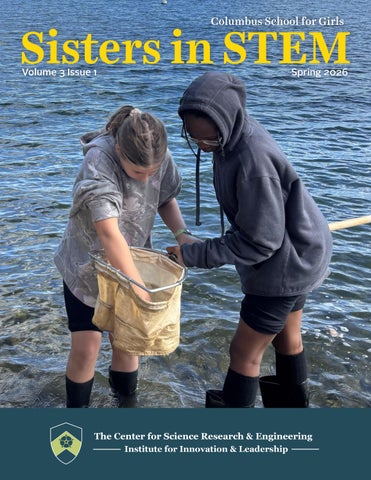
Form VII students collecting macroinvertebrates to test the water quality of Lake Erie during their annual trip to The Ohio State Stone Laboratory on Gibraltar Island.
PYC Special Feature
Slowing Down, Zooming In, and Looking Closely at a Leaf
With microscopes and iPads in hand, in the PYC Studio, our 4/5 researchers paused to notice the hidden worlds within each leaf—the intricate veins, subtle patterns, and shifting shades that make each one unique.


Quotes from PYC 4/5 students:
“I discovered that there are tiny dots and lines you can not see on the leaf.”
“Leaves have lines you can not see. The iPad and microscope helped me see them.”


“I could see little tiny dots on my leaf. They were black and some were blue. I could see pink on my leaf too. It looks like tie dye!”


“I discovered I can see the tiny bumps.”
“I discovered the green leaf has tiny little dots. They are kind of black.”

First Annual Winter Bird Count at Cynthia’s Woods
Class of 2036
Form II students began a new tradition at Cynthia’s Woods: an annual winter bird count. Students used primary source documents and a nonfiction picture book, Counting Birds: The Idea That Helped Save Our Feathered Friends, to learn about the history of the Christmas Bird Count, the longest-running citizen science project in the world and predicted what birds they thought we would see in the woods.
The inaugural count took place on January 13, 2026. Students used binoculars to spot birds and the Merlin app to identify bird songs. They were joined by Marcella Grottoli, class of 2026, Cori Sedmak of Franklin County Soil and Water Conservation District, and several Lower School faculty members who served as bird experts.
In all, students identified 15 bird species either by sight or by song. This information will be the start of an annual record keeping effort to document the birds found at Cynthia’s Woods.


Species Included in our 2026 Winter Bird Count
• American Robin
• American Crow
• Blue Jay
• Brown-headed Cowbird
• Carolina Wren
• Dark-eyed Junco
• Downy Woodpecker
• Eastern Bluebird
• Northern Cardinal
• Red-bellied Woodpecker
• Red-headed Woodpecker
• Red-tailed Hawk
• Tufted Titmouse
• White-breasted Nuthatch
• White-throated Sparrow


Observations at Franklin Park Conservatory
Miami Hemminger '36

Form II students visited Franklin Park Conservatory to investigate plants in different habitats.

Darkling Beetle
Larval
Bernie Stiff '35
Form III students observed and documented the stages of the life cycle of a darkling beetle. Bernie’s diagram shows a larva, also known as a meal worm.
Wisconsin Fast Plant Life Cycles
Arya Jain '34
Form IV students grew Wisconsin Fast Plants from seed and documented the changes throughout their life cycles.


Food Web of the Ocean
Eleanor Kamp '33
Eleanor used a book about the oceans to create this ocean food web after learning about food webs in science class.
Hidden Figures: Book Review
Ellie Coniam '35
Hidden Figures by Margot Lee Shetterly is a nonfiction chapter book that tells the story of how women of color were often unrecognized for most of their accomplishments.
This book is about four African-American women who helped develop planes used in WWII, and afterwards, they helped NASA build the American space program. One project they worked on was helping to get the first person into space. These women did this work during a time when white and Black people were treated differently.
It’s a good book if you want to learn about African-American and women’s history. I thought they were brave because they worked a job that women didn’t usually do, especially African-American women. My favorite character was Katherine Johnson, because she was a dreamer, and she is very kind. She worked through every minute of a three-orbit mission.
People of color, especially women, and those who might want to be mathematicians, scientists, or engineers, would especially enjoy reading this book.

Pop! Goes the Bottle

During Halloween Hop, I went to COSI with my family. We saw a science experiment using water, Alker-Seltzer, and a film canister. The scientist put the Alker-Seltzer inside the container with water in it and shook it. A few seconds later I saw and heard the bubbles inside the canister. Then the lids popped off.
We saw lids flying off of film canisters, almost touching the ceiling after Alker-Seltzer was added and the canister was shaken.
Ecosystems SketchNote
Gabby Smyth '33

Sketchnote created by Gabby after reading an article about ecosystems.
Aortic Dissection: When the Body’s Main Artery Tears
Jasmine Davis ‘31
Recently, a very close family member of mine went to the hospital for chest pain that spread into their lower back. At first, we had no idea what was wrong. After the doctors ordered a CT scan they discovered that there was a dissection or tear in the aorta. My family member was very frightened because their sibling had died from an aortic aneurysm.
That experience inspired me to dig deeper into this topic and learn if there were any special treatments the doctors may have not mentioned. This situation gave me a strong desire to help make a difference in the medical field. Hopefully, with future technology and medical advancements no child will have to watch their parents or loved ones suffer from this condition.
What Is the Aorta and What Does It Do?
The aorta is the largest artery in the human body. Its vital function is to carry oxygenated blood from the heart to the rest of the body. The aorta has three layers: the inner layer called the tunica intima, the middle layer called the tunica media, and the outer layer called the tunica adventitia.
The aorta is essential because it serves as the main pathway for blood to reach all parts of the body. If the aorta becomes damaged, the situation can be
life-threatening and carries a high risk of death if not treated immediately. Damage to the aorta can lead to organ failure, heart attack, treated stroke, and in severe cases, internal bleeding. The figures shown to the right is a normal aorta compared to an aortic aneurysm.
What
Is an Aortic Dissection and How Does It Develop?
There are two types of aortic dissection. Type A and Type B. A Type A dissection is a tear in the part of the aorta that is closest to the heart. Type A dissection is a tear in the inner layer of the aorta, near where it connects to the heart. Causes can include blood pressure, chest trauma (such as from a car accident), and severe stress. It can also be linked to family history and genetics. However, lifestyle plays a role too. A diet high in cholesterol, lack of any physical activity, and drug use such as cocaine that can weaken the aorta. This can cause a tear and lead to sudden spike in heart rate and blood pressure. One major risk of Type A dissection is that it can progress into an aortic aneurysm,which is when the aorta bulges outward like a balloon. This is dangerous because it can reduce blood flow to important organs like the heart, kidneys, and brain. A Type A dissections are typically treated with open-heart surgery, where the torn part of the aorta is replaced with a tube-shaped graft. After the procedure has been successfully performed, the patient can return to their daily lifestyle but should avoid situations that require sig-


nificant strain on their body and or mind.
Type B dissection is a tear in the lower part of the aorta, farther from the heart. Similar to Type A, it can be caused by family history, high blood pressure, genetics, and lifestyle habits. For example, someone with high blood pressure who also smokes is more likely for them to experience weakening of the aortic wall.
With a Type B dissection, the tear can worsen over time, if not properly treated.Treatment often includes medication that lowers your heart rate and blood pressure. After this condition, a person’s life may be slightly different. It is best to have a healthy diet, avoid stress, and stay active; however, activities that could quickly raise your blood pressure, for example, powerlifting, should be avoided.
Is There Cutting Edge Research That Could Improve the Treatment of Type B Aortic Dissection?
One cutting-edge treatment which significantly impacts the treatment of Type B aortic dissection is Thoracic Endovascular Aortic Repair (TEVAR). A less invasive way to fix a Type B aorta dissection compared to open heart surgery. TEVAR helps reinforce the weak or damaged vessel walls of the Aorta from the inside. A major benefit of this procedure is faster recovery time compared to traditional surgery that opens the chest cavity or the stomach cavity. Doing the TEVAR is effective in the long-term because it improves blood flow and reduces the risk of a rupture or the dissection from getting worse.
References
“Aorta.” Cleveland Clinic, my.clevelandclinic.org/health/ body/17058-aorta-anatomy. Accessed 1 Dec. 2025.
“Aorta.” National Cancer Institute, www.cancer.gov/publications/dictionaries/cancer-terms/def/aorta. Accessed 1 Dec. 2025
Image of Normal Aorta Compared to Type A and B Aorta, “What is an Aortic Dissection.” 2025. https://aorticdissectionawareness.org/patients-and-families/aortic-dissection.
“Aortic Dissection: Types, Causes and Treatments.” UChicago Medicine, www.uchicagomedicine.org/forefront/ heart-and-vascular-articles/silent-killer-everything-youneed-to-know-about-aortic-dissection. Accessed 1 Dec. 2025.
Image of Type A Aortic Aneurysm McLeod Health. “Are you at Risk for An Anuresyum.” 2025. https://www.mcleodhealth. org/blog/are-you-at-risk-for-an-aneurysm/
“Navigating Lifestyle after Aortic Dissection Surgery.” Dr. Vishal Khullar, drvishalkhullar.com/lifestyle-after-aortic-dissection-surgery/. Accessed 1 Dec. 2025.
“Thoracic endovascular aortic repair (TEVAR).” Peen Medicine, www.pennmedicine.org/treatments/thoracic-endovascular-aortic-repair-tevar. Accessed 1 Dec. 2025.
“What is an aortic dissection?” Mass General Brigham, www. massgeneralbrigham.org/en/patient-care/services-and-specialties/heart/conditions/aortic-dissection#:~:text=Complications%20of%20aortic%20dissection,known%20as%20 an%20aortic%20rupture. Accessed 1 Dec. 2025.
What Affects the Water Quality of Cynthia's Woods Creek?
Simone Smyth ‘31
The class of 2031 collected, observed, and analyzed aquatic macroinvertebrates to determine the water quality of Cynthia’s Woods Creek, Rocky Fork Creek, located in Franklin County. Aquatic macroinvertebrates are small organisms without backbones that can be seen by the naked eye and are insects in their nymph and larval stages. Examples of macroinvertebrates are mollusks such as clams, snails and crayfish that spend at least part of their lives in water. These biological indicators were used to answer two questions about Rocky Fork Creek, which were: Does the location of the test site in Rocky Fork Creek affect the water quality? And, Does the time of day affect the water quality of Rocky Fork Creek?
This topic is important because we want to ensure the quality of our creeks and that Cynthia’s Woods continues to have a thriving ecosystem. Ms. McDonell and her students in the 7th grade science classes wanted to find out what the water quality of the creek was, then dive deeper by answering research questions that could determine how or why different groups of students got different answers.
Our data was collected at Cynthia’s Woods on September 26, 2025. The classes’ data was collected in two groups. The morning group collected their data between 9:30 and 11:30 AM, and the afternoon group collected their data between 12:30 and 2:30 PM. Each group was split into smaller groups of 3- 4 and assigned a specific site along the creek. The locations were Downriver far, Downriver near, Middle river, Upriver near, and Upriver far. Samples of water along approximately 3,000 meters of the creek were collected. The water quality was determined based on the biological indicators, which were the macroinvertebrates that were found in the creek. Each group would then put a D- net in the water. This is a net with mesh at the back and a pole to hold onto it. The net would be placed with the opening facing upstream. One person in the group would hold the net while the other people kicked around it. The macroinvertebrates would be disturbed and flow into the net. Now that the organisms had been collected, they were identified and a total index value for the water was calculated. This index value was scored and used to determine
whether the water quality is <11=poor, 11-16=fair, 17-22=good, or >22=excellent. Three different taxa or groups were used when classifying macroinvertebrates. Organisms in Taxa 1 received three points for each species found. Species in this taxa do not tolerate pollutants in water. Taxa 2 received two points for each species found and can survive in polluted and non- polluted waters. Taxa 3 received one point for each kind found and those species are highly tolerant of polluted water. A representative from each group tallied up the points allocated to each macroinvertebrate on a green sheet of paper. All of these points are added up to figure out the cumulative index value. After collection, each individual student made a table of the data including other physical factors including water temperature, turbidity, the depth and length of the specific site, and the rate of flow of the stream at each specific site were also analyzed. Students then analyzed the overall data with a focus on water quality as determined by biological indicators. Students then determined claims to answer the specific questions. These claims were supported by evidence, and reasoning was applied.
The image on the following page shows the data sheet used by all 10 groups of students to record their data. This sheet was re- written in a more professional form once our class returned to school the next week. Here are the two questions the class answered using CER.
Does the location of the test site in Rocky Fork Creek affect the water quality?
I claim that the location of the test site affects the water quality of Rocky Fork Creek.
My evidence is the macroinvertebrate index ratings. Upriver far and Downriver far had a cumulative index value of 15, which indicates a rating of fair. Upriver near and Downriver near each calculated an index change like the one above of 23 indicating excellent water quality. Midriver calculated an index rating of 9 indicating poor water quality.
This means that each part of the creek had a differ-
ent total index value. Some of the water quality was good, and some was poor. In this particular study, there was a difference of 14. The water quality was determined based on the biological indicators, which were the macroinvertebrates that were found there.There are three different taxa (or groupings) of macroinvertebrates. Taxa A receives three points for each species found and consists of species that do not tolerate pol lutants in water. Taxa B receives two points for each species found and can survive in polluted and non- polluted waters. Taxa C receives one point for each kind found and those species can survive in polluted water. All of these points are calculated to determine the total index value.
Does the time of day affect the water quality of Rocky Fork Creek?
I claim that the time of day affects the water quality of Rocky Fork Creek.
My evidence is the change in the average index rating for the water quality in the morning and afternoon. The morning group calculated an average index rating for the water was 15, indi cating fair water quality. Looking at data col lected in the afternoon, the average rating was 17, indicating good water quality.
The data indicates a different overall water quality based on the time of day. Both groups used the same procedures to collect biological indicators, however, the time of day was different. Many factors can change over the course of the day, such as temperature; for example the average water temperature in the morning was 15 ℃. The average temperature for the afternoon group was 17.5 ℃. This temperature definitely could have determined the location of the biological indicators, and our likelihood of finding them. Another factor could be the position of the sun. The sun’s location moves throughout the day, and macroinvertebrates are benthic organisms, meaning they are found in dark shady locations at the bottom of bodies of water. If we specifically look at the data from the macroinvertebrates collected in one specific area of water for example the Middle River site, and compare their index values in the morning with those of the afternoon, we could explain the change in values at the site located at Middle River. This is an area with little to no shade, had a total index value of 18 indicating good water quality in the morning, but a value of 9 indicating poor water quality in the afternoon. The sun shined

tebrates, the class of 2031 learned about our eco system, collecting and analyzing data, and how to write a formal scientific claim, evidence, and reasoning to support observations they had made. This is an annual limnology study, 7th graders at CSG have been conducting this investigation for over a decade. This data could be compared with past years, and used to track our creek’s ecosystem and how it had changed over many years. This data collection method could also be applied to any fresh body of water around the world. Students can use this for future studies and experiments that they participate in. The class of 2031 gained valuable knowledge and data collection methods while collecting biological indicators from Rocky Fork Creek this September. These investigations continue to be conducted each fall to engage students in the ecology and wellbeing of fresh water habitats including the quality of our very own aquatic habitat at Cynthia’s Woods, ensuring its thriving future.
The Threats to Coral Reefs
Eva Smith ‘31
Why are coral reefs so important?
Coral reefs are very important although they make up around 0.1% of the ocean floor , Coral reefs are home to roughly 25% of marine life. This is where many animals find food and shelter. Coral reefs are not just important to marine life, they are important to humans because they protect coastlines from storms and waves that cause flooding and erosion. About 27% of the world’s coral reefs are in protected areas, but only 6% of those are appropriately managed. Our coral reefs are under threat.
What are the threats to coral reefs?
Coral reefs have three major threats: Climate change, pollution from plastic, and overfishing have also damaged reef ecosystems. We have lost over 80% of coral reefs just in the last three decades due to these problems. This is making it harder for the marine life in our oceans to find food and shelter, and importantly, raise their young.
How is climate change impacting the reefs?
Climate change is affecting coral reefs and resulting in “coral bleaching”. You might be wondering what is coral bleaching? Coral bleaching happens when temperatures rise too high and the coral expel tiny algae from its tissues turning it white looking like a skeleton. Coral reefs are a delicate ecosystem and environment. As ocean temperatures rise because of climate change, it is triggering coral bleaching. Even though the reef is not yet dead, it has a very high chance of disease or death. Chances are very low it will survive if this continues.
How are plastics polluting our reefs?
There are an estimated 11 billion pieces of plastic just on the South Pacific coast. Coral reefs can not adapt to the environment because the ecosystem is changing so quickly. Plastic does not just hurt the reef but also the animals living in the coral. Microplastics harm corals through physical damage like gut blockages and by transferring pollutants or pathogens. Plastic also hurts marine life because the animals are swallowing it causing it to get stuck in their digestion track and cause them to die. Plastic ends up in coral reefs from land-based sources.
It also comes from marine-based sources such as river pollution, fishing gear, and ocean shipping. On land, plastic is carried to the ocean by wind, rain, and flooding. Marine sources include lost or discarded fishing nets and other marine debris that sinks or gets stuck in reefs. We can prevent plastic build up in coral reefs by reducing single-use plastic consumption, improving waste management to keep trash out of waterways, and participating in cleanup efforts.
What is overfishing and how does it impact reefs?
55% of coral reefs are affected by overfishing. Fishing is good to do because it helps the coral reefs not over-populate and it is a food source for about 500 million people. There are many types of fishing but the most harmful one is called trawl fishing because the water is shallow. Trawl fishing is a method of fishing where large, heavy nets are dragged across the seafloor. Trawl fishing breaks the coral reef and damages the sea floor. Eventually the coral gets too weak and breaks.
Conclusion
In conclusion there are many reasons why we need to protect coral reefs and prevent coral reefs getting damaged more. There are also many ways to protect the coral reef and slow down or even prevent coral reefs being damaged.
References
“Coral reefs and climate change: From cradle to an early grave.” WWF, www.wwf.org.uk/coral-reefs-and-climate-change. Accessed 24 Nov. 2025.
“Coral Reefs 101 Direct Threats.” Coral Reef Alliance, coral.org/ en/coral-reefs-101/direct-threats/. Accessed 24 Nov. 2025.
“Protecting Coral Reefs from Plastic Pollution: The IUCN Congress as a Catalyst for Action and Collaboration.” The Ocean Cleanup, 8 Oct. 2025, theoceancleanup.com/updates/protecting-coral-reefs-from-plastic-pollution-the-iucn-congress-as-a-catalyst-for-action-and-collaboration/. Accessed 24 Nov. 2025.
“What Is Coral Bleaching?” Australian Institute of Marine Science, www.aims.gov.au/research-topics/environmental-issues/coral-bleaching/what-coral-bleaching. Accessed 24 Nov. 2025.
External Anatomy of the Yellow Perch
Xiayou Chen ‘31

This is a colored pencil drawing of the external anatomy of a fish. It represents a yellow perch which is the type of fish we later dissected in science class. I labeled all its external parts such as each specific type of fin, the scales, the operculum, and the lateral line. I created it as a part of a homework assignment to help me understand different parts of a fish’s body when we were learning about limnology and ichthyology early in the semester. Through this drawing, I can understand and recognize the external parts of a fish. By examining the tail, which is forked, in this case, I know that the yellow perch is classified as homocercal. The position of the fish’s mouth helps us determine where the fish feeds in the water column. As this diagram shows, the fish has a superior mouth, which means it feeds in the upper part of the water column. I also learned about the functions of each external structure. For example, the lateral line helps fish detect movement in the water, the operculum protects their gills, and the caudal fin provides the main power to propel the fish forward when swimming. This drawing also helped me with the fish dissection lab as I could easily use it as a reference.
Invasive Species Project: The Round Goby
Emmeline Chapman ‘31
In seventh grade, it is a tradition in science class to do a project based on an invasive species. In my class, I got a fish called the Round Goby. The Round Goby is a small bottom-dwelling fish that is very aggressive and has dramatically changed the Great lakes food web since it was first found in Lake St. Clair in 1990. They have a large mouth that helps them suck in their prey. They are brownish-gray and are 6-15 cm long (Seen in figure 1) . The females 1-2 years of age and males at 3-4 years. There is no larval stage, so they develop directly into juvenile. This is also called direct development. They do not have a swim bladder, which is why they stay near the bottom, and they feed on macroinvertebrates.
native and sport fish like the Logperch. Because they reproduce quickly, and compete for the same food sources, native fish often do not have enough resources to survive. Lastly, they can spread a dangerous disease to fish and even birds, which can further harm native populations and disrupt the food chain.
How Is the Round Goby Impacting Native Species, Human Health, and the Economy?
The Round Goby impacts a native species and habitat by decreasing native fish population. They eat fish eggs and compete for the same food sources, which makes it harder for the native fish to survive. Because they reproduce very quickly their population grows fast and puts even more pressure on native species. Also, if they can spread dangerous disease to native fish which can be very harmful to the native fish population.

How Did the Round Goby Get to America?
The Round Goby came to North America through Atlantic cargo ships’ ballast water and is native to Eurasia, including the Black, Caspian, and Azov Seas. They were first sighted in the St. Clair River in 1990 and have now spread throughout all of the Great Lakes.
How Is the Round Goby Invasive?
The Round Goby is invasive for many reasons. First they eat native fish eggs, for example, including trout eggs. Also, they compete for food resources with
The Round Goby can also affect human health negatively if the Goby has been affected by build up of toxins in the aquatic food chain, a process called bioaccumulation. When humans eat the Round Gobies or other fish that have eaten them, the toxins can move up the food chain and potentially affect people. This could be a direct impact because humans are the ones who spray the toxins trying to kill weeds or insects. Since Round Gobies are decreasing the population of the native fish species, especially the smallmouth

bass, this can also affect tourism and fishing industries that rely on those species .
How Can We Prevent the Round Goby from Spreading?
The Round Goby can be controlled using mechanical and chemical methods. For chemical control, there is a chemical called rotenone that can kill the Goby; however it can also harm native species. Mechanical methods such as traps, dams, canal locks, electrical barriers, and earthen barriers can keep the Goby from traveling to other bodies of water. People can also help by cleaning boats and equipment carefully because this can prevent the Round Goby from traveling and spreading to new areas.
References
“Ecological Risk Screening Summary - Round Goby (Neogobius melanostomus) - High Risk.” U.S Fish and Wildlife Service. Accessed October 14, 2025. https://www.fws.gov/media/ecological-risk-screening-summary-round-goby-neogobius-melanostomus-high-risk.
Freedman, J.A., et al. “Round Goby (Neogobius Melanostomus)Species Profile.” USGS Nonindigenous Aquatic Species Database, nas.er.usgs.gov/queries/FactSheet.aspx?
SpeciesID=713. Accessed 16 Oct. 2025.
mescher.57. “Invasive Round Goby Impact in Lake Erie.” Fish Tales for Ohio, 6 Nov. 2019, u.osu.edu/enrfishtax/2019/11/06/invasive-round-goby-impact-in-lake-erie/. Accessed 14 Oct. 2025.
An Investigative Study of pH of Soil on CSG's Campus
Samantha Kinsinger ‘30 and Charlotte McCarthy ‘30
Question
Does the pH of soil vary in different locations on campus grounds?
Hypothesis
We believe that the pH of soil differs in various locations on campus because of physical and chemical changes that could occur in the soil due to the areas being exposed to different chemical and physical changes.
Materials
• 50mL beaker
• Plastic cup
• 20 mL of tap water
• pHydrion paper
• 1 Teaspoon
• Soil sample
• Soil probe
Procedure
• Measure 20 mLs of tap water into a small beaker.
• Pour the 20 mls of water into a plastic cup.
• Dip the piece of pHydrion paper into the water.
• Record the color of the pH paper on the data sheet.
• Make the soil solution by adding 1 tsp of soil sample to the 20 ml of water.
• Record the color change on the pH paper and
compare it to the pH color chart.
• Repeat these procedures for the remaining soil samples, cleaning the dropper, teaspoon, and beaker after each soil sample.
Data Analysis
We collected a total of four soil samples and one water sample. The pH of the soils ranged from 7-8 on the pH scale. The tap water that we tested had a pH of 6.5 (slightly acidic). We found that the pH of soil can differ depending on where the soil sample was taken. For example the soil near the tetherball pole had a pH of 8 while the soil all the way across the playground in the learning garden also had a pH of 8. Overall half of our soil samples were neutral and half of the soil samples were slightly basic.
Results
Our data shows that the pH of soil may differ depending on where on campus the soil is extracted from. For example our sample from the Learning Garden shows a pH value of 8 while our sample across the courtyard by the swings has a pH of 7.
Conclusion
In our hypothesis we stated that different locations would have different pH’s of soil. We believed this because of chemical and or physical factors that can change in the soil on a school’s grounds. For example, a student could drop a snack, leaving it to decay, changing the pH, or a student could be playing volleyball and while shuffling their feet, the soil gets mixed and the pH may change.
Soil Sample 1-By the Cinderella Stairs 7 Basic green
Soil Sample 2-By the Swings 7 Basic green
Soil Sample 3 In the Learning Garden 8 Darker green, but not very dark
Sample 4 by The Tetherball 8 Darker green, but not very dark
The data we collected led us to conclude that our hypothesis was supported. The data supported our hypothesis because different locations had different pH levels. The tap water that we tested was slightly acidic, turning the paper a light yellowish green. And when we tested sample one, which was from by the Cinderella stairs, it had a pH of 7 turning the paper a green color. Our second soil sample had a pH of 7 also and turned the pH paper green. Sample three from The Learning Garden and the sample by the tether ball both showed a dark green color meaning that they both had a pH of 8, which is basic. This data supports our hypothesis by showing that different soil samples taken across the CSG campus had different pH levels.
An investigative error that may have occurred was forgetting to wash the dropper before using it to make the soil solutions. Also, a common mistake
we made was not washing the mixing spoon when stirring each solution. This may have caused some cross-contamination. This could be fixed by thoroughly washing the spoons in between each experiment or by getting a new spoon each time.
An article by David Beaulieu from The Spruce states that the most common pH level shown in soils is 6.5. In the article, it also shows the alkaline ranges for soil which were 7.5-9 and says that a pH of 7 is considered neutral. Most plants do well in soil that has a pH of 6-7. So, the soil of sample one and two is ideal for planting, but the soil from samples three and four is too alkaline. When re planting on the CSG campus consideration should be given to the pH of the location being landscaped in order to maximize plant growth. A specific example would be to plant roses by the swings because they thrive in soil with a pH of 7.0.

The Genius of Birds: Book Review
Casey Brockway ‘28
The Genius of Birds is a nonfiction book written by Dr. Jennifer Ackerman. Ackerman is an award-winning scientific speaker and author of What an Owl Knows, The Bird Way, and of course, The Genius of Birds. The Genius of Birds was named one of the ten best nonfiction books in 2016 by Wall Street Journal. The book is a New York Times best seller that highlights newly recorded data on bird intelligence, observed and studied by many of the scientists Ackerman interviews.
The Genius of Birds describes Ackerman’s journey as she travels the world searching for data on the intelligence of birds. The book contains short stories of information from Ackerman found in areas such as Barbados, the Adirondack Mountains, Northeast China, New Caledonia, and more. The research teaches the reader many facts about a bird’s brain and other information explaining why birds have the instincts they do and what they do with them. Ackerman talks about the many tests and studies the researchers that she met up with who ran the tests to learn more about the bird’s neurology and intuitive actions. The Genius of Birds even discusses the differences of how each bird’s intelligence is distinct from one another. Ackerman explains that even though the term ‘bird brain’ suggests that birds are unintelligent, this is completely untrue.
The Genius of Birds is an incredibly descriptive book. It includes a great deal of detailed information describing the researchers’ tests and ideas. The book sometimes also reflects Ackerman’s personal life discussing how birds may seem to appear from, for example, someone’s porch or backyard. The book talks about why birds act like they do, providing clarity and background knowledge to the reader for facts they might not have known about before. Something that I found interesting was the fact that scientists believe that birds think in some of the same ways we do. For example, birds could possibly wonder what other birds could be thinking about. Studies also found that Blue Jays (Cyanocitta cristata) are able to count up to at least five. One critique may be that the book contains an overwhelming amount of information. It can often at times feel a little bit overwhelming with the amount of short stories the book contains. For example, there was a portion of information regarding dinosaur fossils and how they may relate to the skeletons of birds,
before shifting over to why birds must remember where to store and find their seeds or food, meaning it requires mental memory requirements. This at times can feel complicated, without a general understanding of what the reader is going into when first hearing the topic. When introducing a new topic, Ackerman would often use an interesting yet slightly confusing hook for the paragraph. I would have appreciated it if the hook could have been a little less complicated, especially considering the fact that it would be the first time the reader is diving into the section. It is nice though that every general topic is sectioned into one chapter. It helps to sort large pieces of information into sections to help understand each process better. Each part of a story is described well and somewhat-digestible. This book was a very fun read. It was interesting to learn more about a topic I knew little about. The stories were fascinating, describing so many different scientists who appreciated the study of birds just as much as Jennifer Ackerman did. I would recommend this book to anyone interested in the neurology of birds. It’s compelling to see just how much a bird’s brain has in common with ours. The book explains that scientists were able to train eight different pigeons to be able to distinguish the difference between Pablo Picasso’s and Claude Monet’s painting styles. It’s incredible how birds are able to comprehend and create art, all while lacking the same abilities humans do. The Genius of Birds is a compelling and interesting novel, explaining just how brilliant a simple bird can be.

Radium Girls: Book Review
Olivia Chomic ‘28
Radium Girls by Kate Moore is a nonfiction novel that highlights the struggles of many women in the radium dial industry from the 1910s to the 1930s. Kate Moore is a British author who writes a plethora of different novel genres. She specializes in history, crime, biography, and even has many titles on the Sunday Times best seller list. Her work has been featured across international media, and she has even won the Goodreads Choice Awards for best history with her book Radium Girls. Radium Girls was also voted the U.S. librarians favorite nonfiction book in 2017 and became the New York Times, USA Today and Wall Street Journal bestseller.
Radium Girls tells the tragic story of a group of young women who worked in the dial painting industry in the early 1900s. These women would paint clocks and watch dials with radium-based paint, which unknowingly exposed them to unsafe amounts of toxins. At the time radium was seen as safe and even beneficial because of its “anti-aging” properties, which furthermore excited these young women. The book focuses on several women who were employed by the U.S. Radium Corporation as well as many other radium companies. While working at these companies, many employees started to experience many aches and pains in their jaws and joints. This was brushed off by the radium dials as not caused by radium, but othe personal factors. The woman would use a technique called the lip-dip-paint, which was taught to employees to get the most precise lines without wasting the expensive radium paint. This caused large amounts of radium to be ingested which lead to severe health issues, including bone necrosis, anemia, jaw decay, and inevitably death. The first death by radium was Mollie Maggia. Mollie went through many surgeries and tooth extractions because of the radium which was destroying her bones. Once the radium reached her organs, her body could not fight anymore and she died on September 12, 1922. As conditions worsened for many young dial painters, they started to fight back against the corporations responsible for their suffering by starting lawsuits, claiming they were not warned of the dangers of radium, and claiming the corporations hid their concern that radium was poisonous. Despite the lack of scientific understanding of radium, and the reluctance for help by medical professionals, the woman started to seek justice, leading to a long legal battle. Their efforts to expose the dangers of radium and their demand
for compensation eventually led to labor laws, such as the occupational disease law, which states that in all cases of occupational disease, or death resulting from occupational disease, claims for compensation are forever barred. Along with these labor laws, worker safety regulations, and the eventual recognition of the harmful effects of radium, were identified.
This novel shows the moving courage of these women, whose struggles helped spread awareness of employee and workplace safety, as well as rights. This book highlights employer and corporation greed as well as their disregard for employee health in pursuit of profit.
This novel includes strong character backgrounds, clear writing, historical accuracy, as well as compelling emotional impacts on readers. Kate Moore makes sure to bring an almost personal aspect to all of the women in this book by explaining their backstories and even how the radium impacted their loved ones.This creates an emotional bond between the reader and character, which engages readers to understand the emotional toll that radium had on these women and their families. While this novel is extremely descriptive, some might think it is repetitive in regards to the similar medical symptoms of many of the girls, as well as the extent of how many characters there are. Some readers find too many characters to be repetitious and overwhelming as well as shifts focus away from more important and compelling cases. This sets a slow pace throughout the novel lowering attention spans as the book progresses.
Personally, I found the book to be both powerful and emotionally challenging. I liked how the author highlighted the struggles of the woman in regards to gaining power and authority over the courts. I appreciate learning about bits of history that often get ignored. While I do believe some parts of the book were quite repetitive and slow at times, I believe it is well structured and the emotional weight makes the book meaningful and personal. I would recommend this book to readers who enjoy dark history and stories of social justice, especially in regards to women’s rights and medical history. Overall I believe this book is worth reading because of its teachings and lessons of resilience and justice, when not much freedom of speech or respect were given to women in workspaces during the early 1900s.
An Immense World: Book Review
Amna Khan ‘28
An Immense World by Ed Yong was published in 2022 and is a nonfiction science book that examines how animals perceive the world around them with varying senses across species. Yong is a science journalist and author who received the Pulitzer Prize for Explanatory Reporting in 2021 for a series documenting the COVID-19 Pandemic. The novel won the 2023 Andrew Carnegie Medal for Excellence in Nonfiction. An Immense World is a complex and riveting book that presents a look into animals’ minds and introduces us, as humans, to the senses that we lack yet can learn about.
An Immense World contains twelve chapters that range from the five senses to more intricate senses like seismic sense, which humankind is not capable of doing. The book mentions topics like platypuses that have electroreceptors which help find food, female wasps being able to mind control cockroaches by drilling into their heads, beetles who are attracted to fire when infrared radiation hits fluid-filled pits underneath their wings, and octopuses, whose suckers have mini-brains. Not only are the animals’ senses depicted, but they’re also given biological explanations regarding their functions. For example, some animals are tetrachromats; their eyes have receptors that allow them to see a fourth color, typically ultraviolet light. The book lays a heavy emphasis on the differences of perception between animals and humans. If we want to understand animals, we must let go of any assumptions of similarities between humans and animals when talking about perceiving our environments and acquire accurate knowledge that shows us how animals operate in the world.
An Immense World is a relevant and thought-provoking book that I found exceptionally interesting. In this book, sensory capabilities across species and how they’re put into effect is displayed. There’s a theme of preserving senses across animals with the advancement of humans. Many animals are forced to adapt to the environmental changes humans have made. Or, a worse alternative, the animals are unable to adapt and we have made this world unlivable for them. One example of this is that when birds migrate at night, they expend tremendous amounts of energy. They’re attracted to the lights coming from tourist attractions, stadiums, and other expanses that radiate light. In turn, this causes collisions and throws them off their migration paths, delaying their already intense journey. The same goes for baby sea turtles
as they’re guided away from their path to sea when they see bright lights. I was previously ignorant of the amount of damage light could do, but this book enlightened me. I appreciated the expressed intent of wanting to preserve animals’ sensescapes. The biological aspect of this book was also interesting. I knew that between humans and animals, our physiology differs. However, I didn’t know that they could perceive vibrations, heat, and pain differently or similarly from us. For example, hermit crabs will typically abandon their shells when given a small electric shock, though their responses vary as some decide to remain until provoked further. Despite their simple nervous systems, crabs show signs of pain similar to the way humans do as their pain is subjective and, in most cases, they interpret the pain and execute methods of self preservation to ensure that they’re not harmed again.
The information in the book is presented with examples and experiments to back up the claims made. I think this writing made the concepts much easier to grasp. However, one downside is that while experiments were explained, sometimes the explanations dragged on and made the writing clunky. With more abstract concepts, like magnetic fields, analogies were given but they became hard to follow as they strayed from the original concept. This made me personally lose focus as I found myself having to go back and reread specific parts. However, I appreciated the way the concepts intertwined throughout the chapters; it was nice to have callbacks and test my knowledge while reading.
Overall, I would recommend this book. It was fascinating to learn more about animals’ sensory capacities. This also includes humans as our biologies and abilities were contrasted with that of animals’. I also recommend this book as a way to gain more knowledge about the animal world and privy ourselves to senses that humans don’t have. Another bonus of this book was that pictures of the animals mentioned were provided, which I liked because I wouldn’t have to rely on my imagination to visualize the animals. I would suggest readers interested in zoology and anyone who possesses an affinity for animals would enjoy reading this book. An Immense World is an engrossing and engaging book, enlightening readers to the hidden realm of senses, perceptible to animals but accessible to humans.
Survival of the Sickest: Book Review
The novel Survival of the Sickest , written by Dr. Shannon Moalem and Jonathan Price, is a non-fiction science book that combines biology, genetics, medical science, and history all together to demonstrate how human health cannot be fully understood without looking at the environmental changes over thousands of years. Author Dr. Moalem, who wrote the book in 2007, is an award winning genetics researcher, physician, and best selling author. Dr. Moalem received his doctorate in human physiology, neurogenetics, and evolutionary medicine. Jonathan Price, who was a senior advisor and speechwriter in the Clinton White House and oversaw the communications strategy at NATO during the war in Kosovo, also helped write the book. Survival of the Sickest gives readers a deeper understanding of illnesses and their benefits and challenges, while also showing the way we perceive our bodies and health. The idea that diseases and traits that seem harmful today may have actually benefited our ancestors is a common theme in the book. The book uses examples like diabetes, hemochromatosis, and even skin color to show how humans have adapted on earth. Survival of the Sickest challenges many common assumptions that diseases are flaws or failures of biology, however; Dr. Moalem proposes that many conditions we struggle with today are remnants of evolutionary adaptations that once helped the survival and reproduction of our ancestors.
Survival of the Sickest is an engaging exploration of medicine, and it consistently makes complex science easier to understand. One of the book’s greatest strengths is its ability to connect genetics, history, and biology in a way that feels fresh and easy to understand. Moalem uses intriguing examples, such as the Black Death, the Ice Age, and the evolution of skin pigmentation to show readers how deeply human health is affected by living in different environments. His writing is very clear and often humorous, which is what really got me invested, even when the material became a bit dense. For readers with limited scientific background, the book offers a very intriguing introduction to evolutionary biology and the emerging field of evolutionary medicine.
However, the book also had several weaknesses. Because Moalem presents bold and intriguing statements often, some of his claims rely on his own speculations, rather than solid evidence. Therefore
it could be perceived as exaggerated. I actually did enjoy that about the book but it just comes down to personal preference. For example, his argument that diabetes may have evolved as a natural way our bodies tried to stay warm during the Ice Age is intriguing and eye-catching; however it’s not fully supported by current research. Another flaw is that the book can give readers the impression that evolutionary explanations are strictly defined, when in reality they are not. Without additional information, the topic is definitely harder to understand. The book often prioritizes storytelling over scientific fact, which could mislead readers who are unfamiliar with the ideas of evolutionary theory. In addition, because the book moves quickly through a wide range of topics it sometimes leaves you questioning a topic and explanations feeling incomplete or rushed.
In my opinion, Survival of the Sickest is a really good book for anyone who likes learning about science and specifically how our past affects our health today. It’s easy to understand and is interesting, which are two of the main reasons I enjoyed reading it. Overall, I would say it would be a very good read for students or anyone curious about diseases and traits that exist and when they started. Plus, it may even lead you to question your own traits and where and whom you might have inherited from, or even how long they have been passed down in your family. Overall, I recommend this book to anyone who wants to learn more about the surprising connection between evolution in the world around us and how it changes the way our ancestors lived and how we live today.

Soap vs. Sanitizers: Which Method Results in the Most Bacteria Growth?
Sabrina Anderson ‘29
Guiding Question
Do hand sanitizers do a better job cleansing your hands of bacteria than other methods, such as soap and water?
Purpose
We are determining if hand sanitizers do a better job cleansing your hands of bacteria compared to other methods, such as soap and water, which is important because it helps us discover which technique to use when cleaning your hands.
Hypothesis
If you use different types of hand sanitizers and hand soaps to cleanse your hands, then the hands that were cleansed with the hand sanitizer will produce more bacteria colonies.
Materials
• Water
• Cotton swabs (1 per set of hands)
• Petri dishes with agar (1 per two methods of hand cleansing, such as one sides soap and the other hand sanitizer.)
• Hand sanitizers:
• Bath and Body Works hand sanitizer (2 sprays/ hand)
• Germ-X hand sanitizer (2 pumps/ hand)
• Hand soap:
• CSG hand soap (2 pumps/ hand)
• Tape for labeling
• Sharpie to write on petri dish
Methods
This report was initially prepared by washing a pair of hands with water for 25 seconds, which was then shaken afterwards until the hands were dry. All of the hands used identical steps following hand washing, which was to take a cotton swab and collect data from the cleaned, dried hand, where the experimenter took the edge of the cotton swab and went over the palm of the hand to the finger tips.
The swab then coated half of the petri dish with the edge of the swab that was used to collect the bacteria from the cleaned hand. These steps were used to maintain consistency throughout the experiment. Similarly to hand washing, another pair of hands that has not been cleaned has two pumps of the hand sanitizer to cleanse. After scrubbing and coating the hands with the sanitizer, the hands were shaken to dry. Data was then collected the same way as the hand washing. Then, the petri dishes were labeled with a sharpie to differentiate which method of hand cleansing was used. To test the effectiveness of soap with the water and hand sanitizer, another pair of hands had either 2 pumps of CSG soap on it, or hand sanitizer. The soap was rinsed under the water for 25 seconds and shaken to dry, as was the sanitizer. The same process was repeated for collecting the data and labeling the petri dishes. The data sat in the petri dishes for 2-3 days until the bacteria colonies had formed, in which then the data was collected and recorded. When recording data, we counted one millimeter of growth as one colony.
Analysis
In this experiment, we compared the amount of bacteria colonies produced in comparison to different hand cleansers by cleaning our hands with different methods and collecting the bacteria to determine the average number of colonies produced in the petri dish. The independent variable is the type of cleanser used and the dependent variable is the number of bacteria colonies formed. The control group for this experiment was washing the hands with water, which was to showcase the amount of bacteria produced when you don’t use a hand cleanser. The experimental group was the hand sanitizer and the hand soap, and the constants are similar amounts of hand sanitizer vs. soap (2 pumps vs. 2 squirts/sprays), water, the data collecting method, and drying method, which was to shake the hands until dry.
The graph demonstrates that the Bath and Body Works hand sanitizer resulted in the least number of colonies and the CSG soap resulted in the most. The bar graph shows that the CSG soap was the tallest, meaning that it allowed the most bac-
Bacteria Colonies in Petri Dishes
Substance Used to Clean Hands:

teria colonies, followed by Germ-X hand sanitizer, water, and lastly, the Bath and Body Works hand sanitizer. The Bath and Body Works hand sanitizer worked the best because it only produced an average of 8 colonies while the school soap produced an average of 15.3. I observed that the hand sanitizer did better overall. I also noticed that the water produced less bacteria colonies than the soap, which was unexpected.
On the other hand, the data may not be completely accurate due to several factors, such as different prior hand-dirtiness, which could possibly impact how much bacteria was left on the hands after cleansing; incorrect counting of the colonies, which could have given us false data; and different pressures used to wash the hands, which could have impacted how much bacteria was washed off during the experiment. In the future to prevent this problem, the experimenter could make sure the hand-washers had the same amount of bacteria on their hands before washing them for the exper-
iment, have multiple people count the colonies on a petri dish to find the average number of colonies, and finally, go over how individuals should scrub your hands and how much pressure to put on them while cleansing. All of these factors could help further prevent inaccuracy and inconsistency regarding our data.
Conclusion:
The data does not support my hypothesis as I hypothesised that the hand sanitizer would produce the most bacteria colonies, but instead, it produced the least. The results could have turned out this way due to the quality of the soap vs. hand sanitizer or due to preexisting factors, such as bacteria on the hands. These results could apply to the real world by giving people knowledge about which cleanser to use that will help kill and result in the least amount of bacteria on your hands. The data found could additionally help prevent sickness and allow people to use the best product for cleaner, less bacteria-covered hands.
Neurobiological Mechanisms and Modifiable Factors in Alzheimer’s Disease
Anabanel Anne ‘26
Abstract
Context: Alzheimer’s disease (AD) is a neurodegenerative disorder, hypothesized to occur due to the accumulation of amyloid plaques and tau tangles. AD causes a gradual loss of memory and cognitive function and despite extensive research into its molecular-level effects, effective treatments remain unavailable. Current therapies focus on symptom management rather than disease modification; this highlights the necessity of complementary, nonpharmacological approaches that may improve quality of life for individuals living with AD.
Purpose: The purpose of this project is to investigate whether arts-based therapies such as music, visual art, dance, and poetry can improve cognition, memory, or overall well-being in Alzheimer’s patients, and if they might influence measurable neurobiological markers.
Methods: Using a literature review guided by the PICO framework (Population, Intervention, Comparison, Outcome), this study synthesizes peer-reviewed findings across neuroscience, and psychology. Under the mentorship of Dr. Sarah Naguib, this project researches behavioral outcomes (including memory retention, attention, and emotional expression) and physiological correlates (such as changes in stress hormones, neural activity, or protein biomarkers).
Findings: Preliminary research suggests that general engagement in exercise and physical activity may enhance cognitive function by activating neural pathways associated with emotion, memory, and sensory processing. Some studies also indicate that music and visual art interventions may strengthen neuroplasticity or reduce neuroinflammatory responses, potentially influencing biomarkers linked to AD progression.
Significance: By connecting arts engagement with neurobiological mechanisms, this project seeks to shed light on the potential of creative expression as a tool for brain health. Understanding how art interacts with neural processes may reveal accessible and humane strategies to support cognitive health and quality of life in individuals affected by AD.
Introduction
Alzheimer’s disease (AD) is a neurodegenerative disorder that falls under the broader classification of dementia, which is characterized by the progressive impairment of neural connections within the brain. As AD advances, the brain undergoes significant atrophy, leading to declines in memory and cognitive functioning. This is due to AD primarily affecting the hippocampus, causing a loss of recent memories, followed by long-term memory decline. Despite the prevalence and severity of AD, there are currently no effective preventive measures or treatment options that extend beyond delaying the progression of symptoms. Although no definitive cause of AD has been identified, researchers have proposed several
Keywords
Alzheimer’s disease
Neurodegeneration
Amyloid-beta
Tau protein
Neurofibrillary tangles
Synaptic dysfunction
Hippocampus
APOE-e4
Genetic risk factors
Neuroinflammation
Microglia
Astrocytes
Introduction
competing hypotheses regarding its development. These hypotheses include the influence of lifestyle, environmental, and developmental factors, as well as hereditary contributions. In rare cases, AD may be associated with a single inherited gene variant; however, for most individuals, susceptibility is believed to arise from the interaction of multiple genetic factors, including the APOE-e4 allele. Overall, the precise mechanisms underlying the development of AD remain unresolved, reflecting the complex and multifactorial nature of the disorder. This article reviews the molecular, genetic, and cellular mechanisms underlying AD and examines how these processes interact with inflammatory and lifestyle-related factors that influence disease progression.
Core Neuropathology of Alzheimer’s Disease
Amyloid-Beta Plaques
Neuroscientists have proposed several widely debated hypotheses regarding the causation of AD, primarily centered on amyloid-beta plaque formation and tau hyperphosphorylation leading to neurofibrillary tangles. Amyloid is not inherently harmful to the brain, as it is naturally produced within neuronal cell bodies.The amyloid precursor protein (APP) plays an essential role in neural growth and maturation during brain development.Under normal conditions, APP is cleaved by α-secretase, resulting in non-toxic byproducts. In AD, however, excessive amyloid production or impaired amyloid clearance occurs. When APP is instead cleaved by β-secretase, amyloid-beta fragments accumulate and aggregate to form amyloid plaques. This accumulation disrupts neuronal communication by interfering with synaptic connections between neurons.
Tau Hyperphosphorylation and Neurofibrillary Tangles
Microtubules provide structural support within neurons, maintaining cellular integrity and facilitating intracellular transport. The protein tau stabilizes these microtubules by binding to them under normal physiological conditions. In AD, tau becomes excessively phosphorylated, causing it to detach from microtubules and aggregate into neurofibrillary tangles. The formation of these tangles disrupts neuronal structure and impairs normal cellular function.
Synaptic Loss and Brain Atrophy
The accumulation of both amyloid-beta plaques and tau neurofibrillary tangles leads to severe impairment of neuronal communication, ultimately resulting in neuronal apoptosis (programmed cell death). Progressive neuronal loss contributes to brain atrophy, which disproportionately affects older individuals, as neuronal regeneration and replacement become increasingly limited with age.
Genetic Risk Factors in Alzheimer’s Disease
APOE Variants and Disease Susceptibility
APOE-e4 and APOE-e3 are two common isoforms of the apolipoprotein E gene (APOE). Apolipoprotein E is the primary cholesterol and lipid carrier in the brain and plays a critical role in the catabolism and clearance of amyloid-beta. Differences among APOE isoforms influence how each variant contributes to the progression of AD. “The primary func-
tion of APOE is to transport lipids from astrocytes to neurons” which is crucial for processes such as synaptogenesis, synaptic repair, and dendritic spine integrity.
The APOE-e4 isoform confers the highest genetic risk for late-onset AD and is associated with the majority of AD cases. This increased risk is attributed to reduced lipidation stability, diminished amyloid-beta binding efficiency, and impaired enzymatic and cellular degradation of amyloid-beta. Additionally, APOE-e4 slows the transport of amyloid-beta across the blood–brain barrier, resulting in increased amyloid plaque accumulation.
In contrast, the APOE-e3 isoform binds amyloid-beta more effectively, exhibits greater lipidation stability, and facilitates amyloid-beta clearance by microglia and astrocytes. Through enhanced transport of amyloid-beta out of the brain, APOE-e3 is associated with minimal amyloid plaque accumulation and more efficient amyloid-beta removal.
Emerging Genetic Research
Recent preclinical studies led by Dr. Boris Kantor have demonstrated promising results using CRISPR and dCas9-based epigenome editing strategies as potential therapeutic approaches for AD. Through gene-editing techniques, researchers developed a bipartite repressor platform designed to selectively target the APOE-e4 allele without affecting the APOE-e3 variant. This method selectively silences APOE-e4 expression while preserving APOE-e3 function. In human induced pluripotent stem cells, this approach resulted in significant reductions in APOE-e4 mRNA and protein levels without detectable off-target effects. In mouse models engineered to express human APOE, stereotactic delivery of the repressor platform produced a 50–70% reduction in APOE-e4 mRNA and protein expression. The consistency of these findings highlights the potential of APOE-targeted epigenome editing as a future therapeutic strategy.
Neurotransmitter Dysfunction and Current Pharmacological Treatments
AD involves the loss of cholinergic neurons in the brain—specifically choline acetyltransferase, the enzyme responsible for acetylcholine production. Acetylcholine is crucial for the many skills that AD causes the loss of—memory, learning, and attention. This cholinergic loss typically occurs later in AD neurodegeneration, and results in impaired synaptic transmission and ultimately, cognitive decline.
Drugs such as donepezil, rivastigmine, and galan -
tamine block acetylcholinesterase, and are referred to as acetylcholinesterase inhibitors. By inhibiting the enzyme, this increases the availability and duration of acetylcholine at synapses—with the intention to temporarily improve or stabilize memory, cognition and behavior. The average benefit of acetylcholinesterase inhibitors results in approximately two-thirds of patients showing improvement.
Another drug that’s used for stabilizing symptoms in AD patients are NMDA receptor antagonists. An example of this is memantine— and this drug acts by blocking excessive activation of NMDA receptors. By blocking this activation, NMDA receptor antagonists reduce excitotoxicity, a process that leads to harmful calcium influx and neuronal damage. These drugs are most useful in moderate to severe AD, and do not provide a significant benefit for mild AD patients.
It is important to note that these drugs do not prevent neuron loss, or alter underlying AD mechanisms. They target neurotransmitter imbalance, rather than the root causes of neuron death, acting as damage control for AD patients. Major pathological drivers such as amyloid accumulation, tau tangles, neuroinflammation, and vascular contributions continue to progress in spite of these inhibitors. Because AD is multifactorial, a single pharmacological treatment cannot completely halt AD. These drugs provide temporary relief, rather than long term prevention or care.
Neuroinflammation and Disease
Progression
Role of Microglia and Astrocytes
Astrocytes and microglia play essential roles in brain development and physiological maintenance, contributing to processes such as blood-brain barrier regulation, angiogenesis, synaptic support, and the coordination of repair responses following neural injury.Astrocytes provides metabolic and structural support to neurons, while microglia function as the brain’s primary immune cells, maintaining homeostasis through surveillance and debris clearance.
In Alzheimer’s disease, however, the roles of astrocytes and microglia shift from neuroprotective to neurodegenerative. Misfolded and aggregated proteins, including amyloid-beta, bind to pattern recognition receptors expressed on microglia and astrocytes, triggering sustained immune activation. This activation leads to the release of inflammatory mediators that exacerbate disease severity and accelerate progression. Pro-inflammatory cyto -
kines such as interleukin-1β (IL-1β), tumor necrosis factor-alpha (TNF-α), and reactive oxygen species (ROS) are produced, contributing to synaptic dysfunction and increased neuronal death in regions surrounding amyloid plaques. Chronic neuroinflammation may also enhance amyloid-beta production under cellular stress, further reinforcing pathological feedback loops in Alzheimer’s disease.
Lifestyle Factors and Modifiable Risk
Beyond genetics and molecular level faults in the brain, epidemiological evidence identifies chronic metabolic and vascular conditions (including diabetes, obesity, hypertension, and hypercholesterolemia) as major contributors to cognitive decline, with insulin resistance emerging as a link between systemic dysfunction and neurodegeneration. In contrast, sustained physical activity, cognitive and social engagement, higher educational attainment, and dietary patterns such as the Mediterranean diet are associated with reduced dementia incidence, underscoring the importance of modifiable interventions in mitigating disease burden despite strong genetic influences.
Within this context, art therapy has emerged as a promising non-pharmacological approach to dementia care, particularly in light of the rising prevalence of Alzheimer’s disease, the substantial burden of neuropsychiatric symptoms, and the limited efficacy and adverse effects associated with current pharmacological treatments. Symptoms such as apathy, agitation, depression, and psychosis significantly diminish quality of life and intensify caregiver strain, highlighting the need for interventions that prioritize emotional regulation and sustained engagement rather than symptom suppression alone. Contrary to assumptions that cognitive decline precludes creative capacity, individuals with dementia—regardless of prior artistic experience—often retain the ability to produce meaningful visual expression. In Alzheimer’s disease, artistic output frequently shifts toward abstraction and symbolism, reflecting underlying neural changes while preserving emotional salience. This preserved capacity is likely supported by relatively intact visual processing, procedural memory, motor function, and affective responsiveness, even as episodic memory, language, and executive function deteriorate.
Empirical support for these observations is synthesized in the review by Bree Chancellor et al., which evaluates qualitative studies, small clinical trials, and emerging randomized evidence. Across studies, art
therapy was associated with consistent in-session improvements in attention, affect, engagement, self-esteem, and communication, including reductions in apathy and increased sustained concentration during art-making. The authors propose that art facilitates non-verbal emotional expression and may induce flow states characterized by focused absorption, reduced anxiety, and a temporary restoration of selfhood. However, the review also emphasizes significant methodological limitations, including small sample sizes, high attrition rates, and the lack of standardized longitudinal outcome measures. As a result, while art therapy appears to meaningfully enhance the immediate lived experience of individuals with dementia, further rigorous research is required to determine the durability, generalizability, and clinical significance of these effects.
Conclusion
Alzheimer’s disease reflects a complex interaction between genetic susceptibility, molecular dysfunction, and environmental influences. While current treatments focus on symptom management, growing evidence suggests that inflammation and lifestyle-related factors play a significant role in disease progression. Continued research into the biological mechanisms of Alzheimer’s disease is essential for developing more effective and accessible interventions that prioritize both neurological health and quality of life.
References
“Alzheimer’s Disease and Amyloid Beta | Immune System and Amyloid Beta.” Video, 18:27. YouTube. Posted by Friendly Neighborhood Immunologist, June 22, 2021. https://www.youtube.com/watch?v=xPg3BB1OTJg.
“Alzheimer Disease | Osmosis.” Video, 8:50. YouTube. Posted by Medscape, December 15, 2018. https:// www.youtube.com/watch?v=nPT1nD6Wh6E.
21 Bree Chancellor et al., “Art Therapy for Alzheimer’s Disease and Other Dementias,” Journal of Alzheimer’s Disease 39, no. 1 (2014): 1, https://doi.org/10.3233/ jad-131295.
Astrocytes and Microglia: In Sickness and in Health Vainchtein, Ilia D. et al. Trends in Neurosciences, Volume 43, Issue 3, 144
Briggs, Robert, Sean P. Kennelly, and Desmond O’Neill. “Drug Treatments in Alzheimer’s Disease.” Clinical Medicine 16, no. 3 (2016): 247-53. https://doi.org/10.7861/clinmedicine.16-3-247.
Bu, Guojun. “Apolipoprotein E and Its Receptors in Alzheimer’s Disease: Pathways, Pathogenesis and Therapy.” Nature Reviews Neuroscience 10, no. 5 (2009):
333-44. https://doi.org/10.1038/nrn2620.
Chancellor, Bree, Angel Duncan, and Anjan Chatterjee. “Art Therapy for Alzheimer’s Disease and Other Dementias.” Journal of Alzheimer’s Disease 39, no. 1 (2014): 1-11. https://doi.org/10.3233/jad-131295.
Coronel, Raquel, Adela Bernabeu-Zornoza, Charlotte Palmer, et al. “Role of Amyloid Precursor Protein (APP) and Its Derivatives in the Biology and Cell Fate Specification of Neural Stem Cells.” Molecular Neurobiology 55, no. 9 (2018): 7107-17.
https://doi.org/10.1007/s12035-018-0914-2.
“CRISPR/dCAS9 Shows Promise in Editing APOE ε4 to Treat Late Onset Alzheimer Disease.” Practical Neurology Medical News, July 17, 2023.
https://practicalneurology.com/news/crisprdcas9shows-promise-in-editing-apoe-e4-to-tre at-late-onset-alzheimer-disease/2470239.
Dias, Daniela, Camila Cabral Portugal, João Relvas, and Renato Socodato. “From Genetics to Neuroinflammation: The Impact of ApoE4 on Microglial Function in Alzheimer’s Disease.” Cells 14, no. 4 (2025): 243. https:// doi.org/10.3390/cells14040243.
Madame Curie Bioscience Database. Austin, TX: Landes Bioscience, 2000–2013. https://www.ncbi.nlm.nih.gov/ books/NBK5974/.
Trepson, Wendy L. “Risk Factors for Alzheimer’s Disease.” Science Insights 32, no. 2 (2020): 125-32. https://doi. org/10.15354/si.20.re036.
“What Is Alzheimer’s Disease?” Video, 04:05. YouTube. Posted by Alzheimer’s Society, January 26, 2017. https://www.youtube.com/watch?v=wfLP8fFrOp0.
“What is Alzheimer’s disease? - Ivan Seah Yu Jun.” Video, 03:49. YouTube. Posted by Ivan Seah Yu Jun, April 3, 2014. https://www.youtube.com/watch?v=yJXTXN4xrI8.
“What Is Tau and What’s It Got to Do with Alzheimer’s?” Video, 01:04. YouTube. Posted by Alzheimer’s Research UK, July 18, 2019.
https://www.youtube.com/watch?v=4feZn8i4ERg.
Wildsmith, Kristin R., Monica Holley, Julie C. Savage, Rebecca Skerrett, and Gary E. Landreth. “Evidence for Impaired Amyloid β Clearance in Alzheimer’s Disease.” Alzheimer’s Research & Therapy 5, no. 4 (2013): 33. https://doi.org/10.1186/alzrt187.
The Troubled Little Great Lake
Sophie Bergmann ‘26 & Akira Trivisvavet
Our narrative will include stories from the perspectives of local communities and tourists who have visited the lake after its restoration. They have seen the effects of dumping industrial waste into the water on the ecosystem. The focus of this narrative will be on what happened to Lake Erie and the Cuyahoga River’s ecosystem, and how Cleveland came together to fix the problem.
“I was born in Cleveland. I, too, internalized the idea that my birthplace was some sort of environmental mistake on the shallowest great lake, until I dove deeper into the history last summer. Now I can see that we’ve basically been told the wrong story, and it's time for a fresh take on the lake,” (Janyovak L 2019). As the smallest of all Great Lakes, Lake Erie, with its poor health and once-dead ecosystem, can often be overlooked or seen as unworthy of being called a Great Lake. However, the history of Lake Erie shows that it is much more than a Great Lake. It's a body of water revived with the help of many resilient citizens and, most importantly, the endless determination of the Stokes brothers (Janyovak L 2019).
Cleveland’s Cuyahoga River, which empties into Lake Erie, was a dumping place for sewage and industrial waste for the end of the 19th and most of the 20th century. On June 22, 1969, sparks from the train tracks ignited industrial debris floating on the surface. The flame became uncontrollable and reached up to five stories high. This chaos was extinguished within approximately 20 minutes but sparked the country’s realization that industrial waste management must be ameliorated and that cooperative actions need to be taken (Blakemore 2019).
The “Original Report of the 1969 Cuyahoga River Fire” reported that “a diesel locomotive” sparked from the Norfolk & Western railroad and ignited a 5-foot-square oil slick on the river. It also mentions that the train employees attempted to extinguish the fire, but it “flared up and mushroomed instantaneously.” The fire department’s boat tried approaching the scene, but couldn’t get close because it could not surpass the bridge. They were able to draw water from the river using three forward-deck guns, ultimately extinguishing the fire at its foundation, on the trestle. The fire caused approximately $50,000
in damage. Though this fire was only one of many others, its feature (along with an image of a much larger one from 1952) in Time magazine managed to catch the attention and advocacy of the whole country (Johnston L 2019).
In addition to the industrial waste and fire destroying Lake Erie’s ecosystem, its water quality worsened due to the rise in temperature from climate change. This benefited the growth of harmful algal blooms (HABs). HABs are large microscopic bacteria or algae areas that grow excessively and uncontrollably. When this algae is fed by nutrients such as phosphorus added to the water by pollution, such as fertilizer, pet waste, sewage, and agricultural and urban runoff, the algae “blooms.” When the algal growth reaches this biomass level, toxins are produced that kill birds and fish and can even negatively affect humans. Algae blooms are measured on a scale of 1 to 10.5. 5 marks an intense algae bloom, while above a seven is severe and results in a green surface. In 2011, Ohio had a HAB with a severity of 10, and in 2015, a 10.5. (MacMillan O 2023)
The drastic downfall of Lake Erie’s ecosystem results from the previously mentioned factors. Once home to over 138 different fish species, Lake Erie was eventually declared “dead” due to overfishing and water pollution. Even the most adapted fish did not survive the new fishing gear and significant water pollution. All commercial fishing became banned due to high levels of mercury, making marine life toxic to consume (Powderhook 2023). Those who depended on commercial fishing were obligated to find a different source of income since fish from Lake Erie were no longer safe to consume and were left in minimal quantities. Cleveland is a

medium-sized city, but tourists were not allowed to enter the lake, resulting in a decline in tourism and more public health concerns. With the decrease in water quality, 11 million people using Lake Erie as their source of water contracted health issues from water quality problems, such as ingesting microplastics (Lake Erie Foundation 2024).
Citizens who fought to expose and mitigate the Santa Barbara oil leak noticed the story of the Cuyahoga fire (1969 and 1952) in Time magazine. It mentions the river being one that “oozes rather than flows.” As a result, the citizens came together and fought for structural efforts to clean up the Great Lakes. It inspired plans for a national environmental “teach-in,” an event that would become the first Earth Day. In early 1970, President Richard Nixon called for a sweeping ecological reform. Shortly afterward, it was “consolidated into the Environmental Protection Agency.” In 1972, Congress overrode Nixon’s veto to pass the Clean Water Act, which created national water quality standards. Today, the Cuyahoga River is no longer filthy. Public and private efforts have diverted sewage and cleaned its banks(Blakemore, 2019).

As a result of the Clean Water Act in 1972, water quality issues from raw sewage discharges in Lake Erie were addressed. However, though discharges were reduced significantly between 1972 and 1990, the outdated design of combined sewer systems prevented the Northeast Ohio Sewer District from meeting the Clean Water Act's required level standards. Hence, they signed a legally binding agreement called the Consent Decree with the Federal Government. This agreement resulted in the Project Clean Lake– a 25-year program that aims to “reduce the total volume of sewage discharges from 4.5 billion gallons to 494 million gallons annually.” The aim is to have over 98% of the sewage immediately captured and treated by 2036. The project is now 12 years in and has 14 years to go. They eliminated approximately 1.7 billion gallons of sewage over-
flow and planned to reduce 300 million more this year. (Northeast Ohio Regional Sewage District, 2024)

The Stokes brothers, Carl and Louis Stokes, played a significant role in reviving Lake Erie. Carl Stokes was Cleveland’s first African-American mayor; Louis Stokes was Ohio’s first African-American member of the U.S. House of Representatives. They were considered “the country’s new trajectory toward environmentalism.” As the first black mayor of a major U.S. city, Carl Stokes naturally attracted a lot of media attention. He took advantage of this situation and raised awareness about Lake Erie and the Cuyahoga River by holding a press conference the day after the fire. He and Louis Stokes “went on to testify before Congress on behalf of their state’s troubled waterway.” Their effort made the country understand what happened to the Cuyahoga River and what could happen across the country if no “large structural changes” were made. The Stokes brothers’ legacy includes the Environmental Protection Agency, the Clean Water Act, and the environmental movement (Shovestull M, 2019). Lake Erie now has tourists participating in activities like yoga on a paddleboard while overlooking the “images of green shoreline, blue waterline, and open sky” (Janyovak 2019). With the water no longer polluted, fish slowly began to reappear. Though some indigenous species are likely extinct, and some struggle with the lake’s warm water, Lake Erie’s warmer water benefited many species like walleye, yellow perch, smallmouth bass, and sunfish (Powderhook 2023).
The Lake Erie resilience teaches us that, with total dedication and collaboration, we can come together to fix a problem, no matter how difficult it seems. Lake Erie was seen as “dead,” its toxicity and size may have made it seem like its future could never have been altered. However, the Stokes brothers, along with the help of many others, proved that even problems that seem almost impossible can have a solution. We hope that people worldwide can take Lake Erie's resilience as an inspiration to fix other environmental issues that may have seemed impossible.
References
Blakemore, Erin. “The Shocking River Fire That Fueled the Creation of the EPA.” History, A&E Television Networks, 22 Apr. 2019, https://www.history.com/news/epa-earth-day-cleveland-cuyahoga-river-fire-clean-water-act. City of Cuyahoga Falls. 2022 Drinking Water Consumer Confidence Report. 2022, https://www.cityofcf.com/sites/default/files/ editor/Water/CCR_2022.pdf.
Janyovak, Lauren. “Lake Erie and the Cuyahoga River Fire — 50 Years Later.” Reimagine RPE, 2019, https://www.reimaginerpe. org/23/Janovyak/Cleveland.
Johnston, Laura. “See the Original Report of the 1969 Cuyahoga River Fire: Cuyahoga50.” Cleveland.com, 17 June 2019, https:// www.cleveland.com/news/2019/06/see-the-original-report-of-the-1969-cuyahoga-river-fire.html.
Lake Erie Foundation. “Plastics.” Lake Erie Foundation, 2024, https://lakeeriefoundation.org/issues/plastic-contaminations/.
MacMillan, Olivia. “Lake Erie Algal Blooms Predicted to Be Less Severe Than Average.”
The Chronicle-Telegram, 4 July 2023, https://chroniclet.com/news/357762/lake-erie-algal-blooms-predicted-to-be-less-severethan-average/.
Northeast Ohio Regional Sewer District. “About Project Clean Lake.” NEORSD, 10 Jan. 2024, https://www.neorsd.org/community/ about-the-project-clean-lake-program/.
Powderhook. “Lazarus Lake.” Powderhook, 23 Mar. 2023, https://powderhook.com/lazarus-lake-part-1/.
Shovestull, Mark. “How the Stokes Brothers Changed the Cuyahoga River Forever.” Eco Ohio, 10 Nov. 2019, https://ecoohio. blog/2019/11/10/how-the-stokes-brothers-changed-the-cuyahoga-river-forev
The Impact of Artificial Intelligence on Farmers
Iva Karagirova '27 & Jiawen Yi '26
Abstract
Artificial intelligence has become the future direction of agriculture. 87% of businesses in the US agricultural industry were using AI to increase resource usage efficiency, including identifying pest infestations, improving irrigation inefficiencies, determining soil moisture levels, detecting crop disease, measuring harvest yield, and classifying growth stages. We developed an AI model that diagnoses major soybean diseases. This project treats AI as a collaborative tool rather than an isolated technical system. We developed a lightweight image classification model using PyTorch. The model was trained on soybean leaf images, including Frogeye Leaf Spot (FLS), Sudden Death Syndrome (SDS), Brown Spot (BBP), and healthy leaves. Data preprocessing and augmentation were applied to improve model accuracy, and misclassification analysis was conducted in order to refine and upgrade. This research was conducted in collaboration with Ohio State University students under the guidance of Dr. Abrams, with additional support from AI tools such as ChatGPT. The results demonstrate that affordable AI systems can bridge advanced technology and everyday agriculture. Our project provides more accessible and sustainable AI tools for enhancing food security, sustainability, and soybean quality.
Introduction
Artificial Intelligence has become a big part of our everyday lives over the past few years. It changes how people think, solve problems, and work on tasks at a much larger scale. AI extends human intelligence and even helps shape economies and societies. We decided to join the Presidential AI Challenge because we wanted to learn real AI tools and techniques while tackling meaningful problems. The challenge is all about getting students and teachers excited about AI and showing how it can be used to solve real-world problems in our communities. It’s open to everyone, no matter your experience level, and gives participants a chance to be creative, explore new ideas, and develop valuable skills. It also celebrates 250 years of independence while encouraging us to think about how technology can shape the next 250 years. Through this challenge, we became even more curious about developing AI-based solutions for real-world issues. Our team collaborated with students from The Ohio State University for Intelligent Cyberinfrastructure with Computational Learning in the Environment (ICICLE) research group. With their support, we built a foundation in Python fundamentals, data exploration and visualization, machine learning, and core AI development, which helped us train and evaluate different models.
Artificial Intelligence (AI) is a branch of computer science and coding that focuses on creating systems capable of performing tasks that usually
require human intelligence. These tasks include problem-solving, learning from data, recognizing patterns, and making decisions. Over the past few years, AI has become a part of everyday life, from virtual assistants on your phones and speakers to recommendation systems on healthcare diagnostics, and even self-driving cars. Its ability to process large amounts of information quickly and accurately makes it a powerful tool for solving complex problems at a faster rate and at a scale that humans alone cannot achieve. We believe that the Presidential AI Challenge was created to inspire students and educators to explore this potential. It encourages participants to apply AI to real-world community problems. This demonstrates both creativity and technical skill. By engaging in the challenge, we, as students, learned how AI can be applied to improve areas such as education, healthcare, public safety, and environmental sustainability. Participants also gain experience in programming, data analysis, and machine learning, which are fundamental skills in AI development. The challenge emphasizes ethical and responsible AI use, teaching us to consider bias, fairness, and privacy when designing solutions. This combination of technical skills and ethical awareness mirrors real-world AI development, where creating effective and responsible systems is just as important as innovation. We trained our model on how to detect many different diseases in soybeans. Farmers face many different challenges
when it comes to farming. With the use of AI, we were able to make their everyday life easier. Artificial Intelligence is transforming the way farmers can grow and manage crops, making agriculture more efficient and sustainable. By training our model, it can analyze data from sensors, satellites, and drones to monitor soil health, track weather patterns, and detect pests or diseases early. This allows farmers to make smarter decisions about when to plant, water, or harvest, reducing waste and increasing crop yields. AI-powered machines and robots can also perform tasks like planting seeds, spraying fertilizers, or picking fruits, saving time and labor. By using AI, farmers can produce more food with fewer resources, protect the environment, and respond faster to changing conditions, helping feed a growing global population.
Methods
To begin with, we used the Ohio Supercomputer Center (OSC) to help us master our skills in AI. In OSC, we were given images from the College of Food, Agricultural, and Environmental Sciences (CFAES) at The Ohio State University. We then had to train our model through many different coding techniques on how to detect the different types of diseases. To do this, we used the Jupyter Notebook. Each week leading up to the deadline of the Presidential Challenge, our team worked with different codes in order to perfect and train the model to its full potential. With guidance from our professor, Dr. Abrams and members of the ICICLE AI Institute at the Ohio State University, we developed a practical AI model that diagnoses major soybean diseases to help farmers take action quickly and effectively. In steps, we identified symptoms for each disease, input preparation, built a model in PyTorch, and interviewed local farmers.
Method-Disease Symptoms
Our training data came from theOhio State University CFAES dataset, and we loaded the soybean dataset, including Fire and Life Safety (FLS), Safety Data Sheet (SDS), Blood Borne Pathogens (BBP), and Healthy. In addition, we explored the dataset size, class imbalance, and different disease symptoms. In doing so, we saw different leaf texture, color variation, and lesion patterns, which helped us to better understand the needs of farmers. In detail, there are Bacterial Blight Phyllosticta 268 images, Dicamba Damage 780 images, Frog Eye Leaf Spot 1200 images, Healthy 1606 images, Insect Damage 1367 images (including Generic Feeding 1148 images and Japanese Beetle 219 images), and Sudden Death
Syndrome 1415 images. Specifically, some common diseases of soybeans are Bacterial Blight Phyllosticta, caused by fungus, fog, and moisture; Dicamba Damage, caused by improper herbicide input from the wind; and Frog Eye Leaf Spot, caused by fungus.
Method-Input Preparation and Model Training
Data cleaning is the most important step in machine learning, and it is necessary in order to get an accurate and applicable model. We coded to preprocess, clean, resize, and normalize the soybean dataset. In addition, we augmented data by rotating, color jittering, adjusting brightness, and affine transform. In addition, we split the data into training, validation, and testing sets. In doing so, the machine learning algorithm is able to evaluate and label the accuracy of the model. We used lightweight models with PyTorch and DINO v2 as classifiers. Our model classifies the images of soybean to different disease types and evaluates the accuracy on the test set. By training in the epochs and evaluation loop, the model successfully achieves high accuracy and precise predictions.
Method-Farmers Interview
We also got the opportunity to interview four farmers in Ohio, and this experience helped us to understand the needs and challenges that farmers face. We asked them about their thoughts on AI and whether they incorporate the use of AI in their crop production. While interviewing farmer Marc Ruggles from Findlay, Ohio, he mentioned he has to personally look at the videos and images the drone collected. Our project would be very beneficial to save the time and labor that is needed to be put when farming.
Result
The whole month of December, we worked on the final model training. We trained an AI model to identify different soybean diseases and deficiencies using a dataset of labeled images that we got from Ohio State's farm. We used a state-of-the-art AI model called DINOv2, which is a type of vision transformer capable of learning patterns from images. To prepare the data, we applied techniques like resizing, rotating, flipping, and adjusting the colors of the images so the model could learn more effectively. We split the images into a training set, which the model learned from, and a test set, which we used to evaluate its accuracy. During training, we optimized the model to minimize classification errors and, in some cases, trained only the classifier part of the model to save
time. We used advanced tools like GPU acceleration and mixed precision to speed up training. After training for several rounds, we tested the model and measured its performance using a classification report and a confusion matrix. This allowed us to see which diseases the model predicted most accurately and which were more challenging. For example, the model performed very well at identifying common diseases like Frog Leaf Spot and Dicamba Damage, but had slightly lower accuracy with deficiencies that had subtle visual signs, such as insect damage. This process not only helped us understand the strengths and limitations of AI in image recognition but also highlighted the importance of quality data and preprocessing in improving model performance. By creating a system capable of automatically detecting soybean health issues from images, we demonstrated a practical application of AI that could help farmers monitor crops more efficiently, reduce losses, and make better-informed treatment decisions. Beyond agriculture, this project gave our team hands-on experience with data exploration, machine learning, and AI model evaluation, which are skills that can be applied to a wide variety of real-world problems. The whole process helped us learn how well the model predicted each disease or deficiency. Finally, we saved the trained model so it can be reused or improved later. Overall, this process allowed us to create an AI system that can automatically recognize corn health issues from images, which could help farmers monitor crops more efficiently and respond to problems faster.
Conclusion
To conclude, the Presidential AI Challenge helped us expand our knowledge on many different levels when it comes to Artificial Intelligence. From this challenge, we learned a lot about how to train a model. When we first began the challenge with OSU, we thought we knew a lot about AI, but we realized there was so much more that we weren’t aware of. This Presidential challenge enhanced our knowledge of AI to a deeper level. We really enjoyed learning about the different ways you can train your model. From learning how to upload and manipulate images that are written in our code to creating different loops in our model, it was a very unique experience. We also learned the different steps that an AI model goes through. We all had no idea that if you want a beneficial working AI model, you must go through six discrete stages. Getting the data ready, building a pretrained model, fitting the model to the data that
can later make a prediction, evaluating the model, improving through experimentation, and reloading the created model were the stages that you had to go through to create a model. We were overall super grateful to be able to participate in this challenge and continue learning about AI on the next level. Participating in the Presidential AI Challenge also taught us not only about artificial intelligence, but also about teamwork, problem-solving, and creative thinking. Through this project, we gained hands-on experience in data preparation, model training, and evaluation, and we learned how AI can be applied to solve realworld problems, like identifying soybean diseases to help farmers. We also learned the importance of using AI responsibly, considering fairness, accuracy, and ethical implications. Beyond the technical skills, the challenge encouraged us to think critically about how technology can impact communities and society as a whole. While addressing the pest and disease issues of soybean, there are still more areas needed AI to assist. Soil health, irrigation, and weed detection are also important for crop yields and resource usage. AI has become a crucial tool to increase crop health and yield while reducing labor costs and resource waste. However, AI comes with pros and cons, such as job displacement, ownership concentration, ethical concerns, and data privacy issues and that is why we are still exploring a future with AI.
Overall, the Presidential AI Challenge helped us develop valuable skills, inspire curiosity, and showed us that with creativity and dedication, AI can be a powerful tool for positive change. Working with ICICLE, helped us learn new techniques, share ideas, and approach problems from different perspectives. The Presidential AI Challenge helped us grow as learners, problem-solvers, and innovators. It inspired curiosity about the potential of AI, reinforced the importance of teamwork and mentorship, and showed us that technology can make a real difference in communities. This experience has motivated us to continue exploring AI, applying what we learned to future projects, and thinking creatively about how AI can improve lives and solve pressing challenges in the years to come.
Bacterial Blight Phyllosticta: Dicamba Damage:


References
AI demystified: Introduction to large language models. (2024, December 13).
Stanford University IT. Retrieved October 6, 2025, from https://uit.stanford.edu/service/techtraining/ai-demystified/llm
Aijaz, N., Lan, H., & Raza, T. (2025). Artificial intelligence in agriculture:
Advancing crop productivity and sustainability. Journal of Agriculture and Food Research, 20. https://www.sciencedirect.com/ journal/journal-of-agriculture-and-food-research
Becker, S. (2024, March 27). US farms are making an urgent push into AI. it could help feed the world. BBC. https://www.bbc.com/ worklife/article/20240325-artificial-intelligence-ai-us-agriculture-farming
Biasi, L. (2025, March 4). Empowering farmers through AI and high performance computing [Press release]. https://www.osc. edu/press/empowering_farmers_through_ai_and_high_performance_computing
ChatGPT
Google Collab
Google Gemini
Intelligent Cyberinfrastructure with Computational Learning in the Environment
Jupyter Notebook
Kesari, G. (2024, March 31). The future of farming: AI innovations that are transforming agriculture. Forbes. https://www.forbes. com/sites/ganeskesari/2024/03/31/the-future-of-farming-ai-innovations-that-are-transforming-agriculture/ Ohio Supercomputer Center
Capturing Physics: AAPT Photo Contest
Students submitted these photos to the 2025 AAPT (American Association of Physics Teachers) High School Physics Photo Contest, where they were challenged to find and photograph physics principles in action. From light and shadow to motion and energy, each image showcases a unique perspective on the science that surrounds us. These photos remind us that physics is everywhere, we just need to look close enough to see it!


A Feline’s Focus
Sarah Martin '26
The image displays the reflection of a table lamp in the cornea of my cat’s eye. The clear and curved front part of the eye is known as the cornea and acts like a convex mirror to reflect the incoming light rays. Looking into the cat’s eye, you can see a clear image of the luminous yellow lamp. The cornea’s smooth surface allows the light hitting the eye to reflect, creating a clear, crisp image of the object. The image is upright, appears smaller (diminished) and seems to be inside the cat’s eye (i.e. virtual), replicating the same reflection properties as a convex mirror .
Spheres of Infinity
Taylor Clingman '26
This photo was taken in the WNDR museum located in Boston, Massachusetts. The exhibit is “Let’s Survive Forever” 2017, the artist of this exhibit being Yayoi Kusama. To take this photo, I had one minute to explore the exhibit, the time limit courtesy of the artist. The reflection off of the metallic spheres are a result of rays of light bouncing off of the objects; similar to the phenomenon of a bouncing ball that bounces off of a rigid surface. The set up of this exhibit shows multiple spheres that are perforated with geometric holes, creating intricate, reflective, patterns. Because of the mirrored surroundings, the image of the spheres is continuous and repeating, providing the illusion of infinite depth. The sphere in the middle of the image serves as the focus point in the seemingly endless reflections.
Physics Dance Party
Delaney Woods '26
The photo depicts a large pink disco ball sitting on a hardwood floor with the sunlight from a window shining in on it. This is a contrived photo that I chose to set up by placing the disco ball in the exact position in which sunlight was hitting my bedroom floor so the sun would hit the ball directly. Because of this light on the disco ball’s small mirrors, the ball creates small reflections of light in a uniform pattern across the floor. The key physics concept being demonstrated in this picture is the law of reflection. This law states that when a ray of light hits a reflecting surface, the angle of incidence will be equal to the angle of reflection. On a flat surface, the sunlight would hit each mirror, and then bounce off it at the same angle the sunlight came in at. But in this instance, because the mirrors are all facing different directions on a curved surface, the sunlight is reflected in all different directions.