






















































• Master Your Minutes
February 25 | $89 + GST
• Red Cross Babysitting February 28 | $89
• Communicate with Impact
March 4 | $89 + GST
• Plant-Powered Comforts
March 5 | $89 + GST
• Grant Writing Saturdays
March 7 & 14 | $125 + GST
• AI for Beginners March 11 | $69 + GST

By Steve Hubrecht steve@columbiavalleypioneer.com
Panorama alpine racer Cassidy Gray continued to keep Columbia Valley residents glued to their screens in the wee hours of the morning last week as she competed in more events at the Milano Cortina Winter Games.
Gray will ski in a total of four events at the Olympics. As reported in last week’s edition of the Pioneer, Gray kicked off her Games in style with a solid 26th place finish in the women’s downhill on Sunday, Feb. 8.
She then followed that up by placing 22nd in the downhill part of the women’s team combined event on Tuesday, Feb. 10. Unfortunately, Gray’s teammate Ali Nullmeyer missed a gate during the slalom part of the event, meaning Gray and Nullmeyer were disqualified.
The team combined gold went to Austrians Ariane Raedler and Katharina Huber.
In the women’s Super giant slalom (Super-G) on Thursday, Feb. 12, foggy conditions and softening snow made the course tricky. Only 26 of the 43 racers managed to make it down without crashing or missing or clipping a gate. Gray was one of the 17 disqualified skiers. She launched off a roller partway down the course in the Super-G, appearing to take more air than expected and consequently sailed wide of the next gate. Italian Federica Brignone won the Super-G gold.
Gray’s family were clearly visible in the stands on CBC at both events, with her dad Rob’s signature cowboy hat standing out in particular.

Gray skied aggressively in the team combined event, carrying plenty of speed, and ending up going quite wide around one corner through the notorious Tofana Schuss (a dramatically narrow chute between towering rock walls at the Tofane Alpine Centre). Gray recovered and finished the run, but a slow motion replay on CBC prompted one announcer to exclaim “Whoa!” while the other announcer emphasized that Gray was “so close to that fence (at the edge of the run), going 127 kilometres per hour.”
During the Monday, Feb. 9 Radium Hot Springs council meeting, Radium mayor Mike Gray mentioned Cassidy, his niece, saying “It’s pretty awesome. I am one proud uncle right now ... it’s been some early mornings (to watch live) but it’s absolutely a pleasure to see the Columbia Valley represented so well.”
As this issue of the Pioneer went to press, Gray was also scheduled to race in the giant slalom (GS) on February 15 at 10 a.m. Italian time (2 a.m. in Invermere).
Invermere alpine racer Amelia Smart was scheduled to ski in the slalom on February 18 at 10 a.m. Italian time (2 a.m. in Invermere).
By Steve Hubrecht steve@columbiavalleypioneer.com
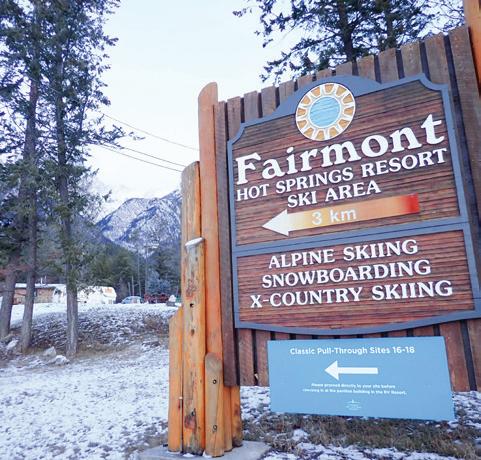
The chairlift at Fairmont Hot Springs Resort (FHSR) ski area has finally opened.
The resort announced late on Wednesday, Feb. 18 on social media that the lift would begin operation on the morning of Thursday, Feb. 19.
The ski hill opened much later than normal this winter, on Saturday, Jan. 9 instead of the normal start before the Christmas holidays. But it was only a partial opening, with just the Happy Trails platter lift and the magic carpet up and running, accessing a handful of beginners runs. The vast majority of terrain, including all intermediate and advanced runs, are accessed by the resort’s only chairlift, which remained closed for weeks after the ski hill opened.
The resort has posted on social media multiple times, pointing to the challenges presented by the warmer conditions and lack of snow at lower elevation of the valley this winter, writing “we need a little help from Mother Nature.” But stretching back to the fall and continuing through the winter, local resident have consistently asked questions about the annual Technical Safety BC (TSBC) inspection of the chairlift, and wondering if that too has played a role in the late and partial opening of the hill.
As it turns out, TSBC has inspected the chairlift at the Fairmont several times. There was an initial inspection on December 9 and a second one on February 6 — but the chairlift failed both inspection, before finally passing an inspection at some point in mid February (the exact date is unclear).
In the initial inspection “noncompliances were identified and a failed certificate of inspection was issued. The chairlift is not permitted to operate until the operator resolves the non-compliances,” wrote TSBC in response to questions from the Pioneer. In the follow-up inspection in February “a few non-compliances remained,” outlined TSBC on Wednesday, Feb. 11, adding that “the operator has been very cooperative throughout this process and is actively working to address the
outstanding requirements, including some administrative items, and getting input from the manufacturer. Once this is done, we will verify if the chairlift can open.”
At the time, TSBC did not elaborate on when it would next inspect the chairlift. But it did explain that it reached out to FHSR this past October to schedule a pre-season inspection of the chairlift.
On January 24 the resort posted on its social media accounts that is was offering ski lessons (but not snowboard lessons). It posted again on January 31, outlining that season pass holders would be able to access the hot pools until June 14 (ski season pass holder normally get access to the hot pools throughout the winter as part of their passes, but that access typically ends around Easter weekend).
Previous posts from the ski hill had drawn a mix of reaction, but the January 24 post and — in particular — the January 31 post provoked noticeably more negative reactions than positive ones. At least 10 commenters responding to the posts either suggested or directly asked for a refund for their season pass or for their season pass to be extended to include the following winer.
The resort replied to a few — but not all — of these comments, saying the request (for extended passes or refunds) had been passed along for consideration.
Many commenters simply expressed frustration.
“We purchased an $800 family pass with the expectation of access to the full ski hill, not solely the bunny hill... A family pass was not purchased for platter terrain,” wrote Angela Galipeault, adding that “offering pool access for an additional two months during the shoulder season—when usage is minimal— does not feel like a reasonable or proportional response, given the cost of the passes. It’s disappointing that this is being presented as the best solution.”
Rusty Petrovic wrote, in another typical comment, that if the chairlift hasn’t been approved, season pass holder should be compensated and that “extending the swim pass is not a refund or value-in-kind. My wife and I bought ski passes, not swim passes.”
The Pioneer reached out to Fairmont Hot Springs Resort general manager Jesse Ferguson and director of ski and golf Stan Kelly seeking comment on the TSBC inspections, on extension of hot pool access, on if there are plans to have a multi-week ski school program later this year, and on whether season pass holders can get a refund or have their passes extended into the following winter. Ferguson declined to comment, writing that “at this time, our focus is on managing day-to-day operations in light of the extremely irregular

winter conditions we’re experiencing, and on communicating directly with our guests and pass holders. As a privately operated resort, we’re not providing media comment on ski hill operations, but we will continue to share updates through our own channels.”
TSBC is the regulatory organization that oversees the installation, maintenance, and operation of technical equipment and systems in the province, including passenger ropeways such as chairlifts and gondolas.







•
•
•
Call or Text:
Serving
Locally Owned. Reliable. Insured. Whether you’re gone for a weekend or the whole season, we’ve got you covered.


By Steve Hubrecht steve@columbiavalleypioneer.com
Radium Hot Springs councillors adopted the village’s updated Official Community Plan (OCP) and related zoning bylaw amendments during their meeting last week.
The OCP refresh has been underway for two years, is sweeping in scope and entails big changes for the village in several areas. The changes getting the most attention in recent weeks have been alterations in how Radium deals with STRs, including effectively concentrating them in certain parts of the village, and leaving other areas more residential.
These changes sparked a number of Radium STR owners, STR operators and realtors to speak out during a recent public hearing on Tuesday, Feb. 3. Most were ardently opposed to stronger STR regulations in Radium, and questioned the economic impact such rules could have on the village.
The new zoning changes also emphasize a difference between what local officials term ‘STR minors (smaller scale STRs, such as secondary suites) and ‘STR majors’ (larger scale STRs, such as entire single family residences being operated principally as a business). ‘STR minors’ will still be allowed almost all over Radium. Additionally, the transition to the new regulations will take place gradually, with a seven-year ‘sunset’ period for existing STRs. The ‘sunset’ period was initially supposed to be just two years, then got bumped up to three years, then five, then seven years.
During the Monday, Feb. 9 council meeting at which the new OCP was adopted, Radium councillors talked at length about issues raised at the public hearing, noting the many counter balancing points brought up at other times during the nearly two years of public consultation on the OCP update, and in the end outlining their opinions that the changes are for the overall good of the village.
“We’re not going to make everybody happy,” said councillor Erin Palashniuk. “It’s not our job to make everybody happy ... we need to plan for the best outcome for our community ... that’s what we were elected to do.”
Several councillors stressed that they did
carefully consider the input of STRs owners, even though they still adopted the zoning changes. Councillor Carey Collin, for one, agreed that “we’re going to create an economic hardship for some people with the removal of STRs from some zones ... the concern is valid for sure.” But “what I didn’t hear was an acknowledgement that we are not passing an all-out STR ban, or that we have a seven-year sunset clause,” added Collin.
Radium mayor Mike Gray agreed that, in terms of economic impact, the seven-year sunset clause is key. “It gives the market a chance to adjust, and gives us a chance (as council) to respond,” said Gray.
Opponents of Radium’s new STR regulations argued at the hearing that stricter regulations won’t necessarily convert STRs into longterm rentals. One had also suggested Radium view Kelowna’s STR rules, which that municipality is now walking back somewhat, as a cautionary tale.
Radium councillors agreed not all STRs will become LTRs, and that in fact a considerable majority won’t. “It’s not a perfect solution,” said Gray. “But it is one tool, one piece of the puzzle.”
Palashniuk pointed out Radium has a zero to one percent long-term rental vacancy rate, while Kelowna has a seven per cent long-term rental vacancy rate. “We’re not Kelowna. We’re in a very different place. We have to respond to what the current need is ... we have no long-term rental (LTR) options,” she said.
Gray noted that when Kelowna re-adjusted some of its STR rules “it wasn’t a free-for-all. It was very cautious and very targeted.”
Several STR owners at the Feb. 3 hearing alleged that public feedback sessions had been uneven and had favoured full-time residents over part-time residents and second homeowners. Councillors described the public engagement as robust, noting they sought feedback at multiple points over the past two years, reaching out through newspaper advertising, through the village website, posters, social media and through property tax notices.
“I don’t know how to force people to engage,” said Gray.
Continued on page 5


Continued from page 4
He said STR owners’ opinions were a majority at the public hearing, but pointed out that in Radium there are 1,500 occupied residential dwellings, only 120 of which are licensed as STRs.
“So less than nine per cent of the community are STR owners,” explained Gray. A huge number of those who are not STR owners have consistently voiced feedback in the past two years in favour of more STR regulation in Radium, he added.
Opponents of the zoning changes cautioned at the Feb. 3 hearing against using the 2021 census data as the basis of policy decisions, since it was during the COVID-19 pandemic, resulting in possibly unique population trends.
Councillors conceded this may indeed be the case, but said they can hardly sit back and not plan for the future because of that.
“What do we do? Not update our OCP? ... we have to deal with where we are at, and right now this is where we are at ... if we do misfire there will be a change to re-examine at the next (OCP) update,” said Gray.
He added municipalities that fail to plan for rapid growth — especially when it is projected — can get
badly caught out. “Canmore never thought they’d become what they are today. They didn’t plan for it, and then that became a problem,” added Gray.
The zoning changes also lay out new official definitions of hotels, motels, short-term rentals and tourist accommodations — a move meant to make it easier for the village to ensure different types of building codes are being followed where they ought to be.
This particular issue generated considerable discussion last spring, when some feared the new definitions will mean those staying longterm in old motel rooms along the Highway 93 corridor heading east from downtown Radium toward the Kootenay National Park won’t be able to keep living there. At the time councillors and village staff pointed out that buildings built for longterm residents have different (and oftentimes stricter) fire codes than those purposed built for shortterm stays.
Councillors talked about the new definitions again at the Feb. 9 meeting, and several referenced a “serious event” or “incident” from the summer. Although they did not mention the Radium Park Lodge by name, they were clearly alluding
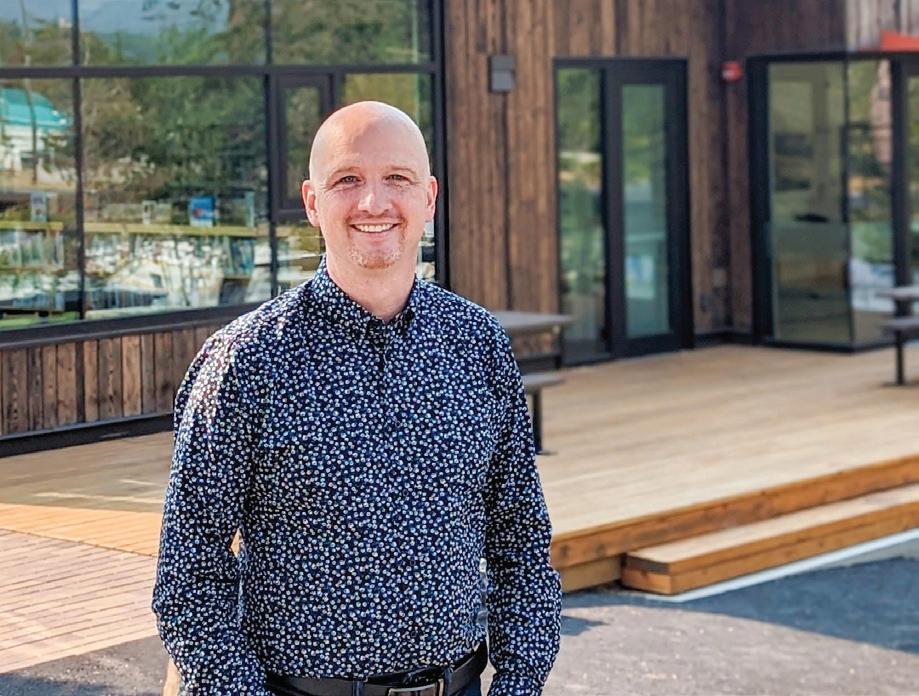
Radium Hot Springs mayor Mike Gray says the village has to respond to what the current need is - long term rental options.
to the fire that occurred there last August. After that fire, Rebecca Klassen told CTV News that the lodge was being used for long-term accommodation.
Palashniuk pointed to another fire in a motel with long-term tenants in Nanaimo in December.
“Dwelling units have to meet the appropriate fire code. Bottom line,” said Collin.
“Fire risk is number one on the list for me,” added Gray. He sympathized that there are few other places for long-term renters to go,
but added “we would be neglectful to ignore this.”
In the end, Radium councillors voted unanimously to adopt the new OCP and zoning bylaws.
“We have to make sure all voices are heard, not the loud ones that speak in front of microphones,” said Collin.
Gray concurred, saying “no one thinks it’s (the new OCP) the perfect document. But we have to strike a balance.”



It’s incomprehensible how anyone could walk into a school with a gun and start shooting; in this case, ending the lives of five young pupils and an educator in Tumbler Ridge last week.
This unimaginable tragedy has cast a pall over all of Canada and different parts of the world; in short, it’s every parent’s nightmare that they can’t wake up from.
The realization is stark: mental health issues among our youth must be addressed at every turn. The 18-year-old shooter was fighting inner turmoil so evil that it manifested itself in the worst way.
While we stand with Tumbler Ridge in grief, there are many questions left unanswered. Why did this happen? Where did this hate come from? Police report they had attended the shooter’s home multiple times for mental health issues. They even seized firearms on one occasion but these guns were later returned following a peti tion was by the lawful owner. But why were these weapons returned when there were mental health issues in the home? The warning signs were there.
The shooting proves that no community is truly safe from gun violence, which is happening all too frequently. This tragedy could have taken place in Invermere, Radium or Canal Flats. Residents may recall when a DTSS student posted a video of himself with a gun in 2019, saying “don’t come to school tomorrow.” And in 2021, valley schools were locked down after a youth brandished a handgun outside DTSS. Police apprehended the youth and learned that the gun was a replica.
Like most schools in BC, ours have comprehensive lockdown procedures to keep students safe, but more needs to be done in the aftermath of Tumbler Ridge. Perhaps it’s time to consider a daily protocol of locking school access doors from the outside. Anybody who has legitimate business at the school could use an intercom system to gain access. Yes, it’s institutional but safe.
In the end, everyone needs to be more cognizant of mental health crises and report the warning signs that are so often seen on social media. (Some countries are banning youth from social media altogether.) Simply, more work needs to be done to help prevent another Tumbler Ridge.
The Mental Health Support Line is 310-6789 (no area code needed). For suicide prevention, call 1-800-784-2433. Or you can call or text 9-8-8.
Lyonel Doherty, editor

For over a decade, Fairmont Hot Springs Resort’s ski hill wasn’t just a line item on my winter budget; it was our family’s second home.
I spent 10 years there as an instructor and coach. My three children grew up there. First, in the Snowbirds program, then years racing with Team Fairmont, and eventually following in my footsteps to become instructors themselves. We were exactly the kind of local family that “the little hill that could” relies on.
I continue to have a deep, personal stake in that hill—but concern now goes beyond sentimentality.
When the resort fails to manage its most basic winter assets—like ensuring a chairlift is certified and operational for the peak season—it isn't just the skiers who suffer. The resort is a primary economic engine for this end of the valley. When the hill is effectively closed, the 'ripple effect' is felt by every local business that relies on the winter tourism the resort is supposed to anchor.



Unfortunately, the current management seems entirely dismissive of this responsibility. We understand that the weather in the Columbia Valley can be uncooperative. However, we have seen previous management and their teams navigate these exact challenges for years, ensuring the chairlift was operational and the community was served. This year, the silence is deafening. While the resort publicly cites weather, the local community is well aware of the administrative delays and certification hurdles that have kept the chairlift idle.
When families like mine, who have supported this resort for years, reach out for accountability or refunds on 'early bird' passes, we are met with canned responses and a tone-deaf offer for extra pool time. To suggest that swimming until June compensates for a lost ski season well into February shows a profound lack of understanding of this community and its economy.
Continued on page 7
By Living Lakes Canada
Columbia Basin, B.C. – Beneath the communities, farms, and ecosystems of the Columbia Basin lies a hidden lifeline: groundwater. A new scientific assessment commissioned by Living Lakes Canada finds that the majority of the region’s high-risk aquifers are unmonitored. This data gap limits the information available for long-term water security planning.
The assessment, summarized in Living Lakes’s latest Watershed Bulletin, provides one of the most comprehensive looks at aquifers in the Basin to date. Aquifers – underground layers of rock, gravel, or sand that store groundwater – are a primary water source for many rural households, farms, and businesses in the region.
The findings show that 15 percent of mapped aquifers were flagged as high priority for monitoring based on factors such as water demand, proximity to communities, and agricultural use. Alarmingly, 80 percent of these high-priority aquifers are not currently monitored at all, despite their importance for local communities.
Several at-risk aquifer “hotspots” critical to agricultural and community water supplies were identified,
including the Baynes Lake area, the Sparwood and Fernie areas, and southwest of Golden. Another critical hotspot near Creston is already being monitored by Living Lakes and the Province of BC, while the remaining hotspot areas currently have no groundwater monitoring in place.
"For years, we've voiced concerns about groundwater uncertainty in our community,” said Stan Doehle, Area B Director of the Regional District of East Kootenay and resident of the Baynes Lake area.
“To have that validated by a formal scientific assessment is incredibly powerful. This report shows the desperate need for the sustained monitoring we've been advocating for, and a path toward protecting our water for future generations."
Groundwater monitoring helps predict whether a well’s water supply is declining and at risk of going dry – information that is critical for informed water-use decisions, particularly during drought.
Through the Columbia Basin Groundwater Monitoring Program, Living Lakes partners with 32 well owners to track seasonal and annual changes in groundwater levels. This monitoring program has been designed to complement the eight wells monitored by the Provincial
Continued from page 6
This dismissiveness isn't an isolated incident. Whether it’s the handling of the ski hill, the disregard for their loyal, long-time golf membership (including vital bridge repair), or the perpetual, unresolved water issues affecting Fairmont homeowners, there is a mounting sense that the resort feels no accountability to the community that sustains it. This is a close-knit group of residents and business owners, not tourists to brush off with an automated email or an overly optimistic feel-good social media post.
To be clear, this isn’t just about a ski pass. It is about a pattern of behaviour. From the ongoing water issues affecting Fairmont home-
owners to the silence about the status of the resort’s amenities and infrastructure, there is a clear lack of transparency and respect for the people who live here and have supported the business for years, if not many decades.
Fairmont Hot Springs Resort must recognize that it is the steward of a local treasure and a vital part of our regional economy.
Their current lack of professionalism and transparency is a disservice to the staff, the local business owners, and the families who have called this hill home for generations. It is time for management to step up, speak clearly, and treat this community with the respect it has earned.
Tracy Connery, Fairmont Hot Springs
Groundwater Observation Well Network across the region.
The most recent Watershed Bulletin highlights the value of existing groundwater monitoring and summarizes findings from the assessment that will inform future decisions about where to focus new
monitoring to address key data gaps. “By strategically expanding monitoring in those hotspot areas, we can support more informed, data-driven decisions that ensure safe and equitable access to freshwater,”
Arlo Bryn-Thorn, program manager with Living Lakes Canada.
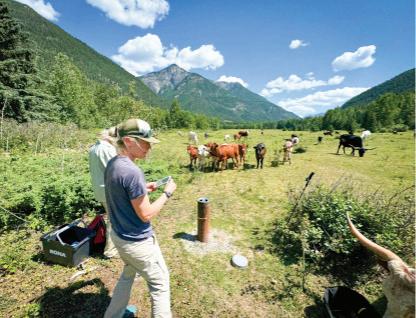
Volunteer well owners assist Living Lakes monitoring technicians with collecting groundwater level data from their well.
Notice is hereby given that the Council of the Village of Radium Hot Springs is considering third reading and subsequent adoption of Short Term Rental Business Licence Bylaw No. 529, 2026 at the Regular Council Meeting to be held:
Monday, March 9th, 2026 at 4:00 PM
Council Chambers – Village Office
4836 Radium Blvd.
Radium Hot Springs, BC
The proposed Short Term Rental Business Licence Bylaw No. 529, 2026 will replace Short Term Rental Business Bylaw No. 503, 2024. The proposed new bylaw will align with the recently adopted official community plan and zoning bylaws. Changes include the addition of a map showing permitted locations for stand-alone STR’s, the addition of a residency clause for STR-Secondary Use, and the addition of clauses to address existing nonconforming STR’s.
All persons who consider themselves affected by the adoption of the proposed Short Term Rental Business Licence Bylaw No. 529, 2026 may make representations to Council by:
1. Providing a written submission by mail, fax or email to be received by 10:00am on Thursday, March 5th (contact information below); or by
2. Presenting written and/or verbal submissions at the Council meeting.
There will be an opportunity to attend the Council meeting virtually, with details provided on the Council meeting agenda, which will be posted in the Document Centre on the Village website on Thursday, March 5th, 2026.
Submissions cannot be accepted after the Council meeting.
The Bylaw is available for inspection at the Village Office, 8:30am – 4:30pm, Monday to Friday (excluding statutory holidays) and on the Village website: www.radiumhotsprings.ca
Village of Radium Hot Springs
PO Box 340, 4836 Radium Blvd.
Radium Hot Springs, BC, V0A 1M0
Ph: 250-347-6455
Fax: 250-347-9068 Email: cao@radiumhotsprings.ca

The Columbia Valley Job & Volunteer Fair returns to the Columbia Valley Centre on Thursday, March 5, 2026! Organized by Columbia Valley Economic Development and supported by Kootenay Rockies Tourism and United Way, the event connects businesses and organizations with people looking to work and volunteer locally.
The fair is open to the public from 1:00 to 5:00 pm, giving attendees the opportunity to meet businesses hiring staff as well as organizations seeking volunteers. It’s an opportunity to explore employment options, learn about volunteer opportunities.
Many industries will be represented at the fair. You can meet employers from tourism and hospitality, retail, childcare, community services, and the Canadian Armed Forces, along with many other sectors. It is a chance to explore different types of work and learn about many local opportunities in one place. Don’t forget your resume!
If you are a business or non-profit organize interested in attending, it’s not too late! Registration is open until Monday February 23 at 4:00pm. Registration


includes a marketing toolkit to help promote participation, a table at the event (participants are asked to bring their own tablecloth), and one ticket to the Lunch & Learn, with additional tickets available for purchase. Kootenay Rockies Tourism partners may qualify for free registration using code SAVE100, and partner eligibility can be confirmed through the KRT partner directory.
The Lunch & Learn, sponsored by College of the Rockies and presented by Lucie Salucop, focuses on Leading Gen Z. As more Gen Z workers enter the workforce, employers and organizations are adapting to new

expectations around communication, flexibility, and workplace culture. The session offers practical insights to help organizations attract, support, and retain younger workers and volunteers.
Registration for both the Job & Volunteer Fair and Lunch & Learn closes Monday, February 23, 2026. The Lunch & Learn is included with event registration but can also be attended on its own. Visit www.cvchamber.ca or email ced@ investcolumbiavalley.ca for more information.



Thursday February 19
10:00-11:00 - Seniors Fitness Columbia Valley Centre. Doors open 9:30 for warm-ups and indoor walking, $2 drop-in. Please note: classes may be moved to Invermere Seniors Hall when the Columbia Valley Centre is booked for larger events.
6:45pm - Texas Hold'em Poker Invermere Legion, $30 buy-in.
7:00pm - LW District Rod & Gun Club General Meeting - Invermere Legion. Conservation Officers Service providing a 2025 review.
Friday February 20
6:30 - Meat Draw and 50/50 in the Legion. Members and guests welcome.
Saturday February 21
9:00am - 1:00pm District of Invermere Community Garage Sale Columbia Valley Centre. (Vendors must reserve a spot - Cortney Pitts: events@invermere.net)
6:30 - Meat Draw and 50/50 in the Legion. Members and guests welcome.
Sunday February 22
2:00 - Cribbage and Darts Come to the Legion and have some fun! Members and guests welcome.
Monday February 23
10:00-11:00 - Seniors Yoga Invermere Seniors Hall. 309-14 St. 10 am -$2 drop-in.
Tuesday February 24
6:30-8:00 - Second Winds Community Band Practices every Tuesday at the Catholic Church in Invermere. New members are welcome. 10:00-11:00 - Seniors Fitness Columbia Valley Centre. Doors open 9:30 for warm-ups and indoor walking $2 drop-in. Please note: classes may be moved to Invermere Seniors Hall when the Columbia Valley Centre is booked for larger events.
Wednesday February 25
6:30pm - Meat Draw and 50/50 in the Legion. Members and guests welcome.
2:00-3:00pm - Sewcial Hour Invermere Public Library. Bring your textile projects. Come and enjoy a cup of tea and connect with other makers. All welcome to attend.
10:00-11:00am - Seniors Yoga Invermere Seniors Hall. 309-14 St. 10 am -$2 drop-in.
6:00pm - Windermere Elementary Variety Show at Columbia Valley Centre
Our NEW Weekly Events Listing!
Want to see your community event listed in the Pioneer? Submit event details to admin@columbiavalleypioneer.com
Please include:
• Date
• Start and end times
• Event name & description
By Steve Hubrecht steve@columbiavalleypioneer.com
Plenty of Columbia Valley residents have been glued to their screens watching Panorama alpine racer Cassidy Gray and Invermere slalom skier Amelia Smart in action at the Milano Cortina Winter Olympics – and thinking of Windermere ski cross racer Courtney Hoffos, who would have been at the Games too if not for a knee injury in December.
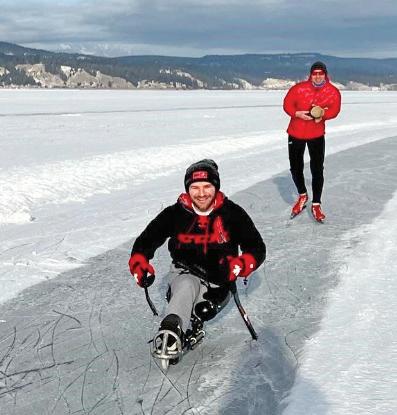
But locals with keen memories will already have realized another Olympic connection to the valley: Canadian national para hockey captain Tyler McGregor will lead his teammates into action at the Milano Cortina Paralympic Games running from March 6 to 15.
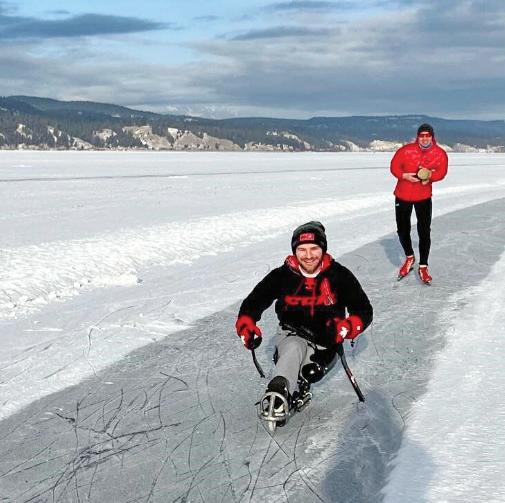
But three years ago this winter, he was here in Invermere as part of his Sledge Skate of Hope tour.
The Sledge Skate of Hope was a bladed version of Terry Fox’s famous Marathon of Hope and saw
McGregor sledge skate 42 kilometres (the full distance of a marathon, and not coincidentally the same distance Terry Fox ran each day during his Marathon of Hope) in each of Canada’s 10 provinces in an effort to raise $100,000 for the Terry Fox Foundation.
McGregor chose the Lake Windermere Whiteway as the site of his B.C. marathon, and the event drew a huge crowd to Kinsmen Beach.
Scores of people gathered as McGregor got ready, and several dozen valley residents set off skating with McGregor, trying to keep up with the paralympian as he completed four laps of the Whiteway’s Windermere loop.
McGregor was fast, finishing his 42 kilometres in a bit more than three hours.
“It was quite exciting, and a really good turnout even though it was early in the morning,” recalled Invermere leisure services coordinator Cortney Pitts.
By J.D. Jeffery Museum Curator
The Windermere District Historical Society has been in existence for 68 years.
Up until 1979 the museum facility had been located at Pothole Park, but with the addition of a third building it opened in the summer in a new location that would be a permanent location with room to grow.
Volunteers organized the three buildings and had displays of artifacts highlighting the valley history and first families. The official name going into the 1980’s settled on “Windermere Valley Museum.”
The same volunteers who worked on the buildings at the museum or-

ganized, set up and ran the facility since inception. Other tasks volunteers actively did was take in artifacts for the collection and watch out for available buildings to house the artifacts.
From the beginning of when the railway was built, the road crossed the tracks at the base of the hill allowing residents to travel up to Invermere. When the train travelled through the area, traffic stopped on the road until the train passed then the traffic would flow again.
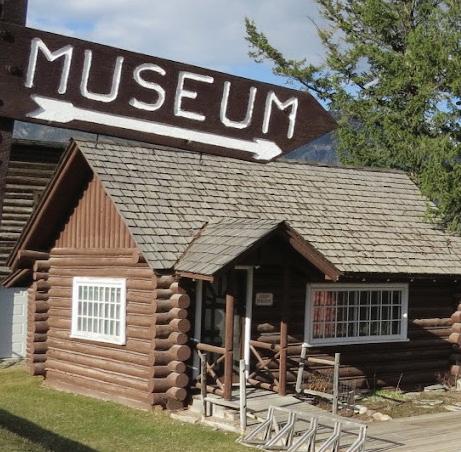
In 1980 there was a cabin originally located in Athalmer near the railway that was built many years previously by Jim Dilworth and was known as the trapper's cabin. Although it was abandoned, the local kids made use of it often.
During this time, the CPR with the B.C. government built an overpass above the tracks, allowing better traffic flow on the new main road. To accomplish this, the cabin had to be moved a short distance to a gravel pile to get it out of the way.
The log building caught the eye of a museum member, who wanted to save the building from demolition and add it to the museum community.
The museum at that time was running out of dis-
play space, so they moved the cabin and created an underground mine in the building. It was decided that the focus of the displays would become the mining industry in the valley.
Gifts come in all sizes; the next article will cover one of the larger gifts the museum has received.




As our pets age, they may begin to require additional care. This often means making adjustments to their lifestyle and routine, as well as watching more closely for signs of agerelated decline. Aging in pets is not truly calculated as “seven years for every one human year”; it varies by species and size. In dogs, a small dog is typically considered senior around 10 years of age, a medium dog around 8–9 years, and a large dog around 7–8 years. Cats are generally considered senior around 12 years of age.
Common ailments in senior pets include arthritis, cognitive decline, sensory loss (such as blindness, glaucoma, cataracts, or deafness), dental disease, nerve loss and mobility issues, thyroid disease (hyperthyroidism in cats and hypothyroidism in dogs), and vestibular disease. Many of these conditions share similar symptoms and, while not always curable, can often be managed to
help senior pets live longer, more comfortable lives.
Signs of arthritis, nerve loss, and mobility issues include stiffness when getting up or lying down, difficulty jumping up or down, matting around the hind end in cats or excessive grooming of certain areas, knuckling over on the paws, stumbling or wobbliness. Supplements may help support joint health; omega fatty acids have the most scientific evidence for reducing inflammation and aiding pain control, and there are animalspecific formulations dosed by weight. Other common joint supplements include chondroitin, glucosamine, green-lipped mussel, and MSM. If improvement is not seen, medications may be necessary, and your veterinarian may recommend bloodwork and X-rays to diagnose or rule out underlying conditions.
Cognitive decline and sensory loss often present as increased

agitation or behavioral changes. Symptoms may include whining, difficulty settling, accidents in the house, pacing, restlessness at night, bumping into objects, or trembling. If these signs are observed, bloodwork is often recommended to rule out medical causes. Omega supplements have also been shown to support brain health and may help slow cognitive decline. Vestibular disease commonly presents with circling, head tilting, nystagmus (rapid eye movement) and nausea. Treatment is typically supportive, aimed at helping pets through the episode and ruling out ear infections. Certain medications may reduce symptoms, though long-term management is often required.
Thyroid disease is diagnosed through a simple blood test. In cats, hyperthyroidism typically causes weight loss, increased appetite, and increased activity. In dogs, hypothyroidism usually
presents as weight gain without increased appetite, difficulty losing weight, lethargy, and skin irritation. Both conditions require lifelong medication. If left untreated, thyroid disease can increase the risk of heart disease, blood clots, and skin problems.
Dental disease is common in pets and can be more prevalent in seniors, particularly if preventative care has not been maintained. Signs include bad breath, redness or bleeding of the gums, facial or jaw swelling, dropping food, decreased appetite, and tartar or calculus buildup. Preventative dental care can significantly reduce dental disease. Tooth brushing is the most effective method, but dental chews, dental diets, food or water additives, and oral rinses can also help reduce tartar buildup.
If you have any questions or concerns about your senior pet please don’t hesitate to reach out to us.
Owners of property located in these parcel tax areas may request that the roll be amended, in relation to their own property, on one or more of the following grounds:
• there is an error or omission respecting a name or address on the assessment roll; •there is an error or omission respecting the inclusion of a parcel;
• there is an error or omission respecting the taxable frontage of a parcel (for water or sewer service areas that use frontage for taxation); and
• an exemption has been improperly allowed or disallowed. The parcel tax rolls are available for inspection, at the Regional District of East Kootenay office in Cranbrook during regular office hours.
Requests for amendments must be made in writing to the Regional District of East Kootenay, 19 - 24th Avenue South, Cranbrook BC V1C 3H8, on or before Tuesday, March 10, 2026 @ 12:00 pm. If requests are received, a Parcel Tax Roll Review Panel will meet at 3:00 pm on Friday, March 13, 2026 in the RDEK Boardroom.



























In
Rocky Mountain and Selkirk Natural Resource Districts. The FOM describes areas proposed for Cutting Permit and Road Permit development within the next three years starting on February 17th, 2026, and ending on February 17th, 2029. We welcome your comments and feedback during the review period starting February 17th, 2026. Please submit your comments by March 19th, 2026.
The map is accessible for review and comment submission online at: https://fom.nrs.gov.bc.ca/public/projects
Alternatively, in-person review and comments can be completed by appointment only at the following location during office hours (Monday to Friday 8:00am - 4:00pm): 1000 Industrial Road 1, Cranbrook, BC, V1C4J7
Comments may also be submitted by mail to the above address or by phone at 604-773-3490 or to ashleigh.harvison@canfor.com
By Steve Hubrecht steve@columbiavalleypoineer.com
As reported in the most recent edition of the Pioneer, members of the David Thompson Secondary School (DTSS) Climate Club and environmental group Wildsight are working on a pilot project expanding public transit in the Columbia Valley, tweaking the times of existing routes so that there is evening service.
Last week, they made their case to local municipal councils in Radium Hot Springs, Canal Flats and Invermere on Monday, Feb. 9 and Tuesday, Feb. 10.
The Climate Club is championing the issue because students find it difficult to participate in any sort
of extra curricular activities, or have a part-time job, given the early times of the final bus routes heading north and south to and from the valley’s main hub of Invermere, Climate Club member Meghan Rievaj explained. Rievaj pointed out, however, that evening bus routes will benefit not only students but in fact anyone and everyone.
The pilot project would run for four months to show BC Transit there is demand for an evening bus run. Local councils in all three municipalities seemed enthusiastic on the idea. In Canal Flats councillor Andrew Weitzel commended Rievaj and the rest of the Climate Club for presenting possible solutions instead of simply pointing out a problem.

TAFT

Alcoholics Anonymous. If alcohol is causing problems or conflict in your life, AA can help. All meetings are at 7 pm. Columbia United AA, Invermere: Saturday, Sunday, Tuesday and Wednesday at the BC Service Building, South End624 4th St. Invermere. Please call 250-342-2424 for more information or to speak with someone from our fellowship.
Al-Anon. Are you concerned about or affected by someone else’s drinking? For more information or to speak with someone from our fellowship, please call 250-878-2448 or 250-342-8392
K. B. Creations
Handyman services, Renovations, Masonry, Plumbing, Drywall & Painting. Please call Kevin 250-688-2897
Cheers to CV Metis Association for hosting the Community Strengthening Dinner. It was great to see everyone. Cheers to our hard-working board to organize these events. Your efforts do not go unnoticed.
Cheers to Oki and Cassius for your help setting up the tables and chairs at our dinner. You both have a great volunteer spirit and are ready to step in when needed.
Cheers to Pizza2Go. Great salads, excellent pizza!
Cheers to Pheb G. for your kindness and thoughtfulness. You are awesome.
Triple Cheers to Brenda at Treasures in the Wind who donated more than $21,000 to the CV Food Bank in 2025.
Cheers to Jacob Marchand and his return to Stolen Church. Such a kind, young man. Now where’s that coconut gelato?!
Cheers to Lindsay K. It’s great to have you back serving at the legion. You have been missed.
A huge cheers going out to Vic for the amazing score of 380 at Wednesday night bowling league! Way to go Vic!
December 22,1945 - February 5, 2026

We are deeply saddened to share that Christine died on February 5 at home in the Windermere Valley. Her grace, kindness and sincerity will be missed by all who knew her. Christine was an active member of the local fitness centre, she enjoyed volunteering at the library, and loved time spent outside with her close friends. She was a voracious reader with a thirst for knowledge. Mum was a talented seamstress, knitter, quilter, and cook. Solving cryptic crosswords and Wordle with family was a daily pleasure. Mum and Dad also enjoyed travelling, spending extended time in England and New Zealand.
Christine grew up in Sunderland, Northern England. While working on the Bridlington buses in 1965, she met Tony. They married, began a family, and in 1975 immigrated to Canada. Time was spent living in Bragg Creek and Calgary before retiring to the family ‘cabin’ they had built together.
Mum was the anchor of our family, affectionately known as Mum, Grandma Christine, MaTine, and Gigi to us. She will be loving remembered by her daughters – Sally (Alex), Kate (Jeff) and Marianne, her grandchildren – Jessica (Jon), Sarah (Brandon), Jake (Robyn), Adam (Meghan), Hannah (Darian), Annie (Beck), Piper, and Hunter, as well as her great grandchildren – Paisley, Finn, Rhea, River, Ella, Beau, Austin, and Lucy. Mum also leaves her brothers, John and Austin, her sister, Margaret and their families, Tony’s family, and many cherished friends. Sadly, Christine was predeceased by the love of her life, Tony, as well as her great grandson, Remy.
We are so appreciative of the wonderful support Mum received, especially from Dr. Maslowska, and Jessie from Home Care. This difficult time has made us realize how special and welcoming this community is. It’s comforting to know Mum had so many dear friends.
If friends so desire, a donation may be made to Mercy Ships Canada (a charity generously supported by Christine that provides cleft lip and palate surgeries for children in third world countries) - Mercyships.ca.
A celebration of life will be held at a later date.

Columbia Valley Pioneer staff
The Invermere Film Festival was a success once again, and drama film ‘Meadowlarks’ won the People’s Choice Award.
‘Meadowlarks’ tells the story of five Cree siblings separated as young children through Canada’s notorious Sixties Scoop, which saw Indigenous children taken from their homes to be adopted by white families.
The siblings — excited and curious, but also scared and afraid of rejection — agree to meet again as adults for the first time during a holiday
weekend in the mountains.
The movie was filmed very close to the Columbia Valley, in Golden and Banff, as well as in Calgary in fall 2024.
This is the second year in a row the film at the festival sponsored by the local ?akisq'nuk First Nation has won the People’s Choice.
The festival started with ?akisq'nuk Nasu?kin Donald Sam opening the event and introducing keynote speaker Betty Ann Adam, also sponsored by ?akisq'nuk First Nation.
Adam, a former Saskatoon Star Phoenix staff reporter and Fond du Lac Denesuline Nation
member, was part of the Pulitzer Prize winning team that produced the ‘Stolen: Surviving St. Michael’s’ podcast, and is the executive producer of ‘Meadowlarks’.
After ‘Meadowlarks’ was shown at the festival, Adam did a question and answer session with the audience, and then festival goers enjoyed a ‘Taste of Ktunaxa’ food experience with fry bread, huckleberry jam and spearmint tea.
Invermere Film Festival manager Karen Nickurak said that feedback following the screening of ‘Meadowlarks’ has been meaningful.


Submitted by Columbia Valley Rockies
The Columbia Valley Rockies delivered a weekend packed with drama, grit and playoff implications as they grabbed four of a possible six points in a crucial three-game stretch in the Eddie Mountain Division.
OT heroics in Golden
The week kicked off Tuesday night (February 10) in Golden against the Golden Rockets and the Rockies wasted no time setting the tone.
Phoenix Flett opened the scoring, finishing a slick setup from Trae Lees to quiet the home crowd early. The Rockets answered back before the intermission sending the teams to the room deadlocked after one.
“We can be happy with the wins but we can also see that there are some things we need to tidy up...”
- Head coach Tucker Braund
The second period turned into a special teams showcase. Peter Godley struck first for the Rockies, wiring one home from Evin Bossel and Luke Lawford. Then the powerplay went to work. Lawford buried a man advantage marker from Bossel and Lachlan Hanton as the Rockies flexed their offensive depth.
Golden clawed back to force overtime but the extra frame belonged to Columbia Valley. Hanton played hero cashing in to silence the building and seal a thrilling 4-3 overtime victory. Two big points in the bank.
Tough night in Kimberley
Friday night in Kimberley proved to be a sterner test as the Rockies faced the first place Kimberley Dynamiters on home ice.
The Dynamiters opened the scoring in the first and carried a 1-0 lead after 20 minutes. Things got tougher in the second when the home side struck shorthanded and then piled on three more unanswered goals.
But the Rockies showed flashes of pushback. Carter Hensch converted on the powerplay from Josh Larson and Lees.
In the third Godley added another with the man advantage from Ethan Cerone. Parker Cutts followed suit on yet another powerplay finishing a feed from Cerone and Godley. But Kimberley’s firepower proved too much and the Rockies fell 7-3.
Saturday night statement
Saturday night back at Eddie Mountain Memorial Arena was a different story entirely. Starting with recognizing Cutts as the Syndicate Boardshop Player of the month for January.
With the fourth and final playoff spot on the line, the Rockies hosted the Creston Valley Thunder Cats in a must-win showdown. Creston came out buzzing and struck early but the Rockies answered quickly. Godley evened things up from Cerone and Cutts.
After the visitors regained the lead Columbia Valley flipped the switch. Phoenix Flett found twine off a feed from Cole King and Harrison Todd. Godley then buried his second of the night from Todd and Cutts, sending the Rockies into the intermission up 3-2.
The second period saw Josh Larson extend the lead finishing a beauty from Godley to ignite a roaring capacity crowd.
The Rockies carried a 4-2 edge into the third.
Creston pushed hard in the final frame, narrowing the gap, but the Rockies would not be denied. Backstopped by First Star goaltender Piet Mierau and a committed defensive effort, Columbia Valley locked it down to secure a massive 4–3 victory.
Head coach Tucker Braund summed up the weekend:
“Three games this week; happy to take four out of six possible points. Lots to work on though. We can be happy with the wins but we can also see that there are some things we need to tidy up if we want to have success in the playoffs. Our powerplay has been clicking which is good to see. Our top players are
leading the way and some of our young players are seeing success as well. It’s been a full team effort these last few weeks and I have been overall very happy with how they have played.”
With the dust settled the Rockies now have a stranglehold on
fourth place and need just one point in their final three games to punch their ticket to the postseason.
Next up: a return trip to Kimberley on Saturday, Feb. 21 for a rematch with the Dynamiters and another opportunity to prove they’re playoff ready.

This week’s column was written by Dallas Husar, library assistant at Invermere Public Library, located at 201-7th Avenue. Visit their website or call 250-342-6416 for more information.
Library and Archives Canada is proud to champion Freedom to Read Week.
Intellectual freedom empowers individuals to explore ideas, challenge perspectives, and engage in open dialogue. Upholding this freedom ensures that knowledge remains accessible to all, fostering a more informed and inclusive world –Leslie Weir, librarian and archivist of Canada. Every year during the last week of February, Freedom to Read Week takes place in Canada. Freedom to Read week began in 1984 as a way to raise awareness about intellectual freedom and the challenges such freedom faces, both publicly and quietly. It aims to encourage Canadians to defend their rights to read, write, and publish freely.
If you search the Freedom to Read website it becomes clear that, in Canada, very few books are truly banned, but many are challenged. What is the difference between a challenge and a ban, you ask? According to the American Library Association, “a challenge is an attempt to remove or restrict materials, based upon the objections of a person or group. A banning is the removal of those materials.” This means that while certain groups may oppose books and take action to have the works removed from a setting, the challenges are usually unsuccessful. Or at least not outright.
What is concerning is that many books may be quietly censored. Some books don’t even
make it through the border due to wording in the Canada Border Services Agency's Policy on the Classification of Obscene Material which states in part that “Books, printed paper, drawings, paintings, prints, photographs or representations of any kind that (a) are deemed to be obscene under subsection 163(8) of the Criminal Code;…” cannot enter. This definition is subject to interpretation by the agents, creating a situation where what is considered obscene to a border agent, is then censored from others in this country. This act remains on materials today. Although it took place in the early 2000s, there was a highly publicized case of a Vancouver book store, Little Sisters Book and Art Emporium versus the Canada Customs Agency (see the Supreme Court of Canada website). The case revolved around materials for the gay and lesbian community being denied entry to the country and the agency was found in violation of the Charter of Rights.
Another growing concern is that when a book is challenged, it often creates an air of controversy around the title. Even when the book is deemed appropriate to remain in circulation, be it on a library shelf or in a school curriculum, these titles are often quietly dropped.
Fortunately for all, libraries and library workers are committed to keep books and their access open to all. Library folks aren’t here to judge, they are here to help you access information and materials. If you need help finding a title, please come in and ask; we will do our best to connect you with the books you are looking for.
In honour of Freedom to Read week, we will be putting up a display of various works that have been challenged through the years. Some are titles in our collection, others are ones we can bring in.
Come and check it out because as Stephen King once said, “any book worth banning is a book worth reading.”


LAKE WINDERMERE ALLIANCE CHURCH
While you are with us, you are always welcome to join us. Sunday at 10:30 am 326 10th Avenue, Invermere 250-342-9535 | www.lwac.ca
WINDERMERE VALLEY
SHARED MINISTRY (Anglican - United) Sundays at 10:30 either in-person or online (the link is available on our website – wvsm.ca) Minister: Brent Woodard 110 - 7th Ave. in Invermere 250-342-6644
VALLEY CHRISTIAN ASSEMBLY
Pastor: Justin Furse Sunday 10 a.m. Worship Service 4814 Highway Drive, Windermere 250-342-9511 | www.vcachurch.net
ROMAN CATHOLIC CHURCH
St. Anthony’s, Canal Flats: Saturday, 4 pm Canadian Martyrs’, Invermere: Sat 5 pm, Sun 9 am St. Joseph’s, Radium: Sunday 11 am Father Francis Dela Cruz | 712 -12th Ave., Invermere 250-342-6167 canadianmartyrs.ca
RADIUM CHRISTIAN FELLOWSHIP
Sunday 10 a.m. Worship service Pastor Wayne and Linda Frater | 250-342-6633 #4, 7553 Main St. Radium | 250-347-9937
CHURCH OF JESUS CHRIST OF LATTER-DAY SAINTS
Worship Service, Sunday, 11 a.m. Sunday School, 10 a.m. President Kendyn Mackensie • Columbia Valley Branch • 5014 Fairway, Fairmont Hot Springs 250-439-9041
CHURCH OF CHRIST (Iglesia ni Cristo)
Worship Service: Sunday 9 a.m., Thursday 7:45 p.m. Chamber of Commerce (Lions Hall) For inquiries: 250-688-1643 250-270-2208 or 250-688-0629 For more info about the church, you can Google online at incmedia.org or pasugo.com.ph