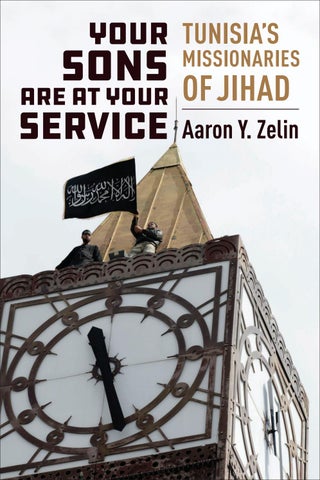
Your TUNISIA’S
Sons OF JIHAD
MISSIONARIES
Are at Your
Service
Aaron Y. Zelin
INTRODUCTION
We are trying to save people from the black tunnel the old regime placed them in. . . . We believe that prosperity comes from the governance of sharia [Islamic law] and that everything bad comes from following civil laws. . . . Our dawa [outreach/proselytization] is to bring people back to salvation and we will wait for no one to approve of our message. . . . We are not looking for elections or power, but our goal is to bring people back to faith.1
T
he seeds for this book were planted on May 18, 2011, when I was conducting my daily routine of checking new online forum posts from jihadis. This was before jihadis were using social media. One thread in particular titled “Important News/Glad Tidings: Convening of the Ansar al-Sharia Forum in Tunis on May 21, 2011—God Willing” caught my eye. Within four months of Tunisia’s revolution, a jihadi group was establishing itself. The quote above is the words of Sayf Allah Bin Hasin (better known as Abu ‘Iyadh al-Tunisi), the founder and leader of Ansar al-Sharia in Tunisia (AST), at the opening of this first forum. At the time this was curious since many within the scholarly community and media consistently highlighted the highly secular and cosmopolitan nature of Tunisian society. Even Tunisia’s main Islamist movement, Harakat alNahdah, was being described as very moderate compared with other regional
2
Introduction
Muslim Brotherhood–like organizations. This notice for the opening event on the Ansar al-Mujahidin Arabic Forum piqued my interest and started my search to better understand this new and somewhat surprising phenomenon. It was difficult then to know the trajectory of this new group and what would come of the broader Tunisian jihadi movement in the following years. Suspicious that it would become a larger trend, I decided to investigate it more deeply. This book reflects nine years of in-depth research into the topic of Tunisian jihadism, first as a curious intellectual interest and later as the basis for my PhD dissertation. The dissertation explored this phenomenon through the lens of AST until the organization became illegal in Tunisia in late August 2013. This book, however, delves into this movement through mid-2019, so it includes everything related to the most recent foreign fighting and the Islamic State. Without crucial historical context, the payoff in understanding the most recent aspect of this trend would be facile. Therefore, this book seeks to explain why jihadism became a force in Tunisia and among Tunisians following the January 2011 revolution. To answer this overarching question on why jihadism became an important mobilizing factor and ideology following the Tunisian revolution, this book investigates subsidiary questions and answers: (1) What conditions (historical and contemporary) led to the rise of AST? (2) Why did AST pursue a dawafirst approach in contrast to a jihad-first approach? (3) How did AST implement its strategy? (4) What led to AST’s downfall? (5) Why did so many Tunisians following AST’s terrorism designation become foreign fighters in Iraq, Libya, and Syria with the Islamic State (IS)? (6) And how did the Tunisian state grapple with the terrorism campaign that IS wrought locally in 2015–2016? The case of jihadism in Tunisia after its revolution is unique in part because of the particular historical context and conditions within Tunisia. One could potentially compare the cases of AST with the Ansar al-Sharia groups created in Egypt and Libya after 2011, but the scope of the research would be limited to comparisons between conditions in each country and likely overlook the deep historical processes that allowed AST to flourish. It would only scratch the surface. A limited focus on the Tunisian case allows one to go below the surface and better situate Ansar al-Sharia within the Tunisian context. While this book will be relevant for broader discussions and understandings of Sunni jihadism after the Arab uprisings, it also seeks to participate in debates within scholarship on Tunisia and Islamism in Tunisia. From the beginning of the Arab uprisings, many scholars believed these revolutionary events would prove detrimental to al-Qaeda (AQ) and ideologically aligned groups. However, contrary to some early optimistic predictions, the uprisings did not marginalize al-Qaeda’s “narrative” or the new groups that sprang up in their aftermath. Although jihadis did not play a visible role in the
Introduction
3
protests that led to the downfall of various regimes in the Middle East and North Africa, they took advantage of changing circumstances that had resulted from the opening of society, prisoner amnesties, and greater freedom of expression. This new unprecedented environment allowed groups to operate in ways that were previously impossible and employ lessons learned from previous mistakes over the past four decades.2 This evolution is best exemplified by AST. While few took notice of AST until after the September 2012 attack on the U.S. Embassy in Tunis, by then the group had already built a strong base and constituency within Tunisian society, largely through its provision of social welfare and outreach. By using these tactics, AST recruited members and spread its ideas more successfully than any other global jihadi group before within a particular country. The group did this not by wielding a sword but rather through dawa.3 This emphasis on dawa might be taken for granted now, but at the time it signaled a significant divergence from the conventional tactics used by the global jihadi community and highlighted the group’s abilities to adapt to new environments. It is true that some jihadis in Europe had been using similar methodologies, but this case was within a Muslim-majority Arab country and not a Western context.4 AST’s methodology would later become a model for Ansar al-Sharia groups in Libya and Egypt as well as for jihadis in Syria. Its efforts were also commended by al-Qaeda in the Islamic Maghrib (AQIM).5 AST highlighted a new complexity: jihadi groups’ transformation from purely terrorist entities or insurgent forces to social movements. A greater understanding of the changes that jihadi groups underwent following the uprisings is important. The ascendancy of AST as a relevant player within the postrevolution debate came as a surprise to many, especially given the attempts of successive Tunisian regimes postindependence to impose staunchly secular values on Tunisian society. Although AST’s dawa-first approach was unsustainable in the end, it broadened the pool of recruits for future foreign fighting in Iraq, Libya, and Syria, with IS in particular. This next generation remains relevant to this day.
Surveying the Field To better situate how this book and research fits into other works related to this topic, it is worth exploring five areas within the academic literature that this book communicates with and builds off. I consider literature on Tunisian Islamism and jihadism, jihadi studies, jihadism post–Arab uprisings, jihadi governance, and the debate on leader-led versus leaderless jihad.
4
Introduction
Tunisian Islamism and Jihadism Tunisian Islamism and jihadism have seen more interest since Tunisia’s uprising, yet the subject matter is still very much small in scale compared with other Arab countries. Although studies have been written about the case of the Muslim Brotherhood–associated party al-Nahdah as early as the 1980s, there has been a paucity on the topic of Tunisians involved with jihadism more specifically. Within the literature on Tunisian Islamism, over the years scholars such as Marion Boulby, Nikki R. Keddie, Bruce Maddy‐Weitzman, and Susan Waltz have attempted to trace the rise of the movement more broadly and its biggest organization, al-Nahdah, as it developed and became a perceived threat to the Tunisian state in the 1980s.6 Since the revolution, newer books from Anne Wolf and Rory McCarthy have been far more comprehensive and gained access to previously unexamined historical data and conducted many interviews with senior and lay members of al-Nahdah.7 Others, such as Alaya Allani, explore al-Nahdah’s oscillating position between confrontation with and participation in the Tunisian state system. Allani also argues that “with the recent rise of a violent Salafist movement in the Maghreb, there is a possibility of future political participation in Tunisia by moderate Islamists movements such as al-Nahdah, and that the cost of such participation is far better than the cost of their non-participation.”8 This belief is borne out of the notion that engagement and exposure to power moderates the group. Allani’s hypothesis, however, is flatly rejected by more recent literature from Francesco Cavatorta and Fabio Merone, who argue that, in fact, “it has been exclusion through repression and social marginalization that has led the Islamist party al-Nahdah to move from its extreme anti-systemic position of the 1970s to become the mainstream conservative party it is today.”9 Anne Wolf, after the revolution, relayed counternarratives explaining that the rise of al-Nahdah as a political force post-uprising was not necessarily unique since Islamists “have always played an important part in Tunisian society.”10 Others, like Khaled Elgindy and Abdullah Saeed, attempted to understand alNahdah by studying the ideological works and production of its leader, Rashid Ghannushi.11 With the public rise of salafism in Tunisia after the uprising, some researchers began to delve into the topic for the first time, even though salafism has existed in Tunisia since the 1980s, as Rikke Hostrup Haugbølle has explored.12 Within the Tunisian context, “the degree of AST’s popularity, according to unofficial estimates, is far superior to that of all other Tunisian salafi movements and parties.”13 This is why focusing on the jihadi side of the salafi spectrum is worthy of research. Researchers like Merone and Cavatorta explore salafism in Tunisia in a broad sense, showing how it is not a homogenous movement but
Introduction
5
rather contains many debates related to contours, tactics, and relations with the state.14 Both later refined their ideas with Stefano M. Torelli and highlighted historical aspects of the movement, showing “that Tunisian salafism is not a foreign import, but represents the political demands of a sector of the population.”15 Cavatorta also argues that “AST was caught in the dilemma of how to stay radical and true to its ideological core while remaining within the framework of the nascent liberal democratic structures without falling foul of them.”16 As is seen in chapters 4 through 7, however, this argument is not valid since AST never had an intent to work within the new system. Similarly, Monica Marks uses Quintan Wiktorowicz’s salafi schema (purist, politico, and jihadi) in the Tunisian context to analyze the differing trends. Based on field research, Marks identifies flaws in Merone’s and Cavatorta’s argument that economic deprivation motivates people’s involvement in salafism. Rather, Marks concludes, many affluent individuals are part of the salafi community. Furthermore, many Tunisians who experience economic misfortune do not become salafis. Marks believes that many wish to “circumvent institutionalized obstacles and upend long-standing hierarchies.” Additionally, salafism “offers an inspirational opportunity for Tunisian youths to fight for something larger than themselves and inject a sense of higher purpose into their lives.”17 In short, salafism is a counterculture. While both sides of the argument have truth, there is no monocausal reason behind individuals’ involvement with salafism; individuals each have their own set of factors.18 On the more securitized end, scholars such as Alison Pargeter have uncovered important details related to the North African/Tunisian jihadi immigrant communities in Europe and involvement in terrorism. She argues that “a closer look suggests that these first generation immigrants continue to be preoccupied as much by national politics as any notion of a globalized form of Islam.”19 The issue of Tunisian jihadis who were exiled in Europe is a very important factor in understanding the growth of jihadism in Tunisia after 2011. However, as I explain in chapters 2 and 3, these jihadis were far more connected to the global aspects of the movement than Pargeter acknowledges. She also wrote an important chapter about the so-called Sulayman Group that was involved in a lowlevel insurgency against the Tunisian government for three to four weeks in late 2006 to early 2007. One of her most important findings is that these individuals had previously been involved in jihadism and had not come out of nowhere.20 To further our understanding of these events and the broader dynamics that led to greater acknowledgment of jihadis in Tunisian society, this book uses access to previously unutilized court documents and primary sources as well as Jytte Klausen’s Western Jihadism Project database that catalogs all cases of jihadism in the West since the early 1990s. The latter allows greater opportunities for cross-country analysis of the connections and networks of Tunisians within the West prior to 2011.
6
Introduction
While all of the above sources and research on Tunisian Islamism and jihadism helps us better understand the phenomenon, none truly answer the question of why jihadism, especially that espoused by AST and later IS, came to be such a force in the country. Although each provides a part of the story, there are still many missing aspects. Therefore, this book aims to do this by analyzing the history of the movement prior to 2011, which allows individuals to better appreciate the scale and embeddedness of Tunisian involvement in the jihadi milieu following the revolution.
A Note on Jihadi Studies The field of studying jihadi groups, while almost two decades old, is still maturing. Two downsides of this status are worth pointing out. First, it is a unique field due to the nature in which it straddles both academia and the policy world. As a result, many of the articles related to jihadi groups can be found in both peer-reviewed journals and more mainstream publications. Therefore, one must be careful in assessing the rigor of articles outside academically peer-reviewed systems. More substantively and structurally, an additional issue within the field that makes it difficult for scholars to contextualize research in the post–Arab uprising environment within the academic literature: the rise of the Islamic State. IS’s reemergence resulted in a shift away by most researchers and in a redirection of funding. This shift led to a lack of robustness on other topics within the field, especially those that directly preceded IS or were not related to Syria: namely, the development of jihadism in other post–Arab uprising contexts, including Tunisia, Libya, Egypt, and Yemen. By the time researchers might have made unique contributions about occurrences in these spaces from 2011–2013, much of the energy had shifted toward the IS phenomenon. That said, some efforts like the Project on Middle East Political Science’s “Studies” series did produce research on certain aspects of these topics. For instance, Marc Lynch notes that “while much remains unclear, there appears to be a new al-Qaeda strategy focused on building ties with local jihadist movements, including the various Ansar al-Sharia factions.”21 Yet these studies fall short, not for a lack of quality but because the research focused on broader issues following the Arab uprisings, such as Arab monarchies, sectarianism, the Syrian war, and Muslim Brotherhood–like Islamist groups. In individual capacities, Daveed Gartenstein-Ross and Donald Holbrook wrote journal articles on how al-Qaeda and its allies interpreted the Arab uprisings.22 Beyond this limited analysis, however, there has been very little academic exploration of the early periods in the post–Arab uprising era on jihadi groups.
Introduction
7
This dearth of research leads to one conclusion: there needs to be more indepth examination of jihadi movements in countries affected by the Arab uprisings from 2011 to 2013. Such research would not only enhance the knowledge base of the field but it could also provide greater insights into the foreign fighter phenomenon, the reemergence of the Islamic State, and its later spread beyond Iraq and Syria. Based on these caveats, the following sections provide a backdrop of key works and debates in the aftermath of the Arab uprisings and their effects on jihadi groups.
Jihadi Metastasization Post–Arab Uprisings Following the Arab uprisings that began in December 2010 and January 2011, the jihadi studies community debated whether the uprisings benefited or hurt al-Qaeda. As with the leadership question that is addressed below, the scope of the debate appears narrow since so much has changed and evolved within the broader movement. Today a discussion purely based on al-Qaeda seems quaint. The rise of the Islamic State signaled the creation of a competitor network and, with it, the emergence of a bipolar jihadosphere. As a consequence, it is important to highlight that the post–Arab uprising era can be divided into two parts when exploring the jihadi phenomenon. The first part, from 2011 to 2013, saw the growth of new groups in new locales, while the second part, since 2014, saw the rise of IS and the clear split between its leadership and that of AQ. Since this book primarily focuses on the first part, this section focuses on the growth of the new groups. In the year after the uprisings, a lively debate ensued between William McCants and Daveed Gartenstein-Ross. McCants argued that “Al Qaeda has also struggled to respond to the Arab Spring. In Egypt, Libya, and Tunisia, Islamists have rejected al Qaeda’s model of autocratic governance through sharia law in favor of parliamentary politics. Even many of al Qaeda’s theological fellow travelers, such as the ultraconservative salafis in Egypt, have embraced the democratic process and formed political parties to compete in elections.”23 On the other hand, Gartenstein-Ross argued that in fact, “al-Qaeda isn’t anywhere near defeated—for all our triumphalism, it appears to be winning.”24 Alex S. Wilner was correct to note that there would be both costs and benefits in this new era.25 Years later, due to the evolution of events, it appears that both McCants and Gartenstein-Ross’s arguments were flawed, while Wilner’s was more insightful. For one, except for al-Nahdah in Tunisia, the space for parliamentary politics closed in the years after the uprisings. Unlike in Egypt, however, the Tunisian salafi trend veers more toward the jihadi end of the spectrum than toward
8
Introduction
the purist or politico side. Additionally, while it is true that AQ was not fully defeated, it is still a bit of an exaggeration to say that it was winning. Rather, the group was able to take advantage of the new environment. Peter Neumann and Shiraz Maher aptly highlighted in the fall of 2012 that while “the problem for al-Qaeda was that its own people had played no actual role in the unfolding revolutions[,] . . . the Arab Spring’s violent turn in Libya and Syria has provided al-Qaeda with an opportunity to insert itself back into the public consciousness.”26 Indeed, al-Qaeda’s branch in Syria, Jabhat al-Nusra, was able to make a name for itself as a result of the conflict in Syria. Likewise, Libya provided a safe haven for the training and organizing that benefited Ansar al-Sharia in Libya, AST, AQIM, and the foreign fighters preparing for the Syrian jihad. Instead of purely focusing on al-Qaeda and the Arab uprisings’ costs or benefits for it, Clinton Watts argued that the uprisings would lead to more competition within the global jihadi movement: “Arab Spring uprisings in the Middle East and North Africa have introduced a wide range of resistance groups seeking manpower, resources and operational space. New upstart groups enmeshed in the Arab Spring may cooperate with al-Qaeda at times, but in the long run, these groups may be more incentivized to compete with al-Qaeda for influence among young vulnerable male populations.”27 Further to this point, Leah Farrall believed that the opening of societies after the Arab uprisings, coupled with the attrition of al-Qaeda leaders in Afghanistan and Pakistan as a result of drone strikes, would cause the overall milieu to become more extreme. Farrall questioned, “what will happen when authoritative voices who can restrain the actions of those left and, importantly, those newer folks still seeking to join the cause, no longer exist? When indiscriminate becomes the norm.”28 Both Watts and Farrall identify key ways in which the landscape changed. They both provide relevant discussions about the rise of the Islamic State. Watts’ notion of competition, however, falls short in its examination of other groups such as Ansar al-Sharia. Instead of competitors, these new groups were more like fig leaves that were part of AQ’s post-uprising strategy to mask its relations with the new groups. This idea is further explored in chapter 5’s discussions of AST as an organization. That said, while many of these new groups were on the same “team,” they still had different immediate interests that could clash over time. This explanation is drawn out in greater detail in chapter 7, which explores the downfall of AST as AQIM inserted itself more overtly into the Tunisian context. In many ways the post–Arab uprising scene established a global jihadi international system parallel to the actual international system respected by nation-states. Because they do not believe in nation-states and in the United States’ world order, jihadis’ main goal is to upend the Westphalian nation-state model and the architecture of the United States’ post–World War II international system. Jihadis instead view society through the prism of religion, which
Introduction
9
encompasses anyone under the umbrella of a particular religion. In the case of Islam, the umma (the global Islamic religious community) should be organized under a caliphate (the historic system of Islamic governance). Broadly speaking, this is where all jihadis agree. Leaving aside the IS and focusing specifically within the AQ ecosystem, there are differing tactical and interest-related views that prompt the movement to articulate different paths even if its members are all technically part of “Team AQ.” As such, there is a de facto jihadi international system in which different organizations operate based on their own immediate interests. For example, AST primarily operated on a local and regional basis. Its local interests of attempting to perform dawa activities contradict the interests of AQIM, which would prefer to attack the Tunisian government. As a result, if AQIM chooses to conduct insurgent attacks, such activity harms AST since the Tunisian government views both groups as one and the same. This is the scenario that led to the eventual designation of AST as a terrorist organization by the Tunisian government. As such, the policies of the two groups clash even if—broadly speaking—they want the same result. In contradistinction to their local interests, AST and AQIM’s regional interests are more aligned. Whether AST is helping with Tunisian recruitment into AQIM for operations in Mali or assisting with training individuals in Libya to fight jihad in Syria, both organizations agree on the fundamental basics of regional issues or policies. Therefore, when examining this new jihadi international system, one has to identify the core raison d’être of each group as well as where groups’ interests overlap in order to understand how they might operate together in certain instances. As such, a more granular understanding of different jihadi groups is necessary since groups will often balance different interests according to particular situations or evolving local climates. For instance, Mukhtar Bilmukhtar left AQIM and created al-Murabitun while still pledging fealty to AQ’s leader, Ayman al-Zawahiri. He returned to the AQIM fold a couple of years later. Likewise, Jabhat al-Nusra’s announcement that it was leaving AQ did not mean that it had left AQ’s orbit completely. Such developments indicate that the global jihadi ecosystem is both complex and intertwined. The old debates about al-Qaeda are obsolete because there is so much happening beneath the surface. This case study on Tunisian jihadism thus helps shed greater light on these post-2011 dynamics.
The Growth in Jihadi Social Services/Governance One of the most important trends within the global jihadi movement after the Arab uprisings is groups’ ability to move beyond the terrorism box to add tools to its repertoire to expand support from its clandestine base. While it is true
10
Introduction
that organizations such as Harakat al-Shabab al-Mujahidin in Somalia had been involved in dawa and protogovernance principles prior to 2011, it became more of a norm with new open spaces or liberated territories, depending on the country-specific context. More freedoms have allowed global jihadi groups from Yemen to Tunisia to Libya to Syria evolve into multipurpose organizations. As Gartenstein-Ross and Amichai Magen argue, the topic of jihadi social services/governance “is an area ripe for more detailed examination.”29 Thus far, individuals such as Brian Fishman have explored the Islamic State’s original governance project from last decade prior to the sahwa (awakening) movement and the U.S. troop surge. First, he examines how jihadis legitimized the governance project since it was a controversial decision even within the milieu.30 Second, he explains the failure of the project by stating its two major flaws: “First, it incited a sectarian backlash from Iraqi Shi’a without the means to defend Iraq’s Sunnis from the onslaught it provoked. Second, AQI created a formal political entity, the Islamic State of Iraq (ISI), to dominate Iraq after a U.S. withdrawal without adequate support from Iraq’s Sunni population.”31 Lastly, Fishman explains how the organization recovered by transforming itself once again from an insurgent force to an entity that relied on terrorist tactics: “The ISI increasingly resembles other al-Qaeda franchises that are more focused on terrorist attacks as opposed to the ISI of 2006, which was unique in its ambitious concentration on controlling territory and building a governance structure.”32 This evolution is important since it explains the jihadi life cycle as articulated by Gartenstein-Ross: A clear pattern emerges in which the extremist group gains ground, announces the imposition of sharia, and governs territory. This alarms nearby states, and often those that are further away as well. So the extremist group’s enemies strike. They topple it from power rather quickly. . . . The extremist group does its best to melt away rather than face a decisive battlefield defeat. It regroups with the intention of coming back stronger than before. The disturbing thing is the frequency with which militant groups are able to succeed in mounting this comeback.33
We have seen this phenomenon with the Islamic State as it retook territory in Iraq and new territory in Syria from 2013 to 2014. In the 2000s it solely relied on terror and judicial punishments to subdue territory. Today, as I explain, it has coupled those tactics with a soft power strategy that uses social services and governance to pacify the population or force residents to become dependent on IS. It has established quite a sophisticated bureaucracy.34 Many of these developments are a result of a lessons-learned process that has taken place since the group’s dark days in Iraq in the mid-2000s. They are also relevant to the study
Introduction 11
of AST because, according to members and sympathizers of the Islamic State, Tunisian foreign fighters that were previously in AST helped set up the Islamic State’s dawa program.35 Moreover, the face of the Islamic States’ dawa campaign when it first began in the summer and fall of 2013 was the Tunisian Abu alWaqas. The legacy of AST’s dawa program is examined in greater detail when describing how former members of AST applied themselves within the jihadi movement following the designation of AST as a terrorist organization. Other lessons learned and best practices from correspondences between the different al-Qaeda leaders in private provide more background on how the groups have learned from past experiences. Following the French invasion of Mali, investigative reporter Rukmini Callimachi found a trove of documents in AQIM safe houses in Timbuktu. One of the documents included correspondence from al-Qaeda in the Arabian Peninsula’s (AQAP) emir at the time, Nasir al-Wihayshi, to AQIM’s emir, ‘Abd al-Malik Drukdal, in the spring and summer of 2012.36 In the correspondence, Wihayshi “provides a step-by-step assessment of what worked and what didn’t in Yemen.”37 Moreover, one of AQAP’s ideologues, Abu Zubayr ‘Adil Bin ‘Abd Allah al-Abab, who was later killed in a drone strike, wrote an after-action report on AQAP’s control of parts of the south in July 2012 titled “Gains and Benefits of Control Over Parts of Abyan and Shabwah.”38 This professionalization highlights the evolution and progression of jihadis’ attempts to govern and provide social services in a more efficient and beneficial manner so as not to cause a backlash. Since the failed “Islamic state” project last decade, the Somali jihadi group Harakat al-Shabab al-Mujahidin has been cultivating its own governance strategy as it has taken, relinquished, retaken, and lost territory on multiple occasions. Christopher Anzalone explains that al-Shabab undertook a protogovernance approach partly because of its competition with the Transitional Federal Government for resources and recruits. Anzalone also highlights how al-Shabab was able to capitalize on the Transitional Federal Government’s poor governance record. As a result, al-Shabab “has undertaken and publicized a number of small-scale public works projects and social services in the areas of southern and central Somalia that it controls.”39 Moreover, Robin Simcox has written on a similar trend that can be seen in the context of AQAP when it captured territory in Yemen in 2011 and 2012: “[The] Yemeni state’s inability to provide basic provisions and services is a key driver behind AQ’s growth.” 40 Similarly, in the aftermath of the Arab uprisings when the Tunisian government was attempting to settle the politics of the capital instead of focusing on the needs of the average citizen, groups like AST began conducting relief caravans to rural parts of the country. This activity aimed to fill the vacuum left by the government’s poor governance. The services were not perfect, but they provided a level of trust and soft power. Moreover, as I first noted in early 2012, “assisting in social work gave space to preach one’s [AST’s] ideology.” 41
12
Introduction
Therefore, service provision can benefit the group and movement in multiple ways. AST’s use of social services through its dawa program adds another layer to the explanation of why the movement grew so quickly after the Tunisian uprising. AST’s innovation also provides another case study in the growing literature on jihadi social services and governance tactics to assuage populations and gain new supporters and recruits. These issues are explored in greater depths in chapters 5 and 6. The fifth chapter focuses more on decisions and reasons behind AST’s outreach and social services, while the sixth chapter shows how AST implemented these programs on the ground throughout Tunisia.
The Leader-Led Versus Leaderless Debate As a consequence of changes within the global jihadi movement in response to the post–Arab uprising landscape, some of the old debates within the literature were no longer relevant. In particular, the debate about leader-led versus leaderless jihad became less germane since it related more to threats faced by the West than to the dynamics of jihadism in the Arab world. And yet, as that debate evolved, it became more nuanced and provided a link to new explanations of how organizations such as AST could fit into or rearrange the framework of the debate. One of the liveliest debates within the field of jihadi studies broke out between two well-respected scholars: Bruce Hoffman and Marc Sageman. In latter half of last decade there were major questions about the state of al-Qaeda and its relevance to the global jihadi scene. Was it still a centralized organization that controlled everything within the broader global jihadi movement, or had it devolved to the point that the grass roots had detached or started operating independently? It is important to remember that before the post–Arab uprising metastasization of jihadi groups, al-Qaeda was the only large player. Historically, al-Qaeda believed that in order to defeat the so-called apostate Arab regimes, it first had to take down the Western countries that were propping them up. Al-Qaeda’s main raison d’être up until 2011 had been to target Western countries with attacks. As such, there are some limitations in Hoffman and Sageman’s debate when applying it to more localized/regionalized jihadi groups like AST since the arguments focus solely on al-Qaeda’s connections to attacks against Western states. As is discussed below, the debate is relevant in other ways that help elucidate the organizational structures and methodologies of jihadi groups’ operations, especially those of groups like AST established after 2011. In his 2008 book, Leaderless Jihad: Terror Networks in the Twenty-First Century, Sageman argues that “al-Qaeda [Central] is of course not dead, but it is still contained operationally. It puts out inspirational guidance on the Internet,
Introduction
13
but does not have means to exert command and control over the al-Qaeda social movement.” 42 Therefore, while al-Qaeda has been “in hiding, the al-Qaeda social movement has flourished.” Sageman also argues that because of this dynamic, the “self-generated” networks in the West do not have any connective tissues to al-Qaeda.43 This in turn would suggest that the more immediate threat facing Western countries is homegrown terrorists more so than al-Qaeda and its training camps in Afghanistan and Pakistan. In contrast, Hoffman argues in a review of Sageman’s book that in fact alQaeda still poses a greater threat. Hoffman bases his argument off of “the two most recent authoritative analyses of terrorist threats to the United States: the July 2007 National Intelligence Estimate and the annual threat assessment presented by the director of national intelligence,” among other publicly available resources.44 These two reports claim that al-Qaeda is still the largest threat to the homeland. Hoffman thus concludes from this that “the unmistakable message is that al Qaeda is a remarkably agile and flexible organization that exercises both top-down and bottom-up planning and operational capabilities.” 45 After the U.S. killed Usamah Bin Ladin in Abbottabad, Pakistan, in May 2011, information was declassified about documents recovered during the raid. In many ways the documents confirmed Hoffman’s view that al-Qaeda was still intimately involved in plots against the United States. Hoffman argued after the raid that “it is clear that bin Laden was more involved in al Qaeda operations than many officials and experts had previously imagined. Far from having become an operational anachronism, bin Laden remained a driving force behind al Qaeda’s undiminished terrorist ambitions.” 46 While the debate still continues for some, there are others who have taken different views on the issue. For example, Eliane Tschaen Barbieri and Jytte Klausen argue, based on a network analysis of all Western jihadis between 1998 and 2011 and British jihadis in particular, that both models have some truth: “A network analysis of the study’s data indicates that while neither model accurately describes Western jihadism as a whole, each model fits specific geographically and temporally bound segments of the networks.” 47 They conclude that Hoffman’s model is accurate when examining the British network from 1998 to 2008, while Sageman’s becomes more relevant post-2008 due to the degradation of al-Qaeda and its leadership network in “Londonistan” (and its outlying networks elsewhere in the United Kingdom).48 Others, such as Peter Neumann, Ryan Evans, and Raffaello Pantucci, explore the role of middle managers within the global jihadi network: those between the grass roots and the top leadership. “Middle managers, in short, are the only members of the group who are connected to both the grassroots and top leadership.” 49 Using the Carl von Clausewitz idea of center of gravity to determine organizational pull, Neumann, Evans, and Pantucci argue that “in many instances—al-Qaeda’s middle management has been critical in holding the
14
Introduction
group together and making its terrorist campaign work.”50 As a result, these connective tissues allow for “one (more or less) coherent strategic entity.”51 In some ways, Neumann, Evans, and Pantucci’s arguments are more relevant to the case of AST even if the context surrounding how al-Qaeda operates is different. In contrast to al-Qaeda and its use of middle managers to connect with grass roots in the West, as is shown in chapter 6, AST uses Tunisian locals to serve both as middle managers in its dawa campaigns and as faces of the organization at the local level. This tactic allows AST to show a more known or familial face when conducting outreach in areas in which top leadership does not have connections or aims to penetrate. Therefore, when conceptualizing AST as an organization, one must differentiate between the national-level leadership, regional/local-level leadership, and the grassroots activists in different cities and villages. This, in part, helps explain why AST was able to gain support nationally and not just in certain pockets within society. As such, Neumann, Evans, and Pantucci’s work provides a base from which to contextualize AST’s operations as an organization. It also helps answer one of the overarching questions of this book, which is why AST became relevant so quickly: its leadership structure and strategy for implementing it.
Methodology and Structure This research is a historical case study informed primarily by qualitative analysis and process tracing a wide variety of primary source material, together with some basic quantitative assessments. Therefore, this research does not aim to provide a new theoretical perspective but rather seeks to produce and contribute a rigorous empirical understanding of the topic. Many within social science fields today scoff at the lack of quantitative or theoretical contribution; however, some, like John Gerring, understand the importance of “mere description,” which “aims to answer what questions (e.g., when, whom, out of what, in what manner) about a phenomenon or a set of phenomena.”52 Similarly, Max Besbris and Shamus Khan highlight how “theoretical concepts are emptied of their content fairly quickly to satisfy the requirements of advancing theory. This leads to theoretical concepts that are rarely useful beyond a particular case, and it creates cloudiness instead of clarity.” They “stake the position that a theoretically rich landscape, where theories are plentiful, is one wherein ideas are vacuous.”53 With that being said, this study still attempts to situate the empiricism in social science theory—namely, social movement theory (SMT). This helps extrapolate why AST was so successful in recruitment. Sidney Tarrow defines a social movement as “collective challenges, based on common purposes and social solidarities, in sustained interaction with elites, opponents, and
Introduction
15
authorities.”54 Until the past decade or so, much of the SMT literature has dealt with coverage of social movements in the West. As Carrie Rosefsky Wickham observes, many studies on social movements are based in free societies of the West, while her research aims to probe Islamic social movements in Egypt under authoritarian rule.55 Other studies, such as Wiktorowicz’s edited volume on social movement theory’s approach to Islamic activism, helped push the literature forward in terms of analyzing social movements in the Middle East.56 Quinn Mecham argues, in his recent comprehensive examination of a spectrum of Islamist-related groups from all over the world in the context of social movement mobilization, that “voting for Islamically oriented political parties, participation in street demonstrations related to religious policy issues, and actions of political violence on behalf of a self-defined Islamist agenda are the core manifestations of mobilization.”57 This argument helps fit SMT into a Muslim-world context since the variety of activities expounded here, when stripped of the Islamic part, are just like studies on Western social movements: mobilization for elections, issue-specific demonstrations for some policy change, and political violence on behalf of a variety of political ideologies. I would contend, however, that groups like AST do not fit this mold completely. Yes, AST is in fact a social movement, but the types of activities undertaken are different. Jihadis do not believe in democracy, since they view it as contravening the unicity of God and God’s law, the violent parts—whether in relation to hisba (vigilante moral policing), terrorism, or insurgency—do apply. But unlike in the Western context, where a lot of the focus is on elections and protest, jihadi social movements have a religious component, which conducts dawa activities to bring people to the correct interpretation of Islam according to them, uses educational programs to further indoctrinate a particular worldview, and provides social services in the service of opening space to conduct dawa and bring more individuals into the fold of an organization or movement. Therefore, in some ways, one could also say that Muslim Brotherhood–like groups are a hybrid between a purely Western liberal democratic social movement and a jihadi social movement since they do have the dawa, education, and social service component but also take part in elections. Relatedly, unlike traditional Islamist activism, which in the non-Western context has historically taken place under authoritarian regimes, AST developed in a transitioning society, one abandoning authoritarian practices of the past for justice, democracy, and freedom. It should be kept in mind, though, as Charles Tilly notes, that while democratization leads to more social movements, not all movements promote democracy.58 This is the case with AST. Moreover, Erica Chenoweth has explained that “relatively poor and transitioning democracies with internally inconsistent institutions were more likely to experience domestic terrorism than advanced democracies and authoritarian regimes.” This would also apply to the case of Tunisia.59
16
Introduction
Within SMT, scholars usually identify three main components: (1) political opportunity structures, (2) resource mobilization, and (3) framing.60 The first relates to the changing conditions in which a social movement might operate. The second deals with the resources an organization brings when mobilizing itself, supporters, and potential new members. The third examines the narratives put forth by the group to consolidate its support base and use these ideas to recruit new members. Regarding political opportunity structures, Donatella della Porta and Mario Diani explain that “the characteristics of the political system offer or deny essential opportunities for the development of collective action.” 61 Prior to 2011 there was absolutely no space for free political expression, let alone the ability of jihadis to operate openly in Tunisia. This changed after the revolution due to the policies of the successive transitional and al-Nahdah-led governments. While the main focus of this study is to identify key reasons for AST’s growth, the state’s eventual pushback against AST’s rise is—as Tarrow points out— relevant because it changes the environment in which a movement can operate.62 The change in the status quo would affect how mobilization for jihadism would occur following AST too: more foreign fighting abroad and insurgent/ terrorist activity at home. Therefore, this study sheds light on the evolutionary policies of the state during its transition vis-à-vis the activism of AST, which led to not only its meteoric rise but also its demise. Until the Tunisian government designated AST as a terrorist organization in late August 2013, there was a general opening of freedoms and the public square in society. For example, the 2011 Freedom House report on Tunisia (which evaluates freedoms in the year 2010—the last full year prior to the uprising) rated Tunisia as not free; when broken down further, its rating (1 = best, 7 = worst) on freedom was 6; on civil liberties, 5; and on political rights, 7. Over the following three years when AST was active, Tunisia’s overall rating dropped to partly free, and its freedom rating in 2012 and 2013 dropped to 3.5; civil liberties to 4; and political rights to 3. The 2014 report showed slight improvement, with “3” ratings for freedom, civil liberties, and political rights. The 2015 report, published after the designation of AST as a terrorist organization, continued an upward trend. Tunisia’s overall rating was considered free, and its freedom rating was 2; civil liberties, 3; and political rights, 1.63 This illustrates that although Tunisia’s record improved, it did not necessarily mean that there would be more jihadism. Rather, after the designation of AST and subsequent crackdown, the conditions changed, as did the political opportunity structures. In other words, societal freedoms do not necessarily lead to jihadi action. Instead, jihadi action is tied to space provided via governmental policies more so than just the general opening of the proverbial public square. In addition, this study evaluates resource mobilization and framing. Regarding the first concept, Doug McAdam, John D. McCarthy, and Mayer N. Zald
Introduction
17
define resource mobilization as “those collective vehicles, informal as well as formal, through which people mobilize and engage in collective action.”64 Moreover, Wickham shows that individual/group empowerment and agency are important factors in the development of social movements and that the main conduit through which these actors pursue agency is mobilization.65 In particular, AST’s organization and mobilization of resources are investigated since they are important parts of AST’s dawa program aimed at growing and recruiting new individuals. It is crucial to understand the framing narratives that AST uses to recruit and retain commitment among group members. Heather S. Gregg’s recent work on the role of religion and how it plays out in social movements is useful in understanding AST since it is not a purely political actor but has a theocratic endgame too. Gregg argues that “religion provides a powerful resource for framing the struggle, a vision for the solution, and moral justification for taking action.” 66 Furthermore, narrative ideas and slogans play an important role in AST’s messaging arsenal. As Robert D. Benford and David A. Snow note, the purpose of executing a media plan by a social movement is to “negotiate a shared understanding of some problematic condition or situation they define as in need of change, make attributions regarding who or what is to blame, articulate an alternative set of arrangements, and urge others to act in concert to affect change.” 67 Bin Ladin understood these tactics, especially the use of master narratives. He famously remarked in a 2002 letter to the Islamic Emirate of Afghanistan’s leader, Mullah Muhammad ‘Umar, that: “It is obvious that the media war in this century is one of the strongest methods; in fact, its ratio may reach 90% of the total preparation for the battles.” 68 As Jeffry R. Halverson, H. L. Goodall Jr., and Steven R. Corman conclude, “The reason the narratives of al-Qaeda and other Islamist extremists carry such potency is because they posses an internal coherence for their intended audiences that connects them to grand, deeply culturally embedded views of history—to master narratives—that Muslim audiences, in broad terms readily understand, identify with, or feel little need to question.” 69 Similar to Michael Page, Lara Challita, and Alistair Harris’s work on understanding the propaganda of al-Qaeda in the Arabian Peninsula, this research examines the collective action frames of AST.70 By understanding AST’s diagnostic, prognostic, and motivational frames and how it hopes to achieve frame alignment, one can gain greater insight into the organization. By using these three tools (political opportunity structures, resource mobilization, and framing) within social movement theory, we can gain a better understanding and appreciation for AST as an organizational movement. It also helps fill in the gaps for explaining why AST was able to become such a powerful political force in Tunisia after the revolution.
18
Introduction
Sources Before examining the structure of this book, it is worth making a note about the sources used in this study. This book drew upon a number of sources that had not previously been used, particularly old jihadi biographies and magazines from the 1980s and 1990s, which help provide a deeper knowledge of the history of Tunisian involvement in the jihadi movement prior to the revolution. I was also able to cross-reference a variety of court documents from Belgium, the European Union, France, Germany, Italy, Spain, the United Kingdom, and the United States to better explain Tunisian involvement in some of the largest terrorist attacks and plots in the Western world from the mid-to-late 1990s to the Tunisian revolution. Additionally, I exploited Jytte Klausen’s Western Jihadism Project database, which has information on jihadism in the West from the early 1990s up until the present, which helped better identify the connections between individuals and organizations with whom Tunisians had been involved. The latter two sources—the court documents and Klausen’s database—were crucial since the vast majority of Tunisian jihadis before the revolution used Europe either as a base or as a hub for a number of foreign fighting endeavors. Additionally, when exploring the postrevolution era, this book used primary source material that was publicly released by AST and archived by this author on his external hard drive because, over the years, a number of AST’s accounts online have been taken down. The process of gathering this data included tracking the “official” and the “news” Ansar al-Sharia Facebook pages and its Twitter account for new updates on its activities and ideological narratives. Over the course of its existence, AST used ninety-four Facebook pages and more than ten Twitter accounts as both companies took them down for violating their terms of service. The unprecedented amount of primary data provides a rich overview of many of the activities on the ground in Tunisia that AST has been involved in. Within this data—between the announcement of the organization publicly in May 2011 and its designation in August 2013—I collected more than eighteen thousand files, which include statements, video and audio recordings, essays and papers, magazine issues, pictures, and graphics, among other things. In addition to primary sources from AST, this book also relies upon hundreds of Islamic State primary sources from Iraq, Libya, Syria, and Tunisia, including its propaganda materials and internal documents. Most notably from the latter is leaked IS border documents, which detail intake information from foreign fighters when they joined the Islamic State. These documents help provide official detail on almost seven hundred Tunisians who joined the Islamic State between 2012 and 2014. On top of this, I have collected more than five thousand documents in multiple languages on foreign fighters. Besides the IS,
Introduction
19
hundreds of primary sources from AQIM’s front group in Tunisia, Katibat ‘Uqbah Bin Nafi (KUBN), are used to better understand its transformation between 2012 and 2019. Lastly, I have access to internal governmental documents from both the Libyan attorney general’s office (on Tunisian foreign fighters in Libya) and Tunisia’s Ministry of Interior (on Tunisian foreign fighter returnees from Iraq, Libya, and Syria). This is all very useful since Thomas Hegghammer has highlighted the vastness and granularity of primary source data nowadays, which he argues allows for an “ethnography by proxy.”71 However, it is important to highlight that jihadi content is biased toward the information it wants the public to see. That is why it was useful that I had the opportunity to conduct a number of field research trips to Tunisia in 2012, 2013, 2018, and 2019. As Adam Dolnik argues, “field research is useful in helping researchers in navigating with greater certainty through multiple contradictory versions of events available in open sources. It contributes to counterbalancing some of the key research biases that inherently exist. It also enhances the reliability and accuracy of findings, and above all, the process itself can be highly beneficial in educating the researcher by allowing him or her to acquire a tacit knowledge of the context.”72 While in Tunisia, I had the opportunity to meet with members of AST in a variety of cities and villages as well as with a returned foreign fighter from Syria. To buttress these interviews, meetings with civil society actors, unaffiliated political activists, al-Nahdah and Nida Tunis members and leaders, current governmental officials, and former regime officials from the Bin ‘Ali era were undertaken as well. This helped strengthen many of the findings from the primary sources since it is one thing to follow it online and explore where events are occurring via Google Maps; it is another thing to feel it and attend an AST rally, join the prayers at an AST mosque, join AST members attempting to do dawa on oneself, or gather physical publications passed out on the streets by AST members that are not posted online, among other activities.
Structure This study is divided into three parts. The first part explores the historical and postrevolution conditions that provided the opportunity for AST to thrive after 2011. The second part looks at the particular strategic approach AST took when exploiting the post-revolution conditions and investigate how it mobilized its resources, framed its messaging, and cultivated connections with the broader global jihadi movement, leading to its downfall. The third and final part explores the aftermath of AST’s designation, the mobilization of Tunisians for foreign fighting abroad, and the renewed terrorism campaign domestically in Tunisia following the rise of IS.
20
Introduction
The first chapter covers the history of Islam and Islamism in Tunisia from its independence in 1956 to 2010, when the revolution began. It answers the question of why there was a rise in Islamism and, subsequently, jihadism in Tunisia. It is important to understand the changes that Tunisia’s first president, Habib Bourguiba, and later Bin ‘Ali made toward the role of Islam in society. Probing this history helps explain the local context of how and why Islamist movements in Tunisia came into being. It also highlights the evolution of Islamism from its beginning in the late 1960s and early 1970s to the present. The chapter is also relevant to the discussion in the fourth chapter since the experience of al-Nahdah after its suppression by the regime in the late 1980s and early 1990s informed the party’s decision making and dealings with AST when it came to power in 2011. Lastly, chapter 1 discusses the vacuum created and then filled by salafis after the crackdown on al-Nahdah, which created a space for the beginning of a homegrown jihadi movement that would flower after the revolution. The second and third chapters look at Tunisians involved in jihadism prior to the 2011 revolution. It seeks to answer the question of how Tunisians gained experience in the jihadi movement. This is one of the most important aspects of understanding the rapid pace with which AST was able to organize following the revolution. Many central figures had a bevy of experience. The main crux of these chapters looks at Tunisians joining foreign fighter mobilizations in Afghanistan, Bosnia, Chechnya, and Iraq; being a part of logistics and facilitation networks based in Europe; plotting terrorist attacks from Afghanistan, Europe, and Turkey; and training regionally with AQIM in Algeria. They demonstrate the rich history of Tunisian involvement in the jihadi movement as well as continuity of some of the key figures that would eventually become leaders in AST. Therefore, with the opening of society after the revolution, there was a base for a new organization to form and take advantage of the opportunity. The fourth chapter explores the Tunisian government’s policies toward jihadis and AST from March 2011 to August 2013. These dates coincide with the prisoner amnesty implemented by the transitional government, which allowed thousands of jihadis imprisoned prior to the revolution to start organizing. The latter date is when the Tunisian government designated AST as a terrorist organization. This chapter aims to answer the question of what postrevolution conditions in Tunisia allowed AST to thrive. It looks at the evolving policies of the transitional- and al-Nahdah-led governments that provided the space for AST to recruit and proselytize its ideas. Furthermore, it explores case studies of incidents in that two-and-a-half-year period to show how the governments approached each episode and how that opened or closed windows for the organization. The latter part on conditions being more restricted is explored in greater detail in the seventh chapter.
Introduction
21
The fifth chapter looks at AST’s strategic decision making that led to its dawa-first approach. To better understand it, the chapter first explores the evolution in jihadi strategic thought post-9/11 to the Arab uprisings. It also analyzes the strategic texts of key jihadi ideologues and leaders, their views of the changing environment after the 2011 uprisings, and their diagnoses on what to do as it related to Tunisia. The new environment wrought by the Arab uprisings, especially in Tunisia, provided an opportunity to implement lessons learned from the Taliban’s defeat in Afghanistan, the failed jihad in Saudi Arabia, and the excessively violent experience in Iraq. This helps situate AST’s decision on the dawa-first approach. The final section examines the particular conditions within Tunisia that solidified the dawa-first strategy. With the previous chapter’s background, the sixth chapter examines the implementation of AST’s dawa program. In order to do this, the chapter looks at the program’s organizational structure, missionary activities, social services, outreach, and approach to spreading its ideology and forming its narratives. These actions are an important component in understanding how and why AST gained sympathy within some segments of society so quickly. Dawa was the means to spread AST’s ideology. Therefore, the chapter also provides a content analysis of key ideas promoted in AST’s propaganda and advertisements for its events. The seventh chapter looks into the more nefarious aspects of AST as an organization that led to its designation as a terrorist organization: most specifically, its hisba activities, jihadi terrorist attacks, and foreign fighter recruitment. As such, it explains the downfall of AST and the return of Tunisian foreign fighting. First, I touch upon the vigilantism that has been attributed to its members and how AST as an organization evolved into a more hostile actor as a consequence. Then I survey Tunisian involvement in terrorist attacks within Tunisia with either KUBN or AST. Finally, I discuss Tunisian involvement in training and fighting jihad abroad, specifically in Libya and Syria, prior to the reemergence of IS and its caliphate announcement. The eighth chapter examines the shifting networks following the designation of AST and how IS was able to take advantage of the changing environment to recruit individuals to join it in Iraq and Syria. It also identifies why so many Tunisian jihadis ended up joining IS even though AST had been an AQ group. It also explains why the crackdown upon AST and some prior international connections that members of the group made during the AST-era led a number of former AST members to become ultra-extremists within the IS. Chapter 9 provides an in-depth exploration of the Tunisian foreign fighter mobilization to the IS in Iraq and Syria. It explores in detail various statistical data points on the flow, motivations for why Tunisians went and joined, what they actually did while they were with the IS (including women), and how that
22
Introduction
would affect the future of the movement whether abroad or when they return home to Tunisia. The final two chapters look at what happened within Tunisia following the designation of AST, particularly how the IS was able to infiltrate KUBN, how the IS’s network next door built up in Libya, and how that created a safe haven environment for external operations back into Tunisia that led to mass casualty attacks in 2015 in Tunis and Sousse. It then highlights how the Tunisian government reacted to this challenge; why KUBN was unable to take advantage of the IS’s defeats in Iraq, Libya, Syria, and Tunisia; and what that means for the future of the movement.
T
unisia became one of the largest sources of foreign fighters for the Islamic State—even though the country stands out as a democratic bright spot of the Arab uprisings and had very little history of terrorist violence within its borders prior to 2011. Aaron Y. Zelin uncovers the longer history of Tunisian involvement in the jihadi movement and offers an in-depth examination of the reasons so many Tunisians became drawn to jihadism following the 2011 revolution. “Backed by an astonishing body of research, Your Sons Are at Your Service is a sweeping, authoritative history of Tunisian jihadism, with new revelations on almost every page. Zelin, one of the most respected scholars studying terrorism, is at the top of his game in this debut book.” —J. M. BERGER, AUTHOR OF EXTREMISM
“In this meticulously researched book packed with new discoveries, Zelin provides a comprehensive history of Tunisian jihadism, one of the least studied branches of the jihadi movement. But Your Sons Are at Your Service is much more than a country case study: it provides important insights on broader topics such as postrevolutionary politics, Salafi activism, foreign fighting, rebel recruitment, jihadi ideology, the Islamic State, and the war in Libya. This book should be on the shelf of any serious student of the modern Middle East.” —THOMAS HEGGHAMMER, AUTHOR OF JIHAD IN SAUDI ARABIA: VIOLENCE AND PANISLAMISM SINCE 1979
“Zelin presents a striking and unique study of the Tunisian jihadi mobilization in the aftermath of the Arab Spring, its historical roots in the 1980s, and in the global jihadi movement. He has conducted extremely valuable and innovative research, collecting data and speaking with activists and leaders in the extremist circles on the ground in Tunisia. The book cements Zelin’s reputation as an expert in his field, prized for his independent voice on this critical subject.” —JYTTE KLAUSEN, AUTHOR OF THE ISLAMIC CHALLENGE: POLITICS AND RELIGION IN WESTERN EUROPE
“To understand modern jihadism as an ideology and dogma, the Tunisian jihadi movement provides a unique case. They were among the first, the most dedicated, and the most radical international recruits, challenging authorities at home and abroad. Some challenged the Taliban, al-Qaeda, and even the Islamic State. Zelin gives a glimpse into the past and future of jihadism through the Tunisian scope.” —WASSIM NASR, FRANCE 24
A
aron Y. Zelin is the Richard Borow Fellow at the Washington Institute for Near East Policy and a visiting research scholar in the Department of Politics at Brandeis University. He is the founder of the website Jihadology.net, a primary source archive of global jihadi materials. Columbia Studies in Terrorism and Irregular Warfare Cover design: Milenda Nan Ok Lee Cover photo: © Zoubeir Souissi / © Reuters
COLUMBIA UNIVERSITY PRESS | NEW YORK cup.columbia.edu
PRINTED IN THE U.S.A.