diseAse identiFiCAtiOn Jeff Miller jeff@millerresearch.com
MArKet rePOrt Ben eborn napmn@napmn.com
POtAtO GrOwers OF wAshinGtOn dale
editOriAL inFOrMAtiOn
Potato Country is interested in newsworthy material related to potato production and marketing. Contributions from all segments of the industry are welcome. Submit news releases, new product submissions, stories and photos via email to: editor@ColumbiaMediaGroup.com.
AdvertisinG sALes
For information about advertising rates, mechanics, deadlines, etc., call (208) 520-6461 or email dave@PotatoCountry.com.
sUBsCriPtiOns
U.S. $24 per year / Canada $40 per year / Foreign $80 per year Subscriptions can be entered online at: potatocountry.com/subscribe or call (503) 724-3581.
Email address changes/corrections to: brian@ColumbiaMediaGroup.com or send to Potato Country, PO Box 333, Roberts, ID 83444. Potato Country magazine (ISSN 0886-4780), is published eight times per year and mailed under a standard rate mailing permit at Idaho Falls, Idaho and at additional mailing offices. It is produced by: Columbia Media Group, PO Box 333, Roberts, ID 83444 Copyright 2026. All rights reserved. No part of this publication may be reproduced or transmitted in any form or by any means, electronic or mechanical, for any purpose without the express written permission of Columbia Media Group.
identifying and Managing Black dot on Potato tubers
By Kasia Duellman and Phillip Wharton, University of Idaho
Black dot has been gaining renewed attention among growers due to its potential impact on tuber quality and marketability. This blemish disease was once considered minor, but recent production pressures, consumer expectations for blemish free potatoes, and evolving soil health challenges appear to have played varying roles in elevating black dot into a mainstream management concern. Here’s what you need to know to identify and effectively manage this increasingly important disease.
what is Black dot?
Black dot is a potato disease caused by the fungus Colletotrichum coccodes, a member of a group of pathogens well known for producing tiny dot like black microsclerotia on infected plant tissues. Those with good eyesight can see these tiny structures with their naked eye, and a good hand lens comes in handy for the rest of us. Although once considered a “weak pathogen” because it typically expresses symptoms only on senescing (aging) or heavily stressed plants, modern research has demonstrated that this pathogen is far from weak. In reality, C. coccodes can independently cause severe root rot, premature vine death and yield reductions up to 30%. It is also a frequent secondary contributor to the Potato Early Dying (PED) complex, exacerbating the damage caused by Verticillium dahliae and root-lesion nematodes.
Microsclerotia can survive in a dormant state for more than five years in the soil. These soilborne structures are considered the most important source of primary inoculum. Infected seed tubers are another source of primary inoculum, and this avenue becomes important when planting into a clean field.
The pathogen is highly elusive with a hemibiotrophic lifecycle. It typically
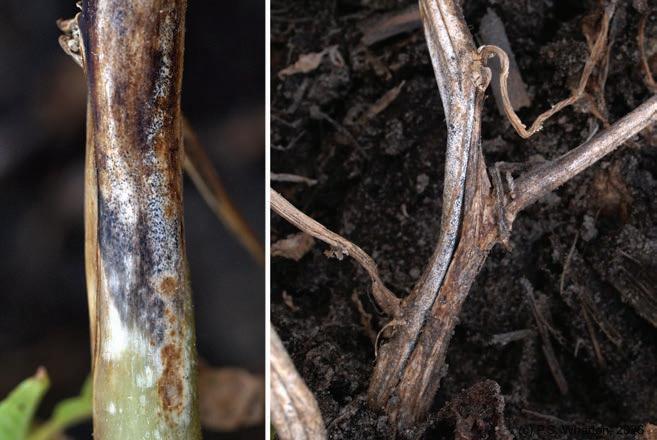
infects potato roots, stolons and stems very early in the growing season, but plants remain completely asymptomatic while they are actively growing. The pathogen latently occupies the living host tissue and only transitions to a destructive, necrotrophic phase when the plant naturally starts to senesce or die, at which point the fungus rapidly produces its characteristic black microsclerotia. Foliar symptoms start as pinpoint lesions that can expand into lesions on stems. Microsclerotia form on stems, stolons and roots and are especially visible after vine kill. The density of microsclerotia can be so great that the affected areas can look entirely black.
tuber symptoms
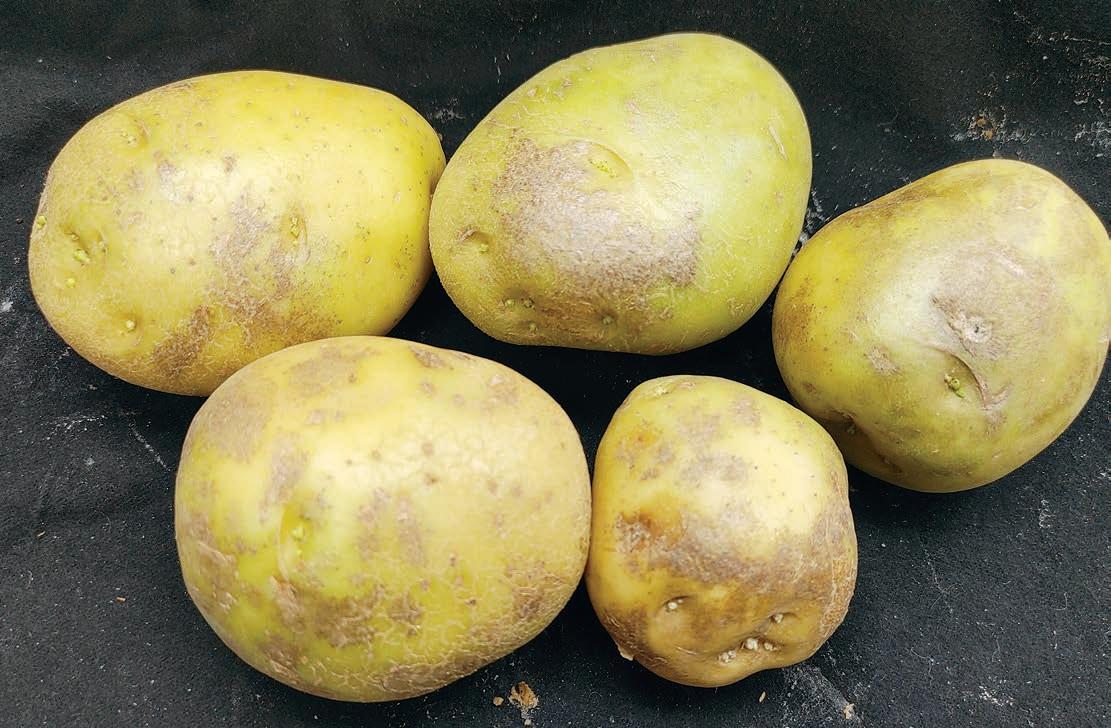
Tuber symptoms include light brown to gray discolored patches on the tuber surface, sometimes covering large areas. The stolon of the tuber may still be attached, and a magenta discoloration might be visible at the point of attachment when black dot is present. The tuber blemishes are more visible when tubers are wet. These symptoms are particularly visible on light-skinned varieties, but all types of potato can be affected.
Symptoms of black dot are often confused with silver scurf, another tuber blemish disease, and tubers can have both diseases. Distinguishing
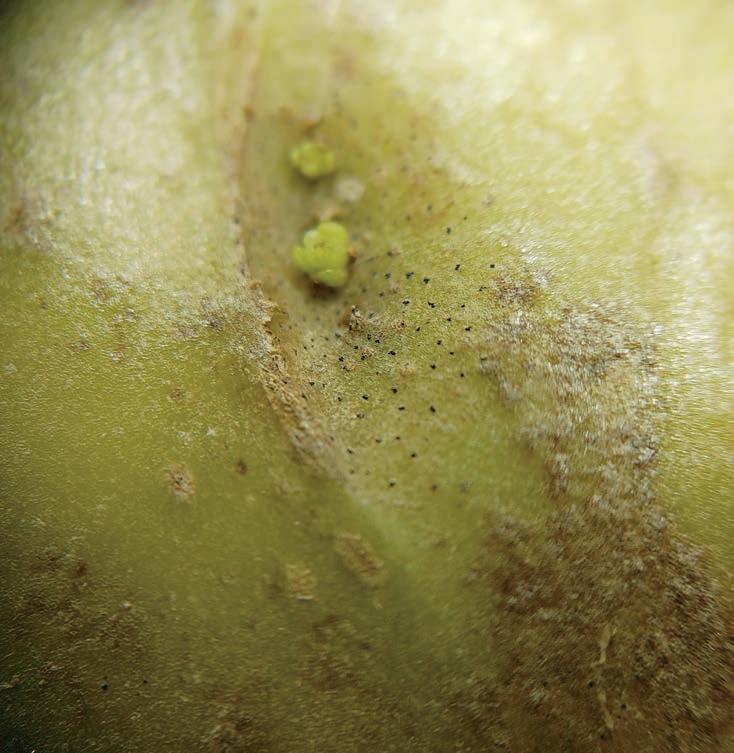
Black microsclerotia, seen here on the tuber surface, are formed by the black dot pathogen.
these blemish diseases can be difficult if microsclerotia or other fungal structures have not yet formed. Laboratory tests might be needed to confirm presence of the pathogens.
Secondary infections of black dot do not occur in storage since the pathogen is not able to infect tubers after skin set has occurred. Thus, all infections found in storage occurred in the field. Symptoms on tubers infected in the field develop in storage, giving the illusion of spread to healthy tubers. Black dot differs from silver scurf, which can readily spread from infected to healthy tubers via airborne spores in storage.
Though black dot blemishes don’t lead to secondary infections or other rots in storage, the disease can seriously reduce cosmetic quality, which is an increasing concern for the fresh-prepack market. The disease can also predispose tubers in storage to an increased rate of dehydration since symptoms can breach the skin. Severe cases may also lead to rejections of potatoes destined for processing since peeling may be more difficult.
why Black dot is Becoming More Problematic
Black dot is becoming more problematic in potato production because market expectations and disease management limitations have increased its economic importance. Fresh market buyers and consumers increasingly demand potatoes with clean, blemish-free skins, and the silvery to brown lesions caused by black dot can make tubers unmarketable even when yield losses are limited. In regions with abundant potato production, this has likely increased grading pressure and buyer selectivity, making black dot a more frequent cause of rejection and economic loss. At the same time, the pathogen can survive in soil for several years, reducing the effectiveness of crop rotation, and no resistant potato varieties are currently available.
Management challenges have also contributed to the growing importance of this disease. Previous fungicide programs often emphasized applications beginning at row closure and targeted symptoms
that appeared late in the season, which contributed to the view that fungicides were ineffective for reducing black dot on tubers in storage. More recent University of Idaho research has shown that earlier applications, particularly when plants are 6 to 8 inches tall with or without an infurrow fungicide application, can reduce black dot development on tubers during storage. Since no postharvest fungicides can stop symptom development on tubers that were infected in the field, effective management depends largely on timely in-season protection.
Current Management strategies
Management of black dot begins with planting certified, high-quality seed. When possible, avoid planting into fields with a history of black dot, and do not plant seed lots that show visible symptoms. Research has shown a strong relationship between the amount of black dot inoculum present in soil before planting and the amount of disease that later develops on tubers in storage.
Tubers show symptoms of black dot.
Soil testing can therefore be useful for estimating risk before planting. The University of Idaho Diagnostic Laboratory at the Parma Research and Extension Center can test soil for the black dot pathogen and provide an estimate of disease risk.
University of Idaho field trials have shown that the most effective fungicide programs are those applied early, when plants are 6 to 8 inches tall with or without an in-furrow fungicide application. Strobilurin and SDHI fungicides both reduced black dot in storage, and application timing appeared to be more important than the specific product used. Other studies have also shown that limiting the growing season to about 110 days or fewer, measured from 50% emergence to harvest including vine kill, can significantly reduce black dot on tubers in storage without reducing yield. Soil fumigation with chloropicrin may also help lower disease pressure. After harvest, if tubers are suspected to carry high levels of black dot infection, marketing them early may help reduce losses because tubers infected in the field can continue to develop visible symptoms during storage.
what’s in store for the Future of Black dot Management?
Better black dot management tools may be developed in the future, as we develop new varieties with enhanced disease resistance, improve models that link soil inoculum levels with risk, clarify impact of environmental factors, identify and harness the influence of the soil microbiome, and develop integrated models that combine soil inoculum, cultural practices, fungicide timing, variety selection, storage management and other factors.
Meanwhile, if you are managing a potato field with a history of black dot, keep this disease on your radar and implement proactive strategies such as early-season foliar applications of an effective fungicide labeled for control of black dot and reduce season length to fewer than 110 days.
Potato stems show symptoms of black dot including the formation of microsclerotia.
reflections, thanks and Looking Forward
By Steve Elfering, Board Chair Emeritus, Potatoes USA
Asmy term as chairman of the Potatoes USA board came to a close this spring, I wanted to take time to reflect, say thank you and share a few of my key takeaways.
I’ve said this before, but it’s worth reiterating: it’s a privilege to serve as chairman of this board. And, in my opinion, the benefits far outweigh the responsibilities that come with the role. I’ve been a proud member of the potato industry for 34 years and a board member for 13. Serving as chairman gave me an even deeper understanding of all the moving parts that support the industry, and I got to be involved in a way I haven’t before. I’d like to think that I contributed valuable insight and direction over the last year. But I know without a doubt I’ve gained new learnings and perspectives that I can apply in my region and business.
For those of you already on the board, I urge you to be active and make your voices heard. Being involved and engaged means you make a greater impact, but also that you get even more out of it. For industry members who haven’t served on the board, I highly recommend you consider it; look out for nominations when they open this summer.
By many measures, this has been a challenging year for our industry. Potatoes USA CEO Blair Richardson and the team, alongside other industry partners, are doing everything they can on our behalf to identify and further strengthen the demand for potatoes, while also supporting expanded marketing opportunities around the globe. They get into the right rooms and pursue opportunities from every angle to give us the best possible chance at industry growth. Stateside, the team is coming up with creative ways to inspire new uses for potatoes, like making them a staple for Halloween and, this past February, promoting global-inspired dishes to enjoy as the world’s athletes competed at the Winter Olympics in Italy. While Potatoes USA is designed to strengthen long-term demand, the organization constantly uses the information gathered in real time to inspire the activities that will continue to drive that demand.
Speaking of looking toward the future, that’s probably the biggest takeaway from my experience as chairman: Potatoes USA’s relentless focus on how to help ensure and support a thriving industry for generations to come. Just as the record numbers of consumers understand the health benefits of potatoes due to decades of work, the work being done this year is building even more momentum that will continue to reap benefits in years to come.
With our future in mind, I encourage you all to become familiar with the Seed to Table initiative that the board is beginning to explore. In January, we approved a feasibility study
to look at the potential for Potatoes USA to help the industry accelerate the great work being done in early-stage variety research, and expand the educational opportunities across the industry to ensure the products we develop, grow and distribute meet evolving consumer preferences and appear on more plates in the years to come. I’m proud to have been on the leadership team that initiated this foundational thinking that is designed to ensure the U.S. potato industry is well positioned for the future.
Fortunately, after a year as chairman, I get to serve for a year as chair emeritus, so this isn’t goodbye by any stretch. I look forward to working with the new board members. To you, my advice is: show up to meetings, engage with your fellow board members, share your valuable perspective and experience, and bring learnings back to your region. Being on the board is a two-way street, and contributing in both directions strengthens the entire industry.
I’m proud of the work I’ve gotten to be part of over the last year and the position the board is in now. I’m excited to pass the torch while staying involved in supporting our new chair and the unending work of the board.
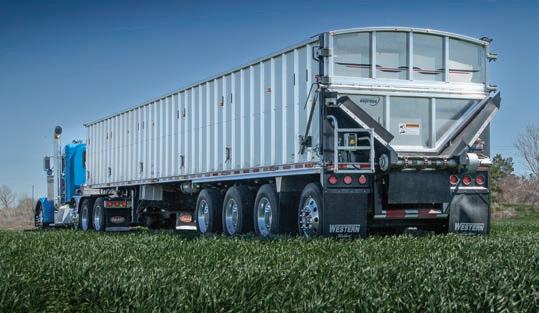
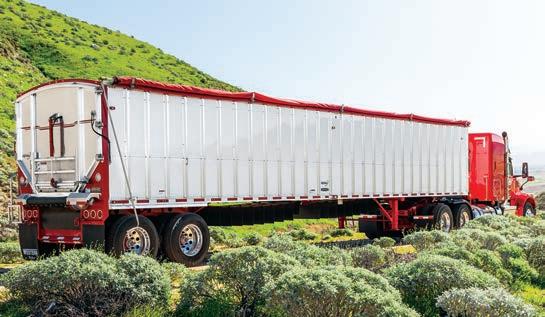
When you invest in a Western Spud Express® you can rest assured your new trailer has been built to stand up to the rigors the potato industry can dish out. The backbone of the Express is our high tensile steel main frame, treated with our level 4 paint system. Year after year the Spud Express delivers quickly and gently the biggest payloads, along with the highest resale value of any potato trailer on the market!
Making sense of soil Moisture sensors
By Emily Bedwell, Extension Irrigation Technology Specialist, University of Idaho
Crops have very specific water needs, and those needs change dynamically throughout the growing season as plant growth and development shift from vegetative to reproductive stages. Keeping soil moisture within an optimal range is critical for maintaining yield, quality and overall crop health. Both overwatering and underwatering can create costly challenges; excess water can increase disease pressure and nutrient leaching, while inadequate moisture can limit yield and quality.
Soil moisture sensors are powerful tools for helping ensure that these changing water demands are met. By providing continuous, real-time data, soil moisture sensors offer a clear picture of moisture conditions throughout the root zone. This information can help fine-tune irrigation, avoid unnecessary applications and maintain soil moisture at levels that support crop water needs at each growth stage.
New technologies can be overwhelming, especially when there are many options that each have their own pros and cons. Here is a breakdown of some common types of soil moisture sensors, how they work and what to consider before purchasing.
Tension-based sensors measure how strongly the soil holds onto water, which simulates how hard roots must work to extract moisture from the soil. There are two common types of tension-based sensors: true tensiometers and granular matrix sensors.
Tensiometers – These are true tensiometers consisting of a water-filled tube and a porous ceramic cup. As the soil dries, water is drawn out of the instrument, creating suction measured on a gauge.
Pros:
• Easy to interpret
• Direct measurement of plant water stress
• Perform well across soil textures
Cons:
• Require refilling, adjusting for air bubbles
• Limited reading range in very dry soils
• Freeze sensitive
Granular Matrix Sensors – While granular matrix sensors technically are not tensiometers, they measure the same unit: soil water tension. Instead of water inside a tube, these sensors contain a granular matrix that absorbs moisture from the soil. An electronic reader measures the electrical resistance in the matrix, which correlates with soil tension.
Pros:
• Less affected by soil texture
• No maintenance (no refilling needed)
• Can remain in soil year-round
• Long life (5+ years)
• More affordable option
Cons:
• Require good soil contact
• Slower to respond after irrigation
• Slightly less intuitive than a gauge
Capacitance sensors
Measures: volumetric water content (VWC) or available soil moisture (ASM)
Units: percent
Capacitance sensors send an electrical signal into the soil. Because water conducts electricity differently than soil or air, the sensor calculates the volume of water per volume of soil. For example, a reading of 22% VWC means that 22% of the soil’s volume is water.
Capacitance sensors can either be a single-depth sensor or a probe that includes several measurement points along a single shaft, providing data throughout the root zone.
Pros:
• Low maintenance
• Multi-depth data (probes)
• Show water movement after irrigation
Cons:
• Require calibration for accuracy
• Readings vary by soil texture
• Higher cost per sensor
• Installation can be difficult
• Proper installation is critical for data accuracy
time-domain reflectometry (tdr) sensors
Measures: volumetric water content (VWC) or available soil moisture (ASM)
Units: percent
TDR sensors send a fast electromagnetic pulse down metal rods. The “travel time” of that pulse changes depending on how much water is in the soil. This provides a highly accurate measurement of VWC.
Pros:
• Very accurate when calibrated
• Low maintenance
Cons:
• Require careful installation
• Most expensive type of sensor
Understanding vwC% vs. AsM%
Some sensors report soil moisture in VWC, while others report it in ASM. Understanding the difference between these two units is one of the most confusing parts of soil moisture data.
volumetric water Content (vwC%)
• Physical measurement of water volume per soil volume
• Does not indicate ease of plant uptake
• Soils with identical VWC% but varying sand/silt/clay composition can have different irrigation needs
Available soil Moisture (AsM%)
• Calculated value based on field capacity and wilting point of a specific soil texture
• Represents how much water is usable by the crop
• A 60% ASM reading does not equal 60% VWC
Some sensors estimate ASM based on a soil type-specific conversion, but without calibration, these values are only approximations.
where to install soil Moisture sensors
So, you have decided which sensors are the best fit for you, and now you are ready to install them in your fields. The main question I hear related to soil moisture sensors is “Where do I install them?” Consider these dos and don’ts for installing sensors in your field.
Do:
• Install in a representative area of field
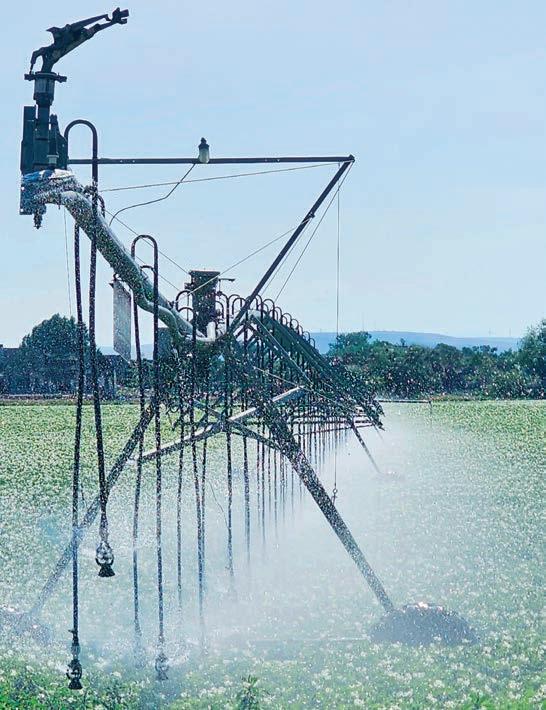
• Install beyond the second tower of center pivot
• Ensure proper installation (no air gaps around sensor)
• Install in predominant soil type of field
• Install more than one sensor if possible
• Install deep enough to represent root zone
Don’t:
• Install on field edge
• Install in a low or high elevation area in field
• Forget to calibrate your capacitance sensors
• Install your sensor(s) and never validate readings with field checks
how to Get started
No matter which sensor you choose, the goal is the same: to gain better insight into what’s happening below the soil surface. Soil moisture sensors provide data to help conserve water, improve yield and quality, and reduce pest and disease risk. For assistance with selecting, purchasing or installing soil moisture sensors, contact your local irrigation dealer or crop consultant. Also, you can contact your county’s Extension educator or your state’s irrigation specialist for help evaluating the benefits of integrating soil moisture sensors into your operations.
Author’s note: Emily Bedwell is an assistant professor and the Extension irrigation technology specialist at the University of Idaho in Kimberly, Idaho. She can be reached at ebedwell@uidaho.edu.
Potato Growers Overestimate water Consumption
By John O’Connell, University of Idaho
Idaho potato fields consume far less water during peak irrigation season than models available to farmers and water managers would suggest, according to a University of Idaho scientist’s recent findings.
Meetpal Kukal, an assistant professor of hydrologic science and water management in the Department of Soil and Water Systems, has finished the first of several years of field monitoring intended to improve the accuracy of consumptive water use estimates that are important to agriculture. Water deemed to be consumed is removed from the system, either by being stored in plant tissue or being emitted as vapor from soil or foliage, through a process
known as evapotranspiration (ET).
Kukal’s observations from a southwest Idaho field show that current models used by Idahoans are overestimating water consumption in potato fields during peak irrigation season by as much as 40%.
“ET on irrigated cropland is the largest outflux in the system, but ET is also the most uncertain one. Even a little bit of uncertainty in ET results in a lot of unaccounted water,” Kukal said. “We are severely overestimating water needs in the peak season, and that’s the time when our irrigation systems are the most challenged.”
Early in the irrigation season, however, models currently used by water managers appear to be slightly
underestimating water consumption in potato fields. Regional irrigators have told Kukal his observations mirror their own experiences.
Kukal studies ET using a network of monitoring stations, called eddy covariance towers, located in fields from Wilder through Declo. He drew potato data from a Clearwater Russet field in Wilder, Idaho. One of Kukal’s graduate students intends to make additional calculations specific to other crops.
Calculating Consumption
Idaho law administers water rights to users based on the volume of water they divert into canals or pump from wells, granting priority to older water rights.
Meetpal Kukal, University of Idaho assistant professor of hydrologic science and water management, works on an eddy covariance tower in an agricultural field in southern Idaho. Photo by University of Idaho Visual Productions
However, much of that water seeps back into the aquifer, where it can be reused downstream. Water managers may track consumptive use in addition to diversions for a fuller picture of how much water is available in the system at any given time.
The Idaho Department of Water Resources (IDWR) predicts how various scenarios might affect the water supply, and it calculates water consumption based on crop coefficients – or ET estimates specific to each crop. These crop coefficients were established in the 1970s using lysimeters, which weigh soil to measure changes in moisture levels. But those coefficients don’t represent differences in potato varieties, soil type and crop management, and it is not well understood how these factors may influence consumption.
new Measurement Methods
Kukal’s approach indirectly calculates ET by tracking radiant and wind energy in the field and determining the precise volume of water that energy would evaporate from plant tissue and soil.
“To evaporate one gram of water, we
know exactly how much energy is being used,” Kukal said.
Sensors in the eddy covariance towers measure water vapor concentrations and wind speeds in three directions 10 times per second.
“The crop coefficients have their place,” Kukal said. “They’re a useful resource that we have had historically and will continue to serve us, but it’s important to start revisiting and finetuning those to include newer crop varieties and cultivars, and the best technique we have available to us today is the eddy covariance measurements.”
next steps
Placing towers in every field would be impractical. Rather, Kukal hopes to use data from his network of monitoring stations to refine and calibrate ET estimates from satellites operated by NASA’s Landsat program. Landsat satellites pass by a given location every eight days and record the temperature and crop canopy progression. Kukal also envisions using his monitoring station data to create updated crop coefficients
covering many more production and management scenarios.
Kukal plans to continue collecting ET data from eddy covariance stations for several more years. He anticipates resulting modeling improvements will help IDWR with management decisions and farmers with better irrigation scheduling.
“These measurements need to be long term, because there are so many combinations of all of these factors that ideally you need to keep improving our understanding of ET,” Kukal said.
diseAse identiFiCAtiOn QUiz
Dr. Jeff Miller, a plant pathologist, is the president and CEO of Miller Research, Rupert, Idaho. He can be contacted by phone: (208) 531-5124; cell: (208) 431-4420; jeff@millerresearch.com
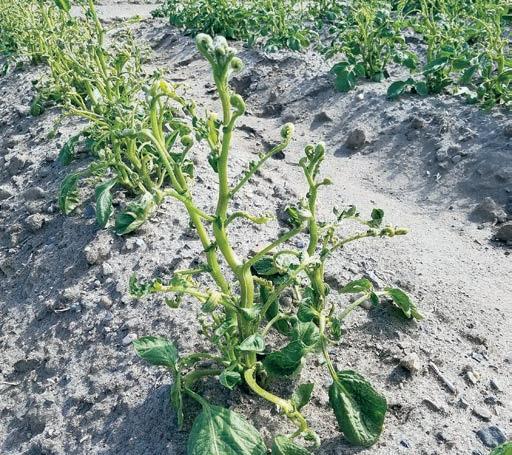
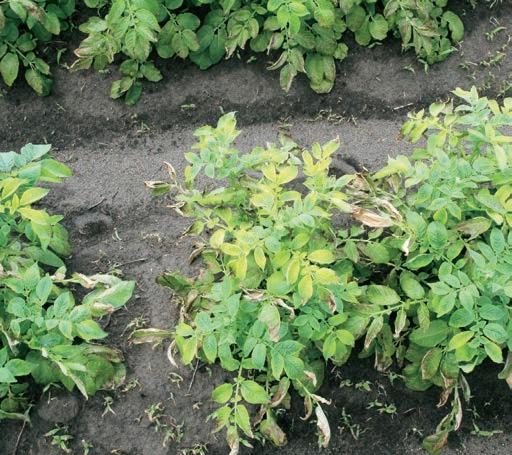
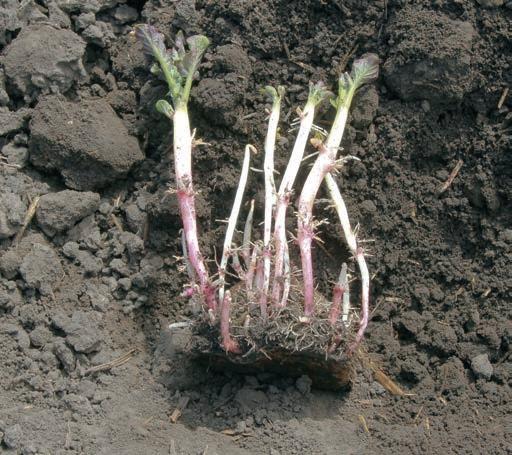
As you watch your potato plants emerge, hopefully you will not see any of these symptoms. Can you identify what is causing the problems with these emerging plants? What is the disease? What can be done to fix these problems? C A D B
Answers Page 15
OPTIMIZE YOUR STARTER FERTILIZER PROGRAM
Start your crop right, with Redox Technology. Three factors to focus on for early season root development are phosphorus nutrition, soluble carbon, and calcium nutrition.
Utilizing soluble complexed and chelated nutrition as well as key carbon compounds found in Redox products, it is easy to increase root growth, root mass, and root metabolism.
678-2610
nPC names new executive Committee
The National Potato Council has installed its 2026 Executive Committee and elected Ben Sklarczyk to serve as president. Sklarczyk is a third-generation grower and owner of Sklarczyk Seed Farm, a hydroponic seed potato operation in Johannesburg, Michigan. Sklarczyk says the committee’s 2026 agenda will focus on capitalizing on new federal dietary guidelines to promote potatoes, ensuring fair trade practices for U.S. potatoes, removing nontariff trade barriers, and emphasizing the importance of grower engagement with state and federal representatives.
The 2026 Executive Committee also includes Dean Gibson, Idaho, first vice president, Legislative Affairs; Chris Olsen, Washington, vice president, Environmental Affairs; Greg Harris, Oregon, vice president, Finance; TJ Hall, North Dakota, vice president, Grower Outreach and Industry Research; Brett Jensen, Idaho, vice president, Trade Affairs; and Ted Tschirky, Washington, immediate past president.
vive Grows sales team
Vive Crop Protection has hired Bret Mize as national account manager for the U.S. Mize brings experience in key account and regional sales management, along with expertise in agronomy and crop protection, having worked for companies including Gowan and Bayer Crop Science.
Vive has also promoted Greg Esco to director of U.S. sales.
wsU welcomes Potato Pathology Professor
Vinicius Garnica will join Washington State University’s Department of Plant Pathology on June 16. He will serve as an assistant professor specializing in potato pathology, with responsibilities in research, extension and teaching.
Garnica brings expertise in plant disease epidemiology that will support potato stakeholders throughout the Pacific Northwest, according to WSU. Previously, he served in the Department of Plant Pathology at The Ohio State University.
Lockwood develops direct import Agreement with dutch equipment Manufacturer
Lockwood Manufacturing is now importing directly from Struik, a Netherlands-based equipment manufacturer.
Lockwood touts Struik as having a global reputation for precision engineering, durability and performance. The company is known for its rotary cultivators and potato hilling equipment in the U.S. Lockwood and Struik have partnered for more than 25 years. The new direct import agreement will help reduce freight costs and save customers money, according to Lockwood.
Greg Esco Bret Mize
Ben Sklarczyk
Changing the economic equation for Potato Growers
By Kam Quarles, CEO, National Potato Council
If you look at the 2018 Farm Bill today, it feels like it’s from a different lifetime. In competitive terms, many parts of it are. For specialty crops, the world has changed substantially since the writing of that bill, which began nearly a decade ago.
As the National Potato Council works with Congress and the Trump Administration to advocate for the passage of legislation that reflects the business conditions in 2026, our goals are twofold: deliver near-term economic relief and address long-term stability through a new Farm Bill.
This mission reflects the reality our growers are facing. Released during the NPC Washington Summit in February, our 2026 Spud Sector Survey painted a vivid picture of an industry at a crossroads. While growers are focused on the future, they’re also being squeezed by skyrocketing input costs, labor costs and shortages, and the constant threat of market volatility.
We hear you loud and clear, and we’re pushing for tools that provide a real safety net and trade opportunities that actually move the needle.
A handbook for relief that Actually works
For too long, specialty crops were an afterthought in U.S. farm policy and certainly in economic relief. We learned the hard way during the first round of COVID pandemic relief (CFAP 1) that when the USDA relies on data it doesn’t have, growers lose. Because there’s no futures market for potatoes to track price drops in real-time, the government essentially told us we weren’t hurting while mountains of unmarketable potatoes were piling up across the country.
We fixed that. Programs like CFAP 2 and the Marketing Assistance for Specialty Crops (MASC) program, both launched under the first Trump Administration, finally got the math right. They allowed you to apply based on your actual farm revenue and history, proving your loss rather than begging a datadeficient agency to notice it.
Now, we’re urging Congress to take the House Agriculture Committee’s Farm Bill framework and make this the “handbook” for future relief permanent. We shouldn’t have to reinvent the wheel every time a crisis hits. By pairing this model with an increased $900,000 payment limit, we can ensure that highvalue, high-cost operations like yours aren’t kicked out of an economic relief program the moment you need it most.
Breaking the 30-year deadlock in Japan
Safety nets are vital, but a real tailwind for this industry comes from expanding where we can sell our products. For three decades, we’ve been trying to get U.S. fresh table stock potatoes into Japan. After 30 years of talk and technical
excuses, the market remains closed.
The stakes are massive. We estimate that opening Japan would create a $150 million annual market for U.S. fresh exports. That’s a roughly 15% jump in our global exports overnight.
With the Japanese Prime Minister visiting Washington, D.C., in late March, we are doing everything in our power to ensure fresh potato access is a top priority for President Trump. The current administration has a unique kind of leverage, and we want to see it used to benefit growers from Maine to Washington state.
investing in the Future of your Farm
NPC’s advocacy is an investment in the future of our family farms and rural communities. Whether through the Farm Bill or trade diplomacy, we are committed to ensuring our industry has the tools to remain competitive. Our goal is a proactive system where common-sense policies and expanded markets allow farms to thrive despite the economic challenges highlighted in this year’s survey.
All of these photos show symptoms of herbicide damage.
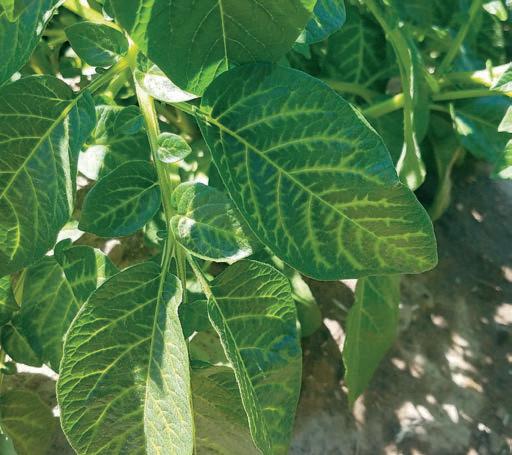
The yellowing of the veins shown in Photo A is typical of metribuzin injury. Some varieties are more sensitive to metribuzin than others, such as Atlantic, Dark Red Norland and Shepody. Applications made after emergence are more likely to cause damage than pre-emergence applications.
Photo B shows symptoms of linuron damage. Linuron-based herbicides inhibit photosynthesis, causing yellowing, leaf-burned, stunted plants. When applied at high rates or in cold, wet conditions, plant emergence can be delayed.
The “fiddleneck” symptoms in Photo C are typical of phenoxy herbicide (e.g. 2,4-D and dicamba) damage.
Glyphosate contamination on seed can result in the symptom shown in Photo D. Glyphosate disrupts apical dominance, resulting in multiple stem production. These stems may be weak and spindly.
Special thanks to Dr. Andy Robinson at North Dakota State University for helping with the photos for this edition of the Disease Quiz.
KnOw yOUr diseAse Answers (FROM PAGE 12)
hArvest essentiALs BUyers' GUide
Agri-stor Company
agri-stor.com/crop-protection/ Disinfecting and Crop Protection
Agri-Stor Company’s storage disinfecting and crop protection solutions address seed, process and fresh market growers’ needs for superior product quality. Multiple modes of application are available, including cold and thermal fogging, AANE and misting.
Solutions include peracetic acid (PAA), chlorine dioxide and other effective options to protect storage and crops against various diseases and micro-organisms.
Greentronics greentronics.com
RiteWeight In-line Conveyor Scale
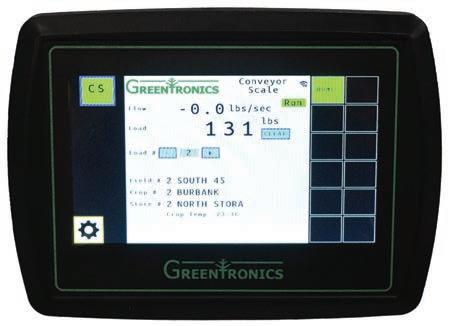
Greentronics offers an easy and accurate method for tracking loads and weights by date, field, variety, temperature and cellar. New features added to Greentronics’ RiteWeight in-line conveyor scale are designed to automate harvest and storage data recording. Data are uploaded via an Android phone or tablet to the Greentronics cloud server for processing and reporting in near real-time. Maps and reports can be viewed, downloaded, shared or printed from anywhere. A range of reports detail how much crop is stored and where it was grown. 2-D maps show where crop is stored by date, field and variety. By including a crop temperature
Lockwood Mfg.
lockwoodmfg.com/774harvester
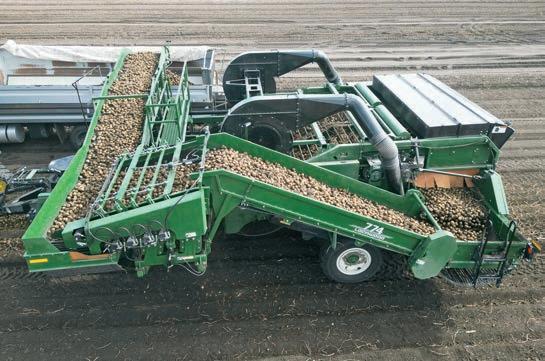
774 Harvester
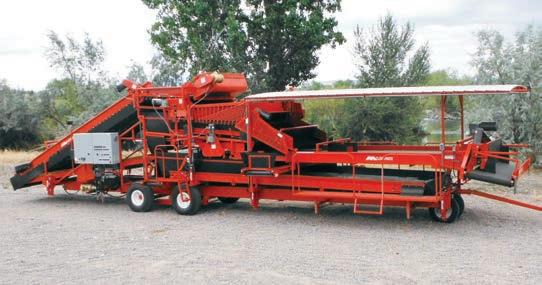
Designed with today’s higher-level harvesting capacities in mind, Lockwood’s 774 Harvester can handle more volume and offer improved cleaning. The harvester features up to a 48-inch rear cross and side elevator for increased volume, and higher capacity full swing boom for truck loading efficiency. It also includes numerous side elevator and full-width cleaning table options, as well as dual Lockwood high-efficiency fans for increased airflow using less power. Add that to a 10-inch touchscreen control system with joystick control, excellent visibility for the operator, and optional wheel drive and vine chopper additions. Customers can save time and money with Lockwood’s efficient 774 Harvester.
Logan Farm equipment loganpotato.com
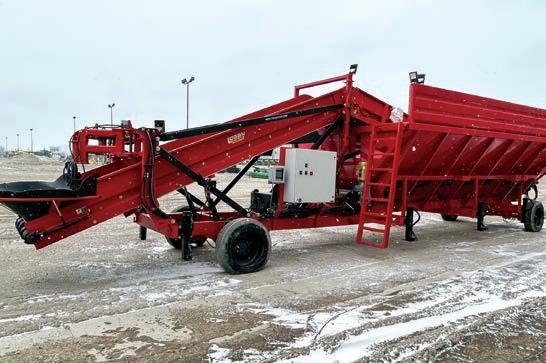
2024 Logan Evenflow Tub
The 2024 Logan Evenflow Tub offers a number of new upgrades with innovative designs for metering a consistent, continuous flow to downstream planting or post-harvest equipment.
The 54-inch elevating conveyor and 36-inch to 72-inch discharge belt sizes offer a large range of throughputs while utilizing new features like efficient electric drives for conveyors and externally mounted carry-up and carryback rollers for easy replacement. The machine has many options for customizing to each operation and is designed heavy for long-lasting use; Logan didn’t spare the iron on this one. For growers looking for a high quality machine priced very competitively, the Logan Evenflow Tub is the answer.
Mayo Manufacturing mayomfg.com
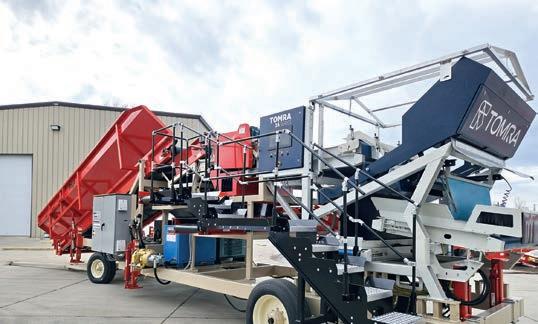
Optical Sorter
For efficient optical sorting, Mayo teams up with the Tomra 3A. Specifically designed for unwashed potatoes, this unit is a proven success for foreign material, dirt and rock removal. With several options and capacities offered, Mayo will provide the best configuration for customers’ electronic sorting needs. User-friendly controls and sorting consistency are some of the many features.
hArvest essentiALs BUyers' GUide
Milestone equipment milestone-equipment.com
Sizers/Eliminators
Custom built with a focus on quality, utility, and absolute performance Milestone Sizers/Eliminators offer unmatched capability and value. Numerous innovations, proprietary systems and unique features ensure effective debris elimination, extremely accurate sizing, efficient sorting and gentle handling of potatoes. No matter the conditions or requirements Milestone’s dedicated and knowledgeable team welcomes a challenge and looks forward to working with our customers to design the ideal machine for their operation. All Milestone new and certified rebuilt Sizers/Eliminators come with a full one year manufacturer’s warranty and are backed by Milestone’s expert global support network.
trinity trailer Mfg. trinitytrailer.com
Eagle Bridge
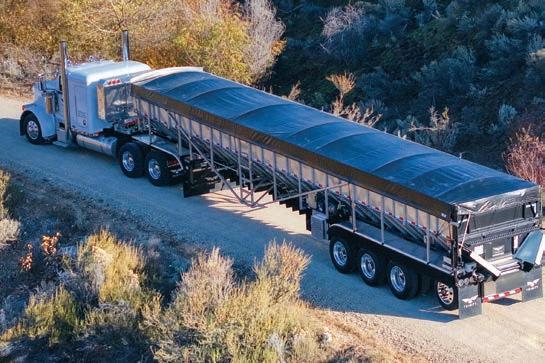
When it comes to transportation from the field to the freeway, growers need a belt trailer that can haul and unload products gently. For 50 years, the long-lasting Eagle Bridge has delivered agricultural commodities safely and efficiently.
western trailers
westerntrailer.com
Trailers
Since 1969, Western Trailers’ guiding philosophy of “lightweight pays” has been enhancing the company’s reputation, built on quality, innovation and service. With a focus on versatility, durability and strength, the company’s trailer models help to tackle any job. The trailers are built and improved through ongoing product specifications, performance data and, most importantly, input from valued customers. Let Western Trailers show you how lightweight pays.
Pilers
2020 Spudnik 780 42” BC 230 volt
3ph remote
2003 Milestone MSBP42 all belt 3 phase
480 Volt remote chevron belt
2000 Wemco 36” all belt 230 volt 3ph remote all hydraulic
1999 Double L 831 36” BC Elev/49’ boom 3ph HYD Drive & Remote
1996 Spudnik 550 36” All belt, 480 volt 3ph, remote Reconditioned
The Links at Moses Pointe Moses Lake, Wash. www.agworldgolf.com
June 21-23
washington Potato and Onion Association summer Meeting
The Marcus Whitman Hotel Walla Walla, Wash. www.wapotatoonion.com
June 24
OsU Potato Field day
OSU HAREC
Hermiston, Ore.
Sagar Sathuvalli, (541) 223-1699
June 25
wsU Potato Field day WSU Othello Research Unit Othello, Wash.
Mark Pavek, (509) 335-6861 or mjpavek@wsu.edu
July 20-22
Potatoes UsA summer Meeting Detroit
Caitlin Roberts, caitlinr@potatoesusa.com
July 22-24
nPC summer Meeting Detroit
www.nationalpotatocouncil.org
July 26-30
Potato Association of America Annual Meeting
New Orleans www.potatoassociation.org
Oct. 26-30
world Potato Congress
Naivasha, Kenya www.potatocongress.org
Market shares Continue to shift
Major exporting countries shipped 10.6 billion pounds of French fries and other frozen potato products to countries outside their local trading zones during 2025. That is 85 million pounds more than year-earlier sales, a 0.8% increase. Combined external sales from the major European exporters fell 7.5% short of year-earlier shipments. Offshore exports from North American fryers during the 2025 calendar year nearly matched 2024 shipments. Market shares continue to shift as smaller exporters rapidly expand production. Combined sales from emerging exporters including China, India, Egypt, Argentina, New Zealand and Turkey climbed by 26% during the period. In this article, we explore global French fry trade by major exporter as well as the trade outlook for the next 12 months.
european external French Fry exports down 7.5%
European fryers shipped 5.71 billion pounds of frozen potato products to customers outside the EU during the 2025 calendar year. Combined sales from the five major European exporting countries fell 465 million pounds below year-earlier shipments, down 7.5%. The 2025 downturn in EU French fry exports came despite a huge oversupply of raw product. Exports from Belgium and the Netherlands dropped by 14.7% and 5.9%, respectively.
France’s frozen product exports climbed 40.4% above the previous year’s sales. Germany’s exports fell by 13%, while Poland’s sales increased by 1.2%.
Seven of the EU’s top 10 customers reduced purchases of French fries and other frozen product during the year. The largest volume reductions came in sales to the United Kingdom (-171 million pounds), Saudi Arabia (-68 million pounds) and Chile (-67 million pounds). At 480 million pounds, the United States, the second largest importer of EU French fries, reduced purchases by 36 million pounds. On the other hand, Colombia (+25 million pounds), Brazil (+15 million
five-year average. It is the smallest U.S. export volume since 2011. Increased global competition and relatively strong domestic demand have held back U.S. export growth, even with abundant rawproduct supplies. In contrast, Canada has been able to take advantage of the opportunity to expand exports. Canadian offshore exports increased by 24.1%, to 502 million pounds. That is Canada’s largest export volume since 2007. It exceeded the five-year average sales volume by 47.6%.
Japan, the largest customer, took 670 million pounds of North American-made product, 10.3% more than year-earlier purchases. Mexico reduced its imports by 7.9%, to 490 million pounds. Exports to South Korea fell by 8.8%, to 168 million pounds. Sales to Taiwan dropped by 13.5%, while exports to Guatemala rose by 4.3%.
Together, North American fryers captured 21% of the global market. Their total market share has been stable during the past three years. North America’s offshore frozen product exports have grown by an average of 0.1% per year during the past 10 years; however, year-to-year sales have varied significantly.
pounds) and Mexico (+7 million pounds) increased purchases during the period.
EU fryers captured 53.9% of the global French fry export business during 2025. That is down from 58.7% in 2024 and 61.8% in 2023. Though the EU’s external French fry export volume has declined during the past three years, sales have grown by an average of 3.1% per year during the past 10 years.
north American French Fry sales to Offshore Markets down 0.1%
North American fryers shipped 2.22 billion pounds of frozen potato products to offshore markets during 2025. That nearly matched 2024 exports. U.S. frozen product sales dropped by 5.4%, to 1.72 billion pounds, during the 2025 calendar year. However, that fell 9.4% short of the
Combined Frozen Product exports From smaller exporters up 26%
Smaller exporting countries (China, India, Egypt, Argentina, New Zealand and Turkey) combined to ship a record 2.67 billion pounds of French fries during 2025. That is 552 million pounds more than year-earlier sales, a 26% increase. Though total sales from the smaller exporters increased, shipments were mixed.
China shipped a record 834 million pounds of French fries to customers outside of greater China during 2025. That is 400 million pounds more than 2024 sales, a 92.2% increase. China is now the fourth largest French fry exporting country. Its major customers include the Philippines, Japan, Thailand,
Global Frozen French Fry Trade External Exports
in Global French Fry trade
Indonesia, Malaysia and South Korea. India has also become a major player in global French fry trade. At a record 570 million pounds, 2025 exports jumped 49.9% above year-earlier sales. India’s top customers include the Philippines, Saudi Arabia, Malaysia and Thailand. NAPMN estimates that Egypt shipped 579 million pounds of French fries during 2025, down 9.2%. A lot of the country’s export business is in the Middle East; however, Brazil and the United States are among Egypt’s top five customers. Argentina exported 445 million pounds during the year. That is 8.2% more than year-earlier sales. Brazil is Argentina’s main customer. New Zealand exported 121 million pounds of French fries in 2025. That is 17% more than year-earlier sales. Most of New Zealand’s exports go to Australia, the Philippines, Thailand and Indonesia. Turkey shipped 124 million pounds of French fries during 2025, down 19.7% from 2024. Turkey’s major customers are Russia, Iraq and China. Together, the six exporters captured 25.2% of the global French fry export business during 2025, up from 20.2% in 2024 and 17.3% in 2023.
Conclusion
China, India, Egypt and Argentina are focused on maintaining and increasing their share of the global French fry export business during 2026. French fry exports reached a record 10.61 billion pounds during 2025. Global external exports have grown by an average of 4.1% per year during the previous 10 years (20162025). However, that rate has averaged only 1.3% during the past three years. Global sales grew by only 0.8% in 2025, even though the European Union and North American fryers have an abundant raw-product supply and additional processing capacity. Trends suggest that long-term global French fry demand growth will continue, but that growth rate will likely be down from previous years. Capturing additional export sales during the 2026-27 processing season will be a major challenge for North American processors.
By Ben Eborn, Publisher, North American Potato Market News
Key POints
• North American frozen product exports to offshore customers during the 2025 calendar year nearly matched 2024 sales. U.s. exports dropped by 99 million pounds, but Canadian exports increased by 97 million pounds.
A Global Market, A shared Challenge
By Dale Lathim, Potato Growers of Washington
Over the past several years, I’ve consistently emphasized a fundamental shift in the potato industry: it is no longer local, regional or even national – it is fully global. Today, success requires understanding not just what is happening in your own community, but what is unfolding across continents.
Recent export data continues to reinforce this reality. Markets that once relied heavily on U.S. potato products are now increasingly supplied by emerging competitors. Countries such as China and India – virtually absent from the global frozen potato market just a decade ago – have rapidly evolved into major players. Today, they represent some of the fastest-growing sources of supply, often delivering product at significantly lower cost.
Yet global competition is only part of the story. An even more immediate and disruptive reminder of our interconnected world can be seen in the surge of input costs following geopolitical instability in the Middle East. The closure of the Strait of Hormuz has triggered sharp increases across key inputs – fuel, fertilizer, crop protection products, equipment and even materials like
PVC – demonstrating just how exposed agriculture is to global events.
Fuel prices were the first to react, with road diesel increasing by more than $2 per gallon. This spike could not have come at a more challenging time.
Growers are currently in the peak of seed shipping season, sourcing from distant regions such as Montana, Alberta and eastern Idaho. Even prior to this surge, freight costs often added more than 50% to the base cost of seed. With hauling costs now rising another 20% or more, seed expenses have exceeded nearly all preseason projections.
These increases ripple through every aspect of the operation. Fuel surcharges are returning, and any input that must be transported – or is derived from petroleum – faces similar upward pressure. While many growers secured on-farm fuel supplies earlier in the season, those reserves will eventually need replenishment. If current conditions persist, harvest costs could rise substantially.
Fertilizer presents another significant challenge. Fortunately, many growers had already purchased or applied a large portion of their needs before the recent disruptions. However, for in-season applications or for those unable to prepurchase, pricing has become highly uncertain. In some cases, suppliers are no longer offering fixed quotes, instead
pricing at delivery with expectations that costs will be “sky high.” Given that fertilizer typically accounts for 10–20% of total production expenses, this volatility alone could add several percentage points to overall costs.
And this pattern is not isolated. From parts and equipment to storage infrastructure and irrigation systems, nearly every input is affected – either through transportation costs or reliance on petroleum-based materials.
When contracts for the 2026 crop were first negotiated last December, the industry anticipated a modest cost increase of approximately 3%. As of mid-March, that estimate has climbed to nearly 10% with the potential to reach as high as 12%.
This presents a serious challenge for growers. Margins were already under pressure following recent price reductions, and there is limited ability to absorb additional costs. Unlike other sectors in the supply chain, growers have little opportunity to pass these increases forward.
Recognizing this, PGW has initiated discussions with processors to address how the industry can collectively navigate these conditions. While processors face their own constraints – particularly due to global competition and excess capacity – the reality remains that processing facilities depend on a stable supply of potatoes.
This relationship has always been interdependent. Growers need processors, and processors need growers. In times of disruption, that partnership becomes even more critical.
The path forward will require collaboration, transparency and a shared commitment to long-term sustainability. If the industry can align around those principles, it will not only weather this storm, but emerge stronger on the other side.