























PO Box 333, Roberts, Idaho 83444
Telephone: (208) 520-6461 Circulation: (503) 724-3581
editOr
denise Keller editor@ColumbiaMediaGroup.com
OPerAtiOns MAnAGer, AdvertisinG Brian Feist brian@ColumbiaMediaGroup.com
PUBLisher, AdvertisinG dave Alexander dave@ColumbiaMediaGroup.com
inseCt identiFiCAtiOn Josephine Antwi josephine.antwi@oregonstate.edu
diseAse identiFiCAtiOn Jeff Miller jeff@millerresearch.com
MArKet rePOrt Ben eborn napmn@napmn.com
POtAtO GrOwers OF wAshinGtOn dale
editOriAL inFOrMAtiOn
Potato Country is interested in newsworthy material related to potato production and marketing. Contributions from all segments of the industry are welcome. Submit news releases, new product submissions, stories and photos via email to: editor@ColumbiaMediaGroup.com.
For information about advertising rates, mechanics, deadlines, etc., call (208) 520-6461 or email dave@PotatoCountry.com.
sUBsCriPtiOns
U.S. $24 per year / Canada $40 per year / Foreign $80 per year Subscriptions can be entered online at: potatocountry.com/subscribe or call (503) 724-3581.

Email address changes/corrections to: brian@ColumbiaMediaGroup.com or send to Potato Country, PO Box 333, Roberts, ID 83444. Potato Country magazine (ISSN 0886-4780), is published eight times per year and mailed under a standard rate mailing permit at Idaho Falls, Idaho and at additional mailing offices. It is produced by: Columbia Media Group, PO Box 333, Roberts, ID 83444 Copyright 2026. All rights reserved. No part of this publication may be reproduced or transmitted in any form or by any means, electronic or mechanical, for any purpose without the express written permission of Columbia Media Group.








The Idaho Potato Commission (IPC) and the American Diabetes Association® (ADA) have teamed up to tackle some of the most common misconceptions about one of America’s favorite foods: the potato. Idaho® Potatoes are proud to be recognized by the ADA’s Better Choices for Life program, highlighting how preparation and pairing play an important role in enjoying potatoes as part of a balanced, diabetes-friendly eating plan.
The new Mashing the Myth campaign reframes how we think about potatoes by pairing science-backed facts with crave-worthy recipes that prove healthy can still taste amazing. To learn more, visit idahopotato.com/ada
Story
and photos by
Dave Alexander, Publisher
The Idaho Potato Conference and Eastern Idaho Ag Expo took place in Pocatello, Idaho, for the 58th time Jan. 20-22. The expo featured lots of shiny equipment and some new booths from previous years, giving attendees much to see. The conference, organized by University of Idaho, was packed with sessions on just about any topic relevant to potato growers, in English and in Spanish.
We had marked our calendar for one session that sounded particularly interesting and featured some heavy hitters from university research teams. “Busting Myths in Potato Agronomy” turned out to be an educational experience using “MythBusters,” a fixture on the Discovery Channel for more than a decade, as a fun format.
Myth #1: Maleic hydrazide (Mh-30) will reduce little potatoes prior to harvest. Presented by Mark Pavek, Washington State University


Some growers believe the recommended label applications of maleic hydrazide will knock off little potatoes, i.e. those under 4 ounces. MH-30 is a plant growth regulator, and its mode of action is to inhibit cell division, not expansion, so it can still expand and elongate potatoes. According to the label, it will improve tuber grade and shape, can be used for sprout control, reduces shrinkage and reduces volunteers. The label says nothing about small tubers.
Pavek said research over five years on several varieties shows that use of MH-30 actually increased the number of undersized tubers in all varieties tested except Alturas.
Verdict: Myth Busted – Use of
MH-30 reduces external defects, but will increase the number of tubers under 4 ounces.
Myth #2: Potato petiole analysis always provides a real-time, accurate assessment of plant nutrient needs and should be used to guide fertilizer applications.
Presented by Mark Pavek, Washington State University
Efficient nitrogen (N) management is critical to growing a successful potato crop. Petiole analysis can provide useful, timely data about a plant’s nutrient status. But Pavek said relying on petiole analysis alone is like irrigating based on the appearance of the soil surface rather than what’s below. Soil analysis is critical to a good crop.
Informed fertilizer management means testing soil nutrient levels and targeting fertilizer rates combined with petioles. Petiole analysis should be used as a tool, not necessarily as a guide.
Verdict: Myth Busted – A profitable potato crop can be grown without using much or any petiole data as long as soil nutrient levels are known and fertilizer rates are targeted.
Myth #3: if the canopy looks good, irrigation is good.
Presented by Emily Bedwell, University of Idaho
Green leaves and vegetation above the surface is not always indicative of what’s happening beneath the soil surface where tuber development and growth is occurring. When wilting is observed, stress is occurring in plants, tuber damage has already been done and irrigation has not been managed well.

takes place. Soil moisture must be checked below the surface and below shallow soil, down into the root zone. Bedwell said you can use irrigation sensors or the hand-feel method, but pairing the two will confirm your “feel” test and give you confidence that the sensors are doing their job.
Verdict: Myth Busted – Dig down a foot or so and check your crop’s water needs at the root zone.
Myth #4: A storage’s evaporative media should be replaced on a regular basis.
Presented by Nora Olsen, University of Idaho
the crop has time to regrow, and there will be very little yield loss. If damage comes late in the year, there is already some yield and losses will be smaller. If damage occurs at early bulking, yield loss is most severe.

Plant stress starts below the soil. The potato is a shallow, rooted crop, and it can only uptake the water within that shallow soil. Shallow soil typically doesn’t have much water in it because it’s more exposed to the air and sun, and that’s where the quickest and most evaporation
A potato storage has been designed by the builder to provide proper cooling and humidification. Water mixes with air as it passes through the evaporative media, which keeps potatoes stored correctly and losses at a minimum. Over the years, this evaporative media, which is cellulosecoated crafted paper, can become clogged and dirty, making it less efficient. When media is clogged or dirty, cooling capacity and airflow is reduced, and pressure drop and energy costs are increased. The system is no longer operating as it was designed, and it is no longer able to provide maximum cooling and temperature control.

For this myth to be true, it has to be assumed that flowering is always synced with early bulking under all circumstances. But flowering tends to occur pretty early in plant development and pretty consistently most years. Early bulking, however, has a wider range that can fall outside blooming.
Verdict: Myth Busted – Flowering is not always synced with early bulking, and when blooms appear is also subject to variables like weather, day length, region and variety.
Myth #6: higher respiration rates lead to higher weight losses.
Presented by Gustavo Teixeira, University of Idaho
In a study conducted by Teixeira, respiration rates and weight loss were calculated for Russet Burbank, Ivory Russet, Dakota Russet and Rainier Russet.
Verdict: Myth Confirmed – Life expectancy of evaporative media is three to five years, but up to 10 with proper maintenance. Dirty media costs money.
Myth #5: Potatoes are most susceptible to hail damage at the time of flowering.
Presented by Mike Thornton, University of Idaho
It makes sense that the higher a potato plant’s defoliation, the more yield loss. Thornton said research has shown the most yield loss comes from 50% to full bloom, which is typically the early bulking stage for tubers.
Timing is the critical part. If hail damage occurs very early in the season,

He found Dakota had the lowest respiration rate but the highest weight loss, directly refuting this myth.
Digging deeper, Teixeira tested diffusibility through the skin and found that Dakota was more prone to water loss than the other varieties.
Verdict: Myth Busted – This one doesn’t hold up – for Dakota anyway.

By Jamey Higham, President & CEO, Idaho Potato Commission
Every year, the Idaho Potato Commission challenges itself to find new ways to honor the growers who make our industry possible while keeping Idaho potatoes relevant in a crowded, fast-moving marketplace. This year, that challenge led us onto the runway at New York Fashion Week, bringing the stories of Idaho’s potato farmers into a cultural moment that felt unexpected and personal.
In 1951, Marilyn Monroe famously posed in an Idaho potato burlap sack dress, transforming a humble farm staple into a pop culture moment. Seventy-five
years later, that image is reimagined on the runway, serving as inspiration for a modern interpretation that connects agricultural heritage with contemporary culture.
The collection was designed by Idaho fashion designer and “Project Runway Junior” alum Cartier Dior Elisen. Raised in a family of Idaho potato farmers, Elisen brought both credibility and creativity to the project. The collection featured 10 looks, including eight dresses, a women’s suit and a men’s suit. Inspired by Idaho potato sacks, the designs transformed a familiar agricultural material into couture pieces that felt unexpected while remaining respectful of their origins. Ten runway models brought the collection to life, including Idaho native and fitness

influencer Kristin McGee.
After the show, New York City restaurant Grand Brasserie served Idaho potato–inspired bites, highlighting the quality and versatility of the crop in a way people could experience firsthand.
Giving back remained a central consideration throughout the planning process. At the show, select designs from the collection were auctioned to support No Kid Hungry, helping ensure kids across the U.S. have access to nutritious meals.
This activation was designed to spark conversation beyond the runway. It generated media opportunities, social storytelling and a fresh visual language that extended across platforms. More importantly, it demonstrated leadership by showing how Idaho potatoes help shape culture in authentic, relevant ways.
This approach reflects how Idaho potatoes continue to lead: by honoring where we came from while stepping forward boldly, by creating programs that match our quality and scale, and by telling our story in ways as distinctive and enduring as the growers and potatoes behind it.

June 2
Ag world Golf Classic
Canyon Lakes Golf Course
Kennewick, Wash. www.agworldgolf.com
June 4
Ag world Golf Classic
The Links at Moses Pointe Moses Lake, Wash. www.agworldgolf.com
June 21-23
washington Potato and Onion
Association summer Meeting
The Marcus Whitman Hotel
Walla Walla, Wash. www.wapotatoonion.com
July 20-22
Potatoes UsA summer Meeting
Detroit
Caitlin Roberts, caitlinr@potatoesusa.com
July 22-24
nPC summer Meeting
Detroit www.nationalpotatocouncil.org
July 26-30
Potato Association of America
Annual Meeting
New Orleans www.potatoassociation.org
Oct. 26-30
world Potato Congress
Naivasha, Kenya www.potatocongress.org
Editor’s note: To have your event listed, please email Denise Keller at editor@ columbiamediagroup.com. Please send your information 90 days in advance.


www.titansteelidaho.com
Keller, Editor
For many farmers, weather can be the For many farmers, weather can be the source of some of the greatest challenges each season. But weather trends in the Columbia Basin show Mother Nature might be providing an opportunity for growers, as well, in the form of early springs and delayed autumns. Mark Pavek, a potato specialist at Washington State University, discussed ways to capitalize on a longer potato growing season in his presentation at the Washington-Oregon Potato Conference, held Jan. 27-29 in Kennewick, Washington.
Pavek set the stage for his talk by sharing some statistics based on weather in Pasco, Washington, from 1895 through 2025:
• Earliest day with temperature over 80 degrees Fahrenheit: March 19, 2024
• Latest day with temperature over 90 degrees: Oct. 6, 2020
• Most days in a year with temperature over 100 degrees: 27 days in 2022
• Most days in a year with temperature over 110 degrees: 5 days in 2021
• Consecutive days over 80 degrees: 89 days in 2017
• Consecutive days over 100 degrees: 11 days in 2022
• Consecutive days over 110 degrees: 5 days in 2021
“The average trend is our low and high temperatures are going up steadily over time,” Pavek said. “This warming trend is essentially increasing the length of our growing season.”
Since 1960, the potato growing season in the western U.S., on average, has increased by 15 days. The moral of the story is to plant earlier and harvest later, Pavek said, but added that there’s more


to the story.
“Heat during the wrong time of year can really cause you some problems,” Pavek said.
Late-season heat in August and September tends to be harsher on the crop and can create issues as potatoes move into storage. When looking at the potatoes grown in the annual WSU variety trial, a correlation can be seen between warmer years and U.S. no. 1 grades of Russet Burbank, which tends to produce more misshapen and malformed tubers during excessively warm production years. On the other hand, growers might be able to capitalize on early, spring heat and turn it into plant growth.
To capture the benefits of longer seasons, syncing cultural management with accelerated plant growth can really add up, Pavek said. When above-average temperatures are forecasted to hit during and following plant emergence, growers should anticipate rapid vine growth and prime plants with nutrients and soil moisture. Adequate pre-plant fertilizer is
essential to capture growth during earlyseason heat, Pavek said. As the season continues, growers should maintain soil moisture during rapid growth, build a large canopy early and let it mature slowly. Adjust nitrogen applications to begin earlier and taper as plant water demand declines to allow plants to naturally senesce.
Looking at longer-term considerations, Pavek said new potato varieties might be the best way to deal with late-season heat to prevent tuber quality issues in and out of storage. He indicated that the Northwest Potato Variety Development team (Tri-State) has been evaluating varieties for longer seasons by default because the Tri-State varieties are grown and tested within the same weather cycles as commercial fields grown throughout the Northwest region. He added that in the near-term, it would be smart for the industry to focus on existing varieties that take advantage of a longer growing season with vines that stay healthy until growers want them to senesce.
RUSSET VARIETIES:
Russet Norkotah S3
Russet Norkotah S8
Rocky Mountain Russet
Silverton Russet
Rio Grande Russet
Canela Russet
Mesa Russet
Mercury Russet
Fortress Russet
Crimson King
COLORED VARIETIES:
Columbine Gold
Colorado Rose
Rio Colorado
Red Luna
Purple Majesty
Masquerade
Mountain Rose
Vista Gold
Zapata Seed Company
Worley Family Farms
SLV Research Center
San Acacio Seed
Salazar Farms
Rockey Farms, LLC
Pro Seed
Price Farms Certified Seed, LLC
Palmgren Farms, LLC
Martinez Farms
La Rue Farms
H&H Farms
G&G Farms
Bothell Seed
Allied Potato
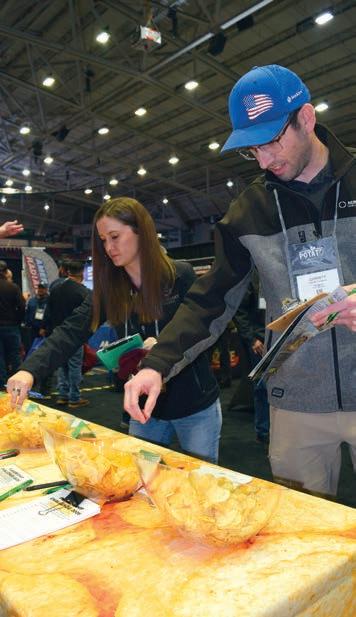
Tawny Elliott with Europlant and Garrett
guess the brands and flavors of potato chips in the annual Flavor Chip Challenge.
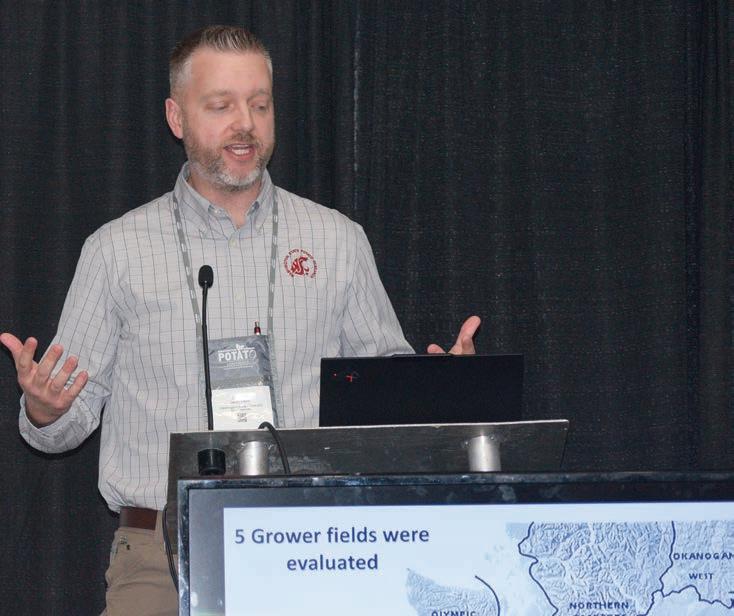
Jacob Blauer with Washington State University covers the latest research on the impact of heat stress on potatoes.
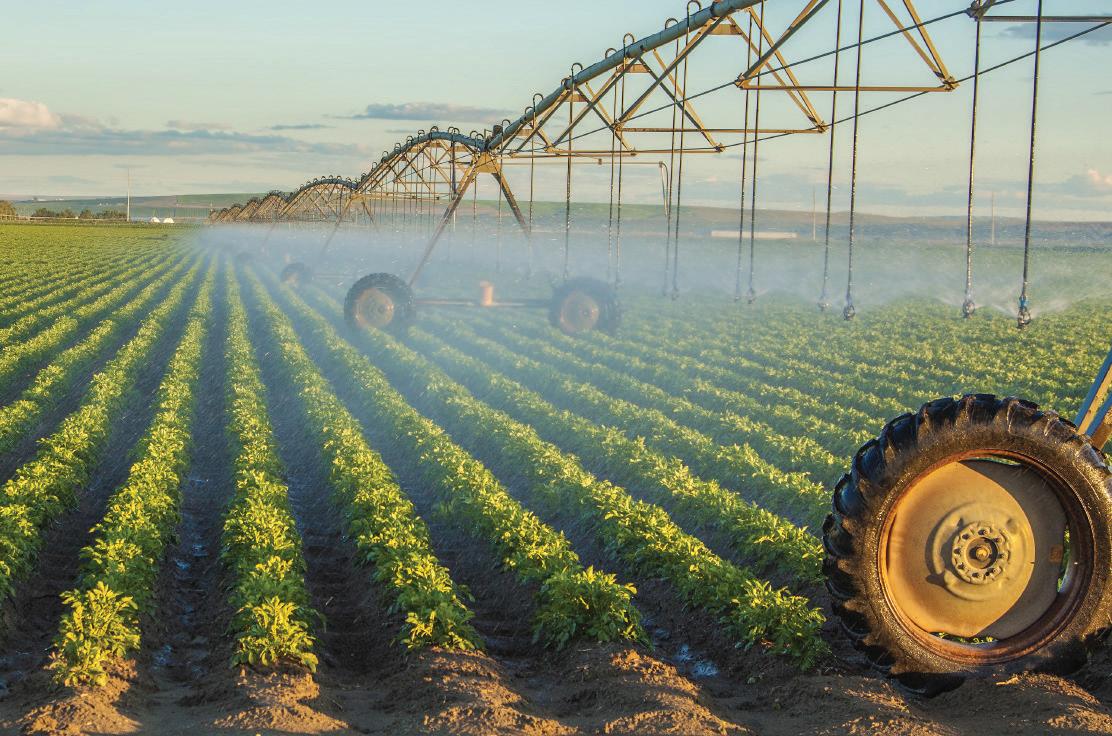
Start your crop right, with Redox Technology. Three factors to focus on for early season root development are phosphorus nutrition, soluble carbon, and calcium nutrition.
Utilizing soluble complexed and chelated nutrition as well as key carbon compounds found in Redox products, it is easy to increase root growth, root mass, and root metabolism.




Dr. Jeff Miller, a plant pathologist, is the president and CEO of Miller Research, Rupert, Idaho. He can be contacted by phone: (208) 531-5124; cell: (208) 431-4420; jeff@millerresearch.com
As spring arrives in the northern U.S. potato states, potatoes will be planted and start emerging soon. Unfortunately, there are some diseases and disorders that can make it difficult for the emerging potato plant to get a good start. Can you identify the diseases/disorders shown in these photos?
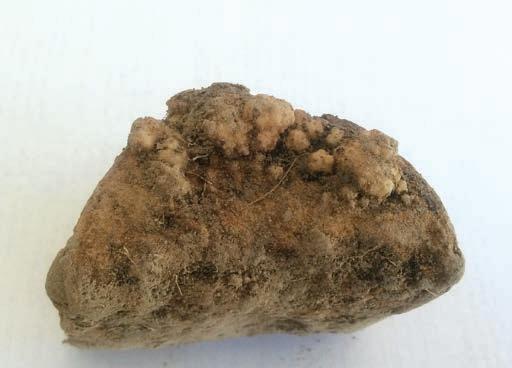
In Photo A, a grower was excavating a blank in the field to see why a plant had not developed. He found a solid, nondecayed seed piece with no sprout. However, bumpy protrusions were starting to form on one cut surface. What is going on here?
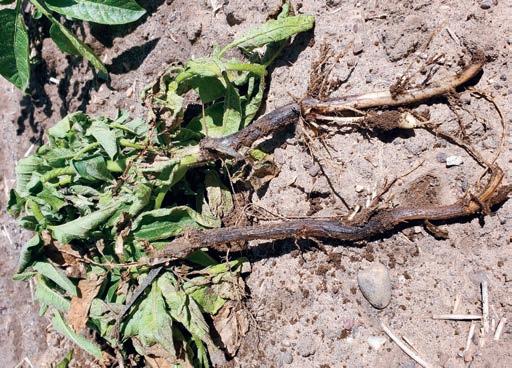
The plants in Photo B started to wilt shortly after emerging from the soil. When the stems were lifted from the soil, they had a black, slimy appearance. What is the problem? Can anything be done to save these plants?
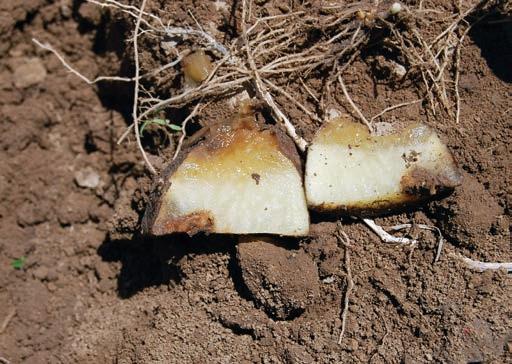
Another blank area was excavated and the seed piece shown in Photo C was found. The top portion of the seed appeared watery and translucent. This is not dry rot. And even though the tissue is soft, it has a different consistency and texture than bacterial soft rot. What is this? What kind of seed treatment could you use to avoid this?
Answers Page 17
B
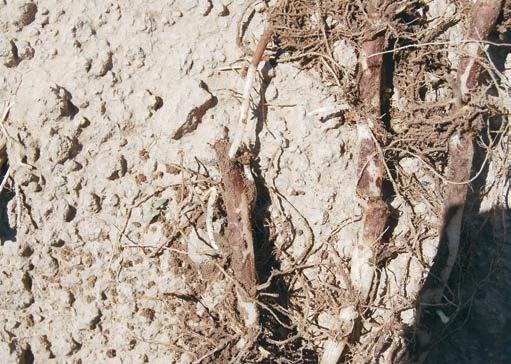
Photo D shows stems that have been girdled with dark brown lesions. The stem on the left has been completely cut off. What is causing this and how could it be avoided? What can you do now at this point in time? C A D

By Riley Peterson, Nutrition Director, Potatoes USA
Potatoes are America’s favorite vegetable, and consumers’ belief in the nutritional benefits of potatoes is at an all-time high. However, some confusion persists about the role spuds play in our health. Potatoes are still sometimes inaccurately portrayed as causing weight gain, poor health outcomes, or certain diseases instead of as a nutrientdense vegetable and a critical source of potassium and fiber (two nutrients Americans don’t get enough of, according to the 2020-2025 Dietary Guidelines for Americans).
These misperceptions can be amplified through scientists’ misclassification of potatoes in their research, where potatoes are often grouped with non-vegetable foods like red meat, refined grains, sweets or sodas.
Countering these misperceptions requires high-quality scientific evidence to support the role of potatoes in healthy lifestyles. That’s why the Alliance for Potato Research and Education (APRE) is so important. A nonprofit organization funded by the potato industry and Potatoes USA, APRE is dedicated to advancing the scientific understanding of the role potatoes play in health and wellness and is committed to scientific integrity, publishing all research findings regardless of the outcomes to ensure the facts are publicly available.
Since 2011, APRE has invested nearly $15 million in potato nutrition research, focusing on three primary areas of research: cardiometabolic health, healthy dietary patterns and healthy lifestyles. To date, APRE’s investments have resulted in 48 published manuscripts, and 22 studies are currently underway.
In 2025, APRE-supported research was published showing that total potato consumption isn’t associated with the risk of cardiovascular disease or hypertension, and white potatoes don’t negatively affect glycemic indices, vascular health, lipids or blood pressure compared to white rice.
Looking ahead, APRE members are particularly excited about two long-term feeding trials that have already begun at Penn State and Virginia Tech, exploring the relationship between consumption of various forms of potato products and blood glucose control. The Penn State study will examine the glycemic effects of potatoes in a healthy Mediterranean-style dietary pattern among pre-diabetic adults, while the Virginia Tech study will examine the cardiometabolic effects of a potato-rich diet in older adults with increased type 2 diabetes risk. These more robust, long-term studies can provide critical, foundational scientific understanding around potato nutrition that can help inform evidence-based dietary guidance.
Published, high-quality scientific evidence supporting the role of potatoes in healthy lifestyles remains essential to ensure potatoes are included in evidence-based dietary recommendations to consumers.
APRE research is frequently cited by health professionals who write for major consumer-facing media outlets. For example, last year, Today.com published an article by registered dietitian (RD) Natalie Rizzo on the nutritional benefits of potatoes that cited six APRE-supported studies. The studies supported several nutritional benefits of potatoes, such as improving cardiovascular and metabolic health, aiding in weight management and enhancing sports performance.
Today.com has an audience of millions, demonstrating how RDs are often powerful advocates for translating nutrition research to consumers. Even as Americans’ trust in online food content has fallen sharply in recent years, over 70% of Americans say they have “high trust” in RDs as a source of nutrition information, according to the International Food Information Council.
One reason RDs have earned such high trust from consumers may be that they rely on published evidence before recommending foods, underscoring another way APRE-supported research translates to real-world impact. For example, the Code of Ethics for the Nutrition and Dietetics Profession requires practitioners to use an “evidence-based approach” and “assess the validity and applicability of scientific evidence without personal bias.”
Quality nutrition research also has staying power and can be cited in media coverage even years after publication. An article published last year in Mindbodygreen cited 2021 APREsupported research that found increased dietary potassium from potato consumption may help mitigate sodium retention, reducing risk of hypertension.
APRE strengthens potatoes’ position in healthy lifestyles by supporting high-quality, independently guided research that advances understanding among scientists, policymakers, health professionals and consumers. This scientific foundation allows the industry to communicate the nutritional benefits of potatoes with credibility and authority and to partner with trusted voices in the health profession who reach thought leaders and consumers where they’re already seeking nutrition guidance.
In an era of nutrition noise and misinformation, APRE’s commitment to rigorous science and publishing all studies regardless of the outcomes isn’t just about defending potatoes’ place in today’s diets. It’s about uncovering the truth about potatoes and how they can be part of healthy eating for generations to come.
University of Idaho Extension is gearing up for another season of Ag Talk Tuesday, an online series offering growers, crop consultants and ag professionals updates and expert insights throughout the growing season. The series is slated for the first and third Tuesdays of the month May through August.
Each session follows a two-part format. The program opens with an overview of current conditions for crops including potatoes. These “roundtable” briefings help participants stay ahead of emerging issues from pest pressures to weatherdriven challenges. In the second half of the session, guest experts take a deeper dive into featured topics from crop protection and soil health to irrigation technology, sustainable practices and region-specific agronomic challenges.
Registration is free and required. For more information, visit uidaho.edu/ extension/events/ag-talk.



The Office of the U.S. Trade Representative has announced the signing of the U.S.–Taiwan Agreement on Reciprocal Trade. Potato industry leaders call this a strong trade win that opens the door for expanded export opportunities and improved long-term market stability for the U.S. potato industry.
The agreement calls for Taiwan to eliminate tariffs on all major U.S. potato product categories upon implementation. This includes frozen fries, dehydrated potatoes, fresh potatoes and processed products. This is expected to enhance the competitiveness of U.S. potatoes in Taiwan’s market and support expanded demand for processed and fresh product exports.
Beyond tariffs, the agreement includes provisions related to Maximum Residue Levels (MRLs). Under the agreement, Taiwan will accept U.S. MRL standards – or defer to Codex international standards – where Taiwan standards are not established. In the event of an MRL violation, enforcement actions will target the specific supplier responsible rather than suspending access for the entire commodity sector.
The agreement now moves to the Taiwan legislature for approval, alongside a final technical review process in the U.S.

University of Idaho Extension is offering a free online program to help increase agriculture literacy among youth. The ePotato curriculum, designed for students in grades 3-6, covers topics such as potato production, popular varieties and their uses, what makes Idaho well suited for growing spuds, potatoes’ nutritional components and health benefits, and ways to use potatoes to prepare healthy and tasty meals. The curriculum consists of five lessons that incorporate hands-on activities with interactive online elements. So far, more than 100 students and 60 4-H members have participated in the program.
For more information, visit uidaho. edu/extension/publications/ecs-0028.
Mainstay Si and Velox, two biostimulant products from Redox BioNutrients, have received certifications from The Fertilizer Institute (TFI) indicating that the products meet industry recognized standards for efficacy, safety and composition. Mainstay Si is a combination of calcium and silicon nutrition designed to increase cell wall strength in the plant, improve crop quality and bolster stress defense. Velox, which is the new name for V-55, is formulated with phosphorus and micronutrients to improve general nutrient uptake for retention of flowers and fruit.
Redox’s Mainstay Calcium 2.0 also has a Certified Biostimulant label from TFI. According to Redox, it is the first biostimulant company to have three products with these certifications.

The seed tuber in Photo A is a “blind” seed piece – it does not have viable eyes. As a result, no stem can grow from this seed piece. Tuber cells of the seed piece start dividing, causing the round protrusions, but these will not develop into plants.
Pectobacterium atrosepticum typically causes blackleg, the stem symptom shown in Photo B. Plants will be stunted or may not even emerge if disease development is severe. Seed quality influences the incidence of this disease. There are no seed treatments or in-furrow sprays that directly affect blackleg. Foliar applications of fungicides or other products are not effective in managing blackleg.
The watery tan tissue at the top of the seed piece in Photo C is representative of a physiological disorder that has been called toxic seed piece syndrome (PSTS). This symptom is not caused by a pathogenic agent, and seed piece treatments do not seem to have an effect on this condition. Fortunately, it is not as common as many other seed piece diseases.
Photo D is showing severe symptoms of Rhizoctonia stem canker, caused by Rhizoctonia solani. When disease is severe, emerging stems can be cut off. The plant may try to send up additional stems to replace those that are lost. This takes time, resulting in delayed emergence. Rhizoctonia canker can be managed by using effective seed treatments and/or in-furrow fungicides. Seed treatments are most effective for seed-borne Rhizoctonia, and in-furrow fungicides are most effective for soil-borne Rhizoctonia. Treatments applied after planting have not been shown to be effective.
seed cutters
1992 Milestone MSC48 Cutter 3phase
1985 Milestone MSC48 48” Cutter 1 phase
2014 Better Built 72” model 400 480V 3ph
treaters
2013 Better Built CDT10’/10” Duster Chemical auger
2010 Better Built CDT10’/10” Duster
1996 Milestone 36 Barrel duster
1994 Milestone 36” Barrel Duster Reconditioned
Planters
2012 Spudnik 8040 4 row 36” Cup
2015 Double L 9560 6 row 34”
2009 Spudnik 8060 6 row 36” semi mount
2008 Grimme GL36 Cup 6 row 36” Pull Hitch
2008 Spudnik 8080 Pull Hitch, Cup, 36” row spacing rear steer
Planter/filler/dirt/tare
Double L 815 Tare conveyor
24” x 25’ cleated belt
Mayo 24” Telescopic Planter filler piler
Bulk Beds/BoXes
2016 Logan LP22 PTO bed ext. auto tarp
2011 Logan LP20’ PTO/Elec
1993 Lockwood 22’ Converted to Front & Rear drive
trucks
2019 KW T370 Auto w/2spd reduction,
2010 KW T370 Auto, 8.3 Cumm
2015 IH 7400 Auto, New IH motor
2005 Freightliner FL80 Auto Cat motor
1986 Pete 349 Truck with Logan 20’ bed Combo
2020 Spudnik 780 42” BC 230 volt 3ph remote
2000 Wemco 36” all belt 230 volt 3ph remote all hydraulic
1999 Double L 831 36” BC Elev/49’ boom 3ph HYD Drive & Remote
1996 Spudnik 550 36” All belt, 480 volt 3phase, remote Reconditioned
1989 Spudnik 550 36” BC Elev. 48’ Boom 3ph 480V Remote Reconditioned
1989 Spudnik 550 30” BC Elev. 48’ Boom 3phase VFD’s 230 Volt Remote
1982 Spudnik 450 36” BC Elev. 45’ Boom 220 volt single phase
1985 Double L 813 30” x 49’ 230 volt 3phase, remote Reconditioned
scooPers
2019 Logan Scoop Pro 30” 230 3phase Spudnik model 150 30” Reconditioned 230 volt 3ph dammer dikers
Ag Engineering 8 row Dammer Diker HYD Reset
2018 Logan Yield Pro 6 row Water Saver
2015 Logan Yield Pro 6 row Water Saver
2013 Ag Engineering 4 row Hyd. Reset
1996 AG Engineerng 6 row Tillage Master, Trip shanks
even flows/ surge
HoPPers/ croP carts
2019 Logan Surge Hopper 330 60”
230 Volt 3ph
2013 Mayo 455 Surge Hopper 300cwt 3ph, 2 belt stingers
2010 Double L 968 Even Flow 1000 cwt
3ph 1 Stinger 36”
2018 Spudnik 4835 Crop Cart 2 axle
2015 Kringstad 3600 Crop Shuttle Tracks
2019 Double L 953 4 row
2019 Lockwood 674 4 row 34” bed, 72” finger table
2018 Double L 7340 4 row 72” Reverse roll finger table
2017 Lockwood 674
2016 Double L 973 4 row return flow, finger table
2012 Lockwood 474H 4 row
2005 Lockwood 474H 4 row crossovers/windrowers
2023 Double L 6540 4 row
2019 Spudnik 6140 32” rows R&L discharge
2013 Spudnik 6160 6 row two boom
2017 Lockwood 554 LH 4 row
2009 Lockwood 554 LH 4 row
2008 Spudnik 6140 RH 4 row
2005 Lockwood 5000 RH 4 row
2004 Spudnik 6140 LH 4 row 34” rows
1996 Double L 851 36” bed RH 4 row rock/clod/air eliminators
2023 Lockwood Vacs Mobile
2019 Spudnik 991 Air Sep 72” Multi sep. 480 volt 3ph
2014 Lockwood Vacs 8
2013 Harriston 4240 Clod Hopper
2010 Harriston 3240 CH fingers peg belt blower sizing fingers 230 V 3ph
2002 Harriston 240 CH Ellis Table 480 Volt 3ph
1995 Harriston 200 CH New 13 finger roller table 480 volt 3ph collectors & stingers/PuPs
2001 Mayo 250 Side shift Belt Table 36”w/ 2 Stingers siZers
2015 Spudnik 925 -84” Acorns, 240V 3ph
2000 Spudnik 925 -72” Acorns, 240V 3ph
1997 Spudnik 925 72” Acorns, 480V 3ph
1993 Spudnik 925 60” Acorns, 480V 3ph
dirt eliminators
2014 Spudnik 990 Multi Sep Dirt Elim 72” 480 volt 3ph
2009 Spudnik 990 60”belt elev.,72” Rev/ Roll Table BC picking 480 V 3ph
2004 Spudnik 995 DES 72” split picking 230 volt 3ph.
2006 Spudnik 995 72”Finger rollers, Rev/Roll table
2003 Milestone 36” hopper 60” fingers 48 belt picking table Hang-on
conveyors - telescoPic
2001 Spudnik 1255 30’’/36’’/85’ 3ph
1997 Spudnik 1255 30”/36”/85’ 1 ph
1994 Double L 820 30” x 70’ 3ph
1996 STI 30” x 70’ 480 volt 3ph
1989 Double L 810 30” x 50’ 3ph
conveyors - straigHt Spudnik 1205 30” x 40’ 3ph
1998 DL 809 30”/38’ 3ph
Milestone 30” x 30’ 3ph
sHredders
2009 Newhouse 6 row 3-Point Model 1952 36” w/Tire Rollers
2014 Newhouse 8 row Pull type Model 2530 36” w/Tire Rollers
wareHouse & misc.
2011 Daumar PA 25D CB67
Wicketed bagger
2016 Tri Steel SS Grading/rolling table 3ph motor 24” wide rollers x 15ft long
Tri Steel Bag Conveyor 36” x 19’H-Adjust
Thermo Fisher Scientific Versa Flex
Checkweigher System Model 40-060 Kwik Locs
Neu Tech 9 lane weigher Ag Pak bagger 2 Kwik Locs
Grain Treater USC LP2000 with seed wheel
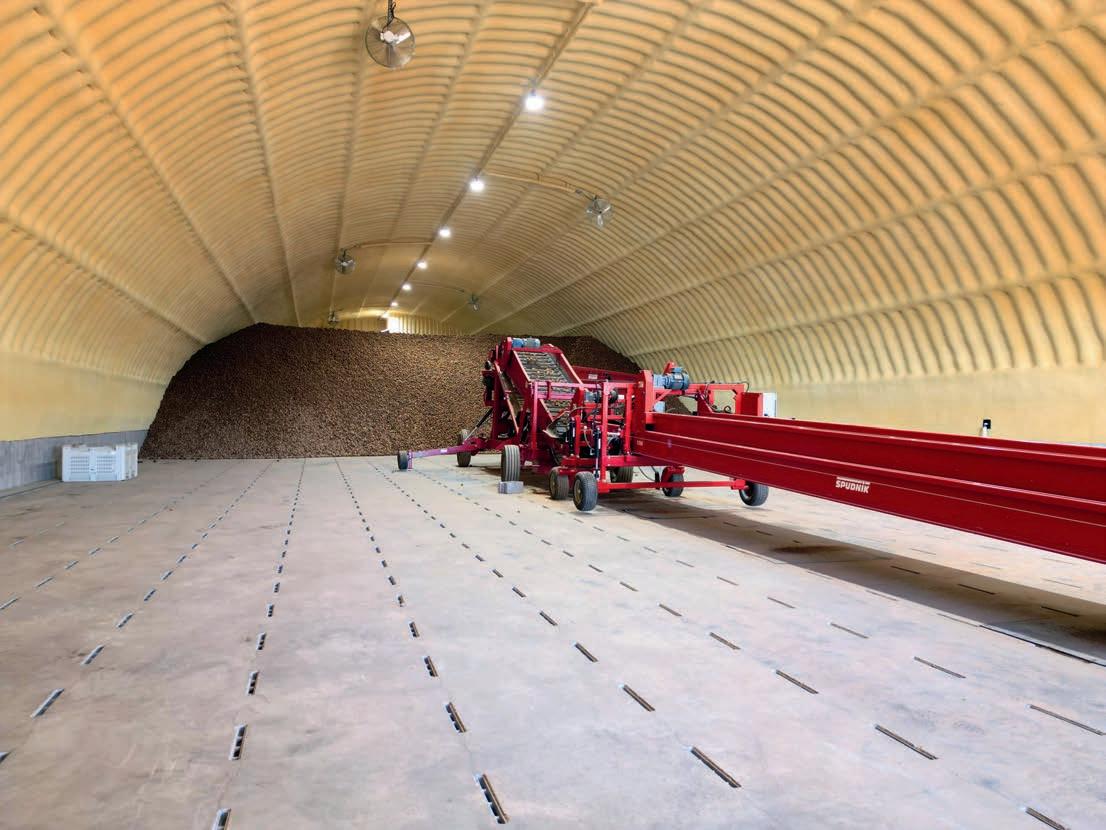
The TreadX Dozer was designed to clear dirt and debris from air ducts underneath air floor storages. It saves time and labor during the cleaning process. Operated by remote control, it features tank-style steering and an actuated blade. Powered by swappable lithium-ion batteries, it can run all day without downtime. Its heavy-duty steel frame, powerful electric motors, and track drive system offer exceptional traction and pushing power, according to the developers. Standard or custom units are available. Visit treadxdozer.com.


This material is provided courtesy of Josephine Antwi, Ph.D., Assistant Professor of Irrigated Crop Entomology at the Oregon State University Hermiston Agricultural Research & Extension Center. She can be reached at josephine.antwi@oregonstate.edu.
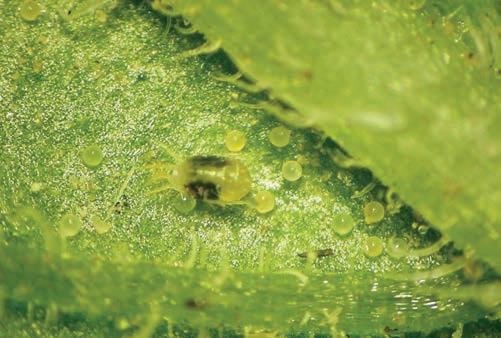
You are scouting a potato field and find tiny dots that seem to be moving across the leaves. You have 20/20 vision, so you are sure those things are moving. Luckily, you have your hand lens handy, so you take a closer look and find critters that look like those in photos 1, 2 and 3. Should you be concerned?


cultivacegrowth.com/free-phos-24-liquid-phosphate-fertilizer
Free pHOS 24

CultivAce is a West Coast manufacturer and distributor of a comprehensive line of foliar and starter fertilizers. CultivAce offers innovative solutions that drive agricultural crop yields and cultivate profitable outcomes. With a relentless focus on delivering high quality foliar and starter fertilizers, the company is committed to empowering growers with the tools needed to achieve remarkable results. CultivAce is built on two fundamental principles: products must be the highest quality, and they must make the grower money. If a product doesn’t meet these standards, CultivAce doesn’t manufacture it.
CultivAce standout liquid phosphate Free Phos 8-24-0 is field proven in potatoes with supportive trials from various states, exemplifying the company’s dedication to effective agricultural solutions.
jhbiotech.com/chelation-and-mineral-nutrition
Biomin
Biomin is a line of fully chelated plant nutrients resulting from the chelation of mineral nutrients with amino acids. These chelates protect the nutrient from combining with other elements or losing nutrient value for absorption. JH Biotech’s Biomin chelated line is OMRI, CDFA and WSDA organic certified and is compatible with humic and fulvic acid products. Without using harsh chemicals, it provides plants with stable nutrients, balancing mineral deficiencies more quickly than conventional inorganic nutrients. It can be used for soil and foliar applications without compromising environmental quality and safety. Biomin may be applied to all crops and turf. It reduces the effects of saline soils, water deficiency and weather conditions while encouraging increased yield, homogeneous ripening, more flavored and high quality fruit, and greater nutrient absorption.

Omex
omexusa.com
For over 50 years, copper chemistry has remained unchanged, limited by leaf burn when applied in excess and by one-dimensional contact activity. Zynergy shatters that paradigm.
Engineered with Omex’s proprietary EBA technology, Zynergy refines what copper can do. It delivers copper and zinc in a highly bioavailable, low-use rate system that attacks disease on contact and activates the plant from within. Instead of triggering stress responses, Zynergy primes innate defense pathways, enhances nutrient efficiency and protects genetic yield potential under pressure.

This is not chemistry from the past; it’s copper redesigned for modern agriculture, creating lower metal load, greater penetration, stronger plants and fewer compromises.
For growers facing resistance, regulation and razor thin margins, Zynergy is the future of copper disease control.
redox Bio-nutrients redoxgrows.com
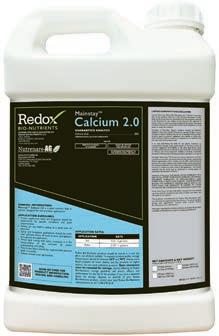
Mainstay Calcium 2.0
Mainstay Calcium 2.0 from Redox Bio-Nutrients is a key asset to achieve premium potato quality come harvest time. It is specifically formulated to provide concentrated plant-available calcium and short-chain soluble carbon compounds for plant nutrition and soil structure. Results include crop firmness, cell wall strength, plant nutrition, soil structure and root growth.
rovensa next rovensanext.com/en/ Nanocal
Nanocal is a sub-micronized, soil-applied, readily available liquid calcium specifically formulated to be applied at hook to strengthen cell walls, improve tuber quality, increase specific gravity, mitigate storage issues and promote overall crop health. Nanocal should be applied just prior to or at the early stages of tuber initiation to ensure maximum calcium uptake during cellular division. It’s meant as a supplemental source of calcium available to plants during this critical stage of development; it’s not meant to remedy calcium deficiency in soils.

sQM
sqm.com
Plant Nutrition Products
SQM provides specialty plant nutrition, offering high-purity potassium nitrate and innovative fertilizer solutions to enhance crop productivity and quality. Backed by extensive research, SQM supports potato growers with efficient nutrient management strategies that optimize plant health and maximize yields. With a robust global logistics network and extensive production capabilities, the company ensures a reliable supply of highquality fertilizers to meet growers’ needs.
tessenderlo Kerley Crop nutrition
tessenderlokerley.com
CaTs
CaTs is a 100 percent water-soluble calcium with a 0-0-10S-6Ca analysis. CaTs applied through the irrigation system can supply much needed calcium and sulfur at critical growth and uptake times. Recent trials with CaTs in the Pacific Northwest have shown both increased yields and improved storability.
tPs Lab
tpslab.com
CSL+
CSL+ is an innovative organic blend of L-amino acids from a combination of soy protein hydrolysate and corn steep liquor. This cutting-edge formulation provides many benefits from fulvic and other beneficial organic acids, proteins, enzymes, vitamins, hormones and sugars.
CSL+ is a highly bioavailable nutrient source with outstanding uptake efficiency, effectively increasing the plant-available N-P-K chemical analysis over other fertilizers that are excellent for any conventional, sustainable or organic program.
L-amino acids are nature’s building blocks of proteins and play a vital role in photosynthesis. They also contribute to many plant functions: cell wall strength, fruit quality, pollination, pollen fertility, hormone synthesis, formation of vegetative tissue, chlorophyll synthesis, stomatal regulation, chelation and more.
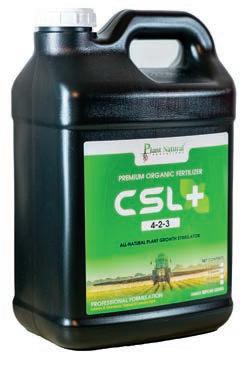

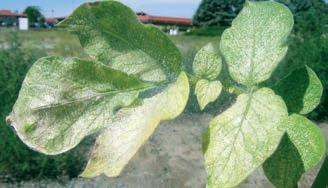
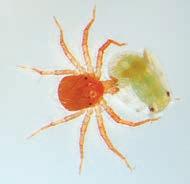
Photo 1 shows an adult two-spotted spider mite (Tetranychus sp.) with eggs. You should be concerned with two-spotted spider mites. Two-spotted spider mites feed on multiple crops. When conditions are right, their numbers can build up rapidly, leaving webs and a bronze-like appearance on leaves (photo 4). Damage depletes leaves of chlorophyll and reduces photosynthetic output and overall plant productivity.
Factors such as heat, water stress, and proximity to corn, alfalfa and mint fields can contribute to high spider mite population pressure in potato fields. Spider mite numbers can also flare up when broad-spectrum insecticides such as pyrethroids have been applied to control other pests. These chemistries can disturb predatory mites that provide substantial biological control of spider mites.
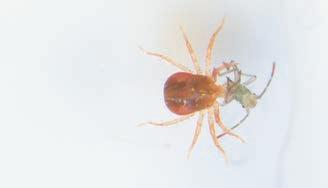
Some of the predatory mites that consume spider mites are Phytoseiulus persimilis (photo 2) and whirligig mites (photos 3 and 5). Phytoseiulus persimilis is highly selective for two-spotted spider mites. It requires high humidity, a dense spider mite population to thrive and cannot thrive in winter conditions, making it an ideal predator under greenhouse conditions. Whirligig mite, on the other hand, is a generalist predator and has been documented to feed on multiple pests, including potato psyllid (photo 5), Lygus nymph (photo 6), aphids, thrips and spider mites. They overwinter as eggs and begin to appear in May, with populations reaching a peak mid-summer.
You can support population buildup of whirligig mites and other natural enemies in potato fields by making changes to your insecticide application practices and conserving field habitats that support natural enemies. It is important to use selective miticides or acaricides and base application on field history and past experience with spider mites.
Growers have many things to consider when making planting decisions for the 2026 potato crop. Some of the major factors include current and projected potato prices, prices for alternative crops, production costs, contract volumes, irrigation water supplies, land availability and crop rotations.
Table 1 shows a four-year history of U.S. potato acreage by state, along with the year-to-year percentage change. In this article, we review some of the key factors influencing 2026 planting decisions.
Extremely low open-market prices for the 2025 potato crop could encourage growers to plant fewer acres to potatoes in 2026. The average Idaho Russet Grower Returns Index from October through December was $3.08 per cwt, down 58.5% from $7.42 per cwt a year earlier. The Washington GRI averaged $3.19 per cwt during the same timeframe, down 54.2% from the previous year.
Prices for several competing crops are also down from where they were a year ago. USDA reports that the national allwheat price averaged $4.85 per bushel during the October-December period versus $5.47 per bushel a year ago, an 11.3% decline. All-barley (-14.5%) and malting barley (-15.0%) prices are also down. Nationwide, alfalfa prices are relatively flat at $164 per ton. Corn prices are down 2.4% to $4 per bushel, while soybean prices have increased 3.6% to $10.20 per bushel.
Growers may consider significant openmarket potato acreage cuts this year due to extremely low prices. Though current prices for most alternative crops are near breakeven, they are relatively stronger than open potato prices. In addition, input requirements and financial risk are significantly lower for most alternative crops.
Though prices for some inputs could come down this year, overall production costs are expected to remain high for the 2026 crop. Table 3 shows the estimated
2024 and 2025 operating (direct/variable) costs and ownership (indirect/fixed) costs for potato production in southwestern Idaho. Per-acre operating costs rose by 2.3% in 2025. There were small cost reductions last year for seed, fuel and interest. On the other hand, fertilizer, chemical, irrigation and labor costs were up from 2024 levels. Currently, seed, fuel, chemical and fertilizer costs are down slightly, relative to year-earlier levels. Other operating expenses are expected to increase in 2026. Though H-2A wage rates are expected to come down, overall labor costs may be relatively flat. Relatively high interest rates could
decline somewhat, but possibly not before operating loans are secured. Ownership costs continued to increase for the 2025 crop. Overall, 2025 ownership costs rose 3.1% above 2024 costs, which put the total cost increase at 2.5%. Idaho’s cost per cwt was down slightly due to increased yields for the 2025 crop. Machinery and equipment depreciation has increased significantly during the past several years with rising equipment and interest costs. A shift to mechanical sorting due to rising labor costs and workforce availability has encouraged more investment in technology. Land rents continue to
receive upward pressure as farmland values increase along with demand from other ag sectors. However, land rent and equipment costs could be relatively stable in 2026.
Several other factors could affect the 2026 U.S. potato acreage. Processing contract volumes in the Pacific Northwest are expected to be flat or down slightly. Carryover from the 2025 crop may reduce the need for early potatoes. Contract volumes could be stable in the Midwest and Northeastern processing states. Though global demand for French fries and other frozen potato products remains strong, competing with the European Union, China, India, Egypt, Argentina and other areas has been challenging for North American fryers. Crop rotation requirements typically prevent wide year-to-year swings in potato acreage. Shifts in acreage on a statewide basis are often more variable than the change in acreage on a national level. Year-to-year changes are typically less than 5%. Nevertheless, it will likely take a larger acreage reduction to turn markets around this year. Finally, the country’s overall economic and political conditions may also weigh heavily on planting decisions. Growers across the country are weighing the unique financial, production and market risks of growing potatoes this year.
There are several factors to consider when making planting decisions for the 2026 crop year. Open-market potato prices are currently less than one-fifth of the break-even price. Prices for most alternative crops are also down, but not as much. The opportunity cost of growing potatoes versus other crops will once again be at the forefront of this year’s planting decisions. Rising production costs and lower contract prices will continue to squeeze profit margins. Other factors such as contract volumes, irrigation water supplies, yield variation, crop rotations and global economic conditions will affect planting decisions this spring.
By Ben Eborn, Publisher, North American Potato Market News

• Extremely low open-market potato prices should encourage growers to reduce production in 2026; however, profit margins remain extremely slim for most alternative crops.
• Rising production costs and financial risk could limit this year’s planted potato area.
• Crop rotation, contract volumes, capital requirements, irrigation water and global economic conditions are also factors to consider when making 2026 planting decisions.
editor’s note: To contact Ben Eborn, or to subscribe to North American Potato Market News (published 48 times per year), write or call: P.O. Box 176, Paris, ID 83261; (208) 525-8397; or email napmn@napmn.com.

By Dale Lathim, Potato Growers of Washington
Asthis winter’s cycle of potato conferences, grower meetings and contract negotiations wound its way across the industry, one theme surfaced again and again: the critical importance of high-quality seed at a price that allows the rest of the system to work.
When I entered the potato industry on Nov. 1, 1993, I brought with me a solid foundation in agriculture and business –but very little potato-specific knowledge. In fact, at the time, my primary qualification was that I enjoyed eating potatoes. Fortunately, I had mentors like Fred Dormaier and Gary Johnson who were willing to invest in my education. Their first directive was clear and nonnegotiable: attend the Montana Seed Potato Seminar.
That seminar, still held every year during the second week of November, was where they insisted my potato education begin. Their reasoning was simple but profound: a successful potato crop starts with good seed. They also understood that although I was working with growers in Washington, Montana was – and remains – a cornerstone of the seed potato industry. Knowing those growers and the challenges they face was essential.
The trip to Missoula, Montana, was
eye opening. I met not only Montana seed growers, but producers from other seed regions and, just as importantly, Columbia Basin growers who would go on to form the foundation of my career. It was there that I began to appreciate the interconnectedness of our industry – how decisions made in one segment ripple quickly through the rest.
One moment from that meeting has stayed with me for more than three decades. A prominent university potato breeder was presenting on the promise of newly released processing varieties. Ranger Russet and Umatilla Russet were hailed as breakthroughs, destined to replace older genetics. Then came the statement that caught everyone’s attention: while Russet Burbank accounted for more than 50 percent of processing acres in 1993, by the year 2000, there would be zero acres left. The new varieties, we were told, were simply too superior.
Thirty-two years later, Russet Burbank is still very much with us. It remains one of the top four varieties by contract acreage in most frozen processing regions and continues to anchor several fresh markets as well. The prediction, while well-intended, proved to be a lesson in humility.
Over the years, we have watched a parade of “next big things” come and go – varieties that seemed poised to displace Burbank, only to be sidelined by a fatal flaw. Sometimes it was consumer
resistance, as with GMO offerings. Other times it was pushback from major restaurant chains that valued consistency of taste and texture over agronomic advantages. More recently, Clearwater Russet appeared to be a rising star, only to see processors now pulling back and confining it to limited windows that fit specific product mixes.
Each time a promising new variety emerges, the seed industry is asked to respond quickly, ramping up production to meet forecasted demand. That process takes years and requires millions of dollars in investment. And when enthusiasm fades, seed growers are often left holding inventories that are difficult, if not impossible, to market. Over my career, I have seen this scenario play out more times than I can count.
Today, we find ourselves there again. Processors continue the search for a variety that delivers higher yields, better recovery, or ideally both – advantages that ultimately allow them to manage costs downstream. Growers, for their part, have been willing participants, experimenting with new genetics in partnership with processors. But after repeated cycles of adoption and retreat, many are beginning to ask hard questions. When new varieties fail to deliver meaningful improvements in contract economics, is the risk worth it?
At some point, processors must recognize that seed growers can only absorb so many misses before the system strains. Likewise, contract growers must acknowledge that results achieved on trial acres do not always translate cleanly to commercial scale on their own farms.
There is a better path forward. Slowing the pace, taking incremental steps, and allowing new varieties to prove themselves across multiple seasons and regions would reduce risk for everyone involved. Rushing to judgment – whether toward rapid adoption or rapid abandonment – has already cost the industry more than many of these varieties will ever return.
In potato country, some truths endure. And among the most enduring is this: no matter how promising the genetics, success still starts with the seed – and with the patience to get it right.


TELONE™ II by Teleos soil fumigant is the world's best defense against destructive plant parasitic nematodes, including root-knot, root-lesion, and stubby-root. Prepping the soil with TELONE™ before planting leads to healthier roots, higher yields, and improved quality. A custom blend of TELONE™ (to combat nematodes) and chloropicrin (to target soil-borne diseases like fusarium wilt and scab) is an effective one-two punch.