
PO Box 333
Roberts, Idaho 83444
Telephone: (208) 520-6461
Circulation: (503) 724-3581
OnionWorld.net
OniOn WOrld COntaCts
Editor Denise Keller editor@ColumbiaMediaGroup.com
Publisher / advertising Manager
Dave Alexander dave@ColumbiaMediaGroup.com
director of Operations
Brian Feist brian@ColumbiaMediaGroup.com
EditOrial inFOrMatiOn
Onion World is interested in newsworthy material related to onion production and marketing. Contributions from all segments of the industry are welcome. Submit news releases, new product submissions, stories and photos via email to: editor@ColumbiaMediaGroup.com.
adVErtisinG salEs
For information on rates, mechanics, deadlines, list rental, direct mail, inserts or other information, call (208) 520-6461 or email: dave@onionworld.net
sUBsCriPtiOns
U.S. $50 per year
Foreign $120 per year
subscribe online at: www.OnionWorld.net/subscribe or call (503) 724-3581.
Email address changes/corrections to brian@ColumbiaMediaGroup.com or mail to:
Onion World PO Box 333 Roberts, ID 83444
Onion World magazine (ISSN 0892-578X), is published eight times a year and mailed under a standard rate mailing permit at Idaho Falls, Idaho and at additional mailing offices. Produced by Columbia Media Group PO Box 333, roberts, id, 83444. Copyright 2026. all rights reserved. No part of this publication may be reproduced or transmitted in any form or by any means, electronic or mechanical, for any purpose without the express written permission of Columbia Media Group. For information on reprints call (208) 520-6461.




Photos by Casey Crookham
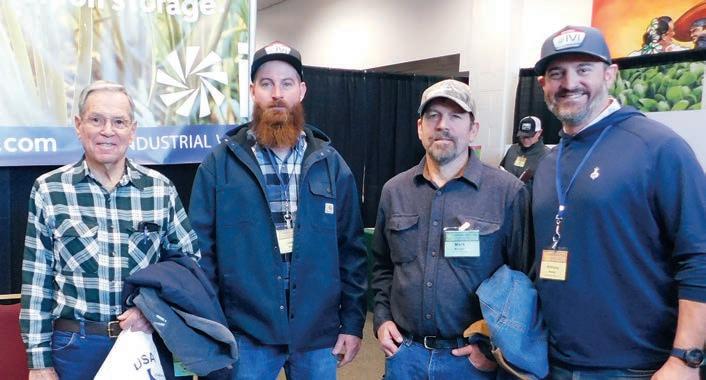
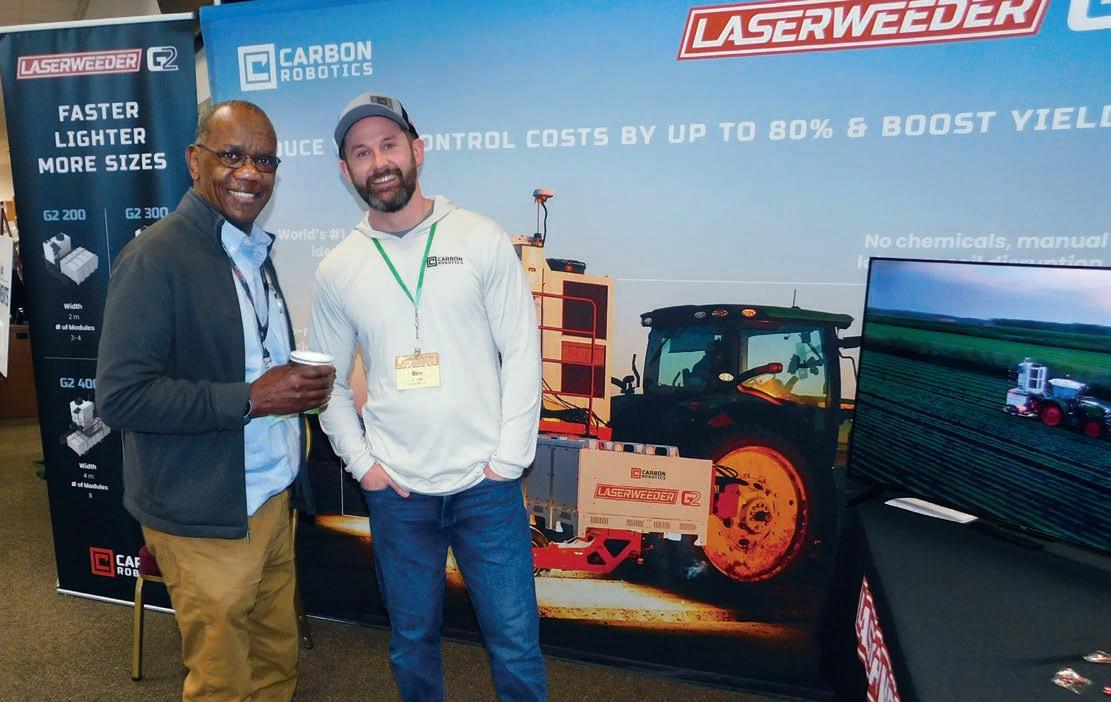
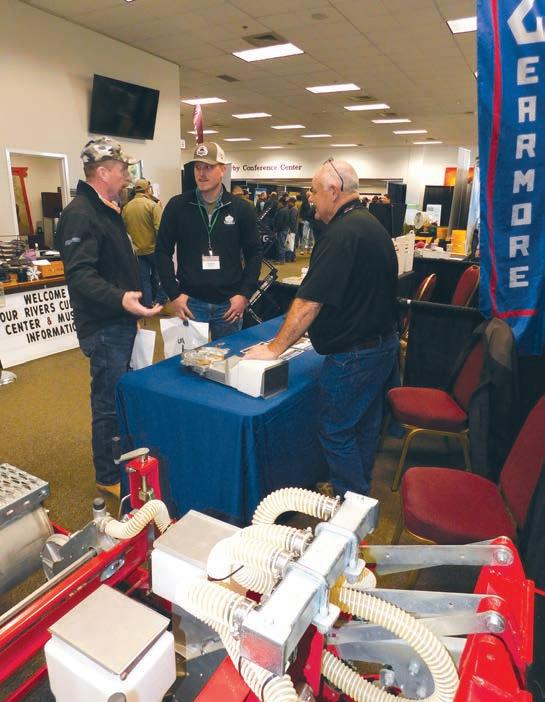
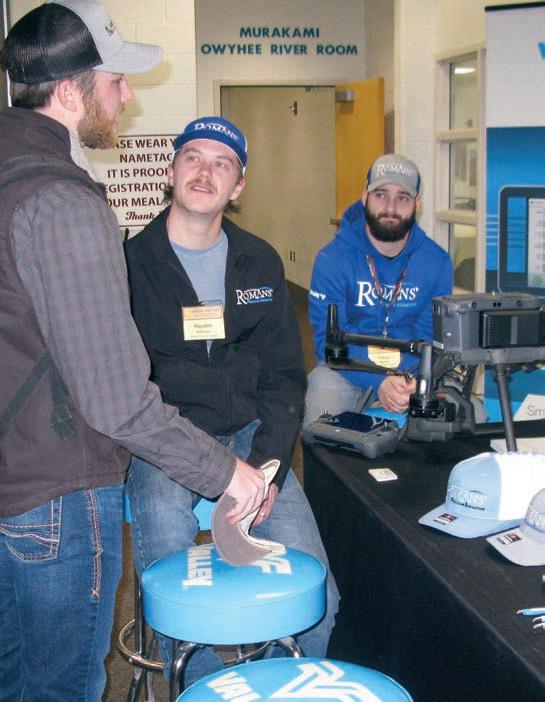
Growers looking to improve production practices found advice from experts at the 66th annual meeting of the Idaho and Malheur County Onion Growers’ Associations held Feb. 3 in Ontario, Oregon. A dozen speakers covered timely topics ranging from managing pests and diseases to minimizing production costs and food safety risks.
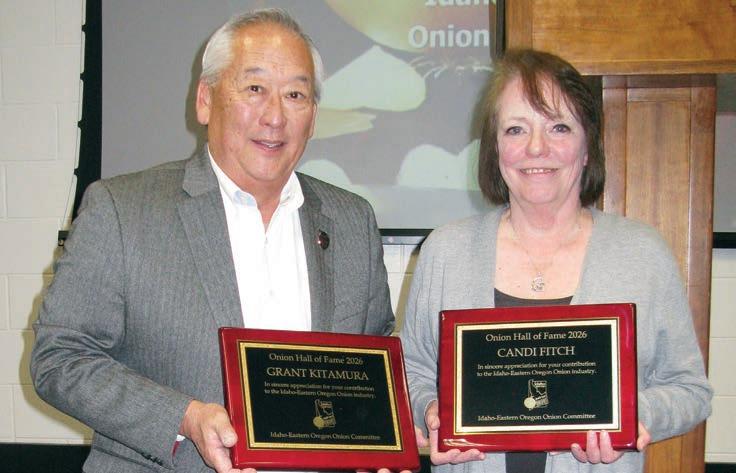
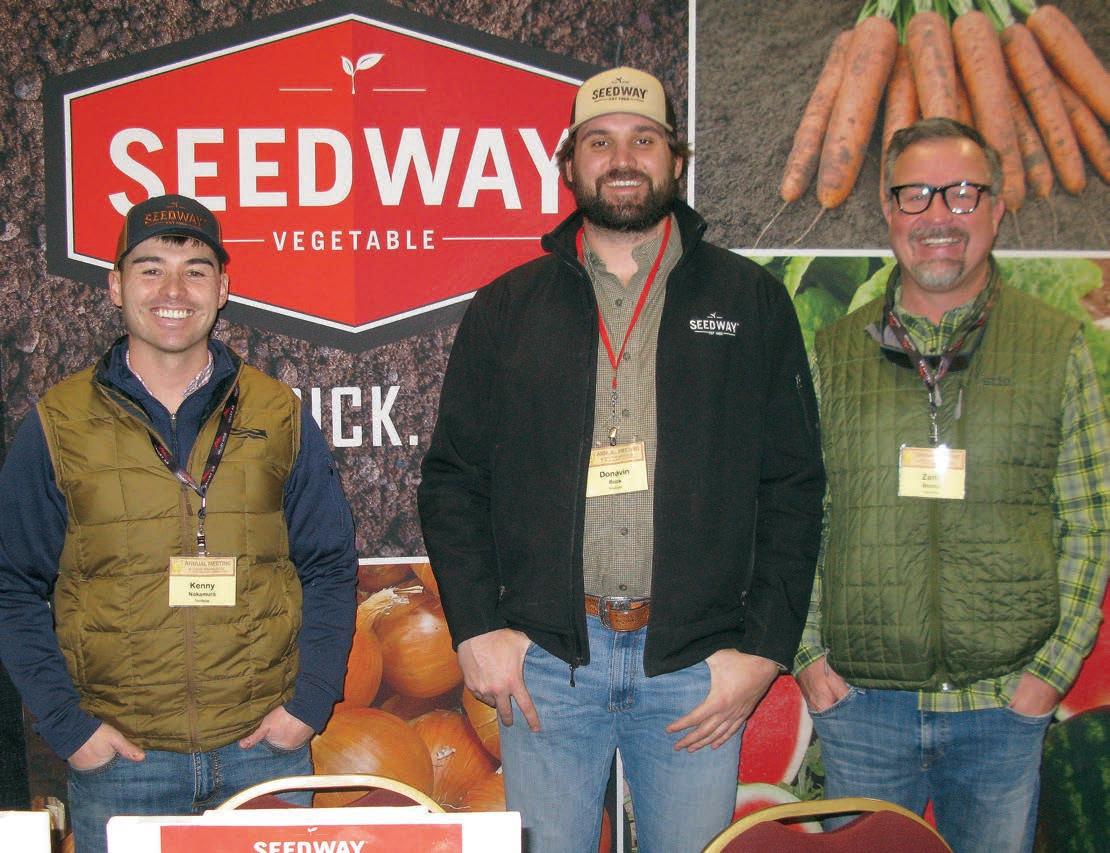
In addition to the educational sessions and a trade show, the meeting included the induction of two individuals into the Idaho-Eastern Oregon Onion Hall of Fame. Grant Kitamura and Candi Fitch were acknowledged for their long-standing commitment and impact on onion production and industry advancement.
Grant Kitamura
Grant Kitamura enjoyed a 45-year career in the onion industry and feels fortunate to be a member of a family vegetable farming operation that extends back more than 100 years. His grandparents on both sides began farming in Washington state in the early 1920s and continued farming after relocating to the Treasure Valley. Growing up on a row crop farm, he learned all aspects of farming from his dad.
After graduating from Oregon State University in 1975 with a degree in business and accounting, Kitamura returned to Ontario to farm with his family before going to work for Sig Murakami in 1980. In 2017, Murakami Produce and Baker Packing joined forces to form Baker and Murakami Produce. In September 2025, they sold their operation to Eagle Eye Produce, Treasure Valley Growers, allowing Kitamura to retire.
Throughout his career, Kitamura has believed in the importance of forming

strong relationships with farmers, customers, vendors and bankers. He sees the importance of collaborating with competitors and being involved in industry organizations. He served for many years as a trustee and finance committee chair for the National Onion Association. In 1993-94, he served as president of the Idaho-Oregon Fruit and Vegetable Association and has been on the Marketing Order since 1992 where he served as secretary/treasurer of the Idaho-Eastern Oregon Onion Committee. He has also worked with the Oregon Board of Agriculture, Malheur County Development Corporation and OSU Board of Trustees.
Grant and Carole Kitamura will celebrate their 50th anniversary in August with their three children and five grandchildren.

Candi Fitch
After being responsible for the setup and logistics of countless industry meetings throughout her 32-year career, Candi Fitch, executive director of the Idaho-Eastern Oregon Onion Committee, was the honoree at this meeting.
Fitch began working for the Idaho-Oregon Fruit and Vegetable Association in December 1993 as an assistant manager and worked her way up to executive director in 2005, overseeing the association’s six member organizations including the Idaho-Eastern Oregon Onion Committee.
In this role, Fitch has represented and advocated for the onion industry. Following the introduction of the Food Safety Modernization Act, she testified to the FDA in Washington, D.C., as part of the onion industry’s efforts to change the water regulations. She also has participated in trade missions including a Western United States Agricultural Trade Association trade mission to meet with buyers in Guatemala and the Dominican Republic. In 2023, she traveled to Mexico City with Idaho Gov. Little’s trade mission. Other career highlights include working with the Malheur Ag and Extension Coalition to set up the service district for the Malheur Experiment Station and partnering with the Treasure Valley Ag Coalition to keep the Parma Research and Extension Center open.
At age 40, Fitch began her college education, working full-time and taking classes to earn her bachelor’s degree from Eastern Oregon University. She went on to receive a master’s of business administration from Northwest Nazarene University in 2006. Fitch has two sons and two grandkids. She will be retiring on June 30.



Sakata Seed America’s former CEO has returned to the helm after an executive leadership transition at the company. Dave Armstrong is once again serving as president and CEO, titles he held for 15 years before stepping into the role of executive chairman last year.
Former president and CEO Eduardo Flores has left the company. Flores joined Sakata as chief operating officer in 2021 and had been serving as CEO since early 2025.
Meanwhile, Justin Davis, a 20-year veteran of Sakata, has been promoted to chief operating officer. In his new role, he will integrate research and development, supply chain, and vegetable seed sales and marketing.



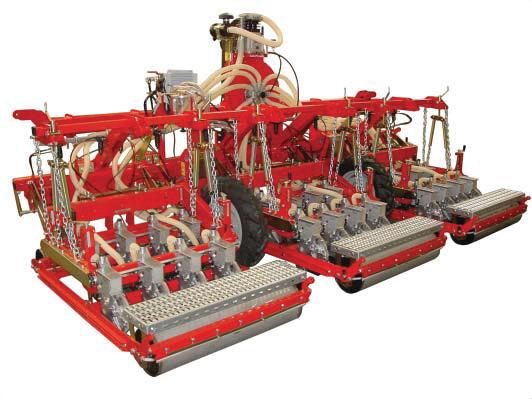



Our proven accurate seed placement is why growers have continued to purchase our planters over these many years.
Special inner and outer singulators removes doubles to insure placement of individual seeds.
All planters are assembled and tested at our plant in Chino, California, to insure accuracy.
Mainstay Si and Velox, two biostimulant products from Redox Bio-Nutrients, have received certifications from The Fertilizer Institute (TFI) indicating that the products meet industry recognized standards for efficacy, safety and composition. Mainstay Si is a combination of calcium and silicon nutrition designed to increase cell wall strength in the plant, improve crop quality and bolster stress defense. Velox, which is the new name for V-55, is formulated with phosphorus and micronutrients to improve general nutrient uptake for retention of flowers and fruit.
Redox’s Mainstay Calcium 2.0 also has a Certified Biostimulant label from TFI. According to Redox, it is the first biostimulant company to have three products with these certifications.
The National Onion Association (NOA) is giving a heads-up about a potential change that could affect shipments of onions into Canada. The Canadian Food Inspection Agency (CFIA) has announced plans to discontinue its federal produce inspection services. While the exact timing is unclear as of press time, this change could impact how inspections are handled for U.S. produce entering Canada.
In response, the Texas International Produce Association (TIPA) and the NOA, working with the Canadian Produce Marketing Association, plan to formally ask CFIA to reconsider this decision, as the change could have real consequences for U.S. exports to Canada.
According to TIPA, if CFIA inspections are discontinued, inspections would likely be handled by private third-party companies instead of a Canadian government authority. This shift raises concerns for shippers, particularly when it comes to claims and disputes.
Reports indicate the move is tied to federal budget cuts, which could make shipping into Canada more expensive and complicated for U.S. exporters.
TIPA notes that CFIA inspections currently carry the authority of a government agency, which is important for resolving truck claims, produce condition issues and enforcement actions. Without a government-backed inspection, claims may be harder to support, potentially increasing risk for shippers.
For now, TIPA recommends that shippers review their contracts, inspection procedures, insurance coverage and risk management practices so they are prepared if inspections move to third-party providers in Canada.




UNITED STATES
UNITED STATES


MEXICO
MEXICO
California (661) 699-0055
Lancaster & San Joaquin Valley (661) 978-5342
Irapuato
+52 (462) 220-0453
Torreón, Coahuila (461) 117-3878
Desert Southwest (928) 446-7737
California, New Mexico (661) 300-9109
Torreon
+52 (461) 117-3878
Colima, Col. (461) 104-0134
Colorado & New Mexico (970) 396-9728
Southern California, Arizona (760) 791-0325
Chihuahua
+52 (648) 109-1597
San Luis Potosi (461) 140-9452
Colorado (208) 550-7733
Idaho, East Oregon, Utah & Nevada (208) 941-1421
San Luis Potosi
Chihuahua (461) 171-9401
+52 (449) 196-1848
Idaho, Eastern Oregon, Utah, Nevada, North Dakota (208) 941-1421 (208) 550-7733
Skagit Valley, Washington (360) 941-7503
Rio Grande Valley & West Texas (956) 618-5574
Washington, Western Oregon (509) 820-9887
Texas (956) 618-5574
Tamaulipas
Tamaulipas (461) 134-2421
+52 (461) 346-1531
Irapuato, Gto. (461) 546-5792
Colima
+52 (461) 104-0134

CultivAce is a West Coast manufacturer and distributor of a comprehensive line of foliar and starter fertilizers. CultivAce offers innovative solutions that drive agricultural crop yields and cultivate profitable outcomes. With a relentless focus on delivering high quality foliar and starter fertilizers, the company is committed to empowering growers with the tools needed to achieve remarkable results. CultivAce is built on two fundamental principles: products must be the highest quality, and they must make the grower money. If a product doesn’t meet these standards, CultivAce doesn’t manufacture it.
CultivAce standout liquid phosphate Free Phos 8-24-0 is field proven in potatoes with supportive trials from various states, exemplifying the company’s dedication to effective agricultural solutions.
Polysulphate is the only naturally occurring fertilizer delivering four essential nutrients, all in sulfate form: potassium, sulfur, magnesium and calcium. Every granule of Polysulphate contains naturally balanced nutrition for uniform distribution across fields and maximum soil productivity. Low chloride and pH neutral, Polysulphate is extremely safe and ensures onions reach their highest quality and yield potential. Polysulphate is well suited for blending with most standard fertilizers and is fully soluble.
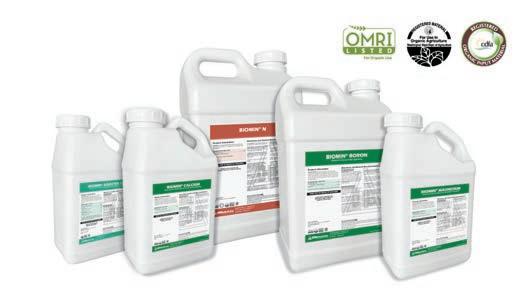
Biomin is a line of fully chelated plant nutrients resulting from the chelation of mineral nutrients with amino acids. These chelates protect the nutrient from combining with other elements or losing nutrient value for absorption. JH Biotech’s Biomin chelated line is OMRI, CDFA and WSDA organic certified and compatible with humic and fulvic acid products. Without using harsh chemicals, it provides plants with stable nutrients, balancing mineral deficiencies more quickly than conventional inorganic nutrients. It can be used for soil and foliar applications without compromising environmental quality and safety. Biomin may be applied to all crops and turf. It reduces the effects of saline soils, water deficiency and weather conditions while encouraging increased yield, homogeneous ripening, more flavored and high quality fruit, and greater nutrient absorption.

For over 50 years, copper chemistry has remained unchanged, limited by leaf burn when applied in excess and by one-dimensional contact activity. Zynergy shatters that paradigm.
Engineered with Omex’s proprietary EBA technology, Zynergy refines what copper can do. It delivers copper and zinc in a highly bioavailable, low-use rate system that attacks disease on contact and activates the plant from within. Instead of triggering stress responses, Zynergy primes innate defense pathways, enhances nutrient efficiency and protects genetic yield potential under pressure.
This is not chemistry from the past; it’s copper redesigned for modern agriculture, creating lower metal load, greater penetration, stronger plants and fewer compromises.
For growers facing resistance, regulation and razor thin margins, Zynergy is the future of copper disease control.
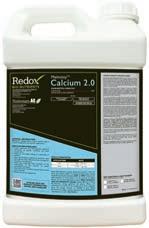
Mainstay Calcium 2.0 from Redox Bio-Nutrients is a key asset to achieve premium onion quality come harvest time. It is specifically formulated to provide concentrated plant-available calcium and short-chain soluble carbon compounds for plant nutrition and soil structure. Results include crop firmness, cell wall strength, plant nutrition, soil structure and root growth.
CaTs is a 100 percent water-soluble calcium with a 0-0-10S-6Ca analysis. CaTs applied through the irrigation system can supply much needed calcium and sulfur at critical growth and uptake times. Onion trials with CaTs in the Pacific Northwest have shown both increased yields and improved storability.
CSL+ is an innovative organic blend of L-amino acids from a combination of soy protein hydrolysate and corn steep liquor. This cutting-edge formulation provides many benefits from fulvic and other beneficial organic acids, proteins, enzymes, vitamins, hormones and sugars.
CSL+ is a highly bioavailable nutrient source with outstanding uptake efficiency, effectively increasing the plant-available N-P-K chemical analysis over other fertilizers that are excellent for any conventional, sustainable or organic program. L-amino acids are nature’s building blocks of proteins and play a vital role in photosynthesis. They also contribute to many plant functions: cell wall strength, fruit quality, pollination, pollen fertility, hormone synthesis, formation of vegetative tissue, chlorophyll synthesis, stomatal regulation, chelation and more.

By Sabrina Fisher, Director of Marketing & Communications, Texas International Produce Association
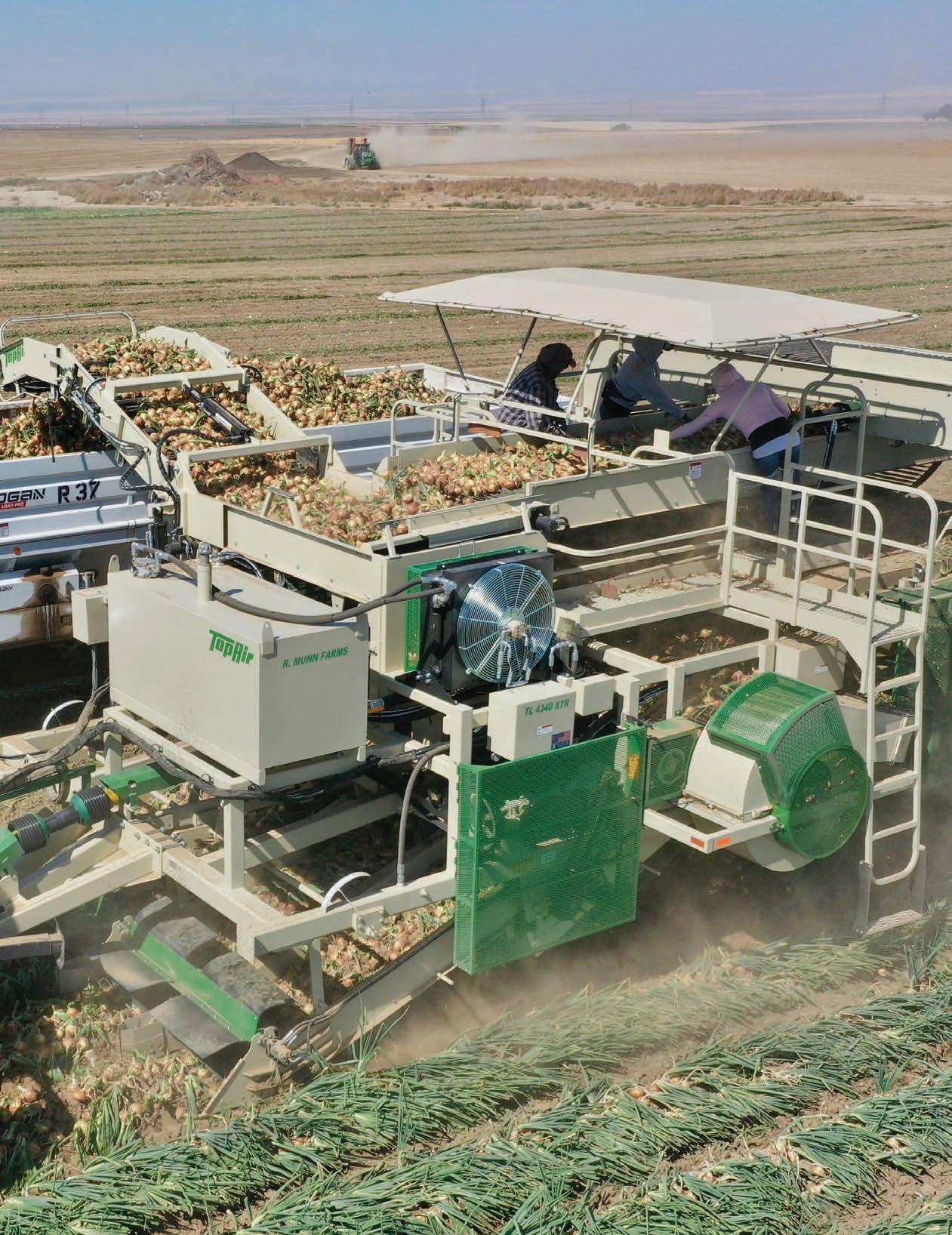
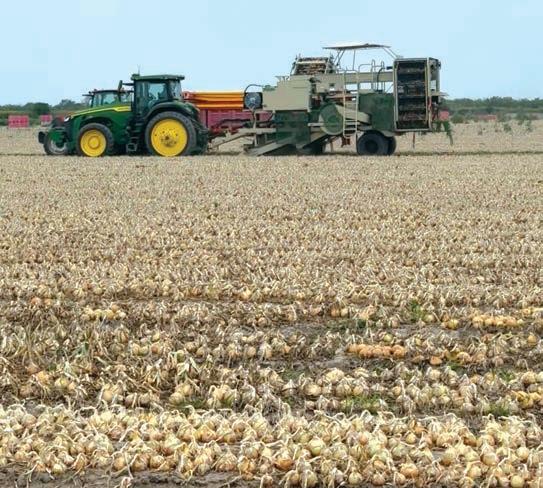
With support from the Texas Department of Agriculture, Texas growers and partners are stepping through a practical, Texas built approach to mechanical onion harvesting –keeping quality front and center while reducing harvest risk.
Every Texas onion season brings the same two pressures: finding enough skilled harvest labor at the right time and getting across the field before weather closes the window. Mechanization won’t replace the grower’s eye, but it can give us a steadier, more predictable path to the finish line – if we make the machines work for Texas conditions and Texas onions.
The project brings growers, equipment makers and researchers together to answer a simple question: Where does mechanical harvesting fit in Texas without sacrificing pack out
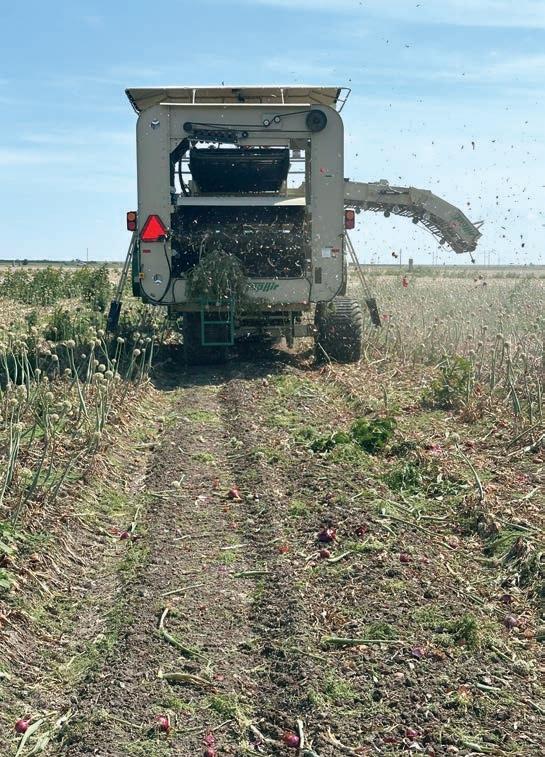
and storability? We’re evaluating toppers and lifter/harvesters alongside everyday production choices – variety selection, bed prep, timing and post harvest handling – so the results translate directly to commercial fields.
Year one focused on getting the pieces in place and gathering baseline observations in working fields.
• Equipment staging: A Nicholson topping system arrived in Uvalde, Texas, in late June and is stored on site for the next harvest window. Another manufacturer exited mid season, so we adjusted our plan and confirmed new equipment timelines for the coming year.
• Field observations: We collected side by side damage checks during regular harvest. As operators dialed in settings from one day to the next, we saw fewer scuffs and cuts and generally no issues that would change a market decision. Those quick improvements told us that training and setup are as important as the hardware itself.
• Partnerships: Texas A&M AgriLife–Uvalde, South Texas Onion Committee and cooperating growers helped ground the work in real world conditions – from lighter sands to heavier loams – so we can map what settings work where.
• Machines reward consistency. Straighter beds and uniform crown height make harvester depth more forgiving and reduce scuffing.
• Not all onions handle the same. Varieties with tighter necks and stronger skins come through mechanical handling better. We’re shortlisting options that keep the TX1015 eating experience while holding up to the pass.
• Timing matters most. When necks are properly dried down, the same machine setting does gentler work. Simple in field checks – neck pinch and skin slip – help greenlight the entry.
• Gentle flow after lift pays off. A brief in windrow cure before shed intake reduces bruise signatures at grading.
With equipment staged and partners aligned, the next harvest window is set for full, integrated field trials: topper plus lifter/harvester, multiple field types and clear before/ after comparisons in the shed. We’ll document the settings, the conditions and the outcomes so growers can see what’s repeatable and where adjustments make the biggest difference.
Why this Matters to the industry
This isn’t about chasing a one size fits all machine. It’s about building a Texas specific playbook that improves predictability, protects quality and gives the industry confidence to invest. That includes opportunities for equipment engineers to refine designs with real feedback and for seed developers to prioritize traits that help onions travel the mechanical path without losing what makes Texas onions, Texas onions.
June 21-23
Washington Potato and Onion association summer Meeting
The Marcus Whitman Hotel Walla Walla, Wash. www.wapotatoonion.com
July 8-11
nOa summer Convention Martinique New York on Broadway New York www.onions-usa.org
Editor’s note: To have your event listed, please email Denise Keller at editor@ columbiamediagroup.com. Please send your information 90 days in advance.

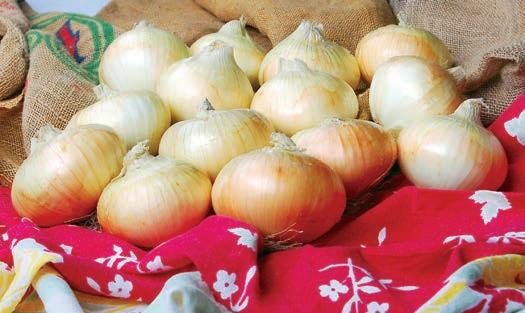
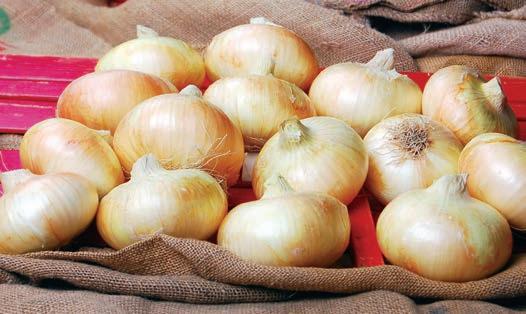
Crookham Company is releasing two new onions for the Vidalia market this year. Athens (4021) and Augusta (4022) mature at the beginning of the Vidalia harvest, giving growers more choices for the early slot in the market. Both varieties are said to have good emergence and high disease tolerance. The Crookham development team says the cultivars are competitive in yield and tend to have a higher stress tolerance to unfavorable weather due to their plant structure, sturdy root systems, tight necks and a waxy finish on their leaves that tolerates pivot irrigation.
Athens is characterized by a deeper bulb shape that can deliver a higher yield with the same input usage. It has high tolerance to bolting, Fusarium and pink root.
Augusta is a traditional flat Vidalia onion distinguished by a strong top and strong root system. Bulbs are consistent in size and appearance with a great flavor profile, according to Crookham.
Visit crookham.com.

The TreadX Dozer was designed to clear dirt and debris from air ducts underneath air floor storages. It saves time and labor during the cleaning process. Operated by remote control, it features tank-style steering and an actuated blade. Powered by swappable lithium-ion batteries, it can run all day without downtime. Its heavy-duty steel frame, powerful electric motors, and track drive system offer exceptional traction and pushing power, according to the developers. Standard or custom units are available. Visit treadxdozer.com.

By Jeremiah Dung, Oregon State University
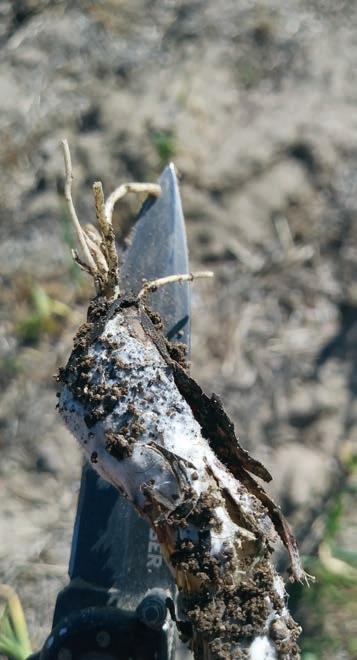
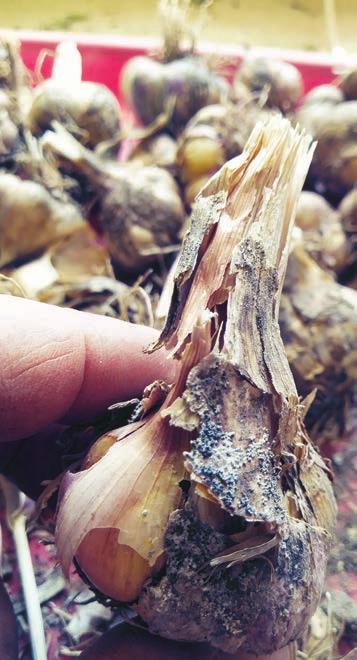
One of the most damaging and persistent diseases on onion and garlic in the western United States is white rot, caused by the fungus Sclerotium cepivorum. It is by far the most serious and economically important soilborne pathogen of immediate concern for onion and garlic producers in California and garlic grown for seed in Oregon. It can also impact Allium production areas of the Northeast and the Great Lakes region and has been reported on overwintered crops in Louisiana. Other economically important Alliums, including leek, shallot, chives and ornamental Allium, are also susceptible to white rot. The fungus infects the root systems, basal plates and bulbs of Alliums, resulting in foliar symptoms that include chlorosis and premature death of older leaves, stunting and rapid death of the aboveground foliage. Infected bulbs become watery and decay, eventually displaying white, fluffy mycelia and small, poppy seedsized sclerotia of the fungus.
White rot is limited to Allium species because sclerotia germinate in response to sulfur compounds released from Allium roots. One management approach is to apply these volatile sulfur compounds to soils in the absence of an Allium host, resulting in sclerotia germination and death. Diallyl disulfide (DADS), a primary compound found in the rhizosphere soil of garlic plants, has been shown to reduce sclerotia populations in laboratory, greenhouse and field studies, and DADS was previously registered as a germination stimulant for white rot management. The product was typically shank-injected into soils six to 12 months prior to planting an Allium crop.
Although soil treatment with DADS could reduce sclerotia populations by over 90%, it had several drawbacks. First, the product itself was costly to use at the labeled rate of 1 gallon/ acre (approximately $100/acre at the time). Second, for maximum efficacy,
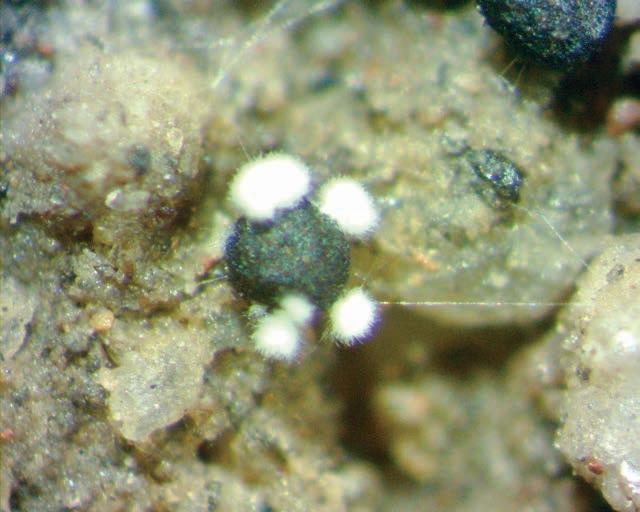
it required shank injection into the soil, which increases the cost and accessibility of applications. Lastly, DADS is highly volatile and an eye, oral, dermal and respiratory irritant, so it required handlers and applicators to wear protective personal equipment, including respirators. While DADS and commercially labeled products were very effective, sources of DADS are not readily available and registered products are no longer on the market.
Natural sources of sclerotia germination stimulants, including garlic and onion oil, powder, and Allium waste and effluent have been investigated as potential replacements for DADS and can be effective at reducing white rot sclerotia populations. Allium waste and effluent can be effective, but are usually less so than Allium powders and oils. Garlic and onion powder can also be effective, but large quantities are usually required and the amount of DADS in powders can vary depending on source, age and storage conditions, which can influence their efficacy. Allium oils are often highly effective but are often also shank injected due to their volatility and low solubility in water, which restricts spray or chemigation applications.
Encapsulation is a technique that can be used in situations where compounds need to be protected from the environment before or after delivery or need to be released in a slow-release manner, including essential oils for use as biopesticides. Previous research funded by a USDA-NIFA SCRI project (grant no. 2018-51181-28435) and conducted in collaboration with Michael Qian at Oregon State University demonstrated that both liquid DADS and garlic oil
could be successfully encapsulated by β-cyclodextrin.
Encapsulation of DADS or garlic oil with β-cyclodextrin resulted in microcapsules with less odor, lower volatility and the recovery of over 90% of the initial stimulant. Compared to their liquid counterparts, encapsulated DADS and garlic oil was easier to handle and, through the course of our studies, it was observed that encapsulated DADS and garlic oil were much more soluble in water than liquid DADS and garlic oil, potentially allowing for spray or chemigation applications in agricultural settings.
In lab and growth chamber experiments, encapsulated germination stimulants significantly reduced sclerotia levels in naturally infested field soils. Depending on the rate applied, soils treated with dry formulations of encapsulated DADS or garlic oil resulted in sclerotia populations that were 63.1 to 82.3% less compared to the non-treated control, comparable to liquid DADS (70.9 to 79.7%). Similarly, liquid suspensions of encapsulated germination stimulants reduced sclerotia populations by 75.9 to 92.7%. Additionally, microplot trials under field conditions also resulted in significant reductions in sclerotia levels compared to non-treated plots.
Encapsulated DADS and garlic oil provide flexibility in application practices (dry broadcast, spray, chemigation) and
eliminates the need for shank-injection application, which can be costly and difficult to perform due to the specialized equipment required. It is also less volatile than liquid formulations, resulting in easier handling and transport with
less impact on human health and the environment during transport, handling and application activities. However, future research at field and farm scales is needed to evaluate their effectiveness and economic impacts in the long-term.

By René Hardwick, National Onion Association Director of Public and Industry Relations
This summer, the National Onion Association invites members to join us in New York City, July 8-11, 2026, for an unforgettable convention packed with learning, networking and a little bit of the city’s famous energy. Whether you’re a grower, shipper or industry partner, this is your chance to see firsthand how the onion industry connects with the broader world of food and policy – and to do it in one of the most iconic cities on the planet.
One of the highlights of this year’s convention is our visit to the Hunts Point Terminal Market. This bustling hub serves as the gateway for much of the nation’s produce. Touring the market offers a rare glimpse into the logistics and scale that keep fresh fruits and vegetables moving from ports to stores and restaurants across the Northeast. It’s a behind-thescenes experience you won’t want to miss, and it’s a reminder of how central onions –
JULY 8-11, 2026
SPONSOR PACKAGE
and all produce – are to the nation’s food system.
Education is another cornerstone of our convention. Members will have the opportunity to hear from Washington, D.C., policymakers on issues that directly impact our industry. Topics include food safety programs, labor concerns and the H-2A temporary agricultural labor program, which plays a critical role in keeping farms fully staffed and productive. Engaging with these leaders is more than just informative; it’s a chance for members to have their voices heard and to influence policies that affect onions at every level of the supply chain.







of why onions are not only essential to our meals but also endlessly versatile.
Beyond the program, New York City itself is part of the experience. From world-class food and vibrant neighborhoods to summer energy and iconic sights, the city provides a backdrop that’s both inspiring and fun. Whether you’re networking with fellow members, exploring local flavors, or learning from industry and government leaders, this convention offers something for everyone.
Of course, no NOA convention is complete without our annual auction, which benefits our promotions program. We’re actively seeking donations from members to make this year’s auction bigger and better than ever. Whether it’s a unique item, an experience, or something connected to your farm or business, every contribution helps support the programs that promote onions across the country. And the energy at the auction is contagious – fun, competitive and all for a great cause.
On a lighter – and delicious – note, we’ve planned a special collaboration with a new member of the onion food industry that promises to delight your tastebuds. From innovative recipes to new product ideas, this is your chance to sample something unique while connecting with the entrepreneurs who are expanding the possibilities for onions in kitchens and markets nationwide. It’s a tasty reminder
Mark your calendars for July 8-11, 2026, and get ready for an event that combines industry insights, culinary surprises and the excitement of one of the world’s greatest cities. The NOA convention in New York City promises to be memorable, educational and, above all, a celebration of onions and the people who make this industry thrive.
To sponsor this convention, or if you have questions, please call the office at (970) 353-5895. You can also find sponsorship information at onions-usa. org/wp-content/uploads/2025/12/NYCFillable-sponsor-form-Final.pdf or by scanning the QR code below.

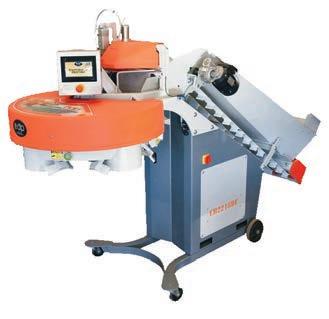
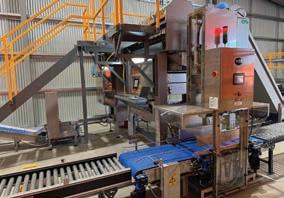
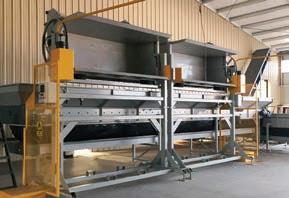
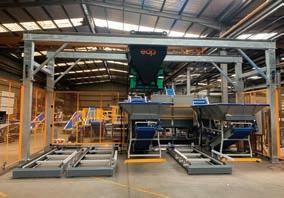
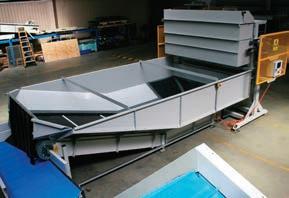
We supply and install a comprehensive range of equipment to the US market, including turnkey wash lines, grading lines, bin handling solutions for onion and potato packing sheds.
Looking for something tailored? We’ve successfully delivered and installed multiple grading and packing lines for our US customers.

edp.com.au
Scan the QR Code to view our full range of products







seed treatments provide early season disease and insect protection for young onion crops. Seed Dynamics applies the protectant to the seeds themselves, through a safe and controlled delivery. It works at the most critical time — during germination and seedling emergence — so your seeds can thrive, while fending o threats of early damage. Get a hero from Seed Dynamics , the Seed Preparation Professionals. Call us at 86 6.321.9747 or choose a dealer listed above. Visit our Website at SeedDynamics.com! When onion seed and seedcorn maggots threaten young crops, our heroes come prepared. FarMore FI500 and Spinosad/Lumiverd