CLASSICS 2025/26
PICTURES AT AN EXHIBITION
WITH
CHRISTOPHER DRAGON + ALBERT CANO SMIT
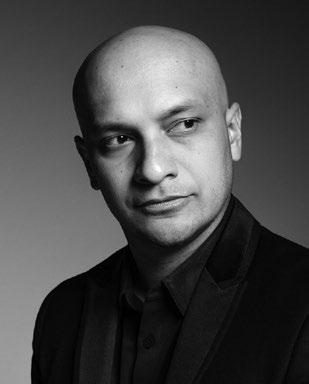
CHRISTOPHER DRAGON, conductor
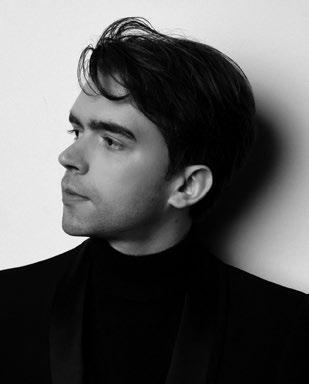
ALBERT CANO SMIT, piano
Friday, May 15, 2026 at 7:30pm
Saturday, May 16, 2026 at 7:30pm
Sunday, May 17, 2026 at 1:00pm
Boettcher Concert Hall
BERLIOZ
BRAHMS
Rákóczi March
Piano Concerto No. 2 in B-flat major, Op. 83
I. Allegro non troppo
II. Allegro appassionato
III. Andante
IV. Allegretto grazioso
— INTERMISSION—
MUSSORGSKY Pictures at an Exhibition (arr. Ravel) Promenade
I. Gnomus Promenade
II. The Old Castle Promenade
III. Tuileries
IV. Bydło Promenade
V. Ballet of the Chicks in Their Shells
VI. Samuel Goldenberg and Schmuÿle
VII. Limoges
VIII. Catacombs
Cum mortuis in lingua mortua
IX. The Hut on Fowl’s Legs
X. The Great Gate of Kiev
CONCERT RUN TIME IS APPROXIMATELY 1 HOUR AND 46 MINUTES INCLUDING A 20 MINUTE INTERMISSION.
Friday’s concert is sponsored by KpMG sunday’s concert is sponsored in MeMory
oF JaMes Mote
BIOGRAPHIES
CHRISTOPHER DRAGON, conductor
Australian conductor Christopher Dragon is the Music Director of Greensboro Symphony Orchestra, newly appointed Music Director of the Philly Pops, former Music Director of the Wyoming Symphony Orchestra and is the Resident Conductor of the Colorado Symphony. He joined the Colorado Symphony in the 2015/16 Season as Associate Conductor – a position he held for four years – and recently signed a new five-year contract with the orchestra through the 2030/31 Season. For three years prior, Dragon held the inaugural position of Assistant Conductor with the West Australian Symphony Orchestra, which gave him the opportunity to work closely with Principal Conductor Asher Fisch.
Dragon has a versatile portfolio ranging from live-to-picture performances including Nightmare Before Christmas, Toy Story and Star Wars: Return of the Jedi, a wide variety of collaborations with artists such as the Wu-Tang Clan, Cynthia Erivo and Joshua Bell, to standard and contemporary orchestral repertoire such as Danny Elfman’s Percussion Concerto; all areas of which he has become highly sought after. Christopher has become known for his charisma, high energy and affinity for a good costume, consistently delivering unforgettable performances that has made him an audience favourite.
Recent highlights include his sold-out symphony tour with Gregory Alan Isakov, which included debuts with the Los Angeles Philharmonic and Nashville Symphony, a new orchestral collaboration with Nathaniel Rateliff and his successful German debut with the WDR Funkhausorchester.
Christopher is highly sought after as a guest conductor and has worked with the Los Angeles Philharmonic, San Francisco Symphony, National Symphony Orchestra, Nashville Symphony, Atlanta Symphony, Utah Symphony, Cincinnati Pops Orchestra, San Diego Symphony, Pacific Symphony, Omaha Symphony, Louisiana Philharmonic Orchestra, Rochester Philharmonic Orchestra, Chicago Philharmonic, Singapore Symphony Orchestra, Orquestra Sinfônica de Porto Alegre and the New Zealand Symphony Orchestra. In Australia, he has guest conducted the Sydney, Melbourne, Adelaide and West Australian Symphony Orchestras. His 2015 debut performance at the Sydney Opera House with John Pyke and the Sydney Symphony Orchestra was released on album by ABC Music and won an ARIA the following year.
He has also conducted at numerous festivals including the Breckenridge and Bangalow Music Festivals, with both resulting in immediate re-invitations. At the beginning of 2016 Dragon conducted Wynton Marsalis’ Swing Symphony as part of the Perth International Art Festival alongside Wynton Marsalis and the Jazz at Lincoln Center Orchestra.
Christopher began his conducting studies in 2011 and was a member of the prestigious Symphony Services International Conductor Development Program in Australia under the guidance of course director Christopher Seaman. He has also studied with numerous distinguished conductors including Leonid Grin, Paavo and Neeme Jarvi at the Jarvi Summer Festival, Fabio Luisi at the Pacific Music Festival and conducting pedagogue Jorma Panula.
BIOGRAPHIES
ALBERT CANO SMIT, piano
Praised as “a moving young poet” (Le Devoir), Spanish-Dutch pianist Albert Cano Smit is building a rapidly growing international career on the orchestral, recital, and chamber music stages. Winner of the 2019 YCA Susan Wadsworth International Auditions and the 2017 Walter W. Naumburg Piano Competition, Cano Smit is renowned for his captivating performances, storytelling artistry, and nuanced musicality.
He has appeared as soloist with the Las Vegas Philharmonic, San Diego Symphony, Seattle Symphony, Montréal Symphony, Rochester Philharmonic, Colorado Music Festival Orchestra, Barcelona Symphony, Catalonia National Orchestra, and Manchester Camerata, among others, with upcoming concerto engagements with the Colorado Symphony and Virginia Symphony. His collaborations have included conductors such as Andrew Grams, Katharina Wincor, Pablo Rus Broseta, Ryan Bancroft, and Stephanie Childress.
Recital highlights include debuts at Carnegie Hall presented by The Naumburg Foundation and at Merkin Hall with Young Concert Artists, as well as performances at San Francisco’s Herbst Theatre, Paris’ Fondation Louis Vuitton, the Kennedy Center’s Terrace Theater, Germany’s Rheingau Music Festival, Barcelona’s Palau de la Música Catalana, Madrid’s Auditorio Nacional de Música, and the Miami International Piano Festival.
A passionate chamber musician, Cano Smit performs regularly with flutist Anthony Trionfo, and has partnered with violinists Paul Huang and William Hagen, with whom he recorded the album Danse Russe. His debut solo recording of Bach’s Art of the Fugue was released on Aparté in March 2025 to critical acclaim, earning five Diapasons from Diapason Magazine.
Born in Geneva, he began his musical training at the Escolanía de Montserrat before studying piano with Graham Caskie, Marta Karbownicka, and Ory Shihor. He holds degrees from the Colburn School and The Juilliard School, where he studied with Robert McDonald, receiving the 2020 Rubinstein Prize for Piano and completing an Artist Diploma.
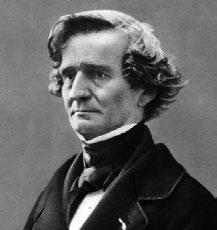
HECTOR BERLIOZ (1803-1869)
“Rákóczy March” from The Damnation of Faust, Op. 24
COMPOSITION & PREMIERE OF WORK:
Hector Berlioz was born on December 11, 1803 in Côte-Saint-André, France, and died on March 8, 1869 in Paris. He composed The Damnation of Faust in 1845-1846, and directed its premiere (in the form of an oratorio) at the Opéra-Comique, Paris, on December 6, 1846.
CSA LAST PERFORMANCES:
February 24, 2008 with Adam Flatt conducting..
INSTRUMENTATION:
The score calls for woodwinds in pairs plus piccolo, four horns, two trumpets, two cornets, three trombones, tuba, timpani, percussion and strings.
DURATION:
Duration is about 5 minutes.
Berlioz was 24, and consumed by the fit of raging passion for the English actress Harriet Smithson that flared into the Symphonie Fantastique, when Gérard de Nerval published his French translation of Goethe’s Faust, Part I in 1827. “This marvelous book fascinated me from the very first moment,” Berlioz wrote. “I could not put it down. I read it incessantly, at meals, in the theater, in the street, everywhere. This translation in prose contained some versified fragments, song, hymns, etc. I yielded to the temptation of setting them to music.” The result was the Eight Scenes from “Faust” for voices and orchestra of 1829, which Berlioz had printed (“foolishly,” he later admitted) at his own expense. Berlioz’s Faust then lay fallow until 1845, when he was on a concert tour of Austria, Hungary and Germany. He collected some scraps from the earlier Eight Scenes, concocted his own text on the Faust tales, and worked on his “dramatic legend” while bouncing along in a coach between Eastern European cities. The piece, titled The Damnation of Faust, was completed in Paris the following year and first heard at the Opéra-Comique in December.
Berlioz related the background of the Rákóczy March in his Memoirs: “The night before my departure from Vienna for Hungary, a Viennese amateur well up on the ways of the country I was to visit came to see me, bringing a volume of old airs. ‘If you want the Hungarians to like you,’ he said, ‘write a piece on one of their national tunes.’” Berlioz chose a song written in 1809 by John Bihari to honor the Rákóczys, a noble family long active in the Hungarian struggle for freedom from Austria. The piece that Berlioz erected on Bihari’s theme was received tumultuously by the Hungarian patriots when the composer premiered it in Pesth on February 15, 1846. Such was the success of this piece that Berlioz made room for it in the finished Damnation of Faust by incongruously transporting his German hero to a Hungarian plain to witness a charge of the national cavalry.
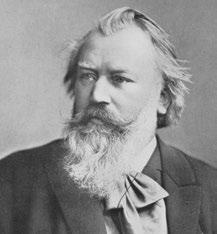
JOHANNES BRAHMS
(1833-1897)
COMPOSITION & PREMIERE OF WORK:
Johannes Brahms was born on May 7, 1833 in Hamburg, and died on April 3, 1897 in Vienna. He sketched his Second Piano Concerto in the late spring of 1878, but put the score aside for almost three years before completing it on July 7, 1881. The composer was soloist at the premiere on November 9, 1881 at the Redoutensaal in Budapest; Alexander Erkel conducted the Orchestra of the National Theater.
CSA LAST PERFORMANCES:
September 16-17, 2016 with Andrew Litton conducting and Jon Kimura Parker on piano.
INSTRUMENTATION:
The score calls for woodwinds in pairs plus piccolo, four horns, two trumpets, timpani and strings.
DURATION:
Duration is about 46 minutes.
In April 1878, Brahms journeyed to Goethe’s “land where the lemon trees bloom” with two friends, the Viennese surgeon Theodor Billroth and the composer Carl Goldmark. Though he found the music of Italy ghastly (he complained of hearing one opera that consisted wholly of final cadences), he loved the cathedrals, the sculptures, the artworks and, especially, the countryside. Spring was just turning into summer during his visit, and he wrote to his dear friend Clara Schumann, “You can have no conception of how beautiful it is here.” Still under the spell of the beneficent Italian climate, Brahms sketched themes for his Second Piano Concerto on his return to Austria on the eve of his 45th birthday. Other matters pressed, however, and the Concerto was put aside. Three years later, during the spring of 1881, Brahms returned to Italy and he was inspired by that trip to resume composition on the Concerto. The score was completed by July. Whether or not the halcyon influence of Italy can be detected in the wondrous music of the B-flat Concerto is for each listener to decide. This work is certainly more mellow than the stormy First Concerto, introduced over twenty years earlier, but whether that quality is the result of Brahms’ trips to the sunny south, or of a decade of imbibing Viennese Gemütlichkeit, or simply of greater maturity remains a matter for speculation.
The Concerto opens with a sylvan horn call answered by sweeping arpeggios from the piano. These initial gestures are introductory to the sonata form proper, which begins with the robust entry of the full orchestra. A number of themes are presented in the exposition; most are lyrical, but one is vigorously rhythmic. The development uses all the thematic material, with one section welded almost seamlessly to the next, a characteristic of all Brahms’ greatest works. The recapitulation is ushered in by solo horn, here given a richer orchestral accompaniment than on its earlier appearance.
It is rare for a concerto to have more than three movements. The second movement, a scherzo, was added by Brahms to expand the structure of this Concerto to a symphonic four movements. The composer’s biographer Max Kalbeck thought that the movement had originally been intended for the Violin Concerto but that Brahms, on the advice of Joseph Joachim, for whom the piece was written, had eliminated it from that work. In key and mood, it differs from the other movements of the B-flat Concerto to provide a welcome contrast in the overall architecture of the composition.
PROGRAM NOTES
The third movement is a nocturne based on the song of the solo cello heard immediately at the beginning. (Brahms later fitted this melody with words as the song Immer leiser wird mein Schlummer [“My Sleep Grows Ever More Peaceful”].) An agitated central section gives way to long, magical phrases for the clarinets that lead to a return of the solo cello’s lovely theme. The finale fuses rondo and sonata elements in a style strongly reminiscent of Hungarian Gypsy music. The jaunty rondo theme is presented without introduction. It is carefully and thoroughly examined before two lyrical motives are presented. As a study in the way in which small musical fragments may be woven into an exquisite whole, this movement is unexcelled.
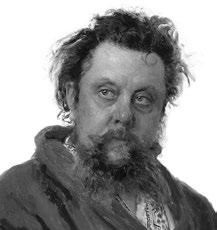
MODEST MUSSORGSKY (1839-1881)
Pictures at an Exhibition
Transcribed for Orchestra by Maurice Ravel (1875-1937)
COMPOSITION & PREMIERE OF WORK:
Modest Mussorgsky was born on March 21, 1839 in Karevo, Pskov District, Russia, and died on March 28, 1881 in St. Petersburg. He composed his Pictures at an Exhibition as a suite for solo piano in June 1874. The most familiar transcription for orchestra was done by Maurice Ravel early in 1923 on commission from the conductor Sergei Koussevitzky, who premiered it in Paris on May 3, 1923; he also directed the American premiere, on November 7, 1924 with the Boston Symphony Orchestra.
CSA LAST PERFORMANCES:
January 27, 2026 with Peter Oundjian conducting at Boettcher Concert Hall and February 1, 2026 with Peter Oundjian conducting at Carnegie Hall..
INSTRUMENTATION:
Ravel’s transcription is scored for piccolo, three flutes, three oboes, English horn, two clarinets, bass clarinet, two bassoons, contrabassoon, E-flat alto saxophone, four horns, three trumpets, three trombones, tuba, timpani, percussion, celesta, gong, two harps and strings.
DURATION:
Duration is about 35 minutes.
Though the history of Russia extends far back into the mists of time, the country’s cultural life is of relatively recent origin. Russian interest in art, music and theater dates only from the time of Peter the Great (1672-1725), the powerful monarch who coaxed his country into the modern world by importing ideas, technology and skilled practitioners from western Europe. To fuel the nation’s musical life, Peter, Catherine and their successors depended on a steady stream of well-compensated German, French and Italian artists who brought their latest tonal wares to the magnificent capital city of St. Petersburg. This tradition of imported music continued well into the 19th century: Berlioz enjoyed greater success in Russia than he did in his native France; Verdi composed La Forza del Destino on a commission from St. Petersburg, where it was first performed.
In the years around 1850, with the spirit of nationalism sweeping across Europe, several young Russian artists banded together to rid their art of foreign influences in order to establish a distinctive nationalist character for their works. Leading this movement was a group of composers known as “The Five,” whose members included Modest Mussorgsky, Nikolai RimskyKorsakov, Alexander Borodin, César Cui and Mily Balakirev. Among the allies The Five found in other fields was the artist and architect Victor Hartmann, with whom Mussorgsky became close friends. Hartmann’s premature death at 39 stunned the composer and the entire Russian artistic
PROGRAM NOTES
community. Vladimir Stassov, a noted critic and the journalistic champion of the Russian arts movement, organized a memorial exhibit of Hartmann’s work in February 1874, and it was under the inspiration of that showing that Mussorgsky conceived his Pictures at an Exhibition as a suite for piano.
At the time of the exhibit, Mussorgsky was engaged in preparations for the first public performance of his opera Boris Godunov, and he was unable to devote any time to his Pictures until early summer. When he took up the piece in June, he worked with unaccustomed speed. “‘Hartmann’ is bubbling over, just as Boris did,” he wrote to a friend. “Ideas, melodies come to me of their own accord, like a banquet of music — I gorge and gorge and overeat myself. I can hardly manage to put them down on paper fast enough.” The movements mostly depict sketches, watercolors and architectural designs shown publicly at the Hartmann exhibit, though Mussorgsky based two or three sections on canvases that he had been shown privately by the artist before his death. The composer linked his sketches together with a “Promenade” in which he depicted his own rotund self shuffling — in an uneven meter — from one picture to the next. Though Mussorgsky was not given to much excitement over his own creations, he took special delight in this one. Especially in the masterful transcription for orchestra that Maurice Ravel did in 1922 for the Parisian concerts of conductor Sergei Koussevitzky, it is a work of vivid impact to which listeners and performers alike can return with undiminished pleasure.
Promenade. According to Stassov, this recurring section depicts Mussorgsky “roving through the exhibition, now leisurely, now briskly, and, at times sadly, thinking of his friend.” The Gnome. Hartmann’s drawing is for a fantastic wooden nutcracker representing a gnome who gives off savage shrieks while he waddles about. Promenade — The Old Castle. A troubadour sings a doleful lament before a foreboding, ruined ancient fortress. Promenade — Tuileries. Hartmann’s picture shows a corner of the famous Parisian garden filled with nursemaids and their youthful charges. Bydlo. Hartmann’s painting depicts a rugged wagon drawn by oxen. The peasant driver sings a plaintive melody (solo tuba) heard first from afar, then close-by, before the cart passes away into the distance. Promenade — Ballet of the Chicks in Their Shells. Hartmann’s costume design for the 1871 fantasy ballet Trilby shows dancers enclosed in enormous egg shells.
Samuel Goldenberg and Schmuyle was inspired by a pair of pictures depicting two residents of the Warsaw ghetto, one rich and pompous (a weighty unison for strings and winds), the other poor and complaining (muted trumpet). Mussorgsky based both themes on incantations he had heard on visits to Jewish synagogues. The Marketplace at Limoges. A lively sketch of a bustling market. Catacombs, Roman Tombs. Cum Mortuis in Lingua Mortua. Hartmann’s drawing shows him being led by a guide with a lantern through cavernous underground tombs. The movement’s second section, titled “With the Dead in a Dead Language,” is a mysterious transformation of the Promenade theme. The Hut on Fowl’s Legs. Hartmann’s sketch is a design for an elaborate clock suggested by Baba Yaga, a fearsome witch of Russian folklore who flies through the air. Mussorgsky’s music suggests a wild, midnight ride. The Great Gate of Kiev was inspired by Hartmann’s plan for a gateway for the city of Kiev in the massive old Russian style crowned with a cupola in the shape of a Slavic warrior’s helmet. The majestic music suggests both the imposing bulk of the edifice (never built, incidentally) and a brilliant procession passing through its arches.
©2026 Dr. Richard E. Rodda