
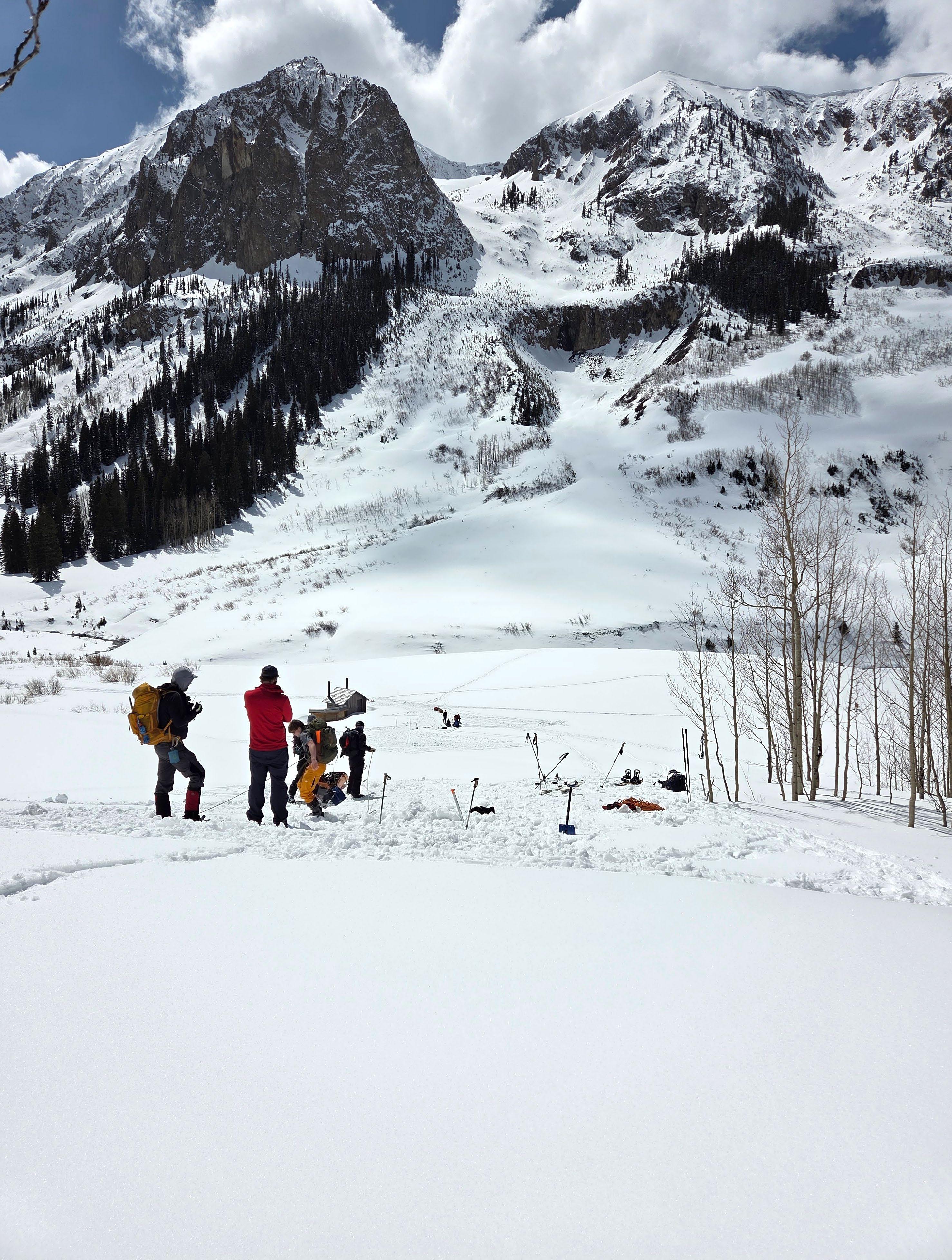
GOING THE EXTRA MILE
Western Mountain Rescue Team saves lives in the wilderness



MAGAZINE STAFF
Director of Communications Cassi Gloe cgloe@coloradocountrylife.org
Editor Kylee Coleman kcoleman@coloradocountrylife.org
Editorial Assistant Melinda Taylor mtaylor@coloradocountrylife.org
EDITORIAL
CORPORATE OFFICE
455 S. Pierce St., Lakewood, CO 80226 info@coloradocountrylife.org, 303-455-4111
Editorial opinions published in Colorado Country Life magazine shall pertain to issues affecting rural electric cooperatives, rural communities, and citizens. The opinion of CREA is not necessarily that of any particular cooperative or individual.
COPYRIGHT All content © 2026 Colorado Rural Electric Association. All rights reserved. Reproduction of this issue or any portion of it is expressly prohibited.
COLORADO COUNTRY LIFE (USPS 469400/ISSN 1090-2503), Copyright © 2026 is published monthly by the Colorado Rural Electric Association, 455 S. Pierce St., Lakewood, CO 80226. Business and Editorial Offices: 455 S. Pierce St., Lakewood, CO 80226. Accounting and Circulation Offices: 455 S. Pierce St., Lakewood, CO 80226. Call 303-455-4111 to subscribe. Periodicals postage is paid at Denver, Colorado.
POSTMASTER Send address changes to Colorado Country Life at 455 S. Pierce St., Lakewood, CO 80226.
SUBSCRIBERS Report change of address to your local cooperative. Do not send change of address to Colorado Country Life. Cost of subscription for members of participating electric cooperatives is 30 cents per month, paid from equity accruing to the member. For nonmembers, a subscription is $16 per year in state/$21 out of state.
ADVERTISING 720-407-0712 advertising@coloradocountrylife.org
National advertising representative:
American MainStreet Publications 611 S. Congress St., Suite 504 Austin, TX 78704 | 800-626-1181
ADVERTISING STANDARDS Publication of an advertisement in Colorado Country Life does not imply endorsement by any Colorado rural electric cooperative or the Colorado Rural Electric Association. Call for reprint rights. View advertising and editorial policy terms and conditions online at coloradocountrylife.coop.


The Final Stretch
By Kylee Coleman Editor
February may be the shortest month on the calendar, but the wait for “what’s next” can feel like a slog. The bustle of the holidays is over, and the novelty of a new year — and many of the resolutions that came with it — has worn off.
This final stretch of winter can be a struggle, but it is also a time for projects, preparation, and planning. Begin chipping away at the chaotic and cluttered closet that needs a good going-through. Dig into research for the new refrigerator you might need to buy to replace the old one that is on its way out. Write down your gardening strategy for this summer. And parents of high school seniors, it is time to start thinking about the graduation party that will sneak up on you in a couple of months. These don’t require perfection; quiet, steady progress is always meaningful.
The feature story in this issue highlights thoughtful, behind-the-scenes work that happens year-round — the training, preparation, and care that strengthens our communities long before the results are visible.
If you feel like this short month is extra long, you are not alone. Let’s keep going, tackle what we can, gather all the patience we can muster, and trust that spring is closer than it seems

Monthly Giveaway
Enter to win a Bluecorn Artemisa scented candle.
The 6-ounce candle sits in a beautiful glass jar, and the sage, eucalyptus, and bergamot scent elevates any space. Visit our website at coloradocountrylife.coop to enter.
Read more about Colorado candlemakers on page 21.
Do you need a different way to enter our contests? Send a postcard to 455 S. Pierce St., Lakewood, CO 80226, and include your name, mailing address, phone number, and the name of your electric cooperative. Contest closes February 20.



Shaping Outcomes
By Tom Walch CREA Executive Director
Every year around this time, electric cooperative leaders from around the state descend on downtown Denver to attend the annual meeting of the Colorado Rural Electric Association. The activities there are what you would expect at an annual meeting of a trade association: reports from officers, educational sessions, meetings of affiliated organizations, and presentations from guest speakers with their views on industry trends. But the real reason we are coming to Denver in the dead of winter is because of what’s happening just a few blocks away from our meeting venue, under the gold dome of the Colorado Capitol. That’s where the Colorado General Assembly convened on January 14.

interests are actively engaged in shaping the outcome. At the same time, lawmakers are advancing initiatives that will have real impacts on members and the communities they serve.
In this environment, strong grassroots engagement is not optional; the voices of co-op leaders, employees, and members will be critical to ensuring lawmakers understand how these policies affect real people in real communities. When legislators hear directly from the folks they represent, it strengthens our ability to protect affordability, reliability, and local decision-making.
CREA’s legislative team will have a full dance card this session, as we expect to engage on more than 40 bills. We will be working hard to preserve reliable and affordable electric energy for co-op members across the state. For example, we will work to ensure that transmission providers are not given a chance to escape their obligation to join a cost-saving Regional Transmission Organization or RTO. We will fight back against efforts to amend existing clean-energy statutes that could increase costs for many co-op consumers.
We are entering a challenging legislative environment. Several high-profile issues affecting electric co-ops are drawing significant attention at the Capitol, and many well-organized special
Grassroots engagement works best when it is driven locally and reinforced collectively. When co-op leaders activate their members, lawmakers listen. Today, Colorado’s electric co-ops are aligned around a common set of priorities, and that unity, paired with bipartisan interest at the Capitol, creates real opportunity. Change rarely happens overnight, but sustained engagement builds influence. Together we can shape outcomes that protect our members and the communities we serve. As the new executive director at CREA, I’m excited for the opportunity to lead this organization and build upon the unity of our communities and our co-op family.
Tom Walch is the executive director of the Colorado Rural Electric Association, the statewide organization supporting 21 electric distribution cooperatives and one generation and transmission cooperative.
Photo by Dave Collins/iStock/Getty
2026 Annual Meeting Information
By Josh Dellinger General Manager
Empire Electric Association’s 2026 annual member meeting is scheduled for Thursday, June 18, at EEA’s Engineering and Operations Center, which is located at 23999 Road L.4, Cortez, Colorado. Registration will begin at 4:30 p.m. and the meeting will begin at 5:30 p.m. This will be a business meeting only. Members who attend will receive a $10 credit on their electric bill.
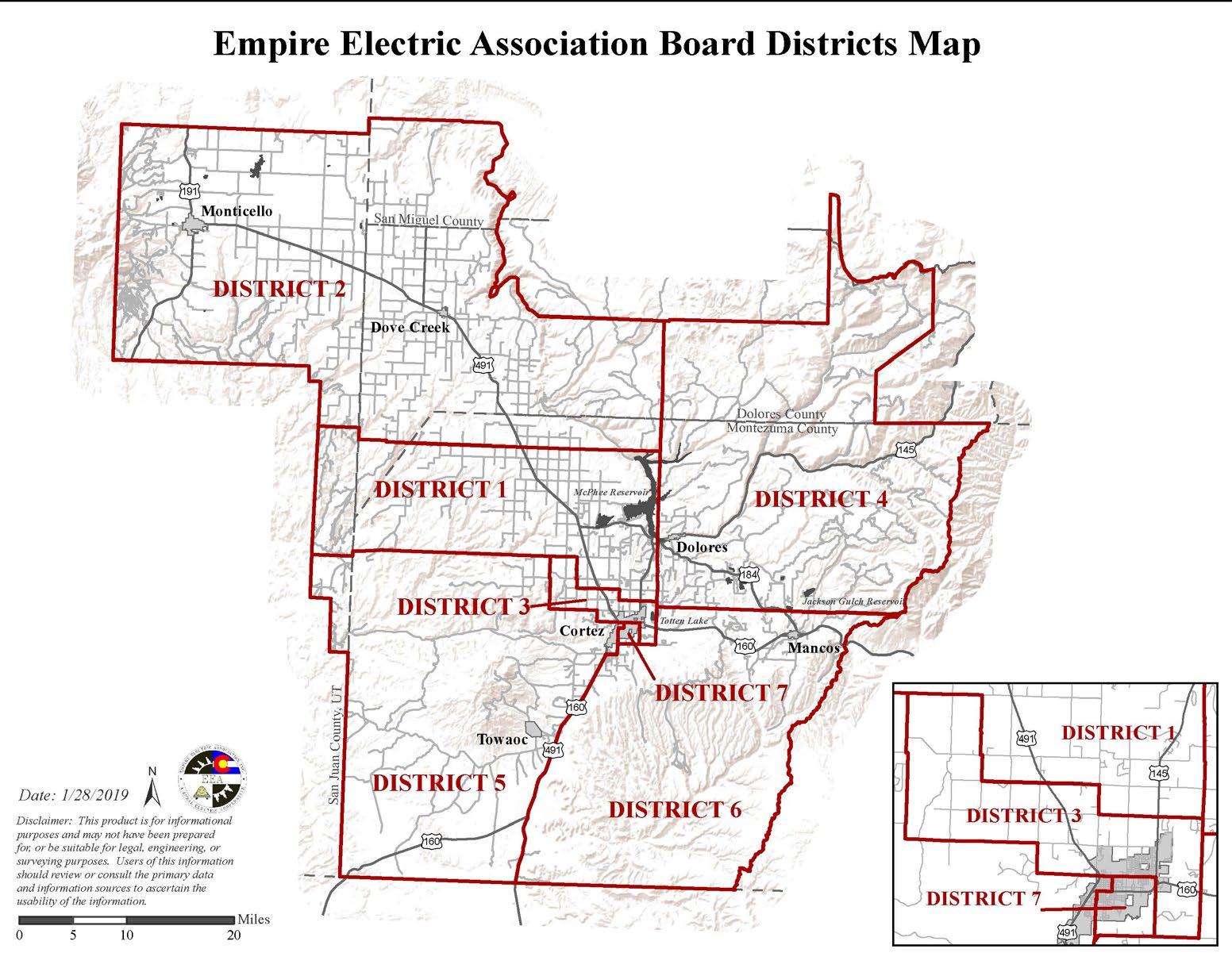
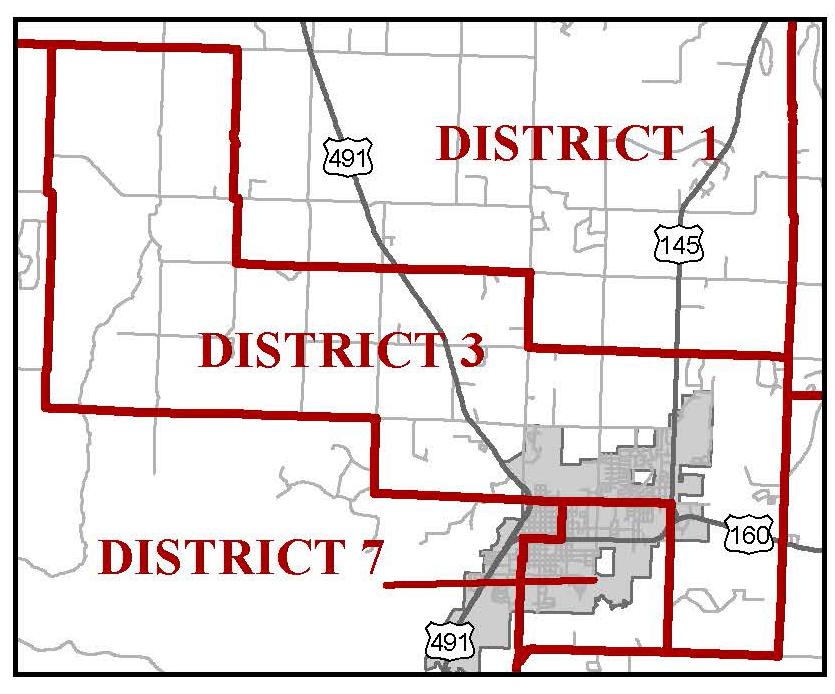
The EEA board considered present board district composition at its December 2025 meeting and determined no changes to board district boundaries are needed at this time. As of December 2025, the district with the most members had 1,974; the district with the least members had 1,892; and the average number of members per district was 1,931.
The District 3 board seat is up for election this year — Corey Robinson is the incumbent director. The winning candidate will serve a four-year term. In order to serve on EEA’s seven-member board of directors, our bylaws require the following qualifications. The director shall:
• Be a member of the cooperative for at least one year immediately prior to becoming a director.
• Be a bona fide resident of the district represented for at least 120 days prior to becoming a director, which means that the person must be a permanent occupant receiving electric service from the cooperative at his or her primary residential abode.
• Be a citizen of the United States of America and a registered voter in the person’s director district.
• Be at least 18 years of age.
• Not be an employee of the cooperative.
• Complete campaign contributions reports in accordance with Policy 31 –Campaign Contributions Reporting.

District 3 is generally described as follows: Generally, the center Montezuma County portion of the system. The eastern boundary begins at the midpoint of the southern edge of T36N R15W S32, and continues north along section mid-lines until it intersects Road M. The district boundary then follows Road M west until it intersects Road 25, then follows Road 25 north until it intersects Road N. The boundary then follows section lines (generally coincident with Road N) west to the intersection with Road 21, then follows Road 21 north to the intersection with Road S, and then follows Road S west to the intersection with Road 18. From there, the district boundary follows section mid-lines (generally coincident with Road 18) south to the northern edge of T36N R17W S22, and from there travels east along section lines (generally coincident with Road L) until it intersects with Road 23. From there it follows Road 23 south to the intersection with Road K. The boundary then follows Road K east to road’s end and continues east generally along section lines until it intersects with Empire St., and then it follows Empire St. east until it intersects Colorado State Highway 145. It then follows
the boundary between T36N R16W and T36N R15W south (generally consistent with Road 27) until it intersects Road H. From there the boundary follows Road H (generally coincident with the T36N R15W – T35N R15W boundary) to the point of beginning.
Candidates may be nominated by petition only and such petitions must include the signatures of at least 15 members of the cooperative whose bona fide residences are within the candidate’s district. Qualifying candidates may pick up a nominating petition from our main office during normal business hours. Petitions will be available beginning on March 20, and must be submitted to EEA by April 20. The secretary will post a list of qualifying nominees in our main office at the end of the business day on April 21.
Each member of the cooperative is entitled to one vote on all issues properly brought before the membership, including the election of directors. Members may vote either in-person at the annual meeting or through mail-in ballots provided by the cooperative. Mail-in ballots will be mailed to members on or before June 3. In order to be counted, mail-in ballots must be received by EEA’s election contractor Survey and Ballot Systems no later than 5 p.m. on June 12. All members are strongly encouraged to vote.
If you have additional questions about this year’s election, annual meeting, or any other cooperative business, please visit our website at eea.coop or give us a call at 970-565-4444. We hope to see you at the meeting.
Cyber Safety Tips
Enrolling in Auto Pay with Empire Electric Association can help prevent certain types of utility bill scams. If a scammer contacts you with fake disconnection threats, you can rest easy knowing your bill is paid automatically through a prearranged, secure channel. Auto Pay also eliminates the risk of exposing checks and personal banking info through the mail. If you would like to enroll in Auto Pay, log in to SmartHub and go to Auto Pay Program in the Bill & Pay menu, or call us at (970) 565-4444.


Source: AARP
Do Not Post on Power Poles
Most jobs do not require you to climb 40 feet in the air and work within a few feet of high-voltage power lines that carry 7,200 volts of electricity. However, for Empire Electric Association linemen, this is just another day on the job. The electricity we depend on would not be possible without the linemen who maintain and repair these power poles.
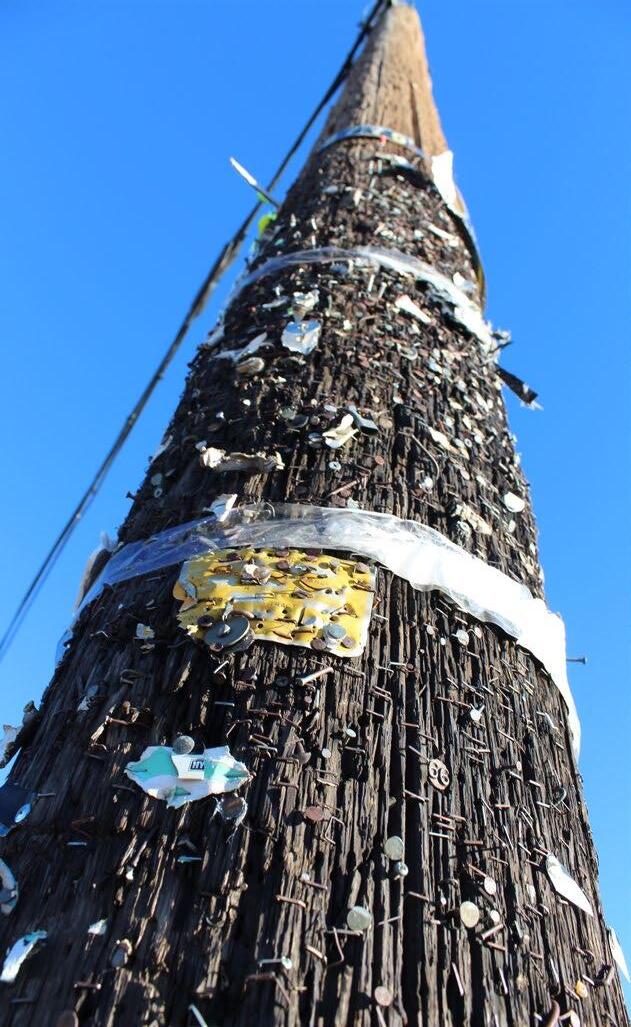
It is important to keep power poles free from any foreign materials such as balloons, fliers, and metal objects like staples or tacks. EEA’s rules and regulations prohibit attaching posters, banners, placards, antennae, or other objects to our poles without prior written permission.
Keeping foreign objects off power poles is a safety priority. EEA linemen use specialized climbing equipment to perform regular maintenance and repair damaged power lines at the top of power poles. Nails, tacks, and other metal objects used to attach foreign objects to power poles can interfere with the safe operation of the climbing equipment. They can also snag clothing or puncture high voltage gloves that keep linemen safe from electrical shock.
An example of an EEA pole with foreign object damage. Note the difference in pole condition where the staples, nails, and screws have been placed versus higher on the pole.
High-voltage line work is extremely hazardous. Attaching anything to a power pole creates one more hazard our linemen must negotiate. Please help us keep our linemen safe and do not attach anything to our power poles.
Be safe and keep as much distance between yourself and overhead power lines as possible
For more information on electric safety go to SafeElectricity.org
LARRY ARCHIBEQUE COMPLETES DIRECTOR GOLD CERTIFICATION
Empire Electric Association District 7 Director Larry Archibeque has successfully completed the Director Gold Certification, the highest level of certification available to rural electric cooperative board members through the National Rural Electric Cooperative Association. Reaching the Director Gold achievement requires earning both the Credentialed Cooperative Director and Board Leadership Certificates and then completing follow up coursework to gain insight and skills in electric cooperative management.
In addition to serving as District 7 director, Larry also represents EEA on the Colorado Rural Electric Association board and is the current CREA board vice president. Larry has served as an EEA director since 2020 and works diligently to ensure EEA can provide reliable and affordable power to our members. Please join us in congratulating Larry on his achievement and thanking him for his continued dedicated service to our membership.

Larry Archibeque
Photo by Denise Moore
Energy Efficiency Tip of the Month
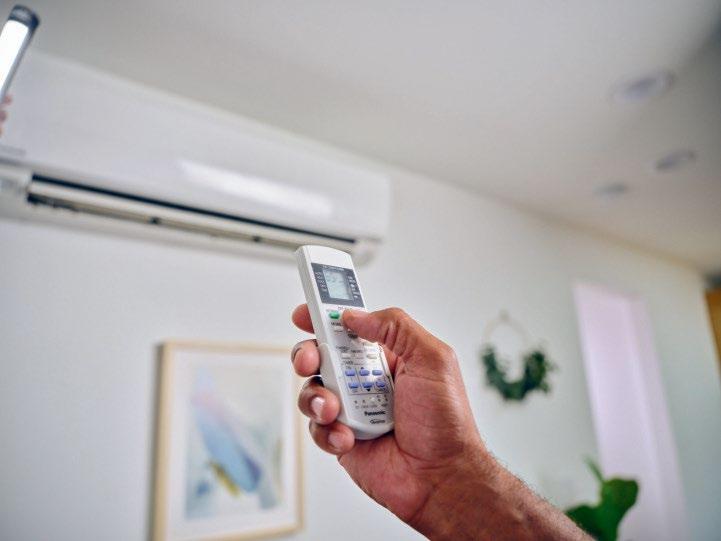
Mid-winter is a great time to ensure you are making the most of your home heating system. Replace or clean filters to keep your furnace or heat pump running efficiently. Ensure vents and radiators aren’t blocked by furniture or rugs as proper airflow helps your system work less and saves energy.


EEA has updated their Electrify and Save rebate program for 2026. Most rebates remain at the same incentive level as they were in 2025.



Please visit our website at eea.coop or scan the QR code. Explore all of our available rebates. View rebate required documentation and time limitations. (Note changes to Smart Thermostats and Electric Vehicle charger installations.)
Complete your rebate application and upload your supporting documents.
February 2 – Groundhog Day
February 13 – EEA board meeting begins at 8:30 a.m. at our new headquarters in Cortez at 23999 Road L.4. The agenda is posted 10 days in advance of the meeting at eea.coop. Members may attend in person or remotely. Instructions to attend remotely are included on the agenda.
February 14 – Valentine’s Day
February 15 – Scholarship Applications Due February 16 – Presidents Day.

La Platas on an Early Spring Morning. Photo by Vic Duran
Colorado Country Life







































✓ Heated seat providing warmth from beginning to end
✓ Carefully engineered hydro-massage jets strategically placed to target sore muscles and joints
✓ High-quality tub complete with a comprehensive lifetime warranty on the entire tub
✓ Top-of-the-line installation and service, all included at one low, affordable price
You’ll agree – there just isn’t a better, more affordable walk-in tub on the market.


The best walk-in tub just got better with breakthrough technology! Presenting the all new Safe Step Walk-In Tub featuring MicroSoothe. ® An air system so revolutionary, it oxygenates, softens and exfoliates skin, turning your bath into a spa-like experience. Constructed and built right here in America for safety and durability from the ground up, and with more standard features than any other tub.


Should I Upgrade My Appliance?
By Miranda Boutelle

Buying a new appliance can feel daunting. Before you hand over your hard-earned money, here’s how to choose an appliance that will help you save money over time.
Before you start shopping, keep in mind that not all new appliances are high efficiency and not all old appliances are inefficient. The yellow EnergyGuide label on new appliances shows the yearly energy cost, kilowatt-hour electricity use, and Energy Star logo, if certified.
Let’s look at some examples to see how the costs and savings stack up.
On a visit to my mom’s house, she proudly showed off her 1980s refrigerator she bought when her 1970s model died. If her 1980s fridge uses 2,000 kilowatthours per year, at 15 cents per kWh, it costs $300 per year to operate. But refrigerators have seen major efficiency improvements over the years. If Mom buys a new Energy Star-certified refrigerator for $1,000 that uses 500 kWh per year, equaling a $75 yearly energy cost. By cutting annual energy costs by about $225, the new refrigerator would pay for itself in roughly four and a half years.
Other appliances have seen improved efficiency since the 1980s. I recently bought a new washing machine when my old front-load machine died. I was considering a top-load machine. When I compared Energy Star-certified top loaders to front loaders, I changed my mind. Energy Star-certified front loaders use about 50% less energy and water than top-load agitator washers and about 25% less energy and water than top-load impeller washers that don’t have an agitator.
My new washer cost $698. According to the appliance’s EnergyGuide label, based on six loads of laundry per week and an electricity cost of 15 cents per kWh, the yearly energy cost is $15. Similar
non-Energy Star-certified models’ energy costs were $48 per year.
I also had to make the decision about buying the matching dryer. My dryer was functional but had features I didn’t like. At 15 cents per kWh and running roughly six loads per week for an hour each, my old dryer cost just over $130 per year to use.
The new matching Energy Star-certified dryer cost $698 and estimated annual energy use at 607 kWh, which is $91.05 per year at 15 cents per kWh. With an estimated savings of $39 per year, the new dryer would take almost 18 years for the energy savings alone to offset the purchase price. That’s a long time.
Whichever appliance you are upgrading or replacing, make an informed decision by comparing the cost of operation and shopping Energy Starcertified models to help lower your electric bill.
Miranda Boutelle is the chief operating officer at Efficiency Services Group in Oregon, a cooperatively owned energy efficiency company. She has more than 20 years of experience helping people save energy at home.
Refrigerators




SAFEGUARD YOUR WEALTH
By
American Gold Reserve is releasing Government issued $5 Gold American Eagles completely free of dealer mark-up for only $459 each. These beautiful $5 Gold American Eagles are a perfect way to enter the gold market. They are set for immediate public release and will sell out fast
• Teach the importance of wealth preservation.
• Great way to pass on wealth to children and grandchildren.
• A symbolic act of the commitment to your family.
• Gold provides your children and grandchildren with a built-in safeguard during times of financial instability.





The Next Generation of Search and Rescue
Students gain more than a degree at Western Colorado University
By Becky Jensen
Brad Tabor’s broken body came to rest at the bottom of a steep section of rugged trail, deep in the backcountry of Gunnison County.
One minute he was riding his off-road motorcycle up the dirt single-track, working his way around roots and rocks. The next minute, he lost his balance, put his foot down to catch himself, and felt his knee buckle with a sickening crunch. Brad was thrown from his bike, tumbling backward downhill. When he finally rolled to a stop, searing pain shot through his right leg. He was alone and badly injured, lying prone on an exposed mountainside at 11,000 feet above sea level. To make matters worse, storm clouds gathered overhead.
“I realized I was in big trouble,” Brad said.
Unable to put any weight on his leg, he crawled upslope to his fallen dirt bike, grabbed his two-way GPS satellite device, and triggered an SOS distress call. Raindrops began to fall.
With temperatures plunging and daylight fading, Brad hunkered down in the rain, trying to stay warm under his backpack. But as the storm intensified, his clothes quickly soaked through. Hail pelted his injured body. He shivered uncontrollably.
Then Brad heard sounds in the distance that gave him hope. Voices calling his name, faint at first, then
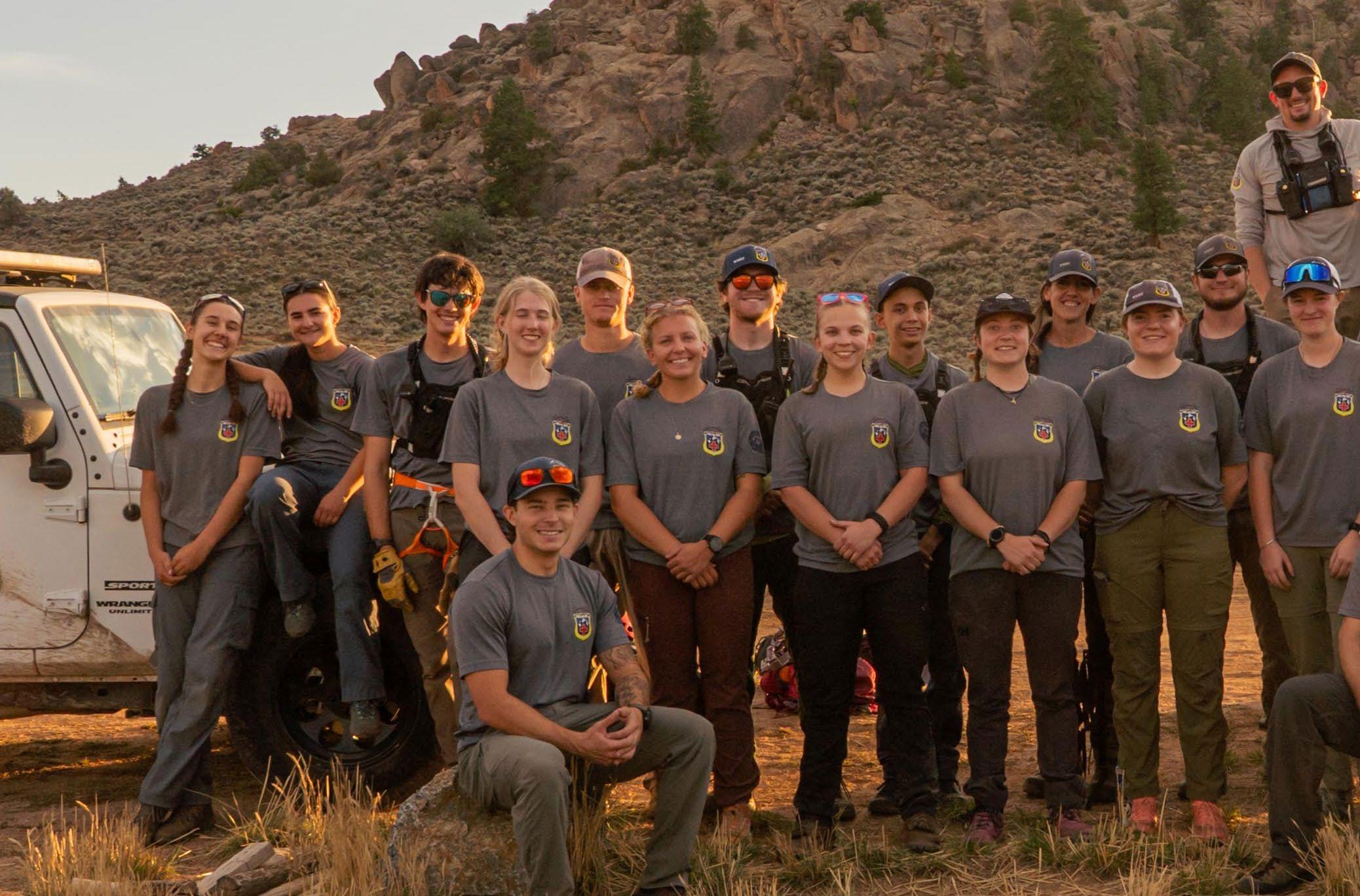
growing louder. They were the young, confident voices of Western Mountain Rescue Team based out of Western Colorado University in Gunnison.
WESTERN MOUNTAIN RESCUE TEAM
Formed in 1968 after a group of Western students organized a search for a missing professor, WMRT is now the largest search and rescue — SAR — team serving Gunnison County.
Like all 50 SAR teams in Colorado, WMRT falls under the authority of the local sheriff’s department, often collaborating with emergency services to assist and evacuate people from remote and rugged terrain. WMRT averages roughly 40 rescue calls per year.
It is also the only student-led, collegiate SAR team in Colorado and the only such team in the United States accredited by the Mountain Rescue Association, an organization that represents the gold standard for search, rescue, and mountain safety education.
YOUTH IS AN ASSET
Gunnison County Sheriff Adam Murdie deeply appreciates WMRT’s finely honed skills and its long history of serving the community. Spanning 3,260 square miles, Gunnison County’s large and diverse landscape makes responding to 911 calls “a geographical chal-
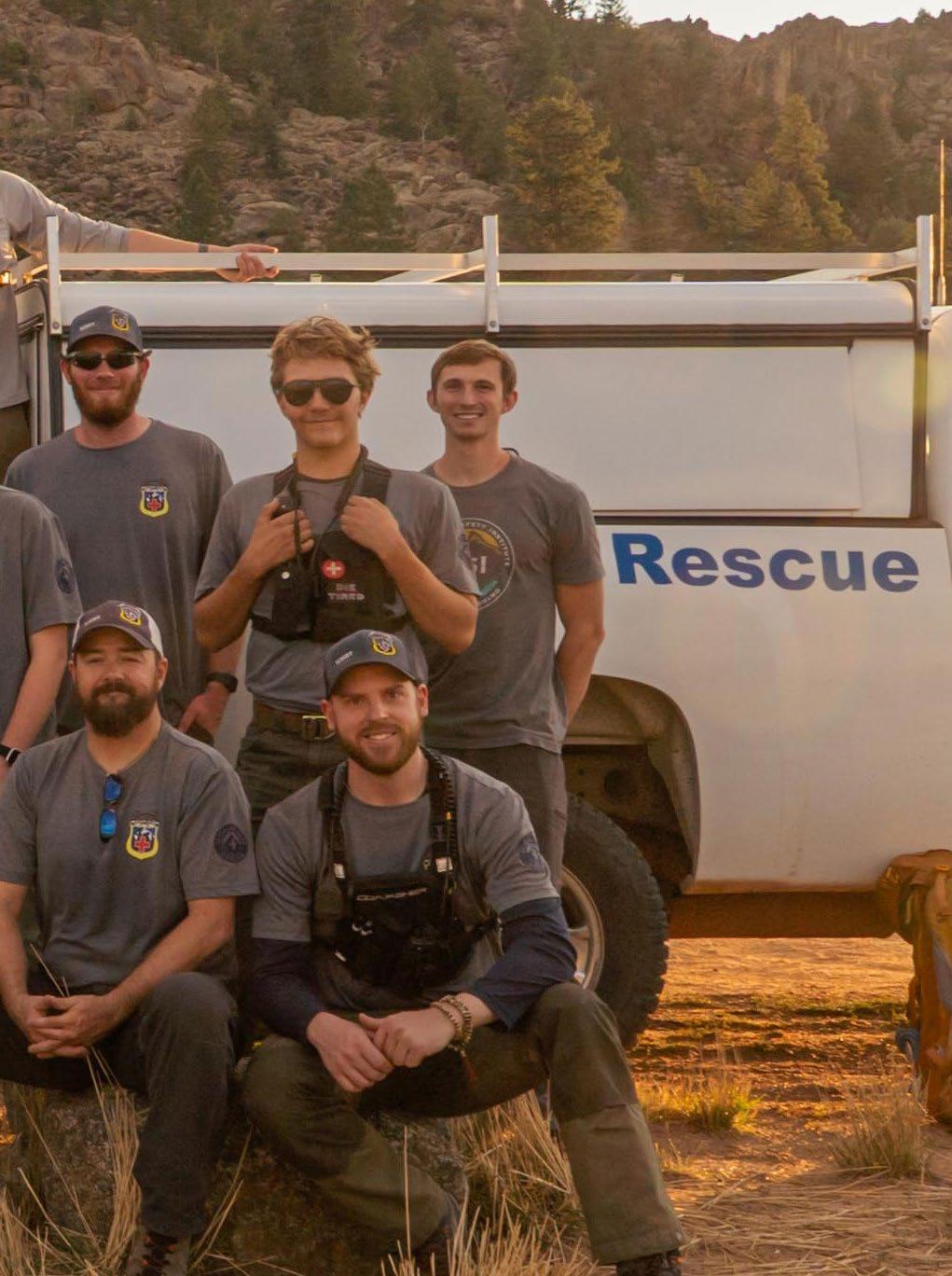
lenge, to say the least,” the sheriff said. He oversees three SAR teams in his jurisdiction, including WMRT, which boasts 35 to 50 active members on its roster at a given time. It’s also a team he uses frequently.
According to the sheriff, WMRT is one of the best technical teams in the state, specializing in large-scale wilderness search, high- and low-angle rope rescue, avalanche and winter rescue, and more. “I often get requests [from other agencies] to utilize them outside of Gunnison County.”
When asked about the median age of the young team, the sheriff replied, “Their youth, their strength, and stamina is an asset out there.”
Although WMRT reports to Sheriff Murdie, the team is housed and partially funded by Western Colorado University, where the team remains affiliated as a student service club.
COLLEGE IS MORE THAN A DEGREE
McKenzie McConnell, a senior at Western, joined WMRT as a freshman in fall 2022. “I didn’t have any rescue skills. It was all completely new to me, and that’s how it is for a lot of people.”
That perspective serves McKenzie well as a WMRT mission coordinator and as its all-important training coordinator, making sure each team member is well
prepared before they ever go on a call.
“We train to MRA safety standards, so our training schedule is very rigorous,” McKenzie said. Lives depend on it.
According to McKenzie, the biggest challenge for WMRT is team turnover. “It’s tough because students eventually graduate, so training has to be on point. Our timeline for getting people fieldable — up to rescue standard — is condensed, so we expect a lot from our team members while they’re here.”
This doesn’t mean training is rushed. It means training is intense, structured into a two-year program built around fall and spring semesters. In addition to their regular coursework, student members of WMRT attend weekly SAR lectures, receive medical instruction every other week, and perform overnight field trainings monthly. New members often log more than 200 volunteer hours during their first year on the team.
While WMRT is mainly student based, community members are welcome. McKenzie appreciates their perspective.
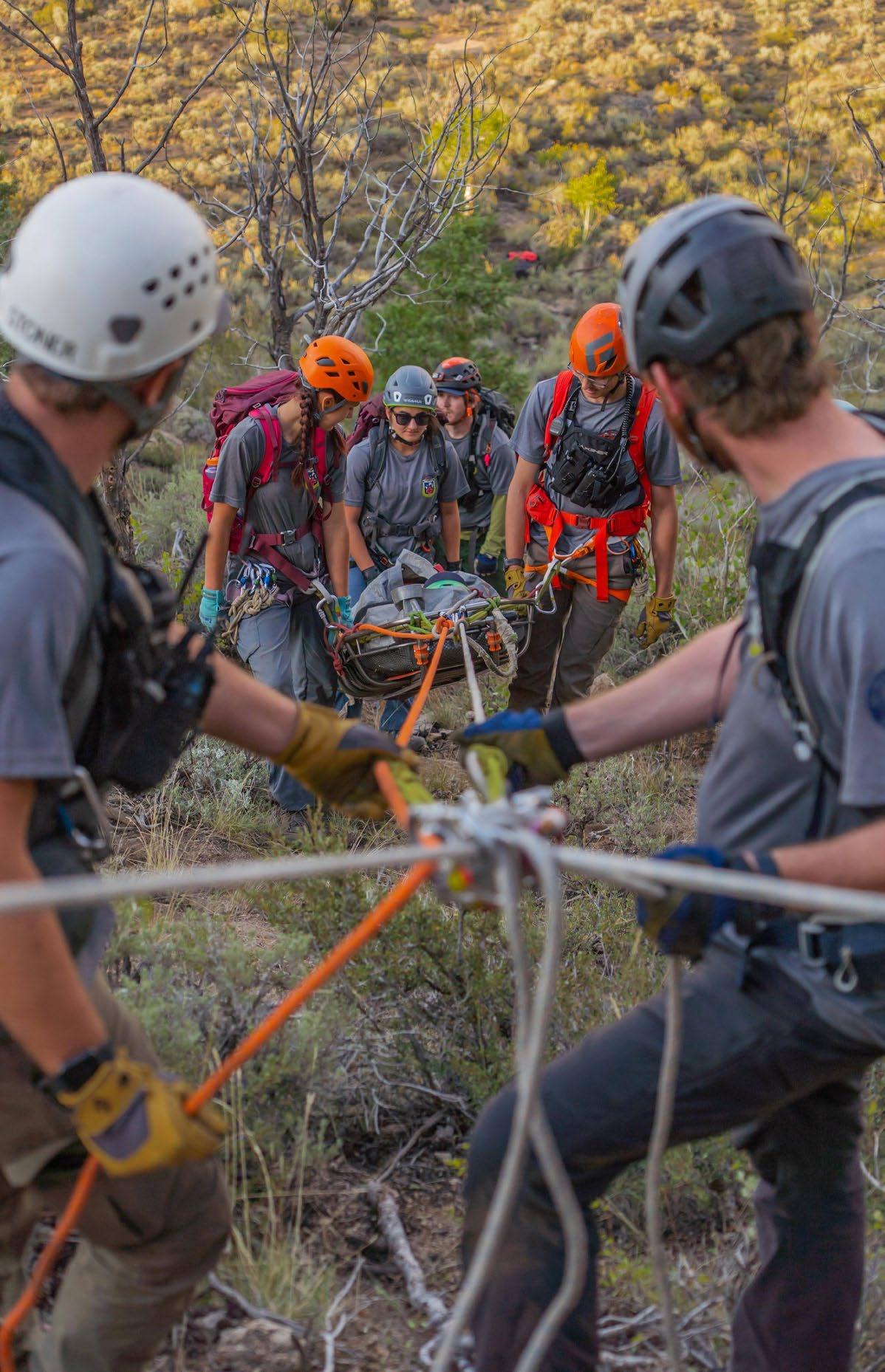
WMRT conducts a lowering during a training. Safety is always the top priority. Photo courtesy of Mackenzie Bode, remeMBrance media
WMRT consists of a mixture of Western University students, alums, and Gunnison community members.
Photo courtesy of Mackenzie Bode, remeMBrance media
WMRT built my confidence with the basic skills of rescue, but it’s more than that. My critical thinking skills have been heavily developed on this team. I also gained more confidence as I moved into leadership roles. After graduation, I’m thinking about going into emergency services management.”
— McKenzie McConnell, WCU Student
continued from page 13
“They bring more understanding and life experience to our younger team,” she explained. “In many ways, younger people are still developing, still maturing. Our older members tend to have a more careful way of doing things.” She said community members lead by example and show student members that sometimes applying a slower, more methodical approach is better.
When McKenzie graduates in May with a degree in recreation and outdoor education, she will also leave with invaluable lessons learned during her four years of volunteering on the Western SAR team. “WMRT built my confidence with the basic skills of rescue, but it’s more than that. My critical thinking skills have been heavily developed on this team. I also gained more confidence as I moved into leadership roles.”
McKenzie added, “After graduation, I’m thinking about going into emergency services management.”
A CAREER-BUILDING EXPERIENCE
Ryan White, Deputy Emergency Manager and Emergency Preparedness and Response Coordinator for Gunnison County, is a prime example of how a student can leverage their SAR experience into a rewarding career.
As an incoming freshman in 2010, Ryan chose Western Colorado University over other schools across the country because of the strength and reputation of its SAR program. The service-oriented team environment really spoke to him. “It’s the story of many,” he said.
As the volunteer Director of Operations for WMRT, Ryan’s role is to “standardize our curriculum, foster leadership development, share institutional knowledge, and — above all else — preserve the spirit of the organization, which should always be student-led.”
There’s “a big misconception that WMRT is a bunch of kids playing rescue,” Ryan commented. Nothing could be further from the truth. MRA reaccreditation is intentionally tough, which serves the team well. And Ryan believes in the robust systems WMRT has built over time. He’s also confident in how the team’s highly trained mission coordinators, like McKenzie, lead their volunteer crews during emergency responses in extreme environments under pressure. “These students who lead missions are amazing, capable decision-makers in the field. I’ve seen it. I trust them.”
According to Ryan, his experience on WMRT directly impacted his career path. “Because of my mentors, and the right opportunities, I am where I am today. I get to be the Deputy EM for Gunnison County, which allows me to contribute back to the community that gave me those opportunities.”
His career trajectory and pay-it-forward mentality are not unusual for WMRT alums.
Scott Morrill joined the Western team as a student in 1978. After a 36-year career in public safety, Scott recently retired as the Director of Emergency Management for Gunnison County. “Joining the rescue team is still the best decision I’ve ever made,” he said. “I made lifelong friendships, and it paved the way for my entire professional career.”
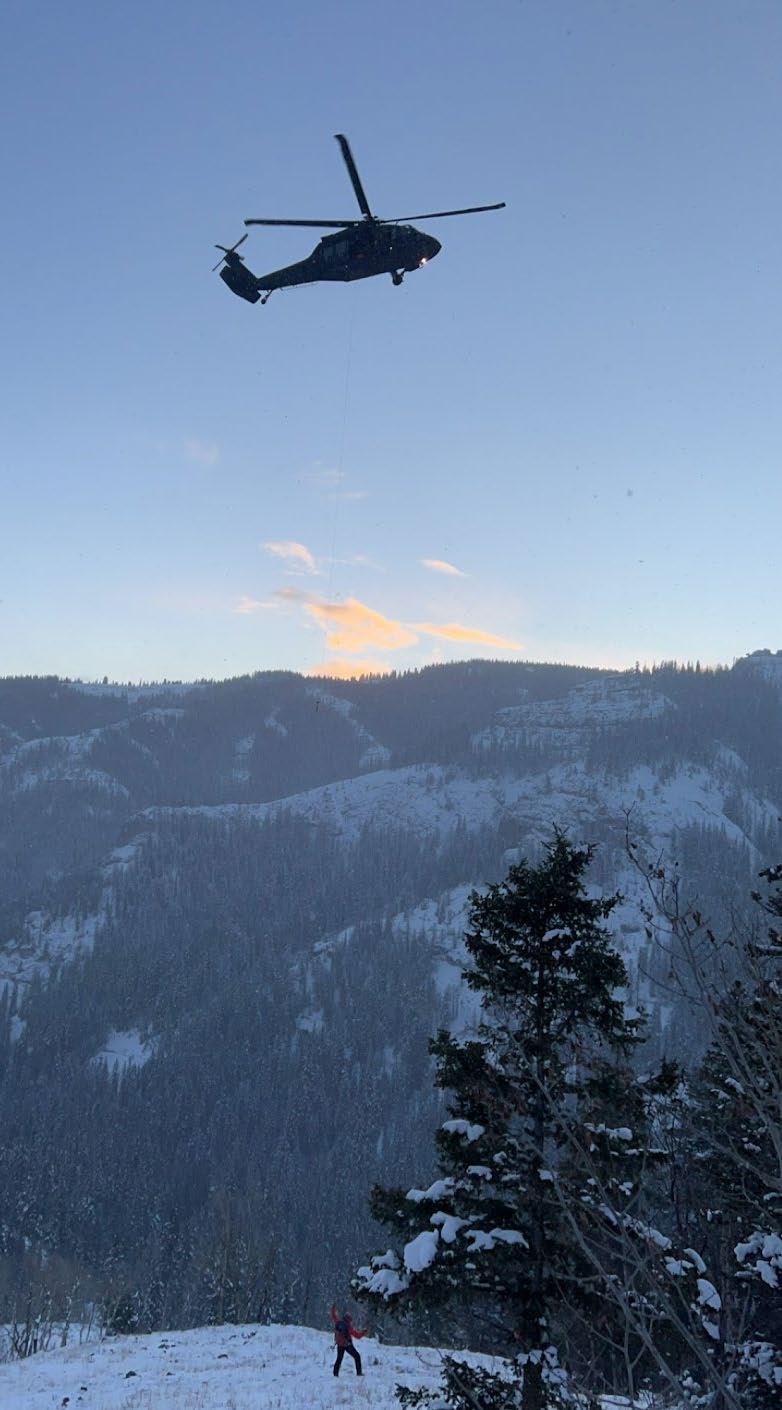
WMRT coordinates the hoist of an injured subject near Beaver Creek.
Photo courtesy of McKenzie McConnell
Scott estimates that 75% of WMRT student members move on to some form of public safety career after graduation from WCU. Today, alums enjoy successful careers in emergency management, in statelevel SAR management, as rescue rangers at national parks, and expedition guides around the world.
“The idea that a bunch of young people — most just teenagers out of high school — are willing to put themselves at risk to help others, take time out of their lives to go on these intense trainings, pay for their own gear out of pocket, and be on call 24/7,” Scott said, “that’s what makes these students special.”
POST-RESCUE REFLECTION
Brad Tabor thinks his rescuers from WMRT are special, too. Back home in Texas, he has fully recovered from his dirt bike accident. Brad’s love of riding in the Colorado mountains hasn’t waned, and he often thinks about the amount of effort it took WMRT to rescue him in the high country that fateful day.
To reach him, the team hiked four steep miles while hauling a transport litter and heavy medical supplies. Once on scene, they assessed Brad’s injuries, wrapped him in a warm sleeping bag, scouted landing zones for the helicopter, loaded Brad onto the litter, carried him across mountain terrain to the extraction point, and handed him off to the paramedics aboard the chopper.
While Brad’s late-summer rescue was difficult, a snowy winter rescue is often harder, requiring more time, energy, and special equipment. Poor visibility, icy roads, and avalanche conditions can make winter extractions far more complex and dangerous for SAR teams like WMRT. But because of their frequent and rigorous training at elevation, the rescue team works like a well-oiled machine regardless of conditions. The students — tough, devoted, and exceptional at what they do — made Brad’s arduous medical evacuation look easy.
“Their professionalism and kindness were astonishing,” he recalled. Brad is still overwhelmed with gratitude more than a year later. After he was taken to a hospital by helicopter, he knew the WMRT ground crew faced a long hike out, carrying not only their own gear but Brad’s as well. “I couldn’t thank them enough.”
He also knows free rescues like his cost WMRT money.
So every year on his birthday, Brad asks for what he considers the perfect gift — donations made to WMRT through the Western Colorado University Foundation. “If it wasn’t for WMRT, I might not be here,” he said, marveling at the students’ selflessness.
“They are real heroes,” he said. “They exemplify bravery, compassion, and dedication. I am forever changed because of them. I am forever thankful.”
To learn more about Western Mountain Rescue Team, or to make a donation, visit western.edu/department/mountain-rescue.
Becky Jensen writes from a little cabin on a wild river in Northern Colorado and is the author of No Man’s Land: Unpacking One Woman’s Worth on the Colorado Trail. She’s also a proud member of Poudre Valley REA. You can find her at beckyjensenwrites.com.
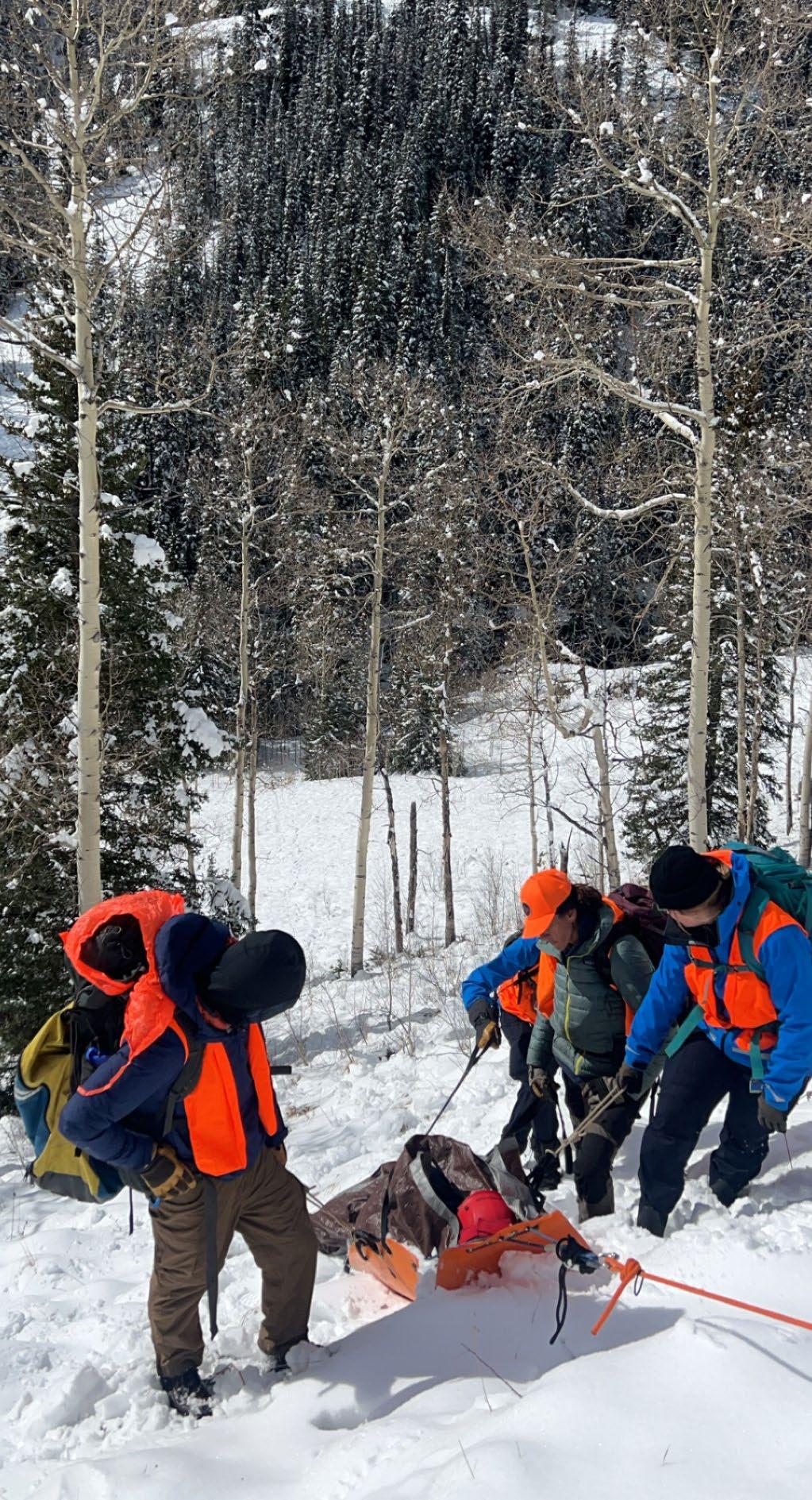
WMRT conducts an uphaul using mechanical advantage during a fall training. Photo courtesy of Ryan Largent
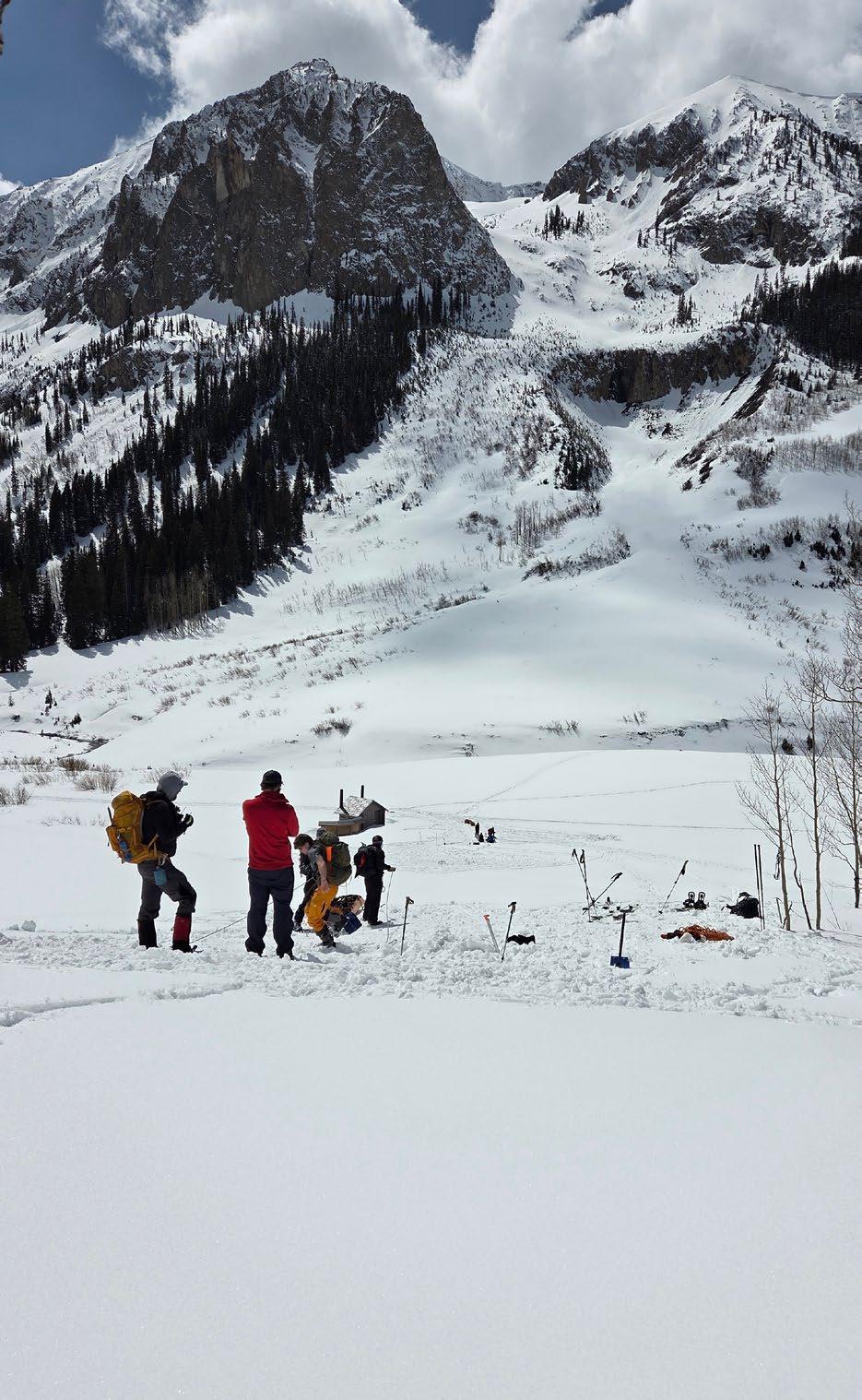
WMRT conducts its annual Winter Overnighter Training near Gothic Mountain in Gothic. Photo courtesy of Ryan White.
Sacred Stone of the Southwest is on the Brink of Extinction


Centuries ago, Persians, Tibetans and Mayans considered turquoise a gemstone of the heavens, believing the striking blue stones were sacred pieces of sky. Today, the rarest and most valuable turquoise is found in the American Southwest–– but the future of the blue beauty is unclear.
On a recent trip to Tucson, we spoke with fourth generation turquoise traders who explained that less than five percent of turquoise mined worldwide can be set into jewelry and only about twenty mines in the Southwest supply gem-quality turquoise. Once a thriving industry, many Southwest mines have run dry and are now closed.
We found a limited supply of turquoise from Arizona and purchased it for our Sedona Turquoise Collection . Inspired by the work of those ancient craftsmen and designed to showcase the exceptional blue stone, each stabilized vibrant cabochon features a unique, one-of-a-kind matrix surrounded in Bali metalwork. You could drop over $1,200 on a turquoise pendant, or you could secure 26 carats of genuine Arizona turquoise for just $99
Your satisfaction is 100% guaranteed. If you aren’t completely happy with your purchase, send it back within 30 days for a complete refund of the item price.
The supply of Arizona turquoise is limited, don’t miss your chance to own the Southwest’s brilliant blue treasure. Call today!
Jewelry Specifications:
• Arizona turquoise • Silver-finished settings
Sedona Turquoise Collection
A. Pendant (26 cts)
$299 * $99 +s&p Save $200
B. 18" Bali Naga woven sterling silver chain $149 +s&p
C. 1 1/2" Earrings (10 ctw)
Complete Set**
$299 * $99 +s&p Save $200
$747 * $249 +s&p Save $498
**Complete set includes pendant, chain and earrings.
Call now and mention the

*Special price only for customers using the offer code versus the price on Stauer.com without your offer code.

26 carats of genuine Arizona turquoise ONLY $99
C.
Necklace enlarged to show luxurious color

Connected Homes
The power of what’s plugged in
By Jennah Denney
Our homes are changing, and so is the electric grid. Across the country, more households are becoming “smart” and connected. From thermostats that adjust automatically to electric vehicles that charge overnight, the devices we plug in are becoming intelligent, flexible, and increasingly central to how we use and even produce electricity.
This growing network of connected devices creates new ways for electric co-ops and their members to work together to keep power reliable and affordable.
WHAT IS A CONNECTED HOME?
A connected home is one where everyday appliances and devices can communicate with each other, you, or even with your electric co-op. These could include thermostats that adjust to your patterns and preferences, water heaters that operate when electricity is cheaper, home batteries that store solar-generated power for later use, or air-source heat pumps that efficiently heat and cool your home.
Each of these tools can help you use energy more efficiently. When they are managed effectively, or when many homes coordinate and balance their energy use together, they can also help your co-op keep power flowing reliably and affordably for the entire community.
BEHIND
THE
METER: THE POWER YOU DON’T SEE
You might have heard the phrase “behind the meter.” This simply refers to energy equipment that operates on your side of the electric meter that you own or control. This could include solar panels, battery storage systems, or connected devices like EV chargers or smart thermostats.
Individually, they may seem small, but together they can make a big difference. If hundreds of water heaters slightly delay heating during a peak time of
day when electricity use is high, the co-op can avoid purchasing power at a higher cost, which essentially keeps rates lower for members. If home batteries store solar-generated energy during the day and release it back to the grid at night, it helps balance the overall supply and demand of electricity.
HOW CONNECTED DEVICES HELP THE GRID
Each day, our electric grid must maintain a perfect balance to match the amount of electricity generated with the amount of electricity we are using — all in real time. Because electricity can’t easily be stored at scale, this balancing act is constant and complex.
Connected devices give electric co-ops powerful new tools to help manage this complexity. Traditionally, electricity use was simple: Flip a switch and power flows instantly. But today, many devices can shift when and how they use energy, also known as load flexibility. Load flexibility allows you and your co-op to better align energy use during times when electricity is more affordable, without sacrificing comfort or convenience.
THE COOPERATIVE ADVANTAGE
Electric co-ops are led by the members they serve. That means co-ops can design connected home programs that work for your community where every member benefits from lower peak costs and improved reliability.
Together, we can build a grid that’s smarter, more flexible, and ready for the future that’s powered by what’s plugged in. Contact your local electric co-op or visit their website to learn more about programs for connected devices and additional ways you can save energy.
Jennah Denney writes on consumer and cooperative affairs for the National Rural Electric Cooperative Association, the national trade association representing more than 900 local electric cooperatives.
DateNight Dessert
Recipe by Kylee Coleman Editor

Staying in with your Valentine this year? Get the love — and chocolate — flowing. Cuddle up with your sweetie and these homemade chocolate lava cakes. Be sure to use a high-quality dark chocolate bar you’d eat plain — this is key to a delicious and decadent cake.
CHOCOLATE LAVA CAKES FOR TWO
INGREDIENTS
3 oz dark chocolate (60%-70% cacao), chopped
¼ cup unsalted butter
¾ cup powdered sugar
1 large egg
1 large egg yolk
½ tsp vanilla extract
¼ cup all-purpose flour
Small pinch of salt
Butter and cocoa powder (for ramekins)
INSTRUCTIONS
Preheat oven to 425°F. Generously butter two 6-ounce ramekins and dust with cocoa powder.
Melt the dark chocolate and butter together. Either microwave in 15-second increments, stirring between, or use a double boiler and stir until smooth.
Stir in powdered sugar. Whisk in the egg, egg yolk, and vanilla until glossy. Gently fold in flour and salt just until combined.
Divide batter evenly between the two ramekins. Bake for 12-13 minutes, until edges are set but centers are soft. Let rest for 1 minute, then invert onto plates or serve directly from ramekins. For an even sweeter treat, serve with vanilla ice cream or whipped cream.
Photo by Ty Pierce

5 Ways to Age-Proof Your Home
Easy upgrades to improve the lives of older adults
Ahome is more than four walls — it is where birthdays are celebrated, holiday dinners shared, illnesses weathered, and losses mourned. Home is, as the saying goes, where the heart is.
It’s little wonder, then, most people want to remain in their homes as they age, based on AARP research. Yet, according to the United States Census Bureau, less than half of U.S. houses are equipped with accessibility features for older adults.
It doesn’t take a full remodel to make a home safer. Updates like installing handrails or improving hallway lighting can go a long way.
For those who need support in making these changes, programs like Helping Homebound Heroes, a partnership between Meals on Wheels America and The Home Depot Foundation, provide older veterans with essential home modifications and repairs.
“By improving safety and accessibility, we’re helping senior veterans stay in the places they love,” said Ellie Hollander, president and CEO of Meals on Wheels America. “Our work is about preserving independence and dignity — helping older adults live safely, confidently, and with connection to their communities.”
Here are five small fixes that can add up to big peace of mind:
1. CREATE A SAFER ENTRYWAY.
For older adults, steps to the front door can be an obstacle. A ramp or zero-step entry allows for easier coming and going, and a covered porch or awning keeps walkways dry. Path lights improve visibility at night, and a sturdy bench by the door provides a place to rest or put groceries.
2.
UPGRADE THE BATHROOM.
According to multiple studies, falls in the bathroom are more likely to cause injury than in other parts of the home.
If you’re planning a bathroom project, start with small changes like adding raised toilet seats, installing toilet and shower grab bars, and replacing your shower head with a handheld model. For a more extensive remodel, install nonslip flooring and replace traditional tubs with walk-in showers.
3. IMPROVE FLOORING.
The flooring in your home can have a big impact on safety. If you have thick or loose carpet, consider replacing it with a low-pile option.
Slip-resistant flooring, such as vinyl or cork, also provides good traction and can be more forgiving than hardwood or tile. Simple visual cues can help, too. Transition strips between rooms or on stair edges make changes in floor level easier to see.
4. BRIGHTEN UP ROOMS.
Brighter overhead fixtures improve visibility, making it easier to spot steps, furniture, and other obstacles. Motion-sensor lights brighten bathrooms and hallways so it’s easier to move around safely at night.
5. KEEP ESSENTIALS WITHIN REACH.
Storing everyday items at waist or shoulder height reduces the need for stretching, bending, and climbing, all of which can increase the likelihood of falls. Sometimes a simple cabinet reorganization is enough, but features like pull-down shelving can make storage more accessible.
For more resources and support for older adults, visit mealsonwheelsamerica.org





Artisan Candlemakers
Shine Bright
Whether you’ve been in Colorado for two weeks or 20 years, you will love supporting artisans who are making beautiful and handcrafted candles. From Black Forest to Grand Junction, these candlemakers encourage sustainability, environmental impact, small-business culture, and community building. Each candle’s warm, soft lighting is a perfect addition to your own winter hygge-inspired glow during our coldest months.
By Jacey Blue Renner

CANDLE KITCHEN –GRAND JUNCTION
Candle connoisseurs will love the bespoke experience at Grand Junction’s Candle Kitchen. With more than 160 scents to select from, each soy wax candle is handcrafted for you in the shop. From container and label selection to scent blends, the choice is yours. The experts at Candle Kitchen will work to create your most memorable candle, ready same-day, just 2-4 hours after you’ve made your selections. High-quality scents, essential oils, and attention to details make each visit uniquely new. To learn more about how to create your own in-shop custom candle, visit candlekitchengj.com


BLUECORN CANDLES –MONTROSE
Bluecorn’s United States-sourced raw and ivory beeswax candles are lighting up Montrose. With all candles manufactured and sold in Colorado, every candle purchased supports and contributes to community impact. Bluecorn’s newest line, Aromatica, sources plantbased wax. From hand-dipped tapers that elevate family gatherings to seasonal scented candle tins like ponderosa pine, Bluecorn’s scent palate and design pay homage to Colorado’s Western Slope. To take a perfect-match candle quiz or find a local shop that carries Bluecorn candles, visit bluecorncandles.com.

OLD PINE CANDLE COMPANY – EVERGREEN
Now nestled in the foothills of Evergreen, Old Pine has long held roots in Colorado, with its beginnings taking shape in Denver. Family-focused and community-inspired, Old Pine Candle Company prides itself on its attention to environmental sustainability, including ecofriendly packaging and jarrecycling incentives. Each candle is 100% U.S. soy wax that can burn up to 50 hours. Try the Morning Light candle, with hints of palo santo and lavender. For more coziness, join the Old Pine Candle Club and receive a new scent monthly. Explore scents and more at oldpinecandleco.com
SOOTHING SCENTS SOY CANDLES – BLACK FOREST
With a background in botany, the owner of Soothing Scents Soy Candles, Gail Westmoreland, specializes in crafting botanical scents. Peach and jasmine are her personal favorites. As a small, one-woman-run business, each candle is made with her own hands before coming to yours. Consider pairing her Cinnamon Spruce candle — with notes of ginger, nutmeg, and evergreen spruce — with your winter reading nook. Curating a wide array of scent classifications, Soothing Scents Soy Candles has a scent for every home. Find your new favorite small-batch candle online at soothingscentssoycandles.com

Phil and Brenda Henderson, Empire Electric Association members, take a quick break from fishing and hiking adventures with friends in Coyhaique, Chile, to snap a photo with their copy of CCL.
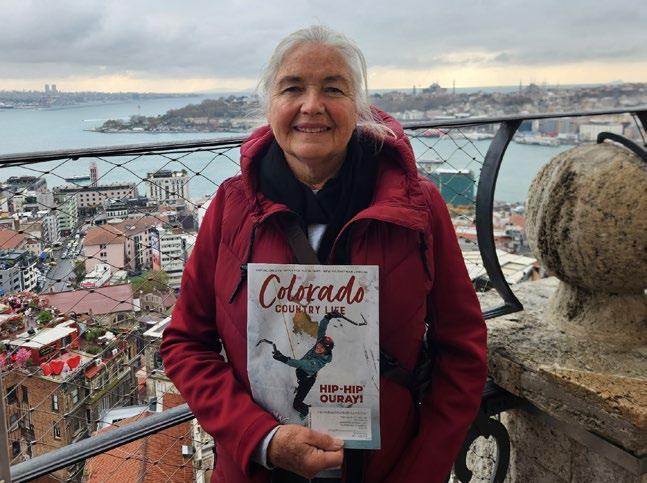
Morgan County REA member Ann Archuleta travels to Istanbul, Turkey, and takes a photo with the magazine near Galata Tower.



Larry and Kathleen Bailey bring their CCL magazine on a recent trip to Petra, Jordan. The Baileys are members of Sangre de Cristo Electric Association.
de
the
Show us your adventures with the magazine for a chance to WIN $25.
Upload your photo with CCL at coloradocountrylife.coop Find more reader photos on Facebook @COCountryLife and Instagram @cocountrylife PACK. SNAP. SHARE. WIN!
Elizabeth and Alex Chang bring a little bit of Colorado to Taipei 101 — Taiwan’s tallest building — during a family trip over the holidays. The Changs are members of Poudre Valley REA.
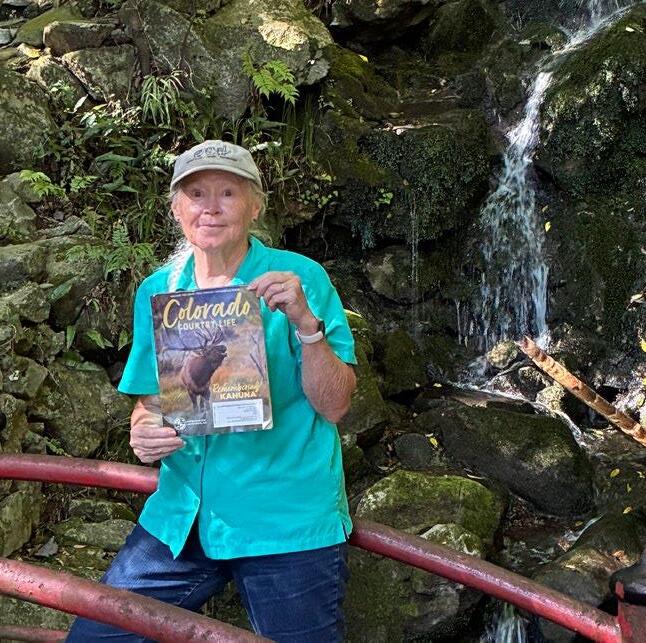
Empire Electric Association member Lillian Orbke snaps a photo with the magazine at the Senbutsu Limestone Cave at Hiraodai Karst Plateau in Kitakyushu, Fukuoka, Japan.
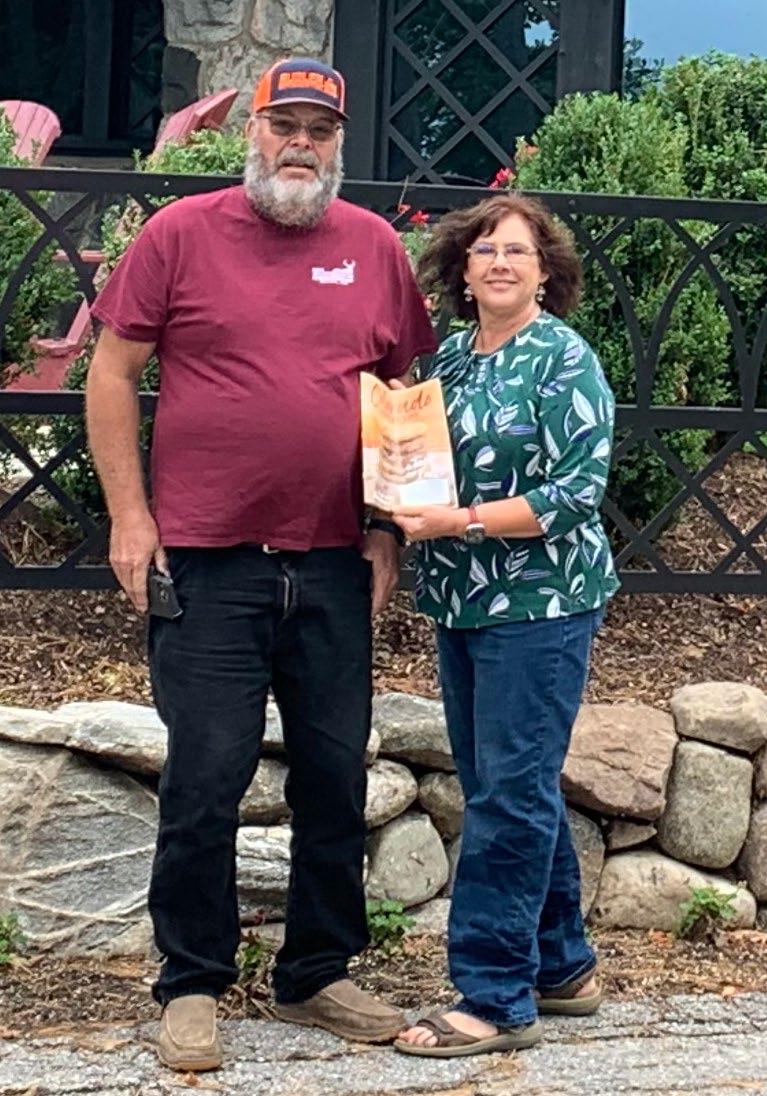
Mountain View Electric Association member Mark Cooper brings his copy of CCL for a float in the Dead Sea.
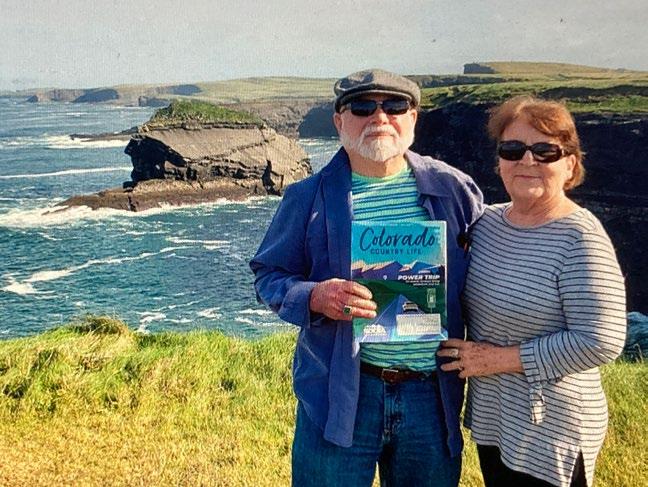
Sangre
Cristo Electric Association members Sandy Cranfill and Steve Barnes enjoy
stunning views of the North Atlantic Coast in Kildare, Ireland, with their copy of the magazine.
Leon and Janet Golden, Southeast Colorado Power Association members, with CCL in Charlevoix, Michigan.
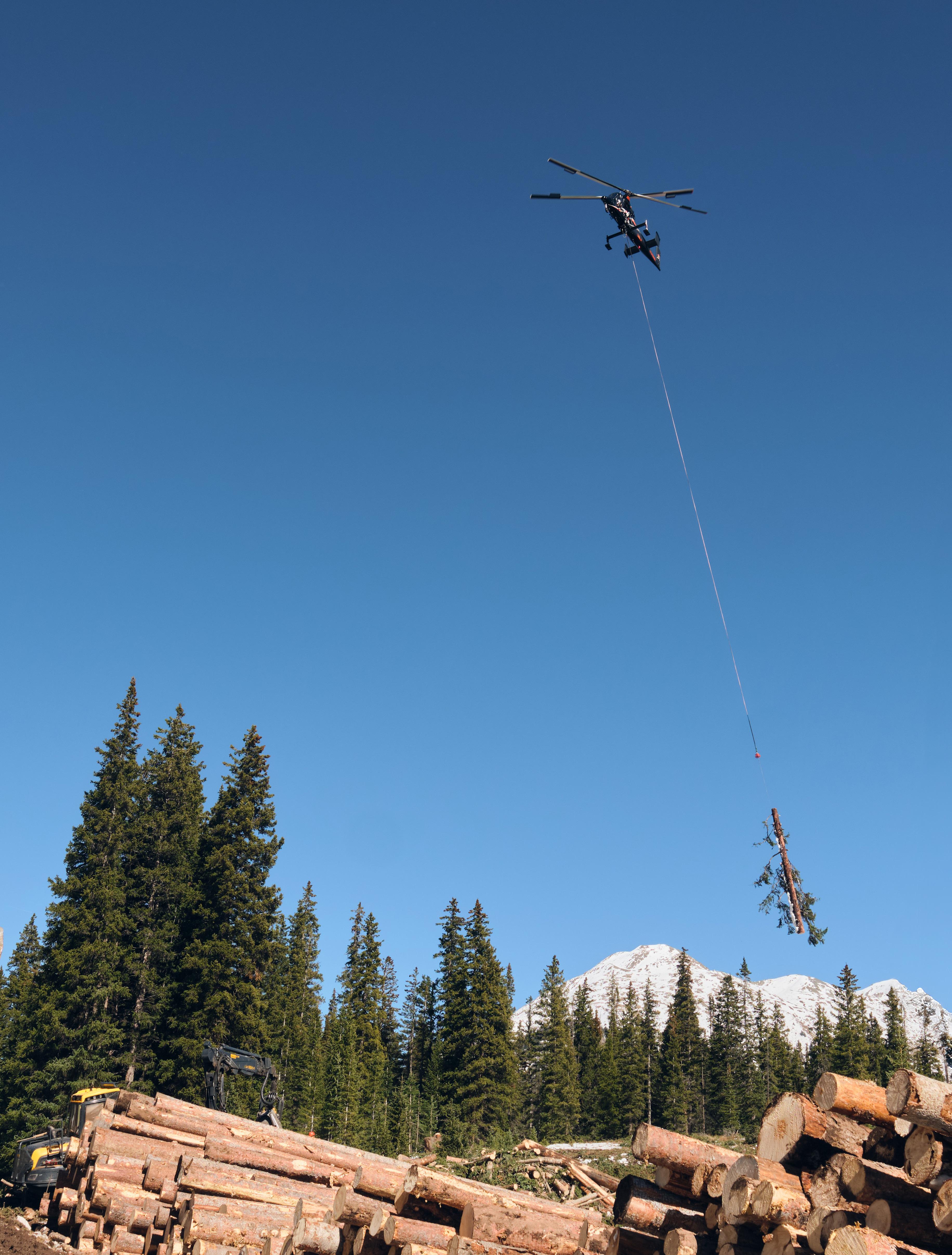
WE WORK YEAR-ROUND TO REDUCE WILDFIRE RISK
Living in the rural West comes with undeniable wildfire risk, but it’s a fight we’re facing head-on.
At Tri-State G&T, we deploy data-driven monitoring and wildfire mitigation strategies to identify and mitigate risk to protect our communities and the critical infrastructure they rely on. We’ll do anything within our power to protect the people and places our members call home.
WHATEVER THE FUTURE HOLDS, WE’LL POWER IT.®
Scan to learn more or visit www.tristate.coop/wildfire


1Subject to availability, on a total purchase of 4 or more. Buy 2 windows or doors and get the second 2 windows or doors, of equal or lesser value, 50% off – applied to lowest priced window and/or door products in purchase. BOGO 50% off discount valid during first appointment only. Cannot be combined with other offers. To qualify for discount offer, initial contact for an appointment must be made and documented on or before 2/28/26 with the purchase then occurring on or before 3/10/26. Products are marketed, sold and installed (but not manufactured) by Renewal by Andersen retailers, which are independently owned and operated under Window Warmth, LLC d/b/a Renewal by Andersen of Colorado. CO Lic. # 244783. NM Lic. # 399874. See complete information and entity identification at www.rbaguidelines.com. ©2026 Andersen Corporation. ©2026 Lead Surge LLC. All rights reserved. 2Plan 4521. Subject to credit approval. Renewal by Andersen Retailer is neither a broker nor a lender. Rates range from 14.26% - 21.19% APR (interest rates range from 15.99% - 24.99%). Loan amount and rate will vary based on your income and creditworthiness. Monthly payments are not required during the Promo Period. Loans for the GreenSky® consumer loan program are provided by Synovus Bank, Member FDIC, NMLS #408043, without regard to age, race, color, religion, national origin, gender, disability, or familial status. GreenSky Servicing, LLC services the loans on behalf of your lender, NMLS #1416362.