
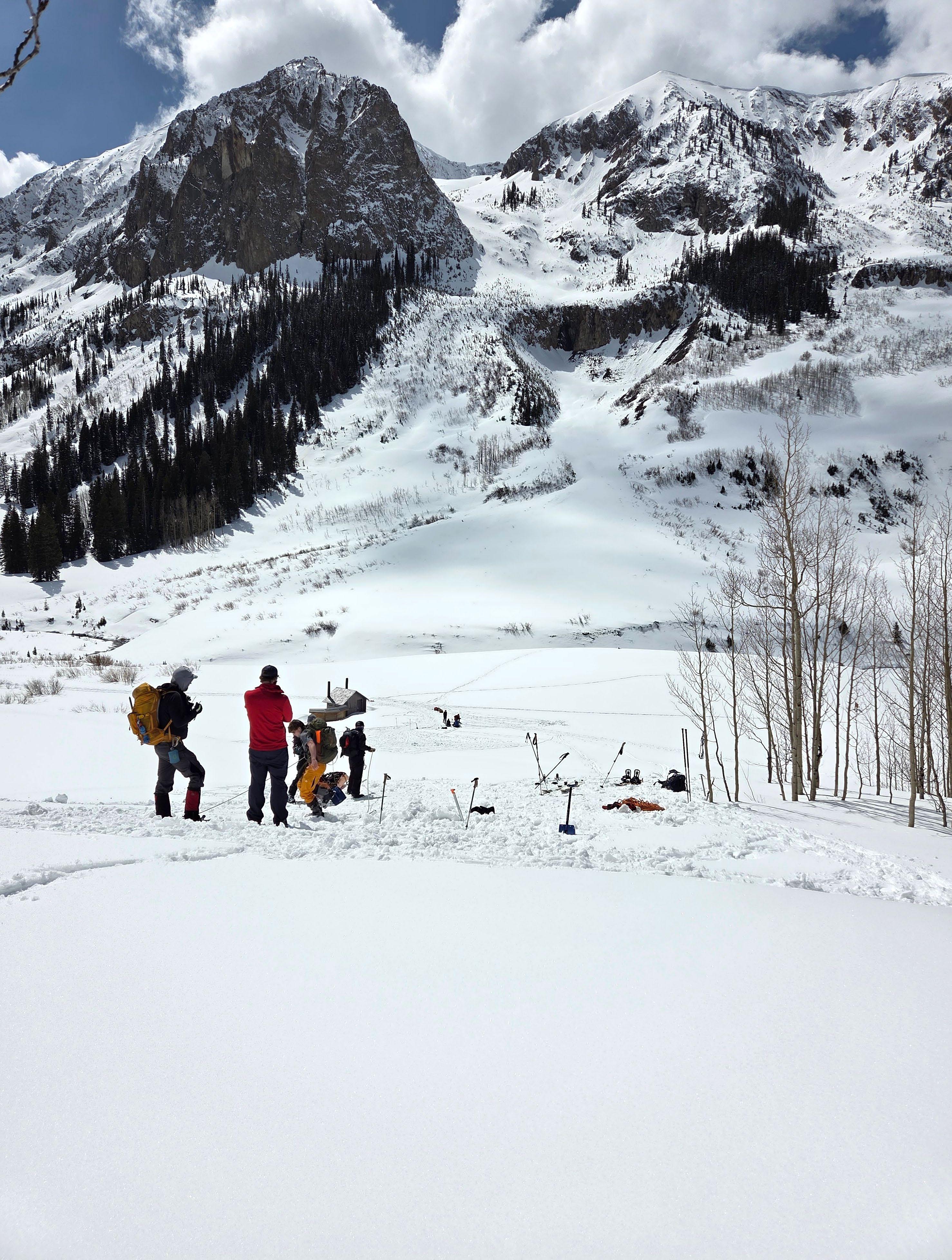
GOING THE EXTRA MILE
Western Mountain Rescue Team saves lives in the wilderness
2026 Annual Meeting Information
By Josh Dellinger General Manager
Empire Electric Association’s 2026 annual member meeting is scheduled for Thursday, June 18, at EEA’s Engineering and Operations Center, which is located at 23999 Road L.4, Cortez, Colorado. Registration will begin at 4:30 p.m. and the meeting will begin at 5:30 p.m. This will be a business meeting only. Members who attend will receive a $10 credit on their electric bill.
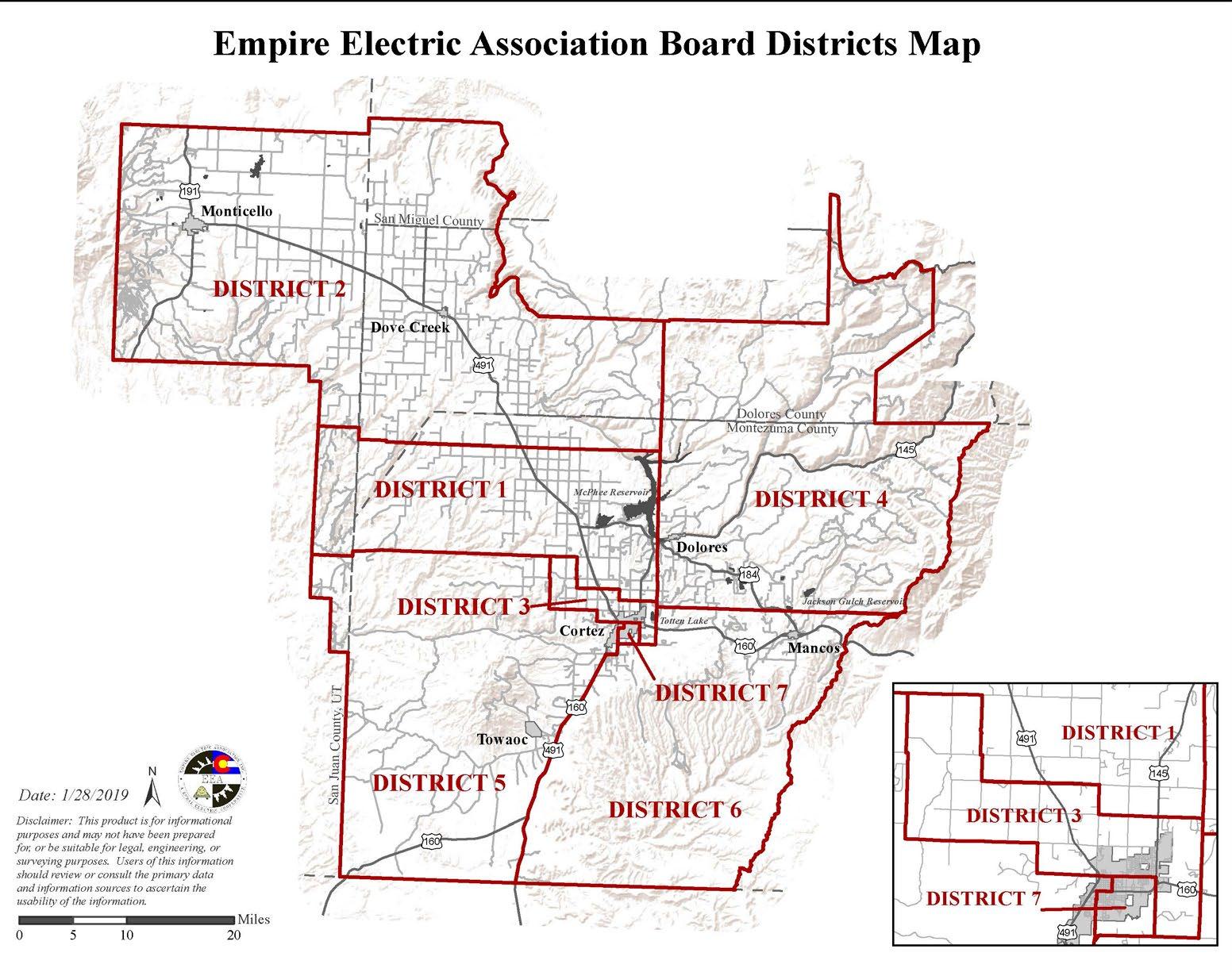
The EEA board considered present board district composition at its December 2025 meeting and determined no changes to board district boundaries are needed at this time. As of December 2025, the district with the most members had 1,974; the district with the least members had 1,892; and the average number of members per district was 1,931.
The District 3 board seat is up for election this year — Corey Robinson is the incumbent director. The winning candidate will serve a four-year term. In order to serve on EEA’s seven-member board of directors, our bylaws require the following qualifications. The director shall:
• Be a member of the cooperative for at least one year immediately prior to becoming a director.
• Be a bona fide resident of the district represented for at least 120 days prior to becoming a director, which means that the person must be a permanent occupant receiving electric service from the cooperative at his or her primary residential abode.
• Be a citizen of the United States of America and a registered voter in the person’s director district.
• Be at least 18 years of age.

• Not be an employee of the cooperative.
• Complete campaign contributions reports in accordance with Policy 31 –Campaign Contributions Reporting.

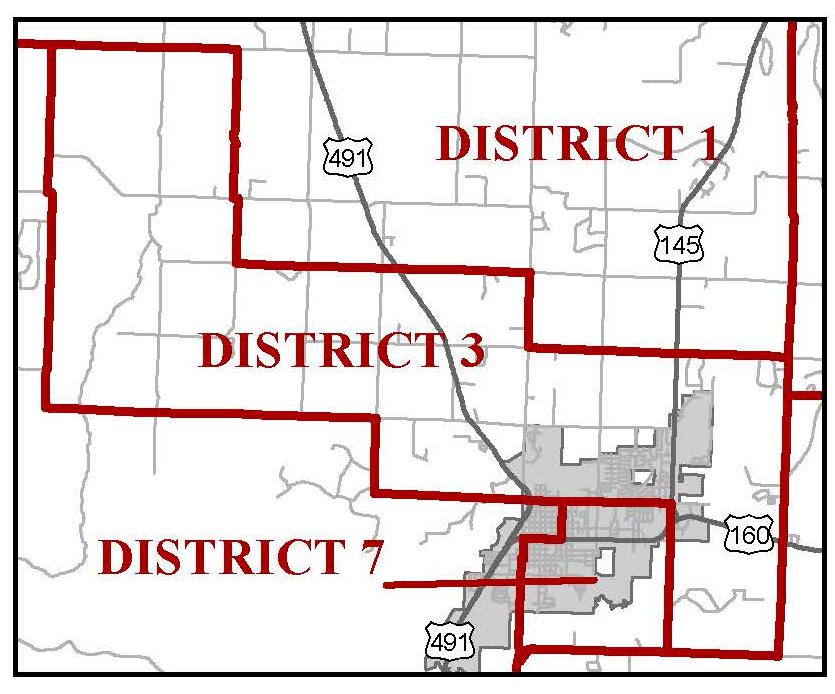
District 3 is generally described as follows: Generally, the center Montezuma County portion of the system. The eastern boundary begins at the midpoint of the southern edge of T36N R15W S32, and continues north along section mid-lines until it intersects Road M. The district boundary then follows Road M west until it intersects Road 25, then follows Road 25 north until it intersects Road N. The boundary then follows section lines (generally coincident with Road N) west to the intersection with Road 21, then follows Road 21 north to the intersection with Road S, and then follows Road S west to the intersection with Road 18. From there, the district boundary follows section mid-lines (generally coincident with Road 18) south to the northern edge of T36N R17W S22, and from there travels east along section lines (generally coincident with Road L) until it intersects with Road 23. From there it follows Road 23 south to the intersection with Road K. The boundary then follows Road K east to road’s end and continues east generally along section lines until it intersects with Empire St., and then it follows Empire St. east until it intersects Colorado State Highway 145. It then follows
the boundary between T36N R16W and T36N R15W south (generally consistent with Road 27) until it intersects Road H. From there the boundary follows Road H (generally coincident with the T36N R15W – T35N R15W boundary) to the point of beginning.
Candidates may be nominated by petition only and such petitions must include the signatures of at least 15 members of the cooperative whose bona fide residences are within the candidate’s district. Qualifying candidates may pick up a nominating petition from our main office during normal business hours. Petitions will be available beginning on March 20, and must be submitted to EEA by April 20. The secretary will post a list of qualifying nominees in our main office at the end of the business day on April 21.
Each member of the cooperative is entitled to one vote on all issues properly brought before the membership, including the election of directors. Members may vote either in-person at the annual meeting or through mail-in ballots provided by the cooperative. Mail-in ballots will be mailed to members on or before June 3. In order to be counted, mail-in ballots must be received by EEA’s election contractor Survey and Ballot Systems no later than 5 p.m. on June 12. All members are strongly encouraged to vote.
If you have additional questions about this year’s election, annual meeting, or any other cooperative business, please visit our website at eea.coop or give us a call at 970-565-4444. We hope to see you at the meeting.
Cyber Safety Tips
Enrolling in Auto Pay with Empire Electric Association can help prevent certain types of utility bill scams. If a scammer contacts you with fake disconnection threats, you can rest easy knowing your bill is paid automatically through a prearranged, secure channel. Auto Pay also eliminates the risk of exposing checks and personal banking info through the mail. If you would like to enroll in Auto Pay, log in to SmartHub and go to Auto Pay Program in the Bill & Pay menu, or call us at (970) 565-4444.


Source: AARP
Do Not Post on Power Poles
Most jobs do not require you to climb 40 feet in the air and work within a few feet of high-voltage power lines that carry 7,200 volts of electricity. However, for Empire Electric Association linemen, this is just another day on the job. The electricity we depend on would not be possible without the linemen who maintain and repair these power poles.
It is important to keep power poles free from any foreign materials such as balloons, fliers, and metal objects like staples or tacks. EEA’s rules and regulations prohibit attaching posters, banners, placards, antennae, or other objects to our poles without prior written permission.
Keeping foreign objects off power poles is a safety priority. EEA linemen use specialized climbing equipment to perform regular maintenance and repair damaged power lines at the top of power poles. Nails, tacks, and other metal objects used to attach foreign objects to power poles can interfere with the safe operation of the climbing equipment. They can also snag clothing or puncture high voltage gloves that keep linemen safe from electrical shock.
An example of an EEA pole with foreign object damage. Note the difference in pole condition where the staples, nails, and screws have been placed versus higher on the pole.
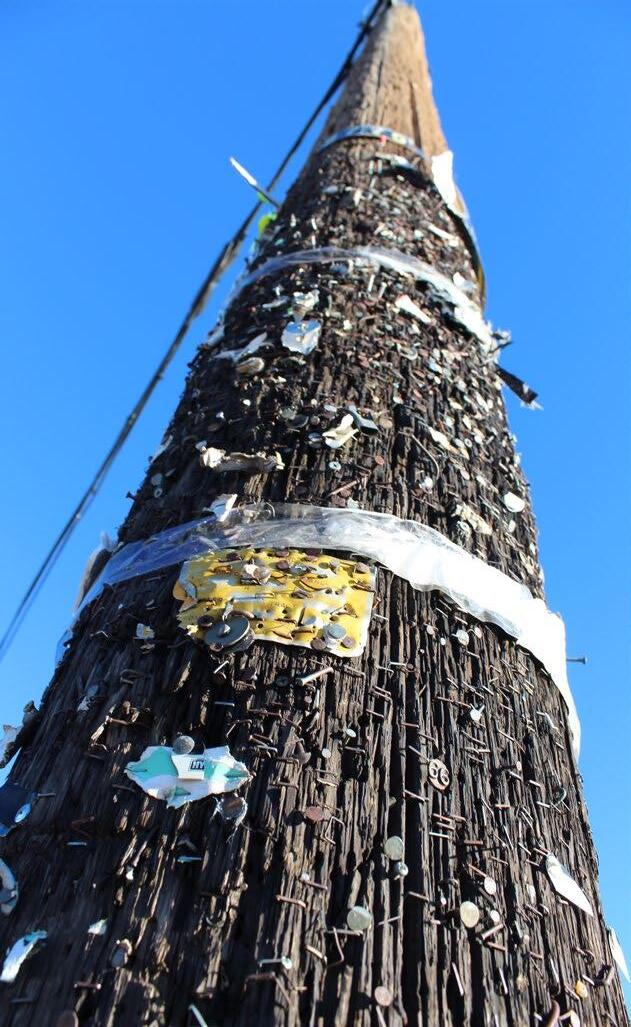
High-voltage line work is extremely hazardous. Attaching anything to a power pole creates one more hazard our linemen must negotiate. Please help us keep our linemen safe and do not attach anything to our power poles.
Be safe and keep as much distance between yourself and overhead power lines as possible
For more information on electric safety go to SafeElectricity.org
LARRY ARCHIBEQUE COMPLETES DIRECTOR GOLD CERTIFICATION
Empire Electric Association District 7 Director Larry Archibeque has successfully completed the Director Gold Certification, the highest level of certification available to rural electric cooperative board members through the National Rural Electric Cooperative Association. Reaching the Director Gold achievement requires earning both the Credentialed Cooperative Director and Board Leadership Certificates and then completing follow up coursework to gain insight and skills in electric cooperative management.
In addition to serving as District 7 director, Larry also represents EEA on the Colorado Rural Electric Association board and is the current CREA board vice president. Larry has served as an EEA director since 2020 and works diligently to ensure EEA can provide reliable and affordable power to our members. Please join us in congratulating Larry on his achievement and thanking him for his continued dedicated service to our membership.

Larry Archibeque
Photo by Denise Moore
Energy Efficiency Tip of the Month
Mid-winter is a great time to ensure you are making the most of your home heating system. Replace or clean filters to keep your furnace or heat pump running efficiently. Ensure vents and radiators aren’t blocked by furniture or rugs as proper airflow helps your system work less and saves energy.

EEA has updated their Electrify and Save rebate program for 2026. Most rebates remain at the same incentive level as they were in 2025.



Please visit our website at eea.coop or scan the QR code. Explore all of our available rebates. View rebate required documentation and time limitations. (Note changes to Smart Thermostats and Electric Vehicle charger installations.)
Complete your rebate application and upload your supporting documents.
February 2 – Groundhog Day
February 13 – EEA board meeting begins at 8:30 a.m. at our new headquarters in Cortez at 23999 Road L.4. The agenda is posted 10 days in advance of the meeting at eea.coop. Members may attend in person or remotely. Instructions to attend remotely are included on the agenda.
February 14 – Valentine’s Day
February 15 – Scholarship Applications Due February 16 – Presidents Day.

La Platas on an Early Spring Morning. Photo by Vic Duran
Colorado Country Life
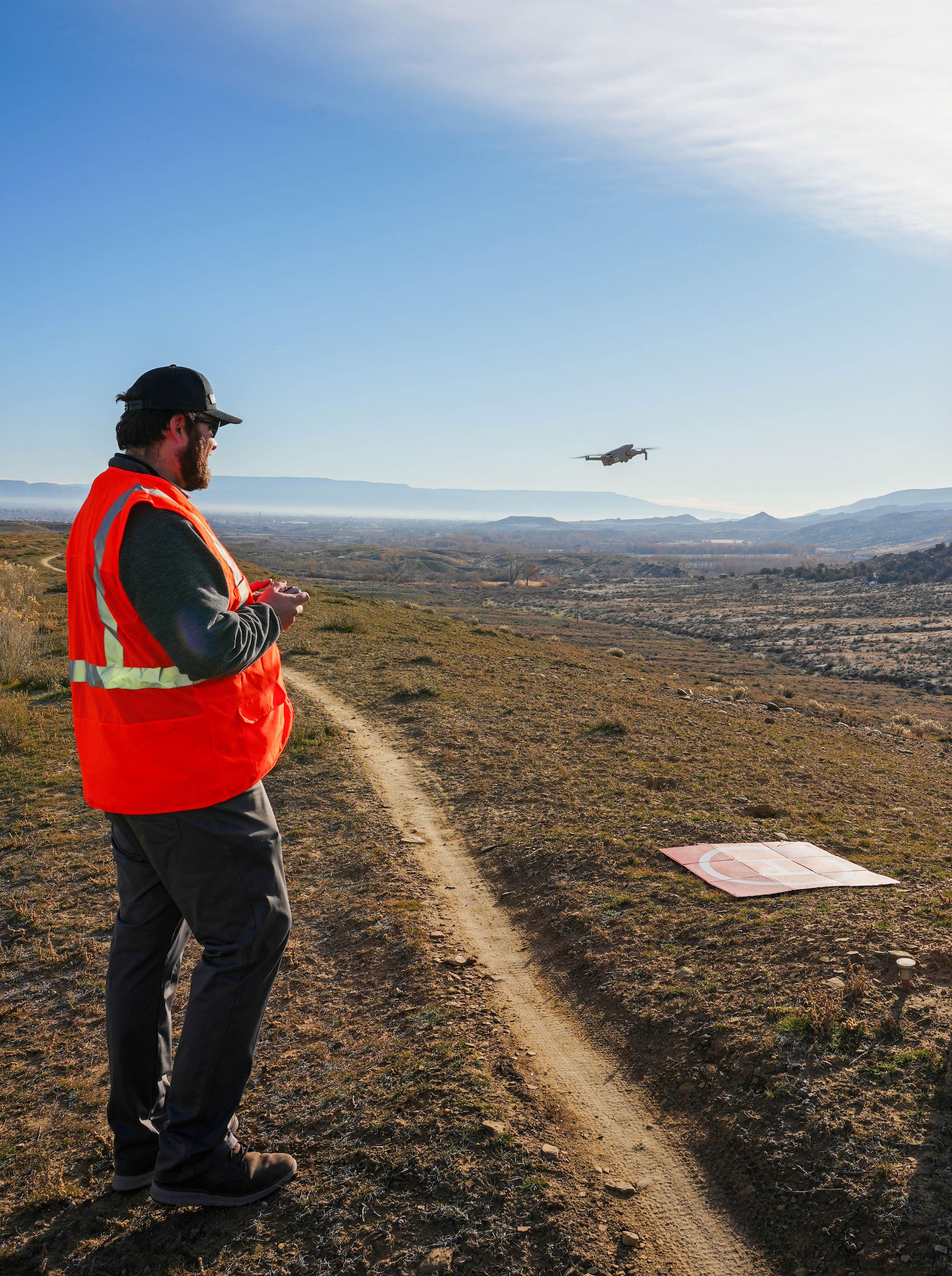
SMARTER WITH DRONES
From unmanned aerial vehicles to busy bees
By Rita-Lyn Sanders Director of Member Services & Communication
Photos by Tanya Marchun Communication Specialist
As a writer, I love words. I intentionally choose each one that I use, and I like to understand why people choose their own words. So, when I decided to share with you how Grand Valley Power is using drones for more efficient operations across the cooperative, I began wondering why, on Earth, are they called drones?
A BRIEF HISTORY
My first recollection of a drone is from a decade or two ago. Suddenly it seemed that innovative photographers and real estate agents used them to take images and video footage from a unique perspective once reserved for the Blimp. Inexpensive drones made them accessible to the regular consumer, too. My son received one for Christmas and used it to buzz us while we were working in the yard.
Still, I knew drones had been around long before they caught my attention.
A simple internet search provided that inventors

developed the first unmanned aerial vehicles (as they were called then) before World War I for military purposes. Armed forces in Europe and the U.S. used remote-controlled airplanes as practice targets and to conduct missions too “dull, dirty, or dangerous” for humans. The geekiest nugget of this history is how unmanned aerial vehicles were christened with their modern-day moniker. In the 1930s, Britain built a low-cost, radio-controlled target aircraft from the Tiger Moth, a bi-plane its military used to train pilots. Britain dubbed the unmanned target the Queen Bee. After seeing it in action, the U.S. Navy called its remote-controlled planes “drones.” Surely an entomologist, or at least an insect-enthusiast, was serving among these sailors.
Regardless, the name stuck.
DRONES AT GVP
Grand Valley Power began using a drone a couple of years ago to take images of expansion projects for mapping purposes (it’s easier to find an underground line when you know within a few inches where to start
845 22 Road | P.O. Box 190 Grand Junction, CO 81052
(970) 242-0040 | communications@gvp.org gvp.org facebook.com/GVRuralPower
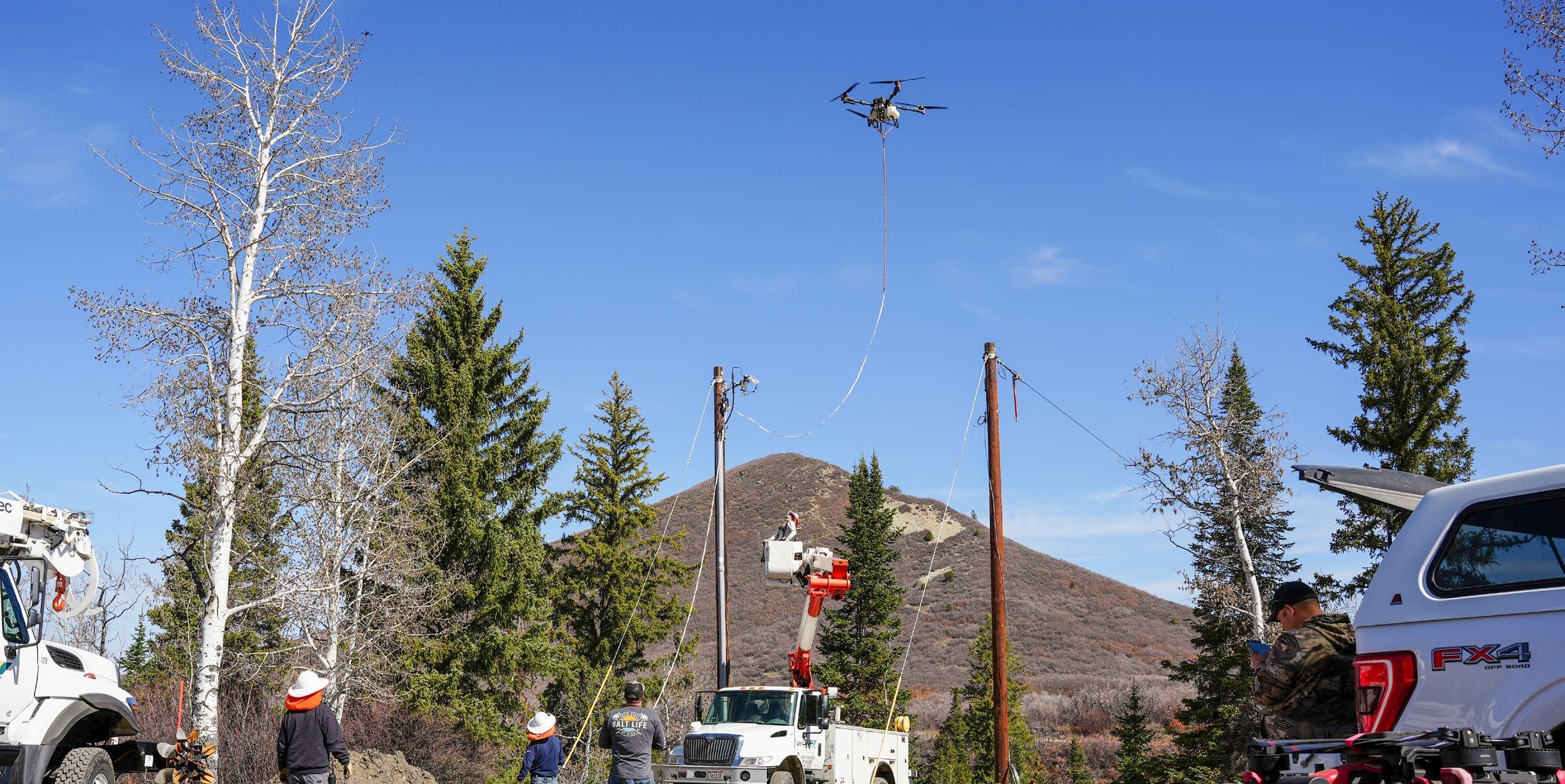
Grand Valley Power hired heavy-lift drones in 2025 to help carry lines across rugged terrain and a creek. The drones cost half of what it would have cost to hire a helicopter.
digging). Not too long after, a couple of excited communicators asked our drone pilot to take a few photos and video to give members a birdseye view of crews in the field.
These two tasks quickly turned into more as operations crews discovered the efficiencies and cost savings that drones bring to many jobs. In the field, GIS Analyst Ryan Roesch and Line Patrolman Matt Mason use drones to inspect poles and substations and collect orthoimages. The latter is all about mapping. Orthographic imagery corrects distortions in terrain, providing map-accurate photos and true distance measurement. The images can be laid over other maps to record the position of underground power lines, for example, that were photographed while the trench was still open.
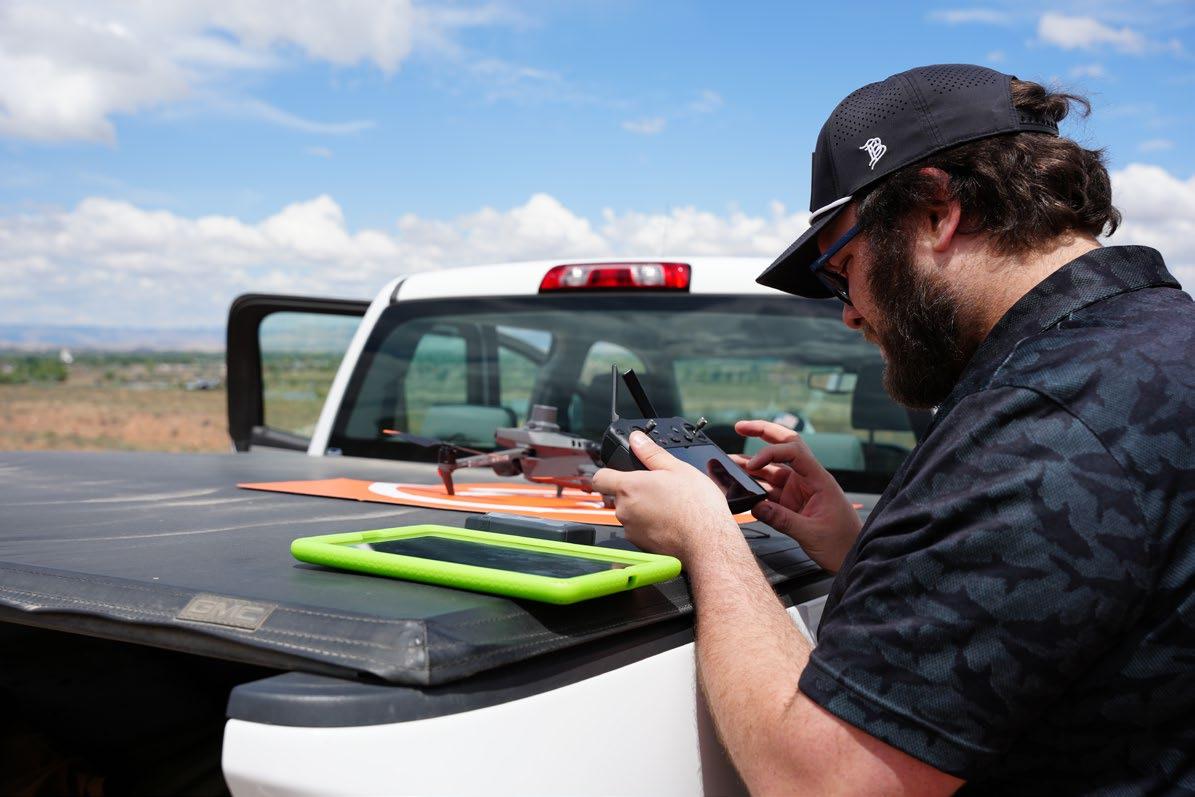
Conducting pole inspections with a drone saves time and money. Instead of two crews traveling the valley — and often getting in truck buckets or climbing poles to visually check miles of wire, electrical components, and poles – one or two people can launch a drone and identify potential maintenance issues without ever taking a step. They can then assign a line crew to check out anomalies noted on specific equipment. Drones make especially easy work of hard to get to lines that climb rugged mountainsides and are helpful when it’s time to inspect poles that traverse pastures.
“We don’t have to open gates or drive across fields when they’re muddy,” Mason said. A newer drone technology lets us take thermal images of substations. In these ways, drones help Grand Valley Power identify areas that might need maintenance before they become problems that threaten system reliability.
“The images let us dial in during inspections,” Mason said. “The level of detail is so much more in-depth that we can see a missing cotter pin.”
Grand Valley Power has also found a use for larger, heavy-lift drones. In the not-too-distant past, Grand Valley Power had to hire a helicopter and pilot to expand a power line across a creek or river. Last summer, Grand Valley Power employed a drone and operator for two such line expansion projects. A heavy-lift drone carried a lead rope across the water, and then crews finished pulling the wire across using a powered reel. Using a drone saved the members half of what it would have cost to hire a helicopter.
“Using drones showcases our commitment to
improving operations through technology,” said GIS Analyst Ryan Roesch, one of two Grand Valley Power drone pilots. As a business, the cooperative must comply with FAA regulations for unmanned aviation systems, including having a drone-certified pilot. To fly, pilots must pass an exam demonstrating their knowledge of air space, radio etiquette, weather, restrictions, and more. Line Patrolman Mason is training to earn the certificate.
With one eye toward future benefits, Grand Valley Power is keeping tabs on how other cooperatives use drone technology to implement efficiencies. Grand Valley Power is exploring how drones might be used to find the cause of power outages and identify areas in need of tree trimming, for example.
Just as unmanned aerial vehicles evolved from fullsized, radio-controlled airplanes to something more akin to their drone namesake, Grand Valley Power expects their use to evolve in the electric industry. These busy “bees” are a helpful tool for maintaining a safe and reliable distribution system.
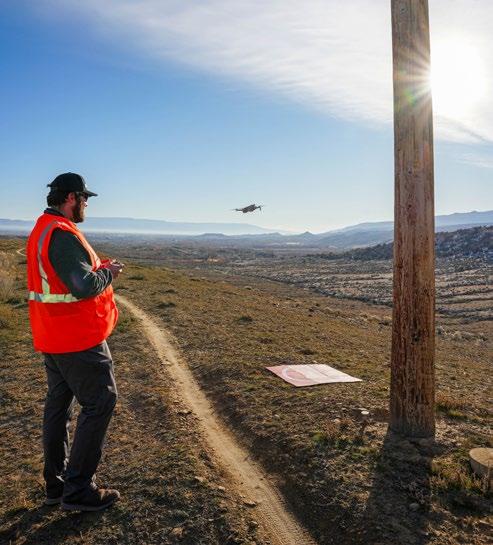
GIS Analyst Ryan Roesch prepares to fly a drone and capture images to map the underground electrical at new construction for a member.
On the Cover: Drone technology is helping Grand Valley Power inspect lines faster, work safer, and operate more efficiently.
Photo by Tanya Marchun
GRAND VALLEY POWER PRESENTS CASHBACK CREDIT CHECKS
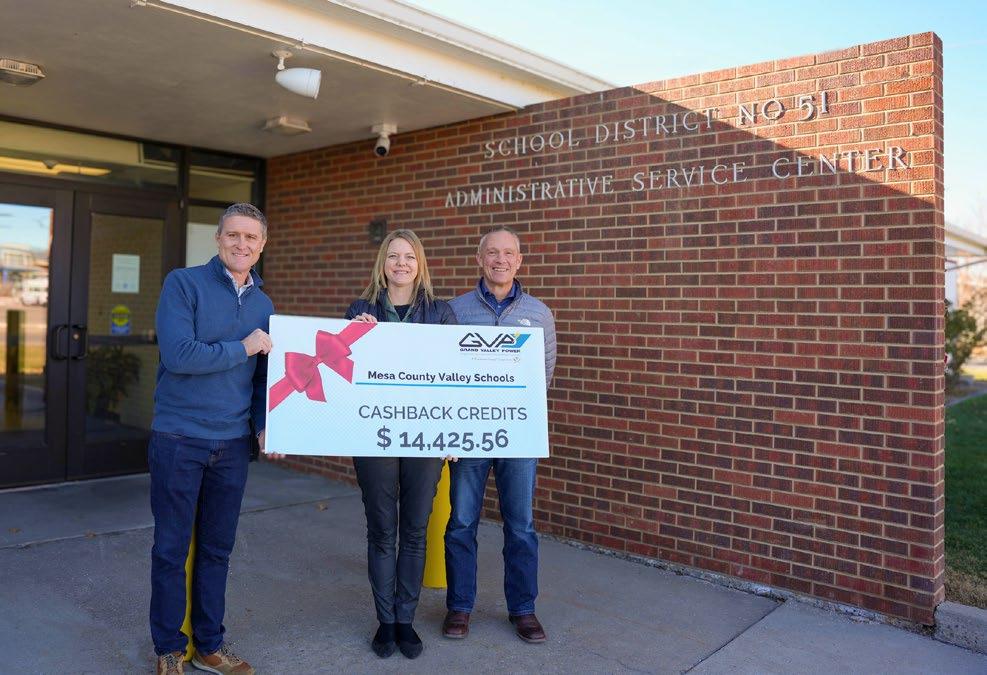
The Grand Valley Power Board of Directors approved in November the retirement of more than $1 million in CashBack Credits to members. Directors recently presented CashBack Credit Checks to members Whitewater Building Materials and Mesa County Valley School District 51. When you signed up for electric service with Grand Valley Power, you became more than just a customer—you became a member-owner of our electric cooperative. Because we operate at cost, any excess revenue, known as margins, stays right here in our community. Rather than paying outside investors, our Board of Directors allocates these funds as capital credits and periodically returns them to members based on how much electricity they used during the year. If you have questions about CashBack Credit checks, please visit gvp.org/ cashbackcredits


2
5 C A




NOTICE OF ANNUAL MEETING AND ELECTION
Board of Director elections will take place at the Grand Valley Power Annual Meeting of the Members on Thursday, August 6, 2026 at Colorado Mesa University Directors whose terms expire in 2026 are Joseph Burtard, Joe Landini, and Janie VanWinkle.

w to petition to run for the gvp org/director-election




Grand Valley Power directors present Cashback Credit checks to members Above, Whitewater Building Materials and below, Mesa County Valley School District 51.
2026 BUDGET APPROVED
The Grand Valley Power Board of Directors approved the 2026 budget at the December board meeting. The budget is our road map for the year, and management will use it to guide our cooperative business. Conditions and situations may arise that could potentially change the budget during the year, and as a result the budget might be amended. The following is a comparison of the 2025 budget, the estimated actual results for 2025, and the 2026 budget.
BOARD MEETING NOTICE
Grand Valley Power board meetings are open to members, consumers, and the public. Regularly scheduled board meetings are held at 9 a.m. on the third Wednesday of each month at the headquarters building located at 845 22 Road, Grand Junction, Colorado.
The monthly agenda is posted in the lobby of the headquarters building 10 days before each meeting and posted on the GVP website.
If anyone desires to address the Board of Directors, please let us know in advance and you will be placed on the agenda.


GCEA Proudly Supports Local Generation
Three renewable energy projects help us power your life
By Matt Feier Strategy Execution, Technology, and Member Experience Manager
Over the past three years, GCEA has developed three new local renewable energy generation facilities. In October 2024, GCEA, in partnership with the Uncompaghre Valley Water Users Association, brought the Taylor River Hydro hydroelectric generation facility online. The Taylor River Hydro facility is a 500-kilowatt single phase turbine and generator that utilizes a portion of the river flow below the Taylor Park Dam to generate, on average, approximately 3.8 million kilowatt-hours of electricity each year. That’s enough electricity to power nearly 500 average GCEAserved homes each year.

members” was the foremost directive from the GCEA board in the planning of each new facility. The Taylor River Hydro facility even provides a small rate savings for members.
Last month, GCEA completed the installation of both the Oh Be Joyful solar array in Crested Butte and the Gunnison River solar array, located just west of the City of Gunnison. The Oh Be Joyful solar array is a 1.1-megawatt fixed tilt solar array, expected to generate approximately 2.3 million kWh of electricity per year — equal to the amount of electricity consumed by nearly 300 GCEA served homes each year. The Gunnison River solar array is a 975-kilowatt fixed tilt solar array, expected to generate approximately 2 million kWh per year, equal to the amount of electricity consumed by approximately 250 average GCEA served homes each year.
Collectively, these three new local renewable generation facilities will produce approximately 6.4% of the electricity consumed by GCEA members each year. The GCEA Board of Directors voted to support each of these new facilities because many GCEA members have asked GCEA to take full advantage of the local generation allowance within GCEA’s wholesale energy contract with Tri-State Generation and Transmission Association. GCEA’s contract with Tri-State allows for up to 20% of GCEA’s energy needs to be generated locally. The GCEA board also voted to support each new facility because these new facilities have been planned for, budgeted for, and financed in ways that do not negatively affect current or future member electricity rates. In fact, “no rate impacts to
These local generation facilities are beneficial to GCEA’s membership because, in an era of rising electricity prices, these facilities, with known development costs and expected electricity productions, will act as a ballast against increasing future energy costs. Furthermore, if GCEA can install utility scale battery storage, a technology that is advancing rapidly and may have a cost benefit to the membership, these new generation facilities will be able to charge batteries that GCEA can then discharge to help lower the membership’s wholesale energy demand fees.
Because GCEA still has local generation capacity within its contract with Tri-State, the GCEA staff and board may consider more local generation development opportunities, if and when new opportunities may make financial sense to pursue. Separately, GCEA is also working with other Colorado electric cooperatives through Tri-State’s Bring Your Own Resource program towards the development of larger regional solar generation facilities. These will have greater economies of scale, provide an economic benefit, and greater percentage of renewable generation for GCEA’s members.
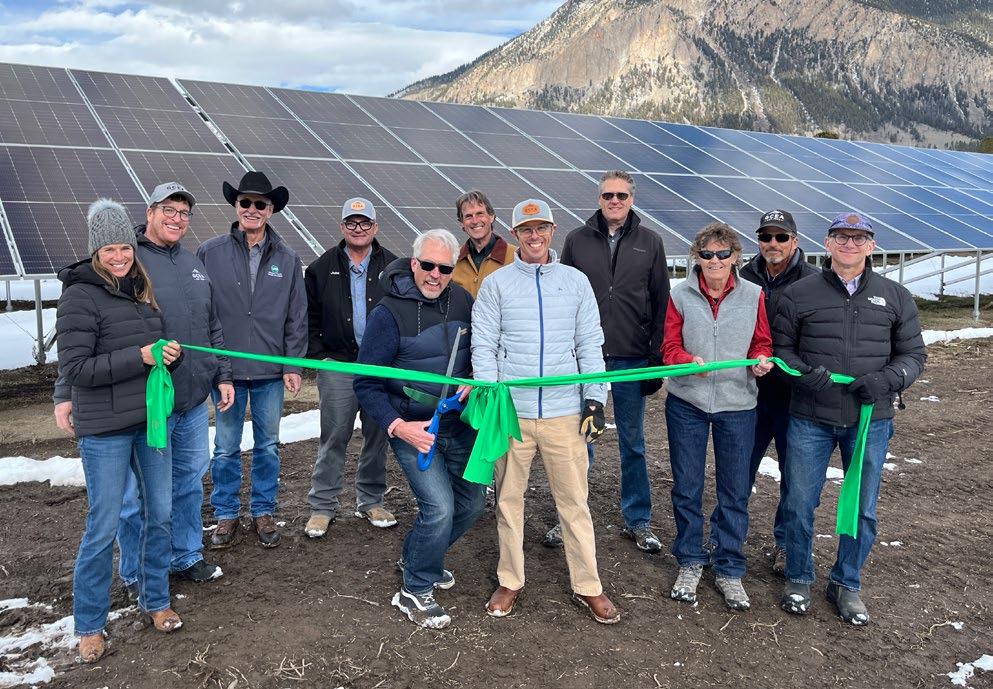
The GCEA board of directors and key staff celebrate the completion of the Oh Be Joyful solar array in Crested Butte
GCEA’s On-Bill Repayment Program Takes Off
By Alliy Sahagun Member Relations Supervisor
By now, you have likely seen one of GCEA’s ads for the On-Bill Repayment (OBR) Program. Whether it featured a family upgrading their insulation or highlighted our recent group-buy discount on ductless minisplit heat pumps, the message is the same: making energy-efficient home improvements is more accessible than ever.
The On-Bill Repayment Program helps members finance eligible energy upgrades, such as heat pumps, insulation, windows, or EV charging stations without the typical barriers. There is no money down, no credit check, and low-interest financing is repaid conveniently on your monthly electric bill.
An added benefit of the OBR Program is that it works alongside GCEA’s rebate program. All eligible rebates are applied before project financing is finalized, helping reduce the total amount financed.
GCEA’s On-Bill Repayment Program has been a great success in large part because of the collaborative efforts between our power provider Tri-State Generation and Transmission Association, the Collective Clean Energy Fund, and especially the contractors who have led the boots on the ground efforts to bring these projects to life. Their responsiveness to members, including the preparation of bids and completion of project work, has made a meaningful difference in improving comfort, increasing energy efficiency, and reducing carbon emissions in members’ homes.
One standout example of this collaboration is GCEA’s air-source heat pump bulk buy program,
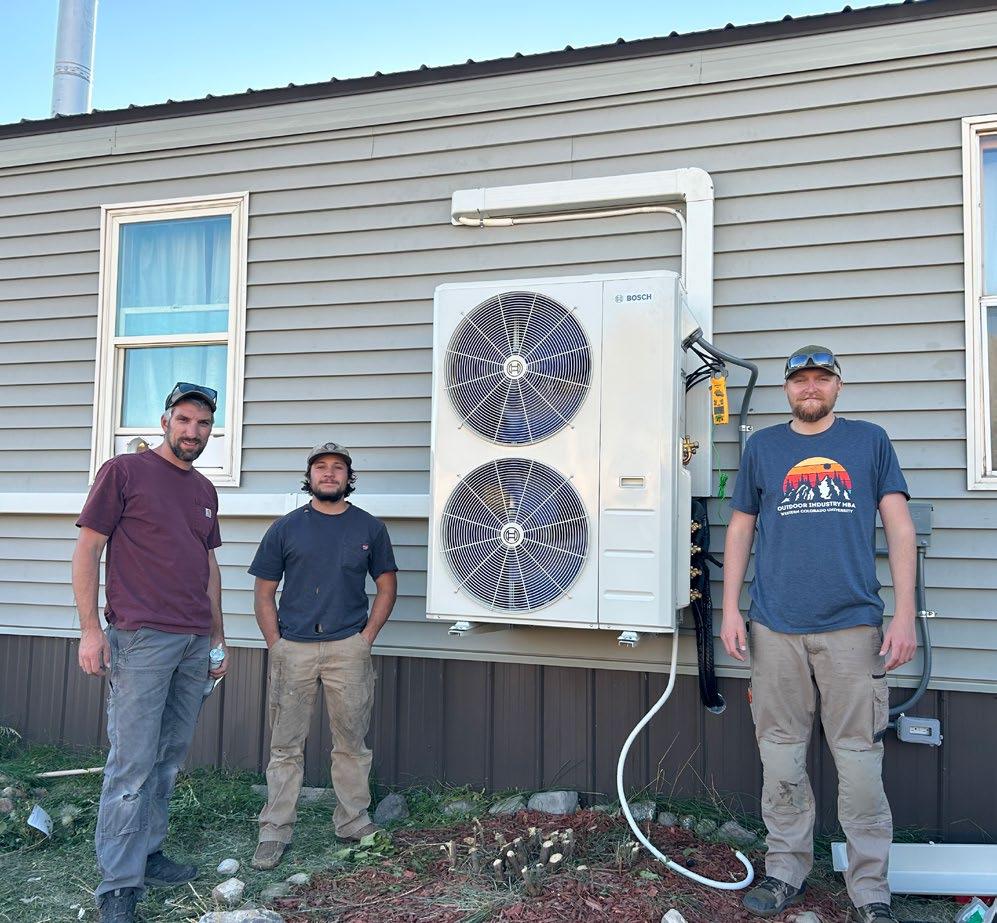
which has been driven by a highly successful partnership with local contractor Ray Alspach of Alspach Refrigeration. Ray embraced the program’s emphasis on responsiveness and high-quality work to drive a higher number of heat pump installations in GCEA member homes. In addition to OBR financing, his projects incorporated State of Colorado tax credits applied as point-of-sale discounts, further reducing upfront costs for members participating in the program.
Interest in the program continues to grow with 17 projects completed thus far. GCEA is pleased to offer the On-Bill Repayment Program as a practical way for members to improve home comfort, reduce energy use, and lower carbon emissions while staying within budget.
Go online to tristate.coop/on-bill-repayment or call 970-641-3520 for more information about GCEA’s On-Bill Repayment Program.
On the Cover: Instead of bundling up in the cold, make an energy-efficient home improvement through the OBR program.

An Alspach Refrigeration crew installs a heat pump at a family home in Gunnison.
Photo by Willie Peterson
GCEA Scholarships
Empowering students and strengthening our community
By Logann Long Marketing and Communications Coordinator
As a cooperative, GCEA supports continuing education to enrich the lives of our members and communities. We are especially proud to offer the Lineman Scholarship, providing financial assistance to students pursuing careers in electrical linework, helping develop the next generation of skilled line workers.
In 2025, GCEA was proud to support a local Gunnison student as he continued his education and launched a career in an essential industry. Tate Taramacaz’s interest in becoming an electrical line worker was sparked and later confirmed after a ride-along
Thanks to GCEA’s generous scholarship program, I was able to continue my education, pursue my dreams, and focus on building a future doing what I love.” — Tate Taramarcaz

with the GCEA line crew, an experience that helped solidify his career path.
In August 2025, Tate began the nine-month Electric Line Worker program at CMU Tech in Grand Junction, Colorado. The program prepares students for careers in power line work through hands-on training in electricity fundamentals, line installation and repair, cable splicing, system testing, transformer connections, underground installation, and operating digger derricks.

“This program is important to me because the skills I’m learning will help me succeed in my career,” Tate said.
Currently in his second semester, Tate is on track to graduate in May 2026 with his electrical line worker certification. Following graduation, he hopes to begin an apprenticeship as a lineman and is excited to enter a field that offers multiple career paths and long-term growth opportunities.
“Thanks to GCEA’s generous scholarship program, I was able to continue my education, pursue my dreams, and focus on building a future doing what I love,” Tate said.
GCEA is now accepting scholarship applications for both traditional and non-traditional students through March 1. Scholarship funds may be used for any accredited higher education program, including colleges and trade schools.
For more information and to apply, visit gcea.coop
GCEA SCHOLARSHIP APPLICATIONS ARE OPEN
Scan this QR code with your smartphone for the online application. Apply by March 1.

Tate Taramarcaz, a 2025 graduate of Gunnison High School and the 2025 recipient of the GCEA Lineworker Scholarship, is currently enrolled in the Electric Line Worker program at CMU Tech in Grand Junction. Photo by Native Sage Photography
Annual Meeting Notice
Board election and annual meeting information
The election for the board of directors and the 87th Annual Member Meeting for Gunnison County Electric Association will be held on Tuesday, June 23, 2026, at 6 p.m. at 37250 US Highway 50, Gunniso n, CO 81230.
BOARD ELECTION
GCEA’s Board of Director positions at the end of each three-year term that are eligible for election are:
District No. 1 – Incumbent Greg Wiggins
The northwest corner of the certificated service area of the Association including the Town of Crested Butte and the Slate River area along Colorado State Highway 135 to approximately one-half mile north of Jack’s Cabin cut-off, excluding service locations in Crested Butte South or which are accessed by Cement Creek Road.
District No. 4 – Incumbent Michelle Lehmann
The Gunnison River area west of the City of Gunnison, Curecanti Recreation Area, to the West Elk Wilderness area on the north and the Continental Divide on the south within the certificated service area of the Association.
District No. 5 – Incumbent Tom Carl
The Lake Fork of the Gunnison drainage from Gateview to the Continental Divide, including Lake City and Lake San Cristobal within the certificated service area of the Association.
RUN FOR THE BOARD
To become nominated as a candidate for the GCEA’s Board of Directors Election, an interested person must meet the qualifications for serving as a director and must timely submit a nomination petition signed by at least 15 members of GCEA.
Petition signers do not have to live within your district. Additionally, GCEA strongly encourages any person interested in serving as a director to schedule an information/orientation meeting with CEO Mike McBride.
Candidate packets and petitions will be available February 18, 2026.
To serve as a director, you must be a member of
GCEA, reside within the district for which you are nominated, and meet all other qualifications for serving as a director. Completed petitions must be returned to GCEA by 12 p.m. MDT on Monday, April 27, 2026.
BALLOT MAILING DEADLINE
In case of a contested election, ballots will be posted for mailing to members on Friday, May 22, 2026. Ballots are mailed to members of record as determined 60 days prior to the election date and sent to the member’s main address on file. Ballots must be completed per instructions and, if returned by mail, must be received by the vote administrator by the day of the Annual Meeting, June 23, 2026. Any mailed ballots received after this deadline will be considered invalid.
ELECTRONIC VOTING
Members have the option to vote electronically in case of a contested election. In case of a contested election, electronic voting instructions will be provided to all members of record in their mailed paper ballots. Further voting details and deadlines will be relayed through various means, including emails, website postings, and newspaper advertisements, as the election gets closer.
IN-PERSON VOTING
Members may vote in person on the day of the Annual Meeting beginning onsite at 5:00 p.m. and until the close of registration at 6:00 p.m. Voting by proxy is prohibited.
ELECTION RESULTS
In case of a contested election, we anticipate results will be announced within 5 business days following the June 23, 2026 annual meeting.
For complete information concerning the nomination process, please call Chief Executive Officer Mike McBride or Executive Assistant Sherry Shelton at 970-641-3520 or email directorelections@gcea.coop.
ANNUAL MEETING • SIGN UP FOR PREPAY • THE POWER SURGE
GOING THE EXTRA MILE
Western Mountain Rescue Team saves lives in the wilderness
The Power Surge
Factors driving the rising demand for electricity
By Dennis Herman General Manager
Across the United States, the demand for power is climbing at one of the fastest rates in decades. As the economy becomes more reliant on electricity and data centers continue to sprout up in many parts of the country, electric cooperatives are preparing to meet the challenges that skyrocketing demand brings.

The North American Reliability Corporation — the watchdog for the U.S. electric grid — recently released the 2025-2026 winter reliability assessment, which echoed other recent reports, including longer-term outlooks that expect sufficient energy resources during normal conditions but potential supply shortfalls and outages under more intense weather conditions.
Extreme weather coupled with additional factors that are driving increased demand creates challenges for electric utilities, including cooperatives, in their mission to provide reliable power around the clock.
Several key factors are driving increased demand, including economic growth, expanded manufacturing, data center development, and increased electrification. Together, these trends are reshaping how much electricity we consume and how quickly utilities like Highline Electric and our wholesale power provider, Tri-State Generation and Transmission, must adapt to meet future needs.
One of the biggest drivers of rising demand is increased electrification due to state regulations. More homes and businesses are transitioning to electricity for home heating, water heating, and transportation. Additionally, electric heat pumps are replacing
traditional furnaces in many homes due to their efficiency. These transitions mean more energy use and pressure placed on our electric grid.
Data centers are another major contributor to rising demand. As artificial intelligence, cryptocurrency, and cloud computing technologies grow, the need for data processing and storage has skyrocketed. Data centers require huge amounts of power to operate servers and cooling systems 24/7. Tri-State has worked together with their members to proactively develop a tariff that will insulate our members from the cost impact of growth due to large loads like data centers.
Economic and manufacturing growth are also contributing to higher electricity use. As businesses expand and new industries take root, especially in rural and suburban areas, the demand for reliable, high-capacity power is increasing. The resurgence of domestic manufacturing has led to major facility construction.
Population growth and housing development are also contributing to rising demand in many regions, and everyday life is becoming more energy dependent, too. Smart appliances, connected devices, home offices, and entertainment systems are adding to overall consumption, even as efficiency improves.
Tri-State has developed programs in partnership with its members that allow Highline to participate and reduce the economic impact of this load growth. These programs include:
• Bring Your Own Resource
• Highline is participating with Tri-State in the
1300 S. Interocean P.O. Box 57 Holyoke, CO 80734-0057
phone 970-854-2236 toll free 800-816-2236
Holyoke & Sterling: M-Th 7 a.m.– 5:30 p.m.
info@hea.coop hea.coop facebook.com/HighlineElectric
Ovid: Mon., Tues., Thurs. 9 a.m.–3 p.m.
development of new generation resources that will be economically beneficial to our membership.
• Member Demand Response Program
• Highline is partnering with Tri-State to maximize the benefit of our irrigation load control program.
• Highline is working to deploy utility scale batteries across our system to manage our demand and lower our wholesale power costs. Electricity powers nearly every aspect of today’s economy, and its role will only grow stronger. As electrification accelerates, long-term planning becomes more important than ever.
Highline is working together with our power supplier to meet the growing demand for electricity. Through innovation, investment, and collaboration, we are preparing for a more reliable and resilient energy future.

ON-BILL REPAYMENT PROGRAM
Highline Electric Association’s On-Bill Repayment Program makes energy efficiency and electrification upgrades more accessible for homeowners, businesses, and agricultural producers. Repay gradually, right on your monthly utility bill.
When you call Highline Electric Association after hours, listen to our automated menu for options to report an outage or pay your bill. You can even leave a message for the billing department if you need a callback.
Press 1 to report an outage
Press 4 to pay your bill — please have account number and payment ready
Press 5 to leave billing department a voicemail
Pay when it works for you: It is quick, secure, and available 24/7.
Join us for Highline Electric Association’s 88th Annual Meeting.
The meeting is scheduled for Tuesday, March 31 at the Phillips County Event Center located at the fairgrounds in Holyoke.
Board President Mike Bennett and General Manager Dennis Herman will give reports on the status of the association and a director election will be held.
Watch for more information arriving in your mailbox in March and visit Highline’s website at hea.coop for livestream information for the event.
Do Not Post on Power Poles
Most jobs do not require you to climb 40 feet in the air and conduct business within a few feet of high voltage power lines that carry 7,200 volts of electricity. However, for many utility workers, this is just another day on the job.
Across the nation there are millions of utility poles that provide the electricity that powers everything in your daily life — including the brewing of your morning cup of coffee and the lighting you turn off before going to bed. The electricity we depend on would not be possible without the utility workers who maintain and repair these utility poles.
It is important to keep utility poles free from all personal materials such as balloons, fliers, and metal objects like staples or tacks.
By respecting utility poles, you can help keep your community powered, and your local utility workers safe.
Tacking items to power poles is not only illegal in many areas but also creates hazards for the linemen who repair and maintain utility poles and other electrical infrastructure.
Utility workers use specialized climbing devices to perform regular maintenance and repair damaged
HEAR PROGRAM
The state of Colorado has launched its Home Electrification and Appliance Rebates program. HEAR provides rebates for high-performance electric appliances and other home upgrades, including heat pumps, water heaters, ventilation, and insulation, just to name few. If you have been thinking about financing home improvements, this is a great time to pair the state’s generous rebates with Highline Electric Association’s on-bill financing.
Learn how you can save up to $14,000 with this program. Highline is partnering with Zero Homes to ensure a fast and easy process for you. Email Christian Kennedy for more info at christiank@zerohomes.io.
power lines at the top of utility poles. Nails, tacks, and other metal objects that are used to attach objects to utility poles can interfere with the safe operation of the climbing boots used by utility workers.
Foreign objects that are embedded in utility poles can also snag or damage the protective clothing that keeps line workers safe from electrical shock. These men and women already work in extremely hazardous conditions, so everyone who relies on electricity should take steps to make their job as safe as possible.
Other items that have been found on utility poles include tree stands for hunting.
If you plan on hunting, do not place tree stands or other objects on utility poles. Doing so not only creates a risk for utility workers, but it is also extremely dangerous for yourself or anyone who uses it.
For your own safety, please keep as much distance between yourself and overhead power lines as possible.
For more information on staying safe around power lines and utility poles, visit SafeElectricity.org.
Congratulations
The following employees observe a Highline Electric employment anniversary in February:
Bob Bradley — 29 years
Dan Kafka — 27 years
Deanna Deselms — 23 years
Joanie Groshans — 18 years
Derek Roberts — 17 years
Seth Baker — 10 years
Karson Harryman — 9 years
Morgan Eurich — 9 years
Sarah Dille — 3 years
Sign Up for Highline’s Prepay Program
Highline Electric Association’s Prepay Program is a flexible billing option that lets you pay for electricity before you use it, much like a prepaid phone. No monthly bills, just pay as you go.
We require an initial account payment of $50 to start your prepay balance, then each ongoing payment is set at a minimum of $20 per transaction. If your balance runs out, service is disconnected; reconnection is automatic once your account balance is $20 above what is owed. There are no extra fees for reconnection or disconnection.
Most residential members can enroll in Prepay. This option is not available to net-metering accounts, members who are in the budget billing program, members on time-of-use rates, or households with electrical life saving medical equipment.
With Prepay, you can pay for electricity use on your own schedule. Use Highline’s mobile app to track usage, track your balance, make payments, schedule future payments, and set up email and text alerts so
Efficiency Tip
Drafty room? Check your home’s energy efficiency Seal air leaks; add insulation where it matters, such as in the attic; use programmable thermostats and have your furnace serviced regularly

you can know when your balance is running low. Interested in switching to Prepay? Call your local Highline office today and ask for our step-by-step guide for setting up an online account.

REBATES

Are you making any home upgrades? Maybe you’re electrifying your lawn equipment before summer? Visit Highline Electric’s website at hea.coop/ rebates to learn about the 2026 rebate program.
GOING THE EXTRA MILE
Western Mountain Rescue Team saves lives in the wilderness
Reliability Requires Investment
By David Churchwell General Manager
As your local power provider, K.C. Electric Association’s mission has always been simple: keep the lights on and support the communities we serve. But behind every switch, every warm home, and every business that opens its doors is a complex system that requires constant care. Reliable electricity doesn’t happen by accident. It requires ongoing investment in our local grid through system repairs, maintenance, upgrades, and the integration of new technologies that help us operate smarter and more efficiently.
Much of the energy system we rely on today was built decades ago. While it continues to serve us well, age alone means that components must be repaired or replaced to maintain performance and safety. From poles and wires to transformers and substations, every part of the grid has a lifespan. Routine maintenance helps extend that lifespan, but eventually equipment must be updated to meet modern standards. These proactive investments reduce the likelihood of outages, shorten restoration times when disruptions do occur, and create a stronger backbone for our growing community.
The demands on the electric grid are also evolving. Homes and businesses today use more electricity than ever, and that trend will only continue. Advanced HVAC systems, smart appliances, and new commercial facilities add load to the local distribution system. As these technologies take hold, the grid must be able to support increased demand while maintaining the reliability our members expect. Strategic upgrades to our substations as well as our transmission and distri-
K.C. ELECTRIC MISSION
Our mission is to provide our members with safe, reliable service at the lowest cost, while maintaining an environmentally responsible, accountable, and sustainable operation now and in the future.
bution systems are essential to ensure we can meet these needs both today and in the decades ahead.
At the same time, new technologies are reshaping how we operate. Tools such as smart meters, SCADA, and outage management systems allow us to detect problems faster and respond quicker. These technologies can provide real-time data that helps us plan and maintain equipment more efficiently.
Implementing innovative technologies into the grid is not just a convenience — it is a necessity for ensuring reliability in an increasingly complex energ y landscape.
While these improvements require thoughtful planning and financial investment, the return is significant. A stronger grid supports economic growth, improves service quality, and enhances safety for our crews, and for the communities we serve. Most importantly, it ensures that the essential power you rely on is available whenever you need it.
Our commitment to reliability runs deeper than infrastructure alone. It reflects our responsibility to the people and communities we serve. Every upgrade, every repair, and every technology we deploy is an investment in your daily life, from the comfort of your home to the success of local businesses and schools.
We know that powering our community means preparing for the future, not just maintaining the present. By investing in our local grid today, we are building the foundation for a brighter, more resilient tomorrow.
K.C. Electric Staff
David Churchwell General Manager dchurchwell@kcelectric.coop
Bo Randolph Office Manager and CFO brandolph@kcelectric.coop
Phone 719-743-2431
Toll-free 800-700-3123 Web kcelectric.coop
Darren Fox Operations Manager dfox@kcelectric.coop
George Ehlers Member Services Specialist and IT Manager gehlers@kcelectric.coop
Address 422 3rd Avenue Hugo, CO 80821
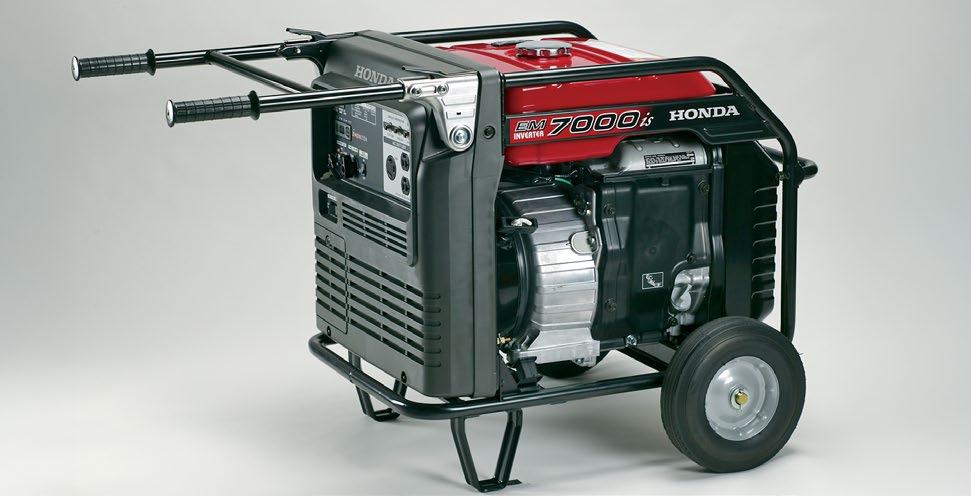
Generator Safety
Before you grab your portable generator to use it for backup power, there are important, lifesaving safety steps you should know. It is best to familiarize yourself with how to use a generator properly before needing to use one.
Here are tips to stay safe when using a generator:
1. Read the instructions. Many people are tempted to skip this step, but using a generator incorrectly can cause carbon monoxide poisoning, which is often deadly. These are instructions you should take the time to read.
2. Check CO detectors. Protect yourself and those you love by making sure there are battery-operated CO testers in your home that are working properly and have fresh batteries.
3. Know how to use a generator properly. Operate generators at least 20 feet from doors and windows and never use one in any type of enclosed structure, such as a garage, shed, or tent. If your RV has a generator, be sure to operate it safely to avoid CO poisoning.
4. Keep it dry. If it is wet outside, place the portable generator on a tarp. If it is raining or snowing, position it under a portable canopy (but not under a carport).
5. Keep utility workers and others safe. Never plug a portable generator into a wall outlet. Never use a permanent generator without throwing the transfer switch. Doing either of these things can cause dangerous backfeed into the power grid.
CLAIM YOUR SAVINGS
Always
6. Make sure the transfer switch is endorsed by a reputable testing laboratory, such as Underwriters Laboratories, and that the installation meets all applicable electrical codes.
7. Plug items directly into a portable generator and use heavy-duty extension cords that are in good working condition and are the correct gauge. The lower the gauge number and the thicker the cord, the more electricity it can safely carry; refer to the owner’s manual for specifics. Do not plug one extension cord into another.
8. Let the generator cool down before refueling. Also, store fuel safely.
9. Keep it well-maintained and have it inspected regularly.
To learn more about safe generator use and electrical safety in general, visit SafeElectricity.org
Each month, K.C. Electric Association members have a chance to claim $20 credit on their next electric bill. All you must do is find your account number, call the Hugo office at 719-743-2431, and ask for your credit. The account numbers are listed below. How simple is that?
You must claim your credit during the month in which your name appears in the magazine (check the date on the front cover).
Mike Hannigan, Hugo — acct 6504xxxxx
Mona Ebsen, Stratton — acct 11165xxxxx
Chase McCullough, Vona — acct 10056xxxxx
Laci Gardner, Hugo — acct 6406xxxxx
In December, members Leon Allen, Mike Koehn, and Mark Hile called and claimed their savings.
ENERGY EFFICIENCY TIP OF THE MONTH
Mid-winter is a great time to ensure you are making the most of your home heating system. Replace or clean filters to keep your furnace or heat pump running efficiently. Listen for strange noises and check for uneven heating — these signs indicate that the system may need servicing. Ensure vents and radiators are not blocked by furniture or rugs as proper airflow helps your system work less and saves energy. A little maintenance along the way can prevent costly repairs and keep your home cozy through winter.
use portable generators according to the manufacturer's instructions. Photo by Honda


Chance! Last
HIGH SCHOOL SENIORS
SCHOLARSHIP APPLICATIONS ARE DUE SOON
K.C. Electric Association is proud to offer scholarships to graduating high school seniors who are continuing their education at a university, college, or trade school.
Application forms and copies of rules and procedures for the scholarships are available online at kcelectric.coop/scholarships. You may also obtain the application by calling George Ehlers at K.C. Electric at 1-800700-3123. All applications and supporting documents must be received at K.C. Electric, PO Box 8, Hugo, CO 80821, by Thursday, February 12 at 5:30 p.m.
Send all applications to: K.C. Electric Association, Inc.
Attention: George Ehlers Manager of Member Services PO Box 8 Hugo, CO 80821
If you have questions or need an application mailed to you, call George Ehlers at 719-743-2431.
DO NOT POST ON POWER POLES
Most jobs do not require you to climb 40 feet in the air and conduct business within a few feet of high voltage power lines that carry 7,200 volts of electricity. However, for many utility workers, this is just another day on the job.
Across the nation there are millions of utility poles that provide the electricity that powers everything in your daily life — including the brewing of your morning cup of coffee and the lighting you turn off before going to bed. The electricity we depend on would not be possible without the utility workers who maintain and repair these utility poles.
It is important to keep utility poles free from all personal materials such as balloons, fliers, and metal objects like staples or tacks.
By respecting utility poles, you can help keep your community powered, and your local utility workers safe.
Tacking items to power poles is not only illegal in many areas but also creates hazards for the linemen who repair and maintain utility poles and other electrical infrastructure and can increase your monthly utility bill.
Utility workers use specialized climbing devices to perform regular maintenance and repair damaged power lines at the top of utility poles. Nails, tacks, and other metal objects that are used to attach objects to utility poles can interfere with the safe operation of the climbing boots used by utility workers.
Foreign objects that are embedded in utility poles can also snag or damage the protective clothing that keeps line workers safe from electrical shock. These men and women already work in extremely hazardous conditions, so everyone who relies on electricity should take steps to make their job as safe as possible.
Other items that have been found on utility poles include tree stands for hunting.
If you plan on hunting, do not place tree stands or other objects on utility poles. Doing so not only creates a risk for utility workers, but it is also extremely dangerous for yourself or anyone who uses it.
For your own safety, please keep as much distance between yourself and overhead power lines as possible.
For more information on staying safe around power lines, utility poles, visit SafeElectricity.org
Photo by Olga
The parts of a POWER POLE
Ever wonder what’s on a power pole and how it delivers electricity to your home? Learning about each part can help you and your family stay informed — and safe.
Here are some common parts found on power poles. Equipment can vary depending on location and service needs.
Insulators keep energized wires from touching the pole or other wires, preventing dangerous contact.
Lightning surge protectors shield equipment from lightning or sudden voltage spikes.
Neutral conductor wires provide a return path for electricity to the substation and are grounded to balance the system.
Secondary wires deliver lower-voltage electricity directly to homes and businesses.
Guy wires anchor poles to the ground for stability. Stay clear of them when walking, playing, mowing or driving nearby.

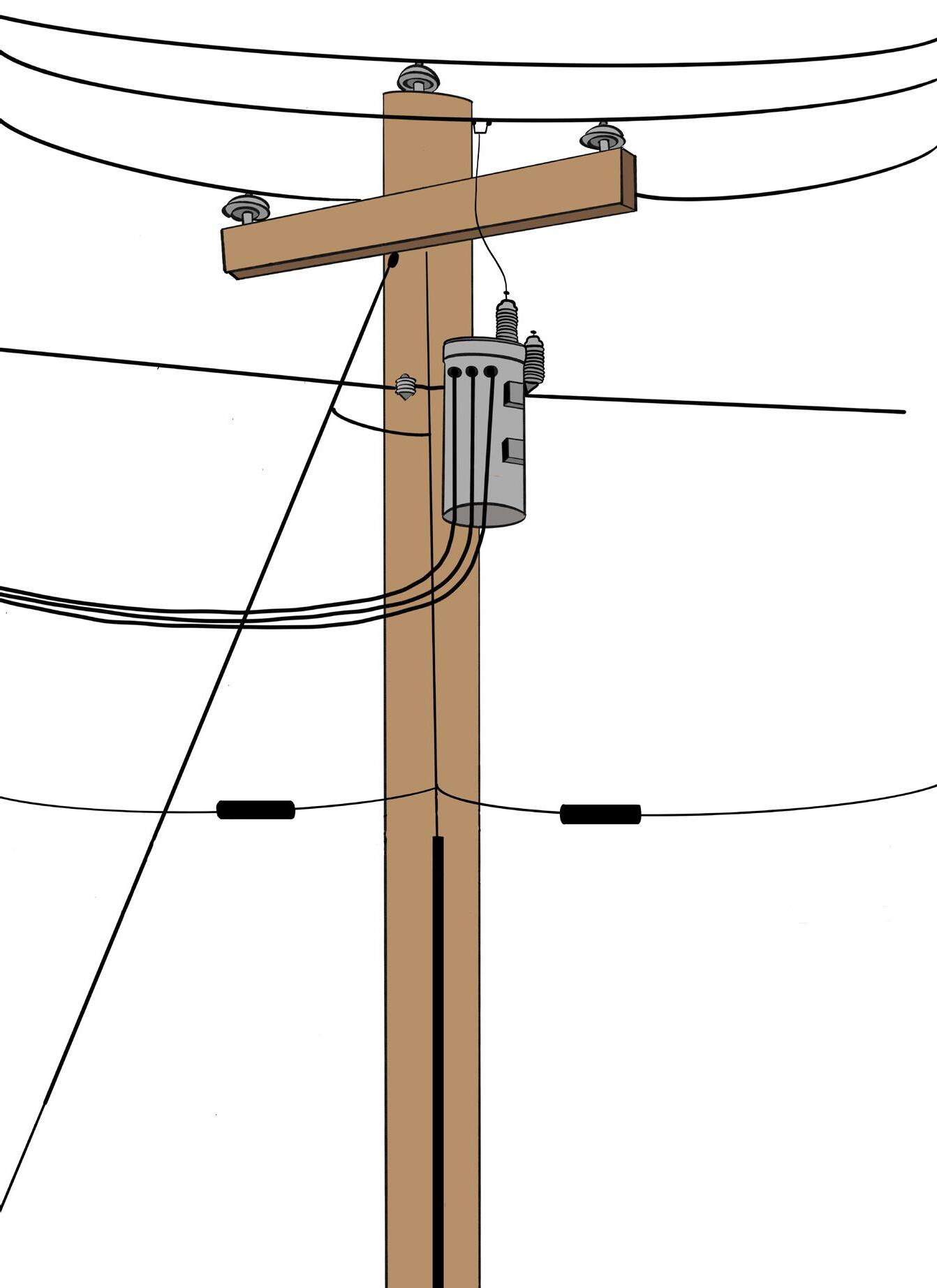
Primary wires are the main series of wires that carry high-voltage electricity (often 7,200 volts) from substations through the distribution system — about 60 times higher than household voltage.
Transformers — the round, metal tank-like devices — reduce high-voltage electricity from primary wires to a safer level for homes and businesses. Many include a lightning arrestor for protection.
Ground wires run the entire length of the pole and safely channel electricity and lightning into the earth.

Communication lines — for phone, cable or internet — are usually the lowest wires on the pole.
Safety Tip: Never attach signs or posters to utility poles — it creates serious hazards for lineworkers.
GOING THE EXTRA MILE
Western Mountain Rescue Team saves lives in the wilderness
Join MCREA For Our 89th Annual Meeting
By Dave Frick General Manager
We at Morgan County REA are focused on providing safe, dependable electricity to our members. This is a tradition we’ve continued for nearly 90 years, and a mission we commit to every day. Whether MCREA has powered your home for generations or you’re new to our community — here, you are more than just a customer. You are one of nearly 5,000 member-owners who shape and strengthen our cooperative and we are proud to serve you.
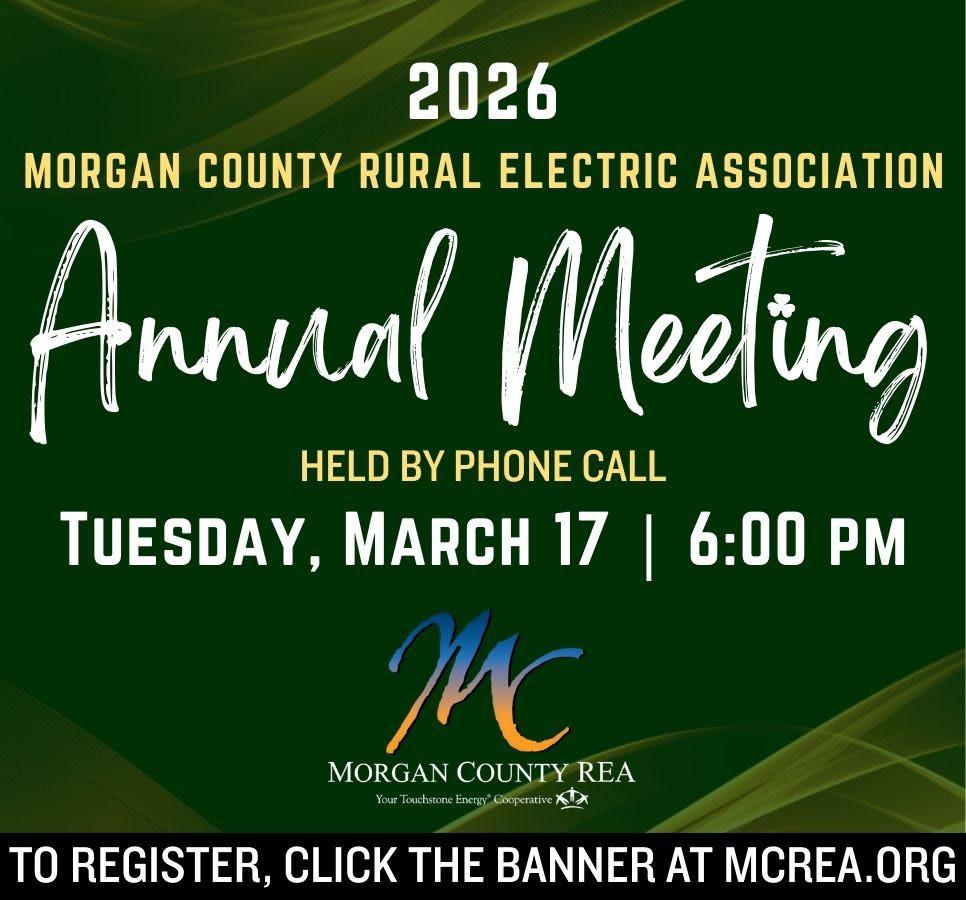
A cornerstone of MCREA is the annual meeting held each March. This meeting keeps members informed about the status of the cooperative and offers an opportunity to engage in the decisions that guide MCREA. On behalf of the board of directors, MCREA employees, and myself, I invite all members to join us for MCREA’s 89th Annual Meeting, which will take place by phone call at 6 p.m. on Tuesday, March 17.
Telephone Town Hall — a Colorado-based telecommunications service — will facilitate the meeting. This format has proven to be an effective way to conduct the association’s business while expanding accessibility for our members. Instead of having to attend in person, members can participate from anywhere, allowing them to receive important updates about the co-op and gives them the opportunity to ask questions. Hosting our annual meeting by phone also eliminates any issues posed by winter weather.
Of course, no MCREA annual meeting is complete without prizes, and this year you have the chance to win some great ones. Members listening to the meeting will be entered to win the grand prize — a Ryobi 40-volt electric snow blower. There is also a $250 gift card up for grabs. And don’t forget, each year we draw one name from our entire membership. If that member
is on the call, they will receive a $1,000 cash prize. Now that would make for a lucky St. Patrick’s Day!
Members are encouraged to register for the annual meeting by clicking the banner on our homepage at mcrea.org. If you register, you’ll be entered into a separate drawing to win local gift cards in the weeks leading up to our meeting — be sure to sign up early. While we are looking forward to speaking with you at the annual meeting, we are also already making plans for our Member Appreciation Picnic this summer. Our annual picnic will take place at MCREA headquarters on Wednesday, June 10. I hope you’ll join us there for a great meal and the chance to visit with neighbors and friends at your cooperative.
We look forward to connecting with you at both events.
Morgan County REA Lineworker Scholarship
Applications due Friday, April 17
Morgan County REA is proud to invest in the next generation by offering a $5,000 lineworker scholarship to support a deserving individual pursuing a career in the power industry. This scholarship is designed to encourage, promote, and educate those who are interested in becoming electric lineworkers — skilled professionals who play a vital role in keeping our communities powered safely and reliably.
The scholarship is open to applicants who reside within the outer boundaries of MCREA’s service territory and who are enrolled or currently attending an approved lineworker training program as a full-
time student. As long as the applicant meets the age requirement for program enrollment, there are no additional age restrictions.
Applications must be completed and submitted by Friday, April 17. If awarded the scholarship, the recipient must verify continued enrollment and achieve a minimum 3.0 GPA at the completion of each semester. Receiving the scholarship does not guarantee or require future employment with MCREA.
The application is available on our website at mcrea.org/lineworker-scholarships. For questions, please call MCREA’s office.


Mid-winter is a great time to ensure you are making the most of your home heating system. Replace or clean filters to keep your furnace or heat pump running efficiently. Listen for strange noises and check for uneven heating — these indicate that the system may need servicing. Ensure vents and radiators aren’t blocked by furniture or rugs, as proper airflow helps your system work less and saves energy. A little maintenance along the way can prevent costly repairs and keep your home cozy through winter.
Young Members to Represent Morgan County REA this Summer
Each year, Morgan County REA offers local students the opportunity to attend two exceptional leadership programs in the summer.
Electric Cooperative Youth Tour takes place every June in Washington, D.C., where high schoolers from across the country — sponsored by their local electric cooperatives — spend a week learning about co-ops and the role they have played in our nation’s history. During Youth Tour, students tour D.C.’s most popular sights and even have the opportunity to meet with members of Congress.
Isabella Petrino from Weldon Valley High School has been selected to represent MCREA at this year’s tour. While there, she is excited to learn and grow as a leader.
“I’m looking forward to meeting new people and exploring Washington, D.C.,” Isabella shared. “I want to see everything!”
Later in the summer, Cooperative Youth Leadership Camp kicks off near Steamboat Springs. There, students chosen by their home co-ops in Colorado, Wyoming, Oklahoma, and Kansas gather in the Rocky Mountains for an outstanding educational experience. Campers learn about electricity and cooperatives while also building their communication and leadership skills. They enjoy many fun activities including a sand volleyball tournament, a trip to the top of Mt. Werner, and a rafting adventure along the Colorado River.
Brynn Neal, from Wiggins High School, has been chosen to be MCREA’s delegate at this year’s leadership camp. “I’m really excited for the whole experience!” she exclaimed.
Congratulations to both students! We can’t wait to hear about your trips! (Larry Fleming, acct. #xxx2000)



Isabella Petrino
Brynn Neal
Do Not Post on Power Poles
Most jobs do not require you to climb 40 feet in the air and conduct business within a few feet of high-voltage power lines that carry 7,200 volts of electricity. However, that’s just another day on the job for utility workers.
Across the nation there are millions of utility poles providing electricity to power most everything in our daily lives. The electricity we depend on would not be possible without these poles and those who maintain them. (Bryan Malone, acct. #xxx8600)
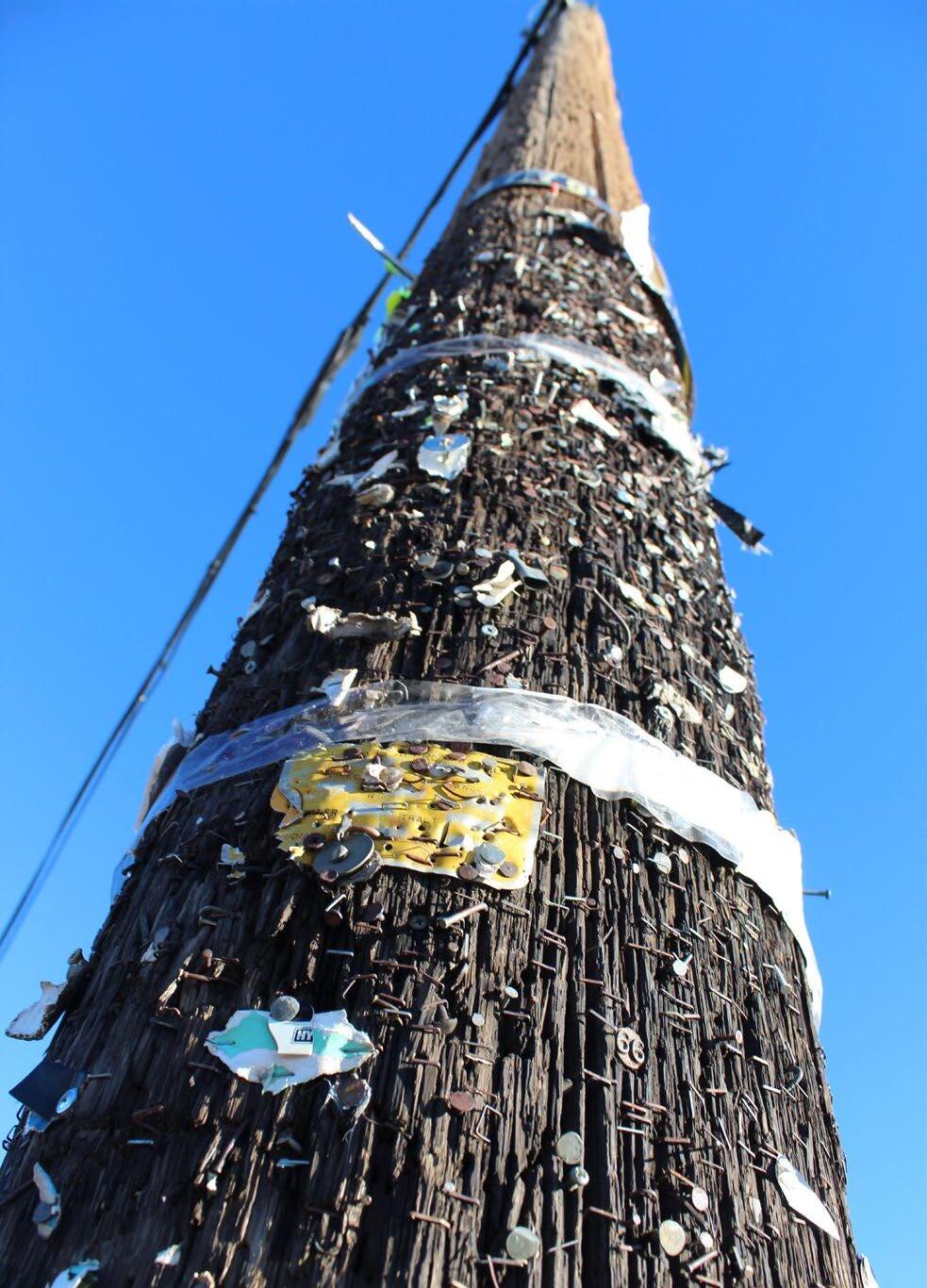
It is important to keep utility poles free from all personal materials such as balloons, fliers, and metal objects like staples or tacks.
Tacking items to power poles is not only illegal in many areas but also creates hazards for the linemen who work on utility poles and other electrical infrastructure.
Nails, tacks, and other metal objects used to attach objects to poles can interfere with the safe operation of the climbing gear used by lineworkers to perform regular maintenance and repair damaged lines at the top of poles.
Foreign objects that are embedded in utility poles can also snag or damage the protective clothing that keeps lineworkers safe. They already work in extremely hazardous conditions, so everyone who relies on electricity should take steps to make a lineworker’s job as safe as possible.
Other items that have been found on utility poles include tree stands for hunting. If you plan on hunting, do not place tree stands or other objects on utility poles. Doing so not only creates a risk for lineworkers, but it is also extremely dangerous for yourself or anyone who uses it.
For your own safety, please keep plenty of distance between yourself and overhead power lines.
For more information on staying safe around power lines, utility poles, and electricity, visit SafeElectricity.org.
Each month, Morgan County REA gives two lucky members a chance at a $30 bill credit just by reading Colorado Country Life. Congratulations, Kelly Harding! You spotted your name in December’s magazine and called to claim your bill credit.
There are two more member names and their account numbers hidden somewhere in this issue. If you find your name, call MCREA’s communications department at 970-867-5688 by February 27 to claim $30 off your next bill.
Attaching signs to power poles with staples, nails, and tacks creates hazards for MCREA linemen. Help keep our poles free from posters and fliers. Photo by Denise Moore
Rooted in Reliability
Investing in the System That Serves You
By Ruth Marks CEO
At
Mountain View Electric
Association, reliability isn’t just part of a slogan; it’s a responsibility we proudly carry every day. For 85 years, our mission has been to provide safe, reliable electricity to the communities we serve. As our system continues to grow and change, that responsibility calls for thoughtful investment in the infrastructure, technology, and people who keep your power on today while preparing us for the future.

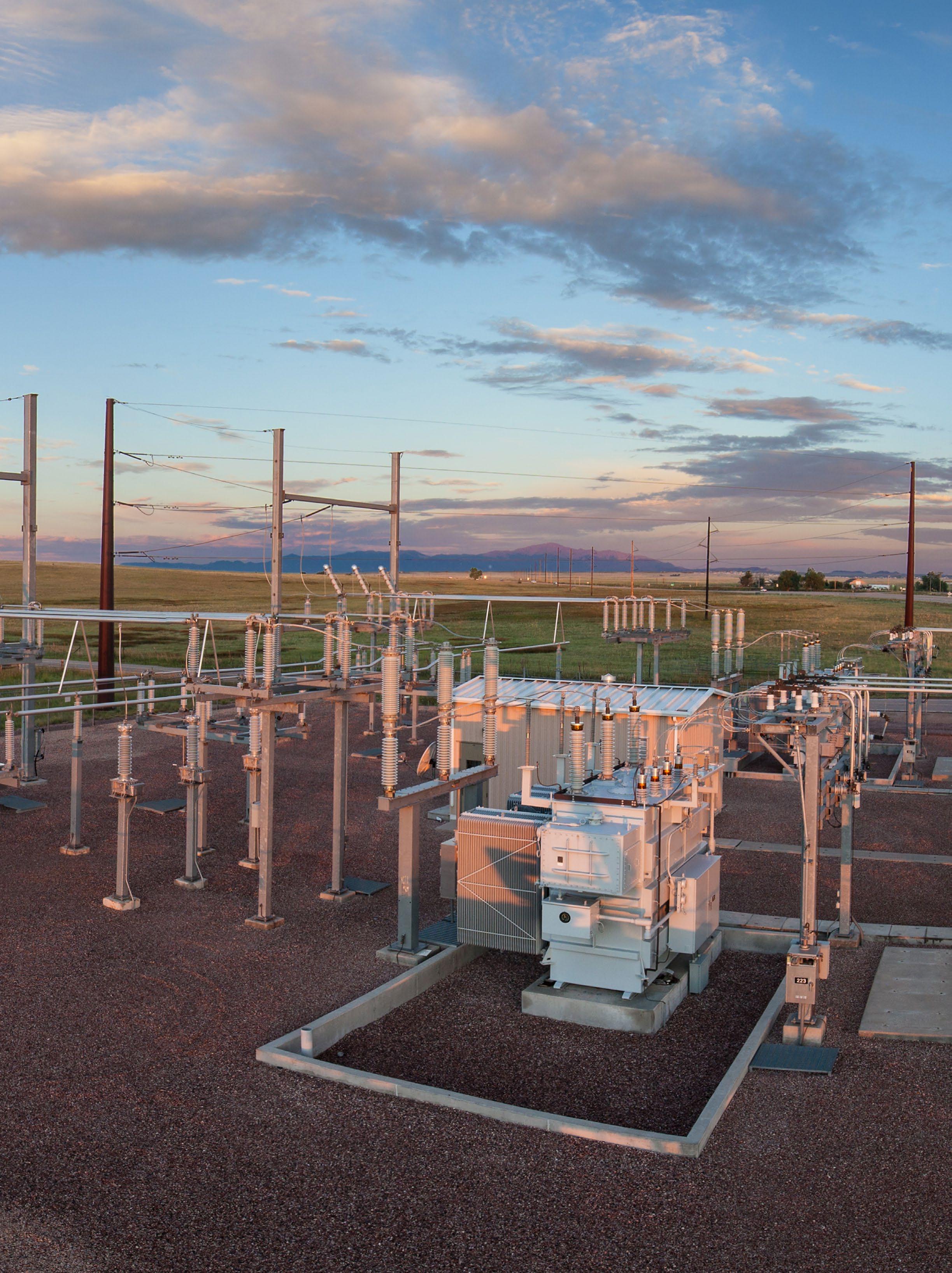
Behind every light switch is a vast network spanning more than 6,500 miles of energized line across a 5,000-square-mile service territory. That system includes more than 95,000 poles, 25 substations, and thousands of pieces of equipment that must be inspected, maintained, and upgraded to operate safely and reliably. Much of this infrastructure was built decades ago, and proactive reinvestment helps extend its life, reduce outages, and restore power more quickly when disruptions occur.
Those investments are making a meaningful difference. In the past year, MVEA crews patrolled more than 1,600 miles of distribution line and 127 miles of transmission line. We achieved a System Average Interruption Duration Index (SAIDI) of just 29.94 minutes, well below the most recently reported national average of 126 minutes. Most importantly, in a profession that requires crews to work around high-voltage electricity and in all types of weather, our continued focus on safety resulted in zero lost-time accidents and zero preventable vehicle accidents.
Reliability also means planning ahead. As more
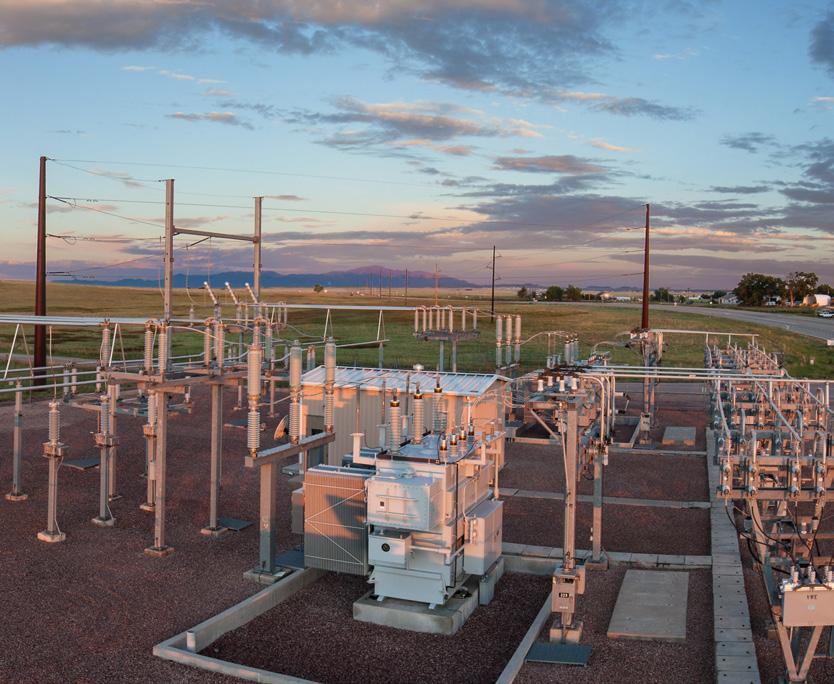
members connect to the system and electricity use continues to rise, the grid must be ready to support that growth. Last year alone, we connected more than 1,500 new members and answered over 62,000 member calls, reinforcing that our work is ultimately about serving people and communities.
Technology plays an important role in that effort. Investments in system monitoring, automated controls, advanced software, and drones allow us to spot issues sooner, restore power more efficiently, and reduce risks for crews working in the field. Our fiber broadband expansion, now more than 50% complete, not only brings high-speed internet access to members but also strengthens grid operations by supporting advanced reliability and wildfire mitigation technologies.
Every upgrade we make is guided by a long-term strategy focused on safety, reliability, affordability, and service. As a not-for-profit electric cooperative, we don’t invest for shareholders; we invest for you, our members. These improvements may not always be visible, but they matter every time you flip a switch, weather a storm, or count on power being there when you need it.
From pursuing federal grants to offset system improvement costs to launching programs that help members save energy and money, our dedication to this cooperative and the communities it serves remains at the heart of every decision we make. Thank you for trusting us to power your homes, businesses, and daily lives.
Working Together to Lower Winter Energy Demand
When outdoor temperatures drop, electricity use naturally rises. Colder weather drives us indoors, where we rely more heavily on home heating systems, more lighting, and household appliances. Heating systems run longer and more frequently to maintain comfortable indoor temperatures. Combine that with the fact that most people use electricity at the same times — typically in the mornings and early evenings — and the result is significant pressure on our electric grid.
Mountain View Electric Association works closely with Tri-State Generation and Transmission Association, our power supplier, to plan for these seasonal weather patterns and changes and to ensure you have reliable power every day of the year. This partnership involves detailed resource and infrastructure planning to make certain electricity is available whenever you need it. However, it is important to remember that our local system is part of a much larger regional and national electric grid.
During the winter months, when homes and businesses across the country are using more
electricity simultaneously, overall demand can approach — or occasionally exceed — available supply. This is especially true during severe weather events, such as ice storms, sudden temperature drops, or equipment malfunctions that reduce generation capacity. If such a situation arises, MVEA will provide timely updates and information to members via robocalls, emails, social media posts, and website notices.
To prepare for these scenarios and minimize risks, MVEA and Tri-State partner to take proactive measures to strengthen reliability year-round. These include routine system maintenance, investments in grid modernization and comprehensive disaster response planning. These proactive steps are designed to ensure our portion of the grid remains resilient even under extreme conditions. Yet, maintaining a reliable electric system requires a collective effort — and every member plays an important role in lowering demand when the grid is under stress.
PRESSURE
Energy use spikes during periods of extremely cold weather, which can add strain to the electric grid. When our community works together to reduce energy use, we can make a big impact in supporting system reliability. Four Ways to Ease Grid Strain This Winter
1. Lower your thermostat slightly. Even reducing the temperature by a few degrees can help.
2. Delay using large appliances during peak hours, which are 5-9 p.m. Run dishwashers, washing machines, and dryers during off-peak hours. And, avoid using multiple large appliances at the same time. Shift, stagger, and save energy!
3. Adjust your water heater. Setting it to 120°F and spacing out showers helps conserve both energy and hot water.
4. Unplug unnecessary devices. Power used for lighting and electronics adds up and accounts for a significant portion of home energy use.
lower rate periods. Learn more about this cost-saving rate at www.mvea.coop/rates or call (800) 388-9881.
Need Cash For College? Win a Scholarship!
If you are continuing your education next year, apply for a scholarship with MVEA today. Whether you plan to attend a traditional college, a technical school, or are interested in pursuing a career in engineering or as a lineworker, MVEA is here for you!
For the 2026 school year, MVEA will be awarding scholarships with opportunities for both traditional and nontraditional students. Application Deadline: February 28, 2026

Kevin L. Paddock, District 5 President
Barry R. Springer, District 6 Vice President
Jim Riggins, District 7 Secretary-Treasurer
Joseph D. Martin, District 1 Assistant Secretary
Rick L. Gordon, District 2
Wayne Vanderschuere, District 3
Jim Beals, District 4
(800) 388-9881 (719) 495-2283 Website www.mvea.coop Falcon Office 11140 E. Woodmen Road Falcon, CO 80831
Limon Office
1655 5th Street • P.O. Box 1600 Limon, CO 80828
Office Hours
Monday - Thursday 7 a.m. to 5:30 p.m.



www.facebook.com/@MVEAInc
www.linkedin.com/company/ mveainc
www.x.com/@MVEAInc
www.youtube.com/@MVEAInc This
www.instagram.com/MVEAInc

Fiber Broadband Expansion Update
Starting 2026 Strong | Miles, Members, Momentum
By Jim Kennel MVEA Fiber Project Manager
Reliable, high-speed internet has become just as essential as reliable electricity. At Mountain View Electric Association, we are proud to help meet that need for our members.
As of mid-January, MVEA’s fiber project is officially 53% complete, with 2,438 miles of fiber installed out of 4,567 total miles. Construction crews are maintaining an impressive pace of more than 20 miles per week, which has allowed us to move the scheduled completion of initial installation up to the end of 2027. This momentum reflects the dedication of our crews and partners and is translating into real results for members across our service territory.
Today, more than 30,000 MVEA members in over 40 open zones have access to high-speed fiber internet through a partnership with Conexon Connect, the project’s internet service provider. Crews are actively working throughout our 5,000-square-mile territory, including areas such as Black Forest, Elbert, Falcon, Fountain, Monument, Peyton, and Simla. Looking ahead, we are planning for 1,100 additional miles of fiber installation in 2026, keeping the momentum of the project moving forward at scale.
So why is MVEA building a fiber network? Much
like when electric cooperatives formed in the 1930s to bring power to underserved communities, today’s cooperative difference is about connectivity. Affordable, reliable internet service is often limited in rural areas, and electric cooperatives are uniquely positioned to help close that gap. Because we already own the poles, wires, and underground infrastructure that reach every member, we can deploy fiber efficiently.
Beyond providing broadband access to members, the fiber network also strengthens our electric system. Fiber supports smart grid capabilities such as enhanced substation communication, faster outage detection, and reduced restoration times. It also supports advanced wildfire mitigation tools, including the ability to adjust device operations during high fire danger days.
Fiber internet service is available now or coming soon in many areas! To check updated availability, explore service options, and see if your home is in an open zone, visit www.mvea.coop/internet . You can also follow MVEA on Facebook for timely updates as new zones open and watch for special offers you won’t want to miss.

Photo



Member-Driven, Every Step of the Way
BY JEFF WADSWORTH PRESIDENT & CEO
As a cooperative, every decision begins and ends with you.
Our cooperative model keeps us grounded in the needs of those we serve and accountable to you, our member-owners.
At Poudre Valley REA, being the co-op you can count on means listening and turning feedback into action to continue delivering service that goes beyond expectations as your energy needs evolve.
LISTENING TO YOU
Our ability to deliver exceptional, member-focused service starts by intentionally and consistently listening to help identify where we can continually raise the bar. Each year, we partner with an independent research firm to conduct a comprehensive survey of randomly selected members.
A central part of this survey is the American Customer Satisfaction Index (ACSI). Because the questions are the national standard used to measure satisfaction, ACSI scores allow us to compare our performance to utilities across the country.
This year, we earned an ACSI score of 92 , our highest score ever and one of the top two scores among Touchstone Energy Cooperatives nationwide.
A score in the 90s is exceptionally rare, and our 92 reflects the trust earned through consistent action. While we are proud of this achievement, what matters most is what it represents: confidence in your cooperative to deliver the experience you expect while continually striving to serve you better.
If you weren’t selected for this year’s survey, your voice still matters. Visit with us at community events, join us at the Annual Meeting on April 11 at the Embassy Suites in Loveland, or scan the code to share your feedback now.
DELIVERING WHAT MATTERS
As a member owned cooperative, your priorities guide our decisions, your expectations shape our strategy, and your trust keeps us focused on what matters most.
As we move through 2026 and beyond, our commitment remains clear:
• to power your homes and businesses reliably,
• to manage costs with transparency and discipline, and
• to deliver exceptional service in every interaction.
Thank you for the confidence you place in us. We know that what got us here won’t get us there. You have our commitment to continue pushing forward with focused purpose to be the co-op you can count on today, tomorrow, and every day ahead.
ABOUT YOUR CO-OP
PVREA serves energy solutions to more than 57,000 homes and businesses in Boulder, Larimer, and Weld counties. We are a memberowned co-op, led by those we serve.
OUR MISSION
We are committed to providing safe, reliable, efficient energy solutions with exceptional service to our members.
CONTACT US
1.800.432.1012 pvrea@pvrea.coop www.pvrea.coop
MAILING ADDRESS
Poudre Valley REA
7649 REA Parkway Fort Collins, CO 80528
SOCIAL
facebook.com/PoudreValleyREA instagram.com/poudre_valley_rea youtube.com/PoudreValleyREA
BOARD
Larimer
Larimer
Municipal Utilities Investor Owned Ulities Electric Co-ops PVREA


RESPITE CARE
A New Chapter in a New Home
Spring, often a symbol of new beginnings, marks an exciting chapter for one local nonprofit.
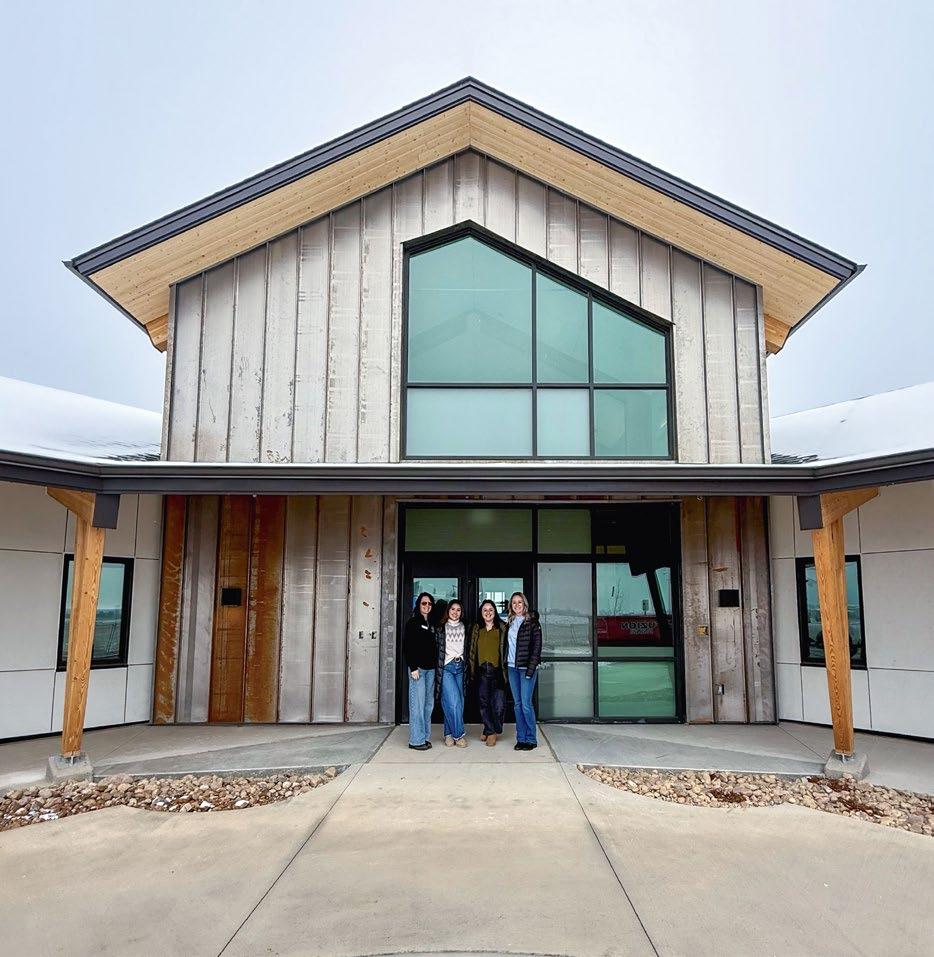
This March, Respite Care will move into a new facility powered by Poudre Valley REA. We are proud to welcome them into our cooperative family and support their journey to expand their space where compassion and care can continue to grow.
For more than 40 years, Respite Care has provided specialized care for children with developmental disabilities while giving their families the time, stability, and relief they need.
Caring for a child with disabilities is a constant, demanding responsibility, and many families struggle to find reliable, specialized childcare. Respite Care helps ease that burden by providing a safe, supportive environment where children’s individual strengths and needs are embraced, allowing parents time to work, rest, and care for their entire family.
Families are often surprised by the breadth of what Respite Care offers. In addition to daily care, children participate in wilderness camp, community outings, and can receive care overnight and during the weekend, opportunities not available in similar care systems.
Respite Care’s Development Director Kaitlin Bjork praised the team of 80 staff members and up to 900 volunteers who provide a high level of specialized care that is not often easy or glamorous. “Our staff and volunteers are full of compassion, empathy, fun, and have the heart to do what we do,” she said.

Their new building is thoughtfully designed to prioritize accessibility and the future of care. Highlights include expanded classrooms, playgrounds, activity spaces, and overnight rooms. With this growth, Respite Care will increase their capacity from 70 children to 160 at one time.
“Not only will we be able to provide space for additional families, but we’re also hopeful that we will increase our staff and expand our programs including the number of overnights and weekend care,” Kristi explained.
“Respite Care is a happy place,” said Kristi Briles, Executive Director at Respite Care. “Friendships are here, unconditional love, inclusiveness, and lots of big wins for the kids. That may be taking their first steps, speaking their first words, or eating whole foods.”
Demand for expert care continues to grow in our region, and the new building positions Respite Care to meet the needs of more families. “We couldn’t do what we do without support from our community,” Kristi said. Every donation, volunteer hour, or act of kindness goes directly back to the kids. While the true cost of Respite Care is about $38/hr, the rate families are charged is determined through a sliding fee scale that results in an average rate of only $6/hr.
As Respite Care turns the page to a new chapter in a new home, one thing remains unchanged: their commitment to creating a place where every child belongs, and every family is supported.
Learn more about Respite Care at www.respitecareinc.org

SAFETY CORNER
Super Bowl Safety Tips
Don’t let your team fumble. Make sure your setup is ready for the win and score big points for your game day prep! These 5 tips will help keep your Super Bowl party safe.
1. Don’t use kitchen appliances in disrepair. Check for frayed and cracked cords.
2. Make sure outlets near sinks or water sources are equipped with GFCIs.
3. Avoid placing extension cords beneath area rugs to prevent the risk of overheating or damaging the cord.
4. Don’t plug too many things in when using extension cords or power strips. This helps prevent electrical fires.
5. Have a working fire extinguisher on hand and know how to use it.
Continuing Education Scholarships Available
Submit your online application for a scholarship worth up to $2,000.
PVREA offers scholarships for high school seniors who are continuing their education.
You may be eligible if you’re going to trade school, vocational school, community college, or university.
Applicants must be dependents of a parent, or consumers themselves, who currently receive PVREA electric service.
Learn more or apply today at www.pvrea.coop/scholarships
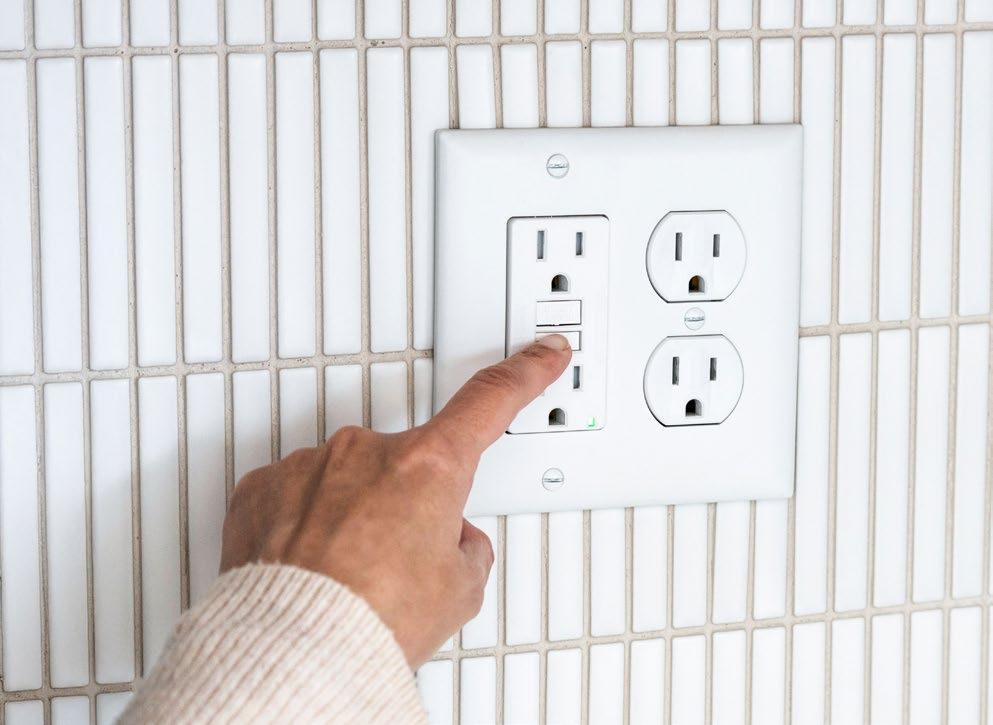
For more electrical safety information, visit us online at www.pvrea.coop

Get Your Rebates
PVREA offers rebates for your home or business.
All rebates must be submitted within 90 days of purchase.
Explore your available rebates and submit your application at www.pvrea.coop/rebates
WHY IT MATTERS TO YOU

When you flip a switch, you’re tapping into a complex system designed to deliver on command. But did you know your usage impacts more than just your monthly bill? It impacts the entire electric grid.
Think of it this way: You wouldn’t build a highway sized for midnight traffic or design an airport for its lightest travel day. Similarly, we must build and maintain an electric grid capable of meeting the highest level of electricity our members demand at any given moment, even if those peaks in electricity demand happen only briefly.
ENERGY VS. DEMAND: WHAT’S THE DIFFERENCE?
Here’s another way to think about energy versus demand:
• Energy (kWh) is the total water you use all month.
• Demand (kW) is how fast the water flows when you turn on the faucet.
If your home needs a lot of water at once, the pipes must be bigger, and often more expensive. The same goes for electricity.
WHY DOES DEMAND MATTER?
Running multiple large appliances at the same time, like your oven and dryer, creates a higher demand. That means more strain on the grid and more equipment to meet that demand.
• Oven + Dryer at once = 8 kW demand
• Oven, then Dryer later = 4 kW demand Staggering usage can cut your demand and associated costs.
HOW CAN YOU SAVE?
Consistency is key. Avoid stacking the use of big appliances all at the same time. Instead, try spreading out usage to lower your peak demand.
Your monthly bill states the exact time and date of your highest peak demand. Think about how you’re using electricity in that moment to spread your usage and reduce the demand charge.
Learn more about managing demand to save energy and reduce your electric bill at www.pvrea.coop
Poudre Valley REA Annual Meeting

Value You Can Count On At Poudre Valley REA, we promise energy for your life, savings for your budget, and services to empower our community.
Explore the value of your cooperative membership.
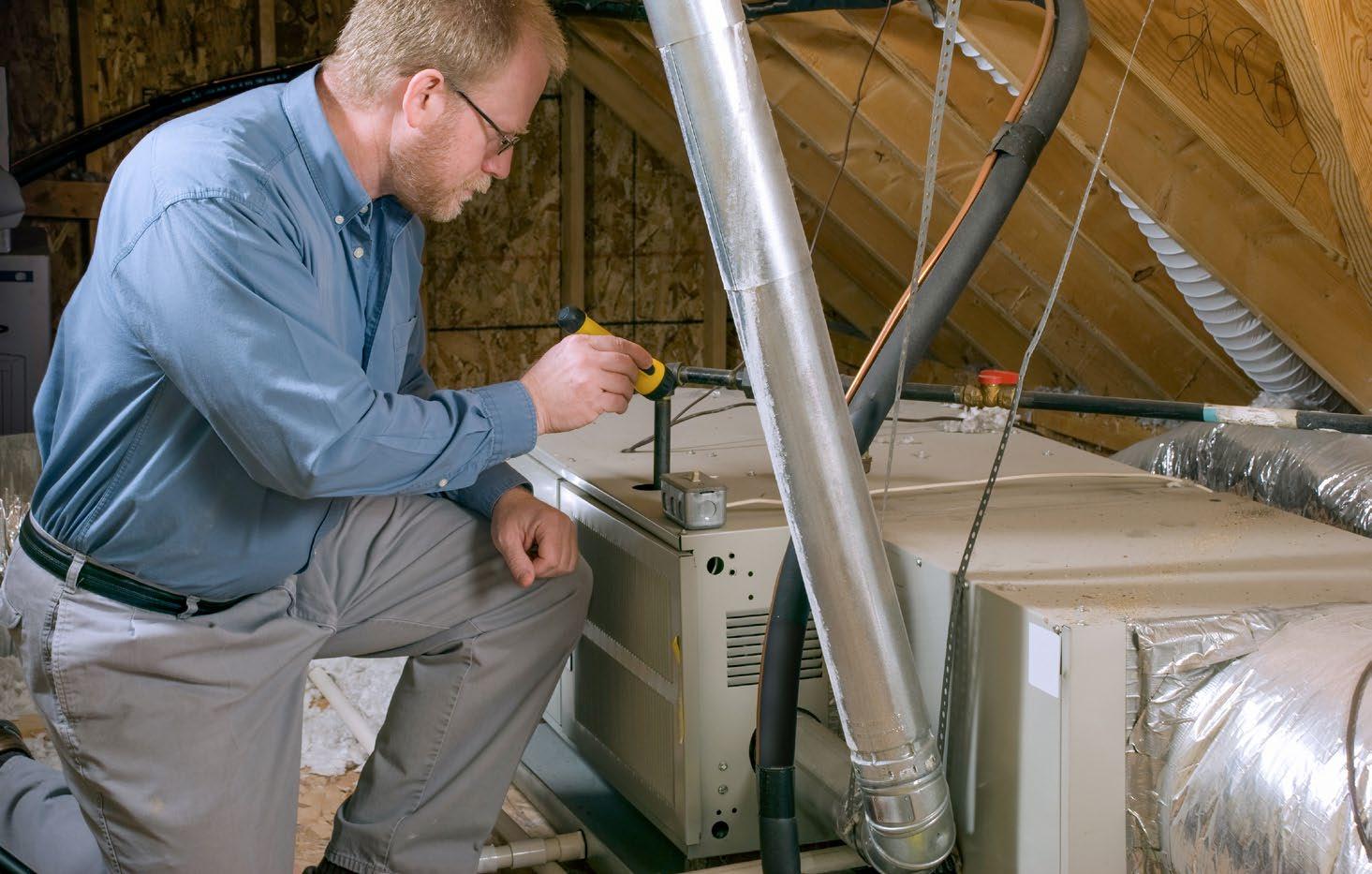
Mid-winter is a great time to ensure you’re making the most of your home heating system.
Replace or clean filters to keep your furnace or heat pump running efficiently. Listen for strange noises as this could indicate that the system may need servicing.
Ensure vents and radiators aren’t blocked by furniture or rugs as proper airflow helps your system work less and saves energy.
A little maintenance along the way can prevent costly repairs and keep your home cozy through winter.
www.pvrea.coop/value-of-membership Office closed on Monday, Feb 16 for Presidents Day
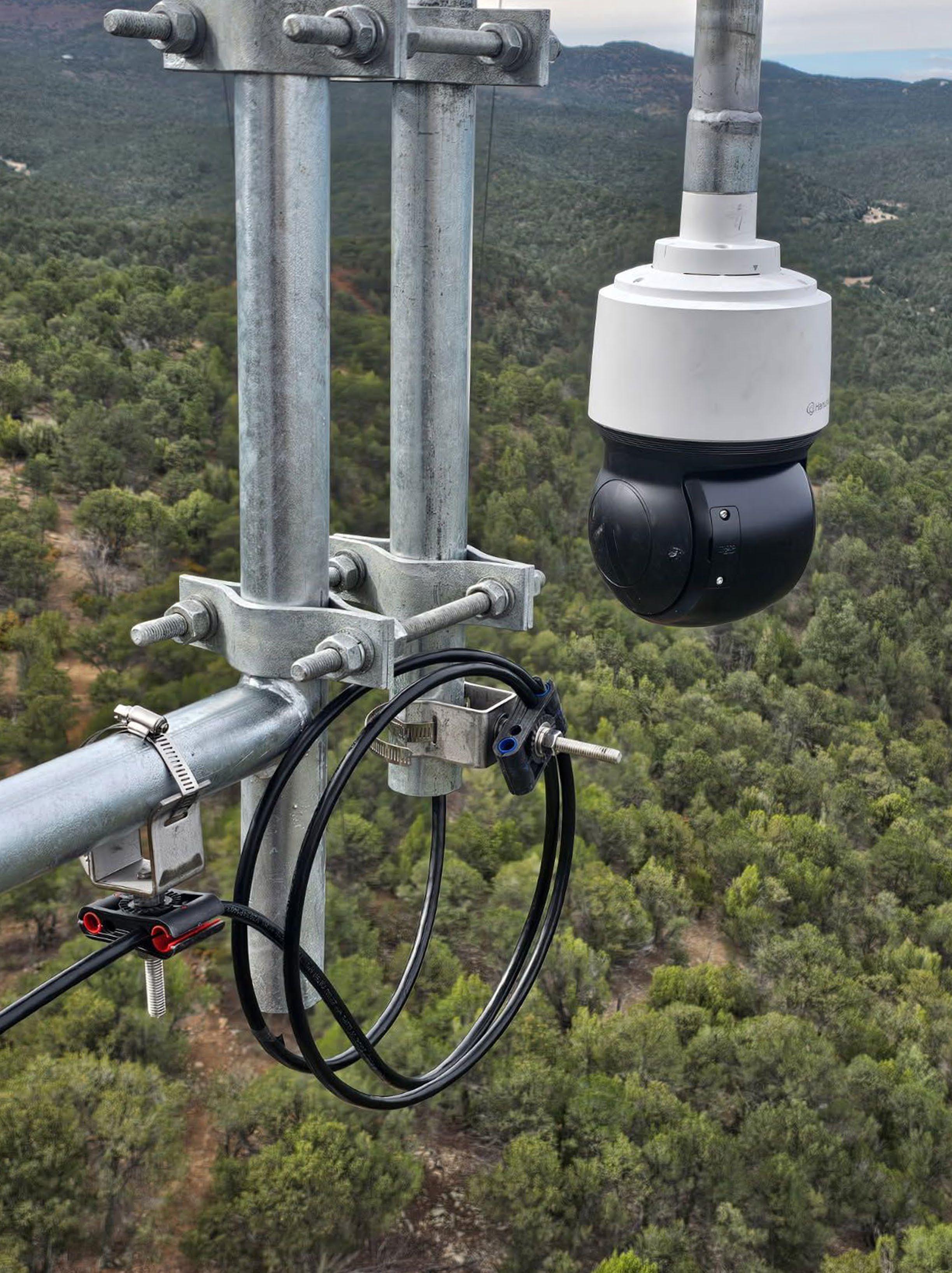
Technology and Training Strengthen Rural Fire Response
Written in collaboration with Tri-State Generation & Transmission
Fire seasons are growing longer and more intense across the West. To help face these mounting challenges, Tri-State Generation and Transmission Association partnered with San Isabel Electric to purchase and install two AI-enabled cameras that can spot smoke early and alert the correct parties within seconds.
“Safety is our top priority, whether it’s personal safety or fire safety,” says SIEA General Manager Ryan Elarton. “It’s something we prioritize every day, and you see it in our budget and wildfire mitigation plan.”
EARLY ALERTS, SAFER DEPLOYMENTS
The cameras are part of a regional push to speed up detection and enable precise, safer crew deployments.
AI-based wildfire detection platforms like Pano continuously scan the landscape with 360-degree cameras to identify smoke and push alerts with precise coordinates to responders after human verification. Many systems also layer satellite imagery and weather data to improve situational awareness. That means faster decisions and better protection for crews working near energized infrastructure.
“We can pinpoint a location and start planning how we’re going to fight that fire before we’re ever there. Before the cameras, we had to send a crew just to drive around and find the fire first. That delays response,” says Tim Paulson, a third-year SIEA lineman apprentice who also serves as chief of the Spanish Peaks Volunteer Fire Protection District.
SIEA uses the cameras for visual awareness of fire activity that could affect the electric grid and as an aid in public communication.
Utilities are one of the first contacts fire agencies make when responding to fires. Electric utilities may be asked to shut off power to areas, isolate a section of line to prevent outages for radio towers and critical infrastructure, or to help clear debris or damaged equipment in areas firefighters need to access.
The cameras can also help emergency responders and the co-op get accurate information out to the public faster. Sharing information with the public quickly can most importantly save lives, but it can also cut down on false information and rumors.
“As a firefighter and working on a line crew, I see
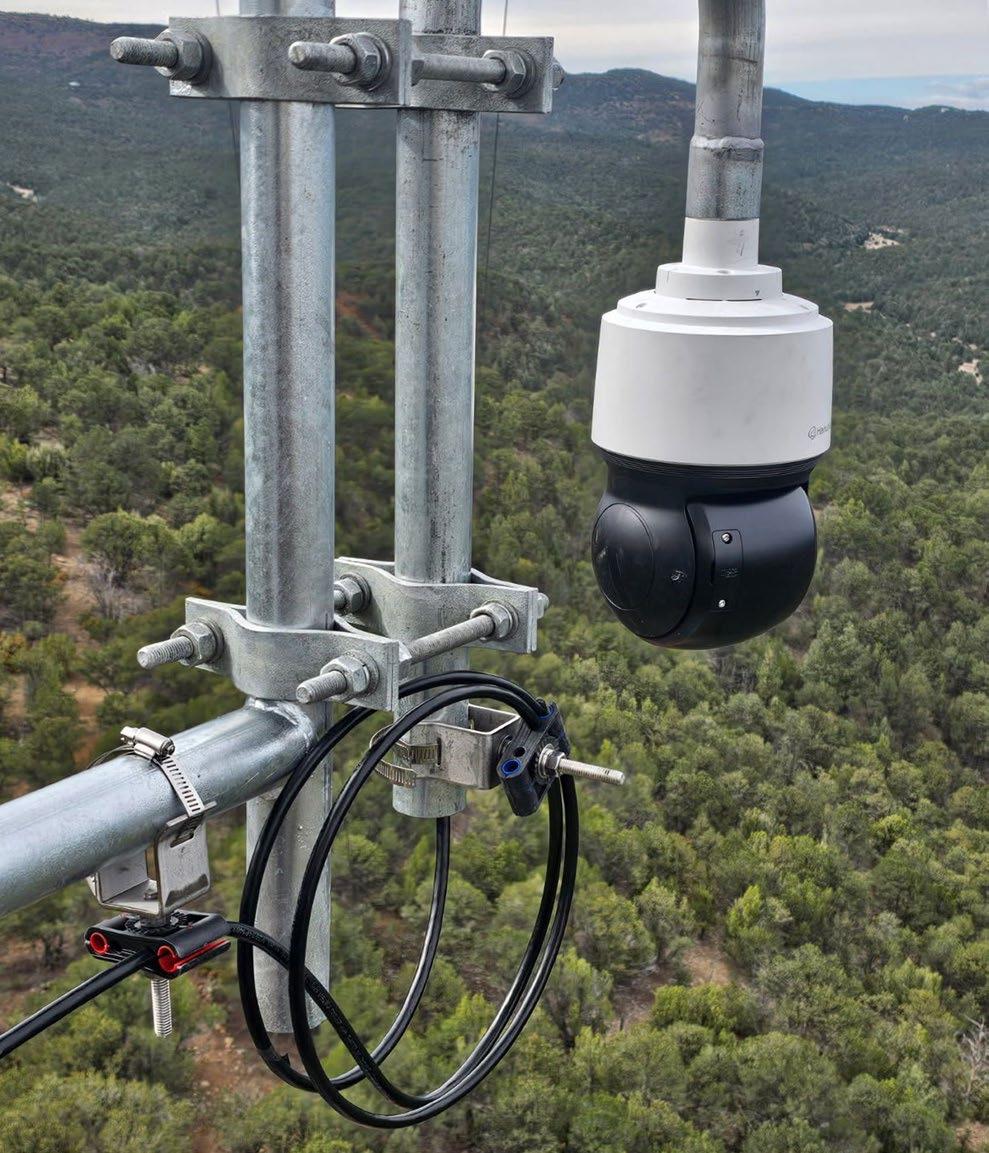
how important it is for utilities and fire departments to work together,” says Paulson. “The better they work together, the safer the community is and the safer the firefighters are.”
The cameras were installed during the fall of 2025. One is located in the Weston area, and another is located in the Starkville area.
MULTI-LAYERED MITIGATION
This project is one facet of a multi-layered wildfire mitigation strategy. Together, Tri-State and SIEA combine science-based monitoring and alerts with risk reduction and operational controls.
These measures are designed for a single purpose: keep crews and communities safe while maintaining reliable power.
Wildfire risk isn’t going away, but with AI-powered detection, year-round mitigation, and cooperative-driven training, SIEA and Tri-State are strengthening rural fire response across southern Colorado and setting an example for how the grid and the fire service can work as one to protect the many.
On the cover: AI-enabled cameras are able to detect wildfire smoke early and alert emergency response agencies. Photo by Pano
2025 DONATION IMPACT REPORT
JANUARY
Mt. Carmel Wellness and Community Center
Western Landscape Symposium c/o CSU Extension-Pueblo County
CEEI — Cooperative Youth Leadership Camp
Pueblo County Stockmen’s Association
FEBRUARY
Mt. Carmel Wellness and Community Center
Sangre de Cristo Center for Youth
Snowy Range 4-H Club
Pueblo FFA
MARCH
Beulah
APRIL
Pueblo Library
MAY
Rye High School Technology Student Association
Stonewall Fire Protection District Auxiliary
Las Animas County
Soaring
JUNE
School/Youth Support
Animas Local Event
$15,000
San Isabel Electric operates under seven cooperative principles which includes practicing a Concern for Community. Each board member lives in the community they serve, and we all work together to help our communities thrive. Each month, the Board of Directors donates to community projects to help keep our communities strong and growing. All philanthropic funding comes from unclaimed capital credits not from member rates and electric bills. Our process for using unclaimed capital credits follows state law for unclaimed property. Unclaimed capital credits cannot be used for system improvements, maintenance, payroll or other overhead costs. For more information about capital credits and unclaimed capital credits, visit siea.com/capitalcredits

APPLY FOR A $1,000 SCHOLARSHIP
San Isabel Electric offers scholarships for students continuing their education after graduation. Applications are due by 5 p.m. February 15. Apply online at siea.com/scholarships.
Aguilar Streetlight Project

Arecent streetlight upgrade is making Aguilar safer, brighter, and more energy efficient. San Isabel Electric and Basin Electric Power Cooperative donated $6,000 in funding to upgrade streetlights on the main road through town. The town also received a $1,170 rebate from Tri-State Generation and Transmission to lower the project’s cost.
For years, several lights weren’t turning on at night, several were staying on during the day, and several were not bright enough. That all added up to after-dark conditions that were not ideal.
“The difference is night and day,” Aguilar Town Clerk Stephanie Coca said. “It’s really nice to see all the lights on. From the top of Main Street looking down the street, it just looks beautiful.”
The improvements go beyond aesthetics.
“The biggest improvement is safety,” Stephanie continued. “If you’re out walking after dark, it can be dangerous with bears and wildlife. Before, you couldn’t see what was in front of you.”
The town also hopes to see a small decrease in its electric bill due to the improved efficiency and operation of the lights.
The town replaced 23 outdated halogen ballasts with adjustable LED lamps, which allow for color and wattage adjustment. Benji Clementi from San Isabel Electric’s Energy Services team oversaw the project from the beginning to end, which included contractor bids, permits, quality control, and rebate processing.
Visit siea.com/empower for more information about SIEA’s Empower program or call 719-647-6250. NOTE: Currently, commercial lighting rebates are only available for pole-mounted LED fixtures, and this program is expected to expire December 31, 2026.
Congratulations, Tim Gordon!
San Isabel Electric’s Lead Engineering Technician Tim Gordon is hanging up his surveying tools and heading to the East Coast to begin a well-earned retirement.
Engineering technicians play a critical role at electric utilities. They work closely with new and current members to meet their electric needs. They also support new power line construction and system upgrades by obtaining rights-of-way, calculating power requirements, designing the lines, completing contracts with members, and physically marking pole and equipment locations on the ground for construction, also known as staking. As the co-op’s lead engineering tech, Tim did all of this and more. And he approached this responsibility with precision and care he learned long before joining SIEA.
detail and meticulous follow-through.
As lead engineering technician, most of Tim’s days involved computer-based work. But in November, he covered for a coworker who was on paternal leave and so Tim spent more time in the field.
“November was a good month for me. I was back out in the dirt, working with members, pushing projects out the door.”
When asked what he was most proud of during his SIEA career, he humbly said, “The ability to be here. If it weren’t for San Isabel Electric I would be nowhere. They believed in me, and I gave them the best I could.”
Tim said he’s never thought about doing something else or working anywhere else in his 23 years with the cooperative.
Prior to his engineering career, Tim served in the U.S. Air Force. “I always felt four years ahead of my friends. I had a job, I was getting paid. They were still messing around, chasing girls, and having a good time," he recalled.
The discipline and maturity he gained in the Air Force helped him focus on college and launch a career. “The military prepared me for the rest of my life,” he said.
Coworkers say Tim has a flawless attention to
Tim looks forward to staying busy with his brothers, sisters, and grandkids, being near the ocean, eating seafood, and camping in upstate New York with his wife.
The SIEA employee team will miss having Tim’s steady presence and get-it-done attitude, and will miss hearing his favorite saying — “Happy-Happy” — around the office. We at San Isabel Electric are grateful for Tim’s service to our members. He leaves a legacy of excellence for those who follow him.
GOING THE EXTRA MILE
Western Mountain Rescue Team saves lives in the wilderness
New Opportunities for Savings
By Jon Beyer CEO
As our colder winter months continue, electricity use naturally rises. We spend more time indoors where we rely on our home’s heating system and use more lighting and household appliances. When a majority of our members are using electricity at the same time, typically early mornings and evenings between 5-9 p.m., the result is significant pressure on our electric grid and high demand charges from our wholesale power provider Tri-State Generation and Transmission Association.

Lowering demand charges is something we can all play a part in. To help understand demand, here is an example using a light bulb. Light bulbs have varying power ratings and for this example we will use a 10-watt LED bulb. If this lightbulb stays on for 10 hours, it consumes 100 watt-hours – but only demands 10 watts. Now, if you turn on ten 10W light bulbs in your home for one hour, you are still consuming the same 100 watt-hours. However, your demand is 100 watts — 10 times higher than using one bulb. Managing demand is an important driver in the cost of providing electric service to SDCEA members. The peak demand at your service dictates the size of wire and equipment necessary to serve you, and it drives SDCEA’s costs from Tri-State.
For now, you have the voluntary opportunity to help lower costs for the cooperative by shifting your use of electricity, using less electricity during peak times — Monday to Saturday from 5-9 p.m. — and by staggering your appliance use — running one at a time instead of multiple simultaneously. While this is currently a choice you can make to reduce costs, our goal is to eventually introduce rates that financially reward you for shifting your energy usage and practicing these habits. It is a step toward giving you more control over your bill and savings in the future.
For example, when you get home in the evening, cook dinner first, then run appliances such as the clothes washing machine afterwards if you have laundry to do – not at the same time. Better yet, if you have appliances with a ‘delay’ feature, set them to run after 9 p.m. These small changes reduce stress on the grid, lower costs, and make electricity more reliable
for everyone.
By March, we will launch two optional pilot programs designed to give residential members a chance to save money while reducing demand costs on our system.
Water Heater Pilot Program — If you have an electric water heater, you may apply to be part of a pilot program where we’ll install a Wi-Fi-enabled device to manage your heater’s activity, preventing it from running during the peak hours of 5-9 p.m., Monday-Saturday. In return, you’ll receive a bill credit for participating.
EV Charging Pilot Program — For members with a Level II electric vehicle charger, this opt-in program offers a financial incentive to avoid charging your vehicle during the peak hours of 5-9 p.m., Monday-Saturday.
If you are interested in either of these programs, call SDCEA Energy Use Advisor Tom Linza or visit our website at myelectric.coop for more information. Both programs will be offered to a limited number of participants, and are subject to terms and conditions, including needing Wi-Fi at your home.
Next month’s column will include information about a new pilot residential battery program which is currently under development.
Together, we can control electricity costs and create a more efficient energy system in the future.

PRESIDENTS DAY
The SDCEA business office will be closed in observance of Presidents Day, February 16. Dispatch will be available to report outages by calling toll-free, 844-395-2412.
86th Annual Meeting
Join us June 24
SDCEA WESTCLIFFE WAREHOUSE
56495 Hwy 69 | Westcliffe, CO 81252
-Registration opens at 9 a.m.
-Meeting convenes at 10 a.m.
Open house | Displays | Lunch | Activities
June 24 will be Sangre de Cristo Electric Association’s 86th Annual Meeting. Members of the cooperative will act on financial data from 2025 and consider any other business that may come before the meeting.
If there is a contested election, it will be held separately from the annual meeting by mail and online vote — see information below.
The regular June board of directors meeting will also be held on this date in Westcliffe.
SDCEA BOARD OF DIRECTORS ELECTION GUIDE
Important Election Dates – 2026
• January 14: Petitions for director’s seats were made available for circulation.
• March 13: Deadline for the candidate nomination petitions and questionnaires to be received at SDCEA’s Buena Vista office by 4:30 p.m.
• April 23: Date of record — the cut-off date for determining eligible voters.
• Early May: Paper ballots will be mailed to all eligible voters. You may cast a paper or online ballot.
• June 18: Deadline for ballots to be received by the election company or cast online by 1 p.m. MDT.
• June 22: Election results will be announced.
• June 24: SDCEA’s Annual Meeting in Westcliffe.
WHAT SEATS ARE UP FOR ELECTION?
Three seats are up for election this year – a representative for an at-large seat, a town of Buena Vista seat, and a rural Chaffee/Lake County seat.
The at-large seat up for election is currently held by Michael Robinson, the town of Buena Vista seat by Blake Bennetts, and the rural Chaffee/Lake counties seat by Mark Boyle. All three incumbent representatives have indicated they wish to run again for their respective seats.
The board consists of a total of seven seats, each with a three-year term. These include two at-large seats, one seat for the town of Buena Vista, one for
Fremont County, one for Custer County, and two for rural Chaffee/Lake counties. Elected board members, though designated by geographical area, represent the entire membership of the system.
• Petition and board packets were made available January 14. Completed petitions are due to SDCEA by 4:30 p.m. March 13.
• Prospective board members should be aware that travel and training are part of their responsibilities, and they can expect to dedicate at least 20 hours per month to board-related activities. Compensation includes a monthly payment of $300, along with additional pay for meetings.
• Candidate information will be available online after the March 13 deadline.
WHO CAN VOTE?
• Named SDCEA account holders are entitled to vote in the Board of Directors Election. One ballot is cast per membership.
• Members vote on all candidates, regardless of where your service address is located.
• Your residence status, whether full-time or parttime, in or out of state, does not affect your right to vote.
• Accounts that are in a business name are asked who they would like to delegate as the voting member when the business signs up for service. If you own a business and would like to confirm your voting delegate, email info@myelectric.coop or 719-395-2412.
BALLOTS
• Paper ballots will be mailed in early May to all eligible voters listed as of April 23.
• Choose to vote online or via mail — instructions for both methods will accompany your ballot. You must vote online or by mail. No ballot drop box or booth will be available. If you are missing your ballot or need information about voting, please call our office at 719-395-2412 before the voting deadline
• Online voting will open when ballots are mailed. To vote online, or to vote prior to receiving your paper ballot with online voting instructions, simply sign into your SDCEA account at myelectric.coop or use the SmartHub app. First-time sign-in or SmartHub app users will need their account number to register.
• Members as of April 23 who have a valid email address as well also receive information and reminders to vote electronically.
• If a member casts an online vote and mails a paper ballot, the paper ballot vote will supersede the online vote. Ballots must be received by the election company by 1 p.m. on June 18 to be counted. If a paper ballot is received after deadline, the online vote cast will stand. Ballots that are postmarked before the deadline but not received by June 18 will not be counted.
FINANCIAL DISCLOSURES BY CANDIDATES
To foster transparency, candidates are required to disclose campaign contributions and expenditures. Details of any contributions and expenditures over $50 must be itemized.
Disclosures are due by 4:30 p.m. March 31, May 14, and June 11 and will be posted on the website.
YOUR PARTICIPATION MATTERS
Your vote is pivotal in shaping the future actions and policies of SDCEA. Do not miss the chance to contribute to the direction of your cooperative – vote! The election will be completed — results certified, and winners announced — on June 22. No voting activities will take place at the annual meeting June 24.
For details about candidate eligibility requirements and election procedures, please scan this QR code or visit the Bylaws, Rates, & Policies section of the SDCEA website — myelectric.coop/ boardinfo/bylaws-rates-policies.

Power Outages
Power outages are an occasional reality, particularly in remote areas. While we work hard to minimize disruptions, it is important to know more about outages, their causes, and how they are addressed to ensure electricity is restored efficiently and safely.
WHAT CAUSES POWER OUTAGES?
Power outages occur for a variety of reasons. The most common causes include:
• Weather-Related Issues: Snowstorms, high winds, lightning, and ice can damage power lines or cause tree branches to fall, disrupting service. Even if the weather is relatively mild at your location, storm events elsewhere may impact your service. Winter storms are a threat to electrical equipment when snow and ice build-up on power lines and tree limbs. The weight of the snow and ice can cause wires to break. Tree limbs also become heavy with snow and ice causing them to break and fall into power lines.
• Equipment Issues: Normal wear and tear or unexpected equipment failure can lead to outages.
• Accidents and Wildlife: Vehicle collisions with utility poles, homeowners working on projects such as tree trimming that end up contacting power lines, dig-ins to primary wire by homeowners and/ or contractors, or animals interfering with electrical equipment are less common but still significant causes of outages.
• Transmission or Supply Line Disruptions: Outages can happen when the main power supply lines we rely on, managed by external transmission providers such as Black Hills Energy, Xcel, or Tri-State Generation and Transmission experience an issue. Because these lines deliver electricity to us to distribute on SDCEA’s lines, we are unable to provide power to your home until the provider resolves the problem. Once their repairs are complete, power will flow through our system, allowing us to restore electricity to your location as quickly as possible.
HOW IS RESTORATION PRIORITIZED?
To restore service to the greatest number of people in the shortest amount of time, repairs are prioritized as follows:
• Fix large transmission lines supplying power to substations.
• Repair substations that distribute electricity to many households.
• Address issues with smaller distribution lines impacting fewer residents.
REPAIRS TAKE TIME
Outage restoration can vary in complexity and time based on several factors such as distance, location, and weather conditions.
• Reaching outage sites: Restoring power in rural areas can require crews to hike, snowshoe, or snowmobile with equipment or travel long
distances, often in challenging conditions like icy or snow-covered roads.
• Identifying the cause: Pinpointing the exact issue, particularly in rugged or remote terrain, can add time — especially during nighttime or severe weather. Removing a branch from a line is quick and relatively simple. Replacing a broken power pole or digging up the buried cable to find and repair a fault is a much longer process.
RESTORING POWER AS QUICKLY & SAFELY AS POSSIBLE
Our hardworking crews are on call 24/7 to restore power safely and efficiently. Even in adverse weather, they work tirelessly to ensure your household regains access to electricity as quickly as possible while prioritizing their safety and yours.
SDCEA likes to restore power as quickly as possible after an outage, but it is even more important that our employees go home safely to their families at the end of the day. Our crews are trained to take the time and safety measures they need before making repairs to electrical equipment.
Crews do occasionally break to eat, rest, and change equipment or clothing. They are also mandated to rest and come off the line after a designated number of hours by safety regulation standards and conditions on the ground.
WHAT ABOUT WILDFIRE?
While this may increase an outage’s frequency and length, to reduce wildfire risks, we adjust system settings during high-risk periods to shut off power at the smallest signs of disruption. It ensures greater community safety. Unlike some utilities, we avoid preemptive shutoffs and favor thorough inspections before restoring power.
WHY DO LIGHTS BLINK?
Blinking or flickering lights often occur as the system works to maintain power. During severe weather, this may result from tree branches brushing against power lines or temporary disruptions that resolve automatically.
A blink is a brief power interruption that is completely normal and plays an important role in our electrical system. Despite routine tree trimming near power lines, strong winds can sometimes cause trees to touch the wires. When this happens, your lights might flicker, or you could lose power for a few seconds as the system works to address the issue. This protective measure prevents longer outages, limiting the disruption to just a few moments.
Trees and Branches: Storms can cause branches to touch or fall on power lines, creating a short circuit. This prompts a recloser, a device that temporarily cuts power to fix the problem, resulting in blinking lights.
Lightning and Thunder: A strong flash of lightning or a loud thunderclap can affect the main power supply, causing lights to blink.
Ice and Snow Buildup: In severe weather, ice can accumulate on power lines, making them sway and occasionally touch each other. This can lead to brief power disruptions or blinking lights.
STAY INFORMED
During outages, you can find updates and information on myelectric.coop, SDCEA’s social media pages, and through direct calls. Please note that limited communication in the field — such as no cell service — may delay update availability.
Thank you for trusting us to power your home and business — we appreciate your patience and understanding.
IS YOUR POWER OUT?
If you have a medical emergency, call 911. Call to report your outage at 719-395-2412 or toll-free 844-395-2412. Our dispatch system is available to take your call 24 hours a day, 7 days a week. We do not monitor email or social media at all times to learn of outages. You must call in your outage to ensure we know about it.
Heating & Cooling Solutions Webinar
Looking for efficient heating and cooling solutions for your home or business? Watch a free, on-demand webinar to learn about heat pumps — your year-round comfort solution. Watch online at youtube.com/watch?v=iGhMOp4Iqvg
Discover how heat pumps can keep you cozy in winter and cool in summer, all while saving energy.
GOING THE EXTRA MILE
Western Mountain Rescue Team saves lives in the wilderness
Reliability Requires Investment
By Mark Hall Interim Chief Executive Officer
As your local power provider, Southeast Colorado Power Association’s mission has always been simple: keep the lights on and support the communities we serve. But behind every switch, every warm home, and every business that opens its doors is a complex system that requires constant care. Reliable electricity doesn’t happen by accident. It requires ongoing investment in our local grid — through system repairs, maintenance, upgrades, and the integration of new technologies that help us operate smarter and more efficiently.
Much of the energy system we rely on today was built decades ago. While it continues to serve us well, age alone means that components must be repaired or replaced to maintain performance and safety. From poles and wires to transformers and substations, every part of the grid has a lifespan. Routine maintenance helps extend that lifespan, but eventually equipment must be updated to meet modern standards. These proactive investments reduce the likelihood of outages, shorten restoration times when disruptions do occur, and create a stronger backbone for our system.
The demands on the electric grid are also evolving. Homes and businesses today use more electricity than ever, and that trend will only continue. Electric vehicles, advanced HVAC systems, smart appliances, and new commercial facilities add load to the local distribution system. As these technologies take hold, the grid must be able to support increased demand while maintaining the reliability our members expect. Strategic upgrades such as pole replacement, conductor changes, and substation communication upgrades
are essential to ensuring we can meet these needs both today and in the decades ahead.
At the same time, new technologies are reshaping how we operate. Tools such as SCADA, a system that allows us to monitor and operate substations remotely, allow us to detect problems faster and respond more effectively. These technologies can isolate problems, reroute power to minimize outages, and provide real-time data that helps us plan and maintain equipment more efficiently.
Implementing innovative technologies into the grid is not just a convenience — it is a necessity for ensuring reliability in an increasingly complex energ y landscape.
While these improvements require thoughtful planning and financial investment, the return is significant. A stronger grid supports economic growth, improves service quality, and enhances safety for our crews and community. Most importantly, it ensures that the essential power you rely on is available whenever you need it.
Our commitment to reliability runs deeper than infrastructure alone. It reflects our responsibility to the people and communities we serve. Every upgrade, every repair, and every technology we deploy is an investment in your daily life — from the comfort of your home to the success of local businesses and schools.
We know that powering our system means preparing for the future, not just maintaining the present. By investing in our local grid today, we are building the foundation for a brighter, more resilient tomorrow.
27850 Harris Road, Ste. A La Junta, CO 81050
719-384-2551
Toll-free 800-332-8634
Fax 719-384-7320
www.secpa.com
facebook.com/secpaonline
@southeastcoloradopower
Save the Date
SOUTHEAST COLORADO POWER ASSOCIATION ANNUAL MEETING
Thursday, April 23, 2026 (tentative)
Baca County Fairgrounds, Minnick Building
Springfield, Colorado
BOARD DIRECTOR ELECTION UPDATE
There will be no Director Election this year.

Registration 5 p.m.
Dinner 6 p.m.
Meeting 6:45 p.m.


Safety Tip
During a power outage, unplug and turn off electrical devices to avoid power surges when power is restored. Leave one light on so you know when the power comes back on. While the power is out, use flashlights instead of candles to reduce fire risk.
If you find your name in this issue as follows (WIN* Your Name, your account number), contact Southeast Colorado Power Association at 719-384-2551 or 800332-8634 to receive a $50 credit on your next power bill.
Final Call
Scholarship applications are due February 9
Southeast Colorado Power Association (SECPA) is once again making scholarships available to area high school seniors. Students’ parents must be members of SECPA.
SECPA is offering ten $1,000 scholarships and also administers through Tri-State Generation and Transmission Association an additional two $1,000 scholarships. Eligible applicants must be a high school senior graduating in 2026 who plans to attend a twoor four-year college, or trade or other non-traditional secondary educational institution.
In addition, Basin Electric will award a $2,500 scholarship to one student in the SECPA member territory.
Students interested in applying for the scholarships are asked to submit the completed application form available online at secpa.com/scholarships for the scholarship(s) they are applying for, along with the required support documents for each application submitted. Students may apply for one or all three scholarships.

Applications for the SECPA scholarships are due no later than FEBRUARY 9, 2026.
For additional information, please visit the SECPA website or contact Debbie Howard at 719-383-1314.

Do Not Post on Power Poles
Most jobs do not require you to climb 40 feet in the air and conduct business within a few feet of high-voltage power lines that carry 7,200 volts of electricity. However, for many utility workers, this is just another day on the job.
Across the nation there are millions of utility poles that provide the electricity that powers everything in your daily life — including the brewing of your morning cup of coffee and the lighting you turn off before going to bed. The electricity we depend on would not be possible without the utility workers who maintain and repair these utility poles.
It’s important to keep utility poles free from all personal materials such as balloons, fliers, and metal objects like staples or tacks.
By respecting utility poles, you can help keep your community powered, and your SECPA linemen safe.
This practice is not only illegal in many areas but also creates hazards for the linemen who repair and maintain utility poles and other electrical infrastructure.
Utility workers use specialized climbing devices to perform regular maintenance and repair damaged power lines at the top of utility poles. Nails, tacks, and other metal objects that are used to attach objects to utility poles can interfere with the safe operation of the climbing boots used by utility workers.
Foreign objects that are embedded in utility poles can also snag or damage the protective clothing that keeps line workers safe from electrical shock. These men and women already work in extremely hazard-

ous conditions, so everyone who relies on electricity should take steps to make their job as safe as possible.
Other items that have been found on utility poles include tree stands for hunting. If you plan on hunting, do not place tree stands or other objects on utility poles. Doing so not only creates a risk for utility workers, but it is also extremely dangerous for yourself or anyone who uses it.
For your own safety, please keep as much distance between yourself and overhead power lines as possible.
Find tips and important information about staying safe around power lines, utility poles, and electricity at SafeElectricity.org.
WIN* Mario Casarez acct 606330003
Mid-winter is a great time to ensure you are making the most of your home heating system. Replace or clean filters to keep your furnace or heat pump running efficiently. Listen for strange noises and check for uneven heating — these signs indicate that the system may need servicing. Ensure vents and radiators aren’t blocked by furniture or rugs, as proper airflow helps your system work less and saves energy. A little maintenance along the way can prevent costly repairs and keep your home cozy through winter.
GOING THE EXTRA MILE
Western Mountain Rescue Team saves lives in the wilderness

Help Us Keep You Informed
By Trent Loutensock General Manager
At Y-W Electric Association, Inc., our mission is simple: to provide safe, reliable and affordable electric service while keeping our members informed and prepared. One of the most important ways you can help us fulfill that mission is by ensuring we have your most accurate and up-to-date contact information. In today’s fast-moving world, timely communication matters more than ever — especially when it comes to the electric grid.
WHY WE NEED YOUR CURRENT CONTACT INFORMATION
Having accurate contact information allows us to reach you quickly and efficiently when it matters most , including:
• Power grid emergencies, when immediate action or awareness may be critical
• Planned system maintenance, so you know when brief service interruptions may occur
• Unplanned outages for urgent repairs, helping you stay informed during restoration efforts
• Important date reminders, including events, deadlines, and association updates
• Possible billing and payment updates in the future, as we explore new tools to better serve you. Simply put, accurate contact information helps us keep you connected to your cooperative.
CHALLENGES WITH OUR CURRENT DATABASE
Like many utilities, we are finding that some of the information in our system is no longer reliable. Over time, contact details change, and we may not always be notified. As a result:
• Many landline phone numbers in our database are no longer in service
• Some cell phone numbers have changed or were never provided
• Several email addresses we have on file are no longer actively used
When this happens, important messages may not reach you when you need them most.
HOW UPDATED INFORMATION HELPS YOU
Keeping your contact information current directly benefits you as a member of Y-W Electric Association:
• You can stay “in the know” about electric grid conditions, giving you time to make emergency preparations when needed
• You’ll be better equipped to organize your household or business ahead of planned outages we know must occur
• You’ll receive reminders of important dates and events on the Y-W Electric Association calendar

• You’ll be included as we research future billing and payment receipt updates designed to improve convenience and transparency
Accurate communication empowers you to plan ahead and reduces uncertainty during service interruptions. Michael Guarasci 37050xxxxx
OUR INCENTIVE TO KEEP INFORMATION UPDATED
To say thank you for helping us improve communication, we’re offering a few incentives:
• Each month, we will randomly select two members. If we successfully reach you using the contact information currently in our database, you will receive a $20 bill credit.
• We are also planning a prize drawing at our Annual Meeting in June, for members in attendance at the meeting — we will call your cell phone!
These incentives are our way of showing appreciation while strengthening our ability to serve you.
HELP US HELP YOU
Updating your contact information is quick, easy, and makes a meaningful difference — for you and for the cooperative as a whole. By working together, we can ensure you receive timely, accurate information when it matters most. Please contact us at 970-345-2291 or visit our website ywelectric.coop, search member services for the update contact information form to provide us with your updated contact information.
Thank you for being a valued member of Y-W Electric Association and for helping us keep you informed.
Don’t Let Your Controlled Burn Turn Chaotic
Aprescribed or controlled burn can quickly become uncontrolled, so take precautions before burning on your land or in a ditch. Controlled burns are used for various reasons, including vegetation and weed management.
If the area you choose to burn is near a utility pole or if it spreads more quickly and farther than you thought it might, your controlled burn could get expensive. Virgie E Tomson 23070xxxxx
Fire damage to a power pole is usually evident by blackening and scorch marks, but even slight discoloration can cause serious problems. In some cases, the pole can look like it has little damage on the outside, all the while burning from the inside out.
In all cases, the result is the same: The utility pole is compromised and will most likely need to be replaced, at the cost of the person who started the burn. The fees passed on to the person who caused it are substantial — usually thousands of dollars.
The damage could also cause a power outage or other serious service issues including energized lines falling near or on the ground, creating a potentially deadly situation.
WHAT CAN YOU DO TO PREVENT
BURN-RELATED DAMAGE TO A POWER POLE?
• Plan your burn before you begin.
• Check the forecast for weather conditions, such as wind direction and speed, as well as humidity (as a general rule, relative humidity should be 40% or higher).
• If there are power poles in the planned burning area, clear all vegetation and weeds at least four feet around the base of the pole.
• Wet the base of the pole with water before beginning your burn.
If your fire gets out of control, gets too close to a power pole, or if the pole catches on fire, call 911 and Y-W Electric at 970-345-2291.
Once a fire breaks out, NEVER spray water near the pole, power lines, or any other utility equipment. Electricity and water do not mix and you could cause a short circuit that could cause serious injury or death.
To inquire about controlled burns (aka prescribed fire) near power lines, contact Y-W Electric at 970-345-2291. For more information about electrical safety, visit SafeElectricity.org.
Mid-winter is a great time to ensure you are making the most of your home heating system. Replace or clean filters to keep your furnace or heat pump running efficiently. Listen for strange noises and check for uneven heating — these signs indicate that the system may need servicing. Ensure vents and radiators are not blocked by furniture or rugs as proper airflow helps your system work less and saves energy. A little maintenance along the way can prevent costly repairs and keep your home cozy through winter.

SIGNING UP FOR SERVICE
BILLING CORNER
When a new consumer comes into our office or calls on the telephone to connect an account into his/her name, the information given at that time is very important. The first step is filling out and signing an Application for Service and Membership. This is the information used to set up your membership and billing records. The following are some situations that need to be considered when filling out the application:
1. If you are a husband and wife, and only one spouse’s name is on the application, all bills and capital credit allocations and future refunds will go to the one person whose name is on the account. If both parties sign the application, any capital credits accrued for that membership are considered jointly owned, and checks will be made payable to both names. Credit history is being recorded for the person(s) whose name is on our records.
2. If you are a roommate and paying part of the bill, but your name is not on the application, Y-W Electric has no record of you. When capital credit refund checks go out, they are made out to the person whose name appears on the application. If you apply for service in the future, you would be considered a new consumer.
3. Payment of the bill is the responsibility of the person(s) who signed the application. If a deposit is paid, any amount refunded will go to the name on the account. If the bill is not paid, this name will then go to the collection agency.
4. Irrigation accounts are always connected into the landowner’s name. The responsibility of payment for electric usage on the service is ultimately the landowners however bills can be mailed to one or both parties.
These are just a few things to consider when signing up for electric service with Y-W Electric. Your membership record with us is carefully created and monitored throughout your service term and years beyond. Thus, please consider carefully how you want our records to reflect your membership. Dallas & Sandra L Madsen 10335xxxxx
If you have any questions, please feel free to contact our office in Akron at 970-345-2291, or if outside our calling area, 1-800-660-2291.
UTILITY SCAMS TIP OF THE MONTH

Enrolling in autodraft payments with your utility provider can help prevent certain types of utility bill scams. If a scammer contacts you with fake disconnection threats, you can rest easy knowing your bill is paid automatically through a prearranged, secure channel. Autodraft payments also eliminate the risk of exposing checks and personal banking info through the mail. If your utility offers autodraft payments, consider enrolling to stay on track and avoid certain scams.
Do Not Post on Power Poles
Most jobs do not require you to climb 40 feet in the air and conduct business within a few feet of high voltage power lines that carry 7,200 volts of electricity. However, for many utility workers, this is just another day on the job.
Across the nation there are millions of utility poles that provide the electricity that powers everything in your daily life — including the brewing of your morning cup of coffee and the lighting you turn off before going to bed. The electricity we depend on would not be possible without the utility workers who maintain and repair these utility poles.
It’s important to keep utility poles free from all personal materials such as balloons, fliers, and metal objects like staples or tacks.
Tacking items to power poles is not only illegal in many areas but also creates hazards for the linemen who repair and maintain utility poles and other electrical infrastructure and can increase your monthly utility bill.
Utility workers use specialized climbing devices to perform regular maintenance and repair damaged power lines at the top of utility poles. Nails, tacks, and other metal objects that are used to attach objects to utility poles can interfere with the safe operation of the climbing boots used by utility workers. Joe Drum 2230xxxxx
Foreign objects that are embedded in utility poles can also snag or damage the protective clothing that keeps lineworkers safe from electrical shock. These men and women already work in extremely hazardous conditions, so everyone who relies on electricity should take steps to make their job as safe as possible.
Other items that have been found on utility poles include tree stands for hunting. If you plan on hunting, do not place tree stands or other objects on utility poles. Doing so not only creates a risk for utility workers, but it is also extremely dangerous for yourself or anyone who uses it.
For your own safety, please keep as much distance between yourself and overhead power lines as possible. Jody & Heather Brandner 8307xxxxx
For more information on staying safe around power lines and utility poles, visit SafeElectricity.org.
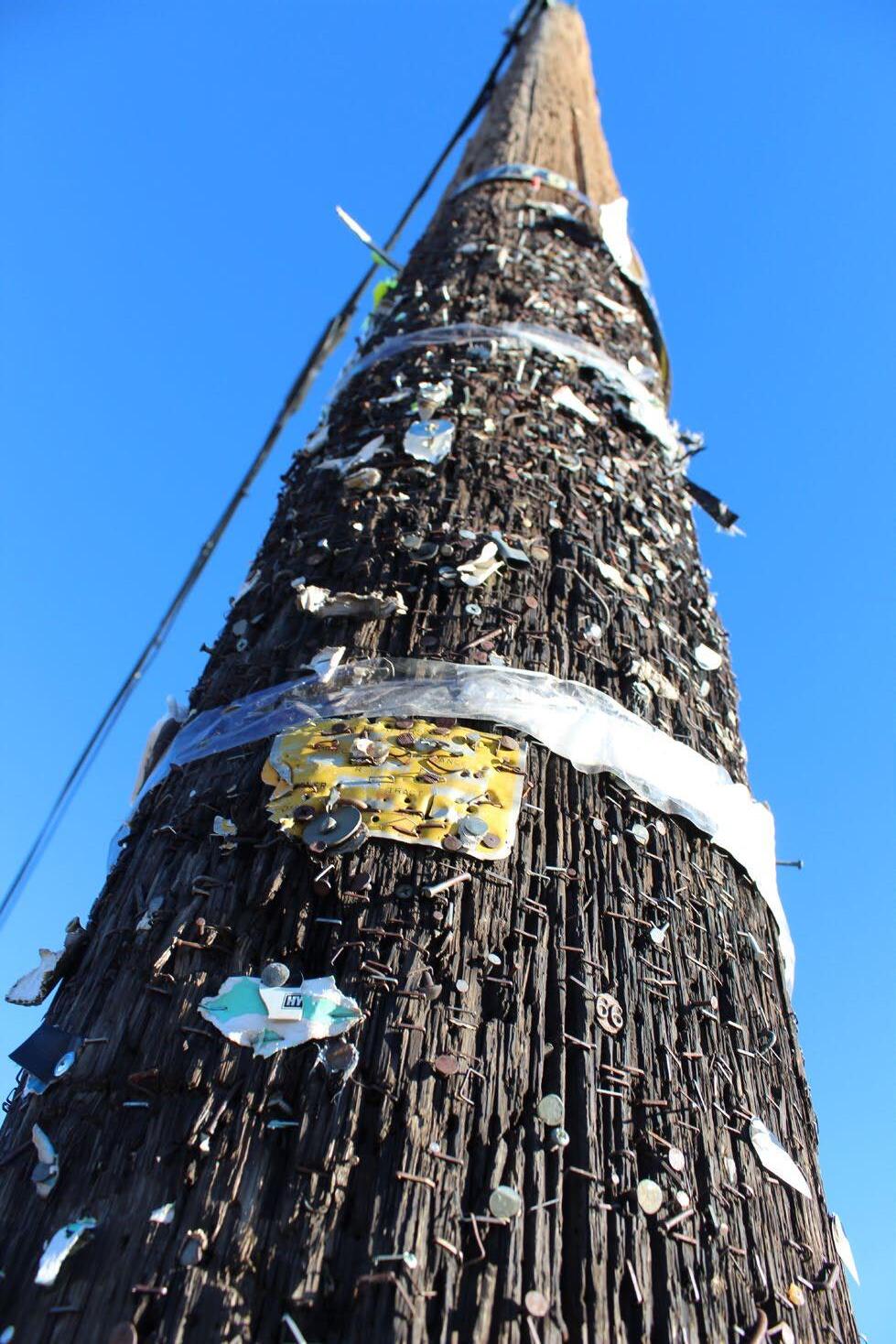

Each month, Y-W Electric Association offers its members a chance to earn a $20 bill credit on their next electric bill. If you find your name and account number in this magazine, call 800-660-2291 and ask for your credit. Congrats to Debra Moellenberg and Danielle Routh! You spotted your name in December’s magazine and called to claim your bill credit.
Tacks, staples, and nails on power poles can be dangerous to Y-W Electric linemen. Keep all signs, fliers, and metal objects off power poles. Photo by Denise Moore