CREA defeated costly mandates that would have added millions in new administrative and operational costs for electric co-ops. Because electric co-ops are not-for-profit, every avoided cost helps protect the consumers who ultimately pay the bill.
632 Bills Introduced
40 Bills CREA Engaged On
5 Opposed 9 Amended 5 Supported
3 Defeated Before Introduced
4 out of 5 Bills that CREA opposed were defeated
TAYLOR WARD Director of Government Relations
A POSITION OF STRENGTH: 2026 END-OF-SESSION REPORT
ADVOCATING FOR COLORADO’S ELECTRIC COOPERATIVES AT THE CAPITOL
The 2026 legislative session was one for the record books. From the opening gavel to the final days, CREA managed a demanding agenda and we are proud of the results achieved for our member cooperatives and the communities they serve.
CREA defended electric co-op interests and ensured lawmakers understood the real-world impacts of their policies. In several cases, CREA secured amendments that protected local control, preserved service territory rights, and reduced regulatory burdens — keeping affordability and reliability at the center of the legislative process.
Most importantly, Colorado’s electric co-ops finished the 2026 session unscathed. Despite numerous proposals that threatened new costs, mandates, or operational challenges, CREA’s advocacy ensured electric co-ops remain well positioned to serve their members with safe, reliable, and affordable power. The amendments secured, bills defeated, and mandates avoided translated into significant savings for electric co-ops and their consumer-members. Through our advocacy, we protected co-op budgets and the members who ultimately pay the bills.
That outcome was no accident. It resulted from consistent education, trusted relationships, and credibility built over time. Throughout the session, CREA strengthened relationships with legislators, agency leaders, and stakeholders across the Capitol. These connections ensure electric co-ops have a seat at the table, helping lawmakers understand the practical impacts of policy. At the same time, we didn’t shy away from taking on political heavyweights. In the end, we solidified CREA’s reputation as a credible, solutions-oriented voice in the building.
This success was made possible by CREA staff, who provided vital policy, communications, and member support throughout the session. We also thank Samantha Neuchterlein and Mary Marchun at The Capstone Group; their strategic guidance, persistence and strong relationships in the building were critical to navigating a complex and demanding session.
As we move from the Capitol to election season, our work continues. The 2026 elections will shape the policy landscape for years to come. CREA remains committed to building relationships, educating policymakers, and strengthening the voice of Colorado’s electric cooperatives. While the issues ahead are significant, CREA enters this next phase from a position of strength.
Thank you for your engagement, leadership, and support. Together, we protected our cooperatives, saved real dollars for members, advanced our priorities, and laid the groundwork for the work ahead.
Director of Government Relations
EVENTS & ENGAGEMENTS
CO-OP DAY AT THE CAPITOL
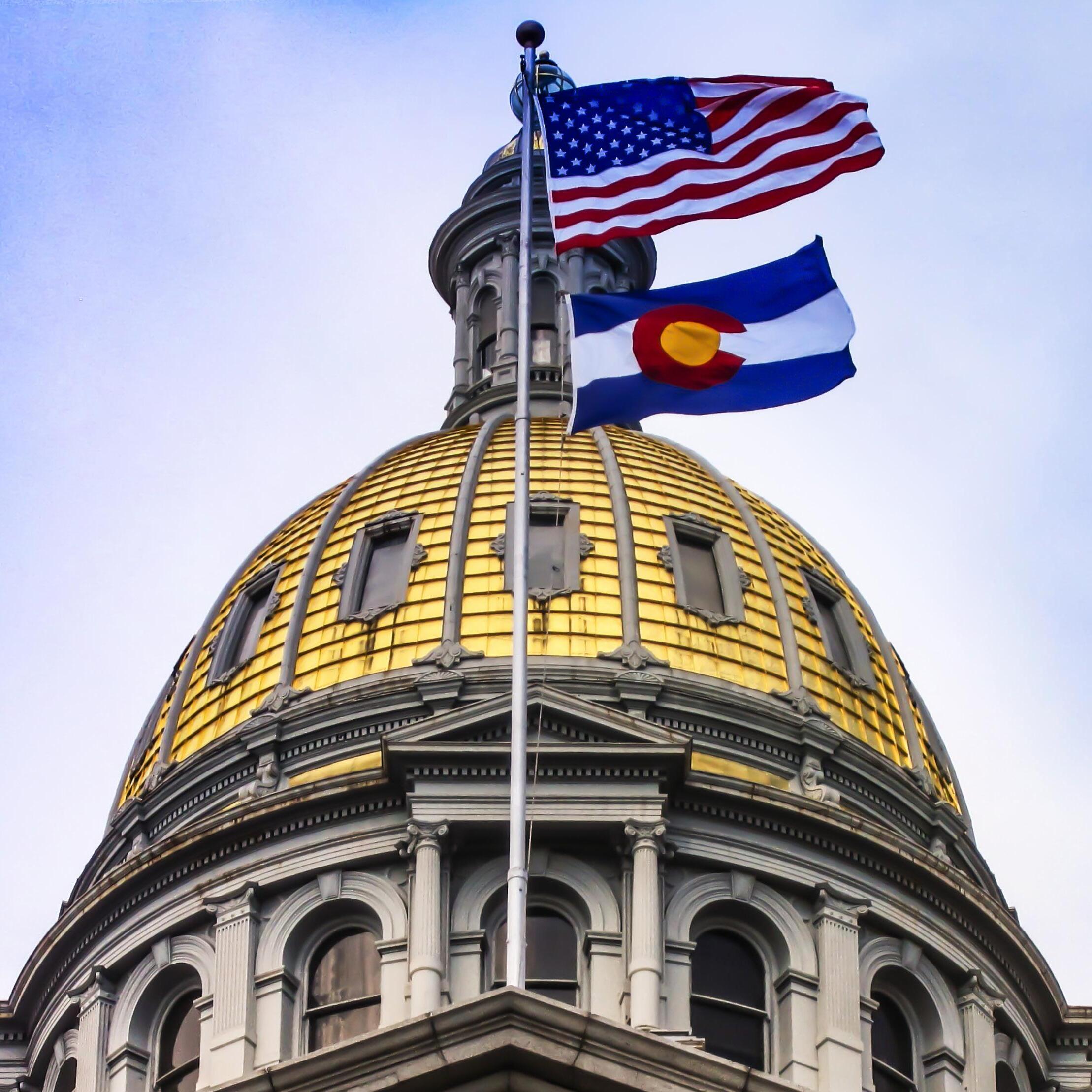
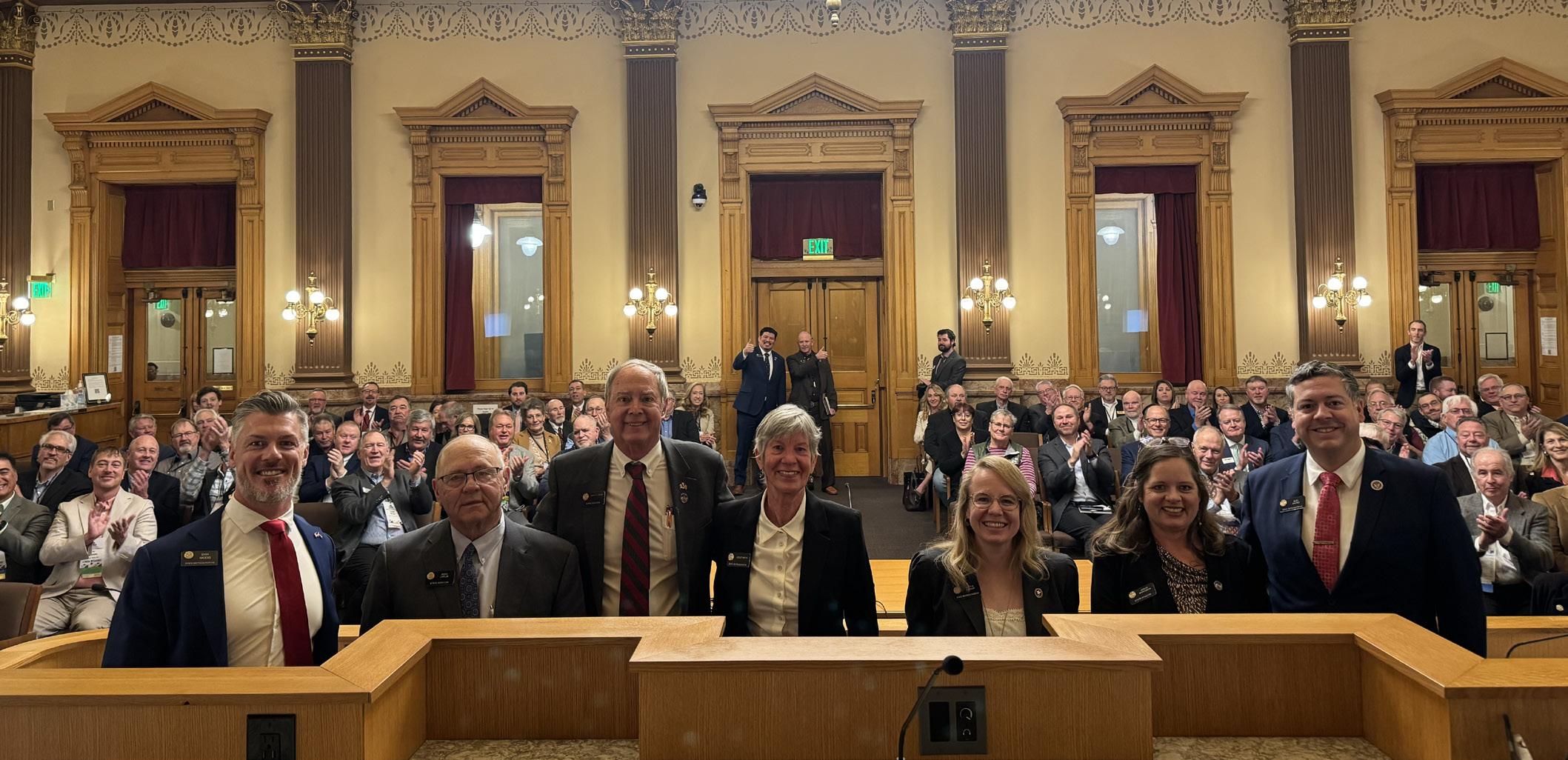
This session, CREA hosted Co-op Day at the Capitol for the first time in years, bringing electric co-op leaders directly to the Colorado State Capitol for meaningful conversations with legislators and state leaders. The event was designed to strengthen relationships, elevate the voice of electric co-ops and ensure policymakers heard directly from the communities affected by the decisions made under the Gold Dome.
The day began with a legislative breakfast — providing an informal setting for members to discuss priority issues — followed by a panel discussion in the Old Supreme Court chambers. Energy-focused legislators shared their perspectives on the major issues expected to shape the 120-day legislative session and engaged directly with our members.
Co-op Day at the Capitol also marked an important shift in CREA’s engagement strategy. After seeing declining lawmaker participation at past legislative receptions, CREA staff reimagined this event to create a more visible and effective Capitol presence. The strategic shift was a success: More than 20 lawmakers participated alongside a strong turnout of CREA co-op members.
By filling the Capitol with co-op leaders from across the state, CREA sent a clear message: Colorado’s electric cooperatives are engaged, organized, and ready to lead in shaping the state’s energy future.
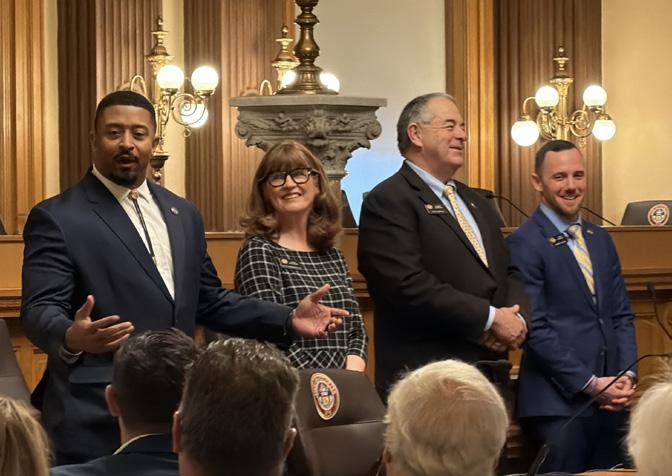
Speaker of the House Julie McCluskie, President of the Senate James Coleman, Senate Minority Leader Cleave Simpson, and House Minority Leader Jarvis Caldwell present Colorado’s electric cooperatives with a special tribute
Co-op leaders meet at the State Capitol with key House and Senate Energy Committee members and co-op champions. Discussions with Chairman Valdez, Reps. Smith, Woog, and Johnson, and Sens. Marchman, Catlin, and Liston center on keeping grid electricity reliable, affordable, and advancing critical wildfire mitigation efforts to ensure rural voices drive state energy policy.
CELEBRATING LINEWORKER
APPRECIATION DAY AT THE CAPITOL
Later in session, CREA partnered with Tri-State Generation and Transmission, Colorado Springs Utilities, the Colorado Association of Municipal Utilities, and Platte River Power Authority to host Lineworker Appreciation Day at the Capitol. The event brought lineworkers from across Colorado to be recognized for their essential role in keeping Colorado’s lights on.
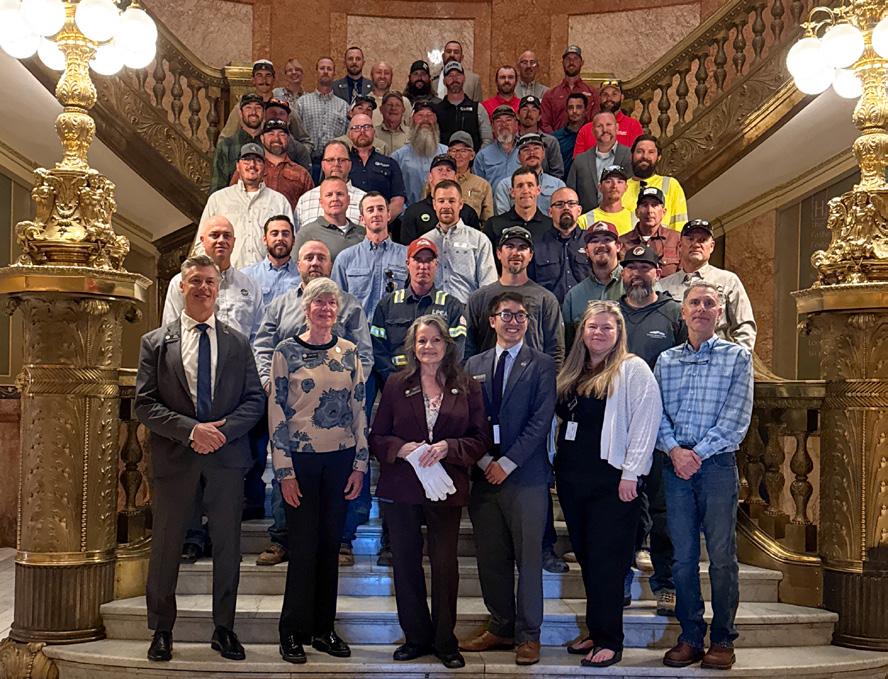
The day featured a legislative breakfast followed by official recognition on the House floor. More than 50 co-op leaders, lineworkers, and staff attended, creating a strong visual presence that did not go unnoticed by lawmakers. This strong showing reinforced the importance of people who maintain the critical systems their communities depend on every day.
While the event honored our boots-on-the-ground workforce, it also served as a strategic advocacy opportunity for wildfire liability reform. CREA and Tri-State collaborated to emphasize the vital role lineworkers play in wildfire mitigation, system hardening, and emergency response. Legislators heard directly from co-op representatives about the increasing costs of wildfire mitigation and the urgent need for policies that protect consumers from unsustainable financial risk.
Lineworker Appreciation Day showcased CREA’s ability to connect high-level policy discussions with the people who get the work done. By elevating the experiences of our lineworkers, CREA helped lawmakers better understand the operational realities facing electric co-ops and the necessity of advancing wildfire liability reform policies that support safety, reliability, and affordability.
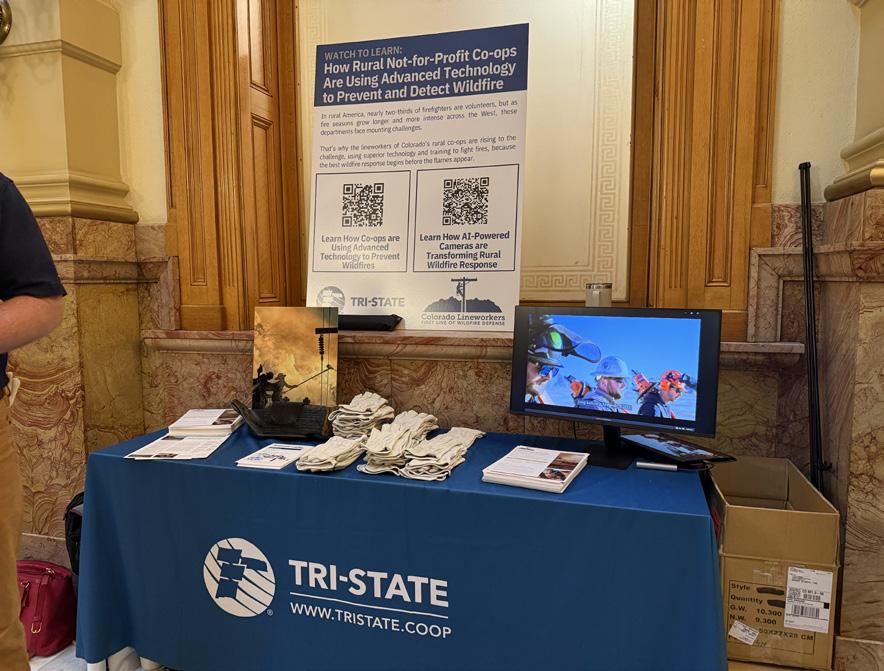
Tri-State Generation and Transmission’s display at Lineworker Day showcases the essential work lineworkers do to support wildfire mitigation and protect electric infrastructure.
Colorado’s electric cooperatives gather at the State Capitol to honor the heroes who keep our power running and serve as our first line of wildfire defense.
COLORADO ENERGY CROSSROADS
CREA served on the executive committee of Colorado Energy Crossroads, a broadbased coalition formed to address clean energy planning legislation during the 2026 legislative session. The coalition united labor, electric utilities, consumer advocates, and other stakeholders to advocate for a reasonable and balanced approach to the Governor’s priority of accelerating Colorado’s energy transition.
Heading into the session, CREA anticipated legislation that would accelerate clean energy timelines without accounting for the practical challenges facing utilities and consumers. A policy focused solely on speed would have increased cost pressures, limited operational flexibility, and create new compliance burdens.
Colorado Energy Crossroads provided a vital platform for CREA to educate policymakers on the risks of moving “too far, too fast.” The coalition stressed that clean energy policy must account for affordability, grid reliability, and significant work already underway by utilities across the state.
The coalition’s work was not to oppose policy progress, but provide policymakers with clear insight into the real-world impacts proposed mandates could have on consumers. This proactive advocacy played a significant role in preventing the introduction of legislation that would have accelerated clean energy timelines at the expense of our consumers.
PRIORITY BILL HIGHLIGHTS
CREA tracked and engaged on a wide range of legislation during the 2026 session. The following section provides an overview of priority bills and proposals taken up during session and CREA’s involvement in their consideration.
CLEAN ELECTRICITY PLANNING
Clean electricity planning was one of the most closely watched policy discussions of the 2026 session. Early proposals sought 100% greenhouse gas reductions by 2040, while later iterations shifted to interim targets of 95% by 2040 and 98% by 2045, leading to a 100% mandate by 2050. Although proponents eventually framed the legislation as a “skinny bill” applying only to PUC-regulated entities, the inclusion of Tri-State meant the proposal still threatened Tri-State member electric co-ops and their consumers.
Throughout the session, CREA educated lawmakers on the need for customer protections in any clean electricity planning legislation. We emphasized that any cost cap must account for the full cost of compliance — including transmission — and that policy goals must be balanced against affordability, reliability and the realities of serving rural communities. Ultimately, the bill did not move forward as proponents failed to address stakeholder concerns.
ROBIN ALERTS
Ahead of the legislative session, a consumer advocacy group proposed “ROBIN Alerts” legislation. The proposal sought to mandate a standard notification framework for planned and unplanned utility outages, requiring electric utilities to follow extensive communication requirements, including advance notice, disruptions coordination, and special provisions for medically vulnerable individuals.
CREA recognized that while well-intended, the one-sizefits-all mandate would be impractical and costly for electric co-ops, especially during emergencies or when local communication processes are already effective. Using cost data and policy information provided by our members, CREA demonstrated that bill was unnecessary and successfully lobbied to keep the bill from being introduced.
HB26-1054 - STATEWIDE OSHA STANDARDS
Legislation was defeated in the last days of session that would have created state-level worker safety standards enforced by the Colorado Attorney General if federal workplace standards were repealed. This legislation was unnecessary, as co-ops exceed federal workplace safety standards and increased regulation by the state is unnecessary.
HB26-1007 - METER COLLAR ADAPTERS & PLUG-IN SOLAR
HB1007 was one of CREA’s most significant negotiated victories this session. As introduced, the bill raised serious safety, compatibility, and operational concerns regarding meter collar adapters and plug-in solar devices. Through sustained advocacy and direct negotiations with the sponsors, the Governor’s Office, and key stakeholders, CREA secured amendments that mitigated every adverse impact.
The final compromise addressed safety concerns, preserved utility authority to evaluate devices for physical and electrical compatibility, and protected members from shouldering unfair upgrade costs. Additionally, the amendments clarified installation requirements and limited utility liability for plug-in solar devices. Just as importantly, CREA’s fair and reasonable approach throughout these negotiations was recognized by legislators and the Governor’s Office, further strengthening our credibility at the Capitol.
HB26-1051 - CONTINUING MICROGRID COMMUNITY RESILIENCE PROGRAM
HB1051 was a positive outcome for electric co-ops and municipally owned utilities participating in the state’s Microgrids Grant Program. Originally created in 2021 to support the purchase of microgrid resources, the program was set to expire in September 2026. This new bill ensures projects already receiving support and those needing additional time have the flexibility to complete the projects.
SB26-102 AND HB26-1030 - DATA CENTERS
CREA engaged on HB1030 and SB102, two competing data center bills that sought to define the future of data center development in Colorado. While the bills took very different approaches, both raised major questions for electric co-ops regarding grid impacts, territorial integrity, clean energy goals, and how to ensure existing consumers are not subsidizing new large-load development. Ultimately, both bills failed to pass. However, this issue remains a priority for next year. CREA will continue to advocate for a framework that protects consumers, preserves local utility planning, and supports responsible economic development without undermining the cooperative utility model.
SB26-052 - COAL TRANSITION COMMUNITY INVESTMENT
SB052 required private businesses in coal transition communities, including utilities, to provide preferential employment opportunities to qualified coal transition workers. While CREA supports workers and communities affected by the coal transition, we sought to ensure that hiring mandates did not compromise a utility’s ability to select candidates based on merit and operational needs. CREA successfully secured an amendment clarifying that a business may hire a candidate who is not a coal transition worker if that individual is more qualified for the role. This amendment preserved necessary flexibility for utilities and protected the principle of merit-based hiring, while maintaining the sponsor’s broader goal of supporting displaced coal transition workers.
HB26-1101 - CRIMINAL OFFENSES RELATED TO CRITICAL INFRASTRUCTURE METALS
This bill strengthened regulations surrounding the purchase and sale of commodity metals and detached catalytic converters. CREA successfully lobbied for amendments to include critical infrastructure metals within the bill’s new regulations and
penalties, helping deter the theft and unlawful sale of materials utility equipment.
This was an important addition for electric co-ops, which continue to face theft of utility equipment and critical infrastructure materials that create safety risks, increase costs, and disrupt service.
SB26-142 - THERMAL ENERGY RESOURCES
SB142 established a policy framework to support the development of geothermal and recovered thermal energy systems in Colorado. Some electric co-op members raised concerns that the bill could create a path for other utilities to infringe on electric co-op service territories through the development of thermal energy networks. CREA successfully negotiated amendments to protect incumbent utility rights. As amended, the bill clearly states that if a utility develops a thermal energy network within another utility’s service territory, the incumbent electric utility retains the right to serve the associated electric load. This amendment preserved service territory protections, while allowing the bill to move forward with its goal of supporting geothermal energy development.
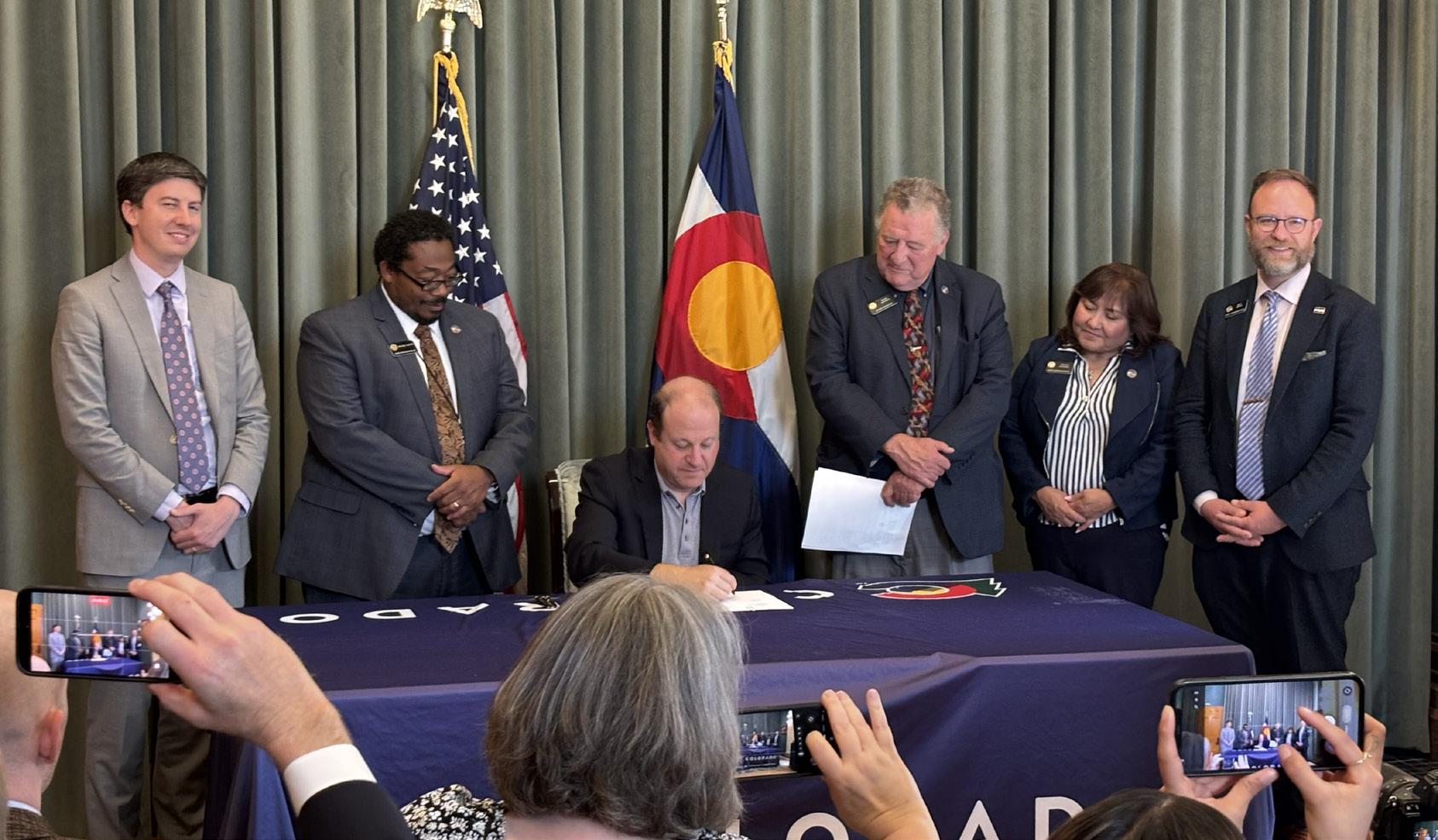
CREA is honored to attend the bill signing ceremony for HB 1101 alongside sponsors Reps. Espenoza and Soper and Sens. Lindstedt and Pelton, celebrating new legislation that strengthens penalties for critical infrastructure metal theft to ensure the safety and reliability of Colorado’s electric grid.
BILL SUMMARIES: CREA TRACKED BILLS THAT BECAME LAW
HB26-1007 METER COLLAR ADAPTERS AND PLUG-IN SOLAR
Sponsors Rep. Lesley Smith (D-Boulder); Rep. Rebekah Stewart (D-Lakewood); Sen. Cathy Kipp (D-Fort Collins); Sen. Matt Ball (D-Denver)
Summary The introduced bill would have required electric co-ops to allow customers to use meter collar adapters and plug-in solar devices of up to 1,920 watts, provided the devices were approved by a nationally recognized laboratory and did not energize the grid during an outage. Customers would not have been required to obtain approval from their electric co-op before interconnecting these devices, and electric co-ops would have been prohibited from requiring production meters as a condition of interconnection. Customers using these devices also would have been eligible to participate in net metering programs.
CREA led a coalition of interested stakeholders to secure several important amendments to the bill, including:
Meter Collar Adapters:
• Utility compatibility: Utilities must approve at least one meter collar adapter for use on their system. The bill no longer requires approval of all UL 414-listed devices and allows a utility to deny devices that are not physically or electrically compatible with its system.
• Evaluation process: Utilities must maintain a transparent process for manufacturers to request approval of devices and must evaluate those devices for safety and compatibility within 90 days. The bill was amended to limit requests to manufacturers, rather than individual customers.
• Relocation or upgrade of meter infrastructure: If a customer requests a meter collar adapter, but installation requires an upgrade or relocation of the meter, the utility must provide a cost estimate for the required work and the customer is responsible for all associated costs.
• Production meters: The original restriction related to production meters was removed.
• Installation: If installation requires meter removal, utilities may require the work to be completed by the utility or an approved third party at no additional cost to the customer.
Plug-in Solar Devices:
• Plug-in solar notification: Utilities may require customers to notify them of plug-in solar devices, including the presence and size of the system.
• Liability: Utilities are not liable for damages or injuries caused by plug-in solar devices.
• Daisy chaining: Plug-in solar devices are limited to one device per address.
• Net metering: Devices covered under the bill are not eligible for net metering.
Effective Date August 12, 2026. On or before December 31, 2026, the Public Utilities Commission will revise existing rules to reflect the requirements above for meter collar adapters.
SB26-052 COAL TRANSITION COMMUNITY INVESTMENT
Summary This bill requires private businesses located in coal transition communities, including utilities, to give coal transition workers a first and preferred opportunity for employment when those workers meet the qualifications for posted jobs. A covered business may hire a candidate who is not a qualified coal transition worker only if no qualified coal transition worker applied, all qualified coal transition workers declined job offers, or the coal transition worker does not meet the qualifications of other applicants.
CREA successfully secured an amendment clarifying that a business may hire a candidate who is not a coal transition worker if the coal transition worker does not meet the qualifications of other applicants. This amendment preserves flexibility for utilities to evaluate candidates based on merit and qualifications while respecting the sponsor’s intent.
Effective Date March 9, 2026
* Indicates bills that have passed but are not yet signed by the Governor.
Sponsors Sen. Dylan Roberts (D-Frisco); Sen. Marc Catlin (R-Montrose); Rep. Meghan Lukens (D-Steamboat Springs); Rep. Tisha Mauro (D-Pueblo)
HB26-1051 CONTINUATION OF THE MICROGRID COMMUNITY RESILIENCE GRANT PROGRAM
Sponsors Rep. Katie Stewart (D-Durango); Rep. Larry Don Suckla (R-Cortez); Sen. Dylan Roberts (D-Frisco); Sen. Cleave Simpson (R-Alamosa)
Summary This bill extends the Microgrids Grant Program indefinitely, which was created by legislation passed in 2021 to provide grants to electric co-ops and municipally owned utilities for the purchase of microgrid resources in eligible rural communities. The program was scheduled to repeal in September 2026.
The bill ensures that projects currently receiving funding through the program remain eligible if they are not yet complete. It also preserves the program so future legislatures may provide funding when the state budget allows.
*Effective Date Upon signature by the Governor.
HB26-1101 CRIMINAL OFFENSES RELATED TO CRITICAL INFRASTRUCTURE
Sponsors Rep. Cecelia Espenoza (D-Denver); Rep. Matt Soper (D-Delta); Sen. William Lindstedt (D-Broomfield); Sen. Byron Pelton (R-Sterling)
Summary This bill prohibits commodity metal dealers, including scrap yards, recyclers and pawn shops, from paying a seller in cash if the dealer knows or should have known that the commodity metal was part of critical infrastructure, and provides penalties for doing so.
The bill was successfully amended to include “public utility infrastructure,” ensuring electric co-op infrastructure metals are covered under the bill.
Effective Date The bill applies to offenses committed on or after July 1, 2026.
HB26-1081 OPTIMIZING COLORADO ELECTRIC TRANSMISSION SYSTEM
Sponsors Rep. Sean Camacho (D-Denver); Majority Leader Monica Duran (D-Superior); Sen. Dylan Roberts (D-Frisco)
Summary This bill requires electric utilities that file 10-year transmission plans with the Public Utilities Commission to evaluate whether advanced transmission technologies could meet identified transmission needs more quickly or at a lower cost than traditional infrastructure. If advanced transmission technologies are shown to be more cost-effective but are not selected, utilities must explain why. The bill also requires utilities that file 10-year transmission plans to identify strategies to reduce the cost of new transmission projects, including the potential use of financing through the Colorado Electric Transmission Authority.
Tri-State successfully sought amendments to ensure the PUC recognizes existing transmission planning processes or analyses conducted by regional transmission organizations to minimize duplication of effort. As amended, the bill allows utilities to reference and incorporate external analyses to meet the bill’s requirements.
*Effective Date August 12, 2026
HB26-1326 PUBLIC UTILITIES COMMISSION SUNSET
Sponsors House Majority Leader Monica Duran (D-Superior); Rep. Jenny Willford (D-Westminster); Senate Majority Leader Robert Rodriguez (D-Denver); Sen. Lisa Cutter (D-Littleton)
Summary This bill continues the PUC for 7 years, through 2033, and makes a number of procedural changes that apply to jurisdictional utilities. Most of the bill does not apply to electric co-ops. Of note to co-ops, the bill does the following:
• Renewable Energy Standards: Allows a qualifying retail utility with an approved clean energy plan, and that is in compliance with that plan, to opt out of the renewable energy standards in C.R.S. 40-2-124. Those utilities must still comply with distributed generation reporting requirements, but they would no longer be required to submit annual renewable energy compliance reports. This reduces an administrative burden for electric co-ops.
• J oint Resource Procurement Study: Requires the PUC to conduct a resource procurement study on barriers to the procurement of advanced technology generation, storage and transmission resources, including barriers affecting electric co-ops. The PUC must submit its findings to the General Assembly. This study could inform future legislation.
• Commission Structure Study: The bill also requires a study of the commission’s structure to determine if the commission should be expanded from three to five commissioners.
*Effective Date August 12, 2026
* Indicates bills that have passed but are not yet signed by the Governor.
HB26-1272 EXTREME TEMPERATURES WORKER PROTECTIONS
Sponsors Rep. Meg Froelich (D-Englewood); Rep. Elizabeth Velasco (D-Glenwood Springs); Sen. Lisa Cutter (D-Littleton); Sen. Mike Weissman (D-Aurora)
Summary Originally, the bill would have mirrored a 2025 proposal requiring employers to develop strict worker safety standards for employees working in extreme temperatures. Because that proposal carried a significant fiscal note, the bill was scaled back substantially.
As passed, the bill requires the Colorado Department of Labor and Employment to collect data on workplace safety practices and develop a model Temperature-Related Illness and Injury Prevention Plan that businesses without existing standards may use as a guide.
The final bill does not require electric co-ops to adopt or comply with any model plan developed by CDLE. However, this issue may return in future budget years, when the legislature may have more funding available to pursue mandatory extreme-temperature workplace regulations.
*Effective Date August 12, 2026
SB26-021 CLEAN FLEET ENTERPRISE
Sponsors Sen. Kyle Mullica (D-Thornton); Majority Leader Cleave Simpson (R-Alamosa); Rep. Carlos Barron (R-Fort Lupton); Rep. Amy Paschal (D-Colorado Springs)
Summary This bill expands the state Clean Fleet Enterprise’s authority to support cleaner heavy-duty transportation options. The bill authorizes the enterprise to provide grants, rebates, revolving loans, or other financing tools through Dec. 31, 2031, to help fleet owners replace older diesel heavy-duty trucks with newer heavy-duty trucks that meet current emissions and safety standards. To qualify, the older truck must be surrendered and permanently decommissioned.
Effective Date August 12, 2026
SB26-142 DEVELOPMENT OF THERMAL ENERGY RESOURCES
Sponsors Sen. Matt Ball (D-Denver); Sen. Cathy Kipp (D-Fort Collins); Rep. Ryan Gonzalez (D-Fort Lupton); Rep. Junie Joseph (D-Boulder)
Summary This bill establishes a policy framework to support the development and deployment of geothermal and recovered thermal energy systems in Colorado. It authorizes non-utility entities to sell recovered thermal energy for building heat and hot water without regulation by the Public Utilities Commission. The bill also expands existing authority for municipalities to develop geothermal infrastructure and enter into agreements to provide thermal energy services. CREA worked with stakeholders to address a potential service territory issue and the bill now clarifies that incumbent utilities retain the exclusive right to serve electric load unless a municipality follows the existing statutory process to change service territory.
In addition, the bill directs state agencies, including the Energy and Carbon Management Commission and the Colorado Geological Survey, to study geothermal resources and provide recommendations to the General Assembly.
*Effective Date August 12, 2026
HB26-155 INCREASE ACCESS TO HOMEOWNER’S INSURANCE ENTERPRISE
Sponsors Speaker Julie McCluskie (D-Frisco); Rep. Kyle Brown (D-Louisville); Sen. Janice Marchman (D-Loveland); Sen. Kyle Mullica (D-Thornton)
Summary This bill creates the Strengthen Colorado Homes Enterprise to improve homeowners insurance availability by helping homeowners pay for resilient roof upgrades. The program provides grants to offset the cost of purchasing and installing resilient roof systems and is funded through a 0.5% fee on multiperil homeowners insurance premiums. The bill also requires the enterprise to study insurance risk in high-risk wildfire areas and evaluate how a high-risk program could impact insurer losses and homeowners insurance availability.
*Effective Date August 12, 2026
* Indicates bills that have passed but are not yet signed by the Governor.
HB26-1268 RENEWABLE ENERGY DEVELOPMENT ON DISTURBED LANDS
Sponsors Rep. Karen McCormick (D-Hygiene); Rep. Lesley Smith (D-Boulder); Sen. William Lindstedt (D-Broomfield)
Summary This bill allows local permitting authorities to designate certain disturbed lands, such as brownfields, landfills and closed mines, as renewable energy reinvestment areas. Projects located within these areas may be eligible for tax increment financing, which could help lower development costs and support renewable energy deployment on previously disturbed sites.
The bill also requires utilities to respond within 30 days to requests for information regarding grid hosting capacity, including substation and feeder capacity.
*Effective Date August 12, 2026
HB26-1226 MANAGING EMISSIONS FROM ELECTRIC GENERATING UNITS
Sponsors Rep. Meg Froelich (D-Englewood); Rep. Jenny Willford (D-Westminster); Sen. Lisa Cutter (D-Littleton)
Summary The bill requires the Air Pollution Control Division within CDPHE to propose final rules limiting nitrogen oxide and sulfur dioxide emissions from certain electric generating units, with compliance required after Dec. 31, 2034. The bill applies to electric generating units that are owned or operated by an electric utility, located in Colorado, and emitted at least 200 tons of nitrogen oxides, sulfur dioxide, or both in calendar year 2024.
Tri-State successfully amended the bill, which resulted in them moving to a monitor position on the bill.
*Effective Date Upon signature by the Governor.
BILL SUMMARIES: CREA TRACKED BILLS THAT FAILED
The following bills were monitored, amended, or opposed by CREA and ultimately failed to become law.
SB26-102 LARGE LOAD DATA CENTERS
Sponsor Sen. Cathy Kipp (D-Fort Collins)
Summary As introduced, this bill would have imposed new requirements on electric co-ops and other utilities seeking to interconnect large-load data centers, defined as a single facility with a load greater than 30 megawatts or multiple facilities with a combined load greater than 60 megawatts. Key provisions as introduced included:
• Requiring large-load data centers to generate, purchase or otherwise acquire new renewable energy sufficient to cover annual consumption.
• Requiring hourly matching with renewable energy resources beginning in 2031, to the greatest extent possible as determined by the Public Utilities Commission.
• Prohibiting utilities, including electric co-ops, from interconnecting a large load unless the utility verified compliance with these requirements.
• Requiring large loads to enter into contracts of at least 15 years with utilities to cover infrastructure and energy supply impacts.
• Prohibiting economic development rates for data centers and requiring utilities to develop demand-side management programs and flexible tariff structures.
• Requiring utilities to verify that the load would not adversely impact existing customers or impair progress toward state clean energy goals.
• Requiring the Department of Local Affairs to develop model codes for data center permitting and development. The bill died following a failed attempt in the final days of session to amend the bill with a limited tax incentive, more renewable energy requirements for data centers, and new requirements for utilities facilitating the energy needs of data center development.
* Indicates bills that have passed but are not yet signed by the Governor.
HB26-1030 DATA CENTER TAX INCENTIVES
Sponsors Rep. Alex Valdez (D-Denver); Majority Leader Monica Duran (D-Superior); Sen. Kyle Mullica (D-Thornton)
Summary This bill would have created a statewide data center incentive and oversight program, including a 100% sales and use tax exemption for large data center projects that met specified investment, labor, water stewardship, and gridimpact requirements.
The bill also would have established the Colorado Data Center Development Authority within the Office of Economic Development and International Trade to administer the certification and incentive program. The authority would have been responsible for reviewing applications, certifying eligible data center projects, overseeing compliance, and administering the tax exemptions.
CREA recommended several clarifications to avoid unintended consequences, which all would have been accepted if the bill had been considered further. These included clarifying that data centers, not utilities, would pay for initial feasibility and planning studies; ensuring the authority could not override decisions made by an electric co-op governing board; and adding a non-rate-regulated utility representative to the authority’s board.
The bill died due to a conflict of policy priorities between data center developers, environmental organizations, labor, and utilities.
HB26-1054 PROTECTIONS FOR WORKER SAFETY
Sponsors Rep. Manny Rutinel (D-Commerce City); Rep Elizabeth Velasco (D-Glenwood Springs); Sen. Katie Wallace (D-Longmont)
Summary This bill would have established a state-level general duty clause if standards under the federal Occupational Safety and Health Act were repealed. The standards would have been enforced and regulated by the Attorney General.
SB26-082 LOCAL GOVERNMENT RENEWABLE ENERGY DEVELOPMENT FEE
Sponsor Sen. Byron Pelton (R-Sterling)
Summary This bill would have authorized local governments to create an expedited permitting process for renewable energy projects with higher fees and statutory timelines. It would have required completeness determinations within 20 days, targeted final decisions within 120 days, and refunds if deadlines were missed.
The bill also would have required third-party technical review at the developer’s expense and allowed local governments to collect a “success fee” upon project approval.
HB26-1124 ELECTRICAL GENERATION & DISTRIBUTION RESILIENCY
Sponsor Rep. Ken DeGraaf (R-Colorado Springs)
Summary The bill would have created the Colorado Electric Grid Resiliency Task Force to study grid resilience and develop recommendations for the Governor and the General Assembly. The Task Force would have been required to complete an assessment of every covered transformer in Colorado and develop a prioritized statewide hardening and sparetransformer plan by July 1, 2028.
Transmission-owning entities would have been required to participate in the task force and recover the costs of compliance through rates, member assessments, or ordinary budget processes. These entities would have also been required to file critical energy and electric infrastructure information with the Federal Energy Regulatory Commission. By February 1, 2029, and each year thereafter, the PUC would have been required to submit a report to the General Assembly including this information.
CREA opposed this bill due to the significant safety concerns associated with sharing critical infrastructure information publicly.
HB26-1246 CONSUMER REGULATED UTILITIES
Sponsor Rep. Ken DeGraaf (R-Colorado Springs)
Summary The bill would have created a new category of “consumer-regulated electric utility,” defined as an electric generation and supply system built solely to serve new commercial, industrial or data center loads. These systems would have been allowed to provide retail electric service to those loads if they were islanded from the electric grid. The bill also stated that a consumer-regulated electric utility would not be considered a public utility and would not be subject to regulation by the Public Utilities Commission unless it chose to interconnect with the electric grid in the service territory of a PUC-regulated public utility.
CREA opposed this bill as it would have undermined electric co-ops’ exclusive right to serve loads within their certificated service territories. It also failed to address who would be responsible for serving these customers if the new consumer-regulated utility failed, became unreliable or was otherwise unable to meet the load’s needs. Because electric co-ops have an obligation to serve, the bill could have left electric co-ops and their existing consumers exposed to reliability and cost risks created by a private, unregulated system.
SB26-148 UTILITY ON-BILL REPAYMENT PROGRAM
Sponsors Sen. Matt Ball (D-Denver); Sen. Kyle Mullica (D-Thornton); Rep. Sean Camacho (D-Denver); Rep. Junie Joseph (D-Boulder)
Summary This bill would have established a voluntary Utility On-Bill Repayment Program to help utility customers finance energy-related upgrades and repay those costs through monthly utility bills.
The bill would have required the state treasurer to execute a $50 million low-interest loan agreement with the Colorado Clean Energy Fund from the Unclaimed Property Trust Fund by Aug. 15, 2026, to support the program’s expansion. The bill also would have ensured that utilities could continue disconnection practices for nonpayment and that, when a property with an on-bill repayment obligation was transferred, the repayment obligation would have to be satisfied in full at or before the time of transfer.
The bill died in the Senate Appropriations Committee due to a lack of support for utilizing the Unclaimed Property Trust Fund for the program.
HB26-1337 FACILITATING NUCLEAR ENERGY DEVELOPMENT
Sponsors Rep. Alex Valdez (D-Denver); Assistant Minority Leader Ty Winter (R-Trinidad)
Summary This bill would have established the Colorado Energy Office as the state’s single point of contact for entities interested in developing nuclear energy projects. The office would have been tasked with helping developers navigate local, state and federal regulatory processes, while federal agencies would have retained primary permitting authority. The bill also would have directed the office to build internal capacity to pursue federal funding opportunities and work with rate-regulated utilities to develop recommendations for the Public Utilities Commission on how to evaluate nuclear project applications.
SB26-045 NUCLEAR WORKFORCE DEVELOPMENT & EDUCATION PROGRAM
Sponsors Sen. Larry Liston (R-Colorado Springs); Sen. Kyle Mullica (D-Thornton); Rep. Amy Paschal (D-Colorado Springs)
Summary This bill would have established the Colorado Nuclear Workforce Development and Education Council at the Colorado School of Mines to address workforce shortages in the nuclear energy sector. Among other duties, the council would have assessed workforce needs and administered a competitive grant program to support the development or expansion of nuclear-related degree programs, certificates, and trainings.
Sponsors Rep. Elizabeth Velasco (D-Glenwood Springs); Sen. Lisa Cutter (D-Littleton); Sen. Mark Baisley (R-Woodland Park)
Summary This bill would have recreated the Wildfire Matters Review Committee, which sunset in 2025. The bill did not pass due to state budget constraints.
CREA supported this legislation as it would have provided an advocacy avenue for wildfire issues impacting electric cooperatives.
HB26-1334 MODIFY STANDARDS OF WILDFIRE RESILIENCY CODE BOARD
Summary Under current law, the Wildfire Resiliency Code Board is required to adopt an initial set of statewide standards to reduce wildfire risk to people and property by July 1, 2025, and review every three years.
HB1334 would have required that the board review the standards no later than July 1, 2026, and as often as the board deemed necessary thereafter. The bill also would have extended the deadline by one year for local governments located in the wildland urban interface to adopt codes meeting or exceeding standards set by the Board.
HB26-1279 PUBLIC UTILITY NOTICE TO REAL PROPERTY OWNER
Sponsor Rep. Stephanie Luck (R-Penrose)
Summary This bill would have required a public utility to provide at least 90 days’ notice to landowners before beginning the construction or extension of a new facility, line, plant, or system that requires the use of a landowners’ property. The public utility would have been required to hold at least one in-person public meeting between 30 and 60 days after providing notice. Sufficient notice was defined as a letter containing specified information sent by certified mail to the landowner, and publication in a newspaper of general circulation within the area of the property.
HB26-1278 LOCAL GOVERNMENT APPROVAL OF TRANSMISSION INFRASTRUCTURE
Sponsors Rep. Chris Richardson (R-Elizabeth); Sen. Rod Pelton (R-Cheyenne Wells) ; Sen. Marc Snyder (D-Manitou Springs)
Summary Under current law, an investor-owned electric utility must receive a certificate of public convenience and necessity from the Public Utilities Commission before initiating condemnation proceedings related to a high-voltage transmission infrastructure project.
This bill would have required IOUs to also obtain all necessary local government land use permits and approvals before condemning a property.
HB26-1121 PUBLIC ACCESSIBILITY OF EMISSIONS RECORDS
Sponsors Rep. Bob Marshall (D-Highlands Ranch); Rep. Lorena Garcia (D-Denver); Sen. Lisa Cutter (D-Littleton)
Summary This bill would have required the owner of a stationary source to post on their website copies of records that they submit to the state or federal government following the same schedule that those records are made available to government entities.
CREA opposed this bill due to its duplicative process of current practices, and costs associated with compliance. The bill ultimately died due to lack of support from the Administration and a significant fiscal note from the Colorado Department of Public Health & Environment.
SB26-024 STATE & LOCAL UNMANNED AIRCRAFT REGULATION
Sponsors Sen. Larry Liston (R-Colorado Springs); Sen. Dafna Michaelson Jenet (D-Commerce City); Rep. Matt Soper (R-Delta)
Summary This bill would have clarified that federal law governs the operation of drones and affirmed the right of operators to use drones in Colorado, provided they comply with state and federal law.
The bill also would have prohibited local governments from enforcing resolutions or ordinances regulating the ownership or operation of unmanned aerial vehicles.
SB26-028 REMOVING WIND ENERGY FROM STATE ENERGY GOALS
Sponsor Sen. Rod Pelton (R-Cheyenne Wells)
Summary This bill would have removed wind energy from the definition of a clean energy resource under the renewable energy standard and Colorado’s CO2 emissions reduction goal.
SB26-033 CLEAN ENERGY PERMITTING PROCESSES
Sponsors Sen. Larry Liston (R-Colorado Springs); Assistant Minority Leader Ty Winter (R-Trinidad)
Summary This bill would have created the Colorado Clean Energy Permitting Coordination Office within the Colorado Energy Office to streamline and coordinate state and local permitting for major clean energy projects. The office would have served as a single point of contact to help project developers, local governments and permitting agencies align timelines, identify required permits, and improve predictability in the permitting process.
The bill also would have established new requirements for clean energy project owners and operators, which could have included electric co-ops, such as early community engagement plans, community benefit agreements, safety and emergency preparedness planning, and grid reliability and security statements. It also would have required public dashboards to track project status and engagement.
CARE DELIVERS: PROTECTING ELECTRIC CO-OPS AND THEIR CONSUMERS
The 2026 session proved why CARE matters. CARE investments built the relationships, credibility and political presence necessary for CREA to defend electric co-ops against costly mandates, unnecessary regulation, and policies that would raise costs for rural consumers. These victories were possible because cooperatives were at the table early, ensuring lawmakers understood our concerns before harmful policies became law.
Prevented Costly Mandates
CREA stopped a one-size-fits-all outage notification mandate before it was even introduced. By highlighting the realities of utility outage work, we saved electric co-ops an estimated $1 million to $3.5 million per co-op in compliance costs.
Protected Consumer Affordability
For the second year in a row, CREA blocked a bill that would have accelerated greenhouse gas reduction timelines without adequate consumer protections. We advocated for consumer protections that include the full price of transmission, preventing a bill that would have driven major rate increases.
Prioritized Lineworker Safety
CREA negotiated major amendments to HB1007, preserving utility authority to review meter collar adapters and plug-in solar devices. This ensured new technology never compromises lineworkers safety, consumer fairness, and electric co-op operations.
CONTRIBUTE TODAY!
These successes highlight the importance of a strong PAC. Scan the QR code to join us.
Preserved Hiring Flexibility
We secured an amendment to SB052 ensuring utilities can hire the most qualified candidate for any role. This maintained operational flexibility while continuing to support coal transition workers and communities.
Defended Critical Infrastructure
CREA strengthened HB1101 to include utility materials in new theft regulations, deterring the unlawful sale of infrastructure metals, and reducing costs tied to equipment theft.
Safeguarded Service Territory Rights
We secured amendments to SB142 to ensure new thermal energy projects cannot bypass electric co-op service territories. The final bill protects incumbent utility rights while still supporting geothermal development.
Additionally, we defeated HB1246, stopping an attempt by data center operators to circumvent utility service territories.
Strengthened Rural Resilience
CREA supported the extension of the Microgrids Grant Program, keeping key resources available to electric co-ops to improve reliability and resilience in rural communities.
While we were successful this year, the stakes will be even higher next session. With wildfire liability reform, affordability, reliability, and local control on the line, continued and increase investment in CARE ensures electric cooperatives have the political strength to fight for the communities we serve.