Nextdoor.com speculated that the owner had grown frustrated over trail users’ littering and peeking into windows.
BY ISABEL GUZMAN ISABEL@COTLN.ORG
Nearly ve months after the path that connected Jackass Hill Park to the High Line Canal Trail was suddenly closed o to the public, the connection is expected to reopen by May 1.
e 400-foot path was closed in November 2024 after an adjacent homeowner, believing the segment was private property, blocked entry and posted signs warning trespassers would be prosecuted.
e city also initially asserted that the path was on private residential property, according to a Nov. 26, 2024, Facebook post.
e reasons why the property owner who originally closed o the path are unconrmed and the property owner did not respond to a request for comments by time of publication. However, some neighbors on
“Probably a liability issue. Landowners don’t want to be on the hook for any injury that may occur,” reads one comment on a Nextdoor post from April 9 about the path closure.
“ ey were nice enough to allow it for a time, but something caused them to change their mind. I could only guess that it could have been trash, noise or an unfriendly conversation with an entitled individual,” another comment read.
e city of Littleton said the closure forced trail users onto a one-mile detour along busy surface streets, raising safety concerns among residents and disrupting a route deemed as a safe route to school for nearby students.
Littleton residents pushed for a solution, such as Steve Lowry.
“ e city has had a long time to sort this out and has been depriving people of the use of public land,” Littleton resident Steve Lowry said on April 8, before the city an-
nounced the reopening.
e city considered constructing a new trail on a property to the south, but determined that reopening the existing trail is the most cost-e ective and timely way to allow access.
e city initiated a property survey and legal review to clarify ownership of the disputed path, which con rmed that the city holds the public right-of-way for the trail. City ofcials also said they made repeated e orts to address the homeowner’s concerns and seek a collaborative solution.
“Since successfully reaching the adjacent homeowner in mid-March, the city has been committed to continuing an open and productive dialogue to address any concerns related to the public use of the trail, and to ensure coordination with the city’s plans and timeline for reopening the trail,” said Jessica Bixenman, director of communications and marketing for the city of Littleton.
“Ensuring access to trails and open spaces is a signi cant element of Littleton’s strategic plan goal to ensure the city is a ‘sustainable community with natural beauty.’”
City weighs whether to spend big money on preservation e ort
BY ISABEL GUZMAN ISABEL@COTLN.ORG
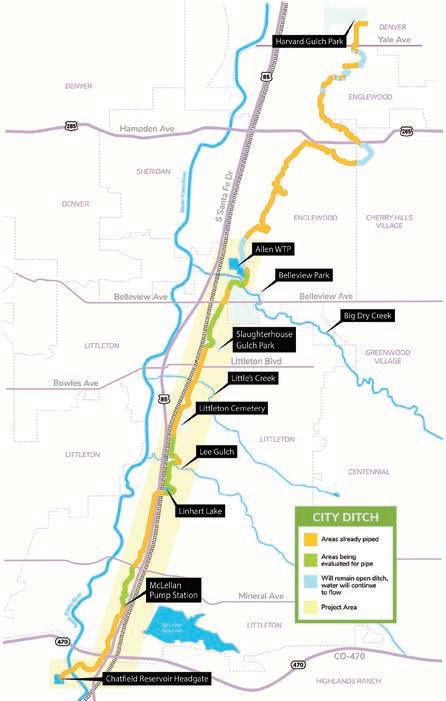
What’s 4 feet deep, 6 feet wide and 26 miles long? e original City Ditch — one of Colorado’s earliest and most in uential irrigation canals, constructed between 1864 and 1867 by the Capitol Hydraulic Company to bring much-needed water to the dry, dusty lands of the Denver metropolitan area. is hand-dug canal, also known as Smith’s Ditch, was engineered by Richard S. Little and nanced by businessman John W. Smith, according to local historian Larry Borger. It stretched from its headgate near present-day Chat eld Reservoir, above Littleton, and ran roughly 26-to-27 miles northeast to Capitol Hill in Denver, relying solely on a 100-foot drop in elevation to move water without pumps.
When it opened in 1867, the ditch enabled the growth of trees, sugar beet crops and neighborhoods, providing Denver with its primary irrigation source for more than 25 years. e ditch also supported a network of more than 1,000 lateral ditches, greening up city parks and supplying water to o shoots that irrigated cropland and street trees. Its construction and operation were so signi cant that the ditch is often called the “oldest working thing” in Denver, predating paved streets and railroads.
Today, the City Ditch is mostly hidden from view. About 2.5 miles of the ditch remain open-channel, while the rest is mostly piped and buried.







Amendment disappoints some families of victims
BY HALEY LENA HLENA@COLORADOCOMMUNITY
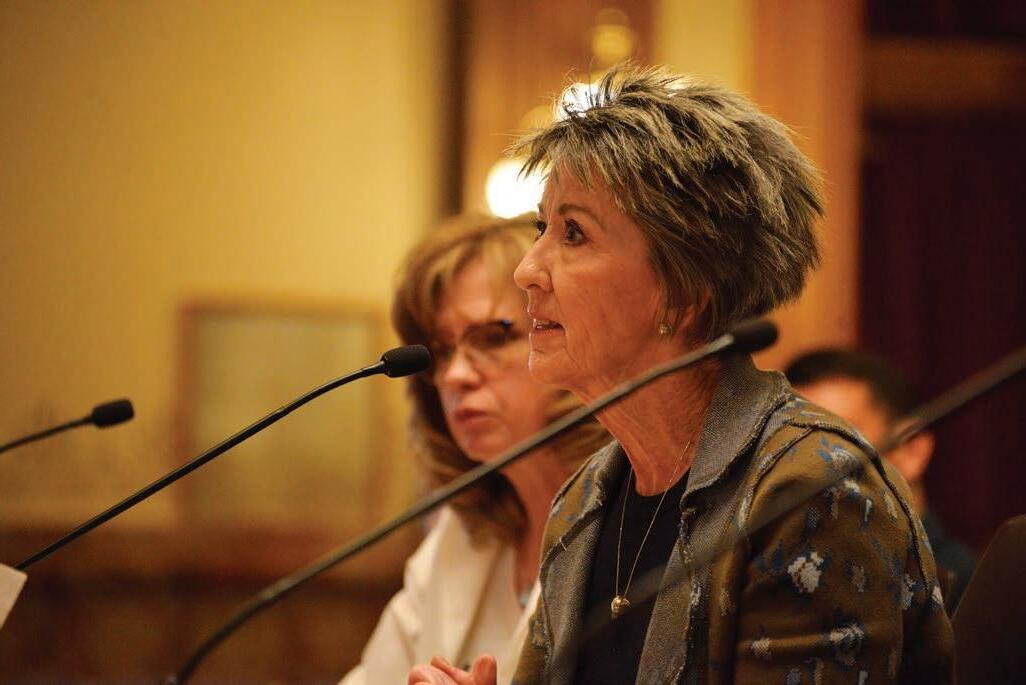
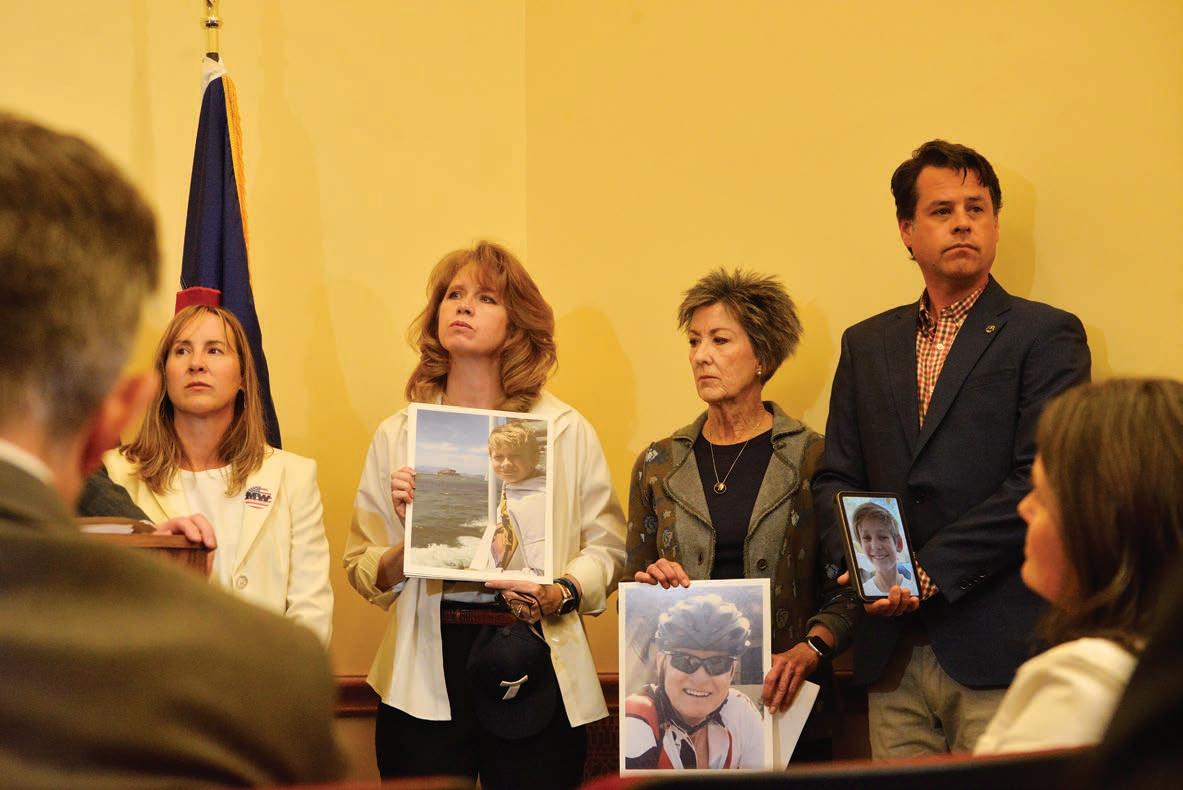
In an e ort to hold negligent drivers accountable, more than 25 advocates and families of crash victims from across the state testi ed mid-April at the Colorado state Capitol in support of Senate Bill 25-281 to increase the penalty for careless driving resulting in death.
“Somehow society has normalized that vulnerable road user deaths are accidents,” said Teri Vogel, a Parker resident. “ e majority of these deaths are in fact preventable … so the penalties that de ne and make the distinctions to support the di erences in crimes is imperative.”
However, an amendment made to the bill and passed on April 21 by the Colorado Senate Judiciary Committee — which considers matters regarding civil and criminal proceedings, civil liberties, courts, judges, the state constitution and statutes, the state’s correctional system and prison facilities, homeland security and juvenile justice — disappointed the families of victims.
“It loses the spirit of what it’s supposed to be,” said Josh Stewart, whose son was killed in 2023 in Littleton.
“It’s not representative of what we were trying to accomplish,” Vogel added.
e proposed bill was brought forth by Sen. John Carson, a Republican from Highlands Ranch, and Sen. Marc Snyder, a Democrat from Manitou Springs.
“If we increase public perception and awareness, it will have a deterrent effect,” said Carson. “If people know they can face the penalty, go to jail for careless driving resulting in death of another person, then they may very well be more careful on the roads.”
e current penalty for a person who commits careless driving and causes the death of another is a Class 1 misde-


meanor tra c o ense with 12 license suspension points.
An amendment to the bill adds a new eight-point deduction for careless driving resulting in serious bodily injury.
“ e number of people that get held accountable for the behavior is miniscule, perhaps even non-existent,” said Colorado State Patrol Chief Col. Matthew Packard. “It is a choice to drive carelessly and this state should hold people accountable for making that choice.”
e original proposed bill would have brought the penalty up to a Class 6 felony, following the precedent set by the Move Over for Cody Act, also known as Title 42-4-705. Title 42-4-705 states that drivers must
move over one lane or slow down when approaching stationary emergency vehicles, a tow vehicle or a public utility service vehicle. If the driver fails to avoid and show due care and their actions cause the death of another, the driver commits a Class 6 felony.
However, the amendment changes the o ense back to a Class 1 misdemeanor, unless the driver’s history meets one of two categories within the last ve years, then it can be elevated to a Class 6 felony.
One category is if the person has a prior conviction of vehicular homicide, criminally negligent homicide in which the act included driving a motor vehicle, vehicular assault, or careless driving resulting in serious bodily injury or death.

e second category includes if the person is driving without a current and valid driver’s license, a minor’s driver’s license or instruction permit, driving without a complying insurance policy or self insurance, a prior DUI conviction, DWAI, aggravated driving with a revoked license, or driving with a license under restraint.
“ ere should be zero ways to kill somebody and it be a misdemeanor,” Stewart said. is amendment also led to Sen. Dylan Roberts, a Democrat who represents Colorado’s Eighth Senate District, to have a pit in his stomach, he said.
Aim of event is to encourage connection, fight loneliness
BY ISABEL GUZMAN ISABEL@COTLN.ORG
is September, Littleton’s Main Street will undergo a “mile-long” transformation as thousands gather for a collective dining experience.
e event, Longer Tables Littleton, is set to feature a communal table stretching about a third of a mile from e Melting Pot to Bega Park, with hopes to bring 5,000 community members together to enjoy a shared meal, connect and tackle the growing epidemic of loneliness.
Longer Tables Littleton held a pilot event the evening of April 23 at the EPIC Campus in Littleton, during which an estimated 80 people attended. e event was potluck style and guests brought dishes such as chicken pot pie, gumbo, salad and gluten-free mu ns. Fresh Market & Community Kitchen, a new grocery store in Littleton, also served food at the pilot event.
When guests arrived, facilitators directed parking. Once parked, attendees could ride one of Cycling Without Age Littleton’s trishaws from the parking lot to the entrance of EPIC Campus.
Upon checking in, attendees were given name tags that included a space to write their “favorite Littleton secret.”
Once name tags were lled out, the event organizers, Lift Up Littleton, labeled dark blue cards with the guests’ names and placed them randomly at the long table, encouraging attendees



to start conversations with people they were meeting for the rst time.
To help conversations get started, questions were shown on a projector screen once everyone had lled their plates and returned to their seats. e questions asked guests to share a memorable meal experience, to describe their childhood best friends and to discuss what brought them to Littleton, among others.
“People can have di erent feelings and get along,” Littleton Mayor Kyle Schlachter said during the event. “When you’re breaking bread together … people can agree, disagree, can listen to other people’s points of view … and maybe come away from that, saying, ‘I learned something.’”
City Council Member Andrea Peters and Arapahoe County Commissioner Carrie Warren-Gully also attended the dinner.

“In Arapahoe County, a lot of what we talk about and deal with is health, behavioral health (and) housing,” WarrenGully said. “We’re seeing this loneliness come up everywhere. And that loneliness a ects so many parts of our lives, and we’re lucky to be at this table.”
SEE FEAST, P15
This column is the first installment of a monthly series about one of the hottest topics in real estate: Accessory Dwelling Units. ADUs have gotten a lot of attention recently as a housing option. My thanks to John Phillips of Verdant Living for helping on the research for it. ADUs (accessory or additional dwelling units) are a wonderful idea. They utilize an existing piece of residential real estate and create a separate living space. They have been around for a long time. In the TV series Happy Days, Fonsie lived in one, on top of a garage. And often they have been a converted basement (still worth considering). They can be a separate building, usually in the backyard. Until recently, zoning regulations made that difficult to do. Throughout the United States, as a part of the need for more housing, zoning codes are being changed to allow ADUs. In Colorado, a law was passed last year allowing ADUs in all major metropolitan areas. That was the subject of my “Real Estate Today” column on February 13, 2025, which is archived online at www. JimSmithColumns.com

have been done by relatively well off homeowners and have been relatively expensive. They really don’t qualify as affordable.
ADUs
So, can accessory dwelling units play a role in affordable housing? Absolutely, for a very understandable reason. They are smaller. The smaller living space is less expensive to build. Is it for everyone? Of course not, but the well designed living spaces are comfortable and mimic the way most of us live, which is in just a few rooms anyway.
Rita and I now live in a 3-bedroom apartment, having sold our 4,000-squarefoot home in Golden. Back then, we really only used the eat-in kitchen, the living room, the primary bedroom/bathroom, and the office. The basement was filled with stuff we didn’t use, except for a ping pong table we used a couple times a year and a portable sauna that we used a half dozen times. The formal dining room was made into a game room, but we hardly used that. The second bedroom was only occasionally used by a guest.
floor which has more equipment than I need. The apartment has all we need for daily life sort of like an ADU.
ADUs are perfect for intergenerational housing (AARP loves them), for young adults as starter homes, and for childless couples, like Rita and me.
ADUs are part of a larger movement emphasizing smaller, high quality living spaces. There are entire developments of smaller homes on smaller lots, some of them the size of an ADU.
¨ Cost. Because of their small size, ADUs offer a more affordable option compared to traditional homes, making homeownership accessible to a broader segment of the population, including young adults and seniors.
¨ Housing stock. By integrating ADUs into the housing market, communities increase the overall housing supply, especially when they are located in areas dealing with an affordable housing shortage.
Opportunty Alert! Kol Peterson, a recognized authority on ADUs, is holding an ADU Academy in Denver on June 13. Early registration ends May 9. Visit https://www.aduspecialist.org/ aduacademy
es land that is already owned. For a standalone mini home, the size of the real estate is much smaller.
¨ Water & Sewer. When the ADU is just that accessory to an existing single family home it can share the same water and sewer tap, saving a 5figure cost associated with building a new standalone home. .
Another positive is that an ADU adds long-term value to an existing singlefamily home, increasing the wealth of the homeowner.
When Colorado’s General Assembly passed the law, the legislature was concerned that ADUs would be possible for homeowners of moderate means and add to the affordable or “attainable” housing. Up until now, most of the few detached ADUs that have been built in Colorado
Now, in our 1,200-square-foot apartment, our life hasn’t changed much. We eat next to our kitchen, which is part of the living room. One bedroom is my office, and we have a guest bedroom that we’ve only used twice, but it’s nice to have. True, we have no room for a piece of exercise equipment that I’d like to buy, but there is a fitness center on the main
¨ Operational expense. Because of their smaller footprint, ADUs require less heating and cooling, as well as less long-term maintenance.
¨ Versatility. ADUs can serve various housing needs, including for family members or as rental properties, providing the homeowner with an additional income source.
¨ Land cost. This is a big one. When the ADU is a backyard bungalow, it utiliz-
If you want to find out more about ADUs, you should check out the buyer’s guide on the Verdant Living website, which lists many other companies and resources: www.VerdantLiving.us Or call or text John Phillips on his cell: 303-717-1962.
Next month: Why aren’t more ADUs being built in Colorado?
NOTE: My “Real Estate Today” column that normally appears on this page is now published bi-weekly. Look for it here next week and every other week thereafter.
Andrew Salazar will be in court on May 14, police say girl was injured in incident
BY ISABEL GUZMAN ISABEL@COTLN.ORG
Andrew Salazar, the 32-year-old man accused of an attempted kidnapping of a young girl on April 19 in Littleton, faced Judge James Xavier Quinn on April 23 and was assigned a preliminary hearing date of May 14 at 1:30 p.m. at Arapahoe County Justice Center.
His $100,000 bond and o cial charges were not addressed at the April 23 court session, which was initially set for return of the ling of charges.
According to the arrest a davit in the case, a juvenile female who was riding a bicycle in a Littleton residential neighborhood said Salazar approached her from behind, grabbing around her hips. She said when she screamed Salazar let go, and she escaped. Littleton police later announced that the girl was injured in the incident.
“O cers canvassed the area and located camera footage from (redacted)
showing that at 4:28 p.m., a bright blue Chrysler PT Cruiser was driving in the neighborhood,” the a davit from Littleton police states. “ e same vehicle was observed driving a second time in the neighborhood at 4:38 p.m. and leaving the area at a high rate of speed two minutes later at 4:40 p.m.”
At 6:59 p.m., an o cer then located a car matching the description and license plate number of the blue Chrysler PT Cruiser at 5250 S. Huron St., building 12, space 3.
Police found the vehicle was registered to one of Salazar’s relatives with a Denver address. A resident of the Huron Street apartments told o cers the PT Cruiser was connected to unit 103.
At 9:24 p.m. that same day, an o cer saw a man exit unit 103 and walk southbound. When police approached the man, he verbally identi ed himself as Andrew and agreed to speak with them.
e male was later positively identi ed as Andrew Salazar and he initially denied any knowledge of a blue PT Cruiser. He also said he was not in the area where the incident occurred.
e statement said that due to Salazar’s inconsistent statements and his long brown hair, additional detectives arrived on the scene.
“Andrew admitted to driving the PT Cruiser and parking at the location of the incident. Andrew told detectives that he rst saw the (redacted) in the park but there were too many people around,” the a davit reads.
“He stated he walked up behind the (redacted) and saw the bicycle wobbling. He reached and grabbed the back of the seat to keep it from falling. At that time, the (redacted) fell on his arm and they both started screaming. His car was parked half a block away and he quickly skipped to his car and drove away because he was scared,” the a davit says. “Andrew also [said] he may have pornographic images of young (redacted) on his phone.”
At 11:26 p.m., Salazar was taken into custody for the investigation of seconddegree kidnapping.
“He is the most respectful, responsible individual, very caring,” Salazar’s aunt, Naomi Clark, said after the hearing on April 23.
“He doesn’t cause problems with anybody,” said Lisa Keeley, a family friend and neighbor of Salazar.
Denver District Court records show Salazar pleaded guilty in September 2023 to a felony charge listed as assault 2 - cause serious bodily injury - heat of
“Andrew told detectives that he first saw the (redacted) in the park but there were too many people around.”
Littleton police, Statement in a davit for arrest of suspect Andrew Salazar
passion, resulting in jail time and two years’ probation.
As of press time, Salazar remained in the Arapahoe County Jail on a $100,000 bond.
Kiarra Jones is accused of hurting nonverbal children
BY ELISABETH SLAY ESLAY@COLORADOCOMMUNITYMEDIA.COM
A former Littleton Public Schools bus paraprofessional re-entered her not guilty plea to several counts of child abuse and bodily during her arraignment on April 21.
Kiarra Jones, who was hired in August 2023 to assist nonverbal autistic students on a Littleton Public Schools bus, faces 13 charges of child abuse and bodily injury.
More than a year since her arrest, her ve-day trial is set to begin at 8:30 a.m. Sept. 29 in Division 402 of the Arapahoe County Justice Center in Centennial. e dates are hardset, meaning they cannot be moved. ere will be a motions hearing at 9 a.m. on July 11 and a readiness conference at 8:30 a.m. on Sept. 12.
“It puts us in a funk, it triggers our own PTSD from dealing with this, and then we’re not as available as we need to be for our kids.”
e 13 felony and misdemeanor charges that Jones faces are related to her alleged abuse of children, who are nonverbal and autistic, during bus rides to and from e Joshua School, a private nonpro t facility in Englewood that specializes in education and therapy for individuals with autism spectrum disorder.


Jessica Vestal, mother of Dax Vestal, a named victim in the case, said she is ready for the trial to begin.
“I would just like this all to be over with so we can actually support all of our boys in the way that they need to be supported,” Jessica Vestal said. e trial date comes after Judge LaQu-
nya Baker ruled that Jones will face her 13th charge — a Class 3 felony charge of child abuse causing serious bodily injury — on April 14. is ruling came after Baker ruled that Jones’ lawyers could argue against the charge during a March 18 preliminary hearing.
ree victims are named in the case: Dax Vestal, Hunter Yarbrough and Andrew McBride.
Hunter Yarbrough was named as a third victim in the case in October last year, and is the reason for Jones’ 13th charge — the prosecution is accusing Jones of breaking Hunter Yarbrough’s foot.
ere is no video evidence of Jones injuring his foot. However, the prosecution argues that it is reasonable to conclude that Hunter Yarbrough’s broken foot resulted from the same type of abuse depicted in surveillance footage, during which Jones is allegedly seen stomping on the foot of Dax Vestal.
Jones’ other 12 charges are:
Counts 1–9: at-risk person assault in the third degree, Class 6 felonies. Counts 10–11: child abuse resulting in bodily injury, Class 1 misdemeanors. Count 12: at-risk person assault in the third degree, Class 6 felony.
e class 6 felony in Colorado is the least severe category of felony o enses, usually resulting in penalties ranging from brief prison time to thousand-dollar nes. e most severe charge, count 13’s class 3 felony, could mean Jones would serve multiple years in prison if convicted.
During a March 18 preliminary hear-
ing, the court heard testimony from the Englewood police o cer who has been in charge of gathering evidence and watching the bus surveillance footage, according to parents.
Dax Vestal was identi ed as the student Jones was purportedly striking in a video shown by news outlets worldwide in April last year, which was around the time of Jones’ arrest.
Blake McBride, Andrew McBride’s father, said this past year has been a whirlwind for the boys and their families.
“ is has turned our lives upside down,” McBride said. “So we’re just trying to get used to this new normal that we have to deal with.”
Brittany Yarbrough, mother of Hunter Yarbrough, said it’s taxing having to constantly go to court.
“ is is incredibly stressful,” Brittany

Yarbrough said. “It puts us in a funk, it triggers our own PTSD from dealing with this, and then we’re not as available as we need to be for our kids. So getting this part just done and over with means we can rededicate ourselves entirely and not even have to think about this any more and just focus on that.”
e parents said in the months leading up to Jones’ arrest they noticed behavioral changes in their children. Many of the parents spoke out about their children’s safety to the Littleton Board of Education in the months following Jones’ arrest.
e parents said their sons no longer attend e Joshua School.
Jones remains out on bond after posting a $5,000 cash or surety bond on April 5 last year. Bond conditions remain unchanged as the case progresses toward trial.
Colorado Community Media welcomes letters to the editor. Please note the following rules:
• Email your letter to letters@coloradocommunitymedia.com. Do not send via postal mail. Put the words “letter to the editor” in the email subject line.
• Submit your letter by 5 p.m. on Wednesday in order to have it considered for publication in the following week’s newspaper.
• Letters must be no longer than 400 words.
• Letters should be exclusively submitted to Colorado Community Media and should not submitted to other outlets or previously posted on websites or social media. Submitted letters become the property of CCM and should not be republished elsewhere.



FUN THINGS TO DO:



• Live Music, Festival Food, Shopping
• Street Performers, Free Kids Crafts
• Carnival Rides, Water Bubbles
• Bungy, Nerf Terf, In atables
TURF PROS SOLUTION EAST MUSIC Stage
Music All Day — Highlights
Friday 6:00 pm: BLINKER FLUID BAND 8:15 pm: HILLBILLY DEMONS
Saturday 5:30 pm: CHRIS DANIELS & THE KINGS 8:15 pm: THE WALKER WILLIAMS BAND
Sunday 3:30 pm: THE THREADBARONS 6:00 pm: JEWEL & THE ROUGH


THURSDAY, JUNE 12 1 pm – 10:30 pm: Carnival Only FRIDAY, JUNE 13 Fri 1 pm – 10:30 pm: Carnival Fri 4 pm – 10:30 pm: Festival
SATURDAY, JUNE 14 Sat 10 am – 10:30 pm SUNDAY, JUNE 15 Sun 10 am – 8:30 pm
MAIN STAGE – Music All Day — Highlights




Friday, June 13 presented by 6:30 pm: TEN YEARS GONE • 8:30 pm: PATRICK & THE LVB

Saturday, June 14 presented by 6:00 pm: GLITTER IN THE AIR • 8:30 pm: LAST MEN ON EARTH

Sunday, June 15 presented by 4:00 pm: DUEY & UNBROKEN • 6:30 pm: THOSE CRAZY NIGHTS
THANK YOU TO OUR SPONSORS:





CARNIVAL RIDES & GAMES: presented by


BUY DISCOUNTED UNLIMITED CARNIVAL RIDE WRISTBANDS ONLINE
Sold online through 12 noon Wed. June 11
Single-Day Unlimited Carnival Rides: $40 each
Good any one day during the festival
4-Day MEGA Unlimited Carnival Rides: $95 each
Good all 4 days of the festival
PURCHASE DURING THE FESTIVAL
Single-Day Unlimited Carnival Rides: $45 each
TICKETS FOR INDIVIDUAL RIDES
Food, Beverage & Ride Tickets may be purchased at Festival Ticket Booths.
Fifth summer of park events will launch at Jason on June 4
BY ELISABETH SLAY ESLAY@COLORADOCOMMUNITYMEDIA.COM
Englewood will kick o its fth summer of Neighborhood Nights events on June 4 in Jason Park 4299 S. Jason St. e events will have food trucks, music, games and more.
Vanessa Davis, Englewood marketing manager, said this year, the rotating event will take place on Wednesdays as opposed to ursday nights because ursdays con ict with the city’s other summer event series: SunSET Concert Series.
“ is year, to make the events more streamlined, all Neighborhood Nights events will take place on Wednesdays from 4-8 p.m.,” Davis said.
Davis said this year, Neighborhood Nights will be hosted at Northwest Greenbelt for the rst time.
“We strive to equitably distribute these events throughout Englewood’s vast park network, and Northwest Greenbelt is one of two parks in the northwest portion of the city,” Davis said.



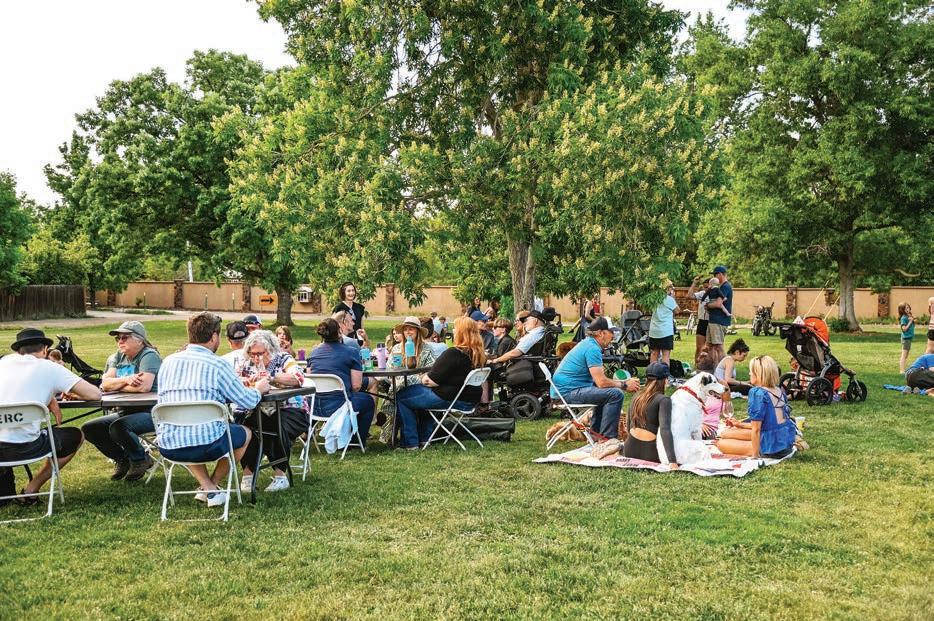
e Neighborhood Resources Program has coordinated with Englewood Parks sta to ensure all events don’t interfere with the upcoming construction at parks with the Renew & Recreate campaign.
Additionally, Davis said the city will return to Bates-Logan Park after two years of undergoing construction and improvements.
“Bates-Logan Park is anticipated to be
fully open early this summer,” Davis said.
“Bates-Logan Park is a true gem of Englewood, and it will be great to bring neighbors out to show o all the new amenities.”
Neighborhood Nights was rst launched in 2021 and Davis said that since then, people have responded positively.
“We are excited to bring it back again this year,” Davis said. “Neighborhood
Nights is a great opportunity for residents to meet their neighbors, listen to live music, play yard games and engage with city departments.”
Each event will be held at a di erent park throughout Englewood and various booths with representatives from di erent city departments will be available to inform and answer questions about different city initiatives.
is year, Davis is looking forward to the connections formed at Neighborhood Nights.
“Every year, it is great to meet and chat with Englewood residents. Seeing the connections made between sta and neighbors while enjoying food from the food trucks and live music is a special opportunity,” Davis said. e schedule of subsequent Neighborhood Nights is listed below:
June 4 - Jason Park, 4299 S. Jason St.
Food Trucks: LB Tacos, Kona Ice and OG Burgers
June 11 - Romans Park, 1800 E. Floyd
Food Trucks: LB Tacos, What Would Cheesus Do, Kona Ice and Sweet Cow Ice Cream
June 25 - Northwest Greenbelt, 2235 W. Vassar Ave.
Food Trucks: Rebel Confections
July 9 - Belleview Park, 5001 S. Inca St. Food Trucks: LB Tacos, What Would Cheesus Do, Kona Ice and Sweet Cow Ice Cream
July 16 - Cushing Park, 700 W. Dartmouth Ave.
Food Trucks: LB Tacos and Kona Ice
July 30 - Centennial Park, 4630 S. Decatur St.
Food Trucks: LB Tacos and Sweet Cow Ice Cream
Aug. 6 - Bates Logan Park, 2938 S. Logan St.
Food Trucks: LB Tacos, Kona Ice, Sweet Cow Ice Cream and OG Burgers
Aug. 20 - Duncan Park, 4880 S. Pennsylvania St.
Food Trucks: LB Tacos, What Would Cheesus Do, Kona Ice and Sweet Cow Ice Cream




























Denver’s biggest company is looking for singers for its 2025-2026 season
BY KYLE HARRIS DENVERITE
Do you sing Puccini in the shower and dream of the stage? Have you ever been to the Ellie Caulkins Opera House, watched the chorus and thought: “I could do better?”
Well, now’s your chance.
Opera Colorado is inviting locals to audition for the chorus in their 2025-2026 season shows: “La Traviata” and “Madama Butter y.”
Here’s how to audition:
If you go, expect to perform two memorized songs, with at least one in a foreign language, from the art house or opera repertoires. A pianist will be on site to accompany you.
Auditions take place Wednesday, May 28, and Saturday, May 31, from 6-9 p.m. at the Opera Colorado Opera Center, at 4121 S. Navajo Street, Ste. 100, in Englewood.


You’ll be performing for the Iranian conductor, pianist and Opera Colorado chorus master Sahar Nouri.
Rehearsals will take place on weekday evenings and on weekends. “La Traviata” chorus members must be around from Sept. 11 to Nov. 17, 2025, and “Madama Butter y” chorus members from March 30 to May 11, 2026.
If you’re picked, you’ll receive a small stipend and two tickets to the nal dress rehearsal, plus discounts on performance tickets.
Singers will also have the chance to try out for smaller roles in both operas.
To request an audition for the chorus, emailauditions@operacolorado.organd include a one-page resume. If you want to try out for larger roles, let

the company know. Auditions are rst-come, rstserved.
What if you just want to watch the operas?
Face it, not all of us can sing.
• “La Traviata” runs Nov. 1, 4, 7 and 9.
• “Madama Butter y” runs May 2, 5, 7, 8 and 10.
For more information about tickets and season memberships, go toOpera Colorado’s website. is story is from Denverite, a Denver news site. Used by permission. For more, and to support Denverite, visit denverite.com.
Looking to learn something new, get outside or spend quality time with the family
Here are some suggestions for some free events throughout Arapahoe County during May that cover everything from gardening tips to wool-
Perfect for aspiring vegetable gardeners, this workshop led by Colorado Master Gardeners will walk you through the basics of when and how to plant your favorite vegetables. Learn valuable tips on seed timing and garden layout. Free registration required.
May
Looking to eat healthier without breaking the bank? is free online workshop will show you how to plan meals that are both nutritious and cost-e ective. Participants will receive printable planning tools, a seasonal produce cal-
endar, Mediterranean recipes and more.
Growing Tomatoes
May 17 | 10-11 a.m. | Pea Patch Demonstration Garden, Littleton
Join the Colorado Master Gardeners at the Pea Patch Demonstration Garden to learn all about growing tomatoes — from planting and care to pest prevention and harvesting. is free class is a must for tomato lovers and home gardeners alike.
Step Back in Time at the 17 Mile House Open House: WoolSpinning
May 17 | 9 a.m. to noon | 17 Mile House Farm Park, Centennial
Take a step into the past at the historic 17 Mile House Farm Park and discover how animal wool is transformed into cozy garments. is family-friendly event features hands-on activities like wool carding and making your own hand-spun friendship bracelet. Small group tours of the property will be available throughout the morning. Admission is free, but registration is encouraged at www.arapahoeco.gov/17milehouse.


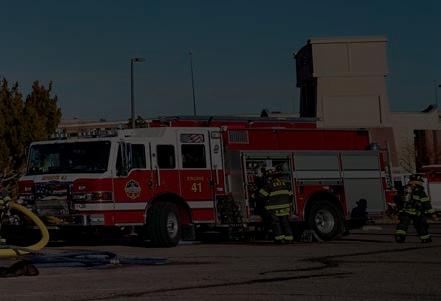
Fire and medical emergency response services are at

There’s been a 20% increase in calls for service since 2019.
This includes structure, vehicle, and wildland fires; explosions and hazmat incidents; water rescues; vehicle crashes; public or police assistance; and medical emergencies.
Emergency medical calls now account for 65% of all response – this is expected to increase with an aging population.
Costs have increased dramatically in six years; for example:
The cost for a fire engine has gone from $725,000 to $1.3 million (79% increase).
The cost for protective bunker gear has gone from $4,321 to $6,047 (40% increase).
To continue providing quality fire and emergency response, South Metro needs an additional $34 million annually.
State legislation that passed during a special session in 2024 reduces property tax revenue South Metro collects by $16 million in 2026 and $270 million over 10 years.
South Metro Fire Rescue is facing an immediate budget shortfall due to years of rising costs, consistent increases in demand, and new state legislation. Without new revenue, the organization will not be able to maintain the high level of service for fire and emergency response that residents and businesses deserve, and have come to expect.

South Metro is a full-service department Here are a few key facts:
stations across 30 square miles 287
personnel across 800 divisions 8
residents, which will serving 571,500 in grow to 595,0004 years municipalities and 12 counties 3
Including:
Centennial Airport, Lockheed Martin, Highlands Ranch, 4 Square Mile, and The Pinery
With $34 million needed to address increased demand for services and rising costs, plus the $16 million shortfall, South Metro needs to identify how it will generate $50 million in additional funding annually.



In Littleton, the portion of the ditch that runs along Santa Fe Drive from Slaughterhouse Gulch Park to the C-470 highway is owned by the City of Englewood. Englewood plans to convert the remaining open channel between Chat eld Reservoir and the Charles Allen Water Treatment Plant into a buried pipe, a move that would end the historic open ow through the area.
Englewood is giving Littleton a chance to save the historic ume structures — man-made, open channels designed to carry water, usually sloping downward and with raised sides above the surrounding ground — at Lee Gulch and Slaughterhouse Gulch Park.
Ryan Germeroth and Brent Sonderlin, deputy director and director of Public

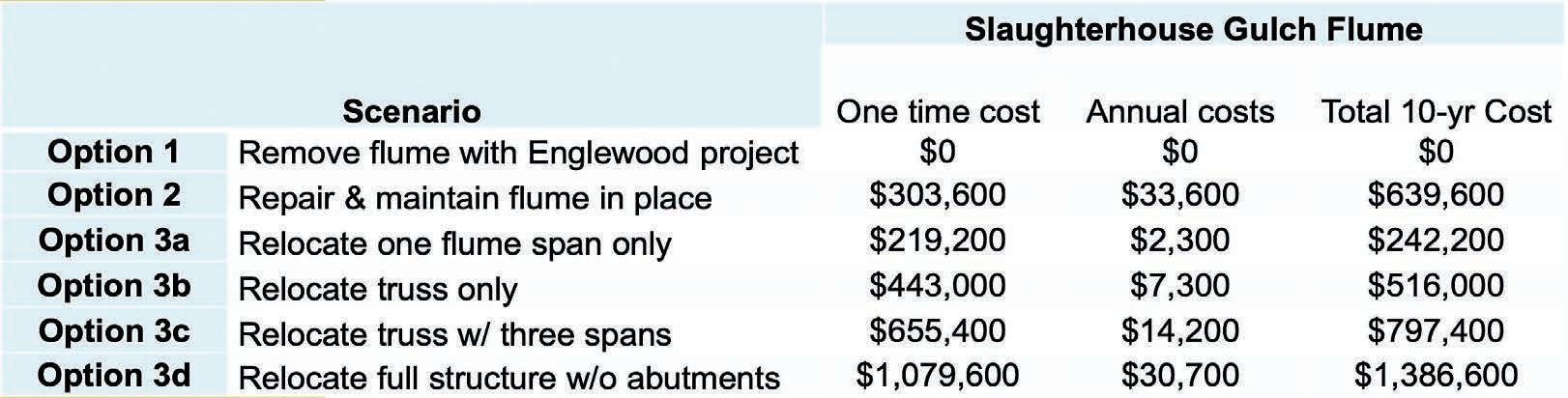
Works & Utilities presented Littleton City Council with options for the Slaughterhouse Gulch Flume — which Englewood would start construction on rst this summer — at the study session on April 22.
e umes at Lee Gulch and Slaughterhouse Gulch Park were assessed by Benesch, a Denver-based engineering consultant company, in December 2024 which revealed both ume structures have corrosion, leaks, concrete deterioration, missing anchor bolts and overgrown vegetation.
Germeroth and Sonderlin said the maintenance of the umes has been and is currently the responsibility of the City of Englewood.
e repair estimates are steep: $303,600 for initial repairs at Slaughterhouse Gulch Park, plus $335,600 every 10 years for ongoing maintenance. Relocating the entire ume could cost over $1 million upfront, with additional maintenance costs over time.








Littleton city o cials and residents are now faced with a di cult decision: invest signi cant resources to preserve these deteriorating but historic structures, or allow them to be lost as the ditch is piped and the umes rendered obsolete.
“Why would the burden of maintenance be put on Littleton when (Englewood) had a dereliction of maintenance over time?” Mayor Kyle Schlachter said at the study session. “Someone dropped the ball, for a while.”
Council member Andrea Peters said the circumstance of having to choose between preserving and repairing the historic umes at a large expense and not spending any money and losing the structures isn’t ideal.
“ is is like we’re being handed a hot potato, which is dangerous to our citizens, so it’s a lose-lose, or we throw away the history but (Englewood) has been neglecting it,” she said.
In 2012, Littleton and Englewood made
an intergovernmental agreement that enabled Littleton to build part of the Community Trail along the City Ditch. e agreement was implemented to ensure the trail would not interfere with Englewood’s use of the City Ditch for its drinking water supply.
According to the City of Littleton, Littleton agreed that the main purpose of the City Ditch is to provide water for Englewood, and both cities agreed that Englewood would strongly oppose any e ort to give the City Ditch a historic designation.
“If it’s not running water, it loses tremendous historic value,” Mike Gent, deputy city manager, said. “So keeping it as a trophy is not as desirable for even historic preservationists.”
However, for Gail Keeley, president of Historic Littleton, the umes represent the most visible remnants of City Ditch’s legacy.





































“Our frustration is that the recommendations given to city council at this study session were all by engineering,” Keeley said. “(Littleton) has a historic preservation board that never reviewed this to give them a recommendation. ey only focused on the fact that the ume isn’t in good shape, but it won’t be carrying water anymore, so it doesn’t really need to be in great shape.”
Jessica Bixenman, Littleton’s communications director, said there will likely be another presentation to the council on June 3, and that Englewood has indicated that it aims to have decisions nalized in June.
“ is presentation will cover the details of the various agreements between Englewood and Littleton related to the City Ditch project,” she said. “At this time, the city expects there will be an intergovernmental agreement, temporary and permanent easements, and a quitclaim deed for any needed property transfers.”
Bixenman also said the Historical Preservation Commission will be included “to commemorate the City Ditch and ume structures in an interpretive museum or trailside display.”


Property tax deadline approaching! If you owe property taxes in Arapahoe County, the deadline for submitting the full payment is April 30, 2025 For payment information and options, visit: arapahoeco.gov/ treasurer

Enter Public Competitions at the 2025 Arapahoe County Fair









In-Person Entry Only: July 20 and 21, 2025 arapahoecountyfair.com/ publiccompetitions





Mediterranean Diet on a Budget
Attend a free online class May 7, 7–8 p.m. and learn about planning meals to save time and money while benefiting health. The class includes printable meal planning and shopping list templates, sample Mediterranean Diet menu, Colorado fresh produce calendar, recipes for homemade hummus, and more.
now at https://bit.ly/CSUMED








“Some people want it to happen, some wish it would happen, others make it happen.” - Michael Jordan Let that quote sit for a moment. Let it challenge you. Because in today’s fastmoving, tech-saturated world, it’s easy, tempting even, to outsource initiative. Information is on demand. Groceries show up at your doorstep. AI can write your emails. We’re living in a time when tasks once considered necessary are now optional or automated. But here’s the truth: there will never be a substitute for the human spirit set on making a di erence. Yes, technology can help. It can save time, spark ideas, and extend our reach. But the spark, the heart behind real change, comes from you. You, with your God-given gifts, your experiences, your grit, your compassion. You are the one who makes it happen.

feel like we’ve got anything left to give. Life has a way of draining our tanks. Maybe you’re feeling overextended at work, at home, in your community. Maybe you’ve poured into others for years and you’re wondering, “When’s it my turn?” Or maybe, like so many, you’ve drifted into a mindset of convenience. After all, why go the extra mile when you can just
Being a di erence maker isn’t about grand gestures or public recognition. It’s about a consistent willingness to show up. To serve. To give. To lead with a servant’s heart, freely, generously, cheerfully. at’s what separates the people who wish and want from the ones who do.
But let’s be real: sometimes we don’t
Here’s why: because deep down, you want to matter. You want to be the one who makes things happen. And the truth is, you still can. Start by getting proactive. Don’t wait to react to life, lean into it. Take initiative. Set the tone. Be the thermostat, not the thermometer. en add intentionality. Being proactive is good, but without intention, it can become just more busywork. Intentionality means doing the right things, for the right reasons, at the right time. It’s what transforms action into impact. Ask yourself: What di erence did I
Wused to make that I’ve stopped making? Who have I stopped serving, not because I don’t care, but because I got distracted or discouraged? Where can I make something happen today, with no expectation of reward, just the joy of contributing? You don’t need a title, a platform, or permission. What you need is the decision. e decision to say, “If it’s to be, it’s up to me.” at quote by Denis Waitley isn’t just motivational, it’s directional. It points us toward ownership, toward action, toward meaning.
We can’t let convenience rob us of calling. We can’t let fatigue steal our re. And we certainly can’t expect AI to take our place in the hearts and lives of the people around us. e world doesn’t just need more content, it needs more di erence makers.
So here’s your invitation: Look at your life, your team, your family, your company, your neighborhood, and ask, What’s one thing I can do today to make something happen? Not for applause, but for impact. Not for validation, but because it’s who you are.
Authenticity is the heartbeat of a true di erence maker. When you show up as
armer temperatures are headed our way. Pretty soon, air conditioners will stay on a little longer, and we will be using more water in the yard and for pools.
at means that energy and water bills will both begin to rise for the average homeowner.
According to the U.S. Environmental Protection Agency (EPA), the average household wastes nearly 10,000 gallons of water every year due to unknown leaks in the home. In addition, 10% of homes waste 90 gallons or more per day.
While electric bills will go down from winter demands, they will begin to rise again as we move into summer and turn on our air conditioning more often. Consumer electric bills are expected to rise by as much as 20% because of infrastructure repairs and rate increases.

GUEST COLUMN system

unit from breaking down during the hottest days of summer. Inspections and regular lter replacement helps your system run efciently, lowering the cost of your energy bills.
Other ways you can cut your energy costs include:
• Installing a smart thermostat: Smart or programmable thermostats automatically adjust the temperature based on your
• Using fans: While fans don’t cool the air, they can move cool air throughout the home.
• Closing the blinds: Keep curtains and blinds closed during the hottest parts of the day.
owners should do this periodically to ensure it isn’t old or worn out. is can cause the toilet to silently leak thousands of gallons of water a year or cause it to ush on its own.
• Inspect the washers and gaskets on your faucets. Old washers can be a primary culprit for leaky faucets, wasting more than 3,000 gallons per year.
• Check the showerhead for frequent dripping after usage. A showerhead that drips 10 times per minute can waste over 500 gallons per year. Simply tightening the connection or replacing the showerhead can be a cheap option to prevent leaks.
your authentic, imperfect, fully engaged self, people don’t just see you, they feel you. ey trust you. In a world full of lters, curated images, and polished personas, being genuine cuts through the noise like nothing else. It’s not about having all the answers or being the loudest voice in the room; it’s about being present, consistent, and honest in your intentions. When you lead with empathy and act from a place of sincerity, your impact becomes more than just what you do; it becomes who you are.
Has the di erence maker in you been dormant for a while, maybe even too long? Or are you always looking for an opportunity to help or serve in some way? As always, I would love to hear your story at gotonorton@gmail.com. And when we adopt the philosophy of “If it’s to be, it’s up to me,” it really will be a better-than-good life.
Michael Norton is an author, a personal and professional coach, consultant, trainer, encourager and motivator of individuals and businesses, working with organizations and associations across multiple industries.
As homeowners, there are things you can do to keep your bills lower, but it takes some preparation and requires you to ensure your equipment is working at its most e cient.
Cutting energy costs
One of the most important things you can do to cut your summer cooling costs is to have your air conditioning tuned up by a professional HVAC technician.
Yearly maintenance ensures that your A/C does not have any electrical or mechanical issues, and they help prevent the
Colorado Community Media welcomes letters to the editor. Please note the following rules:
• Email your letter to letters@coloradocommunitymedia.com. Do not send via postal mail. Put the words “letter to the editor” in the email subject line.
• Submit your letter by 5 p.m. on Wednesday in order to have it considered for publication in the following week’s newspaper.
• Upgrading the A/C unit: If your system is more than 10 years old, it may be time to purchase a new unit. Newer models are more energy e cient.
Cutting water costs
Of course, high energy bills are only part of the equation. One of the best ways to o set increased water bills is to check your plumbing for any leaks that could be increasing water usage.
I recommend the following tips to help recognize plumbing leaks:
• Check the apper in the toilet. Home-
• Letters must be no longer than 400 words.
• Letters should be exclusively submitted to Colorado Community Media and should not submitted to other outlets or previously posted on websites or social media. Submitted letters become the property of CCM and should not be republished elsewhere.
• Letters advocating for a political candidate
While some simple leaks can be prevented by replacing small parts, it’s always important to call a licensed plumber if you suspect you have major leaks inside your home. Leaks behind a wall or with a water heater can be much more complicated and need professional attention. If left untreated, they can cause thousands of dollars’ worth of damage.
Cutting your energy and water bills doesn’t have to be a di cult task. With a little preventative maintenance, a licensed professional contractor and some diligence, you can keep cool and stay hydrated without running up the bills.
is guest column was written by Levi Torres. Levi and his wife, Cassi, own High 5 Plumbing, Heating, Cooling & Electric, serving the Denver metro area.
should focus on that candidate’s qualifications for o ce. We cannot publish letters that contain unverified negative information about a candidate’s opponent. Letters advocating for or against a political candidate or ballot issue will not be published within 12 days of an election.
• Publication of any given letter is at our discretion. Letters are published as space is available.

Frank the Pizza King is treasure I have known the Krascek family since about 1964. Frank sponsored an Old Timers baseball team playing at Denny Miller Field where I worked for the City of Englewood. In 1965 our family moved from Girard and Sherman out to South Englewood near Belleview Park. We did not have a lot of spare cash but a splurge from “Frank the Pizza King” was a special weekend treat. As I grew up, Frank’s became an after-game treat with that special girl. It was and is the most welcoming restaurant where all are treated as family. As my parents grew older they had a standing order from Frank’s on Friday night until their passing in 2015! My folks introduced our two daughters to the wonder of this unique pizza and now my kids brought their spouses and children to Frank’s. We have three generations of Frank’s enthusiasts, none of whom live in Englewood but who visit as often as possible.
Englewood has a treasure in this restaurant. Look around the Denver area and try to nd other restaurants that have survived 64 years. ey did this without a liquor license and in a very simple but homey building in an area that could be sketchy at times. I certainly understand private property rights of new owner and his prerogative to do as he wishes with the property. However, I hope that the city can commemorate this location in some way. I would like to think that the city has economic development money to help them relocate if they wish.
To Walter, Maria and Matt and the rest of the crew our family wishes to thank you for many wonderful memories. I hope you land on your feet in a new location!

Gary Poole, Parker



Governments would be out nearly $140 million, according to the Colorado Municipal League
BY BRIAN EASON THE COLORADO SUN
Two months before the news broke that the Trump administration might try to end federal support for the Head Start preschool program, Boulder County got a letter denying its annual request for federal funding.
Like many counties across the state, Boulder was already struggling to pay for early childhood programs like preschool and child care. And the state of Colorado — facing a budget crunch of its own — was in no position to come to the rescue. is month, the Boulder County Commission stepped in to keep Head Start a oat, approving $2 million in stop-gap funding to run the program for at least one more year. But local o cials say they aren’t sure how they’re going to keep it going beyond that if the federal government doesn’t reverse course.
“We can’t just expect local governments to be able to pay for all the services that the state and federal government were paying for,” Commissioner Ashley Stolzmann told e Colorado Sun in an interview.
Local o cials across Colorado — already grappling with the loss of pandemic stimulus funds — say state and federal budget cuts are threatening a number of programs administered at the local level.
State budget cuts alone will cost local governments nearly $140 million, according to Kevin Bommer, the executive director of the Colorado Municipal League — a callback to the 2010s when state budget writers repeatedly leaned on local governments to solve the state’s nancial woes.
“I’ve seen it before,” Bommer said. “It doesn’t matter if it’s a recession, it doesn’t matter if it’s times of prosperity. When the
Gail Butts 04/09/2025
Gail S. Butts, 94, of Denver, Colorado, passed away on April 9, 2025, at Holly Creek Christian Living Community.


Gail was predeceased by her beloved husband, Aubrey J. Butts, and is survived by her daughters, Sharon Mallery and Judy Butts; her sons-inlaw, Rusty Mallery and Jim Sochor; and her granddaughter, Gillian Sochor, and Gillian’s husband, Chris Sochor.
Born and raised in Antioch, in Bibb County, Alabama, Gail was the daughter of Roy C. Smitherman and Clara Wallace Smitherman. She was one of ve siblings: Essie Mae, Orland, Roy L., Wilda Gail, and Clara Joy. She attended local schools in Bibb County and went on to study at Troy State University.
state needs money to back ll the budget, they will drain funds that local governments use for prosperity in their own cities and towns and counties.”
e state spending plan for the 2025-26 scal year, which starts July 1, redirects millions in severance and marijuana tax dollars away from local governments to fund state programs. It also cuts a key revenue stream for roads and pulls back funding promised to cities and counties for things like transit projects and bike lanes. A popular grant program aimed at revitalizing downtowns was eliminated entirely.
Even deeper cuts may still be yet to come, as Republicans in Congress consider cutting federal assistance for low-income families such as food stamps, homelessness grants, utility bill subsidies and Medicaid — all programs that fall on local governments to administer.
“ ere’s more need than there was before, because people are becoming jobless, people are becoming homeless, and so the need is going up at the same time that we’re cutting services,” Stolzmann said.
e budget pressure has some local governments considering going to the ballot to increase taxes locally. More than a dozen local o cials testi ed in favor of a bill this session allowing counties to increase lodging taxes with voter approval.
e state legislature passed the measure, House Bill 1247, earlier this month, sending it to the governor’s desk where it can be signed into law. In addition to increasing the existing cap on lodging taxes, it also would allow local o cials to spend the proceeds on a wider variety of services, including transportation and public safety.
Summit County commissioners told lawmakers that without additional funding, they may have to delay major repairs to Swan Mountain Road, a key thoroughfare that wraps around the Dillon Reservoir.
O cials in other counties said they were already facing budget shortfalls next year — even before the full extent of state and federal funding cuts is known.
Gail is also survived by her sister, Joy Sheppard, of Marietta, Georgia, along with a number of nieces, nephews, and great-nieces and nephews.







She will be laid to rest alongside her husband at Fort Logan National Cemetery.
May her memory bring comfort to those who














BY PAIGE GROSS COLORADO NEWSLINE
It started with a seemingly routine reminder for Nancy Hall to update her Norton antivirus software.
e 69-year-old Philadelphia resident sat down at her laptop to le her taxes recently and was prompted to call a number that was said to be the software company’s customer support. She had been hacked, the message said.
“It said, ‘you must call Microsoft right away, or else, you’re in danger of losing everything,’” Hall said.
A man on the line claimed to be in talks with her bank, saying hackers managed to download child pornography to her computer and transfer $18,000 to Russian accounts overnight.
He told Hall he was transferring her to the fraud department at her bank, where she spoke to someone who knew details about her local branch. After verifying personal details, that person asked her to come in to make a cash withdrawal that she could then use to purchase cryptocurrency at a speci c ATM.
e pair told her she was at threat of being arrested by Homeland Security for what was found on her laptop unless she obliged.
After a few stressful hours of trying to sort out the situation, something clicked, Hall said — a friend was scammed out of $800,000 in retirement savings last year after being persuaded to purchase cryptocurrency in an emergency. Hall hung up the phone, then blocked the number when it continually called her back. Financial crimes, or scams like these, have always been around, experts say.
CORE is an industry leader in wildfire mitigation
Visit www.CORE.coop or scan the QR code to learn how you can help, too.

But the rise of arti cial intelligence, access to sensitive information on the dark web, and a lack of federal oversight for these crimes means it’s never been easier to be a scammer, security experts say.
“AI has made these things so believable,” said Melissa O’Leary, a Portland, Maine-based partner and chief strategy o cer at cybersecurity rm Fortalice Solutions. “Sometimes you can’t tell, ‘is this legitimate or not?’”
Hall’s experience mirrors many of the thousands of well-established attempts at tech-enabled nancial crimes currently underway in the U.S. Scammers often pose as trusted corporations, government departments or as someone a victim knows. Many companies that have been spoofed, like Norton, put out warnings about these scams.
ey also use heightened emotional responses and a sense of urgency to get you to transfer money or release personal details, cybersecurity experts say.
“Now I look back on it, I’m like, ‘how was I so stupid to say stay on the line that long?’” Hall said. “But then I look at this girl I know, and they managed to get her to go all the way.”
The business of scamming
e Federal Trade Commission reported the overall loss Americans experienced via nancial scams in the 20232024 scal year to be between $23.7 billion and $158.3 billion. e gures differ so much because so many losses go under or unreported, the FTC said in the report.
Matthew Radolec, D.C.-based vice president of Incident Response and Cloud Operations at data security rm





Varonis, said he sees these phishing attempts in two parts; the scam is the technique being used to get access to money, and the actual crime itself is the loss of the money.
Because these crimes are digital, it’s hard to know who to report them to, or how to follow up. Many scammers also ask for cryptocurrency payments, or transfer them to crypto accounts shortly after the transaction.
“ ere’s no insurance for accidentally wiring someone $10,000,” Radolec said. “If you fall for a ruse, you fall for a ruse. It’s like a carnival trick, a sleight of hand. It’s a digital form of that.”
Kimberly Sutherland, the Alpharetta, Georgia-based vice president of fraud and identity at LexisNexis Risk Solutions, said they’ve seen a 20% year-over-year increase in digital fraud since 2021, affecting as much as 1.5% of all transactions, though many of those attempts are caught before they can go through.
A large part of their e orts are focused on monitoring new account openings and payments, as fraudsters want to either create a fraudulent account at the start, or they want to be able to intercept transactions as they’re happening, Sutherland said. ey’ve also had to evolve their monitoring strategies, as over the last few years, there’s been a shift from laptop and desktop targeting to mobile attacks, she said.
A few decades ago, scammers were focused on getting enough information from a company or individual to pull o a fake transaction. But as data breaches have become more common, the personal data unearthed makes it easier to pose as someone a victim knows, or give them details to become trustworthy.
Sutherland said the concept of synthetic identities — carefully crafted digital pro les of someone who doesn’t actually exist — have also deepened criminal’s abilities to get access inside of a variety of institutions like banks, colleges and corporations.
“You don’t have to steal an identity of someone; why not create a brand new one?” Sutherland said. “It started with jokes like, ‘I can get a credit card in the name of my dog,’ and it became sophisticated fraud rings who could actually create identities and nurture them to be used by others.”
Individuals and companies are not the only ones at risk of nancial scams — government institutions have reported an increase in nancial crimes in recent years. In California, community colleges

have reported at least $5 million in losses to AI-simulated students who applied for nancial aid.
One of the most current, wide-spread scams are texts and alerts from toll payment agency E-ZPass, asking a user to pay an outstanding bill at the included link. Last year, E-ZPass said the FBI’s Internet Crime Complaint Center had received more than 2,000 complaints about the texts. ose who had lled out the included form should contact their banks, the company said.
It’s similar to a longstanding scam posing as UPS trying to deliver a package — it plays on our human nature of trust and curiosity, O’Leary said.
How AI is playing a role
AI has lowered the barrier for setting up a scam, O’Leary said. ose looking to lure someone to wire money or purchase cryptocurrency need some space on a server or in the cloud, and some sort of infrastructure to reach out to victims. Many programs that can be used to fake a persona, to send out mass text messages or phishing links are as easy as downloading an app.
“It’s almost a step by step for someone who wants to make a quick buck,” O’Leary said.
Large language models and AI chatbots can easily be prompted to sound like someone else, and give non-English speakers a much easier ability to communicate, O’Leary said.
Radolec has seen an uptick in AI bots being used to gain credentials to company databases or pay systems. Bots can hold legitimate conversations with a target to build rapport, and plant phishing scams to gain passwords in standard documents.
“ e next thing you know, you can log in as me,” Radolec said.
From there, scammers can divert paychecks to o shore accounts, sell data on the dark web or plant further phishing attempts in internal systems.
Because of the rapid advancements in AI technologies, phishing attempts and scam strategies are constantly changing. Now, AI tools can help alter legitimate images, and create deepfakes, or likenesses of someone’s image or voice, in just a few minutes. It’s the strategy behind an increasingly common scam on grandparents — they get a call from someone that sounds exactly like their grandchild, saying they need a wire transfer or cash for bail.
Currently scheduled for Sept. 24, which falls during Hispanic Heritage month, the mile-long dinner event will be spearheaded by John Jaramillo, president of the Hispanic Restaurant Association, and culinary director Chef Pablo Aya with teams of volunteer chefs. Together, they’ll grill locally-sourced ingredients on 10 custom-built cinder-block barbecue pits.
Jaramillo, a Navy veteran, said he has a commitment to building community through food, and sees Longer Tables Littleton as a way to transcend barriers.
“Food speaks every language and crosses every boundary,” he said. “When we share a meal, we share our stories, our heritage and our souls.”




Preparing a feast for 5,000 is no small feat. Jaramillo and his team of 30 chefs plan to craft a menu that uses farm-fresh produce, meats and baked goods from across Colorado.
“Great food brings great joy,” Jaramillo said. “And that’s exactly what our community needs right now.”
For Jaramillo, this event rep-
resents a movement, not just a meal.
“We’re not just feeding bodies,” he said. “We’re nourishing community bonds and healing cultural divides.”
Community members can partake in the Sept.r 24 event
Many digital scams target older people, both because they’re expected to have less technical knowledge to spot a ruse, and because they tend to have larger sums of money accessible, Radolec said. In its report, the FTC estimated between $7.1 billion and $61.5 billion in losses for older adults.
is week, AARP, Amazon, Google and Walmart partnered on a new initiative that will be based out of Pittsburgh, called the National Elder Fraud Coordination Center, an attempt to tap in private companies who have resources in data privacy to assist in national law enforcement investigations. Its founder and CEO, former FBI agent Brady Finta, said that the technical side of these crimes are often partnered with an emotional side, like pretending to be a family member in trouble.
“ ey’re talking you through the crime,” Finta said. “ ey’re adding this anxiety and thought process to you and to overcome your normal decision making processes.”
Legislation and enforcement
ere are hundreds of thousands of victims of nancial scams each year, and they’re reporting them to di erent places — local police, state organizations, federal agencies, and the tech platforms where the crimes occurred, Finta said. Part of the reason some nancial scams go unreported is that there’s not one clear route, government agency or law enforcement agency that has ownership over them. at was also the consensus of a new report by the Government Accountability O ce, FedScoop reported this month. ere are 13 federal agencies, including the FBI, CFPB and the FTC, that work to counter scams, but they do not share one overarching strategy.
Finta is hoping that leveraging the private sector data from their partner corpo-

as attendees or volunteers. Interested parties can visit LongerTablesLittleton.org for more information. To learn more about Jaramillo’s work with the Hispanic Restaurant Association, visit hranational.org or call 720-290-7184.

rations can help connect some fraud cases across the country and make these investigations more comprehensive.
While the FTC has the Fraud and Scam Reduction Act, which aims to raise awareness of nancial scams, there’s no o cial federal protection or legislation on this topic. Some states are passing consumer protection laws that put some liability on banks to do due diligence on fraud and even reimburse customers for fraudulent transactions.
And the U.S. may be facing less protections than it currently has. Susan Weinstock, CEO of the Consumer Federation of America, said she’s worried that Congress just voted on a resolution under the Congressional Review Act that removed the rule that required digital payment apps like Venmo and Apple Pay to be regulated for fraud.
“Years ago, nobody had heard of Venmo or CashApp, and now these things are ubiquitous,” Weinstock said. “So it puts consumers in a really tough, scary position to be subject to fraud and not have the ability to deal with it.”
Because the strategies behind thesenancial scams change often and because there are few ways to track these crimes after they happen, a lot of responsibility falls on individuals and institutions to be able to spot them. Radolec’s rst piece of advice is to slow down. If it really is your grandson calling from jail? Is it the end of the world if he spends a night in jail, he said.
Adding another person into the loop of communication is another strategy that will usually knock o an impersonator. If it appears to be a higher-up at work making a strange request for access to your nances, there’s no harm in looping in another person to review, Radolec said.
Lastly, the cybersecurity experts all said, it’s always safer to get in contact with the original source. If someone on the phone says they’re with your bank, hang up and call the bank directly to verify information.
“A lot of times they’re trying to create a sense of urgency that’s from a false place,

so how can we ground ourselves?” Radolec said. “And can we ask, is this truly like a life or death situation that you have to act on right now? Or can time be in our favor?”

is story is from Colorado Newsline. Used by permission. For more, and to support the news organization, visit coloradonewsline.com.















750 W. Hampden Ave., Suite 225 Englewood, CO 80110
Phone: 303-566-4100
Web: LittletonIndependent.net
To subscribe call 303-566-4100 or Scan this QR Code

BROOKE WARNER
Executive Director brooke@ntln.org
LINDA SHAPLEY Director of Editorial & Audience lshapley@coloradocommunitymedia.com
CHRISTY STEADMAN
South Metro Editor csteadman@coloradocommunitymedia.com
ERIN ADDENBROOKE
Marketing Consultant eaddenbrooke@coloradocommunitymedia.com
LINDSAY NICOLETTI
Operations/ Circulation Manager lnicoletti@coloradocommunitymedia.com
BUSINESS INQUIRIES
For advertiser or vendor questions, please email our business department at accounting@ coloradocommunitymedia.com
BY TAMARA CHUANG THE COLORADO SUN
Colorado joined a multistate lawsuit April 23 against the Trump administration to challenge import tari s that were rolled out by executive order and not by an act of Congress. e lawsuit, led by attorneys general from the states of Oregon and Arizona, asks the court to rule the tari s illegal and block their implementation and enforcement because the tari s violate Article I of the U.S. Constitution, which grants “only Congress, not the President, the
‘power to lay and collect taxes, duties, imposts and excises,’” said the suit led in the U.S. Court of International Trade.
“Under the Constitution, only Congress has the power to tax and impose tari s and there is no ‘emergency’ that justi es the Trump tari s,” Colorado Attorney General Phil Weiser said in a news release. “We are challenging these tari s in court because they are illegal and, as one study concluded, they will ‘increase in ation, result in nearly 800,000 lost jobs, and shrink the American economy by $180 billion a year.’”
Connecticut, Delaware, Illinois, Maine, Minnesota, Nevada, New Mexico, New York and Vermont also joined the suit. e state of California led its own lawsuit in a U.S. District Court last week. All but two of the states
have governors who are Democrats.
Colorado exported $10.5 billion and imported $17 billion in goods last year, according to the O ce of the U.S. Trade Representative.
Currently, there is a 25% tari on imports from Mexico and Canada, though some goods are exempt because of the U.S.Mexico-Canada Agreement. Another 57 U.S. trade partners were socked with an additional 10% tax this month, which was lower than Trump’s initial reciprocal tari s that were since paused on a number of countries that agreed to consider new trade deals.
China, however, retaliated against the retaliatory tari s, matching the new U.S. tax, leaving U.S. businesses paying not just the price of the item imported or exported, but an additional
145% more in the tit-for-tat trade war with China. Some items were later excluded, including smartphones.
e high tax caused chaos in the stock market but also hit many local businesses, farmers, the outdoor industry and Coloradans who buy imported food or groceries or other imports.
On Wednesday, the Trump administration was toying with lowering China tari s to somewhere between 50% and 65%, according to a Wall Street Journal report. A day earlier, Trump said in a news conference, “145% is very high and it won’t be that high. … It will come down substantially, but it won’t be at zero.” is story was printed through a news sharing agreement with e Colorado Sun, a journalistowned nonpro t based in Denver that covers the state.
Nearly 43 million borrowers owe more than $1.6 trillion
BY SHAUNEEN MIRANDA COLORADO NEWSLINE
e U.S. Department of Education said that it will resume collections May 5 for defaulted federal student loans.
Columnists & Guest Commentaries
Columnist opinions are not necessarily those of the Independent.
We welcome letters to the editor. Please include your full name, address and the best number to reach you by telephone.
Email letters to letters@coloradocommunitymedia.com
Deadline Tues. for the following week’s paper.
Littleton Independent (ISSN 1058-7837)(USPS 315-780)
A legal newspaper of general circulation in Littleton, Colorado, the Littleton Independent is published weekly on Thursday by Colorado Community Media, 750 W. Hampden Ave., Suite 225, Englewood, CO 80110
PERIODICALS POSTAGE PAID AT ENGLEWOOD, COLORADO and additional mailing o ces.
POSTMASTER: Send address change to: Littleton Independent, 750 W. Hampden Ave., Suite 225, Englewood, CO 80110
After pausing during the early weeks of the COVID-19 pandemic, the agency has not collected on defaulted loans in over ve years. More than 5 million borrowers sit in default on their federal student loans, and just 38% of borrowers are current on their payments, the department said.
“American taxpayers will no
longer be forced to serve as collateral for irresponsible student loan policies,” U.S. Secretary of Education Linda McMahon said in a statement.
During last year’s presidential campaign, President Donald Trump criticized his predecessor and successor, President Joe Biden, for his e orts to erase student debt. McMahon resumed that line of attack April 21, blaming Biden’s administration for unreasonably raising borrowers’ expectations of forgiveness.
“ e Biden Administration misled borrowers: the executive branch does not have the constitutional authority to wipe debt away, nor do the loan balances simply disappear. Hundreds of billions have already been transferred to taxpayers,” McMahon said.
Regional Air Quality Council o ers grants to take gasoline and propane out of mobile food prep
BY MICHAEL BOOTH THE COLORADO SUN
She added that “going forward, the Department of Education, in conjunction with the Department of Treasury, will shepherd the student loan program responsibly and according to the law, which means helping borrowers return to repayment — both for the sake of their own nancial health and our nation’s economic outlook.”
e department said the O ce of Federal Student Aid will restart the Treasury O set Program, which the U.S. Treasury Department administers, on May 5.
e Education Department statement said all borrowers who are in default will get emails over the next two weeks “making them aware of these developments and urging them to contact the Default Resolution Group to make a monthly pay-
ment, enroll in an income-driven repayment plan, or sign up for loan rehabilitation.”
e department said the O ce of Federal Student Aid will “send required notices beginning administrative wage garnishment” later this summer.
More than 42.7 million borrowers owe more than $1.6 trillion in student debt, according to the department.
e administration claims that “instead of protecting responsible taxpayers, the Biden-Harris Administration put them on the hook for irresponsible lending, pushing the federal student loan portfolio toward a scal cli .” is story is from Colorado Newsline. Used by permission. For more, and to support the news organization, visit coloradonewsline.com.
al Air Quality Council.

Colorado Trust for Local News asks readers to make us aware of mistakes we may have made.
Email linda@cotln.org if you notice a possible error you would like us to take a look at.

ings you will hear and smell at Hallie Dantzler’s co ee truck: A Hal’s Co ee barista o ering you a vanilla shot with your latte. Locally roasted co ee beans wafting your way on the steam emanating from the espresso machine.
ings you will not hear and smell:
Bellowing gasoline generators or acrid petroleum fumes.
Dantzler dumped two loud, odiferous gasoline generators and adopted $19,000 in cleanrunning battery packs to run Hal’s Co ee trailer, with the help of an 80% grant from the Region-
Dantzler, who pulls the Hal’s Co ee trailer around Fort Collins and the northern Front Range behind an electric Ford F-150 Lightning, runs down a longer menu of perks she attributes to the battery switchover. No more spending hundreds of dollars a day at the gas station lling up generators and fuel canisters. No longer having to scrub her gasoline-soaked hands in orange Gojo at the end of the day before hugging her burbling toddler. And according to RAQC, no more emitting up to 165 pounds of carbon dioxide — the equivalent of burning 83 pounds of coal — in one shift. at’s worth another hug from the toddler.






U.S. attorneys argue that block of accused TdA members would usurp Trump’s authority
BY JENNIFER BROWN THE COLORADO SUN
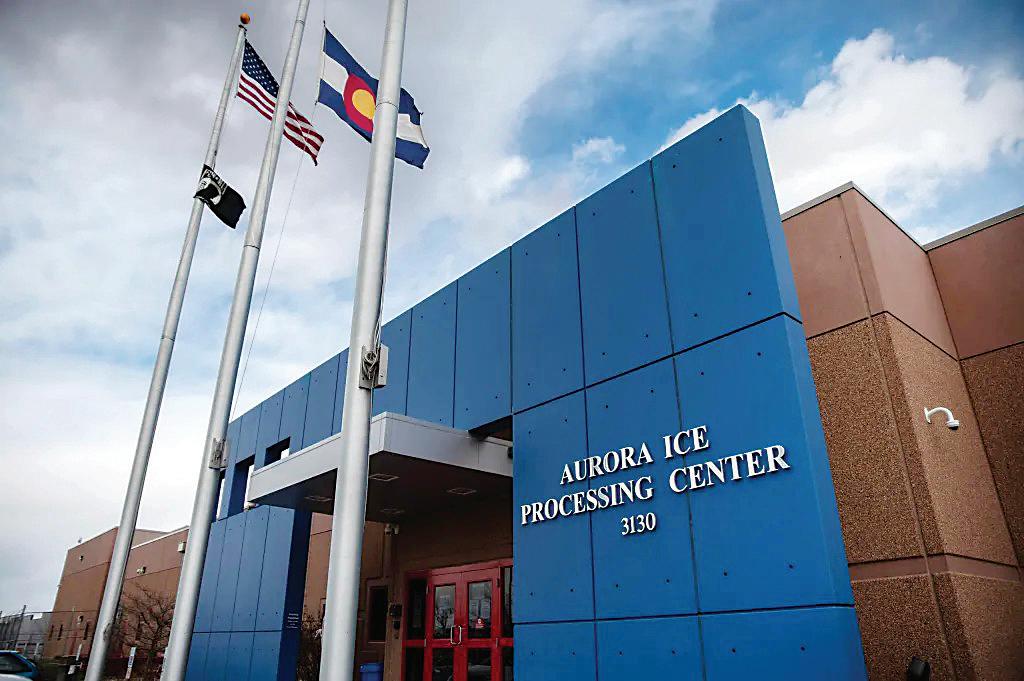
e Trump administration cannot deport Venezuelans held in an Aurora immigration detention center to a prison in El Salvador without giving them adequate notice and a chance to ght in court, a Denver federal judge ruled April 22.
e ruling from U.S. District Judge Charlotte N. Sweeney came after ACLU Colorado and an immigrant rights group argued that two men from Venezuela were at risk of getting sent on a plane to an infamously dangerous Salvadorian prison.
e ruling applies not just to the two men, but to all Venezuelans held at the detention center who face near-immediate deportation under the 1798 Alien Enemies Act. e act invoked by President Donald Trump gives the government broad authority to deport people in times of war or invasion.
e Denver court is among a few others across the country to take up the issue as federal immigration o cials have bused immigrants from detention centers to airports, then loaded them onto planes bound for the Terrorism Con nement Center, a megaprison accused of using electric shock and waterboarding to torture prisoners. e prison already holds about 300 deportees accused by the U.S. government of being members of the dangerous Venezuelan street gang, Tren de Aragua.
Deportees were given little notice, no time to consult a lawyer and no chance to try to prove they are not gang members — rights of due process normally a orded to immigrants facing deportation, civil rights attorneys have argued.





In many cases, evidence of involvement in Tren de Aragua has been based on detainees’ tattoos.
Attorneys for the government argued in Denver that blocking deportations would “irreparably harm the United States’ conduct of foreign policy” and “usurp” Trump’s authority to address “what he has identi ed as an invasion.”
When Trump issued a proclamation in March invoking the Alien Enemies Act, he said that Tren de Aragua is a “hybrid criminal state” that “is perpetrating, attempting, and threatening an invasion or predatory incursion against the territory of the United States.” e gang “commits brutal crimes” including murder and kidnapping and is “conducting irregular warfare and undertaking hostile actions against the United States,” the proclamation said.
e ruling in Denver follows an emergency U.S. Supreme Court decision early Saturday that said the Trump administration could not deport alleged Venezuelan gang members detained in Texas. Buses taking men from a Texas detention center to the airport over the weekend were forced by the ruling to turn around.
“ at is the only thing that stopped those human beings from being disappeared to the CECOT prison in El Salvador,” ACLU Colorado legal director Tim Macdonald argued Monday in federal court in Denver. Macdonald said 11 Venezuelans have been deported from Colorado under the act.
e judge’s order says federal o cials cannot take the men out of Colorado, which would prevent immigration ocials from transferring them to a detention center in another state and then deporting them from there. It also says authorities must provide at least 21 days’ notice to detainees — written in a language they understand — that they face deportation and that they have a right to seek judicial review of their case.








































































































BY MONTE WHALEY MWHALEY@COLORADOCOMMUNITYMEDIA.COM
Veterinarian student Sarah Hilliard retreated to a far corner of a room lined with kennels for the animal hospital’s patients, sat down and thought about how she was going to end her life. Suicide seemed like the best exit out of a grueling, joyless life that included 70-hour work weeks and treating sick and dying animals in a callous, competitive environment.
“I just sat in the corner, and I cried and cried,” said Hilliard. “I was planning on going home and take a long cool smoothie with all my meds and calling it quits. I often thought about what it would be like to nally just take a long deep sleep and never wake up.”
Hilliard is now co-owner of PetVet 365, a new-style pet clinic in Westminster that emphasizes compassion for both animals and their veterinary caregivers. But in 2010 — when she considered her suicide — she was working on her residency in internal medicine at Ohio State University’s College of Veterinary Medicine in old-school conditions that emphasized only clinical survival.



“ ere was no time for self-care,” said Hilliard. “ ere was no role model telling me, ‘Hey, you are not doing so well. Why don’t you take a day o ,’” she said. “You were pretty much on your own. No one talked about having any doubts about what they were doing. No one wanted to admit any kind of weakness.”’
A colleague found Hilliard and she was admitted to a psychiatric ward for seven days. She balked at going back to her residency and reconsidered her relationship with the veterinary profession, stepping away from practicing medicine for several years.
“I just felt the veterinary world just chewed me up and spit me out,” the 44-year-old Hilliard said. “I had to deal with the giant elephant in the world … what to do next.”
She underwent cognitive behavioral therapy to get to the root of her anxieties. She eventually helped open PetVet 365, which practices a “fear free” approach to treating its patients. She also speaks up about the prevalence of veterinarian suicides in the United States.











“It’s a problem that has not really been looked at or dealt with up until just the last few years,” Hilliard said. “It is time for people to realize that we deal with a lot of stu . It’s not just all bunny rabbits and owers.”
A study by the Journal of the American Veterinary Medical Association in 2019, found that veterinarians in the United States are three-to- ve times more likely to die by suicide than the general population. ere was a similar conclusion reached in a2019 Centers for Disease Control and Prevention study.
About 80% of all veterinarians su er from clinical depression at some point and about 50% report feeling unhappy in their careers, according to Psychology Today.
“ ese statistics paint a bleak picture that calls for a profound examination of the underlying factors fueling this troubling trend,” states Psychology Today.
e publication points to several factors that weigh heavily on the mental health of veterinarians, including performing euthanasia on patients, wrestling with large school debt and burnout.
“ e fear of making a mistake or failing to provide optimal care can foster feelings of inadequacy and perfectionism, which can be detrimental to their mental health,” the article states.
Veterinarians can also be the target of cyberbullying. A client can deliver poor online ratings on Yelp and Google or leave derogatory messages which leads to anxiety, depression and stress among
vets and veterinary technicians, states Psychology Today.
“Veterinarians may feel overwhelmed by the constant negativity,” the publication states.
Colorado State University o cials say they are responding to the new needs of veterinary students — including their mental health — through the university’s Veterinary Health and Education Complex, or VHEC, which includes a new Primary Care Center.
e facility includes a teaching hospital for routine and urgent care; a new Livestock Veterinary Hospital, fully equipped with medical, surgical and ambulatory facilities built to meet current and future demands for large animal care; and reimagined classrooms with interactive workstations, according to CSU. e complex — slated to be nished in fall 2026 — is coupled with a signi cant curriculum update. e new educational roadmap maintains the rigor of a robust science-based doctoral program while emphasizing ideas such as resilience, professionalism and wellbeing, according to CSU.
Dr. Matthew Johnston, professor of avian, exotic and zoological medicine and co-chair of the college’s curriculum renewal committee, told CSU Magazine last April that changes needed to be made to head o the mental and emotional toll exerted on veterinarian students and practitioners.
“We started seeing declining attendance at lecture-based courses. We’ve seen upticks in students leaving the program not for academic reasons, but for mental health reasons,” Johnston told the magazine. “I personally have colleagues who have died by suicide.” Johnston, who has taught for more than 20 years, told the magazine that CSU’s revamped program can have a signi cant impact by changing the way it teaches veterinary medicine. Fewer static lectures. More hands-on learning and group work. Dedicated breaks throughout the semester for re ection and restoration.
“We’re not just going to give you information about mental health and wellness, we’re changing the whole system,” Johnston told CSU Magazine. “CSU is radically ipping the script more than any vet school has done.” Melinda Frye, associate dean for veterinary academic and student a airs at CSU, said the school will include an embedded counselor to aid troubled students. Financial counselors will also be available, as well as someone to talk about a student’s “vocational wellbeing.” Students can also take time o for religious holidays, Frye said.
“We want to encourage students to understand the human dimensions of our profession,” Frye said.
Students still are faced with a curriculum that demands they gain expertise on a variety of animal species from kittens to dogs and horses, she said. And it’s all done in four years.
“I do understand this contributes to a lot of our students feeling a bit overwhelmed,” Frye said. “ at’s a lot to take in in a short period of time.”
Hilliard grew up in Ohio and was always interested in animals and science. She wedded the two by attending Ohio State’s veterinary school from 2004 to 2008 to become a general practitioner.




















She got into CSU’s internal medicine residency program and began dealing with feelings of inadequacy and “imposter syndrome,” she said.
“I kept thinking to myself, ‘How did I get here? What am I doing here?” she said.
Hilliard got help in counseling and began taking prescription drugs for panic and anxiety.
“ e medicine did multiple things to help my physical feelings, but I didn’t understand what the underlying problem was,” she said.
She returned to Ohio State for her residency in small animal internal medicine. Hilliard admits she was not ready for the emotional toll the program would take on her.
“Everything just intensi ed, the patients were very sick, and you are supposed to know the answers,” she said. “But I did know that you were not supposed to ask for help.”
Her breakdown and departure from Ohio State led her down several paths that included going back into a general practice with a friend. She also worked for a pharmaceutical company for a few years.
“Still, I knew something just wasn’t right,” Hilliard said.
at led her to cognitive therapy and
to a group of friends starting a new kind of veterinary practice.
“ ey wanted a nice place to work and for people to bring their pets to,” Hilliard said.
e group created PetVet 365, a Fear Free practice. e waiting room is eliminated, and every patient and pet “guardian” is given their own private dog or cat suite, complete with a TV, couch, rug, toys, species-speci c pheromones and treats.
“Everyone feels more comfortable, including the patients, guardians and the sta ,” Hilliard said.
Not every problem has been eliminated. Some pet guardians are still angered or hurt when they receive bad news about their pets.
“We just talk to them and tell them that our sta needs to be treated respectfully,” Hilliard said.
And there are days when a dog or cat must be euthanized. Hilliard said her sta works to help the animals slip peacefully away.
“It’s not the easiest part of our day, but it’s one of the things we can give as a gift to families that they have an opportunity to end their pet’s su ering,” Hilliard said. “ at’s the unique part of our profession. In many ways, it’s one of the more beautiful things we can do.”


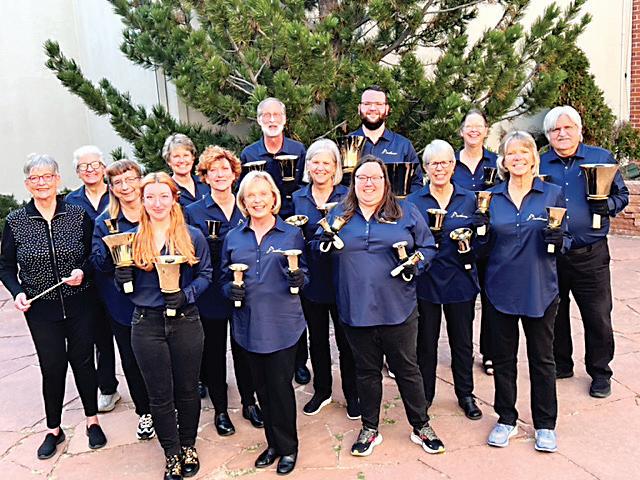

teners how varied a repertoire handbell ensembles are capable of.
“Audiences will be able to see all the things bells can do and all the techniques we use,” Wild said. “ ere are so many di erent kinds of music we can play and sounds we can produce.”
One of the things that makes the Smithtonian unique is the talent level of all about 14 members of the ensemble, and the way they are able to turn a handbell concert into something that feels more like an orchestra.
“We make it look so easy because we do it so well. It’s not only fun to listen to, but fun to watch as well,” Wild said. “We’ve been working on this show since January, working to perform musical pieces that warm the heart and soul, which is the whole way of performing with handbells.”
From the library’s perspective, the concert is an opportunity to ful ll its own mission, which Mattoon said is connecting people with the resources they want and need.
Bemis Public Library has been home to an annual concert by the Smithtonian Handbell Ensemble for many years.
“We’ve hosted music at Bemis for decades and the Smithtonian is one of our signature events,” said Claire L Mattoon, senior librarian for programming and Datura St. in Littleton, at 11 a.m. and 1 p.m. on Saturday, May 10.




Founded in 1983, the Smithtonian has been bringing top-notch handbell performances to the south metro area for 40 years. Its mission is to “entertain, delight and educate the public in the art of Eng-



“What we do is one instrument played by 26 hands,” said Maggie Wild, event manager for the ensemble. “It takes a lot of excellent players to be able to perform the quality of music we do and a lot of closeness with our fellow musicians.”
Instead of the usual holiday music, this concert will feature songs of the Shenandoah, ragtime classics, festive dances and more. e aim is to highlight to lis-
“Most people think only of books and databases, but we see ‘resources’ as anything that gives knowledge, enjoyment and enrichment to people’s lives,” she said. “Looking at it that way, the musical programming we do ts the mission really well.”
Learn more about the Smithtonian at https://smithtonians.org/ and get information about the Bemis performance at https://www.library.littletonco.gov/ Home. is coverage comes courtesy of a grant from the Littleton Arts and Culture Program. As a matter of policy, funders exercise no control over editorial decisions.



























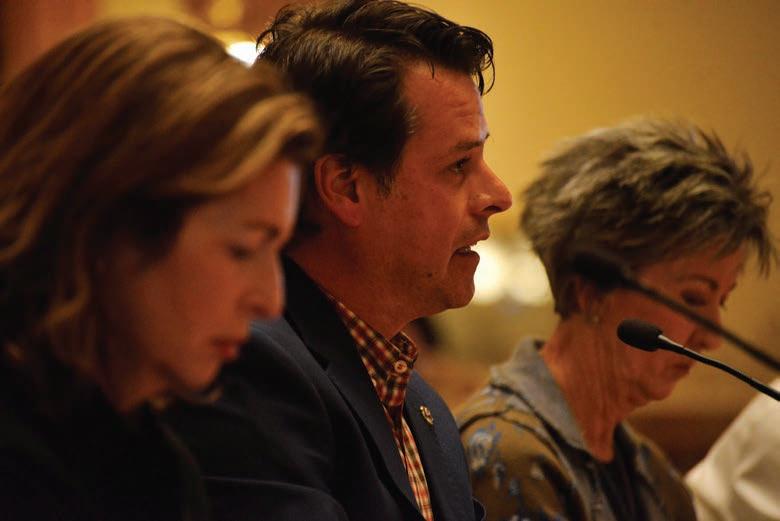
“Somebody else has to die and then somebody else might die after that before this gets treated as a felony,” said Roberts. “ at to me is, kind of a very, I think, strange thing to put into statute given the tragedy that it involves.”
e Judiciary Committee passed the bill in a 6-to-1 vote, and it will now be passed onto the House Appropriations Committee, which conducts hearings concerning the nancial impact of the bill.
“We’re not going to give up on it,” said Vogel. “We’re going to keep doing what


we can to get the victims’ and the citizens’ voices out there.”
What is Senate Bill 25-281
ere are two other parts to the proposed Senate Bill 25-281. One is to address the language in the current statute that allows for only one sentence for a driver. If the driver causes the death of one or more people, each person killed would be a separate o ense.
e third part focuses on strengthening the requirement for chemical testing — for alcohol or substances — of drivers following any fatal or serious injury crash.
For Michael White, the father of 17-yearold Magnus who was killed on July 29, 2023, in Boulder, mandatory chemical
testing is objective, removes bias and is impartial.
While on one of his last cycling training sessions before representing the United States in the World Mountain Bike Championships, Magnus was struck by a woman who had stayed up the night prior consuming alcohol and drugs.
“Without it (mandatory chemical testing), we are choosing ignorance over accountability and that cost is paid in human lives,” White said.
But Carson has also recognized that true accidents do happen.
He said there are some situations in which the victim may be involved. In that case, the district attorney should not use the charge of careless driving resulting in death; instead, the charge of careless driving resulting in serious bodily injury may be more appropriate.
While the bill looks to bring more accountability, there were concerns about the express consent for chemical testing, and over-penalizing drivers when there are charges such as reckless driving and vehicular homicide.
James Karback from the Colorado State Public Defender’s O ce said evidence tools have advanced to allow o cers and prosecutors to make more robust decisions and classify the level of crime correctly.
However, Packard added that there isn’t always an action from the driver that ts the statutory de nition.
Representatives from the Colorado Criminal Defense Bar brought up the importance of mens rea in the court system. Mens rea is the intention or knowledge of wronging that constitutes part of a crime. e potential class six felony would be severe for drivers who had no intention of taking a life and were not under any in uences, said Karback and Rhidian Orr from the Colorado Criminal Defense Bar.
“If it becomes a felony, that person who’s driving loses a lot of ability to pay back — nancially, job-wise, whatever it may be — the victims of the family,” Orr said.
‘Born out of tragedy’ ose who were seemingly strangers to one another stood side-by-side testifying for Senate Bill 25-281, unitedbecause of a common tragedy: the death of a loved one.
“For those who keep saying that accidents happen, I can assure you, your opinion will change very quickly once you see your child or your loved one in a casket,” said Victoria Cegielski, whose son died in March of 2024.
With the statewide movement to encourage people to use alternate forms of transportation, like bicycling, more frequently, Snyder said there are more vulnerable road users today than before.
“Colorado begs for people to live an



outdoor life,” said 23rd Judicial District Attorney George Brauchler. “Your life is at the hands of someone who may not even have their hands on the wheel.”
Between 2014 and 2024, pedestrian fatalities increased by 73%, according to the Colorado Department of Transportation’s fatal crash data. Within that decade, 1,131 bicyclists and pedestrians lost their lives on Colorado roads.
In 2023, 156 bicyclists and pedestrians lost their lives, which increased to 683 vulnerable road user deaths in 2024, including lives lost in construction zones.
White, Vogel, Cegielski and Stewart’s loved ones are part of those statistics.
On July 4, 2019, Chuck Vogel went on an early morning bike ride. Instead of coming home, Teri Vogel, was awoken by a call from AdventHealth Parker. He died the next day.
“ is might sound really strange, but Chuck was excited about turning 65,” said Vogel. “It was the anticipation of becoming a grandfather that put him over the moon. Chuck did not get to experience any of that. A vibrant and beautiful life was taken by (a) driver’s poor choices.”
On their way to school, two 13-year-old boys were struck and killed by a vehicle, ve months apart. On Oct. 17, 2023, Liam Stewart was on his bike, following all the rules of the road when he was struck at an intersection in Littleton, Stewart said. en on March 6, 2024, Alex Mackiewicz was almost across a crosswalk in Highlands Ranch when a driver ran a red light and struck Mackiewicz.
“Clearly, we have an issue that’s getting worse in our state and we need to address it,” said Carson. “ is legislation is born out of tragedy.”
Next steps
Preferring the bill how it was originally proposed, Roberts said the bill needs to be more tailored with a focused approach to give justice to the people who testi ed. Other committee members also had reservations despite passing the bill.
Sen. Matt Ball, a Democrat representing Denver, added that he is not convinced the amended bill solves the core of the problem.
“What we heard was that we have a statutory scheme that theoretically gives district attorneys sort of a ladder of di erent charges to bring based on the facts,” said Ball. “We heard a lot of powerful anecdotal evidence that the accidents that are occurring are not being charged in the way many of us think they should.”
Although the bill that passed wasn’t exactly what the families had hoped for, Josh Stewart hopes that the discussion of careless driving can change the minds of others in the justice system.
“Maybe district attorneys will wake up and start realizing criminal negligence as a proper charge for these cases,” Josh Stewart said.







1. TELEVISION: Which actor was nominated for an Emmy for the same character on three di erent sitcoms?
2. MOVIES: Who was the rst actor to refuse an Oscar award for Best Actor?
3. GEOGRAPHY: Which modern city is in the shadow of the active volcano Mount Vesuvius?
4. FOOD & DRINK: What gas is used to create seltzer water?
5. SCIENCE: What is the center of an atom called?
6. GENERAL KNOWLEDGE: Who are the six men who have made a career Grand Slam in pro golf?
7. ANATOMY: What is the largest artery in the body?
8. LITERATURE: For which category is the O. Henry Award given?
9. ASTRONOMY: Which star system is nearest to our solar system?



10. U.S. PRESIDENTS: How many presidents have died in o ce?
Answers
1. Kelsey Grammer for “Wings,” “Cheers” and “Frasier.”
2. George C. Scott, for “Patton.”
3. Naples, Italy.
4. Carbon dioxide.
5. Nucleus.
6. Gene Sarazen, Ben Hogan, Gary Player, Jack Nicklaus, Tiger Woods and Rory McIlroy.
7. e aorta.
8. Short stories.
9. Alpha Centauri.
10. Eight.
(c) 2025 King Features Synd., Inc.

Help Wanted
Special Education Teacher and Child Find Coordinator
1 Day a week Early Childhood
Special Education Teacher and Child Find Coordinator, for East Central BOCES for the 2025-2026 school year
• Duties include: Complete assessment & provide direct and indirect services with preschool children in rural school settings
• Requires a Master’s Degree in Early Childhood Special Education Can be hired with a Bachelor’s Degree in a Related Field if willing to enter into a Master’s degree program in Early Childhood Special Education upon hire
• Salary Range BA-$$9214 to $10,474 and MA $10,264-11524, dependent on experience
• Mileage reimbursement
• Flexible scheduling with the opportunity to complete some work at home.
• May be eligible for loan forgiveness!
• Financial support may be available through grants if required to enroll in a Master’s degree program
• Questions contact Tracy (719) 775-2342 ext. 101.
To apply for this position, please visit our website ecboces.org and click on the “Jobs” page, click on the job you are interested in & then click on the grey button “Apply Online”, located at the bottom of the job listing. EOE
Structures Staff Scientist Boom Technology, Inc. seeks Structures Staff Scientist in Centennial, CO to work handin-hand w/ the Chief Eng, Eng Team and Program Leadership to architect and design the Overture aircraft. Telecommuting permitted. Domestic travel throughout the U.S. 5% of the time required.
$252,000 - $265,650 per year. Apply @ www.jobpostingtoday. com Ref#14760
Misc. Notices
WIDOWED MEN AND WOMEN OF AMERICA. A social club offering many exciting activities and life long friendships. Social hours for all areas of Metro Denver. Visit Widowedamerica.org for details In your area!
Garage Sales
Save the Date! Gigantic Garage Sale in the Pradera Golf Community Subdivision Friday & Saturday, May 16th and 17th 8am-4pm
Numerous homeowners in the Pradera community will be participating in this event Major cross streets into Pradera are Bayou Gulch and Parker Road, Parker 80134 Call Dotson Skaggs, Kentwood Real Estate 303-909-9350 for more information. 100+ HOMES CHERRY KNOLLS, THE KNOLLS & TIFFANY NEIGHBORHOODS Fri. & Sat. May 2 & 3 S. Colorado Blvd. & E. Dry Creek Rd 80122

Jacuzzi Bath Remodel can install a new, custom bath or shower in as little as one day. For a lim-ited time, waving all installation costs! (Additional terms apply. Subject to change and vary by dealer. Offer ends 6/30/25. 1-844-5013208
Prepare for power outages today with a Generac Home Standby Generator. Act now to receive a FREE 5-Year warranty with qualifying purchase* Call 1-855948-6176 today to schedule a free quote. It’s not just a generator. It’s a power move.
Bath & shower updates in as little as 1 day! Affordable prices - No payments for 18 months! Lifetime warranty & professional installs. Senior & military discounts available. 1-877-5439189
Home break-ins take less than 60 seconds. Don’t wait! Protect your family, your home, your assets now for as little as 70¢/ day! 1-844-591-7951
DIRECTV Stream - Carries the most local MLB Games! Choice Package $89.99/mo for 12 mos Stream on 20 devices at once. HBO Max included for 3 mos (w/ Choice Package or higher.) No contract or hidden fees! Some restrictions apply. Call IVS 1-866859-0405
Eliminate gutter cleaning forever! LeafFilter, the most advanced debris -blocking gutter protection. Schedule free LeafFilter estimate today. 20% off Entire Purchase. 10% Senior & Military Discounts. Call 1-833610-1936
Become a published author We want to read your book! Dorrance Publishing trusted since 1920. Consultation, production, promotion & distribution. Call for free author`s guide 1-877-7294998 or visit dorranceinfo.com/ ads
Inflation is at 40 year highs. Interest rates are way up. Credit cards. Medical bills. Car loans. Do you have $10k or more in debt? Call National Debt Relief and find out how to pay off your debt for significantly less than what you owe! Free quote: Call 1-844-955-4930
MobileHelp America’s premier mobile medical alert system. Whether you’re home or away. For safety & peace of mind. No long term contracts! Free brochure! Call 1-888-489-3936
Replace your roof w/the best looking & longest lasting material steel from Erie Metal Roofs! 3 styles & multiple colors available. Guaranteed to last a lifetime! Limited Time Offer up to 50% off install + Additional 10% off install (military, health & 1st responders.) 1-833-370-1234
Wesley Financial Group, LLC Timeshare Cancellation Experts Over $50,000,000 in timeshare debt & fees cancelled in 2019. Get free info package & learn how to get rid of your timeshare! Free consultations. Over 450 positive reviews. 833-308-1971
Portable Oxygen Concentrator May Be Covered by Medicare! Reclaim independence and mobility with the compact design and long-lasting battery of Inogen One. Free information kit! Call 877-305-1535
We buy houses for cash as is! No repairs. No fuss. Any condition. Easy three step process: Call, get cash offer & get paid. Get your fair cash offer today by calling Liz Buys Houses: 1-844-8775833
!!OLD GUITARS WANTED!! GIBSON, FENDER, MARTIN, Etc. 1930’s to 1980’s. TOP DOLLAR PAID.
CALL TOLL FREE 1-866-4338277
Water damage cleanup & restoration: A small amount of water can lead to major damage in your home. Our trusted professionals do complete repairs to protect your family and your home’s value! Call 24/7: 1-833-887-0117. Have zip code of service location ready when you call!
Don’t let the stairs limit your mobility! Discover the ideal solution for anyone who struggles on the stairs, is concerned about a fall or wants to regain access to their entire home. Call AmeriGlide today! 1-833-3993595
AGING ROOF? NEW HOMEOWNER? STORM DAMAGE? You need a local expert provider that proudly stands behind their work. Fast, free estimate. Financing available. Call 1-888-878-9091 Have zip code of property ready when calling!
Consumer Cellular - same reliable, nationwide coverage as the largest carriers. No longterm contract, no hidden fees free activation. All plans feature unlimited talk & text, starting at just $20/mo. Call 1-877-751-0866


Does your basement or crawl space need some
needsomeattention?CallThrasher FoundationRepair!Apermanent solutionforwaterproofing,failing foundation,sinkingconcreteand nastycrawlspaces.FREE Inspection&SameDayEstimate. $250offANYproject withcode GET250. Call1-888-717-0104RNET
CallLeafGuardandsaygoodbyeto guttercleaningforgood.No cleaning.Noleaking.Nowater damage.Nomoreladderaccidents. GetLeafGuardtodayandbe protectedforlife.FREEestimate. Financingavailable.20%offtotal purchase(Restrictionsmayapply) Call1-844-264-8866 COLORADOPRESSNETWORK
ToPlacea25-wordCOSCAN Networkadin91Colorado Newspapersfor$300

Doodle Puppies Golden Doodles and Bernedoodles Home-Raised Heath Tested and Guaranteed Standard and Mini Size available Schedule a visit today! (970)215-6860 www.puppylovedoodles.com
Contactyourlocal Newspaperoremail rtoledo@colopress.net
Donate Your Car to Veterans Today!



























































































OCTOBER 17, 1962 AT RECEPTION NO. R0830030, COUNTY OF ARAPAHOE, STATE OF COLORADO.
Street Address of Property 4183 South Decatur Street, Englewood, CO 80110 NOTICE OF UNCLAIMED OVERBID FUNDS
I sold at public auction, at 10:00 A.M. on 11/6/24, at The East Hearing Room, County Administration Building, 5334 South Prince Street, Littleton, Colorado, 80120, to the highest and best bidder for cash, the real property described above. An overbid was realized from the sale and the funds must be claimed by the Obligor/Grantor(s) on the evidence of debt and/ or Deed of Trust or other persons entitled thereto within six months from the date of sale. THE STATE OF COLORADO REQUIRES US TO NOTIFY YOU THAT YOUR PROPERTY MAY BE TRANSFERRED TO THE CUSTODY OF THE STATE TREASURER IF YOU DO NOT CONTACT US BEFORE 5/6/2025 as part of the "Revised Uniform Unclaimed Property Act", pursuant to Colorado law.
First Publication: 4/24/25
Publication: 5/22/25 Name of Publication: Littleton Independent Date: 4/14/25 Michael Westerberg, Public Trustee in and for the County of Arapahoe, State of Colorado
Westerberg, Public
Purported common address: 6691 South Abilene Way, Centennial, CO 80111. THE PROPERTY DESCRIBED HEREIN IS ALL OF THE PROPERTY CURRENTLY ENCUMBERED BY THE LIEN OF THE DEED OF TRUST.
NOTICE OF SALE
The current holder of the Evidence of Debt secured by the Deed of Trust, described herein, has filed Notice of Election and Demand for sale as provided by law and in said Deed of Trust.
THEREFORE, Notice Is Hereby Given that I will at public auction, at 10:00 A.M. on Wednesday, 06/04/2025, at The East Hearing Room, County Administration Building, 5334 South Prince Street, Littleton, Colorado, 80120, sell to the highest and best bidder for cash, the said real property and all interest of the said Grantor(s), Grantor(s)' heirs and assigns therein, for the purpose of paying the indebtedness provided in said Evidence of Debt secured by the Deed of Trust, plus attorneys' fees, the expenses of sale and other items allowed by law, and will issue to the purchaser a Certificate of Purchase, all as provided by law.
First Publication: 4/10/2025
Last Publication: 5/8/2025
Name of Publication: Littleton Independent
IF THE SALE DATE IS CONTINUED TO A LATER DATE, THE DEADLINE TO FILE A NOTICE OF INTENT TO CURE BY THOSE PARTIES ENTITLED TO CURE MAY ALSO BE EXTENDED;
DATE: 02/11/2025
Michael Westerberg, Public Trustee in and for the County of Arapahoe, State of Colorado
By: Michael Westerberg, Public Trustee
The name, address, business telephone number and bar registration number of the attorney(s) representing the legal holder of the indebtedness is:
Amanda Ferguson #44893
Heather Deere #28597
Toni M. Owan #30580 Halliday, Watkins & Mann, PC 355 Union Blvd., Ste. 250, Lakewood, CO 80228 (303) 274-0155
Attorney File # CO24215
The Attorney above is acting as a debt collector and is attempting to collect a debt. Any information provided may be used for that purpose.
©Public Trustees' Association of Colorado Revised 1/2015
Legal Notice NO. 0084-2025
First Publication: 4/10/2025
Last Publication: 5/8/2025
Name of Publication: Littleton Independent COMBINED NOTICE - PUBLICATION CRS §38-38-103
FORECLOSURE SALE NO. 0135-2025
To Whom It May Concern: This Notice is given with regard to the following described Deed of Trust:
On March 4, 2025, the undersigned Public Trustee caused the Notice of Election and Demand relating to the Deed of Trust described below to be recorded in the County of Arapahoe records.
Original Grantor(s)
TERRI L. HIGHLAND
Original Beneficiary(ies)
MORTGAGE ELECTRONIC REGISTRATION SYSTEMS, INC. AS NOMINEE FOR FINANCE AMERICA, LLC, DBA FINAM, LLC
Current Holder of Evidence of Debt
U.S. BANK NATIONAL ASSOCIATION, AS TRUSTEE FOR STRUCTURED ASSET INVESTMENT LOAN TRUST MORTGAGE PASS-THROUGH CERTIFICATES, SERIES 2005-4
Date of Deed of Trust
January 20, 2005
County of Recording
Arapahoe
Recording Date of Deed of Trust
January 28, 2005
Recording Information (Reception No. and/or Book/Page No.) B5012687
Original Principal Amount
$172,800.00
Outstanding Principal Balance
$142,347.54
Pursuant to CRS §38-38-101(4)(i), you are hereby notified that the covenants of the deed of trust have been violated as follows: Failure to pay principal and interest when due together with all other payments provided for in the Evidence of Debt secured by the Deed of Trust and other violations of the terms thereof THE LIEN FORECLOSED MAY NOT BE A FIRST LIEN.
LOT 26, BLOCK 2, LININGER SUBDIVISION, COUNTY OF ARAPAHOE, STATE OF COLORADO.
Purported common address:
5411 S HICKORY ST, LITTLETON, CO 80120-1424.
THE PROPERTY DESCRIBED HEREIN IS ALL OF THE PROPERTY CURRENTLY ENCUMBERED BY THE LIEN OF THE DEED OF TRUST.
NOTICE OF SALE
The current holder of the Evidence of Debt secured by the Deed of Trust, described herein, has filed Notice of Election and Demand for sale as provided by law and in said Deed of Trust.
THEREFORE, Notice Is Hereby Given that I will at public auction, at 10:00 A.M. on Wednesday, 06/25/2025, at The East Hearing Room, County Administration Building, 5334 South Prince Street, Littleton, Colorado, 80120, sell to the highest and best bidder for cash, the said real property and all interest of the said Grantor(s), Grantor(s)' heirs and assigns therein, for the purpose of paying the indebtedness provided in said Evidence of Debt secured by the Deed of Trust, plus attorneys' fees, the expenses of sale and other items allowed by law, and will issue to the purchaser a Certificate of Purchase, all as provided by law.
First Publication: 5/1/2025
Last Publication: 5/29/2025
Name of Publication: Littleton Independent
IF THE SALE DATE IS CONTINUED TO A LATER DATE, THE DEADLINE TO FILE A NOTICE OF INTENT TO CURE BY THOSE PARTIES ENTITLED TO CURE MAY ALSO BE EXTENDED;
DATE: 03/04/2025
Michael Westerberg, Public Trustee in and for the County of Arapahoe, State of Colorado
By: Michael Westerberg, Public Trustee
The name, address, business telephone number and bar registration number of the attorney(s) representing the legal holder of the indebtedness is:
Anna Johnston #51978
Joseph D. DeGiorgio #45557
Carly Imbrogno #59533
Randall M. Chin #31149
David W. Drake #43315
Ryan Bourgeois #51088
Barrett, Frappier & Weisserman, LLP
1391 Speer Boulevard, Suite 700, Denver, CO 80204 (303) 350-3711
Attorney File # 00000010377851
The Attorney above is acting as a debt collector and is attempting to collect a debt. Any information provided may be used for that purpose.
©Public Trustees' Association of Colorado Revised 1/2015
Legal Notice NO. 0135-2025
First Publication: 5/1/2025
Last Publication: 5/29/2025
Name of Publication: Littleton Independent COMBINED NOTICE - PUBLICATION
CRS §38-38-103
FORECLOSURE SALE NO. 0088-2025
To Whom It May Concern: This Notice is given with regard to the following described Deed of Trust:
On February 11, 2025, the undersigned Public Trustee caused the Notice of Election and Demand relating to the Deed of Trust described below to be recorded in the County of Arapahoe records.
Original Grantor(s)
Antonino E Smith AND Christine M Smith
Original Beneficiary(ies)
ARGENT MORTGAGE COMPANY, LLC
Current Holder of Evidence of Debt
WELLS FARGO BANK, N.A. , as Trustee for Park Place Securities, Inc. Asset-Backed
Pass-Through Certificates Series 2005-WHQ3
Date of Deed of Trust March 04, 2005
County of Recording Arapahoe
Recording Date of Deed of Trust March 09, 2005
Recording Information
(Reception No. and/or Book/Page No.)
B5033308
Original Principal Amount
$93,500.00
Outstanding Principal Balance
$56,514.93
Pursuant to CRS §38-38-101(4)(i), you are hereby notified that the covenants of the deed of trust have been violated as follows: Failure to pay principal and interest when due together with all other payments provided for in the evidence of debt secured by the deed of trust and other violations thereof.
THE LIEN FORECLOSED MAY NOT BE A FIRST LIEN.
SEE ATTACHED LEGAL DESCRIPTION
PARCEL ID NUMBER: 207715414010
Purported common address: 5819 S PEARL STREET, CENTENNIAL, CO 80121.
THE PROPERTY DESCRIBED HEREIN IS ALL OF THE PROPERTY CURRENTLY ENCUMBERED BY THE LIEN OF THE DEED OF TRUST.
NOTICE OF SALE
The current holder of the Evidence of Debt secured by the Deed of Trust, described herein, has filed Notice of Election and Demand for sale as provided by law and in said Deed of Trust.
THEREFORE, Notice Is Hereby Given that I will at public auction, at 10:00 A.M. on Wednesday, 06/04/2025, at The East Hearing Room, County Administration Building, 5334 South Prince Street, Littleton, Colorado, 80120, sell to the highest and best bidder for cash, the said real property and all interest of the said Grantor(s), Grantor(s)' heirs and assigns therein, for the purpose of paying the indebtedness provided in said Evidence of Debt secured by the Deed of Trust, plus attorneys' fees, the expenses of sale and other items allowed by law, and will issue to the purchaser a Certificate of Purchase, all as provided by law.
First Publication: 4/10/2025
Last Publication: 5/8/2025
Name of Publication: Littleton Independent
IF THE SALE DATE IS CONTINUED TO A
LATER DATE, THE DEADLINE TO FILE A
NOTICE OF INTENT TO CURE BY THOSE
PARTIES ENTITLED TO CURE MAY ALSO BE EXTENDED;
DATE: 02/11/2025
Michael Westerberg, Public Trustee in and for the County of Arapahoe, State of Colorado
By: Michael Westerberg, Public Trustee
The name, address, business telephone number and bar registration number of the attorney(s) representing the legal holder of the indebtedness is:
Alison L Berry #34531 N. April Winecki #34861
David R. Doughty #40042
Nicholas H. Santarelli #46592
Lynn M. Janeway #15592
Janeway Law Firm, P.C. 9540 Maroon Circle, Suite 320, Englewood, CO 80112 (303) 706-9990
Attorney File # 19-022497
The Attorney above is acting as a debt collector and is attempting to collect a debt. Any information provided may be used for that purpose.
©Public Trustees' Association of Colorado Revised 1/2015
0088-2025 LEGAL DESCRIPTION
Unit 5819, Green Oaks Townhomes, according to the Map thereof filed with the Clerk and Recorder of Arapahoe County, State of Colorado, February 24, 1981, as defined and described in the Condominium Declaration for Green Oaks Townhomes, similarly filed and recorded February 24, 1981, in Book 3370 at Page 404, together with the exclusive use of Parking Space 5819, a limited common element shown on said map, County of Arapahoe, State of Colorado.
Legal Notice NO. 0088-2025
First Publication: 4/10/2025
Last Publication: 5/8/2025
Name of Publication: Littleton Independent NOTICE OF UNCLAIMED OVERBID FUNDS
CRS 38-38-111(2.5b)(3a,b,d)(5) PUBLIC TRUSTEE SALE NO. 0249-2024
To: Obligor/Grantor(s) on the evidence of debt and/or Deed of Trust or other person entitled. You are advised that there are overbid funds due you. This Notice is given with regard to the following described Deed of Trust:
Name of Obligor/Grantor(s) on the evidence of debt and/or Deed of Trust Daniel P. Pond
Address of Obligor/Grantor(s) on the evidence of debt and/or Deed of Trust 1692 W Canal Cir Unit 1031, Littleton, CO 80120--4560
Recording Date of Deed of Trust May 14, 2020
Recording Information E0057018
Legal Description of Property See Attached Exhibit "A".
**The Deed of Trust Legal description was corrected by an Affidavit of Correction recorded on 5/3/2024 at Reception No. E4026911, in the records of Arapahoe County, State of Colorado. Street Address of Property 1692 W Canal Cir Unit 1031, Littleton, CO 80120-4560
NOTICE OF UNCLAIMED OVERBID FUNDS
I sold at public auction, at 10:00 A.M. on 10/2/24, at The East Hearing Room, County Administration Building, 5334 South Prince Street, Littleton, Colorado, 80120, to the highest and best bidder for cash, the real property described above. An overbid was realized from the sale and the funds must be claimed by the Obligor/Grantor(s) on the evidence of debt and/ or Deed of Trust or other persons entitled there-
to within six months from the date of sale. THE STATE OF COLORADO REQUIRES US TO NOTIFY YOU THAT YOUR PROPERTY MAY BE TRANSFERRED TO THE CUSTODY OF THE STATE TREASURER IF YOU DO NOT CONTACT US BEFORE 4/2/2025 as part of the "Revised Uniform Unclaimed Property Act", pursuant to Colorado law.
First Publication: 4/24/25
Last Publication: 5/22/25
Name of Publication: Littleton Independent Date: 4/14/25
Michael Westerberg, Public Trustee in and for the County of Arapahoe, State of Colorado By: Michael Westerberg, Public Trustee ©Public Trustees' Association of Colorado Revised 9/2012
0249-2024 Exhibit A
Building 10, Unit 1031, Pinnacle at Highline, in accordance with and subject to the Declaration for Pinnacle at Highline recorded on July 17, 2001 at Reception No. B1115281 and the Condominium Map recorded on October 29, 2001 at Reception No. B1183130 in the office of the Clerk and Recorder of the County of Arapahoe, State of Colorado, together with Garage Unit G-179 and Surface Parking Unit P-148 in accordance with and subject to the Declaration for Pinnacle at Highline recorded on July 17, 2001 at Reception No. B1115281 and the Condominium Map recorded on October 29, 2001 at Reception No. B1183130 in the office of the Clerk and recorder of the County of Arapahoe, State of Colorado.
Legal Notice NO. 0249-2024
First Publication: 4/24/25
Last Publication: 5/22/25
Name of Publication: Littleton Independent COMBINED NOTICE - PUBLICATION CRS §38-38-103
FORECLOSURE SALE NO. 0054-2025
To Whom It May Concern: This Notice is given with regard to the following described Deed of Trust:
On January 31, 2025, the undersigned Public Trustee caused the Notice of Election and Demand relating to the Deed of Trust described below to be recorded in the County of Arapahoe records.
Original Grantor(s)
DOUGLAS S WIDLUND AND KATHERINE S WIDLUND
Original Beneficiary(ies)
MORTGAGE ELECTRONIC REGISTRATION SYSTEMS, INC., AS NOMINEE FOR GREENPOINT MORTGAGE FUNDING, INC.
Current Holder of Evidence of Debt
DEUTSCHE BANK NATIONAL TRUST COMPANY, AS TRUSTEE FOR GSAA HOME EQUITY TRUST 2004-8, ASSET-BACKED
CERTIFICATES SERIES 2004-8
Date of Deed of Trust
June 15, 2004
County of Recording Arapahoe
Recording Date of Deed of Trust
June 18, 2004
Recording Information
(Reception No. and/or Book/Page No.)
B4110275
Original Principal Amount
$644,000.00
Outstanding Principal Balance
$383,897.24
Pursuant to CRS §38-38-101(4)(i), you are hereby notified that the covenants of the deed of trust have been violated as follows: Failure to pay principal and interest when due together with all other payments provided for in the Evidence of Debt secured by the Deed of Trust and other violations of the terms thereof
THE LIEN FORECLOSED MAY NOT BE A FIRST LIEN.
LOT 6, BLOCK 11, HERITAGE GREENS, 7TH FILING, COUNTY OF ARAPAHOE, STATE OF COLORADO.
Purported common address: 5256 E MINERAL CIR, CENTENNIAL, CO 80122.
THE PROPERTY DESCRIBED HEREIN IS ALL OF THE PROPERTY CURRENTLY ENCUMBERED BY THE LIEN OF THE DEED OF TRUST.
NOTICE OF SALE
The current holder of the Evidence of Debt secured by the Deed of Trust, described herein, has filed Notice of Election and Demand for sale as provided by law and in said Deed of Trust.
THEREFORE, Notice Is Hereby Given that I will at public auction, at 10:00 A.M. on Wednesday, 06/04/2025, at The East Hearing Room, County Administration Building, 5334 South Prince Street, Littleton, Colorado, 80120, sell to the highest and best bidder for cash, the said real property and all interest of the said Grantor(s), Grantor(s)' heirs and assigns therein, for the purpose of paying the indebtedness provided in said Evidence of Debt secured by the Deed of Trust, plus attorneys' fees, the expenses of sale and
the indebtedness is:
Alison L Berry #34531 N. April Winecki #34861 David R. Doughty #40042 Nicholas H. Santarelli #46592 Lynn M. Janeway #15592 Janeway Law Firm, P.C. 9540 Maroon Circle, Suite 320, Englewood, CO 80112 (303) 706-9990
Attorney File # 25-033889
The Attorney above is acting as a debt collector and is attempting to collect a debt. Any information provided may be used for that purpose.
©Public Trustees' Association of Colorado Revised 1/2015
Legal Notice No. 0076-2025 First Publication: 4/10/2025
Last Publication: 5/8/2025
Name of Publication: Littleton Independent City and County
Public Notice
CITY OF CENTENNIAL NOTICE OF LEGAL PUBLICATION MIGRATION TO CITY’S WEBSITE
NOTICE IS HEREBY GIVEN that legal notices for Centennial public hearings, proposed legislative actions, and final approvals are now available online. Visit centennialco.gov/ legalnotices to see when City Council or the Planning and Zoning Commission will review proposed legislation and determine next steps. Public hearings provide an opportunity for community members to share comments on proposed actions.
The Planning and Zoning Commission holds public hearings for land use cases on the second and fourth Wednesday of each month, with City Council making the final decision at a future meeting. Regular Council meetings, including public hearings, take place on the first and third Tuesday of each month. View meeting agendas at centennialco.gov/agendas.
/s/ Christina Lovelace, CMC City Clerk
Legal Notice NO. Arap 2238
First Publication: February 27, 2025
Second:March 6, 2025
Third: March 13, 2025
Fourth:March 20, 2025
Fifth: March 27, 2025
Sixth: April 3, 2025
Seventh:April 10, 2025
Eighth:April 17, 2025
Ninth: April 24, 2025
Tenth: May 1, 2025
Eleventh:May 8, 2025
Twelth: Last Publication: May 15, 2025
Publisher: Littleton Independent and the Centennial Citizen
Public Notice
ARAPAHOE COUNTY
PROPOSED ORDINANCE NUMBER 2025-01
to CRS §38-38-101(4)(i), you are hereby notified that the covenants of the deed of
violated as follows: This is a
Conversion Deed of Trust or other Reverse Mortgage. Borrower has died and the property is not the principal residence of any surviving Borrower, resulting in the loan being due and payable.
THE LIEN FORECLOSED MAY NOT BE A FIRST LIEN.
LOTS 25, 26, 27 AND 28, BLOCK 25, JACKSON'S BROADWAY HEIGHTS, COUNTY OF ARAPAHOE, STATE OF COLORADO.
Purported common address: 701 W Quincy Avenue, Englewood, CO 80110.
THE PROPERTY DESCRIBED HEREIN IS ALL OF THE PROPERTY CURRENTLY ENCUMBERED BY THE LIEN OF THE DEED OF TRUST. NOTICE OF SALE
The current holder of the Evidence of Debt secured by the Deed of Trust, described herein, has filed Notice of Election and Demand for sale as provided by law and in said Deed of Trust.
THEREFORE, Notice Is Hereby Given that I will at public auction, at 10:00 A.M. on Wednesday, 06/04/2025, at The East Hearing Room, County Administration Building, 5334 South Prince Street, Littleton, Colorado, 80120, sell to the highest and best bidder for cash, the said real property and all interest of the said Grantor(s), Grantor(s)' heirs and assigns therein, for the purpose of paying the indebtedness provided in said Evidence of Debt secured by the Deed of Trust, plus attorneys' fees, the expenses of sale and other items allowed by law, and will issue to the purchaser a Certificate of Purchase, all as provided by law.
First Publication: 4/10/2025
Last Publication: 5/8/2025
Name of Publication: Littleton Independent
IF THE SALE DATE IS CONTINUED TO A LATER DATE, THE DEADLINE TO FILE A NOTICE OF
the ban on the sale and use of fireworks during the May 31 to July 5 period, or portion thereof, and only if the resolution includes a finding of high fire danger in conformance with C.R.S. § 30-15-401(1)(n.7). If such a resolution is adopted then the ban on the sale and use of fireworks shall be and remain effective during the portion of the May 31 to July 5 period indicated in the resolution unless and until the Board of County Commissioners subsequently adopts a resolution rescinding the ban on the sale and use of fireworks during such period.
3. The above prohibition on the sale and use of fireworks does not apply with respect to display fireworks, display retailers and display operators, as defined in C.R.S. § 2433.5-2001, to the extent such sale and use is in compliance with applicable state and local laws, ordinances and regulations, and to the extent the following conditions are satisfied: (i) any use of display fireworks is supervised by firefighting and/or local public safety personnel, and (ii) adequate fire suppression equipment is at the scene of any use of display fireworks.
SECTION II. TIME
This Ordinance and the restrictions contained therein are in effect until May 12, 2026, unless suspended or terminated at an earlier date.
SECTION III. PUBLICATION OF NOTICE
Notice of the passing of this Ordinance and prohibition contained herein shall be promptly published in the County newspaper.
SECTION IV. UNLAWFUL CONDUCT
It shall be unlawful for any person to sell or use fireworks in violation of this Ordinance.
SECTION V. ENFORCEMENT
The Arapahoe County Sheriff shall enforce the provisions of this Ordinance.
SECTION VI. VIOLATIONS
Any person who violates this Ordinance commits a civil infraction and upon conviction thereof, shall be punished by a fine of five hundred dollars ($500.00) for a first offense, seven hundred and fifty dollars ($750.00) for a second offense, and one thousand dollars ($1,000.00) for a third and any subsequent offense. The penalty assessment procedure provided in C.R.S. § 16-2-201 shall be followed by the arresting Sheriff’s Deputy or other officer for any violation of this Ordinance, and the graduated fine schedule set forth herein shall be followed when issuing any summons and complaint in accordance with such procedures.
SECTION VII. DISPOSITION OF FINES
All fines for violations of this Ordinance shall be paid into the General Fund of Arapahoe County.
SECTION VIII. SEVERABILITY
If any one or more of the provisions of this Ordinance is determined by a competent court of law to be invalid, such determination shall not affect the validity of the remaining portions of this Ordinance.
First Publication: May 1, 2025
Last Publication: May 1, 2025
Publisher: Littleton Independent Public Notice
ARAPAHOE COUNTY NOTICE OF PUBLIC HEARING CASE NO. LE24-002, KIOWA CREEK OPEN SPACE REGIONAL PARK / LOCATION AND EXTENT
PROPOSAL: Arapahoe County Open Spaces is proposing the construction of a regional park. This project will be located at 1001 N County Road 137, south of Interstate Highway I-70, west of North Kiowa-Bennett Road (Parcel ID 1981-00-0-00-255).
NOTICE IS HEREBY GIVEN that on May 20, 2025 the Arapahoe County Planning Commission will hold a Public Hearing at 6:30 P.M., or as soon as possible thereafter at 6954 S Lima St., Arapahoe Room, Centennial, CO 80112; at which, all interested persons will be allowed to be heard concerning the above-described Case No. LE24-002, Kiowa Creek Open Spaces Regional Park / Location and Extent. The agenda will typically be posted by the Friday afternoon preceding the hearing and can be viewed on our website at https://arapahoe.legistar.com/Calendar. You can also listen to or speak at the meeting by calling 1-855-436-3656. To join the speaking queue, press *3 on the telephone keypad.
More information about this proposal is available at the offices of the Arapahoe County Public Works and Development Department, Planning Division, 6924 S Lima St., Centennial CO 80112 (please call ahead to schedule an appointment if you plan to walk-in), by calling 720-874-6650 or by emailing planning@ arapahoegov.com during regular business hours (8:00 a.m. to 4:30 p.m., Monday through Friday).
Joan Lopez, Clerk to the Board
Legal Notice No. Arap 2444
First Publication: May 1, 2025
Last Publication: May 1, 2025
Publisher: Englewood Herald Littleton Independent and the Centennial Citizen Public Notice
CITY OF LITTLETON
PUBLIC HEARING NOTICE
REZONING REQUEST
Notice is hereby given that the following public hearing will be held by the City of Littleton at the Littleton Center, 2255 West Berry Avenue, Littleton, Colorado:
To consider an application for a rezoning of four parcels at 439 and 589 W. Littleton Boulevard from Neighborhood Commercial, NC to Corridor Mixed, CM (Case No. REZ2-0002).
All those wishing to be heard should be present at the time and place stated.
Planning Commission Public Hearing at 6:30 p.m. on May 12, 2025
The
NOTICE IS HEREBY GIVEN that on May 13, 2025, at 9:30 a.m., or as soon thereafter as the matter may be heard, at the Arapahoe County Administration Building, 5334 S. Prince St., Littleton, CO, the Board of County Commissioners for Arapahoe County will consider for adoption Arapahoe County Ordinance Number 2025-01. The proposed ordinance reads as follows:
ARAPAHOE COUNTY, COLORADO ORDINANCE NO. 2025-01 AN ORDINANCE PROHIBITING THE SALE AND USE OF FIREWORKS WITHIN UNINCORPORATED ARAPAHOE COUNTY
WHEREAS, pursuant to C.R.S. § 30-15401, the Board of County Commissioners of Arapahoe County has the power to adopt ordinances for the control of those matters of local concern; and
WHEREAS, pursuant to C.R.S. § 30-15-401(1) (n.7), matters of local concern include prohibiting or restricting the sale, use and possession of fireworks, including permissible fireworks as defined in C.R.S. §§ 24-33.5-2001(5) and (11); and
WHEREAS, the authority provided in C.R.S. § 30-15-401(1)(n.7) allows the Board of County Commissioners to prohibit or restrict the sale, use and possession of fireworks in all or part of the unincorporated areas of the county for a period not to exceed one (1) year; however, such ordinance shall not be effective during the period between May 31 and July 5, unless the Board of County Commissioners adopts a resolution that includes a finding of high fire danger, based on competent evidence; and WHEREAS, it is the opinion of the Board of County Commissioners, that in order to preserve the public peace, health, safety and welfare of the citizens of Arapahoe County, they should take the following action:
NOW, THEREFORE, BE IT ORDAINED by the Board of County Commissioners of Arapahoe County, the following:
SECTION I. PROHIBITION ON THE SALE AND USE OF FIREWORKS
1.The sale and use of fireworks, including, but not limited to, permissible fireworks as defined in C.R.S. §§ 24-33.5-2001(5) and (11), are prohibited in all unincorporated areas of Arapahoe County.
2. The above prohibition on the sale and use of fireworks shall be effective during the period between May 31 and July 5, or any portion thereof, only if the Board of County Commissioners adopts a resolution imposing
SECTION IX. PRIOR ORDINANCE SUPERSEDED
This Ordinance supersedes and replaces Arapahoe County Ordinance Number 2024-01.
SECTION X. EFFECTIVE DATE
This Ordinance shall take effect upon its adoption. This is necessary for the immediate preservation of public health and safety, in order to control activity subject to this ordinance as soon as possible, and also to ensure that the ordinance will be in place during the upcoming July 4th fireworks season so that the fireworks restrictions can be quickly made effective, by adoption of a resolution as allowed by C.R.S. § 30-15-401(1)(n.7), in the event of the rapid onset of high fire danger.
Joan Lopez, Clerk to the Board
Legal Notice No. Arap 2476
First Publication: May 1, 2025
Last Publication: May 1, 2025
Publisher: Englewood Herald Littleton Independent and the Centennial Citizen
Public Notice
CITY OF LITTLETON
PUBLIC HEARING NOTICE ZONING MATTER
Notice is hereby given that the following public hearing will be held by the City of Littleton at the Littleton Center, 2255 West Berry Avenue, Littleton, Colorado:
To consider several ordinances amending the text of the Unified Land Use Code (Title 10 of the City Code) to implement the 2024 State Legislation items related to accessory dwelling units (ADUs), minimum parking, and occupancy limits. Staff will also propose text amendments as they relate to signage.
All those wishing to be heard should be present at the time and place stated.
PLANNING COMMISSION Public Hearing at 6:30 p.m. on May 12, 2025
For more information, call the Littleton Planning Division at 303-795-8076 or contact city staff at planningprojects@littletongov.org. Further information regarding the proposed code amendments may be found on https://online.encodeplus.com/regs/littleton-co-cc/rfc.aspx?secid=3002#secid-3002.
Legal Notice No. Arap 2474
LITTLETON NOTICE OF PUBLIC HEARING
Pursuant to the liquor laws of the State of Colorado, BISTRO 36 EATERY & DRINKERY LLC
d/b/a Bistro 36 Eatery & Drinkery, Littleton, CO, has requested the licensing officials of the City of Littleton, Colorado, to grant a Hotel & Restaurant liquor license. Applicant(s): MICHAEL COTE
LITTLETON, CO
The public hearing on the application will be held on Wednesday, MAY 14, 2025, at 6:30 p.m. Before considering issuance of this license, the Littleton Licensing must determine if it is the desire of the adult inhabitants of the neighborhood* that this license be issued.
If you would like to voice either support or opposition of issuance of this license, please email COLCityClerk@littletonco.gov. Please include your name and, address when responding. Deadline for support or opposition is April 30, 2025.
*The neighborhood is defined by the city boundaries of Littleton. You must reside within the city limits of Littleton, Colorado to participate.
By order of the Licensing Authority of the City of Littleton, Colorado. /s/ Wendy J. Shea-Tamag Deputy City Clerk
Legal Notice No. Arap 2456
First Publication: May 1, 2025
Last Publication: May 1, 2025
Publisher: Littleton Independent
Public Notice
AVISO DE CANCELACIÓN DE ELECCIÓN
POR LA PRESENTE SE NOTIFICA , por el Bowles Metropolitan District, de los Condados de Denver y Jefferson, Colorado, comunica que al cierre de las operaciones en el sexagésimo tercer día antes de la elección, no había más candidatos para director que cargos por llenar, incluyendo a los candidatos que presentaron declaraciones juradas de intención de ser candidatos por escrito; por lo tanto, la elección que se iba a realizar el 6 de mayo, de 2025 queda cancelada conforme a la sección 1-13.5-513 (1), C.R.S.
Los siguientes candidatos son declarados electos:
Donald W. Korte, término de 4 años mayo de 2029
Linda C. Lutz-Ryan, término de 4 años mayo de 2029
/s/ Sue Blair
City Council Public Hearing at 6:30 p.m. on July 15, 2025
For more information, call the Littleton Planning Division at 303-795-3748 or contact city staff: Sara Dusenberry, sdusenberry@ littletonco.gov. Further information regarding the project may be found on the city’s Development Activity List on http://www.littletonco.gov/dal.
Legal Notice No. Arap 2473
First Publication: May 1, 2025
Last Publication: May 1, 2025
Publisher: Littleton Independent Public Notice
LITTLETON NOTICE OF PUBLIC HEARING
Pursuant to the liquor laws of the State of Colorado, OUTLANES PINBALL LOUNGE LLC. d/b/a Outlanes Pinball Lounge, 2555 W Alamo Ave #1, Littleton, CO, has requested the licensing officials of the City of Littleton, Colorado, to grant a Fermented Malt Beverage & Wine liquor license. Applicant(s):
ROSS UNRUH, LITTLETON, CO
EMILY UNRUH, LITTLETON, CO
MELISSA LECHUGA, LITTLETON, CO
JASON LECHUGA, LITTLETON, CO
The public hearing on the application will be held on Wednesday, May 14, 2025, at 6:30 p.m. Before considering issuance of this license, the Littleton Licensing Comjmission must determine if it is the desire of the adult inhabitants of the neighborhood* that this license be issued. If you would like to voice either support or opposition of issuance of this license, please email COLCityClerk@littletongov.org. Please include your name and, address when responding. Deadline for support or opposition is April 30, 2025.
*The neighborhood is defined by the city boundaries of Littleton. You must reside within the city limits of Littleton, Colorado to participate.
By order of the Licensing Authority of the City of Littleton, Colorado. /s/ Wendy J. Shea-Tamag Deputy City Clerk
Funcionaria Electoral Designada Persona de Contacto para el Distrito: Sue Blair, Funcionaria Electoral Designada Community Resource Services 7995 E. Prentice Avenue, Suite 103E Greenwood Village, CO 80111 303.381.4960 (voz) 303.381.4961 (fax) sblair@crsofcolorado.com
Legal Notice No. Arap 2480
First Publication: May 1, 2025 Last Publication: May 1, 2025 Publisher: Littleton Independent Public Notice NOTICE OF CANCELLATION OF REGULAR ELECTION AND CERTIFIED STATEMENT OF RESULTS BY THE DESIGNATED ELECTION OFFICIAL INVERNESS NORTH METROPOLITAN DISTRICT
NOTICE IS HEREBY GIVEN, pursuant to Sections 1-13.5-513(6) and 32-1-104(1), C.R.S., by the Inverness North Metropolitan District (the “District”) of Arapahoe County, Colorado, that at the close of business on the sixty-third day before the election, there were not more candidates for director than offices to be filled including candidates filing affidavits of intent to be write-in candidates; therefore, the regular election to be held on May 6, 2025, is hereby canceled and the following candidates are hereby declared elected:
John N. O’Leary to a 4-year term (2025-2029) Greg Burton to a 4-year term (2025-2029) Vacancy 2-year term (2025-2027) Vacancy 2-year term (2025-2027)
Contact Person for the District: Laura Heinrich, District Counsel c/o Spencer Fane LLP 1700 Lincoln Street, Suite 2000 Denver, Colorado 80203 (303) 839 -3800
INVERNESS NORTH METROPOLITAN DISTRICT
By: /s/Katie Miller, Designated Election Official
Legal Notice No. Arap 2469
First Publication: May 1, 2025 Last Publication: May 1, 2025 Publisher: Littleton Independent Public Notice
NOTICE OF CANCELLATION OF REGULAR ELECTION AND CERTIFIED STATEMENT OF RESULTS BY THE DESIGNATED ELECTION OFFICIAL WILD PLUM METROPOLITAN
C.R.S., that on May 12th, 2025, final settlement with Insituform Technologies, LLC. will be made by Platte Canyon Water & Sanitation District for the “2025 Sanitary Sewer CIPP and Manhole Rehabilitation Project” subject to satisfactory final inspection and acceptance of said facilities by the District. Any person, co-partnership, association of persons, company or corporation that has furnished labor, materials, team hire, sustenance, provisions, provender, or other supplies used or consumed by such contractor or his or her subcontractor in or about the performance of the work contracted to be done or that supplies, laborers, rental machinery, tools, or equipment to the extent used in the prosecution of the work whose claim therefore has not been paid by the contractor or subcontractor, at any time up to and including the time of final settlement for the work contracted to be
days after the service of this Summons upon you. Service of this summons shall be complete on the day of the last publication. A copy of the complaint may be obtained from the clerk of the court.
If you fail to file your answer or other response to the complaint in writing within 35 days after the date of the last publication, judgment by default may be rendered against you by the court for the relief demanded in the complaint without further notice.
This is an action of foreclosure pursuant to Rule 105, C.R.C.P. to the real property situate in Aurora, Colorado more particularly described as Lot 6, Block 72, Conservatory Subdivision Filing No. 1, City of Aurora, County of Arapahoe, State of Colorado.
Dated: March 31, 2025.
ORTEN CAVANAGH HOLMES & HUNT, LLC
By:/s/Hal R. Kyles
Hal R. Kyles, #23891
This Summons is issued pursuant to Rule 4(g), Colorado Rules of Civil Procedure.
Legal Notice No. Arap 2421
First Publication: April 10, 2025
Last Publication: May 8, 2025
Published in The Littleton Independent Public Notice
DISTRICT COURT, COUNTY OF ARAPAHOE, STATE OF COLORADO Case Number: 2024CV31046 Division/ Courtroom: 14
COMBINED NOTICE OF SHERIFF’S SALE
Plaintiff: TOPAZ AT THE MALL II CONDOMINIUM ASSOCIATION, INC., a Colorado Nonprofit Corporation v. Defendant: KEN WYBLE, an individual; MORTGAGE ELECTRONIC REGISTRATION SYSTEMS, INC., a Virginia corporation; WELLS FARGO BANK, NA; and MICHAEL R. WESTERBERG in his capacity as the Arapahoe County Public Trustee.
TO THE ABOVE NAMED DEFENDANTS: Please take notice:
This is to advise you that a Sheriff sale proceeding has been commenced through the office of the undersigned Sheriff pursuant to an ORDER FOR ENTRY OF DEFAULT JUDGMENT AND DECREE OF FORECLOSURE dated July 28, 2024 and C.R.S. § 38-38-101, et seq., by Topaz at the Mall II Condominium Association, Inc., a Colorado Nonprofit Corporation, the current holder and owner of a statutory lien, evidence of which was recorded April 6, 2023 at Reception No. E3022653 in the records of the Clerk and Recorder in the County of Arapahoe, State of Colorado. The foreclosure was initiated due to Defendant Ken Wyble’s default under the covenants contained in the Condominium Declaration for Topaz at the Mall II Condominiums recorded June 30, 1983 at Reception No. 2295020, in Book 3901 at Page 196, in the records of the Clerk and Recorder of the County of Arapahoe, State of Colorado, as amended and supplemented, (the “Declaration”) and other governing documents, including failure to pay common expense assessments and fines. The outstanding principal balance of the secured indebtedness as of the date of this Combined Notice is $16,925.38. The Declaration establishes a lien for the benefit of Topaz at the Mall II Condominium Association, Inc. on all of the subject property and improvements legally described as follows:
CONDOMINIUM UNIT 16, BUILDING T, TOPAZ AT THE MALL II CONDOMINIUMS, ACCORDING TO THE CONDOMINIUM PLAT THEREOF RECORDED OCTOBER 28, 1983 UNDER RECEPTION NO. 2340612. ND ACCORDING TO AND SUBJECT TO THE CONDOMINIUM DECLARATION THEREFORE RECORDED ON JUNE 30, 1983 IN BOOK 3901 AT PAGE 196, AND SUPPLEMENT THERETO RECORDED SEPTEMBER 2, 1983 IN BOOK 3959 AT PAGE 127, COUNTY OF ARAPAHOE, STATE OF COLORADO. Also known by street and number as 185 South Sable Blvd. – T16, Aurora, CO 80012. THE LIEN BEING FORECLOSED MAY NOT BE A FIRST LIEN.
The Sheriff’s sale has been scheduled to occur at 10:00 a.m. on June 26, 2025, at 13101 East Broncos Parkway, Centennial, Colorado 80112. At the sale, the Sheriff will sell the real property described above, and the improvements thereon, to the highest bidder. Plaintiff makes no warranty relating to title, possession, or quiet enjoyment in and to said real property in connection with this sale.
**BIDDERS ARE REQUIRED TO HAVE CASH OR CERTIFIED FUNDS SUFFICIENT TO COVER THE MINIMUM BID AT TIME OF SALE. **
All telephone inquiries for information should be directed to the office of the undersigned Sheriff at (720) 874-3845. The name, address and telephone number of the attorney representing the legal owner of the above-described lien is:
Alan D. Sweetbaum, Esq. Sweetbaum Miller PC 1200 17th Street, Suite 1250 Denver, CO 80202 (720) 874-3600
Dated: March 25, 2025
Tyler S. Brown, Sheriff
Arapahoe County, Colorado
By: Sgt. Trent Steffa, Deputy Sheriff
Legal Notice No. Arap 2326
First Publication: May 1, 2025
Last Publication: May 29, 2025
Publisher: Littleton Independent
Misc. Private Legals
Public Notice
District Court, Arapahoe County, State of Colorado
7325 S. Potomac St. Centennial, CO 80112
In re: the Allocation of Parental
Responsibilities
Petitioner: Dani Rayne Cooper
Respondent: Hayden Thomas Carter and John Doe
Counsel for Petitioner: ROBINSON & HENRY, P.C.
Kevin J. Farrell | #27091
Robert Pomper | #41887 7555 E. Hampden Avenue, Suite 600 Denver, Colorado 80231 (303) 688-0944
Kevin.Farrell@robinsonandhenry.com
Robert.Pomper@robinsonandhenry.com
Case No: 24DR31834 Div.: 35
SUMMONS FOR PETITION FOR ALLOCATION OF PARENTAL
RESPONSIBILITIES TO RESPONDENT JOHN DOE
To the Respondent, John Doe, named above this Summons serves as a notice to appear in this case.
If you were served in the State of Colorado, you must file your Response with the clerk of this Court within 21 days after this Summons is served on you to participate in this action.
If you were served outside of the State of Colorado or you were served by publication, you must file your Response with the clerk of this Court within 35 days after this Summons is served on you to participate in this action.
You may be required to pay a filing fee with your Response. The Response form (JDF 1420) can be found at www.courts.state.co.us by clicking on the “Self Help/Forms” tab.
The Petition requests that the Court enter a Order addressing issues involving the children such as, child support, allocation of parental responsibilities, (decision-making and parenting time), attorney fees, and costs to the extent the Court has jurisdiction.
Notice: Colorado Revised Statutes §14-10123, provides that upon the filing of a Petition for Allocation of Parental Responsibilities by the Petitioner and Co-Petitioner, or upon personal service of the Petition and Summons on the Respondent, or upon waiver and acceptance of service by the Respondent, an automatic temporary injunction shall be in effect against both parties until the Final Order is entered, or the Petition is dismissed, or until further Order of the Court. Either party may apply to the Court for further temporary orders, an expanded automatic temporary injunction, or modification or revocation under §14-10-125, C.R.S.
A request for genetic tests shall not prejudice the requesting party in matters concerning allocation of parental responsibilities pursuant to §14-10-124(1.5), C.R.S. If genetic tests are not obtained prior to a legal establishment of paternity and submitted into evidence prior to the entry of the final order, the genetic tests may not be allowed into evidence at a later date.
Automatic Temporary Injunction – By Order of Colorado law, you and the other parties:
1. Are enjoined from molesting or disturbing the peace of the other party; and
2. Are restrained from removing the minor child(ren) from the state without the consent of all parties or an Order of the Court modifying the injunction; and
3. Are restrained, without at least 14 days advance notification and the written consent of all other parties or an Order of the Court, from cancelling, modifying, terminating, or allowing to lapse for nonpayment of premiums, any policy of health insurance or life insurance that provides coverage to the minor child(ren) as a beneficiary of a policy.
If you fail to file a Response in this case, any or all of the matters above, or any related matters which come before this Court, may be decided without further notice to you.
Respectfully submitted April 7, 2025.
ROBINSON & HENRY, P.C. /s/ Kevin J. Farrell
Kevin J. Farrell | # 27091
Legal Notice No. Arap 2482
First Publication: April 24, 2025
Last Publication: May 22, 2025
Publisher: Littleton Independent
Public Notice
PUBLISHED NOTICE OF LIMITED AMENDMENT OF THE CONDOMINIUM DECLARATION FOR THE PINES CONDOMINIUMS (A CONDOMINIUM COMMUNITY)
By Certified Mail March 28, 2025, and subsequent Publication
To holders of recorded mortgages or deeds of trust on Condominiums subject to the Condominium Declaration for The Pines Condominiums (“Declaration”),
United Wholesale Mortgage
585 South Boulevard E Pontiac, MI 48341
Cherry Creek Mortgage Co., Inc.
7600 E. Orchard Rd. #250-N Greenwood Village, CO 80111
Compass Bank
701 S. 32nd Street, AL-BI-SC-LLE Birmingham, AL 35233
Metrum Community Credit Union 6980 South Holly Circle Centennial, CO 80112
The Harant Trust 5800 Birch Ct Greenwood Village, CO 80121
Commerce Home Mortgage, LLC 16845 Von Karman Ave., Suite 200 Irvine, CA 92606
JFQ Lending, Inc. 7720 N. Dobson Rd. Scottsdale, AZ 85256
The Pines Condominiums located in the City of Aurora, Arapahoe County, State of Colorado, are subject to the Condominiums Declaration for The Pines Condominiums recorded on November 7, 1984, at Reception No. 2469636 in the records of the Clerk and Recorder for Arapahoe County, State of Colorado and all amendments and supplements thereto (“Declaration”).
The Board of Directors for The Pines Association (“Association”) prepared an Amendment of the Declaration for The Pines Condominiums (“Amendment”) to amend Section 17(a)(3) of the Declaration to maintain, repair, and replace the vegetative landscape, the irrigation, the pergola structure, the iron gate within the area identified as L.C.E. PATIO (“Patio Improvements”) in the Condominium Map within the community.
The Owners approved the Amendment pursuant to 19(a) of the Declaration, and Sections 217(1)(a) and 217(1)(b) of the Colorado Common Interest Ownership Act. The Board and the Owners recommended that the lenders also approve the Amendment. A copy of the Amendment may be obtained from the Association address below.
THE LIMITED AMENDMENT DOES NOT AFFECT THE PRIORITY OR TERMS OF YOUR DEED OF TRUST.
Your approval of the Limited Amendment does not require any action or response and will be considered approved in the absence of a negative response delivered by you to the undersigned within sixty days after the date of this notice.
Objections to the Amendment must be sent to: Winzenburg, Leff, Purvis & Payne, LLP 350 Indiana, Street, Suite 450 Golden, CO 80401
Legal Notice No. Arap 2466
First Publication: May 1, 2025
Last Publication: May 8, 2025
Publisher: Littleton Independent
PUBLIC NOTICE
NOTICE TO CREDITORS
Estate of Edward William Fay, Deceased Case Number: 2025PR146
All persons having claims against the abovenamed estate are required to present them to the Personal Representative or to the District Court of Arapahoe County, Colorado on or before Monday, August 18, 2025, or the claims may be forever barred.
Kenneth B. Fay, Personal Representative 5393 Parfet St. Arvada, CO, 80002
Legal Notice No. Arap 2446
First Publication: April 17, 2025
Last Publication: May 1, 2025
Publisher: Littleton Independent
Public Notice
NOTICE TO CREDITORS
Estate of Bruce R. Brookens, aka Bruce Brookens, Deceased Case Number: 25PR30344
All persons having claims against the above named estate are required to present them to the personal representative or to the District Court of Arapahoe County, Colorado on or before Monday, August 18, 2025, or the claims may be forever barred.
Priscilla R. Brookens
Personal Representative 5455 Landmark Place #1109 Greenwood Village, Colorado 80111
Legal Notice No. Arap 2459
First Publication: April 17, 2025
Last Publication: May 1, 2025
Publisher: Englewood Herald
Public Notice
NOTICE TO CREDITORS
Estate of Steven Wayne Hibbert, aka Steven W. Hibbert, aka Steve W. Hibbert, aka Steve Hibbert, Deceased. Case Number: 2025PR30373.
All persons having claims against the above named estate are required to present them to the personal representative or to the District Court, Arapahoe County, Colorado or on or before September 2, 2025, or the claims may
be forever barred.
/s/ NADYA VECCHIET-LAMBERT, ESQ.
Attorney for Sean Hibbert, Personal Representative 6855 South Havana Street Suite 370 Centennial, CO 80112
Legal Notice No. Arap 2477
First Publication: May 1, 2025
Last Publication: May 15, 2025
Publisher: Littleton Independent
Public Notice
NOTICE TO CREDITORS
Estate of Frederick Gary Hawley, a/k/a Frederick G. Hawley, a/k/a Frederick Hawley, a/k/a Fred Hawley, a/k/a F.G. Hawley, Deceased Case No. 2025PR030274
All persons having claims against the abovenamed estate are required to present them to the personal representative or to District Court of Arapahoe County, Colorado on or before August 18, 2025, or the claims may be forever barred.
Ida Valdez, Personal Representative c/o Brian Landy, Attorney 4201 E. Yale Ave., Suite 110 Denver, CO 80222
Legal Notice No. Arap 2442
First Publication: April 17, 2025
Last Publication: May 1, 2025 Publisher: Littleton Independent
Public Notice
NOTICE TO CREDITORS Estate of PHYLLIS J. HARRELL, aka PHYLLIS JOAN HARRELL, aka PHYLLIS HARRELL, Deceased Case Number: 2025PR130
All persons having claims against the above named estate are required to present them to the personal representative or to the District Court of Arapahoe County, Colorado on or before Monday, August 25, 2025, or the claims may be forever barred.
Baysore & Christian Fiduciary Services, LLC Personal Representative 7000 E. Belleview Ave., Suite 150 Greenwood Village, CO 80111
Legal Notice No. Arap 2469
First Publication: April 24, 2025 Last Publication: May 8, 2025
Publisher: Littleton Independent
PUBLIC NOTICE NOTICE TO CREDITORS Estate of Carlos Grabiel Montoya, aka Charles Gabriel Montoya, aka Charlie Montoya, Deceased Case Number: 2024PR398
All persons having claims against the abovenamed estate are required to present them to the Personal Representative or to the District Court of Arapahoe County, Colorado on or before July 7, 2025, or the claims may be forever barred.
Harold Montoya, Personal Representative 678 W Sagebrush Drive Louisville, CO 80027
Legal Notice No. Arap 2471
First Publication: April 24, 2025 Last Publication: May 8, 2025
Publisher: Littleton Independent
Public Notice
NOTICE TO CREDITORS Estate of Vera V. Ramer, a/k/a Vera Ramer, a/k/a Vera Verna Ramer, Deceased Case Number: 25PR30324
All persons having claims against the above named estate are required to present them to the personal representative or to the District Court of Arapahoe County, Colorado on or before August 22, 2025, or the claims may be forever barred.
Rhonda R. Kauffroath Personal Representative 4509 Tuscany St. Evans, CO 80620
Legal Notice No. Arap 2440
First Publication: April 17, 2025
Last Publication: May 1, 2025
Publisher: Littleton Independent Public Notice
NOTICE TO CREDITORS Estate of Charles James Turner, a.k.a. CJ Turner, a.k.a. Charles Turner, Deceased Case Number: 2025PR30121
All persons having claims against the above named estate are required to present them to the personal representative or to District Court of Arapahoe County,
A political shift
While not unprecedented, the statelevel cuts represent a shift in the political dynamics of the past few years, when local governments had a near-constant seat at the negotiating table — even if they didn’t always get their way. is time around, Bommer said, “there was no e ort to help local governments. I can’t point to anything in any of those cuts and say there was any kind of discussion about ‘we know this is going to hurt, but we really feel bad’ — nothing. None of those discussions happened.” e shift was already underway in the 2024 legislative session.
A number of state lawmakers by then had soured on the idea of reimbursing local governments for the cost of state-
She said deportation notices provided to detainees have been “de cient” and did not “comport with due process.” Sweeney also wrote that without the restraining order, accused gang members “face the risk of being deported — perhaps wrongfully deported” under the Alien Enemies Act “in violation of their constitutional rights.”
e temporary restraining order is in
wide property tax cuts. Increasingly, lawmakers began adopting a viewpoint shared by many Colorado homeowners, who saw the historic property tax bump as a windfall — the likes of which the state, which is limited by the Taxpayer’s Bill of Rights revenue cap, could only dream of.
Unlike the state, most local governments have “debruced” from under TABOR, meaning they don’t have to issue taxpayer refunds when collections rise faster than the combined rate of population and in ation. ( e term is an homage to Douglas Bruce, the former Republican state lawmaker who wrote the TABOR amendment.)
After the Proposition HH property tax cuts failed at the ballot box in 2023, state lawmakers began to bristle at the idea of helping any but the most vulnerable local agencies, such as re and hospital districts. en, when the state’s budget problems worsened, the Joint
place until May 6 but the judge could extend it.
e case was led on behalf of two unnamed Venezuelan men, identi ed as D.B.U. and R.M.M., held in detention in Aurora. ey are represented by the American Civil Liberties Union and the Rocky Mountain Immigrant Advocacy Network.
D.B.U., is 32 and ed Venezuela after he was “persecuted and imprisoned for his political activity,” according to his lawyers. He was arrested during a raid by federal agents at a makeshift nightclub during what the agents termed a Tren de
notice is given on April 7, 2025, that a Petition for a Change of Name of an adult has been filed with the Arapahoe County Court.
The petition requests that the name of Anzhelika Milana Babakhanov be changed to Anzhelika Bak Case No.: 25C36647
By: Kim Boswell
Clerk of Court / Deputy Clerk
Legal Notice No. Arap 2460 First Publication: April 17, 2025 Last Publication: May 1, 2025
Littleton Independent
NOTICE Public Notice of Petition for Change of Name
Public notice is given on April 11, 2025, that a Petition for a Change of Name of an adult has been filed with the Arapahoe County Court.
The petition requests that the name of Kelly Joan Childress be changed to Kelly Joan Adams Case No.: 25C100308
By: Sarah Ingemansen Clerk of Court / Deputy Clerk
Legal Notice No. Arap 2467
First Publication: May 1, 2025
Last Publication: May 15, 2025
Publisher: Littleton Independent
Public Notice
Public Notice of Petition for Change of Name
Public notice is given on April 14, 2025, that a Petition for a Change of Name of an adult has been filed with the Arapahoe County Court.
The petition requests that the name of Xiomara Jeamileth Jimenez be changed to Xiomara Jeamileth Pritchett Case No.: 25C100313
By: Kim Boswell
Clerk of Court / Deputy Clerk
Legal Notice No. Arap 2478
First Publication: May 1, 2025
Last Publication: May 15, 2025
Publisher: Littleton Independent
PUBLIC NOTICE
Public Notice of Petition for Change of Name
Public notice is given on March 24, 2025, that a Petition for a Change of Name of a
Budget Committee sought opportunities to scale back the state’s involvement in local a airs, including a property tax relief program, various transportation and economic development grants, and promised assistance to help counties hire district attorneys and improve their pay.
“We’re in a situation where we need to stop taking on local government responsibilities, and saying they’re ours somehow,” Republican Sen. Barbara Kirkmeyer, a JBC member from Brighton, said at one hearing earlier this year — a sentiment shared by most of her colleagues.
But local governments face revenue problems of their own.
Home values aren’t rising as fast as they were in recent years, and commercial properties face a potential downturn. In the state’s slowest growing areas, local o cials didn’t experience the jump in property values as a windfall, but as a lifeline after the decade of budget tight-
Aragua party. e man has a tattoo — not associated with a gang but of his niece’s name — and is not a gang member, his lawyers said.
R.M.M. is 25 and left Venezuela after two family members were killed by Tren de Aragua, according to court records. Immigration o cials called him a “known member” of Tren de Aragua, but R.M.M. denies that. His tattoos are of his mother’s name, his birth year, a pattern, a religious symbol and a character from the board game Monopoly, according to court records.
e defendants in the case include Presi-
ening that followed the Great Recession.
To make matters worse, recession alarm bells are going o due to President Donald Trump’s tari policies, even as state and federal cuts threaten to take a toll on local agencies that administer many of the safety net programs people rely on during an economic downturn.
Bommer said he doesn’t blame the JBC, which faced a di cult task in closing a $1.2 billion shortfall.
In fact, when the rest of the legislature got its hands on the JBC’s proposal, lawmakers looked to take even more from local governments in order to avoid deeper cuts to state services. e House voted to cut the local share of the state’s marijuana sales tax from 10% to 3.5% — down from the 5% the JBC had suggested.
is story was printed through a news sharing agreement with e Colorado Sun, a journalist-owned nonpro t based in Denver that covers the state.
dent Trump, U.S. Attorney General Pam Bondi, Homeland Security Secretary Kristi Noem, Secretary of State Marco Rubio, director of the Denver ICE eld o ce Robert Guadian and the warden of the ICE detention center in Aurora, Dawn Ceja. e judge had issued a temporary restraining order last week preventing the deportation of the two men in the lawsuit, pending her decision after this week’s hearing. is story was printed through a news sharing agreement with e Colorado Sun, a journalist-owned nonpro t based in Denver that covers the state.
minor child has been filed with the Arapahoe County Court.
The petition requests that the name of Kendric Santhiago Mendoza Castañeda be changed to Kendric Santhiago De León Pérez Case No.: 24C100808
By:l
Clerk of Court / Deputy Clerk
Legal Notice No. Arap 2462
First Publication: April 24, 2025 Last Publication: May 8, 2025 Publisher: Littleton Independent PUBLIC NOTICE
Public Notice of Petition for Change of Name
Public notice is given on April 11, 2025, that a Petition for a Change of Name of an adult has been filed with the Arapahoe County Court.
The petition requests that the name of Elmer Asbury Smith III be changed to Tre Smith Case No.: 2025C100298
By: Sarah Ingemansen
Clerk of Court / Deputy Clerk
Legal Notice No. Arap 2475
First Publication: May 1, 2025
Last Publication: May 15, 2025
Publisher: Littleton Independent PUBLIC NOTICE
Public Notice of Petition for Change of Name
Public notice is given on April 7, 2025, that a Petition for a Change of Name of an adult has been filed with the Arapahoe County Court.
The petition requests that the name of Clarissa Corral Chavez be changed to Clarissa Corral Lazalde Case No.: 25C100290
By: Ivan Marchena
Clerk of Court / Deputy Clerk
Legal Notice No. Arap 2483
First Publication: April 24, 2025
Last Publication: May 8, 2025
Publisher: Littleton Independent
PUBLIC NOTICE
Public Notice of Petition for Change of Name
Public notice is given on March 18, 2025, that a Petition for a Change of Name of an adult has been filed with the Arapahoe County Court.
The petition requests that the name of Alexander Beryl Alvarez be changed to Alexander Jacob Hall Case No.: 25C100
By: Ivan Marcheno Clerk of Court / Deputy Clerk
Legal Notice No. Arap 2467
First Publication: April 24, 2025
Last Publication: May 8, 2025
Publisher: Littleton Independent
PUBLIC NOTICE
Public Notice of Petition for Change of Name
Public notice is given on March 20, 2025, that a Petition for a Change of Name of an adult has been filed with the Arapahoe County Court.
The petition requests that the name of Ok Suk Bartley be changed to Sue Bartley Case No.: 2025C100234
By: Sarah Ingemansen
Clerk of Court / Deputy Clerk
Legal Notice No. Arap 2447
First Publication: April 17, 2025
Last Publication: May 1, 2025
Publisher: Littleton Independent PUBLIC NOTICE
Public Notice of Petition for Change of Name
Public notice is given on March 27, 2025, that a Petition for a Change of Name of a minor child has been filed with the Arapahoe County Court.
The petition requests that the name of Matilda Ramirez Harvey be changed to Matilda Harvey Case No.: 25C100256
By: Sarah Ingemansen
Clerk of Court / Deputy Clerk
Legal Notice No. Arap 2445
First Publication: April 17, 2025
Last Publication: May 1, 2025
Publisher: Littleton Independent
PUBLIC NOTICE
Public Notice of Petition for Change of Name
Public notice is given on April 7, 2025,, that a Petition for a Change of Name of an adult has been filed with the Arapahoe County Court.
The petition requests that the name of Andrea Mohamedbhai be changed to
Andrea Cristina Rigo Case No.: 25C100293
By: Kim Boswell
Clerk of Court / Deputy Clerk
Legal Notice No. Arap 2477
First Publication: April 24, 2025
Last Publication: May 8, 2025
Publisher: Littleton Independent
Public Notice
Public Notice of Petition for Change of Name
Public notice is given on April 10, 2025, that a Petition for a Change of Name