ARVADA BREAKS GROUND ON POLICE HONOR GARDEN P2


VETERINARIANS FACE MASSIVE MENTAL HEALTH CRISIS P10


ALAMEDA INT. WINS
FIRST LEAGUE BASEBALL
TITLE SINCE 2002 P15


ARVADA BREAKS GROUND ON POLICE HONOR GARDEN P2
VETERINARIANS FACE MASSIVE MENTAL HEALTH CRISIS P10
ALAMEDA INT. WINS
FIRST LEAGUE BASEBALL
TITLE SINCE 2002 P15
BY SUZIE GLASSMAN
In September, a Ralston Valley High School student walked into the school clinic after a suspected head injury. He was disoriented and nauseated, with visible bruising and, according to health technician Alex Marin, eventually began vomiting blood, according to a report from an investigation into the incident conducted by Je erson County Public Schools
As Colorado lawmakers prepare to vote on a universal dyslexia screening bill, Je erson County Public Schools is putting student voices front and center.
On April 23, the district’s department of Teaching and Learning and the Expanded Academic Learning team and Je co KID (Kids Identi ed with Dyslexia), a parent-led advocacy group, hosted Dyslexically Successful, a panel event featuring students, educators and community advocates who shared personal stories of learning and thriving with dyslexia.
people who live this every day,” said Renee Nicothodes, Je co’s chief academic o cer. “We want to shift from awareness to action. No child should feel ashamed because of how their brain works.”
e evening highlighted the emotional and academic toll of late identi cation, alongside the resilience, creativity and advocacy skills dyslexic students develop in response.
stays with you. But once I got the right support, everything changed.”
Students and administrator lead with honesty and humor
Each panelist described how dyslexia shaped their school experiences and how earlier support might have changed everything.
According to reports led by Marin, a certi ed nursing assistant with more than 30 years of experience, he said he immediately recognized signs of a serious concussion. He guided the student to a cot, applied ice and noti ed the gradelevel administrator that he planned to call 911 if the student’s parent didn’t respond within minutes.
When Principal Mica Buenning entered the room, Marin recounted, she looked at the student and told him, “I don’t see that,” before instructing him to contact the oncall nurse instead.
During a speakerphone call with the nurse, Sara Sanders, Marin described the student’s symptoms. Both Sanders and another nurse on the call recommended an immediate 911 call.
e gathering comes as the district prepares to launch a new K-3 dyslexia screener and as Senate Bill 25-200, which would require early screening in every Colorado public school, awaits approval in the state House.
“We’re here to listen to the
Panelists, parents and educators all stressed that early identi cation is critical, not only to improve literacy outcomes, but to reduce the frustration, selfdoubt and delays in support that many students described. Identifying risk in the early grades gives children a chance to thrive before they internalize a sense of failure.
“I thought I was just dumb,” said Holly Yankovich, a high school junior who struggled in silence for years before being diagnosed. “ at feeling
Panelists repeatedly emphasized that di erent doesn’t mean de cient.
“Feeling dumb isn’t fun,” Yankovich said, re ecting on the emotional weight many students carried before their dyslexia was recognized and supported.
Her words and the reactions they drew from the audience captured a shared truth that echoed throughout the event: what students with dyslexia need isn’t pity, but understanding, tools and respect.
According to Marin, the principal insisted that Sanders come in person to observe the student. When Sanders arrived and again recommended calling 911, Marin said the principal left the room without con rming next steps.
“I kept asking, ‘Are we calling 911?’ e student was calling my name from the bed, saying, ‘Alex, help me. It hurts so bad,’” Marin said. “Later, he started coughing up blood and vomiting.”
It took roughly 90 minutes from the student’s arrival in the clinic before paramedics were called.



Memorial honoring four fallen Arvada Police O cers set to be completed
by spring 2026
BY RYLEE DUNN RDUNN@COLORADOCOMMUNITYMEDIA.COM
After losing two policemen in the line of duty in recent years, the Arvada Police Foundation is working to honor its fallen o cers by building the Arvada Police Honor Garden in Memorial Park. Ground was broken on the garden on April 24 — which is expected to be completed next spring, ideally in time for Peace O cers Memorial Day on May 15, 2026 — at a ceremony that included Arvada Police Chief Ed Brady giving remarks alongside family members of ocers who have passed away.
In total, four Arvada Police O cers have lost their lives while serving their community. O cer Robert G. Beghtol died in a scuba training accident in 1961, O cer W. Michael Northey was struck and killed by a passing car during a trafc stop in 1979, O cer Gordon Beesley was killed by a gunman during the 2021
‘Unique incident’
Nobody was injured, but there was a lot of confusion
BY PAOLO ZIALCITA


the road from APD headquarters. e project was made possible by the Arvada Police Foundation, which was formed last year.
“Great communities do not forget those who gave their lives in service,” Brady said. “Across our country, in places like Washington, D.C., monuments stand in quiet reverence to those who never came home. And right now, here in Arvada, we will have a place of our own, an honor garden that will stand as a lasting tribute to our fallen heroes.
“ e Police Honor Garden will remind future generations of the cost of safety, the price of service and the courage of those who answered the call,” Brady continued. “But even more so, the honor garden will be a place of hope, a place to draw strength, a place where families can remember and honor the truly heroic life of their loved ones.”
e Honor Garden will include a “Path of Heroes” featuring plaques memorializing each of the four fallen o cers, a “Circle of Honor” at the center of the
ere is intentional space left next to each of the gures on the bench so that folks can sit alongside them.
Arvada Mayor Lauren Simpson said she hopes the Honor Garden can keep the stories of the city’s fallen o cers alive.
“ is is a story of sons, of fathers, of brothers, of friends; it’s a story of people who gave their lives to protect this community and the people in it,” Simpson said. “I am eternally grateful to these men behind me who have given it all for others.
“ is is a place where their story can be told,” Simpson continued. “Where their connection could be felt throughout all of time, where future generations can come and re ect upon the sacri ces made for them so that they could grow up in a safe, healthy, happy community for Arvada.”
Lisa Vako , the mother of fallen o cer Dillon Vako , said she was glad that her son’s actions can be memorialized for years to come.
“Dillon touched more lives than I can conceive and impacted so many in such said. “He de nitely made his mark on the world, not only in life, but in death as well… (being a police o cer) was his calling and that it was his pleasure and honor to serve his community he so loved.”
Karen Goubleman, Gordon Beesley’s wife, said she hopes that the Honor Garden teaches the next generation to follow Beesley’s example of treating everyone equitably.
“Our family’s life is completely di erent without Gordon, but I truly hope that some good can come from his death,” Goubleman said. “I hope that he can be an example for others, especially young people, to be kind, caring and empathetic to everyone around us.”
A representative for the Arvada Police Foundation said that the organization is still seeking donations to make its budget for the Honor Garden. About $120,000 has already been donated towards the total cost of $500,000.
Donations can be made by emailing friendso oundation@arvadapolicefoundation.org or visiting arvadapolicefoundation.org.
Students and sta at Pomona High School in Arvada were greeted with an odd surprise ursday morning — a mili-
tary helicopter unexpectedly landing on the school’s eld. In an email sent to Pomona High sta and families, Principal Patrick Rock wrote there was a “unique incident” when a “military helicopter landed” at the school around 11:30 a.m. Some students and sta were on the eld when the helicopter arrived, however, school sta were able to get everyone inside without injuries. ey stayed inside until the helicopter was
gone.
“ e helicopter was meant to land at a di erent Je co high school nearby for a school-related event,” Rock wrote in his email.
Flight records show that a U.S. Army helicopter ew for about an hour from Fort Carson to Arvada on ursday morning, circling the area before touching down near the Pomona football eld at 11:30 a.m.
e chopper then appears to have lifted o and own about 3 miles north to Standley Lake High School. e helicopter was a Sikorsky HH-60M Black Hawk, according to the data hosted by FlightRadar24. Denverite has reached out to Je co Public Schools, but has not heard back. is story is from Denverite, a nonpro t Denver news source a liated with CPR News. Used by permission. For more, and to support Denverite, visit denverite.com.
U.S. attorneys argue that block of accused TdA members would usurp Trump’s authority
BY JENNIFER BROWN THE COLORADO SUN
e Trump administration cannot deport Venezuelans held in an Aurora immigration detention center to a prison in El Salvador without giving them adequate notice and a chance to ght in court, a Denver federal judge ruled April 22.
e ruling from U.S. District Judge Charlotte N. Sweeney came after ACLU Colorado and an immigrant rights group argued that two men from Venezuela were at risk of getting sent on a plane to an infamously dangerous Salvadorian prison.
e ruling applies not just to the two men, but to all Venezuelans held at the detention center who face near-immediate deportation under the 1798 Alien Enemies Act. e act invoked by President Donald Trump gives the government broad authority to deport people in times of war or invasion.
e Denver court is among a few others across the country to take up the issue as federal immigration o cials have bused immigrants from detention centers to airports, then loaded them onto planes bound for the Terrorism Con nement Center, a megaprison accused of using electric shock and waterboarding to torture prisoners. e prison already holds about 300 deportees accused by the
U.S. government of being members of the dangerous Venezuelan street gang, Tren de Aragua.
Deportees were given little notice, no time to consult a lawyer and no chance to try to prove they are not gang members — rights of due process normally a orded to immigrants facing deportation, civil rights attorneys have argued. In many cases, evidence of involvement in Tren de Aragua has been based on detainees’ tattoos.
Attorneys for the government argued in Denver that blocking deportations would “irreparably harm the United States’ conduct of foreign policy” and “usurp” Trump’s authority to address “what he has identi ed as an invasion.”
When Trump issued a proclamation in March invoking the Alien Enemies Act, he said that Tren de Aragua is a “hybrid criminal state” that “is perpetrating, attempting, and threatening an invasion or predatory incursion against the territory of the United States.” e gang “commits brutal crimes” including murder and kidnapping and is “conducting irregular warfare and undertaking hostile actions against the United States,” the proclamation said. e ruling in Denver follows an emergency U.S. Supreme Court decision early Saturday that said the Trump administration could not deport alleged Venezuelan gang members detained in Texas. Buses taking men from a Texas detention center to the airport over the weekend were forced by the ruling to turn around.
“ at is the only thing that stopped those human beings from being disappeared to the CECOT prison in El Salvador,” ACLU Colorado legal director Tim Macdonald argued Monday in federal court in Denver. Macdonald said 11 Venezuelans have been

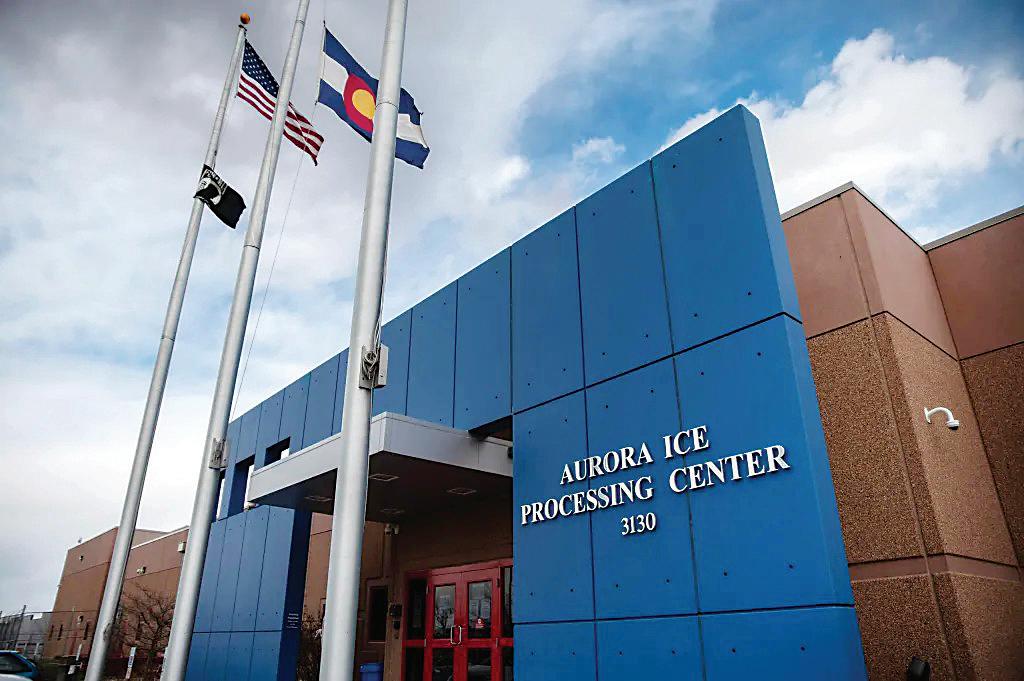
deported from Colorado under the act. e judge’s order says federal o cials cannot take the men out of Colorado, which would prevent immigration ocials from transferring them to a detention center in another state and then deporting them from there. It also says authorities must provide at least 21 days’ notice to detainees — written in a language they understand — that they face deportation and that they have a right to seek judicial review of their case.
She said deportation notices provided to detainees have been “de cient” and did not “comport with due process.” Sweeney also wrote that without the restraining or-
ADVERTISEMENT

der, accused gang members “face the risk of being deported — perhaps wrongfully deported” under the Alien Enemies Act “in violation of their constitutional rights.” e temporary restraining order is in place until May 6 but the judge could extend it. e case was led on behalf of two unnamed Venezuelan men, identi ed as D.B.U. and R.M.M., held in detention in Aurora. ey are represented by the American Civil Liberties Union and the Rocky Mountain Immigrant Advocacy Network.
SEE ORDER, P5
This column is the first installment of a monthly series about one of the hottest topics in real estate: Accessory Dwelling Units. ADUs have gotten a lot of attention recently as a housing option. My thanks to John Phillips of Verdant Living for helping on the research for it.

have been done by relatively well off homeowners and have been relatively expensive. They really don’t qualify as affordable.
TALK ADUs
ADUs (accessory or additional dwelling units) are a wonderful idea. They utilize an existing piece of residential real estate and create a separate living space. They have been around for a long time. In the TV series Happy Days, Fonsie lived in one, on top of a garage. And often they have been a converted basement (still worth considering). They can be a separate building, usually in the backyard. Until recently, zoning regulations made that difficult to do. Throughout the United States, as a part of the need for more housing, zoning codes are being changed to allow ADUs. In Colorado, a law was passed last year allowing ADUs in all major metropolitan areas. That was the subject of my “Real Estate Today” column on February 13, 2025, which is archived online at www. JimSmithColumns.com
When Colorado’s General Assembly passed the law, the legislature was concerned that ADUs would be possible for homeowners of moderate means and add to the affordable or “attainable” housing. Up until now, most of the few detached ADUs that have been built in Colorado
So, can accessory dwelling units play a role in affordable housing? Absolutely, for a very understandable reason. They are smaller. The smaller living space is less expensive to build. Is it for everyone? Of course not, but the well designed living spaces are comfortable and mimic the way most of us live, which is in just a few rooms anyway.
Rita and I now live in a 3-bedroom apartment, having sold our 4,000-squarefoot home in Golden. Back then, we really only used the eat-in kitchen, the living room, the primary bedroom/bathroom, and the office. The basement was filled with stuff we didn’t use, except for a ping pong table we used a couple times a year and a portable sauna that we used a half dozen times. The formal dining room was made into a game room, but we hardly used that. The second bedroom was only occasionally used by a guest.
Now, in our 1,200-square-foot apartment, our life hasn’t changed much. We eat next to our kitchen, which is part of the living room. One bedroom is my office, and we have a guest bedroom that we’ve only used twice, but it’s nice to have. True, we have no room for a piece of exercise equipment that I’d like to buy, but there is a fitness center on the main
floor which has more equipment than I need. The apartment has all we need for daily life sort of like an ADU.
ADUs are perfect for intergenerational housing (AARP loves them), for young adults as starter homes, and for childless couples, like Rita and me.
ADUs are part of a larger movement emphasizing smaller, high quality living spaces. There are entire developments of smaller homes on smaller lots, some of them the size of an ADU.
¨ Cost. Because of their small size, ADUs offer a more affordable option compared to traditional homes, making homeownership accessible to a broader segment of the population, including young adults and seniors.
¨ Housing stock. By integrating ADUs into the housing market, communities increase the overall housing supply, especially when they are located in areas dealing with an affordable housing shortage.
¨ Operational expense. Because of their smaller footprint, ADUs require less heating and cooling, as well as less long-term maintenance.
¨ Versatility. ADUs can serve various housing needs, including for family members or as rental properties, providing the homeowner with an additional income source.
¨ Land cost. This is a big one. When the ADU is a backyard bungalow, it utiliz-
Opportunty Alert! Kol Peterson, a recognized authority on ADUs, is holding an ADU Academy in Denver on June 13. Early registration ends May 9. Visit https://www.aduspecialist.org/ aduacademy
es land that is already owned. For a standalone mini home, the size of the real estate is much smaller.
¨ Water & Sewer. When the ADU is just that accessory to an existing single family home it can share the same water and sewer tap, saving a 5figure cost associated with building a new standalone home. .
Another positive is that an ADU adds long-term value to an existing singlefamily home, increasing the wealth of the homeowner.
If you want to find out more about ADUs, you should check out the buyer’s guide on the Verdant Living website, which lists many other companies and resources: www.VerdantLiving.us Or call or text John Phillips on his cell: 303-717-1962.
Next month: Why aren’t more ADUs being built in Colorado?
NOTE: My “Real Estate Today” column that normally appears on this page is now published bi-weekly. Look for it here next week and every other week thereafter.
Regional Air Quality Council
o ers grants to take gasoline and propane out of mobile food prep
BY MICHAEL BOOTH THE COLORADO SUN
ings you will hear and smell at Hallie Dantzler’s co ee truck:
A Hal’s Co ee barista o ering you a vanilla shot with your latte. Locally roasted co ee beans wafting your way on the steam emanating from the espresso machine.
ings you will not hear and smell:
Bellowing gasoline generators or acrid petroleum fumes.
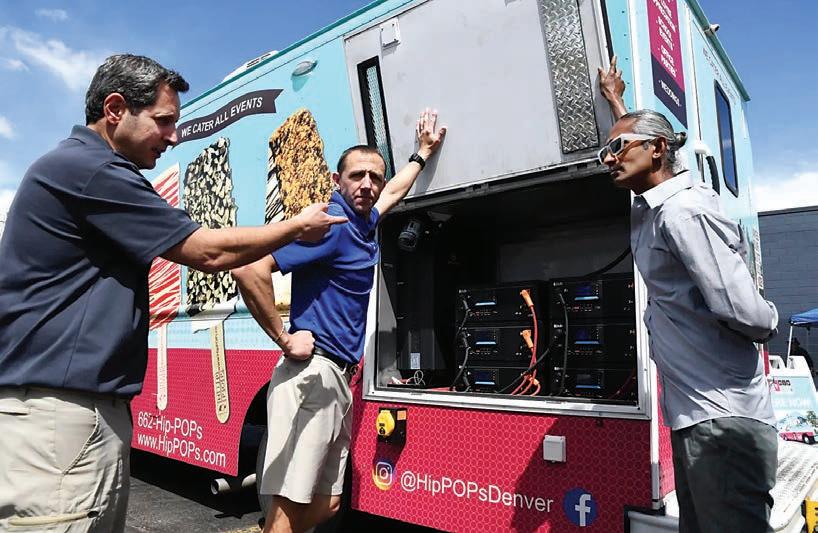
Dantzler dumped two loud, odiferous gasoline generators and adopted $19,000 in clean-running battery packs to run Hal’s Co ee trailer, with the help of an 80% grant from the Regional Air Quality Council.
Dantzler, who pulls the Hal’s Co ee trailer around Fort Collins and the northern Front Range behind an electric Ford F-150 Lightning, runs down a longer menu of perks she attributes to the battery switchover. No more spending hundreds of dollars a day at the gas station lling up generators and fuel canisters. No longer having to scrub her gasolinesoaked hands in orange Gojo at the end of the day before hugging her burbling toddler.
And according to RAQC, no more emitting up to 165 pounds of carbon dioxide
— the equivalent of burning 83 pounds of coal — in one shift. at’s worth another hug from the toddler.
“So knowing that we’re making the world a little bit better for him, and that he’s just growing up in a safer place, is so nice,” Dantzler said.
e Denver-based RAQC celebrated food truck conversions Tuesday at an Earth Day event called “Engines O ,” in a parking lot at West Fifth Avenue and Santa Fe Drive. e air advisory council, which makes policy recommendations to state and local governments and channels grant funds, has overseen the conversion of about 30 food trucks. e current grant fund, which launched in 2024, has enough for about 120 conversion projects, spokesman David Sabados said.
Depending on the food and the equipment needs, replacing gas generators or propane cooking equipment can cost from the low thousands of dollars up to $30,000 per truck. RAQC supplies 80% of the costs for approved trucks, up to a $20,000 cap.
Switching equipment is part of the ght against climate change-causing greenhouse gases and local ozone emissions. Nine northern Front Range counties are now in “severe” violation of EPA ozone limits.
Changing out one truck’s fuel is, of course, small compared with more than 120 million tons of carbon emitted annually in the Colorado economy. But local o cials are taking on small targets as well as large ones — such as power plants — in the ozone and climate ghts.









































eir argument is that small engines like lawn mowers and generators make up a couple of parts per billion in metro Denver ozone readings that approach 80 parts per billion on a hot summer day. Shaving a point or two here and there could help the Front Range get below the 2015 EPA standard of 70 parts per billion.
Nodding to converted food trucks from Amore Pizza, HipPOPS and others, Sabados said, “A lot of this, for us, is about proof of concept, showing it can be done. at it can be done anywhere generators are used — food, construction, anything.”
Daniel Belger’s HipPOPS — avorful gelato pops dipped in liquid chocolate and rolled in toppings like carmelized pecans — draw a lot of power to keep the gelato case cool. He’s got
LED lights all over to make every angle of the operation and its customers look perfect on all-important Instagram.
Without the fumes from the old gasoline generators, HipPOPS gets booked for more indoor events. Plus, Belger said he can hear the customers nudging each other and whispering, “What did you think of the Oreo pop?”
“I hear that and tell them, ‘ e Oreo is AMAZING,’” Belger laughed.
Hal’s Co ee has been booked for two graduation parties over the weekend speci cally because the partygoers want to hear the DJ, not the food truck.
At a pre-Earth Day event last weekend, Dantzler said, “I was the only clean truck anywhere around. And people kept coming up to us, ‘I heard you were the quiet truck. I heard you were the green truck.’ ”
is story was printed through a news sharing agreement with e Colorado Sun, a journalist-owned nonpro t based in Denver that covers the state.

Contractor of the Year 23 out of 25 years


D.B.U., is 32 and ed Venezuela after he was “persecuted and imprisoned for his political activity,” according to his lawyers. He was arrested during a raid by federal agents at a makeshift nightclub during what the agents termed a Tren de Aragua party. e man has a tattoo — not associated with a gang but of his niece’s name — and is not a gang member, his lawyers said.
R.M.M. is 25 and left Venezuela after two family members were killed by Tren de Aragua, according to court records. Immigration o cials called him a “known member” of Tren de Aragua, but R.M.M. denies that. His tattoos are of his mother’s
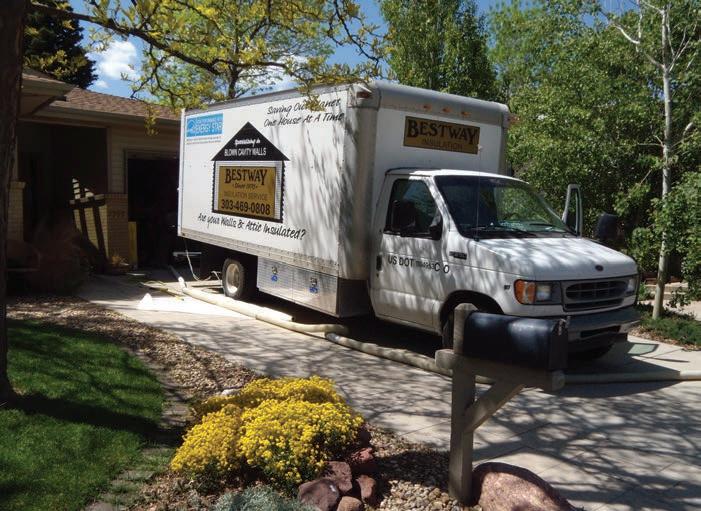
Houses built before mid 1972 usually have empty walls. It wasn’t code to insulate walls until the middle of 1972. We can reinsulate walls that have fiberglass in the walls but there is no rebate with xcel.
name, his birth year, a pattern, a religious symbol and a character from the board game Monopoly, according to court records.
e defendants in the case include President Trump, U.S. Attorney General Pam Bondi, Homeland Security Secretary Kristi Noem, Secretary of State Marco Rubio, director of the Denver ICE eld o ce Robert Guadian and the warden of the ICE detention center in Aurora, Dawn Ceja.
e judge had issued a temporary restraining order last week preventing the deportation of the two men in the lawsuit, pending her decision after this week’s hearing. is story was printed through a news sharing agreement with e Colorado Sun, a journalist-owned nonpro t based in Denver that covers the state.





























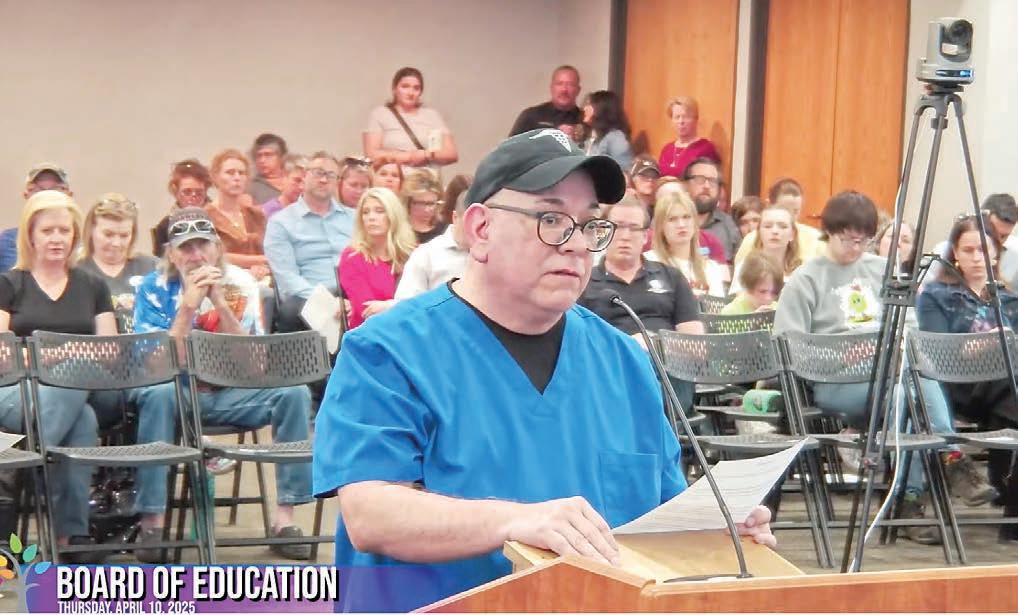
Now, the delayed emergency call has become a ashpoint in the state’s second-largest district, triggering a formal grievance led by the Je erson County Education Support Professionals Association, a union-led campaign for stronger sta protections and growing questions about whether school-based medical professionals have the authority to act in a crisis without administrative interference.
Investigation concludes “no policy violation” e district’s human resources team launched a formal investigation in response to Marin’s complaint, which alleged violations of board policies JLC and GBEB, which address student health services and sta conduct.
Yet, Marin said the investigation was neither independent nor thorough. e investigator left early during their rst meeting, he said, citing a low laptop battery and declining to speak with the on-call nurse, who had waited in another room.
Still, the investigation concluded that there was “no policy violation,” even after nding that it was “more likely than not” that the 911 call was delayed due to e orts to reach the student’s guardian.



e report acknowledged that both Marin and Sanders “adamantly” recommended calling 911, and a second nurse corroborated hearing that recommendation.
Despite this, other sta o ered con icting accounts.
Assistant Principal Stacey Young told investigators that Marin initially did not mention the need for an ambulance and that he agreed they should continue calling contacts.
Buenning said she interpreted Marin’s language, “the student needs to be seen,” as a suggestion that the student be taken by a guardian to their medical provider, not by an ambulance.
e report attributed sta hesitation to Buenning’s “positional power” and a Ralston Valley-speci c protocol that required notifying the front o ce before calling 911. at document has since been revised under district direction to give health sta immediate authority to contact emergency services.
“Je co has had consistent districtwide 911 calling guidelines on which all health sta receive training. ese have not changed,” the district said in a statement. “At the time of the incident, Ralston Valley High School’s medical protocol was not fully aligned with district guidelines.
“ e school’s protocol outlined that an ofce sta member would place the 911 call while health sta cared for the student. e school’s protocol has since been updated to specify that anyone identifying a medical need should call 911. We believe that the district and our associations have a shared interest in the health and wellbeing of Je co students and that includes ensuring that all sta are empowered to seek prompt medical attention for anyone who needs it,” the statement said. When asked why Marin didn’t defy Buenning and call 911 anyway, Marin said he feared immediate retaliation that could cost him his job, his livelihood and his ability to care for students in the long run.
“Not one person has asked, ‘How is that kid doing?’” Marin said the incident left him shaken and frustrated but not alone. Dozens of sta , parents and students have rallied in support. JESPA has elevated his case as part of broader collective bargaining demands for sta autonomy in emergencies.
e district, however, rejected the union’s grievance request to remove Buenning, stating it was outside the scope of the process. Marin remains at Ralston Valley, though he said Buenning is no longer his direct supervisor.
Since then, Marin said conditions have worsened. A new pass system restricts students from entering the clinic without o ce approval, even if they are in distress or require daily medication.
District leadership has not publicly acknowledged the fallout. According to Marin, no school board members have contacted him or inquired about the student’s condition.
“Not one person has asked, ‘How is that kid doing?’” Marin said.
He also said that no board member has reached out to him since he testi ed during the April 10 board meeting about the incident, although he welcomes the opportunity.
“I would love to speak to them one-on-one and show them what I’ve got,” Marin said. “It’s chock-full of witnesses and documentation and everything. It’s not personal. I just want accountability.”
Union response: “No accountability, no safety”
Zander Kaschub, president of JESPA, said the situation at Ralston Valley illustrates a troubling double standard in how accountability is applied.
“When our members make even minor mistakes, they can be red on the spot. Yet a principal whose decision could have resulted in a student’s death is still working months later,”
Kaschub said. “ ere’s a very clear divide in how front-line sta are treated versus how administrators are protected.”
Kaschub said the fact that the district concluded no policy violation had occurred, despite witness corroboration and delayed emergency care, reinforces the union’s demand for explicit contract protections.
While the district already has guidelines empowering sta to call 911, JESPA is ghting to embed that authority into the collective bargaining agreement.
“ e district policy may exist on paper, but when a principal can contradict it and face no consequences, it’s meaningless,” Kaschub said. “ at’s why we’ve proposed a new article that formally guarantees our members the right to act in emergencies without fear.”
The proposal includes:
• Uninterrupted 911 authority: Education support professionals would have the contractual right to call 911 for medical emergencies without interference from administration;
• Mandatory safety training: Annual CPR/ rst aid certi cation, standard response protocol training and site-speci c emergency plans;
• Real-time emergency communication: Sta must be noti ed of
threats as soon as it’s safe to do so.
• Access to student behavior and safety plans: Support professionals working with students must be fully informed of crisis plans and risks;
• Expanded de-escalation and crisis training: Especially for sta working in high-risk environments; and
• Transportation and facilities improvements: Including bus assistants, snow equipment and route safety reviews.
“ is isn’t just about one call or one school,” he said. “It’s about basic human decency and respect for the people doing the work every day.”
He added that broader changes are also needed, from minimum sta ng levels to better protections for custodial and support sta asked to respond to potentially dangerous situations.
“We’re extremely angry and frustrated about what’s happened,” Kaschub said. “ at’s why we’re at the table demanding that they respect us and the work that ESPs (education support professionals) do. We’re tragically underfunded. We’re ghting for basic human dignity and rights while working for a public institution. When they don’t invest in us, don’t support us and re us without cause, it all comes down to basic human decency and respect for workers.”
Marin, who still works at Ralston Valley High School, said he feels disheartened but not deterred.
“We’re not asking for special treatment,” he told the board. “We’re asking to be allowed to do our jobs.”
A publication of
CO, 80439
Mailing Address: 750 W. Hampden Ave., Suite 225 Englewood, CO 80110
Phone: 303-566-4100
Web: Je coTranscript.com
To subscribe call 303-566-4100 or Scan this QR Code

BROOKE WARNER Executive Director brooke@ntln.org
LINDA SHAPLEY Director of Editorial & Audience lshapley@coloradocommunitymedia.com
SUZIE GLASSMAN Community Editor sglassman@coloradocommunitymedia.com
ERIC HEINZ West Metro Editor eric@cotln.org
ERIN ADDENBROOKE Marketing Consultant eaddenbrooke@coloradocommunitymedia.com
LINDSAY NICOLETTI Operations/ Circulation Manager lnicoletti@coloradocommunitymedia.com
BUSINESS INQUIRIES For advertiser or vendor questions, please email our business department at accounting@ coloradocommunitymedia.com
Columnists & Guest Commentaries Columnist opinions are not necessarily those of the Transcript. We welcome letters to the editor. Please include your full name, address and the best number to reach you by telephone. Email letters to letters@coloradocommunitymedia.com Deadline Tues. for the following week’s paper.
Je co Transcript (ISSN 1089-9197)
A legal newspaper of general circulation in Je erson County, Colorado, the Je co Transcript is published weekly on Thursday by Colorado Community Media, 3540 Evergreen Parkway, Evergreen, CO 80439. PERIODICALS POSTAGE PAID AT EVERGREEN, COLORADO and additional mailing o ces.
POSTMASTER: Send address change to: Je co Transcript, 750 W. Hampden Ave., Suite 225, Englewood, CO 80110

Colorado Trust for Local News asks readers to make us aware of mistakes we may have made.
Email linda@cotln.org if you notice a possible error you would like us to take a look at.

When it comes to our nation’s history, I’m a romantic. I can’t help it. I love learning more about it… one can never know it all.
I don’t mean romantic in a simplistic my-country-right-or-wrong, love-it-orleave-it sense. Far from it. I embrace it all, the great along with the despicable. For if one cannot bear hearing uncomfortable truths, how can they truly appreciate the laudable triumphs?
When we read stories from our past, it’s natural to focus on acts of courage and triumph. at’s because we’d like our story, from our own to our nation’s, to be a heroically courageous tale. In very large part, America’s is, but it’s also haunted by ghosts of ugliness: slavery, ethnic cleansing of native peoples, brutal labor exploitation, repression of civil rights.
Our story can be likened to a blending process, not like a melting-pot in which disparate people form a monoculture, but instead a bubbling stew in which acts of heroic nobility were and are intermixed with ignoble ones.
Recent events made me think of a particularly dark period: the Palmer Raids, initiated by Attorney General A. Mitchell Palmer from 1919 to 1920 (a few historians posit earlier). It was an especially toxic stretch of time. Abroad, the Bolsheviks had recently overthrown the czar and seized control of Russia. At home, the struggling

JERRY FABYANIC



Columnist

labor movement was becoming increasingly restive in reaction to the brutality the tycoons of industry had rained down on workers. Fear that communism could spread here was rampant. Firebombs mailed to prominent leaders, including Palmer, inamed the hysteria.
Palmer responded with revenge and fury. He launched raids across the nation. ousands of innocent citizens were rounded up and incarcerated. Some were tortured simply for exercising their First Amendment rights. Immigrant groups lived in terror. Suspected “communist agitators” were deported en masse. Palmer likely felt invincible, but he wasn’t.
Palmer met his Waterloo when members of Congress, judges and lawyers stood up and called him down for his blatant disregard for due process, the bedrock of the American judicial system. In response, he vociferously claimed that there would be an armed mass uprising on May Day 1920. When it didn’t occur, he lost his credibility, and his power waned. e tide ebbed but it never completely receded. Hysteria would sweep back to shore from time to time.
e Palmer Raids were the rst Red Scare. e second and most infamous was McCarthyism in the early 1950s. And here we are. Xenophobia is a dark side of our legacy.
Merriam-Webster de nes due process twofold: one, a course of formal proceedings (such as legal proceedings) carried out regularly and in accordance with established rules and principles, and two, a judicial requirement that enacted laws may not contain provisions that result in the unfair, arbitrary, or unreasonable treatment of an individual.
e Fifth Amendment reads no person can “be deprived of life, liberty, or property, without due process of law.” Section One of the Fourteenth Amendment, which nationalizes the Fifth, reads, “nor shall any State deprive any person of life, liberty, or property, without due process of law; nor deny to any person within its jurisdiction the equal protection of the laws.”
In “A Man for All Seasons,” after omas More (sainted by the Catholic Church) tells his future son-in-law Will Roper in a terse exchange that he’d give the Devil the bene t of the law, Will retorts that he’d cut down every law in England to go after the Devil. In response, omas dissects Will’s reasoning.
“And when the last law was down, and the Devil turned on you, where would you hide, the laws all being at?”
For years, I have been learning about resilience, its di erent nuances, the corners hiding the gems that make resilience so important and even the perceptions we hold that make it di cult to see the possibilities of resilience. Still, after many years of focusing on the subject, I learned stunning and beautiful things about the nature of resilience last July.
One Wednesday, last summer I received an instant message from the son of a former administrative assistant. It simply said, “Can you give me a call?” and left a phone number. It was the kind of message that leaves a pit in your stomach.
Knowing that something was terribly wrong, I called the number. In our conversation, Tim told me that his mom, Brenda, had been severely injured in a motorcycle accident and that she would not recover. He explained that while she was still on life support, there was nothing to be done because the injuries to her head were too extensive. He concluded by saying that they did not need anything; I told him how sorry I was, and we hung up. e next day, I texted Tim to see if he needed anything. He said “no,” and I did the same on Friday. Friday’s text response was simple, “Could you come to an Honor Walk for my mom on Saturday morning?” I immediately responded, “yes,” and asked for details.
I had no idea what an Honor Walk meant. I thought it strange when I asked where to meet, and he responded, “In the ICU waiting room at Saint Anthony’s Hospital,” but I did not ask more questions; I just planned to go. Once there, joining 50 or 60 other people, I began to put pieces together. We were not walking; we were to be the observers for Brenda’s nal walk. Her body was kept
omas reminds Will about the country being thick with laws — not God’s but man’s — serves to protect everyone. He then asks Will if he could stand upright in the winds that blew if those laws were ignored or negated. In a reverential voice omas concludes, “Yes, I’d give the Devil bene t of the law, for my own safety’s sake.”
Dismayingly, the laws did not protect him because King Henry VIII usurped them and ordered omas, who was once his chancellor and close con dant, beheaded.
America today is like England then: ick with laws. But there is also a fundamental di erence between us: We don’t have an all-powerful king. Instead, we have the Constitution with the right to due process enshrined in it to protect us from unchecked power. e Fifth and Fourteenth Amendments make it clear that due process is guaranteed to all persons within its jurisdiction. No exceptions. Even for non-citizens. Otherwise, it’s not guaranteed for anyone.
Freedom-loving Americans not only grasp that but are also bound by and to it. ey do so not just out of principle but for their own safety’s sake.
Jerry Fabyanic is the author of “Sisyphus Wins” and “Food for ought: Essays on Mind and Spirit.” He lives in Georgetown.
LETTER TO THE EDITOR
Rep. Brittany Pettersen, stand up against tyranny
Dear Editor,
WORDS OF ENCOURAGEMENT



functioning, but with no chance of recovery, the family, following Brenda’s wishes, was going to have her organs donated.
e Honor Walk was Brenda’s move from her ICU room to the operating room where she would be taken o life support. When her heart stopped, the donation of her organs would begin.
e hospital liaison teared up as he thanked those who had shown up, saying it was unusual for so many to attend the walk. All in attendance knew it was a testament to the profound life Brenda lived.
e walk was simple. We were taken to the hallway between Brenda’s room and the operating room, and along with ICU hospital sta , we silently lined the hallway as Brenda was wheeled through the space, followed by her family. When they stopped brie y, someone shared a short prayer, then the gurney was pushed into an OR and the doors were closed.
e whole walk lasted no more than ve minutes, but the stunning beauty and devastating reality of that experience will stick with me forever. I will never again talk with the person who supported my work as an assistant principal for more than ve years. Never lament the poor Bronco’s performance from the weekend with her or learn from her how her children are doing. At the same time, I will never forget being present as Brenda, with her nal breath, was given the opportunity to change lives forever. Brenda’s nal act of resilience gave life to another, maybe several others. She


SHUTTERSTOCK
showed us that even as we lose everything on earth, we know we can bring light, hope and encouragement.
Her example illuminates a powerful lesson for all of us. We can both nd and give encouragement no matter the situation. Rest in peace, dear friend. ank you for your inspiring model.
I hope my words encourage you, and that you will share them with those who need support. ank you to everyone who has shared their stories with me so far; I truly appreciate hearing about the valuable ideas you nd in these columns and how you use them to uplift those around you. You can reach me at jim.roome@ gmail.com.
Jim Roome lives in Arvada with his wife, Beth. He spent 34 years in public education. Lessons learned from the one two punch of being diagnosed with MS shortly before his best friend was diagnosed with terminal cancer led him into a new pursuit as a freelance writer and speaker. He uses his life experiences and love of stories to inspire, educate and encourage local, national and international audiences. Contact him at jim.roome@gmail.com.
Rep. Brittany Pettersen, our representative for Colorado District 7, declined this in April to respond to questions about whether she supports impeaching President Donald Trump. Like many Coloradans, I am deeply concerned by the actions taken by the Trump administration. is administration has routinely taken illegal actions, deed court orders to stop and correct those actions, and in these and many other ways, has clearly violated the rights granted to the people by the Constitution of the United States.
What was once dismissed as hyperbole about the danger of this administration has now become reality. Our Constitution and the rule of law are under attack. Democratic norms are being eroded. Civil rights and liberties are not only under threat — they are being actively stripped away. Public health has been politicized, environmental protections rolled back and our economy steered toward deepening inequality.

As a citizen and voter from Je erson County, I believe it is time for Rep. Pettersen to take action. She has sworn an oath to protect the Constitution. e actions taken by President Trump to turn America into an authoritarian country must be stopped.
I hope Representative Pettersen will rise to the challenge and publicly commit to upholding her most fundamental role as a defender of our country against tyranny.

Rachael Hoover, Lakewood
Invertebrates represent many of the most ecologically important species on the planet, as well as some of the most culturally relevant. ey’ve inspired religious beliefs, landscapes, traditions and much more.
Now the critical role invertebrates play in Mexican culture is explored in Legacies: Invertebrates of Mexico, the Butter y Pavilion’s latest exhibit. Legacies not only provides a look at some of the insects that live in Mexico, but allows visitors to learn about their importance to modern life.




vertebrates, the stories and culture of Mexico would be very di erent than it is now.”

“A lot of people don’t necessarily think of insects as animals,” said Jennifer Quermann, senior director of communications and marketing at the Pavilion. “But when they meet them and learn about their personalities, people are more likely to want to help protect them.”
e exhibition runs at the Butter y Pavilion, 6252 W. 104th Ave. in Westminster, through next year and is included with a general admission ticket. To put Legacies together, the Pavilion collaborated with several partners, including the Consulate General of Mexico in Denver, the National Institute of Anthropology and History of Mexico, Calaveras en mi Ciudad and Harvest Of All First Nations.
As part of the exhibit, visitors have the opportunity to check out live animals like millipedes, scorpions, tarantulas, slipper lobsters and more, and learn about the various roles they play in life in Mexico. at includes everything from food sources to red dye, which is made from cochineal bugs.
“It is important to us that these stories are told,” said Sara Stevens, director of animal collections. “Without in-


In addition to the animals, the exhibit also features sensory elements like soundscapes and natural scents to bring guests to the Mexican landscapes, and interactive educational activities that emphasize the importance of partnerships and local conservation.
“You can’t just do conservation work in one place,” Quermann said. “Community science is so important and there are many ways to get involved. We all need to be thinking of ways to work together.”
e importance of collaboration is highlighted in the annual Monarch butter y migration, one of nature’s most stunning displays. e Pavilion does volunteer work in Mexico’s Monarch Butter y Biosphere Reserve to protect the butter ies’ winter habitat, while also encouraging people in Colorado to plant Milkweed, a critical fuel source on their migration.
e aim of the Pavilion’s work is people will come away with a new appreciation of the animals and an interest in protecting them.
“One great thing about insects is that with minimal e ort, you can make a big impact,” Stevens said. “It’s a great return on investment.”
Information and tickets are available at https://butter ies.org/legacies-invertebrates-of-mexico/.
SEE READER, P16

Proclaiming Christ from the Mountains to the Plains
www.StJoanArvada.org
12735 W 58th Ave · 80002 · 303-420-1232
Daily Masses: 8:30am, Mon-Sat
Confessions: 8am Tue-Fri; 7:30am & 4:00pm Sat
Saturday Vigil Mass: 5:00pm
Sunday Masses: 7:30, 9:00, 11:30am, 5:30pm

“Find Connection…Discover Faith” All Are Welcome
Sunday Worship 10:00AM
Green Mountain Presbyterian Church 12900 W Alameda Pkwy Lakewood, CO 80228
303-985-8733
www.gmpc.net



















Advertise Your Place of Worship HERE

Join us in person: 1st & 3rd Sundays
7401 W. 59 Ave, Arvada
Other Sundays on Zoom 10:30 am Live Music
Livingwaterunity.org
Livingwaterspiritualcommunity@gmail.com 720-576-9193
All Are Welcome
To advertise your place of worship in this section, call Erin at 303-566-4074 or email eaddenbrooke@ColoradoCommunityMedia.com
















BY MONTE WHALEY MWHALEY@COLORADOCOMMUNITYMEDIA.COM
Veterinarian student Sarah Hilliard retreated to a far corner of a room lined with kennels for the animal hospital’s patients, sat down and thought about how she was going to end her life. Suicide seemed like the best exit out of a grueling, joyless life that included 70-hour work weeks and treating sick and dying animals in a callous, competitive environment.
“I just sat in the corner, and I cried and cried,” said Hilliard. “I was planning on going home and take a long cool smoothie with all my meds and calling it quits. I often thought about what it would be like to nally just take a long deep sleep and never wake up.”
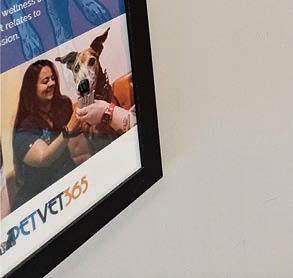
Hilliard is now co-owner of PetVet 365, a new-style pet clinic in Westminster that emphasizes compassion for both animals and their veterinary caregivers. But in 2010 — when she considered her suicide — she was working on her residency in internal medicine at Ohio State University’s College of Veterinary Medicine in old-school conditions that emphasized only clinical survival.



“ ere was no time for self-care,” said Hilliard. “ ere was no role model telling me, ‘Hey, you are not doing so well. Why don’t you take a day o ,’” she said. “You were pretty much on your own. No one talked about having any doubts about what they were doing. No one wanted to admit any kind of weakness.”’
A colleague found Hilliard and she was admitted to a psychiatric ward for seven days. She balked at going back to her residency and reconsidered her relationship with the veterinary profession, stepping away from practicing medicine for several years.
“I just felt the veterinary world just chewed me up and spit me out,” the 44-year-old Hilliard said. “I had to deal with the giant elephant in the world … what to do next.”
She underwent cognitive behavioral therapy to get to the root of her anxieties. She eventually helped open PetVet 365, which practices a “fear free” approach to treating its patients. She also speaks up about the prevalence of veterinarian suicides in the United States.











“It’s a problem that has not really been looked at or dealt with up until just the last few years,” Hilliard said. “It is time for people to realize that we deal with a lot of stu . It’s not just all bunny rabbits and owers.”
A study by the Journal of the American Veterinary Medical Association in 2019, found that veterinarians in the United States are three-to- ve times more likely to die by suicide than the general population. ere was a similar conclusion reached in a2019 Centers for Disease Control and Prevention study.
About 80% of all veterinarians su er from clinical depression at some point and about 50% report feeling unhappy in their careers, according to Psychology Today.
“ ese statistics paint a bleak picture that calls for a profound examination of the underlying factors fueling this troubling trend,” states Psychology Today. e publication points to several factors that weigh heavily on the mental health of veterinarians, including performing euthanasia on patients, wrestling with large school debt and burnout.
“ e fear of making a mistake or failing to provide optimal care can foster feelings of inadequacy and perfectionism, which can be detrimental to their mental health,” the article states.
Veterinarians can also be the target of cyberbullying. A client can deliver poor online ratings on Yelp and Google or leave derogatory messages which leads to anxiety, depression and stress among
vets and veterinary technicians, states Psychology Today.
“Veterinarians may feel overwhelmed by the constant negativity,” the publication states.
Colorado State University o cials say they are responding to the new needs of veterinary students — including their mental health — through the university’s Veterinary Health and Education Complex, or VHEC, which includes a new Primary Care Center.
e facility includes a teaching hospital for routine and urgent care; a new Livestock Veterinary Hospital, fully equipped with medical, surgical and ambulatory facilities built to meet current and future demands for large animal care; and reimagined classrooms with interactive workstations, according to CSU. e complex — slated to be nished in fall 2026 — is coupled with a signi cant curriculum update. e new educational roadmap maintains the rigor of a robust science-based doctoral program while emphasizing ideas such as resilience, professionalism and wellbeing, according to CSU.
Dr. Matthew Johnston, professor of avian, exotic and zoological medicine and co-chair of the college’s curriculum renewal committee, told CSU Magazine last April that changes needed to be made to head o the mental and emotional toll exerted on veterinarian students and practitioners.
“We started seeing declining attendance at lecture-based courses. We’ve seen upticks in students leaving the program not for academic reasons, but for mental health reasons,” Johnston told the magazine. “I personally have colleagues who have died by suicide.” Johnston, who has taught for more than 20 years, told the magazine that CSU’s revamped program can have a signi cant impact by changing the way it teaches veterinary medicine. Fewer static lectures. More hands-on learning and group work. Dedicated breaks throughout the semester for re ection and restoration.
“We’re not just going to give you information about mental health and wellness, we’re changing the whole system,” Johnston told CSU Magazine. “CSU is radically ipping the script more than any vet school has done.”
Melinda Frye, associate dean for veterinary academic and student a airs at CSU, said the school will include an embedded counselor to aid troubled students. Financial counselors will also be available, as well as someone to talk about a student’s “vocational wellbeing.” Students can also take time o for religious holidays, Frye said.
“We want to encourage students to understand the human dimensions of our profession,” Frye said.
Students still are faced with a curriculum that demands they gain expertise on a variety of animal species from kittens to dogs and horses, she said. And it’s all done in four years.
“I do understand this contributes to a lot of our students feeling a bit overwhelmed,” Frye said. “ at’s a lot to take in in a short period of time.”
Hilliard grew up in Ohio and was always interested in animals and science. She wedded the two by attending Ohio State’s veterinary school from 2004 to 2008 to become a general practitioner.



















She got into CSU’s internal medicine residency program and began dealing with feelings of inadequacy and “imposter syndrome,” she said.
“I kept thinking to myself, ‘How did I get here? What am I doing here?” she said.
Hilliard got help in counseling and began taking prescription drugs for panic and anxiety.
“ e medicine did multiple things to help my physical feelings, but I didn’t understand what the underlying problem was,” she said.
She returned to Ohio State for her residency in small animal internal medicine. Hilliard admits she was not ready for the emotional toll the program would take on her.
“Everything just intensi ed, the patients were very sick, and you are supposed to know the answers,” she said. “But I did know that you were not supposed to ask for help.”
Her breakdown and departure from Ohio State led her down several paths that included going back into a general practice with a friend. She also worked for a pharmaceutical company for a few years.
“Still, I knew something just wasn’t right,” Hilliard said.
at led her to cognitive therapy and
to a group of friends starting a new kind of veterinary practice.
“ ey wanted a nice place to work and for people to bring their pets to,” Hilliard said.
e group created PetVet 365, a Fear Free practice. e waiting room is eliminated, and every patient and pet “guardian” is given their own private dog or cat suite, complete with a TV, couch, rug, toys, species-speci c pheromones and treats.
“Everyone feels more comfortable, including the patients, guardians and the sta ,” Hilliard said.
Not every problem has been eliminated. Some pet guardians are still angered or hurt when they receive bad news about their pets.
“We just talk to them and tell them that our sta needs to be treated respectfully,” Hilliard said.
And there are days when a dog or cat must be euthanized. Hilliard said her sta works to help the animals slip peacefully away.
“It’s not the easiest part of our day, but it’s one of the things we can give as a gift to families that they have an opportunity to end their pet’s su ering,” Hilliard said. “ at’s the unique part of our profession. In many ways, it’s one of the more beautiful things we can do.”
Andrea Arguello, an assistant principal at Alamanda Jr./Sr. High School and a former Je co student, re ected on what she wished she’d had earlier in her own school journey.
“I spent so long thinking I was the problem,” she said. “Now I work with students who remind me every day that we just learn di erently and that’s not a de cit.”
Kaden Forsha, a high school sophomore, re ected on his experience by offering a reminder that dyslexia doesn’t de ne limits.
“It might take you a little longer to gure it out,” he said, “but you will gure it out.”
His encouragement echoed the message of perseverance that resonated throughout the evening.
River Gallegos, now a high school junior, said he failed most of his classes in sixth grade and regularly lost recess for behavior issues linked to his undiagnosed ADHD and dyslexia.
“ en I got into the Bright Minds program at Alameda Jr./Sr. High School and it changed everything,” Gallegos said. “Now, I’m on grade level, I just joined the National Honors Society and I was elected junior class representative.”
Martin Cernick, a golfer and junior at Chat eld High School, said public reading assignments still give him anxiety. But with time, support and advocacy, he’s grown con dent in his strengths.
“Sometimes I still stumble when I read out loud,” Cernick said. “But I know that doesn’t mean I’m not smart.”
Evan Sodja, a junior at Colorado State University, said dyslexia, ADHD and auditory processing disorder once made learning feel impossible. Now, with accommodations like extra time, text-tospeech tools and private testing rooms, he’s thriving.
“You have to teach yourself how to learn and advocate for what you need,” Sodja said. “And that starts when you’re young.”
Several students also addressed a common misconception: that accommodations like extra time or audiobooks are unfair advantages.
Several students also addressed a common misconception that accommodations like extra time or audiobooks are unfair advantages.
“Sometimes people think it makes things easier,” Gallegos said. “But it just helps us get through the work the same as anyone else.”
Sodja added, “ ey don’t make the work easier. ey level the playing eld so we can show what we actually know.”
A district-level shift: Screening begins in December
e district recently announced that it will implement a universal dyslexia screener for all K-3 students starting in December, joining a growing list of Colorado districts that are investing in early detection.
e tool, Rapid Automatized Naming, will be integrated into the district’s existing mid-year DIBELS 8 and Lectura
assessments, which are already administered three times annually in early grades.
e RAN screener measures how quickly students can name familiar visuals, such as numbers or letters, helping to identify those at risk for reading di culties.
“ is proactive approach allows us to identify students who may bene t from additional reading support early on,” said Martha Shehan, Je co’s Director of Expanded Academic Learning. “It’s quick, familiar and gives teachers valuable insight into risk levels, so we can act before gaps widen.”
e screening is not a diagnosis, Nicothodes and Shehan emphasized, but a tool to ag students who may bene t from interventions. Parents will receive results during spring 2026 conferences, and educators are undergoing training to interpret scores and communicate next steps.
“We believe this is an important step in our ongoing e orts to support all learners in Je co,” Shehan said.
Parent advocates helped drive the change e event also celebrated the work of Je co KID, which began meeting with district leaders in 2018 to push for better support.
“ is event wasn’t just about awareness — it was about celebration,” said Elisa Sodja, co-founder of Je co KID and moderator of the panel. “Our kids are smart. ey just needed the right support at the right time.”
Re ecting on the journey, Elisa added, “We weren’t trying to cause problems. We were trying to create solutions because
we knew our kids couldn’t wait another ve or ten years for change.”
“We started with a list: awareness, identi cation, screening, intervention, training, education, and accommodations,” said Jen Halsall, co-founder of Jeffco KID and moderator of the panel.
“And we’ve checked a lot of those boxes. But nothing compares to hearing our kids speak for themselves. is night was about them,” Halsall continued.
Sodja’s son, Evan, closed the night with a message about self-acceptance and support.
As the panel wrapped up, each student shared a short saying or belief that guides them.
“Don’t let fear decide your fate,” Yankovich said.
Martin Cerrnick reminded the audience, “Always remember that there’s somebody there that wants to help you and you just have to nd that person.”
Yankovich advised those with dyslexia never to let fear determine their fate.
“Shoot for the stars so if you fail, you land on a cloud,” Gallegos said.
Forsha said, “Keep a growth mindset, and things will go well.”
Evan Sodja added, “Just because you see things di erently doesn’t mean you’re wrong. It allows you to bring new things, new ideas and new solutions to the table.”
ese brief messages underscored the evening’s theme: that with the right support, students with dyslexia don’t just survive, they succeed.
“I used to try to hide my dyslexia,” Arguello said. “Now it’s part of who I am, and I’m proud of that.”




Thu 5/01

Erin Stereo: HIFI Happy Hour at Two Moons Music Hall @ 5:30pm Two Moons Music Hall, 2944 Larimer St, Denver


Tina Fey & Amy Poehler @ 7pm

Red Rocks Amphitheatre, 18300 West Alameda Parkway, Morrison Black Carl @ 10pm
The Church Nightclub, 1160 Lincoln St, Denver
Fri 5/02

Live @ The Rose - Cash'd Out with Derek Hall & The Possibilities
@ 6pm / $20 Buffalo Rose, 1119 Washington Av‐enue, Golden. information@buf falorose.net

DJ Rockstar Aaron @ 9pm R & R Denver, 4958 E Colfax Ave #1208, Denver
Sat 5/03
Stovetop Gemini - EP Release Party @ 7pm Lost Lake Lounge, 3602 E Colfax Ave, Denver
The Well @ 7pm HQ, 60 S Broadway, Denver


Sun 5/04
Kid Astronaut: MAY MADNESS ART MARKET @ Dulce Vida (NEON WOLF DJ SET) @ 1pm Dulce Vida, 1201 Cherokee St, Denver
Mike Ippolito Live at Cactus Jack's Saloon & Grill @ 2pm
Cactus Jack's Saloon, 4651 County Hwy 73, Evergreen


Tangerine Sky Market Arvada @ 10am / Free Colorado Markets @ Arvada Market‐place, 7310 West 52nd Avenue, Ar‐vada. events@coloradomarkets.com, 303-505-1856

Denver Derby Day 2025 @ The RitzCarlton Denver @ 1pm / $35.73-$72.66
The Ritz-Carlton, Denver, 1881 Curtis Street, Denver. kevin@kevinlarsonpre sents.com, 720-507-1376



Hex Cassette: Cabaret Grey @ 8pm The Crypt, 1618 E 17th Ave, Denver Pokerface @ 9pm Larimer Lounge, 2721 Larimer St, Denver

Chiodos @ 6pm
Fillmore Auditorium, 1510 Clarkson St, Denver

SALSA & BACHATA SUNDAYS @ 7pm La Rumba, Denver
EyeHateGod (16 & Over) @ 8pm Bluebird Theatre, Denver
Mon 5/05
Forrest Frank w/ Elevation Rhythm @ 7pm Red Rocks Amphitheatre, Morrison


Tue 5/06
Smino @ 8pm Ogden Theatre, 935 E Colfax Ave, Den‐ver The Protest @ 7pm
Shootin' DICE Studios @ The Rickhouse, 6100 East 39th Avenue, Denver

Orla Gartland @ 8pm Meow Wolf Denver, 1338 1st Street, Denver
Wed 5/07
Stateside


Witch Ripper: Denver, CO
8pm
Crypt, 1618 E 17th Ave, Denver Cameron Schmidt @ 8pm Larimer Lounge, 2721 Larimer St, Denver BAD YEAR MKE, WI @ 8pm Squire Lounge, 1800 E Colfax Ave, Denver
Blaine Bailey @ 9pm Star Bar, 2137 Larimer St, Denver

BY CORINNE WESTEMAN CWESTEMAN@COLORADOCOMMUNITYMEDIA.COM
Like watching a construction project, the 2025 Colorado School of Mines football team still has a long way to go before it’s ready for primetime.
But the Orediggers have laid the foundation for their fall season over the last two months, and based on what they’ve seen so far, they’re con dent they’ll be a major competitor come August.
“Expect a gritty team,” wide receiver Flynn Schiele said. “We’re going to be scoring a lot of points, playing great defense, ying around, making plays (and) get the crowd into it the best we can. It should be a great culture here.”
Among their goals, Schiele and free safety Joel Diaz said the Orediggers want to return to the NCAA Division II playo s and win the program’s rst national championship.
“ e mission hasn’t changed,” Diaz said. “Mines football is here to compete.”
e Orediggers showcased their competitive spirit and the results of their spring training for family, friends and fans during the annual spring game April 19. anks to a uniquescoring system that awards points for major plays or stops, the o ense defeated the defense 42-21.
e o ense received points for touchdowns, plays that went 20-plus yards, fourth-down conversions and more. Meanwhile, the defense received points for three-and-out sequences, fourth-down stops, turnovers, etc.
Both the o ense and defense started with their rst- and second-string players in the rst half, but third- and fourth-string players had more playing time in the second half.
e defense led early, but the o ense gained momentum throughout the game and racked up more points to take the lead. e defense had the nal points of the game, though, thanks to Duke Butler nabbing an interception.
Coach Bob Stitt said he was pleased there were “good things on both sides” of the ball, saying a lopsided spring game would be a bad sign.
He highlighted Schiele’s big receptions, including two touchdowns, as well as the o ensive line and quarterbacks’ e orts. Stitt explained how, for much of the game, he let the quarterbacks call the plays, and



Wide receiver Flynn Schiele attempts to catch a long pass while being guarded by one


of Mines football team’s April 19 spring game. Schiele dropped the pass a few seconds later, but had a strong performance otherwise, helping the o ense rack up points to win 42-21.
PHOTO BY CORINNE WESTEMAN
he felt it worked well.
Schiele likewise felt that the quarterbacks and receivers had good chemistry, saying they’ll keep building on that during the o season.
For the defense, Diaz highlighted defensive backs Kai Brown and Niko Auerbach, describing them as talented freshmen who hit hard and work harder but just need a little more experience. He recommended Mines fans keep an eye on them, saying they’ll be making big plays in the coming years.
One thing Stitt said players on both sides of the ball must work on is penalties, as the o cials called dozens throughout the April 19 spring game. Stitt said he appreciated having o cials there to hold the players accountable, adding that Mines will be working on that during the o season and during preseason camp in August.
He thanked the 300-plus fans who braved the recent snowfall and chilly conditions to watch the spring game, saying, “I’m really excited for next season.”
‘We’re not taking any steps backward’ Preseason camp is roughly 100 days away, and the Orediggers expect that time to y by.
is o season, Stitt said the coaching sta will focus on recruiting for the 2026
team. Meanwhile, the players will be taking their spring nals and then working on their physicality over the summer.
“I told the kids after (the spring game) that we want to have a more physical team,” Stitt said. “We want to see a di erent group of guys physically when we show up in August.”
Diaz and Schiele, both of whom will be seniors next year, described how their summers are typically lled with trips to the weight room, team-bonding activities and other items that build team culture.
Schiele said that usually involves smaller groups working on their chemistry, like the receivers and quarterbacks, but the entire team also gets together frequently.
“We compete against the defense in practice, but the instant the whistle is blown, we’re hanging out (together),” Schiele said.
Although he believed the Orediggers struggled with their team culture in 2024, Schiele said it improved over the spring. He expected it to improve even more over the summer and once practices resume in August.
Diaz emphasized how the Orediggers must “stay focused on the mission” and “keep working on our craft” over the summer. Because August isn’t that far away and the team has to hit the ground running at preseason camp, he said, “We’re not tak-
ing any steps backward.”
Both Diaz and Schiele plan to graduate in December and remarked how the last four seasons have own by. ey couldn’t believe 2025 will be their nal season at Mines, but both were looking forward to stepping up this fall and eventually passing the torch to the next set of Orediggers.
Diaz remarked how his class is in a unique situation, as he and his fellow seniors were underclassmen in 2022 and 2023 when Mines made back-to-back national championship appearances.
“It was a privilege … to see the caliber of team and player that’s required to get there,” Diaz said. “And then, last year, we fell a little short of some of our goals. All the pieces were still there. It’s really about putting them back together and realizing what it takes for us as a team to get to those places again.”
Diaz said he saw echoes of the 2022 and 2023 seasons this spring, saying the competition and the energy was back to the level it was when the Orediggers made those deep postseason runs.
“I’m happy to see what we did here in the spring, because I think that’s going to translate well for the fall,” he continued.
“So, I’m excited to see (my) last fall. If it’s going to be the last, might as well make it the best.
BY BY DENNIS PLEUSS
JEFFCO PUBLIC SCHOOLS
It’s been a long time coming.
Alameda International hadn’t won a baseball league title since the Pirates captured back-to-back Je co 6 League championships in 2001 and 2002. e drought o cially ended Wednesday with a 13-3 home victory against Fort Lupton.
“It absolutely feels great,” Alameda coach Nick Arguello said of winning a conference title for the rst time in over 20 years. “It was one of our goals we set at the beginning of the season. We have the talent. We have the guys in place to take on that challenge. It has been a long time.” Alameda left the Class 4A/3A Je co League for the current two-year CHSAA cycle. e Pirates joined the 3A/2A Fron-
tier League and the move has de nitely worked out so far.
Not only did Alameda (15-2, 8-0 in league) clinch a conference title by completing a sweep through the Frontier League on Wednesday, it also extended its winning streak to 13 games.
“It means everything. at is what the goal is at the end of the day,” Alameda senior Ivan Baca said of the league cham-
pionship. “Coach Nick has the motto we live by, ‘It’s we before me.’” ere were de nite signs last year that Alameda was on the brink of having a break-out season. e Pirates had an 1111 overall record last year and nished 4-5 in 4A Je co League play, including a victory at Evergreen.




Alameda junior Alan Chairez (15) is mobbed by teammates after his second 2-run home run Wednesday, April 23, at Alameda International Junior/Senior High School. The Pirates defeated Fort Lupton 13-3 to complete the sweep of the Class 3A/2A Frontier League. Alameda won its first conference baseball title since 2002.
“Being in (4A Je co League) for the past three years, we were battling. We had the squad, but our circumstances didn’t allow us to shine,” Baca said. “ is year we are excited and hungry. ose three years really feed into our drive for this year.”
Fort Lupton (6-9, 4-3) did provide a bit of a speed bump on Alameda’s drive to the league title. Senior Jesse Ceretto
belted a long two-run home run to dead center eld o Alameda starting pitcher Hudson Judy in the top of the rst inning to give the Bluedevils a quick 2-0 lead.
“In past years, we would have just broke down,” Judy said of Fort Lupton’s early lead. “Now, I feel like we are wanting to win. We want more. ere are expectations now.”
Judy settled in on the mound and nished getting the complete-game victory. He gave up a solo home run to Ceretto in the third inning, but shut down the rest of the Bluedevils. e junior had 11 strikeouts and allowed just ve hits over







ve innings.
“He (Judy) challenged himself to be a little bit better,” Arguello said of his junior pitcher. “He got the opportunity to grow today.”
Alameda’s o ense backed up Judy in a big way. Fort Lupton’s lead was shortlived. Junior Alan Chairez crushed a tworun home run in the bottom of the second inning to begin a 5-run inning. Senior Robert Romero scored on a wild pitch, while juniors Dominic Huerta and Edwin Arroyo knocked in a run each to give Alameda a 5-2 lead.
Chairez went opposite eld for another two-run home run in the bottom of the third inning to open up a 7-3 lead.
“He (Chairez) has taken on a big role as a leader for us,” Arguello said. “He has maintained his composure and is calm regardless of the circumstances. Is always ready to hit the baseball as hard as he can.”
Alameda put the game out of reach with a six-run bottom of the fourth inning to push the lead to 13-3. Chairez drove in his fth run of the game.
“ at is our spark plug right there,” Baca said of Chairez’s big day at the plate. “Teams don’t want to see us get hot. Once we get hot it’s very hard to stop us.”
Baca completed his 3-for-3 day from the plate with an RBI double in the fourth.
“Alameda has been rebuilding its athletic program for the past ve to 10 years. We are seeing a lot of culture change here and success,” Arguello said. “ e boys are buying into the system and program that we are trying to build here. It doesn’t happen overnight.”
Judy said the team was aware that Alameda’s baseball program hadn’t captured a league title since 2002.
“Winning this title is so amazing,” Judy said. “It lights a spark for the future. It helps us out a lot.”
e job isn’t done yet. e Pirates have six non-league games before heading into the 3A postseason. Alameda is scheduled to hit the road to face Rangeview (7-8) at 4 p.m. Friday, April 25, in Aurora.
Despite the 15-win season already, Alameda was only 18th in the CHSAA Selection & Seeding Index for 3A baseball. “ at is out of our control,” Arguello said of where the Pirates will be seeded for the 3A playo s. “We control what we can control and that’s all we do. We are following our plan 100 percent. It is really a privilege to be here and being a part of this.”
e 3A 32-regional playo s are scheduled to be played May 16 and 17.
“ is team is a once in a decade type of team,” Baca said. “We aren’t done. We are coming for it all.”
Dennis Pleuss is the Sports Information Director for Je co Public Schools. For more Je co coverage, go to ColoradoPreps.com and CHSAANow.com











































Denver Ballet Theatre Dances to PACE Center Ballet, much like opera, deals in big emotions. at’s what makes it so compelling. And that’s what the Denver Ballet eatre is bringing to the Parker Arts, Culture & Events (PACE) Center, 20000 Pikes Peak Ave., at 1 and 7 p.m. on Saturday, May 3 and Sunday, May 4, with its presentation of “Paquita ”
According to provided information, “Paquita” is a “breathtaking, romantic ballet featuring gypsies, a murderous plot, forbidden love, a heroic rescue and a grandiose wedding set in the south of Spain.”
Don’t miss this top-tier cultural experience at https://parkerarts.org/event/ denver-ballet-theatre-presents-paquita/.
Colorado Stars of Magic Bring an Unforgettable Evening to Lakewood
ose who love a good magic show are in for a real treat with the Colorado Stars of Magic’s performance of One Unforgettable Magic Show at 7 p.m. on May 9 at the Lakewood Cultural Center, 470 Allison St.
e show has been designed by Cosmo Solano, the organization’s director, to o er a completely unique spin on the magic performance. Solano hand-selected magicians like Shane Cohen, Shawn Preston, Brad Montgomery and Scott McCray to give audiences a night full of hilarious moments and heart-stopping surprises. Each magician has their own special talents and act, and together, they’re sure to create an unforgettable evening.
Information and tickets are available at www.coloradostarsofmagic.com.






Clarke’s Concert of the Week — Jack White at Mission Ballroom
Jack White is one of the modern-day embodiments of indie rock. Ever since he burst onto the scene with e White Stripes, he’s never lost his passion for the guitar or music. He’s constantly experimenting, not only in how he makes music but what that music sounds like. It doesn’t always hit, but his latest album, “No Name,” is a certi ed banger and his best in years. It’s an eclectic and electric record that truly rips.
In support of the album, White is coming to the Mission Ballroom, 4242 Wynkoop St. in Denver, at 8 p.m. on ursday, May 8 and Friday, May 9. ese will be concerts of rock music in the truest sense. Don’t miss it.
Get tickets at www.ticketmaster.com.
Clarke Reader’s column on culture appears on a weekly basis. He can be reached at Clarke.Reader@hotmail.com.
Colorado Community Media welcomes letters to the editor. Please note the following rules:
• Email your letter to letters@coloradocommunitymedia.com. Do not send via postal mail. Put the words “letter to the editor” in the email subject line.
• Submit your letter by 5 p.m. on Wednesday in order to have it considered for publication in the following week’s newspaper.
• Letters must be no longer than 400 words.
• Letters should be exclusively submitted to Colorado Community Media and should not submitted to other outlets or previously posted on websites or social media. Submitted letters become the property of CCM and should not be republished elsewhere.















1. TELEVISION: Which actor was nominated for an Emmy for the same character on three di erent sitcoms?
2. MOVIES: Who was the rst actor to refuse an Oscar award for Best Actor?
3. GEOGRAPHY: Which modern city is in the shadow of the active volcano Mount Vesuvius?
4. FOOD & DRINK: What gas is used to create seltzer water?
5. SCIENCE: What is the center of an atom called?
6. GENERAL KNOWLEDGE: Who are the six men who have made a career Grand Slam in pro golf?
7. ANATOMY: What is the largest artery in the body?
8. LITERATURE: For which category is the O. Henry Award given?
9. ASTRONOMY: Which star system is nearest to our solar system?



10. U.S. PRESIDENTS: How many presidents have died in o ce?
Answers
1. Kelsey Grammer for “Wings,” “Cheers” and “Frasier.”
2. George C. Scott, for “Patton.”
3. Naples, Italy.
4. Carbon dioxide.
5. Nucleus.
6. Gene Sarazen, Ben Hogan, Gary Player, Jack Nicklaus, Tiger Woods and Rory McIlroy.
7. e aorta.
8. Short stories.
9. Alpha Centauri.
10. Eight.
(c) 2025 King Features Synd., Inc.



VIAGRA and CIALIS USERS! 50 Generic Pills SPECIAL $119.00! Shipped discreetly to your home. 100% guaranteed. 24/7 CALL NOW! 800-709-3080 Miscellaneous
#6258
Home break-ins take less than 60 seconds. Don’t wait! Protect your family, your home, your assets now for as little as 70¢/ day! 1-844-591-7951
Consumer Cellular - same reliable, nationwide coverage as the largest carriers. No longterm contract, no hidden fees free activation. All plans feature unlimited talk & text, starting at just $20/mo. Call 1-877-751-0866
Prepare for power outages today with a Generac Home Standby Generator. Act now to receive a FREE 5-Year warranty with qualifying purchase* Call 1-855948-6176 today to schedule a free quote. It’s not just a generator. It’s a power move.
Become a published author We want to read your book! Dorrance Publishing trusted since 1920. Consultation, production, promotion & distribution. Call for free author`s guide 1-877-7294998 or visit dorranceinfo.com/ ads
Miscellaneous
Inflation is at 40 year highs. Interest rates are way up. Credit cards. Medical bills. Car loans. Do you have $10k or more in debt? Call National Debt Relief and find out how to pay off your debt for significantly less than what you owe! Free quote: Call 1-844-955-4930
!!OLD GUITARS WANTED!! GIBSON, FENDER, MARTIN, Etc. 1930’s to 1980’s. TOP DOLLAR PAID. CALL TOLL FREE 1-866-4338277
Don’t let the stairs limit your mobility! Discover the ideal solution for anyone who struggles on the stairs, is concerned about a fall or wants to regain access to their entire home. Call AmeriGlide today! 1-833-3993595
AGING ROOF? NEW HOMEOWNER? STORM DAMAGE? You need a local expert provider that proudly stands behind their work. Fast, free estimate. Financing available. Call 1-888-878-9091 Have zip code of property ready when calling!





MobileHelp America’s premier mobile medical alert system. Whether you’re home or away. For safety & peace of mind. No long term contracts! Free brochure! Call 1-888-489-3936
Jacuzzi Bath Remodel can install a new, custom bath or shower in as little as one day. For a lim-ited time, waving all installation costs! (Additional terms apply. Subject to change and vary by dealer. Offer ends 6/30/25. 1-844-5013208
Portable Oxygen Concentrator May Be Covered by Medicare! Reclaim independence and mobility with the compact design and long-lasting battery of Inogen One. Free information kit! Call 877-305-1535
Bath & shower updates in as little as 1 day! Affordable prices - No payments for 18 months! Lifetime warranty & professional installs. Senior & military discounts available. 1-877-5439189
































































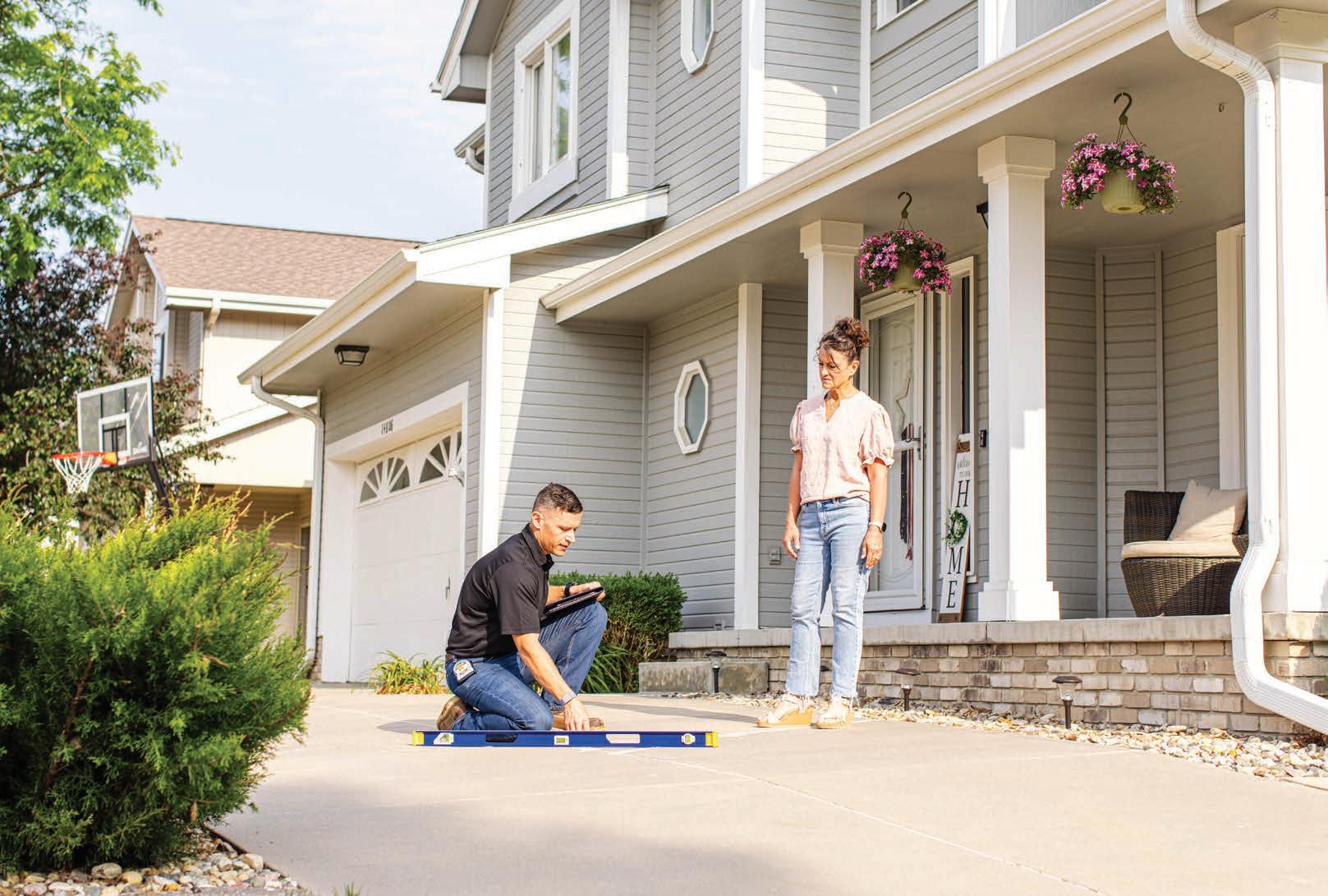
Purported common address: 6542 S Pierson Court, Littleton, CO 80127. THE PROPERTY DESCRIBED HEREIN IS ALL OF THE PROPERTY CURRENTLY ENCUMBERED BY THE LIEN OF THE DEED OF TRUST.
NOTICE OF SALE
The current holder of the Evidence of Debt secured by the Deed of Trust, described herein, has filed Notice of Election and Demand for sale as provided by law and in said Deed of Trust.
THEREFORE, Notice Is Hereby Given that I will at public auction, at 2 p.m. on Thursday, 06/12/2025 via remote, web-based auction service, sell to the highest and best bidder for cash, the said real property and all interest of the said Grantor(s), Grantor(s)' heirs and assigns therein, for the purpose of paying the indebtedness provided in said Evidence of Debt secured by the Deed of Trust, plus attorneys' fees, the expenses of sale and other items allowed by law, and will issue to the purchaser a Certificate of Purchase, all as provided by law. https://liveauctions.govease.com/
First Publication: 4/24/2025
Last Publication: 5/22/2025
Name of Publication: Golden Transcript
IF THE SALE DATE
To Whom It May Concern: This Notice is given with regard to the following described Deed of Trust:
On March 6, 2025, the undersigned Public Trustee caused the Notice of Election and Demand relating to the Deed of Trust described below to be recorded in the County of Jefferson records.
Original Grantor(s) DRP, LLC
Original Beneficiary(ies) Double Backflip, LLC
Current Holder of Evidence of Debt 1Sharpe Income Solutions Trust Date of Deed of Trust
June 07, 2023
County of Recording Jefferson
Recording Date of Deed of Trust
June 12, 2023
Recording Information (Reception No. and/or Book/Page No.)
2023034280
Original Principal Amount
$750,000.00
Outstanding Principal Balance
$750,000.00
Pursuant to CRS §38-38-101(4)(i), you are hereby notified that the covenants of the deed of trust have been violated as follows:
Failure to pay principal and interest when due together with all other payments provided for in the Evidence of Debt secured by the Deed of Trust and other violations of the terms thereof.
THE LIEN FORECLOSED MAY NOT BE A FIRST LIEN.
EXHIBIT A PARCEL A THAT PART OF THE EAST 1/2 WEST 1/2
SOUTHEAST 1/4 SOUTHWEST 1/4 OF SECTION 22, TOWNSHIP 3 SOUTH, RANGE 69 WEST OF THE 6TH P M, DESCRIBED AS FOLLOWS: COMMENCING AT A POINT 250 FEET SOUTH OF THE NORTHWEST CORNER OF THE NORTH 4/10THS OF THE EAST 1/2 WEST 1/2 SOUTHEAST 1/4 SOUTHWEST 1/4 OF SAID SECTION 22, THENCE SOUTH TO THE SOUTHWEST CORNER OF THE SAID NORTH 4/10THS OF THE EAST 1/2 WEST 1/2 SOUTHEAST 1/4 SOUTHWEST 1/4 OF SAID SECTION 22; THENCE EAST TO THE MIDPOINT BETWEEN THE SOUTHWEST CORNER AND THE SOUTHEAST CORNER OF THE NORTH 4/10THS OF THE EAST 1/2 WEST 1/2 SOUTHEAST 1/4 SOUTHWEST 1/4 OF SAID SECTION 22; THENCE NORTH 308 FEET, THENCE SOUTHWESTERLY 167.7 FEET, MORE OR LESS, TO THE POINT OF BEGINNING, EXCEPT RIGHT OF WAY DESCRIBED IN BOOK 1023 AT PAGE 304, COUNTY OF JEFFERSON, STATE OF COLORADO.
PARCEL B LOT 10, WILDWOOD SUBDIVISION, EXCEPT THAT PORTION OF SAID LOT 10, DESCRIBED AS FOLLOWS: BEGINNING AT THE SOUTHEAST CORNER OF SAID LOT 10, THENCE NORTHWESTERLY ALONG THE EASTERLY LINE OF SAID LOT 10,185 FEET; THENCE SOUTHWESTERLY 180.75 FEET MORE OR LESS, TO A POINT ON THE LINE COMMON TO LOTS 9 AND 10, SAID SUBDIVISION, 185 FEET NORTHWESTERLY FROM THE FRONT CORNER OF SAID LOT 10, THENCE SOUTHEASTERLY ALONG THE LINE COMMON TO SAID LOTS 9 AND 10,185 FEET TO THE FRONT CORNER OF SAID LOT 10; THENCE NORTHEASTERLY ALONG THE FRONT LOT LINE OF SAID LOT 10, A DISTANCE OF 89.40 FEET TO THE POINT OF BEGINNING, COUNTY OF JEFFERSON, STATE OF COLORADO.
Purported common address: 3900 Hoyt Street, Wheat Ridge, CO 80033.
THE PROPERTY DESCRIBED HEREIN IS ALL OF THE PROPERTY CURRENTLY ENCUMBERED BY THE LIEN OF THE DEED OF TRUST.
NOTICE OF SALE
The current holder of the Evidence of Debt secured by the Deed of Trust, described herein, has filed Notice of Election and Demand for sale as provided by law and in said Deed of Trust.
THEREFORE, Notice Is Hereby Given that I will at public auction, at 2 p.m. on Thursday, 06/26/2025 via remote, web-based auction service, sell to the highest and best bidder for cash, the said real property and all interest of the said Grantor(s), Grantor(s)' heirs and assigns therein, for the purpose of paying the indebtedness provided in said Evidence of Debt secured by the Deed of Trust, plus attorneys' fees, the expenses of sale and other items allowed by law, and will issue to the purchaser a Certificate of Purchase, all as provided by law. https://liveauctions.govease.com/ First Publication: 5/1/2025 Last Publication: 5/29/2025
Name of Publication: Golden Transcript
IF THE SALE DATE IS CONTINUED TO A LATER DATE, THE DEADLINE TO FILE A NOTICE OF
BE EXTENDED;
DATE: 03/06/2025
Jerry DiTullio, Public Trustee in and for the County of Jefferson, State of Colorado By: Christine Thompson, Deputy, for Public Trustee
The name, address, business telephone number and bar registration number of the attorney(s) representing the legal holder of the indebtedness is:
Jennifer C. Rogers #34682 IDEA Law Group, LLC
4530 S. Eastern Ave., Ste 10, Las Vegas, NV 89119 (877) 353-2146
Attorney File # 48178499
The Attorney above is acting as a debt collector and is attempting to collect a debt. Any information provided may be used for that purpose.
©Public Trustees' Association of Colorado Revised 1/2015
Legal Notice NO. J2500082
First Publication: 5/1/2025
Last Publication: 5/29/2025
Name of Publication: Golden Transcript
COMBINED NOTICE - PUBLICATION
CRS §38-38-103
FORECLOSURE SALE NO. J2500042
To Whom It May Concern: This Notice is given with regard to the following described Deed of Trust:
On February 6, 2025, the undersigned Public Trustee caused the Notice of Election and Demand relating to the Deed of Trust described below to be recorded in the County of Jefferson records.
Original Grantor(s) Scott Berghane
Original Beneficiary(ies)
Mortgage Electronic Registration Systems, Inc. as beneficiary, as nominee for United Wholesale Mortgage, LLC
Current Holder of Evidence of Debt Nationstar Mortgage LLC
Date of Deed of Trust May 10, 2023
County of Recording Jefferson
Recording Date of Deed of Trust May 11, 2023
Recording Information (Reception No. and/or Book/Page No.)
2023027713
Original Principal Amount
$517,750.00
Outstanding Principal Balance
$511,437.41
Pursuant to CRS §38-38-101(4)(i), you are hereby notified that the covenants of the deed of trust have been violated as follows: Failure to pay principal and interest when due together with all other payments provided for in the evidence of debt secured by the deed of trust and other violations thereof.
THE LIEN FORECLOSED MAY NOT BE A FIRST LIEN.
LOT 14, BLOCK 1, WOODMAR SQUARE NO. 5, AMENDMENT NO. 1, AS AMENDED BY WOODMAR SQUARE NO. 5 AMENDMENT NO. 1 EXEMPTION SURVEY RECORDED APRIL 5, 1982 AT RECEPTION NO. 82022537, COUNTY OF JEFFERSON, STATE OF COLORADO.
Purported common address: 6677 S Yukon Way, Littleton, CO 80123. THE PROPERTY DESCRIBED HEREIN IS ALL OF THE PROPERTY CURRENTLY ENCUMBERED BY THE LIEN OF THE DEED OF TRUST.
NOTICE OF SALE
The current holder of the Evidence of Debt secured by the Deed of Trust, described herein, has filed Notice of Election and Demand for sale as provided by law and in said Deed of Trust.
THEREFORE, Notice Is Hereby Given that I will at public auction, at 2 p.m. on Thursday, 06/05/2025 via remote, web-based auction service, sell to the highest and best bidder for cash, the said real property and all interest of the said Grantor(s), Grantor(s)' heirs and assigns therein, for the purpose of paying the indebtedness provided in said Evidence of Debt secured by the Deed of Trust, plus attorneys' fees, the expenses of sale and other items allowed by law, and will issue to the purchaser a Certificate of Purchase, all as provided by law. https://liveauctions.govease.com/
First Publication: 4/10/2025
Last Publication: 5/8/2025
Name of Publication: Golden Transcript
IF THE SALE DATE IS CONTINUED TO A LATER DATE, THE DEADLINE TO FILE A NOTICE OF INTENT TO CURE BY THOSE PARTIES ENTITLED TO CURE MAY ALSO BE EXTENDED;
DATE: 02/06/2025 Jerry DiTullio, Public Trustee in and for the County of Jefferson, State of Colorado By: Amy Schiano, Deputy, for Public Trustee
The name, address, business telephone number and bar registration number of the attorney(s) representing the legal holder of the indebtedness is:
Aricyn J. Dall #51467
Randall S. Miller & Associates, P.C. 216 16th Street, Suite 1210, Denver, CO 80202 (720) 259-6710
Attorney File # 25CO00006-1
The Attorney above is acting as a debt collector and is attempting to collect a debt. Any information provided may be used for that purpose.
©Public Trustees' Association of Colorado Revised 1/2015
Legal Notice NO. J2500042
First Publication: 4/10/2025
Last Publication: 5/8/2025
Name of Publication: Golden Transcript COMBINED NOTICE - PUBLICATION CRS §38-38-103 FORECLOSURE SALE NO. J2500026
To Whom It May Concern: This Notice is given with regard to the following described Deed of Trust:
On January 30, 2025, the undersigned Public Trustee caused the Notice of Election and Demand relating to the Deed of Trust described below to be recorded in the County of Jefferson records.
Original Grantor(s)
Heather Robinson Original Beneficiary(ies)
MORTGAGE ELECTRONIC REGISTRATION SYSTEMS, INC. AS NOMINEE FOR HOME MORTGAGE ALLIANCE, LLC, ITS SUCCESSORS AND ASSIGNS
Current Holder of Evidence of Debt
COLORADO HOUSING AND FINANCE AUTHORITY
Date of Deed of Trust
March 25, 2022
County of Recording Jefferson
Recording Date of Deed of Trust March 28, 2022
Recording Information (Reception No. and/or Book/Page No.) 2022029542
Original Principal Amount
$468,813.00
Outstanding Principal Balance
$449,587.43
Pursuant to CRS §38-38-101(4)(i), you are hereby notified that the covenants of the deed of trust have been violated as follows: Failure to pay principal and interest when due together with all other payments provided for in the evidence of debt secured by the deed of trust and other violations thereof.
THE LIEN FORECLOSED MAY NOT BE A FIRST LIEN.
LOT TWENTY-TWO (22), BLOCK SIX (6), CLUB CREST SOUTH FILING NO. 1, COUNTY OF JEFFERSON, STATE OF COLORADO.
Purported common address: 9575 W 74th Ave, Arvada, CO 80005.
THE PROPERTY DESCRIBED HEREIN IS ALL OF THE PROPERTY CURRENTLY ENCUMBERED BY THE LIEN OF THE DEED OF TRUST.
NOTICE OF SALE
The current holder of the Evidence of Debt secured by the Deed of Trust, described herein, has filed Notice of Election and Demand for sale as provided by law and in said Deed of Trust.
THEREFORE, Notice Is Hereby Given that I will at public auction, at 2 p.m. on Thursday, 05/29/2025 via remote, web-based auction service, sell to the highest and best bidder for cash, the said real property and all interest of the said Grantor(s), Grantor(s)' heirs and assigns therein, for the purpose of paying the indebtedness provided in said Evidence of Debt secured by the Deed of Trust, plus attorneys' fees, the expenses of sale and other items allowed by law, and will issue to the purchaser a Certificate of Purchase, all as provided by law. https://liveauctions.govease.com/
First Publication: 4/3/2025
Last Publication: 5/1/2025
Name of Publication: Golden Transcript
IF THE SALE DATE IS CONTINUED TO A LATER DATE, THE DEADLINE TO FILE A
NOTICE OF INTENT TO CURE BY THOSE
PARTIES ENTITLED TO CURE MAY ALSO BE EXTENDED;
DATE: 01/30/2025
Jerry DiTullio, Public Trustee in and for the County of Jefferson, State of Colorado By: Amy Schiano, Deputy, for Public Trustee
The name, address, business telephone number and bar registration number of the attorney(s) representing the legal holder of the indebtedness is:
Alison L. Berry #34531 Janeway Law Firm, P.C. 9540 Maroon Circle, Suite 320, Englewood, CO 80112 (303) 706-9990
Attorney File # 24-032819
The Attorney above is acting as a debt collector and is attempting to collect a debt. Any information provided may be used for that purpose.
©Public Trustees' Association of Colorado Revised 1/2015
Legal Notice NO. J2500026
First Publication: 4/3/2025
Last Publication: 5/1/2025
Name of Publication: Golden Transcript
COMBINED NOTICE - PUBLICATION CRS §38-38-103
FORECLOSURE SALE NO. J2500043
To Whom It May Concern: This Notice is given with regard to the following described Deed of Trust:
On February 6, 2025, the undersigned Public Trustee caused the Notice of Election and Demand relating to the Deed of Trust described below to be recorded in the County of Jefferson records.
Original Grantor(s) Megan Valente Original Beneficiary(ies)
MORTGAGE ELECTRONIC REGISTRATION SYSTEMS, INC. AS NOMINEE FOR ACADEMY MORTGAGE CORPORATION, ITS SUCCESSORS AND ASSIGNS
Current Holder of Evidence of Debt
COLORADO HOUSING AND FINANCE AUTHORITY
Date of Deed of Trust November 07, 2022
County of Recording Jefferson
Recording Date of Deed of Trust
November 09, 2022
Recording Information (Reception No. and/or Book/Page No.) 2022100496
Original Principal Amount
$324,930.00
Outstanding Principal Balance
$319,769.51
Pursuant to CRS §38-38-101(4)(i), you are hereby notified that the covenants of the deed of trust have been violated as follows: Failure to pay principal and interest when due together with all other payments provided for in the evidence of debt secured by the deed of trust and other violations thereof.
THE LIEN FORECLOSED MAY NOT BE A FIRST LIEN.
CONDOMINIUM UNIT 104, IN CONDOMINIUM BUILDING 1, THE REEF AT MARINA POINTE, ACCORDING TO THE CONDOMINIUM MAP THEREOF, RECORDED ON APRIL 23, 1984 AT RECEPTION NO. 84036351, AND AS AMENDED BY INSTRUMENT RECORDED FEBRUARY 26, 1985 AS RECEPTION NO. 85017820, IN THE RECORDS OF THE OFFICE OF THE CLERK AND RECORDER OF THE COUNTY OF JEFFERSON, COLORADO, AND AS DEFINED IN THE CONDOMINIUM DECLARATION FOR THE REEF AT MARINA POINTE, RECORDED ON APRIL 23, 1984 AT RECEPTION NO. 84036350, COUNTY OF JEFFERSON, STATE OF COLORADO
APN #: 69-021-08-005
Purported common address: 8311 S Upham Way Condo 104, Littleton, CO 80128.
THE PROPERTY DESCRIBED HEREIN IS ALL OF THE PROPERTY CURRENTLY ENCUMBERED BY THE LIEN OF THE DEED OF TRUST.
NOTICE OF SALE
The current holder of the Evidence of Debt secured by the Deed of Trust, described herein, has filed Notice of Election and Demand for sale as provided by law and in said Deed of Trust.
THEREFORE, Notice Is Hereby Given that I will at public auction, at 2 p.m. on Thursday, 06/05/2025 via remote, web-based auction service, sell to the highest and best bidder for cash, the said real property and all interest of the said Grantor(s), Grantor(s)' heirs and assigns therein, for the purpose of paying the indebtedness provided in said Evidence of Debt secured by the Deed of Trust, plus attorneys' fees, the expenses of sale and other items allowed by law, and will issue to the purchaser a Certificate of Purchase, all as provided by law. https://liveauctions.govease.com/
First Publication: 4/10/2025
Last Publication: 5/8/2025
Name of Publication: Golden Transcript
IF THE SALE DATE IS CONTINUED TO A LATER DATE, THE DEADLINE TO FILE A NOTICE OF INTENT TO CURE BY THOSE PARTIES ENTITLED TO CURE
8010 W. Chestnut
Littleton, CO 80128.
DESCRIBED HEREIN IS
OF THE PROPERTY CURRENTLY ENCUMBERED BY THE LIEN OF THE DEED OF
NOTICE OF SALE The current holder of the Evidence of Debt secured by the Deed of Trust, described herein, has filed Notice of Election and Demand for sale as provided by law and in said Deed of Trust.
THEREFORE, Notice Is Hereby Given that I will at public auction, at 2 p.m. on Thursday, 06/26/2025 via remote, web-based auction service, sell to the highest and best bidder for cash, the said real property and all interest of the said Grantor(s), Grantor(s)' heirs and assigns therein, for the purpose of paying the indebtedness provided in said Evidence of Debt secured by the Deed of Trust, plus attorneys' fees, the expenses of sale and other items allowed by law, and will issue to the purchaser a Certificate of Purchase, all as provided by law. https://liveauctions. govease.com/ First Publication: 5/1/2025 Last Publication: 5/29/2025 Name of Publication: Golden Transcript
IF THE SALE DATE IS CONTINUED TO A LATER DATE, THE DEADLINE TO FILE A NOTICE OF INTENT TO CURE BY THOSE
PARTIES ENTITLED TO CURE MAY ALSO BE EXTENDED;
DATE: 03/06/2025 Jerry DiTullio, Public Trustee in and for the County of Jefferson, State of Colorado By: Barbara Lyons, Deputy, for Public Trustee
TRUSTEE OF THE BUNGALOW SERIES III TRUST
Date of Deed of Trust September 15, 2017 County of Recording Jefferson
Recording Date of Deed of Trust September 18, 2017
Recording Information (Reception No. and/or Book/Page No.) 2017095859
Original Principal Amount
$240,075.00
Outstanding Principal Balance
$239,420.10
Pursuant to CRS §38-38-101(4)(i), you are hereby notified that the covenants of the deed of trust have been violated as follows: Failure to pay principal and interest when due together with all other payments provided for in the evidence of debt secured by the deed of trust and other violations thereof.
THE LIEN FORECLOSED MAY NOT BE A FIRST LIEN.
Lot 2A, Evergreen Addition to Buffalo Creek Park Amended Adjustment 1, recorded July 20, 2011 at Reception No. 66492, County of Jefferson, State of Colorado.
Purported common address: 23721 Summit St, Pine, CO 80470.
THE PROPERTY DESCRIBED HEREIN IS ALL OF THE PROPERTY CURRENTLY ENCUMBERED BY THE LIEN OF THE DEED OF TRUST.
NOTICE OF SALE
The current holder of the Evidence of Debt secured by the Deed of Trust, described herein, has filed Notice of Election and Demand for sale as provided by law and in said Deed of Trust.
THEREFORE, Notice Is Hereby Given that I will at public auction, at 2 p.m. on Thursday, 06/12/2025 via remote, web-based auction service, sell to the highest and best bidder for cash, the said real property and all interest of the said Grantor(s), Grantor(s)' heirs and assigns therein, for the purpose of paying the indebtedness provided in said Evidence of Debt secured by the Deed of Trust, plus attorneys' fees, the expenses of sale and other items allowed by law, and will issue to the purchaser a Certificate of Purchase, all as provided by law. https://liveauctions. govease.com/
First Publication: 4/24/2025
Last Publication: 5/22/2025
Name of Publication: Golden Transcript
IF THE SALE DATE IS CONTINUED TO A LATER DATE, THE DEADLINE TO FILE A NOTICE OF INTENT TO CURE BY THOSE PARTIES ENTITLED TO CURE MAY ALSO BE EXTENDED;
DATE: 02/20/2025
Jerry DiTullio, Public Trustee in and for the County of Jefferson, State of Colorado By: Amy Schiano, Deputy, for Public Trustee
The name, address, business telephone number and bar registration number of the attorney(s) representing the legal holder of the indebtedness is:
Aricyn J. Dall #51467 Randall S. Miller & Associates, P.C. 216 16th Street, Suite 1210, Denver, CO 80202 (720) 259-6710
Attorney File # 25CO00048-1
The Attorney above is acting as a debt collector and is attempting to collect a debt. Any information provided may be used for that purpose.
©Public Trustees' Association of Colorado Revised 1/2015
Legal Notice NO. J2500059
First Publication: 4/24/2025 Last Publication: 5/22/2025 Name of Publication: Golden Transcript
COMBINED NOTICE - PUBLICATION CRS §38-38-103 FORECLOSURE SALE NO. J2500049
To Whom It May Concern: This Notice is given with regard to the following described Deed of Trust:
On February 13, 2025, the undersigned Public Trustee caused the Notice of Election and Demand relating to the Deed of Trust described below to be recorded in the County of Jefferson records.
Original Grantor(s) JOHN BAILLARGEON Original Beneficiary(ies)
PENTAGON FEDERAL CREDIT UNION Current Holder of Evidence of Debt
PENTAGON FEDERAL CREDIT UNION
Date of Deed of Trust
October 14, 2023
County of Recording Jefferson
Recording Date of Deed of Trust October 23, 2023
Recording Information
the Evidence of Debt secured by the Deed of Trust and other violations of the terms thereof THE LIEN FORECLOSED MAY NOT BE A FIRST LIEN.
LOT 36, FRIENDLY HILLS FILING NO. 2, COUNTY OF JEFFERSON, STATER OF COLORADO.
Purported common address: 4447 S VIVIAN ST, MORRISON, CO 80465. THE PROPERTY DESCRIBED HEREIN IS ALL OF THE PROPERTY CURRENTLY ENCUMBERED BY THE LIEN OF THE DEED OF TRUST.
NOTICE OF SALE
The current holder of the Evidence of Debt secured by the Deed of Trust, described herein, has filed Notice of Election and Demand for sale as provided by law and in said Deed of Trust.
THEREFORE, Notice Is Hereby Given that I will at public auction, at 2 p.m. on Thursday, 06/05/2025 via remote, web-based auction service, sell to the highest and best bidder for cash, the said real property and all interest of the said Grantor(s), Grantor(s)' heirs and assigns therein, for the purpose of paying the indebtedness provided in said Evidence of Debt secured by the Deed of Trust, plus attorneys' fees, the expenses of sale and other items allowed by law, and will issue to the purchaser a Certificate of Purchase, all as provided by law. https://liveauctions. govease.com/
First Publication: 4/10/2025
Last Publication: 5/8/2025
Name of Publication: Golden Transcript
IF THE SALE DATE IS CONTINUED TO A LATER DATE, THE DEADLINE TO FILE A NOTICE OF INTENT TO CURE BY THOSE PARTIES ENTITLED TO CURE MAY ALSO BE EXTENDED;
DATE: 02/13/2025
Jerry DiTullio, Public Trustee in and for the County of Jefferson, State of Colorado
By: Amy Schiano, Deputy, for Public Trustee
The name, address, business telephone number and bar registration number of the attorney(s) representing the legal holder of the indebtedness is:
Carly Imbrogno #59553 Barrett Frappier & Weisserman, LLP 1391 Speer Boulevard, Suite 700, Denver, CO 80204 (303) 350-3711
Attorney File # 00000010354546
The Attorney above is acting as a debt collector and is attempting to collect a debt. Any information provided may be used for that purpose.
©Public Trustees' Association of Colorado
Revised 1/2015
Legal Notice NO. J2500049
First Publication: 4/10/2025
Last Publication: 5/8/2025
Name of Publication: Golden Transcript COMBINED NOTICE - PUBLICATION CRS §38-38-103
FORECLOSURE SALE NO. J2500080
To Whom It May Concern: This Notice is given with regard to the following described Deed of Trust:
On March 6, 2025, the undersigned Public Trustee caused the Notice of Election and Demand relating to the Deed of Trust described below to be recorded in the County of Jefferson records.
Original Grantor(s) Ryan T. Wilcoxen and Katherine A. Wilcoxen
Original Beneficiary(ies)
Mortgage Electronic Registration Systems, Inc., as Beneficiary, as nominee for Lendage, LLC, its successors and assigns
Current Holder of Evidence of Debt
MEB Loan Trust VIII Date of Deed of Trust May 13, 2022 County of Recording
Jefferson
Recording Date of Deed of Trust May 19, 2022
Recording Information
(Reception No. and/or Book/Page No.)
2022049668
Original Principal Amount
$73,800.00
Outstanding Principal Balance
$69,110.08
Pursuant to CRS §38-38-101(4)(i), you are hereby notified that the covenants of the deed of trust have been violated as follows: Failure to make timely payments as required under the Evidence of Debt and Deed of Trust
THE LIEN FORECLOSED MAY NOT BE A FIRST LIEN.
Lot 18, Block 11, COLUMBINE WEST-FILING NO. 2, County of Jefferson, State of Colorado.
Purported common address:
7166 S Pierce Ct, Littleton, CO 80128-4514.
THE PROPERTY DESCRIBED HEREIN IS ALL OF THE PROPERTY CURRENTLY ENCUMBERED BY THE LIEN OF THE DEED OF TRUST.
NOTICE OF SALE
The current holder of the Evidence of Debt secured by the Deed of Trust, described herein, has filed Notice of Election and Demand for sale as provided by law and in said Deed of Trust.
THEREFORE, Notice Is Hereby Given that I will at public auction, at 2 p.m. on Thursday, 06/26/2025 via remote, web-based auction service, sell to the highest and best bidder for cash, the said real property and all interest of the said Grantor(s), Grantor(s)' heirs and assigns therein, for the purpose of paying the indebtedness provided in said Evidence of Debt secured by the Deed of Trust, plus attorneys' fees, the expenses of sale and other items allowed by law, and will issue to the purchaser a Certificate of Purchase, all as provided by law. https://liveauctions. govease.com/
First Publication: 5/1/2025
Last Publication: 5/29/2025
Name of Publication: Golden Transcript
IF THE SALE DATE IS CONTINUED TO A LATER DATE, THE DEADLINE TO FILE A NOTICE OF INTENT TO CURE BY THOSE PARTIES ENTITLED TO CURE MAY ALSO BE EXTENDED;
DATE: 03/06/2025
Jerry DiTullio, Public Trustee in and for the County of Jefferson, State of Colorado By: Amy Schiano, Deputy, for Public Trustee
The name, address, business telephone number and bar registration number of the attorney(s) representing the legal holder of the indebtedness is:
Heather L. Deere #28597
Halliday Watkins & Mann, P.C.
355 Union Blvd., Suite 250, Lakewood, CO 80228 (303) 274-0155
Attorney File # CO23929
The Attorney above is acting as a debt collector and is attempting to collect a debt. Any information provided may be used for that purpose.
©Public Trustees' Association of Colorado
Revised 1/2015
Public Notice NO. J2500080
First Publication: 5/1/2025
Last Publication: 5/29/2025
Name of Publication: Golden Transcript COMBINED NOTICE - PUBLICATION CRS §38-38-103 FORECLOSURE SALE NO. J2500045
To Whom It May Concern: This Notice is given with regard to the following described Deed of Trust:
On February 6, 2025, the undersigned Public Trustee caused the Notice of Election and Demand relating to the Deed of Trust described below to be recorded in the County of Jefferson records.
Original Grantor(s)
Guy Morgan
Original Beneficiary(ies)
ENT CREDIT UNION
Current Holder of Evidence of Debt
ENT CREDIT UNION
Date of Deed of Trust
March 29, 2016
County of Recording
Jefferson
Recording Date of Deed of Trust March 30, 2016
Recording Information (Reception No. and/or Book/Page No.) 2016028828
Original Principal Amount
$387,375.00
Outstanding Principal Balance
$316,942.42
Pursuant to CRS §38-38-101(4)(i), you are hereby notified that the covenants of the deed of trust have been violated as follows: Failure to pay principal and interest when due together with all other payments provided for in the evidence of debt secured by the deed of trust and other violations thereof.
THE LIEN FORECLOSED MAY NOT BE A FIRST LIEN.
LOT 1, COUNTRY CLUB VISTA, COUNTY OF JEFFERSON, STATE OF COLORADO.
Purported common address: 6781 West 5th Place, Lakewood, CO 80226.
THE PROPERTY DESCRIBED HEREIN IS ALL OF THE PROPERTY CURRENTLY ENCUMBERED BY THE LIEN OF THE DEED OF TRUST.
NOTICE OF SALE
The current holder of the Evidence of Debt secured by the Deed of Trust, described herein, has filed Notice of Election and Demand for sale as provided by law and in said Deed of Trust.
THEREFORE, Notice Is Hereby Given that I will at public auction, at 2 p.m. on Thursday, 06/05/2025 via remote, web-based auction service, sell to the highest and best bidder for cash, the said real property and all interest of the said Grantor(s), Grantor(s)' heirs and assigns therein, for the purpose of paying the indebtedness provided in said Evidence of Debt secured by the Deed of Trust, plus attorneys' fees, the expenses of sale and other items allowed by law, and will issue to the purchaser a Certificate of Purchase, all as provided by law. https://liveauctions. govease.com/
First Publication: 4/10/2025
Last Publication: 5/8/2025
Name of Publication: Golden Transcript IF THE SALE DATE IS CONTINUED TO A LATER DATE, THE DEADLINE TO FILE A NOTICE OF INTENT TO CURE BY THOSE PARTIES ENTITLED TO CURE MAY ALSO BE EXTENDED;
DATE: 02/06/2025 Jerry DiTullio, Public Trustee in and for the
County of Jefferson, State of Colorado By: Amy Schiano, Deputy, for Public Trustee
The name, address, business telephone number and bar registration number of the attorney(s) representing the legal holder of the indebtedness is:
Alison L. Berry #34531
Janeway Law Firm, P.C. 9540 Maroon Circle, Suite 320, Englewood, CO 80112 (303) 706-9990
Attorney File # 25-033952
The Attorney above is acting as a debt collector and is attempting to collect a debt. Any information provided may be used for that purpose.
©Public Trustees' Association of Colorado Revised 1/2015
Legal Notice NO. J2500045
First Publication: 4/10/2025
Last Publication: 5/8/2025
Name of Publication: Golden Transcript
COMBINED NOTICE - PUBLICATION CRS §38-38-103
FORECLOSURE SALE NO. J2500046
To Whom It May Concern: This Notice is given with regard to the following described Deed of Trust:
On February 6, 2025, the undersigned Public Trustee caused the Notice of Election and Demand relating to the Deed of Trust described below to be recorded in the County of Jefferson records.
Original Grantor(s) Sharon Watson
Original Beneficiary(ies) Mortgage Electronic Registration Systems, Inc. ("MERS") as nominee for Amerifund Financial Inc., DBA All Fund Mortgage, Its Successors and Assigns
Current Holder of Evidence of Debt Chevy Chase Funding LLC, Mortgage-Backed Certificates,
County of Recording Jefferson Recording Date of Deed of Trust August 19, 2005
Recording Information (Reception No. and/or Book/Page No.) 2005068900 Original Principal Amount
$125,000.00 Outstanding Principal Balance $101,334.73
Pursuant to CRS §38-38-101(4)(i), you are hereby notified that the covenants of the deed of trust have been violated as follows: Failure to pay principal and interest when due together with all other payments provided for in the evidence of debt secured by the Deed of Trust and other violations thereof
THE LIEN FORECLOSED MAY NOT BE A FIRST LIEN.
THE PORTION OF BLOCK 151, AMENDED MAP OF A PORTION OF OBERON, DESCRIBED AS FOLLOWS: BEGINNING AT A POINT 364 FEET NORTH AND 25 FEET WEST OF THE SOUTHEAST CORNER OF SAID BLOCK 151, THENCE WEST 105 FEET; THENCE NORTH 75 FEET; THENCE EAST 105 FEET; THENCE SOUTH 75 FEET TO THE POINT OF BEGINNING, COUNTY OF JEFFERSON, STATE OF COLORADO
Purported common address: 6793 Estes Street, Arvada, CO 80004.
THE PROPERTY DESCRIBED HEREIN IS ALL OF THE PROPERTY CURRENTLY ENCUMBERED BY THE LIEN OF THE DEED OF TRUST.
NOTICE OF SALE
The current holder of the Evidence of Debt secured by the Deed of Trust, described herein, has filed Notice of Election and Demand for sale as provided by law and in said Deed of Trust.
THEREFORE, Notice Is Hereby Given that I will at public auction, at 2 p.m. on Thursday, 06/05/2025 via remote, web-based auction service, sell to the highest and best bidder for cash, the said real property and all interest of the said Grantor(s), Grantor(s)' heirs and assigns therein, for the purpose of paying the indebtedness provided in said Evidence of Debt secured by the Deed of Trust, plus attorneys' fees, the expenses of sale and other items allowed by law, and will issue to the purchaser a Certificate of Purchase, all as provided by law. https://liveauctions.govease.com/
First Publication: 4/10/2025
Last Publication: 5/8/2025
Name of Publication: Golden Transcript
IF THE SALE DATE IS CONTINUED TO A LATER DATE, THE DEADLINE TO FILE A NOTICE OF INTENT TO CURE BY THOSE PARTIES ENTITLED TO CURE MAY ALSO BE EXTENDED;
DATE: 02/06/2025 Jerry DiTullio, Public Trustee in and for the County of Jefferson, State of Colorado
By: Amy Schiano, Deputy, for Public Trustee
The name, address, business telephone number and bar registration number of the attorney(s) representing the legal holder of the indebtedness is: Ilene Dell'Acqua #31755 McCarthy & Holthus, LLP
7700
THE PROPERTY DESCRIBED HEREIN IS ALL OF THE PROPERTY CURRENTLY ENCUMBERED BY THE LIEN OF THE DEED OF TRUST. If applicable, a description of any changes to the deed of trust described in the notice of election and demand pursuant to
A PART OF LOT 10 OF BLOCK 9, DAKOTA
SUBDIVISION FILING NO. 2, A SUBDIVISION PLAT ON RECORD IN THE OFFICE OF THE CLERK AND RECORDER OF JEFFERSON COUNTY IN BOOK 97, AT PAGE 23, BEING A PART OF THE SOUTHWEST ¼ OF SECTION 34, TOWNSHIP 5 SOUTH, RANGE 69 WEST OF THE 6TH PRINCIPAL MERIDIAN, COUNTY OF JEFFERSON. STATE OF COLORADO BEING MORE PARTICULARLY DESCRIBED AS FOLLOW; BEGINNING AT THE NORTHEAST CORNER OF SAID LOT 10 AS PLATTED; THENCE S 00°01’04" E, ALONG THE EAST LINE OF SAID LOT 10 AS PLATTED, A DISTANCE OF 44.30 FEET TO A POINT OF CURVE; THENCE CONTINUING ALONG SAID EAST LINE, ALONG THE ARC OF SAID CURVE TO THE RIGHT HAVING A CENTRAL ANGLE OF 00°53'52", A RADIUS OF 45.00 FEET, AN ARC DISTANCE OF 0.71 FEET TO A POINT: THENCE S 89°58'56"W. DEPARTING SAID CURVE, A DISTANCE OF 98.41 FEET TO A POINT ON THE WEST LINE OF SAID LOT 10 AS PLATTED; THENCE N 00°01'04" W, ALONG SAID WEST LINE, A DISTANCE OF 45.00 FEET TO THE NORTHWEST CORNER OF SAID LOT 10 AS PLATTED; THENCE N 89°58'56" E, ALONG THE NORTH LINE OF SAID LOT 10 AS PLATTED; A DISTANCE OF 98.42 FEET TO THE POINT OF BEGINNING.
BEARINGS BASED ON THE PLAT OF DAKOTA STATION SUBDIVISION FILING NO. 2, AS RECORDED IN THE OFFICE OF THE CLERK AND RECORDER OF JEFFERSON COUNTY IN BOOK 97 AT PAGE 23, COUNTY OF JEFFERSON, STATE OF COLORADO.
Purported common address: 8009 South Johnson Court, Littleton, CO 80128. THE PROPERTY DESCRIBED HEREIN IS ALL OF THE PROPERTY CURRENTLY ENCUMBERED BY THE LIEN OF THE DEED OF TRUST.
NOTICE OF SALE
The current holder of the Evidence of Debt secured by the Deed of Trust, described herein, has filed Notice of Election and Demand for sale as provided by law and in said Deed of Trust.
THEREFORE, Notice Is Hereby Given that I will at public auction, at 2 p.m. on Thursday, 06/26/2025 via remote, web-based auction service, sell to the highest and best bidder for cash, the said real property and all interest of the said Grantor(s), Grantor(s)' heirs and assigns therein, for the purpose of paying the indebtedness provided in said Evidence of Debt secured by the Deed of Trust, plus attorneys' fees, the expenses of sale and other items allowed by law, and will issue to the purchaser a Certificate of Purchase, all as provided by law. https://liveauctions. govease.com/
First Publication: 5/1/2025
The name, address, business telephone number and bar registration number of the attorney(s) representing the legal holder of the indebtedness is:
Ilene Dell'Acqua #31755 McCarthy & Holthus, LLP
7700 E. Arapahoe Road, Suite 230, Centennial, CO 80112 (877) 369-6122
Attorney File # CO-25-1007240-LL
The Attorney above is acting as a debt collector and is attempting to collect a debt. Any information provided may be used for that purpose.
©Public Trustees' Association of Colorado Revised 1/2015
Legal Notice NO. J2500079 First Publication: 5/1/2025 Last Publication: 5/29/2025 Name of Publication: Golden Transcript
COMBINED NOTICE - PUBLICATION CRS §38-38-103 FORECLOSURE SALE NO. J2500041
To Whom It May Concern: This Notice is given with regard to the following described Deed of Trust:
On February 6, 2025, the undersigned Public Trustee caused the Notice of Election and Demand relating to the Deed of Trust described below to be recorded in the County of Jefferson records.
Original Grantor(s) Cynthia A. Cronin Original Beneficiary(ies) Mortgage Electronic Registration Systems, Inc., as nominee for Liberty Home Loans, LLC, Its Successors and Assigns Current Holder of Evidence of Debt
U.S. BANK NATIONAL ASSOCIATION
Date of Deed of Trust
July 27, 2016
County of Recording Jefferson
Recording Date of Deed of Trust
August 01, 2016
Recording Information (Reception No. and/or Book/Page No.) 2016074507
Original Principal Amount
$178,762.00
Outstanding Principal Balance
$147,930.79
Pursuant to CRS §38-38-101(4)(i), you are hereby notified that the covenants of the deed of trust have been violated as follows: Failure to pay principal and interest when due together with all other payments provided for in the evidence of debt secured by the Deed of Trust and other violations thereof
THE LIEN FORECLOSED MAY NOT BE A FIRST LIEN.
CONDOMINIUM UNIT D IN CONDOMINIUM BUILDING 846, WATERSIDE I CONDOMINIUMS, PHASE 8, ACCORDING TO THE CONDOMINIUM MAP THEREOF, RECORDED MARCH 28, 1984 AS RECEPTION NO. 84027762 IN THE RECORDS OF THE OFFICE OF THE CLERK AND RECORDER OF THE COUNTY OF JEFFERSON, COLORADO, AND AS DEFINED AND DESCRIBED IN THE CONDOMINIUM DECLARATION FOR WATERSIDE I CONDOMINIUMS, RECORDED APRIL 27, 1983 AS RECEPTION NO. 83037127, COUNTY OF JEFFERSON, STATE OF COLORADO.
Purported common address: 846 South Vance Street, Unit D, Lakewood, CO 80226.
THE PROPERTY DESCRIBED HEREIN IS ALL OF THE PROPERTY CURRENTLY ENCUMBERED BY THE LIEN OF THE DEED OF TRUST.
NOTICE OF SALE
The current holder of the Evidence of Debt secured by the Deed of Trust, described herein, has filed Notice of Election and Demand for sale as provided by law and in said Deed of Trust.
THEREFORE, Notice Is Hereby Given that I will at public auction, at 2 p.m. on Thursday, 06/05/2025 via remote, web-based auction service, sell to the highest and best bidder for cash, the said real property and all interest of the said Grantor(s), Grantor(s)' heirs and assigns therein, for the purpose of paying the indebtedness provided in said Evidence of Debt secured by the Deed of Trust, plus attorneys' fees, the expenses of sale and other items allowed by law, and will issue to the purchaser a Certificate of Purchase, all as provided by law. https://liveauctions. govease.com/
First Publication: 4/10/2025
Last Publication: 5/8/2025
Name of Publication: Golden Transcript
IF THE SALE DATE IS CONTINUED TO A LATER DATE, THE DEADLINE TO FILE A NOTICE OF INTENT TO CURE BY THOSE PARTIES ENTITLED TO CURE MAY ALSO BE EXTENDED;
DATE: 02/06/2025
Jerry DiTullio, Public Trustee in and for the County of Jefferson, State of Colorado By: Amy Schiano, Deputy, for Public Trustee
The name, address, business telephone number and bar registration number of the attorney(s) representing the legal holder of the indebtedness is: Ilene Dell'Acqua #31755
McCarthy & Holthus, LLP
7700 E. Arapahoe Road, Suite 230, Centennial, CO 80112 (877) 369-6122
Attorney File # CO-25-1006811-LL
The Attorney above is acting as a debt collector and is attempting to collect a debt.
Any information provided may be used for that purpose.
©Public Trustees' Association of Colorado Revised 1/2015
Legal Notice NO. J2500041
First Publication: 4/10/2025
Last Publication: 5/8/2025
Name of Publication: Golden Transcript COMBINED NOTICE - PUBLICATION CRS §38-38-103
FORECLOSURE SALE NO. J2500061
To Whom It May Concern: This Notice is given with regard to the following described Deed of Trust:
On February 20, 2025, the undersigned Public Trustee caused the Notice of Election and Demand relating to the Deed of Trust described below to be recorded in the County of Jefferson records.
Original Grantor(s)
Geoffrey G. Snow, Leslie A. Landefeld
Original Beneficiary(ies)
Wells Fargo Bank, N.A.
Current Holder of Evidence of Debt
Wells Fargo Bank, N.A.
Date of Deed of Trust
December 22, 2014
County of Recording
Jefferson
Recording Date of Deed of Trust
January 16, 2015
Recording Information (Reception No. and/or Book/Page No.)
2015004724
Original Principal Amount
$400,000.00
Outstanding Principal Balance
$407,832.78
Pursuant to CRS §38-38-101(4)(i), you are hereby notified that the covenants of the deed of trust have been violated as follows:
Failure to pay principal and interest when due together with all other payments provided for in the evidence of debt secured by the Deed of Trust and other violations thereof
THE LIEN FORECLOSED MAY NOT BE A FIRST LIEN.
LOT 53, FOX HAVEN AT MESA MEADOWS, COUNTY OF JEFFERSON, STATE OF COLORADO.
Purported common address: 1010 Ridge Road, Golden, CO 80403. THE PROPERTY DESCRIBED HEREIN IS ALL OF THE PROPERTY CURRENTLY ENCUMBERED BY THE LIEN OF THE DEED OF TRUST.
NOTICE OF SALE
The current holder of the Evidence of Debt secured by the Deed of Trust, described herein, has filed Notice of Election and Demand for sale as provided by law and in said Deed of Trust.
THEREFORE, Notice Is Hereby Given that I will at public auction, at 2 p.m. on Thursday, 06/12/2025 via remote, web-based auction service, sell to the highest and best bidder for cash, the said real property and all interest of the said Grantor(s), Grantor(s)' heirs and assigns therein, for the purpose of paying the indebtedness provided in said Evidence of Debt secured by the Deed of Trust, plus attorneys' fees, the expenses of sale and other items allowed by law, and will issue to the purchaser a Certificate of Purchase, all as provided by law. https://liveauctions. govease.com/
First Publication: 4/24/2025 Last Publication: 5/22/2025
Name of Publication: Golden Transcript
IF THE SALE DATE IS CONTINUED TO A LATER DATE, THE DEADLINE TO FILE A NOTICE OF INTENT TO CURE BY THOSE PARTIES ENTITLED TO CURE MAY ALSO BE EXTENDED;
DATE: 02/20/2025 Jerry DiTullio, Public Trustee in and for the County of Jefferson, State of Colorado By: Christine Thompson, Deputy, for Public Trustee
The name, address, business telephone number and bar registration number of the attorney(s) representing the legal holder of the indebtedness is:
Ilene Dell'Acqua #31755 McCarthy & Holthus, LLP 7700 E. Arapahoe Road, Suite 230, Centennial, CO 80112 (877) 369-6122 Attorney File # CO-25-1007404-LL
The Attorney above is acting as a debt collector and is attempting to collect a debt. Any information provided may be used for that purpose.
©Public Trustees' Association of Colorado
Revised 1/2015
Legal Notice NO. J2500061
First Publication: 4/24/2025
Last Publication: 5/22/2025
Name of Publication: Golden Transcript
COMBINED NOTICE - PUBLICATION CRS §38-38-103
FORECLOSURE SALE NO. J2500028
To Whom It May Concern: This Notice is given with regard to the following described Deed of Trust:
On January 30, 2025, the undersigned Public Trustee caused the Notice of Election and Demand relating to the Deed of Trust described below to be recorded in the County of Jefferson records.
Original Grantor(s) Lisa K. Demand and Dennis L. Dyson
Original Beneficiary(ies)
Mortgage Electronic Registration Systems, Inc., as beneficiary, as nominee for Aegis Wholesale Corporation, its successors and assigns
Current Holder of Evidence of Debt
NewRez LLC
d/b/a Shellpoint Mortgage Servicing Date of Deed of Trust
April 14, 2004
County of Recording Jefferson
Recording Date of Deed of Trust May 03, 2004
Recording Information (Reception No. and/or Book/Page No.) F2017611
Original Principal Amount
$182,000.00
Outstanding Principal Balance
$133,360.92
Pursuant to CRS §38-38-101(4)(i), you are hereby notified that the covenants of the deed of trust have been violated as follows: Failure to make timely payments as required under the Evidence of Debt and Deed of Trust
THE LIEN FORECLOSED MAY NOT BE A FIRST LIEN.
THE WEST 1 ACRE OF BLOCK 3, RHODES SUBDIVISION, TOGETHER WITH THE RIGHT OF WAY OF INGRESS AND EGRESS ALONG THE NORTH BOUNDARY OF SAID BLOCK 3, COUNTY OF JEFFERSON, STATE OF COLORADO.
Purported common address: 5173 Allison Street, Arvada, CO 80002. THE PROPERTY DESCRIBED HEREIN IS ALL OF THE PROPERTY CURRENTLY ENCUMBERED BY THE LIEN OF THE DEED OF TRUST.
NOTICE OF SALE
The current holder of the Evidence of Debt secured by the Deed of Trust, described herein, has filed Notice of Election and Demand for sale as provided by law and in said Deed of Trust.
THEREFORE, Notice Is Hereby Given that I will at public auction, at 2 p.m. on Thursday, 05/29/2025 via remote, web-based auction service, sell to the highest and best bidder for cash, the said real property and all interest of the said Grantor(s), Grantor(s)' heirs and assigns therein, for the purpose of paying the indebtedness provided in said Evidence of Debt secured by the Deed of Trust, plus attorneys' fees, the expenses of sale and other items allowed by law, and will issue to the purchaser a Certificate of Purchase, all as provided by law. https://liveauctions. govease.com/
First Publication: 4/3/2025
Last Publication: 5/1/2025
Name of Publication: Golden Transcript
IF THE SALE DATE IS CONTINUED TO A LATER DATE, THE DEADLINE TO FILE A NOTICE OF INTENT TO CURE BY THOSE PARTIES ENTITLED TO CURE MAY ALSO BE EXTENDED;
DATE: 01/30/2025
Jerry DiTullio, Public Trustee in and for the County of Jefferson, State of Colorado By: Amy Schiano, Deputy, for Public Trustee
The name, address, business telephone number and bar registration number of the attorney(s) representing the legal holder of the indebtedness is:
Amanda Ferguson #44893
Halliday Watkins & Mann, P.C.
355 Union Blvd., Suite 250, Lakewood, CO 80228 (303) 274-0155
Attorney File # CO23805
The Attorney above is acting as a debt collector and is attempting to collect a debt. Any information provided may be used for that purpose.
©Public Trustees' Association of Colorado
Revised 1/2015
Legal Notice NO. J2500028
First Publication: 4/3/2025
Last Publication: 5/1/2025
Name of Publication: Golden Transcript
COMBINED NOTICE - PUBLICATION CRS §38-38-103
FORECLOSURE SALE NO. J2500047
To Whom It May Concern: This Notice is given with regard to the following described Deed of Trust:
On February 13, 2025, the undersigned Public Trustee caused the Notice of Election and Demand relating to the Deed of Trust described below to be recorded in the County of Jefferson records.
Original Grantor(s)
Janelle Hood
Original Beneficiary(ies) MORTGAGE ELECTRONIC REGISTRATION SYSTEMS, INC. AS NOMINEE FOR JLB Corporation dba Golden Oak Lending, ITS SUCCESSORS AND ASSIGNS
Current Holder of Evidence of Debt
SELENE FINANCE LP
Date of Deed of Trust
May 15, 2021
County of Recording
Jefferson
Recording Date of Deed of Trust May 24, 2021
Recording Information (Reception No. and/or Book/Page No.)
2021079296
Original Principal Amount
$371,500.00
of trust have been violated as follows: Failure to pay principal and interest when due together with all other payments provided for in the evidence of debt secured by the deed of trust and other violations thereof.
THE LIEN FORECLOSED MAY NOT BE A FIRST LIEN.
LOT 5, BLOCK 1, GOLDCREST HEIGHTS, COUNTY OF JEFFERSON, STATE OF COLORADO.
Purported common address: 2015 Arapahoe St, Golden, CO 80401.
THE PROPERTY DESCRIBED HEREIN IS ALL OF THE PROPERTY CURRENTLY ENCUMBERED BY THE LIEN OF THE DEED OF TRUST.
NOTICE OF SALE
The current holder of the Evidence of Debt secured by the Deed of Trust, described herein, has filed Notice of Election and Demand for sale as provided by law and in said Deed of Trust.
THEREFORE, Notice Is Hereby Given that I will at public auction, at 2 p.m. on Thursday, 06/05/2025 via remote, web-based auction service, sell to the highest and best bidder for cash, the said real property and all interest of the said Grantor(s), Grantor(s)' heirs and assigns therein, for the purpose of paying the indebtedness provided in said Evidence of Debt secured by the Deed of Trust, plus attorneys' fees, the expenses of sale and other items allowed by law, and will issue to the purchaser a Certificate of Purchase, all as provided by law. https://liveauctions. govease.com/
First Publication: 4/10/2025
Last Publication: 5/8/2025
Name of Publication: Golden Transcript
IF THE SALE DATE IS CONTINUED TO A LATER DATE, THE DEADLINE TO FILE A NOTICE OF INTENT TO CURE BY THOSE PARTIES ENTITLED TO CURE MAY ALSO BE EXTENDED;
DATE: 02/13/2025 Jerry DiTullio, Public Trustee in and for the County of Jefferson, State of Colorado By: Amy Schiano, Deputy, for Public Trustee
The name, address, business telephone number and bar registration number of the attorney(s) representing the legal holder of the indebtedness is:
David R. Doughty #40042
Janeway Law Firm, P.C. 9540 Maroon Circle, Suite 320, Englewood, CO 80112 (303) 706-9990 Attorney File # 24-033757
The Attorney above is acting as a debt collector and is attempting to collect a debt. Any information provided may be used for that purpose.
©Public Trustees' Association of Colorado Revised 1/2015
Legal Notice NO. J2500047
First Publication: 4/10/2025
Last Publication: 5/8/2025
Name of Publication: Golden Transcript
COMBINED NOTICE - PUBLICATION CRS §38-38-103
FORECLOSURE SALE NO. J2500085
To Whom It May Concern: This Notice is given with regard to the following described Deed of Trust:
On March 6, 2025, the undersigned Public Trustee caused the Notice of Election and Demand relating to the Deed of Trust described below to be recorded in the County of Jefferson records.
Original Grantor(s)
Amin Dindar
Original Beneficiary(ies)
MORTGAGE ELECTRONIC REGISTRATION SYSTEMS, INC. AS NOMINEE FOR UNIVERSAL LENDING CORPORATION, ITS SUCCESSORS AND ASSIGNS
Current Holder of Evidence of Debt
COLORADO HOUSING AND FINANCE AUTHORITY
Date of Deed of Trust
October 23, 2023
County of Recording Jefferson
Recording Date of Deed of Trust October 26, 2023
Recording Information (Reception No. and/or Book/Page No.)
2023065671
Original Principal Amount
$295,850.00
Outstanding Principal Balance
$292,244.25
Pursuant to CRS §38-38-101(4)(i), you are hereby notified that the covenants of the deed of trust have been violated as follows: Failure to pay principal and interest when due together with all other payments provided for in the evidence of debt secured by the deed of trust and other violations thereof.
THE LIEN FORECLOSED MAY NOT BE A FIRST LIEN.
CONDOMINIUM UNIT 231 IN CONDOMINIUM BUILDING 3, PLAZA DEL LAGO CONDOMINIUMS, PHASE IV, ACCORDING TO THE CONDOMINIUM MAP THEREOF, RECORDED ON DECEMBER 29, 1983 AT RECEPTION NO. 83123389 IN THE RECORDS OF THE OFFICE OF THE CLERK AND RECORDER OF THE COUNTY OF JEFFERSON, COLORADO, AND AS DEFINED AND DESCRIBED IN THE CONDOMINIUM DECLARATION FOR PLAZA DEL LAGO CONDOMINIUMS, RECORDED MAY 10, 1982 AT RECEPTION NO. 82031148 AND SUPPLEMENT THERETO RECORDED SEPTEMBER 8, 1983 AT RECEPTION NO.
attorney(s) representing the legal holder of the indebtedness is:
Ilene Dell'Acqua #31755
McCarthy & Holthus, LLP
7700 E. Arapahoe Road, Suite 230, Centennial, CO 80112 (877) 369-6122
Attorney File # CO-24-1005422-LL
The Attorney above is acting as a debt collector and is attempting to collect a debt. Any information provided may be used for that purpose.
©Public Trustees' Association of Colorado Revised 1/2015
Legal Notice NO. J2500030
First Publication: 4/3/2025
Last Publication: 5/1/2025
Name of Publication: Golden Transcript COMBINED NOTICE - PUBLICATION CRS §38-38-103
FORECLOSURE SALE NO. J2500063
To Whom It May Concern: This Notice is given with regard to the following described Deed of Trust:
On February 20, 2025, the undersigned Public Trustee caused the Notice of Election and Demand relating to the Deed of Trust described below to be recorded in the County of Jefferson records.
Original Grantor(s) Stephanie K. Day, John Andrzejewski
Original Beneficiary(ies)
Universal Lending Corporation
The Attorney above is acting as a debt collector and
Current Holder of Evidence of Debt
Wells Fargo Bank, N.A.
Date of Deed of Trust
January 29, 2002
County of Recording Jefferson
Recording Date of Deed of Trust
February 06, 2002
Recording Information (Reception No. and/or Book/Page No.) F1418569
Original Principal Amount
$206,755.00
Outstanding Principal Balance
$169,812.03
Pursuant to CRS §38-38-101(4)(i), you are hereby notified that the covenants of the deed of trust have been violated as follows: Failure to pay principal and interest when due together with all other payments provided for in the evidence of debt secured by the Deed of Trust and other violations thereof
THE LIEN FORECLOSED MAY NOT BE A FIRST LIEN.
LOT 3, SCENIC HEIGHTS SUBDIVISION, COUNTY OF JEFFERSON, STATE OF COLORADO.
Purported common address:
6330 Yukon Street, Arvada, CO 80004. THE PROPERTY DESCRIBED HEREIN IS ALL OF THE PROPERTY CURRENTLY ENCUMBERED BY THE LIEN OF THE DEED OF TRUST.
NOTICE OF SALE
The current holder of the Evidence of Debt secured by the Deed of Trust, described herein, has filed Notice of Election and Demand for sale as provided by law and in said Deed of Trust.
THEREFORE, Notice Is Hereby Given that I will at public auction, at 2 p.m. on Thursday, 06/12/2025 via remote, web-based auction service, sell to the highest and best bidder for cash, the said real property and all interest of the said Grantor(s), Grantor(s)' heirs and assigns therein, for the purpose of paying the indebtedness provided in said Evidence of Debt secured by the Deed of Trust, plus attorneys' fees, the expenses of sale and other items allowed by law, and will issue to the purchaser a Certificate of Purchase, all as provided by law. https://liveauctions. govease.com/
Deed of Trust:
On February 13, 2025, the undersigned Public Trustee caused the Notice of Election and Demand relating to the Deed of Trust described below to be recorded in the County of Jefferson records.
Original Grantor(s) Sean T. Kaiser and Deborah L. Kaiser
Original Beneficiary(ies)
Sooper Credit Union Current Holder of Evidence of Debt
Sooper Credit Union
Date of Deed of Trust
July 19, 2023
County of Recording Jefferson
Recording Date of Deed of Trust
August 01, 2023
Recording Information (Reception No. and/or Book/Page No.)
2023046336
Original Principal Amount
$140,000.00
Outstanding Principal Balance
$137,698.43
Pursuant to CRS §38-38-101(4)(i), you are hereby notified that the covenants of the deed of trust have been violated as follows: Failure to make installment payments of principal, interest, taxes and/or insurance as provided for in the Deed of Trust and Credit Agreement THE LIEN FORECLOSED MAY NOT BE A FIRST LIEN.
LOT 8, BLOCK 17, CANDELAS FILING NO.
3 FINAL PLAT, COUNTY OF JEFFERSON, STATE OF COLORADO.
Purported common address: 20052 W 95th Pl, Arvada, CO 80007.
THE PROPERTY DESCRIBED HEREIN IS ALL OF THE PROPERTY CURRENTLY
ENCUMBERED BY THE LIEN OF THE DEED OF TRUST.
NOTICE OF SALE
The current holder of the Evidence of Debt secured by the Deed of Trust, described herein, has filed Notice of Election and Demand for sale as provided by law and in said Deed of Trust.
THEREFORE, Notice Is Hereby Given that I will at public auction, at 2 p.m. on Thursday, 06/05/2025 via remote, web-based auction service, sell to the highest and best bidder for cash, the said real property and all interest of the said Grantor(s), Grantor(s)' heirs and assigns therein, for the purpose of paying the indebtedness provided in said Evidence of Debt secured by the Deed of Trust, plus attorneys' fees, the expenses of sale and other items allowed by law, and will issue to the purchaser a Certificate of Purchase, all as provided by law. https://liveauctions. govease.com/
First Publication: 4/10/2025
Last Publication: 5/8/2025
Name of Publication: Golden Transcript
IF THE SALE DATE IS CONTINUED TO A LATER DATE, THE DEADLINE TO FILE A NOTICE OF INTENT TO CURE BY THOSE PARTIES ENTITLED TO CURE MAY ALSO BE EXTENDED;
DATE: 02/13/2025
Jerry DiTullio, Public Trustee in and for the County of Jefferson, State of Colorado
By: Amy Schiano, Deputy, for Public Trustee
The name, address, business telephone number and bar registration number of the attorney(s) representing the legal holder of the indebtedness is:
Iman Tehrani #44076
Holst & Tehrani, LLP 514 Kimbark Street, P.O. Box 298, Longmont, CO 80502-0298 (303) 772-6666
Attorney File # Kaiser
Purported common address: 5200 Dover St, Arvada, CO 80002-3430.
THE PROPERTY DESCRIBED HEREIN IS ALL OF THE PROPERTY CURRENTLY ENCUMBERED BY THE LIEN OF THE DEED OF TRUST.
NOTICE OF SALE
The current holder of the Evidence of Debt secured by the Deed of Trust, described herein, has filed Notice of Election and Demand for sale as provided by law and in said Deed of Trust.
THEREFORE, Notice Is Hereby Given that I will at public auction, at 2 p.m. on Thursday, 05/29/2025 via remote, web-based
plus attorneys' fees, the expenses of sale and other items allowed by law, and will issue to the purchaser a Certificate of Purchase, all as provided by law. https://liveauctions. govease.com/ First
First Publication: 4/24/2025 Last Publication: 5/22/2025 Name of Publication: Golden Transcript
IF THE SALE DATE IS CONTINUED TO A LATER DATE, THE DEADLINE TO FILE A NOTICE OF INTENT TO CURE BY THOSE PARTIES ENTITLED TO CURE MAY ALSO BE EXTENDED;
DATE: 02/20/2025 Jerry DiTullio, Public Trustee in and for the County of Jefferson, State of Colorado By: Christine Thompson, Deputy, for Public Trustee
The name, address, business telephone number and bar registration number of the attorney(s) representing the legal holder of the indebtedness is:
Ilene Dell'Acqua #31755 McCarthy & Holthus, LLP 7700 E. Arapahoe Road, Suite 230, Centennial, CO 80112 (877) 369-6122 Attorney File # CO-25-1008320-LL
The Attorney above is acting as a debt collector and is attempting to collect a debt. Any information provided may be used for that purpose.
©Public Trustees' Association of Colorado Revised 1/2015
Legal Notice NO. J2500063 First Publication: 4/24/2025 Last Publication: 5/22/2025 Name of Publication: Golden Transcript
COMBINED NOTICE - PUBLICATION CRS §38-38-103
FORECLOSURE SALE NO. J2500048
To Whom It May Concern: This Notice is given with regard to the following described
Failure to pay principal and interest when due together with all other payments provided for in the Evidence of Debt secured by the Deed of Trust and other violations of the terms thereof.
THE LIEN FORECLOSED MAY NOT BE A FIRST LIEN.
LOTS NUMBERED FIFTEEN (15) AND SIXTEEN (16) IN BLOCK NUMBERED TWELVE (12) BERKELEY IN JEFFERSON COUNTY, COUNTY OF JEFFERSON, STATE OF COLORADO.
Purported common address: 4338 Fenton St, Denver, CO 80212-7342. THE PROPERTY DESCRIBED HEREIN IS ALL OF THE PROPERTY CURRENTLY ENCUMBERED BY THE LIEN OF THE DEED OF TRUST.
NOTICE OF SALE
The current holder of the Evidence of Debt secured by the Deed of Trust, described herein, has filed Notice of Election and Demand for sale as provided by law and in said Deed of Trust.
THEREFORE, Notice Is Hereby Given that I will at public auction, at 2 p.m. on Thursday, 06/05/2025 via remote, web-based auction service, sell to the highest and best bidder for cash, the said real property and all interest of the said Grantor(s), Grantor(s)' heirs and assigns therein, for the purpose of paying the indebtedness provided in said Evidence of Debt secured by the Deed of Trust, plus attorneys' fees, the expenses of sale and other items allowed by law, and will issue to the purchaser a Certificate of Purchase, all as provided by law. https://liveauctions. govease.com/
First Publication: 4/10/2025
Last Publication: 5/8/2025
Name of Publication: Golden Transcript
IF THE SALE DATE IS CONTINUED TO A LATER DATE, THE DEADLINE TO FILE A
NOTICE OF INTENT TO CURE BY THOSE
PARTIES ENTITLED TO CURE MAY ALSO BE EXTENDED;
DATE: 02/13/2025
Jerry DiTullio, Public Trustee in and for the County of Jefferson, State of Colorado By: Amy Schiano, Deputy, for Public Trustee
The name, address, business telephone number and bar registration number of the attorney(s) representing the legal holder of the indebtedness is:
Jennifer C. Rogers #34682
IDEA Law Group, LLC
4530 S. Eastern Ave., Ste 10, Las Vegas, NV 89119 (877) 353-2146
Attorney File # 48180742
The Attorney above is acting as a debt collector and is attempting to collect a debt. Any information provided may be used for that purpose.
©Public Trustees' Association of Colorado
Revised 1/2015
Legal Notice NO. J2500052
First Publication: 4/10/2025
Last Publication: 5/8/2025
Name of Publication: Golden Transcript COMBINED NOTICE - PUBLICATION CRS §38-38-103
FORECLOSURE SALE NO. J2500055
To Whom It May Concern: This Notice is given with regard to the following described Deed of Trust:
On February 13, 2025, the undersigned Public Trustee caused the Notice of Election and Demand relating to the Deed of Trust described below to be recorded in the County of Jefferson records.
Original Grantor(s)
The Attorney above is acting as a debt collector and is attempting to collect a debt. Any information provided may be used for that purpose.
©Public Trustees' Association of Colorado Revised 1/2015
Legal Notice NO. J2500048
First Publication: 4/10/2025
Last Publication: 5/8/2025
Name of Publication: Golden Transcript
COMBINED NOTICE - PUBLICATION CRS §38-38-103
FORECLOSURE SALE NO. J2500052
To Whom It May Concern: This Notice is given with regard to the following described Deed of Trust:
On February 13, 2025, the undersigned
Public Trustee caused the Notice of Election and Demand relating to the Deed of Trust described below to be recorded in the County of Jefferson records.
Original Grantor(s) Duane Glotfelty and Yuki Glotfelty
Original Beneficiary(ies) BOKF, NA dba Colorado State Bank and Trust
Current Holder of Evidence of Debt
BOKF, N.A.
Date of Deed of Trust
July 19, 2018
County of Recording Jefferson
Recording Date of Deed of Trust
July 31, 2018
Recording Information (Reception No. and/or Book/Page No.)
2018069408
$100,000.00
Pursuant
MARK E HILL AND DEBORAH A HILL
Original Beneficiary(ies)
MORTGAGE ELECTRONIC REGISTRATION SYSTEMS, INC., AS NOMINEE FOR UBS AG TAMPA BRANCH
Current Holder of Evidence of Debt
U.S. BANK NATIONAL ASSOCIATION, AS INDENTURE TRUSTEE ON BEHALF OF AND WITH RESPECT TO AJAX MORTGAGE LOAN TRUST 2021-G, MORTGAGE-BACKED SECURITIES, SERIES 2021-G
Date of Deed of Trust
February 23, 2007
County of Recording
Jefferson
Recording Date of Deed of Trust
March 01, 2007
Recording Information (Reception No. and/or Book/Page No.)
2007023455
Original Principal Amount
$387,000.00
Outstanding Principal Balance
$261,091.69
Pursuant to CRS §38-38-101(4)(i), you are hereby notified that the covenants of the deed of trust have been violated as follows: Failure to pay principal and interest when due together with all other payments provided for in the Evidence of
THENCE NORTH 70 FEET, THENCE EAST 150 FEET TO THE POINT OF BEGINNING, COUNTY OF JEFFERSON, STATE OF COLORADO.
Purported common address: 401 SAULSBURY STREET, LAKEWOOD, CO 80226.
THE PROPERTY DESCRIBED HEREIN IS ALL OF THE PROPERTY CURRENTLY ENCUMBERED BY THE LIEN OF THE DEED OF TRUST.
NOTICE OF SALE
The current holder of the Evidence of Debt secured by the Deed of Trust, described herein, has filed Notice of Election and Demand for sale as provided by law and in said Deed of Trust.
THEREFORE, Notice Is Hereby Given that I will at public auction, at 2 p.m. on Thursday, 06/05/2025 via remote, web-based auction service, sell to the highest and best bidder for cash, the said real property and all interest of the said Grantor(s), Grantor(s)' heirs and assigns therein, for the purpose of paying the indebtedness provided in said Evidence of Debt secured by the Deed of Trust, plus attorneys' fees, the expenses of sale and other items allowed by law, and will issue to the purchaser a Certificate of Purchase, all as provided by law. https://liveauctions. govease.com/
First Publication: 4/10/2025
Last Publication: 5/8/2025
Name of Publication: Golden Transcript
IF THE SALE DATE IS CONTINUED TO A LATER DATE, THE DEADLINE TO FILE A NOTICE OF INTENT TO CURE BY THOSE PARTIES ENTITLED TO CURE MAY ALSO BE EXTENDED;
DATE: 02/13/2025
Jerry DiTullio, Public Trustee in and for the County of Jefferson, State of Colorado
By: Amy Schiano, Deputy, for Public Trustee
The name, address, business telephone number and bar registration number of the attorney(s) representing the legal holder of the indebtedness is:
Carly Imbrogno #59553
Barrett Frappier & Weisserman, LLP 391 Speer Boulevard, Suite 700, Denver, CO 80204 (303) 350-3711
Attorney File # 00000010257053
The Attorney above is acting as a debt collector and is attempting to collect a debt. Any information provided may be used for that purpose.
©Public Trustees' Association of Colorado Revised 1/2015
Legal Notice NO. J2500055
First Publication: 4/10/2025
Last Publication: 5/8/2025
Name of Publication: Golden Transcript
COMBINED NOTICE - PUBLICATION CRS §38-38-103
FORECLOSURE SALE NO. J2500044
To Whom It May Concern: This Notice is given with regard to the following described Deed of Trust:
On February 6, 2025, the undersigned Public Trustee caused the Notice of Election and Demand relating to the Deed of Trust described below to be recorded in the County of Jefferson records.
Original Grantor(s) DONALD WAYNE TOEDTLI AND KARA TOEDTLI
Original Beneficiary(ies) MORTGAGE ELECTRONIC REGISTRATION SYSTEMS, INC. AS NOMINEE FOR ROYAL UNITED MORTGAGE LLC
Current Holder of Evidence of Debt
NATIONSTAR MORTGAGE LLC
Date of Deed of Trust
March 15, 2024
County of Recording Jefferson
Recording Date of Deed of Trust April 01, 2024
Recording Information (Reception No. and/or Book/Page No.) 2024017137
Original Principal Amount
$84,750.00
Outstanding Principal Balance
$84,462.74
Pursuant to CRS §38-38-101(4)(i), you are hereby notified that the covenants of the deed of trust have been violated as follows: Failure to pay principal and interest when due together with all other payments provided for in the Evidence of Debt secured by the Deed of Trust and other violations of the terms thereof
THE LIEN FORECLOSED MAY NOT BE A FIRST LIEN.
LOT 13, SLAUGHTER SUBDIVISION, COUNTY OF JEFFERSON, STATE OF COLORADO.
Purported common address: 9495 WEBSTER WAY, WESTMINSTER, CO 80021-4833.
A CERTAIN TRACT OR PARCEL OF LAND IN JEFFERSON COUNTY, IN THE
OF COLORADO, DESCRIBED AS FOLLOWS: THAT PART OF THE SW1/4 OF NE1/4 OF NE 1/4 SECTION 11, TOWNSHIP 4 SOUTH, RANGE 69 WEST OF THE 6TH P.M., DESCRIBED AS FOLLOWS: BEGINNING
NOTICE OF SALE
The current holder
Golden Transcript
COMBINED NOTICE - PUBLICATION CRS §38-38-103 FORECLOSURE SALE NO. J2500074
To Whom It May Concern: This Notice is given with regard to the following described Deed of Trust:
On February 27, 2025, the undersigned Public Trustee caused the Notice of Election and Demand relating to the Deed of Trust described below to be recorded in the County of Jefferson records.
Original Grantor(s) Mark Martinez
Original Beneficiary(ies)
MORTGAGE ELECTRONIC REGISTRATION SYSTEMS, INC. AS NOMINEE FOR ALL WESTERN MORTGAGE, INC, ITS SUCCESSORS AND ASSIGNS
Current Holder of Evidence of Debt PLANET HOME LENDING, LLC Date of Deed of Trust
February 24, 2023
County of Recording Jefferson
Recording Date of Deed of Trust
February 27, 2023
Recording Information
(Reception No. and/or Book/Page No.)
2023011230
Original Principal Amount
$474,769.00
Outstanding Principal Balance
$465,495.63
Pursuant to CRS §38-38-101(4)(i), you are hereby notified that the covenants of the deed of trust have been violated as follows: Failure to pay principal and interest when due together with all other payments provided for in the evidence of debt secured by the deed of trust and other violations thereof.
THE LIEN FORECLOSED MAY NOT BE A FIRST LIEN.
Last Publication: 5/29/2025
Name of Publication: Golden Transcript
COMBINED NOTICE - PUBLICATION CRS §38-38-103
FORECLOSURE SALE NO. J2500056
To Whom It May Concern: This Notice is given with regard to the following described Deed of Trust:
On February 20, 2025, the undersigned Public Trustee caused the Notice of Election and Demand relating to the Deed of Trust described below to be recorded in the County of Jefferson records.
Original Grantor(s)
Jamey L. Burnett
Original Beneficiary(ies)
Long Beach Mortgage Company
Current Holder of Evidence of Debt
Deutsche Bank National Trust Company, as Trustee, in trust for registered Holders of Long Beach Mortgage Loan Trust 2006-1, Asset-Backed Certificates, Series 2006-1
Date of Deed of Trust
December 01, 2005
County of Recording Jefferson
Recording Date of Deed of Trust
December 08, 2005
Recording Information (Reception No. and/or Book/Page No.)
2005125232
Original Principal Amount
$100,000.00
Outstanding Principal Balance
$84,576.05
Pursuant to CRS §38-38-101(4)(i), you are hereby notified that the covenants of the deed of trust have been violated as follows: Failure to make timely payments as required under the Evidence of Debt and Deed of Trust THE LIEN FORECLOSED MAY NOT BE A FIRST LIEN.
CRS §38-38-103
FORECLOSURE SALE NO. J2500060
To Whom It May Concern: This Notice is given with regard to the following described Deed of Trust:
On February 20, 2025, the undersigned
Public Trustee caused the Notice of Election and Demand relating to the Deed of Trust described below to be recorded in the County of Jefferson records.
Original Grantor(s)
Juel M De Cicco and Larry M De Cicco
Original Beneficiary(ies)
Mortgage Electronic Registration Systems, Inc., as beneficiary, as nominee for Peoples
National Bank
Current Holder of Evidence of Debt
Arvest Bank Date of Deed of Trust
July 06, 2016
County of Recording
Jefferson
Recording Date of Deed of Trust
July 11, 2016
Recording Information (Reception No. and/or Book/Page No.)
2016066920
Original Principal Amount
$113,500.00
Outstanding Principal Balance
$43,270.70
Pursuant to CRS §38-38-101(4)(i), you are hereby notified that the covenants of the deed of trust have been violated as follows: Failure to pay principal and interest when due together with all other payments provided for in the evidence of debt secured by the deed of trust and other violations thereof.
THE LIEN FORECLOSED MAY NOT BE A FIRST LIEN.
Demand relating to the Deed of Trust described below to be recorded in the County of Jefferson records.
Original Grantor(s) David Thach AND Jenny Thach
Original Beneficiary(ies)
MORTGAGE ELECTRONIC REGISTRATION SYSTEMS, INC. AS NOMINEE FOR PEOPLES NATIONAL BANK, ITS SUCCESSORS AND ASSIGNS
Current Holder of Evidence of Debt
COLORADO HOUSING AND FINANCE AUTHORITY
Date of Deed of Trust
October 24, 2017
County of Recording Jefferson
Recording Date of Deed of Trust
October 26, 2017
Recording Information (Reception No. and/or Book/Page No.) 2017110726
Original Principal Amount
$343,561.00
Outstanding Principal Balance
$320,718.97
Pursuant to CRS §38-38-101(4)(i), you are hereby notified that the covenants of the deed of trust have been violated as follows: Failure to pay principal and interest when due together with all other payments provided for in the evidence of debt secured by the deed of trust and other violations thereof.
THE LIEN FORECLOSED MAY NOT BE A FIRST LIEN.
LOT 18, BLOCK 2, FOOTHILL GREEN FILING NO. 1, COUNTY OF JEFFERSON, STATE OF COLORADO.
APN #: 59-164-07-037
Purported common address: 10433 W Patterson Place, Littleton, CO 80127.
Principal Balance
Pursuant to CRS §38-38-101(4)(i), you are hereby notified that the covenants of the deed of trust have been violated as follows: Failure to pay principal and interest when due together with
CONDOMINIUM UNIT K-105, ACCORDING TO CHATFIELD BLUFFS CONDOMINIUMS BUILDING NO. K RECORDED ON NOVEMBER 03, 2022 AT RECEPTION NO. 2022099523, TOGETHER WITH THE EXCLUSIVE USE OF GARAGE NO. 205, ACCORDING TO CHATFIELD BLUFFS CONDOMINIUMS GARAGES FOR BUILDING K RECORDED ON JANUARY 25, 2023 AT RECEPTION NO. 2023004965, CHATFIELD BLUFFS CONDOMINIUMS, IN THE RECORDS OF THE OFFICE OF THE CLERK AND RECORDER OF JEFFERSON COUNTY, STATE OF COLORADO, AND AS FURTHER DEFINED AND DESCRIBED IN THE AMENDED AND RESTATED CONDOMINIUM DECLARATION FOR CHATFIELD BLUFFS CONDOMINIUMS RECORDED ON MAY 25, 2006 AT RECEPTION NO. 2006062901, IN SAID RECORDS, AS SAME MAY BE AMENDED OR SUPPLEMENTED FROM TIME TO TIME.
Purported common address: 10062 W Victoria Place Unit 105, Littleton, CO 80127.
address: 14009 W 30TH LANE, GOLDEN, CO 80401.
THE PROPERTY DESCRIBED HEREIN IS ALL OF THE PROPERTY CURRENTLY
ENCUMBERED BY THE LIEN OF THE DEED OF TRUST. NOTICE OF SALE
The current holder of the Evidence of Debt secured by the Deed of Trust, described herein, has filed Notice of Election and Demand for sale as provided by law and in said Deed of Trust.
THEREFORE, Notice Is Hereby Given that I will at public auction, at 2 p.m. on Thursday, 06/26/2025 via remote, web-based auction service, sell to the highest and best bidder for cash, the said real property and all interest of the said Grantor(s), Grantor(s)' heirs and assigns therein, for the purpose of paying the indebtedness provided in said Evidence of Debt secured by the Deed of Trust, plus attorneys' fees, the expenses of sale and other items allowed by law, and will issue to the purchaser a Certificate of Purchase, all as provided by law. https://liveauctions. govease.com/ First Publication: 5/1/2025 Last Publication: 5/29/2025 Name of Publication: Golden Transcript
IF THE SALE DATE IS CONTINUED TO A LATER DATE, THE DEADLINE TO FILE A NOTICE OF INTENT TO CURE BY THOSE PARTIES ENTITLED TO CURE MAY ALSO
THE PROPERTY DESCRIBED HEREIN IS ALL OF THE PROPERTY CURRENTLY ENCUMBERED BY THE LIEN OF THE DEED OF TRUST.
NOTICE OF SALE
The current holder of the Evidence of Debt secured by the Deed of Trust, described herein, has filed Notice of Election and Demand for sale as provided by law and in said Deed of Trust.
THEREFORE, Notice Is Hereby Given that I will at public auction, at 2 p.m. on Thursday, 06/26/2025 via remote, web-based auction service, sell to the highest and best bidder for cash, the said real property and all interest of the said Grantor(s), Grantor(s)' heirs and assigns therein, for the purpose of paying the indebtedness provided in said Evidence of Debt secured by the Deed of Trust, plus attorneys' fees, the expenses of sale and other items allowed by law, and will issue to the purchaser a Certificate of Purchase, all as provided by law. https://liveauctions. govease.com/
First Publication: 5/1/2025
Last Publication: 5/29/2025
Name of Publication: Golden Transcript
IF THE SALE DATE IS CONTINUED TO A LATER DATE, THE DEADLINE TO FILE A NOTICE OF INTENT TO CURE BY THOSE PARTIES ENTITLED TO CURE MAY ALSO BE EXTENDED;
DATE: 02/27/2025
Jerry DiTullio, Public Trustee in and for the County of Jefferson, State of Colorado By: Barbara Lyons, Deputy, for Public Trustee
The name, address, business telephone number and bar registration number of the attorney(s) representing the legal holder of the indebtedness is:
N. April Winecki #34861 Janeway Law Firm, P.C. 9540 Maroon Circle, Suite 320, Englewood, CO 80112 (303) 706-9990
Attorney File # 25-034190
The Attorney above is acting as a debt collector and is attempting to collect a debt. Any information provided may be used for that purpose.
©Public Trustees' Association of Colorado Revised 1/2015
Legal Notice NO. J2500074
Publication: 5/1/2025
CONDOMINIUM NO. 206, BUILDING NO. 1, GOLDEN RIDGE CONDOMINIUMS, IN ACCORDANCE WITH THE DECLARATION RECORDED ON NOVEMBER 13, 1979 AT RECEPTION NO. 79103020, FIRST SUPPLEMENT TO DECLARATION RECORDED ON JULY 17, 1980 AT RECEPTION NO. 80052183, FIRST AMENDMENT TO THE FIRST SUPPLEMENT TO DECLARATION RECORDED JULY 29, 1980 AT RECEPTION NO. 80054935, AND SECOND AMENDMENT TO THE FIRST SUPPLEMENT TO DECLARATION RECORDED ON AUGUST 14, 1980 AT RECEPTION NO. 80059888, THE CONDOMINIUM MAP RECORDED ON NOVEMBER 13, 1979 AT RECEPTION NO. 79103021, AND THE FIRST SUPPLEMENT TO THE CONDOMINIUM MAP RECORDED ON JULY 17, 1980 AT RECEPTION NO. 80052184 OF THE JEFFERSON COUNTY RECORDS, TOGETHER WITH THE EXCLUSIVE RIGHT TO USE THE FOLLOWING COMMON ELEMENTS: PARKING SPACE(S) 355 AND 321, COUNTY OF JEFFERSON, STATE OF COLORADO.
Purported common address: 1300 Golden Circle #206, Golden, CO 80401.
THE PROPERTY DESCRIBED HEREIN IS ALL OF THE PROPERTY CURRENTLY ENCUMBERED BY THE LIEN OF THE DEED OF TRUST.
NOTICE OF SALE
The current holder of the Evidence of Debt secured by the Deed of Trust, described herein, has filed Notice of Election and Demand for sale as provided by law and in said Deed of Trust.
THEREFORE, Notice Is Hereby Given that I will at public auction, at 2 p.m. on Thursday, 06/12/2025 via remote, web-based auction service, sell to the highest and best bidder for cash, the said real property and all interest of the said Grantor(s), Grantor(s)' heirs and assigns therein, for the purpose of paying the indebtedness provided in said Evidence of Debt secured by the Deed of Trust, plus attorneys' fees, the expenses of sale and other items allowed by law, and will issue to the purchaser a Certificate of Purchase, all as provided by law. https://liveauctions. govease.com/
First Publication: 4/24/2025
Last Publication: 5/22/2025
Name of Publication: Golden Transcript
IF THE SALE DATE IS CONTINUED TO A LATER DATE, THE DEADLINE TO FILE A NOTICE OF INTENT TO CURE BY THOSE PARTIES ENTITLED TO CURE MAY ALSO BE EXTENDED;
DATE: 02/20/2025
Jerry DiTullio, Public Trustee in and for the County of Jefferson, State of Colorado
By: Amy Schiano, Deputy, for Public Trustee
The name, address, business telephone number and bar registration number of the attorney(s) representing the legal holder of the indebtedness is:
Amanda Ferguson #44893 Halliday Watkins & Mann, P.C.
355 Union Blvd., Suite 250, Lakewood, CO 80228 (303) 274-0155
Attorney File # CO10310
The Attorney above is acting as a debt
collector and is attempting to collect a debt. Any information provided may be used for that purpose.
©Public Trustees' Association of Colorado Revised 1/2015
Legal Notice NO. J2500056
First Publication: 4/24/2025
Last Publication: 5/22/2025
Name
LOTS 16 AND 24, HIGH PRAIRIE - SECOND FILING TOGETHER WITH THAT PART OF THE VACATED MEADOW LANE, ADJOINING SAID LOTS, VESTED IN THE OWNER OF SAID LOTS BY VACATION RESOLUTION, RECORDED DECEMBER 14, 1978, AT RECEPTION NO. 78113703, COUNTY OF JEFFERSON, STATE OF COLORADO
*As corrected by RE: Scrivener’s Error Affidavit recorded on 2/10/2025 at Reception No. 2025007354
Purported common address: 28195 Cragmont Drive, Evergreen, CO 80439.
THE PROPERTY DESCRIBED HEREIN IS ALL OF THE PROPERTY CURRENTLY ENCUMBERED BY THE LIEN OF THE DEED OF TRUST.
If applicable, a description of any changes to the deed of trust described in the notice of election and demand pursuant to affidavit as allowed by statutes: *As corrected by RE: Scrivener's Error Affidavit recorded on 2/10/2025 at Reception No. 2025007354
NOTICE OF SALE
The current holder of the Evidence of Debt secured by the Deed of Trust, described herein, has filed Notice of Election and Demand for sale as provided by law and in said Deed of Trust.
THEREFORE, Notice Is Hereby Given that I will at public auction, at 2 p.m. on Thursday, 06/12/2025 via remote, web-based auction service, sell to the highest and best bidder for cash, the said real property and all interest of the said Grantor(s), Grantor(s)' heirs and assigns therein, for the purpose of paying the indebtedness provided in said Evidence of Debt secured by the Deed of Trust, plus attorneys' fees, the expenses of sale and other items allowed by law, and will issue to the purchaser a Certificate of Purchase, all as provided by law. https://liveauctions. govease.com/
First Publication: 4/24/2025
Last Publication: 5/22/2025
Name of Publication: Golden Transcript
IF THE SALE DATE IS CONTINUED TO A LATER DATE, THE DEADLINE TO FILE A NOTICE OF INTENT TO CURE BY THOSE PARTIES ENTITLED TO CURE MAY ALSO BE EXTENDED;
DATE: 02/20/2025
Jerry DiTullio, Public Trustee in and for the County of Jefferson, State of Colorado
By: Christine Thompson, Deputy, for Public Trustee
The name, address, business telephone number and bar registration number of the attorney(s) representing the legal holder of the indebtedness is:
Aricyn J. Dall #51467
Randall S. Miller & Associates, P.C. 216 16th Street, Suite 1210, Denver, CO 80202 (720) 259-6710
Attorney File # 25CO00049-1
The Attorney above is acting as a debt collector and is attempting to collect a debt. Any information provided may be used for that purpose.
©Public Trustees' Association of Colorado Revised 1/2015
Legal Notice NO. J2500060
First Publication: 4/24/2025
Last Publication: 5/22/2025
Name of Publication: Golden Transcript COMBINED NOTICE - PUBLICATION CRS §38-38-103 FORECLOSURE SALE NO. J2500032
To Whom It May Concern: This Notice is given with regard to the following described Deed of Trust:
On January 30, 2025, the undersigned Public Trustee caused the Notice of Election and
THE PROPERTY DESCRIBED HEREIN IS ALL OF THE PROPERTY CURRENTLY ENCUMBERED BY THE LIEN OF THE DEED OF TRUST.
NOTICE OF SALE
The current holder of the Evidence of Debt secured by the Deed of Trust, described herein, has filed Notice of Election and Demand for sale as provided by law and in said Deed of Trust.
THEREFORE, Notice Is Hereby Given that I will at public auction, at 2 p.m. on Thursday, 05/29/2025 via remote, web-based auction service, sell to the highest and best bidder for cash, the said real property and all interest of the said Grantor(s), Grantor(s)' heirs and assigns therein, for the purpose of paying the indebtedness provided in said Evidence of Debt secured by the Deed of Trust, plus attorneys' fees, the expenses of sale and other items allowed by law, and will issue to the purchaser a Certificate of Purchase, all as provided by law. https://liveauctions. govease.com/
First Publication: 4/3/2025
Last Publication: 5/1/2025
Name of Publication: Golden Transcript
IF THE SALE DATE IS CONTINUED TO A LATER DATE, THE DEADLINE TO FILE A NOTICE OF INTENT TO CURE BY THOSE PARTIES ENTITLED TO CURE MAY ALSO BE EXTENDED;
DATE: 01/30/2025
Jerry DiTullio, Public Trustee in and for the County of Jefferson, State of Colorado By: Amy Schiano, Deputy, for Public Trustee
The name, address, business telephone number and bar registration number of the attorney(s) representing the legal holder of the indebtedness is:
Alison L. Berry #34531
Janeway Law Firm, P.C. 9540 Maroon Circle, Suite 320, Englewood, CO 80112 (303) 706-9990 Attorney File # 25-033938
The Attorney above is acting as a debt collector and is attempting to collect a debt. Any information provided may be used for that purpose.
©Public Trustees' Association of Colorado Revised 1/2015
Legal Notice NO. J2500032
First Publication: 4/3/2025
Last Publication: 5/1/2025
Name of Publication: Golden Transcript COMBINED NOTICE - PUBLICATION CRS §38-38-103
FORECLOSURE SALE NO. J2500038
To Whom It May Concern: This Notice is given with regard to the following described Deed of Trust:
On February 6, 2025, the undersigned Public Trustee caused the Notice of Election and
THE LIEN FORECLOSED MAY NOT BE A FIRST LIEN.
LOTS 41 AND 42, BLOCK 84, EDGEWATER, COUNTY OF JEFFERSON, STATE OF COLORADO
Purported common address: 2259 Depew St, Edgewater, CO 80214. THE PROPERTY DESCRIBED HEREIN IS ALL OF THE PROPERTY CURRENTLY ENCUMBERED BY THE LIEN OF THE DEED OF TRUST.
NOTICE OF SALE
The current holder of the Evidence of Debt secured by the Deed of Trust, described herein, has filed Notice of Election and Demand for sale as provided by law and in said Deed of Trust.
THEREFORE, Notice Is Hereby Given that I will at public auction, at 2 p.m. on Thursday, 06/05/2025 via remote, web-based auction service, sell to the highest and best bidder for cash, the said real property and all interest of the said Grantor(s), Grantor(s)' heirs and assigns therein, for the purpose of paying the indebtedness provided in said Evidence of Debt secured by the Deed of Trust, plus attorneys' fees, the expenses of sale and other items allowed by law, and will issue to the purchaser a Certificate of Purchase, all as provided by law. https://liveauctions. govease.com/
First Publication: 4/10/2025
Last Publication: 5/8/2025 Name of Publication: Golden Transcript
IF THE SALE DATE IS CONTINUED TO A LATER DATE, THE DEADLINE TO FILE A NOTICE OF INTENT TO CURE BY THOSE PARTIES ENTITLED TO CURE MAY ALSO BE EXTENDED;
DATE: 02/06/2025
Jerry DiTullio, Public Trustee in and for the County of Jefferson, State of
ENCUMBERED BY THE LIEN OF THE DEED OF TRUST.
If applicable, a description of any changes to the deed of trust described in the notice of election and demand pursuant to affidavit as allowed by statutes: Scrivener's Error Pursuant to C.R.S. § 38-35-109(5) recorded on January 13, 2025, in the office of the Jefferson County Clerk and Recorder at Reception No. 2025001684 to correct an error in the street address of the Property encumbered by the Deed of Trust.
NOTICE OF SALE
The current holder of the Evidence of Debt secured by the Deed of Trust, described herein, has filed Notice of Election and Demand for sale as provided by law and in said Deed of Trust.
THEREFORE, Notice Is Hereby Given that I will at public auction, at 2 p.m. on Thursday, 06/26/2025 via remote, web-based auction service, sell to the highest and best bidder for cash, the said real property and all interest of the said Grantor(s), Grantor(s)' heirs and assigns therein, for the purpose of paying the indebtedness provided in said Evidence of Debt secured by the Deed of Trust, plus attorneys' fees, the expenses of sale and other items allowed by law, and will issue to the purchaser a Certificate of Purchase, all as provided by law. https://liveauctions. govease.com/
First Publication: 5/1/2025
Last Publication: 5/29/2025
Name of Publication: Golden Transcript
IF THE SALE DATE IS CONTINUED TO A LATER DATE, THE DEADLINE TO FILE A NOTICE OF INTENT TO CURE BY THOSE PARTIES ENTITLED TO CURE MAY ALSO BE EXTENDED;
DATE: 02/27/2025
Jerry DiTullio, Public Trustee in and for the County of Jefferson, State of Colorado
By: Barbara Lyons, Deputy, for Public Trustee
The name, address, business telephone number and bar registration number of the attorney(s) representing the legal holder of the indebtedness is:
Christoper J. Conant #40269
Hatch Ray Olsen Conant LLC
730 17th Street, Suite 200, Denver, CO 80202 (303) 298-1800
Attorney File # D-645.010
The Attorney above is acting as a debt collector and is attempting to collect a debt. Any information provided may be used for that purpose.
©Public Trustees' Association of Colorado Revised 1/2015
Legal Notice NO. J2500076
First Publication: 5/1/2025
Last Publication: 5/29/2025
Name of Publication: Golden Transcript
COMBINED NOTICE - PUBLICATION CRS §38-38-103
FORECLOSURE SALE NO. J2500053
To Whom It May Concern: This Notice is given with regard to the following described Deed of Trust:
On February 13, 2025, the undersigned Public Trustee caused the Notice of Election and Demand relating to the Deed of Trust described below to be recorded in the County of Jefferson records.
Original Grantor(s)
MICHELE FRYE
Original Beneficiary(ies)
MORTGAGE ELECTRONIC REGISTRATION SYSTEMS, INC., AS NOMINEE FOR GUARANTY RESIDENTIAL LENDING, INC.
Current Holder of Evidence of Debt
WELLS FARGO BANK, N.A.
Date of Deed of Trust June 23, 2003
County of Recording Jefferson
Recording Date of Deed of Trust July 11, 2003
Recording Information (Reception No. and/or Book/Page No.) F1802548
Original Principal Amount
$112,120.00
Outstanding Principal Balance
$74,203.27
Pursuant to CRS §38-38-101(4)(i), you are hereby notified that the covenants of the deed of trust have been violated as follows: Failure to pay principal and interest when due together with all other payments provided for in the Evidence of Debt secured by the Deed of Trust and other violations of the terms thereof THE LIEN FORECLOSED MAY NOT BE A FIRST LIEN.
7933 CHASE CIRCLE #46-183, ARVADA, CO 80003.
THE PROPERTY DESCRIBED HEREIN IS ALL OF THE PROPERTY CURRENTLY ENCUMBERED BY THE LIEN OF THE DEED OF TRUST.
If applicable, a description of any changes to the deed of trust described in the notice of election and demand pursuant to affidavit as allowed by statutes: LEGAL
DESCRIPTION ERROR
NOTICE OF SALE
The current holder of the Evidence of Debt secured by the Deed of Trust, described herein, has filed Notice of Election and Demand for sale as provided by law and in said Deed of Trust.
THEREFORE, Notice Is Hereby Given that I will at public auction, at 2 p.m. on Thursday, 06/05/2025 via remote, web-based auction service, sell to the highest and best bidder for cash, the said real property and all interest of the said Grantor(s), Grantor(s)' heirs and assigns therein, for the purpose of paying the indebtedness provided in said Evidence of Debt secured by the Deed of Trust, plus attorneys' fees, the expenses of sale and other items allowed by law, and will issue to the purchaser a Certificate of Purchase, all as provided by law. https://liveauctions. govease.com/
First Publication: 4/10/2025
Last Publication: 5/8/2025
Name of Publication: Golden Transcript
IF THE SALE DATE IS CONTINUED TO A LATER DATE, THE DEADLINE TO FILE A NOTICE OF INTENT TO CURE BY THOSE PARTIES ENTITLED TO CURE MAY ALSO BE EXTENDED;
DATE: 02/13/2025
Jerry DiTullio, Public Trustee in and for the County of Jefferson, State of Colorado
By: Amy Schiano, Deputy, for Public Trustee
The name, address, business telephone number and bar registration number of the attorney(s) representing the legal holder of the indebtedness is:
Carly Imbrogno #59553
Barrett Frappier & Weisserman, LLP 1391 Speer Boulevard, Suite 700, Denver, CO 80204 (303) 350-3711
Attorney File # 00000010354660
The Attorney above is acting as a debt collector and is attempting to collect a debt. Any information provided may be used for that purpose.
©Public Trustees' Association of Colorado Revised 1/2015
Legal Notice NO. J2500053
First Publication: 4/10/2025
Last Publication: 5/8/2025
Name of Publication: Golden Transcript
COMBINED NOTICE - PUBLICATION CRS §38-38-103
FORECLOSURE SALE NO. J2500035
To Whom It May Concern: This Notice is given with regard to the following described Deed of Trust:
On January 30, 2025, the undersigned Public Trustee caused the Notice of Election and Demand relating to the Deed of Trust described below to be recorded in the County of Jefferson records.
Original Grantor(s) Bernadette Wisser
Original Beneficiary(ies) Mortgage Electronic Registration Systems, Inc., as Beneficiary, as nominee for Lakeview Community Capital, LLC, its successors and assigns Current Holder of Evidence of Debt Lakeview Loan Servicing, LLC
Date of Deed of Trust
April 06, 2022
County of Recording
Jefferson
Recording Date of Deed of Trust April 11, 2022
Recording Information (Reception No. and/or Book/Page No.)
2022034357
Original Principal Amount
$331,450.00
Outstanding Principal Balance
$319,430.75
Pursuant to CRS §38-38-101(4)(i), you are hereby notified that the covenants of the deed of trust have been violated as follows: Failure to make timely payments as required under the Evidence of Debt and Deed of Trust
THE LIEN FORECLOSED MAY NOT BE A FIRST LIEN.
assigns therein, for the purpose of paying the indebtedness provided in said Evidence of Debt secured by the Deed of Trust, plus attorneys' fees, the expenses of sale and other items allowed by law, and will issue to the purchaser a Certificate of Purchase, all as provided by law. https://liveauctions. govease.com/
First Publication: 4/3/2025
Last Publication: 5/1/2025
Name of Publication: Golden Transcript
IF THE SALE DATE IS CONTINUED TO A LATER DATE, THE DEADLINE TO FILE A NOTICE OF INTENT TO CURE BY THOSE PARTIES ENTITLED TO CURE MAY ALSO BE EXTENDED;
DATE: 01/30/2025
Jerry DiTullio, Public Trustee in and for the County of Jefferson, State of Colorado By: Christine Thompson, Deputy, for Public Trustee
The name, address, business telephone number and bar registration number of the attorney(s) representing the legal holder of the indebtedness is:
Amanda Ferguson #44893
Halliday Watkins & Mann, P.C. 355 Union Blvd., Suite 250, Lakewood, CO 80228 (303) 274-0155 Attorney File # CO24203
The Attorney above is acting as a debt collector and is attempting to collect a debt. Any information provided may be used for that purpose.
©Public Trustees' Association of Colorado Revised 1/2015
Legal Notice NO. J2500035
First Publication: 4/3/2025
Last Publication: 5/1/2025
Name of Publication: Golden Transcript
COMBINED NOTICE - PUBLICATION CRS §38-38-103
FORECLOSURE SALE NO. J2500033
To Whom It May Concern: This Notice is given with regard to the following described Deed of Trust:
On January 30, 2025, the undersigned Public Trustee caused the Notice of Election and Demand relating to the Deed of Trust described below to be recorded in the County of Jefferson records.
Original Grantor(s)
Dominic J. Monard AND R. Susan Monard A/K/A SUSAN MONARD
Original Beneficiary(ies)
AMERIQUEST MORTGAGE COMPANY
Current Holder of Evidence of Debt
U.S. Bank Trust Company, National Association, as trustee, as successor-in-interest to U.S. Bank National Association, as Trustee for the CMLTI Asset-Backed Pass-Through Certificates, Series 2007-AMC3
Date of Deed of Trust
January 08, 2007
County of Recording
Jefferson
Recording Date of Deed of Trust January 24, 2007
Recording Information (Reception No. and/or Book/Page No.) 2007009437
Original Principal Amount
$214,902.00
Outstanding Principal Balance
$161,503.93
Pursuant to CRS §38-38-101(4)(i), you are hereby notified that the covenants of the deed of trust have been violated as follows: Failure to pay principal and interest when due together with all other payments provided for in the evidence of debt secured by the deed of trust and other violations thereof.
THE LIEN FORECLOSED MAY NOT BE A FIRST LIEN.
A PARCEL OF LAND IN THE NE1/4 OF THE NE1/4 OF SECTION 29, TOWNSHIP 5 SOUTH, RANGE 71 WEST OF THE 6TH P.M., MORE PARTICULARLY DESCRIBED AS FOLLOWS:
BEGINNING 278 FEET 4 INCHES SOUTH FROM THE NORTHEAST CORNER OF SAID SECTION 29; THENCE RUNNING SOUTH 381 FEET; THENCE WEST 411 FEET; THENCE NORTH ALONG COUNTY ROAD 460 FEET; THENCE 172 FEET 4 INCHES EAST TO POINT OF BEGINNING, COUNTY OF JEFFERSON, STATE OF COLORADO. PARCEL ID NUMBER: 51-291-00-008
First Publication: 4/3/2025
Last Publication: 5/1/2025
Name of Publication: Golden Transcript
IF THE SALE DATE IS CONTINUED TO A LATER DATE, THE DEADLINE TO FILE A NOTICE OF INTENT TO CURE BY THOSE PARTIES ENTITLED TO CURE MAY ALSO BE EXTENDED;
DATE: 01/30/2025
Jerry DiTullio, Public Trustee in and for the County of Jefferson, State of Colorado
By: Amy Schiano, Deputy, for Public Trustee
The name, address, business telephone number and bar registration number of the attorney(s) representing the legal holder of the indebtedness is:
David R. Doughty #40042
Janeway Law Firm, P.C. 9540 Maroon Circle, Suite 320, Englewood, CO 80112 (303) 706-9990
Attorney File # 24-032661
The Attorney above is acting as a debt collector and is attempting to collect a debt. Any information provided may be used for that purpose.
©Public Trustees' Association of Colorado Revised 1/2015
Legal Notice NO. J2500033
First Publication: 4/3/2025
Last Publication: 5/1/2025
Name of Publication: Golden Transcript
COMBINED NOTICE - PUBLICATION CRS §38-38-103
FORECLOSURE SALE NO. J2500067
To Whom It May Concern: This Notice is given with regard to the following described Deed of Trust:
On February 27, 2025, the undersigned Public Trustee caused the Notice of Election and Demand relating to the Deed of Trust described below to be recorded in the County of Jefferson records.
Original Grantor(s) Brian D. Lewandowski Original Beneficiary(ies) MORTGAGE ELECTRONIC REGISTRATION SYSTEMS, INC. AS NOMINEE FOR CAPITOL COMMERCE MORTGAGE CO., ITS SUCCESSORS AND ASSIGNS
Current Holder of Evidence of Debt
THE BANK OF NEW YORK MELLON TRUST COMPANY, NATIONAL ASSOCIATION fka
The Bank of New York Trust Company, N.A. as successor to JPMorgan Chase Bank, N.A., as Trustee for Residential Asset Mortgage Products, Inc., Mortgage Asset-Backed PassThrough Certificates Series 2006-RP3 Date of Deed of Trust October 26, 2001
County of Recording Jefferson
Recording Date of Deed of Trust November 06, 2001
Recording Information (Reception No. and/or Book/Page No.) F1353608 Original Principal Amount $334,000.00 Outstanding Principal Balance $113,518.15
Pursuant to CRS §38-38-101(4)(i), you are hereby notified that the covenants of the deed of trust have been violated as follows: Failure to pay principal and interest when due together with all other payments provided for in the evidence of debt secured by the deed of trust and other violations thereof.
THE LIEN FORECLOSED MAY NOT BE A FIRST LIEN.
LOT 15, CANYON POINT FILING NO. 3, COUNTY OF JEFFERSON, STATE OF COLORADO.
Purported common address: 1497 Magpie Court, Golden, CO 80403.
THE PROPERTY DESCRIBED HEREIN IS ALL OF THE PROPERTY CURRENTLY ENCUMBERED BY THE LIEN OF THE DEED OF TRUST.
NOTICE OF SALE
The current holder of the Evidence of Debt secured by the Deed of Trust, described herein, has filed Notice of Election and Demand for sale as provided by law and in said Deed of Trust.
correct an error in the street address of the Property encumbered by the Deed of Trust.
Purported common address: 6581 Harlan Street, Arvada, CO 80003. THE PROPERTY DESCRIBED HEREIN IS ALL OF THE PROPERTY CURRENTLY
CONDOMINIUM UNIT NO. 183, BUILDING NO. TH-46, WESTDALE TOWNHOMES, ACCORDING TO CONDOMINIUM MAP THEREOF, FILED FOR RECORD MAY 11, 1973 IN BOOK 3 AT PAGE 48, AND CONDOMINIUM DECLARATION RECORDED IN BOOK 2503 AT PAGE 868 ON MAY 9, 1973 AND SUBJECT TO TERMS, COVENANTS, CONDITIONS, EASEMENTS, RESTRICTIONS, USES, RESERVATIONS, LIMITATIONS AND OBLIGATIONS SET FORTH IN SAID DECLARATION, COUNTY OF JEFFERSON, STATE OF COLORADO.
PURSUANT TO CORRECTIVE AFFIDAVIT RE: SCRIVENER’S ERROR PURSUANT TO C.R.S. § 38-35-109(5) RECORDED ON OCTOBER 22, 2014 AT RECEPTION NO. 2014089915 AND RE-RECORDED ON OCTOBER 24, 2014 AT RECEPTION NO. 2014090716
Purported common address:
Lot 297, Woodmar Village Filing No. 4, County of Jefferson, State of Colorado, Purported common address: 6574 S Cody Way, Littleton, CO 80123. THE PROPERTY DESCRIBED HEREIN IS ALL OF THE PROPERTY CURRENTLY ENCUMBERED BY THE LIEN OF THE DEED OF TRUST.
NOTICE OF SALE
The current holder of the Evidence of Debt secured by the Deed of Trust, described herein, has filed Notice of Election and Demand for sale as provided by law and in said Deed of Trust.
THEREFORE, Notice Is Hereby Given that I will
of
said Grantor(s), Grantor(s)' heirs and
Purported common address: 6794 s columbine rd, Evergreen, CO 80439. THE PROPERTY DESCRIBED HEREIN IS ALL OF THE PROPERTY CURRENTLY ENCUMBERED BY THE LIEN OF THE DEED OF TRUST.
NOTICE OF SALE
The current holder of the Evidence of Debt secured by the Deed of Trust, described herein, has filed Notice of Election and Demand for sale as provided by law and in said Deed of Trust.
THEREFORE, Notice Is Hereby Given that I will at public auction, at 2 p.m. on Thursday, 05/29/2025 via remote, web-based auction service, sell to the highest and best bidder for cash, the said real property and all interest of the said Grantor(s), Grantor(s)' heirs and assigns therein, for the purpose of paying the indebtedness provided in said Evidence of Debt secured by the Deed of Trust, plus attorneys' fees, the expenses of sale and other items allowed by law, and will issue to the purchaser a Certificate of Purchase, all as provided by law. https://liveauctions. govease.com/
THEREFORE, Notice Is Hereby Given that I will at public auction, at 2 p.m. on Thursday, 06/26/2025 via remote, web-based auction service, sell to the highest and best bidder for cash, the said real property and all interest of the said Grantor(s), Grantor(s)' heirs and assigns therein, for the purpose of paying the indebtedness provided in said Evidence of Debt secured by the Deed of Trust, plus attorneys' fees, the expenses of sale and other items allowed by law, and will issue to the purchaser a Certificate of Purchase, all as provided by law. https://liveauctions. govease.com/
First Publication: 5/1/2025
Last Publication: 5/29/2025
Name of Publication: Golden Transcript
IF THE SALE DATE IS CONTINUED TO A LATER DATE, THE DEADLINE TO FILE A NOTICE OF INTENT TO CURE BY THOSE PARTIES ENTITLED TO CURE MAY ALSO BE EXTENDED; DATE: 02/27/2025 Jerry DiTullio,
INC. AS NOMINEE FOR AMERICAN FINANCING CORPORATION
Current Holder of Evidence of Debt NATIONSTAR MORTGAGE LLC
Date of Deed of Trust
February 29, 2016 County of Recording Jefferson Recording Date of Deed of Trust March 08, 2016 Recording Information (Reception No. and/or Book/Page No.) 2016021583 Original Principal Amount
$240,000.00 Outstanding Principal Balance
$192,067.19
Pursuant to CRS §38-38-101(4)(i), you are hereby notified that the covenants of the deed of trust have been violated as follows: Failure to pay principal and interest when due together with all other payments provided for in the Evidence of Debt secured by the Deed of Trust and other violations of the terms thereof THE LIEN FORECLOSED MAY NOT BE A FIRST LIEN.
LOT 28, QUAIL MEADOW - FILING NO. 1, COUNTY OF JEFFERSON, STATE OF COLORADO.
Purported common address: 6466 PIERSON STREET, ARVADA, CO 80004.
THE PROPERTY DESCRIBED HEREIN IS ALL OF THE PROPERTY CURRENTLY ENCUMBERED BY THE LIEN OF THE DEED OF TRUST.
NOTICE OF SALE
The current holder of the Evidence of Debt secured by the Deed of Trust, described herein, has filed Notice of Election and Demand for sale as provided by law and in said Deed of Trust.
the Evidence of Debt secured by the Deed of Trust and other violations of the terms thereof THE LIEN FORECLOSED MAY NOT BE A FIRST LIEN.
SITUATE, LYING AND BEING IN THE COUNTY OF JEFFERSON AND STATE OF COLORADO, DESCRIBED AS FOLLOWS: THE NORTH 135 FEET OF THE SOUTH 272.25 FEET OF THE EAST 309.2 FEET OF THE NORTH 561 FEET OF THE NORTHWEST 1/4 SOUTHEAST 1/4 NORTHEAST 1/4 OF SECTION 4, TOWNSHIP 4 SOUTH, RANGE 69 WEST OF THE 6TH PRINCIPAL MERIDIAN AND ALSO KNOWN AND DESIGNATED AS TRACT 6 ON SURVEY RECORDED IN BOOK 561 AT PAGE 478 EXCEPT ANY OF THE ABOVE PORTION LYING WITHIN THE STREET RIGHT OF WAY FOR LEE STREET, COUNTY OF JEFFERSON, STATE OF COLORADO, BE THE SAME MORE OR LESS, BUT SUBJECT TO ALL LEGAL HIGHWAYS.
Purported common address: 1251 LEE STREET, LAKEWOOD, CO 80215.
THE PROPERTY DESCRIBED HEREIN IS ALL OF THE PROPERTY CURRENTLY ENCUMBERED BY THE LIEN OF THE DEED OF TRUST.
NOTICE OF SALE
The current holder of the Evidence of Debt secured by the Deed of Trust, described herein, has filed Notice of Election and Demand for sale as provided by law and in said Deed of Trust.
LOWS: BEGINNING AT THE SOUTHWEST CORNER OF SAID NE 1/4 NW 1/4 OF SAID
SECTION 32; THENCE NORTH ALONG THE WEST LINE OF SAID NE 1/4 NW 1/4 OF SECTION 32, 110.00 FEET; THENCE EAST PARALLEL WITH THE SOUTH LINE OF THE NE 1/4 NW 1/4 OF SAID SECTION 32, A DISTANCE OF 150 FEET; THENCE SOUTH PARALLEL WITH THE WEST LINE OF SAID NE 1/4 NW 1/4 A DISTANCE OF 110.00 FEET TO THE SOUTH LINE OF SAID NE 1/4 NW 1/4; THENCE WEST ALONG THE SOUTH LINE OF SAID NE 1/4 NW 1/4
A DISTANCE OF 150 FEET TO THE POINT OF BEGINNING, COUNTY OF JEFFERSON, STATE OF COLORADO
Purported common address: 2300 YOUNGFIELD ST, LAKEWOOD, CO 80215-1031.
THE PROPERTY DESCRIBED HEREIN IS ALL OF THE PROPERTY CURRENTLY ENCUMBERED BY THE LIEN OF THE DEED OF TRUST.
NOTICE OF SALE
The current holder of the Evidence of Debt secured by the Deed of Trust, described herein, has filed Notice of Election and Demand for sale as provided by law and in said Deed of Trust.
The current holder of the Evidence of Debt secured by the Deed of Trust, described herein, has filed Notice of Election and Demand for sale as provided by law and in said Deed of Trust.
THEREFORE, Notice Is Hereby Given that I will at public auction, at 2 p.m. on Thursday, 06/05/2025 via remote, web-based auction service, sell to the highest and best bidder for cash, the said real property and all interest of the said Grantor(s), Grantor(s)' heirs and assigns therein, for the purpose of paying the indebtedness provided in said Evidence of Debt secured by the Deed of Trust, plus attorneys' fees, the expenses of sale and other items allowed by law, and will issue to the purchaser a Certificate of Purchase, all as provided by law. https://liveauctions. govease.com/
First Publication: 4/10/2025
Last Publication: 5/8/2025
Name of Publication: Golden Transcript
IF THE SALE DATE IS CONTINUED TO A LATER DATE, THE DEADLINE TO FILE A NOTICE OF INTENT TO CURE BY THOSE PARTIES ENTITLED TO CURE MAY ALSO BE EXTENDED;
DATE: 02/13/2025
Littleton, CO 80128.
THE PROPERTY DESCRIBED HEREIN IS ALL OF THE PROPERTY CURRENTLY ENCUMBERED BY THE LIEN OF THE DEED OF TRUST.
NOTICE OF SALE
The current holder of the Evidence of Debt secured by the Deed of Trust, described herein, has filed Notice of Election and Demand for sale as provided by law and in said Deed of Trust.
THEREFORE, Notice Is Hereby Given that I will at public auction, at 2 p.m. on Thursday, 06/26/2025 via remote, web-based auction service, sell to the highest and best bidder for cash, the said real property and all interest of the said Grantor(s), Grantor(s)' heirs and assigns therein, for the purpose of paying the indebtedness provided in said Evidence of Debt secured by the Deed of Trust, plus attorneys' fees, the expenses of sale and other items allowed by law, and will issue to the purchaser a Certificate of Purchase, all as provided by law. https://liveauctions. govease.com/
First Publication: 5/1/2025
Last Publication: 5/29/2025
Name of Publication: Golden Transcript
IF THE SALE DATE IS CONTINUED TO A LATER DATE, THE DEADLINE TO FILE A NOTICE OF INTENT TO CURE BY THOSE
PARTIES ENTITLED TO CURE MAY ALSO BE EXTENDED;
DATE: 02/27/2025
Jerry DiTullio, Public Trustee in and for the County of Jefferson, State of Colorado By: Amy Schiano, Deputy, for Public Trustee
The name, address, business telephone number and bar registration number of the attorney(s) representing the legal holder of the indebtedness
THEREFORE, Notice Is Hereby Given that I will at public auction, at 2 p.m. on Thursday, 06/26/2025 via remote, web-based auction service, sell to the highest and best bidder for cash, the said real property and all interest of the said Grantor(s), Grantor(s)' heirs and assigns therein, for the purpose of paying the indebtedness provided in said Evidence of Debt secured by the Deed of Trust, plus attorneys' fees, the expenses of sale and other items allowed by law, and will issue to the purchaser a Certificate of Purchase, all as provided by law. https://liveauctions. govease.com/
First Publication: 5/1/2025 Last Publication: 5/29/2025 Name of Publication: Golden Transcript
IF THE SALE DATE IS CONTINUED TO A LATER DATE, THE DEADLINE TO FILE A NOTICE OF INTENT TO CURE BY THOSE PARTIES ENTITLED TO CURE MAY ALSO BE EXTENDED;
DATE: 03/06/2025
Jerry DiTullio, Public Trustee in and for the County of Jefferson, State of Colorado By: Amy Schiano, Deputy, for Public Trustee
The name, address, business telephone number and bar registration number of the attorney(s) representing the legal holder of the indebtedness is:
Carly Imbrogno #59553 Barrett Frappier & Weisserman, LLP 1391 Speer Boulevard, Suite 700, Denver, CO 80204 (303) 350-3711
Attorney File # 00000010375467
The Attorney above is acting as a debt collector and is attempting to collect a debt. Any information provided may be used for that purpose.
©Public Trustees' Association of Colorado Revised 1/2015
Legal Notice NO. J2500081 First Publication: 5/1/2025 Last Publication: 5/29/2025 Name of Publication: Golden Transcript
COMBINED NOTICE - PUBLICATION CRS §38-38-103 FORECLOSURE SALE NO. J2500054
To Whom It May Concern: This Notice is given with regard to the following described Deed of Trust:
On February 13, 2025, the undersigned Public Trustee caused the Notice of Election and Demand relating to the Deed of Trust described below to be recorded in the County of Jefferson records.
Original Grantor(s) AZIZA SMITH
Original Beneficiary(ies) MORTGAGE ELECTRONIC REGISTRATION SYSTEMS, INC., AS NOMINEE FOR TABLE MOUNTAIN MORTGAGE INC.
Current Holder of Evidence of Debt NATIONSTAR MORTGAGE LLC
Date of Deed of Trust November 21, 2003 County of Recording Jefferson
Recording Date of Deed of Trust December 01, 2003
Recording Information (Reception No. and/or Book/Page No.) F1916230
Original Principal Amount
$155,000.00 Outstanding Principal Balance
$168,958.22
Pursuant to CRS §38-38-101(4)(i), you are hereby notified that the covenants of the deed of trust have been violated as follows: Failure to pay principal and interest when due together with all other payments provided for in
THEREFORE, Notice Is Hereby Given that I will at public auction, at 2 p.m. on Thursday, 06/05/2025 via remote, web-based auction service, sell to the highest and best bidder for cash, the said real property and all interest of the said Grantor(s), Grantor(s)' heirs and assigns therein, for the purpose of paying the indebtedness provided in said Evidence of Debt secured by the Deed of Trust, plus attorneys' fees, the expenses of sale and other items allowed by law, and will issue to the purchaser a Certificate of Purchase, all as provided by law. https://liveauctions. govease.com/
First Publication: 4/10/2025
Last Publication: 5/8/2025
Name of Publication: Golden Transcript
IF THE SALE DATE IS CONTINUED TO A LATER DATE, THE DEADLINE TO FILE A NOTICE OF INTENT TO CURE BY THOSE PARTIES ENTITLED TO CURE MAY ALSO BE EXTENDED;
DATE: 02/13/2025
Jerry DiTullio, Public Trustee in and for the County of Jefferson, State of Colorado
By: Amy Schiano, Deputy, for Public Trustee
The name, address, business telephone number and bar registration number of the attorney(s) representing the legal holder of the indebtedness is:
Carly Imbrogno #59553
Barrett Frappier & Weisserman, LLP
1391 Speer Boulevard, Suite 700, Denver, CO 80204 (303) 350-3711
Attorney File # 00000010333060
The Attorney above is acting as a debt collector and is attempting to collect a debt. Any information provided may be used for that purpose.
©Public Trustees' Association of Colorado Revised 1/2015
Legal Notice NO. J2500054
First Publication: 4/10/2025
Last Publication: 5/8/2025
Name of Publication: Golden Transcript
COMBINED NOTICE - PUBLICATION
CRS §38-38-103
FORECLOSURE SALE NO. J2500073
To Whom It May Concern: This Notice is given with regard to the following described Deed of Trust:
On February 27, 2025, the undersigned Public Trustee caused the Notice of Election and Demand relating to the Deed of Trust described below to be recorded in the County of Jefferson records.
Original Grantor(s) James Harley Wadsworth, Jr.
Original Beneficiary(ies)
MORTGAGE ELECTRONIC REGISTRATION SYSTEMS, INC. AS NOMINEE FOR CALIBER HOME LOANS, INC., ITS SUCCESSORS AND ASSIGNS
Current Holder of Evidence of Debt
MIDFIRST BANK
Date of Deed of Trust April 22, 2019
County of Recording
Jefferson
Recording Date of Deed of Trust April 23, 2019
Recording Information (Reception No. and/or Book/Page No.)
2019031160
Original Principal Amount
$505,672.00
Outstanding Principal Balance
$427,919.56
Pursuant to CRS §38-38-101(4)(i), you are hereby notified that the covenants of the deed of trust have been violated as follows: Failure to pay principal and interest when due together with all other payments provided for in the evidence of debt secured by the deed of trust and other violations thereof.
THE LIEN FORECLOSED MAY NOT BE A FIRST LIEN.
PART OF THE NE 1/4 NW 1/4
THEREFORE, Notice Is Hereby Given that I will at public auction, at 2 p.m. on Thursday, 06/26/2025 via remote, web-based auction service, sell to the highest and best bidder for cash, the said real property and all interest of the said Grantor(s), Grantor(s)' heirs and assigns therein, for the purpose of paying the indebtedness provided in said Evidence of Debt secured by the Deed of Trust, plus attorneys' fees, the expenses of sale and other items allowed by law, and will issue to the purchaser a Certificate of Purchase, all as provided by law. https://liveauctions. govease.com/
First Publication: 5/1/2025
Last Publication: 5/29/2025
Name of Publication: Golden Transcript
IF THE SALE DATE IS CONTINUED TO A LATER DATE, THE DEADLINE TO FILE A NOTICE OF INTENT TO CURE BY THOSE PARTIES ENTITLED TO CURE MAY ALSO BE EXTENDED;
DATE: 02/27/2025
Jerry DiTullio, Public Trustee in and for the County of Jefferson, State of Colorado
By: Christine Thompson, Deputy, for Public Trustee
The name, address, business telephone number and bar registration number of the attorney(s) representing the legal holder of the indebtedness is:
Alison L. Berry #34531
Janeway Law Firm, P.C. 9540 Maroon Circle, Suite 320, Englewood, CO 80112 (303) 706-9990
Attorney File # 22-028741
The Attorney above is acting as a debt collector and is attempting to collect a debt. Any information provided may be used for that purpose.
©Public Trustees' Association of Colorado
Revised 1/2015
Legal Notice NO. J2500073
First Publication: 5/1/2025
Last Publication: 5/29/2025
Name of Publication: Golden Transcript COMBINED NOTICE - PUBLICATION CRS §38-38-103 FORECLOSURE SALE NO. J2500051
To Whom It May Concern: This Notice is given with regard to the following described Deed of Trust:
On February 13, 2025, the undersigned Public Trustee caused the Notice of Election and Demand relating to the Deed of Trust described below to be recorded in the County of Jefferson records.
Original Grantor(s)
Beverly K. Gallegos and Lawrence R. Gallegos
Original Beneficiary(ies) Diakonia Credit Union
Current Holder of Evidence of Debt
Security Service Federal Credit Union
Date of Deed of Trust
April 27, 2004
County of Recording
Jefferson
Recording Date of Deed of Trust
May 03, 2004
Recording Information
(Reception No. and/or Book/Page No.)
F2017754
Original Principal Amount
$163,800.29
Outstanding Principal Balance
$91,900.39
Pursuant to CRS §38-38-101(4)(i), you are hereby notified that the covenants of the deed of trust have been violated as follows: Failure to pay principal and interest when due together with all other payments provided for in the evidence of debt secured by the Deed of Trust and other violations thereof
THE LIEN FORECLOSED MAY NOT BE A FIRST LIEN.
LOT 1, BLOCK 4, CHATFIELD COMMONS, COUNTY OF JEFFERSON STATE OF COLORADO
Purported common address: 9199 W. Phillips Dr., Littleton, CO 80128.
THE PROPERTY DESCRIBED HEREIN IS ALL OF THE PROPERTY CURRENTLY
ENCUMBERED BY THE LIEN OF THE DEED OF TRUST.
Jerry DiTullio, Public Trustee in and for the County of Jefferson, State of Colorado By: Amy Schiano, Deputy, for Public Trustee
The name, address, business telephone number and bar registration number of the attorney(s) representing the legal holder of the indebtedness is: Ilene Dell'Acqua #31755 McCarthy & Holthus, LLP 7700 E. Arapahoe Road, Suite 230, Centennial, CO 80112 (877) 369-6122
Attorney File # CO-25-1007833-LL
The Attorney above is acting as a debt collector and is attempting to collect a debt. Any information provided may be used for that purpose.
©Public Trustees' Association of Colorado
Revised 1/2015
Legal Notice NO. J2500051
First Publication: 4/10/2025
Last Publication: 5/8/2025
Name of Publication: Golden Transcript
COMBINED NOTICE - PUBLICATION CRS §38-38-103 FORECLOSURE SALE NO. J2500071
To Whom It May Concern: This Notice is given with regard to the following described Deed of Trust:
On February 27, 2025, the undersigned Public Trustee caused the Notice of Election and Demand relating to the Deed of Trust described below to be recorded in the County of Jefferson records.
Original Grantor(s) SHELBY ANN MCINTYRE AND PATRICK MICHAEL MCINTYRE
Original Beneficiary(ies)
MORTGAGE ELECTRONIC REGISTRATION SYSTEMS, INC. AS NOMINEE FOR NATIONS LENDING CORPORATION, ITS SUCCESSORS AND ASSIGNS
Current Holder of Evidence of Debt COLORADO HOUSING AND FINANCE AUTHORITY
Date of Deed of Trust
March 29, 2019
County of Recording Jefferson
Recording Date of Deed of Trust April 05, 2019
Recording Information (Reception No. and/or Book/Page No.) 2019026233
Original Principal Amount
$255,290.00
Outstanding Principal Balance
$244,600.23
Pursuant to CRS §38-38-101(4)(i), you are hereby notified that the covenants of the deed of trust have been violated as follows: Borrower’s failure to make timely payments as required under the Evidence of Debt and Deed of Trust.
THE LIEN FORECLOSED MAY NOT BE A FIRST LIEN.
CONDOMINIUM UNIT 618, ADVANTAGE AT STONY CREEK CONDOMINIUMS, AS SHOWN ON THE CONDOMINIUM MAP FOR ADVANTAGE AT STONY CREEK CONDOMINIUMS, RECORDED OCTOBER 5, 1984 AT RECEPTION NO. 84094546 AND AMENDED JUNE 24, 1985 AT RECEPTION NO. 85058283, IN THE JEFFERSON COUNTY RECORDS, AND SUBJECT TO THE DECLARATION OF COVENANTS, CONDITIONS AND RESTRICTIONS, ESTABLISHING A PLAN FOR CONDOMINIUM OWNERSHIP OF ADVANTAGE AT STONY CREEK CONDOMINIUMS, AS RECORDED OCTOBER 5, 1984 AT RECEPTION NO. 84094545 IN THE JEFFERSON COUNTY RECORDS, COUNTY OF JEFFERSON, STATE OF COLORADO.
APN #: 59-271-06-053
Purported common address: 6755 S FIELD ST UNIT 618, LITTLETON, CO 80128.
THE PROPERTY DESCRIBED HEREIN IS ALL OF THE PROPERTY CURRENTLY ENCUMBERED BY THE LIEN OF THE DEED OF TRUST. NOTICE OF SALE The current holder of the Evidence of Debt secured by the Deed of Trust, described herein, has filed
at Law
2154 E. Commons Avenue, Suite 2000 Centennial, Colorado 80122 (303) 858-1800
Legal Notice No. Jeff 1809 First Publication: May 1, 2025 Last Publication: May 1, 2025 Publisher: Golden Transcript
Public Notice
NOTICE OF CANCELLATION AND CERTIFIED STATEMENT OF RESULTS
Boyd Ponds Metropolitan District No. 2 Jefferson County, Colorado
NOTICE IS HEREBY GIVEN by the Boyd Ponds Metropolitan District No. 2, of Jefferson County, State of Colorado, that at the close of business on the sixty-third day before the election, there were not more candidates for the office of board of director than the offices to be filled, including candidates filing affidavits of intent to be write-in candidates. Therefore, the election to be held on May 6, 2025 is hereby canceled pursuant to section 1-13.5-513(6), C.R.S.
The following candidates are hereby declared elected to the Board of Directors of the Boyd Ponds Metropolitan District No. 2:
Name: Richard J. Lajoie, Jr.
Elected to Serve a Term of: 4 years
Until: May, 2029
Name: Michael C. Davidson
Elected to Serve a Term of: 4 years
Until: May, 2029
Name: Vacancy
Elected to Serve a Term of: 4 years
Until: May, 2029
Name: Roberta Marie Monaco
Elected to Serve a Term of: 2 years Until: May, 2027
By: Designated Election Official
Catherine T. Bright
Designated Election Official
Contact Person for the District: Barbara T. Vander Wall, Esq. 7400 East Orchard Road, Suite 3300 Greenwood Village, CO 80111 (303) 770-2700 bvanderwall@svwpc.com
Legal Notice No. Jeff 1844 First Publication: May 1, 2025 Last Publication: May 1, 2025 Publisher: Jeffco Transcript
Public Notice
NOTICE AS TO PROPOSED AMENDED 2024 BUDGET AND HEARING CANYON PINES METROPOLITAN DISTRICT
NOTICE IS HEREBY GIVEN that a proposed amended budget will be submitted to the CANYON PINES METROPOLITAN DISTRICT (the “District”) for the year of 2024. A copy of such proposed amended budget has been filed in the office of Tatton and Company, CPAs, 18062 Westridge Road, Cedaredge, CO, where same is open for public inspection. Such proposed amended budget will be considered at a hearing at the meeting of the District to be held at 10:00 A.M., on Wednesday, May 28, 2025.
The location and additional information regarding the meeting will be available on the meeting notice posted on the District’s website at https://canyonpinesmd.org/ at least 24-hours in advance of the meeting.
Any interested elector within the District may inspect the proposed amended budget and file or register any objections at any time prior to the final adoption of the amended 2024 budget.
BY ORDER OF THE BOARD OF DIRECTORS OF THE DISTRICT:
By: /s/ ICENOGLE | SEAVER | POGUE
A Professional Corporation
Legal Notice No. Jeff 1840 First Publication: May 1, 2025
Last Publication: May 1, 2025
Publisher: Jeffco
known as the 32nd Avenue Trail & Bike Project.
Any person, co-partnership, association of persons, company or corporation that has furnished labor, materials, team hire, sustenance, provisions, provender or other supplies used or consumed by such Contractor or its sub-contractors, in or about the performance of the work contracted to be done or that supplied rental machinery, tools or equipment to the extent used in the prosecution of the work, and whose claim therefore has not been paid by the Contractor or its sub-contractors, at any time up to and including the time of final settlement for the work contracted to be done, is required to file a Verified Statement of Claim for the amount due and unpaid, and an accounting of such claim, with the District, whose address is 4198 Xenon Street, Wheat Ridge, Colorado, 80033, on or before the date and time hereinabove shown. Failure on the part of any claimant to file such Verified Statement of Claim prior to such final settlement will release the District, its Board of Directors, officers, agents, and employees of and from any and all liability for such claim.
The above is given pursuant to Section 38-26-107, C.R.S.
BY ORDER OF THE
BOARD OF DIRECTORS: Dated this 21st day of April, 2025
PROSPECT RECREATION
& PARK DISTRICT
By: /s/ Kyle Parker, District Manager
Legal Notice No. Jeff 1830
First Publication: May 1, 2025
Last Publication: May 8, 2025
Publisher: Golden Transcript
Public Notice
NOTICE OF PUBLICATION
Notice is hereby given that final settlement will be made on or after May 13, 2025 to the following contractor:
Diamond Contracting Corp., for water lines in Robb St. from W. 46th Ave. to I-70 and including W. 46th Ave., Quail St., Queen Ct., W. 46th PL and W. 47th Ave., Project #24-02 within the Valley Water District. Any person or firm that furnished labor or materials, or other supplies used by said contractor or his subcontractors, on the above project, and its claim has not been paid, must file a notice with the Manager of the Valley Water District at 12101 W. 52nd Ave., Wheat Ridge, CO 80033, Phone 303-424-9661, prior to the above date.
Board of Directors
Valley Water District
Legal Notice No. Jeff 1706
First Publication May 1, 2025 Last Publication May 8, 2025
Publisher: Golden Transcript
Summons and Sheriff Sale
Public Notice
DISTRICT COURT, COUNTY OF JEFFERSON, COLORADO 100 Jefferson County Pkwy, Golden, CO 80401
Plaintiff: U.S. Bank National Association
vs.
Defendants: Ronald G. Schmeeckle; Victoria J. Schmeeckle; The Public Trustee of Jefferson County, Colorado; and all unknown persons who may claim an interest in the subject matter of this action
Attorneys for Plaintiff U.S. Bank National Association: Amanda Ferguson, #44893 Heather L. Deere, #28597 Halliday, Watkins & Mann, P.C. 355 Union Blvd., Suite 250 Lakewood, CO 80228 Ph: 303-274-0155 Fx: 303-274-0159
E-mail: infoco@hwmlawfirm.com File No: CO22951 Case Number: 2025CV30085 Division: 15
SUMMONS
To the Defendant named above: Victoria J. Schmeeckle
YOU ARE HEREBY SUMMONED and required to file with the Clerk of this Court an answer or other response to the Complaint filed in this action. You are required to file your answer or other response within 35 days after such service upon you. Your answer or counterclaim must be accompanied with the applicable filing fee. Service of this Summons shall be complete on the day of the last publication.
If you fail to file your answer or other response to the complaint in writing within the applicable time period, judgment by default may be entered against you by the court for the relief demanded in the Complaint, without any further notice to you.
A copy of the Complaint may be obtained from the clerk of the court. This is a judicial reformation action regarding the Deed of Trust encumbering the property more particularly described in the Complaint. This Summons is issued pursuant to Rule 4 of the Colorado Rules of Civil Procedure.
STATE OF COLORADO
CIVIL ACTION NO. 2024CV030836
DIVISION NO. 4
INITIAL COMBINED NOTICE OF SHERIFF'S SALE OF REAL PROPERTY AND RIGHT TO CURE AND REDEEM
Plaintiff, The Villages At Mountain Ridge Homeowners Association, Inc. v. Defendants, BRIAN D. LEWANDOWSKI et al
Regarding: Lot 15, Canyon Point Filing No. 3, County of Jefferson, State of Colorado. Also known as: 1497 Magpie Ct, Golden, CO 80403 TO THE ABOVE NAMED DEFENDANTS, Please take notice:
You and each of you are hereby notified that a Sheriff's Sale of the referenced property is to be conducted by the Civil Division of the Sheriff's Office of Jefferson County, Colorado at 10:00 a.m., on the 5th day of June, 2025, at 100 Jefferson County Parkway, Suite 1520, Golden, CO 80419; phone number is 303271-6580. At which sale, the above-described real property and improvements thereon will be sold to the highest bidder. Plaintiff makes no warranty relating to title, possession, or quiet enjoyment in and to said real property in connection with this sale.
**BIDDERS ARE REQUIRED TO HAVE CASH OR CERTIFIED FUNDS SUFFICIENT TO COVER THEIR HIGHEST BID BY NOON THE DAY OF THE SALE. **
Further, for the purpose of paying off, curing default or redemption, as provided by statute, intent must be directed to or conducted at the above address of the Civil Division of the Sheriff’s Department of Jefferson County, Colorado.
PLEASE NOTE THAT THE LIEN BEING
FORECLOSED MAY NOT BE A FIRST LIEN ON THE SUBJECT PROPERTY
First Publication: April 10, 2025
Last Publication: May 8, 2025
Published In: Golden Transcript NOTICE OF RIGHT TO CURE AND RIGHT TO REDEEM
RE: Sheriff’s Sale of Real Property pursuant to Order and Decree of Foreclosure and C.R.S. 38-38-101 et seq.
This is to advise you that a Sheriff sale proceeding has been commenced through the office of the undersigned Sheriff pursuant to a Court Order and Decree dated January 8, 2025, and C.R.S. 38-38-101 et seq., by The Villages At Mountain Ridge Homeowners Association, Inc., the current holder of a lien recorded on July 10, 2023 at Rec. No. 2023040355, in the records of the Clerk and Recorder of the County of Jefferson, State of Colorado. The judicial foreclosure is based on a default under Declaration of Covenants, Conditions, & Restrictions of The Village at Mountain Ridge, recorded on June 24, 1994 at Reception No. 94110892 in the records of the Clerk and Recorder of the County of Jefferson, State of Colorado. The Declaration and notices, as recorded, establish a lien for the benefit of The Villages At Mountain Ridge Homeowners Association, Inc., WHICH LIEN BEING FORECLOSED MAY NOT BE A FIRST LIEN ON THE SUBJECT PROPERTY AND IMPROVEMENTS.
You may have an interest in the real property being affected, or have certain rights or suffer certain liabilities or loss of your interest in the subject property as a result of said foreclosure. You may have the right to redeem the real property or you may have the right to cure a default under the instrument being foreclosed. Any Notice of Intent to Cure must be filed no later than fifteen (15) calendar days prior to the date of the foreclosure sale. A notice of intent to cure filed pursuant to section 3838-104 shall be filed with the officer at least fifteen (15) calendar days prior to the first scheduled sale date or any date to which the sale is continued.
If the sale date is continued to a later date, the deadline to file a notice of intent to cure by those parties entitled to cure may also be extended.
A notice of intent to redeem filed pursuant to section 38-38-302 shall be filed with the officer no later than eight (8) business days after the sale.
In this regard, you may desire and are advised to consult with your own private attorney.
IF THE BORROWER BELIEVES THAT A LENDER OR SERVICER HAS VIOLATED THE REQUIREMENTS FOR A SINGLE
POINT OF CONTACT IN SECTION 38-38103.1 OR THE PROHIBITION ON DUAL TRACKING IN SECTION 38-38-103.2, THE BORROWER MAY FILE A COMPLAINT WITH THE COLORADO ATTORNEY GENERAL, THE FEDERAL CONSUMER FINANCIAL PROTECTION BURAU (CFBP), OR BOTH. THE FILING OF A COMPLAINT WILL NOT STOP THE FORECLOSUE PROCESS.
property, may take appropriate and timely action under Colorado statutes, certain sections of which are attached hereto.
In order to be entitled to take advantage of any rights provided for under Colorado law, you must strictly comply and adhere to the provisions of the law. Further, you are advised that the attached Colorado statutes merely set forth the applicable portions of Colorado statutory law relating to curative and redemption rights; therefore, you should read and review all the applicable statutes and laws in order to determine the requisite procedures and provisions which control your rights in the subject property.
DATED in Colorado this 10th day of February 2025.
Regina Marinelli Sheriff of Jefferson County, Colorado By: Sgt. Kelly England Deputy Sheriff
ATTORNEY FOR THE PLAINTIFF: ORTEN CAVANAGH HOLMES & HUNT, LLC 1445 Market Street, Suite 350 Denver, CO 80202
Statutes attached: §§38-37-108, 38-38-103, 38-38-104, 38-38-301, 38-38-304, 38-38-305, and 38-38-306, C.R.S., as amended.
Legal Notice No. Jeff 1699
First Publication: April 10, 2025
Last Publication: May 8, 2025 Published In: Golden Transcript Public Notice
COMBINED NOTICE OF SHERIFF’S SALE OF REAL PROPERTY AND RIGHT TO CURE AND REDEEM
DISTRICT COURT, JEFFERSON, STATE OF COLORADO Civil Action No. 24CV30937, Div. 7
Plaintiff, DAKOTA STATION HOMEOWNERS ASSOCIATION, INC.
v. Defendants, JERRY RICHARD MAESTAS, et al.
On November 21, 2024, the Jefferson County District Court issued its Decree of Foreclosure.
Original Grantor(s): Jerry Richard Maestas Original BeneficiaryDakota: Station Homeowners Association, Inc.
Current Holder of Evidence of Debt: Dakota Station Homeowners Association, Inc.
Date of Lien: August 10, 2023
County of Recording: Jefferson Recording Date of Lien: August 14, 2023 Recording Reception Number: 2023049790
Original Amount: $4,825.62
Outstanding Amount: $13,332.33
Pursuant to CRS §38-38-101(4)(i), you are hereby notified that the provisions of the Condominium Declaration for Redstone Condominiums (“Declaration”) have been violated as follows: Failure to pay common expense assessments as that term is defined in 38-33.3-316 C.R.S., together with all other payments provided for in the Declaration or by Colorado Statute secured by the Assessment Lien.
THE LIEN FORECLOSED MAY NOT BE A FIRST LIEN. THE PROPERTY DESCRIBED HEREIN IS ALL OF THE PROPERTY CURRENTLY ENCUMBERED BY THE LIEN:
CONDOMINIUM UNIT 56, BUILDING 33, DAKOTA STATION CONDOMINIUMS, FILING NO. 1, PHASE 4, IN ACCORDANCE WITH AND SUBJECT TO THE DECLARATION OF COVENANTS, CONDITIONS, AND RESTRICTIONS OF DAKOTA STATION FILING N0. 1, AND CONDOMINIUM MAP, RECORDED AT THE CLERK AND RECORDER'S OFFICE, COUNTY OF JEFFERSON, STATE OF COLORADO ON FEBRUARY 3, 1983, AT RECEPTION N0. 83010327, AND ON MARCH 23, 1983 AT RECEPTION N0. 83025145, RESPECTIVELY, COUNTY OF JEFFERSON, STATE OF COLORADO.
also known by street and number as: 9688 WEST CHATFIELD AVENUE, UNIT B, LITTLETON, CO 80128
NOTICE OF SALE
The current holder of the Lien, described herein, has filed the Court’s Decree in Foreclosure as provided by law.
THEREFORE, Notice Is Hereby Given that I will, at public auction, at 10:00 A.M. on May 15, 2025, at the Offices of the Jefferson County Sheriff, 100 Jefferson County Pkwy., Ste. 1520, Golden CO 80419, sell to the highest and best bidder for cash, the said real property and all interest of the said Grantor(s), Grantor(s)' heirs and assigns therein, for the purpose of paying the indebtedness provided in said Assessment Lien, plus attorney fees, the expenses of sale and other items allowed by law, and will issue to the purchaser a Certificate of Purchase, all as provided by law.
**BIDDERS ARE REQUIRED TO BRING CASH OR CERTIFIED FUNDS SUFFICIENT TO COVER THEIR HIGHEST BID BY NOON THE DAY OF THE SALE **
to all
the Prospect Recreation & Park District (“District”) in the County of Jefferson, State of Colorado, will make final payment at the District Office located at 4198 Xenon Street, Wheat Ridge, Colorado, on May 19, 2025, at the hour of 9:00 a.m. to
Dated: March ___, 2025
By: Amanda Ferguson, #44893
Notice No. Jeff 1621
Colorado Attorney General 1300 Broadway, 10th Floor Denver, Colorado 80203 (800) 222-4444 www.coloradoattorneygeneral.gov
Federal Consumer Financial Protection Bureau P.O. Box 4503 Iowa City, Iowa 52244 (855) 411-2372 www.consumerfinance.gov
Further,
NOTICE OF RIGHTS
YOU MAY HAVE AN INTEREST IN THE REAL PROPERTY BEING FORECLOSED OR HAVE CERTAIN RIGHTS OR SUFFER CERTAIN LIABILITIES PURSUANT TO COLORADO STATUTES AS A RESULT OF SAID FORECLOSURE. YOU MAY HAVE THE RIGHT TO REDEEM SAID
Midgett, aka Kathleen Midgett, Deceased Case Number: 2025PR030483
All
forever barred.
Perry L. Midgett
Personal Representative c/o Pearman Law Firm 4195 Wadsworth Blvd Wheat Ridge, CO 80033
Legal Notice No. Jeff 1749
First Publication: April 17, 2025
Last Publication: May 1, 2025
Publisher: Golden Transcript Public Notice
NOTICE TO CREDITORS Estate of Betty Bernice Herman, a/k/a Betty B. Herman, a/k/a Betty Herman, Deceased Case Number: 2025PR30489
All persons having claims against the above named estate are required to present them to the personal representative or to the District Court of Jefferson County, Colorado on or before August 25, 2025, or the claims may be forever barred.
Michele Levitt
Personal Representative
Patrick R. Thiessen (40185)
DANBORN, THIESSEN & DUNHAM P.C. 7400 Wadsworth Blvd, Ste. 201 Arvada, CO 80003
Phone Number: 303-420-1234
Attorney for Michele Levitt
Personal Representative
Legal Notice No. Jeff 1781
First Publication: April 24, 2025
Last Publication: May 8, 2025
Publisher: Golden Transcript
Public Notice
NOTICE TO CREDITORS
ESTATE OF HARRIET ESTHER BOYD, a/k/a HARRIET E. BOYD, a/k/a HARRIET M. SMITH, Deceased, Case Number: 2025PR30455
All persons having claims against the abovenamed estate are required to present them to the Personal Representative or to Probate Court of Jefferson County, State of Colorado on or before Monday, August 18, 2025, or the claims may be forever barred.
Shelley Thompson, Esq. on behalf of the Personal Representative for the Estate of HARRIET ESTHER BOYD a/k/a HARRIET E. BOYD
a/k/a HARRIET M. SMITH
Law Office of Shelley Thompson
6400 S. Fiddlers Green Circle, #300 Greenwood Village, CO 80111 (720) 716-5677
Legal Notice No. Jeff 1754
First Publication: April 17, 2025
Last Publication: May 1, 2025
Publisher: Golden Transcript
Public Notice
NOTICE TO CREDITORS Estate of KATHLEEN F. KIRBY, Deceased Case Number: 2025 PR 30475
All persons having claims against the above named estate are required to present them to the personal representative or to District Court of Jefferson County, Colorado on or before September 1, 2025 or the claims may be forever barred.
Gary L. Beasley, Personal Representative 8173 W. Eastman Place, Unit 19-201 Lakewood, CO 80227
Legal Notice No. Jeff 1803
First Publication: May 1, 2025
Last Publication: May 15, 2025
Publisher: Jeffco Transcript
Public Notice
NOTICE TO CREDITORS Estate of Elizabeth Ann Ransen, a/k/a Elizabeth A. Ransen, a/k/a Elizabeth Ransen, a/k/a Betty Ann Ransen. a/k/a Betty A. Ransen, a/k/a Betty Ransen, Deceased Case Number: 2025PR30399
All persons having claims against the above named estate are required to present them to the personal representative or to the District Court of Jefferson County, Colorado, on or before September 1, 2025, or the claims may be forever barred.
Catherine A. Silburn, Rocky Mountain Elder Law. LLC. 651 Garrison Street, Suite 240 Lakewood, CO 80215
Legal Notice No. Jeff 1831
First Publication: May 1, 2025 Last Publication: May 15, 2025
Publisher: Golden Transcript
Public Notice
NOTICE TO CREDITORS Estate of Margaret Jean Pazalos, a/k/a Margaret J. Pazalos,
a/k/a Margaret Pazalos, a/k/a Maggie Pazalos, Deceased Case Number: 2025PR030524
All persons having claims against the above named estate are required to present them to the personal representative or to the District Court of Jefferson County, Colorado on or before September 1, 2025, or the claims may be forever barred.
Tracey Tylene Mullins
Personal Representative c/o Michael P. Miller, Miller and Steiert, P.C. 1901 W. Littleton Blvd. Littleton, CO 80120
Legal Notice No. Jeff 1795 First Publication: May 1, 2025 Last Publication: May 15, 2025
Publisher: Jeffco Transcript Public Notice
NOTICE TO CREDITORS
Estate of KATHY CLEE EDWARDSON, a/k/a KATHY C. EDWARDSON Deceased Case Number: 2025PR30417
All persons having claims against the abovenamed estate are required to present them to the personal representative or to the District Court of Jefferson County, Colorado, on or before August 17, 2025, or the claims may be forever barred.
Legal Notice No. Jeff 1744
First Publication: April 17, 2025
Last Publication: May 1, 2025
Publisher: Golden Transcript
Public Notice
NOTICE TO CREDITORS
Estate of Richard Lee Schall, a/k/a Richard L. Schall, a/k/a Richard Schall, a/k/a Ricky Lee Schall, a/k/a Ricky L. Schall, a/k/a Ricky Schall, Deceased Case Number: 2025PR030363
All persons having claims against the above named estate are required to present them to the personal representative or to the District Court of Jefferson County, Colorado on or before August 25, 2025, or the claims may be forever barred.
Zachery Paul Schall
Personal Representative 1185 Orchard Street Golden, CO 80401
Legal Notice No. Jeff 1765
First Publication: April 24, 2025 Last Publication: May 8, 2025
Publisher: Golden Transcript
Public Notice
NOTICE TO CREDITORS
Estate of KATHLEEN S. THOMPSON, also known as KATHLEEN SUE THOMPSON, KATHLEEN THOMPSON, and KATHY THOMPSON, Deceased Case Number: 2025PR30535
All persons having claims against the above named estate are required to present them to the personal representative or to the District Court of Jefferson County, Colorado on or before Tuesday, September 2, 2025, or the claims may be forever barred.
Max L. Thompson
Personal Representative 15005 W. 48th Avenue Golden, CO 80403
Legal Notice No. Jeff 1842
First Publication: May 1, 2025 Last Publication: May 15, 2025
Publisher: Golden Transcript Public Notice
NOTICE TO CREDITORS
Estate of Norma L. Yoakum, Deceased Case No. 2025PR30459
All persons having claims against the abovenamed estate are required to present them to the personal representative or tothe District Court of Jefferson County , Colorado on or before Tuesday. September 2, 2025, or the claims may be forever barred.
Sandra Lee Stainbrook
Personal Representative P. O. Box 1764 Grand Lake, CO 80447
Legal Notice No. Jeff 1810
First Publication: May 1, 2025
Last Publication: May 15, 2025
Publisher: Golden Transcript Public Notice
NOTICE TO CREDITORS
Estate of Terry L Delp, Deceased Case Number 25PR211
All persons having claims against the above named estate are required to present them to the Personal Representative or to the District Court of Jefferson County, Colorado on or before September 2, 2025, or the claims may be forever barred.
Lenora Cook, Personal Representative Box 409 Holcomb, KS 67851
Legal Notice No. Jeff 1817
First Publication: May 1, 2025
Last Publication: May 15, 2025
Publisher: Jeffco Transcript Public Notice
NOTICE TO CREDITORS
Estate of COLE JORGENSON,
aka COLE MICHAEL JORGENSON,
aka COLE M. JORGENSON, Deceased Case Number: 2025PR30533
All persons having claims against the above named estate are required to present them to the personal representative or to District Court of Jefferson County, Colorado on or before September 2, 2025, or the claims may be forever barred.
John Jorgenson, Personal Representative 2051 French Hill Drive Berthoud, CO, 80513
Legal Notice No. Jeff 1805
First Publication: May 1, 2025
Last Publication: May 15, 2025
Publisher: Jeffco Transcript
Public Notice
NOTICE TO CREDITORS Estate of ANNA M. COUCH, ALSO KNOWN AS ANNA COUCH, AKA ANNA MARIA COUCH, AKA ANNA IRLANDO COUCH, AND ANNA SCHULZ, Deceased Case Number: 2025 PR 30426
All persons having claims against the abovenamed estate are required to present them to the Personal Representative or to the DISTRICT COURT OF JEFFERSON COUNTY, COLORADO, on or before August 18, 2025, or the claims may be forever barred.
Angelene Myers, Personal Representative 4880 Dry Stone Drive Colorado Springs, CO 80923
Legal Notice No. Jeff 1728
First Publication: April 17, 2025
Last Publication: May 1, 2025
Publisher: Golden Transcript
Public Notice
PUBLIC NOTICE
NOTICE TO CREDITORS
Estate of Barbara Joan Clark,
pkn Barbara J Ecker, Deceased Case Number: 2025PR142
All persons having claims against the abovenamed estate are required to present them to the Personal Representative or to the District Court of Jefferson County, Colorado on or before September 2, 2025, or the claims may be forever barred.
Loretta R. Johns
Personal Representative 6494 S. Parfet Street Littleton, CO 80127
Legal Notice No. Jeff 1790
First Publication: May 1, 2025
Last Publication: May 15, 2025
Publisher: Golden Transcript
Public Notice
NOTICE TO CREDITORS
Estate of Beverly J. Braning, a/k/a Beverly Jean Braning, Deceased Case Number: 2025PR30469
All persons having claims against the abovenamed estate are required to present them to the personal representative or to the District Court of Jefferson County, Colorado on or before September 1, 2025, or the claims may be forever barred.
Beverly A. Maestas, Personal Representative c/o Seth M. Katz, Esq., Reg. No. 34888 KATZ, LOOK & ONORATO, P.C. 1120 Lincoln Street, Suite 1100 Denver, Colorado 80203
Legal Notice No. Jeffco 1837
First Publication: May 1, 2025 Last Publication: May 15, 2025 Publisher: Jeffco Transcript Public Notice
NOTICE TO CREDITORS
Estate of Betty Gene Cull, a/k/a Betty G. Cull, a/k/a Betty Cull, Deceased Case Number: 2025PR30314
All persons having claims against the above named estate are required to present them to the personal representative or to the District Court of Jefferson County, Colorado on or before August 18, 2025, or the claims may be forever barred.
Victoria S. Long, Attorney for Personal Representative Michael Cull Danborn, Thiessen & Dunham, P.C. 7400 Wadsworth Blvd., Suite 201 Arvada, CO 80003
Legal Notice No. Jeff 1727
First Publication: April 17, 2025
Last Publication: May 1, 2025
Publisher: Golden Transcript Public Notice
NOTICE TO CREDITORS
Estate of Joseph John Petrites Jr., also known as Joseph J. Petrites, Jr., aka Joseph Petrites, Jr., aka Joseph Petrites, aka Joe Petrites, Jr., and Joe Petrites, Deceased. Case Number: 2025PR030328
All persons having claims against the above named estate are required to present them to Michael Petrites c/o Hedberg Law Firm, LLC, 5944 S. Kipling Parkway, Suite 200, Littleton, CO 80127; or to:
District Court of Jefferson County, Colorado on or before Tuesday, September 2, 2025, or the claims may be forever barred.
Michael Petrites, Personal Representative c/o Hedberg Law Firm, LLC Brian Hedberg, Attorney for Michael Petrites
Name of Person Giving Notice
5944 S. Kipling Parkway, Suite 200 Littleton, CO 80127
Legal Notice No. Jeff 1822
First Publication: May 1, 2025
Last Publication: May 15, 2025
Publisher: Golden Transcript
Public Notice
NOTICE TO CREDITORS
Estate of Harry Eugene Ebele Jr., a/k/a Harry E. Ebele Jr., a/k/a Harry Ebele Jr., a/k/a Harry Eugene Ebele, a/k/a Harry E. Ebele, a/k/a Harry Ebele, Deceased Case Number 2025PR30505
All persons having claims against the above named estate are required to present them to the personal representative or to the District Court of Jefferson County, Colorado on or before September 1, 2025, or the claims may be forever barred.
Steven Ebele, Personal Representative 7540 S. Ulster Place Centennial, Colorado 80112
Legal Notice No. Jeff 1802 First Publication: May 1, 2025 Last Publication: May 15, 2025 Publisher: Golden Transcript Public Notice NOTICE TO CREDITORS
2025, or the claims may be forever barred.
Elizabeth Fox, Personal Representative c/o Pearman Law Firm 4195 Wadsworth Blvd Wheat Ridge, CO 80033
Legal Notice No. Jeff 1841 First Publication: May 1, 2025 Last Publication: May 15, 2025
Publisher: Golden Transcript Public Notice
NOTICE TO CREDITORS
Estate of Barbara Gayle Taylor, aka Barbara G. Taylor, Deceased Case Number: 2025 PR 30516
All persons having claims against the above named estate are required to present them to the personal representative or to the District Court of Jefferson County, Colorado on or before Tuesday, September 2, 2025, or the claims may be forever barred.
Personal Representative Kristina G. Squire 9541 W. Walden Avenue Littleton, Colorado 80128
Legal Notice No. Jeff 1812
First Publication: May 1, 2025 Last Publication: May 15, 2025
Publisher: Golden Transcript Public Notice
NOTICE TO CREDITORS
Estate of Jackson P. Ward, A/K/A Jackson P. Ward III, A/K/A Jackson Percy Ward III, A/K/A Jackson Ward III, A/K/A Buck Ward, Deceased Case Number: 2025PR030435
All persons having claims against the above named estate are required to present them to the personal representative or to the District Court of Jefferson County, Colorado on or before Monday, August 25, 2025, or the claims may be forever barred.
Hilda Crawshaw Ward Personal Representative 10695 West 17th Avenue, Apt 446 Lakewood CO 80215
Legal Notice No. Jeff 1779
First Publication: April 24, 2025
Last Publication: May 8, 2025
Publisher: Golden Transcript Public Notice
NOTICE TO CREDITORS Estate of JANET L. FOSTER, ALSO KNOWN AS JANET FOSTER, JANET LEE FOSTER, and JANET LEE GRECIAN FOSTER, Deceased Case Number 2025 PR 30151
All persons having claims against the abovenamed estate are required to present them to the Personal Representative or to the DISTRICT COURT OF JEFFERSON COUNTY, COLORADO, on or before September 5, 2025 or the claims may be forever barred.
Kimberly A Garneau, Personal Representative 41431 Deer Creek Circle Parker, CO 80138
Legal Notice No. Jeff 1819
First Publication: May 1, 2025 Last Publication: May 15, 2025 Publisher: Jeffco Transcript Public Notice NOTICE TO CREDITORS Estate of LEE J. McCULLOCH, also known as LEE JOANN McCULLOCH, and as LEE McCULLOCH, Deceased Case No. 2025PR030454
E-mail: justin@coestatematters.com
mia@coestatematters.com Case Number: 2025PR30536 Division: 11
NOTICE OF HEARING BY PUBLICATION PURSUANT TO § 15-10-401, C.R.S.
****** Attendance at this hearing is not required or expected. *******
To: Unknown or Unascertained Heirs of William Walter Johnston, aka William W. Johnston, aka William Walter, aka Walter William Johnston, aka Walter W. Johnston, aka Bill Johnston, aka Wally Johnston, deceased.
A hearing without appearance on the Petition for Formal Probate of will and Formal Appointment of Personal Representative, for a probate of the Last Will and Testament of the William Walter Johnston and appointment of Personal Representative, will be held at the following time and location or at a later date to which the hearing may be continued:
Date: May 30, 2025 Time: 8:00 a.m.
Address: 100 Jefferson County Pkwy., Golden, CO 80401
***** IMPORTANT NOTICE*****
Any interested person wishing to object to the above Petition must file a written Objection (Objection form JDF722) with the court on or before the hearing. If no objection is filed, the court may take action on the Petition.
Legal Notice No. Jeff 1816
First Publication: May 1, 2025
Last Publication: May 15, 2025 Publisher: Golden Transcript Public Notice
NOTICE TO CREDITORS Estate of Raeia Ann Brackelsberg, a/k/a Raeia A. Brackelsberg, a/k/a Raeia Brackelsberg, a/k/a Raeia Moore, Deceased Case Number: 2025PR030526
All persons having claims against the above named estate are required to present them to the personal representative or to the District Court of Jefferson County, Colorado on or before September 1, 2025, or the claims may be forever barred.
Dale Lawless, Personal Representative c/o Michael P. Miller, Miller and Steiert, P.C. 1901 W. Littleton Blvd. Littleton, CO 80120
Legal Notice No. Jeff 1818
First Publication: May 1, 2025
Last Publication: May 15, 2025 Publisher: Jeffco Transcript
Public Notice
NOTICE TO CREDITORS Estate of John A. Cillessen, Deceased Case Number: 2025PR197
All persons having claims against the above named estate are required to present them to the personal representative or to the District Court of Jefferson County, Colorado on or before Tuesday, September 2, 2025, or the claims may be forever barred.
Shane Cillessen, Personal Representative 11781 W 46th Ave Wheat Ridge, CO 80033
Legal Notice No. Jeff 1796
First Publication: May 1, 2025 Last Publication: May 15, 2025 Publisher: Jeffco Transcript
Public Notice
NOTICE TO CREDITORS Estate of Mindy Beth Scherr, aka Mindy B. Scherr, aka Mindy Scherr, Deceased. Case Number 2025PR30512
All persons having claims against the above named estate are required to present them to the personal representative or to the District Court, Jefferson County, Colorado on or before September 2, 2025, or the claims may be forever barred.
/s/ NADYA VECCHIET-LAMBERT, ESQ.
Attorney for Joyce Port, Personal Representative 6855 South Havana Street Suite 370 Centennial, CO 80112
Legal Notice No. Jeff 1832
First Publication: May 1, 2025 Last Publication: May 15, 2025 Publisher: Golden Transcript
Public Notice
NOTICE TO CREDITORS Estate of Robert Shawn O’Hara, aka known as Robert S. O’Hara, aka Shawn O’Hara, R. Shawn O’Hara, Deceased Case Number 2025PR30467, Division 11
All persons having claims against the above named estate are required to present them to the personal representative or to the District Court of Jefferson County, Colorado on or before August 18, 2025, or the claims may be forever barred.
/s/ NADYA VECCHIET-LAMBERT, ESQ.
On behalf of Daniel S. O’Hara, Personal Representative 6855 South Havana Street, Suite #370 Centennial, CO 80112 (303) 734-7131
Legal Notice No. Jeff 1747
First Publication: April 17, 2025
Last Publication: May 1, 2025 Publisher: Golden Transcript Public Notice
NOTICE TO CREDITORS
Kelly Ayame Tani.
also known as Kelly A. Tani, and Kelly Tani, Deceased Case No. 2025PR30507
All persons having claims against the abovenamed estate are required to present them to the personal representative or tothe District Court of Jefferson County , Colorado on or before Tuesday. September 2, 2025, or the claims may be forever barred.
Andrew Tani
Personal Representative 222 South Central Avenue, #236 Los Angeles, CA 90012
Legal Notice No. Jeff 1811
First Publication: May 1, 2025 Last Publication: May 15, 2025 Publisher: Golden Transcript Public Notice
NOTICE TO CREDITORS
Estate of VERNON DALE MASSEY, aka VERNON D. MASSEY, aka VERNON MASSEY, Deceased Case Number: 2025PR30418
All persons having claims against the above named estate are required to present them to the personal representative or to the District Court of Jefferson County, Colorado on or before August 17, 2025, or the claims may be forever barred.
Douglas M. Massey, Personal Representative c/o Nicole Andrzejewski 5347 S. Valentia Way, Ste. 335 Greenwood Village, CO 80111
Legal Notice No. Jeff 1732
First Publication: April 17, 2025
Last Publication: May 1, 2025
Publisher: Jeffco Transcript Public Notice
NOTICE TO CREDITORS
Estate of CHRISTINE MARIE ZOTTER, a/k/a CHRISTINE M. ZOTTER, a/k/a CHRISTY MARIE ZOTTER
a/k/a CHRISTY M. ZOTTER, Deceased Case Number: 2025PR030437
All persons having claims against the above named estate are required to present them to the personal representative or to the District Court of Jefferson County, Colorado on or before August 18, 2025, or the claims may be forever barred.
Shelby Patricia Bloomquist Personal Representative 5213 Calico Court Virginia Beach, VA 23464
Legal Notice No. Jeff 1759
First Publication: April 17, 2025
Last Publication: May 1, 2025
Publisher: Golden Transcript Public Notice
NOTICE TO CREDITORS
Estate of James Allyn Forby, a/k/a James A. Forby, a/k/a James Forby, Deceased Case Number: 2025PR30527
All persons having claims against the abovenamed estate are required to present them to the personal representative or to the District Court of Jefferson County, Colorado on or before Tuesday, September 2, 2025, or the claims may be forever barred.
/s/ signature on original in office
Signature of Attorney for Person Giving Notice
Joseph H. Lusk, #33948
c/o: BOATRIGHT, RIPP & LUSK, LLC 4315 Wadsworth Blvd. Wheat Ridge, CO 80033 Ph: 303-423-7134
Legal Notice No. Jeff 1797 First Publication: May 1, 2025 Last Publication: May 15, 2025
Publisher: Golden Transcript
Public Notice
NOTICE TO CREDITORS
Estate of Robert Charles Olson, a/k/a Robert C. Olson, a/k/a Robert Olson, Deceased Case Number: 2025PR30180
All persons having claims against the above named estate are required to present them to the personal representative or to the District Court of Jefferson County, Colorado on or before Tuesday, September 2, 2025, or the claims may be forever barred.
Matthew Olson, Personal Representative
c/o Miller & Law, P.C
1900 W. Littleton Blvd Littleton, CO 80120
Legal Notice No. Jeff 1836
First Publication: May 1, 2025
Last Publication: May 15, 2025
Publisher: Golden Transcript
Public Notice
NOTICE TO CREDITORS
Estate of DAVID A. RATHBURN, a/k/a DAVID RATHBURN, Deceased Case Number: 2025PR30170
All persons having claims against the abovenamed estate are required to present them to the personal representative or to the District Court of Jefferson County, Colorado on or before September 1, 2025, or the claims may be forever barred.
LOTUS FIDUCIARY SERVICES, INC.
Person Giving Notice 7315 E Orchard Road, Suite 100
Greenwood Village, CO 80111
Legal Notice No. Jeff 1838
First Publication: May 1, 2025
Last Publication: May 15, 2025
Publisher: Golden Transcript
PUBLIC NOTICE
Public Notice of Petition for Change of Name
Public notice is given on April 17, 2025, that a Petition for a Change of Name of an Adult has been filed with the Jefferson County Court.
The Petition requests that the name of Melani Gaspar be changed to Melanie Chapian Case No.: 25C517
/s/ Casandra Baird
Clerk of Court / Deputy Clerk
Legal Notice No. Jeff 1804
First Publication: April 24, 2025
Last Publication: April 24, 2025
Publisher: Golden Transcript PUBLIC NOTICE
Public Notice of Petition for Change of Name
Public notice is given on April 16, 2025, that a Petition for a Change of Name of a Minor Child has been filed with the Jefferson County Court.
The Petition requests that the name of GRAHAM WILLIAM TITTIGER be changed to GRAHAM WILLIAM MCCOLGAN TITTIGER
Case No.: 25C32688
/s/ Stephanie Kemprowski
Clerk of Court / Deputy Clerk
Legal Notice No. Jeff 1835
First Publication: May 1, 2025
Last Publication: May 1, 2025
Publisher: Golden Transcript
Public Notice
PUBLIC NOTICE OF PETITION FOR CHANGE OF NAME
Public notice is given on April 8, 2025, that a Petition for a Change of Name of an Adult has been filed with the Jefferson County Court.
The Petition requests that the name of Autumn Isabella Giovanni Guzman be changed to Stephanie Autumn Isabella Arellano Case Number: 2025C32439
By: Cassandra Baird
Clerk of Court/Deputy Clerk
Legal Notice No. Jeff 1775
First Publication: April 24, 2025
Last Publication: May 8, 2025
Publisher: Golden Transcript
PUBLIC NOTICE
Public Notice of Petition for Change of Name
Public notice is given on April 16, 2025, that a Petition for a Change of Name of a Minor Child has been filed with the Jefferson County Court.
The Petition requests that the name of EMERSON RUTH TITTIGER be changed to EMERSON RUTH MCCOLGAN TITTIGER
Case No.: 2025C032687
/s/ Stephanie Kemprowski
Clerk of Court / Deputy Clerk
Legal Notice No. Jeff 1834
First Publication: May 1, 2025
Last Publication: May 1, 2025
Publisher: Golden Transcript
PUBLIC NOTICE
Public Notice of Petition for Change of Name
Public notice is given on April 17, 2025, that a Petition for a Change of Name of an Adult has been filed with the Jefferson County Court.
The Petition requests that the name of Joshua Lenzotti be changed to Joshua Dennis Lenzotti Case No.: 25C547
/s/ Casandra Baird
Clerk of Court / Deputy Clerk
Legal Notice No. Jeff 1820
First Publication: May 1, 2025
Last Publication: May 15, 2025
Publisher: Golden Transcript
PUBLIC NOTICE
Public Notice of Petition for Change of Name
Public notice is given on April 15, 2025, that a Petition for a Change of Name has been filed with the Jefferson County Court.
The Petition requests that the name of Tonya Michelle Grieb be changed to Tonya Gluckstein Mecca Case No.: 25C480
/s/ Mary Ramsey
Clerk of Court / Deputy Clerk
Legal Notice No. Jeff 1814
First Publication: May 1, 2025 Last Publication: May 1, 2025 Publisher: Golden Transcript
Public Notice of Petition for Change of Name
Public notice is given on April 16, 2025,