Shift to weighted model has wide range of e ects on metro districts
BY SUZIE GLASSMAN SGLASSMAN@COLORADOCOMMUNITYMEDIA.COM
Colorado lawmakers on May 7 nalized a sweeping shift in how the state funds public schools, passing House Bill 25-1320 on the nal day of the 2025 legislative session. While most districts will see a boost in the coming year, a slow but steady transition toward a new weighted formula will leave some districts, including Je erson County, facing signi cant nancial challenges.
is shift in public school funding comes as lawmakers worked this spring to pass the 2025 School Finance Act against the backdrop of a $1.2 billion state budget shortfall. Initially, districts with declining enrollment faced steep potential cuts under a proposal championed by Gov. Jared Polis to eliminate “ghost students” from funding counts.
side the structure.
BY SUZIE GLASSMAN SGLASSMAN@COLORADOCOMMUNITYMEDIA.COM
On a windy spring morning, ames shot skyward as re science students from Je co Public Schools’ Warren Tech Central crouched in full gear, ready to knock down the blaze they’d just ignited. e burn was the centerpiece of Fire Investigation Day, a cross-program simulation that brought together students from re science, forensic science, building trades and criminal justice to re-create and investigate a re scene.
“ is demonstration allows the students to see how they would collaborate with another department in an actual emergency,” said Martha Patton, associate principal at Warren Tech, emphasizing the real-world, interdisciplinary value of the event.
e exercise required students to think like professionals and solve an unfolding mystery in real time. Students rotated through roles throughout the day, observing re behavior, conducting interviews, collecting evidence and analyzing burn patterns.
Before any ames could rise or evidence could be gathered, students rst had to construct the scene of the future crime.
“ is structure was built to code, and what we saw today is that the re didn’t come through the walls,” Sprenkle said. “ at’s a testament to what good construction can do. It held up the way it was supposed to.”
“We light it, destroy it and then start over next year,” he added. “ e process of rebuilding teaches just as much as the investigation.”
e structure included drywall, furniture, personal belongings and blood evidence to simulate a realistic re scene.
Forensic and criminal justice students solve the mystery
However, after weeks of negotiations, a bipartisan group of lawmakers introduced a compromise that preserves more stability for districts while slightly slowing the transition to the new weighted formula.
e compromise maintains the use of a four-year student enrollment average for the next year, protecting districts with declining enrollment and phases in the new formula more gradually over seven years instead of six.
It also sets a statutory minimum for total statewide funding in the 2025-26 school year, requiring the state to allocate at least $10 billion for all districts and institute charter schools combined.
is gure will be updated midyear based on actual enrollment, assessed valuations and local tax revenue.
e nal bill also caps state construction grants at $150 million to free up additional operational funding.
“We intentionally set a re to establish a crime scene,” said Rob Sprenkle, re investigator with South Metro Fire Rescue and co-creator of Fire Investigation Day. “We’ve placed a bunch of evidence inside of these cells for them to nd and properly process.”
Once the ames were out and the smoldering structure cooled, another set of students stepped in to piece together what happened inside.
eir task: determine what caused the re and whether a crime occurred in-

Students built the house they burned Building Trades students constructed the model house used in the event, applying lessons in framing, materials and interior nishing. ey designed the structure with a functional room and realistic furnishings, knowing it would end up in ames.
Forensic science and criminal justice students secured the scene and went through the investigation of how the re started, how the pig would die and how they would investigate a body in a necropsy in a re.
Even with these adjustments, school funding will increase statewide next year, although some districts with shrinking enrollment will see no additional money beyond a “hold harmless” guarantee — a provision that ensures districts receive at least as much funding as the previous year, even if their enrollment declines.
BY COLORADO COMMUNITY MEDIA STAFF ERIC@COTLN.ORG
e Colorado Housing and Finance Authority announced on May 9 that 12 developments have been awarded a reservation of federal and state housing tax credits to support the construction or preservation of 679 a ordable rental housing units in Colorado.
e authority stated this includes awards of transit-oriented communities credit to seven developments. e credit is a new state housing tax credit that supports a ordable rental housing development near transit.
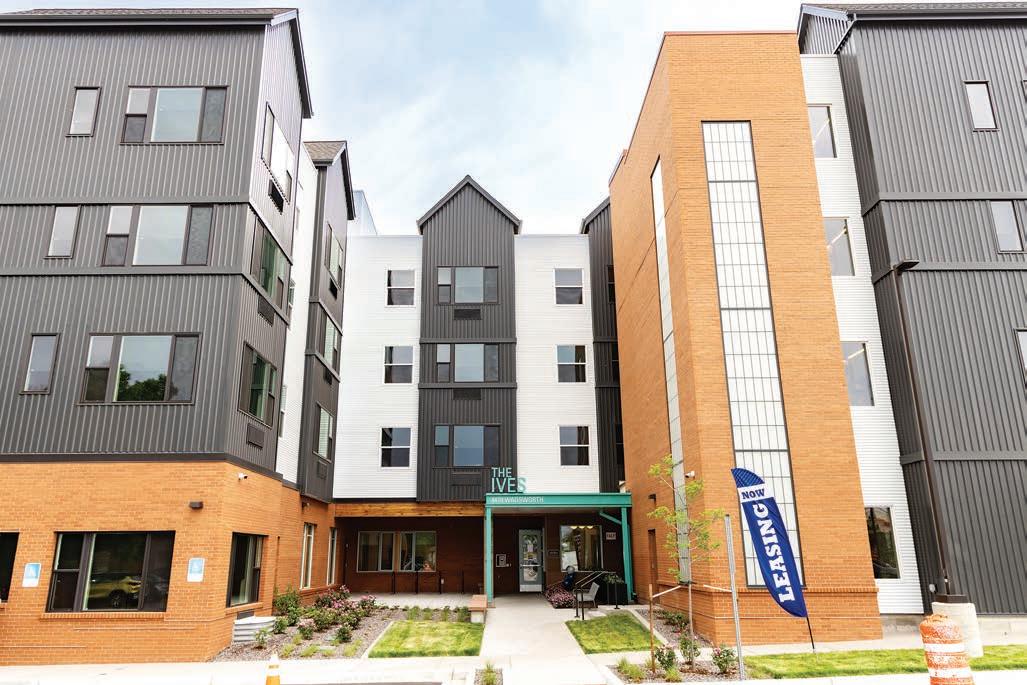
In Wheat Ridge, the Ives II project will be a newly constructed four-story development combining paired federal 9% and 4% credit awards serving individuals and families.
e city of Wheat Ridge donated the land at the corner of 44th Avenue and Wadsworth Boulevard, and the sponsor, Foothills Regional Housing, will provide 30 project-based vouchers. Residents will have access to services provided by Je erson Center for Mental Health at Ives I, which is adjacent to Ives II, according to the authority.
Additionally, other services will be provided by Developmental Disability Resource Center. e site is adjacent to a bus stop and within a half mile of an elementary school, grocery store, shopping center, park and other amenities. e property will be built with an electri cation-ready and photovoltaic-ready design.



says he
BY COLORADO COMMUNITY MEDIA STAFF ERIC@COTLN.ORG
Je erson County Sheri ’s O ce deputies arrested a Mexican national April 28 in possession of nearly 5 kilograms of the narcotic fentanyl near Interstate 70 and Harlan Street just outside of Denver. e suspect had an arrest warrant from his home country of a sexual assault charges.
According to the FBI in Denver, Dario Perez Quintero was residing in Colorado without authorization. e FBI worked with local partners to track Quintero to Evergreen, and then agents worked with local partners from the Je erson County Sheri ’s O ce to apprehend him.
Of the units that received funding, 30 will be one-bedroom, 20 will be two-bedroom and four three-bedroom. Six of them will be reserved for tenant income restrictions at 30% area median income, seven for 40%, 12 for 60% AMI and 29 for 70%.
e federal 9% credit awarded totaled $1.6 million, with an additional standard state credit at $650,000 and a transientoriented community credit of $70,200.
An additional 44 units with similar income restrictions received a federal 4% credit for $772,287 as well as the same standard state credit and a transient-oriented community credit of $57,200.
e total private sector equity estimated to be raised by the credit awarded during this round exceeds $207.4 million, according to the authority. Developments awarded will seek to address various housing needs in Colorado, supporting households with low and moderate incomes, individuals and families transitioning out of homelessness, and
older adults.
Developments supported will be located in Alamosa, Aurora, Brighton, Denver, Fort Collins, Frisco, Superior, Trinidad, Westminster and Wheat Ridge. Since the program was created in 1986, CHFA has served as the allocating agency for housing tax credits in Colorado. Tax credits are the most widely used tool for nancing a ordable rental housing in the nation. Since its inception, the program has helped build or preserve more than 80,000 a ordable rental housing units in Colorado.
Je co deputies stated Quintero was stopped, initially for speeding, while driving a black Ford Explorer. Once the sheri ’s o ce deployed a K-9 unit to assist, the fentanyl pills were discovered. e sheri ’s o ce stated the amount of pills in Quintero’s possession equal about $1 million in street value.
Vikki Migoya, a public information o cial with the FBI in Denver, told Colorado Community Media that Quintero did not face federal charges in Colorado at the time of his arrest.
“We found the fentanyl pills when we apprehended him on the Mexican warrant,” Migoya said. “It is my understanding that this individual was turned over to (Immigration and Customs Enforcement).”
Contested development now needs approval of building permits to move forward
BY COLORADO COMMUNITY MEDIA STAFF
ERIC@COTLN.ORG
e Lakewood Planning Commission voted unanimously on May 7 to approve the site plan for the contested planned development of an apartment complex near Belmar Park.
e residential building, which is slated for 777 S. Yarrow St. e property owner is looking to redevelop the site with a 6-story, 411-unit multifamily building.
“Normally, the determination on whether a site plan meets the zoning requirements is performed administratively by sta , and there is no public input or re-
view by city council,” a statement from the city following the vote. “In this case, the planning director referred the decisionmaking to the planning commission because of the community concern about the proposed development and to provide transparency about the scope of the authority that the zoning requirements provide in reviewing developments.”
Lakewood anticipates building permits will be issued and construction on the site will commence later this year. According to city documents, a school land dedication fee of $328,800 and a parkland dedication fee of about $1.46 million must be paid before any building permits can be issued.
As previously reported by Colorado Community Media, Belmar Owner LLC and Kairoi Properties LLC, developers Belmar Owner LLC and Kairoi Properties LLC, developers of a planned 412-unit luxury apartment building at Belmar Park,
sued the city of Lakewood in December. e developers claim the city’s new parkland dedication requirements are illegal, making its planned housing projects impossible.
In January, a Je erson County judge granted Kairoi a preliminary injunction, allowing the apartment project to proceed while the case progresses.
Members of Save Belmar Park, a citizenled group advocating for the preservation of open space, argued the city of Lakewood had failed to defend a citizen-led ordinance the council adopted after the group submitted the required number of signatures, leaving residents in opposition to the move no choice but to step in.
Dozens of people submitted public comment letters in opposition to the planning commission granting the developers the right to continue with their project, claiming the development would be ruinous to the park.
In response to concerns about Belmar Park, it is requiring the developers to do the following:
• Dedicate 8,600 square feet to parkland designation on the development’s property next to the park that involves a historic pumphouse and preserves the viable trees;
• No trees are to be removed or affected in the adjacent Belmar Park;
• Pay a $415,200 mitigation fee to compensate for removal of 66 trees on the development’s property. e fee will pay for tree plantings in Belmar Park including immediately adjacent to the development, shrub planting in Belmar Park to support wildlife habitat and the planting of trees in Ward 3, where this development is located; and
• 174 trees are to be planted along with 2,054 shrubs to be planted and seven trees to be preserved on the development’s property.
BY COLORADO COMMUNITY MEDIA STAFF ERIC@COTLN.ORG
Wheat Ridge City Council Member
Amanda Weaver has been appointed to the Colorado Agriculture Commission by Gov. Jared Polis.
e appointment recognizes Weaver’s longstanding commitment to sustainable agriculture, land stewardship, and rural-urban collaboration.
“It’s an honor to represent Wheat Ridge and the broader agricultural community at the state level,” said Council Member Weaver. “Colorado’s farming and ranching traditions are deeply rooted in innovation, resilience, and community. I look forward to bringing a local government perspective to the commission’s work while advocating for policies that support farmers, protect land, and strengthen our food systems.”
As a member of the Colorado Agriculture Commission, Weaver will help shape policies and programs that guide the future of agriculture across the state. e commission advises the Colorado Department of Agriculture and the governor on critical issues a ecting producers, ag-related businesses, and consumers.

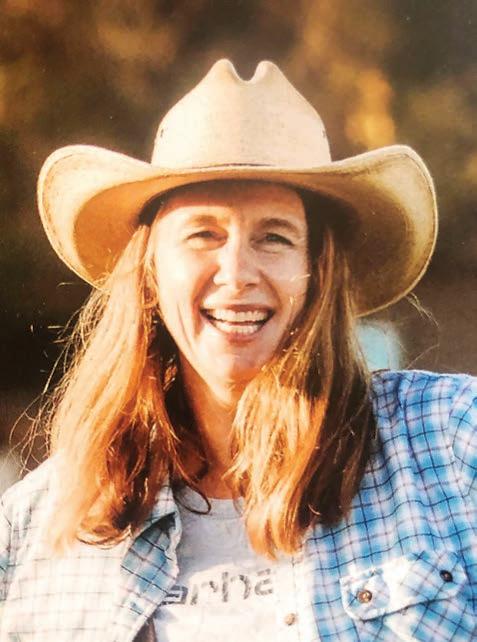

According to the city of Wheat Ridge, Weaver also operates a working farm in Je erson County and brings “both practical experience and policy expertise to the role.” e city stated her appointment marks an opportunity for Wheat Ridge to have a voice in statewide agricultural discussions as the city continues to invest in sustainability and local food initiatives. For more information on the Colorado Agriculture Commission, visit ag.colorado.gov.
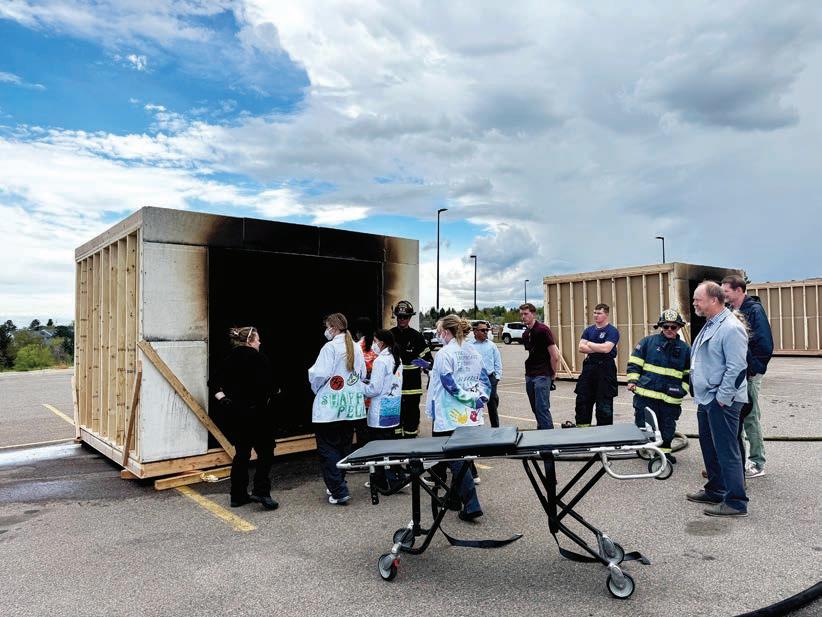
e simulation featured a pig cadaver placed inside a burn structure, simulating human remains in a re-related death. Students rotated through roles throughout the day, observing re behavior, conducting interviews, collecting evidence and analyzing burn patterns.
“We try to make it as real as we possibly can,” said Afton Nance, forensic science instructor and co-creator of the event. “ ere’s blood, there’s a body, there’s re, and the students have to use science to solve the problem.”
Community and industry partnerships bring realism to the fireground
Since its creation in 2015, Fire Investigation Day has become a signature Warren Tech event and a rare opportunity for students to test their skills in a simulated but high-stakes environment.
e school partners with South Metro Fire Rescue and other agencies to run
the event safely and e ectively.
“We cannot do this without our industry partners,” said Matt Walsh, principal of Warren Tech. “We had support today from Lockheed Martin, the Denver South Fire Department, the O ce of Fire Prevention and Control and South Metro Fire Rescue. ese partnerships are a key part of what makes Warren Tech special.”
Warren Tech also worked with the Boulder County Coroner’s O ce, which provided insight into post- re investigations and how a necropsy is performed on a re victim.
e collaboration showed students rsthand how re investigations often involve coordination between multiple departments and experts.
For students like senior Emma LeBlanc, the day was the culmination of months of preparation and learning.
“It’s something we’ve all looked forward to,” LeBlanc said. “ is kind of hands-on experience helps me see what it’s really like to work a scene instead of just reading about it in a textbook or case study.”
Don’t
For many would-be homebuyers in Colorado, the biggest obstacle isn’t affording monthly payments — it’s saving up for a down payment. But there’s a lesser-known solution: a unique down payment assistance program connected to FHA that offers generous terms with fewer limitations than many alternatives.
I learned about this program from Jaxzann Riggs, owner of The Mortgage Network, who explained how this option helps buyers get into homes sooner - with little or no money out of pocket.
“Some buyers have strong income and credit, but they just haven’t been able to save enough for a down payment,” she told me. “This program bridges that gap - without the typical income or location restrictions.”
HOAP, and MetroDPA, these programs often have income caps and/or location limits.
But as stated before, the national FHAbacked option offers broader eligibility, no income or area restrictions, and more flexible terms, making it a strong option for buyers who are ready now.
rising-rate environment.


Additionally, this program allows for higher debt-to-income (DTI) ratios, a hallmark of FHA financing. That means borrowers with student loans or other debt may still qualify.
This FHA-approved assistance is more flexible than many state or local programs. It comes in the form of a second mortgage behind an FHA loan, but here’s the twist: there are no income limits, no geographic restrictions, and more flexibility within FHA guidelines, compared to a conventional loan.
Buyers can use this program whether or not they’re a first-time homebuyer. It’s designed for those who are financially ready to buy but need help covering the minimum 3.5% down payment or closing costs.
While Colorado offers down payment help through programs like CHFA, CHAC,
With rents and home prices both climbing, waiting to save for a traditional down payment could cost more in the long run. Getting into a home today versus two or three years from now allows you to start building equity instead of continuing to pay rent.
“Every month you rent is a month you’re not gaining ownership,” Jaxzann says. “This program gives you a way to step into the market faster and start growing wealth.”
Keep in Mind: Not All FHA Loans Are Eligible It’s important to note that this assistance applies only to new FHA purchases. If you already have an FHA loan, you won’t qualify for this specific program — but there’s still a silver lining. FHA loans are assumable, meaning a future buyer could take over your low-interest mortgage without a rate hike, an incredibly valuable feature in a
“You can’t beat the ability to transfer a loan with no escalation in rate,” Jaxzann points out. “That’s something worth knowing if you already have an FHA loan.” Homeowners with existing low-rate FHA mortgages are sitting on a very valuable asset. When it is time to sell, they should consider allowing the new prospective purchaser to “assume” their existing loan.
This is done by having the prospective purchaser apply for a “qualifying assumption” with the lender that is currently servicing the loan. Because the prospective owner is qualifying to assume the existing loan, the original borrower is released from all future liability for the loan while allowing the new purchaser/owner to keep the original mortgage interest rate. The difference between the current loan balance and the purchase price of the home is paid to the seller in cash.
As with most zero-down options, there are considerations:
Interest rates will be higher than traditional FHA loans with full down payments. On a $500,000 home, that might mean around $550 more per month.
You will have to pay off any remaining balance on the second mortgage when you refinance or sell.
All FHA loans require mortgage insurance on the loan. This insurance protects the lender in the event of foreclosure.
Unlike mortgage insurance on conventional mortgages, 30 year fixed rate FHA loans require that the mortgage insurance remain in place for the life of the loan.
You must intend to live in the home as your primary residence at the time of purchase.
Still, for many buyers, the ability to get into a home now outweighs the costs.
“This program can open doors much sooner than people think,” Jaxzann told me.
“This is ideal for households with two incomes and/or those that might have been denied down payment assistance in the past because they exceed income limitations for other programs. If you’re ready to buy but short on upfront funds, it’s absolutely worth exploring.”
To learn more and find out if you qualify, contact Jaxzann Riggs at The Mortgage Network at (303) 990-2992.
NOTE: My “Real Estate Today” column that normally appears on this page is now published bi-weekly. Look for it here next week and every other week thereafter.
On those alternate weeks, look for a half-page ad like this on a related topic.
By 2027-28, the transition will accelerate, and by 2031-32, Colorado plans to fully fund schools using the new formula.
How several major metro districts are affected
A look at ve of Colorado’s largest districts shows how uneven the impact will be over time, according to the scal note attached to House Bill 25-1320 and data from the Colorado Department of Education:
• Adams 12 Five Star Schools: Relatively at. For the 2024-25 school year, Adams 12 received a slight funding increase over the 2023-24 school year. However, by 2025-26, the district is projected to face a slight decrease of approximately 1.6%. Ongoing enrollment declines and fewer qualifying high-needs students are under the new weighted formula, contributing to this dip.
• Adams County School District 14: Small drop. Adams 14 saw at funding for 2024-25 compared to the previous year. For 2025-26, projections show a minimal decrease of about 0.6%. Despite longterm enrollment loss, the district’s high concentration of at-risk and multilingual learners helps stabilize funding levels.
• Cherry Creek Schools: Solid increases. Cherry Creek Schools received a solid funding increase in 2024-25 and is projected to receive an even larger one in 2025-26, with a projected gain of 7.8%. Stable enrollment and a growing population of at-risk and multilingual learners align well with the new funding priorities, placing Cherry Creek in a strong nancial position. While its enrollment has remained stable, Cherry Creek’s at-risk and multilingual student populations have
grown. at demographic shift aligns with the new weighted funding priorities, resulting in a projected 7.8% increase in funding from 2024-25 to 2025-26.
• Douglas County School District: Relatively at. Douglas County saw a modest increase in 2024-25 and is projected for a at to slight increase of about 0.8% in 2025-26. While enrollment is declining, strong local property wealth and demographic balancing help the district maintain relative stability under the phased-in new formula.
• Je erson County Public Schools: Steep losses. Je co Public Schools is protected from immediate funding cuts in 2024-25, thanks to the hold harmless provision. For the 2025-26 school year, the district is guaranteed to receive at least as much funding as it did in the 2024-25 school year.
However, long-term challenges are building. Without the hold-harmless protections, scal note projections show Je co would face a 14.9% drop in total program funding under the state’s new weighted formula. Several factors are driving this risk:
Several factors are converging:
• Enrollment loss: Je co’s student population continues to shrink, reducing its funding needs under both formulas.
• Property value surge: Rising home values increase local tax collections, reducing the amount of state funding Je co quali es for.
• New formula weighting: e new funding model places greater emphasis on at-risk and multilingual learners, areas where Jeffco’s demographics o er fewer additional dollars compared to other metro districts.
What the shift means for metro districts e 2025-26 school year marks the beginning of Colorado’s shift toward a new vision of school funding, one that prioritizes student needs more heavily but also
leaves some communities facing complex adjustments.
While families may not notice dramatic changes immediately, the foundation for bigger nancial shifts is being laid now. Districts like Je co and Adams 12 will need to plan carefully to navigate tighter budgets, while Cherry Creek and others may nd new opportunities to invest in expanded programs and services.
e hold harmless protection provides a temporary cushion, but districts like Je co face growing nancial challenges as the transition accelerates. By the end of the decade, Colorado’s school nance landscape will look very di erent from what it does today.
Charter schools will also see a share of the phased-in formula funding.
Another late-session amendment requires that charter and institute charter schools receive a per-pupil amount tied to their authorizing district’s incremental








increase












Executive order aimed at ‘sanctuary city’ policies
BY JASON GONZALES CHALKBEAT
Undocumented students in Colorado have gone on to be teachers, nurses and business owners thanks to a program that allows them to pay in-state tuition at public universities.
Now the future of that program and ones like it in 23 other states are in doubt after President Donald Trump signed an executive order that seeks to punish states and cities with so-called sanctuary policies.
e order, signed April 28, also specically calls out programs that provide instate tuition for undocumented students who graduated from high school in that state or who meet other residency requirements.
Allowing in-state students who are not citizens to pay less tuition than out-ofstate students who are citizens represents discrimination, according to the order, which says that the attorney general, in cooperation with the secretary of the Department of Homeland Security, “shall identify and take appropriate action to stop the enforcement of state and local laws, regulations, policies, and practices favoring aliens over any groups of American citizens that are unlawful.”
Advocates for immigrant students say that without in-state tuition, many undocumented students will struggle to afford college. ey don’t qualify for any federal nancial aid and face other barriers to college.
“ is is absolutely essential for immigrant students,” said Raquel Lane-Arellano, communications manager for the Colorado Immigrant Rights Coalition, which fought to pass Colorado’s in-state tuition law in 2013. “It’s not these students’ fault that our immigration system is so broken. ey deserve the opportunity, just like all of their peers, to access higher levels of education.”
So far, Colorado universities are not making any immediate changes to their policies.
“ e executive order does not provide enough details to truly know what federal actions will be taken,” said Colorado Department of Higher Education spokesperson Megan McDermott.
e Trump order sets up a possible legal showdown over the state-supported tuition programs that immigrant rights and higher education-advising groups have

called essential to help undocumented students access higher education and educate them to ll in-demand jobs.
Twenty-four states, including Colorado, Illinois, New York, and New Jersey, along with Washington, D.C. have programs that allow undocumented students to pay in-state tuition. While the programs have received bipartisan support, Republicans in several states have recently led bills to consider rolling back in-state tuition for undocumented students. Last week, Florida lawmakers ended the state’s decade-old program.
e order adds to an already uncertain environment for immigrant students, who worry about the risks of lling out nancial aid paperwork while grappling with deportation fears. Denver Scholarship Foundation’s Natasha Gar eld said the college-advising nonpro t will continue to provide students information about their options and allow them to decide whether college is right for them during a time when Trump’s immigration stance has brought incredible uncertainty.
“ ere are some who are very, very concerned about the state of things, and I don’t think there’s anything that DSF or anyone else could say to reassure them,” said Gar eld, the scholarship organization’s director of scholarships and nancial aid. “I think that’s completely understandable given some of the actions that we’ve seen coming from ICE [U.S. Immigration and Customs Enforcement] and the federal government.”



e order is part of Trump’s larger push to crack down on people in the United States without legal authorization. His directive to punish states with these programs also included several other enforcement actions such as punishing so-called sanctuary cities and states. e administration led suit Friday against Colorado and Denver for its policies. e administration argues in the order that some state and local o cials use their “authority to violate, obstruct, and defy the enforcement of federal immigration laws. is is a lawless insurrection against the supremacy of Federal law.”
States have a long history of o ering in-state tuition at public universities to youth who were brought as children and without legal status. Texas and California passed the rst laws in 2001, and other states followed with similar laws. Each varies in how they approach granting instate tuition.
About 408,000 undocumented students enroll in higher education each year, although not all bene t from these state programs, according to the Higher Ed Immigration Portal. However, even in states without these laws, some private schools in Tennessee and elsewhere may o er in-state tuition for all students regardless of their residency or legal status. And in Pennsylvania, at least one public institution provides in-state tuition to undocumented students.
Colorado’s Advising Students for a Stronger Tomorrow law, or ASSET, updated in 2019, says students must have
attended a Colorado high school for at least one year before graduation or been physically present in Colorado for at least one year to qualify for in-state tuition.
New York’s law says students must have attended at least two years of high school in New York and graduate or receive a general education diploma. Students must also apply to a college or university within ve years and show proof of residency. ey must also sign an a davit saying they will le for legal status.
Illinois’ law has similar requirements, while New Jersey requires three years of residency.
National student immigrant advocacy organizations FWD.us, eDream.US, and the Presidents’ Alliance on Higher Education and Immigration all criticized the order. Collectively, they said states, colleges, and universities shouldn’t overreact and that the order hurts states that need quali ed workers.
“Blocking states from o ering in-state tuition to undocumented students who have lived in these states for most of their lives would purposefully lock countless individuals out of the higher education system, waste years of educational investment, hurt local economies, and rob all Americans of future leaders,” said Todd Schulte, FWD.us president.
State leaders are still working to understand the impact of the order, and a spokesperson for Colorado Gov. Jared Polis said in a statement the administration is looking into the impacts of this order. e state remains committed to ensuring the state remains a destination for all learners, the statement says. e state has not led any legal action against the order, but leaders have been willing to push back on Trump administration orders.
Colorado’s largest university system also doesn’t plan changes at this time. University of Colorado System spokesperson Michele Ames said its schools are committed to following applicable laws and will not make any changes at this time. Other universities, such as the University of Northern Colorado, are monitoring the actions.
Schools across the state have also said that they won’t release individual student information, such as information about undocumented students who attend schools through the ASSET program, to the federal government without a court order or warrant, per federal student privacy laws.
Reprinted with permission from Chalkbeat, a nonpro t news site covering educational change in public schools. Sign up for their newsletters at ckbe.at/newsletters.
BY MICHAEL BOOTH THE COLORADO SUN
e National Renewable Energy Lab in Golden red 114 of its thousands of sta ers and contractors May 5, as part of the Trump administration’s e orts to sharply trim research spending across nearly all elds supported by federal agencies in the past.
e laboratory sta laid o includes employees and subcontractors in both research and operations, NREL said in a statement. “We appreciate their meaningful contributions to the laboratory. NREL’s mission continues to be critical to achieve an a ordable and secure energy future,” the statement said.
But the layo s could just be the start of slashes to the 3,675 employees NREL most recently listed on its website, if President Trump’s scal 2026 budget proposal survives at all intact through Congress. e White House is pitching $19.3 billion in cuts to the Department of Energy’s allotted 2025 spending, according to the website utilitydive.com.
e White House budget request goes out of its way to ridicule renewable energy research and subsidies promoted heavily by the Biden and Obama administrations: “ e Budget cancels over $15 billion in Green New Scam funds committed to build unreliable renewable energy, removing carbon dioxide from the air, and other costly technologies burdensome to ratepayers
and consumers,” the budget proposal says.
“NREL continues to navigate a complexnancial and operational landscape shaped by the issuance of stop work orders from federal agencies, new federal directives, and budgetary shifts. As a result, NREL has experienced workforce impacts a ecting 114 employees across the laboratory, including sta from both research and operations, who were involuntarily separated today,” NREL’s statement said.
e Golden lab runs premier international research facilities and experiments in improving wind turbines and solar photovoltaic cells for power generation, in addition to dozens of other programs in biofuels, e ciency, hydrogen and fuel cells, transportation, and more.
e lab frequently partners with universities and private business on innovative projects, such as the Colorado “SunTrain” proposal late in 2024.
NREL was to help Colorado government, Xcel and entrepreneurs apply for a $10 million grant to run trains with massive batteries charged up by solar and wind farms on the Eastern Plains.
e trains could then roll into metro Denver or any other area in need of large-scale energy storage and output.
Some fans of the lab’s work had been encouraged it would maintain a top role in government research through involvement in Trumpfavored concepts.
Energy Secretary Chris Wright came to the Golden lab in early April to promote a Trump administration plan for a private data center and power plant on land owned by NREL. e administration plans such facilities at 16 national laboratories.
“Private data center companies, that’s where the capital is, that’s where the investment is
BY SARAH MULHOLLAND CPR NEWS
Colorado economic signals are mixed as businesses try to make sense of President Donald Trump’s ip- ops on tari s. e number of people ling to start a business was up in the rst quarter compared to the end of last year, according to a joint report from the University of Colorado’s Leeds School of Business and the Secretary of State’s O ce. At the same time, the state’s executives are feeling deeply anxious about how the new administration’s trade policies are going to impact their bottom lines, the report found.
“ e indicators in this report do not show any immediate or signi cant economic disruption to Colorado … but it does show business leaders in Colorado are nervous about these disruptions,” Secretary of State Jena Griswold said during a webinar about the report.
Colorado’s economy started slowing before Trump was sworn in for his second term. As of April, the state added 2,300 jobs during the prior 12 months, which equates to a growth rate of 0.1 percent. at compares to the U.S. rate of 1.2 percent.
Colorado now ranks 44th for job growth among the 50 states and Washington, D.C. “We were hard-charging for a long time. Now, some of the other states are catching up and are continuing to have that growth that we had,” said Richard Wobbekind, senior economist and faculty director at CU’s Leeds School of Business.
e state’s per capita personal income and labor force participation still rank high, he said.
“We are a prosperous state, and we are grow-


ster the country’s electricity grid, saying demand has stayed relatively flat over the last 20 years while costs have gone up.
and on federal land, we make a commercial arrangement with them,” Energy Secretary Chris Wright said. is story was printed through a news sharing agreement with e Colorado Sun, a journalistowned nonpro t based in Denver that covers the state.

LINDA SHAPLEY Director of Editorial & Audience lshapley@coloradocommunitymedia.com
SUZIE GLASSMAN Community Editor sglassman@coloradocommunitymedia.com
ERIC HEINZ West Metro Editor eric@cotln.org
ERIN ADDENBROOKE Marketing Consultant eaddenbrooke@coloradocommunitymedia.com
LINDSAY NICOLETTI Operations/ Circulation Manager lnicoletti@coloradocommunitymedia.com
BUSINESS INQUIRIES
For advertiser or vendor questions, please email our business department at accounting@ coloradocommunitymedia.com
Columnists & Guest Commentaries


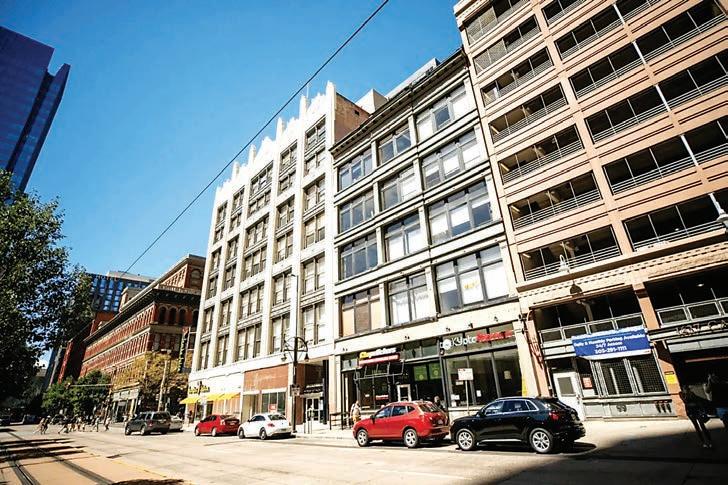
1605 and 1615 California St. in the Central Business District. Aug. 19, 2023.
ing, we’re just growing at a slower rate,” Wobbekind said.
Colorado’s professional business services, which includes the tech sector, took a big hit in the past year. at sector has 8,400 fewer jobs than a year ago.
“ at had been a disappointment in terms of job performance in 2024. And so far it’s continuing into 2025,” Wobbekind said.
is story is from CPR News, a nonpro t public broadcaster serving Colorado. Used by permission. For more, and to support Colorado Public Radio, visit cpr.org.





Columnist opinions are not necessarily those of the Transcript. We welcome letters to the editor. Please include your full name, address and the best number to reach you by telephone.
Email letters to letters@coloradocommunitymedia.com
Deadline Tues. for the following week’s paper.




Je co Transcript (ISSN 1089-9197)
A legal newspaper of general circulation in Je erson County, Colorado, the Je co Transcript is published weekly on Thursday by Colorado Community Media, 3540 Evergreen Parkway, Evergreen, CO 80439.
PERIODICALS POSTAGE PAID AT EVERGREEN, COLORADO and additional mailing o ces.
POSTMASTER: Send address change to: Je co Transcript, 750 W. Hampden Ave., Suite 225, Englewood, CO 80110
CORRECTIONS


On page 2 of the May 1 edition of the Je co Transcript, the headline of the story “Second man convicted in rock-throwing case” was incorrect. The man had already been convicted. He was recently sentenced.
We are living in a time of incredible pressure, and tragically, it’s our children who are carrying the heaviest burden. Anxiety and depression among children and teens have skyrocketed, with every credible study pointing to culprits like social media, internet access, and mounting academic, athletic, and social expectations. It’s overwhelming — and that’s putting it lightly.
It’s easy to point ngers at TikTok, Instagram, and the endless pursuit of “perfection.” And sure, those factors are real. But if we’re serious about loving and leading our families, we must ask the harder question: Are we doing enough at home to ease their worries, doubts, and fears?

As cameras panned the audience, thousands wiped away tears. Sitting beside me was Zig’s son, Tom Ziglar, a grown man and CEO, with tears streaming down his face. When I asked if Zig had done that for him, Tom smiled through the tears and said, “Yes. And he still does, even now.”
For most of us, the honest answer is not yet.
e Critical Role of Communication. Communication isn’t a “nice-to-have” in this battle for our children’s hearts and minds, it’s everything. And not just when problems show up. Proactive, frequent communication. Maybe even, dare I say it, over-communication.
Our kids navigate a digital battle eld every day. e loudest voices tell them they aren’t good enough. If we don’t ll their emotional tanks with hope, encouragement, love, and acceptance, someone else will, and it will be with poison, not lifegiving truth.
I’ll never forget an incredible moment I witnessed with Zig Ziglar, one of the greatest motivational speakers ever.
At a packed seminar, a man stepped to the mic, thanking Zig for shaping his own life but sharing that his son was struggling. Zig’s response was pure wisdom: He told the man to sit on his son’s bed, look him in the eyes, and say:
“Son, I am so glad God entrusted me with your life. You are a blessing to me. I am proud of you. And I love you.”
Zig encouraged him to say it every morning and night, not once, not when convenient, but every day.
Memorial, will wonder why Americans abandoned such a good idea.
Linda S. Lodenkamper, Wheat Ridge
The politics around ‘our safety’s sake’ While I agree that U.S. and Colorado political beliefs are well divided today. I deeply disagree that “America today is like England” of its past, Jerry Fabyanic’s May 1 editorial perspective and the headline, “For our own safety’s sake.”
U.S. citizens today are no more in trouble safety wise now than when the Democrat Party recently led this country. Politically opposed people will even argue we are less in trouble.
I, like Jerry, love our country and am a student of American history but I know of more dark periods than simply disagreeing with U.S. political ideologies such as the Communism scares, he is writing to of the 20th century. I also know of more egregious violations of our Fifth Amendment and in Colorado’s assistance in helping create the 14th Amendment with the Sand Creek Massacre. No punishments to those who committed these atrocities even as the people of Denver then cheered their e orts as they displayed their grisly trophies on parade. is is why a single piece of justice Col-
and
ink about that: A father who never stopped telling his grown son how proud he was. Every single day.
Fighting for eir Hearts. If we want to lead and love our children in today’s chaotic world, we must show up with our words, not just advice or correction, but daily, intentional a rmation.
ey need to hear it when they get straight A’s.
ey need to hear it when they fail a test. ey need to hear it when they make us proud, and especially when they break our hearts.
Because mistakes don’t de ne them, grace does. Growth does. And our unwavering love does.
Our communication must be a ood of love, encouragement, and constant reminders that they are more than enough that no failure can separate them from our love, and no outside voice can ever be louder than the voice of their family. e pressures and dangers are real. But so is our power to counteract them. If we don’t communicate, the world will. If we communicate relentlessly, intentionally, and lovingly, we can raise a generation that walks through the storm without losing their way.
Let’s speak up, every day, every chance we get. eir future depends on it. I would love to hear your story at gotonorton@ gmail.com. And when we intentionally communicate through the storm, it really will be a better-than-good life.
orado accomplished for this xenophobia act with the renaming of the peak that overlooks Denver, to Mount Blue Sky from Mount Evans. is past name of Colorado’s territorial governor who was personally responsible for the depriving of these lives of American men, women and children.
e current multiple medias battles of selected words to scare U.S. citizens against the current federal administration are my greatest safety concerns. is is also the reasoning why the Arvada Press is the only newspaper allowed in my own Arvada home. As a “freedom-loving” American I gasp at the multiple news media scare attacks and the current practice of select justice system’s judge’s rulings placed over another branch of our government’s executive branch’s orders.
It is past time all our government representatives understood they are working for all the people in our country, not one political party. at all people in the USA are di erent with multiple desires, issues, needs and wants. Mistakes are going to happen even with due process laws for “all,” which happened to this criminal and El Salvadorian citizen Mr. Garcia. e Alien Enemies Act was not a wartime creation in 1798. It was a lawful e ort by a very new country to quickly remove dangerous individuals. So, please stop all these political boosts and threats for one or the other U.S. political parties.
Gary Sco eld, Arvada
September 11, 1954 - May 3, 2025
Carol Skinner, beloved mother, sister and friend passed away peacefully on May 3, 2025 at her home in Lakewood. She was born in Denver and was the daughter of DeWayne and Josephine Skinner. Carol was a graduate of Wheat Ridge High School, the University of Colorado and University of Northern Colorado.



Carol is survived by her children Chase and Grant. She is also survived by her partner Steve Morrison and her siblings, Mark (Carol), Brett and Anne.
Carol was kind to friends and neighbors and always supported her boys to follow their own path. She will be deeply missed.
Carol was a remarkable woman and known by family and friends as a fabulous cook. She was strong-willed with a can-do attitude. Carol traveled extensively and pursued a variety of careers including modeling, managing trade shows, elementary school teacher and principal. She retired in 2021 from the Je erson County School District.







A memorial service will be held May 16th, 4:00 pm, at Shepard of the Hills Presbyterian Church, 11500 W. 20th Ave., Lakewood.















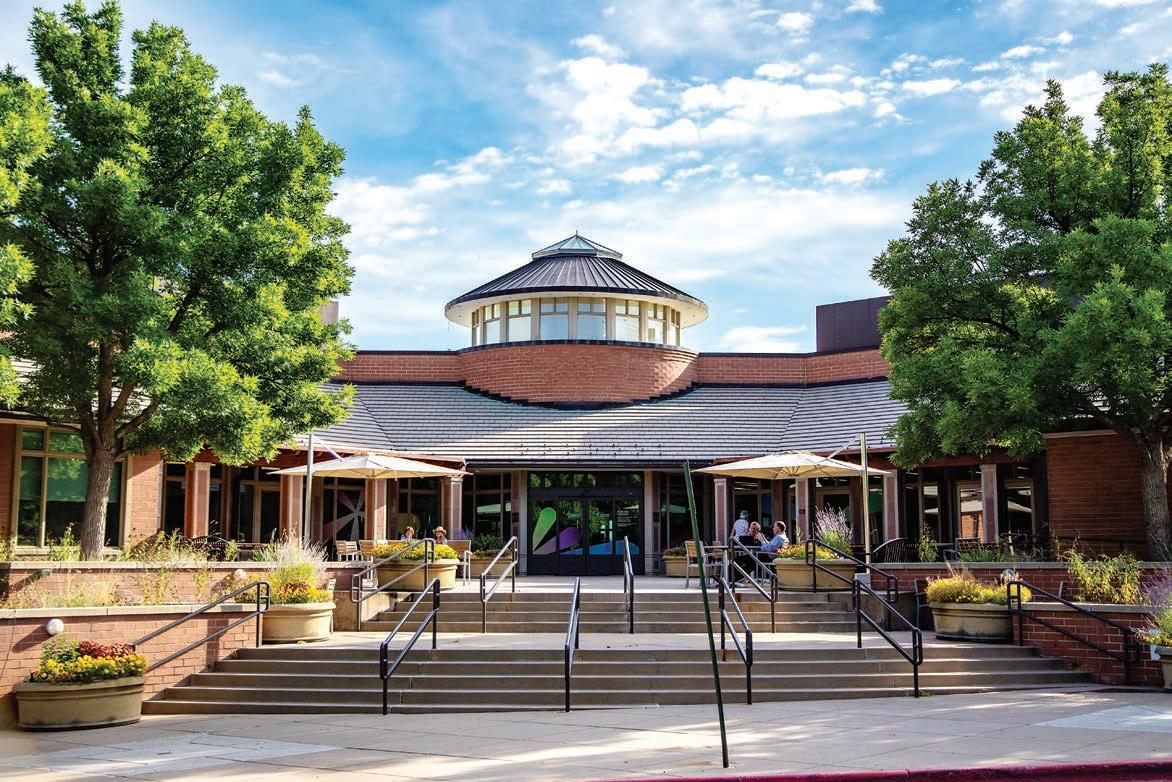
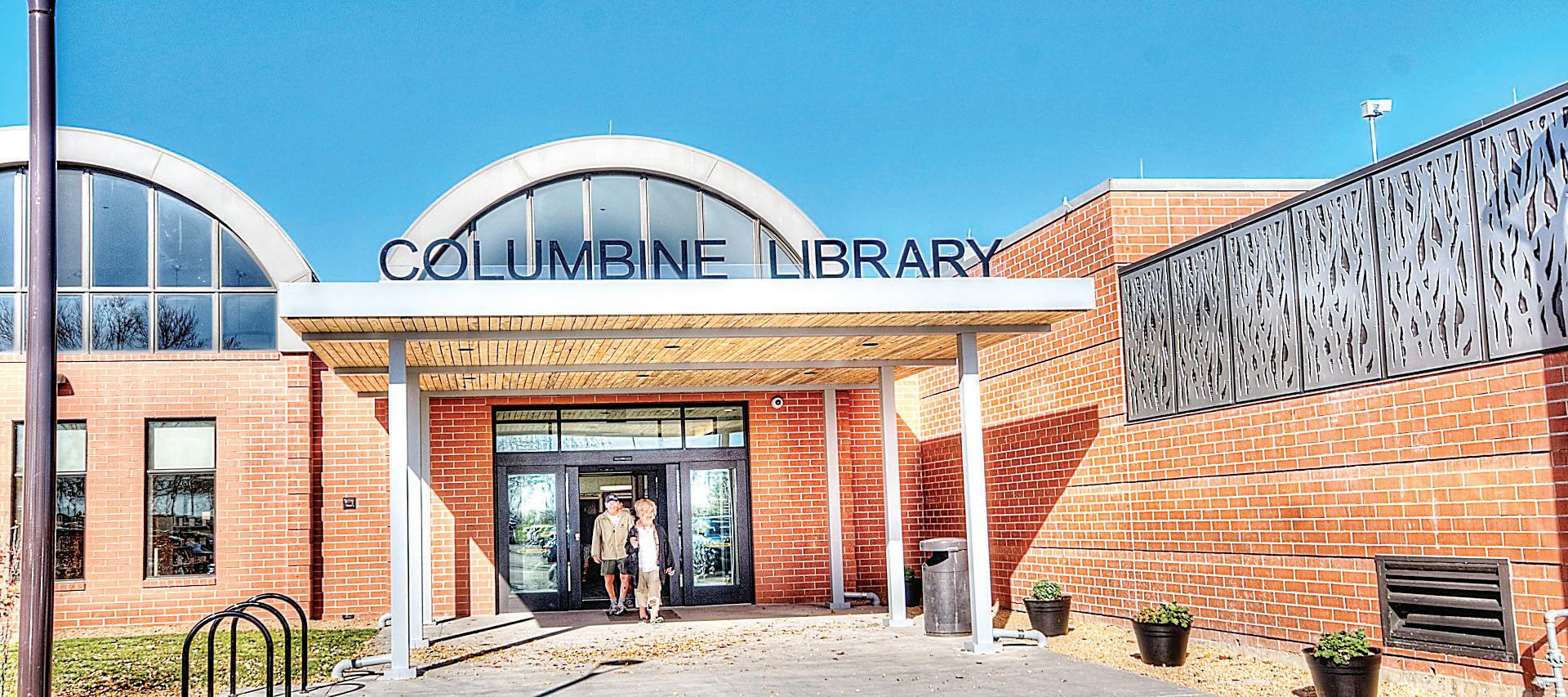
BELOW: The Columbine Library is part of the Je erson County Library system.




Bemis Public Library
6014 S. Datura St., Littleton, CO 80120
Nestled in a sleepy grove across from the Littleton Historical Museum, Bemis Public Library is one of the few independent libraries in the metro area, meaning it is not part of any library system.
Instead, the library was built by the City of LIttleton in 1965 and is the namesake for former Littleton Independent Publisher Edwin A. Bemis.
Now, the library — which is walking distance from Downtown Littleton — sports a large kid’s section that sometimes hosts storytimes, as well as a teen area that is separated from the rest of the library.
Bemis Public LIbrary is also home to resources for
groups the library welcomes through its doors. e library also eliminated overdue fees in 2023 as an e ort to become more equitable to patrons.
Koelbel Library, Arapahoe Libraries
5955 S. Holly St., Centennial, CO 80121
Arapahoe Libraries comprises eight community libraries, a jail library and a bookmobile, all of which provide valuable resources to their patrons.
Oliver Sanidas, the executive director of Arapahoe Libraries, said that Koelbel Library in particular offers unique programming thanks to its cafe, meeting spaces, 39-seat theater, outdoor space and public art installations.
“We want to provide a place and services that help meet not only the information needs of our patrons, but also the social needs,” Sanidas said. “ e library provides a place for people to connect with others who
share their interests and passions. We do this through events and programs, and by providing spaces for patrons to meet, work and enjoy fun activities.”
Sanidas said that meetings rooms are used for birthday parties, business owners use the library’s cafe to meet with clients, tutors can meet with students and adults participate in book clubs and open mic nights at the library’s facilities.
“We want our library to be a community hub,” Sanie library’s cafe serves bites and sips from local vendors, and o ers a rotating series of drink speciale. e Koelbel Library Cafe is currently featuring a Purple Rain Latte, a Crimson and Clover Latte and a Strawberry Fields Lemonade.
Anythink Wright Farms, Anythink Libraries
5877 E. 120th Ave., ornton, CO 80602
Anythink Libraries branches o er all of the usual trappings of a library with a fun added twist: TryIts, a program wherein a patron can check out a kite, tarot deck, toy, musical instrument, games and more. e program is o ered throughout the Anythink system. e library system’s agship branch, located at Wright Farms, features a digital lab featuring video, audio and design software that allows teens to work on their digital editing skills and push their creativity. e agship branch also contains a one-acre park adjacent to the li-
Castle Rock Public Library, Douglas County Libraries
100 S. Wilcox St., Castle Rock, CO 80104
e new Phillip and Jerry Miller Library in Castle Rock was built in 2023 and was constructed with an emphasis on creating space for working adults, families and Douglas County history.
“ e Castle Rock location features two outdoor Aloha Plazas East and West, an interactive children’s play space called e Ranch, sponsored by Castle Rock Rotary Club, and DCL’s Archives & Local History, its collections and the Sjostrom History Lounge reading room,” said Melissa Anciaux, the sta writer for Douglas County Libraries.
e branch replaced the old Phillip S. Miller Library that stood at the same location.
Douglas County Libraries also partners with Dolly Parton’s Imagination Library, which o ers books to children up to 5 years old that the youngsters are able to keep.
Many people think of museums as places that have all the answers, but that’s not always the case. And sometimes that makes for a more intriguing story.
Such is the case for the latest exhibition at the History Colorado Center, e Disappearance of omas Riha, which takes a local mystery and investigates the many remaining unanswered questions.
“ is is a true crime cold case that’s never been told publicly in a museum setting,” said Katherine Mercier, exhibition developer and historian at History Colorado. “We felt we nally had the space to experiment with the kind of exhibit we’ve never done before.”
e Disappearance of omas Riha will be on display at the Center, 1200 Broadway, Denver in Denver, through March 15.
According to the provided information, the exhibit tells the story of University of Colorado Boulder Russian history professor omas Riha, who vanished on March 15, 1969, right in the middle of the Cold War.
e exhibition features never-beforedisplayed declassi ed documents from the Central Intelligence Agency and the Federal Bureau of Investigation, and is deepened by History Colorado’s archives. Museum researchers had a wide range of materials to use, including the journals of a woman who may or may not have played a role in Riha’s disappearance.
“Despite the case never being solved, we have hundreds of pages in our collection that provide unique insights,” Mercier explained. “We don’t claim to have the answer as to what happened, but



we want people to be able to go through the evidence and come up with their own theories. ere’s even a space at the end of the exhibition where guests can share them.”
While the mystery is the main draw of the exhibit, Mercier said she also hopes visitors get a glimpse of Colorado’s role as a hotbed of activity during the Cold War. With sites like Rocky Flats and the Air Force Academy, the state saw plenty of intrigue.
“People may not understand how big the Cold War was and how it integrated itself into everybody’s life,” she said. “I hope people think about what it would’ve felt like to be living at the time and how they would cope.”
Riha’s disappearance received a great deal of press coverage at the time, but eventually faded away, leaving everyone without answers. So, this exhibit was carefully designed to also include the stories of the people who were a ected.
“ e exhibit focuses on the people and lives that were wrapped up in the events,” Mercier said. “ omas had a family that never got answers about what happened to him. is is ultimately a story about humanity.”
For more information, visit www.historycolorado.org/exhibit/disappearancethomas-riha.
See How Englewood Works at Civic Center
How well do you know the people that keep your city running? Englewood resi-




dents have the chance to meet those behind the scenes at the Celebrate Englewood event, held from 10 a.m. to 2 p.m. on Saturday, May 17 at the Englewood Civic Center, 1000 Englewood Parkway.
Attendees can meet employees and participate in other activities like Touch a Truck, where people can get up close to a re truck, police cars, bearcat, police motorcycles and command post, and more. ere will be vendors and other activities as well.
More information at https://www.englewoodco.gov/our-city/events/upcoming/celebrate-englewood.
Je erson Symphony Plays Star Wars Score
May 4 may have been more than a week ago, but the Je erson Symphony will be celebrating the immortal John Williams Star Wars score with two performances at 1 and 4 p.m. on Sunday, May 18 at the Mines Green Center, 924 16th St. in Golden.
In addition to the timeless music, Conductor Arturo J. Gonzales will be holding a pre-concert talk at 12:15 and 3:15 p.m. on the day of the concert in Metals Hall. According to the provided information, he will discuss the history and composition of the Star Wars Soundtrack, what to listen for, and how to break down John Williams’ brilliant compositions.
Costumes are encouraged and those who wear costumes will get a discount on tickets. Information and tickets are available at https://www.je symphony. org/.
Clarke’s Concert of the Week — Toro y Moi and Panda Bear at the Fillmore Auditorium ere is some music that’s made to get




lost in. It’s less about the lyrics and more about the mood, a sonic energy that can transport you if you allow it. In their own ways, both Toro y Moi and Panda Bear, a member of indie rock legends Animal Collective, have been building these musical worlds for years. eir music is very di erent, but the vibes are strong with both. e two musicians are a perfect pairing and they’ll be performing at the Fillmore Auditorium, 1510 Clarkson St. Denver, at 7 p.m. on Friday, May 16. ey’ll be joined by Kassie Krut for an evening to carry you away. Information and tickets are available at www.axs.com.
Clarke Reader’s column on culture appears on a weekly basis. He can be reached at Clarke.Reader@hotmail.com.
Colorado Community Media welcomes letters to the editor. Please note the following rules:
• Email your letter to letters@coloradocommunitymedia.com. Do not send via postal mail. Put the words “letter to the editor” in the email subject line.
• Submit your letter by 5 p.m. on Wednesday in order to have it considered for publication in the following week’s newspaper.
• Letters must be no longer than 400 words.
• Letters should be exclusively submitted to Colorado Community Media and should not submitted to other outlets or previously posted on websites or social media. Submitted letters become the property of CCM and should not be republished elsewhere.












Thu 5/15
Giant Walking Robots
@ 5pm
Newman Center for the Performing Arts, 2344 E Iliff Ave, Denver
Neil Z at the Chart House
@ 5pm Chart House, 25908 Genesee Trail Rd, Golden
Earl Nelson & the Company @ 6pm
New Terrain Brewing Company, 16401 Table Mountain Pkwy, Golden
The Consequence
@ 7pm
Hi-Dive, 7 S Broadway, Denver
Severed Reality
@ 7pm
Hi-Dive, 7 S Broadway, Denver
Sasami @ 8pm
Larimer Lounge, 2721 Larimer Street, Denver
Ramirez @ 8pm
Bluebird Theater, 3317 E. Colfax Ave, Denver
Fri 5/16

Live @ The Rose - Midnight River Choir with The Barlow and Special Guest Joe Stamm @ 5pm / $20


CSU Denver Extension Master Gardener Plant Sale @ 8am May 17th - May 18th
Teague Starbuck @ 7:30pm The Arvada Tavern, 5707 Olde Wadsworth Blvd, Arvada

Sun 5/18
The Ef�gies @ 8pm HQ, 60 S Broadway, Denver
Tue 5/20


CSU Denver Extension Master Gar‐dener Plant Sale, 888 East Iliff Avenue, Denver. denvermg@colostate.edu, 720913-5270

Buffalo Rose, 1119 Washington Av‐enue, Golden. information@buf falorose.net

Native Station
@ 8pm
The Black Buzzard, 1624 Market St, Denver

Sat 5/17
Clay Cutler @ 3pm
The Empourium Brewing Company, 4385 W 42nd Ave, Denver

Sherm @ 6pm
Larimer Lounge, 2721 Larimer St, Den‐ver

DreadNought @ 8pm Hi-Dive, 7 S Broadway, Denver
Ace Engfer: Matt Flaherty Band @ 9pm Appaloosa Grill, 535 16th St, Denver
Evco @ 9pm Larimer Lounge, 2721 Larimer St, Denver
Luar La L @ 9pm
Eclipse Event Center, 2155 S Sheridan Blvd, Denver
Left/Right @ Secret Warehouse (Decent / Quite Right) @ 11pm Secret Location (Denver), Denver

Mark May @ 4pm
Berkeley Inn, 3834 Tennyson St North‐west, Denver Purple Disco Machine @ 6pm Red Rocks Amphitheatre, 18300 West Alameda Parkway, Morrison
Mon 5/19
Sting @ 8pm
Red Rocks Amphitheatre, 18300 W Alameda Pkwy, Morrison

Electric Kif @ 8pm Ogden Theatre, 935 E Colfax Ave, Den‐ver



Matisyahu @ 8pm Ogden Theatre, 935 East Colfax, Den‐ver White Denim @ 8pm Ophelia's Electric Soapbox, 1215 20th St, Den‐ver
Wed 5/21

Eric Golden @ 6pm Miners Saloon, 1109 Miner's Alley, Golden




BY CORINNE WESTEMAN
Golden’s high- ying professional ultimate disc team is returning to Marv Kay Stadium this summer.
On April 26, the Colorado Summit kicked o its 2025 season with a 24-12 win over the Oregon Steel. While it was a Summit home game, due to scheduling con icts, the team hosted it at orn-
Jeans is con dent in his team’s leadership, which includes several returners from last year’s playo run. Leunig, Wedding and junior Gianna Weiner were three of Evergreen’s top four goal scorers a season ago.
“ ey know that we’ve been on top all year, but there are teams trying to knock us o the pedestal,” Jeans said. “We need to get better every day.”
Evergreen is currently No. 1 in the CHSAA Seeding & Selection Index. ere is a very good chance the Cougars will be the top seed when the 4A state bracket is revealed on Saturday, May 4.









ton’s Pinnacle Athletic Complex. e Summit was scheduled to be on the road in Texas May 16-17, but then it’s slated to host the Steel again May 24 at Colorado School of Mines’ Marv Kay Stadium.
It will host ve total regular-season home games at Mines, running through July 18, and could host more if the Summit advances to the playo s. e Summit, which played its rst-ever
“Last year was super special being a No. 14 seed,” Hart said of Evergreen’s run to the program’s third state title and rst since 1997. “ is year, coming in as the No. 1 seed, I don’t think we’ll feel pressure. We feel the con dence and we feel composed. We know what it takes to be there and play the top teams. We feel like we have the experience to go to that state championship game and win.”
First-round games are scheduled for Wednesday, May 7. ere is a good chance 4A Je co will have Evergreen, Green Mountain, Golden and Dakota Ridge all host opening round games.
Dennis Pleuss is the Sports Information Director for Je co Public Schools. For more Je co coverage, go to ColoradoPreps.com and CHSAANow.com





season at the University of Denver before moving to Mines in summer 2023, has been voted “Best Gameday Atmosphere” for three consecutive seasons.
It’s one of 24 North American teams competing in the Ultimate Frisbee Association, which was founded in 2012 and was formerly called the American Ultimate Disc League. e league’s regular season typically starts in late April or early May and ends in mid-July. Playo s

run through mid-August.
Last summer, it ended the regular season 6-6 and didn’t qualify for the playo s. During the o season, the team hosted open tryouts and signed former NFL wide receiver Rodney Adams to its 2025 roster.
For more information, including the Summit’s 2025 schedule, visit watchufa. com/summit.










“Find Connection…Discover Faith” All Are Welcome Advertise Your Place of Worship HERE
Sunday Worship 10:00AM



1. MOVIES: What is the name of Han Solo’s ship in the “Star Wars” series?
2. TELEVISION: What is Ray Barone’s job on the sitcom “Everybody Loves Raymond”?
3. U.S. STATES: e Baltimore Ravens’ name is a nod to which past famous resident?
4. PSYCHOLOGY: What fear is represented in the condition called “alliumphobia”?
5. LITERATURE: Who created the ctional detective Lord Peter Wimsey?
6. GAMES: Which chess piece can’t move in a straight line?
7. ANIMAL KINGDOM: What is a baby mouse called?
8. SCIENCE: What does the acronym RNA stand for?
9. U.S. PRESIDENTS: Which president was the rst to wear contact lenses?



10. ASTRONOMY: Which constellation contains Polaris, the North Star?
Answers
1. Millennium Falcon.
2. Sportswriter.
3. Edgar Allen Poe, who wrote the poem “ e Raven.”
4. Fear of garlic.
5. Dorothy L. Sayers.
6. Knight.
7. A pinky or pup.
8. Ribonucleic Acid.
9. Lyndon Johnson.
10. Ursa Minor ( e Little Dipper).
(c) 2025 King Features Synd., Inc.

Misc. Notices
WIDOWED MEN AND WOMEN OF AMERICA. A social club offering many exciting activities and life long friendships. Social hours for all areas of Metro Denver. Visit Widowedamerica.org for details In your area! Garage Sales
CLOTHES FURNITURE TOOLS ONLY GARAGE SALE !!
Thurs–Fri, May 15-16, 8a-6p & Sat, May 17, 8a-3p
We have CLOTHING for ALL AGES!! INFANTS & TODDLERS CHILDREN TEENS LADIES MATERNITY MEN
** MANY BRAND-NEW OR NEAR-NEW! **
Our PROFESSIONALLY REFINISHED ANTIQUE FURNITURE includes: Eastlake Dining Table & China Hutch, BirdsEye Maple Dresser, stunning Oak Dressers & so much more!
OTHER FURNITURE includes: sofas, desks, side tables, bookshelves, filing cabinets & more!
Our TOOLS include: Multi-Function Power Tool, MIG Welder, Bench Grinder, hand tools & much more!
Come for our BBQ LUNCH starting at 11am!
SHEPHERD of LOVE FELLOWSHIP
13550 Lowell Blvd., Broomfield shepherdoflove.org Info: (303) 466-5749 or (303) 469-0410

Split & Delivered $450 a cord Stacking $50 Call 303-647-2475 or 720-323-2173
Dental insurance from Physicians Mutual Insurance Company. Coverage for 400+ procedures. Real dental insurance - not just a discount plan. Get your free Information Kit with details! 1-855-526-1060 www.dental50plus.com/ads #6258
VIAGRA and CIALIS USERS!
50 Generic Pills SPECIAL $119.00! Shipped discreetly to your home. 100% guaranteed. 24/7 CALL NOW! 800-709-3080
Jacuzzi Bath Remodel can install a new, custom bath or shower in as little as one day. For a limited time, waving all installation costs! (Additional terms apply. Subject to change and vary by dealer.
Offer ends 6/30/25. 1-844-5013208
We buy houses for cash as is! No repairs. No fuss. Any condition. Easy three step process: Call, get cash offer & get paid. Get your fair cash offer today by calling Liz Buys Houses: 1-844-8775833
Inflation is at 40 year highs. Interest rates are way up. Credit cards. Medical bills. Car loans. Do you have $10k or more in debt? Call National Debt Relief and find out how to pay off your debt for significantly less than what you owe! Free quote: Call 1-844-9554930
!!OLD GUITARS WANTED!! GIBSON, FENDER, MARTIN, Etc. 1930’s to 1980’s. TOP DOLLAR PAID. CALL TOLL FREE 1-866-4338277






Home break-ins take less than 60 seconds. Don’t wait! Protect your family, your home, your assets now for as little as 70¢/ day! 1-844-591-7951
Consumer Cellular - same reliable, nationwide coverage as the largest carriers. No longterm contract, no hidden fees free activation. All plans feature unlimited talk & text, starting at just $20/mo. Call 1-877-751-0866
MobileHelp America’s premier mobile medical alert system. Whether you’re home or away. For safety & peace of mind. No long term contracts! Free brochure! Call 1-888-489-3936
Water damage cleanup & restoration: A small amount of water can lead to major damage in your home. Our trusted professionals do complete repairs to protect your family and your home’s value! Call 24/7: 1-833887-0117. Have zip code of service location ready when you call!
































Revised 1/2015
Legal Notice NO. J2500063
First Publication: 4/24/2025
Last Publication: 5/22/2025
Name of Publication: Golden Transcript
COMBINED NOTICE - PUBLICATION CRS §38-38-103 FORECLOSURE SALE NO. J2500056
To Whom It May Concern: This Notice is given with regard to the following described Deed of Trust:
On February 20, 2025, the undersigned Public Trustee caused the Notice of Election and Demand relating to the Deed of Trust described below to be recorded in the County of Jefferson records.
Original Grantor(s)
Jamey L. Burnett
Original Beneficiary(ies)
Long Beach Mortgage Company
Current Holder of Evidence of Debt
Deutsche Bank National Trust Company, as Trustee, in trust for registered Holders of Long Beach Mortgage Loan Trust 2006-1, Asset-Backed Certificates, Series 2006-1
Date of Deed of Trust
December 01, 2005
County of Recording Jefferson
Recording Date of Deed of Trust
December 08, 2005
Recording Information
(Reception No. and/or Book/Page No.)
2005125232
Original Principal Amount
$100,000.00
Outstanding Principal Balance
$84,576.05
Pursuant to CRS §38-38-101(4)(i), you are hereby notified that the covenants of the deed of trust have been violated as follows: Failure to make timely payments as required under the Evidence of Debt and Deed of Trust
THE LIEN FORECLOSED MAY NOT BE A FIRST LIEN.
CONDOMINIUM NO. 206, BUILDING NO. 1, GOLDEN RIDGE CONDOMINIUMS, IN ACCORDANCE WITH THE DECLARATION RECORDED ON NOVEMBER 13, 1979 AT RECEPTION NO. 79103020, FIRST SUPPLEMENT TO DECLARATION RECORDED ON JULY 17, 1980 AT RECEPTION NO. 80052183, FIRST AMENDMENT TO THE FIRST SUPPLEMENT TO DECLARATION RECORDED JULY 29, 1980 AT RECEPTION NO. 80054935, AND SECOND AMENDMENT TO THE FIRST SUPPLEMENT TO DECLARATION RECORDED ON AUGUST 14, 1980 AT RECEPTION NO. 80059888, THE CONDOMINIUM MAP RECORDED ON NOVEMBER 13, 1979 AT RECEPTION NO. 79103021, AND THE FIRST SUPPLEMENT TO THE CONDOMINIUM MAP RECORDED ON JULY 17, 1980 AT RECEPTION NO. 80052184 OF THE JEFFERSON COUNTY RECORDS, TOGETHER WITH THE EXCLUSIVE RIGHT TO USE THE FOLLOWING COMMON ELEMENTS: PARKING SPACE(S) 355 AND 321, COUNTY OF JEFFERSON, STATE OF COLORADO.
HEIGHTS SUBDIVISION, COUNTY OF JEFFERSON, STATE OF COLORADO.
Purported common address: 6330 Yukon Street, Arvada, CO 80004.
THE PROPERTY DESCRIBED HEREIN IS ALL OF THE PROPERTY CURRENTLY ENCUMBERED BY THE LIEN OF THE DEED OF TRUST.
NOTICE OF SALE
The current holder of the Evidence of Debt secured by the Deed of Trust, described herein, has filed Notice of Election and Demand for sale as provided by law and in said Deed of Trust.
THEREFORE, Notice Is Hereby Given that I will at public auction, at 2 p.m. on Thursday, 06/12/2025 via remote, web-based auction service, sell to the highest and best bidder for cash, the said real property and all interest of the said Grantor(s), Grantor(s)' heirs and assigns therein, for the purpose of paying the indebtedness provided in said Evidence of Debt secured by the Deed of Trust, plus attorneys' fees, the expenses of sale and other items allowed by law, and will issue to the purchaser a Certificate of Purchase, all as provided by law. https://liveauctions. govease.com/
First Publication: 4/24/2025 Last Publication: 5/22/2025 Name of Publication: Golden Transcript
IF THE SALE DATE IS CONTINUED TO A LATER DATE, THE DEADLINE TO FILE A
DATE: 02/20/2025
Jerry DiTullio, Public Trustee in and for the County of Jefferson, State of Colorado By: Christine Thompson, Deputy, for Public Trustee
The name, address, business telephone number and bar registration number of the attorney(s) representing the legal holder of the indebtedness is:
Ilene Dell'Acqua #31755 McCarthy & Holthus, LLP 7700 E. Arapahoe Road, Suite 230, Centennial, CO
First Publication: 4/24/2025
Last Publication: 5/22/2025
Name of Publication: Golden Transcript
COMBINED NOTICE - PUBLICATION CRS §38-38-103
FORECLOSURE SALE NO. J2500078
To Whom It May Concern: This Notice is given with regard to the following described Deed of Trust:
On March 6, 2025, the undersigned Public Trustee caused the Notice of Election and Demand relating to the Deed of Trust described below to be recorded in the County of Jefferson records.
Original Grantor(s)
Justin W. Russell and Matthew Schmitt
Original Beneficiary(ies)
Mortgage Electronic Registration Systems, Inc., as Beneficiary, as nominee for Mortgage Research Center, LLC dba Veterans United Home Loans, its successors and assigns
Current Holder of Evidence of Debt
NewRez LLC
d/b/a Shellpoint Mortgage Servicing
Date of Deed of Trust
June 15, 2023
County of Recording
Jefferson
Recording Date of Deed of Trust
June 22, 2023
Recording Information
(Reception No. and/or Book/Page No.)
2023036994
Original Principal Amount
$720,000.00
Outstanding Principal Balance
$715,847.29
Pursuant to CRS §38-38-101(4)(i), you are hereby notified that the covenants of the deed of trust have been violated as follows: Failure to make timely payments as required under the Evidence of Debt and Deed of Trust
THE LIEN FORECLOSED MAY NOT BE A FIRST LIEN.
Lot 14, Block 19, Meadowlark Hills, County of Jefferson, State of Colorado.
Purported common address: 105 Dudley St, Lakewood, CO 80226.
THE PROPERTY DESCRIBED HEREIN IS ALL OF THE PROPERTY CURRENTLY ENCUMBERED BY THE LIEN OF THE DEED OF TRUST.
NOTICE OF SALE
The current holder of the Evidence of Debt secured by the Deed of Trust, described herein, has filed Notice of Election and Demand for sale as provided by law and in said Deed of Trust.
COMPANY, NATIONAL ASSOCIATION fka
The Bank of New York Trust Company, N.A. as successor to JPMorgan Chase Bank, N.A., as Trustee for Residential Asset Mortgage Products, Inc., Mortgage Asset-Backed Pass-
Through Certificates Series 2006-RP3
Date of Deed of Trust
October 26, 2001
County of Recording Jefferson
Recording Date of Deed of Trust
November 06, 2001
Recording Information (Reception No. and/or Book/Page No.)
F1353608
Original Principal Amount
$334,000.00
Outstanding Principal Balance
$113,518.15
Pursuant to CRS §38-38-101(4)(i), you are hereby notified that the covenants of the deed of trust have been violated as follows: Failure to pay principal and interest when due together with all other payments provided for in the evidence of debt secured by the deed of trust and other violations thereof.
THE LIEN FORECLOSED MAY NOT BE A FIRST LIEN.
LOT 15, CANYON POINT FILING NO. 3, COUNTY OF JEFFERSON, STATE OF COLORADO.
Purported common address: 1497 Magpie Court, Golden, CO 80403.
THE PROPERTY DESCRIBED HEREIN IS ALL OF THE PROPERTY CURRENTLY ENCUMBERED BY THE LIEN OF THE DEED OF TRUST.
NOTICE OF SALE
The current holder of the Evidence of Debt secured by the Deed of Trust, described herein, has filed Notice of Election and Demand for sale as provided by law and in said Deed of Trust.
THEREFORE, Notice Is Hereby Given that I will at public auction, at 2 p.m. on Thursday, 06/26/2025 via remote, web-based auction service, sell to the highest and best bidder for cash, the said real property and all interest of the said Grantor(s), Grantor(s)' heirs and assigns therein, for the purpose of paying the indebtedness provided in said Evidence of Debt secured by the Deed of Trust, plus attorneys' fees, the expenses of sale and other items allowed by law, and will issue to the purchaser a Certificate of Purchase, all as provided by law. https://liveauctions. govease.com/
First Publication: 5/1/2025
Last Publication: 5/29/2025
Name of Publication: Golden Transcript
deed of trust have been violated as follows: Failure to pay principal and interest when due together with all other payments provided for in the Evidence of Debt secured by the Deed of Trust and other violations of the terms thereof THE LIEN FORECLOSED MAY NOT BE A FIRST LIEN.
LOT 1, APPLEWOOD COURT, COUNTY OF JEFFERSON, STATE OF COLORADO
Purported common address: 14009 W 30TH LANE, GOLDEN, CO 80401.
THE PROPERTY DESCRIBED HEREIN IS ALL OF THE PROPERTY CURRENTLY ENCUMBERED BY THE LIEN OF THE DEED OF TRUST.
NOTICE OF SALE
The current holder of the Evidence of Debt secured by the Deed of Trust, described herein, has filed Notice of Election and Demand for sale as provided by law and in said Deed of Trust.
THEREFORE, Notice Is Hereby Given that I will at public auction, at 2 p.m. on Thursday, 06/26/2025 via remote, web-based auction service, sell to the highest and best bidder for cash, the said real property and all interest of the said Grantor(s), Grantor(s)' heirs and assigns therein, for the purpose of paying the indebtedness provided in said Evidence of Debt secured by the Deed of Trust, plus attorneys' fees, the expenses of sale and other items allowed by law, and will issue to the purchaser a Certificate of Purchase, all as provided by law. https://liveauctions. govease.com/
First Publication: 5/1/2025
Last Publication: 5/29/2025
Name of Publication: Golden Transcript
IF THE SALE DATE IS CONTINUED TO A LATER DATE, THE DEADLINE TO FILE A NOTICE OF INTENT TO CURE BY THOSE PARTIES ENTITLED TO CURE MAY ALSO BE EXTENDED;
DATE: 03/06/2025
Jerry DiTullio, Public Trustee in and for the County of Jefferson, State of Colorado By: Barbara Lyons, Deputy, for Public Trustee
The name, address, business telephone number and bar registration number of the attorney(s) representing the legal holder of the indebtedness is:
Carly Imbrogno #59553
Barrett Frappier & Weisserman, LLP 1391 Speer Boulevard, Suite 700, Denver, CO 80204 (303) 350-3711 Attorney File # 00000010377919
The current holder of the Evidence of Debt secured by the Deed of
Purported common address: 1300 Golden Circle #206, Golden, CO 80401.
THE PROPERTY DESCRIBED HEREIN IS ALL OF THE PROPERTY CURRENTLY ENCUMBERED BY THE LIEN OF THE DEED OF TRUST.
NOTICE OF SALE
The current holder of the Evidence of Debt secured by the Deed of Trust, described herein, has filed Notice of Election and Demand for sale as provided by law and in said Deed of Trust.
THEREFORE, Notice Is Hereby Given that I will at public auction, at 2 p.m. on Thursday, 06/12/2025 via remote, web-based auction service, sell to the highest and best bidder for cash, the said real property and all interest of the said Grantor(s), Grantor(s)' heirs and assigns therein, for the purpose of paying the indebtedness provided in said Evidence of Debt secured by the Deed of Trust, plus attorneys' fees, the expenses of sale and other items allowed by law, and will issue to the purchaser a Certificate of Purchase, all as provided by law. https://liveauctions. govease.com/
First Publication: 4/24/2025
Last Publication: 5/22/2025 Name of Publication: Golden Transcript
IF THE SALE DATE IS CONTINUED TO A LATER DATE, THE DEADLINE TO FILE A NOTICE OF INTENT TO CURE BY THOSE PARTIES ENTITLED TO CURE MAY ALSO BE EXTENDED;
DATE: 02/20/2025 Jerry DiTullio, Public Trustee in and for the County of Jefferson, State of Colorado
By: Amy Schiano, Deputy, for Public Trustee
The name, address, business telephone number and bar registration number of the attorney(s) representing the legal holder of the indebtedness is:
Amanda Ferguson #44893 Halliday Watkins & Mann, P.C. 355 Union Blvd., Suite 250, Lakewood, CO 80228 (303) 274-0155
Attorney File # CO10310
The Attorney above is acting as a debt collector and is attempting to collect a debt. Any information provided may be used for that purpose.
©Public Trustees' Association of Colorado Revised 1/2015
Legal Notice NO. J2500056
THEREFORE, Notice Is Hereby Given that I will at public auction, at 2 p.m. on Thursday, 06/26/2025 via remote, web-based auction service, sell to the highest and best bidder for cash, the said real property and all interest of the said Grantor(s), Grantor(s)' heirs and assigns therein, for the purpose of paying the indebtedness provided in said Evidence of Debt secured by the Deed of Trust, plus attorneys' fees, the expenses of sale and other items allowed by law, and will issue to the purchaser a Certificate of Purchase, all as provided by law. https://liveauctions. govease.com/
First Publication: 5/1/2025 Last Publicatio: 5/29/2025
Name of Publication: Golden Transcript
IF THE SALE DATE IS CONTINUED TO A LATER DATE, THE DEADLINE TO FILE A NOTICE OF INTENT TO CURE BY THOSE PARTIES ENTITLED TO CURE MAY ALSO BE EXTENDED;
DATE: 03/06/2025
Jerry DiTullio, Public Trustee in and for the County of Jefferson, State of Colorado
By: Amy Schiano, Deputy, for Public Trustee
The name, address, business telephone number and bar registration number of the attorney(s) representing the legal holder of the indebtedness is:
Amanda Ferguson #44893 Halliday Watkins & Mann, P.C. 355 Union Blvd., Suite 250, Lakewood, CO 80228 (303) 274-0155
Attorney File # CO24384
The Attorney above is acting as a debt collector and is attempting to collect a debt. Any information provided may be used for that purpose.
©Public Trustees' Association of Colorado Revised 1/2015
Legal Notice NO. J2500078
First Publication: 5/1/2025 Last Publication: 5/29/2025
Name of Publication: Golden Transcript COMBINED NOTICE - PUBLICATION CRS §38-38-103 FORECLOSURE SALE NO. J2500067
To Whom It May Concern: This Notice is given with regard to the following described Deed of Trust:
On February 27, 2025, the undersigned Public Trustee caused the Notice of Election and Demand relating to the Deed of Trust described below to be recorded in the County of Jefferson records.
Original Grantor(s) Brian D. Lewandowski
Original Beneficiary(ies)
MORTGAGE ELECTRONIC REGISTRATION
SYSTEMS, INC. AS NOMINEE FOR CAPITOL
COMMERCE MORTGAGE CO., ITS SUCCESSORS AND ASSIGNS
Current Holder of Evidence of Debt THE BANK OF NEW YORK MELLON TRUST
IF THE SALE DATE IS CONTINUED TO A LATER DATE, THE DEADLINE TO FILE A NOTICE OF INTENT TO CURE BY THOSE PARTIES ENTITLED TO CURE MAY ALSO BE EXTENDED;
DATE: 02/27/2025
Jerry DiTullio, Public Trustee in and for the County of Jefferson, State of Colorado By: Amy Schiano, Deputy, for Public Trustee
The name, address, business telephone number and bar registration number of the attorney(s) representing the legal holder of the indebtedness is:
Alison L. Berry #34531
Janeway Law Firm, P.C. 9540 Maroon Circle, Suite 320, Englewood, CO 80112 (303) 706-9990
Attorney File # 25-034077
The Attorney above is acting as a debt collector and is attempting to collect a debt. Any information provided may be used for that purpose.
©Public Trustees' Association of Colorado
Revised 1/2015
Legal Notice NO. J2500067
First Publication: 5/1/2025
Last Publication: 5/29/2025
Name of Publication: Golden Transcript
COMBINED NOTICE - PUBLICATION CRS §38-38-103 FORECLOSURE SALE NO. J2500084
To Whom It May Concern: This Notice is given with regard to the following described Deed of Trust:
On March 6, 2025, the undersigned Public Trustee caused the Notice of Election and Demand relating to the Deed of Trust described below to be recorded in the County of Jefferson records.
Original Grantor(s)
JOSHUA B GOODMAN
Original Beneficiary(ies)
MORTGAGE ELECTRONIC REGISTRATION SYSTEMS, INC. AS NOMINEE FOR INDYMAC BANK, F.S.B.
Current Holder of Evidence of Debt
DEUTSCHE BANK NATIONAL TRUST COMPANY, AS TRUSTEE FOR INDYMAC INDX MORTGAGE LOAN TRUST 2004-AR8, MORTGAGE PASS-THROUGH CERTIFICATES, SERIES 2004-AR8
Date of Deed of Trust
July 19, 2004
County of Recording
Jefferson
Recording Date of Deed of Trust
August 03, 2004
Recording Information (Reception No. and/or Book/Page No.) F2071550
Original Principal Amount
$521,900.00
Outstanding Principal Balance
$342,302.64
Pursuant to CRS §38-38-101(4)(i), you are hereby notified that the covenants of the
The Attorney above is acting as a debt collector and is attempting to collect a debt. Any information provided may be used for that purpose.
©Public Trustees' Association of Colorado Revised 1/2015
Legal Notice NO. J2500084
First Publication: 5/1/2025
Last Publication: 5/29/2025
Name of Publication: Golden Transcript
COMBINED NOTICE - PUBLICATION CRS §38-38-103
FORECLOSURE SALE NO. J2500059
To Whom It May Concern: This Notice is given with regard to the following described Deed of Trust:
On February 20, 2025, the undersigned Public Trustee caused the Notice of Election and Demand relating to the Deed of Trust described below to be recorded in the County of Jefferson records.
Original Grantor(s) Scott Elledge
Original Beneficiary(ies)
Mortgage Electronic Registration Systems, Inc., as beneficiary, as nominee for United Wholesale Mortgage Current Holder of Evidence of Debt
U.S. BANK TRUST NATIONAL ASSOCIATION, AS TRUSTEE OF THE BUNGALOW SERIES III TRUST
Date of Deed of Trust September 15, 2017 County of Recording Jefferson
Recording Date of Deed of Trust
September 18, 2017
Recording Information (Reception No. and/or Book/Page No.)
2017095859
Original Principal Amount
$240,075.00
Outstanding Principal Balance
$239,420.10
Pursuant to CRS §38-38-101(4)(i), you are hereby notified that the covenants of the deed of trust have been violated as follows: Failure to pay principal and interest when due together with all other payments provided for in the evidence of debt secured by the deed of trust and other violations thereof.
THE LIEN FORECLOSED MAY NOT BE A FIRST LIEN.
Lot 2A, Evergreen Addition to Buffalo Creek Park Amended Adjustment 1, recorded July 20, 2011 at Reception No. 66492, County of Jefferson, State of Colorado.
Purported common address: 23721 Summit St, Pine, CO 80470.
THE PROPERTY DESCRIBED HEREIN IS ALL OF THE PROPERTY CURRENTLY ENCUMBERED BY THE LIEN OF THE DEED OF TRUST.
NOTICE OF SALE
BE EXTENDED;
DATE: 03/13/2025
Jerry DiTullio, Public Trustee in and for the County of Jefferson, State of Colorado By: Christine Thompson, Deputy, for Public Trustee
The name, address, business telephone number and bar registration number of the attorney(s) representing the legal holder of the indebtedness is:
Amanda Ferguson #44893
Halliday Watkins & Mann, P.C. 355 Union Blvd., Suite 250, Lakewood, CO 80228 (303) 274-0155
Attorney File # CO24362
The Attorney above is acting as a debt collector and is attempting to collect a debt. Any information provided may be used for that purpose.
©Public Trustees' Association of Colorado Revised 1/2015
Legal Notice NO. J2500093
First Publication: 5/15/2025
Last Publication: 6/12/2025
Name of Publication: Golden Transcript
State of Colorado
By: Barbara Lyons, Deputy, for Public Trustee
The name, address, business telephone number and bar registration number of the attorney(s) representing the legal holder of the indebtedness is:
Christoper J. Conant #40269
Hatch Ray Olsen Conant LLC 730 17th
COMBINED NOTICE - PUBLICATION CRS §38-38-103
FORECLOSURE SALE NO. J2500082
To Whom It May Concern: This Notice is given with regard to the following described Deed of Trust:
On March 6, 2025, the undersigned Public Trustee caused the Notice of Election and Demand relating to the Deed of Trust described below to be recorded in the County of Jefferson records.
Original Grantor(s) DRP, LLC
Original Beneficiary(ies)
Double Backflip, LLC
Current Holder of Evidence of Debt
1Sharpe Income Solutions Trust
Date of Deed of Trust
June 07, 2023
County of Recording Jefferson
Recording Date of Deed of Trust
June 12, 2023
Recording Information
(Reception No. and/or Book/Page No.) 2023034280
Original Principal Amount
$750,000.00
Outstanding Principal Balance
$750,000.00
Pursuant to CRS §38-38-101(4)(i), you are hereby notified that the covenants of the deed of trust have been violated as follows: Failure to pay principal and interest when due together with all other payments provided for in the Evidence of Debt secured by the Deed of Trust and other violations of the terms thereof.
THE LIEN FORECLOSED MAY NOT BE A FIRST LIEN.
EXHIBIT A
PARCEL A THAT PART OF THE EAST 1/2 WEST 1/2 SOUTHEAST 1/4 SOUTHWEST 1/4 OF SECTION 22, TOWNSHIP 3 SOUTH, RANGE 69 WEST OF THE 6TH P M, DESCRIBED AS FOLLOWS: COMMENCING AT A POINT 250 FEET SOUTH OF THE NORTHWEST CORNER OF THE NORTH 4/10THS OF THE EAST 1/2 WEST 1/2 SOUTHEAST 1/4 SOUTHWEST 1/4 OF SAID SECTION 22, THENCE SOUTH TO THE SOUTHWEST CORNER OF THE SAID NORTH 4/10THS OF THE EAST 1/2 WEST 1/2 SOUTHEAST 1/4 SOUTHWEST 1/4 OF SAID SECTION 22; THENCE EAST TO THE MIDPOINT BETWEEN THE SOUTHWEST CORNER AND THE SOUTHEAST CORNER OF THE NORTH 4/10THS OF THE EAST 1/2 WEST 1/2 SOUTHEAST 1/4 SOUTHWEST 1/4 OF SAID SECTION 22; THENCE NORTH 308 FEET, THENCE SOUTHWESTERLY 167.7 FEET, MORE OR LESS, TO THE POINT OF BEGINNING, EXCEPT RIGHT OF WAY DESCRIBED IN BOOK 1023 AT PAGE 304, COUNTY OF JEFFERSON, STATE OF COLORADO.
service, sell to the highest and best bidder for cash, the said real property and all interest of the said Grantor(s), Grantor(s)' heirs and assigns therein, for the purpose of paying the indebtedness provided in said Evidence of Debt secured by the Deed of Trust, plus attorneys' fees, the expenses of sale and other items allowed by law, and will issue to the purchaser a Certificate of Purchase, all as provided by law. https://liveauctions. govease.com/
First Publication: 5/1/2025
Last Publication: 5/29/2025
Name of Publication: Golden Transcript
IF THE SALE DATE IS CONTINUED TO A LATER DATE, THE DEADLINE TO FILE A
NOTICE OF INTENT TO CURE BY THOSE PARTIES ENTITLED TO CURE MAY ALSO BE EXTENDED;
DATE: 03/06/2025
Jerry DiTullio, Public Trustee in and for the County of Jefferson, State of Colorado By: Christine Thompson, Deputy, for Public Trustee
The name, address, business telephone number and bar registration number of the attorney(s) representing the legal holder of the indebtedness is:
Jennifer C. Rogers #34682 IDEA Law Group, LLC
4530 S. Eastern Ave., Ste 10, Las Vegas, NV 89119 (877) 353-2146
Attorney File # 48178499
The Attorney above is acting as a debt collector and is attempting to collect a debt. Any information provided may be used for that purpose.
©Public Trustees' Association of Colorado Revised 1/2015
Legal Notice NO. J2500082
First Publication: 5/1/2025
Last Publication: 5/29/2025
Name of Publication: Golden Transcript COMBINED NOTICE - PUBLICATION
CRS §38-38-103
FORECLOSURE SALE NO. J2500088
To Whom It May Concern: This Notice is given with regard to the following described Deed of Trust:
On March 13, 2025, the undersigned Public Trustee caused the Notice of Election and Demand relating to the Deed of Trust described below to be recorded in the County of Jefferson records.
Original Grantor(s)
Grant R. Babb
Original Beneficiary(ies)
Mortgage Electronic Registration Systems, Inc. as beneficiary, as nominee for Amerifirst Financial, Inc.
Current Holder of Evidence of Debt
Nationstar Mortgage LLC
Date of Deed of Trust
December 05, 2016
County of Recording
Jefferson
Recording Date of Deed of Trust
December 14, 2016
Recording Information
(Reception No. and/or Book/Page No.)
2016132487
Original Principal Amount
$309,000.00
Outstanding Principal Balance
$269,170.52
Pursuant to CRS §38-38-101(4)(i), you are hereby notified that the covenants of the deed of trust have been violated as follows: Failure to pay principal and interest when due together with all other payments provided for in the evidence of debt secured by the deed of trust and other violations thereof.
THE LIEN FORECLOSED MAY NOT BE A FIRST LIEN.
LOTS 46, 47 AND 48, EXCEPT THE REAR OR WESTERLY 10 FEET OF SAID LOTS, BLOCK 66, EDGEWATER, COUNTY OF JEFFERSON, STATE OF COLORADO.
DATE: 03/13/2025
Jerry DiTullio, Public Trustee in and for the County of Jefferson, State of Colorado By:
Christine Thompson, Deputy, for Public Trustee
The name, address, business telephone number and bar registration number of the attorney(s) representing the legal holder of the indebtedness is:
Aricyn J. Dall #51467
Randall S. Miller & Associates, P.C. 216 16th Street, Suite 1210, Denver, CO 80202 (720) 259-6710
Attorney File # 25CO00077-1
The Attorney above is acting as a debt collector and is attempting to collect a debt. Any information provided may be used for that purpose.
©Public Trustees' Association of Colorado
Revised 1/2015
Legal Notice NO. J2500088
First Publication: 5/15/2025
Last Publication: 6/12/2025
Name of Publication: Golden Transcript COMBINED NOTICE - PUBLICATION CRS §38-38-103
FORECLOSURE SALE NO. J2500079
To Whom It May Concern: This Notice is given with regard to the following described Deed of Trust:
On March 6, 2025, the undersigned Public Trustee caused the Notice of Election and Demand relating to the Deed of Trust described below to be recorded in the County of Jefferson records.
Original Grantor(s)
Penn Springs
Original Beneficiary(ies)
Mortgage Electronic Registration Systems, Inc. as nominee for Guild Mortgage Company, a California Corporation, Its Successors and Assigns
Current Holder of Evidence of Debt
Guild Mortgage Company LLC
Date of Deed of Trust
May 18, 2012
County of Recording
Jefferson
Recording Date of Deed of Trust
May 18, 2012
Recording Information (Reception No. and/or Book/Page No.)
2012052442
Original Principal Amount
$209,407.00
Outstanding Principal Balance
$229,339.48
Pursuant to CRS §38-38-101(4)(i), you are hereby notified that the covenants of the deed of trust have been violated as follows: Failure to pay principal and interest when due together with all other payments provided for in the evidence of debt secured by the Deed of Trust and other violations thereof
THE LIEN FORECLOSED MAY NOT BE A FIRST LIEN.
A PART OF LOT 10 OF BLOCK 9, DAKOTA STATION SUBDIVISION FILING NO. 2, A SUBDIVISION PLAT ON RECORD IN THE OFFICE OF THE CLERK AND RECORDER OF JEFFERSON COUNTY IN BOOK 97, AT PAGE 23, BEING A PART OF THE SOUTHWEST ¼ OF SECTION 34, TOWNSHIP 5 SOUTH, RANGE 69 WEST OF THE 6TH PRINCIPAL MERIDIAN, COUNTY OF JEFFERSON. STATE OF COLORADO BEING MORE PARTICULARLY DESCRIBED AS FOLLOW;
other items allowed by law, and will issue to the purchaser a Certificate of Purchase, all as provided by law. https://liveauctions. govease.com/
First Publication: 5/1/2025
Last Publication: 5/29/2025
Name of Publication: Golden Transcript
IF THE SALE DATE IS CONTINUED TO A LATER DATE, THE DEADLINE TO FILE A NOTICE OF INTENT TO CURE BY THOSE PARTIES ENTITLED TO CURE MAY ALSO BE EXTENDED;
DATE: 03/06/2025
Jerry DiTullio, Public Trustee in and for the County of Jefferson, State of Colorado By: Amy Schiano, Deputy, for Public Trustee
The name, address, business telephone number and bar registration number of the attorney(s) representing the legal holder of the indebtedness is:
Ilene Dell'Acqua #31755
McCarthy & Holthus, LLP 7700 E. Arapahoe Road, Suite 230, Centennial, CO 80112 (877) 369-6122
Attorney File # CO-25-1007240-LL
The Attorney above is acting as a debt collector and is attempting to collect a debt. Any information provided may be used for that purpose.
©Public Trustees' Association of Colorado Revised 1/2015
Legal Notice NO. J2500079
First Publication: 5/1/2025
Last Publication: 5/29/2025
Name of Publication: Golden Transcript COMBINED NOTICE - PUBLICATION CRS §38-38-103
FORECLOSURE SALE NO. J2500090
To Whom It May Concern: This Notice is given with regard to the following described Deed of Trust:
On March 13, 2025, the undersigned Public Trustee caused the Notice of Election and Demand relating to the Deed of Trust described below to be recorded in the County of Jefferson records.
Original Grantor(s)
Serina Macias and Gabriel Macias
Original Beneficiary(ies)
Mortgage Electronic Registration Systems, Inc., as nominee for Guild Mortgage Company LLC, a California limited liability company, Its Successors and Assigns
Current Holder of Evidence of Debt
Guild Mortgage Company LLC Date of Deed of Trust November 08, 2022
County of Recording Jefferson
Recording Date of Deed of Trust
November 14, 2022
Recording Information (Reception No. and/or Book/Page No.) 2022101718
Original Principal Amount
$232,250.00
Outstanding Principal Balance
$238,278.90
Pursuant to CRS §38-38-101(4)(i), you are hereby notified that the covenants of the deed of trust have been violated as follows: Failure to pay principal and interest when due together with all other payments provided for in the evidence of debt secured by the Deed of Trust and other violations thereof
THE LIEN FORECLOSED MAY NOT BE A FIRST LIEN.
HILLS FILING NUMBER 4, COUNTY OF JEFFERSON, STATE OF COLORADO.
Purported common address: 4391 S Wright Ct, Morrison, CO 80465. THE PROPERTY DESCRIBED HEREIN IS ALL OF THE PROPERTY CURRENTLY
THEREFORE, Notice Is Hereby Given that I will at public auction, at 2 p.m. on Thursday, 07/10/2025 via remote, web-based auction service, sell to the highest and best bidder for cash, the said real property and all interest of the said Grantor(s),
a Certificate of
the
all as provided by law. https://liveauctions.govease.com
First
5/15/2025
6/12/2025
PARCEL B LOT 10, WILDWOOD SUBDIVISION, EXCEPT THAT PORTION OF SAID LOT 10, DESCRIBED AS FOLLOWS: BEGINNING AT THE SOUTHEAST CORNER OF SAID LOT 10, THENCE NORTHWESTERLY ALONG THE EASTERLY LINE OF SAID LOT 10,185 FEET; THENCE SOUTHWESTERLY 180.75 FEET MORE OR LESS, TO A POINT ON THE LINE COMMON TO LOTS 9 AND 10, SAID SUBDIVISION, 185 FEET NORTHWESTERLY FROM THE FRONT CORNER OF SAID LOT 10, THENCE SOUTHEASTERLY ALONG THE LINE COMMON TO SAID LOTS 9 AND 10,185 FEET TO THE FRONT CORNER OF SAID LOT 10; THENCE NORTHEASTERLY ALONG THE FRONT LOT LINE OF SAID LOT 10, A DISTANCE OF 89.40 FEET TO THE POINT OF BEGINNING, COUNTY OF JEFFERSON, STATE OF COLORADO.
Purported common address: 3900 Hoyt Street, Wheat Ridge, CO 80033.
THE PROPERTY DESCRIBED HEREIN IS ALL OF THE PROPERTY CURRENTLY ENCUMBERED BY THE LIEN OF THE DEED OF TRUST.
NOTICE OF SALE
The current holder of the Evidence of Debt secured by the Deed of Trust, described herein, has filed Notice of Election and Demand for sale as provided by law and in said Deed of Trust. THEREFORE,
Purported common address: 2095 Newland Street, Edgewater, CO 80214.
THE PROPERTY DESCRIBED HEREIN IS ALL OF THE PROPERTY CURRENTLY ENCUMBERED BY THE LIEN OF THE DEED OF TRUST.
NOTICE OF SALE
The current holder of the Evidence of Debt secured by the Deed of Trust, described herein, has filed Notice of Election and Demand for sale as provided by law and in said Deed of Trust.
THEREFORE, Notice Is Hereby Given that I will at public auction, at 2 p.m. on Thursday, 07/10/2025 via remote, web-based auction service, sell to the highest and best bidder for cash, the said real property and all interest of the said Grantor(s), Grantor(s)' heirs and assigns therein, for the purpose of paying the indebtedness provided in said Evidence of Debt secured by the Deed of Trust, plus attorneys' fees, the expenses of sale and other items allowed by law, and will issue to the purchaser a Certificate of Purchase, all as provided by law. https://liveauctions. govease.com/
First Publication: 5/15/2025 Last Publication: 6/12/2025 Name of Publication: Golden Transcript
IF THE SALE DATE IS CONTINUED TO A LATER DATE, THE DEADLINE TO FILE A NOTICE OF INTENT TO CURE BY THOSE PARTIES ENTITLED TO CURE MAY ALSO BE EXTENDED;
BEGINNING AT THE NORTHEAST CORNER OF SAID LOT 10 AS PLATTED; THENCE S 00°01’04" E, ALONG THE EAST LINE OF SAID LOT 10 AS PLATTED, A DISTANCE OF 44.30 FEET TO A POINT OF CURVE; THENCE CONTINUING ALONG SAID EAST LINE, ALONG THE ARC OF SAID CURVE TO THE RIGHT HAVING A CENTRAL ANGLE OF 00°53'52", A RADIUS OF 45.00 FEET, AN ARC DISTANCE OF 0.71 FEET TO A POINT: THENCE S 89°58'56"W. DEPARTING SAID CURVE, A DISTANCE OF 98.41 FEET TO A POINT ON THE WEST LINE OF SAID LOT 10 AS PLATTED; THENCE N 00°01'04" W, ALONG SAID WEST LINE, A DISTANCE OF 45.00 FEET TO THE NORTHWEST CORNER OF SAID LOT 10 AS PLATTED; THENCE N 89°58'56" E, ALONG THE NORTH LINE OF SAID LOT 10 AS PLATTED; A DISTANCE OF 98.42 FEET TO THE POINT OF BEGINNING. BEARINGS BASED ON THE PLAT OF DAKOTA STATION SUBDIVISION FILING NO. 2, AS RECORDED IN THE OFFICE OF THE CLERK AND RECORDER OF JEFFERSON COUNTY IN BOOK 97 AT PAGE 23, COUNTY OF JEFFERSON, STATE OF COLORADO.
Purported common address: 8009 South Johnson Court, Littleton, CO 80128.
THE PROPERTY DESCRIBED HEREIN IS ALL OF THE PROPERTY CURRENTLY ENCUMBERED BY THE LIEN OF THE DEED OF TRUST.
NOTICE OF SALE
The current holder of the Evidence of Debt secured by the Deed of Trust, described herein, has filed Notice of Election and Demand for sale as provided by law and in said Deed of Trust.
THEREFORE, Notice Is Hereby Given that I will at public auction, at 2 p.m. on Thursday, 06/26/2025 via remote, web-based auction service, sell to the highest and best bidder for cash, the said real property and all interest of the said Grantor(s), Grantor(s)' heirs and assigns therein, for the purpose of paying the indebtedness provided in said Evidence of Debt secured by the Deed of Trust, plus attorneys' fees, the expenses of sale and
LOT 5, BLOCK 1, MADISON HILL SUBDIVISION, COUNTY OF JEFFERSON, STATE OF COLORADO.
Purported common address: 5711 West 92nd Avenue Unit 15, Westminster, CO 80031.
THE PROPERTY DESCRIBED HEREIN IS ALL OF THE PROPERTY CURRENTLY ENCUMBERED BY THE LIEN OF THE DEED OF TRUST.
NOTICE OF SALE
The current holder of the Evidence of Debt secured by the Deed of Trust, described herein, has filed Notice of Election and Demand for sale as provided by law and in said Deed of Trust.
THEREFORE, Notice Is Hereby Given that I will at public auction, at 2 p.m. on Thursday, 07/10/2025 via remote, web-based auction service, sell to the highest and best bidder for cash, the said real property and all interest of the said Grantor(s), Grantor(s)' heirs and assigns therein, for the purpose of paying the indebtedness provided in said Evidence of Debt secured by the Deed of Trust, plus attorneys' fees, the expenses of sale and other items allowed by law, and will issue to the purchaser a Certificate of Purchase, all as provided by law. https://liveauctions. govease.com/
First Publication: 5/15/2025
Last Publication: 6/12/2025 Name of Publication: Golden Transcript
IF THE SALE DATE IS CONTINUED TO A LATER DATE, THE DEADLINE TO FILE A NOTICE OF INTENT TO CURE BY THOSE PARTIES ENTITLED TO CURE MAY ALSO
DEFINED AND DESCRIBED IN THE CONDOMINIUM DECLARATION FOR PLAZA DEL LAGO CONDOMINIUMS, RECORDED MAY 10, 1982 AT RECEPTION NO. 82031148 AND SUPPLEMENT THERETO RECORDED SEPTEMBER 8,
APN
Holder of Evidence of Debt
MIDFIRST BANK
Date of Deed of Trust
April 22, 2019
County of Recording Jefferson
Recording Date of Deed of Trust April 23, 2019
Recording Information (Reception No. and/or Book/Page No.) 2019031160
Original Principal Amount
$505,672.00
Outstanding Principal Balance
$427,919.56
Pursuant to CRS §38-38-101(4)(i), you are hereby notified that the covenants of the deed of trust have been violated as follows: Failure to pay principal and interest when due together with all other payments provided for in the evidence of debt secured by the deed of trust and other violations thereof.
THE LIEN FORECLOSED MAY NOT BE A FIRST LIEN.
PART OF THE NE 1/4 NW 1/4 OF SECTION 32, TOWNSHIP 3 SOUTH, RANGE 69 WEST OF THE 6TH P.M., DESCRIBED AS FOLLOWS: BEGINNING AT THE SOUTHWEST CORNER OF SAID NE 1/4 NW 1/4 OF SAID SECTION 32; THENCE NORTH ALONG THE WEST LINE OF SAID NE 1/4 NW 1/4 OF SECTION 32, 110.00 FEET; THENCE EAST PARALLEL WITH THE SOUTH LINE OF THE NE 1/4 NW 1/4 OF SAID SECTION 32, A DISTANCE OF 150 FEET; THENCE SOUTH PARALLEL WITH THE WEST LINE OF SAID NE 1/4 NW 1/4 A DISTANCE OF 110.00 FEET TO THE SOUTH LINE OF SAID NE 1/4 NW 1/4; THENCE WEST ALONG THE SOUTH LINE OF SAID NE 1/4 NW 1/4 A DISTANCE OF 150 FEET TO THE POINT OF BEGINNING, COUNTY OF JEFFERSON, STATE OF COLORADO
Purported common address: 2300 YOUNGFIELD ST, LAKEWOOD, CO 80215-1031. THE PROPERTY DESCRIBED HEREIN IS ALL OF THE PROPERTY CURRENTLY ENCUMBERED BY THE LIEN OF THE DEED OF TRUST.
NOTICE OF SALE
The current holder of the Evidence of Debt secured by the Deed of Trust, described herein, has filed Notice of Election and Demand for sale as provided by law and in said Deed of Trust.
provided by law and in said Deed of Trust.
THEREFORE, Notice Is Hereby Given that I will at public auction, at 2 p.m. on Thursday, 06/26/2025 via remote, web-based auction service, sell to the highest and best bidder for cash, the said real property and all interest of the said Grantor(s), Grantor(s)' heirs and assigns therein, for the purpose of paying the indebtedness provided in said Evidence of Debt secured by the Deed of Trust, plus attorneys' fees, the expenses of sale and other items allowed by law, and will issue to the purchaser a Certificate of Purchase, all as provided by law. https://liveauctions. govease.com/
First Publication: 5/1/2025
Last Publication: 5/29/2025 Name of Publication: Golden Transcript
IF THE SALE DATE IS CONTINUED TO A
THEREFORE, Notice Is Hereby Given that I will at public auction, at 2 p.m. on Thursday, 06/26/2025 via remote, web-based auction service, sell to the highest and best bidder for cash, the said real property and all interest of the said Grantor(s), Grantor(s)' heirs and assigns therein, for the purpose of paying the indebtedness provided in said Evidence of Debt secured by the Deed of Trust, plus attorneys' fees, the expenses of sale and other items allowed by law, and will issue to the purchaser a Certificate of Purchase, all as provided by law. https://liveauctions. govease.com/
First Publication: 5/1/2025
Last Publication: 5/29/2025
Name of Publication: Golden Transcript
IF THE SALE DATE IS CONTINUED TO A LATER DATE, THE DEADLINE TO FILE A NOTICE OF INTENT TO CURE BY THOSE PARTIES ENTITLED TO CURE MAY ALSO BE EXTENDED;
DATE: 02/27/2025 Jerry DiTullio, Public Trustee in and for the County of Jefferson, State of Colorado By: Christine Thompson, Deputy, for Public Trustee
The name, address, business telephone number and bar registration number of the attorney(s) representing the legal holder of the indebtedness is:
Alison L. Berry #34531
Janeway Law Firm, P.C. 9540 Maroon Circle, Suite 320, Englewood, CO 80112 (303) 706-9990 Attorney File # 22-028741
The Attorney above is acting as a debt collector and is attempting to collect a debt. Any information provided may be used for that purpose.
©Public Trustees' Association of Colorado
Revised 1/2015
Legal Notice NO. J2500073
First Publication: 5/1/2025
Last Publication: 5/29/2025 Name of Publication: Golden Transcript
COMBINED NOTICE - PUBLICATION CRS §38-38-103
FORECLOSURE SALE NO. J2500089
To Whom It May Concern: This Notice is given with regard to the following described Deed of Trust:
On March 13, 2025, the undersigned Public Trustee caused the Notice of Election and Demand relating to the Deed of Trust described below to be recorded in the County of Jefferson records.
Current Holder of Evidence of Debt
NewRez LLC
d/b/a Shellpoint Mortgage Servicing
Date of Deed of Trust
June 22, 2021
County of Recording Jefferson
Recording Date of Deed of Trust June 28, 2021
Recording Information (Reception No. and/or Book/Page No.)
2021097352
Original Principal Amount
$215,318.00
Outstanding Principal Balance
$200,584.94
Pursuant to CRS §38-38-101(4)(i), you are hereby notified that the covenants of the deed of trust have been violated as follows: Failure to pay principal and interest when due together with all other payments provided for in the evidence of debt secured by the Deed of Trust and other violations thereof
THE LIEN FORECLOSED MAY NOT BE A FIRST LIEN.
LOT 10, BLOCK 6, FRIENDLY HILLS FILING NO. 11, ACCORDING TO THE RECORDED PLAT THEREOF, COUNTY OF JEFFERSON, STATE OF COLORADO.
Purported common address: 4834 South Yank Way, Morrison, CO 80465.
THE PROPERTY DESCRIBED HEREIN IS ALL OF THE PROPERTY CURRENTLY ENCUMBERED BY THE LIEN OF THE DEED OF TRUST.
NOTICE OF SALE
The current holder of the Evidence of Debt secured by the Deed of Trust, described herein, has filed Notice of Election and Demand for sale as provided by law and in said Deed of Trust.
THEREFORE, Notice Is Hereby Given that I will at public auction, at 2 p.m. on Thursday, 07/10/2025 via remote, web-based auction service, sell to the highest and best bidder for cash, the said real property and all interest of the said Grantor(s), Grantor(s)' heirs and assigns therein, for the purpose of paying the indebtedness provided in said Evidence of Debt secured by the Deed of Trust, plus attorneys' fees, the expenses of sale and other items allowed by law, and will issue to the purchaser a Certificate of Purchase, all as provided by law. https://liveauctions.govease.com/
First Publication: 5/15/2025
Last Publication: 6/12/2025
Name of Publication: Golden Transcript
IF THE SALE DATE IS CONTINUED TO A LATER DATE, THE DEADLINE TO FILE A NOTICE OF INTENT TO CURE BY THOSE PARTIES ENTITLED TO CURE MAY ALSO BE EXTENDED;
DATE: 03/13/2025
Jerry DiTullio, Public Trustee in and for the County of Jefferson, State of Colorado
By: Amy Schiano, Deputy, for Public Trustee
The name, address, business telephone number and bar registration number of the attorney(s) representing the legal holder of the indebtedness is:
Ilene Dell'Acqua #31755
McCarthy & Holthus, LLP
7700 E. Arapahoe Road, Suite 230, Centennial, CO 80112 (877) 369-6122
Attorney File # CO-25-1009460-LL
The Attorney above is acting as a debt collector and is attempting to collect a debt. Any information provided may be used for that purpose.
©Public Trustees' Association of Colorado Revised 1/2015
Legal Notice NO. J2500089
First Publication: 5/15/2025
Last Publication: 6/12/2025
Name of Publication: Golden Transcript COMBINED NOTICE - PUBLICATION CRS §38-38-103
FORECLOSURE SALE NO. J2500058
To Whom It May Concern: This Notice is given with regard to the following described Deed of Trust:
On February 20, 2025, the undersigned
Public Trustee caused the Notice of Election and Demand relating to the Deed of Trust described below to be recorded in the County of Jefferson records.
Original Grantor(s)
Zachary Frank Dehart
Original Beneficiary(ies)
Mortgage Electronic Registration Systems, Inc, as beneficiary, as nominee for T2 Financial LLC DBA/Revolution Mortgage
Current Holder of Evidence of Debt
PennyMac Loan Services, LLC Date of Deed of Trust October 05, 2022
County of Recording Jefferson
Recording Date of Deed of Trust October 06, 2022
Recording Information
(Reception No. and/or Book/Page No.)
2022092076
Original Principal Amount
$756,280.00
Outstanding Principal Balance
$753,666.15
Pursuant to CRS §38-38-101(4)(i),
THE LIEN FORECLOSED MAY NOT BE A FIRST LIEN.
LOT 46, BLOCK 2, POWDERHORN FILING NO. 6, COUNTY OF JEFFERSON, STATE OF COLORADO.
Purported common address: 6542 S Pierson Court, Littleton, CO 80127. THE PROPERTY DESCRIBED HEREIN IS ALL OF THE PROPERTY CURRENTLY ENCUMBERED BY THE LIEN OF THE DEED OF TRUST.
NOTICE OF SALE
The current holder of the Evidence of Debt secured by the Deed of Trust, described herein, has filed Notice of Election and Demand for sale as provided by law and in said Deed of Trust.
THEREFORE, Notice Is Hereby Given that I will at public auction, at 2 p.m. on Thursday, 06/12/2025 via remote, web-based auction service, sell to the highest and best bidder for cash, the said real property and all interest of the said Grantor(s), Grantor(s)' heirs and assigns therein, for the purpose of paying the indebtedness provided in said Evidence of Debt secured by the Deed of Trust, plus attorneys' fees, the expenses of sale and other items allowed by law, and will issue to the purchaser a Certificate of Purchase, all as provided by law. https://liveauctions. govease.com/
First Publication: 4/24/2025
Last Publication: 5/22/2025
Name of Publication: Golden Transcript
IF THE SALE DATE IS CONTINUED TO A LATER DATE, THE DEADLINE TO FILE A NOTICE OF INTENT TO CURE BY THOSE PARTIES ENTITLED TO CURE MAY ALSO BE EXTENDED;
DATE: 02/20/2025
Jerry DiTullio, Public Trustee in and for the County of Jefferson, State of Colorado
By: Amy Schiano, Deputy, for Public Trustee
The name, address, business telephone number and bar registration number of the attorney(s) representing the legal holder of the indebtedness is:
Aricyn J. Dall #51467
Randall S. Miller & Associates, P.C. 216 16th Street, Suite 1210, Denver, CO 80202 (720) 259-6710
Attorney File # 23CO00332-2
The Attorney above is acting as a debt collector and is attempting to collect a debt. Any information provided may be used for that purpose.
©Public Trustees' Association of Colorado
Revised 1/2015
Legal Notice NO. J2500058
First Publication: 4/24/2025
Last Publication: 5/22/2025
Name of Publication: Golden Transcript
COMBINED NOTICE - PUBLICATION CRS §38-38-103
FORECLOSURE SALE NO. J2500080
To Whom It May Concern: This Notice is given with regard to the following described Deed of Trust:
On March 6, 2025, the undersigned Public Trustee caused the Notice of Election and Demand relating to the Deed of Trust described below to be recorded in the County of Jefferson records.
Original Grantor(s) Ryan T. Wilcoxen and Katherine A. Wilcoxen
Original Beneficiary(ies)
Mortgage Electronic Registration Systems, Inc., as Beneficiary, as nominee for Lendage, LLC, its successors and assigns
Current Holder of Evidence of Debt MEB Loan Trust VIII Date of Deed of Trust May 13, 2022
County of Recording Jefferson
Recording Date of Deed of Trust May 19, 2022
Recording Information
(Reception No. and/or Book/Page No.)
2022049668
Original Principal Amount
$73,800.00
Outstanding Principal Balance
$69,110.08
Pursuant to CRS §38-38-101(4)(i), you are hereby notified that the covenants of the deed of trust have been violated as follows: Failure to make timely payments as required under the Evidence of Debt and Deed of Trust
THE LIEN FORECLOSED MAY NOT BE A FIRST LIEN.
Lot 18, Block 11, COLUMBINE WEST-FILING NO. 2, County of Jefferson, State of Colorado.
Purported common address: 7166 S Pierce Ct, Littleton, CO 80128-4514.
THE PROPERTY DESCRIBED HEREIN IS ALL OF THE PROPERTY CURRENTLY ENCUMBERED BY THE LIEN OF THE DEED OF TRUST.
NOTICE OF SALE
The current holder of the Evidence of Debt secured by the Deed of Trust, described herein, has filed Notice of Election and Demand for sale as provided by law and in said Deed of Trust.
THEREFORE, Notice Is Hereby Given that I will at public auction, at 2 p.m. on Thursday, 06/26/2025 via remote, web-based auction service, sell to the highest and best bidder for
cash, the said real property and all interest of the said Grantor(s), Grantor(s)' heirs and assigns therein, for the purpose of paying the indebtedness provided in said Evidence of Debt secured by the Deed of Trust, plus attorneys' fees, the expenses of sale and other items allowed by law, and will issue to the purchaser a Certificate of Purchase, all as provided by law. https://liveauctions. govease.com/
First Publication: 5/1/2025
Last Publication: 5/29/2025
Name of Publication: Golden Transcript
IF THE SALE DATE IS CONTINUED TO A LATER DATE, THE DEADLINE TO FILE A NOTICE OF INTENT TO CURE BY THOSE PARTIES ENTITLED TO CURE MAY ALSO BE EXTENDED;
DATE: 03/06/2025 Jerry DiTullio, Public Trustee in and for the County of Jefferson, State of Colorado By: Amy Schiano, Deputy, for Public Trustee
The name, address, business telephone number and bar registration number of the attorney(s) representing the legal holder of the indebtedness is:
Heather L. Deere #28597
Halliday Watkins & Mann, P.C. 355 Union Blvd., Suite 250, Lakewood, CO 80228 (303) 274-0155
Attorney File # CO23929
The Attorney above is acting as a debt collector and is attempting to collect a debt. Any information provided may be used for that purpose.
©Public Trustees' Association of Colorado Revised 1/2015
Public Notice NO. J2500080
First Publication: 5/1/2025
Last Publication: 5/29/2025
Name of Publication: Golden Transcript
COMBINED NOTICE - PUBLICATION CRS §38-38-103
FORECLOSURE SALE NO. J2500068
To Whom It May Concern: This Notice is given with regard to the following described Deed of Trust:
On February 27, 2025, the undersigned Public Trustee caused the Notice of Election and Demand relating to the Deed of Trust described below to be recorded in the County of Jefferson records.
Original Grantor(s)
Robert W. Douglass AND Anathea R. Stephens-Douglass
Original Beneficiary(ies) AFFILIATED FINANCIAL GROUP, INC
Current Holder of Evidence of Debt
U.S. BANK TRUST NATIONAL ASSOCIATION NOT IN ITS INDIVIDUAL CAPACITY BUT SOLELY AS OWNER TRUSTEE FOR RCF 2
ACQUISITION TRUST
Date of Deed of Trust
June 24, 2003
County of Recording Jefferson
Recording Date of Deed of Trust
July 02, 2003
Recording Information (Reception No. and/or Book/Page No.) F1794465
Original Principal Amount
$297,000.00
Outstanding Principal Balance
$185,286.25
Pursuant to CRS §38-38-101(4)(i), you are hereby notified that the covenants of the deed of trust have been violated as follows: Failure to pay principal and interest when due together with all other payments provided for in the evidence of debt secured by the deed of trust and other violations thereof.
THE LIEN FORECLOSED MAY NOT BE A FIRST LIEN.
LOT 44, ARBOR ESTATES FILING NO. 1, COUNTY OF JEFFERSON, STATE COLORADO.
Purported common address: 5824 West 81st Circle, Arvada, CO 80003.
THE PROPERTY DESCRIBED HEREIN IS ALL OF THE PROPERTY CURRENTLY ENCUMBERED BY THE LIEN OF THE DEED OF TRUST.
NOTICE OF SALE
The current holder of the Evidence of Debt secured by the Deed of Trust, described herein, has filed Notice of Election and Demand for sale as provided by law and in said Deed of Trust.
THEREFORE, Notice Is Hereby Given that I will at public auction, at 2 p.m. on Thursday, 06/26/2025 via remote, web-based auction service, sell to the highest and best bidder for cash, the said real property and all interest of the said Grantor(s), Grantor(s)' heirs and assigns therein, for the purpose of paying the indebtedness provided in said Evidence of Debt secured by the Deed of Trust, plus attorneys' fees, the expenses of sale and other items allowed by law, and will issue to the purchaser a Certificate of Purchase, all as provided by law. https://liveauctions. govease.com/
First Publication: 5/1/2025
Last Publication: 5/29/2025 Name of Publication: Golden Transcript
IF THE SALE DATE IS CONTINUED TO
of Norma L. Yoakum, Deceased Case No. 2025PR30459 All
claims against the abovenamed estate are required to present them to the personal representative or tothe District Court of Jefferson County , Colorado on or before Tuesday. September 2, 2025, or the claims may be forever barred.
Sandra Lee Stainbrook Personal Representative P. O. Box 1764 Grand Lake, CO 80447
Legal Notice No. Jeff 1810
First Publication: May 1, 2025
Last Publication: May 15, 2025
Publisher: Golden Transcript
Notice
NOTICE TO CREDITORS Estate of Patricia Joan Connell, a/k/a Patricia J. Connell, a/k/a Patricia Connell, Deceased Case Number: 2025PR30575
All persons having claims against the above named estate are required to present them to the personal representative or to the District Court of Jefferson County, Colorado on or before September 15, 2025, or the claims may be forever barred.
Patrick R. Thiessen
Attorney for Personal Representative David Eugene Connell
DANBORN, THIESSEN & DUNHAM P.C. 7400 Wadsworth Blvd., Suite 201 Arvada, CO 80003
Legal Notice No. Jeff 1893
First Publication: May 15, 2025
Last Publication: May 29, 2025
Publisher: Jeffco Transcript
Public Notice
NOTICE TO CREDITORS Estate of Norine Ann Allen, Deceased Case Number: 2025PR219
All persons having claims against the above named estate are required to present them to the personal representative or to the District Court of Jefferson County, Colorado or on or before September 8, 2025 or the claims may be forever barred.
Seth Allen, Personal Representative 4595 Squires Circle Boulder, Colorado 80305
Legal Notice No. Jeff 1862
First Publication: May 8, 2025
Last Publication: May 22, 2025
Publisher: Golden Transcript
Public Notice
NOTICE TO CREDITORS
Jr, Personal Representative
c/o Katherine Fontenot, Esq., Attorney for Personal Representative Robinson & Henry, P.C. 7555 E. Hampden Ave. Suite 600 Denver, CO 80231
Legal Notice No. Jeff 1852
First Publication: May 8, 2025
Last Publication: May 22, 2025 Publisher: Golden Transcript Public Notice
NOTICE TO CREDITORS
Estate of MARK PETER LEIN, also known as MARK P. LEIN, and MARK LEIN, Deceased Case Number: 2025PR30558
All persons having claims against the above named estate are required to present them to the personal representative or to the
Estate of KATHLEEN S. THOMPSON, also known as KATHLEEN SUE THOMPSON, KATHLEEN THOMPSON, and KATHY THOMPSON, Deceased Case Number: 2025PR30535
All persons having claims against the above named estate are required to present them to the personal representative or to the District Court of Jefferson County, Colorado on or before Tuesday, September 2, 2025, or the claims may be forever barred.
Max L. Thompson
Personal Representative 15005 W. 48th Avenue Golden, CO 80403
Legal Notice No. Jeff 1842
First Publication: May 1, 2025
Last Publication: May 15, 2025 Publisher: Golden Transcript
Public Notice
NOTICE TO CREDITORS Estate of Dale Thomas Evans, Deceased, December 21, 2024 Case Number: 2025PR30357
All persons having claims against the above named estate are required to present them to the personal representative or to the District Court of Jefferson County, Colorado, on or before September 30, 2025, or the claims may forever be barred.
Leonard R. Higdon, Reg. No. 29078
Law Office of Leonard R. Higdon, PLLC 6565 S. Dayton St., Ste. 3650 Greenwood Village, CO 80111 Telephone: (303) 740-1966 Attorney for Personal Representative, Renee Evans
Legal Notice No. Jeff 1876
First Publication: May 8, 2025
Last Publication: May 22, 2025 Publisher: Golden Transcript
Public Notice
NOTICE TO CREDITORS Estate of FRANK A. SEETON, ALSO KNOWN AS FRANK SEETON AND FRANK ALVIN SEETON, Deceased Case Number 2025 PR 30484
All persons having claims against the abovenamed estate are required to present them to the Personal Representative or to the DISTRICT COURT OF JEFFERSON COUNTY, COLORADO, on or before September 4, 2025 or the claims may be forever barred.
Thomas V. Seeton Personal Representative
18 S. Indiana Place Golden, CO 80401
Legal Notice No. Jeff 1845
First Publication: May 1, 2025 Last Publication: May 15, 2025
Publisher: Golden Transcript
Public Notice
NOTICE TO CREDITORS
Estate of KAREN L. BENNER, a/k/a KAREN BENNER, a/k/a KAREN LEHR BENNER, a/k/a KAREN IDA BENNER, Deceased Case Number: 2025PR30383
All persons having claims against the abovenamed estate are required to present them to the personal representative or to the District Court of Jefferson County, Colorado on or before September 8, 2025, or the claims may be forever barred.
Robert G. Benner, Personal Representative c/o HUTCHINSON BLACK AND COOK, LLC
Attorneys for the Estate of Karen L. Benner 921 Walnut Street, Suite 200 Boulder, CO 80302 303.442.6514
Legal Notice No. Jeff 1856
First Publication: May 8, 2025
Last Publication: May 22, 2025 Publisher: Golden Transcript Public Notice
NOTICE TO CREDITORS
Estate of ANNA M. COUCH, ALSO KNOWN AS ANNA COUCH, AKA ANNA MARIA COUCH, AKA ANNA IRLANDO COUCH, AND ANNA SCHULZ, Deceased CASE NUMBER: 2025PR30423
All persons having claims against the abovenamed estate are required to present them to the Personal Representative or to the DISTRICT COURT OF JEFFERSON COUNTY, COLORADO, on or before September 15, 2025, or the claims may be forever barred.
Angelene Myers, Personal Representative 4880 Dry Stone Drive Colorado Springs, CO 80923
Legal Notice No. Jeff 1915 First Publication: May 15, 2025 Last Publication: May 29, 2025 Publisher: Golden Transcript Public Notice
NOTICE TO CREDITORS Estate of DUANE WILLIAM GARRABRANT, a/k/a DUANE GARRABRANT a/k/a DUANE W. GARRABRANT , Deceased Case Number: 2025PR030555
All persons having claims against the abovenamed estate are required to present them to the personal representative or to the District Court of Jefferson County, Colorado on or before September 8th, 2025 or the claims may be forever barred.
Lynn Tafoya, Personal Representative 23A Hondo Ridge Rd. Santa Fe, NM 87508
Legal Notice No. Jeff 1859
First Publication: May 8, 2025
Last Publication: May 22, 2025
Publisher: Golden Transcript
Public Notice
NOTICE TO CREDITORS
Estate of Norman Craig Miles, A/K/A Norman C. Miles, A/K/A Norman Miles, Deceased Case Number: 2025PR30466
All persons having claims against the above named estate are required to present them to the personal representative or to the District Court of Jefferson County, Colorado on or before September 8, 2025 or the claims may be forever barred.
Douglas Kay Diercks
Personal Representative P. O. Box 63750 Colorado Springs CO El Paso
Legal Notice No. Jeff 1869
First Publication: May 8, 2025
Last Publication: May 22, 2025
Publisher: Golden Transcript Public Notice
Notice to Creditors of the Estate of the Lee and Dan Trust dated March 31, 2022, also known as (a/k/a) Daniel Joshua Collinson, Jr., a/k/a Daniel J. Collinson, Jr., a/k/a Daniel J. Collinson, a/k/a Daniel Collinson, a/k/a Dan Collinson
Lee J Pennell, Trustee, is providing this Notice to Creditors pursuant to C.R.S. § 15-12-801 and C.R.S. § 15-12-802.
Daniel Joshua Collinson, Jr., a/k/a Daniel J. Collinson, Jr., a/k/a Daniel J. Collinson, a/k/a Daniel Collinson, a/k/a Dan Collinson (the deceased), died on April 8, 2025. The deceased’s trust, the Lee and Dan Trust dated March 31, 2022, is being administered by the current sole trustee, Lee J Pennell. The address for the trust administration is 14053 N. Trail Circle, Littleton, Colorado 80127.
Creditors of the Trust estate and of the deceased must submit written notice of claims to the trustee, Lee J Pennell at 14053 N. Trail Circle, Littleton, Colorado 80127 within four (4) months of May 15, 2025. Any claim not filed within this time period is forever barred. Legal Notice No. Jeff 1917
First Publication: May 15, 2025
Last Publication: May 29, 2025
Publisher: Jeffco Transcript Public Notice
NOTICE TO CREDITORS
Estate of James Allyn Forby, a/k/a James A. Forby, a/k/a James Forby, Deceased Case Number: 2025PR30527
All persons having claims against the abovenamed estate are required to present them to the personal representative or to the District Court of Jefferson County, Colorado on or before Tuesday, September 2, 2025, or the claims may be forever barred.
/s/ signature on original in office
Signature of Attorney for Person Giving Notice
Joseph H. Lusk, #33948
c/o: BOATRIGHT, RIPP & LUSK, LLC 4315 Wadsworth Blvd. Wheat Ridge, CO 80033
Ph: 303-423-7134
Legal Notice No. Jeff 1797
First Publication: May 1, 2025
Last Publication: May 15, 2025
Publisher: Golden Transcript Public Notice
NOTICE TO CREDITORS
Estate of Mary Ellin Mayfield, a/k/a Mary Ellin Voizin Mayfield, a/k/a Mary E. Mayfield, a/k/a Mary Mayfield, Deceased Case Number 2025PR030576
All persons having claims against the above named estate are required to present them to the personal representative or to the District Court of Jefferson County, Colorado on or before September 15, 2025, or the claims may be forever barred.
Martha Ann Mayfield Otness,
Personal Representative
c/o The Law Office of Clark Daniel Dray 6343 W 120th Ave Suite 211 Broomfield, CO 80020
Legal Notice No. Jeff 1892
First Publication: May 15, 2025
Last Publication: May 29, 2025
Publisher: Golden Transcript Public Notice
NOTICE TO CREDITORS
Estate of MARISSA COPAN, Deceased Case Number 2025PR030563
All persons having claims against the above named estate are required to present them to the personal representative or to District Court of Jefferson County, Colorado on or before September 8, 2025, or the claims may be forever barred.
Elizabeth Copan
Personal Representative c/o Solem, Woodward & McKinley P.C. 750 W. Hampden Ave, Suite 505 Englewood, Colorado 80110
Legal Notice No. Jeff 1871
First Publication: May 8, 2025
Last Publication: May 22, 2025
Publisher: Golden Transcript Public Notice
NOTICE TO CREDITORS
Estate of Jerry Lee Graber, also known as Jerry L. Graber, also known as Jerry Graber, Deceased Case Number: 2025PR30397
All persons having claims against the above named estate are required to present them to the personal representative or to District Court of Jefferson County, Colorado on or before September 8, 2025, or the claims may be forever barred.
Lori A. Graber, Personal Representative c/o Illumine Legal LLC 8055 East Tufts Avenue, Suite 1350 Denver, Colorado 80237
Legal Notice No. Jeff 1857
First Publication: May 8, 2025
Last Publication: May 22, 2025
Publisher: Golden Transcript Public Notice
NOTICE TO CREDITORS
Estate of Julian West, Deceased Case Number: 2025PR30532
All persons having claims against the above named estate are required to present them to the personal representative or to the District Court of Jefferson County, Colorado on or before September 15, 2025, or the claims may be forever barred.
Alexandra West, Personal Representative 8030 W. 44th Ave. Wheat Ridge, CO 80033
Legal Notice No. Jeff 1923
First Publication: May 15, 2025
Last Publication: May 29, 2025
Publisher: Golden Transcript
PUBLIC NOTICE
NOTICE TO CREDITORS
Estate of Joseph Andrew Sena Jr., Deceased Case Number: 2025PR30550
All persons having claims against the abovenamed estate are required to present them to the Personal Representative or to the District Court of Jefferson County, Colorado on or before October 1, 2025, or the claims may be forever barred.
Stan Jezierski
Attorney to the Personal Representative 5720 W. 120th Avenue Suite #2, Broom-
field, CO 80020
Legal Notice No. Jeff 1894
First Publication: May 15, 2025
Last Publication: May 29, 2025
Publisher: JeffcoTranscript
Public Notice
NOTICE TO CREDITORS Estate of Carol Jean McKenzie, also known as Carol J. McKenzie, also known as Carol McKenzie, Deceased Case Number: 2025PR30530
All persons having claims against the above named estate are required to present them to the personal representative or to the District Court of Jefferson County, Colorado on or before September 8, 2025, or the claims may be forever barred.
Chad E. McKenzie
Co-Personal Representative 12097 W Mexico Place Lakewood CO 80228
Carrie L. Norwood
Co-Personal Representative 2836 w. Bryant Place Littleton CO 80120
Legal Notice No. Jeff 1851
All persons having claims against the above named estate are required to present them to the Personal Representative or to the District Court of Jefferson County, Colorado on or before September 2, 2025, or the claims may be forever barred.
Lenora Cook, Personal Representative Box 409 Holcomb, KS 67851
Legal Notice No. Jeff 1817 First Publication: May 1, 2025 Last Publication: May 15, 2025 Publisher: Jeffco Transcript
Public Notice
NOTICE TO CREDITORS
Estate of Virginia Muller, Deceased Case Number: 2025PR30496
All persons having claims against the above named estate are required to present them to the personal representatives or to District Court of Jefferson County, Colorado or before September 15, 2025, or the claims may be forever barred.
Daniel McAuliffe, Attorney to the Personal Representative High Country Lawyers, PLCC PO Box 5091 Frisco, CO 80443
Legal Notice No. Jeff 1898 First Publication: May 15, 2025 Last Publication: May 29, 2025 Publisher: Jeffco Transcript
Public Notice
NOTICE TO CREDITORS Estate of Margaret B. Ewell, a/k/a Margaret Bollinger Ewell, Deceased Case Number: 2025PR30537
All persons having claims against the above named estate are required to present them to the personal representative or to the District Court of Jefferson County, Colorado on or before 09/08/2025 or the claims may be forever barred.
Benjamin W. Bollinger, Personal Representative c/o Timothy J. Parks 1999 Broadway, Suite 1400 Denver, CO 80202
Legal Notice No. Jeff 1872
First Publication: May 8, 2025
Last Publication: May 22, 2025
Publisher: Jeffco Transcript
Public Notice
NOTICE TO CREDITORS
Estate of John A. Cillessen, Deceased Case Number: 2025PR197
All persons having claims against the above named estate are required to present them to the personal representative or to the District Court of Jefferson County, Colorado on or before Tuesday, September 2, 2025, or the claims may be forever barred.
Shane Cillessen, Personal Representative 11781 W 46th Ave Wheat Ridge, CO 80033
Legal Notice No. Jeff 1796
First Publication: May 1, 2025
Last Publication: May 15, 2025
Publisher: Jeffco Transcript
Public Notice
NOTICE TO CREDITORS Estate of Laura Alice Kaylor, a/k/a Laura A Kaylor, a/ka Laura Kaylor, Deceased Case Number: 2025PR30544
All persons having claims against the above named estate are required to present them to the personal representative or to the rnstrict Court of Jefferson County, Colorado or