Commerce City school
breaks ground on new field, two facilities
e Science, Technology, Engineering, Agriculture and Design School in Commerce City hosted a groundbreaking ceremony May 6 for its new 29,900-square-foot Founder’s Field and a tour of two new instructional buildings for students and the community, a 2,800-square-foot production greenhouse and the Cultivate Center.

e natural grass athletic
eld is named in honor of the school’s founding families and students. e student-led, experiential charter school currently enrolls about 500 ninththrough 12th-graders and its founding students make up the Class of 2025, its rst graduating class of seniors.
e STEAD high school campus operates on 8.5 acres in the Reunion community in Commerce City managed by housing developer Oakwood Homes, and they were able to construct Founder’s Field thanks to a $550,000 grant from Adams County and the land donation from Cal Fulenwider, who chairs a Denver metro-based family real estate development company.
e new Cultivate Center
will serve as the campus’s nal academic building, and will be used for retreats and training for current and future educators as well as for hosting events.
In the new greenhouse facility, students are able to grow their own fresh produce in a controlled environment, which they can then use in one of the campus’s four commercial kitchens to prepare lunches. All students receive free lunch, and lunches are all prepared using produce grown at the school.
e school also has bees, chickens and critters of all kinds, including snakes and tarantulas that students are responsible for.
e school is also an o -
cial site of the Colorado Department of Agriculture’s Soil Health Program, connecting students with local farmers and agricultural experts. Just this month, STEAD, CSU Spur and the CSU School of Agricultural Sciences nalized an articulation agreement that allows students to develop certain credits and guarantees them automatic admission for college.
Of this year’s graduating class, a couple seniors are attending Ivy League colleges; some who come from multigenerational ranching families are going on to work for the family business, some are headed to trade school and many are headed to CSU.
Executive order aimed at ‘sanctuary city’ policies
BY JASON GONZALES CHALKBEAT
Undocumented students in Colorado have gone on to be teachers, nurses and business owners thanks to a program that allows them to pay in-state tuition at public universities.
Now the future of that program and ones like it in 23 other states are in doubt after President Donald Trump signed an executive order that seeks to punish states and cities with so-called sanctuary policies. e order, signed April 28, also speci cally calls out programs that provide in-state tuition for undocumented students who graduated from high school in that state or who meet other residency requirements. Allowing in-state students who are not citizens to pay less tuition than out-of-state students who are citizens represents discrimination, according to the order, which says that the attorney general, in cooperation with the secretary of the Department of Homeland Security, “shall identify and take appropriate action to stop the enforcement of state and local laws, regulations, policies, and practices favoring aliens over any groups of American citizens that are unlawful.”
Advocates for immigrant students say that without in-state tuition, many undocumented students will struggle to a ord college. ey don’t qualify for any federal nancial aid and face other barriers to college.
“ is is absolutely essential for immigrant students,” said Raquel Lane-Arellano, communications manager for the Colorado Immigrant Rights Coalition, which fought to pass Colorado’s in-state tuition law in 2013. “It’s not these students’ fault that our immigration system is so broken. ey deserve the opportunity, just like all of their peers, to access higher levels of education.”
So far, Colorado universities are not making any immediate changes to their policies.
Meth dealer wore “drug dealer” T-shirt during o ense
BY MONTE WHALEY MWHALEY@COLORADOCOMMUNITYMEDIA.COM
A 32-year-old man — who wore a shirt that said “drug dealer” during one of his arrests for drug tra cking in ornton — has been sentenced to 30 years in the Colorado Department of Corrections for high-volume drug tra cking in Adams County.
e sentencing of Ivan Rodriguez marks the culmination of a multipleyear-long investigation by the North Metro Task Force into Rodriguez’s largescale distribution of fentanyl, methamphetamine and other dangerous narcotics across the region, said Adams County District Attorney Brian Mason.
“ is defendant was a major source of deadly fentanyl and methamphetamine in our community and acted with utter disregard for the lives destroyed by these drugs,” Mason said in a news release.
“ irty years in prison is an appropriate
and necessary consequence for these crimes. I am grateful to our law enforcement partners for their thorough investigation in these cases. e District Attorney’s O ce will continue to prioritize the prosecution of high-level tra ckers like Mr. Rodgriguez, who pro t from addiction and death.”
Rodriguez pleaded guilty to multiple charges of Drug Felony 1 Possession with Intent to Distribute.
He was sentenced to 14 years in prison for one of three cases in Feb. 2025. He received an additional 16 years on April 29, 2025 for two other separate cases.
e April sentences will be served concurrently with each other but consecutively to the February sentence, for a total of 30 years in prison, according to the news release.
Rodriguez was arrested on Nov. 2, 2022, following a coordinated operation by the ornton Police Department involving SWAT and surveillance teams, according to the news release.
SENTENCED, P5




Incidents occurred on Church Ranch and Zephyr Street overpass
BY MONTE WHALEY
Westminster Police are asking for the public’s help in identifying those responsible for throwing objects at cars traveling under an overpass near W. Church Ranch Boulevard.
On Saturday, May 3, just before 1 a.m., o cers responded to a report of criminal mischief near W. Church Ranch Boulevard and Wadsworth Boulevard.
A woman reported that while driving on Church Ranch beneath the Zephyr Street overpass, a large white object appeared to fall from above and struck her

windshield, cracking it.
She told police she was unsure what the object was and did not see who was responsible, according to a news release.
Around the same time Saturday, another driver reported a similar incident while passing under the Zephyr Street overpass, police said. e driver said they heard something strike the roof of their vehicle and believed it may have been Styrofoam cups lled with liquid.
No injuries were reported in either case, the news release states.
O cers searched the area, but did not locate any potentially involved individuals.
Anyone who has surveillance footage, dashcam video, or any other information relevant to the incident is asked to contact the Westminster Police Department at 303-658-4360.




For those in search of a full life cultivated from the land, Farmlore represents a wonderful slice of small-town living that harkens back to a time when kids on bikes outnumbered cars, and neighbors could be spotted chatting over coffee or lemonade on the front porch.



Farmlore is located in Brighton, just west of Prairie Center, on 144th Ave.














BY MONTE WHALEY MWHALEY@COLORADOCOMMUNITYMEDIA.COM
e Regional Transportation District is launching an education campaign for employees and riders to identify and report human tra cking.
RTD said it is partnering with Truckers Against Tra cking – TAT – and the Denver Anti-Tra cking Alliance – DATA – to kick start a Human Tra cking Awareness Campaign throughout the RTD system. e focus of the campaign is to educate young customers, families and community members on how to identify and report tra cking, RTD says.
An RTD news release states that human tra cking is a serious crime that a ects people worldwide, including in Colorado. It involves severe exploitation for labor or commercial sex through force, fraud or coercion. Victims may be forced to work long hours for little or no pay, and tra ckers often take their identi cation, making it di cult to access transportation and human services, according to the news release.
Survivors often seek to escape by bus, train or ee to a transit center. As the region’s public transit provider, RTD is uniquely positioned to help identify and disrupt trafcking, the agency’s o cials say.




“I value RTD’s partnerships with TAT and DATA,” said RTD General Manager and CEO Debra A. Johnson, said in the news release. “Collectively, we aim to educate employees, customers and the general public about human tra cking while sharing resources to help eliminate it in our communities.”
cking. RTD says examples include individuals who are not allowed to speak for themselves, whose tickets and/or ID cards are being controlled by another person and minors who are unaware of the person they are traveling to meet or reference meeting “a friend from the in-
Human tra cking groomers may approach individuals who look vulnerable to recruit victims, the news release states.
Customers and community members are encouraged to review resources shared on RTD’s social channels (RideRTD) and advertisements on RTD’s buses and at stations. e agency also created a webpage dedicated to human tra cking education.
e agency said RTD sta will share these resources with community members during regularly scheduled outreach activities throughout the month, which can be found on the RTD Community Calendar. Internally, RTD employees have access to additional training resources to further their understanding of tra cking and learn about the ways they can help stop it.
RTD Transit Police – RTD-PD - trains and certi es its o cers to recognize, investigate and report human tra cking.
Don’t
RTD-PD also partners with the Denver Police Department and the FBI. e agencies work together to conduct an operation to better recognize and aid young adults who are at risk, runaways or
have been victimized, the news release states. ese law enforcement agencies will continue to work together to support combined e orts focused on preventing human tra cking.
ere are several “red ags” that may indicate an individual is a victim of traf-
ADVERTISEMENT
Customers who suspect an individual is a victim of human tra cking should contact law enforcement directly and should never confront a suspected trafcker. To report an incident in Colorado, call the Colorado Human Tra cking Hotline is 866-455-5075. e Call Center is available 24/7. e hotline can be reached via text on 720-999-9724 from noon to midnight MST.
For more information and resources, visit RTD’s Youth on Transportation Safety Month page.
For many would-be homebuyers in Colorado, the biggest obstacle isn’t affording monthly payments — it’s saving up for a down payment. But there’s a lesser-known solution: a unique down payment assistance program connected to FHA that offers generous terms with fewer limitations than many alternatives.
I learned about this program from Jaxzann Riggs, owner of The Mortgage Network, who explained how this option helps buyers get into homes sooner - with little or no money out of pocket.
“Some buyers have strong income and credit, but they just haven’t been able to save enough for a down payment,” she told me. “This program bridges that gap - without the typical income or location restrictions.”
HOAP, and MetroDPA, these programs often have income caps and/or location limits. But as stated before, the national FHAbacked option offers broader eligibility, no income or area restrictions, and more flexible terms, making it a strong option for buyers who are ready now.
rising-rate environment.


Additionally, this program allows for higher debt-to-income (DTI) ratios, a hallmark of FHA financing. That means borrowers with student loans or other debt may still qualify.
This FHA-approved assistance is more flexible than many state or local programs. It comes in the form of a second mortgage behind an FHA loan, but here’s the twist: there are no income limits, no geographic restrictions, and more flexibility within FHA guidelines, compared to a conventional loan.
Buyers can use this program whether or not they’re a first-time homebuyer. It’s designed for those who are financially ready to buy but need help covering the minimum 3.5% down payment or closing costs.
While Colorado offers down payment help through programs like CHFA, CHAC,
With rents and home prices both climbing, waiting to save for a traditional down payment could cost more in the long run. Getting into a home today versus two or three years from now allows you to start building equity instead of continuing to pay rent.
“Every month you rent is a month you’re not gaining ownership,” Jaxzann says. “This program gives you a way to step into the market faster and start growing wealth.”
Keep in Mind: Not All FHA Loans Are Eligible It’s important to note that this assistance applies only to new FHA purchases. If you already have an FHA loan, you won’t qualify for this specific program — but there’s still a silver lining. FHA loans are assumable, meaning a future buyer could take over your low-interest mortgage without a rate hike, an incredibly valuable feature in a
“You can’t beat the ability to transfer a loan with no escalation in rate,” Jaxzann points out. “That’s something worth knowing if you already have an FHA loan.” Homeowners with existing low-rate FHA mortgages are sitting on a very valuable asset. When it is time to sell, they should consider allowing the new prospective purchaser to “assume” their existing loan.
This is done by having the prospective purchaser apply for a “qualifying assumption” with the lender that is currently servicing the loan. Because the prospective owner is qualifying to assume the existing loan, the original borrower is released from all future liability for the loan while allowing the new purchaser/owner to keep the original mortgage interest rate. The difference between the current loan balance and the purchase price of the home is paid to the seller in cash.
As with most zero-down options, there are considerations:
Interest rates will be higher than traditional FHA loans with full down payments. On a $500,000 home, that might mean around $550 more per month.
You will have to pay off any remaining balance on the second mortgage when you refinance or sell.
All FHA loans require mortgage insurance on the loan. This insurance protects the lender in the event of foreclosure.
Unlike mortgage insurance on conventional mortgages, 30 year fixed rate FHA loans require that the mortgage insurance remain in place for the life of the loan.
You must intend to live in the home as your primary residence at the time of purchase.
Still, for many buyers, the ability to get into a home now outweighs the costs.
“This program can open doors much sooner than people think,” Jaxzann told me.
“This is ideal for households with two incomes and/or those that might have been denied down payment assistance in the past because they exceed income limitations for other programs. If you’re ready to buy but short on upfront funds, it’s absolutely worth exploring.”
To learn more and find out if you qualify, contact Jaxzann Riggs at The Mortgage Network at (303) 990-2992.
NOTE: My “Real Estate Today” column that normally appears on this page is now published bi-weekly. Look for it here next week and every other week thereafter.
On those alternate weeks, look for a half-page ad like this on a related topic.
Westminster’s Shannon Bird co-sponsored bill to honor voter intent
BY MONTE WHALEY MWHALEY@COLORADOCOMMUNITYMEDIA.COM
e Colorado House of Representatives this week passed legislation that would provide a major nancial boost to public safety and law enforcement training.
e bill – SB25-310 – was co-sponsored by Rep. Shannon Bird of Westminster and passed the House by a voted of 55-9.
e bill honors the intent of Proposition 130, passed by voters last year, to invest in new resources for the state’s police agencies, said Bird, a Democrat.

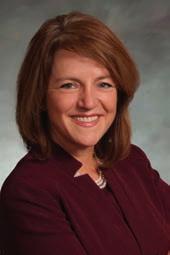
“Last year, Colorado voters approved Prop 130 to better support the recruitment and training of peace o cers and ensure that families of rst responders can receive death bene ts after a tragedy,” said Bird in a news release. “ is solution implements the will of the voters and supports our law enforcement departments and ofcers while maintaining funding for essential services like K-12 education and health care.”
SB25-310, also sponsored by Rick Taggart, R-Grand Junction, would implement the voter-approved Proposition 130 and direct a total of $350 million to keep Coloradans safe and to recruit new


peace o cers, hire additional peace ofcers, and provide continuing education and training for peace o cers.
e bill would implement and create a funding mechanism for the distribution of $350 million for local law enforcement o cer recruitment, retention and training, the news release states.
e bill makes a one-time investment of $500 million of the general fund reserve in PERA and reduces future general fund payments to PERA by the amount of interest earned. It would then divert that amount to the new Peace O cer Training and Support fund each year, which will be distributed to local police departments, according to the legislation.
In addition, the bill would require a transfer of $15 million to the fund from the General Fund in 2026-27, and a minimum of $15 million from the general fund each year, regardless of the amount
o set by interest earnings.
Once the full $350 million is ful lled or if the general fund reserve falls below $1 billion, the bill would establish mechanisms to e ectively return the $500 million invested in PERA to the general fund, the news release states.
e bill would also implement the death bene t required in Proposition 130 of $1 million to the surviving spouse, family member or designee of any rst responder who died as a result of injuries or an occupational disease sustained while performing their job and create the Death Bene t Fund.
e bill would transfer $5 million on July 1, 2025, and a further $5 million on July 1, 2026, to the Death Bene t Fund. Beginning in 2027, the bill would require an annual transfer from the General Fund to the Death Bene t Fund that restores the fund balance to $10 million.























































































































While the majority of the student body at STEAD resides in Commerce City, some students apply for admission through the school’s lottery-based system, making it uniquely diverse in terms of its mix of students’ socioeconomic and cultural backgrounds. Students from all over the Denver Metro apply to attend STEAD each year, but priority is given to those who reside in School District 27J.
One such student is Caleena Edwards, a junior at STEAD who gave a tour of the two new facilities on Tuesday. Edwards is hoping to attend college in Canada after graduating, speci cally near Vancouver, because of the climate and its propensity for rainy days, which she says would be helpful for her particular agricultural interests.
“A lot of students come in here thinking they want to pursue, say, nursing, and then they do a nursing internship and nd out they have a really queasy stomach and it’s not for them. And it’s great to nd that out about yourself before going to college and going into debt for something that you might not end up enjoying,” Edwards said.

Rachel Balkham, who teaches regenerative economics of agriculture to 11th- and 12th-graders and serves as the Director of Partnerships of Work-Based Learning at the school, said that having such a diverse group of students has allowed her to create a unique, hands-on learning approach for each student, curated to their individual interests.
“All of our students are in career, technical, and education pathways. So food science, plant science, animal science and natural resources. Because of that, I’m developing partnerships in the community that align with the goals of all of our students,” she said.
“If you look around at what’s happening with our ecosystem, I think it’s a fair question to ask,

to create the conditions that allow for nature to regenerate itself? Historically, we’ve used the word sustainability, but that’s why we’ve shifted to regenerative agriculture. It’s essentially indigenous philosophy. We are acting in partnership with the land so that the land then begins to regenerate itself,” she explained.
is also works as an analogy for human systems, Balkham said. She invites her students to ask themselves, ‘How do we exist in emergent systems that are then regenerating as well in society?’ From there, she develops partnerships and internships that are tailored to those goals.
“Of course, some of my students come to me and are like, ‘I want to be a wedding planner!’ And that’s great. I help them explore whatever it is they’re interested in, because the point is for them to investigate those passions while they’re here.”
Some of the partnerships and internship programs STEAD has developed are with the Butter y Pavilion, Platte Valley Medical Cen-
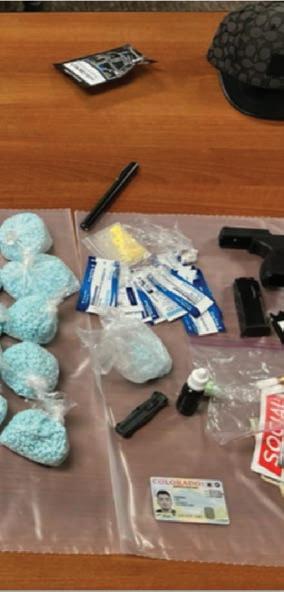
After tracking him from a hotel to a nearby store, o cers executed a search warrant and recovered a large stash of illegal drugs, including 147.94 grams of methamphetamine, 112.44 grams of counterfeit Oxycodone (fentanyl), 1.39 grams of Ketamine, and 13.77 grams of counterfeit Xanax.
e news release states that Rodriguez was wearing a shirt that read “drug dealer” at the time of the offense.
e defendant posted bond on November 8, 2022, but failed to appear in court on January 17, 2023, was re-arrested, and posted bond again on May 15, 2023.
In 2023, during an extensive narcotics investigation dubbed “Dress for Less,” North Metro Task Force detectives intercepted court-authorized wiretap communications revealing Rodriguez’s role in a drug trafcking operation with ties to a Mexican drug cartel, according to the news release.
While out on bond, Rodriguez was observed conducting a drug transaction and then led ornton Police on a high-speed chase, during which he discarded a backpack, which was later recovered from a dumpster.
e bag contained 1.68 kilograms of fentanyl, 2.56 kilograms of methamphetamine, a rearm, nearly $3,000 in cash, and multiple cell phones. e indictment in this case was led on Sep. 25, 2023, and an arrest warrant was issued, according to the news release.
On Dec. 10, 2023, Rodriguez was located during a surveillance operation, according to the news release. Detectives immobilized Rodriguez’s vehicle as he returned to a parking lot in a black Audi sedan. He attempted to ee again but was caught. Rodriguez admitted to possessing narcotics in the car. A search revealed nearly three pounds of methamphetamine and 21 grams of counterfeit fentanyl pills, the news release states.

ter, and equine-assisted therapy through the Colorado erapeutic Riding Center.
e school also has “accelerator weeks” four times a year, two of which are for the National Western Stock Show and for community service, and the other two are more choicebased, allowing students to structure their week around their academic interests. During accelerator weeks, regular classes are not in session, and the students instead spend their days out in the eld, on eld trips or doing internships or community service.
“Today is less about the fact that we’re building the next big thing, which is the eld,” said Kelly Leid, one of the school’s co-founders at the ceremony on Tuesday.
“ is is really about celebrating our senior class and the families that were here that took a leap of faith with us on this journey. We’re celebrating your legacy, and the idea of stewardship. Our seniors, the class of 2025, are now stewards of this wonderful place, and they get the opportunity to share that legacy with future students as they become alumni.”

BROOKE WARNER Executive Director brooke@ntln.org
LINDA SHAPLEY Director of Editorial & Audience lshapley@coloradocommunitymedia.com
SCOTT TAYLOR Metro North Editor staylor@coloradocommunitymedia.com
BELEN WARD Community Editor bward@coloradocommunitymedia.com
ERIN ADDENBROOKE Marketing Consultant eaddenbrooke@coloradocommunitymedia.com
LINDSAY NICOLETTI Operations/ Circulation Manager lnicoletti@coloradocommunitymedia.com
BUSINESS INQUIRIES For advertiser or vendor questions, please email our business department at accounting@ coloradocommunitymedia.com To







We welcome letters to the editor. Please include your full name, address and the best number to reach you by telephone. Email letters to staylor@coloradocommunitymedia.com
Deadline Tues. for the following week’s paper.
POSTMASTER:


“ e executive order does not provide enough details to truly know what federal actions will be taken,” said Colorado Department of Higher Education spokesperson Megan McDermott.
e Trump order sets up a possible legal showdown over the state-supported tuition programs that immigrant rights and higher education-advising groups have called essential to help undocumented students access higher education and educate them to ll in-demand jobs.
Twenty-four states, including Colorado, Illinois, New York, and New Jersey, along with Washington, D.C. have programs that allow undocumented students to pay in-state tuition. While the programs have received bipartisan support, Republicans in several states have recently led bills to consider rolling back in-state tuition for undocumented students. Last week, Florida lawmakers ended the state’s decadeold program.
e order adds to an already uncertain environment for immigrant students, who worry about the risks of lling out nancial aid paperwork while grappling with deportation fears. Denver Scholarship Foundation’s Natasha Gar eld said the college-advising nonpro t will continue to provide students information about their options and allow them to decide whether college is right for them during a time when Trump’s immigration stance has brought incredible uncertainty.
“ ere are some who are very, very concerned about the state of things, and I don’t think there’s anything that DSF or anyone else could say to reassure them,”
said Gar eld, the scholarship organization’s director of scholarships and nancial aid. “I think that’s completely understandable given some of the actions that we’ve seen coming from ICE [U.S. Immigration and Customs Enforcement] and the federal government.”
e order is part of Trump’s larger push to crack down on people in the United States without legal authorization. His directive to punish states with these programs also included several other enforcement actions such as punishing so-called sanctuary cities and states. e administration led suit Friday against Colorado and Denver for its policies.
e administration argues in the order that some state and local o cials use their “authority to violate, obstruct, and defy the enforcement of federal immigration laws. is is a lawless insurrection against the supremacy of Federal law.”
States have a long history of o ering instate tuition at public universities to youth who were brought as children and without legal status. Texas and California passed the rst laws in 2001, and other states followed with similar laws. Each varies in how they approach granting in-state tuition.
About 408,000 undocumented students enroll in higher education each year, although not all bene t from these state programs, according to the Higher Ed Immigration Portal. However, even in states without these laws, some private schools in Tennessee and elsewhere may o er in-state tuition for all students regardless of their residency or legal status. And in Pennsylvania, at least one public institution provides in-state tuition to undocumented students.
Colorado’s Advising Students for a Stronger Tomorrow law, or ASSET, updated in 2019, says students must have attended a

Joyce Yvonne (Bredehoft) Harshbarger January 1, 1936 - April 26, 2025
Joyce Yvonne Harshbarger passed away on April 26th at the age of 89 at her home in Brighton. Joyce was born in Brighton, Colorado on January 1, 1936, to Melvin and Bertha Bredehoft.

Joyce attended Brighton High School and graduated in 1953. After graduating she worked at Pape Pharmacy at the soda counter where she met Ed her husband to be. She also attended Nursing school for one year.
Ed enjoyed traveling and have visited all 50 states and several foreign countries. Hunting and shing were an important and joyful part of their lives with family and friends. ey loved spending the Winter months in Arizona with friends and family.
Joyce is survived by her husband Ed, sons’ Brian (Mary), Kevin (Loretta). Two grandchildren, Austin and James and great-grandson Dean.
Colorado high school for at least one year before graduation or been physically present in Colorado for at least one year to qualify for in-state tuition.
New York’s law says students must have attended at least two years of high school in New York and graduate or receive a general education diploma. Students must also apply to a college or university within ve years and show proof of residency.
ey must also sign an a davit saying they will le for legal status.
Illinois’ law has similar requirements, while New Jersey requires three years of residency.
National student immigrant advocacy organizations FWD.us, eDream.US, and the Presidents’ Alliance on Higher Education and Immigration all criticized the order. Collectively, they said states, colleges, and universities shouldn’t overreact and that the order hurts states that need quali ed workers.
“Blocking states from o ering in-state tuition to undocumented students who have lived in these states for most of their lives would purposefully lock countless individuals out of the higher education system, waste years of educational investment, hurt local economies, and rob all Americans of future leaders,” said Todd Schulte, FWD.us president.
State leaders are still working to understand the impact of the order, and a spokesperson for Colorado Gov. Jared Polis said in a statement the administration is looking into the impacts of this order. e state remains committed to ensuring the state remains a destination for all learners, the statement says.
e state has not led any legal action against the order, but leaders have been willing to push back on Trump administration orders.




Colorado’s largest university system also doesn’t plan changes at this time. University of Colorado System spokesperson Michele Ames said its schools are committed to following applicable laws and will not make any changes at this time. Other universities, such as the University of Northern Colorado, are monitoring the actions. Schools across the state have also said that they won’t release individual student information, such as information about undocumented students who attend schools through the ASSET program, to the federal government without a court order or warrant, per federal student privacy laws. Reprinted with permission from Chalkbeat, a nonpro t news site covering educational change in public schools. Sign up for their newsletters at ckbe.at/newsletters.





Joyce married the love of her life Ed on November 13, 1955, in Brighton, Colorado. ey were married for 69 years. Joyce was a stay-at-home mom while her two boys Brian and Kevin were growing up. She was also a teacher’s aid at South Elementary and Vikan Middle School.
Preceding Joyce in death were her parents Melvin and Bertha Bredehoft, sister Melba, and two brothers’ Bryce and Larry.









Joyce had a passion for crafting to include sewing, knitting, crocheting and needle point. Joyce and



ere will be a funeral service for Joyce on May 16th at the Tabor Funeral Home. Visitation will be at 10:30 and the service will at 11:00. ere will be a reception at the Alli Event Center located at 100 S. 3rd Avenue in Brighton, from 1:00 pm until






































Miscellaneous
AGING ROOF? NEW HOMEOWNER? STORM




CLOTHES FURNITURE TOOLS ONLY GARAGE SALE !!
Thurs–Fri, May 15-16, 8a-6p & Sat, May 17, 8a-3p
We have CLOTHING for ALL AGES!! INFANTS & TODDLERS CHILDREN TEENS LADIES MATERNITY MEN
** MANY BRAND-NEW OR NEAR-NEW! **
Our PROFESSIONALLY REFINISHED ANTIQUE
FURNITURE includes: Eastlake Dining Table & China Hutch, BirdsEye Maple Dresser, stunning Oak Dressers & so much more!
OTHER FURNITURE includes: sofas, desks, side tables, bookshelves, filing cabinets & more!
Our TOOLS include: Multi-Function Power Tool, MIG Welder, Bench Grinder, hand tools & much more!
Come for our BBQ LUNCH starting at 11am!
SHEPHERD of LOVE FELLOWSHIP
13550 Lowell Blvd., Broomfield shepherdoflove.org Info: (303) 466-5749 or (303) 469-0410
Health & Beauty
VIAGRA and CIALIS USERS!
50 Generic Pills SPECIAL $119.00! Shipped discreetly to your home. 100% guaranteed. 24/7 CALL NOW! 800-709-3080
Dental insurance from Physicians Mutual Insurance Company. Coverage for 400+ procedures. Real dental insurance - not just a discount plan. Get your free Information Kit with details! 1-855-526-1060 www.dental50plus.com/ads #6258
Extreme Internet $39 month! Insanely fast fiber speed! Available nationwide! No contracts! No credit check! Everyone approved! Get insane fiber speeds for $39/ month. 866-905-2272
Portable Oxygen Concentrator May Be Covered by Medicare! Reclaim independence and mobility with the compact design and long-lasting battery of Inogen One. Free information kit! Call 877-305-1535
DAMAGE? You need a local expert provider that proudly stands behind their work. Fast, free estimate. Financing available. Call 1-888-878-9091 Have zip code of property ready when calling!
Consumer Cellular - same reliable, nationwide coverage as the largest carriers. No longterm contract, no hidden fees free activation. All plans feature unlimited talk & text, starting at just $20/mo.
Call 1-877-751-0866
Jacuzzi Bath Remodel can install a new, custom bath or shower in as little as one day. For a limited time, waving all installation costs! (Additional terms apply. Subject to change and vary by dealer.
Offer ends 6/30/25. 1-844-5013208
Home break-ins take less than 60 seconds. Don’t wait! Protect your family, your home, your assets now for as little as 70¢/ day! 1-844-591-7951
DIRECTV Stream - Carries the most local MLB Games! Choice Package $89.99/mo for 12 mos Stream on 20 devices at once. HBO Max included for 3 mos (w/ Choice Package or higher.) No contract or hidden fees! Some restrictions apply. Call IVS 1-866859-0405
Inflation is at 40 year highs. Interest rates are way up. Credit cards. Medical bills. Car loans. Do you have $10k or more in debt? Call National Debt Relief and find out how to pay off your debt for significantly less than what you owe! Free quote: Call 1-844-9554930
We buy houses for cash as is! No repairs. No fuss. Any condition. Easy three step process: Call, get cash offer & get paid. Get your fair cash offer today by calling Liz Buys Houses: 1-844-8775833
Eliminate gutter cleaning forever! LeafFilter, the most advanced debris -blocking gutter protection. Schedule free LeafFilter estimate today. 20% off Entire Purchase. 10% Senior & Military Discounts. Call 1-833610-1936
Bath & shower updates in as little as 1 day! Affordable prices - No payments for 18 months! Lifetime warranty & professional installs. Senior & military discounts available. 1-877-5439189

Become a published author We want to read your book! Dorrance Publishing trusted since 1920. Consultation, production, promotion & distribution. Call for free author`s guide 1-877-7294998 or visit dorranceinfo.com/ ads
!!OLD GUITARS WANTED!!
GIBSON, FENDER, MARTIN, Etc. 1930’s to 1980’s. TOP DOLLAR PAID. CALL TOLL FREE 1-866-4338277
Wesley Financial Group, LLC Timeshare Cancellation Experts Over $50,000,000 in timeshare debt & fees cancelled in 2019. Get free info package & learn how to get rid of your timeshare! Free consultations. Over 450 positive reviews. 833-308-1971
Don’t let the stairs limit your mobility! Discover the ideal solution for anyone who struggles on the stairs, is concerned about a fall or wants to regain access to their entire home. Call AmeriGlide today! 1-833-3993595
Prepare for power outages today with a Generac Home Standby Generator. Act now to receive a FREE 5-Year warranty with qualifying purchase* Call 1-855948-6176 today to schedule a free quote. It’s not just a generator. It’s a power move.
SunSetter. America’s number one awning! Instant shade at the touch of a button. Transform your deck or patio into an outdoor oasis. Up to 10-year limited warranty. Call now and SAVE $350 today! 1-855-914-1148
Water damage cleanup & restoration: A small amount of water can lead to major damage in your home. Our trusted professionals do complete repairs to protect your family and your home’s value! Call 24/7: 1-833887-0117. Have zip code of service location ready when you call!
MobileHelp America’s premier mobile medical alert system. Whether you’re home or away. For safety & peace of mind. No long term contracts! Free brochure! Call 1-888-489-3936
Replace your roof w/the best looking & longest lasting material steel from Erie Metal Roofs! 3 styles & multiple colors available. Guaranteed to last a lifetime! Limited Time Offer up to 50% off install + Additional 10% off install (military, health & 1st responders.) 1-833-370-1234

Doodle Puppies Golden Doodles and Bernedoodles Home-Raised Heath Tested and Guaranteed Standard and Mini Size available Schedule a visit today! (970)215-6860 www.puppylovedoodles.com
Wanted
Donate Your Car to Veterans Today! Help and Support our Veterans. Fast - FREE pick up. 100% tax deductible. Call 1-800-245-0398
Public Notices call Jean 303.566.4123
Public Notice
NOTICE OF CANCELLATION OF REGULAR ELECTION AND CERTIFIED STATEMENT OF RESULTS BY THE DESIGNATED ELECTION OFFICIAL
TOWER METROPOLITAN DISTRICT
NOTICE IS HEREBY GIVEN, pursuant to Sections 1-13.5-513(6) and 32-1-104(1), C.R.S., by the Tower Metropolitan District (the “District”) of Adams County, Colorado, that at the close of business on the sixty-third day before the election, there were not more candidates for director than offices to be filled including candidates filing affidavits of intent to be write-in candidates; therefore, the regular election to be held on May 6, 2025, is hereby canceled and the following candidates are hereby declared elected:
Randall Hertel to a 4-year term (2025-2029)
Jack “Skip” Bailey to a 4-year term (2025-2029)
Jonathan Hertel to a 2-year term (2025-2027)
Contact Person for the District: Nicole Peykov, Esq.
District Address: c/o Spencer Fane LLP 1700 Lincoln Street, Ste. 2000 Denver, CO 80203
District Telephone Number: 303-839-3800
TOWER METROPOLITAN DISTRICT
By: /s/Courtney Linney, Designated Election Official
Legal Notice No. CCX1737
First Publication: May 15, 2025
Last Publication: May 15, 2025
Publisher: Commerce City Sentinel Express
Public Notice
AVISO DE CANCELACIÓN DE ELECCIÓN
POR MEDIO DEL PRESENTE SE INFORMA que, al cierre de operaciones del día número 63 antes de la votación, en el Distrito Metropolitano Aspen Hills, condado de Adams, Colorado, no había más candidatos para el cargo de director que puestos disponibles, incluidos aquellos que presentaron declaraciones juradas de intención de ser candidatos por escrito. Por lo tanto, se cancela la
votación que se iba a celebrar el 6 de mayo de 2025, conforme a la sección 1-13.5-513(6) del CRS.
Se declara que los siguientes candidatos han sido elegidos para la Junta Directiva del Distrito Metropolitano Aspen Hills:
James W. Harmon
Mandato de 4 añosMayo de 2029
Lauren R. Morley
Mandato de 4 añosMayo de 2029
Laurence Arthur Labrie
Mandato de 4 añosMayo de 2029
Scott Koceski
Mandato de 2 añosMayo de 2027
(firmado) Michele M. Barrasso
Michele M. Barrasso, Funcionaria Electoral Designada
Persona de contacto para el Distrito:
Lic. Barbara T. Vander Wall
Dirección del Distrito: 7400 East Orchard Rd., Suite 3300
Greenwood Village, CO 80111
Número de teléfono del Distrito: (303) 770-2700
Correo del contacto del Distrito: bvanderwall@svwpc.com
Legal Notice No. CCX1738
First Publication: May 15, 2025
Last Publication: May 15, 2025
Publisher: Commerce City Sentinel Express
Public Notice
AVISO DE CANCELACIÓN DE ELECCIÓN
POR MEDIO DEL PRESENTE SE INFORMA que, al cierre de operaciones del día número 63 antes de la votación, en el Distrito Metropolitano Prairie Farm, condado de Adams, Colorado, no había más candidatos para el cargo de director que puestos disponibles, incluidos aquellos que presentaron declaraciones juradas de intención de ser candidatos por escrito. Por lo tanto, se cancela la votación que se iba a celebrar el 6 de mayo de 2025, conforme a la sección 1 13.5 513 (6) del CRS.
Se declara que los siguientes candidatos han sido elegidos para la Junta Directiva del Distrito Metropolitano Prairie Farm:
Carrie Barber
Mandato de 4 añosMayo de 2029
David Alexander Hammond
Mandato de 4 añosMayo de 2029
Vacante
Mandato de 4 añosMayo de 2029 (firmado) Michele M. Barrasso
Michele M. Barrasso, Funcionaria Electoral Designada
Persona de contacto para el Distrito: Lic. Barbara T. Vander Wall Dirección del Distrito: 7400 East Orchard Rd., Suite 3300 Greenwood Village, CO 80111
Número de teléfono del Distrito: (303) 770-2700
Correo del contacto del Distrito: bvanderwall@svwpc.com
Legal Notice No. CCX1740
First Publication: May 15, 2025
Last Publication: May 15, 2025
Publisher: Commerce City Sentinel Express
Public Notice
POR MEDIO DEL PRESENTE SE INFORMA que, al cierre de operaciones del día número 63 antes de la votación, en el Distrito Metropolitano Eagle Creek, condado de Adams, Colorado, no había más candidatos para el cargo de director que puestos disponibles, incluidos aquellos que presentaron declaraciones juradas de intención de ser candidatos por escrito. Por lo tanto, se cancela la votación que se iba a celebrar el 6 de mayo de 2025, conforme a la sección 1 13.5 513 (6) del CRS.
Se declara que los siguientes candidatos han sido elegidos para la Junta Directiva del Distrito Metropolitano Eagle Creek:
Jennifer Back Mandato de 4 añosMayo de 2029
Jason Haines
Mandato de 4 añosMayo de 2029
Monnick Romero
Mandato de 2 añosMayo de 2027
Vacante
Mandato de 2 añosMayo de 2027
(firmado) Michele M. Barrasso
Michele M. Barrasso, Funcionaria Electoral Designada
Persona de contacto para el Distrito: Lic. Barbara T. Vander Wall
Dirección del Distrito: 7400 East Orchard Rd., Suite 3300 Greenwood Village, CO 80111
Número de teléfono del Distrito: (303) 770-2700
Correo del contacto del Distrito: bvanderwall@svwpc.com
Legal Notice No. CCX1739
First Publication: May 15, 2025
Last Publication: May 15, 2025
Publisher: Commerce City Sentinel Express
AVISO DE CANCELACIÓN DE ELECCIÓN
POR MEDIO DEL PRESENTE SE INFORMA que, al cierre de operaciones del día número 63 antes de la votación, en el Distrito Metropolitano River Oaks, condado de Adams, Colorado, no había más candidatos para el cargo de director que puestos disponibles, incluidos aquellos que presentaron declaraciones juradas de intención de ser candidatos por escrito. Por lo tanto, se cancela la votación que se iba a celebrar el 6 de mayo de 2025, conforme a la sección 1 13.5 513 (6) del CRS.
Se declara que los siguientes candidatos han sido elegidos para la Junta Directiva del Distrito Metropolitano River Oaks:
Shawn McDowell
Mandato de 4 añosMayo de 2029
Ben Martínez III
Mandato de 4 añosMayo de 2029
Adrian Feijoo Mandato de 4 añosMayo de 2029
Vacante
Mandato de 2 añosMayo de 2027
(firmado) Michele M. Barrasso
Michele M. Barrasso, Funcionaria Electoral Designada
Persona de contacto para el Distrito:
Lic. Barbara T. Vander Wall Dirección del Distrito: 7400 East Orchard Rd., Suite 3300 Greenwood Village, CO 80111
Número de teléfono del Distrito: (303) 770-2700
Correo del contacto del Distrito: bvanderwall@svwpc.com
Legal Notice No. CCX1741
First Publication: May 15, 2025
Last Publication: May 15, 2025
Publisher: Commerce City Sentinel Express
Public Notice
WINDLER PUBLIC IMPROVEMENT AUTHORITY
NEIGHBORHOOD E OPEN SPACE
Sealed Bids will be received by Windler Public Improvement Authority, hereinafter referred to as OWNER, at the office of the Authority Engineer, Merrick & Company, 8051 E. Maplewood Avenue, Suite 300, Greenwood Village, CO 80111, until 10:00 AM local time on June
Council does not want to play favorites with former councilor Johnston’s seat
BY SCOTT TAYLOR STAYLOR@COLORADOCOMMUNITYMEDIA.COM
Brighton will leave the former City Councilor Matt Johnston’s Ward 1 seat vacant rather than rush to have a special election or appoint a replacement.
“Just naming somebody in the meantime might create a challenge, and signify a favorite,” City Councilor Peter Padilla said.
Johnston o cially resigned his seat on April 14.
At Tuesday’s meeting, Mayor Greg Mills noted that Johnston’s term in Brighton Ward 1 was due to expire after this November’s vote.
“By the time we schedule a special election to ll the seat, they’d have to start gathering petitions to run again in November,” Mills said.
Johnston said he decided to step down from the Brighton City Council and leave Brighton soon after November’s election. Johnston lost a race for a State Senate seat in Colorado’s 13th District in November and said he didn’t feel as if he could represent his constituents any longer.
“When the people speak and they don’t feel like you are right to represent them in one o ce, it’s usually the same thing for the o ce you currently are in,” Johnston said. “It’s not fair to the voters and residents to have you sitting in a seat


as a lame duck when they chose to not have you represent them in another ofce that’s just the same area.”
He also said he was tired of being a consistent no vote on agenda items. “It was a hostile work environment that I faced consistently every Tuesday at City Hall from some of the sta and the others on council,” Johnston said. “It was ne to deal with when you have the ability to actually create positive change, but as soon as you can’t create positive change any more you feel it and it was just wearing on me and my wife.”


Family Owned Business
Text “globalpropane” to 22828 for email prices
13, 2025 for:
Neighborhood E Open Space
This Contract provides for the construction of the following: Landscaping of the linear, pocket, parklet and perimeter parks throughout Neighborhood E. Neighborhood E is located east of N. Fultondale St to Harvest Road between E. 55th ave and E. 53rd Ave. The project includes hardscapes, plantings, ground covers, site furnishings, and irrigation.
Copies of the Bidding Documents may be requested from the Windler Public Improvement Authority, at the email of the Authority Engineer, barney.fix@ merrick.com, beginning May 15, 2025. NO PAYMENT REQUIRED.
Bidders must be licensed Contractors in the State of Colorado.
Bids will be received providing unit price for items; however, the price given will be on a maximum not-to-exceed amount, as described in the Bidding Documents.
The Work is expected to be commenced within sixty (60) days after the Date of Contract.
Bid Security in the amount of five percent (5%) of the total Bid Price must accompany each Bid in the form specified in the Instructions to Bidders.
The Successful Bidder will be required to furnish a Performance Bond, Labor and Material Payment Bond guaranteeing faithful performance and warranty bond for three-years after Substantial Completion, and the payment of all bills and obligations arising from the performance of the Contract.
The OWNER reserves the right to award the contract by sections, to reject any or all Bids, and to waive any informalities and irregularities therein.
For further information, please contact Carli Murray at Merrick & Company at 303-353-3683.
Legal Notice No. CCX1742
First Publication: May 15, 2025
Last Publication: May 29, 2025
Publisher: Commerce City Sentinel Express Non-Consecutive Publictions
Public Notice
Notice of Intent to Amend Environmental Restrictions at Broderick Wood Products Superfund Site
The Colorado Department of Public Health and Environment (CDPHE) and the United States Environmental Protection Agency (EPA) are working with landowners at the Broderick Wood Products Superfund Site, located at 5800 Lipan Street, Adams County, Colorado, to amend the 2006 environmental covenant for the Site. CDPHE and EPA want to amend the covenant to update the Materials Management and Health and Safety Plan that is attached to the 2006 covenant. The new Plan will account for remedial work that has occurred on the property since 2006. Pursuant to § 25-15-318, C.R.S., once the amendment is completed, the new Materials Management and Health and Safety Plan will be binding on all current and future owners of the land and any persons possessing an interest in the land. Please contact Patrick Medland of CDPHE at patrick.medland@ state.co.us or 303-692-3281, or Paul Stoick of EPA at stoick.paul@epa.gov, to
request copies of these documents and to provide your comments. All comments must be submitted by May 20, 2025.
Legal Notice No. CCX 4509
First Publication: May 1, 2025
Last Publication: May 15, 2025
Publisher: Commerce City Sentinel Express
Public Notice
COUNTY COURT, COUNTY OF ADAMS, STATE OF COLORADO
1100 Judicial Center Drive Brighton, CO 80601
Phone Number: 303-659-1161x143
Plaintiff: HIGH POINT METROPOLITAN DISTRICT v.
Defendant(s): JASON T MLINEK and ADYL MLINEK
Attorney: Jeffrey B. Smith, Esq.
Firm Name: Altitude Community Law P.C.
Address: 555 Zang Street, Suite 100 Lakewood, Colorado 80228-1011 Phone Number: 303.432.9999 email: jsmith@altitude.law
Atty. Reg. #:40490
Case Number: 2024C046026 Div.: 1
PLURIES SUMMONS FOR INJUNCTIVE RELIEF FOR BREACH OF RESTRICTIVE COVENANTS
THE PEOPLE OF THE STATE OF COLORADO
TO: JASON T MLINEK and ADYL MLINEK
You are hereby summoned and required to file with the Clerk of the Court an answer or other response to the complaint filed against you in this case. You are

required to file your answer or other response on or before:
June 20, 2025 at 8:30 A.M., in Division 1 of the Adams County Court, 1100 Judicial Center Drive, Brighton, CO 80601.
The nature of this action is a proceeding in rem.
The relief sought by the Plaintiff(s) is an Injunction which will affect the following property:
10171 Altura St., Commerce City, CO 80022-8937 also known as SUB:HIGH POINTE SUBDIVISION BLK:10 LOT:3; Adams County, State of Colorado.
If you fail to file your answer or other response on or before the date and time shown above, the relief sought may be granted by default by the Court without further notice.
Dated at Colorado, this 18th day of April, 2025..
CLERK OF THE COURT By: Deputy Clerk
This summons is issued pursuant to Rule 304(e), Colorado Rules of Civil Procedure. This form should not be used where personal service is desired.
WARNING: ALL FEES ARE NON-REFUNDABLE. IN SOME CASES, A REQUEST FOR A JURY TRIAL MAY BE DENIED PURSUANT TO LAW EVEN THOUGH A JURY FEE HAS BEEN PAID.
Legal Notice No. CCX 4514
First Publication: May 1, 2025
Last Publication: May 29, 2025 Publisher: Commerce City Sentinel Express