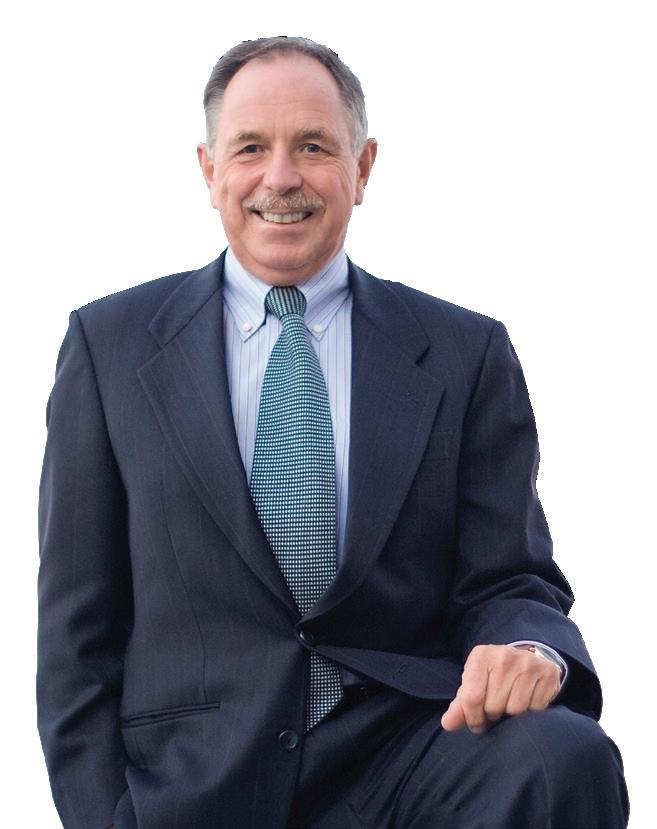
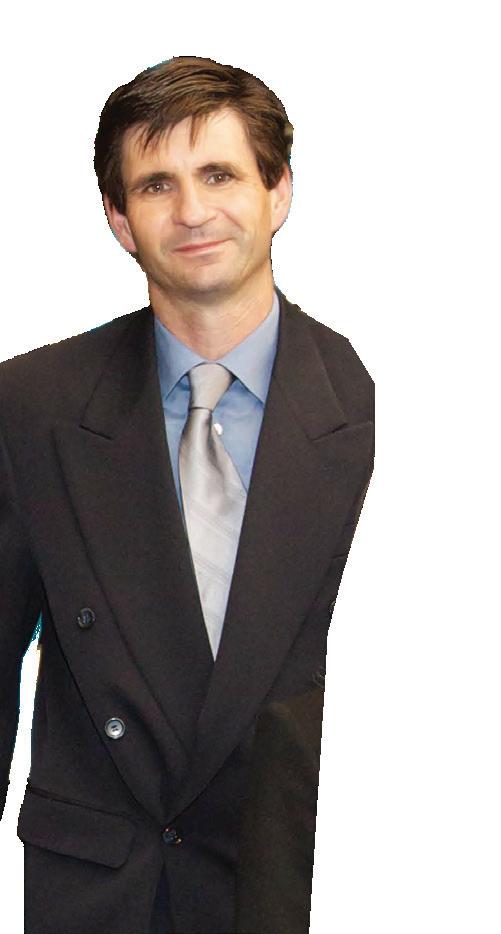
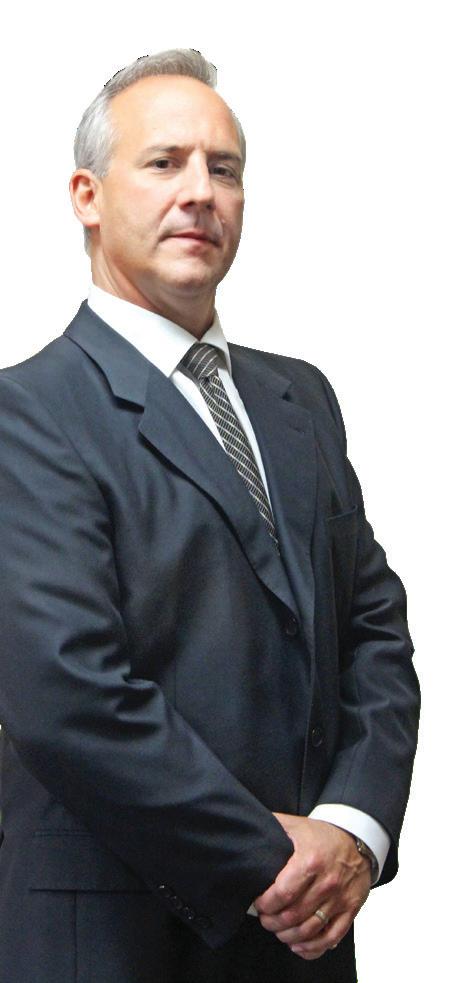
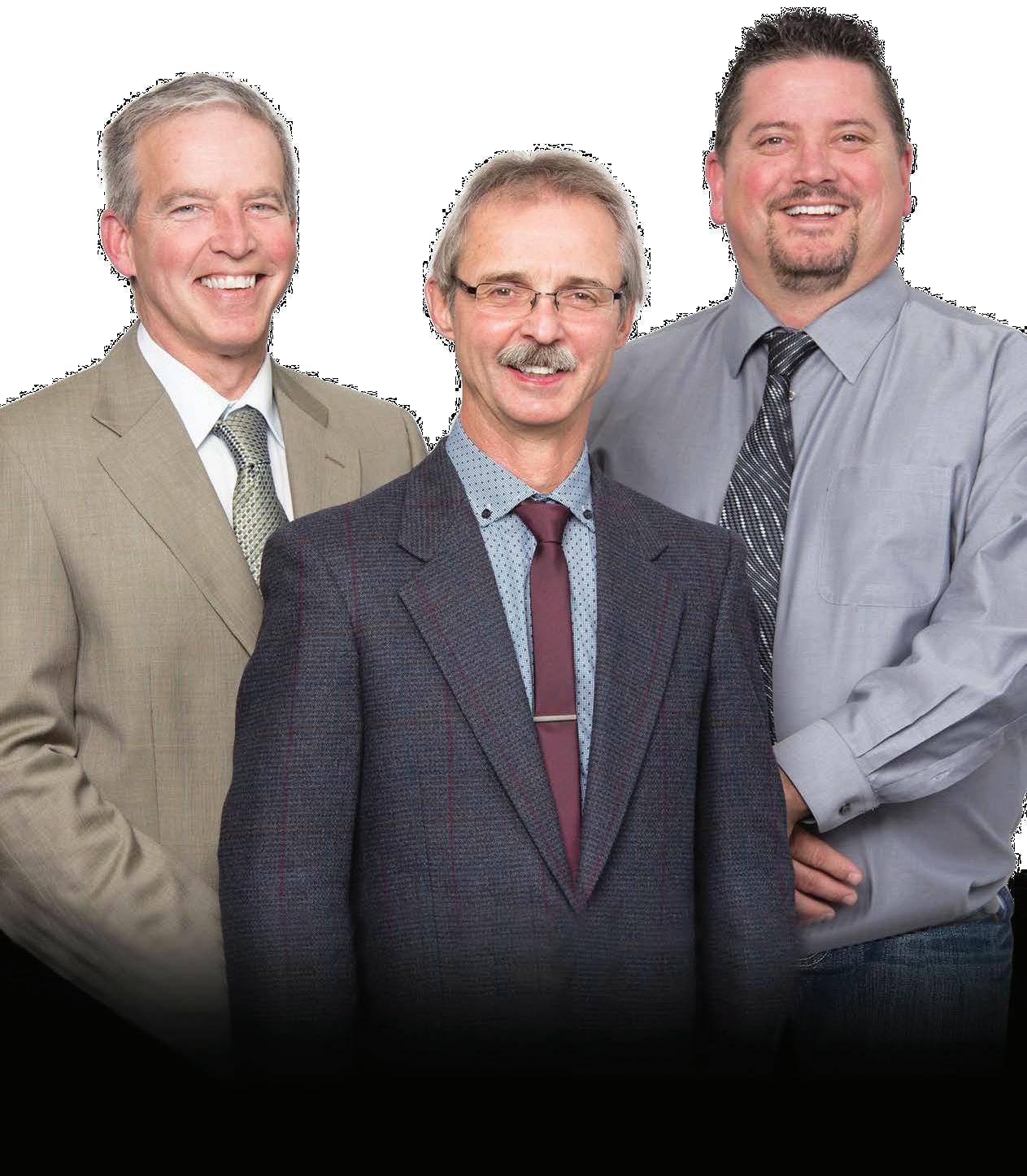
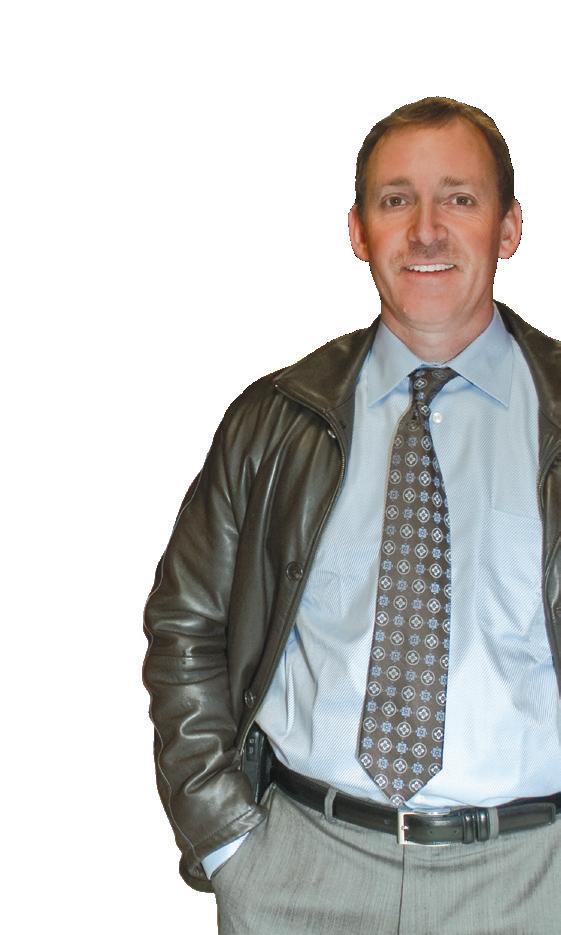
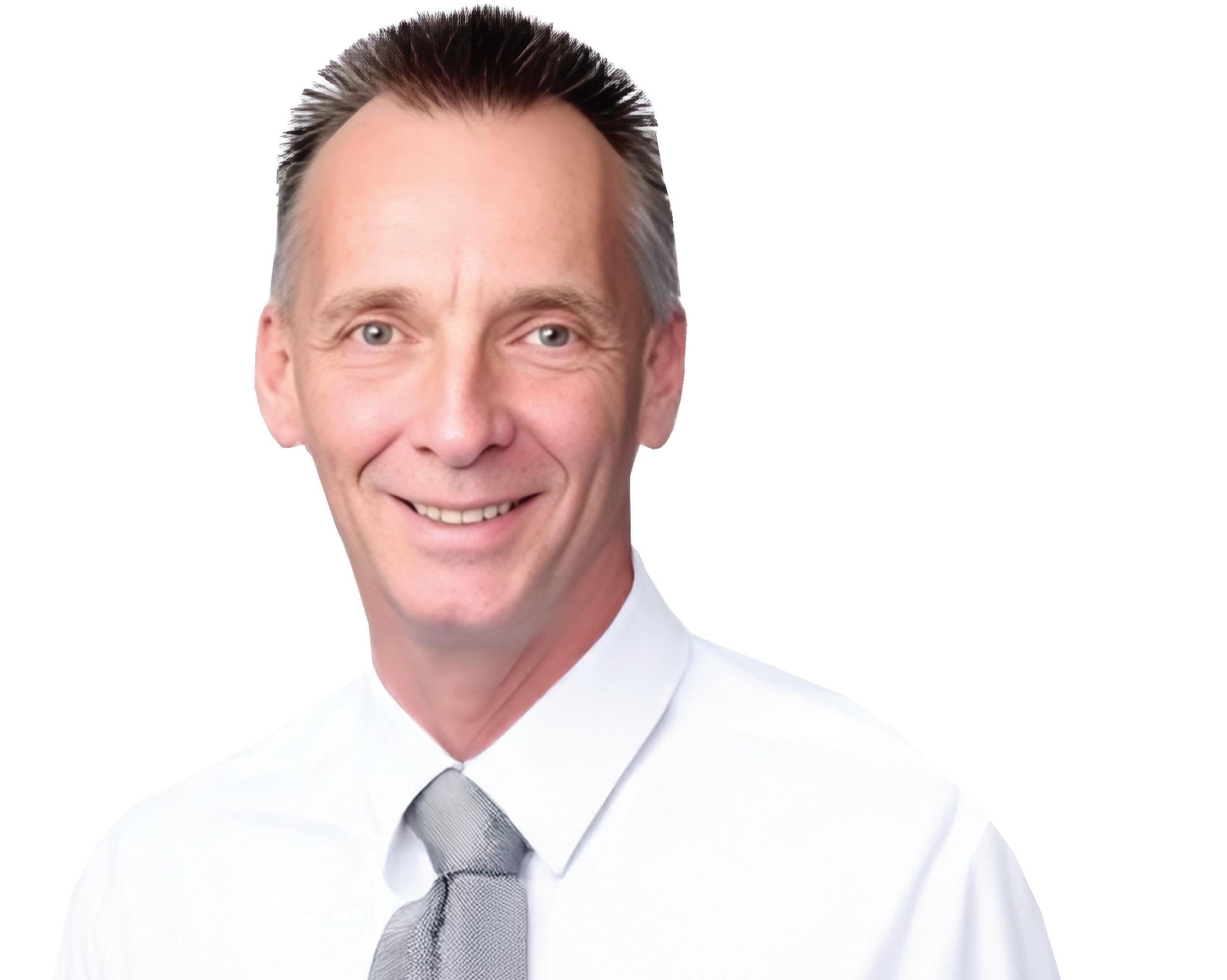
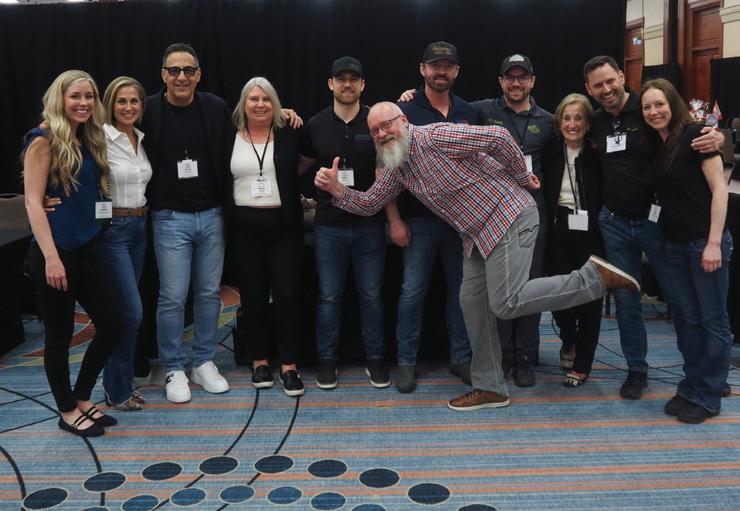
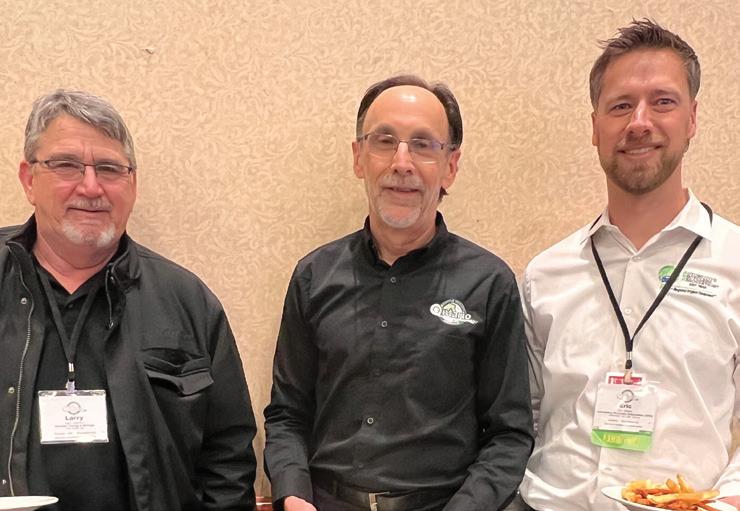
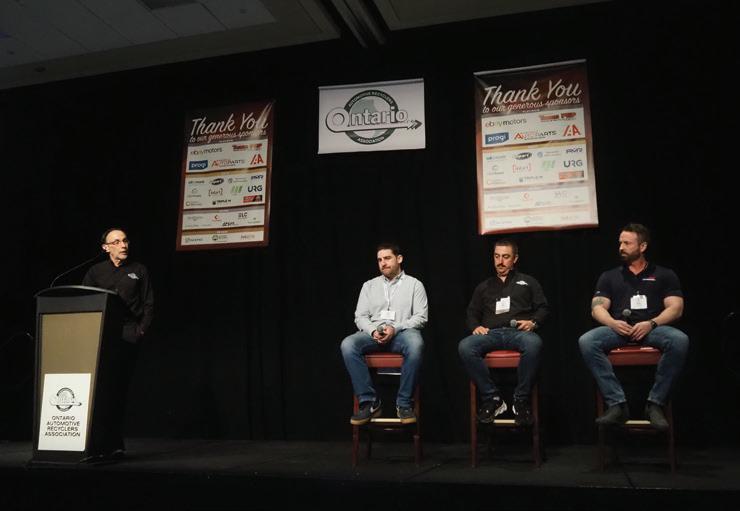
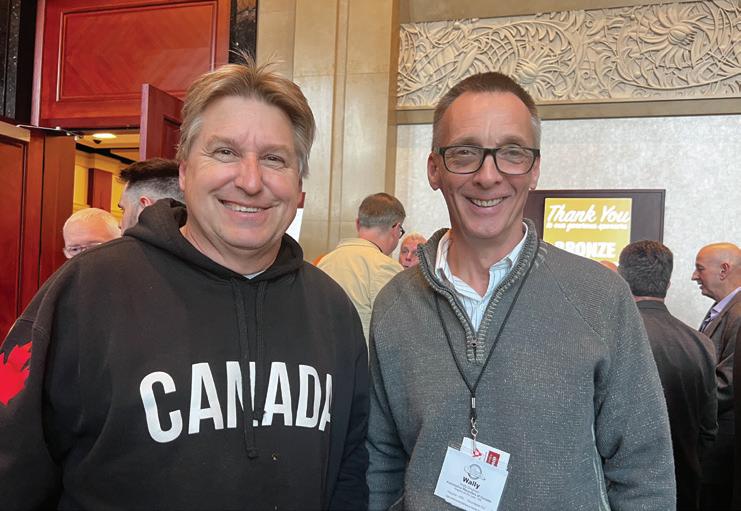
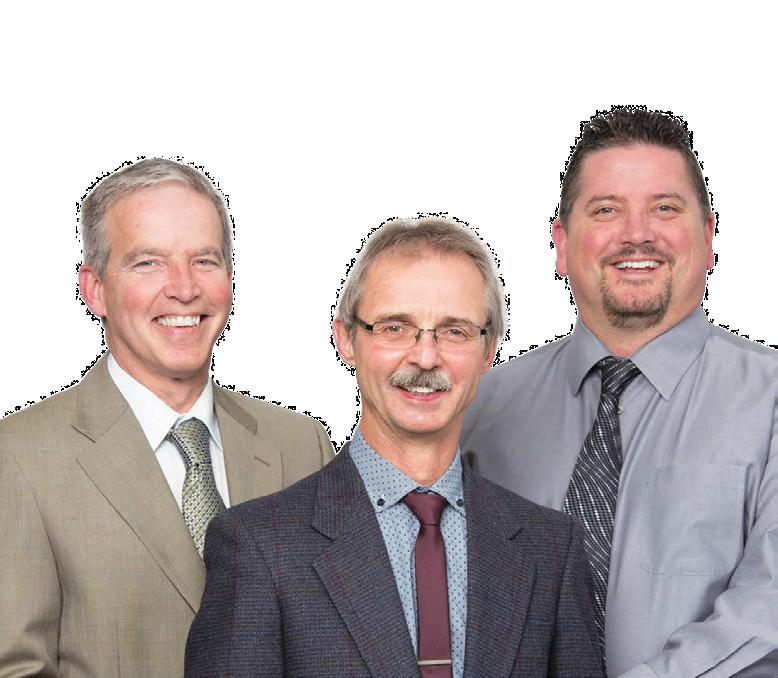
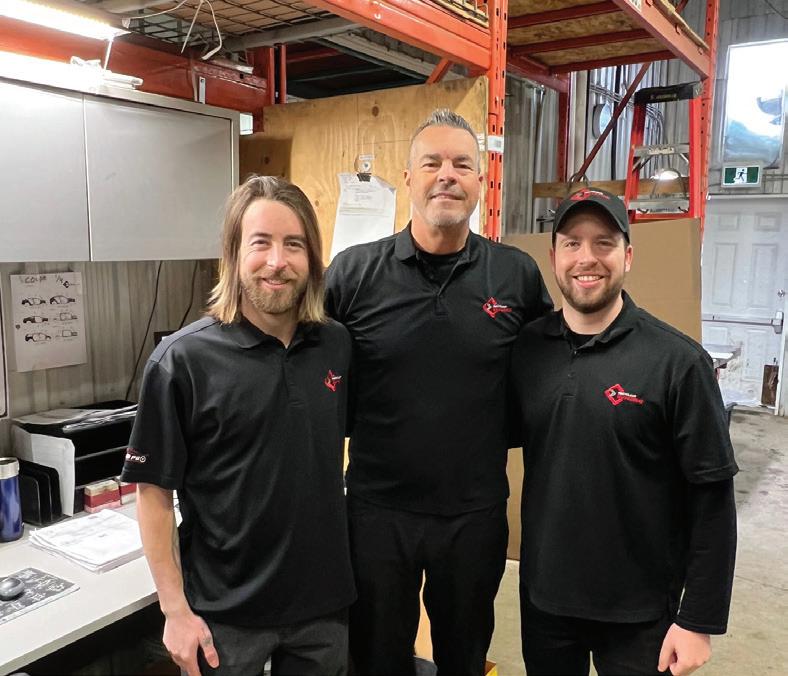
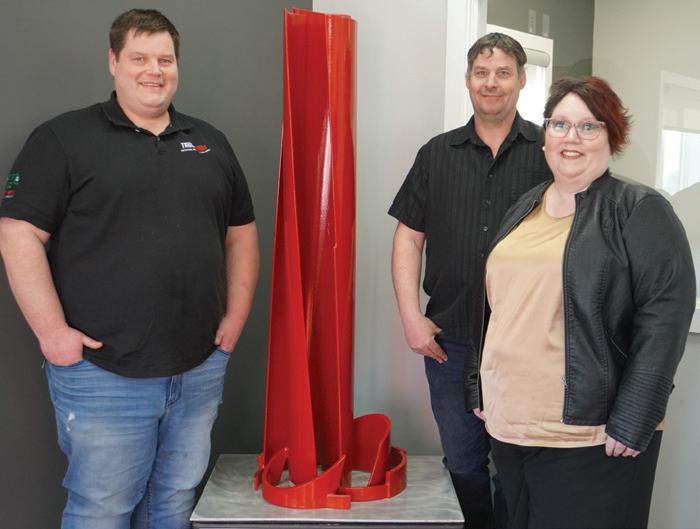
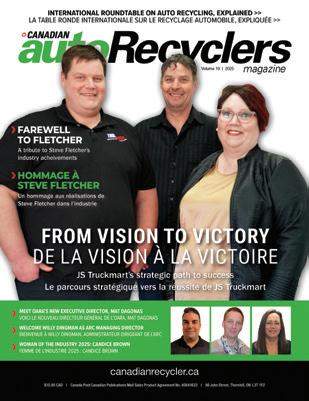
RENCONTREZ LE DIRECTEUR EXÉCUTIF DE L’OARA, WALLY DINGMAN
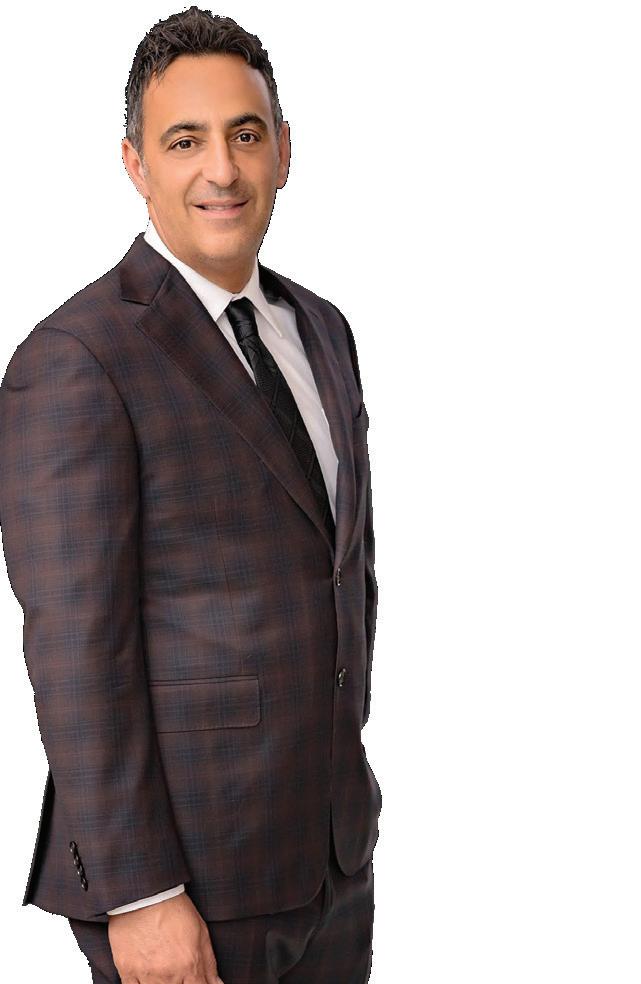
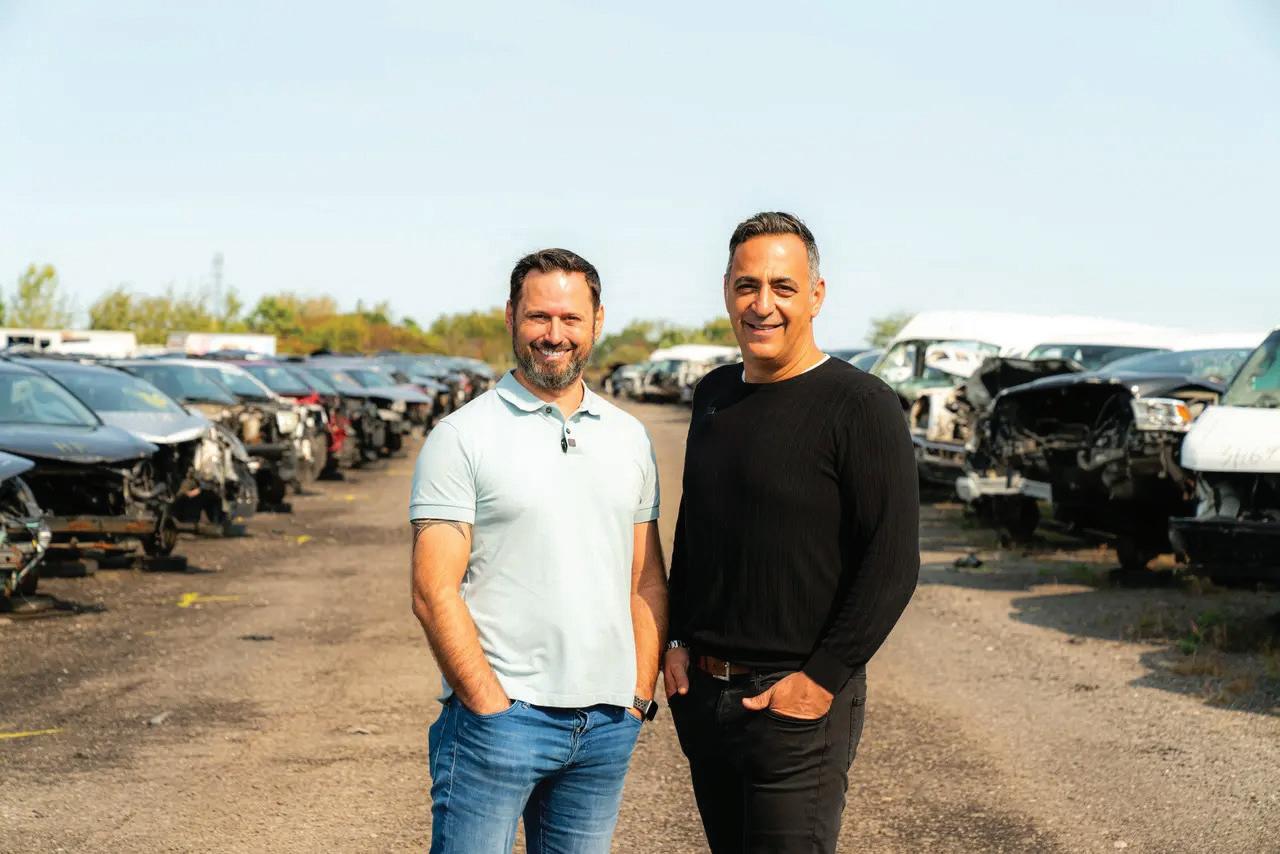
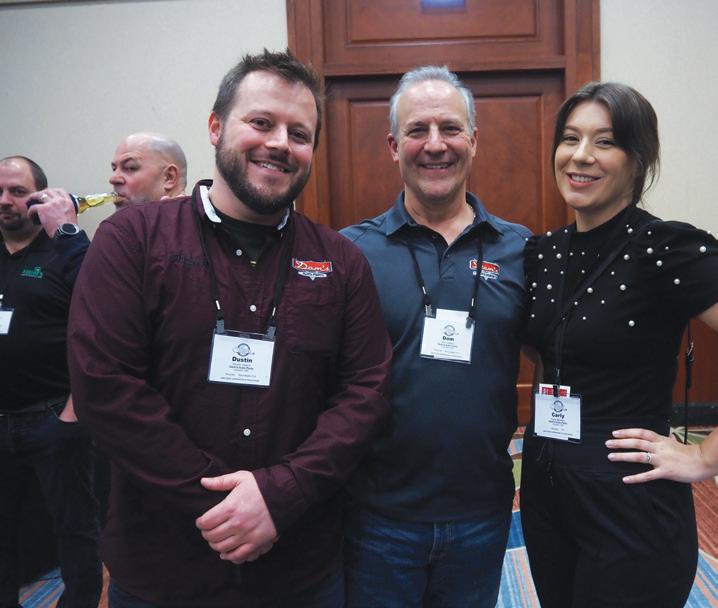
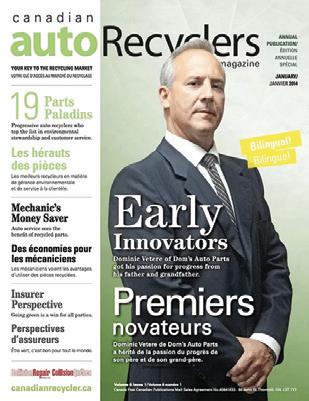
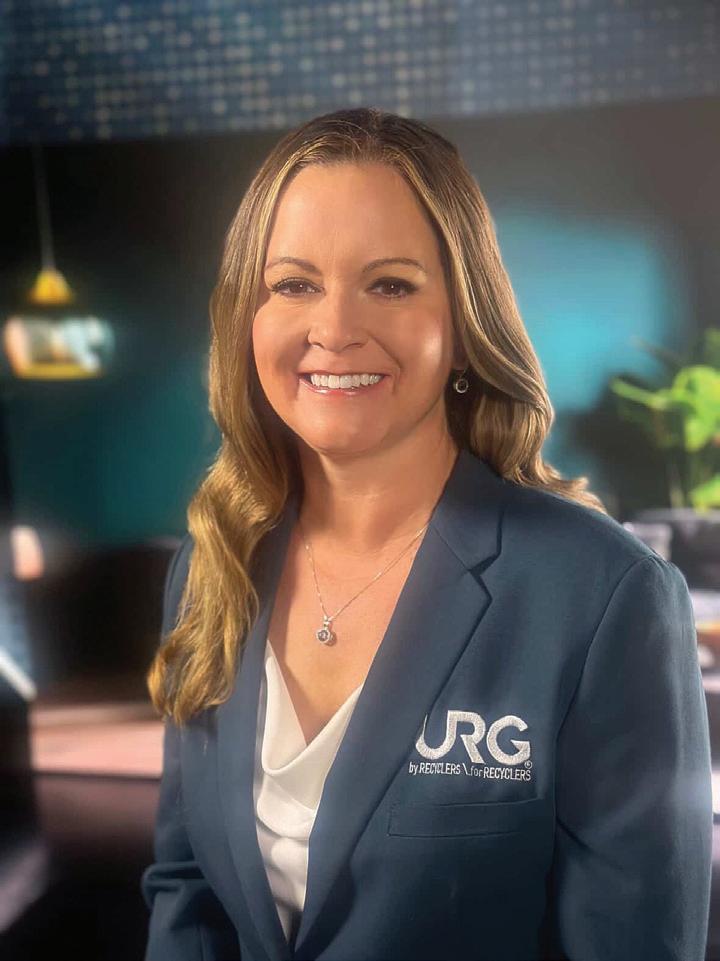
WOMAN OF THE INDUSTRY 2026: CARLY VETERE
FEMME DE L’INDUSTRIE 2026: CARLY VETERE
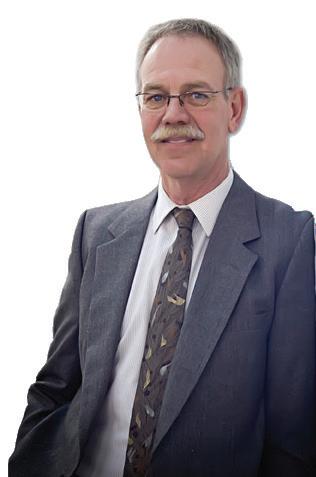
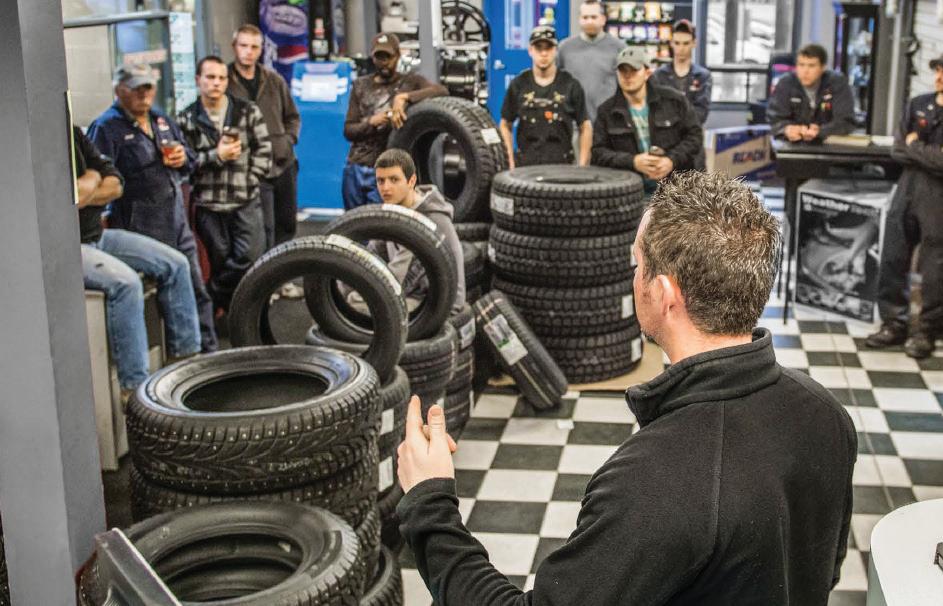
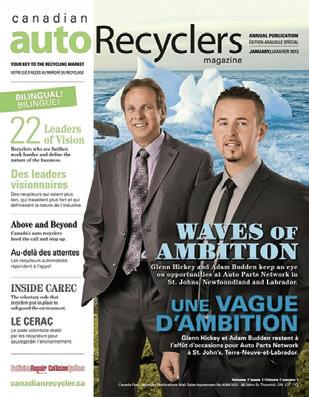
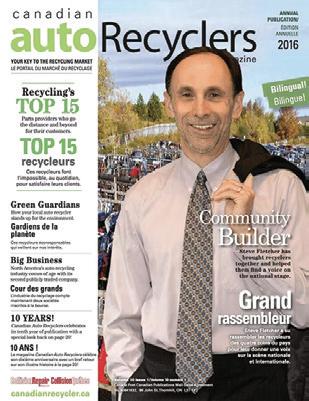
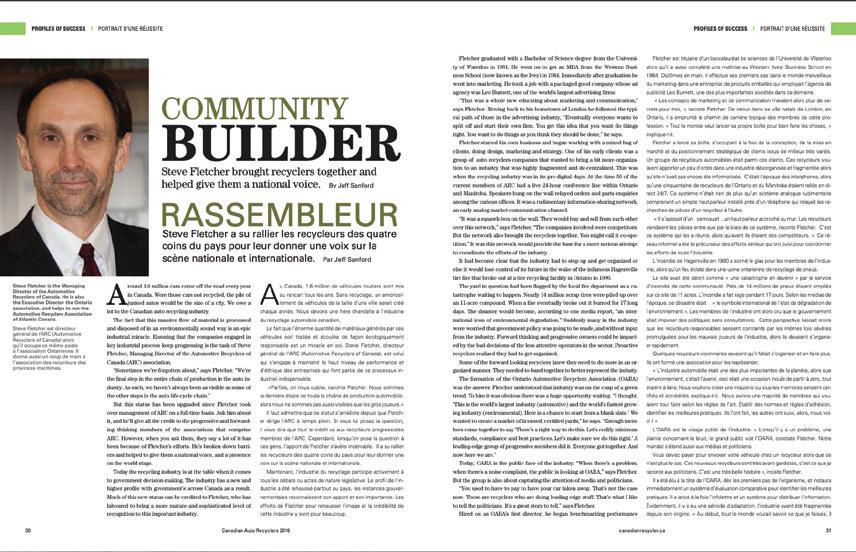
STEVE FLETCHER REFLECTS ON THE INTERNATIONAL ROUNDTABLE
STEVE FLETCHER REFLÉTE SUR LA TABLE RONDE INTERNATIONALE
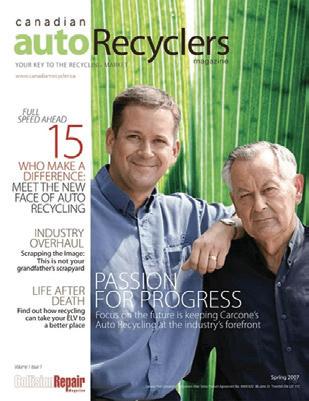
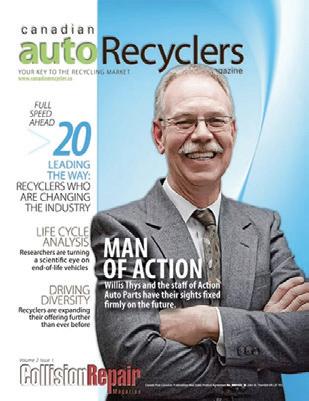
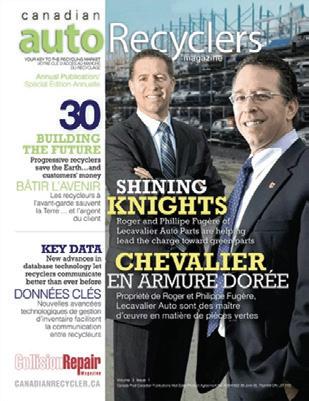
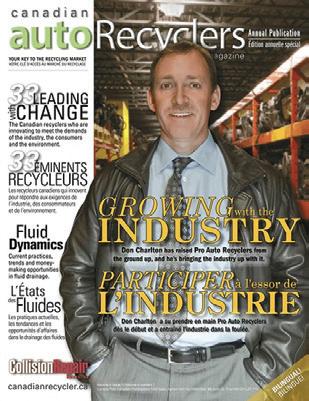
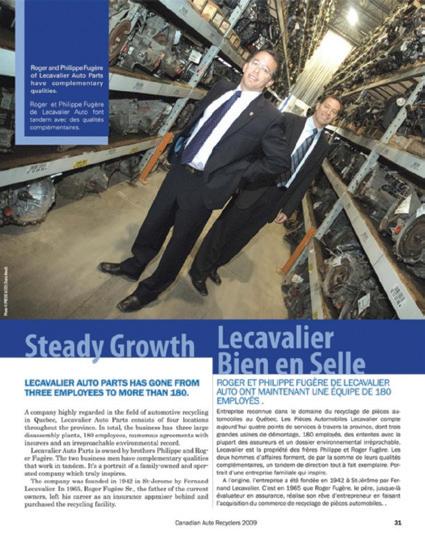
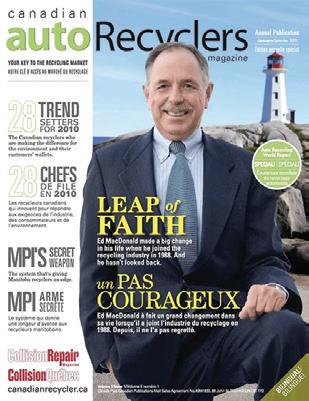
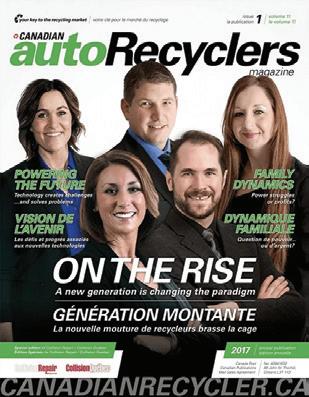
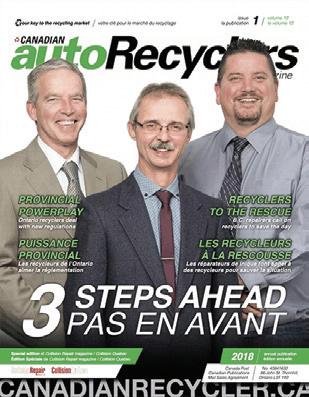
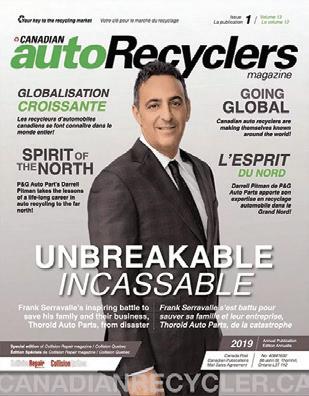
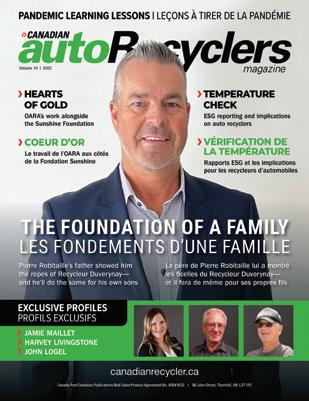
figurant en couverture du magazine Canadian Auto Recyclers
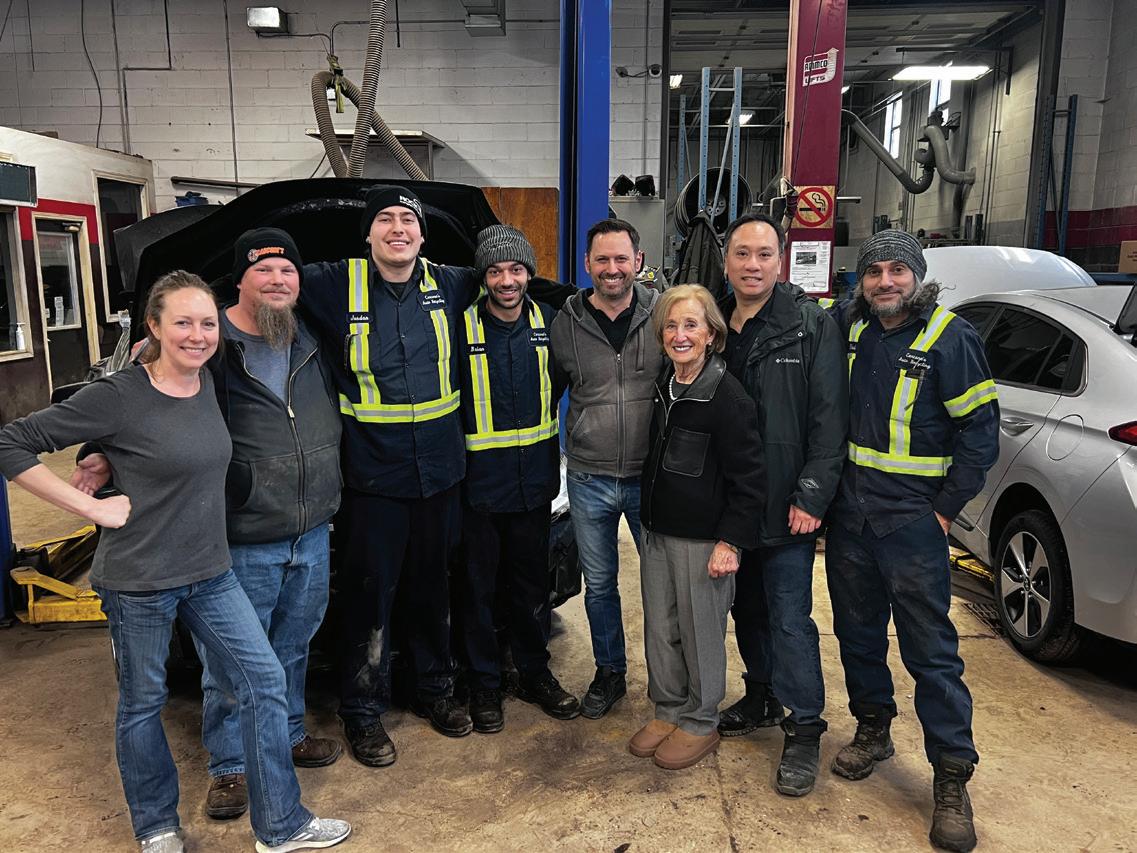
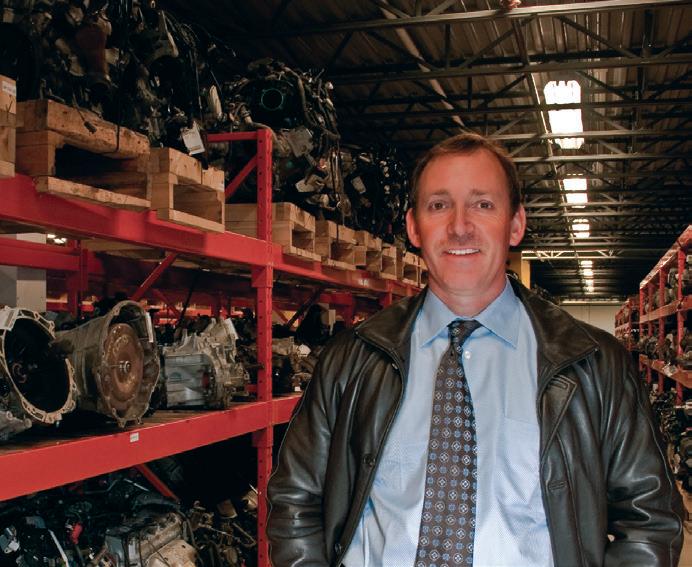
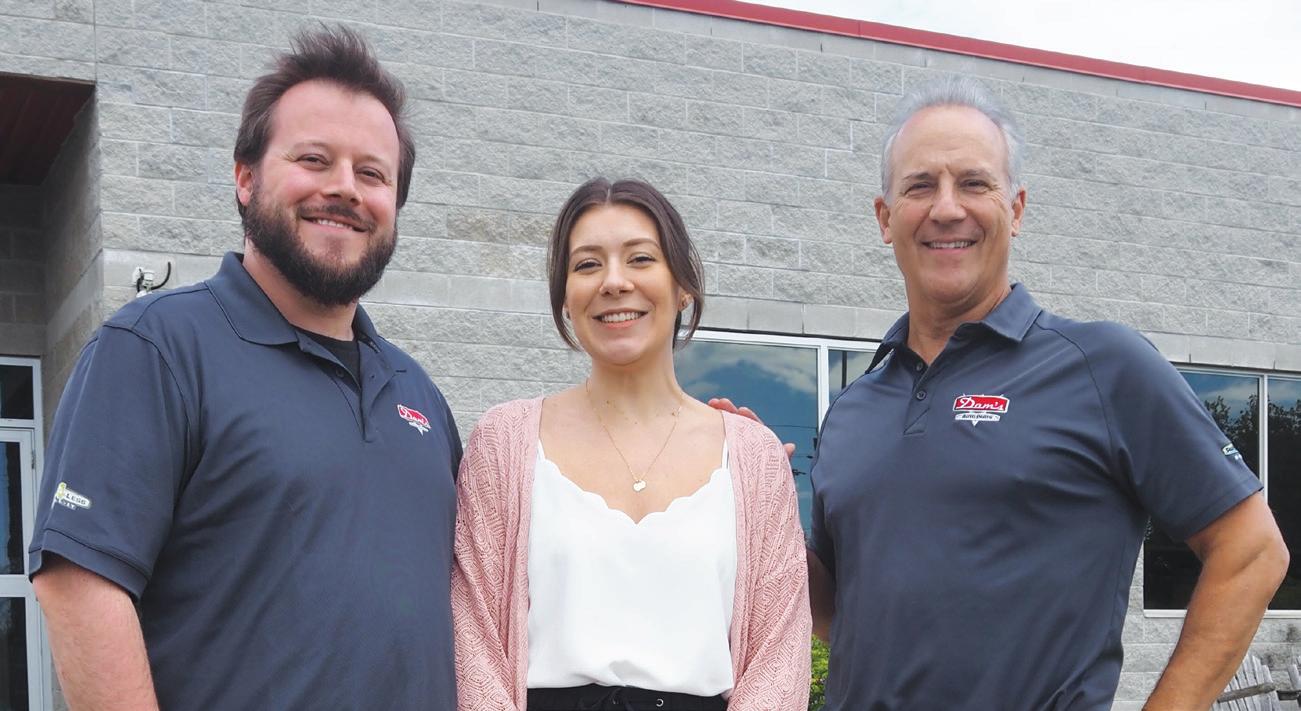
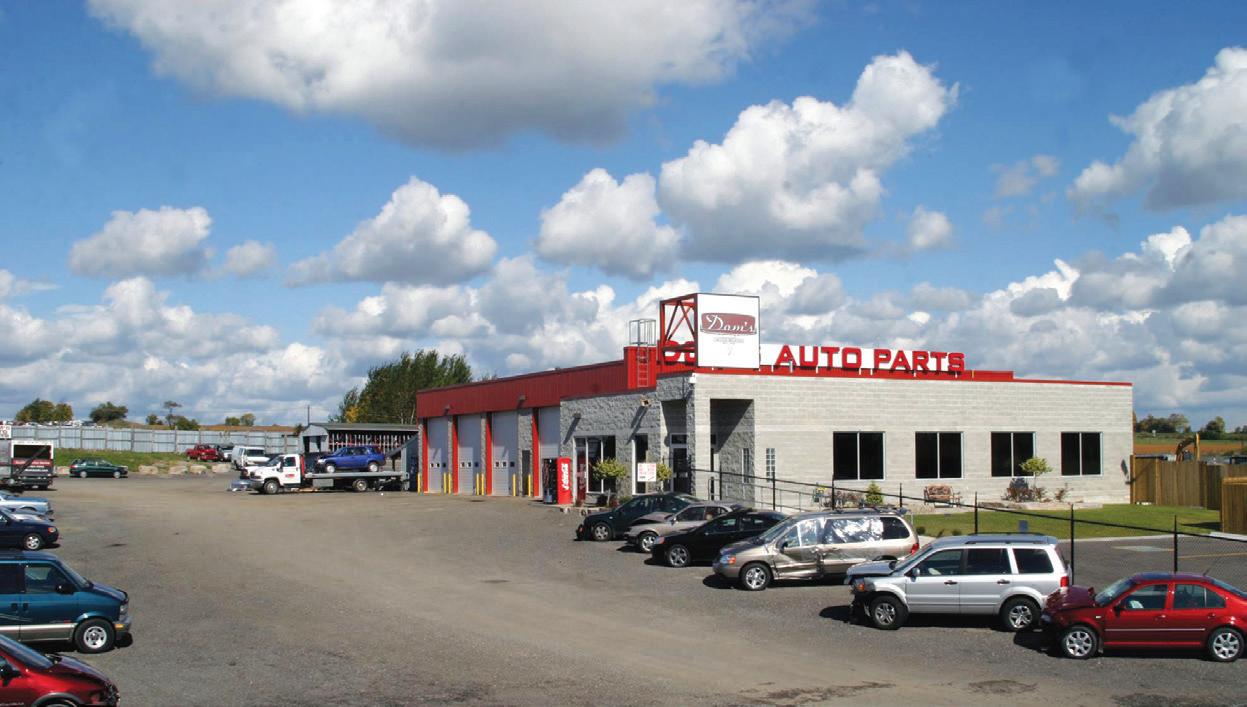
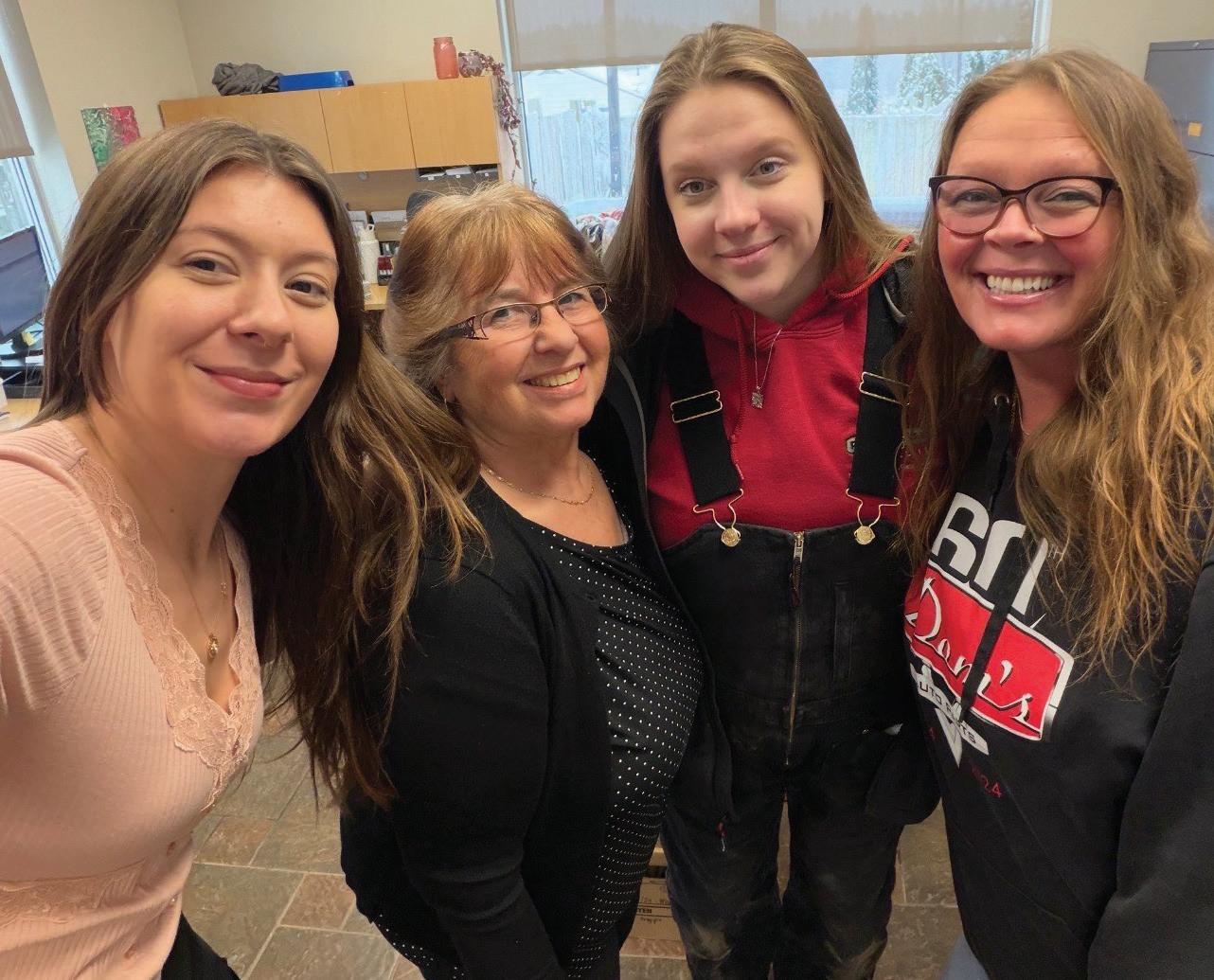
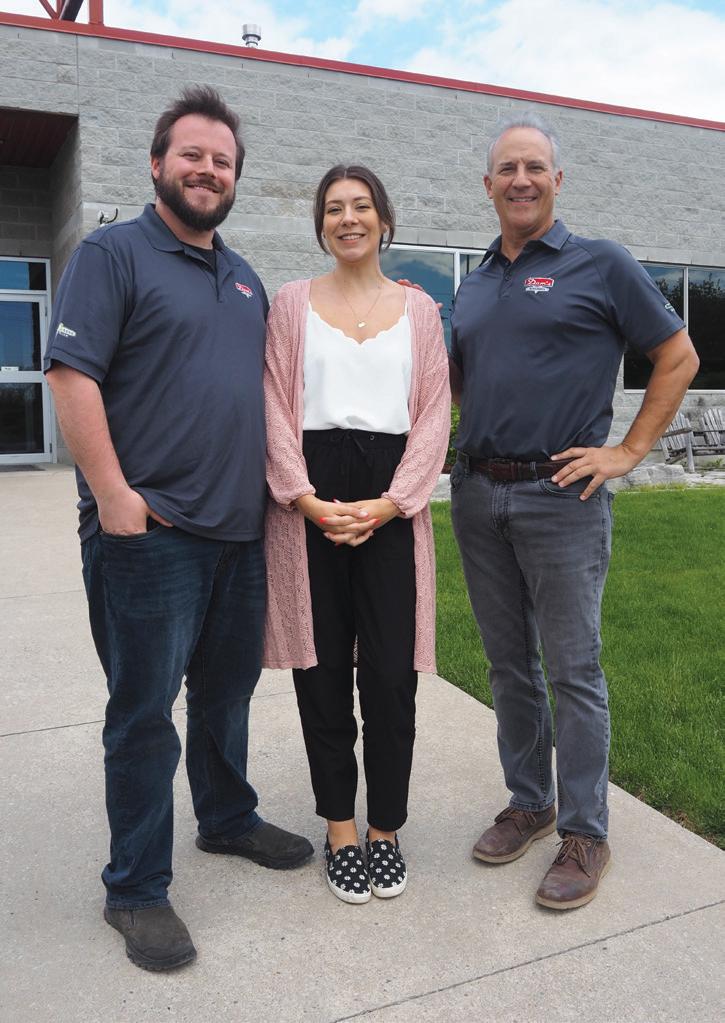
From workplace culture to EV readiness, Carly Vetere is helping guide Dom’s Auto Parts into the future. / De la culture d'entreprise à la préparation aux véhicules électriques, Carly Vetere aide Dom's Auto Parts à se tourner vers l'avenir
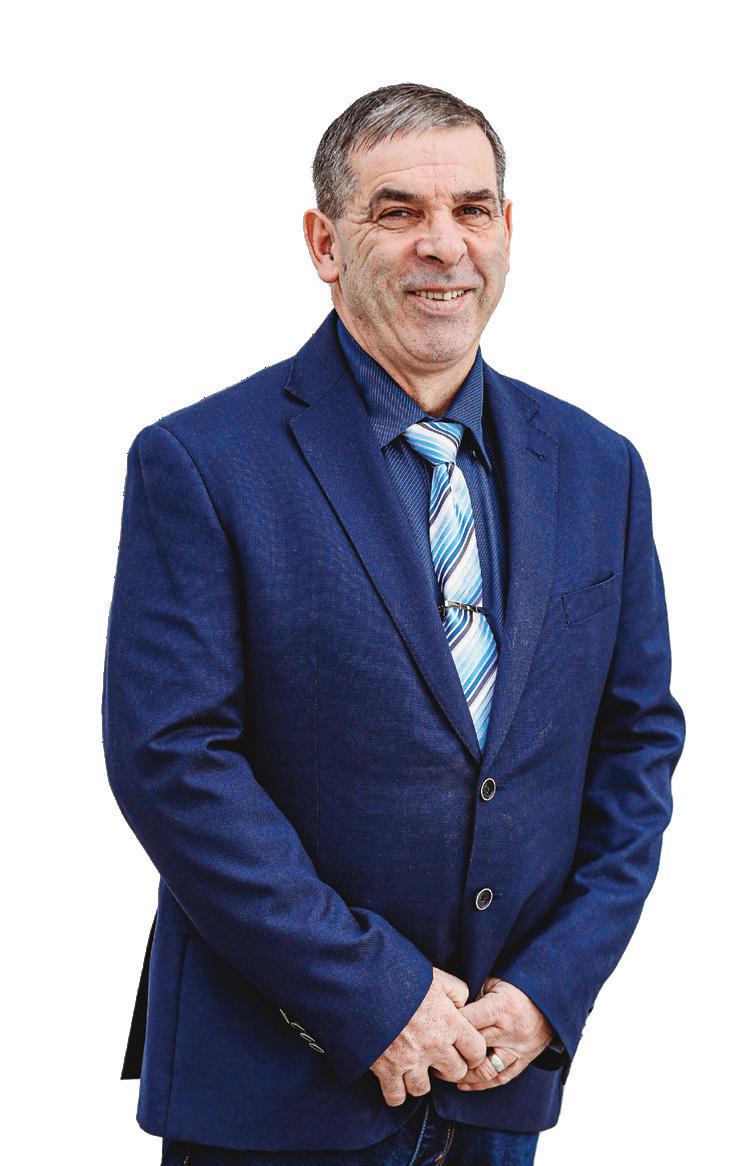
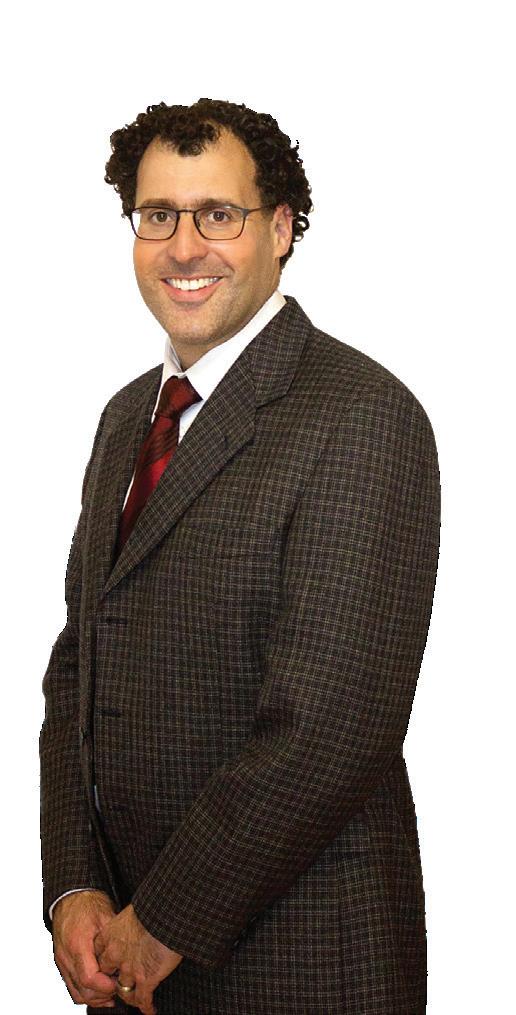
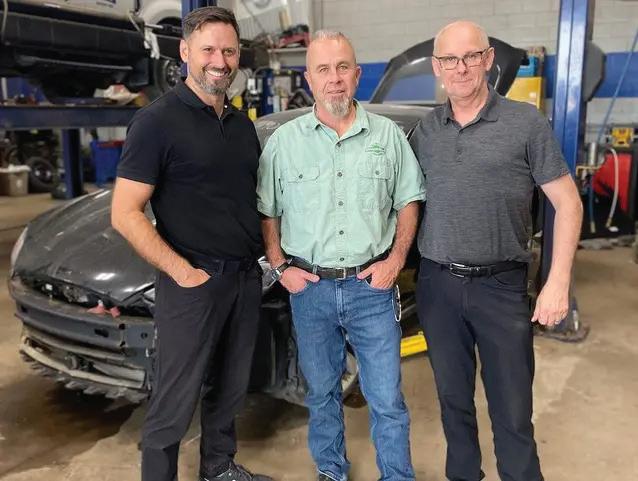
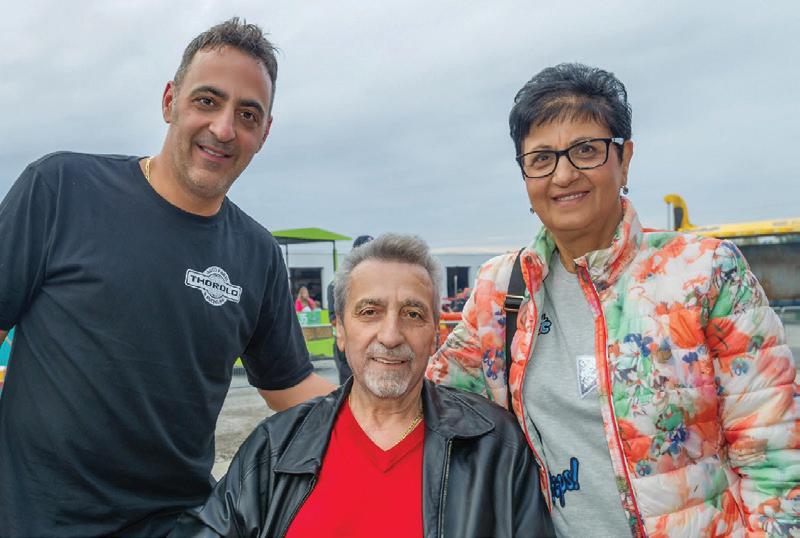
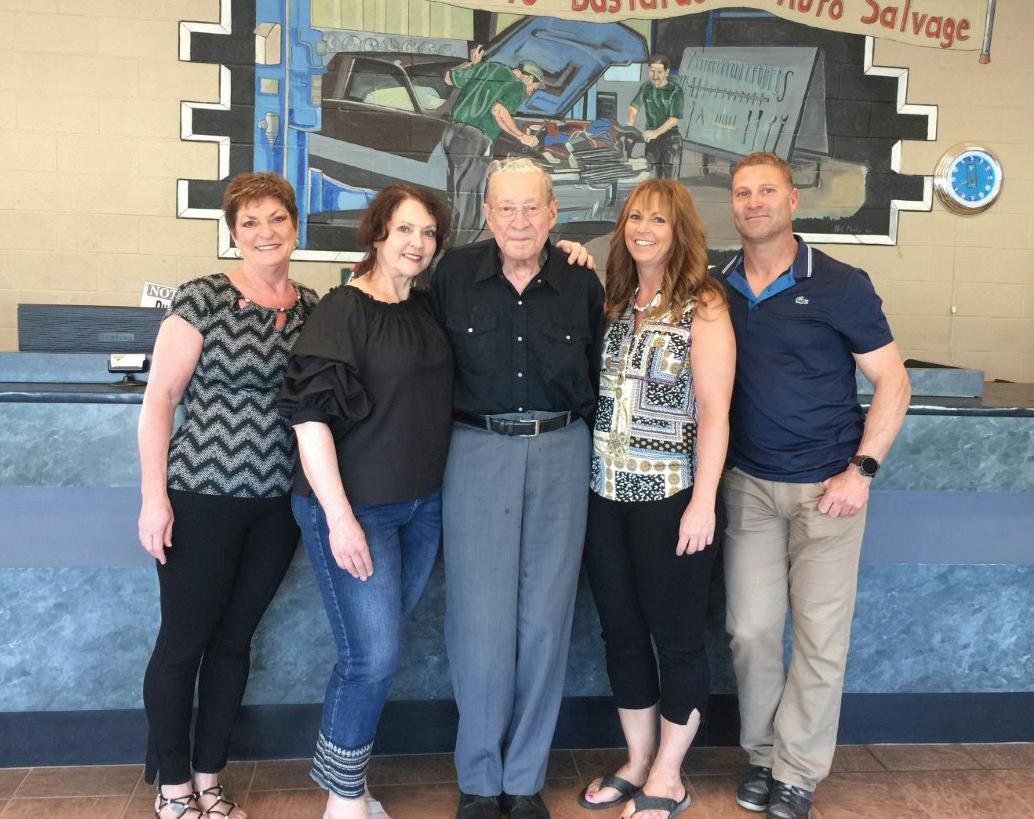
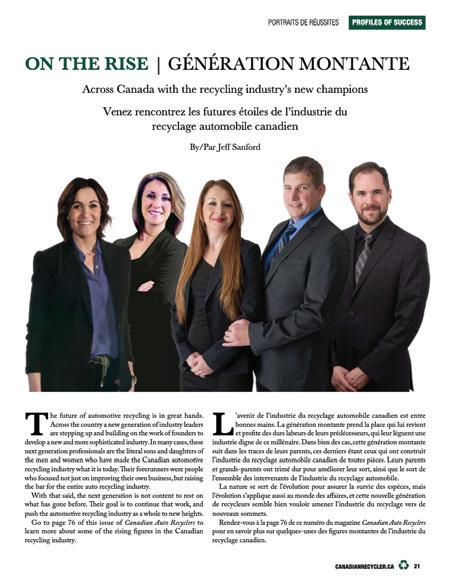
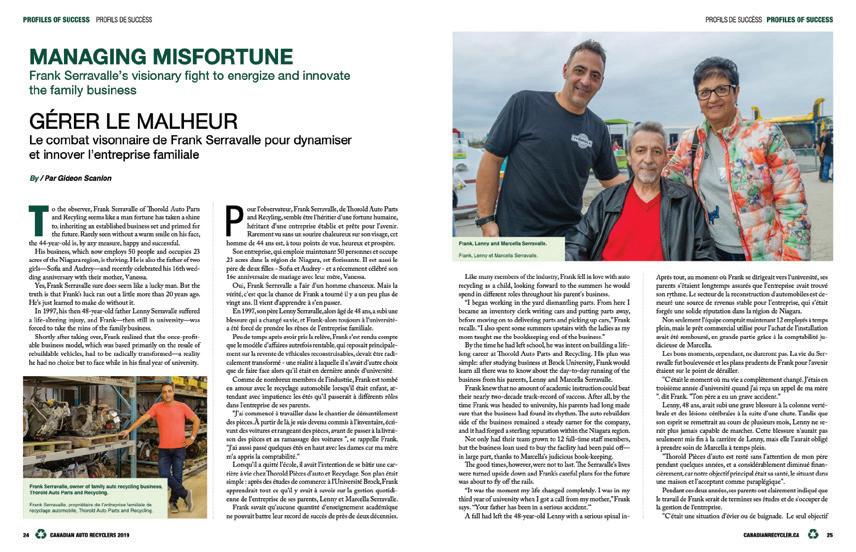
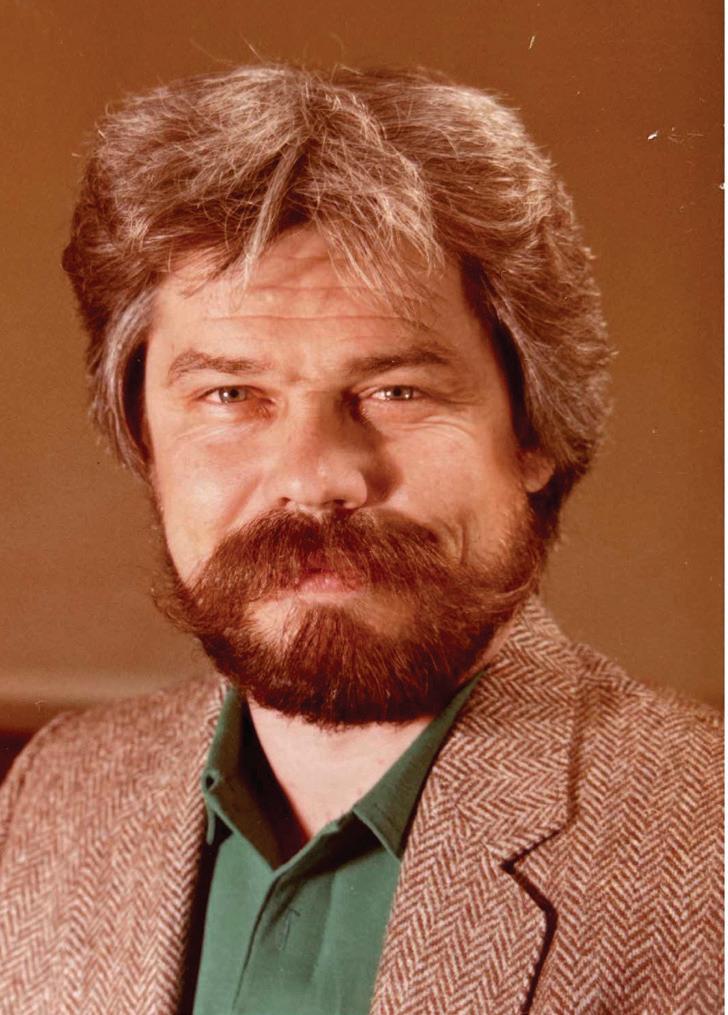
Pete Martyniuk reflects on his family’s immigrant roots, industry evolution and four generations in auto recycling. / Pete Martyniuk revient sur les racines immigrées de sa famille, l’évolution de l’industrie et quatre générations dans le recyclage automobile
MECHANICAL INDUSTRY | INDUSTRIE MÉCANIQUE
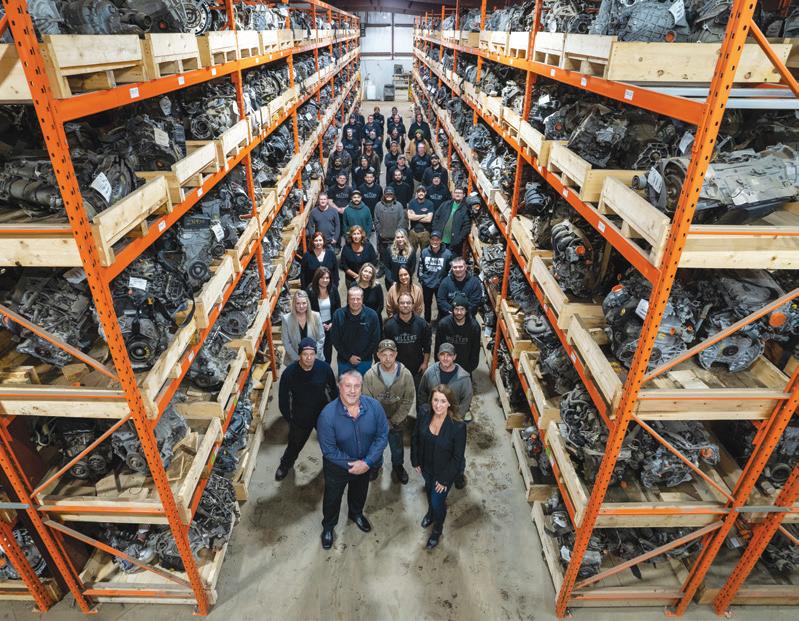
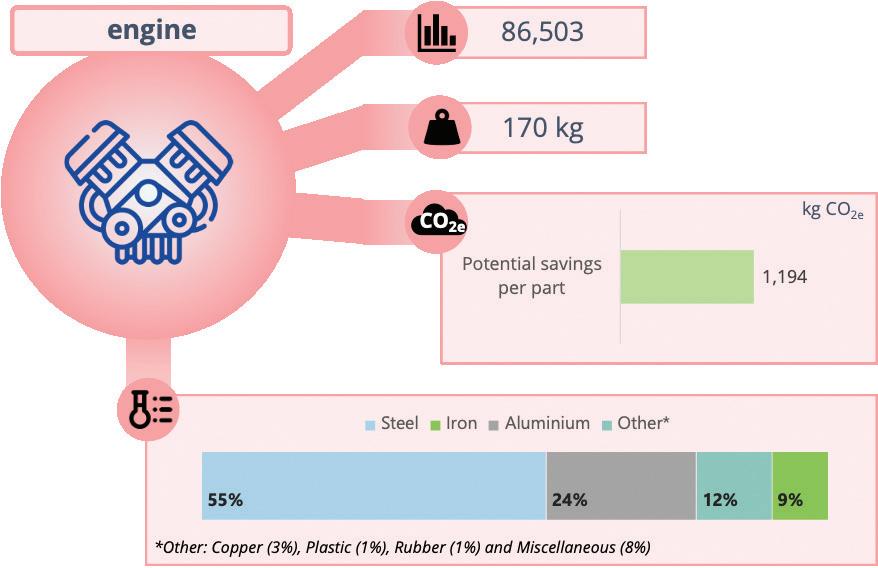
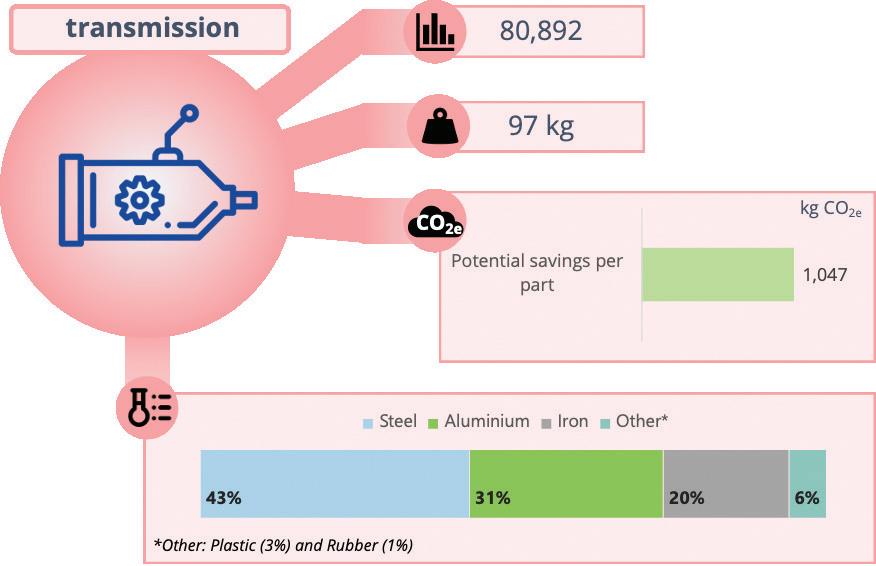
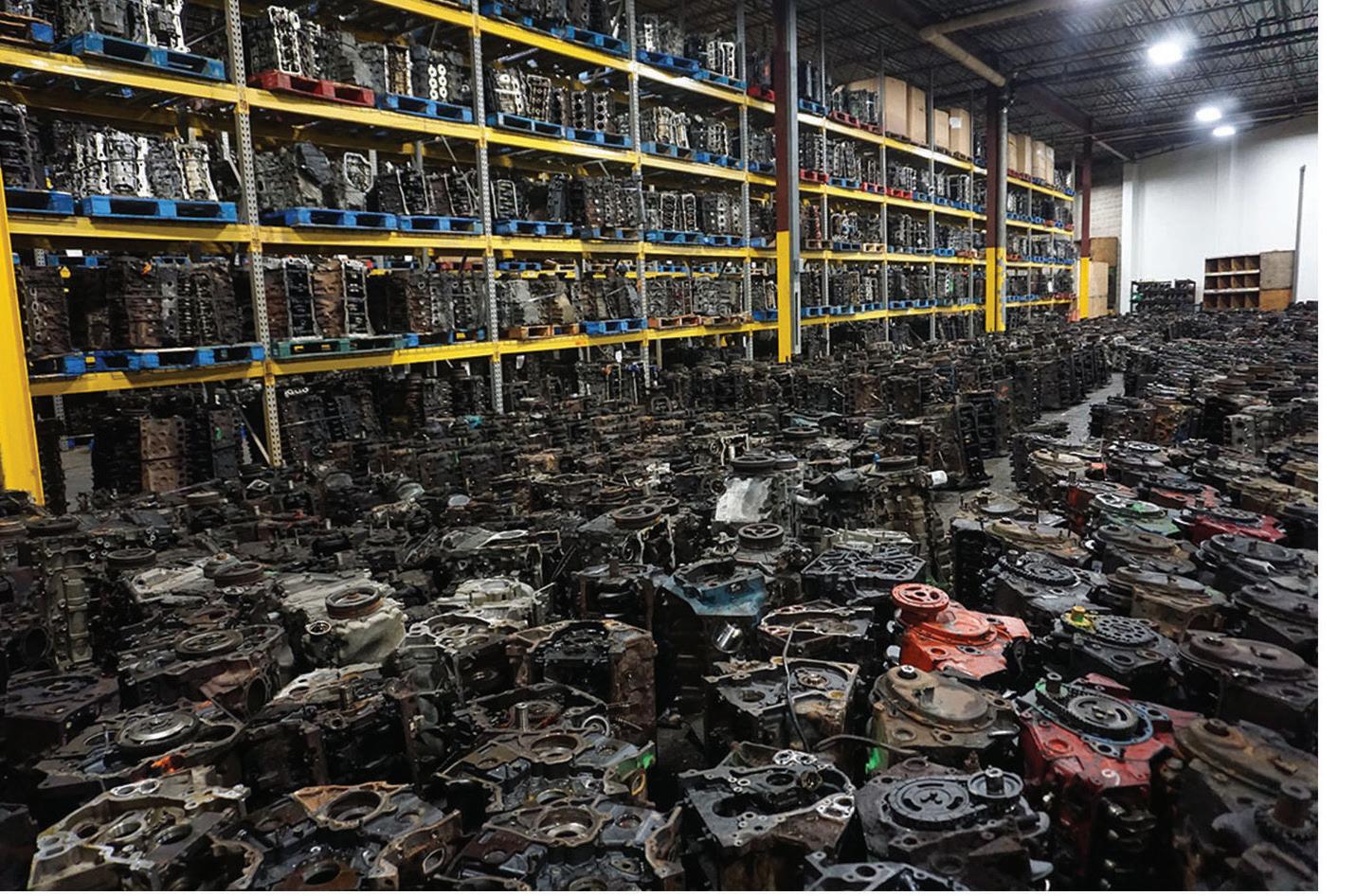
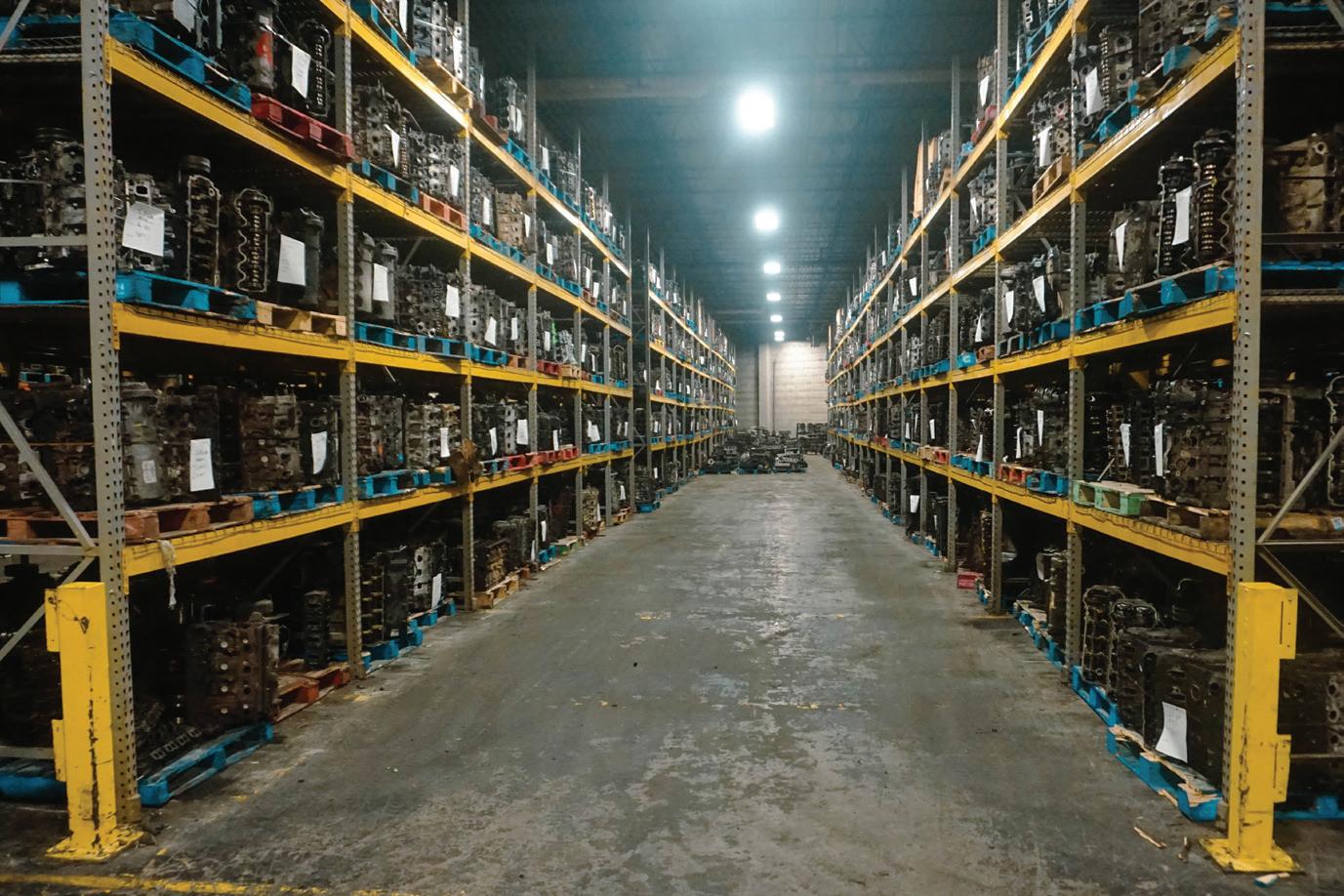
The broader impact of recycled mechanical parts. L’impact plus large des pièces mécaniques recyclées.
INTERNATIONAL ROUNDTABLE | TABLE RONDE INTERNATIONALE
Online IRT webinars connect recyclers, regulators and industry leaders to share best practices and emerging trends. / Les webinaires IRT en ligne mettent en relation les recycleurs, les régulateurs et les leaders du secteur afin de partager les meilleures pratiques et les nouvelles tendances.
INDUSTRY INSIGHTS | PERSPECTIVES SUR L’INDUSTRIE
How AI Is Reshaping North American Auto Recycling in 2026. / Comment l’IA va transformer le recyclage automobile en Amérique du Nord en 2026.
TARIFF IMPACT | IMPACT TARIFAIRE
How tariffs undermine reuse, affordability and sustainability. / Comment les droits de douane nuisent à la réutilisation, à l’accessibilité financière et à la durabilité.
VEHICLE THEFT | VOL DE VÉHICULE
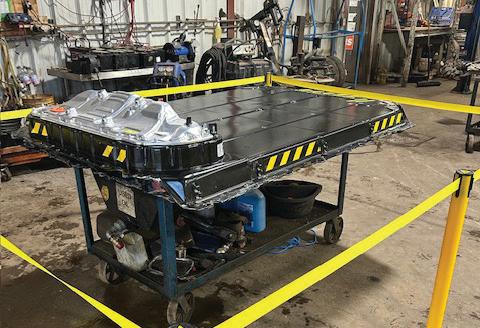
Canadian auto recyclers are hearing of more stolen vehicles, more cloned VINs, with title anomalies being a contributing factor. / Les recycleurs automobiles canadiens entendent parler d’un nombre croissant de véhicules volés, de VIN clonés, les anomalies dans les titres de propriété étant un facteur contributif.
PUBLISHER
Darryl Simmons publisher@collisionrepairmag.com
ASSOCIATE PUBLISHER
Orest Tkaczuk | orest@mediamatters.ca
ART DIRECTOR
Yvonne Maschke | yvonne@mediamatters.ca
ASSISTANT EDITOR
Mackenzie Grant | mackenzie@mediamatters.ca
INTERIM EDITOR
Stephanie MacDonald | stephanie_macdonald@shaw.ca
INTERIM EDITOR
Gideon Scanlon | news@collisionrepairmag.com
AUDIENCE ENGAGEMENT MANAGER
William Simmons | william@mediamatters.ca
VP OF INDUSTRY RELATIONS & ADVERTISING
Gloria Mann 647.998.5677 | gd.mann@rogers.com
INDUSTRY RELATIONS ASSISTANT
Wanja Mann 705.928.0653 | wanjamann1@gmail.com
DIGITAL OPERATIONS MANAGER
Cassie Doyle | cassie@mediamatters.ca
MEDIA PRODUCTION SPECIALIST
Dayna Dicuangco | dayna@mediamatters.ca
DIGITAL MEDIA INTERN
Natalie Dinh | natalie@mediamatters.ca
Canadian Auto Recyclers magazine is dedicated to serving the business interests of the automotive recycling industry. It is published by Media Matters Incorporated. Material in Canadian Auto Recyclers magazine may not be reproduced in any form without written consent from the publisher. The publisher reserves the right to refuse any advertising and disclaims all responsibilities for claims or statements made by its advertisers or independent columnists. All facts, opinions and statements appearing within this publication are those of the writers and editors themselves, and are in no way to be construed as statements, positions or endorsements by the publisher. Media Matters Incorporated would like to thank the Ontario Media Development Corporation and the Province of Ontario for the generous support in helping launch Canadian Auto Recyclers magazine. PRINTED IN CANADA ISSN 1707-6072 CANADA POST CANADIAN PUBLICATIONS MAIL SALES PRODUCT AGREEMENT No. 40841632 RETURN POSTAGE GUARANTEED. Send change of address notices and undeliverable copies to: 86 John Street, Thornhill, ON L3T 1Y2. Canadian Auto Recyclers magazine is published by Media Matters Inc. publishers of; Collision Repair magazine, Bodyworx Professional magazine and the 2006 Collision Repair Training Directory
We acknowledge the financial support of the Government of Canada through the Canada Periodical Fund of the Department of Canadian Heritage.
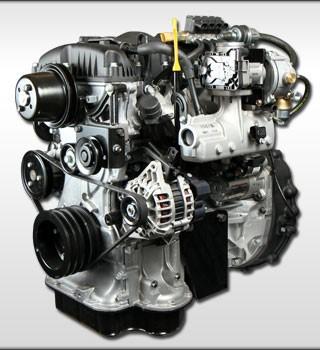
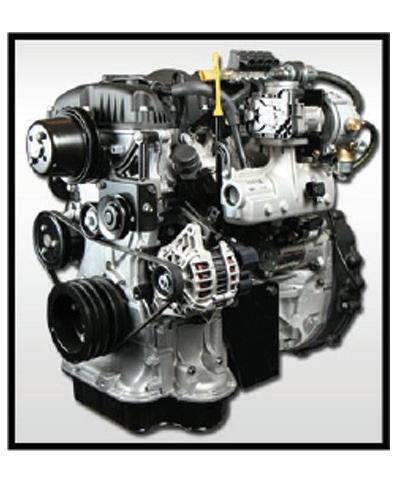
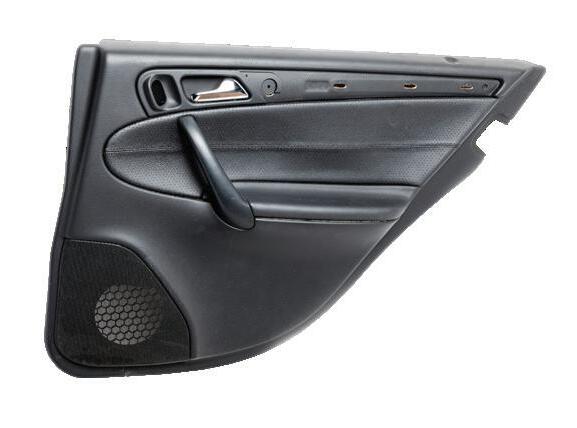
Used Engines
We offer a wide selection of fully inspected, restored used engines for cars, SUVs and sedans. Contact us today to find the right fit for your vehicle and budget.
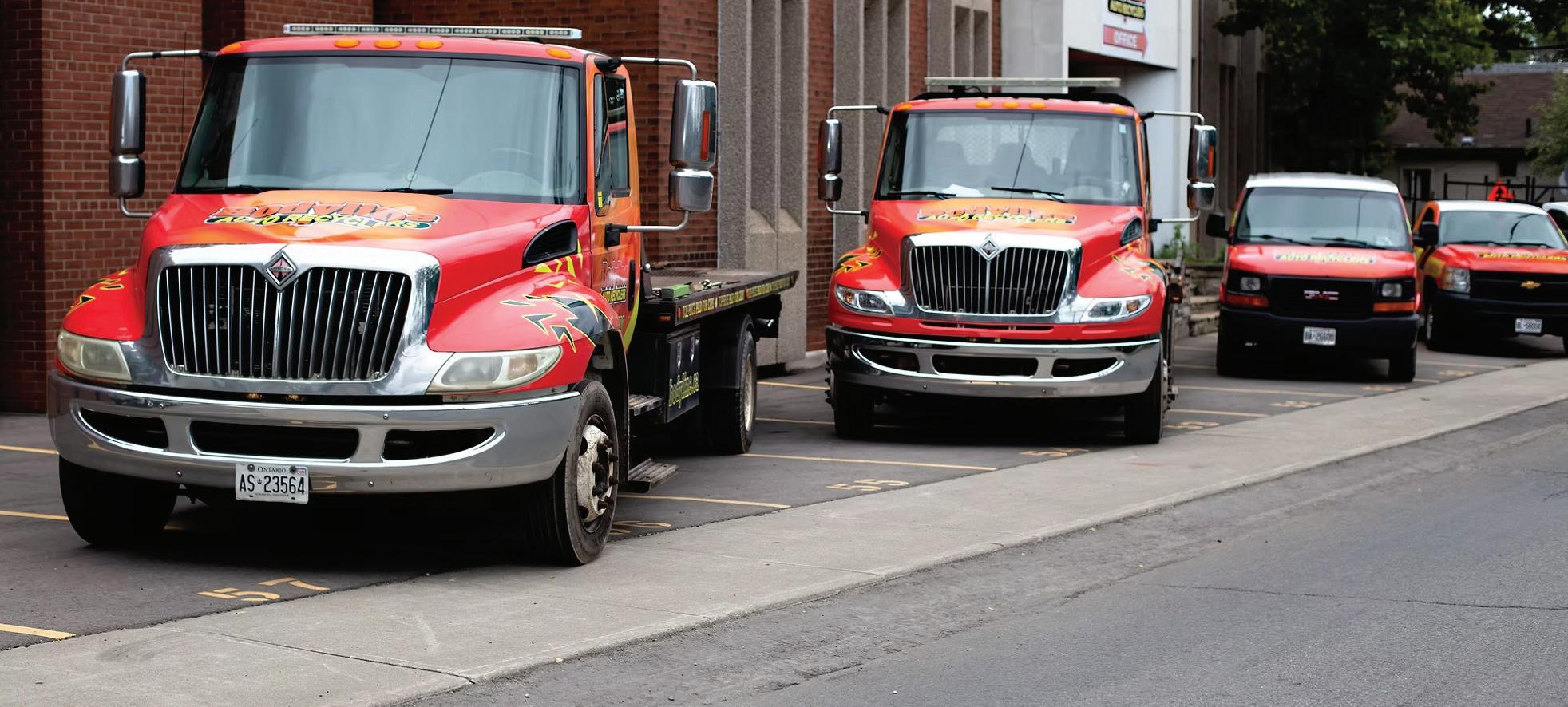
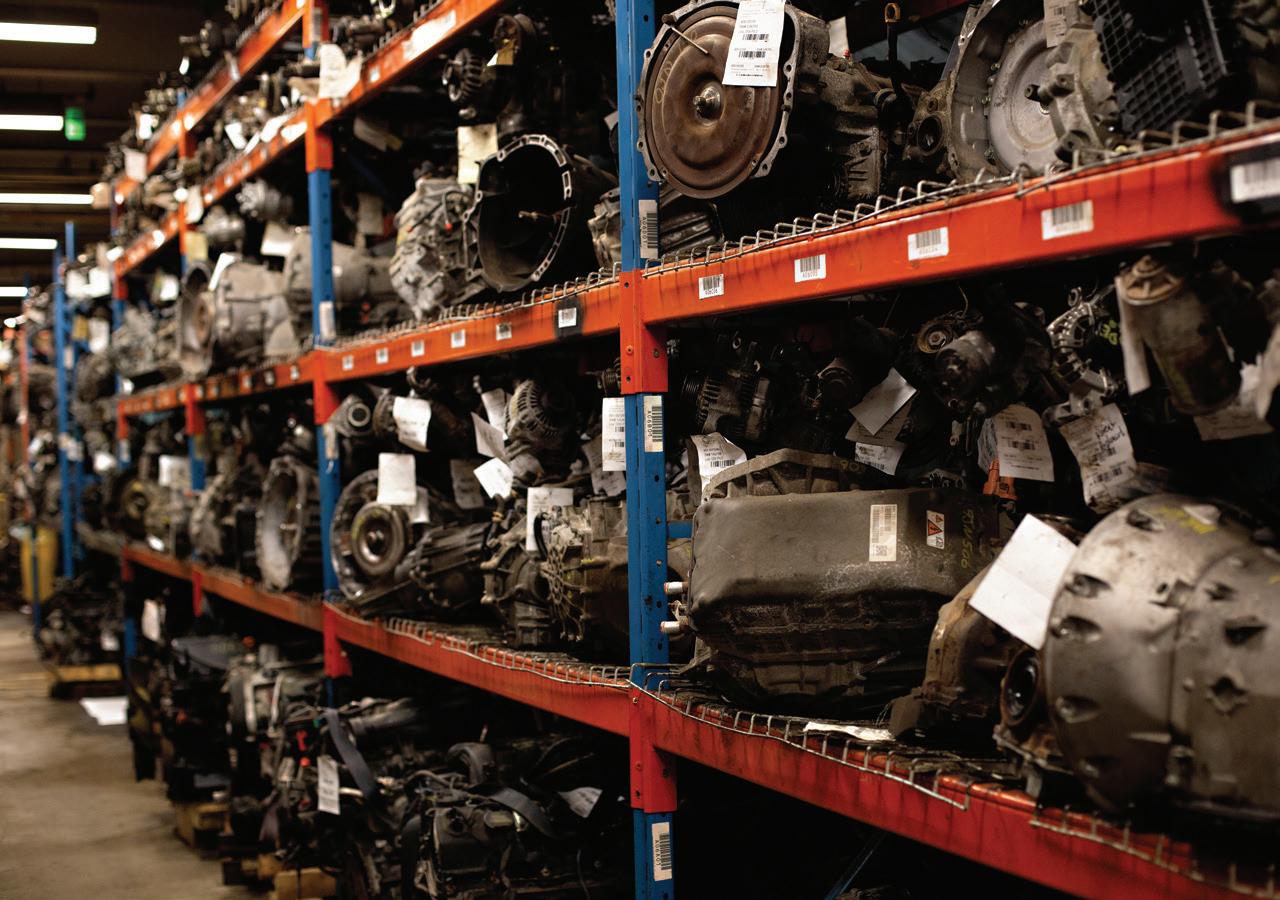
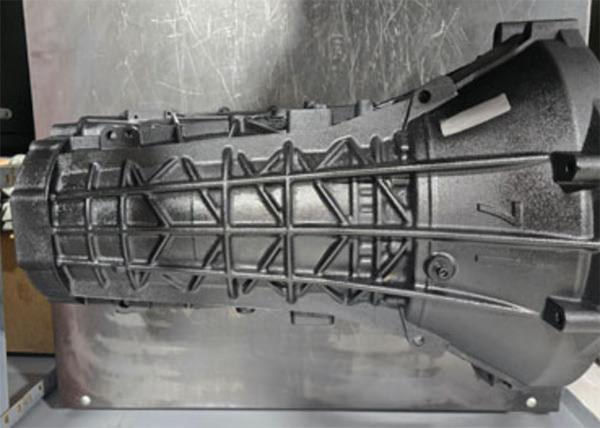
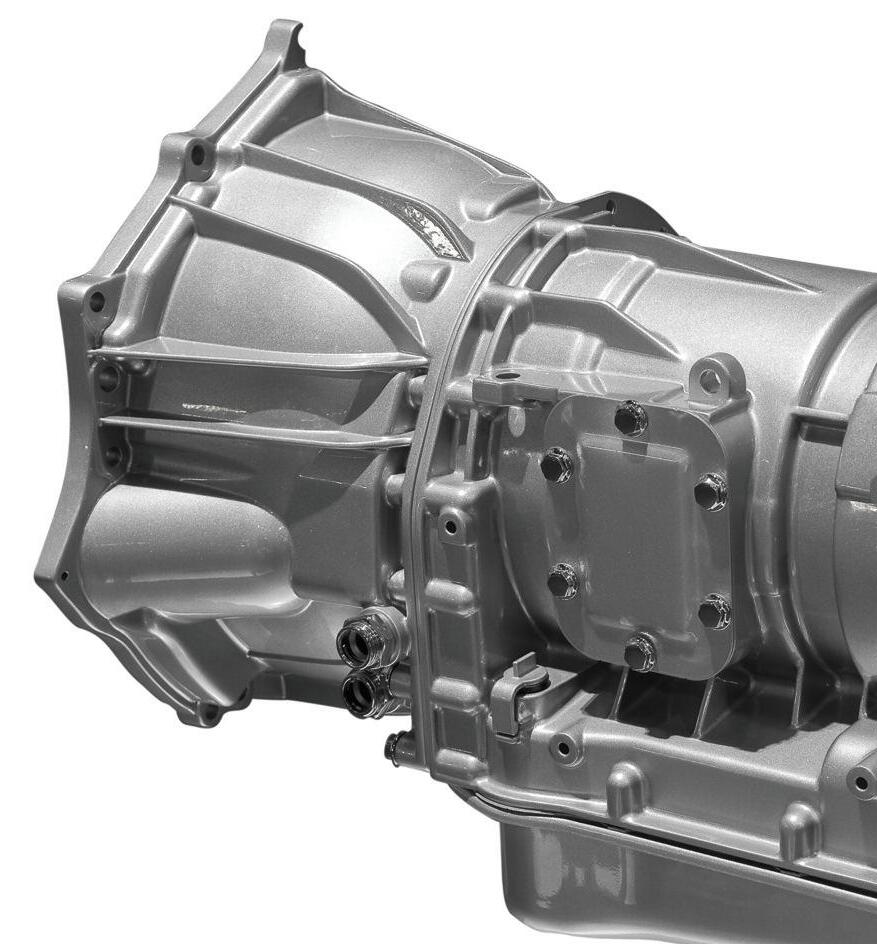
Bodyline Auto Recyclers has high-quality and cost-effective used auto transmissions in Hamilton. Choose from our wide range of durable auto transmissions for your vehicle.
Used Car Batteries Used Tires
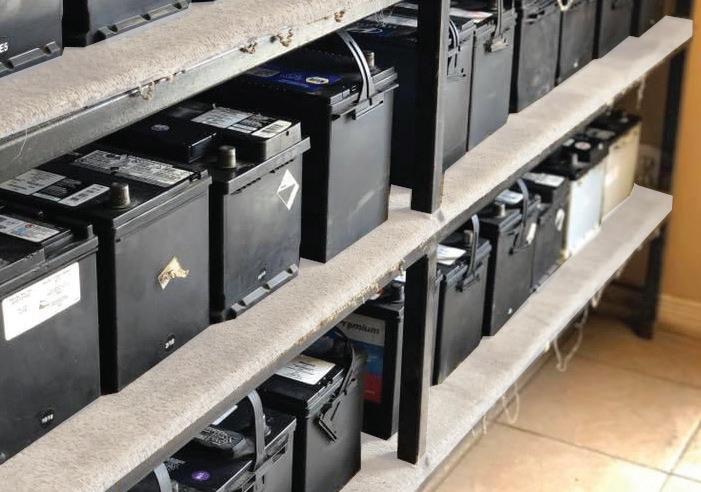
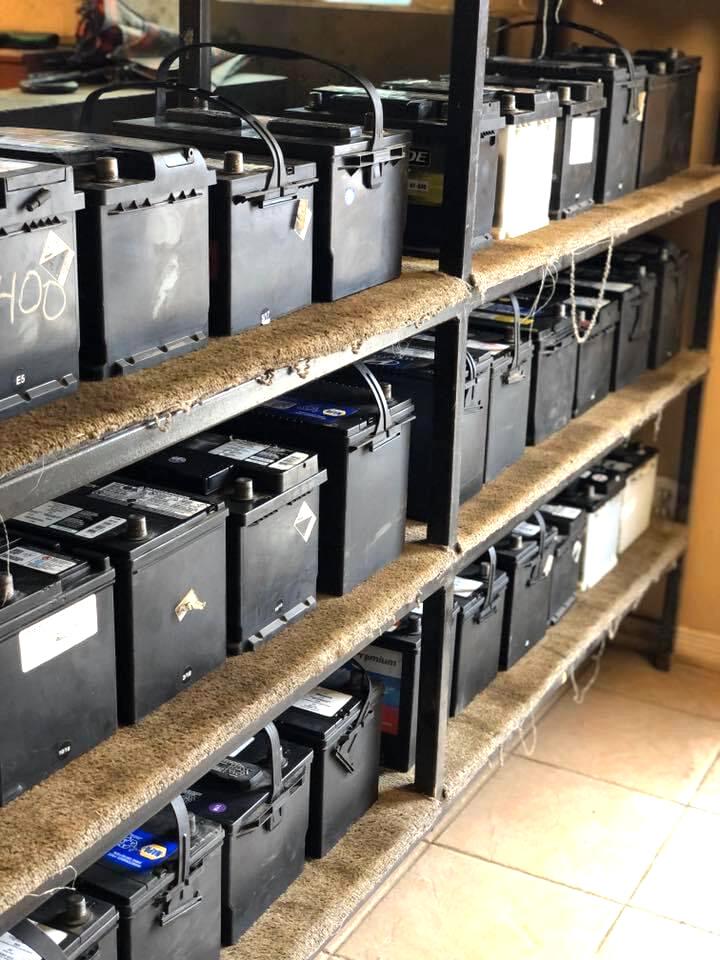
We offer high-quality used batteries, each backed by a 2-year warranty for peace of mind. Plus, if you have old batteries lying around, we’ll gladly buy them from you — helping you save and recycle at the same time.
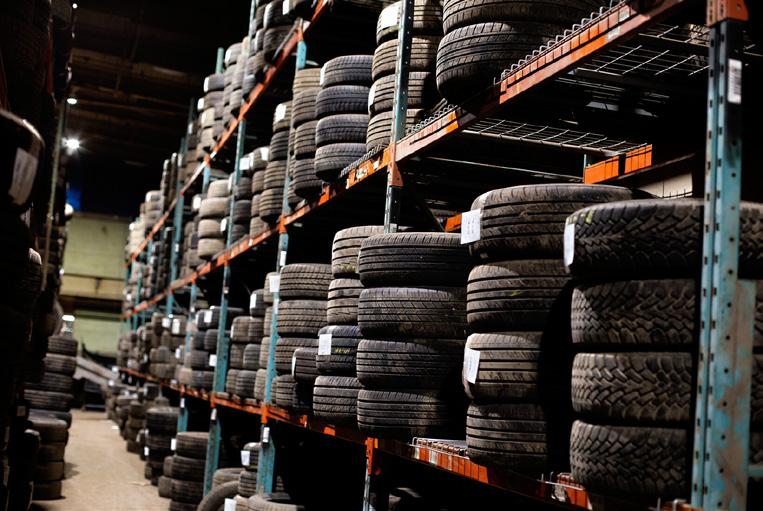
Bodyline Auto Recyclers offers high-performance used tires for a wide range of vehicles — eco-friendly, cost-effective and built to last. Save money and the planet today.
Twenty years of growth, evolution and community
Vingt ans de croissance, d'évolution et de communauté
By/par Gloria Mann
As we celebrate Canadian Auto Recyclers magazine’s 20th anniversary, I find myself reflecting on just how far this industry has come — and how privileged I feel to have been here from the beginning to witness that transformation firsthand.
When I first became involved, auto recycling was still too often described with outdated language and misconceptions rooted in old stereotypes. Today, that image could not be further from reality. The modern auto recycling industry is professional, innovative, technologically advanced and recognized as an essential part of the automotive ecosystem. It has been inspiring to watch the sector evolve into one that prioritizes sustainability, safety, quality and accountability — and to see it earn the respect it deserves across the broader automotive sphere.
What has made this journey especially meaningful is the people. This is, without question, one of the most welcoming and dedicated industries I have ever worked in. The professionalism, generosity and genuine camaraderie found among auto recyclers across Canada make this work a true pleasure. Time and again, I am reminded that it is the people behind the businesses who give this industry its strength and heart.
One of the most rewarding aspects has been watching companies grow across generations. Seeing family-owned businesses passed down — and then revitalized by a new generation bringing fresh ideas, technical expertise and a passion for innovation — is incredibly encouraging. These nextgeneration leaders are embracing technology and new ways of thinking while still honouring the values that built their companies in the first place.
I have also been proud to watch industry associations play a vital role in supporting this growth, advocacy and education, helping guide the industry through change and toward a stronger, more unified future.
It has truly been an honour to be part of this story for the past 20 years. I look forward to seeing where the next chapter takes us. CAR
Alors que nous célébrons le 20e anniversaire du magazine Canadian Auto Recyclers, je me surprends à réfléchir au chemin parcouru par cette industrie et à quel point je me sens privilégié d'avoir été là depuis le début pour être témoin de cette transformation.
Lorsque j'ai commencé à m'impliquer, le recyclage automobile était encore trop souvent décrit avec un langage dépassé et des idées fausses ancrées dans de vieux stéréotypes. Aujourd'hui, cette image est loin de la réalité. L'industrie moderne du recyclage automobile est professionnelle, innovante, à la pointe de la technologie et reconnue comme un élément essentiel de l'écosystème automobile. Il est inspirant de voir ce secteur évoluer vers une industrie qui privilégie la durabilité, la sécurité, la qualité et la responsabilité, et de le voir gagner le respect qu'il mérite dans le monde automobile au sens large.
Ce sont les gens qui ont rendu ce parcours particulièrement significatif. Il s'agit sans aucun doute de l'une des industries les plus accueillantes et les plus dévouées dans lesquelles j'ai jamais travaillé. Le professionnalisme, la générosité et la camaraderie sincère qui règnent parmi les recycleurs automobiles à travers le Canada font de ce travail un véritable plaisir. Je me rappelle sans cesse que ce sont les personnes qui travaillent dans ces entreprises qui donnent à cette industrie sa force et son âme.
L'un des aspects les plus gratifiants a été de voir les entreprises se développer au fil des générations. Il est extrêmement encourageant de voir des entreprises familiales se transmettre de génération en génération, puis être revitalisées par une nouvelle génération qui apporte des idées nouvelles, une expertise technique et une passion pour l'innovation. Ces leaders de la prochaine génération adoptent la technologie et de nouvelles façons de penser tout en continuant à honorer les valeurs qui ont permis à leurs entreprises de se développer.
Je suis également fier de voir les associations industrielles jouer un rôle essentiel dans le soutien à cette croissance, la défense des intérêts et l'éducation, en aidant à guider l'industrie à travers le changement et vers un avenir plus fort et plus unifié.
Ce fut vraiment un honneur de faire partie de cette histoire au cours des 20 dernières années. J'ai hâte de voir où le prochain chapitre nous mènera. CAR
A New Chapter for OARA Un nouveau chapitre pour l'OARA
The goal is simple: progress without unnecessary complexity
L'objectif est simple: progresser sans complexité inutile
By/par Wally Dingman, executive director /directeur exécutif, Ontario Automotive Recyclers Association
Stepping into the role of executive director of OARA feels like a natural continuation of my lifelong career in this industry. I have been an auto recycler my entire life — working in the yard, managing a family business, and serving on both the OARA and ARC Boards, including chairing each association. After first taking on the role of executive director for the Automotive Recyclers of Canada (ARC), I recently assumed the executive director position for OARA as well. Having the opportunity to lead at both the provincial and national levels is an honour, and it allows me to strengthen the alignment between OARA and ARC while representing the recyclers who shaped my career and the industry I care so deeply about.
Before looking ahead, it’s important to recognize Steve Fletcher, who guided OARA for over 30 years. His decades of advocacy, vision, and persistence built the strong foundation our association stands on today. I’m grateful that Steve continues to support both ARC and OARA in an advisory and administrative role, ensuring continuity and experience remain part of our day-to-day work as we move forward.
EXCEPTIONAL LEADERSHIP DRIVING REAL PROGRESS
One of OARA’s greatest strengths is the calibre of its leadership. Board Chair Greg Woodbeck, our board of directors, and our committee members — more than 20 dedicated individuals — form one of the most active and hard-working leadership teams in the industry. This is not just a board; it is a network of passionate recyclers who volunteer their time, expertise, and energy to drive progress for all members.
Under Greg’s steady leadership, this team is advancing key files such as parts-utilization and insurer relations, Gold Seal modernization, environmental compliance, VIN branding and auto-theft initiatives, EV battery programs, data-flow and upload utilities, membership engagement, and the development of future training and events. These are complex, fast-moving issues, and the Board and committees are deeply engaged in every one of them. Their willingness to step into committee work, attend frequent calls, analyze emerging issues, and provide clear direction ensures the support I need as executive director is always there. Their commitment to the industry — and to helping me advocate effectively on their behalf — is extraordinary, and I’m grateful to work alongside such a strong and forward-thinking team.
Assumer le rôle de directeur exécutif de l'OARA me semble être la suite logique de ma carrière dans ce secteur. J'ai travaillé toute ma vie dans le recyclage automobile, que ce soit dans un parc à ferraille, à la tête d'une entreprise familiale ou au sein des conseils d'administration de l'OARA et de l'ARC, dont j'ai également présidé chacune. Après avoir d'abord occupé le poste de directeur exécutif de l'Association des recycleurs automobiles du Canada (ARC), j'ai récemment pris les fonctions de directeur général de l'OARA. C'est un honneur pour moi d'avoir l'occasion de diriger à la fois au niveau provincial et national, ce qui me permet de renforcer l'alignement entre l'OARA et l'ARC tout en représentant les recycleurs qui ont façonné ma carrière et l'industrie qui me tient tant à cœur.
Avant de nous tourner vers l'avenir, il est important de rendre hommage à Steve Fletcher, qui a guidé l'OARA pendant plus de 30 ans. Ses décennies de plaidoyer, sa vision et sa persévérance ont permis de bâtir les bases solides sur lesquelles repose aujourd'hui notre association. Je suis reconnaissant à Steve de continuer à soutenir l'ARC et l'OARA dans un rôle consultatif et administratif, garantissant ainsi la continuité et l'expérience dans notre travail quotidien à mesure que nous allons de l'avant.
UN LEADERSHIP EXCEPTIONNEL AU SERVICE D'UN PROGRÈS RÉEL
L'une des plus grandes forces de l'OARA réside dans la qualité de son leadership. Le président du conseil d'administration, Greg Woodbeck, notre conseil d'administration et les membres de nos comités, soit plus de 20 personnes dévouées, forment l'une des équipes de direction les plus actives et les plus travailleuses du secteur. Il ne s'agit pas seulement d'un conseil d'administration, mais d'un réseau de recycleurs passionnés qui consacrent bénévolement leur temps, leur expertise et leur énergie à faire progresser tous les membres.
Sous la direction stable de Greg, cette équipe fait avancer des dossiers clés tels que l'utilisation des pièces et les relations avec les assureurs, la modernisation du sceau d'or, la conformité environnementale, les initiatives en matière de marquage des numéros d'identification des véhicules et de vol de voitures, les programmes de batteries pour véhicules électriques, les utilitaires de flux et de téléchargement de données, l'engagement des membres et le développement de formations et d'événements futurs. Il s'agit de questions
The goal is simple: progress without unnecessary complexity, enabling recyclers to showcase the safety, quality, and environmental leadership our industry delivers.
CARRYING THE WORK FORWARD
Our industry is navigating major shifts — EV battery management, VIN integrity challenges, increased environmental reporting, and rising expectations from insurers, collision networks, and online marketplaces. These pressures also reinforce the essential role of certified, professional auto recyclers.
My focus is to build on the work already underway by:
• Strengthening alignment with ARC and provincial partners
• Deepening relationships with insurers, regulators, and technology providers
• Modernizing certification, grading, and photo standards in practical, achievable ways
• Advocating for fair, consistent rules — especially around EV batteries and VIN branding
• Supporting members with clear communication, training, and tools they can use daily
The goal is simple: progress without unnecessary complexity, enabling recyclers to showcase the safety, quality, and environmental leadership our industry delivers.
LOOKING AHEAD
Ontario’s recyclers lead through innovation, professionalism, and community involvement. My commitment is to support your work, amplify your voice, and ensure recyclers remain central in key policy and industry conversations.
Thank you for the trust, the support, and the warm welcome. I’m proud to bring a recycler’s perspective to this role — and excited for what we will accomplish together. CAR
L'objectif est simple: progresser sans complexité inutile, en permettant aux recycleurs de mettre en avant la sécurité, la qualité et le leadership environnemental de notre secteur.
complexes et en constante évolution, et le conseil d'administration et les comités sont profondément engagés dans chacune d'entre elles. Leur volonté de participer aux travaux des comités, d'assister à de fréquentes réunions téléphoniques, d'analyser les questions émergentes et de fournir des orientations claires me garantit le soutien dont j'ai besoin en tant que directeur général. Leur engagement envers l'industrie — et leur volonté de m'aider à défendre efficacement leurs intérêts — est extraordinaire, et je suis reconnaissant de travailler aux côtés d'une équipe aussi solide et avant-gardiste.
POURSUIVRE LE TRAVAIL
Notre industrie traverse des changements majeurs: gestion des batteries des véhicules électriques, défis liés à l'intégrité des numéros d'identification des véhicules, augmentation des rapports environnementaux et attentes croissantes des assureurs, des réseaux de collision et des marchés en ligne. Ces pressions renforcent également le rôle essentiel des recycleurs automobiles certifiés et professionnels.
Je m'attache à poursuivre le travail déjà entamé en:
• Renforçant l'alignement avec l'ARC et les partenaires provinciaux
• approfondissant les relations avec les assureurs, les régulateurs et les fournisseurs de technologies
• Modernisant les normes de certification, de classement et de photographie de manière pratique et réalisable
• plaidant en faveur de règles équitables et cohérentes, en particulier en ce qui concerne les batteries des véhicules électriques et le marquage des numéros d'identification des véhicules
• Soutenant les membres grâce à une communication claire, des formations et des outils qu'ils peuvent utiliser au quotidien
L'objectif est simple : progresser sans complexité inutile, en permettant aux recycleurs de mettre en avant la sécurité, la qualité et le leadership environnemental de notre secteur.
REGARD VERS L'AVENIR
Les recycleurs de l'Ontario sont à l'avant-garde grâce à leur innovation, leur professionnalisme et leur implication dans la communauté. Je m'engage à soutenir votre travail, à amplifier votre voix et à veiller à ce que les recycleurs restent au centre des discussions politiques et industrielles clés. Merci pour votre confiance, votre soutien et votre accueil chaleureux. Je suis fier d'apporter le point de vue d'un recycleur à ce poste et je me réjouis de ce que nous accomplirons ensemble. CAR
Wally
Dingman
Executive Director, Directeur Exécutif Ontario Automotive Recyclers Association (OARA)
ARC enters new chapter following leadership transition
L'ARC entame un nouveau chapitre après un changement de direction
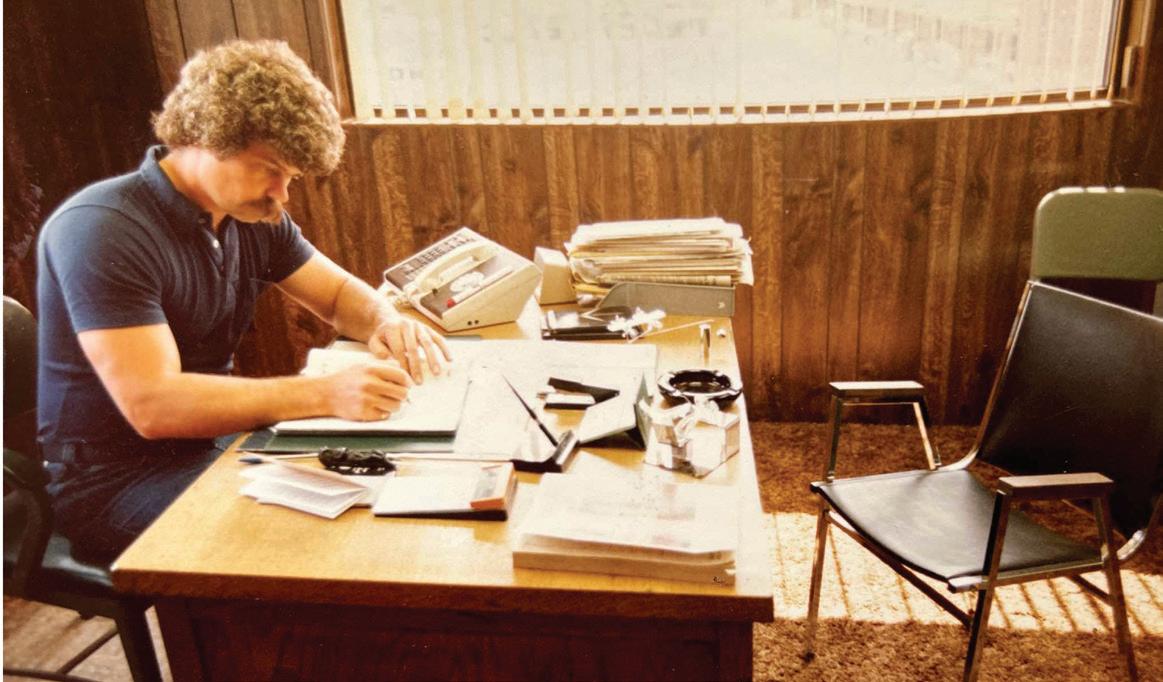
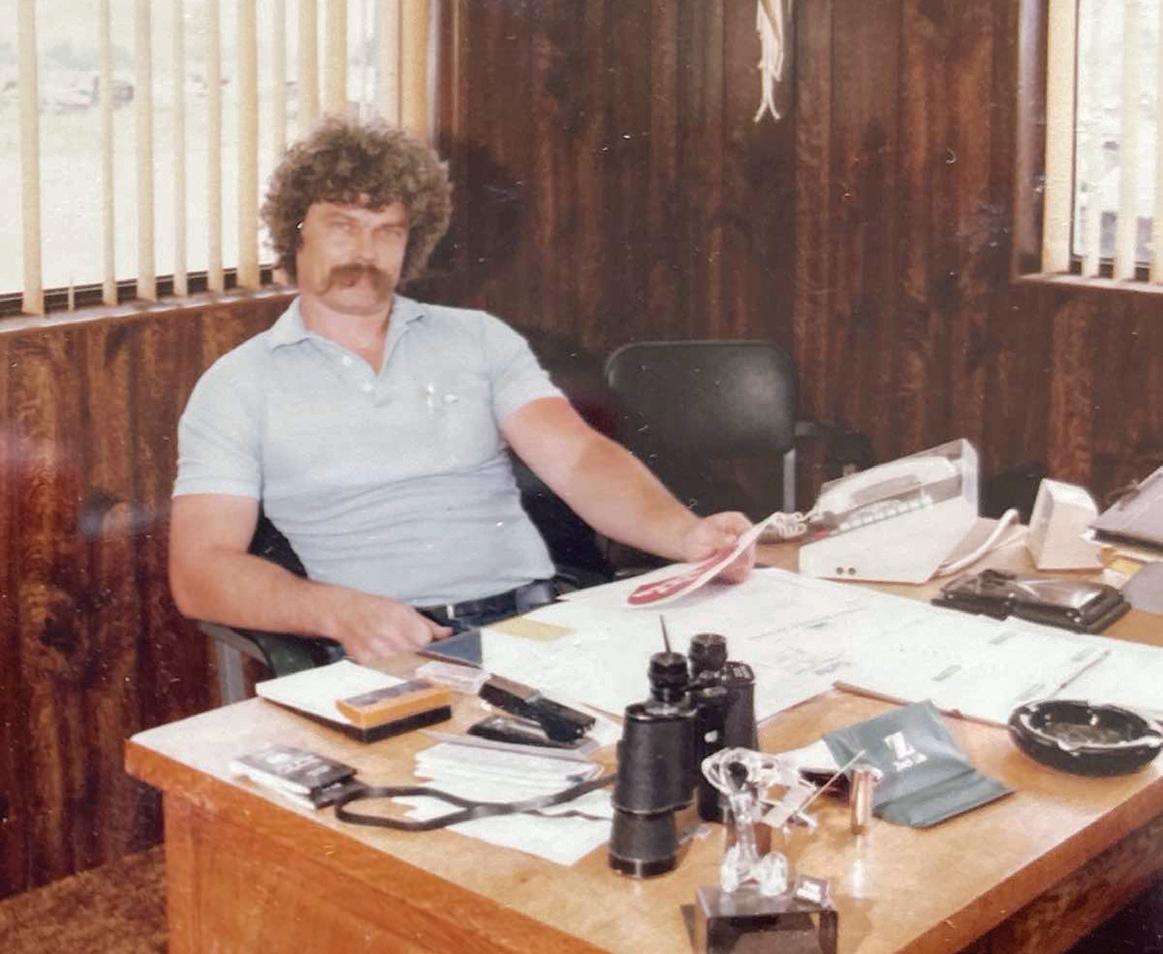
Steve Fletcher helped launch ARC in 1995 and leaves behind a proud legacy of growth, stability, and national respect. He continues to support ARC on key projects, including ensuring a smooth transition.
Steve Fletcher a contribué au lancement d'ARC en 1995 et laisse derrière lui un héritage dont il peut être fier, caractérisé par la croissance, la stabilité et le respect national. Il continue à soutenir ARC dans le cadre de projets clés, notamment en veillant à une transition en douceur.
Retirement of Steve Fletcher and appointment of new leadership position the national association for continued growth
Départ à la retraite de Steve Fletcher et nomination d'un nouveau dirigeant à la tête de l'association nationale pour une croissance continue
By/par Dalbert Livingstone Chairman, Automotive Recyclers of Canada
The year 2025 marked a period of significant change for the Automotive Recyclers of Canada.
Long-time executive director Steve Fletcher retired from day-to-day operations after helping launch the association in 1995 and guiding it through both challenging and highly active periods. Under his leadership, ARC built a strong national reputation, developed valuable programs and established a solid financial foundation for both the national body and its provincial member associations.
Fletcher continues to support ARC on key projects, including ensuring a smooth transition to new executive director Wally Dingman. Securing Dingman’s leadership was a major success for the association in 2025 and positions ARC well for the years ahead.
Dingman is no stranger to the organization, having served as ARC chairman for more than a decade. He also worked closely with Fletcher on the boards of ARC and the Ontario Automotive Recyclers Association, a collaboration that continues in their new roles.
Together, the two bring complementary strengths to the association. Dingman offers more than 30 years of experience as a working auto recycler and a firsthand understanding of industry challenges, while Fletcher contributes deep knowledge and connections across the national, continental and global auto recycling landscape. Their continued collaboration is already producing positive results.
Looking ahead, 2026 is expected to be another strong year for ARC. Dingman brings energy, passion and a fresh perspective on issues that matter most to auto recyclers. The ARC board has been reinvigorated and is committed to supporting the association’s evolving direction, with a focus on practical programs and information that benefit recyclers across the country.
Members will begin to see these initiatives take shape over the coming years, including within the pages of Canadian Auto Recycler magazine.
ARC also extends its appreciation to Media Matters, publisher of Canadian Auto Recycler, for more than 20 years of industry coverage. The publication’s in-depth and personal reporting on professional auto recycling has been an important resource for the sector. CAR
Looking ahead, 2026 is expected to be another strong year for ARC. Wally Dingman brings energy, passion and a fresh perspective on issues that matter most to auto recyclers.
Pour l'avenir, 2026 devrait être une autre année fructueuse pour l'ARC. Wally Dingman apporte son énergie, sa passion et un regard neuf sur les questions qui importent le plus aux recycleurs automobiles.
L'année 2025 a marqué une période de changements importants pour l'Association des recycleurs automobiles du Canada.
Steve Fletcher, directeur général de longue date, a pris sa retraite des activités quotidiennes après avoir contribué au lancement de l'association en 1995 et l'avoir guidée à travers des périodes difficiles et très actives. Sous sa direction, l'ARC s'est forgé une solide réputation nationale, a développé des programmes précieux et a établi une base financière solide tant pour l'organisme national que pour ses associations provinciales membres.
M. Fletcher continue de soutenir l'ARC dans des projets clés, notamment en assurant une transition en douceur vers le nouveau directeur général, Wally Dingman. Le recrutement de M. Dingman à la direction a été un succès majeur pour l'association en 2025 et place l'ARC en bonne position pour les années à venir.
M. Dingman n'est pas un inconnu pour l'organisation, puisqu'il a occupé le poste de président de l'ARC pendant plus d'une décennie. Il a également travaillé en étroite collaboration avec M. Fletcher au sein des conseils d'administration de l'ARC et de l'Ontario Automotive Recyclers Association, une collaboration qui se poursuit dans leurs nouvelles fonctions.
Ensemble, ils apportent à l'association des atouts complémentaires. M. Dingman offre plus de 30 ans d'expérience en tant que recycleur automobile et une compréhension directe des défis du secteur, tandis que M. Fletcher apporte une connaissance approfondie et des relations dans le domaine du recyclage automobile à l'échelle nationale, continentale et mondiale. Leur collaboration continue produit déjà des résultats positifs.
À l'horizon 2026, l'ARC devrait connaître une nouvelle année fructueuse. M. Dingman apporte son énergie, sa passion et un regard neuf sur les questions qui importent le plus aux recycleurs automobiles. Le conseil d'administration de l'ARC a été redynamisé et s'engage à soutenir l'orientation évolutive de l'association, en mettant l'accent sur des programmes pratiques et des informations qui profitent aux recycleurs de tout le pays.
Les membres commenceront à voir ces initiatives prendre forme au cours des prochaines années, notamment dans les pages du magazine Canadian Auto Recycler
L'ARC tient également à remercier Media Matters, l'éditeur de Canadian Auto Recycler, pour ses plus de 20 ans de couverture de l'industrie. Les reportages approfondis et personnalisés de cette publication sur le recyclage automobile professionnel ont constitué une ressource importante pour le secteur. CAR
Dalbert Livingstone, ARC Chairman | Président de l’ARC
UPDATES FROM REGIONAL RECYCLING ASSOCIATIONS ACROSS CANADA
ALBERTA AUTOMOTIVE RECYCLERS AND DISMANTLERS ASSOCIATION (AARDA)
SUCCÈS MESURÉ
MEASURED SUCCESS
What AARDA’s 2025 Convention Revealed
2025 was a year of overall success, one of progression within industry challenges common to every jurisdiction — and those unique to Alberta. Effectively reflecting both ends of that success/failure spectrum, and everything that lies between them, was the AARDA annual general meeting and convention in Red Deer at the end of September.
Measured solely against the AARDA 2024 event, our 2025 convention was a resounding success — an admittedly low bar to clear. Solid sponsorship support at multiple levels, from consistent relationships, renewed past ones and some brand new ones. A great slate of presentations ranging from insurance options in the province, EV battery disposal solutions as well as consolidated freight and payment processing options. ARC executive director Wally Dingman made the keynote address and, in what was a first in a long time, AMVIC CEO Malcolm Knox addressed attendees. A fun Saturday evening of auction and fund-raising around tappet cover car races topped off the event and raised over $3,600 towards the Jack Cohen Educational Fund.
What was glaringly absent was membership. This has been a growing challenge for what turns out to be a few years now for us — a growing malaise among some members who have gotten to the point of wondering what membership in AARDA does for them.
This feeds into the polarization motif of challenges Alberta recyclers face: moving towards “more than a junkyard” perceptions while aiming for everimproving environmental standards — recruiting steady, effective labour and establishing a consistent, reputable business presence — all while managing a sustainable bottom line. Our membership tends to find themselves at one or the other end of both extremes on all counts. With those working their way up being the most frustrated with having to compete with unlicensed fly by night and poor faith licensed operators who seem everywhere, out of control and a long-term perception that nothing is being done to change things — by AARDA or anyone else.
The work ahead of us in 2026 has defined itself as flowing from the AGM and as summarized eloquently by Wally in a message that acknowledges the challenges felt everywhere, not just in Alberta, but emphasizes the opportunities in front of us to address them for ourselves.
The message for 2026 is a communication of challenge to members. Association membership advantages are what they have always been — waived membership fees for auction houses, discounted rates for associate member services, ARC and the vehicle programs. The sum of which easily outweighs dues — and as Wally points out, any dollar unspent up front is two you don’t have to make up in sales.
More importantly — if less immediately tangible — are the initiatives being undertaken by the association as well as industry partners, to address the challenges — including challenges to ourselves to be able to meet the future, because it’s coming. 2026 — exciting, invigorating times.
Ce que la convention 2025 de l’AARDA a révélé
L’année 2025 a été une année globalement couronnée de succès, marquée par des progrès dans le cadre des défis industriels communs à toutes les juridictions, ainsi que ceux propres à l’Alberta. L’assemblée générale annuelle et la convention de l’AARDA, qui se sont tenues à Red Deer à la fin du mois de septembre, ont reflété de manière efficace les deux extrémités du spectre succès/échec, ainsi que tout ce qui se trouve entre les deux.
Si l’on se base uniquement sur l’événement AARDA 2024, notre congrès 2025 a été un succès retentissant, même si la barre était certes placée assez bas. Nous avons bénéficié d’un solide soutien de sponsors à plusieurs niveaux, grâce à des relations durables, à des partenariats renouvelés et à de nouvelles collaborations. Une excellente série de présentations portant sur les options d’assurance dans la province, les solutions d’élimination des batteries de véhicules électriques ainsi que les options consolidées de traitement du fret et des paiements. Le directeur général de l’ARC, Wally Dingman, a prononcé le discours d’ouverture et, pour la première fois depuis longtemps, le PDG de l’AMVIC, Malcolm Knox, s’est adressé aux participants. Une soirée divertissante le samedi, avec une vente aux enchères et une collecte de fonds autour de courses de voitures à couvercles de soupapes, a clôturé l’événement et permis de récolter plus de 3 600 dollars pour le Jack Cohen Educational Fund.
Ce qui a été flagrant, c’est l’absence de membres. Cela fait maintenant plusieurs années que nous sommes confrontés à un défi croissant : un malaise grandissant parmi certains membres qui en sont arrivés à se demander ce que leur apporte leur adhésion à l’AARDA.
Cela alimente le thème de la polarisation des défis auxquels sont confrontés les recycleurs de l’Alberta: évoluer vers une perception « au-delà de la casse automobile » tout en visant des normes environnementales toujours plus strictes, recruter une main-d’œuvre stable et efficace et établir une présence commerciale cohérente et réputée, tout en gérant des résultats financiers durables. Nos membres ont tendance à se situer à l’une ou l’autre extrémité de ces deux pôles sur tous les plans. Ceux qui gravissent les échelons sont les plus frustrés de devoir rivaliser avec des opérateurs sans licence, peu scrupuleux et peu fiables, qui semblent omniprésents, incontrôlables, et avec le sentiment persistant que rien n’est fait pour changer les choses, ni par l’AARDA ni par quiconque.
Le travail qui nous attend en 2026 a été défini lors de l’assemblée générale annuelle et résumé avec éloquence par Wally dans un message qui reconnaît les défis rencontrés partout, et pas seulement en Alberta, mais qui souligne les opportunités qui s’offrent à nous pour les relever par nous-mêmes.
Le message pour 2026 est un appel à relever le défi lancé aux membres. Les avantages de l’adhésion à l’association sont les mêmes que toujours : exonération des frais d’adhésion pour les maisons de vente aux enchères, tarifs réduits pour les services aux membres associés, ARC et programmes automobiles. La somme de ces avantages dépasse largement le montant des cotisations et, comme le souligne Wally, chaque dollar non dépensé au départ est un dollar que vous n’avez pas à compenser par des ventes. Plus importantes encore, même si elles sont moins tangibles dans l’immédiat, sont les initiatives prises par l’association et ses partenaires industriels pour relever les défis, y compris ceux qui nous concernent directement afin d’être en mesure de faire face à l’avenir, car il approche à grands pas. 2026 : une période passionnante et stimulante.
MISES À JOUR DES ASSOCIATIONS
RÉGIONALES DE RECYCLAGE À TRAVERS LE CANADA
THE AUTOMOTIVE RECYCLERS OF MANITOBA (ARM)
LE LEADERSHIP CONTINU D’ARM AU MANITOBA
Représentation, conformité et stabilité dans un secteur en pleine mutation
ARM’S CONTINUED LEADERSHIP IN MANITOBA
Representation, Compliance and Stability in a Changing Industry
The Automotive Recyclers of Manitoba (ARM) continues to play an active role across several key industry and stakeholder platforms, ensuring our members remain informed, represented, and aligned with evolving regulatory and market conditions.
ARM maintains its presence on the board of the Motor Vehicle Industry of Manitoba (MVIM), where we contribute directly to the broader automotive sector. Our involvement includes supporting MVIM scholarship programs, participating on the selection committee and taking part in the annual awards night banquet. These initiatives help promote industry education, recognize excellence and strengthen relationships across the motor vehicle sector in Manitoba.
As the vehicle landscape continues to evolve, ARM’s executive remains engaged with the ZEV Council of Manitoba. Participation at this level allows us to stay informed on developments related to zero-emission vehicles and, importantly, to share practical insights on effective and responsible electric vehicle recycling. This engagement ensures ARM members are not only aware of emerging trends but are also positioned to adapt to the growing presence of EVs in the marketplace.
On the compliance front, ARM members continue to demonstrate a strong commitment to environmental and operational standards. All ARM members in Manitoba have successfully completed their CAREC audits, with results reflecting above-average scores. This reinforces the professionalism of our membership and the consistent practices already in place across Manitoba’s auto recycling sector.
From a market perspective, scrap metal pricing has remained relatively stable, despite ongoing concerns related to tariffs and broader economic uncertainty. While external pressures continue to influence the industry, current conditions suggest a level of short-term stability.
Finally, ARM’s membership remains steady, with 10 Full Members and 2 Associate Members. This consistency reflects a solid and engaged membership base as we continue to navigate regulatory changes, market dynamics, and the transition toward new vehicle technologies.
ARM will continue to advocate on behalf of its members, participate in key industry forums, and support initiatives that strengthen the automotive recycling industry in Manitoba.
L’Automotive Recyclers of Manitoba (ARM) continue de jouer un rôle actif au sein de plusieurs plateformes clés du secteur et des parties prenantes, en veillant à ce que nos membres restent informés, représentés et en phase avec l’évolution de la réglementation et des conditions du marché.
L’ARM maintient sa présence au conseil d’administration de l’Industrie automobile du Manitoba (MVIM), où nous contribuons directement au secteur automobile dans son ensemble. Notre implication comprend le soutien aux programmes de bourses d’études de la MVIM, la participation au comité de sélection et la participation au banquet annuel de remise des prix. Ces initiatives contribuent à promouvoir la formation dans le secteur, à reconnaître l’excellence et à renforcer les relations au sein du secteur automobile au Manitoba.
Alors que le paysage automobile continue d’évoluer, la direction de l’ARM reste engagée auprès du ZEV Council of Manitoba. Cette participation nous permet de rester informés des développements liés aux véhicules zéro émission et, surtout, de partager des connaissances pratiques sur le recyclage efficace et responsable des véhicules électriques. Cet engagement garantit que les membres de l’ARM sont non seulement conscients des nouvelles tendances, mais aussi en mesure de s’adapter à la présence croissante des véhicules électriques sur le marché.
En matière de conformité, les membres de l’ARM continuent de faire preuve d’un engagement fort envers les normes environnementales et opérationnelles. Tous les membres de l’ARM au Manitoba ont passé avec succès leurs audits CAREC, avec des résultats supérieurs à la moyenne. Cela renforce le professionnalisme de nos membres et la cohérence des pratiques déjà en place dans le secteur du recyclage automobile au Manitoba.
Du point de vue du marché, le prix de la ferraille est resté relativement stable, malgré les préoccupations persistantes liées aux droits de douane et à l’incertitude économique générale. Si des pressions externes continuent d’influencer le secteur, les conditions actuelles laissent entrevoir une certaine stabilité à court terme.
Enfin, le nombre de membres de l’ARM reste stable, avec 10 membres à part entière et 2 membres associés. Cette stabilité reflète une base de membres solide et engagée, alors que nous continuons à naviguer entre les changements réglementaires, la dynamique du marché et la transition vers les nouvelles technologies automobiles.
L’ARM continuera à défendre les intérêts de ses membres, à participer aux forums clés de l’industrie et à soutenir les initiatives qui renforcent l’industrie du recyclage automobile au Manitoba.
SASKATCHEWAN ASSOCIATION OF AUTOMOTIVE RECYCLERS (SARA)
saskautorecyclers.ca
SARA NAVIGATES CHANGE WITH CONFIDENCE
Proactive regulatory dialogue, strong compliance results and a new chapter in leadership
The Saskatchewan Automotive Recyclers Association continues its steady work in 2025, with a strong focus on regulatory engagement, environmental compliance and maintaining clear lines of communication with government. Over the past year, SARA has been actively engaged in ongoing discussions with the Saskatchewan Ministry of Environment, addressing issues that directly affect auto recyclers operating in the province. These conversations have centred on regulatory clarity, environmental expectations, and ensuring that compliance requirements remain practical, enforceable, and reflective of real-world recycling operations. This proactive approach has helped reinforce SARA’s role as a knowledgeable and credible voice for the industry.
SARA members continue to demonstrate a strong commitment to environmental responsibility. All member facilities have successfully completed their CAREC environmental audits, reinforcing consistent standards across the province and supporting confidence among regulators and stakeholders. 2025 also marks an important leadership transition for the association. After many years of dedicated service, Jack Smith has stepped down as president. As a founding leader of SARA, Jack played a key role in establishing the association, guiding its growth and representing Saskatchewan recyclers with integrity and common sense. His contributions have left a lasting foundation for the association moving forward.
As the industry evolves, SARA remains focused on representing its members, working constructively with the government and ensuring Saskatchewan recyclers continue to operate responsibly and professionally.
SARA ABORDE LE CHANGEMENT AVEC CONFIANCE
Dialogue réglementaire proactif, excellents résultats en matière de conformité et nouveau chapitre dans le leadership
L’Association des Recycleurs Automobiles de la Saskatchewan poursuit son travail assidu en 2025, en mettant l’accent sur la participation à la réglementation, la conformité environnementale et le maintien d’une communication claire avec le gouvernement. Au cours de l’année écoulée, la SARA a participé activement à des discussions continues avec le ministère de l’Environnement de la Saskatchewan, abordant des questions qui touchent directement les recycleurs automobiles opérant dans la province. Ces conversations ont porté sur la clarté réglementaire, les attentes environnementales et la garantie que les exigences de conformité restent pratiques, applicables et reflètent les opérations de recyclage réelles. Cette approche proactive a contribué à renforcer le rôle de la SARA en tant que porte-parole compétent et crédible de l’industrie.
Les membres de la SARA continuent de faire preuve d’un engagement fort en matière de responsabilité environnementale. Toutes les installations membres ont passé avec succès leurs audits environnementaux CAREC, renforçant ainsi la cohérence des normes dans toute la province et renforçant la confiance des régulateurs et des parties prenantes.
L’année 2025 marque également une importante transition au sein de la direction de l’association. Après de nombreuses années de service dévoué, Jack Smith a quitté ses fonctions de président. En tant que leader fondateur de la SARA, Jack a joué un rôle clé dans la création de l’association, en guidant sa croissance et en représentant les recycleurs de la Saskatchewan avec intégrité et bon sens. Ses contributions ont laissé une base durable pour l’avenir de l’association.
À mesure que l’industrie évolue, la SARA continue de se concentrer sur la représentation de ses membres, en travaillant de manière constructive avec le gouvernement et en veillant à ce que les recycleurs de la Saskatchewan continuent à opérer de manière responsable et professionnelle.
THE ASSOCIATION OF AUTO AND TRUCK PARTS RECYCLERS (ARPAC)
A YEAR OF TRANSITION AND OPPORTUNITY
Leadership change, industry collaboration and a strong outlook for ARPAC in 2026
ARPAC (the Association of Auto and Truck Parts Recyclers) has a mandate to support and assist its 68 members with the various challenges facing them in Quebec.
Over the past year, Simon Matte, who served as president and CEO of ARPAC for the past 19 years, has stepped down. ARPAC thanks him for all his hard work and dedication. This represented a significant change for our organization, and we have had to make some adjustments in order to continue fulfilling our mandate.
On September 12 and 13, we were welcomed to the beautiful region of Rouyn-Noranda for ARPAC’s annual convention. We held our 54th annual general meeting, during which many topics and issues were discussed. Several industry partners joined us for a wonderful banquet at the end of the day.
Once again this year, ARPAC will be working on various initiatives to advance automotive recycling in Quebec. We are also making an effort to stay in contact with industry associations across Canada, with the goal of continuing to improve, raising our profile and taking initiatives to address the challenges we face. We are confident that 2026 will bring promising opportunities that will help us achieve our objectives.
UNE ANNÉE DE TRANSITION ET D’OPPORTUNITÉS
Changement de direction, collaboration au sein du secteur et perspectives prometteuses pour l’ARPAC en 2026
L’ARPAC (l’association des recycleurs de pièces d’autos et de camions) a pour mission de soutenir et d’accompagner ses 68 membres dans les différents enjeux au Québec.
Dans la dernière année, M. Simon Matte, Président directeur général de l’ARPAC des dix-neuf dernières années, a tiré sa révérence. L’ARPAC le remercie pour tout le travail accompli et son dévouement. Il ne fait aucun doute que ce fut un gros changement et nous avons dû effectuer quelques ajustements pour continuer notre mandat.
Les 12 et 13 septembre dernier, nous avons été reçus dans la magnifique région de Rouyn Noranda pour le congrès annuel de l’ARPAC. Nous avons tenu notre 54ième assemblée général annuelle dont plusieurs sujets et enjeux ont été discutés. Plusieurs partenaires de l’industrie nous ont rejoint pour un superbe banquet en fin de journée.
Cette année encore l’ARPAC travaillera sur différents dossiers pour faire avancer le recyclage automobile au Québec. Nous nous efforçons aussi de garder contact avec les différentes associations de l’industrie à travers le Canada dans le but de continuer à nous améliorer, nous faire connaitre et prendre des initiatives pour travailler sur les défis que nous rencontrons. Nous sommes confiants que 2026 nous apportera de belles opportunités qui nous aiderons à atteindre nos objectifs.
ONTARIO AUTOMOTIVE RECYCLERS ASSOCIATION (OARA)
UN ÉLAN VERS L’AVANT
l’année de transition et de croissance de l’OARA
MOVING FORWARD
OARA’s year of transition and growth
2025 was a transitional year for OARA as we moved on from longtime executive director Steve Fletcher to Wally Dingman. Their history of working together has helped Wally get up to speed almost immediately and begin to generate results. The introduction of Wally to key industry stakeholders (OMVIC, UCDA, MTO, insurers, repairers, Natural Resources Canada, OEMs, salvage auctions, etc) has helped put OARA back at the table for important discussions and activities.
OARA was invited by Intact Insurance to present at 8 of their Rely Townhalls across Ontario in the fall. These were great opportunities to present the professional auto recycling story to some of Ontario’s top collision repairers. The interactions helped frame some near term activities that OARA is undertaking — updating certification, quality control protocols, data vendor best practices, VIN branding, auto theft mitigation, and enhanced communication - all designed to sell more parts profitably.
Wally has also led the resurgence in the OARA Marketing Committee and plans are underway to promote the industry, the association and the great members that make up OARA. We continually need to tell the positive story of auto recycling and share that with the world.
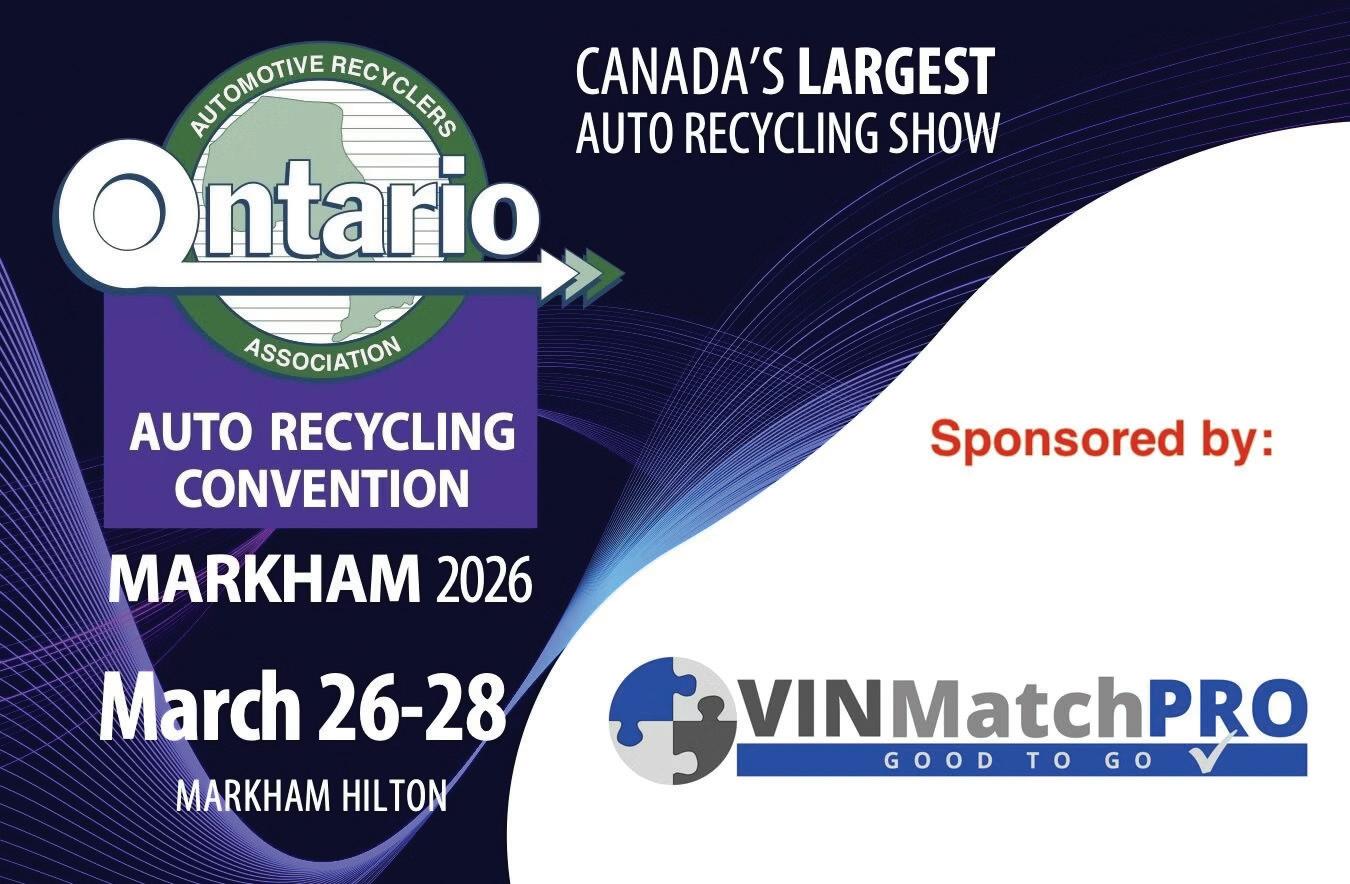
The 2025 OARA Convention was the largest ever held in Canada. Plans are well underway to make 2026 even better as we work with vendors and presenters to provide content and training for all. Plus the legendary networking - it is the place to be, March 26-28 in Markham Ontario.
2025 a été une année de transition pour l’OARA, puisque nous sommes passés de Steve Fletcher, directeur général de longue date, à Wally Dingman. Leur collaboration passée a permis à Wally de se mettre rapidement à niveau et de commencer à obtenir des résultats. La présentation de Wally aux principaux acteurs du secteur (OMVIC, UCDA, MTO, assureurs, réparateurs, Ressources naturelles Canada, fabricants d’équipements, enchères de véhicules endommagés, etc.) a permis à l’OARA de revenir à la table des discussions et des activités importantes.
L’OARA a été invitée par Intact Assurance à faire une présentation lors de huit de ses réunions publiques organisées à travers l’Ontario à l’automne. Ces réunions ont été d’excellentes occasions de présenter le recyclage automobile professionnel à certains des meilleurs réparateurs de carrosserie automobile de l’Ontario. Les interactions ont permis de définir certaines des activités à court terme que l’OARA entreprend actuellement: mises à jour des certifications, protocoles de contrôle de la qualité, meilleures pratiques pour les fournisseurs de données, marquage des numéros d’identification des véhicules, lutte contre le vol de voitures et amélioration de la communication, le tout dans le but de vendre plus de pièces de manière rentable.
Wally a également dirigé la relance du comité de marketing de l’OARA, et des plans sont en cours pour promouvoir l’industrie, l’association et les membres exceptionnels qui composent l’OARA. Nous devons continuellement raconter l’histoire positive du recyclage automobile et la partager avec le monde entier.
La conférence 2025 de l’OARA a été la plus importante jamais organisée au Canada. Les plans sont bien avancés pour rendre l’édition 2026 encore meilleure, car nous travaillons avec les fournisseurs et les présentateurs afin de fournir du contenu et des formations pour tous. Sans oublier le réseautage légendaire. Rendez-vous du 26 au 28 mars à Markham, en Ontario!
ASSOCIATION OF ATLANTIC CANADA (ARAAC)
FAIRE AVANCER LES RECYCLEURS DE L’ATLANTIQUE
Table ronde internationale sur le recyclage automobile
MOVING ATLANTIC RECYCLERS FORWARD
The International Roundtable on Auto Recycling
Small but mighty perfectly sums up ARAAC and its meetings. Holding steady at 23 direct members and nine associate members, ARAAC continues to deliver an engaging and informative annual event. This year’s convention, held in Truro, Nova Scotia, featured several standout moments, including a presentation by ARC’s Wally Dingman and Steve Fletcher, who shared updates on 12 national projects ranging from accreditation and the International Roundtable on Auto Recycling (IRT) to the relaunch of the vehicle acquisition program.
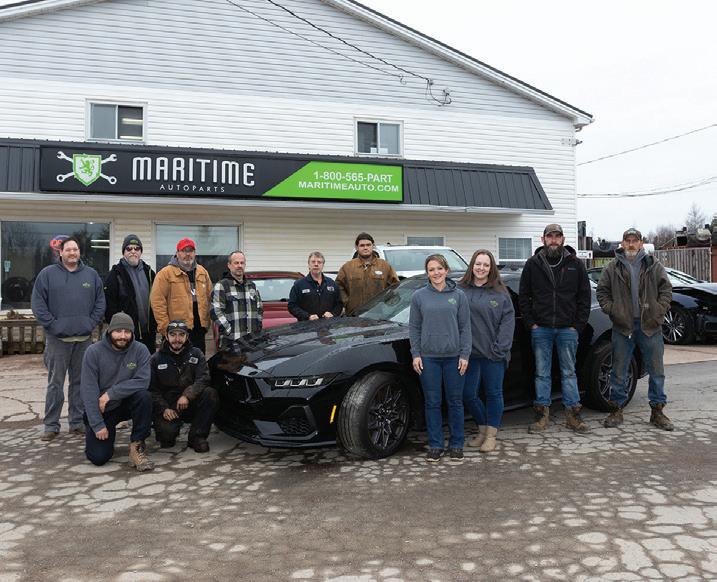
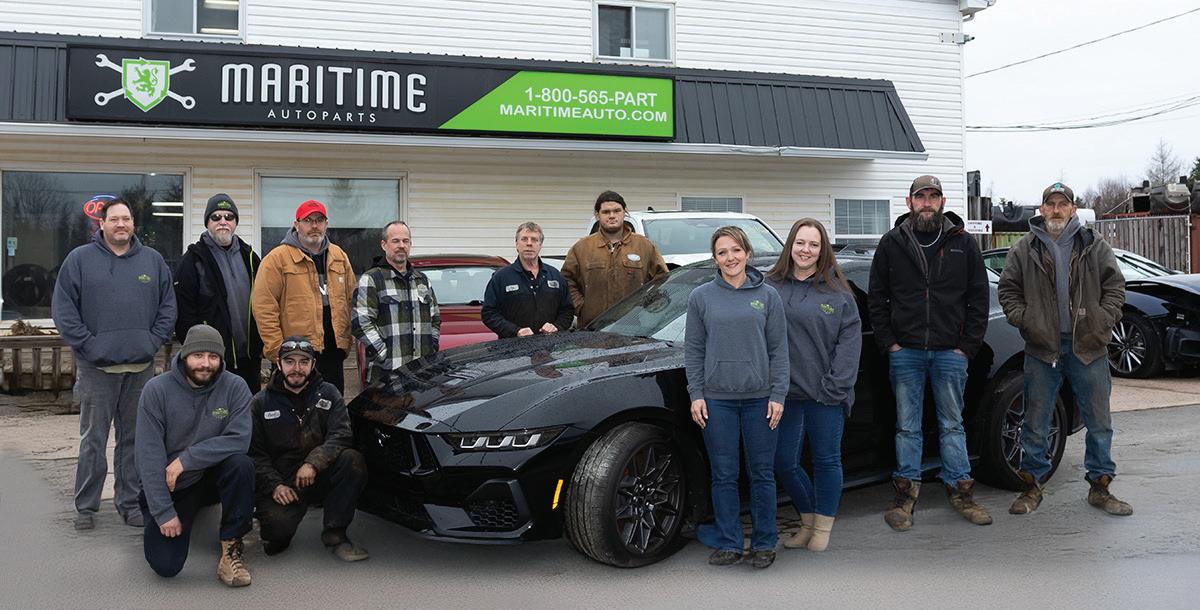
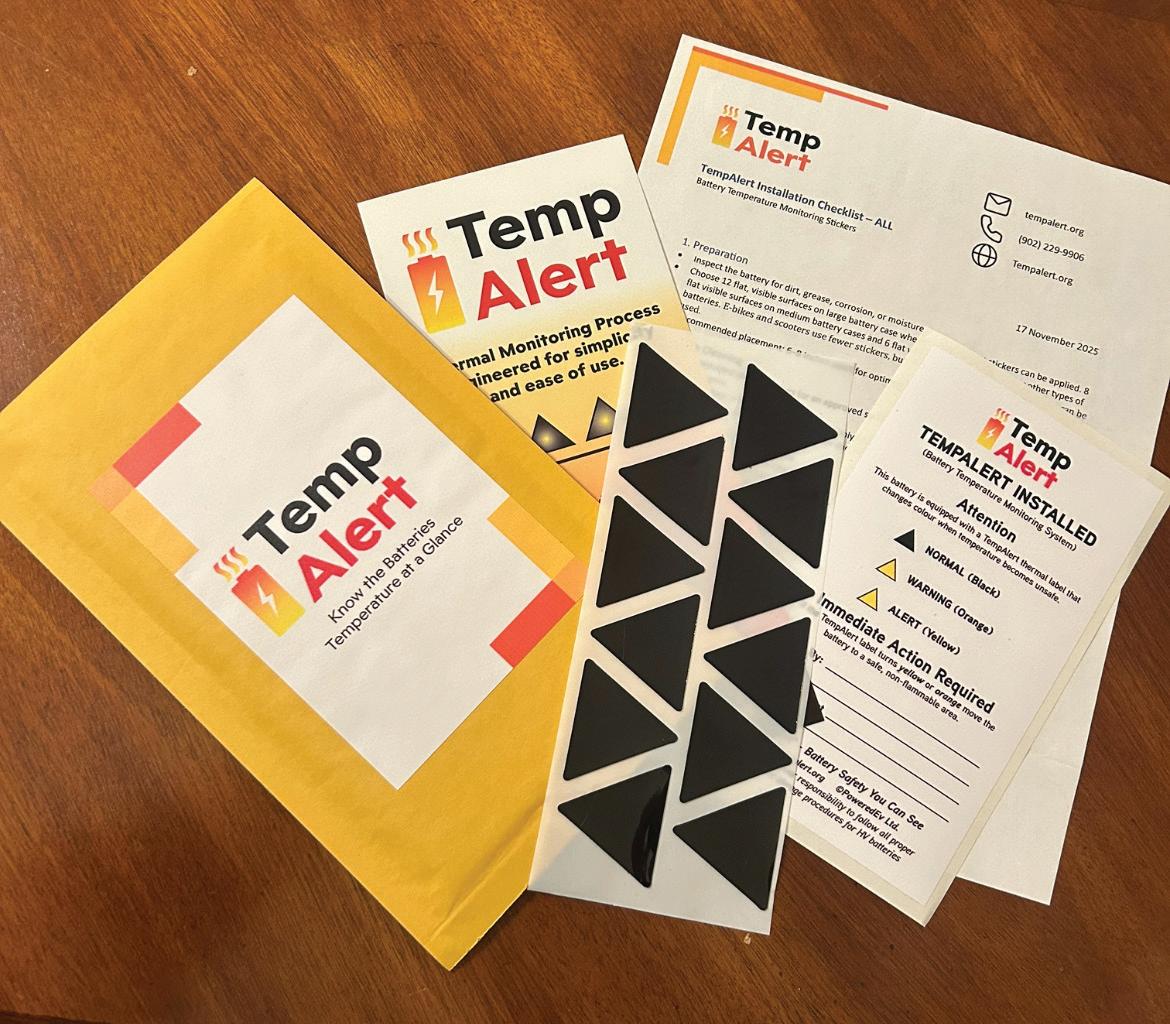
Attendees also took part in a facility tour at Maritime Auto Parts, offering valuable peer-to-peer learning, and heard from David Giles of PoweredEV Training & Consulting, who discussed EV safety and introduced the company’s new EV battery safety product, TempAlert.
Looking ahead, next year’s event is planned for August in St. John’s, Newfoundland, and will include tours of A1 Automotive, a top-tier auto recycler, and Newco Metal, the island’s only auto shredder.
Petit mais puissant : voilà qui résume parfaitement l’ARAAC et ses réunions. Avec 23 membres directs et neuf membres associés, l’ARAAC continue d’organiser chaque année un événement captivant et instructif. Le congrès de cette année, qui s’est tenu à Truro, en Nouvelle-Écosse, a été marqué par plusieurs moments forts, notamment une présentation de Wally Dingman et Steve Fletcher, de l’ARC, qui ont fait le point sur 12 projets nationaux allant de l’accréditation et de la Table ronde internationale sur le recyclage automobile (IRT) à la relance du programme d’acquisition de véhicules.
Les participants ont également pris part à une visite des installations de Maritime Auto Parts, qui leur a permis d’apprendre de leurs pairs, et ont écouté David Giles, de PoweredEV Training & Consulting, qui a discuté de la sécurité des véhicules électriques et présenté le nouveau produit de sécurité pour batteries de véhicules électriques de l’entreprise, TempAlert.
L’événement de l’année prochaine est prévu en août à St. John’s, à TerreNeuve, et comprendra des visites de A1 Automotive, un recycleur automobile de premier plan, et de Newco Metal, le seul broyeur automobile de l’île.
A Billion Dollar View into the Canadian Collision Parts Marketplace INTEGRATED CAR PART PRO (IPRO) CANADA
By Jeff Schroder, CEO of Car-Part.com
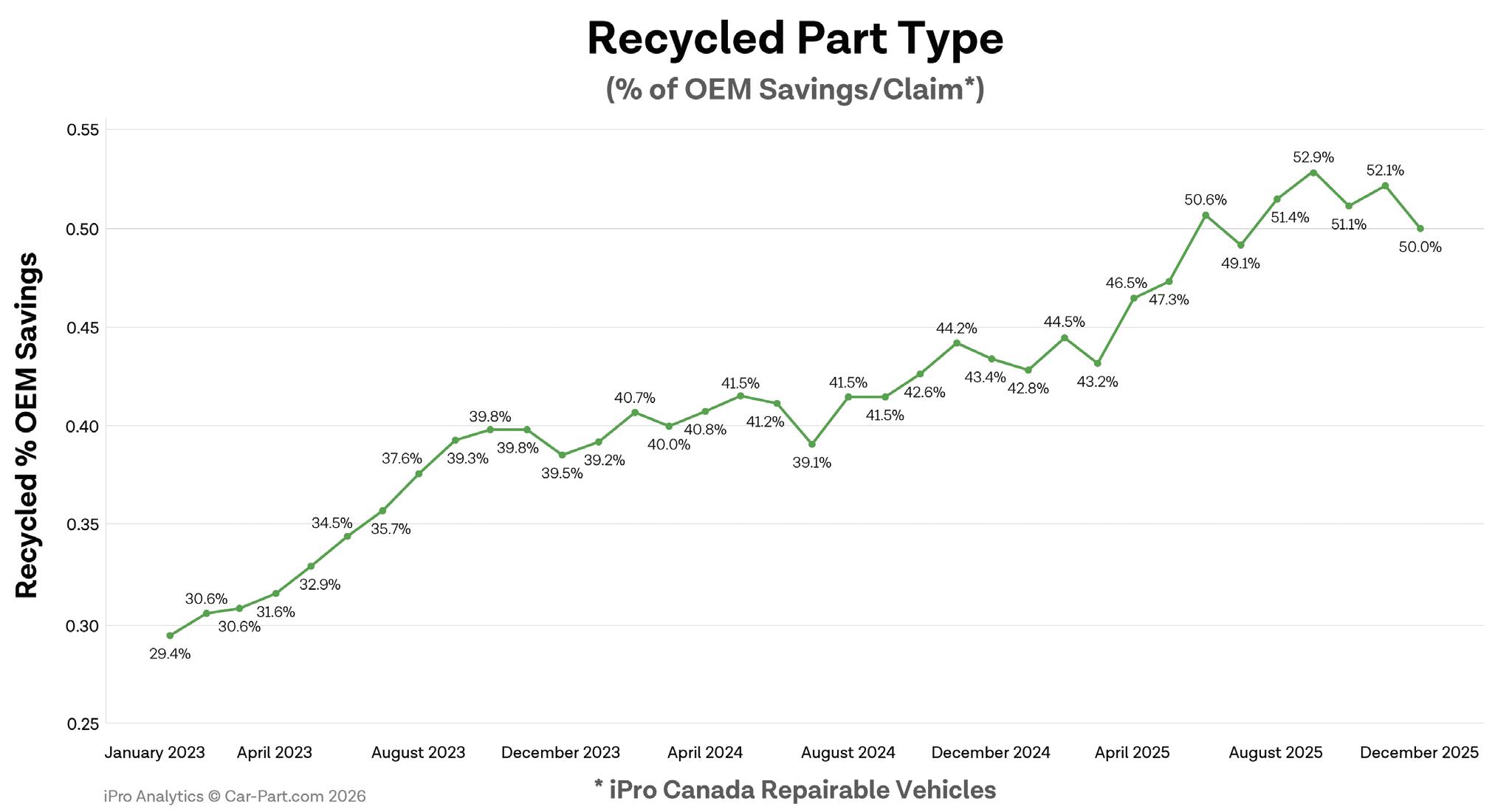
In 2025, Integrated Car Part Pro (iPro) Canada processed more than a billion dollars in parts from repairable estimates! And when we look at the data from those estimates, they reveal a significant shift in the collision repair industry: recycled parts utilization is increasing, and recycled parts are now delivering the most savings of any part type for all estimates run through iPro (regardless of whether the parts were sourced from iPro or from within the estimating system).
The percentage of savings per claim off the OEM price is a meaningful KPI to measure the impact of each part type (because all parts are initially added to the estimate as OEM parts with OEM prices). iPro Analytics measures the percentage of savings off the OEM price for all parts that are added to the estimate (iPro parts and/or any parts sourced in the estimating system, earlier in the workflow). (iPro is typically launched after parts are sourced in the estimating system.)
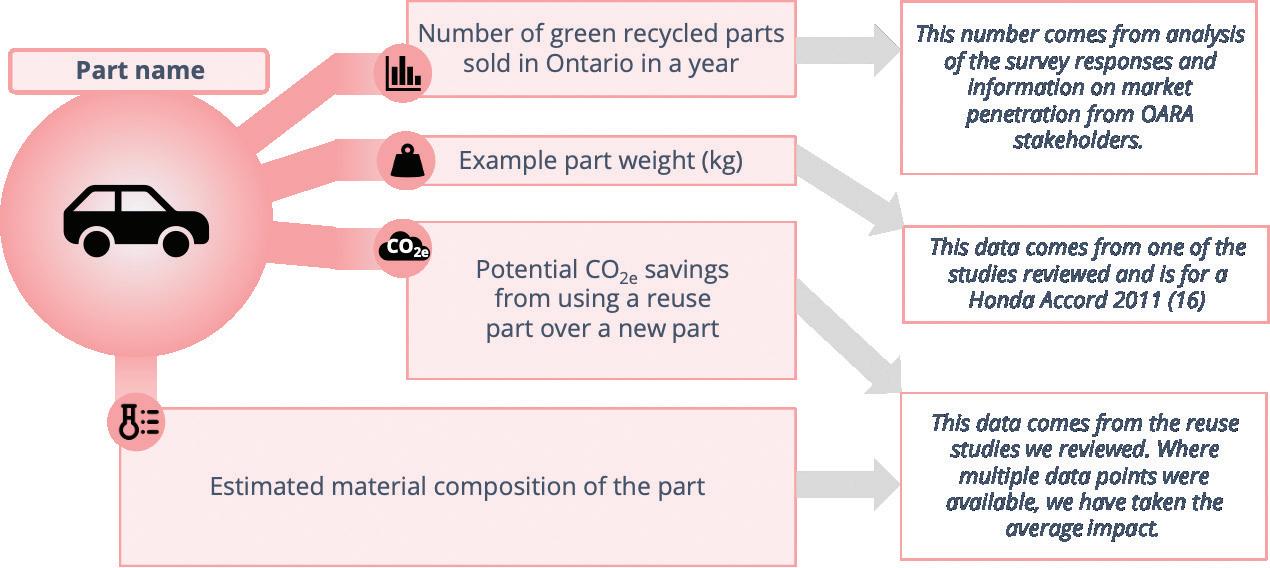
iPro is an alternate parts marketplace by CarPart.com. It’s integrated directly into the Mitchell Cloud Estimating (MCE) Parts Portal. Estimators use iPro to source alternate parts, and iPro easily writes them back to the estimate while keeping the correct labor times intact. iPro addresses the key challenges that have previously hindered recycled parts utilization. iPro’s patented supply chain and real-time verification technologies, plus Car-Part Interchange-based assembly technology, result in accurate sourcing of quality recycled assemblies. Recycled assemblies such as doors, tailgates, and bumpers can save significant money when compared to buying the individual components. iPro connects the individual components (listed on an estimate), to the costeffective assemblies (available from recyclers through iPro). iPro is also used to accurately source recycled, aftermarket, OEM Discount, and
remanufactured individual components.
With iPro, we’ve been systematically addressing historic pain points associated with buying recycled parts. You can see the impact on the Recycled Part Type (% of OEM Savings/Claim) chart (which is based on marketplace iPro Analytics data)! CarPart manages its supply chain’s performance: if parts or service issues arise, we work with the parts suppliers and estimators to resolve conflicts (and, if necessary, remove unsatisfactory suppliers from the iPro marketplace). Car-Part’s certifications highlight quality sellers, and our enhanced supply chain technology provides the largest parts supply chain in Canada. We work continually with recycled parts sellers to enhance and maintain parts data.
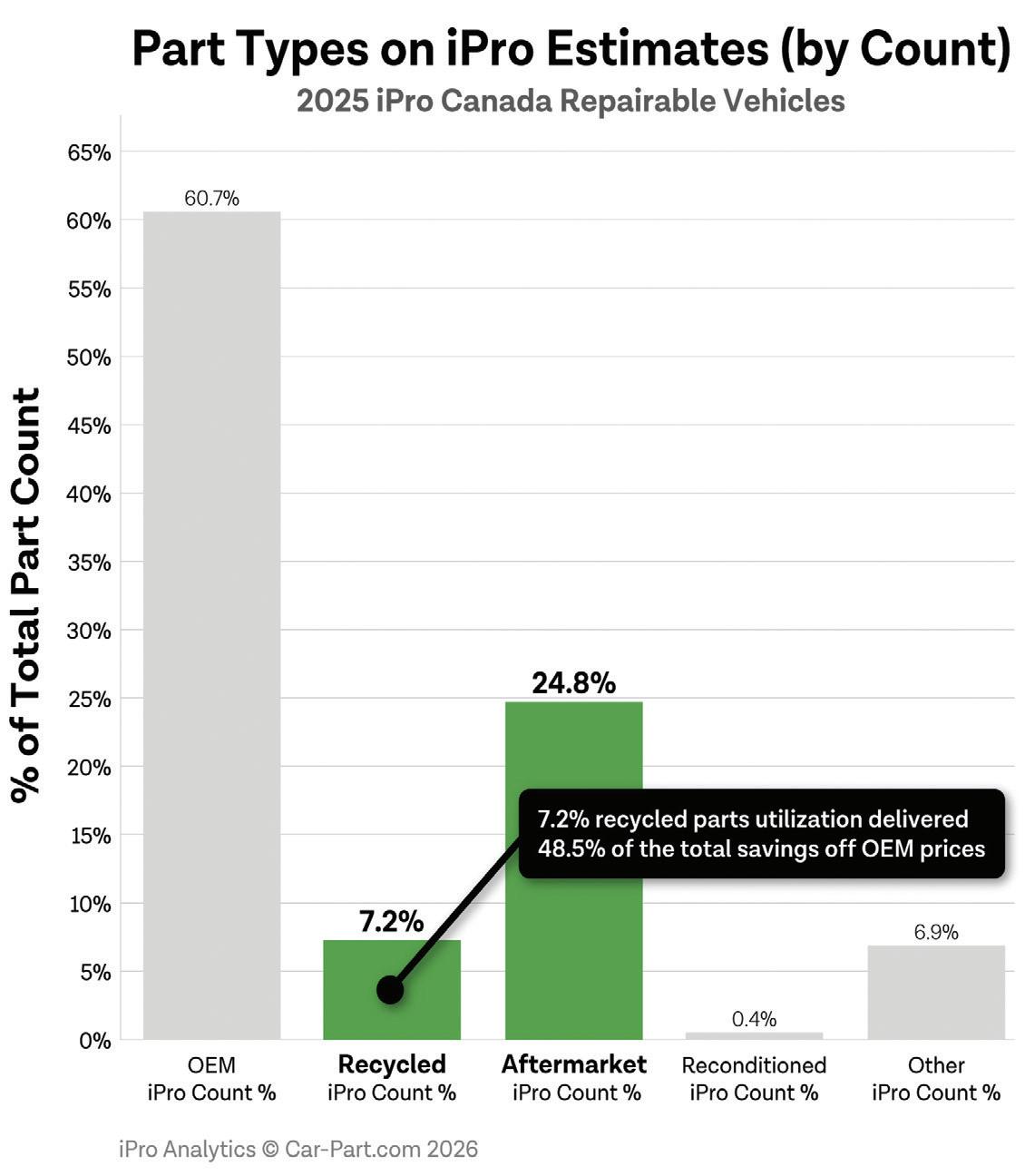
Recycled parts are having an outsized impact in the iPro marketplace, as a result! In the 2025 Canada iPro market, the estimates averaged 7.2% recycled parts utilization (when writing back to the estimating system).
And those 7.2% recycled parts delivered 48.5% of the total savings off OEM prices, more than any other part type! For comparison, aftermarket parts contributed 41.8% of the savings, while consisting of nearly one quarter of the parts on the estimates. It doesn’t take much - even a modest increase in recycled parts utilization meaningfully moves the needle on overall collision severity.
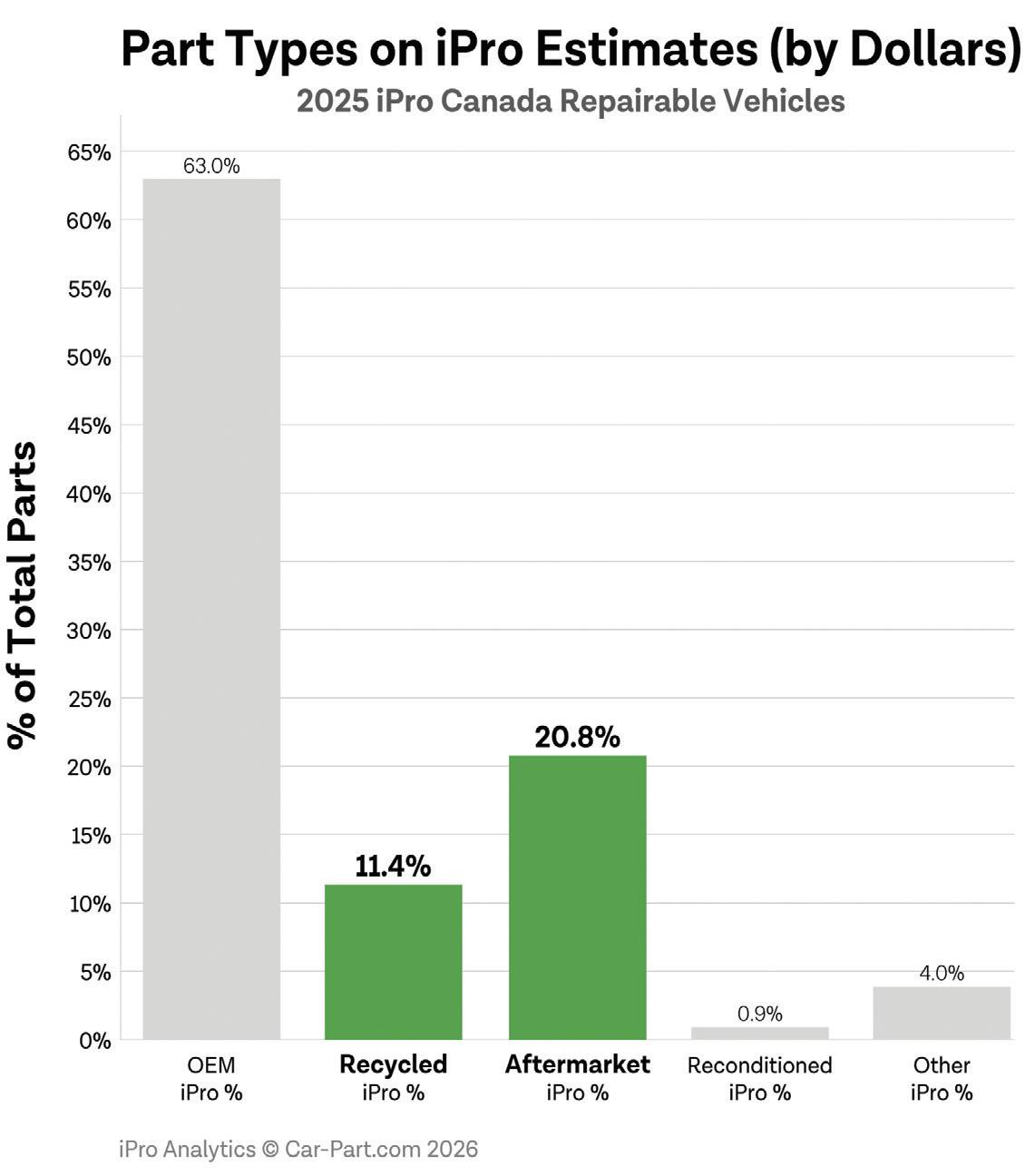
In Canada, major insurance carriers are taking notice of the substantial impact of recycled parts, and they’re increasing their utilization. iPro’s 11.4% average recycled part dollars is above the industry average, and 4 Canadian insurance companies are achieving more than 16% recycled part dollars in iPro. In 2025, the top 10 iPro Canadian insurance companies are all achieving more than 11% iPro recycled part dollars, which is higher than the average percentage achieved in US Estimating Systems (2024). (The 2025 US estimating system recycled parts dollar percentages were not published at the time this article was written.)
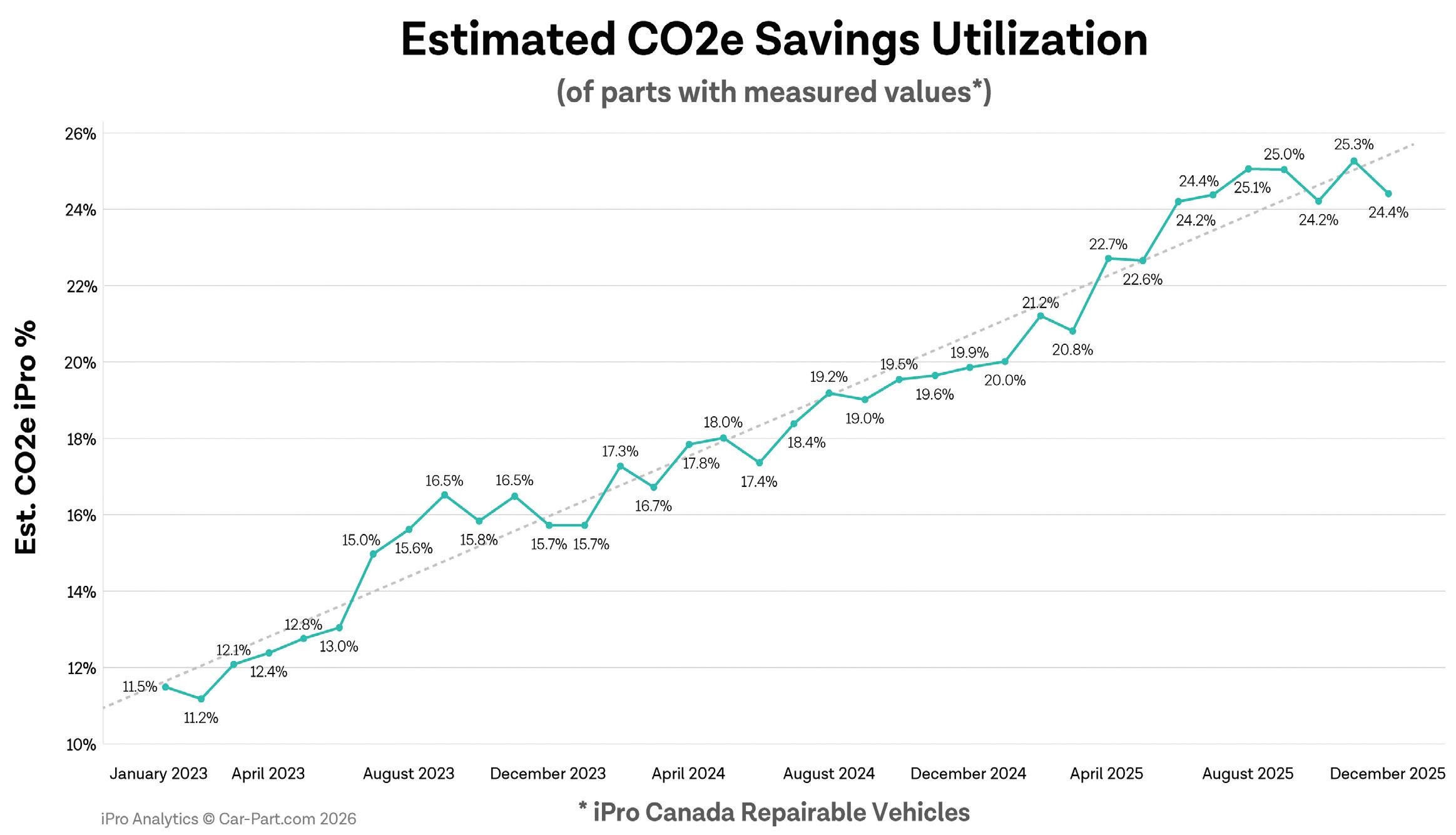
Cost savings represent one part of the value proposition of recycled parts, but the environmental impact of recycled parts is also significant. As the recycled parts percentage has increased in iPro, so have the corresponding CO2e savings. For the most popular recycled parts, Car-Part obtains estimated CO2e savings information from the Ontario Automotive Recyclers Association (OARA) and enhances it.
We can see how much of the estimates’ possible CO2e savings are actually captured (by selecting recycled parts in iPro) in the Estimated CO2e Savings Utilization graph. We see that the impact has more than doubled in iPro in the last 3 years!
The data shows an amazing story: recycled parts constitute a small percentage of estimate parts, but provide the most savings per claim. As recycled parts become easier to source and confidence grows, their use is increasing and the estimate savings are increasing.
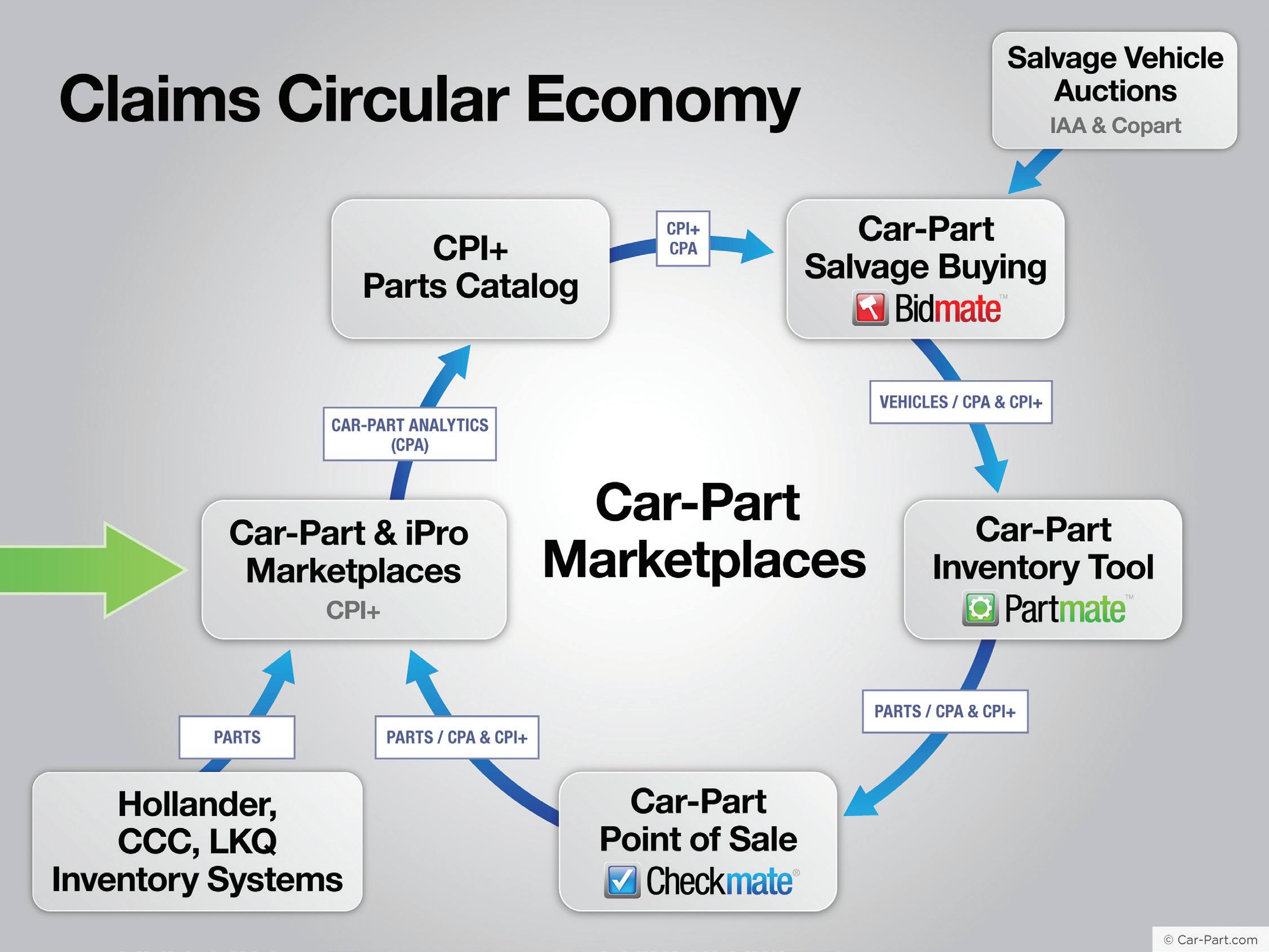
As iPro part sourcing technology has been able to “bridge the gaps” in sourcing recycled parts, recyclers have also increased their parts supplies, quality, services, and supply chain logistics to meet market demand. The claims ecosystem is a circular economy itself, and the increased demand for recycled parts in the collision repair parts market increases the salvage values for those vehicles supplying the recycled parts. The Claims Circular
Sources:
Economy diagram shows this circular economy as currently implemented in Canada.
The data shows an amazing story: recycled parts constitute a small percentage of estimate parts, but provide the most savings per claim. As recycled parts become easier to source and confidence grows, their use is increasing and the estimate savings are increasing. Recycled parts are green for the wallet and green for the environment!
Recycled parts usage and estimated CO2e savings data from these sources:
• Integrated Car Part Pro Analytics (for Car-Part.com) v6.2 (January 1, 2023 - December 31, 2025)
1980 Highland Pike, Ft Wright, KY 41017 250-984-1444
• Oakdene Hollins and Ontario Automotive Recyclers Association (September 2023). THE ENVIRONMENTAL BENEFITS OF GREEN RECYCLED PARTS IN ONTARIO. https://oara.com/wp-content/uploads/2024/01/OARA-Final-GreenRecycledParts-report.pdf https://pro.car-part.com/integration.html
POWERING PERFORMANCE, DRIVING INNOVATION
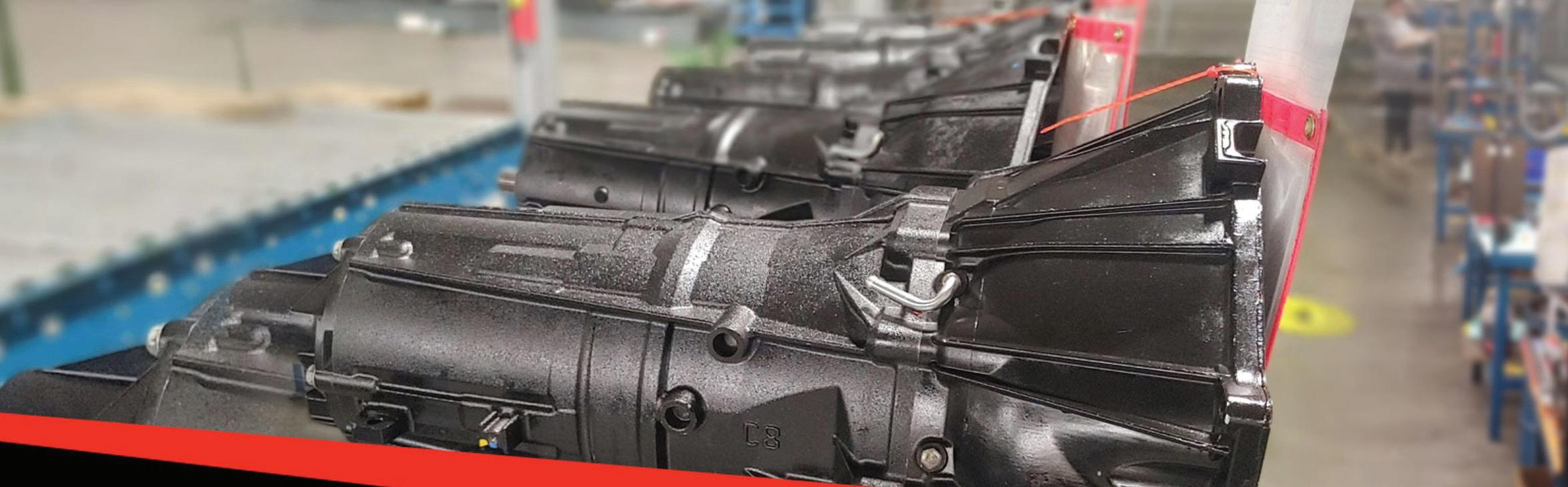
DTI Powertrain (formerly DYNOTEC Industries) is your trusted partner in advanced powertrain solutions. We deliver high-performance, efficient, and sustainable systems for automotive, industrial and commercial applications. With cutting-edge technology and expert engineering, we help drive the future of mobility. When you need powertrain optimization, our team is dedicated to enhancing performance and maximizing reliability.
With a focus on American-made automatic transmissions, we deliver precision-engineered solutions backed by a comprehensive 3-year unlimited mileage warranty. At DTI Powertrain, we are dedicated to keeping vehicles on the road with reliable, high-performance transmissions.
>> Over 35 years of expertise in transmission remanufacturing, specializing in 6-speed, 8-speed, and 10-speed automatic transmissions.
>> Mission – To provide the highest-quality remanufactured transmissions through cutting-edge technology, meticulous quality control and exceptional customer service. Let’s Power Your Success.
DTI POWERTRAIN ANNOUNCES
Over the past three years, DTI Powertrain has experienced significant growth under expanded ownership. This growth has been supported by investments in operational efficiency, production capacity and quality control to meet sustained demand across the aftermarket.
DTI Powertrain, a U.S. based powertrain remanufacturing company specializing in automatic transmissions, today announced continued growth, expanded production capacity and plans to enter the Canadian market. Founded in 2007, the company has grown from a small startup into a nationwide supplier serving automotive, industrial and commercial aftermarket customers.
Over the past three years, DTI Powertrain has experienced significant growth under expanded ownership. This growth has been supported by investments in operational efficiency, production capacity and quality control to meet sustained demand across the aftermarket.
DTI Powertrain operates multiple locations in the United States, including manufacturing facilities in Minnesota and Georgia. As part of its continued expansion, the company is preparing
to move its Minnesota operations under one roof into a 136,000-square-foot production facility, significantly increasing remanufacturing capacity and supporting future growth initiatives.
The company specializes in the precision remanufacturing of six-speed, eight-speed and 10-speed automatic transmissions. Each transmission is built using standardized remanufacturing processes designed to deliver consistent performance, durability and reliability. All units are backed by a written warranty.
The company’s planned expansion into Canada will extend its transmission lineup and support services to recycling and aftermarket professionals nationwide. This expansion is intended to provide Canadian operators with additional sourcing options for drivetrain components backed by long-term warranty coverage and technical expertise.
Industry Event Highlights Faits marquants de l'événement
Strengthening Our National
Voice
Through
Collaboration and Shared Experience
Renforcer notre voix nationale grâce à la collaboration et au partage d'expériences
TBy/par Wally Dingman, executive director / directeur général – Automotive Recyclers of Canada (ARC)
he past several months have been marked by valuable conversations, strong regional engagement, and a growing sense of alignment across Canada and the United States. As recyclers continue to navigate evolving regulatory, market, and environmental pressures, these meetings have reinforced a simple truth: our progress depends on collaboration.
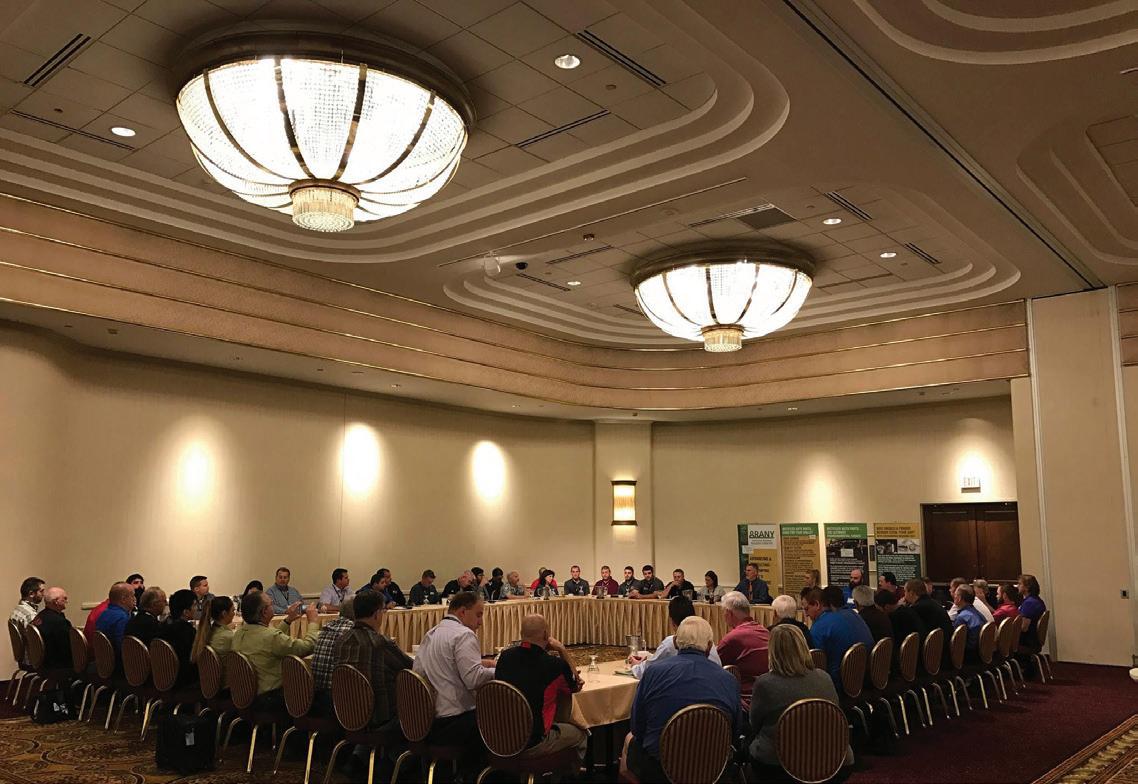
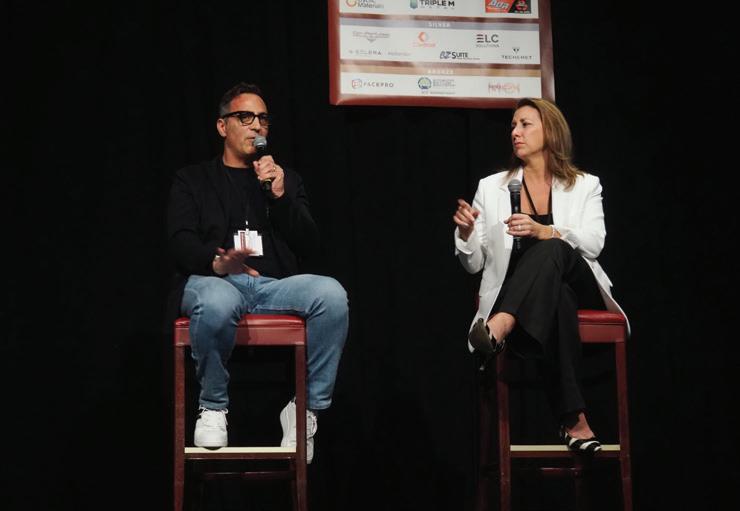
The ARANY event delivered one of the most insightful roundtables I’ve participated in this year. With an insurance estimator, body shop owner, and recycler all at the table, the conversation laid bare the real-world challenges in using recycled parts. Gaps in understanding — particularly around grading, damage descriptions, and shop markups — continue to drive unnecessary returns and tension in the supply chain. Hearing directly from each stakeholder reinforced the importance of clear standards and communication. These insights are shaping ARC’s ongoing work on simplified certification, photo standards, and KPI reporting.
Ces derniers mois ont été marqués par des conversations fructueuses, un engagement régional fort et un sentiment croissant d'harmonisation entre le Canada et les États-Unis. Alors que les recycleurs continuent de faire face à des pressions réglementaires, commerciales et environnementales en constante évolution, ces réunions ont renforcé une vérité simple: nos progrès dépendent de la collaboration.
L'événement ARANY a donné lieu à l'une des tables rondes les plus enrichissantes auxquelles j'ai participé cette année. Avec la présence d'un expert en assurance, d'un propriétaire d'atelier de carrosserie et d'un recycleur, la conversation a mis en évidence les défis réels liés à l'utilisation de pièces recyclées. Les lacunes dans la compréhension, notamment en ce qui concerne la classification, la description des dommages et les marges bénéficiaires des ateliers, continuent d'entraîner des retours inutiles et des tensions dans la chaîne d'approvisionnement. Les témoignages directs de chaque partie prenante ont renforcé l'importance de normes et d'une communication claires. Ces informations influencent le travail actuel de l'ARC sur la simplification de la certification, les normes photographiques et les rapports sur les indicateurs clés de performance.
http://carec.ca/carec-en-homepage.htm
AARDA – ALBERTA AUTO RECYCLERS AND DISMANTLERS ASSOCIATION
The Alberta meeting came at a critical moment as the association works through leadership changes and looks to strengthen its position in the province. The discussions we had around CAREC were particularly important. Many Alberta members shared how CAREC provides credibility, structure, and a baseline of good business practices — something that becomes even more valuable during periods of transition. We also explored ways that ARC can help Alberta implement updates to better reflect today’s operational realities. The conversations were collaborative and productive, setting the stage for renewed momentum in the province.
La réunion en Alberta est arrivée à un moment critique, alors que l'association traverse une période de changement de direction et cherche à renforcer sa position dans la province. Les discussions que nous avons eues au sujet du CAREC ont été particulièrement importantes. De nombreux membres de l'Alberta ont expliqué comment le CAREC apporte crédibilité, structure et base de bonnes pratiques commerciales, ce qui est d'autant plus précieux en période de transition. Nous avons également exploré les moyens par lesquels l'ARC peut aider l'Alberta à mettre en œuvre des mises à jour afin de mieux refléter les réalités opérationnelles actuelles. Les conversations ont été collaboratives et productives, ouvrant la voie à un nouvel élan dans la province.
ARA – BIRMINGHAM, ALABAMA
This year’s U.S. national meeting echoed many of the issues we face here in Canada: declining memberships, inactive boards, and the difficulty of keeping state associations active enough to support meaningful conventions. These challenges reaffirm the importance of strong national coordination. The U.S. continues working toward a national EV battery solution and is watching Canada closely as a model. Our EV Battery Recovery Program — developed with automakers and government partners — remains internationally recognized for its structure and reliability.
"Certification was also a major topic, with ARA, URG, and ARC aligned in the need for a coordinated framework that supports insurers, repairers, eBay, and consumers.” The shared objective is clear: strengthen grading consistency, reduce returns, and demonstrate leadership to the marketplace.
Industry leaders gathered last year in Birmingham, Alabama, for the 82nd Annual Automotive Recyclers Association Convention.
Les leaders du secteur se sont réunis l'année dernière à Birmingham, en Alabama, à l'occasion du 82e congrès annuel de l'Automotive Recyclers Association.
collisionrepairmag.com/15774673
La réunion nationale américaine de cette année a fait écho à bon nombre des problèmes auxquels nous sommes confrontés ici au Canada : baisse du nombre de membres, conseils d'administration inactifs et difficulté à maintenir les associations d'État suffisamment actives pour soutenir des conventions significatives. Ces défis réaffirment l'importance d'une coordination solide entre les différentes é s nationales. Les États-Unis continuent de travailler à la mise en place d'une solution nationale pour les batteries de véhicules électriques et observent attentivement le Canada comme modèle. Notre programme de récupération des batteries de véhicules électriques, développé en collaboration avec des constructeurs automobiles et des partenaires gouvernementaux, reste reconnu internationalement pour sa structure et sa fiabilité.
La certification a également été un sujet important, l'ARA, l'URG et l'ARC s'accordant sur la nécessité d'un cadre coordonné qui soutienne les assureurs, les réparateurs, eBay et les consommateurs. L'objectif commun est clair : renforcer la cohérence des classifications, réduire les retours et faire preuve de leadership sur le marché.
ARAAC – ATLANTIC CANADA
ARAAC delivered a strong and well-attended meeting, with EV training at the centre of the program. The hands-on sessions sparked meaningful discussions about safety, dismantling protocols, and the need for nationally consistent material. The exchange of ideas between ARAAC members and ARC reinforced how regional experience contributes directly to national decision-making. As ARC takes on a larger leadership role — particularly as Steve Fletcher steps back from day-to-day involvement — our focus remains on providing the structure, continuity, and support needed to advance the association’s priorities.
2026 ARAAC CONVENTION & TRADE SHOW
THE ANNUAL CONVENTION & TRADE SHOW OF ARAAC IS PLANNED FOR AUGUST 21-22, 2026 IN ST. JOHN'S NEWFOUNDLAND!
L'ARAAC a organisé une réunion importante qui a attiré de nombreux participants, avec une formation sur les véhicules électriques au centre du programme. Les sessions pratiques ont donné lieu à des discussions constructives sur la sécurité, les protocoles de démantèlement et la nécessité de disposer de matériel cohérent à l'échelle nationale. L'échange d'idées entre les membres de l'ARAAC et l'ARC a renforcé l'idée que l'expérience régionale contribue directement à la prise de décision au niveau national. Alors que l'ARC assume un rôle de leadership plus important, en particulier depuis que Steve Fletcher s'est retiré des activités quotidiennes, nous continuons à nous concentrer sur la mise en place de la structure, la continuité et le soutien nécessaires pour faire avancer les priorités de l'association.
25_014909_Canadian_Auto_Recyclers_2026_CN Mod: December 26, 2025 9:54 AM Print: 01/05/26 page 1 v2.5
CARI'S ANNUAL CONVENTION GROWS
The Canadian Association of Recycling Industries (CARI) gathered in Winnipeg in June for its 84th annual convention.
Built around the theme Untapped Potential, the event highlighted opportunities, resources and expertise within the recycling sector that are ready to be developed.
“Working together, greater business results can be achieved through strategic collaboration, innovation and effective communications,” said Kari Veno, CARI’s communications director.
Veno described the Winnipeg gathering as a success and said the association is incorporating attendee feedback to improve the 2026 event. The 2026 theme, Forging Connections, will build on last year’s focus while emphasizing leadership, resiliency and partnerships.
The industry will reconvene for its 85th annual convention June 8–10, 2026, at the Hilton Lac-Leamy Hotel & Casino in Gatineau, Que. More information is available at cari-acir.org.
The Automotive Recyclers of Canada will participate in the 2026 CARI event, and CARI will attend the Ontario Automotive Recyclers Association conference in March.
“This is an example of two industry associations with much in common collaborating for the benefit of their respective members,” said Wally Dingman, ARC’s executive director. “We are also working on plans to cooperate more closely in the future.”
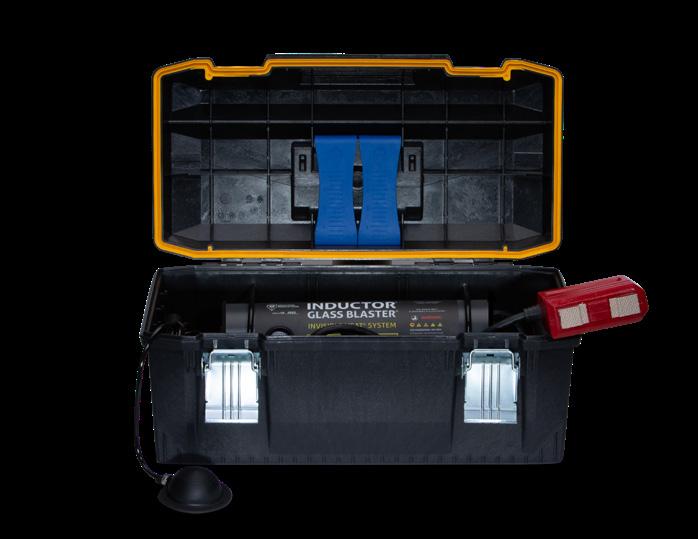
GLASS BLASTER®
L'Association canadienne des industries du recyclage (CARI) s'est réunie à Winnipeg en juin pour son 84e congrès annuel.
Axé sur le thème « Un potentiel inexploité », l'événement a mis en évidence les opportunités, les ressources et l'expertise du secteur du recyclage qui sont prêtes à être développées.
« En travaillant ensemble, nous pouvons obtenir de meilleurs résultats commerciaux grâce à une collaboration stratégique, à l'innovation et à une communication efficace », a déclaré Kari Veno, directrice de la communication de la CARI.
Mme Veno a qualifié le rassemblement de Winnipeg de succès et a déclaré que l'association tenait compte des commentaires des participants afin d'améliorer l'événement de 2026. Le thème de 2026, « Forger des liens », s'appuiera sur l'orientation de l'année dernière tout en mettant l'accent sur le leadership, la résilience et les partenariats.
L'industrie se réunira à nouveau pour son 85e congrès annuel du 8 au 10 juin 2026, à l'hôtel Hilton Lac-Leamy & Casino à Gatineau, au Québec. Pour plus d'informations, consultez le site cari-acir.org.
L'Association des recycleurs automobiles du Canada participera à l'événement CARI 2026, et CARI assistera à la conférence de l'Ontario Automotive Recyclers Association en mars.
« Il s'agit là d'un exemple de collaboration entre deux associations industrielles qui ont beaucoup en commun, dans l'intérêt de leurs membres respectifs », a déclaré Wally Dingman, directeur exécutif de l'ARC. « Nous travaillons également sur des projets visant à renforcer notre coopération à l'avenir. »
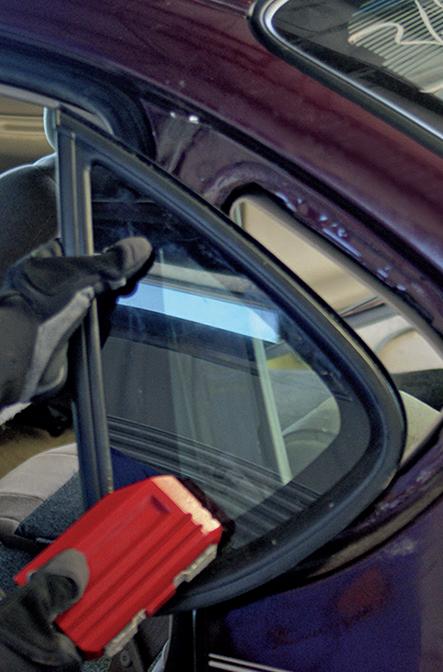
Remove auto glass in minutes with the Inductor® Glass Blaster. This tool allows you to work from outside the vehicle with no need to remove interior trim.
Release urethane in hard-to-reach areas where other glass tools can’t go, with no damage to the encapsulate or frit.
ONTARIO EV TRAINING SESSIONS
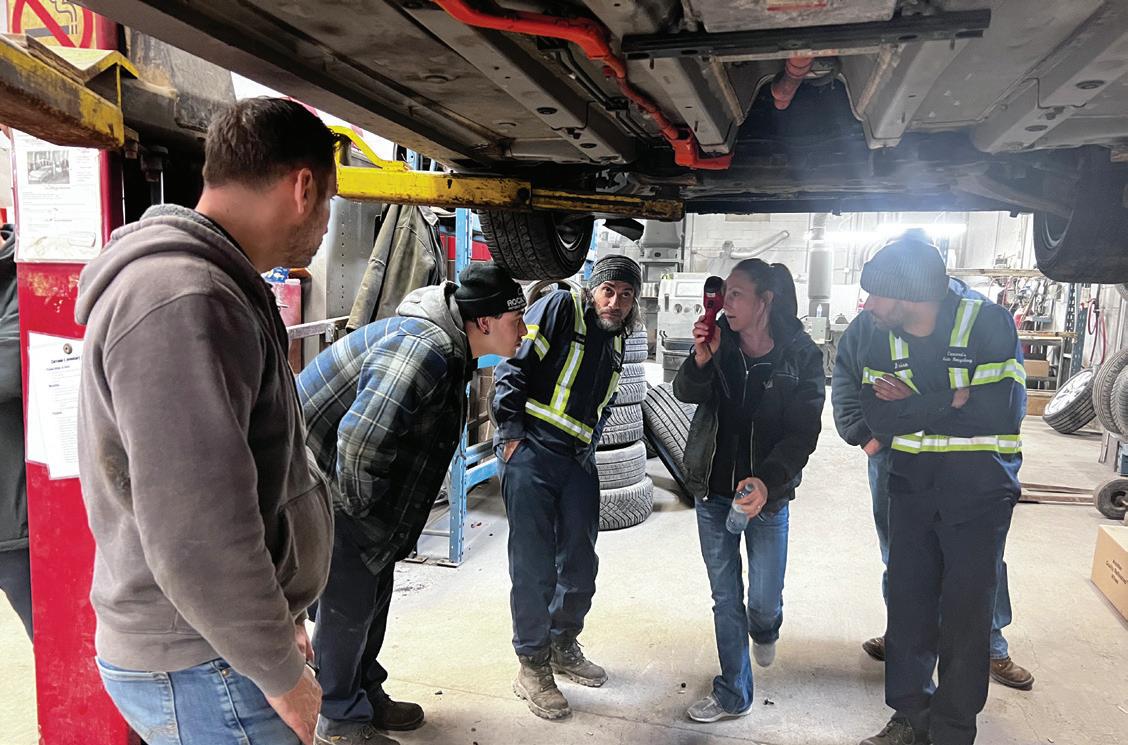
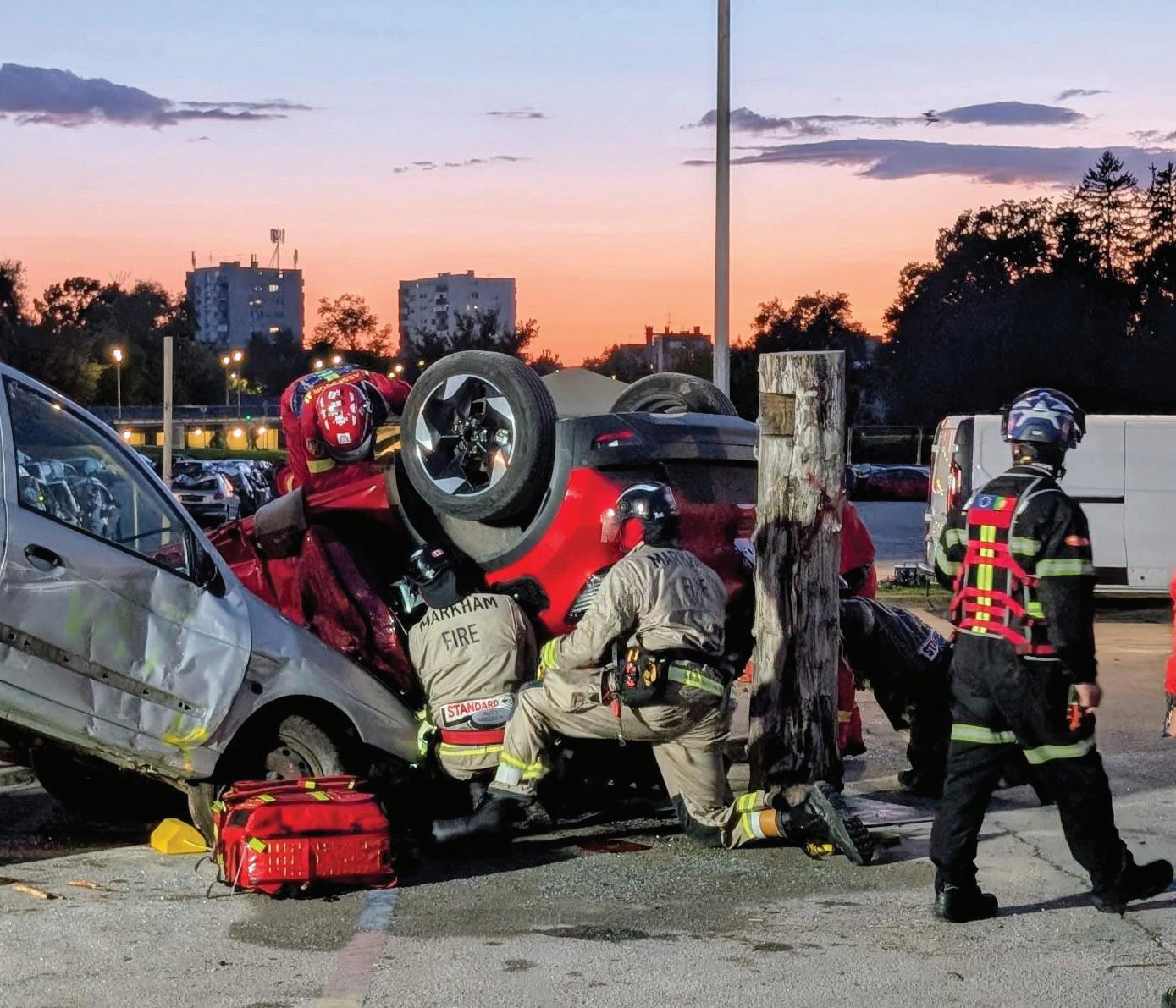
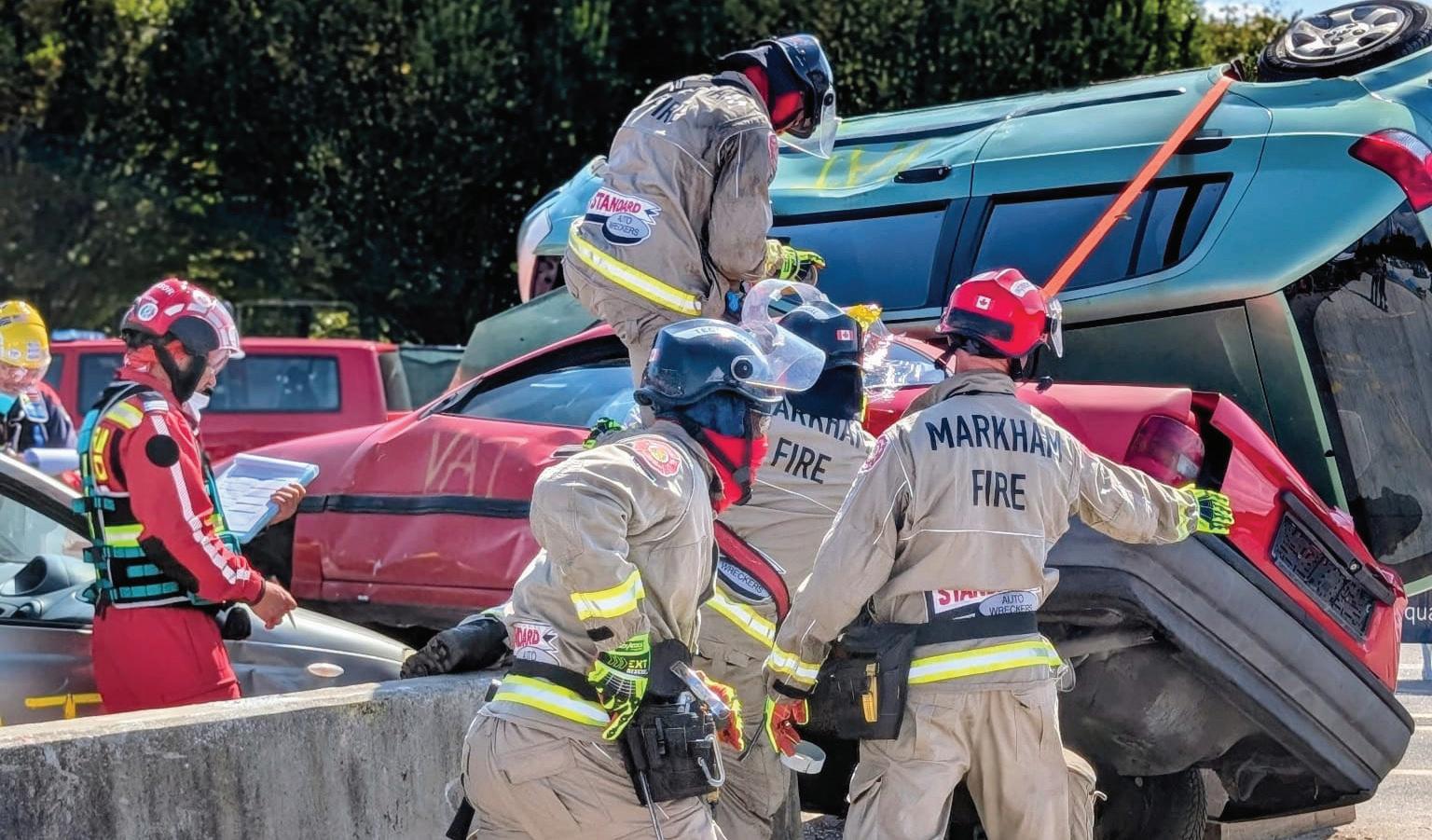
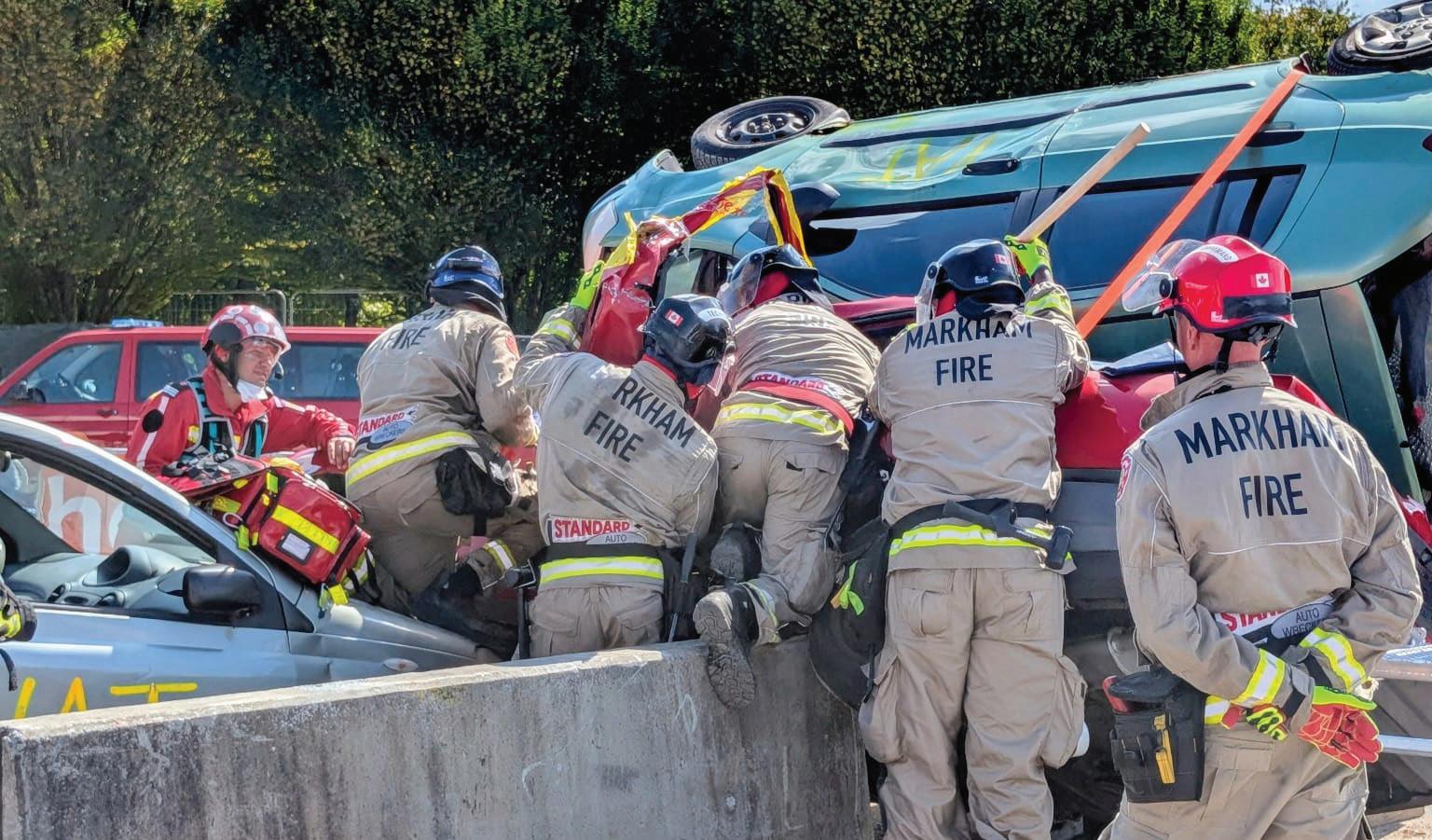
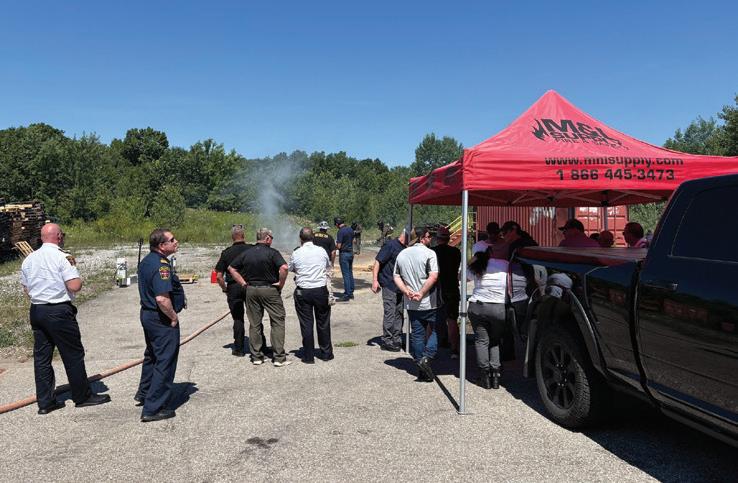
Ontario’s EV training events continue to demonstrate the importance of coordinated safety education. With recyclers, firefighters, and instructors working side by side, these sessions highlight the need for consistent, nationally funded EV training programs. As EV volumes increase, our ongoing work with CVMA, GAC, and other partners becomes even more critical to ensuring industry readiness.
OARA TRADE SHOW & CONVENTION – A NEW, MORE COLLABORATIVE FORMAT
Looking ahead, the OARA Trade Show & Convention once again stands as the largest and most influential automotive recycling event in Canada. This year, we are shifting the format significantly to support a deeper level of practical learning. Instead of relying on a small number of large, formal presentations, the program will feature multiple smaller group sessions designed to promote direct interaction, hands-on problem-solving, and real collaboration.
The emphasis is on helping recyclers get more value from the products and services they already invest in. Vendors will participate in the educational sessions not to promote new offerings, but to show attendees how to maximize the tools, software, platforms, and systems they currently use — focusing on practical workflows, overlooked features, and efficiencies that can be implemented immediately. This change reflects what our members have consistently requested: less time listening to sales pitches and more time learning how to elevate their business operations.
The result will be a dynamic, informal environment that encourages open dialogue, real-world demonstrations, and peer-to-peer learning. It promises to be one of the most useful and engaging conventions we’ve ever hosted.
SESSIONS DE FORMATION SUR LES VÉHICULES ÉLECTRIQUES EN ONTARIO
Les événements de formation sur les véhicules électriques en Ontario continuent de démontrer l'importance d'une éducation coordonnée en matière de sécurité. Avec des recycleurs, des pompiers et des instructeurs travaillant côte à côte, ces sessions soulignent la nécessité de programmes de formation cohérents et financés au niveau national sur les véhicules électriques. À mesure que le nombre de véhicules électriques augmente, notre collaboration continue avec la CVMA, le GAC et d'autres partenaires devient encore plus cruciale pour garantir la préparation de l'industrie.
SALON PROFESSIONNEL ET CONGRÈS DE L'OARA – UN NOUVEAU FORMAT PLUS COLLABORATIF
À l'avenir, le salon et congrès de l'OARA s'impose une fois de plus comme l'événement le plus important et le plus influent dans le domaine du recyclage automobile au Canada. Cette année, nous modifions considérablement le format afin de favoriser un apprentissage pratique plus approfondi. Au lieu de s'appuyer sur un petit nombre de grandes présentations formelles, le programme proposera plusieurs sessions en petits groupes conçues pour promouvoir l'interaction directe, la résolution pratique de problèmes et une véritable collaboration.
L'accent est mis sur l'aide apportée aux recycleurs pour qu'ils tirent davantage de valeur des produits et services dans lesquels ils investissent déjà. Les fournisseurs participeront aux sessions éducatives non pas pour promouvoir de nouvelles offres, mais pour montrer aux participants comment tirer le meilleur parti des outils, logiciels, plateformes et systèmes qu'ils utilisent actuellement, en mettant l'accent sur les flux de travail pratiques, les fonctionnalités négligées et les gains d'efficacité qui peuvent être mis en œuvre immédiatement. Ce changement reflète ce que nos membres ont toujours demandé : moins de temps passé à écouter des arguments de vente et plus de temps consacré à apprendre comment améliorer leurs opérations commerciales.
Il en résultera un environnement dynamique et informel qui favorisera le dialogue ouvert, les démonstrations concrètes et l'apprentissage entre pairs. Cette convention s'annonce comme l'une des plus utiles et des plus intéressantes que nous ayons jamais organisées. collisionrepairmag.com/15815771
MOVING FORWARD TOGETHER
Across ARANY, AARDA, ARA, ARAAC, our EV training programs, and the upcoming OARA Convention, a unified message is emerging: recyclers want clarity, strong standards, consistent training, and coordinated leadership.
The work underway — VIN branding reforms, EV battery recovery, simplified certification, national GHG reporting, and strengthened insurer relationships — is not regional; it is genuinely national in scope.
I am grateful for the engagement from members across the country and the growing partnerships across the border. With collaboration at the centre of our efforts, we are building a stronger, more resilient, and more unified industry for the future.
ALLER DE L'AVANT ENSEMBLE
À travers l'ARANY, l'AARDA, l'ARA, l'ARAAC, nos programmes de formation sur les véhicules électriques et la prochaine convention de l'OARA, un message unifié se dégage : les recycleurs veulent de la clarté, des normes strictes, une formation cohérente et un leadership coordonné.
Les travaux en cours (réformes de la marque VIN, récupération des batteries de véhicules électriques, simplification de la certification, rapports nationaux sur les GES et renforcement des relations avec les assureurs) ne sont pas régionaux, mais véritablement nationaux.
Je suis reconnaissant de l'engagement des membres à travers le pays et des partenariats croissants au-delà des frontières. En plaçant la collaboration au centre de nos efforts, nous construisons une industrie plus forte, plus résiliente et plus unifiée pour l'avenir.
MOST RELIABLE PRE 8AM
Understanding the importance of time within your transportation strategy, means you can move at the speed of your customer, not your carrier. Cardinal’s Pre 8am transportation solutions and unique night network provide a competitive advantage where first to market comes standard. Expect Cardinal’s night network with unattended pickups and deliveries to deliver a competitive advantage to your business.
Cardinal is a wholly owned Canadian company that has built its reputation as the most reliable Pre 8am delivery service for time-sensitive goods and parts, servicing communities across Ontario and Quebec.
Coming Together to Power EV Excellence
S'unir pour promouvoir l'excellence en matière de véhicules électriques
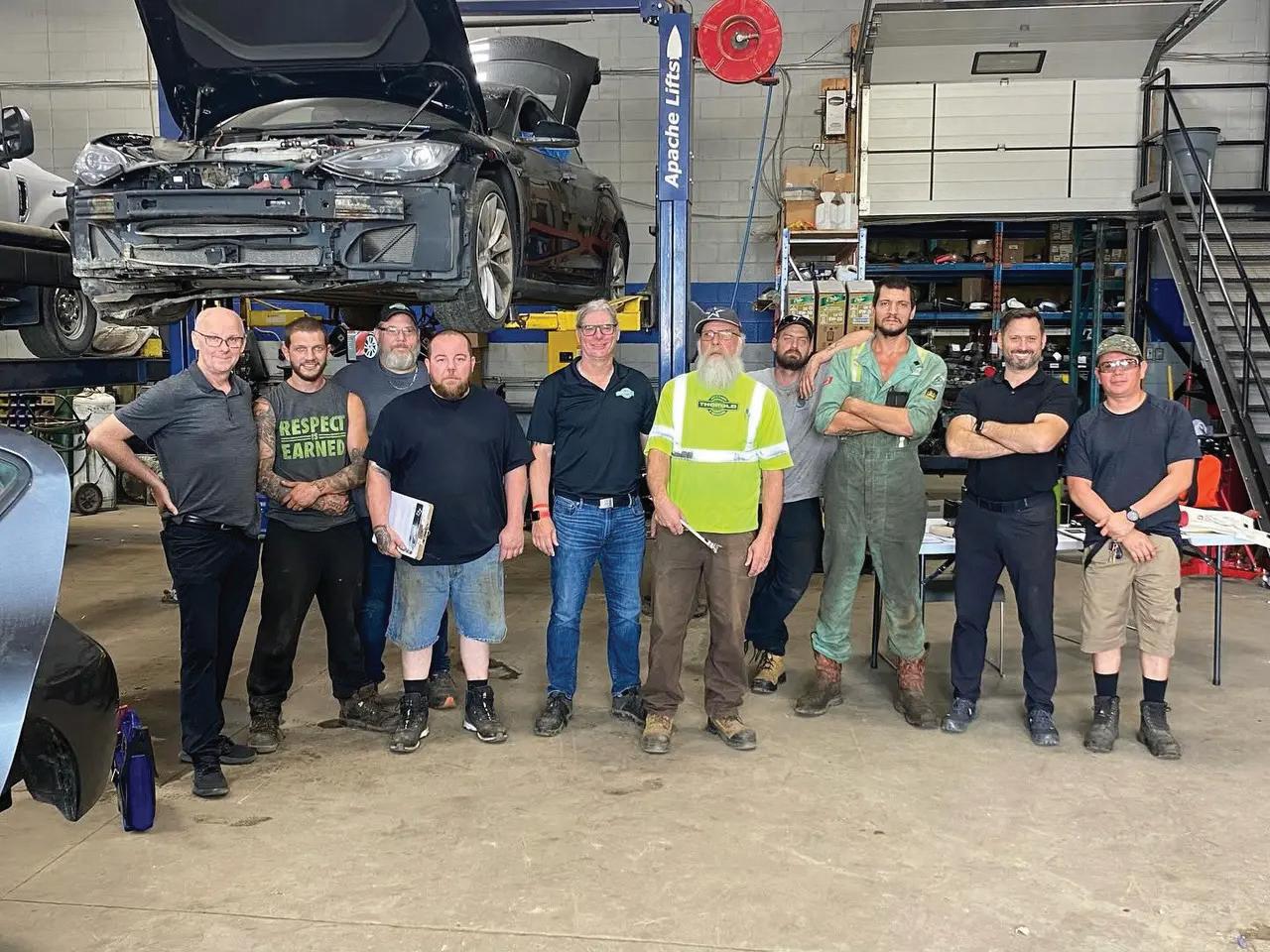
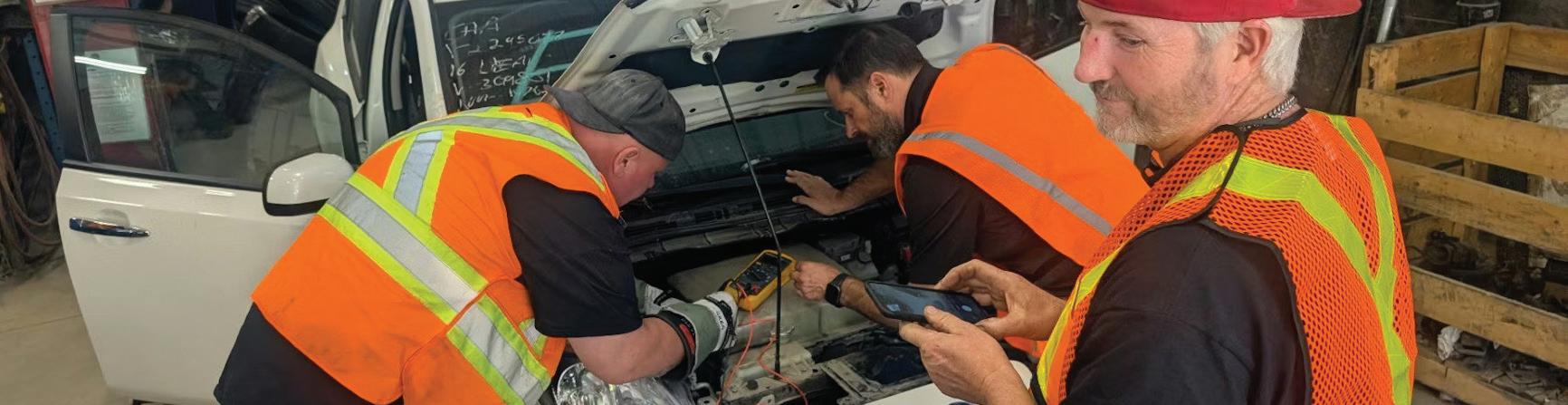
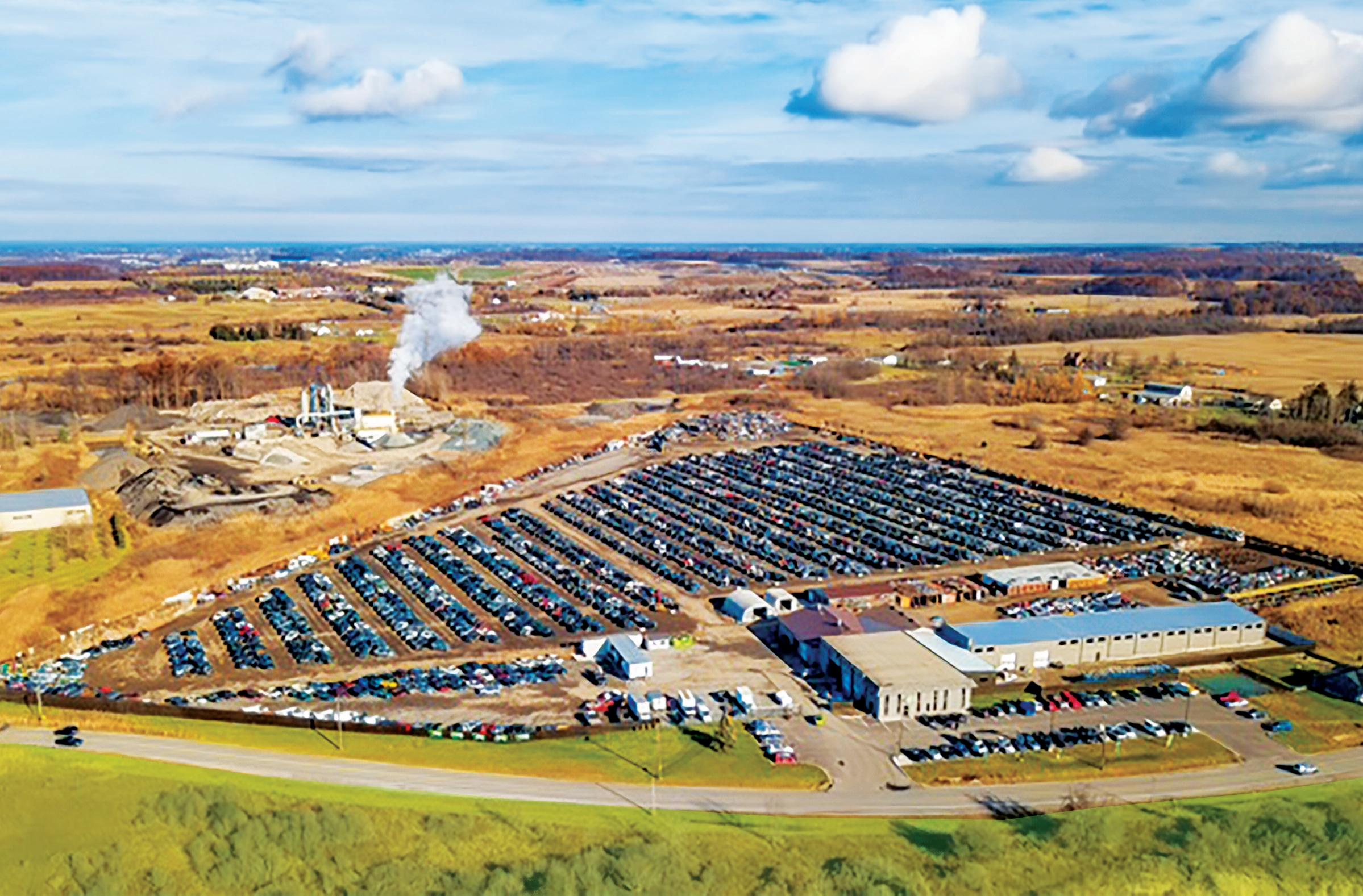
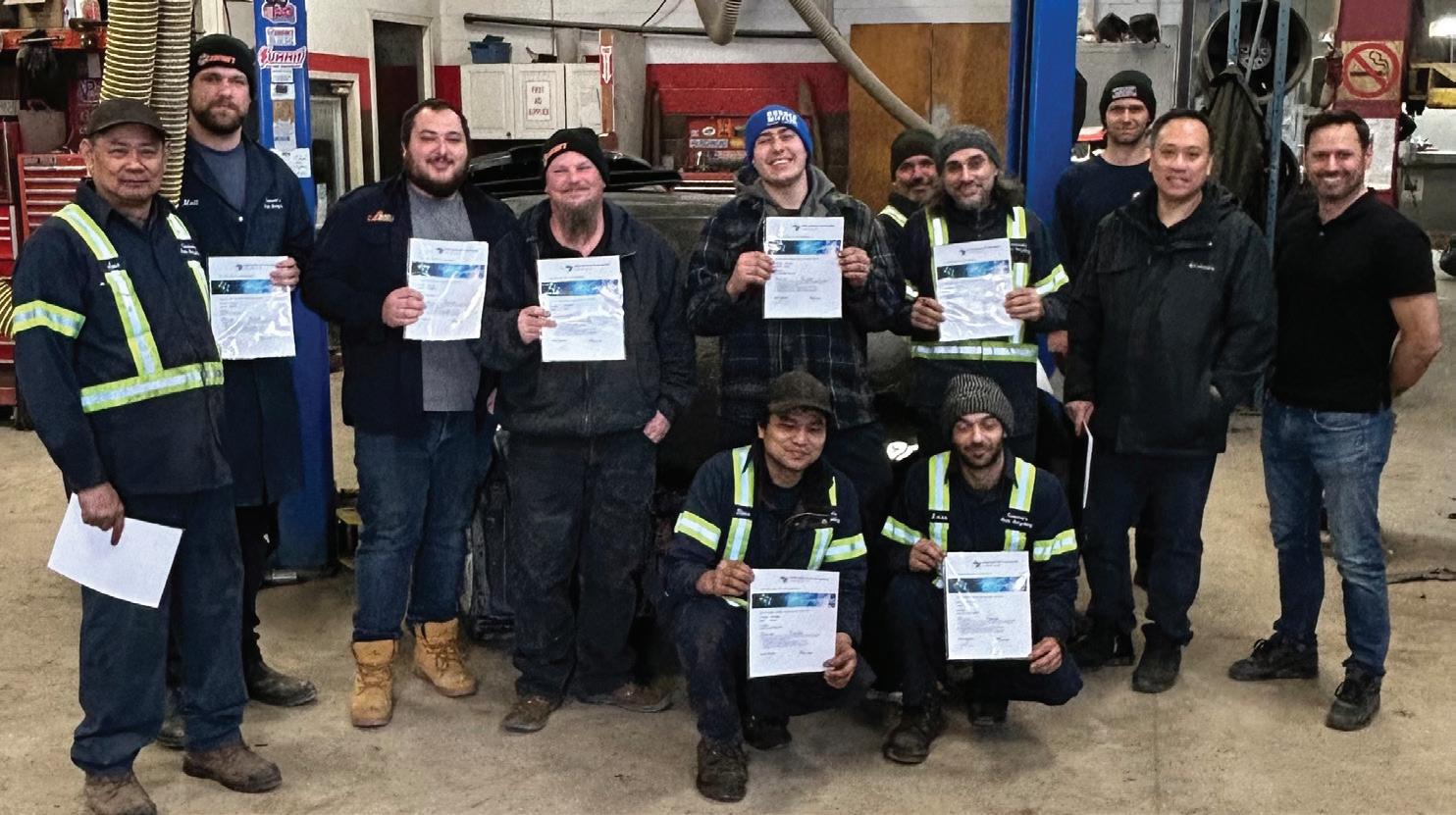
Greg Aguilera, président d'International Automotive Consulting, dispense une formation sur la sécurité des véhicules électriques chez Thorold Automotive Solutions à Thorold, en Ontario, en décembre 2024.
"I’m committed to staying ahead of the curve and I am proud to be taking the next step in automotive recycling by heavily investing in our team’s EV safety training.” — Frank Serravalle
collisionrepairmag.com/15766289
T« Je m'engage à rester à la pointe du progrès et je suis fier de franchir une nouvelle étape dans le recyclage automobile en investissant massivement dans la formation de notre équipe à la sécurité des véhicules électriques. » — Frank Serravalle
By/par Steve Fletcher
he Ontario Automotive Recyclers Association (OARA) and International Automotive Consulting (IAC) are working together to advance electric vehicle (EV) training tailored specifically to the needs of the auto recycling sector.
As electrification continues to reshape the automotive landscape, recyclers are seeing increasing numbers of high-voltage vehicles entering their yards. Recognizing the importance of preparedness, OARA and IAC have developed a collaborative approach to support members as the industry evolves.
The partnership brings together OARA’s leadership in member engagement, communication, and coordination with IAC’s experience delivering specialized EV-focused instruction for recyclers. "Together we are are strengthening access to training opportunities that reflect the operational realities of today’s yards, not just theory but real world skills” saig Greg Aguilera “OARA is committed to supporting our members through the transition to electrification,” said Steve Fletcher, Ambassador and former Executive Director of both OARA and the Automotive Recyclers of Canada (ARC). “By collaborating with IAC, we are ensuring recyclers have access to relevant training and practical resources as the sector continues to evolve.”
The initiative reflects a shared commitment to industry readiness and responsible growth as EV volumes increase across Ontario and Canada. OARA will support communication and accessibility for members, while IAC continues to design and deliver recycler-focused programming that incorporates the latest in learning to support all learners in yards.
Further details regarding upcoming sessions will be presented in and around the OARA Convention in March. CAR
Greg Aguilera, president of International Automotive Consulting conducts EV Safety training at Thorold Automotive Solutions in Thorold, Ontario in December of 2024.
"The importance of events like these is learning not only practical aspects but also the safety aspects of working on EVs. Other steps include learning from your peers, or more importantly, going to industry events and learning from the sessions at OARA.”
— Michael Carcone
Le personnel de Carcone's Auto Recycling a participé à un atelier de formation de trois jours sur les véhicules électriques, animé par Greg Aguilera et son équipe d'International Automotive Consulting (IAC).
collisionrepairmag.com/15739808
"Our commitment this past year was to provide our team at Miller's with the most relevant and up to date training for EV's. The training we received by Greg, provided the knowledge required for the dismantling, handling and storage of EV's and most importantly provided our employees with the confidence required to safely work on and around these vehicles." —
Natalie Miller
« Notre engagement cette année était de fournir à notre équipe chez Miller's la formation la plus pertinente et la plus récente sur les véhicules électriques. La formation dispensée par Greg nous a apporté les connaissances nécessaires pour le démontage, la manipulation et le stockage des véhicules électriques et, surtout, a donné à nos employés la confiance nécessaire pour travailler en toute sécurité sur et autour de ces véhicules. »
— Natalie Miller
collisionrepairmag.com/15816872
« L'importance d'événements comme ceux-ci réside dans le fait qu'ils permettent d'apprendre non seulement les aspects pratiques, mais aussi les aspects liés à la sécurité du travail sur les véhicules électriques. D'autres mesures consistent à apprendre de ses pairs ou, plus important encore, à assister à des événements industriels et à tirer des enseignements des sessions organisées par l'OARA. » — Michael Carcone
L'Ontario Automotive Recyclers Association (OARA) et International Automotive Consulting (IAC) collaborent afin de promouvoir une formation sur les véhicules électriques (VE) spécialement adaptée aux besoins du secteur du recyclage automobile.
Alors que l'électrification continue de transformer le paysage automobile, les recycleurs voient de plus en plus de véhicules à haute tension arriver dans leurs parcs. Conscientes de l'importance de se préparer, l'OARA et l'IAC ont développé une approche collaborative pour soutenir leurs membres à mesure que l'industrie évolue.
Ce partenariat associe le leadership de l'OARA en matière d'engagement, de communication et de coordination avec ses membres à l'expérience de l'IAC dans la formation spécialisée axée sur les VE destinée aux recycleurs. « Ensemble, nous renforçons l'accès à des possibilités de formation qui reflètent les réalités opérationnelles des parcs actuels, non seulement en théorie, mais aussi en termes de compétences pratiques », a déclaré Greg Aguilera.
« L'OARA s'engage à soutenir ses membres dans la transition vers l'électrification », a déclaré Steve Fletcher, ambassadeur et ancien directeur exécutif de l'OARA et de l'Association des recycleurs automobiles du Canada (ARC). « En collaborant avec l'IAC, nous garantissons aux recycleurs l'accès à des formations pertinentes et à des ressources pratiques à mesure que le secteur continue d'évoluer. »
Cette initiative reflète un engagement commun en faveur de la préparation de l'industrie et d'une croissance responsable, alors que le nombre de véhicules électriques augmente en Ontario et au Canada.
L'OARA soutiendra la communication et l'accessibilité pour ses membres, tandis que l'IAC continuera à concevoir et à proposer des programmes axés sur les recycleurs, qui intègrent les dernières avancées en matière d'apprentissage afin de soutenir tous les apprenants dans les parcs à ferraille.
De plus amples détails concernant les prochaines sessions seront présentés lors de la convention de l'OARA en mars. CAR
The staff of Carcone’s Auto Recycling participated in a three-day electric vehicle training workshop run by Greg Aguilera and his team from International Automotive Consulting (IAC).
Training That Saves Lives Une formation qui sauve des vies
TERC Challenge Returns to Standard Auto Wreckers
Le défi TERC revient chez
Standard Auto Wreckers
Afamiliar roar returned to Markham earlier this month — not of engines, but of hydraulic rescue tools, saws and the focused coordination of first responders. On June 5 and 6, the 2025 Transportation Emergency Rescue Committee Regional Vehicle Rescue Challenge transformed an auto recycling yard into a high-intensity training ground for some of the country’s most skilled extrication teams.
Organized by TERC Canada and hosted in collaboration with the Markham Fire Department and the Markham Fire Extrication Team, the two-day event brought together fire departments and emergency response crews from across the region. Teams faced realistic rescue scenarios designed to test not only technical skill, but decision-making, communication and scene management under pressure.
The Challenge featured two competition pits — limited and unlimited — where teams were given just 20 minutes to safely extricate a live “patient” from a simulated vehicle collision. Judges evaluated command structure, hazard control, disentanglement technique and both rescuer and patient safety, recreating the kind of high-stakes conditions responders encounter on real accident scenes.
In the limited pit, teams were restricted to hand and pneumatic tools. The unlimited pit allowed the full range of equipment, including hydraulic cutters, spreaders and stabilizers.
The Burlington Fire Department claimed top honours, winning both categories and securing the overall title. The team will now represent Canada on the international stage next year.
The event was supported by industry partners that provided vehicles, space and logistical assistance, including Standard Auto Wreckers, which has hosted the Challenge multiple times.
“We’re all proud to be a part of it,” said David Gold, owner of the facility. “Everyone feels good to be helping first responders.”
Events like the TERC Regional Challenge highlight the collaboration required to deliver effective rescue training. From fire departments dedicating time and personnel, to local businesses providing resources and space, each partner contributes to improving outcomes on the road.
“We are sincerely grateful for our Chiefs and the time they spend with us,” said Brad Sterling of the Markham Fire Department. “They’ve helped build a strong culture. This isn’t just about auto extrication — it’s about growing as a team and serving our community better.”
As TERC Canada looks ahead, the focus remains on advancing training standards, improving safety and strengthening communities — ensuring first responders are ready for whatever challenges come next. CAR
Un rugissement familier est revenu à Markham au début du mois, non pas celui des moteurs, mais celui des outils de sauvetage hydrauliques, des scies et de la coordination concentrée des premiers intervenants. Les 5 et 6 juin, le défi régional de sauvetage de véhicules 2025 du Comité de sauvetage d'urgence dans les transports (TERC) a transformé un parc de recyclage automobile en un terrain d'entraînement intensif pour certaines des équipes de désincarcération les plus compétentes du pays.
Organisé par TERC Canada et accueilli en collaboration avec le service d'incendie de Markham et l'équipe de désincarcération de Markham, cet événement de deux jours a réuni des services d'incendie et des équipes d'intervention d'urgence de toute la région. Les équipes ont été confrontées à des scénarios de sauvetage réalistes conçus pour tester non seulement leurs compétences techniques, mais aussi leur capacité à prendre des décisions, à communiquer et à gérer les situations sous pression.
Le Challenge comprenait deux fosses de compétition - limitée et illimitée - où les équipes n'avaient que 20 minutes pour extraire en toute sécurité un « patient » vivant d'une collision automobile simulée. Les juges ont évalué la structure de commandement, le contrôle des risques, les techniques de désincarcération et la sécurité des sauveteurs et des patients, recréant ainsi le type de conditions à haut risque auxquelles les intervenants sont confrontés sur les lieux d'accidents réels.
Dans la fosse limitée, les équipes étaient tenues d'utiliser uniquement des outils manuels et pneumatiques. La fosse illimitée leur permettait d'utiliser toute la gamme d'équipements, y compris des cisailles hydrauliques, des écarteurs et des stabilisateurs.
Le service d'incendie de Burlington a remporté les honneurs, gagnant les deux catégories et décrochant le titre général. L'équipe représentera désormais le Canada sur la scène internationale l'année prochaine.
L'événement a été soutenu par des partenaires industriels qui ont fourni des véhicules, des locaux et une assistance logistique, notamment Standard Auto Wreckers, qui a accueilli le Challenge à plusieurs reprises.
« Nous sommes tous fiers d'y participer », a déclaré David Gold, propriétaire de l'établissement. « Tout le monde est heureux d'aider les premiers intervenants. »
Des événements tels que le TERC Regional Challenge mettent en évidence la collaboration nécessaire pour dispenser une formation efficace en matière de sauvetage. Des services d'incendie qui consacrent du temps et du personnel aux entreprises locales qui fournissent des ressources et des locaux, chaque partenaire contribue à améliorer les résultats sur la route.
« Nous sommes sincèrement reconnaissants envers nos chefs et le temps qu'ils passent avec nous », a déclaré Brad Sterling, du service d'incendie de Markham. « Ils ont contribué à instaurer une culture forte. Il ne s'agit pas seulement de désincarcération automobile, mais aussi de grandir en tant qu'équipe et de mieux servir notre communauté. »
Alors que TERC Canada se tourne vers l'avenir, l'accent reste mis sur l'amélioration des normes de formation, le renforcement de la sécurité et le renforcement des communautés, afin de garantir que les premiers intervenants soient prêts à relever tous les défis à venir. CAR
From September 9–14, 2025, the Markham Fire Department proudly represented Canada at the prestigious World Rescue Challenge in Karlovac, Croatia.
Du 9 au 14 septembre 2025, le service d'incendie de Markham a fièrement représenté le Canada lors du prestigieux World Rescue Challenge à Karlovac, en Croatie.
Together at OARA 2025
Ensemble à l'OARA 2025
LThe Ontario Automotive Recyclers Association opened its presentations during its March 28, 2025 event with market insights, youth leadership discussions and sessions on EVs, quality control and succession planning. Speakers highlighted the value of recycled OEM parts, rising costs, trade challenges and the importance of standardized practices to strengthen the auto recycling sector.
'Ontario Automotive Recyclers Association a ouvert ses présentations lors de son événement du 28 mars 2025 avec des analyses du marché, des discussions sur le leadership des jeunes et des sessions sur les véhicules électriques, le contrôle qualité et la planification de la relève. Les intervenants ont souligné la valeur des pièces OEM recyclées, la hausse des coûts, les défis commerciaux et l'importance de pratiques normalisées pour renforcer le secteur du recyclage automobile.
collisionrepairmag.com/ 15741572
ARPAC 2025 Through the Lens
ARPAC à travers l'objectif
The Association of Auto Parts Recyclers in Quebec (ARPAC) hosted its annual congress Sept. 12–14, 2025 at Hôtel Le Noranda in Rouyn-Noranda, welcoming about 100 industry professionals. The event featured facility tours, educational sessions, networking events and fundraising activities supporting the ARPAC Foundation and local charities.
L'Association des recycleurs de pièces automobiles du Québec (ARPAC) a tenu son congrès annuel du 12 au 14 septembre 2025 à l'Hôtel Le Noranda à Rouyn-Noranda, accueillant une centaine de professionnels de l'industrie. L'événement comprenait des visites d'installations, des séances éducatives, des activités de réseautage et des activités de collecte de fonds au profit de la Fondation ARPAC et d'organismes de bienfaisance locaux.
collisionrepairmag.com/15774667
ARA 2025 Visual Highlights
The 82nd Automotive Recyclers Association Convention in Birmingham focused on collaboration amid engagement challenges, a new ISO-based certification model, EV safety training, AI-driven tools for parts identification, and sustainability metrics. The event underscored that innovation, data and cross-border cooperation will shape the future of auto recycling.
collisionrepairmag.com/15774673
La 82e convention de l'Automotive Recyclers Association à Birmingham s'est concentrée sur la collaboration face aux défis liés à l'engagement, un nouveau modèle de certification basé sur les normes ISO, la formation à la sécurité des véhicules électriques, les outils d'identification des pièces basés sur l'IA et les indicateurs de durabilité. L'événement a souligné que l'innovation, les données et la coopération transfrontalière façonneront l'avenir du recyclage automobile.
S&S Auto Parts is your ultimate one-stop source for purchasing truck parts. From engines, and transmissions, to bumpers, mirrors, lights, doors, and much more, we can provide both mechanical and body parts for late-model pickup trucks. Our experienced staff can provide you with quality recycled, aftermarket, or new OEM parts. Affordable prices to fit every budget.
BUILDING CONFIDENCE IN THE EV ERA: TRAINING HIGHLIGHTS
The automotive recycling industry is entering a new chapter with the rapid growth of electric vehicles, requiring new skills, safety protocols, and confidence when working with high-voltage systems. As part of Automotive Recyclers of Canada and the Ontario Automotive Recyclers Association’s ongoing commitment to keeping our members ahead of the curve, ARC recently hosted a specialized EV Training session, one designed not just to talk about EV safety but to give recyclers hands-on experience with actual vehicles and batteries. This training builds on the foundation established by programs like CAREC, which has long been used to demonstrate to insurers, regulators, and the public that recyclers are among the “good guys” in the industry. With EV training now added to the mix, ARC and OARA members continue to show leadership by meeting emerging challenges head-on.
collisionrepairmag.com/15768050
RENFORCER LA CONFIANCE À L’ÈRE DES VÉHICULES ÉLECTRIQUES: POINTS FORTS DE LA FORMATION
L’industrie du recyclage automobile entre dans une nouvelle ère avec la croissance rapide des véhicules électriques, qui exige de nouvelles compétences, de nouveaux protocoles de sécurité et une nouvelle confiance dans le travail avec les systèmes à haute tension. Dans le cadre de l’engagement continu de l’Association des recycleurs automobiles du Canada et de l’Ontario Automotive Recyclers Association à maintenir nos membres à la pointe du progrès, l’ARC a récemment organisé une session de formation spécialisée sur les véhicules électriques, conçue non seulement pour parler de la sécurité des véhicules électriques, mais aussi pour donner aux recycleurs une expérience pratique avec des véhicules et des batteries réels. Cette formation s’appuie sur les bases établies par des programmes tels que CAREC, qui sont utilisés depuis longtemps pour démontrer aux assureurs, aux régulateurs et au public que les recycleurs font partie des « bons » acteurs de l’industrie. Avec l’ajout de la formation sur les véhicules électriques, les membres de l’ARC et de l’OARA continuent de faire preuve de leadership en relevant de front les nouveaux défis.
ENSURING A SUSTAINABLE TRANSITION: WHY ARC SUPPORTS A STRATEGIC PAUSE FOR THE EV MANDATE
ARC believes the recent decision by the federal government to pause Canada’s 2026 zero-emission vehicle sales mandate is both timely and responsible. Ottawa has announced a 60-day review of the program, reflecting growing recognition that while electrification is essential, the transition must be achievable across the entire automotive ecosystem — not just for manufacturers and consumers, but also for recyclers. At ARC, we welcome this reprieve. It’s not about slowing down the future of EVs — it’s about ensuring that all the necessary supports, training, and infrastructure are in place so Canada’s auto dismantling and recycling industry can handle the wave of electrification safely and sustainably. Electric vehicles are fundamentally different at the end of their life cycle. High-voltage batteries, electric drivetrains, and complex safety requirements demand specialized knowledge, equipment, and handling protocols. Without the breathing room provided by this pause, recyclers would be forced to adapt too quickly — risking unsafe practices or bottlenecks in processing. During this 60-day review, ARC urges policymakers to: Engage recyclers and industry experts in consultation; Develop funding and incentives to accelerate training and infrastructure readiness, and establish a phased approach to EV mandates that ties adoption to end-of-life management capacity.
collisionrepairmag.com/15766430
GOLD SEAL 2.0: RAISING THE BAR FOR RECYCLERS
The Automotive Recyclers of Canada, in partnership with various provincial associations, including OARA, is advancing the next generation of its industry certification program, Gold Seal 2.0. This program will introduce a much stronger focus on measurable performance metrics (KPIs) that align with the expectations of insurers, collision repairers — and consumers. Certification will not only recognize businesses that meet baseline requirements but will also highlight recyclers who consistently deliver on quality, reliability and accountability. This shift ensures Gold Seal members stand out as industry leaders, capable of competing in a marketplace where data and measurable results drive decision-making. The development of Gold Seal 2.0 is being shaped through consultation with members, insurers, and industry partners. This collaborative approach ensures the program is not only credible but also relevant and practical for recyclers of all sizes. When launched, Gold Seal 2.0 will give recyclers a stronger competitive edge, while building the confidence of stakeholders across the supply chain.
collisionrepairmag.com/15766427
ASSURER UNE TRANSITION DURABLE : POURQUOI L’ARC SOUTIENT UNE PAUSE STRATÉGIQUE POUR LE MANDAT SUR LES VÉHICULES ÉLECTRIQUES
ARC estime que la récente décision du gouvernement fédéral de suspendre l’obligation de vente de véhicules zéro émission au Canada en 2026 est à la fois opportune et responsable. Ottawa a annoncé un examen de 60 jours du programme, reflétant la reconnaissance croissante du fait que, si l’électrification est essentielle, la transition doit être réalisable dans l’ensemble de l’écosystème automobile, non seulement pour les constructeurs et les consommateurs, mais aussi pour les recycleurs. Chez ARC, nous saluons ce sursis. Il ne s’agit pas de ralentir l’avenir des véhicules électriques, mais de s’assurer que tous les soutiens, formations et infrastructures nécessaires sont en place afin que l’industrie canadienne du démantèlement et du recyclage automobile puisse gérer la vague d’électrification de manière sûre et durable. Les véhicules électriques sont fondamentalement différents à la fin de leur cycle de vie. Les batteries à haute tension, les groupes motopropulseurs électriques et les exigences de sécurité complexes nécessitent des connaissances, des équipements et des protocoles de manipulation spécialisés. Sans le répit que procure cette pause, les recycleurs seraient contraints de s’adapter trop rapidement, au risque de mettre en place des pratiques dangereuses ou de créer des goulots d’étranglement dans le processus de traitement. Au cours de cette période d’examen de 60 jours, l’ARC exhorte les décideurs politiques à : consulter les recycleurs et les experts du secteur ; mettre en place des financements et des incitations pour accélérer la formation et la mise en place des infrastructures, et établir une approche progressive des mandats relatifs aux véhicules électriques qui lie leur adoption à la capacité de gestion en fin de vie.
GOLD SEAL 2.0:
RELEVER LA BARRE POUR LES RECYCLEURS
L’Association des recycleurs automobiles du Canada, en partenariat avec diverses associations provinciales, dont l’OARA, fait progresser la prochaine génération de son programme de certification industrielle, Gold Seal 2.0. Ce programme mettra davantage l’accent sur des indicateurs de performance mesurables (KPI) qui correspondent aux attentes des assureurs, des réparateurs de carrosserie et des consommateurs. La certification permettra non seulement de reconnaître les entreprises qui satisfont aux exigences de base, mais aussi de mettre en avant les recycleurs qui offrent en permanence qualité, fiabilité et responsabilité. Cette évolution garantit que les membres Gold Seal se distinguent comme des leaders du secteur, capables de rivaliser sur un marché où les données et les résultats mesurables orientent la prise de décision. Le développement de Gold Seal 2.0 est façonné par la consultation des membres, des assureurs et des partenaires de l’industrie. Cette approche collaborative garantit que le programme est non seulement crédible, mais aussi pertinent et pratique pour les recycleurs de toutes tailles. Une fois lancé, Gold Seal 2.0 donnera aux recycleurs un avantage concurrentiel plus important, tout en renforçant la confiance des parties prenantes tout au long de la chaîne d’approvisionnement.
CURTAILING CRIME: ARC PUBLISHES STATEMENT ON AUTO THEFT PREVENTION
The Automotive Recyclers of Canada has published a position statement on responsible vehicle acquisition and auto theft prevention.
Key highlights of the statement include the following:
• Vehicles must be acquired only with valid ownership or insurer documentation
• Members must follow all applicable rules for VIN transfers and registration timelines
• All payments must be traceable — with government-issued ID required if cash is used
• Full VIN and vehicle details must be recorded and stored
• We support stronger oversight and enforcement of proper VIN branding
• ARC members must cooperate with law enforcement and regulators where needed
collisionrepairmag.com/15753149
CANADA’S AUTO RECYCLERS: A CRITICAL JUNCTURE IN THE ROAD TO SUSTAINABILITY
Canada’s automotive recycling sector finds itself at a defining moment. At a recent UK conference, Adam Murray of Solus (part of Aviva) outlined a vision for reclaiming integration in vehicle repairs that resonates deeply with the Canadian experience. Despite the environmental and economic benefits of reclaimed parts, adoption rates remain modest.
In Canada, the majority of insurance repairs still default to using new OEM parts, even when quality reclaimed alternatives exist. A major barrier continues to be confidence, both in the parts and the processes that bring them to market. Just as the UK’s VRA Standard is undergoing review, Canada must refine and modernize its own quality frameworks and financial incentives.
This means: Developing national grading systems aligned with modern vehicle technologies; ensuring inventory integration with collision estimating platforms; and reworking financial structures so insurers can support the added labour or prep involved in using reclaimed parts, without expecting recyclers to absorb the burden. One of the more ambitious discussions emerging from the UK involved reclaiming not just cosmetic or structural parts, but a wider range of functional components.
In Europe, OEMs such as Stellantis are already establishing large-scale remanufacturing hubs. If OEMs reclaim that territory without input from recyclers, we risk being cut out of the circular economy we helped build. Canadian recyclers cannot do this alone. Collaboration with insurers, collision centres, and OEM stakeholders is essential.
collisionrepairmag.com/15766387
LUTTE CONTRE LA CRIMINALITÉ:
L’ARC PUBLIE UNE DÉCLARATION SUR LA PRÉVENTION DU VOL DE VOITURES
L’Association canadienne des recycleurs automobiles (ARC) a publié une déclaration de principe sur l’acquisition responsable de véhicules et la prévention du vol de véhicules. Voici les points saillants de cette déclaration:
• Les véhicules ne doivent être acquis qu’avec des documents valides prouvant la propriété ou l’assurance.
• Les membres doivent respecter toutes les règles applicables en matière de transfert de numéro d’identification du véhicule (NIV) et de délais d’immatriculation.
• Tous les paiements doivent être traçables — une pièce d’identité délivrée par le gouvernement est requise en cas de paiement en espèces.
• Le NIV complet et les détails du véhicule doivent être enregistrés et conservés.
• Nous soutenons un contrôle et une application plus stricts du marquage correct du NIV.
• Les membres de l’ARC doivent coopérer avec les forces de l’ordre et les organismes de réglementation si nécessaire.
LES RECYCLEURS AUTOMOBILES DU CANADA: UN TOURNANT DÉCISIF SUR LA VOIE DE LA DURABILITÉ
Le secteur canadien du recyclage automobile se trouve à un moment décisif. Lors d’une récente conférence au Royaume-Uni, Adam Murray, de Solus (filiale d’Aviva), a présenté une vision pour la réintégration des pièces de récupération dans les réparations automobiles qui fait écho à l’expérience canadienne. Malgré les avantages environnementaux et économiques des pièces de récupération, leur taux d’adoption reste modeste. Au Canada, la majorité des réparations prises en charge par les assurances continuent d’utiliser par défaut des pièces neuves d’origine, même lorsqu’il existe des alternatives de qualité provenant de l’ . La confiance, tant dans les pièces que dans les processus qui les mettent sur le marché, reste un obstacle majeur. Tout comme la norme VRA britannique est en cours de révision, le Canada doit affiner et moderniser ses propres cadres de qualité et incitations financières. Cela signifie : développer des systèmes de classification nationaux alignés sur les technologies automobiles modernes ; assurer l’intégration des stocks avec les plateformes d’estimation des collisions ; et remanier les structures financières afin que les assureurs puissent prendre en charge la main-d’œuvre ou la préparation supplémentaires liées à l’utilisation de pièces récupérées, sans attendre des recycleurs qu’ils en assument la charge. L’une des discussions les plus ambitieuses qui ont émergé au Royaume-Uni concernait la récupération non seulement des pièces esthétiques ou structurelles, mais aussi d’une gamme plus large de composants fonctionnels. En Europe, des équipementiers tels que Stellantis sont déjà en train de mettre en place des centres de reconditionnement à grande échelle. Si les équipementiers s’approprient ce territoire sans la contribution des recycleurs, nous risquons d’être exclus de l’économie circulaire que nous avons contribué à construire. Les recycleurs canadiens ne peuvent pas y parvenir seuls. La collaboration avec les assureurs, les centres de collision et les équipementiers est essentielle.
UPGRADE INCOMING: ARC UPGRADING RETIRE YOUR RIDE PLATFORM
The Automotive Recyclers of Canada has revealed details regarding planned upgrades to the Retire Your Ride program. Wally Dingman, executive director of the ARC, said the modernized digital platform for the long-running Retire Your Ride program will streamline the vehicle recycling processes and enhance the user experience for both recyclers and consumers. The ARC has run the Retire Your Ride vehicle recycling program since 2003. It was based on a federal government initiative to remove high-polluting vehicles from Canadian roads. The ARC took over many of the legacy components from the original program. The updated system, accessible through RetireYourRide.ca, introduces several new features designed to improve collaboration between recyclers across Canada. One major improvement includes the ability to filter search results by region, allowing recyclers to locate and bid on vehicles more efficiently across provincial boundaries. With the launch of this new platform, ARC aims to make vehicle retirement easier, more transparent, and more beneficial for all stakeholders involved.
collisionrepairmag.com/15766381
A TERRIFIC $10K: CAR-PART.COM PRESENTS OARA WITH $10,000 CHEQUE DURING CONVENTION AND TRADE SHOW
Car-Part.com surprised the Ontario Automotive Recyclers Association (OARA) with a $10,000 donation during the OARA Convention and Trade Show at the end of March.
“We are incredibly honoured to receive this generous donation,” said Greg Woodbeck, chairman of OARA. “Car-Part’s support is highly appreciated. Their support and amplification of OARA’s CO2e Impact Study will never be forgotten. We are grateful to have them as an ongoing partner. This donation will go towards OARA’s continued research.” Jeff Schroder, founding CEO of Car-Part.com, and Roger Schroder, vice president of Car-Part. com, said they were more than happy to contribute to OARA’s mission. “We also want to thank ARA, who has contributed on the U.S. side, to really get the CO2e savings up and running. We think it’s a great thing for the industry–it will help us all. It makes a difference, truly.” “OARA supports us and we support them,” said Jeff. “We are equally as grateful to have them as a partner.”
collisionrepairmag.com/15766372
MISE À NIVEAU À VENIR: ARC MODERNISE LA PLATEFORME RETIRE YOUR RIDE
L’Association des recycleurs automobiles du Canada (ARC) a révélé les détails des mises à niveau prévues pour le programme Retire Your Ride. Wally Dingman, directeur général de l’ARC, a déclaré que la modernisation de la plateforme numérique du programme Retire Your Ride, qui existe depuis longtemps, permettra de rationaliser les processus de recyclage des véhicules et d’améliorer l’expérience utilisateur tant pour les recycleurs que pour les consommateurs. L’ARC gère le programme de recyclage de véhicules Retire Your Ride depuis 2003. Ce programme s’inscrit dans le cadre d’une initiative du gouvernement fédéral visant à retirer les véhicules très polluants des routes canadiennes. L’ARC a repris de nombreux éléments du programme initial. Le système mis à jour, accessible via RetireYourRide. ca, introduit plusieurs nouvelles fonctionnalités conçues pour améliorer la collaboration entre les recycleurs à travers le Canada. L’une des principales améliorations est la possibilité de filtrer les résultats de recherche par région, ce qui permet aux recycleurs de localiser et d’enchérir plus efficacement sur les véhicules au-delà des frontières provinciales. Avec le lancement de cette nouvelle plateforme, l’ARC vise à rendre la mise hors service des véhicules plus facile, plus transparente et plus avantageuse pour toutes les parties prenantes concernées.
UNE SOMME FORMIDABLE DE 10 000
DOLLARS: CAR-PART.COM REMET UN CHÈQUE DE 10 000 DOLLARS À L’OARA LORS DU CONGRÈS ET DU SALON
PROFESSIONNEL
Car-Part.com a surpris l’Ontario Automotive Recyclers Association (OARA) en lui faisant un don de 10 000 dollars lors du congrès et du salon professionnel de l’OARA à la fin du mois de mars. « Nous sommes extrêmement honorés de recevoir ce don généreux », a déclaré Greg Woodbeck, président de l’OARA. « Le soutien de Car-Part est très apprécié. Leur soutien et leur amplification de l’étude d’impact CO2e de l’OARA ne seront jamais oubliés. Nous sommes reconnaissants de les compter parmi nos partenaires permanents. Ce don servira à financer les recherches continues de l’OARA. » Jeff Schroder, PDG fondateur de Car-Part.com, et Roger Schroder, viceprésident de Car-Part.com, se sont dits plus qu’heureux de contribuer à la mission de l’OARA. « Nous tenons également à remercier l’ARA, qui a contribué du côté américain, pour avoir réellement mis en place les économies de CO2e. Nous pensons que c’est une excellente chose pour l’industrie, cela nous aidera tous. Cela fait vraiment la différence. » « L’OARA nous soutient et nous les soutenons », a déclaré Jeff. « Nous sommes tout aussi reconnaissants de les avoir comme partenaires. »
Impact Auto Auctions
Accessibility and Transparency:
How IAA Delivers for Canada’s Automotive Recyclers
Canada’s automotive recyclers want the vehicles they need as quickly and efficiently as possible. Accessibility is critical, and IAA has been serving Canadian buyers and sellers for more than 40 years.
IAA continues to be the Canadian market leader with thousands of vehicles for sale 24/7/365. IAA has a variety of inventory, an expanded footprint with locations across Canada, and easy-to-use products and services that provide scale, speed and buyerfocused solutions.
IAA’s Footprint in Canada
Parts-only cars and vehicles for rebuilders are conveniently located at 16 locations throughout Canada. Recently, IAA opened its Montreal West branch in St. Eustache, Ontario, that features expanded storage and additional service areas.
“Our Montreal West facility represents an important step forward for our operations in Quebec,” said Blair Earle, IAA Managing Director for Canada. “The investment reflects our commitment to building strong recycler relationships, supporting remarketing needs in a growing market, and delivering the quality service buyers expect from IAA.”
Trust and Transparency Through Technology
IAA supports the recycler community with innovative products and services that help every recycler know the exact details of every vehicle before they purchase. Every Vehicle Details Page provides extensive information about the vehicle, and CARFAX Canada reports are also available for additional vehicle history and transparency. IAA is focused on Canada’s automotive recyclers with a dedicated customer service team.
IAA 360 View™ gives recyclers interior and exterior walk-around images so they can assess damage as if they were viewing the vehicle in person. IAA Engine Starts™ videos give audio and visual indications of the engine’s condition.
IAA prides itself on being accessible and transparent for its buyers. That’s why Canada’s auto recyclers continue choosing IAA.
COVERS, One Industry Story Vingt couvertures, une histoire industrielle
Twenty years of Reflecting the evolution, leadership and growing professionalism of Canada’s auto recycling industry
Vingt ans reflétant l'évolution, le leadership et le professionnalisme croissant de l'industrie canadienne du recyclage automobile
FBy/par Wally Dingman and/et Stephanie MacDonald
or 20 years, this annual Collision Repair magazine publication — produced in cooperation with the Automotive Recyclers of Canada (ARC) — has served a simple but important purpose: to tell the auto recycling industry’s story in its own words.
What began as a platform to introduce recyclers to the broader collision repair and insurance communities has evolved into a respected industry publication. Over time, it has reflected the growing professionalism of auto recyclers across the country — businesses that operate in regulated environments, invest in environmental compliance, embrace data and technology, and play a critical role in vehicle repair, affordability and sustainability.
The success of this magazine has not been driven by marketing budgets or outside narratives. It has been driven by auto recyclers themselves, supported by the provincial and national associations that represent them. These associations have worked to ensure the stories being told are accurate, balanced and reflective of a modern industry — one that continues to adapt to changing vehicles, regulations and consumer expectations.
The covers featured in this publication over the years were never meant to highlight a single moment in time. They were chosen because those businesses represented leadership, resilience and forward thinking within the industry. Collectively, they document an industry in motion — growing more transparent, accountable and connected to the broader automotive ecosystem.
To mark this milestone, we are revisiting each of those cover stories with a simple question: Where are they now? The following updates offer a brief look at how these businesses have evolved since their cover appearance, and how the industry itself continues to move forward.
Together, these follow-ups underscore what this publication has always aimed to achieve: elevating the voice, visibility and professionalism of Canada’s auto recycling industry — by the industry, for the industry.
Depuis 20 ans, cette publication annuelle du magazine Collision Repair magazine, produite en collaboration avec Automotive Recyclers of Canada (ARC), poursuit un objectif simple mais important: raconter l'histoire de l'industrie du recyclage automobile avec ses propres mots.
Ce qui a commencé comme une plateforme visant à présenter les recycleurs aux communautés plus larges de la réparation de carrosserie et de l'assurance est devenu une publication respectée dans le secteur. Au fil du temps, elle a reflété le professionnalisme croissant des recycleurs automobiles à travers le pays, des entreprises qui opèrent dans des environnements réglementés, investissent dans la conformité environnementale, adoptent les données et la technologie, et jouent un rôle essentiel dans la réparation, l'accessibilité et la durabilité des véhicules.
Le succès de ce magazine n'est pas le fruit de budgets marketing ou de récits extérieurs. Il est le résultat des efforts des recycleurs automobiles eux-mêmes, soutenus par les associations provinciales et nationales qui les représentent. Ces associations ont veillé à ce que les récits présentés soient exacts, équilibrés et reflètent une industrie moderne, qui continue de s'adapter à l'évolution des véhicules, des réglementations et des attentes des consommateurs.
Les couvertures présentées dans cette publication au fil des ans n'ont jamais eu pour but de mettre en avant un moment précis. Elles ont été choisies parce que ces entreprises représentaient le leadership, la résilience et la vision d'avenir au sein de l'industrie. Collectivement, elles documentent une industrie en mouvement, de plus en plus transparente, responsable et connectée à l'écosystème automobile au sens large.
Pour marquer cette étape importante, nous revisitons chacune de ces couvertures avec une question simple : où en sont-elles aujourd'hui? Les mises à jour suivantes offrent un bref aperçu de l'évolution de ces entreprises depuis leur apparition en couverture et de la façon dont l'industrie ellemême continue d'aller de l'avant.
Ensemble, ces suivis soulignent ce que cette publication a toujours cherché à accomplir: rehausser la voix, la visibilité et le professionnalisme de l'industrie canadienne du recyclage automobile — par l'industrie, pour l'industrie.
9
6
Celebrating twenty years of industry leaders — Canadian Auto Recycler feature cover stars from the past two decades.
Célébrant vingt ans de leaders du secteur, Canadian Auto Recycler met à l'honneur les personnalités qui ont fait la une au cours des deux dernières décennies.
1 2 3 4 5 7 10 11 12 16 15 19 18 17 14 13
8
ISSUE #1 – CARCONE’S AUTO RECYCLING
“Since 2007, when my father and I were privileged to appear on the front cover of the very first edition of Canadian Auto Recycler, many things have changed — and yet so much has stayed the same” said Michael Carcone.
“When that magazine came out, my children were just five and seven, and I had the honour of speaking to their school about the importance of auto recycling. Today, 20 years later, they both work here in the family business. One thing surely noticeable from the photo back then is that I am older, grayer, and a little closer to retirement.”
Among the company’s most notable achievements was the continued expansion of its team. By welcoming new talent, Carcone strengthened its workforce while introducing fresh perspectives and skill sets that are helping drive the business forward. The growth reflects both a strong operational foundation and the increasing confidence the auto recycling industry places in the company.
A key milestone in 2025 was the successful training of Carcone’s staff in electric-vehicle dismantling. As vehicle technology continues to evolve, the company remains committed to keeping pace with industry change. This investment in specialized training ensures Carcone is well-positioned, knowledgeable, and prepared to meet the demands of a rapidly expanding EV market — reinforcing its long-term commitment to innovation and sustainability within Canada’s auto recycling sector.
“The friendships I have made in this industry are second to none,” said Michael. “Together, we have shared milestones, challenges, and heartaches. I have made friends for life. Our passion from those early days has never faded. We still love this industry — and we still love what we do.”
For more than four decades, Action Recycled Auto Parts has been a fixture of Manitoba’s auto recycling landscape, built on the belief that every challenge simply requires the right solution. That philosophy guided co-owner Willis Thys throughout his 25 years in the industry, from his early days as a certified automotive, heavy-duty, and small-engine mechanic to helping grow Action into one of the country’s most respected recycling operations.
"It was quite an honour to be featured on the second cover of Canadian Auto Recyclers,” said Thys. “I didn’t look at it as a personal triumph in any way, but as a triumph for our industry overall. By celebrating the successes of our community, we can educate and inform all the partners with whom we work and attract new ones as well. It is good to see our industry receiving external recognition for the accomplishments we have made together.”
Founded in 1982, Action Recycled Auto Parts earned its reputation through a relentless focus on quality, innovation, and customer service. With a team of 45 dedicated employees, the company became known for its exceptional aftersales support, industry-leading testing procedures, and a parts return rate of less than three per cent. Strategic investments in technology, expanded warranties, yard management software, aftermarket parts, and facility growth — including a 16,000-square-foot warehouse — kept the business ahead of industry trends.
Beyond the yard, Willis played an active role in strengthening both the auto recycling and collision repair sectors through leadership positions with provincial and national associations, giving back to an industry that supported Action’s success.
Willis Thys and the ownership team are enjoying a well-earned retirement, and the story of Action Recycled Auto Parts stands as a testament to their vision, dedication, and lasting impact on Canada’s auto recycling community.
« Depuis 2007, lorsque mon père et moi avons eu le privilège de faire la couverture du tout premier numéro de Canadian Auto Recycler, beaucoup de choses ont changé, mais beaucoup sont restées les mêmes », a déclaré Michael Carcone.
« Lorsque ce magazine est sorti, mes enfants avaient seulement cinq et sept ans, et j'ai eu l'honneur de parler à leur école de l'importance du recyclage automobile. Aujourd'hui, 20 ans plus tard, ils travaillent tous les deux ici, dans l'entreprise familiale. Une chose qui saute aux yeux sur la photo de l'époque, c'est que je suis plus âgé, plus grisonnant et un peu plus proche de la retraite. »
L'une des réalisations les plus remarquables de l'entreprise a été l'expansion continue de son équipe. En accueillant de nouveaux talents, M. Carcone a renforcé ses effectifs tout en introduisant de nouvelles perspectives et de nouvelles compétences qui contribuent à faire progresser l'entreprise. Cette croissance reflète à la fois une base opérationnelle solide et la confiance croissante que l'industrie du recyclage automobile accorde à l'entreprise.
Une étape clé en 2025 a été la formation réussie du personnel de Carcone au démontage des véhicules électriques. Alors que la technologie automobile continue d'évoluer, l'entreprise reste déterminée à suivre le rythme des changements dans le secteur. Cet investissement dans une formation spécialisée garantit que Carcone est bien positionnée, bien informée et prête à répondre aux exigences d'un marché des véhicules électriques en pleine expansion, renforçant ainsi son engagement à long terme en faveur de l'innovation et de la durabilité dans le secteur canadien du recyclage automobile.
« Les amitiés que j'ai nouées dans ce secteur sont sans pareilles », a déclaré Michael. « Ensemble, nous avons partagé des étapes importantes, des défis et des déceptions. Je me suis fait des amis pour la vie. La passion qui nous animait à nos débuts n'a jamais faibli. Nous aimons toujours ce secteur et nous aimons toujours ce que nous faisons. »
Depuis plus de quatre décennies, Action Recycled Auto Parts est une figure incontournable du recyclage automobile au Manitoba, fondée sur la conviction que chaque défi nécessite simplement la bonne solution. Cette philosophie a guidé le copropriétaire Willis Thys tout au long de ses 25 années dans l'industrie, depuis ses débuts en tant que mécanicien certifié pour les véhicules automobiles, les poids lourds et les petits moteurs jusqu'à sa contribution à la croissance d'Action, qui est devenue l'une des entreprises de recyclage les plus respectées du pays.
« Ce fut un grand honneur de figurer sur la deuxième couverture de Canadian Auto Recyclers, a déclaré M. Thys. Je ne considérais pas cela comme une victoire personnelle, mais comme une victoire pour l'ensemble de notre industrie. En célébrant les succès de notre communauté, nous pouvons éduquer et informer tous les partenaires avec lesquels nous travaillons et en attirer de nouveaux. Il est bon de voir notre industrie recevoir une reconnaissance externe pour les réalisations que nous avons accomplies ensemble. »
Fondée en 1982, Action Recycled Auto Parts s'est forgé une solide réputation grâce à son engagement sans faille en faveur de la qualité, de l'innovation et du service à la clientèle. Avec une équipe de 45 employés dévoués, l'entreprise s'est fait connaître pour son service après-vente exceptionnel, ses procédures de test à la pointe de l'industrie et son taux de retour de pièces inférieur à 3 %. Des investissements stratégiques dans la technologie, l'extension des garanties, les logiciels de gestion des parcs, les pièces de rechange et l'agrandissement des installations, notamment un entrepôt de 1 500 m², ont permis à l'entreprise de rester à la pointe des tendances du secteur.
Au-delà du parc automobile, Willis a joué un rôle actif dans le renforcement des secteurs du recyclage automobile et de la réparation de carrosserie grâce à des postes de direction au sein d'associations provinciales et nationales, redonnant ainsi à une industrie qui a soutenu le succès d'Action.
Willis Thys et l'équipe de propriétaires profitent d'une retraite bien méritée, et l'histoire d'Action Recycled Auto Parts témoigne de leur vision, de leur dévouement et de leur impact durable sur la communauté canadienne du recyclage automobile.
ISSUE #2 – ACTION AUTO PARTS
ISSUE
#3 – LECAVALIER AUTO PARTS
Seventeen years after first appearing on the cover of Canadian Auto Recyclers, the story of Lecavalier Auto Parts reflects both the evolution of a long-standing business and the broader transformation of Canada’s auto recycling industry. According to Philippe Fugère, the past two decades have been defined by consolidation, professionalization and a growing emphasis on datadriven operations.
A pivotal moment came in 2014, when brothers Roger and Philippe Fugère sold Lecavalier Auto Parts. Roger Jr. subsequently spent six months with LKQ Corporation, overseeing Lecavalier locations, while Philippe also joined LKQ for 18 months before the brothers turned their attention to a new venture. Together, they invested in the traffic management sector through the acquisition of Orange Traffic, a company that designs and manufactures traffic light cabinets, radars and related systems used across Canada and the United States. Their path mirrors a broader trend of industry leaders leveraging experience gained in auto recycling to diversify into adjacent sectors.
Looking ahead, Philippe Fugère believes industry advocacy will be critical. With growing regulatory pressures and cost-conscious consumers, Canadian auto recycler associations will continue to play a vital role in educating the market on the quality and sustainability benefits of OEM recycled parts — positioning the sector for continued growth.
When Pro Auto Recyclers first appeared on the cover of Canadian Auto Recyclers, owner Don Charlton never imagined it would mark the beginning of a long-running chapter of growth, transition and modernization for the family-run business.
“It was great to be on the cover — I was really surprised to be asked,” Charlton said. Now semiretired, he remains closely connected to the company, serving in a mentoring and advisory role while the next generation leads day-to-day operations. “I’m in the place quite often, but day-to-day operations are now led by my two sons, who are doing an excellent job growing and modernizing the company.”
That evolution has been especially evident over the past year, with Pro Auto Recyclers expanding to a third location in Calgary. The move marked the company’s first step into a new province and has already proven successful. “Last year, the business expanded to a third location in Calgary, which has been performing very well and marks an exciting next chapter for the organization,” Charlton said. “Entering a new province has been an eye-opener, but we saw an opportunity and jumped at the chance to expand.”
As Pro Auto Recyclers continues to grow, Charlton credits the company’s longevity to a willingness to adapt while staying grounded in strong family leadership. With a solid foundation and a clear focus on the future, the business remains well positioned for continued success in Canada’s evolving auto recycling industry.
Dix-sept ans après avoir fait la couverture du magazine Canadian Auto Recyclers pour la première fois, l'histoire de Lecavalier Auto Parts reflète à la fois l'évolution d'une entreprise établie de longue date et la transformation plus générale de l'industrie canadienne du recyclage automobile. Selon Philippe Fugère, les deux dernières décennies ont été marquées par la consolidation, la professionnalisation et l'importance croissante accordée aux opérations fondées sur les données.
Un tournant décisif s'est produit en 2014, lorsque les frères Roger et Philippe Fugère ont vendu Lecavalier Auto Parts. Roger Jr. a ensuite passé six mois chez LKQ Corporation, où il supervisait les sites de Lecavalier, tandis que Philippe a également rejoint LKQ pendant 18 mois avant que les frères ne se tournent vers une nouvelle aventure. Ensemble, ils ont investi dans le secteur de la gestion du trafic en acquérant Orange Traffic, une entreprise qui conçoit et fabrique des armoires de feux de circulation, des radars et des systèmes connexes utilisés au Canada et aux États-Unis. Leur parcours reflète une tendance plus large des leaders du secteur qui tirent parti de leur expérience dans le recyclage automobile pour se diversifier dans des secteurs connexes. Pour l'avenir, Philippe Fugère estime que la défense des intérêts de l'industrie sera essentielle. Face à des pressions réglementaires croissantes et à des consommateurs soucieux des coûts, les associations canadiennes de recycleurs automobiles continueront à jouer un rôle essentiel dans la sensibilisation du marché aux avantages des pièces recyclées d'origine en termes de qualité et de durabilité, positionnant ainsi le secteur pour une croissance continue.
Lorsque Pro Auto Recyclers est apparu pour la première fois en couverture du magazine Canadian Auto Recyclers, son propriétaire, Don Charlton, n'aurait jamais imaginé que cela marquerait le début d'une longue période de croissance, de transition et de modernisation pour l'entreprise familiale. « C'était formidable d'être en couverture. J'ai été très surpris qu'on me le demande », a déclaré M. Charlton. Aujourd'hui semi-retraité, il reste étroitement lié à l'entreprise, où il joue un rôle de mentor et de conseiller, tandis que la nouvelle génération dirige les opérations quotidiennes. « Je suis souvent sur place, mais les opérations quotidiennes sont désormais dirigées par mes deux fils, qui font un excellent travail pour développer et moderniser l'entreprise. »
Cette évolution a été particulièrement évidente au cours de l'année dernière, Pro Auto Recyclers s'étant étendu à un troisième site à Calgary. Cette décision a marqué la première étape de l'entreprise dans une nouvelle province et s'est déjà avérée fructueuse. « L'année dernière, l'entreprise s'est implantée dans un troisième site à Calgary, qui fonctionne très bien et marque un nouveau chapitre passionnant pour l'organisation », a déclaré M. Charlton. « Entrer dans une nouvelle province a été une révélation, mais nous avons vu une opportunité et avons sauté sur l'occasion pour nous développer. »
Alors que Pro Auto Recyclers continue de croître, M. Charlton attribue la longévité de l'entreprise à sa volonté de s'adapter tout en restant ancrée dans un leadership familial solide. Grâce à des bases solides et à une vision claire de l'avenir, l'entreprise reste bien positionnée pour poursuivre son succès dans le secteur en pleine évolution du recyclage automobile au Canada.
ISSUE #4 – PRO AUTO RECYCLERS
After more than three decades in the auto recycling industry, Ed MacDonald still speaks about the work in the present tense. “It is a passion,” he says simply. “Not was — is.” That outlook has defined an industry career shaped by leadership, advocacy and a belief in the industry’s collective strength.
The subject of Canadian Auto Recyclers magazine’s fifth cover feature, MacDonald entered auto recycling from a bureaucratic background, eventually taking the helm at Maritime Auto Parts. He quickly became immersed in association leadership at a time when industry organizations were still finding their footing. “They were grappling with what they should be and what they could become,” he recalls. What MacDonald recognized early was the opportunity for collaboration. While competition drives individual businesses, he argues, associations allow the industry to speak with one voice — particularly when dealing with governments, insurers and other stakeholders.
Few initiatives demonstrated that power more clearly than the push for recycled OEM parts. MacDonald remembers challenging insurers to consider the financial and environmental benefits. “The parts were already made. They fit. They were original,” he says. Even modest increases in recycled-part usage, he noted, could translate into millions in savings while reducing emissions.
MacDonald has also been a strong proponent of global learning. He points to highly detailed recycling models in countries such as the Netherlands, Japan and Malaysia, where value is extracted from nearly every remaining material. “There’s always a ‘golden nugget’ to be found,” he says. Technology, he adds, has transformed the business, turning once low-value components into high-demand parts. Yet perception remains a challenge. “People still say ‘junkyard,’” he notes. The progress of the past 20 years, however, gives him confidence. “We’ve gone from survival to business development,” he says — and the next generation, he believes, will take it even further.
After more than three decades in auto recycling, Ed and June Wiersma have officially stepped away from the industry, leaving behind a company — and a reputation — that helped define professionalism in Canadian auto recycling.
Founded by Ed in 1987 after a devastating shop fire destroyed his previous operation, Allwest Auto Parts grew into one of Canada’s most respected recycling facilities through a leadership model built on trust, collaboration, and constant evolution. Alongside June, who oversaw the company’s finances, and longtime general manager Steven Cox, the Wiersmas demonstrated how clear roles and mutual respect could drive long-term success.
“We felt it was a great honour when we were asked to appear on the cover of Canadian Auto Recyclers, and joined other industry greats who have been profiled over the years,” said Cox. “We don’t think of ourselves as especially humble, but we know that there are many other auto recyclers who share our passion for customer service and environmental protection. The magazine was invaluable in helping us connect with our peers across Canada.”
Ed’s commitment to efficiency, innovation, and mentoring shaped the business from the yard up. June’s steady financial leadership ensured Allwest could invest in people, tools, and systems that kept it ahead of the curve. Together, they fostered an environment where ideas were valued and employees were empowered to grow.
That philosophy is evident in Cox’s rise from labourer to general manager, a transition made possible by the confidence and guidance Ed and June placed in him. Allwest has ended operations, but as Ed and June exit the industry, they do so knowing they’ve left it better than they found it.
Après plus de trois décennies dans l'industrie du recyclage automobile, Ed MacDonald parle toujours de son travail au présent. « C'est une passion », dit-il simplement. « Ce n'était pas, c'est. » Cette vision a défini une carrière dans l'industrie marquée par le leadership, la défense des intérêts et la croyance en la force collective de l'industrie.
Sujet du cinquième article de couverture du magazine Canadian Auto Recyclers, M. MacDonald est entré dans le secteur du recyclage automobile après une carrière dans la fonction publique, pour finalement prendre la tête de Maritime Auto Parts. Il s'est rapidement impliqué dans la direction de l'association à une époque où les organisations du secteur cherchaient encore leurs marques. « Elles se demandaient ce qu'elles devaient être et ce qu'elles pouvaient devenir », se souvient-il. M. MacDonald a très tôt compris l'opportunité que représentait la collaboration. Selon lui, si la concurrence stimule les entreprises individuelles, les associations permettent à l'industrie de parler d'une seule voix, en particulier lorsqu'il s'agit de traiter avec les gouvernements, les assureurs et d'autres parties prenantes.
Peu d'initiatives ont démontré ce pouvoir plus clairement que la promotion des pièces d'origine recyclées. M. MacDonald se souvient avoir mis les assureurs au défi de prendre en compte les avantages financiers et environnementaux. « Les pièces étaient déjà fabriquées. Elles étaient adaptées. Elles étaient d'origine », explique-t-il. Il a fait remarquer que même une augmentation modeste de l'utilisation de pièces recyclées pouvait se traduire par des millions d'économies tout en réduisant les émissions. M. MacDonald a également été un fervent défenseur de l'apprentissage mondial. Il cite les modèles de recyclage très détaillés de pays tels que les Pays-Bas, le Japon et la Malaisie, où la valeur est extraite de presque tous les matériaux restants. « Il y a toujours une « pépite d'or » à trouver », dit-il.
La technologie, ajoute-t-il, a transformé le secteur, transformant des composants autrefois de faible valeur en pièces très demandées. Pourtant, la perception reste un défi. « Les gens parlent encore de « dépotoir », note-t-il. Les progrès réalisés au cours des 20 dernières années lui donnent toutefois confiance. « Nous sommes passés de la survie au développement commercial », dit-il, et il estime que la prochaine génération ira encore plus loin.
Après plus de trois décennies dans le domaine du recyclage automobile, Ed et June Wiersma ont officiellement quitté l'industrie, laissant derrière eux une entreprise et une réputation qui ont contribué à définir le professionnalisme dans le domaine du recyclage automobile au Canada.
Fondée par Ed en 1987 après qu'un incendie dévastateur ait détruit son ancienne entreprise, Allwest Auto Parts est devenue l'une des installations de recyclage les plus respectées au Canada grâce à un modèle de leadership fondé sur la confiance, la collaboration et l'évolution constante. Aux côtés de June, qui supervisait les finances de l'entreprise, et de Steven Cox, directeur général de longue date, les Wiersma ont démontré comment des rôles clairs et le respect mutuel pouvaient être les moteurs d'un succès à long terme.
« Nous avons été très honorés d'être invités à faire la couverture du magazine Canadian Auto Recyclers et de rejoindre d'autres grands noms de l'industrie qui ont été présentés au fil des ans », a déclaré M. Cox. « Nous ne nous considérons pas comme particulièrement humbles, mais nous savons qu'il existe de nombreux autres recycleurs automobiles qui partagent notre passion pour le service à la clientèle et la protection de l'environnement. Le magazine nous a été d'une aide précieuse pour entrer en contact avec nos pairs à travers le Canada. »
L'engagement d'Ed en faveur de l'efficacité, de l'innovation et du mentorat a façonné l'entreprise dès ses débuts. La gestion financière rigoureuse de June a permis à Allwest d'investir dans les ressources humaines, les outils et les systèmes qui lui ont permis de garder une longueur d'avance. Ensemble, ils ont favorisé un environnement où les idées étaient valorisées et où les employés avaient les moyens de s'épanouir.
Cette philosophie est évidente dans l'ascension de Cox, qui est passé d'ouvrier à directeur général, une transition rendue possible grâce à la confiance et aux conseils qu'Ed et June lui ont accordés. Allwest a cessé ses activités, mais Ed et June quittent le secteur en sachant qu'ils l'ont laissé dans un meilleur état qu'ils ne l'ont trouvé.
ISSUE #6 – ALLWEST AUTO PARTS
Auto Parts Network, a full-service automotive recycling operation located in Mount Pearl, Newfoundland, has experienced a period of significant change and impressive sales growth by taking a strategic and forward-looking approach to its business. While the company remains grounded in the core principles that built its reputation, it has continuously evolved to meet the demands of a changing automotive marketplace.
One of the key contributors to this growth has been substantial product diversification. In addition to recycled and new aftermarket auto parts, Auto Parts Network has maintained a strong and healthy rebuildable vehicle sales business, serving repair professionals, exporters, and individual buyers alike. This diversified product mix has helped stabilize revenue streams while opening new opportunities for expansion.
The company has also invested heavily in cutting-edge technology to improve accuracy, efficiency, and decision-making. By embracing advanced systems and the utilization of artificial intelligence, Auto Parts Network has enhanced inventory management, pricing strategies, and customer service. These tools allow the operation to move faster, reduce waste, and better align supply with market demand.
Equally important has been the development of a workplace culture deeply rooted in lean processes and systems. Continuous improvement, standardization, and data-driven decision-making are central to daily operations. This lean mindset empowers employees, improves consistency, and ensures resources are used effectively across all areas of the business.
Together, these changes have positioned Auto Parts Network as a modern, resilient automotive recycling operation. The result has been sustained sales growth, improved operational performance, and a strong foundation for continued success in Atlantic Canada’s automotive industry.
Over the past 12 years, Dom’s Auto Parts has undergone a steady but meaningful evolution, shaped by generational transition, leadership growth and a renewed sense of confidence in the future. That period closely aligns with when Dustin Vetere became more deeply involved in the business. After working summers in the yard as a kid, Vetere stepped into the office in 2013 to learn sales — filling a gap left by a departing veteran salesperson. That same year marked a turning point for the company with the passing of founder Mickey “Papa” Vetere.
“One of the biggest evolutions over the past 12 years has been our management,” Dustin said. Following his grandfather’s passing, the company entered a period of adjustment, with Dustin’s father initially leading on his own before responsibilities gradually expanded across the next generation.
Today, Dom’s operates under a collaborative leadership model, with Dustin, his sister Carly and their father acting as co-managers. “Dad is still ‘The Boss’ — just ask him,” Vetere said. Many long-tenured employees were hired during this period, helping solidify a strong and stable team. “We went from a place of uncertainty 12 years ago to a place of great confidence in the future.”
Industrywide, Dustin points to electric vehicles as the most significant—and uncertain — development. “We’re now equipped to process and dismantle EVs, but the numbers have been limited,” he said, noting that gas-powered vehicles still dominate inventory. What continues to motivate him is both the people and the legacy. “I enjoy helping people find the parts they need and shedding a little light on our corner of the industry,” Dustin said. “So much of this is tied to Papa. To this day, people still ask about him. He was a legend.”
“Congratulations to Darryl, Gloria and team for 20 incredible years representing the recycling industry,” said Dom Vetere. “From profiling women in the industry to the most amazing 24 hours of my life, the Dream trip to Disney with the kids from the Sunshine foundation, Canadian Auto Recyclers magazine has had a huge influence on all of us.”
Auto Parts Network, une entreprise de recyclage automobile offrant une gamme complète de services située à Mount Pearl, à Terre-Neuve, a connu une période de changements importants et une croissance impressionnante de ses ventes en adoptant une approche stratégique et tournée vers l'avenir. Tout en restant fidèle aux principes fondamentaux qui ont bâti sa réputation, l'entreprise n'a cessé d'évoluer pour répondre aux exigences d'un marché automobile en pleine mutation.
L'un des principaux facteurs de cette croissance a été la diversification substantielle des produits. En plus des pièces automobiles recyclées et neuves du marché secondaire, Auto Parts Network a maintenu une activité solide et florissante de vente de véhicules remettables à neuf, au service des professionnels de la réparation, des exportateurs et des acheteurs individuels. Cette gamme de produits diversifiée a contribué à stabiliser les sources de revenus tout en ouvrant de nouvelles possibilités d'expansion.
L'entreprise a également investi massivement dans des technologies de pointe afin d'améliorer la précision, l'efficacité et la prise de décision. En adoptant des systèmes avancés et en utilisant l'intelligence artificielle, Auto Parts Network a amélioré la gestion des stocks, les stratégies de tarification et le service à la clientèle. Ces outils permettent d'accélérer les opérations, de réduire le gaspillage et de mieux aligner l'offre sur la demande du marché.
Tout aussi important a été le développement d'une culture d'entreprise profondément ancrée dans des processus et des systèmes allégés. L'amélioration continue, la normalisation et la prise de décision fondée sur les données sont au cœur des opérations quotidiennes. Cet état d'esprit allégé responsabilise les employés, améliore la cohérence et garantit une utilisation efficace des ressources dans tous les domaines de l'entreprise.
Ensemble, ces changements ont positionné Auto Parts Network comme une entreprise moderne et résiliente dans le domaine du recyclage automobile. Il en résulte une croissance soutenue des ventes, une amélioration des performances opérationnelles et une base solide pour un succès continu dans l'industrie automobile du Canada atlantique.
Au cours des 12 dernières années, Dom's Auto Parts a connu une évolution régulière mais significative, marquée par une transition générationnelle, le développement du leadership et un regain de confiance en l'avenir. Cette période coïncide étroitement avec celle où Dustin Vetere s’est davantage impliqué dans l’entreprise. Après avoir travaillé pendant ses étés dans la cour lorsqu’il était enfant, M. Vetere a rejoint le bureau en 2013 pour apprendre la vente, comblant ainsi le vide laissé par le départ d’un vendeur chevronné. Cette même année a marqué un tournant pour l’entreprise avec le décès de son fondateur, Mickey « Papa » Vetere.
« L'une des plus grandes évolutions de ces 12 dernières années a été notre gestion », a déclaré Dustin. Après le décès de son grand-père, l'entreprise est entrée dans une période d'ajustement, le père de Dustin dirigeant initialement seul l'entreprise avant que les responsabilités ne soient progressivement réparties entre la nouvelle génération.
Aujourd'hui, Dom's fonctionne selon un modèle de leadership collaboratif, Dustin, sa sœur Carly et leur père agissant en tant que co-directeurs. « Papa est toujours « le patron », il suffit de lui demander », a déclaré M. Vetere. De nombreux employés de longue date ont été embauchés pendant cette période, contribuant à consolider une équipe solide et stable. « Nous sommes passés d'une situation d'incertitude il y a 12 ans à une grande confiance en l'avenir. »
À l'échelle de l'industrie, M. Dustin considère les véhicules électriques comme l'évolution la plus importante, mais aussi la plus incertaine. « Nous sommes désormais équipés pour traiter et démonter les véhicules électriques, mais leur nombre reste limité », explique-t-il, soulignant que les véhicules à essence dominent toujours le marché. Ce qui continue de le motiver, ce sont à la fois les gens et l'héritage. « J'aime aider les gens à trouver les pièces dont ils ont besoin et faire connaître notre secteur d'activité », explique Dustin. « Tout cela est étroitement lié à papa. Aujourd'hui encore, les gens me posent des questions à son sujet. C'était une légende. »
« Félicitations à Darryl, Gloria et toute l'équipe pour ces 20 années incroyables au service de l'industrie du recyclage », a déclaré Dom Vetere. « Des portraits de femmes dans l'industrie aux 24 heures les plus incroyables de ma vie, le voyage de rêve à Disney avec les enfants de la fondation Sunshine, le magazine Canadian Auto Recyclers a eu une influence considérable sur nous tous. »
ISSUE #8 – DOM’S AUTO PARTS
For David Gold, the second-generation owner of Standard Auto Wreckers, running a successful auto recycling operation is more of an art than a science — and that sense of challenge is what keeps him motivated. At its core, he said, the business is driven by people.
“Every day I meet more smart and good people in this business,” David said. “New people are coming in who want to learn and want to be part of a winning team. Obviously, businesses have to deserve these smart new people.”
David has overseen the company’s expansion to three yards and more than 100 employees. Now, he said he is focused on passing along the knowledge he has built over decades in the industry.
“Ultimately, my whole goal is to teach,” he said. “At this stage in my career, I want to make sure I pass on everything I’ve learned.”
Technology has been the biggest shift since Gold entered the business — both in how yards operate and in the vehicles coming through the doors.
“We have yards that handle older end-of-life autos and others that handle newer units brought in due to accidents, and both segments have their own unique nuances,” he said.
But despite the rapid pace of technological change, Gold said success still comes down to the people behind the operation.
“I see the talent of the people around me as the biggest thing,” he said. “The group I work with every day is special. That’s why I work so hard to make sure this thing keeps going. I want to be involved in new and innovative ideas, I want to be at the forefront of innovation, and I want to give back to the recycling community, which has given so much to me.”
As the only non-auto recycler to ever grace the cover of the magazine, I was truly honoured to be on the cover in 2016. I was there at the beginning of the magazine when Daryl Simmons pitched me on the idea of a top quality magazine highlighting all the good in the industry. Like me, he was frustrated that the great stories and great people in this industry that were not properly recognized.
The first issue was a lot of work, but when the finished product came out it blew people away with the quality and professionalism. I have been to hundreds of meetings with copies of the magazine in tow, and you can physically see people react differently when they see this “Wow” publication laid in front of them.
It’s always a little funny when I bring the copy with me on the cover — I have gotten more than a few “Hey, that’s you!” and the mocking request for a signed copy. Sitting down for the interview was a big awkward – I spent most of my career talking up the industry, not me, but it worked out in the end.
This magazine has been an integral part of the professionalization of the auto recycling industry in Canada, and has become a welcome asset to promote auto recycling within Canada and increasingly around the world. While I have sort of retired from the various associations I worked for, I have now found out you never really leave this great industry, and I hope to support the Magazine and industry well into the future.
Pour David Gold, propriétaire de deuxième génération de Standard Auto Wreckers, diriger une entreprise de recyclage automobile prospère relève davantage de l'art que de la science, et c'est ce sentiment de défi qui le motive. Selon lui, ce sont les personnes qui sont au cœur de l'activité.
« Chaque jour, je rencontre des personnes intelligentes et compétentes dans ce secteur », a déclaré David. « De nouvelles personnes arrivent, désireuses d'apprendre et de faire partie d'une équipe gagnante. Il est évident que les entreprises doivent mériter ces nouvelles recrues intelligentes. »
David a supervisé l'expansion de l'entreprise, qui compte désormais trois parcs et plus de 100 employés. Aujourd'hui, il dit se concentrer sur la transmission des connaissances qu'il a acquises au fil de décennies dans le secteur.
« En fin de compte, mon objectif est d'enseigner », dit-il. « À ce stade de ma carrière, je veux m'assurer de transmettre tout ce que j'ai appris. »
La technologie a été le changement le plus important depuis que M. Gold est entré dans le secteur, tant dans le fonctionnement des parcs automobiles que dans les véhicules qui y entrent.
« Nous avons des parcs qui traitent les voitures anciennes en fin de vie et d'autres qui traitent les véhicules plus récents amenés à la suite d'accidents, et ces deux segments ont leurs propres nuances », explique-t-il.
Mais malgré la rapidité des changements technologiques, M. Gold estime que le succès repose toujours sur les personnes qui travaillent dans l'entreprise.
« Je considère que le talent des personnes qui m'entourent est la chose la plus importante », dit-il. « Le groupe avec lequel je travaille chaque jour est spécial. C'est pourquoi je travaille si dur pour m'assurer que cela continue. Je veux m'impliquer dans des idées nouvelles et innovantes, je veux être à la pointe de l'innovation et je veux rendre à la communauté du recyclage tout ce qu'elle m'a apporté. »
En tant que seul recycleur non automobile à avoir jamais fait la couverture du magazine, j'ai été très honoré d'y figurer en 2016. J'étais là dès les débuts du magazine, lorsque Daryl Simmons m'a présenté son idée d'un magazine de grande qualité mettant en avant tout ce qu'il y a de bon dans l'industrie. Comme moi, il était frustré que les belles histoires et les personnes remarquables de cette industrie ne soient pas reconnues à leur juste valeur.
Le premier numéro a demandé beaucoup de travail, mais lorsque le produit fini est sorti, il a impressionné tout le monde par sa qualité et son professionnalisme. J'ai assisté à des centaines de réunions avec des exemplaires du magazine sous le bras, et on peut voir les gens réagir différemment lorsqu'ils voient cette publication « époustouflante » posée devant eux.
C'est toujours un peu drôle lorsque j'apporte un exemplaire avec ma photo en couverture : j'ai souvent entendu « Hé, c'est vous ! » et reçu des demandes moqueuses pour un exemplaire dédicacé. L'interview a été très gênante : j'ai passé la majeure partie de ma carrière à parler de l'industrie, pas de moi, mais cela a finalement bien fonctionné.
Ce magazine a joué un rôle essentiel dans la professionnalisation de l'industrie du recyclage automobile au Canada et est devenu un atout précieux pour promouvoir le recyclage automobile au Canada et, de plus en plus, dans le monde entier. Bien que je me sois en quelque sorte retiré des différentes associations pour lesquelles je travaillais, j'ai maintenant découvert qu'on ne quitte jamais vraiment cette formidable industrie, et j'espère continuer à soutenir le magazine et l'industrie à l'avenir.
ISSUE #10 – ARC STEVE FLETCHER ISSUE
ISSUE #11 – NEXT GENERATION
The 2017 issue of the magazine was exciting, as it featured many of the young talents in the industry. The cover story found that the future of the industry is in good hands with the next generation, who are bringing modern thinking and technology-forward approaches to the auto recycling business.
Featured were: Dalbert and Tabitha Livingstone of Island Auto Supply, Bob and Barry Reppnack of Alberta Auto Wreckers, Andrew MacDonald of Maritime Auto Salvage, John Logel of Logel’s Auto Parts, Cherie Cohen of Jasper Auto and Truck Parts, Greg Woodbeck of Woodbeck Auto Parts, and Natalie Miller of Mill’s Auto Recycling.
“I was lucky enough to be on the cover of the Issue #11 of the Canadian Auto Recyclers magazine in 2017 as part of the “One the Rise” article, along with many of my other younger colleagues,” said Dalbert Livingstone. “Like many of the previous cover stories in CAR, our ARC Managing Director Steve Fletcher had a hand in selecting the topic of the cover and recommending some “On the Rise” members.
“It was special to be on the cover with my wife Tabitha, who has been with me every step of the journey, but also with my good friend Andrew MacDonald from Maritime Auto Parts,” he said. “The comradery among auto recyclers is something I really enjoy we compete fiercely, but we are also friends always willing to help one another. The CAR Magazine has been a great asset in helping to recognize and promote the industry, something that helps me personally and professionally. Thanks for a great 20 years.”
“I look forward to Canadian Auto Recyclers magazine every year,” said Greg Woodbeck, from Woodbeck Auto Parts. “Issue 11 was special for me as I was considered ‘On The Rise’ alongside people who I admire in this industry. Since that issue, I have been fortunate to continue to build the business with a wonderful staff and technological advancements. I’ve always been a believer that staff must be treated the same way I wish to be treated. I find my staff continues to be motivated and dedicated because of this. I chose to embrace technology that positively benefits the Company and works alongside our structure. I find this helps keep everything easily managed.
“The next few years will be exciting. Our son is expressing interest in the business once his post-secondary studies are complete. There could be a 4th Generation joining Woodbeck Auto Parts. I won’t speak for our daughter yet as she is a little young yet.
“I am still very active with OARA as Chairman. OARA works hard for its members, and I’ve been so lucky to have worked with so many great people on this Board. We work through some very difficult issues that help our membership raise their profile and differentiate themselves from nonmembers. I have made the decision that I will not be seeking re-election when my term is complete in March 2027. OARA is in a great place with a new Executive Director and an engaged Board.”
Le numéro 2017 du magazine était passionnant, car il présentait de nombreux jeunes talents de l'industrie. L'article en couverture révélait que l'avenir de l'industrie était entre de bonnes mains avec la prochaine génération, qui apporte une pensée moderne et des approches technologiques avancées au secteur du recyclage automobile.
Étaient présentés : Dalbert et Tabitha Livingstone d'Island Auto Supply, Bob et Barry Reppnack d'Alberta Auto Wreckers, Andrew MacDonald de Maritime Auto Salvage, John Logel de Logel's Auto Parts, Cherie Cohen de Jasper Auto and Truck Parts, Greg Woodbeck de Woodbeck Auto Parts et Natalie Miller de Mill's Auto Recycling.
« J'ai eu la chance de faire la couverture du numéro 11 du magazine Canadian Auto Recyclers en 2017 dans le cadre de l'article « One the Rise », aux côtés de plusieurs de mes jeunes collègues », a déclaré Dalbert Livingstone. « Comme pour de nombreux articles de couverture précédents dans CAR, notre directeur général de l'ARC, Steve Fletcher, a participé au choix du sujet de la couverture et a recommandé certains membres de « On the Rise ».
« C'était spécial d'être en couverture avec ma femme Tabitha, qui m'a accompagné à chaque étape de mon parcours, mais aussi avec mon bon ami Andrew MacDonald de Maritime Auto Parts », a-t-il déclaré. « J'apprécie beaucoup la camaraderie qui règne entre les recycleurs automobiles. Nous sommes en concurrence féroce, mais nous sommes aussi des amis toujours prêts à s'entraider. Le magazine CAR a été un atout précieux pour faire connaître et promouvoir l'industrie, ce qui m'aide tant sur le plan personnel que professionnel. Merci pour ces 20 années formidables. »
« J'attends avec impatience chaque année le magazine Canadian Auto Recyclers », a déclaré Greg Woodbeck, de Woodbeck Auto Parts. « Le numéro 11 était spécial pour moi, car j'ai été considéré comme « en pleine ascension » aux côtés de personnes que j'admire dans cette industrie. Depuis ce numéro, j'ai eu la chance de continuer à développer l'entreprise grâce à une équipe formidable et aux progrès technologiques. J'ai toujours été convaincu que le personnel doit être traité de la même manière que je souhaite être traité. Je trouve que mon personnel reste motivé et dévoué grâce à cela. J'ai choisi d'adopter une technologie qui profite à l'entreprise et qui s'intègre à notre structure. Je trouve que cela permet de tout gérer plus facilement. Les prochaines années s'annoncent passionnantes. Notre fils a manifesté son intérêt pour l'entreprise une fois ses études supérieures terminées. Une quatrième génération pourrait rejoindre Woodbeck Auto Parts. Je ne me prononcerai pas encore pour notre fille, car elle est encore un peu jeune. Je suis toujours très actif au sein de l'OARA en tant que président. L'OARA travaille dur pour ses membres, et j'ai eu la chance de collaborer avec de nombreuses personnes formidables au sein de ce conseil d'administration. Nous traitons des questions très difficiles qui aident nos membres à se démarquer des non-membres. J'ai pris la décision de ne pas me représenter à l'élection à la fin de mon mandat en mars 2027. L'OARA est en excellente posture avec un nouveau directeur général et un conseil d'administration engagé. »
When Greg Lane, George Shea, and Emile Hogue appeared on the cover representing Manitoba’s auto recycling community, they embodied leadership grounded in experience, credibility, and a deep understanding of the industry’s realities. Years later, their roles may have evolved—but their influence has not.
Greg Lane, who was serving as President of the Automotive Recyclers of Manitoba (ARM) at the time of the cover, has since transitioned into the role of Past President. Now with Aimes Auto Parts, Greg continues to be a steady presence within the association and at the national level through ARC, offering perspective shaped by decades of hands-on and governance experience. As he looks toward retirement, Greg remains deeply committed to mentoring the next generation and ensuring continuity of leadership within the industry.
George Shea, owner of Direct Auto Parts, currently serves as President of ARM, carrying forward the work of those who came before him while navigating an increasingly complex operating environment. A long-serving and respected contributor to both ARM and ARC, George brings a practical, solutions-focused approach to association leadership — balancing day-to-day business realities with broader industry objectives.
Emile Hogue, owner of Aimes Auto Parts alongside his son, Andrew, serves as Vice President of ARM and remains a long-time ARM and ARC board member. Emile also sits on the Board of the Motor Vehicle Industry of Manitoba (MVIM), helping ensure the auto recycling sector remains connected to broader provincial industry discussions. Like his peers, Emile’s focus today is on mentorship — working closely with the next generation to ensure the experience, standards, and values that built the industry continue forward.
Collectively, all three remain active contributors at the ARC level and are engaged in the ZEV Council, working toward practical, recycler-focused solutions as the industry adapts to zero-emission vehicles.
Their story is a familiar one in auto recycling: long-serving leadership, a willingness to adapt, and a shared commitment to leaving the industry stronger than they found it. Manitoba’s recycling community continues to evolve—but thanks to leaders like Greg Lane, George Shea, and Emile Hogue, its foundation remains solid.
ISSUE #13 – THOROLD AUTOMOTIVE SOLUTIONS
Frank Serravalle doesn’t want to be just one thing to his customers — he wants to support customers through every stage of their vehicle’s lifespan. “Since we were featured on the cover, we have been focusing much of our time on training our staff and retooling our facility for the changes we have seen with the emergence of alternative-powered vehicles,” he said.
“This has included specific training on safely dismantling vehicles, storing these parts and selling them properly. We have also constructed a brandnew 3,000-square-foot quality control, shipping and receiving building to accommodate our growth and improve efficiency in that area.
“I think the most important innovations have been in the many software programs created specifically for our industry, especially those associated with production management and logistics, as this has become a real challenge with the constant growth we have been experiencing.
“What I love most about this industry is how dynamic it is — it is always changing quickly, along with the challenges and opportunities that come with it. I also love the camaraderie and the relationships we share with our competitors, and the fact that we are often working with them, rather than against them, as we all strive to improve.
Lorsque Greg Lane, George Shea et Emile Hogue ont fait la couverture du magazine en tant que représentants de la communauté des recycleurs automobiles du Manitoba, ils incarnaient un leadership fondé sur l'expérience, la crédibilité et une compréhension approfondie des réalités de l'industrie. Des années plus tard, leurs rôles ont peut-être évolué, mais leur influence reste intacte.
Greg Lane, qui était président de l'Automotive Recyclers of Manitoba (ARM) au moment de la couverture, a depuis pris le poste de président sortant. Aujourd'hui chez Aimes Auto Parts, Greg continue d'être une présence constante au sein de l'association et au niveau national par l'intermédiaire de l'ARC, offrant une perspective façonnée par des décennies d'expérience pratique et de gouvernance. Alors qu'il envisage la retraite, Greg reste profondément engagé à encadrer la prochaine génération et à assurer la continuité du leadership au sein de l'industrie.
George Shea, propriétaire de Direct Auto Parts, occupe actuellement le poste de président de l'ARM, poursuivant le travail de ses prédécesseurs tout en naviguant dans un environnement opérationnel de plus en plus complexe. Contributeur de longue date et respecté à la fois à l'ARM et à l'ARC, George apporte une approche pratique et axée sur les solutions à la direction de l'association, en équilibrant les réalités commerciales quotidiennes avec les objectifs plus larges de l'industrie.
Emile Hogue, propriétaire d'Aimes Auto Parts avec son fils Andrew, est viceprésident de l'ARM et reste un membre de longue date du conseil d'administration de l'ARM et de l'ARC. Emile siège également au conseil d'administration de l'industrie automobile du Manitoba (MVIM), où il veille à ce que le secteur du recyclage automobile reste en phase avec les discussions provinciales plus larges sur l'industrie. Comme ses pairs, Emile se concentre aujourd'hui sur le mentorat, travaillant en étroite collaboration avec la prochaine génération pour garantir la pérennité de l'expérience, des normes et des valeurs qui ont bâti l'industrie.
Collectivement, tous trois continuent de contribuer activement au niveau de l'ARC et s'engagent au sein du Conseil ZEV, œuvrant à la mise en place de solutions pratiques axées sur les recycleurs alors que l'industrie s'adapte aux véhicules zéro émission.
Leur histoire est familière dans le domaine du recyclage automobile : un leadership de longue date, une volonté d'adaptation et un engagement commun à laisser l'industrie plus forte qu'ils ne l'ont trouvée. La communauté du recyclage du Manitoba continue d'évoluer, mais grâce à des leaders tels que Greg Lane, George Shea et Emile Hogue, ses fondations restent solides.
Frank Serravalle ne veut pas être qu'une simple référence pour ses clients, il souhaite les accompagner à chaque étape de la vie de leur véhicule. « Depuis que nous avons fait la couverture, nous avons consacré une grande partie de notre temps à former notre personnel et à rééquiper nos installations pour nous adapter aux changements liés à l'émergence des véhicules à énergie alternative », explique-t-il.
« Cela a notamment consisté en une formation spécifique sur le démontage sécuritaire des véhicules, le stockage des pièces et leur vente appropriée. Nous avons également construit un tout nouveau bâtiment de 3 000 pieds carrés dédié au contrôle qualité, à l'expédition et à la réception afin de répondre à notre croissance et d'améliorer l'efficacité dans ce domaine.
« Je pense que les innovations les plus importantes ont été les nombreux logiciels créés spécifiquement pour notre secteur, en particulier ceux liés à la gestion de la production et à la logistique, car cela est devenu un véritable défi avec la croissance constante que nous connaissons. Ce que j'aime le plus dans ce secteur, c'est son dynamisme: il évolue constamment, tout comme les défis et les opportunités qui l'accompagnent. J'apprécie également la camaraderie et les relations que nous entretenons avec nos concurrents, ainsi que le fait que nous travaillons souvent avec eux, plutôt que contre eux, car nous nous efforçons tous de nous améliorer.
ISSUE #14 – ALDON AUTO
After more than five decades in auto recycling, Aldon Auto Salvage is going strong in Alberta. Founded in 1970 by Donna and Allen Carter, alongside uncle Ian, Aldon Auto began modestly in Lamont, with a single tow truck and a yard that Terry Carter freely describes as “a real junkyard.” Through decades of hard work, difficult decisions, and steady reinvention, the business evolved into a top-tier auto recycling facility—complete with an on-site museum celebrating automotive history.
Terry joined the company in 1981 and quickly became a driving force behind its modernization, championing computerized inventory systems and pushing the business to focus on its core strengths. Not every experiment succeeded, but those lessons helped Aldon Auto refine its identity and operations.
“Being on the cover of Canadian Auto Recyclers was a chance to give the industry a look at my dad’s on-site museum, Al’s Toy Barn and it fifty collector cars,” said Terry.
Aldon Auto now recycles over 1000 salvage vehicles annually. The company’s facility includes 29,000 square feet of office, shop and warehouse space on 99 acres. Aldon currently stocks over 5000 cars, light trucks and SUVs both domestic and import. The business has grown more successful and refined each year, and Aldon Auto remains family-owned and managed.
Après plus de cinq décennies dans le recyclage automobile, Aldon Auto Salvage est toujours en pleine forme en Alberta. Fondée en 1970 par Donna et Allen Carter, aux côtés de leur oncle Ian, Aldon Auto a connu des débuts modestes à Lamont, avec une seule dépanneuse et un terrain que Terry Carter décrit sans détour comme « une véritable casse ». Au fil de décennies de travail acharné, de décisions difficiles et de réinventions constantes, l'entreprise est devenue un centre de recyclage automobile de premier plan, doté d'un musée sur place qui célèbre l'histoire de l'automobile.
Terry a rejoint l'entreprise en 1981 et est rapidement devenu le moteur de sa modernisation, en défendant les systèmes d'inventaire informatisés et en poussant l'entreprise à se concentrer sur ses principaux atouts en matière d'. Toutes les expériences n'ont pas été couronnées de succès, mais ces leçons ont aidé Aldon Auto à affiner son identité et ses activités.
« Être en couverture du magazine Canadian Auto Recyclers a été l'occasion de faire découvrir à l'industrie le musée de mon père, Al's Toy Barn, et ses cinquante voitures de collection », a déclaré Terry.
After more than three decades in auto recycling, Ron Bastarache has stepped away from the industry, closing a remarkable chapter in the story of Bastarache Auto Salvage — a family business that has weathered generations of change and some of the sector’s most turbulent years.
Founded in 1965 by George Bastarache, the Shediac River–born recycler built its reputation on customer service, fairness, and long-term thinking. Ron joined the business full time in 1988 and, alongside his sisters Helene Burke, Pauline Bourgeois, and Monique Babineau, helped guide the company through industry consolidation, shifting consumer habits, and rising salvage costs.
Ron’s tenure was defined by adaptability. From navigating the decline of insurance salvage contracts to embracing online parts trading and inter-yard cooperation, he ensured the business remained competitive in an increasingly global marketplace. That adaptability was tested most severely during the COVID-19 pandemic, when Bastarache Auto Salvage maintained operations and retained its entire workforce — many of whom had spent decades with the company.
“It was a great honour for our family business, Bastarache Auto Salvage, to be recognized and featured on the cover of Canadian Auto Recyclers,” said Bastarache. “This magazine made for outstanding exposure of our late father’s dream in visualizing and achieving his goal. The positive feedback of the people who read this interesting story were truly impressed with our remarkable success.”
As Ron leaves the industry, he does so confident that the values, systems, and reputation built over nearly 60 years will endure — carried forward by the next generation of the Bastarache family.
Aldon Auto recycle désormais plus de 1 000 véhicules accidentés par an. Les installations de l'entreprise comprennent 29 000 pieds carrés de bureaux, d'ateliers et d'entrepôts sur un terrain de 99 acres. Aldon stocke actuellement plus de 5 000 voitures, camionnettes et SUV, tant nationaux qu'importés. L'entreprise a connu un succès croissant et s'est perfectionnée d'année en année, et Aldon Auto reste une entreprise familiale.
Après plus de trois décennies dans le recyclage automobile, Ron Bastarache s'est retiré de l'industrie, clôturant ainsi un chapitre remarquable de l'histoire de Bastarache Auto Salvage, une entreprise familiale qui a traversé des générations de changements et certaines des années les plus turbulentes du secteur.
Fondée en 1965 par George Bastarache, originaire de Shediac River, l'entreprise de recyclage s'est bâti une réputation fondée sur le service à la clientèle, l'équité et une vision à long terme. Ron a rejoint l'entreprise à temps plein en 1988 et, aux côtés de ses sœurs Hélène Burke, Pauline Bourgeois et Monique Babineau, a contribué à guider l'entreprise à travers la consolidation du secteur, l'évolution des habitudes des consommateurs et l'augmentation des coûts de récupération.
Le mandat de Ron a été marqué par sa capacité d'adaptation. Qu'il s'agisse de gérer le déclin des contrats de récupération d'assurance ou d'adopter le commerce de pièces en ligne et la coopération entre parcs, il a veillé à ce que l'entreprise reste compétitive sur un marché de plus en plus mondialisé. Cette capacité d'adaptation a été mise à rude épreuve pendant la pandémie de COVID-19, lorsque Bastarache Auto Salvage a maintenu ses activités et conservé l'ensemble de son personnel, dont beaucoup travaillaient dans l'entreprise depuis des décennies.
« Ce fut un grand honneur pour notre entreprise familiale, Bastarache Auto Salvage, d'être reconnue et mise à l'honneur en couverture du magazine Canadian Auto Recyclers », a déclaré M. Bastarache. « Ce magazine a permis de mettre en lumière le rêve de notre défunt père, qui a su visualiser et atteindre son objectif. Les commentaires positifs des personnes qui ont lu cette histoire intéressante ont été très impressionnés par notre remarquable succès. »
Ron quitte l'industrie avec la certitude que les valeurs, les systèmes et la réputation bâtis pendant près de 60 ans perdureront, portés par la prochaine génération de la famille Bastarache.
ISSUE #15 – BASTARACHE AUTO SALVAGE
It was a great honour to be on the 2022 cover of Canadian Auto Recycler magazine, especially with the headline “The Foundation of Family,” said Pierre Robitaille, of Recycleur Duvernay.
“As a second-generation auto recycler, I learned the business from my father, Claude Robitaille. In 2025, I sold the business, Recycleur Duvernay, to my sons, Samuel and Nicolas. We are very proud to be third-generation recyclers in Quebec. I served on the board of directors of the Association des recycleurs de pièces d’autos et de camions (ARPAC) for 18 years, including 13 years as president. I learned a great deal working with many outstanding recyclers within the association.”
Robitaille says that one of the biggest innovations he saw during his career was the evolution of technology. “We worked with body shops and insurance companies, where 90 per cent of what we sold was done without speaking to anyone — it was all computers, email, direct orders and so on. That took some adjustment, but it is the way commerce has developed, and we embraced change wherever we could. The challenge of keeping up with new parts, new vehicles and new materials always made for an interesting career.
“I was only the second auto recycler from Quebec to appear on the national cover, following the 2009 issue featuring the Fugere brothers, Roger Jr. and Philippe. It was a full-circle moment to be awarded the Trophy of Excellence and Innovation Achievement from ARPAC, named after Roger Fugere Sr., the founder of ARPAC.”
Ce fut un grand honneur de figurer sur la couverture du magazine Canadian Auto Recycler de 2022, surtout avec le titre « Les fondements de la famille », a déclaré Pierre Robitaille, de Recycleur Duvernay.
« En tant que recycleur automobile de deuxième génération, j'ai appris le métier auprès de mon père, Claude Robitaille. En 2025, j'ai vendu l'entreprise, Recycleur Duvernay, à mes fils, Samuel et Nicolas. Nous sommes très fiers d'être la troisième génération de recycleurs au Québec. J'ai siégé au conseil d'administration de l'Association des recycleurs de pièces d'autos et de camions (ARPAC) pendant 18 ans, dont 13 ans en tant que président. J'ai beaucoup appris en travaillant avec de nombreux recycleurs exceptionnels au sein de l'association. »
M. Robitaille affirme que l'une des plus grandes innovations qu'il a vues au cours de sa carrière a été l'évolution de la technologie. « Nous travaillions avec des ateliers de carrosserie et des compagnies d'assurance, où 90 % de nos ventes se faisaient sans parler à personne — tout se faisait par ordinateur, par courriel, par commande directe, etc. Cela a nécessité quelques ajustements, mais c'est ainsi que le commerce a évolué, et nous avons embrassé le changement partout où nous le pouvions. Le défi de rester à la pointe des nouvelles pièces, des nouveaux véhicules et des nouveaux matériaux a toujours rendu ma carrière intéressante.
Ernie’s Used Auto Parts has built a strong reputation as one of British Columbia’s respected auto recycling operations by combining decades of hands-on experience with a forward-looking approach to the industry. “We’re proud of our history, but we’re focused on what’s next — continuing to evolve with the industry and invest in the future of auto recycling,” said Ernie’s owner, Stuart Ady. Based in Castlegar and family owned, the company has long emphasized responsible recycling, reliable service and continuous improvement.
In recent years, Ernie’s has made strategic investments in its people, processes and technology to keep pace with the increasing complexity of modern vehicles. Enhanced dismantling procedures, refined inventory management systems and strengthened quality-control practices have helped improve efficiency, traceability and customer confidence, while supporting the growing demand for recycled OEM parts.
A significant milestone for both the company and the broader industry was the appointment of Stuart Ady as chairperson of the BC Automotive Recyclers (BCAR). In this role, Ady represents auto recyclers across the province, advocating for responsible recycling practices, regulatory clarity and stronger collaboration across the automotive supply chain. His appointment reflects Ernie’s long-standing commitment to industry engagement and leadership. Looking ahead, Ernie’s Used Auto Parts remains optimistic about the future of auto recycling. Increasing emphasis on sustainability, greater acceptance of recycled parts, and continued technological advancement are viewed as opportunities for growth. With a new generation bringing fresh ideas and technical expertise into the business, the company is well positioned to adapt, innovate and continue serving the evolving needs of customers and industry partners.
« Je n'étais que le deuxième recycleur automobile du Québec à faire la couverture nationale, après le numéro de 2009 mettant en vedette les frères Fugere, Roger Jr. et Philippe. Le cercle s'est bouclé lorsque j'ai reçu le trophée d'excellence et d'innovation de l'ARPAC, nommé en l'honneur de Roger Fugere Sr., le fondateur de l'ARPAC. »
Ernie's Used Auto Parts s'est forgé une solide réputation comme l'une des entreprises de recyclage automobile les plus respectées de Colombie-Britannique en combinant des décennies d'expérience pratique avec une approche avantgardiste de l'industrie. « Nous sommes fiers de notre histoire, mais nous nous concentrons sur l'avenir: continuer à évoluer avec l'industrie et investir dans l'avenir du recyclage automobile », a déclaré Stuart Ady, propriétaire d'Ernie's. Basée à Castlegar et détenue par une famille, l'entreprise met depuis longtemps l'accent sur le recyclage responsable, la fiabilité du service et l'amélioration continue.
Ces dernières années, Ernie's a réalisé des investissements stratégiques dans son personnel, ses processus et ses technologies afin de suivre le rythme de la complexité croissante des véhicules modernes. L'amélioration des procédures de démantèlement, le perfectionnement des systèmes de gestion des stocks et le renforcement des pratiques de contrôle de la qualité ont contribué à améliorer l'efficacité, la traçabilité et la confiance des clients, tout en répondant à la demande croissante de pièces d'origine recyclées.
La nomination de Stuart Ady au poste de président de la BC Automotive Recyclers (BCAR) a marqué une étape importante pour l'entreprise et l'ensemble du secteur. À ce titre, M. Ady représente les recycleurs automobiles de toute la province, plaidant en faveur de pratiques de recyclage responsables, d'une réglementation claire et d'une collaboration plus étroite tout au long de la chaîne d'approvisionnement automobile. Sa nomination reflète l'engagement de longue date d'Ernie en faveur de l'implication et du leadership dans le secteur. Pour l'avenir, Ernie's Used Auto Parts reste optimiste quant à l'avenir du recyclage automobile. L'importance croissante accordée à la durabilité, la meilleure acceptation des pièces recyclées et les progrès technologiques continus sont considérés comme des opportunités de croissance. Avec une nouvelle génération apportant des idées nouvelles et une expertise technique à l'entreprise, celle-ci est bien placée pour s'adapter, innover et continuer à répondre aux besoins en constante évolution des clients et des partenaires industriels.
ISSUE #16 – DUVERNAY
ISSUE #17 – ERNIE’S USED AUTO PARTS
Miller’s Auto Recycling continues to evolve, blending a focus on quality with professionalism and sustainability.
Chris Miller explains, “We are continuing to progress forward, looking at doing more everywhere, but certainly in the collision industry and continuing to work on our quality control internally. We are aligning with the industries initiatives regarding the quality and standards of certain parts.”
Natalie Miller highlights the importance of demonstrating the value of accredited, professional auto recyclers to the market. “It’s a matter of being able to access the parts, being able to provide them, and, as it goes back to the importance of on time, as described delivery. Sometimes it’s just as simple as focusing on that and making sure we provide that to the customers.”
The Millers emphasize the environmental impact of responsible recycling.
“Going from old ‘junkyard mom’ operations to professional automobile recyclers that are environmentally friendly and reducing their carbon footprint is significant,” Chris notes. “When you look at the footprint of making an aftermarket part versus using a recycled part — energy efficiency, everything — it shows the value of what we do.”
On the insurance side, Natalie adds, “Some companies focus on cost, but I do believe the insurance industry as a whole is starting to put more focus on recycled parts. It’s cost-effective and aligns with sustainability goals.”
By combining professional standards, customer-focused service, and environmental responsibility, Miller’s Auto Recycling demonstrates how Canada’s auto recycling industry continues to modernize, meet market expectations, and contribute to a greener automotive ecosystem.
ISSUE #19 – JS TRUCKMART
Since appearing on the cover of Canadian Auto Recyclers, JS Truckmart has continued to focus on steady growth, operational efficiency, and long-term planning, according to company controller Christa Morhart.
“Since the cover, we’ve continued to grow and expand,” Morhart said. “One of our biggest steps forward was purchasing another five acres across the road for future development, which really supports our long-term vision.”
To better serve customers in the United States, JS Truckmart also established a service hub in Minot, N.D., offering a convenient location for pickups and drop-offs. Internally, the company has placed renewed emphasis on recruitment, retention, and training, while also reviewing long-term goals and compensation structures. “Those initiatives have been a key focus for us over the past year as we look to strengthen the business from the inside out,” Morhart said.
Operational improvements have also played a major role in the company’s evolution. The implementation of EZSuite has helped streamline production and order processing. “EZSuite has really strengthened our production department and allowed us to service customers more efficiently,” Morhart said. The addition of a shipping manager — new to the industry — has brought fresh perspectives and allowed the ownership team to focus more closely on growth while refining internal processes. Morhart said the collaboration within the auto recycling industry continues to be one of its greatest strengths. “The family feeling and willingness to work together is something we truly value. It’s reassuring to know we’re never navigating industry challenges alone.”
Despite ongoing economic pressures, JS Truckmart remains committed to shipping premium recycled automotive parts across Canada and the United States, with a strong focus on powertrain products. Being featured on the cover, Morhart added, helped reinforce the company’s professionalism and its commitment to continued growth across North America.
Miller’s Auto Recycling continue d’évoluer, alliant qualité, professionnalisme et durabilité. Chris Miller explique: « Nous continuons d’aller de l’avant, en cherchant à en faire plus partout, mais certainement dans le secteur des collisions, et en continuant à travailler sur notre contrôle qualité en interne. Nous nous alignons sur les initiatives du secteur en matière de qualité et de normes de certaines pièces. »
Natalie Miller souligne l’importance de démontrer la valeur des recycleurs automobiles professionnels agréés sur le marché. « Il s’agit de pouvoir accéder aux pièces, de pouvoir les fournir et, comme cela revient à l’importance de la ponctualité, de les livrer comme prévu. Parfois, il suffit simplement de se concentrer sur cela et de s’assurer que nous fournissons cela aux clients. »
Les Miller soulignent l'impact environnemental d'un recyclage responsable. « Passer d'anciennes opérations de « casse automobile » à des recycleurs automobiles professionnels respectueux de l'environnement et réduisant leur empreinte carbone est significatif », note Chris. « Lorsque l'on compare l'empreinte écologique de la fabrication d'une pièce de rechange à celle de l'utilisation d'une pièce recyclée — en termes d'efficacité énergétique, entre autres —, cela montre la valeur de ce que nous faisons. »
Du côté des assurances, Natalie ajoute : « Certaines entreprises se concentrent sur les coûts, mais je pense que le secteur des assurances dans son ensemble commence à s'intéresser davantage aux pièces recyclées. C'est rentable et cela correspond aux objectifs de durabilité. »
En combinant des normes professionnelles, un service axé sur le client et une responsabilité environnementale, Miller's Auto Recycling montre comment l'industrie canadienne du recyclage automobile continue de se moderniser, de répondre aux attentes du marché et de contribuer à un écosystème automobile plus écologique.
Depuis sa parution en couverture de Canadian Auto Recyclers, JS Truckmart a continué à se concentrer sur une croissance régulière, l'efficacité opérationnelle et la planification à long terme, selon Christa Morhart, contrôleuse de gestion de l'entreprise.
« Depuis la couverture, nous avons continué à croître et à nous développer », a déclaré Mme Morhart. « L'une de nos plus grandes avancées a été l'achat de cinq acres supplémentaires de l'autre côté de la route pour un développement futur, ce qui soutient vraiment notre vision à long terme. »
Afin de mieux servir ses clients aux États-Unis, JS Truckmart a également créé un centre de services à Minot, dans le Dakota du Nord, offrant un emplacement pratique pour les enlèvements et les livraisons. En interne, l'entreprise a mis un accent renouvelé sur le recrutement, la fidélisation et la formation, tout en revoyant ses objectifs à long terme et ses structures de rémunération. « Ces initiatives ont été au centre de nos préoccupations au cours de l'année écoulée, alors que nous cherchons à renforcer l'entreprise de l'intérieur », a déclaré Mme Morhart. Les améliorations opérationnelles ont également joué un rôle majeur dans l'évolution de l'entreprise. La mise en œuvre d'EZSuite a contribué à rationaliser la production et le traitement des commandes. « EZSuite a vraiment renforcé notre service de production et nous a permis de servir nos clients plus efficacement », a déclaré M. Morhart. L'arrivée d'un responsable des expéditions, nouveau dans le secteur, a apporté de nouvelles perspectives et a permis à l'équipe de direction de se concentrer davantage sur la croissance tout en affinant les processus internes. M. Morhart a déclaré que la collaboration au sein du secteur du recyclage automobile reste l'un de ses principaux atouts. « L'esprit de famille et la volonté de travailler ensemble sont des valeurs qui nous sont chères. Il est rassurant de savoir que nous ne sommes jamais seuls pour relever les défis du secteur. » Malgré les pressions économiques actuelles, JS Truckmart reste déterminée à expédier des pièces automobiles recyclées de qualité supérieure à travers le Canada et les États-Unis, en mettant l'accent sur les produits liés au groupe motopropulseur. Le fait d'apparaître en couverture, a ajouté M. Morhart, a contribué à renforcer le professionnalisme de l'entreprise et son engagement en faveur d'une croissance continue à travers l'Amérique du Nord.
More Than Body Panels Plus que des panneaux de carrosserie
The broader impact of recycled mechanical parts
L'impact
plus large des pièces mécaniques recyclées
By/par Wally Dingman
Auto recycling is often visually associated with exterior components — doors, bumpers, hoods, lamps and mirrors. These parts are familiar, easy to picture and frequently referenced when recycled parts are discussed.
What is less visible, but increasingly important, is the role mechanical components play in today’s recycled-parts marketplace — and the broader impact they have on affordability, sustainability and vehicle longevity.
Data from Car-Part.com, one of the industry’s most widely used recycled parts locating platforms, helps illustrate this reality. According to request data, engines and transmissions are the two most requested recycled parts, ranking ahead of all exterior body components.
MECHANICAL COMPONENTS AT THE CORE OF THE BUSINESS
Within professional auto recycling operations, engines and transmissions are foundational inventory. They are among the highest-value components handled and represent a consistent source of demand across all vehicle segments.
Unlike exterior panels, which are often tied to specific damage events, mechanical components reflect the natural lifecycle of vehicles. Powertrains wear. Transmissions fail. Electronics age. As vehicles stay on the road longer, demand for recycled OEM mechanical components continues to grow.
The broader Car-Part.com top-15 list reinforces this trend, with high demand also seen for wheels, seats, airbags, lighting components and electronic control modules — demonstrating that recycled parts support far more than cosmetic repair.
Le recyclage automobile est souvent associé visuellement aux composants extérieurs : portes, pare-chocs, capots, phares et rétroviseurs. Ces pièces sont familières, faciles à imaginer et fréquemment mentionnées lorsque l'on parle de pièces recyclées.
Ce qui est moins visible, mais de plus en plus important, c'est le rôle que jouent les composants mécaniques sur le marché actuel des pièces recyclées, ainsi que leur impact plus large sur l'accessibilité financière, la durabilité et la longévité des véhicules.
Les données de Car-Part.com, l'une des plateformes de localisation de pièces recyclées les plus utilisées dans le secteur, permettent d'illustrer cette réalité. Selon les données relatives aux demandes, les moteurs et les transmissions sont les deux pièces recyclées les plus demandées, devant tous les composants extérieurs de la carrosserie.
LES COMPOSANTS MÉCANIQUES AU CŒUR DE L'ACTIVITÉ
Dans le cadre des opérations professionnelles de recyclage automobile, les moteurs et les transmissions constituent un stock fondamental. Ils font partie des composants les plus précieux et représentent une source constante de demande dans tous les segments de véhicules.
Contrairement aux panneaux extérieurs, qui sont souvent liés à des dommages spécifiques, les composants mécaniques reflètent le cycle de vie naturel des véhicules. Les groupes motopropulseurs s'usent. Les transmissions tombent en panne. Les composants électroniques vieillissent. À mesure que les véhicules restent plus longtemps sur les routes, la demande de composants mécaniques OEM recyclés continue de croître.
Le classement général des 15 meilleurs composants de Car-Part.com confirme cette tendance, avec une forte demande également pour les roues, les sièges, les airbags, les composants d'éclairage et les modules de commande électroniques, ce qui démontre que les pièces recyclées ne servent pas uniquement à des réparations esthétiques.
For more information visit oara.com/green-recycled-parts-carbon-study/
AFFORDABILITY AND KEEPING VEHICLES ON THE ROAD
Engines and transmissions are also among the most expensive components to replace new, often reaching five-figure costs on modern vehicles. Recycled OEM options routinely provide cost savings measured in thousands of dollars per unit.
In today’s environment of rising vehicle prices and cost-of-living pressures, these savings are more than just financial efficiency. For many consumers, access to recycled mechanical components is the difference between repairing a vehicle and parking it permanently.
By extending the usable life of existing vehicles, recycled mechanical parts help keep people mobile — supporting work, family and daily life at a time when vehicle replacement is increasingly out of reach.
SUSTAINABILITY THROUGH REUSE
Mechanical reuse also delivers some of the largest environmental benefits in the automotive sector. Verified Canadian data shows that reusing:
• one engine avoids approximately 1,194 kg of CO₂e
• one transmission avoids approximately 1,047 kg of CO₂e
Because of their mass, material content and manufacturing complexity, the greenhouse-gas savings from reusing a single engine or transmission often exceed the combined savings of several other high-volume recycled parts.
This makes mechanical components a major driver of sustainability — quietly but effectively reducing emissions, conserving resources and supporting circular-economy objectives.
A BROADER PERSPECTIVE
The data makes one thing clear: the recycled-parts industry is about far more than body panels.
Mechanical components — led by engines and transmissions — play a critical role in affordability, sustainability and keeping vehicles on the road longer. Their economic and environmental impact is substantial and, in many cases, greater than that of multiple other recycled parts combined.
They may be less visible, but they are central to the value auto recycling delivers every day. CAR
ACCESSIBILITÉ FINANCIÈRE ET MAINTIEN DES VÉHICULES EN ÉTAT DE MARCHE
Les moteurs et les transmissions font également partie des composants les plus coûteux à remplacer à neuf, atteignant souvent des coûts à cinq chiffres sur les véhicules modernes. Les options OEM recyclées permettent généralement de réaliser des économies de plusieurs milliers de dollars par unité.
Dans le contexte actuel de hausse des prix des véhicules et de pression sur le coût de la vie, ces économies vont au-delà de la simple efficacité financière. Pour de nombreux consommateurs, l'accès à des composants mécaniques recyclés fait la différence entre réparer un véhicule et le mettre définitivement au garage.
En prolongeant la durée de vie utile des véhicules existants, les pièces mécaniques recyclées contribuent à maintenir la mobilité des personnes, en facilitant leur travail, leur vie familiale et leur vie quotidienne à une époque où le remplacement d'un véhicule est de plus en plus hors de portée.
LA DURABILITÉ GRÂCE À LA RÉUTILISATION
La réutilisation mécanique offre également certains des avantages environnementaux les plus importants dans le secteur automobile. Des données canadiennes vérifiées montrent que la réutilisation:
• un moteur permet d'éviter environ 1 194 kg de CO₂e
• une transmission évite environ 1 047 kg de CO₂e
En raison de leur masse, de leur contenu en matériaux et de la complexité de leur fabrication, les économies de gaz à effet de serre réalisées grâce à la réutilisation d'un seul moteur ou d'une seule transmission dépassent souvent les économies combinées de plusieurs autres pièces recyclées à grand volume.
Les composants mécaniques constituent donc un moteur important de la durabilité, car ils permettent de réduire les émissions de manière discrète mais efficace, de préserver les ressources et de soutenir les objectifs de l'économie circulaire.
UNE PERSPECTIVE PLUS LARGE
Les données montrent clairement une chose : l'industrie des pièces recyclées ne se limite pas aux panneaux de carrosserie.
Les composants mécaniques, notamment les moteurs et les transmissions, jouent un rôle essentiel dans l'accessibilité financière, la durabilité et la prolongation de la durée de vie des véhicules. Leur impact économique et environnemental est considérable et, dans de nombreux cas, supérieur à celui de plusieurs autres pièces recyclées combinées. Ils sont peut-être moins visibles, mais ils sont au cœur de la valeur ajoutée que le recyclage automobile apporte chaque jour. CAR
We’re excited to share that the ADL Mobile App and LKQ B2B Web Portal (portal.lkqcorp.com/ login) now use the same login . One password for both platforms — simple, secure, and seamless.
New Dashboard is available on our Website & Mobile App
• Faster, Easier Ordering: Place orders in just a few clicks with our streamlined interface.
• Track Your Orders: Get real-time updates on every order you place.
• Access Shipping Info & Reprint Invoices: All your order and billing details in one place.
• View Credits: Easily see account activity and available credits.
• Order History: Quickly search past purchases and reorders.
Scan the QR Code to get started now!
Noadjustmentsneeded.
The Complete Package
LKQ offers recycled and aftermarket parts, PBE supplies and much more.
LKQ Corporation, an S&P 500 company, is a leading provider of alternative and specialty parts to repair and accessorize automobiles and other vehicles. In addition to recycled and aftermarket parts, LKQ distributes a full line of paint, body and equipment supplies, specialty parts, glass, high performance engines and much more.
Our extensive nationwide inventory includes: recycled OEM, reconditioned, remanufactured, refurbished and aftermarket automotive and truck parts.
LKQ is committed to providing the highest quality standards in the business. Our commitment to quality allows us to back our recycled and aftermarket collision products with industry leading lifetime warranties.
LKQ also stands behind its customers, offering groundbreaking Promise of Protection and Promise of Calibration programs. Our Promise of Protection Program, which indemnifies licensed auto repair shops that purchase and install any LKQ recycled OEM, aftermarket or remanufactured product from claims, liabilities, actions and costs that might result in injury or death due to any defect in that product.
Our Promise of Calibration warrants that all recycled OEM, reconditioned OEM, KeysIQ, and aftermarket parts and glass purchased directly from LKQ (product) and installed on a private passenger vehicle are suitable for the calibration of appropriate ADAS components with properly operating systems.
Our mission is to be the leading global value-added and sustainable distributor of vehicle parts and accessories by offering our customers the most comprehensive, available, and cost-effective selection of parts and services solutions while building strong partnerships with our employees and the communities in which we operate.
For more information, please visit lkqcorp.com, lkqcanada.ca/en, or orderkeystone.com or scan QR code.
Moving Beyond the Boys’ Club
Au-delà du club des garçons
From workplace culture to EV readiness, Carly Vetere is helping guide Dom’s Auto Parts into the future
De la culture d'entreprise à la préparation aux véhicules électriques, Carly Vetere aide
Dom's Auto Parts à se tourner vers l'avenir
By/par Stephanie MacDonald
As a member of the next generation at Dom’s Auto Parts, Carly Vetere is helping to reshape what leadership looks like in Canada’s auto recycling industry. While her family has been involved in the business for decades, Carly is the first woman in her family to step into a full-time management role. After working at the yard while attending university, she pursued a career in marketing and graphic design with major agencies in Toronto, gaining experience on international brands before returning to Dom’s full time in 2021.
Today, Carly works alongside her brother in management, with plans for the siblings to eventually take over ownership from their father. She brings a complementary skill set to the operation, focusing on business strategy, employee relations, marketing, and long-term planning, including how the industry will adapt to electric vehicles and evolving customer expectations. Just as important, she has made it a priority to foster a more inclusive workplace culture — one that moves beyond the traditional “boys’ club” atmosphere long associated with auto recycling.
Under her influence, Dom’s Auto Parts has seen a growing number of women join the team, from sales to shop-floor roles. For Carly, building a stronger, more diverse workforce isn’t just good culture — it’s good business, and a sign of where the industry is headed.
"The women I’ve met in this industry are really inspirational, and there's definitely a camaraderie among us." — Carly Vetere
« Les femmes que j'ai rencontrées dans ce secteur sont vraiment inspirantes, et il y a sans aucun doute une camaraderie entre nous. » — Carly Vetere
En tant que membre de la nouvelle génération chez Dom's Auto Parts, Carly Vetere contribue à redéfinir le leadership dans l'industrie canadienne du recyclage automobile. Bien que sa famille soit impliquée dans l'entreprise depuis des décennies, Carly est la première femme de sa famille à occuper un poste de direction à temps plein. Après avoir travaillé dans la cour pendant ses études universitaires, elle a poursuivi une carrière dans le marketing et le graphisme au sein de grandes agences à Toronto, acquérant de l'expérience sur des marques internationales avant de revenir à Dom à temps plein en 2021.
CV: My dad has three sisters who have all worked in the accounts office at some point, whether it was filing or doing a little bit of payables and receivables. They worked part time, but I'm the first full-time Vetere back here. I worked about 20 to 30 hours a week when I was in university, then left and pursued other opportunities in my field of study, then came back. I've been here full-time since 2021. My brother and I both are working in management, our dad still owns the company, and I think when he retires, the plan is that we will become sole owners.
Aujourd'hui, Carly travaille aux côtés de son frère dans la gestion, et les deux frères et sœurs prévoient de reprendre un jour l'entreprise de leur père. Elle apporte un ensemble de compétences complémentaires à l'entreprise, en se concentrant sur la stratégie commerciale, les relations avec les employés, le marketing et la planification à long terme, notamment sur la manière dont l'industrie s'adaptera aux véhicules électriques et à l'évolution des attentes des clients. Tout aussi important, elle s'est donné pour priorité de favoriser une culture d'entreprise plus inclusive, qui dépasse l'atmosphère traditionnelle de « club réservé aux hommes » longtemps associée au recyclage automobile. Sous son influence, Dom's Auto Parts a vu un nombre croissant de femmes rejoindre l'équipe, tant dans la vente que dans les ateliers. Pour Carly, la constitution d'une main-d'œuvre plus forte et plus diversifiée n'est pas seulement une bonne culture, c'est aussi une bonne affaire et un signe de l'orientation que prend le secteur.
CAR: Your family has a long, respected history in the auto recycling industry. Did you see women working in the company while you were growing up?
CAR: What unique skill set do you bring to Dom’s Auto Parts?
CV: I’ve got a well-rounded perspective of the business world outside of auto recycling, I think. I worked at my family’s company when I was in university, but then I went out in the world to pursue the career that I studied for, working in marketing and graphic design for marketing agencies in Toronto. I worked with a lot of high-profile brand accounts like Coca-Cola, Home Depot and RBC.
The perspective I bring, especially as someone who isn't particularly a “car girl”, is that I’m focused more on the employee and business end of things, where my brother focuses more on the technical and automotive aspects.
I'm thinking more about contact with insurance companies, plans for how we're going to handle EVs, and the where new opportunities and challenges are within the industry. I am keeping my eye on trends and new opportunities, outside of our own company.
Within the company, I work on employee relations and evolving our HR practices in that way that keeps up with other industries I’ve worked in. Dom’s is very “old school”, and I feel like I’ve made some good progress already. I’m very dedicated to updating our practices here, whether it's introducing new technologies or compensation packages with better benefits. I want to focus on improving employee happiness and retention.
I think that my contribution here has been to improve the work culture. A big part of it is breaking through that “boys’ club” atmosphere that you get at a lot of yards. It’s important to me to make this company a place where women can feel comfortable and capable. We have been bringing in more female staff, and they have been able to keep up with the boys just fine. In fact, we just hired another female salesperson.
CAR: What is great about being a woman in this industry right now, and where do you see new opportunities coming in the future?
CV: I think that the women I’ve met in this industry are really inspirational, and there's definitely a camaraderie among us working in auto recycling since we're the minority. When we go to the OARA conventions, for example, there's definitely an unspoken kinship because there are so few women present.
It's hard to say if there's been like an increase in women in the industry recently, but we all know we we’re good at what we do and we're there for a reason.
We recently closed our U-Pick yard next door and our staff was made up of two women — a mother-daughter duo — and one younger man, and we brought them all over here. One of the women, Sam, is first female employee we've had working in the shop, which is kind of a big deal here. We actually have more women working here right now than we ever have!
CAR: Votre famille a une longue histoire et est très respectée dans le secteur du recyclage automobile. Avez-vous vu des femmes travailler dans l'entreprise pendant votre enfance ?
CV: Mon père a trois sœurs qui ont toutes travaillé au service comptabilité à un moment ou à un autre, que ce soit pour classer des documents ou s'occuper un peu des comptes fournisseurs et des comptes clients. Elles travaillaient à temps partiel, mais je suis la première Vetere à occuper un poste à temps plein ici. Je travaillais environ 20 à 30 heures par semaine quand j'étais à l'université, puis j'ai quitté l'entreprise pour saisir d'autres opportunités dans mon domaine d'études, avant de revenir. Je travaille ici à temps plein depuis 2021. Mon frère et moi occupons tous deux des postes de direction, notre père est toujours propriétaire de l'entreprise, et je pense que lorsqu'il prendra sa retraite, nous deviendrons les seuls propriétaires.
CAR: Quelles compétences uniques apportez-vous à Dom's Auto Parts?
CV: Je pense avoir une vision globale du monde des affaires en dehors du recyclage automobile. J'ai travaillé dans l'entreprise familiale lorsque j'étais à l'université, mais j'ai ensuite quitté le monde universitaire pour poursuivre la carrière pour laquelle j'avais étudié, en travaillant dans le marketing et la conception graphique pour des agences de marketing à Toronto. J'ai travaillé avec de nombreuses marques de renom telles que Coca-Cola, Home Depot et RBC.
Le point de vue que j'apporte, en particulier en tant que personne qui n'est pas particulièrement « fan de voitures », est que je me concentre davantage sur les aspects liés aux employés et aux affaires, tandis que mon frère se concentre davantage sur les aspects techniques et automobiles.
Je m'intéresse davantage aux relations avec les compagnies d'assurance, aux plans pour la gestion des véhicules électriques et aux nouvelles opportunités et défis au sein du secteur. Je reste attentive aux tendances et aux nouvelles opportunités en dehors de notre entreprise.
Au sein de l'entreprise, je m'occupe des relations avec les employés et de l'évolution de nos pratiques RH afin de rester en phase avec les autres secteurs dans lesquels j'ai travaillé. Dom's est très « old school », et j'ai le sentiment d'avoir déjà fait de bons progrès. Je m'investis beaucoup dans la modernisation de nos pratiques, qu'il s'agisse d'introduire de nouvelles technologies ou d'offrir des rémunérations plus avantageuses. Je souhaite me concentrer sur l'amélioration du bien-être et de la fidélisation des employés. Je pense que ma contribution ici a été d'améliorer la culture de travail. Une grande partie de cela consiste à briser l'atmosphère de « club de garçons » que l'on retrouve dans beaucoup de chantiers navals. Il est important pour moi de faire de cette entreprise un lieu où les femmes peuvent se sentir à l'aise et compétentes. Nous avons recruté davantage de femmes, et elles ont su suivre le rythme des hommes sans aucun problème. En fait, nous venons d'embaucher une autre commerciale.
"For any woman that's considering getting into auto recycling, I would say, don't be afraid to come in and take over."
— Carly Vetere
I think that EVs are going to be an industry disruptor. Hopefully there are women in the technology space that might shift to the automotive industry. Anything that's going to disrupt a longstanding industry the way that EVs have is going to create new opportunities and bring in fresh faces. Tech tends to be slightly less gendered than the automotive sector, so there are definitely doors being opened with EVs.
CAR: What advice would you give to young women considering a career in auto recycling?
CV: For any woman that's considering getting into auto recycling, I would say: don't be afraid to come in and take over.
There’s been a big push the last ten years to get women into specialized trades, and auto recycling falls into the same category, in my opinion. It's typically considered to be a male-dominated field, but just like trades, there's always opportunities. You don't have to be a big, hulking guy to do something like this. Because women have their own innate skills and way of thinking, the industry can only benefit. It’s “the more the merrier,” as far as I'm concerned.
CAR: Do you think that the associations across the country could have an important role to play in sort of encouraging more women to get into the industry?
CV: Definitely. There are quite a few female speakers at conventions like OARA, considering the gender ratio of members. I think acknowledging this unbalanced ratio and talking about ways we can even it out could open doors to bring more women in. Having more diversity and equality in any industry is a good thing, regardless of what the industry is. Like I said, the fact that there's been encouragement for women to push boundaries into male-dominated fields over the last decade is huge. These are the conversations that will drive the future of the next generation. It's clearly something that people are noticing; there are changes happening. Let’s just keep the conversation going. CAR
«À toutes les femmes qui envisagent de se lancer dans le recyclage automobile, je dirais : n'ayez pas peur de vous lancer et de prendre les rênes.»
— Carly Vetere
CAR: Qu'est-ce qui est formidable dans le fait d'être une femme dans ce secteur à l'heure actuelle, et où voyez-vous de nouvelles opportunités pour l'avenir?
CV: Je pense que les femmes que j'ai rencontrées dans ce secteur sont vraiment inspirantes, et il existe sans aucun doute une camaraderie entre les femmes qui travaillent dans le recyclage automobile, car nous sommes minoritaires. Lorsque nous nous rendons aux congrès de l'OARA, par exemple, il y a clairement une affinité tacite entre nous, car nous sommes très peu nombreuses.
Il est difficile de dire s'il y a eu une augmentation du nombre de femmes dans le secteur récemment, mais nous savons toutes que nous sommes douées dans ce que nous faisons et que nous sommes là pour une raison.
Nous avons récemment fermé notre parc U-Pick voisin, dont le personnel était composé de deux femmes (une mère et sa fille) et d'un jeune homme, et nous les avons tous transférés ici. L'une des femmes, Sam, est la première employée féminine à avoir travaillé dans l'atelier, ce qui est assez exceptionnel ici. En fait, nous avons actuellement plus de femmes qui travaillent ici que jamais auparavant!
Je pense que les véhicules électriques vont bouleverser le secteur. J'espère que des femmes travaillant dans le domaine de la technologie se tourneront vers l'industrie automobile. Tout ce qui va bouleverser un secteur établi de longue date, comme l'ont fait les véhicules électriques, va créer de nouvelles opportunités et attirer de nouveaux talents. Le secteur technologique est généralement un peu moins genré que le secteur automobile, donc les véhicules électriques ouvrent sans aucun doute de nouvelles portes.
CAR: Quel conseil donneriez-vous aux jeunes femmes qui envisagent une carrière dans le recyclage automobile?
CV: À toute femme qui envisage de se lancer dans le recyclage automobile, je dirais: n'ayez pas peur de vous lancer et de prendre les rênes. Au cours des dix dernières années, de grands efforts ont été déployés pour inciter les femmes à se lancer dans des métiers spécialisés, et le recyclage automobile entre dans cette catégorie, à mon avis. Ce domaine est généralement considéré comme étant dominé par les hommes, mais comme dans tous les métiers, il y a toujours des opportunités. Il n'est pas nécessaire d'être un homme grand et costaud pour faire ce genre de travail. Les femmes ont leurs propres compétences et leur propre façon de penser, ce qui ne peut être que bénéfique pour l'industrie. À mon avis, plus on est nombreux, mieux c'est.
CAR: Pensez-vous que les associations à travers le pays pourraient jouer un rôle important pour encourager davantage de femmes à se lancer dans ce secteur?
CV: Absolument. Il y a pas mal de femmes qui prennent la parole lors de congrès comme celui de l'OARA, compte tenu de la répartition hommes-femmes parmi les membres. Je pense que reconnaître ce déséquilibre et discuter des moyens de le corriger pourrait ouvrir la voie à l'arrivée de plus de femmes. Une plus grande diversité et une plus grande égalité dans n'importe quel secteur sont une bonne chose, quel que soit le secteur en question.
Comme je l'ai dit, le fait que les femmes aient été encouragées à repousser les limites dans des domaines dominés par les hommes au cours de la dernière décennie est énorme. Ce sont ces conversations qui détermineront l'avenir de la prochaine génération. C'est clairement quelque chose que les gens remarquent; des changements sont en cours. Continuons simplement à en discuter. CAR
Peter Martyniuk
From used cars to engines and innovation, Bell City Auto Center grows with the industry
Des voitures d'occasion aux moteurs et à l'innovation, Bell City Auto Center grandit avec l'industrie
Pete Martyniuk reflects on his family’s immigrant roots, industry evolution and four generations in auto recycling
Pete Martyniuk revient sur les racines immigrées de sa famille, l'évolution de l'industrie et quatre générations dans le recyclage automobile
Pete Martyniuk remembers clearly how his family entered the auto recycling business, a journey that began with his parents’ arrival in Canada after the Second World War.
Martyniuk’s parents, Walter and Sophia, were Ukrainian immigrants who came to Canada via the United Kingdom, where Pete was born in Cheltenham, Gloucestershire. After settling in the St. Catharines, Ontario, area, the family operated a downtown restaurant while Walter pursued opportunities buying and selling used vehicles on the side.
“It was very informal,” Martyniuk said. “We did it through friends, family, our community, even church groups. We were always buying and selling cars, and after school I’d be helping — cleaning them up, picking them up or delivering them.”
In time, the family sold the restaurant and focused fully on used vehicles. In late 1967, Walter Martyniuk partnered with Jerry Sembay, an auto parts operator, to purchase a scrap yard in Brantford. The business was registered in 1968 as Stanley Street Auto Parts.
The early years were challenging. Martyniuk said the company struggled to secure supply, particularly vehicles from insurance companies, which already had agreements with larger, established recyclers.
Pete Martyniuk se souvient clairement de la façon dont sa famille s'est lancée dans le recyclage automobile, une aventure qui a commencé avec l'arrivée de ses parents au Canada après la Seconde Guerre mondiale.
Les parents de Martyniuk, Walter et Sophia, étaient des immigrants ukrainiens arrivés au Canada via le Royaume-Uni, où Pete est né à Cheltenham, dans le Gloucestershire. Après s'être installée dans la région de St. Catharines, en Ontario, la famille a exploité un restaurant au centre-ville, tandis que Walter cherchait à acheter et à vendre des véhicules d'occasion à côté.
“C'était très informel”, explique Martyniuk. “Nous le faisions par l'intermédiaire d'amis, de membres de la famille, de notre communauté et même de groupes religieux. Nous achetions et vendions constamment des voitures, et après l'école, j'aidais à les nettoyer, à les récupérer ou à les livrer.”
Avec le temps, la famille a vendu le restaurant et s'est consacrée entièrement aux véhicules d'occasion. À la fin de 1967, Walter Martyniuk s'est associé à Jerry Sembay, un exploitant de pièces automobiles, pour acheter un parc à ferraille à Brantford. L'entreprise a été enregistrée en 1968 sous le nom de Stanley Street Auto Parts.
Les premières années ont été difficiles. M. Martyniuk explique que l'entreprise a eu du mal à s'approvisionner, en particulier auprès des compagnies d'assurance, qui avaient déjà conclu des accords avec des recycleurs plus importants et mieux établis.
“It was a closed-shop environment and very tough to crack,” he said.
The breakthrough came when the family identified strong demand for used engines. Martyniuk began sourcing engines from yards in New York state, making weekly trips to purchase them at wholesale prices. Back in Brantford, mechanics installed the engines for customers, creating a profitable and scalable business model.
As demand grew, Stanley Street Auto Parts expanded into used body panels and eventually developed relationships with insurers. By the early 1970s, the business had gained momentum and required more space.
After buying out Sembay’s interest, Pete Martyniuk became a full-time partner alongside his father, with his brother Ed also joining the operation. The company relocated to a larger property on Onondaga Road East in Brantford and was renamed Bell City Auto Center.
The new location enabled further growth, including contract buying from insurance companies. Martyniuk said lessons learned from U.S. recyclers influenced both purchasing strategies and inventory management practices.
Industry collaboration also played a growing role. Martyniuk became involved with the Hotline Association, a telephone-based parts-sharing network that later evolved into the Canadian Auto Recyclers association. The system allowed recyclers to share inventory and better serve body shops and repair facilities.
Inventory management continued to evolve from memory-based tracking to card systems and, eventually, computerized solutions. Bell City adopted the Hollander Interchange system, which Martyniuk said was essential as the industry modernized.
Environmental practices also advanced. Bell City implemented systems to recover oils and fluids and adopted cleaner vehicle processing standards. By the early 1990s, the company had computerized its rebuildable vehicle inventory, a segment that today still represents about 35 to 40 per cent of the business.
“C'était un milieu fermé et très difficile à percer,” dit-il.
La percée a eu lieu lorsque la famille a identifié une forte demande pour les moteurs d'occasion. M. Martyniuk a commencé à s'approvisionner en moteurs auprès de parcs à ferraille de l'État de New York, se rendant chaque semaine sur place pour les acheter à des prix de gros. De retour à Brantford, des mécaniciens installaient les moteurs pour les clients, créant ainsi un modèle commercial rentable et évolutif.
Au fur et à mesure que la demande augmentait, Stanley Street Auto Parts s'est diversifiée dans les panneaux de carrosserie d'occasion et a fini par nouer des relations avec des assureurs. Au début des années 1970, l'entreprise avait pris de l'ampleur et avait besoin de plus d'espace.
Après avoir racheté les parts de Sembay, Pete Martyniuk est devenu associé à temps plein aux côtés de son père, son frère Ed rejoignant également l'entreprise. La société a déménagé dans des locaux plus spacieux sur Onondaga Road East à Brantford et a été rebaptisée Bell City Auto Center.
Le nouvel emplacement a permis une nouvelle croissance, notamment grâce à des contrats d'achat avec des compagnies d'assurance. M. Martyniuk a déclaré que les enseignements tirés des recycleurs américains ont influencé à la fois les stratégies d'achat et les pratiques de gestion des stocks.
La collaboration au sein de l'industrie a également joué un rôle croissant. M. Martyniuk s'est impliqué dans la Hotline Association, un réseau téléphonique de partage de pièces qui a ensuite évolué pour devenir l'Association canadienne des recycleurs d'automobiles. Ce système permettait aux recycleurs de partager leurs stocks et de mieux servir les ateliers de carrosserie et les centres de réparation.
La gestion des stocks a continué d'évoluer, passant d'un suivi basé sur la mémoire à des systèmes de cartes, puis à des solutions informatisées. Bell City a adopté le système Hollander Interchange, que M. Martyniuk considérait comme essentiel à la modernisation de l'industrie.
“Our industry can proudly say it offers real, sustainable solutions when it comes to automotive repair and salvage.”
— Pete Martyniuk
The next generation soon joined the company, with Martyniuk’s sons Jeff and Mike taking on leadership roles. Today, the fourth generation is involved, and the operation spans 24 acres with 25,000 square feet of office, warehouse and garage space, employing 25 full-time staff.
Martyniuk, now transitioning ownership to his sons, said industry changes such as salvage branding and environmental regulation ultimately strengthened auto recycling.
“We initially thought branded ownerships would kill us,” he said. “But they proved to be a big benefit for safety. Gone are the days when you just put a wreck together and sold it.”
He credits industry associations and standards, including CAREC through OARA and ARC, with helping the sector earn broader recognition.
“Our industry can proudly say it offers real, sustainable solutions when it comes to automotive repair and salvage,” Martyniuk said. CAR
Excerpts from The History of Auto Recycling in Ontario, a book published in 2025 by the Ontario Automotive Recyclers Association (OARA) in recognition of the retirement of long time Executive Director Steve Fletcher. Copies of the book can be ordered from OARA at bookkeeping@oara.com.
« Notre secteur peut affirmer avec fierté qu'il propose des solutions réelles et durables en matière de réparation et de récupération automobile. »
— Pete Martyniuk
Les pratiques environnementales ont également progressé. Bell City a mis en place des systèmes de récupération des huiles et des fluides et a adopté des normes de traitement des véhicules plus propres. Au début des années 1990, l'entreprise avait informatisé son inventaire de véhicules réparables, un segment qui représente encore aujourd'hui environ 35 à 40 % de son activité.
La génération suivante a rapidement rejoint l'entreprise, les fils de M. Martyniuk, Jeff et Mike, assumant des rôles de direction. Aujourd'hui, la quatrième génération est impliquée, et l'entreprise s'étend sur 24 acres avec 25 000 pieds carrés de bureaux, d'entrepôts et de garages, et emploie 25 personnes à temps plein.
M. Martyniuk, qui cède actuellement la propriété de l'entreprise à ses fils, a déclaré que les changements dans l'industrie, tels que la mise en place de marques de récupération et la réglementation environnementale, ont finalement renforcé le recyclage automobile.
“Au départ, nous pensions que les marques allaient nous tuer,” a-t-il déclaré. “Mais elles se sont avérées très bénéfiques pour la sécurité. L'époque où l'on assemblait simplement une épave et où on la vendait est révolue”.
Il attribue aux associations et aux normes industrielles, notamment CAREC par l'intermédiaire de l'OARA et de l'ARC, le mérite d'avoir aidé le secteur à obtenir une plus large reconnaissance.
“Notre industrie peut affirmer avec fierté qu'elle offre des solutions réelles et durables en matière de réparation et de récupération automobile,” a déclaré M. Martyniuk. CAR
Extraits de The History of Auto Recycling in Ontario, un livre publié en 2025 par l'Ontario Automotive Recyclers Association (OARA) en l'honneur du départ à la retraite de son directeur général de longue date, Steve Fletcher. Des exemplaires du livre peuvent être commandés auprès de l'OARA à l'adresse bookkeeping@oara.com.
International Roundtable Brings Global Perspective to Auto Recycling
Une table ronde internationale apporte une perspective mondiale au recyclage automobile
Online IRT webinars connect recyclers, regulators and industry leaders to share best practices and emerging trends
Les webinaires IRT en ligne mettent en relation les recycleurs, les régulateurs et les leaders du secteur afin de partager les meilleures pratiques et les nouvelles tendances
By/par Steve Fletcher
The International Roundtable on Automotive Recycling (IRT) brings together leading international automotive recycler associations and industry officials to share insights into the global auto recycling sector. The forum highlights emerging technical and regulatory trends, business opportunities, and local and industry best practices.
Originally held as a formal in-person event every 18 months and hosted by one of the founding associations, previous IRTs have taken place in Brussels, Belgium; Las Vegas; Tokyo; Coffs Harbour, Australia; Quebec City; Liverpool, England; Phoenix; Kushiro, Japan; Malacca, Malaysia; Niagara Falls; and Norfolk, England.
The IRT has since pivoted to online webinars covering both key topics — including electric vehicles, plastics, sustainability, data and accreditation — and regional perspectives such as Japan, Australia and France. In 2025, four webinars were held, with plans for four more in 2026.
More than 700 delegates from 40 countries have registered for and attended the webinars. While many participants are active auto recyclers, the sessions
La table ronde internationale sur le recyclage automobile (IRT) rassemble les principales associations internationales de recycleurs automobiles et les responsables du secteur afin de partager leurs connaissances sur le secteur mondial du recyclage automobile. Le forum met en avant les nouvelles tendances techniques et réglementaires, les opportunités commerciales et les meilleures pratiques locales et industrielles.
Initialement organisé sous la forme d'un événement officiel en présentiel tous les 18 mois et accueilli par l'une des associations fondatrices, les précédentes éditions de l'IRT ont eu lieu à Bruxelles (Belgique), Las Vegas, Tokyo, Coffs Harbour (Australie), Québec, Liverpool (Angleterre), Phoenix, Kushiro (Japon), Malacca (Malaisie), Niagara Falls et Norfolk (Angleterre).
L'IRT s'est depuis orienté vers des webinaires en ligne couvrant à la fois des thèmes clés, tels que les véhicules électriques, les plastiques, la durabilité, les données et l'accréditation, et des perspectives régionales, notamment au Japon, en Australie et en France. En 2025, quatre webinaires ont été organisés, et quatre autres sont prévus en 2026.
Plus de 700 délégués de 40 pays se sont inscrits et ont participé aux
"Our ethos at Auto Recycling World is simple: to unite the auto recycling community and the wider ecosystem involved in a vehicle’s journey from cradle to grave." — Haydn Davies
have also attracted interest from original equipment manufacturers, insurers, repairers, governments, associations, suppliers and vendors.
The webinars are organized and hosted by Steve Fletcher of the Automotive Recyclers of Canada and Haydn Davies of Auto Recycling World. Recordings are posted to the Auto Recycling World YouTube channel and continue to attract viewers as the library of auto recycling content grows.
“I enjoy being involved with the IRT and the webinars. They have greatly influenced my work in Canada and have helped raise awareness of the sector,” Fletcher said.
“Our ethos at Auto Recycling World is simple: to unite the auto recycling community and the wider ecosystem involved in a vehicle’s journey from cradle to grave,” Davies said. “The IRT webinars strengthen that mission by creating a truly international forum where recyclers and related industries can learn from each other, compare approaches and raise standards on issues affecting the global auto recycling industry.”
More information on the IRT is available at irt-autorecycling.org and autorecyclingworld.com CAR
« Notre philosophie chez Auto Recycling World est simple: unir la communauté du recyclage automobile et l'écosystème plus large impliqué dans le cycle de vie d'un véhicule, de sa naissance à sa fin de vie. »
— Haydn Davies
webinaires. Si de nombreux participants sont des recycleurs automobiles actifs, les sessions ont également suscité l'intérêt des équipementiers, des assureurs, des réparateurs, des gouvernements, des associations, des fournisseurs et des vendeurs.
Les webinaires sont organisés et animés par Steve Fletcher, de l'Association des recycleurs automobiles du Canada, et Haydn Davies, d'Auto Recycling World Les enregistrements sont publiés sur la chaîne YouTube d'Auto Recycling World et continuent d'attirer des spectateurs à mesure que la bibliothèque de contenus sur le recyclage automobile s'enrichit.
« J'apprécie beaucoup ma participation à l'IRT et aux webinaires. Ils ont grandement influencé mon travail au Canada et ont contribué à mieux faire connaître le secteur », a déclaré M. Fletcher.
« Notre philosophie chez Auto Recycling World est simple : unir la communauté du recyclage automobile et l'écosystème plus large impliqué dans le cycle de vie d'un véhicule, de sa naissance à sa fin de vie », a déclaré M. Davies. « Les webinaires de l'IRT renforcent cette mission en créant un forum véritablement international où les recycleurs et les industries connexes peuvent apprendre les uns des autres, comparer leurs approches et relever les normes sur les questions qui touchent l'industrie mondiale du recyclage automobile. »
Pour plus d'informations sur l'IRT, consultez les sites irt-autorecycling.org et autorecyclingworld.com CAR
Bridging the Million-Dollar Gap
Combler le fossé d'un million de dollars
How AI Is Reshaping North American Auto Recycling in 2026
Comment l'IA va transformer le recyclage automobile en Amérique du Nord en 2026
By/par Chris Daglis, AutoPartnered Solutions
As the industry heads into 2026, the North American auto recycling sector is at a pivotal crossroads. Picture two salvage yards in Ontario or the Midwest, identical in size, inventory and location. By year’s end, one could be banking hundreds of thousands — potentially more than $1 million — in additional annual profit. The difference? One embraced practical AI tools early, while the other hesitated.
This is not science fiction. It is a reality already unfolding across U.S. and Canadian yards, from large operations in Michigan to family-run facilities in British Columbia.
I’m Chris Daglis, managing director at Auto PARTnered Solutions. For the past two years, I’ve worked hands-on with North American auto recyclers to demystify AI and turn it into practical, revenue-driving tools. AI does not need to be intimidating. When applied correctly, it becomes a powerful solution for everyday challenges such as damage assessments, sales follow-ups and inventory management; the same pain points I hear about when walking yards or reviewing call data.
The real risk is waiting.
Your competitors are not standing still. They are using AI to gain efficiency, boost sales and protect margins. Ahead of my session at the Ontario Auto Recycling Association (OARA) conference in March 2026, The Million-Dollar Gap: AI Yards vs. Everyone Else in 2026, this article outlines three ways AI is already creating that divide. Consider this a practical pre-conference roadmap — real examples, no hype and actionable steps to close the gap before it widens further.
ANALYTICS AND TRAINING: COACHING WITHOUT GUESSWORK
How many calls does your yard receive in a week? How many are reviewed? In a typical U.S. or Canadian operation, thousands go unheard, leaving valuable sales insights untapped. AI changes that by analysing calls for actions, not just sentiment, and identifying patterns such as missed upsell opportunities or weak objection handling.
From that data, AI generates targeted training modules that address specific gaps. Monthly re-analysis tracks improvements and ties them directly to sales performance. This is not generic HR training; it is profit engineering — a deliberate, data-driven approach to increasing profitability rather than relying on instinct or sporadic improvements.
The result is predictable, measurable growth built into daily workflows, unlike traditional sales training that fades after a week.
AI also streamlines standard operating procedures. It categorizes calls — for example, 57 per cent sales and 13 per cent accounts receivable or payable — and drafts SOPs based on real workflows. Yards can update outdated manuals in days instead of months, often cutting onboarding time in half. Early adopters are already pulling ahead, responding to leads in under an hour and converting significantly more sales than slower competitors.
Àl'approche de 2026, le secteur nord-américain du recyclage automobile se trouve à un tournant décisif. Imaginez deux parcs à ferraille en Ontario ou dans le Midwest, identiques en termes de taille, de stock et d'emplacement. À la fin de l'année, l'un pourraitengranger des centaines de milliers de dollars, voire plus d'un million, de bénéfices annuels supplémentaires. La différence ? L'un a adopté très tôt des outils pratiques d'IA, tandis que l'autre a hésité.
Ce n'est pas de la science-fiction. C'est une réalité qui se déroule déjà dans les parcs américains et canadiens, des grandes entreprises du Michigan aux installations familiales de Colombie-Britannique. Je m'appelle Chris Daglis, directeur général d'Auto PARTnered Solutions. Au cours des deux dernières années, j'ai travaillé en étroite collaboration avec des recycleurs automobiles nord-américains afin de démystifier l'IA et de la transformer en outils pratiques générateurs de revenus. L'IA n'a rien d'intimidant. Lorsqu'elle est correctement appliquée, elle devient une solution puissante pour relever les défis quotidiens tels que l'évaluation des dommages, le suivi des ventes et la gestion des stocks, autant de points sensibles dont j'entends parler lorsque je visite des parcs à ferraille ou que j'examine les données d'appels. Le véritable risque, c'est d'attendre.
Vos concurrents ne restent pas les bras croisés. Ils utilisent l'IA pour gagner en efficacité, stimuler leurs ventes et protéger leurs marges. En prévision de ma session à la conférence de l'Ontario Auto Recycling Association (OARA) en mars 2026, intitulée « The MillionDollar Gap: AI Yards vs. Everyone Else in 2026 » (L'écart d'un million de dollars : les parcs de recyclage utilisant l'IA contre tous les autres en 2026), cet article présente trois façons dont l'IA creuse déjà cet écart. Considérez cet article comme une feuille de route pratique avant la conférence : des exemples concrets, sans exagération, et des mesures concrètes pour combler l'écart avant qu'il ne se creuse davantage.
ANALYSE ET FORMATION: UN ACCOMPAGNEMENT SANS APPROXIMATIONS
Combien d'appels votre parc reçoit-il en une semaine ? Combien sont examinés ? Dans une entreprise américaine ou canadienne type, des milliers d'appels ne sont pas pris en compte, laissant ainsi inexploitées de précieuses informations commerciales. L'IA change la donne en analysant les appels à l'action, et pas seulement le sentiment, et en identifiant des schémas tels que les opportunités de vente incitative manquées ou la mauvaise gestion des objections.
À partir de ces données, l'IA génère des modules de formation ciblés qui comblent des lacunes spécifiques. Une nouvelle analyse mensuelle permet de suivre les améliorations et de les relier directement aux performances commerciales. Il ne s'agit pas d'une formation RH générique, mais d'une ingénierie des profits, une approche délibérée et fondée sur les données visant à accroître la rentabilité plutôt que de s'appuyer sur l'instinct ou des améliorations sporadiques. Le résultat est une croissance prévisible et mesurable intégrée dans les flux de travail quotidiens, contrairement à la formation commerciale traditionnelle qui s'estompe après une semaine.
L'IA rationalise également les procédures opérationnelles standard. Elle classe les appels par catégorie (par exemple, 57 % pour les ventes et 13 % pour les comptes clients ou fournisseurs) et rédige des procédures opérationnelles standard basées sur les flux de travail réels d' . Les chantiers peuvent mettre à jour leurs manuels obsolètes en quelques jours au lieu de plusieurs mois, ce qui réduit souvent de moitié le temps d'intégration. Les premiers utilisateurs prennent déjà de l'avance, répondant aux prospects en moins d'une heure et convertissant beaucoup plus de ventes que leurs concurrents plus lents.
TURNING IMPERFECT PHOTOS INTO PROFITS WITH AI DAMAGE
DESCRIPTIONS
Every yard takes photos during inventory. The goal is to help sales staff describe condition accurately, reassure buyers and verify the correct part. As collision repairers and insurers demand greater precision, vague or subjective descriptions increasingly cost deals.
AI addresses this by scanning part images and translating imperfections into standardized language. I coined the term “Smart Repair Time” (SRT) to help recyclers align with the terminology used by insurers and repairers.
AI can now flag a dent as “minor cosmetic, 0.5-hour SRT” in seconds. The impact is faster quoting, fewer returns and stronger margins, particularly on high-demand parts such as bumpers and fenders. Yards that ignore this technology are leaving money on the ground.
At OARA, I will present a world-first demonstration of this technology, currently being developed specifically for auto recyclers. It requires no additional equipment and no technical expertise, while saving time and money.
SALES: CONVERTING LEADS WITH VOICE AI
Sales is where many leads quietly die. Voice AI tools such as Ari Assistant and Ari Professional are not generic chatbots. They are trained on your SOPs and reflect your yard’s culture in every interaction.
Ari Assistant handles initial inquiries, creates tickets with full context and prioritizes high-value leads through a centralized dashboard. It never misses a call and is available 24/7.
At the time of writing, Ari has logged more than 300,000 minutes interacting with customers across the industry, including callers contacting your direct competitors. That represents thousands of hours of inquiries handled after hours, on weekends or during peak periods. Missed calls become missed revenue, often captured by someone else.
Ari Professional goes further. It functions as an autonomous voice sales representative, checking inventory, upselling extended warranties, calculating freight, applying regional taxes, negotiating pricing, handling objections, closing sales and processing payments. It operates continuously, without sick days or overtime, while remaining aligned with your business practices.
This is where the million-dollar gap becomes real. AI-driven yards are not just faster; they are predictive, pricing dynamically based on market data and turning inquiries into consistent revenue.
DON’T LET THE GAP WIDEN
By 2026, the AI divide will be reflected directly on your profit-andloss statement. Recyclers who start with focused tools — photo-based AI descriptions, call analytics and voice AI — are already capturing gains while others scramble to catch up.
The hype is full automation. The reality is targeted, affordable integrations delivering 20 to 40 per cent efficiency improvements today.
Join me at OARA in March for The Million-Dollar Gap. We’ll identify which tools deliver results, benchmark performance using 2025 data from U.S. and Canadian yards, and provide a practical 90-day checklist you can implement immediately. If you attend only one technology session, make it this one. Skipping it could cost six figures.
For practical examples of voice AI in real North American recycling yards, visit autopartneredsolutions.com.
ABOUT AUTO PARTNERED SOLUTIONS
Auto PARTnered Solutions (APS) is a global provider of business solutions tailored to the automotive recycling industry. Founded and led by Chris Daglis, APS offers services including operations support, sales optimization and marketing strategy to help auto recyclers improve efficiency and profitability. With teams in Australia, North America and the Philippines, APS is committed to driving growth and sustainability across the automotive supply chain. For more information, visit autopartneredsolutions.com. CAR
TRANSFORMER
DES PHOTOS IMPARFAITES EN PROFITS GRÂCE À DES DESCRIPTIONS DES DOMMAGES GÉNÉRÉES PAR L'IA
Chaque parc automobile prend des photos lors de l'inventaire. L'objectif est d'aider le personnel commercial à décrire l'état des véhicules avec précision, de rassurer les acheteurs et de vérifier que les pièces sont correctes. Les réparateurs et les assureurs exigeant une plus grande précision, les descriptions vagues ou subjectives coûtent de plus en plus cher. L'IA résout ce problème en scannant les images des pièces et en traduisant les imperfections dans un langage standardisé. J'ai inventé le terme « Smart Repair Time » (SRT) pour aider les recycleurs à s'aligner sur la terminologie utilisée par les assureurs et les réparateurs. L'IA peut désormais signaler une bosse comme « défaut esthétique mineur, SRT de 0,5 heure » en quelques secondes. Cela se traduit par des devis plus rapides, moins de retours et des marges plus importantes, en particulier sur les pièces très demandées telles que les parechocs et les ailes. Les parcs automobiles qui ignorent cette technologie perdent de l'argent. À l'OARA, je présenterai une démonstration en première mondiale de cette technologie, actuellement développée spécifiquement pour les recycleurs automobiles. Elle ne nécessite aucun équipement supplémentaire ni aucune expertise technique, tout en permettant de gagner du temps et de l'argent.
VENTES: CONVERTIR LES PROSPECTS GRÂCE À L'IA VOCALE
C'est au niveau des ventes que de nombreux prospects meurent discrètement. Les outils d'IA vocale tels qu'Ari Assistant et Ari Professional ne sont pas des chatbots génériques. Ils sont formés à vos procédures opérationnelles standard et reflètent la culture de votre parc automobile dans chaque interaction. Ari Assistant traite les demandes initiales, crée des tickets avec un contexte complet et hiérarchise les prospects à forte valeur ajoutée grâce à un tableau de bord centralisé. Il ne manque jamais un appel et est disponible 24 heures sur 24, 7 jours sur 7. Au moment de la rédaction de cet article, Ari a enregistré plus de 300 000 minutes d'interaction avec des clients de l'ensemble du secteur, y compris des appelants contactant vos concurrents directs. Cela représente des milliers d'heures de demandes traitées après les heures de bureau, le week-end ou pendant les périodes de pointe. Les appels manqués se traduisent par des pertes de revenus, souvent captés par quelqu'un d'autre. Ari Professional va encore plus loin. Il fonctionne comme un représentant commercial vocal autonome, vérifiant les stocks, vendant des extensions de garantie, calculant les frais de transport, appliquant les taxes régionales, négociant les prix, traitant les objections, concluant les ventes et traitant les paiements. Il fonctionne en continu, sans jours de congé maladie ni heures supplémentaires, tout en restant en phase avec vos pratiques commerciales. C'est là que l'écart d'un million de dollars devient réel. Les parcs automobiles gérés par l'IA ne sont pas seulement plus rapides, ils sont prédictifs, fixent leurs prix de manière dynamique en fonction des données du marché et transforment les demandes en revenus réguliers.
NE LAISSEZ PAS L'ÉCART SE CREUSER
D'ici 2026, le fossé de l'IA se reflétera directement sur votre compte de résultat. Les recycleurs qui commencent avec des outils ciblés (descriptions IA basées sur des photos, analyse des appels et IA vocale) enregistrent déjà des gains, tandis que d'autres s'efforcent de rattraper leur retard. Le battage médiatique porte sur l'automatisation complète. La réalité est celle d'intégrations ciblées et abordables qui permettent aujourd'hui des gains d'efficacité de 20 à 40%. Rejoignez-moi à l'OARA en mars pour « The Million-Dollar Gap ». Nous identifierons les outils qui donnent des résultats, nous comparerons les performances à l'aide des données 2025 provenant des parcs américains et canadiens, et nous vous fournirons une liste de contrôle pratique de 90 jours que vous pourrez mettre en œuvre immédiatement. Si vous ne devez assister qu'à une seule session technologique, choisissez celle-ci. La manquer pourrait vous coûter des centaines de milliers de dollars. Pour des exemples pratiques d'IA vocale dans des parcs de recyclage nord-américains réels, rendez-vous sur autopartneredsolutions.com
À PROPOS D'AUTO PARTNERED SOLUTIONS
Auto PARTnered Solutions (APS) est un fournisseur mondial de solutions commerciales adaptées à l'industrie du recyclage automobile. Fondée et dirigée par Chris Daglis, APS offre des services comprenant le soutien opérationnel, l'optimisation des ventes et la stratégie marketing afin d'aider les recycleurs automobiles à améliorer leur efficacité et leur rentabilité. Avec des équipes en Australie, en Amérique du Nord et aux Philippines, APS s'engage à favoriser la croissance et la durabilité tout au long de la chaîne d'approvisionnement automobile. Pour plus d'informations, rendez-vous sur autopartneredsolutions.com CAR
The impact of tariffs on auto recyclers
L'impact des droits de douane sur les recycleurs automobiles
How tariffs undermine reuse, affordability and sustainability
Comment les droits de douane nuisent à la réutilisation, à l'accessibilité financière et à la durabilité
Tariffs are often framed as tools to protect domestic manufacturing or rebalance international trade. For auto recyclers, however, tariffs are not abstract policy instruments — they are operational realities that affect daily decision-making, pricing, inventory movement and the ability to deliver affordable, sustainable parts to the repair market.
As a third-generation auto recycler, I have spent my career watching this industry adapt to constant change. Recyclers are accustomed to regulation, compliance and evolving market pressures. What makes tariffs particularly challenging for our sector is that they are often applied without recognition of how recycled goods function within the economy — and without acknowledging that many of the taxes associated with these products have already been paid.
Unlike newly manufactured parts, recycled auto parts originate from vehicles that were fully taxed when first sold. Sales taxes, environmental fees and other levies were applied at the point of original purchase. When those same components are later recovered, processed and reintroduced into the marketplace, taxing them again — either directly or indirectly through tariffs — creates what many in our industry view as a form of double taxation.
More fundamentally, it raises a broader question: should recycled auto parts be taxed at all?
Recycled parts are not new goods entering the economy; they are existing materials being responsibly reused. They reduce the need for new manufacturing, lower greenhouse gas emissions, stabilize supply chains and deliver significant cost savings to consumers and insurers. From a circulareconomy perspective, reuse is the outcome governments say they want to encourage. Yet tariff structures often treat recycled parts the same as newly produced imports, overlooking their environmental and economic value.
EVERY RECYCLED PART IS A WIN FOR THE ENVIRONMENT
“Tariffs shouldn’t stop you from getting the parts you need,” said Stuart Ady of Ernie’s Used Auto Parts. “Our parts have already been taxed when they were manufactured and sold new, and even with today’s tariffs, we continue to deliver reliable, cost-effective solutions.
“We work with licensed brokers to ensure all paperwork is handled correctly, so there are no surprises at the end of the sale,” he said. “Customers who truly need quality parts understand the value and are willing to pay the associated fees — especially when availability matters most.
“Every recycled auto part sold is a win for the environment. Reuse reduces waste, lowers emissions and shrinks the carbon footprint compared to manufacturing new parts. Tariffs on used auto parts disrupt a sustainable supply chain that benefits everyone.”
This disconnect becomes especially apparent in a North American market where vehicle platforms, repair standards and parts demand cross borders seamlessly. Canadian recyclers do not export parts as a growth strategy; they move parts to where repairs are happening. When tariffs are layered onto reused components, the added cost rarely stops at the border. It flows through brokers, repairers, insurers and, ultimately, to vehicle owners.
Les droits de douane sont souvent présentés comme des outils visant à protéger la production nationale ou à rééquilibrer le commerce international. Pour les recycleurs automobiles, cependant, les droits de douane ne sont pas des instruments politiques abstraits, mais des réalités opérationnelles qui affectent la prise de décision quotidienne, la fixation des prix, la gestion des stocks et la capacité à fournir des pièces abordables et durables au marché de la réparation.
En tant que recycleur automobile de troisième génération, j'ai passé ma carrière à observer cette industrie s'adapter à des changements constants. Les recycleurs sont habitués à la réglementation, à la conformité et aux pressions évolutives du marché. Ce qui rend les droits de douane particulièrement difficiles pour notre secteur, c'est qu'ils sont souvent appliqués sans tenir compte du rôle des produits recyclés dans l'économie et sans reconnaître que bon nombre des taxes associées à ces produits ont déjà été payées. Contrairement aux pièces neuves, les pièces automobiles recyclées proviennent de véhicules qui ont été entièrement taxés lors de leur première vente. Les taxes de vente, les redevances environnementales et autres prélèvements ont été appliqués au moment de l'achat initial. Lorsque ces mêmes composants sont ensuite récupérés, traités et réintroduits sur le marché, les taxer à nouveau, directement ou indirectement par le biais de droits de douane, crée ce que beaucoup dans notre industrie considèrent comme une forme de double imposition. Plus fondamentalement, cela soulève une question plus large: les pièces automobiles recyclées devraient-elles être taxées?
Les pièces recyclées ne sont pas des biens neufs entrant dans l'économie ; ce sont des matériaux existants réutilisés de manière responsable. Elles réduisent le besoin de nouvelle fabrication, diminuent les émissions de gaz à effet de serre, stabilisent les chaînes d'approvisionnement et permettent aux consommateurs et aux assureurs de réaliser d'importantes économies. Du point de vue de l'économie circulaire, la réutilisation est le résultat que les gouvernements disent vouloir encourager. Pourtant, les structures tarifaires traitent souvent les pièces recyclées de la même manière que les importations nouvellement produites, négligeant leur valeur environnementale et économique.
CHAQUE PIÈCE RECYCLÉE EST UN GAIN POUR L'ENVIRONNEMENT
« Les droits de douane ne devraient pas vous empêcher d'obtenir les pièces dont vous avez besoin », a déclaré Stuart Ady, de Ernie's Used Auto Parts. « Nos pièces ont déjà été taxées lorsqu'elles ont été fabriquées et vendues neuves, et même avec les droits de douane actuels, nous continuons à fournir des solutions fiables et rentables.
Nous travaillons avec des courtiers agréés pour nous assurer que toutes les formalités administratives sont correctement traitées, afin qu'il n'y ait pas de surprises à la fin de la vente », a-t-il déclaré. « Les clients qui ont vraiment besoin de pièces de qualité en comprennent la valeur et sont prêts à payer les frais associés, surtout lorsque la disponibilité est primordiale. Chaque pièce automobile recyclée vendue est une victoire pour l'environnement. La réutilisation réduit les déchets, diminue les émissions et réduit l'empreinte carbone par rapport à la fabrication de pièces neuves. Les droits de douane sur les pièces automobiles d'occasion perturbent une chaîne d'approvisionnement durable qui profite à tous. »
Cette déconnexion est particulièrement évidente sur le marché nord-américain, où les plateformes de véhicules, les normes de réparation et la demande de pièces traversent les frontières sans difficulté. Les recycleurs canadiens n'exportent pas de pièces dans le cadre d'une stratégie de croissance ; ils acheminent les pièces là où les réparations ont lieu. Lorsque des droits de douane sont imposés sur les composants réutilisés, le coût supplémentaire s'arrête rarement à la frontière. Il se répercute sur les courtiers, les réparateurs, les assureurs et, en fin de compte, sur les propriétaires de véhicules.
INCREASING OPERATIONAL PRESSURE ON RECYCLERS
“JS Truckmart is experiencing significant operational pressure as a result of the current tariff environment,” said Christa Morhart, controller of JS Truckmart. “The impact on cross-border relationships, and the overall ease of trade, has been predominantly negative. The ongoing fluidity of the tariff structures and regulatory requirements has created substantial challenges in maintaining compliance while continuing to supply premium recycled automotive parts in a timely and cost-effective manner to partners across the border.
“The resulting administrative complexity and increased financial burden have necessitated changes to our internal processes and, regrettably, a reduction in the range of parts available for shipment into the United States,” she continued. “The tariffs are inevitably driving the price of automotive parts — both new and recycled — up for everyone, with the most pressure being felt by the end user. We continue to ship parts across the border, but are monitoring the situation closely and may have to reconsider our position as the tariffs continue to erode our profit margins.”
Classification, documentation, valuation and compliance requirements can be complex even for experienced operators. For small- and mid-sized recyclers, navigating these systems consumes time and resources that would otherwise be invested in safety, environmental compliance and service improvements.
This is where brokers play a critical role — helping recyclers interpret requirements, complete paperwork and avoid costly errors. Even so, the process is far from straightforward, particularly when recycled parts do not fit neatly into categories designed for newly manufactured goods.
SOME DUTIES ARE COMPLETELY AVOIDABLE
“Most ‘tariff surprises’ we see on auto parts aren’t caused by a brand-new tariff; they’re caused by misunderstandings and weak paperwork,” said Suzanne Kehren, senior account executive at Freight.com. “If a shipment could qualify under CUSMA/USMCA but the importer can’t support origin and classification, it can get hit with additional duties that are completely avoidable.”
“In today’s environment, not claiming CUSMA/USMCA properly can be expensive. U.S.-bound goods from Canada that don’t enter under the CUSMA preference can face IEEPA tariffs that are significantly higher,” she said. “Getting origin documentation and HTS classification right is the difference between predictable landed cost and a nasty invoice later.
“For recyclers shipping individual parts, the ‘low value, it’ll slide through’ mindset is riskier than it used to be. With changes around de minimis treatment, the safer play is to assume every cross-border shipment needs valid origin, value and classification data, or you’re inviting delays and duty reassessments.”
CONCLUSION
We can’t control tariff policy, but we can control how often we get surprised by it. The recyclers who succeed are the ones treating compliance like production: standardized part data, consistent commodity descriptions and fewer “misc. auto parts” shipments that invite rework at the border.
As executive director of the Automotive Recyclers of Canada and the Ontario Automotive Recyclers Association, I hear consistent feedback from members across the country. The industry is not asking for special treatment — it is asking for fair treatment that reflects reality. Recycled auto parts have already borne their share of taxation. Applying tariffs to reuse risks discouraging the very behaviours policymakers are trying to promote: waste reduction, affordability and environmental responsibility. If tariffs are to remain part of trade policy, there must be clearer recognition of the difference between newly manufactured products and recovered, reused components. Without that distinction, tariffs risk becoming a barrier to circularity rather than a tool of economic balance. CAR
PRESSION OPÉRATIONNELLE CROISSANTE SUR LES RECYCLEURS
« JS Truckmart subit une pression opérationnelle importante en raison du contexte tarifaire actuel », a déclaré Christa Morhart, contrôleuse chez JS Truckmart. « L'impact sur les relations transfrontalières et la facilité globale des échanges commerciaux a été principalement négatif. La fluidité constante des structures tarifaires et des exigences réglementaires a créé des défis importants pour maintenir la conformité tout en continuant à fournir des pièces automobiles recyclées de qualité supérieure de manière rapide et rentable à nos partenaires de l'autre côté de la frontière.
« La complexité administrative et la charge financière accrue qui en résultent ont nécessité des changements dans nos processus internes et, malheureusement, une réduction de la gamme de pièces disponibles pour l'expédition vers les États-Unis », a-t-elle poursuivi. « Les droits de douane entraînent inévitablement une augmentation du prix des pièces automobiles, neuves et recyclées, pour tout le monde, et ce sont les utilisateurs finaux qui en ressentent le plus les effets. Nous continuons à expédier des pièces à l'étranger, mais nous surveillons la situation de près et nous devrons peut-être reconsidérer notre position, car les droits de douane continuent à éroder nos marges bénéficiaires. »
Les exigences en matière de classification, de documentation, d'évaluation et de conformité peuvent être complexes, même pour les opérateurs expérimentés. Pour les petites et moyennes entreprises de recyclage, la gestion de ces systèmes mobilise du temps et des ressources qui pourraient autrement être investis dans la sécurité, la conformité environnementale et l'amélioration des services.
C'est là que les courtiers jouent un rôle essentiel, en aidant les recycleurs à interpréter les exigences, à remplir les formalités administratives et à éviter des erreurs coûteuses. Même ainsi, le processus est loin d'être simple, en particulier lorsque les pièces recyclées ne correspondent pas parfaitement aux catégories conçues pour les produits neufs.
CERTAINES TAXES SONT TOUT À FAIT ÉVITABLES
« La plupart des « surprises tarifaires » que nous constatons sur les pièces automobiles ne sont pas causées par un tout nouveau tarif, mais par des malentendus et des formalités administratives insuffisantes », explique Suzanne Kehren, responsable de compte senior chez Freight.com. « Si une expédition peut bénéficier des avantages de l'ACEUM/USMCA, mais que l'importateur ne peut pas prouver l'origine et la classification des marchandises, il peut se voir imposer des droits supplémentaires qui auraient pu être évités. »
« Dans le contexte actuel, ne pas revendiquer correctement l'ALÉMA/AEUMC peut coûter cher. Les marchandises en provenance du Canada à destination des États-Unis qui ne sont pas soumises à la préférence de l'ALÉMA peuvent être soumises à des droits de douane IEEPA nettement plus élevés », a-t-elle déclaré. « Obtenir les bons documents d'origine et la bonne classification HTS fait la différence entre un coût de livraison prévisible et une facture désagréable à payer plus tard. Pour les recycleurs qui expédient des pièces individuelles, l'idée selon laquelle « la valeur est faible, donc ça passera » est plus risquée qu'auparavant. Avec les changements apportés au traitement de minimis, il est plus sûr de partir du principe que chaque expédition transfrontalière doit être accompagnée de données valides sur l'origine, la valeur et la classification, sinon vous vous exposez à des retards et à des réévaluations des droits de douane. »
CONCLUSION
Nous ne pouvons pas contrôler la politique tarifaire, mais nous pouvons contrôler la fréquence à laquelle elle nous surprend. Les recycleurs qui réussissent sont ceux qui traitent la conformité comme la production : données standardisées sur les pièces, descriptions cohérentes des marchandises et moins d'expéditions de « pièces automobiles diverses » qui entraînent des retouches à la frontière.
En tant que directeur exécutif de l'Association des recycleurs automobiles du Canada et de l'Ontario Automotive Recyclers Association, je reçois régulièrement des commentaires de membres de tout le pays. L'industrie ne demande pas un traitement spécial, mais un traitement équitable qui reflète la réalité. Les pièces automobiles recyclées ont déjà payé leur part d'impôts. L'application de droits de douane à la réutilisation risque de décourager les comportements que les décideurs politiques tentent de promouvoir : réduction des déchets, accessibilité financière et responsabilité environnementale. Si les droits de douane doivent rester une partie intégrante de la politique commerciale, il faut reconnaître plus clairement la différence entre les produits nouvellement fabriqués et les composants récupérés et réutilisés. Sans cette distinction, les droits de douane risquent de devenir un obstacle à la circularité plutôt qu'un outil d'équilibre économique. CAR
How Auto Theft and VIN Misbranding are Affecting Recyclers
Comment le
vol
de voitures
et la falsification des numéros
d'identification des véhicules (VIN) affectent les recycleurs
Canadian auto recyclers are hearing of more stolen vehicles, more cloned VINs, with title anomalies being a contributing factor
Les recycleurs automobiles canadiens entendent parler d'un nombre croissant de véhicules volés, de VIN clonés, les anomalies dans les titres de propriété étant un facteur contributif.
Canada’s auto recycling industry is experiencing negative effects as a result of two interconnected issues: rising auto theft and widespread failures in vehicle branding. Though these problems originate well before a vehicle reaches the end of its life, together, they are creating operational headaches, financial exposure, legal risk, and inventory challenges for recyclers nationwide.
The improper VIN branding issue stems from the current system that is not being applied consistently at the point of total loss. When total-loss vehicles are not branded correctly, they are effectively removed from the regulated salvage pool. Licensed auto recyclers lose access to inventory they would otherwise purchase, dismantle, and return to the market as recycled parts. This reduction in legitimate salvage supply leads to:
• smaller and more competitive inventories,
• higher acquisition costs at auction,
• reduced availability of mechanical and structural parts,
• and increased cost pressure passed on to repairers and consumers.
In practical terms, improper branding makes it harder and more expensive to source the parts needed to keep vehicles safely on the road.
L'industrie canadienne du recyclage automobile subit les effets négatifs de deux problèmes interdépendants : l'augmentation des vols de voitures et les défaillances généralisées dans le marquage des véhicules. Bien que ces problèmes trouvent leur origine bien avant que le véhicule n'atteigne la fin de sa vie, ils créent ensemble des difficultés opérationnelles, des risques financiers, des risques juridiques et des défis en matière de stocks pour les recycleurs à l'échelle nationale.
Le problème du marquage incorrect des numéros d'identification des véhicules (VIN) découle du système actuel qui n'est pas appliqué de manière cohérente au moment de la perte totale. Lorsque les véhicules en perte totale ne sont pas marqués correctement, ils sont effectivement retirés du parc de véhicules de récupération réglementé. Les recycleurs automobiles agréés perdent l'accès à des stocks qu'ils auraient autrement achetés, démontés et remis sur le marché sous forme de pièces recyclées. Cette réduction de l'offre légitime de pièces de récupération entraîne:
• des stocks plus petits et plus compétitifs,
• des coûts d'acquisition plus élevés aux enchères,
• une disponibilité réduite des pièces mécaniques et structurelles,
• et une pression accrue sur les coûts répercutée sur les réparateurs et les consommateurs.
WHERE THE PROBLEM BEGINS
At the center of the issue is how total-loss vehicles are branded. Vehicles that clearly meet total-loss thresholds are frequently not branded as salvage or irreparable, or are branded “NONE,” because a clean or unbranded title generates higher salvage returns for the seller — most often the insurance company. While this preserves short-term value, it removes safeguards designed to protect the integrity of the vehicle market. Proper branding triggers inspections, documentation requirements, and oversight. When those steps are bypassed, the effects ripple outward.
OUT OF STEP WITH TODAY’S CRIME
Across Canada, auto recyclers are reporting the same pattern: more stolen vehicles, more cloned VINs, more title anomalies, and more pressure on recyclers to verify the authenticity of every car they touch.
In the most recent Industry Insider episode, CARFAX Canada’s Richard Pasta and Blair Earle outlined the scale of the problem. “We’ve identified over 372,000 vehicles as having a potential fraudulent VIN. We’ve also seen a 93 per cent increase in VIN fraud investigations just this year,” said Pasta.
Even more concerning, vehicle recovery rates continue to decline. While theft numbers dipped slightly in early 2025 in provinces such as Ontario and Quebec, fewer stolen vehicles are being recovered.
“Back in 2022, about 84 percent of stolen vehicles were found and returned,” Pasta said. “Fast forward to 2024 and that number dropped to 60 percent, and it’s now down to 58 percent.”
That means more stolen vehicles are moving through underground supply chains before resurfacing in wholesale or salvage channels with altered or cloned identities — often tied to donor VINs from vehicles that were never properly branded at write-off.
A BROKEN BRANDING SYSTEM
Both OARA and ARC have warned that Canada’s vehicle branding framework has not kept pace with modern crime or digital verification needs.
Key weaknesses include inconsistent provincial branding rules, delayed or missing branding at the point of total loss, reliance on paper-based processes, limited real-time national data access, and weak enforcement throughout wholesale channels. When vehicles that meet total loss criteria are deliberately branded “NONE” to preserve auction value, critical safeguards — reinspection, documentation, and scrutiny — are bypassed.
The result is a loss of system visibility. Improperly branded vehicles can move freely through auctions, creating ideal conditions for VIN cloning and adding risk downstream to recyclers.
As Pasta explained, once a VIN is identified as cloned, the burden to resolve the issue often falls on the last legitimate buyer. “It’s a lengthy process to detach a cloned VIN… dealers don’t want them, insurers won’t insure them, finance companies won’t lend against them.”
CONSUMERS BEAR THE GREATEST RISK
The largest losers in this system are members of the general public. Consumers may unknowingly purchase a re-VINed stolen vehicle or a severely damaged vehicle that was improperly repaired — outcomes that proper branding and mandatory inspections are specifically designed to prevent. In these cases, a vehicle history report may appear clean, even though the vehicle should never have circulated without heightened scrutiny. When branding fails, inspections do not occur, documentation is incomplete, and buyers are exposed to risks they cannot reasonably detect.
Concrètement, un marquage incorrect rend plus difficile et plus coûteux l'approvisionnement en pièces nécessaires pour maintenir les véhicules en état de circuler en toute sécurité.
L'ORIGINE DU PROBLÈME
Au cœur du problème se trouve la manière dont les véhicules déclarés perdus sont marqués. Les véhicules qui répondent clairement aux critères de perte totale ne sont souvent pas marqués comme étant de récupération ou irréparables, ou sont marqués « NONE » (aucun), car un titre propre ou non marqué génère des revenus de récupération plus élevés pour le vendeur, le plus souvent la compagnie d'assurance. Si cela préserve la valeur à court terme, cela supprime les garanties destinées à protéger l'intégrité du marché automobile. Un marquage approprié déclenche des inspections, des exigences en matière de documentation et une surveillance. Lorsque ces étapes sont contournées, les effets se répercutent à l'extérieur.
EN
DÉCALAGE AVEC LA CRIMINALITÉ ACTUELLE
Partout au Canada, les recycleurs automobiles signalent la même tendance : plus de véhicules volés, plus de numéros d'identification de véhicule (NIV) clonés, plus d'anomalies dans les titres de propriété et plus de pression sur les recycleurs pour qu'ils vérifient l'authenticité de chaque voiture qu'ils traitent. Dans le dernier épisode de Industry Insider, Richard Pasta et Blair Earle, de CARFAX Canada, ont souligné l'ampleur du problème. « Nous avons identifié plus de 372 000 véhicules comme ayant un NIV potentiellement frauduleux. Nous avons également constaté une augmentation de 93 % des enquêtes sur les fraudes au NIV rien que cette année », a déclaré M. Pasta. Plus inquiétant encore, les taux de récupération des véhicules continuent de baisser. Si le nombre de vols a légèrement diminué au début de l'année 2025 dans des provinces comme l'Ontario et le Québec, moins de véhicules volés sont retrouvés.
« En 2022, environ 84 % des véhicules volés étaient retrouvés et restitués », a déclaré M. Pasta. « En 2024, ce chiffre est tombé à 60 %, et il est aujourd'hui de 58%. »
Cela signifie qu'un plus grand nombre de véhicules volés transitent par des chaînes d'approvisionnement clandestines avant de réapparaître dans les circuits de vente en gros ou de récupération avec des identités modifiées ou clonées, souvent liées à des numéros d'identification de véhicules (VIN) provenant de véhicules qui n'ont jamais été correctement marqués lors de leur mise au rebut.
UN SYSTÈME DE MARQUAGE DÉFAILLANT
L'OARA et l'ARC ont toutes deux averti que le cadre canadien de marquage des véhicules n'a pas suivi le rythme des besoins modernes en matière de criminalité ou de vérification numérique.
Parmi les principales faiblesses, citons l'incohérence des règles provinciales en matière de marquage, le marquage tardif ou absent au moment de la perte totale, le recours à des processus papier, l'accès limité aux données nationales en temps réel et la faiblesse de l'application de la loi dans les circuits de vente en gros. Lorsque des véhicules qui répondent aux critères de perte totale sont délibérément marqués « NONE » (aucun) afin de préserver leur valeur aux enchères, des mesures de protection essentielles (réinspection, documentation et contrôle) sont contournées.
Il en résulte une perte de visibilité du système. Les véhicules mal marqués peuvent circuler librement dans les enchères, créant des conditions idéales pour le clonage des NIV et ajoutant des risques en aval pour les recycleurs. Comme l'explique M. Pasta, une fois qu'un NIV est identifié comme cloné, la charge de résoudre le problème incombe souvent au dernier acheteur légitime. « Le processus de détachement d'un NIV cloné est long... les concessionnaires n'en veulent pas, les assureurs ne les assurent pas, les sociétés de financement ne leur accordent pas de prêts. »
“In 2022, about 84 percent of stolen vehicles were found and returned, fast forward to 2024 and that number dropped to 60 percent, and it’s now down to 58 percent.” —
Richard Pasta
ENFORCEMENT EFFORTS AT AN ALL-TIME HIGH
Governments and police services across Canada have responded aggressively as auto theft has escalated. Coordination between provincial governments, law enforcement, border agencies, insurers, and international partners is at levels not previously seen.
In Ontario, the scale of the problem has prompted the introduction of new legislative tools aimed directly at VIN fraud. To crack down on motor vehicle theft, a new provincial offence has been created under the Highway Traffic Act for knowingly providing a false vehicle identification number for a vehicle transaction.
Penalties include:
• fines of up to $100,000
• the possibility of up to six months in jail
• up to one-year suspension of a driver’s licence or vehicle permit
This change reflects the seriousness with which governments are now treating VIN manipulation and vehicle identity fraud. One of the most significant industry shifts has been toward improved data sharing. IAA Canada’s 2022 decision to integrate CARFAX reports into every auction listing marked a turning point.
“The VIN is the vehicle’s fingerprint,” Earle said. “If anything pops up out of the ordinary, we’re able to identify it and do more research before the vehicle re-enters circulation.”
These CARFAX reports are highlighting a different type of fraud – odometer tampering, or misinformation in reporting true mileage. Auto recyclers are compiling an increasing number of salvage files where the actual odometer reading is dramatically different from the mileage reported on CARFAX. Someone along the chain of command is manipulating the odometer, or the data about the odometer to inflate the value, and auto recyclers end up paying the price.
THE ROAD FORWARD
Auto recyclers are not calling for new rules. They are calling for existing branding standards to be applied consistently and immediately at the point of total loss.
Proper branding:
• restores legitimate salvage supply,
• ensures inspections occur where required,
• reduces the availability of donor VINs,
• protects consumers,
• and complements the significant enforcement efforts now underway.
Governments and police have demonstrated commitment. The next step is ensuring the systems that allowed this problem to scale no longer enable it.
Until branding decisions align with vehicle condition — not short-term financial return — auto theft and VIN fraud will remain difficult to contain, regardless of how strong enforcement becomes. CAR
« En 2022, environ 84% des véhicules volés ont été retrouvés et restitués. En 2024, ce chiffre est tombé à 60%, et il est aujourd'hui de 58%. » — Richard Pasta
LES CONSOMMATEURS SONT LES PLUS EXPOSÉS AU RISQUE.
Les grands perdants dans ce système sont les membres du grand public. Les consommateurs peuvent acheter sans le savoir un véhicule volé dont le numéro d'identification a été modifié ou un véhicule gravement endommagé qui a été mal réparé, ce que le marquage approprié et les inspections obligatoires visent précisément à éviter. Dans ces cas, le rapport sur l'historique du véhicule peut sembler irréprochable, même si le véhicule n'aurait jamais dû circuler sans un contrôle approfondi. Lorsque le marquage échoue, les inspections ne sont pas effectuées, la documentation est incomplète et les acheteurs sont exposés à des risques qu'ils ne peuvent raisonnablement détecter.
LES EFFORTS DE RÉPRESSION ATTEIGNENT UN NIVEAU SANS PRÉCÉDENT
Les gouvernements et les services de police de tout le Canada ont réagi de manière agressive face à l'escalade des vols de voitures. La coordination entre les gouvernements provinciaux, les forces de l'ordre, les agences frontalières, les assureurs et les partenaires internationaux atteint des niveaux sans précédent. En Ontario, l'ampleur du problème a conduit à l'introduction de nouveaux outils législatifs visant directement la fraude liée aux NIV. Afin de lutter contre le vol de véhicules à moteur, une nouvelle infraction provinciale a été créée en vertu du Code de la route pour avoir sciemment fourni un faux numéro d'identification de véhicule lors d'une transaction automobile.
Les sanctions comprennent:
• des amendes pouvant atteindre 100 000 dollars
• la possibilité d'une peine d'emprisonnement pouvant aller jusqu'à six mois
• la suspension du permis de conduire ou du permis d'immatriculation du véhicule pour une période pouvant aller jusqu'à un an
Ce changement reflète le sérieux avec lequel les gouvernements traitent désormais la manipulation des NIV et la fraude liée à l'identité des véhicules. L'un des changements les plus importants dans le secteur a été l'amélioration du partage des données. La décision prise en 2022 par l'IAA Canada d'intégrer les rapports CARFAX dans toutes les listes d'enchères a marqué un tournant. « Le NIV est l'empreinte digitale du véhicule », a déclaré M. Earle. « Si quelque chose sort de l'ordinaire, nous sommes en mesure de l'identifier et de faire des recherches supplémentaires avant que le véhicule ne soit remis en circulation. » Ces rapports CARFAX mettent en évidence un autre type de fraude : la falsification du compteur kilométrique ou la communication d'informations erronées sur le kilométrage réel. Les recycleurs automobiles compilent un nombre croissant de dossiers de récupération dans lesquels le kilométrage réel est très différent de celui indiqué dans le rapport CARFAX. Quelqu'un dans la chaîne de commandement manipule le compteur kilométrique ou les données le concernant afin d'en gonfler la valeur, et ce sont les recycleurs automobiles qui en font les frais.
LA VOIE À SUIVRE
Les recycleurs automobiles ne réclament pas de nouvelles règles. Ils demandent que les normes de marquage existantes soient appliquées de manière cohérente et immédiate au moment de la perte totale.
Un marquage approprié:
• rétablit l'approvisionnement légitime en véhicules accidentés,
• garantit que les inspections ont lieu lorsque cela est nécessaire,
• réduit la disponibilité des numéros d'identification des véhicules (VIN) des donneurs,
• protège les consommateurs,
• et complète les efforts importants de mise en application actuellement en cours.
Les gouvernements et la police ont démontré leur engagement. La prochaine étape consiste à s'assurer que les systèmes qui ont permis à ce problème de prendre de l'ampleur ne le permettent plus.
Tant que les décisions de marquage ne seront pas alignées sur l'état des véhicules, et non sur le rendement financier à court terme, le vol de voitures et la fraude au numéro d'identification des véhicules resteront difficiles à contenir, quelle que soit la rigueur des mesures de répression. CAR
2025 YEAR IN REVIEW
A Year of Growth, Achievement, and Momentum
Thinking about 2025, Michael Carcone, co-owner of Carcone’s Auto Recycling in Aurora, Ontario, is proud to reflect on a year defined by progress, dedication and meaningful steps forward for his entire organization.
“This year brought new challenges and opportunities, and our team rose to every one of them with determination and enthusiasm,” he said.
One of the company’s biggest accomplishments this year was expanding the team. “Bringing in new talent not only strengthened the Carcone’s workforce but also added fresh perspectives and skills that continue to push us forward,” Carcone said. “This growth reflects the strong foundation that has been built and the increasing confidence the industry places in us.”
A major milestone for 2025 was the successful training of Carcone’s staff in electric-vehicle dismantling. As the automotive landscape evolves, Carcone says the company is committed to evolving with it.
“This investment in training ensures Carcone’s remains competitive, knowledgeable and wellprepared for the rapidly expanding EV market,” he said.
Looking ahead to 2026, Carcone said he is eager to build on this year’s success.
“Our goal is to build on the foundation we’ve created while ensuring every improvement we make contributes to a smoother, faster and more customer-focused operation,” he said.
“We end 2025 with gratitude — for our team, our customers and the progress we have made together. With momentum on our side and a clear vision, we’re confident the upcoming year will be another year of growth, innovation and shared achievement.”
DOM’S AUTO PARTS Experience and Resilience Drive Success
In a time when many Canadian businesses are navigating economic uncertainty,
Dom’s Auto Parts stands as a reminder of the strength, stability, and innovation found within the auto-recycling sector. With more than 60 years in operation, the company has proven that experience — paired with a resilient mindset —can turn industry challenges into opportunities for growth.
“Since COVID, we’ve all felt the impact of supply chain disruptions, and now we’re adapting to new pressures such as tariffs,” said Dominic Vetere, third-generation owner of Dom’s Auto Parts. “But our philosophy is simple: every challenge presents a growth opportunity. Right now is the perfect moment for the Canadian auto-recycling industry to expand its market share and showcase the value we bring to the automotive ecosystem.”
A true multigenerational success story, Dom’s Auto Parts was founded by Dominic Vetere Sr., carried forward by Mickey Vetere, and is now guided by Dominic Jr., with the fourth generation — Dustin Vetere and Carly Vetere — actively stepping into leadership roles. “I’m very fortunate to be part of this family business and to see my children contribute to its future,” Dominic said.
Dustin and Carly bring fresh energy and a forward-looking perspective to the company’s management team. “They keep us current with new systems and new technologies that help ensure our business stays at the forefront of the industry,” Dominic added.
But the strength of Dom’s Auto Parts extends far beyond the Vetere family. Long-standing employees continue to be a cornerstone of the company’s success. “We’re privileged to have team members who have been with us for decades — 42 years, 50 years, even 53 years,” Dominic said. “Their knowledge, loyalty, and dedication have shaped who we are.”
Industry collaboration has also played an essential role. Partnerships with organizations such as ARC and OARA have helped the company maintain strong standards and stay connected to industry advancements. This year, Dom’s Auto Parts is developing a new relationship with the insurance repair sector by enhancing its Gold Seal program. According to Dominic, “These improvements will help us better meet the needs of insurers and repairers by elevating our service capabilities and the quality of the recycled parts we supply.”
With a foundation built on experience, strengthened by a resilient team, and
energized by the next generation, Dom’s Auto Parts continues to demonstrate the value and professionalism of the Canadian auto-recycling industry — while confidently preparing for the challenges and opportunities ahead.
Dustin Vetere, Carly Vetere, Dom Vetere at Dom’s Auto Parts in Courtice, Ontario.
SHAPE ISLAND AUTO SUPPLY
Strong Supply, Labour Shortages Shape Island Auto Supply’s 2026 Outlook
As Island Auto Supply looks ahead to 2026, second-generation Island Auto Supply owner Dalbert Livingstone says the year will bring both opportunity and pressure. Vehicle supply remains strong — among the highest the business has seen — and collaboration within the auto recycling community continues to be a major advantage.
But increased supply also brings operational strain, and Livingstone said the biggest challenge in the coming year is capacity.
“We’re definitely going to have to learn to process more cars,” he said. “We’re taking in about 200 more vehicles per year than we did three years ago. To keep up, I need to continue building out our dismantling capabilities — but hiring qualified people has been a challenge.”
Like many recyclers across Canada, Island Auto Supply is feeling the impact of the ongoing shortage of skilled labour. Recruiting experienced dismantlers and technicians has become a central operational concern.
At the same time, Livingstone is preparing for continued technological change — not only in the vehicles entering the supply stream but in the tools and processes required to safely recycle them. Electric vehicles, in particular,
are driving new investments in training and infrastructure.
“We’re in the midst of training our team and setting up the systems we need to test batteries and identify potential thermal runaway risks,” he said. “It’s critical that we’re ready for the increasing number of EVs coming through the doors.”
To stay ahead of rising volumes, Island Auto Supply is restructuring part of its facility.
“One of the main projects I’m working on
right now is adding another depollution station to handle the additional vehicles,” Livingstone said. “We have some unused space that we’re converting — our service department is moving, and that’s where the new depollution station will go.”
Livingstone said success in 2026 will depend largely on adaptability: adopting new technology, optimizing workflow and making strategic changes to prepare the business for continued growth.
Island Auto Supply owners, Dalbert and Tabitha Livingstone
JLM METAL RECYCLING
JLM Metal Recycling enters 2026 having firmly settled into its new offices, continuing a yearlong focus on strengthening its operational foundation. With facilities in Waterford and Hagersville, Ontario, the company has spent the past year refining internal systems, investing in its people and upgrading key assets to support long-term growth.
After pandemic-related delays, the move into the new office space marked an important milestone for the business. The offices are now fully operational and have become a central hub for improved communication, organization and day-to-day workflow.
“We’re past the transition stage now,” said Jamie Maillet, owner of JLM Metal Recycling. “The team is settled in, and that’s allowed us to focus more clearly on how we operate day-to-day.”
Throughout 2025, JLM continued to prioritize efficiency across all areas of the business. Investments were made in upgraded workstations, fleet improvements and staff development, ensuring employees have the tools and support needed to work safely and productively.
Technology has remained a key driver of these improvements, particularly through the adoption of ScrapIT software. The platform replaces manual entry and spreadsheets with real-time tracking, barcode scanning and more efficient cash-out procedures. This transition has reduced paperwork, improved accuracy and allowed staff to focus more on output and customer service.
“We’ve learned that efficiency isn’t just about speed — it’s about giving people the right systems so they can do their jobs properly,” Maillet said.
Looking ahead to 2026, JLM Metal Recycling plans to continue upgrading its infrastructure while closely monitoring market trends and material flows.
MARITIME AUTO SALVAGE
Strengthening
Operations in
As economic pressures continue to reshape the automotive recycling industry, Maritime Auto Parts is doubling down on operational efficiency and team alignment to stay resilient in an evolving landscape.
Slower economic conditions have led many consumers to hold onto their vehicles longer. While this has increased demand for recycled parts, it has also tightened the supply of available inventory. In response, Maritime Auto Parts has refined its internal processes to improve vehicle acquisition and inventory flow, with a focus on maintaining a balanced mix of newer and older scrap vehicles to meet shifting market needs.
“Finding that balance is more important than ever,” said owner Andrew MacDonald. “We’re being very intentional about the vehicles we bring in so we can serve customers well without overextending our operation.”
Rising costs have added another layer of complexity. The price of acquiring stock vehicles has steadily increased, prompting the company to take a more selective and proactive approach to purchasing. Budget discipline and careful planning now play a central role in determining which inventory aligns best with operational goals.
Changing Market
Recent infrastructure investment has further strengthened operations. Maritime Auto Parts completed a new on-site storage facility designed to house major powertrain components. This addition allows the business to process vehicles more efficiently, reduce yard congestion and retain inventory that aligns closely with its long-term strategy, while also supporting timely and accurate order fulfillment.
“Our goal has been to build systems that work better for our team and our customers,” MacDonald added. “Incremental improvements add up, especially when the market is unpredictable.”
Looking ahead to 2026, Maritime Auto Parts is taking a measured approach, focusing on preparedness, adaptability and steady improvement as the industry continues to evolve. For more information, visit maritimeauto.com
MILLER’S AUTO RECYCLING
Advancing Quality, Collaboration and the Next Generation
Miller’s Auto Recycling continues to evolve, blending a focus on quality with professionalism and sustainability. Chris Miller explains, “We are continuing to progress forward, looking at doing more everywhere, but certainly in the collision industry and continuing to work on our quality control internally. We are aligning with the industries initiatives regarding the quality and standards of certain parts.”
Natalie Miller highlights the importance of demonstrating the value of accredited, professional auto recyclers to the market. “It’s a matter of being able to access the parts, being
able to provide them, and, as it goes back to the importance of on time, as described delivery. Sometimes it’s just as simple as focusing on that and making sure we provide that to the customers.”
The Millers emphasize the environmental impact of responsible recycling. “We take our role as a professional automobile recycling facility seriously with much focus placed on the environmental impact of responsible recycling, sustainability and the reduction of carbon footprint through use of our product,” Chris notes. “When you look at the footprint of making an aftermarket part versus using a
recycled part — energy efficiency, everything — it shows the value of what we do.”
On the insurance side, Natalie adds, “Some companies focus on cost, but I do believe the insurance industry as a whole is starting to put more focus on recycled parts. It’s costeffective and aligns with sustainability goals.” By combining professional standards, customer-focused service, and environmental responsibility, Miller’s Auto Recycling demonstrates how Canada’s auto recycling industry continues to modernize, meet market expectations, and contribute to a greener automotive ecosystem.
STANDARD AUTO WRECKERS
Despite ongoing economic uncertainty, rising operating costs and labour pressures, David Gold, owner of Standard Auto Wreckers, remains confident about the year ahead. Looking toward 2026, he believes the fundamentals of the auto recycling industry — especially its people and strong local customer base — position his business well for continued success.
With headquarters in Toronto and locations in Port Hope and Ottawa, Gold says his focus remains on building local strength and longterm systems.
“We buy local and sell local,” he said. “It’s local people buying from local people. That’s the nature of auto recycling. Our customers are loyal, and each one buys a little — but together, it creates a very stable business. It insulates us from a lot of external threats.”
Rather than being distracted by macroeconomic challenges, Gold focuses on
the aspects of the business he can control: employee engagement, community relationships, strong customer service and core operational performance.
Gold’s work isn’t limited to his own yard. A past president of the Automotive Recyclers Association (ARA) and current board member of United Recyclers Group (URG), he has advocated for better access to OEM repair data, improved accreditation frameworks, and stronger industry collaboration. In December, Standard Auto Wreckers was one of seven high-profile Canadian auto recycling companies to join Mitchell International’s parts distribution network.
Now more than four decades into the business, Gold said his focus is on keeping the company — and the industry — moving forward. “This industry has given a lot to my family. My job now is to pass on what I’ve learned.”
Get One Month ARI FREE
$595 value when your referral signs up.
THE MILLION-DOLLAR GAP IS QUIET — UNTIL IT ISN’T
By Chris Daglis, Managing Director, Auto PARTnered Solutions
Across North America and the globe, auto recyclers are beginning to separate in ways that aren’t immediately obvious. Two yards can look identical on paper — similar inventory, staffing levels, and market conditions — yet finish the year with dramatically different financial outcomes. One steadily improves margins, response times, and close rates. The other works just as hard but struggles to keep pace.
What’s creating that gap isn’t size, location, or even pricing; it’s operational consistency. Many yards lose sales not because of lack of demand, but because inquires go unanswered or follow-ups slip through the cracks during peak hours. These missed moments quietly compound into significant lost revenue.
The Data Behind the Shift
This isn’t just a localized trend; it’s a shift in how small and midsize businesses (SMBs) operate. Recent data shows that AI adoption among SMBs in the U.S. nearly doubled from ~26% in mid-2023 to 51% by late 2024. In tech-forward regions like Florida, 61% of small businesses now use some form of AI tool.
Recyclers are increasingly using these tools to handle the “front lines”. For instance:
•Generative AI Chatbots: Nearly half (49%) of Florida’s small businesses use them to handle client questions and service requests instantly.
• Voice-Based AI: Global systems are now handling inquiries after hours, capturing context from calls and flagging high-value leads so they don’t disappear.
A $15.5 Billion Opportunity
The “gap” is also driven by a massive surge in consumer appetite for recycled parts that many yards are failing to capture consistently.
New research from eBay Australia, conducted in partnership with Auto PARTnered Solutions (APS), revealed a staggering $15.5 billion in potential savings that drivers are currently missing out on.
Key findings from the study underscore the growth opportunity in the recycled auto parts market:
High Demand: 82% of vehicle owners are open to purchasing recycled auto parts.
•Cost Savings: Consumers can save an average of $2,144 over five years, with savings on major components like engines and transmissions reaching up to 85%.
•Sourcing Struggles: 49% of drivers have struggled to find parts through traditioal retailers because they were discontinued or hard to find — a gap recyclers are uniquely positioned to fill.
• Environmental Impact: 64% of drivers believe choosing recycled parts has a significant positive impact on the environment.
Closing the Gap
The impact of AI and modern operational tools isn’t flashy; it’s cumulative. Yards that adopt these tools early aren’t just faster — they are more consistent. They capture every inquiry, ensure every lead is visible, and allow their teams to spend more time closing deals rather than chasing missed calls.
This shift isn’t about expensive system overhauls. It’s about addressing everyday friction — the moments where revenue quietly leaks out of the operation unnoticed.
The gap isn’t loud yet, but it is forming. By the end of 2026, the difference between the “tech-consistent” yard and the traditional one will be far more visible on the P&L, especially as rising costs continue to squeeze margins. As consumer demand for recycled options grows toward that $15.5 billion peak, the industry will be watching closely to see who captures it.
About the Author:
Chris Daglis is the Managing Director of Auto PARTnered Solutions (APS), a global provider of AI-powered sales tools, marketing, and operational services specifically for the auto recycling industry. With over 30 years of experience, Chris helps recyclers worldwide modernize their operations and capture more revenue through data-driven consistency. To learn more about the eBay research or AI tools for your yard, visit autopartneredsolutions.com.
The impact of AI and modern operational tools isn’t flashy; it’s cumulative. Yards that adopt these tools early aren’t just faster — they are more consistent.
TRUSTED AUTOMOTIVE CORE AND RECYCLING PARTNER
Buffalo Engine Components Remains A Key Link In North America’s Core Recycling Chain
Buffalo Engine Components currently maintains roll-off containers at more than 70 auto recyclers throughout Ontario and has been a member of the Ontario Automotive Recyclers Association (OARA) for more than a dozen years.
Buffalo Engine Components Inc. is a familyowned and operated automotive core supplier, as well as a scrap engine and transmission recycling company, serving vendors and customers since 1981. The company provides roll-off container service to more than 200 auto recyclers, along with trailer and LTL service to an additional 100 suppliers. Buffalo Engine Components currently maintains rolloff containers at more than 70 auto recyclers throughout Ontario and has been a member of the Ontario Automotive Recyclers Association (OARA) for more than a dozen years.
Vendors are able to mix cores and scrap in Buffalo Engine Components’ roll-off containers, which are processed at the company’s facility. Payment for cores is based on established engine, transmission, and torque converter price guides. Parts not listed are paid by the pound
in U.S. dollars, with payment wire-transferred to the vendor’s business upon check-in at the facility. Buffalo Engine Components handles all customs documentation and provides yards with copies of the paperwork, certified scale tickets, and email confirmations of check-ins and wire transfers. All roll-off pricing is quoted and includes pickup at the vendor’s facility.
Buffalo Engine Components also services more than 100 suppliers outside its roll-off radius who ship trailer-load and LTL quantities of cores and scrap in Gaylord or bulk boxes. Pricing is quoted, includes pickup at the supplier’s facility, and is paid in the same manner as rolloff containers upon check-in.
For additional information or to request core and scrap pricing, interested parties may contact Marc at 1-716-818-4874 or via email at marc@buffaloengine.com
1824 Filmore Avenue Buffalo, NY 14214 716-893-2661 buffaloengine.com
From the left Jason Pellitieri, Joe Pellitieri and Marc Parisi.
BATTERY RECYCLING WITH CALL2RECYCLE
From household batteries to EVs: call2recycle is building a cleaner, circular battery economy in Canada
Call2Recycle is Canada’s leading organization for the collection and recycling of batteries and battery-powered products. As a trusted steward for more than 400 members, it helps producers meet regulatory obligations while advancing a circular economy.
The organization operates nationally recognized programs, including Recycle Your Batteries, Canada! for household, e-bike, and other e-transport batteries, Recycle Your Vapes in Québec, and the industry-led EV Battery Recovery Program for electric vehicle batteries across Canada.
Call2Recycle operates provincially approved programs in British Columbia, Saskatchewan, Manitoba, Québec, Prince Edward Island, Nova Scotia, New Brunswick and the Yukon Territory, and serves as a registered Producer Responsibility Organization (PRO) in Ontario and Alberta. Its turnkey EV battery services support safe collection, reuse, repurposing, and recycling, helping mitigate environmental and health risks while enabling Canada’s transition to electrified transportation.
Since 1997, Call2Recycle has diverted more than 55 million kilograms of batteries from Canadian landfills and supports a network of over 15,000 collection locations nationwide.
CARDINAL COURIERS
Cardinal Couriers Introduces Electric Vehicle Battery Logistics Across Canada
“Our dedicated EV battery division provides safe and efficient pickup of used batteries for recycling, utilizing specialized equipment to ensure secure handling. Our extensive nationwide network enables us to meet the growing demands of the EV market, ensuring timely deliveries and pickups.” — Adrian Pavone
Cardinal Couriers is thrilled to announce a brand-new service: electric vehicle (EV) battery logistics. The company now offers specialized transportation solutions for the delivery of EV batteries to original equipment manufacturers (OEMs) and dealerships across Canada.
“Cardinal Couriers has opened its EV battery division, allowing for the safe transport of EV batteries across Canada, to all qualified vehicle dealerships,” said Adrian Pavone, president of Cardinal Couriers. “Our dedicated EV battery division provides safe and efficient pickup of used batteries for recycling, utilizing specialized equipment to ensure secure handling. Our extensive nationwide network enables us to meet the growing demands of the EV market, ensuring timely deliveries and pickups.
“We have partnered with reputable battery recycling organizations to responsibly process used batteries, reinforcing our commitment to sustainability,” added Pavone.
This innovative service positions Cardinal Couriers as a leader in the EV logistics sector, supporting the transition to electric vehicles while prioritizing environmentally friendly practices.
To achieve its mission of addressing the EV battery handling gap, Cardinal Couriers had to develop specialized equipment and embark on comprehensive training.
“People have to understand how large and specialized these batteries are,” added Joe Ariganello, director of sales and marketing for Cardinal Couriers. “At Cardinal, we quickly discovered that no two battery pick-ups are the same. There are different specifications depending on the battery size, the space requirements listed by the OEM and other constraints.”
The company is working with three OEMs across Canada to perform EV battery pickups and route the product to the proper, qualified source.
Cardinal realizes the handling of electric vehicle products and components is an evolving market, and the company is prepared to advance alongside it.
“Regulations are going to change. We at Cardinal Couriers are staying on top of these changes as well.”
This is only the beginning for Cardinal Courier’s endeavours in EV batteries and components.
“As we continue our EV services, we are looking to bring some artificial intelligence into it, so we can potentially monitor the EV battery as it’s being transported and react quickly to any concerns,” teased Pavone.
For more information on Cardinal Couriers and its services, visit www.cardinalcouriers.com
COMMERCIAL FORMS RECYCLER SUPPLY
We Make Ordering Supplies Simple
Since 1988, Commercial Forms Recycler Supply has proudly served the consumable supply needs of the Automotive Recycling Industry. While the industry has evolved, our focus remains strong — providing industryspecific supplies designed to support the daily operations of automotive recyclers.
Operating from our Michigan-based, Canadian border distribution center, we efficiently process and ship orders across Canada. With our NonResident Importer (NRI) status, we seamlessly move shipments across borders with a single landed cost — eliminating unexpected charges. The result is a simple, transparent transaction with one invoice and no surprises.
Our mission is straightforward: Make Ordering Supplies Simple.
We offer a centralized source for the consumable supplies automotive recyclers rely on every day. By leveraging the collective buying power of automotive recyclers across the U.S. and Canada, we provide access to specialty, industry-specific products through a supplier that is easy to work with and understands your business.
We support automotive recycling operations with a wide range of products across multiple categories, including:
• Stock and Custom Forms
• Thermal transfer inventory tags
Warranty and procedure tags
• Saw blades and specialty tools
• Shipping and packaging supplies
• Marking Products
Caps and Plugs
• Safety supplies
• Industry specific yard/shop essentials
More recently, we have expanded into specialized Personal Protective Equipment (PPE) and safety solutions required for the safe processing of hybrid and electric vehicles. This includes a growing line of EV fire blankets, designed to assist in controlling out-of-control EV fires.
In partnership with the Automotive Recyclers Association (ARA), we also offer products that allow ARA Certified Auto Recyclers (CAR) to proudly promote their certification. CAR branding and certification chevrons are available on plaques, banners, mouse pads, clipboards, rugs, and more.
At Commercial Forms Recycler Supply, our entire team is committed to delivering a WOW experience. Every interaction is guided by our goal to exceed expectations and make doing business with us easy and rewarding.
We look forward to continuing to serve the supply needs of our Canadian automotive recycling partners for many years to come.
AUTO RECYCLERS S
New to Copart?
• Complete Step 1 of the registration form on Copart.ca
• Provide the email you used to create your Guest Membership to your closest Copart location
• Copart will upgrade your account to Premier, generate an invoice for a fully refundable $400 deposit, and notify you of licenses you need to upload to bid and buy.
Review licensing requirements, at Copart.ca/Licensing
Existing Copart Members
• Provide your Member Number to your closest Copart location to be upgraded to a Premier Membership.
Please Note: If you do not have a $400 fully refundable deposit on file, an invoice will be generated on your account.
• Can’t find your Member number? Check the top right-hand corner of your account settings page or share the email used to create your account and we will locate it for you.
Copart Canada is Excited for Continued Future Growth COPART CANADA
Peter Greenwood, Director of Copart Canada
Peter Greenwood serves as Director of Copart Can ada.
After more than 20 years in the automotive auction industry, Copart Canada plans to connect even more buyers and sellers through its online vehicle auction technology.
Copart Canada foresees future growth from new ideas and innovations built on Copart’s foundation of caring for customer needs and delivering top-quality service.
New Director of Copart Canada
Expanding Vehicle Sources
Copart Canada continues to serve the automotive secondary market the from its 9 locations across the country but also sees immense potential for vehicles from other industries.
Growing The Core Business
New to Copart?
New Brunswick native Peter Greenwood serves as Director of Copart Canada. He started with Copart in 2016 as General Manager of the Kansas City, Kansas location, moved into the role of Regional Manager for the Great Plains in 2017, and then returned to Canada to take up this new leadership role.
• Complete Step 1 of the registration form on Copart.ca
• Provide the email you used to create your Guest Membership to your closest Copart location
• Copart will upgrade your account to Premier, generate an invoice for a fully refundable $400 deposit, and notify you of licenses you need to upload to bid and buy.
Throughout his tenure with Copart, Greenwood has established a positive, ownership-driven culture in his teams that produces quality results. His extensive knowledge of Copart operations, the auto remarketing industry, and his deep Canadian roots will provide a key strategic advantage as the company pursues further growth.
Copart Canada continues to invest resources in innovative technologies and facilities to keep up with shifts in the automotive industry. The company integrated CARFAX reports into all vehicle listings and added machine learning to provide more detailed evaluations of any damage to empower buyers to make more informed bidding decisions.
Keeping What’s Important
Review licensing requirements, at Copart.ca/Licensing
Existing Copart Members
• Provide your Member Number to your closest Copart location to be upgraded to a Premier Membership.
Taylor Bursey, who formerly headed marketing and communications, serves as the Director of Sales. In this position, she works with a growing number of financial, rental car, and fleet companies to expand the amount and variety of Copart Canada’s inventory. Vehicles from these sources appear throughout Copart Canada’s daily auctions on Copart.ca
Please Note: If you do not have a $400 fully refundable deposit on file, an invoice will be generated on your account.
As it grows, Copart Canada will continue to offer vehicles of any description in every condition along with services like state-of-theart condition reports and vehicle history reports that its customers need in Canada and around the world.
• Can’t find your Member number? Check the top right-hand corner of your account settings page or share the email used to create your account and we will locate it for you.
Growth at Copart Canada means less auto waste and more opportunities for the businesses that buy and sell on the online auction platform.
Copart Canada foresees future growth from new ideas and innovations built on Copart’s foundation of caring for customer needs and delivering top-quality service.
Strength in Motion. Service with Purpose.
Celebrating 10 Years of Raising Standards & Restoring Confidence
For the past decade, ELC Solutions has transformed vehicle recovery and logistics across North America. Built on fairness, transparency, and efficiency, we’ve redefined integrity in an industry where trust matters most.
We provide end-to-end solutions that safeguard people, brands, and costs with transparency and innovation at the core.
As we celebrate our 10th anniversary, discover why insurers and organizations across North America choose ELC Solutions as their trusted partner.
Our Services Include:
• Comprehensive Vehicle Recovery & Logistics
• 24/7 National Coverage – North America
• Comprehensive Vehicle Appraisal Services
• Insurer First Notice of Loss (FNOL) Support
• Insurer Claim Evaluation & Compliance Oversight
“Built on Integrity. Driven by Purpose.”
Every solution we deliver begins with a promise — to lead with honesty, act with intention, and uphold the trust our partners place in us.
As ELC Solutions enters its 10th year in business, founder and owner Dara Carpenter says the company’s growth has been driven by a clear focus: supporting insurers while helping move vehicles efficiently through the repair and salvage pipeline.
Founded in 2015 and based in Toronto, ELC Solutions works primarily for insurance companies, managing towing, logistics and decision-making tied to vehicle claims. That work increasingly intersects with Canada’s auto recycling industry.
“Our main client is the insurance company,” Carpenter said. “We pick up and drop off based on their instructions, whether the vehicle is going to a repair facility or into salvage.”
While dispatch and towing remain core services, ELC has expanded significantly in recent years, particularly on the appraisal side of the business. The company now writes estimates for insurers to determine whether vehicles are repairable or total losses — a process that regularly involves auto recyclers.
“We’re doing appraisals and writing estimates for insurance companies,” Carpenter said. “That includes calling recyclers for parts pricing and availability.”
Those calls can directly influence repair decisions. When parts are sourced from salvage,
ELC provides pricing information to insurers and collision repair facilities, directing shops to appropriate suppliers. “We’ll call for part pricing, and then the shops order them,” Carpenter said.
Technology plays an increasingly important role. ELC’s ReadyTow platform allows real-time tracking, reporting and coordination of towing and appraisal assignments, helping insurers manage claims more efficiently as volumes fluctuate.
Today, ELC employs more than 70 people and operates across Canada and the United States. The company supports national insurers, government-related clients and cross-border vehicle movements when claims extend outside provincial or national boundaries.
Expansion into the U.S. market continues, building on relationships with Canadian insurers whose customers operate south of the border.
Looking ahead to 2026, Carpenter said ELC’s strategic priority is to become a one-stop shop for insurers, managing towing, appraisals and the next stages of a vehicle’s lifecycle.
“There are a lot of things in the works,” she said. “We’re strong, we’re capable and we’re growing.”
For auto recyclers, ELC’s evolution signals a closer working relationship with insurers — and a more direct role in how vehicles move from claim to repair to salvage.
“There are a lot of things in the works. We’re strong, we’re capable and we’re growing.”
— Dara Carpenter, founder and CEO, ELC Solutions
Dara Carpenter, CEO of ELC Solutions.
With a rich legacy spanning over 90 years, Hollander Solutions has so solidified its position as a key player in the automotive recycling industry. Proudly backed by Solera, a global automotive industry solutions giant, Hollander is renowned for its expertise in automotive business efficiency.
Whether utilizing eLINK, Powerlink, or EDEN, Hollander offers tailored solutions for salvage yards of any size, leveraging a legacy of innovation and forward-thinking design to provide a leading edge.
An illustrative example of Hollander’s standing in the automotive recycling industry is its partnership with eBay. eLink users benefit from exclusive access to a rate card, facilitating substantial savings on expenses.
Hollander’s eBay page continues to receive consistent five-star reviews from satisfied customers.
Powerlink with the Interchange application makes running a recycling yard seamless, Hollander’s part identifification product, enables efficient matching of customer requests to available parts, ensuring prompt and profitable deliveries.
Powerlink is an advanced software application designed to streamline and enhance the operations of automotive recycling yards. As a key component of Hollander’s product suite, Powerlink offers a range of features to optimize inventory management and part identification.
within automotive recycling yards. Its advanced features and integration with other Hollander products make it a valuable asset for businesses in the industry.
eLINK is a cutting-edge platform designed to empower automotive recycling yards with advanced tools and features. As part of Hollander’s suite of solutions, eLINK facilitates seamless and efficient operations in the automotive recycling industry.
eLINK Users benefit from an exclusive partnership with eBay, providing access to a specialized rate card. This partnership enables users to save significantly on expenses, showcasing Hollander’s commitment to creating tangible value for its clients. eLINK platform is seamlessly integrated with other Hollander products, such as Powerlink, EDEN, and Interchange.
Weaving together Hollander’s suite of products, EDEN’s integration ensures a cohesive workflow, allowing for efficient matching of customer requests to available parts and streamlins processes within the recycling yard. Boasting a larger inventory than competitors, EDEN enables businesses to maximize sales opportunities.
Moreover, hollanderparts.com provides a seamless e-commerce experience, allowing customers to browse and purchase thousands of parts with ease.
The inclusion of a seller directory enhances direct connections between buyers and sellers, fostering a collaborative and efficient ecosystem. In conclusion, investing in Hollander products is an investment in innovation, efficiency, and industry leadership.
It positions your business to thrive, leveraging cutting-edge solutions and a rich legacy that ensures you are not just keeping up with the industry but leading it.
Hollander’s Powerlink is a powerful tool that revolutionizes inventory management, part identification, and overall operational efficiency
EDEN, standing for Electronic Database Exchange Network, is a comprehensive database solution designed to connect automotive parts with buyers in the automotive recycling industry. EDEN plays a pivotal role in Hollander’s suite of products, offering advanced capabilities to enhance and streamline the parts procurement process, brokering the exact parts customers are looking for.
TRPL-E is a next-generation fire suppression agent engineered for the unique dangers of lithium-ion battery fires, including Class A, B, C and D hazards and the extreme risks of thermal runaway.
Instant Heat Reduction – Stops thermal runaway fast
Encapsulation – Limits toxic vapors & spread
Eco-Friendly – Non-corrosive, PFOS/PFAS-free
Multi-Class – Works on Class A, B, C, D fires
Versatile – Portable, fixed, or manual use
Proven – 25+ live demos, zero toxic runoff Conventional agents often fail. TRPL-E is the next-gen solution for EVs, batteries and
Lithium Battery Fire Suppression Co.
M&L SUPPLY FIRE & SAFETY
Fire Safety Evolves as Electric Vehicles Enter the Recycling Stream
For more than three decades, M&L Supply Fire & Safety has been a trusted supplier of fire and safety equipment to emergency responders and industrial customers across Ontario and Manitoba. Founded in 1993 and based in Ingleside, Ontario, the family-owned company has increasingly focused on the evolving risks facing auto recyclers as electric and hybrid vehicles enter the dismantling stream.
M&L Supply provides virtually everything found on a fire truck — except the truck itself. Its product range includes personal protective equipment, fire hose, nozzles, suppression tools, rescue equipment, and specialized safety systems. Many members of the company’s sales and service team are current or former firefighters, bringing practical, frontline experience to customer support. “We know firsthand the types of environments our equipment is being used in — high-stress, time-sensitive, and often unpredictable,” says Sales Specialist Brian Honey. “That experience reduces trial-and-error purchasing and allows us to build trust with the end user.”
A major focus for M&L Supply in 2026 is E-FireX, a PFAS-free fire suppression agent designed specifically for lithium-ion battery fires. Available in handheld extinguisher formats and larger fire-service applications, E-FireX rapidly cools batteries, reducing the risk of thermal runaway. Brian has witnessed live demonstrations in which battery temperatures dropped dramatically within seconds of application. “Pull the pin, aim and
discharge, but instead of powder, it’s a thicker liquid that seeks out heat and encapsulates the battery,” he explains.
M&L Supply is also introducing Obexion FR, a complementary solution designed to safely manage batteries after a fire. The system targets all three elements of the fire triangle — heat, oxygen, and fuel — extracting heat and releasing water to cool the battery and prevent re-ignition. Brian describes the two products as a layered approach to lithium-ion risk, from suppression to stabilization.
The need for preparedness is growing. The Toronto Transit Commission’s recent winter ban on e-bikes — except for food and package delivery — highlights the potential hazards of battery fires in urban and industrial settings. Brian notes that employees increasingly expect safe working conditions, and having the right equipment and protocols builds confidence and trust.
Beyond product offerings, M&L Supply emphasizes after-sales service, training, demonstrations, and manufacturer feedback. “Success isn’t just about having the right products; it’s about how you support, educate, and partner with your customers to build strong, lasting business relationships,” Honey says. With deep field experience, technical expertise, and a focus on emerging EV risks, M&L Supply Fire & Safety continues to position itself as a knowledgeable and dependable partner for auto recyclers navigating the next phase of vehicle technology.
“Success isn’t just about having the right products; it’s about how you support, educate, and partner with your customers to build strong, lasting business relationships.”
— Brian Honey
MONIDEX DISTRIBUTION INTERNATIONAL
Building A One-Stop Collision Parts Powerhouse
For more than 40 years, Monidex Distribution International has built its reputation on scale, reliability and a relentless focus on stocking the parts collision repair and auto recycling professionals need most. Founder and owner Sal Polletta, who started the business in 1983, has guided its growth from a small operation to more than 200,000 square feet of warehouse space across Canada.
“We’re always expanding. We add new part numbers every month,” Polletta says. Today, Monidex operates 150,000 square feet in Montreal and another 50,000 square feet in Dartmouth, with plans to consolidate the Montreal facilities into a single building of more than 200,000 square feet. “It would let us stop duplicating operations and make us even more efficient.”
Monidex’s core strength is its role as a onestop source for collision parts. The company stocks bumpers, reinforcements, grilles, cooling systems, lighting and, increasingly, parts for EV models. “If CAPA offers a certified part, we carry it,” Polletta says. Unlike many competitors, Monidex keeps inventory for both current models and older vehicles. “Sometimes we’re the only ones in the market with that part. We plan that far ahead.”
That planning advantage comes from a direct supply-chain pipeline from Asia. With containers arriving in both Montreal and Halifax, the company bypasses U.S. tariff exposure and reduces transit complexity. But long lead times — often more than 60 days — mean forecasting is critical. “You have to think three months ahead. You can’t run out. We always have containers on the water.”
Polletta has also invested heavily in logistics. With 22 to 23 delivery trucks and automated routing, Monidex prioritizes speed and predictability. “It eliminates guesswork for our drivers and lets us cover Quebec and the Maritimes efficiently.” Growth in Ontario, Canada’s largest market, is accelerating through partnerships with wholesalers.
Polletta sees strong demand continuing as vehicle costs rise and weather-related collisions increase. The biggest challenge, he says, is rapid model proliferation. “There are so many manufacturers and part numbers now. You need the data, the planning, the inventory — otherwise you can’t keep up.”
After four decades, Monidex is still evolving, and Polletta is clear about the company’s mission: “We want to be the supplier that recyclers, repair shops and distributors can always rely on. That’s been our goal since day one.”
Today, Monidex operates 150,000 square feet in Montreal and another 50,000 square feet in Dartmouth, with plans to consolidate the Montreal facilities into a single building of more than 200,000 square feet.
“If CAPA offers a certified part, we carry it. Sometimes we’re the only ones in the market with that part. We plan that far ahead.”
Sal Polletta, owner, Monidex Distribution International.
— Sal Polletta, owner, Monidex Distribution International
THEY CALLED US CRAZY. WE CALL IT PROGRESS.
MODERN ASSAY, REIMAGINED FOR TODAY’S RECYCLER
Smaller Lots, Faster Settlements and Total Transparency
By Chrysten Newton, Managing Director, PMR Inc.
For many recyclers, the word “assay” still carries outdated assumptions — large volumes, long wait times, blind shipments, and unnecessary risk. But the reality has changed. Today’s modern-day assay is smarter, faster, and built to work for yards of all sizes.
Assay is no longer reserved for large players with truckload volumes and months to wait. With advances in processing technology and machinery, assay has become one of the most accessible and data-driven settlement methods available to recyclers.
How Assay Used to Work
Ten to twenty years ago, assay requirements created real barriers. Yards often needed 1,000 or more converters to qualify, putting many recyclers at a disadvantage. Payments could take months, and material was shipped blindly with limited visibility or verification. As a result, many yards chose to sell by the piece to intermediaries who absorbed the risk — and the upside.
The Modern-Day Assay
Fast forward to today, and the process looks entirely different. Modern assay now supports lots as small as 150 units — often a single gaylord box. Settlements are completed in 10–15 business days, with advance payments available up to 80%. Most importantly, recyclers
“Assay isn’t scary anymore — it’s smarter, faster, and built for today’s recycler.” — Chrysten Newton
are paid on measured ounces, not converter averages.
This evolution removes uncertainty and lowers the barrier to entry. Assay is now efficient, transparent, and designed to fit the realities of modern recycling operations.
Why the Method Matters
Per-unit pricing may feel simple, but it hides trade-offs. Catalog prices must account for handling, freight, storage, market risk, and margin—often reducing true payouts. Even identical part numbers can vary widely in precious metal content based on use and condition. Assay measures what’s actually there, delivering more accurate and sustainable returns over time.
At PMR, measured-ounce settlements are paired with clear, auditable reporting — so recyclers can see their exact platinum, palladium, and rhodium ounces — and the value they represent — lot by lot.
Technology That Puts Yards in Control
As PMR turns 30 in 2026, our focus remains the same: innovation, transparency, and partnership. We’ve invested heavily in modern assay capabilities and digital tools that give recyclers full visibility into their material.
These tools allow yards to build and track inventory daily, understand what’s in every box before it ships, and settle with confidence — eliminating blind risk from the process entirely.
Built for the Future
In a market defined by consolidation and shrinking volumes, every margin point matters. The recyclers who succeed will be those who adopt methods that pay on measured value, not averages.
Assay isn’t intimidating anymore. It’s a smarter, faster, and more profitable tool — built for today’s yard and tomorrow’s growth. By choosing modern assay, recyclers keep more value in their yard and operate from a position of strength.
The auction that offers competitive advantages to recyclers
Vast inventory of vehicles from insurance companies and automotive recyclers
Turnkey services from shopping to delivery
Online auction accessible 24/7
Join a network of over 135 accredited recyclers!
MANAGE YOUR ORGANIZATION
The most comprehensive recycling yard management system
Fully integrated, cloud-based web software
User-friendly, compatible with any device, from anywhere
Client Accounting Portal
Handles all your daily activities
Adapts to your business’s growth
An avant-garde way to showcase your recycled parts to collision repair centers during their buying process
Reach new markets
Precise quote requests based on your data structure
Get more opportunities to sell parts
Celebrating 35+ Years of Innovation with Canadian Recyclers
ACONNECTED SOLUTIONS
s we proudly mark over 35 years serving Canadian recyclers, Progi continues to lead the way with innovative solutions tailored for our industry. Our commitment remains steadfast: empowering recyclers with advanced technology, dedicated support, and a collaborative spirit that helps you meet the challenges and opportunities of an ever-changing marketplace.
Smart Solutions for Modern Canadian Recyclers
Today’s auto recycling landscape demands flexibility, connectedness, and sustainability. Progi’s suite of services is designed to help you stay ahead. Here’s how our leading platforms support your business:
ProgiPix — Your Trusted Salvage Vehicle Marketplace
Accessible anywhere, anytime, ProgiPix connects you to a dynamic online auction platform, linking you directly with insurance companies and fellow recyclers for seamless acquisition of salvage vehicles.
• Unmatched Selection & Collaboration: Benefit from an extensive inventory, a powerful network, and unique opportunities to grow your business.
• Simplified Process: Our dedicated team is with you from vehicle selection to delivery, making every step smooth and efficient.
Join
ProgiParts — Accelerate Your Parts Sales
Connect with repair shops across Canada and showcase your recycled parts at the right moment during their purchasing process, maximizing visibility and sales potential.
• New Market Access: Join a vibrant network of trusted repair shops and expand your reach.
Handles
Adapts
• Efficient Quotes: Respond quickly to buyers using your existing data, streamlining the sales process.
With Progi as your partner, you can further reduce your environmental impact, enhance operational efficiency and
Our cloud-based yard management system keeps your operations organized and running smoothly, no matter where you are or what device you’re using.
• Process Management: A centralized system that brings all users together — simplifying workflows and enhancing collaboration across teams and with clients.
• Scalable & Adaptable: Our platform grows with you, offering flexibility for businesses of all sizes.
• Responsive Support: Our industry-trained experts are always available to help you meet your goals.
Partnering for a Greener, More Profitable Future
Canadian auto recyclers are vital to the circular economy. With Progi as your partner, you can further reduce your environmental impact, enhance operational efficiency and increase profitability. Whether you’re streamlining yard management, growing your market, or boosting part sales, we’re here to help you succeed — today and in the years to come.
Contact your Progi representative at 1-855-310-6343 to discover how our solutions can make a difference for your business. Let’s continue building a sustainable and successful future for Canada’s auto recycling industry — together.
ProgiPac — Yard Management Made Easy
Does your recycled part have a 101-day warranty?
Ours do.
Along with our great warranty, select SGI Salvage recycled parts have a 30-day labour warranty and the option to buy extended warranty.
Recognized as among the most environmentallyfriendly automobile recyclers in North America, both repairers and customers can feel good about choosing our quality recycled parts.
Can’t find what you’re looking for?
Call one of our Salvage Branches.
Moose Jaw 1-800-667-5133
North Battleford 1-800-667-1322
Prince Albert 1-306-953-8096
Regina 1-800-667-3664
Saskatoon 1-800-667-3973
Yorkton 1-800-667-1482
Monday - Friday | 8 a.m. - 5 p.m. CST
SGI SALVAGE
SGI’s Northern Wildfire Support – a Team Effort
Canada’s 2025 wildfire season was the second-worst on record. The widespread fires led to tens of thousands of evacuations, severe air quality concerns, prolonged emergency response operations and significant losses of communities, campgrounds, recreational areas and belongings.
Hundreds of vehicles weren’t driveable or even burned to the ground and so much of the town had burned down that it was hard to locate them, entire blocks of homes were gone. But even for vehicles or trailers that they could transfer for SGI appraisers to assess, safety reasons delayed tow partners and appraisers from being permitted on-site. Another factor was a lack of accommodations in fire-ravaged and more remote areas.
Thanks to this collaborative approach, customers and their communities were able to start the process of moving forward from their losses.
SGI’s Salvage team helped by providing haildamaged trailers for SGI employees to stay in while they gave on-the-ground claims and appraisal support to the impacted communities and campgrounds. SGI Salvage headed up the recovery efforts for the remains of the burned trailers, boats and vehicles by collaborating with external vendors who were already allowed to be on site to have damaged units and debris removed. It was in everyone’s best interest to work together to clear the sites quickly, allowing campgrounds and businesses to resume operations as soon as possible.
Thanks to this collaborative approach, customers and their communities were able to start the process of moving forward from their losses.
SGI Salvage
Our Salvage team has been a pioneer of automotive recycling in Canada for the past 75 years. Every year, the team stays very busy. They dispose of thousands of vehicles, motorcycles, and other recreational vehicles. They sell salvaged vehicles to the public. They dismantle vehicles that can’t be made road-worthy again and sell the parts. And they even sell the occasional SGI CANADA salvage property item.
HV Battery Piece of Mind
By David Giles, Chief executive officer, PoweredEV Consulting
TempAlert is an early-warning thermal indicator engineered to detect abnormal temperature conditions inside a battery during charging, storage, or handling. The decal begins to activate at 58°C, providing the first visual sign that internal battery pack temperatures are rising beyond their normal operating range. At 60°C, TempAlert reaches a full alert, giving a clear and immediate signal that the battery requires attention.
If conditions stabilize and the temperature drops back below 58°C, the TempAlert indicator returns to black, resetting to its normal state. This activation and recovery cycle can be repeated, making it a dynamic, real-time monitoring tool. While TempAlert is a single-use safety product, it can be used alongside other battery management or monitoring systems for a layered approach to safety.
TempAlert is built to withstand demanding environments. Both the indicator and adhesive are rated for exposure up to 200°C, ensuring
TempAlert is a fast, simple, and reliable first line of defence in battery safety, storage and piece of mind.
the sticker will not degrade, detach, or lose function even during high-temperature events. The product is UV resistant, and resistant to solvents and mild chemicals, making it suitable for indoor, outdoor, and commercial settings.
TempAlert also provides low-temperature monitoring. When exposed to –4°C or below, the sticker changes to purple, and with continued temperature drop, transitions to blue, offering a clear visual indicator of cold-temperature conditions that may affect battery performance or cause battery cell damage.
By offering immediate, visible indication of thermal abnormalities — high or low — TempAlert gives the user critical time to take action, such as removing the battery, relocating it 50 feet away from combustible materials, and conducting further monitoring. TempAlert is a fast, simple, and reliable first line of defence in battery safety, storage and piece of mind. If you remove a battery for service or storage ask for TempAlert.
A Message from URG CEO Kristi Werner on the 2026 URG & Team PRP Conference BACK TO THE FUTURE
By Kristi Werner, United Recyclers Group, Chief Executive Officer
United Recyclers Group (URG) and Team PRP are proud to announce the theme of the 2026 URG Conference with Team PRP:
Back to the Future – Accelerating Recycl ng to New Heights
This year, the industry’s premier training and networking event returns to Colorado, where the very first URG Conference was held. But this homecoming is far from a repeat. Instead, it marks a powerful moment to celebrate how far the automotive recycling industry has come and where it’s headed next.
“In 2026, we’re returning to the state where URG’s conference story began,” says Kristi Werner, CEO of URG. “But this isn’t about going backward. It’s about using our roots as a launchpad to accelerate the next era of innovation in our industry.”
The theme draws inspiration from the nostalgic energy of Back to the Future, blending familiarity and fun with URG’s long-standing focus on technology, acceleration, and forward momentum. The conference tagline, ‘Accelerating Recycling to New Heights,’ pays homage to Denver’s identity as the Mile High City as well as URG’s commitment to pushing the industry upward through education, data leadership, software innovation, and cuttingedge operational tools.
“In 2026, we’re returning to the state where URG’s conference story began. But this isn’t about going backward. It’s about using our roots as a launchpad to accelerate the next era of innovation in our industry.” — Kristi Werner
A Theme That Honors the Past Wh le Driving the Future
The 2026 concept invites attendees to look back at where URG and the industry started, while also spotlighting the dramatic evolution of automotive recycling:
• From manual systems to advanced datadriven YMS tools
• From traditional “junkyard” perception to today’s professional, technology-powered recyclers
• From isolated operations to a connected, collaborative global network
“Returning to Denver symbolizes more than location,” Werner explains. “It marks where URG began and the start of a new era focused on shaping the future of the industry together.”
A Conference Designed for the Next Generation of Recyclers
Each year, the URG Conference with Team PRP attracts 1,000+ attendees from across the U.S., Canada, the UK, Europe, Australia, and New Zealand. The 2026 lineup will continue that tradition by delivering:
• World-class training sessions for owners, managers, sales teams, accounting, quality control, data professionals, and self-service and full-service yards
• Technology-driven content focused on automation, AI, integrations, and smarter workflows
Industry leadership sessions highlighting trends in sustainability, data protection, EVs, consumer expectations, and inventory visibility
• Networking opportunities that bring recyclers, vendors, YMS providers, insurers, and collision partners together
• Creative theme-driven visuals and experiences inspired by Back to the Future
The theme reinforces URG’s positioning as the organization leading the future of automotive recycling, one built on innovation, education, and community.
Why the Back to the Future Theme Matters
This year’s creative direction is not just playful, it’s strategic. The design and messaging:
• Capture a nostalgic era everyone can immediately recognize
• Reflect URG’s long history of accelerating industry change
Position URG as the vehicle driving recyclers into the next generation
• Create a memorable, engaging experience for attendees and sponsors
Tie directly into URG’s mission of pushing the industry “to new heights”
Just as in the film, the theme represents transformation, bold ideas, and the power of looking ahead.
Join Us in Denver
Whether you’re a returning attendee or a first-timer, the 2026 URG Conference with Team PRP offers an opportunity to reconnect with the industry’s roots and take part in shaping its future.
Save the date and get ready to accelerate your business, elevate your team, and fast-forward into the next chapter of automotive recycling.
For more information about the 2026 URG Conference with Team PRP, contact URG at conference@u-r-g.com or visit our website at https://urg.regfox.com/2026-urg-conferenceregistration