

HANDS-ON LEADERSHIP
Color
CHANGEMAKERS UNITE
IBIS
LEADING THE NEXT GENERATION
HANDS-ON LEADERSHIP
Color
CHANGEMAKERS UNITE
IBIS
LEADING THE NEXT GENERATION
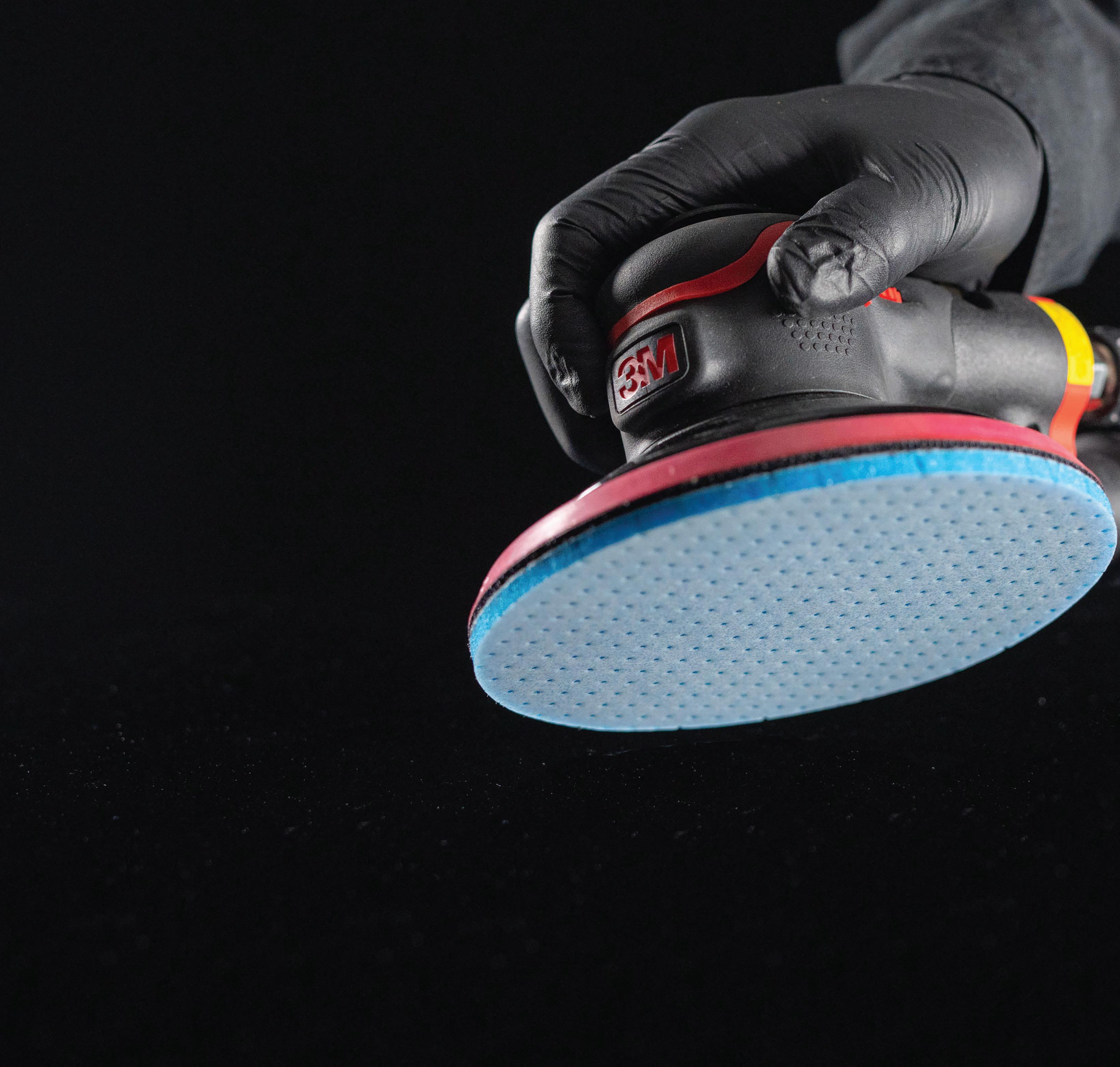
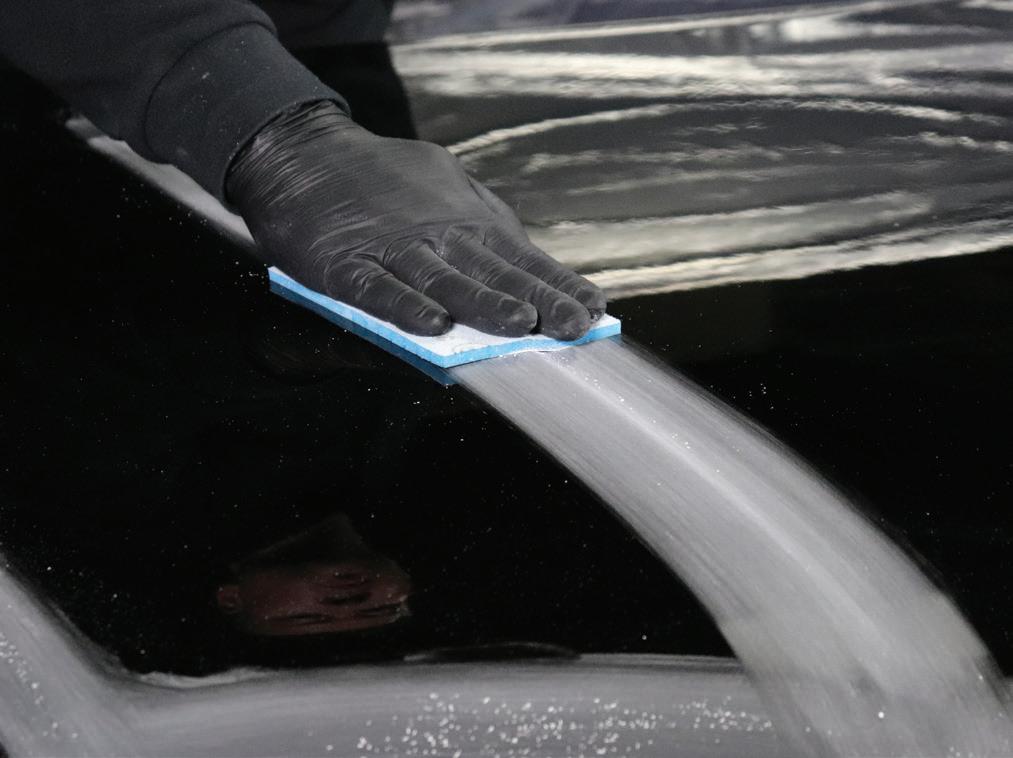
3M™ Hookit™ Flexible Foam Abrasives combine flexible aluminum oxide abrasives with a soft foam backing to create a high performing, versatile blending abrasive for dry or wet use with machine or by hand.
in Flexible Foam Abrasive Sheets Take



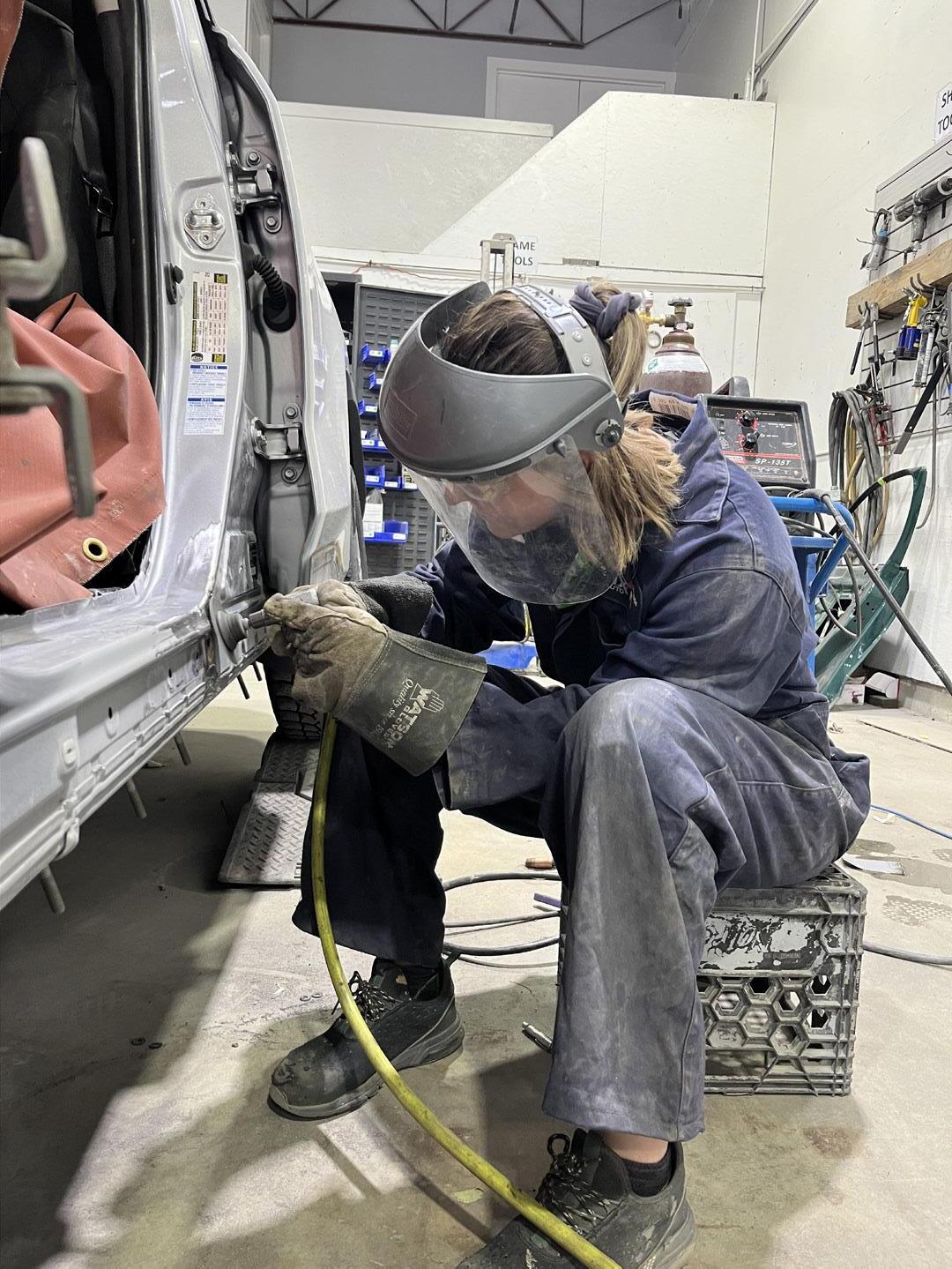



BY DARRYL SIMMONS
Canada does not have one auto insurance system. It has several. In British Columbia, Manitoba and Saskatchewan, a public model is used. The government has set up Crown corporations that sell most auto insurance. Quebec uses a hybrid model. The government handles injury claims while private insurers cover vehicle damage.
Other provinces rely on private insurance companies. Ontario, Alberta and the Atlantic provinces fall into this group, though the systems do vary considerably.
All the systems aim to do the same thing: collect premiums and pay claims after crashes. But they approach the problem differently.
Supporters of public systems say government insurers can stabilize premiums and remove the pressure to generate profit. Critics say these systems can become slow and political. When governments run insurance, decisions about rates and coverage often become political debates.
Private systems work differently. Insurance companies compete for customers. Supporters say competition encourages efficiency and innovation. Critics say private markets can become unstable when claim costs rise faster than insurers can raise premiums.
Here’s what people too invested in reform often forget — neither system is perfect. Public systems can struggle with bureaucracy and political interference. Private systems can struggle when rising claims collide with regulatory limits on premiums.
For technicians trying to understand the industry around them, Alberta offers a useful example of how complicated things can become.
The Wild Rose province operates a private insurance market, but one that is tightly regulated. Insurance companies cannot simply raise premiums whenever they want. They must apply to the provincial Auto Insurance Rate Board for approval.
In recent years, governments have also intervened directly, limiting how quickly insurers can raise premiums after public anger over rising insurance costs.
At the same time, insurers say the underlying costs of claims have been rising sharply. Bodily injury claims and legal costs have increased significantly in the province.
This creates tension inside the system. Drivers complain about high premiums. Insurers say they cannot cover rising costs. Governments promise reforms. Repairers sit in the middle.
You may be surprised to learn this, but collision repair costs aren’t, on average, the largest expense for auto insurers. Injury claims and legal costs often exceed the cost of repairing the vehicle itself. But repair estimates are the most visible part of the claim. They are the document everyone sees. That visibility means repair costs often receive the most scrutiny. Technicians see the effects of this pressure every day. Estimates are questioned. Procedures are debated. Labour rates become a negotiation.
These disputes are rarely about the technician’s work itself. They reflect larger economic pressures inside the insurance system. Alberta is now preparing a major change. The province plans to introduce a “care-first” insurance model beginning in 2027. The goal is to reduce lawsuits and provide benefits to injured drivers through a standardized system.
Supporters say the new approach will stabilize premiums and reduce legal costs. Critics say it limits the ability of injured drivers to pursue compensation through the courts. Whether the reform succeeds remains to be seen.
For technicians, the important point is this: the collision industry sits at the intersection of insurance economics, government regulation and consumer expectations. When those forces fall out of balance, tension shows up in the claim process.
Canada’s insurance landscape may look confusing — but that’s only because it is confusing. Different provinces use different models and each system comes with tradeoffs. The technician’s role within that system remains straightforward.
Regardless of whether a claim comes from a public insurer, a private company or a hybrid model, the responsibility is the same. Restore the vehicle safely. Restore it correctly.
PUBLISHER
Darryl Simmons publisher@collisionrepairmag.com
ASSOCIATE PUBLISHER
Orest Tkaczuk | orest@mediamatters.ca
ART DIRECTOR
Yvonne Maschke | yvonne@mediamatters.ca
ASSISTANT EDITOR
Mackenzie Grant | mackenzie@mediamatters.ca
INTERIM EDITOR
Gideon Scanlon | news@collisionrepairmag.com
AUDIENCE ENGAGEMENT MANAGER
William Simmons | william@mediamatters.ca
VP OF INDUSTRY RELATIONS & ADVERTISING
Gloria Mann 647.998.5677 | gd.mann@rogers.com
INDUSTRY RELATIONS ASSISTANT
Wanja Mann 705.928.0653 | wanjamann1@gmail.com
DIGITAL OPERATIONS MANAGER
Cassie Doyle | cassie@mediamatters.ca
MEDIA PRODUCTION SPECIALIST
Dayna Dicuangco | dayna@mediamatters.ca
DIGITAL MEDIA
Natalie Dinh | natalie@mediamatters.ca
SUBSCRIPTION
One-year $25 / Student Discount is 10%
Bodyworx Professional ™ is published quarterly, and is dedicated to serving the professionals of the collision repair industry. It is published by Media Matters Inc. Material in BodyworxProfessional™ may not be reproduced in any form without written consent from the publisher. The publisher reserves the right to refuse any advertising and disclaims all responsibilities for claims or statements made by its advertisers or independent columnists. All facts, opinions, statements appearing in this publication are those of the writers and editors themselves, and are in no way to be construed as statements, positions or endorsements by the publisher.
PRINTED IN CANADA ISSN 1707-6072
CANADA POST CANADIAN PUBLICATIONS MAIL
SALES PRODUCT AGREEMENT No. 40841632
RETURN POSTAGE GUARANTEED
Send change of address notices and undeliverable copies to: 86 John Street, Thornhill, ON L3T 1Y2

of the Government of Canada.”








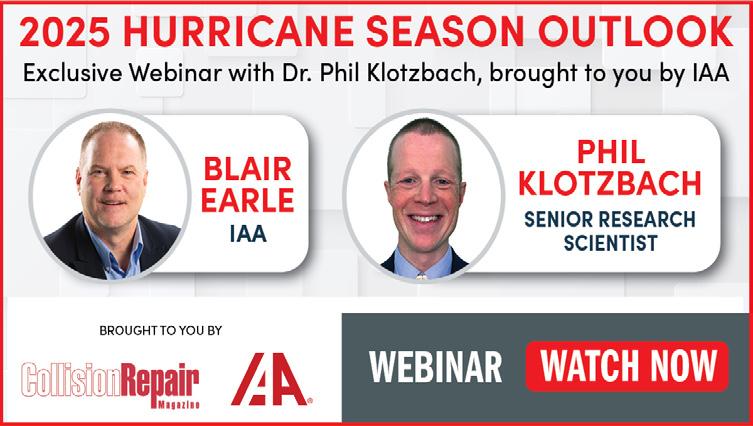
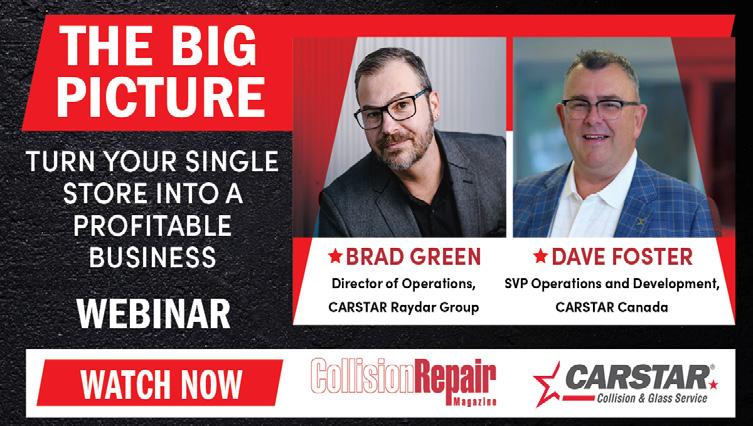
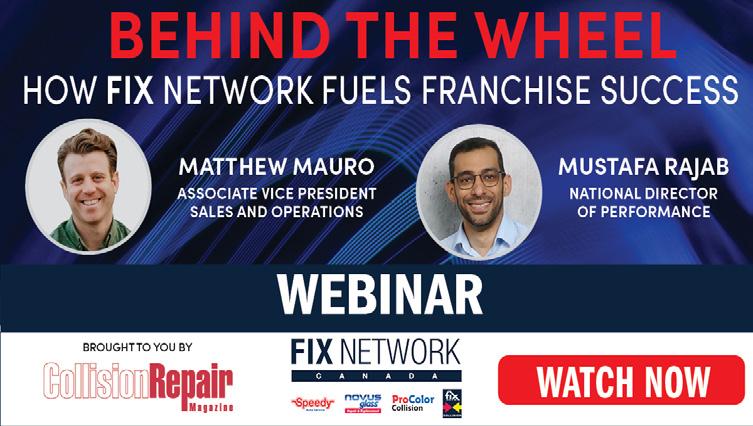
Webinars are a highly effective way to connect, communicate technology advancements, build awareness of your company’s technical expertise, showcase customer testimonials and explain product differentiators. Each live event is available on demand and promoted on the Collision Repair website.



Omar Nabil has been appointed as vice-president of sales and country leader, Canada insurance, for Solera, expanding the company’s Canadian operations in the insurance and claims market. In the role he will lead national customer engagement, deepen insurer and repairer relationships and support adoption of digital claims workflows and automation tools. Nabil brings nearly two decades of experience in sales leadership and market growth across technology and services sectors.
collisionrepairmag.com/15817237
Philippe-André Bisson has been promoted to head of product marketing at Uni-Select Inc., expanding his mandate across the company’s mechanic and paint, body and equipment divisions. In the expanded role he will lead product marketing strategy, enhance go-tomarket alignment and drive category performance alongside sales and operations teams. Bisson previously served as channel marketing lead for Uni-Select’s paint and collision department and has held senior marketing roles with automotive OEMs.
collisionrepairmag.com/15817394
Fade Bouras has been appointed as the chief operating officer of AutoCanada, an automotive dealership group based in Toronto. In this role he oversees franchised dealership operations, marketing, used dealerships and the company’s broader used-vehicle strategy, reporting to interim CEO and CFO Sam Cochrane. Bouras brings more than 22 years of experience in automotive retail, having built his career at HGrégoire in sales, finance, business development and senior operational roles. “Fade is a proven operator with deep experience across every level of dealership operations,” Cochrane said.
collisionrepairmag.com/15775448

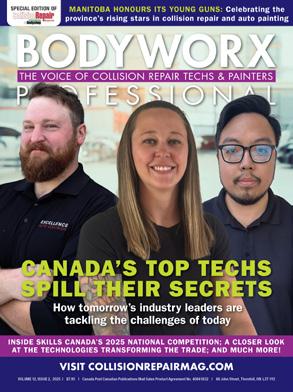
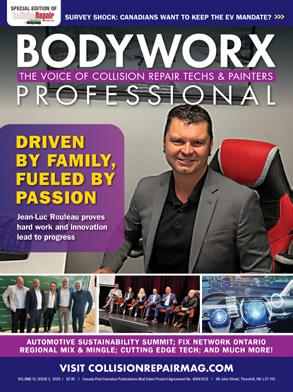
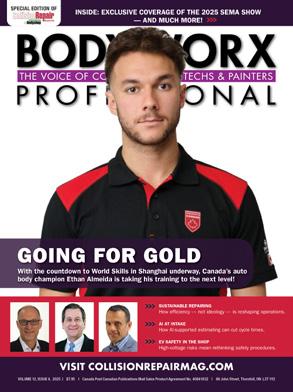




MARY MAHONEY
Mary Mahoney has been appointed as the president of the Collision Engineering Career Alliance, a nonprofit organization focused on developing future collision repair professionals. In her role she will lead efforts to grow partnerships with post-secondary institutions and advance workforce development initiatives. Mahoney spent 40 years at Enterprise Mobility, most recently serving as vice-president of the replacement and leisure division. “The collision repair sector is evolving rapidly — vehicles are more advanced, technicians need broader and deeper skills, and traditional pathways into the field are not keeping pace,” Mahoney said.
collisionrepairmag.com/15814879
DRIAAN DU TOIT
Driaan Du Toit has been appointed as the chief executive officer of AirPro Diagnostics, an automotive diagnostics and calibration services company based in Jacksonville, Florida. In the role he will lead strategic direction, operational execution and growth initiatives as ADAS complexity increases. Du Toit brings more than 20 years of leadership experience across automotive repair, fleet and insurance sectors. “AirPro sits at the intersection of safety, technology, and repair excellence,” Du Toit said.
collisionrepairmag.com/15814809
JESSICA SMITH
Jessica Smith has been appointed as the director of CRM sales and account management at Audatex, a Solera company providing automotive and collision repair software solutions. In the role she oversees CRM sales initiatives and account relationships while supporting customer engagement and performance. Smith brings more than 25 years of experience in sales and account leadership across multiple industries. “Even though my entire career by title has been sales, I’ve always had to wear the hat of customer service and performance management,” Smith said.
collisionrepairmag.com/15814656
Jason McDaniel has been appointed as the president and chief executive officer of the Insurance Corporation of British Columbia, a Crown auto insurer based in Victoria. In this role he leads the organization through continued transformation under the Enhanced Care insurance model, with a focus on service delivery, financial stability and customer experience. McDaniel joined ICBC in 2006 and previously served as vice-president of operations and chief legal officer. Board chair Catherine Holt said the decision was unanimous. collisionrepairmag.com/15814355



Independent repairers in 2026 are renewing concerns about restricted OEM data access, citing limitations that affect diagnostics and repair completeness. The issue is unfolding amid ongoing right-to-repair debates in North America. Repair advocates argue that restricted telematics and diagnostic data impede safe and competitive service. OEMs maintain that cybersecurity and vehicle integrity require controlled access. Policymakers are reviewing regulatory frameworks as pressure from trade groups intensifies. The dispute reflects the growing importance of software and connectivity in modern vehicle repair.
collisionrepairmag.com/15816563
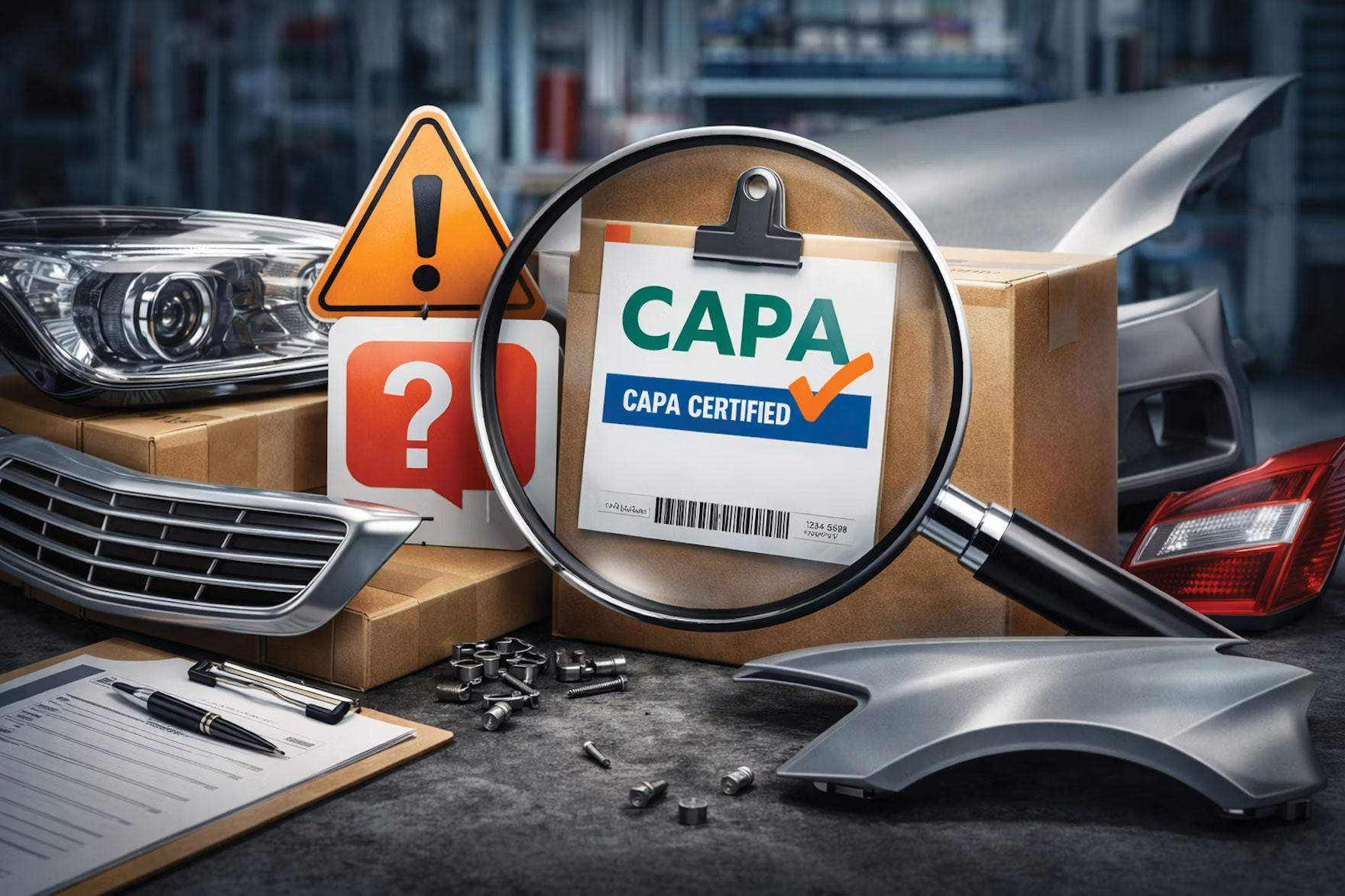
Changes involving CAPA’s parts decertification reporting have prompted reaction from repairers and suppliers in early 2026. Shops are evaluating how certification status adjustments affect documentation and insurer negotiations. Industry participants say clarity in parts verification remains critical to maintaining repair compliance and consumer trust. The issue underscores long-standing tension between cost containment and quality assurance in aftermarket parts usage. Repairers are calling for transparent communication protocols to avoid estimate disputes. The development highlights ongoing scrutiny of certification systems within collision repair.
collisionrepairmag.com/15816049
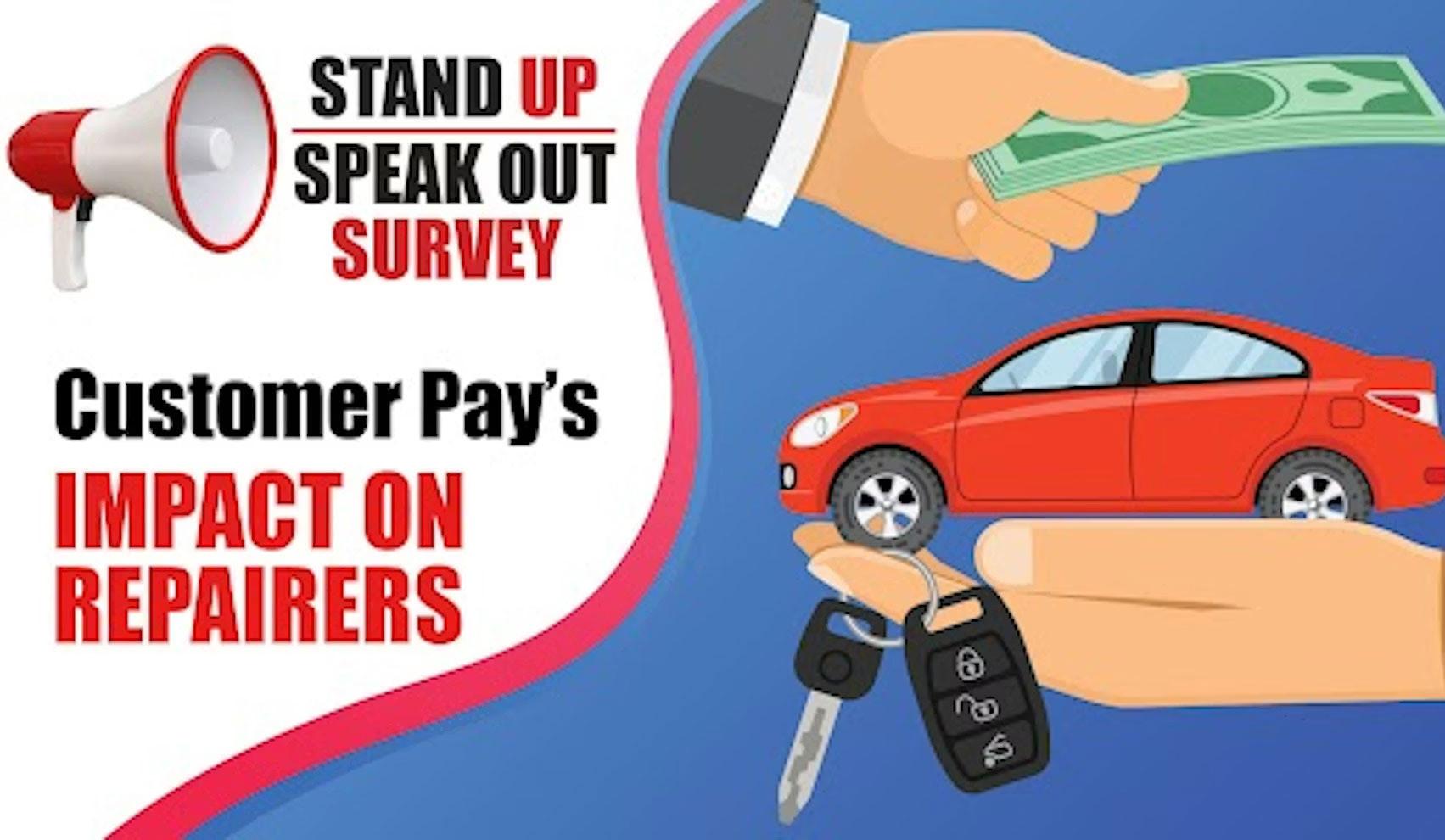
A 2026 survey of Canadian collision repair facilities shows customer-pay charges are becoming a routine part of operations. Shops report increased out-of-pocket costs resulting from insurer caps and reimbursement gaps. Operators say front-office workloads have grown as staff explain billing discrepancies to customers. The trend reflects mounting financial friction between repair economics and insurer cost controls. Administrative complexity is rising alongside repair severity. Industry observers describe the shift as structural rather than temporary.
collisionrepairmag.com/15816664



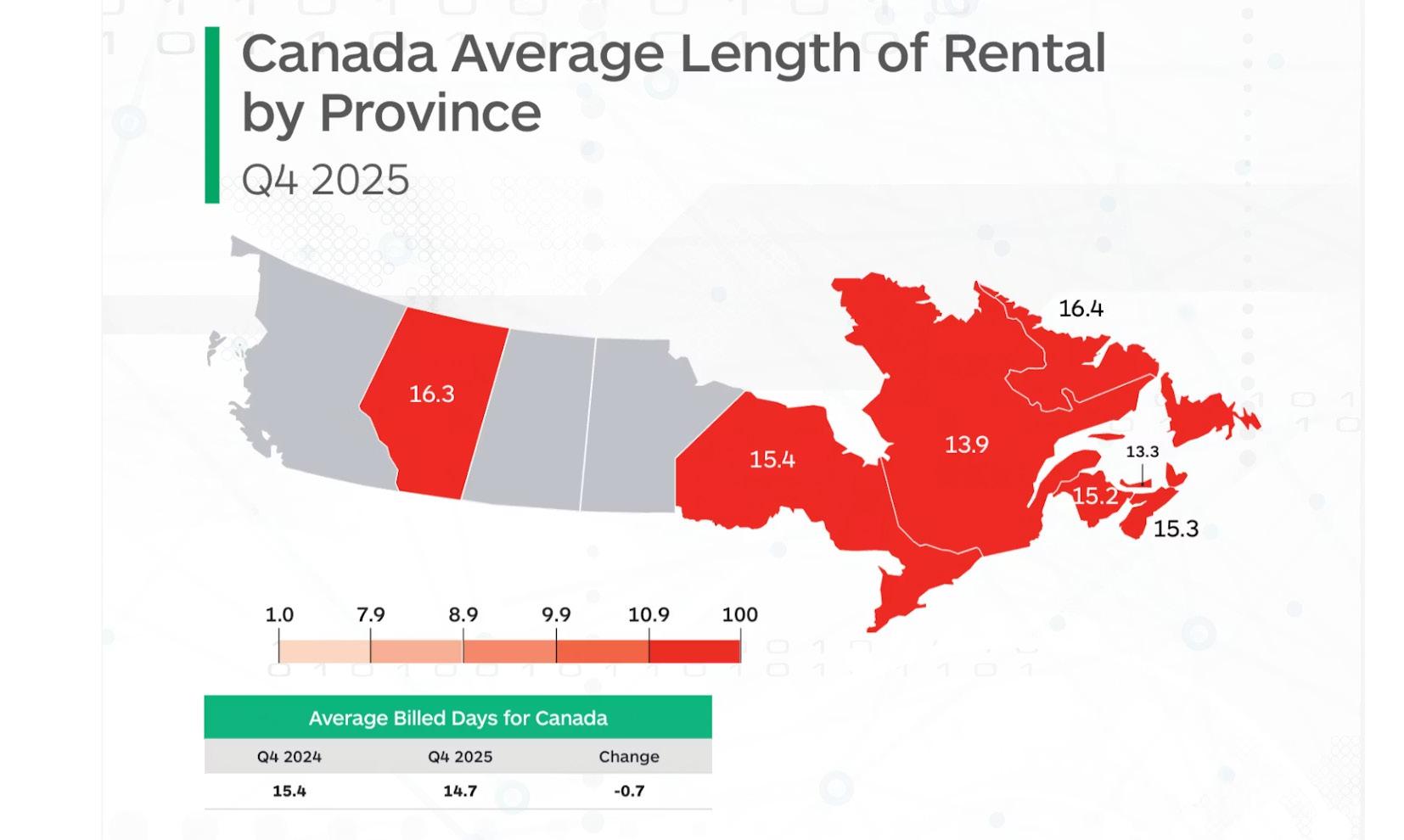
Enterprise data released in early 2026 shows Canada’s collision length-of-rental trended downward in the fourth quarter of 2025. The figures suggest modest cycle-time improvements or changes in claim mix. Insurers and repair networks are analyzing whether operational efficiency gains contributed to the decline. Rental duration remains a key metric tied to DRP performance and insurer partnerships. Analysts caution that seasonal and regional variables may influence results. The data contributes to broader evaluation of throughput and capacity management.
collisionrepairmag.com/15816644
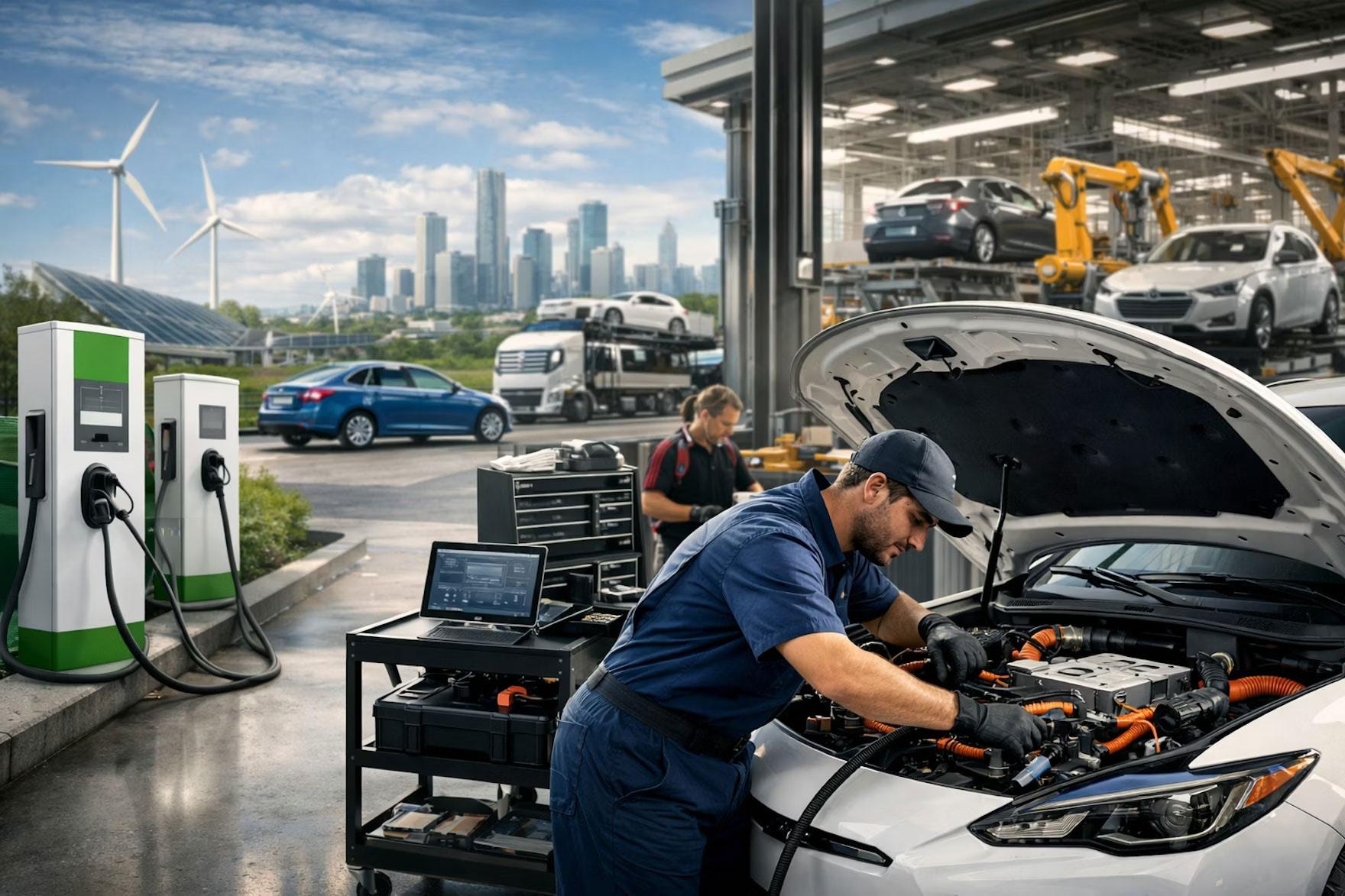
The federal government introduced a new automotive strategy in 2026 aimed at accelerating electric vehicle production and adoption nationwide. The policy emphasizes manufacturing investment, supply chain resilience and emissions reduction targets. Collision repair operators are assessing the implications for tooling, facility upgrades and technician training. Increased EV penetration will require expanded highvoltage safety protocols and diagnostic capabilities. Industry leaders say workforce development must keep pace with policy ambition. The strategy signals a longterm structural transformation in vehicle composition.
collisionrepairmag.com/15817289
Stellantis released updated guidance addressing bumper and hardware repair procedures across its vehicle lineup. The clarification outlines expectations for component replacement versus repair in facilities performing structural work. The update reflects growing integration of advanced driver assistance systems into exterior components. Training departments are reviewing procedures to ensure compliance with evolving OEM standards. Shops must align repair methodologies with manufacturer directives to maintain certification status. The guidance reinforces OEM oversight of safety-related repairs.
collisionrepairmag.com/15817653
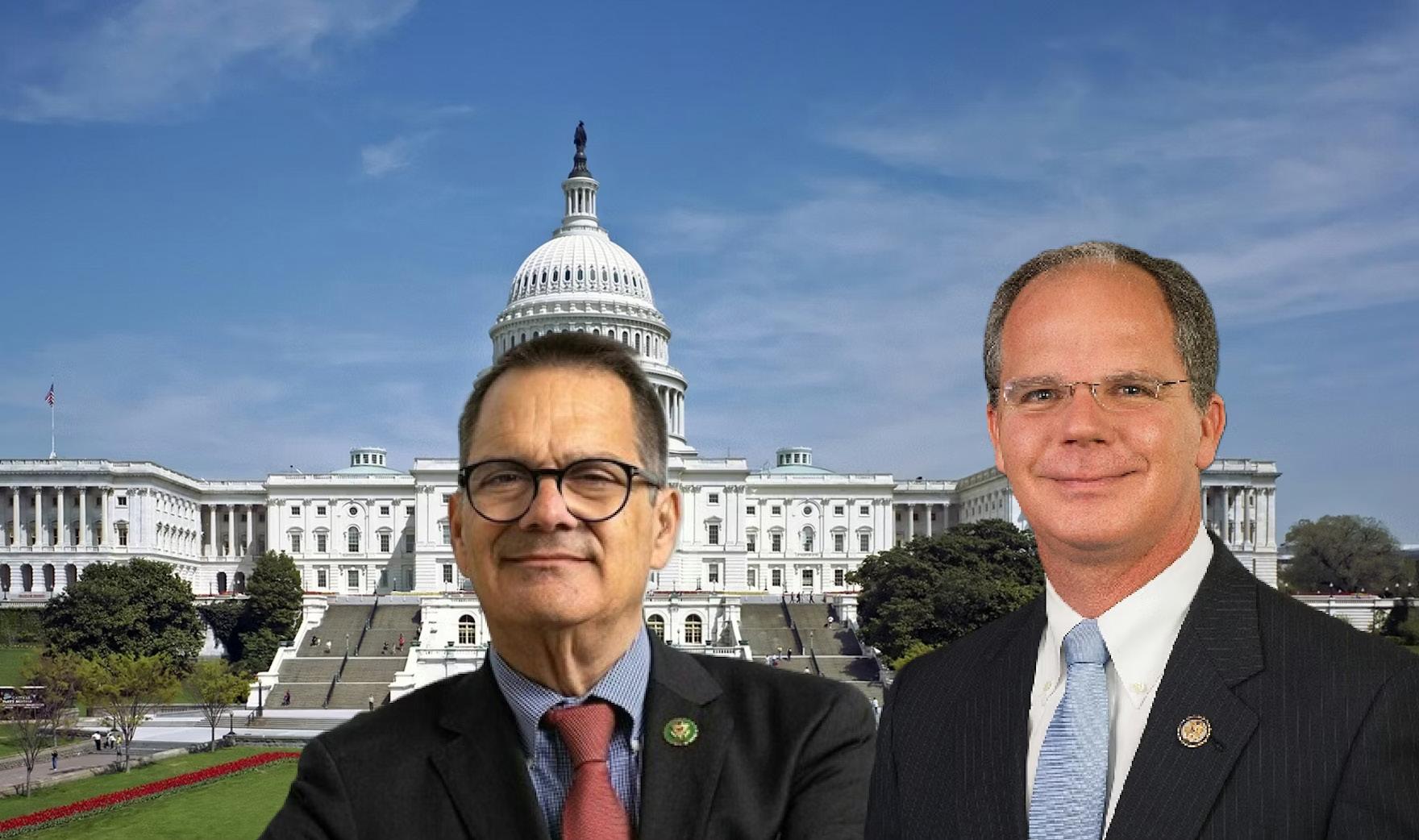
A U.S. congressional subcommittee convened hearings in 2026 to examine right-to-repair issues affecting automotive service sectors. Lawmakers questioned manufacturers, industry representatives and advocacy groups about vehicle data access and competitive fairness. The hearing took place in Washington amid growing regulatory scrutiny of repair access limitations. Independent repairers argue legislative action is necessary to guarantee data availability. Manufacturers contend that cybersecurity and system integrity must remain protected. The outcome could influence regulatory approaches across North America.
collisionrepairmag.com/15814831












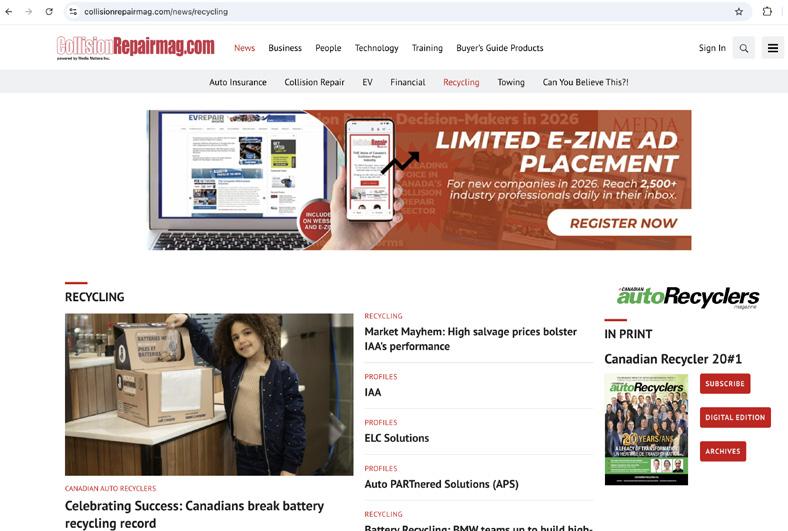





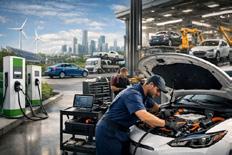
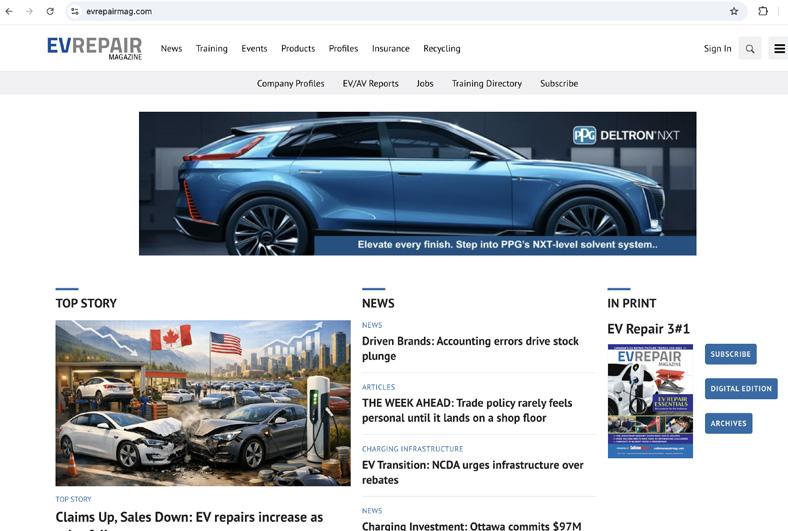
Connect with more than 9,500+ opt in subscribers with the Collision Repair magazine daily E-Zine.
collisionrepairmag.com/subscribe/collision-repair/ezine

Stay informed about the latest developments in the Canadian collision repair recycling industry.

collisionrepairmag.com/subscribe/auto-recyclers/ezine collisionrepairmag.com/subscribe/ev-repair/ezine

The Boyd Group completed its acquisition of Joe Hudson’s Collision Center in January 2026, expanding its presence across the southeastern United States in one of the largest consolidation moves of the year. The Winnipeg-based collision repair operator finalized the transaction after regulatory approvals, adding more than two hundred fifty locations and deepening its density in a key growth region. The deal, first announced in late 2025, strengthens Boyd’s insurer relationships and operational scale at a time when consolidation continues to reshape North American collision repair. The acquisition significantly increases Boyd’s geographic concentration in the U.S. Southeast, an area identified through its strategic growth planning. Leadership said the move will generate operational synergies and reinforce competitive positioning in mature markets. The transaction reflects the broader capital-backed expansion strategy among major MSOs seeking leverage through size and network reach. “Through the acquisition of JHCC, we are expanding our presence in the growing region of the U.S. Southeast, which was identified through our enhanced go-to-market strategy as a key growth region for Boyd,” said president and chief executive Brian Kaner.
collisionrepairmag.com/15814327
Automotive OEMs and suppliers across North America are reassessing sourcing and pricing strategies in early 2026 amid renewed tariff uncertainty. Trade policy signals and geopolitical tension are prompting manufacturers and distributors to review supply chain exposure and cost structures. Industry participants say prolonged tariff pressure could increase parts pricing and disrupt availability, directly affecting collision repair operations. Suppliers are diversifying sourcing channels and adjusting procurement timelines to mitigate risk. Repairers are monitoring developments closely as parts costs influence estimate accuracy and customerpay exposure. The situation highlights the continued vulnerability of globalized supply chains within the automotive ecosystem.
collisionrepairmag.com/15817221

Mitchell International reported in 2026 that electric vehicle collision claims are increasing even as new EV sales moderate in some markets. The data, drawn from North American claims activity, shows elevated repair frequency and severity tied to EV complexity. Insurers cite battery systems, sensor density and material composition as drivers of higher repair costs. Repairers are experiencing sustained demand for EV-certified capabilities despite retail sales fluctuations. The findings suggest EV repair volume is increasingly linked to vehicle parc growth rather than current sales cycles. Analysts say the data reinforces the need for continued investment in EV tooling and technician training.
collisionrepairmag.com/15817658
Axalta and AkzoNobel confirmed in early 2026 that their proposed merger is nearing completion following regulatory and shareholder processes. The transaction would unite two of the largest global automotive refinish suppliers. Both companies released quarterly updates outlining financial performance ahead of final integration steps. Industry observers expect the merger to influence product portfolios, distribution models and competitive pricing. For collision repair operators, supplier consolidation may affect brand availability and rebate structures. The deal reflects continued consolidation pressure across global coatings markets serving automotive repair.
collisionrepairmag.com/15816954
An industry performance report released in early 2026 indicates average repair orders remain stable while cost pressures continue to build. The data reflects ongoing insurer influence and persistent inflation in labour and materials. Repair volume remains supported by vehicle complexity and aging fleets, though profitability depends increasingly on operational discipline. Shops managing supplements, parts procurement and staffing effectively are outperforming peers. Analysts say margin control is becoming more critical as reimbursement scrutiny intensifies. The report suggests the market remains fundamentally sound but operationally demanding.
collisionrepairmag.com/15814910


BY GIDEON SCANLON
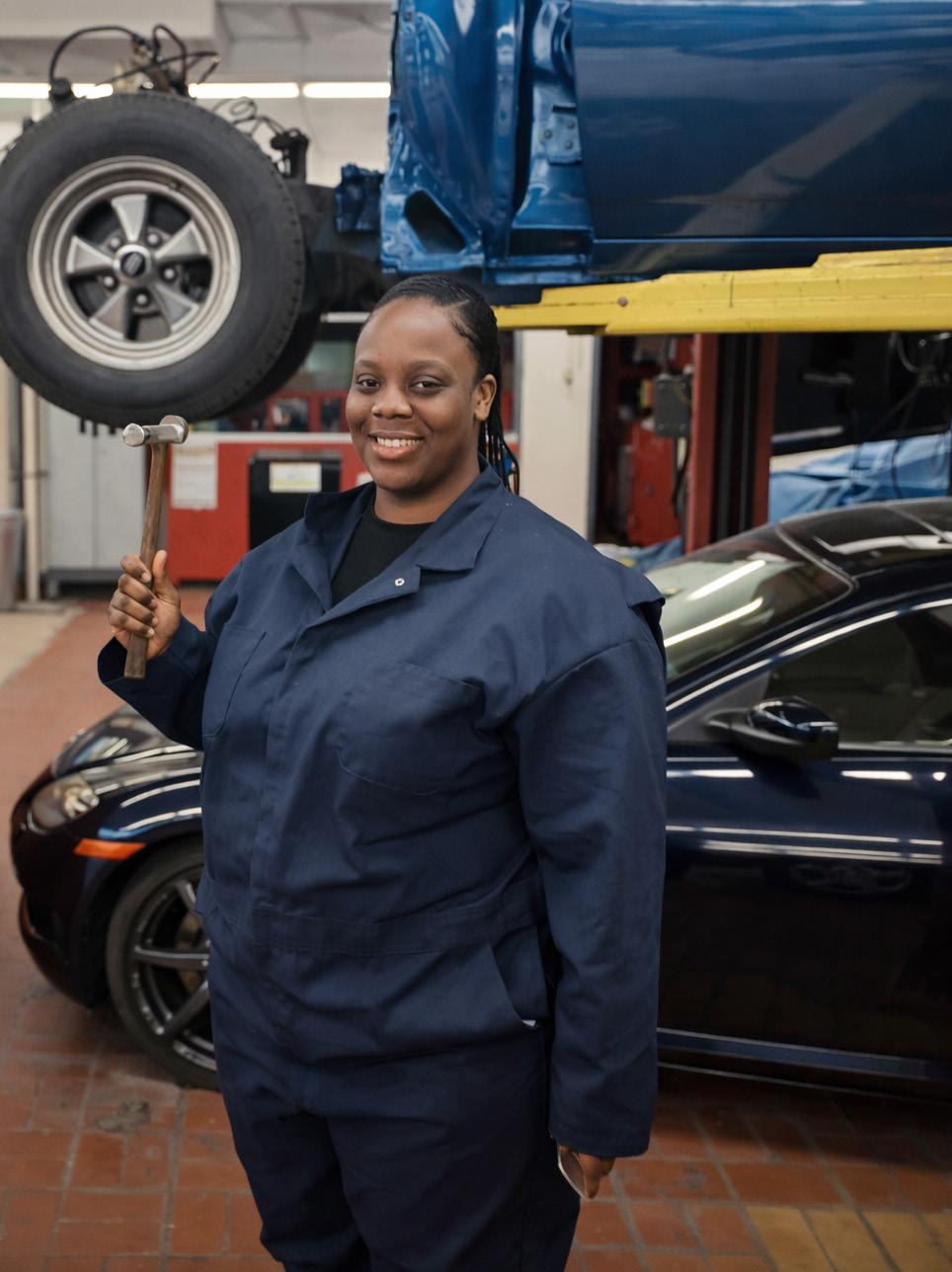
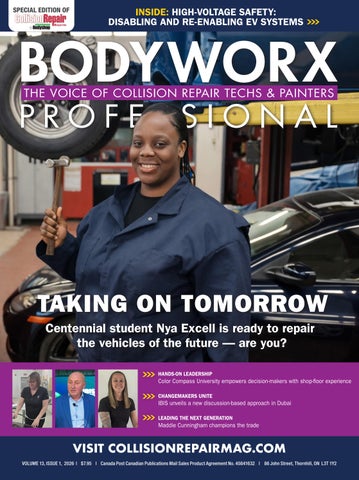
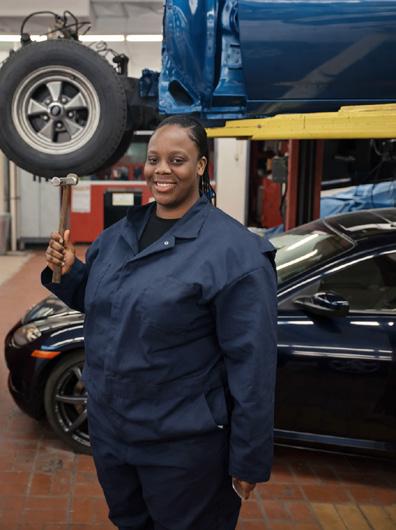
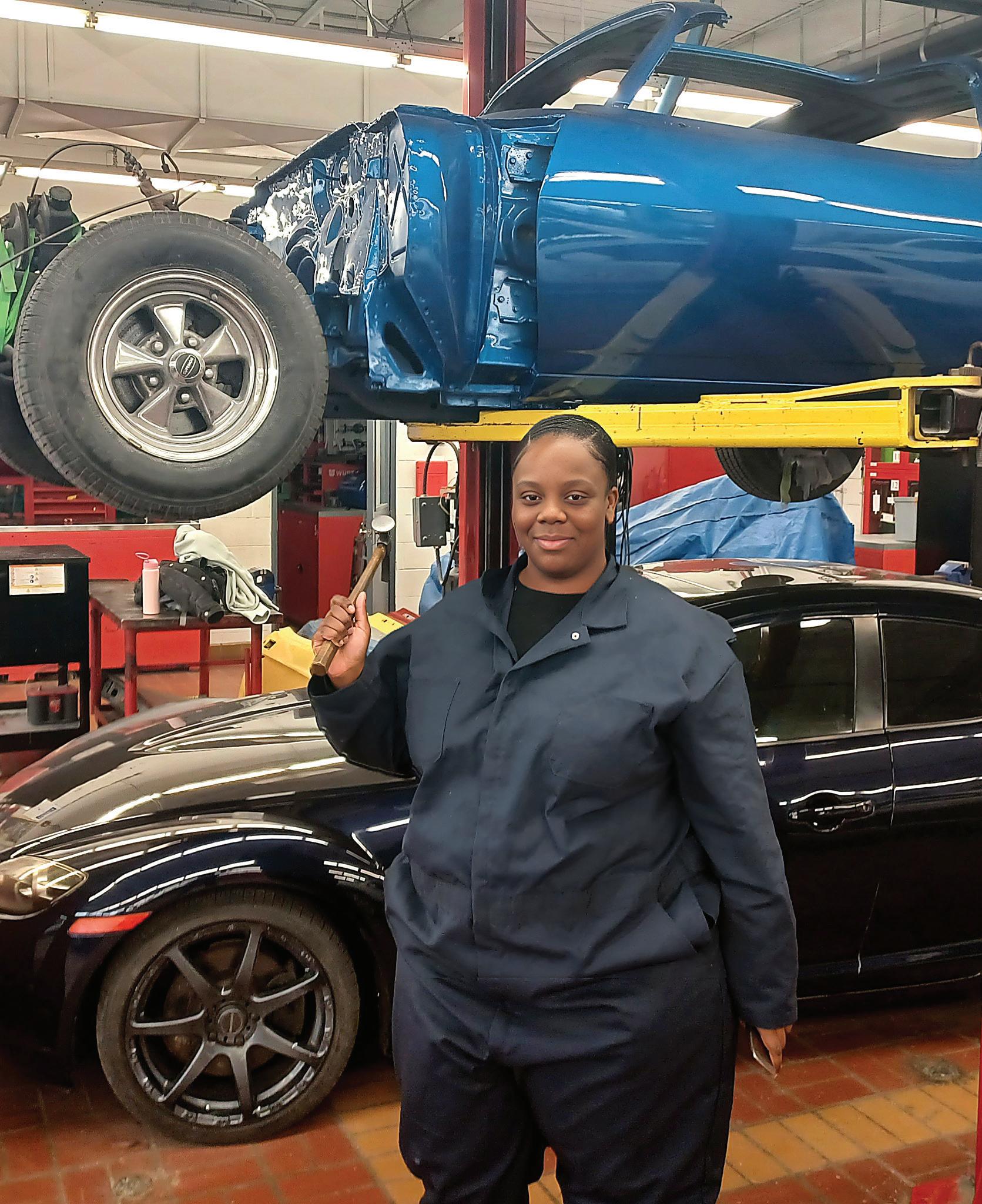
Now finishing her Level 3 apprenticeship at Centennial College, Nya Excell is preparing to step into a full-time role at Don Valley Volkswagen where she has been working in a part-time capacity since January 2025. As she approaches this milestone, she reflects on how far she’s come from the uncertain high school graduate who wasn’t sure which path to take.
“I graduated high school and I wasn’t exactly sure what I wanted to pursue as a career,” she says. “At first I narrowed it down to either autobody or mechanical. I came across the Tropicana program and registered for it. That’s how I ended up getting started in autobody.”
The program, run by Tropicana Community Services in partnership with Centennial’s Ashtonbee campus, opened doors that might otherwise have remained closed. Most apprenticeships in Ontario begin only after a worker finds an employer willing to sponsor them. For candidates without family ties to the trade or prior shop experience, that first sponsorship can be difficult to secure.
Tropicana’s program changes the sequence. Over 30 weeks, participants complete academic upgrading, Level 1 technical training at Centennial and a 12-week paid placement in a bodyshop. Participants receive tools, course materials and transit support during the classroom portion.
Paulo Santos, now associate dean at Centennial’s School of Transportation, taught the program’s earliest cohort and has seen its impact firsthand.
“I’ve seen a lot of individuals get into that program who otherwise were struggling to find an employer to hire them as an apprentice,” he says. “It was a great opportunity for people who wanted a career in the trade but were finding it hard to get in.”
For Excell, the structured approach made all the difference.
“As somebody who had no prior experience, I feel like the program made the process a lot easier,” she says. “Rather than trying to go straight into a shop and get an apprenticeship, they kind of laid things out for us and set us up for what to expect in the autobody trade.”
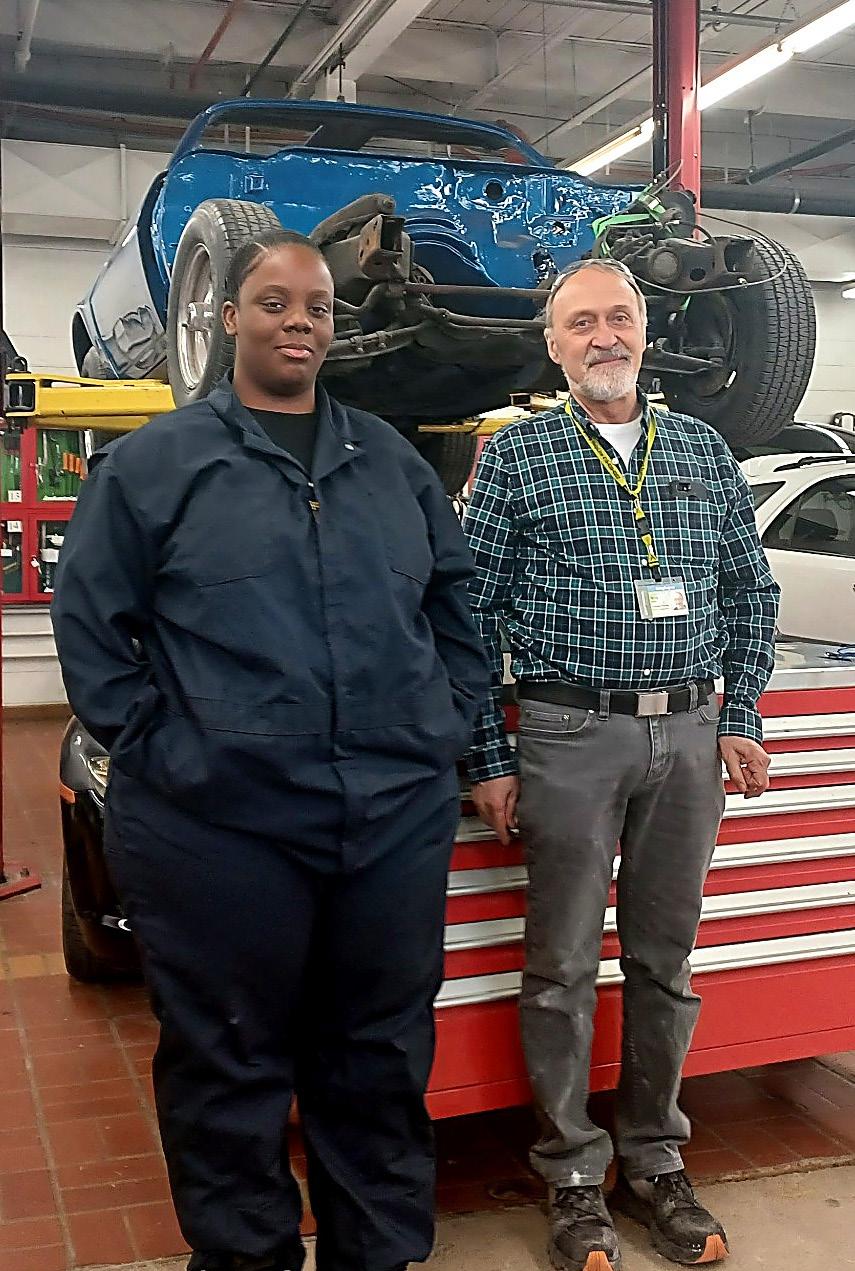

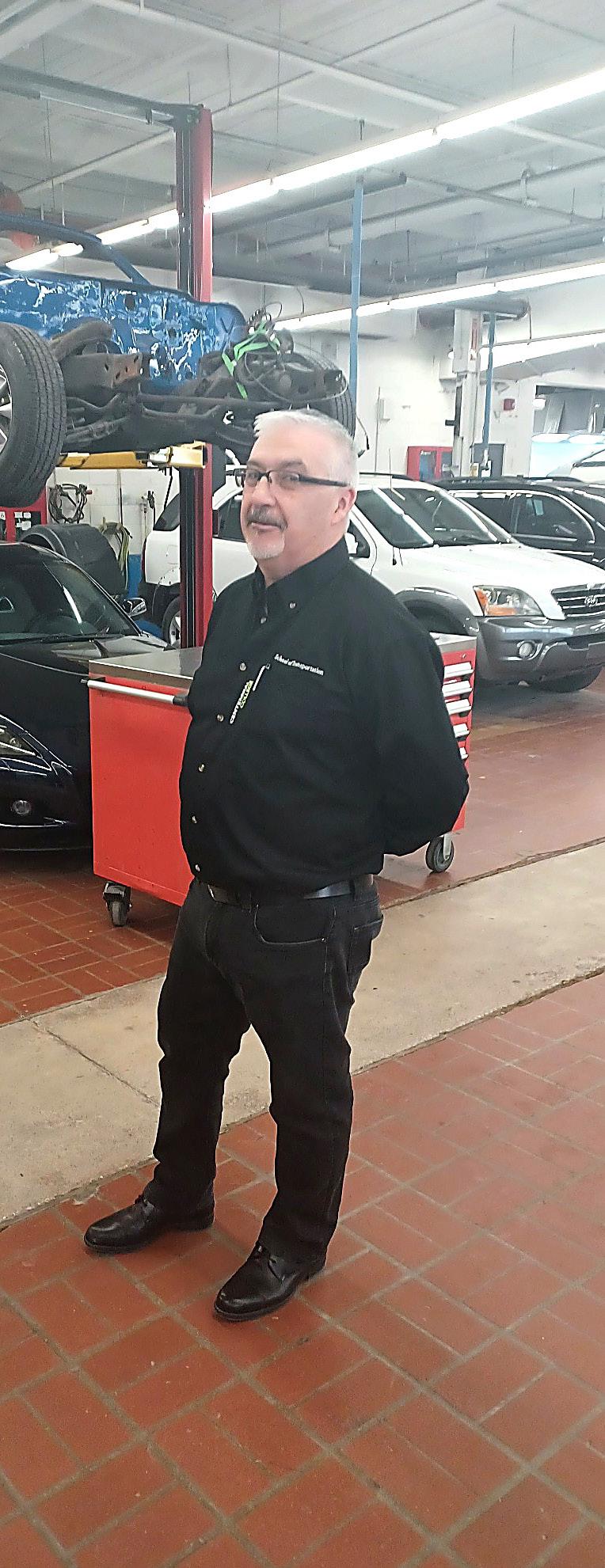
“It was a great opportunity for people who wanted a career in the trade but were finding it hard to get in.”
— Paulo Santos
Those early days tested her confidence. Some of her peers arrived with considerably more experience, which was intimidating at first. Over time, that uncertainty began to ease as she grew more comfortable with the technical side of the work.
“One of the biggest mentors I had at Centennial was Terry Alberti,” Excell says. “He was very supportive and helped keep me level-headed while I was learning the trade.”
His encouragement mattered most during the early stages of the program.
“Whenever tests were coming up, I’d get really worried about how I was going to do,” she says. “Terry would always tell me not to worry and remind me I could handle it.”
As her skills developed, she discovered capabilities she hadn’t known she possessed.
“I remember when we first started learning about hand tools,” she says. “At that time I barely knew how to use them. I surprised myself. I went from barely knowing how to use a screwdriver to doing things I never thought I’d be able to do.”
Welding became a turning point.
“That was a big experience for me because I never thought I would be doing something like that,” she says. “Learning welding was really interesting and it showed me I could handle more than I expected.”
Moving from the classroom to the shop floor brought new lessons. The workplace environment required different skills than technical training had prepared her for, but she adapted.
“They talk about what shops are like, but it’s really different once you actually experience it,” she says. “The environment was definitely tough, but I learned how to navigate it.”
One of the most important lessons involved learning to advocate for herself.
“I’m a very quiet person and I tend to keep to myself,” she says. “I realized I don’t necessarily have to change who I am to fit in, but I do have to be more assertive and stand up for myself at work.”
That assertiveness opened new opportunities.
“Once I started speaking up more, I got more opportunities to learn and work on bigger jobs in the shop,” she says.
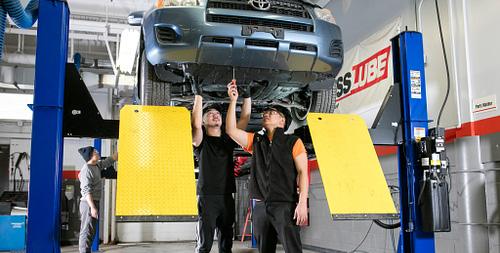
Tropicana’s program changes the sequence. Over 30 weeks, participants complete academic upgrading, Level 1 technical training at Centennial and a 12-week paid placement in a bodyshop. Participants receive tools, course materials and transit support during the classroom portion.
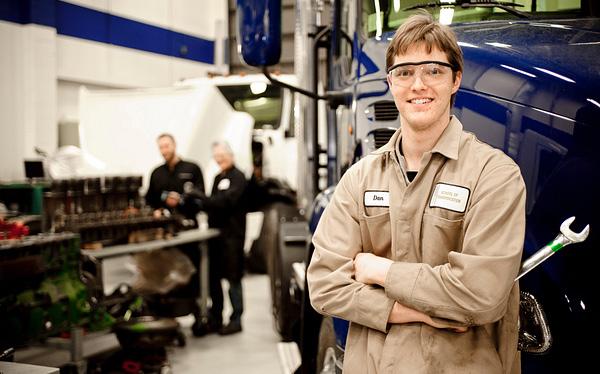
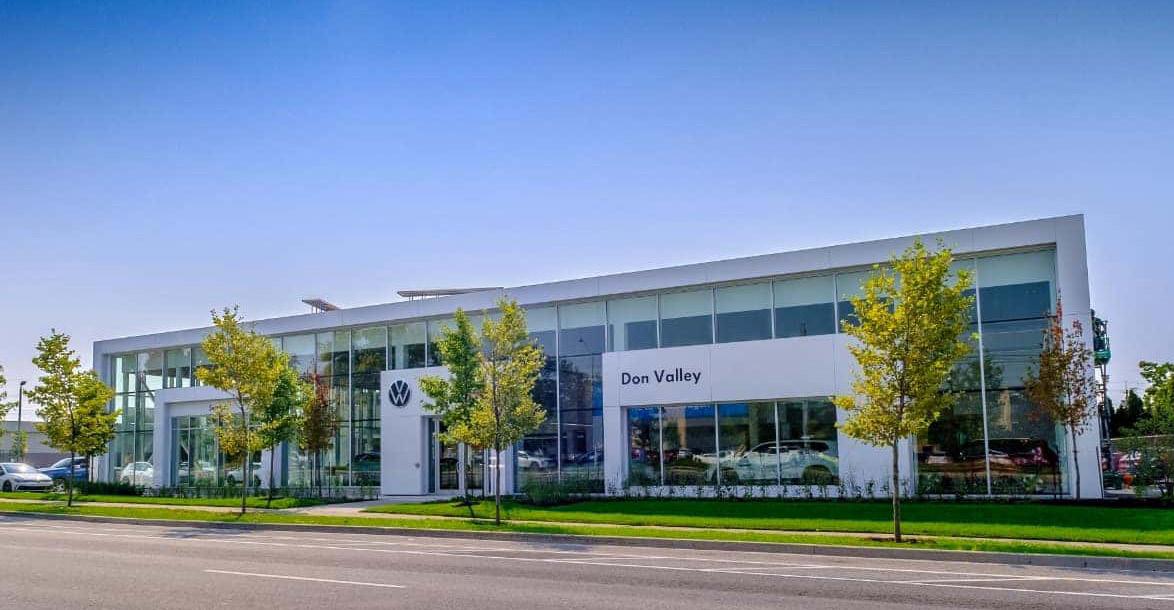
“I surprised myself. I went from barely knowing how to use a screwdriver to doing things I never thought I’d be able to do.”
— Nya Excell
Her experience reflects a sector in transition. Women represent roughly 7% of workers in the skilled trades across Canada, according to Statistics Canada. Within automotive repair the share is higher — women make up about 23.6% of the broader automotive maintenance workforce — and that percentage continues to grow.
The challenge remains moving people through the full apprenticeship pipeline. Women account for fewer than 10% of Red Seal trade certificate holders nationally, but programs like Tropicana and increased employer awareness are helping change those numbers.
Santos has seen the improvement in workplace culture.
“Employers are more aware now,” he says. “For the most part, male technicians will step up and ask if you need a hand.”
For Excell, the rewards of the work keep her motivated.
“I take a lot of pride in my work,” she says. “I enjoy seeing the end result and knowing that I did a good job on a repair.”
The responsibility matters too. Collision repair carries real safety implications, from structural repairs to welding and fastening.
“That’s something I always have to take into consideration,” she
says. “If you do your job badly, people can get hurt. At Centennial and at work they’ve made it clear that safety and quality are really important. So that’s something I never overlook.”
Looking ahead, her ambitions are clear. In 10 years, she hopes to be working for herself, perhaps running her own shop. She also wants to mentor future technicians entering the trade.
“For women who are interested in the trade but don’t know if they would be a good fit, I’d like to be someone who motivates them,” she says. “I want to show that you can start from nothing and work your way up.”
Her progression from uncertain graduate to confident technician demonstrates what becomes possible when barriers to entry are lowered and workplace cultures evolve. Programs like Tropicana provide the initial pathway. Supportive workplaces provide the environment for growth. And technicians like Excell prove what the industry gains The question is no longer whether women belong in collision repair. The question is how quickly the industry can create the conditions that allow more of them to succeed.
T“Bridging the gap between leadership and the shop floor leads to stronger communication, smarter estimating, improved profitability, and greater respect for the craft.”
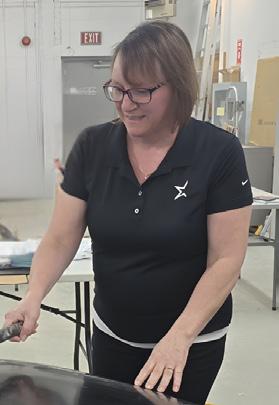
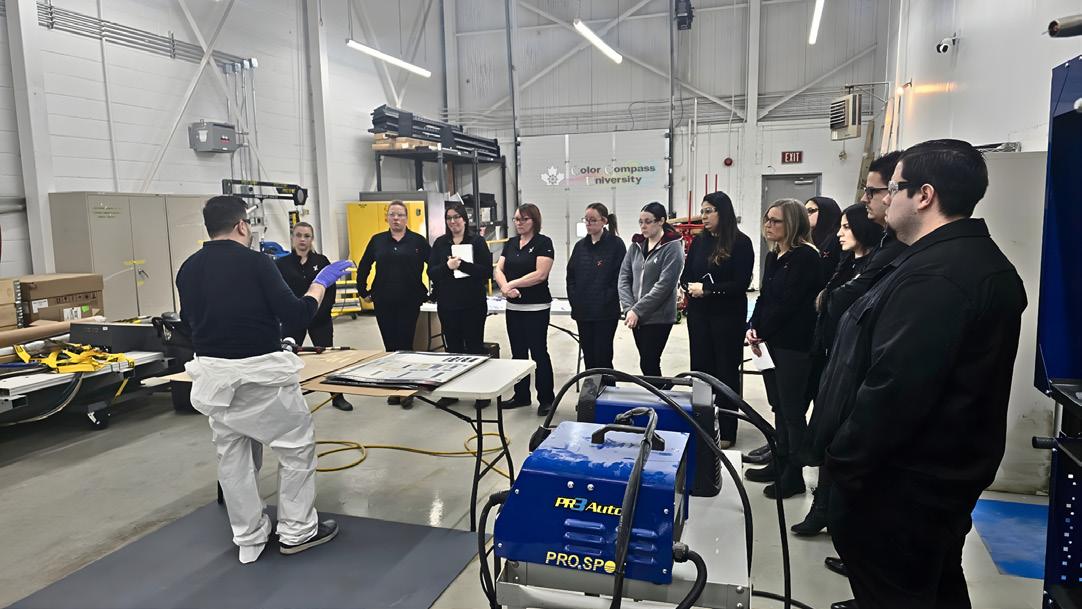
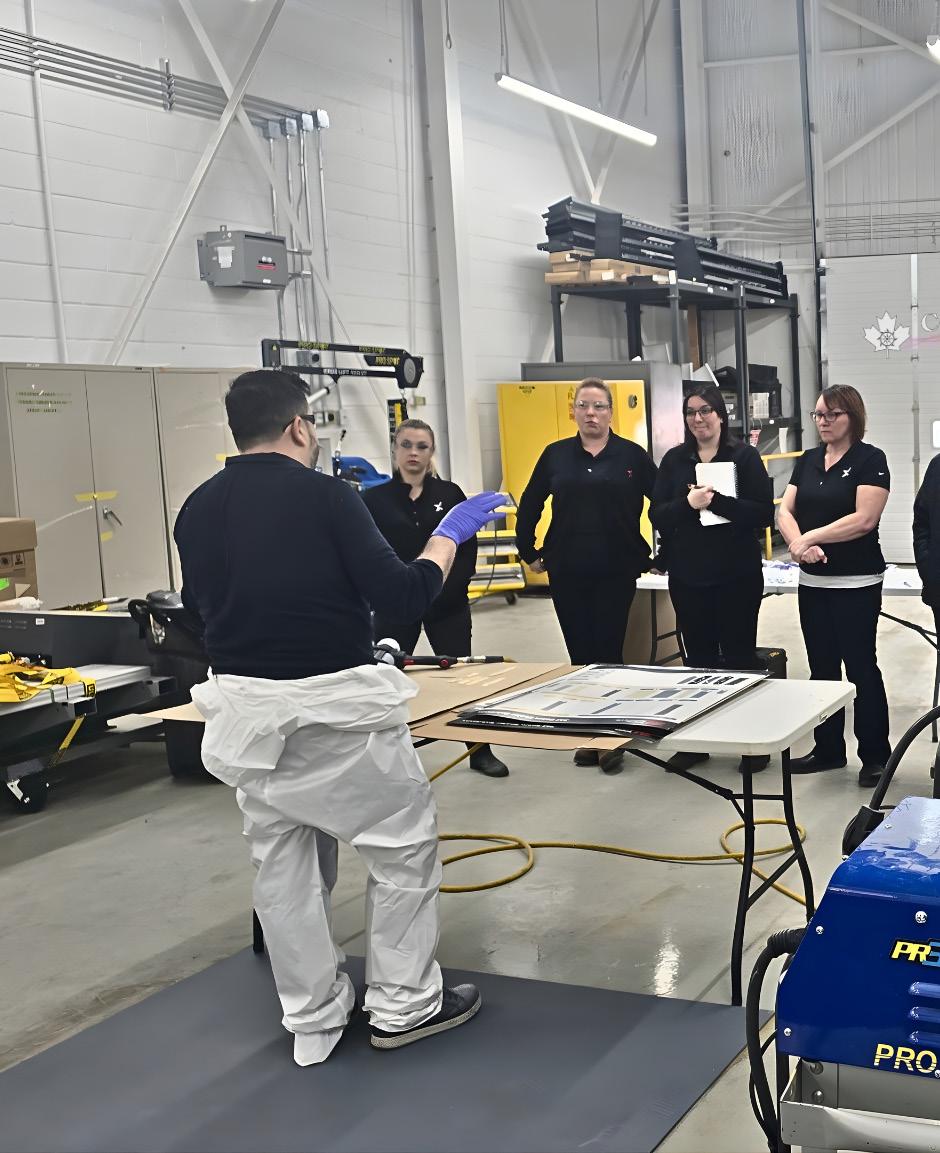
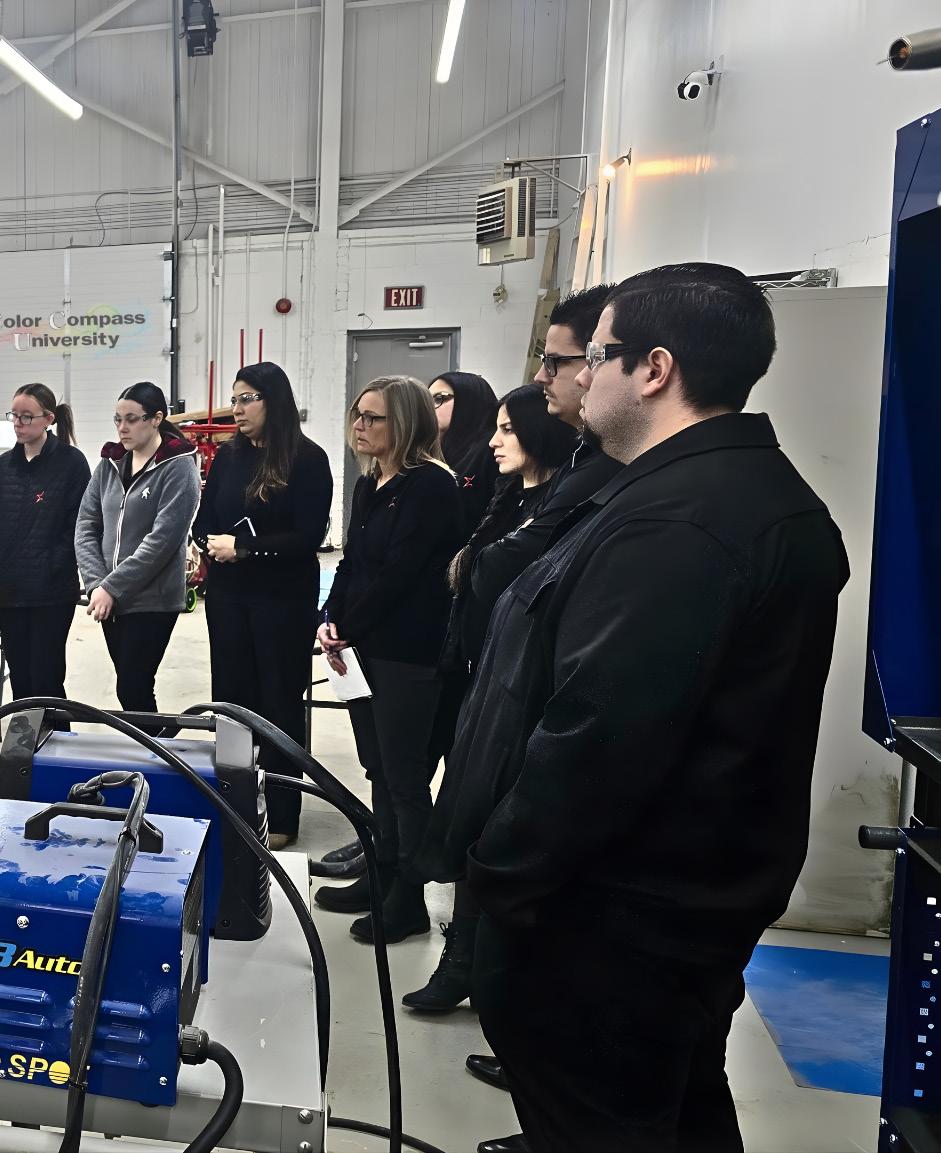
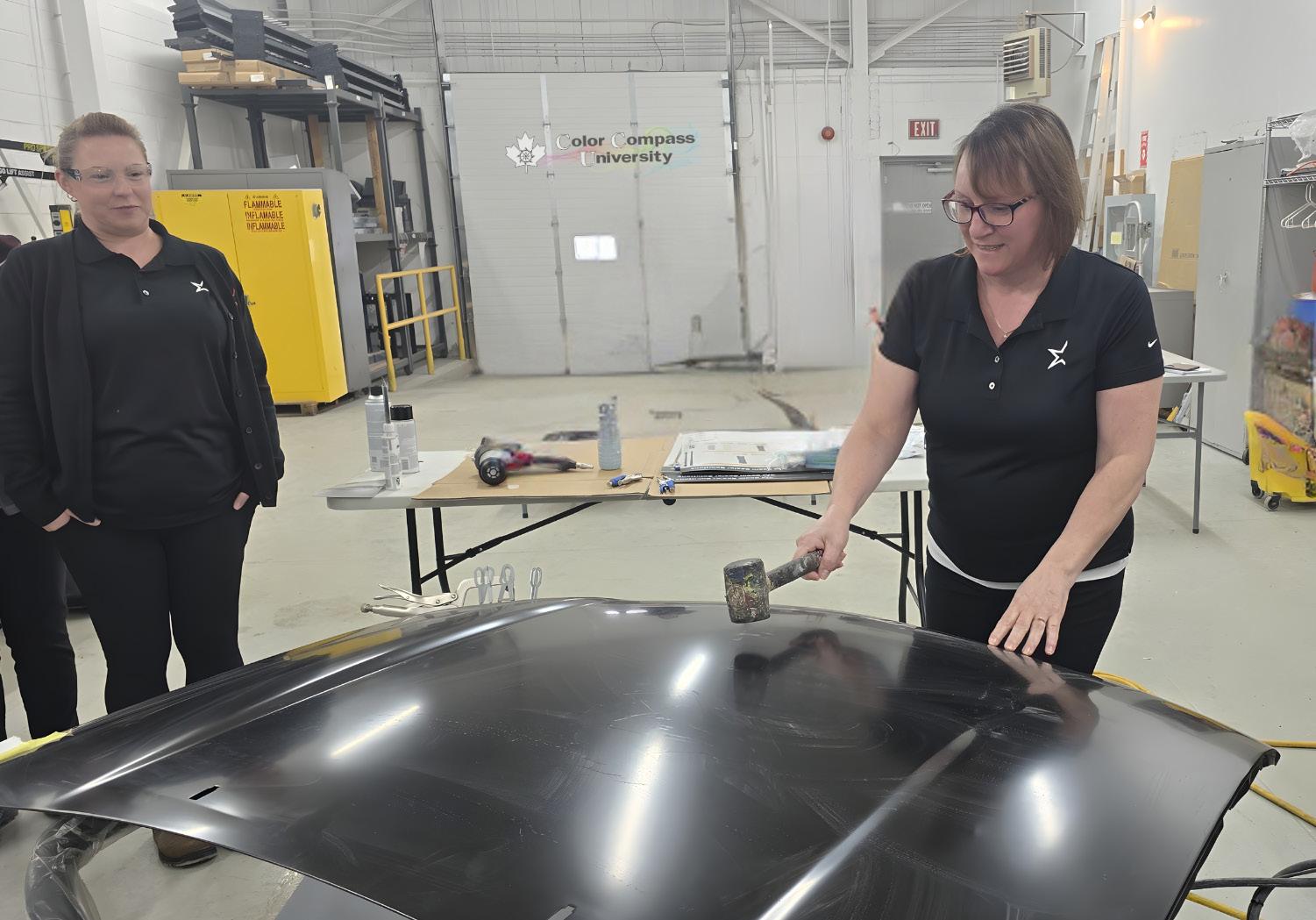
orcam Group recently took a bold and refreshing step forward by putting its managers and operations leaders directly into the repair process. Hosted at the Color Compass University Mississauga Training Centre, this exclusive hands-on session was intentionally designed for leadership — not technicians — with the goal of connecting decision-makers to the realities of the shop floor.
“At Color Compass, we believe better repair outcomes start with better understanding — especially at the leadership level,” according to a company release. “That belief is the foundation of Color Compass University, and it’s what we’re proud to bring to Ontario’s collision repair industry at our new Mississauga location.”
Rather than learning from a classroom or presentation, participants stepped into the work itself. With sleeves rolled up and guidance from the Color Compass training team, they actively engaged in essential repair processes, including:
• Advanced blending techniques
• Precision dent repair
• Seam sealer application
• Proper selection and use of body materials
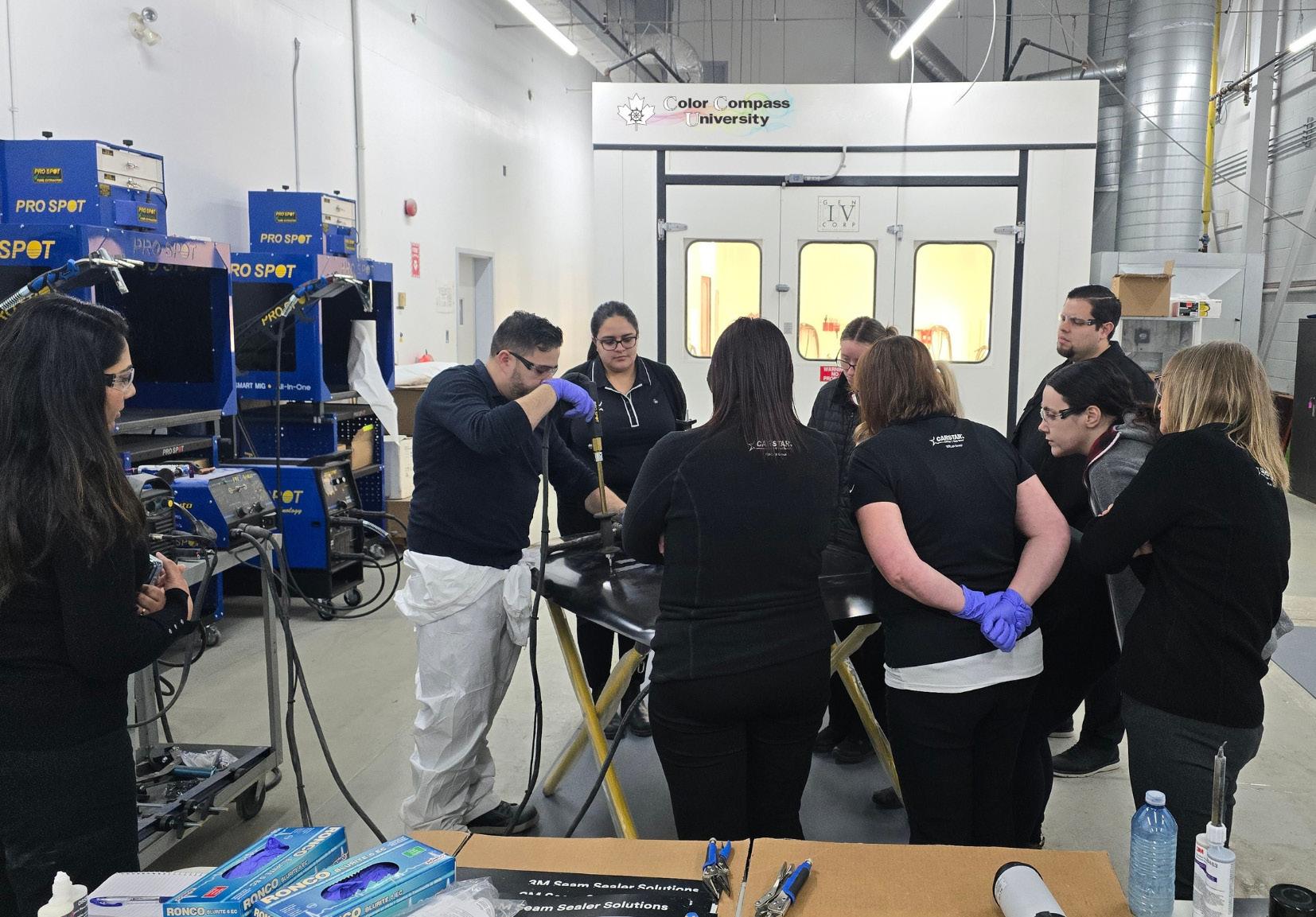
The objective was simple but impactful: to help leaders understand the why behind each repair step so they can make more informed estimating and operational decisions.
By performing the same procedures their technicians complete every day, Torcam’s leadership team gained deeper insight into repair methodology, material selection, time requirements, and quality standards.
What made this session especially meaningful, according to the release, was the makeup of the group. Many attendees were experienced female leaders who have long overseen repair operations and supported their teams — but had never personally performed these procedures. Stepping into the technician’s role created an engaging, empowering learning environment and sparked valuable discussion.
The energy throughout the day reflected that shift. Focus and collaboration filled the shop as participants worked through real-world repair challenges. The result wasn’t just technical understanding — it was perspective.
The feedback provided to Color Compass reinforced the value of this approach. Attendees described the experience as eye-opening, empowering, and far more impactful than expected, noting that it
fundamentally changed how they view estimating, repair planning, and material usage.
Color Compass congratulated the Torcam Group for their innovative mindset, leadership-driven approach, and commitment to continuous improvement. According to the release, their willingness to invest in hands-on leadership development — and to partner with Color Compass in doing so — reflects the kind of forward-thinking leadership that moves our industry forward.
“Leadership level technical immersion isn’t common in our industry — but at Color Compass, we believe it should be,” stated the company release. “Bridging the gap between leadership and the shop floor leads to stronger communication, smarter estimating, improved profitability, and greater respect for the craft. This session represents more than a single training day. It reflects the purpose of Color Compass University: to elevate operational excellence from the top down — and it’s exactly the type of experience we’re proud to offer at our Color Compass University location in Mississauga.”
collisionrepairmag.com/15819255
Our journalists put you right in the action at major industry events. The biggest trade shows and conferences can be viewed online in the Collision Repair mag flickr albums.







“Speaking with passion not PowerPoints, each highlighted either a proposed solution to one issue facing the industry, one untapped opportunity, one area of frictional inefficiency that could be removed or one new innovation that would mean a positive stride forward for the industry.”
— Robert Snook
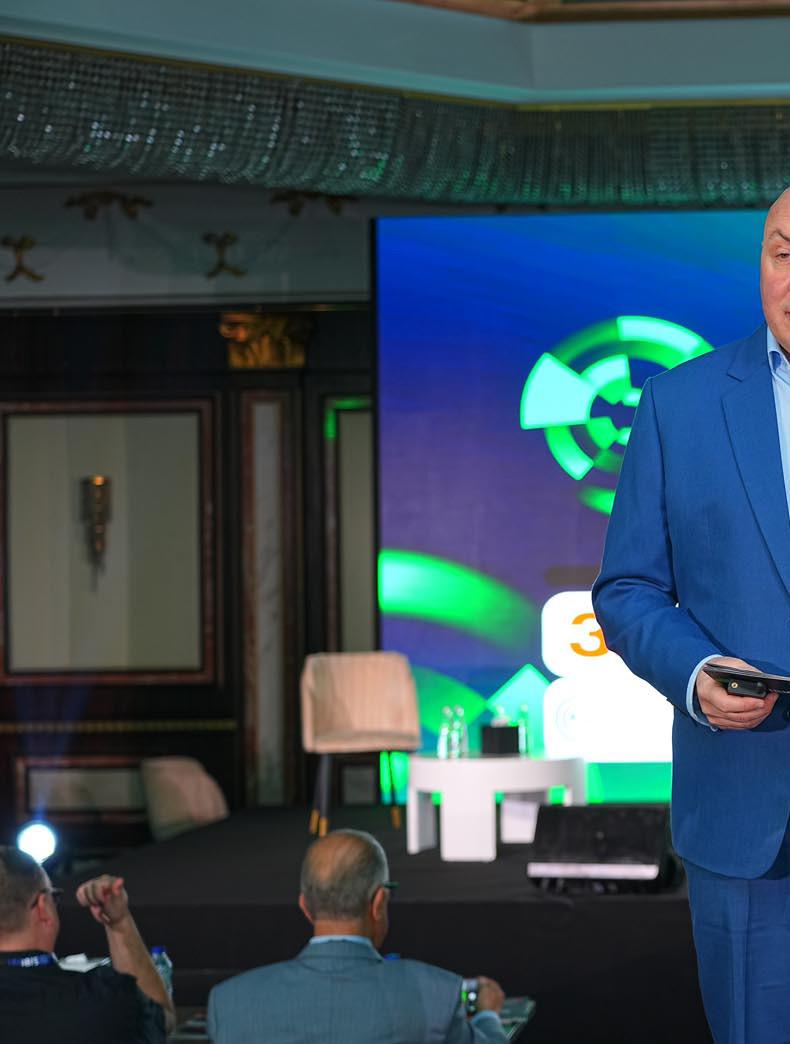

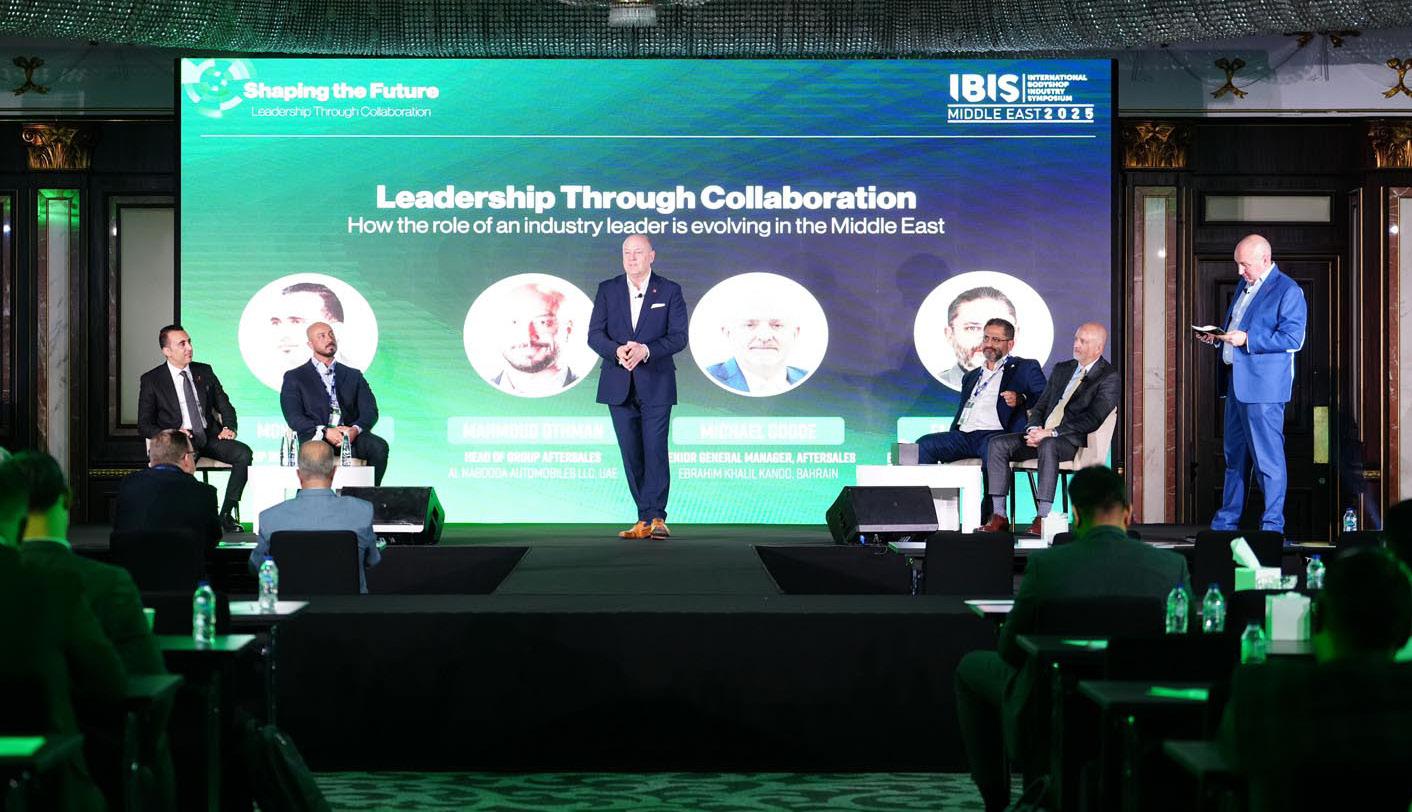
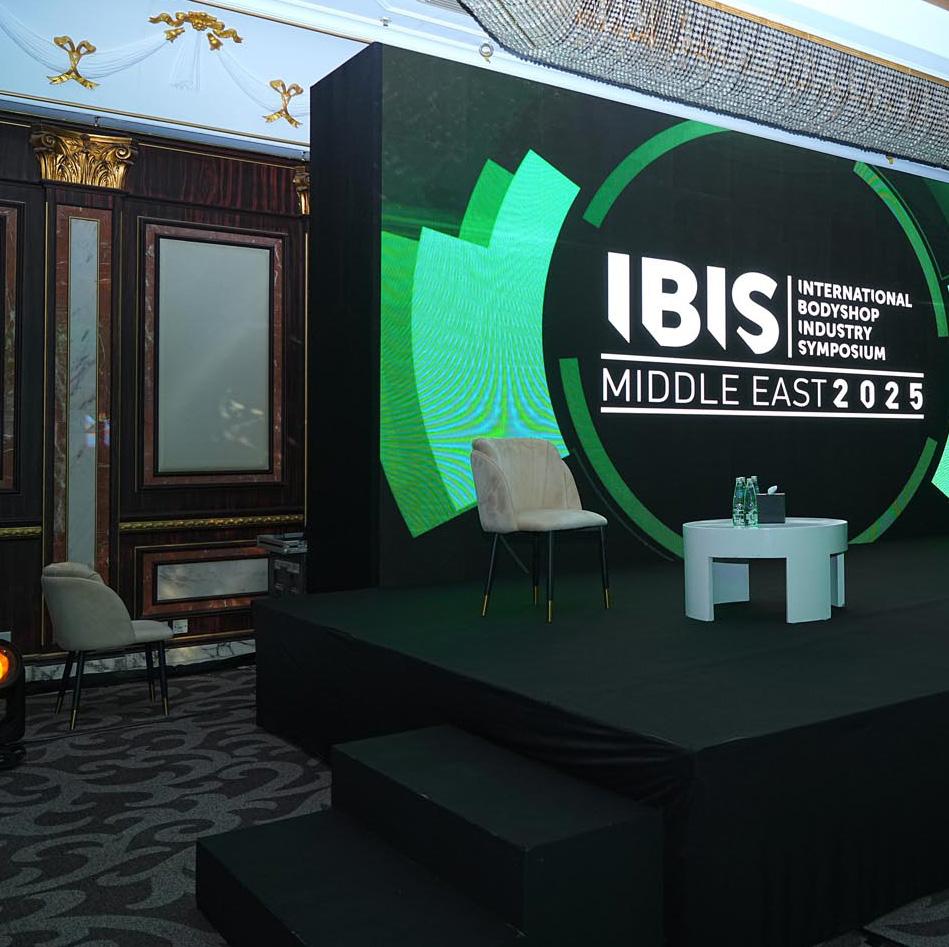
The International Bodyshop Industry Symposium adopted a redesigned format at its recent Middle East event, held at the Avery Conference venue at the Conrad Dubai on Feb. 10–11.
Aligned with the 2026 IBIS theme, “Connecting Changemakers,” the event moved away from traditional keynote PowerPoint presentations, remote dial-in speakers and large panels delivered to a darkened, classroom-style auditorium.
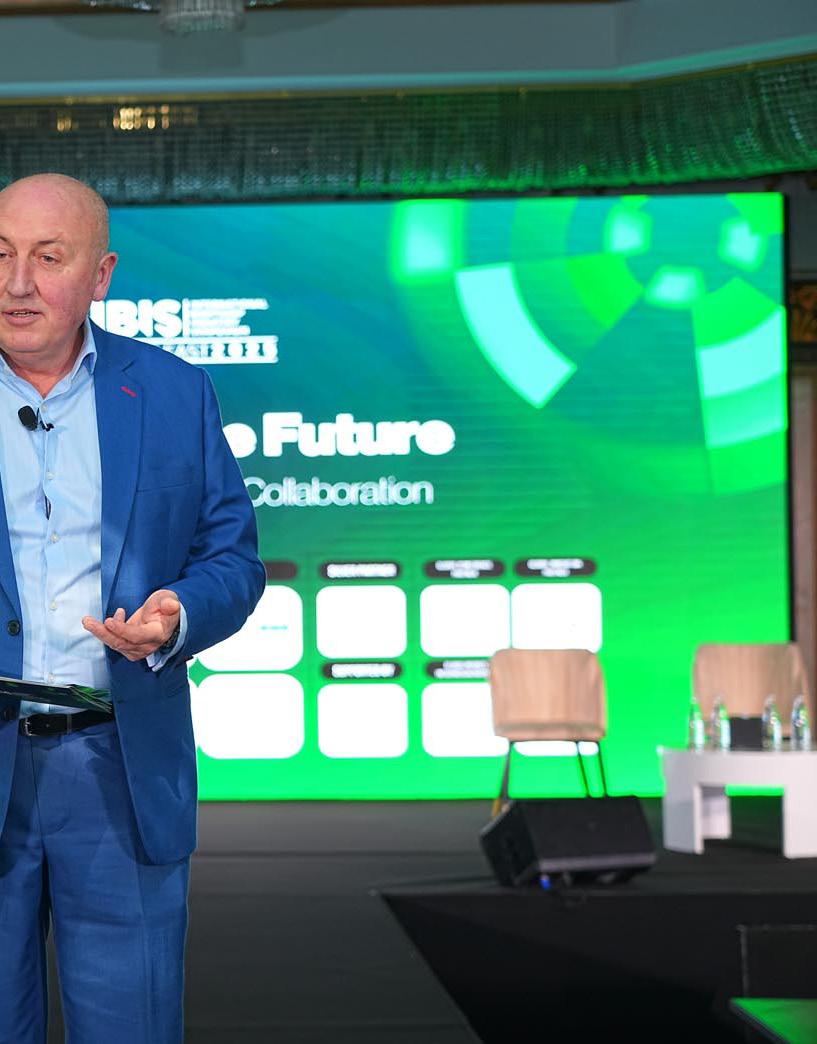
In their place came a brighter, more open indoor-outdoor setting and a multi-dimensional event space designed to encourage dialogue rather than passive listening. The intention was clear: to create an environment where industry leaders from across the Middle East collision repair sector could engage directly and constructively.
A central feature of the new format was the IBIS lightning conference session. Representatives from across the ecosystem — insurers, repairers, suppliers and OEM stakeholders — each spoke for five minutes without slides, graphics or video support.
“Speaking with passion not PowerPoints, each highlighted either a proposed solution to one issue facing the industry, one untapped opportunity, one area of frictional inefficiency that could be removed or one new innovation that would mean a positive stride forward for the industry,” said conference director Robert Snook. “Each individual outlined the idea, then proposed a practical solution and explained why the industry would benefit from adopting the new approach, finishing with a call to action to join them in making it happen.”
For Snook, one of the most notable contributions came from a dealer who challenged regulations common across much of the Middle East requiring collision repairs to be carried out at an authorised agency bodyshop during the first year of a vehicle’s life. While the precise mechanics differ by country, the principle is widely applied across the region.
The dealer argued that this time-based structure is increasingly misaligned with today’s vehicle technology profile, particularly as EV, ADAS-enabled and connected vehicles move beyond their first year in service.
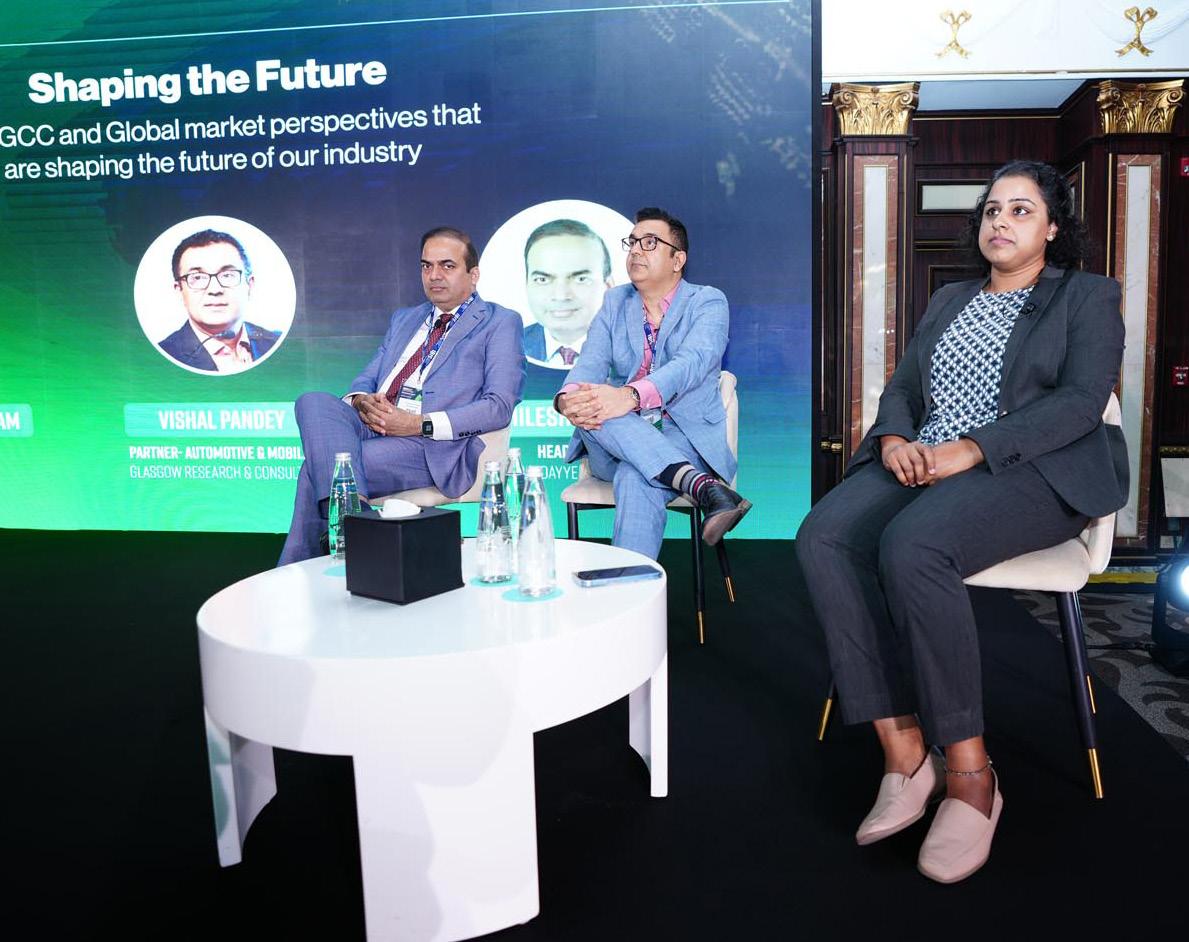
“We should change it to a capability based system, where repairs are deployed to a tier-based model based on international best practices and standards, that ensures the right repair goes to the right repairer every time, based on capability to repair correctly, so that consumers can be assured their car will be repaired accurately, regardless of whether it is repaired at the agency of that brand or a capable independent workshop,” he said.
Snook acknowledged that implementing such a model would require regulatory reform, but described the proposal as potentially “a game changer for regional stakeholders, for consumer choice and for future improvements to road safety in second accidents.”
While capability-based repair allocation is well established in Europe and North America through OEM certification programmes and tiered insurer agreements, the Middle East market remains less mature. In many countries, structured accreditation, insurerrepairer alignment and audited capability frameworks are limited or inconsistent.
Road safety formed the foundation of the opening session. Speakers framed repair quality not as a commercial differentiator, but as a public safety obligation.
“Manufacturers spend millions developing safer vehicles, but if a car isn’t repaired properly, it doesn’t protect the consumer in the next accident,” Snook said.
“The conscious and unconscious decisions we take in the claims management, repair deployment and repair processes have either positive or negative consequences downstream from that point in the process.”
He added that the liability implications are significant. “Choices have consequences and it is our responsibility and our accountability to take ownership of trends and changes to ensure a safety led culture prevails above commercial only considerations.”
With high-voltage EVs and increasingly sensor-dense ADAS systems entering the region in growing numbers, post-repair calibration accuracy and structural integrity are no longer secondary technical details.
“It’s really important to understand our responsibility and potential liability in the next accident,” Snook said. “These are now global cars that must be repaired to the same global OEM standards.”
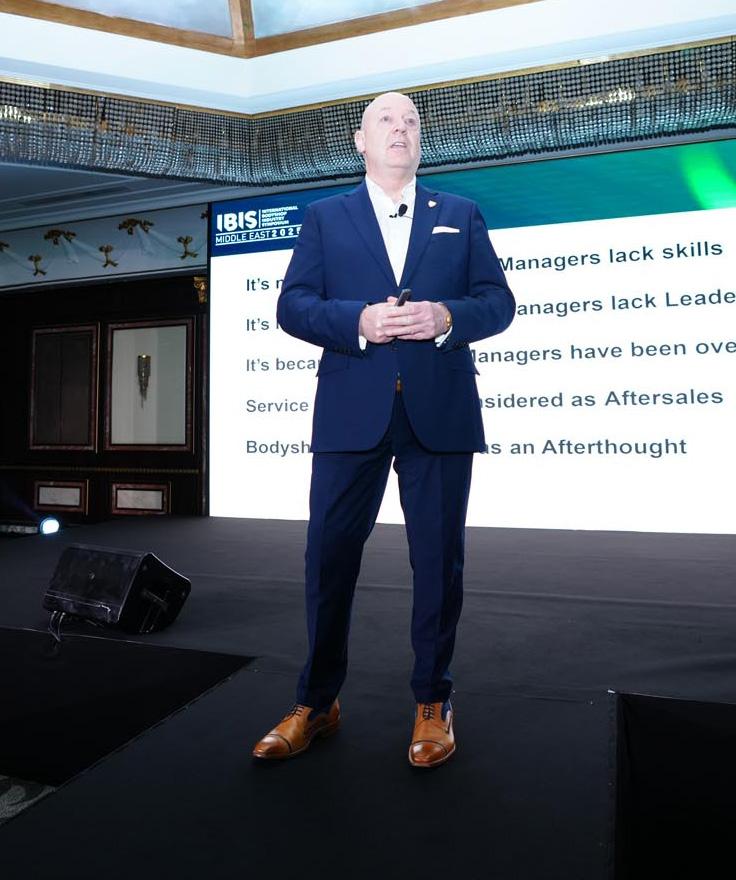
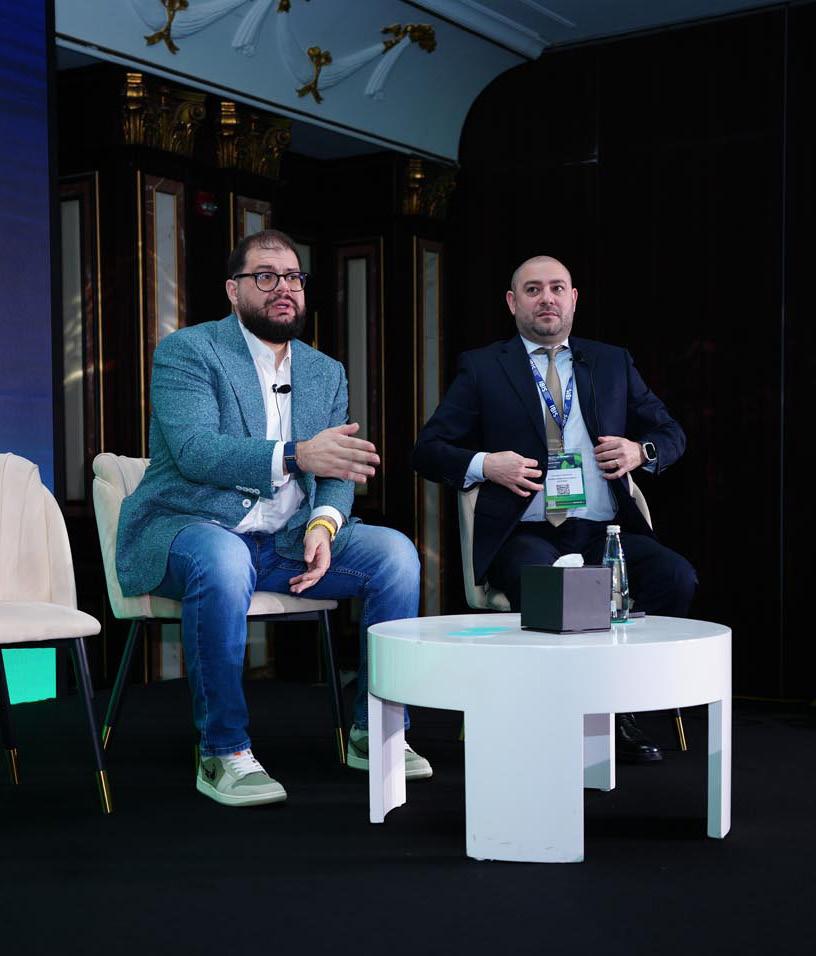
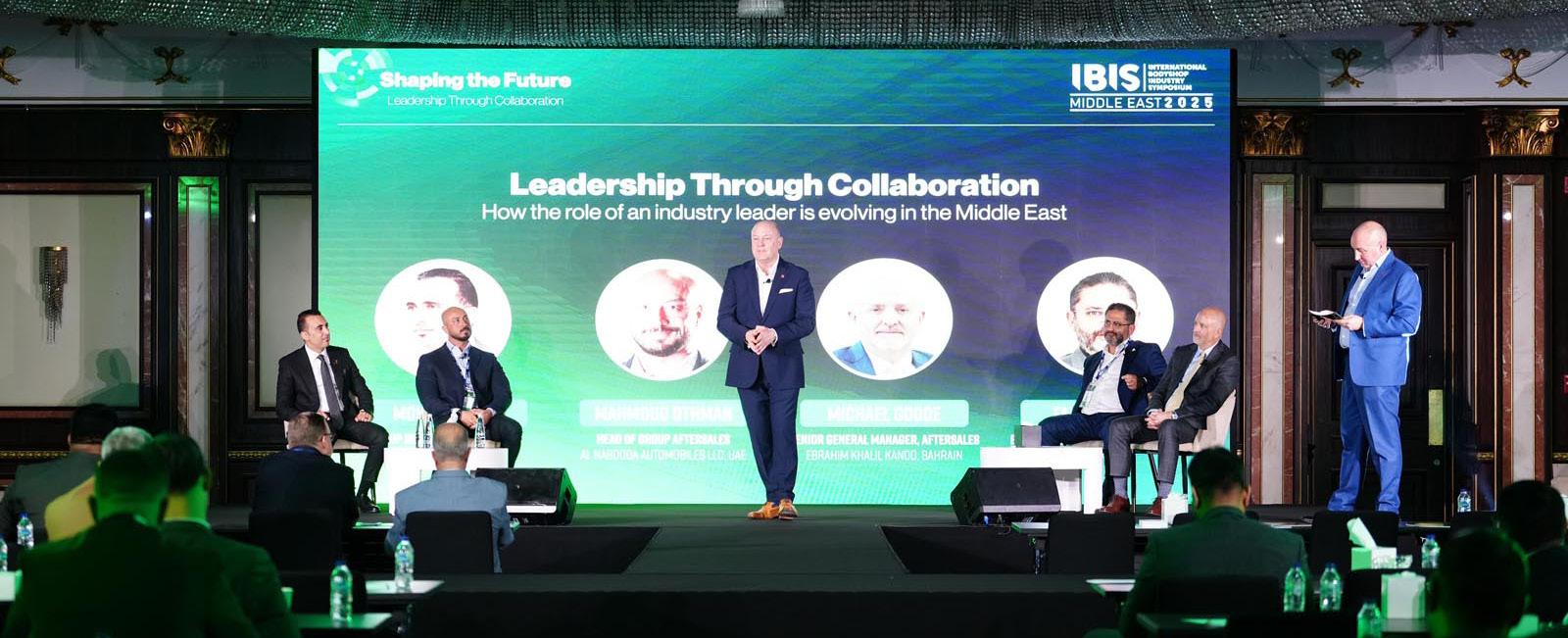
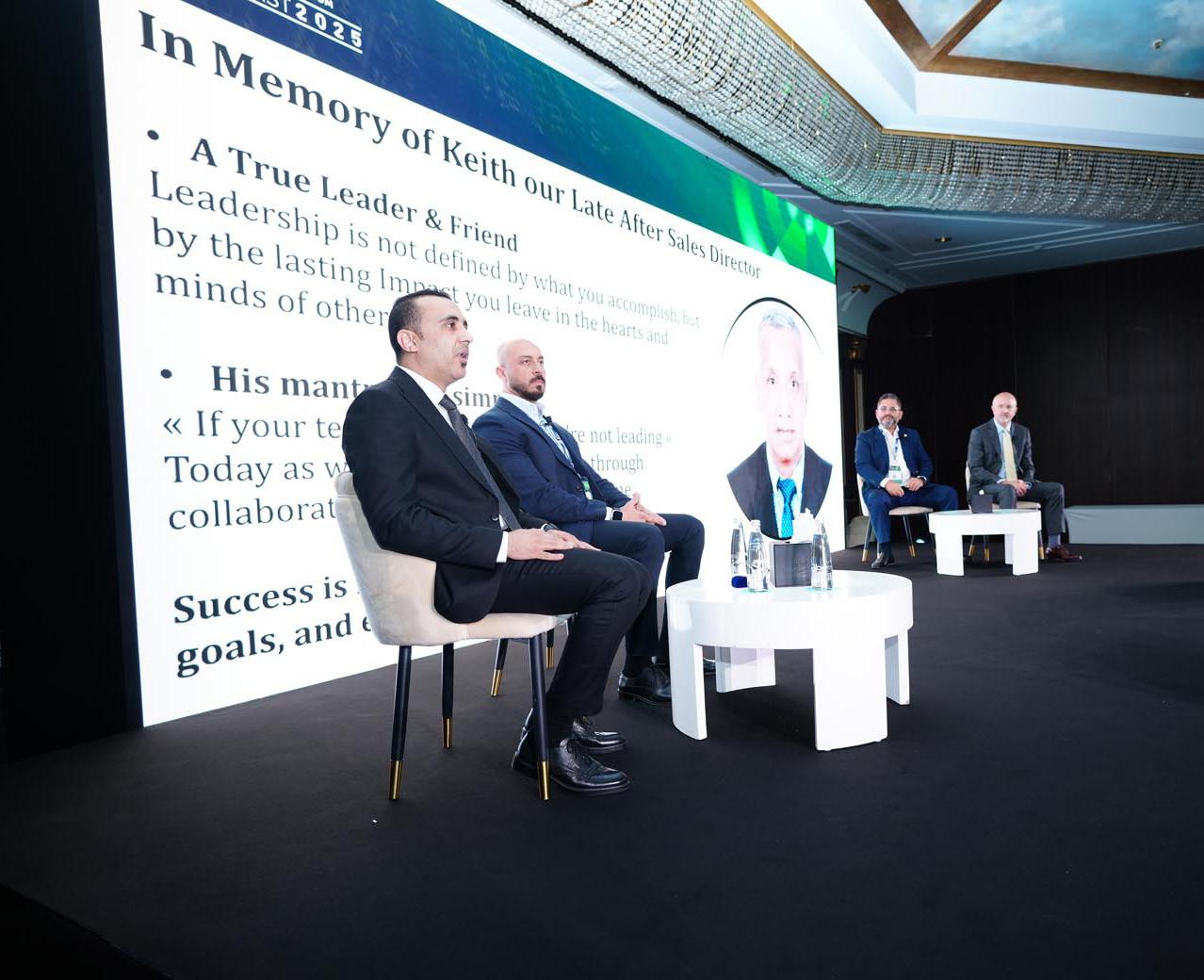
EV imports into the UAE have risen sharply in recent years, while the regional ADAS market continues to expand at double-digit rates.
Regulatory frameworks governing calibration standards, technician qualification and high-voltage safety, however, remain uneven across the Middle East and Africa and are struggling to keep pace with the rapid evolution of the vehicle parc.
Snook acknowledged the disparity. “The spread between the best and the least capable is wider across the region here than in more mature national markets,” he said, noting that rapid technology adoption is outpacing repair controls, technician skills development and quality assurance in certain segments.
“IBIS wants to be the neutral platform for roundtables to design solutions, involve authorities and regulators and agree solutions that will benefit everyone and leave a positive legacy for all,” he added.
The IBIS DNA — serving as a discussion and debate platform to improve safety, skills and standards — underpinned the Dubai agenda. An insurer-led session presented regional data and examined
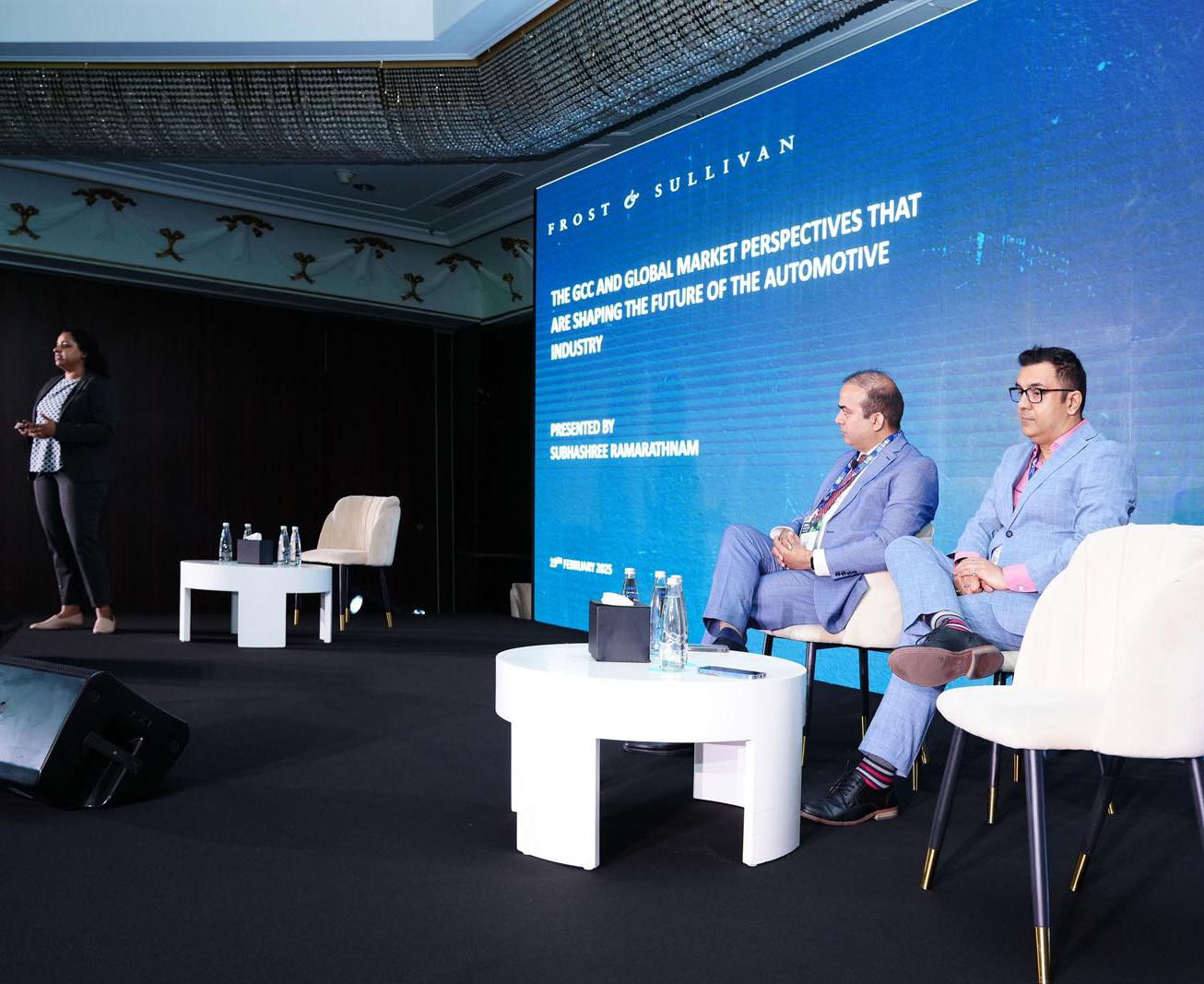
how carriers are adapting to changes in mobility models and vehicle complexity. A subsequent roundtable, chaired by Eman Mojali, CEO of Mada Insurance and Reinsurance Brokers, extended that discussion with audience engagement.
Another session explored the implications of these themes for the future of repairability in the region, featuring Wim Van Loo, general manager of MENA operations at MSX International, and Grant Greef, accident damage management and programs manager at VWG ME, in discussion with Snook.
Future IBIS events in 2026, beginning with IBIS USA in March, will continue the lightning session format and expand dedicated discussions on repairability and technology, focusing on the most pressing obstacles and opportunities in each market.
For IBIS, the revised structure is designed to accelerate practical change. For delegates, the message was direct. As observed during the Dubai event, “If you are not sat at the changemakers table, you’re probably on the changemakers menu.”
IBIS has announced that its flagship global event, the IBIS Global Summit 2026, will take place at the Andaz Vienna Am Belvedere in Vienna from 16–18 June 2026, with early bird registration now officially open.
The annual Summit will once again bring together senior leaders from across the collision repair and wider automotive ecosystem, providing a unique platform for insight, connection and high-level discussion focused on the future direction of the industry.
Held under the global theme Connecting Changemakers, the 2026 edition will continue IBIS’s evolving conference format, designed to enable more meaningful interaction, deeper collaboration and practical outcomes for decision-makers across the international market.
The Summit attracts influential stakeholders from across the sector, including:
• Multi-site operators and independent bodyshop leaders
• Insurance companies and vehicle manufacturers
• Technology and solution providers
• Paint, materials and coatings specialists

The IBIS Global Summit has long been recognised as a key meeting point for the industry’s most senior figures — a forum where strategy is debated, partnerships are formed, and the future of collision repair is shaped.
Early bird registration is now available for a limited time, offering delegates the opportunity to secure their place at a preferential rate.
ibisworldwide.com/ibis-globalsummit-2026/ibis-global-summit-2026registration/
Organisations looking to position themselves at the centre of the global collision repair conversation can benefit from a range of IBIS partnership opportunities, designed to maximise brand visibility, industry access and commercial impact.
The IBIS Global Summit 2026 will welcome changemakers from around the world to Vienna this June, continuing its mission to connect the leaders shaping the future of the automotive collision repair industry.
For the latest updates, visit ibisworldwide.com or follow IBIS Worldwide on LinkedIn.
Contact Emily Miles at emily@ibisworldwide.com for all registration bookings and queries.
Contact Louise Cooke at louise@ibisworldwide.com for all event-related enquiries.
For partnership enquiries, contact Suzie Scott, IBIS Worldwide Head of Sales, at suzie@ibisworldwide.com or call +44 7545 068455
From data-led sessions to structured networking and roundtable discussion, delegates gain practical insight and strategic perspective to support informed business decisions.


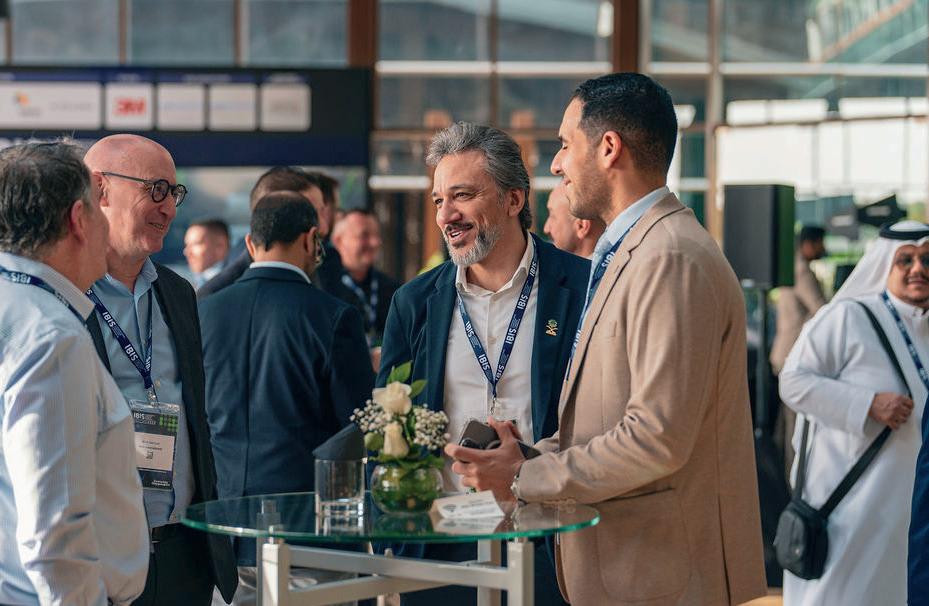
Experience three days of insightful content, collaborative discussion and high-quality engagement, set within the dynamic and historic surroundings of Vienna.


ELEVATE YOUR EXPERTISE IN THE ELECTRIC VEHICLE INDUSTRY WITH
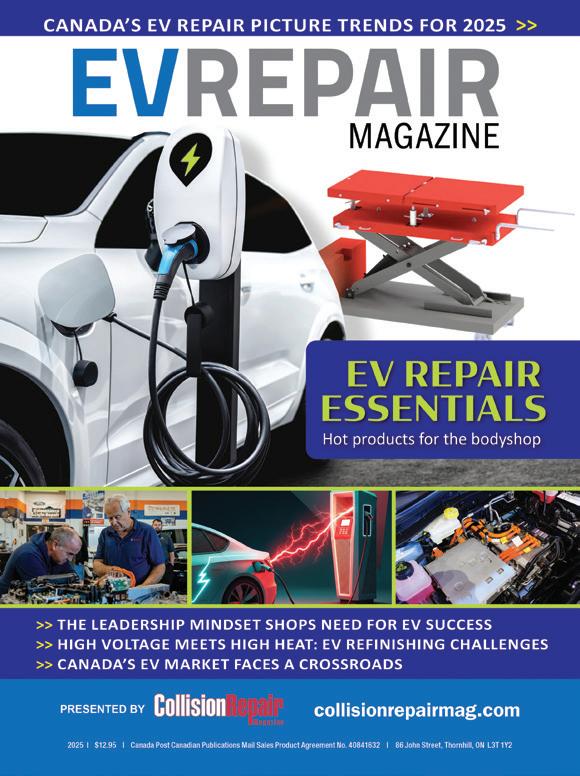
Our publications offer in-depth articles, expert interviews and the latest news on EV technology and repair practices. Whether you’re a seasoned technician or just starting out, our resources will keep you informed and ahead of the curve. Join a community of passionate professionals dedicated to excellence in EV maintenance. Subscribe now and power your knowledge!
For more information, please contact your Media Matters representative or visit collisionrepairmag.com
A STEP-BY-STEP FRAMEWORK FOR SAFELY DISABLING AND RE-ENABLING HIGH-VOLTAGE SYSTEMS — ALIGNED WITH I-CAR BEST-PRACTICE PRINCIPLES AND COMMON OEM PROCEDURES
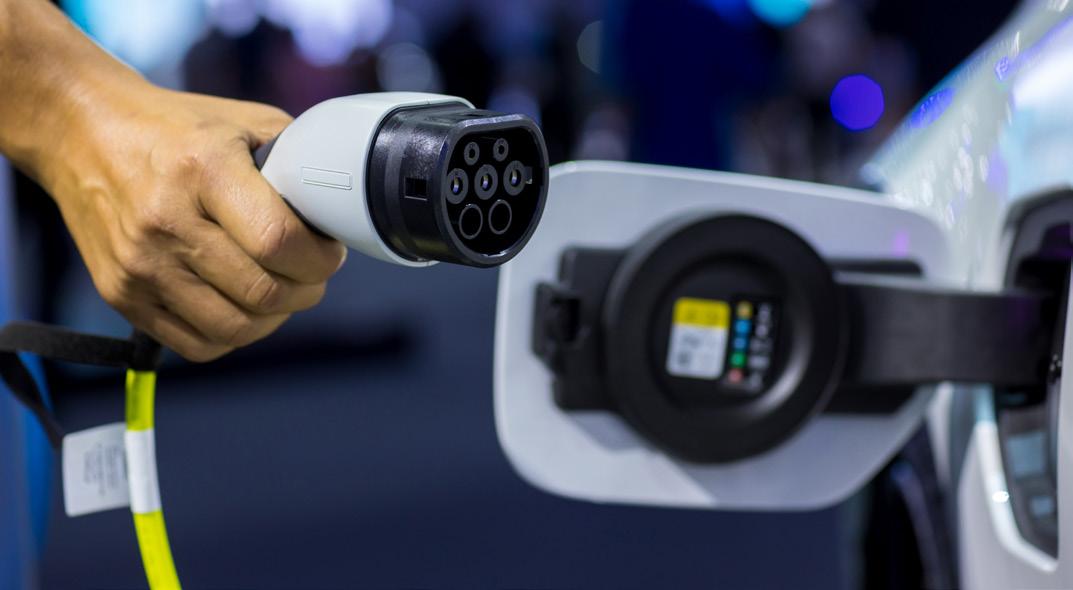
As battery-electric and hybrid vehicles become more common in collision repair, safely disabling and re-energizing highvoltage systems is an increasingly important skill for technicians to develop. With the right training and a consistent approach, this work is very manageable.
I-CAR has developed comprehensive training and best-practice guidance on EV high-voltage safety, and technicians are strongly encouraged to consult I-CAR’s EV programs and complete the relevant certifications before performing this type of work [1]. The workflow below is intended as a general reference aligned with those I-CAR principles and common OEM procedures.
Procedures vary between manufacturers and model years, so always retrieve and follow the exact OEM service information for the specific VIN being repaired [2].
Technicians are strongly encouraged to consult I-CAR’s EV training resources and complete relevant certifications before performing high-voltage work. This playbook is a general reference only and does not replace I-CAR training, certification, or OEM service information.
“That’s where training and awareness comes in. We need to have the information, and you can learn through online programs, in-person training, et cetera.”
— David Giles, President, Powered EV Consulting
STEP 1
IDENTIFY THE VEHICLE AND HIGHVOLTAGE ARCHITECTURE
Before beginning any work, it helps to understand the specific high-voltage architecture of the vehicle in front of you. BEVs, PHEVs, and standard HEVs each have different system layouts, and configurations can also vary by model year and trim.
Using the VIN, confirm the following from OEM service information:
• Vehicle type: BEV, PHEV, or HEV
• Nominal system voltage (commonly 400V or 800V)
• Location of the high-voltage battery pack
• Location of the service disconnect
• Number of high-voltage loops in the system
Visual inspection alone is not sufficient. VIN-based OEM research is recommended before proceeding with any high-voltage work.
“Not
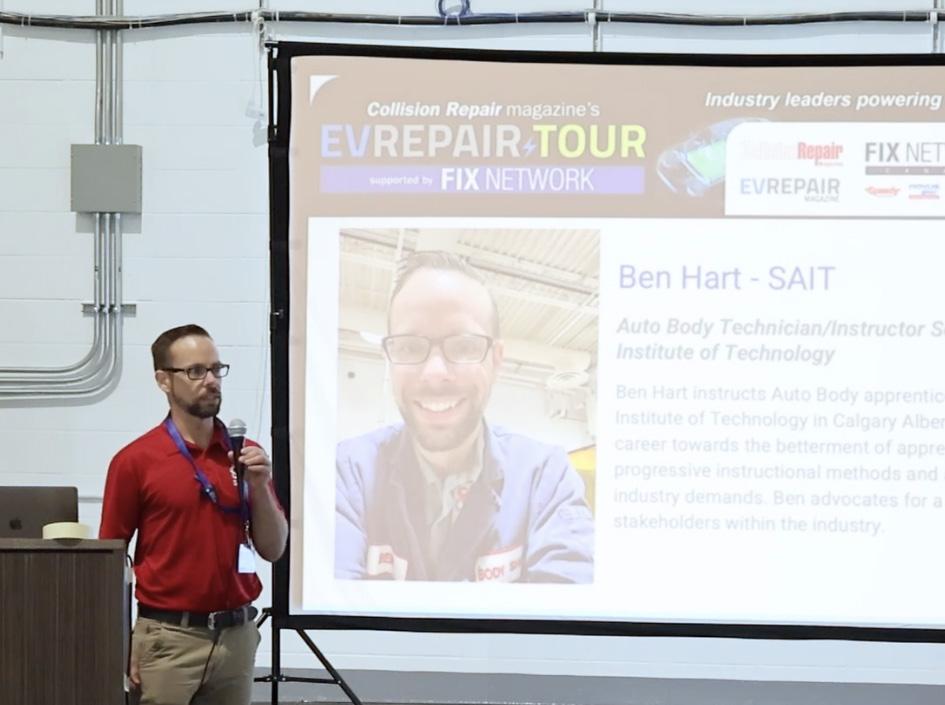
— Ben Hart, Autobody Technician Instructor, Southern Alberta Institute of Technology (SAIT)
RETRIEVE AND REVIEW THE OEM DISABLE PROCEDURE
The manufacturer’s high-voltage shutdown procedure — available in the service manual or emergency response guide for the specific VIN — should be reviewed in full before beginning any disable steps. I-CAR guidance is designed to complement OEM procedures, not substitute for them [1].
When reviewing the OEM procedure, look for:
• The required sequence for 12V battery disconnect
• How to locate and remove the service disconnect
• Required capacitor discharge time after disconnect
• Any mandatory wait intervals between steps
• Which points to use for voltage verification
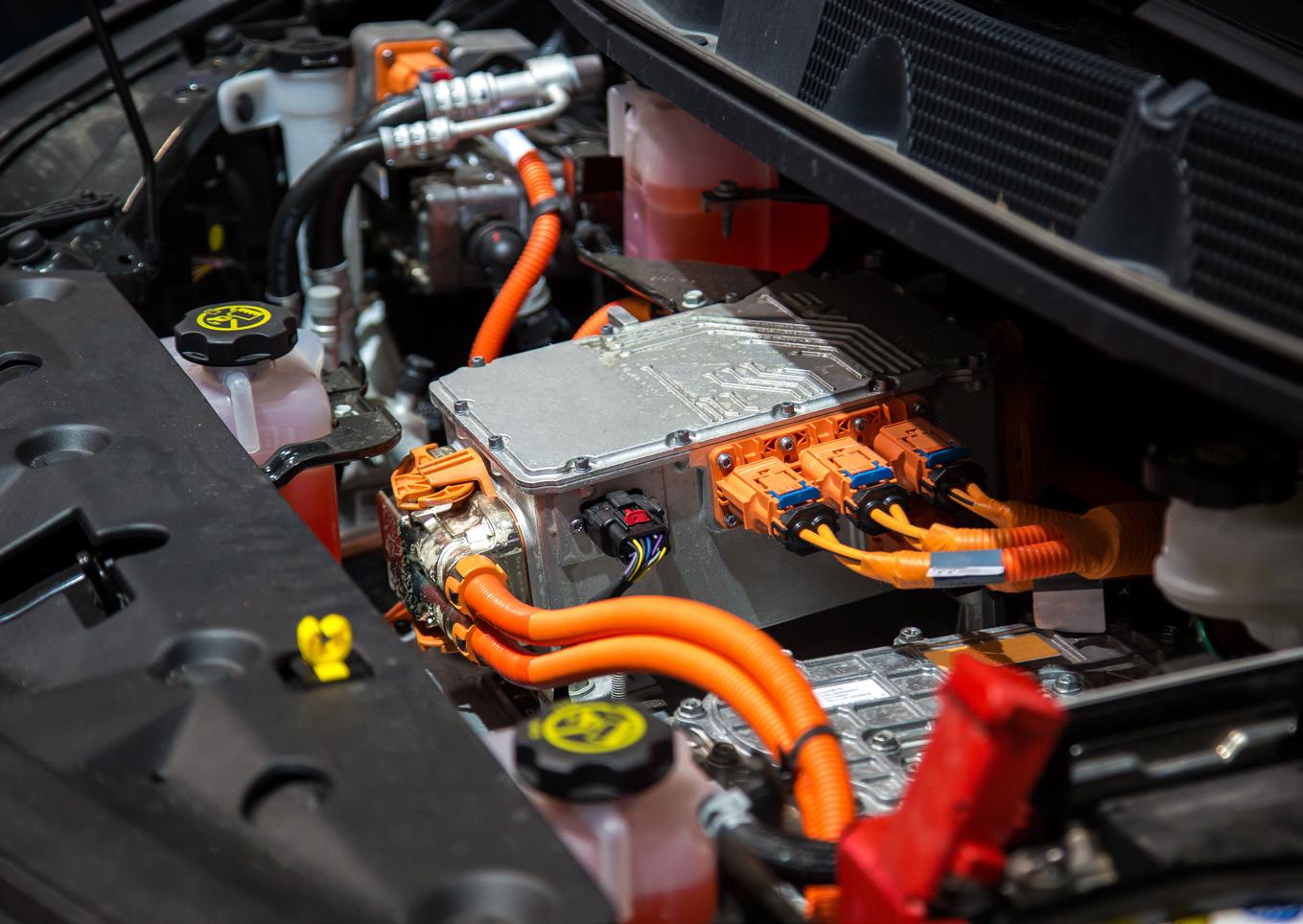
If OEM service information is unavailable or unclear, consult I-CAR resources or contact the manufacturer before proceeding.
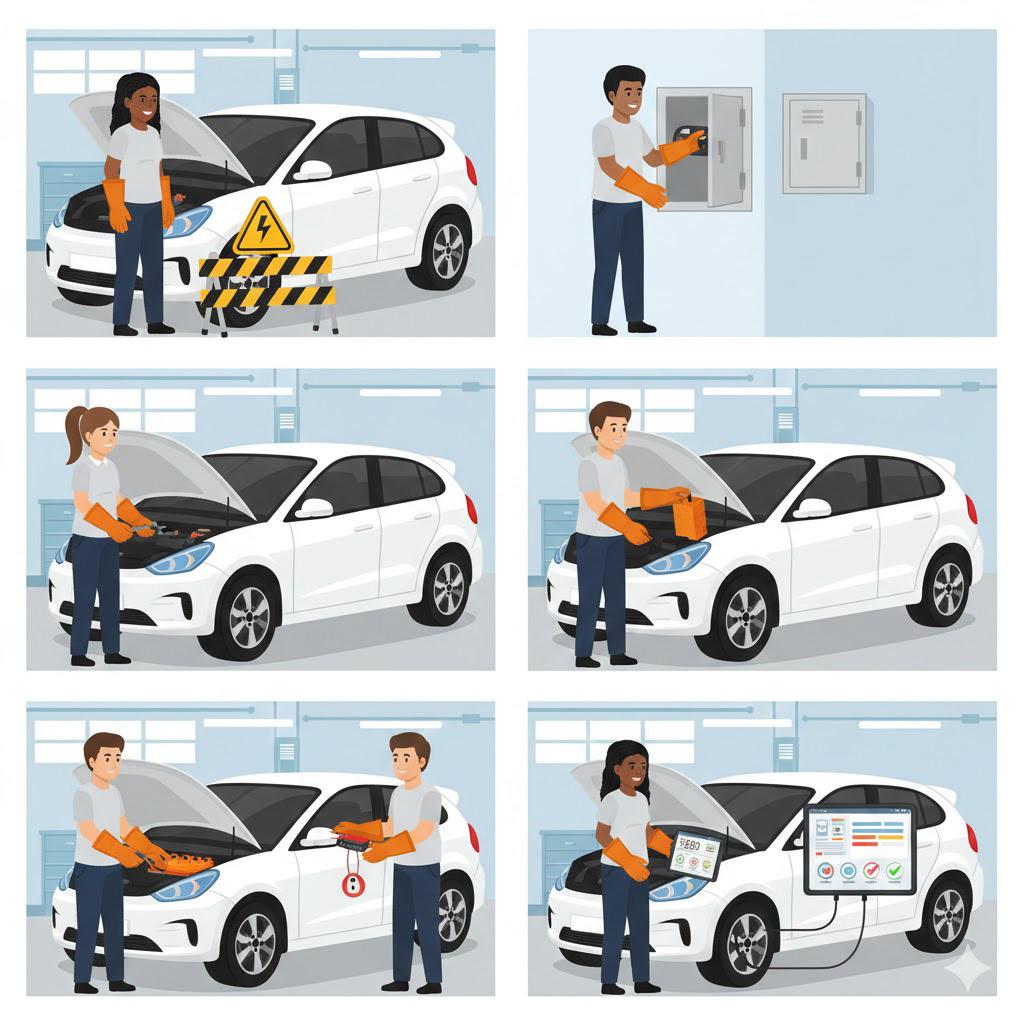
Appropriate personal protective equipment and a well-organized work area are important foundations for high-voltage work. Before approaching the vehicle, it is recommended to:
• Inspect high-voltage insulated gloves for cuts, cracks, or punctures, and verify the certification date is current
• Wear leather protectors over the insulated gloves
• Remove metallic jewelry such as rings, watches, and bracelets
• Establish a restricted access area around the vehicle
• Post high-voltage warning signage at the perimeter of the work area
Power the vehicle down completely, then move the key fob away from the vehicle. A separate room or a signal-blocking pouch works well for this purpose.
Many EVs are designed to automatically re-engage high-voltage contactors when a key fob is detected nearby. Accounting for key fob location is a simple step that can prevent unintended re-energization during the repair process.
It is also worth confirming the vehicle is not connected to a charging station, as a charging connection will re-energize high-voltage components.
“Welding gloves are not appropriate PPE. Nitrile gloves are not high-voltage safety gloves. You need Class 0 gloves — these are the gloves you need whenever you are working with an active EV. They’re your last line of defense.”
— Dirk Fuchs, Director of Technical Programs & Services, I-CAR
FenderBender / Vehicle Service Pros, “Powering Up Safety Basics: EV Repair”
Most OEM procedures call for disconnecting the 12V battery before touching anything else. This step prevents the vehicle’s control systems from commanding the high-voltage contactors to close — which would allow the high-voltage system to re-energize.
Follow the OEM-specified sequence and observe any required wait times before moving to the next step.
“I like to take that extra step of safety precaution — some OEMs only ask you to remove the negative, but disconnecting both terminals gives you another layer of confidence.”
— Jeff Poole, Lead Subject Matter Expert, I-CAR
Repairer Driven News, “I-CAR: Take care to fully disconnect electric vehicles,” June 2021
The service disconnect is a manual switch that physically breaks the high-voltage circuit. Its location varies by vehicle — common locations include under a rear seat, in the cargo area, or integrated into the battery housing.
Follow the OEM’s exact removal procedure. Many disconnects include a locking mechanism or require a specific motion before they can be removed.
Once removed, it is good practice to:
• Store the disconnect in a secure location away from the vehicle
• Attach a tag or label to the vehicle indicating it has been high-voltage disabled
After removing the service disconnect, wait the full OEM-specified time before probing any high-voltage points. This interval allows capacitors within the inverter, converter, and other components to discharge to a safe level.
The OEM-specified wait time should not be shortened. Capacitors in EV power electronics can retain significant stored energy after the disconnect is removed, and the discharge interval exists specifically to address that.
“The discharge time is really a serious thing. If the automaker says wait 10 minutes, we have to follow those 10 minutes. The capacitors’ charge can still electrocute a repairer.”
— Dirk Fuchs, Director of Technical Programs & Services, I-CAR
Removal of the service disconnect alone does not confirm the system is safe to work near. Voltage verification with a properly rated multimeter is a necessary step. I-CAR guidance consistently emphasizes this verification [1].
A recommended sequence:
• Prove the meter is working by testing it on a known live source
• Probe the OEM-specified high-voltage measurement points
• Confirm zero potential at all required locations
• Re-test the meter on the known live source to confirm it is still functioning
Testing the meter before and after the measurement confirms the reading is valid, not the result of meter malfunction.
With voltage confirmed at zero, applying a lockout/tagout indicator to the vehicle helps prevent anyone else from inadvertently re-energizing it. Documenting the disable process is also recommended, including:
• Technician name
• Date and time of disable
• Voltage verification method and results
Clear documentation supports consistent, auditable processes and helps protect both the technician and the shop [1].
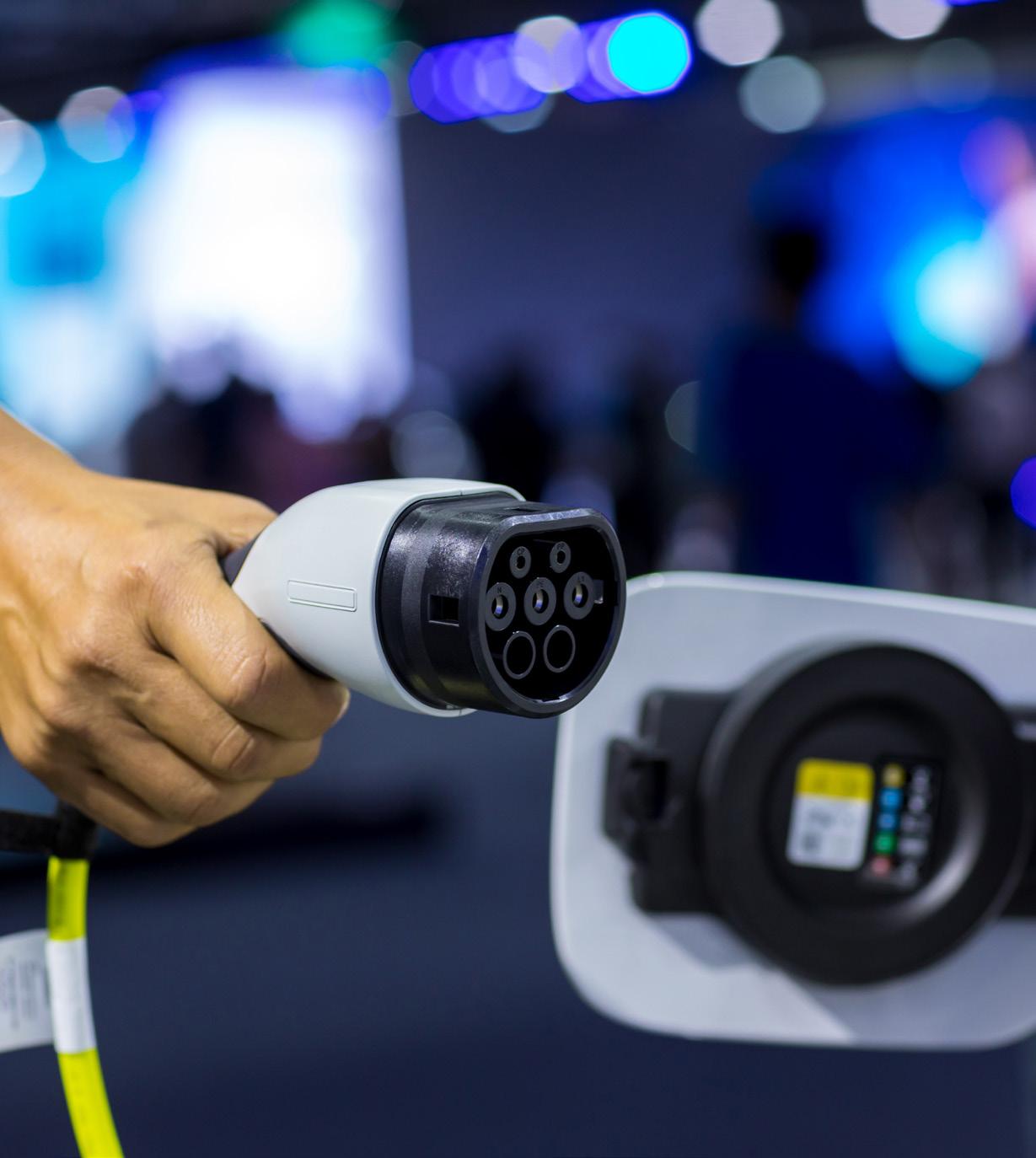
“You also have to make sure that all of that energy has discharged on the motor side as well before you service something — not just the battery.”
— Baily Soto, Legacy EV
Autobody News / The Collision Vision Podcast, December 2024
Re-energizing the high-voltage system is its own procedure with its own verification requirements. OEM instructions should be followed carefully and steps should not be skipped.
Before reinstalling, inspect the service disconnect for any signs of damage or contamination. Then seat and lock it fully according to the manufacturer’s instructions.
An improperly seated disconnect may trigger high-voltage interlock fault codes or create an intermittent connection. Taking a moment to confirm full seating can prevent additional diagnostic steps later.
Reconnect the 12V battery in the OEM-specified sequence and confirm that terminals are secure. Some vehicles require a specific initialization or wake-up sequence after 12V battery reconnection — check the service information for the specific vehicle.
Turn the vehicle on and conduct a complete diagnostic scan. Pay particular attention to:
• High-voltage interlock codes
• Isolation fault codes
• Battery management system (BMS) faults
It is generally recommended to investigate and understand any fault codes before clearing them, rather than clearing and re-scanning without first addressing the underlying cause.
Before releasing the vehicle, it is good practice to confirm:
• No warning indicators remain active
• All vehicle systems are operating normally
• The full disable and re-enable procedure is recorded in the repair documentation
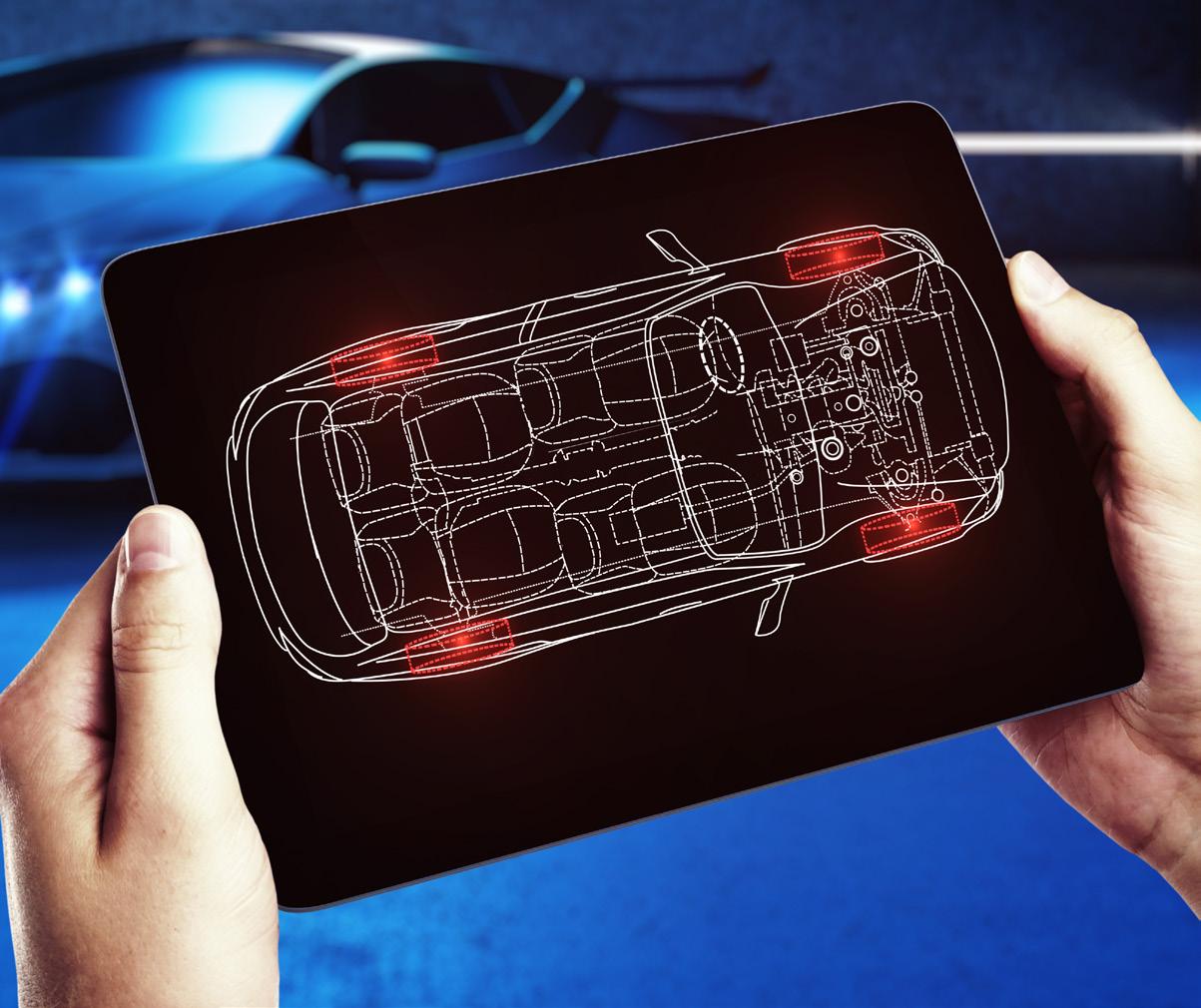
“A qualified EV technician is someone who understands the risks involved, has the correct PPE, has done their research, and understands the codes.”
— Cecile Bukmeier, Chair, Auto Body Program, Northern Alberta Institute of Technology (NAIT)
Collision Repair Magazine, EV Repair Tour Calgary, October 2023
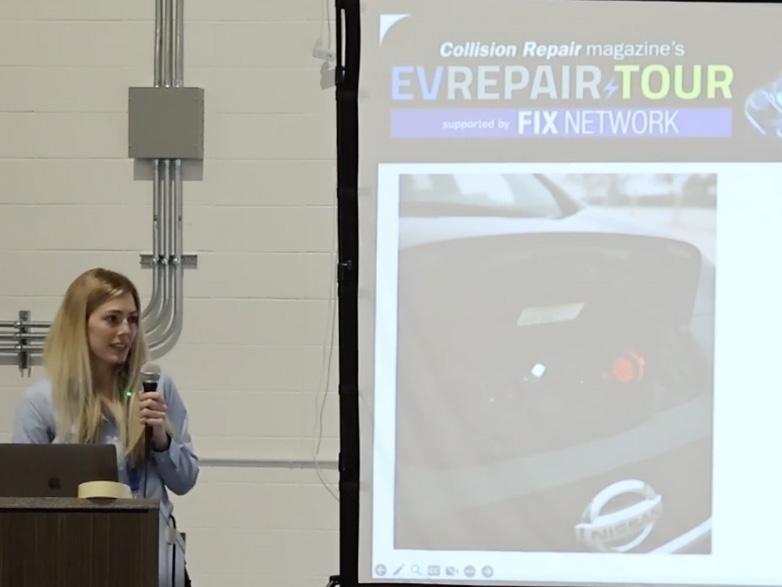
collisionrepairmag.com/15732428
High-voltage disable and re-enable work benefits greatly from proper training and hands-on practice. I-CAR offers EV-specific courses and certifications that provide technicians with the knowledge and confidence to approach this work safely and consistently [1]. Shops and technicians newer to EV repair are encouraged to explore those resources as a starting point.
As EV volume grows across the industry, having a consistent, well-documented process in place helps protect both technicians and the vehicles they repair. This playbook is offered as one reference point in support of that goal — but the OEM service information for the specific vehicle, and the training behind the technician, are what make the difference [1][2].
“If you’re not looking at battery servicing and teardown, an EV is nothing more than just another powertrain.”
— David Giles, President,
Powered EV
Consulting
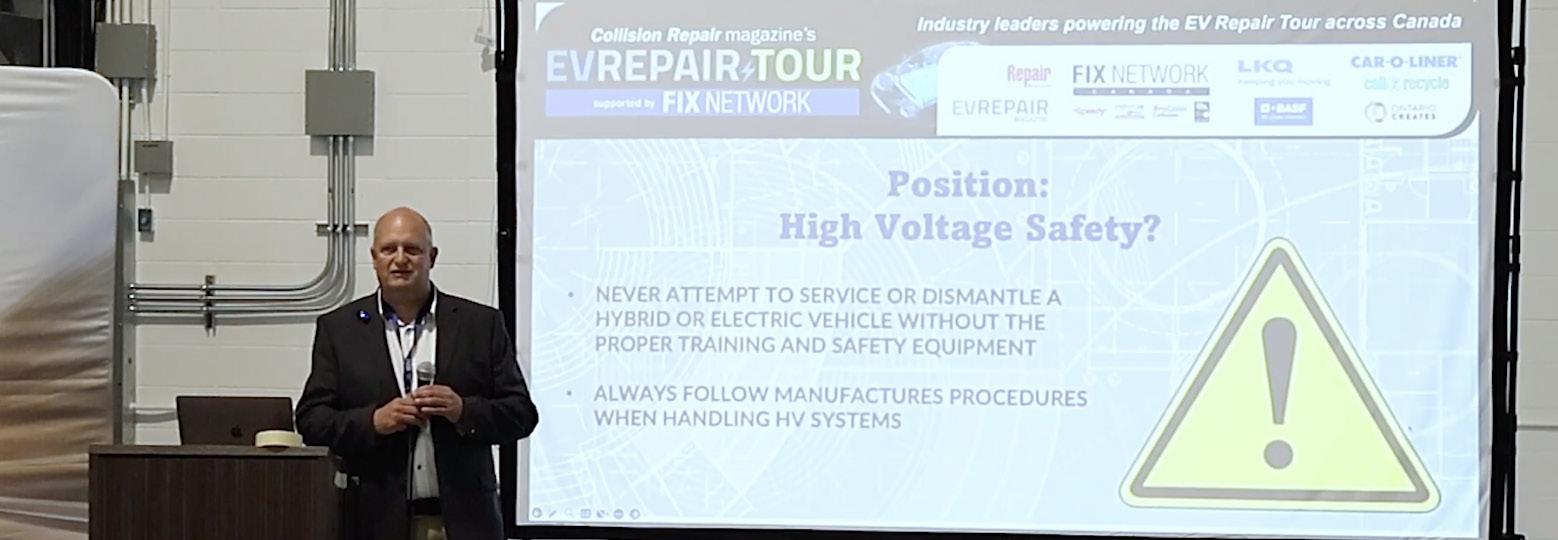
collisionrepairmag.com/ 15732405
This playbook reflects I-CAR best-practice principles and is intended as a general reference framework. Technicians are encouraged to consult I-CAR training resources and always follow the exact OEM service information for the specific VIN being repaired.
The following resources informed the development of this playbook and are recommended for further reading and formal training.
[1] I-CAR (Inter-Industry Conference on Auto Collision Repair). Electric Vehicle (EV) Training Programs and Best-Practice Guidance. Available at: www.i-car.com
[2] Original Equipment Manufacturer (OEM) Service Information. Vehicle-specific high-voltage disable and re-enable procedures should always be obtained from the manufacturer’s service manual or emergency response guide for the VIN being repaired.
[3] National Highway Traffic Safety Administration (NHTSA). Emergency Response Guides for Electric and Hybrid Vehicles. Available at: www.nhtsa.gov.
[4] SAE International. SAE J2578 and related standards covering high-voltage safety in electrified vehicles. Available at: www.sae.org
[5] Occupational Safety and Health Administration (OSHA). Lockout/Tagout standard (29 CFR 1910.147) and electrical safety regulations. Available at: www.osha.gov
[6] Giles, D. (2023, August). Quoted in: “Safety First: Don’t sweat battery repair; focus on high voltage safety.” Collision Repair Magazine. Retrieved from collisionrepairmag.com
[7] Hart, B. (2023). Quoted in: “Adopting a Different (Power)train of Thought.” Collision Repair Magazine, EV Repair Tour Calgary. Retrieved from collisionrepairmag.com
[8] Bukmeier, C. (2023, October). Quoted in: “Not Just Panel Beaters Anymore.” Collision Repair Magazine, EV Repair Tour Calgary. Retrieved from collisionrepairmag.com
[9] Fuchs, D. and Poole, J. (2021, June). Quoted in: “I-CAR: Take care to fully disconnect electric vehicles before collision repair.” Repairer Driven News. Retrieved from repairerdrivennews.com
[10] Fuchs, D. (Various). “Powering Up Safety Basics: EV Repair.” FenderBender / Vehicle Service Pros. Retrieved from vehicleservicepros.com
[11] Soto, B. (2024, December). Quoted in: “EV Collision Repair Calls for Specialized PPE, Safety Protocols.” Autobody News. Retrieved from autobodynews.com
This document was prepared as a general educational reference. It does not constitute professional engineering or safety advice. Always follow applicable regulations, manufacturer instructions, and guidance from qualified training organizations.
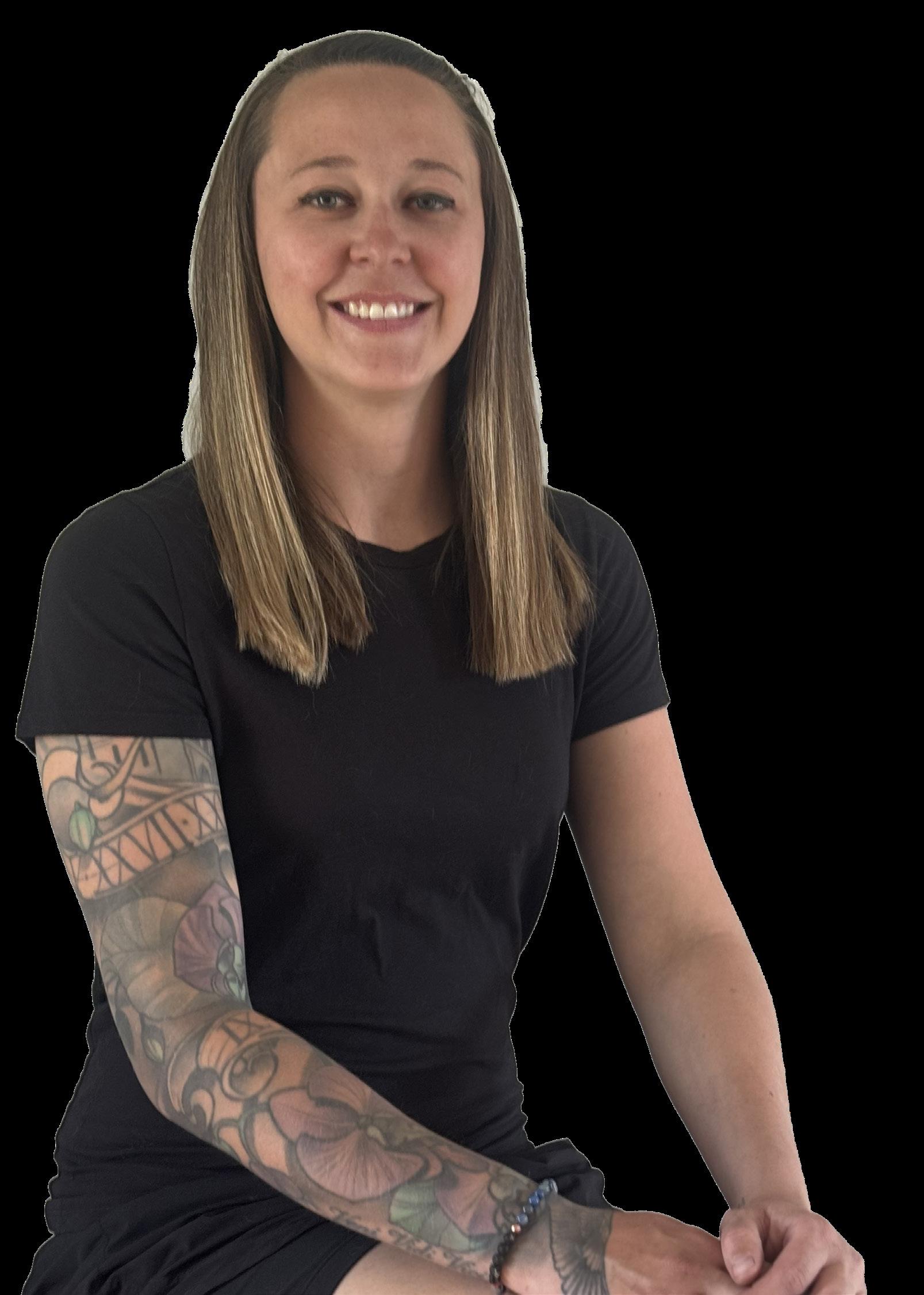
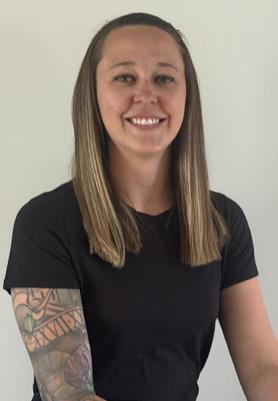
addie Cunningham’s career in auto body repair has been defined by achievement and determination — from graduating at the top of her apprenticeship class to using her hard-earned income to purchase
A standout technician and a dedicated ambassador for apprentices and women in the trades at Fix Auto Sherwood Park, Maddie has been described as “a true face of the auto body industry” and “a role model for the next generation entering the trade.” Last year, she was nominated for Collision magazine’s 30 Under 40 by Scott Koughan, owner of Fix Auto Sherwood
Maddie’s path into the collision repair industry began at a young age, fueled by a natural attention to detail and a passion for hands-on work. Once she realized the trade offered long-term career opportunities, she began working as a detailer before advancing to lead the parts department. She later returned to school to become a technician, building a strong foundation that would
After graduating, Maddie took on an educational role within the Fix Auto Sherwood Park apprenticeship program, teaching more than five technicians — including two women — to become Journeyperson Auto Body Technicians. She also helped train experienced Journeypeople on how to effectively mentor and educate newcomers to the trade. According to Koughan, this contribution has been “fundamental to the future of the trade and to the ongoing success of Fix Auto
What continues to motivate Maddie is the challenge of restoring damaged vehicles to pre-accident condition. Each repair presents a new problem to solve, keeping her engaged and excited to come to work. She credits the Fix Auto Sherwood Park management team for providing consistent support and positive feedback throughout her apprenticeship — support that helped build her confidence and sharpen her skills.
“With the continuing advancements throughout the autobody industry and the vehicles becoming increasingly more complex to repair, having the resources available such as OEM procedures, service bulletins, these industry publications keep me up to date with the new advancements and requirements,” Maddie said.
“With continuous support and provided training through work all available resources are accessible to make sure repairs are done to an excellent standard and I am progressing alongside the advancing industry.”
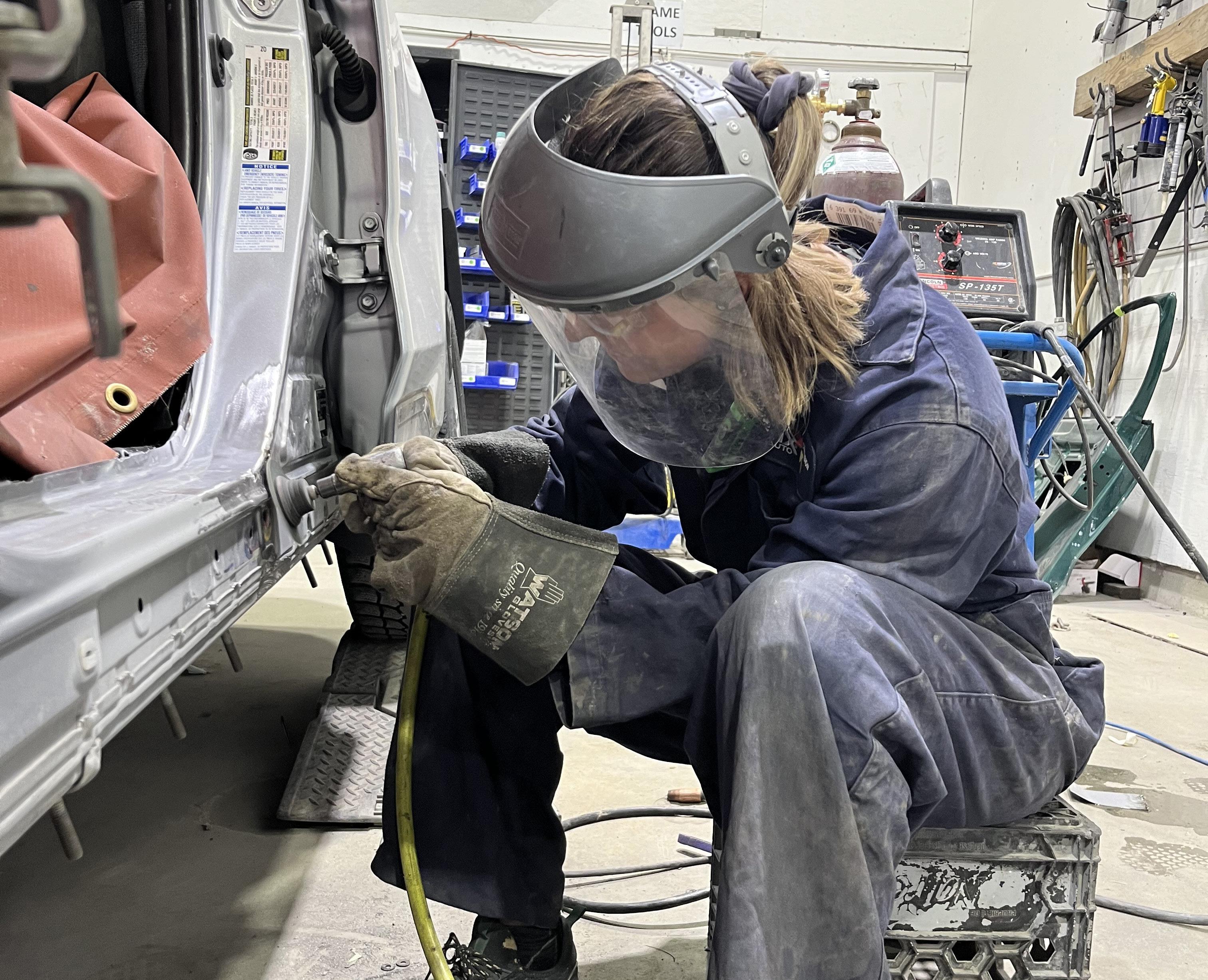
“I can see how learning these new technologies will open up great opportunities... including the opportunity to one day teach the younger generation what I’ve learned.”
— Maddie Cunningham
Maddie has also become a regular speaker at registered apprenticeship program sessions, where she highlights both the value of the collision repair industry and the long-term potential of an auto body technician career. Koughan points to these efforts as a reflection of Maddie’s natural leadership and her ability to break down traditional barriers within the trades.
As a female technician who completed an apprenticeship program, Maddie understands firsthand the challenges posed by smaller class sizes and the limited representation of women in the industry. That awareness drives her commitment to speaking at schools, where she shares her experiences and career goals to show students what’s possible. Her eagerness to continue learning has also kept her ahead of the curve; through Fix Auto, she has completed advanced training in welding, glue pulling and aluminum repair.
“From my experience with speaking at schools, I have observed the women in the class expressing interest in not only autobody but the trades in general because they can build the life they want for themselves. When I speak at the schools it’s important to me to relay that if you are a women choosing a trade as a career, you’re breaking barriers no matter what. It takes tremendous courage to do so,” she said. “Since I entered the trade, I have seen more women come into it which is
huge.That’s something we haven’t seen in autobody ever. The barriers are slowly getting broken down by mentorship and visibility for women. I am a huge advocate for women seeking any opportunity to chase their goals and ambitions, women just need an opportunity to do so.”
For Maddie, learning doesn’t end with personal growth — it’s about preparing the next generation. “The collision repair industry is undergoing rapid transformation driven by changes in vehicle technology, consumer expectations, sustainability and longevity goals,” she said. “I can see how learning these new technologies will open up great opportunities... including the opportunity to one day teach the younger generation what I’ve learned.”
Scott believes Maddie’s curiosity and innovative mindset set an example for the industry.
“Maddie shows how powerful it is to lead with authenticity and passion,” he said. “She’s a reminder that talent thrives when it’s supported by drive, mentorship and a commitment to excellence.”
Looking ahead, Maddie says the next step in her career is to continue advocating for women in the trades as well as developing into a leader so she can mentor apprentices.
“Being a technician is fulfilling for me as I am constantly learning and evolving,” she said.

There was a time when the technician lived happily behind the curtain. Estimators handled customers. Service writers handled phones. The bay was a sanctuary of weld sparks, compressed air and the quiet dignity of being left alone.
That time is over.
Customers arrive now with online estimates, AI repair summaries and a cousin who once changed his own brake pads and considers this relevant. They have watched three YouTube videos about frame straightening. They have opinions. By the time they reach the front desk, they are not looking for process. They are looking for someone who actually touched the car.
Increasingly, that person has grease under his fingernails.
“She walked right past me,” said one estimator at a shop outside Calgary, describing a customer who bypassed the front desk entirely and planted herself in the bay doorway. “She wanted to talk to whoever was actually fixing it.”
The technician, a 14-year industry veteran, describes his communication style as “words when necessary,” wiped his hands and walked her around the vehicle. He showed her why the door skin needed replacement rather than filler. “This metal is stretched,” he told her. “We can make it look fine for a while. It won’t behave.” She nodded. She thanked him. The upsell that had stalled at the front desk for two days was approved in four minutes.
The role is changing because transparency is changing. Shops send progress photos.
Customers arrive now with online estimates, AI repair summaries and a cousin who once changed his own brake pads and considers this relevant. They have watched three YouTube videos about frame straightening. They have opinions. By the time they reach the front desk, they are not looking for process. They are looking for someone who actually touched the car.
Digital inspections land in customers’ inboxes before the clear coat is dry. When everything feels visible, someone has to narrate what people are seeing, and the most credible narrator turns out to be the person who did the work.
This is not universally welcomed.
“I fix cars,” said a refinish technician in Mississauga, who asked not to be named because he found the entire subject mildly exhausting. “I don’t do speeches.” He has since revised this position after a post-delivery complaint call ran 50 minutes because a customer had found, under a specific combination of LED and indignation, a speck in the clearcoat the size of a sesame seed. “If I’d spent five minutes with her at pickup,” he said, “she never calls.” He now walks every customer around the vehicle at delivery. He explains blend panels. He describes why colour reads differently in shade than in sun. He reports that complaints have dropped considerably and that he has developed, against his will, a signature sign-off line.
Humour, it turns out, travels well across the shop floor. A structural technician in the Fraser Valley said customers almost always ask, at some point, whether the vehicle will “ever be the same.” His answer, delivered with appropriate gravity: “It’ll be straighter than when it left the factory. I measure twice.” This gets a laugh. It also ends the conversation, which is the point.
De-escalation by technician tends to be more efficient than de-escalation by
management, for the simple reason that the technician has standing. When the person who welded the seam explains why it looks the way it does, the explanation lands differently than when someone in a polo shirt says the same words near a display of air fresheners.
One shop owner described a customer who arrived at pickup certain there was a wave in his rear quarter panel. He had zoomed in on a delivery photo and circled it in red. He had a theory. The technician brought the truck outside into full afternoon light. The wave vanished. It had been a reflection of a light pole in the parking lot.
The customer looked at the panel. He looked at the light pole. He looked back at the technician.
“Oh,” he said.
No manager required. No discount offered. No review written in anger at 11 p.m.
The bodyshop has never been a black box, exactly, but it felt like one. Now the walls are glass. Customers expect proximity to the work and to the people doing it. The estimator sets expectations. The CSR manages timelines. But at the moment of truth, at the point of handoff, the technician is the one who can stand beside the vehicle and say, with complete authority: here is what we did, here is why, and here is what straight looks like.
The tools have evolved. The workflow has evolved.
Turns out the technician had to evolve too. Nobody warned him it would involve talking to people, but he’s managing.


We have a nationwide presence. Our operations are tailored to each region’s demands, meaning we can provide the best possible service to customers in every area we serve.


Established in 1959, Color Compass not only provides collision repair supplies from industry-leading brands but also specializes in specialty markets including industrial products and equipment. Proudly supplying Canadian industries. Our company has been built on a foundation of trust and respect, and we continue to grow by investing in our team, customers, and communities.