100 YEARS SPARK

of Field Hockey
THE MAGAZINE OF COLLEGIATE SCHOOL
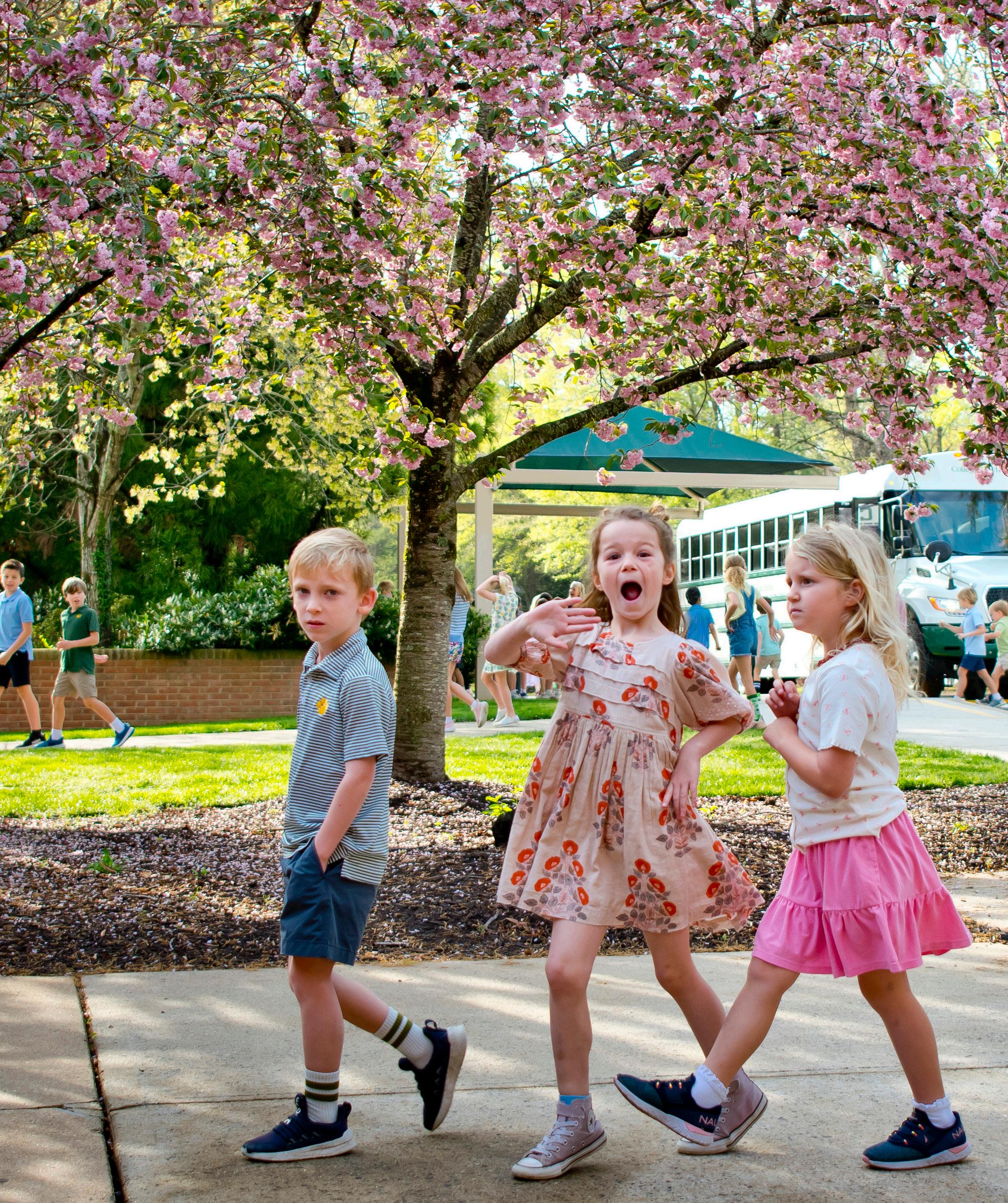
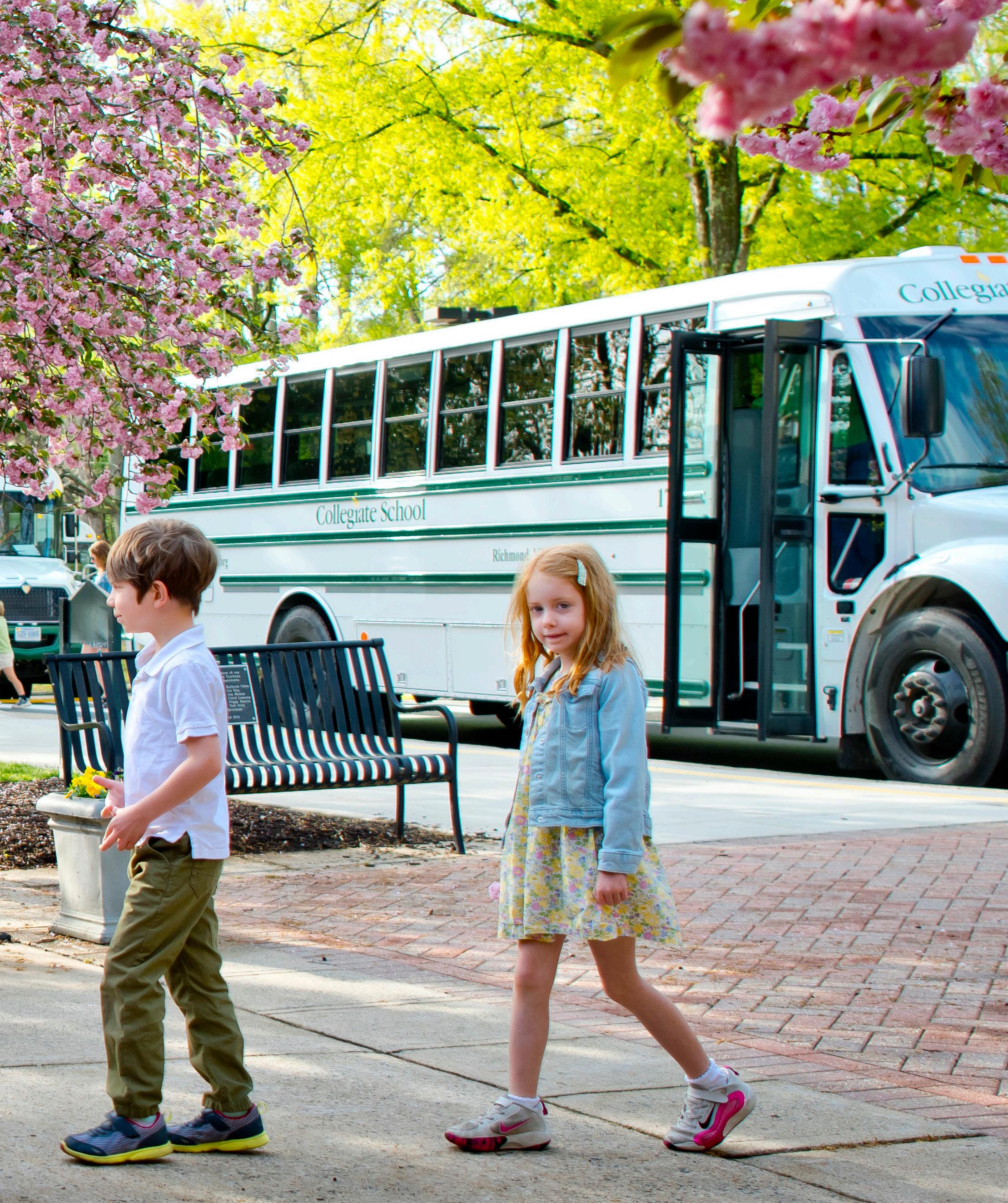
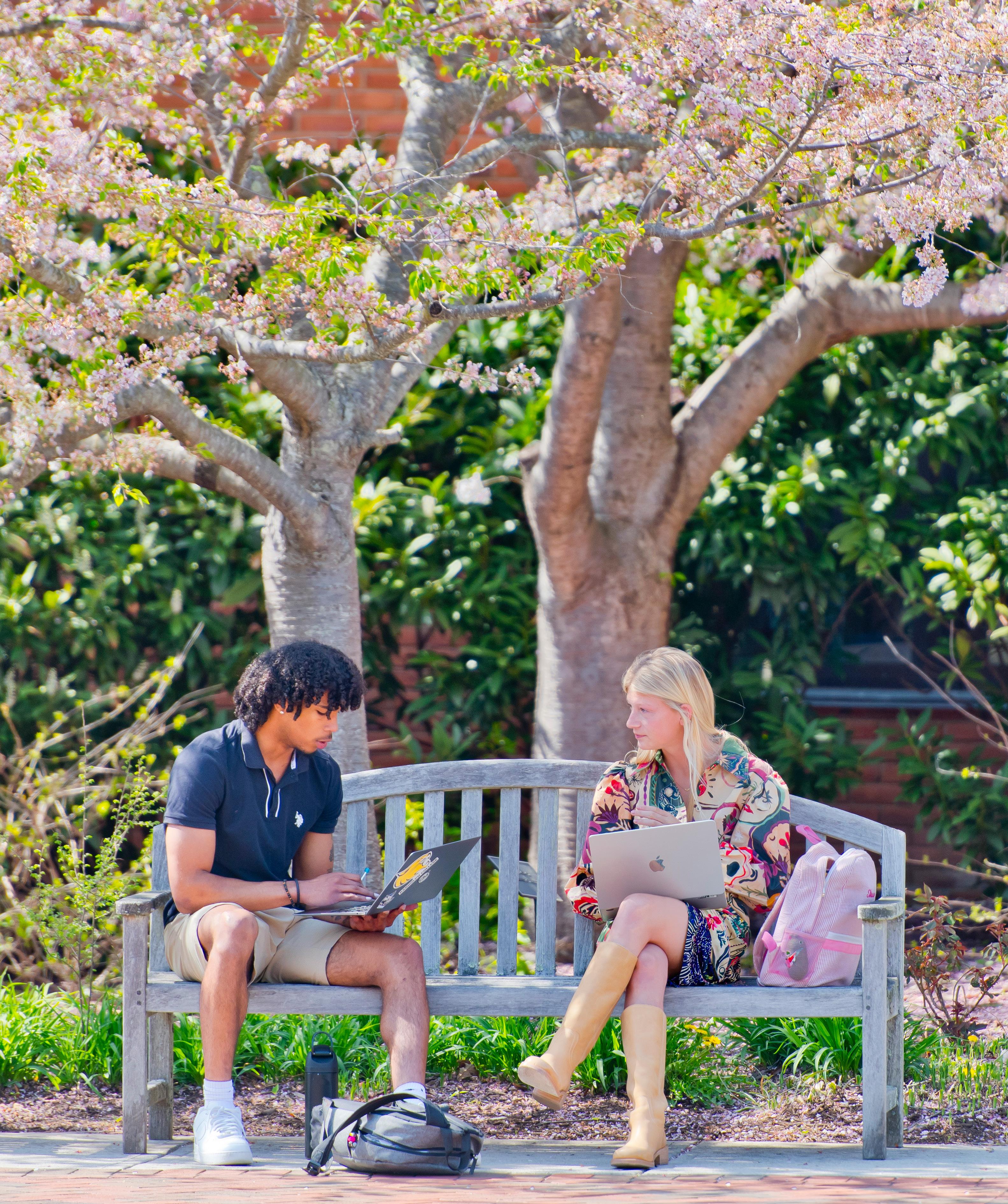
Spring has sprung! Collegiate Lower School students enjoyed the first blooms of cherry blossom trees around campus in late March.
SPARK
ON CAMPUS / ARTS / ATHLETICS
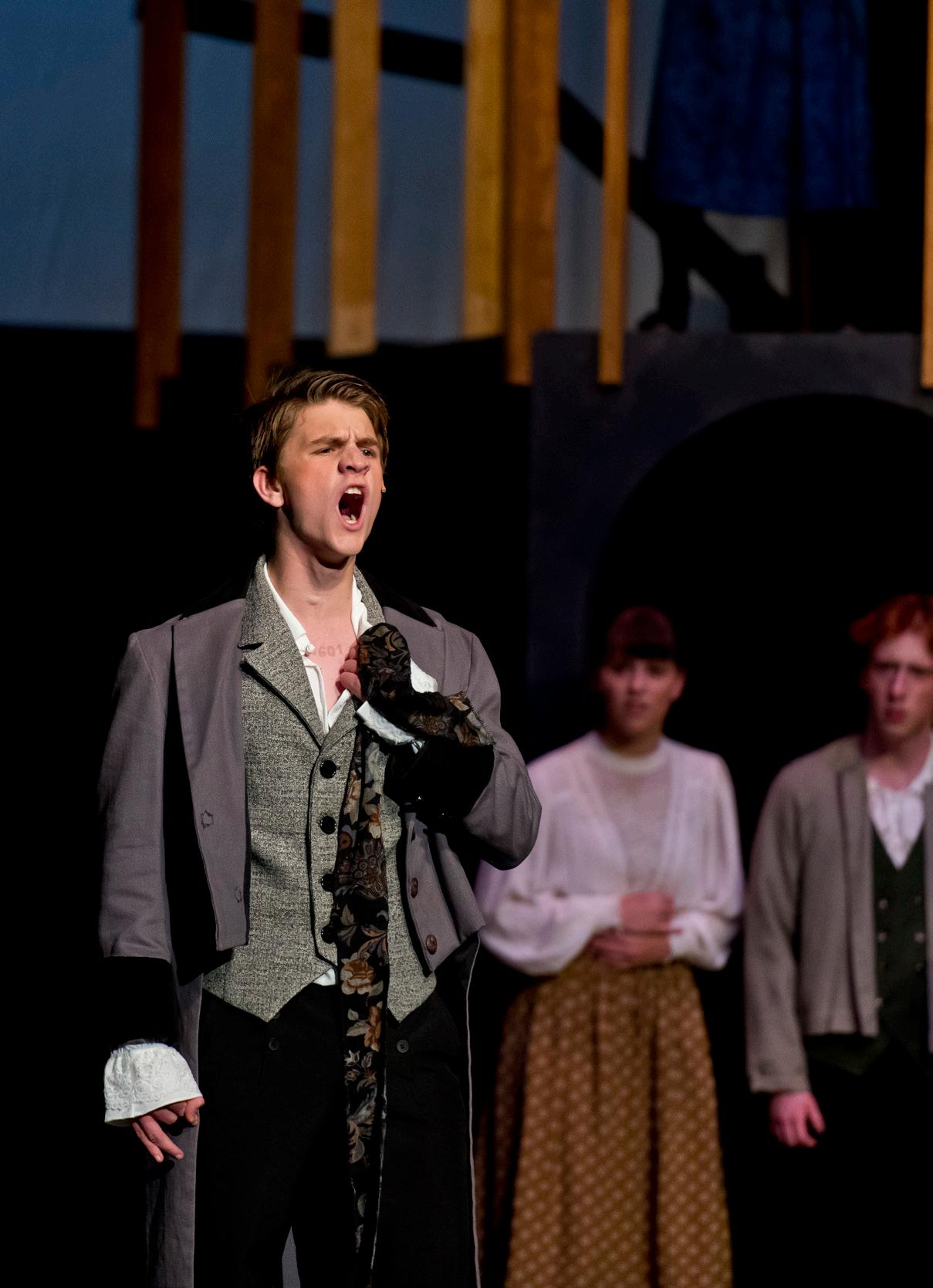
24 Do You Hear the Students Sing?
Behind the scenes of Collegiate’s production of Les Misérables.
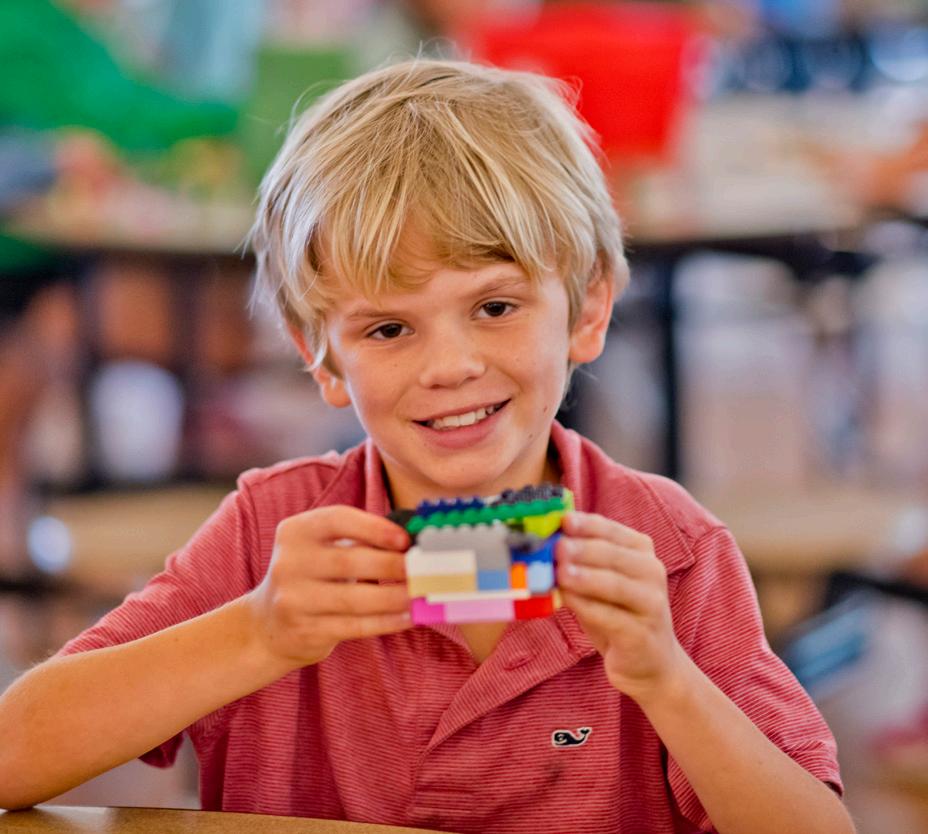
8 Building Blocks of the Future
Insight into Collegiate’s Lower and Middle School robotics programs.
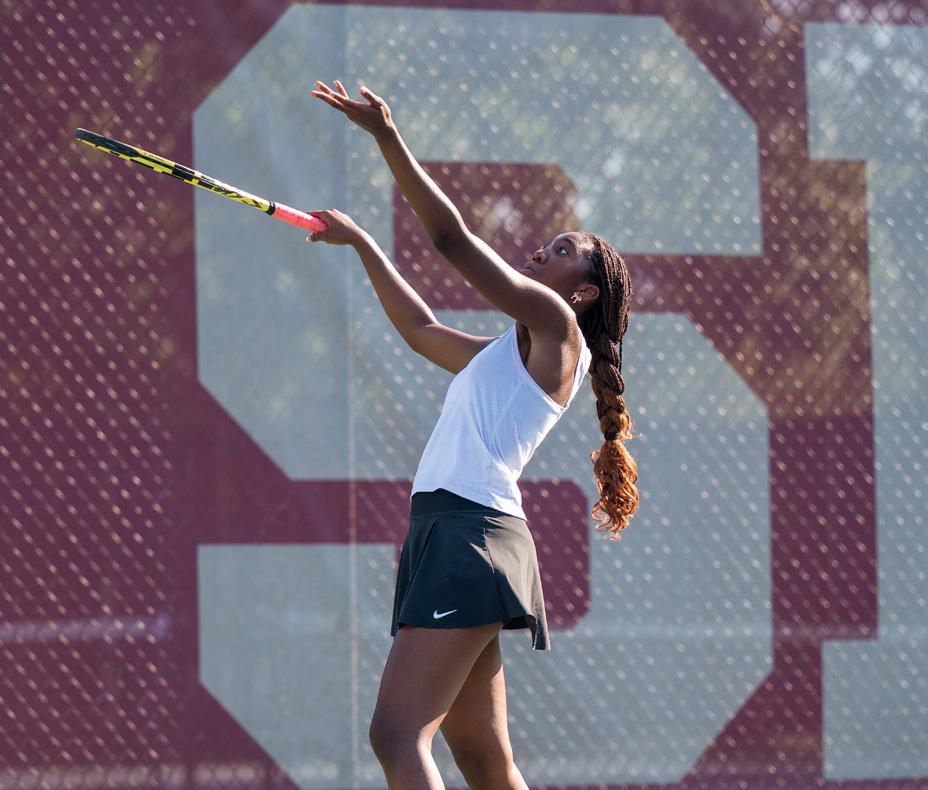
30 Sustained Excellence
A recap of fall and winter athletic seasons with highlights from the girls tennis program, and swim and dive teams.
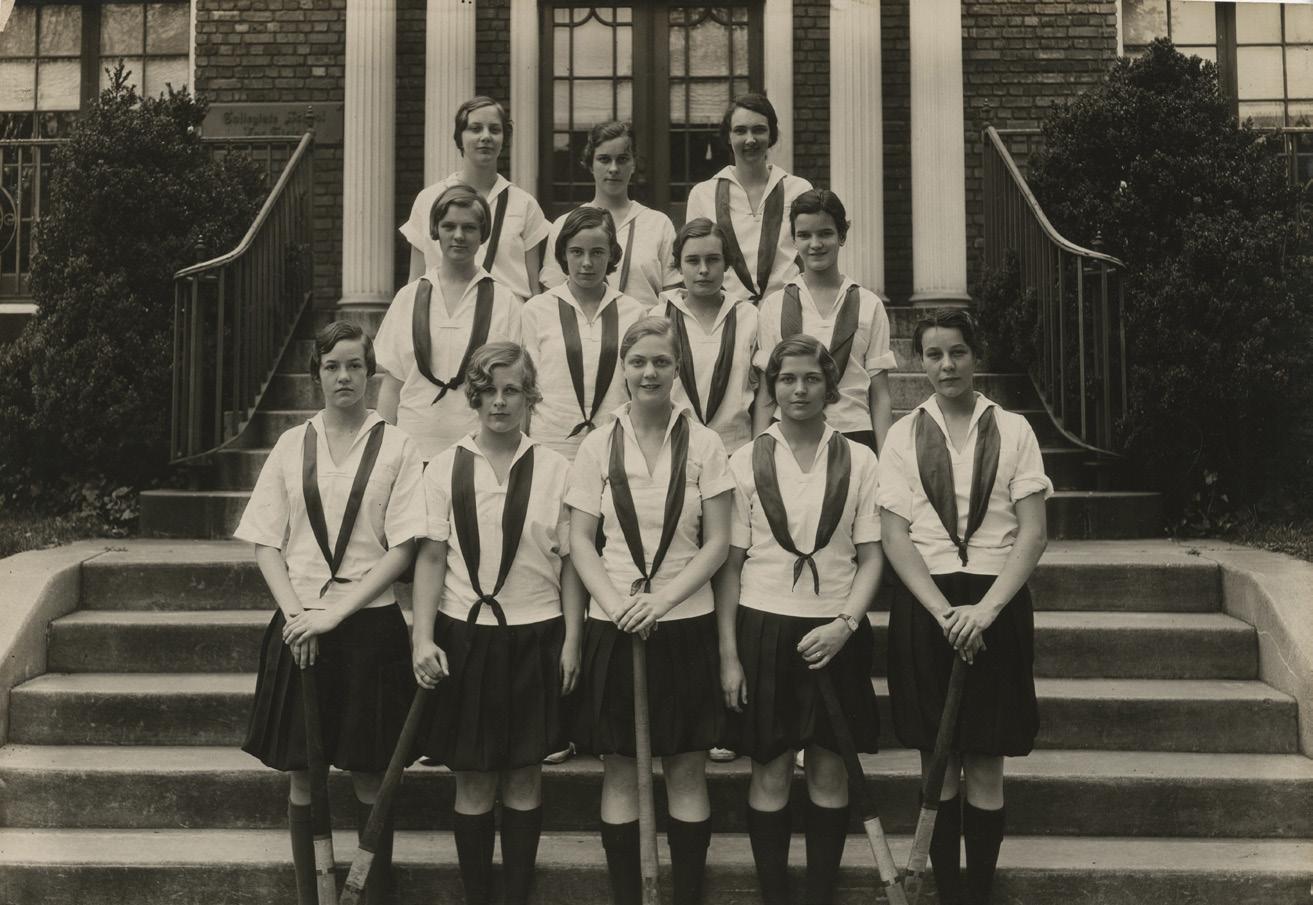
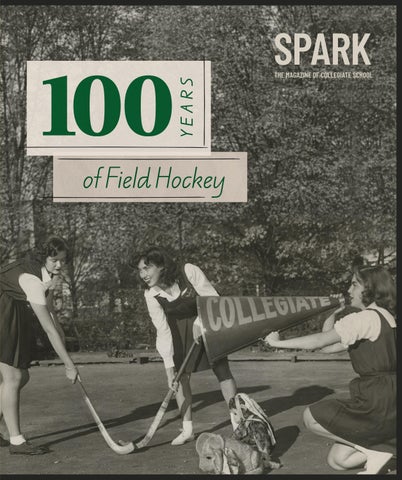
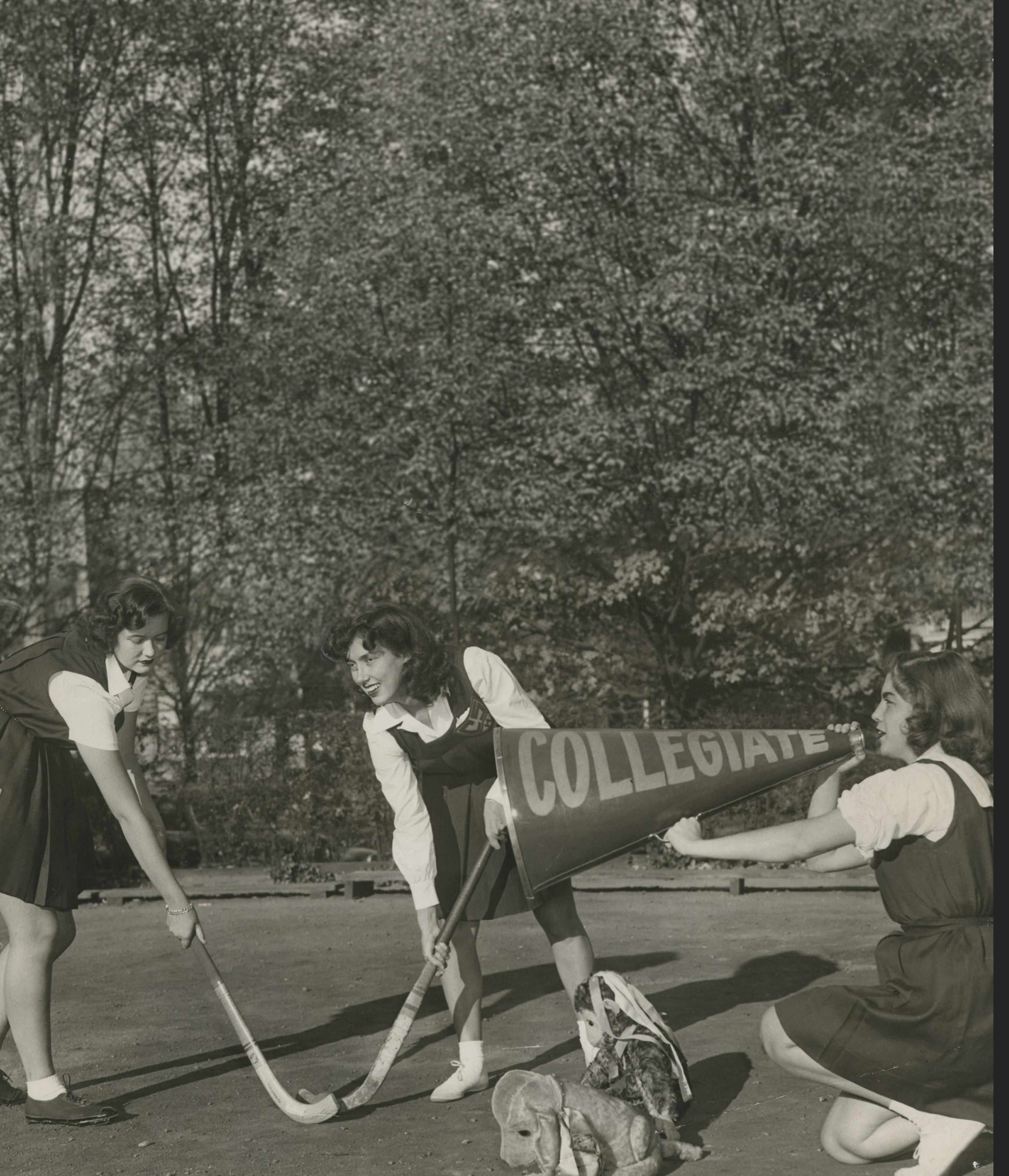
100 Years of Field Hockey at Collegiate
Collegiate field hockey celebrates 100 years of tradition, transformation, and a legacy still in motion.
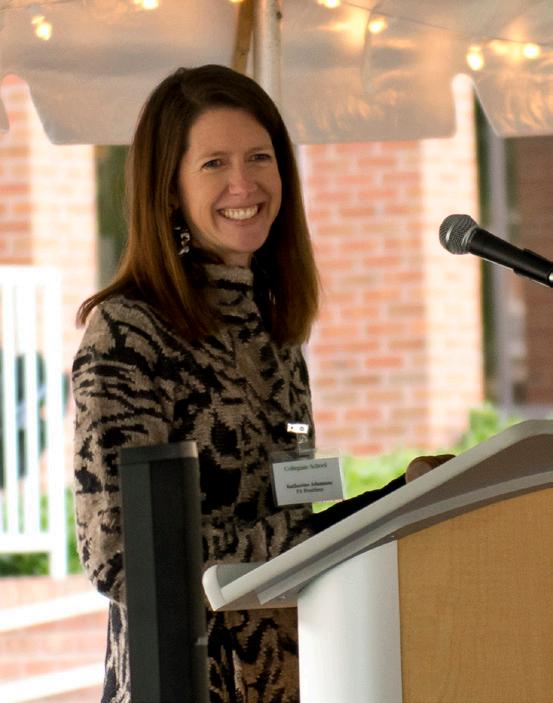
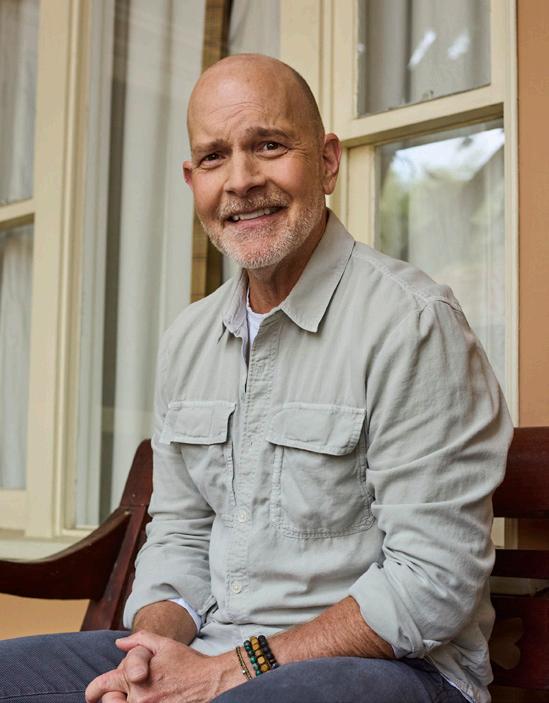
Leading with Distinction and Service
The 2026 Alumni Award recipients: Katherine Adamson & Mike Henry.
47 Jack Stepanian, Prodigal Son
Sometimes the best way forward is to come back.
LETTER FROM THE HEAD OF SCHOOL
Dear Collegiate Community,
By the time this issue reaches you, the Class of 2026 will have graduated – an important milestone in the life of our school. Commencement was both a celebration and a moment of transition, as these students leave behind a place many called home for thirteen years. As they become the newest members of our alumni community, we offer gratitude for all they have contributed to Collegiate, and wish them all the best.
The Class of 2026 now joins our already incredible alumni community, whose members continue to loyally support Collegiate. As I conclude my second year, I have witnessed firsthand the impact of our alumni through their generosity and their presence in the lives of today’s students. I truly believe that this connection is what carries the school forward.
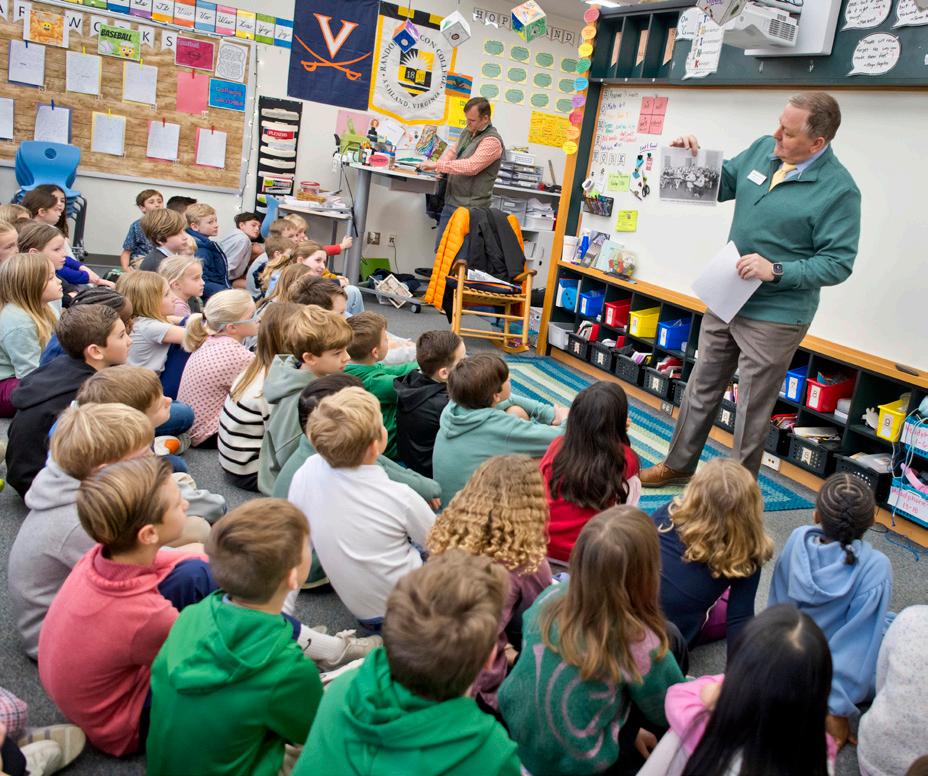
As Collegiate begins its 112th year, we must continue to put our mission at the center of our work and remember that it is a shared commitment by all. Your involvement means so much to us. Whether you return to campus, mentor students, attend events, support school initiatives, or simply stay connected to the life of the school, you help sustain the spirit and mission that make Collegiate so special. We are deeply grateful for your loyalty and for the many ways you continue to strengthen the school for current and future generations.
In this issue, we are especially proud to recognize two remarkable alumni whose lives and contributions reflect the very best of our values. We celebrate Mike Henry ’84, the recipient of the Distinguished Alumni Award, honoring exceptional achievement in his field, as well as Katherine Thalhimer Adamson ’96, the recipient of the Alex Smith Service Award, recognizing a deep and lasting commitment to service. We hope you will enjoy reading about these outstanding individuals.
Lastly, I want to thank Anne Gray Siebert ’97 for her dedication to our alumni over the past six years as Director of Alumni Engagement. She has led this work with genuine care, building meaningful relationships, and helping alumni feel valued. On a personal level, I am especially grateful for the way she helped me come to know our alumni and to appreciate the rich history of their connection to the School. We are excited to have her bring this same energy to her new role as the Director of Parent and Family Relations.
Thank you for remaining such an important part of our School family. Your continued support is greatly appreciated and ensures that Collegiate continues to thrive.
Sincerely,

Jeff Mancabelli Head of School
Spark is published three times a year by Collegiate School by the School’s Communications Office.
Director of Strategic Communications
Sarah M. Abubaker
Writer/Editor
Sarah M. Abubaker
Design
Think (think804.com)
Creative Manager
James Dickinson
Contributors
Macy Boyer ’26
Hunt Brabrand ’27
Weldon Bradshaw
Ellie Lynch
Louise Ingold
Kate Hogan ’26
Photography
Maggie Bowman ’23
Keller Craig
Taylor Dabney
James Dickinson
Alyssa McDaniel ’20
Bill Ruhl
Alex Seevers ’29
Tom Topinka
Address
Spark Editor
Collegiate School / Communications Office 103 North Mooreland Road / Richmond, VA 23229
Phone
Spark: 804.754.0869 / Alumni Office: 804.741.9757
Class Notes and Photographs
Please send your news and photographs to alex_neilson@collegiate-va.org, and we will use them in an upcoming issue. Digital images must be high resolution (min. 300dpi).
Letters to the editor
sarah_abubaker@collegiate-va.org. Visit our website at www.collegiate-va.org
Collegiate School admits qualified students and does not discriminate on the basis of race, color, national or ethnic origin, religion, gender, sexual orientation, mental or physical disability, or any other status protected by applicable law in the administration of its admissions, scholarships and loans, and its educational, athletic and other programs.
Collegiate School Administration:
Jeffrey W. Mancabelli, Head of School
Sarah M. Abubaker, Director of Strategic Communications
Khristiane K. Bates, Head of Lower School
Michael W. Boyd, Director of the Arts
Jeffrey G. Dunnington, Head of Middle School
Patrick E. Loach, Head of Upper School
Phyllis Palmiero, Chief Financial and Chief Operating Officer
Andrew Stanley, Athletic Director
Antenette Stokes, Ph.D, Director of Inclusion and Belonging
David E. Taibl, Director of Admission and Enrollment Management
Tung T. Trinh, Dean of Faculty
Kristen O. Williams, Chief Development Officer
Board of Trustees 2025-26:
W. Hildebrandt “Brandt” Surgner P ’11 ’14 ’17 ’19, Chair of the Board
Kenneth “Ken” P. Ruscio P ’08, Vice Chair of the Board
Neelan “Neely” A. Markel ’96 P ’27 ’30, Secretary
Neil Amin P ’31 ’32
Ellen T. Bonbright ’86 P ’24 ’26
Callie L. Brackett ’95 P ’22 ’24
Mason T. Chapman ’84 P ’22
Mayme B.F. Donohue ’03
Leavenworth “Wortie” M. Ferrell II ’88 P ’24 ’27 ’31
Martin “Marty” D. Franks
Mary B. Malveaux ’86 P ’26 ’29
Malcolm “Mac” S. McDonald P ’87 ’88
Nimisha Parikh Montgomery P ’35
Lia C. Mooney P ’28 ’31, Parents’ Association President Meera Pahuja ’97 P ’30 ’32 ’34
J. Cheairs Porter Jr. P ’27 ’29 ’32
JoAnn Adrales Ruh P ’16 ’18 ’21
Julious “Jody” P. Smith III ’86 P ’20 ’22 ’25
Wallace Stettinius P ’77 ’79 ’84, Trustee Emeritus
W. Gray Stettinius ’79 P ’07 ’10 ’12
R. Gregory “Greg” Williams ’69 P ’01 ’04, Trustee Emeritus
Elizabeth Dolan Wright ’01 P ’33 ’35, Alumni Association President
Alumni Association Board 2025-26:
Anya “Kash” O. Aboud ’12
Arthur “Brink” S. Brinkley III ’76
Wilson R. Cecil ’15
Max W. Comess ’03
Margaret “Molly” H. Congdon ’03
Kathleen M. Corsello ’10
John M. Daniel III ’70
Ernest “Ernie” A. Dettbarn III ’94
Stuart T. Farrell ’03
Grabille “Gray” S. Fain ’07
Dominique Meeks Gombe ’09
Meredith “Muffy” Z. Greenbaum ’04
Carol “Missy” W. Herod ’72
Angie L. Hutchison ’90
Devon G. Kelley ’05
Theodore “Ted” H. Lansing II ’98
Henry “Toby” P. Long III ’98
David W. MacMillan, Jr. ’82
Elizabeth “Beth” W. Marchant ’72
Lauren C. Makhoul ’10
John C. Markowitz ’01
Gray “Gracie” M. Mason ’05
Lee L. Moreau ’85
Rishi C. Pahuja ’04
Christopher “Chris” G. Pearson ’02 W. Grayson Richmond ’17
William “Bill” L. Roberts ’65
Giselle C. Shaw ’22
Elizabeth “Beth Anne” N. Shelly ’83 W. Nash Wiley ’15
Elizabeth Dolan Wright ’01



Building Blocks of the Future
Insight into Collegiate’s Lower and Middle School robotics programs.
Originally published for The Match on Jan. 9, 2026
By Hunt Brabrand ’27
IN OUR MODERN SOCIETY, technology is rapidly developing to the point where many people use complex devices every day without understanding how they truly work. While some are comfortable with this limited mindset, it has become imperative that we try to gain a deeper understanding of how these major parts of our lives actually operate. As robotics and engineering program leader Ralph Rivera puts it, “Technology isn’t magic; it’s the product of human ingenuity.”
Recognizing the importance of teaching its students to not perceive technology as something mysterious, but rather as something they can strive to understand, Collegiate starts teaching students STEM-based concepts from an early age. Through a rapidly growing set of robotics opportunities in the Lower and Middle Schools, students begin exploring the world of technology, enabling them to become innovators, creators, and problem-solvers rather than uninformed consumers.
STEM starts in the Lower School through multiple activities, including in-school and extra-curricular opportunities. Students can join FIRST LEGO League (FLL) Explore, an afterschool activity offered to 3rd and 4th Graders, run by Lower School STEAM Coordi-
nator Frank Becker and supported by Rivera. This program serves as an introduction to robotics for students, teaching them engineering concepts through building, coding, and research.
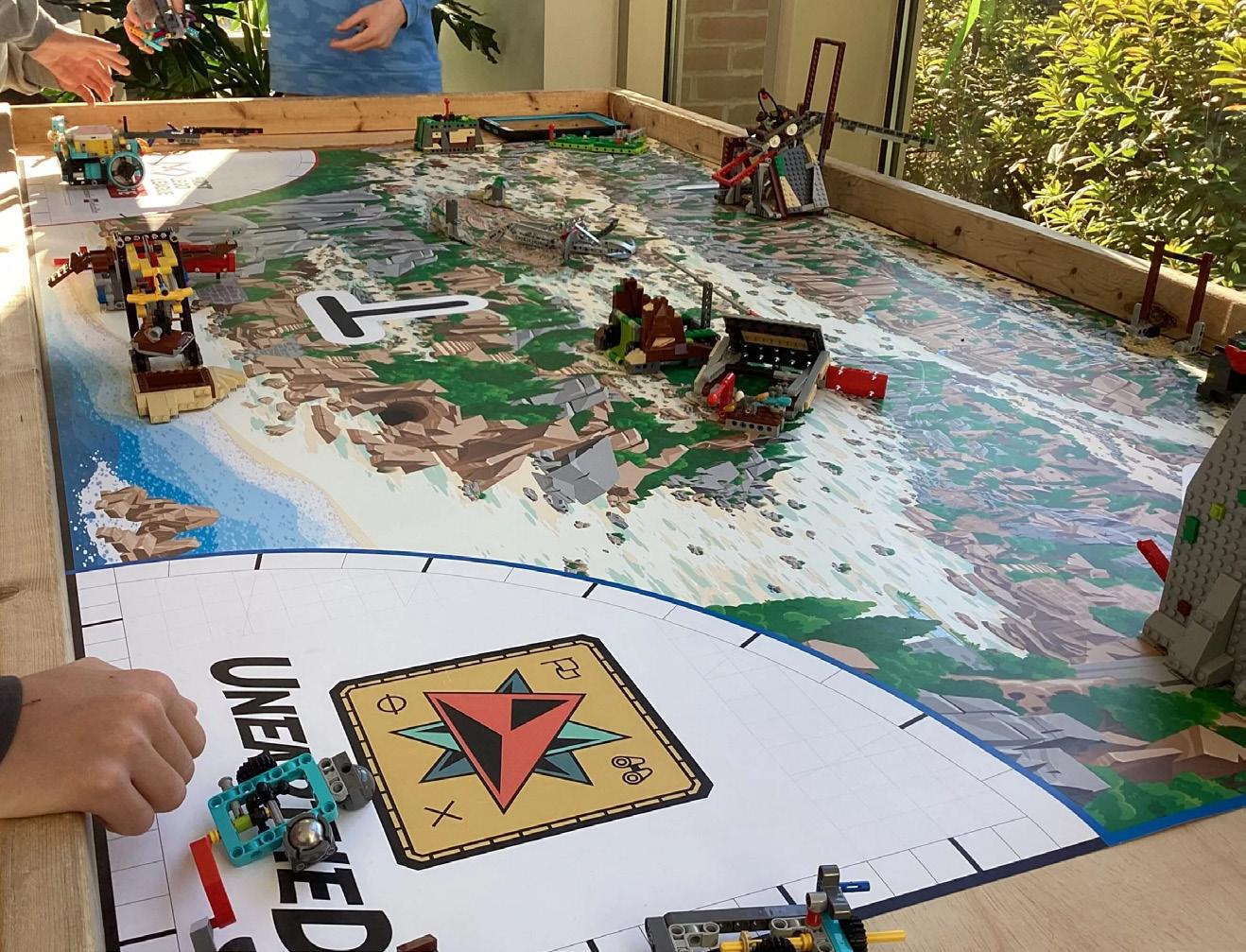
To encourage a learning-based experience, FLL Explore provides a structured timeline of events for participants to complete. Based on themes, such as music, oceanography and archaeology, students learn and create a showcase in place of a formal competition.
Lower School students create their robots using the LEGO Spike Essential robotics system, which consists of motors, sensors, and Technic pieces, allowing for creativity in solutions. However, Becker and Rivera have begun to notice the limitations of LEGO Spike Essential with, surprisingly, students striving to create more complex systems. Because of this, they are considering the more capable Spike Prime Hub, used for storing and executing the robots’ code, which is currently used in the Middle School. This shift could offer more opportunities for Lower School robotics
students and better ease the transition between divisions.
Besides FLL Explore, Collegiate also provides camps through Summer Quest, classes, and other introductory programs for Lower Schoolers to continue developing STEM skills.
The Middle School robotics program expands both in size and expectations. Students can sign up to participate in the STEM Competition activity, where they compete in FLL Challenge. This year, interest is exceedingly high, with
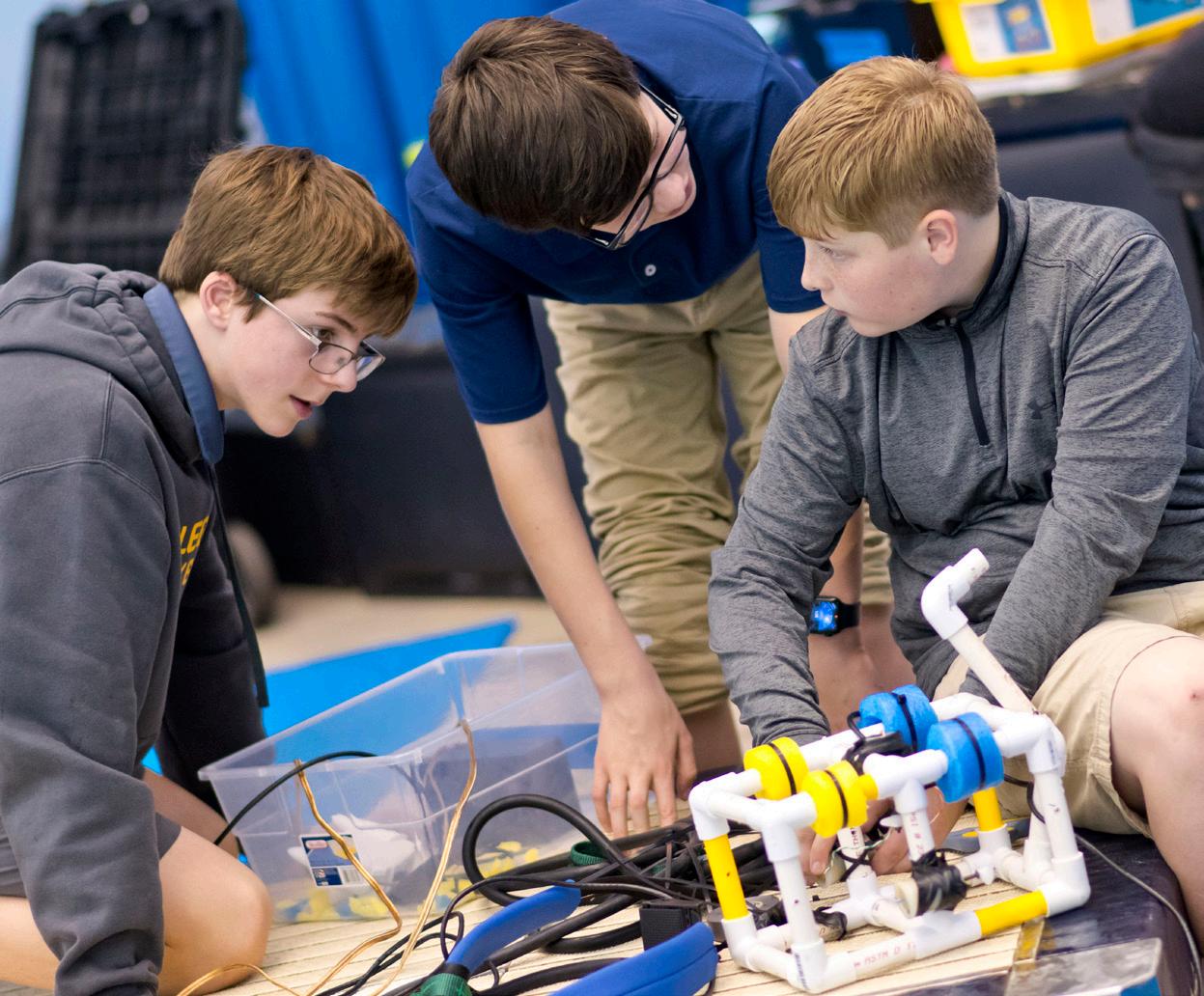
Students testing their FLL robot for an upcoming competition.
Technology isn’t magic; it’s the product of human ingenuity.”
around 70 Middle School students forming 13 teams that meet three to five times per week.
Teams prepared for competitions held in late November to early December, supported by their coaches: Middle and Upper School instructional technology coach Rachael Rachau, director of instructional technology Patty Sinkler, Middle School eLAB facilitator Daniel Bell, and Rivera, with athletics administrative assistant Kelsey Watson serving as the subject-expert coach for all teams. Watson provides additional expertise through her position as an archeologist with Raising Voices Charles City Archaeology.
This year, the Middle School robotics program has seen a major shift in how mentors assist teams. Previously, coaches supported students collectively as questions arose, but this “zone defense coaching model,” as Rivera puts it, made it difficult for coaches to follow teams’ long-term progress. Now, teams are each paired with a dedicated mentor, a “man-toman model,” to encourage deeper guidance and targeted problem solving. Rivera says that this change has significantly improved teams’ performances, confidence, and project quality.
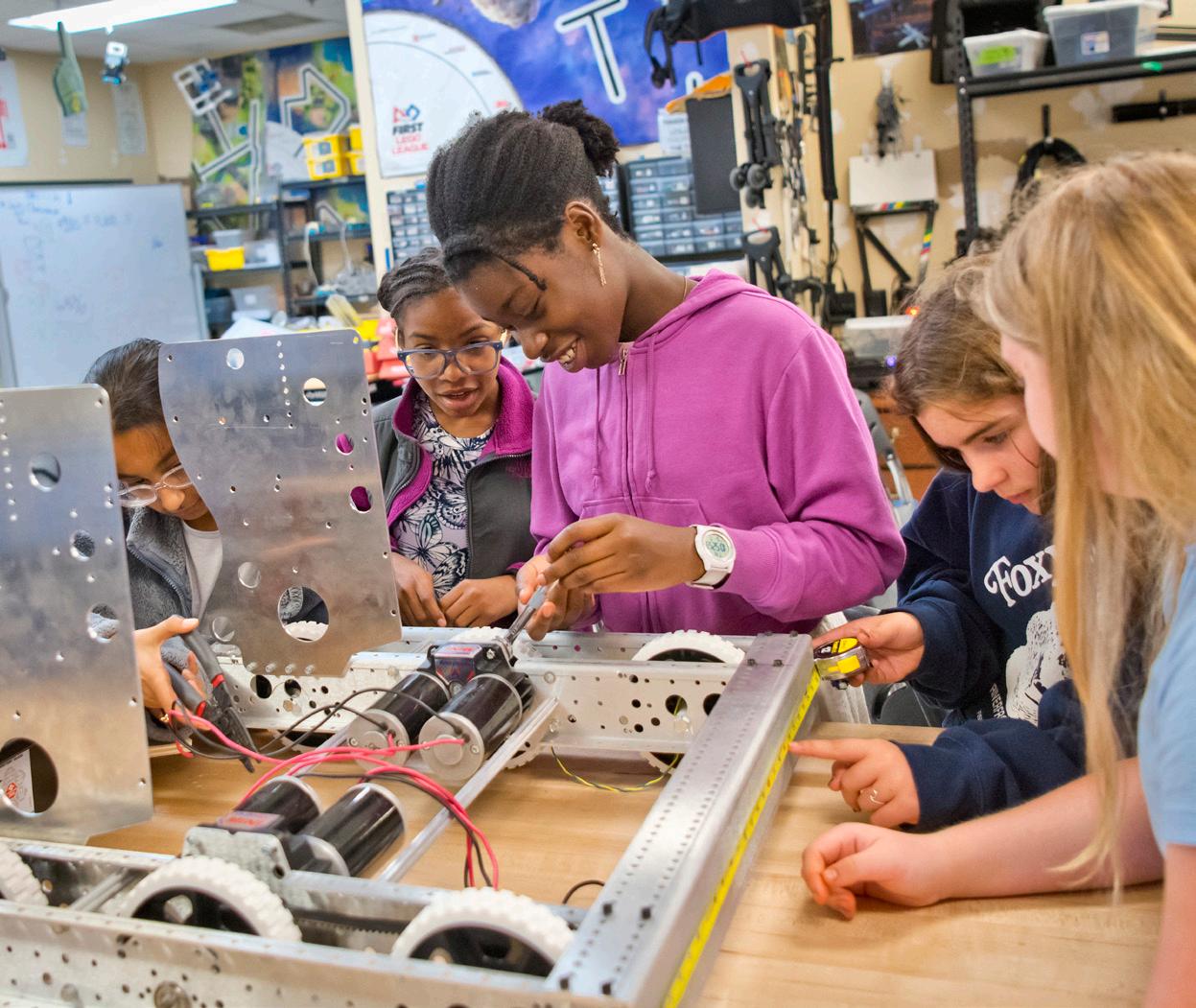
Middle School students use the LEGO Spike Prime robotics system, which provides them with greater design flexibility, more inputs and outputs for motors and sensors, and more advanced sensors. Students can experience more engineering-based opportunities in the Middle School, such as the STEM primer activity for 5th and 6th Graders, a PreTORCH activity for 7th and 8th Graders that prepares them for
Upper School robotics, robotics summer camps, and a dedicated 8th Grade STEAM class.
Across both divisions, the robotics programs are guided by a clear philosophy: students should feel like practitioners of STEM. As Rivera explained, students do not need to leave understanding everything about robotics; they simply need to feel that they could be a part of engineering, that the “shoe can fit.”
FIRST’s yearly themes help bring this idea to life, allowing students to explore a wide variety of ideas throughout their education. It helps blur the line between isolated robotics activities and real world problems. Experiences like visiting Robins Campus to see field-painting robots or participating in mock dig sites show students that STEM careers are not only possible, but plausible.
Moving forward, Rivera hopes to ease the transition between the Lower and Middle Schools’ robotics programs. Possible steps include using Spike Prime in both divisions, inviting Middle Schoolers to present to the Lower School, and allowing Lower School students to participate in FLL Challenge early, if they are eager. Overall, Collegiate’s Lower and Middle School robotics programs not only teach technology, but encourage students to shape it.
By treating robotics as a tool for discovery rather than a mystery to consume, students learn that it is not just something to idly use, but rather that they have the potential to become its innovators.
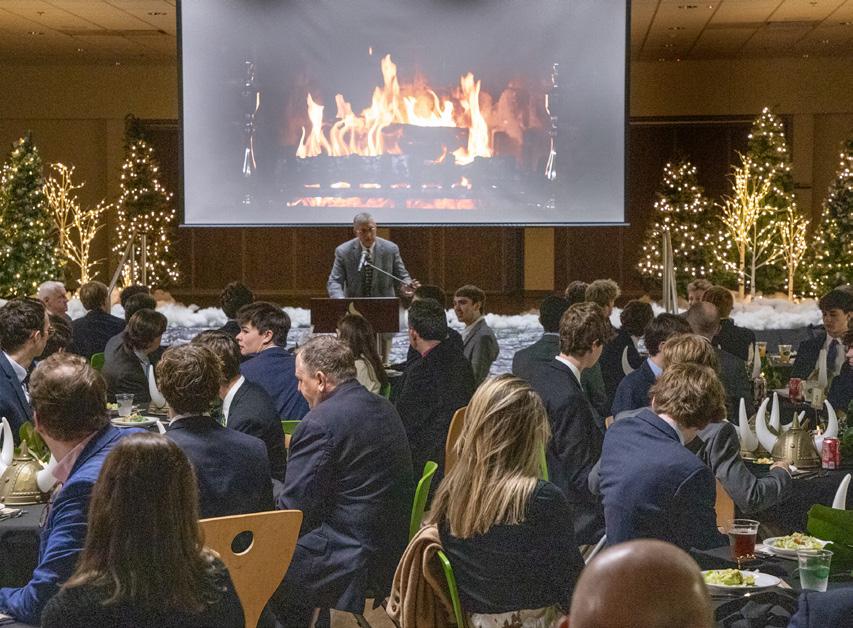
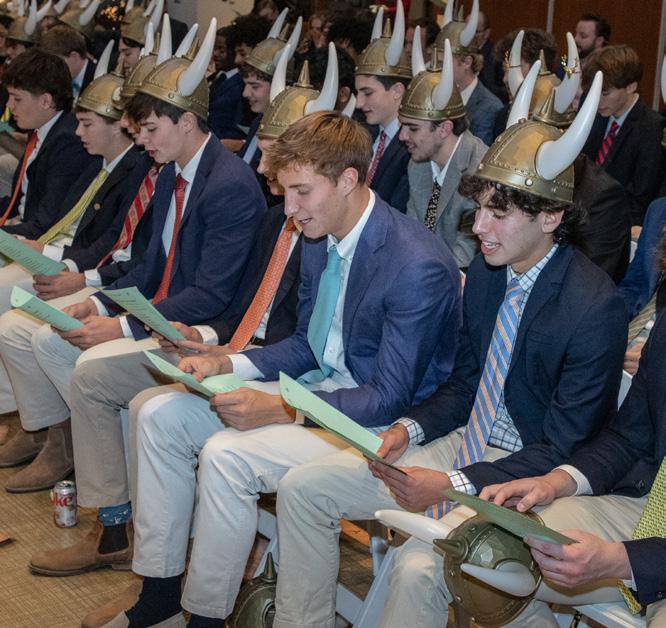
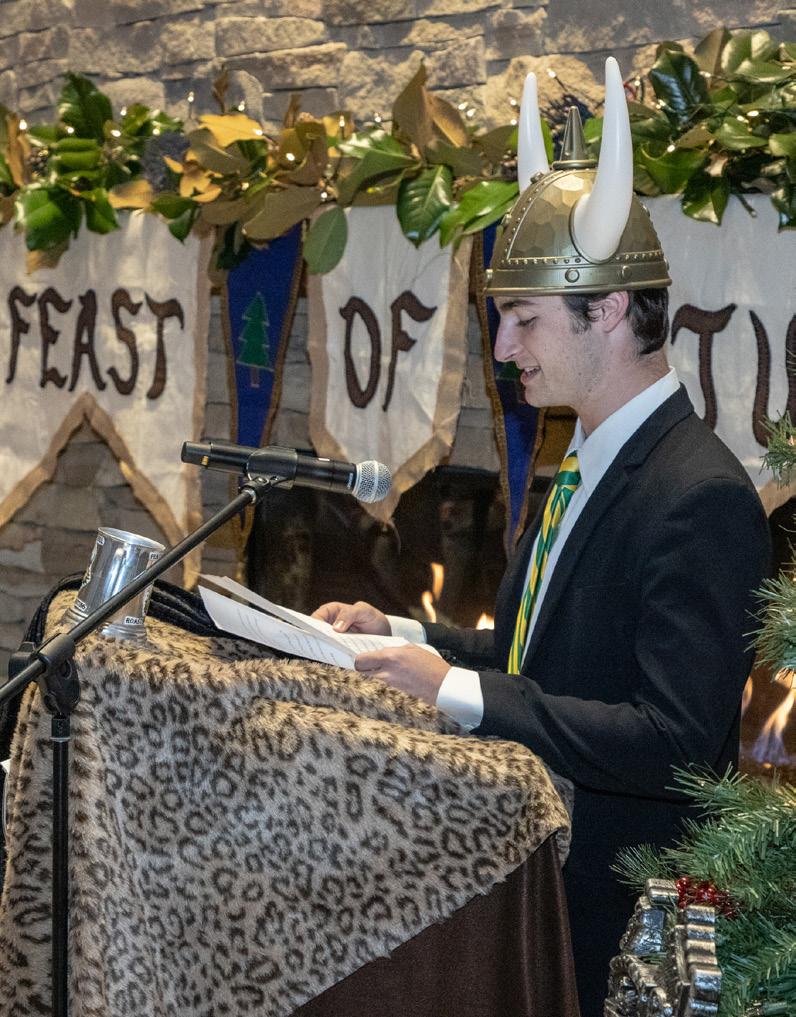
FEAST OF JUUL
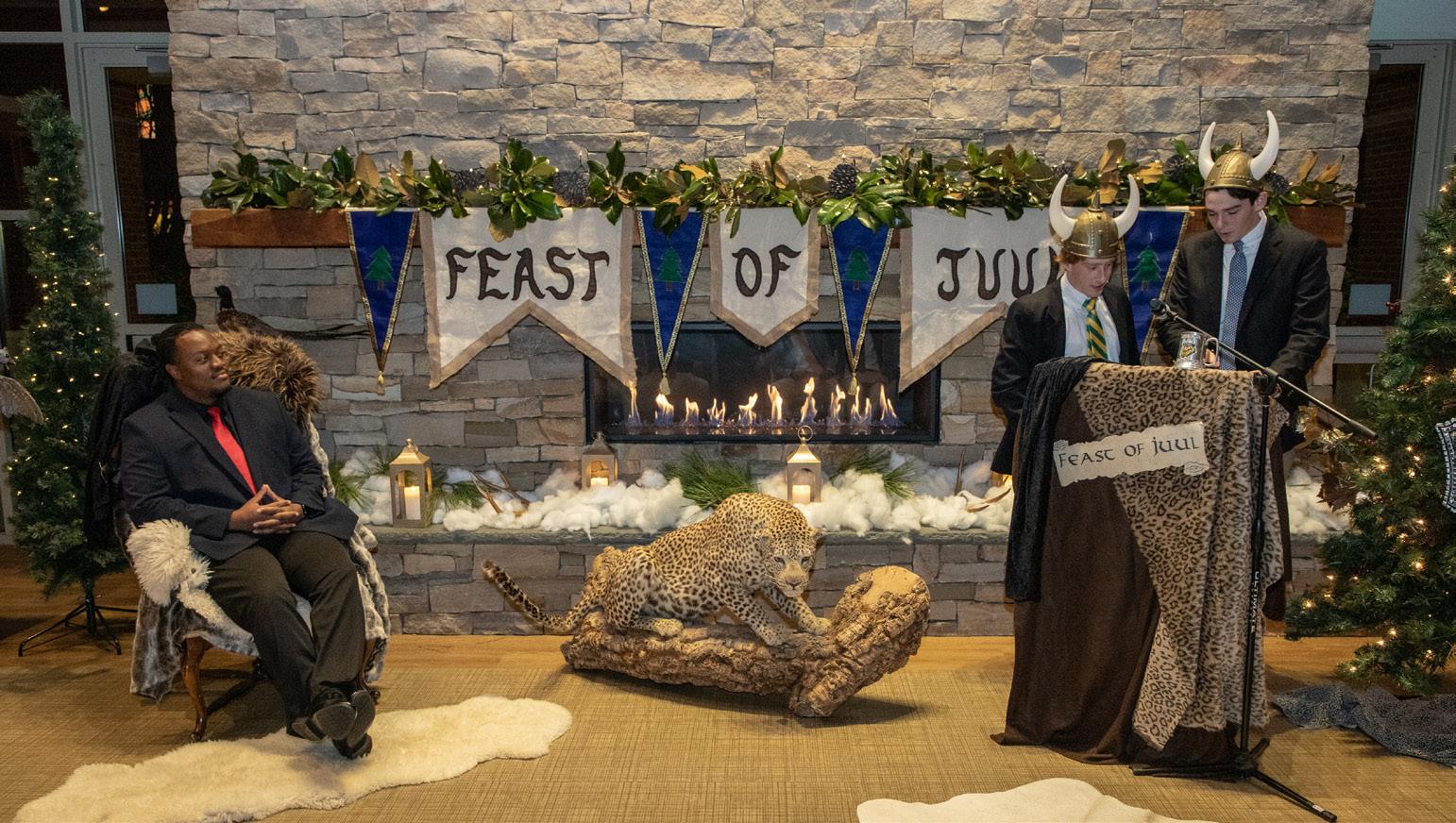
During Collegiate’s annual Feast of Juul, Senior boys and faculty bonded over a festive dinner, light-hearted roasts, and laughter.
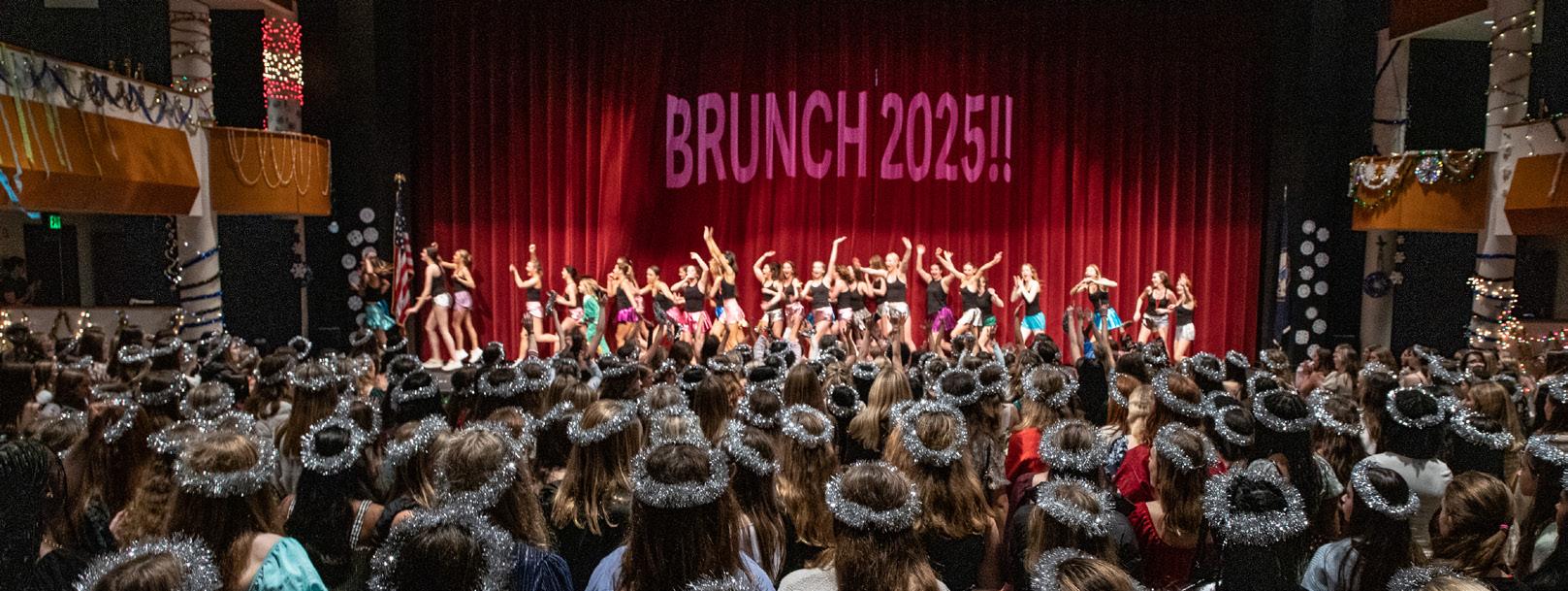
BRUNCH 2025
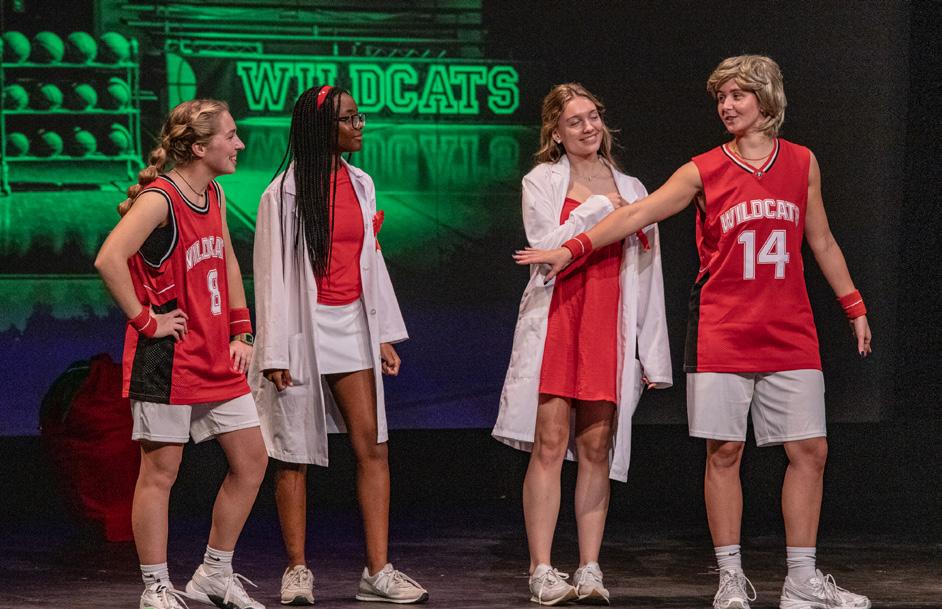
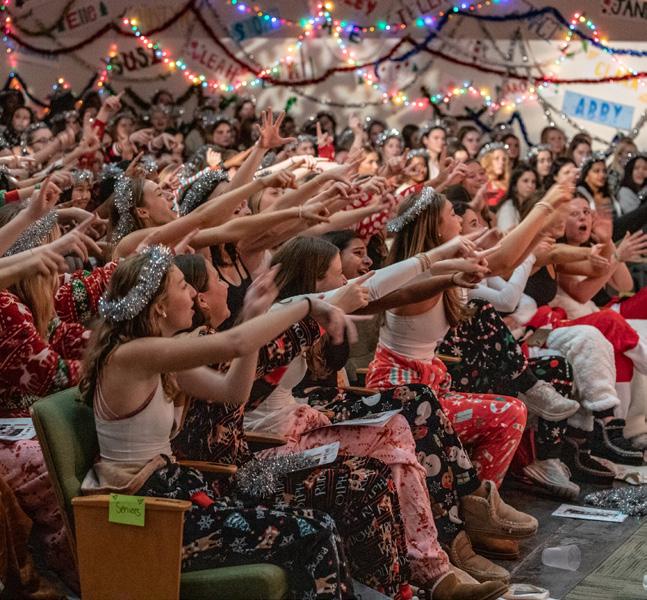
High School Musical was the theme for Brunch 2025, a beloved tradition that has brought Collegiate girls together for over 80 years! The warmth of the holidays were felt in the songs and choreographed dances performed by Junior girls.
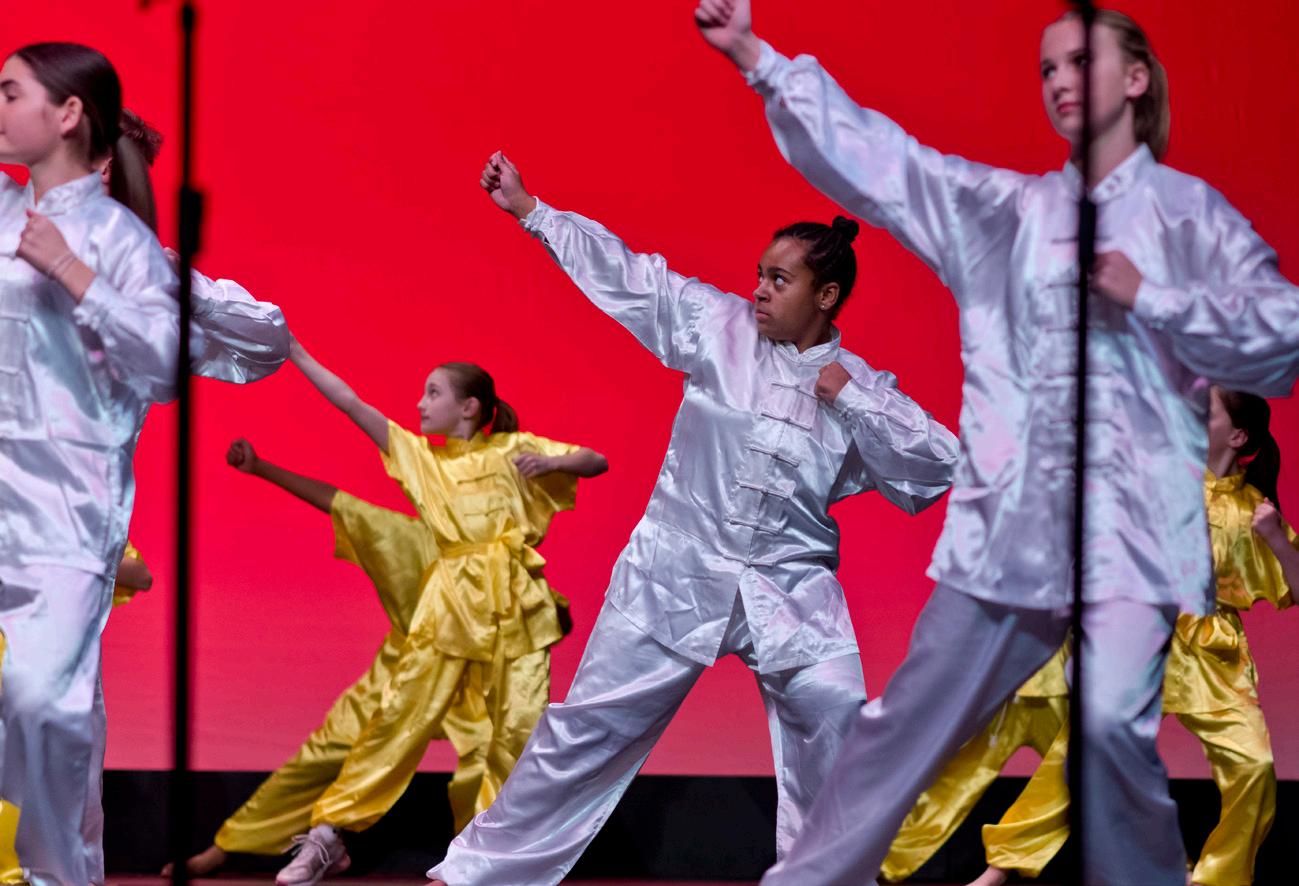
CHINESE NEW YEAR CELEBRATION
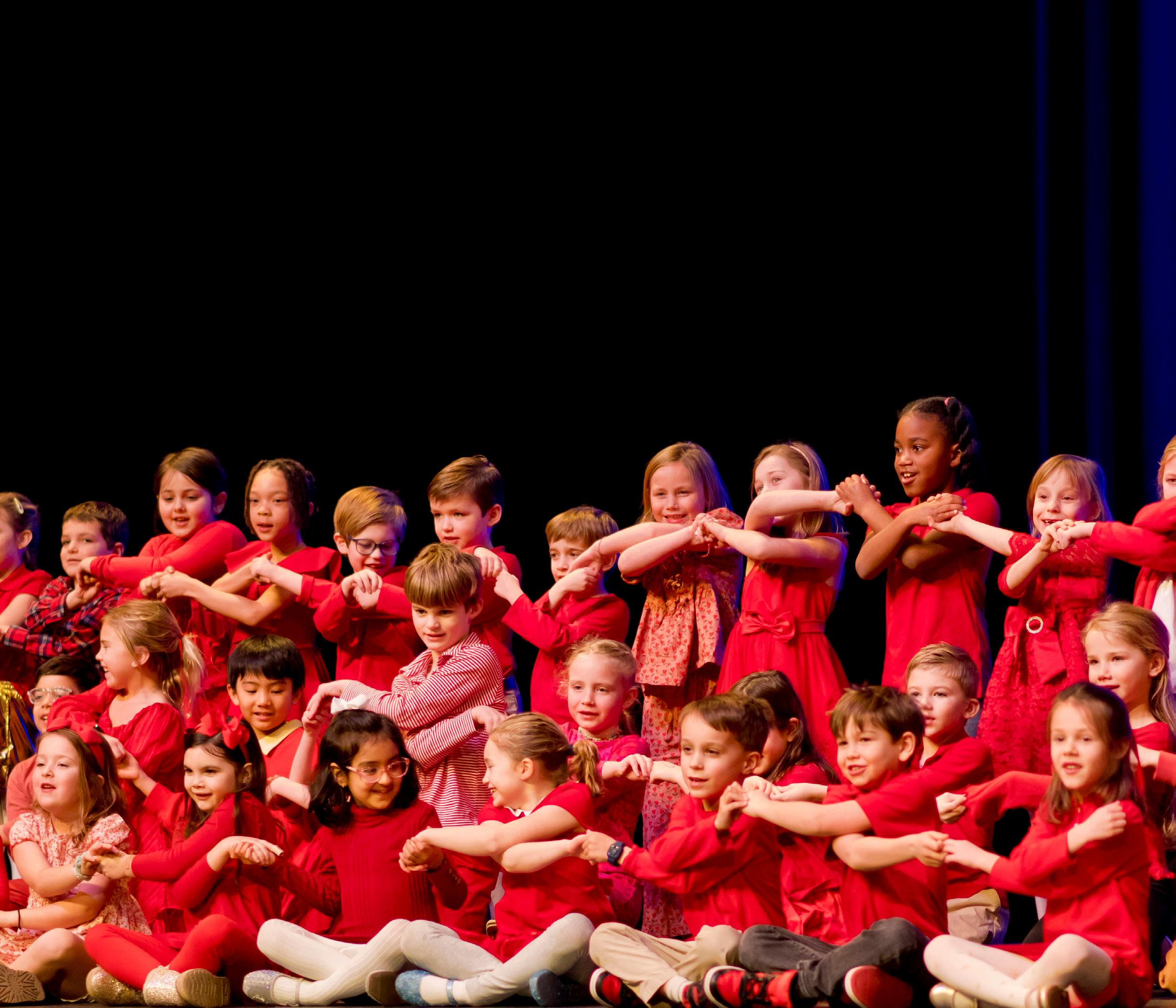
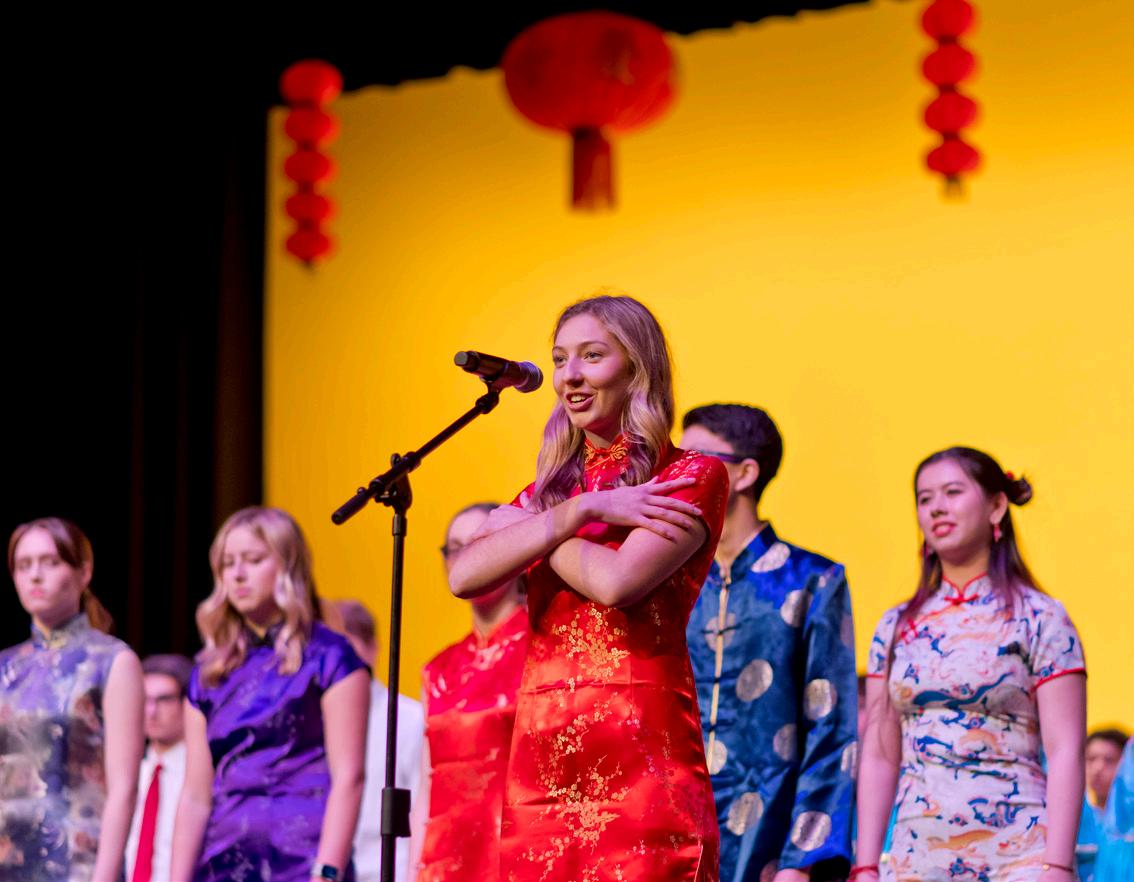
This year marks Collegiate School’s 13th annual celebration of the Chinese New Year, a cherished tradition that continues to grow and evolve within our community. We are proud to showcase our students’ learning and creativity in the Chinese language program through a vibrant presentation that reflects both their dedication and cultural understanding.
This celebration is a reflection of student voice and collaboration, and we are deeply appreciative of the time, energy, and enthusiasm our students have contributed to bringing it to life. We also extend our sincere gratitude to our Chinese language teachers — Yu Xiao, Daisy Hu, Chuan Chen, and DongMei Yuan — for their ongoing leadership, passion, and commitment to fostering meaningful learning experiences for our students.
Three Centuries of Service
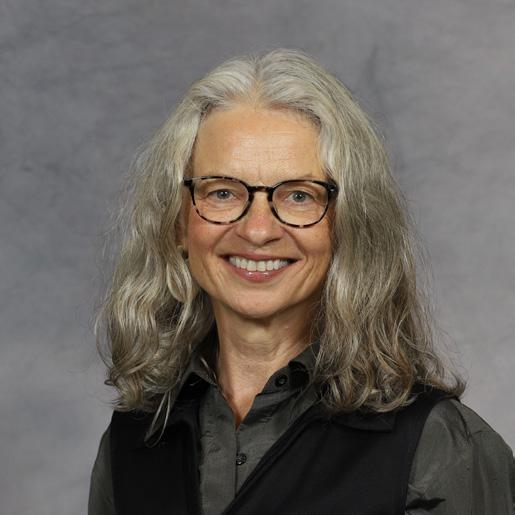
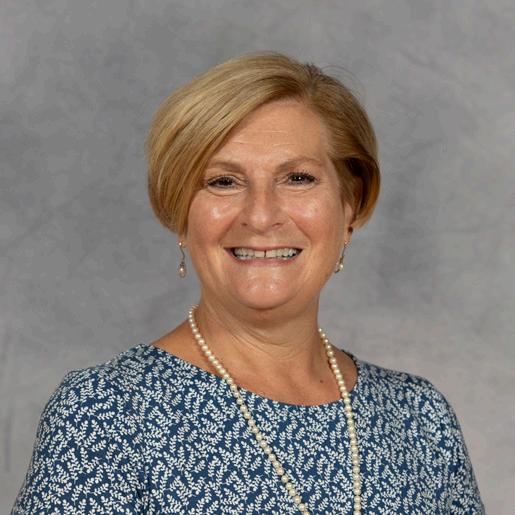
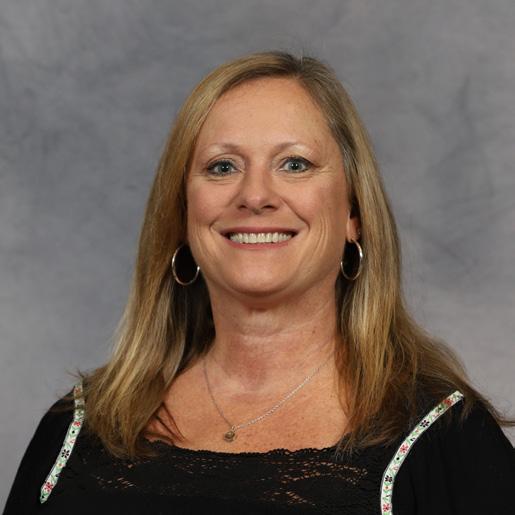
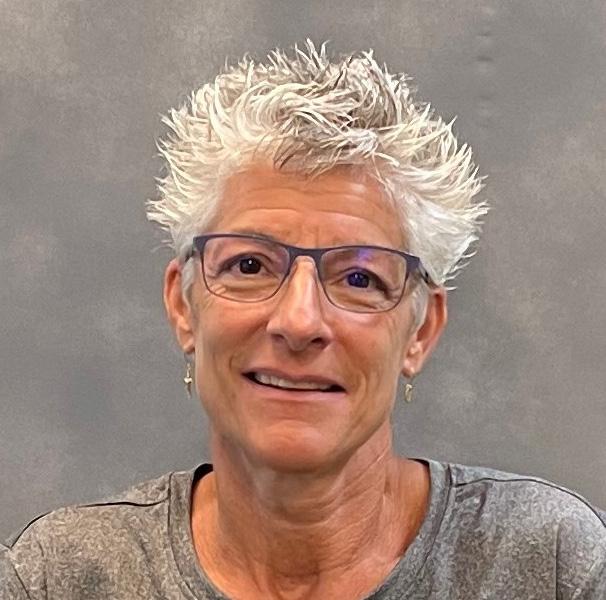
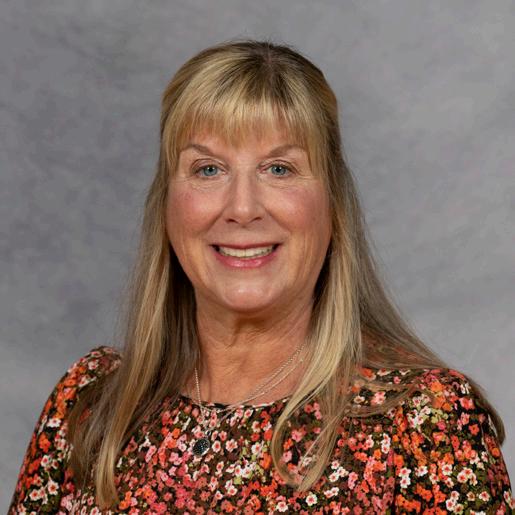
Collegiate honors 14 faculty and staff retirements during the 2025-26 school year.
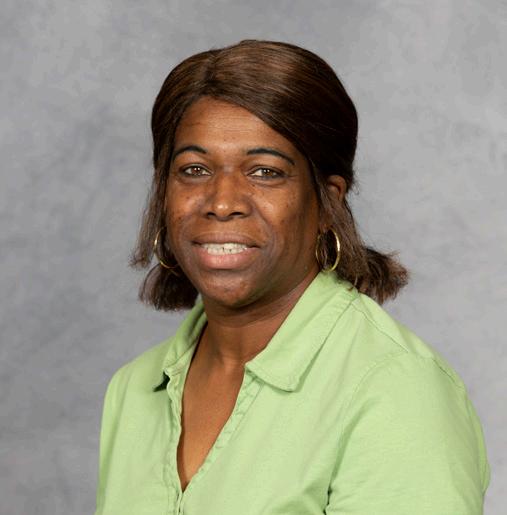
THIS YEAR, COLLEGIATE HONORS A REMARKABLE GROUP OF RETIREES whose combined service spans 320 years. Their roles have varied — teachers, artists, mentors, coaches, administrators, and caretakers — but their shared commitment to students and to one another has shaped the life of the School in lasting ways.
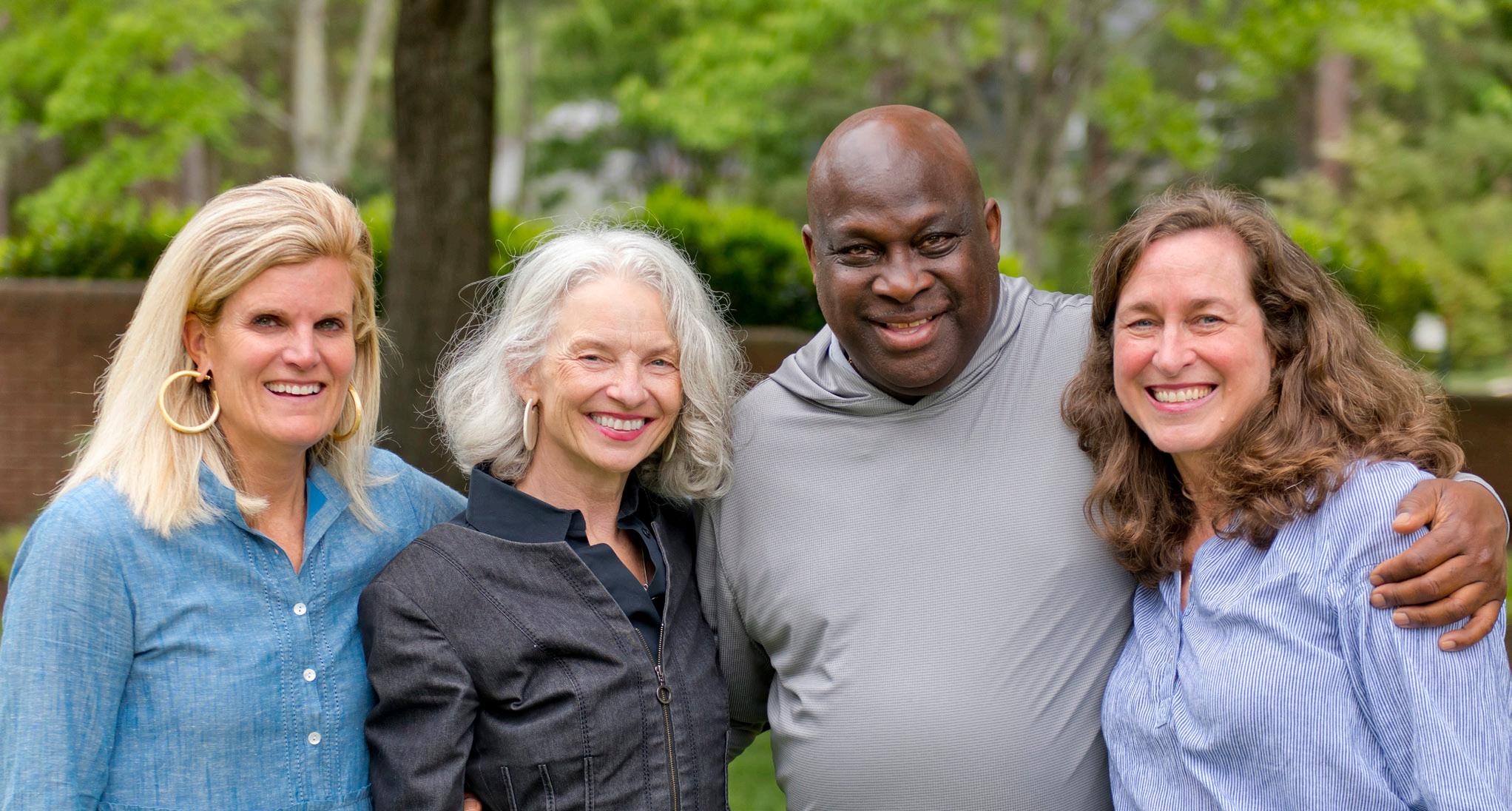
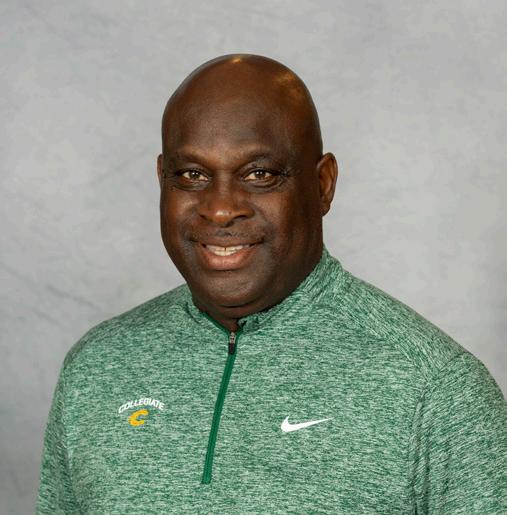
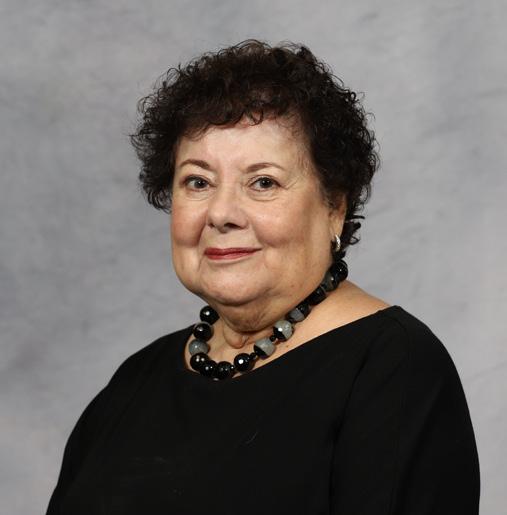
Wilbur Athey | 43 YEARS
Jackie Johnson | 40 YEARS Mary Arzt | 38 YEARS
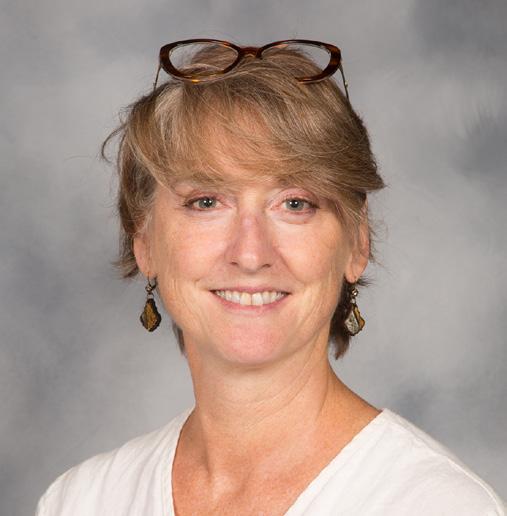
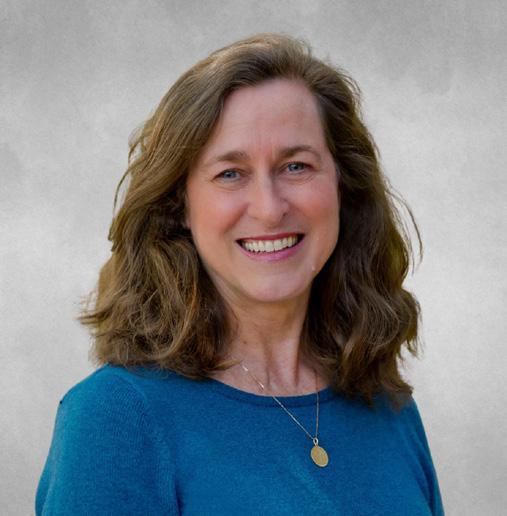
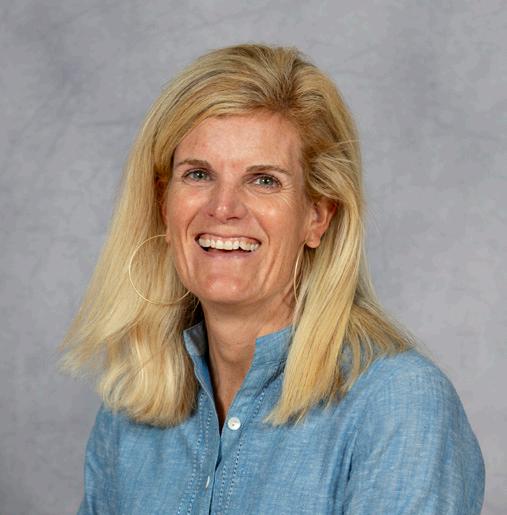
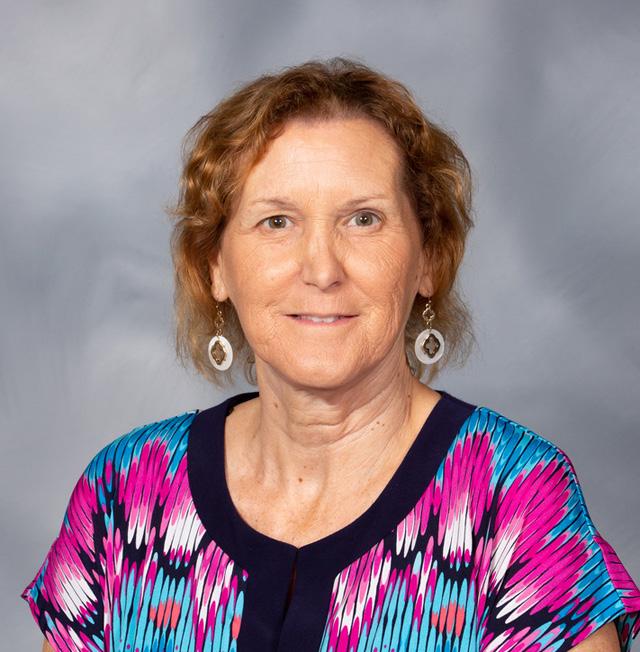
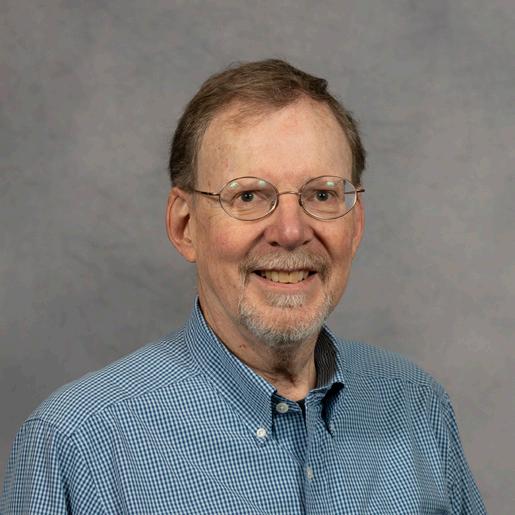
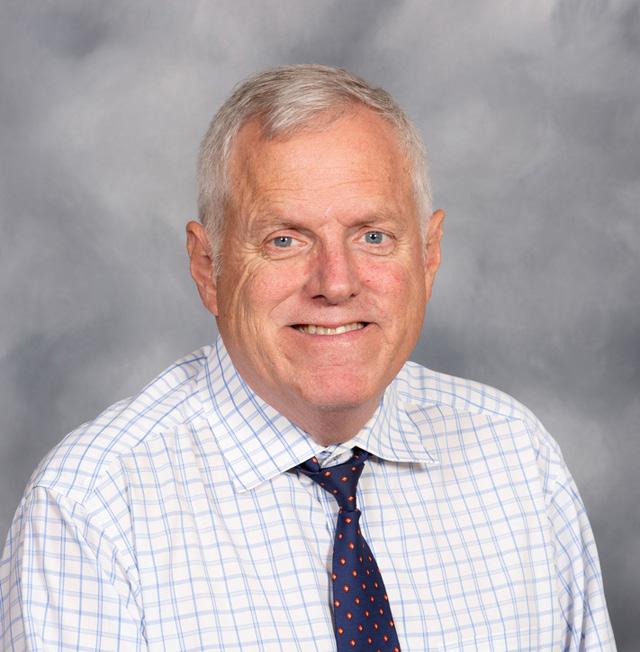
To read more about the 2025-26 retirees, scan here
Mil Norman-Risch | 38 YEARS
Heather Garnett | 24 YEARS
Glenn LaFerriere | 13 YEARS
Tara Burgess | 4 YEARS
Dana DuMont | 30 YEARS
Debra McKercher | 24 YEARS
Shirley Bogaev | 10 YEARS
Barb Peco | 4 YEARS
Holly Fairlamb ’82 | 27 YEARS
Taylor Dabney | 22 YEARS
Heidi Benson | 3 YEARS
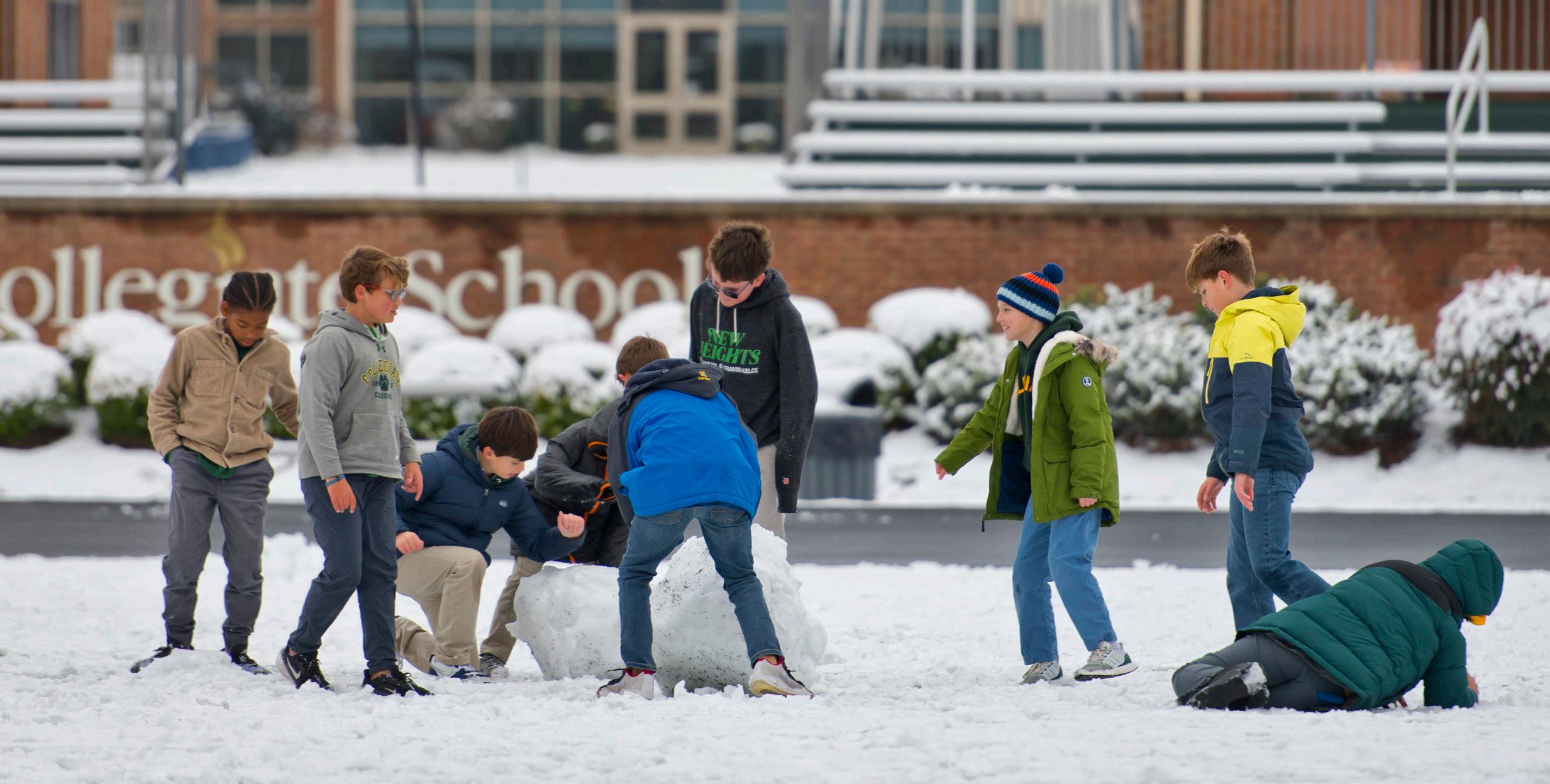
SNOW DAYS
Winter 2025-26 was one for the books! But inclement weather couldn’t stop the learning, or fun, on campus. Students bundled up and made snowmen on Grover Jones Field on a snowy day in December.
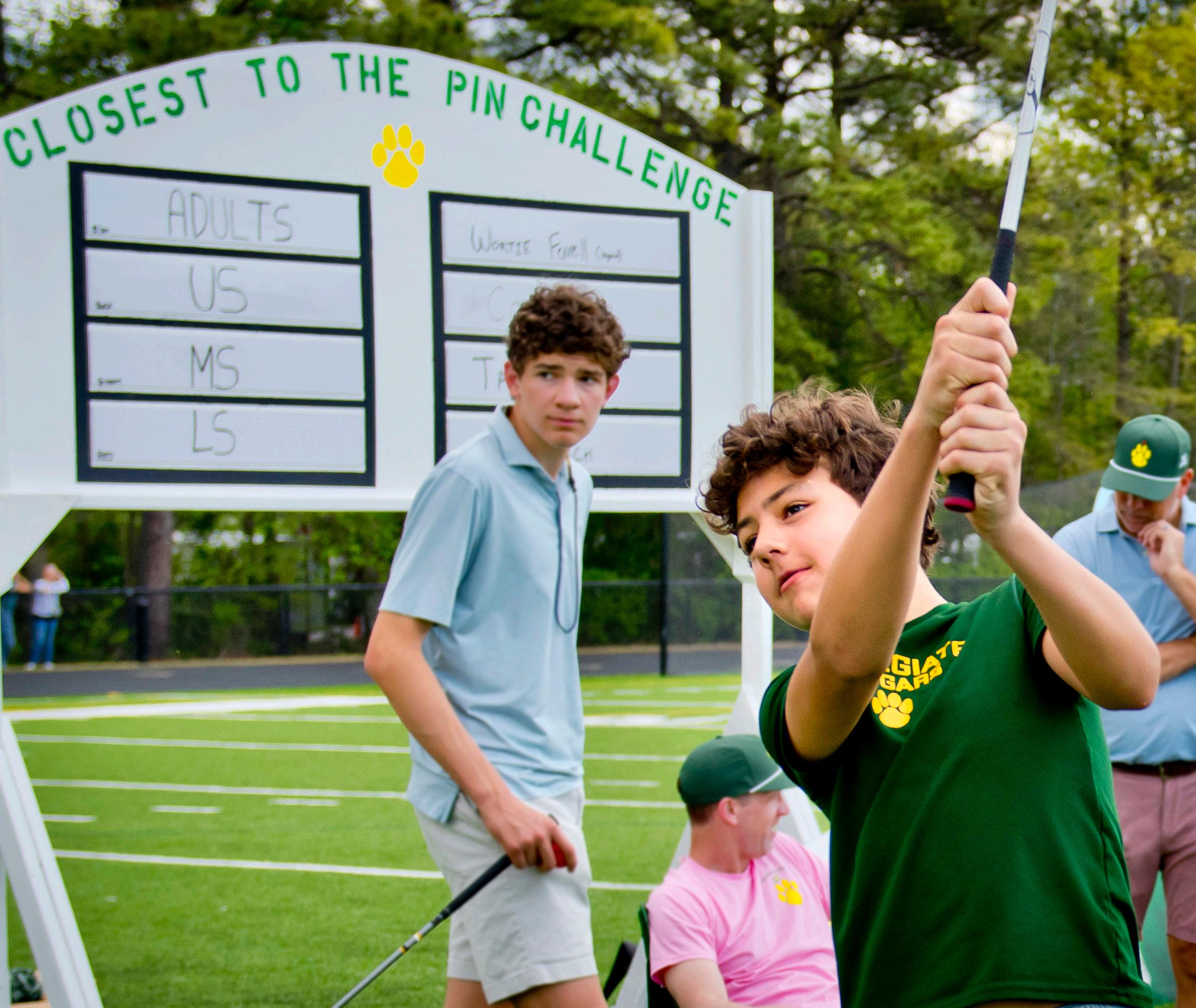
VILLAGE GREEN FAIR
Collegiate held its 61st Village Green Fair the weekend of April 10. This year’s theme was “Go for the Green,” a playful golf motif that had Cougie sporting a 5 iron and the iconic Master’s Green Jacket. It was a beautiful two days of classic VGF games, activities, food, and shopping. As always, Saturday kicked off with the VGF Fun Run with over 200 Lower and Middle School runners.
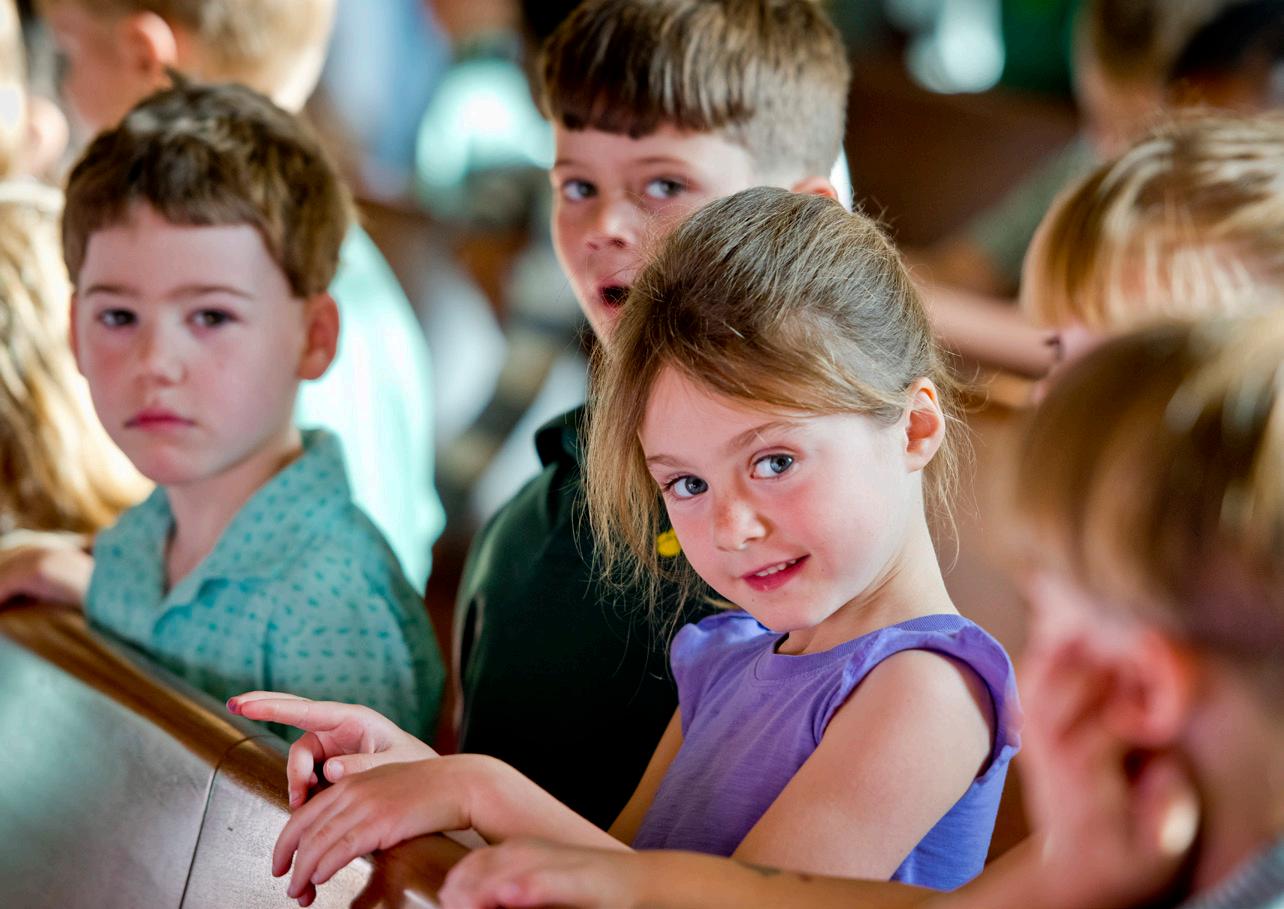
GRANDPARENTS & SPECIAL FRIENDS’ DAY
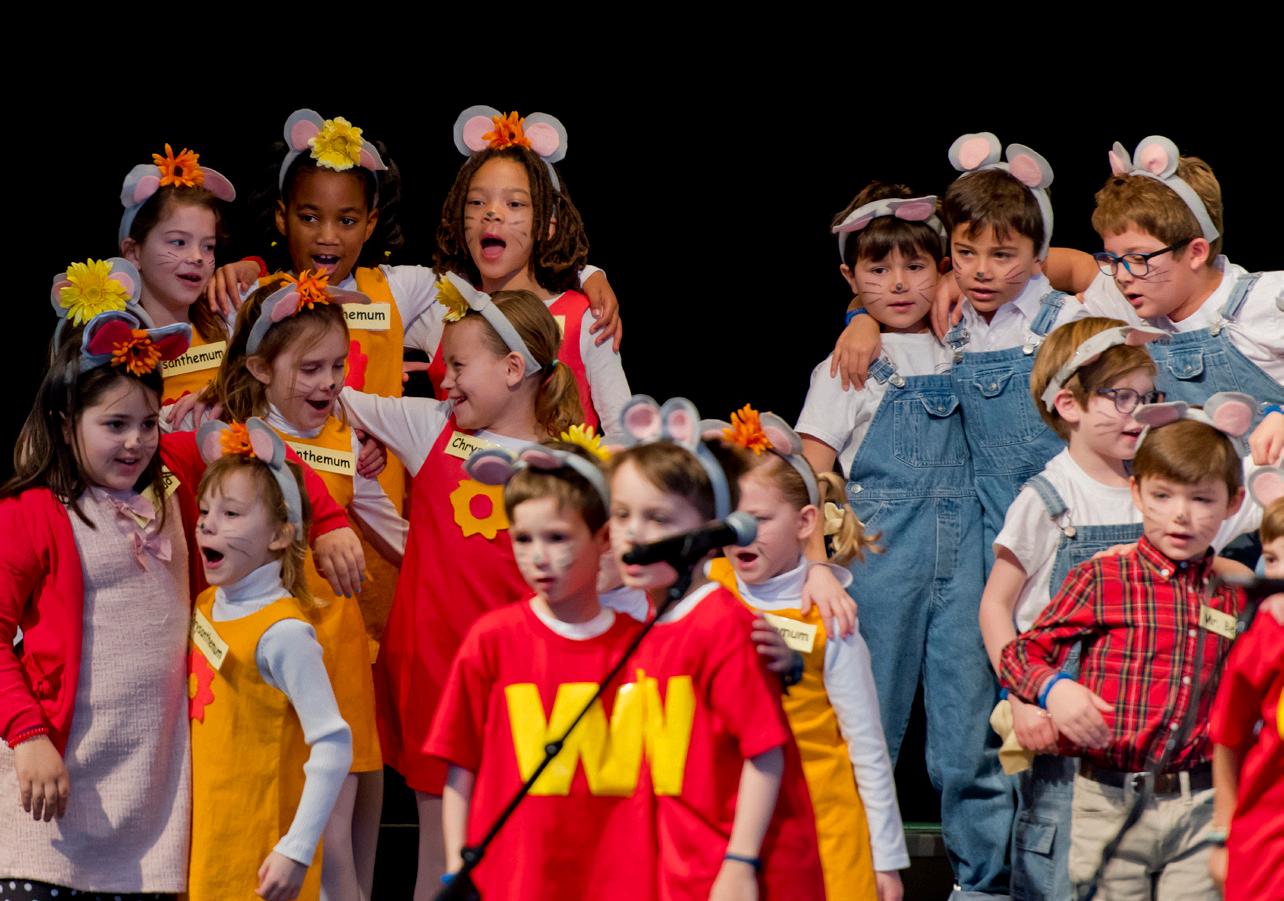
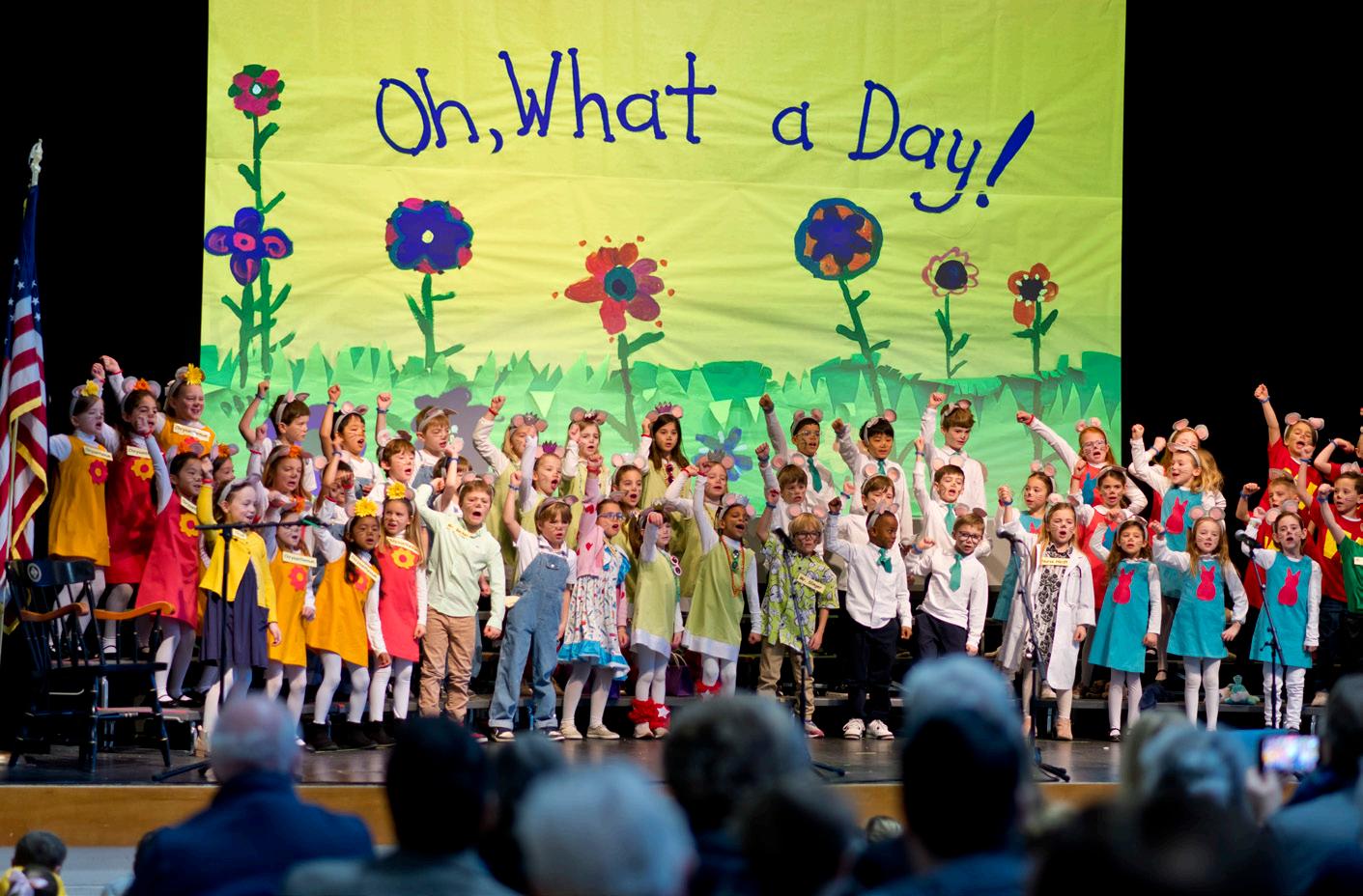
There were smiles all around for 1st Graders, their Grandparents, and special friends as the students performed Oh, What a Day! The play is based on the children’s books by Kevin Henkes. In his words, “Sometimes all you can do is say, ‘Wow.’”
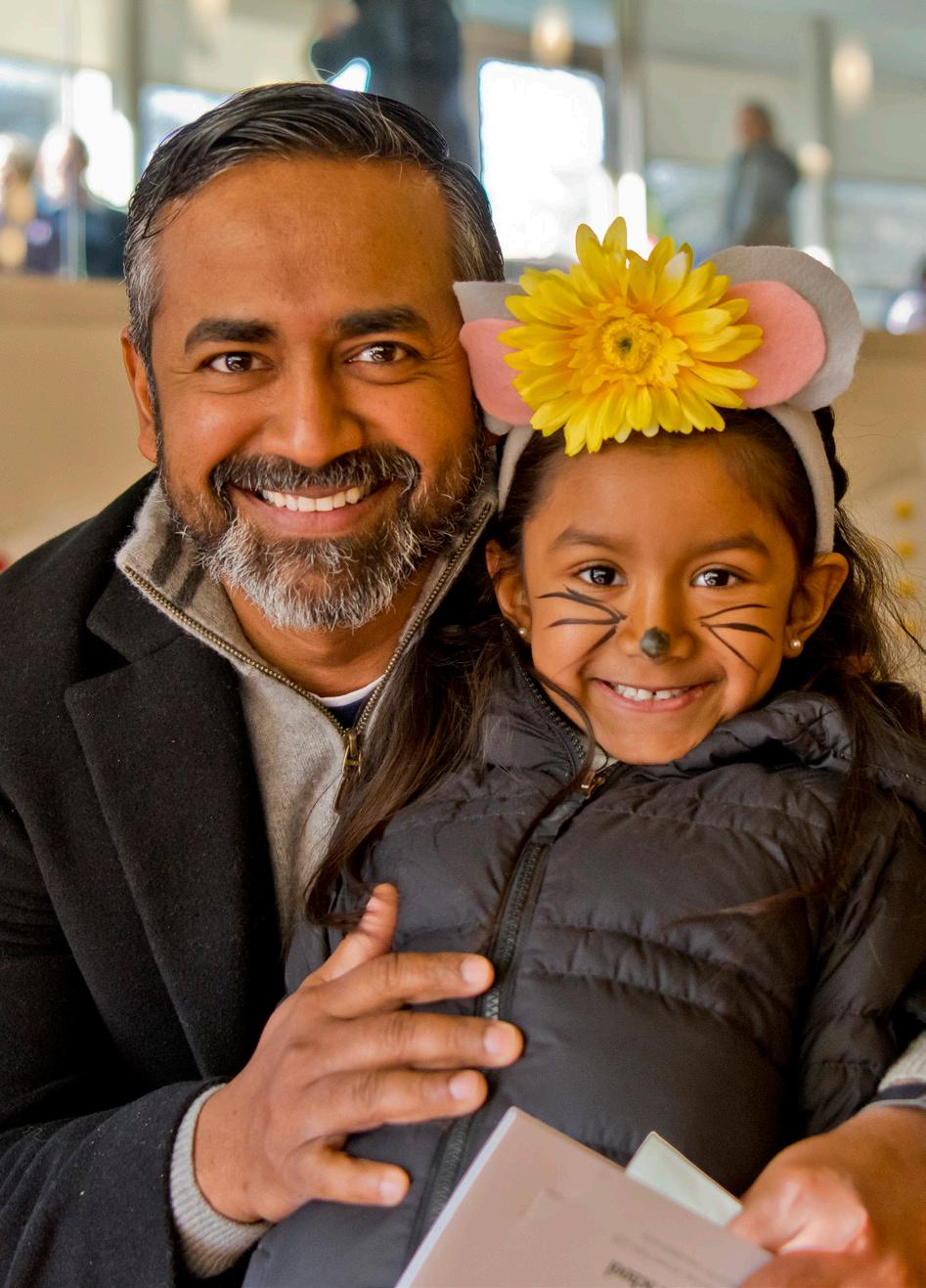
EASTER CHAPEL
The 2nd Grade classes of Mrs. Marchant and Mrs. Starke led the Lower School in our annual Easter Chapel. During the gathering, students sang songs and recited poetry. Mr. Trinh, dean of f’aculty at Collegiate, delivered a message about the power of a fresh start and giving other people the chance to start over.
Honoring Excellence
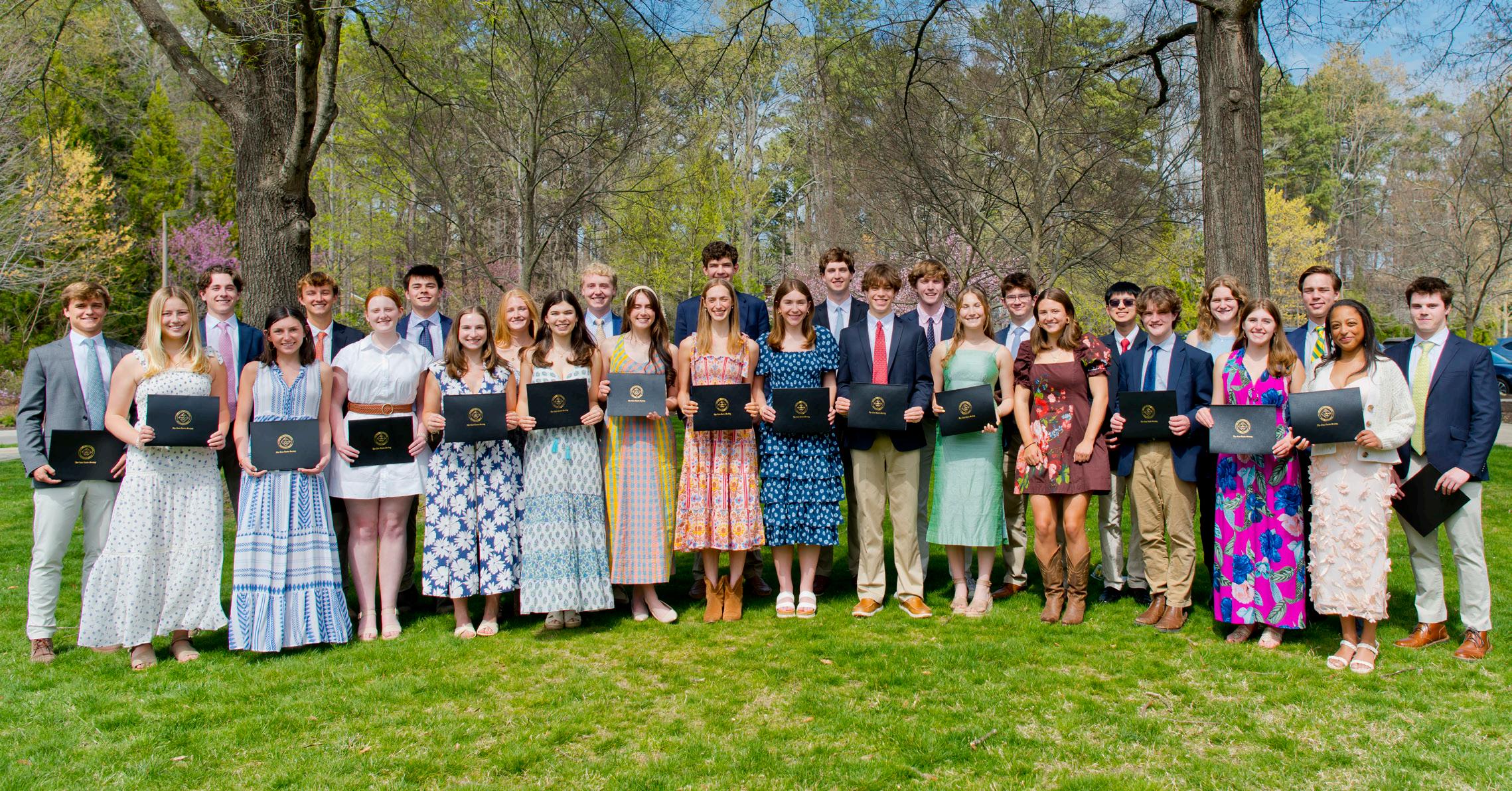
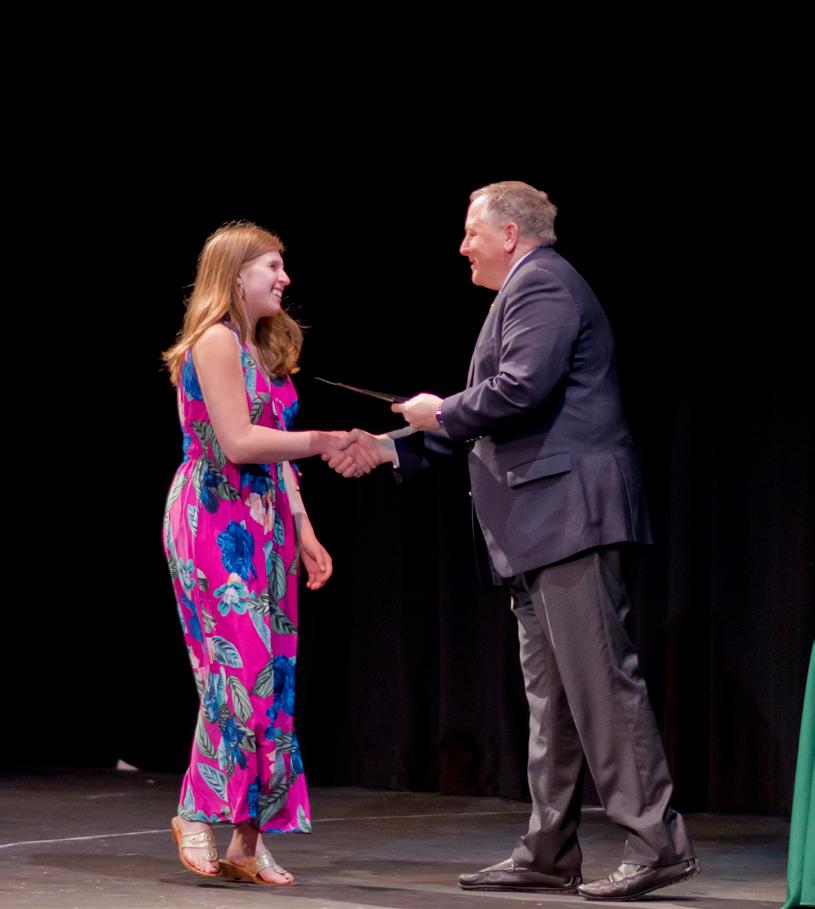
Collegiate congratulates the 28 Seniors that were recognized for academic excellence and inducted into the Collegiate chapter of Cum Laude at a ceremony this spring. Those students are: Milton Arendale, Addison Barnes, Hollyn Borich, Sarah Bowman, Macy Boyer, Audrey Burgess, JD Chen, David Dabney, Anne Clare Fonville, Thomas Gallahan, Clara Gould, Jake Hahn, Pierson Harris, Tyler Kave, Joe Legutko, Addison Lucas, Cale McCormick, Justinas Petkauskas, Carter Quigley, Teddy Revere, Elise Robinson, Reuben Sievers, Clara Totten, Stella Vetrovec, Lucy Ward, Kyla Williams, Finley Wittkamp, and Hayden Wong.
Where Passion Meets Process
Collegiate’s honors art exhibition showcases student creativity shaped by experimentation, mentorship, and years of artistic growth.
By Macy Boyer ’26
Rescheduled from January due to weather,
honors
VIBRANT COLORS MELT OFF THE CANVAS, each wax imprint a mark of dedication to the craft. It’s a blend of abstract and real, youthfulness and maturity. Every piece holds its own unique significance to its creator, and every piece has the ability to evoke a sense of creativity in its audience. Beyond the art, however, is an atmosphere of passion and glee that encompasses the gallery. It stems from the artists themselves, who describe their pieces with joy. It’s clear that the art represents not just weeks of commitment and diligence, but also a tangible manifestation of Collegiate’s students’ genuine passion for an art that their school has helped foster.
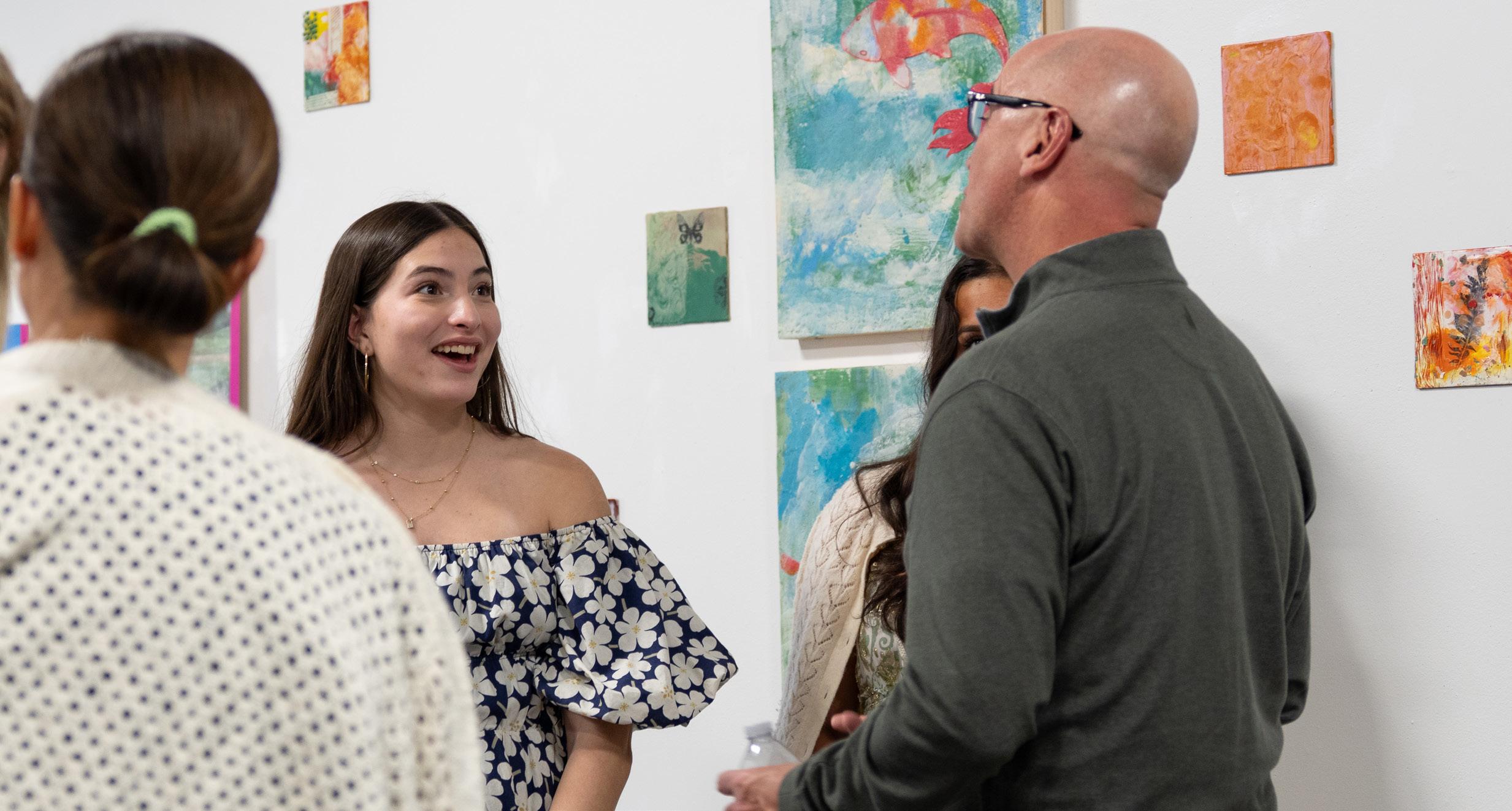
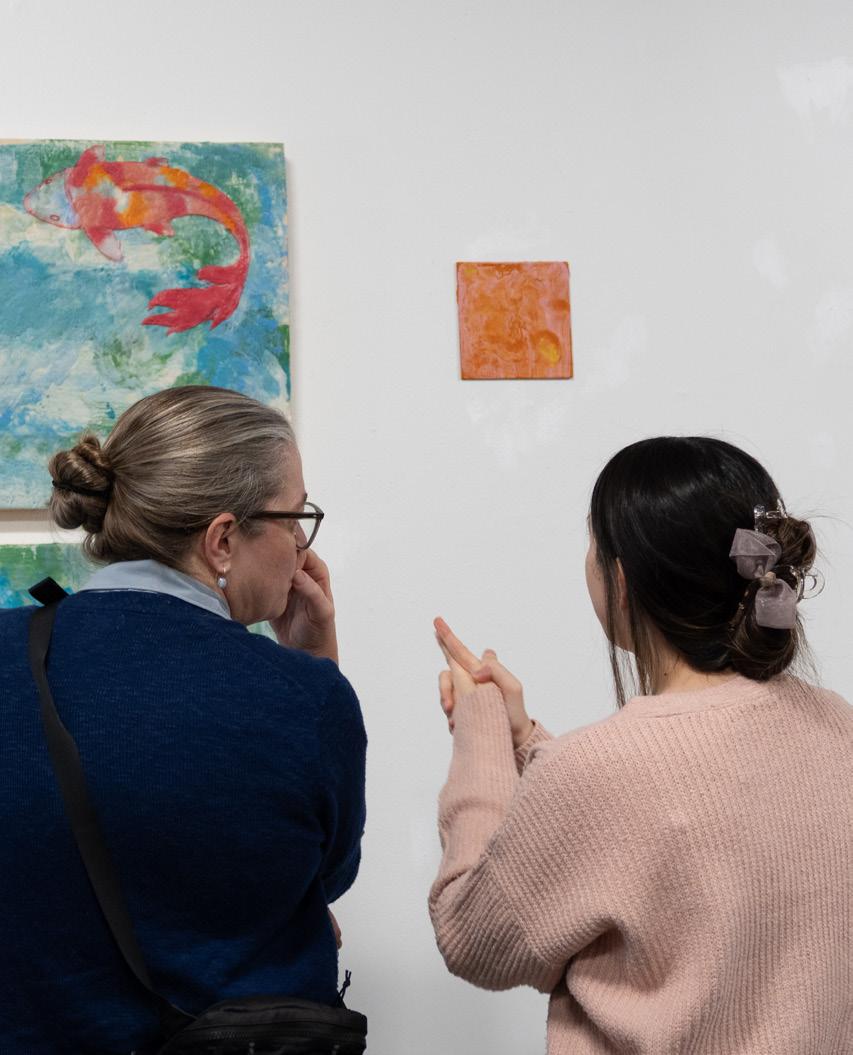
This year, Collegiate’s honors art exhibition, Hot Wax, featured works from honors arts students who were inspired by the techniques of artist Lynda Ray. Prior to the exhibit, Ray visited Collegiate’s art studio and taught students the fine art of encaustic wax. As described by the students, the art of encaustic wax begins by melting wax combined with colored pigments. Then, students used paintbrushes to paint the melted substance onto their canvases, using heat guns to smooth out any imperfections. It’s one of many projects honors art students have embraced over the course of the year, showcasing the immense talent within the Hershey Center.
Honors art students Oli Handley ’26 and Aurora Stevens ’26 began their art careers long before they arrived to the Upper School. For Stevens, her passion for the subject bloomed during the days of the pandemic, where she was confined to her home in Shanghai. “It was a very stationary time period,” Stevens described, “and it played a big part in getting me into art.” In the free time she frequently experienced, Stevens was almost always doing something with art, even as small as doodling. While Handley’s experience differs in terms of the pandemic’s involvement in her passion, the idea of constantly doing something with art resonated deeply with Handley. “I grew up around creative people — my grandma
Pam Sutherland’s
art class held a one-day pop-up art show in Hershey Center for the Arts. Hot Wax featured Seniors Jane Simkin, Oli Handley, AG Johnstone, Gabriela Hernandez, Lelia Gazoni, Elle Garnett, Adelaide Clarkson, and Aurora Stevens. Students presented three collaborative projects along with independent works.
loves to craft and sew — so I was always in that creative space.” During long drives, Handley’s grandmother would keep a stack of notebooks and pens in the trunk of her car for Handley to doodle with. It was because of this growing passion that Handley decided to pursue art as her life mission. “The summer before 4th Grade,” Handley described, “I decided I wanted to be an artist. I’ve had a sketchbook on me ever since.”
Though Handley and Stevens have had different Collegiate journeys, with Handley entering Collegiate in Kindergarten and Stevens her Sophomore year, both students spoke to the tremendous artistic growth they’ve experienced throughout their Upper School experience. From Grades 9-12, Handley has taken both drawing 1 and 2, painting 1 and 2, along with sculpture and honors art. “Having access to all of these classes,” Handley explained, “has allowed me to learn about what I want to create and where I want to go with my life.” Stevens, who has also taken both drawing 1 and 2, along with ceramics, animation and film, and honors art, shared similar remarks: “Collegiate provides an abundance of opportunities for students to interact with art. There are so many classes I wish I could have taken, like Ms. Sutherland’s new sewing class and Ms. O’Leary’s graphic design course.” In addition to the wide variety of courses available to Collegiate students with an interest in art, students are encouraged to pursue artistic opportunities beyond the classroom.
“In Junior year, I realized we didn’t have an art club, so I made one,” Stevens said. “Last year, we went to the VMFA together, and we also try to bring attention to important artistic events.” This past summer, Handley used the Oates Grant she received from Collegiate’s endowment program to stay at the Savannah College of Arts and Design for a week. While she was there, Handley leaned into her passion for illustration. “I learned that I like being able to create my own images, rather than putting together images to create something else.” This fall, Handley will be attending the Savannah College of Arts and Design with a major in illustration. She credits the Oates Grant and the experience it allowed her to have with helping her make her college decision and choosing her major.
The depth and breadth of the Visual Arts program would not be possible without art teacher Pam Sutherland, who plays an inte-
gral role in the lives of Collegiate’s artists. Sutherland teaches drawing, sewing, along with the honors art class. In reference to Sutherland’s teaching style, Handley explained that “she definitely meets the students where they are. She never pushes us to do just one thing; she wants us to find what we are interested in and push to see how far we can go with that interest. It helped me figure out my style and what I’m interested in, along with what I’m good at and what I would like to be better at.” Stevens shared that Sutherland has encouraged her to leave her “comfort zone,” which inspired a piece Stevens is incredibly proud of: “We had a project about text. Instead of making something 2D, I made 3D letters out of political newspapers and spelled ‘unify.’”
Other honors art students echoed similar respect and appreciation for Sutherland’s teaching. Jane Simpkin ’26, explained that “a majority of Sutherland’s teaching style is focused on finding inspiration. This way of thinking has allowed me to view art not as a vacuum, but as something that’s a part of a broader world of art and that has dialogue with other works.”
Whether it’s displayed in Collegiate’s new art gallery or scattered across Sutherland’s expansive classroom, Collegiate’s Visual Arts Program has given student artists the platform to explore the medium of art that inspires them the most. It’s a program that has taught students how to find meaning within their work. honors art student Leila Gazoni ’26, explained that this program has taught her that artistic “mistakes are a beautiful and important part of the piece, for it adds to its authenticity.”
Given the immense talent of Collegiate’s art students, it’s no wonder the honors art Exhibition drew in countless people to examine the intricacies of the work featured. It’s the epitome of Collegiate’s core value of excellence, each stroke representing years of passion and dedication.
Having access to all of these classes has allowed me to learn about what I want to create and where I want to go with my life.
Editor’s note: With every story we publish, our intention is to celebrate the experience of Collegiate. As part of that ongoing effort, we have been working with Upper School students, publishing stories in their own words. This piece is one such student narrative.
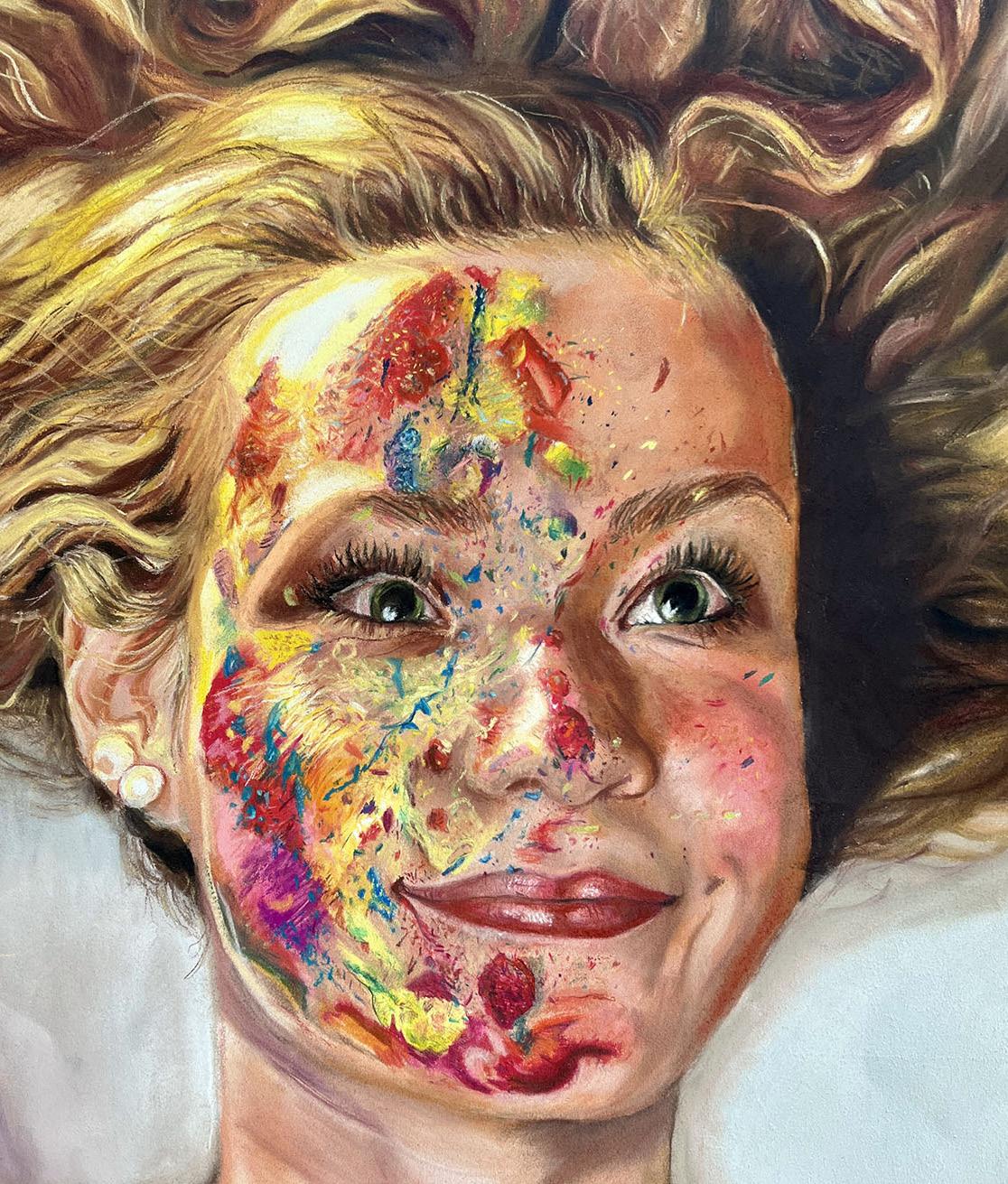
STUDENTS EARN SCHOLASTIC ART AWARDS
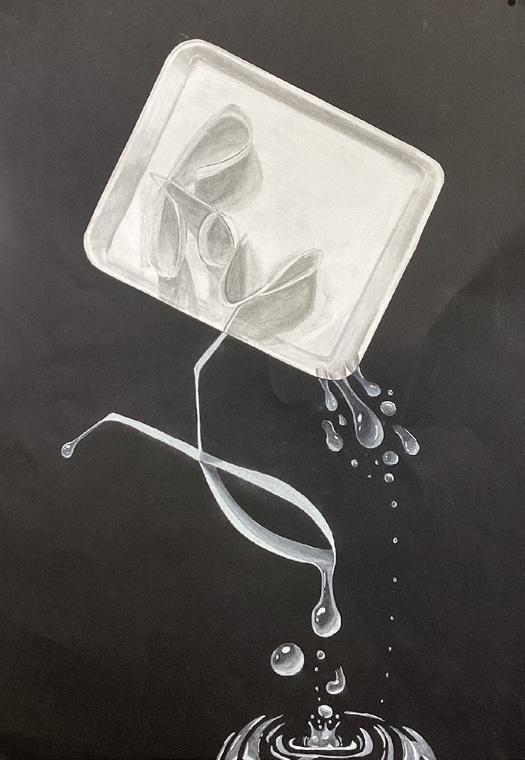
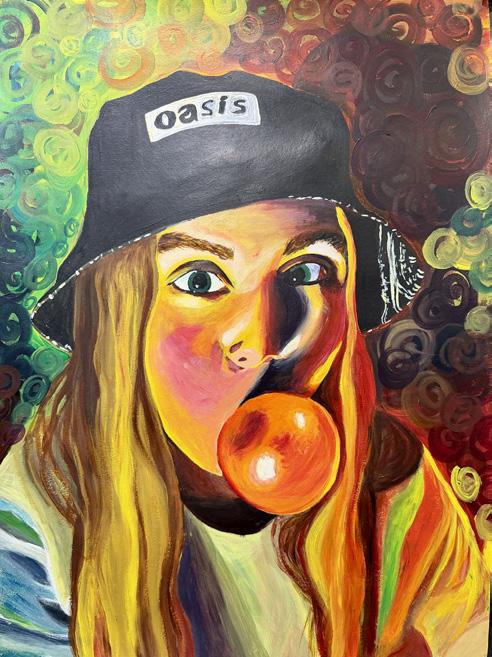
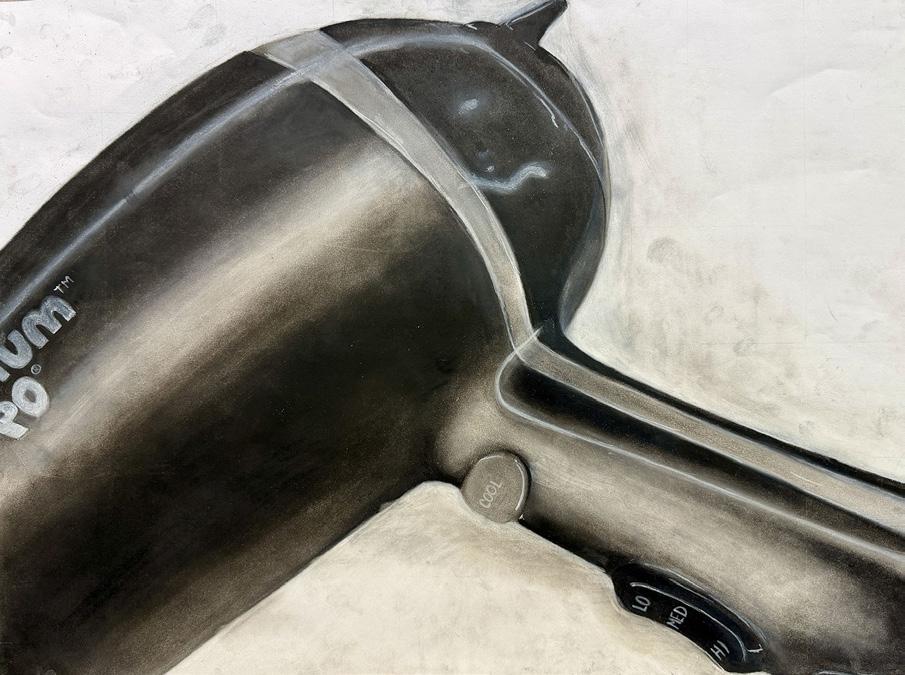
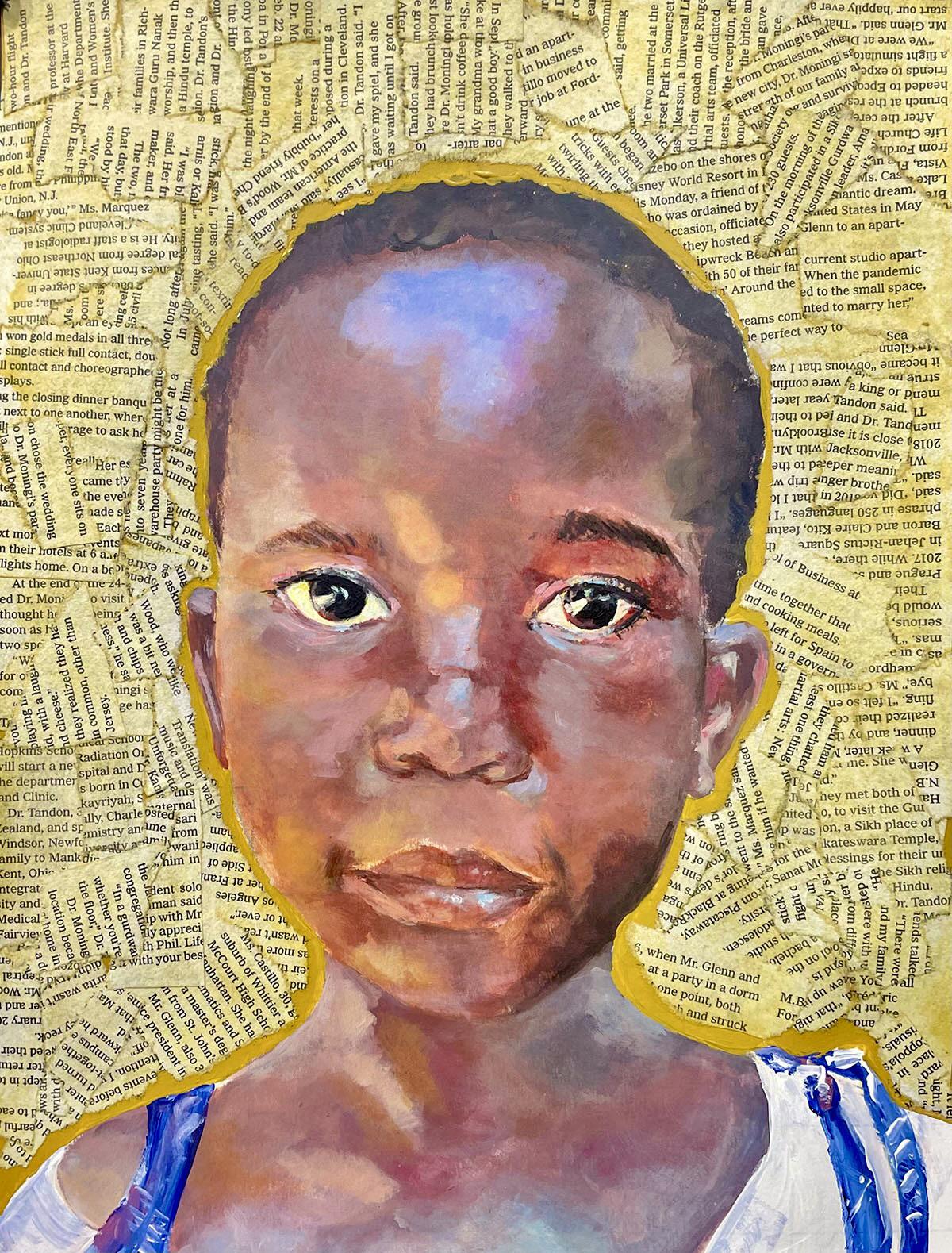
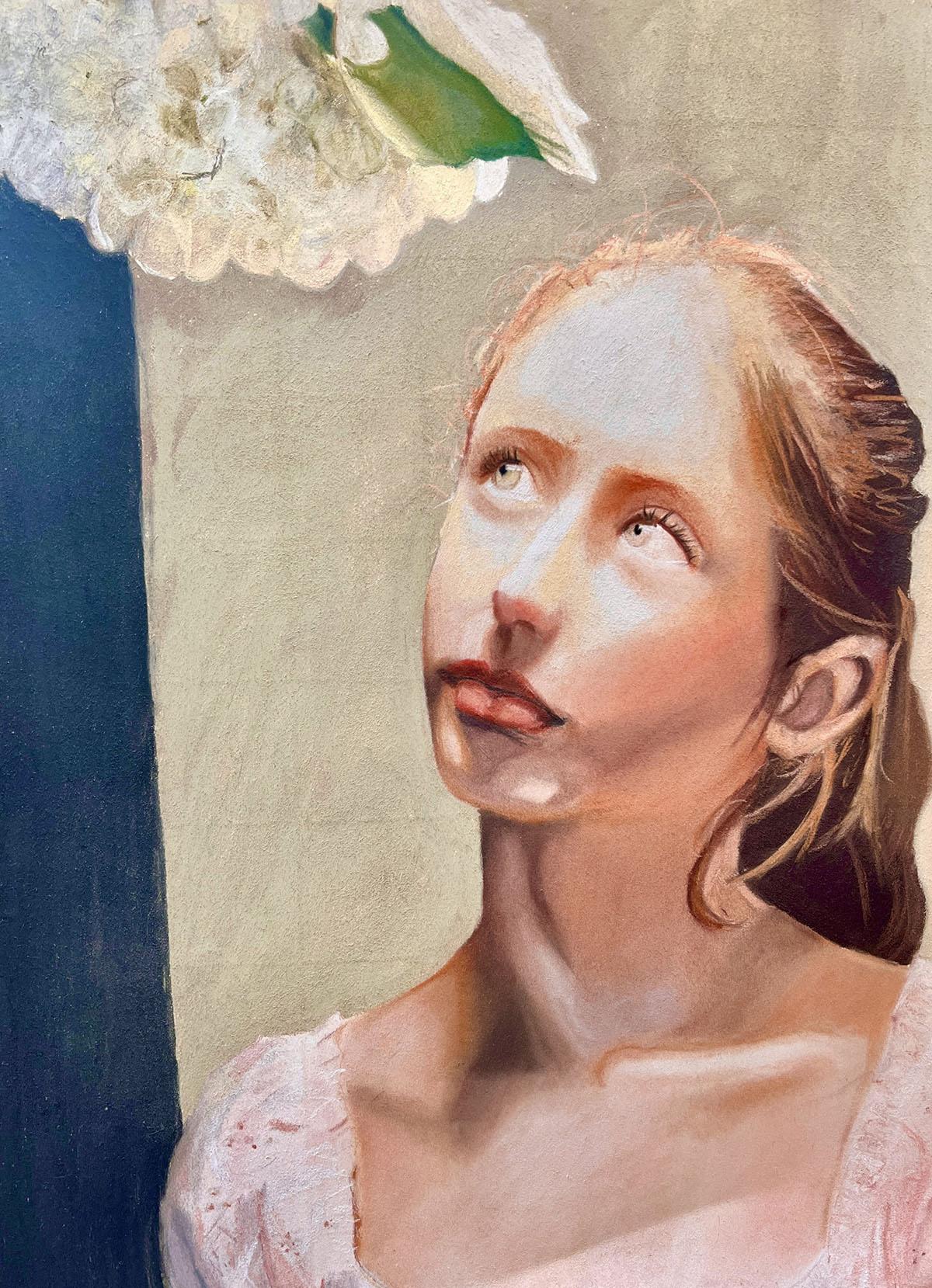
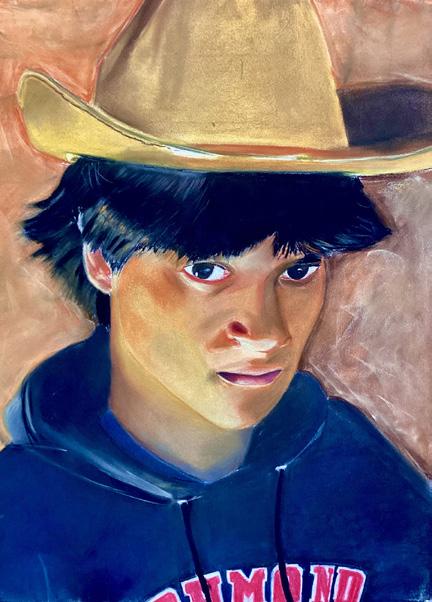
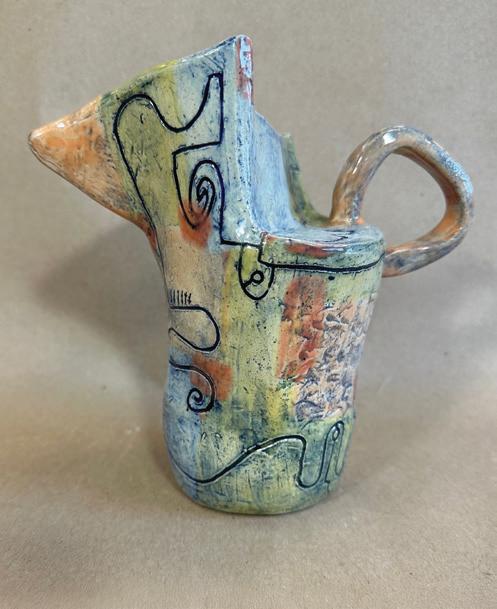
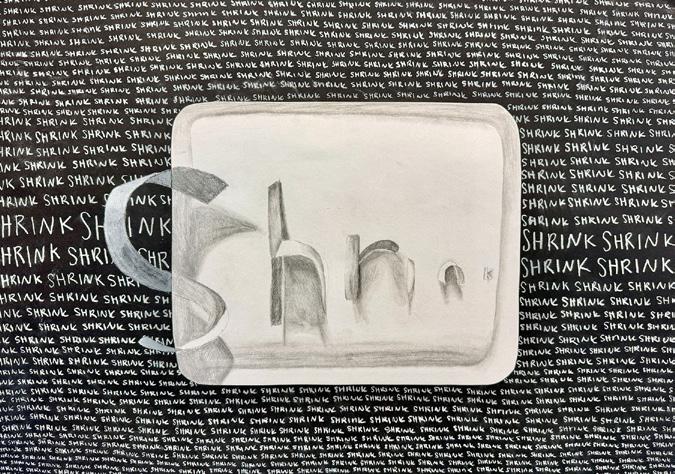
The Scholastic Art Awards are the nation’s longest-running and most prestigious recognition program for creative students. This year, 26 Collegiate School students earned gold, silver, and honorable mention honors in the art categories.
Additionally, Ellie Becker ’27 received the National Gold Key award for her self-portrait drawing.
Becker’s win represents the first Collegiate National Gold Key winner in at least three decades, and the most recent Scholastic National award winner since 2019.
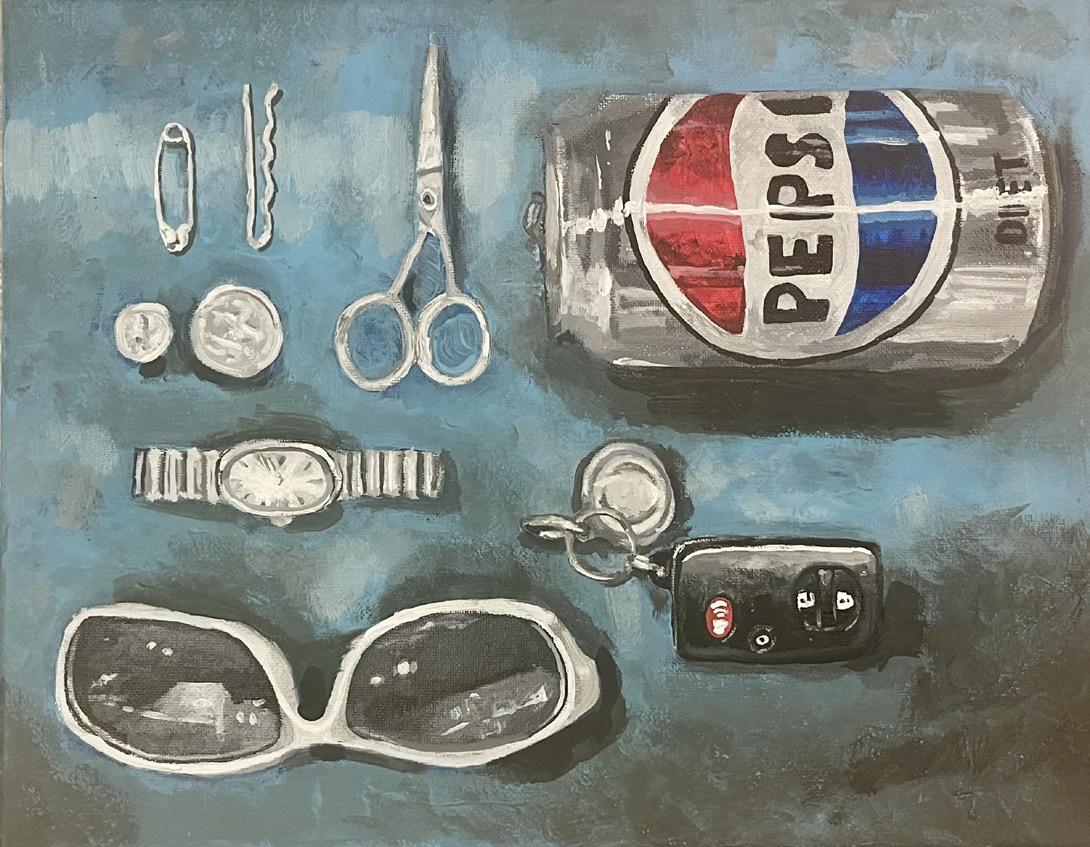
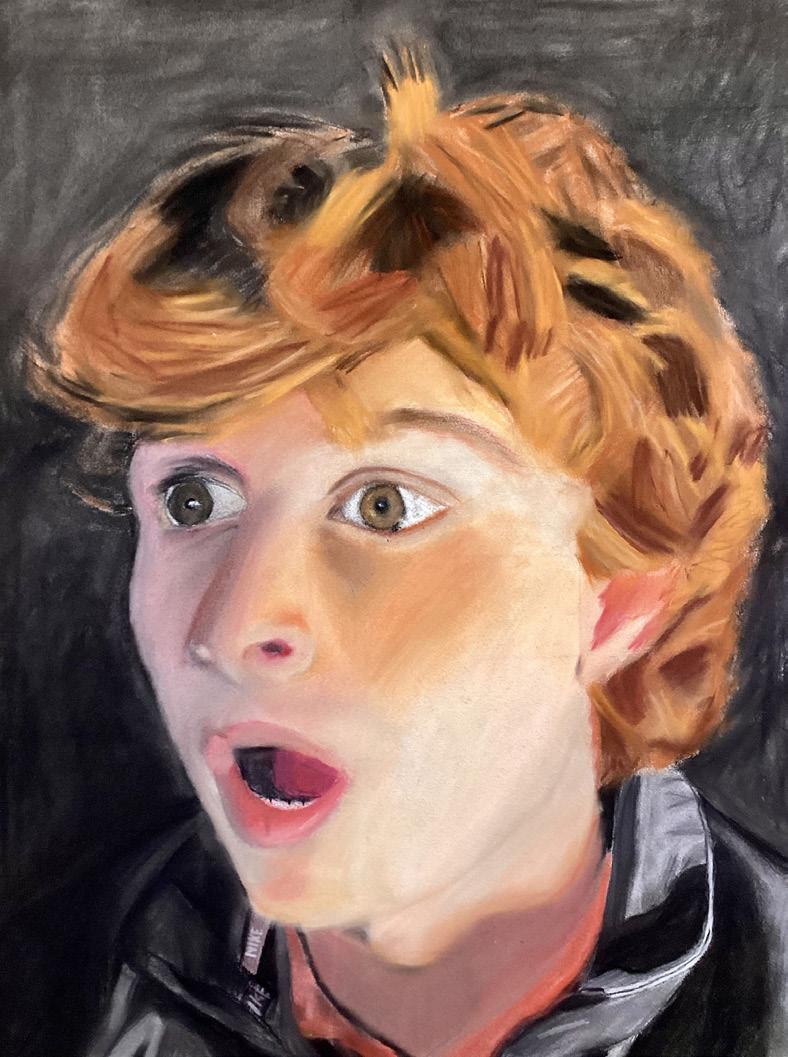
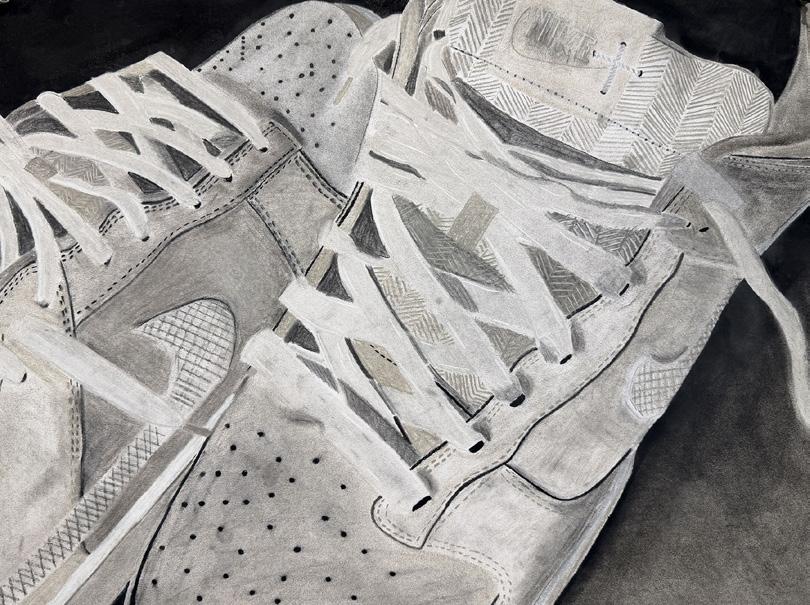
Ellie Becker ’27
Kathryn Pauly ’28
Ed MacNelly ’28
Tyler Geldreich ’29
GOLD KEY
Ellie Becker ’27 - Drawing
Claire Beville ’30 - Mixed Media
Bradford Germain ’29 - Graphic Design
Oli Handley ’26 - Mixed Media
Wren Kelleher ’28 - Drawing
Ed MacNelly ’28 - Drawing
Scarlett O’Shaughnessy ’28 - Painting
Aurora Stevens ’26 - Drawing
SILVER KEY
Tyler Geldreich ’29 - Drawing
Kathryn Pauly ’28 - Painting
John Porter ’27 - Sculpture
Emilie Siminceanu ’29 - Drawing
Jane Simkin ’26 - Ceramics and Glass
Jane Simkin ’26 - Mixed Media
Bellamy Smith ’29 - Drawing
HONORABLE MENTION
Catherine Boehm ’27 - Ceramics and Glass
Allis Derian ’26 - Drawing
Daisey Donastorg Oliver ’27 - Drawing
Rosewell Ferrell ’27 - Painting
Frances Hatfield ’27 - Drawing
Ed MacNelly ’28 - Painting
Catherine Moody ’30 - Mixed Media
Kathryn Pauly ’28 - Painting (2)
Per Petersson ’28 - Drawing
Betsy Proutt ’29 - Ceramics and Glass
Lily Rollison ’27 - Painting (2)
Aanya Singh ’27 - Film and Animation
Ana Tornabene ’27 - Drawing
Ethel Yarney ’30 - Sculpture
Oli Handley ’26
Ana Tornabene ’27
Bellamy Smith ’29
Lily Rollison ’27
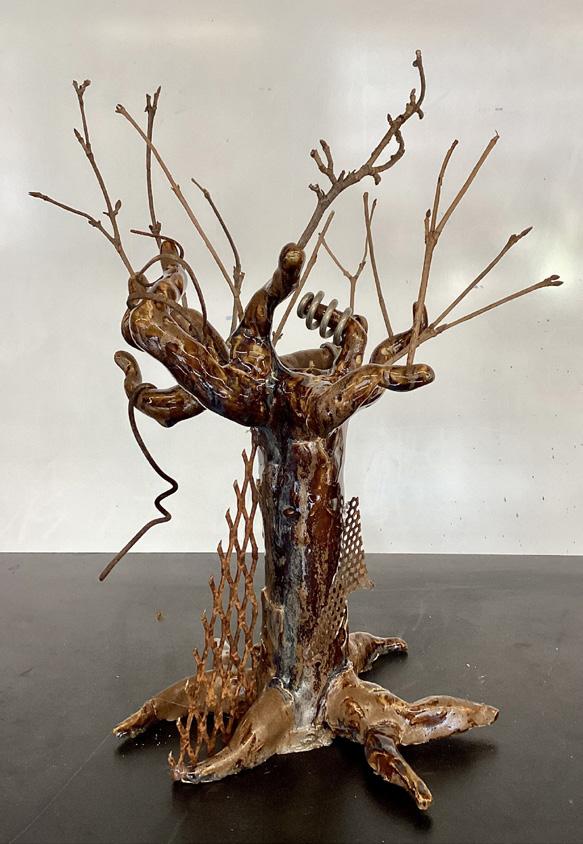
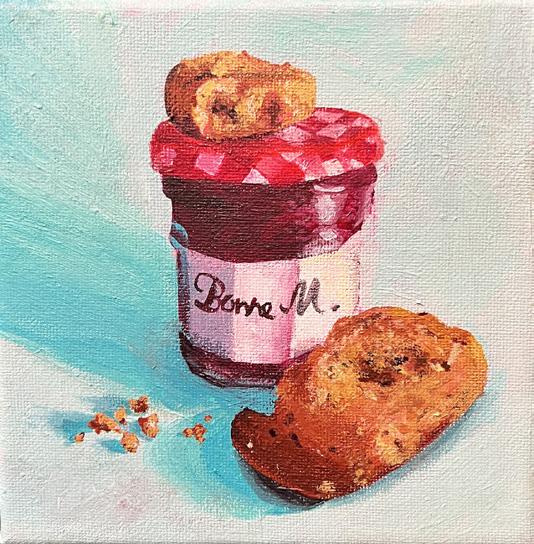
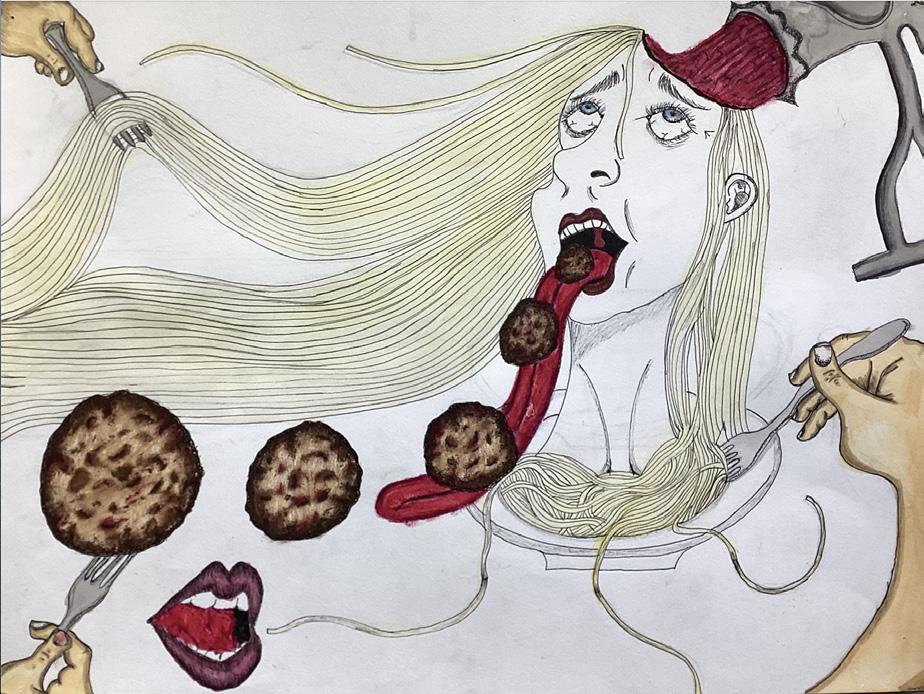
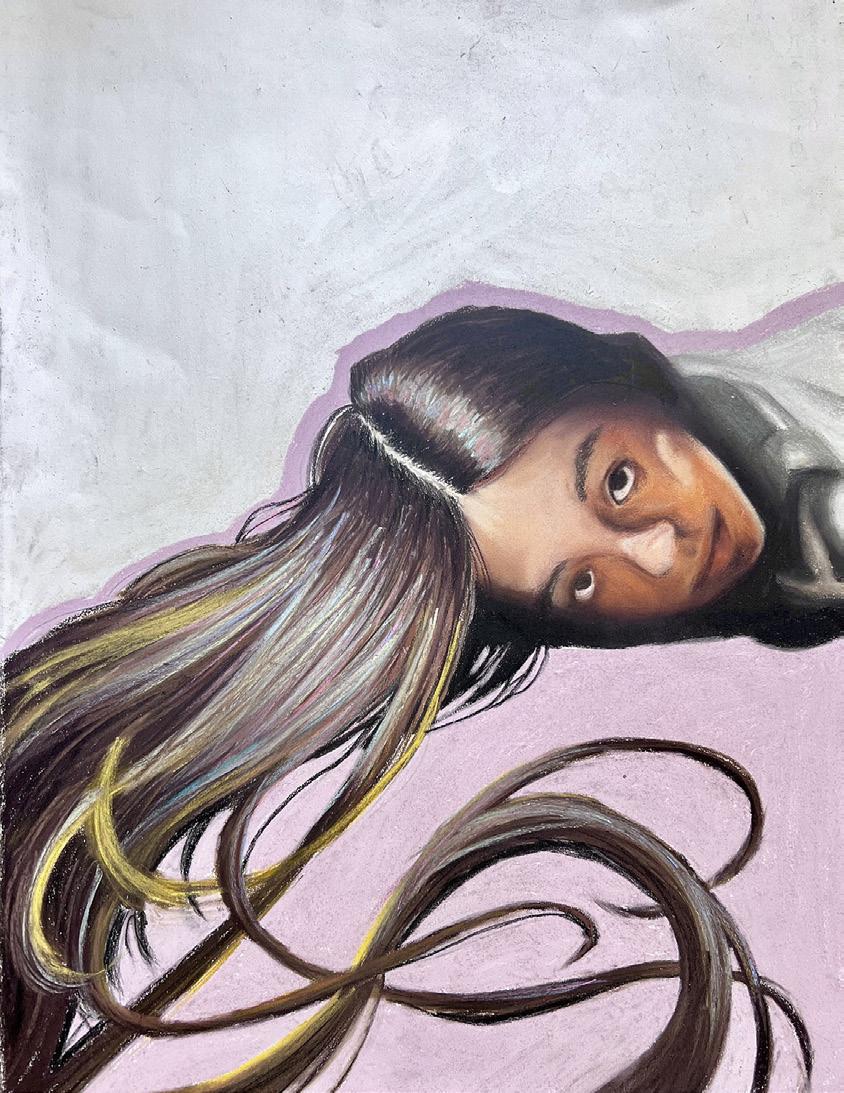
Wren Kelleher ’28
John Porter ’27
Daisey Donastorg Oliver ’27
Aurora Stevens ’26
Jane Simkin ’26
Allis Derian ’26
Per Petersson ’28
Scarlett O’Shaughnessy ’28
DARE TO SING
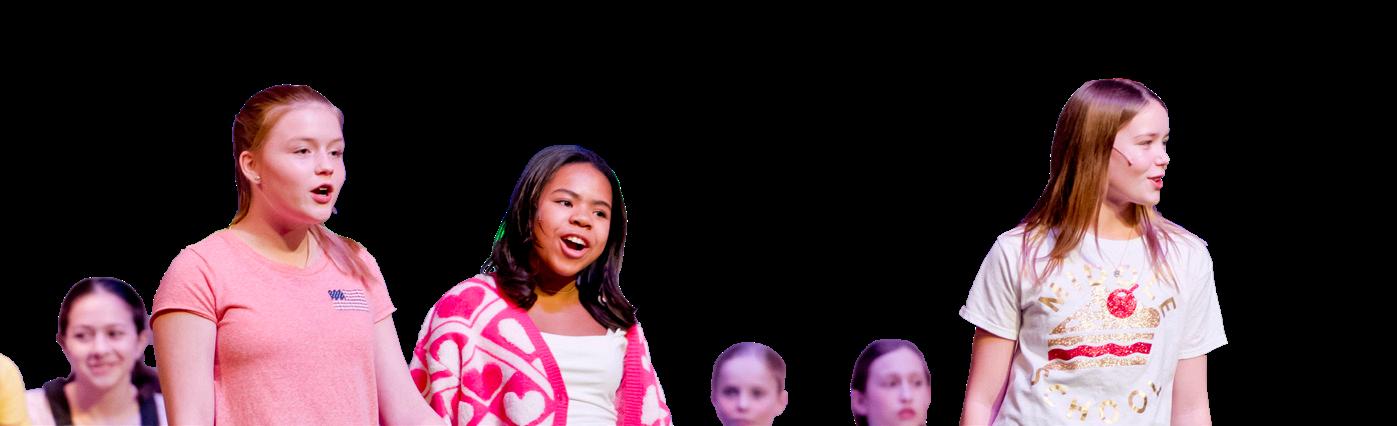
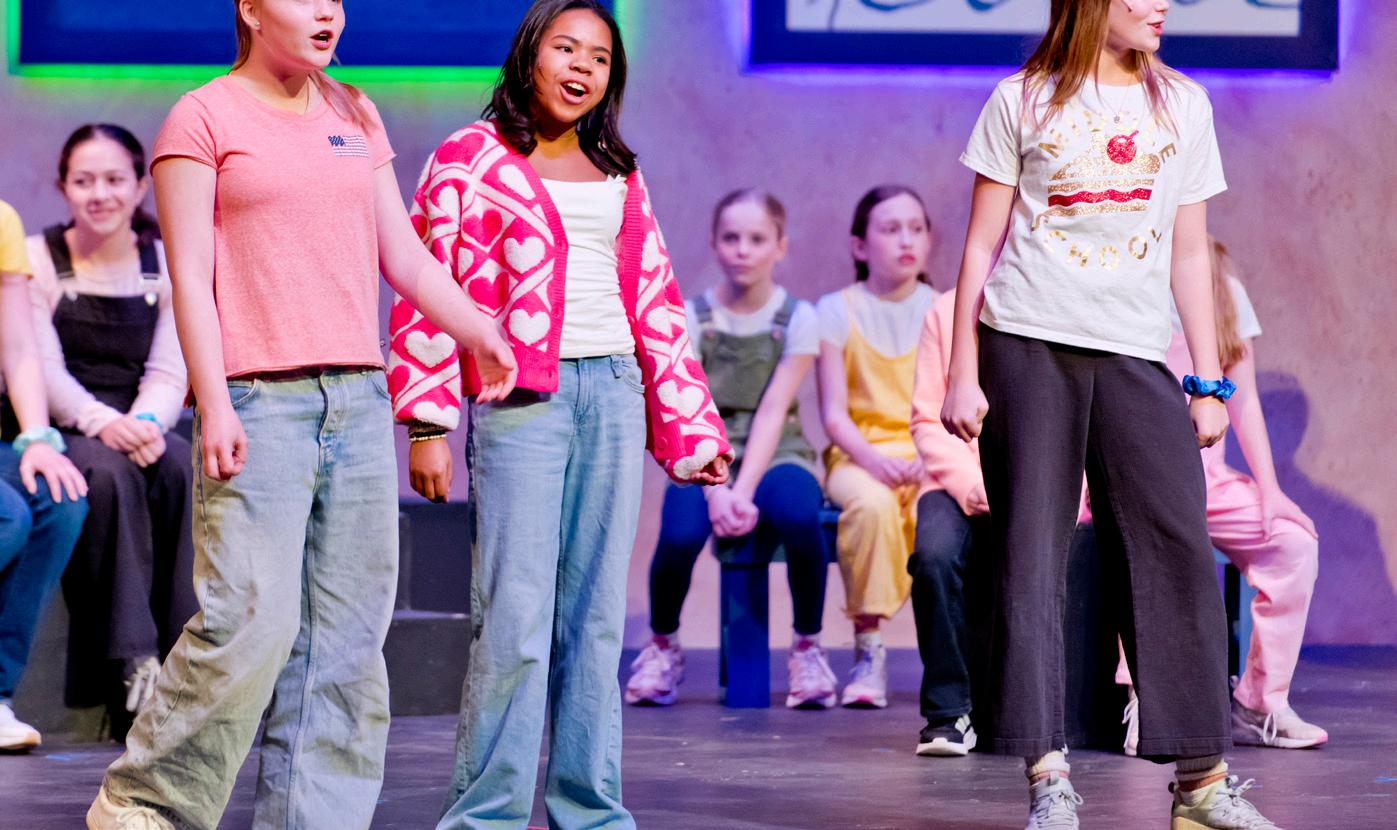
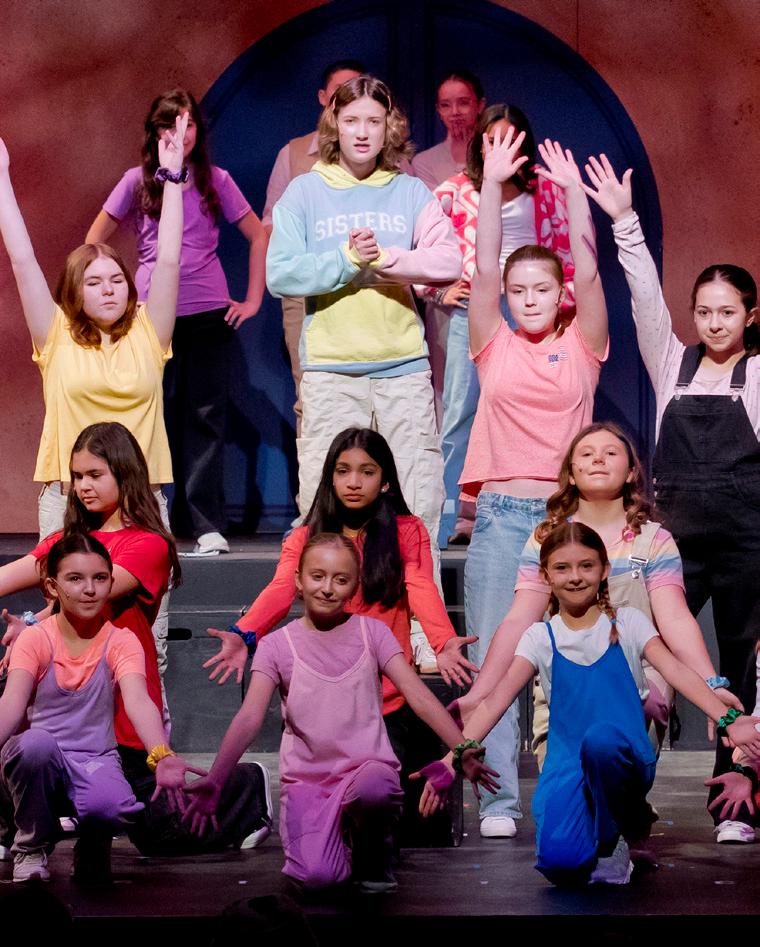
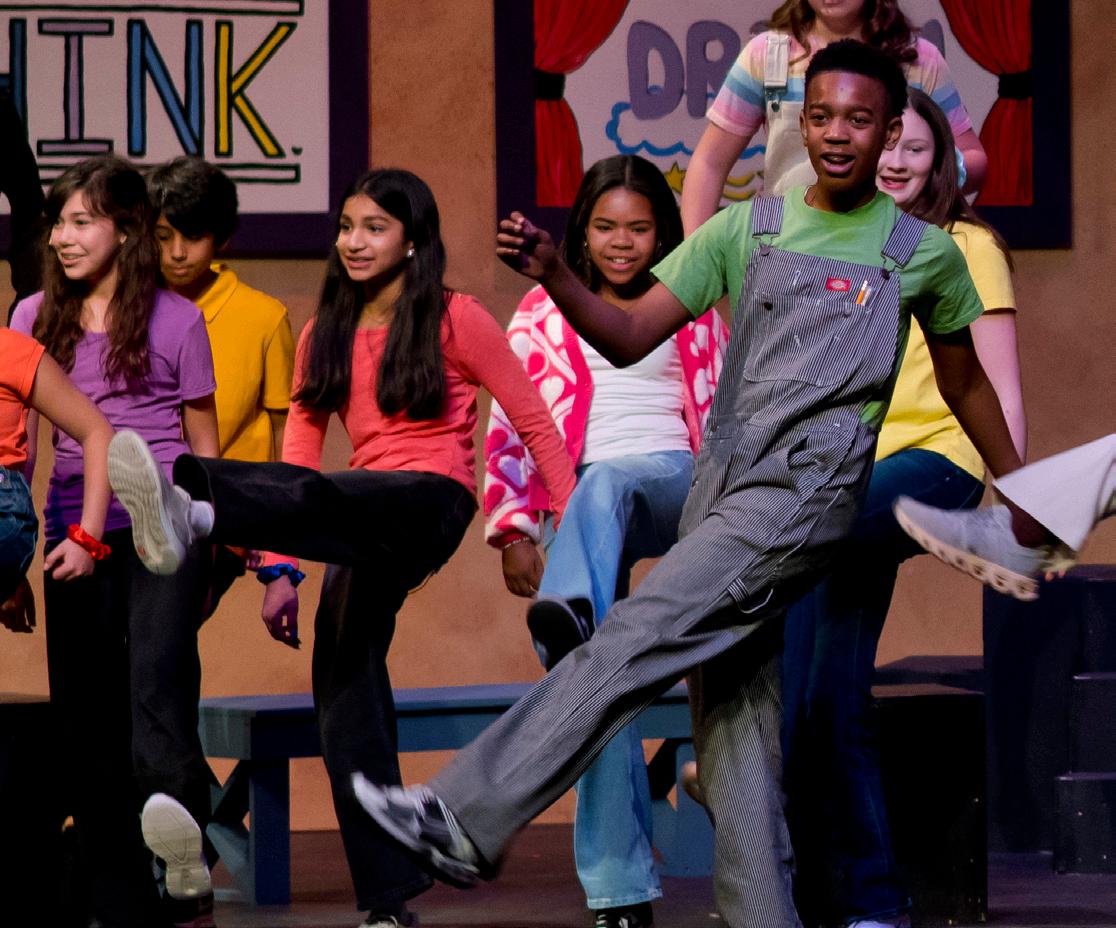
The Middle School Theatre Ensemble performed Disney’s Dare to Dream JR. The show is a musical revue that follows an eager group of trainees on their first day at a fictional Walt Disney Imagineering Studio. Drawing from a century of beloved Disney films, Dare to Dream JR. features songs performed for the first time ever in a Disney stage musical, including fan-favorites from The Princess and the Frog, Coco, Encanto, and Frozen II. Middle School drama teacher Jenny Hundley remarked, “With a super group of 8th Graders leading the way, this year’s ensemble had an extraordinary amount of musical and vocal ability, but also had the desire to be the best they could be and keep working. When we lost hours of rehearsal time due to snow and ice, their talent and determination helped us be more prepared for our first audience.”
Do You Hear the Students Sing?
Behind the scenes of Les Miserables.
Abridged from the original publication in The Match on Dec. 1, 2025
By Kate Hogan ’26
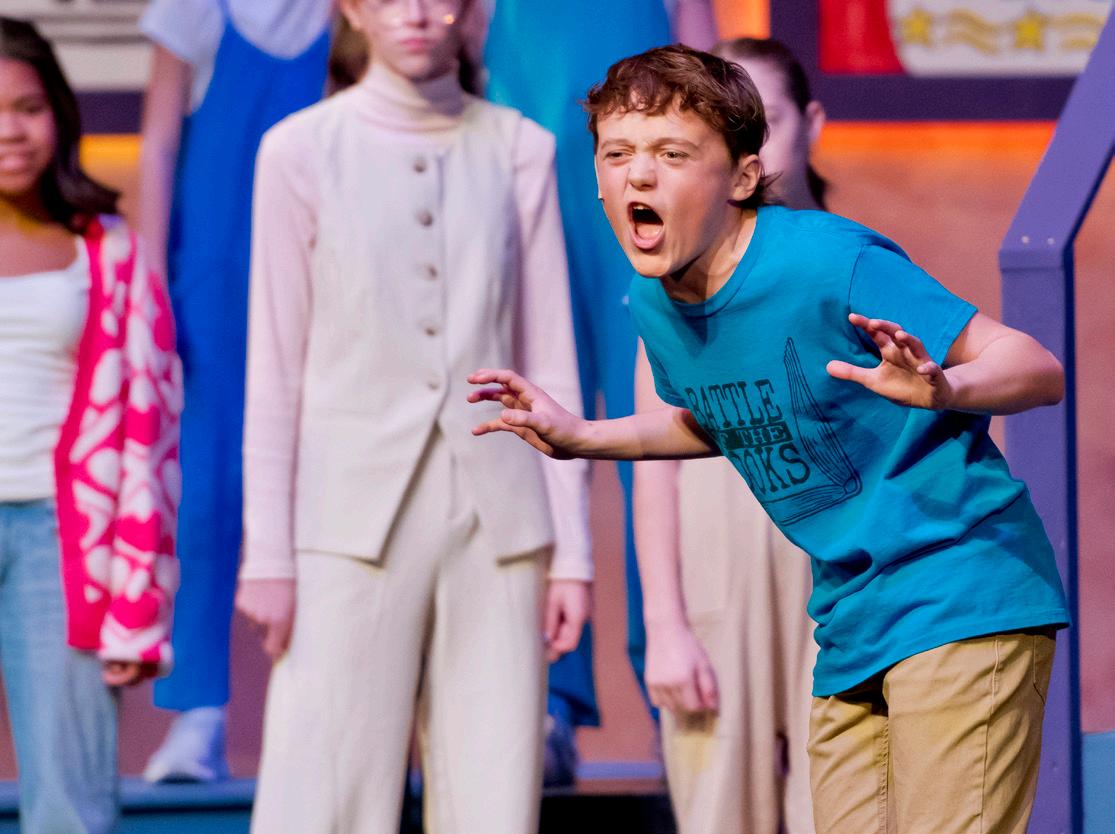
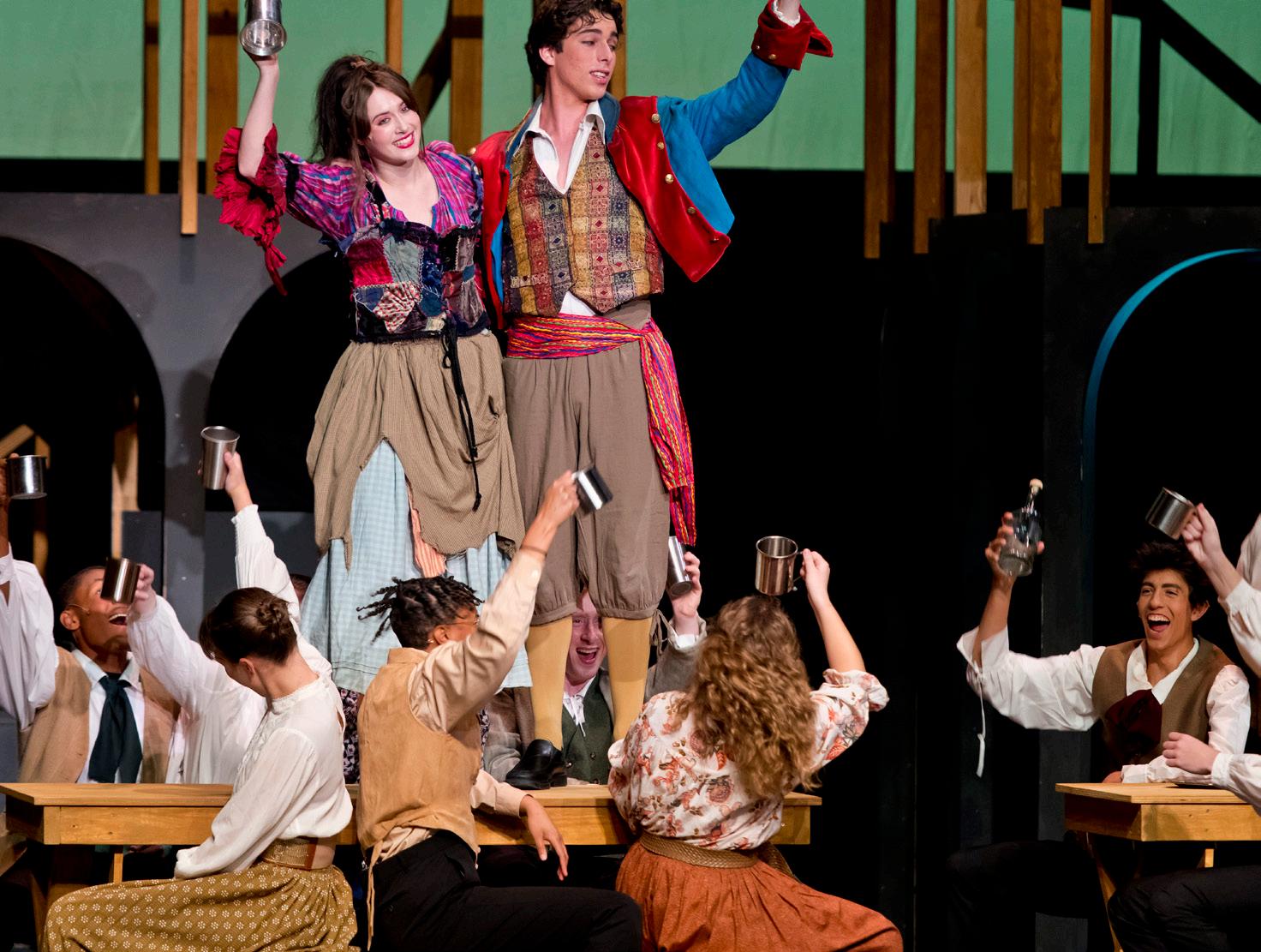
ON THURSDAY, OCTOBER 23, Baxter Phillips ’26, as Jean Valjean, stole a loaf of bread. And with that, the curtain rose on Les Misérables, one of the most ambitious productions ever staged by Collegiate. From the thunderous overture to the heart-wrenching finale, the musical transported audiences from Oates Theater to 19th-century France, a world of revolution and hope.
Based on Victor Hugo’s 1862 novel, Les Misérables premiered on Broadway in 1987 after its London debut. Written by Alain Boublil and Claude-Michel Schönberg, and adapted into English by Herbert Kretzmer, the sung-through musical has become a global phenomenon.
Directed by Upper School theater director Steve Perigard, Collegiate’s production tells the story of Jean Valjean, an ex-convict rebuilding his life while pursued by Inspector Javert, played by Dylan Callaghan ’26. In his new life as a town mayor and factory owner, Valjean promises to care for Cosette, played by Amy Wu ’28, the daughter of Fantine, played by Ava Stevenson ’27. As Cosette grows up, she falls in love with the Marius, played by Carter Quigley ’26, the story unfolds against the backdrop of revolution and unrest.
From the audience, we may have only seen the top of director of the arts Mike Boyd’s head down in the orchestra pit, but we certainly felt his presence. As conductor, he was the unseen heartbeat of the show, guiding every note, cue, and crescendo with precision.
Unlike Broadway, Collegiate’s version was tailored for student performers. “It’s shorter,” Boyd explained. “Some songs are rearranged, and the keys are adjusted for high school vocal ranges.” Still the emotional weight remained.
Years ago, Boyd and the theater faculty thought the show was “above the abilities and the time constraints” of a high school program. But this year, with an exceptional group of students, they revisited the idea, and succeeded.
From Phillips’ soaring “Bring Him Home” to Stevenson’s heartbreaking “I Dreamed a Dream,” every moment was supported by Boyd and the pit orchestra. “Because Les Mis is a sung-through, the acting is the music,” Boyd shared. “We developed chemistry and timing as a whole ensemble in the pit.”
This chemistry included musicians, including Jeffrey Qureshi ’26 on viola and Grace Boak ’26 on flute. “Even though we can’t see the show, we experience it through the music,” Boak said.
For Quereshi, the music’s complexity was both challenging and exhilarating. “The ‘Sewers’ piece was immensely difficult,” he said, taking “determination and practice.” Boak pointed to “Attack” as her biggest challenge, citing its rapid tempo changes.
Both students emphasized how much trust between the orchestra and on-stage performers matters. “It’s all about watching Mr. Boyd,” said Boak. “You have to trust that the emotion will come through naturally once you’re confident in the timing and dynamics.”
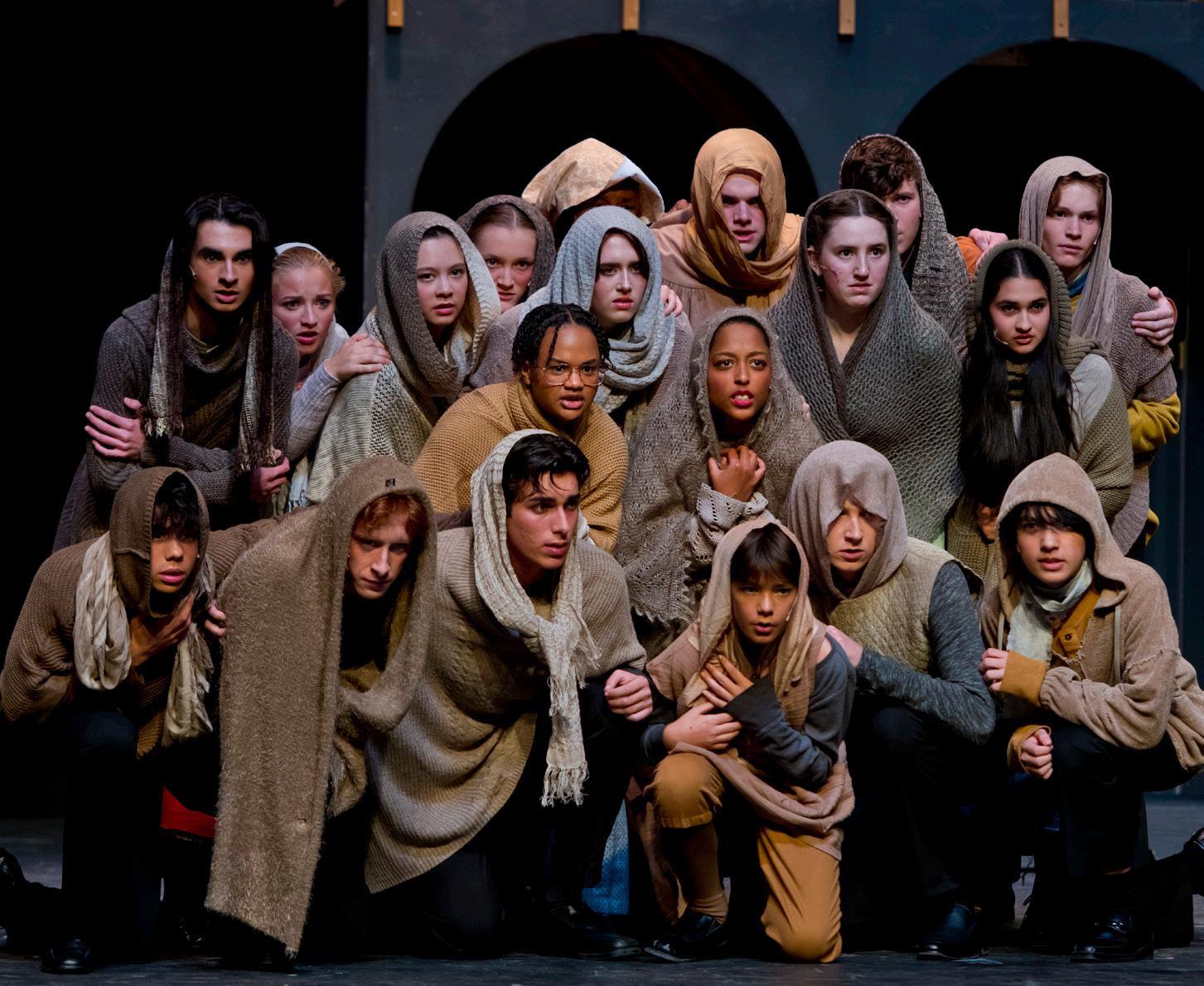
Cast in “At the End of the Day.”
Of course, performing a nearly nonstop show required endurance. Plus “caffeine, and lots of it,” Qureshi said. Despite long nights, the pit remained “playful, energetic, and supportive.”
Boyd’s admiration for his students was clear as he recounted performances of Lance Waterbury’s ’29 emotional portrayal of Gavroche and James Etherington’s ’26 take on Thénardier. “Some people might choose to play that more as pure comic relief, but Thénardier is a dark, slimy character, and James did a great job of portraying that.”
It wasn’t just lead roles that Boyd commended; members of the ensemble also shone. Kyle Spicer ’28 “sang really well,” as well as Hunt Brabrand ’27. Maci Myers ’26 “had to get a cue” from Boyd during “Lovely Ladies,” and “she never missed it.” Boyd said, “I can compliment so many.”
When asked what he hoped students took away from the experience, Boyd pointed to commitment. “Artistic endeavors require an investment like no other.” Unlike grades, “the feedback you get is an audience.” That creates intrinsic motivation, and room for failure. “Sometimes those mistakes actually turn out with a better result,” he said.
Another key element was choreography. While not traditionally dance-heavy, choreographer Angie Muzzy created movement that enhanced the story’s emotion. “I’m there to enhance the story,” she said, aiming to reflect hardship and resilience without relying on pantomime.
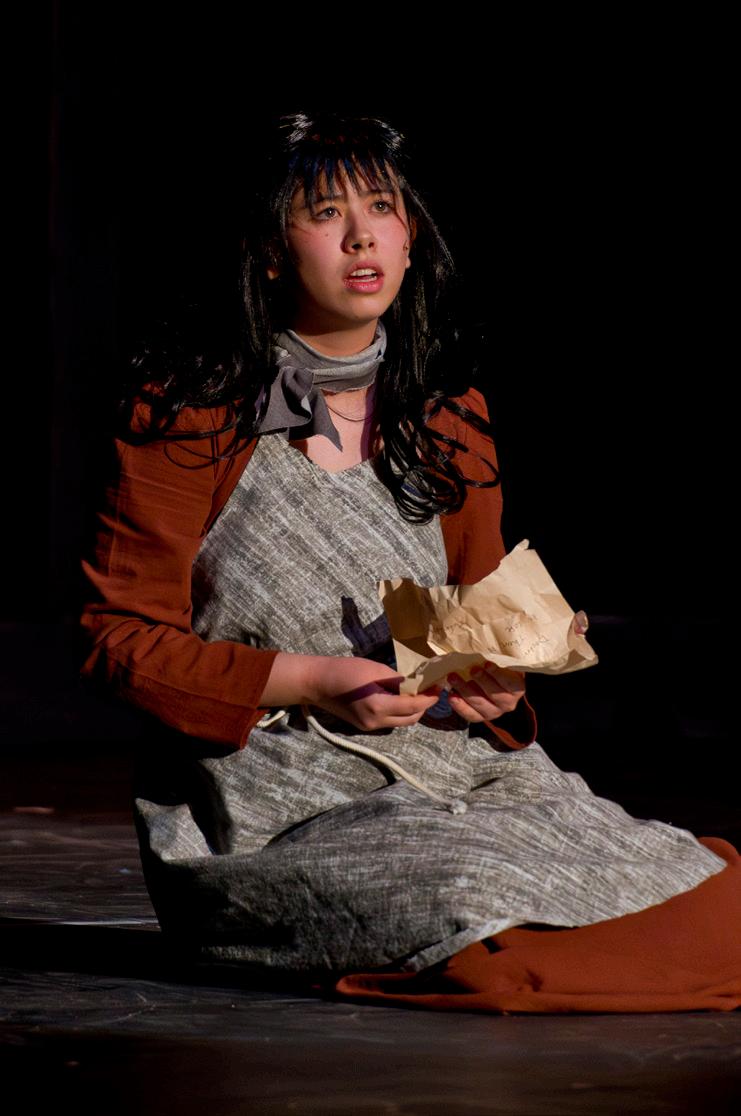
For ensemble members Finley Haas ’26 and Maci Myers ’26, dance-heavy scenes like “Lovely Ladies” and “Master of the House” were highlights. Offstage, memories included joking backstage and late-night rehearsals. “I am fortunate to have a space like this where I can leave my worries at the door,” Myers said.
Haas recalled “watching from the wings on the last night with Aurora,” calling it a moment she’ll never forget.
Quigley said his favorite moments came during “In My Life” into “A Heart Full of Love,” where he performed alongside Kyla Williams ’26, who played the role of Eponine, and Wu. “It was hard musically, but interesting to perform — and really fun to work on.”
For Stevens, who played the tragic Fantine, preparing emotionally was a slow process. “It wasn’t one big moment.” Hollyn Borich ’26, who played Madame Thénardier, especially loved the over-the-top nature of her role, especially during the comedic scenes. “You have to be very aware of your facial expressions and time,” she said. “Nothing should be simple — everything should be big and emphasized.”
Etherington, her onstage husband, described his Thénardier as a “sleazeball innkeeper — bottom of the barrel.” He and the cast created detailed character sheets and had “indepth discussions” with Perigard to map out each performance.
“He starts off comedic, but with each song, he becomes more sinister,” Etherington explained.
“It’s like a character loop. He comes full circle at the wedding.”
His favorite part of the role? “Dancing on tables,” he said immediately. “I really got to do whatever I wanted.” The flexibility of Thénardier’s musical style also gave him freedom.
Collegiate’s Les Misérables was, in one word, electric. From the first booming note of the overture, the months of work and dedication from the cast were evident. Every lyric, look, and tear felt earned. Phillips gave a powerhouse performance as Valjean, balancing grit and mercy in a way that made the audience forget he’s still got homework due the next day.
Clara Totten ’26, a long-time fan of the musical, said, “I’ve loved Les Mis ever since I saw the movie with Anne Hathaway. The Collegiate cast did not disappoint in bringing the musical to life, and I was amazed by how many talented classmates I have.”
From the first note to the last, the cast had us in the audience gasping, cheering, and maybe even crying a little bit.
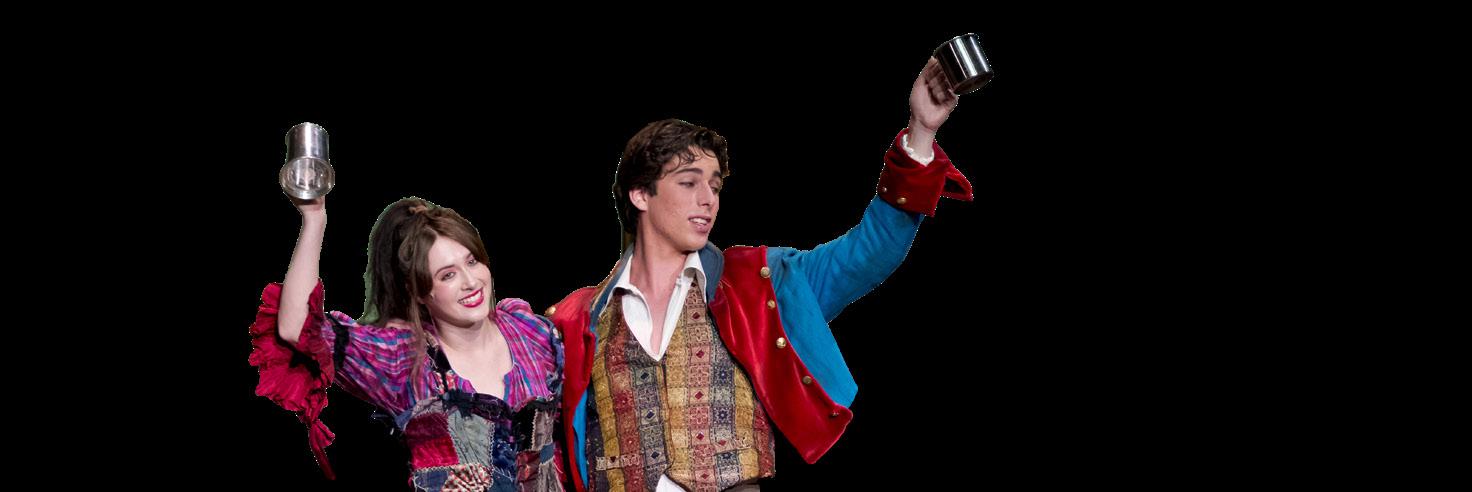
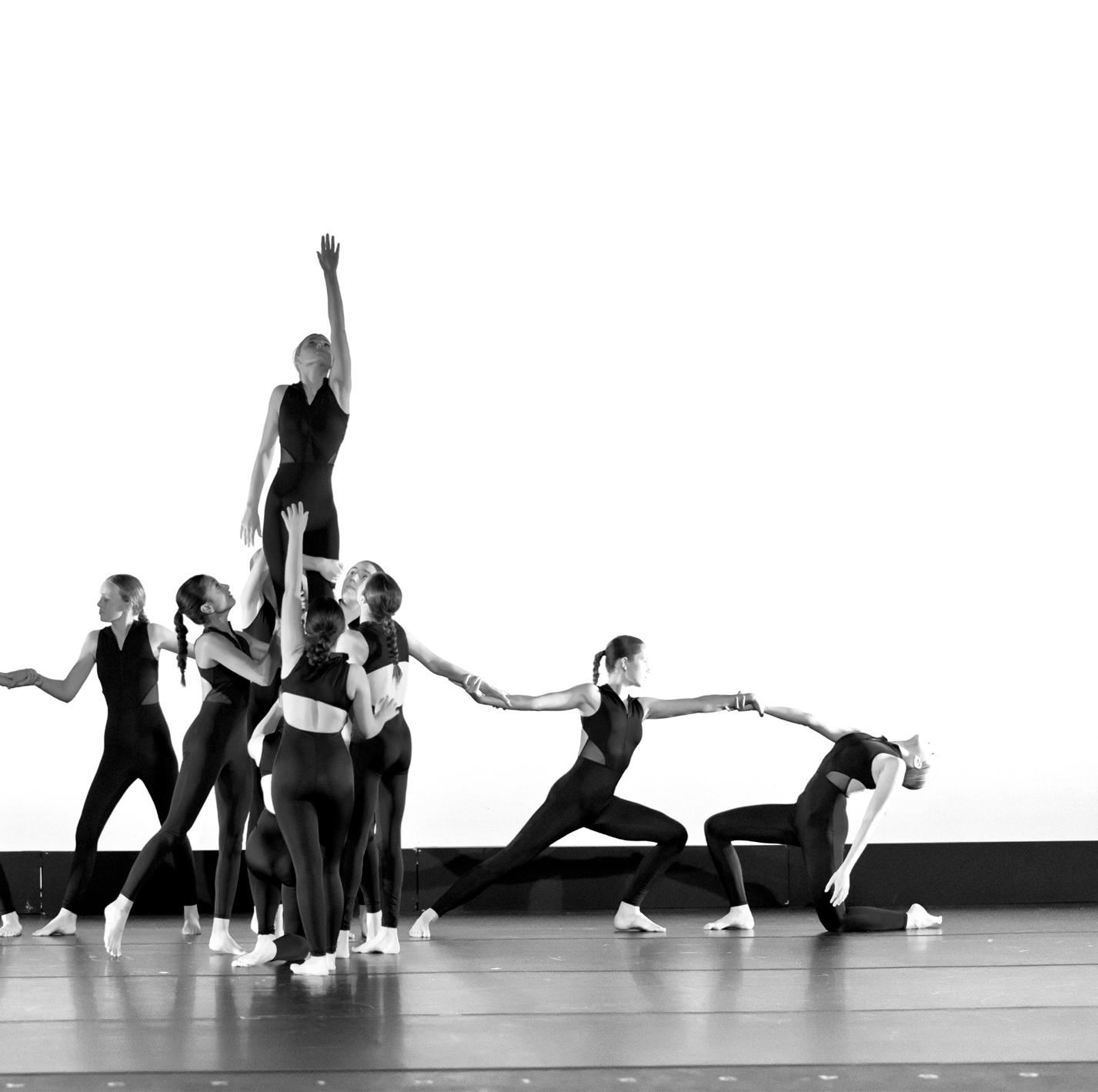
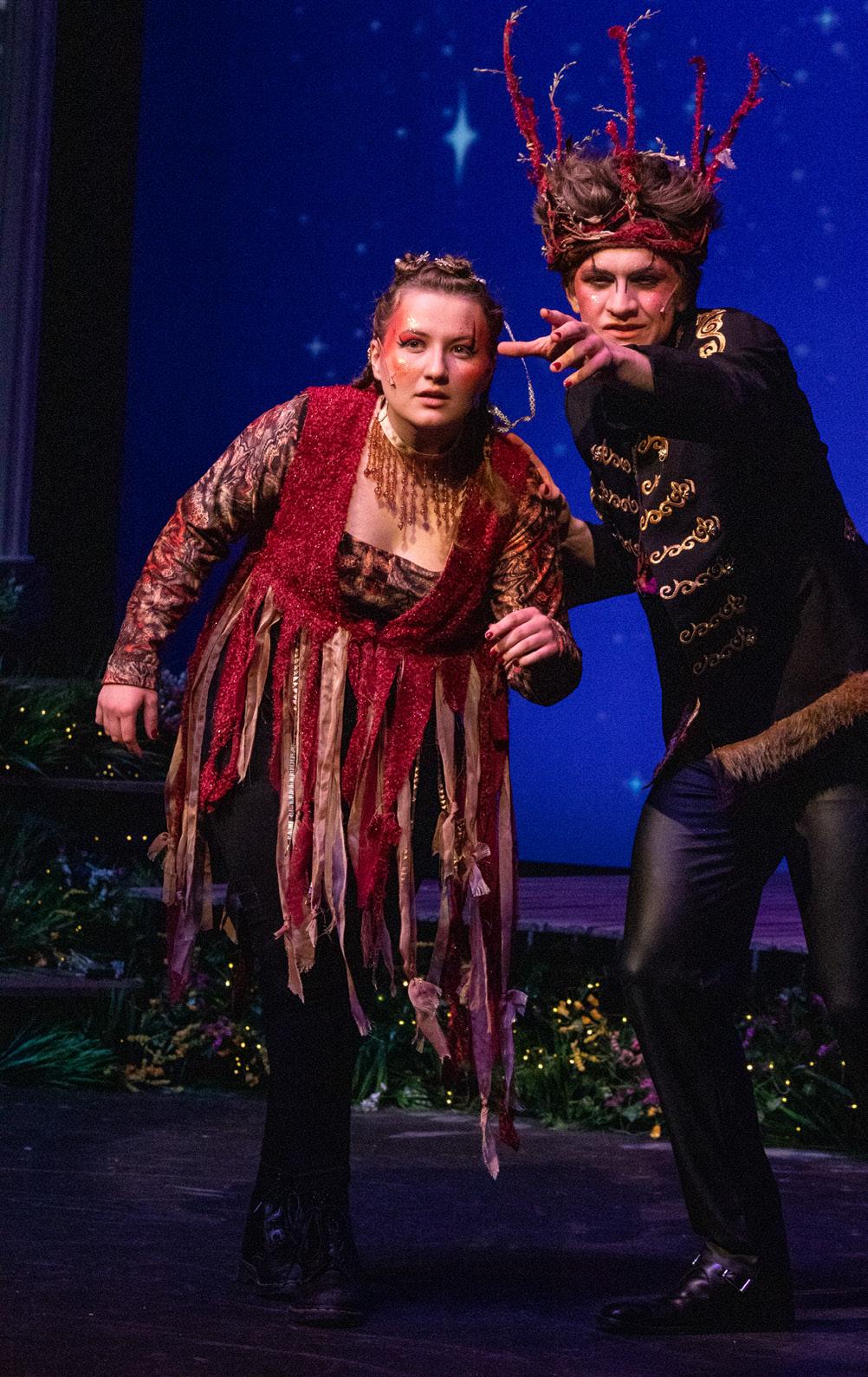
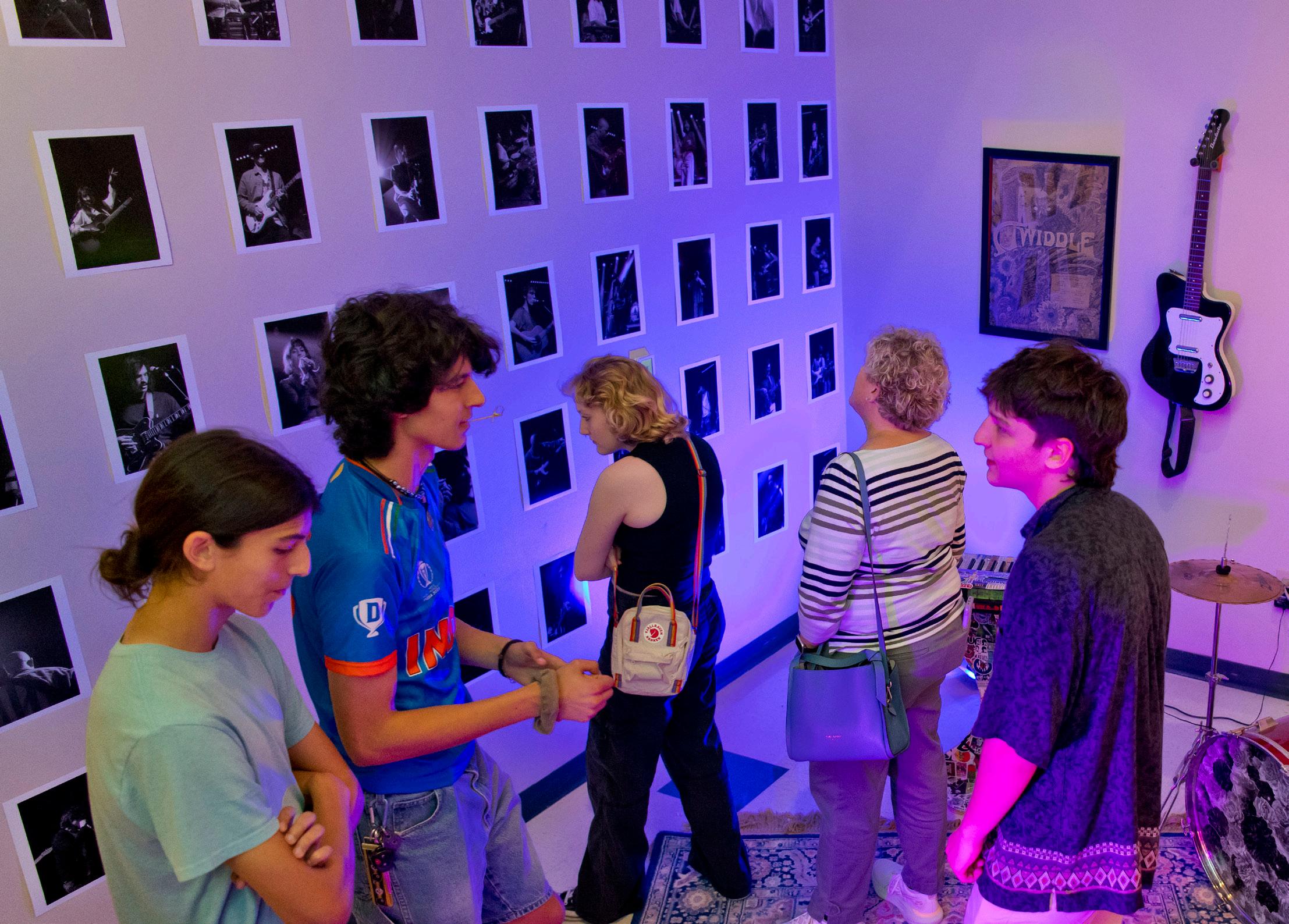
Collegiate’s inaugural Arts Hall of Fame!
Collegiate is proud to announce the development of a new Arts Hall of Fame to celebrate the outstanding contributions of artists in our community.
April 3, 2027
NOMINATIONS AND VOTING WILL TAKE PLACE IN FALL 2026
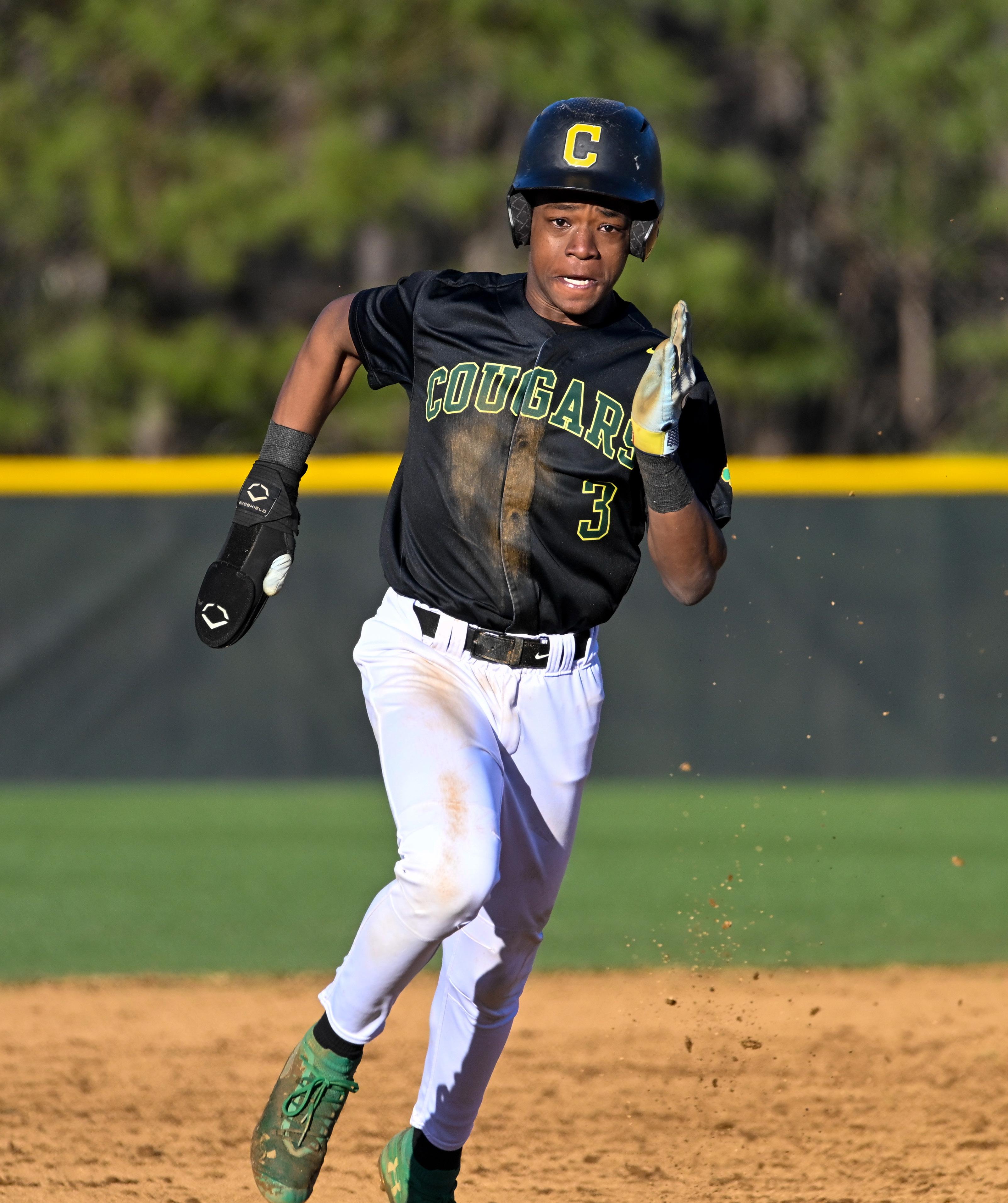
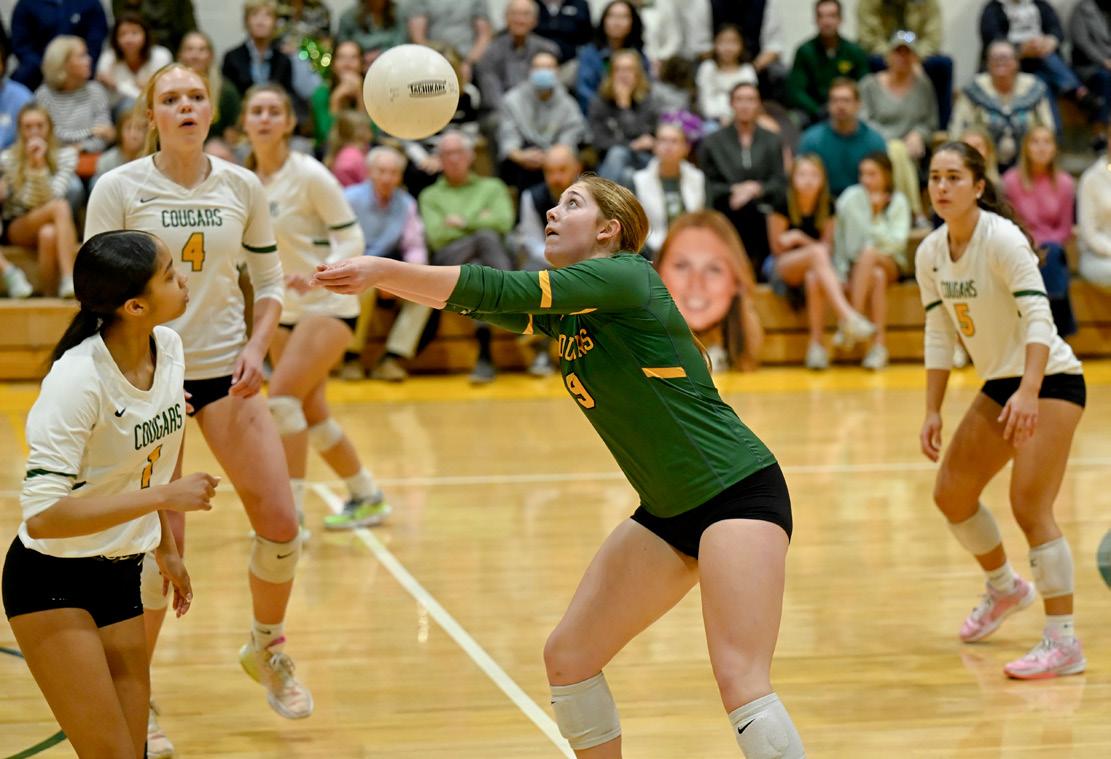
FALL SPORTS RECAP
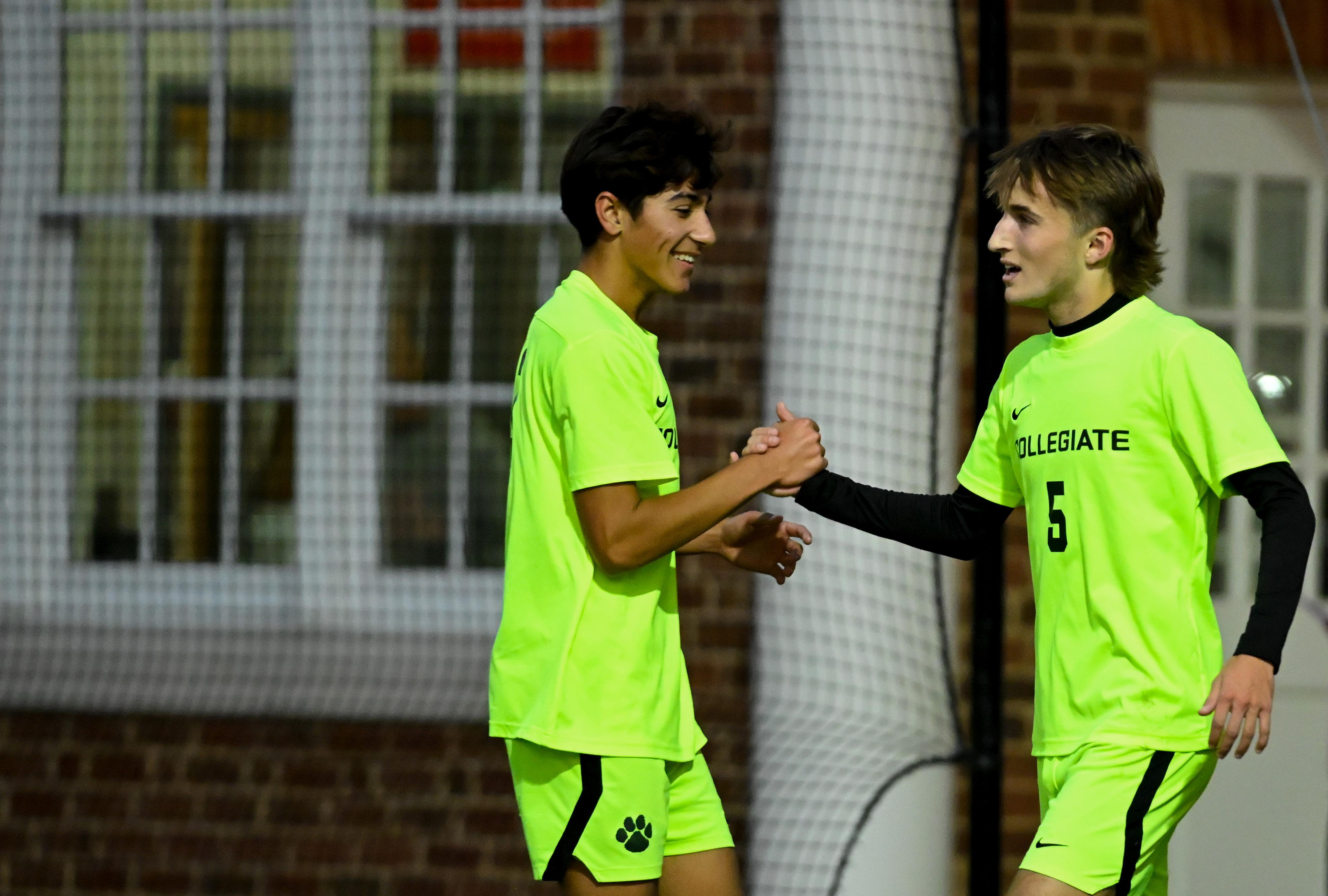
Highlights from a strong showing in Fall 2025.
Collegiate’s Fall 2025 athletic season delivered both. Across courses, courts, and fields, Cougars stacked up championships, national recognition, and all-state honors. But just as powerfully, this fall revealed the connective tissue of Collegiate athletics: the daily commitment of practice that turns talent into something lasting.
Girls tennis didn’t drop a match all season, finishing 18–0, capturing a second straight LIS title and a fifth consecutive VISAA state championship. It’s a program built not just on elite play, but on consistency, depth, and expectation.
Girls cross country matched that excellence. The Cougars claimed their fourth con-
secutive LIS championship and finished as VISAA state runner-up, led by Virginia Harris ’27, who swept LIS and VISAA Runner of the Year honors.
Field hockey turned in one of the most dominant seasons in program history: 18-2-1, nationally ranked, and a VISAA runner-up finish. Their only blemishes came against a single opponent, Trinity Episcopal. That level of consistency against top-tier competition, placed them among the best in the country.
Elsewhere, Cougar teams showed they can hang with anyone.
Boys soccer put together a 13-5-2 season, finishing as VPL runner-up and reaching the
VISAA semifinals. Reid Campbell ’26, the VPL Player of the Year, anchored a group that combined technical skill with toughness.
Volleyball powered through an 18-7 season and a runner-up finish in LIS play, with Ashley Grace Johnstone ’26 earning Player of the Year honors and leading a team that competed point-for-point with the region’s best.
On the cross country course, the boys continued to make strides, placing fifth in the VPL and gaining valuable state experience.
And football battled through a challenging schedule, earning key wins and showcasing the grit and growth that define the program.
Unsung Senior Athletics, Fall 2025
By Weldon Bradshaw
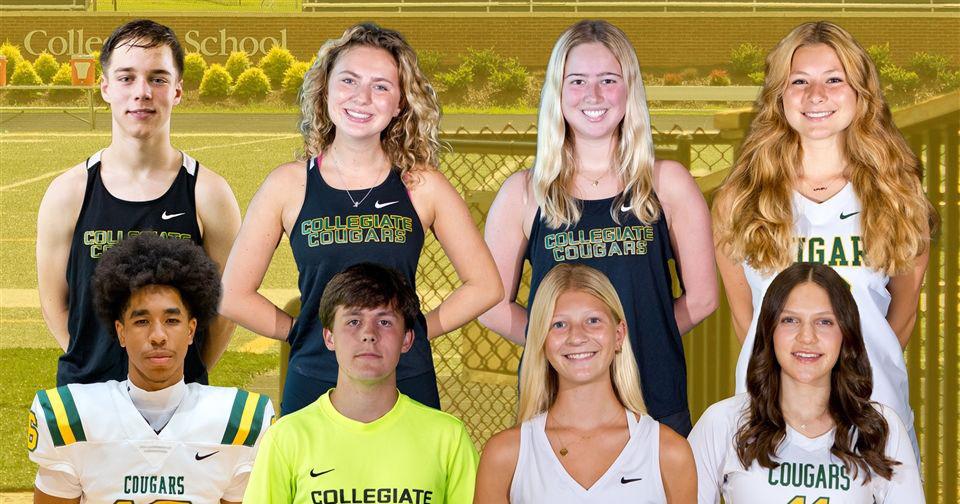
Gather ‘round, folks, and meet the fall 2025 class of Unsung Seniors, a hardy group of Collegiate athletes who made significant contributions to their teams’ success this past season but often did so beneath the radar.
Tyler Lewis has played varsity football the past two years as a wide receiver, defensive back, and kickoff returner.
“After his Junior season, Tyler made a commitment to the team and showed up to every single offseason open gym,” said Coach Collin McConaghy. “His growth over his time with us was tremendous both on and off the field, and he became someone we could always rely on to make plays. Tyler’s effort, work ethic, and attitude set a high standard for his teammates.”
A two-season varsity tennis player, Madelyn Morgan finished her Senior year with a 5-0 record in singles and 11-0 doubles, often in exhibition matches but at times in com-
petitions in which her performance contributed to the team score.
“Madelyn’s teammates describe her as funny, positive, energetic, inclusive, dependable, and compassionate,” said Coach Allyson Brand, the League of Independent Schools Coach of the Year. “She’s a true team player who shows up to practice and sports performance with a great attitude and is ready to work hard. She’s helped raise the bar for her teammates.”
Justin Entzminger has competed on the varsity soccer team the past two years. His resilience, grit, and whatever-it-takes approach made him a key player for the Cougars.
“Justin has played a variety of roles on our team this fall including both outside backs, center midfield, forward,” said Coach Rob Ukrop. “His soccer IQ allows him to transition seamlessly between roles, and his positive outlook has made our team stronger.”
Elise Robinson was a newcomer to cross country this fall and recorded a personal best 5K time of 25:37.20 in the Virginia Showcase against elite competition at Pole Green Park in late October.
“Elise worked diligently to improve each and every day,” Richardson said. “Her steady nature and determined grit led her to drop more than four minutes off her 5K time this season. Along the way, she inspired others with her kindness and spirit.”
Charlotte Callahan, a longtime member of the cross country program, ran a personal best 5K time of 25:43.90, also in the Virginia Showcase.
“Since she joined the cross country program, Charlotte has shared her energy and love of running with her teammates,” Richardson said. “A fierce competitor against any obstacle, she exudes positivity and always pushes herself and others to be better.”
As a cross country runner, Justinas Petkauskas has always been the ultimate team player. He ran a personal best 18:17.70 in the 5K in the Virginia Showcase, but his greatest impact on the program can’t be recorded on any timing device.
“Justinas is a Renaissance man who contributes in many ways to
our school community,” said Coach Matthew Richardson. “He’s been a hard working teammate who diligently strives to make himself and others better each day. He’s a tough competitor who always gives his best when the race is on the line. Above all, he makes being a member of the program fun and meaningful. Justinas has served as a mentor to the younger guys and fosters a love for the sport that will live on long after he graduates.”
A setter on Collegiate’s varsity volleyball team, Mackenzie Weiss played in all 92 of the Cougars’ sets her Senior season and recorded 66 aces and 467 assists. The numbers are impressive, for sure, but her contributions transcend statistics.
“Mackenzie has been a true leader on and off the court, setting the standard with her work ethic, composure, and competitive spirit,” said Coach Diamond Welton-Boxley, the LIS Coach of the Year. “Her consistency and drive push everyone around her to be their best. She leads not just through words but through action. She always gives her best, supporting her teammates and finding ways to make the team better. Part of our success this season is a reflection of her leadership and dedication.”
Coco Wayne has played forward on the varsity field hockey team for two years and contributed a goal against Grafton (Yorktown) in the Cougars’ 7-0 victory in the Trinity Invitational in September.
“Coco’s energy, dedication, and positivity have made such a lasting impact on our team and our program,” said Coach Kelsey Smither. “She leads by example by working hard every practice, cheering louder than anyone on the sidelines with green and gold pom poms in hand until it’s her moment to go in the game, and always finding a way to lift others up when they need it most. She’s shown what it truly means to be a great teammate and an even better friend.”
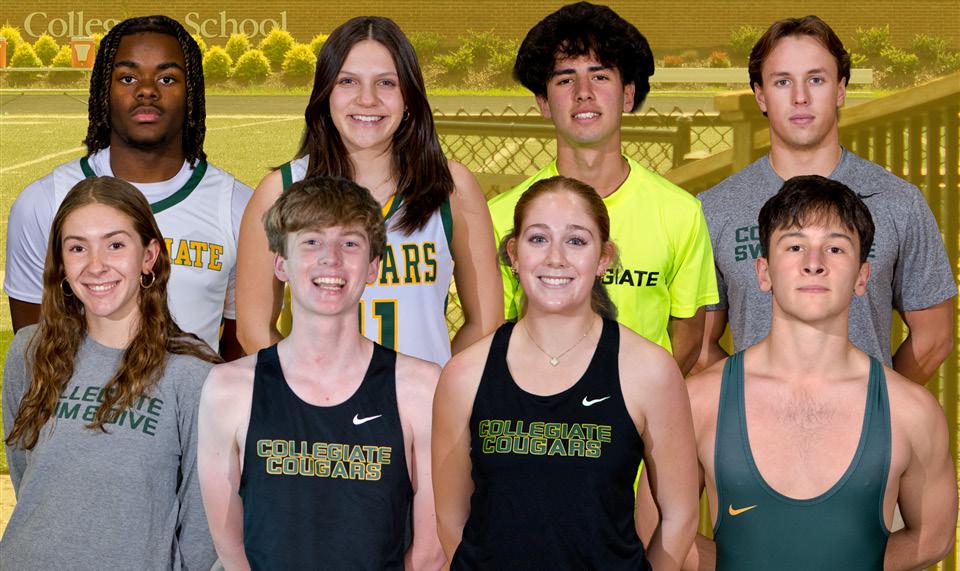
Top row, left to right: Justinas Petkauskas, Charlotte Callahan, Elise Robinson, and Coco Wayne Bottom row, left to right: Tyler Lewis, Justin Entzminger, Madelyn Morgan, and Mackenzie Weiss
Sustained Excellence
Collegiate girls tennis has an undefeated season.
By Weldon Bradshaw
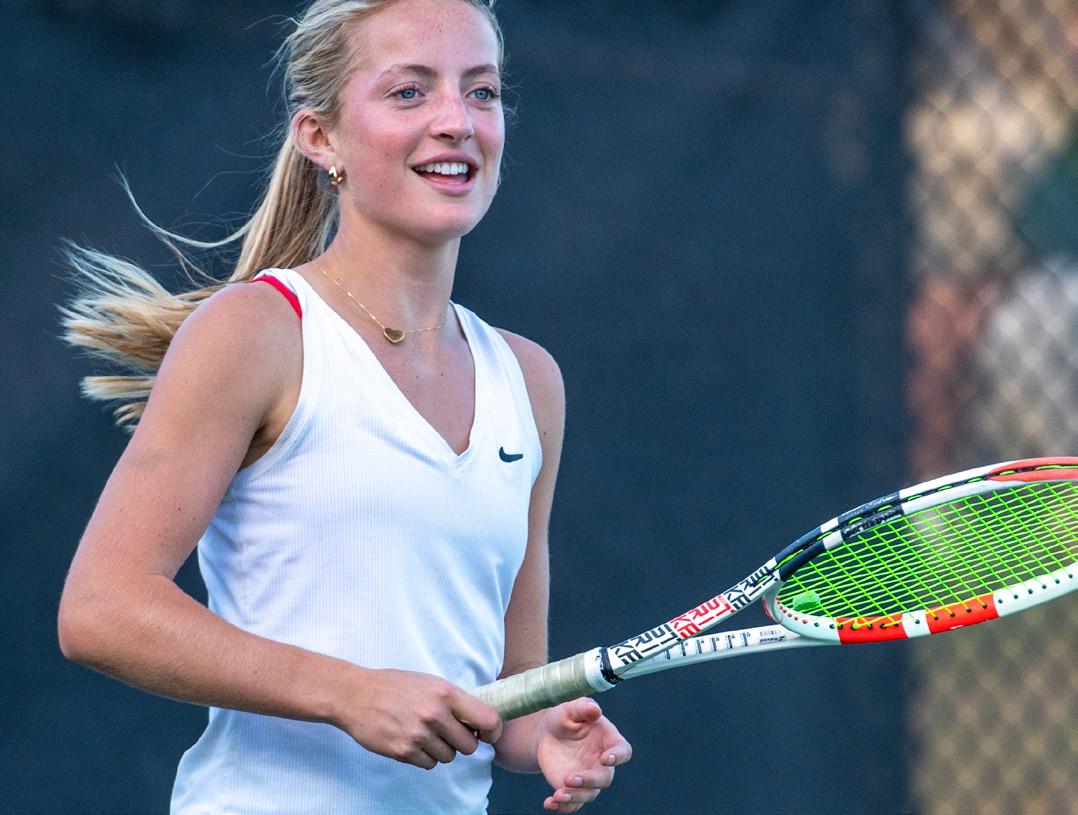
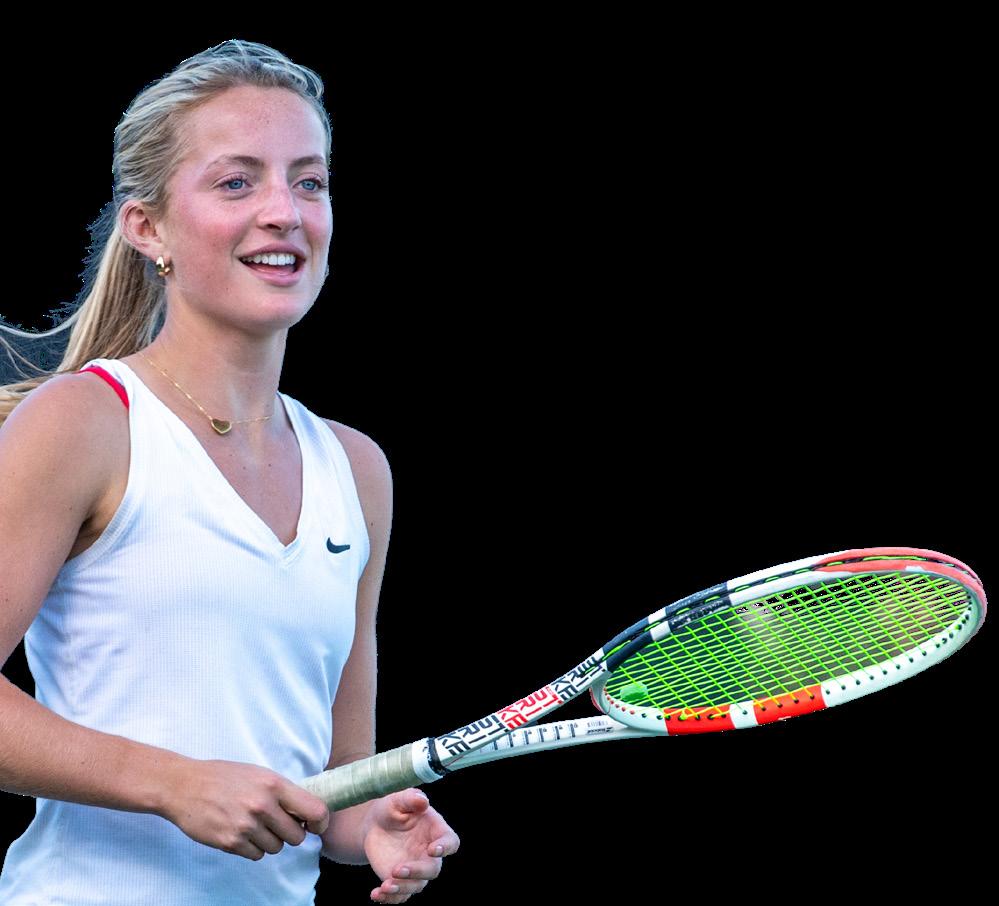
The significance of Collegiate’s 5-4 victory over Sidwell Friends in girls varsity tennis this past September 19 was just beginning to sink in when Allyson Brand, the Cougars’ head coach, posed a question to her team.
How many of you believed we could win? she asked. Only a couple of players raised their hands. Their response was understandable considering that the Quakers, nationally ranked and triumphant in 55 consecutive matches, had defeated the Cougars each year since 2019.
Brand then asked a follow-up: After doubles, how many of you believed we could win?
The majority of her squad responded affirmatively.
That day, the three doubles matches preceded the six singles, the Cougars trailed 2-1, and Sidwell Friends’ top two players are 4-star recruits. Why, then, were the Cougars so confident, especially playing on the Quakers’ home courts in Washington, D.C.?
They knew that their No. 3 doubles team of Ella Williams and Ellie Purcell had won their match 8-0. They knew they’d won all three of their exhibition (non-scoring) doubles matches. They knew that they had the depth and conditioning to compete well. They knew, too, that they had the secret sauce — fearlessness, resilience, resolve, and intentionality —
to complement their talent, even against a juggernaut like Sidwell Friends.
The Quakers went on to win No. 1 and 2 singles. Purcell and Caroline Lee won at Nos. 3 and 4 singles, respectively, to close the Cougars’ deficit to 4-3. Then, Williams captured No. 5 singles 8-4 to even the match, and Jaya Agarwal won 8-1 at No. 6 to secure the team victory.
“That was a big win,” Brand said. “For us to beat them was huge.”
The Cougars’ season only improved from that momentous day. Ranked No. 1 in the VISAA throughout the season, they rolled through their dual match competition unscathed (18-0 including a 6-3 victory over No. 2 Potomac), then captured their fifth consecutive League of Independent Schools and VISAA championships.
They won the league tournament with 60 points, 10 ahead of runner-up Trinity Episcopal. At states, they defeated St. Stephen’s-St. Agnes 5-0 in the quarterfinals, Trinity Episcopal 5-1 in the semis, and Potomac 5-1 in the finals.
Their combined record in singles and doubles was 117-16. Rita Taylor (a Senior captain and five-year starter), Kishori Vohra, Lee, and Purcell earned both All-State and All-LIS honors.
One day recently, Brand, who was cited as the LIS and VISAA Coach of the Year, spoke of the Cougars’ journey that culminated with yet another championship season.
The expectations for another great season were high. How did you and your staff help your players manage them?
That’s the challenge and what makes coaching fun. Everyone came to tryouts this year ready to play. It’s a competitive group, so our goal as coaches was bringing their potential out. We had
a lot of the same players, but we had a little bit of a different lineup at some positions. Every year is a new year, a new team, which makes it exciting.
What areas did they improve their skills during the off-season?
They improved on things that would take them to the next level like working the full court and playing aggressively. Or not just waiting for the ball to come to you, but creating and becoming better at angle shots, finesse shots, and volleys: not just basic volleys but the variety of the volleys like touch volleys and higher volleys. They put more tools in their toolbelt.
You’ve always worked with your girls to set goals. What goals, other than winning, did you set?
Yes, winning is a goal, but as coaches, we only talk about what’s in front of us, what can we control, what we can we improve. The rest, you like to think, can take care of itself. Honestly, it’s just finding ways to come out every day to practice and improve, whether it’s on the court or in sports performance.
Is winning championships any less special since you’ve won so many?
Each one is special because each year the team is unique. At the end, you always have Seniors graduating and new girls coming on. It’s so great and rewarding when the girls can go out there and compete at their potential.
Five consecutive championships place you in rarefied air. What do you do for an encore?
Every year, every match, what can we control? What can we not control? We can’t control how our opponents play. We can control our attitude, our footwork, our shot selection, our shot tolerance. If we can focus on what we can control, the results fall in place.
WINTER SPORTS RECAP
Momentum builds over the winter.
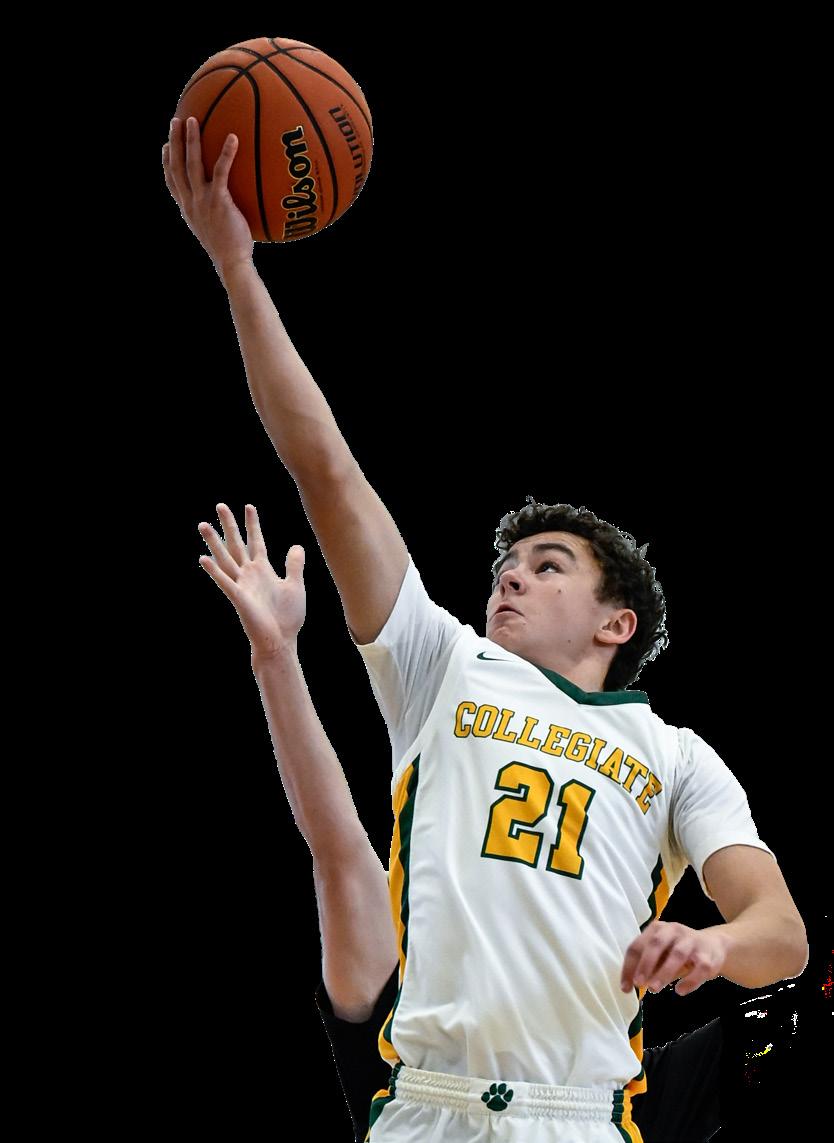
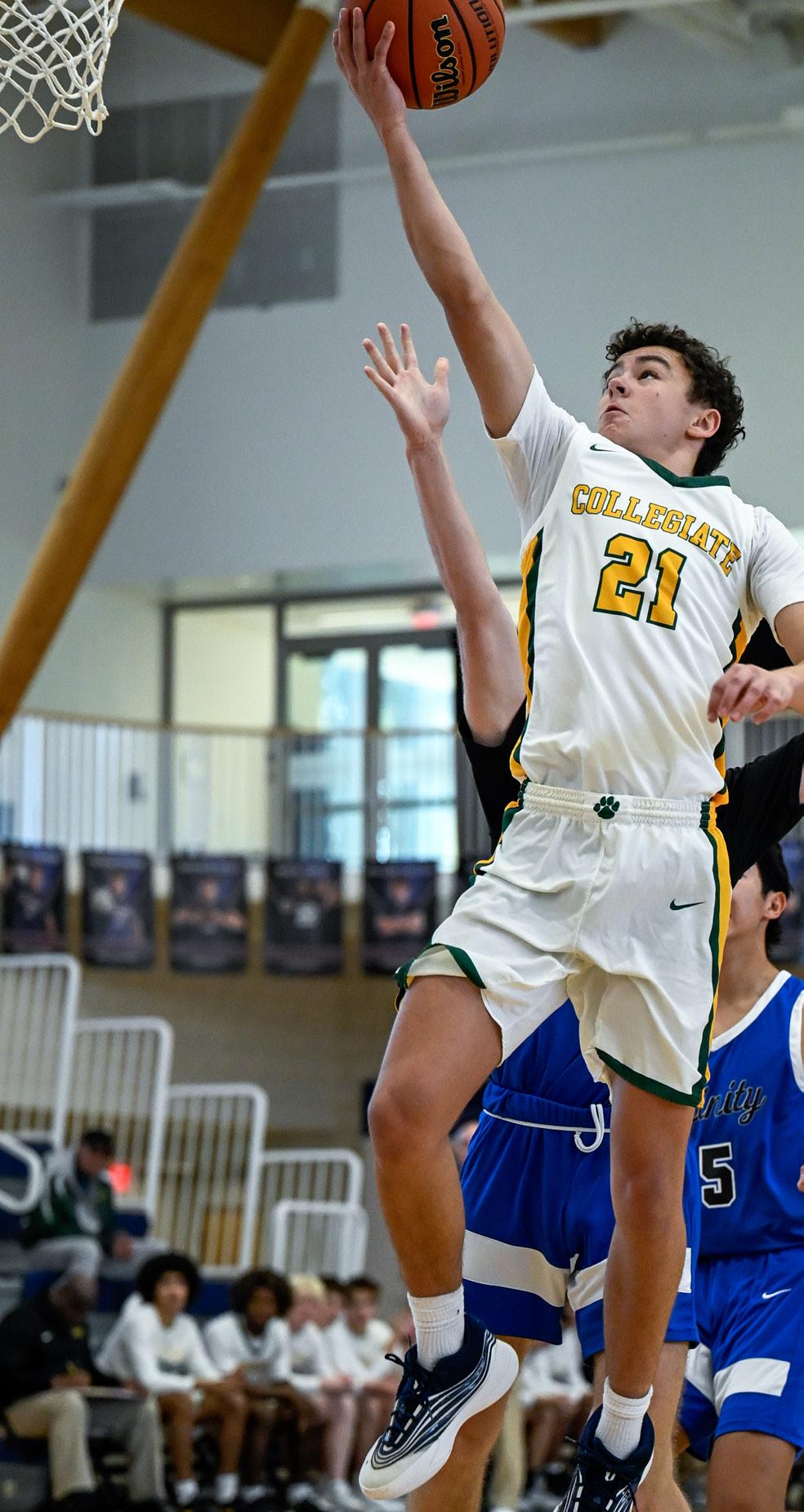
Winter doesn’t always offer clean narratives. It’s a season of long practices, quick turnarounds, and quiet progress. Of early mornings and late nights. Of teams building, testing, and, in some cases, breaking through.
For Collegiate athletics, Winter 2025–26 was all of that, and more.
In the pool, the standard held firm. Girls swim and dive delivered another historic season, capturing both the LIS and VISAA state championships for the fifth consecutive year. It’s the kind of sustained dominance that’s easy to celebrate, but much harder to maintain.
This year’s team didn’t just win, they rewrote the record book. Multiple school records fell, including standout performances from Kate Boutry ’28, Emory DeGuenther ’26, and Jasper Jones ’27. DeGuenther, the VISAA State Swimmer of the Year and a NISCA All-American, led a group defined by both elite performance and remarkable depth.
On the boys side, swim and dive continued its rise, finishing second in the VPL and third in the state. J.D. Chen ’26, the VPL Swimmer of the Year, headlined a team that is firmly among the state’s best, and still climbing.
Indoor track told a story of momentum. The girls team placed second in the VPL and fourth at the state level, powered by a deep group of All-State performers who continue to show up across seasons and sports.
The boys team followed with a third-place VPL finish and fifth in VISAA, highlighted by Nasir Diggs ’28, whose record-setting 300m run and state-level field dominance marked one of the breakout performances of the winter.
Across both programs, the message was clear: progress is happening, and it’s accelerating.
Wrestling delivered one of the season’s most meaningful milestones: a second-place finish in the VPL. The team’s best since 1999 , singnaling not just a strong season, but perhaps a program resurgence.
On the hardwood, both basketball programs leaned into growth.
Girls basketball competed through a challenging slate, while boys basketball finished just above .500 and fifth in the VPL, with Danny Mooney ’28 earning All-VPL recognition. These are teams developing identity, chemistry, and the habits that turn close games into future wins.
Some of the most important progress didn’t come with trophies. Squash, in just its second year, competed at the JV-level and finished 2-2, an early step in what is still a program in formation.
Futsal brought energy and creativity to the winter, going undefeated in the regular season and finishing as runner-up in the Valentine Classic. It’s a reminder that growth isn’t limited to long-established programs, new traditions are taking shape, too.
Across the season, there were champions, record-breakers, and award winners; but winter also revealed something less visible, and just as important. It showed the daily work: the swimmers chasing tenths of a second, the runners are shaving off fractions, the wrestlers grinding through matches. The basketball teams are learning, adjusting, and competing — possession by possession.
Not every season is defined by a final result. Some are defined by what’s currently being built; and this winter, across Collegiate athletics, that foundation is strong, and getting stronger.
Unsung Senior Athletes, Winter 2026
By Weldon Bradshaw
Gather ‘round, friends, and meet the latest class of Unsung Seniors — Collegiate athletes who contributed to the success of their teams during the 2025-26 winter season, but often did so beneath the radar.
Whether in interscholastic competition, practices, or sports performance sessions that are integral to the success of the athletic program, their spirit, grit, and determination always made their teammates better.
Makenzie Weiss was a three-season veteran and two-season starter at shooting guard on Collegiate’s girls varsity basketball team. Although her final season, during which she was a captain, ended prematurely when she suffered a torn right ACL in January, she finished her career with 265 points, 198 rebounds, and 95 steals.
“Despite her injury, Makenzie remained positive and stayed came to practices and games as much as she could,” said Coach Kevin Coffey. “She showed great leadership by pointing out things for the younger players on the floor to make them better even though she couldn’t be on the floor herself.”
Jaden Station, a guard on the boys basketball squad, was as effective driving fearlessly into the paint and battling for rebounds as he was playing on the perimeter.
“Jaden made an impact on a daily basis because of his competitive, team-first approach to the game,” said Coach Nick Leonardelli. “He competed in every drill, he learned the point guard position, and his effort helped to bring out the best in his teammates. We will miss his presence as both a player and as a caring teammate.”
Addison Lucas competed in varsity swimming for four years as a middle distance freestyle and butterfly specialist.
“Addison has always done whatever is best for the team,” Peters said. “The past two years, we entered the LIS (League of Independent Schools) meet with a dearth of swimmers in the 500 free. Addison stepped up in both situations. This year, she was a last minute sub to swim a grueling double of the 100 fly (1:07.70) and 500 free (6:03.00) to help the team. Then, she finished her career at the state meet by swimming her fastest 50 free (27.41).
Jack Neese, a five-year varsity swimmer, competed in the 100 and 200 freestyle in his final season and recorded personal bests of 52.80 in the former and 1:53.98 in the latter. He also completed a Half Ironman despite the fact that he was nursing a broken hand, then swam on Senior Night, underwent surgery, and returned to swim in the VISAA championship meet.
“Jack has always been there to support his teammates both at meets and in practice,” said Coach Mike Peters. “His resolve to compete despite the challenges he faced epitomizes his love for the team.”
Ashley Grace Johnstone, a Randolph-Macon College volleyball commit, participated in winter track as a member of the shot put contingent and this past season served as a team captain. When her team needed her the most, she delivered with second place performances in both the LIS (34-0) and VISAA (34-11.5) championship meets.
“Ashley Grace played a significant role in our throwing group,” said Coach Beth Kondorossy. “She’s so inclusive to all the athletes no matter their grade or ability. She brought such a joyful attitude every day. She’s a great teammate who’s extremely coachable and whose positivity impacts everyone.”
Thomas Gallahan has been a devoted and hard working member of the distance contin-
gent on the track team throughout his high school career. This winter he played a crucial role on the 4x800 relay team, which finished 3rd in the Prep league and 6th in the VISAA. His personal best split was 2:08.
“Thomas’s dedication to team and commitment to making everyone around him a better runner and teammate are hallmarks of his leadership style,” said Matthew Richardson, his coach in both cross country and track.
Colin McLoughlin played on Collegiate’s futsal team for four years and is known for his willingness to challenge himself to improve through his work effort and enthusiasm.
“Colin is a fantastic teammate who always supports and guide the younger players without being asked,” said Coach Page Chapman. “He applied defending and attacking principles throughout the season which made him a player essential to the futsal program. We’ll always remember him for his dedication, commitment to excellence, and leadership.”
Robbie Redmond was a member of the wrestling program in the 157 and 165 weight classes the past two seasons and played a significant behind-the-scenes role in the Cougars’ runner-up finish in the Prep League championship tournament and 14th place out of 32 teams in the VISAA.
“Robbie was a super-tough workout partner who got better every day and made his teammates better,” said Coach Andy Stone. “He always gave it his all. That’s the kind of kid who helps the wrestling team — and any team, for that matter — get better. The tougher the wrestling room is, the tougher the team will be. You get that when guys step up and push the starters by coming each day and battling as hard as they can. Robbie definitely made the room better.”
Top row, left to right: Jaden Station, Mackenzie Weiss, Colin McLoughlin, and Jack Neese Bottom row, left to right: Addison Lucas, Thomas Gallahan, Ashley Grace Johnstone, and Robbie Redmond
A MINDFUL APPROACH TO SUCCESS
Collegiate’s Swim and Dive teams use mindfulness to take home the win.
By Weldon Bradshaw
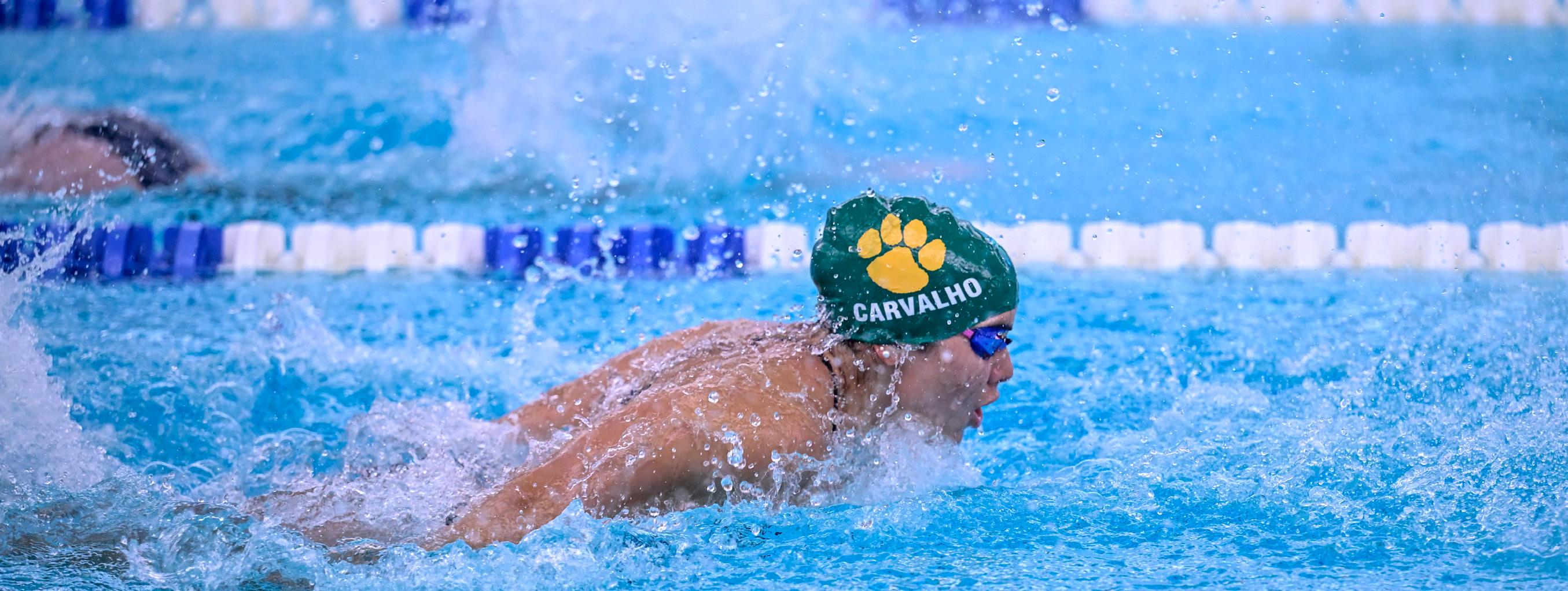
They’re talented. That’s for sure. Talent, you see, runs in the Collegiate Cougars’ swimming family.
This past winter, Coach Mike Peters’ girls team won its fifth consecutive League of Independent Schools and VISAA championships. All told, they were the 17th league and 15th state title in program history.
Emory DeGuenther and Jasper Jones earned LIS swimmer of the meet honors. Addison Barnes, Kate Boutry, Gabby Carvalho, Savannah Harris, and Ana Linkonis were also All-LIS honorees.
In state competition, DeGuenther, a Duke commit who was cited as swimmer of the meet, won two events (100 free in 50.97, 200 free in 1:48.42), anchored the victorious 200 free relay (following Linkonis, Harris, and Jones) in 1:33.70 and 400 free relay (following Boutry, Carvalho, and Jones) in 3:28.69. Boutry, Harris, Margaret Hepper, and Linkonis also teamed to win the 200 medley relay in 1:44.27. Boutry, Carvalho, DeGuenther, Harris, Hepper, Jones, and Linkonis earned allstate citations.
Collegiate’s boys team placed second in the Prep League meet and third in the state. Jamie Arcarese, J.D. Chen, and Taylor Hoffer were All-Prep. Chen was cited as swimmer of the meet. Arcarese, Chen, Crawford Craig, Hoffer, and
Justinas Petkauskas earned all-state recognition.
The Cougars achieved their success by training diligently and swimming fast. No question about that. The secret sauce, though, had little to do with the long hours and myriad laps in the pool or the strength and conditioning program that was so vital to their preparation.
Instead, it was their mindfulness training, conducted under the guidance of Jake McDonald and Collin McConaghy, founders of The Peavey Project, that proved a difference maker.
One morning recently, Peters spoke of his team’s emphasis on the mental approach to training.
How did your connection with the Peavey Project begin?
I’ve known Alex Peavey (the namesake of and inspiration behind the organization) for years and have really loved talking to him and having his calming presence. I called Collin and Jake four years ago right before the championship season about coming in and talking to the kids about how to handle stress in championship meets. No matter how good you are, the kids are nervous. Sometimes, the best swimmers are a ball of nerves before that meet. They put so much pressure on themselves. They focus on one or two races but forget about the process
that leads up to it. I wanted to get someone in who could help them approach each day as a new day, to take your wins or your lessons. How did the initial session go?
We sat down for about 30 minutes. Some of the kids asked if they could do it more often, so we tailored our Tuesday practice around it. We did it for all of January the first year. This year, I wanted the message sent that mindfulness isn’t just a championship meet thing. It’s something they should carry into everything they do. Starting the first week of practice, the focus was resilience. How do we become resilient when things aren’t going our way? They sometimes think of swimming as an upward trajectory, and you’ll get faster the whole way through. That’s not realistic. There’re going to be peaks and valleys, but if you do the right things, more often than not you’re going to be successful. A lot of our kids can be their own worst critics. Part of coaching is helping kids get through the mental part.
What the Peavey Project teaches is so relatable to kids. It’s not about meditating in a room. It’s about taking 30 seconds to take a deep breath. It’s being in the moment and accepting that you’ll make mistakes and figure how you’ll do something different the next time. It’s not that you have to be perfect.
How has your mindfulness training evolved over the years?
A few years back, our focus was controlling your controllables. All you can control are your attitude and your effort. If you do that, everything else will do what it does. I love being able to refer back to that, especially when things get hard at practice or in a meet. This year, we had a word or phrase that’s the focus of the week, like resilience, or consistency, or grace. At the beginning of the season, the focus was giving yourself time to get back into the season and knowing you won’t feel the same way the first week that you did the last week the year before. Give yourself time and grace. Collin and Jake interweave the focus of the week with what they’re doing with mindfulness.
How do you measure success of the mindfulness initiative?
It’s helped in little ways that have added up to big differences. I don’t think all our kids are no longer nervous, but they have some things in their toolbox for when they do get nervous. We want those things to go well beyond swimming.

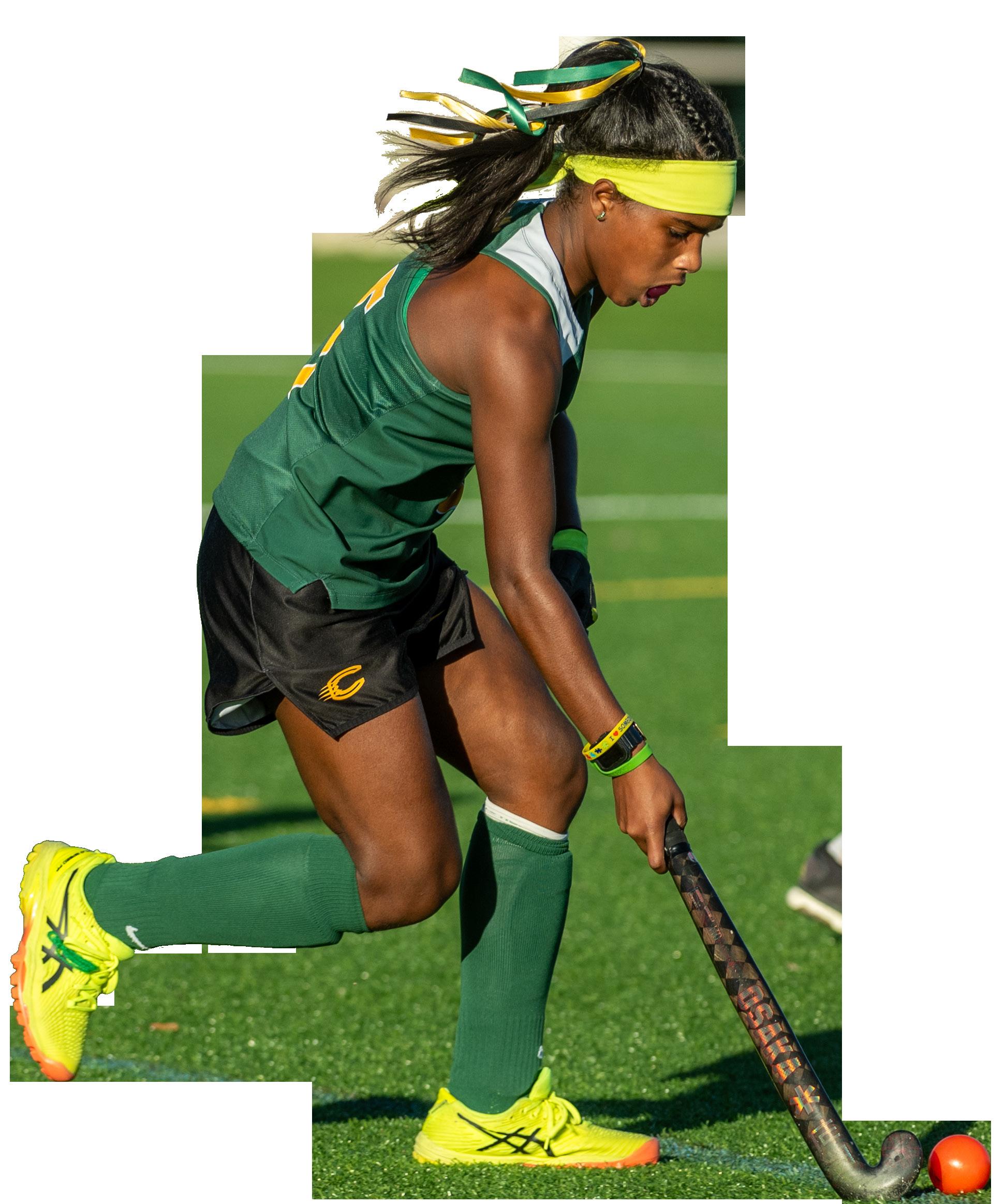

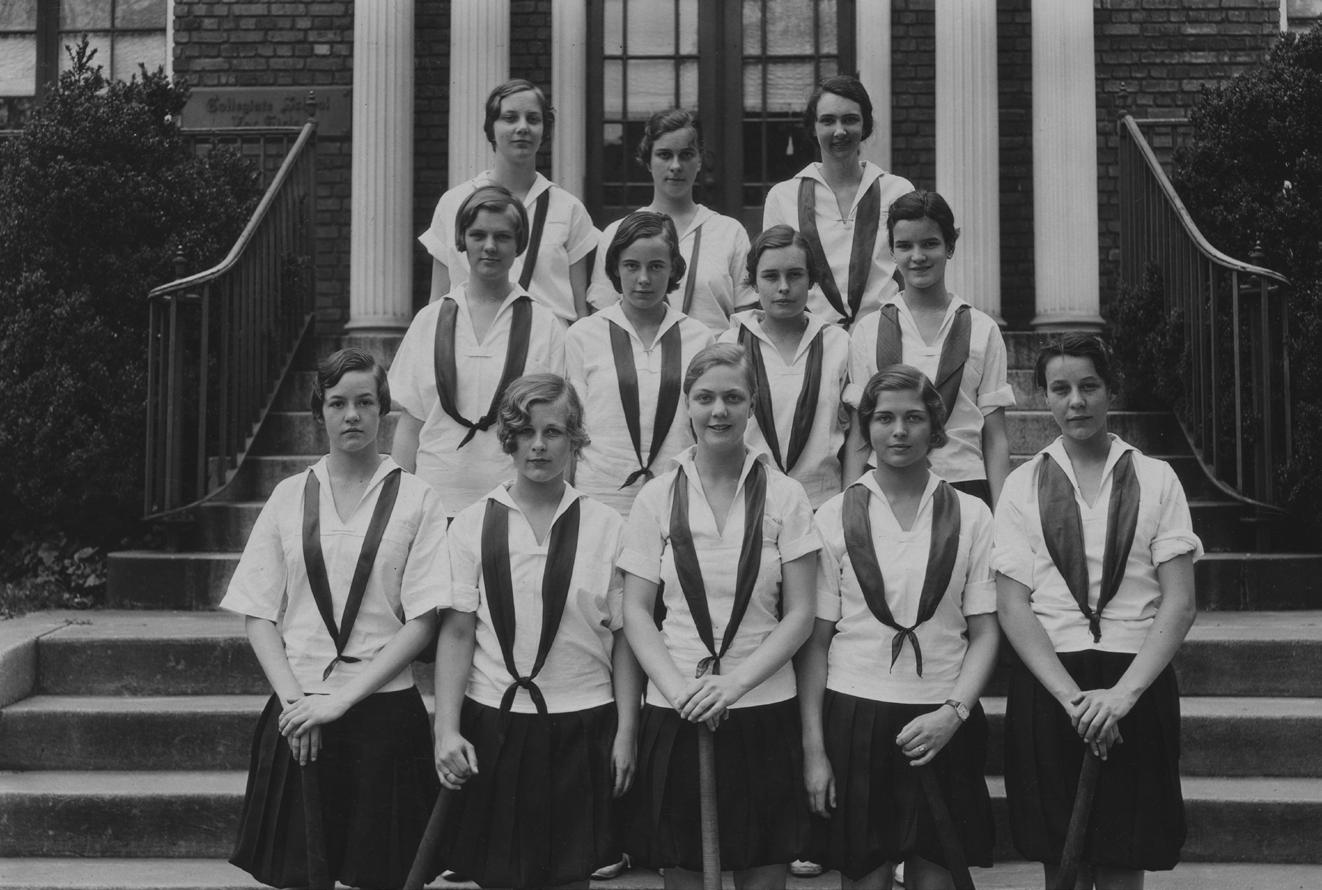
Collegiate field hockey celebrates 100 years of tradition, transformation, and a legacy still in motion.
By Weldon Bradshaw
IN THE FALL OF 1925, the field hockey program at the decadeold Collegiate School for Girls took its first tentative steps on what would become a long, meaningful, and exhilarating journey.
Who could have imagined a century ago that the sport, then played on borrowed fields, would now be housed on state-of-the-art, synthetic turf with a rustic backdrop of pines and oaks on the school’s spacious Robins Campus?
Who could have imagined the speed at which the game would ultimately be contested or the players’ well-honed, crafty stickwork developed through years of training in youth leagues and on travel teams, or the strength and conditioning opportunities afforded young women?
And who could have imagined that from those humble origins, the Cougars would establish themselves as one of the premier programs among all schools, public and independent, in Virginia?
“What stands out to me is that Collegiate had competitive girls team sports 100 years ago,” said Karen Doxey, who headed the school’s field hockey program for 35 years until her retirement as Collegiate’s Athletic Director in 2022. “That was very progressive for the time. A lot of the success over the years goes back to the quality of the kids we have. When I came here, the program already had a positive culture built by the kids and coaches. It was a culture based on teamwork, effort, and attitude.”
In Collegiate’s early years at 1619 Monument Avenue, the team practiced at such locales as Byrd Park, Westhampton College, the Presbyterian School of Christian Education, and Mary Munford Elementary School.
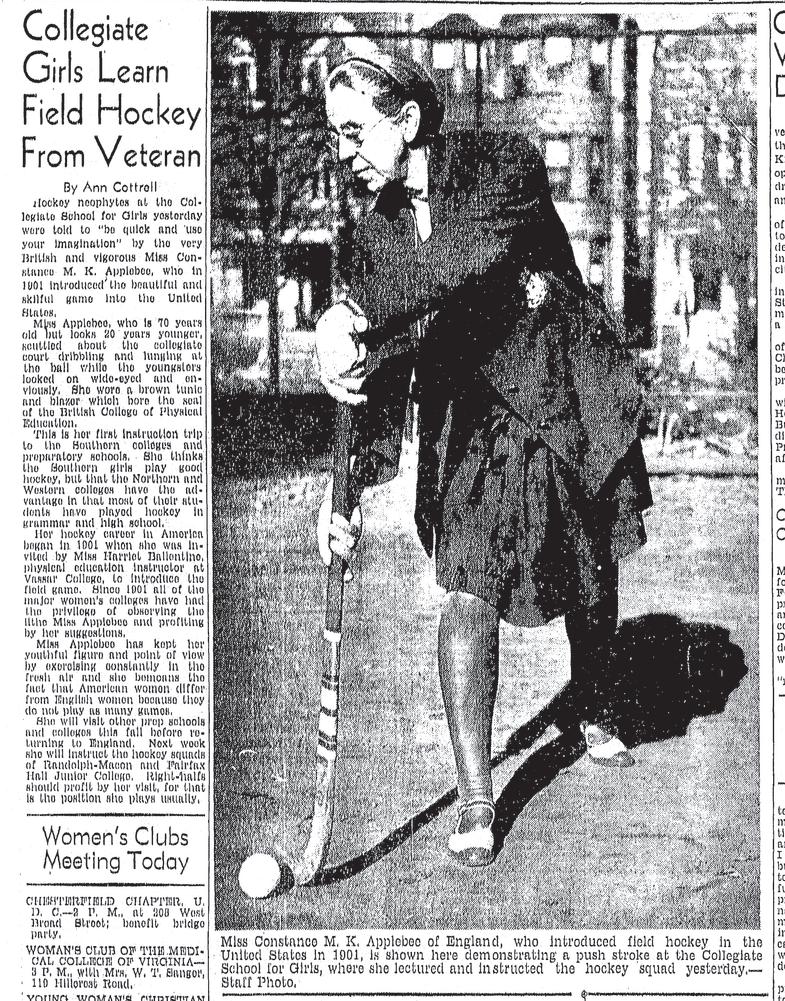
Highlights during that Town School era, in addition to winning their share of games, were visits by internationally known field hockey icons. In 1936, Joan Law, the right wing on the All-England hockey team, stopped at Collegiate to deliver an instructional clinic. The next year, the legendary Constance M.K. Applebee, a 70-year-old Brit who in 1901 had introduced the sport to the United States, spent a week at Collegiate amidst her tour of American prep schools and colleges.

“Over the generations of Collegiate hockey, there’s always been a commitment to sustained excellence.”
“Be quick and use your imagination,” Applebee told Collegiate’s girls, who, according to published accounts, were mesmerized by her knowledge of hockey as well as her skill and dexterity considering her age.
Collegiate regularly earned and enjoyed success, and the 1959 season, the last before the move to North Mooreland Road, was one of the best. A charter inductee into the School’s Athletic Hall of Fame, the team finished 6-0-1. Six players (Judy Keehn, Clay Brumback, Cheramy Howe, Mary Carrington, Anne Harlan, and Emily Redford) made the All-Tidewater first team and two (Ann Harwood and Virginia Brent) the second team.
From 1960 until the mid-1970’s, the Cougars (a sobriquet added following the move to North Mooreland Road) played and practiced on the south end of the campus near where Luck Hall and Centennial Hall now stand. Despite the often muddy and slippery conditions of the fields, they persevered and excelled.
Then, they moved to fields on the east side of campus that were created when a large, wooded area was cleared. Fifteen years ago, the area was repurposed as a parking lot, and the program relocated yet again to the Robins Campus.
As with most sports, the game has changed over the years, though much remains the same.
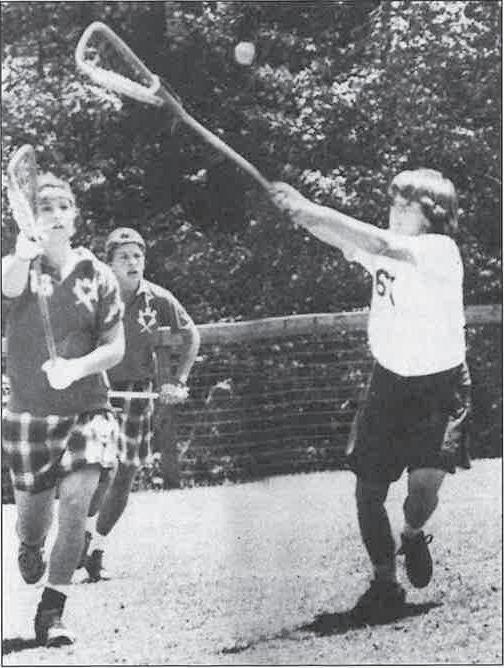
“The rules were much different when I played,” said Missy Herod ’72, a standout multi-sport athlete at Collegiate, who served her alma mater in myriad capacities from 1983 until she retired in 2022. “You couldn’t raise your stick above your shoulder level. Offsides was different. You couldn’t turn your back on an opponent when you hit the ball. They had to have equal access to it. You don’t have that rule anymore. You can play much faster now. Sticks are smaller and stronger, and you can hit the ball farther. The object is still to get the ball in the goal, to use the whole field for play, and to distribute the ball to your teammates.”
Doxey — who upon retirement the hockey/lacrosse field at Robins Campus was named in honor of — arrived at Collegiate in 1986 after coaching at Norfolk Academy for eight years.
“I knew what a great program Collegiate had,” she said. “I knew some of the people, and I knew my impressions driving in on the bus from Norfolk Academy. I remember thinking, this is a cool place. Collegiate just seemed so full of life. People were always so friendly. That made a big impression on me. You could tell there was quality here at Collegiate.”
Doxey’s 43-year field hockey record was 641-179-38 including 544-13724 at Collegiate. Upon her retirement, her victory total ranked third on the National Federation of State High School Associations all-time list. During her tenure, the Cougars won 19 League of Independent Schools and eight VISAA championships. Her 1986 and 2003 teams were inducted into the Athletic Hall of Fame.
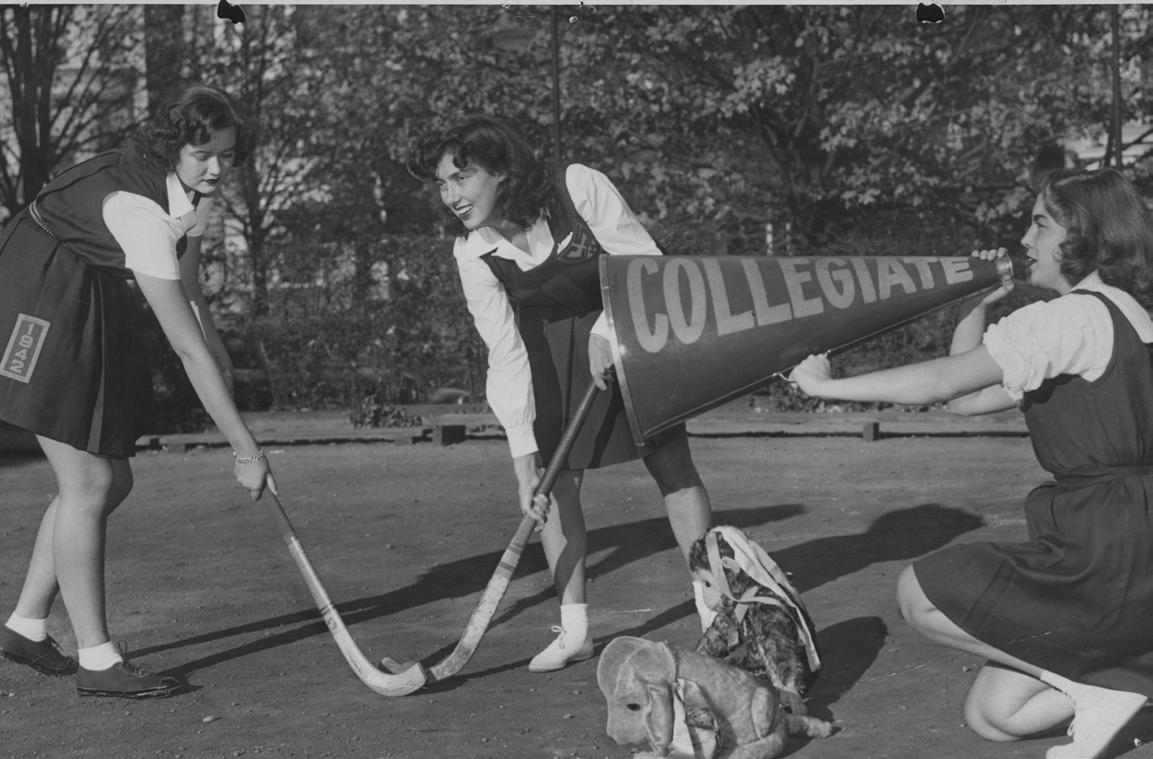
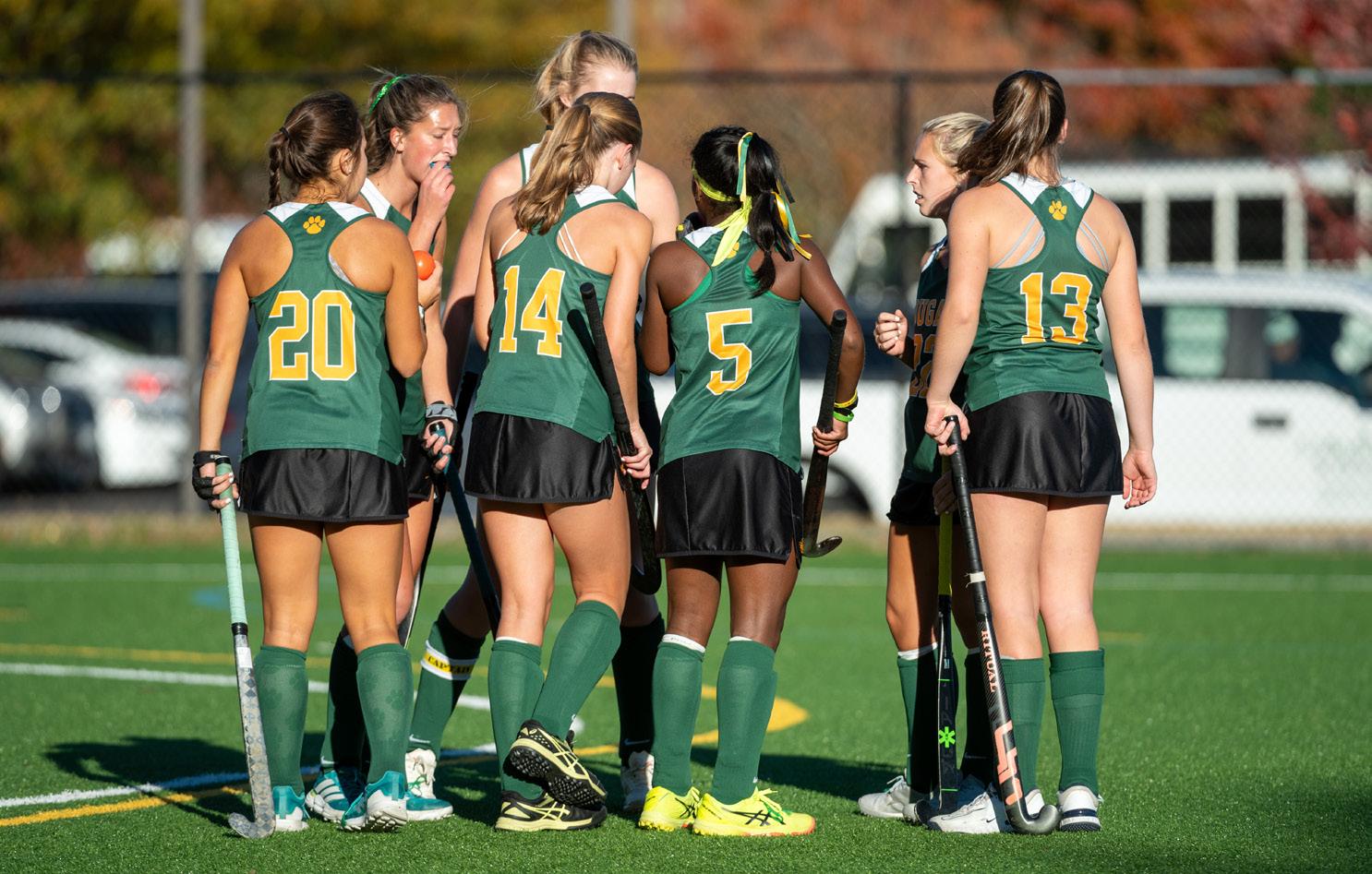
All told, the Cougars have won 25 LIS and 10 state titles. Fifteen members of the Athletic Hall of Fame were primarily hockey players, and another four played it as a secondary sport.
Seven Collegiate players, Jamie Whitten (2001), Blair Northen (2003), Kate Hanley (2004), Tori O’Shea (2006, 2007), Hillary Zell (2008, 2009), Brooks Doxey (2013), and Callie Rogers (2022, 2023) were honored as the Richmond Times-Dispatch Player of the Year in Central Virginia.
Whitten and Rogers were NFHCA All-Americans, Izzy Lee and Rogers were NFHCA All-Region selections, and Antoinette Lucas is a USA Field Hockey Hall of Fame inductee. Myriad Cougars have earned all-league, allstate, and all-metro honors over the years, and many have gone on to play — and several to coach — at the college level.
There’s more to the program’s success, though, than just high-profile, decorated athletes.
“Over the generations of Collegiate hockey, there’s always been a commitment to sustained excellence,” said Andrew Stanley, Collegiate’s athletic director. “In field hockey, we continue to find opportunities for kids for whom it’s not their first sport, and we’ve seen so many kids who were not frontline athletes who are willing to be coached, playing impactful roles.”
Kelsey Smither, a former Lakeland High School and Old Dominion University star and successful college assistant coach, served a year as Doxey’s assistant and the last four as Collegiate’s head coach.
“Being the steward of the field hockey program in its 100th year is an honor, an opportunity, and a responsibility,” said Smither. “I’ve only been part of five percent of that history. I recognize that I’m very much a part of an ongoing continuum of players, coaches, parents, supporters, and community members who have built this program into something that has been truly special over generations.
“In sports, at the end of the day, it isn’t just about wins and losses and championships. It’s about the hard work, the community, and the resilience that our athletes learn through the experience. My role is to uphold the standards and traditions that made this program great and to evolve and invest in the future so that over the next 100 years, we can sustain and continue to build.”
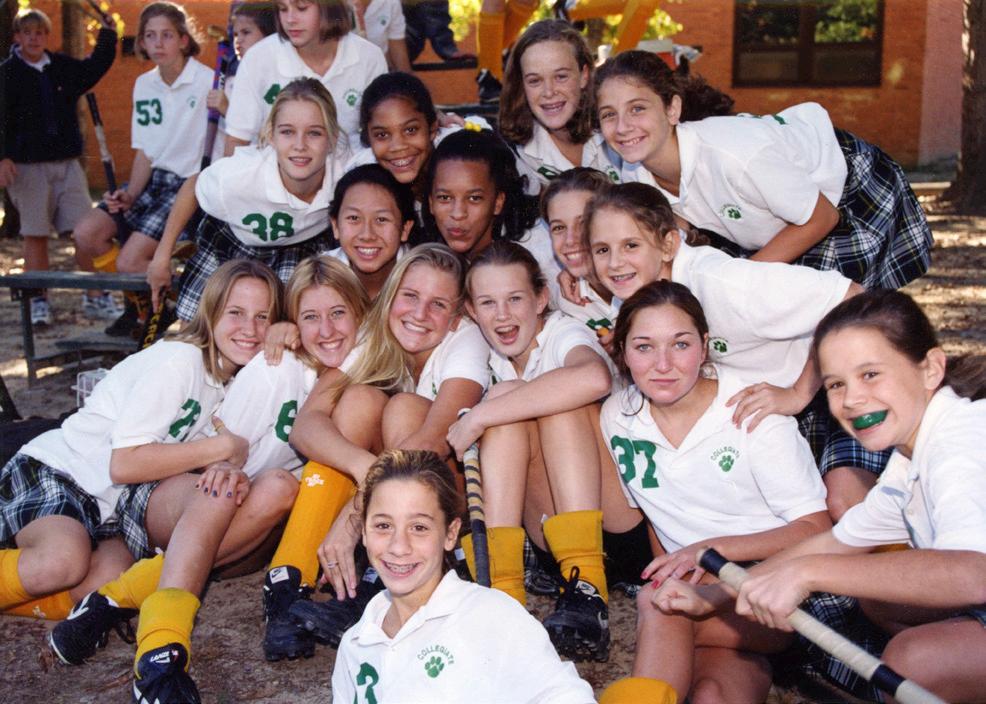

“It’s about the hard work, the community, and the resilience that our athletes learn through the experience.”
CLASS OF ’86
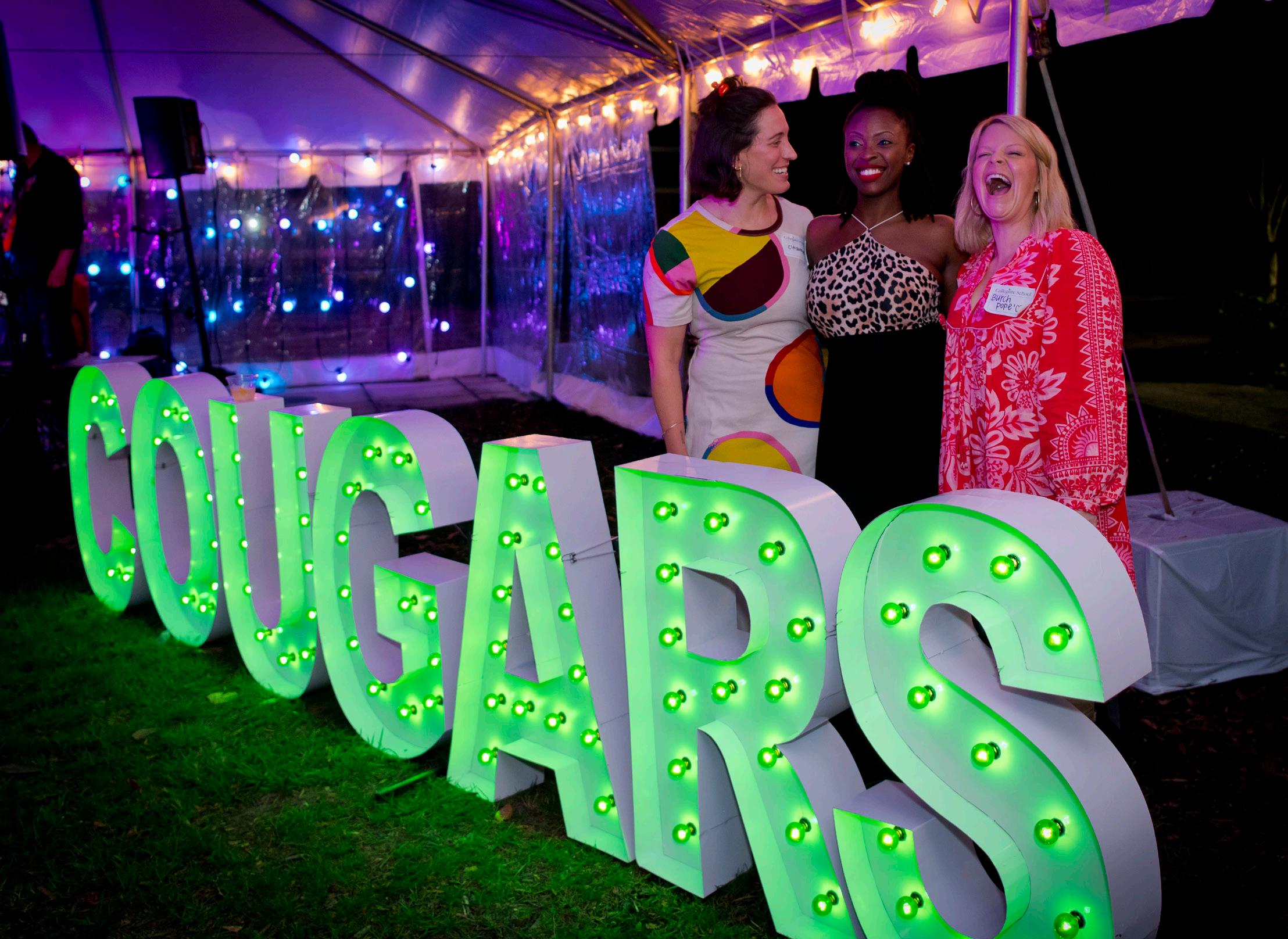
CLASS OF ’81
CLASS OF ’76
CLASS OF ’71
CLASS OF ’66
CLASS OF ’91
CLASS OF ’96 CLASS OF ’01
SAVE DATE ROARING REUNION THE FOR
Sept. 25 & 26, 2026
FRIDAY’S SCHEDULE OF EVENTS
CAMPUS TOUR
ATHLETIC HALL OF FAME INDUCTION
ALUMNI AWARDS HONORING
KATHERINE THALHIMER ADAMSON ’96 & MIKE HENRY ’86
OYSTER ROAST
SATURDAY’S SCHEDULE OF EVENTS
FOOTBALL GAME
PRIVATE DINNER FOR THE 50TH REUNION CLASS OF 1976
CLASS PARTIES FOR REUNION YEARS
CLASS OF ’06
CLASS OF ’11
CLASS OF ’16
CLASS OF ’21
LETTER FROM Anne Gray Siebert ’97
Dear Alumni,
As a reading teacher in Collegiate’s Lower School, I can still remember the feeling of watching a child master something for the first time. That moment when a light flickers in their eyes and a smile slowly spreads across their face because they read something that weeks before felt impossible. I am lucky that I had the privilege of working with those children for so many years before I joined the Development Office as director of alumni relations.
I was hesitant to leave the Lower School, my students, and my colleagues, but I was asked to do something different — to help tell the story of Collegiate in a new way. In this role, success looked different, but the success came because of you.
When you returned to campus for the Junior Class Career Fair and Senior Transition, I watched you show up not just to speak, but to listen, reassure, and to share your wisdom for life after graduation. It came when more than 100 of you proudly wore halos and sang, “The 12 Days of Christmas” alongside our 5th Graders with joy and a deep love for this school and our traditions.
It came in the difficult moments, in the heartache, and in the loss of beloved classmates. I watched you offer support, share memories, and carry each other through the hardest times. I was reminded once again of the depth of care within this community and the way we show up for one another when it matters most.
It came when hundreds of you returned for reunions filling campus with laughter, reconnecting with old friends, and dancing late into the night.
It came on the night before Thanksgiving at River City Roll, as our youngest alumni, home for the holidays, gathered together. At that moment, I knew our future was bright. You are ready to give back just as those before you gave to you. You are eager, engaged, and already finding your place in this community. And I have to ask, can I still come next year?
It came through our Alumni Board, when an extraordinary group of leaders who took something that was already strong and made it exceptional. Your thoughtfulness, your energy,
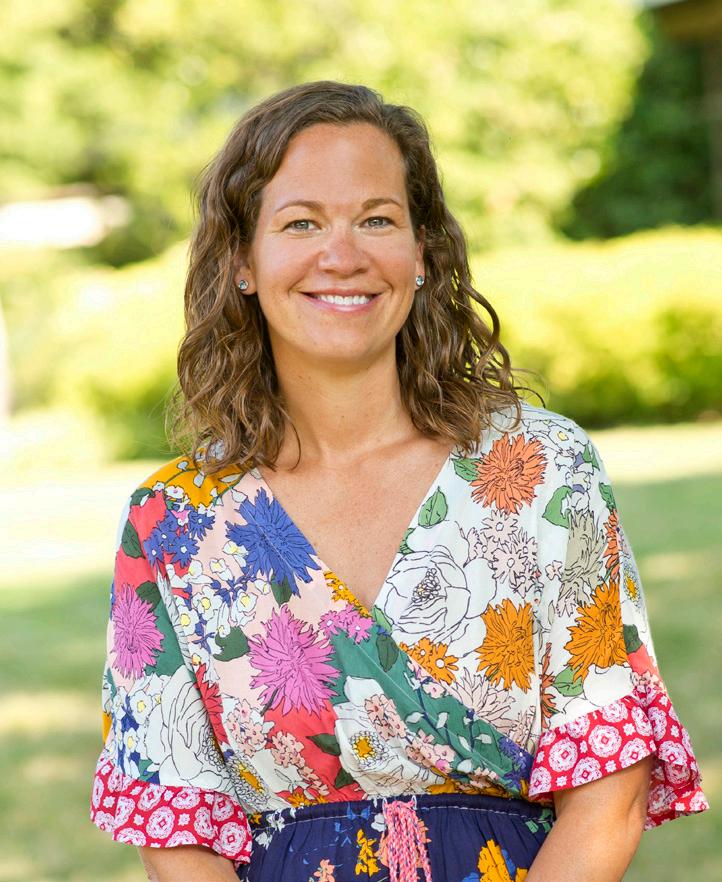
and your vision have shaped this community in lasting ways. I know that not every alumnus had a perfect experience at Collegiate. Some of you have shared stories of challenge and growth. And yet, what has always stood out to me is that you still show up. You give back, you mentor, you care. Thank you for that.
While it is difficult to step away from my role as Director of Alumni Relations, I do so with deep gratitude. This experience has been one of the greatest privileges of my career. You will continue to lead, to give, and to strengthen the bonds that make Collegiate so special.
I am not going far, in fact, I am not even leaving the office. I am excited to begin my new role as director of parent engagement, where I will have the opportunity to help our families navigate this community we all care so deeply about.
It has been an honor to serve you.
With gratitude,
Anne Gray Siebert Class of 1997

The Quiet Work of Doing
The service of Katherine Thalhimer Adamson ’96 and 2026 recipient of the Alex Smith ’65 Service Award
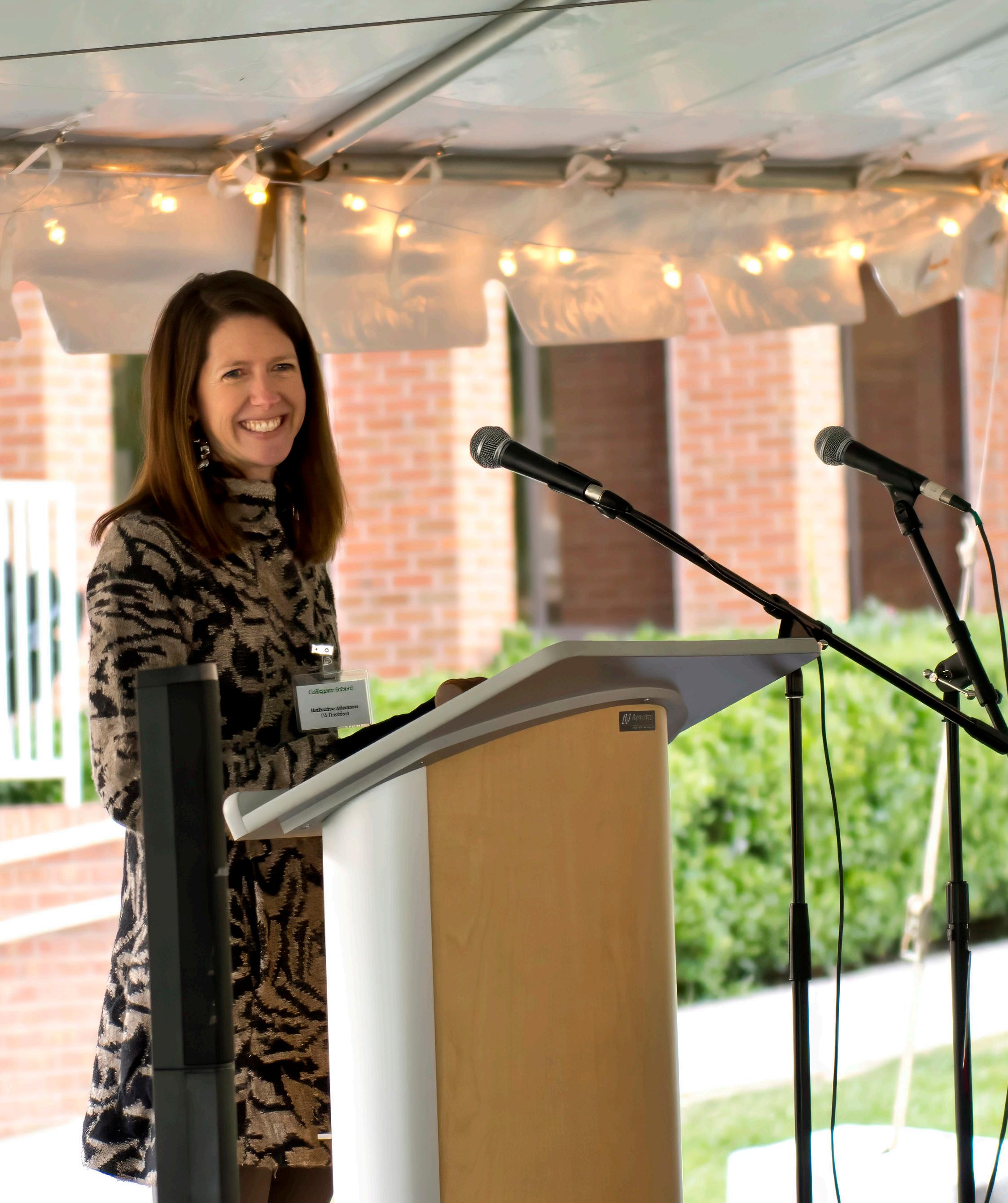
THERE ARE PEOPLE WHO LEAD FROM THE SPOTLIGHT or podium, and then there are people like Katherine Thalhimer Adamson ’96.
If you ask her what she’s most proud of, she hesitates, not because there isn’t an answer, but because the question itself feels slightly off. Pride, recognition, credit are not the currencies which she trades in. Her instinct is to redirect the question — to name the community or point to others; to make it less about her.
Which, in some ways, is what makes the question worth asking.
Adamson is deeply woven into the fabric of Collegiate. A second-generation alumna, now raising a third generation of Cougars, she has spent decades showing up quietly, consistently, and without fanfare. She has chaired admission committees, led major initiatives, served as Parents’ Association President, served on the Alumni Association, and countless roles for the Village Green Fair. She has done, quite literally, the work.
If you ask her how it all started, she’ll tell you about the lollipop tree booth. That’s where the story begins — not with titles, but with willingness. A small volunteer role at the Village Green Fair that turned into managing ticket sales, to co-chairing the entire event, then eventually some of the school’s most significant parent-facing roles. Not because she sought them out, but because she kept saying yes.
“I am a hard worker,” she says simply, “but I like to do it behind the scenes… fly under the radar.”
That phrase — behind the scenes — comes up often. It’s not self-deprecation. It’s a philosophy. For Adamson, service was never a mandate, rather it was something absorbed. Her father, Billy Thalhimer ’64, entered in Collegiate’s first boys’ class, and would go on to serve 17 years on the Board of Trustees, eventually as chairman. Her mother, Sallie, volunteered across campus in countless roles, even stepping in as a long-term Spanish substitute teacher and chaperoning student trips abroad. At the time, Adamson didn’t think much of it, but appreciation has a way of ripening over time.
“As I’ve gotten older, I look back and am really proud of my parents’ contributions… and have strived to give back in the same capacity.”
What she inherited wasn’t a directive to serve. It was something more subtle and lasting: a model. A visible and tangible way of being in a community that says: this matters, so I will show up for it. Now, as a parent herself, she understands the deeper truth: you don’t teach service. You demonstrate it.
“If I tell my girls ‘You need to serve,’ nobody’s going to do that,” she says. “You show them by example.”
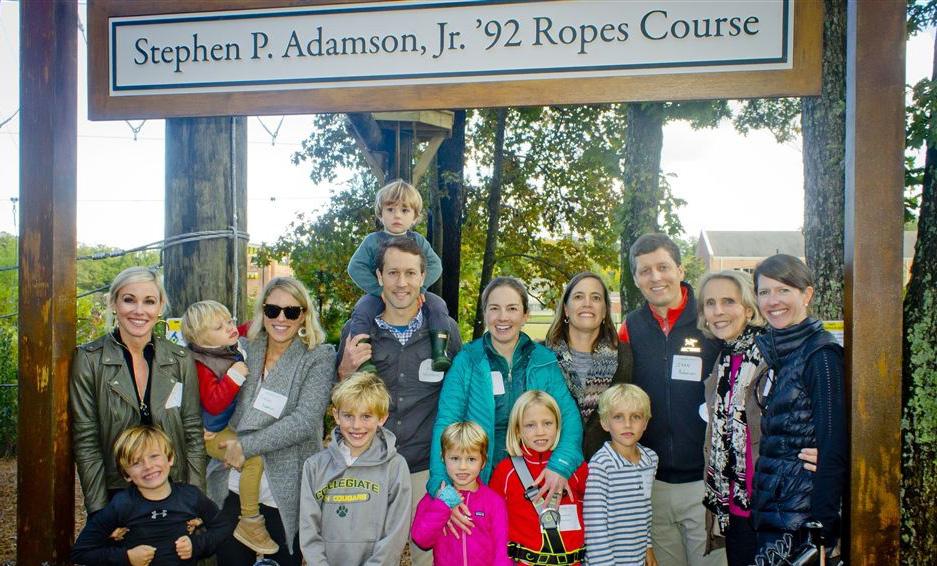
There’s a moment in conversation where Adamson is asked about impact — what she’s most proud of accomplishing through her many roles across campus. She struggles with it; not because nothing stands out, but because so much of what matters to her isn’t visible. Of course, there are the larger, visible contributions: helping spearhead the creation of the Stephen P. Adamson, Jr. ’92 Ropes
Course, a dynamic, living tribute to her cousin-in-law’s memory and love of outdoors that now shapes student experiences daily.
But just as quickly, she pivots to something smaller: plinko stairs and cake walk platforms. Structural pieces of the Village Green Fair, worn down over time — rebuilt in Adamson and her husband John’s driveway and reinforced so children could stand, play, and be safe. Repainting them and bringing them back to their original glory with the help of Angie Hutchinson and her daughter Molly.
“No one knows you did it,” she says. “But I know that the kids are safe.”
This is what that kind of work often looks like. Not the visible outcome or credit on a bronze plaque, but the unseen labor. The unnoticed fix. The thing that works
better simply because someone cared enough to do it.
If you meet Adamson, you might not immediately guess she has led large groups, managed complex initiatives, or stood in front of hundreds of parents reassuring and navigating through COVID uncertainty. She will tell you she’s an introvert, and that being out front for her is uncomfortable. She’ll tell you that she almost didn’t accept the role of Parents’ Association President. And yet, she said yes anyway.
“It stretched me outside my comfort zone… gave me confidence that I could accomplish something I did not think quiet me could do.”
There’s a kind of quiet resolve in that — not loud or performative, but steady. It’s a willingness to stretch and grow oneself not for recognition, but because the work requires it. Adamson describes
The Stephen P. Adamson, Jr. ’92 Ropes Course opened in the fall of 2018.
her year as PA President simply: she wanted to keep the peace, she wanted to communicate clearly, and support faculty and families. To help a large, complex community feel connected again. Not glamorous goals, but essential ones.
Ask Adamson to define service, and she doesn’t reach for abstractions. She talks about gratitude.
“Service to me is giving back to a place that has given so much to me and my family for three generations.”
And then, more simply: “To receive, you have to give.”
It’s not transactional; it’s relational. It’s a recognition that communities don’t sustain themselves, but are built, maintained, and strengthened by people who choose to invest time, energy, and care. People who step in where they’re needed, often without much visibility.
There’s a phrase Adamson returns to, one she attributes to Alex Smith: “The people at Collegiate are the special sauce.”
It’s easy to interpret that as a sentiment, but in practice it’s something more demanding. People don’t become a “special sauce” by accident, rather they become it through thousands of small acts of contribution. Through volunteers who rebuild beloved games and activities. Through parents who chair committees. Through leaders who prioritize connection over credit. Through doers.
Adamson is quick to point out that this award, named in Alex Smith’s honor, reflects more than just one person.
“This award is… about a community,” she says.
She means it. The work she represents is never individual, rather,
it’s collaborative, layered, and cumulative — built over generations.
Toward the end of the conversation, there’s a moment that lands with clarity.
“You get the quiet joy of knowing you made something better,” she says.
That’s it. Not applause, recognition or titles. Just the quiet, internal certainty that something is better because you showed up. In a world increasingly oriented toward visibility — toward being seen, credited, and celebrated — Adamson represents a different model. The kind that helps a community function and grow over time. The one that doesn’t ask for recognition but earns it anyway.
The doers.
And if you look for them, you start to notice them more often.
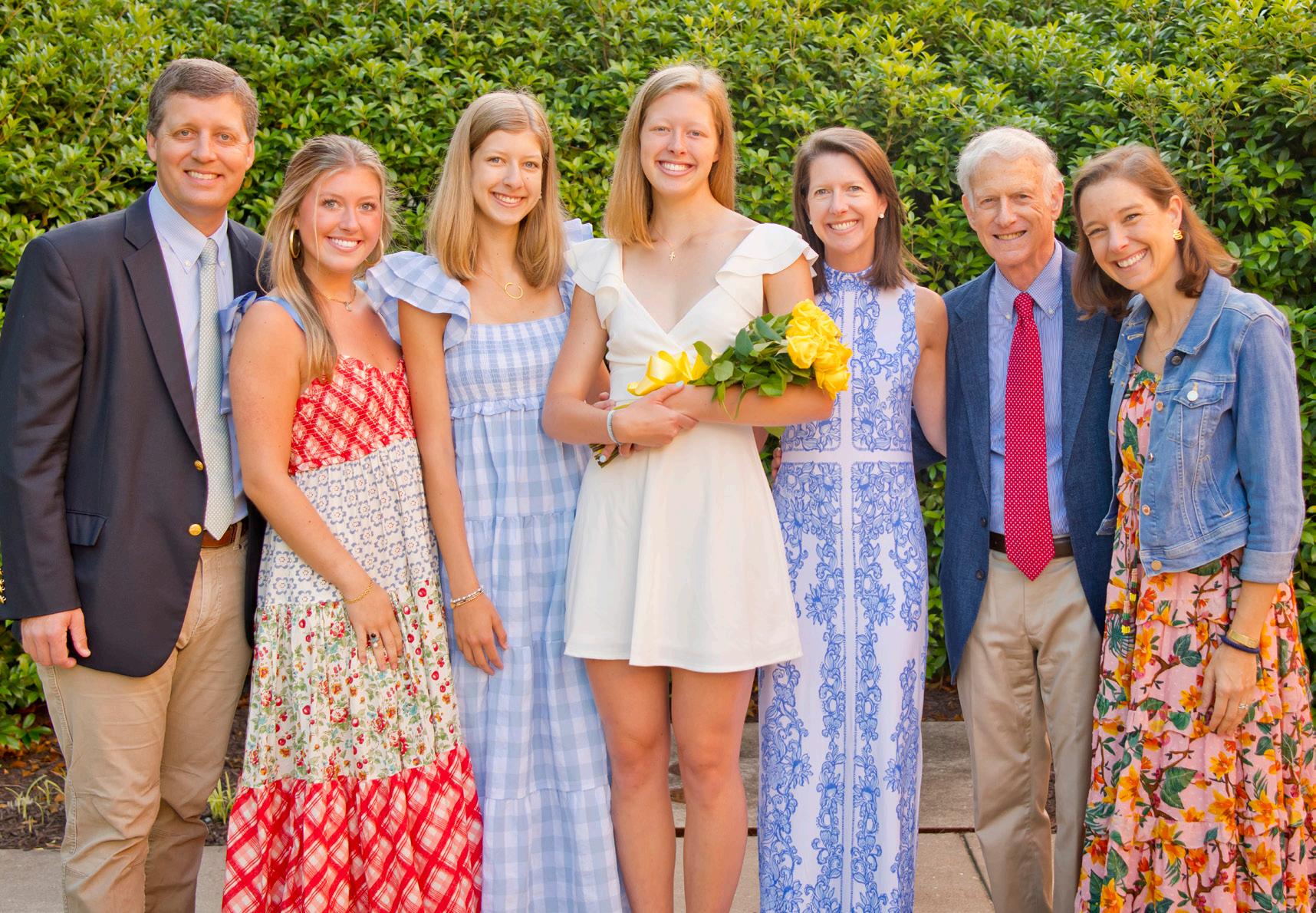

Adamson at her daughter Shepard’s ’25 graduation with John Adamson, Katie Adamson ’23, Caroline Adamson ’29, William "Billy" Thalhimer III ’64 and Christie Thalhimer Silverstein ’02.
HAIL COLLEGIATE
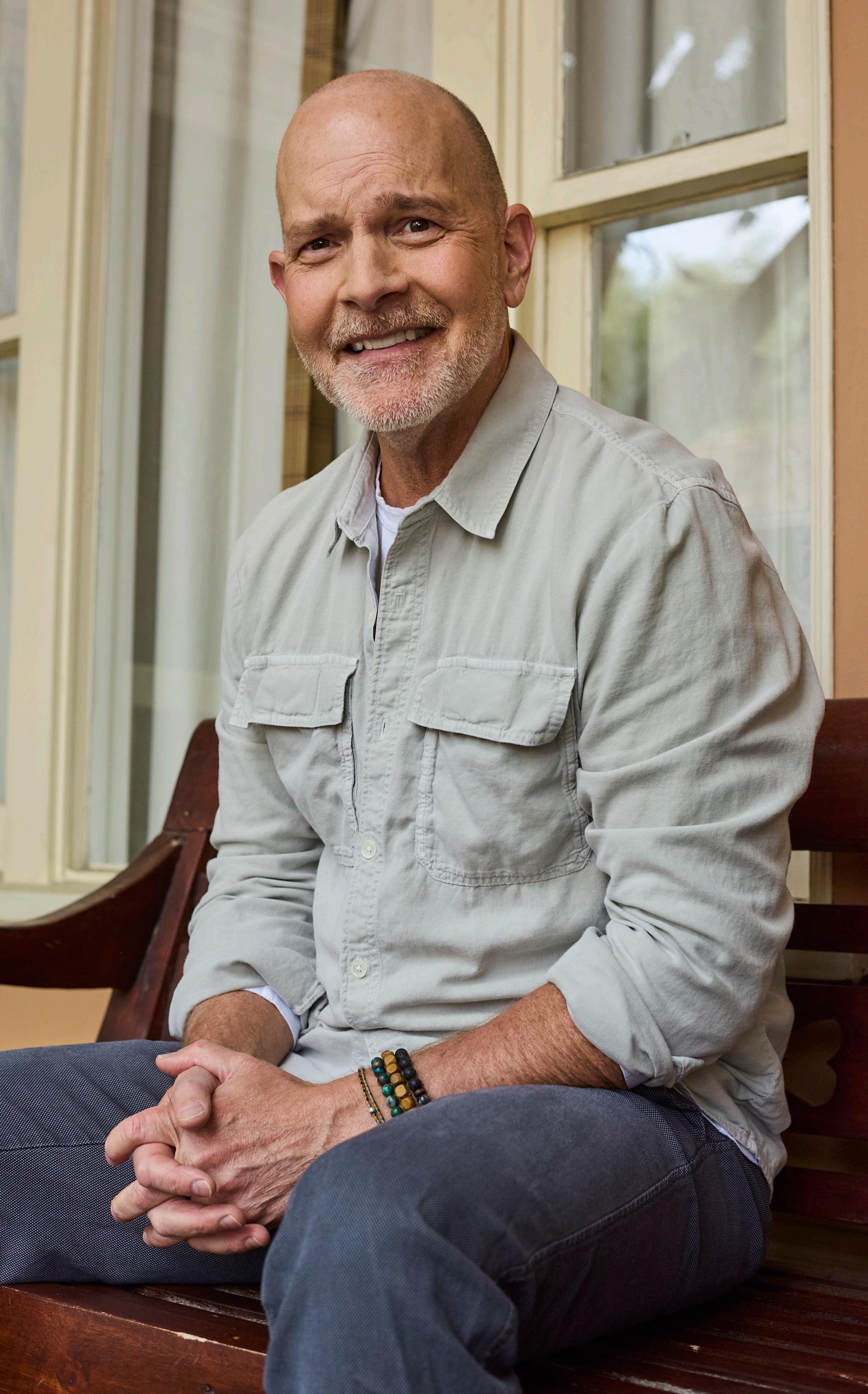
Gratitude from Mike Henry ’84 by Mike Henry
MY NAME IS MIKE HENRY. I am best known for my work as a writer, producer and voice actor for Fox’s Family Guy and The Cleveland Show. I have written and acted in a bunch of other stuff too, but my proudest accomplishment is my loving family — my wife Sara, my son Jack ’22, and my daughter Josie bring me joy every day. As a member of Collegiate’s Class of 1984 and a Cougar parent of Jack, I am so honored to be this year’s recipient of the school’s Distinguished Alumni Award. The following are my fondest memories of Collegiate…
In the fall of 1978, I came to Collegiate as an insecure seventh grader, attending with financial aid. My parents were divorced and we didn’t have much money. My mother, Barbara Sullivan Henry, painted portraits in the living room of our apartment to provide for the family. Wally Stettinius, who was Chairman of the Board of Trustees at Collegiate and the father of my little league teammate and still good friend, Gordon Stettinius, had noticed my potential and introduced us to the school, recommending me for a need-based scholarship. What a gift. I was immediately welcomed into the Collegiate family by my classmates, teachers, administrators and, of course, Claude.
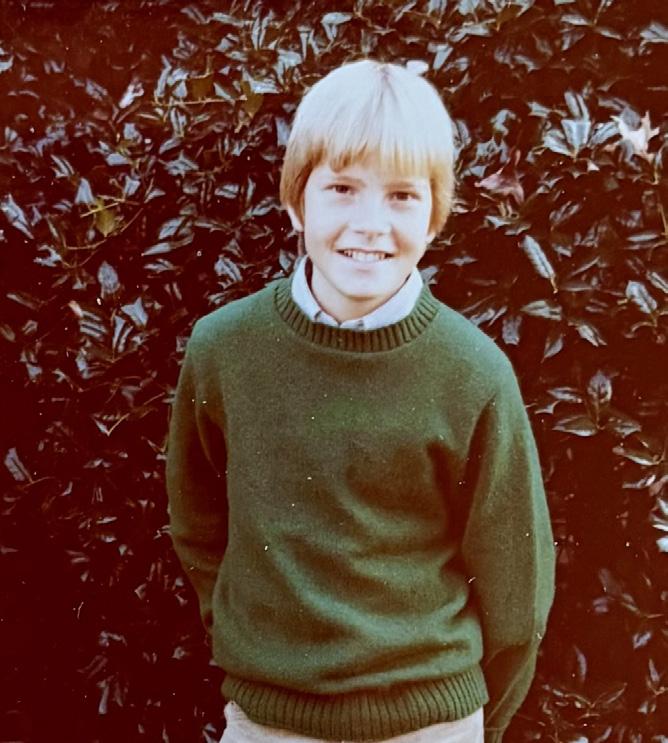
Now 48 years later, as I reflect upon my experience at Collegiate as a student, a parent, and an alumnus, my heart fills with gratitude for all that the school has meant to my family and me.
The first thing I think about is the amazing group of people who comprised the Boys School when I started: Weldon Bradshaw, Charlie Blair, Bubba Lawson, Charlie McFall, John Moreau, Grover Jones, Alex Smith, William Reeves, Petey Jacobs, Malcolm Pitt, Jim Hickey, Joel Nuckols and Larry Jarman come to mind. These men were solid role models who instilled values in me that I carry to this day. They set examples of honor and integrity that have both guided me and given me confidence on my journey through life.
They also cut me plenty of slack back in the day. As a hilarious individual, I did not always know where the line was or when to stop with the jokes. Said mentors were more than patient. As I fired-off sarcastic one-liners, threw spitballs or passed loud gas for laughs in study hall, they sometimes chuckled, often shook their heads and occasionally wrote me demerits. What they really did was show me grace as I matured. Slowly.
I love sports, and I loved playing sports at Collegiate. I will never forget the thrill of throwing a long touchdown pass as JV quarterback while the varsity team roared from the hill next to Jacobs Gym. I was co-captain of the JV baseball team that year and was one strike away from tossing a no-hitter at Tidewater Academy. I even scored a goal the next year in varsity soccer (which may or may not have bounced off a couple defenders before trickling into the goal.) But what I loved most was being part of the team — the Green and Gold, the Cougars. The comradery was everything. Working together toward a common goal. The banter at practice, the bus-rides to away games, the smell of profuse adolescent body odor in the locker room. Memories for life.
The robust academic education I received at Collegiate filled my brain with facts and taught me how to put them in perspective. My senior English paper compared Jonathan Swift, Alexander Pope and Sting as social critics who used art to convey their observations. Four years of Spanish from Vanessa Allen and Judith Bellinke have stayed with me, as I now speak Spanish almost daily in Los Angeles. Weldon Bradshaw taught us how to diagram sentences. I still have no idea what that was all about, but I sure do love Weldon. He became a great friend as I grew older and was a compassionate ally to my brother, Patrick, as Patrick’s health declined before he finally succumbed to diabetes complications in 2017. Patrick ’90 started Collegiate in 4th Grade and enjoyed the same wonderful experience I did, creating lifelong friendships and memories. Many a Cougar cried together at his funeral. We cried together again at my mom’s funeral last November. My mom is looking down, proud of me for receiving this distinction from the institution she held in the highest regard.
The Class of ’84 will always be special. Collectively, we experienced wonderful times and heartbreaking ones. Together, we coped with the deaths of three classmates in consecutive years of high school. Sam Jarman, Karen Zappia and John Lower each left this world way too early by way of car accidents. Our class dealt with a lot at a young age and we share a lifelong bond as a result. Most of my current closest friends are friends I made at Collegiate.

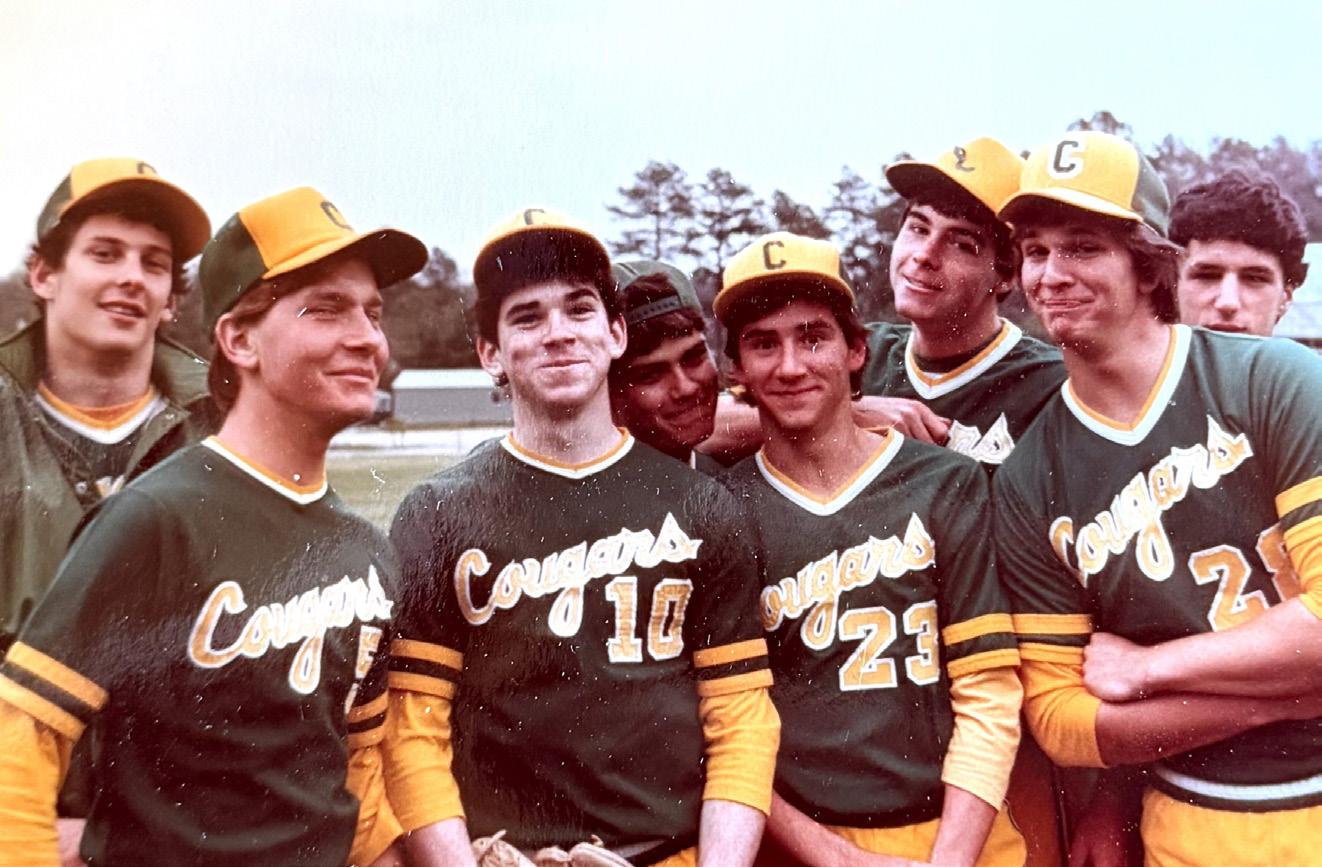
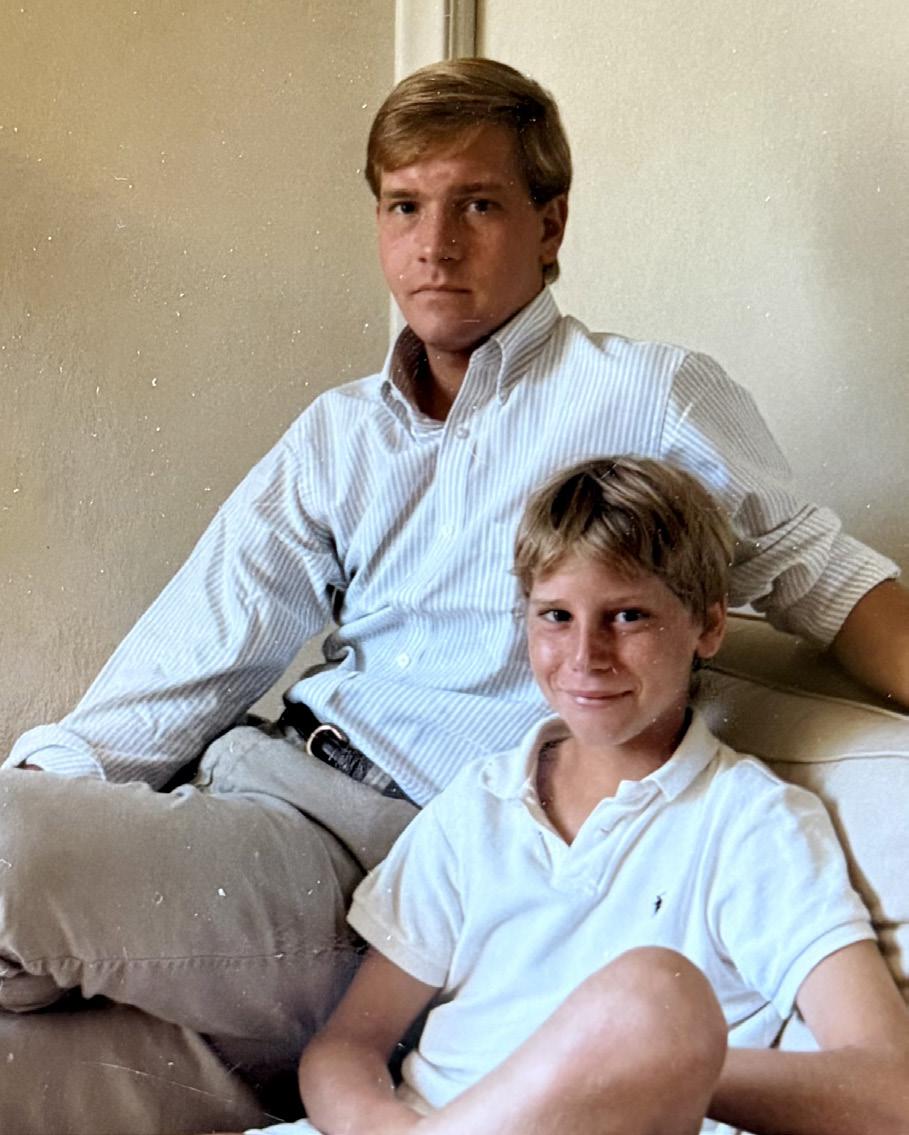
Henry and brother Patrick ’90.
Henry and fellow Senior baseball players: Ted Lowe, Bo Noonan, Chip Joseph, David Clary, Bill Moore, Jerry Booth, Wes Atiyeh.
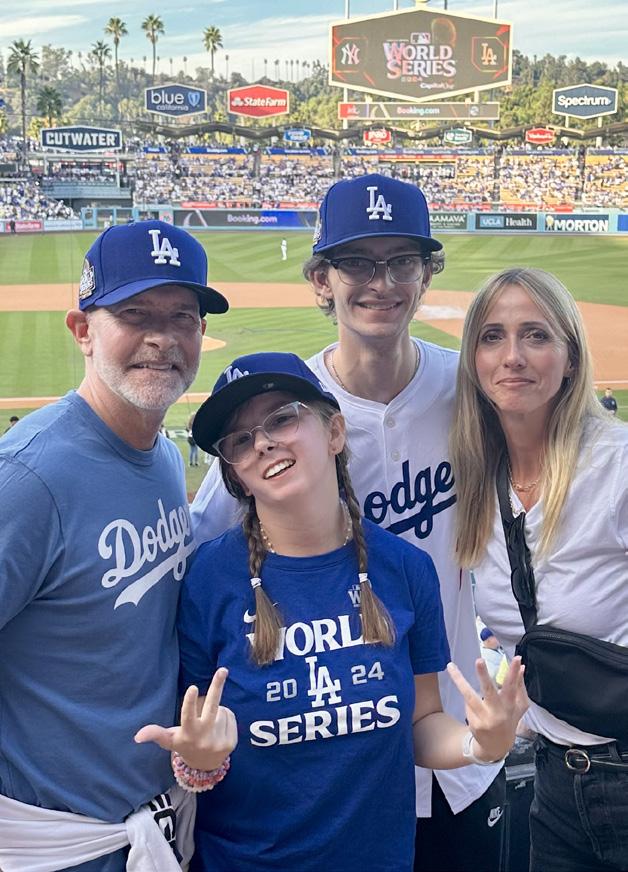
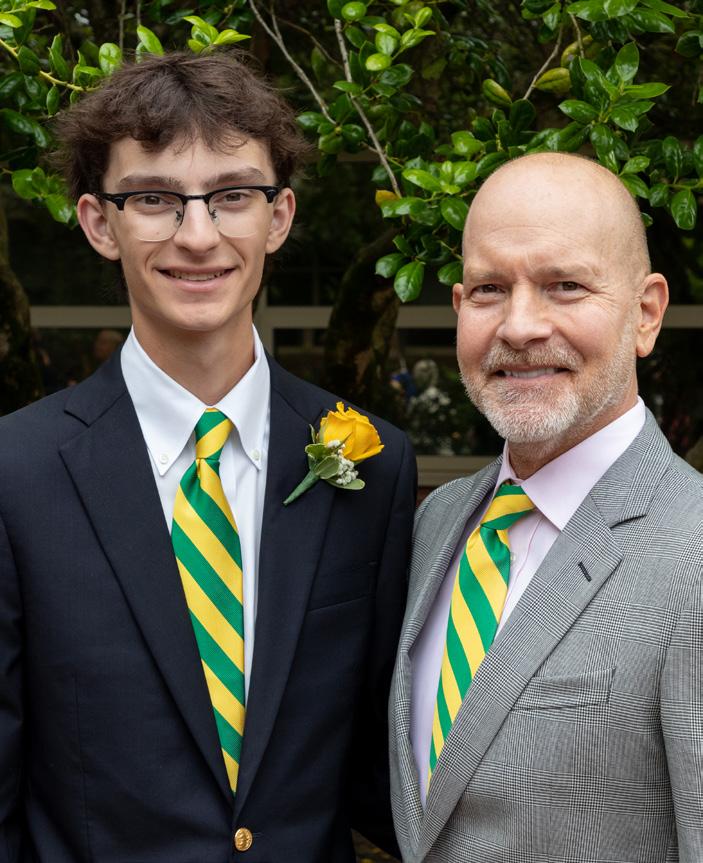
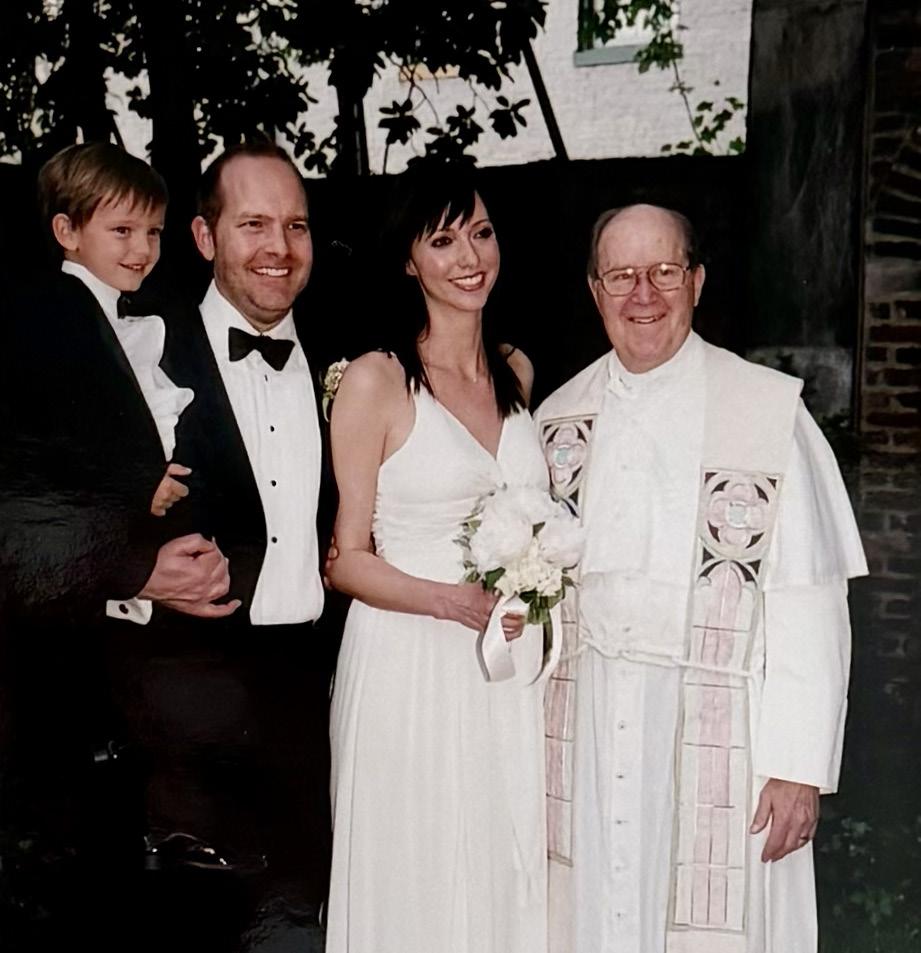
Editor's note: Mike Henry ’84 will receive the 2026 Distinguished Alumni Award, along with Katherine Adamson ’96 receiving the Alex Smith Service Award at Collegiate’s Roaring Reunion this fall on Sept. 25, 2026. Learn more at collegiate-va.org/reunion
Years after I graduated, my son, Jack ’22 attended K-12. Seeing the school from a parent’s perspective, I could tell that the core values endured and I took comfort in knowing how much the teachers cared about the students and about the school itself. Collegiate prepared Jack well for four great years at CU Boulder from which he graduated summa cum laude this spring.
One Collegiate parent anecdote: One day, I was sitting in my car waiting for Jack after a sports practice. Not many people were around. In the distance, I saw fellow bald, handsome man, Charlie Blair. As he walked, he noticed a piece of trash on the ground, went out of his way to pick it up, put it in his pocket and continued on his path. Pretty simple. He didn’t know anyone was watching. He just did the right thing and carried on. That stuck with me. I only wish I could do the same in Los Angeles, but Los Angeles trash is gross. Really gross. You’d never know what kind of filth was on something on the ground in Los Angeles. I’m glad Charlie Blair doesn’t live in Los Angeles because he might get a disease by trying to do the right thing. But seriously, it was pretty cool watching Charlie do something everyone everywhere should do. That’s what makes Collegiate special.
In the spring of 2007, I married my beautiful best friend, Sara, in the garden at the Edgar Allen Poe Museum. The Officiant? None other than Reverend William Reeves, the headmaster during my time as a student at Collegiate. Many a Cougar were in attendance on that special day as well.
Again, I am humbled and so proud to receive this year’s Distinguished Alumni Award. I recognize how special this school is, and to be honored in this way means a great deal to me. I’d like to think that I have earned this distinction by simply carrying the school’s values with me in my life. Honor, integrity, compassion and grace have guided me through the uncharted territory of following my bliss. I am forever grateful to Collegiate for being an invaluable part of my life. I love you, Collegiate. Thanks for letting all the bathroom jokes slide. They’ve paid off. See you in September!
HAIL COLLEGIATE.

JUST DOWN THE ROAD from Collegiate School, Jack Stepanian pulls into Tuckahoe Shopping Center like he’s never left. In many ways, he hasn’t. He’s 22, back in Richmond, and working full-time as a touring musician, writing, recording, playing shows up and down the East coast.
But in the years between graduating from Collegiate in 2021, and his return home, something shifted. The athlete-musician who once split his time between lacrosse practice and late-night songwriting sessions chose his lane. He is now, unequivocally, a full-time musician.
The move back to Richmond wasn’t a retreat. It was a recalibration.
For Stepanian, coming home isn’t about comfort, it’s about
clarity. It’s about roots. It’s about the realization that sometimes the best way forward is to return to where you began.
Long before studio sessions, venues like The National, and festival stages the likes of Iron Blossom, there was a neighbor with a guitar.
Stepanian started playing the instrument at age six. His neighbor, turned babysitter — a high school student who played guitar — would come over, and somewhere between supervision and strumming, the lessons began. It was informal, almost accidental, but it stuck.
Music, he says, was always in the house. His father, Mark ’89 and uncle, Andy Stepanian ’93 both play guitar. Andy was in the band Wrinkle Neck Mules which played
around Charlottesville and on the University of Virginia grounds 20 years prior to Jack. His mother loves music; and he recalls records playing as constant background noise in the house. “It was always on,” he recalls. Attending shows at local Richmond venues was a common family outing.
In a family of athletes — Stepanian’s three siblings played lacrosse, field hockey, and football — music might have seemed like a side note. But it wasn’t a rebellion or a break from tradition, it was the continuation of a family inheritance.
“I think I just took it further,” he says of his siblings’ shared musical interests.
Through Middle School and Upper School, sports dictated his
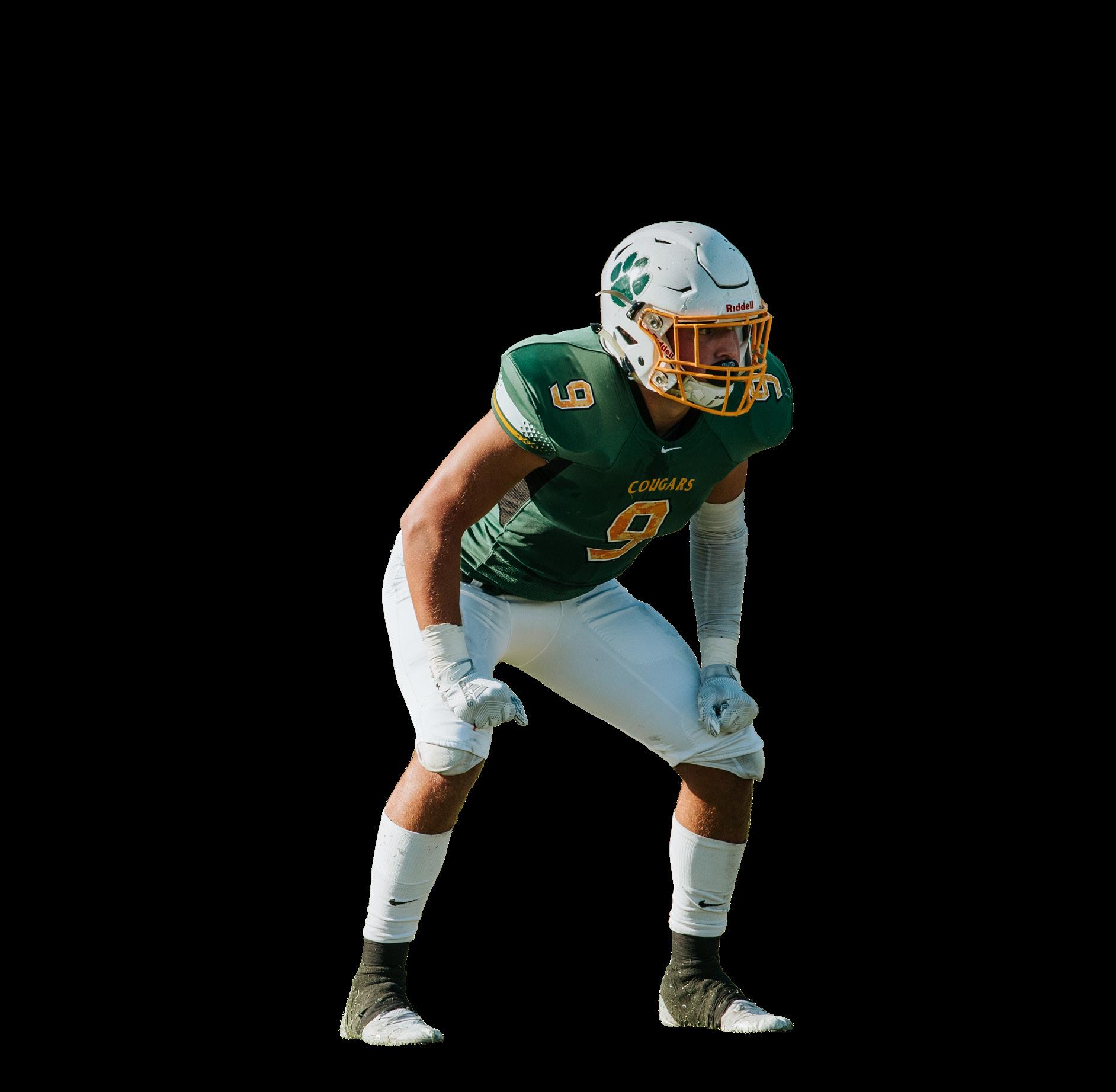
calendar: practices, lifts, games. Lessons had to be scheduled around them. But as he neared the end of his Collegiate career, Stepanian’s interest in music continued to blossom. His Senior year, he decided to try out for the Upper School Jazz Ensemble.
“It was always in the back of my mind,” he says.
That refrain — in the back of my mind — follows him. The music wasn’t loud at first. It was persistent, quiet, waiting.
At Collegiate, Stepanian was known first as an athlete. Playing both football and lacrosse. The structured rhythm of competition suited him, but music crept into the sidelines. Musical performance, he says, feels a lot like a game: the preparation, the adrenaline, the team dy-
namic. “I look at a performance or a show the same way as I approach a game,” he explains. A crucial mentor during this time was Alex Peavey, then director of student life and namesake of the Peavey Project, who Stepanian describes as "one of his biggest inspirations."
Peavey’s impact wasn’t about scales or chord progressions, it was about mindset. In a high-performance environment where students juggle academics, athletics, and expectations, Peavey modeled something different: intentionality, reflection, and presence. The idea that one’s identity doesn’t have to be singular.
Stepanian credits Peavey as a long-standing mentor, someone who represented a steady presence when he began wrestling with the
I look at a performance or a show the same way as I approach a game.”
tension between sports and music. That duality and competitive spirit has always been his edge.
Just as a great athlete seeks out harder and harder competitors, the same can be said about playing alongside seasoned musicians and producers. Stepanian seeks out collaborators who both intimidate and inspire him in equal measure, the same way a tough opponent forces you to raise your game. His language is athletic, even now.
In some ways, sports trained him for the grind of music. The early morning, the repetition, the tough losses, and incremental gains. Make no mistake: being a full-time musician at 22 is a grind. “The hustle is real,” he laughs.
He tours, writes, and records. He takes on side projects to pay the
bills. Balance, he says, is the hardest part — trying to stay inspired while trying to make a living. Ninety-five percent of his energy goes toward art, and the rest goes toward making it sustainable. “It’s kind of a rite of passage,” he says.
If there was a hinge moment in Stepanian’s story, it wasn’t a soldout show. It wasn’t a viral TikTok clip. It was COVID. “COVID was one of the best things that could have happened to me as a musician,” he says carefully. The lacrosse season ended abruptly. The world stopped. For the first time in years, the distractions quieted. No practices, no games. Just space. He wrote and reflected. He explored what he actually liked about music: what felt true, what felt performative, and what felt necessary. For many art-
ists, the pandemic was paralysis, but for Stepanian, it was permission to dive deeper into his craft.
The permission he felt from COVID carried into college. After Collegiate, Stepanian enrolled at Hampden-Sydney College to play lacrosse alongside his older brother, Nick ’19, who was a Senior there. The Stepanians shared the field for one season.
He has no regrets about his time at Hampton-Sydney, but something gnawed at him. Music, still in the background, was getting louder. Hampton-Sydney as “one of the best experiences of my life” recalled Stepanian, “but I thought, while I have these three more college years, I want to try to get more out of this experience from a musical standpoint and the University of Virginia was a bigger school and Charlottesville is such a musical community.”
Still, he doesn’t frame his time in Farmville as a mistake. In fact, he’s adamant it wasn’t. “I would never trade” it, he says. Instead, it clarified what he wanted.
He transferred to the University of Virginia, choosing history and Spanish, because he believed creativity thrives in breadth. Architecture classes, writing workshops, and music electives brought a more holistic approach to learning. Charlottesville, with its dense and generous music scene, opened doors. And then came Red Light Management.
A summer internship at Red Light Management exposed Stepanian to the business side of music. He worked on teams connected to major artists like Bruce Hornsby, the Strokes, and even the estate of Jerry Garcia. He saw contracts, marketing campaigns, negotiations. It was eye-opening.
“It made me realize that I didn’t want to do the desk side of the music industry,” he says. “It’s so important but I want to be on the artist-side.” While the desk wasn’t his calling, the stage certainly was.
Still, the management experience helped shape him. He began building his own team, starting
with a Collegiate classmate, Smitty Smithson ’21, who has been at his side since the very beginning. He grew his circle, adding seasoned industry veterans that he met during his time at Red Light, and some producers from Richmond. Music is art, but it is also infrastructure. Something Stepanian learned early on while in Charlottesville.
Coming back to Richmond, he didn’t see just the West End anymore; he saw the whole city.
“There’s so much in this town that you don’t even realize,” he says, “there’s the folk lineage stretch ing toward Charlottesville and the [Shenandoah] Valley. There’s a punk and hardcore history that defined decades of VCU [Virgin ia Commonwealth University].
There’s the R&B and jazz of art ists like D’Angelo, Butcher Brown, DJ Harrison…” blending Virginia Beach groove with Richmond grit.
The city, he believes, is in a renaissance. “You see Nate Smith win Grammys. You see Mad Skillz [a University of Richmond Professor] win a Grammy… It’s really cool how there’s a lot of great music in Richmond.”
With that renaissance comes responsibility. “Definitely,” he says when asked if he feels a duty to represent Richmond. “I’m very proud of being from Vir ginia, being from Richmond.” The more time he spends here, the deeper that pride runs.
Stepanian’s newest project — a full-length debut album slated for release in late spring 2026 — leans into his love of storytell ing. His single “Reckless Love” introduced that cinematic tone. The next release, “40 Days in the Western Hotel”, continues it.
Stepanian has always believed in full-length albums; vinyl re cords, not intended for soundbites or skipping. Instead he leans to ward narrative arcs and cohesive worlds, but he’s also realistic.
“Spotify prioritizes singles. Streaming services prioritize singles,” he says. The algorithm rewards frequency, not patience.
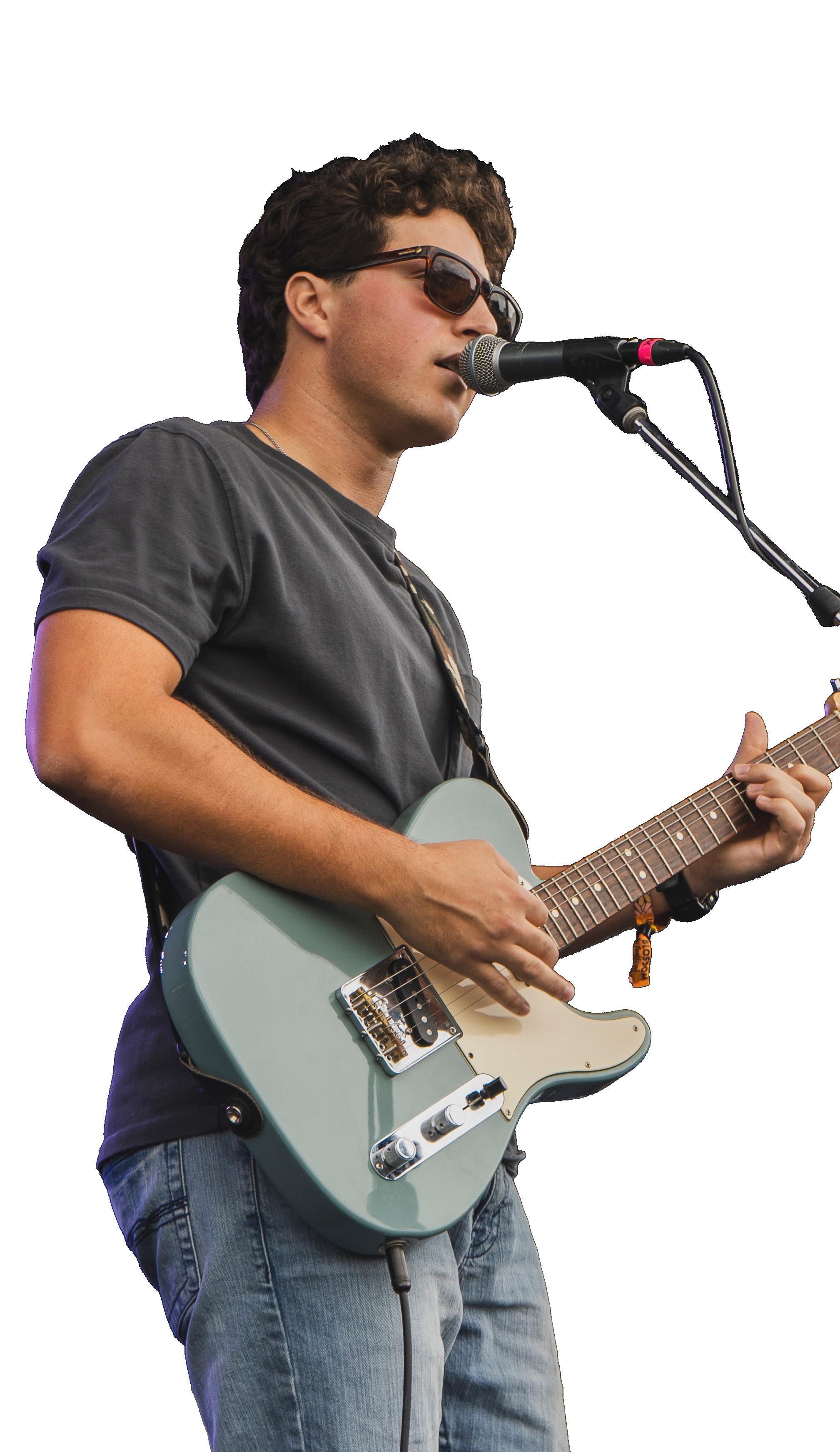
Stepanian performs at 2025 Iron Blossom festival in Richmond, Va.

Still, he resists commodification. He grew up on classic records like Prince and Willie Nelson, artists who built stories across multiple tracks.
“I love albums,” he says. “I love what they do as a listener… when you get to sit there and listen to 12 songs in a row and it puts you inside their world.” Now, his goal is to build that world for others, even if it takes longer, even if it doesn’t fit neatly into a feed.
At Collegiate, Stepanian took Bart Thornton’s Upper School fiction workshop, which expanded his sense of narrative. He frequently pushes his writing beyond just songs; jotting down observations, characters, and their imagined lives. One track, “Evening Light”, emerged from watching someone at a train station, speculating on their emotional state in that moment, and building outward from that.
“Songwriters are some of the best fiction writers,” he says. “The album “Red Headed Stranger” is
an amazing fiction story by Willie Nelson.” But even fiction, for him, is rooted in something real: family, friends, glimpses of strangers, the hum of Richmond streets. It may not be autobiographical, but it is atmospheric.
So why come back? Why not Nashville, New York, or Los Angeles? Because Richmond isn’t a fallback for Stepanian, rather it’s a foundation. Living near Collegiate again is grounding. His family is here. His mentors are here. His collaborators like recording engineer Alex De Jong of Spacebomb Studios are here.
Richmond is changing, but not so fast that it forgets itself. Though Stepanian worries about over-corporatization. About it losing the grit, or turning into somewhere shinier and less strange. But he also sees possibility. “Richmond has been slept on,” says Stepanian. Now he sees the rest of the country waking up and realizing that this city is a cultural hub of music and creativity. Sometimes it even origi-
nates from North Mooreland Road.
If he could speak to his Junior-year self at Collegiate, the message would be simple: “It’s okay to take time on what you’re doing,” he says. Cities and culture are not built in a day. Neither are professional athletes or musicians.
He would tell himself not to see any season as wasted — whether it’s a year on a lacrosse field, a study abroad semester in Spain, or a stretch in your hometown after graduation. Every experience compounds. Every return recalibrates to something bigger than before.
The phrase “prodigal son” often implies wandering that requires redemption, but Stepanian’s return isn’t about repentance, it’s about recognition. He left to see what else was possible. He saw the machine, he tested himself, he learned the business, and built a network.
And then he came back — not to smaller, but more lucid.
Richmond isn’t just where his story started, it’s where it continues to evolve. Sometimes the best
way to move forward is to come back. Perhaps to the coaches that taught you discipline, or the teachers who taught you chords on a guitar. Maybe to the family that shaped your ears, or to the city whose streets hum with new possibility. Either way, for now, Jack Stepanian is home.
And from here, he’s building something that sounds unmistakably like Richmond: cinematic, grounded, and unafraid to take its time.
Yes, the prodigal son has returned. Not to rest, but to begin.
Stepanian performs at venues up and down the east coast.
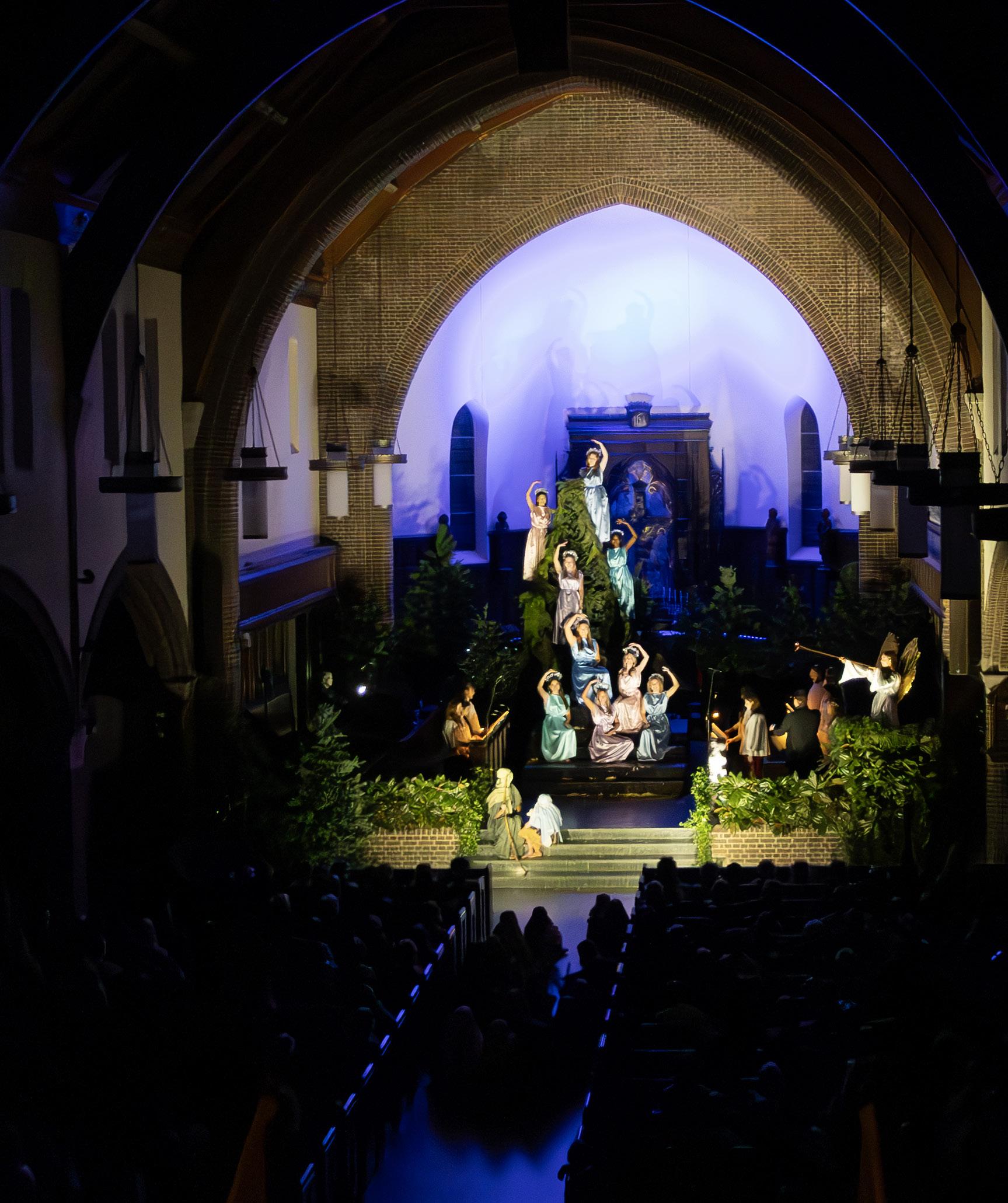
The Show Will Go On
Pageant 2025 prevailed despite inclement weather
THE SUNDAY BEFORE PAGEANT THE SNOW BEGAN, and it continued into Monday. Initially, attention was set on school operations: Would the school open on time? Would mid-term preparations need to be adjusted? But as accumulations made it clear that there would be no school, the question of a long-standing and time-honored tradition came into question. Pageant’s Tuesday performance had to be rescheduled.
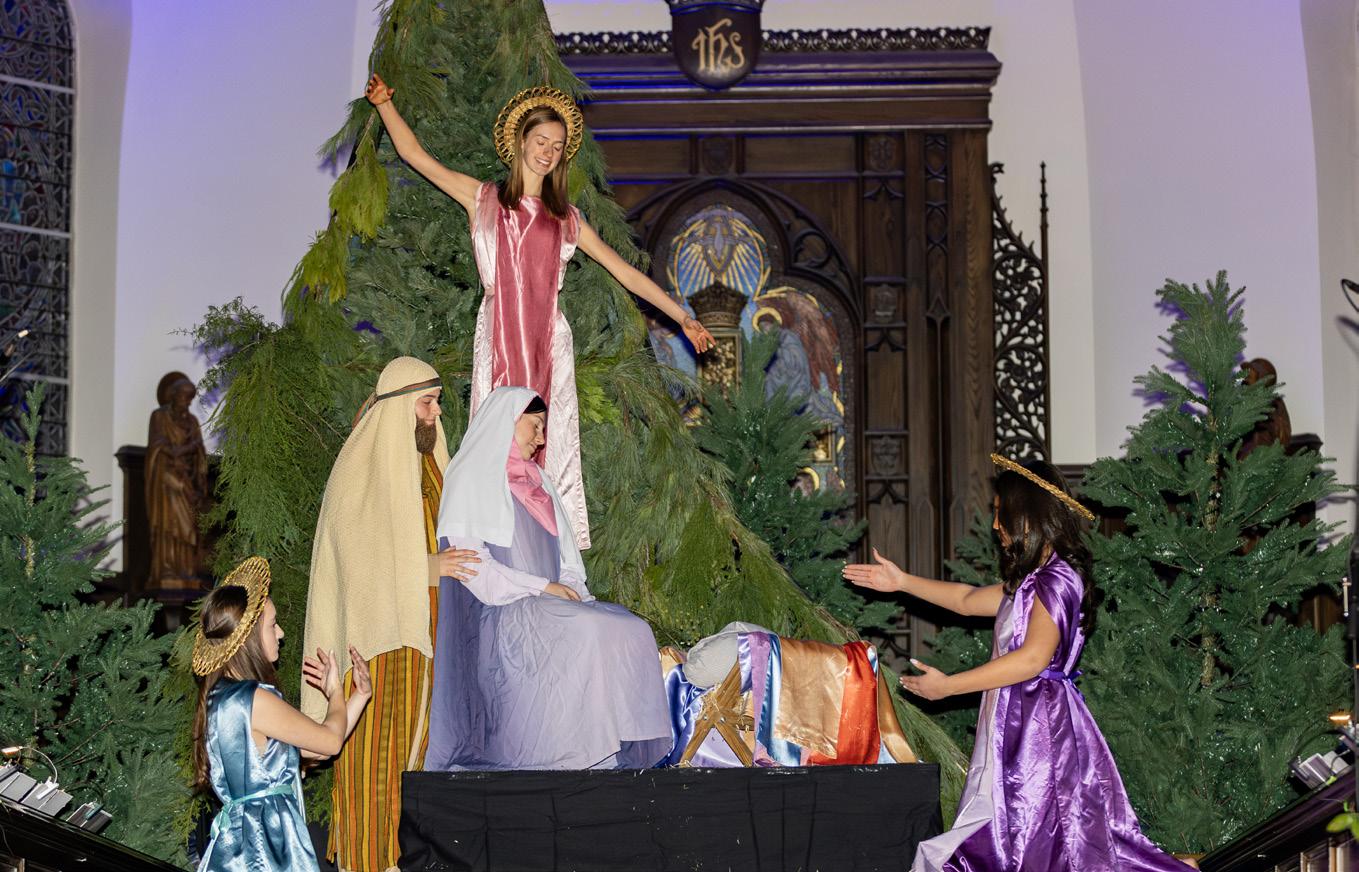
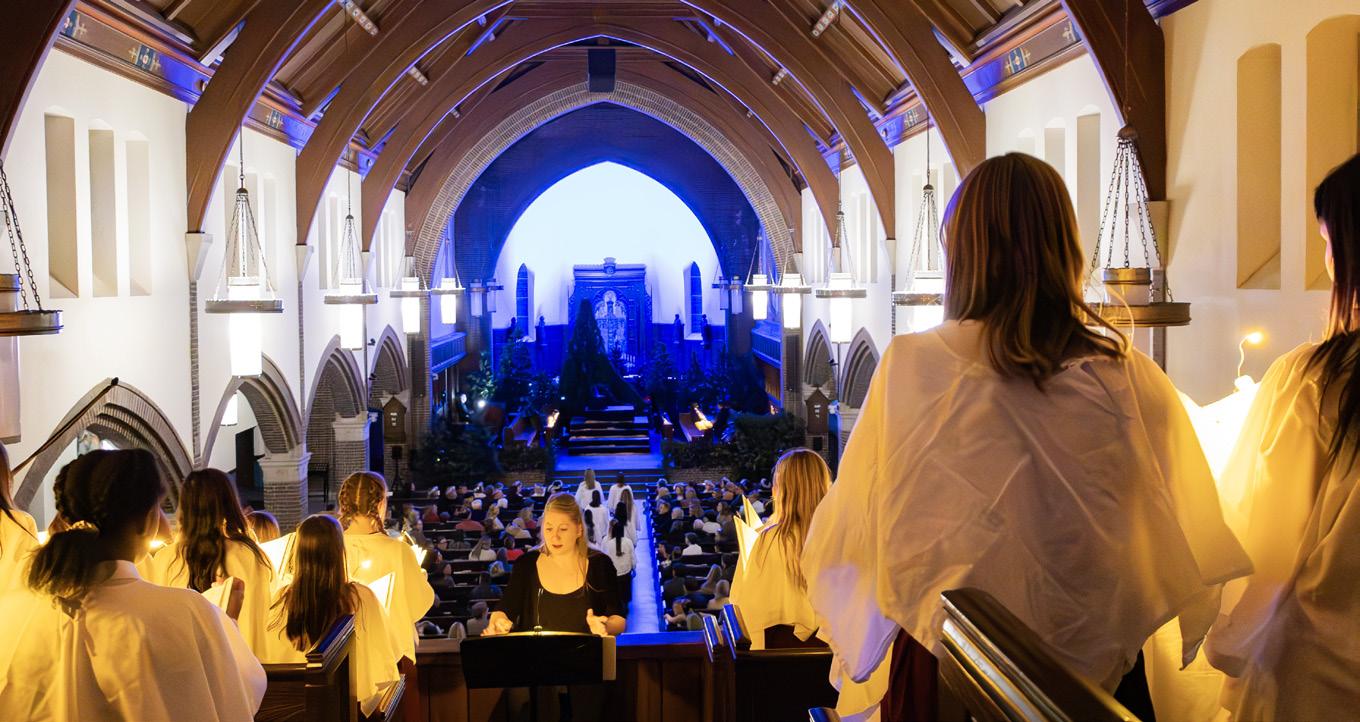
The weather may have altered the schedule, but it never threatened the tradition. Plans shifted quickly — transportation was rearranged, walkways and parking lots were cleared. In response to a member of the Class of 1967, Head of School Jeff Mancabelli replied, “The Pageant will happen! If Collegiate had the Pageant during WWII, a little snow is not going to stop us.” By the time the lights dimmed at the start of Wednesday’s performance, everyone forgot about the conditions outside All Saint’s vaulted ceilings.
Pageant has endured far more than a winter storm. Rooted in the early days of
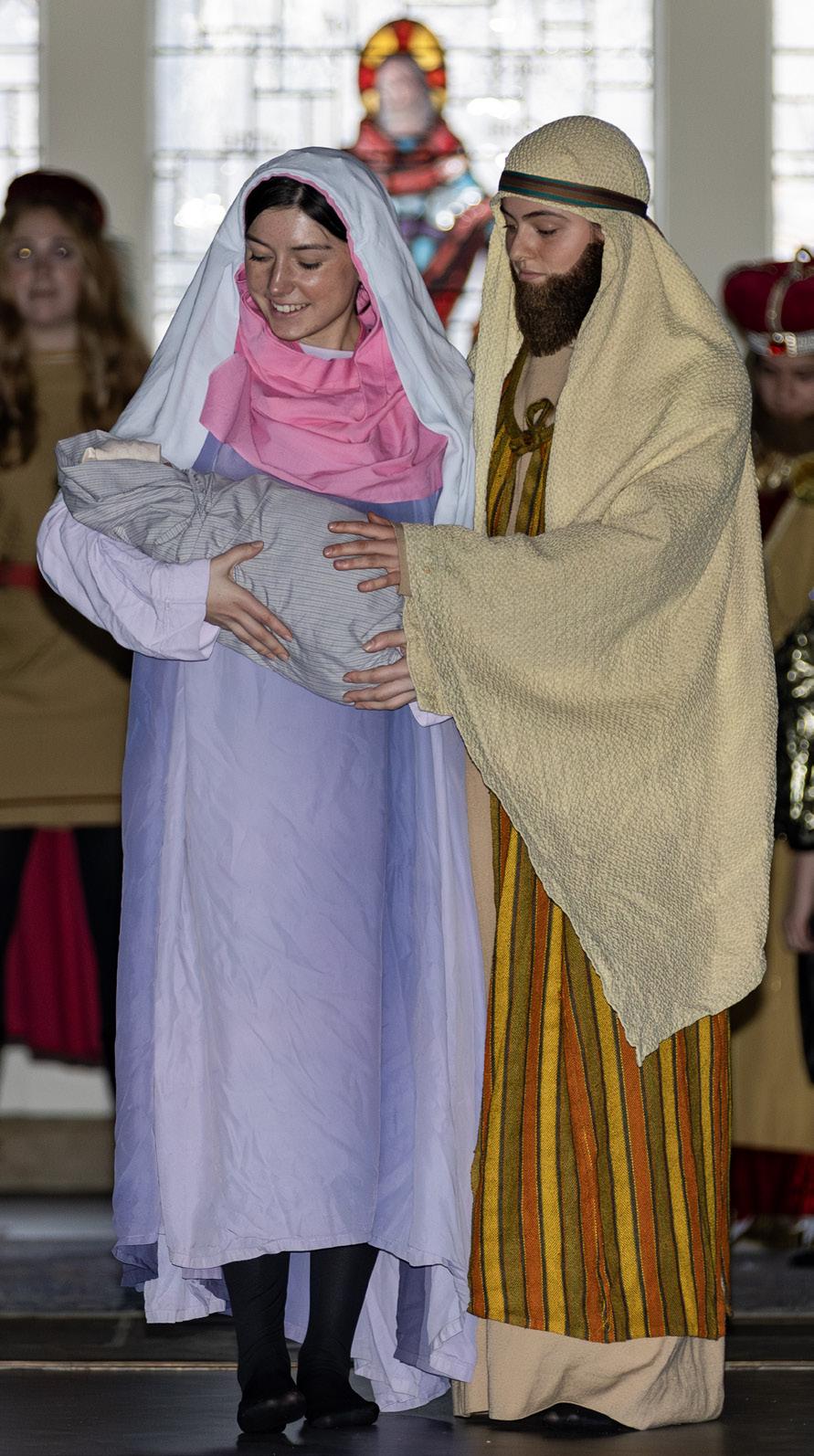
the Collegiate School for Girls on Monument Avenue, Pageant tells the Christmas story entirely through music, with the Middle and Upper School chorus groups singing as students costumed as cherubs, angels, shepherds, kings, and Mary and Joseph re-enact the birth of Jesus.
Pageant is a constant in the Collegiate calendar, as steady as the seasons themselves. Since 1960, the music, the roles, and the story have remained unchanged. What evolves each year is the cast — each new generation stepping into a tradition that continues, no matter the weather.
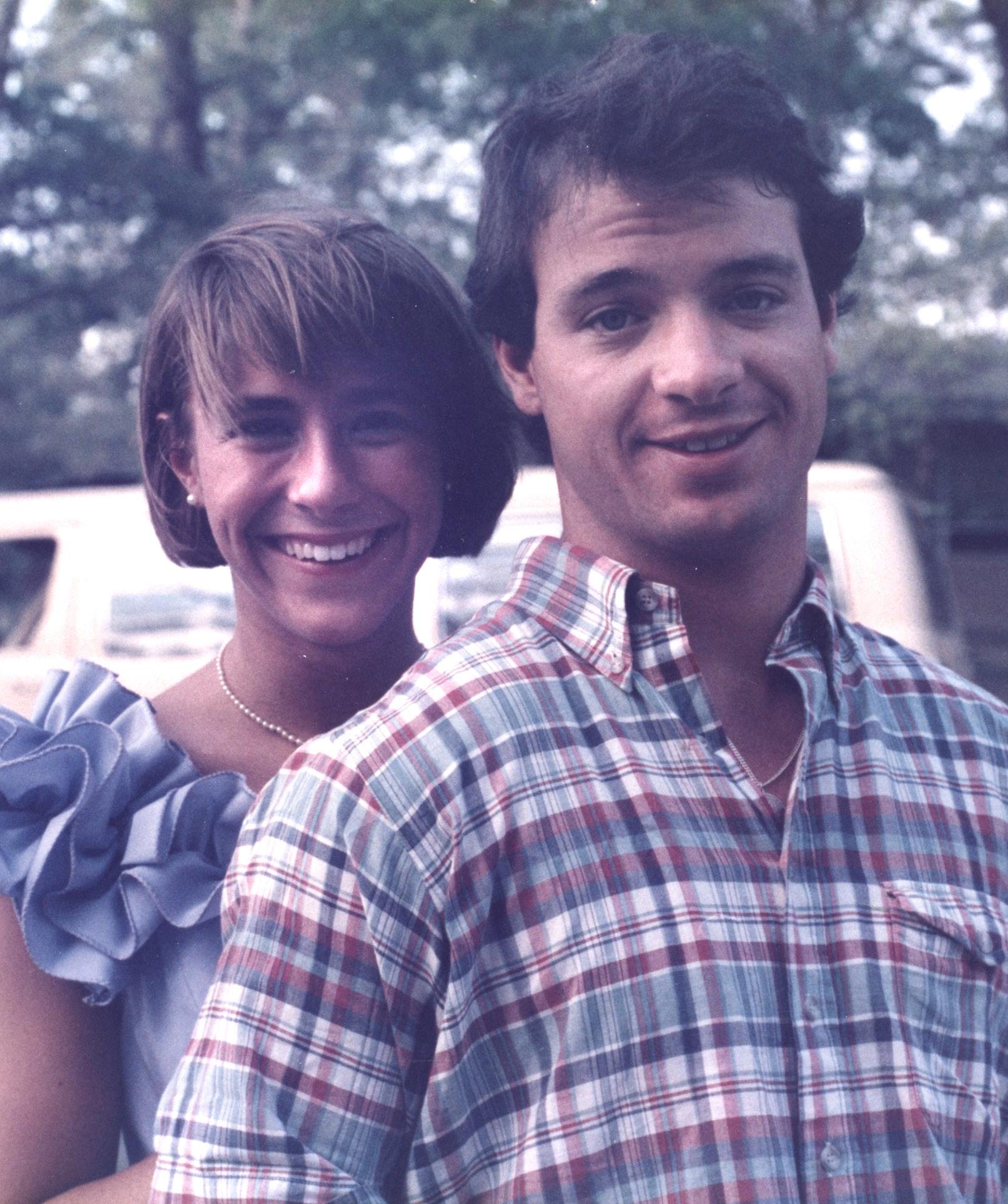
CLASS NOTES
No matter where our life takes us beyond North Mooreland Road, we are always uniquely connected by our time spent at Collegiate School. Class Notes offers a bridge leading toward that shared bond between fellow alumni.
Scott Curry ’86 and Elizabeth Guvenator ’87 pose for the camera on North Mooreland Road.
1947
Patsy Shannon Blair, mother of Charlie Blair (former Head of Middle School); grandmother to Kemper Blair ’01, Reed Blair ’04, Carter Blair Yeisley ’06 and Michael Blair ’10; great-grandmother to Gus Blair ’32, Beau Yeisley ’36, Ellie Yeisley ’38, Libby Blair ’38 and Rowan Blair ’38, died November 9, 2025.
1952
Katharine Jackson Bryant died September 24, 2025.
Nancy Thomas Hill died October 12, 2025.
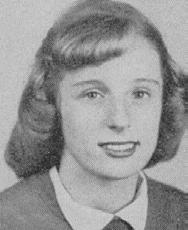
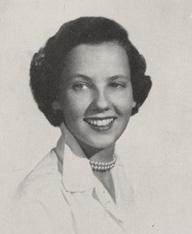
Jean Blankenship Faglie died October 18, 2025.
Jane Reed Fields died February 4, 2026.
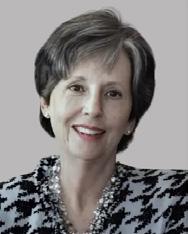
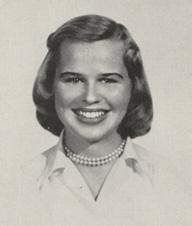
1956
Louise Cobb Boggs, mother of Alice Boggs Schroeder ’89 and Jay Boggs ’91, died January 6, 2026.
Daily Holmes Stern, mother of Lisa Stern Merritt ’86, died February 8, 2026.
1968
Arthur Dicken Thomas, Jr. published the first two volumes of Outpourings of the Spirit in 2025, with a third volume forthcoming in 2026. His next book will explore the Second Great Awakening in Virginia and Slavery Reform (1785–1835). Arthur has taught Church History and Spirituality at Wesley
Theological Seminary in Washington, D.C. since 1992 and lives in Richmond.
1969
Franny Simpson Powell, Lindsay Burn Wortham, Linda Carr Corbin, Scottie Newell Slater, Stuart Carr Weismiller, Wheatie Hyman Gibb gathered with Meg Newell Gottwald ’74, Holly Antrim, and Pattie Newell Williams ’67 to celebrate recent birthdays, with friends traveling from several states.
Michael Hammaker died April 29, 2025.
1970
Marcia Middleton, sister of Susie Middleton Tatum ’73, John Paul Middleton ’75, and Christopher Middleton ’89, passed away February 4, 2026, in San Francisco. Marcia was a successful artist and former SFMOMA Docent President. A retrospective of her work will be held.
1972
Wynne Stuart retired as Associate Provost at UVA on January 31, 2025. He and his wife Vicki Hawes have enjoyed extensive travel, including Australia, Canada, Alaska, France, Luxembourg, and Brussels. Now based in Charlottesville and Kilmarnock, they continue to stay active with travel, family, and friends.
1976
Gene Pembleton and Beth Pembleton will celebrate their 45th wedding anniversary this year. Gene continues hosting two shows on WRIR 97.3FM, while Beth works as a registered nurse. They send best wishes to classmates on their 50th reunion.
1979
Jill Remington Powers and Hunter McKinley Sydnor ’80 enjoyed attending the final Denver Broncos regular season home game in January.
1. Arthur Dicken Thomas, Jr. ’68 has taught Church History and Spirituality at Wesley Theological Seminary in Washington, D.C. since 1992 and lives in Richmond.
2. Class of 1969 group — Franny Simpson Powell, Lindsay Burn Wortham, Meg Newell Gottwald ’74, Holly Antrim, Linda Carr Corbin, Scottie Newell Slater, Stuart Carr Weismiller, Pattie Newell Williams ’67, and Wheatie Hyman Gibb gathered together to celebrate milestone birthdays, with friends traveling in from multiple states.
3. Jill Remington Powers ’79 and Hunter McKinley Sydnor ’80 enjoying a sunny day at the Denver Broncos’ final regular season home game in January.
4. Beth Curry ’84, Lisa Coleman ’84, Anne Overton ’82, and John Moreau gathered at the Athletic Hall of Fame cocktail reception and committee meeting on January 15, 2026.
5. Randy Reynolds ’84 was appointed to the VCU Board of Visitors and serves on the VCU Health System Board, where he chairs the Real Estate and Facilities Committee.
6. Class of ’92 — Stephen Drake, Jeff Ukrop, Mason Maynard, and Howard Jenkins with their mothers during a breakfast gathering while in town for their annual golf outing.
7. Class of ’93 — Clark Coulbourn, Murray Fisher, Charlie Fonville, Jason Foster, and Michael Palmore reconnecting in Jackson Hole to celebrate 30 years since living there together.
8. Class of ’97 holiday gathering captured by “Bubba,” featuring John Merrick, Jeff Galanti, Kito Pruitt, Robbie Svoboda, Scott Hairfield, Mason Brent, Richard Wiltshire, Bo Vaughan, Matt Hunter, Jamie Gregory, and Dave Lacy.
9. Reid Whitten ’98 welcomed Clarence Glynn Whitten in September 2025.
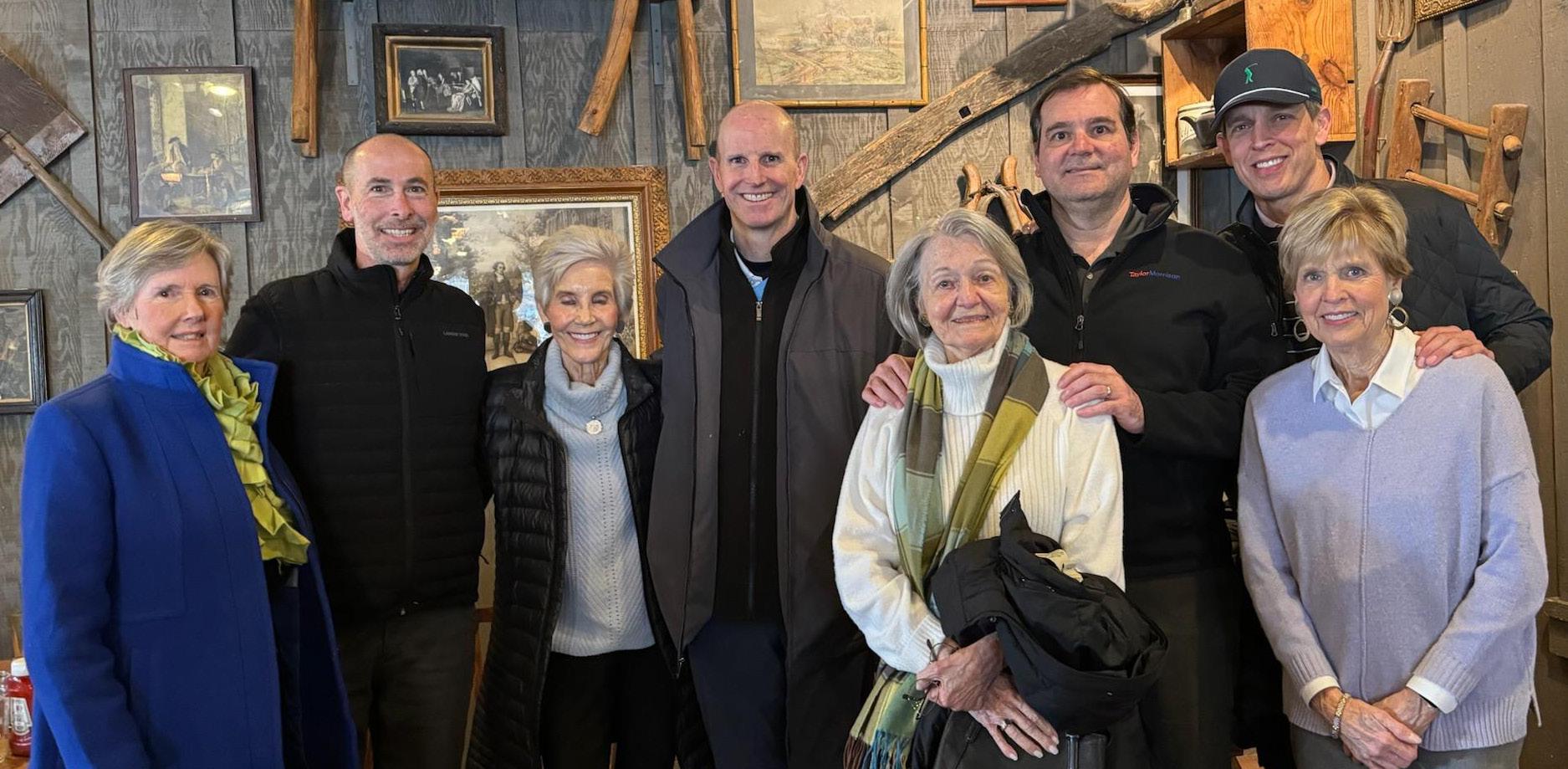
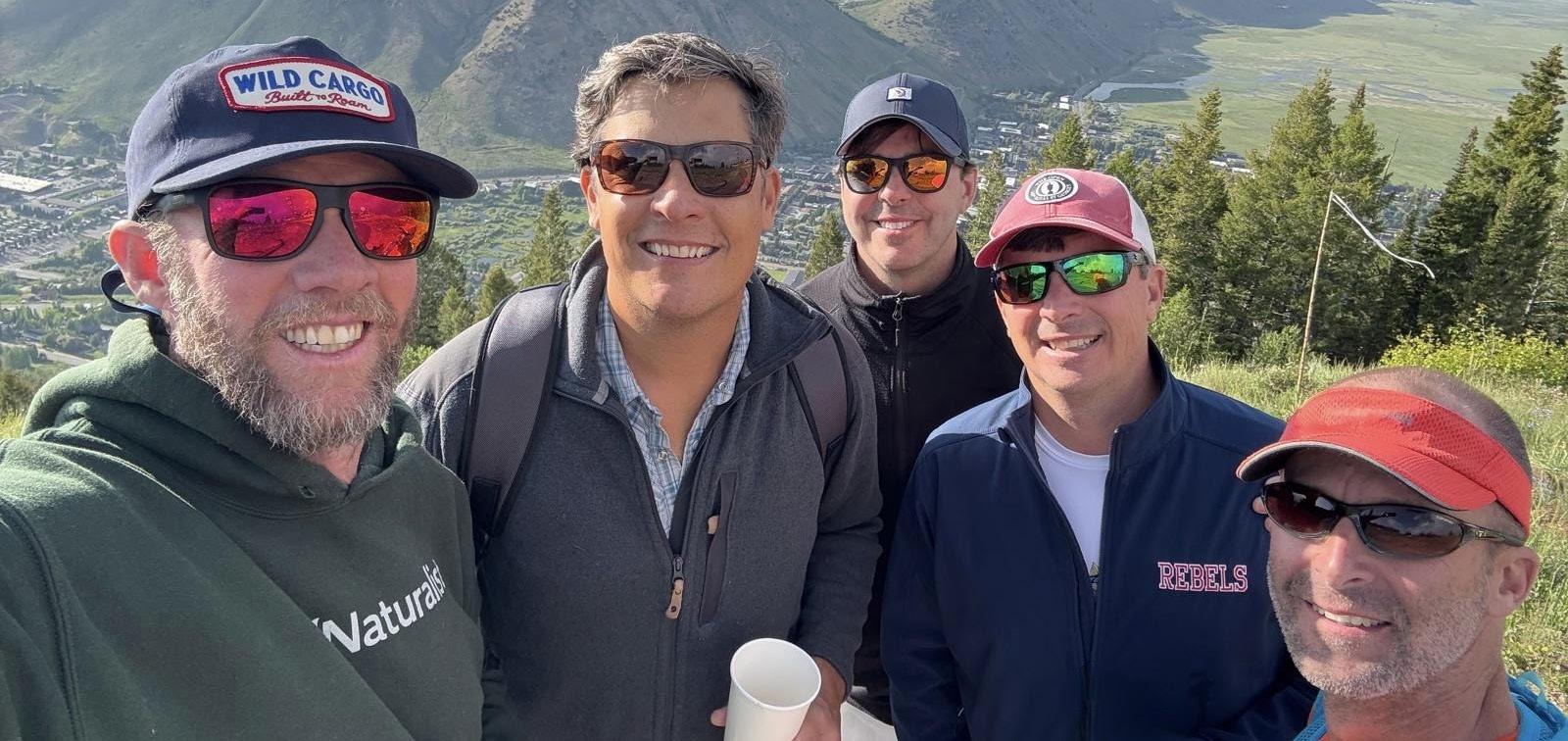
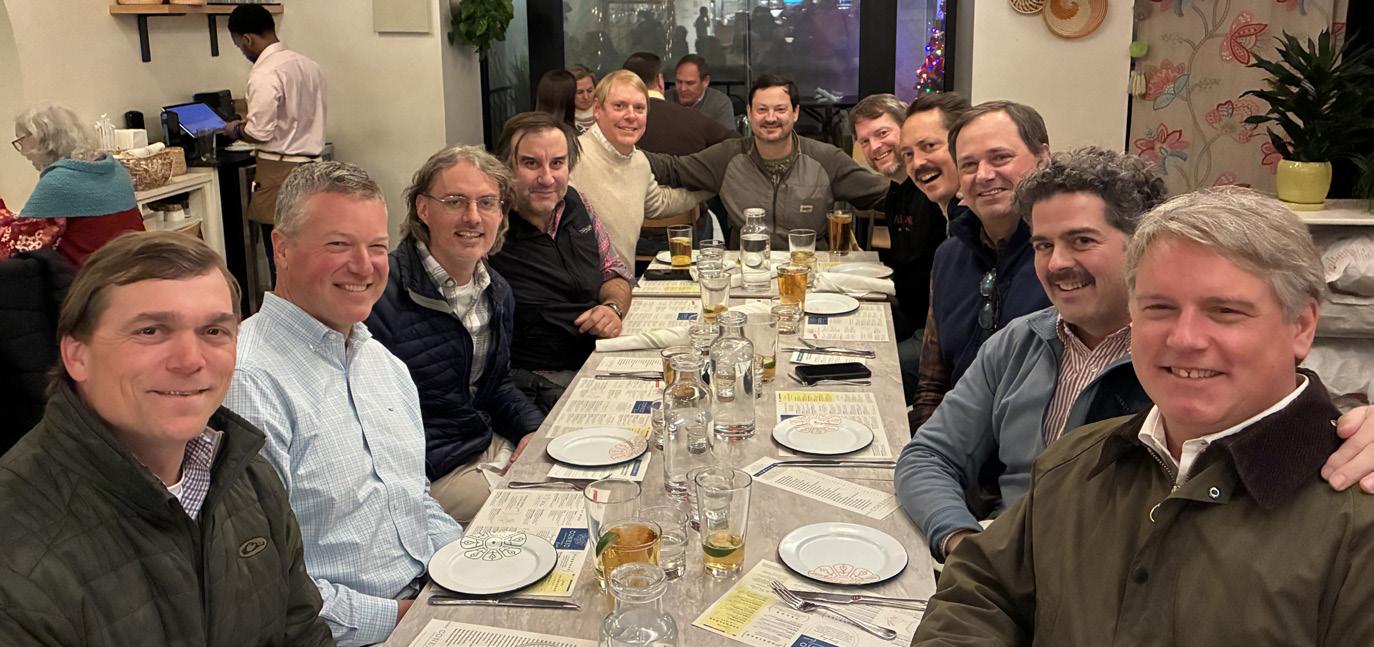
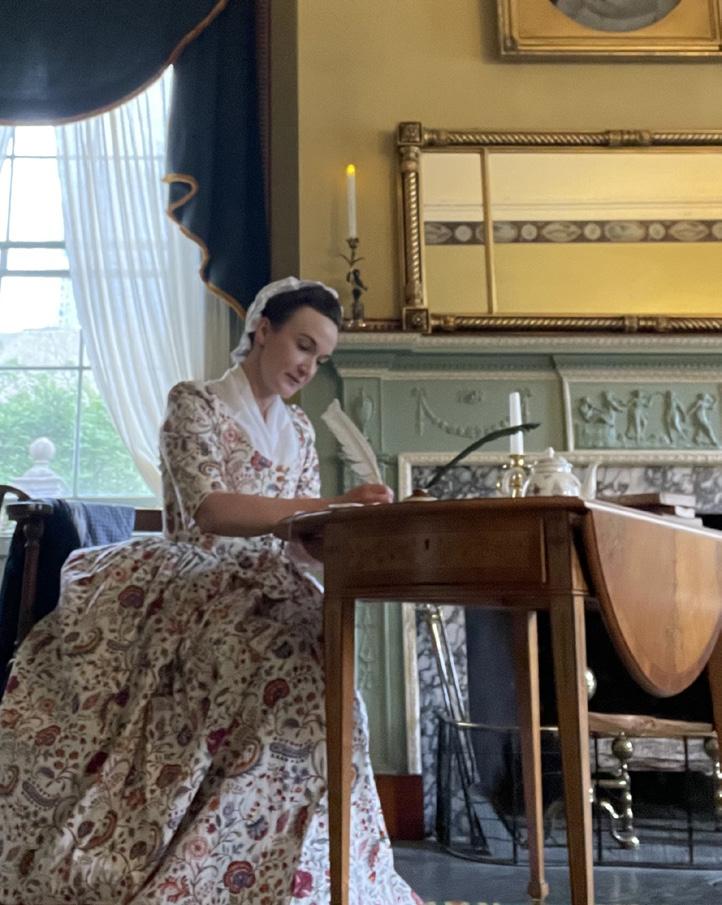
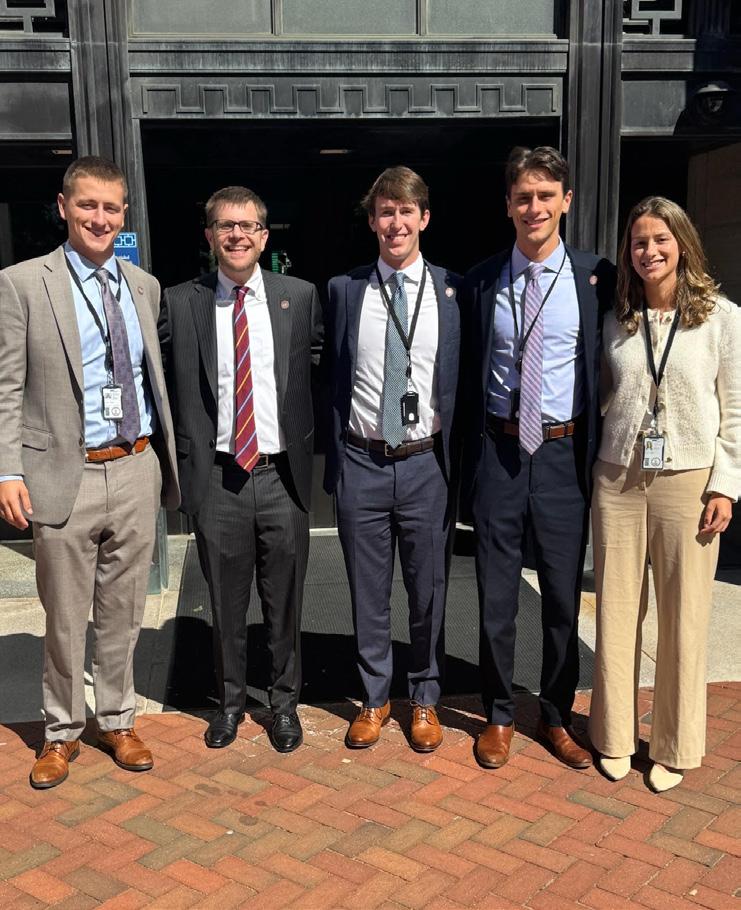
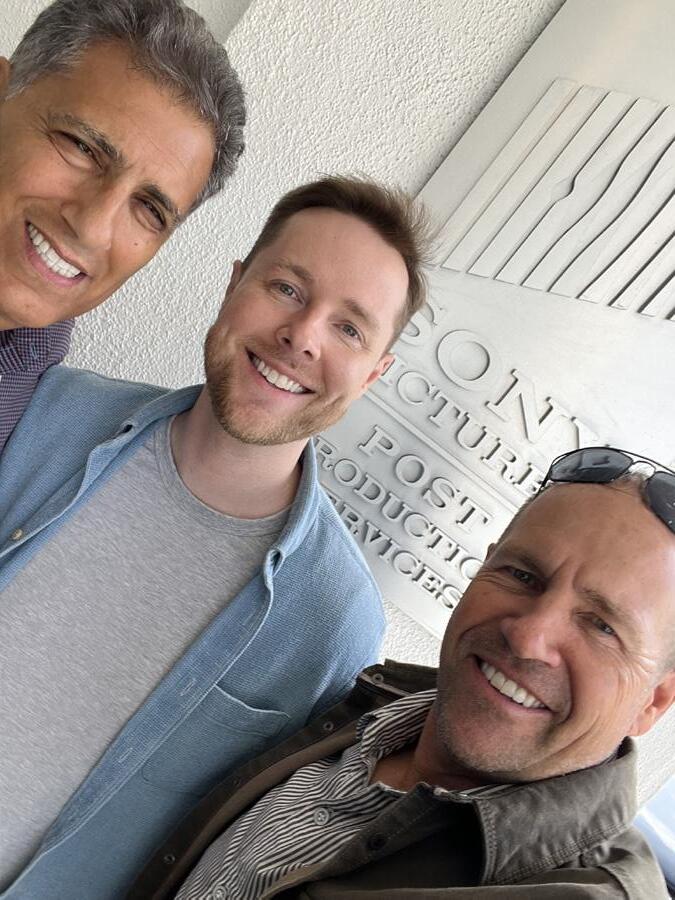
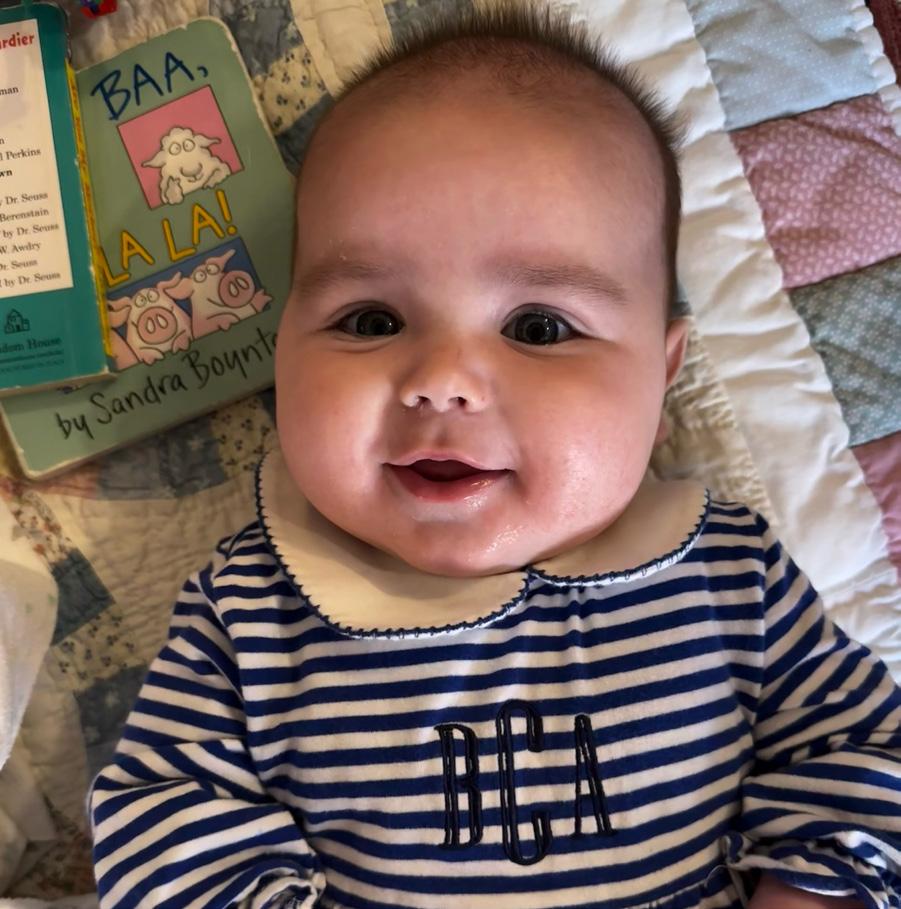
1. Laura Selene Rockefeller ’00 in a one-woman play on Abigail Adams.
2. John Markowitz ’01, J.D. Spotts ‘20, Meade Spotts ‘18, Ren Spotts ‘20, all who served in Governor Youngkin’s administration.
3. Jordan Farmer ’07 with film team on the Sony Pictures lot with director Cyrus Nowrasteh and producer John Shepherd during the release of Sarah’s Oil.
4. Catherine Barnett Careyn ’07 welcomed Margaret Elizabeth “Eliza” Carey in December 2025.
5. Kathleen Corsello ’10 welcomed baby Brett Anthony Corsello Jr. (“Jay”).
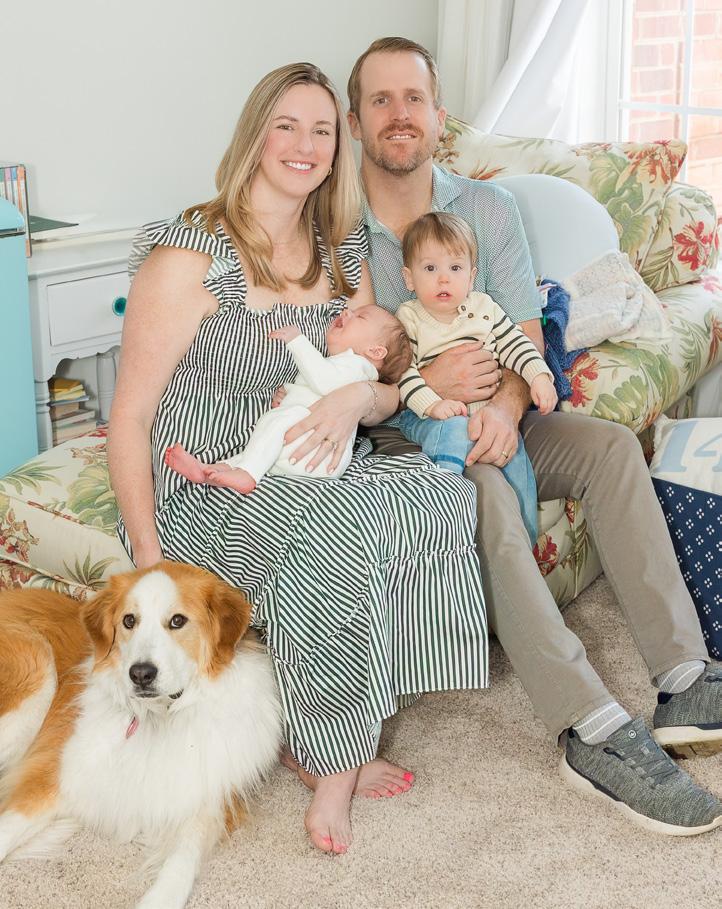
6. Marcus Jecklin ’08 co-founder of Ai4, sold the company to CloserStill Media. The conference continues to grow as a leading AI event.
7. Christine Thexton Chappell ’11 welcomed baby Thomas in December 2025.
8. Sophie Peyton ’12 earned a second degree in Interior Architecture & Design and welcomed her son, Jackson, in 2024.
9. Carolyn Mitchell Fitzgerald ’12 with newborn Harvey Ryan Fitzgerald, born in January 2026.
1984
Beth Curry, Lisa Coleman, and Anne Overton ’82 joined John Moreau at the Athletic Hall of Fame cocktail reception and committee meeting on January 15, 2026.
Randy Reynolds was appointed to the VCU Board of Visitors and serves on the VCU Health System Board, where he chairs the Real Estate and Facilities Committee.
1992
Henry W. Massie was promoted to Corporate Vice President of Land Acquisition at McKinley Homes, where he leads strategic growth initiatives across the Southeast.
Stephen Drake, Jeff Ukrop, Mason Maynard, and Howard Jenkins gathered with their mothers for breakfast while in town for an annual golf outing.
1993
Clark Coulbourn, Murray Fisher, Charlie Fonville, Jason Foster, and Michael Palmore reunited in Jackson Hole to celebrate 30 years since living there together.
1997
Jamie Gregory celebrated the holidays with friends and most importantly, Bubba. Pictured with John Merrick, Jeff Galanti, Kito Pruitt, Robbie Svoboda, Scott Hairfield, Mason Brent, Richard Wiltshire, Bo Vaughan, Matt Hunter, and Dave Lacy. Photo credits to Bubba!
1998
Reid Whitten welcomed a son, Clarence Glynn Whitten, on September 25, 2025.
2000
Laura Selene Rockefeller began a PhD in English with Creative Writing at the University of York. She will perform her one-woman play on Abigail Adams as part of the 250th anniversary of the American Revolution.
2001
Meaghan Enright earned a Master of Arts in Homeland Security and Emergency Preparedness from VCU
and continues as Executive Director of Love City Strong, Inc.
John Markowitz completed his role as Deputy Secretary of Finance and is now Chief Real Estate and Commercial Development Officer at the Virginia Tech Foundation.
2005
James Gottwald and Hunter Gottwald ’08 welcomed their second daughter, Caroline Dewey Gottwald, on November 21.
Ana Narla started a new role with Virginia Endocrinology in Richmond.
2007
Henry Winslow’s newsletter business, Tricycle Day, was acquired by Althea, supporting expanded access to psychedelic medicine.
Jordan Farmer released Sarah’s Oil in theaters in partnership with Amazon MGM. The film has received critical acclaim and award nominations.
Catherine Barnett Careyn welcomed daughter Margaret Elizabeth “Eliza” Carey on December 28, 2025.
2008
Marcus Jecklin, co-founder of Ai4, recently sold the company to CloserStill Media. The conference continues to grow as a leading AI event.
2010
Kathleen Corsello welcomed a son, Brett Anthony Corsello Jr. (“Jay”).
2011
Christine Thexton Chappell welcomed baby Thomas in December 2025.
Hillary Dickinson began a master’s program in Religious Studies at the University of Virginia.
2012
Sophie Peyton earned a second degree in Interior Architecture & Design and now works in San Antonio. She also welcomed her son, Jackson, in 2024.
Carolyn Mitchell Fitzgerald welcomed her son, Harvey Ryan Fitzgerald, on January 9, 2026.
2013
Alexandra Andrews, Anne Game ’85, and Landon Nott ’16 now work together at Rivers Edge Elementary.
Mason Brown works alongside fellow alumni at The Lovett School in Atlanta.
Meredith Wray got engaged to Jonathon Morse, with a wedding planned for Spring 2027.
2016
Libby Wray and Max Vaughan were married on September 6, 2025, in Keswick, Virginia.
2019
Margaux Gaeser Bennett was married on October 26, 2025.
Jackson Watkins authored Dream On: From Backyard to Biscuits, A Tar Heel Tale about his basketball journey at UNC.
Chandler Pettus was cast in the Broadway Tour of Chicago the Musical last August. He plays a Swing, which means he can cover any of the male roles at a moment’s notice. He’s performed across the country since August, traveling to Hawaii, Canada, and will end his tour in May in Philadelphia. Chander performed around the Richmond community and later earned his degree in musical theater from Christopher Newport University.
2020
Akum Dhillon was named one of the Khaleej Times’ top 150 changemakers in the UAE for Alzheimer’s research.
2022
2021
Whitney Robeson died March 7, 2026.
William Bullock was featured in a Daily Campus article highlighting his passion for organ music.
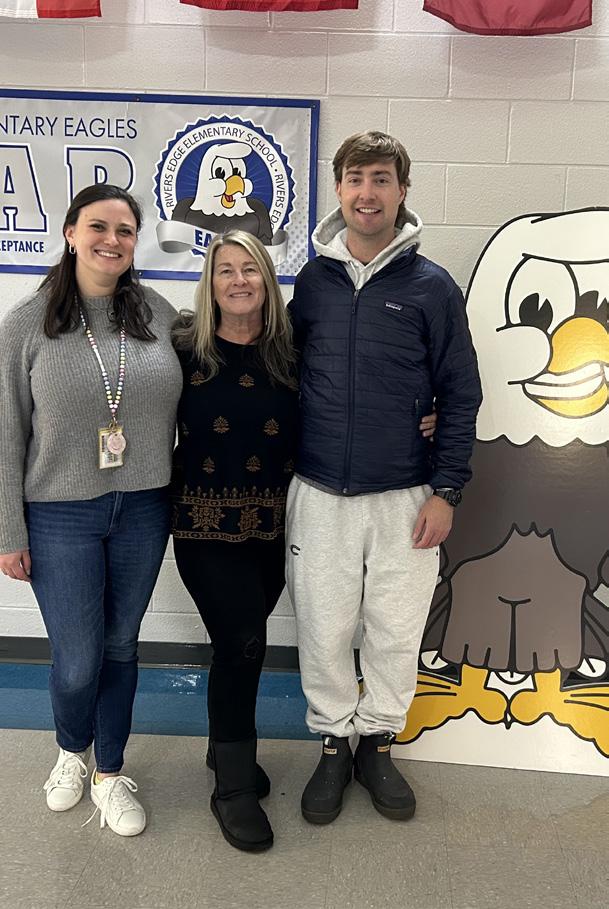
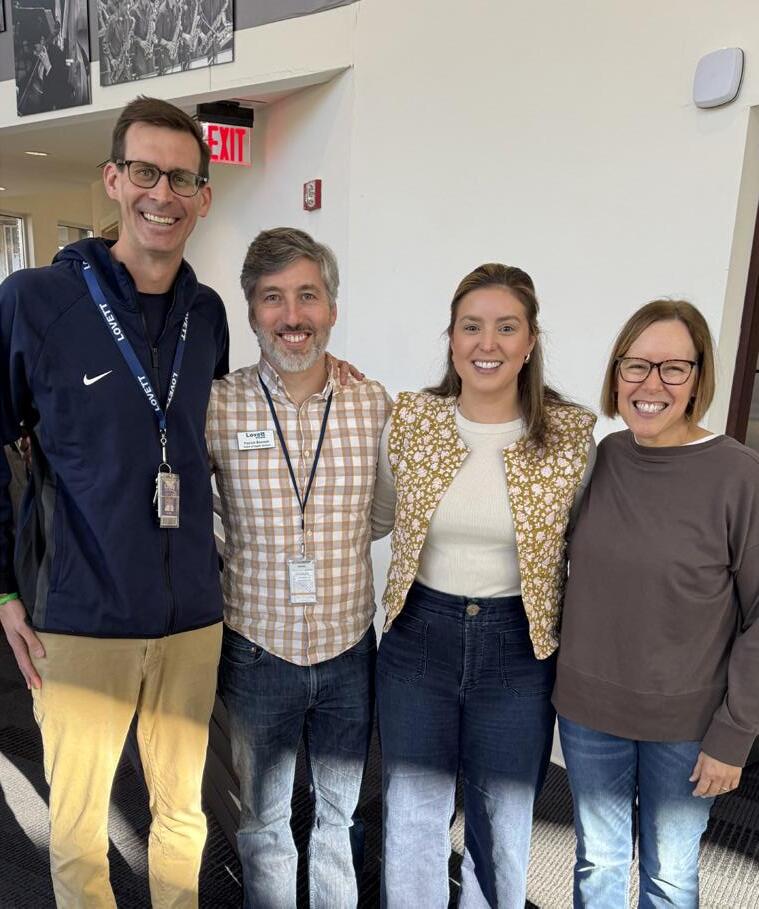
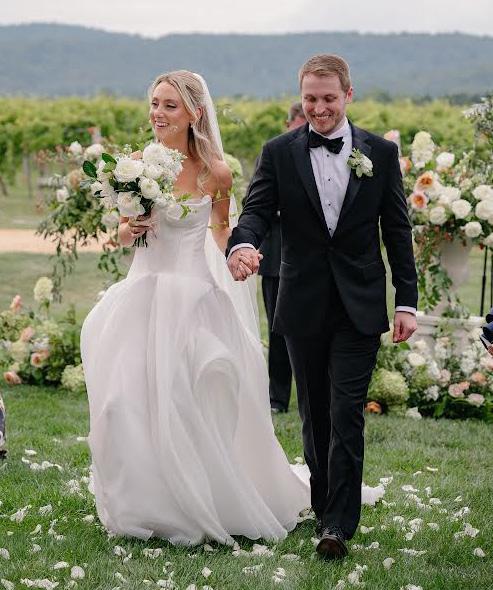
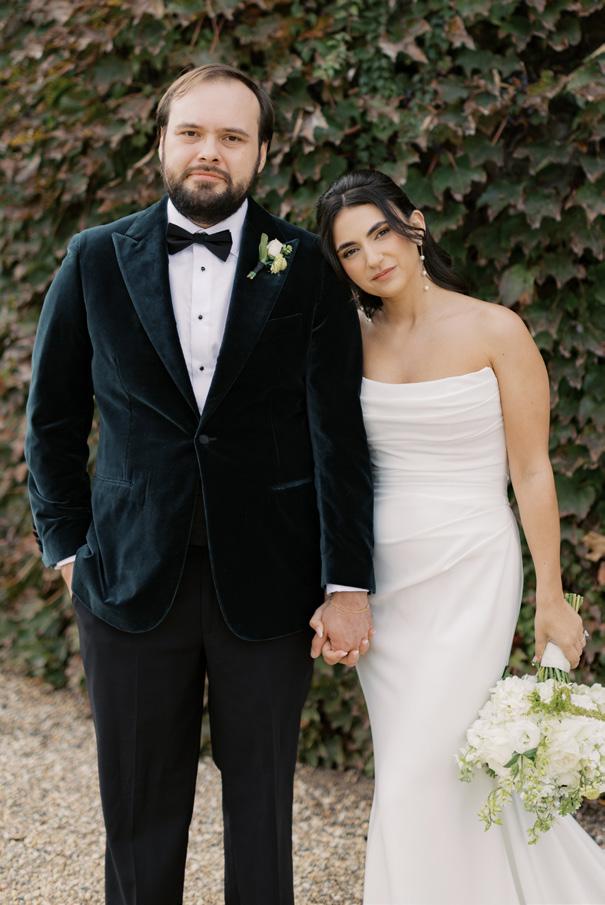
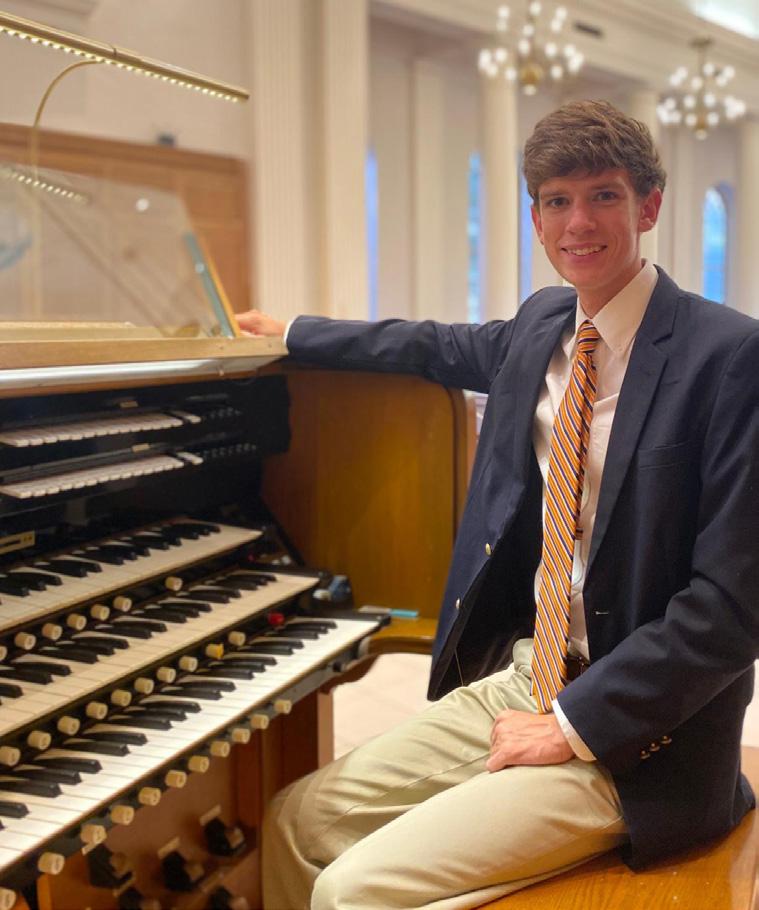
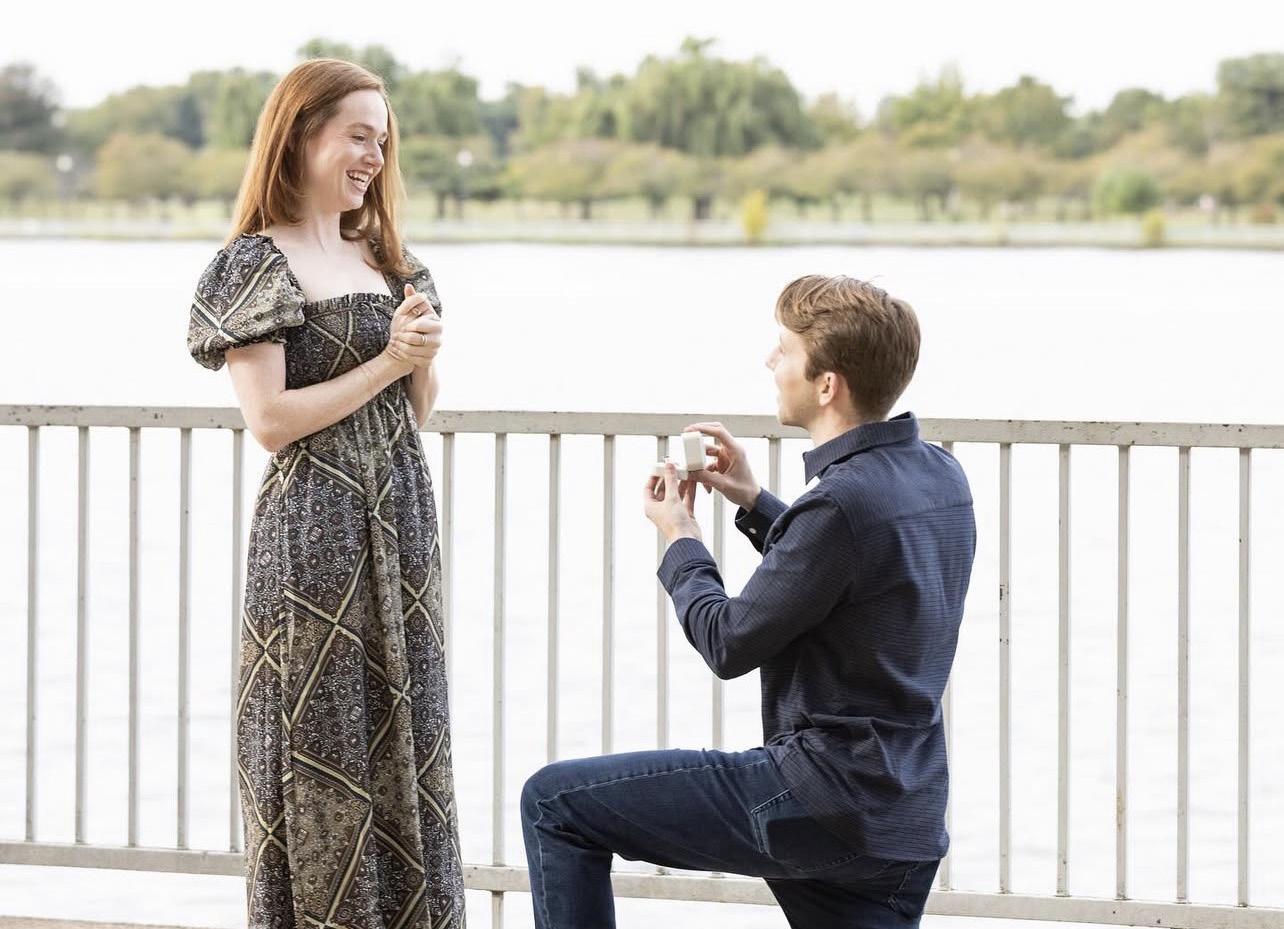
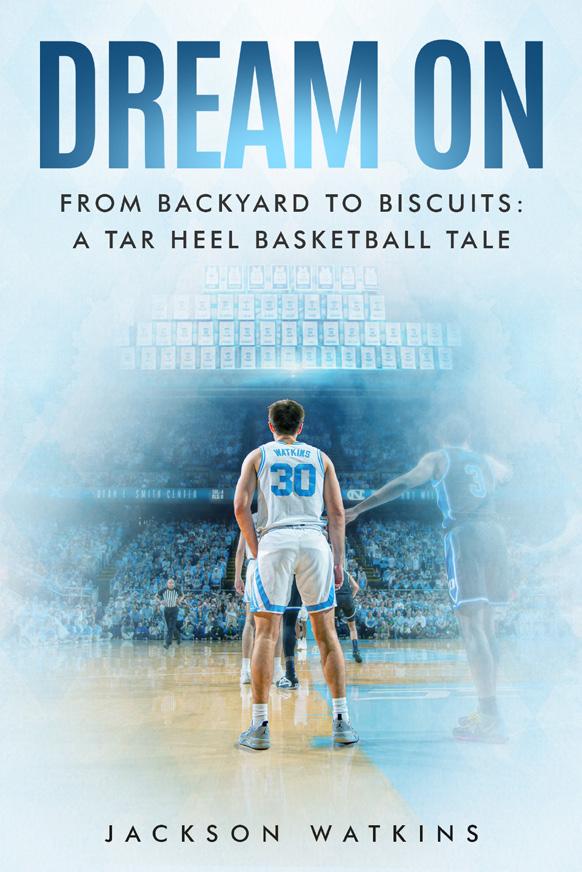
1. Alexandra Andrews ’13, Anne Game ’85, and Landon Nott ’16 working together at Rivers Edge Elementary.
2. Jack Parrish ’03, Patrick Boswell ’00, Mason Brown ’13, Fran (Munson) Turner ’85 , are all faculty members at The Lovett School.
3. Meredith Wray ’13 and Jonathon Morse were engaged in Washington, D.C., in October 2025.
4. Libby Wray ’16 and Max Vaughan ’16 were married September 6, 2026 in Keswick, Virginia.
5. Margaux Gaeser Bennett ’19 wedding, October 2025.
6. Jackson Watkins ’19 is proud to announce his book Dream On: From Backyard to Biscuits, highlighting his basketball journey at UNC.
7. Chandler Pettus ’19 was cast in the Broadway Tour of Chicago the Musical in August 2025.
8. Akum Dhillon ’20 was named one of the Khaleej Times’ top 150 changemakers in the UAE for Alzheimer’s research.
9. William Bullock ’22 continues his passion for organ music.
IN MEMORIAM
Our condolences are offered to these members of the Collegiate family.
Joseph Spivey, father of Jake Spivey ’81, Tim Spivey ’82 and Tom Spivey ’85; grandfather to Peyton Spivey ’11, Austin Spivey ’12, Tori Spivey ’14, Mary Moncure Spivey ’15, Josh Spivey ’19 and Thomas Spivey ’20, died August 17, 2025.
Gregory Riddick, brother of Rebekah Riddick McCormick ’96, died August, 23, 2025.
Robert Jones, grandfather of Connor Jones ’15 and Colton Jones ’17, died October 2, 2025.
W. Kenneth Blaylock, father of Elizabeth Blaylock Lewis ’76, Kenneth Blaylock ’77 and Charlotte Blaylock McGee ’80; grandfather of Eleanor McGee ’15, died October 5, 2025.
Esta Kornstein, grandmother of Nathan Krumbein ’28 and Iris Krumbein ’28, and Sara Kornstein ’02, died October 5, 2025.
William Carter Thompson, father of Upper School teacher, Leigh Thompson, died October 6, 2025.
Janie Dickinson, step-mother of Communications employee, Jimmy Dickinson (Mary Dickinson); step-grandmother of Elena Dickinson ’28 and Luke Dickinson ’33, died October 8, 2025.
Ruth Lund, mother of John Lund ’66, died October 8, 2025.
Janice Walker, grandmother of Andrew Walker ’09 and William Walker ’13, died October 9, 2025.
Richard Sommers, grandfather to Sally Sommers ’12, Samuel Sommers ’15 and Polly Sommers ’18, died October 14, 2025.
Johnnie Lou Terr, mother of Constance Terry Buehler ’78 and Laura Terry Sellers ’79; aunt of former interim Head of School, Billy Peebles, died October 20, 2025.
IN MEMORIAM
Joanne Christman, former Lower School teacher; mother of Tom Christman ’88, died October 22, 2025.
Barbara Henry, mother of Mike Henry ’84 and Patrick Henry ’90; grandmother to Jack Henry ’22, died October 24, 2025.
Frederick Given, father-in-law of Middle School teacher Teresa Given, died October 29, 2025.
Laura Phelan, mother of Michael Phelan ’07 and Patrick Phelan ’11, died October 31, 2025.
Muriel Garson, grandmother of Chris Garson ’00, Elizabeth Garson Koteles ’05, Heather Garson Welch ’07 and Will Garson ’11, died November 2, 2025.
Walther ‘Bob’ Maser, father to John Maser ’75 and Katherine Maser Martin ’80, step-father to Charles Bradshaw ’92; step-grandfather to Sheehan Bradshaw ’22 and Ned Bradshaw ’24, died November 2, 2025.
Marilyn Fleischer, mother of Tenley Fleischer Beazley ’86 (Wyatt Beazley ’85); grandmother to Georgia Beazley ’17, Ford Beazley ’16, died November 6, 2025.
Leonard Morris, grandfather of Bobbie Edmunds ’17, died November 7, 2025.
William Kump, grandfather of Carson Coulbourn ’18 and Thomas Coulbourn ’20, died November 9, 2025.
Suzanne Linkonis, grandmother of Gabriela Linkonis ’25, Valentina Linkonis ’27 and Porter Linkonis ’30, died November 11, 2025.
John Myers, father of Jonathan Myers ’03, died November 11, 2025.
Peggy Rada, former Middle School English/ History teacher (24 years); mother of Mary Talmadge Rada ’89, died November 16, 2025.
Betty Harlan, mother of Jim Harlan ’76 and Sally Harlan Bryson ’79, died November 25, 2025.
Steven Pearson, husband of retired Business Office employee, Heidi Benson, died November 27, 2025.
Thomas Biber, father of Eric Biber ’91, died November 29, 2025.
Donald Gill, grandfather of Parker Green ’31 and JJ Green ’32, died December 3, 2025.
William “Bill” Nelson, father of Beth Ann Nelson Shelly ’83, father-in-law of Bob Shelly ’81; grandfather of Marden Shelly Martin ’11 and Mary Grace Shelly Collins ’13, died December 4, 2025.
Mary Stagg, mother of Mary Catherine Stagg Nimaga ’85 and Elizabeth Stagg ’88; grandmother of Miriam Nimaga ’21 and Adam Nimaga ’21 (deceased), died December 8, 2025.
Vincent Cassel Adamson, father of John Adamson, father-in-law of Katherine Thalhimer Adamson ’96; grandfather of Katie Adamson ’23, Shepard Adamson ’25 and Caroline Adamson ’29; brother of Elizabeth Adamson ’66, died December 12, 2025.
Mary Alice White, great-grandmother of Benjamin Lambert ’28, died December 16, 2025.
William Tunner, father of William Tunner ’86 and Jonathan Tunner ’91, died December 18, 2025.
Patty Coleman, former Lower School employee; mother of Kathleen Coleman Thomas ’81, Lisa Coleman ’84, Stephen Coleman ’87, William Coleman ’87, and Clay Coleman ’89; motherin-law to Frances Coleman ’92; grandmother to Clay Coleman ’19 and Reid Coleman ’22, died December 19, 2025.
Linda Hylsop, aunt of Sarah Hyslop Leonardelli ’01, Anne Forrest Hyslop ’03, Lauren Hyslop Morin ’08, and Wes Hyslop ’11; great-aunt to Kate Leonardelli ’35 and Hannah Leonardelli ’38, died December 20, 2025.
John Flournoy, father of John Flournoy ’88 and Jamie Flournoy ’90, died December 24, 2025.
Thomas Sanne, father of Jay Sanne ’89, died December 30, 2025.
Adele Gill, grandfather of Parker Green ’31 and JJ Green ’32, died December 31, 2025.
Susan Vranian, mother of Steven Vranian ’11 and Evan Vranian ’13, died January 1, 2026.
Allen Wicklund, grandfather of Amy Wu ’28, died January 2, 2026.
Lamar Blanton, grandmother of Russell Harper ’10; sister-in-law of Anne Pinnell Harper ’65, died January 6, 2026.
Dorothy Figg, mother of Coleman “Drum” Figg ’75, died January 6, 2026.
Jane Reeves, mother of Bill Reeves ’82, Hannah Reeves ’83, and Molly Reeves Dolan ’86, died January 6, 2026.
Vickie Argabright, mother of Reid Burford ’88; grandmother to Will Burford ’20 and Katie Burford ’22, died January 8, 2026.
Phil Hunnicutt, former Lower School teacher, father of Zack Hunnicutt ’19 and Lily Hunnicutt ’21; uncle to Carter Wilson ’12, died January 12, 2026.
George Barkley, father of Matthew Barkley ’98, died January 17, 2026.
Donald Moe, husband of Constance Booker Moe ’54, died January 17, 2026.
William Neal, Jr., father of William Neal III ’73 and Jamie Neal ’76, died January 17, 2026.
Fred Bisgar, father of Mollie Bisgar ’10, died January 18, 2026.
Allen Hood, brother of bus driver Tim Hood, died January 19, 2026.
David Whitaker, father-in-law of Upper School teacher, Christina Whitaker, died January 19, 2026.
Nancy Bowles, grandmother of Emily Bowles ’08 and Eli Kennon Bowles ’14, died January 20, 2026.
Robert Rainey, grandfather of Peyton Garst ’20 and Presley Garst ’24, died January 22, 2026.
William Hall, father of Upper School teacher Mark Hall, died January 23, 2026.
Frances Allen, former president of the Patrons’ Association; mother to Gayle Allen Fitzgerald ’70, Coleman Allen ’72, Clayton Allen ’75, Edward Allen ’80, Sean Allen, and Courtney Allen Van Winkle ’82; grandmother to Kara Allen ’02, Channing Allen ’08, Turner Allen ’12, Chris Van Winkle ’14, Carter Allen ’14, Payton Van Winkle ’16, Matthew Van Winkle ’20 and Wilson Van Winkle; aunt to Becky Allen ’70, John Gayle ’70, and Frank Gayle ’71, died January 24, 2026.
Hugh Wallace, grandfather of Matthew Wallace ’13, died January 24, 2026.
Marguerite Folliard Hall, mother of Will Hall ’86; grandmother to Caroline Hall ’18 and Lily Hall ’20, died January 26, 2026.
Mildred Manley, sister of Debra McKercher, 2nd Grade assistant, died January 27, 2026.
Alice Spilman, mother of Isabel Spilman Bates ’67; grandmother of Marshall Bates Rigby ’93 and current parent Andrew Crowley; great-grandmother to Thomas Rigby ’23, Izzy Rigby ’25, and Libby Crowley ’38, died January 28, 2026.
George Frischkorn, grandfather of Aynsley Thomas Cosby ’07 and Taylor Thomas ’10, died January 31, 2026.
Kathleen Eckert, grandmother of Hudson Neese ’23, Sarah Beth Neese ’23, and Jack Neese ’26, died February 2, 2026.
Frank Miller III, father of Frank Miller IV ’81 and Suzanne Miller Burger ’83; grandfather of Elizabeth Burger ’16, died February 2, 2026.
Jean Spencer, sister of Facilities employee Gloria Allen, died February 2, 2026.
Jane Burge, grandmother of Glenn Rhodes ’11 and Molly Rhodes ’11, died February 7, 2026.
Norman Scher, father of Jon Scher ’90 and Charley Scher ’83; grandfather to Owen Scher ’18 and Katie Scher ’20, died February 9, 2026.
Jean Kellett, grandmother of Karen Kellett Hufford ’95 and Ted Kellett ’97, died February 15, 2026.
John Hampson, father of Lisa Hampson Butler ’87 and John Hampson ’94, died February 17, 2026.
John Purcell Jr., father of Barry Purcell ’92; grandfather Ellie Purcell ’29, Tee Purcell ’28, Addison Purcell ’26, and Carter Purcell ’30; father-in-law of Sagle Purcell ’94, died February 23, 2026.
George Angle, former teacher, died March 5, 2026.
Anne Santalla, mother of Theater Production Assistant Andy Santalla, died March 6, 2026.
Roderick Crawford, grandfather of Lily Crawford ’20, Tate Crawford ’21, and Caroline Crawford ’25; father-in-law of receptionist, Mary Crawford, died March 7, 2026.
Kaye Thornton, mother of Upper School teacher Bart Thornton, and mother-inlaw of Kristina Thornton (Cougar Quest); grandmother to Copeland Thornton ’25 and Tristan Thornton ’28, died March 12, 2026.
Arlene Paris, mother of Leonard Paris ’82, died March 13, 2026.
James Melvin, grandfather of Frances Melvin ’18 and Ben Melvin ’20, died March 15, 2026.
Jane Haisley, mother of John Haisley ’82 and Sam Haisley ’85, died March 16, 2026.
Dana King, grandmother of Elizabeth Schwarzschild Greene ’13, Tate Schwarzschild ’16, and Catherine Schwarzschild ’20, died March 20, 2026.
Ari Sismanis, father of Tina Sismanis Thompson ’93, Jimmy Sismanis ’01, and Jonny Sismanis ’03; grandfather to Gabriel Thompson ’34, died March 20, 2026.
John Newsom III, father of John Newsom IV ’85 and Anne Newsom Pinion ’88, died March 24, 2026.
Jane Wootton, mother of Madison Wootton ’89 and Anne Wootton White ’95 (Alex White ’89); grandmother to John Wootton ’22 and Henry Wootton ’26, died March 26, 2026.
Howard Cobb, grandfather to George Cobb ’28 and Henry Cobb ’31; father-in-law of Development employee Maria Cobb, died March 31, 2026.
ALUMNI
Patsy Shannon Blair ’47
Katharine Jackson Bryant ’52
Nancy Thomas Hill ’52
Jean Blankenship Faglie ’52
Jane Reed Fields ’52
Louise Cobb Boggs ’56
Daily (Sarah) Holmes Stern ’56
Michael Hammaker ’69
Marcia Middleton ’70
Whitney Robeson ’21
These notices were received as of April 1, 2026. This In Memoriam section is taken from printed obituaries and compiled from our database, which may be edited for space. Please contact our office if the information is incomplete. To submit a condolence, email spark@collegiate-va.org.
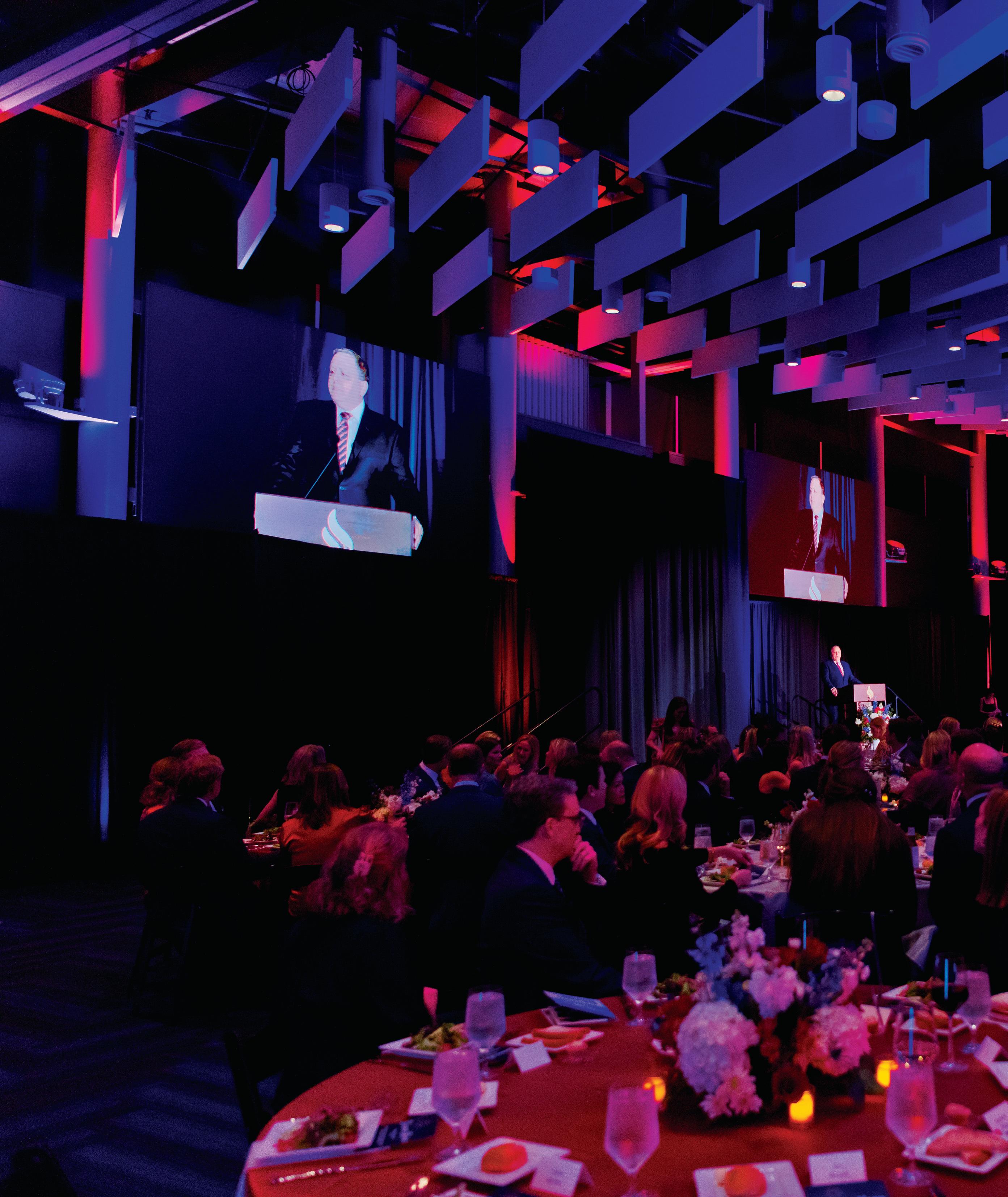
THANKS TO THE MANY SPONSORS, DONORS, AND GUESTS, COLLEGIATE’S 2026 AUCTION WAS RECORD-BREAKING! BRINGING IN MORE THAN $400,000 NET PROFITS THAT SUPPORTS OUR SCHOOL, STRENGTHENS OUR PROGRAMS, AND INVESTS IN OUR INCREDIBLE FACULTY AND STAFF.
TEACHER’S TAKE Elsie Bustamante
Building from a career rooted in California’s community colleges, Upper School Spanish teacher Elsie Bustamante found her way to Collegiate through what she calls a series of “happy accidents,” and discovered the ideal balance of small classes, meaningful relationships, and a deeply supportive professional community. Now in her 12th year, Bustamante has shaped a classroom where grammar matters, but knowing her students matters more.
A one-time ESL instructor with a front-row seat to her husband’s journey to learn English after immigrating from Mexico, Bustamante approaches Spanish not simply as a subject, but as a bridge that connects students to the people and cultures that shape the language both abroad and here in Richmond. “It’s not just another verb to conjugate,” she explains, emphasizing that language is a living, breathing means of human connection. In a classroom marked by warmth, laughter, and a “Spanish song of the week,” Bustamante hopes students leave not necessarily fluent, but more curious, culturally aware, and attuned to the experiences of others.
Bustamante sat down with Spark to reflect on the benefits of pop culture in the classroom, the way travel builds humility and understanding, and the full-circle joy of hearing from Collegiate alumni who continue to use and learn the language they spoke in her classroom.
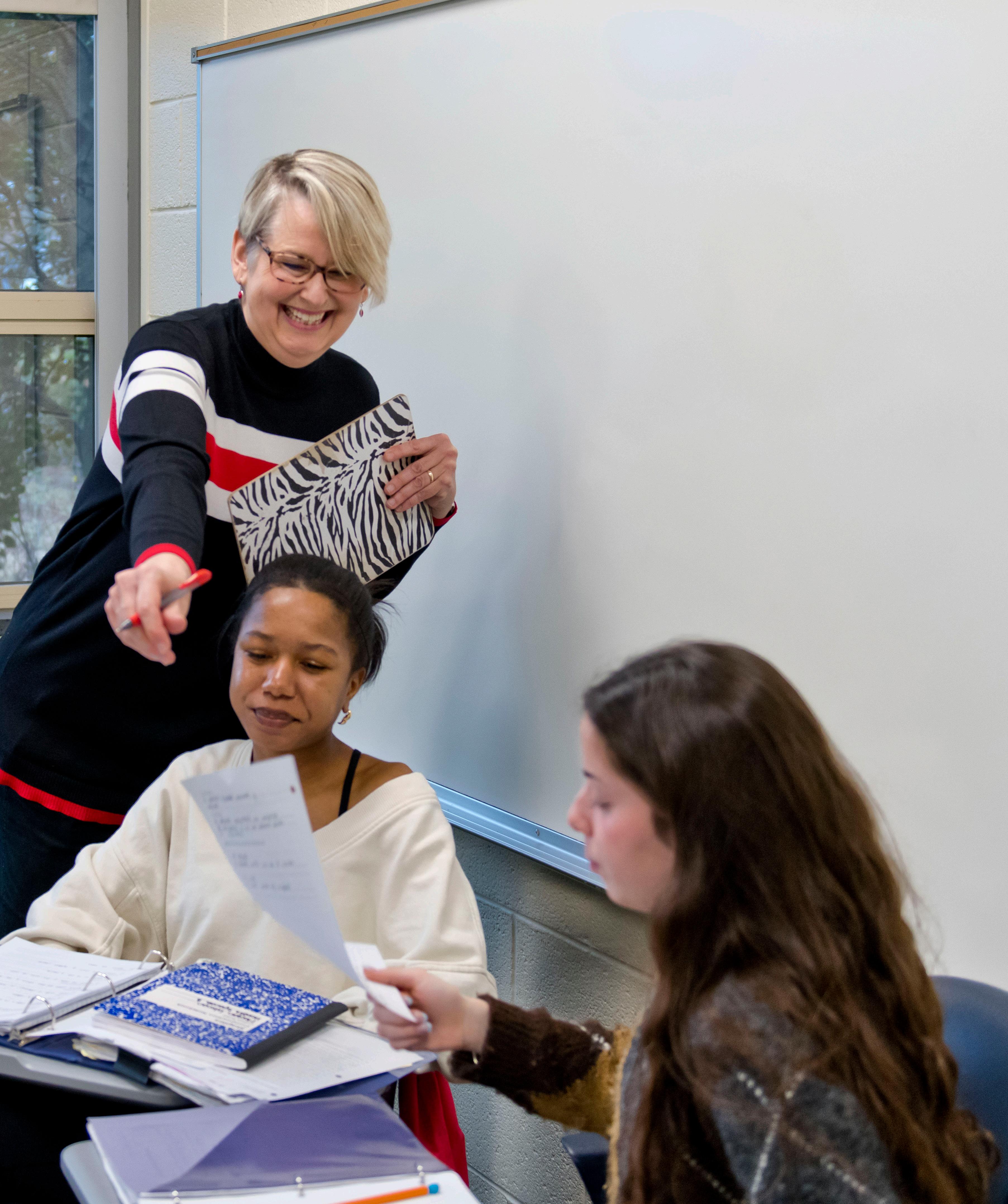
Spark Talks with Upper School Spanish Teacher
Elsie Bustamante
Hearing from former students... who simply tell me a moment in our class shaped how they see the world, is exactly the kind of “full circle” impact I hope to leave behind.”
How long have you taught at Collegiate and what brought you here?
This is my 12th year teaching at Collegiate; I was hired in 2014. My path here was a bit of a happy accident. I spent my early career teaching at community colleges in California, piecing together adjunct positions that worked well for our family when my children were young. When we decided to move to Richmond, I quickly realized the Virginia community college system wouldn’t allow me to stitch together the same kind of workload. I went through a career switcher program to earn my K-12 teaching license in world languages. I first came to Collegiate as a long-term substitute and immediately felt that this place was the perfect balance between the college environment I knew and the K-12 world I was entering: smaller classes, deeper relationships, and a sustainable life as a teacher. When a full-time position opened the following year, I applied, and I’ve been here ever since.
Spanish is a growing language in the United States and beyond, becoming a staple of music, art, television, and pop culture. How do you use modern influences to make Spanish relatable in your classroom?
I lean heavily on music and pop culture to help students see Spanish as something alive that they’re already encountering every day. Music is the biggest part of that. Every week we have a “song of the week,” and each spring we do a March Music Madness bracket where students vote on their favorite Spanish-language songs. The playlist mixes classics with what they’re actually listening to now, artists like Bad Bunny, Karol G, J Balvin, and Maluma — so Spanish isn’t just another verb chart, it’s the soundtrack. We talk about who these artists are, where they’re from, and what their music says about places like Puerto Rico or Medellín. Students love when what we’ve discussed in class suddenly pops up on their TikTok or Spotify feeds. I’m thoughtful about lyrics and content, but I still want the music to be real and current. When students recognize a song or artist outside of class and make that connection back to what we’re doing, Spanish becomes much more relatable.
How
has learning another language and travel changed you as a person?
Learning another language and traveling, especially to places where you don’t speak the dominant language, fundamentally changes how you see other people, and yourself. When you’re the one who can’t quite follow every conversation, who is exhausted at the end of the day from translating in your head,
you gain a deep well of empathy for immigrants and visitors who live that reality every single day. Stepping into another language and culture also stretches your sense of possibility: you start to see that your way of doing things is just one way among many, and that realization can make you more patient, more curious, and more compassionate. In my own life — through my husband’s experience immigrating from Mexico, and my work and relationships with English learners — I’ve seen how language and travel don’t just broaden your horizons, but can soften your heart toward people whose daily lives look very different from your own.
What is your teaching philosophy and how has it changed over time?
Over time, my teaching philosophy has shifted from being primarily about Spanish to being primarily about students. When I first started teaching, I thought a lot about content: grammar, vocabulary, assessments; but now I see my work much more as knowing my students, meeting them where they are, and helping them grow into empathetic, thoughtful human beings. I remind myself that what happens in my classroom is just a tiny slice of their lives, and my role is to prepare them to go out into the world with a deeper understanding of other people and of themselves. That’s why I lean so heavily on culture. I focus on the people and places where Spanish is spoken, from right here in Richmond to communities across the United States and beyond, so they see Spanish not as another list to memorize, but as a living language that connects them to real lives and stories.
What is one thing you love about teaching and what do you hope your legacy will be?
I hope my legacy at Collegiate is that students remember my class not for conjugation charts, but for how it felt to be there together: the songs we listened to, the way we laughed, the moments when things felt fun and connected rather than stressful. If, years from now, they carry with them a warmer understanding of other cultures and a deeper sense of empathy for people who speak different languages, then I’ll feel I’ve done my job. Hearing from former students who keep studying Spanish, or who simply tell me a moment in our class shaped how they see the world, is exactly the kind of “full circle” impact I hope to leave behind.
103 North Mooreland Road Richmond, Virginia 23229
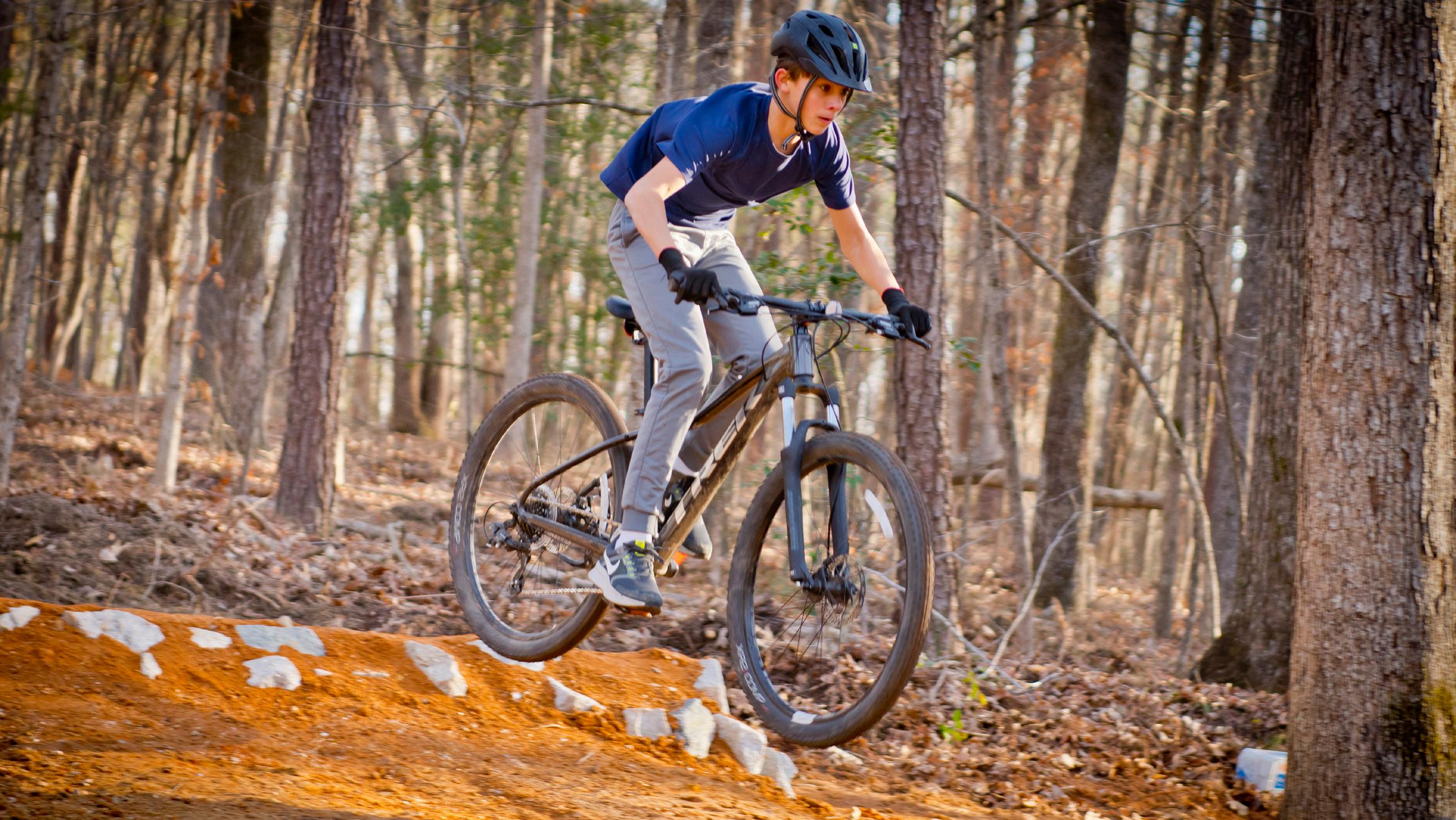
Students ride the new mountain bike skills park at Robins Campus, built this winter by legendary trail builder Clark Jones and Outdoor Collegiate.