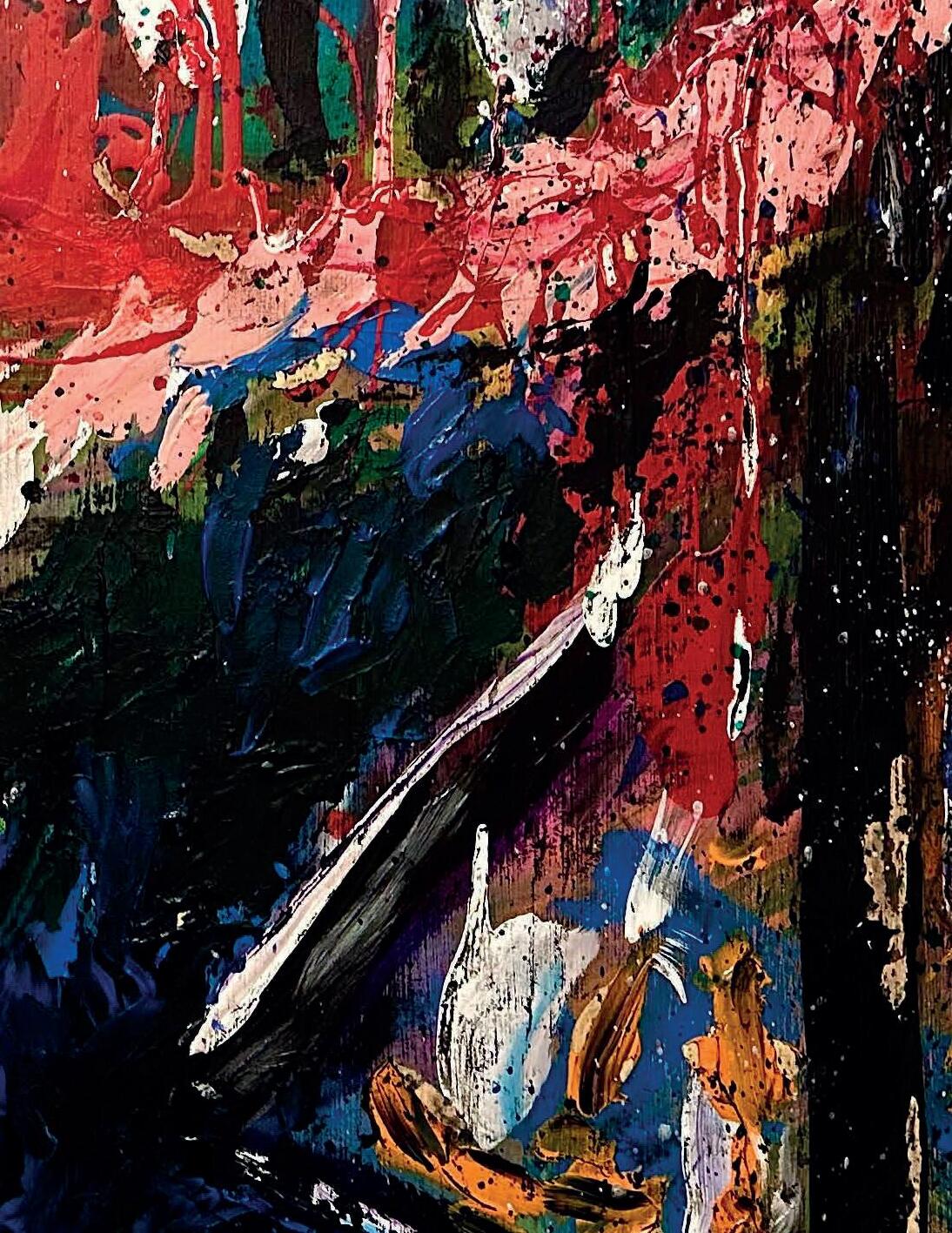

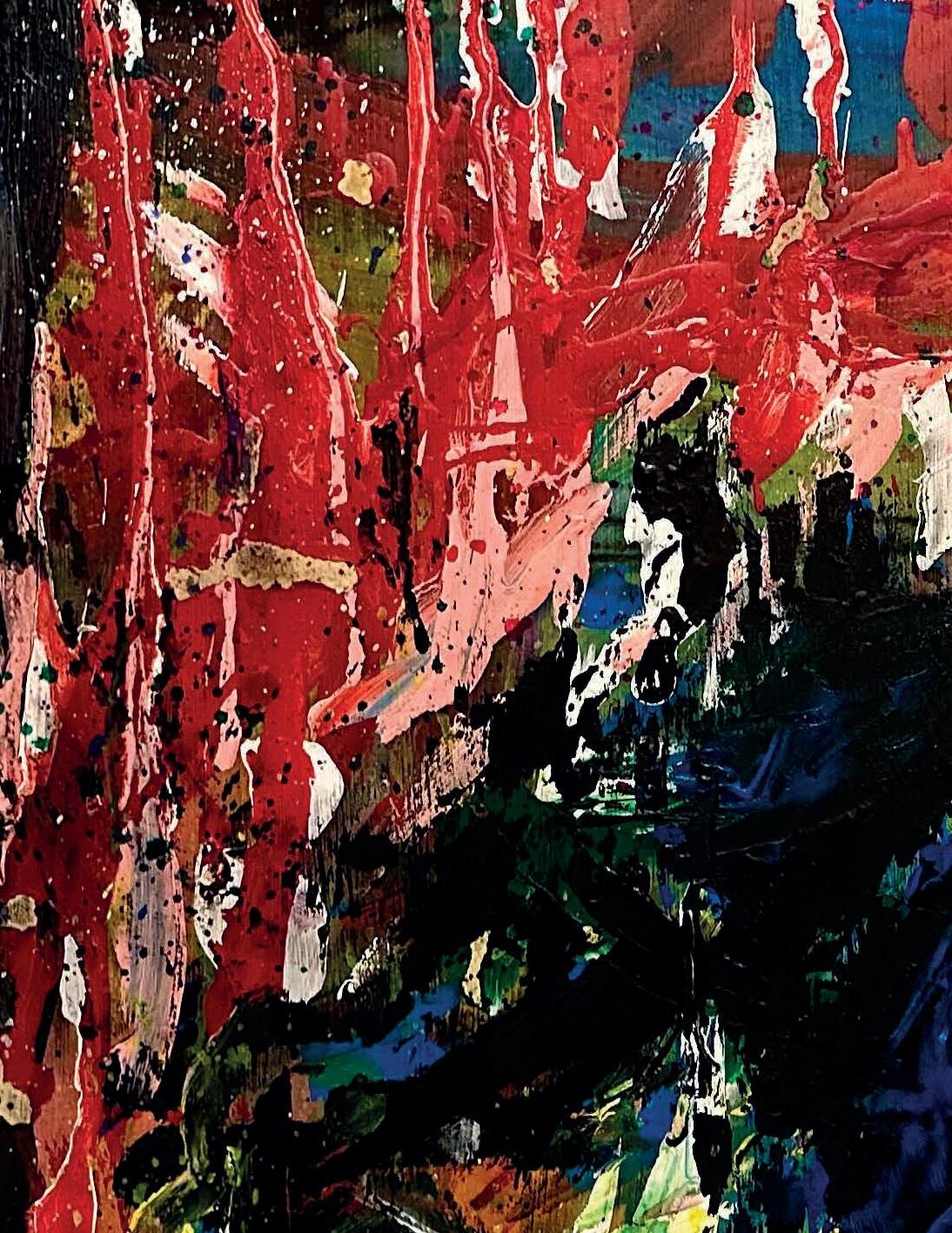
ON THE COVER
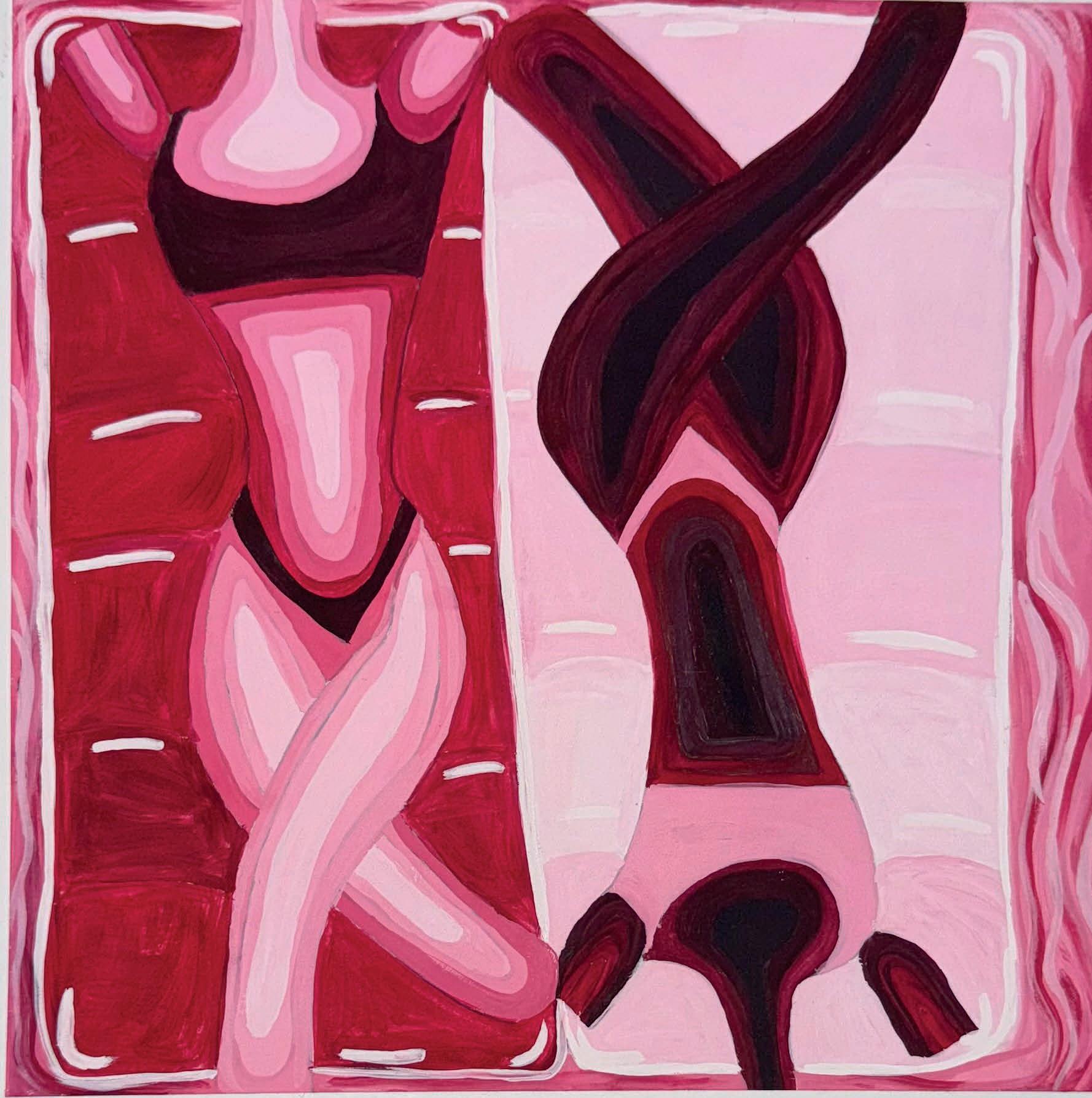
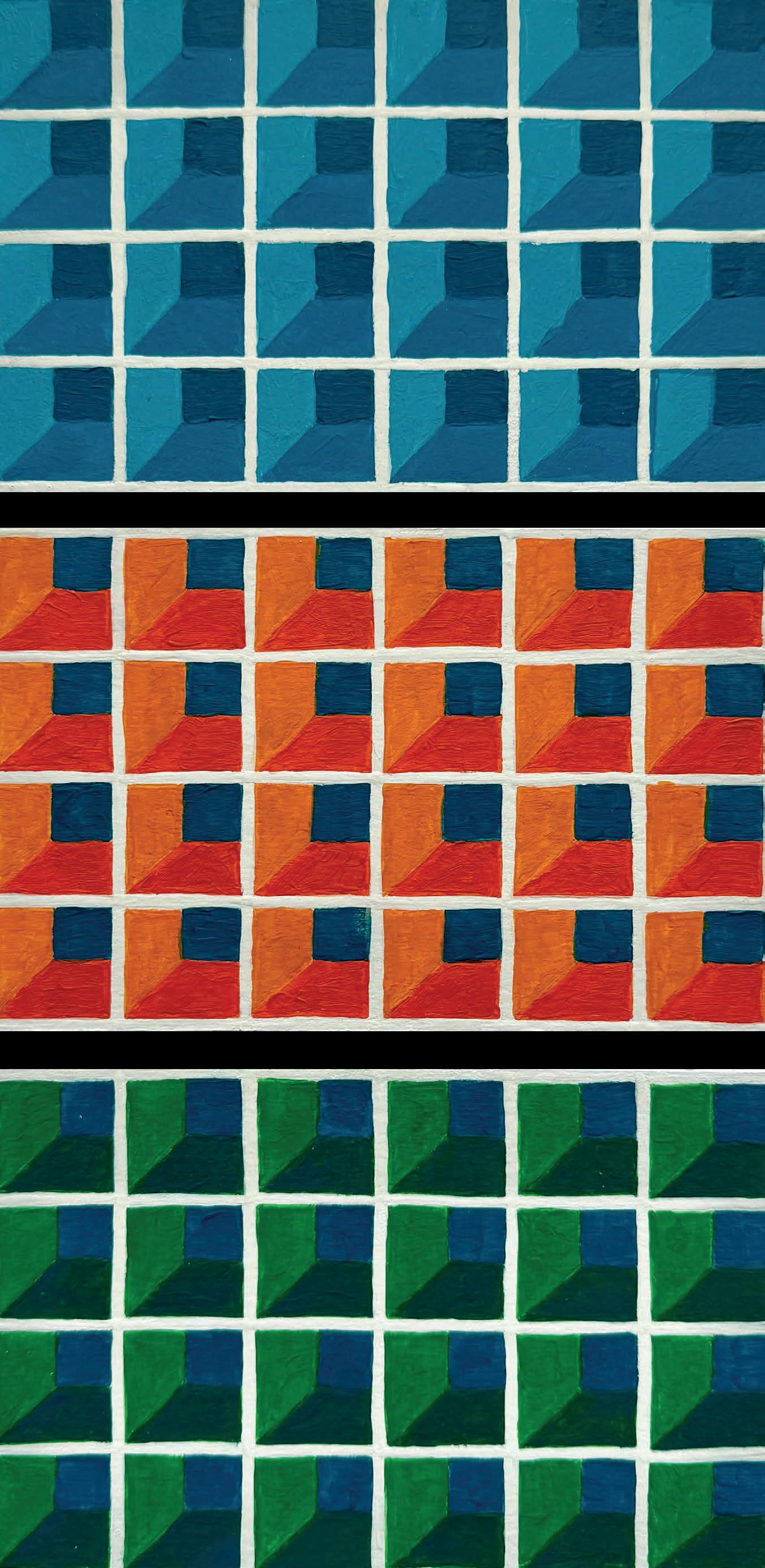
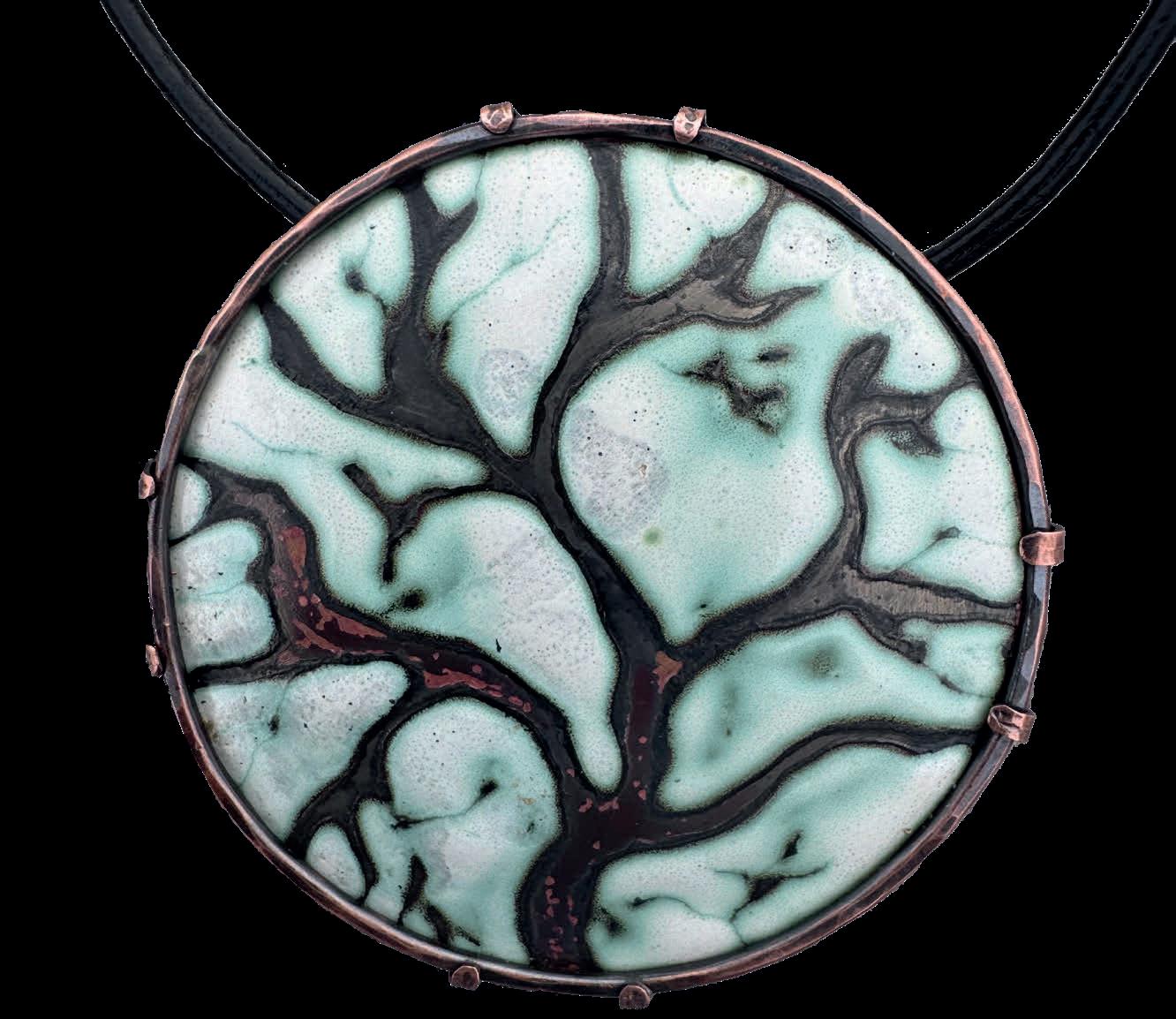
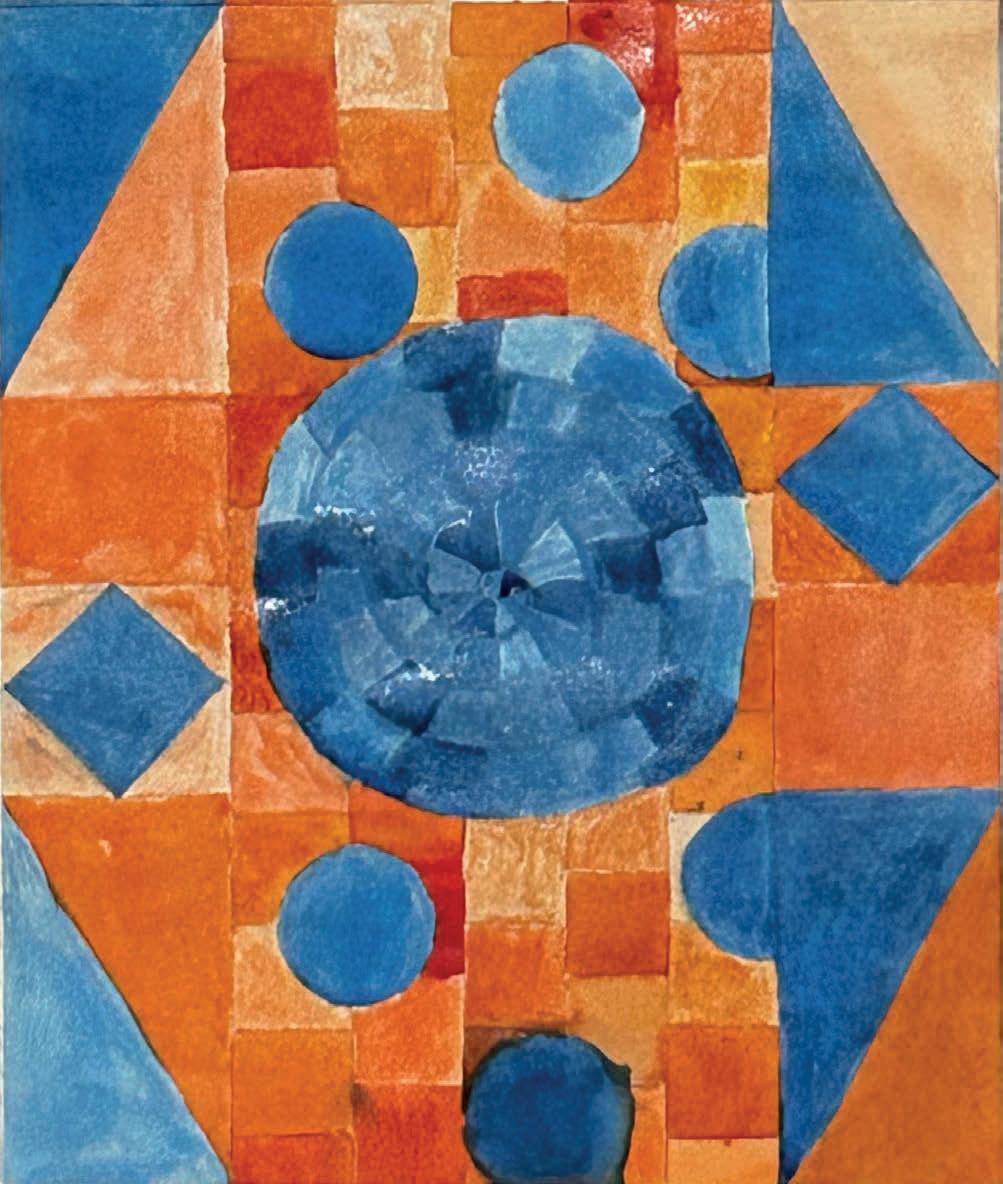
Emma Vazquetelles: Instinctive
Managing Editors
Patrick Berran, Visual Arts
Dr. Jill Lettieri, Literature
Literature Visual Arts Design & Layout
Jessica Kesler
Cari Leary
Dr. Jill Lettieri
Isabella Lettieri
Patrick Berran
Fay Edwards
Tiffany Lindsey
Christina Lorena Weisner
Brittany Forbes
This magazine is the twelfth annual edition of Estuaries. It features creative contributions from College of The Albemarle students, faculty, staff and community members.
College of The Albemarle (COA) provides equal opportunity in admissions, education, and employment and does not discriminate or harass based on race, color, national origin, sex, age, religion, disability, veteran status, genetic information, or any status protected by law. Inquiries regarding Title IX should be directed to employee_titleix@albemarle.edu (employees) or student_titleix@albemarle.edu (students). COA Title IX Coordinator: Kris Burris, Vice President, Student Success and Enrollment Management, 252-335-0821, ext. 2251.
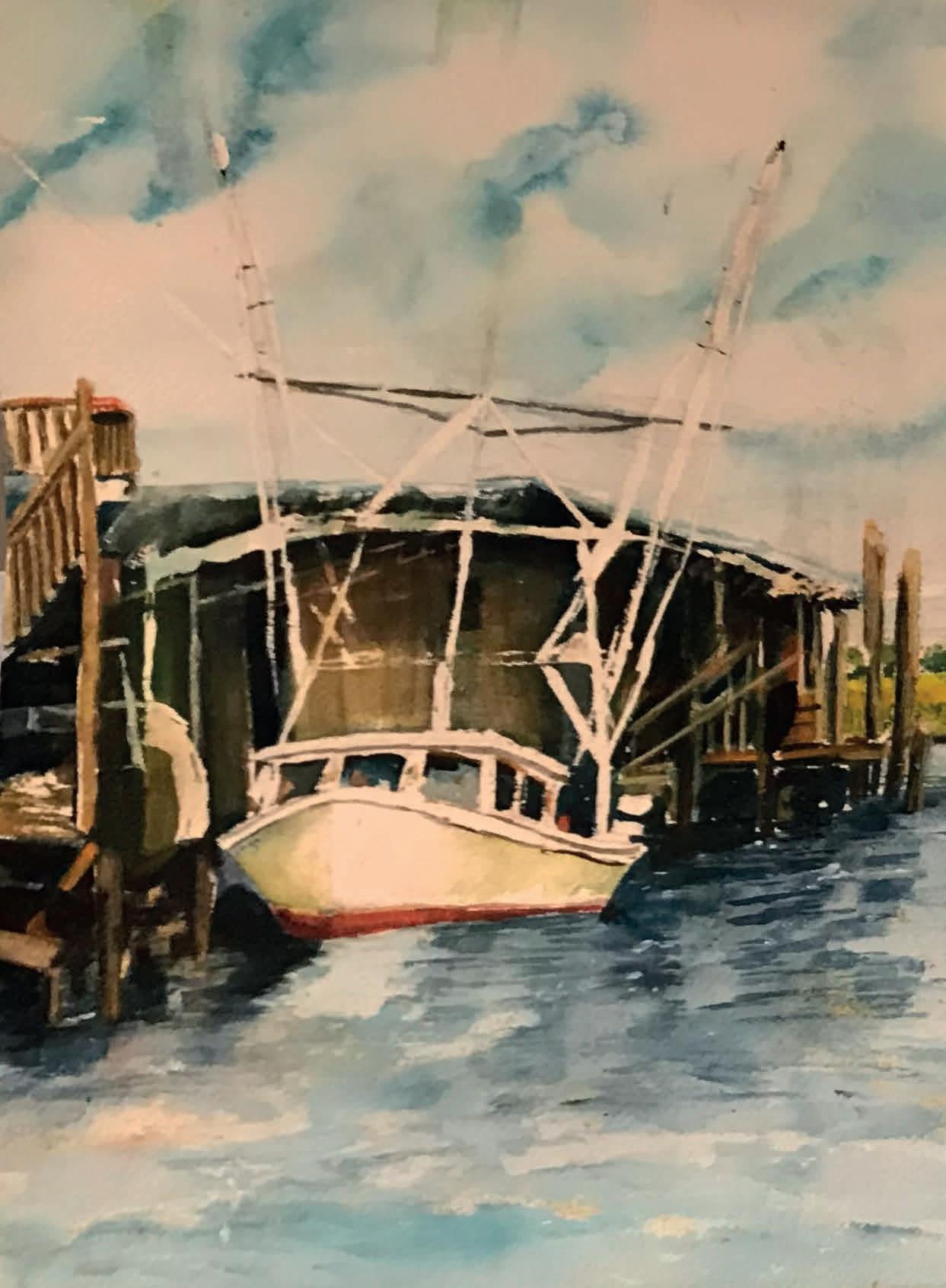
Vazquetelles: Instinctive Inside Josefin Engnér: Chasing the Light 3
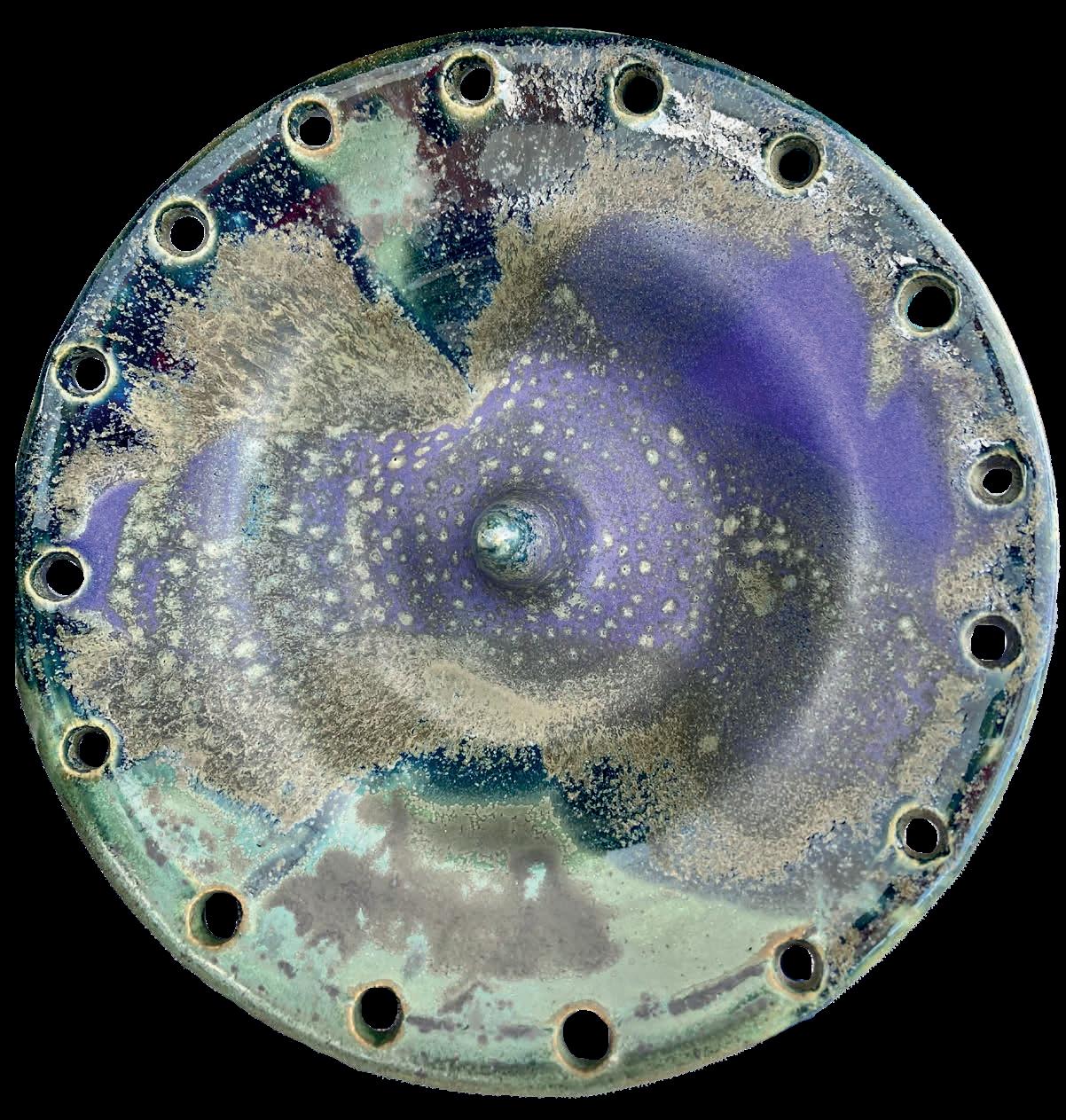
Gannon: Hatteras Starry Night Ring
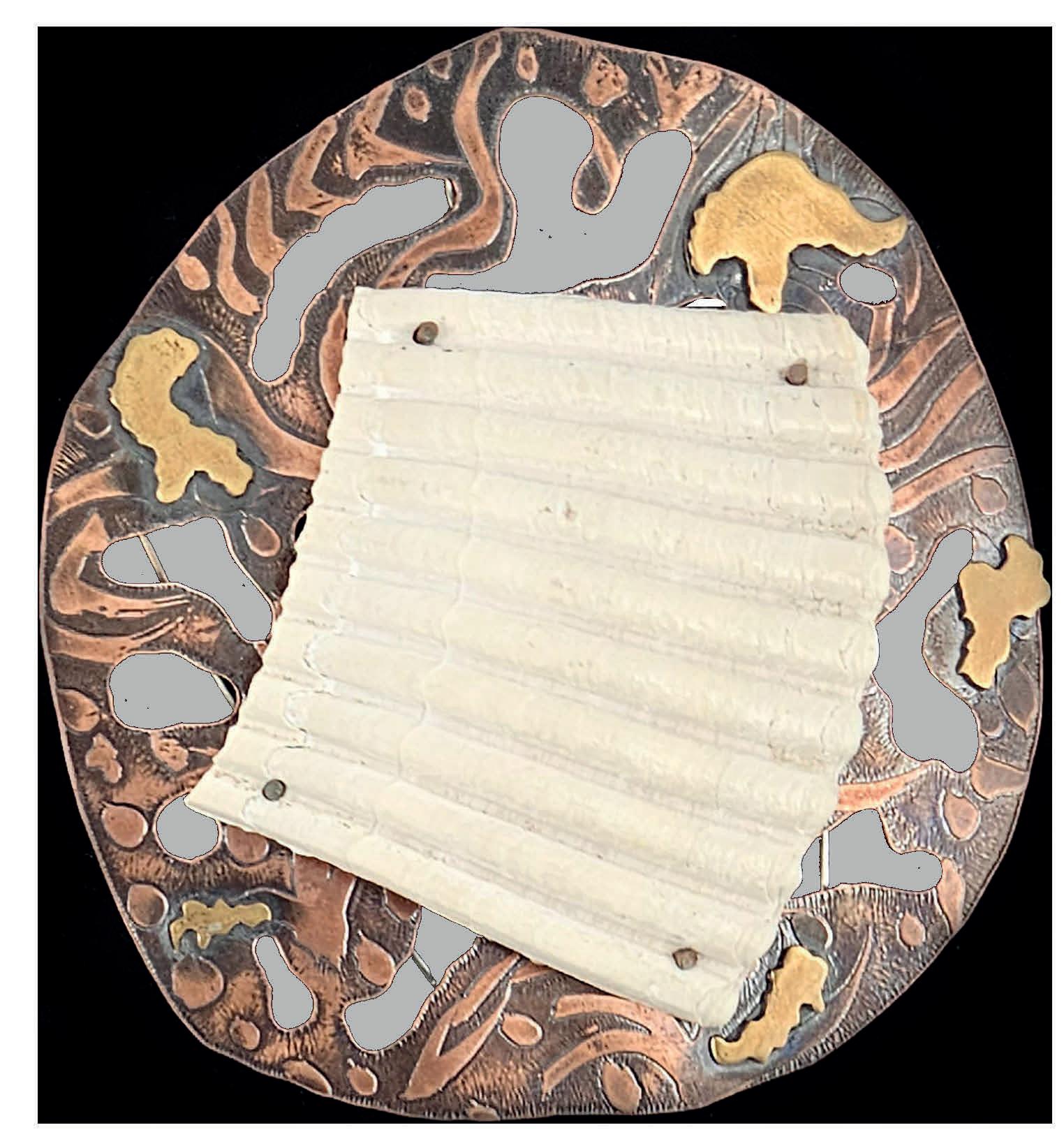
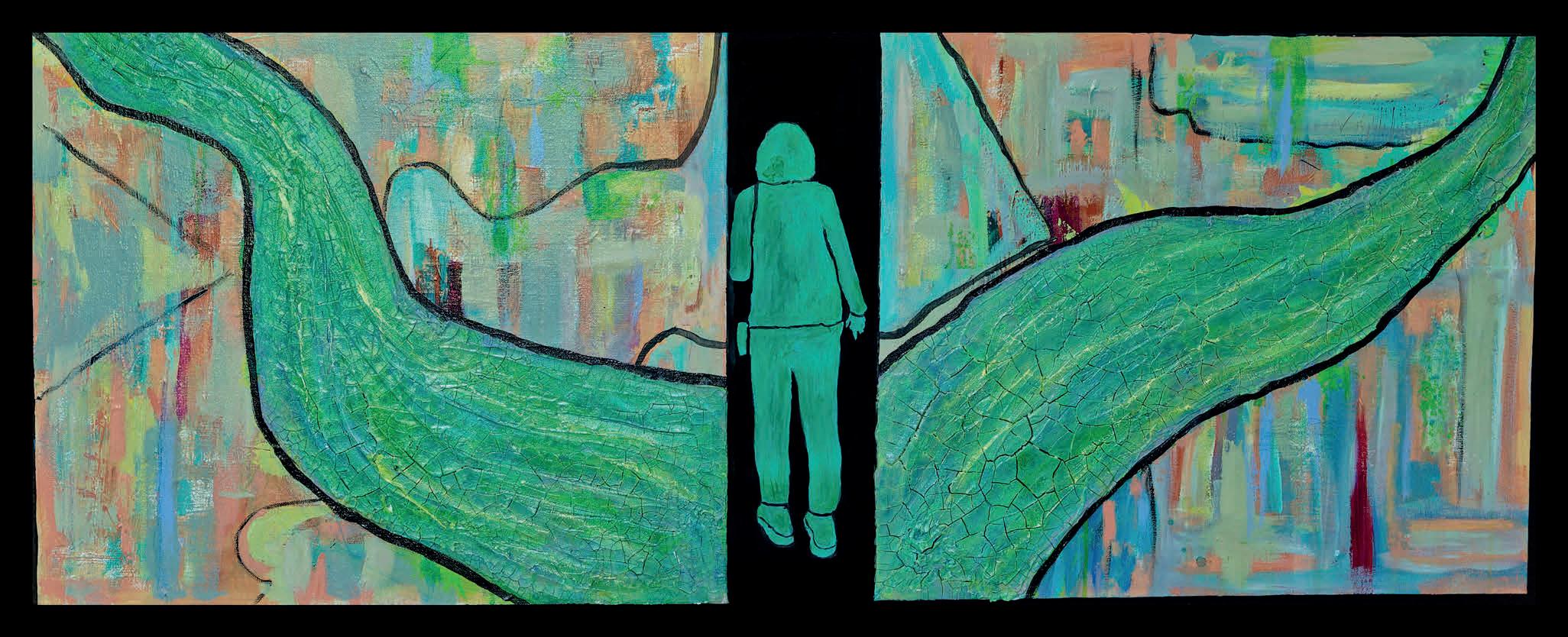
with Earring Holes 2 Sis Hall: WaitingInWanchese 4 Rhonda Bates: Untitled 5 Suzanne Scott Constantine: Road Less Traveled
5 Krista Ginn: Hero 6 Alysia Rivera: Untitled
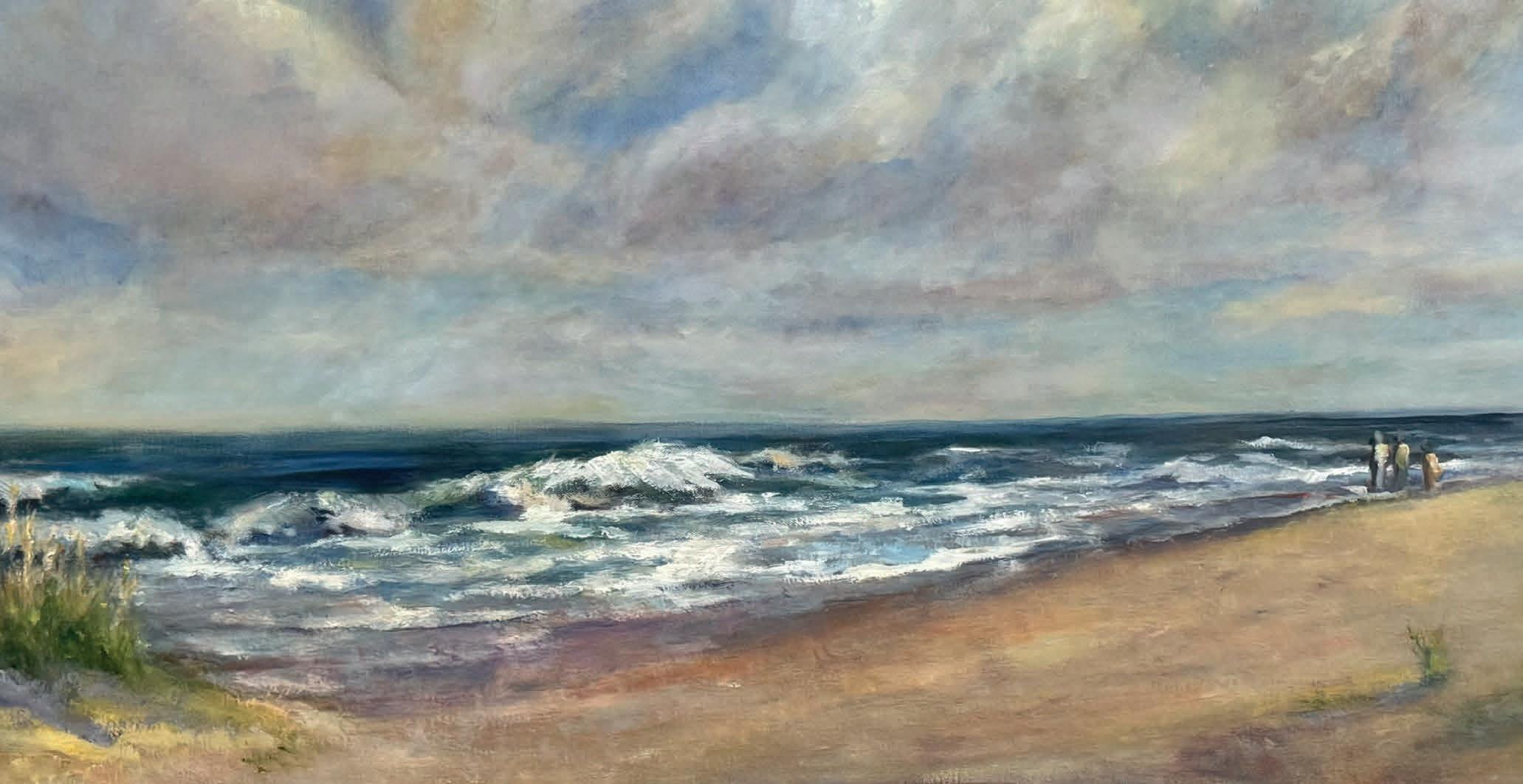
6 Sis Hall: On The Beach
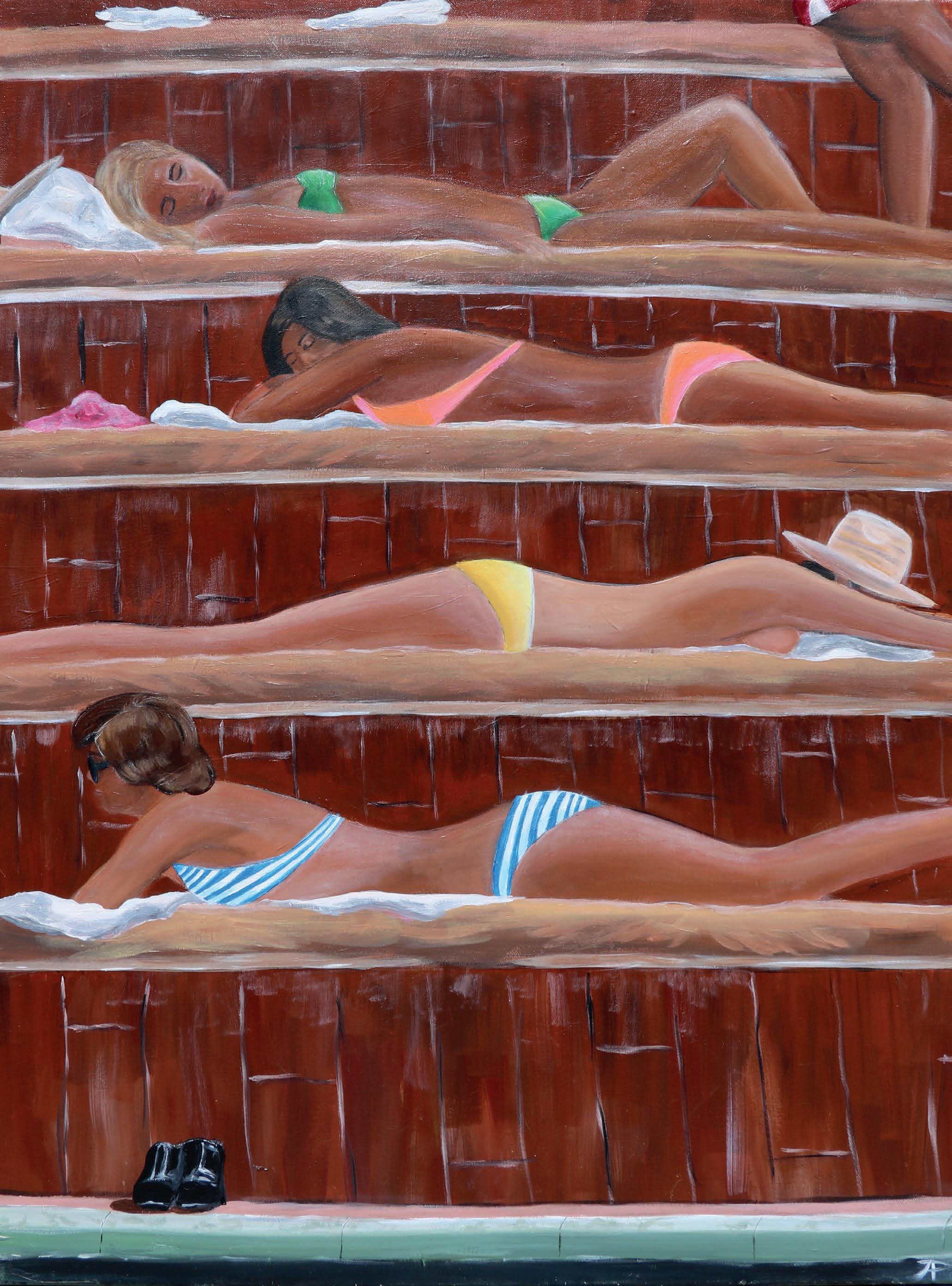
7 Piper Allison: Pool side
8 Lynne Scott Constantine: Departure
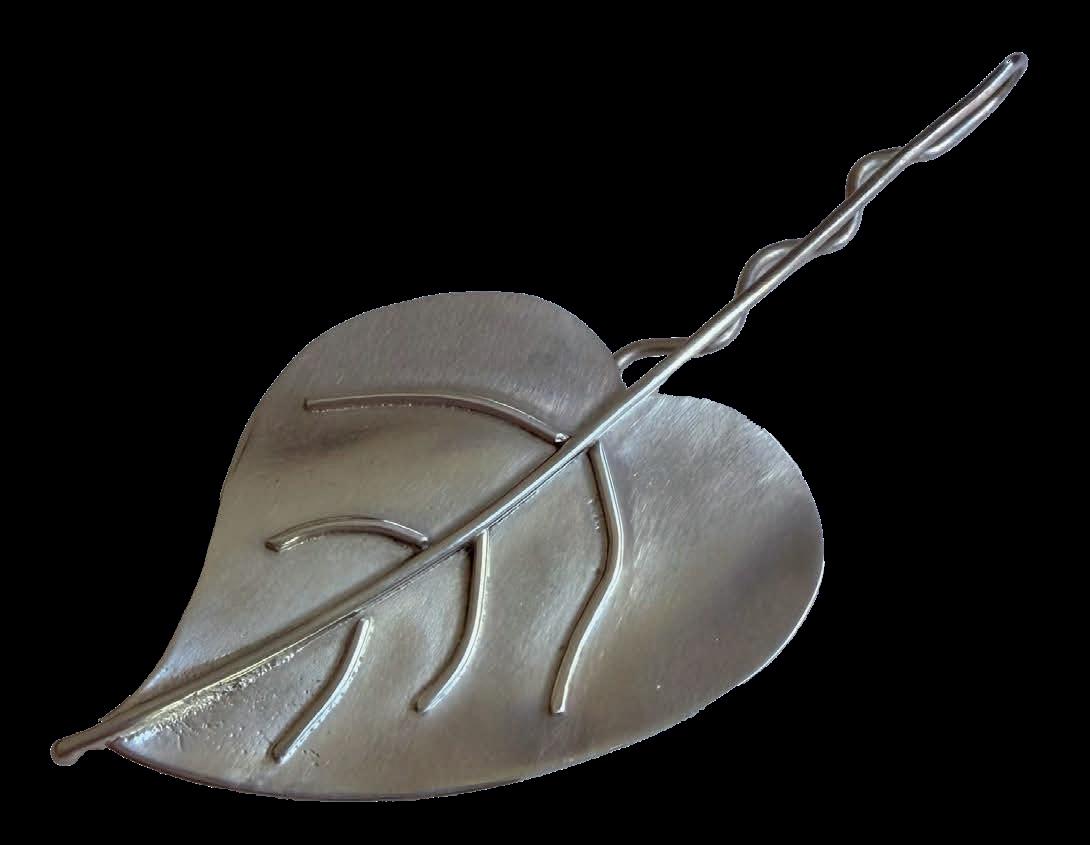
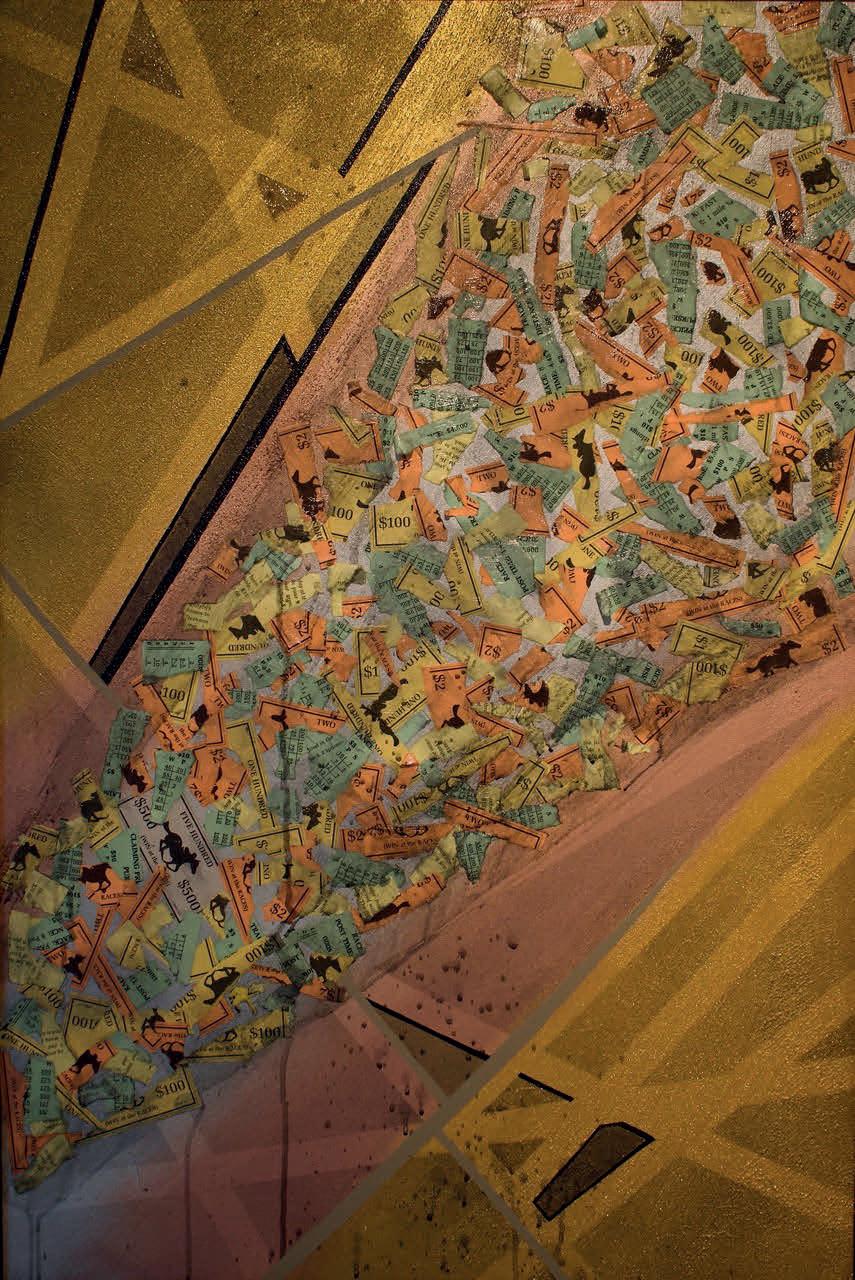
8 Carolyn Mize: Winter Beech Scarf Pin 9 Nat Pugh: A Moment Of Peace 10 Tehra Burton: Win at the Races 11 Rhonda Bates: Untitled
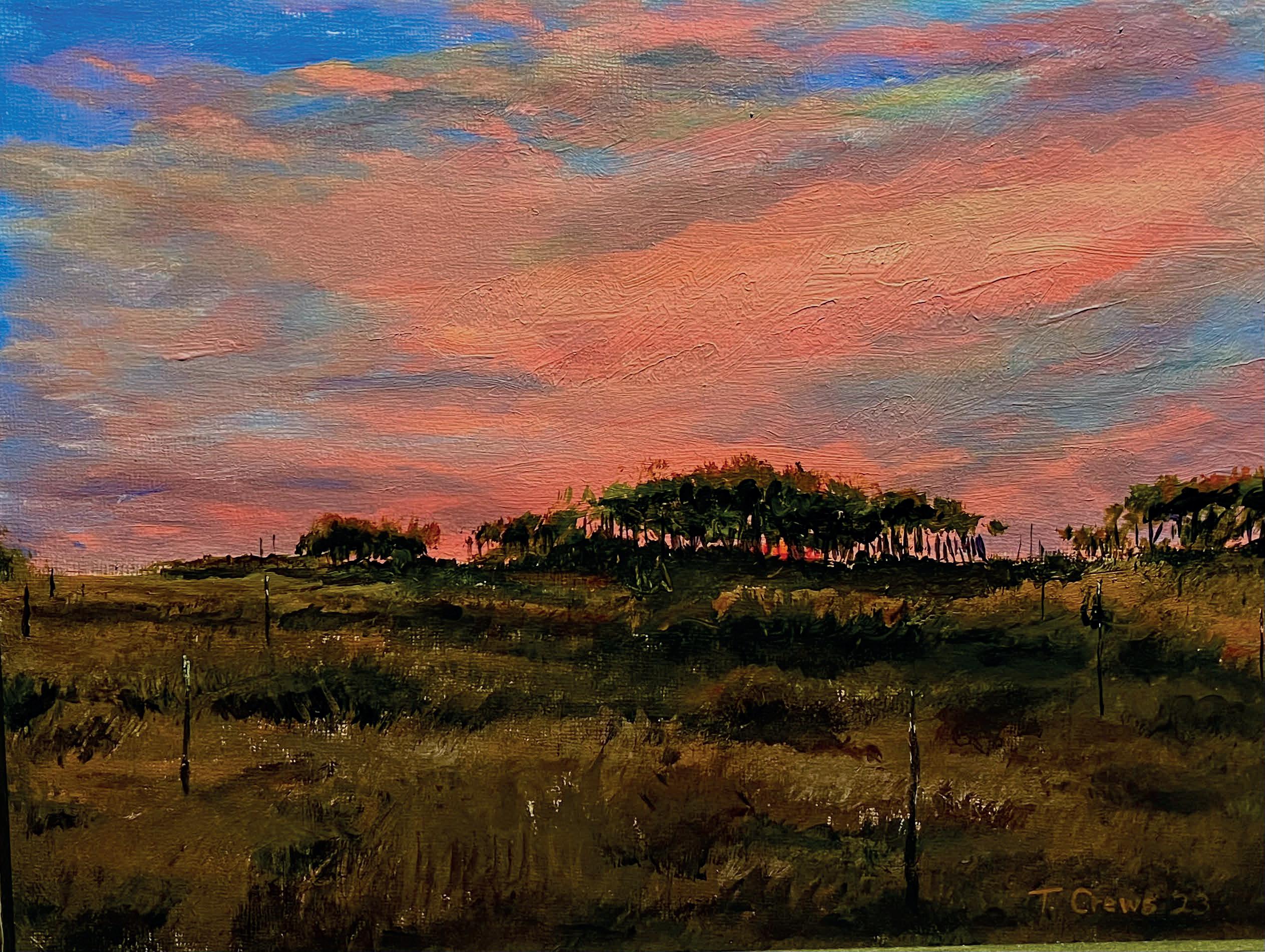
Tom Crews: CaptainOmie
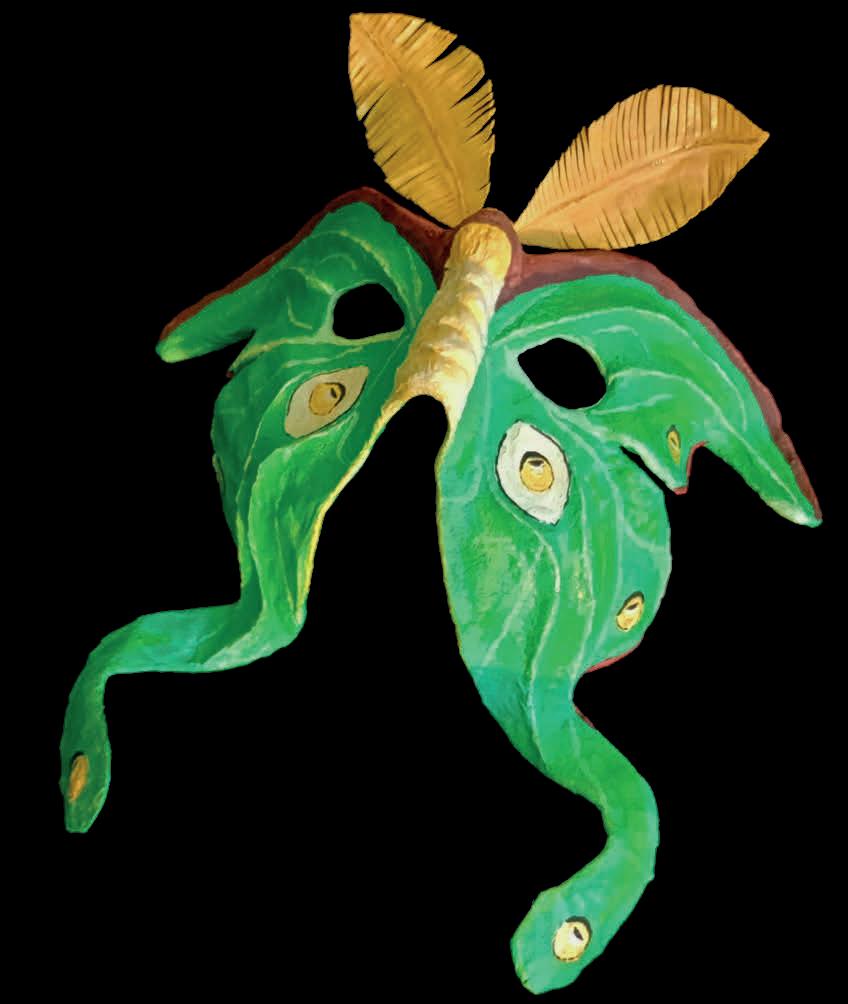
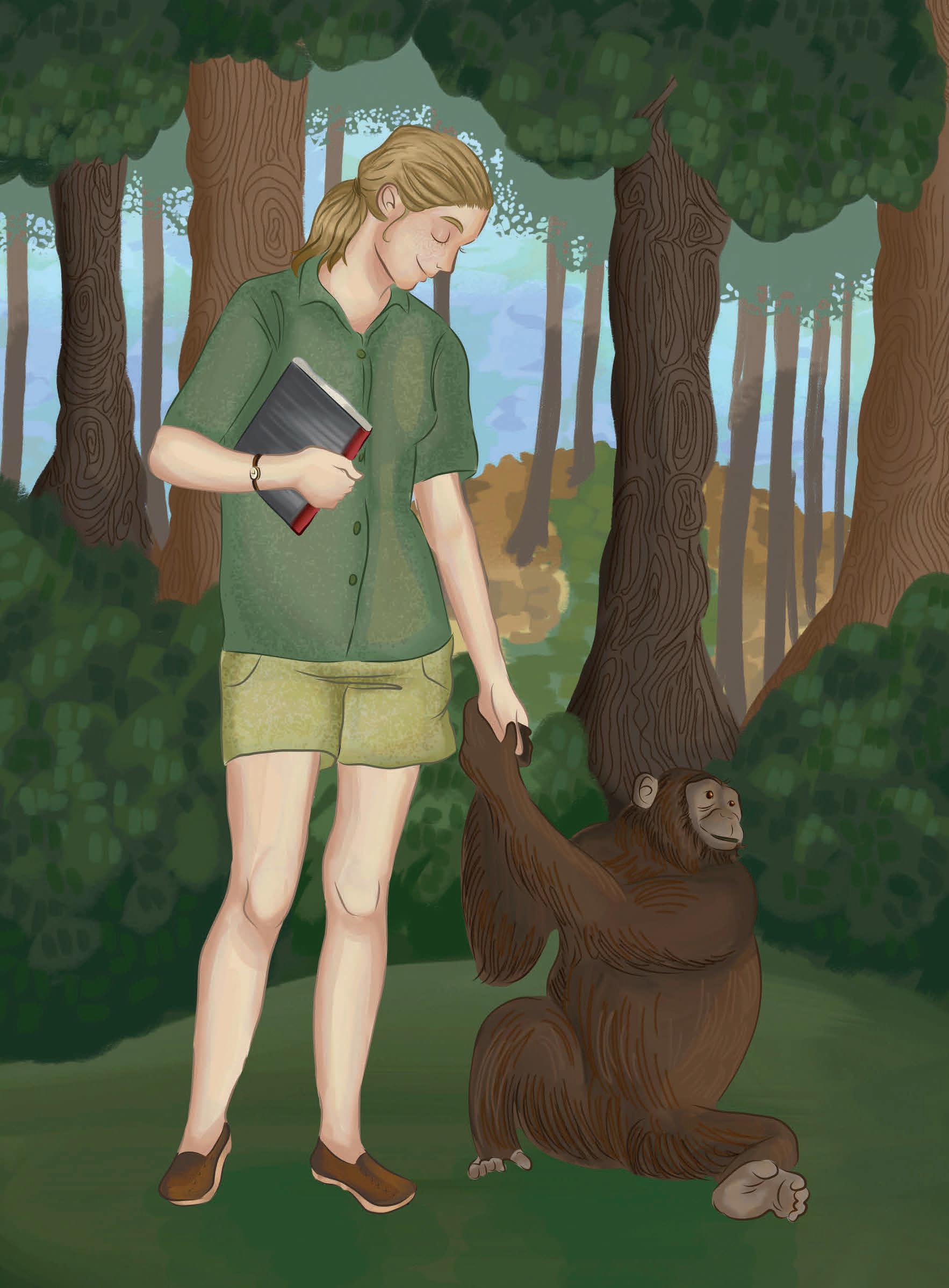
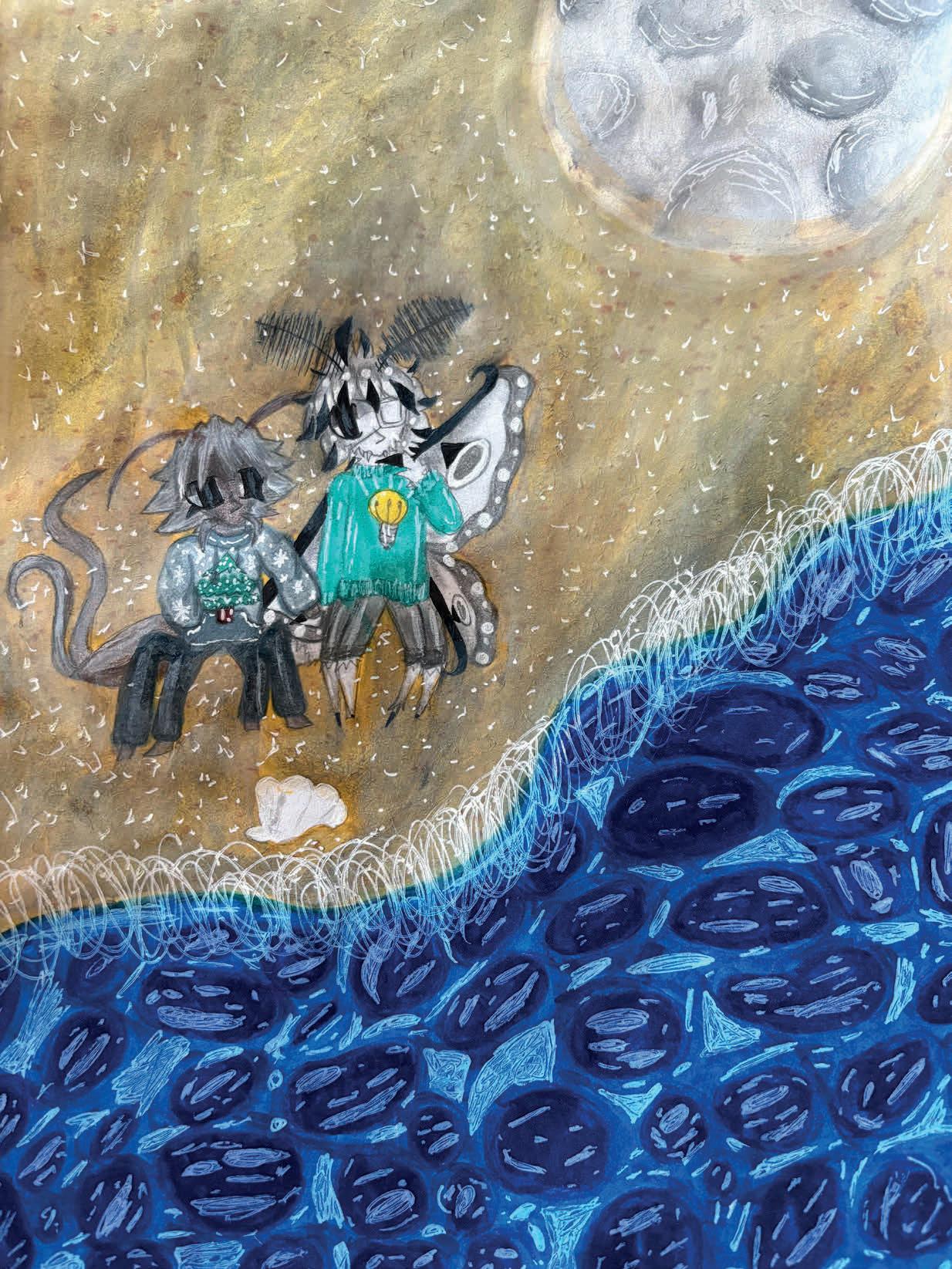
Ani DeSmidt: ThroughtheEyesofaMoth 12 Suzanne Scott Constantine: Connectionsbeyond borders 13 Alysia Rivera: Untitled 13 George Wood: Storm from the South and West 14 Nat Pugh: JaneGoodall’sLegacy
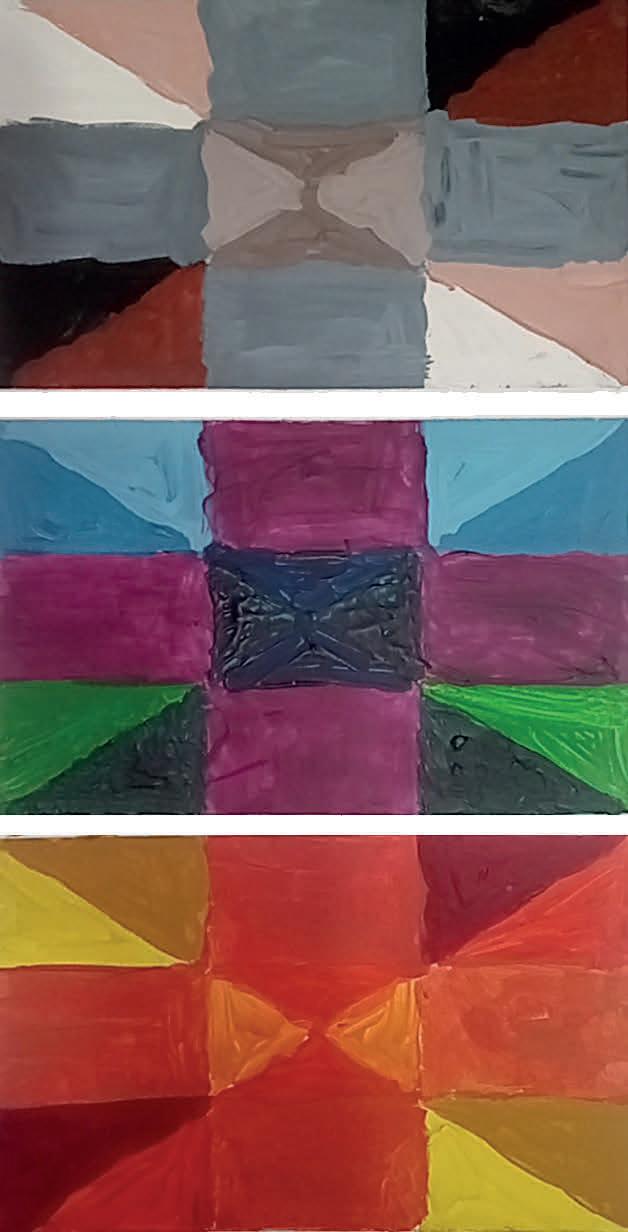
Jamari Smith: Untitled
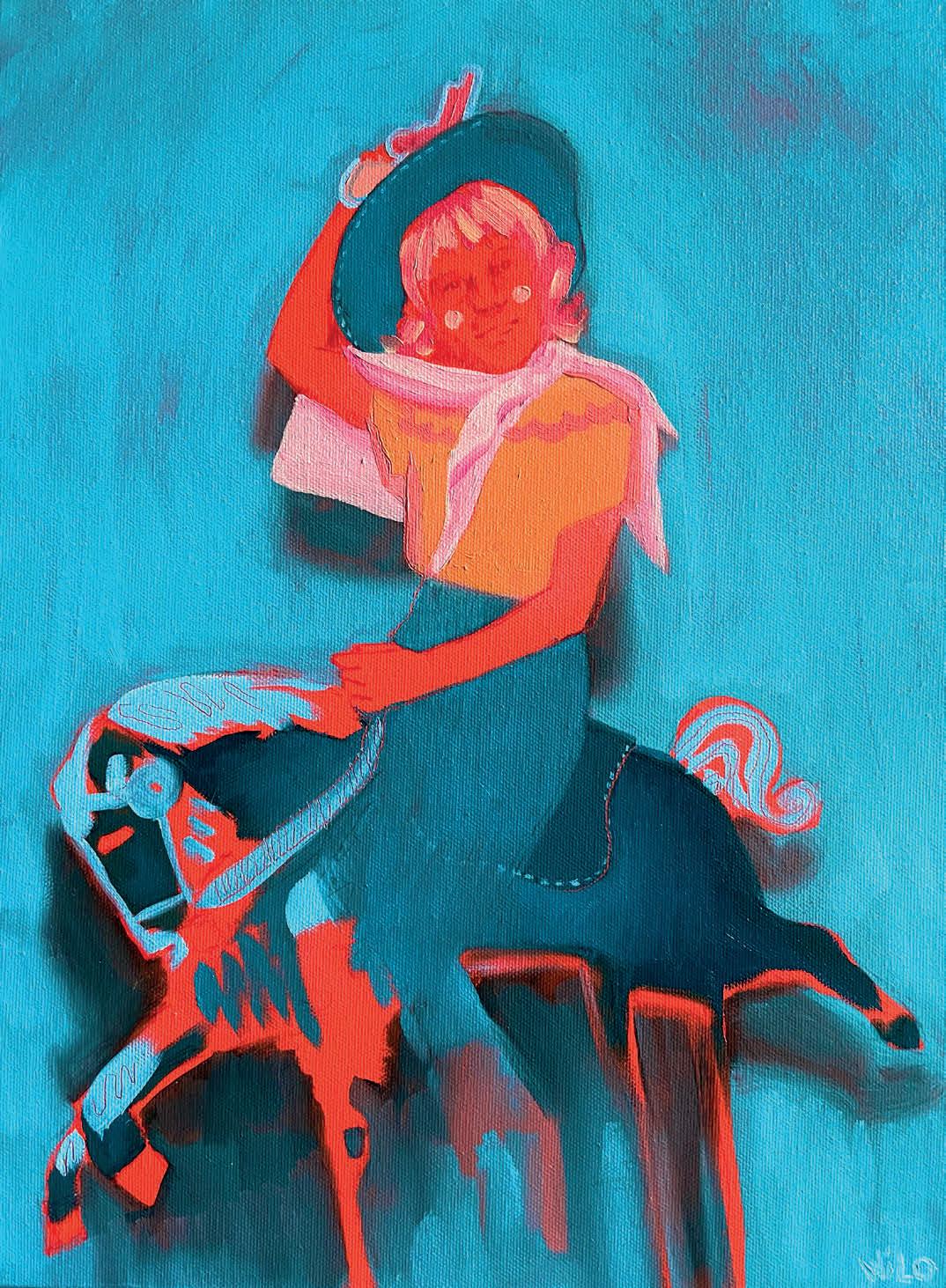
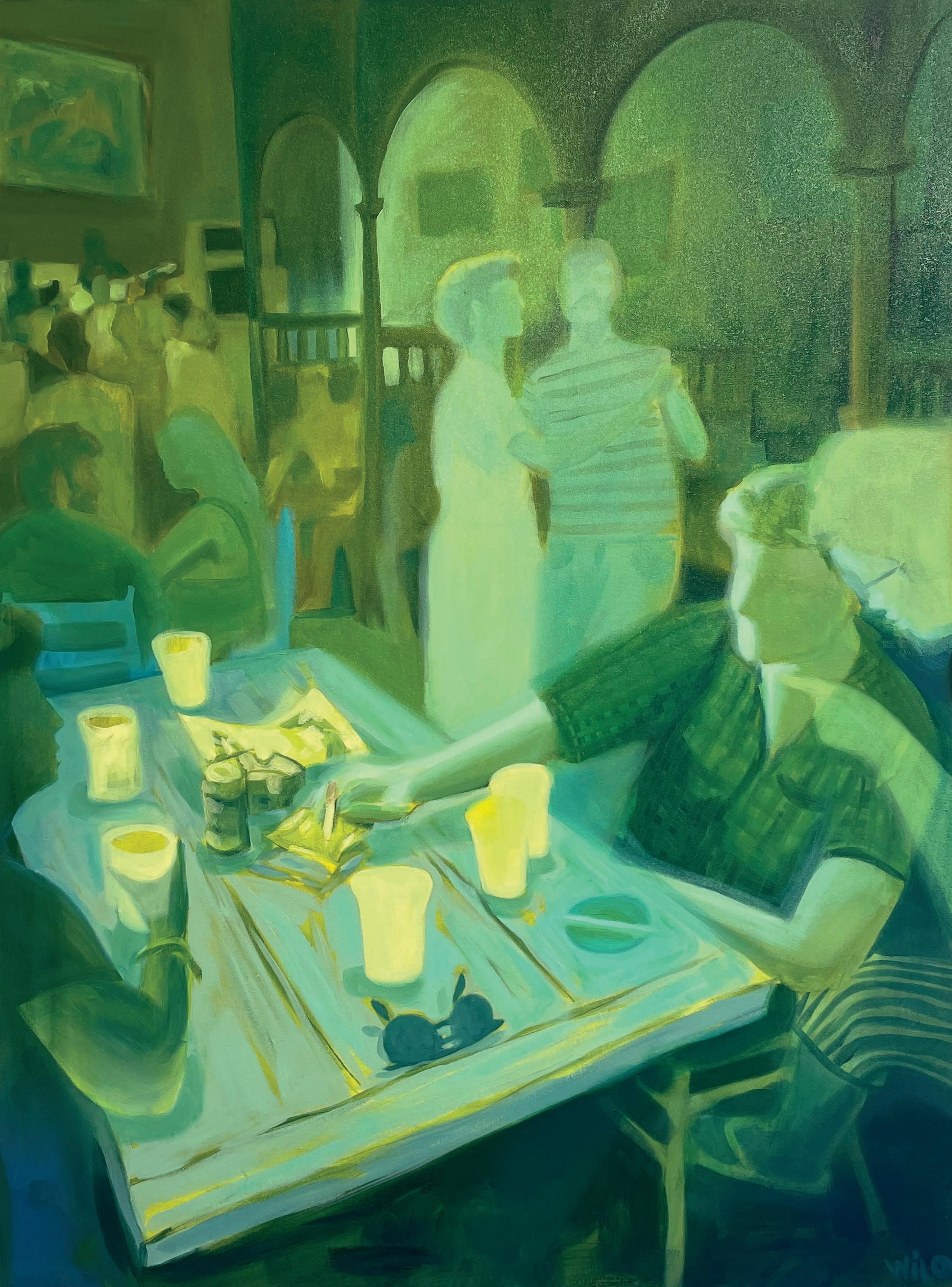
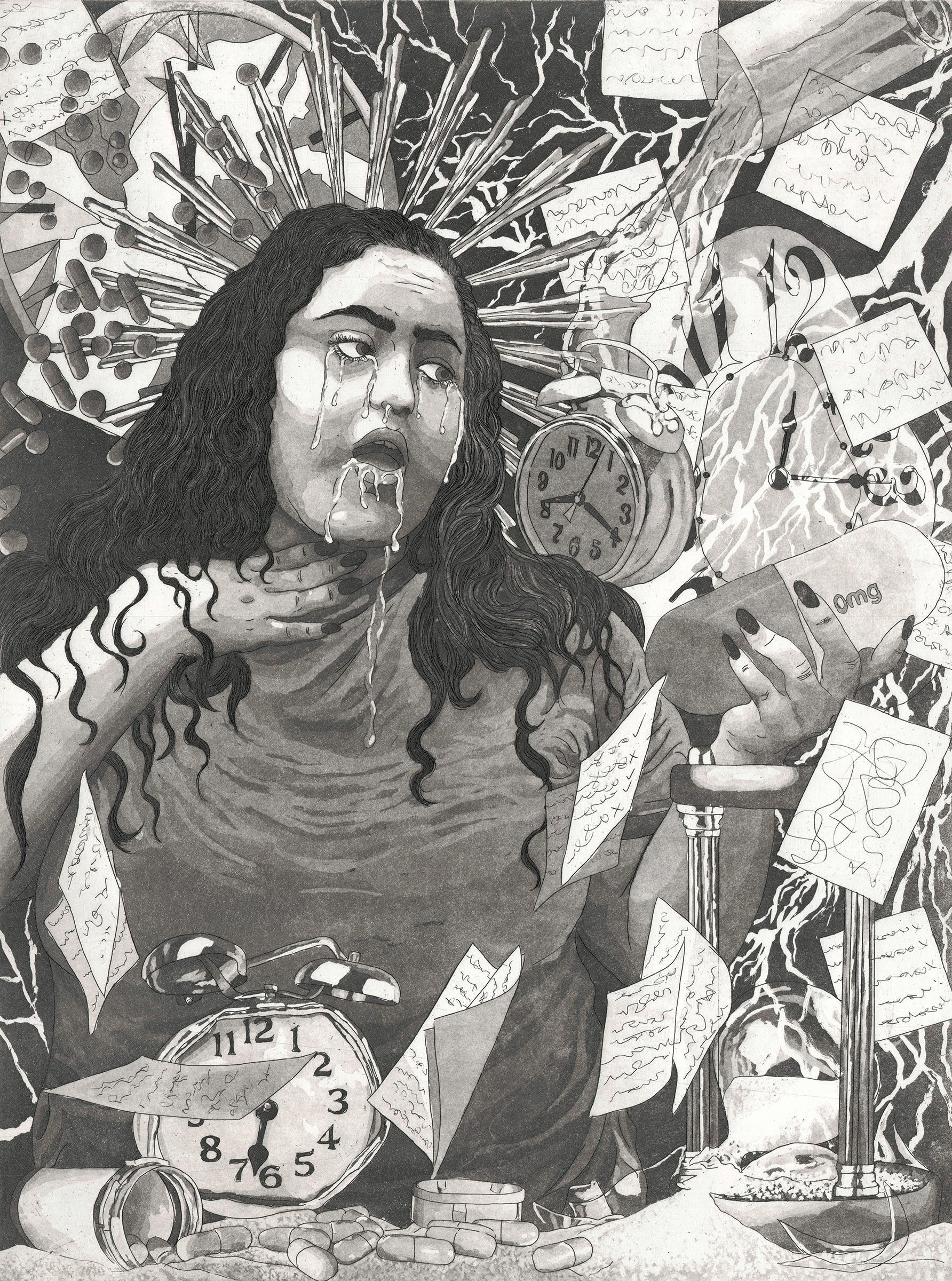
Willow Temple: SmallTownCowgirl 16 Cadence Blount: Hometown Dancer 17 Olivia Gravenese: Atychiphobia
18
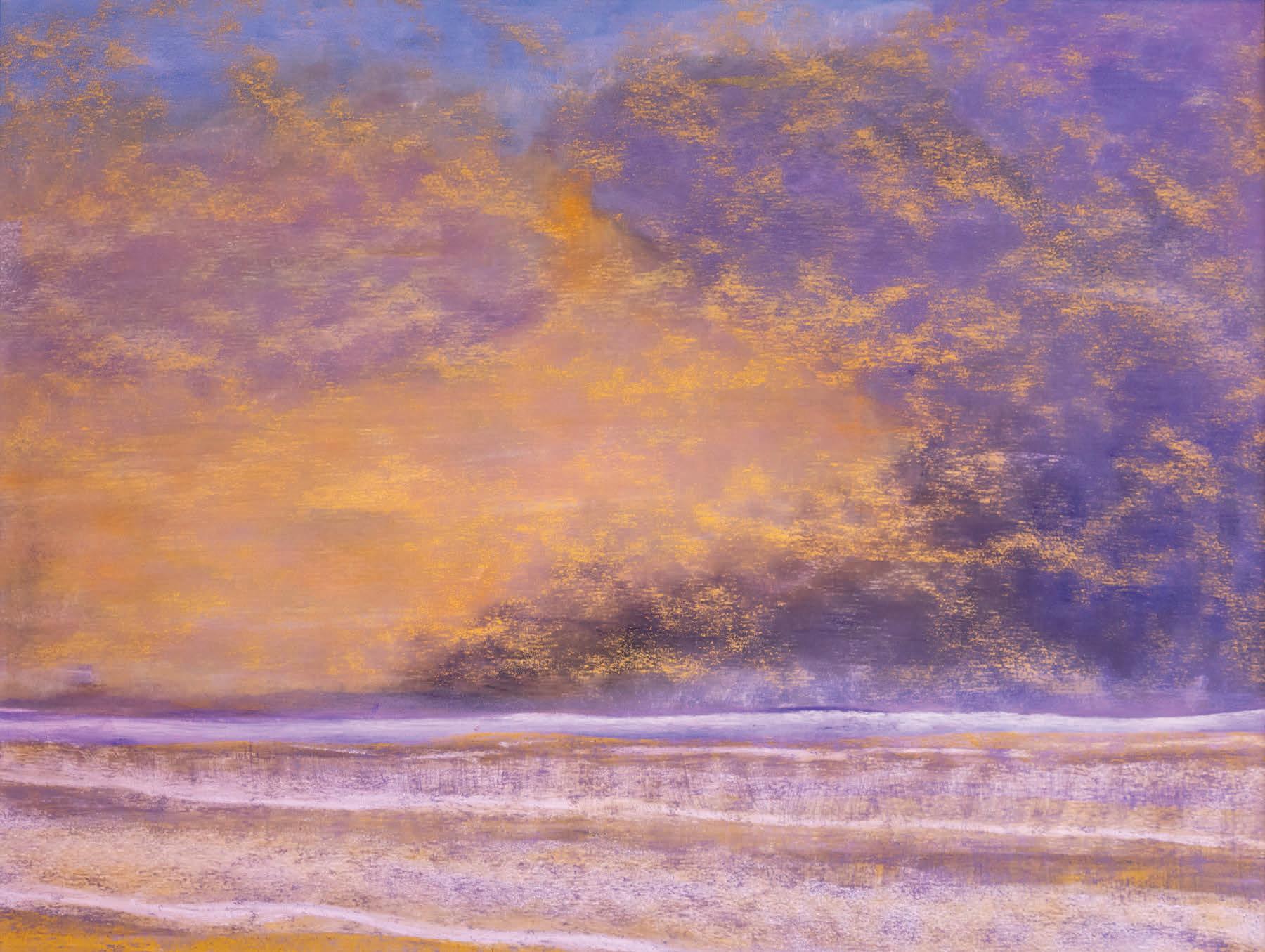
Wood: Manns Harbor Marsh 18 Bowen Lesiewicz: Calm After The Storm 1
Josefin Engnér: Chasing the Light 1 19 Thomas Gwin: Snow Day 21 Emma Vazquetelles: Cordillera
Ginn: Untitled
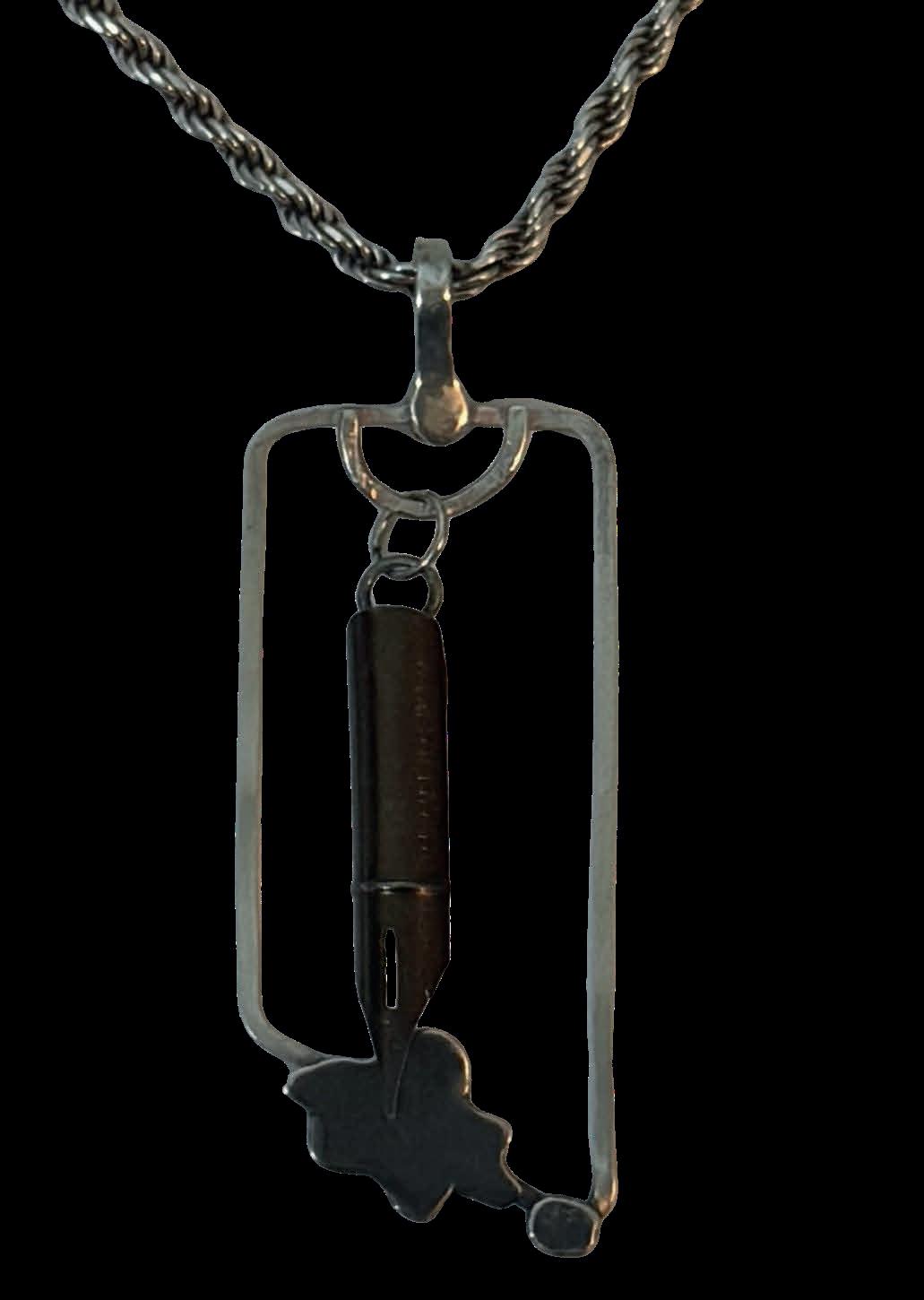
Mize: A Scribe’s Pendant
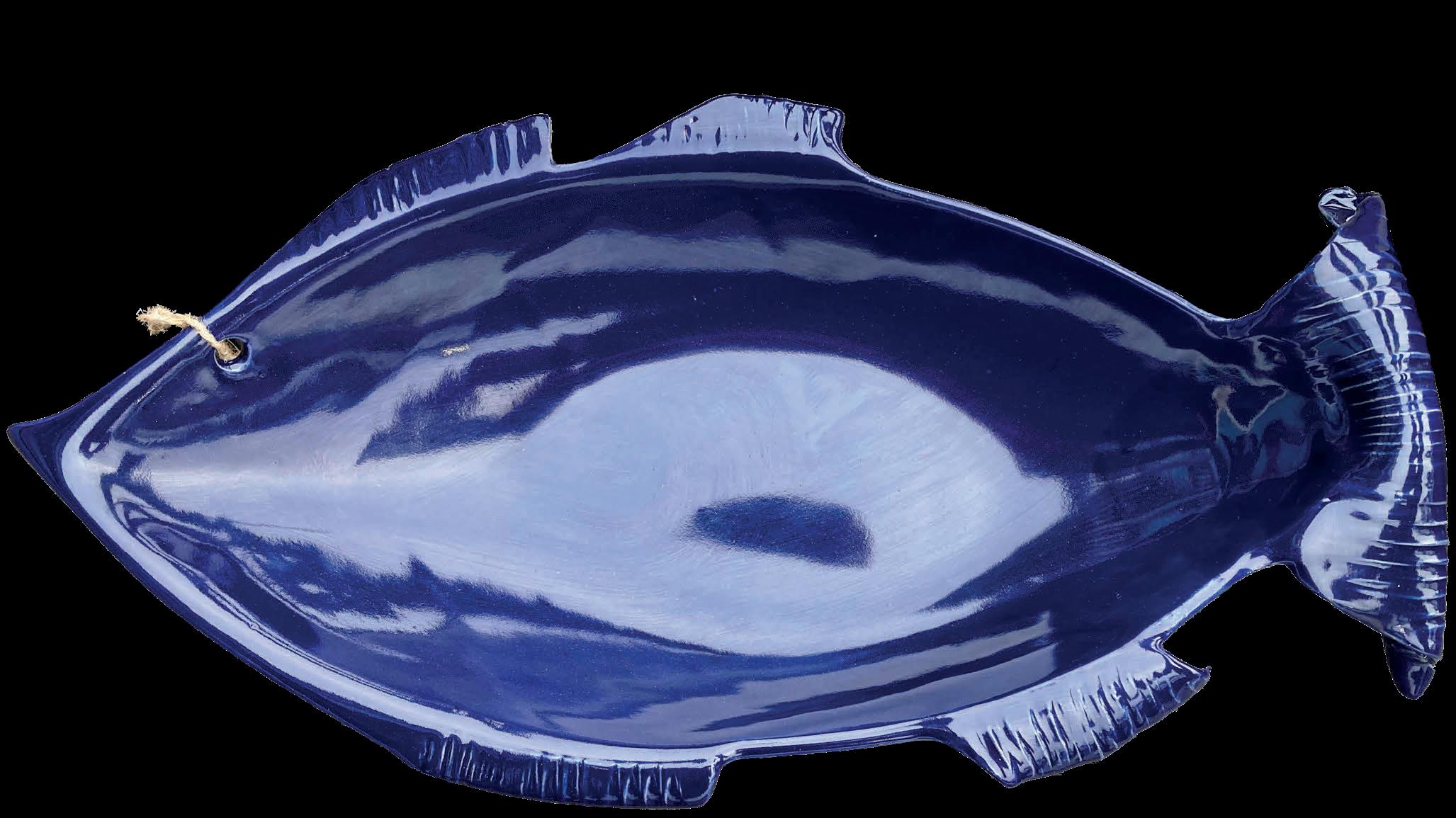
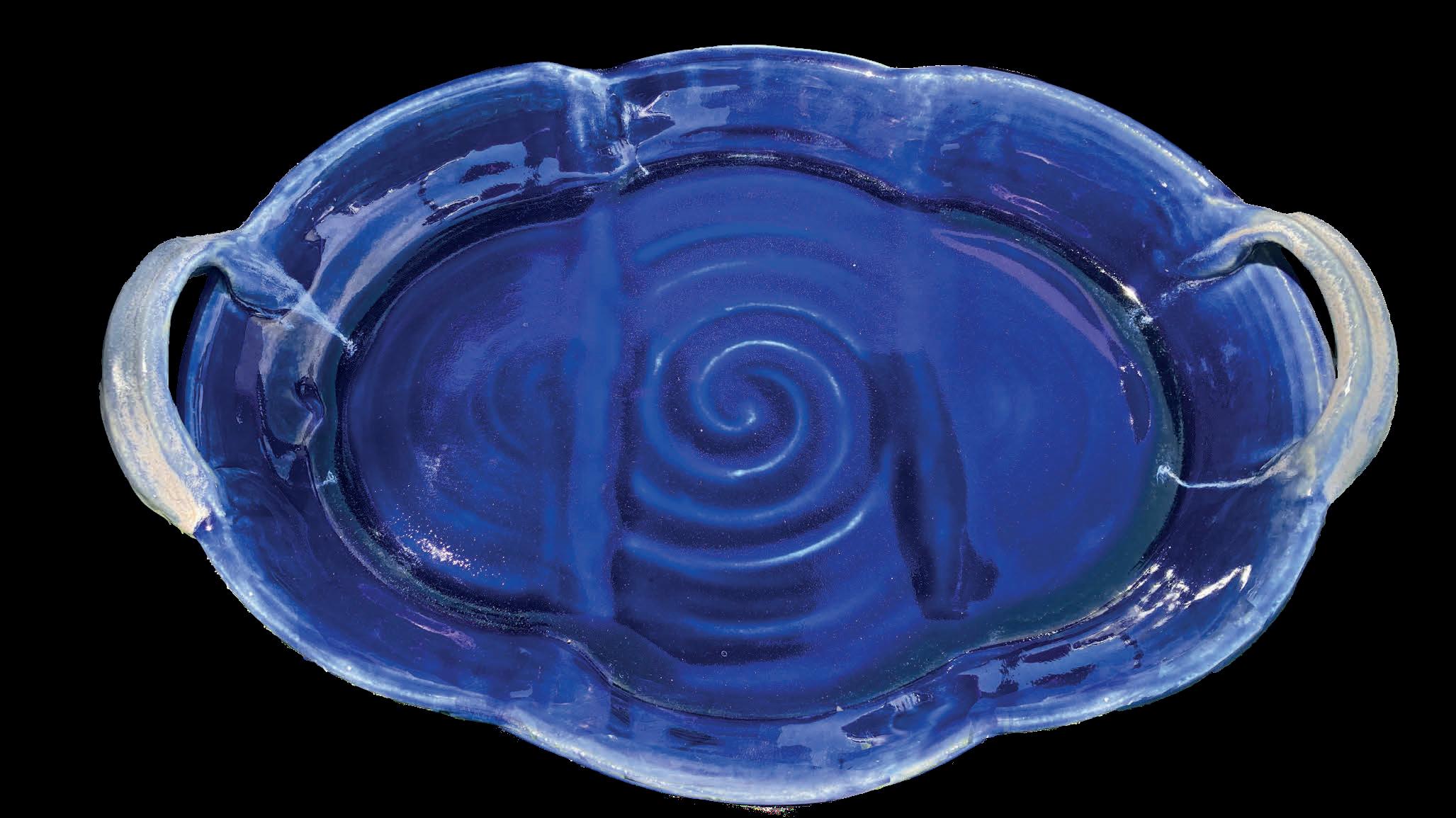
Gannon: Hatteras Style Rockfish
Willow Temple: GreenDolphin
Olha Fidyk: TheWeightofWater
Hurst: Unwritten
Gray: Clapper Rail
DeSmidt: MayweMeetAgain?
Mlinek: i long to be more like
Ellen Riddle: The Camellia
Gray: Troubled Era
Ashley Hurst
I was not handed strength I learned it the hard way.
I grew up fluent in tension, trained to read silence, taught early how to endure What should have broken me.
Fear lived close. So did anger. So did the belief That survival was all I was meant for.
At sixteen, I almost proved it true. Pain made choices for me. Consequences followed. My future narrowed to a single mistake that tried to define me.
I walked away from school before it walked away from me. Life got loud. Unforgiving. Heavy with shame.
Years later, I stood in a courtroom, waiting for a past version of myself to be erased from record hands steady, heartbeat loud, future balanced on ink and law.
I refused to stay where I fell.
I faced the damage head-on the charges, the paperwork, the silence that followed “expunged.” I earned my way forward.
Hands trained to care - CNA. Lives trusted to me - EMT. Survival sharpened into skill - AEMT.
I learned discipline where chaos once lived. Purpose where anger once burned. Boundaries where fear once ruled.
I rebuilt myself deliberately education reclaimed, career earned, confidence forged, peace enforced.
I am not lucky. I am relentless.
I did not outrun my past I outgrew it.
This life is not a redemption arc. It is a victory.
Wayne Gray
Your compressed body, “thin as a rail,” a good escape advantage, and a good name for you.
I heard about marsh hens All my young life, But in all my traipsing the marsh, I never saw you until I was grown.
Cackling at night, Inciting others like you, Crouching in thick stands of marsh grass, Elusive, running through reeds, Seen only at high tide, Fishing the small ditches and creeks, Eating small crabs and minnows, A water bird that looks like a bantam.
A survivor, Thinking you are invisible, You criss cross the many trails, Tunneling under the spartina, Looking over your shoulder For the dreaded hawk.
You create mystery In the marshlands, A ghost bird.
Ani DeSmidt
Thou wert not deserving of this fate. The terror that commenced cannot be undone. Hopefully, we meet again, as I await
Mine heart hath fallen into a mournful wake. The rueful tears flowing begun Thou wert not deserving of this fate.
Benevolence of thine is a spread of radiant. Thy heart was lighter than a morning sun. Hopefully, we meet again, as I await
The voice of thine captivates. As the frills on thine dress spun Thou wert not deserving of this fate.
We danced and sang to elate. Together, expressing arts of creation Hopefully, we meet again, as I await
Thy death will not negate I will forever fight forces that shun Thou wert not deserving of this fate. Hopefully, we meet again, as I await
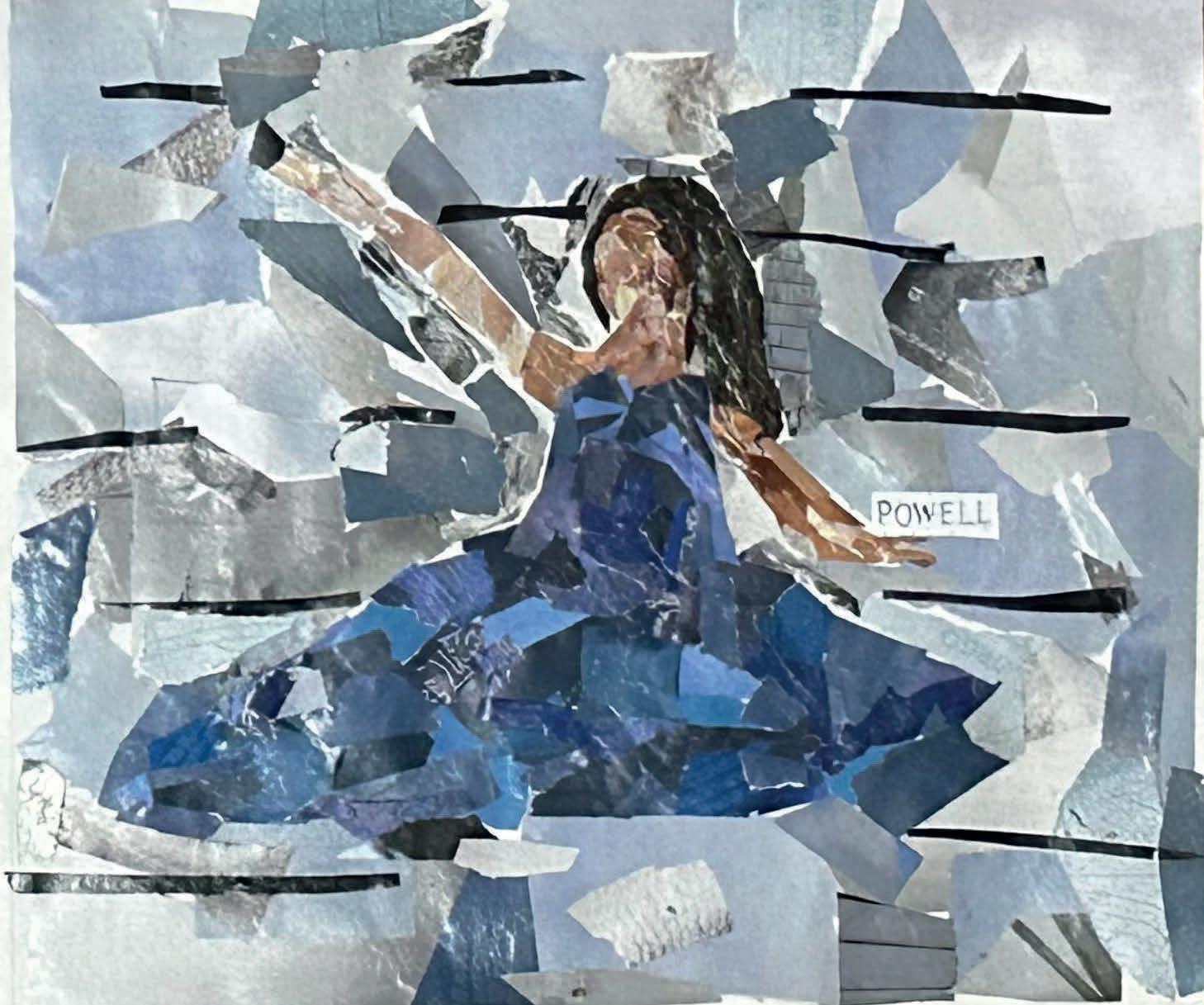
Rebecca Mlinek
with the assurity of a cat too fat to reach all his fur, bending an eloquent neck to his side, sandy tongue running over a patch of flank. he moves across the basement floor belly swaying, spine held high and fluid, his twitching gaze locks, eyes slowly close. when he rests, his flesh spreads a puddle of fur. the winsome head turns with maiden grace, tucks with a sigh into folds of neck. his loveliness defies all standards, diet feed, lasers pointed at the floor to make him run. he does not envy the sleek wild cat who taunts from the patio door, pounces among the thin stems outside a wiry yellow. instead he arches his broadness of back, bares the fangs that say: you paltry thing, go away. i am a god of substance here.
It stands like an Asian ornamental. A barren, leggy trunk holds up its leafy headdress. Buds dot the carefully pruned camellia bush promising white flowers with delicate pink markings. Within a month the flower buds on its southeast side will begin opening.
As they fade, the opposite side will bloom.
Fallen leaves crackle under foot as the artist walks from her yellow house toward the shrub below. She examines its grey and white bark. “It’s like hieroglyphics,” she said.
Last year’s calyxes or flower bud coverings lay amid brown hues below the bower. Their leathery forms, which once held peony-shaped blossoms, appear petrified. They resemble weathered dogwood petals more than something related to head-heavy camellias. The domed seed pods with flat bottoms are scattered among dried leaves. Across the detritus a red mite wanders through the last days of December.
The camellia flower is not known for its scent. Yet the woman snaps open a leaf, and fragrance exudes despite its faded appearance. It is as if the wind pummeling this sound side hill forces the leaf’s solid green to separate into pale olive and golden yellow stripes. The variegated hues may be due to sandy soil, salt air or a need for fertilizer.
A few buds on a twig and two of last year’s calyxes are collected. The woman will recreate their shapes and colors on white drawing paper.
The camellia bush hides a secret. It was discovered while adorning the bush with tiny fairy lights for the holiday. The dense leaves worked well to camouflage an empty nest. Parting the branches for a peek is done carefully so as not to unravel the bird’s work. Aha, it is a mockingbird’s doing!
The loosely woven habitat was built but a stone’s throw from the artist’s home. From the porch, the comings, and goings of such a creature have already been noted in the pages of her sketchbook. As secretly as the bird hides its home, she discreetly documents the backyard seasons so as not to disturb its participants.
Nature is the artist’s religion. She is a faithful congregant with stacks of missal-like sketchbooks proving her dedication.
Like Basho’s haiku where:
“Camelia-Petal
Fell in silent dawn
Spilling
A water jewel,”
deep sentiments accompany pencil, pen, and watercolor sketches describing the whirr of bird’s wings, the sound of leaf skulking foxes and the eternal scent of summer.
The camellia, an Asian transplant sacred to the Buddhists who place them around temples and in shrine gardens, is said to symbolize faithfulness. Red blossoms speak to intrinsic worth and white to loveliness. Gold was said to yield cosmetic oil used by Napoleon’s mistress, Josephine, also called Princess of Camellia.
Garden wisdom calls for partial shade to produce the best camellia results: blossoming to perfection during the cooler months of the year. For the diarist who embraces what change brings, including last year’s discarded camellia parts, perfection is ever present. Soon a single white and pink flower will float like a water lily on her table.
Standing in the warm kitchen the towering figure cups her hands. She lowers them slowly to the tabletop as if placing the first blossom in a water-filled bowl and whispers, “It brings the hint of what’s to come.”
Wayne Gray
A troubled era, Yells of dissension, Divisive times, Awash in anger, Killing in the streets, Turning up the dial on inequity, Looting and burning, The pandemic, Racial injustice. Will we make a fresh future? A world of forgiveness?
Overloaded restlessness, No jobs to go to, Encouraged by a now leader To channel bad energy. A man full of hate and evil, Guiding his base in circles. Is anyone in sight To break the ring?
Rebecca Mlinek
This thing between us is foundational, we climb over the steep face of a cliff that rose before the world began, neither of us sure of our footing. Our skin, too young at first now cracked, pouched, growing moles, those weird little things on the back of your neck. We grew skin tags together. Like lovers.
All our energy comes from you, your depths of granite pulling heat from some hidden core. The climb is a continual falling to warmth. Though my safety harness is unsure, untrustworthy, like the shrug of your dermatologist when asked, “Is this benign?”
Our favorite coffee comes from a slow place, years of cooled lava collecting soil, the dust of time. Then finally, a miracle sprouting from the film collected on the dead, the hardened. A little plant, reaching towards the distant sun, warmed from the past, destined for our dirty little kitchen, cozy with our mugs.
This thing between us is foundational. It comes from the long slog of time, the heating and cooling of the earth, the aging of catastrophe and beauty. It comes from you, the heat off you like life, and me, a blinding flash thrown as metal sinks into soft stone. It comes from the accumulation of soil, the hardy things that grow with time and warmth. We grew skin tags together. Like lovers.
Hurst
There are things I don’t say out loud because saying them gives them edges.
This is one of them.
I don’t love him the way people talk about love. I don’t gush. I don’t soften. I don’t need romance to prove anything.
What I feel for him is quieter. And darker.
I am drawn to him in a way that has nothing to do with choice. Even though I hate touch, even though my body learned early to stay sealed shut it opens for him without asking me first.
That scares me.
Before him, love always felt like something I had to manufacture. Say the right things. Hold the right shape. Prepare for the moment it would turn.
With him, nothing turns.
It is effortless in the most dangerous way like standing too close to the edge and realizing you’re not afraid of falling because the ground feels honest.
We have known each other longer than this life version of us. That’s the only way I can explain it. Too early. Too young. Too familiar.
I have lived whole lives without him. Married. Built things. Survived things.
None of them felt real until he was back in the room.
When everything broke my past, my children, my sense of safety he did not hesitate. He did not need to be asked. He did not need to be thanked.
He just stayed.
And not in the way people mean when they say that. He became load-bearing. The part you don’t decorate. The part you don’t touch because everything depends on it.
I don’t think I would survive a world where he isn’t here. Not dramatically. Not poetically.
Literally.
He is the reason my body sleeps. The reason my guard comes down. The reason I don’t feel the need to keep an exit open at all times.
That kind of love doesn’t feel romantic. It feels final.
I don’t talk about it because it sounds like weakness. Because it sounds like need. Because it sounds like something that could be taken.
But the truth is if there is such a thing as home, it is not a place.
It is him.
And that is the thing I will never say where anyone else can hear it.
Michelle Gudknecht
Upon a cloud I sit.
Weightless as the very air I breathe. The sun.
Its golden warmth envelopes me. Making me drowsy.
My eyes grow heavier with each passing breath. And I drift to sleep.
A dream, dark as pitch, playing in my mind’s eye. A dream of childish nightmares. Such would wake me. And send me crying into the darkness.
My mother would come running. As she had always done. And she would hold me in her arms.
Protecting me from the monsters that lurked just beyond sight.
Now, there is no mother. No mother to comfort me.
Hold me, until my eyes close again.
Upon this cloud, I have been trapped.
I am Atlas.
Carrying an invisible planet upon my shoulders. This planet, which should be held by many. Rests solely upon me. I can hardly breathe.
Sinking.
The weight pushes me further. Looking downward, I see.
Naught but an infinite void below me. No one to catch me.
A punishment, only granted to those who have truly earned it. Yet I must bear this weight. The weight which threatens to bore a hole through my very being. For I am eternally alone.

Wayne Gray
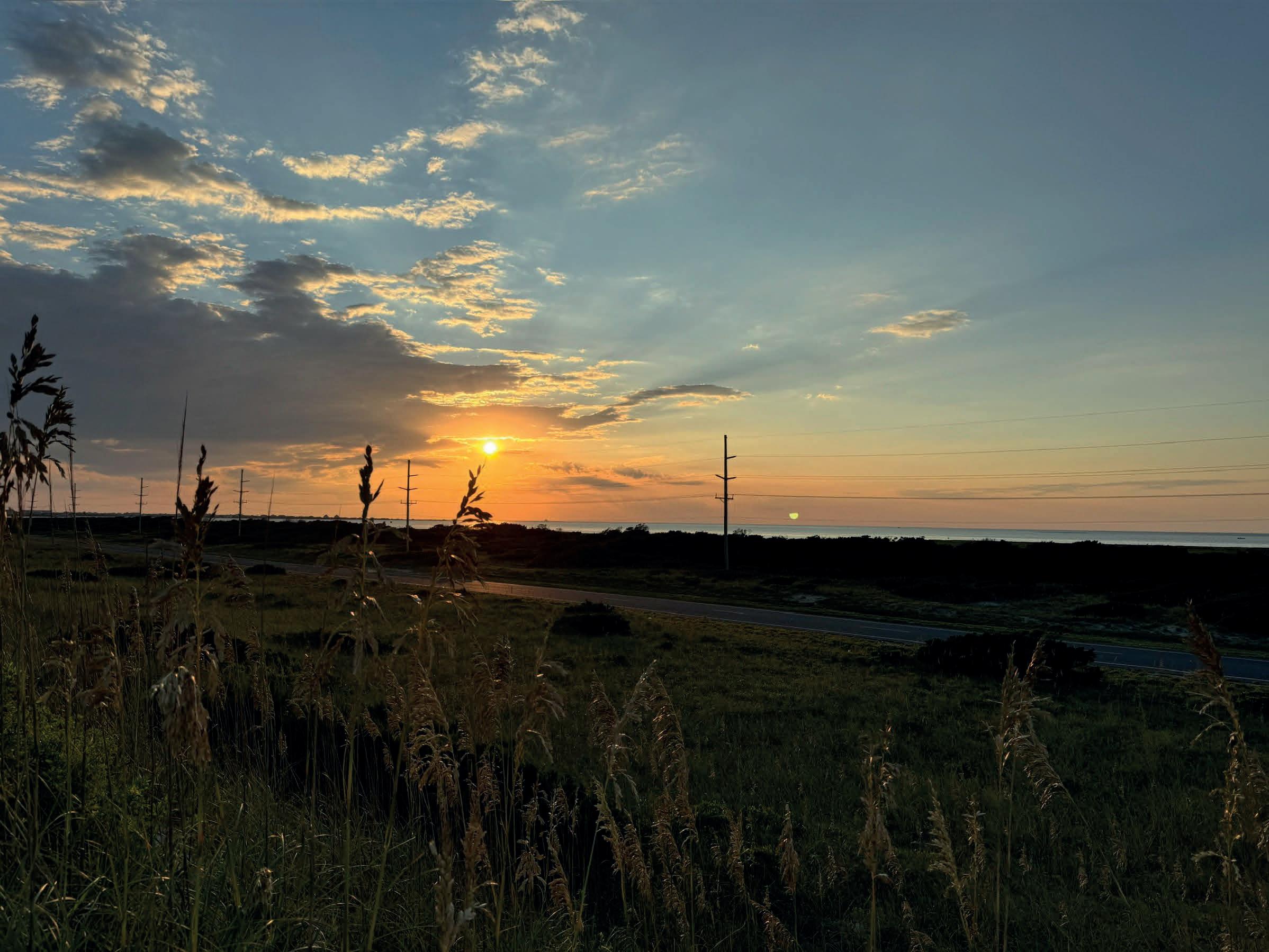
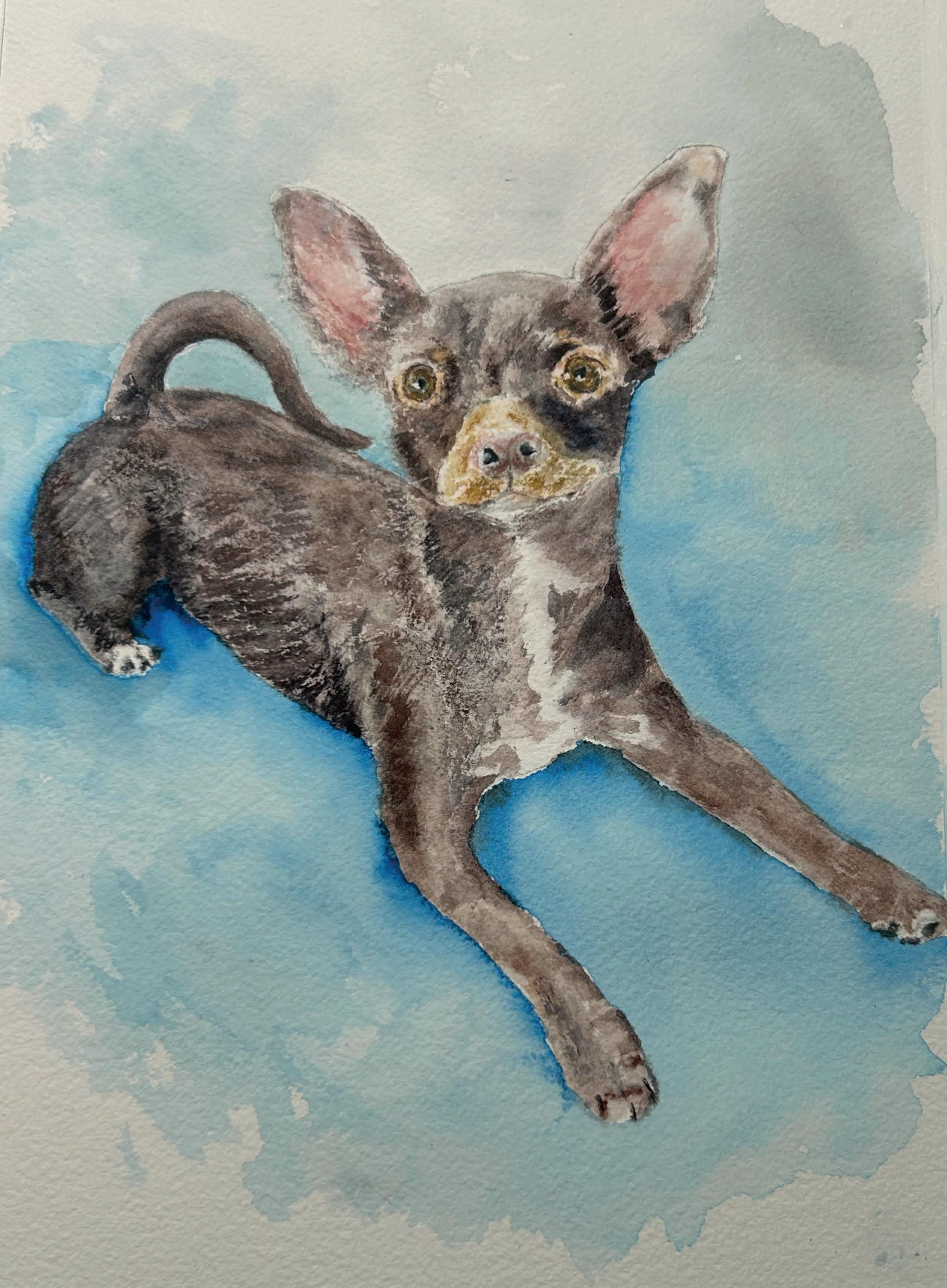
Startling me at dawn, A big boy, motionless By the chicken pen, Anxious for eye contact, Wondering if I will run Or hold my ground.
I heard you howl In the night, So I knew you were near. No staking your territory here, bud. This may not be the Old West, But it’s time for you To get out of town.
I won’t shoot you, But plenty will, Your yips and yelps Causing atavistic tremors Down their necks.
I’m waiting. Turn and walk away Because I‘m not.
That’s a boy. No honor lost.
Rebecca Mlinek
Teachers, please wrap up instruction
The intercom crackles. Students groan. The corners of my mouth pull down.
A lockdown drill will begin in five minutes so five minutes lost.
Another two as the announcer drones, no-one can resist once they’ve pressed that button, voice projected into the reverberating void of empty hall, metal lockers. Seven minutes lost before the alarm -
Sharp, short. And students shuffle, trained into corners. Hunkered under desks they curl in on themselves. I sit, out of the door’s sightline, watch the empty desks, waterbottles dripping in the haze of silence. Kids close their eyes. We are all thinking
The Question. When will it be? What will it look like?
A boy digs into an orange.
Nine minutes now, the red hand blithely circlingThe kids don’t even giggle. I remember giggling, bumping shoulders with friends in a parking lot, eyes sweeping for crushes, no thought of fear. Last week the alarm blared unannounced, teachers hustled students into offices. I sat on the floor, huddled with my class and texted my husband. Probably fine but say a prayer.
Fourteen minutes. I’ll have to cut the worksheet, delay the assignment, the citrus oil settling when the door handle thrashes, clickclickclick, a metal shriek.
Eyes open. It rattles again, the boy shifts a burst of orange. Aggressive. Someone role playing?
I’m going to die, a girl whispers. Someone chuckles. Footsteps echo down the hall. We wait in silence for -
Thank you for your cooperation. This concludes the drill
We stretch up, throw the peel in the trash, lights on, notebooks out. Nineteen minutes lost. I open the blinds to the sky outside, murky, the students reflected in the glare of florescent. I wonder about next time, the time after that. What will be lost.
Lynne Scott Constantine
When I was a child, I spoke as a child, I understood as a child, I thought as a child.
1 Corinthians 13:11
Over the years I’ve asked dozens of friends if they can remember when they learned to think. Most look at me quizzically, like I’ve asked when they learned how to breathe.
I’m pretty sure thinking is not just something we’re born with, like brown eyes or detached earlobes. In fact, I can remember the exact moment, the exact circumstances, the exact location (within feet!) when I became aware that thinking was a skill and not a given, and that I had better hurry up and get that skill or get myself into real trouble.
The year was 1966, a year in America filled with righteous wrath and hints of greater wrath to come. Major civil rights laws were passed in 1964 and 1965, but many, many white people, North and South, continued to bitterly resist the concept of racial justice and fought it in the streets. President Lyndon Johnson was escalating the war in Vietnam, with nearly 2.5 times as many US troops at the end of 1966 as at the beginning.
In October 1966 I was two months into my first year of high school, shuttling by bus and subway between my tenement home in the South Bronx and a posh Catholic girls’ school on the east side of Manhattan. I was one of only two kids in the entire school of 200 girls who lived in the Bronx. Test scores and a great memory got me there on a full scholarship. I was intimidated by my fancy surroundings, but figured, in my 13-year-old naivete, that if I sounded smart enough, they’d not notice that my family was living the hardscrabble South Bronx life of second-generation European immigrants and Black migrants from the South.
My school had the usual cliques, and somehow I found myself adopted into the creatives’ group, the kids who drew and sang and wrote, who played guitar for the folk masses held every week, who worked on the yearbook and the newspaper, who all thought we were pretty smart, and who satirized the nuns mercilessly as only teen smart-asses can.
During the school day, students were not permitted to leave the premises, so all of us spent our lunch hour together, the first 30 minutes in the cafeteria and the rest in the school’s small auditorium (aud). We circulated around the aud unsupervised, mostly staying in our cliques, enacting whatever version of teenage girlhood animated our particular group. I could always hear some group giggling about boys, which didn’t particularly interest me, and I imagined I heard knowing laughter from the bad-girls group—whose idea of badness consisted of rolling up their knee-length postal-gray skirts to thigh height on the way out of school and lighting their cigarettes when they were safely across Park Avenue.
On that particular October Friday in 1966, the creatives were in the aud leaning on the baby grand piano used for glee club rehearsals, and, like the sophisticated and smart girls we believed ourselves to be, we were in deep conference over the Vietnam War. During my long commute to school every day, I would read the New York Times over fellow commuters’ shoulders. I knew that the casualties were climbing, and that President Johnson was being publicly excoriated by former President Dwight Eisenhower and former Vice President Richard Nixon for not being aggressive enough. “Get in, bomb the hell out of them, and get out,” was the sentiment. Gallup polls in mid-1966 suggested that about two-thirds of the public supported the war.
Although the opinions of six teenage girls might seem marginal to any debate over Vietnam, none of it felt abstract to us. One of the Manhattan girls had two older brothers who were deciding right then whether to
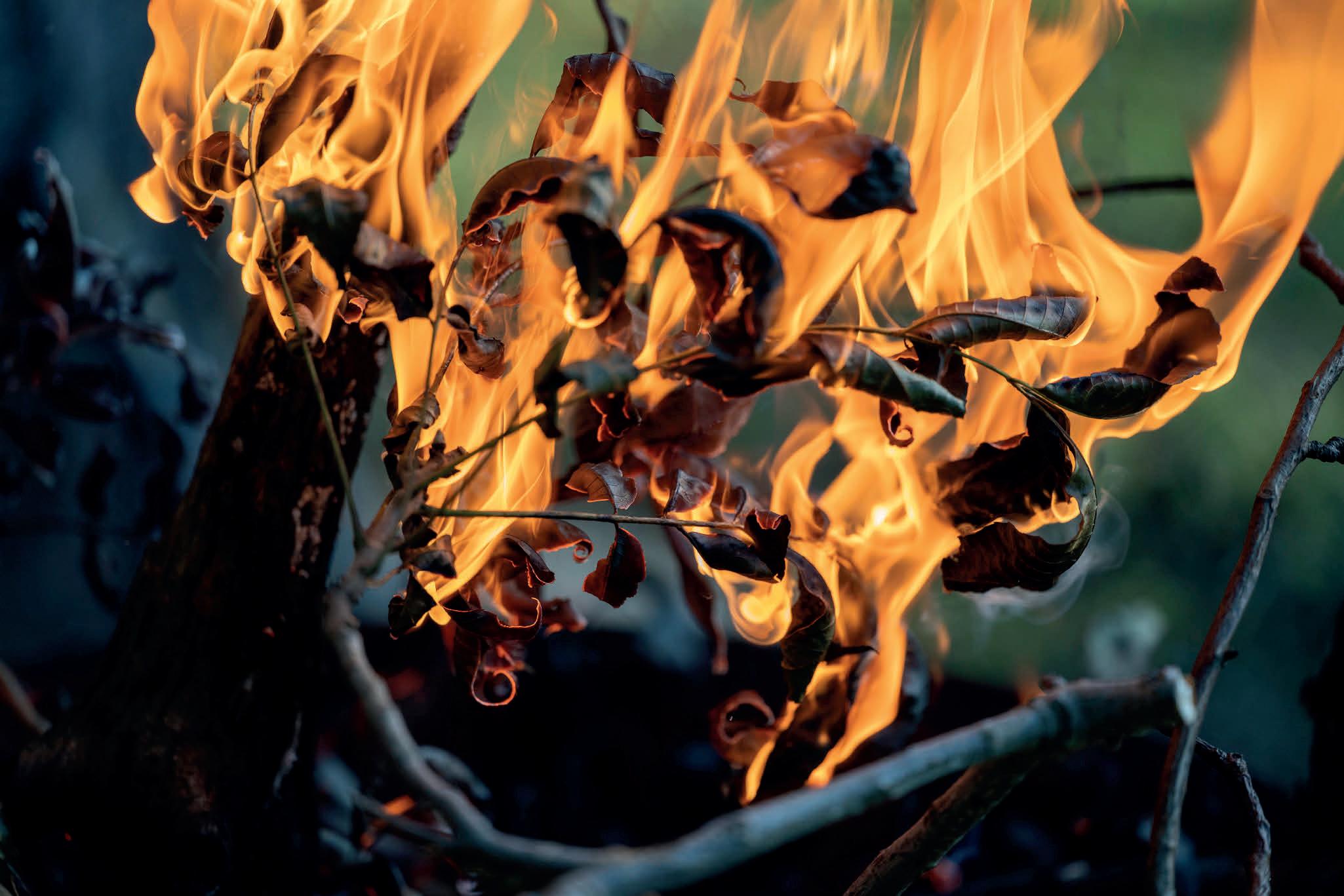
Francesca Beatrice Mărie: Grief
take college deferments or move to Canada. I knew that most boys from my Bronx neighborhood would have no college deferments or possibilities of fleeing the draft. They would be packaged as soldiers and thrown out like chum to attract the guerilla fighters of the Vietcong.
And so, drawing on our intense feelings of protectiveness towards brothers and friends, the six of us creatives agreed: we were against the bloody, stinking Vietnam War.
The bell rang to summon us back to classes: first math, then general science, and finally history. I got caught up in the math and science classes, and mostly forgot the intensity of our lunch conversation.
History class that day was supposed to be about the Silk Road between China and Europe in the Middle Ages; but our teacher, Sister Mary George, was on a tear. She was a passionate advocate of racial justice in the US and an equally passionate opponent of apartheid in South Africa, and often strayed from the lesson plan to focus on these issues. That was the good side of Sister Mary George—bless her heart, I learned a great deal from her, including how speakers of Afrikaans pronounce “apartheid”—“You can easily remember, girls, because it’s pronounced like what it means—it’s apart-hate: ‘keep them apart and hate them.”
Her not-so-good side, and the subject of her spiraling passion that Friday, was her earnest fear that communists were infiltrating American life. She was worried that her beloved civil rights movement was becoming increasingly full of communist agitators. But she really became strident when she told us that the emerging antiVietnam-war movement was clearly communist-inspired. “The communists in Vietnam are our enemies, dears (she often called us dears), and they would like nothing better than to weaken our resolve at home.”
And then it happened. “There’s no one in this class who opposes the Vietnam War, is there?” she asked. “If you do, please stand up.”
With all the bravado of a thirteen-year-old who had a loyalty pact with my besties, I bounced out of my seat. Expecting five fellow travelers, I looked around the room. I was alone. The only person standing.
Sister Mary George and I looked hard at each other, and we both startled when the bell rang to signal the end of the class and, indeed, the end of the school day. Kids started grabbing their belongings and rushing toward the doorway, including my five silent friends. “We’ll take this up again next week,” Sister Mary George sighed, mostly to me, “and you can explain your thinking behind your opposition to the war.”
I typically hung around a bit after school before heading to the subway, but not that Friday. I grabbed my subway pass out of my bookbag and sped toward the 68th Street station on the Lexington Avenue line. No one else from school took the Number 6 train uptown, so I knew I wouldn’t have to rehash the scene with them. I walked to the front section of the platform, where fewer people waited and where the subway cars would be less crowded when the train eventually arrived.
I leaned against a support beam. What the heck! I yelled silently to myself. What the heck! We all agreed. So why didn’t they stand up?
Pushing an errant gum wrapper off the platform with my toe, I tried taking my friends’ side for a minute.
Sister Mary George can be intimidating. She was pretty wound up. The others were probably right not to stand up.
But then my momentary calm exploded.
So now, smartie, she and the others are tagging you as a commie, and she wants you to explain your thinking next week.
I knew I was really in it.
Explain my thinking? My thinking? We were just a bunch of kids worrying about our friends and brothers
Do I really have any thoughts about the Vietnam War?
As I stood there in sudden horror at my probably empty brain, the Number 4 uptown express train clattered by in the center track, drowning out all conversation, including my conversation with myself. I shook my head to dissipate the ringing in my ears. Suddenly, I could see the real problem in 360-degree technicolor.
I have to learn to think. I have got to learn how to think.
I let go of the support beam, stood up straight, smoothed my skirt, and peered down the tunnel for any sign that the train was coming. A far-off green light blinked.
How exactly do I learn to think? And how do I do it this weekend, so I’m ready to be skewered by Sister Mary George on Monday?
Maybe I’ll just try to get to the other kids, make them help me think this through.
As the uptown Number 6 train finally crawled into the station, letting out a piercing shriek as the engineer applied the brakes, I remembered that I rode this train all alone, every day, to a place my school friends probably had never even seen.
Could they really see the world like a Bronx kid? Would we think the same way?
Would we think the same way?
I could not answer that question. I decided not to bring up the Sister Mary George problem with them. I wouldn’t bring it up with anyone in my Bronx world, either, since I knew my Bronx friends would immediately pounce on my classmates’ disloyalty.
As I boarded the train, I knew what I had to do.
I just have to learn to think, on my own, for myself. Immediately.
I did try that weekend. I sat on our fire escape and put my head in my hands like Rodin’s Thinker , asked myself a lot of questions, and eventually fell asleep. When I woke up, I decided there was just too much to this learning to think business to get there in a weekend. I’m not sure there’s enough time in a lifetime.
Fortunately, by Monday the world was full of other events to ignite Sister Mary George’s ire, and she forgot all about me.
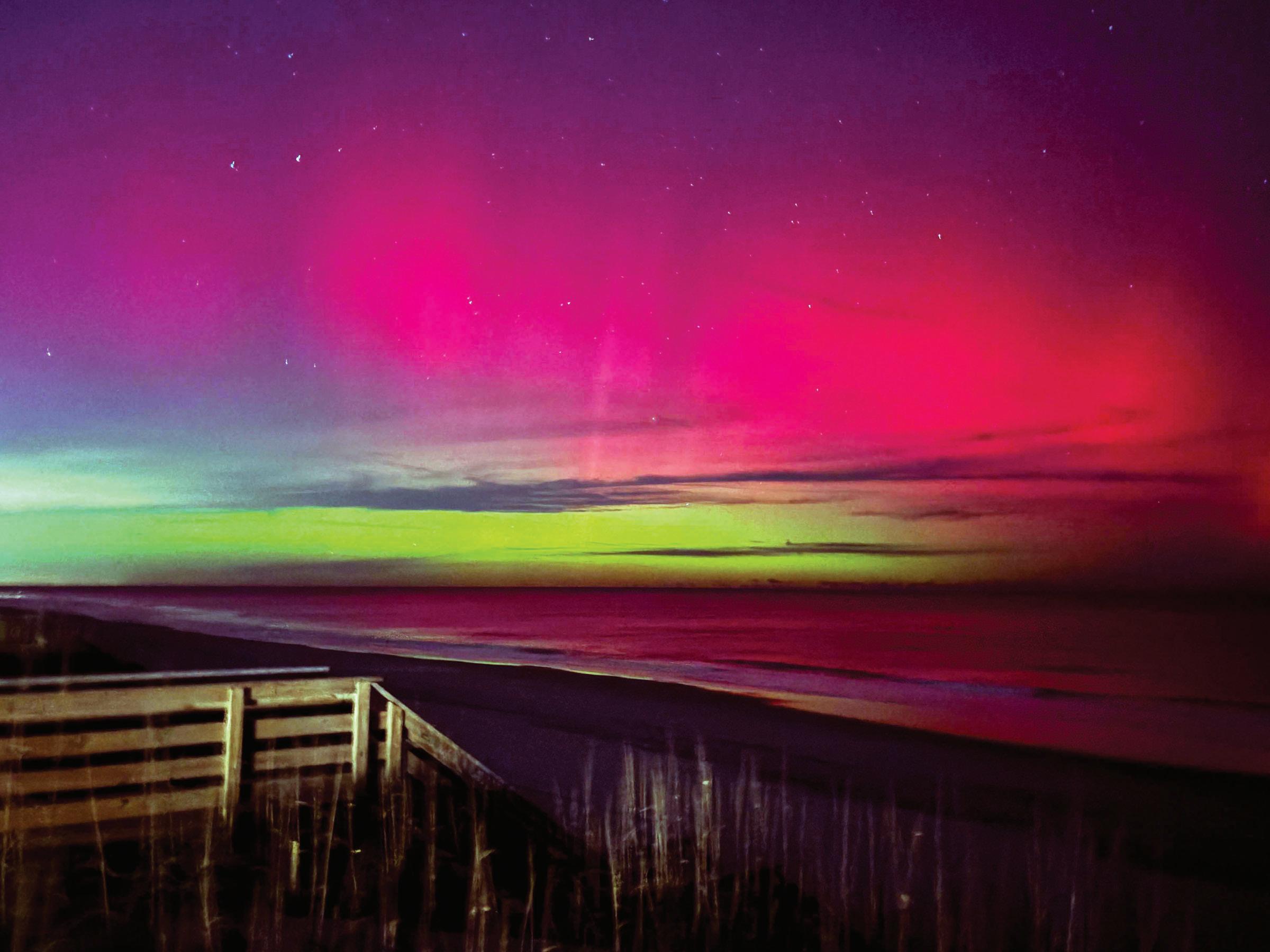
Dayton Dixon
I had always thought that I was a normal person till they put me here. These bewilderingly blinding lights and the same colored rooms. They fed me petite portions through an unseen door once a day. They kept me here for a reason, unknown could it be my unfrivolous past. Oh I wish I could have known. Day after day sitting and walking alone in the same colored room with these blinding lights, I grew longing and sorrowful to be set free. I started talking to myself, devising a plan in which I could escape. I marked where the food came from and set a destination to which I assume was the door since I had been walking for days trying to figure out which was the door. For I could not see due to the devastatingly blinding lights.
One isolated day I committed to the plan, and when I thought the food came, I picked up the silverware and stabbed what I assume to be a person standing at the door. The vastness of the area in which I now see is enormous and I run through halls and halls of the same colored rooms with the same blinding lights. I find a somewhat familiar door. I feel it and turn the knob. It is night when I leave the building and I feel myself drifting away in the complexity of my surroundings. I can see the stars but they are guarded by many rows of fences with wires. I realize why I am here, I realize I need to go back, I realize why I can’t go back to society. As I march back into the blinding lights like they were the sun. I am devastated to realize I am alone once again.
Suzanne Scott Constantine
I decided that the single most subversive, revolutionary thing I could do was to show up for my life and not be ashamed. –Anne Lamott, author and progressive activist
There we were, Lynne and I, showing up in a little art gallery in Burlington, Vermont, with a lovely redheaded justice of the peace. We were about to be married for real. Legally. At least in Vermont.
The Redhead suggested we might like to hold the wedding in a nearby art gallery instead of the cold, stark courthouse. I didn’t tell her we were artists, did I? I said to myself. But that could be a nice touch.
Lynne and I shrugged a little, acknowledging our surprise, and nodded affirmatively to each other.
“That would be wonderful,” I said, still believing that the whole wedding thing was redundant. After all, we had already been a committed couple for 34 years. Why even bother with this now, especially since our marriage would not be valid in Virginia when we returned home? We were simply showing up. Making sure our names were on the books.
It felt transactional, not transformational.
When we walked to the store-front gallery, I was almost immediately enveloped in a mystical delight. I was sure I detected the distinct aroma of a painting studio, though no working artists were present. Besides, the space was too small for studios. The room was sectioned off into smaller spaces, with temporary white walls displaying more art. It felt uncharacteristically dimly lit, except for the track lighting shining onto the artwork.
Still feeling somewhat uneasy about the whole transaction, I took a deep breath and looked around to see what I wanted for the wedding’s backdrop. It was just the two of us, The Redhead, the gallery manager, and one random customer. Let’s just get on with this, I thought.
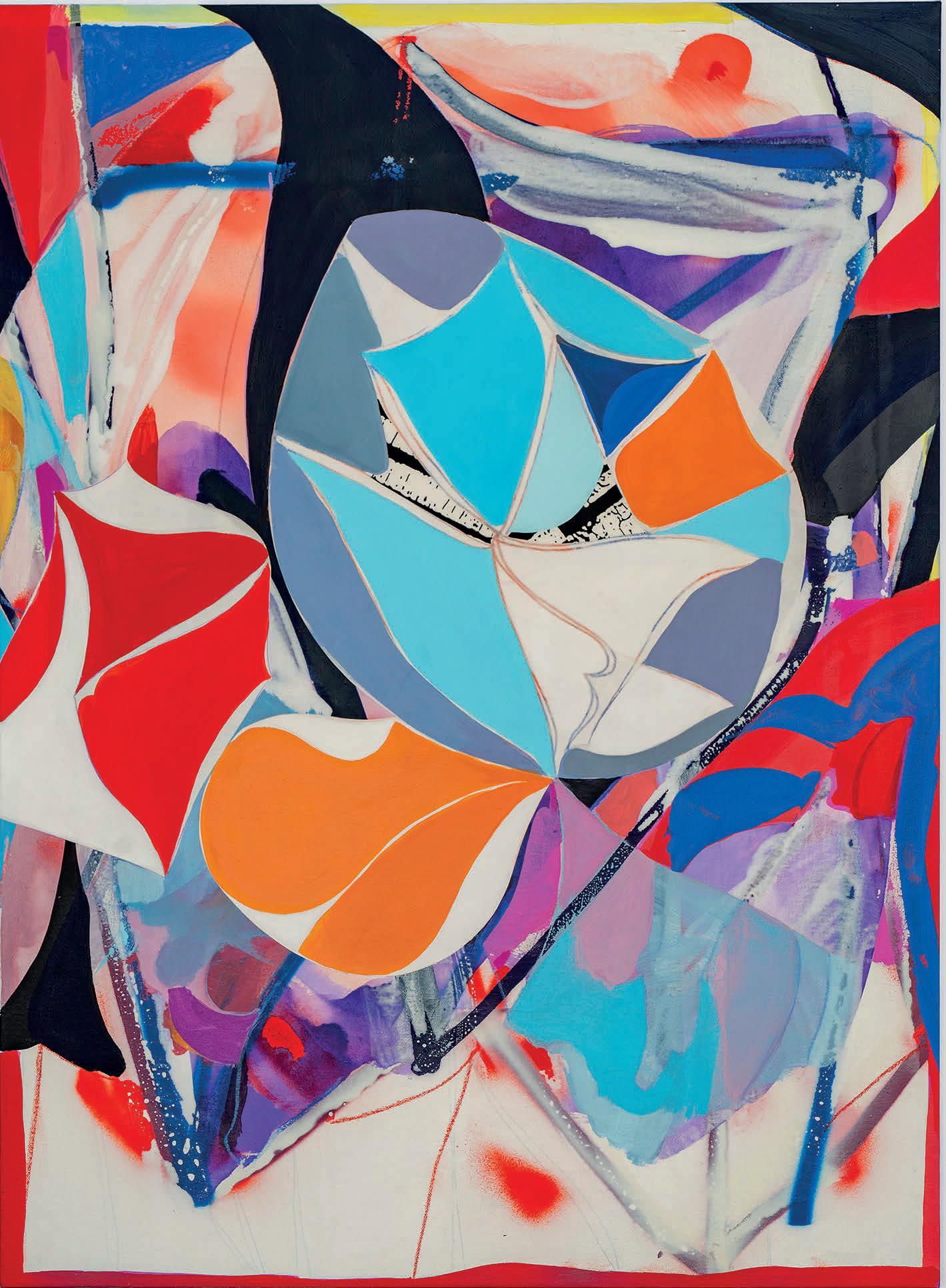
We stood there in front of a large abstract painting I had chosen for the backdrop. We were about to have our covenant relationship stamped as legal by the state of Vermont. I felt an unexpected sense that we were about to engage in something deep and profound. Still, I could not imagine that this wedding ritual, so hastily thrown together, would have any real emotional impact on either of us.
But there we were, with The Redhead, who was ready to roll with her usual “We are gathered here…. and I now pronounce you” spiel.
“Ummm. We have written a short script we would like for you to read, if you don’t mind,” Lynne inserted in her own gentle and diplomatic way. “And then we will say the vows we have written for each other,” she added.
“Of course,” replied The Redhead. “I’m happy to do that.” I didn’t notice even a tiny, it-takes-all-kindseye-roll.
I guess she has seen it all, I thought.
“Thank you,” Lynne said. “After that, you are free to say the obligatory, I now pronounce you bit.”
The Redhead smiled tentatively. “I do have one suggestion,” she said. “I have this beautiful silk scarf that was given to me by the Dalai Lama.” And she stretched out the long white fabric in both of her hands. “Would it be all right if I joined your hands with the scarf as a symbolic bonding of your love relationship?” She still seemed slightly hesitant.
“That would be great,” Lynne and I said in stereo. I didn’t have a clue what I was agreeing to, but it seemed harmless enough. Besides, she had me at the Dalai Lama.
What began as a purely subversive act of affirming on public record our covenant with each other, had been converted into a mystical, peaceful ceremony. And after Lynne and I had declared our promises, The Redhead asked us to clasp hands. She began gently wrapping the long silk fabric around our hands –individually, and then together – in a figure eight. I assume I was in an altered state because I recall only fragments of The Redhead’s words. I know they were tender and loving words about the bond of our love, infinity, probably something about the symbol of knotting. In those few magical minutes, nothing existed beyond The Redhead, Lynne and me, and I swear I felt the atmosphere shift.
And it all happened smack dab in the middle of our crazy on-the-run lives. In the midst of all the distracting energies of planning for Lynne’s art residency, worrying about the January weather, securing the justice of the peace, and wondering if it would even be possible to fit a wedding into our two-hour window in Burlington, we did it. The justice of the peace became The Redhead who guided us to the art gallery, performed the evocative handfasting ritual, and allowed us the privilege of speaking our love out loud and on the record.
Again.
The subversive and revolutionary nature of Lynne’s and my just showing up as our real woman-loving selves was not new to us. We had been in this place before, 14 years earlier, in the summer of 2000. That time we were in Vermont for my artist residency. Vermont had just recently legalized civil unions (but not marriage) for same-sex couples. Lynne and I had been together 20 years already by then, and we saw little value to be gained in going through a civil union.
But something about seeing the backlash billboards screaming “Take Back Vermont” as we drove to the residency got under our skin. They activated all of our motivation for resistance because we understood too well that the intent was to take Vermont back from people like us.
“Maybe we should at least get our names on the books,” said Lynne, “as an affirmation to the people of Vermont who fought hard for this right.”
“Let’s just do it,” I responded, hardly taking a breath.
“It could be fun,” Lynne added, and I knew she was already brewing something Vermont had never seen before.
In typical fashion, we jumped right on the project, planning a civil union event for the final day of my residency. It would be in the campus garden. We would invite everyone at the residency.
Even then, I knew we didn’t really take the union part of it seriously because we were already in a long-standing relationship. We were equipped with all the documents, including medical and financial powersof-attorney, which would protect us from the social and governmental systems that were not set up for people like us.
But as artists and “quiet revolutionaries” who were well-trained in nonviolent civil disobedience, we began to see the civil union event as an opportunity for more than passive resistance to the status quo. Perhaps we could do something fun but also a little edgy and rebellious.
I’m pretty sure that Lynne actually came up with the idea, and we rapidly drafted a performance piece to be the core of the civil union ceremony. Lynne created announcements, which we posted around the campus.
“’Civil Union [Dis]Obedience,’ performed by two dykes from Virginia who are defying the law.”
While our artist friends were trying to figure out what kind of antics we were going to be up to, we were busy trying to find a justice of the peace on short notice. One who would be willing to officiate, on our terms.
As luck would have it, a delightful, flouncy gay male justice of the peace was willing to dispense with all the “dearly beloveds” and to follow our full script. And in the midst of all the ceremonial creativity, humor, and frolicking in the garden that afternoon, our performance piece called serious attention to the fact that we were a Queer couple with few rights and protections. And none in our own state.
Lynne and I both felt a wave of love, support, and affirmation from our artist and writer friends who participated. The performance may have even helped some understand better what life was really like for these two dykes from Virginia. We had to chuckle when one of our art colleagues commented afterward, “Oh my goodness. I thought I was coming to a talk about joining unions. This was so much better.”
We knew even then that we were taking a radical, progressive step forward. Same-sex marriage had always been illegal in the U.S., but in 1996 the federal government passed the Defense of Marriage Act, which enshrined the illegality of marriages for people like us.
Lynne and I were acutely aware that the majority of the population never has to even think about what it feels like to not be allowed to marry. There’s no shame in not knowing. Rarely do we consider what’s outside of our experiences. We all have rights and privileges we take for granted. But in both the civil union and the marriage, 14 years apart, I believe a few people went away understanding something about Queer love they
simply had never thought about.
Both events were reciprocal, too. Lynne and I felt valued by the people of that state who “allowed” our rebellious, loving, gentle, angry hearts to experience exactly the same affirmation and expressions of our covenant relationship as any other couple in this country.
Neither ceremony was a cabin-in-snow-covered-Vermont Hallmark moment, as lovely as that might have been, but neither was as perfunctory as I had expected.
“I have a slight course correction to insert here,” says Soul Voice.
As usual, Soul Voice is the wiser persona that resides somewhere deep inside me, in a place where, without thinking, I store the material I cannot know. Or don’t want to know. Soul Voice always speaks gently, even when delivering hard truths. In this instance, Soul Voice was emphatic:
“Your very existence with Lynne has been a radical act of protest. You probably couldn’t really acknowledge that you wanted to be legally married because it was too painful for you to think about the laws of prohibition and all of the ugliness that a fight for marriage equality brought up. And, admit it, you would have been thrilled to have arranged one of those snow-covered-cabin-in-Vermont Hallmark romantic moments.”
“Think back to the early days of the 2000s and your advocacy for same-sex marriage. Remember, for years, you had argued that churches had the right to marry or not marry whomever they chose. “That’s part of religious freedom,” you said. You felt wounded, of course, when your personal church pronounced that “homosexuality is incompatible with Christian teaching.” Still, you argued convincingly for separation of church and state. To you, that meant that religious institutions could believe and speak their beliefs as long as they were not harming people outside the church.”
“But you were clear that, personally, you never wanted to be a part of any church that excluded you or that considered your beautiful love for Lynne an abomination.”
Yes. I do remember, years ago, suggesting that we needed to stop fighting the church. We all needed to simply acknowledge that marriage is not a religious contract. Even if we were married in a church with all of the sacraments and rituals and blessings associated with a specific religious institution, we would still have to have a civil contract. Marriage, I argued at the time, under any circumstance, is a civil contract.
“That’s right. ‘Civil marriage is a civil right, you said that message over and over throughout the first decade of the twenty-first century.”
And, honestly, I probably couldn’t fully grasp my mammoth-sized yearning for a romantic Vermont Hallmark moment. Soul Voice got it right. I was protecting myself.
It was a momentous day to know that we were legally married in one state. But facing reality, we had to accept the fact that our marriage, as a legal matter, would be considered null and void the minute we crossed the Virginia state line returning home.
Nine months later, same-sex marriage became legal in Virginia. It would be almost another year before the US Supreme Court ruled that marriage was a right for same-sex couples too. That ruling felt like the earth shifted on its axis. We were now legally married everywhere in the country. We never thought we would see that change in our lifetimes.
Each of us had her own specific reasons for being overjoyed by the change in legal status. None of them had anything to do with our love for each other, but rather with our individual responses to senseless systems of oppression that had made life difficult for us for well over three decades.
Sadly, today there are even stronger and more violent threats against all who claim identities in the Queer community. Most of the cruel and violent rhetoric is directed at people who identify as Trans.
“But that’s the ‘thin edge of the wedge,’” Lynne reminds me. “Trans people are the easiest targets at this time, but anyone who identifies as Queer is endangered.”
When we hear intimations that our marriage could one day be rendered illegal, I am heartbroken and anxious. I struggle for a sense of calm.
Soul Voice reminds me to breathe deeply and to distract myself by thinking about something beautiful in my life. I oblige with a cleansing, deep breath, because I recognize Soul Voice.
“Right now, this minute, you are really married to your beloved wife, Lynne. Legally. Complete with all of the rights and responsibilities represented by your marriage certificate. Hang on to that thought for a moment.”
That little diversion girds me for the next steps.
Anyway, it’s not like these present dangers are new to us. For our 46 years together, we have weathered all of the political and psychological turbulence, commotion, and upheaval that have always swirled around Queer relationships.
And yet, all those years – in the midst of every mayhem-of-the-current moment – Lynne and I have composed a life filled with creativity, compassion, and concern for the common good.
So now, with a bow to my personal hero, Anne Lamott, I acknowledge, “Lynne and I continue to show up for that particular life, unashamed, and it is probably our most subversive and revolutionary act.”
Onward!
Lauren Rice
“Beach Vibes Only” featured Richmond-area artist Lauren Rice, who explored abstraction and the contradictions within the phrase “beach vibes only” through layered works on paper. Through mixed materials and found objects, the exhibition examined the beach as both a place of relaxation and a site of change and ecological uncertainty.
The art exhibition was presented and on display at COA – Dare from August 18 to September 25, 2025.
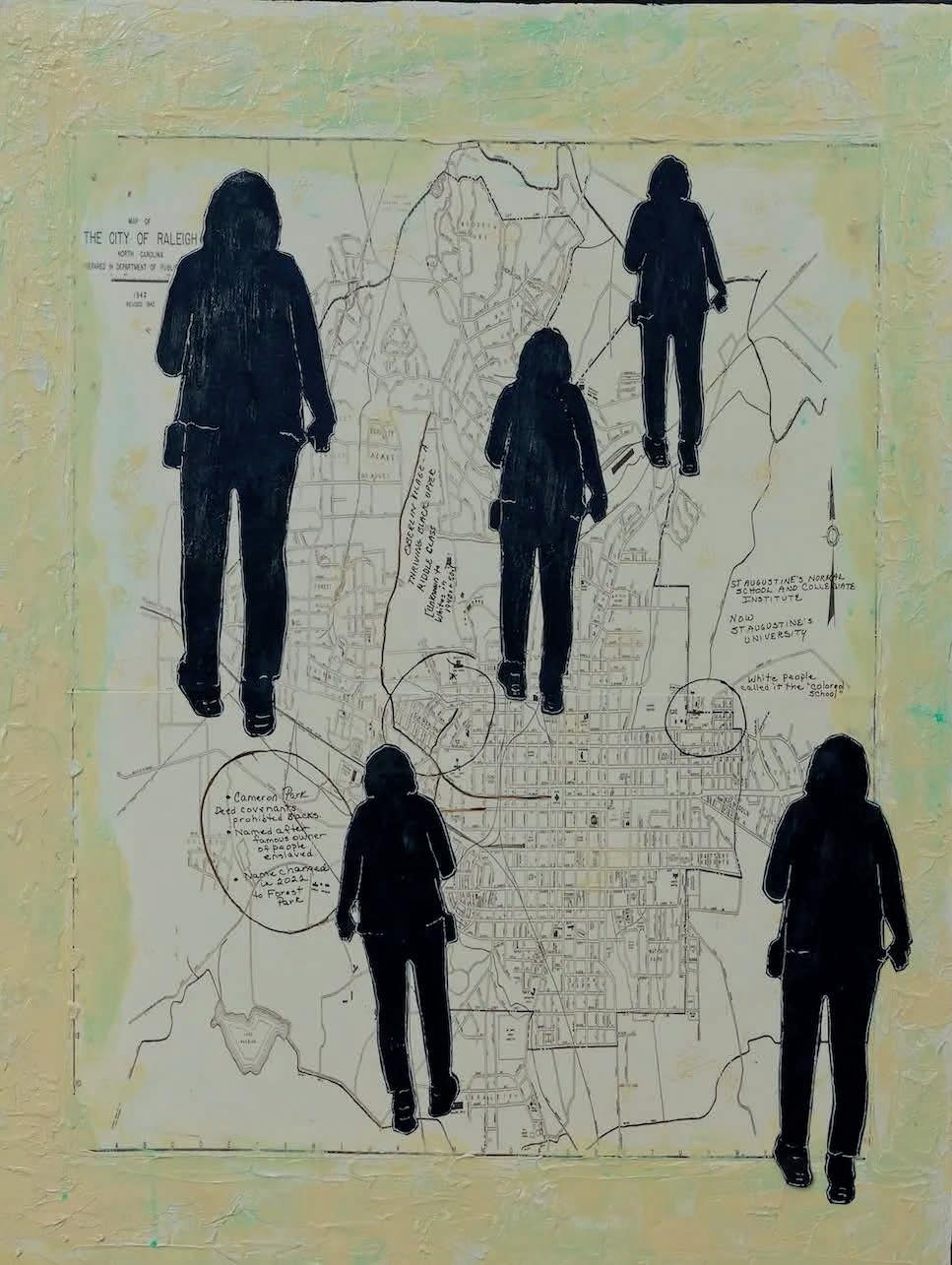

Suzanne Scott Constantine and Lynne Scott Constantine
“Not Even Past” featured Outer Banks artists Lynne Scott Constantine and Suzanne Scott Constantine, who explored Southern history and identity through mixed media and performance. Supported by the North Carolina Arts Council and sponsored by the Don & Catharine Bryan Cultural Series, the exhibition was inspired by William Faulkner’s words, “The past is never dead. It’s not even past.”
The art exhibition was presented and on display at COA – Dare from October 1 to November 7, 2025.
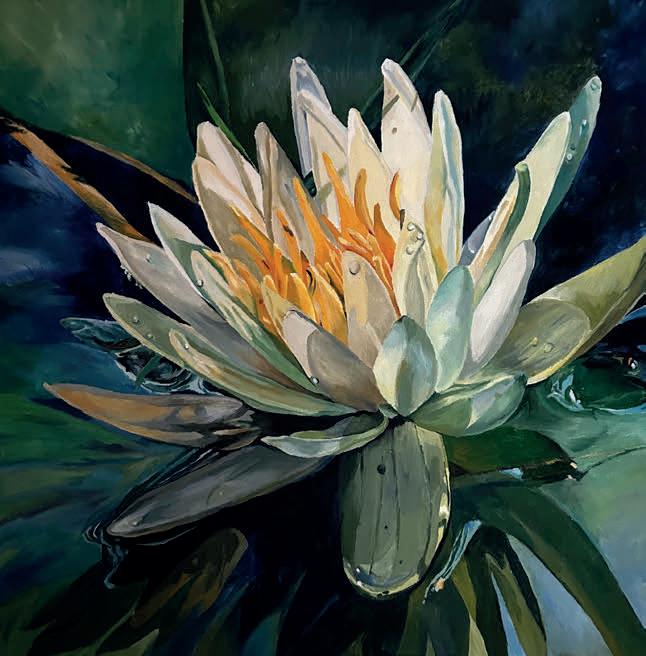
“Marks & Making: Studio Exhibit” featured works such as paintings, pottery, metals, and mixed media by students in the continuing education art classes at COA - Dare.
The art exhibition was presented and on display at COA – Dare from March 5 to March 20, 2026.
Jessica Mallios, Benjamin Murphy, Sandra Simonds and Christina Lorena Weisner
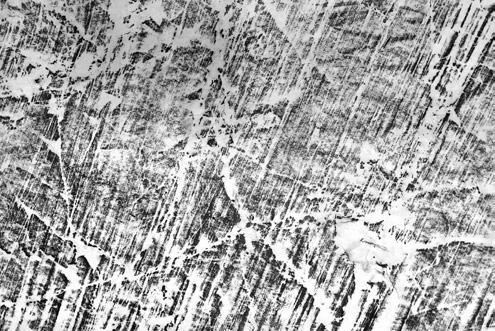
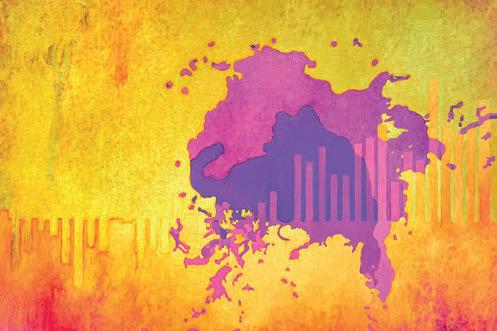
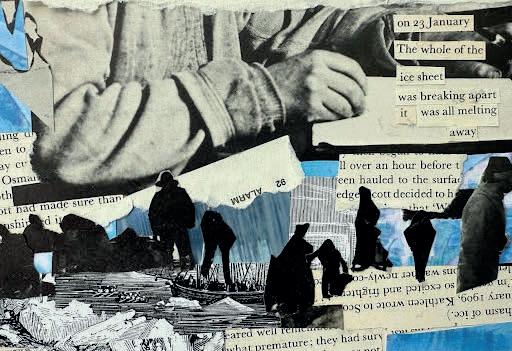
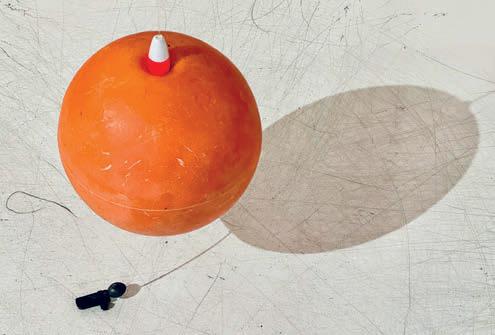
“Hydrological Landscapes” explores the transformation of ice into water in the rapidly warming Arctic. As sea ice continues to shrink at an alarming rate, the effects are felt across ecosystems, environments, and global systems. In May 2025, a group of artists traveled to Svalbard, a remote Arctic archipelago, to witness these changes firsthand.
This exhibition features work by Jessica Mallios, Benjamin Murphy, Sandra Simonds, and Christina Lorena Weisner, each offering a unique perspective on this fragile landscape through a variety of media.
Murphy’s large-scale paintings combine satellite imagery and scientific data to visualize the retreat of glaciers. Weisner’s interactive installation invites viewers to engage with a pendulum that reflects subtle shifts in the Earth’s gravity caused by melting ice.
Mallios explores light, space, and perception through multimedia work, including audio and drawings made directly from glacier surfaces. Simonds presents collage-based poetic works that blend text and image to reflect on ecology, climate change, and environmental uncertainty.
Together, these artists use painting, sculpture, sound, drawing, and collage to examine the changing Arctic and highlight the deep connections between polar regions and the rest of the world.
The art exhibition was presented and on display at COA – Dare from April 1 to April 20, 2026.
In a recent creative contest, participants were challenged to transform a book they love into a visual work of art—an imaginative tribute that captured not only the story, but the personal connection behind it. With only two weeks to complete their pieces, artists poured their passion, faith, and creativity into works that bridged literature and self-expression. The result was a powerful collection of artwork rooted in storytelling, memory, and meaning.
Ani DeSmidt: A Race Against Time
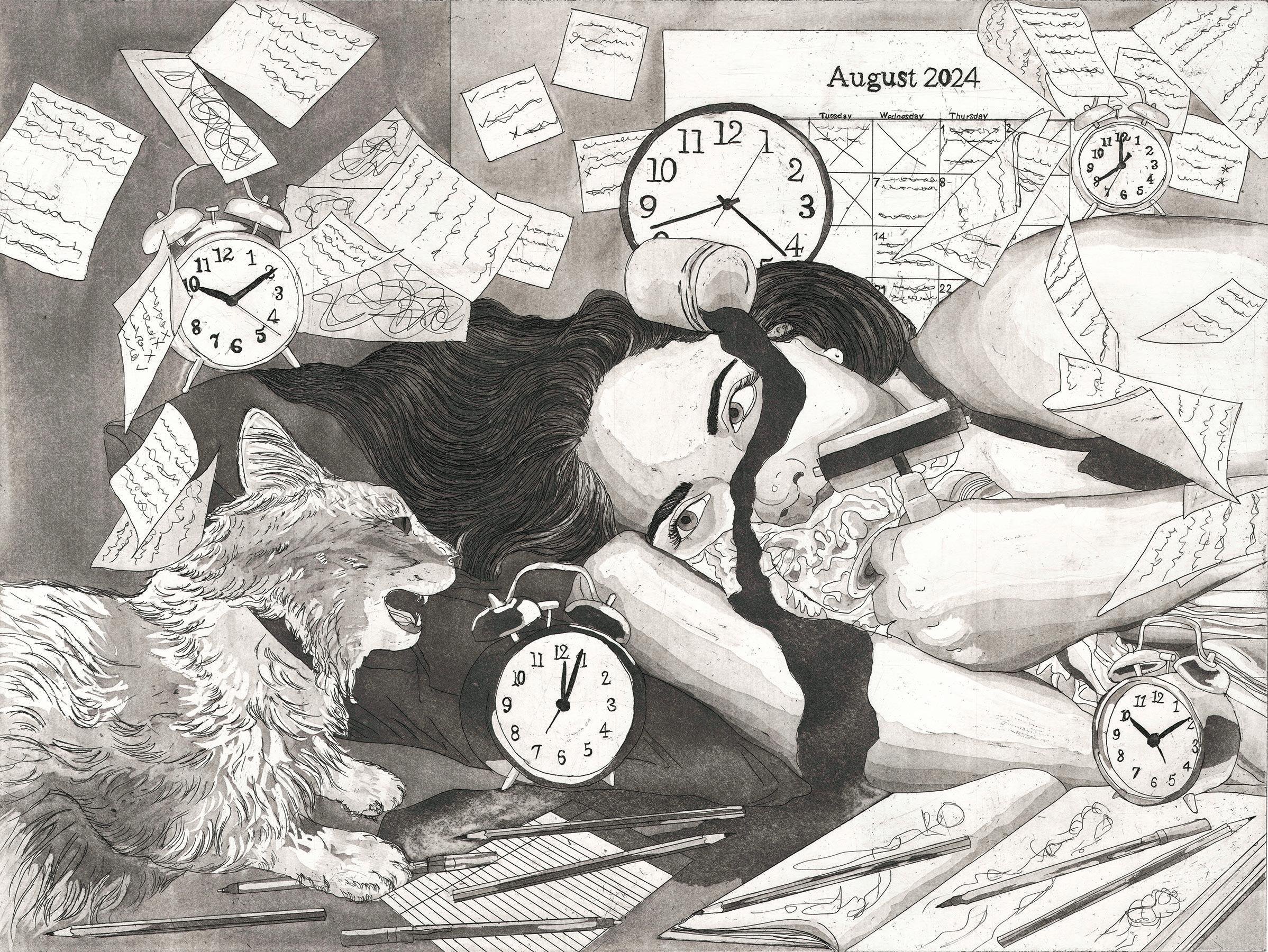
Ani DeSmidt has used art for many years as a way to express herself, especially when words were difficult. Inspired by Alice’s Adventures in Wonderland, she created a sculptural mask based on the White Rabbit and his constant fear of being late. Made from papier-mâché and cardboard, the mask features painted clock glasses and lace details. A checkerboard design inside represents an internal struggle with time. The piece reflects both the character’s frantic energy and Ani’s own race against a tight deadline.
Kayla O’Brien: Flight in the Digital Realm
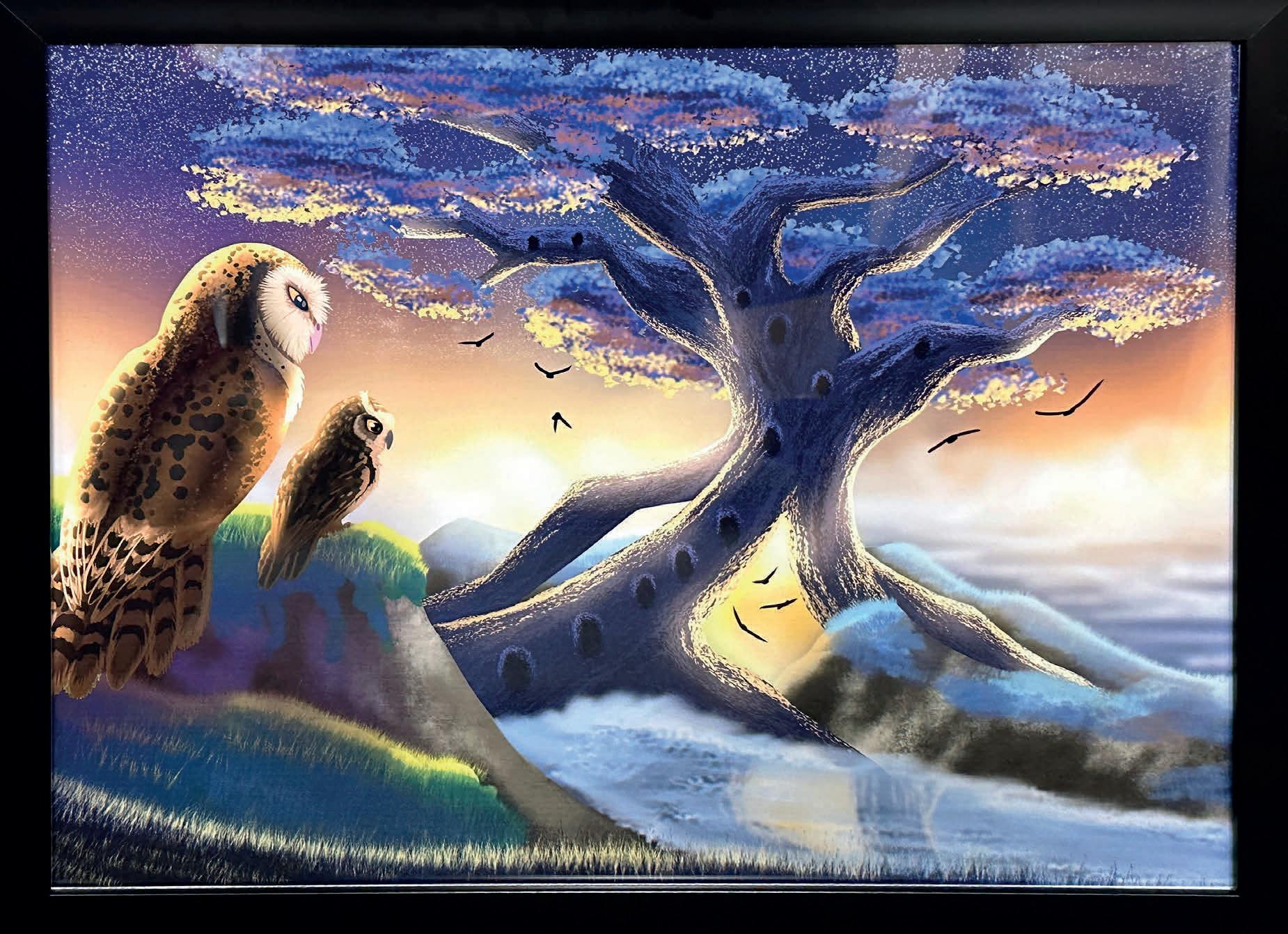
Kayla O’Brien created a digital illustration inspired by Guardians of Ga’Hoole. Her artwork portrays a noble owl, capturing both battle intensity and quiet wisdom. She used light, texture, and shadow to add depth and realism to the feathers. The glowing night sky enhances the epic tone of the story. Her piece reflects themes of bravery, identity, and unity through modern digital art.
Elizabeth Lee: Held in Peace
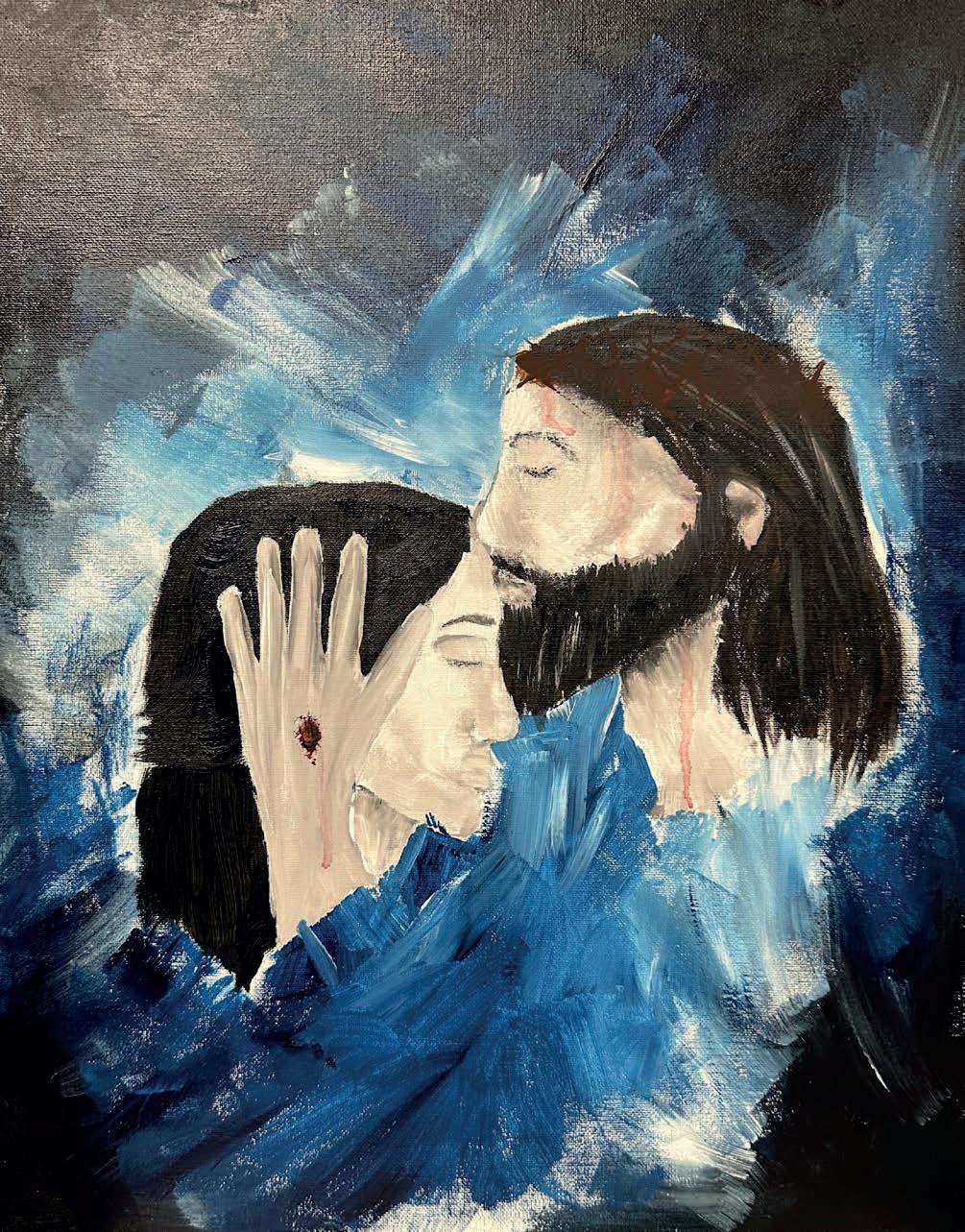
Elizabeth Lee has always viewed art as a natural and meaningful form of expression. Her acrylic painting portrays Jesus wearing a crown of thorns while gently kissing a girl’s forehead. Using shades of blue, black, and white, she emphasizes emotion and peace rather than distraction. The blue tones symbolize the calm and reassurance found in faith. Her work captures a quiet, sacred moment of love and protection.
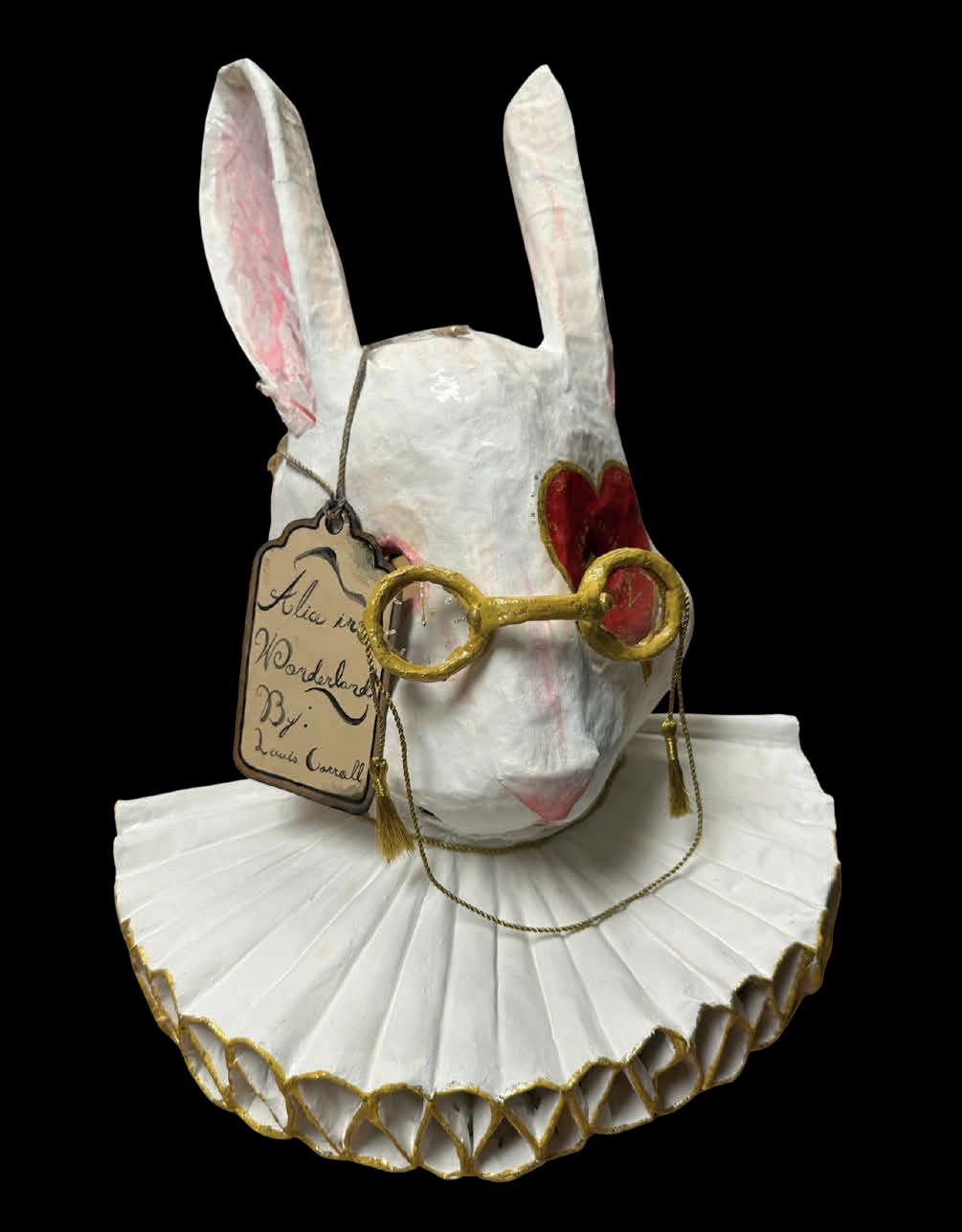
Ani Desmidt: A Race Against Time
Jonathan Seabury: The Strength of Aslan
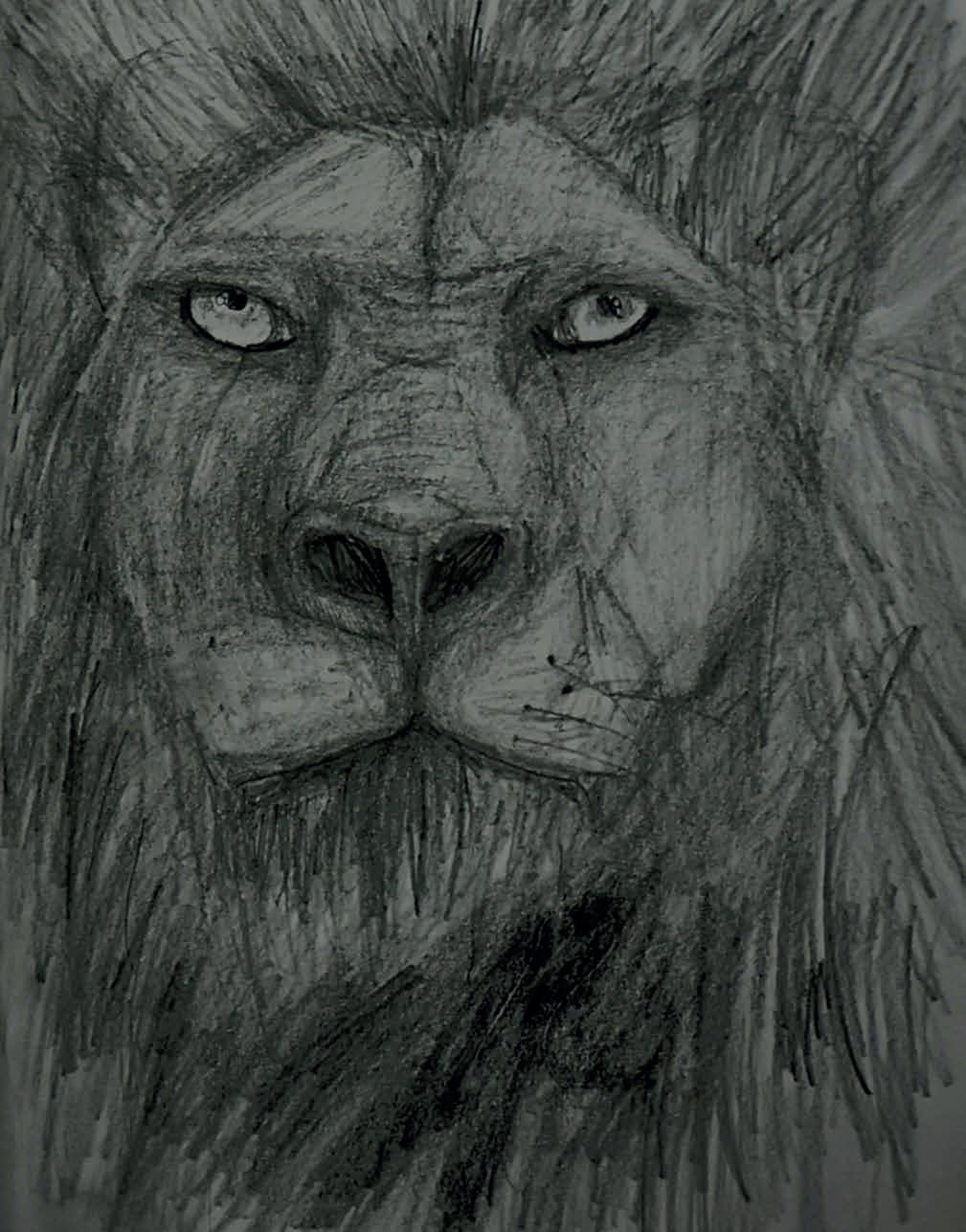
Sixteen-year-old Jonathan Seabury created a handdrawn portrait of Aslan from The Chronicles of Narnia He focused on capturing both the lion’s strength and his grace. Through detailed shading and careful attention to expression, Jonathan highlights Aslan’s balance of justice and compassion. His drawing reflects the courage and authority that define the beloved character.
This contest revealed more than artistic talent—it showcased how deeply stories shape identity. Each participant chose a book that resonated personally and transformed that connection into a tangible work of art.
Together, their pieces demonstrate the enduring power of literature—not just to entertain, but to inspire creation, reflection, and self-expression. In bringing their favorite books to life, these artists reminded us that stories do not simply live on pages. They live within us—and sometimes, through art, they step into the world.
Piper Allison is a visual artist working primarily with acrylic paint. Her work explores themes of sexuality, human nature, and growing up on the beach, through bold color and layered textures. She lives and works in the Outer Banks, and studies at College of The Albemarle.
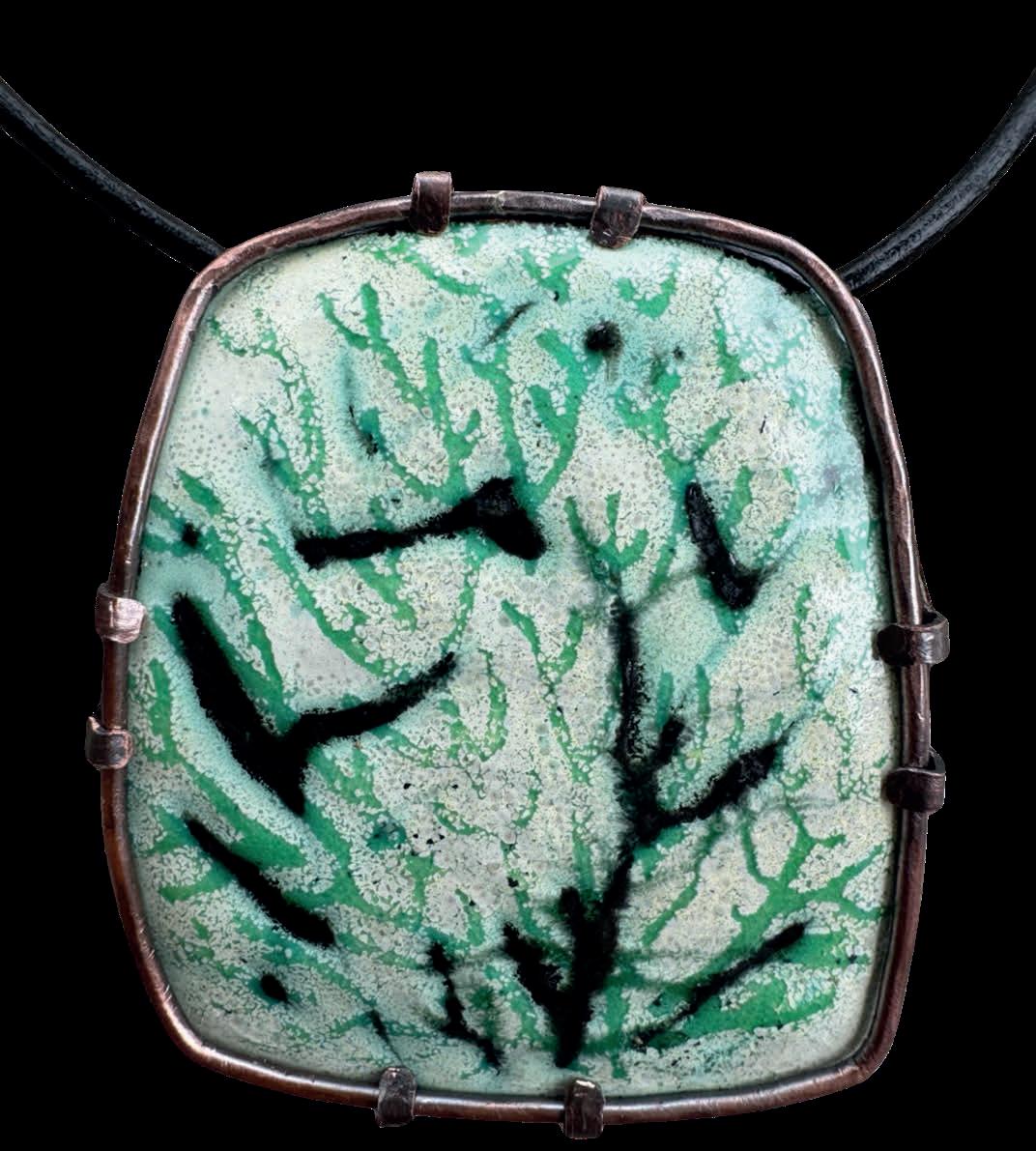
Rhonda Bates is a metals and enamel artist who has studied in the jewelry department at College of The Albemarle for the past four years. Her work combines copper, surface treatments, and found coastal materials inspired by place and process.
Patrick Berran is an artist and educator that lives and works in the Outer Banks of North Carolina. Berran’s painting practice incorporates drawing, transfer processes and collage. Berran has exhibited his work both nationally and internationally. His work has been featured in The New York Times, Hyperallergic, The Brooklyn Rail, Bomb Magazine, Style Weekly, New American Painters and Architectural Digest
Cadence Blount is a COA student who has valued art all her life. From taking dance classes, to writing, to recently rediscovering her love for visual arts, she adores using her creativity in new ways. She loves creating drawings, paintings, and collages. She plans to pursue her Fine Arts degree.
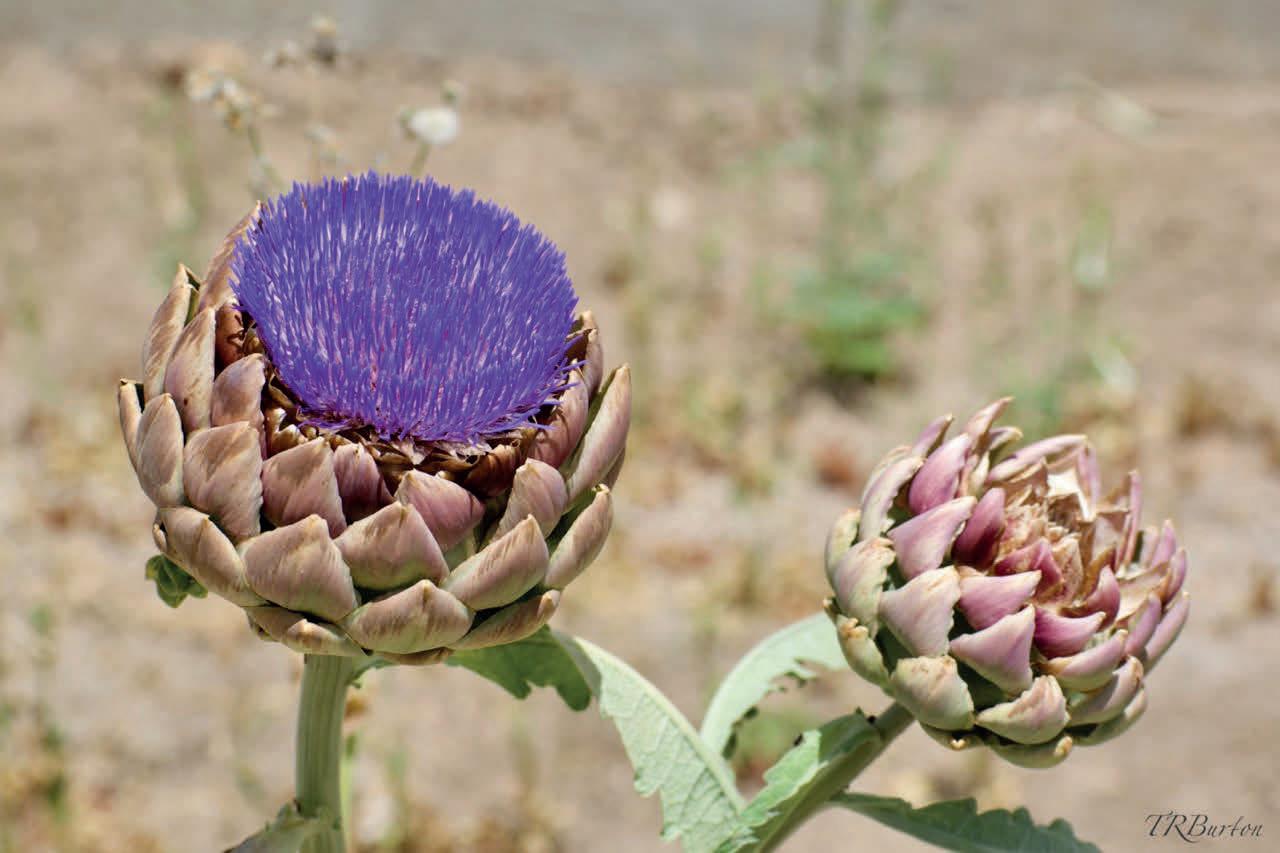
Tehra Burton is a multidisciplinary artist working in photography and painting. Her work explores quiet observation, emotional landscapes, and the tension between stillness and movement. She draws inspiration from everyday rituals, natural light, and moments often overlooked.
Lynne Scott Constantine considers her artworks “open questions,” incorporating photography, digital media, mixed media, and text. Before moving to the Outer Banks, she taught in the School of Art at George Mason University. She holds an MFA in Interdisciplinary Arts from Goddard College and graduate degrees in English from Yale.
Suzanne Scott Constantine makes art that incorporates painting, mixed media, text, and performance. Prior to retiring in 2018, she was Professor of Integrated Studies and Director of Women and Gender Studies at George Mason University. She holds an MFA in Interdisciplinary Art from Goddard College, and an MA in English Literature from James Madison University.
Lynette Crews is an aspiring watercolor painter who has enjoyed COA’s continuing education opportunities to hone her skills. Lynette has been enjoying photography for 20+ years. No matter where she goes, her eyes are looking for a great image.
Tom Crews is a forester with the US Forest Service and US Fish and Wildlife Service who has spent much of his time working in some of the most beautiful and biologically interesting landscapes in the County. After retiring, his interests now include the painting arts in oils, acrylics and watercolor. His passion for wildlife and people as well as beautiful land and seascapes all come across in his work.
Ani DeSmidt is a North Carolina-based artist, specializing in various media such as painting, writing, and especially papier-mache masks. Combining nature and fanciful ideas to create works of wearable art, she has gained experience from various art classes and programs, as well as from attending award shows throughout her childhood and beyond.
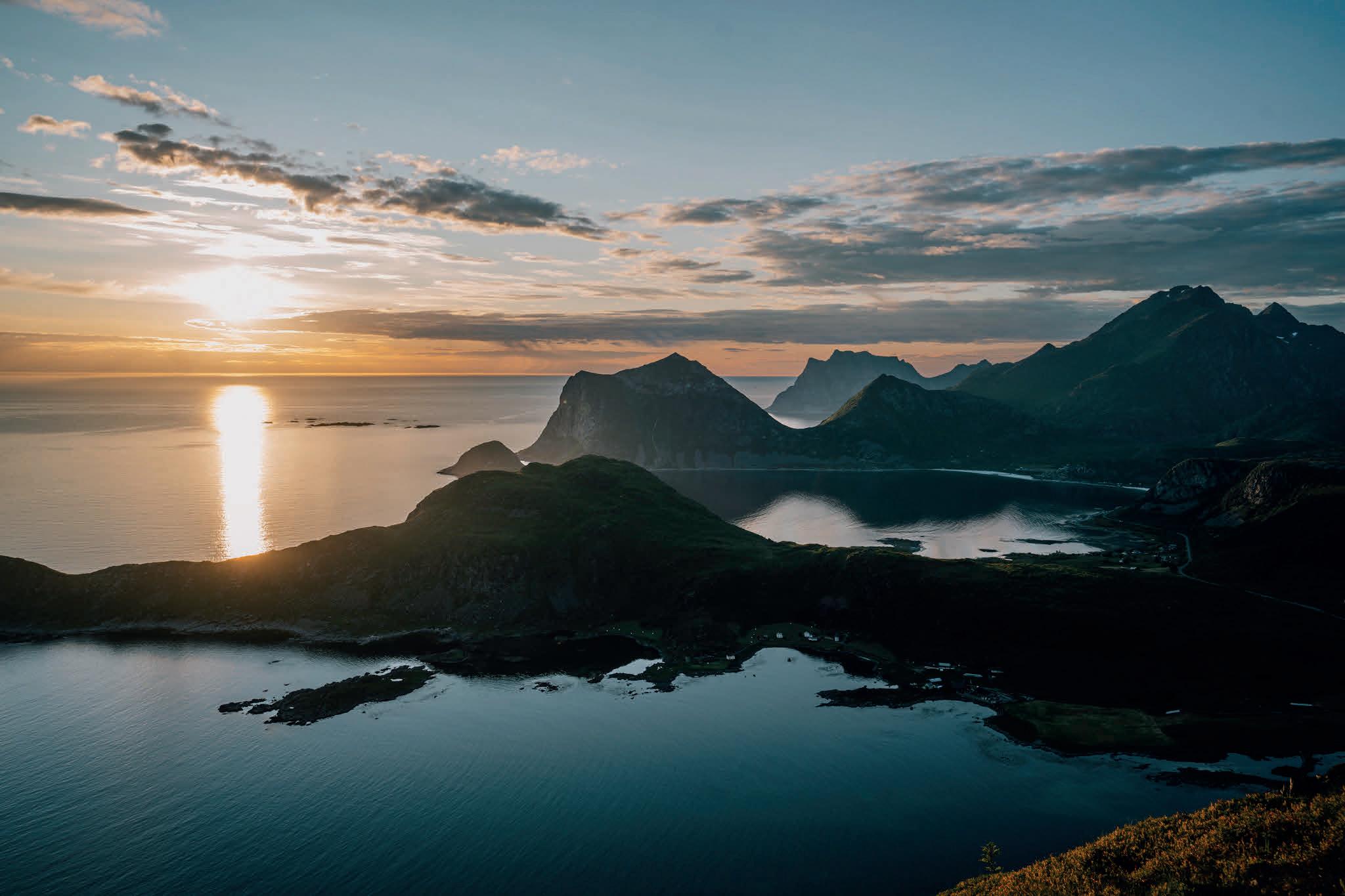
Josefin Engnér is a student at College of The Albemarle who moved to the Outer Banks from Östersund, Sweden in 2024. She is passionate about photography and enjoys capturing nature, wildlife, and portraits. Her inspiration comes from spending time outdoors and exploring new places through travel.
Olha Fidyk is a multidisciplinary artist and designer who transforms everyday life and human experiences into large-scale, immersive works. With a background in both art and science, she experiments with unconventional mediums to create pieces that provoke thought and evoke feeling. While working in engineering and construction, she became fascinated by textures and materials outside traditional fine arts, discovering a freedom beyond conventional rules. Her work celebrates the overlooked and unexpected, inviting viewers to see familiar things in new ways.
Sarah Gannon has been working with clay since she was 16 years old at Manteo High School in Robin York’s Traditional Arts class. After graduating with an associate’s degree in Professional Crafts Clay, she began teaching kids classes and eventually anyone who would listen as her craft turned from passion to a belief in the healing power of clay. Currently, she has a small studio on the Albemarle sound in Nags Head, and is focused on her brand Liquid Earth Studios, and spreading pottery to everyone who needs it.
Colton Gallagher grew up in Chesapeake, Virginia and has been making art for over a decade.
Clayton Garthwaite has been enjoying photography for 20+ years. No matter where Clayton goes, his eyes are looking for a great image.
Thomas Giarmono is a visual artist who draws inspiration from anime and narrative art. His work highlights vivid characters, animated gestures, and artful worlds that reflect an enthusiasm for creative visual storytelling.
Kaylin Jayla Gilbert is a COA student and an aspiring artist. She is majoring in Fine Arts at College of The Albemarle and wants to become an animator.
Krista Ginn is an emerging fine artist whose studio practice centers on experimentation, visual storytelling, and the transformative power of art. Her work reflects a dedication to craftsmanship, concept, and personal evolution through creative expression.
Olivia Gravenese is a printmaker based in Greenville, North Carolina. She earned her BFA in Printmaking from East Carolina University’s School of Art & Design. Her work has appeared in exhibitions and publications at East Carolina University, the art spaces in Greenville, as well as College of The Albemarle.
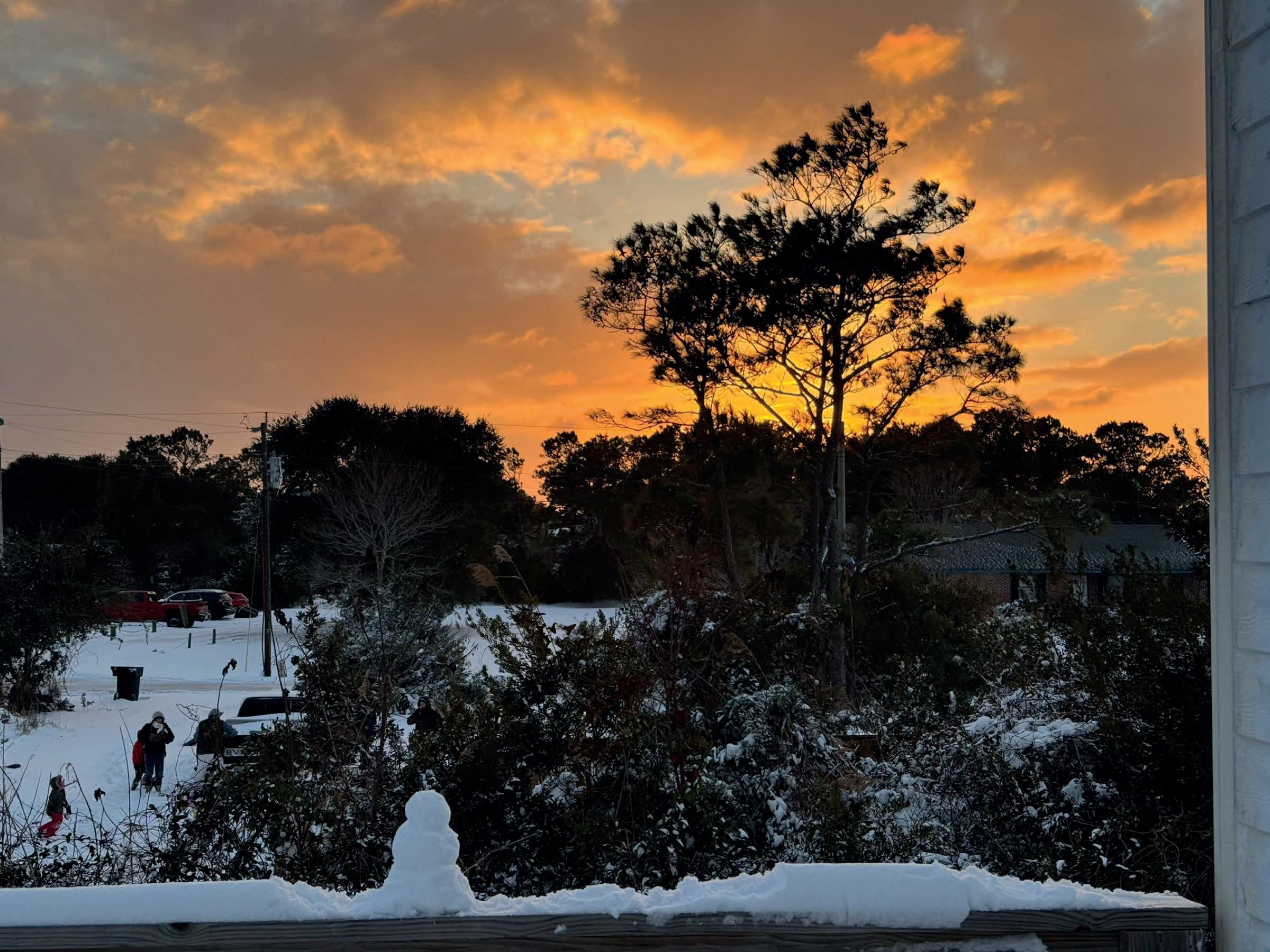
Thomas Gwin is an amateur photographer and artist, and a student at College of The Albemarle working towards an Associate in Arts. Thomas is a native of Hatteras Island and a 2025 graduate of Cape Hatteras Secondary School.
Sis Hall retired to Nags Head after visiting all of her life. She is currently taking art classes at College of The Albemarle in Manteo and enjoys painting daily.
Lisa M. LeMair is a multidisciplinary artist, creating wearable art, jewelry, sculpture, and works on paper. An active member of the local arts community, Lisa has a background in higher education and nonprofit work, and exhibits her work nationally in juried fine craft shows, galleries, and curated exhibitions.
Bowen Lesiewicz is a student at College of The Albemarle currently working towards their associates degree. They’ve been a Dare community member for over 20 years and are a part of local bands. Bowen does photography as a hobby.
Francesca Beatrice Mărie is a documentary-focused photographer and filmmaker whose work explores resilience, environmental tension, and human presence through natural and abstract forms. Her practice blends careful observation with visual storytelling to challenge perception and invite quiet reflection.
Chris Ann Masiello is a graduate of Elizabeth City State University with a BA degree in English. She is also a College of The Albemarle alumni. She wrote and published Romanticism: New Waves of Imaginative Thinking (Explorations) and The Gift (Estuaries).
Carolyn Mize was a student in the Professional Jewelry program during its final two years. A resident of Norfolk, Virginia, she continues to commute to Manteo for continuing education classes in metals. Retired from the corporate world, Carolyn has redirected her creativity toward the creation of art jewelry. She works with silver, copper, sea glass, gemstones, and found objects, and is also passionate about drawing with colored pencils on copper. Currently, her work focuses on incorporating vintage calligraphy nibs into jewelry pieces and exploring the fusing capabilities of Argentium silver.
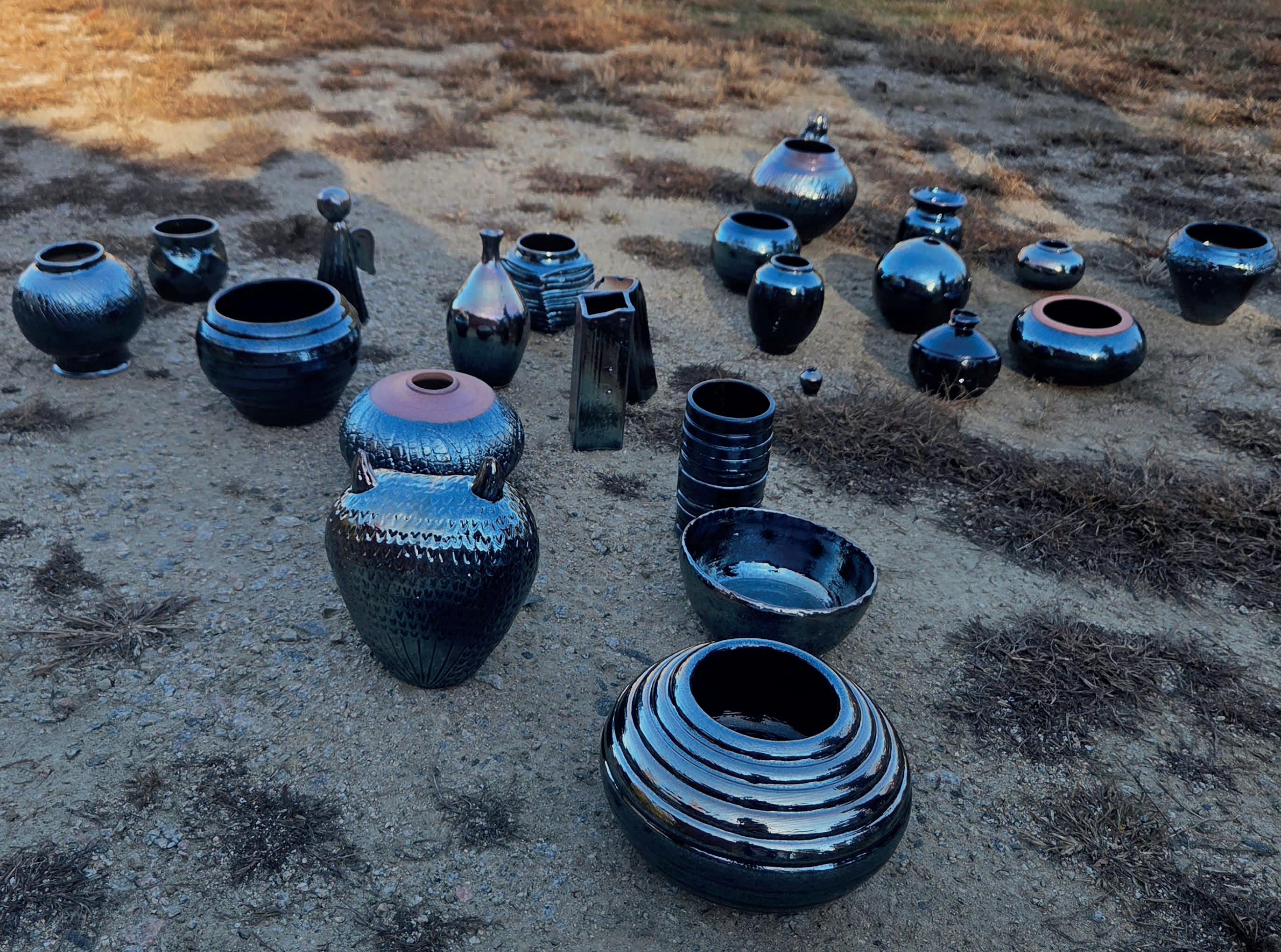
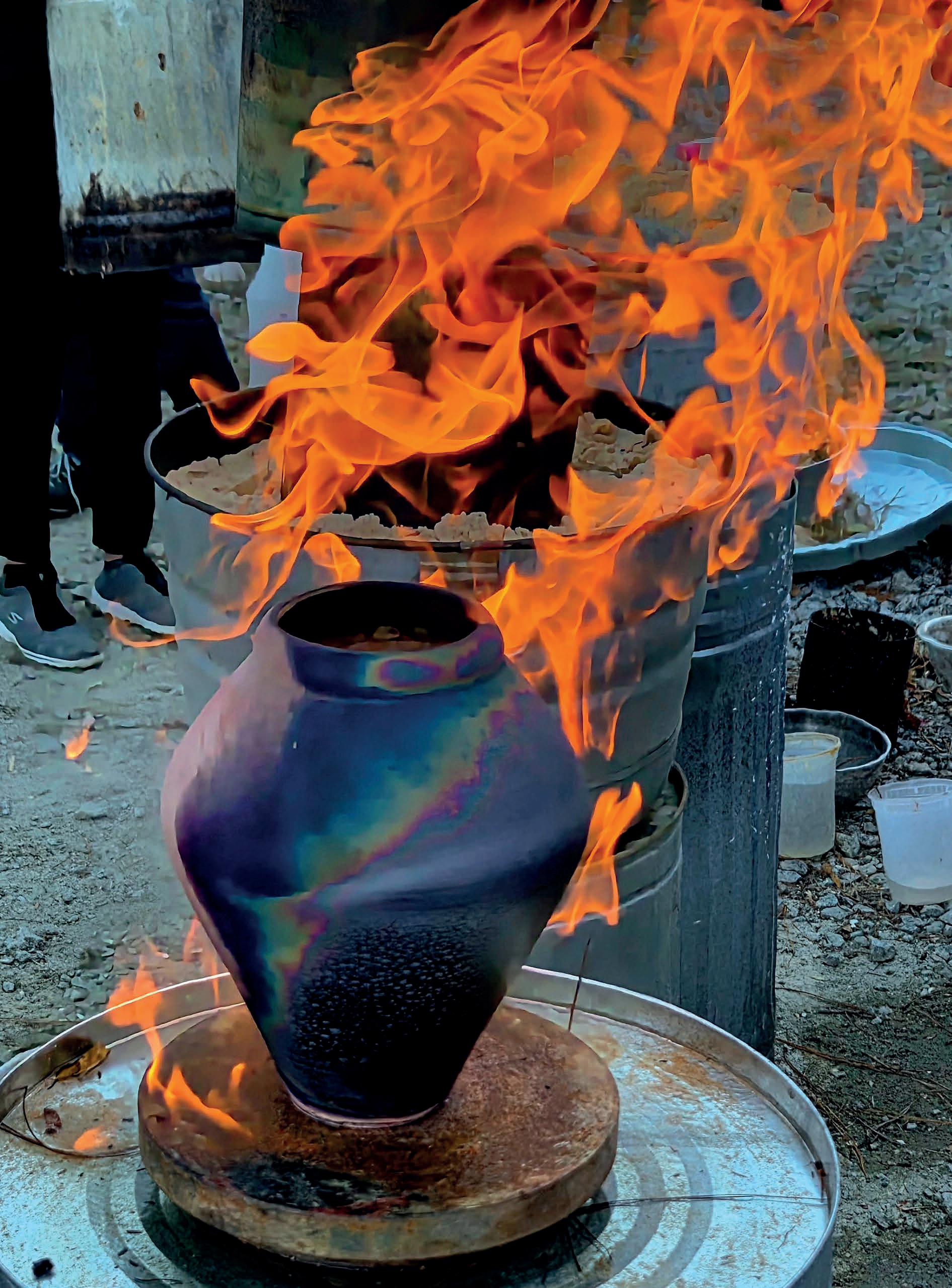
Joe Murphy is a Pottery Instructor at COA - Dare and currently displays work at several local art galleries. His ceramics journey began as a student at COA - Elizabeth City, followed by classes at Pocosin Arts Center, and he now enjoys creating Art Pottery using homemade glazes for electric and alternative firings such as RAKU.
Natalie Pugh is an artist, College of The Albemarle alum and history major located in Norfolk, VA who was raised in the D.C. area and on the Outer Banks, NC. She is inspired by Impressionism and Art Nouveau; her artwork expresses the beauty and sacredness of nature, animals, people, culture and human creativity.
Alysia Rivera has loved painting and drawing since she can remember but never thought she was good enough. Alysia stopped fearing her “what ifs” this last year. Since then she has created so many works of art and ideas that she doesn’t think would have come to life if she didn’t take creative initiative in her own life.
Jamari Smith is a student at College of The Albemarle who loves art and dreams of becoming a firefighter. He enjoys his time at COA, especially making friends, including those with disabilities. His passion for art, learning, and building relationships motivates his journey toward achieving his goals.
Willow Temple was born and raised on the Outer Banks of North Carolina. Both of her parents are lifelong musicians which originally evoked her interest in the arts. Willow graduated from UNCW with a Bachelors in Studio Art in 2020, focusing on print making and ceramics. Today she enjoys print-making, painting (including murals), and fiber crafting, though she is always eager to learn new ways to create. Much of her work is inspired by vintage photographs, story telling, and tall tales.
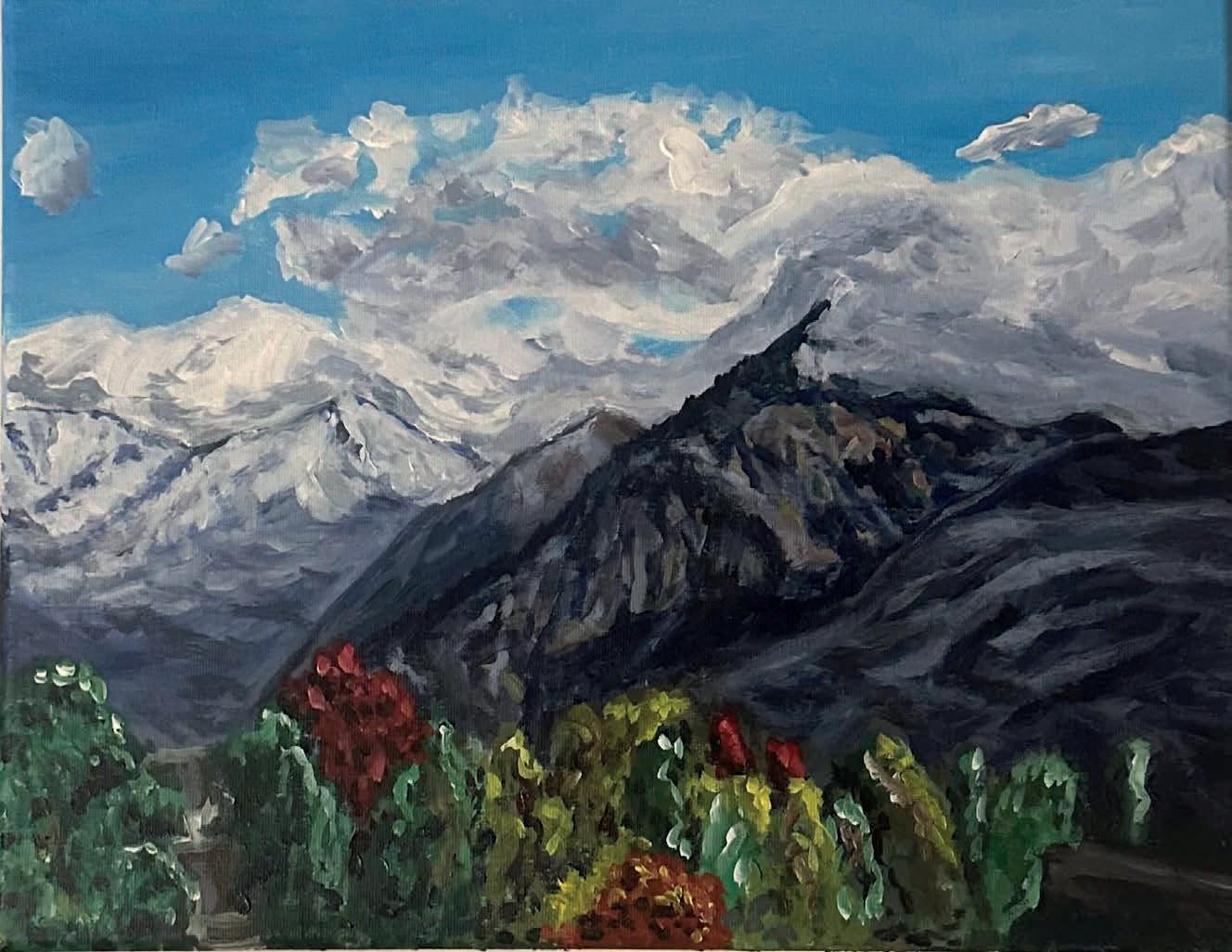
Emma Vazquetelles is an aspiring artist, furthering her education at College of The Albemarle. She plans to graduate with her associate’s and then transfer to a university. Emma’s art journey has been amazing, and she will continue her art as long as she is able.
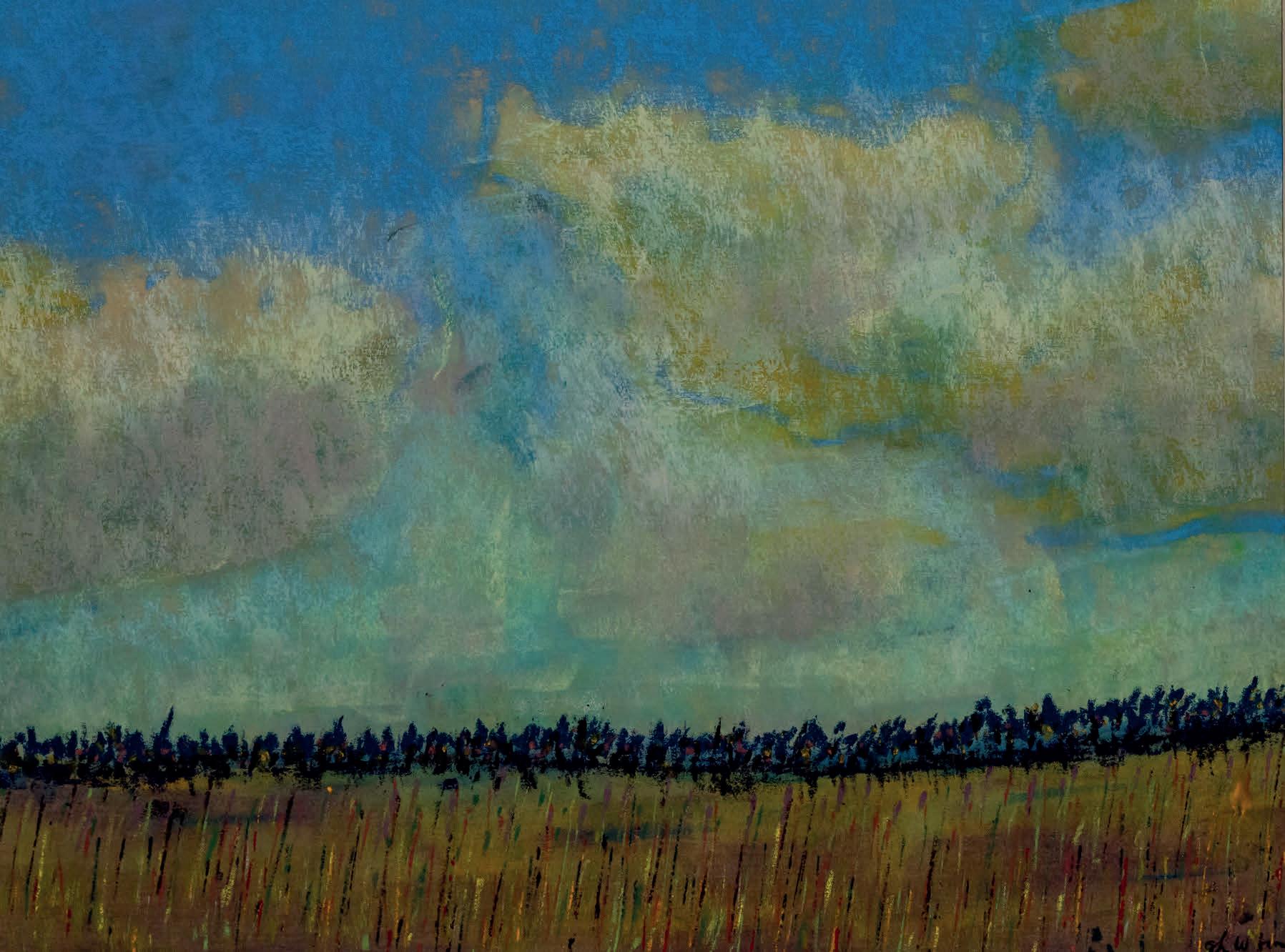
George Wood is a pastelist and photographer whose artistic philosophy is to present ‘stories illuminated’. He endeavors to create images which tell a story. The overarching theme of the work is to amplify basic truths and evoke compassionate understanding of nature and our fellow beings. His formal training as a scientist and life long avocation of philosophy, forms the foundation of the work so it is consistent with reality and yet spiritual in essential principals. His work invites you to slow down, explore the wonderment of that which is inside each of us as basic truths and to revel in some spiritual refreshment. Our lives are very busy and inundated with information interpreted for us. It hardly gives us time to think for ourselves. A way to eliminate the external noise and provide a space for reflection is through images that encourage interpretation of where you are right now. Art is reductive, stripping away the superfluous and focusing on that which is often unseen because of the extremes of everyday life.
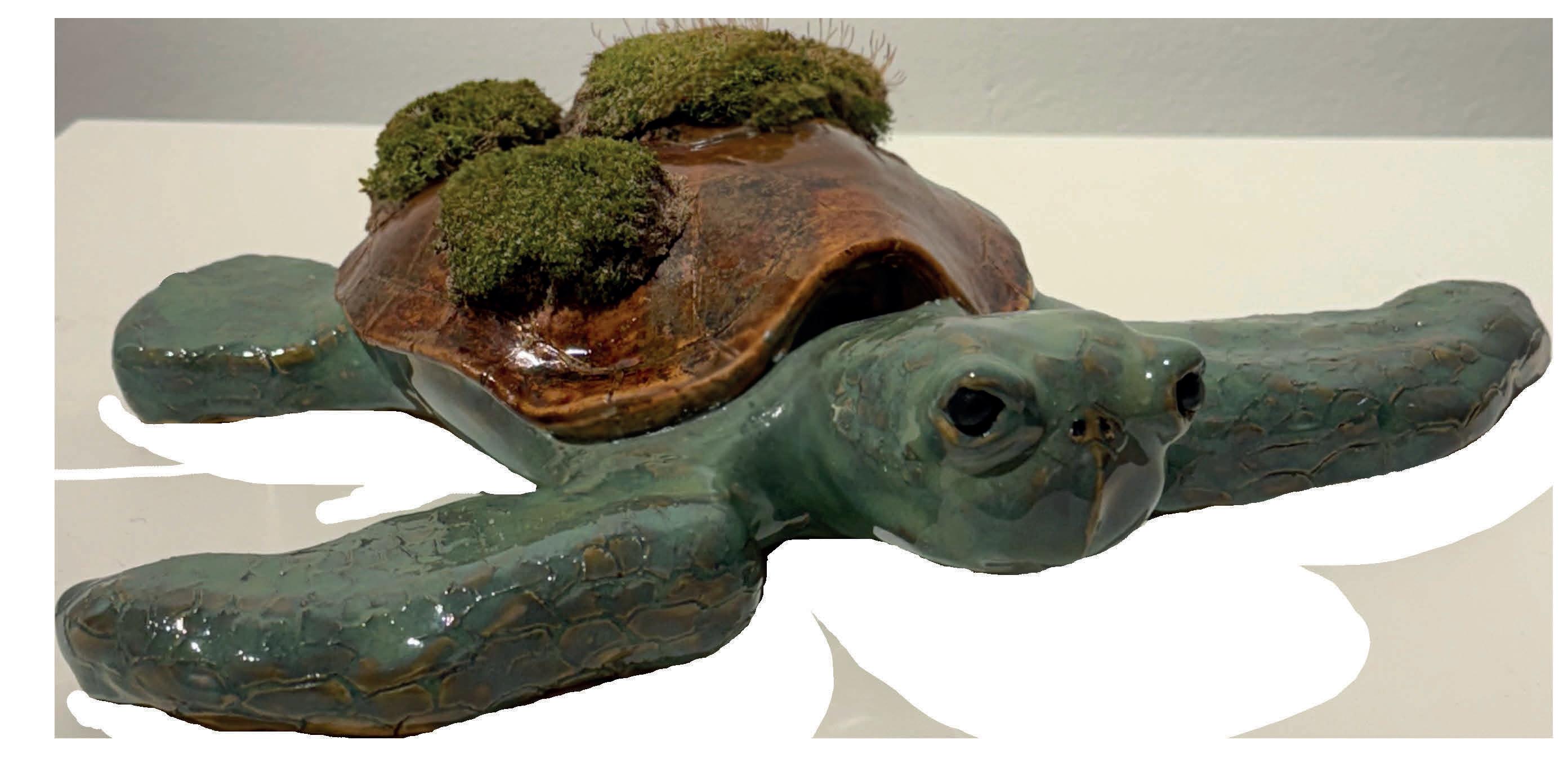
Sterling Wright is a student artist whose ceramic sculpture is informed by an interest in marine systems and environmental change. Their work explores resilience, growth, and the tension between natural processes and human intervention through texture, form, and living materials.
Lynne Scott Constantine considers her artworks “open questions,” incorporating photography, digital media, mixed media, and text. Before moving to the Outer Banks, she taught in the School of Art at George Mason University. She holds an MFA in Interdisciplinary Arts from Goddard College and graduate degrees in English from Yale.
Suzanne Scott Constantine makes art that incorporates painting, mixed media, text, and performance. Prior to retiring in 2018, she was Professor of Integrated Studies and Director of Women and Gender Studies at George Mason University. She holds an MFA in Interdisciplinary Art from Goddard College, and an MA in English Literature from James Madison University.
Ani DeSmidt is a North Carolina-based artist. Specializing in various media such as painting, writing, and especially papier-mache masks. Combining nature and fanciful ideas to create works of wearable art. She has gained experience from various art classes and programs, as well as from attending award shows throughout her childhood and beyond.
Dayton Dixon is an accomplished student-leader at Manteo Middle School. As President of the NJHS, Dayton has spearheaded community service projects. Driven by his interests in engineering and design, Dayton is a proactive leader dedicated to both his school and the Manteo community.
Wayne Gray, an Outer Banks native, taught English courses at College of The Albemarle from 2007 to 2017. As a later-in-life college professor, he was driven to help students become better writers. He also inspired them to dream big and go on to attend four-year universities. Today, a scholarship exists at the Outer Banks Community Foundation in his memory to benefit students who seek to continue their education after graduation from COA. His wife Nancy Beach Gray carries on his legacy by publishing his poetry.
Michelle Gudknecht was born to Racheal and Alan Gudknecht in Norfolk, Virginia. At the age of ten, her family moved to Elizabeth City. Not long after, Michelle found her love for the arts and began writing, drawing, and playing music relentlessly. Now, she spends every day practicing her skills.
Ashley Kristine Hurst is a writer whose work explores endurance, identity, and the spaces between vulnerability and strength. Her poetry draws from lived experience while remaining intimate and restrained.
Rebecca Mlinek is an award-winning writer and director. Notable work includes the 2023 short film Familiar and the audio drama Somebody Killed Mom (rated #1 in Goodpods’ mystery podcasts for 2024.) Her second short films in March 2026. She is currently at work on a novel and two podcast projects.
Mary Ellen Riddle is a journalist and arts writer for the Outer Banks Voice. She was inspired to write by her father who wrote children’s books and by her mother who read her poetry. She is an award-winning prose writer and author, and coauthor of two maritime history books.
Patrick Berran is an artist and educator that lives and works in the Outer Banks of North Carolina. Berran’s painting practice incorporates drawing, transfer processes and collage. Berran has exhibited his work both nationally and internationally. His work has been featured in The New York Times, Hyperallergic, The Brooklyn Rail, Bomb Magazine, Style Weekly, New American Painters and Architectural Digest
Fay Davis Edwards is an interdisciplinary artist who centers her work on the environment. Specifically, she works with coastal residents worldwide to collect narratives and share stories of floods, storms, and sea level rise, employing painting, photography, installation, sound, and projection to chronicle these personal narratives. She teaches workshops nationally, exhibits her work regionally, and is an artistic contributor to MilePost Magazine. Fay earned her BFA from East Carolina University (NC) and her MFA from Maine College of Art & Design (ME). Her home and studio are located on Roanoke Island, which she shares with a lively flock of chickens and four very opinionated cats.
Tiffany Lindsey is a North Carolina based artist and arts leader serving as Gallery Director at Dare Arts. Her work explores themes of heritage, material history, and contemporary reinterpretation of traditional forms. In addition to her studio practice, she has curated and supported numerous exhibitions over her 5 year career and is dedicated to fostering accessible, communitycentered arts experiences.
Christina Lorena Weisner is a visual artist and an Associate Professor in the Department of Humanities and Fine Arts at the College of the Albemarle. She received a Bachelor of Fine Arts (BFA) in Sculpture and Bachelor of Arts (BA) in World Studies from Virginia Commonwealth University (2006) and a Master of Fine Arts (MFA) in Sculpture and Ceramics from University of Texas at Austin (2010). Weisner explores complex relationships between objects, humans, and the natural environment, from the organic to the technological, drawing parallels between the vast and the microscopic, the subjective and the objective.
Jessica Kesler is a student at College of The Albemarle majoring in Business Administration.
Cari Leary is an English instructor at College of The Albemarle (COA) and an abstract impressionist painter working primarily in acrylic on canvas. She began her academic career at College of The Albemarle, earning an Associate degree in Fine Art in 2017. She later graduated from Elizabeth City State University in 2019 with a Bachelor’s degree in English. In 2022, Leary completed her graduate studies at East Carolina University, specializing in Multicultural Transnational Literature. As both an educator and artist, her work reflects a commitment to creativity, critical thinking, and cultural exploration through literature and visual expression.
Dr. Jill Lettieri is an English and Communications Professor at College of The Albemarle where she has been teaching full-time since 2016. Lettieri graduated from The Ohio State University with her Bachelor’s degree in Journalism and Public Relations. She continued on to receive her Masters in Creative writing, and her doctorate in Communication. She has lived on the Outer Banks for 20 years where she also serves on the Board of Directors of the Outer Banks SPCA.
Isabella Lettieri is a 2024 graduate of Salem College with a Bachelor’s degree in Communication and minor in Professional Writing. She is a 2022 honors graduate of College of The Albemarle and Cape Hatteras Secondary School.
COA